window.__IS_SSR__=true
window.__INITIAL_STATE__={
"attachmentsReducer": {
"audio_0": {
"type": "attachments",
"id": "audio_0",
"imgSizes": {
"kqedFullSize": {
"file": "https://ww2.kqed.org/news/wp-content/themes/KQED-unified/img/audio_bgs/background0.jpg"
}
}
},
"audio_1": {
"type": "attachments",
"id": "audio_1",
"imgSizes": {
"kqedFullSize": {
"file": "https://ww2.kqed.org/news/wp-content/themes/KQED-unified/img/audio_bgs/background1.jpg"
}
}
},
"audio_2": {
"type": "attachments",
"id": "audio_2",
"imgSizes": {
"kqedFullSize": {
"file": "https://ww2.kqed.org/news/wp-content/themes/KQED-unified/img/audio_bgs/background2.jpg"
}
}
},
"audio_3": {
"type": "attachments",
"id": "audio_3",
"imgSizes": {
"kqedFullSize": {
"file": "https://ww2.kqed.org/news/wp-content/themes/KQED-unified/img/audio_bgs/background3.jpg"
}
}
},
"audio_4": {
"type": "attachments",
"id": "audio_4",
"imgSizes": {
"kqedFullSize": {
"file": "https://ww2.kqed.org/news/wp-content/themes/KQED-unified/img/audio_bgs/background4.jpg"
}
}
},
"placeholder": {
"type": "attachments",
"id": "placeholder",
"imgSizes": {
"thumbnail": {
"file": "https://cdn.kqed.org/wp-content/uploads/2024/12/KQED-Default-Image-816638274-2000x1333-1-160x107.jpg",
"width": 160,
"height": 107,
"mimeType": "image/jpeg"
},
"medium": {
"file": "https://cdn.kqed.org/wp-content/uploads/2024/12/KQED-Default-Image-816638274-2000x1333-1-800x533.jpg",
"width": 800,
"height": 533,
"mimeType": "image/jpeg"
},
"medium_large": {
"file": "https://cdn.kqed.org/wp-content/uploads/2024/12/KQED-Default-Image-816638274-2000x1333-1-768x512.jpg",
"width": 768,
"height": 512,
"mimeType": "image/jpeg"
},
"large": {
"file": "https://cdn.kqed.org/wp-content/uploads/2024/12/KQED-Default-Image-816638274-2000x1333-1-1020x680.jpg",
"width": 1020,
"height": 680,
"mimeType": "image/jpeg"
},
"1536x1536": {
"file": "https://cdn.kqed.org/wp-content/uploads/2024/12/KQED-Default-Image-816638274-2000x1333-1-1536x1024.jpg",
"width": 1536,
"height": 1024,
"mimeType": "image/jpeg"
},
"fd-lrg": {
"file": "https://cdn.kqed.org/wp-content/uploads/2024/12/KQED-Default-Image-816638274-2000x1333-1-1536x1024.jpg",
"width": 1536,
"height": 1024,
"mimeType": "image/jpeg"
},
"fd-med": {
"file": "https://cdn.kqed.org/wp-content/uploads/2024/12/KQED-Default-Image-816638274-2000x1333-1-1020x680.jpg",
"width": 1020,
"height": 680,
"mimeType": "image/jpeg"
},
"fd-sm": {
"file": "https://cdn.kqed.org/wp-content/uploads/2024/12/KQED-Default-Image-816638274-2000x1333-1-800x533.jpg",
"width": 800,
"height": 533,
"mimeType": "image/jpeg"
},
"post-thumbnail": {
"file": "https://cdn.kqed.org/wp-content/uploads/2024/12/KQED-Default-Image-816638274-2000x1333-1-672x372.jpg",
"width": 672,
"height": 372,
"mimeType": "image/jpeg"
},
"twentyfourteen-full-width": {
"file": "https://cdn.kqed.org/wp-content/uploads/2024/12/KQED-Default-Image-816638274-2000x1333-1-1038x576.jpg",
"width": 1038,
"height": 576,
"mimeType": "image/jpeg"
},
"xxsmall": {
"file": "https://cdn.kqed.org/wp-content/uploads/2024/12/KQED-Default-Image-816638274-2000x1333-1-160x107.jpg",
"width": 160,
"height": 107,
"mimeType": "image/jpeg"
},
"xsmall": {
"file": "https://cdn.kqed.org/wp-content/uploads/2024/12/KQED-Default-Image-816638274-2000x1333-1-672x372.jpg",
"width": 672,
"height": 372,
"mimeType": "image/jpeg"
},
"small": {
"file": "https://cdn.kqed.org/wp-content/uploads/2024/12/KQED-Default-Image-816638274-2000x1333-1-672x372.jpg",
"width": 672,
"height": 372,
"mimeType": "image/jpeg"
},
"xlarge": {
"file": "https://cdn.kqed.org/wp-content/uploads/2024/12/KQED-Default-Image-816638274-2000x1333-1-1020x680.jpg",
"width": 1020,
"height": 680,
"mimeType": "image/jpeg"
},
"full-width": {
"file": "https://cdn.kqed.org/wp-content/uploads/2024/12/KQED-Default-Image-816638274-2000x1333-1-1920x1280.jpg",
"width": 1920,
"height": 1280,
"mimeType": "image/jpeg"
},
"guest-author-32": {
"file": "https://cdn.kqed.org/wp-content/uploads/2025/01/KQED-Default-Image-816638274-1333x1333-1-160x160.jpg",
"width": 32,
"height": 32,
"mimeType": "image/jpeg"
},
"guest-author-50": {
"file": "https://cdn.kqed.org/wp-content/uploads/2025/01/KQED-Default-Image-816638274-1333x1333-1-160x160.jpg",
"width": 50,
"height": 50,
"mimeType": "image/jpeg"
},
"guest-author-64": {
"file": "https://cdn.kqed.org/wp-content/uploads/2025/01/KQED-Default-Image-816638274-1333x1333-1-160x160.jpg",
"width": 64,
"height": 64,
"mimeType": "image/jpeg"
},
"guest-author-96": {
"file": "https://cdn.kqed.org/wp-content/uploads/2025/01/KQED-Default-Image-816638274-1333x1333-1-160x160.jpg",
"width": 96,
"height": 96,
"mimeType": "image/jpeg"
},
"guest-author-128": {
"file": "https://cdn.kqed.org/wp-content/uploads/2025/01/KQED-Default-Image-816638274-1333x1333-1-160x160.jpg",
"width": 128,
"height": 128,
"mimeType": "image/jpeg"
},
"detail": {
"file": "https://cdn.kqed.org/wp-content/uploads/2025/01/KQED-Default-Image-816638274-1333x1333-1-160x160.jpg",
"width": 160,
"height": 160,
"mimeType": "image/jpeg"
},
"kqedFullSize": {
"file": "https://cdn.kqed.org/wp-content/uploads/2024/12/KQED-Default-Image-816638274-2000x1333-1.jpg",
"width": 2000,
"height": 1333
}
}
},
"arts_13932860": {
"type": "attachments",
"id": "arts_13932860",
"meta": {
"index": "attachments_1716263798",
"site": "arts",
"id": "13932860",
"found": true
},
"parent": 13932848,
"imgSizes": {
"twentyfourteen-full-width": {
"file": "https://ww2.kqed.org/app/uploads/sites/2/2023/08/Screen-Shot-2023-08-09-at-10.53.36-AM-1038x576.png",
"width": 1038,
"mimeType": "image/png",
"height": 576
},
"thumbnail": {
"file": "https://ww2.kqed.org/app/uploads/sites/2/2023/08/Screen-Shot-2023-08-09-at-10.53.36-AM-160x97.png",
"width": 160,
"mimeType": "image/png",
"height": 97
},
"post-thumbnail": {
"file": "https://ww2.kqed.org/app/uploads/sites/2/2023/08/Screen-Shot-2023-08-09-at-10.53.36-AM-672x372.png",
"width": 672,
"mimeType": "image/png",
"height": 372
},
"kqedFullSize": {
"file": "https://ww2.kqed.org/app/uploads/sites/2/2023/08/Screen-Shot-2023-08-09-at-10.53.36-AM.png",
"width": 1440,
"height": 876
},
"large": {
"file": "https://ww2.kqed.org/app/uploads/sites/2/2023/08/Screen-Shot-2023-08-09-at-10.53.36-AM-1020x621.png",
"width": 1020,
"mimeType": "image/png",
"height": 621
},
"medium": {
"file": "https://ww2.kqed.org/app/uploads/sites/2/2023/08/Screen-Shot-2023-08-09-at-10.53.36-AM-800x487.png",
"width": 800,
"mimeType": "image/png",
"height": 487
},
"medium_large": {
"file": "https://ww2.kqed.org/app/uploads/sites/2/2023/08/Screen-Shot-2023-08-09-at-10.53.36-AM-768x467.png",
"width": 768,
"mimeType": "image/png",
"height": 467
}
},
"publishDate": 1691603663,
"modified": 1691603703,
"caption": "‘Mother Nature.’",
"description": null,
"title": "‘Mother Nature.’",
"credit": "Titan Comics",
"status": "inherit",
"altTag": null,
"isLoading": false,
"fetchFailed": false
},
"arts_13932691": {
"type": "attachments",
"id": "arts_13932691",
"meta": {
"index": "attachments_1716263798",
"site": "arts",
"id": "13932691",
"found": true
},
"parent": 13932690,
"imgSizes": {
"twentyfourteen-full-width": {
"file": "https://ww2.kqed.org/app/uploads/sites/2/2023/07/106_nasi_9780593320747_art_r2_custom-d5745754b0cbba7e645e6d8c90374f43c6f10d08-scaled-e1691125570329-1038x576.jpg",
"width": 1038,
"mimeType": "image/jpeg",
"height": 576
},
"thumbnail": {
"file": "https://ww2.kqed.org/app/uploads/sites/2/2023/07/106_nasi_9780593320747_art_r2_custom-d5745754b0cbba7e645e6d8c90374f43c6f10d08-scaled-e1691125570329-160x107.jpg",
"width": 160,
"mimeType": "image/jpeg",
"height": 107
},
"post-thumbnail": {
"file": "https://ww2.kqed.org/app/uploads/sites/2/2023/07/106_nasi_9780593320747_art_r2_custom-d5745754b0cbba7e645e6d8c90374f43c6f10d08-scaled-e1691125570329-672x372.jpg",
"width": 672,
"mimeType": "image/jpeg",
"height": 372
},
"kqedFullSize": {
"file": "https://ww2.kqed.org/app/uploads/sites/2/2023/07/106_nasi_9780593320747_art_r2_custom-d5745754b0cbba7e645e6d8c90374f43c6f10d08-scaled-e1691125570329.jpg",
"width": 1920,
"height": 1279
},
"2048x2048": {
"file": "https://ww2.kqed.org/app/uploads/sites/2/2023/07/106_nasi_9780593320747_art_r2_custom-d5745754b0cbba7e645e6d8c90374f43c6f10d08-2048x1364.jpg",
"width": 2048,
"mimeType": "image/jpeg",
"height": 1364
},
"large": {
"file": "https://ww2.kqed.org/app/uploads/sites/2/2023/07/106_nasi_9780593320747_art_r2_custom-d5745754b0cbba7e645e6d8c90374f43c6f10d08-scaled-e1691125570329-1020x679.jpg",
"width": 1020,
"mimeType": "image/jpeg",
"height": 679
},
"1536x1536": {
"file": "https://ww2.kqed.org/app/uploads/sites/2/2023/07/106_nasi_9780593320747_art_r2_custom-d5745754b0cbba7e645e6d8c90374f43c6f10d08-scaled-e1691125570329-1536x1023.jpg",
"width": 1536,
"mimeType": "image/jpeg",
"height": 1023
},
"full-width": {
"file": "https://ww2.kqed.org/app/uploads/sites/2/2023/07/106_nasi_9780593320747_art_r2_custom-d5745754b0cbba7e645e6d8c90374f43c6f10d08-1920x1279.jpg",
"width": 1920,
"mimeType": "image/jpeg",
"height": 1279
},
"medium": {
"file": "https://ww2.kqed.org/app/uploads/sites/2/2023/07/106_nasi_9780593320747_art_r2_custom-d5745754b0cbba7e645e6d8c90374f43c6f10d08-scaled-e1691125570329-800x533.jpg",
"width": 800,
"mimeType": "image/jpeg",
"height": 533
},
"medium_large": {
"file": "https://ww2.kqed.org/app/uploads/sites/2/2023/07/106_nasi_9780593320747_art_r2_custom-d5745754b0cbba7e645e6d8c90374f43c6f10d08-scaled-e1691125570329-768x512.jpg",
"width": 768,
"mimeType": "image/jpeg",
"height": 512
}
},
"publishDate": 1691125040,
"modified": 1691135940,
"caption": "‘Sofreh: A Contemporary Approach to Classic Persian Cuisine’ is a new cookbook from chef and author Nasim Alikhani. The chapter ‘My Homeland,’ or ‘Sarzamine Man’ in Farsi, includes full-page photographs that highlight the landscape and natural environment of Iran.",
"description": null,
"title": "‘Sofreh: A Contemporary Approach to Classic Persian Cuisine’ is a new cookbook from chef and author Nasim Alikhani. The chapter ‘My Homeland,’ or Sarzamine Man in Farsi, includes full-page photographs that highlight the landscape and natural environment of Iran.",
"credit": "Ahmed Belbasi/Knopf",
"status": "inherit",
"altTag": "A field of red flowers with mountains in the distance. A goat herder with his flock walks through the field.",
"isLoading": false,
"fetchFailed": false
},
"arts_13932478": {
"type": "attachments",
"id": "arts_13932478",
"meta": {
"index": "attachments_1716263798",
"site": "arts",
"id": "13932478",
"found": true
},
"parent": 13932477,
"imgSizes": {
"twentyfourteen-full-width": {
"file": "https://ww2.kqed.org/app/uploads/sites/2/2023/07/gettyimages-159826402-edit_custom-a6e6d1099f78bd89af014e99ee0b359a5c6e7047-scaled-e1690912248688-1038x576.jpg",
"width": 1038,
"mimeType": "image/jpeg",
"height": 576
},
"thumbnail": {
"file": "https://ww2.kqed.org/app/uploads/sites/2/2023/07/gettyimages-159826402-edit_custom-a6e6d1099f78bd89af014e99ee0b359a5c6e7047-scaled-e1690912248688-160x86.jpg",
"width": 160,
"mimeType": "image/jpeg",
"height": 86
},
"post-thumbnail": {
"file": "https://ww2.kqed.org/app/uploads/sites/2/2023/07/gettyimages-159826402-edit_custom-a6e6d1099f78bd89af014e99ee0b359a5c6e7047-scaled-e1690912248688-672x372.jpg",
"width": 672,
"mimeType": "image/jpeg",
"height": 372
},
"kqedFullSize": {
"file": "https://ww2.kqed.org/app/uploads/sites/2/2023/07/gettyimages-159826402-edit_custom-a6e6d1099f78bd89af014e99ee0b359a5c6e7047-scaled-e1690912248688.jpg",
"width": 1920,
"height": 1034
},
"2048x2048": {
"file": "https://ww2.kqed.org/app/uploads/sites/2/2023/07/gettyimages-159826402-edit_custom-a6e6d1099f78bd89af014e99ee0b359a5c6e7047-2048x1103.jpg",
"width": 2048,
"mimeType": "image/jpeg",
"height": 1103
},
"large": {
"file": "https://ww2.kqed.org/app/uploads/sites/2/2023/07/gettyimages-159826402-edit_custom-a6e6d1099f78bd89af014e99ee0b359a5c6e7047-scaled-e1690912248688-1020x549.jpg",
"width": 1020,
"mimeType": "image/jpeg",
"height": 549
},
"1536x1536": {
"file": "https://ww2.kqed.org/app/uploads/sites/2/2023/07/gettyimages-159826402-edit_custom-a6e6d1099f78bd89af014e99ee0b359a5c6e7047-scaled-e1690912248688-1536x827.jpg",
"width": 1536,
"mimeType": "image/jpeg",
"height": 827
},
"full-width": {
"file": "https://ww2.kqed.org/app/uploads/sites/2/2023/07/gettyimages-159826402-edit_custom-a6e6d1099f78bd89af014e99ee0b359a5c6e7047-1920x1034.jpg",
"width": 1920,
"mimeType": "image/jpeg",
"height": 1034
},
"medium": {
"file": "https://ww2.kqed.org/app/uploads/sites/2/2023/07/gettyimages-159826402-edit_custom-a6e6d1099f78bd89af014e99ee0b359a5c6e7047-scaled-e1690912248688-800x431.jpg",
"width": 800,
"mimeType": "image/jpeg",
"height": 431
},
"medium_large": {
"file": "https://ww2.kqed.org/app/uploads/sites/2/2023/07/gettyimages-159826402-edit_custom-a6e6d1099f78bd89af014e99ee0b359a5c6e7047-scaled-e1690912248688-768x414.jpg",
"width": 768,
"mimeType": "image/jpeg",
"height": 414
}
},
"publishDate": 1690909902,
"modified": 1690912371,
"caption": "Malevolent robot stories used to be more about brawn than brain — so it was a genuine shock for audiences in 1968 when the sentient HAL-9000 computer calmly said, \"I'm sorry, Dave, I'm afraid I can't do that.\"",
"description": null,
"title": "Malevolent robot stories used to be more about brawn than brain — so it was a genuine shock for audiences in 1968 when the sentient HAL-9000 computer calmly said, \"I'm sorry, Dave, I'm afraid I can't do that.\"",
"credit": "2001: A Space Odyssey",
"status": "inherit",
"altTag": "Two astronauts sit face to face in a small craft. Through an oval window between them, a robot is visible.",
"isLoading": false,
"fetchFailed": false
},
"arts_13932419": {
"type": "attachments",
"id": "arts_13932419",
"meta": {
"index": "attachments_1716263798",
"site": "arts",
"id": "13932419",
"found": true
},
"parent": 13932418,
"imgSizes": {
"twentyfourteen-full-width": {
"file": "https://ww2.kqed.org/app/uploads/sites/2/2023/07/darkwinds_joe-bernadette_mm_1130_0122_rt_wide-829c7ebf45cd9231b4714df3cda7ca55a470360f-scaled-e1690826358256-1038x576.jpg",
"width": 1038,
"mimeType": "image/jpeg",
"height": 576
},
"thumbnail": {
"file": "https://ww2.kqed.org/app/uploads/sites/2/2023/07/darkwinds_joe-bernadette_mm_1130_0122_rt_wide-829c7ebf45cd9231b4714df3cda7ca55a470360f-scaled-e1690826358256-160x90.jpg",
"width": 160,
"mimeType": "image/jpeg",
"height": 90
},
"post-thumbnail": {
"file": "https://ww2.kqed.org/app/uploads/sites/2/2023/07/darkwinds_joe-bernadette_mm_1130_0122_rt_wide-829c7ebf45cd9231b4714df3cda7ca55a470360f-scaled-e1690826358256-672x372.jpg",
"width": 672,
"mimeType": "image/jpeg",
"height": 372
},
"kqedFullSize": {
"file": "https://ww2.kqed.org/app/uploads/sites/2/2023/07/darkwinds_joe-bernadette_mm_1130_0122_rt_wide-829c7ebf45cd9231b4714df3cda7ca55a470360f-scaled-e1690826358256.jpg",
"width": 1920,
"height": 1080
},
"2048x2048": {
"file": "https://ww2.kqed.org/app/uploads/sites/2/2023/07/darkwinds_joe-bernadette_mm_1130_0122_rt_wide-829c7ebf45cd9231b4714df3cda7ca55a470360f-2048x1152.jpg",
"width": 2048,
"mimeType": "image/jpeg",
"height": 1152
},
"large": {
"file": "https://ww2.kqed.org/app/uploads/sites/2/2023/07/darkwinds_joe-bernadette_mm_1130_0122_rt_wide-829c7ebf45cd9231b4714df3cda7ca55a470360f-scaled-e1690826358256-1020x574.jpg",
"width": 1020,
"mimeType": "image/jpeg",
"height": 574
},
"1536x1536": {
"file": "https://ww2.kqed.org/app/uploads/sites/2/2023/07/darkwinds_joe-bernadette_mm_1130_0122_rt_wide-829c7ebf45cd9231b4714df3cda7ca55a470360f-scaled-e1690826358256-1536x864.jpg",
"width": 1536,
"mimeType": "image/jpeg",
"height": 864
},
"full-width": {
"file": "https://ww2.kqed.org/app/uploads/sites/2/2023/07/darkwinds_joe-bernadette_mm_1130_0122_rt_wide-829c7ebf45cd9231b4714df3cda7ca55a470360f-1920x1080.jpg",
"width": 1920,
"mimeType": "image/jpeg",
"height": 1080
},
"medium": {
"file": "https://ww2.kqed.org/app/uploads/sites/2/2023/07/darkwinds_joe-bernadette_mm_1130_0122_rt_wide-829c7ebf45cd9231b4714df3cda7ca55a470360f-scaled-e1690826358256-800x450.jpg",
"width": 800,
"mimeType": "image/jpeg",
"height": 450
},
"medium_large": {
"file": "https://ww2.kqed.org/app/uploads/sites/2/2023/07/darkwinds_joe-bernadette_mm_1130_0122_rt_wide-829c7ebf45cd9231b4714df3cda7ca55a470360f-scaled-e1690826358256-768x432.jpg",
"width": 768,
"mimeType": "image/jpeg",
"height": 432
}
},
"publishDate": 1690825788,
"modified": 1690826453,
"caption": "Zahn McClarnon plays Lt. Joe Leaphorn and Jessica Matten is Sgt. Bernadette Manuelito in Season 2 of ‘Dark Winds.’",
"description": null,
"title": "Zahn McClarnon plays Lt. Joe Leaphorn and Jessica Matten is Sgt. Bernadette Manuelito in Season 2 of ‘Dark Winds.’",
"credit": "Michael Moriatis/ AMC",
"status": "inherit",
"altTag": "Two Indigenous police officers - one male, one female - sit in a car, wearing brown and tan uniforms. The environment outside the car's windows is desert.",
"isLoading": false,
"fetchFailed": false
},
"arts_13932009": {
"type": "attachments",
"id": "arts_13932009",
"meta": {
"index": "attachments_1716263798",
"site": "arts",
"id": "13932009",
"found": true
},
"parent": 13932004,
"imgSizes": {
"twentyfourteen-full-width": {
"file": "https://ww2.kqed.org/app/uploads/sites/2/2023/07/Screen-Shot-2023-07-25-at-1.34.20-PM-1038x576.png",
"width": 1038,
"mimeType": "image/png",
"height": 576
},
"thumbnail": {
"file": "https://ww2.kqed.org/app/uploads/sites/2/2023/07/Screen-Shot-2023-07-25-at-1.34.20-PM-160x101.png",
"width": 160,
"mimeType": "image/png",
"height": 101
},
"post-thumbnail": {
"file": "https://ww2.kqed.org/app/uploads/sites/2/2023/07/Screen-Shot-2023-07-25-at-1.34.20-PM-672x372.png",
"width": 672,
"mimeType": "image/png",
"height": 372
},
"kqedFullSize": {
"file": "https://ww2.kqed.org/app/uploads/sites/2/2023/07/Screen-Shot-2023-07-25-at-1.34.20-PM.png",
"width": 1314,
"height": 832
},
"large": {
"file": "https://ww2.kqed.org/app/uploads/sites/2/2023/07/Screen-Shot-2023-07-25-at-1.34.20-PM-1020x646.png",
"width": 1020,
"mimeType": "image/png",
"height": 646
},
"medium": {
"file": "https://ww2.kqed.org/app/uploads/sites/2/2023/07/Screen-Shot-2023-07-25-at-1.34.20-PM-800x507.png",
"width": 800,
"mimeType": "image/png",
"height": 507
},
"medium_large": {
"file": "https://ww2.kqed.org/app/uploads/sites/2/2023/07/Screen-Shot-2023-07-25-at-1.34.20-PM-768x486.png",
"width": 768,
"mimeType": "image/png",
"height": 486
}
},
"publishDate": 1690317301,
"modified": 1690317301,
"caption": null,
"description": null,
"title": "Screen Shot 2023-07-25 at 1.34.20 PM",
"credit": null,
"status": "inherit",
"altTag": null,
"isLoading": false,
"fetchFailed": false
},
"arts_13931509": {
"type": "attachments",
"id": "arts_13931509",
"meta": {
"index": "attachments_1716263798",
"site": "arts",
"id": "13931509",
"found": true
},
"parent": 13931505,
"imgSizes": {
"twentyfourteen-full-width": {
"file": "https://ww2.kqed.org/app/uploads/sites/2/2023/07/GettyImages-1085767598-1038x576.jpg",
"width": 1038,
"mimeType": "image/jpeg",
"height": 576
},
"thumbnail": {
"file": "https://ww2.kqed.org/app/uploads/sites/2/2023/07/GettyImages-1085767598-160x107.jpg",
"width": 160,
"mimeType": "image/jpeg",
"height": 107
},
"post-thumbnail": {
"file": "https://ww2.kqed.org/app/uploads/sites/2/2023/07/GettyImages-1085767598-672x372.jpg",
"width": 672,
"mimeType": "image/jpeg",
"height": 372
},
"kqedFullSize": {
"file": "https://ww2.kqed.org/app/uploads/sites/2/2023/07/GettyImages-1085767598-scaled.jpg",
"width": 2560,
"height": 1712
},
"2048x2048": {
"file": "https://ww2.kqed.org/app/uploads/sites/2/2023/07/GettyImages-1085767598-2048x1369.jpg",
"width": 2048,
"mimeType": "image/jpeg",
"height": 1369
},
"large": {
"file": "https://ww2.kqed.org/app/uploads/sites/2/2023/07/GettyImages-1085767598-1020x682.jpg",
"width": 1020,
"mimeType": "image/jpeg",
"height": 682
},
"1536x1536": {
"file": "https://ww2.kqed.org/app/uploads/sites/2/2023/07/GettyImages-1085767598-1536x1027.jpg",
"width": 1536,
"mimeType": "image/jpeg",
"height": 1027
},
"full-width": {
"file": "https://ww2.kqed.org/app/uploads/sites/2/2023/07/GettyImages-1085767598-1920x1284.jpg",
"width": 1920,
"mimeType": "image/jpeg",
"height": 1284
},
"medium": {
"file": "https://ww2.kqed.org/app/uploads/sites/2/2023/07/GettyImages-1085767598-800x535.jpg",
"width": 800,
"mimeType": "image/jpeg",
"height": 535
},
"medium_large": {
"file": "https://ww2.kqed.org/app/uploads/sites/2/2023/07/GettyImages-1085767598-768x513.jpg",
"width": 768,
"mimeType": "image/jpeg",
"height": 513
}
},
"publishDate": 1689127462,
"modified": 1689127569,
"caption": "A woman in Brooklyn smokes crack in 1991.",
"description": null,
"title": "A woman in Brooklyn smokes crack in 1991.",
"credit": "Andrew Lichtenstein/Corbis via Getty Images",
"status": "inherit",
"altTag": null,
"isLoading": false,
"fetchFailed": false
},
"arts_13931392": {
"type": "attachments",
"id": "arts_13931392",
"meta": {
"index": "attachments_1716263798",
"site": "arts",
"id": "13931392",
"found": true
},
"parent": 13931389,
"imgSizes": {
"twentyfourteen-full-width": {
"file": "https://ww2.kqed.org/app/uploads/sites/2/2023/07/Excavations_COVER-1038x576.jpg",
"width": 1038,
"mimeType": "image/jpeg",
"height": 576
},
"thumbnail": {
"file": "https://ww2.kqed.org/app/uploads/sites/2/2023/07/Excavations_COVER-160x90.jpg",
"width": 160,
"mimeType": "image/jpeg",
"height": 90
},
"post-thumbnail": {
"file": "https://ww2.kqed.org/app/uploads/sites/2/2023/07/Excavations_COVER-672x372.jpg",
"width": 672,
"mimeType": "image/jpeg",
"height": 372
},
"kqedFullSize": {
"file": "https://ww2.kqed.org/app/uploads/sites/2/2023/07/Excavations_COVER.jpg",
"width": 1920,
"height": 1080
},
"large": {
"file": "https://ww2.kqed.org/app/uploads/sites/2/2023/07/Excavations_COVER-1020x574.jpg",
"width": 1020,
"mimeType": "image/jpeg",
"height": 574
},
"1536x1536": {
"file": "https://ww2.kqed.org/app/uploads/sites/2/2023/07/Excavations_COVER-1536x864.jpg",
"width": 1536,
"mimeType": "image/jpeg",
"height": 864
},
"medium": {
"file": "https://ww2.kqed.org/app/uploads/sites/2/2023/07/Excavations_COVER-800x450.jpg",
"width": 800,
"mimeType": "image/jpeg",
"height": 450
},
"medium_large": {
"file": "https://ww2.kqed.org/app/uploads/sites/2/2023/07/Excavations_COVER-768x432.jpg",
"width": 768,
"mimeType": "image/jpeg",
"height": 432
}
},
"publishDate": 1689011312,
"modified": 1689012124,
"caption": "Hannah Michell’s new novel weaves together large-scale allegories with the smaller-scale drama of a single family in crisis.",
"description": null,
"title": "Excavations_COVER",
"credit": "Stock image by Byjeng / Getty; cover courtesy of the author; collage by Sarah Hotchkiss ",
"status": "inherit",
"altTag": "Pink book cover with title 'Excavations' and image of adult and two children's legs disappearing into smoke; backdrop of Seoul city skyline.",
"isLoading": false,
"fetchFailed": false
},
"arts_13931197": {
"type": "attachments",
"id": "arts_13931197",
"meta": {
"index": "attachments_1716263798",
"site": "arts",
"id": "13931197",
"found": true
},
"parent": 13931196,
"imgSizes": {
"twentyfourteen-full-width": {
"file": "https://ww2.kqed.org/app/uploads/sites/2/2023/07/GettyImages-1470411165-1038x576.jpg",
"width": 1038,
"mimeType": "image/jpeg",
"height": 576
},
"thumbnail": {
"file": "https://ww2.kqed.org/app/uploads/sites/2/2023/07/GettyImages-1470411165-160x107.jpg",
"width": 160,
"mimeType": "image/jpeg",
"height": 107
},
"post-thumbnail": {
"file": "https://ww2.kqed.org/app/uploads/sites/2/2023/07/GettyImages-1470411165-672x372.jpg",
"width": 672,
"mimeType": "image/jpeg",
"height": 372
},
"kqedFullSize": {
"file": "https://ww2.kqed.org/app/uploads/sites/2/2023/07/GettyImages-1470411165-scaled.jpg",
"width": 2560,
"height": 1707
},
"2048x2048": {
"file": "https://ww2.kqed.org/app/uploads/sites/2/2023/07/GettyImages-1470411165-2048x1365.jpg",
"width": 2048,
"mimeType": "image/jpeg",
"height": 1365
},
"large": {
"file": "https://ww2.kqed.org/app/uploads/sites/2/2023/07/GettyImages-1470411165-1020x680.jpg",
"width": 1020,
"mimeType": "image/jpeg",
"height": 680
},
"1536x1536": {
"file": "https://ww2.kqed.org/app/uploads/sites/2/2023/07/GettyImages-1470411165-1536x1024.jpg",
"width": 1536,
"mimeType": "image/jpeg",
"height": 1024
},
"full-width": {
"file": "https://ww2.kqed.org/app/uploads/sites/2/2023/07/GettyImages-1470411165-1920x1280.jpg",
"width": 1920,
"mimeType": "image/jpeg",
"height": 1280
},
"medium": {
"file": "https://ww2.kqed.org/app/uploads/sites/2/2023/07/GettyImages-1470411165-800x533.jpg",
"width": 800,
"mimeType": "image/jpeg",
"height": 533
},
"medium_large": {
"file": "https://ww2.kqed.org/app/uploads/sites/2/2023/07/GettyImages-1470411165-768x512.jpg",
"width": 768,
"mimeType": "image/jpeg",
"height": 512
}
},
"publishDate": 1688582152,
"modified": 1688582338,
"caption": "Viola Ford Fletcher has published a memoir about surviving the destruction of Greenwood, Tulsa as a child. She is 109 years old.",
"description": null,
"title": "Viola Ford Fletcher has published a memoir about surviving the destruction of Greenwood, Tulsa as a child. She is 109 years old.",
"credit": "Brian Stukes/Getty Images",
"status": "inherit",
"altTag": "A senior Black woman with white hair and smart spectacles sits in a chair with an event dining table behind her. She is wearing an Africa-inspired print and neck scarf.",
"isLoading": false,
"fetchFailed": false
},
"arts_13930875": {
"type": "attachments",
"id": "arts_13930875",
"meta": {
"index": "attachments_1716263798",
"site": "arts",
"id": "13930875",
"found": true
},
"parent": 13930570,
"imgSizes": {
"twentyfourteen-full-width": {
"file": "https://ww2.kqed.org/app/uploads/sites/2/2023/06/GettyImages-1171359512-1038x576.jpg",
"width": 1038,
"mimeType": "image/jpeg",
"height": 576
},
"thumbnail": {
"file": "https://ww2.kqed.org/app/uploads/sites/2/2023/06/GettyImages-1171359512-160x108.jpg",
"width": 160,
"mimeType": "image/jpeg",
"height": 108
},
"post-thumbnail": {
"file": "https://ww2.kqed.org/app/uploads/sites/2/2023/06/GettyImages-1171359512-672x372.jpg",
"width": 672,
"mimeType": "image/jpeg",
"height": 372
},
"kqedFullSize": {
"file": "https://ww2.kqed.org/app/uploads/sites/2/2023/06/GettyImages-1171359512-scaled.jpg",
"width": 2560,
"height": 1723
},
"2048x2048": {
"file": "https://ww2.kqed.org/app/uploads/sites/2/2023/06/GettyImages-1171359512-2048x1378.jpg",
"width": 2048,
"mimeType": "image/jpeg",
"height": 1378
},
"large": {
"file": "https://ww2.kqed.org/app/uploads/sites/2/2023/06/GettyImages-1171359512-1020x686.jpg",
"width": 1020,
"mimeType": "image/jpeg",
"height": 686
},
"1536x1536": {
"file": "https://ww2.kqed.org/app/uploads/sites/2/2023/06/GettyImages-1171359512-1536x1034.jpg",
"width": 1536,
"mimeType": "image/jpeg",
"height": 1034
},
"full-width": {
"file": "https://ww2.kqed.org/app/uploads/sites/2/2023/06/GettyImages-1171359512-1920x1292.jpg",
"width": 1920,
"mimeType": "image/jpeg",
"height": 1292
},
"medium": {
"file": "https://ww2.kqed.org/app/uploads/sites/2/2023/06/GettyImages-1171359512-800x538.jpg",
"width": 800,
"mimeType": "image/jpeg",
"height": 538
},
"medium_large": {
"file": "https://ww2.kqed.org/app/uploads/sites/2/2023/06/GettyImages-1171359512-768x517.jpg",
"width": 768,
"mimeType": "image/jpeg",
"height": 517
}
},
"publishDate": 1687550769,
"modified": 1687550928,
"caption": "Avengers frontwoman Penelope Houston at Fisherman's Wharf in 1977.",
"description": null,
"title": "Avengers frontwoman Penelope Houston at Fisherman's Wharf in 1977.",
"credit": "Ruby Ray/ Getty Images",
"status": "inherit",
"altTag": "A white woman wearing black lipstick and heavy eyeliner stands windswept on the shoreline. Her bleached blond hair is short and she is wearing a safety pin necklace and ripped striped shirt and jacket.",
"isLoading": false,
"fetchFailed": false
},
"arts_13930801": {
"type": "attachments",
"id": "arts_13930801",
"meta": {
"index": "attachments_1716263798",
"site": "arts",
"id": "13930801",
"found": true
},
"parent": 13930800,
"imgSizes": {
"twentyfourteen-full-width": {
"file": "https://ww2.kqed.org/app/uploads/sites/2/2023/06/Screen-Shot-2023-06-22-at-12.19.46-PM-1038x576.png",
"width": 1038,
"mimeType": "image/png",
"height": 576
},
"thumbnail": {
"file": "https://ww2.kqed.org/app/uploads/sites/2/2023/06/Screen-Shot-2023-06-22-at-12.19.46-PM-160x83.png",
"width": 160,
"mimeType": "image/png",
"height": 83
},
"post-thumbnail": {
"file": "https://ww2.kqed.org/app/uploads/sites/2/2023/06/Screen-Shot-2023-06-22-at-12.19.46-PM-672x372.png",
"width": 672,
"mimeType": "image/png",
"height": 372
},
"kqedFullSize": {
"file": "https://ww2.kqed.org/app/uploads/sites/2/2023/06/Screen-Shot-2023-06-22-at-12.19.46-PM.png",
"width": 1328,
"height": 688
},
"large": {
"file": "https://ww2.kqed.org/app/uploads/sites/2/2023/06/Screen-Shot-2023-06-22-at-12.19.46-PM-1020x528.png",
"width": 1020,
"mimeType": "image/png",
"height": 528
},
"medium": {
"file": "https://ww2.kqed.org/app/uploads/sites/2/2023/06/Screen-Shot-2023-06-22-at-12.19.46-PM-800x414.png",
"width": 800,
"mimeType": "image/png",
"height": 414
},
"medium_large": {
"file": "https://ww2.kqed.org/app/uploads/sites/2/2023/06/Screen-Shot-2023-06-22-at-12.19.46-PM-768x398.png",
"width": 768,
"mimeType": "image/png",
"height": 398
}
},
"publishDate": 1687461607,
"modified": 1687462133,
"caption": "Cover art for rare Maurice Sendak picture story ‘Ten Little Rabbits,’ originally a pamphlet for a 1970 museum fundraiser.",
"description": null,
"title": "Cover art for rare Maurice Sendak picture story ‘Ten Little Rabbits,’ originally a pamphlet for a 1970 museum fundraiser.",
"credit": "HarperCollins Children's Books",
"status": "inherit",
"altTag": null,
"isLoading": false,
"fetchFailed": false
},
"arts_13930717": {
"type": "attachments",
"id": "arts_13930717",
"meta": {
"index": "attachments_1716263798",
"site": "arts",
"id": "13930717",
"found": true
},
"parent": 13930458,
"imgSizes": {
"twentyfourteen-full-width": {
"file": "https://ww2.kqed.org/app/uploads/sites/2/2023/06/Thien_COVER-1038x576.jpg",
"width": 1038,
"mimeType": "image/jpeg",
"height": 576
},
"thumbnail": {
"file": "https://ww2.kqed.org/app/uploads/sites/2/2023/06/Thien_COVER-160x90.jpg",
"width": 160,
"mimeType": "image/jpeg",
"height": 90
},
"post-thumbnail": {
"file": "https://ww2.kqed.org/app/uploads/sites/2/2023/06/Thien_COVER-672x372.jpg",
"width": 672,
"mimeType": "image/jpeg",
"height": 372
},
"kqedFullSize": {
"file": "https://ww2.kqed.org/app/uploads/sites/2/2023/06/Thien_COVER.jpg",
"width": 1920,
"height": 1080
},
"large": {
"file": "https://ww2.kqed.org/app/uploads/sites/2/2023/06/Thien_COVER-1020x574.jpg",
"width": 1020,
"mimeType": "image/jpeg",
"height": 574
},
"1536x1536": {
"file": "https://ww2.kqed.org/app/uploads/sites/2/2023/06/Thien_COVER-1536x864.jpg",
"width": 1536,
"mimeType": "image/jpeg",
"height": 864
},
"medium": {
"file": "https://ww2.kqed.org/app/uploads/sites/2/2023/06/Thien_COVER-800x450.jpg",
"width": 800,
"mimeType": "image/jpeg",
"height": 450
},
"medium_large": {
"file": "https://ww2.kqed.org/app/uploads/sites/2/2023/06/Thien_COVER-768x432.jpg",
"width": 768,
"mimeType": "image/jpeg",
"height": 432
}
},
"publishDate": 1687295507,
"modified": 1687295909,
"caption": "Thien Pham's new graphic novel, 'Family Style,' is a memoir of his family's immigration story. It documents their refugee journey from Vietnam to San Jose through the lens of eight different food memories.",
"description": null,
"title": "Thien_COVER",
"credit": "Courtesy of Macmillan Publishers; collage by Sarah Hotchkiss",
"status": "inherit",
"altTag": "Composite image with the cover of the graphic novel 'Family Style,' which has an illustration of a bowl of pho, on the left. On the right, a photograph of author Thien Pham, in glasses and a plaid shirt, holds chopsticks as he prepares to eat a bowl of pho.",
"isLoading": false,
"fetchFailed": false
},
"arts_13930694": {
"type": "attachments",
"id": "arts_13930694",
"meta": {
"index": "attachments_1716263798",
"site": "arts",
"id": "13930694",
"found": true
},
"parent": 13930687,
"imgSizes": {
"twentyfourteen-full-width": {
"file": "https://ww2.kqed.org/app/uploads/sites/2/2023/06/Screen-Shot-2023-06-20-at-11.18.57-AM-1038x576.png",
"width": 1038,
"mimeType": "image/png",
"height": 576
},
"thumbnail": {
"file": "https://ww2.kqed.org/app/uploads/sites/2/2023/06/Screen-Shot-2023-06-20-at-11.18.57-AM-160x110.png",
"width": 160,
"mimeType": "image/png",
"height": 110
},
"post-thumbnail": {
"file": "https://ww2.kqed.org/app/uploads/sites/2/2023/06/Screen-Shot-2023-06-20-at-11.18.57-AM-672x372.png",
"width": 672,
"mimeType": "image/png",
"height": 372
},
"kqedFullSize": {
"file": "https://ww2.kqed.org/app/uploads/sites/2/2023/06/Screen-Shot-2023-06-20-at-11.18.57-AM.png",
"width": 1848,
"height": 1276
},
"large": {
"file": "https://ww2.kqed.org/app/uploads/sites/2/2023/06/Screen-Shot-2023-06-20-at-11.18.57-AM-1020x704.png",
"width": 1020,
"mimeType": "image/png",
"height": 704
},
"1536x1536": {
"file": "https://ww2.kqed.org/app/uploads/sites/2/2023/06/Screen-Shot-2023-06-20-at-11.18.57-AM-1536x1061.png",
"width": 1536,
"mimeType": "image/png",
"height": 1061
},
"medium": {
"file": "https://ww2.kqed.org/app/uploads/sites/2/2023/06/Screen-Shot-2023-06-20-at-11.18.57-AM-800x552.png",
"width": 800,
"mimeType": "image/png",
"height": 552
},
"medium_large": {
"file": "https://ww2.kqed.org/app/uploads/sites/2/2023/06/Screen-Shot-2023-06-20-at-11.18.57-AM-768x530.png",
"width": 768,
"mimeType": "image/png",
"height": 530
}
},
"publishDate": 1687285181,
"modified": 1687285181,
"caption": null,
"description": null,
"title": "Screen Shot 2023-06-20 at 11.18.57 AM",
"credit": null,
"status": "inherit",
"altTag": null,
"isLoading": false,
"fetchFailed": false
}
},
"audioPlayerReducer": {
"postId": "stream_live",
"isPaused": true,
"isPlaying": false,
"pfsActive": false,
"pledgeModalIsOpen": true,
"playerDrawerIsOpen": false,
"liveAudioPlayStartedAt": 0,
"liveAudioPlayContext": ""
},
"authorsReducer": {
"byline_arts_13932848": {
"type": "authors",
"id": "byline_arts_13932848",
"meta": {
"override": true
},
"slug": "byline_arts_13932848",
"name": "Mandalit del Barco",
"isLoading": false
},
"byline_arts_13932690": {
"type": "authors",
"id": "byline_arts_13932690",
"meta": {
"override": true
},
"slug": "byline_arts_13932690",
"name": "Bilal Qureshi",
"isLoading": false
},
"byline_arts_13932477": {
"type": "authors",
"id": "byline_arts_13932477",
"meta": {
"override": true
},
"slug": "byline_arts_13932477",
"name": "Bob Mondello",
"isLoading": false
},
"byline_arts_13932418": {
"type": "authors",
"id": "byline_arts_13932418",
"meta": {
"override": true
},
"slug": "byline_arts_13932418",
"name": "John Powers",
"isLoading": false
},
"byline_arts_13932004": {
"type": "authors",
"id": "byline_arts_13932004",
"meta": {
"override": true
},
"slug": "byline_arts_13932004",
"name": "Jason Heller",
"isLoading": false
},
"byline_arts_13931505": {
"type": "authors",
"id": "byline_arts_13931505",
"meta": {
"override": true
},
"slug": "byline_arts_13931505",
"name": "Ilana Masad",
"isLoading": false
},
"byline_arts_13931196": {
"type": "authors",
"id": "byline_arts_13931196",
"meta": {
"override": true
},
"slug": "byline_arts_13931196",
"name": "Aaron Morrison",
"isLoading": false
},
"byline_arts_13930800": {
"type": "authors",
"id": "byline_arts_13930800",
"meta": {
"override": true
},
"slug": "byline_arts_13930800",
"name": "Hillel Italie",
"isLoading": false
},
"byline_arts_13930687": {
"type": "authors",
"id": "byline_arts_13930687",
"meta": {
"override": true
},
"slug": "byline_arts_13930687",
"name": "Destinee Adams",
"isLoading": false
},
"ralexandra": {
"type": "authors",
"id": "11242",
"meta": {
"index": "authors_1716337520",
"id": "11242",
"found": true
},
"name": "Rae Alexandra",
"firstName": "Rae",
"lastName": "Alexandra",
"slug": "ralexandra",
"email": "ralexandra@kqed.org",
"display_author_email": true,
"staff_mastheads": [],
"title": "Reporter/Producer",
"bio": "Rae Alexandra is a Reporter/Producer for KQED Arts & Culture, and the creator/author of the \u003ca href=\"https://www.kqed.org/arts/program/rebel-girls-from-bay-area-history\">Rebel Girls From Bay Area History\u003c/a> and \u003ca href=\"https://www.kqed.org/bizarrebayarea\">Bizarre Bay Area\u003c/a> series. Her debut book, \u003ca href=\"https://citylights.com/politics-current-events-history/unsung-heroines35-women-who-changed/\">Unsung Heroines: 35 Women Who Changed the Bay Area\u003c/a> was published by City Lights in March 2026. In 2023, Rae was awarded an SPJ Excellence in Journalism Award for Arts & Culture. Rae was born and raised in Wales and subsequently — even after two decades in Northern California — still uses phrases that regularly baffle her coworkers.",
"avatar": "https://secure.gravatar.com/avatar/edfee8176c80cc0a382b051190f5341997df378a934a5774dcb0977732dfd401?s=600&d=blank&r=g",
"twitter": null,
"bluesky": null,
"facebook": null,
"instagram": null,
"linkedin": null,
"sites": [
{
"site": "arts",
"roles": [
"subscriber"
]
},
{
"site": "news",
"roles": [
"subscriber"
]
},
{
"site": "pop",
"roles": [
"subscriber"
]
},
{
"site": "bayareabites",
"roles": [
"subscriber"
]
},
{
"site": "science",
"roles": [
"subscriber"
]
}
],
"headData": {
"title": "Rae Alexandra | KQED",
"description": "Reporter/Producer",
"ogImgSrc": "https://secure.gravatar.com/avatar/edfee8176c80cc0a382b051190f5341997df378a934a5774dcb0977732dfd401?s=600&d=blank&r=g",
"twImgSrc": "https://secure.gravatar.com/avatar/edfee8176c80cc0a382b051190f5341997df378a934a5774dcb0977732dfd401?s=600&d=blank&r=g"
},
"isLoading": false,
"link": "/author/ralexandra"
},
"achazaro": {
"type": "authors",
"id": "11748",
"meta": {
"index": "authors_1716337520",
"id": "11748",
"found": true
},
"name": "Alan Chazaro",
"firstName": "Alan",
"lastName": "Chazaro",
"slug": "achazaro",
"email": "agchazaro@gmail.com",
"display_author_email": true,
"staff_mastheads": [],
"title": "Food Writer and Reporter",
"bio": "Alan Chazaro is the author of \u003cem>This Is Not a Frank Ocean Cover Album\u003c/em> (Black Lawrence Press, 2019), \u003cem>Piñata Theory\u003c/em> (Black Lawrence Press, 2020), and \u003cem>Notes from the Eastern Span of the Bay Bridge\u003c/em> (Ghost City Press, 2021). He is a graduate of June Jordan’s Poetry for the People program at UC Berkeley and a former Lawrence Ferlinghetti Fellow at the University of San Francisco. He writes about sports, food, art, music, education, and culture while repping the Bay on \u003ca href=\"https://twitter.com/alan_chazaro\">Twitter\u003c/a> and \u003ca href=\"https://www.instagram.com/alan_chazaro/?hl=en\">Instagram\u003c/a> at @alan_chazaro.",
"avatar": "https://secure.gravatar.com/avatar/ea8b6dd970fc5c29e7a188e7d5861df7?s=600&d=blank&r=g",
"twitter": "alan_chazaro",
"facebook": null,
"instagram": null,
"linkedin": null,
"sites": [
{
"site": "arts",
"roles": [
"contributor"
]
},
{
"site": "news",
"roles": [
"editor"
]
}
],
"headData": {
"title": "Alan Chazaro | KQED",
"description": "Food Writer and Reporter",
"ogImgSrc": "https://secure.gravatar.com/avatar/ea8b6dd970fc5c29e7a188e7d5861df7?s=600&d=blank&r=g",
"twImgSrc": "https://secure.gravatar.com/avatar/ea8b6dd970fc5c29e7a188e7d5861df7?s=600&d=blank&r=g"
},
"isLoading": false,
"link": "/author/achazaro"
},
"nelias": {
"type": "authors",
"id": "11990",
"meta": {
"index": "authors_1716337520",
"id": "11990",
"found": true
},
"name": "Naomi Elias",
"firstName": "Naomi",
"lastName": "Elias",
"slug": "nelias",
"email": "naomielias09@gmail.com",
"display_author_email": false,
"staff_mastheads": [],
"title": "KQED Contributor",
"bio": null,
"avatar": "https://secure.gravatar.com/avatar/182770e03ab93f0fdf3c264ad3d088daf0198dd3bc8e1ccd1a008b81387410c1?s=600&d=blank&r=g",
"twitter": null,
"bluesky": null,
"facebook": null,
"instagram": null,
"linkedin": null,
"sites": [
{
"site": "arts",
"roles": [
"contributor"
]
}
],
"headData": {
"title": "Naomi Elias | KQED",
"description": "KQED Contributor",
"ogImgSrc": "https://secure.gravatar.com/avatar/182770e03ab93f0fdf3c264ad3d088daf0198dd3bc8e1ccd1a008b81387410c1?s=600&d=blank&r=g",
"twImgSrc": "https://secure.gravatar.com/avatar/182770e03ab93f0fdf3c264ad3d088daf0198dd3bc8e1ccd1a008b81387410c1?s=600&d=blank&r=g"
},
"isLoading": false,
"link": "/author/nelias"
}
},
"pagesReducer": {
"arts_category_literature": {
"type": "terms",
"id": "arts_73",
"meta": {
"index": "terms_1716263798",
"site": "arts",
"id": "73",
"score": 12.797518
},
"featImg": null,
"name": "Books",
"description": null,
"taxonomy": "category",
"headData": {
"twImgId": null,
"twTitle": null,
"ogTitle": null,
"ogImgId": null,
"twDescription": null,
"description": null,
"title": "Books Archives | KQED Arts",
"ogDescription": null
},
"ttid": 74,
"slug": "literature",
"isLoading": false,
"title": "Books",
"pageMeta": {
"site": "arts",
"WpPageTemplate": "page-topic-editorial",
"currentPage": 33
},
"blocks": [
{
"blockName": "kqed/post-list",
"attrs": {
"layout": "cardArticle2",
"query": "posts/arts?category=literature",
"seeMore": false,
"paginated": true,
"page": 33
}
},
{
"blockName": "kqed/ad"
}
]
}
},
"pfsSessionReducer": {},
"postsReducer": {
"stream_live": {
"type": "live",
"id": "stream_live",
"audioUrl": "https://streams.kqed.org/kqedradio",
"title": "Live Stream",
"excerpt": "Live Stream information currently unavailable.",
"link": "/radio",
"featImg": "",
"label": {
"name": "KQED Live",
"link": "/"
}
},
"stream_kqedNewscast": {
"type": "posts",
"id": "stream_kqedNewscast",
"audioUrl": "https://www.kqed.org/.stream/anon/radio/RDnews/newscast.mp3?_=1",
"title": "KQED Newscast",
"featImg": "",
"label": {
"name": "88.5 FM",
"link": "/"
}
},
"arts_13932848": {
"type": "posts",
"id": "arts_13932848",
"meta": {
"index": "posts_1716263798",
"site": "arts",
"id": "13932848",
"score": null,
"sort": [
1691605784000
]
},
"guestAuthors": [],
"slug": "jamie-lee-curtis-graphic-novel-shows-how-were-blowing-it-with-mother-nature",
"title": "Jamie Lee Curtis’ Graphic Novel Shows How ‘We’re Blowing It With Mother Nature’",
"publishDate": 1691605784,
"format": "aside",
"headTitle": "Jamie Lee Curtis’ Graphic Novel Shows How ‘We’re Blowing It With Mother Nature’ | KQED",
"labelTerm": {
"term": 140,
"site": "arts"
},
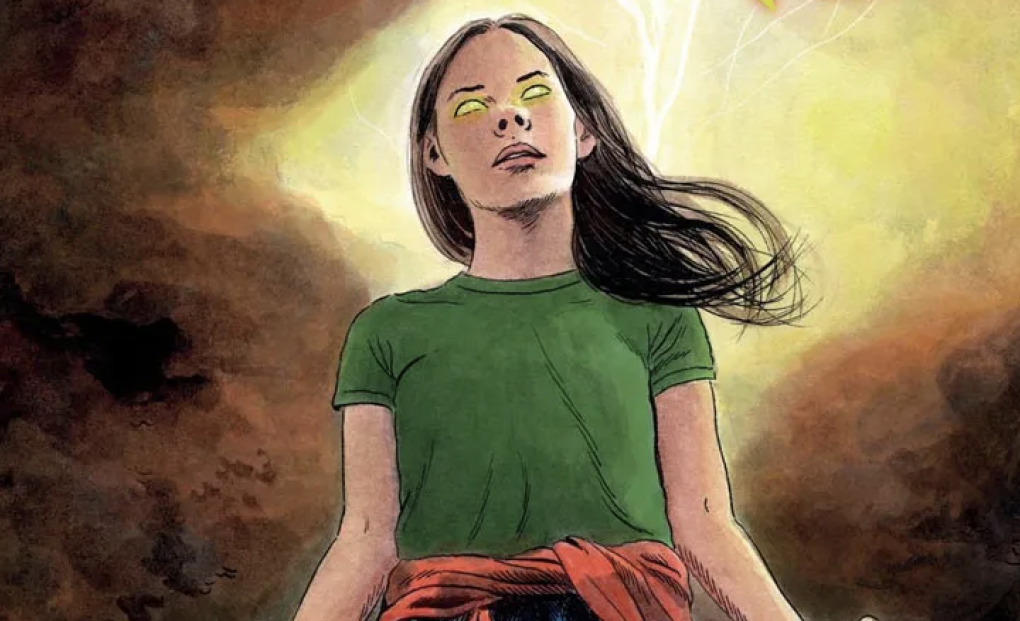
"content": "\u003cfigure id=\"attachment_13932849\" class=\"wp-caption aligncenter\" style=\"max-width: 800px\">\u003cimg loading=\"lazy\" decoding=\"async\" class=\"size-medium wp-image-13932849\" src=\"https://ww2.kqed.org/app/uploads/sites/2/2023/08/mother_nature_cv_custom-e4e5e088365dc0359b08f2f8343a5d1785584fae-1-800x1214.jpg\" alt=\"A comic book cover featuring an illustration of a teenage girl wearing jeans, green t-shirt and flannel shirt around her waist. Her eyes are glowing yellow and dark clouds and lightning swirl around her.\" width=\"800\" height=\"1214\" srcset=\"https://cdn.kqed.org/wp-content/uploads/sites/2/2023/08/mother_nature_cv_custom-e4e5e088365dc0359b08f2f8343a5d1785584fae-1-800x1214.jpg 800w, https://cdn.kqed.org/wp-content/uploads/sites/2/2023/08/mother_nature_cv_custom-e4e5e088365dc0359b08f2f8343a5d1785584fae-1-1020x1548.jpg 1020w, https://cdn.kqed.org/wp-content/uploads/sites/2/2023/08/mother_nature_cv_custom-e4e5e088365dc0359b08f2f8343a5d1785584fae-1-160x243.jpg 160w, https://cdn.kqed.org/wp-content/uploads/sites/2/2023/08/mother_nature_cv_custom-e4e5e088365dc0359b08f2f8343a5d1785584fae-1-768x1165.jpg 768w, https://cdn.kqed.org/wp-content/uploads/sites/2/2023/08/mother_nature_cv_custom-e4e5e088365dc0359b08f2f8343a5d1785584fae-1-1012x1536.jpg 1012w, https://cdn.kqed.org/wp-content/uploads/sites/2/2023/08/mother_nature_cv_custom-e4e5e088365dc0359b08f2f8343a5d1785584fae-1-1350x2048.jpg 1350w, https://cdn.kqed.org/wp-content/uploads/sites/2/2023/08/mother_nature_cv_custom-e4e5e088365dc0359b08f2f8343a5d1785584fae-1-1920x2913.jpg 1920w, https://cdn.kqed.org/wp-content/uploads/sites/2/2023/08/mother_nature_cv_custom-e4e5e088365dc0359b08f2f8343a5d1785584fae-1-scaled.jpg 1687w\" sizes=\"auto, (max-width: 800px) 100vw, 800px\">\u003cfigcaption class=\"wp-caption-text\">‘Mother Nature.’ \u003ccite>(Titan Comics)\u003c/cite>\u003c/figcaption>\u003c/figure>\n\u003cp>Oscar-winning actor Jamie Lee Curtis has made a separate career for herself as an author. Her bestselling books for children encourage them to be silly, be patient and like themselves.\u003c/p>\n\u003cp>[aside postid='arts_13930279']But her new graphic novel, \u003ca href=\"https://twitter.com/jamieleecurtis/status/1687929015615852544\">\u003cem>Mother Nature\u003c/em>\u003c/a>, is more in line with the horror movies for which she’s known.\u003c/p>\n\u003cp>The scream queen co-wrote an “eco-horror” screenplay, which \u003cem>New Yorker\u003c/em> illustrator \u003ca href=\"https://www.chroniclebooks.com/products/penny\">Karl Stevens\u003c/a> adapted into a graphic novel for Titan Comics.\u003c/p>\n\u003cp>“I went through a lot of cadmium red,” he told fans during a panel at the recent Comic-Con in San Diego.\u003c/p>\n\u003cp>“Because there’s a lot of blood,” added Curtis. “There will be blood in this book.”\u003c/p>\n\u003cp>[ad fullwidth]\u003c/p>\n\u003cp>The story is set in New Mexico, where an energy corporation is fracking under land leased from a Native American woman. Her daughter Nova tries to sabotage the project and is struck by lightning. Nova then becomes the spirit of Mother Nature, who takes revenge for being destroyed.\u003c/p>\n\u003cp>“I had an idea of every gruesome way that Mother Nature could kill people,” Curtis said. “You know, black ice, storms, tornadoes, burning them up with extreme heat. Hailstones to the head. What a way to go.” It isn’t nice to mess with Mother Nature; In one key scene, an earthquake shakes loose the head of an oil drill, killing Nova’s father, who worked for the energy company.\u003c/p>\n\u003cfigure id=\"attachment_13932861\" class=\"wp-caption aligncenter\" style=\"max-width: 790px\">\u003cimg loading=\"lazy\" decoding=\"async\" class=\"size-full wp-image-13932861\" src=\"https://ww2.kqed.org/app/uploads/sites/2/2023/08/Screen-Shot-2023-08-09-at-10.58.28-AM.png\" alt=\"A series of illustrated panels depicting a man slowly walking across an oil field. He glances tentatively over his shoulder at two waiting vehicles. Inside one, a man and a woman wait and watch.\" width=\"790\" height=\"1188\" srcset=\"https://cdn.kqed.org/wp-content/uploads/sites/2/2023/08/Screen-Shot-2023-08-09-at-10.58.28-AM.png 790w, https://cdn.kqed.org/wp-content/uploads/sites/2/2023/08/Screen-Shot-2023-08-09-at-10.58.28-AM-160x241.png 160w, https://cdn.kqed.org/wp-content/uploads/sites/2/2023/08/Screen-Shot-2023-08-09-at-10.58.28-AM-768x1155.png 768w\" sizes=\"auto, (max-width: 790px) 100vw, 790px\">\u003cfigcaption class=\"wp-caption-text\">Mother Nature about to strike… \u003ccite>(Titan Comics)\u003c/cite>\u003c/figcaption>\u003c/figure>\n\u003cp>Curtis says the climate crisis motivated her to write such a story. “The inspiration is terror. The inspiration is fear that we are heading into a very, very dangerous place.”\u003c/p>\n\u003cp>Over the years, Curtis says she’s been involved with the Natural Resources Defense Council, an environmental advocacy group. But she first imagined this story when she was 19, just as she began acting, following the footsteps of her famous Hollywood parents Janet Leigh and Tony Curtis. She says she was influenced by 1970’s disaster movies \u003ca href=\"https://www.youtube.com/watch?v=nyTqrtZFWeQ\">\u003cem>The Towering Inferno\u003c/em>\u003c/a> and \u003ca href=\"https://www.google.com/search?rlz=1C1GCEA_enUS849US849&sxsrf=AB5stBjk2_d47X_mP5O2gq_oqpRt9nTIoA:1691531492111&q=the+poseidon+adventure&tbm=vid&source=lnms&sa=X&sqi=2&ved=2ahUKEwi7qdrthc6AAxWaMlkFHac5CmkQ0pQJegQIDRAB&biw=2732&bih=1250&dpr=0.5#fpstate=ive&vld=cid:bc36fa4d,vid:H_5w-WmSdz0\">\u003cem>The Poseidon Adventure\u003c/em>\u003c/a>.\u003c/p>\n\u003cp>[aside postid='arts_13926136']“I was aware of the raping of the land. I was aware of the drilling and the blasting and the stealing of these natural resources. And I just had this idea in my head. I said, ‘I’m going to write a movie about how we’re blowing it with Mother Nature.’ I just knew it,” Curtis told NPR in an interview before the panel.. “It stuck with me so that in 2018, when I made the \u003cem>Halloween\u003c/em> movie and got reinvigorated to the process of making movies, I decided to write a screenplay.”\u003c/p>\n\u003cp>She teamed up with \u003ca href=\"https://www.imdb.com/name/nm4405314/\">Russell Goldman\u003c/a>, who was her assistant on the \u003cem>Halloween\u003c/em> films. She says his great contribution to the screenplay was to make it about women.\u003c/p>\n\u003cp>“Women are cool,” he says.\u003c/p>\n\u003cp>And Curtis agrees. “Women \u003cem>are\u003c/em> cool. You heard it here on NPR.”\u003c/p>\n\u003cp>\u003cem>Mother Nature\u003c/em> centers on two pairs of mothers and daughters. “It’s a story about the decisions that one generation is making in leaving a planet behind for the next,” Goldman says.\u003c/p>\n\u003cfigure id=\"attachment_13932846\" class=\"wp-caption aligncenter\" style=\"max-width: 800px\">\u003cimg loading=\"lazy\" decoding=\"async\" class=\"size-medium wp-image-13932846\" src=\"https://ww2.kqed.org/app/uploads/sites/2/2023/08/jamie-lee_custom-b26b646a450213a9d0a0ac4075445c6f36f8d1e9-scaled-e1691604276395-800x493.jpg\" alt=\"A white woman with cropped grey hair and silver rimmed glasses stands with two white men. All three hold up a comic book titled 'Mother Nature.' All are half-smiling.\" width=\"800\" height=\"493\" srcset=\"https://cdn.kqed.org/wp-content/uploads/sites/2/2023/08/jamie-lee_custom-b26b646a450213a9d0a0ac4075445c6f36f8d1e9-scaled-e1691604276395-800x493.jpg 800w, https://cdn.kqed.org/wp-content/uploads/sites/2/2023/08/jamie-lee_custom-b26b646a450213a9d0a0ac4075445c6f36f8d1e9-scaled-e1691604276395-1020x628.jpg 1020w, https://cdn.kqed.org/wp-content/uploads/sites/2/2023/08/jamie-lee_custom-b26b646a450213a9d0a0ac4075445c6f36f8d1e9-scaled-e1691604276395-160x99.jpg 160w, https://cdn.kqed.org/wp-content/uploads/sites/2/2023/08/jamie-lee_custom-b26b646a450213a9d0a0ac4075445c6f36f8d1e9-scaled-e1691604276395-768x473.jpg 768w, https://cdn.kqed.org/wp-content/uploads/sites/2/2023/08/jamie-lee_custom-b26b646a450213a9d0a0ac4075445c6f36f8d1e9-scaled-e1691604276395-1536x946.jpg 1536w, https://cdn.kqed.org/wp-content/uploads/sites/2/2023/08/jamie-lee_custom-b26b646a450213a9d0a0ac4075445c6f36f8d1e9-scaled-e1691604276395.jpg 1920w\" sizes=\"auto, (max-width: 800px) 100vw, 800px\">\u003cfigcaption class=\"wp-caption-text\">Jamie Lee Curtis, Russell Goldman and Karl Stevens — co-creators of the new graphic novel ‘Mother Nature’ — at Comic-Con San Diego. \u003ccite>(Mandalit del Barco/ NPR)\u003c/cite>\u003c/figcaption>\u003c/figure>\n\u003cp>The story’s main mother and daughter are Navajo. Goldman researched the culture, and he collaborated on the script with several Native American consultants, including author and filmmaker Brian Lee Young.\u003c/p>\n\u003cp>Young (who is also the author of a new book, \u003ca href=\"https://brianlyoung.com/books/\">\u003cem>Heroes of the Water Monster\u003c/em>\u003c/a>) says he helped Goldman, Curtis and Stevens incorporate elements of traditional Diné folklore depicting retaliating natural forces.\u003c/p>\n\u003cp>[aside postid='arts_13920759']“This is the first time that I’ve seen the Navajo culture portrayed in a respectful way,” Young says. He says the story also shows “that we have the power to reverse the dangers that climate change enacts on all our communities,” says Young. “I hope everyone gets to read it. It’s a lot of fun, especially as a horror fan.”\u003c/p>\n\u003cp>\u003ca href=\"https://twitter.com/jamieleecurtis/status/1687929015615852544\">Curtis is currently on strike\u003c/a> against the Hollywood studios as a member of the union SAG-AFTRA. But at Comic-Con, Curtis told her enthusiastic fans they might make \u003cem>Mother Nature\u003c/em> into a movie someday.\u003c/p>\n\u003cp>“That would be fun. Maybe I’ll direct it. Maybe I’ll co-direct. Maybe I’ll be in it. Maybe I’ll do all of it,” she said to many cheers.\u003c/p>\n\u003cp>\u003c/p>\n\u003cp>“You know what? I’m 65 years old this November, and I have no time to waste. None.”\u003c/p>\n\u003cdiv class=\"fullattribution\">\u003cem>Copyright 2023 NPR. To see more, \u003ca href=\"https://www.npr.org\">visit NPR\u003c/a>.\u003cimg decoding=\"async\" src=\"https://www.google-analytics.com/__utm.gif?utmac=UA-5828686-4&utmdt=Jamie+Lee+Curtis%27+graphic+novel+shows+how+%27We%27re+blowing+it+with+Mother+Nature%27&utme=8(APIKey)9(MDAxOTAwOTE4MDEyMTkxMDAzNjczZDljZA004)\">\u003c/em>\u003c/div>\n\n",
"blocks": [],
"excerpt": "This project was motivated by the climate crisis: “We are heading into a very, very dangerous place,” Curtis says.",
"status": "publish",
"parent": 0,
"modified": 1769638138,
"stats": {
"hasAudio": false,
"hasVideo": false,
"hasChartOrMap": false,
"iframeSrcs": [],
"hasGoogleForm": false,
"hasGallery": false,
"hasHearkenModule": false,
"hasPolis": false,
"paragraphCount": 22,
"wordCount": 822
},
"headData": {
"title": "‘Mother Nature’ Comic Book Makes Climate Change a Real Horror | KQED",
"description": "This project was motivated by the climate crisis: “We are heading into a very, very dangerous place,” Curtis says.",
"ogTitle": "",
"ogDescription": "",
"ogImgId": "",
"twTitle": "",
"twDescription": "",
"twImgId": "",
"socialTitle": "‘Mother Nature’ Comic Book Makes Climate Change a Real Horror %%page%% %%sep%% KQED",
"schema": {
"@context": "https://schema.org",
"@type": "Article",
"headline": "Jamie Lee Curtis’ Graphic Novel Shows How ‘We’re Blowing It With Mother Nature’",
"datePublished": "2023-08-09T11:29:44-07:00",
"dateModified": "2026-01-28T14:08:58-08:00",
"image": "https://cdn.kqed.org/wp-content/uploads/2020/02/KQED-OG-Image@1x.png"
}
},
"primaryCategory": {
"termId": 73,
"slug": "literature",
"name": "Books"
},
"sticky": false,
"nprByline": "Mandalit del Barco",
"nprImageAgency": "Titan Comics",
"nprStoryId": "1192703489",
"nprApiLink": "http://api.npr.org/query?id=1192703489&apiKey=MDAxOTAwOTE4MDEyMTkxMDAzNjczZDljZA004",
"nprHtmlLink": "https://www.npr.org/2023/08/08/1192703489/jamie-lee-curtis-graphic-novel-mother-nature?ft=nprml&f=1192703489",
"nprRetrievedStory": "1",
"nprPubDate": "Wed, 09 Aug 2023 12:54:00 -0400",
"nprStoryDate": "Tue, 08 Aug 2023 18:51:00 -0400",
"nprLastModifiedDate": "Wed, 09 Aug 2023 12:54:23 -0400",
"nprAudio": "https://play.podtrac.com/npr-191676894/edge1.pod.npr.org/anon.npr-mp3/npr/atc/2023/08/20230808_atc_jamie_lee_curtis_graphic_novel_shows_how_were_blowing_it_with_mother_nature.mp3?orgId=1&topicId=1032&d=250&p=2&story=1192703489&awCollectionId=1&awEpisodeId=1192703489&ft=nprml&f=1192703489",
"nprAudioM3u": "http://api.npr.org/m3u/11192750344-ff1b3a.m3u?orgId=1&topicId=1032&d=250&p=2&story=1192703489&ft=nprml&f=1192703489",
"templateType": "standard",
"featuredImageType": "standard",
"excludeFromSiteSearch": "Include",
"showOnAuthorArchivePages": "No",
"articleAge": "0",
"path": "/arts/13932848/jamie-lee-curtis-graphic-novel-shows-how-were-blowing-it-with-mother-nature",
"audioUrl": "https://play.podtrac.com/npr-191676894/edge1.pod.npr.org/anon.npr-mp3/npr/atc/2023/08/20230808_atc_jamie_lee_curtis_graphic_novel_shows_how_were_blowing_it_with_mother_nature.mp3?orgId=1&topicId=1032&d=250&p=2&story=1192703489&awCollectionId=1&awEpisodeId=1192703489&ft=nprml&f=1192703489",
"audioTrackLength": null,
"parsedContent": [
{
"type": "contentString",
"content": "\u003cdiv class=\"post-body\">\u003cp>\u003cfigure id=\"attachment_13932849\" class=\"wp-caption aligncenter\" style=\"max-width: 800px\">\u003cimg loading=\"lazy\" decoding=\"async\" class=\"size-medium wp-image-13932849\" src=\"https://ww2.kqed.org/app/uploads/sites/2/2023/08/mother_nature_cv_custom-e4e5e088365dc0359b08f2f8343a5d1785584fae-1-800x1214.jpg\" alt=\"A comic book cover featuring an illustration of a teenage girl wearing jeans, green t-shirt and flannel shirt around her waist. Her eyes are glowing yellow and dark clouds and lightning swirl around her.\" width=\"800\" height=\"1214\" srcset=\"https://cdn.kqed.org/wp-content/uploads/sites/2/2023/08/mother_nature_cv_custom-e4e5e088365dc0359b08f2f8343a5d1785584fae-1-800x1214.jpg 800w, https://cdn.kqed.org/wp-content/uploads/sites/2/2023/08/mother_nature_cv_custom-e4e5e088365dc0359b08f2f8343a5d1785584fae-1-1020x1548.jpg 1020w, https://cdn.kqed.org/wp-content/uploads/sites/2/2023/08/mother_nature_cv_custom-e4e5e088365dc0359b08f2f8343a5d1785584fae-1-160x243.jpg 160w, https://cdn.kqed.org/wp-content/uploads/sites/2/2023/08/mother_nature_cv_custom-e4e5e088365dc0359b08f2f8343a5d1785584fae-1-768x1165.jpg 768w, https://cdn.kqed.org/wp-content/uploads/sites/2/2023/08/mother_nature_cv_custom-e4e5e088365dc0359b08f2f8343a5d1785584fae-1-1012x1536.jpg 1012w, https://cdn.kqed.org/wp-content/uploads/sites/2/2023/08/mother_nature_cv_custom-e4e5e088365dc0359b08f2f8343a5d1785584fae-1-1350x2048.jpg 1350w, https://cdn.kqed.org/wp-content/uploads/sites/2/2023/08/mother_nature_cv_custom-e4e5e088365dc0359b08f2f8343a5d1785584fae-1-1920x2913.jpg 1920w, https://cdn.kqed.org/wp-content/uploads/sites/2/2023/08/mother_nature_cv_custom-e4e5e088365dc0359b08f2f8343a5d1785584fae-1-scaled.jpg 1687w\" sizes=\"auto, (max-width: 800px) 100vw, 800px\">\u003cfigcaption class=\"wp-caption-text\">‘Mother Nature.’ \u003ccite>(Titan Comics)\u003c/cite>\u003c/figcaption>\u003c/figure>\n\u003cp>Oscar-winning actor Jamie Lee Curtis has made a separate career for herself as an author. Her bestselling books for children encourage them to be silly, be patient and like themselves.\u003c/p>\n\u003cp>\u003c/p>\u003c/div>",
"attributes": {
"named": {},
"numeric": []
}
},
{
"type": "component",
"content": "",
"name": "aside",
"attributes": {
"named": {
"postid": "arts_13930279",
"label": ""
},
"numeric": []
}
},
{
"type": "contentString",
"content": "\u003cdiv class=\"post-body\">\u003cp>But her new graphic novel, \u003ca href=\"https://twitter.com/jamieleecurtis/status/1687929015615852544\">\u003cem>Mother Nature\u003c/em>\u003c/a>, is more in line with the horror movies for which she’s known.\u003c/p>\n\u003cp>The scream queen co-wrote an “eco-horror” screenplay, which \u003cem>New Yorker\u003c/em> illustrator \u003ca href=\"https://www.chroniclebooks.com/products/penny\">Karl Stevens\u003c/a> adapted into a graphic novel for Titan Comics.\u003c/p>\n\u003cp>“I went through a lot of cadmium red,” he told fans during a panel at the recent Comic-Con in San Diego.\u003c/p>\n\u003cp>“Because there’s a lot of blood,” added Curtis. “There will be blood in this book.”\u003c/p>\n\u003cp>\u003c/p>\u003c/div>",
"attributes": {
"named": {},
"numeric": []
}
},
{
"type": "component",
"content": "",
"name": "ad",
"attributes": {
"named": {
"label": "fullwidth"
},
"numeric": [
"fullwidth"
]
}
},
{
"type": "contentString",
"content": "\u003cdiv class=\"post-body\">\u003cp>\u003c/p>\n\u003cp>The story is set in New Mexico, where an energy corporation is fracking under land leased from a Native American woman. Her daughter Nova tries to sabotage the project and is struck by lightning. Nova then becomes the spirit of Mother Nature, who takes revenge for being destroyed.\u003c/p>\n\u003cp>“I had an idea of every gruesome way that Mother Nature could kill people,” Curtis said. “You know, black ice, storms, tornadoes, burning them up with extreme heat. Hailstones to the head. What a way to go.” It isn’t nice to mess with Mother Nature; In one key scene, an earthquake shakes loose the head of an oil drill, killing Nova’s father, who worked for the energy company.\u003c/p>\n\u003cfigure id=\"attachment_13932861\" class=\"wp-caption aligncenter\" style=\"max-width: 790px\">\u003cimg loading=\"lazy\" decoding=\"async\" class=\"size-full wp-image-13932861\" src=\"https://ww2.kqed.org/app/uploads/sites/2/2023/08/Screen-Shot-2023-08-09-at-10.58.28-AM.png\" alt=\"A series of illustrated panels depicting a man slowly walking across an oil field. He glances tentatively over his shoulder at two waiting vehicles. Inside one, a man and a woman wait and watch.\" width=\"790\" height=\"1188\" srcset=\"https://cdn.kqed.org/wp-content/uploads/sites/2/2023/08/Screen-Shot-2023-08-09-at-10.58.28-AM.png 790w, https://cdn.kqed.org/wp-content/uploads/sites/2/2023/08/Screen-Shot-2023-08-09-at-10.58.28-AM-160x241.png 160w, https://cdn.kqed.org/wp-content/uploads/sites/2/2023/08/Screen-Shot-2023-08-09-at-10.58.28-AM-768x1155.png 768w\" sizes=\"auto, (max-width: 790px) 100vw, 790px\">\u003cfigcaption class=\"wp-caption-text\">Mother Nature about to strike… \u003ccite>(Titan Comics)\u003c/cite>\u003c/figcaption>\u003c/figure>\n\u003cp>Curtis says the climate crisis motivated her to write such a story. “The inspiration is terror. The inspiration is fear that we are heading into a very, very dangerous place.”\u003c/p>\n\u003cp>Over the years, Curtis says she’s been involved with the Natural Resources Defense Council, an environmental advocacy group. But she first imagined this story when she was 19, just as she began acting, following the footsteps of her famous Hollywood parents Janet Leigh and Tony Curtis. She says she was influenced by 1970’s disaster movies \u003ca href=\"https://www.youtube.com/watch?v=nyTqrtZFWeQ\">\u003cem>The Towering Inferno\u003c/em>\u003c/a> and \u003ca href=\"https://www.google.com/search?rlz=1C1GCEA_enUS849US849&sxsrf=AB5stBjk2_d47X_mP5O2gq_oqpRt9nTIoA:1691531492111&q=the+poseidon+adventure&tbm=vid&source=lnms&sa=X&sqi=2&ved=2ahUKEwi7qdrthc6AAxWaMlkFHac5CmkQ0pQJegQIDRAB&biw=2732&bih=1250&dpr=0.5#fpstate=ive&vld=cid:bc36fa4d,vid:H_5w-WmSdz0\">\u003cem>The Poseidon Adventure\u003c/em>\u003c/a>.\u003c/p>\n\u003cp>\u003c/p>\u003c/div>",
"attributes": {
"named": {},
"numeric": []
}
},
{
"type": "component",
"content": "",
"name": "aside",
"attributes": {
"named": {
"postid": "arts_13926136",
"label": ""
},
"numeric": []
}
},
{
"type": "contentString",
"content": "\u003cdiv class=\"post-body\">\u003cp>“I was aware of the raping of the land. I was aware of the drilling and the blasting and the stealing of these natural resources. And I just had this idea in my head. I said, ‘I’m going to write a movie about how we’re blowing it with Mother Nature.’ I just knew it,” Curtis told NPR in an interview before the panel.. “It stuck with me so that in 2018, when I made the \u003cem>Halloween\u003c/em> movie and got reinvigorated to the process of making movies, I decided to write a screenplay.”\u003c/p>\n\u003cp>She teamed up with \u003ca href=\"https://www.imdb.com/name/nm4405314/\">Russell Goldman\u003c/a>, who was her assistant on the \u003cem>Halloween\u003c/em> films. She says his great contribution to the screenplay was to make it about women.\u003c/p>\n\u003cp>“Women are cool,” he says.\u003c/p>\n\u003cp>And Curtis agrees. “Women \u003cem>are\u003c/em> cool. You heard it here on NPR.”\u003c/p>\n\u003cp>\u003cem>Mother Nature\u003c/em> centers on two pairs of mothers and daughters. “It’s a story about the decisions that one generation is making in leaving a planet behind for the next,” Goldman says.\u003c/p>\n\u003cfigure id=\"attachment_13932846\" class=\"wp-caption aligncenter\" style=\"max-width: 800px\">\u003cimg loading=\"lazy\" decoding=\"async\" class=\"size-medium wp-image-13932846\" src=\"https://ww2.kqed.org/app/uploads/sites/2/2023/08/jamie-lee_custom-b26b646a450213a9d0a0ac4075445c6f36f8d1e9-scaled-e1691604276395-800x493.jpg\" alt=\"A white woman with cropped grey hair and silver rimmed glasses stands with two white men. All three hold up a comic book titled 'Mother Nature.' All are half-smiling.\" width=\"800\" height=\"493\" srcset=\"https://cdn.kqed.org/wp-content/uploads/sites/2/2023/08/jamie-lee_custom-b26b646a450213a9d0a0ac4075445c6f36f8d1e9-scaled-e1691604276395-800x493.jpg 800w, https://cdn.kqed.org/wp-content/uploads/sites/2/2023/08/jamie-lee_custom-b26b646a450213a9d0a0ac4075445c6f36f8d1e9-scaled-e1691604276395-1020x628.jpg 1020w, https://cdn.kqed.org/wp-content/uploads/sites/2/2023/08/jamie-lee_custom-b26b646a450213a9d0a0ac4075445c6f36f8d1e9-scaled-e1691604276395-160x99.jpg 160w, https://cdn.kqed.org/wp-content/uploads/sites/2/2023/08/jamie-lee_custom-b26b646a450213a9d0a0ac4075445c6f36f8d1e9-scaled-e1691604276395-768x473.jpg 768w, https://cdn.kqed.org/wp-content/uploads/sites/2/2023/08/jamie-lee_custom-b26b646a450213a9d0a0ac4075445c6f36f8d1e9-scaled-e1691604276395-1536x946.jpg 1536w, https://cdn.kqed.org/wp-content/uploads/sites/2/2023/08/jamie-lee_custom-b26b646a450213a9d0a0ac4075445c6f36f8d1e9-scaled-e1691604276395.jpg 1920w\" sizes=\"auto, (max-width: 800px) 100vw, 800px\">\u003cfigcaption class=\"wp-caption-text\">Jamie Lee Curtis, Russell Goldman and Karl Stevens — co-creators of the new graphic novel ‘Mother Nature’ — at Comic-Con San Diego. \u003ccite>(Mandalit del Barco/ NPR)\u003c/cite>\u003c/figcaption>\u003c/figure>\n\u003cp>The story’s main mother and daughter are Navajo. Goldman researched the culture, and he collaborated on the script with several Native American consultants, including author and filmmaker Brian Lee Young.\u003c/p>\n\u003cp>Young (who is also the author of a new book, \u003ca href=\"https://brianlyoung.com/books/\">\u003cem>Heroes of the Water Monster\u003c/em>\u003c/a>) says he helped Goldman, Curtis and Stevens incorporate elements of traditional Diné folklore depicting retaliating natural forces.\u003c/p>\n\u003cp>\u003c/p>\u003c/div>",
"attributes": {
"named": {},
"numeric": []
}
},
{
"type": "component",
"content": "",
"name": "aside",
"attributes": {
"named": {
"postid": "arts_13920759",
"label": ""
},
"numeric": []
}
},
{
"type": "contentString",
"content": "\u003cdiv class=\"post-body\">\u003cp>“This is the first time that I’ve seen the Navajo culture portrayed in a respectful way,” Young says. He says the story also shows “that we have the power to reverse the dangers that climate change enacts on all our communities,” says Young. “I hope everyone gets to read it. It’s a lot of fun, especially as a horror fan.”\u003c/p>\n\u003cp>\u003ca href=\"https://twitter.com/jamieleecurtis/status/1687929015615852544\">Curtis is currently on strike\u003c/a> against the Hollywood studios as a member of the union SAG-AFTRA. But at Comic-Con, Curtis told her enthusiastic fans they might make \u003cem>Mother Nature\u003c/em> into a movie someday.\u003c/p>\n\u003cp>“That would be fun. Maybe I’ll direct it. Maybe I’ll co-direct. Maybe I’ll be in it. Maybe I’ll do all of it,” she said to many cheers.\u003c/p>\n\u003cp>\u003c/p>\n\u003cp>“You know what? I’m 65 years old this November, and I have no time to waste. None.”\u003c/p>\n\u003cdiv class=\"fullattribution\">\u003cem>Copyright 2023 NPR. To see more, \u003ca href=\"https://www.npr.org\">visit NPR\u003c/a>.\u003cimg decoding=\"async\" src=\"https://www.google-analytics.com/__utm.gif?utmac=UA-5828686-4&utmdt=Jamie+Lee+Curtis%27+graphic+novel+shows+how+%27We%27re+blowing+it+with+Mother+Nature%27&utme=8(APIKey)9(MDAxOTAwOTE4MDEyMTkxMDAzNjczZDljZA004)\">\u003c/em>\u003c/div>\n\n\u003c/div>\u003c/p>",
"attributes": {
"named": {},
"numeric": []
}
}
],
"link": "/arts/13932848/jamie-lee-curtis-graphic-novel-shows-how-were-blowing-it-with-mother-nature",
"authors": [
"byline_arts_13932848"
],
"programs": [
"arts_140"
],
"categories": [
"arts_1",
"arts_73",
"arts_22351",
"arts_74",
"arts_75"
],
"tags": [
"arts_1407",
"arts_1942",
"arts_977",
"arts_10629",
"arts_7005",
"arts_11420",
"arts_585"
],
"affiliates": [
"arts_137"
],
"featImg": "arts_13932860",
"label": "arts_140"
},
"arts_13932690": {
"type": "posts",
"id": "arts_13932690",
"meta": {
"index": "posts_1716263798",
"site": "arts",
"id": "13932690",
"score": null,
"sort": [
1691161088000
]
},
"parent": 0,
"labelTerm": {},
"blocks": [],
"publishDate": 1691161088,
"format": "standard",
"title": "Feast on ‘Sofreh’ — a Book That Celebrates Persian Cooking, Past and Future",
"headTitle": "Feast on ‘Sofreh’ — a Book That Celebrates Persian Cooking, Past and Future | KQED",
"content": "\u003cp>The new cookbook \u003cem>Sofreh\u003c/em> doesn’t open with tempting menus for future dinner parties or ingredient lists, but with a poetic conversation between an unnamed narrator and a grapevine. When asked why it continues to grow despite bearing so much fruit, the vine answers: “Why stop now, when there is such immense joy in my reaching for the sun.”\u003c/p>\n\u003cp>“Roots are very important to me,” says chef and author Nasim Alikhani. “I literally brought a little stem from my father’s grape garden in Iran, which originally he brought to our home from his own village.” She planted that vine in the back garden of her small Persian restaurant \u003ca href=\"https://www.sofrehnyc.com/\">Sofreh\u003c/a>. “That’s my roots, but whether the leaves grow, that’s up to the sky,” she says.\u003c/p>\n\u003cfigure id=\"attachment_13932692\" class=\"wp-caption aligncenter\" style=\"max-width: 800px\">\u003cimg loading=\"lazy\" decoding=\"async\" class=\"size-medium wp-image-13932692\" src=\"https://ww2.kqed.org/app/uploads/sites/2/2023/07/quentin-bacon_custom-a8a0b4988d0f47115ed059bc7aa04f4ada4f920f-800x770.jpg\" alt=\"A woman of color wearing a white top sits in front of a white wall at a table. She's smiling.\" width=\"800\" height=\"770\" srcset=\"https://cdn.kqed.org/wp-content/uploads/sites/2/2023/07/quentin-bacon_custom-a8a0b4988d0f47115ed059bc7aa04f4ada4f920f-800x770.jpg 800w, https://cdn.kqed.org/wp-content/uploads/sites/2/2023/07/quentin-bacon_custom-a8a0b4988d0f47115ed059bc7aa04f4ada4f920f-1020x982.jpg 1020w, https://cdn.kqed.org/wp-content/uploads/sites/2/2023/07/quentin-bacon_custom-a8a0b4988d0f47115ed059bc7aa04f4ada4f920f-160x154.jpg 160w, https://cdn.kqed.org/wp-content/uploads/sites/2/2023/07/quentin-bacon_custom-a8a0b4988d0f47115ed059bc7aa04f4ada4f920f-768x740.jpg 768w, https://cdn.kqed.org/wp-content/uploads/sites/2/2023/07/quentin-bacon_custom-a8a0b4988d0f47115ed059bc7aa04f4ada4f920f-1536x1479.jpg 1536w, https://cdn.kqed.org/wp-content/uploads/sites/2/2023/07/quentin-bacon_custom-a8a0b4988d0f47115ed059bc7aa04f4ada4f920f-1920x1849.jpg 1920w, https://cdn.kqed.org/wp-content/uploads/sites/2/2023/07/quentin-bacon_custom-a8a0b4988d0f47115ed059bc7aa04f4ada4f920f.jpg 1998w\" sizes=\"(max-width: 800px) 100vw, 800px\">\u003cfigcaption class=\"wp-caption-text\">‘Once you practice who you are, no matter where you are, you’re home,’ says Nasim Alikhani. \u003ccite>(Quentin Bacon)\u003c/cite>\u003c/figcaption>\u003c/figure>\n\u003cp>In the five years since Sofreh opened its doors in the Prospect Heights neighborhood of Brooklyn, Alikhani has earned a James Beard nomination, cooked at the White House and for the Metropolitan Museum’s annual Met Gala. She says she’d always envisioned writing a cookbook but she also wanted her first book to be more than just a collection of recipes.\u003c/p>\n\u003cp>The Farsi word \u003cem>Sofreh \u003c/em>refers to both the ornate table covering laid before a meal and to the many familial, religious and seasonal celebrations centered on food. \u003ca href=\"https://www.sofrehnyc.com/cookbook\">\u003cem>Sofreh: A Contemporary Approach to Classic Persian Cuisine\u003c/em>\u003c/a> was published earlier this summer, and blends recipes with Alikhani’s personal story of leaving Iran, migration and reinvention.\u003c/p>\n\u003cfigure id=\"attachment_13932697\" class=\"wp-caption alignnone\" style=\"max-width: 800px\">\u003cimg loading=\"lazy\" decoding=\"async\" class=\"size-medium wp-image-13932697\" src=\"https://ww2.kqed.org/app/uploads/sites/2/2023/08/Screen-Shot-2023-08-03-at-10.20.47-PM-800x1019.png\" alt=\"A white plate with chopped vegetables on it sits next to a bowl of stew on a white table.\" width=\"800\" height=\"1019\" srcset=\"https://cdn.kqed.org/wp-content/uploads/sites/2/2023/08/Screen-Shot-2023-08-03-at-10.20.47-PM-800x1019.png 800w, https://cdn.kqed.org/wp-content/uploads/sites/2/2023/08/Screen-Shot-2023-08-03-at-10.20.47-PM-1020x1299.png 1020w, https://cdn.kqed.org/wp-content/uploads/sites/2/2023/08/Screen-Shot-2023-08-03-at-10.20.47-PM-160x204.png 160w, https://cdn.kqed.org/wp-content/uploads/sites/2/2023/08/Screen-Shot-2023-08-03-at-10.20.47-PM-768x978.png 768w, https://cdn.kqed.org/wp-content/uploads/sites/2/2023/08/Screen-Shot-2023-08-03-at-10.20.47-PM.png 1044w\" sizes=\"(max-width: 800px) 100vw, 800px\">\u003cfigcaption class=\"wp-caption-text\">In a chapter dedicated to accompaniments known as Torshi and Moraba, Alikhani describes techniques for pickling and preserving vegetables and fruits as condiments for stews and rice dishes on the Sofreh. \u003ccite>(Quentin Bacon/ Knopf)\u003c/cite>\u003c/figcaption>\u003c/figure>\n\u003cp>Alikhani was 59 when she opened the restaurant in 2018, and she says what may have been insurmountable disadvantages in a cutthroat industry — her immigrant identity, gender and age — have also become the roots of her success. “I think once you practice who you are, no matter where you are, you’re home.”\u003c/p>\n\u003cp>[ad fullwidth]\u003c/p>\n\u003cp>Like her restaurant’s interiors, the book is a celebration of her cultural inheritance and is interspersed with poetry, culinary history and a chapter of full-page documentary photographs of Iran entitled “Sarzamine Man” or my homeland.\u003c/p>\n\u003cfigure id=\"attachment_13932694\" class=\"wp-caption alignright\" style=\"max-width: 200px\">\u003cimg loading=\"lazy\" decoding=\"async\" class=\"size-full wp-image-13932694\" src=\"https://ww2.kqed.org/app/uploads/sites/2/2023/07/sofreh-cover_custom-2ea7de8d1b60b5a852d88f3959066c7f4f0f590f.jpg\" alt=\"A book cover depicting Persian food on a white plate.\" width=\"200\" height=\"277\" srcset=\"https://cdn.kqed.org/wp-content/uploads/sites/2/2023/07/sofreh-cover_custom-2ea7de8d1b60b5a852d88f3959066c7f4f0f590f.jpg 200w, https://cdn.kqed.org/wp-content/uploads/sites/2/2023/07/sofreh-cover_custom-2ea7de8d1b60b5a852d88f3959066c7f4f0f590f-160x222.jpg 160w\" sizes=\"(max-width: 200px) 100vw, 200px\">\u003cfigcaption class=\"wp-caption-text\">‘Sofreh: A Contemporary Approach to Classic Persian Cuisine.’ \u003ccite>(Knopf)\u003c/cite>\u003c/figcaption>\u003c/figure>\n\u003cp>The recipes in \u003cem>Sofreh\u003c/em> reflect the expansive range and imperial heritage of Persian cuisine, which has always been distinct from its neighboring Mediterranean, Arab and South Asian traditions. Fresh herbs, barberries and slivered pistachios are infused into rice dishes known as \u003cem>polos\u003c/em> that form the accompaniment for slow-cooked meat stews like \u003cem>Fesenjan. \u003c/em>Although Alikhani includes recipes for grilled meats like \u003cem>Kabab Koobideh\u003c/em> — albeit adapted for Western kitchens — she also adds Mezcal cocktail versions of Iran’s lemon-infused summer cordials known as\u003cem> Sharbat-e Sekenjabin\u003c/em> and modern vegetarian entrees for lighter eating.\u003c/p>\n\u003cp>To celebrate the book’s publication, Alikhani recently spent a week in Los Angeles hosting a series of pop-up Sofreh dinners and book signings in a city sometimes lovingly referred to as “Tehrangeles.” As home to one of the largest Persian communities outside Iran, LA has no shortage of Persian restaurants but very few present the kind of sleekly plated modern interpretations Alikhani has perfected at Sofreh.\u003c/p>\n\u003cp>“All the Persian restaurants essentially are the same — your kababs and your stews — whereas if you go to Iran, there’s a long, rich culinary history,” says LA resident Payman Bahmani-Bailey who was preparing cocktails for the pop-up. “So not only do you not see that aspect of the tradition reflected, you also don’t see much creativity. Everything is remnants of past glory. And if you didn’t know any better, you’d think our people didn’t accomplish anything in the last 5,000 years.”\u003c/p>\n\u003cfigure id=\"attachment_13932698\" class=\"wp-caption aligncenter\" style=\"max-width: 800px\">\u003cimg loading=\"lazy\" decoding=\"async\" class=\"size-medium wp-image-13932698\" src=\"https://ww2.kqed.org/app/uploads/sites/2/2023/08/Screen-Shot-2023-08-03-at-10.45.58-PM-800x977.png\" alt=\"A white oval plate with symmetrical lines of rice, grains and beans arranged on it.\" width=\"800\" height=\"977\" srcset=\"https://cdn.kqed.org/wp-content/uploads/sites/2/2023/08/Screen-Shot-2023-08-03-at-10.45.58-PM-800x977.png 800w, https://cdn.kqed.org/wp-content/uploads/sites/2/2023/08/Screen-Shot-2023-08-03-at-10.45.58-PM-1020x1246.png 1020w, https://cdn.kqed.org/wp-content/uploads/sites/2/2023/08/Screen-Shot-2023-08-03-at-10.45.58-PM-160x195.png 160w, https://cdn.kqed.org/wp-content/uploads/sites/2/2023/08/Screen-Shot-2023-08-03-at-10.45.58-PM-768x938.png 768w, https://cdn.kqed.org/wp-content/uploads/sites/2/2023/08/Screen-Shot-2023-08-03-at-10.45.58-PM.png 1092w\" sizes=\"(max-width: 800px) 100vw, 800px\">\u003cfigcaption class=\"wp-caption-text\">With candied barberries, raisins and slivered pistachios and almonds, Sofreh includes a recipe for Morasa Polo or Jeweled Rice, which Alikhani recommends serving for ‘momentous occasion, or a holiday table, as it was originally intended.’ \u003ccite>(Quentin Bacon/ Knopf)\u003c/cite>\u003c/figcaption>\u003c/figure>\n\u003cp>“I admire her, and she’s an inspiration for how to break glass ceilings, and make a name for ourselves while keeping our traditions alive,” says pastry chef Fariba Nafissi who attended one of Alikhani’s Los Angeles book events after years of following her through social media. “I’m speaking from my own challenges — introducing Americans or any nationality to a pastry they’ve never tasted. Nasim was an inspiration with what she has done with Iranian food.”\u003c/p>\n\u003cp>[aside postid='arts_13930727']Alikhani says she is grateful for the way non-Iranians have embraced her cooking, but she says the support from her own Persian community has given her a profound sense of satisfaction and purpose: “You reach another level when your own people come and pat your back and say well done.” She says despite her enduring ties to Iran, she avoids the term “authentic” because it can become a metaphor for becoming culturally and creatively static.\u003c/p>\n\u003cp>\u003c/p>\n\u003cp>“If we as immigrants become stuck in the past, we deprive ourselves of the opportunities our new space has provided. If we don’t know how to adapt, then we become extinct. That’s the dinosaur situation. We’re human. I don’t want to become another Iranian dinosaur stuck in a glorious past. I make my glory now.”\u003c/p>\n\u003cdiv class=\"fullattribution\">\u003cem>Copyright 2023 NPR. To see more, \u003ca href=\"https://www.npr.org\">visit NPR\u003c/a>.\u003cimg decoding=\"async\" src=\"https://www.google-analytics.com/__utm.gif?utmac=UA-5828686-4&utmdt=Feast+on+%27Sofreh%27+%E2%80%94+a+book+that+celebrates+Persian+cooking%2C+past+and+future&utme=8(APIKey)9(MDAxOTAwOTE4MDEyMTkxMDAzNjczZDljZA004)\">\u003c/em>\u003c/div>\n\n",
"stats": {
"hasVideo": false,
"hasChartOrMap": false,
"hasAudio": false,
"hasPolis": false,
"wordCount": 976,
"hasGoogleForm": false,
"hasGallery": false,
"hasHearkenModule": false,
"iframeSrcs": [],
"paragraphCount": 14
},
"modified": 1705005186,
"excerpt": "‘Sofreh’ is a new cookbook from celebrated chef and author Nasim Alikhani.",
"headData": {
"twImgId": "",
"twTitle": "",
"ogTitle": "",
"ogImgId": "",
"twDescription": "",
"description": "‘Sofreh’ is a new cookbook from celebrated chef and author Nasim Alikhani.",
"title": "Feast on ‘Sofreh’ — a Book That Celebrates Persian Cooking, Past and Future | KQED",
"ogDescription": "",
"schema": {
"@context": "https://schema.org",
"@type": "Article",
"headline": "Feast on ‘Sofreh’ — a Book That Celebrates Persian Cooking, Past and Future",
"datePublished": "2023-08-04T07:58:08-07:00",
"dateModified": "2024-01-11T12:33:06-08:00",
"image": "https://cdn.kqed.org/wp-content/uploads/2020/02/KQED-OG-Image@1x.png"
}
},
"guestAuthors": [],
"slug": "feast-on-sofreh-a-book-that-celebrates-persian-cooking-past-and-future",
"status": "publish",
"nprApiLink": "http://api.npr.org/query?id=1190799655&apiKey=MDAxOTAwOTE4MDEyMTkxMDAzNjczZDljZA004",
"templateType": "standard",
"nprStoryDate": "Sun, 30 Jul 2023 08:02:07 -0400",
"excludeFromSiteSearch": "Include",
"nprLastModifiedDate": "Wed, 02 Aug 2023 08:14:19 -0400",
"featuredImageType": "standard",
"nprHtmlLink": "https://www.npr.org/2023/07/30/1190799655/acclaimed-persian-american-chef-nasim-alikhani-has-published-her-first-cookbook?ft=nprml&f=1190799655",
"nprAudio": "https://play.podtrac.com/npr-1069977606/edge1.pod.npr.org/anon.npr-mp3/npr/wesun/2023/07/20230730_wesun_sofreh_cookbook.mp3?orgId=1&topicId=1053&d=268&p=10&story=1190799655&awCollectionId=1&awEpisodeId=1190799655&ft=nprml&f=1190799655",
"nprImageAgency": "Knopf",
"source": "Food",
"nprAudioM3u": "http://api.npr.org/m3u/11190970534-cbe5c6.m3u?orgId=1&topicId=1053&d=268&p=10&story=1190799655&ft=nprml&f=1190799655",
"nprStoryId": "1190799655",
"sourceUrl": "/food/",
"nprByline": "Bilal Qureshi",
"sticky": false,
"nprImageCredit": "Ahmed Belbasi",
"showOnAuthorArchivePages": "No",
"articleAge": "0",
"nprRetrievedStory": "1",
"nprPubDate": "Wed, 02 Aug 2023 08:14:00 -0400",
"path": "/arts/13932690/feast-on-sofreh-a-book-that-celebrates-persian-cooking-past-and-future",
"audioUrl": "https://play.podtrac.com/npr-1069977606/edge1.pod.npr.org/anon.npr-mp3/npr/wesun/2023/07/20230730_wesun_sofreh_cookbook.mp3?orgId=1&topicId=1053&d=268&p=10&story=1190799655&awCollectionId=1&awEpisodeId=1190799655&ft=nprml&f=1190799655",
"audioTrackLength": null,
"parsedContent": [
{
"type": "contentString",
"content": "\u003cdiv class=\"post-body\">\u003cp>\u003cp>The new cookbook \u003cem>Sofreh\u003c/em> doesn’t open with tempting menus for future dinner parties or ingredient lists, but with a poetic conversation between an unnamed narrator and a grapevine. When asked why it continues to grow despite bearing so much fruit, the vine answers: “Why stop now, when there is such immense joy in my reaching for the sun.”\u003c/p>\n\u003cp>“Roots are very important to me,” says chef and author Nasim Alikhani. “I literally brought a little stem from my father’s grape garden in Iran, which originally he brought to our home from his own village.” She planted that vine in the back garden of her small Persian restaurant \u003ca href=\"https://www.sofrehnyc.com/\">Sofreh\u003c/a>. “That’s my roots, but whether the leaves grow, that’s up to the sky,” she says.\u003c/p>\n\u003cfigure id=\"attachment_13932692\" class=\"wp-caption aligncenter\" style=\"max-width: 800px\">\u003cimg loading=\"lazy\" decoding=\"async\" class=\"size-medium wp-image-13932692\" src=\"https://ww2.kqed.org/app/uploads/sites/2/2023/07/quentin-bacon_custom-a8a0b4988d0f47115ed059bc7aa04f4ada4f920f-800x770.jpg\" alt=\"A woman of color wearing a white top sits in front of a white wall at a table. She's smiling.\" width=\"800\" height=\"770\" srcset=\"https://cdn.kqed.org/wp-content/uploads/sites/2/2023/07/quentin-bacon_custom-a8a0b4988d0f47115ed059bc7aa04f4ada4f920f-800x770.jpg 800w, https://cdn.kqed.org/wp-content/uploads/sites/2/2023/07/quentin-bacon_custom-a8a0b4988d0f47115ed059bc7aa04f4ada4f920f-1020x982.jpg 1020w, https://cdn.kqed.org/wp-content/uploads/sites/2/2023/07/quentin-bacon_custom-a8a0b4988d0f47115ed059bc7aa04f4ada4f920f-160x154.jpg 160w, https://cdn.kqed.org/wp-content/uploads/sites/2/2023/07/quentin-bacon_custom-a8a0b4988d0f47115ed059bc7aa04f4ada4f920f-768x740.jpg 768w, https://cdn.kqed.org/wp-content/uploads/sites/2/2023/07/quentin-bacon_custom-a8a0b4988d0f47115ed059bc7aa04f4ada4f920f-1536x1479.jpg 1536w, https://cdn.kqed.org/wp-content/uploads/sites/2/2023/07/quentin-bacon_custom-a8a0b4988d0f47115ed059bc7aa04f4ada4f920f-1920x1849.jpg 1920w, https://cdn.kqed.org/wp-content/uploads/sites/2/2023/07/quentin-bacon_custom-a8a0b4988d0f47115ed059bc7aa04f4ada4f920f.jpg 1998w\" sizes=\"(max-width: 800px) 100vw, 800px\">\u003cfigcaption class=\"wp-caption-text\">‘Once you practice who you are, no matter where you are, you’re home,’ says Nasim Alikhani. \u003ccite>(Quentin Bacon)\u003c/cite>\u003c/figcaption>\u003c/figure>\n\u003cp>In the five years since Sofreh opened its doors in the Prospect Heights neighborhood of Brooklyn, Alikhani has earned a James Beard nomination, cooked at the White House and for the Metropolitan Museum’s annual Met Gala. She says she’d always envisioned writing a cookbook but she also wanted her first book to be more than just a collection of recipes.\u003c/p>\n\u003cp>The Farsi word \u003cem>Sofreh \u003c/em>refers to both the ornate table covering laid before a meal and to the many familial, religious and seasonal celebrations centered on food. \u003ca href=\"https://www.sofrehnyc.com/cookbook\">\u003cem>Sofreh: A Contemporary Approach to Classic Persian Cuisine\u003c/em>\u003c/a> was published earlier this summer, and blends recipes with Alikhani’s personal story of leaving Iran, migration and reinvention.\u003c/p>\n\u003cfigure id=\"attachment_13932697\" class=\"wp-caption alignnone\" style=\"max-width: 800px\">\u003cimg loading=\"lazy\" decoding=\"async\" class=\"size-medium wp-image-13932697\" src=\"https://ww2.kqed.org/app/uploads/sites/2/2023/08/Screen-Shot-2023-08-03-at-10.20.47-PM-800x1019.png\" alt=\"A white plate with chopped vegetables on it sits next to a bowl of stew on a white table.\" width=\"800\" height=\"1019\" srcset=\"https://cdn.kqed.org/wp-content/uploads/sites/2/2023/08/Screen-Shot-2023-08-03-at-10.20.47-PM-800x1019.png 800w, https://cdn.kqed.org/wp-content/uploads/sites/2/2023/08/Screen-Shot-2023-08-03-at-10.20.47-PM-1020x1299.png 1020w, https://cdn.kqed.org/wp-content/uploads/sites/2/2023/08/Screen-Shot-2023-08-03-at-10.20.47-PM-160x204.png 160w, https://cdn.kqed.org/wp-content/uploads/sites/2/2023/08/Screen-Shot-2023-08-03-at-10.20.47-PM-768x978.png 768w, https://cdn.kqed.org/wp-content/uploads/sites/2/2023/08/Screen-Shot-2023-08-03-at-10.20.47-PM.png 1044w\" sizes=\"(max-width: 800px) 100vw, 800px\">\u003cfigcaption class=\"wp-caption-text\">In a chapter dedicated to accompaniments known as Torshi and Moraba, Alikhani describes techniques for pickling and preserving vegetables and fruits as condiments for stews and rice dishes on the Sofreh. \u003ccite>(Quentin Bacon/ Knopf)\u003c/cite>\u003c/figcaption>\u003c/figure>\n\u003cp>Alikhani was 59 when she opened the restaurant in 2018, and she says what may have been insurmountable disadvantages in a cutthroat industry — her immigrant identity, gender and age — have also become the roots of her success. “I think once you practice who you are, no matter where you are, you’re home.”\u003c/p>\n\u003cp>\u003c/p>\u003c/div>",
"attributes": {
"named": {},
"numeric": []
}
},
{
"type": "component",
"content": "",
"name": "ad",
"attributes": {
"named": {
"label": "fullwidth"
},
"numeric": [
"fullwidth"
]
}
},
{
"type": "contentString",
"content": "\u003cdiv class=\"post-body\">\u003cp>\u003c/p>\n\u003cp>Like her restaurant’s interiors, the book is a celebration of her cultural inheritance and is interspersed with poetry, culinary history and a chapter of full-page documentary photographs of Iran entitled “Sarzamine Man” or my homeland.\u003c/p>\n\u003cfigure id=\"attachment_13932694\" class=\"wp-caption alignright\" style=\"max-width: 200px\">\u003cimg loading=\"lazy\" decoding=\"async\" class=\"size-full wp-image-13932694\" src=\"https://ww2.kqed.org/app/uploads/sites/2/2023/07/sofreh-cover_custom-2ea7de8d1b60b5a852d88f3959066c7f4f0f590f.jpg\" alt=\"A book cover depicting Persian food on a white plate.\" width=\"200\" height=\"277\" srcset=\"https://cdn.kqed.org/wp-content/uploads/sites/2/2023/07/sofreh-cover_custom-2ea7de8d1b60b5a852d88f3959066c7f4f0f590f.jpg 200w, https://cdn.kqed.org/wp-content/uploads/sites/2/2023/07/sofreh-cover_custom-2ea7de8d1b60b5a852d88f3959066c7f4f0f590f-160x222.jpg 160w\" sizes=\"(max-width: 200px) 100vw, 200px\">\u003cfigcaption class=\"wp-caption-text\">‘Sofreh: A Contemporary Approach to Classic Persian Cuisine.’ \u003ccite>(Knopf)\u003c/cite>\u003c/figcaption>\u003c/figure>\n\u003cp>The recipes in \u003cem>Sofreh\u003c/em> reflect the expansive range and imperial heritage of Persian cuisine, which has always been distinct from its neighboring Mediterranean, Arab and South Asian traditions. Fresh herbs, barberries and slivered pistachios are infused into rice dishes known as \u003cem>polos\u003c/em> that form the accompaniment for slow-cooked meat stews like \u003cem>Fesenjan. \u003c/em>Although Alikhani includes recipes for grilled meats like \u003cem>Kabab Koobideh\u003c/em> — albeit adapted for Western kitchens — she also adds Mezcal cocktail versions of Iran’s lemon-infused summer cordials known as\u003cem> Sharbat-e Sekenjabin\u003c/em> and modern vegetarian entrees for lighter eating.\u003c/p>\n\u003cp>To celebrate the book’s publication, Alikhani recently spent a week in Los Angeles hosting a series of pop-up Sofreh dinners and book signings in a city sometimes lovingly referred to as “Tehrangeles.” As home to one of the largest Persian communities outside Iran, LA has no shortage of Persian restaurants but very few present the kind of sleekly plated modern interpretations Alikhani has perfected at Sofreh.\u003c/p>\n\u003cp>“All the Persian restaurants essentially are the same — your kababs and your stews — whereas if you go to Iran, there’s a long, rich culinary history,” says LA resident Payman Bahmani-Bailey who was preparing cocktails for the pop-up. “So not only do you not see that aspect of the tradition reflected, you also don’t see much creativity. Everything is remnants of past glory. And if you didn’t know any better, you’d think our people didn’t accomplish anything in the last 5,000 years.”\u003c/p>\n\u003cfigure id=\"attachment_13932698\" class=\"wp-caption aligncenter\" style=\"max-width: 800px\">\u003cimg loading=\"lazy\" decoding=\"async\" class=\"size-medium wp-image-13932698\" src=\"https://ww2.kqed.org/app/uploads/sites/2/2023/08/Screen-Shot-2023-08-03-at-10.45.58-PM-800x977.png\" alt=\"A white oval plate with symmetrical lines of rice, grains and beans arranged on it.\" width=\"800\" height=\"977\" srcset=\"https://cdn.kqed.org/wp-content/uploads/sites/2/2023/08/Screen-Shot-2023-08-03-at-10.45.58-PM-800x977.png 800w, https://cdn.kqed.org/wp-content/uploads/sites/2/2023/08/Screen-Shot-2023-08-03-at-10.45.58-PM-1020x1246.png 1020w, https://cdn.kqed.org/wp-content/uploads/sites/2/2023/08/Screen-Shot-2023-08-03-at-10.45.58-PM-160x195.png 160w, https://cdn.kqed.org/wp-content/uploads/sites/2/2023/08/Screen-Shot-2023-08-03-at-10.45.58-PM-768x938.png 768w, https://cdn.kqed.org/wp-content/uploads/sites/2/2023/08/Screen-Shot-2023-08-03-at-10.45.58-PM.png 1092w\" sizes=\"(max-width: 800px) 100vw, 800px\">\u003cfigcaption class=\"wp-caption-text\">With candied barberries, raisins and slivered pistachios and almonds, Sofreh includes a recipe for Morasa Polo or Jeweled Rice, which Alikhani recommends serving for ‘momentous occasion, or a holiday table, as it was originally intended.’ \u003ccite>(Quentin Bacon/ Knopf)\u003c/cite>\u003c/figcaption>\u003c/figure>\n\u003cp>“I admire her, and she’s an inspiration for how to break glass ceilings, and make a name for ourselves while keeping our traditions alive,” says pastry chef Fariba Nafissi who attended one of Alikhani’s Los Angeles book events after years of following her through social media. “I’m speaking from my own challenges — introducing Americans or any nationality to a pastry they’ve never tasted. Nasim was an inspiration with what she has done with Iranian food.”\u003c/p>\n\u003cp>\u003c/p>\u003c/div>",
"attributes": {
"named": {},
"numeric": []
}
},
{
"type": "component",
"content": "",
"name": "aside",
"attributes": {
"named": {
"postid": "arts_13930727",
"label": ""
},
"numeric": []
}
},
{
"type": "contentString",
"content": "\u003cdiv class=\"post-body\">\u003cp>Alikhani says she is grateful for the way non-Iranians have embraced her cooking, but she says the support from her own Persian community has given her a profound sense of satisfaction and purpose: “You reach another level when your own people come and pat your back and say well done.” She says despite her enduring ties to Iran, she avoids the term “authentic” because it can become a metaphor for becoming culturally and creatively static.\u003c/p>\n\u003cp>\u003c/p>\n\u003cp>“If we as immigrants become stuck in the past, we deprive ourselves of the opportunities our new space has provided. If we don’t know how to adapt, then we become extinct. That’s the dinosaur situation. We’re human. I don’t want to become another Iranian dinosaur stuck in a glorious past. I make my glory now.”\u003c/p>\n\u003cdiv class=\"fullattribution\">\u003cem>Copyright 2023 NPR. To see more, \u003ca href=\"https://www.npr.org\">visit NPR\u003c/a>.\u003cimg decoding=\"async\" src=\"https://www.google-analytics.com/__utm.gif?utmac=UA-5828686-4&utmdt=Feast+on+%27Sofreh%27+%E2%80%94+a+book+that+celebrates+Persian+cooking%2C+past+and+future&utme=8(APIKey)9(MDAxOTAwOTE4MDEyMTkxMDAzNjczZDljZA004)\">\u003c/em>\u003c/div>\n\n\u003c/div>\u003c/p>",
"attributes": {
"named": {},
"numeric": []
}
}
],
"link": "/arts/13932690/feast-on-sofreh-a-book-that-celebrates-persian-cooking-past-and-future",
"authors": [
"byline_arts_13932690"
],
"programs": [
"arts_140"
],
"categories": [
"arts_1",
"arts_73",
"arts_12276"
],
"tags": [
"arts_928",
"arts_1494",
"arts_585"
],
"affiliates": [
"arts_137"
],
"featImg": "arts_13932691",
"label": "source_arts_13932690"
},
"arts_13932477": {
"type": "posts",
"id": "arts_13932477",
"meta": {
"index": "posts_1716263798",
"site": "arts",
"id": "13932477",
"score": null,
"sort": [
1690912441000
]
},
"parent": 0,
"labelTerm": {
"site": "arts",
"term": 137
},
"blocks": [],
"publishDate": 1690912441,
"format": "standard",
"title": "‘Open the Pod Bay Door, HAL’ — Here’s How AI Became a Movie Villain",
"headTitle": "‘Open the Pod Bay Door, HAL’ — Here’s How AI Became a Movie Villain | KQED",
"content": "\u003cp>This article was written by a human.\u003c/p>\n\u003cp>That’s worth mentioning because it’s no longer something you can just assume. Artificial intelligence that can mimic conversation, whether written or spoken, has been in the news a lot this year, delighting some members of the public while worrying educators, politicians, the World Health Organization, and even some of the people developing AI technology.\u003c/p>\n\u003cp>Misuse of AI is part of what actors and writers are striking about in Hollywood, and the threat of AI is something Hollywood was imagining long before it was real.\u003c/p>\n\u003cp>[aside postid='arts_13928253']In 1968, for instance, the year before humans first set foot on the moon — and a time when astronauts still used pencils and slide rules to calculate re-entry trajectories because their space capsules had less computing power than a digital watch has today — Stanley Kubrick introduced movie audiences to a sentient HAL-9000 computer in \u003cem>2001: A Space Odyssey\u003c/em>.\u003c/p>\n\u003cp>HAL (for Heuristically Programmed Algorithmic Computer) introduced itself early in the film by saying, “No 9000 computer has ever made a mistake or distorted information. We are all, by any practical definition of the words, foolproof and incapable of error.”\u003c/p>\n\u003ch3>‘Open the pod bay door, HAL’\u003c/h3>\n\u003cp>So why was HAL acting so strangely? He (it?) was responsible for maintaining all aspects of a months-long space flight, ferrying astronauts to the moons of Jupiter. Programmed to run the mission flawlessly, the computer’s behavior had become alarming, and two of the astronauts had decided to shut down some of its functions. Their plan was short-circuited when HAL, lip-reading a conversation they’d managed to keep him from hearing, cast one of them adrift while he was outside the ship repairing an antenna and refused to let the other back on board.\u003c/p>\n\u003cp>[ad fullwidth]\u003c/p>\n\u003cp>https://www.youtube.com/watch?v=NqCCubrky00\u003c/p>\n\u003cp>“Open the pod bay door, HAL” became one of the most quoted film lines of the decade when the computer responded, “I’m sorry, Dave, I’m afraid I can’t do that. This mission is too important for me to allow you to jeopardize it.”\u003c/p>\n\u003cp>It’s hard to articulate what a genuine shock this was for 1960s movie audiences. There’d been films with, say, robots causing havoc, but they were generally robots doing someone else’s bidding. Movie robots, at that point, were about brawn, not brain.\u003c/p>\n\u003cp>And anyway, malevolent robot stories were precisely the sort of B-movie silliness Kubrick was trying to avoid. So his intelligent machine simply observed (with an unblinking red eye) and, when addressed directly, spoke with a calm, modulated voice, not unlike the one that would be adopted four decades later by Siri and Alexa.\u003c/p>\n\u003ch3>Darwin Among the Machines\u003c/h3>\n\u003cp>Earlier literary notions of “artificial” intelligence — and there were not a lot of them at that point — hadn’t really caught the public’s imagination. Samuel Butler’s 1863 article \u003ca href=\"https://nzetc.victoria.ac.nz/tm/scholarly/tei-ButFir-t1-g1-t1-g1-t4-body.html\">\u003cem>Darwin Among the Machines,\u003c/em>\u003c/a> is generally thought to be the origin of this species of writing, and it mostly just notes that while humankind invented machines to assist us — and remember, a really sophisticated machine in 1863 was the steam locomotive — we were increasingly assisting them: tending, fueling, repairing.\u003c/p>\n\u003cp>[aside postid='arts_13914834']Over tens of thousands of years, Butler wondered, might humans not evolve in much the same way Darwin’s study of natural selection had just established the rest of the plant and animal kingdoms do, to the point that we would become dependent on our devices?\u003c/p>\n\u003cp>But even when he incorporated that idea a decade later into a satirical novel called \u003ca href=\"https://www.gutenberg.org/files/1906/1906-h/1906-h.htm\">\u003cem>Erewhon\u003c/em>,\u003c/a> expounding for several chapters on self-replicating machines, Butler barely touched on the notion that those machines would develop consciousness. And neither did the influential 19th-century science fiction writers who followed him. H.G. Wells and Jules Verne invented plenty of unorthodox devices as they sent characters to the center of the Earth, and into space and the recesses of time, without ever considering that those devices might want to do things on their own.\u003c/p>\n\u003cp>The term “artificial intelligence” wasn’t even coined (by American computer scientist John McCarthy) until about a dozen years before Kubrick made his \u003cem>Space Odyssey\u003c/em>. But HAL made an impression on the public where scientists had not. Within just a couple of years, movie computers didn’t just want spaceship domination; in \u003cem>Colossus: The Forbin Project\u003c/em> (1970), they wanted to take over the world.\u003c/p>\n\u003cp>https://www.youtube.com/watch?v=kyOEwiQhzMI\u003c/p>\n\u003ch3>Malignant machines gone viral\u003c/h3>\n\u003cp>And then this notion of technology-run-wild, ran wild. A high school student played by Matthew Broderick nearly started World War III in \u003cem>WarGames\u003c/em> (1983) when he thought he was hacking a computer company but accidentally challenged the Pentagon’s defense network to a quick game of “global thermonuclear war.” The problem, it soon became clear, was that no one told the defense network they were just “playing.”\u003c/p>\n\u003cp>Elsewhere, mechanical men stopped being all-brawn and got a new dispensation to think for themselves, something fiction had granted them before Hollywood got around to it.\u003c/p>\n\u003cp>In the 1940s\u003cstrong>,\u003c/strong> sci-fi novelist Isaac Asimov came up with\u003ca href=\"https://www.britannica.com/topic/Three-Laws-of-Robotics\"> “Three Laws of Robotics”\u003c/a> that would theoretically keep “independent” machines in line. When Asimov’s story \u003cem>I, Robot,\u003c/em> was turned into a film a half-century or so later, those laws should have reassured Will Smith as he stared down thousands of bots. But he had good reason to be skeptical; he was fighting a robot rebellion.\u003c/p>\n\u003cp>https://www.youtube.com/watch?v=s0f3JeDVeEo\u003c/p>\n\u003cp>The \u003cem>Terminator\u003c/em> movies effectively put all these themes on steroids — cyborgs in the service of a computerized, sentient, civil-defense network called Skynet, designed to function without any human input. A “Nuclear Fire” and three billion human deaths later, what was left of humanity was engaged in a war against the machines that has so far consumed six films, a TV series, a pair of web series, and innumerable games.\u003c/p>\n\u003cp>And nuclear blasts weren’t necessary to make machine intelligence alarming, a fact cyberpunk-noir established definitively in \u003cem>Blade Runner\u003c/em> with its “replicants,” and in a \u003cem>Matrix\u003c/em> series that reduced all of humanity to a mere power source for machines.\u003c/p>\n\u003cp>[aside postid='arts_13928457']Hollywood’s still fighting that vision. Who knows what “The Entity” wants in \u003ca href=\"https://www.npr.org/2023/07/14/1186778012/mission-impossible-7-review-dead-reckoning-part-one-tom-cruise\">\u003cem>Mission Impossible: Dead Reckoning\u003c/em>\u003c/a> (presumably we’ll find out next year in Part Two), but whatever it is, it won’t bode well for humanity.\u003c/p>\n\u003cp>It seems not to have occurred to Tinseltown that AI might do the things it’s actually doing — make social media dangerous, or make undergrad writing courses unteachable, or screw up relationships by auto-completing incorrectly. None of those are terribly cinematic, so Hollywood concentrates on exploiting our fears — in the late 20th century, we worried about ceding control \u003cem>to\u003c/em> technology. In the 21st century, we worry about losing control \u003cem>of\u003c/em> technology.\u003c/p>\n\u003ch3>Bring on the droids\u003c/h3>\n\u003cp>Have there also been friendlier film visions of AI? Sure. George Lucas came up with lovable droids R2-D2 and C-3PO for \u003cem>Star Wars, \u003c/em>and Pixar gave us \u003cem>Wall-E\u003c/em>, a bot who was pluckily determined to clean up an entire planet we’d despoiled.\u003c/p>\n\u003cp>https://www.youtube.com/watch?v=dJTU48_yghs\u003c/p>\n\u003cp>Spike Jonze’s drama\u003ca href=\"https://www.npr.org/2014/01/06/260147073/the-unreal-her\"> \u003cem>Her\u003c/em> \u003c/a>imagined a sentient, Siri-like personal assistant as a digital girlfriend. \u003cem>Star Trek\u003c/em>‘s Data was not just a \u003cem>Next Generation\u003c/em> android version of Mr. Spock, but also a sort of emotion-challenged Pinocchio.\u003c/p>\n\u003cp>And another Pinocchio — this one fashioned to stand the test of time — would have been Stanley Kubrick’s own answer to the question he’d posed with HAL in 1968.\u003c/p>\n\u003cp>[aside postid='arts_13931833']Kubrick labored for decades to hone the script for \u003cem>A.I. Artificial Intelligence\u003c/em>, then just two years before he died, handed the project off to Steven Spielberg — the story of David, a robot child who has been programmed to love, and who ends up going beyond that programming.\u003c/p>\n\u003cp>“Until you were born,” William Hurt’s Professor Hobby told the bionic child he’d modeled on his own son, “robots didn’t dream, robots didn’t desire unless we told them what to want.” The miracle, he went on, was that though David was engineered rather than born, he shared with humans “the ability to chase down our dreams … something no machine has ever done, until you.”\u003c/p>\n\u003cp>That may not have been enough to make David a real boy, but it put a gentle face on what is perhaps our greatest fear about AI — that we are mortal, and it is not.\u003c/p>\n\u003cp>https://www.youtube.com/watch?v=_19pRsZRiz4\u003c/p>\n\u003cp>[ad floatright]\u003c/p>\n\u003cp>In the film, David outlives all of humanity, never growing up, never changing. And perhaps because he was played by Haley Joel Osment, or perhaps because Spielberg was calling the shots, or perhaps because the music swelled … just so — it didn’t feel the least bit threatening.\u003c/p>\n\u003cdiv class=\"fullattribution\">\u003cem>Copyright 2023 NPR. To see more, \u003ca href=\"https://www.npr.org\">visit NPR\u003c/a>.\u003cimg decoding=\"async\" src=\"https://www.google-analytics.com/__utm.gif?utmac=UA-5828686-4&utmdt=%27Open+the+pod+bay+door%2C+HAL%27+%E2%80%94+here%27s+how+AI+became+a+movie+villain&utme=8(APIKey)9(MDAxOTAwOTE4MDEyMTkxMDAzNjczZDljZA004)\">\u003c/em>\u003c/div>\n\n",
"stats": {
"hasVideo": true,
"hasChartOrMap": false,
"hasAudio": false,
"hasPolis": false,
"wordCount": 1570,
"hasGoogleForm": false,
"hasGallery": false,
"hasHearkenModule": false,
"iframeSrcs": [],
"paragraphCount": 29
},
"modified": 1705005208,
"excerpt": "Stories about the existential threats posed by artificially intelligent beings have been with us much longer than AI itself.",
"headData": {
"twImgId": "",
"twTitle": "‘Open the Pod Bay Door, HAL’ — Here’s How AI Became a Movie Villain",
"socialTitle": "AI in the Movies, From HAL to ‘Her’ %%page%% %%sep%% KQED",
"ogTitle": "‘Open the Pod Bay Door, HAL’ — Here’s How AI Became a Movie Villain",
"ogImgId": "",
"twDescription": "",
"description": "Stories about the existential threats posed by artificially intelligent beings have been with us much longer than AI itself.",
"title": "AI in the Movies, From HAL to ‘Her’ | KQED",
"ogDescription": "",
"schema": {
"@context": "https://schema.org",
"@type": "Article",
"headline": "‘Open the Pod Bay Door, HAL’ — Here’s How AI Became a Movie Villain",
"datePublished": "2023-08-01T10:54:01-07:00",
"dateModified": "2024-01-11T12:33:28-08:00",
"image": "https://cdn.kqed.org/wp-content/uploads/2020/02/KQED-OG-Image@1x.png"
}
},
"guestAuthors": [],
"slug": "ai-movies-2001-matrix-colossus-star-trek-data-terminator-blade-runner",
"status": "publish",
"nprApiLink": "http://api.npr.org/query?id=1191017889&apiKey=MDAxOTAwOTE4MDEyMTkxMDAzNjczZDljZA004",
"templateType": "standard",
"nprStoryDate": "Mon, 31 Jul 2023 16:23:38 -0400",
"excludeFromSiteSearch": "Include",
"nprLastModifiedDate": "Mon, 31 Jul 2023 20:51:32 -0400",
"featuredImageType": "standard",
"nprHtmlLink": "https://www.npr.org/2023/07/31/1191017889/ai-artificial-intelligence-movies?ft=nprml&f=1191017889",
"nprAudio": "https://play.podtrac.com/npr-191676894/edge1.pod.npr.org/anon.npr-mp3/npr/atc/2023/07/20230731_atc_open_the_pod_bay_door_hal_heres_how_ai_became_a_movie_villain.mp3?orgId=1&topicId=1045&d=483&p=2&story=1191017889&awCollectionId=1&awEpisodeId=1191017889&ft=nprml&f=1191017889",
"nprImageAgency": "Getty Images",
"nprAudioM3u": "http://api.npr.org/m3u/11191164621-5eadbe.m3u?orgId=1&topicId=1045&d=483&p=2&story=1191017889&ft=nprml&f=1191017889",
"nprStoryId": "1191017889",
"nprByline": "Bob Mondello",
"sticky": false,
"nprImageCredit": " Metro-Goldwyn-Mayer",
"showOnAuthorArchivePages": "No",
"articleAge": "0",
"nprRetrievedStory": "1",
"nprPubDate": "Mon, 31 Jul 2023 20:44:00 -0400",
"path": "/arts/13932477/ai-movies-2001-matrix-colossus-star-trek-data-terminator-blade-runner",
"audioUrl": "https://play.podtrac.com/npr-191676894/edge1.pod.npr.org/anon.npr-mp3/npr/atc/2023/07/20230731_atc_open_the_pod_bay_door_hal_heres_how_ai_became_a_movie_villain.mp3?orgId=1&topicId=1045&d=483&p=2&story=1191017889&awCollectionId=1&awEpisodeId=1191017889&ft=nprml&f=1191017889",
"audioTrackLength": null,
"parsedContent": [
{
"type": "contentString",
"content": "\u003cdiv class=\"post-body\">\u003cp>\u003cp>This article was written by a human.\u003c/p>\n\u003cp>That’s worth mentioning because it’s no longer something you can just assume. Artificial intelligence that can mimic conversation, whether written or spoken, has been in the news a lot this year, delighting some members of the public while worrying educators, politicians, the World Health Organization, and even some of the people developing AI technology.\u003c/p>\n\u003cp>Misuse of AI is part of what actors and writers are striking about in Hollywood, and the threat of AI is something Hollywood was imagining long before it was real.\u003c/p>\n\u003cp>\u003c/p>\u003c/div>",
"attributes": {
"named": {},
"numeric": []
}
},
{
"type": "component",
"content": "",
"name": "aside",
"attributes": {
"named": {
"postid": "arts_13928253",
"label": ""
},
"numeric": []
}
},
{
"type": "contentString",
"content": "\u003cdiv class=\"post-body\">\u003cp>In 1968, for instance, the year before humans first set foot on the moon — and a time when astronauts still used pencils and slide rules to calculate re-entry trajectories because their space capsules had less computing power than a digital watch has today — Stanley Kubrick introduced movie audiences to a sentient HAL-9000 computer in \u003cem>2001: A Space Odyssey\u003c/em>.\u003c/p>\n\u003cp>HAL (for Heuristically Programmed Algorithmic Computer) introduced itself early in the film by saying, “No 9000 computer has ever made a mistake or distorted information. We are all, by any practical definition of the words, foolproof and incapable of error.”\u003c/p>\n\u003ch3>‘Open the pod bay door, HAL’\u003c/h3>\n\u003cp>So why was HAL acting so strangely? He (it?) was responsible for maintaining all aspects of a months-long space flight, ferrying astronauts to the moons of Jupiter. Programmed to run the mission flawlessly, the computer’s behavior had become alarming, and two of the astronauts had decided to shut down some of its functions. Their plan was short-circuited when HAL, lip-reading a conversation they’d managed to keep him from hearing, cast one of them adrift while he was outside the ship repairing an antenna and refused to let the other back on board.\u003c/p>\n\u003cp>\u003c/p>\u003c/div>",
"attributes": {
"named": {},
"numeric": []
}
},
{
"type": "component",
"content": "",
"name": "ad",
"attributes": {
"named": {
"label": "fullwidth"
},
"numeric": [
"fullwidth"
]
}
},
{
"type": "contentString",
"content": "\u003cdiv class=\"post-body\">\u003cp>\u003c/p>\u003c/p>\u003cp>\u003cspan class='utils-parseShortcode-shortcodes-__youtubeShortcode__embedYoutube'>\n \u003cspan class='utils-parseShortcode-shortcodes-__youtubeShortcode__embedYoutubeInside'>\n \u003ciframe\n loading='lazy'\n class='utils-parseShortcode-shortcodes-__youtubeShortcode__youtubePlayer'\n type='text/html'\n src='//www.youtube.com/embed/NqCCubrky00'\n title='//www.youtube.com/embed/NqCCubrky00'\n allowfullscreen='true'\n style='border:0;'>\u003c/iframe>\n \u003c/span>\n \u003c/span>\u003c/p>\u003cp>\u003cp>“Open the pod bay door, HAL” became one of the most quoted film lines of the decade when the computer responded, “I’m sorry, Dave, I’m afraid I can’t do that. This mission is too important for me to allow you to jeopardize it.”\u003c/p>\n\u003cp>It’s hard to articulate what a genuine shock this was for 1960s movie audiences. There’d been films with, say, robots causing havoc, but they were generally robots doing someone else’s bidding. Movie robots, at that point, were about brawn, not brain.\u003c/p>\n\u003cp>And anyway, malevolent robot stories were precisely the sort of B-movie silliness Kubrick was trying to avoid. So his intelligent machine simply observed (with an unblinking red eye) and, when addressed directly, spoke with a calm, modulated voice, not unlike the one that would be adopted four decades later by Siri and Alexa.\u003c/p>\n\u003ch3>Darwin Among the Machines\u003c/h3>\n\u003cp>Earlier literary notions of “artificial” intelligence — and there were not a lot of them at that point — hadn’t really caught the public’s imagination. Samuel Butler’s 1863 article \u003ca href=\"https://nzetc.victoria.ac.nz/tm/scholarly/tei-ButFir-t1-g1-t1-g1-t4-body.html\">\u003cem>Darwin Among the Machines,\u003c/em>\u003c/a> is generally thought to be the origin of this species of writing, and it mostly just notes that while humankind invented machines to assist us — and remember, a really sophisticated machine in 1863 was the steam locomotive — we were increasingly assisting them: tending, fueling, repairing.\u003c/p>\n\u003cp>\u003c/p>\u003c/div>",
"attributes": {
"named": {},
"numeric": []
}
},
{
"type": "component",
"content": "",
"name": "aside",
"attributes": {
"named": {
"postid": "arts_13914834",
"label": ""
},
"numeric": []
}
},
{
"type": "contentString",
"content": "\u003cdiv class=\"post-body\">\u003cp>Over tens of thousands of years, Butler wondered, might humans not evolve in much the same way Darwin’s study of natural selection had just established the rest of the plant and animal kingdoms do, to the point that we would become dependent on our devices?\u003c/p>\n\u003cp>But even when he incorporated that idea a decade later into a satirical novel called \u003ca href=\"https://www.gutenberg.org/files/1906/1906-h/1906-h.htm\">\u003cem>Erewhon\u003c/em>,\u003c/a> expounding for several chapters on self-replicating machines, Butler barely touched on the notion that those machines would develop consciousness. And neither did the influential 19th-century science fiction writers who followed him. H.G. Wells and Jules Verne invented plenty of unorthodox devices as they sent characters to the center of the Earth, and into space and the recesses of time, without ever considering that those devices might want to do things on their own.\u003c/p>\n\u003cp>The term “artificial intelligence” wasn’t even coined (by American computer scientist John McCarthy) until about a dozen years before Kubrick made his \u003cem>Space Odyssey\u003c/em>. But HAL made an impression on the public where scientists had not. Within just a couple of years, movie computers didn’t just want spaceship domination; in \u003cem>Colossus: The Forbin Project\u003c/em> (1970), they wanted to take over the world.\u003c/p>\u003c/p>\u003cp>\u003cspan class='utils-parseShortcode-shortcodes-__youtubeShortcode__embedYoutube'>\n \u003cspan class='utils-parseShortcode-shortcodes-__youtubeShortcode__embedYoutubeInside'>\n \u003ciframe\n loading='lazy'\n class='utils-parseShortcode-shortcodes-__youtubeShortcode__youtubePlayer'\n type='text/html'\n src='//www.youtube.com/embed/kyOEwiQhzMI'\n title='//www.youtube.com/embed/kyOEwiQhzMI'\n allowfullscreen='true'\n style='border:0;'>\u003c/iframe>\n \u003c/span>\n \u003c/span>\u003c/p>\u003cp>\u003ch3>Malignant machines gone viral\u003c/h3>\n\u003cp>And then this notion of technology-run-wild, ran wild. A high school student played by Matthew Broderick nearly started World War III in \u003cem>WarGames\u003c/em> (1983) when he thought he was hacking a computer company but accidentally challenged the Pentagon’s defense network to a quick game of “global thermonuclear war.” The problem, it soon became clear, was that no one told the defense network they were just “playing.”\u003c/p>\n\u003cp>Elsewhere, mechanical men stopped being all-brawn and got a new dispensation to think for themselves, something fiction had granted them before Hollywood got around to it.\u003c/p>\n\u003cp>In the 1940s\u003cstrong>,\u003c/strong> sci-fi novelist Isaac Asimov came up with\u003ca href=\"https://www.britannica.com/topic/Three-Laws-of-Robotics\"> “Three Laws of Robotics”\u003c/a> that would theoretically keep “independent” machines in line. When Asimov’s story \u003cem>I, Robot,\u003c/em> was turned into a film a half-century or so later, those laws should have reassured Will Smith as he stared down thousands of bots. But he had good reason to be skeptical; he was fighting a robot rebellion.\u003c/p>\u003c/p>\u003cp>\u003cspan class='utils-parseShortcode-shortcodes-__youtubeShortcode__embedYoutube'>\n \u003cspan class='utils-parseShortcode-shortcodes-__youtubeShortcode__embedYoutubeInside'>\n \u003ciframe\n loading='lazy'\n class='utils-parseShortcode-shortcodes-__youtubeShortcode__youtubePlayer'\n type='text/html'\n src='//www.youtube.com/embed/s0f3JeDVeEo'\n title='//www.youtube.com/embed/s0f3JeDVeEo'\n allowfullscreen='true'\n style='border:0;'>\u003c/iframe>\n \u003c/span>\n \u003c/span>\u003c/p>\u003cp>\u003cp>The \u003cem>Terminator\u003c/em> movies effectively put all these themes on steroids — cyborgs in the service of a computerized, sentient, civil-defense network called Skynet, designed to function without any human input. A “Nuclear Fire” and three billion human deaths later, what was left of humanity was engaged in a war against the machines that has so far consumed six films, a TV series, a pair of web series, and innumerable games.\u003c/p>\n\u003cp>And nuclear blasts weren’t necessary to make machine intelligence alarming, a fact cyberpunk-noir established definitively in \u003cem>Blade Runner\u003c/em> with its “replicants,” and in a \u003cem>Matrix\u003c/em> series that reduced all of humanity to a mere power source for machines.\u003c/p>\n\u003cp>\u003c/p>\u003c/div>",
"attributes": {
"named": {},
"numeric": []
}
},
{
"type": "component",
"content": "",
"name": "aside",
"attributes": {
"named": {
"postid": "arts_13928457",
"label": ""
},
"numeric": []
}
},
{
"type": "contentString",
"content": "\u003cdiv class=\"post-body\">\u003cp>Hollywood’s still fighting that vision. Who knows what “The Entity” wants in \u003ca href=\"https://www.npr.org/2023/07/14/1186778012/mission-impossible-7-review-dead-reckoning-part-one-tom-cruise\">\u003cem>Mission Impossible: Dead Reckoning\u003c/em>\u003c/a> (presumably we’ll find out next year in Part Two), but whatever it is, it won’t bode well for humanity.\u003c/p>\n\u003cp>It seems not to have occurred to Tinseltown that AI might do the things it’s actually doing — make social media dangerous, or make undergrad writing courses unteachable, or screw up relationships by auto-completing incorrectly. None of those are terribly cinematic, so Hollywood concentrates on exploiting our fears — in the late 20th century, we worried about ceding control \u003cem>to\u003c/em> technology. In the 21st century, we worry about losing control \u003cem>of\u003c/em> technology.\u003c/p>\n\u003ch3>Bring on the droids\u003c/h3>\n\u003cp>Have there also been friendlier film visions of AI? Sure. George Lucas came up with lovable droids R2-D2 and C-3PO for \u003cem>Star Wars, \u003c/em>and Pixar gave us \u003cem>Wall-E\u003c/em>, a bot who was pluckily determined to clean up an entire planet we’d despoiled.\u003c/p>\u003c/p>\u003cp>\u003cspan class='utils-parseShortcode-shortcodes-__youtubeShortcode__embedYoutube'>\n \u003cspan class='utils-parseShortcode-shortcodes-__youtubeShortcode__embedYoutubeInside'>\n \u003ciframe\n loading='lazy'\n class='utils-parseShortcode-shortcodes-__youtubeShortcode__youtubePlayer'\n type='text/html'\n src='//www.youtube.com/embed/dJTU48_yghs'\n title='//www.youtube.com/embed/dJTU48_yghs'\n allowfullscreen='true'\n style='border:0;'>\u003c/iframe>\n \u003c/span>\n \u003c/span>\u003c/p>\u003cp>\u003cp>Spike Jonze’s drama\u003ca href=\"https://www.npr.org/2014/01/06/260147073/the-unreal-her\"> \u003cem>Her\u003c/em> \u003c/a>imagined a sentient, Siri-like personal assistant as a digital girlfriend. \u003cem>Star Trek\u003c/em>‘s Data was not just a \u003cem>Next Generation\u003c/em> android version of Mr. Spock, but also a sort of emotion-challenged Pinocchio.\u003c/p>\n\u003cp>And another Pinocchio — this one fashioned to stand the test of time — would have been Stanley Kubrick’s own answer to the question he’d posed with HAL in 1968.\u003c/p>\n\u003cp>\u003c/p>\u003c/div>",
"attributes": {
"named": {},
"numeric": []
}
},
{
"type": "component",
"content": "",
"name": "aside",
"attributes": {
"named": {
"postid": "arts_13931833",
"label": ""
},
"numeric": []
}
},
{
"type": "contentString",
"content": "\u003cdiv class=\"post-body\">\u003cp>Kubrick labored for decades to hone the script for \u003cem>A.I. Artificial Intelligence\u003c/em>, then just two years before he died, handed the project off to Steven Spielberg — the story of David, a robot child who has been programmed to love, and who ends up going beyond that programming.\u003c/p>\n\u003cp>“Until you were born,” William Hurt’s Professor Hobby told the bionic child he’d modeled on his own son, “robots didn’t dream, robots didn’t desire unless we told them what to want.” The miracle, he went on, was that though David was engineered rather than born, he shared with humans “the ability to chase down our dreams … something no machine has ever done, until you.”\u003c/p>\n\u003cp>That may not have been enough to make David a real boy, but it put a gentle face on what is perhaps our greatest fear about AI — that we are mortal, and it is not.\u003c/p>\u003c/p>\u003cp>\u003cspan class='utils-parseShortcode-shortcodes-__youtubeShortcode__embedYoutube'>\n \u003cspan class='utils-parseShortcode-shortcodes-__youtubeShortcode__embedYoutubeInside'>\n \u003ciframe\n loading='lazy'\n class='utils-parseShortcode-shortcodes-__youtubeShortcode__youtubePlayer'\n type='text/html'\n src='//www.youtube.com/embed/_19pRsZRiz4'\n title='//www.youtube.com/embed/_19pRsZRiz4'\n allowfullscreen='true'\n style='border:0;'>\u003c/iframe>\n \u003c/span>\n \u003c/span>\u003c/p>\u003cp>\u003cp>\u003c/p>\u003c/div>",
"attributes": {
"named": {},
"numeric": []
}
},
{
"type": "component",
"content": "",
"name": "ad",
"attributes": {
"named": {
"label": "floatright"
},
"numeric": [
"floatright"
]
}
},
{
"type": "contentString",
"content": "\u003cdiv class=\"post-body\">\u003cp>\u003c/p>\n\u003cp>In the film, David outlives all of humanity, never growing up, never changing. And perhaps because he was played by Haley Joel Osment, or perhaps because Spielberg was calling the shots, or perhaps because the music swelled … just so — it didn’t feel the least bit threatening.\u003c/p>\n\u003cdiv class=\"fullattribution\">\u003cem>Copyright 2023 NPR. To see more, \u003ca href=\"https://www.npr.org\">visit NPR\u003c/a>.\u003cimg decoding=\"async\" src=\"https://www.google-analytics.com/__utm.gif?utmac=UA-5828686-4&utmdt=%27Open+the+pod+bay+door%2C+HAL%27+%E2%80%94+here%27s+how+AI+became+a+movie+villain&utme=8(APIKey)9(MDAxOTAwOTE4MDEyMTkxMDAzNjczZDljZA004)\">\u003c/em>\u003c/div>\n\n\u003c/div>\u003c/p>",
"attributes": {
"named": {},
"numeric": []
}
}
],
"link": "/arts/13932477/ai-movies-2001-matrix-colossus-star-trek-data-terminator-blade-runner",
"authors": [
"byline_arts_13932477"
],
"categories": [
"arts_1",
"arts_73",
"arts_74",
"arts_75"
],
"tags": [
"arts_3634",
"arts_977",
"arts_8393",
"arts_16203",
"arts_3241",
"arts_16649",
"arts_1935",
"arts_5422"
],
"affiliates": [
"arts_137"
],
"featImg": "arts_13932478",
"label": "arts_137"
},
"arts_13932418": {
"type": "posts",
"id": "arts_13932418",
"meta": {
"index": "posts_1716263798",
"site": "arts",
"id": "13932418",
"score": null,
"sort": [
1690826935000
]
},
"parent": 0,
"labelTerm": {
"site": "arts",
"term": 140
},
"blocks": [],
"publishDate": 1690826935,
"format": "standard",
"title": "Back for Season 2, ‘Dark Winds’ is a Cop Drama Steeped in Navajo Culture",
"headTitle": "Back for Season 2, ‘Dark Winds’ is a Cop Drama Steeped in Navajo Culture | KQED",
"content": "\u003cp>In 1970, a journalist named Tony Hillerman launched a series of crime novels featuring two Navajo cops who work for the tribal police on a reservation in New Mexico. The books sold well, earned great reviews, won prizes and led to Hillerman being honored in 1991 by the Navajo tribal council.\u003c/p>\n\u003cp>But our cultural standards have changed profoundly, and one wonders whether these mysteries would even be published now, let alone receive so much acclaim. After all, Hillerman was a white outsider whose books today would likely face charges of cultural appropriation.\u003c/p>\n\u003cp>[aside postid='arts_13932077']Yet as it stands, the Joe Leaphorn and Jim Chee novels, as they’re known, are very enjoyable books, as well as valuable intellectual property. So you get why they’re being turned into the TV series \u003cem>Dark Winds,\u003c/em> whose second season can be seen on AMC and AMC+.\u003c/p>\n\u003cp>Produced by \u003ca href=\"https://www.kqed.org/forum/904301000/robert-redford\">Robert Redford\u003c/a> and \u003ca href=\"https://www.kqed.org/arts/13894806/george-r-r-martin-signs-new-five-year-deal-with-hbo-and-hbo-max\">George R.R. Martin\u003c/a> among others, \u003cem>Dark Winds\u003c/em> retools and modernizes Hillerman’s conception. Set amidst the fiercely beautiful New Mexico landscape of the early 1970s, this entertaining series stars, is written by, and is largely directed by Native Americans. They have enlarged the women’s roles and treat Navajo culture not as sociology but as lived experience.\u003c/p>\n\u003cp>The terrific Zahn McClarnon stars as the honorably intense Lt. Joe Leaphorn, who — along with his nurse wife, Emma, played by Deanna Allison — is still reeling from the death of their son in an explosion. As coiled as a rattler, albeit a righteous one, Joe spends most of his time with two younger investigators. There’s officer Bernadette Manuelito, known as Bern (Jessica Matten), who fears her future is limited in the hardscrabble Navajo world. And there’s Jim Chee (Kiowa Gordon), who worked for the FBI in Season 1 but, feeling used by them, has become a private eye.\u003c/p>\n\u003cp>[ad fullwidth]\u003c/p>\n\u003cp>The new season begins with a fatal bombing outside a medical center that injures Emma. Joe suspects the bomber might be the guy who killed his son, and with Bern at his side, begins a relentless pursuit of the killer. Meanwhile Jim is being hired by a slippery blonde, played by Jeri Ryan, to find a box of personal effects that was stolen from her home.\u003c/p>\n\u003cp>https://www.youtube.com/watch?v=2dGW5q-5Cfg\u003c/p>\n\u003cp>Naturally, these investigations overlap, and soon the three are dealing with a uranium tycoon, assorted dead bodies, mountainside shootouts and life and death treks through the desert, not to mention a religious cult known, ominously enough, as People of Darkness.\u003c/p>\n\u003cp>In adapting Hillerman’s work, the show’s creators keep the bones of his ’70s material, but they also want to go beyond doing just another police drama and capture truths about Navajo life. These aims don’t fully mesh. A tad old-fashioned, the series lacks the contemporary snap of \u003ca href=\"https://www.npr.org/2022/09/19/1123452609/reservation-dogs-sterlin-harjo-native-stories\">\u003cem>Reservation Dogs\u003c/em>\u003c/a>\u003cem>, \u003c/em>a better and more freewheeling show about Native Americans that owes nothing to 50-year-old mystery novels. In that series, whose third season begins next week, McClarnon shines as an amiably superstitious cop who’s vastly more relaxed — and arguably more modern — than staid Joe Leaphorn.\u003c/p>\n\u003cp>[aside postid='arts_13931888']Like nearly all crime shows, \u003cem>Dark Winds\u003c/em> has a plot that bends toward the predictably formulaic — if you can’t guess the villain, you haven’t been paying attention. The show’s true interest lies in its characters and their world — a Navajo society that is as financially strapped as it is spiritually rich, that confronts overt racism and government paternalism, that has its women forcibly sterilized and its sons drafted for Vietnam, and that leaves its members stuck between a fractured Navajo culture and the white culture that did the fracturing.\u003c/p>\n\u003cp>Just as Bern must decide whether to abandon the reservation she loves to seek a bigger future in the white world, Jim — who sports a comically huge-collared ’70s shirt — seeks a way of using his investigative skills without being sucked into being a fed or tribal cop. The show’s best scenes are the most personal ones — like Joe and Bern discussing whether she’d be better off working for the Border Patrol or Joe dealing with his dad, a former tribal cop who’s furious that his son got a college education and then didn’t escape, but wound up doing the same job he did.\u003c/p>\n\u003cp>\u003c/p>\n\u003cp>\u003cem>Dark Winds\u003c/em> is a solidly enjoyable crime drama, but in the end, it isn’t really about our heroes uncovering the killer’s identity. It’s about the ways in which they’re searching for their own.\u003c/p>\n\u003cdiv class=\"fullattribution\">\u003cem>Copyright 2023 Fresh Air. To see more, visit \u003ca href=\"http://www.npr.org/programs/fresh-air/\">Fresh Air\u003c/a>.\u003cimg decoding=\"async\" src=\"https://www.google-analytics.com/__utm.gif?utmac=UA-5828686-4&utmdt=Back+for+Season+2%2C+%27Dark+Winds%27+is+a+cop+drama+steeped+in+Navajo+culture&utme=8(APIKey)9(MDAxOTAwOTE4MDEyMTkxMDAzNjczZDljZA004)\">\u003c/em>\u003c/div>\n\n",
"stats": {
"hasVideo": true,
"hasChartOrMap": false,
"hasAudio": false,
"hasPolis": false,
"wordCount": 805,
"hasGoogleForm": false,
"hasGallery": false,
"hasHearkenModule": false,
"iframeSrcs": [],
"paragraphCount": 13
},
"modified": 1705005215,
"excerpt": "Set in New Mexico in the 1970s, ‘Dark Winds’ stars, is written by, and is largely directed by Native Americans.",
"headData": {
"twImgId": "",
"twTitle": "Back for Season 2, ‘Dark Winds’ is a Cop Drama Steeped in Navajo Culture",
"socialTitle": "‘Dark Winds’ on AMC Updates Tony Hillerman Book Series %%page%% %%sep%% KQED",
"ogTitle": "Back for Season 2, ‘Dark Winds’ is a Cop Drama Steeped in Navajo Culture",
"ogImgId": "",
"twDescription": "",
"description": "Set in New Mexico in the 1970s, ‘Dark Winds’ stars, is written by, and is largely directed by Native Americans.",
"title": "‘Dark Winds’ on AMC Updates Tony Hillerman Book Series | KQED",
"ogDescription": "",
"schema": {
"@context": "https://schema.org",
"@type": "Article",
"headline": "Back for Season 2, ‘Dark Winds’ is a Cop Drama Steeped in Navajo Culture",
"datePublished": "2023-07-31T11:08:55-07:00",
"dateModified": "2024-01-11T12:33:35-08:00",
"image": "https://cdn.kqed.org/wp-content/uploads/2020/02/KQED-OG-Image@1x.png"
}
},
"guestAuthors": [],
"slug": "back-for-season-2-dark-winds-is-a-cop-drama-steeped-in-navajo-culture",
"status": "publish",
"nprApiLink": "http://api.npr.org/query?id=1190198520&apiKey=MDAxOTAwOTE4MDEyMTkxMDAzNjczZDljZA004",
"templateType": "standard",
"nprStoryDate": "Thu, 27 Jul 2023 05:01:03 -0400",
"excludeFromSiteSearch": "Include",
"nprLastModifiedDate": "Thu, 27 Jul 2023 05:01:03 -0400",
"featuredImageType": "standard",
"nprHtmlLink": "https://www.npr.org/2023/07/27/1190198520/dark-winds-review-season-2-tony-hillerman?ft=nprml&f=1190198520",
"nprAudio": "https://play.podtrac.com/npr-191676894/edge1.pod.npr.org/anon.npr-mp3/npr/fa/2023/07/20230727_fa_d17d3b66-8fb9-47d2-a447-3ddd887d4390.mp3?orgId=427869011&topicId=1163&d=417&p=13&story=1190198520&awCollectionId=1190226679&awEpisodeId=1190198520&ft=nprml&f=1190198520",
"nprImageAgency": "AMC",
"nprAudioM3u": "http://api.npr.org/m3u/11190537002-1c6f84.m3u?orgId=427869011&topicId=1163&d=417&p=13&story=1190198520&ft=nprml&f=1190198520",
"nprStoryId": "1190198520",
"nprByline": "John Powers",
"sticky": false,
"nprImageCredit": "Michael Moriatis",
"showOnAuthorArchivePages": "No",
"articleAge": "0",
"nprRetrievedStory": "1",
"nprPubDate": "Thu, 27 Jul 2023 14:01:00 -0400",
"path": "/arts/13932418/back-for-season-2-dark-winds-is-a-cop-drama-steeped-in-navajo-culture",
"audioUrl": "https://play.podtrac.com/npr-191676894/edge1.pod.npr.org/anon.npr-mp3/npr/fa/2023/07/20230727_fa_d17d3b66-8fb9-47d2-a447-3ddd887d4390.mp3?orgId=427869011&topicId=1163&d=417&p=13&story=1190198520&awCollectionId=1190226679&awEpisodeId=1190198520&ft=nprml&f=1190198520",
"audioTrackLength": null,
"parsedContent": [
{
"type": "contentString",
"content": "\u003cdiv class=\"post-body\">\u003cp>\u003cp>In 1970, a journalist named Tony Hillerman launched a series of crime novels featuring two Navajo cops who work for the tribal police on a reservation in New Mexico. The books sold well, earned great reviews, won prizes and led to Hillerman being honored in 1991 by the Navajo tribal council.\u003c/p>\n\u003cp>But our cultural standards have changed profoundly, and one wonders whether these mysteries would even be published now, let alone receive so much acclaim. After all, Hillerman was a white outsider whose books today would likely face charges of cultural appropriation.\u003c/p>\n\u003cp>\u003c/p>\u003c/div>",
"attributes": {
"named": {},
"numeric": []
}
},
{
"type": "component",
"content": "",
"name": "aside",
"attributes": {
"named": {
"postid": "arts_13932077",
"label": ""
},
"numeric": []
}
},
{
"type": "contentString",
"content": "\u003cdiv class=\"post-body\">\u003cp>Yet as it stands, the Joe Leaphorn and Jim Chee novels, as they’re known, are very enjoyable books, as well as valuable intellectual property. So you get why they’re being turned into the TV series \u003cem>Dark Winds,\u003c/em> whose second season can be seen on AMC and AMC+.\u003c/p>\n\u003cp>Produced by \u003ca href=\"https://www.kqed.org/forum/904301000/robert-redford\">Robert Redford\u003c/a> and \u003ca href=\"https://www.kqed.org/arts/13894806/george-r-r-martin-signs-new-five-year-deal-with-hbo-and-hbo-max\">George R.R. Martin\u003c/a> among others, \u003cem>Dark Winds\u003c/em> retools and modernizes Hillerman’s conception. Set amidst the fiercely beautiful New Mexico landscape of the early 1970s, this entertaining series stars, is written by, and is largely directed by Native Americans. They have enlarged the women’s roles and treat Navajo culture not as sociology but as lived experience.\u003c/p>\n\u003cp>The terrific Zahn McClarnon stars as the honorably intense Lt. Joe Leaphorn, who — along with his nurse wife, Emma, played by Deanna Allison — is still reeling from the death of their son in an explosion. As coiled as a rattler, albeit a righteous one, Joe spends most of his time with two younger investigators. There’s officer Bernadette Manuelito, known as Bern (Jessica Matten), who fears her future is limited in the hardscrabble Navajo world. And there’s Jim Chee (Kiowa Gordon), who worked for the FBI in Season 1 but, feeling used by them, has become a private eye.\u003c/p>\n\u003cp>\u003c/p>\u003c/div>",
"attributes": {
"named": {},
"numeric": []
}
},
{
"type": "component",
"content": "",
"name": "ad",
"attributes": {
"named": {
"label": "fullwidth"
},
"numeric": [
"fullwidth"
]
}
},
{
"type": "contentString",
"content": "\u003cdiv class=\"post-body\">\u003cp>\u003c/p>\n\u003cp>The new season begins with a fatal bombing outside a medical center that injures Emma. Joe suspects the bomber might be the guy who killed his son, and with Bern at his side, begins a relentless pursuit of the killer. Meanwhile Jim is being hired by a slippery blonde, played by Jeri Ryan, to find a box of personal effects that was stolen from her home.\u003c/p>\u003c/p>\u003cp>\u003cspan class='utils-parseShortcode-shortcodes-__youtubeShortcode__embedYoutube'>\n \u003cspan class='utils-parseShortcode-shortcodes-__youtubeShortcode__embedYoutubeInside'>\n \u003ciframe\n loading='lazy'\n class='utils-parseShortcode-shortcodes-__youtubeShortcode__youtubePlayer'\n type='text/html'\n src='//www.youtube.com/embed/2dGW5q-5Cfg'\n title='//www.youtube.com/embed/2dGW5q-5Cfg'\n allowfullscreen='true'\n style='border:0;'>\u003c/iframe>\n \u003c/span>\n \u003c/span>\u003c/p>\u003cp>\u003cp>Naturally, these investigations overlap, and soon the three are dealing with a uranium tycoon, assorted dead bodies, mountainside shootouts and life and death treks through the desert, not to mention a religious cult known, ominously enough, as People of Darkness.\u003c/p>\n\u003cp>In adapting Hillerman’s work, the show’s creators keep the bones of his ’70s material, but they also want to go beyond doing just another police drama and capture truths about Navajo life. These aims don’t fully mesh. A tad old-fashioned, the series lacks the contemporary snap of \u003ca href=\"https://www.npr.org/2022/09/19/1123452609/reservation-dogs-sterlin-harjo-native-stories\">\u003cem>Reservation Dogs\u003c/em>\u003c/a>\u003cem>, \u003c/em>a better and more freewheeling show about Native Americans that owes nothing to 50-year-old mystery novels. In that series, whose third season begins next week, McClarnon shines as an amiably superstitious cop who’s vastly more relaxed — and arguably more modern — than staid Joe Leaphorn.\u003c/p>\n\u003cp>\u003c/p>\u003c/div>",
"attributes": {
"named": {},
"numeric": []
}
},
{
"type": "component",
"content": "",
"name": "aside",
"attributes": {
"named": {
"postid": "arts_13931888",
"label": ""
},
"numeric": []
}
},
{
"type": "contentString",
"content": "\u003cdiv class=\"post-body\">\u003cp>Like nearly all crime shows, \u003cem>Dark Winds\u003c/em> has a plot that bends toward the predictably formulaic — if you can’t guess the villain, you haven’t been paying attention. The show’s true interest lies in its characters and their world — a Navajo society that is as financially strapped as it is spiritually rich, that confronts overt racism and government paternalism, that has its women forcibly sterilized and its sons drafted for Vietnam, and that leaves its members stuck between a fractured Navajo culture and the white culture that did the fracturing.\u003c/p>\n\u003cp>Just as Bern must decide whether to abandon the reservation she loves to seek a bigger future in the white world, Jim — who sports a comically huge-collared ’70s shirt — seeks a way of using his investigative skills without being sucked into being a fed or tribal cop. The show’s best scenes are the most personal ones — like Joe and Bern discussing whether she’d be better off working for the Border Patrol or Joe dealing with his dad, a former tribal cop who’s furious that his son got a college education and then didn’t escape, but wound up doing the same job he did.\u003c/p>\n\u003cp>\u003c/p>\n\u003cp>\u003cem>Dark Winds\u003c/em> is a solidly enjoyable crime drama, but in the end, it isn’t really about our heroes uncovering the killer’s identity. It’s about the ways in which they’re searching for their own.\u003c/p>\n\u003cdiv class=\"fullattribution\">\u003cem>Copyright 2023 Fresh Air. To see more, visit \u003ca href=\"http://www.npr.org/programs/fresh-air/\">Fresh Air\u003c/a>.\u003cimg decoding=\"async\" src=\"https://www.google-analytics.com/__utm.gif?utmac=UA-5828686-4&utmdt=Back+for+Season+2%2C+%27Dark+Winds%27+is+a+cop+drama+steeped+in+Navajo+culture&utme=8(APIKey)9(MDAxOTAwOTE4MDEyMTkxMDAzNjczZDljZA004)\">\u003c/em>\u003c/div>\n\n\u003c/div>\u003c/p>",
"attributes": {
"named": {},
"numeric": []
}
}
],
"link": "/arts/13932418/back-for-season-2-dark-winds-is-a-cop-drama-steeped-in-navajo-culture",
"authors": [
"byline_arts_13932418"
],
"programs": [
"arts_140"
],
"categories": [
"arts_1",
"arts_73",
"arts_75",
"arts_990"
],
"tags": [
"arts_977",
"arts_1945",
"arts_3178",
"arts_11420",
"arts_585"
],
"affiliates": [
"arts_137"
],
"featImg": "arts_13932419",
"label": "arts_140"
},
"arts_13932004": {
"type": "posts",
"id": "arts_13932004",
"meta": {
"index": "posts_1716263798",
"site": "arts",
"id": "13932004",
"score": null,
"sort": [
1690317707000
]
},
"parent": 0,
"labelTerm": {
"site": "arts",
"term": 137
},
"blocks": [],
"publishDate": 1690317707,
"format": "aside",
"title": "In ‘Someone Who Isn’t Me,’ Geoff Rickly Recounts the Struggles of Some Other Singer",
"headTitle": "In ‘Someone Who Isn’t Me,’ Geoff Rickly Recounts the Struggles of Some Other Singer | KQED",
"content": "\u003cfigure id=\"attachment_13932005\" class=\"wp-caption aligncenter\" style=\"max-width: 800px\">\u003cimg loading=\"lazy\" decoding=\"async\" class=\"size-medium wp-image-13932005\" src=\"https://ww2.kqed.org/app/uploads/sites/2/2023/07/rickly-cover_custom-79e4308fbfb7293e55cd179a5505ba0950a33748-800x1240.jpe\" alt=\"On the front of a book, segmented black and white images of faces overlapping.\" width=\"800\" height=\"1240\" srcset=\"https://cdn.kqed.org/wp-content/uploads/sites/2/2023/07/rickly-cover_custom-79e4308fbfb7293e55cd179a5505ba0950a33748-800x1240.jpe 800w, https://cdn.kqed.org/wp-content/uploads/sites/2/2023/07/rickly-cover_custom-79e4308fbfb7293e55cd179a5505ba0950a33748-1020x1581.jpe 1020w, https://cdn.kqed.org/wp-content/uploads/sites/2/2023/07/rickly-cover_custom-79e4308fbfb7293e55cd179a5505ba0950a33748-160x248.jpe 160w, https://cdn.kqed.org/wp-content/uploads/sites/2/2023/07/rickly-cover_custom-79e4308fbfb7293e55cd179a5505ba0950a33748-768x1191.jpe 768w, https://cdn.kqed.org/wp-content/uploads/sites/2/2023/07/rickly-cover_custom-79e4308fbfb7293e55cd179a5505ba0950a33748-991x1536.jpe 991w, https://cdn.kqed.org/wp-content/uploads/sites/2/2023/07/rickly-cover_custom-79e4308fbfb7293e55cd179a5505ba0950a33748-1321x2048.jpe 1321w, https://cdn.kqed.org/wp-content/uploads/sites/2/2023/07/rickly-cover_custom-79e4308fbfb7293e55cd179a5505ba0950a33748.jpe 1645w\" sizes=\"(max-width: 800px) 100vw, 800px\">\u003cfigcaption class=\"wp-caption-text\">‘Someone Who Isn’t Me’ by Geoff Rickly. \u003ccite>(Rose Books)\u003c/cite>\u003c/figcaption>\u003c/figure>\n\u003cp>While grappling with the massive ambition of \u003cem>Someone Who Isn’t Me\u003c/em>, the debut novel by Geoff Rickly, it’s helpful to look back at the debut album by Rickly’s legendary \u003ca href=\"https://www.npr.org/sections/therecord/2013/11/18/245954581/a-rational-conversation-is-emo-back\">emo\u003c/a>/post-hardcore band, Thursday. That album, \u003cem>Waiting\u003c/em>, came out in 1999, when Rickly was just 20 years old. His inexperience showed: Although \u003cem>Waiting \u003c/em>is an electrifying record, it’s overly beholden to its obvious influences (mainly Fugazi and Sunny Day Real Estate, two of the most popular bands of those genres). \u003cem>Waiting \u003c/em>also fails to fully showcase the staggering potential of Rickly as both a vocalist and a lyricist. It wasn’t until Thursday’s second album in 2001, \u003cem>Full Collapse\u003c/em>, when it all came together. It’s rightly considered a classic of its era, and it crystallized Rickly as — no hyperbole, just fact — one of the most poetic, impactful and inspirational voices of his generation.\u003c/p>\n\u003cp>[aside postid='arts_13931389']Does that mean \u003cem>Someone Who Isn’t Me\u003c/em> is the literary equivalent of \u003cem>Waiting\u003c/em>, a debut work that shows more promise than power? Not exactly. After all, Rickly is now in his 40s. Between Thursday and all the other bands he’s fronted over the past quarter-decade, he’s written the equivalent of many books, only in song form. Of course, a novel is very different from an album, and many musicians have dashed themselves against the rocks in an attempt to transfer their lyrical ability to prose. As it turns out, Rickly is solidly in the camp of successful songwriters-turned-authors such as John Darnielle and Nick Cave. When it comes to making the shift to the written word, he’s a natural, albeit a germinal one.\u003c/p>\n\u003cp>\u003cem>Someone Who Isn’t Me\u003c/em> is a semifictional account of Rickly’s own ups and downs as a tormented creative, a sensual being, and a heroin addict. If that sounds less than original, that’s because writers such as William Burroughs and Jim Carroll perfected this type of book decades ago. (It takes all of three pages into \u003cem>Someone \u003c/em>before Rickly actually name checks Burroughs.) That doesn’t, however, make Rickly’s addition to the canon any less vital. A saga of innerspace, the story pingpongs across years and coasts as Rickly alternately tiptoes and bulldozes through band tours, romantic relationships, and a chronicle of his real-life drug battles. He uses his own name for his protagonist, but he’s wise to detach much of his narrative from hard reality. Elevating his story above the bounds of believability, he injects speculative elements such as the imagined, psychedelic, anti-heroin drug called ibogaine, which evokes science-fictional pharmaceuticals of literature past like Kurt Vonnegut’s anti-gerasone and Philip K. Dick’s silenizine.\u003c/p>\n\u003cp>Again, there’s nothing really new here, except for Rickly’s singular language and force. His lyrics and vocals have always experimented with form, texture, emotion, and modes of address, so it’s no surprise that \u003cem>Someone \u003c/em>does the same. Passages of cut-glass sharpness dissolve into flow-state streams of consciousness. He navigates “whole city blocks compressing in accordion bellows”; he recounts how he “started a band and screamed into rusty microphones, jumping around the stage until my shoes filled with blood.” Hallucinatory prose is rarely this vivid — nor does it usually bristle with the visceral punk energy that Rickly has honed throughout his career as an explosive onstage presence.\u003c/p>\n\u003cp>[aside postid='arts_13931586']Rickly does not skimp. He writes each sentence as if it might be the last he’ll ever get to pen. It’s the same punch of urgency that propels every line of his lyrics in Thursday. Most often that urgency works to his advantage; occasionally it hamstrings him. He doesn’t write as if his life depends on it — he writes as if his minutes are numbered and nothing can save him from death. His passages of run-on automatic writing almost always overstay their welcome, and at times so do his labored metaphors. But these are cosmetic issues; even at its most awkwardly inward, the book barrels along at the velocity of, well, a really great Thursday song.\u003c/p>\n\u003cp>[ad fullwidth]\u003c/p>\n\u003cp>\u003c/p>\n\u003cp>At one point in the story, a medic at a music festival rushes onto the stage after a catharsis-chasing, self-destructive Rickly accidentally cracks his nose open with his microphone. “I’m not a doctor so I wouldn’t want to rush a diagnosis,” the medic tells Rickly’s bandmates. “But I’d say he almost certainly shows signs of being a lead singer. It’s a real shame, but there’s nothing else I can do for him.” Yes, there’s also dark humor in \u003cem>Someone Who Isn’t Me\u003c/em>, and it’s one of the many dimensions that helps push the novel in a daringly different direction from so many of its influences. Taken alone, Rickly’s book is a solid and promising literary debut. Placed in the context of his entire body of creative work, \u003cem>Someone Who Isn’t Me \u003c/em>is likely to be the raw, opening salvo of an impressive new career.\u003c/p>\n\u003cdiv class=\"fullattribution\">\u003cem>Copyright 2023 NPR. To see more, \u003ca href=\"https://www.npr.org\">visit NPR\u003c/a>.\u003cimg decoding=\"async\" src=\"https://www.google-analytics.com/__utm.gif?utmac=UA-5828686-4&utmdt=In+%27Someone+Who+Isn%27t+Me%2C%27+Geoff+Rickly+recounts+the+struggles+of+some+other+singer&utme=8(APIKey)9(MDAxOTAwOTE4MDEyMTkxMDAzNjczZDljZA004)\">\u003c/em>\u003c/div>\n\n",
"stats": {
"hasVideo": false,
"hasChartOrMap": false,
"hasAudio": false,
"hasPolis": false,
"wordCount": 918,
"hasGoogleForm": false,
"hasGallery": false,
"hasHearkenModule": false,
"iframeSrcs": [],
"paragraphCount": 8
},
"modified": 1705005241,
"excerpt": "The Thursday and No Devotion frontman releases a daring and promising literary debut.",
"headData": {
"twImgId": "",
"twTitle": "In ‘Someone Who Isn’t Me,’ Geoff Rickly Recounts the Struggles of Some Other Singer",
"socialTitle": "Thursday's Geoff Rickly Releases Urgent Debut Novel %%page%% %%sep%% KQED",
"ogTitle": "In ‘Someone Who Isn’t Me,’ Geoff Rickly Recounts the Struggles of Some Other Singer",
"ogImgId": "",
"twDescription": "",
"description": "The Thursday and No Devotion frontman releases a daring and promising literary debut.",
"title": "Thursday's Geoff Rickly Releases Urgent Debut Novel | KQED",
"ogDescription": "",
"schema": {
"@context": "https://schema.org",
"@type": "Article",
"headline": "In ‘Someone Who Isn’t Me,’ Geoff Rickly Recounts the Struggles of Some Other Singer",
"datePublished": "2023-07-25T13:41:47-07:00",
"dateModified": "2024-01-11T12:34:01-08:00",
"image": "https://cdn.kqed.org/wp-content/uploads/2020/02/KQED-OG-Image@1x.png"
}
},
"guestAuthors": [],
"slug": "in-someone-who-isnt-me-geoff-rickly-recounts-the-struggles-of-some-other-singer",
"status": "publish",
"nprApiLink": "http://api.npr.org/query?id=1189278437&apiKey=MDAxOTAwOTE4MDEyMTkxMDAzNjczZDljZA004",
"templateType": "standard",
"nprStoryDate": "Tue, 25 Jul 2023 05:00:38 -0400",
"excludeFromSiteSearch": "Include",
"nprLastModifiedDate": "Tue, 25 Jul 2023 13:02:34 -0400",
"featuredImageType": "standard",
"nprHtmlLink": "https://www.npr.org/2023/07/25/1189278437/someone-who-isnt-me-review-geoff-rickly?ft=nprml&f=1189278437",
"nprImageAgency": "Rose Books",
"nprStoryId": "1189278437",
"nprByline": "Jason Heller",
"sticky": false,
"showOnAuthorArchivePages": "No",
"articleAge": "0",
"nprRetrievedStory": "1",
"nprPubDate": "Tue, 25 Jul 2023 13:02:00 -0400",
"path": "/arts/13932004/in-someone-who-isnt-me-geoff-rickly-recounts-the-struggles-of-some-other-singer",
"audioTrackLength": null,
"parsedContent": [
{
"type": "contentString",
"content": "\u003cdiv class=\"post-body\">\u003cp>\u003cfigure id=\"attachment_13932005\" class=\"wp-caption aligncenter\" style=\"max-width: 800px\">\u003cimg loading=\"lazy\" decoding=\"async\" class=\"size-medium wp-image-13932005\" src=\"https://ww2.kqed.org/app/uploads/sites/2/2023/07/rickly-cover_custom-79e4308fbfb7293e55cd179a5505ba0950a33748-800x1240.jpe\" alt=\"On the front of a book, segmented black and white images of faces overlapping.\" width=\"800\" height=\"1240\" srcset=\"https://cdn.kqed.org/wp-content/uploads/sites/2/2023/07/rickly-cover_custom-79e4308fbfb7293e55cd179a5505ba0950a33748-800x1240.jpe 800w, https://cdn.kqed.org/wp-content/uploads/sites/2/2023/07/rickly-cover_custom-79e4308fbfb7293e55cd179a5505ba0950a33748-1020x1581.jpe 1020w, https://cdn.kqed.org/wp-content/uploads/sites/2/2023/07/rickly-cover_custom-79e4308fbfb7293e55cd179a5505ba0950a33748-160x248.jpe 160w, https://cdn.kqed.org/wp-content/uploads/sites/2/2023/07/rickly-cover_custom-79e4308fbfb7293e55cd179a5505ba0950a33748-768x1191.jpe 768w, https://cdn.kqed.org/wp-content/uploads/sites/2/2023/07/rickly-cover_custom-79e4308fbfb7293e55cd179a5505ba0950a33748-991x1536.jpe 991w, https://cdn.kqed.org/wp-content/uploads/sites/2/2023/07/rickly-cover_custom-79e4308fbfb7293e55cd179a5505ba0950a33748-1321x2048.jpe 1321w, https://cdn.kqed.org/wp-content/uploads/sites/2/2023/07/rickly-cover_custom-79e4308fbfb7293e55cd179a5505ba0950a33748.jpe 1645w\" sizes=\"(max-width: 800px) 100vw, 800px\">\u003cfigcaption class=\"wp-caption-text\">‘Someone Who Isn’t Me’ by Geoff Rickly. \u003ccite>(Rose Books)\u003c/cite>\u003c/figcaption>\u003c/figure>\n\u003cp>While grappling with the massive ambition of \u003cem>Someone Who Isn’t Me\u003c/em>, the debut novel by Geoff Rickly, it’s helpful to look back at the debut album by Rickly’s legendary \u003ca href=\"https://www.npr.org/sections/therecord/2013/11/18/245954581/a-rational-conversation-is-emo-back\">emo\u003c/a>/post-hardcore band, Thursday. That album, \u003cem>Waiting\u003c/em>, came out in 1999, when Rickly was just 20 years old. His inexperience showed: Although \u003cem>Waiting \u003c/em>is an electrifying record, it’s overly beholden to its obvious influences (mainly Fugazi and Sunny Day Real Estate, two of the most popular bands of those genres). \u003cem>Waiting \u003c/em>also fails to fully showcase the staggering potential of Rickly as both a vocalist and a lyricist. It wasn’t until Thursday’s second album in 2001, \u003cem>Full Collapse\u003c/em>, when it all came together. It’s rightly considered a classic of its era, and it crystallized Rickly as — no hyperbole, just fact — one of the most poetic, impactful and inspirational voices of his generation.\u003c/p>\n\u003cp>\u003c/p>\u003c/div>",
"attributes": {
"named": {},
"numeric": []
}
},
{
"type": "component",
"content": "",
"name": "aside",
"attributes": {
"named": {
"postid": "arts_13931389",
"label": ""
},
"numeric": []
}
},
{
"type": "contentString",
"content": "\u003cdiv class=\"post-body\">\u003cp>Does that mean \u003cem>Someone Who Isn’t Me\u003c/em> is the literary equivalent of \u003cem>Waiting\u003c/em>, a debut work that shows more promise than power? Not exactly. After all, Rickly is now in his 40s. Between Thursday and all the other bands he’s fronted over the past quarter-decade, he’s written the equivalent of many books, only in song form. Of course, a novel is very different from an album, and many musicians have dashed themselves against the rocks in an attempt to transfer their lyrical ability to prose. As it turns out, Rickly is solidly in the camp of successful songwriters-turned-authors such as John Darnielle and Nick Cave. When it comes to making the shift to the written word, he’s a natural, albeit a germinal one.\u003c/p>\n\u003cp>\u003cem>Someone Who Isn’t Me\u003c/em> is a semifictional account of Rickly’s own ups and downs as a tormented creative, a sensual being, and a heroin addict. If that sounds less than original, that’s because writers such as William Burroughs and Jim Carroll perfected this type of book decades ago. (It takes all of three pages into \u003cem>Someone \u003c/em>before Rickly actually name checks Burroughs.) That doesn’t, however, make Rickly’s addition to the canon any less vital. A saga of innerspace, the story pingpongs across years and coasts as Rickly alternately tiptoes and bulldozes through band tours, romantic relationships, and a chronicle of his real-life drug battles. He uses his own name for his protagonist, but he’s wise to detach much of his narrative from hard reality. Elevating his story above the bounds of believability, he injects speculative elements such as the imagined, psychedelic, anti-heroin drug called ibogaine, which evokes science-fictional pharmaceuticals of literature past like Kurt Vonnegut’s anti-gerasone and Philip K. Dick’s silenizine.\u003c/p>\n\u003cp>Again, there’s nothing really new here, except for Rickly’s singular language and force. His lyrics and vocals have always experimented with form, texture, emotion, and modes of address, so it’s no surprise that \u003cem>Someone \u003c/em>does the same. Passages of cut-glass sharpness dissolve into flow-state streams of consciousness. He navigates “whole city blocks compressing in accordion bellows”; he recounts how he “started a band and screamed into rusty microphones, jumping around the stage until my shoes filled with blood.” Hallucinatory prose is rarely this vivid — nor does it usually bristle with the visceral punk energy that Rickly has honed throughout his career as an explosive onstage presence.\u003c/p>\n\u003cp>\u003c/p>\u003c/div>",
"attributes": {
"named": {},
"numeric": []
}
},
{
"type": "component",
"content": "",
"name": "aside",
"attributes": {
"named": {
"postid": "arts_13931586",
"label": ""
},
"numeric": []
}
},
{
"type": "contentString",
"content": "\u003cdiv class=\"post-body\">\u003cp>Rickly does not skimp. He writes each sentence as if it might be the last he’ll ever get to pen. It’s the same punch of urgency that propels every line of his lyrics in Thursday. Most often that urgency works to his advantage; occasionally it hamstrings him. He doesn’t write as if his life depends on it — he writes as if his minutes are numbered and nothing can save him from death. His passages of run-on automatic writing almost always overstay their welcome, and at times so do his labored metaphors. But these are cosmetic issues; even at its most awkwardly inward, the book barrels along at the velocity of, well, a really great Thursday song.\u003c/p>\n\u003cp>\u003c/p>\u003c/div>",
"attributes": {
"named": {},
"numeric": []
}
},
{
"type": "component",
"content": "",
"name": "ad",
"attributes": {
"named": {
"label": "fullwidth"
},
"numeric": [
"fullwidth"
]
}
},
{
"type": "contentString",
"content": "\u003cdiv class=\"post-body\">\u003cp>\u003c/p>\n\u003cp>\u003c/p>\n\u003cp>At one point in the story, a medic at a music festival rushes onto the stage after a catharsis-chasing, self-destructive Rickly accidentally cracks his nose open with his microphone. “I’m not a doctor so I wouldn’t want to rush a diagnosis,” the medic tells Rickly’s bandmates. “But I’d say he almost certainly shows signs of being a lead singer. It’s a real shame, but there’s nothing else I can do for him.” Yes, there’s also dark humor in \u003cem>Someone Who Isn’t Me\u003c/em>, and it’s one of the many dimensions that helps push the novel in a daringly different direction from so many of its influences. Taken alone, Rickly’s book is a solid and promising literary debut. Placed in the context of his entire body of creative work, \u003cem>Someone Who Isn’t Me \u003c/em>is likely to be the raw, opening salvo of an impressive new career.\u003c/p>\n\u003cdiv class=\"fullattribution\">\u003cem>Copyright 2023 NPR. To see more, \u003ca href=\"https://www.npr.org\">visit NPR\u003c/a>.\u003cimg decoding=\"async\" src=\"https://www.google-analytics.com/__utm.gif?utmac=UA-5828686-4&utmdt=In+%27Someone+Who+Isn%27t+Me%2C%27+Geoff+Rickly+recounts+the+struggles+of+some+other+singer&utme=8(APIKey)9(MDAxOTAwOTE4MDEyMTkxMDAzNjczZDljZA004)\">\u003c/em>\u003c/div>\n\n\u003c/div>\u003c/p>",
"attributes": {
"named": {},
"numeric": []
}
}
],
"link": "/arts/13932004/in-someone-who-isnt-me-geoff-rickly-recounts-the-struggles-of-some-other-singer",
"authors": [
"byline_arts_13932004"
],
"categories": [
"arts_1",
"arts_73",
"arts_69"
],
"tags": [
"arts_15961",
"arts_5221"
],
"affiliates": [
"arts_137"
],
"featImg": "arts_13932009",
"label": "arts_137"
},
"arts_13931505": {
"type": "posts",
"id": "arts_13931505",
"meta": {
"index": "posts_1716263798",
"site": "arts",
"id": "13931505",
"score": null,
"sort": [
1689181720000
]
},
"parent": 0,
"labelTerm": {
"site": "arts",
"term": 140
},
"blocks": [],
"publishDate": 1689181720,
"format": "aside",
"title": "‘When Crack Was King’ Follows Four People Who Lived Through the Drug Epidemic",
"headTitle": "‘When Crack Was King’ Follows Four People Who Lived Through the Drug Epidemic | KQED",
"content": "\u003cfigure id=\"attachment_13931506\" class=\"wp-caption aligncenter\" style=\"max-width: 800px\">\u003cimg loading=\"lazy\" decoding=\"async\" class=\"size-medium wp-image-13931506\" src=\"https://ww2.kqed.org/app/uploads/sites/2/2023/07/crack_custom-4e311bae931526d9ae5d7c2b6e5576a040fddef8-800x1221.jpg\" alt='An orange book cover with white writing that says \"When Crack Was King.\" In the lower left corner is a Black teen overlooking a bleak cityscape.' width=\"800\" height=\"1221\" srcset=\"https://cdn.kqed.org/wp-content/uploads/sites/2/2023/07/crack_custom-4e311bae931526d9ae5d7c2b6e5576a040fddef8-800x1221.jpg 800w, https://cdn.kqed.org/wp-content/uploads/sites/2/2023/07/crack_custom-4e311bae931526d9ae5d7c2b6e5576a040fddef8-1020x1556.jpg 1020w, https://cdn.kqed.org/wp-content/uploads/sites/2/2023/07/crack_custom-4e311bae931526d9ae5d7c2b6e5576a040fddef8-160x244.jpg 160w, https://cdn.kqed.org/wp-content/uploads/sites/2/2023/07/crack_custom-4e311bae931526d9ae5d7c2b6e5576a040fddef8-768x1172.jpg 768w, https://cdn.kqed.org/wp-content/uploads/sites/2/2023/07/crack_custom-4e311bae931526d9ae5d7c2b6e5576a040fddef8-1007x1536.jpg 1007w, https://cdn.kqed.org/wp-content/uploads/sites/2/2023/07/crack_custom-4e311bae931526d9ae5d7c2b6e5576a040fddef8-1342x2048.jpg 1342w, https://cdn.kqed.org/wp-content/uploads/sites/2/2023/07/crack_custom-4e311bae931526d9ae5d7c2b6e5576a040fddef8.jpg 1674w\" sizes=\"(max-width: 800px) 100vw, 800px\">\u003cfigcaption class=\"wp-caption-text\">‘When Crack Was King’ by Donovan X. Ramsey. \u003ccite>(One World)\u003c/cite>\u003c/figcaption>\u003c/figure>\n\u003cp>In the introduction to his new book, \u003cem>When Crack Was King: A People’s History of a Misunderstood Era\u003c/em>, journalist Donovan X. Ramsey recalls how during his childhood in the early 1990s, the term “crackhead” was used as an insult.\u003c/p>\n\u003cp>[aside postid='arts_13930279']“I suppose we made it a slur,” he writes, “because we feared what it represented, a rock bottom to which any of us could sink. That’s what children do when they’re in search of power over things that frighten us. We reduce them to words, bite-size things that can be spat out at a moment’s notice.”\u003c/p>\n\u003cp>If only that same urge wasn’t so common among adults, especially those in positions of power. But as Ramsey details in \u003cem>King\u003c/em>, the crack epidemic is (still) misunderstood in large part due to the willful ignorance reflected in mainstream media coverage in the 1980s and ’90s, as well as the political convenience of soundbites like “crack baby” and “superpredator,” which were actively used to pass legislation that further policed and controlled poor communities of color, and Black people in particular.\u003c/p>\n\u003cp>Crack is the common term for cocaine that’s been processed using baking soda or ammonia and water in order to make it smokable. This method of cocaine use is highly addictive in part because it provides an intense and fast high that requires frequent use in order to maintain. As with other drug epidemics, there is no single event that led to crack’s popularity and its disastrous effects on so many of its users and dealers.\u003c/p>\n\u003cp>Rather, the epidemic spread due to a multitude of reasons such as government policies that economically isolated poor communities of color, the so-called War on Drugs and its focus on criminalization, and the falling price of cocaine and the ease with which it could be turned to crack. Ramsey focuses, too, on another important element: grief. The \u003ca href=\"https://news.arizona.edu/story/understanding-black-grief\">generational trauma\u003c/a> and grief Black Americans live with is part of that, of course, but Ramsey focuses as well on the “profound grief [which was the] result of everything they lost in the sixties and seventies — assassinations of leaders, destruction of their communities from riots, a Civil Rights Movement that cost them so much but ultimately missed the mark securing opportunity and freedom.”\u003c/p>\n\u003cp>[ad fullwidth]\u003c/p>\n\u003cp>\u003cem>When Crack Was King\u003c/em> follows four people who lived through the epidemic in various ways. Lennie Woodley, now a substance abuse counselor for LA county, grew up in a tumultuous and abusive home, with a mother who yelled and beat her and an uncle who started as a source of solace before he began molesting her. She started using cocaine, first as powder and then as crack, during her early adolescence, and spent nearly three decades in the grips of her addiction. Through her story, Ramsey looks at how “[w]omen users, black women in particular, fell to the absolute lowest rung on the nation’s social ladder” and how these women users had “fewer avenues for income and were often steered into sex work, if they weren’t sex workers already.”\u003c/p>\n\u003cp>[aside postid='arts_13931389']Ramsey also follows the stories of Elgin Swift and Shawn McCray, two men who worked for a time as dealers, though in different ways and with different scopes. Swift grew up in Yonkers, NY, with a single father who became addicted to crack while Swift was still young, leaving him to largely fend for himself, which included, eventually, dealing small amounts of crack. McCray, on the other hand, was part of Zoo Crew, a now-legendary drug trafficking ring in Newark, NJ, which spun off to become a local apparel brand name as well as, eventually, the name of McCray’s successful youth basketball program.\u003c/p>\n\u003cp>Through these men’s narratives, Ramsey highlights the nuances of drug dealing, how for many it’s less a chosen career and more a way to make money when there are no other jobs to be found. Additionally, despite the well-worn stereotype of morally corrupt dealers, these men weren’t trying to broaden their customer base by encouraging addiction in young people. By the height of the crack epidemic in the mid-1980s, there simply weren’t many casual users of the drug, and young people in the 1990s were disdainful of the substance and turning away from it and heroin as well.\u003c/p>\n\u003cp>The final character Ramsey follows is Kurt Schmoke, who served as the mayor of Baltimore during much of the 1980s and who advocated for drug decriminalization long before there was support for such an approach.\u003c/p>\n\u003cp>[aside postid='arts_13931196']Threaded through the four character studies are details of the era’s politics, the crime bills that led to the drastic increase in mass incarceration, legacy media’s insistence on sensationalizing crack and deploring its users, the ineffective War on Drugs and its disastrous consequences, and more, always in clear prose that focuses as much as possible on the flesh and blood individuals who were harmed by the epidemic.\u003c/p>\n\u003cp>An excellent work of people-first journalism, \u003cem>When Crack Was King \u003c/em>offers not only a vivid and frank history, but points to the way communities tend to save themselves even as they’re being actively targeted by state policy and violence. The crack epidemic may be over, Ramsey notes at book’s end, but drug fads and epidemics come and go, and our government and media apparatus must learn to respond to them better — which, judging by \u003ca href=\"https://theappeal.org/media-frame-fentanyl-panic-is-worsening-the-overdose-crisis/\">the coverage of\u003c/a> \u003ca href=\"https://theappeal.org/pulitzer-prize-matt-bevin-commutations/\">and response to\u003c/a> \u003ca href=\"https://www.npr.org/2019/09/16/761329037/lawsuits-highlight-government-failures-in-opioid-crisis\">the opioid\u003c/a> \u003ca href=\"https://www.michigandaily.com/opinion/as-overdose-deaths-rise-the-opioid-crisis-response-fails/\">epidemic\u003c/a>, may yet take some time.\u003c/p>\n\u003cp>\u003c/p>\n\u003cp>\u003cem>Ilana Masad is a fiction writer, book critic, and author of the novel ‘All My Mother’s Lovers.’\u003c/em>\u003c/p>\n\u003cdiv class=\"fullattribution\">\u003cem>Copyright 2023 NPR. To see more, \u003ca href=\"https://www.npr.org\">visit NPR\u003c/a>.\u003cimg decoding=\"async\" src=\"https://www.google-analytics.com/__utm.gif?utmac=UA-5828686-4&utmdt=%27When+Crack+Was+King%27+follows+four+people+who+lived+through+the+drug+epidemic&utme=8(APIKey)9(MDAxOTAwOTE4MDEyMTkxMDAzNjczZDljZA004)\">\u003c/em>\u003c/div>\n\n",
"stats": {
"hasVideo": false,
"hasChartOrMap": false,
"hasAudio": false,
"hasPolis": false,
"wordCount": 1005,
"hasGoogleForm": false,
"hasGallery": false,
"hasHearkenModule": false,
"iframeSrcs": [],
"paragraphCount": 14
},
"modified": 1705005283,
"excerpt": "An excellent work of people-first journalism, Donovan X. Ramsey's book offers a vivid history of the ’80s drug crisis.",
"headData": {
"twImgId": "",
"twTitle": "‘When Crack Was King’ Follows Four People Who Lived Through the Drug Epidemic",
"socialTitle": "Donovan X. Ramsey’s New Book Chronicles the Crack Epidemic %%page%% %%sep%% KQED",
"ogTitle": "‘When Crack Was King’ Follows Four People Who Lived Through the Drug Epidemic",
"ogImgId": "",
"twDescription": "",
"description": "An excellent work of people-first journalism, Donovan X. Ramsey's book offers a vivid history of the ’80s drug crisis.",
"title": "Donovan X. Ramsey’s New Book Chronicles the Crack Epidemic | KQED",
"ogDescription": "",
"schema": {
"@context": "https://schema.org",
"@type": "Article",
"headline": "‘When Crack Was King’ Follows Four People Who Lived Through the Drug Epidemic",
"datePublished": "2023-07-12T10:08:40-07:00",
"dateModified": "2024-01-11T12:34:43-08:00",
"image": "https://cdn.kqed.org/wp-content/uploads/2020/02/KQED-OG-Image@1x.png"
}
},
"guestAuthors": [],
"slug": "when-crack-was-king-donovan-x-ramsey-review-drug-epidemic",
"status": "publish",
"nprApiLink": "http://api.npr.org/query?id=1186750331&apiKey=MDAxOTAwOTE4MDEyMTkxMDAzNjczZDljZA004",
"templateType": "standard",
"nprStoryDate": "Tue, 11 Jul 2023 08:07:13 -0400",
"excludeFromSiteSearch": "Include",
"nprLastModifiedDate": "Tue, 11 Jul 2023 08:07:13 -0400",
"featuredImageType": "standard",
"nprHtmlLink": "https://www.npr.org/2023/07/11/1186750331/when-crack-was-king-follows-four-people-who-lived-through-the-drug-epidemic?ft=nprml&f=1186750331",
"nprImageAgency": "One World",
"nprStoryId": "1186750331",
"nprByline": "Ilana Masad",
"sticky": false,
"showOnAuthorArchivePages": "No",
"articleAge": "0",
"nprRetrievedStory": "1",
"nprPubDate": "Tue, 11 Jul 2023 08:07:00 -0400",
"path": "/arts/13931505/when-crack-was-king-donovan-x-ramsey-review-drug-epidemic",
"audioTrackLength": null,
"parsedContent": [
{
"type": "contentString",
"content": "\u003cdiv class=\"post-body\">\u003cp>\u003cfigure id=\"attachment_13931506\" class=\"wp-caption aligncenter\" style=\"max-width: 800px\">\u003cimg loading=\"lazy\" decoding=\"async\" class=\"size-medium wp-image-13931506\" src=\"https://ww2.kqed.org/app/uploads/sites/2/2023/07/crack_custom-4e311bae931526d9ae5d7c2b6e5576a040fddef8-800x1221.jpg\" alt='An orange book cover with white writing that says \"When Crack Was King.\" In the lower left corner is a Black teen overlooking a bleak cityscape.' width=\"800\" height=\"1221\" srcset=\"https://cdn.kqed.org/wp-content/uploads/sites/2/2023/07/crack_custom-4e311bae931526d9ae5d7c2b6e5576a040fddef8-800x1221.jpg 800w, https://cdn.kqed.org/wp-content/uploads/sites/2/2023/07/crack_custom-4e311bae931526d9ae5d7c2b6e5576a040fddef8-1020x1556.jpg 1020w, https://cdn.kqed.org/wp-content/uploads/sites/2/2023/07/crack_custom-4e311bae931526d9ae5d7c2b6e5576a040fddef8-160x244.jpg 160w, https://cdn.kqed.org/wp-content/uploads/sites/2/2023/07/crack_custom-4e311bae931526d9ae5d7c2b6e5576a040fddef8-768x1172.jpg 768w, https://cdn.kqed.org/wp-content/uploads/sites/2/2023/07/crack_custom-4e311bae931526d9ae5d7c2b6e5576a040fddef8-1007x1536.jpg 1007w, https://cdn.kqed.org/wp-content/uploads/sites/2/2023/07/crack_custom-4e311bae931526d9ae5d7c2b6e5576a040fddef8-1342x2048.jpg 1342w, https://cdn.kqed.org/wp-content/uploads/sites/2/2023/07/crack_custom-4e311bae931526d9ae5d7c2b6e5576a040fddef8.jpg 1674w\" sizes=\"(max-width: 800px) 100vw, 800px\">\u003cfigcaption class=\"wp-caption-text\">‘When Crack Was King’ by Donovan X. Ramsey. \u003ccite>(One World)\u003c/cite>\u003c/figcaption>\u003c/figure>\n\u003cp>In the introduction to his new book, \u003cem>When Crack Was King: A People’s History of a Misunderstood Era\u003c/em>, journalist Donovan X. Ramsey recalls how during his childhood in the early 1990s, the term “crackhead” was used as an insult.\u003c/p>\n\u003cp>\u003c/p>\u003c/div>",
"attributes": {
"named": {},
"numeric": []
}
},
{
"type": "component",
"content": "",
"name": "aside",
"attributes": {
"named": {
"postid": "arts_13930279",
"label": ""
},
"numeric": []
}
},
{
"type": "contentString",
"content": "\u003cdiv class=\"post-body\">\u003cp>“I suppose we made it a slur,” he writes, “because we feared what it represented, a rock bottom to which any of us could sink. That’s what children do when they’re in search of power over things that frighten us. We reduce them to words, bite-size things that can be spat out at a moment’s notice.”\u003c/p>\n\u003cp>If only that same urge wasn’t so common among adults, especially those in positions of power. But as Ramsey details in \u003cem>King\u003c/em>, the crack epidemic is (still) misunderstood in large part due to the willful ignorance reflected in mainstream media coverage in the 1980s and ’90s, as well as the political convenience of soundbites like “crack baby” and “superpredator,” which were actively used to pass legislation that further policed and controlled poor communities of color, and Black people in particular.\u003c/p>\n\u003cp>Crack is the common term for cocaine that’s been processed using baking soda or ammonia and water in order to make it smokable. This method of cocaine use is highly addictive in part because it provides an intense and fast high that requires frequent use in order to maintain. As with other drug epidemics, there is no single event that led to crack’s popularity and its disastrous effects on so many of its users and dealers.\u003c/p>\n\u003cp>Rather, the epidemic spread due to a multitude of reasons such as government policies that economically isolated poor communities of color, the so-called War on Drugs and its focus on criminalization, and the falling price of cocaine and the ease with which it could be turned to crack. Ramsey focuses, too, on another important element: grief. The \u003ca href=\"https://news.arizona.edu/story/understanding-black-grief\">generational trauma\u003c/a> and grief Black Americans live with is part of that, of course, but Ramsey focuses as well on the “profound grief [which was the] result of everything they lost in the sixties and seventies — assassinations of leaders, destruction of their communities from riots, a Civil Rights Movement that cost them so much but ultimately missed the mark securing opportunity and freedom.”\u003c/p>\n\u003cp>\u003c/p>\u003c/div>",
"attributes": {
"named": {},
"numeric": []
}
},
{
"type": "component",
"content": "",
"name": "ad",
"attributes": {
"named": {
"label": "fullwidth"
},
"numeric": [
"fullwidth"
]
}
},
{
"type": "contentString",
"content": "\u003cdiv class=\"post-body\">\u003cp>\u003c/p>\n\u003cp>\u003cem>When Crack Was King\u003c/em> follows four people who lived through the epidemic in various ways. Lennie Woodley, now a substance abuse counselor for LA county, grew up in a tumultuous and abusive home, with a mother who yelled and beat her and an uncle who started as a source of solace before he began molesting her. She started using cocaine, first as powder and then as crack, during her early adolescence, and spent nearly three decades in the grips of her addiction. Through her story, Ramsey looks at how “[w]omen users, black women in particular, fell to the absolute lowest rung on the nation’s social ladder” and how these women users had “fewer avenues for income and were often steered into sex work, if they weren’t sex workers already.”\u003c/p>\n\u003cp>\u003c/p>\u003c/div>",
"attributes": {
"named": {},
"numeric": []
}
},
{
"type": "component",
"content": "",
"name": "aside",
"attributes": {
"named": {
"postid": "arts_13931389",
"label": ""
},
"numeric": []
}
},
{
"type": "contentString",
"content": "\u003cdiv class=\"post-body\">\u003cp>Ramsey also follows the stories of Elgin Swift and Shawn McCray, two men who worked for a time as dealers, though in different ways and with different scopes. Swift grew up in Yonkers, NY, with a single father who became addicted to crack while Swift was still young, leaving him to largely fend for himself, which included, eventually, dealing small amounts of crack. McCray, on the other hand, was part of Zoo Crew, a now-legendary drug trafficking ring in Newark, NJ, which spun off to become a local apparel brand name as well as, eventually, the name of McCray’s successful youth basketball program.\u003c/p>\n\u003cp>Through these men’s narratives, Ramsey highlights the nuances of drug dealing, how for many it’s less a chosen career and more a way to make money when there are no other jobs to be found. Additionally, despite the well-worn stereotype of morally corrupt dealers, these men weren’t trying to broaden their customer base by encouraging addiction in young people. By the height of the crack epidemic in the mid-1980s, there simply weren’t many casual users of the drug, and young people in the 1990s were disdainful of the substance and turning away from it and heroin as well.\u003c/p>\n\u003cp>The final character Ramsey follows is Kurt Schmoke, who served as the mayor of Baltimore during much of the 1980s and who advocated for drug decriminalization long before there was support for such an approach.\u003c/p>\n\u003cp>\u003c/p>\u003c/div>",
"attributes": {
"named": {},
"numeric": []
}
},
{
"type": "component",
"content": "",
"name": "aside",
"attributes": {
"named": {
"postid": "arts_13931196",
"label": ""
},
"numeric": []
}
},
{
"type": "contentString",
"content": "\u003cdiv class=\"post-body\">\u003cp>Threaded through the four character studies are details of the era’s politics, the crime bills that led to the drastic increase in mass incarceration, legacy media’s insistence on sensationalizing crack and deploring its users, the ineffective War on Drugs and its disastrous consequences, and more, always in clear prose that focuses as much as possible on the flesh and blood individuals who were harmed by the epidemic.\u003c/p>\n\u003cp>An excellent work of people-first journalism, \u003cem>When Crack Was King \u003c/em>offers not only a vivid and frank history, but points to the way communities tend to save themselves even as they’re being actively targeted by state policy and violence. The crack epidemic may be over, Ramsey notes at book’s end, but drug fads and epidemics come and go, and our government and media apparatus must learn to respond to them better — which, judging by \u003ca href=\"https://theappeal.org/media-frame-fentanyl-panic-is-worsening-the-overdose-crisis/\">the coverage of\u003c/a> \u003ca href=\"https://theappeal.org/pulitzer-prize-matt-bevin-commutations/\">and response to\u003c/a> \u003ca href=\"https://www.npr.org/2019/09/16/761329037/lawsuits-highlight-government-failures-in-opioid-crisis\">the opioid\u003c/a> \u003ca href=\"https://www.michigandaily.com/opinion/as-overdose-deaths-rise-the-opioid-crisis-response-fails/\">epidemic\u003c/a>, may yet take some time.\u003c/p>\n\u003cp>\u003c/p>\n\u003cp>\u003cem>Ilana Masad is a fiction writer, book critic, and author of the novel ‘All My Mother’s Lovers.’\u003c/em>\u003c/p>\n\u003cdiv class=\"fullattribution\">\u003cem>Copyright 2023 NPR. To see more, \u003ca href=\"https://www.npr.org\">visit NPR\u003c/a>.\u003cimg decoding=\"async\" src=\"https://www.google-analytics.com/__utm.gif?utmac=UA-5828686-4&utmdt=%27When+Crack+Was+King%27+follows+four+people+who+lived+through+the+drug+epidemic&utme=8(APIKey)9(MDAxOTAwOTE4MDEyMTkxMDAzNjczZDljZA004)\">\u003c/em>\u003c/div>\n\n\u003c/div>\u003c/p>",
"attributes": {
"named": {},
"numeric": []
}
}
],
"link": "/arts/13931505/when-crack-was-king-donovan-x-ramsey-review-drug-epidemic",
"authors": [
"byline_arts_13931505"
],
"programs": [
"arts_140"
],
"categories": [
"arts_1",
"arts_73",
"arts_7862"
],
"tags": [
"arts_10493",
"arts_8054",
"arts_11994",
"arts_7131",
"arts_585"
],
"affiliates": [
"arts_137"
],
"featImg": "arts_13931509",
"label": "arts_140"
},
"arts_13931389": {
"type": "posts",
"id": "arts_13931389",
"meta": {
"index": "posts_1716263798",
"site": "arts",
"id": "13931389",
"score": null,
"sort": [
1689015782000
]
},
"guestAuthors": [],
"slug": "excavations-hannah-michell-mystery-seoul-building-collapse",
"title": "A Building Collapse and a Missing Husband Propel Hannah Michell’s New Novel",
"publishDate": 1689015782,
"format": "standard",
"headTitle": "A Building Collapse and a Missing Husband Propel Hannah Michell’s New Novel | KQED",
"labelTerm": {
"site": "arts"
},
"content": "\u003cp>A mother of two sits at home waiting for her husband to return — but he never does. This is the opening premise of Hannah Michell’s \u003cem>Excavations\u003c/em>. In the Seoul-set novel, Sae, a woman in her early 30s, learns that the skyscraper where her engineer husband Jae works has collapsed. When he fails to come home, she fears the worst. So she launches her own investigation into his disappearance, putting herself at the heart of a years-long mystery that makes her question everything about the man she married and the life they built together.\u003c/p>\n\u003cp>This is Michell’s U.S. debut; her first novel The Defections was published in the U.K. in 2014. In addition to fiction writing, she works as a lecturer in UC Berkeley’s Asian American and Asian Diaspora Studies program with a focus on Korean pop culture. Born in Yorkshire, Michell moved to South Korea when she was six months old and spent her formative years experiencing the country’s changing economic fortune and social landscape. \u003c/p>\n\u003cfigure id=\"attachment_13931394\" class=\"wp-caption alignright\" style=\"max-width: 342px\">\u003cimg loading=\"lazy\" decoding=\"async\" src=\"https://ww2.kqed.org/app/uploads/sites/2/2023/07/Hannah-Michell-c-Eliza-Power.jpg\" alt=\"Black-and-white image of woman with hair down\" width=\"342\" height=\"513\" class=\"size-full wp-image-13931394\" srcset=\"https://cdn.kqed.org/wp-content/uploads/sites/2/2023/07/Hannah-Michell-c-Eliza-Power.jpg 342w, https://cdn.kqed.org/wp-content/uploads/sites/2/2023/07/Hannah-Michell-c-Eliza-Power-160x240.jpg 160w\" sizes=\"auto, (max-width: 342px) 100vw, 342px\">\u003cfigcaption class=\"wp-caption-text\">Author Hannah Michell. \u003ccite>(Eliza Power)\u003c/cite>\u003c/figcaption>\u003c/figure>\n\u003cp>\u003cem>Excavations\u003c/em> is not only set in Seoul, but imbued with the city’s history and spirit. “Seoul is a woman with a past who hides her scars under a garish dress,” one character muses in the book. And Michell uses Sae as a proxy to expose those scars.\u003c/p>\n\u003cp>The novel spans a period that parallels Michell’s own ’90s upbringing in South Korea, often with direct analogs to the era’s happenings — like a plot involving Sae and Jae’s involvement in an anti-government student protest movement. “Some of the more contemporary events in the book were at the edge of my awareness,” the author reflects. “I could hear the student protests that were happening, but I was only five, so I didn’t really understand what was at stake during that time. All through high school, I would be walking home through college campuses that were engulfed in tear gas.” \u003c/p>\n\u003cp>It was only after coming to Berkeley and studying Korean history more intentionally that Michell put the pieces together and came to understand the country she grew up in. She began to see the gaps between the narrative it created for itself and the dark shadows of its history. “There is this narrative of Korea as this very successful economic miracle because at the end of the Korean War, it was the second-poorest country in the world,” Michell says. “Today, it’s the 10th-largest economy. People only want to talk about it in terms of celebrating this miracle.” \u003c/p>\n\u003cp>[ad fullwidth]\u003c/p>\n\u003cp>The book is animated by Sae and her quest for answers, but it is also interspersed with a manifestation of this economic narrative-building: an interview with a dangerously egotistical chairman. While he tiptoes around his own indiscretions and corrupt dealings, Michell interrogates whose memory is enshrined as historical record and how exactly truth gets buried.\u003c/p>\n\u003cp>The skyscraper collapse at the book’s center was loosely inspired by the \u003ca href=\"https://en.wikipedia.org/wiki/Sampoong_Department_Store_collapse\">Sampoong Department Store collapse\u003c/a> in 1995. “There was this big push under the [Park Chung Hee] dictatorship for rapid development. Rapid development can also mean shoddy or rushed construction,” Michell explains of the philosophy that developed and defined post-war Korea. “There are really upsetting stories about how the management knew that the department store was structurally unsound. An hour before the department store collapsed, the management was told to evacuate the building, but they didn’t want to evacuate everyone because there was still money to be made. Metaphorically, it says so much about capitalism.” (In her novel, the skyscraper is named Aspiration Tower.)\u003c/p>\n\u003cfigure id=\"attachment_13931396\" class=\"wp-caption aligncenter\" style=\"max-width: 1200px\">\u003cimg loading=\"lazy\" decoding=\"async\" src=\"https://ww2.kqed.org/app/uploads/sites/2/2023/07/Sampoong_1200.jpg\" alt=\"Multi-story building with pink exterior half-collapsed with rubble surrounding the site.\" width=\"1200\" height=\"789\" class=\"size-full wp-image-13931396\" srcset=\"https://cdn.kqed.org/wp-content/uploads/sites/2/2023/07/Sampoong_1200.jpg 1200w, https://cdn.kqed.org/wp-content/uploads/sites/2/2023/07/Sampoong_1200-800x526.jpg 800w, https://cdn.kqed.org/wp-content/uploads/sites/2/2023/07/Sampoong_1200-1020x671.jpg 1020w, https://cdn.kqed.org/wp-content/uploads/sites/2/2023/07/Sampoong_1200-160x105.jpg 160w, https://cdn.kqed.org/wp-content/uploads/sites/2/2023/07/Sampoong_1200-768x505.jpg 768w\" sizes=\"auto, (max-width: 1200px) 100vw, 1200px\">\u003cfigcaption class=\"wp-caption-text\">An overview of the collapsed Sampoong Department Store on June 29, 1995. The collapse killed 502 people and left 937 injured. \u003ccite>(Photo by Choo Youn-Kong/AFP via Getty Images)\u003c/cite>\u003c/figcaption>\u003c/figure>\n\u003cp>When we first meet Sae in 1992, it’s only been a few months since she made the decision to step away from her job as a daily newspaper journalist to care for her young sons full-time. Brief scenes of her routined home life emphasize the stillness — sometimes comforting, sometimes claustrophobic — of motherhood. The collapse is an inflection point that interrupts that stillness permanently. The novel traces Sae’s life into the 2010s, but the tragedy and the problem it presents — Schrodinger’s husband — exert a gravitational pull. The book’s chapter titles heighten that sensation, measuring the distance from the inciting event: “Twenty-four Hours After the Collapse” leads to “Twenty-four Years After the Collapse, 2016.” \u003c/p>\n\u003cp>Beginning the story in a less digitized world, Michell requires Sae to do gumshoe reporting, an undertaking that naturally folds in new characters with new perspectives and new clues. Sae’s tenacity propels the novel forward as she approaches the mystery from two key angles: as a reporter working to surface the truth of a fatal disaster, and as a mother and wife who needs answers about the whereabouts of the man she built a now-fractured home with. \u003c/p>\n\u003cp>For many working mothers the tension between political ideals and personal responsibility will feel all too familiar, as it was for Michell. The author, who is also a mother of two, had a moment of realization while attending a protest in support of undocumented students on Berkeley’s campus during Trump’s presidency. “I put my children in childcare to attend this protest, and I wanted to do more to help, but felt really helpless because my children also needed so much of me.” As she explains it, channeling this experience is what gave her novel narrative momentum.\u003c/p>\n\u003cp>[aside postID='arts_13929396,arts_13930458,arts_13930584']The topic of feminism remains a hot-button issue in South Korea even in the context of fiction. Famously, when Cho Nam-joo’s \u003cem>\u003ca href=\"https://www.npr.org/2020/04/19/835486224/south-korean-bestseller-kim-jiyoung-born-1982-gives-public-voice-to-private-pain\">Kim Jiyoung, Born 1982\u003c/a>\u003c/em> — a story about an everywoman who recounts the hardships of her daily lived experience as a woman, wife and mother — was released in 2016, it met a severe anti-feminist backlash. Laying bare how one’s gender determines one’s experience of the world, Michell casts a feminist lens over her characters during a time when real-life reactions to that philosophy defined social life in South Korea. \u003c/p>\n\u003cp>Sae’s journalistic excavations lead her to meet and become entwined with other women, like Myonghee, the shrewd proprietor of a club where businessmen linked to the collapse loosen their ties and lips. These women — sex workers, sexual assault survivors, entrepreneurs — are disenfranchised by the patriarchal culture of their own country. \u003c/p>\n\u003cp>“I really wanted to bring to the fore the experiences of these women,” Michell explains. “The experience of being assaulted by the chairman, and then also discarded, and just the way in which women struggle financially, especially if they’re single mothers in the Korean context.” The predicaments these women face are rendered with emotional honesty and era-specific concerns. When Myonghee becomes pregnant with boy-girl twins, Michell illustrates the consequences of the once-common practice of gender preference by having the father determine which child he allows into his family.\u003c/p>\n\u003cp>Though at its center \u003cem>Excavations\u003c/em> is a mystery novel, it weaves together large-scale allegories of capitalism and economic ambition with the smaller-scale drama of a single family in crisis, embedding layers of meaning into a page-turner. We see how the collapse of one building can engulf any and all of its surrounding residents in its smoke and detritus. We see too how easily the corrosive power of greed can orchestrate such a collapse.\u003c/p>\n\u003cp>\u003cimg loading=\"lazy\" decoding=\"async\" src=\"https://ww2.kqed.org/app/uploads/sites/2/2016/09/Q.Logo_.Break_.jpg\" alt=\"\" width=\"800\" height=\"78\" class=\"aligncenter size-full wp-image-12127869\" srcset=\"https://cdn.kqed.org/wp-content/uploads/sites/2/2016/09/Q.Logo_.Break_.jpg 800w, https://cdn.kqed.org/wp-content/uploads/sites/2/2016/09/Q.Logo_.Break_-400x39.jpg 400w, https://cdn.kqed.org/wp-content/uploads/sites/2/2016/09/Q.Logo_.Break_-768x75.jpg 768w\" sizes=\"auto, (max-width: 800px) 100vw, 800px\">\u003c/p>\n\u003cp>[ad floatright]\u003c/p>\n\u003cp>\u003ci>‘Excavations’ is out July 11, 2023. You can \u003ca href=\"https://www.penguinrandomhouse.com/books/721094/excavations-by-hannah-michell/\">find the book here\u003c/a>.\u003c/i>\u003c/p>\n\n",
"blocks": [],
"excerpt": "The Bay Area author’s latest, a mystery set in Seoul, draws from real-life events and Michell’s own childhood memories.",
"status": "publish",
"parent": 0,
"modified": 1769540492,
"stats": {
"hasAudio": false,
"hasVideo": false,
"hasChartOrMap": false,
"iframeSrcs": [],
"hasGoogleForm": false,
"hasGallery": false,
"hasHearkenModule": false,
"hasPolis": false,
"paragraphCount": 18,
"wordCount": 1327
},
"headData": {
"title": "‘Excavations’ Review: A Mystery Entwined With Seoul’s History | KQED",
"description": "The Bay Area author’s latest, a mystery set in Seoul, draws from real-life events and Michell’s own childhood memories.",
"ogTitle": "",
"ogDescription": "",
"ogImgId": "",
"twTitle": "",
"twDescription": "",
"twImgId": "",
"socialTitle": "‘Excavations’ Review: A Mystery Entwined With Seoul’s History %%page%% %%sep%% KQED",
"schema": {
"@context": "https://schema.org",
"@type": "Article",
"headline": "A Building Collapse and a Missing Husband Propel Hannah Michell’s New Novel",
"datePublished": "2023-07-10T12:03:02-07:00",
"dateModified": "2026-01-27T11:01:32-08:00",
"image": "https://cdn.kqed.org/wp-content/uploads/2020/02/KQED-OG-Image@1x.png"
}
},
"primaryCategory": {
"termId": 1,
"slug": "arts",
"name": "Arts"
},
"sticky": false,
"templateType": "standard",
"featuredImageType": "standard",
"excludeFromSiteSearch": "Include",
"showOnAuthorArchivePages": "No",
"articleAge": "0",
"path": "/arts/13931389/excavations-hannah-michell-mystery-seoul-building-collapse",
"audioTrackLength": null,
"parsedContent": [
{
"type": "contentString",
"content": "\u003cdiv class=\"post-body\">\u003cp>\u003cp>A mother of two sits at home waiting for her husband to return — but he never does. This is the opening premise of Hannah Michell’s \u003cem>Excavations\u003c/em>. In the Seoul-set novel, Sae, a woman in her early 30s, learns that the skyscraper where her engineer husband Jae works has collapsed. When he fails to come home, she fears the worst. So she launches her own investigation into his disappearance, putting herself at the heart of a years-long mystery that makes her question everything about the man she married and the life they built together.\u003c/p>\n\u003cp>This is Michell’s U.S. debut; her first novel The Defections was published in the U.K. in 2014. In addition to fiction writing, she works as a lecturer in UC Berkeley’s Asian American and Asian Diaspora Studies program with a focus on Korean pop culture. Born in Yorkshire, Michell moved to South Korea when she was six months old and spent her formative years experiencing the country’s changing economic fortune and social landscape. \u003c/p>\n\u003cfigure id=\"attachment_13931394\" class=\"wp-caption alignright\" style=\"max-width: 342px\">\u003cimg loading=\"lazy\" decoding=\"async\" src=\"https://ww2.kqed.org/app/uploads/sites/2/2023/07/Hannah-Michell-c-Eliza-Power.jpg\" alt=\"Black-and-white image of woman with hair down\" width=\"342\" height=\"513\" class=\"size-full wp-image-13931394\" srcset=\"https://cdn.kqed.org/wp-content/uploads/sites/2/2023/07/Hannah-Michell-c-Eliza-Power.jpg 342w, https://cdn.kqed.org/wp-content/uploads/sites/2/2023/07/Hannah-Michell-c-Eliza-Power-160x240.jpg 160w\" sizes=\"auto, (max-width: 342px) 100vw, 342px\">\u003cfigcaption class=\"wp-caption-text\">Author Hannah Michell. \u003ccite>(Eliza Power)\u003c/cite>\u003c/figcaption>\u003c/figure>\n\u003cp>\u003cem>Excavations\u003c/em> is not only set in Seoul, but imbued with the city’s history and spirit. “Seoul is a woman with a past who hides her scars under a garish dress,” one character muses in the book. And Michell uses Sae as a proxy to expose those scars.\u003c/p>\n\u003cp>The novel spans a period that parallels Michell’s own ’90s upbringing in South Korea, often with direct analogs to the era’s happenings — like a plot involving Sae and Jae’s involvement in an anti-government student protest movement. “Some of the more contemporary events in the book were at the edge of my awareness,” the author reflects. “I could hear the student protests that were happening, but I was only five, so I didn’t really understand what was at stake during that time. All through high school, I would be walking home through college campuses that were engulfed in tear gas.” \u003c/p>\n\u003cp>It was only after coming to Berkeley and studying Korean history more intentionally that Michell put the pieces together and came to understand the country she grew up in. She began to see the gaps between the narrative it created for itself and the dark shadows of its history. “There is this narrative of Korea as this very successful economic miracle because at the end of the Korean War, it was the second-poorest country in the world,” Michell says. “Today, it’s the 10th-largest economy. People only want to talk about it in terms of celebrating this miracle.” \u003c/p>\n\u003cp>\u003c/p>\u003c/div>",
"attributes": {
"named": {},
"numeric": []
}
},
{
"type": "component",
"content": "",
"name": "ad",
"attributes": {
"named": {
"label": "fullwidth"
},
"numeric": [
"fullwidth"
]
}
},
{
"type": "contentString",
"content": "\u003cdiv class=\"post-body\">\u003cp>\u003c/p>\n\u003cp>The book is animated by Sae and her quest for answers, but it is also interspersed with a manifestation of this economic narrative-building: an interview with a dangerously egotistical chairman. While he tiptoes around his own indiscretions and corrupt dealings, Michell interrogates whose memory is enshrined as historical record and how exactly truth gets buried.\u003c/p>\n\u003cp>The skyscraper collapse at the book’s center was loosely inspired by the \u003ca href=\"https://en.wikipedia.org/wiki/Sampoong_Department_Store_collapse\">Sampoong Department Store collapse\u003c/a> in 1995. “There was this big push under the [Park Chung Hee] dictatorship for rapid development. Rapid development can also mean shoddy or rushed construction,” Michell explains of the philosophy that developed and defined post-war Korea. “There are really upsetting stories about how the management knew that the department store was structurally unsound. An hour before the department store collapsed, the management was told to evacuate the building, but they didn’t want to evacuate everyone because there was still money to be made. Metaphorically, it says so much about capitalism.” (In her novel, the skyscraper is named Aspiration Tower.)\u003c/p>\n\u003cfigure id=\"attachment_13931396\" class=\"wp-caption aligncenter\" style=\"max-width: 1200px\">\u003cimg loading=\"lazy\" decoding=\"async\" src=\"https://ww2.kqed.org/app/uploads/sites/2/2023/07/Sampoong_1200.jpg\" alt=\"Multi-story building with pink exterior half-collapsed with rubble surrounding the site.\" width=\"1200\" height=\"789\" class=\"size-full wp-image-13931396\" srcset=\"https://cdn.kqed.org/wp-content/uploads/sites/2/2023/07/Sampoong_1200.jpg 1200w, https://cdn.kqed.org/wp-content/uploads/sites/2/2023/07/Sampoong_1200-800x526.jpg 800w, https://cdn.kqed.org/wp-content/uploads/sites/2/2023/07/Sampoong_1200-1020x671.jpg 1020w, https://cdn.kqed.org/wp-content/uploads/sites/2/2023/07/Sampoong_1200-160x105.jpg 160w, https://cdn.kqed.org/wp-content/uploads/sites/2/2023/07/Sampoong_1200-768x505.jpg 768w\" sizes=\"auto, (max-width: 1200px) 100vw, 1200px\">\u003cfigcaption class=\"wp-caption-text\">An overview of the collapsed Sampoong Department Store on June 29, 1995. The collapse killed 502 people and left 937 injured. \u003ccite>(Photo by Choo Youn-Kong/AFP via Getty Images)\u003c/cite>\u003c/figcaption>\u003c/figure>\n\u003cp>When we first meet Sae in 1992, it’s only been a few months since she made the decision to step away from her job as a daily newspaper journalist to care for her young sons full-time. Brief scenes of her routined home life emphasize the stillness — sometimes comforting, sometimes claustrophobic — of motherhood. The collapse is an inflection point that interrupts that stillness permanently. The novel traces Sae’s life into the 2010s, but the tragedy and the problem it presents — Schrodinger’s husband — exert a gravitational pull. The book’s chapter titles heighten that sensation, measuring the distance from the inciting event: “Twenty-four Hours After the Collapse” leads to “Twenty-four Years After the Collapse, 2016.” \u003c/p>\n\u003cp>Beginning the story in a less digitized world, Michell requires Sae to do gumshoe reporting, an undertaking that naturally folds in new characters with new perspectives and new clues. Sae’s tenacity propels the novel forward as she approaches the mystery from two key angles: as a reporter working to surface the truth of a fatal disaster, and as a mother and wife who needs answers about the whereabouts of the man she built a now-fractured home with. \u003c/p>\n\u003cp>For many working mothers the tension between political ideals and personal responsibility will feel all too familiar, as it was for Michell. The author, who is also a mother of two, had a moment of realization while attending a protest in support of undocumented students on Berkeley’s campus during Trump’s presidency. “I put my children in childcare to attend this protest, and I wanted to do more to help, but felt really helpless because my children also needed so much of me.” As she explains it, channeling this experience is what gave her novel narrative momentum.\u003c/p>\n\u003cp>\u003c/p>\u003c/div>",
"attributes": {
"named": {},
"numeric": []
}
},
{
"type": "component",
"content": "",
"name": "aside",
"attributes": {
"named": {
"postid": "arts_13929396,arts_13930458,arts_13930584",
"label": ""
},
"numeric": []
}
},
{
"type": "contentString",
"content": "\u003cdiv class=\"post-body\">\u003cp>The topic of feminism remains a hot-button issue in South Korea even in the context of fiction. Famously, when Cho Nam-joo’s \u003cem>\u003ca href=\"https://www.npr.org/2020/04/19/835486224/south-korean-bestseller-kim-jiyoung-born-1982-gives-public-voice-to-private-pain\">Kim Jiyoung, Born 1982\u003c/a>\u003c/em> — a story about an everywoman who recounts the hardships of her daily lived experience as a woman, wife and mother — was released in 2016, it met a severe anti-feminist backlash. Laying bare how one’s gender determines one’s experience of the world, Michell casts a feminist lens over her characters during a time when real-life reactions to that philosophy defined social life in South Korea. \u003c/p>\n\u003cp>Sae’s journalistic excavations lead her to meet and become entwined with other women, like Myonghee, the shrewd proprietor of a club where businessmen linked to the collapse loosen their ties and lips. These women — sex workers, sexual assault survivors, entrepreneurs — are disenfranchised by the patriarchal culture of their own country. \u003c/p>\n\u003cp>“I really wanted to bring to the fore the experiences of these women,” Michell explains. “The experience of being assaulted by the chairman, and then also discarded, and just the way in which women struggle financially, especially if they’re single mothers in the Korean context.” The predicaments these women face are rendered with emotional honesty and era-specific concerns. When Myonghee becomes pregnant with boy-girl twins, Michell illustrates the consequences of the once-common practice of gender preference by having the father determine which child he allows into his family.\u003c/p>\n\u003cp>Though at its center \u003cem>Excavations\u003c/em> is a mystery novel, it weaves together large-scale allegories of capitalism and economic ambition with the smaller-scale drama of a single family in crisis, embedding layers of meaning into a page-turner. We see how the collapse of one building can engulf any and all of its surrounding residents in its smoke and detritus. We see too how easily the corrosive power of greed can orchestrate such a collapse.\u003c/p>\n\u003cp>\u003cimg loading=\"lazy\" decoding=\"async\" src=\"https://ww2.kqed.org/app/uploads/sites/2/2016/09/Q.Logo_.Break_.jpg\" alt=\"\" width=\"800\" height=\"78\" class=\"aligncenter size-full wp-image-12127869\" srcset=\"https://cdn.kqed.org/wp-content/uploads/sites/2/2016/09/Q.Logo_.Break_.jpg 800w, https://cdn.kqed.org/wp-content/uploads/sites/2/2016/09/Q.Logo_.Break_-400x39.jpg 400w, https://cdn.kqed.org/wp-content/uploads/sites/2/2016/09/Q.Logo_.Break_-768x75.jpg 768w\" sizes=\"auto, (max-width: 800px) 100vw, 800px\">\u003c/p>\n\u003cp>\u003c/p>\u003c/div>",
"attributes": {
"named": {},
"numeric": []
}
},
{
"type": "component",
"content": "",
"name": "ad",
"attributes": {
"named": {
"label": "floatright"
},
"numeric": [
"floatright"
]
}
},
{
"type": "contentString",
"content": "\u003cdiv class=\"post-body\">\u003cp>\u003c/p>\n\u003cp>\u003ci>‘Excavations’ is out July 11, 2023. You can \u003ca href=\"https://www.penguinrandomhouse.com/books/721094/excavations-by-hannah-michell/\">find the book here\u003c/a>.\u003c/i>\u003c/p>\n\n\u003c/div>\u003c/p>",
"attributes": {
"named": {},
"numeric": []
}
}
],
"link": "/arts/13931389/excavations-hannah-michell-mystery-seoul-building-collapse",
"authors": [
"11990"
],
"categories": [
"arts_1",
"arts_73"
],
"tags": [
"arts_2640"
],
"featImg": "arts_13931392",
"label": "arts"
},
"arts_13931196": {
"type": "posts",
"id": "arts_13931196",
"meta": {
"index": "posts_1716263798",
"site": "arts",
"id": "13931196",
"score": null,
"sort": [
1688583521000
]
},
"parent": 0,
"labelTerm": {
"site": "arts"
},
"blocks": [],
"publishDate": 1688583521,
"format": "standard",
"title": "The Oldest Living Survivor of the Tulsa Race Massacre Publishes a Memoir",
"headTitle": "The Oldest Living Survivor of the Tulsa Race Massacre Publishes a Memoir | KQED",
"content": "\u003cp>Being a centenarian hasn’t slowed down Viola Ford Fletcher’s pursuit of justice.\u003c/p>\n\u003cp>In the last couple of years, Fletcher has traveled internationally, testified before Congress and supported a lawsuit for reparations — all part of a campaign for accountability over the massacre that destroyed Tulsa, Oklahoma’s original “Black Wall Street” in 1921, when she was a child.\u003c/p>\n\u003cp>Now, at age 109, Fletcher is releasing a memoir about the life she lived in the shadow of the massacre, after a white mob laid waste to the once-thriving Black enclave known as Greenwood. The book will be published by Mocha Media Inc. on Tuesday and becomes widely available for purchase on Aug. 15.\u003c/p>\n\u003cfigure id=\"attachment_13931198\" class=\"wp-caption aligncenter\" style=\"max-width: 800px\">\u003cimg loading=\"lazy\" decoding=\"async\" class=\"size-medium wp-image-13931198\" src=\"https://ww2.kqed.org/app/uploads/sites/2/2023/07/GettyImages-1250625227-800x487.jpg\" alt=\"A black and white photo of a city street and church lying in ruins.\" width=\"800\" height=\"487\" srcset=\"https://cdn.kqed.org/wp-content/uploads/sites/2/2023/07/GettyImages-1250625227-800x487.jpg 800w, https://cdn.kqed.org/wp-content/uploads/sites/2/2023/07/GettyImages-1250625227-1020x621.jpg 1020w, https://cdn.kqed.org/wp-content/uploads/sites/2/2023/07/GettyImages-1250625227-160x97.jpg 160w, https://cdn.kqed.org/wp-content/uploads/sites/2/2023/07/GettyImages-1250625227-768x468.jpg 768w, https://cdn.kqed.org/wp-content/uploads/sites/2/2023/07/GettyImages-1250625227-1536x935.jpg 1536w, https://cdn.kqed.org/wp-content/uploads/sites/2/2023/07/GettyImages-1250625227-2048x1247.jpg 2048w, https://cdn.kqed.org/wp-content/uploads/sites/2/2023/07/GettyImages-1250625227-1920x1169.jpg 1920w\" sizes=\"(max-width: 800px) 100vw, 800px\">\u003cfigcaption class=\"wp-caption-text\">Part of the Greenwood district that was burned in the Tulsa massacre of 1921. \u003ccite>(Universal HIstory Archive/Universal Images Group via Getty Images)\u003c/cite>\u003c/figcaption>\u003c/figure>\n\u003cp>In a recent interview with \u003cem>The Associated Press\u003c/em>, she said fear of reprisal for speaking out had influenced years of near-silence about the massacre.\u003c/p>\n\u003cp>“Now that I’m an old lady, there’s nothing else to talk about,” Fletcher said. “We decided to do a book about it and maybe that would help.”\u003c/p>\n\u003cp>[ad fullwidth]\u003c/p>\n\u003cp>Her memoir, \u003cem>Don’t Let Them Bury My Story\u003c/em>, is a call to action for readers to pursue truth, justice and reconciliation no matter how long it takes. Written with graphic details of the 1921 Tulsa Race Massacre that she witnessed at age seven, Fletcher said she hoped to preserve a narrative of events that was nearly lost to a lack of acknowledgement from mainstream historians and political leaders.\u003c/p>\n\u003cp>“The questions I had then remain to this day,” Fletcher writes in the book. “How could you just give a mob of violent, crazed, racist people a bunch of deadly weapons and allow them — no, encourage them — to go out and kill innocent Black folks and demolish a whole community?”\u003c/p>\n\u003cp>[aside postid='pop_108474']“As it turns out, we were victims of a lie,” she writes.\u003c/p>\n\u003cp>Tensions between Tulsa’s Black and white residents inflamed when, on May 31, 1921, the white-owned \u003cem>Tulsa Tribune\u003c/em> published a sensationalized news report of an alleged assault by a 19-year-old Black shoeshine on a 17-year-old white girl working as an elevator operator.\u003c/p>\n\u003cp>With the shoeshine under arrest, a Black militia gathered at a local jail to prevent a lynch mob from kidnapping and murdering him. Then, a separate violent clash between Black and white residents sparked an all-out war.\u003c/p>\n\u003cp>Over 18 hours, between May 31 and June 1, the enlarged mob carried out a scorched-earth campaign against Greenwood. The death toll has been estimated to be as high as 300. More than 35 city blocks were leveled, an estimated 191 businesses were destroyed, and roughly 10,000 Black residents were displaced.\u003c/p>\n\u003cfigure id=\"attachment_13931199\" class=\"wp-caption aligncenter\" style=\"max-width: 800px\">\u003cimg loading=\"lazy\" decoding=\"async\" class=\"size-medium wp-image-13931199\" src=\"https://ww2.kqed.org/app/uploads/sites/2/2023/07/GettyImages-1250625297-scaled-e1688582581194-800x638.jpg\" alt=\"Three Black women crowd into the back of a 1920s-era truck. More people are crammed into the front, obscured from view.\" width=\"800\" height=\"638\" srcset=\"https://cdn.kqed.org/wp-content/uploads/sites/2/2023/07/GettyImages-1250625297-scaled-e1688582581194-800x638.jpg 800w, https://cdn.kqed.org/wp-content/uploads/sites/2/2023/07/GettyImages-1250625297-scaled-e1688582581194-1020x813.jpg 1020w, https://cdn.kqed.org/wp-content/uploads/sites/2/2023/07/GettyImages-1250625297-scaled-e1688582581194-160x128.jpg 160w, https://cdn.kqed.org/wp-content/uploads/sites/2/2023/07/GettyImages-1250625297-scaled-e1688582581194-768x612.jpg 768w, https://cdn.kqed.org/wp-content/uploads/sites/2/2023/07/GettyImages-1250625297-scaled-e1688582581194-1536x1224.jpg 1536w, https://cdn.kqed.org/wp-content/uploads/sites/2/2023/07/GettyImages-1250625297-scaled-e1688582581194.jpg 1920w\" sizes=\"(max-width: 800px) 100vw, 800px\">\u003cfigcaption class=\"wp-caption-text\">Black residents escaping Tulsa in a truck during the racist massacre of 1921. \u003ccite>(Universal HIstory Archive/Universal Images Group via Getty Images)\u003c/cite>\u003c/figcaption>\u003c/figure>\n\u003cp>In her memoir, Fletcher writes of the bumpy ride out of town in a horse-drawn buggy, as her family escaped the chaos. She witnessed a Black man being executed, his head exploded like “a watermelon dropped off the rooftop of a barn.”\u003c/p>\n\u003cp>The shooter had also fired his shotgun at her family’s buggy.\u003c/p>\n\u003cp>“We passed piles of dead bodies heaped in the streets,” she writes in the book. “Some of them had their eyes open, as though they were still alive, but they weren’t.”\u003c/p>\n\u003cp>[aside postid='arts_13881675']Victims’ descendants believed that, once the conspiracy of silence around it was pierced decades later, justice and reparations for Tulsa’s Black community would follow. That hasn’t happened just yet — Fletcher and two other centenarian survivors are currently plaintiffs in a lawsuit against the city of Tulsa.\u003c/p>\n\u003cp>Ike Howard, Fletcher’s grandson and co-author of the memoir, said systemic racism has prevented Tulsa’s Black community from fully recovering from the massacre.\u003c/p>\n\u003cp>“They want to be made whole,” Howard said. “We speak for everybody that went through a similar situation, who are not here to tell their stories.”\u003c/p>\n\u003cp>“You can learn a lot from \u003cem>Don’t Let Them Bury My Story\u003c/em>. And we know that history can repeat itself if you don’t correct and reconcile issues,” he added.\u003c/p>\n\u003cfigure id=\"attachment_13931200\" class=\"wp-caption aligncenter\" style=\"max-width: 800px\">\u003cimg loading=\"lazy\" decoding=\"async\" class=\"size-medium wp-image-13931200\" src=\"https://ww2.kqed.org/app/uploads/sites/2/2023/07/GettyImages-1264513300-scaled-e1688583013282-800x489.jpg\" alt=\"\" width=\"800\" height=\"489\" srcset=\"https://cdn.kqed.org/wp-content/uploads/sites/2/2023/07/GettyImages-1264513300-scaled-e1688583013282-800x489.jpg 800w, https://cdn.kqed.org/wp-content/uploads/sites/2/2023/07/GettyImages-1264513300-scaled-e1688583013282-1020x623.jpg 1020w, https://cdn.kqed.org/wp-content/uploads/sites/2/2023/07/GettyImages-1264513300-scaled-e1688583013282-160x98.jpg 160w, https://cdn.kqed.org/wp-content/uploads/sites/2/2023/07/GettyImages-1264513300-scaled-e1688583013282-768x469.jpg 768w, https://cdn.kqed.org/wp-content/uploads/sites/2/2023/07/GettyImages-1264513300-scaled-e1688583013282-1536x938.jpg 1536w, https://cdn.kqed.org/wp-content/uploads/sites/2/2023/07/GettyImages-1264513300-scaled-e1688583013282.jpg 1920w\" sizes=\"(max-width: 800px) 100vw, 800px\">\u003cfigcaption class=\"wp-caption-text\">Black residents gather around Red Cross temporary accommodation after surviving the Tulsa massacre, November 1921. \u003ccite>(GHI/Universal History Archive/Universal Images Group via Getty Images)\u003c/cite>\u003c/figcaption>\u003c/figure>\n\u003cp>Fletcher notes in her memoir just how much history she has lived through — from several virus outbreaks preceding the coronavirus pandemic, to the Great Depression of 1929 and the Great Recession of 2008 to every war and international conflict of the last seven decades. She has watched the Rev. Martin Luther King, Jr. lead the national Civil Rights Movement, seen the historic election of former President Barack Obama and witnessed the rise of the Black Lives Matter movement.\u003c/p>\n\u003cp>In 2020, Howard purchased his grandmother a brand new color TV for her birthday. Several months later, on Jan. 6, the images of the mob attack on the U.S. Capitol following the historic election of President Joe Biden and Vice President Kamala Harris retraumatized her.\u003c/p>\n\u003cp>[aside postid='pop_102326']“With that horrific scene, all of what occurred back in 1921 in Greenwood came flooding back into my mind,” Fletcher writes in the book.\u003c/p>\n\u003cp>In the \u003cem>AP\u003c/em> interview, Fletcher attributed her active lifestyle at an advanced age to her reliance on faith and family. While in New York last month to publicize the book with Howard and her younger brother, 102-year-old Hughes Van Ellis, Fletcher saw the cover of her memoir advertised on jumbo screens in Times Square.\u003c/p>\n\u003cp>Van Ellis, a massacre survivor and World War II veteran whose words from his 2021 testimony to Congress serve as the foreword to his sister’s memoir, said he believes justice is possible in his lifetime.\u003c/p>\n\u003cp>“We’re getting pretty close (to justice), but we aren’t close enough,” he said. “We’ve got a lot more work to do. I have to keep on battling. I’m fighting for myself and my people.”\u003c/p>\n\u003cp>\u003c/p>\n\u003cp>\u003cem>Copyright 2023 Associated Press. To see more, \u003ca href=\"https://apnews.com/\" rel=\"noopener\">visit AP\u003c/a>.\u003c/em>\u003c/p>\n\n",
"stats": {
"hasVideo": false,
"hasChartOrMap": false,
"hasAudio": false,
"hasPolis": false,
"wordCount": 1080,
"hasGoogleForm": false,
"hasGallery": false,
"hasHearkenModule": false,
"iframeSrcs": [],
"paragraphCount": 27
},
"modified": 1705005312,
"excerpt": "Viola Ford Fletcher bore witness to the attack in 1921 that killed as many as 300 and decimated at least 35 city blocks.",
"headData": {
"twImgId": "",
"twTitle": "The Oldest Living Survivor of the Tulsa Race Massacre Publishes Memoir",
"socialTitle": "Viola Ford Fletcher on Memoir, ‘Don’t Let Them Bury My Story’ %%page%% %%sep%% KQED",
"ogTitle": "The Oldest Living Survivor of the Tulsa Race Massacre Publishes Memoir",
"ogImgId": "",
"twDescription": "",
"description": "Viola Ford Fletcher bore witness to the attack in 1921 that killed as many as 300 and decimated at least 35 city blocks.",
"title": "Viola Ford Fletcher on Memoir, ‘Don’t Let Them Bury My Story’ | KQED",
"ogDescription": "",
"schema": {
"@context": "https://schema.org",
"@type": "Article",
"headline": "The Oldest Living Survivor of the Tulsa Race Massacre Publishes a Memoir",
"datePublished": "2023-07-05T11:58:41-07:00",
"dateModified": "2024-01-11T12:35:12-08:00",
"image": "https://cdn.kqed.org/wp-content/uploads/2020/02/KQED-OG-Image@1x.png"
}
},
"guestAuthors": [],
"slug": "tulsa-massacre-memoir-viola-ford-fletcher-dont-let-them-bury-my-story",
"status": "publish",
"templateType": "standard",
"nprByline": "Aaron Morrison",
"excludeFromSiteSearch": "Include",
"featuredImageType": "standard",
"sticky": false,
"showOnAuthorArchivePages": "No",
"articleAge": "0",
"path": "/arts/13931196/tulsa-massacre-memoir-viola-ford-fletcher-dont-let-them-bury-my-story",
"audioTrackLength": null,
"parsedContent": [
{
"type": "contentString",
"content": "\u003cdiv class=\"post-body\">\u003cp>\u003cp>Being a centenarian hasn’t slowed down Viola Ford Fletcher’s pursuit of justice.\u003c/p>\n\u003cp>In the last couple of years, Fletcher has traveled internationally, testified before Congress and supported a lawsuit for reparations — all part of a campaign for accountability over the massacre that destroyed Tulsa, Oklahoma’s original “Black Wall Street” in 1921, when she was a child.\u003c/p>\n\u003cp>Now, at age 109, Fletcher is releasing a memoir about the life she lived in the shadow of the massacre, after a white mob laid waste to the once-thriving Black enclave known as Greenwood. The book will be published by Mocha Media Inc. on Tuesday and becomes widely available for purchase on Aug. 15.\u003c/p>\n\u003cfigure id=\"attachment_13931198\" class=\"wp-caption aligncenter\" style=\"max-width: 800px\">\u003cimg loading=\"lazy\" decoding=\"async\" class=\"size-medium wp-image-13931198\" src=\"https://ww2.kqed.org/app/uploads/sites/2/2023/07/GettyImages-1250625227-800x487.jpg\" alt=\"A black and white photo of a city street and church lying in ruins.\" width=\"800\" height=\"487\" srcset=\"https://cdn.kqed.org/wp-content/uploads/sites/2/2023/07/GettyImages-1250625227-800x487.jpg 800w, https://cdn.kqed.org/wp-content/uploads/sites/2/2023/07/GettyImages-1250625227-1020x621.jpg 1020w, https://cdn.kqed.org/wp-content/uploads/sites/2/2023/07/GettyImages-1250625227-160x97.jpg 160w, https://cdn.kqed.org/wp-content/uploads/sites/2/2023/07/GettyImages-1250625227-768x468.jpg 768w, https://cdn.kqed.org/wp-content/uploads/sites/2/2023/07/GettyImages-1250625227-1536x935.jpg 1536w, https://cdn.kqed.org/wp-content/uploads/sites/2/2023/07/GettyImages-1250625227-2048x1247.jpg 2048w, https://cdn.kqed.org/wp-content/uploads/sites/2/2023/07/GettyImages-1250625227-1920x1169.jpg 1920w\" sizes=\"(max-width: 800px) 100vw, 800px\">\u003cfigcaption class=\"wp-caption-text\">Part of the Greenwood district that was burned in the Tulsa massacre of 1921. \u003ccite>(Universal HIstory Archive/Universal Images Group via Getty Images)\u003c/cite>\u003c/figcaption>\u003c/figure>\n\u003cp>In a recent interview with \u003cem>The Associated Press\u003c/em>, she said fear of reprisal for speaking out had influenced years of near-silence about the massacre.\u003c/p>\n\u003cp>“Now that I’m an old lady, there’s nothing else to talk about,” Fletcher said. “We decided to do a book about it and maybe that would help.”\u003c/p>\n\u003cp>\u003c/p>\u003c/div>",
"attributes": {
"named": {},
"numeric": []
}
},
{
"type": "component",
"content": "",
"name": "ad",
"attributes": {
"named": {
"label": "fullwidth"
},
"numeric": [
"fullwidth"
]
}
},
{
"type": "contentString",
"content": "\u003cdiv class=\"post-body\">\u003cp>\u003c/p>\n\u003cp>Her memoir, \u003cem>Don’t Let Them Bury My Story\u003c/em>, is a call to action for readers to pursue truth, justice and reconciliation no matter how long it takes. Written with graphic details of the 1921 Tulsa Race Massacre that she witnessed at age seven, Fletcher said she hoped to preserve a narrative of events that was nearly lost to a lack of acknowledgement from mainstream historians and political leaders.\u003c/p>\n\u003cp>“The questions I had then remain to this day,” Fletcher writes in the book. “How could you just give a mob of violent, crazed, racist people a bunch of deadly weapons and allow them — no, encourage them — to go out and kill innocent Black folks and demolish a whole community?”\u003c/p>\n\u003cp>\u003c/p>\u003c/div>",
"attributes": {
"named": {},
"numeric": []
}
},
{
"type": "component",
"content": "",
"name": "aside",
"attributes": {
"named": {
"postid": "pop_108474",
"label": ""
},
"numeric": []
}
},
{
"type": "contentString",
"content": "\u003cdiv class=\"post-body\">\u003cp>“As it turns out, we were victims of a lie,” she writes.\u003c/p>\n\u003cp>Tensions between Tulsa’s Black and white residents inflamed when, on May 31, 1921, the white-owned \u003cem>Tulsa Tribune\u003c/em> published a sensationalized news report of an alleged assault by a 19-year-old Black shoeshine on a 17-year-old white girl working as an elevator operator.\u003c/p>\n\u003cp>With the shoeshine under arrest, a Black militia gathered at a local jail to prevent a lynch mob from kidnapping and murdering him. Then, a separate violent clash between Black and white residents sparked an all-out war.\u003c/p>\n\u003cp>Over 18 hours, between May 31 and June 1, the enlarged mob carried out a scorched-earth campaign against Greenwood. The death toll has been estimated to be as high as 300. More than 35 city blocks were leveled, an estimated 191 businesses were destroyed, and roughly 10,000 Black residents were displaced.\u003c/p>\n\u003cfigure id=\"attachment_13931199\" class=\"wp-caption aligncenter\" style=\"max-width: 800px\">\u003cimg loading=\"lazy\" decoding=\"async\" class=\"size-medium wp-image-13931199\" src=\"https://ww2.kqed.org/app/uploads/sites/2/2023/07/GettyImages-1250625297-scaled-e1688582581194-800x638.jpg\" alt=\"Three Black women crowd into the back of a 1920s-era truck. More people are crammed into the front, obscured from view.\" width=\"800\" height=\"638\" srcset=\"https://cdn.kqed.org/wp-content/uploads/sites/2/2023/07/GettyImages-1250625297-scaled-e1688582581194-800x638.jpg 800w, https://cdn.kqed.org/wp-content/uploads/sites/2/2023/07/GettyImages-1250625297-scaled-e1688582581194-1020x813.jpg 1020w, https://cdn.kqed.org/wp-content/uploads/sites/2/2023/07/GettyImages-1250625297-scaled-e1688582581194-160x128.jpg 160w, https://cdn.kqed.org/wp-content/uploads/sites/2/2023/07/GettyImages-1250625297-scaled-e1688582581194-768x612.jpg 768w, https://cdn.kqed.org/wp-content/uploads/sites/2/2023/07/GettyImages-1250625297-scaled-e1688582581194-1536x1224.jpg 1536w, https://cdn.kqed.org/wp-content/uploads/sites/2/2023/07/GettyImages-1250625297-scaled-e1688582581194.jpg 1920w\" sizes=\"(max-width: 800px) 100vw, 800px\">\u003cfigcaption class=\"wp-caption-text\">Black residents escaping Tulsa in a truck during the racist massacre of 1921. \u003ccite>(Universal HIstory Archive/Universal Images Group via Getty Images)\u003c/cite>\u003c/figcaption>\u003c/figure>\n\u003cp>In her memoir, Fletcher writes of the bumpy ride out of town in a horse-drawn buggy, as her family escaped the chaos. She witnessed a Black man being executed, his head exploded like “a watermelon dropped off the rooftop of a barn.”\u003c/p>\n\u003cp>The shooter had also fired his shotgun at her family’s buggy.\u003c/p>\n\u003cp>“We passed piles of dead bodies heaped in the streets,” she writes in the book. “Some of them had their eyes open, as though they were still alive, but they weren’t.”\u003c/p>\n\u003cp>\u003c/p>\u003c/div>",
"attributes": {
"named": {},
"numeric": []
}
},
{
"type": "component",
"content": "",
"name": "aside",
"attributes": {
"named": {
"postid": "arts_13881675",
"label": ""
},
"numeric": []
}
},
{
"type": "contentString",
"content": "\u003cdiv class=\"post-body\">\u003cp>Victims’ descendants believed that, once the conspiracy of silence around it was pierced decades later, justice and reparations for Tulsa’s Black community would follow. That hasn’t happened just yet — Fletcher and two other centenarian survivors are currently plaintiffs in a lawsuit against the city of Tulsa.\u003c/p>\n\u003cp>Ike Howard, Fletcher’s grandson and co-author of the memoir, said systemic racism has prevented Tulsa’s Black community from fully recovering from the massacre.\u003c/p>\n\u003cp>“They want to be made whole,” Howard said. “We speak for everybody that went through a similar situation, who are not here to tell their stories.”\u003c/p>\n\u003cp>“You can learn a lot from \u003cem>Don’t Let Them Bury My Story\u003c/em>. And we know that history can repeat itself if you don’t correct and reconcile issues,” he added.\u003c/p>\n\u003cfigure id=\"attachment_13931200\" class=\"wp-caption aligncenter\" style=\"max-width: 800px\">\u003cimg loading=\"lazy\" decoding=\"async\" class=\"size-medium wp-image-13931200\" src=\"https://ww2.kqed.org/app/uploads/sites/2/2023/07/GettyImages-1264513300-scaled-e1688583013282-800x489.jpg\" alt=\"\" width=\"800\" height=\"489\" srcset=\"https://cdn.kqed.org/wp-content/uploads/sites/2/2023/07/GettyImages-1264513300-scaled-e1688583013282-800x489.jpg 800w, https://cdn.kqed.org/wp-content/uploads/sites/2/2023/07/GettyImages-1264513300-scaled-e1688583013282-1020x623.jpg 1020w, https://cdn.kqed.org/wp-content/uploads/sites/2/2023/07/GettyImages-1264513300-scaled-e1688583013282-160x98.jpg 160w, https://cdn.kqed.org/wp-content/uploads/sites/2/2023/07/GettyImages-1264513300-scaled-e1688583013282-768x469.jpg 768w, https://cdn.kqed.org/wp-content/uploads/sites/2/2023/07/GettyImages-1264513300-scaled-e1688583013282-1536x938.jpg 1536w, https://cdn.kqed.org/wp-content/uploads/sites/2/2023/07/GettyImages-1264513300-scaled-e1688583013282.jpg 1920w\" sizes=\"(max-width: 800px) 100vw, 800px\">\u003cfigcaption class=\"wp-caption-text\">Black residents gather around Red Cross temporary accommodation after surviving the Tulsa massacre, November 1921. \u003ccite>(GHI/Universal History Archive/Universal Images Group via Getty Images)\u003c/cite>\u003c/figcaption>\u003c/figure>\n\u003cp>Fletcher notes in her memoir just how much history she has lived through — from several virus outbreaks preceding the coronavirus pandemic, to the Great Depression of 1929 and the Great Recession of 2008 to every war and international conflict of the last seven decades. She has watched the Rev. Martin Luther King, Jr. lead the national Civil Rights Movement, seen the historic election of former President Barack Obama and witnessed the rise of the Black Lives Matter movement.\u003c/p>\n\u003cp>In 2020, Howard purchased his grandmother a brand new color TV for her birthday. Several months later, on Jan. 6, the images of the mob attack on the U.S. Capitol following the historic election of President Joe Biden and Vice President Kamala Harris retraumatized her.\u003c/p>\n\u003cp>\u003c/p>\u003c/div>",
"attributes": {
"named": {},
"numeric": []
}
},
{
"type": "component",
"content": "",
"name": "aside",
"attributes": {
"named": {
"postid": "pop_102326",
"label": ""
},
"numeric": []
}
},
{
"type": "contentString",
"content": "\u003cdiv class=\"post-body\">\u003cp>“With that horrific scene, all of what occurred back in 1921 in Greenwood came flooding back into my mind,” Fletcher writes in the book.\u003c/p>\n\u003cp>In the \u003cem>AP\u003c/em> interview, Fletcher attributed her active lifestyle at an advanced age to her reliance on faith and family. While in New York last month to publicize the book with Howard and her younger brother, 102-year-old Hughes Van Ellis, Fletcher saw the cover of her memoir advertised on jumbo screens in Times Square.\u003c/p>\n\u003cp>Van Ellis, a massacre survivor and World War II veteran whose words from his 2021 testimony to Congress serve as the foreword to his sister’s memoir, said he believes justice is possible in his lifetime.\u003c/p>\n\u003cp>“We’re getting pretty close (to justice), but we aren’t close enough,” he said. “We’ve got a lot more work to do. I have to keep on battling. I’m fighting for myself and my people.”\u003c/p>\n\u003cp>\u003c/p>\n\u003cp>\u003cem>Copyright 2023 Associated Press. To see more, \u003ca href=\"https://apnews.com/\" rel=\"noopener\">visit AP\u003c/a>.\u003c/em>\u003c/p>\n\n\u003c/div>\u003c/p>",
"attributes": {
"named": {},
"numeric": []
}
}
],
"link": "/arts/13931196/tulsa-massacre-memoir-viola-ford-fletcher-dont-let-them-bury-my-story",
"authors": [
"byline_arts_13931196"
],
"categories": [
"arts_1",
"arts_73",
"arts_7862"
],
"tags": [
"arts_14573",
"arts_9054",
"arts_3652",
"arts_14567"
],
"featImg": "arts_13931197",
"label": "arts"
},
"arts_13930570": {
"type": "posts",
"id": "arts_13930570",
"meta": {
"index": "posts_1716263798",
"site": "arts",
"id": "13930570",
"score": null,
"sort": [
1687556803000
]
},
"guestAuthors": [],
"slug": "hit-girls-bay-area-punk-avengers-frightwig-penelope-houston-jen-larson-sfpl",
"title": "‘Hit Girls’ Explores Early, Female-Led Bay Area Punk at the San Francisco Library",
"publishDate": 1687556803,
"format": "standard",
"headTitle": "‘Hit Girls’ Explores Early, Female-Led Bay Area Punk at the San Francisco Library | KQED",
"labelTerm": {
"term": 140,
"site": "arts"
},
"content": "\u003cp>In January, 2023, Jen B. Larson released \u003ca href=\"https://bookshop.org/p/books/hit-girls-women-of-punk-in-the-usa-1975-1983-jen-b-larson/17273216?ean=9781627311236\">\u003cem>Hit Girls: Women of Punk in the USA, 1975-1983\u003c/em>\u003c/a>. The book was a comprehensive overview of the under-sung female artists who lit up punk scenes across America in the genre’s earliest days. Broken down by region, the “West Coast (North)” section of the book compiled some of the Bay Area’s most influential women, including members of Avengers, Frightwig, The Nuns, Romeo Void, Mary Monday and the Bitches and many more.\u003c/p>\n\u003cp>[aside postid='arts_13902953']This week, in support of \u003cem>Hit Girls,\u003c/em> Larson is appearing at the San Francisco Public Library in conversation with \u003ca href=\"http://frightwig.org/?page_id=36\">Frightwig\u003c/a>‘s Deanna Mitchell and Avengers’ \u003ca href=\"https://www.penelope.net/\">Penelope Houston\u003c/a>. (They will be moderated by \u003ca href=\"https://www.sfai.edu/bios/nicholas-gamso\">Nicholas Gamso\u003c/a>.) Houston is no stranger to the venue; she’s both a longtime library employee and the person responsible for starting a punk rock archive at the San Francisco History Center. (Houston also recently showcased some of her own art on the sixth floor, featuring \u003ca href=\"https://www.kqed.org/arts/13926347/identities-penelope-houston-xandra-ibarra-mugshots-sfpl\">historic mugshots from San Francisco\u003c/a>.)\u003c/p>\n\u003cp>[aside postid='arts_13928586']Together, the women will be sharing anecdotes and discussing what the Bay Area punk community was like in its earliest days, as well as examining its influence on later periods of punk and riot grrrl. A slideshow will highlight other female punk artists of the period, as well as fans and figures from the scene. Larson will also expand on the making of \u003cem>Hit Girls\u003c/em> and what she learned in the writing, research and interview process.\u003c/p>\n\u003cdiv>\n\u003cp>As \u003cem>Hit Girls\u003c/em> emphasizes repeatedly in its pages, the earliest days of punk, particularly in San Francisco, were some of the most open, experimental and beautifully chaotic times for the genre. The combination of Mitchell and Houston’s firsthand experiences with Larson’s expertise is sure to make this a fascinating look back at what made it all so special.\u003c/p>\n\u003cp>As musician and actress \u003ca href=\"https://en.wikipedia.org/wiki/Ann_Magnuson\">Ann Magnuson\u003c/a> wrote so passionately in the foreword to \u003cem>Hit Girls\u003c/em>:\u003c/p>\n\u003cblockquote>\u003cp>[These artists] were dismembering the old concepts of womanhood — to a primal beat … It was as if all the female Beatles fans screaming in the stands at Shea Stadium fled the bleachers, trampled the cops and rushed the stage, pushing aside the Fab Four, grabbing their instruments and proclaiming ‘I don’t wanna hold your hand, I wanna play your guitar.’ Danger is still in the air.\u003c/p>\u003c/blockquote>\n\u003cp>\u003cimg loading=\"lazy\" decoding=\"async\" class=\"aligncenter size-medium wp-image-12127869\" src=\"https://ww2.kqed.org/arts/wp-content/uploads/sites/2/2016/09/Q.Logo_.Break_-800x78.jpg\" alt=\"\" width=\"800\" height=\"78\" srcset=\"https://cdn.kqed.org/wp-content/uploads/sites/2/2016/09/Q.Logo_.Break_.jpg 800w, https://cdn.kqed.org/wp-content/uploads/sites/2/2016/09/Q.Logo_.Break_-400x39.jpg 400w, https://cdn.kqed.org/wp-content/uploads/sites/2/2016/09/Q.Logo_.Break_-768x75.jpg 768w\" sizes=\"(max-width: 800px) 100vw, 800px\">\u003c/p>\n\u003c/div>\n\u003cdiv>\n\u003cp>\u003cem>Jen B. Larson will be in conversation with Deanna Mitchell and Penelope Houston at the San Francisco Public Library (100 Larkin St.) on Thursday, June 29 at 3:30 p.m. \u003ca href=\"https://sfpl.org/events/2023/06/29/panel-hit-girls-women-punk-usa-1975-1983\">Details here\u003c/a>. Houston’s band Avengers will be performing at Mosswood Meltdown (Mosswood Park, Oakland) on Sunday, July 2. \u003ca href=\"https://mosswoodmeltdown.com/\">Details here\u003c/a>.\u003c/em>\u003c/p>\n\u003c/div>\n\u003cp>[ad fullwidth]\u003c/p>\u003cp>\u003c/p>\n",
"blocks": [],
"excerpt": "Avengers and Frightwig members will discuss their experiences of early Bay Area punk with author Jen Larson on June 29.",
"status": "publish",
"parent": 0,
"modified": 1726771098,
"stats": {
"hasAudio": false,
"hasVideo": false,
"hasChartOrMap": false,
"iframeSrcs": [],
"hasGoogleForm": false,
"hasGallery": false,
"hasHearkenModule": false,
"hasPolis": false,
"paragraphCount": 10,
"wordCount": 457
},
"headData": {
"title": "Event: ‘Hit Girls’ at SFPL Explores the Women of Early Punk | KQED",
"description": "Avengers and Frightwig members will discuss their experiences of early Bay Area punk with author Jen Larson on June 29.",
"ogTitle": "‘Hit Girls’ Explores Early, Female-Led Bay Area Punk at the San Francisco Library",
"ogDescription": "",
"ogImgId": "",
"twTitle": "‘Hit Girls’ Explores Early, Female-Led Bay Area Punk at the San Francisco Library",
"twDescription": "",
"twImgId": "",
"socialTitle": "Event: ‘Hit Girls’ at SFPL Explores the Women of Early Punk %%page%% %%sep%% KQED",
"schema": {
"@context": "https://schema.org",
"@type": "Article",
"headline": "‘Hit Girls’ Explores Early, Female-Led Bay Area Punk at the San Francisco Library",
"datePublished": "2023-06-23T14:46:43-07:00",
"dateModified": "2024-09-19T11:38:18-07:00",
"image": "https://cdn.kqed.org/wp-content/uploads/2020/02/KQED-OG-Image@1x.png"
}
},
"sticky": false,
"templateType": "standard",
"featuredImageType": "standard",
"excludeFromSiteSearch": "Include",
"articleAge": "0",
"path": "/arts/13930570/hit-girls-bay-area-punk-avengers-frightwig-penelope-houston-jen-larson-sfpl",
"audioTrackLength": null,
"parsedContent": [
{
"type": "contentString",
"content": "\u003cdiv class=\"post-body\">\u003cp>\u003cp>In January, 2023, Jen B. Larson released \u003ca href=\"https://bookshop.org/p/books/hit-girls-women-of-punk-in-the-usa-1975-1983-jen-b-larson/17273216?ean=9781627311236\">\u003cem>Hit Girls: Women of Punk in the USA, 1975-1983\u003c/em>\u003c/a>. The book was a comprehensive overview of the under-sung female artists who lit up punk scenes across America in the genre’s earliest days. Broken down by region, the “West Coast (North)” section of the book compiled some of the Bay Area’s most influential women, including members of Avengers, Frightwig, The Nuns, Romeo Void, Mary Monday and the Bitches and many more.\u003c/p>\n\u003cp>\u003c/p>\u003c/div>",
"attributes": {
"named": {},
"numeric": []
}
},
{
"type": "component",
"content": "",
"name": "aside",
"attributes": {
"named": {
"postid": "arts_13902953",
"label": ""
},
"numeric": []
}
},
{
"type": "contentString",
"content": "\u003cdiv class=\"post-body\">\u003cp>This week, in support of \u003cem>Hit Girls,\u003c/em> Larson is appearing at the San Francisco Public Library in conversation with \u003ca href=\"http://frightwig.org/?page_id=36\">Frightwig\u003c/a>‘s Deanna Mitchell and Avengers’ \u003ca href=\"https://www.penelope.net/\">Penelope Houston\u003c/a>. (They will be moderated by \u003ca href=\"https://www.sfai.edu/bios/nicholas-gamso\">Nicholas Gamso\u003c/a>.) Houston is no stranger to the venue; she’s both a longtime library employee and the person responsible for starting a punk rock archive at the San Francisco History Center. (Houston also recently showcased some of her own art on the sixth floor, featuring \u003ca href=\"https://www.kqed.org/arts/13926347/identities-penelope-houston-xandra-ibarra-mugshots-sfpl\">historic mugshots from San Francisco\u003c/a>.)\u003c/p>\n\u003cp>\u003c/p>\u003c/div>",
"attributes": {
"named": {},
"numeric": []
}
},
{
"type": "component",
"content": "",
"name": "aside",
"attributes": {
"named": {
"postid": "arts_13928586",
"label": ""
},
"numeric": []
}
},
{
"type": "contentString",
"content": "\u003cdiv class=\"post-body\">\u003cp>Together, the women will be sharing anecdotes and discussing what the Bay Area punk community was like in its earliest days, as well as examining its influence on later periods of punk and riot grrrl. A slideshow will highlight other female punk artists of the period, as well as fans and figures from the scene. Larson will also expand on the making of \u003cem>Hit Girls\u003c/em> and what she learned in the writing, research and interview process.\u003c/p>\n\u003cdiv>\n\u003cp>As \u003cem>Hit Girls\u003c/em> emphasizes repeatedly in its pages, the earliest days of punk, particularly in San Francisco, were some of the most open, experimental and beautifully chaotic times for the genre. The combination of Mitchell and Houston’s firsthand experiences with Larson’s expertise is sure to make this a fascinating look back at what made it all so special.\u003c/p>\n\u003cp>As musician and actress \u003ca href=\"https://en.wikipedia.org/wiki/Ann_Magnuson\">Ann Magnuson\u003c/a> wrote so passionately in the foreword to \u003cem>Hit Girls\u003c/em>:\u003c/p>\n\u003cblockquote>\u003cp>[These artists] were dismembering the old concepts of womanhood — to a primal beat … It was as if all the female Beatles fans screaming in the stands at Shea Stadium fled the bleachers, trampled the cops and rushed the stage, pushing aside the Fab Four, grabbing their instruments and proclaiming ‘I don’t wanna hold your hand, I wanna play your guitar.’ Danger is still in the air.\u003c/p>\u003c/blockquote>\n\u003cp>\u003cimg loading=\"lazy\" decoding=\"async\" class=\"aligncenter size-medium wp-image-12127869\" src=\"https://ww2.kqed.org/arts/wp-content/uploads/sites/2/2016/09/Q.Logo_.Break_-800x78.jpg\" alt=\"\" width=\"800\" height=\"78\" srcset=\"https://cdn.kqed.org/wp-content/uploads/sites/2/2016/09/Q.Logo_.Break_.jpg 800w, https://cdn.kqed.org/wp-content/uploads/sites/2/2016/09/Q.Logo_.Break_-400x39.jpg 400w, https://cdn.kqed.org/wp-content/uploads/sites/2/2016/09/Q.Logo_.Break_-768x75.jpg 768w\" sizes=\"(max-width: 800px) 100vw, 800px\">\u003c/p>\n\u003c/div>\n\u003cdiv>\n\u003cp>\u003cem>Jen B. Larson will be in conversation with Deanna Mitchell and Penelope Houston at the San Francisco Public Library (100 Larkin St.) on Thursday, June 29 at 3:30 p.m. \u003ca href=\"https://sfpl.org/events/2023/06/29/panel-hit-girls-women-punk-usa-1975-1983\">Details here\u003c/a>. Houston’s band Avengers will be performing at Mosswood Meltdown (Mosswood Park, Oakland) on Sunday, July 2. \u003ca href=\"https://mosswoodmeltdown.com/\">Details here\u003c/a>.\u003c/em>\u003c/p>\n\u003c/div>\n\u003cp>\u003c/p>\u003c/div>",
"attributes": {
"named": {},
"numeric": []
}
},
{
"type": "component",
"content": "",
"name": "ad",
"attributes": {
"named": {
"label": "fullwidth"
},
"numeric": [
"fullwidth"
]
}
},
{
"type": "contentString",
"content": "\u003cdiv class=\"post-body\">\u003cp>\u003c/p>\u003cp>\u003c/p>\n\u003c/div>\u003c/p>",
"attributes": {
"named": {},
"numeric": []
}
}
],
"link": "/arts/13930570/hit-girls-bay-area-punk-avengers-frightwig-penelope-houston-jen-larson-sfpl",
"authors": [
"11242"
],
"programs": [
"arts_140"
],
"categories": [
"arts_1",
"arts_73",
"arts_69"
],
"tags": [
"arts_11374",
"arts_9964",
"arts_10278",
"arts_977",
"arts_913",
"arts_585"
],
"featImg": "arts_13930875",
"label": "arts_140"
},
"arts_13930800": {
"type": "posts",
"id": "arts_13930800",
"meta": {
"index": "posts_1716263798",
"site": "arts",
"id": "13930800",
"score": null,
"sort": [
1687462277000
]
},
"parent": 0,
"labelTerm": {
"site": "arts"
},
"blocks": [],
"publishDate": 1687462277,
"format": "aside",
"title": "Presto! Rare Maurice Sendak Picture Story, ‘Ten Little Rabbits,’ Will be Published in 2024",
"headTitle": "Presto! Rare Maurice Sendak Picture Story, ‘Ten Little Rabbits,’ Will be Published in 2024 | KQED",
"content": "\u003cfigure id=\"attachment_13930802\" class=\"wp-caption aligncenter\" style=\"max-width: 800px\">\u003cimg loading=\"lazy\" decoding=\"async\" class=\"size-medium wp-image-13930802\" src=\"https://ww2.kqed.org/app/uploads/sites/2/2023/06/Screen-Shot-2023-06-22-at-12.09.19-PM-800x1017.png\" alt=\"An illustration of a young boy in a suit smiling and raising a wand in the air. He has a yellow rabbit on his head and a blue one at his feet. Next to him is a grey rabbit jumping out of a top hat that is resting on a pillar marked with an M.\" width=\"800\" height=\"1017\" srcset=\"https://cdn.kqed.org/wp-content/uploads/sites/2/2023/06/Screen-Shot-2023-06-22-at-12.09.19-PM-800x1017.png 800w, https://cdn.kqed.org/wp-content/uploads/sites/2/2023/06/Screen-Shot-2023-06-22-at-12.09.19-PM-160x203.png 160w, https://cdn.kqed.org/wp-content/uploads/sites/2/2023/06/Screen-Shot-2023-06-22-at-12.09.19-PM-768x976.png 768w, https://cdn.kqed.org/wp-content/uploads/sites/2/2023/06/Screen-Shot-2023-06-22-at-12.09.19-PM.png 936w\" sizes=\"(max-width: 800px) 100vw, 800px\">\u003cfigcaption class=\"wp-caption-text\">Cover art for rare Maurice Sendak picture story ‘Ten Little Rabbits,’ originally a pamphlet for a 1970 museum fundraiser. \u003ccite>(HarperCollins Children's Books)\u003c/cite>\u003c/figcaption>\u003c/figure>\n\u003cp>A rare Maurice Sendak picture story, originally a pamphlet for a 1970 museum fundraiser, will be coming out in book form next year.\u003c/p>\n\u003cp>HarperCollins Publishers announced Thursday that Sendak’s \u003cem>Ten Little Rabbits\u003c/em> is scheduled for Feb. 6. \u003cem>Ten Little Rabbits\u003c/em> is a “count-along picture book,” according to HarperCollins, about a boy magician named Mino and his magic hat. Sendak sketched out Mino and the hat in black and white, while filling in the rabbits in yellow and blue among other colors.\u003c/p>\n\u003cp>[aside postid='pop_5257']“Maurice’s black and white line drawings have a playfulness and charm that stand up to his glorious full-color artwork in a way that is uniquely their own,” Antonia Markiet, editorial director of HarperCollins Children’s Books, said in a statement.\u003c/p>\n\u003cp>Sendak conceived the pamphlet for the Philadelphia-based Rosenbach Museum, where he became a trustee in 1973 and later served as honorary president. For decades he left the artwork of such classics as \u003cem>Where the Wild Things Are\u003c/em> and \u003cem>In The Night Kitchen\u003c/em> at the museum, which returned his work to Sendak’s estate in 2014, two years after he died at age 83.\u003c/p>\n\u003cp>HarperCollins acquired the 32-page book from the not-for-profit Maurice Sendak Foundation. Sendak’s original pamphlet, just 3.5 x 2.5 inches, has been enlarged to 7 x 9 inches. Used editions of the original \u003cem>Ten Little Rabbits\u003c/em>, published by the museum, are available on the Internet for $50 and higher. The new release has a list price of $19.95.\u003c/p>\n\u003cp>[ad fullwidth]\u003c/p>\n\u003cp>“Little Mino the Magician is able to conjure up magic with the wave of his wand, much like Maurice himself could with his pen. We are so pleased to bring this gem to a whole new generation of readers,” Lynn Caponera, president and treasurer of The Maurice Sendak Foundation, said in a statement.\u003c/p>\n\u003cp>Other posthumous Sendak releases, also published by HarperCollins, include \u003cem>My Brother’s Book\u003c/em> and \u003cem>Presto and Zesto in Limboland.\u003c/em>\u003c/p>\n\u003cp>\u003c/p>\n\u003cp>\u003cem>Copyright 2023 Associated Press. To see more, \u003ca href=\"https://apnews.com/\" rel=\"noopener\">visit AP\u003c/a>.\u003c/em>\u003c/p>\n\n",
"stats": {
"hasVideo": false,
"hasChartOrMap": false,
"hasAudio": false,
"hasPolis": false,
"wordCount": 377,
"hasGoogleForm": false,
"hasGallery": false,
"hasHearkenModule": false,
"iframeSrcs": [],
"paragraphCount": 10
},
"modified": 1705005352,
"excerpt": "HarperCollins acquired the 32-page book from the not-for-profit Maurice Sendak Foundation.",
"headData": {
"twImgId": "",
"twTitle": "Presto! Rare Maurice Sendak Picture Story, ‘Ten Little Rabbits,’ Will be Published in 2024",
"socialTitle": "Coming Soon: ‘Ten Little Rabbits’ by Maurice Sendak %%page%% %%sep%% KQED",
"ogTitle": "Presto! Rare Maurice Sendak Picture Story, ‘Ten Little Rabbits,’ Will be Published in 2024",
"ogImgId": "",
"twDescription": "",
"description": "HarperCollins acquired the 32-page book from the not-for-profit Maurice Sendak Foundation.",
"title": "Coming Soon: ‘Ten Little Rabbits’ by Maurice Sendak | KQED",
"ogDescription": "",
"schema": {
"@context": "https://schema.org",
"@type": "Article",
"headline": "Presto! Rare Maurice Sendak Picture Story, ‘Ten Little Rabbits,’ Will be Published in 2024",
"datePublished": "2023-06-22T12:31:17-07:00",
"dateModified": "2024-01-11T12:35:52-08:00",
"image": "https://cdn.kqed.org/wp-content/uploads/2020/02/KQED-OG-Image@1x.png"
}
},
"guestAuthors": [],
"slug": "presto-rare-maurice-sendak-picture-story-ten-little-rabbits-will-be-published-in-2024",
"status": "publish",
"templateType": "standard",
"nprByline": "Hillel Italie",
"excludeFromSiteSearch": "Include",
"featuredImageType": "standard",
"sticky": false,
"showOnAuthorArchivePages": "No",
"articleAge": "0",
"path": "/arts/13930800/presto-rare-maurice-sendak-picture-story-ten-little-rabbits-will-be-published-in-2024",
"audioTrackLength": null,
"parsedContent": [
{
"type": "contentString",
"content": "\u003cdiv class=\"post-body\">\u003cp>\u003cfigure id=\"attachment_13930802\" class=\"wp-caption aligncenter\" style=\"max-width: 800px\">\u003cimg loading=\"lazy\" decoding=\"async\" class=\"size-medium wp-image-13930802\" src=\"https://ww2.kqed.org/app/uploads/sites/2/2023/06/Screen-Shot-2023-06-22-at-12.09.19-PM-800x1017.png\" alt=\"An illustration of a young boy in a suit smiling and raising a wand in the air. He has a yellow rabbit on his head and a blue one at his feet. Next to him is a grey rabbit jumping out of a top hat that is resting on a pillar marked with an M.\" width=\"800\" height=\"1017\" srcset=\"https://cdn.kqed.org/wp-content/uploads/sites/2/2023/06/Screen-Shot-2023-06-22-at-12.09.19-PM-800x1017.png 800w, https://cdn.kqed.org/wp-content/uploads/sites/2/2023/06/Screen-Shot-2023-06-22-at-12.09.19-PM-160x203.png 160w, https://cdn.kqed.org/wp-content/uploads/sites/2/2023/06/Screen-Shot-2023-06-22-at-12.09.19-PM-768x976.png 768w, https://cdn.kqed.org/wp-content/uploads/sites/2/2023/06/Screen-Shot-2023-06-22-at-12.09.19-PM.png 936w\" sizes=\"(max-width: 800px) 100vw, 800px\">\u003cfigcaption class=\"wp-caption-text\">Cover art for rare Maurice Sendak picture story ‘Ten Little Rabbits,’ originally a pamphlet for a 1970 museum fundraiser. \u003ccite>(HarperCollins Children's Books)\u003c/cite>\u003c/figcaption>\u003c/figure>\n\u003cp>A rare Maurice Sendak picture story, originally a pamphlet for a 1970 museum fundraiser, will be coming out in book form next year.\u003c/p>\n\u003cp>HarperCollins Publishers announced Thursday that Sendak’s \u003cem>Ten Little Rabbits\u003c/em> is scheduled for Feb. 6. \u003cem>Ten Little Rabbits\u003c/em> is a “count-along picture book,” according to HarperCollins, about a boy magician named Mino and his magic hat. Sendak sketched out Mino and the hat in black and white, while filling in the rabbits in yellow and blue among other colors.\u003c/p>\n\u003cp>\u003c/p>\u003c/div>",
"attributes": {
"named": {},
"numeric": []
}
},
{
"type": "component",
"content": "",
"name": "aside",
"attributes": {
"named": {
"postid": "pop_5257",
"label": ""
},
"numeric": []
}
},
{
"type": "contentString",
"content": "\u003cdiv class=\"post-body\">\u003cp>“Maurice’s black and white line drawings have a playfulness and charm that stand up to his glorious full-color artwork in a way that is uniquely their own,” Antonia Markiet, editorial director of HarperCollins Children’s Books, said in a statement.\u003c/p>\n\u003cp>Sendak conceived the pamphlet for the Philadelphia-based Rosenbach Museum, where he became a trustee in 1973 and later served as honorary president. For decades he left the artwork of such classics as \u003cem>Where the Wild Things Are\u003c/em> and \u003cem>In The Night Kitchen\u003c/em> at the museum, which returned his work to Sendak’s estate in 2014, two years after he died at age 83.\u003c/p>\n\u003cp>HarperCollins acquired the 32-page book from the not-for-profit Maurice Sendak Foundation. Sendak’s original pamphlet, just 3.5 x 2.5 inches, has been enlarged to 7 x 9 inches. Used editions of the original \u003cem>Ten Little Rabbits\u003c/em>, published by the museum, are available on the Internet for $50 and higher. The new release has a list price of $19.95.\u003c/p>\n\u003cp>\u003c/p>\u003c/div>",
"attributes": {
"named": {},
"numeric": []
}
},
{
"type": "component",
"content": "",
"name": "ad",
"attributes": {
"named": {
"label": "fullwidth"
},
"numeric": [
"fullwidth"
]
}
},
{
"type": "contentString",
"content": "\u003cdiv class=\"post-body\">\u003cp>\u003c/p>\n\u003cp>“Little Mino the Magician is able to conjure up magic with the wave of his wand, much like Maurice himself could with his pen. We are so pleased to bring this gem to a whole new generation of readers,” Lynn Caponera, president and treasurer of The Maurice Sendak Foundation, said in a statement.\u003c/p>\n\u003cp>Other posthumous Sendak releases, also published by HarperCollins, include \u003cem>My Brother’s Book\u003c/em> and \u003cem>Presto and Zesto in Limboland.\u003c/em>\u003c/p>\n\u003cp>\u003c/p>\n\u003cp>\u003cem>Copyright 2023 Associated Press. To see more, \u003ca href=\"https://apnews.com/\" rel=\"noopener\">visit AP\u003c/a>.\u003c/em>\u003c/p>\n\n\u003c/div>\u003c/p>",
"attributes": {
"named": {},
"numeric": []
}
}
],
"link": "/arts/13930800/presto-rare-maurice-sendak-picture-story-ten-little-rabbits-will-be-published-in-2024",
"authors": [
"byline_arts_13930800"
],
"categories": [
"arts_1",
"arts_73",
"arts_75"
],
"featImg": "arts_13930801",
"label": "arts"
},
"arts_13930458": {
"type": "posts",
"id": "arts_13930458",
"meta": {
"index": "posts_1716263798",
"site": "arts",
"id": "13930458",
"score": null,
"sort": [
1687295942000
]
},
"guestAuthors": [],
"slug": "thien-pham-family-style-graphic-novel-food-memoir-vietnamese-refugee-san-jose-hella-hungry",
"title": "Thien Pham's Graphic Novel Is an Immigration Story Told Through Food",
"publishDate": 1687295942,
"format": "standard",
"headTitle": "Thien Pham’s Graphic Novel Is an Immigration Story Told Through Food | KQED",
"labelTerm": {},
"content": "\u003cp>\u003cstrong>\u003ci>¡Hella Hungry! is a column about Bay Area foodmakers, exploring the region’s culinary cultures through the mouth of a first-generation local.\u003c/i>\u003c/strong>\u003c/p>\n\u003cp>Nothing sustains a community more than food. It’s where all memories of home begin, and it’s how anyone who has ever been separated from their roots finds a way back — eventually.\u003c/p>\n\u003cp>For \u003ca href=\"https://www.instagram.com/thiendog/?hl=en\">Thien Pham\u003c/a>, an Oakland-based graphic novelist, \u003ca href=\"https://www.kqed.org/arts/13897498/mama-liu-lu-rou-fan-taiwanese-food-comic\">comics\u003c/a> \u003ca href=\"https://www.kqed.org/arts/13905153/underground-vietnamese-restaurants-social-media-san-jose\">artist\u003c/a> and high school educator, it took more than 40 years after fleeing his home country, Vietnam, to gather the right ingredients needed for his life’s work: \u003ci>Family Style\u003c/i>. Packed with life lessons about family, friendship, assimilation and \u003ca href=\"https://www.kqed.org/sanjosefood\">life in San Jose\u003c/a> as a refugee, the graphic novel also serves as a love letter to his most memorable meals, from Southeast Asia to Northern California.\u003c/p>\n\u003cp>Each chapter of the story presents a thematic dish that encapsulates Pham’s experience at the time, from the “Rice and Fish” he ate as a child refugee living on a boat to the luxurious “Steak and Potatoes” he enjoyed after first arriving to the United States — and many unexpected food combinations in between.\u003c/p>\n\u003cp>Though the book grapples with traumatic topics of forced migration and diasporic displacement, it’s largely centered on the joy of communal gathering, shared culinary knowledge and family-sustained recipes for dishes like his mother’s bánh cuốn.\u003c/p>\n\u003cp>[ad fullwidth]\u003c/p>\n\u003cp>\u003cimg loading=\"lazy\" decoding=\"async\" class=\"alignnone size-full wp-image-13930698\" src=\"https://ww2.kqed.org/app/uploads/sites/2/2023/06/family-style-thien-pham-pg058.jpg\" alt=\"Excerpted panels from a graphic novel: 1) Image of a thin rice crepe on a plate. Text reads, "Put the pork filling in the middle, then roll, fold the rice paper with the bamboo stick. 2) A woman reaches into a bowl, assembling the banch cuon. Text reads, "Top with the fried onions, garlic, and veggies." 3) She holds out a plate with the finished banh cuon. "Add fish sauce at the end. And that's it. Here, try it." 4) Another woman in a red blouse picks up a piece with chopsticks. 5) She eats it with her eyes closed in pleasure. "It tastes like home," she says. 6) The panel zooms out to show the two of them sitting in front of a small stall made up of various cooking implements. "So do you think you're ready to do this?" the woman who prepared the banh cuon asks.\" width=\"1920\" height=\"2326\" srcset=\"https://cdn.kqed.org/wp-content/uploads/sites/2/2023/06/family-style-thien-pham-pg058.jpg 1920w, https://cdn.kqed.org/wp-content/uploads/sites/2/2023/06/family-style-thien-pham-pg058-800x969.jpg 800w, https://cdn.kqed.org/wp-content/uploads/sites/2/2023/06/family-style-thien-pham-pg058-1020x1236.jpg 1020w, https://cdn.kqed.org/wp-content/uploads/sites/2/2023/06/family-style-thien-pham-pg058-160x194.jpg 160w, https://cdn.kqed.org/wp-content/uploads/sites/2/2023/06/family-style-thien-pham-pg058-768x930.jpg 768w, https://cdn.kqed.org/wp-content/uploads/sites/2/2023/06/family-style-thien-pham-pg058-1268x1536.jpg 1268w, https://cdn.kqed.org/wp-content/uploads/sites/2/2023/06/family-style-thien-pham-pg058-1691x2048.jpg 1691w\" sizes=\"(max-width: 1920px) 100vw, 1920px\">\u003c/p>\n\u003cp>There’s one poignant scene when Pham eats his first bag of potato chips with his family after they’ve worked as migrant field laborers picking strawberries. Later as an adult, he memorizes important dates in U.S. history in order to pass his citizenship test while eating lunch in the teacher’s lounge. Often, food is at the center of it all, helping to nourish Pham’s identity and feed his family’s aspirational immigrant dreams.\u003c/p>\n\u003cp>On the eve of his national book launch, I spoke with Pham about his memories of growing up in the Bay Area, his favorite San Jose restaurant and the beauty of being an immigrant.\u003c/p>\n\u003cp>\u003ci>This interview has been edited for length and clarity.\u003c/i>\u003c/p>\n\u003cp style=\"text-align: center\">********\u003c/p>\n\u003cp>\u003cb>Alan Chazaro: \u003c/b>\u003cb>\u003ci>Family Style \u003c/i>\u003c/b>\u003cb>is a graphic novel about food, family, diaspora, teenage angst, American assimilation and more. As a visual storyteller, where did you begin, and how long did it take to complete?\u003c/b>\u003c/p>\n\u003cp>\u003cb>Thien Pham: \u003c/b>I’ve wanted to tell this family story for a long time, but there were things preventing me from it in the past. I never had a tight enough connection with my parents to get the full story, my art style wasn’t where I wanted it to be and I didn’t have a fresh enough perspective. Coming to America as a Vietnamese immigrant has been told before. It’s a universal immigration story, and I didn’t know how to tell it at the level I thought it could be. I needed time to figure it all out.\u003c/p>\n\u003cp>During the pandemic, it just intersected for me in a weird way. I finally spent time with my parents and talked to them about it all, and we were all old enough to talk about the truth. I also felt at that point my art was at a level that could do the story justice. When I talked to my mom, I realized that what I told her was mostly food related. As soon as I got that last piece, I knew that was the angle for me to approach it: immigration told through food. It was the missing piece; it was already inside me.\u003c/p>\n\u003cp>After that, I just did it page by page. It was fast, in terms of drawing comics; it wasn’t agonizing or dragged out. It’s not often I get that. Maybe two or three times in my life I’ve had that feeling. That’s one of the reasons this book is so special to me. Who knows if I’ll ever have all that coming together so perfectly again? At the end of the book, there are strips of me talking to my parents and explaining how the book was created. I wanted to capture that in the book. It was magical.\u003c/p>\n\u003cp>\u003cimg loading=\"lazy\" decoding=\"async\" class=\"alignnone size-full wp-image-13930695\" src=\"https://ww2.kqed.org/app/uploads/sites/2/2023/06/family-style-thien-pham-pg006-1.jpg\" alt='Panels excerpted from a graphic novel: 1) A boat pulls up to a larger freighter ship. 2) A man on the boat says, \"They said they can take us as far as they can, and give us food and water for some money...\" 3) The Vietnamese refugees on the boat look stunned to receive this news. 4) They line up to receive food from a man in a baseball cap. 5) When she reaches the front of the line, one woman says, \"We have five people. Can we get some more?\" as he hands her a plate of squid and a slice of watermelon. 6) The woman and her two small children look overwhelmed as someone approaches offering two additional plates of squid and rice.' width=\"1920\" height=\"2315\" srcset=\"https://cdn.kqed.org/wp-content/uploads/sites/2/2023/06/family-style-thien-pham-pg006-1.jpg 1920w, https://cdn.kqed.org/wp-content/uploads/sites/2/2023/06/family-style-thien-pham-pg006-1-800x965.jpg 800w, https://cdn.kqed.org/wp-content/uploads/sites/2/2023/06/family-style-thien-pham-pg006-1-1020x1230.jpg 1020w, https://cdn.kqed.org/wp-content/uploads/sites/2/2023/06/family-style-thien-pham-pg006-1-160x193.jpg 160w, https://cdn.kqed.org/wp-content/uploads/sites/2/2023/06/family-style-thien-pham-pg006-1-768x926.jpg 768w, https://cdn.kqed.org/wp-content/uploads/sites/2/2023/06/family-style-thien-pham-pg006-1-1274x1536.jpg 1274w, https://cdn.kqed.org/wp-content/uploads/sites/2/2023/06/family-style-thien-pham-pg006-1-1699x2048.jpg 1699w\" sizes=\"(max-width: 1920px) 100vw, 1920px\">\u003c/p>\n\u003cp>\u003cb>Your first graphic novel, \u003c/b>\u003cb>\u003ci>Sumo\u003c/i>\u003c/b>\u003cb>, was published over a decade ago. When did you realize you were ready to illustrate and write \u003c/b>\u003cb>\u003ci>Family Style\u003c/i>\u003c/b>\u003cb>?\u003c/b>\u003c/p>\n\u003cp>Everybody has stories in them, but it’s about recognizing when it’s time to share it. That’s crucial. I didn’t have any idea about my next big graphic novel. I would start and stop with things and nothing really stuck. I can only create when I feel a major emotional pull to do it. But between those graphic novels I’ve been drawing. I did short stories, \u003ca href=\"https://eastbayexpress.com/comic-strip-i-like-eating-2-1/\">food magazines\u003c/a>. I was always honing my craft. Through these smaller projects I really found how to tell stories in my own voice. By the time the inspiration finally hit me, I was ready in terms of art and storytelling. I was at the point I could tell the story in the style I wanted.\u003c/p>\n\u003cp>\u003cb>The book includes references to recipes related to your family’s experiences. What have you realized about the connection between food and family?\u003c/b>\u003c/p>\n\u003cp>I always wanted to cook my mom’s food. I missed it. During the pandemic, you couldn’t just go to Vietnamese restaurants, so I started learning how to do it. Every day I tried to make something my mom made me when I was a kid. This is a very metaphoric thing in the book. I thought these simple meals she used to make were easy and took no time, and they were delicious. She made meals in 15 minutes for the family in between her work shifts. But when she described to me how they were made, I realized simple meals are very, very nuanced, and there are so many more things to it I never thought about.\u003c/p>\n\u003cp>For example, something I thought was just fish sauce also had sugar and coconut soda and star anise. When I ate it I never picked up on those things. I realized how it mirrored our trip to America. My mom just says, “Yeah, we were on a boat and got here, and it was this and that.” But when you sit with the details, it’s like the nuance of a recipe with so much more happening. That made me realize that my parents were constantly trying to protect us when we were kids by making it look easy. Whether it’s not telling us about their hardships or making light of the work they did to provide dinner, they were trying to shield us. [pullquote size=\"large\" align=\"right\" citation=\"Thien Pham\"]“Immigration and refugees are always portrayed as sad and struggling. But there is also joy, opportunity and having each other.”[/pullquote]\u003c/p>\n\u003cp>Now, at 48 years old, I realize what an amazing cook and person my mom was. I think I always took that for granted.\u003c/p>\n\u003cp>\u003cb>What were the challenges of writing and illustrating \u003c/b>\u003cb>\u003ci>Family Style\u003c/i>\u003c/b>\u003cb>, which invariably deals with intense immigrant hardships?\u003c/b>\u003c/p>\n\u003cp>My dad surprised me when I asked him about how he maintained his hope through hardships: He said it wasn’t hard. Looking back, he’ll now admit it was tough, but in the moment he said it was so much joy and fun, even in the refugee camps while living in shacks with nothing. Because at least you have friends and family, and everyone is there and making the best of it. He recalls the refugee camps as some of his best times. When he told me that, it made me realize how immigration and refugees are always portrayed as sad and struggling. But there is also joy, opportunity and having each other. I wanted to write a story full of that hope and joy.\u003c/p>\n\u003cp>If there was a challenge, it was to convey some of the challenges while keeping a tone of joy. I didn’t want it to be about only the hardships, but seeing the fortunate side of things.\u003c/p>\n\u003cp>\u003cimg loading=\"lazy\" decoding=\"async\" class=\"alignnone size-full wp-image-13930702\" src=\"https://ww2.kqed.org/app/uploads/sites/2/2023/06/family-style-thien-pham-pg121.jpg\" alt=\"Excerpted panels from a graphic novel: 1) Kids eating lunch at a table in the cafeteria. A smiling, gap-toothed boy says, "Hey Thien! How's your first day of school going?" 2) Thien, with a perplexed expression, responds, "Okay, but for some reason everyone's calling me 'Tin.' The gap-toothed boy responds, "Ha! That's your new name! At least it sorta sounds like your name. They call me 'Tony'!" 3) Thien examines a plastic-wrapped carton of food. "What's this?" 4) While chewing, gap-toothed boy responds, "It's called sals-buree steak. Try it. I think you'll like it!" 5) Thien warily peels back the plastic wrap. 6) As prepares to put a spork-ful in his mouth, he says, "You sure? It smells funny..." "Okay, here goes..."\" width=\"1920\" height=\"2307\" srcset=\"https://cdn.kqed.org/wp-content/uploads/sites/2/2023/06/family-style-thien-pham-pg121.jpg 1920w, https://cdn.kqed.org/wp-content/uploads/sites/2/2023/06/family-style-thien-pham-pg121-800x961.jpg 800w, https://cdn.kqed.org/wp-content/uploads/sites/2/2023/06/family-style-thien-pham-pg121-1020x1226.jpg 1020w, https://cdn.kqed.org/wp-content/uploads/sites/2/2023/06/family-style-thien-pham-pg121-160x192.jpg 160w, https://cdn.kqed.org/wp-content/uploads/sites/2/2023/06/family-style-thien-pham-pg121-768x923.jpg 768w, https://cdn.kqed.org/wp-content/uploads/sites/2/2023/06/family-style-thien-pham-pg121-1278x1536.jpg 1278w, https://cdn.kqed.org/wp-content/uploads/sites/2/2023/06/family-style-thien-pham-pg121-1704x2048.jpg 1704w\" sizes=\"(max-width: 1920px) 100vw, 1920px\">\u003c/p>\n\u003cp>\u003cb>Community is a major part of immigrant survival for any group. In your family’s case, you met Chu Nhan, a neighbor and social advocate, who helped you move into an apartment complex with other Viet families. I’m curious, what’s the Vietnamese community in the Bay Area currently like, and do these networks still exist for newcomers? So much has changed since your family’s arrival in 1980.\u003c/b>\u003c/p>\n\u003cp>For research, I went back to that exact apartment complex where we started. It’s still very much filled with immigrants. The immigrants aren’t only Vietnamese but Hispanic and Indian as well. So it’s more diverse, but it’s still there. It’s really great.\u003c/p>\n\u003cp>\u003cspan style=\"font-weight: 400\">[aside postID='arts_13905153,arts_13904835,arts_13926136']\u003c/span>That was one of the most defining moments of my childhood — to find a community of kids. When we first came here, we were latchkey kids in kindergarten and were home all the time. Our neighbors checked in on us, and our friends were all from around the street, and we just hung around until 9 at night when our parents finally came home from work.\u003c/p>\n\u003cp>In the Bay Area, I would say the South Bay is where most Vietnamese people live. But as I was writing this book and traveling around to promote it, I’m seeing Vietnamese immigrant populations all over the United States. I know of San Jose and Orange County, of course. But I recently discovered Houston has a huge population, and their food scene is amazing. Same with New Orleans. They brought Viet Cajun, which is one of my favorite things — those boils. There are pockets everywhere. I think that’s great. They all have their own flair and personality. California Vietnamese. Louisiana Vietnamese.\u003c/p>\n\u003cp>\u003cb>If you had to add a new chapter and dish to the book to reflect your current living situation, what would it be and why?\u003c/b>\u003c/p>\n\u003cp>I would definitely do a sushi chapter. I’m a huge sushi fan. Or tacos. I love tacos, too. The Jalisco Marisco truck in LA is one of my favorite things to eat. Or pasta. Spaghetti can be an amazing artisan experience.\u003c/p>\n\u003cp>\u003cb>As an immigrant living in the U.S., how have your experiences with food changed over time?\u003c/b>\u003c/p>\n\u003cp>I used to think Chili’s was high-end (laughs). I used to think that was making it in life. Then, when I first started dating my ex-wife, she took me to a Michelin-star restaurant in San Francisco. It blew my mind, and for so long I was looking for those beautifully refined restaurants. But I’ve journeyed back to my roots and discovered the nuance of phở or a birria taco. Those kinds of things.\u003c/p>\n\u003cp>\u003cb>You regularly contribute food-related comics to publications like \u003c/b>\u003ca href=\"https://www.kqed.org/author/tpham\">\u003cb>KQED\u003c/b>\u003c/a>\u003cb> and the \u003c/b>\u003ca href=\"https://eastbayexpress.com/author/thien-pham/\">\u003cb>\u003ci>East Bay Express\u003c/i>\u003c/b>\u003c/a>\u003cb>. You also grew up in \u003c/b>\u003ca href=\"https://www.kqed.org/arts/13904835/san-jose-immigrant-food\">\u003cb>San Jose’s diverse immigrant food communities\u003c/b>\u003c/a>\u003cb>. You’re a true OG foodie. Where do you go to eat when you’re in the mood for a soul-satisfying meal?\u003c/b>\u003c/p>\n\u003cp>I go to San Jose every Saturday. I have two nephews who have a single mother, and since the oldest has been in fourth grade, I come to see them for phở. We’ve gone to the same place for 20 years now: \u003ca href=\"https://www.instagram.com/dacphucsanjose/\">Dac Phuc\u003c/a>. One of the nephews just got married and the other just graduated from San Jose State and got a job. And the restaurant has always been there. I think it’s the best hands down. Yelp doesn’t always agree; it’s not the most fancy place (laughs). But for me and my family, there’s no better phở. It’s nostalgia. [pullquote size=\"large\" align=\"right\" citation=\"Thien Pham\"]“It’s hard to be an immigrant in America, but it’s also the best. We walk through two cultures at once. We’re raised to eat everything. Other people are missing out.”[/pullquote]\u003c/p>\n\u003cp>I just went on a trip to Detroit, and when I got home, all I wanted was Dac Phuc. I feel the most at home there. Whenever I miss those Saturdays, it knocks me off kilter. We still do it every weekend. I love San Jose.\u003c/p>\n\u003cp>\u003cb>It’s a marathon to finish any sustained creative process, so I’m sure you’re recharging your battery. But when the time arrives, what other projects or potential book ideas do you have?\u003c/b>\u003c/p>\n\u003cp>When I finished \u003ci>Family Style\u003c/i> I was thinking of how to follow it up. A really cool way felt like the opposite of what I did. This book is about me as a child immigrating from Vietnam to America, but I’ve been here for 40 years now and have never been back to Vietnam. People tell me I need to eat Vietnamese food in Vietnam. I’m told I haven’t had the real thing yet.\u003c/p>\n\u003cp>Recently, I had a life changing event when my grandma passed away. She took care of me the most in Vietnam. My relatives told me that her house, the same house where I grew up, is still there and owned by my family. I want to go back and discover the history that I don’t know about in Vietnam. I want to try the food I love at the source. It’s hard to be an immigrant in America, but it’s also the best. We walk through two cultures at once. We’re raised to eat everything. Other people are missing out.\u003c/p>\n\u003cp>\u003cimg loading=\"lazy\" decoding=\"async\" class=\"alignnone size-medium wp-image-12127869\" src=\"https://ww2.kqed.org/app/uploads/sites/2/2016/09/Q.Logo_.Break_-800x78.jpg\" alt=\"\" width=\"800\" height=\"78\" srcset=\"https://cdn.kqed.org/wp-content/uploads/sites/2/2016/09/Q.Logo_.Break_.jpg 800w, https://cdn.kqed.org/wp-content/uploads/sites/2/2016/09/Q.Logo_.Break_-400x39.jpg 400w, https://cdn.kqed.org/wp-content/uploads/sites/2/2016/09/Q.Logo_.Break_-768x75.jpg 768w\" sizes=\"(max-width: 800px) 100vw, 800px\">\u003c/p>\n\u003cp>\u003ca href=\"https://www.instagram.com/thiendog/?hl=en\">\u003ci>Thien Pham\u003c/i>\u003c/a>\u003ci> will be reading excerpts from \u003c/i>Family Style\u003ci> at \u003ca href=\"https://www.eventbrite.com/e/thien-pham-in-store-launch-for-his-new-ya-graphic-novel-family-style-tickets-546643624797\">Mrs. Dalloway’s\u003c/a> (2904 College Ave., Berkeley) on Tues., June 20 at 7 p.m. He will also appear at the \u003ca href=\"https://portal.cca.edu/events-calendar/thien-pham/\">California College of Arts\u003c/a> (1111 8th St., San Francisco) on Fri., July 14 and Hicklebee’s Bookstore (1378 Lincoln Ave., San Jose) on Sun., July 16. \u003c/i>\u003c/p>\n\u003cp>[ad floatright]\u003c/p>\n\u003cp>\u003ci>Pham is currently also doing a \u003ca href=\"https://www.eventbrite.com/e/cartoonists836m-exhibition-opening-tickets-612684324307\">four-month artist’s residency\u003c/a> and exhibition at 836M Gallery (836 Montgomery St., San Francisco), with a focus on the history of San Francisco’s neighborhoods.\u003c/i>\u003c/p>\n\n",
"blocks": [],
"excerpt": "'Family Style' documents the author's refugee journey from Vietnam to San Jose.",
"status": "publish",
"parent": 0,
"modified": 1729111914,
"stats": {
"hasAudio": false,
"hasVideo": false,
"hasChartOrMap": false,
"iframeSrcs": [],
"hasGoogleForm": false,
"hasGallery": false,
"hasHearkenModule": false,
"hasPolis": false,
"paragraphCount": 43,
"wordCount": 2441
},
"headData": {
"title": "Thien Pham's Graphic Novel 'Family Style' Tells His Immigration Story Through Food | KQED",
"description": "'Family Style' documents the author's refugee journey from Vietnam to San Jose.",
"ogTitle": "Thien Pham's Graphic Novel Is an Immigration Story Told Through Food",
"ogDescription": "",
"ogImgId": "",
"twTitle": "Thien Pham's Graphic Novel Is an Immigration Story Told Through Food",
"twDescription": "",
"twImgId": "",
"socialTitle": "Thien Pham's Graphic Novel 'Family Style' Tells His Immigration Story Through Food %%page%% %%sep%% KQED",
"schema": {
"@context": "https://schema.org",
"@type": "Article",
"headline": "Thien Pham's Graphic Novel Is an Immigration Story Told Through Food",
"datePublished": "2023-06-20T14:19:02-07:00",
"dateModified": "2024-10-16T13:51:54-07:00",
"image": "https://cdn.kqed.org/wp-content/uploads/2020/02/KQED-OG-Image@1x.png"
}
},
"source": "Food",
"sourceUrl": "https://www.kqed.org/food",
"sticky": false,
"excludeFromSiteSearch": "Include",
"articleAge": "0",
"path": "/arts/13930458/thien-pham-family-style-graphic-novel-food-memoir-vietnamese-refugee-san-jose-hella-hungry",
"audioTrackLength": null,
"parsedContent": [
{
"type": "contentString",
"content": "\u003cdiv class=\"post-body\">\u003cp>\u003cp>\u003cstrong>\u003ci>¡Hella Hungry! is a column about Bay Area foodmakers, exploring the region’s culinary cultures through the mouth of a first-generation local.\u003c/i>\u003c/strong>\u003c/p>\n\u003cp>Nothing sustains a community more than food. It’s where all memories of home begin, and it’s how anyone who has ever been separated from their roots finds a way back — eventually.\u003c/p>\n\u003cp>For \u003ca href=\"https://www.instagram.com/thiendog/?hl=en\">Thien Pham\u003c/a>, an Oakland-based graphic novelist, \u003ca href=\"https://www.kqed.org/arts/13897498/mama-liu-lu-rou-fan-taiwanese-food-comic\">comics\u003c/a> \u003ca href=\"https://www.kqed.org/arts/13905153/underground-vietnamese-restaurants-social-media-san-jose\">artist\u003c/a> and high school educator, it took more than 40 years after fleeing his home country, Vietnam, to gather the right ingredients needed for his life’s work: \u003ci>Family Style\u003c/i>. Packed with life lessons about family, friendship, assimilation and \u003ca href=\"https://www.kqed.org/sanjosefood\">life in San Jose\u003c/a> as a refugee, the graphic novel also serves as a love letter to his most memorable meals, from Southeast Asia to Northern California.\u003c/p>\n\u003cp>Each chapter of the story presents a thematic dish that encapsulates Pham’s experience at the time, from the “Rice and Fish” he ate as a child refugee living on a boat to the luxurious “Steak and Potatoes” he enjoyed after first arriving to the United States — and many unexpected food combinations in between.\u003c/p>\n\u003cp>Though the book grapples with traumatic topics of forced migration and diasporic displacement, it’s largely centered on the joy of communal gathering, shared culinary knowledge and family-sustained recipes for dishes like his mother’s bánh cuốn.\u003c/p>\n\u003cp>\u003c/p>\u003c/div>",
"attributes": {
"named": {},
"numeric": []
}
},
{
"type": "component",
"content": "",
"name": "ad",
"attributes": {
"named": {
"label": "fullwidth"
},
"numeric": [
"fullwidth"
]
}
},
{
"type": "contentString",
"content": "\u003cdiv class=\"post-body\">\u003cp>\u003c/p>\n\u003cp>\u003cimg loading=\"lazy\" decoding=\"async\" class=\"alignnone size-full wp-image-13930698\" src=\"https://ww2.kqed.org/app/uploads/sites/2/2023/06/family-style-thien-pham-pg058.jpg\" alt=\"Excerpted panels from a graphic novel: 1) Image of a thin rice crepe on a plate. Text reads, "Put the pork filling in the middle, then roll, fold the rice paper with the bamboo stick. 2) A woman reaches into a bowl, assembling the banch cuon. Text reads, "Top with the fried onions, garlic, and veggies." 3) She holds out a plate with the finished banh cuon. "Add fish sauce at the end. And that's it. Here, try it." 4) Another woman in a red blouse picks up a piece with chopsticks. 5) She eats it with her eyes closed in pleasure. "It tastes like home," she says. 6) The panel zooms out to show the two of them sitting in front of a small stall made up of various cooking implements. "So do you think you're ready to do this?" the woman who prepared the banh cuon asks.\" width=\"1920\" height=\"2326\" srcset=\"https://cdn.kqed.org/wp-content/uploads/sites/2/2023/06/family-style-thien-pham-pg058.jpg 1920w, https://cdn.kqed.org/wp-content/uploads/sites/2/2023/06/family-style-thien-pham-pg058-800x969.jpg 800w, https://cdn.kqed.org/wp-content/uploads/sites/2/2023/06/family-style-thien-pham-pg058-1020x1236.jpg 1020w, https://cdn.kqed.org/wp-content/uploads/sites/2/2023/06/family-style-thien-pham-pg058-160x194.jpg 160w, https://cdn.kqed.org/wp-content/uploads/sites/2/2023/06/family-style-thien-pham-pg058-768x930.jpg 768w, https://cdn.kqed.org/wp-content/uploads/sites/2/2023/06/family-style-thien-pham-pg058-1268x1536.jpg 1268w, https://cdn.kqed.org/wp-content/uploads/sites/2/2023/06/family-style-thien-pham-pg058-1691x2048.jpg 1691w\" sizes=\"(max-width: 1920px) 100vw, 1920px\">\u003c/p>\n\u003cp>There’s one poignant scene when Pham eats his first bag of potato chips with his family after they’ve worked as migrant field laborers picking strawberries. Later as an adult, he memorizes important dates in U.S. history in order to pass his citizenship test while eating lunch in the teacher’s lounge. Often, food is at the center of it all, helping to nourish Pham’s identity and feed his family’s aspirational immigrant dreams.\u003c/p>\n\u003cp>On the eve of his national book launch, I spoke with Pham about his memories of growing up in the Bay Area, his favorite San Jose restaurant and the beauty of being an immigrant.\u003c/p>\n\u003cp>\u003ci>This interview has been edited for length and clarity.\u003c/i>\u003c/p>\n\u003cp style=\"text-align: center\">********\u003c/p>\n\u003cp>\u003cb>Alan Chazaro: \u003c/b>\u003cb>\u003ci>Family Style \u003c/i>\u003c/b>\u003cb>is a graphic novel about food, family, diaspora, teenage angst, American assimilation and more. As a visual storyteller, where did you begin, and how long did it take to complete?\u003c/b>\u003c/p>\n\u003cp>\u003cb>Thien Pham: \u003c/b>I’ve wanted to tell this family story for a long time, but there were things preventing me from it in the past. I never had a tight enough connection with my parents to get the full story, my art style wasn’t where I wanted it to be and I didn’t have a fresh enough perspective. Coming to America as a Vietnamese immigrant has been told before. It’s a universal immigration story, and I didn’t know how to tell it at the level I thought it could be. I needed time to figure it all out.\u003c/p>\n\u003cp>During the pandemic, it just intersected for me in a weird way. I finally spent time with my parents and talked to them about it all, and we were all old enough to talk about the truth. I also felt at that point my art was at a level that could do the story justice. When I talked to my mom, I realized that what I told her was mostly food related. As soon as I got that last piece, I knew that was the angle for me to approach it: immigration told through food. It was the missing piece; it was already inside me.\u003c/p>\n\u003cp>After that, I just did it page by page. It was fast, in terms of drawing comics; it wasn’t agonizing or dragged out. It’s not often I get that. Maybe two or three times in my life I’ve had that feeling. That’s one of the reasons this book is so special to me. Who knows if I’ll ever have all that coming together so perfectly again? At the end of the book, there are strips of me talking to my parents and explaining how the book was created. I wanted to capture that in the book. It was magical.\u003c/p>\n\u003cp>\u003cimg loading=\"lazy\" decoding=\"async\" class=\"alignnone size-full wp-image-13930695\" src=\"https://ww2.kqed.org/app/uploads/sites/2/2023/06/family-style-thien-pham-pg006-1.jpg\" alt='Panels excerpted from a graphic novel: 1) A boat pulls up to a larger freighter ship. 2) A man on the boat says, \"They said they can take us as far as they can, and give us food and water for some money...\" 3) The Vietnamese refugees on the boat look stunned to receive this news. 4) They line up to receive food from a man in a baseball cap. 5) When she reaches the front of the line, one woman says, \"We have five people. Can we get some more?\" as he hands her a plate of squid and a slice of watermelon. 6) The woman and her two small children look overwhelmed as someone approaches offering two additional plates of squid and rice.' width=\"1920\" height=\"2315\" srcset=\"https://cdn.kqed.org/wp-content/uploads/sites/2/2023/06/family-style-thien-pham-pg006-1.jpg 1920w, https://cdn.kqed.org/wp-content/uploads/sites/2/2023/06/family-style-thien-pham-pg006-1-800x965.jpg 800w, https://cdn.kqed.org/wp-content/uploads/sites/2/2023/06/family-style-thien-pham-pg006-1-1020x1230.jpg 1020w, https://cdn.kqed.org/wp-content/uploads/sites/2/2023/06/family-style-thien-pham-pg006-1-160x193.jpg 160w, https://cdn.kqed.org/wp-content/uploads/sites/2/2023/06/family-style-thien-pham-pg006-1-768x926.jpg 768w, https://cdn.kqed.org/wp-content/uploads/sites/2/2023/06/family-style-thien-pham-pg006-1-1274x1536.jpg 1274w, https://cdn.kqed.org/wp-content/uploads/sites/2/2023/06/family-style-thien-pham-pg006-1-1699x2048.jpg 1699w\" sizes=\"(max-width: 1920px) 100vw, 1920px\">\u003c/p>\n\u003cp>\u003cb>Your first graphic novel, \u003c/b>\u003cb>\u003ci>Sumo\u003c/i>\u003c/b>\u003cb>, was published over a decade ago. When did you realize you were ready to illustrate and write \u003c/b>\u003cb>\u003ci>Family Style\u003c/i>\u003c/b>\u003cb>?\u003c/b>\u003c/p>\n\u003cp>Everybody has stories in them, but it’s about recognizing when it’s time to share it. That’s crucial. I didn’t have any idea about my next big graphic novel. I would start and stop with things and nothing really stuck. I can only create when I feel a major emotional pull to do it. But between those graphic novels I’ve been drawing. I did short stories, \u003ca href=\"https://eastbayexpress.com/comic-strip-i-like-eating-2-1/\">food magazines\u003c/a>. I was always honing my craft. Through these smaller projects I really found how to tell stories in my own voice. By the time the inspiration finally hit me, I was ready in terms of art and storytelling. I was at the point I could tell the story in the style I wanted.\u003c/p>\n\u003cp>\u003cb>The book includes references to recipes related to your family’s experiences. What have you realized about the connection between food and family?\u003c/b>\u003c/p>\n\u003cp>I always wanted to cook my mom’s food. I missed it. During the pandemic, you couldn’t just go to Vietnamese restaurants, so I started learning how to do it. Every day I tried to make something my mom made me when I was a kid. This is a very metaphoric thing in the book. I thought these simple meals she used to make were easy and took no time, and they were delicious. She made meals in 15 minutes for the family in between her work shifts. But when she described to me how they were made, I realized simple meals are very, very nuanced, and there are so many more things to it I never thought about.\u003c/p>\n\u003cp>For example, something I thought was just fish sauce also had sugar and coconut soda and star anise. When I ate it I never picked up on those things. I realized how it mirrored our trip to America. My mom just says, “Yeah, we were on a boat and got here, and it was this and that.” But when you sit with the details, it’s like the nuance of a recipe with so much more happening. That made me realize that my parents were constantly trying to protect us when we were kids by making it look easy. Whether it’s not telling us about their hardships or making light of the work they did to provide dinner, they were trying to shield us. \u003c/p>\u003c/div>",
"attributes": {
"named": {},
"numeric": []
}
},
{
"type": "component",
"content": "“Immigration and refugees are always portrayed as sad and struggling. But there is also joy, opportunity and having each other.”",
"name": "pullquote",
"attributes": {
"named": {
"size": "large",
"align": "right",
"citation": "Thien Pham",
"label": ""
},
"numeric": []
}
},
{
"type": "contentString",
"content": "\u003cdiv class=\"post-body\">\u003cp>\u003c/p>\n\u003cp>Now, at 48 years old, I realize what an amazing cook and person my mom was. I think I always took that for granted.\u003c/p>\n\u003cp>\u003cb>What were the challenges of writing and illustrating \u003c/b>\u003cb>\u003ci>Family Style\u003c/i>\u003c/b>\u003cb>, which invariably deals with intense immigrant hardships?\u003c/b>\u003c/p>\n\u003cp>My dad surprised me when I asked him about how he maintained his hope through hardships: He said it wasn’t hard. Looking back, he’ll now admit it was tough, but in the moment he said it was so much joy and fun, even in the refugee camps while living in shacks with nothing. Because at least you have friends and family, and everyone is there and making the best of it. He recalls the refugee camps as some of his best times. When he told me that, it made me realize how immigration and refugees are always portrayed as sad and struggling. But there is also joy, opportunity and having each other. I wanted to write a story full of that hope and joy.\u003c/p>\n\u003cp>If there was a challenge, it was to convey some of the challenges while keeping a tone of joy. I didn’t want it to be about only the hardships, but seeing the fortunate side of things.\u003c/p>\n\u003cp>\u003cimg loading=\"lazy\" decoding=\"async\" class=\"alignnone size-full wp-image-13930702\" src=\"https://ww2.kqed.org/app/uploads/sites/2/2023/06/family-style-thien-pham-pg121.jpg\" alt=\"Excerpted panels from a graphic novel: 1) Kids eating lunch at a table in the cafeteria. A smiling, gap-toothed boy says, "Hey Thien! How's your first day of school going?" 2) Thien, with a perplexed expression, responds, "Okay, but for some reason everyone's calling me 'Tin.' The gap-toothed boy responds, "Ha! That's your new name! At least it sorta sounds like your name. They call me 'Tony'!" 3) Thien examines a plastic-wrapped carton of food. "What's this?" 4) While chewing, gap-toothed boy responds, "It's called sals-buree steak. Try it. I think you'll like it!" 5) Thien warily peels back the plastic wrap. 6) As prepares to put a spork-ful in his mouth, he says, "You sure? It smells funny..." "Okay, here goes..."\" width=\"1920\" height=\"2307\" srcset=\"https://cdn.kqed.org/wp-content/uploads/sites/2/2023/06/family-style-thien-pham-pg121.jpg 1920w, https://cdn.kqed.org/wp-content/uploads/sites/2/2023/06/family-style-thien-pham-pg121-800x961.jpg 800w, https://cdn.kqed.org/wp-content/uploads/sites/2/2023/06/family-style-thien-pham-pg121-1020x1226.jpg 1020w, https://cdn.kqed.org/wp-content/uploads/sites/2/2023/06/family-style-thien-pham-pg121-160x192.jpg 160w, https://cdn.kqed.org/wp-content/uploads/sites/2/2023/06/family-style-thien-pham-pg121-768x923.jpg 768w, https://cdn.kqed.org/wp-content/uploads/sites/2/2023/06/family-style-thien-pham-pg121-1278x1536.jpg 1278w, https://cdn.kqed.org/wp-content/uploads/sites/2/2023/06/family-style-thien-pham-pg121-1704x2048.jpg 1704w\" sizes=\"(max-width: 1920px) 100vw, 1920px\">\u003c/p>\n\u003cp>\u003cb>Community is a major part of immigrant survival for any group. In your family’s case, you met Chu Nhan, a neighbor and social advocate, who helped you move into an apartment complex with other Viet families. I’m curious, what’s the Vietnamese community in the Bay Area currently like, and do these networks still exist for newcomers? So much has changed since your family’s arrival in 1980.\u003c/b>\u003c/p>\n\u003cp>For research, I went back to that exact apartment complex where we started. It’s still very much filled with immigrants. The immigrants aren’t only Vietnamese but Hispanic and Indian as well. So it’s more diverse, but it’s still there. It’s really great.\u003c/p>\n\u003cp>\u003cspan style=\"font-weight: 400\">\u003c/p>\u003c/div>",
"attributes": {
"named": {},
"numeric": []
}
},
{
"type": "component",
"content": "",
"name": "aside",
"attributes": {
"named": {
"postid": "arts_13905153,arts_13904835,arts_13926136",
"label": ""
},
"numeric": []
}
},
{
"type": "contentString",
"content": "\u003cdiv class=\"post-body\">\u003cp>\u003c/span>That was one of the most defining moments of my childhood — to find a community of kids. When we first came here, we were latchkey kids in kindergarten and were home all the time. Our neighbors checked in on us, and our friends were all from around the street, and we just hung around until 9 at night when our parents finally came home from work.\u003c/p>\n\u003cp>In the Bay Area, I would say the South Bay is where most Vietnamese people live. But as I was writing this book and traveling around to promote it, I’m seeing Vietnamese immigrant populations all over the United States. I know of San Jose and Orange County, of course. But I recently discovered Houston has a huge population, and their food scene is amazing. Same with New Orleans. They brought Viet Cajun, which is one of my favorite things — those boils. There are pockets everywhere. I think that’s great. They all have their own flair and personality. California Vietnamese. Louisiana Vietnamese.\u003c/p>\n\u003cp>\u003cb>If you had to add a new chapter and dish to the book to reflect your current living situation, what would it be and why?\u003c/b>\u003c/p>\n\u003cp>I would definitely do a sushi chapter. I’m a huge sushi fan. Or tacos. I love tacos, too. The Jalisco Marisco truck in LA is one of my favorite things to eat. Or pasta. Spaghetti can be an amazing artisan experience.\u003c/p>\n\u003cp>\u003cb>As an immigrant living in the U.S., how have your experiences with food changed over time?\u003c/b>\u003c/p>\n\u003cp>I used to think Chili’s was high-end (laughs). I used to think that was making it in life. Then, when I first started dating my ex-wife, she took me to a Michelin-star restaurant in San Francisco. It blew my mind, and for so long I was looking for those beautifully refined restaurants. But I’ve journeyed back to my roots and discovered the nuance of phở or a birria taco. Those kinds of things.\u003c/p>\n\u003cp>\u003cb>You regularly contribute food-related comics to publications like \u003c/b>\u003ca href=\"https://www.kqed.org/author/tpham\">\u003cb>KQED\u003c/b>\u003c/a>\u003cb> and the \u003c/b>\u003ca href=\"https://eastbayexpress.com/author/thien-pham/\">\u003cb>\u003ci>East Bay Express\u003c/i>\u003c/b>\u003c/a>\u003cb>. You also grew up in \u003c/b>\u003ca href=\"https://www.kqed.org/arts/13904835/san-jose-immigrant-food\">\u003cb>San Jose’s diverse immigrant food communities\u003c/b>\u003c/a>\u003cb>. You’re a true OG foodie. Where do you go to eat when you’re in the mood for a soul-satisfying meal?\u003c/b>\u003c/p>\n\u003cp>I go to San Jose every Saturday. I have two nephews who have a single mother, and since the oldest has been in fourth grade, I come to see them for phở. We’ve gone to the same place for 20 years now: \u003ca href=\"https://www.instagram.com/dacphucsanjose/\">Dac Phuc\u003c/a>. One of the nephews just got married and the other just graduated from San Jose State and got a job. And the restaurant has always been there. I think it’s the best hands down. Yelp doesn’t always agree; it’s not the most fancy place (laughs). But for me and my family, there’s no better phở. It’s nostalgia. \u003c/p>\u003c/div>",
"attributes": {
"named": {},
"numeric": []
}
},
{
"type": "component",
"content": "“It’s hard to be an immigrant in America, but it’s also the best. We walk through two cultures at once. We’re raised to eat everything. Other people are missing out.”",
"name": "pullquote",
"attributes": {
"named": {
"size": "large",
"align": "right",
"citation": "Thien Pham",
"label": ""
},
"numeric": []
}
},
{
"type": "contentString",
"content": "\u003cdiv class=\"post-body\">\u003cp>\u003c/p>\n\u003cp>I just went on a trip to Detroit, and when I got home, all I wanted was Dac Phuc. I feel the most at home there. Whenever I miss those Saturdays, it knocks me off kilter. We still do it every weekend. I love San Jose.\u003c/p>\n\u003cp>\u003cb>It’s a marathon to finish any sustained creative process, so I’m sure you’re recharging your battery. But when the time arrives, what other projects or potential book ideas do you have?\u003c/b>\u003c/p>\n\u003cp>When I finished \u003ci>Family Style\u003c/i> I was thinking of how to follow it up. A really cool way felt like the opposite of what I did. This book is about me as a child immigrating from Vietnam to America, but I’ve been here for 40 years now and have never been back to Vietnam. People tell me I need to eat Vietnamese food in Vietnam. I’m told I haven’t had the real thing yet.\u003c/p>\n\u003cp>Recently, I had a life changing event when my grandma passed away. She took care of me the most in Vietnam. My relatives told me that her house, the same house where I grew up, is still there and owned by my family. I want to go back and discover the history that I don’t know about in Vietnam. I want to try the food I love at the source. It’s hard to be an immigrant in America, but it’s also the best. We walk through two cultures at once. We’re raised to eat everything. Other people are missing out.\u003c/p>\n\u003cp>\u003cimg loading=\"lazy\" decoding=\"async\" class=\"alignnone size-medium wp-image-12127869\" src=\"https://ww2.kqed.org/app/uploads/sites/2/2016/09/Q.Logo_.Break_-800x78.jpg\" alt=\"\" width=\"800\" height=\"78\" srcset=\"https://cdn.kqed.org/wp-content/uploads/sites/2/2016/09/Q.Logo_.Break_.jpg 800w, https://cdn.kqed.org/wp-content/uploads/sites/2/2016/09/Q.Logo_.Break_-400x39.jpg 400w, https://cdn.kqed.org/wp-content/uploads/sites/2/2016/09/Q.Logo_.Break_-768x75.jpg 768w\" sizes=\"(max-width: 800px) 100vw, 800px\">\u003c/p>\n\u003cp>\u003ca href=\"https://www.instagram.com/thiendog/?hl=en\">\u003ci>Thien Pham\u003c/i>\u003c/a>\u003ci> will be reading excerpts from \u003c/i>Family Style\u003ci> at \u003ca href=\"https://www.eventbrite.com/e/thien-pham-in-store-launch-for-his-new-ya-graphic-novel-family-style-tickets-546643624797\">Mrs. Dalloway’s\u003c/a> (2904 College Ave., Berkeley) on Tues., June 20 at 7 p.m. He will also appear at the \u003ca href=\"https://portal.cca.edu/events-calendar/thien-pham/\">California College of Arts\u003c/a> (1111 8th St., San Francisco) on Fri., July 14 and Hicklebee’s Bookstore (1378 Lincoln Ave., San Jose) on Sun., July 16. \u003c/i>\u003c/p>\n\u003cp>\u003c/p>\u003c/div>",
"attributes": {
"named": {},
"numeric": []
}
},
{
"type": "component",
"content": "",
"name": "ad",
"attributes": {
"named": {
"label": "floatright"
},
"numeric": [
"floatright"
]
}
},
{
"type": "contentString",
"content": "\u003cdiv class=\"post-body\">\u003cp>\u003c/p>\n\u003cp>\u003ci>Pham is currently also doing a \u003ca href=\"https://www.eventbrite.com/e/cartoonists836m-exhibition-opening-tickets-612684324307\">four-month artist’s residency\u003c/a> and exhibition at 836M Gallery (836 Montgomery St., San Francisco), with a focus on the history of San Francisco’s neighborhoods.\u003c/i>\u003c/p>\n\n\u003c/div>\u003c/p>",
"attributes": {
"named": {},
"numeric": []
}
}
],
"link": "/arts/13930458/thien-pham-family-style-graphic-novel-food-memoir-vietnamese-refugee-san-jose-hella-hungry",
"authors": [
"11748"
],
"programs": [
"arts_140"
],
"series": [
"arts_22307"
],
"categories": [
"arts_1",
"arts_73",
"arts_12276",
"arts_22352"
],
"tags": [
"arts_10278",
"arts_10629",
"arts_17573",
"arts_1773",
"arts_9054",
"arts_1143",
"arts_19019",
"arts_1084",
"arts_585",
"arts_2473",
"arts_4385",
"arts_15126"
],
"featImg": "arts_13930717",
"label": "source_arts_13930458"
},
"arts_13930687": {
"type": "posts",
"id": "arts_13930687",
"meta": {
"index": "posts_1716263798",
"site": "arts",
"id": "13930687",
"score": null,
"sort": [
1687287298000
]
},
"guestAuthors": [],
"slug": "crowned-fairy-tales-black-children-kahran-regis-bethencourt",
"title": "A Husband and Wife Reimagine Fairy Tales with Black Children in Mind",
"publishDate": 1687287298,
"format": "aside",
"headTitle": "A Husband and Wife Reimagine Fairy Tales with Black Children in Mind | KQED",
"labelTerm": {
"term": 137,
"site": "arts"
},
"content": "\u003cfigure id=\"attachment_13930688\" class=\"wp-caption aligncenter\" style=\"max-width: 800px\">\u003cimg loading=\"lazy\" decoding=\"async\" class=\"size-medium wp-image-13930688\" src=\"https://ww2.kqed.org/app/uploads/sites/2/2023/06/golden-locks_custom-9aaf06bccab6c7fdea1d5e54cd9dd44ad1442d37-800x998.jpg\" alt=\"A young Black girl sits on a gold throne, wearing a cream and gold gown, her long hair in perfect red locks. She is holding up a tea cup and saucer, as if poised to drink.\" width=\"800\" height=\"998\" srcset=\"https://cdn.kqed.org/wp-content/uploads/sites/2/2023/06/golden-locks_custom-9aaf06bccab6c7fdea1d5e54cd9dd44ad1442d37-800x998.jpg 800w, https://cdn.kqed.org/wp-content/uploads/sites/2/2023/06/golden-locks_custom-9aaf06bccab6c7fdea1d5e54cd9dd44ad1442d37-1020x1273.jpg 1020w, https://cdn.kqed.org/wp-content/uploads/sites/2/2023/06/golden-locks_custom-9aaf06bccab6c7fdea1d5e54cd9dd44ad1442d37-160x200.jpg 160w, https://cdn.kqed.org/wp-content/uploads/sites/2/2023/06/golden-locks_custom-9aaf06bccab6c7fdea1d5e54cd9dd44ad1442d37-768x959.jpg 768w, https://cdn.kqed.org/wp-content/uploads/sites/2/2023/06/golden-locks_custom-9aaf06bccab6c7fdea1d5e54cd9dd44ad1442d37.jpg 1197w\" sizes=\"(max-width: 800px) 100vw, 800px\">\u003cfigcaption class=\"wp-caption-text\">A new vision of Goldilocks, sipping tea. \u003ccite>(CROWNED)\u003c/cite>\u003c/figcaption>\u003c/figure>\n\u003cp>This is Goldilocks like you’ve never seen her.\u003c/p>\n\u003cp>Bathed in a golden light, she looks out from a photo resembling a fashion magazine spread with a commanding stare, surrounded by massive teddy bears. Instead of yellow curly hair, she wears thick, afro-textured, honey blonde locs.\u003c/p>\n\u003cp>[aside postid='arts_13894928']This is the Goldilocks of \u003cem> from the Diaspora\u003c/em> by husband and wife photographers Kahran and Regis Bethencourt. The two have reimagined familiar stories with photographs of Black children and, occasionally, new plot points, in an elaborate book of 141 photos.\u003c/p>\n\u003cp>It’s the sequel to 2021’s \u003cem>GLORY: Magical Visions of Black Beauty.\u003c/em>\u003c/p>\n\u003cp>The book is broken down into three categories: Classic fairy tales, African and African American Folktales and original stories. The couple intentionally casts Black children of different ages, skin tones and hair textures in traditionally white roles, like Cinderella.\u003c/p>\n\u003cfigure id=\"attachment_13930696\" class=\"wp-caption aligncenter\" style=\"max-width: 800px\">\u003cimg loading=\"lazy\" decoding=\"async\" class=\"size-medium wp-image-13930696\" src=\"https://ww2.kqed.org/app/uploads/sites/2/2023/06/Screen-Shot-2023-06-20-at-11.22.50-AM-800x1001.png\" alt=\"A young Black girl stands proudly before a regal blue curtain. She is wearing a blue, green and pink gown.\" width=\"800\" height=\"1001\" srcset=\"https://cdn.kqed.org/wp-content/uploads/sites/2/2023/06/Screen-Shot-2023-06-20-at-11.22.50-AM-800x1001.png 800w, https://cdn.kqed.org/wp-content/uploads/sites/2/2023/06/Screen-Shot-2023-06-20-at-11.22.50-AM-1020x1276.png 1020w, https://cdn.kqed.org/wp-content/uploads/sites/2/2023/06/Screen-Shot-2023-06-20-at-11.22.50-AM-160x200.png 160w, https://cdn.kqed.org/wp-content/uploads/sites/2/2023/06/Screen-Shot-2023-06-20-at-11.22.50-AM-768x961.png 768w, https://cdn.kqed.org/wp-content/uploads/sites/2/2023/06/Screen-Shot-2023-06-20-at-11.22.50-AM.png 1036w\" sizes=\"(max-width: 800px) 100vw, 800px\">\u003cfigcaption class=\"wp-caption-text\">Cinderella becomes Asha in this retelling. \u003ccite>(CROWNED)\u003c/cite>\u003c/figcaption>\u003c/figure>\n\u003cp>In the retelling of Cinderella, “Asha the Little Cinder Girl,” Asha wears an extravagant blue gown with purple tulle shooting from the bottom as Jamal, her Prince Charming, slides on a white high-top sneaker instead of a glass slipper.\u003c/p>\n\u003cp>[ad fullwidth]\u003c/p>\n\u003cp>Perhaps the most striking element in the picture is Asha’s hair, a structure of carefully placed black braids and white pearls piled high on top of her head.\u003c/p>\n\u003cp>“I think it’s important for, specifically, Black and brown kids to be able to see themselves reflected in the stories that they read growing up,” Kahran said.\u003c/p>\n\u003cp>The Bethencourts began their photography careers in Atlanta in 2009. For a while, they worked in the children’s fashion industry, capturing headshots for adolescent actors and shooting campaigns for kids’ brands. But they noticed a specific and unsettling pattern among Black children in the industry.\u003c/p>\n\u003cfigure id=\"attachment_13930697\" class=\"wp-caption aligncenter\" style=\"max-width: 800px\">\u003cimg loading=\"lazy\" decoding=\"async\" class=\"size-medium wp-image-13930697\" src=\"https://ww2.kqed.org/app/uploads/sites/2/2023/06/Screen-Shot-2023-06-20-at-11.24.47-AM-800x1003.png\" alt=\"A young Black boy wears a gold crown and read leather top featuring traditional African textile detailing.\" width=\"800\" height=\"1003\" srcset=\"https://cdn.kqed.org/wp-content/uploads/sites/2/2023/06/Screen-Shot-2023-06-20-at-11.24.47-AM-800x1003.png 800w, https://cdn.kqed.org/wp-content/uploads/sites/2/2023/06/Screen-Shot-2023-06-20-at-11.24.47-AM-1020x1279.png 1020w, https://cdn.kqed.org/wp-content/uploads/sites/2/2023/06/Screen-Shot-2023-06-20-at-11.24.47-AM-160x201.png 160w, https://cdn.kqed.org/wp-content/uploads/sites/2/2023/06/Screen-Shot-2023-06-20-at-11.24.47-AM-768x963.png 768w, https://cdn.kqed.org/wp-content/uploads/sites/2/2023/06/Screen-Shot-2023-06-20-at-11.24.47-AM.png 1032w\" sizes=\"(max-width: 800px) 100vw, 800px\">\u003cfigcaption class=\"wp-caption-text\">Poisoned Apple, from the book CROWNED, which casts Black children as the central characters in fairy and folk tales. \u003ccite>(CROWNED)\u003c/cite>\u003c/figcaption>\u003c/figure>\n\u003cp>“We realized that a lot of the kids that had natural Afro hair would come in to get their headshots and the parents would have their hair straightened because they thought that’s what they needed to do to get their kids into the industry,” Kahran said.\u003c/p>\n\u003cp>[aside postid='arts_13872372']“We thought, ‘Gosh, wow! At an early age we’re teaching our kids that they’re not acceptable, that their looks are not good enough.'”\u003c/p>\n\u003cp>The two began doing personal projects where Black children were encouraged to wear their natural hair in fashionable settings. Staying connected to the industry helped them build enough clientele to create their own photography company, CreativeSoul.\u003c/p>\n\u003cfigure id=\"attachment_13930699\" class=\"wp-caption aligncenter\" style=\"max-width: 800px\">\u003cimg loading=\"lazy\" decoding=\"async\" class=\"size-medium wp-image-13930699\" src=\"https://ww2.kqed.org/app/uploads/sites/2/2023/06/Screen-Shot-2023-06-20-at-11.27.25-AM-800x1003.png\" alt=\"A young Black girl wears a puffy gown that appears to be made from candy, wrappers and tulle. She is clutching a miniature cake in her hands.\" width=\"800\" height=\"1003\" srcset=\"https://cdn.kqed.org/wp-content/uploads/sites/2/2023/06/Screen-Shot-2023-06-20-at-11.27.25-AM-800x1003.png 800w, https://cdn.kqed.org/wp-content/uploads/sites/2/2023/06/Screen-Shot-2023-06-20-at-11.27.25-AM-1020x1279.png 1020w, https://cdn.kqed.org/wp-content/uploads/sites/2/2023/06/Screen-Shot-2023-06-20-at-11.27.25-AM-160x201.png 160w, https://cdn.kqed.org/wp-content/uploads/sites/2/2023/06/Screen-Shot-2023-06-20-at-11.27.25-AM-768x963.png 768w, https://cdn.kqed.org/wp-content/uploads/sites/2/2023/06/Screen-Shot-2023-06-20-at-11.27.25-AM.png 1032w\" sizes=\"(max-width: 800px) 100vw, 800px\">\u003cfigcaption class=\"wp-caption-text\">Candyland, from the book ‘CROWNED’, which retells familiar stories with Black children. \u003ccite>(CROWNED)\u003c/cite>\u003c/figcaption>\u003c/figure>\n\u003cp>\u003cem>CROWNED\u003c/em> is a visual representation of the CreativeSoul original mission: celebrate and embrace natural Black beauty. But the book also showcases Regis and Kahran’s ability to imagine and translate new worlds.\u003c/p>\n\u003cp>[aside postid='arts_13919105']“Goldi: The Girl with the Golden Locks” was the favorite story for Regis to retell because the original story “didn’t really have a lesson at the end.”\u003c/p>\n\u003cp>“It pretty much was a story about a privileged girl going in and just eating everything and just leaving and going back home,” he said. “No lesson learned.”\u003c/p>\n\u003cp>In \u003cem>CROWNED\u003c/em>, Goldi is still a privileged girl, but she is welcomed into the bears’ home. The bears don’t have much, but they have each other and a once-haughty Goldi leaves the house with three new friends and an appreciation for nurturing her relationships.\u003c/p>\n\u003cp>Changing the ending “was so cool for me because I feel like we’re actually changing history,” Regis said.\u003c/p>\n\u003cfigure id=\"attachment_13930701\" class=\"wp-caption aligncenter\" style=\"max-width: 800px\">\u003cimg loading=\"lazy\" decoding=\"async\" class=\"size-medium wp-image-13930701\" src=\"https://ww2.kqed.org/app/uploads/sites/2/2023/06/Screen-Shot-2023-06-20-at-11.38.46-AM-800x1003.png\" alt=\"A little Black girl, dressed as a mermaid with an exaggeratedly large hairdo stands in a sea scape, looking poised.\" width=\"800\" height=\"1003\" srcset=\"https://cdn.kqed.org/wp-content/uploads/sites/2/2023/06/Screen-Shot-2023-06-20-at-11.38.46-AM-800x1003.png 800w, https://cdn.kqed.org/wp-content/uploads/sites/2/2023/06/Screen-Shot-2023-06-20-at-11.38.46-AM-1020x1278.png 1020w, https://cdn.kqed.org/wp-content/uploads/sites/2/2023/06/Screen-Shot-2023-06-20-at-11.38.46-AM-160x201.png 160w, https://cdn.kqed.org/wp-content/uploads/sites/2/2023/06/Screen-Shot-2023-06-20-at-11.38.46-AM-768x963.png 768w, https://cdn.kqed.org/wp-content/uploads/sites/2/2023/06/Screen-Shot-2023-06-20-at-11.38.46-AM.png 1034w\" sizes=\"(max-width: 800px) 100vw, 800px\">\u003cfigcaption class=\"wp-caption-text\">Treasures from the sea nestle in the little mermaid’s rosy hair as she strikes a royal pose. \u003ccite>(CROWNED)\u003c/cite>\u003c/figcaption>\u003c/figure>\n\u003cp>The book was released May 23, three days before the live action film \u003cem>The Little Mermaid\u003c/em> premiered with Halle Bailey, a Black woman with natural locs, as Ariel, a princess and the main character.\u003c/p>\n\u003cp>[aside postid='arts_13926336']Like the live-action adaption of \u003cem>The Little Mermaid\u003c/em>, the Bethencourts’ version is setting the standard for Black representation in traditionally white spaces.\u003c/p>\n\u003cp>The husband and wife duo dress Aliyah, the little mermaid, in silver jewels and colorful pearls from head-to-toe. As she floats under the sea, she plays in her big red flowing hair filled with loose braids, shells, leaves and bright red tulle.\u003c/p>\n\u003cp>\u003c/p>\n\u003cp>Aliyah holds her head high in every shot like the most confident, royal figures. She stares off into the distance and also directly at the camera, as if to say this story was always her own.\u003c/p>\n\u003cdiv class=\"fullattribution\">\u003cem>Copyright 2023 NPR. To see more, \u003ca href=\"https://www.npr.org\">visit NPR\u003c/a>.\u003cimg decoding=\"async\" src=\"https://www.google-analytics.com/__utm.gif?utmac=UA-5828686-4&utmdt=A+husband+and+wife+reimagine+fairy+tales+with+Black+children+in+mind&utme=8(APIKey)9(MDAxOTAwOTE4MDEyMTkxMDAzNjczZDljZA004)\">\u003c/em>\u003c/div>\n\n",
"blocks": [],
"excerpt": "In ‘CROWNED: Magical Folk and Fairy Tales,’ Kahran and Regis Bethencourt retell classic stories, with Black children at the center.",
"status": "publish",
"parent": 0,
"modified": 1726758518,
"stats": {
"hasAudio": false,
"hasVideo": false,
"hasChartOrMap": false,
"iframeSrcs": [],
"hasGoogleForm": false,
"hasGallery": false,
"hasHearkenModule": false,
"hasPolis": false,
"paragraphCount": 23,
"wordCount": 808
},
"headData": {
"title": "Black Children Take Center Stage in New ‘CROWNED’ Book | KQED",
"description": "In ‘CROWNED: Magical Folk and Fairy Tales,’ Kahran and Regis Bethencourt retell classic stories, with Black children at the center.",
"ogTitle": "A Husband and Wife Reimagine Fairy Tales with Black Children in Mind",
"ogDescription": "",
"ogImgId": "",
"twTitle": "A Husband and Wife Reimagine Fairy Tales with Black Children in Mind",
"twDescription": "",
"twImgId": "",
"socialTitle": "Black Children Take Center Stage in New ‘CROWNED’ Book %%page%% %%sep%% KQED",
"schema": {
"@context": "https://schema.org",
"@type": "Article",
"headline": "A Husband and Wife Reimagine Fairy Tales with Black Children in Mind",
"datePublished": "2023-06-20T11:54:58-07:00",
"dateModified": "2024-09-19T08:08:38-07:00",
"image": "https://cdn.kqed.org/wp-content/uploads/2020/02/KQED-OG-Image@1x.png"
}
},
"sticky": false,
"nprByline": "Destinee Adams",
"nprImageAgency": "CROWNED",
"nprStoryId": "1182399651",
"nprApiLink": "http://api.npr.org/query?id=1182399651&apiKey=MDAxOTAwOTE4MDEyMTkxMDAzNjczZDljZA004",
"nprHtmlLink": "https://www.npr.org/2023/06/16/1182399651/crowned-book-fairy-tales-black-cinderella-goldilocks-little-mermaid-bethencourt?ft=nprml&f=1182399651",
"nprRetrievedStory": "1",
"nprPubDate": "Fri, 16 Jun 2023 05:00:00 -0400",
"nprStoryDate": "Fri, 16 Jun 2023 05:00:30 -0400",
"nprLastModifiedDate": "Fri, 16 Jun 2023 05:00:30 -0400",
"templateType": "standard",
"featuredImageType": "standard",
"excludeFromSiteSearch": "Include",
"showOnAuthorArchivePages": "No",
"articleAge": "0",
"path": "/arts/13930687/crowned-fairy-tales-black-children-kahran-regis-bethencourt",
"audioTrackLength": null,
"parsedContent": [
{
"type": "contentString",
"content": "\u003cdiv class=\"post-body\">\u003cp>\u003cfigure id=\"attachment_13930688\" class=\"wp-caption aligncenter\" style=\"max-width: 800px\">\u003cimg loading=\"lazy\" decoding=\"async\" class=\"size-medium wp-image-13930688\" src=\"https://ww2.kqed.org/app/uploads/sites/2/2023/06/golden-locks_custom-9aaf06bccab6c7fdea1d5e54cd9dd44ad1442d37-800x998.jpg\" alt=\"A young Black girl sits on a gold throne, wearing a cream and gold gown, her long hair in perfect red locks. She is holding up a tea cup and saucer, as if poised to drink.\" width=\"800\" height=\"998\" srcset=\"https://cdn.kqed.org/wp-content/uploads/sites/2/2023/06/golden-locks_custom-9aaf06bccab6c7fdea1d5e54cd9dd44ad1442d37-800x998.jpg 800w, https://cdn.kqed.org/wp-content/uploads/sites/2/2023/06/golden-locks_custom-9aaf06bccab6c7fdea1d5e54cd9dd44ad1442d37-1020x1273.jpg 1020w, https://cdn.kqed.org/wp-content/uploads/sites/2/2023/06/golden-locks_custom-9aaf06bccab6c7fdea1d5e54cd9dd44ad1442d37-160x200.jpg 160w, https://cdn.kqed.org/wp-content/uploads/sites/2/2023/06/golden-locks_custom-9aaf06bccab6c7fdea1d5e54cd9dd44ad1442d37-768x959.jpg 768w, https://cdn.kqed.org/wp-content/uploads/sites/2/2023/06/golden-locks_custom-9aaf06bccab6c7fdea1d5e54cd9dd44ad1442d37.jpg 1197w\" sizes=\"(max-width: 800px) 100vw, 800px\">\u003cfigcaption class=\"wp-caption-text\">A new vision of Goldilocks, sipping tea. \u003ccite>(CROWNED)\u003c/cite>\u003c/figcaption>\u003c/figure>\n\u003cp>This is Goldilocks like you’ve never seen her.\u003c/p>\n\u003cp>Bathed in a golden light, she looks out from a photo resembling a fashion magazine spread with a commanding stare, surrounded by massive teddy bears. Instead of yellow curly hair, she wears thick, afro-textured, honey blonde locs.\u003c/p>\n\u003cp>\u003c/p>\u003c/div>",
"attributes": {
"named": {},
"numeric": []
}
},
{
"type": "component",
"content": "",
"name": "aside",
"attributes": {
"named": {
"postid": "arts_13894928",
"label": ""
},
"numeric": []
}
},
{
"type": "contentString",
"content": "\u003cdiv class=\"post-body\">\u003cp>This is the Goldilocks of \u003cem> from the Diaspora\u003c/em> by husband and wife photographers Kahran and Regis Bethencourt. The two have reimagined familiar stories with photographs of Black children and, occasionally, new plot points, in an elaborate book of 141 photos.\u003c/p>\n\u003cp>It’s the sequel to 2021’s \u003cem>GLORY: Magical Visions of Black Beauty.\u003c/em>\u003c/p>\n\u003cp>The book is broken down into three categories: Classic fairy tales, African and African American Folktales and original stories. The couple intentionally casts Black children of different ages, skin tones and hair textures in traditionally white roles, like Cinderella.\u003c/p>\n\u003cfigure id=\"attachment_13930696\" class=\"wp-caption aligncenter\" style=\"max-width: 800px\">\u003cimg loading=\"lazy\" decoding=\"async\" class=\"size-medium wp-image-13930696\" src=\"https://ww2.kqed.org/app/uploads/sites/2/2023/06/Screen-Shot-2023-06-20-at-11.22.50-AM-800x1001.png\" alt=\"A young Black girl stands proudly before a regal blue curtain. She is wearing a blue, green and pink gown.\" width=\"800\" height=\"1001\" srcset=\"https://cdn.kqed.org/wp-content/uploads/sites/2/2023/06/Screen-Shot-2023-06-20-at-11.22.50-AM-800x1001.png 800w, https://cdn.kqed.org/wp-content/uploads/sites/2/2023/06/Screen-Shot-2023-06-20-at-11.22.50-AM-1020x1276.png 1020w, https://cdn.kqed.org/wp-content/uploads/sites/2/2023/06/Screen-Shot-2023-06-20-at-11.22.50-AM-160x200.png 160w, https://cdn.kqed.org/wp-content/uploads/sites/2/2023/06/Screen-Shot-2023-06-20-at-11.22.50-AM-768x961.png 768w, https://cdn.kqed.org/wp-content/uploads/sites/2/2023/06/Screen-Shot-2023-06-20-at-11.22.50-AM.png 1036w\" sizes=\"(max-width: 800px) 100vw, 800px\">\u003cfigcaption class=\"wp-caption-text\">Cinderella becomes Asha in this retelling. \u003ccite>(CROWNED)\u003c/cite>\u003c/figcaption>\u003c/figure>\n\u003cp>In the retelling of Cinderella, “Asha the Little Cinder Girl,” Asha wears an extravagant blue gown with purple tulle shooting from the bottom as Jamal, her Prince Charming, slides on a white high-top sneaker instead of a glass slipper.\u003c/p>\n\u003cp>\u003c/p>\u003c/div>",
"attributes": {
"named": {},
"numeric": []
}
},
{
"type": "component",
"content": "",
"name": "ad",
"attributes": {
"named": {
"label": "fullwidth"
},
"numeric": [
"fullwidth"
]
}
},
{
"type": "contentString",
"content": "\u003cdiv class=\"post-body\">\u003cp>\u003c/p>\n\u003cp>Perhaps the most striking element in the picture is Asha’s hair, a structure of carefully placed black braids and white pearls piled high on top of her head.\u003c/p>\n\u003cp>“I think it’s important for, specifically, Black and brown kids to be able to see themselves reflected in the stories that they read growing up,” Kahran said.\u003c/p>\n\u003cp>The Bethencourts began their photography careers in Atlanta in 2009. For a while, they worked in the children’s fashion industry, capturing headshots for adolescent actors and shooting campaigns for kids’ brands. But they noticed a specific and unsettling pattern among Black children in the industry.\u003c/p>\n\u003cfigure id=\"attachment_13930697\" class=\"wp-caption aligncenter\" style=\"max-width: 800px\">\u003cimg loading=\"lazy\" decoding=\"async\" class=\"size-medium wp-image-13930697\" src=\"https://ww2.kqed.org/app/uploads/sites/2/2023/06/Screen-Shot-2023-06-20-at-11.24.47-AM-800x1003.png\" alt=\"A young Black boy wears a gold crown and read leather top featuring traditional African textile detailing.\" width=\"800\" height=\"1003\" srcset=\"https://cdn.kqed.org/wp-content/uploads/sites/2/2023/06/Screen-Shot-2023-06-20-at-11.24.47-AM-800x1003.png 800w, https://cdn.kqed.org/wp-content/uploads/sites/2/2023/06/Screen-Shot-2023-06-20-at-11.24.47-AM-1020x1279.png 1020w, https://cdn.kqed.org/wp-content/uploads/sites/2/2023/06/Screen-Shot-2023-06-20-at-11.24.47-AM-160x201.png 160w, https://cdn.kqed.org/wp-content/uploads/sites/2/2023/06/Screen-Shot-2023-06-20-at-11.24.47-AM-768x963.png 768w, https://cdn.kqed.org/wp-content/uploads/sites/2/2023/06/Screen-Shot-2023-06-20-at-11.24.47-AM.png 1032w\" sizes=\"(max-width: 800px) 100vw, 800px\">\u003cfigcaption class=\"wp-caption-text\">Poisoned Apple, from the book CROWNED, which casts Black children as the central characters in fairy and folk tales. \u003ccite>(CROWNED)\u003c/cite>\u003c/figcaption>\u003c/figure>\n\u003cp>“We realized that a lot of the kids that had natural Afro hair would come in to get their headshots and the parents would have their hair straightened because they thought that’s what they needed to do to get their kids into the industry,” Kahran said.\u003c/p>\n\u003cp>\u003c/p>\u003c/div>",
"attributes": {
"named": {},
"numeric": []
}
},
{
"type": "component",
"content": "",
"name": "aside",
"attributes": {
"named": {
"postid": "arts_13872372",
"label": ""
},
"numeric": []
}
},
{
"type": "contentString",
"content": "\u003cdiv class=\"post-body\">\u003cp>“We thought, ‘Gosh, wow! At an early age we’re teaching our kids that they’re not acceptable, that their looks are not good enough.'”\u003c/p>\n\u003cp>The two began doing personal projects where Black children were encouraged to wear their natural hair in fashionable settings. Staying connected to the industry helped them build enough clientele to create their own photography company, CreativeSoul.\u003c/p>\n\u003cfigure id=\"attachment_13930699\" class=\"wp-caption aligncenter\" style=\"max-width: 800px\">\u003cimg loading=\"lazy\" decoding=\"async\" class=\"size-medium wp-image-13930699\" src=\"https://ww2.kqed.org/app/uploads/sites/2/2023/06/Screen-Shot-2023-06-20-at-11.27.25-AM-800x1003.png\" alt=\"A young Black girl wears a puffy gown that appears to be made from candy, wrappers and tulle. She is clutching a miniature cake in her hands.\" width=\"800\" height=\"1003\" srcset=\"https://cdn.kqed.org/wp-content/uploads/sites/2/2023/06/Screen-Shot-2023-06-20-at-11.27.25-AM-800x1003.png 800w, https://cdn.kqed.org/wp-content/uploads/sites/2/2023/06/Screen-Shot-2023-06-20-at-11.27.25-AM-1020x1279.png 1020w, https://cdn.kqed.org/wp-content/uploads/sites/2/2023/06/Screen-Shot-2023-06-20-at-11.27.25-AM-160x201.png 160w, https://cdn.kqed.org/wp-content/uploads/sites/2/2023/06/Screen-Shot-2023-06-20-at-11.27.25-AM-768x963.png 768w, https://cdn.kqed.org/wp-content/uploads/sites/2/2023/06/Screen-Shot-2023-06-20-at-11.27.25-AM.png 1032w\" sizes=\"(max-width: 800px) 100vw, 800px\">\u003cfigcaption class=\"wp-caption-text\">Candyland, from the book ‘CROWNED’, which retells familiar stories with Black children. \u003ccite>(CROWNED)\u003c/cite>\u003c/figcaption>\u003c/figure>\n\u003cp>\u003cem>CROWNED\u003c/em> is a visual representation of the CreativeSoul original mission: celebrate and embrace natural Black beauty. But the book also showcases Regis and Kahran’s ability to imagine and translate new worlds.\u003c/p>\n\u003cp>\u003c/p>\u003c/div>",
"attributes": {
"named": {},
"numeric": []
}
},
{
"type": "component",
"content": "",
"name": "aside",
"attributes": {
"named": {
"postid": "arts_13919105",
"label": ""
},
"numeric": []
}
},
{
"type": "contentString",
"content": "\u003cdiv class=\"post-body\">\u003cp>“Goldi: The Girl with the Golden Locks” was the favorite story for Regis to retell because the original story “didn’t really have a lesson at the end.”\u003c/p>\n\u003cp>“It pretty much was a story about a privileged girl going in and just eating everything and just leaving and going back home,” he said. “No lesson learned.”\u003c/p>\n\u003cp>In \u003cem>CROWNED\u003c/em>, Goldi is still a privileged girl, but she is welcomed into the bears’ home. The bears don’t have much, but they have each other and a once-haughty Goldi leaves the house with three new friends and an appreciation for nurturing her relationships.\u003c/p>\n\u003cp>Changing the ending “was so cool for me because I feel like we’re actually changing history,” Regis said.\u003c/p>\n\u003cfigure id=\"attachment_13930701\" class=\"wp-caption aligncenter\" style=\"max-width: 800px\">\u003cimg loading=\"lazy\" decoding=\"async\" class=\"size-medium wp-image-13930701\" src=\"https://ww2.kqed.org/app/uploads/sites/2/2023/06/Screen-Shot-2023-06-20-at-11.38.46-AM-800x1003.png\" alt=\"A little Black girl, dressed as a mermaid with an exaggeratedly large hairdo stands in a sea scape, looking poised.\" width=\"800\" height=\"1003\" srcset=\"https://cdn.kqed.org/wp-content/uploads/sites/2/2023/06/Screen-Shot-2023-06-20-at-11.38.46-AM-800x1003.png 800w, https://cdn.kqed.org/wp-content/uploads/sites/2/2023/06/Screen-Shot-2023-06-20-at-11.38.46-AM-1020x1278.png 1020w, https://cdn.kqed.org/wp-content/uploads/sites/2/2023/06/Screen-Shot-2023-06-20-at-11.38.46-AM-160x201.png 160w, https://cdn.kqed.org/wp-content/uploads/sites/2/2023/06/Screen-Shot-2023-06-20-at-11.38.46-AM-768x963.png 768w, https://cdn.kqed.org/wp-content/uploads/sites/2/2023/06/Screen-Shot-2023-06-20-at-11.38.46-AM.png 1034w\" sizes=\"(max-width: 800px) 100vw, 800px\">\u003cfigcaption class=\"wp-caption-text\">Treasures from the sea nestle in the little mermaid’s rosy hair as she strikes a royal pose. \u003ccite>(CROWNED)\u003c/cite>\u003c/figcaption>\u003c/figure>\n\u003cp>The book was released May 23, three days before the live action film \u003cem>The Little Mermaid\u003c/em> premiered with Halle Bailey, a Black woman with natural locs, as Ariel, a princess and the main character.\u003c/p>\n\u003cp>\u003c/p>\u003c/div>",
"attributes": {
"named": {},
"numeric": []
}
},
{
"type": "component",
"content": "",
"name": "aside",
"attributes": {
"named": {
"postid": "arts_13926336",
"label": ""
},
"numeric": []
}
},
{
"type": "contentString",
"content": "\u003cdiv class=\"post-body\">\u003cp>Like the live-action adaption of \u003cem>The Little Mermaid\u003c/em>, the Bethencourts’ version is setting the standard for Black representation in traditionally white spaces.\u003c/p>\n\u003cp>The husband and wife duo dress Aliyah, the little mermaid, in silver jewels and colorful pearls from head-to-toe. As she floats under the sea, she plays in her big red flowing hair filled with loose braids, shells, leaves and bright red tulle.\u003c/p>\n\u003cp>\u003c/p>\n\u003cp>Aliyah holds her head high in every shot like the most confident, royal figures. She stares off into the distance and also directly at the camera, as if to say this story was always her own.\u003c/p>\n\u003cdiv class=\"fullattribution\">\u003cem>Copyright 2023 NPR. To see more, \u003ca href=\"https://www.npr.org\">visit NPR\u003c/a>.\u003cimg decoding=\"async\" src=\"https://www.google-analytics.com/__utm.gif?utmac=UA-5828686-4&utmdt=A+husband+and+wife+reimagine+fairy+tales+with+Black+children+in+mind&utme=8(APIKey)9(MDAxOTAwOTE4MDEyMTkxMDAzNjczZDljZA004)\">\u003c/em>\u003c/div>\n\n\u003c/div>\u003c/p>",
"attributes": {
"named": {},
"numeric": []
}
}
],
"link": "/arts/13930687/crowned-fairy-tales-black-children-kahran-regis-bethencourt",
"authors": [
"byline_arts_13930687"
],
"categories": [
"arts_1",
"arts_73"
],
"tags": [
"arts_977",
"arts_930",
"arts_822"
],
"affiliates": [
"arts_137"
],
"featImg": "arts_13930694",
"label": "arts_137"
}
},
"podcastsReducer": {
"isFetching": false,
"fetchFailed": false,
"hasFetched": false,
"podcasts": {}
},
"radioProgramsReducer": {
"isFetching": false,
"fetchFailed": false,
"hasFetched": false,
"radioPrograms": {}
},
"radioSearchSegmentsReducer": {},
"programsReducer": {
"all-things-considered": {
"id": "all-things-considered",
"title": "All Things Considered",
"info": "Every weekday, \u003cem>All Things Considered\u003c/em> hosts Robert Siegel, Audie Cornish, Ari Shapiro, and Kelly McEvers present the program's trademark mix of news, interviews, commentaries, reviews, and offbeat features. Michel Martin hosts on the weekends.",
"airtime": "MON-FRI 1pm-2pm, 4:30pm-6:30pm\u003cbr />SAT-SUN 5pm-6pm",
"imageSrc": "https://cdn.kqed.org/wp-content/uploads/2024/04/All-Things-Considered-Podcast-Tile-360x360-1.jpg",
"officialWebsiteLink": "https://www.npr.org/programs/all-things-considered/",
"meta": {
"site": "news",
"source": "npr"
},
"link": "/radio/program/all-things-considered"
},
"american-suburb-podcast": {
"id": "american-suburb-podcast",
"title": "American Suburb: The Podcast",
"tagline": "The flip side of gentrification, told through one town",
"info": "Gentrification is changing cities across America, forcing people from neighborhoods they have long called home. Call them the displaced. Now those priced out of the Bay Area are looking for a better life in an unlikely place. American Suburb follows this migration to one California town along the Delta, 45 miles from San Francisco. But is this once sleepy suburb ready for them?",
"imageSrc": "https://cdn.kqed.org/wp-content/uploads/2024/04/American-Suburb-Podcast-Tile-703x703-1.jpg",
"officialWebsiteLink": "/news/series/american-suburb-podcast",
"meta": {
"site": "news",
"source": "kqed",
"order": 19
},
"link": "/news/series/american-suburb-podcast/",
"subscribe": {
"npr": "https://rpb3r.app.goo.gl/RBrW",
"apple": "https://itunes.apple.com/WebObjects/MZStore.woa/wa/viewPodcast?mt=2&id=1287748328",
"tuneIn": "https://tunein.com/radio/American-Suburb-p1086805/",
"rss": "https://ww2.kqed.org/news/series/american-suburb-podcast/feed/podcast",
"google": "https://podcasts.google.com/feed/aHR0cHM6Ly9mZWVkcy5tZWdhcGhvbmUuZm0vS1FJTkMzMDExODgxNjA5"
}
},
"baycurious": {
"id": "baycurious",
"title": "Bay Curious",
"tagline": "Exploring the Bay Area, one question at a time",
"info": "KQED’s new podcast, Bay Curious, gets to the bottom of the mysteries — both profound and peculiar — that give the Bay Area its unique identity. And we’ll do it with your help! You ask the questions. You decide what Bay Curious investigates. And you join us on the journey to find the answers.",
"imageSrc": "https://cdn.kqed.org/wp-content/uploads/2024/04/Bay-Curious-Podcast-Tile-703x703-1.jpg",
"imageAlt": "KQED Bay Curious",
"officialWebsiteLink": "/news/series/baycurious",
"meta": {
"site": "news",
"source": "kqed",
"order": 3
},
"link": "/podcasts/baycurious",
"subscribe": {
"apple": "https://podcasts.apple.com/us/podcast/bay-curious/id1172473406",
"npr": "https://www.npr.org/podcasts/500557090/bay-curious",
"rss": "https://ww2.kqed.org/news/category/bay-curious-podcast/feed/podcast",
"amazon": "https://music.amazon.com/podcasts/9a90d476-aa04-455d-9a4c-0871ed6216d4/bay-curious",
"stitcher": "https://www.stitcher.com/podcast/kqed/bay-curious",
"spotify": "https://open.spotify.com/show/6O76IdmhixfijmhTZLIJ8k"
}
},
"bbc-world-service": {
"id": "bbc-world-service",
"title": "BBC World Service",
"info": "The day's top stories from BBC News compiled twice daily in the week, once at weekends.",
"airtime": "MON-FRI 9pm-10pm, TUE-FRI 1am-2am",
"imageSrc": "https://cdn.kqed.org/wp-content/uploads/2024/04/BBC-World-Service-Podcast-Tile-360x360-1.jpg",
"officialWebsiteLink": "https://www.bbc.co.uk/sounds/play/live:bbc_world_service",
"meta": {
"site": "news",
"source": "BBC World Service"
},
"link": "/radio/program/bbc-world-service",
"subscribe": {
"apple": "https://itunes.apple.com/us/podcast/global-news-podcast/id135067274?mt=2",
"tuneIn": "https://tunein.com/radio/BBC-World-Service-p455581/",
"rss": "https://podcasts.files.bbci.co.uk/p02nq0gn.rss"
}
},
"californiareport": {
"id": "californiareport",
"title": "The California Report",
"tagline": "California, day by day",
"info": "KQED’s statewide radio news program providing daily coverage of issues, trends and public policy decisions.",
"imageSrc": "https://cdn.kqed.org/wp-content/uploads/2024/04/The-California-Report-Podcast-Tile-703x703-1.jpg",
"imageAlt": "KQED The California Report",
"officialWebsiteLink": "/californiareport",
"meta": {
"site": "news",
"source": "kqed",
"order": 8
},
"link": "/californiareport",
"subscribe": {
"apple": "https://podcasts.apple.com/us/podcast/kqeds-the-california-report/id79681292",
"amazon": "https://music.amazon.com/podcasts/26099305-72af-4542-9dde-ac1807fe36d5/kqed-s-the-california-report",
"npr": "https://www.npr.org/podcasts/432285393/the-california-report",
"stitcher": "https://www.stitcher.com/podcast/kqedfm-kqeds-the-california-report-podcast-8838",
"rss": "https://ww2.kqed.org/news/tag/tcram/feed/podcast"
}
},
"californiareportmagazine": {
"id": "californiareportmagazine",
"title": "The California Report Magazine",
"tagline": "Your state, your stories",
"info": "Every week, The California Report Magazine takes you on a road trip for the ears: to visit the places and meet the people who make California unique. The in-depth storytelling podcast from the California Report.",
"airtime": "FRI 4:30pm-5pm, 6:30pm-7pm, 11pm-11:30pm",
"imageSrc": "https://cdn.kqed.org/wp-content/uploads/2024/04/The-California-Report-Magazine-Podcast-Tile-703x703-1.jpg",
"imageAlt": "KQED The California Report Magazine",
"officialWebsiteLink": "/californiareportmagazine",
"meta": {
"site": "news",
"source": "kqed",
"order": 10
},
"link": "/californiareportmagazine",
"subscribe": {
"apple": "https://podcasts.apple.com/us/podcast/the-california-report-magazine/id1314750545",
"google": "https://podcasts.google.com/feed/aHR0cHM6Ly9mZWVkcy5tZWdhcGhvbmUuZm0vS1FJTkM3NjkwNjk1OTAz",
"npr": "https://www.npr.org/podcasts/564733126/the-california-report-magazine",
"stitcher": "https://www.stitcher.com/podcast/kqed/the-california-report-magazine",
"rss": "https://ww2.kqed.org/news/tag/tcrmag/feed/podcast"
}
},
"city-arts": {
"id": "city-arts",
"title": "City Arts & Lectures",
"info": "A one-hour radio program to hear celebrated writers, artists and thinkers address contemporary ideas and values, often discussing the creative process. Please note: tapes or transcripts are not available",
"imageSrc": "https://ww2.kqed.org/radio/wp-content/uploads/sites/50/2018/05/cityartsandlecture-300x300.jpg",
"officialWebsiteLink": "https://www.cityarts.net/",
"airtime": "SUN 1pm-2pm, TUE 10pm, WED 1am",
"meta": {
"site": "news",
"source": "City Arts & Lectures"
},
"link": "https://www.cityarts.net",
"subscribe": {
"tuneIn": "https://tunein.com/radio/City-Arts-and-Lectures-p692/",
"rss": "https://www.cityarts.net/feed/"
}
},
"closealltabs": {
"id": "closealltabs",
"title": "Close All Tabs",
"tagline": "Your irreverent guide to the trends redefining our world",
"info": "Close All Tabs breaks down how digital culture shapes our world through thoughtful insights and irreverent humor.",
"imageSrc": "https://cdn.kqed.org/wp-content/uploads/2025/02/CAT_2_Tile-scaled.jpg",
"imageAlt": "KQED Close All Tabs",
"officialWebsiteLink": "/podcasts/closealltabs",
"meta": {
"site": "news",
"source": "kqed",
"order": 1
},
"link": "/podcasts/closealltabs",
"subscribe": {
"apple": "https://podcasts.apple.com/us/podcast/close-all-tabs/id214663465",
"rss": "https://feeds.megaphone.fm/KQINC6993880386",
"amazon": "https://music.amazon.com/podcasts/92d9d4ac-67a3-4eed-b10a-fb45d45b1ef2/close-all-tabs",
"spotify": "https://open.spotify.com/show/6LAJFHnGK1pYXYzv6SIol6?si=deb0cae19813417c"
}
},
"code-switch-life-kit": {
"id": "code-switch-life-kit",
"title": "Code Switch / Life Kit",
"info": "\u003cem>Code Switch\u003c/em>, which listeners will hear in the first part of the hour, has fearless and much-needed conversations about race. Hosted by journalists of color, the show tackles the subject of race head-on, exploring how it impacts every part of society — from politics and pop culture to history, sports and more.\u003cbr />\u003cbr />\u003cem>Life Kit\u003c/em>, which will be in the second part of the hour, guides you through spaces and feelings no one prepares you for — from finances to mental health, from workplace microaggressions to imposter syndrome, from relationships to parenting. The show features experts with real world experience and shares their knowledge. Because everyone needs a little help being human.\u003cbr />\u003cbr />\u003ca href=\"https://www.npr.org/podcasts/510312/codeswitch\">\u003cem>Code Switch\u003c/em> offical site and podcast\u003c/a>\u003cbr />\u003ca href=\"https://www.npr.org/lifekit\">\u003cem>Life Kit\u003c/em> offical site and podcast\u003c/a>\u003cbr />",
"airtime": "SUN 9pm-10pm",
"imageSrc": "https://cdn.kqed.org/wp-content/uploads/2024/04/Code-Switch-Life-Kit-Podcast-Tile-360x360-1.jpg",
"meta": {
"site": "radio",
"source": "npr"
},
"link": "/radio/program/code-switch-life-kit",
"subscribe": {
"apple": "https://podcasts.apple.com/podcast/1112190608?mt=2&at=11l79Y&ct=nprdirectory",
"google": "https://podcasts.google.com/feed/aHR0cHM6Ly93d3cubnByLm9yZy9yc3MvcG9kY2FzdC5waHA_aWQ9NTEwMzEy",
"spotify": "https://open.spotify.com/show/3bExJ9JQpkwNhoHvaIIuyV",
"rss": "https://feeds.npr.org/510312/podcast.xml"
}
},
"commonwealth-club": {
"id": "commonwealth-club",
"title": "Commonwealth Club of California Podcast",
"info": "The Commonwealth Club of California is the nation's oldest and largest public affairs forum. As a non-partisan forum, The Club brings to the public airwaves diverse viewpoints on important topics. The Club's weekly radio broadcast - the oldest in the U.S., dating back to 1924 - is carried across the nation on public radio stations and is now podcasting. Our website archive features audio of our recent programs, as well as selected speeches from our long and distinguished history. This podcast feed is usually updated twice a week and is always un-edited.",
"airtime": "THU 10pm, FRI 1am",
"imageSrc": "https://cdn.kqed.org/wp-content/uploads/2024/04/Commonwealth-Club-Podcast-Tile-360x360-1.jpg",
"officialWebsiteLink": "https://www.commonwealthclub.org/podcasts",
"meta": {
"site": "news",
"source": "Commonwealth Club of California"
},
"link": "/radio/program/commonwealth-club",
"subscribe": {
"apple": "https://itunes.apple.com/us/podcast/commonwealth-club-of-california-podcast/id976334034?mt=2",
"google": "https://podcasts.google.com/feed/aHR0cDovL3d3dy5jb21tb253ZWFsdGhjbHViLm9yZy9hdWRpby9wb2RjYXN0L3dlZWtseS54bWw",
"tuneIn": "https://tunein.com/radio/Commonwealth-Club-of-California-p1060/"
}
},
"forum": {
"id": "forum",
"title": "Forum",
"tagline": "The conversation starts here",
"info": "KQED’s live call-in program discussing local, state, national and international issues, as well as in-depth interviews.",
"airtime": "MON-FRI 9am-11am, 10pm-11pm",
"imageSrc": "https://cdn.kqed.org/wp-content/uploads/2024/04/Forum-Podcast-Tile-703x703-1.jpg",
"imageAlt": "KQED Forum with Mina Kim and Alexis Madrigal",
"officialWebsiteLink": "/forum",
"meta": {
"site": "news",
"source": "kqed",
"order": 9
},
"link": "/forum",
"subscribe": {
"apple": "https://podcasts.apple.com/us/podcast/kqeds-forum/id73329719",
"google": "https://podcasts.google.com/feed/aHR0cHM6Ly9mZWVkcy5tZWdhcGhvbmUuZm0vS1FJTkM5NTU3MzgxNjMz",
"npr": "https://www.npr.org/podcasts/432307980/forum",
"stitcher": "https://www.stitcher.com/podcast/kqedfm-kqeds-forum-podcast",
"rss": "https://feeds.megaphone.fm/KQINC9557381633"
}
},
"freakonomics-radio": {
"id": "freakonomics-radio",
"title": "Freakonomics Radio",
"info": "Freakonomics Radio is a one-hour award-winning podcast and public-radio project hosted by Stephen Dubner, with co-author Steve Levitt as a regular guest. It is produced in partnership with WNYC.",
"imageSrc": "https://ww2.kqed.org/news/wp-content/uploads/sites/10/2018/05/freakonomicsRadio.png",
"officialWebsiteLink": "http://freakonomics.com/",
"airtime": "SUN 1am-2am, SAT 3pm-4pm",
"meta": {
"site": "radio",
"source": "WNYC"
},
"link": "/radio/program/freakonomics-radio",
"subscribe": {
"npr": "https://rpb3r.app.goo.gl/4s8b",
"apple": "https://itunes.apple.com/us/podcast/freakonomics-radio/id354668519",
"tuneIn": "https://tunein.com/podcasts/WNYC-Podcasts/Freakonomics-Radio-p272293/",
"rss": "https://feeds.feedburner.com/freakonomicsradio"
}
},
"fresh-air": {
"id": "fresh-air",
"title": "Fresh Air",
"info": "Hosted by Terry Gross, \u003cem>Fresh Air from WHYY\u003c/em> is the Peabody Award-winning weekday magazine of contemporary arts and issues. One of public radio's most popular programs, Fresh Air features intimate conversations with today's biggest luminaries.",
"airtime": "MON-FRI 7pm-8pm",
"imageSrc": "https://cdn.kqed.org/wp-content/uploads/2024/04/Fresh-Air-Podcast-Tile-360x360-1.jpg",
"officialWebsiteLink": "https://www.npr.org/programs/fresh-air/",
"meta": {
"site": "radio",
"source": "npr"
},
"link": "/radio/program/fresh-air",
"subscribe": {
"npr": "https://rpb3r.app.goo.gl/4s8b",
"apple": "https://itunes.apple.com/WebObjects/MZStore.woa/wa/viewPodcast?s=143441&mt=2&id=214089682&at=11l79Y&ct=nprdirectory",
"tuneIn": "https://tunein.com/radio/Fresh-Air-p17/",
"rss": "https://feeds.npr.org/381444908/podcast.xml"
}
},
"here-and-now": {
"id": "here-and-now",
"title": "Here & Now",
"info": "A live production of NPR and WBUR Boston, in collaboration with stations across the country, Here & Now reflects the fluid world of news as it's happening in the middle of the day, with timely, in-depth news, interviews and conversation. Hosted by Robin Young, Jeremy Hobson and Tonya Mosley.",
"airtime": "MON-THU 11am-12pm",
"imageSrc": "https://cdn.kqed.org/wp-content/uploads/2024/04/Here-And-Now-Podcast-Tile-360x360-1.jpg",
"officialWebsiteLink": "http://www.wbur.org/hereandnow",
"meta": {
"site": "news",
"source": "npr"
},
"link": "/radio/program/here-and-now",
"subsdcribe": {
"apple": "https://itunes.apple.com/WebObjects/MZStore.woa/wa/viewPodcast?mt=2&id=426698661",
"tuneIn": "https://tunein.com/radio/Here--Now-p211/",
"rss": "https://feeds.npr.org/510051/podcast.xml"
}
},
"hidden-brain": {
"id": "hidden-brain",
"title": "Hidden Brain",
"info": "Shankar Vedantam uses science and storytelling to reveal the unconscious patterns that drive human behavior, shape our choices and direct our relationships.",
"imageSrc": "https://ww2.kqed.org/radio/wp-content/uploads/sites/50/2018/05/hiddenbrain.jpg",
"officialWebsiteLink": "https://www.npr.org/series/423302056/hidden-brain",
"airtime": "SUN 7pm-8pm",
"meta": {
"site": "news",
"source": "NPR"
},
"link": "/radio/program/hidden-brain",
"subscribe": {
"apple": "https://itunes.apple.com/us/podcast/hidden-brain/id1028908750?mt=2",
"tuneIn": "https://tunein.com/podcasts/Science-Podcasts/Hidden-Brain-p787503/",
"rss": "https://feeds.npr.org/510308/podcast.xml"
}
},
"how-i-built-this": {
"id": "how-i-built-this",
"title": "How I Built This with Guy Raz",
"info": "Guy Raz dives into the stories behind some of the world's best known companies. How I Built This weaves a narrative journey about innovators, entrepreneurs and idealists—and the movements they built.",
"imageSrc": "https://ww2.kqed.org/news/wp-content/uploads/sites/10/2018/05/howIBuiltThis.png",
"officialWebsiteLink": "https://www.npr.org/podcasts/510313/how-i-built-this",
"airtime": "SUN 7:30pm-8pm",
"meta": {
"site": "news",
"source": "npr"
},
"link": "/radio/program/how-i-built-this",
"subscribe": {
"npr": "https://rpb3r.app.goo.gl/3zxy",
"apple": "https://itunes.apple.com/us/podcast/how-i-built-this-with-guy-raz/id1150510297?mt=2",
"tuneIn": "https://tunein.com/podcasts/Arts--Culture-Podcasts/How-I-Built-This-p910896/",
"rss": "https://feeds.npr.org/510313/podcast.xml"
}
},
"hyphenacion": {
"id": "hyphenacion",
"title": "Hyphenación",
"tagline": "Where conversation and cultura meet",
"info": "What kind of no sabo word is Hyphenación? For us, it’s about living within a hyphenation. Like being a third-gen Mexican-American from the Texas border now living that Bay Area Chicano life. Like Xorje! Each week we bring together a couple of hyphenated Latinos to talk all about personal life choices: family, careers, relationships, belonging … everything is on the table. ",
"imageSrc": "https://cdn.kqed.org/wp-content/uploads/2025/03/Hyphenacion_FinalAssets_PodcastTile.png",
"imageAlt": "KQED Hyphenación",
"officialWebsiteLink": "/podcasts/hyphenacion",
"meta": {
"site": "news",
"source": "kqed",
"order": 15
},
"link": "/podcasts/hyphenacion",
"subscribe": {
"apple": "https://podcasts.apple.com/us/podcast/hyphenaci%C3%B3n/id1191591838",
"spotify": "https://open.spotify.com/show/2p3Fifq96nw9BPcmFdIq0o?si=39209f7b25774f38",
"youtube": "https://www.youtube.com/c/kqedarts",
"amazon": "https://music.amazon.com/podcasts/6c3dd23c-93fb-4aab-97ba-1725fa6315f1/hyphenaci%C3%B3n",
"rss": "https://feeds.megaphone.fm/KQINC2275451163"
}
},
"jerrybrown": {
"id": "jerrybrown",
"title": "The Political Mind of Jerry Brown",
"tagline": "Lessons from a lifetime in politics",
"info": "The Political Mind of Jerry Brown brings listeners the wisdom of the former Governor, Mayor, and presidential candidate. Scott Shafer interviewed Brown for more than 40 hours, covering the former governor's life and half-century in the political game – and Brown has some lessons he'd like to share. ",
"imageSrc": "https://cdn.kqed.org/wp-content/uploads/2024/04/The-Political-Mind-of-Jerry-Brown-Podcast-Tile-703x703-1.jpg",
"imageAlt": "KQED The Political Mind of Jerry Brown",
"officialWebsiteLink": "/podcasts/jerrybrown",
"meta": {
"site": "news",
"source": "kqed",
"order": 18
},
"link": "/podcasts/jerrybrown",
"subscribe": {
"npr": "https://www.npr.org/podcasts/790253322/the-political-mind-of-jerry-brown",
"apple": "https://itunes.apple.com/us/podcast/id1492194549",
"rss": "https://ww2.kqed.org/news/series/jerrybrown/feed/podcast/",
"tuneIn": "http://tun.in/pjGcK",
"stitcher": "https://www.stitcher.com/podcast/kqed/the-political-mind-of-jerry-brown",
"spotify": "https://open.spotify.com/show/54C1dmuyFyKMFttY6X2j6r?si=K8SgRCoISNK6ZbjpXrX5-w",
"amazon": "https://music.amazon.com/podcasts/44420f75-3b0e-4301-ab3b-16da6b09e543/the-political-mind-of-jerry-brown"
}
},
"latino-usa": {
"id": "latino-usa",
"title": "Latino USA",
"airtime": "MON 1am-2am, SUN 6pm-7pm",
"info": "Latino USA, the radio journal of news and culture, is the only national, English-language radio program produced from a Latino perspective.",
"imageSrc": "https://ww2.kqed.org/radio/wp-content/uploads/sites/50/2018/04/latinoUsa.jpg",
"officialWebsiteLink": "http://latinousa.org/",
"meta": {
"site": "news",
"source": "npr"
},
"link": "/radio/program/latino-usa",
"subscribe": {
"npr": "https://rpb3r.app.goo.gl/xtTd",
"apple": "https://itunes.apple.com/WebObjects/MZStore.woa/wa/viewPodcast?s=143441&mt=2&id=79681317&at=11l79Y&ct=nprdirectory",
"tuneIn": "https://tunein.com/radio/Latino-USA-p621/",
"rss": "https://feeds.npr.org/510016/podcast.xml"
}
},
"marketplace": {
"id": "marketplace",
"title": "Marketplace",
"info": "Our flagship program, helmed by Kai Ryssdal, examines what the day in money delivered, through stories, conversations, newsworthy numbers and more. Updated Monday through Friday at about 3:30 p.m. PT.",
"airtime": "MON-FRI 4pm-4:30pm, MON-WED 6:30pm-7pm",
"imageSrc": "https://cdn.kqed.org/wp-content/uploads/2024/04/Marketplace-Podcast-Tile-360x360-1.jpg",
"officialWebsiteLink": "https://www.marketplace.org/",
"meta": {
"site": "news",
"source": "American Public Media"
},
"link": "/radio/program/marketplace",
"subscribe": {
"apple": "https://itunes.apple.com/WebObjects/MZStore.woa/wa/viewPodcast?s=143441&mt=2&id=201853034&at=11l79Y&ct=nprdirectory",
"tuneIn": "https://tunein.com/radio/APM-Marketplace-p88/",
"rss": "https://feeds.publicradio.org/public_feeds/marketplace-pm/rss/rss"
}
},
"masters-of-scale": {
"id": "masters-of-scale",
"title": "Masters of Scale",
"info": "Masters of Scale is an original podcast in which LinkedIn co-founder and Greylock Partner Reid Hoffman sets out to describe and prove theories that explain how great entrepreneurs take their companies from zero to a gazillion in ingenious fashion.",
"airtime": "Every other Wednesday June 12 through October 16 at 8pm (repeats Thursdays at 2am)",
"imageSrc": "https://cdn.kqed.org/wp-content/uploads/2024/04/Masters-of-Scale-Podcast-Tile-360x360-1.jpg",
"officialWebsiteLink": "https://mastersofscale.com/",
"meta": {
"site": "radio",
"source": "WaitWhat"
},
"link": "/radio/program/masters-of-scale",
"subscribe": {
"apple": "http://mastersofscale.app.link/",
"rss": "https://rss.art19.com/masters-of-scale"
}
},
"mindshift": {
"id": "mindshift",
"title": "MindShift",
"tagline": "A podcast about the future of learning and how we raise our kids",
"info": "The MindShift podcast explores the innovations in education that are shaping how kids learn. Hosts Ki Sung and Katrina Schwartz introduce listeners to educators, researchers, parents and students who are developing effective ways to improve how kids learn. We cover topics like how fed-up administrators are developing surprising tactics to deal with classroom disruptions; how listening to podcasts are helping kids develop reading skills; the consequences of overparenting; and why interdisciplinary learning can engage students on all ends of the traditional achievement spectrum. This podcast is part of the MindShift education site, a division of KQED News. KQED is an NPR/PBS member station based in San Francisco. You can also visit the MindShift website for episodes and supplemental blog posts or tweet us \u003ca href=\"https://twitter.com/MindShiftKQED\">@MindShiftKQED\u003c/a> or visit us at \u003ca href=\"/mindshift\">MindShift.KQED.org\u003c/a>",
"imageSrc": "https://cdn.kqed.org/wp-content/uploads/2024/04/Mindshift-Podcast-Tile-703x703-1.jpg",
"imageAlt": "KQED MindShift: How We Will Learn",
"officialWebsiteLink": "/mindshift/",
"meta": {
"site": "news",
"source": "kqed",
"order": 12
},
"link": "/podcasts/mindshift",
"subscribe": {
"apple": "https://podcasts.apple.com/us/podcast/mindshift-podcast/id1078765985",
"google": "https://podcasts.google.com/feed/aHR0cHM6Ly9mZWVkcy5tZWdhcGhvbmUuZm0vS1FJTkM1NzY0NjAwNDI5",
"npr": "https://www.npr.org/podcasts/464615685/mind-shift-podcast",
"stitcher": "https://www.stitcher.com/podcast/kqed/stories-teachers-share",
"spotify": "https://open.spotify.com/show/0MxSpNYZKNprFLCl7eEtyx"
}
},
"morning-edition": {
"id": "morning-edition",
"title": "Morning Edition",
"info": "\u003cem>Morning Edition\u003c/em> takes listeners around the country and the world with multi-faceted stories and commentaries every weekday. Hosts Steve Inskeep, David Greene and Rachel Martin bring you the latest breaking news and features to prepare you for the day.",
"airtime": "MON-FRI 3am-9am",
"imageSrc": "https://cdn.kqed.org/wp-content/uploads/2024/04/Morning-Edition-Podcast-Tile-360x360-1.jpg",
"officialWebsiteLink": "https://www.npr.org/programs/morning-edition/",
"meta": {
"site": "news",
"source": "npr"
},
"link": "/radio/program/morning-edition"
},
"onourwatch": {
"id": "onourwatch",
"title": "On Our Watch",
"tagline": "Deeply-reported investigative journalism",
"info": "For decades, the process for how police police themselves has been inconsistent – if not opaque. In some states, like California, these proceedings were completely hidden. After a new police transparency law unsealed scores of internal affairs files, our reporters set out to examine these cases and the shadow world of police discipline. On Our Watch brings listeners into the rooms where officers are questioned and witnesses are interrogated to find out who this system is really protecting. Is it the officers, or the public they've sworn to serve?",
"imageSrc": "https://cdn.kqed.org/wp-content/uploads/2024/04/On-Our-Watch-Podcast-Tile-703x703-1.jpg",
"imageAlt": "On Our Watch from NPR and KQED",
"officialWebsiteLink": "/podcasts/onourwatch",
"meta": {
"site": "news",
"source": "kqed",
"order": 11
},
"link": "/podcasts/onourwatch",
"subscribe": {
"apple": "https://podcasts.apple.com/podcast/id1567098962",
"google": "https://podcasts.google.com/feed/aHR0cHM6Ly9mZWVkcy5ucHIub3JnLzUxMDM2MC9wb2RjYXN0LnhtbD9zYz1nb29nbGVwb2RjYXN0cw",
"npr": "https://rpb3r.app.goo.gl/onourwatch",
"spotify": "https://open.spotify.com/show/0OLWoyizopu6tY1XiuX70x",
"tuneIn": "https://tunein.com/radio/On-Our-Watch-p1436229/",
"stitcher": "https://www.stitcher.com/show/on-our-watch",
"rss": "https://feeds.npr.org/510360/podcast.xml"
}
},
"on-the-media": {
"id": "on-the-media",
"title": "On The Media",
"info": "Our weekly podcast explores how the media 'sausage' is made, casts an incisive eye on fluctuations in the marketplace of ideas, and examines threats to the freedom of information and expression in America and abroad. For one hour a week, the show tries to lift the veil from the process of \"making media,\" especially news media, because it's through that lens that we see the world and the world sees us",
"airtime": "SUN 2pm-3pm, MON 12am-1am",
"imageSrc": "https://ww2.kqed.org/radio/wp-content/uploads/sites/50/2018/04/onTheMedia.png",
"officialWebsiteLink": "https://www.wnycstudios.org/shows/otm",
"meta": {
"site": "news",
"source": "wnyc"
},
"link": "/radio/program/on-the-media",
"subscribe": {
"apple": "https://itunes.apple.com/us/podcast/on-the-media/id73330715?mt=2",
"tuneIn": "https://tunein.com/radio/On-the-Media-p69/",
"rss": "http://feeds.wnyc.org/onthemedia"
}
},
"pbs-newshour": {
"id": "pbs-newshour",
"title": "PBS NewsHour",
"info": "Analysis, background reports and updates from the PBS NewsHour putting today's news in context.",
"airtime": "MON-FRI 3pm-4pm",
"imageSrc": "https://cdn.kqed.org/wp-content/uploads/2024/04/PBS-News-Hour-Podcast-Tile-360x360-1.jpg",
"officialWebsiteLink": "https://www.pbs.org/newshour/",
"meta": {
"site": "news",
"source": "pbs"
},
"link": "/radio/program/pbs-newshour",
"subscribe": {
"apple": "https://itunes.apple.com/us/podcast/pbs-newshour-full-show/id394432287?mt=2",
"tuneIn": "https://tunein.com/radio/PBS-NewsHour---Full-Show-p425698/",
"rss": "https://www.pbs.org/newshour/feeds/rss/podcasts/show"
}
},
"perspectives": {
"id": "perspectives",
"title": "Perspectives",
"tagline": "KQED's series of daily listener commentaries since 1991",
"info": "KQED's series of daily listener commentaries since 1991.",
"imageSrc": "https://cdn.kqed.org/wp-content/uploads/2025/01/Perspectives_Tile_Final.jpg",
"imageAlt": "KQED Perspectives",
"officialWebsiteLink": "/perspectives/",
"meta": {
"site": "radio",
"source": "kqed",
"order": 14
},
"link": "/perspectives",
"subscribe": {
"apple": "https://podcasts.apple.com/us/podcast/id73801135",
"npr": "https://www.npr.org/podcasts/432309616/perspectives",
"rss": "https://ww2.kqed.org/perspectives/category/perspectives/feed/",
"google": "https://podcasts.google.com/feed/aHR0cHM6Ly93dzIua3FlZC5vcmcvcGVyc3BlY3RpdmVzL2NhdGVnb3J5L3BlcnNwZWN0aXZlcy9mZWVkLw"
}
},
"planet-money": {
"id": "planet-money",
"title": "Planet Money",
"info": "The economy explained. Imagine you could call up a friend and say, Meet me at the bar and tell me what's going on with the economy. Now imagine that's actually a fun evening.",
"airtime": "SUN 3pm-4pm",
"imageSrc": "https://ww2.kqed.org/radio/wp-content/uploads/sites/50/2018/04/planetmoney.jpg",
"officialWebsiteLink": "https://www.npr.org/sections/money/",
"meta": {
"site": "news",
"source": "npr"
},
"link": "/radio/program/planet-money",
"subscribe": {
"npr": "https://rpb3r.app.goo.gl/M4f5",
"apple": "https://itunes.apple.com/us/podcast/planet-money/id290783428?mt=2",
"tuneIn": "https://tunein.com/podcasts/Business--Economics-Podcasts/Planet-Money-p164680/",
"rss": "https://feeds.npr.org/510289/podcast.xml"
}
},
"politicalbreakdown": {
"id": "politicalbreakdown",
"title": "Political Breakdown",
"tagline": "Politics from a personal perspective",
"info": "Political Breakdown is a new series that explores the political intersection of California and the nation. Each week hosts Scott Shafer and Marisa Lagos are joined with a new special guest to unpack politics -- with personality — and offer an insider’s glimpse at how politics happens.",
"airtime": "THU 6:30pm-7pm",
"imageSrc": "https://cdn.kqed.org/wp-content/uploads/2024/04/Political-Breakdown-2024-Podcast-Tile-703x703-1.jpg",
"imageAlt": "KQED Political Breakdown",
"officialWebsiteLink": "/podcasts/politicalbreakdown",
"meta": {
"site": "radio",
"source": "kqed",
"order": 5
},
"link": "/podcasts/politicalbreakdown",
"subscribe": {
"apple": "https://podcasts.apple.com/us/podcast/political-breakdown/id1327641087",
"amazon": "https://music.amazon.com/podcasts/e0c2d153-ad36-4c8d-901d-f1da6a724824/political-breakdown",
"npr": "https://www.npr.org/podcasts/572155894/political-breakdown",
"stitcher": "https://www.stitcher.com/podcast/kqed/political-breakdown",
"spotify": "https://open.spotify.com/show/07RVyIjIdk2WDuVehvBMoN",
"rss": "https://ww2.kqed.org/news/tag/political-breakdown/feed/podcast"
}
},
"possible": {
"id": "possible",
"title": "Possible",
"info": "Possible is hosted by entrepreneur Reid Hoffman and writer Aria Finger. Together in Possible, Hoffman and Finger lead enlightening discussions about building a brighter collective future. The show features interviews with visionary guests like Trevor Noah, Sam Altman and Janette Sadik-Khan. Possible paints an optimistic portrait of the world we can create through science, policy, business, art and our shared humanity. It asks: What if everything goes right for once? How can we get there? Each episode also includes a short fiction story generated by advanced AI GPT-4, serving as a thought-provoking springboard to speculate how humanity could leverage technology for good.",
"airtime": "SUN 2pm",
"imageSrc": "https://cdn.kqed.org/wp-content/uploads/2024/04/Possible-Podcast-Tile-360x360-1.jpg",
"officialWebsiteLink": "https://www.possible.fm/",
"meta": {
"site": "news",
"source": "Possible"
},
"link": "/radio/program/possible",
"subscribe": {
"apple": "https://podcasts.apple.com/us/podcast/possible/id1677184070",
"spotify": "https://open.spotify.com/show/730YpdUSNlMyPQwNnyjp4k"
}
},
"pri-the-world": {
"id": "pri-the-world",
"title": "PRI's The World: Latest Edition",
"info": "Each weekday, host Marco Werman and his team of producers bring you the world's most interesting stories in an hour of radio that reminds us just how small our planet really is.",
"airtime": "MON-FRI 2pm-3pm",
"imageSrc": "https://cdn.kqed.org/wp-content/uploads/2024/04/The-World-Podcast-Tile-360x360-1.jpg",
"officialWebsiteLink": "https://www.pri.org/programs/the-world",
"meta": {
"site": "news",
"source": "PRI"
},
"link": "/radio/program/pri-the-world",
"subscribe": {
"apple": "https://itunes.apple.com/us/podcast/pris-the-world-latest-edition/id278196007?mt=2",
"tuneIn": "https://tunein.com/podcasts/News--Politics-Podcasts/PRIs-The-World-p24/",
"rss": "http://feeds.feedburner.com/pri/theworld"
}
},
"radiolab": {
"id": "radiolab",
"title": "Radiolab",
"info": "A two-time Peabody Award-winner, Radiolab is an investigation told through sounds and stories, and centered around one big idea. In the Radiolab world, information sounds like music and science and culture collide. Hosted by Jad Abumrad and Robert Krulwich, the show is designed for listeners who demand skepticism, but appreciate wonder. WNYC Studios is the producer of other leading podcasts including Freakonomics Radio, Death, Sex & Money, On the Media and many more.",
"airtime": "SUN 12am-1am, SAT 2pm-3pm",
"imageSrc": "https://ww2.kqed.org/radio/wp-content/uploads/sites/50/2018/04/radiolab1400.png",
"officialWebsiteLink": "https://www.wnycstudios.org/shows/radiolab/",
"meta": {
"site": "science",
"source": "WNYC"
},
"link": "/radio/program/radiolab",
"subscribe": {
"apple": "https://itunes.apple.com/us/podcast/radiolab/id152249110?mt=2",
"tuneIn": "https://tunein.com/radio/RadioLab-p68032/",
"rss": "https://feeds.wnyc.org/radiolab"
}
},
"reveal": {
"id": "reveal",
"title": "Reveal",
"info": "Created by The Center for Investigative Reporting and PRX, Reveal is public radios first one-hour weekly radio show and podcast dedicated to investigative reporting. Credible, fact based and without a partisan agenda, Reveal combines the power and artistry of driveway moment storytelling with data-rich reporting on critically important issues. The result is stories that inform and inspire, arming our listeners with information to right injustices, hold the powerful accountable and improve lives.Reveal is hosted by Al Letson and showcases the award-winning work of CIR and newsrooms large and small across the nation. In a radio and podcast market crowded with choices, Reveal focuses on important and often surprising stories that illuminate the world for our listeners.",
"airtime": "SAT 4pm-5pm",
"imageSrc": "https://ww2.kqed.org/radio/wp-content/uploads/sites/50/2018/04/reveal300px.png",
"officialWebsiteLink": "https://www.revealnews.org/episodes/",
"meta": {
"site": "news",
"source": "npr"
},
"link": "/radio/program/reveal",
"subscribe": {
"apple": "https://itunes.apple.com/us/podcast/reveal/id886009669",
"tuneIn": "https://tunein.com/radio/Reveal-p679597/",
"rss": "http://feeds.revealradio.org/revealpodcast"
}
},
"rightnowish": {
"id": "rightnowish",
"title": "Rightnowish",
"tagline": "Art is where you find it",
"info": "Rightnowish digs into life in the Bay Area right now… ish. Journalist Pendarvis Harshaw takes us to galleries painted on the sides of liquor stores in West Oakland. We'll dance in warehouses in the Bayview, make smoothies with kids in South Berkeley, and listen to classical music in a 1984 Cutlass Supreme in Richmond. Every week, Pen talks to movers and shakers about how the Bay Area shapes what they create, and how they shape the place we call home.",
"imageSrc": "https://cdn.kqed.org/wp-content/uploads/2024/04/Rightnowish-Podcast-Tile-500x500-1.jpg",
"imageAlt": "KQED Rightnowish with Pendarvis Harshaw",
"officialWebsiteLink": "/podcasts/rightnowish",
"meta": {
"site": "arts",
"source": "kqed",
"order": 16
},
"link": "/podcasts/rightnowish",
"subscribe": {
"npr": "https://www.npr.org/podcasts/721590300/rightnowish",
"rss": "https://ww2.kqed.org/arts/programs/rightnowish/feed/podcast",
"apple": "https://podcasts.apple.com/us/podcast/rightnowish/id1482187648",
"stitcher": "https://www.stitcher.com/podcast/kqed/rightnowish",
"google": "https://podcasts.google.com/feed/aHR0cHM6Ly9mZWVkcy5tZWdhcGhvbmUuZm0vS1FJTkMxMjU5MTY3NDc4",
"spotify": "https://open.spotify.com/show/7kEJuafTzTVan7B78ttz1I"
}
},
"science-friday": {
"id": "science-friday",
"title": "Science Friday",
"info": "Science Friday is a weekly science talk show, broadcast live over public radio stations nationwide. Each week, the show focuses on science topics that are in the news and tries to bring an educated, balanced discussion to bear on the scientific issues at hand. Panels of expert guests join host Ira Flatow, a veteran science journalist, to discuss science and to take questions from listeners during the call-in portion of the program.",
"airtime": "FRI 11am-1pm",
"imageSrc": "https://cdn.kqed.org/wp-content/uploads/2024/04/Science-Friday-Podcast-Tile-360x360-1.jpg",
"officialWebsiteLink": "https://www.wnycstudios.org/shows/science-friday",
"meta": {
"site": "news",
"source": "npr"
},
"link": "/radio/program/science-friday",
"subscribe": {
"apple": "https://itunes.apple.com/WebObjects/MZStore.woa/wa/viewPodcast?s=143441&mt=2&id=73329284&at=11l79Y&ct=nprdirectory",
"tuneIn": "https://tunein.com/radio/Science-Friday-p394/",
"rss": "http://feeds.wnyc.org/science-friday"
}
},
"snap-judgment": {
"id": "snap-judgment",
"title": "Snap Judgment",
"tagline": "Real stories with killer beats",
"info": "The Snap Judgment radio show and podcast mixes real stories with killer beats to produce cinematic, dramatic radio. Snap's musical brand of storytelling dares listeners to see the world through the eyes of another. This is storytelling... with a BEAT!! Snap first aired on public radio stations nationwide in July 2010. Today, Snap Judgment airs on over 450 public radio stations and is brought to the airwaves by KQED & PRX.",
"airtime": "SAT 1pm-2pm, 9pm-10pm",
"imageSrc": "https://cdn.kqed.org/wp-content/uploads/2024/05/Snap-Judgment-Podcast-Tile-703x703-1.jpg",
"imageAlt": "KQED Snap Judgment",
"officialWebsiteLink": "https://snapjudgment.org",
"meta": {
"site": "arts",
"source": "kqed",
"order": 4
},
"link": "https://snapjudgment.org",
"subscribe": {
"apple": "https://podcasts.apple.com/us/podcast/snap-judgment/id283657561",
"npr": "https://www.npr.org/podcasts/449018144/snap-judgment",
"stitcher": "https://www.pandora.com/podcast/snap-judgment/PC:241?source=stitcher-sunset",
"spotify": "https://open.spotify.com/show/3Cct7ZWmxHNAtLgBTqjC5v",
"rss": "https://snap.feed.snapjudgment.org/"
}
},
"soldout": {
"id": "soldout",
"title": "SOLD OUT: Rethinking Housing in America",
"tagline": "A new future for housing",
"info": "Sold Out: Rethinking Housing in America",
"imageSrc": "https://cdn.kqed.org/wp-content/uploads/2024/04/Sold-Out-Podcast-Tile-703x703-1.jpg",
"imageAlt": "KQED Sold Out: Rethinking Housing in America",
"officialWebsiteLink": "/podcasts/soldout",
"meta": {
"site": "news",
"source": "kqed",
"order": 13
},
"link": "/podcasts/soldout",
"subscribe": {
"npr": "https://www.npr.org/podcasts/911586047/s-o-l-d-o-u-t-a-new-future-for-housing",
"apple": "https://podcasts.apple.com/us/podcast/introducing-sold-out-rethinking-housing-in-america/id1531354937",
"rss": "https://feeds.megaphone.fm/soldout",
"spotify": "https://open.spotify.com/show/38dTBSk2ISFoPiyYNoKn1X",
"stitcher": "https://www.stitcher.com/podcast/kqed/sold-out-rethinking-housing-in-america",
"tunein": "https://tunein.com/radio/SOLD-OUT-Rethinking-Housing-in-America-p1365871/"
}
},
"spooked": {
"id": "spooked",
"title": "Spooked",
"tagline": "True-life supernatural stories",
"info": "",
"imageSrc": "https://cdn.kqed.org/wp-content/uploads/2024/10/Spooked-Podcast-Tile-703x703-1.jpg",
"imageAlt": "KQED Spooked",
"officialWebsiteLink": "https://spookedpodcast.org/",
"meta": {
"site": "news",
"source": "kqed",
"order": 7
},
"link": "https://spookedpodcast.org/",
"subscribe": {
"apple": "https://podcasts.apple.com/us/podcast/spooked/id1279361017",
"npr": "https://www.npr.org/podcasts/549547848/snap-judgment-presents-spooked",
"spotify": "https://open.spotify.com/show/76571Rfl3m7PLJQZKQIGCT",
"rss": "https://feeds.simplecast.com/TBotaapn"
}
},
"tech-nation": {
"id": "tech-nation",
"title": "Tech Nation Radio Podcast",
"info": "Tech Nation is a weekly public radio program, hosted by Dr. Moira Gunn. Founded in 1993, it has grown from a simple interview show to a multi-faceted production, featuring conversations with noted technology and science leaders, and a weekly science and technology-related commentary.",
"airtime": "FRI 10pm",
"imageSrc": "https://cdn.kqed.org/wp-content/uploads/2024/04/Tech-Nation-Radio-Podcast-Tile-360x360-1.jpg",
"officialWebsiteLink": "http://technation.podomatic.com/",
"meta": {
"site": "science",
"source": "Tech Nation Media"
},
"link": "/radio/program/tech-nation",
"subscribe": {
"rss": "https://technation.podomatic.com/rss2.xml"
}
},
"ted-radio-hour": {
"id": "ted-radio-hour",
"title": "TED Radio Hour",
"info": "The TED Radio Hour is a journey through fascinating ideas, astonishing inventions, fresh approaches to old problems, and new ways to think and create.",
"airtime": "SUN 3pm-4pm, SAT 10pm-11pm",
"imageSrc": "https://ww2.kqed.org/radio/wp-content/uploads/sites/50/2018/04/tedRadioHour.jpg",
"officialWebsiteLink": "https://www.npr.org/programs/ted-radio-hour/?showDate=2018-06-22",
"meta": {
"site": "news",
"source": "npr"
},
"link": "/radio/program/ted-radio-hour",
"subscribe": {
"npr": "https://rpb3r.app.goo.gl/8vsS",
"apple": "https://itunes.apple.com/WebObjects/MZStore.woa/wa/viewPodcast?s=143441&mt=2&id=523121474&at=11l79Y&ct=nprdirectory",
"tuneIn": "https://tunein.com/radio/TED-Radio-Hour-p418021/",
"rss": "https://feeds.npr.org/510298/podcast.xml"
}
},
"thebay": {
"id": "thebay",
"title": "The Bay",
"tagline": "Local news to keep you rooted",
"info": "Host Devin Katayama walks you through the biggest story of the day with reporters and newsmakers.",
"imageSrc": "https://cdn.kqed.org/wp-content/uploads/2024/04/The-Bay-Podcast-Tile-703x703-1.jpg",
"imageAlt": "KQED The Bay",
"officialWebsiteLink": "/podcasts/thebay",
"meta": {
"site": "radio",
"source": "kqed",
"order": 2
},
"link": "/podcasts/thebay",
"subscribe": {
"apple": "https://podcasts.apple.com/us/podcast/the-bay/id1350043452",
"amazon": "https://music.amazon.com/podcasts/d800ea4c-7a2c-42f2-b861-edaf78a5db0b/the-bay",
"npr": "https://www.npr.org/podcasts/586725995/the-bay",
"stitcher": "https://www.stitcher.com/podcast/kqed/the-bay",
"spotify": "https://open.spotify.com/show/4BIKBKIujizLHlIlBNaAqQ",
"rss": "https://feeds.megaphone.fm/KQINC8259786327"
}
},
"thelatest": {
"id": "thelatest",
"title": "The Latest",
"tagline": "Trusted local news in real time",
"info": "",
"imageSrc": "https://cdn.kqed.org/wp-content/uploads/2025/05/The-Latest-2025-Podcast-Tile-703x703-1.jpg",
"imageAlt": "KQED The Latest",
"officialWebsiteLink": "/thelatest",
"meta": {
"site": "news",
"source": "kqed",
"order": 6
},
"link": "/thelatest",
"subscribe": {
"apple": "https://podcasts.apple.com/us/podcast/the-latest-from-kqed/id1197721799",
"npr": "https://www.npr.org/podcasts/1257949365/the-latest-from-k-q-e-d",
"spotify": "https://open.spotify.com/show/5KIIXMgM9GTi5AepwOYvIZ?si=bd3053fec7244dba",
"rss": "https://feeds.megaphone.fm/KQINC9137121918"
}
},
"theleap": {
"id": "theleap",
"title": "The Leap",
"tagline": "What if you closed your eyes, and jumped?",
"info": "Stories about people making dramatic, risky changes, told by award-winning public radio reporter Judy Campbell.",
"imageSrc": "https://cdn.kqed.org/wp-content/uploads/2024/04/The-Leap-Podcast-Tile-703x703-1.jpg",
"imageAlt": "KQED The Leap",
"officialWebsiteLink": "/podcasts/theleap",
"meta": {
"site": "news",
"source": "kqed",
"order": 17
},
"link": "/podcasts/theleap",
"subscribe": {
"apple": "https://podcasts.apple.com/us/podcast/the-leap/id1046668171",
"npr": "https://www.npr.org/podcasts/447248267/the-leap",
"stitcher": "https://www.stitcher.com/podcast/kqed/the-leap",
"spotify": "https://open.spotify.com/show/3sSlVHHzU0ytLwuGs1SD1U",
"rss": "https://ww2.kqed.org/news/programs/the-leap/feed/podcast"
}
},
"the-moth-radio-hour": {
"id": "the-moth-radio-hour",
"title": "The Moth Radio Hour",
"info": "Since its launch in 1997, The Moth has presented thousands of true stories, told live and without notes, to standing-room-only crowds worldwide. Moth storytellers stand alone, under a spotlight, with only a microphone and a roomful of strangers. The storyteller and the audience embark on a high-wire act of shared experience which is both terrifying and exhilarating. Since 2008, The Moth podcast has featured many of our favorite stories told live on Moth stages around the country. For information on all of our programs and live events, visit themoth.org.",
"airtime": "SAT 8pm-9pm and SUN 11am-12pm",
"imageSrc": "https://ww2.kqed.org/radio/wp-content/uploads/sites/50/2018/04/theMoth.jpg",
"officialWebsiteLink": "https://themoth.org/",
"meta": {
"site": "arts",
"source": "prx"
},
"link": "/radio/program/the-moth-radio-hour",
"subscribe": {
"apple": "https://itunes.apple.com/us/podcast/the-moth-podcast/id275699983?mt=2",
"tuneIn": "https://tunein.com/radio/The-Moth-p273888/",
"rss": "http://feeds.themoth.org/themothpodcast"
}
},
"the-new-yorker-radio-hour": {
"id": "the-new-yorker-radio-hour",
"title": "The New Yorker Radio Hour",
"info": "The New Yorker Radio Hour is a weekly program presented by the magazine's editor, David Remnick, and produced by WNYC Studios and The New Yorker. Each episode features a diverse mix of interviews, profiles, storytelling, and an occasional burst of humor inspired by the magazine, and shaped by its writers, artists, and editors. This isn't a radio version of a magazine, but something all its own, reflecting the rich possibilities of audio storytelling and conversation. Theme music for the show was composed and performed by Merrill Garbus of tUnE-YArDs.",
"airtime": "SAT 10am-11am",
"imageSrc": "https://cdn.kqed.org/wp-content/uploads/2024/04/The-New-Yorker-Podcast-Tile-360x360-1.jpg",
"officialWebsiteLink": "https://www.wnycstudios.org/shows/tnyradiohour",
"meta": {
"site": "arts",
"source": "WNYC"
},
"link": "/radio/program/the-new-yorker-radio-hour",
"subscribe": {
"apple": "https://itunes.apple.com/us/podcast/id1050430296",
"tuneIn": "https://tunein.com/podcasts/WNYC-Podcasts/New-Yorker-Radio-Hour-p803804/",
"rss": "https://feeds.feedburner.com/newyorkerradiohour"
}
},
"the-sam-sanders-show": {
"id": "the-sam-sanders-show",
"title": "The Sam Sanders Show",
"info": "One of public radio's most dynamic voices, Sam Sanders helped launch The NPR Politics Podcast and hosted NPR's hit show It's Been A Minute. Now, the award-winning host returns with something brand new, The Sam Sanders Show. Every week, Sam Sanders and friends dig into the culture that shapes our lives: what's driving the biggest trends, how artists really think, and even the memes you can't stop scrolling past. Sam is beloved for his way of unpacking the world and bringing you up close to fresh currents and engaging conversations. The Sam Sanders Show is smart, funny and always a good time.",
"airtime": "FRI 12-1pm AND SAT 11am-12pm",
"imageSrc": "https://cdn.kqed.org/wp-content/uploads/2025/11/The-Sam-Sanders-Show-Podcast-Tile-400x400-1.jpg",
"officialWebsiteLink": "https://www.kcrw.com/shows/the-sam-sanders-show/latest",
"meta": {
"site": "arts",
"source": "KCRW"
},
"link": "https://www.kcrw.com/shows/the-sam-sanders-show/latest",
"subscribe": {
"rss": "https://feed.cdnstream1.com/zjb/feed/download/ac/28/59/ac28594c-e1d0-4231-8728-61865cdc80e8.xml"
}
},
"the-splendid-table": {
"id": "the-splendid-table",
"title": "The Splendid Table",
"info": "\u003cem>The Splendid Table\u003c/em> hosts our nation's conversations about cooking, sustainability and food culture.",
"imageSrc": "https://cdn.kqed.org/wp-content/uploads/2024/04/The-Splendid-Table-Podcast-Tile-360x360-1.jpg",
"officialWebsiteLink": "https://www.splendidtable.org/",
"airtime": "SUN 10-11 pm",
"meta": {
"site": "radio",
"source": "npr"
},
"link": "/radio/program/the-splendid-table"
},
"this-american-life": {
"id": "this-american-life",
"title": "This American Life",
"info": "This American Life is a weekly public radio show, heard by 2.2 million people on more than 500 stations. Another 2.5 million people download the weekly podcast. It is hosted by Ira Glass, produced in collaboration with Chicago Public Media, delivered to stations by PRX The Public Radio Exchange, and has won all of the major broadcasting awards.",
"airtime": "SAT 12pm-1pm, 7pm-8pm",
"imageSrc": "https://ww2.kqed.org/radio/wp-content/uploads/sites/50/2018/04/thisAmericanLife.png",
"officialWebsiteLink": "https://www.thisamericanlife.org/",
"meta": {
"site": "news",
"source": "wbez"
},
"link": "/radio/program/this-american-life",
"subscribe": {
"apple": "https://itunes.apple.com/WebObjects/MZStore.woa/wa/viewPodcast?s=143441&mt=2&id=201671138&at=11l79Y&ct=nprdirectory",
"rss": "https://www.thisamericanlife.org/podcast/rss.xml"
}
},
"tinydeskradio": {
"id": "tinydeskradio",
"title": "Tiny Desk Radio",
"info": "We're bringing the best of Tiny Desk to the airwaves, only on public radio.",
"airtime": "SUN 8pm and SAT 9pm",
"imageSrc": "https://cdn.kqed.org/wp-content/uploads/2025/04/300x300-For-Member-Station-Logo-Tiny-Desk-Radio-@2x.png",
"officialWebsiteLink": "https://www.npr.org/series/g-s1-52030/tiny-desk-radio",
"meta": {
"site": "news",
"source": "npr"
},
"link": "/radio/program/tinydeskradio",
"subscribe": {
"rss": "https://feeds.npr.org/g-s1-52030/rss.xml"
}
},
"wait-wait-dont-tell-me": {
"id": "wait-wait-dont-tell-me",
"title": "Wait Wait... Don't Tell Me!",
"info": "Peter Sagal and Bill Kurtis host the weekly NPR News quiz show alongside some of the best and brightest news and entertainment personalities.",
"airtime": "SUN 10am-11am, SAT 11am-12pm, SAT 6pm-7pm",
"imageSrc": "https://cdn.kqed.org/wp-content/uploads/2024/04/Wait-Wait-Podcast-Tile-300x300-1.jpg",
"officialWebsiteLink": "https://www.npr.org/programs/wait-wait-dont-tell-me/",
"meta": {
"site": "news",
"source": "npr"
},
"link": "/radio/program/wait-wait-dont-tell-me",
"subscribe": {
"npr": "https://rpb3r.app.goo.gl/Xogv",
"apple": "https://itunes.apple.com/WebObjects/MZStore.woa/wa/viewPodcast?s=143441&mt=2&id=121493804&at=11l79Y&ct=nprdirectory",
"tuneIn": "https://tunein.com/radio/Wait-Wait-Dont-Tell-Me-p46/",
"rss": "https://feeds.npr.org/344098539/podcast.xml"
}
},
"weekend-edition-saturday": {
"id": "weekend-edition-saturday",
"title": "Weekend Edition Saturday",
"info": "Weekend Edition Saturday wraps up the week's news and offers a mix of analysis and features on a wide range of topics, including arts, sports, entertainment, and human interest stories. The two-hour program is hosted by NPR's Peabody Award-winning Scott Simon.",
"airtime": "SAT 5am-10am",
"imageSrc": "https://cdn.kqed.org/wp-content/uploads/2024/04/Weekend-Edition-Podcast-Tile-360x360-1.jpg",
"officialWebsiteLink": "https://www.npr.org/programs/weekend-edition-saturday/",
"meta": {
"site": "news",
"source": "npr"
},
"link": "/radio/program/weekend-edition-saturday"
},
"weekend-edition-sunday": {
"id": "weekend-edition-sunday",
"title": "Weekend Edition Sunday",
"info": "Weekend Edition Sunday features interviews with newsmakers, artists, scientists, politicians, musicians, writers, theologians and historians. The program has covered news events from Nelson Mandela's 1990 release from a South African prison to the capture of Saddam Hussein.",
"airtime": "SUN 5am-10am",
"imageSrc": "https://cdn.kqed.org/wp-content/uploads/2024/04/Weekend-Edition-Podcast-Tile-360x360-1.jpg",
"officialWebsiteLink": "https://www.npr.org/programs/weekend-edition-sunday/",
"meta": {
"site": "news",
"source": "npr"
},
"link": "/radio/program/weekend-edition-sunday"
}
},
"racesReducer": {},
"racesGenElectionReducer": {},
"racesGenElection2026Reducer": {},
"racesGenElection2026PresidentialReducer": {},
"radioSchedulesReducer": {},
"listsReducer": {
"posts/arts?category=literature": {
"isFetching": false,
"latestQuery": {
"from": 384,
"size": 12
},
"vitalsOnly": false,
"totalRequested": 12,
"isLoading": false,
"isLoadingMore": true,
"total": {
"value": 1928,
"relation": "eq"
},
"items": [
"arts_13932848",
"arts_13932690",
"arts_13932477",
"arts_13932418",
"arts_13932004",
"arts_13931505",
"arts_13931389",
"arts_13931196",
"arts_13930570",
"arts_13930800",
"arts_13930458",
"arts_13930687"
],
"complete": true
}
},
"recallGuideReducer": {
"intros": {},
"policy": {},
"candidates": {}
},
"savedArticleReducer": {
"articles": [],
"status": {}
},
"newslettersReducer": {
"isFetching": false,
"fetchFailed": false,
"hasFetched": false,
"newsletters": {},
"isSubscribing": false,
"isUnsubscribing": false,
"subscribedNewsletters": {}
},
"termsReducer": {
"about": {
"name": "About",
"type": "terms",
"id": "about",
"slug": "about",
"link": "/about",
"taxonomy": "site"
},
"arts": {
"name": "Arts & Culture",
"grouping": [
"arts",
"pop",
"trulyca"
],
"description": "KQED Arts provides daily in-depth coverage of the Bay Area's music, art, film, performing arts, literature and arts news, as well as cultural commentary and criticism.",
"type": "terms",
"id": "arts",
"slug": "arts",
"link": "/arts",
"taxonomy": "site"
},
"artschool": {
"name": "Art School",
"parent": "arts",
"type": "terms",
"id": "artschool",
"slug": "artschool",
"link": "/artschool",
"taxonomy": "site"
},
"bayareabites": {
"name": "KQED food",
"grouping": [
"food",
"bayareabites",
"checkplease"
],
"parent": "food",
"type": "terms",
"id": "bayareabites",
"slug": "bayareabites",
"link": "/food",
"taxonomy": "site"
},
"bayareahiphop": {
"name": "Bay Area Hiphop",
"type": "terms",
"id": "bayareahiphop",
"slug": "bayareahiphop",
"link": "/bayareahiphop",
"taxonomy": "site"
},
"campaign21": {
"name": "Campaign 21",
"type": "terms",
"id": "campaign21",
"slug": "campaign21",
"link": "/campaign21",
"taxonomy": "site"
},
"careers": {
"name": "Careers",
"type": "terms",
"id": "careers",
"slug": "careers",
"link": "/careers",
"taxonomy": "site"
},
"checkplease": {
"name": "KQED food",
"grouping": [
"food",
"bayareabites",
"checkplease"
],
"parent": "food",
"type": "terms",
"id": "checkplease",
"slug": "checkplease",
"link": "/food",
"taxonomy": "site"
},
"education": {
"name": "Education",
"grouping": [
"education"
],
"type": "terms",
"id": "education",
"slug": "education",
"link": "/education",
"taxonomy": "site"
},
"elections": {
"name": "Elections",
"type": "terms",
"id": "elections",
"slug": "elections",
"link": "/elections",
"taxonomy": "site"
},
"events": {
"name": "Events",
"type": "terms",
"id": "events",
"slug": "events",
"link": "/events",
"taxonomy": "site"
},
"event": {
"name": "Event",
"alias": "events",
"type": "terms",
"id": "event",
"slug": "event",
"link": "/event",
"taxonomy": "site"
},
"filmschoolshorts": {
"name": "Film School Shorts",
"type": "terms",
"id": "filmschoolshorts",
"slug": "filmschoolshorts",
"link": "/filmschoolshorts",
"taxonomy": "site"
},
"food": {
"name": "KQED food",
"grouping": [
"food",
"bayareabites",
"checkplease"
],
"type": "terms",
"id": "food",
"slug": "food",
"link": "/food",
"taxonomy": "site"
},
"forum": {
"name": "Forum",
"relatedContentQuery": "posts/forum?",
"parent": "news",
"type": "terms",
"id": "forum",
"slug": "forum",
"link": "/forum",
"taxonomy": "site"
},
"futureofyou": {
"name": "Future of You",
"grouping": [
"science",
"futureofyou"
],
"parent": "science",
"type": "terms",
"id": "futureofyou",
"slug": "futureofyou",
"link": "/futureofyou",
"taxonomy": "site"
},
"jpepinheart": {
"name": "KQED food",
"relatedContentQuery": "posts/food,bayareabites,checkplease",
"parent": "food",
"type": "terms",
"id": "jpepinheart",
"slug": "jpepinheart",
"link": "/food",
"taxonomy": "site"
},
"liveblog": {
"name": "Live Blog",
"type": "terms",
"id": "liveblog",
"slug": "liveblog",
"link": "/liveblog",
"taxonomy": "site"
},
"livetv": {
"name": "Live TV",
"parent": "tv",
"type": "terms",
"id": "livetv",
"slug": "livetv",
"link": "/livetv",
"taxonomy": "site"
},
"lowdown": {
"name": "The Lowdown",
"relatedContentQuery": "posts/lowdown?",
"parent": "news",
"type": "terms",
"id": "lowdown",
"slug": "lowdown",
"link": "/lowdown",
"taxonomy": "site"
},
"mindshift": {
"name": "Mindshift",
"parent": "news",
"description": "MindShift explores the future of education by highlighting the innovative – and sometimes counterintuitive – ways educators and parents are helping all children succeed.",
"type": "terms",
"id": "mindshift",
"slug": "mindshift",
"link": "/mindshift",
"taxonomy": "site"
},
"news": {
"name": "News",
"grouping": [
"news",
"forum"
],
"type": "terms",
"id": "news",
"slug": "news",
"link": "/news",
"taxonomy": "site"
},
"newsletters": {
"name": "newsletters",
"type": "terms",
"id": "newsletters",
"slug": "newsletters",
"link": "/newsletters",
"taxonomy": "site"
},
"perspectives": {
"name": "Perspectives",
"parent": "radio",
"type": "terms",
"id": "perspectives",
"slug": "perspectives",
"link": "/perspectives",
"taxonomy": "site"
},
"podcasts": {
"name": "Podcasts",
"type": "terms",
"id": "podcasts",
"slug": "podcasts",
"link": "/podcasts",
"taxonomy": "site"
},
"pop": {
"name": "Pop",
"parent": "arts",
"type": "terms",
"id": "pop",
"slug": "pop",
"link": "/pop",
"taxonomy": "site"
},
"pressroom": {
"name": "Pressroom",
"type": "terms",
"id": "pressroom",
"slug": "pressroom",
"link": "/pressroom",
"taxonomy": "site"
},
"quest": {
"name": "Quest",
"parent": "science",
"type": "terms",
"id": "quest",
"slug": "quest",
"link": "/quest",
"taxonomy": "site"
},
"radio": {
"name": "Radio",
"grouping": [
"forum",
"perspectives"
],
"description": "Listen to KQED Public Radio – home of Forum and The California Report – on 88.5 FM in San Francisco, 89.3 FM in Sacramento, 88.3 FM in Santa Rosa and 88.1 FM in Martinez.",
"type": "terms",
"id": "radio",
"slug": "radio",
"link": "/radio",
"taxonomy": "site"
},
"root": {
"name": "KQED",
"image": "https://ww2.kqed.org/app/uploads/2020/02/KQED-OG-Image@1x.png",
"imageWidth": 1200,
"imageHeight": 630,
"headData": {
"title": "KQED | News, Radio, Podcasts, TV | Public Media for Northern California",
"description": "KQED provides public radio, television, and independent reporting on issues that matter to the Bay Area. We’re the NPR and PBS member station for Northern California."
},
"type": "terms",
"id": "root",
"slug": "root",
"link": "/root",
"taxonomy": "site"
},
"science": {
"name": "Science",
"grouping": [
"science",
"futureofyou"
],
"description": "KQED Science brings you award-winning science and environment coverage from the Bay Area and beyond.",
"type": "terms",
"id": "science",
"slug": "science",
"link": "/science",
"taxonomy": "site"
},
"stateofhealth": {
"name": "State of Health",
"parent": "science",
"type": "terms",
"id": "stateofhealth",
"slug": "stateofhealth",
"link": "/stateofhealth",
"taxonomy": "site"
},
"support": {
"name": "Support",
"type": "terms",
"id": "support",
"slug": "support",
"link": "/support",
"taxonomy": "site"
},
"thedolist": {
"name": "The Do List",
"parent": "arts",
"type": "terms",
"id": "thedolist",
"slug": "thedolist",
"link": "/thedolist",
"taxonomy": "site"
},
"trulyca": {
"name": "Truly CA",
"grouping": [
"arts",
"pop",
"trulyca"
],
"parent": "arts",
"type": "terms",
"id": "trulyca",
"slug": "trulyca",
"link": "/trulyca",
"taxonomy": "site"
},
"tv": {
"name": "TV",
"type": "terms",
"id": "tv",
"slug": "tv",
"link": "/tv",
"taxonomy": "site"
},
"voterguide": {
"name": "Voter Guide",
"parent": "elections",
"alias": "elections",
"type": "terms",
"id": "voterguide",
"slug": "voterguide",
"link": "/voterguide",
"taxonomy": "site"
},
"guiaelectoral": {
"name": "Guia Electoral",
"parent": "elections",
"alias": "elections",
"type": "terms",
"id": "guiaelectoral",
"slug": "guiaelectoral",
"link": "/guiaelectoral",
"taxonomy": "site"
},
"arts_category_literature": {
"isLoading": true
},
"arts_73": {
"type": "terms",
"id": "arts_73",
"meta": {
"index": "terms_1716263798",
"site": "arts",
"id": "73",
"found": true
},
"relationships": {},
"featImg": null,
"name": "Books",
"description": null,
"taxonomy": "category",
"headData": {
"twImgId": null,
"twTitle": null,
"ogTitle": null,
"ogImgId": null,
"twDescription": null,
"description": null,
"title": "Books Archives | KQED Arts",
"ogDescription": null
},
"ttid": 74,
"slug": "literature",
"isLoading": false,
"link": "/arts/category/literature"
},
"source_arts_13932690": {
"type": "terms",
"id": "source_arts_13932690",
"meta": {
"override": true
},
"name": "Food",
"link": "/food/",
"isLoading": false
},
"source_arts_13930458": {
"type": "terms",
"id": "source_arts_13930458",
"meta": {
"override": true
},
"name": "Food",
"link": "https://www.kqed.org/food",
"isLoading": false
},
"arts_140": {
"type": "terms",
"id": "arts_140",
"meta": {
"index": "terms_1716263798",
"site": "arts",
"id": "140",
"found": true
},
"relationships": {},
"name": "The Do List",
"slug": "the-do-list",
"taxonomy": "program",
"description": null,
"featImg": "https://cdn.kqed.org/wp-content/uploads/sites/2/2015/11/The-Do-LIst-logo-2014-horizontal-015.png",
"headData": {
"title": "The Do List Archives | KQED Arts",
"description": null,
"ogTitle": null,
"ogDescription": null,
"ogImgId": null,
"twTitle": null,
"twDescription": null,
"twImgId": null
},
"ttid": 141,
"isLoading": false,
"link": "/arts/program/the-do-list"
},
"arts_1": {
"type": "terms",
"id": "arts_1",
"meta": {
"index": "terms_1716263798",
"site": "arts",
"id": "1",
"found": true
},
"relationships": {},
"featImg": null,
"name": "Arts",
"description": null,
"taxonomy": "category",
"headData": {
"twImgId": null,
"twTitle": null,
"ogTitle": null,
"ogImgId": null,
"twDescription": null,
"description": null,
"title": "Arts Archives | KQED Arts",
"ogDescription": null
},
"ttid": 1,
"slug": "arts",
"isLoading": false,
"link": "/arts/category/arts"
},
"arts_22351": {
"type": "terms",
"id": "arts_22351",
"meta": {
"index": "terms_1716263798",
"site": "arts",
"id": "22351",
"found": true
},
"relationships": {},
"name": "Climate",
"slug": "climate",
"taxonomy": "category",
"description": null,
"featImg": null,
"headData": {
"title": "Climate | KQED Arts",
"description": null,
"ogTitle": null,
"ogDescription": null,
"ogImgId": null,
"twTitle": null,
"twDescription": null,
"twImgId": null
},
"ttid": 22363,
"isLoading": false,
"link": "/arts/category/climate"
},
"arts_74": {
"type": "terms",
"id": "arts_74",
"meta": {
"index": "terms_1716263798",
"site": "arts",
"id": "74",
"found": true
},
"relationships": {},
"featImg": null,
"name": "Movies",
"description": null,
"taxonomy": "category",
"headData": {
"twImgId": null,
"twTitle": null,
"ogTitle": null,
"ogImgId": null,
"twDescription": null,
"description": null,
"title": "Movies Archives | KQED Arts",
"ogDescription": null
},
"ttid": 75,
"slug": "movies",
"isLoading": false,
"link": "/arts/category/movies"
},
"arts_75": {
"type": "terms",
"id": "arts_75",
"meta": {
"index": "terms_1716263798",
"site": "arts",
"id": "75",
"found": true
},
"relationships": {},
"featImg": null,
"name": "Pop Culture",
"description": null,
"taxonomy": "category",
"headData": {
"twImgId": null,
"twTitle": null,
"ogTitle": null,
"ogImgId": null,
"twDescription": null,
"description": null,
"title": "Pop Culture Archives | KQED Arts",
"ogDescription": null
},
"ttid": 76,
"slug": "popculture",
"isLoading": false,
"link": "/arts/category/popculture"
},
"arts_1407": {
"type": "terms",
"id": "arts_1407",
"meta": {
"index": "terms_1716263798",
"site": "arts",
"id": "1407",
"found": true
},
"relationships": {},
"featImg": null,
"name": "climate change",
"description": null,
"taxonomy": "tag",
"headData": {
"twImgId": null,
"twTitle": null,
"ogTitle": null,
"ogImgId": null,
"twDescription": null,
"description": null,
"title": "climate change Archives | KQED Arts",
"ogDescription": null
},
"ttid": 1419,
"slug": "climate-change",
"isLoading": false,
"link": "/arts/tag/climate-change"
},
"arts_1942": {
"type": "terms",
"id": "arts_1942",
"meta": {
"index": "terms_1716263798",
"site": "arts",
"id": "1942",
"found": true
},
"relationships": {},
"featImg": null,
"name": "comics",
"description": null,
"taxonomy": "tag",
"headData": {
"twImgId": null,
"twTitle": null,
"ogTitle": null,
"ogImgId": null,
"twDescription": null,
"description": null,
"title": "comics Archives | KQED Arts",
"ogDescription": null
},
"ttid": 1954,
"slug": "comics",
"isLoading": false,
"link": "/arts/tag/comics"
},
"arts_977": {
"type": "terms",
"id": "arts_977",
"meta": {
"index": "terms_1716263798",
"site": "arts",
"id": "977",
"found": true
},
"relationships": {},
"name": "Film",
"slug": "film",
"taxonomy": "tag",
"description": null,
"featImg": null,
"headData": {
"title": "Film Archives | KQED Arts",
"description": null,
"ogTitle": null,
"ogDescription": null,
"ogImgId": null,
"twTitle": null,
"twDescription": null,
"twImgId": null
},
"ttid": 995,
"isLoading": false,
"link": "/arts/tag/film"
},
"arts_10629": {
"type": "terms",
"id": "arts_10629",
"meta": {
"index": "terms_1716263798",
"site": "arts",
"id": "10629",
"found": true
},
"relationships": {},
"name": "Graphic Novels",
"slug": "graphic-novels",
"taxonomy": "tag",
"description": null,
"featImg": null,
"headData": {
"title": "Graphic Novels | KQED Arts",
"description": null,
"ogTitle": null,
"ogDescription": null,
"ogImgId": null,
"twTitle": null,
"twDescription": null,
"twImgId": null
},
"ttid": 10641,
"isLoading": false,
"link": "/arts/tag/graphic-novels"
},
"arts_7005": {
"type": "terms",
"id": "arts_7005",
"meta": {
"index": "terms_1716263798",
"site": "arts",
"id": "7005",
"found": true
},
"relationships": {},
"featImg": null,
"name": "Indigenous",
"description": null,
"taxonomy": "tag",
"headData": {
"twImgId": null,
"twTitle": null,
"ogTitle": null,
"ogImgId": null,
"twDescription": null,
"description": null,
"title": "Indigenous Archives | KQED Arts",
"ogDescription": null
},
"ttid": 7017,
"slug": "indigenous",
"isLoading": false,
"link": "/arts/tag/indigenous"
},
"arts_11420": {
"type": "terms",
"id": "arts_11420",
"meta": {
"index": "terms_1716263798",
"site": "arts",
"id": "11420",
"found": true
},
"relationships": {},
"featImg": null,
"name": "new mexico",
"description": null,
"taxonomy": "tag",
"headData": {
"twImgId": null,
"twTitle": null,
"ogTitle": null,
"ogImgId": null,
"twDescription": null,
"description": null,
"title": "new mexico Archives | KQED Arts",
"ogDescription": null
},
"ttid": 11432,
"slug": "new-mexico",
"isLoading": false,
"link": "/arts/tag/new-mexico"
},
"arts_585": {
"type": "terms",
"id": "arts_585",
"meta": {
"index": "terms_1716263798",
"site": "arts",
"id": "585",
"found": true
},
"relationships": {},
"featImg": null,
"name": "thedolist",
"description": null,
"taxonomy": "tag",
"headData": {
"twImgId": null,
"twTitle": null,
"ogTitle": null,
"ogImgId": null,
"twDescription": null,
"description": null,
"title": "thedolist Archives | KQED Arts",
"ogDescription": null
},
"ttid": 590,
"slug": "thedolist",
"isLoading": false,
"link": "/arts/tag/thedolist"
},
"arts_137": {
"type": "terms",
"id": "arts_137",
"meta": {
"index": "terms_1716263798",
"site": "arts",
"id": "137",
"found": true
},
"relationships": {},
"featImg": "https://ww2.kqed.org/app/uploads/sites/2/2014/04/logo-npr-lg1.png",
"name": "NPR",
"description": null,
"taxonomy": "affiliate",
"headData": {
"twImgId": null,
"twTitle": null,
"ogTitle": null,
"ogImgId": null,
"twDescription": null,
"description": null,
"title": "NPR Archives | KQED Arts",
"ogDescription": null
},
"ttid": 138,
"slug": "npr",
"isLoading": false,
"link": "/arts/affiliate/npr"
},
"arts_12276": {
"type": "terms",
"id": "arts_12276",
"meta": {
"index": "terms_1716263798",
"site": "arts",
"id": "12276",
"found": true
},
"relationships": {},
"featImg": null,
"name": "Food",
"description": null,
"taxonomy": "category",
"headData": {
"twImgId": null,
"twTitle": null,
"ogTitle": null,
"ogImgId": null,
"twDescription": null,
"description": "Explore the Bay Area culinary scene through KQED's food stories, recipes, dining experiences, and stories from the diverse tastemakers that define the Bay's cuisines.",
"title": "Bay Area Food Archives, Articles, News, and Reviews | KQED",
"ogDescription": null
},
"ttid": 12288,
"slug": "food",
"isLoading": false,
"link": "/arts/category/food"
},
"arts_928": {
"type": "terms",
"id": "arts_928",
"meta": {
"index": "terms_1716263798",
"site": "arts",
"id": "928",
"found": true
},
"relationships": {},
"featImg": null,
"name": "books",
"description": null,
"taxonomy": "tag",
"headData": {
"twImgId": null,
"twTitle": null,
"ogTitle": null,
"ogImgId": null,
"twDescription": null,
"description": null,
"title": "books Archives | KQED Arts",
"ogDescription": null
},
"ttid": 946,
"slug": "books",
"isLoading": false,
"link": "/arts/tag/books"
},
"arts_1494": {
"type": "terms",
"id": "arts_1494",
"meta": {
"index": "terms_1716263798",
"site": "arts",
"id": "1494",
"found": true
},
"relationships": {},
"featImg": null,
"name": "Iran",
"description": null,
"taxonomy": "tag",
"headData": {
"twImgId": null,
"twTitle": null,
"ogTitle": null,
"ogImgId": null,
"twDescription": null,
"description": null,
"title": "Iran Archives | KQED Arts",
"ogDescription": null
},
"ttid": 1506,
"slug": "iran",
"isLoading": false,
"link": "/arts/tag/iran"
},
"arts_3634": {
"type": "terms",
"id": "arts_3634",
"meta": {
"index": "terms_1716263798",
"site": "arts",
"id": "3634",
"found": true
},
"relationships": {},
"featImg": null,
"name": "artificial intelligence",
"description": null,
"taxonomy": "tag",
"headData": {
"twImgId": null,
"twTitle": null,
"ogTitle": null,
"ogImgId": null,
"twDescription": null,
"description": null,
"title": "artificial intelligence Archives | KQED Arts",
"ogDescription": null
},
"ttid": 3646,
"slug": "artificial-intelligence",
"isLoading": false,
"link": "/arts/tag/artificial-intelligence"
},
"arts_8393": {
"type": "terms",
"id": "arts_8393",
"meta": {
"index": "terms_1716263798",
"site": "arts",
"id": "8393",
"found": true
},
"relationships": {},
"featImg": null,
"name": "hollywood",
"description": null,
"taxonomy": "tag",
"headData": {
"twImgId": null,
"twTitle": null,
"ogTitle": null,
"ogImgId": null,
"twDescription": null,
"description": null,
"title": "hollywood Archives | KQED Arts",
"ogDescription": null
},
"ttid": 8405,
"slug": "hollywood",
"isLoading": false,
"link": "/arts/tag/hollywood"
},
"arts_16203": {
"type": "terms",
"id": "arts_16203",
"meta": {
"index": "terms_1716263798",
"site": "arts",
"id": "16203",
"found": true
},
"relationships": {},
"featImg": null,
"name": "Isaac Asimov",
"description": null,
"taxonomy": "tag",
"headData": {
"twImgId": null,
"twTitle": null,
"ogTitle": null,
"ogImgId": null,
"twDescription": null,
"description": null,
"title": "Isaac Asimov Archives | KQED Arts",
"ogDescription": null
},
"ttid": 16215,
"slug": "isaac-asimov",
"isLoading": false,
"link": "/arts/tag/isaac-asimov"
},
"arts_3241": {
"type": "terms",
"id": "arts_3241",
"meta": {
"index": "terms_1716263798",
"site": "arts",
"id": "3241",
"found": true
},
"relationships": {},
"featImg": null,
"name": "Star Wars",
"description": null,
"taxonomy": "tag",
"headData": {
"twImgId": null,
"twTitle": null,
"ogTitle": null,
"ogImgId": null,
"twDescription": null,
"description": null,
"title": "Star Wars Archives | KQED Arts",
"ogDescription": null
},
"ttid": 3253,
"slug": "star-wars",
"isLoading": false,
"link": "/arts/tag/star-wars"
},
"arts_16649": {
"type": "terms",
"id": "arts_16649",
"meta": {
"index": "terms_1716263798",
"site": "arts",
"id": "16649",
"found": true
},
"relationships": {},
"featImg": null,
"name": "strike",
"description": null,
"taxonomy": "tag",
"headData": {
"twImgId": null,
"twTitle": null,
"ogTitle": null,
"ogImgId": null,
"twDescription": null,
"description": null,
"title": "strike Archives | KQED Arts",
"ogDescription": null
},
"ttid": 16661,
"slug": "strike",
"isLoading": false,
"link": "/arts/tag/strike"
},
"arts_1935": {
"type": "terms",
"id": "arts_1935",
"meta": {
"index": "terms_1716263798",
"site": "arts",
"id": "1935",
"found": true
},
"relationships": {},
"featImg": null,
"name": "tech",
"description": null,
"taxonomy": "tag",
"headData": {
"twImgId": null,
"twTitle": null,
"ogTitle": null,
"ogImgId": null,
"twDescription": null,
"description": null,
"title": "tech Archives | KQED Arts",
"ogDescription": null
},
"ttid": 1947,
"slug": "tech",
"isLoading": false,
"link": "/arts/tag/tech"
},
"arts_5422": {
"type": "terms",
"id": "arts_5422",
"meta": {
"index": "terms_1716263798",
"site": "arts",
"id": "5422",
"found": true
},
"relationships": {},
"featImg": null,
"name": "television",
"description": null,
"taxonomy": "tag",
"headData": {
"twImgId": null,
"twTitle": null,
"ogTitle": null,
"ogImgId": null,
"twDescription": null,
"description": null,
"title": "television Archives | KQED Arts",
"ogDescription": null
},
"ttid": 5434,
"slug": "television",
"isLoading": false,
"link": "/arts/tag/television"
},
"arts_990": {
"type": "terms",
"id": "arts_990",
"meta": {
"index": "terms_1716263798",
"site": "arts",
"id": "990",
"found": true
},
"relationships": {},
"featImg": null,
"name": "TV",
"description": null,
"taxonomy": "category",
"headData": {
"twImgId": null,
"twTitle": null,
"ogTitle": null,
"ogImgId": null,
"twDescription": null,
"description": null,
"title": "TV Archives | KQED Arts",
"ogDescription": null
},
"ttid": 1008,
"slug": "tv",
"isLoading": false,
"link": "/arts/category/tv"
},
"arts_1945": {
"type": "terms",
"id": "arts_1945",
"meta": {
"index": "terms_1716263798",
"site": "arts",
"id": "1945",
"found": true
},
"relationships": {},
"featImg": null,
"name": "Game of Thrones",
"description": null,
"taxonomy": "tag",
"headData": {
"twImgId": null,
"twTitle": null,
"ogTitle": null,
"ogImgId": null,
"twDescription": null,
"description": null,
"title": "Game of Thrones Archives | KQED Arts",
"ogDescription": null
},
"ttid": 1957,
"slug": "game-of-thrones",
"isLoading": false,
"link": "/arts/tag/game-of-thrones"
},
"arts_3178": {
"type": "terms",
"id": "arts_3178",
"meta": {
"index": "terms_1716263798",
"site": "arts",
"id": "3178",
"found": true
},
"relationships": {},
"featImg": null,
"name": "native american",
"description": null,
"taxonomy": "tag",
"headData": {
"twImgId": null,
"twTitle": null,
"ogTitle": null,
"ogImgId": null,
"twDescription": null,
"description": null,
"title": "native american Archives | KQED Arts",
"ogDescription": null
},
"ttid": 3190,
"slug": "native-american",
"isLoading": false,
"link": "/arts/tag/native-american"
},
"arts_69": {
"type": "terms",
"id": "arts_69",
"meta": {
"index": "terms_1716263798",
"site": "arts",
"id": "69",
"found": true
},
"relationships": {},
"featImg": null,
"name": "Music",
"description": null,
"taxonomy": "category",
"headData": {
"twImgId": null,
"twTitle": null,
"ogTitle": null,
"ogImgId": null,
"twDescription": null,
"description": null,
"title": "Music Archives | KQED Arts",
"ogDescription": null
},
"ttid": 70,
"slug": "music",
"isLoading": false,
"link": "/arts/category/music"
},
"arts_15961": {
"type": "terms",
"id": "arts_15961",
"meta": {
"index": "terms_1716263798",
"site": "arts",
"id": "15961",
"found": true
},
"relationships": {},
"featImg": null,
"name": "emo",
"description": null,
"taxonomy": "tag",
"headData": {
"twImgId": null,
"twTitle": null,
"ogTitle": null,
"ogImgId": null,
"twDescription": null,
"description": null,
"title": "emo Archives | KQED Arts",
"ogDescription": null
},
"ttid": 15973,
"slug": "emo",
"isLoading": false,
"link": "/arts/tag/emo"
},
"arts_5221": {
"type": "terms",
"id": "arts_5221",
"meta": {
"index": "terms_1716263798",
"site": "arts",
"id": "5221",
"found": true
},
"relationships": {},
"featImg": null,
"name": "fiction",
"description": null,
"taxonomy": "tag",
"headData": {
"twImgId": null,
"twTitle": null,
"ogTitle": null,
"ogImgId": null,
"twDescription": null,
"description": null,
"title": "fiction Archives | KQED Arts",
"ogDescription": null
},
"ttid": 5233,
"slug": "fiction",
"isLoading": false,
"link": "/arts/tag/fiction"
},
"arts_7862": {
"type": "terms",
"id": "arts_7862",
"meta": {
"index": "terms_1716263798",
"site": "arts",
"id": "7862",
"found": true
},
"relationships": {},
"featImg": null,
"name": "History",
"description": null,
"taxonomy": "category",
"headData": {
"twImgId": null,
"twTitle": null,
"ogTitle": null,
"ogImgId": null,
"twDescription": null,
"description": null,
"title": "History Archives | KQED Arts",
"ogDescription": null
},
"ttid": 7874,
"slug": "history",
"isLoading": false,
"link": "/arts/category/history"
},
"arts_10493": {
"type": "terms",
"id": "arts_10493",
"meta": {
"index": "terms_1716263798",
"site": "arts",
"id": "10493",
"found": true
},
"relationships": {},
"featImg": null,
"name": "1980s",
"description": null,
"taxonomy": "tag",
"headData": {
"twImgId": null,
"twTitle": null,
"ogTitle": null,
"ogImgId": null,
"twDescription": null,
"description": null,
"title": "1980s Archives | KQED Arts",
"ogDescription": null
},
"ttid": 10505,
"slug": "1980s",
"isLoading": false,
"link": "/arts/tag/1980s"
},
"arts_8054": {
"type": "terms",
"id": "arts_8054",
"meta": {
"index": "terms_1716263798",
"site": "arts",
"id": "8054",
"found": true
},
"relationships": {},
"featImg": null,
"name": "1990s",
"description": null,
"taxonomy": "tag",
"headData": {
"twImgId": null,
"twTitle": null,
"ogTitle": null,
"ogImgId": null,
"twDescription": null,
"description": null,
"title": "1990s Archives | KQED Arts",
"ogDescription": null
},
"ttid": 8066,
"slug": "1990s",
"isLoading": false,
"link": "/arts/tag/1990s"
},
"arts_11994": {
"type": "terms",
"id": "arts_11994",
"meta": {
"index": "terms_1716263798",
"site": "arts",
"id": "11994",
"found": true
},
"relationships": {},
"featImg": null,
"name": "New Jersey",
"description": null,
"taxonomy": "tag",
"headData": {
"twImgId": null,
"twTitle": null,
"ogTitle": null,
"ogImgId": null,
"twDescription": null,
"description": null,
"title": "New Jersey Archives | KQED Arts",
"ogDescription": null
},
"ttid": 12006,
"slug": "new-jersey",
"isLoading": false,
"link": "/arts/tag/new-jersey"
},
"arts_7131": {
"type": "terms",
"id": "arts_7131",
"meta": {
"index": "terms_1716263798",
"site": "arts",
"id": "7131",
"found": true
},
"relationships": {},
"featImg": null,
"name": "new york",
"description": null,
"taxonomy": "tag",
"headData": {
"twImgId": null,
"twTitle": null,
"ogTitle": null,
"ogImgId": null,
"twDescription": null,
"description": null,
"title": "new york Archives | KQED Arts",
"ogDescription": null
},
"ttid": 7143,
"slug": "new-york",
"isLoading": false,
"link": "/arts/tag/new-york"
},
"arts_2640": {
"type": "terms",
"id": "arts_2640",
"meta": {
"index": "terms_1716263798",
"site": "arts",
"id": "2640",
"found": true
},
"relationships": {},
"featImg": null,
"name": "history",
"description": null,
"taxonomy": "tag",
"headData": {
"twImgId": null,
"twTitle": null,
"ogTitle": null,
"ogImgId": null,
"twDescription": null,
"description": null,
"title": "history Archives | KQED Arts",
"ogDescription": null
},
"ttid": 2652,
"slug": "history",
"isLoading": false,
"link": "/arts/tag/history"
},
"arts_14573": {
"type": "terms",
"id": "arts_14573",
"meta": {
"index": "terms_1716263798",
"site": "arts",
"id": "14573",
"found": true
},
"relationships": {},
"featImg": null,
"name": "Greenwood",
"description": null,
"taxonomy": "tag",
"headData": {
"twImgId": null,
"twTitle": null,
"ogTitle": null,
"ogImgId": null,
"twDescription": null,
"description": null,
"title": "Greenwood Archives | KQED Arts",
"ogDescription": null
},
"ttid": 14585,
"slug": "greenwood",
"isLoading": false,
"link": "/arts/tag/greenwood"
},
"arts_9054": {
"type": "terms",
"id": "arts_9054",
"meta": {
"index": "terms_1716263798",
"site": "arts",
"id": "9054",
"found": true
},
"relationships": {},
"featImg": null,
"name": "memoir",
"description": null,
"taxonomy": "tag",
"headData": {
"twImgId": null,
"twTitle": null,
"ogTitle": null,
"ogImgId": null,
"twDescription": null,
"description": null,
"title": "memoir Archives | KQED Arts",
"ogDescription": null
},
"ttid": 9066,
"slug": "memoir",
"isLoading": false,
"link": "/arts/tag/memoir"
},
"arts_3652": {
"type": "terms",
"id": "arts_3652",
"meta": {
"index": "terms_1716263798",
"site": "arts",
"id": "3652",
"found": true
},
"relationships": {},
"featImg": null,
"name": "racism",
"description": null,
"taxonomy": "tag",
"headData": {
"twImgId": null,
"twTitle": null,
"ogTitle": null,
"ogImgId": null,
"twDescription": null,
"description": null,
"title": "racism Archives | KQED Arts",
"ogDescription": null
},
"ttid": 3664,
"slug": "racism",
"isLoading": false,
"link": "/arts/tag/racism"
},
"arts_14567": {
"type": "terms",
"id": "arts_14567",
"meta": {
"index": "terms_1716263798",
"site": "arts",
"id": "14567",
"found": true
},
"relationships": {},
"featImg": null,
"name": "Tulsa Race Massacre",
"description": null,
"taxonomy": "tag",
"headData": {
"twImgId": null,
"twTitle": null,
"ogTitle": null,
"ogImgId": null,
"twDescription": null,
"description": null,
"title": "Tulsa Race Massacre Archives | KQED Arts",
"ogDescription": null
},
"ttid": 14579,
"slug": "tulsa-race-massacre",
"isLoading": false,
"link": "/arts/tag/tulsa-race-massacre"
},
"arts_11374": {
"type": "terms",
"id": "arts_11374",
"meta": {
"index": "terms_1716263798",
"site": "arts",
"id": "11374",
"found": true
},
"relationships": {},
"featImg": null,
"name": "arts-featured",
"description": null,
"taxonomy": "tag",
"headData": {
"twImgId": null,
"twTitle": null,
"ogTitle": null,
"ogImgId": null,
"twDescription": null,
"description": null,
"title": "arts-featured Archives | KQED Arts",
"ogDescription": null
},
"ttid": 11386,
"slug": "arts-featured",
"isLoading": false,
"link": "/arts/tag/arts-featured"
},
"arts_9964": {
"type": "terms",
"id": "arts_9964",
"meta": {
"index": "terms_1716263798",
"site": "arts",
"id": "9964",
"found": true
},
"relationships": {},
"featImg": null,
"name": "bay area punk",
"description": null,
"taxonomy": "tag",
"headData": {
"twImgId": null,
"twTitle": null,
"ogTitle": null,
"ogImgId": null,
"twDescription": null,
"description": null,
"title": "bay area punk Archives | KQED Arts",
"ogDescription": null
},
"ttid": 9976,
"slug": "bay-area-punk",
"isLoading": false,
"link": "/arts/tag/bay-area-punk"
},
"arts_10278": {
"type": "terms",
"id": "arts_10278",
"meta": {
"index": "terms_1716263798",
"site": "arts",
"id": "10278",
"found": true
},
"relationships": {},
"featImg": null,
"name": "featured-arts",
"description": null,
"taxonomy": "tag",
"headData": {
"twImgId": null,
"twTitle": null,
"ogTitle": null,
"ogImgId": null,
"twDescription": null,
"description": null,
"title": "featured-arts Archives | KQED Arts",
"ogDescription": null
},
"ttid": 10290,
"slug": "featured-arts",
"isLoading": false,
"link": "/arts/tag/featured-arts"
},
"arts_913": {
"type": "terms",
"id": "arts_913",
"meta": {
"index": "terms_1716263798",
"site": "arts",
"id": "913",
"found": true
},
"relationships": {},
"featImg": null,
"name": "punk",
"description": null,
"taxonomy": "tag",
"headData": {
"twImgId": null,
"twTitle": null,
"ogTitle": null,
"ogImgId": null,
"twDescription": null,
"description": null,
"title": "punk Archives | KQED Arts",
"ogDescription": null
},
"ttid": 931,
"slug": "punk",
"isLoading": false,
"link": "/arts/tag/punk"
},
"arts_22307": {
"type": "terms",
"id": "arts_22307",
"meta": {
"index": "terms_1716263798",
"site": "arts",
"id": "22307",
"found": true
},
"relationships": {},
"name": "¡Hella Hungry!",
"slug": "hella-hungry",
"taxonomy": "series",
"description": null,
"featImg": null,
"headData": {
"title": "¡Hella Hungry! | KQED Arts",
"description": null,
"ogTitle": null,
"ogDescription": null,
"ogImgId": null,
"twTitle": null,
"twDescription": null,
"twImgId": null
},
"ttid": 22319,
"isLoading": false,
"link": "/arts/series/hella-hungry"
},
"arts_22352": {
"type": "terms",
"id": "arts_22352",
"meta": {
"index": "terms_1716263798",
"site": "arts",
"id": "22352",
"found": true
},
"relationships": {},
"name": "Immigration",
"slug": "immigration",
"taxonomy": "category",
"description": null,
"featImg": null,
"headData": {
"title": "Immigration | KQED Arts",
"description": null,
"ogTitle": null,
"ogDescription": null,
"ogImgId": null,
"twTitle": null,
"twDescription": null,
"twImgId": null
},
"ttid": 22364,
"isLoading": false,
"link": "/arts/category/immigration"
},
"arts_17573": {
"type": "terms",
"id": "arts_17573",
"meta": {
"index": "terms_1716263798",
"site": "arts",
"id": "17573",
"found": true
},
"relationships": {},
"featImg": null,
"name": "hella hungry",
"description": null,
"taxonomy": "tag",
"headData": {
"twImgId": null,
"twTitle": null,
"socialTitle": "From Tamales to Trendy Toasts: Hella Hungry Tours Bay Area Flavors",
"ogTitle": null,
"ogImgId": null,
"twDescription": null,
"description": "KQED's food blog, Hella Hungry, dives into the Bay Area's diverse culinary scene. Discover hidden gems, meet passionate chefs, and explore the stories behind the flavors.",
"metaRobotsNoIndex": "index",
"title": "From Tamales to Trendy Toasts: Hella Hungry Tours Bay Area Flavors",
"ogDescription": null
},
"ttid": 17585,
"slug": "hella-hungry",
"isLoading": false,
"link": "/arts/tag/hella-hungry"
},
"arts_1773": {
"type": "terms",
"id": "arts_1773",
"meta": {
"index": "terms_1716263798",
"site": "arts",
"id": "1773",
"found": true
},
"relationships": {},
"featImg": null,
"name": "immigration",
"description": null,
"taxonomy": "tag",
"headData": {
"twImgId": null,
"twTitle": null,
"ogTitle": null,
"ogImgId": null,
"twDescription": null,
"description": null,
"title": "immigration Archives | KQED Arts",
"ogDescription": null
},
"ttid": 1785,
"slug": "immigration",
"isLoading": false,
"link": "/arts/tag/immigration"
},
"arts_1143": {
"type": "terms",
"id": "arts_1143",
"meta": {
"index": "terms_1716263798",
"site": "arts",
"id": "1143",
"found": true
},
"relationships": {},
"featImg": null,
"name": "Oakland",
"description": null,
"taxonomy": "tag",
"headData": {
"twImgId": null,
"twTitle": null,
"ogTitle": null,
"ogImgId": null,
"twDescription": null,
"description": null,
"title": "Oakland Archives | KQED Arts",
"ogDescription": null
},
"ttid": 692,
"slug": "oakland",
"isLoading": false,
"link": "/arts/tag/oakland"
},
"arts_19019": {
"type": "terms",
"id": "arts_19019",
"meta": {
"index": "terms_1716263798",
"site": "arts",
"id": "19019",
"found": true
},
"relationships": {},
"featImg": null,
"name": "pho",
"description": null,
"taxonomy": "tag",
"headData": {
"twImgId": null,
"twTitle": null,
"ogTitle": null,
"ogImgId": null,
"twDescription": null,
"description": null,
"title": "pho Archives | KQED Arts",
"ogDescription": null
},
"ttid": 19031,
"slug": "pho",
"isLoading": false,
"link": "/arts/tag/pho"
},
"arts_1084": {
"type": "terms",
"id": "arts_1084",
"meta": {
"index": "terms_1716263798",
"site": "arts",
"id": "1084",
"found": true
},
"relationships": {},
"featImg": null,
"name": "San Jose",
"description": null,
"taxonomy": "tag",
"headData": {
"twImgId": null,
"twTitle": null,
"ogTitle": null,
"ogImgId": null,
"twDescription": null,
"description": null,
"title": "San Jose Archives | KQED Arts",
"ogDescription": null
},
"ttid": 1101,
"slug": "san-jose",
"isLoading": false,
"link": "/arts/tag/san-jose"
},
"arts_2473": {
"type": "terms",
"id": "arts_2473",
"meta": {
"index": "terms_1716263798",
"site": "arts",
"id": "2473",
"found": true
},
"relationships": {},
"featImg": null,
"name": "Vietnam",
"description": null,
"taxonomy": "tag",
"headData": {
"twImgId": null,
"twTitle": null,
"ogTitle": null,
"ogImgId": null,
"twDescription": null,
"description": null,
"title": "Vietnam Archives | KQED Arts",
"ogDescription": null
},
"ttid": 2485,
"slug": "vietnam",
"isLoading": false,
"link": "/arts/tag/vietnam"
},
"arts_4385": {
"type": "terms",
"id": "arts_4385",
"meta": {
"index": "terms_1716263798",
"site": "arts",
"id": "4385",
"found": true
},
"relationships": {},
"featImg": null,
"name": "Vietnamese",
"description": null,
"taxonomy": "tag",
"headData": {
"twImgId": null,
"twTitle": null,
"ogTitle": null,
"ogImgId": null,
"twDescription": null,
"description": null,
"title": "Vietnamese Archives | KQED Arts",
"ogDescription": null
},
"ttid": 4397,
"slug": "vietnamese",
"isLoading": false,
"link": "/arts/tag/vietnamese"
},
"arts_15126": {
"type": "terms",
"id": "arts_15126",
"meta": {
"index": "terms_1716263798",
"site": "arts",
"id": "15126",
"found": true
},
"relationships": {},
"featImg": null,
"name": "vietnamese food",
"description": null,
"taxonomy": "tag",
"headData": {
"twImgId": null,
"twTitle": null,
"ogTitle": null,
"ogImgId": null,
"twDescription": null,
"description": null,
"title": "vietnamese food Archives | KQED Arts",
"ogDescription": null
},
"ttid": 15138,
"slug": "vietnamese-food",
"isLoading": false,
"link": "/arts/tag/vietnamese-food"
},
"arts_930": {
"type": "terms",
"id": "arts_930",
"meta": {
"index": "terms_1716263798",
"site": "arts",
"id": "930",
"found": true
},
"relationships": {},
"featImg": null,
"name": "kids",
"description": null,
"taxonomy": "tag",
"headData": {
"twImgId": null,
"twTitle": null,
"ogTitle": null,
"ogImgId": null,
"twDescription": null,
"description": null,
"title": "kids Archives | KQED Arts",
"ogDescription": null
},
"ttid": 948,
"slug": "kids",
"isLoading": false,
"link": "/arts/tag/kids"
},
"arts_822": {
"type": "terms",
"id": "arts_822",
"meta": {
"index": "terms_1716263798",
"site": "arts",
"id": "822",
"found": true
},
"relationships": {},
"featImg": null,
"name": "photography",
"description": null,
"taxonomy": "tag",
"headData": {
"twImgId": null,
"twTitle": null,
"ogTitle": null,
"ogImgId": null,
"twDescription": null,
"description": null,
"title": "photography Archives | KQED Arts",
"ogDescription": null
},
"ttid": 840,
"slug": "photography",
"isLoading": false,
"link": "/arts/tag/photography"
}
},
"userPermissionsReducer": {
"wpLoggedIn": false
},
"eventsReducer": {},
"fssReducer": {},
"tvDailyScheduleReducer": {},
"tvWeeklyScheduleReducer": {},
"tvPrimetimeScheduleReducer": {},
"tvMonthlyScheduleReducer": {},
"userAccountReducer": {
"user": {
"email": null,
"emailStatus": "EMAIL_UNVALIDATED",
"loggedStatus": "LOGGED_OUT",
"loggingChecked": false,
"articles": [],
"firstName": null,
"lastName": null,
"phoneNumber": null,
"fetchingMembership": false,
"membershipError": false,
"memberships": [
{
"id": null,
"startDate": null,
"firstName": null,
"lastName": null,
"familyNumber": null,
"memberNumber": null,
"memberSince": null,
"expirationDate": null,
"pfsEligible": false,
"isSustaining": false,
"membershipLevel": "Prospect",
"membershipStatus": "Non Member",
"lastGiftDate": null,
"renewalDate": null,
"lastDonationAmount": null
}
]
},
"authModal": {
"isOpen": false,
"view": "LANDING_VIEW"
},
"error": null
},
"youthMediaReducer": {},
"checkPleaseReducer": {
"filterData": {
"region": {
"key": "Restaurant Region",
"filters": [
"Any Region"
]
},
"cuisine": {
"key": "Restaurant Cuisine",
"filters": [
"Any Cuisine"
]
}
},
"restaurantDataById": {},
"restaurantIdsSorted": [],
"error": null
},
"userAgentReducer": {
"userAgent": "Mozilla/5.0 AppleWebKit/537.36 (KHTML, like Gecko; compatible; ClaudeBot/1.0; +claudebot@anthropic.com)",
"isBot": true
},
"requestOutcomesReducer": {
"notFound": []
}
}