window.__IS_SSR__=true
window.__INITIAL_STATE__={
"attachmentsReducer": {
"audio_0": {
"type": "attachments",
"id": "audio_0",
"imgSizes": {
"kqedFullSize": {
"file": "https://ww2.kqed.org/news/wp-content/themes/KQED-unified/img/audio_bgs/background0.jpg"
}
}
},
"audio_1": {
"type": "attachments",
"id": "audio_1",
"imgSizes": {
"kqedFullSize": {
"file": "https://ww2.kqed.org/news/wp-content/themes/KQED-unified/img/audio_bgs/background1.jpg"
}
}
},
"audio_2": {
"type": "attachments",
"id": "audio_2",
"imgSizes": {
"kqedFullSize": {
"file": "https://ww2.kqed.org/news/wp-content/themes/KQED-unified/img/audio_bgs/background2.jpg"
}
}
},
"audio_3": {
"type": "attachments",
"id": "audio_3",
"imgSizes": {
"kqedFullSize": {
"file": "https://ww2.kqed.org/news/wp-content/themes/KQED-unified/img/audio_bgs/background3.jpg"
}
}
},
"audio_4": {
"type": "attachments",
"id": "audio_4",
"imgSizes": {
"kqedFullSize": {
"file": "https://ww2.kqed.org/news/wp-content/themes/KQED-unified/img/audio_bgs/background4.jpg"
}
}
},
"placeholder": {
"type": "attachments",
"id": "placeholder",
"imgSizes": {
"thumbnail": {
"file": "https://cdn.kqed.org/wp-content/uploads/2024/12/KQED-Default-Image-816638274-2000x1333-1-160x107.jpg",
"width": 160,
"height": 107,
"mimeType": "image/jpeg"
},
"medium": {
"file": "https://cdn.kqed.org/wp-content/uploads/2024/12/KQED-Default-Image-816638274-2000x1333-1-800x533.jpg",
"width": 800,
"height": 533,
"mimeType": "image/jpeg"
},
"medium_large": {
"file": "https://cdn.kqed.org/wp-content/uploads/2024/12/KQED-Default-Image-816638274-2000x1333-1-768x512.jpg",
"width": 768,
"height": 512,
"mimeType": "image/jpeg"
},
"large": {
"file": "https://cdn.kqed.org/wp-content/uploads/2024/12/KQED-Default-Image-816638274-2000x1333-1-1020x680.jpg",
"width": 1020,
"height": 680,
"mimeType": "image/jpeg"
},
"1536x1536": {
"file": "https://cdn.kqed.org/wp-content/uploads/2024/12/KQED-Default-Image-816638274-2000x1333-1-1536x1024.jpg",
"width": 1536,
"height": 1024,
"mimeType": "image/jpeg"
},
"fd-lrg": {
"file": "https://cdn.kqed.org/wp-content/uploads/2024/12/KQED-Default-Image-816638274-2000x1333-1-1536x1024.jpg",
"width": 1536,
"height": 1024,
"mimeType": "image/jpeg"
},
"fd-med": {
"file": "https://cdn.kqed.org/wp-content/uploads/2024/12/KQED-Default-Image-816638274-2000x1333-1-1020x680.jpg",
"width": 1020,
"height": 680,
"mimeType": "image/jpeg"
},
"fd-sm": {
"file": "https://cdn.kqed.org/wp-content/uploads/2024/12/KQED-Default-Image-816638274-2000x1333-1-800x533.jpg",
"width": 800,
"height": 533,
"mimeType": "image/jpeg"
},
"post-thumbnail": {
"file": "https://cdn.kqed.org/wp-content/uploads/2024/12/KQED-Default-Image-816638274-2000x1333-1-672x372.jpg",
"width": 672,
"height": 372,
"mimeType": "image/jpeg"
},
"twentyfourteen-full-width": {
"file": "https://cdn.kqed.org/wp-content/uploads/2024/12/KQED-Default-Image-816638274-2000x1333-1-1038x576.jpg",
"width": 1038,
"height": 576,
"mimeType": "image/jpeg"
},
"xxsmall": {
"file": "https://cdn.kqed.org/wp-content/uploads/2024/12/KQED-Default-Image-816638274-2000x1333-1-160x107.jpg",
"width": 160,
"height": 107,
"mimeType": "image/jpeg"
},
"xsmall": {
"file": "https://cdn.kqed.org/wp-content/uploads/2024/12/KQED-Default-Image-816638274-2000x1333-1-672x372.jpg",
"width": 672,
"height": 372,
"mimeType": "image/jpeg"
},
"small": {
"file": "https://cdn.kqed.org/wp-content/uploads/2024/12/KQED-Default-Image-816638274-2000x1333-1-672x372.jpg",
"width": 672,
"height": 372,
"mimeType": "image/jpeg"
},
"xlarge": {
"file": "https://cdn.kqed.org/wp-content/uploads/2024/12/KQED-Default-Image-816638274-2000x1333-1-1020x680.jpg",
"width": 1020,
"height": 680,
"mimeType": "image/jpeg"
},
"full-width": {
"file": "https://cdn.kqed.org/wp-content/uploads/2024/12/KQED-Default-Image-816638274-2000x1333-1-1920x1280.jpg",
"width": 1920,
"height": 1280,
"mimeType": "image/jpeg"
},
"guest-author-32": {
"file": "https://cdn.kqed.org/wp-content/uploads/2025/01/KQED-Default-Image-816638274-1333x1333-1-160x160.jpg",
"width": 32,
"height": 32,
"mimeType": "image/jpeg"
},
"guest-author-50": {
"file": "https://cdn.kqed.org/wp-content/uploads/2025/01/KQED-Default-Image-816638274-1333x1333-1-160x160.jpg",
"width": 50,
"height": 50,
"mimeType": "image/jpeg"
},
"guest-author-64": {
"file": "https://cdn.kqed.org/wp-content/uploads/2025/01/KQED-Default-Image-816638274-1333x1333-1-160x160.jpg",
"width": 64,
"height": 64,
"mimeType": "image/jpeg"
},
"guest-author-96": {
"file": "https://cdn.kqed.org/wp-content/uploads/2025/01/KQED-Default-Image-816638274-1333x1333-1-160x160.jpg",
"width": 96,
"height": 96,
"mimeType": "image/jpeg"
},
"guest-author-128": {
"file": "https://cdn.kqed.org/wp-content/uploads/2025/01/KQED-Default-Image-816638274-1333x1333-1-160x160.jpg",
"width": 128,
"height": 128,
"mimeType": "image/jpeg"
},
"detail": {
"file": "https://cdn.kqed.org/wp-content/uploads/2025/01/KQED-Default-Image-816638274-1333x1333-1-160x160.jpg",
"width": 160,
"height": 160,
"mimeType": "image/jpeg"
},
"kqedFullSize": {
"file": "https://cdn.kqed.org/wp-content/uploads/2024/12/KQED-Default-Image-816638274-2000x1333-1.jpg",
"width": 2000,
"height": 1333
}
}
},
"arts_13936205": {
"type": "attachments",
"id": "arts_13936205",
"meta": {
"index": "attachments_1716263798",
"site": "arts",
"id": "13936205",
"found": true
},
"parent": 13936204,
"imgSizes": {
"twentyfourteen-full-width": {
"file": "https://ww2.kqed.org/app/uploads/sites/2/2023/10/Dave-Glass-e1696983063898-1038x576.jpg",
"width": 1038,
"mimeType": "image/jpeg",
"height": 576
},
"thumbnail": {
"file": "https://ww2.kqed.org/app/uploads/sites/2/2023/10/Dave-Glass-e1696983063898-160x109.jpg",
"width": 160,
"mimeType": "image/jpeg",
"height": 109
},
"post-thumbnail": {
"file": "https://ww2.kqed.org/app/uploads/sites/2/2023/10/Dave-Glass-e1696983063898-672x372.jpg",
"width": 672,
"mimeType": "image/jpeg",
"height": 372
},
"kqedFullSize": {
"file": "https://ww2.kqed.org/app/uploads/sites/2/2023/10/Dave-Glass-e1696983063898.jpg",
"width": 1920,
"height": 1309
},
"2048x2048": {
"file": "https://ww2.kqed.org/app/uploads/sites/2/2023/10/Dave-Glass-2048x1397.jpg",
"width": 2048,
"mimeType": "image/jpeg",
"height": 1397
},
"large": {
"file": "https://ww2.kqed.org/app/uploads/sites/2/2023/10/Dave-Glass-e1696983063898-1020x695.jpg",
"width": 1020,
"mimeType": "image/jpeg",
"height": 695
},
"1536x1536": {
"file": "https://ww2.kqed.org/app/uploads/sites/2/2023/10/Dave-Glass-e1696983063898-1536x1047.jpg",
"width": 1536,
"mimeType": "image/jpeg",
"height": 1047
},
"full-width": {
"file": "https://ww2.kqed.org/app/uploads/sites/2/2023/10/Dave-Glass-1920x1309.jpg",
"width": 1920,
"mimeType": "image/jpeg",
"height": 1309
},
"medium": {
"file": "https://ww2.kqed.org/app/uploads/sites/2/2023/10/Dave-Glass-e1696983063898-800x545.jpg",
"width": 800,
"mimeType": "image/jpeg",
"height": 545
},
"medium_large": {
"file": "https://ww2.kqed.org/app/uploads/sites/2/2023/10/Dave-Glass-e1696983063898-768x524.jpg",
"width": 768,
"mimeType": "image/jpeg",
"height": 524
}
},
"publishDate": 1696982706,
"modified": 1697049015,
"caption": "A moment caught at Market and 6th St. in San Francisco, circa 1991.",
"description": null,
"title": "A moment caught at Market and 6th in San Francisco, circa 1991.",
"credit": "Dave Glass/ Courtesy of the Tenderloin Museum",
"status": "inherit",
"altTag": "A young Black woman wearing a gold chain, dangling earrings and casual sweater, gestures, putting her right arm at an angle next to her. Behind her on the right stands a grinning, young Latino man wearing a leather jacket and a baseball cap with an X on it. Behind her on the left is a young Black man wearing a work shirt buttoned all the way up, with a baseball cap and sunglasses. Behind them all is a Black person of undetermined gender wearing white sunglasses and backcombed hair.",
"isLoading": false,
"fetchFailed": false
},
"arts_13936011": {
"type": "attachments",
"id": "arts_13936011",
"meta": {
"index": "attachments_1716263798",
"site": "arts",
"id": "13936011",
"found": true
},
"parent": 13935838,
"imgSizes": {
"twentyfourteen-full-width": {
"file": "https://ww2.kqed.org/app/uploads/sites/2/2023/10/It-came-e1696642620235-1038x576.png",
"width": 1038,
"mimeType": "image/png",
"height": 576
},
"thumbnail": {
"file": "https://ww2.kqed.org/app/uploads/sites/2/2023/10/It-came-e1696642620235-160x107.png",
"width": 160,
"mimeType": "image/png",
"height": 107
},
"post-thumbnail": {
"file": "https://ww2.kqed.org/app/uploads/sites/2/2023/10/It-came-e1696642620235-672x372.png",
"width": 672,
"mimeType": "image/png",
"height": 372
},
"kqedFullSize": {
"file": "https://ww2.kqed.org/app/uploads/sites/2/2023/10/It-came-e1696642620235.png",
"width": 1920,
"height": 1286
},
"2048x2048": {
"file": "https://ww2.kqed.org/app/uploads/sites/2/2023/10/It-came-2048x1372.png",
"width": 2048,
"mimeType": "image/png",
"height": 1372
},
"large": {
"file": "https://ww2.kqed.org/app/uploads/sites/2/2023/10/It-came-e1696642620235-1020x683.png",
"width": 1020,
"mimeType": "image/png",
"height": 683
},
"1536x1536": {
"file": "https://ww2.kqed.org/app/uploads/sites/2/2023/10/It-came-e1696642620235-1536x1029.png",
"width": 1536,
"mimeType": "image/png",
"height": 1029
},
"full-width": {
"file": "https://ww2.kqed.org/app/uploads/sites/2/2023/10/It-came-1920x1286.png",
"width": 1920,
"mimeType": "image/png",
"height": 1286
},
"medium": {
"file": "https://ww2.kqed.org/app/uploads/sites/2/2023/10/It-came-e1696642620235-800x536.png",
"width": 800,
"mimeType": "image/png",
"height": 536
},
"medium_large": {
"file": "https://ww2.kqed.org/app/uploads/sites/2/2023/10/It-came-e1696642620235-768x514.png",
"width": 768,
"mimeType": "image/png",
"height": 514
}
},
"publishDate": 1696642386,
"modified": 1696642635,
"caption": "A moment from a History Channel documentary about deep sea monsters. Just kidding! It's a still from ‘It Came From Beneath the Sea.’ Actual sea monsters have been reported in Tahoe, Monterey and Santa Cruz though.",
"description": null,
"title": "A moment from a History Channel documentary about deep sea monsters. Just kidding! It's a still from ‘It Came From Beneath the Sea.’ Actual sea monsters have been reported in Tahoe, Monterey and Santa Cruz though.",
"credit": "Columbia Pictures",
"status": "inherit",
"altTag": null,
"isLoading": false,
"fetchFailed": false
},
"arts_13934229": {
"type": "attachments",
"id": "arts_13934229",
"meta": {
"index": "attachments_1716263798",
"site": "arts",
"id": "13934229",
"found": true
},
"parent": 13934227,
"imgSizes": {
"twentyfourteen-full-width": {
"file": "https://ww2.kqed.org/app/uploads/sites/2/2023/08/opensfhistory_wnp14.4363-1000x576.jpg",
"width": 1000,
"mimeType": "image/jpeg",
"height": 576
},
"thumbnail": {
"file": "https://ww2.kqed.org/app/uploads/sites/2/2023/08/opensfhistory_wnp14.4363-160x93.jpg",
"width": 160,
"mimeType": "image/jpeg",
"height": 93
},
"post-thumbnail": {
"file": "https://ww2.kqed.org/app/uploads/sites/2/2023/08/opensfhistory_wnp14.4363-672x372.jpg",
"width": 672,
"mimeType": "image/jpeg",
"height": 372
},
"kqedFullSize": {
"file": "https://ww2.kqed.org/app/uploads/sites/2/2023/08/opensfhistory_wnp14.4363.jpg",
"width": 1000,
"height": 584
},
"medium": {
"file": "https://ww2.kqed.org/app/uploads/sites/2/2023/08/opensfhistory_wnp14.4363-800x467.jpg",
"width": 800,
"mimeType": "image/jpeg",
"height": 467
},
"medium_large": {
"file": "https://ww2.kqed.org/app/uploads/sites/2/2023/08/opensfhistory_wnp14.4363-768x449.jpg",
"width": 768,
"mimeType": "image/jpeg",
"height": 449
}
},
"publishDate": 1693527915,
"modified": 1694459753,
"caption": "We're not saying that any of these kids ever did anything with dynamite but, based on records, if they had, no one would have been all that surprised. Merced Heights, 1928.",
"description": null,
"title": "We're not saying that any of these kids ever did anything with dynamite but, based on records, if they had, no one would have been all that surprised. Merced Heights, 1928.",
"credit": "OpenSFHistory / wnp14.4363",
"status": "inherit",
"altTag": "Ten small boys, between the ages of approximately 8 and 14 stand in the street in the 1920s. Most look sullen.",
"isLoading": false,
"fetchFailed": false
},
"arts_13933547": {
"type": "attachments",
"id": "arts_13933547",
"meta": {
"index": "attachments_1716263798",
"site": "arts",
"id": "13933547",
"found": true
},
"parent": 13932525,
"imgSizes": {
"twentyfourteen-full-width": {
"file": "https://ww2.kqed.org/app/uploads/sites/2/2023/08/September-2023-Option-1-1038x576.jpg",
"width": 1038,
"mimeType": "image/jpeg",
"height": 576
},
"thumbnail": {
"file": "https://ww2.kqed.org/app/uploads/sites/2/2023/08/September-2023-Option-1-160x90.jpg",
"width": 160,
"mimeType": "image/jpeg",
"height": 90
},
"post-thumbnail": {
"file": "https://ww2.kqed.org/app/uploads/sites/2/2023/08/September-2023-Option-1-672x372.jpg",
"width": 672,
"mimeType": "image/jpeg",
"height": 372
},
"kqedFullSize": {
"file": "https://ww2.kqed.org/app/uploads/sites/2/2023/08/September-2023-Option-1.jpg",
"width": 1920,
"height": 1080
},
"large": {
"file": "https://ww2.kqed.org/app/uploads/sites/2/2023/08/September-2023-Option-1-1020x574.jpg",
"width": 1020,
"mimeType": "image/jpeg",
"height": 574
},
"1536x1536": {
"file": "https://ww2.kqed.org/app/uploads/sites/2/2023/08/September-2023-Option-1-1536x864.jpg",
"width": 1536,
"mimeType": "image/jpeg",
"height": 864
},
"medium": {
"file": "https://ww2.kqed.org/app/uploads/sites/2/2023/08/September-2023-Option-1-800x450.jpg",
"width": 800,
"mimeType": "image/jpeg",
"height": 450
},
"medium_large": {
"file": "https://ww2.kqed.org/app/uploads/sites/2/2023/08/September-2023-Option-1-768x432.jpg",
"width": 768,
"mimeType": "image/jpeg",
"height": 432
}
},
"publishDate": 1692657062,
"modified": 1692657140,
"caption": "Eva Moore, an actress playing a bartender in 1903. Mother Thompson was the real thing, but no photos of her survive today.",
"description": null,
"title": "Eva Moore, an actress playing a bartender in 1903. Mother Thompson was the real thing, but no photos of her survive today.",
"credit": "The Print Collector/ Print Collector/ Getty Images",
"status": "inherit",
"altTag": "A woman dressed in a Victorian white lace dress and black choker raises a beer mug high in the air, while smiling.",
"isLoading": false,
"fetchFailed": false
},
"arts_13933556": {
"type": "attachments",
"id": "arts_13933556",
"meta": {
"index": "attachments_1716263798",
"site": "arts",
"id": "13933556",
"found": true
},
"parent": 13933542,
"imgSizes": {
"twentyfourteen-full-width": {
"file": "https://ww2.kqed.org/app/uploads/sites/2/2023/08/Screen-Shot-2023-08-21-at-3.58.22-PM-1038x576.png",
"width": 1038,
"mimeType": "image/png",
"height": 576
},
"thumbnail": {
"file": "https://ww2.kqed.org/app/uploads/sites/2/2023/08/Screen-Shot-2023-08-21-at-3.58.22-PM-160x92.png",
"width": 160,
"mimeType": "image/png",
"height": 92
},
"post-thumbnail": {
"file": "https://ww2.kqed.org/app/uploads/sites/2/2023/08/Screen-Shot-2023-08-21-at-3.58.22-PM-672x372.png",
"width": 672,
"mimeType": "image/png",
"height": 372
},
"kqedFullSize": {
"file": "https://ww2.kqed.org/app/uploads/sites/2/2023/08/Screen-Shot-2023-08-21-at-3.58.22-PM.png",
"width": 1672,
"height": 964
},
"large": {
"file": "https://ww2.kqed.org/app/uploads/sites/2/2023/08/Screen-Shot-2023-08-21-at-3.58.22-PM-1020x588.png",
"width": 1020,
"mimeType": "image/png",
"height": 588
},
"1536x1536": {
"file": "https://ww2.kqed.org/app/uploads/sites/2/2023/08/Screen-Shot-2023-08-21-at-3.58.22-PM-1536x886.png",
"width": 1536,
"mimeType": "image/png",
"height": 886
},
"medium": {
"file": "https://ww2.kqed.org/app/uploads/sites/2/2023/08/Screen-Shot-2023-08-21-at-3.58.22-PM-800x461.png",
"width": 800,
"mimeType": "image/png",
"height": 461
},
"medium_large": {
"file": "https://ww2.kqed.org/app/uploads/sites/2/2023/08/Screen-Shot-2023-08-21-at-3.58.22-PM-768x443.png",
"width": 768,
"mimeType": "image/png",
"height": 443
}
},
"publishDate": 1692658759,
"modified": 1692658843,
"caption": "The original Mission Dolores cemetery was much larger than what's left behind today. Thousands of bodies remain under 16th Street and the surrounding area.",
"description": null,
"title": "The original Mission Dolores cemetery was much larger than what's left behind today. Thousands of bodies remain under 16th Street and the surrounding area.",
"credit": "OpenSFHistory / wnp71.1458",
"status": "inherit",
"altTag": "The wooden fences, monuments and trees of a cemetery in the mid-1800s. A church with a two-story perpendicular addition. Masonry on the first floor, a wooden second story.",
"isLoading": false,
"fetchFailed": false
},
"arts_13933810": {
"type": "attachments",
"id": "arts_13933810",
"meta": {
"index": "attachments_1716263798",
"site": "arts",
"id": "13933810",
"found": true
},
"parent": 13933809,
"imgSizes": {
"twentyfourteen-full-width": {
"file": "https://ww2.kqed.org/app/uploads/sites/2/2023/08/Screen-Shot-2023-08-24-at-10.42.59-AM-1038x576.png",
"width": 1038,
"mimeType": "image/png",
"height": 576
},
"thumbnail": {
"file": "https://ww2.kqed.org/app/uploads/sites/2/2023/08/Screen-Shot-2023-08-24-at-10.42.59-AM-160x104.png",
"width": 160,
"mimeType": "image/png",
"height": 104
},
"post-thumbnail": {
"file": "https://ww2.kqed.org/app/uploads/sites/2/2023/08/Screen-Shot-2023-08-24-at-10.42.59-AM-672x372.png",
"width": 672,
"mimeType": "image/png",
"height": 372
},
"kqedFullSize": {
"file": "https://ww2.kqed.org/app/uploads/sites/2/2023/08/Screen-Shot-2023-08-24-at-10.42.59-AM.png",
"width": 1584,
"height": 1032
},
"large": {
"file": "https://ww2.kqed.org/app/uploads/sites/2/2023/08/Screen-Shot-2023-08-24-at-10.42.59-AM-1020x665.png",
"width": 1020,
"mimeType": "image/png",
"height": 665
},
"1536x1536": {
"file": "https://ww2.kqed.org/app/uploads/sites/2/2023/08/Screen-Shot-2023-08-24-at-10.42.59-AM-1536x1001.png",
"width": 1536,
"mimeType": "image/png",
"height": 1001
},
"medium": {
"file": "https://ww2.kqed.org/app/uploads/sites/2/2023/08/Screen-Shot-2023-08-24-at-10.42.59-AM-800x521.png",
"width": 800,
"mimeType": "image/png",
"height": 521
},
"medium_large": {
"file": "https://ww2.kqed.org/app/uploads/sites/2/2023/08/Screen-Shot-2023-08-24-at-10.42.59-AM-768x500.png",
"width": 768,
"mimeType": "image/png",
"height": 500
}
},
"publishDate": 1692899046,
"modified": 1692899186,
"caption": "Grace Slick recording with The Great Society at Autumn Records in San Francisco, from ‘San Francisco Sounds: A Place in Time.’",
"description": null,
"title": "Grace Slick recording with The Great Society at Autumn Records in San Francisco, from ‘San Francisco Sounds: A Place in Time.’",
"credit": "Sunny Andersen/ MGM+ via AP",
"status": "inherit",
"altTag": "A young woman with heavy brunette bangs and a high ponytail plays an electric guitar in a studio. She is singing into a mounted microphone next to a white man in a white shirt, who is also singing.",
"isLoading": false,
"fetchFailed": false
},
"arts_13932763": {
"type": "attachments",
"id": "arts_13932763",
"meta": {
"index": "attachments_1716263798",
"site": "arts",
"id": "13932763",
"found": true
},
"parent": 13932753,
"imgSizes": {
"twentyfourteen-full-width": {
"file": "https://ww2.kqed.org/app/uploads/sites/2/2023/08/Screen-Shot-2023-08-07-at-3.44.19-PM-1038x576.png",
"width": 1038,
"mimeType": "image/png",
"height": 576
},
"thumbnail": {
"file": "https://ww2.kqed.org/app/uploads/sites/2/2023/08/Screen-Shot-2023-08-07-at-3.44.19-PM-160x103.png",
"width": 160,
"mimeType": "image/png",
"height": 103
},
"post-thumbnail": {
"file": "https://ww2.kqed.org/app/uploads/sites/2/2023/08/Screen-Shot-2023-08-07-at-3.44.19-PM-672x372.png",
"width": 672,
"mimeType": "image/png",
"height": 372
},
"kqedFullSize": {
"file": "https://ww2.kqed.org/app/uploads/sites/2/2023/08/Screen-Shot-2023-08-07-at-3.44.19-PM.png",
"width": 1808,
"height": 1164
},
"large": {
"file": "https://ww2.kqed.org/app/uploads/sites/2/2023/08/Screen-Shot-2023-08-07-at-3.44.19-PM-1020x657.png",
"width": 1020,
"mimeType": "image/png",
"height": 657
},
"1536x1536": {
"file": "https://ww2.kqed.org/app/uploads/sites/2/2023/08/Screen-Shot-2023-08-07-at-3.44.19-PM-1536x989.png",
"width": 1536,
"mimeType": "image/png",
"height": 989
},
"medium": {
"file": "https://ww2.kqed.org/app/uploads/sites/2/2023/08/Screen-Shot-2023-08-07-at-3.44.19-PM-800x515.png",
"width": 800,
"mimeType": "image/png",
"height": 515
},
"medium_large": {
"file": "https://ww2.kqed.org/app/uploads/sites/2/2023/08/Screen-Shot-2023-08-07-at-3.44.19-PM-768x494.png",
"width": 768,
"mimeType": "image/png",
"height": 494
}
},
"publishDate": 1691448288,
"modified": 1691448498,
"caption": "Rap pioneers, The Sugar Hill Gang (L-R: Big Bank Hank, Wonder Mike and Master G) in all of their 1979 glory.",
"description": null,
"title": "Rap pioneers, The Sugar Hill Gang (L-R: Big Bank Hank, Wonder Mike and Master G) in all of their 1979 glory.",
"credit": "Michael Ochs Archives/ Getty Images",
"status": "inherit",
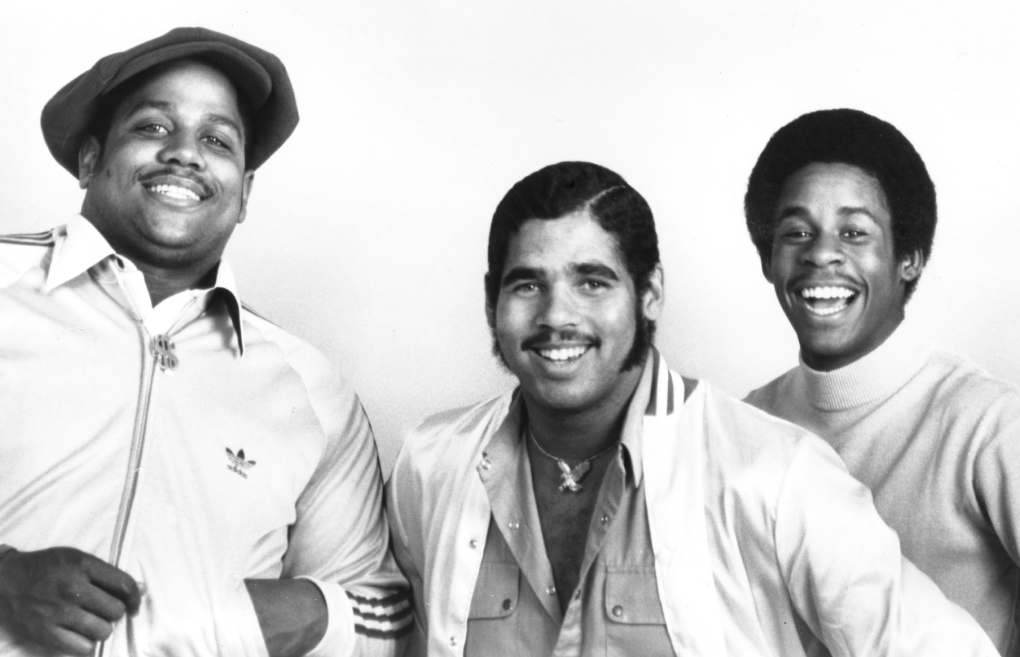
"altTag": "Three Black men stand together smiling. The first wears an Adidas jacket and a peasant hat, the second wears a sports jacket, open shirt and gold necklace, the third is wearing a sweater.",
"isLoading": false,
"fetchFailed": false
},
"arts_13932521": {
"type": "attachments",
"id": "arts_13932521",
"meta": {
"index": "attachments_1716263798",
"site": "arts",
"id": "13932521",
"found": true
},
"parent": 13931436,
"imgSizes": {
"twentyfourteen-full-width": {
"file": "https://ww2.kqed.org/app/uploads/sites/2/2023/07/July-2023-1038x576.jpg",
"width": 1038,
"mimeType": "image/jpeg",
"height": 576
},
"thumbnail": {
"file": "https://ww2.kqed.org/app/uploads/sites/2/2023/07/July-2023-160x90.jpg",
"width": 160,
"mimeType": "image/jpeg",
"height": 90
},
"post-thumbnail": {
"file": "https://ww2.kqed.org/app/uploads/sites/2/2023/07/July-2023-672x372.jpg",
"width": 672,
"mimeType": "image/jpeg",
"height": 372
},
"kqedFullSize": {
"file": "https://ww2.kqed.org/app/uploads/sites/2/2023/07/July-2023.jpg",
"width": 1920,
"height": 1080
},
"large": {
"file": "https://ww2.kqed.org/app/uploads/sites/2/2023/07/July-2023-1020x574.jpg",
"width": 1020,
"mimeType": "image/jpeg",
"height": 574
},
"1536x1536": {
"file": "https://ww2.kqed.org/app/uploads/sites/2/2023/07/July-2023-1536x864.jpg",
"width": 1536,
"mimeType": "image/jpeg",
"height": 864
},
"medium": {
"file": "https://ww2.kqed.org/app/uploads/sites/2/2023/07/July-2023-800x450.jpg",
"width": 800,
"mimeType": "image/jpeg",
"height": 450
},
"medium_large": {
"file": "https://ww2.kqed.org/app/uploads/sites/2/2023/07/July-2023-768x432.jpg",
"width": 768,
"mimeType": "image/jpeg",
"height": 432
}
},
"publishDate": 1690935698,
"modified": 1690935771,
"caption": "Frances Albrier in her Red Cross uniform.",
"description": null,
"title": "Frances Albrier in her Red Cross uniform.",
"credit": "Courtesy of the African American Museum and Library at Oakland",
"status": "inherit",
"altTag": "A Black woman in a Red Cross uniform from the 1940s era.",
"isLoading": false,
"fetchFailed": false
},
"arts_13931910": {
"type": "attachments",
"id": "arts_13931910",
"meta": {
"index": "attachments_1716263798",
"site": "arts",
"id": "13931910",
"found": true
},
"parent": 0,
"imgSizes": {
"twentyfourteen-full-width": {
"file": "https://ww2.kqed.org/app/uploads/sites/2/2023/07/230720-HEINOLDS-MHN-01-KQED-1038x576.jpg",
"width": 1038,
"mimeType": "image/jpeg",
"height": 576
},
"thumbnail": {
"file": "https://ww2.kqed.org/app/uploads/sites/2/2023/07/230720-HEINOLDS-MHN-01-KQED-160x107.jpg",
"width": 160,
"mimeType": "image/jpeg",
"height": 107
},
"post-thumbnail": {
"file": "https://ww2.kqed.org/app/uploads/sites/2/2023/07/230720-HEINOLDS-MHN-01-KQED-672x372.jpg",
"width": 672,
"mimeType": "image/jpeg",
"height": 372
},
"kqedFullSize": {
"file": "https://ww2.kqed.org/app/uploads/sites/2/2023/07/230720-HEINOLDS-MHN-01-KQED.jpg",
"width": 2000,
"height": 1333
},
"large": {
"file": "https://ww2.kqed.org/app/uploads/sites/2/2023/07/230720-HEINOLDS-MHN-01-KQED-1020x680.jpg",
"width": 1020,
"mimeType": "image/jpeg",
"height": 680
},
"1536x1536": {
"file": "https://ww2.kqed.org/app/uploads/sites/2/2023/07/230720-HEINOLDS-MHN-01-KQED-1536x1024.jpg",
"width": 1536,
"mimeType": "image/jpeg",
"height": 1024
},
"full-width": {
"file": "https://ww2.kqed.org/app/uploads/sites/2/2023/07/230720-HEINOLDS-MHN-01-KQED-1920x1280.jpg",
"width": 1920,
"mimeType": "image/jpeg",
"height": 1280
},
"medium": {
"file": "https://ww2.kqed.org/app/uploads/sites/2/2023/07/230720-HEINOLDS-MHN-01-KQED-800x533.jpg",
"width": 800,
"mimeType": "image/jpeg",
"height": 533
},
"medium_large": {
"file": "https://ww2.kqed.org/app/uploads/sites/2/2023/07/230720-HEINOLDS-MHN-01-KQED-768x512.jpg",
"width": 768,
"mimeType": "image/jpeg",
"height": 512
}
},
"publishDate": 1689914937,
"modified": 1689981022,
"caption": "Heinold's First and Last Chance Saloon, still standing in Oakland after 139 years.",
"description": null,
"title": "Heinold's First and Last Chance Saloon, still standing in Oakland after 139 years.",
"credit": "Martin do Nascimento/KQED",
"status": "inherit",
"altTag": "An old wooden building with people sitting at tables out front.",
"isLoading": false,
"fetchFailed": false
},
"arts_13931707": {
"type": "attachments",
"id": "arts_13931707",
"meta": {
"index": "attachments_1716263798",
"site": "arts",
"id": "13931707",
"found": true
},
"parent": 13931705,
"imgSizes": {
"twentyfourteen-full-width": {
"file": "https://ww2.kqed.org/app/uploads/sites/2/2023/07/GettyImages-1550442602-scaled-e1689612477146-1038x576.jpg",
"width": 1038,
"mimeType": "image/jpeg",
"height": 576
},
"thumbnail": {
"file": "https://ww2.kqed.org/app/uploads/sites/2/2023/07/GettyImages-1550442602-scaled-e1689612477146-160x107.jpg",
"width": 160,
"mimeType": "image/jpeg",
"height": 107
},
"post-thumbnail": {
"file": "https://ww2.kqed.org/app/uploads/sites/2/2023/07/GettyImages-1550442602-scaled-e1689612477146-672x372.jpg",
"width": 672,
"mimeType": "image/jpeg",
"height": 372
},
"kqedFullSize": {
"file": "https://ww2.kqed.org/app/uploads/sites/2/2023/07/GettyImages-1550442602-scaled-e1689612477146.jpg",
"width": 1920,
"height": 1280
},
"2048x2048": {
"file": "https://ww2.kqed.org/app/uploads/sites/2/2023/07/GettyImages-1550442602-2048x1365.jpg",
"width": 2048,
"mimeType": "image/jpeg",
"height": 1365
},
"large": {
"file": "https://ww2.kqed.org/app/uploads/sites/2/2023/07/GettyImages-1550442602-scaled-e1689612477146-1020x680.jpg",
"width": 1020,
"mimeType": "image/jpeg",
"height": 680
},
"1536x1536": {
"file": "https://ww2.kqed.org/app/uploads/sites/2/2023/07/GettyImages-1550442602-scaled-e1689612477146-1536x1024.jpg",
"width": 1536,
"mimeType": "image/jpeg",
"height": 1024
},
"full-width": {
"file": "https://ww2.kqed.org/app/uploads/sites/2/2023/07/GettyImages-1550442602-1920x1280.jpg",
"width": 1920,
"mimeType": "image/jpeg",
"height": 1280
},
"medium": {
"file": "https://ww2.kqed.org/app/uploads/sites/2/2023/07/GettyImages-1550442602-scaled-e1689612477146-800x533.jpg",
"width": 800,
"mimeType": "image/jpeg",
"height": 533
},
"medium_large": {
"file": "https://ww2.kqed.org/app/uploads/sites/2/2023/07/GettyImages-1550442602-scaled-e1689612477146-768x512.jpg",
"width": 768,
"mimeType": "image/jpeg",
"height": 512
}
},
"publishDate": 1689612458,
"modified": 1689612607,
"caption": "Princess Diana's historic, beloved black sheep jumper goes on view alongside Buckingham Palace letters at Sotheby's on July 17, 2023 in London.",
"description": null,
"title": "Princess Diana's historic, beloved black sheep jumper goes on view alongside Buckingham Palace letters at Sotheby's on July 17, 2023 in London.",
"credit": "Tristan Fewings/Getty Images for Sotheby's",
"status": "inherit",
"altTag": "A red sweater covered with rows of white sheep, with a single black sheep, hangs inside a perspex box, mounted a wall next to a photo of Princess Diana wearing the sweater at an outdoor event. A woman stands to the left gazing at both.",
"isLoading": false,
"fetchFailed": false
},
"arts_13931509": {
"type": "attachments",
"id": "arts_13931509",
"meta": {
"index": "attachments_1716263798",
"site": "arts",
"id": "13931509",
"found": true
},
"parent": 13931505,
"imgSizes": {
"twentyfourteen-full-width": {
"file": "https://ww2.kqed.org/app/uploads/sites/2/2023/07/GettyImages-1085767598-1038x576.jpg",
"width": 1038,
"mimeType": "image/jpeg",
"height": 576
},
"thumbnail": {
"file": "https://ww2.kqed.org/app/uploads/sites/2/2023/07/GettyImages-1085767598-160x107.jpg",
"width": 160,
"mimeType": "image/jpeg",
"height": 107
},
"post-thumbnail": {
"file": "https://ww2.kqed.org/app/uploads/sites/2/2023/07/GettyImages-1085767598-672x372.jpg",
"width": 672,
"mimeType": "image/jpeg",
"height": 372
},
"kqedFullSize": {
"file": "https://ww2.kqed.org/app/uploads/sites/2/2023/07/GettyImages-1085767598-scaled.jpg",
"width": 2560,
"height": 1712
},
"2048x2048": {
"file": "https://ww2.kqed.org/app/uploads/sites/2/2023/07/GettyImages-1085767598-2048x1369.jpg",
"width": 2048,
"mimeType": "image/jpeg",
"height": 1369
},
"large": {
"file": "https://ww2.kqed.org/app/uploads/sites/2/2023/07/GettyImages-1085767598-1020x682.jpg",
"width": 1020,
"mimeType": "image/jpeg",
"height": 682
},
"1536x1536": {
"file": "https://ww2.kqed.org/app/uploads/sites/2/2023/07/GettyImages-1085767598-1536x1027.jpg",
"width": 1536,
"mimeType": "image/jpeg",
"height": 1027
},
"full-width": {
"file": "https://ww2.kqed.org/app/uploads/sites/2/2023/07/GettyImages-1085767598-1920x1284.jpg",
"width": 1920,
"mimeType": "image/jpeg",
"height": 1284
},
"medium": {
"file": "https://ww2.kqed.org/app/uploads/sites/2/2023/07/GettyImages-1085767598-800x535.jpg",
"width": 800,
"mimeType": "image/jpeg",
"height": 535
},
"medium_large": {
"file": "https://ww2.kqed.org/app/uploads/sites/2/2023/07/GettyImages-1085767598-768x513.jpg",
"width": 768,
"mimeType": "image/jpeg",
"height": 513
}
},
"publishDate": 1689127462,
"modified": 1689127569,
"caption": "A woman in Brooklyn smokes crack in 1991.",
"description": null,
"title": "A woman in Brooklyn smokes crack in 1991.",
"credit": "Andrew Lichtenstein/Corbis via Getty Images",
"status": "inherit",
"altTag": null,
"isLoading": false,
"fetchFailed": false
},
"arts_13931480": {
"type": "attachments",
"id": "arts_13931480",
"meta": {
"index": "attachments_1716263798",
"site": "arts",
"id": "13931480",
"found": true
},
"parent": 13931352,
"imgSizes": {
"twentyfourteen-full-width": {
"file": "https://ww2.kqed.org/app/uploads/sites/2/2023/07/TedBarrow.BayBridge-1038x576.jpg",
"width": 1038,
"mimeType": "image/jpeg",
"height": 576
},
"thumbnail": {
"file": "https://ww2.kqed.org/app/uploads/sites/2/2023/07/TedBarrow.BayBridge-160x89.jpg",
"width": 160,
"mimeType": "image/jpeg",
"height": 89
},
"post-thumbnail": {
"file": "https://ww2.kqed.org/app/uploads/sites/2/2023/07/TedBarrow.BayBridge-672x372.jpg",
"width": 672,
"mimeType": "image/jpeg",
"height": 372
},
"kqedFullSize": {
"file": "https://ww2.kqed.org/app/uploads/sites/2/2023/07/TedBarrow.BayBridge.jpg",
"width": 1710,
"height": 956
},
"large": {
"file": "https://ww2.kqed.org/app/uploads/sites/2/2023/07/TedBarrow.BayBridge-1020x570.jpg",
"width": 1020,
"mimeType": "image/jpeg",
"height": 570
},
"1536x1536": {
"file": "https://ww2.kqed.org/app/uploads/sites/2/2023/07/TedBarrow.BayBridge-1536x859.jpg",
"width": 1536,
"mimeType": "image/jpeg",
"height": 859
},
"medium": {
"file": "https://ww2.kqed.org/app/uploads/sites/2/2023/07/TedBarrow.BayBridge-800x447.jpg",
"width": 800,
"mimeType": "image/jpeg",
"height": 447
},
"medium_large": {
"file": "https://ww2.kqed.org/app/uploads/sites/2/2023/07/TedBarrow.BayBridge-768x429.jpg",
"width": 768,
"mimeType": "image/jpeg",
"height": 429
}
},
"publishDate": 1689097364,
"modified": 1689097603,
"caption": "Skateboarder and art historian Ted Barrow hosts 'This Old Ledge,' a video series from Thrasher magazine delving into the history of iconic skate spots in San Francisco. ",
"description": null,
"title": "TedBarrow.BayBridge",
"credit": "Courtesy Thrasher magazine",
"status": "inherit",
"altTag": "A man in a denim jacket and cap talks to the camera in front of the Bay Bridge",
"isLoading": false,
"fetchFailed": false
}
},
"audioPlayerReducer": {
"postId": "stream_live",
"isPaused": true,
"isPlaying": false,
"pfsActive": false,
"pledgeModalIsOpen": true,
"playerDrawerIsOpen": false,
"liveAudioPlayStartedAt": 0,
"liveAudioPlayContext": ""
},
"authorsReducer": {
"byline_arts_13933809": {
"type": "authors",
"id": "byline_arts_13933809",
"meta": {
"override": true
},
"slug": "byline_arts_13933809",
"name": "Mark Kennedy, Associated Press",
"isLoading": false
},
"byline_arts_13932753": {
"type": "authors",
"id": "byline_arts_13932753",
"meta": {
"override": true
},
"slug": "byline_arts_13932753",
"name": "Jonathan Landrum Jr., Gary Gerard Hamilton ",
"isLoading": false
},
"byline_arts_13931705": {
"type": "authors",
"id": "byline_arts_13931705",
"meta": {
"override": true
},
"slug": "byline_arts_13931705",
"name": "Associated Press Staff",
"isLoading": false
},
"byline_arts_13931505": {
"type": "authors",
"id": "byline_arts_13931505",
"meta": {
"override": true
},
"slug": "byline_arts_13931505",
"name": "Ilana Masad",
"isLoading": false
},
"byline_arts_13931352": {
"type": "authors",
"id": "byline_arts_13931352",
"meta": {
"override": true
},
"slug": "byline_arts_13931352",
"name": "José Vadi ",
"isLoading": false
},
"ralexandra": {
"type": "authors",
"id": "11242",
"meta": {
"index": "authors_1716337520",
"id": "11242",
"found": true
},
"name": "Rae Alexandra",
"firstName": "Rae",
"lastName": "Alexandra",
"slug": "ralexandra",
"email": "ralexandra@kqed.org",
"display_author_email": true,
"staff_mastheads": [],
"title": "Reporter/Producer",
"bio": "Rae Alexandra is a Reporter/Producer for KQED Arts & Culture, and the creator/author of the \u003ca href=\"https://www.kqed.org/arts/program/rebel-girls-from-bay-area-history\">Rebel Girls From Bay Area History\u003c/a> and \u003ca href=\"https://www.kqed.org/bizarrebayarea\">Bizarre Bay Area\u003c/a> series. Her debut book, \u003ca href=\"https://citylights.com/politics-current-events-history/unsung-heroines35-women-who-changed/\">Unsung Heroines: 35 Women Who Changed the Bay Area\u003c/a> was published by City Lights in March 2026. In 2023, Rae was awarded an SPJ Excellence in Journalism Award for Arts & Culture. Rae was born and raised in Wales and subsequently — even after two decades in Northern California — still uses phrases that regularly baffle her coworkers.",
"avatar": "https://secure.gravatar.com/avatar/edfee8176c80cc0a382b051190f5341997df378a934a5774dcb0977732dfd401?s=600&d=blank&r=g",
"twitter": null,
"bluesky": null,
"facebook": null,
"instagram": null,
"linkedin": null,
"sites": [
{
"site": "arts",
"roles": [
"subscriber"
]
},
{
"site": "news",
"roles": [
"subscriber"
]
},
{
"site": "pop",
"roles": [
"subscriber"
]
},
{
"site": "bayareabites",
"roles": [
"subscriber"
]
},
{
"site": "science",
"roles": [
"subscriber"
]
}
],
"headData": {
"title": "Rae Alexandra | KQED",
"description": "Reporter/Producer",
"ogImgSrc": "https://secure.gravatar.com/avatar/edfee8176c80cc0a382b051190f5341997df378a934a5774dcb0977732dfd401?s=600&d=blank&r=g",
"twImgSrc": "https://secure.gravatar.com/avatar/edfee8176c80cc0a382b051190f5341997df378a934a5774dcb0977732dfd401?s=600&d=blank&r=g"
},
"isLoading": false,
"link": "/author/ralexandra"
}
},
"pagesReducer": {
"arts_category_history": {
"type": "terms",
"id": "arts_7862",
"meta": {
"index": "terms_1716263798",
"site": "arts",
"id": "7862",
"score": 12.208633
},
"featImg": null,
"name": "History",
"description": null,
"taxonomy": "category",
"headData": {
"twImgId": null,
"twTitle": null,
"ogTitle": null,
"ogImgId": null,
"twDescription": null,
"description": null,
"title": "History Archives | KQED Arts",
"ogDescription": null
},
"ttid": 7874,
"slug": "history",
"isLoading": false,
"title": "History",
"pageMeta": {
"site": "arts",
"WpPageTemplate": "page-topic-editorial",
"currentPage": 15
},
"blocks": [
{
"blockName": "kqed/post-list",
"attrs": {
"layout": "cardArticle2",
"query": "posts/arts?category=history",
"seeMore": false,
"paginated": true,
"page": 15
}
},
{
"blockName": "kqed/ad"
}
]
}
},
"pfsSessionReducer": {},
"postsReducer": {
"stream_live": {
"type": "live",
"id": "stream_live",
"audioUrl": "https://streams.kqed.org/kqedradio",
"title": "Live Stream",
"excerpt": "Live Stream information currently unavailable.",
"link": "/radio",
"featImg": "",
"label": {
"name": "KQED Live",
"link": "/"
}
},
"stream_kqedNewscast": {
"type": "posts",
"id": "stream_kqedNewscast",
"audioUrl": "https://www.kqed.org/.stream/anon/radio/RDnews/newscast.mp3?_=1",
"title": "KQED Newscast",
"featImg": "",
"label": {
"name": "88.5 FM",
"link": "/"
}
},
"arts_13936204": {
"type": "posts",
"id": "arts_13936204",
"meta": {
"index": "posts_1716263798",
"site": "arts",
"id": "13936204",
"score": null,
"sort": [
1697049023000
]
},
"guestAuthors": [],
"slug": "dave-glass-tenderloin-museum-san-franciso-street-photography",
"title": "A Love Letter to the Tenderloin, In Photographs",
"publishDate": 1697049023,
"format": "standard",
"headTitle": "A Love Letter to the Tenderloin, In Photographs | KQED",
"labelTerm": {
"term": 140,
"site": "arts"
},
"content": "\u003cp>Descriptions of the Tenderloin have long been seeped in negativity. This was happening long before the past couple years, when Fox News has reported streets full of “zombies roaming” and the \u003cem>Daily Mail\u003c/em> blamed the TL and Civic Center for making San Francisco “a byword for \u003ca href=\"https://www.kqed.org/news/11952285/from-the-vault-when-the-tenderloins-addiction-crisis-goes-viral\">drug taking\u003c/a> … and associated crime.” Even back in 1977, San Francisco’s own\u003cem> Examiner \u003c/em>newspaper had an entire series that described the Tenderloin as “hell at your doorstep.” That same publication referred to the neighborhood as “the shady part of town” all the way back in 1897.\u003c/p>\n\u003cp>[aside postid='arts_13935330']For the people that regularly frequent, live in and/or still love the Tenderloin and mid-Market neighborhoods, these widely distributed, one-note perceptions of the area are frustrating and frequently worthy of an eye-roll. Outsiders are all too often willing to focus on the worst rather than appreciate the Tenderloin’s small businesses, \u003ca href=\"https://www.kqed.org/arts/13916794/azalina-malaysian-restaurant-reopening-tenderloin\">tasty restaurants\u003c/a>, fun bars, \u003ca href=\"https://www.kqed.org/pop/103422/rebel-girls-from-bay-area-history-ruth-brinker-aids-activist\">long-standing charitable organizations\u003c/a> and interesting \u003ca href=\"https://www.kqed.org/arts/13935933/counterpulse-vivvyanne-forevermore-drag-the-show\">local characters\u003c/a>.\u003c/p>\n\u003cfigure id=\"attachment_13936209\" class=\"wp-caption aligncenter\" style=\"max-width: 1920px\">\u003cimg loading=\"lazy\" decoding=\"async\" class=\"size-full wp-image-13936209\" src=\"https://ww2.kqed.org/app/uploads/sites/2/2023/10/Aunt-Charlies-Tenderloin-SF-2016--scaled-e1697003424447.jpg\" alt=\"A senior man with white hair and receding hairline pours a drink from behind a small, old-fashioned bar. He is wearing a white short-sleeved shirt and black pants. The bar is full of Christmas lights and lined with mirrors. There are three or four patrons seated at the bar.\" width=\"1920\" height=\"1316\" srcset=\"https://cdn.kqed.org/wp-content/uploads/sites/2/2023/10/Aunt-Charlies-Tenderloin-SF-2016--scaled-e1697003424447.jpg 1920w, https://cdn.kqed.org/wp-content/uploads/sites/2/2023/10/Aunt-Charlies-Tenderloin-SF-2016--scaled-e1697003424447-800x548.jpg 800w, https://cdn.kqed.org/wp-content/uploads/sites/2/2023/10/Aunt-Charlies-Tenderloin-SF-2016--scaled-e1697003424447-1020x699.jpg 1020w, https://cdn.kqed.org/wp-content/uploads/sites/2/2023/10/Aunt-Charlies-Tenderloin-SF-2016--scaled-e1697003424447-160x110.jpg 160w, https://cdn.kqed.org/wp-content/uploads/sites/2/2023/10/Aunt-Charlies-Tenderloin-SF-2016--scaled-e1697003424447-768x526.jpg 768w, https://cdn.kqed.org/wp-content/uploads/sites/2/2023/10/Aunt-Charlies-Tenderloin-SF-2016--scaled-e1697003424447-1536x1053.jpg 1536w\" sizes=\"(max-width: 1920px) 100vw, 1920px\">\u003cfigcaption class=\"wp-caption-text\">‘Aunt Charlie’s Lounge, Turk Street, Tenderloin District, San Francisco 2016’ by Dave Glass. \u003ccite>(Courtesy of the Tenderloin Museum)\u003c/cite>\u003c/figcaption>\u003c/figure>\n\u003cp>Enter photographic hero \u003ca href=\"https://www.flickr.com/photos/daveglass/albums\">Dave Glass.\u003c/a> He’s a San Francisco local that has long documented neighborhoods — and, crucially, the mix of people within them — across the city. Glass had the good sense to spend decades documenting the Tenderloin and Civic Center, and his new exhibition, \u003cem>Central City 1960-2016, \u003c/em>reflects an appreciation for those neighborhoods right when it’s needed most. Right when, let’s be frank, so many people have nothing good to say about the area at all.\u003c/p>\n\u003cp>In the exhibition, on view at the \u003ca href=\"http://www.tenderloinmuseum.org/\">Tenderloin Museum\u003c/a> through the end of the year, Glass only has 14 images on display — nine in black and white, five in color. But each is potent, and the collection is carefully curated to reflect the broad swath of life that has always existed in the neighborhood. Cool kids on street corners, anti-war protesters, a smiling baby in a Volvo driver’s seat, a stoic Polk Street watch repairman. They all exist alongside old neighborhood bars and their patrons, liquor store foot traffic, and cops lined up on Market near Sixth.\u003c/p>\n\u003cfigure id=\"attachment_13936208\" class=\"wp-caption aligncenter\" style=\"max-width: 1842px\">\u003cimg loading=\"lazy\" decoding=\"async\" class=\"size-full wp-image-13936208\" src=\"https://ww2.kqed.org/app/uploads/sites/2/2023/10/Screen-Shot-2023-10-10-at-5.22.47-PM.png\" alt=\"A line of motorcycle cops block off the entire street. Barricades hold back crowds on the sidewalk behind them. A cinema promises LIVE NUDE GIRLS from its marquee.\" width=\"1842\" height=\"1228\" srcset=\"https://cdn.kqed.org/wp-content/uploads/sites/2/2023/10/Screen-Shot-2023-10-10-at-5.22.47-PM.png 1842w, https://cdn.kqed.org/wp-content/uploads/sites/2/2023/10/Screen-Shot-2023-10-10-at-5.22.47-PM-800x533.png 800w, https://cdn.kqed.org/wp-content/uploads/sites/2/2023/10/Screen-Shot-2023-10-10-at-5.22.47-PM-1020x680.png 1020w, https://cdn.kqed.org/wp-content/uploads/sites/2/2023/10/Screen-Shot-2023-10-10-at-5.22.47-PM-160x107.png 160w, https://cdn.kqed.org/wp-content/uploads/sites/2/2023/10/Screen-Shot-2023-10-10-at-5.22.47-PM-768x512.png 768w, https://cdn.kqed.org/wp-content/uploads/sites/2/2023/10/Screen-Shot-2023-10-10-at-5.22.47-PM-1536x1024.png 1536w\" sizes=\"(max-width: 1842px) 100vw, 1842px\">\u003cfigcaption class=\"wp-caption-text\">‘Market Street Cinema 1985’ by Dave Glass. \u003ccite>(Courtesy of the Tenderloin Museum)\u003c/cite>\u003c/figcaption>\u003c/figure>\n\u003cp>Though small, \u003cem>Central City\u003c/em> is a fuller — and fairer — picture of the Tenderloin and mid-Market than most of the country is afforded right now. Glass’ black and white images are the most striking, too, in part because, at a glance, they all appear to be from the same era — despite them spanning 45 years of street life.\u003c/p>\n\u003cp>Through Glass’ lens, the Tenderloin and its surrounding streets become timeless. There is something undeniably beautiful about that — especially while so much of the country is still talking smack about them.\u003c/p>\n\u003cp>\u003cimg loading=\"lazy\" decoding=\"async\" class=\"aligncenter size-medium wp-image-12127869\" src=\"https://ww2.kqed.org/arts/wp-content/uploads/sites/2/2016/09/Q.Logo_.Break_-800x78.jpg\" alt=\"\" width=\"800\" height=\"78\" srcset=\"https://cdn.kqed.org/wp-content/uploads/sites/2/2016/09/Q.Logo_.Break_.jpg 800w, https://cdn.kqed.org/wp-content/uploads/sites/2/2016/09/Q.Logo_.Break_-400x39.jpg 400w, https://cdn.kqed.org/wp-content/uploads/sites/2/2016/09/Q.Logo_.Break_-768x75.jpg 768w\" sizes=\"(max-width: 800px) 100vw, 800px\">\u003c/p>\n\u003cp>\u003cem>‘\u003ca href=\"https://www.tenderloinmuseum.org/dave-glass-central-city-1970-2016\">Dave Glass: Central City 1970-2016\u003c/a>’ is on view at the Tenderloin Museum (398 Eddy St.) until Dec. 30, 2023. Glass will appear in conversation at the museum with \u003ca href=\"http://www.adrianmrtnz.com/\">Adrian Martinez\u003c/a> and \u003ca href=\"https://www.austinleong.com/\">Austin Leong\u003c/a> on at 5:30 p.m. on Dec. 7 .\u003c/em>\u003c/p>\n\u003cp>[ad fullwidth]\u003c/p>\n\u003cp>\u003c/p>\n",
"blocks": [],
"excerpt": "A small but mighty exhibition from Dave Glass captures a broad swath of life in the oft-misunderstood neighborhood.",
"status": "publish",
"parent": 0,
"modified": 1726771064,
"stats": {
"hasAudio": false,
"hasVideo": false,
"hasChartOrMap": false,
"iframeSrcs": [],
"hasGoogleForm": false,
"hasGallery": false,
"hasHearkenModule": false,
"hasPolis": false,
"paragraphCount": 10,
"wordCount": 539
},
"headData": {
"title": "A Love Letter to the Tenderloin, In Photographs | KQED",
"description": "A small but mighty exhibition from Dave Glass captures a broad swath of life in the oft-misunderstood neighborhood.",
"ogTitle": "",
"ogDescription": "",
"ogImgId": "",
"twTitle": "",
"twDescription": "",
"twImgId": "",
"schema": {
"@context": "https://schema.org",
"@type": "Article",
"headline": "A Love Letter to the Tenderloin, In Photographs",
"datePublished": "2023-10-11T11:30:23-07:00",
"dateModified": "2024-09-19T11:37:44-07:00",
"image": "https://cdn.kqed.org/wp-content/uploads/2020/02/KQED-OG-Image@1x.png"
}
},
"sticky": false,
"templateType": "standard",
"featuredImageType": "standard",
"excludeFromSiteSearch": "Include",
"articleAge": "0",
"path": "/arts/13936204/dave-glass-tenderloin-museum-san-franciso-street-photography",
"audioTrackLength": null,
"parsedContent": [
{
"type": "contentString",
"content": "\u003cdiv class=\"post-body\">\u003cp>\u003cp>Descriptions of the Tenderloin have long been seeped in negativity. This was happening long before the past couple years, when Fox News has reported streets full of “zombies roaming” and the \u003cem>Daily Mail\u003c/em> blamed the TL and Civic Center for making San Francisco “a byword for \u003ca href=\"https://www.kqed.org/news/11952285/from-the-vault-when-the-tenderloins-addiction-crisis-goes-viral\">drug taking\u003c/a> … and associated crime.” Even back in 1977, San Francisco’s own\u003cem> Examiner \u003c/em>newspaper had an entire series that described the Tenderloin as “hell at your doorstep.” That same publication referred to the neighborhood as “the shady part of town” all the way back in 1897.\u003c/p>\n\u003cp>\u003c/p>\u003c/div>",
"attributes": {
"named": {},
"numeric": []
}
},
{
"type": "component",
"content": "",
"name": "aside",
"attributes": {
"named": {
"postid": "arts_13935330",
"label": ""
},
"numeric": []
}
},
{
"type": "contentString",
"content": "\u003cdiv class=\"post-body\">\u003cp>For the people that regularly frequent, live in and/or still love the Tenderloin and mid-Market neighborhoods, these widely distributed, one-note perceptions of the area are frustrating and frequently worthy of an eye-roll. Outsiders are all too often willing to focus on the worst rather than appreciate the Tenderloin’s small businesses, \u003ca href=\"https://www.kqed.org/arts/13916794/azalina-malaysian-restaurant-reopening-tenderloin\">tasty restaurants\u003c/a>, fun bars, \u003ca href=\"https://www.kqed.org/pop/103422/rebel-girls-from-bay-area-history-ruth-brinker-aids-activist\">long-standing charitable organizations\u003c/a> and interesting \u003ca href=\"https://www.kqed.org/arts/13935933/counterpulse-vivvyanne-forevermore-drag-the-show\">local characters\u003c/a>.\u003c/p>\n\u003cfigure id=\"attachment_13936209\" class=\"wp-caption aligncenter\" style=\"max-width: 1920px\">\u003cimg loading=\"lazy\" decoding=\"async\" class=\"size-full wp-image-13936209\" src=\"https://ww2.kqed.org/app/uploads/sites/2/2023/10/Aunt-Charlies-Tenderloin-SF-2016--scaled-e1697003424447.jpg\" alt=\"A senior man with white hair and receding hairline pours a drink from behind a small, old-fashioned bar. He is wearing a white short-sleeved shirt and black pants. The bar is full of Christmas lights and lined with mirrors. There are three or four patrons seated at the bar.\" width=\"1920\" height=\"1316\" srcset=\"https://cdn.kqed.org/wp-content/uploads/sites/2/2023/10/Aunt-Charlies-Tenderloin-SF-2016--scaled-e1697003424447.jpg 1920w, https://cdn.kqed.org/wp-content/uploads/sites/2/2023/10/Aunt-Charlies-Tenderloin-SF-2016--scaled-e1697003424447-800x548.jpg 800w, https://cdn.kqed.org/wp-content/uploads/sites/2/2023/10/Aunt-Charlies-Tenderloin-SF-2016--scaled-e1697003424447-1020x699.jpg 1020w, https://cdn.kqed.org/wp-content/uploads/sites/2/2023/10/Aunt-Charlies-Tenderloin-SF-2016--scaled-e1697003424447-160x110.jpg 160w, https://cdn.kqed.org/wp-content/uploads/sites/2/2023/10/Aunt-Charlies-Tenderloin-SF-2016--scaled-e1697003424447-768x526.jpg 768w, https://cdn.kqed.org/wp-content/uploads/sites/2/2023/10/Aunt-Charlies-Tenderloin-SF-2016--scaled-e1697003424447-1536x1053.jpg 1536w\" sizes=\"(max-width: 1920px) 100vw, 1920px\">\u003cfigcaption class=\"wp-caption-text\">‘Aunt Charlie’s Lounge, Turk Street, Tenderloin District, San Francisco 2016’ by Dave Glass. \u003ccite>(Courtesy of the Tenderloin Museum)\u003c/cite>\u003c/figcaption>\u003c/figure>\n\u003cp>Enter photographic hero \u003ca href=\"https://www.flickr.com/photos/daveglass/albums\">Dave Glass.\u003c/a> He’s a San Francisco local that has long documented neighborhoods — and, crucially, the mix of people within them — across the city. Glass had the good sense to spend decades documenting the Tenderloin and Civic Center, and his new exhibition, \u003cem>Central City 1960-2016, \u003c/em>reflects an appreciation for those neighborhoods right when it’s needed most. Right when, let’s be frank, so many people have nothing good to say about the area at all.\u003c/p>\n\u003cp>In the exhibition, on view at the \u003ca href=\"http://www.tenderloinmuseum.org/\">Tenderloin Museum\u003c/a> through the end of the year, Glass only has 14 images on display — nine in black and white, five in color. But each is potent, and the collection is carefully curated to reflect the broad swath of life that has always existed in the neighborhood. Cool kids on street corners, anti-war protesters, a smiling baby in a Volvo driver’s seat, a stoic Polk Street watch repairman. They all exist alongside old neighborhood bars and their patrons, liquor store foot traffic, and cops lined up on Market near Sixth.\u003c/p>\n\u003cfigure id=\"attachment_13936208\" class=\"wp-caption aligncenter\" style=\"max-width: 1842px\">\u003cimg loading=\"lazy\" decoding=\"async\" class=\"size-full wp-image-13936208\" src=\"https://ww2.kqed.org/app/uploads/sites/2/2023/10/Screen-Shot-2023-10-10-at-5.22.47-PM.png\" alt=\"A line of motorcycle cops block off the entire street. Barricades hold back crowds on the sidewalk behind them. A cinema promises LIVE NUDE GIRLS from its marquee.\" width=\"1842\" height=\"1228\" srcset=\"https://cdn.kqed.org/wp-content/uploads/sites/2/2023/10/Screen-Shot-2023-10-10-at-5.22.47-PM.png 1842w, https://cdn.kqed.org/wp-content/uploads/sites/2/2023/10/Screen-Shot-2023-10-10-at-5.22.47-PM-800x533.png 800w, https://cdn.kqed.org/wp-content/uploads/sites/2/2023/10/Screen-Shot-2023-10-10-at-5.22.47-PM-1020x680.png 1020w, https://cdn.kqed.org/wp-content/uploads/sites/2/2023/10/Screen-Shot-2023-10-10-at-5.22.47-PM-160x107.png 160w, https://cdn.kqed.org/wp-content/uploads/sites/2/2023/10/Screen-Shot-2023-10-10-at-5.22.47-PM-768x512.png 768w, https://cdn.kqed.org/wp-content/uploads/sites/2/2023/10/Screen-Shot-2023-10-10-at-5.22.47-PM-1536x1024.png 1536w\" sizes=\"(max-width: 1842px) 100vw, 1842px\">\u003cfigcaption class=\"wp-caption-text\">‘Market Street Cinema 1985’ by Dave Glass. \u003ccite>(Courtesy of the Tenderloin Museum)\u003c/cite>\u003c/figcaption>\u003c/figure>\n\u003cp>Though small, \u003cem>Central City\u003c/em> is a fuller — and fairer — picture of the Tenderloin and mid-Market than most of the country is afforded right now. Glass’ black and white images are the most striking, too, in part because, at a glance, they all appear to be from the same era — despite them spanning 45 years of street life.\u003c/p>\n\u003cp>Through Glass’ lens, the Tenderloin and its surrounding streets become timeless. There is something undeniably beautiful about that — especially while so much of the country is still talking smack about them.\u003c/p>\n\u003cp>\u003cimg loading=\"lazy\" decoding=\"async\" class=\"aligncenter size-medium wp-image-12127869\" src=\"https://ww2.kqed.org/arts/wp-content/uploads/sites/2/2016/09/Q.Logo_.Break_-800x78.jpg\" alt=\"\" width=\"800\" height=\"78\" srcset=\"https://cdn.kqed.org/wp-content/uploads/sites/2/2016/09/Q.Logo_.Break_.jpg 800w, https://cdn.kqed.org/wp-content/uploads/sites/2/2016/09/Q.Logo_.Break_-400x39.jpg 400w, https://cdn.kqed.org/wp-content/uploads/sites/2/2016/09/Q.Logo_.Break_-768x75.jpg 768w\" sizes=\"(max-width: 800px) 100vw, 800px\">\u003c/p>\n\u003cp>\u003cem>‘\u003ca href=\"https://www.tenderloinmuseum.org/dave-glass-central-city-1970-2016\">Dave Glass: Central City 1970-2016\u003c/a>’ is on view at the Tenderloin Museum (398 Eddy St.) until Dec. 30, 2023. Glass will appear in conversation at the museum with \u003ca href=\"http://www.adrianmrtnz.com/\">Adrian Martinez\u003c/a> and \u003ca href=\"https://www.austinleong.com/\">Austin Leong\u003c/a> on at 5:30 p.m. on Dec. 7 .\u003c/em>\u003c/p>\n\u003cp>\u003c/p>\u003c/div>",
"attributes": {
"named": {},
"numeric": []
}
},
{
"type": "component",
"content": "",
"name": "ad",
"attributes": {
"named": {
"label": "fullwidth"
},
"numeric": [
"fullwidth"
]
}
},
{
"type": "contentString",
"content": "\u003cdiv class=\"post-body\">\u003cp>\u003c/p>\n\u003cp>\u003c/p>\n\u003c/div>\u003c/p>",
"attributes": {
"named": {},
"numeric": []
}
}
],
"link": "/arts/13936204/dave-glass-tenderloin-museum-san-franciso-street-photography",
"authors": [
"11242"
],
"programs": [
"arts_140"
],
"categories": [
"arts_1",
"arts_7862",
"arts_75"
],
"tags": [
"arts_10342",
"arts_822",
"arts_769",
"arts_1020",
"arts_5066",
"arts_585"
],
"featImg": "arts_13936205",
"label": "arts_140"
},
"arts_13935838": {
"type": "posts",
"id": "arts_13935838",
"meta": {
"index": "posts_1716263798",
"site": "arts",
"id": "13935838",
"score": null,
"sort": [
1697036417000
]
},
"guestAuthors": [],
"slug": "sacramento-mothman-tahoe-tessie-antioch-bigfoot-kooki-davis-vampire-halloween",
"title": "5 Real-Life Monsters That Have (Allegedly) Stalked Northern California",
"publishDate": 1697036417,
"format": "standard",
"headTitle": "5 Real-Life Monsters That Have (Allegedly) Stalked Northern California | KQED",
"labelTerm": {
"site": "arts"
},
"content": "\u003cp>Ask Northern Californians what local monsters they think about the most, and invariably you will hear a list of very bad people. \u003ca href=\"https://www.kqed.org/pop/17396/are-you-a-gentrifier-this-quiz-can-tell-you\">Gentrifiers\u003c/a>! The people who spread lies about San Francisco being \u003cem>The Purge\u003c/em> now! That one guy who hoses down homeless people! Folks who move in next door to music venues, then make noise complaints! Erratic \u003ca href=\"https://www.kqed.org/news/11959303/sf-activists-protest-immobilize-driverless-cars-with-traffic-cones\">ghost cars\u003c/a>! You get the gist.\u003c/p>\n\u003cp>It’s Halloween season at the moment, though, so it’s the perfect time to think beyond the usual suspects and venture into our region’s very real history of dealing with \u003cem>actual\u003c/em> monsters. The mysterious kind. The kind that people laugh at witnesses for reporting in the first place.\u003c/p>\n\u003cp>Here are five major ones you might not have realized were ever in our midst.\u003c/p>\n\u003cfigure id=\"attachment_13935927\" class=\"wp-caption aligncenter\" style=\"max-width: 1920px\">\u003cimg loading=\"lazy\" decoding=\"async\" class=\"size-full wp-image-13935927\" src=\"https://ww2.kqed.org/app/uploads/sites/2/2023/10/GettyImages-1319248043-scaled-e1696541239104.jpg\" alt=\"A mysterious bigfoot figure, walking through a foggy forest and silhouetted against trees.\" width=\"1920\" height=\"1277\" srcset=\"https://cdn.kqed.org/wp-content/uploads/sites/2/2023/10/GettyImages-1319248043-scaled-e1696541239104.jpg 1920w, https://cdn.kqed.org/wp-content/uploads/sites/2/2023/10/GettyImages-1319248043-scaled-e1696541239104-800x532.jpg 800w, https://cdn.kqed.org/wp-content/uploads/sites/2/2023/10/GettyImages-1319248043-scaled-e1696541239104-1020x678.jpg 1020w, https://cdn.kqed.org/wp-content/uploads/sites/2/2023/10/GettyImages-1319248043-scaled-e1696541239104-160x106.jpg 160w, https://cdn.kqed.org/wp-content/uploads/sites/2/2023/10/GettyImages-1319248043-scaled-e1696541239104-768x511.jpg 768w, https://cdn.kqed.org/wp-content/uploads/sites/2/2023/10/GettyImages-1319248043-scaled-e1696541239104-1536x1022.jpg 1536w\" sizes=\"(max-width: 1920px) 100vw, 1920px\">\u003cfigcaption class=\"wp-caption-text\">Bigfoot, doing his thing. \u003ccite>(David Wall/ Getty Images)\u003c/cite>\u003c/figcaption>\u003c/figure>\n\u003ch2>Bigfoot in Antioch\u003c/h2>\n\u003cp>Back in 1869, an unsuspecting hunter wandered back to his campsite in Antioch one evening to find his belongings in disarray. As he tried to make sense of the scene, he noticed something else — enormous footprints that closely resembled the shape of a man’s foot, rather than an animal’s.\u003c/p>\n\u003cp>The hunter was so confounded that, rather than clean up the mess, he opted to hide out in some bushes 20 yards away and stake out whatever had paid the camp an earlier visit. After two hours, the mysterious beast did indeed come back and the hunter was able to observe a bonafide Bigfoot for about 20 minutes. The hunter later reported that the creature was:\u003c/p>\n\u003cp>[ad fullwidth]\u003c/p>\n\u003cp>“5 feet high and disproportionately broad and square at the shoulders with arms of great length. The legs were very short and the body long. The head was small compared to the rest of the creature and appeared to be set upon his shoulders without a neck. The whole was covered with dark brown and cinnamon-colored hair.”\u003c/p>\n\u003cp>So… a tall Ewok then? (Sign me up!)\u003c/p>\n\u003cp>[aside postid='arts_13904911']The hunter hung around long enough to see Overgrown Wicket meet up with another Bigfoot that was “unmistakenly female.” (That means boobs, probably?) To his surprise, after telling other hunters in the area what he had witnessed, the Bigfoot-spotter found that almost no one was surprised. Most other folks reported seeing the signature giant footprints and at least one other man had seen the furry fam as well.\u003c/p>\n\u003cp>Rupert Matthews, author of \u003cem>Bigfoot: True-Life Encounters With Legendary Ape-Men\u003c/em> notes that: “This acceptance of the reality of the creatures by those who spent a lot time in the forested hills is a feature of early cases [of Bigfoot sightings] that surfaces again and again. ”\u003c/p>\n\u003cfigure id=\"attachment_13935928\" class=\"wp-caption aligncenter\" style=\"max-width: 1920px\">\u003cimg loading=\"lazy\" decoding=\"async\" class=\"size-full wp-image-13935928\" src=\"https://ww2.kqed.org/app/uploads/sites/2/2023/10/GettyImages-1251586077-scaled-e1696542414253.jpg\" alt=\"A gorgeous blue lake surrounded by green pine trees. A small green island sits in the center of the water.\" width=\"1920\" height=\"1253\" srcset=\"https://cdn.kqed.org/wp-content/uploads/sites/2/2023/10/GettyImages-1251586077-scaled-e1696542414253.jpg 1920w, https://cdn.kqed.org/wp-content/uploads/sites/2/2023/10/GettyImages-1251586077-scaled-e1696542414253-800x522.jpg 800w, https://cdn.kqed.org/wp-content/uploads/sites/2/2023/10/GettyImages-1251586077-scaled-e1696542414253-1020x666.jpg 1020w, https://cdn.kqed.org/wp-content/uploads/sites/2/2023/10/GettyImages-1251586077-scaled-e1696542414253-160x104.jpg 160w, https://cdn.kqed.org/wp-content/uploads/sites/2/2023/10/GettyImages-1251586077-scaled-e1696542414253-768x501.jpg 768w, https://cdn.kqed.org/wp-content/uploads/sites/2/2023/10/GettyImages-1251586077-scaled-e1696542414253-1536x1002.jpg 1536w\" sizes=\"(max-width: 1920px) 100vw, 1920px\">\u003cfigcaption class=\"wp-caption-text\">Emerald Bay, Lake Tahoe: May or may not be home to a giant serpent monster. \u003ccite>(Anjelika Gretskaia/ Getty Images)\u003c/cite>\u003c/figcaption>\u003c/figure>\n\u003ch2>Tahoe Tessie\u003c/h2>\n\u003cp>It sounds like a bad joke set-up: Two nuns, a couple of cops, one optometrist and 10 USPS workers walk into the countryside… yadda-yadda-yadda… punchline about a sea serpent.\u003c/p>\n\u003cp>Except, that is the actual list of people who reported seeing some kind of aquatic monster in the waters of Lake Tahoe in the mid-1980s. One of the cops, Reno’s Kris Beebe, said the creature — nicknamed “Tahoe Tessie” for funsies — was “dark gray or black” and “a minimum of 10 feet long.” The other witnesses described a featureless body that was “fast-moving and undulating, but strangely devoid of identifying attributes.”\u003c/p>\n\u003cp>Noting that nothing of that size had ever been proven to live in the 1,590-foot-deep lake, fishing guide Mickey Daniels told the \u003cem>San Francisco Examiner:\u003c/em> “I think there’s something there. I’ve talked to about a hundred people who’ve seen it. What do I do — call them liars?”\u003c/p>\n\u003cfigure id=\"attachment_13935929\" class=\"wp-caption aligncenter\" style=\"max-width: 2560px\">\u003cimg loading=\"lazy\" decoding=\"async\" class=\"size-full wp-image-13935929\" src=\"https://ww2.kqed.org/app/uploads/sites/2/2023/10/GettyImages-491791494-scaled.jpg\" alt=\"Female, red vampire lips with dripping blood, viewed in close-up.\" width=\"2560\" height=\"1491\" srcset=\"https://cdn.kqed.org/wp-content/uploads/sites/2/2023/10/GettyImages-491791494-scaled.jpg 2560w, https://cdn.kqed.org/wp-content/uploads/sites/2/2023/10/GettyImages-491791494-800x466.jpg 800w, https://cdn.kqed.org/wp-content/uploads/sites/2/2023/10/GettyImages-491791494-1020x594.jpg 1020w, https://cdn.kqed.org/wp-content/uploads/sites/2/2023/10/GettyImages-491791494-160x93.jpg 160w, https://cdn.kqed.org/wp-content/uploads/sites/2/2023/10/GettyImages-491791494-768x447.jpg 768w, https://cdn.kqed.org/wp-content/uploads/sites/2/2023/10/GettyImages-491791494-1536x894.jpg 1536w, https://cdn.kqed.org/wp-content/uploads/sites/2/2023/10/GettyImages-491791494-2048x1193.jpg 2048w, https://cdn.kqed.org/wp-content/uploads/sites/2/2023/10/GettyImages-491791494-1920x1118.jpg 1920w\" sizes=\"(max-width: 2560px) 100vw, 2560px\">\u003cfigcaption class=\"wp-caption-text\">In 1978, a Daly City resident named Kooki Davis claimed publicly to be a full-fledged vampire. \u003ccite>(Remains/ Getty Images)\u003c/cite>\u003c/figcaption>\u003c/figure>\n\u003ch2>Vampires in Daly City\u003c/h2>\n\u003cp>In 1978, the \u003cem>San Francisco Examiner\u003c/em> dedicated a story to Kooki Davis, a Daly City-dwelling hair stylist from Trinidad, who was living full-time as a vampire. “She has long fangs, razor-sharp fingernails and blood dripping from her lips,” the paper reported, like that was perfectly normal. “She speaks with a Transylvania twang and her ‘come hither’ stare sends icy fingers up and down your spine.”\u003c/p>\n\u003cp>[aside postid='arts_13904118']In the story, Davis explained that she’d become a “certified” vampire five years ago. And if you’re wondering what \u003cem>that\u003c/em> exam involves, she elaborated: “To become a vampire, you have to be bitten by a vampire. Once bitten, you become a victim. Victims have to serve an apprenticeship to learn the ropes … There’s a lot of activity in San Francisco, so you can earn your merit badges pretty fast — as opposed to Dubuque or Wichita.”\u003c/p>\n\u003cp>(This is the value of newspapers, friends. Movies never tell anyone that in order to rid oneself of a vampire problem, moving to Iowa or Kansas will solve it, but here we are.)\u003c/p>\n\u003cp>Of her interactions with the general public, Davis noted that at work, at the end of each haircut, her “trademark” was to give each of her customers a “gentle bite” on the neck.\u003c/p>\n\u003cp>Man, that salon must have had amazing insurance.\u003c/p>\n\u003cfigure id=\"attachment_13935930\" class=\"wp-caption aligncenter\" style=\"max-width: 1920px\">\u003cimg loading=\"lazy\" decoding=\"async\" class=\"size-full wp-image-13935930\" src=\"https://ww2.kqed.org/app/uploads/sites/2/2023/10/GettyImages-1327260846-scaled-e1696543232911.jpg\" alt=\"A man looks up at a flying mothman figure in the sky that's silhouetted against the moon at night.\" width=\"1920\" height=\"1280\" srcset=\"https://cdn.kqed.org/wp-content/uploads/sites/2/2023/10/GettyImages-1327260846-scaled-e1696543232911.jpg 1920w, https://cdn.kqed.org/wp-content/uploads/sites/2/2023/10/GettyImages-1327260846-scaled-e1696543232911-800x533.jpg 800w, https://cdn.kqed.org/wp-content/uploads/sites/2/2023/10/GettyImages-1327260846-scaled-e1696543232911-1020x680.jpg 1020w, https://cdn.kqed.org/wp-content/uploads/sites/2/2023/10/GettyImages-1327260846-scaled-e1696543232911-160x107.jpg 160w, https://cdn.kqed.org/wp-content/uploads/sites/2/2023/10/GettyImages-1327260846-scaled-e1696543232911-768x512.jpg 768w, https://cdn.kqed.org/wp-content/uploads/sites/2/2023/10/GettyImages-1327260846-scaled-e1696543232911-1536x1024.jpg 1536w\" sizes=\"(max-width: 1920px) 100vw, 1920px\">\u003cfigcaption class=\"wp-caption-text\">Someone spotted this guy on top of Sacramento’s Tower Bridge. Not cool, Mothman. Not cool. \u003ccite>(David Wall/ Getty Images)\u003c/cite>\u003c/figcaption>\u003c/figure>\n\u003ch2>The Sacramento Mothman\u003c/h2>\n\u003cp>As all good cryptid nerds know, Mothman primarily enjoys hanging out in West Virginia. (Probably because 80% of the state is forested, and also because approximately 80% of people who don’t live in West Virginia assume that everyone who does is crazy.) For decades there, witnesses have been describing a 7-foot-tall man with red eyes and wings, with a wingspan between 10 and 15 feet wide, who can fly at speeds too fast to catch on camera.\u003c/p>\n\u003cp>Well, Mothman must have had himself a little Californian vacation in 2009, because a photographer named Lamont Greer claims to have seen the humanoid hanging around on top of Sacramento’s Tower Bridge one night. Greer had been taking photos of the bridge at the time and was stunned by what he saw.\u003c/p>\n\u003cp>[aside postid='arts_13933318']“I had just finished filming the back side of the bridge so I was bent down putting my camera back in my camera bag,” Greer told The History Channel’s \u003cem>MonsterQuest\u003c/em>, “and I kind of felt something looking at me. When I first saw it, I didn’t know what it was … but then my eyes kind of focused on it a bit better. It spread wings and then started flying off. It wasn’t a man, it wasn’t a bird. It was absolutely strange and unique. If it wanted to come down and hurt someone — attack — it absolutely could cause damage.”\u003c/p>\n\u003cp>The Sacramento sighting is not the only time Mothman has showed up in a city. In 2017, a bunch of people reported seeing him hanging around Chicago — including at the airport. A moth’s gotta vacation, you guys. A moth’s gotta vacation.\u003c/p>\n\u003cfigure id=\"attachment_13935936\" class=\"wp-caption aligncenter\" style=\"max-width: 1920px\">\u003cimg loading=\"lazy\" decoding=\"async\" class=\"size-full wp-image-13935936\" src=\"https://ww2.kqed.org/app/uploads/sites/2/2023/10/GettyImages-147219986-scaled-e1696546415739.jpg\" alt=\"Two slender sea monsters with long tails and small fins make turns in the ocean as light streams through from the sky.\" width=\"1920\" height=\"1382\" srcset=\"https://cdn.kqed.org/wp-content/uploads/sites/2/2023/10/GettyImages-147219986-scaled-e1696546415739.jpg 1920w, https://cdn.kqed.org/wp-content/uploads/sites/2/2023/10/GettyImages-147219986-scaled-e1696546415739-800x576.jpg 800w, https://cdn.kqed.org/wp-content/uploads/sites/2/2023/10/GettyImages-147219986-scaled-e1696546415739-1020x734.jpg 1020w, https://cdn.kqed.org/wp-content/uploads/sites/2/2023/10/GettyImages-147219986-scaled-e1696546415739-160x115.jpg 160w, https://cdn.kqed.org/wp-content/uploads/sites/2/2023/10/GettyImages-147219986-scaled-e1696546415739-768x553.jpg 768w, https://cdn.kqed.org/wp-content/uploads/sites/2/2023/10/GettyImages-147219986-scaled-e1696546415739-1536x1106.jpg 1536w\" sizes=\"(max-width: 1920px) 100vw, 1920px\">\u003cfigcaption class=\"wp-caption-text\">Multiple fishermen in Santa Cruz and Monterey used to report a sea serpent lurking in the water. They nicknamed it ‘The Old Man of Monterey Bay’ and also, for some reason, ‘Bobo.’ \u003ccite>( Victor Habbick Visions/ Getty Images)\u003c/cite>\u003c/figcaption>\u003c/figure>\n\u003ch2>The Old Man of Monterey Bay\u003c/h2>\n\u003cp>About a hundred years ago, the fishermen of Monterey Bay and the Santa Cruz waterfront started reporting seeing an alarming dragon-like creature circling their boats. Some witnesses said the strange beast had a very large head, extremely long tail and a series of pointed spines along its back. A Monterey man named Dominic Costanza said the creature was about four feet in width and had “what looked like the face of a very old man or a monkey … with two eyes the size of breakfast buns.”\u003c/p>\n\u003cp>(Never mind the creature — what the hell is a breakfast bun?)\u003c/p>\n\u003cp>By March 1940, the creature had two nicknames — “The Old Man of Monterey Bay” or “Bobo,” depending on your preference — and it had prompted around 30 fishing captains to make reports to the \u003cem>Santa Cruz Sentinel\u003c/em>.\u003c/p>\n\u003cp>Years later, Geoffrey Dunn — a man whose family had been in Santa Cruz for generations — wrote in \u003cem>Santa Cruz Style\u003c/em> that:\u003c/p>\n\u003cblockquote>\u003cp>Several of my uncles and cousins reportedly encountered the monster while fishing in their small, double-ended fishing vessels … My late uncle Mario Stagnaro once recounted for me the afternoon that a badly shaken fisherman, Bill Totten, returned to the docks following a day of fishing in June of 1941. ‘I saw that serpent or monster out there!’ he screamed. ‘Get me out of here!’\u003c/p>\u003c/blockquote>\n\u003cp>Totten apparently did not return to the wharf for some time. Play nice, Bobo!\u003c/p>\n\u003cp>[ad floatright]\u003c/p>\n\u003cp>Be careful out there, folks — and have a happy Halloween.\u003c/p>\n\n",
"blocks": [],
"excerpt": "Sacramento Mothman! Antioch Bigfoot! At least one vampire in Daly City! You don't need movies to find monsters around here...",
"status": "publish",
"parent": 0,
"modified": 1726771066,
"stats": {
"hasAudio": false,
"hasVideo": false,
"hasChartOrMap": false,
"iframeSrcs": [],
"hasGoogleForm": false,
"hasGallery": false,
"hasHearkenModule": false,
"hasPolis": false,
"paragraphCount": 30,
"wordCount": 1553
},
"headData": {
"title": "Sacramento Mothman (and a Host of Other Californian Monsters) | KQED",
"description": "Sacramento Mothman! Antioch Bigfoot! At least one vampire in Daly City! You don't need movies to find monsters around here...",
"ogTitle": "5 Real-Life Monsters That Have (Apparently) Stalked Northern California",
"ogDescription": "",
"ogImgId": "",
"twTitle": "5 Real-Life Monsters That Have (Apparently) Stalked Northern California",
"twDescription": "",
"twImgId": "",
"socialTitle": "Sacramento Mothman (and a Host of Other Californian Monsters) %%page%% %%sep%% KQED",
"schema": {
"@context": "https://schema.org",
"@type": "Article",
"headline": "5 Real-Life Monsters That Have (Allegedly) Stalked Northern California",
"datePublished": "2023-10-11T08:00:17-07:00",
"dateModified": "2024-09-19T11:37:46-07:00",
"image": "https://cdn.kqed.org/wp-content/uploads/2020/02/KQED-OG-Image@1x.png"
}
},
"audioUrl": "https://traffic.omny.fm/d/clips/0af137ef-751e-4b19-a055-aaef00d2d578/ffca7e9f-6831-4[…]f-aaef00f5a073/0ea742c7-c75c-4b17-b05b-b0c0016cf6e9/audio.mp3",
"sticky": false,
"templateType": "standard",
"featuredImageType": "standard",
"excludeFromSiteSearch": "Include",
"articleAge": "0",
"path": "/arts/13935838/sacramento-mothman-tahoe-tessie-antioch-bigfoot-kooki-davis-vampire-halloween",
"audioTrackLength": null,
"parsedContent": [
{
"type": "contentString",
"content": "\u003cdiv class=\"post-body\">\u003cp>\u003cp>Ask Northern Californians what local monsters they think about the most, and invariably you will hear a list of very bad people. \u003ca href=\"https://www.kqed.org/pop/17396/are-you-a-gentrifier-this-quiz-can-tell-you\">Gentrifiers\u003c/a>! The people who spread lies about San Francisco being \u003cem>The Purge\u003c/em> now! That one guy who hoses down homeless people! Folks who move in next door to music venues, then make noise complaints! Erratic \u003ca href=\"https://www.kqed.org/news/11959303/sf-activists-protest-immobilize-driverless-cars-with-traffic-cones\">ghost cars\u003c/a>! You get the gist.\u003c/p>\n\u003cp>It’s Halloween season at the moment, though, so it’s the perfect time to think beyond the usual suspects and venture into our region’s very real history of dealing with \u003cem>actual\u003c/em> monsters. The mysterious kind. The kind that people laugh at witnesses for reporting in the first place.\u003c/p>\n\u003cp>Here are five major ones you might not have realized were ever in our midst.\u003c/p>\n\u003cfigure id=\"attachment_13935927\" class=\"wp-caption aligncenter\" style=\"max-width: 1920px\">\u003cimg loading=\"lazy\" decoding=\"async\" class=\"size-full wp-image-13935927\" src=\"https://ww2.kqed.org/app/uploads/sites/2/2023/10/GettyImages-1319248043-scaled-e1696541239104.jpg\" alt=\"A mysterious bigfoot figure, walking through a foggy forest and silhouetted against trees.\" width=\"1920\" height=\"1277\" srcset=\"https://cdn.kqed.org/wp-content/uploads/sites/2/2023/10/GettyImages-1319248043-scaled-e1696541239104.jpg 1920w, https://cdn.kqed.org/wp-content/uploads/sites/2/2023/10/GettyImages-1319248043-scaled-e1696541239104-800x532.jpg 800w, https://cdn.kqed.org/wp-content/uploads/sites/2/2023/10/GettyImages-1319248043-scaled-e1696541239104-1020x678.jpg 1020w, https://cdn.kqed.org/wp-content/uploads/sites/2/2023/10/GettyImages-1319248043-scaled-e1696541239104-160x106.jpg 160w, https://cdn.kqed.org/wp-content/uploads/sites/2/2023/10/GettyImages-1319248043-scaled-e1696541239104-768x511.jpg 768w, https://cdn.kqed.org/wp-content/uploads/sites/2/2023/10/GettyImages-1319248043-scaled-e1696541239104-1536x1022.jpg 1536w\" sizes=\"(max-width: 1920px) 100vw, 1920px\">\u003cfigcaption class=\"wp-caption-text\">Bigfoot, doing his thing. \u003ccite>(David Wall/ Getty Images)\u003c/cite>\u003c/figcaption>\u003c/figure>\n\u003ch2>Bigfoot in Antioch\u003c/h2>\n\u003cp>Back in 1869, an unsuspecting hunter wandered back to his campsite in Antioch one evening to find his belongings in disarray. As he tried to make sense of the scene, he noticed something else — enormous footprints that closely resembled the shape of a man’s foot, rather than an animal’s.\u003c/p>\n\u003cp>The hunter was so confounded that, rather than clean up the mess, he opted to hide out in some bushes 20 yards away and stake out whatever had paid the camp an earlier visit. After two hours, the mysterious beast did indeed come back and the hunter was able to observe a bonafide Bigfoot for about 20 minutes. The hunter later reported that the creature was:\u003c/p>\n\u003cp>\u003c/p>\u003c/div>",
"attributes": {
"named": {},
"numeric": []
}
},
{
"type": "component",
"content": "",
"name": "ad",
"attributes": {
"named": {
"label": "fullwidth"
},
"numeric": [
"fullwidth"
]
}
},
{
"type": "contentString",
"content": "\u003cdiv class=\"post-body\">\u003cp>\u003c/p>\n\u003cp>“5 feet high and disproportionately broad and square at the shoulders with arms of great length. The legs were very short and the body long. The head was small compared to the rest of the creature and appeared to be set upon his shoulders without a neck. The whole was covered with dark brown and cinnamon-colored hair.”\u003c/p>\n\u003cp>So… a tall Ewok then? (Sign me up!)\u003c/p>\n\u003cp>\u003c/p>\u003c/div>",
"attributes": {
"named": {},
"numeric": []
}
},
{
"type": "component",
"content": "",
"name": "aside",
"attributes": {
"named": {
"postid": "arts_13904911",
"label": ""
},
"numeric": []
}
},
{
"type": "contentString",
"content": "\u003cdiv class=\"post-body\">\u003cp>The hunter hung around long enough to see Overgrown Wicket meet up with another Bigfoot that was “unmistakenly female.” (That means boobs, probably?) To his surprise, after telling other hunters in the area what he had witnessed, the Bigfoot-spotter found that almost no one was surprised. Most other folks reported seeing the signature giant footprints and at least one other man had seen the furry fam as well.\u003c/p>\n\u003cp>Rupert Matthews, author of \u003cem>Bigfoot: True-Life Encounters With Legendary Ape-Men\u003c/em> notes that: “This acceptance of the reality of the creatures by those who spent a lot time in the forested hills is a feature of early cases [of Bigfoot sightings] that surfaces again and again. ”\u003c/p>\n\u003cfigure id=\"attachment_13935928\" class=\"wp-caption aligncenter\" style=\"max-width: 1920px\">\u003cimg loading=\"lazy\" decoding=\"async\" class=\"size-full wp-image-13935928\" src=\"https://ww2.kqed.org/app/uploads/sites/2/2023/10/GettyImages-1251586077-scaled-e1696542414253.jpg\" alt=\"A gorgeous blue lake surrounded by green pine trees. A small green island sits in the center of the water.\" width=\"1920\" height=\"1253\" srcset=\"https://cdn.kqed.org/wp-content/uploads/sites/2/2023/10/GettyImages-1251586077-scaled-e1696542414253.jpg 1920w, https://cdn.kqed.org/wp-content/uploads/sites/2/2023/10/GettyImages-1251586077-scaled-e1696542414253-800x522.jpg 800w, https://cdn.kqed.org/wp-content/uploads/sites/2/2023/10/GettyImages-1251586077-scaled-e1696542414253-1020x666.jpg 1020w, https://cdn.kqed.org/wp-content/uploads/sites/2/2023/10/GettyImages-1251586077-scaled-e1696542414253-160x104.jpg 160w, https://cdn.kqed.org/wp-content/uploads/sites/2/2023/10/GettyImages-1251586077-scaled-e1696542414253-768x501.jpg 768w, https://cdn.kqed.org/wp-content/uploads/sites/2/2023/10/GettyImages-1251586077-scaled-e1696542414253-1536x1002.jpg 1536w\" sizes=\"(max-width: 1920px) 100vw, 1920px\">\u003cfigcaption class=\"wp-caption-text\">Emerald Bay, Lake Tahoe: May or may not be home to a giant serpent monster. \u003ccite>(Anjelika Gretskaia/ Getty Images)\u003c/cite>\u003c/figcaption>\u003c/figure>\n\u003ch2>Tahoe Tessie\u003c/h2>\n\u003cp>It sounds like a bad joke set-up: Two nuns, a couple of cops, one optometrist and 10 USPS workers walk into the countryside… yadda-yadda-yadda… punchline about a sea serpent.\u003c/p>\n\u003cp>Except, that is the actual list of people who reported seeing some kind of aquatic monster in the waters of Lake Tahoe in the mid-1980s. One of the cops, Reno’s Kris Beebe, said the creature — nicknamed “Tahoe Tessie” for funsies — was “dark gray or black” and “a minimum of 10 feet long.” The other witnesses described a featureless body that was “fast-moving and undulating, but strangely devoid of identifying attributes.”\u003c/p>\n\u003cp>Noting that nothing of that size had ever been proven to live in the 1,590-foot-deep lake, fishing guide Mickey Daniels told the \u003cem>San Francisco Examiner:\u003c/em> “I think there’s something there. I’ve talked to about a hundred people who’ve seen it. What do I do — call them liars?”\u003c/p>\n\u003cfigure id=\"attachment_13935929\" class=\"wp-caption aligncenter\" style=\"max-width: 2560px\">\u003cimg loading=\"lazy\" decoding=\"async\" class=\"size-full wp-image-13935929\" src=\"https://ww2.kqed.org/app/uploads/sites/2/2023/10/GettyImages-491791494-scaled.jpg\" alt=\"Female, red vampire lips with dripping blood, viewed in close-up.\" width=\"2560\" height=\"1491\" srcset=\"https://cdn.kqed.org/wp-content/uploads/sites/2/2023/10/GettyImages-491791494-scaled.jpg 2560w, https://cdn.kqed.org/wp-content/uploads/sites/2/2023/10/GettyImages-491791494-800x466.jpg 800w, https://cdn.kqed.org/wp-content/uploads/sites/2/2023/10/GettyImages-491791494-1020x594.jpg 1020w, https://cdn.kqed.org/wp-content/uploads/sites/2/2023/10/GettyImages-491791494-160x93.jpg 160w, https://cdn.kqed.org/wp-content/uploads/sites/2/2023/10/GettyImages-491791494-768x447.jpg 768w, https://cdn.kqed.org/wp-content/uploads/sites/2/2023/10/GettyImages-491791494-1536x894.jpg 1536w, https://cdn.kqed.org/wp-content/uploads/sites/2/2023/10/GettyImages-491791494-2048x1193.jpg 2048w, https://cdn.kqed.org/wp-content/uploads/sites/2/2023/10/GettyImages-491791494-1920x1118.jpg 1920w\" sizes=\"(max-width: 2560px) 100vw, 2560px\">\u003cfigcaption class=\"wp-caption-text\">In 1978, a Daly City resident named Kooki Davis claimed publicly to be a full-fledged vampire. \u003ccite>(Remains/ Getty Images)\u003c/cite>\u003c/figcaption>\u003c/figure>\n\u003ch2>Vampires in Daly City\u003c/h2>\n\u003cp>In 1978, the \u003cem>San Francisco Examiner\u003c/em> dedicated a story to Kooki Davis, a Daly City-dwelling hair stylist from Trinidad, who was living full-time as a vampire. “She has long fangs, razor-sharp fingernails and blood dripping from her lips,” the paper reported, like that was perfectly normal. “She speaks with a Transylvania twang and her ‘come hither’ stare sends icy fingers up and down your spine.”\u003c/p>\n\u003cp>\u003c/p>\u003c/div>",
"attributes": {
"named": {},
"numeric": []
}
},
{
"type": "component",
"content": "",
"name": "aside",
"attributes": {
"named": {
"postid": "arts_13904118",
"label": ""
},
"numeric": []
}
},
{
"type": "contentString",
"content": "\u003cdiv class=\"post-body\">\u003cp>In the story, Davis explained that she’d become a “certified” vampire five years ago. And if you’re wondering what \u003cem>that\u003c/em> exam involves, she elaborated: “To become a vampire, you have to be bitten by a vampire. Once bitten, you become a victim. Victims have to serve an apprenticeship to learn the ropes … There’s a lot of activity in San Francisco, so you can earn your merit badges pretty fast — as opposed to Dubuque or Wichita.”\u003c/p>\n\u003cp>(This is the value of newspapers, friends. Movies never tell anyone that in order to rid oneself of a vampire problem, moving to Iowa or Kansas will solve it, but here we are.)\u003c/p>\n\u003cp>Of her interactions with the general public, Davis noted that at work, at the end of each haircut, her “trademark” was to give each of her customers a “gentle bite” on the neck.\u003c/p>\n\u003cp>Man, that salon must have had amazing insurance.\u003c/p>\n\u003cfigure id=\"attachment_13935930\" class=\"wp-caption aligncenter\" style=\"max-width: 1920px\">\u003cimg loading=\"lazy\" decoding=\"async\" class=\"size-full wp-image-13935930\" src=\"https://ww2.kqed.org/app/uploads/sites/2/2023/10/GettyImages-1327260846-scaled-e1696543232911.jpg\" alt=\"A man looks up at a flying mothman figure in the sky that's silhouetted against the moon at night.\" width=\"1920\" height=\"1280\" srcset=\"https://cdn.kqed.org/wp-content/uploads/sites/2/2023/10/GettyImages-1327260846-scaled-e1696543232911.jpg 1920w, https://cdn.kqed.org/wp-content/uploads/sites/2/2023/10/GettyImages-1327260846-scaled-e1696543232911-800x533.jpg 800w, https://cdn.kqed.org/wp-content/uploads/sites/2/2023/10/GettyImages-1327260846-scaled-e1696543232911-1020x680.jpg 1020w, https://cdn.kqed.org/wp-content/uploads/sites/2/2023/10/GettyImages-1327260846-scaled-e1696543232911-160x107.jpg 160w, https://cdn.kqed.org/wp-content/uploads/sites/2/2023/10/GettyImages-1327260846-scaled-e1696543232911-768x512.jpg 768w, https://cdn.kqed.org/wp-content/uploads/sites/2/2023/10/GettyImages-1327260846-scaled-e1696543232911-1536x1024.jpg 1536w\" sizes=\"(max-width: 1920px) 100vw, 1920px\">\u003cfigcaption class=\"wp-caption-text\">Someone spotted this guy on top of Sacramento’s Tower Bridge. Not cool, Mothman. Not cool. \u003ccite>(David Wall/ Getty Images)\u003c/cite>\u003c/figcaption>\u003c/figure>\n\u003ch2>The Sacramento Mothman\u003c/h2>\n\u003cp>As all good cryptid nerds know, Mothman primarily enjoys hanging out in West Virginia. (Probably because 80% of the state is forested, and also because approximately 80% of people who don’t live in West Virginia assume that everyone who does is crazy.) For decades there, witnesses have been describing a 7-foot-tall man with red eyes and wings, with a wingspan between 10 and 15 feet wide, who can fly at speeds too fast to catch on camera.\u003c/p>\n\u003cp>Well, Mothman must have had himself a little Californian vacation in 2009, because a photographer named Lamont Greer claims to have seen the humanoid hanging around on top of Sacramento’s Tower Bridge one night. Greer had been taking photos of the bridge at the time and was stunned by what he saw.\u003c/p>\n\u003cp>\u003c/p>\u003c/div>",
"attributes": {
"named": {},
"numeric": []
}
},
{
"type": "component",
"content": "",
"name": "aside",
"attributes": {
"named": {
"postid": "arts_13933318",
"label": ""
},
"numeric": []
}
},
{
"type": "contentString",
"content": "\u003cdiv class=\"post-body\">\u003cp>“I had just finished filming the back side of the bridge so I was bent down putting my camera back in my camera bag,” Greer told The History Channel’s \u003cem>MonsterQuest\u003c/em>, “and I kind of felt something looking at me. When I first saw it, I didn’t know what it was … but then my eyes kind of focused on it a bit better. It spread wings and then started flying off. It wasn’t a man, it wasn’t a bird. It was absolutely strange and unique. If it wanted to come down and hurt someone — attack — it absolutely could cause damage.”\u003c/p>\n\u003cp>The Sacramento sighting is not the only time Mothman has showed up in a city. In 2017, a bunch of people reported seeing him hanging around Chicago — including at the airport. A moth’s gotta vacation, you guys. A moth’s gotta vacation.\u003c/p>\n\u003cfigure id=\"attachment_13935936\" class=\"wp-caption aligncenter\" style=\"max-width: 1920px\">\u003cimg loading=\"lazy\" decoding=\"async\" class=\"size-full wp-image-13935936\" src=\"https://ww2.kqed.org/app/uploads/sites/2/2023/10/GettyImages-147219986-scaled-e1696546415739.jpg\" alt=\"Two slender sea monsters with long tails and small fins make turns in the ocean as light streams through from the sky.\" width=\"1920\" height=\"1382\" srcset=\"https://cdn.kqed.org/wp-content/uploads/sites/2/2023/10/GettyImages-147219986-scaled-e1696546415739.jpg 1920w, https://cdn.kqed.org/wp-content/uploads/sites/2/2023/10/GettyImages-147219986-scaled-e1696546415739-800x576.jpg 800w, https://cdn.kqed.org/wp-content/uploads/sites/2/2023/10/GettyImages-147219986-scaled-e1696546415739-1020x734.jpg 1020w, https://cdn.kqed.org/wp-content/uploads/sites/2/2023/10/GettyImages-147219986-scaled-e1696546415739-160x115.jpg 160w, https://cdn.kqed.org/wp-content/uploads/sites/2/2023/10/GettyImages-147219986-scaled-e1696546415739-768x553.jpg 768w, https://cdn.kqed.org/wp-content/uploads/sites/2/2023/10/GettyImages-147219986-scaled-e1696546415739-1536x1106.jpg 1536w\" sizes=\"(max-width: 1920px) 100vw, 1920px\">\u003cfigcaption class=\"wp-caption-text\">Multiple fishermen in Santa Cruz and Monterey used to report a sea serpent lurking in the water. They nicknamed it ‘The Old Man of Monterey Bay’ and also, for some reason, ‘Bobo.’ \u003ccite>( Victor Habbick Visions/ Getty Images)\u003c/cite>\u003c/figcaption>\u003c/figure>\n\u003ch2>The Old Man of Monterey Bay\u003c/h2>\n\u003cp>About a hundred years ago, the fishermen of Monterey Bay and the Santa Cruz waterfront started reporting seeing an alarming dragon-like creature circling their boats. Some witnesses said the strange beast had a very large head, extremely long tail and a series of pointed spines along its back. A Monterey man named Dominic Costanza said the creature was about four feet in width and had “what looked like the face of a very old man or a monkey … with two eyes the size of breakfast buns.”\u003c/p>\n\u003cp>(Never mind the creature — what the hell is a breakfast bun?)\u003c/p>\n\u003cp>By March 1940, the creature had two nicknames — “The Old Man of Monterey Bay” or “Bobo,” depending on your preference — and it had prompted around 30 fishing captains to make reports to the \u003cem>Santa Cruz Sentinel\u003c/em>.\u003c/p>\n\u003cp>Years later, Geoffrey Dunn — a man whose family had been in Santa Cruz for generations — wrote in \u003cem>Santa Cruz Style\u003c/em> that:\u003c/p>\n\u003cblockquote>\u003cp>Several of my uncles and cousins reportedly encountered the monster while fishing in their small, double-ended fishing vessels … My late uncle Mario Stagnaro once recounted for me the afternoon that a badly shaken fisherman, Bill Totten, returned to the docks following a day of fishing in June of 1941. ‘I saw that serpent or monster out there!’ he screamed. ‘Get me out of here!’\u003c/p>\u003c/blockquote>\n\u003cp>Totten apparently did not return to the wharf for some time. Play nice, Bobo!\u003c/p>\n\u003cp>\u003c/p>\u003c/div>",
"attributes": {
"named": {},
"numeric": []
}
},
{
"type": "component",
"content": "",
"name": "ad",
"attributes": {
"named": {
"label": "floatright"
},
"numeric": [
"floatright"
]
}
},
{
"type": "contentString",
"content": "\u003cdiv class=\"post-body\">\u003cp>\u003c/p>\n\u003cp>Be careful out there, folks — and have a happy Halloween.\u003c/p>\n\n\u003c/div>\u003c/p>",
"attributes": {
"named": {},
"numeric": []
}
}
],
"link": "/arts/13935838/sacramento-mothman-tahoe-tessie-antioch-bigfoot-kooki-davis-vampire-halloween",
"authors": [
"11242"
],
"categories": [
"arts_1",
"arts_7862",
"arts_75"
],
"tags": [
"arts_14353",
"arts_10278",
"arts_1206",
"arts_5087"
],
"featImg": "arts_13936011",
"label": "arts"
},
"arts_13934227": {
"type": "posts",
"id": "arts_13934227",
"meta": {
"index": "posts_1716263798",
"site": "arts",
"id": "13934227",
"score": null,
"sort": [
1695661223000
]
},
"guestAuthors": [],
"slug": "history-kids-weapons-dynamite-30s-40s-50s-tweens-with-bombs",
"title": "What Was Your Great-Grandpa's Favorite Toy? Dynamite, Probably",
"publishDate": 1695661223,
"format": "standard",
"headTitle": "What Was Your Great-Grandpa’s Favorite Toy? Dynamite, Probably | KQED",
"labelTerm": {
"site": "arts"
},
"content": "\u003cp>Today, TikTok is filled to the brim with videos about the unmonitored childhoods that Gen Xers casually endured in the 1980s. Back then, kids were out, roaming the streets, setting off fireworks, cracking their heads on concrete playgrounds, swimming in factory waste and smoking a pack of Camels a day before they’d even turned 12. No small humans were tougher. Or, at least, that’s the popular narrative on social media.\u003c/p>\n\u003cp>And yet: Step aside, feral mall children of the 1980s, for local news archives tell us that there once existed generations of kids who make Gen X look like absolute wusses. These tiny maniacs grew up in the first half of the 20th century and, let me tell you, they were armed, dangerous and would not — though their lives literally depended on it — stop playing with deadly knickknacks. These kids had actual, bonafide TNT, nitroglycerine and — sure, why not? — teeny tiny weapons.\u003c/p>\n\u003cp>Did they get injured? Of course! Did anyone learn a lesson? Nope!\u003c/p>\n\u003cp>Please now allow me to regale you with tales of the toughest Bay Area offspring from last century and, of course, their weapons of choice.\u003c/p>\n\u003ch2>The dynamite kids\u003c/h2>\n\u003cp>[aside postid='arts_13931210']Which is worse? Deciding at the age of 12 to “blow up the Berkeley school” with your friends using 12 sticks of stolen dynamite? (This was in 1936 and, thankfully, the Danville boy responsible got busted before his crew could light any fuses.) \u003cem>Or\u003c/em>, heading to school in 1940, aged 13, and “roaming a crowded [Oakland] school playground during recess” waving a stick of dynamite around? It’s hard to say which child was more likely to murder someone, but the fact that Northern California kids like these two just happened to keep stumbling across this very specific type of explosive is even more of a head-scratcher.\u003c/p>\n\u003cp>[ad fullwidth]\u003c/p>\n\u003cp>In Chico in 1915, an 11-year-old named George Simpson saved the life of a 10-year-old girl who was about to bash two dynamite sticks on a rock to “play Fourth of July.” In 1922, a 6-year-old and a 3-year from Hayward did themselves serious damage after finding dynamite in one of their dad’s barns and lighting it up. Try not to think too hard on the fact that these kids, according to newspaper reports, were too young to read the “Danger!” warning on the box, but somehow old enough to proficiently light matches.\u003c/p>\n\u003cp>As late as 1959, kids were still in full Wile E. Coyote mode and trying to blow crap up. One dynamite explosion set off by teens in Walnut Creek that year broke a square-mile’s worth of windows, started a two-acre grass fire, blew a three-foot-deep hole in the ground and scared the crap out of people as far as 20 miles away. The dynamite had been stolen from a nearby storehouse. Rebels without a cause, indeed.\u003c/p>\n\u003cfigure id=\"attachment_13934556\" class=\"wp-caption aligncenter\" style=\"max-width: 800px\">\u003cimg loading=\"lazy\" decoding=\"async\" class=\"size-medium wp-image-13934556\" src=\"https://ww2.kqed.org/app/uploads/sites/2/2023/09/GettyImages-1450837772-scaled-e1694206484580-800x637.jpg\" alt=\"A toddler wearing a onesie covered in safety pins stands outside next to a sign that reads Safety First. A woman stands behind the child.\" width=\"800\" height=\"637\" srcset=\"https://cdn.kqed.org/wp-content/uploads/sites/2/2023/09/GettyImages-1450837772-scaled-e1694206484580-800x637.jpg 800w, https://cdn.kqed.org/wp-content/uploads/sites/2/2023/09/GettyImages-1450837772-scaled-e1694206484580-1020x812.jpg 1020w, https://cdn.kqed.org/wp-content/uploads/sites/2/2023/09/GettyImages-1450837772-scaled-e1694206484580-160x127.jpg 160w, https://cdn.kqed.org/wp-content/uploads/sites/2/2023/09/GettyImages-1450837772-scaled-e1694206484580-768x612.jpg 768w, https://cdn.kqed.org/wp-content/uploads/sites/2/2023/09/GettyImages-1450837772-scaled-e1694206484580-1536x1223.jpg 1536w, https://cdn.kqed.org/wp-content/uploads/sites/2/2023/09/GettyImages-1450837772-scaled-e1694206484580.jpg 1920w\" sizes=\"(max-width: 800px) 100vw, 800px\">\u003cfigcaption class=\"wp-caption-text\">The rare sight of a child in 1935 not actively trying to blow themselves up. \u003ccite>(Daily Mirror/ Mirrorpix via Getty Images)\u003c/cite>\u003c/figcaption>\u003c/figure>\n\u003ch2>The ‘toy’ cannon lovers\u003c/h2>\n\u003cp>Unless there’s a game in which actively attempting to hurt one’s playmates and pets is a thing, it’s really hard to figure out how exactly one “plays” with a toy cannon.\u003c/p>\n\u003cp>The 2013 book \u003cem>Britain’s Secret Treasures \u003c/em>has some clues as to the operations of such items, stating that, back in the day, “Many households would have had musket powder that could be used to fire a toy cannon … Buckshot could have been used for cannonballs, or any household item that could be fashioned into a hard, round projectile … It is doubtful that these little cannon were sold with instructions, so a trial and error approach was required.”\u003c/p>\n\u003cp>[aside postid='arts_13909983']And those errors, friends, could result in some very not good things. In 1903, a 14-year-old Berkeley boy named Will Bass managed to shoot his left index finger off with a toy cannon. (He was in the middle of trying to repair it at the time.) A single edition of the \u003cem>San Francisco Call\u003c/em> newspaper later that year listed two separate incidents of boys getting severe face burns “while trying to find out why a brass cannon did not explode.” (One was an 11-year-old Tenderloin boy. The other was 8 and playing in Golden Gate Park at the time.)\u003c/p>\n\u003cp>Also in that issue of \u003cem>The Call\u003c/em>? A 17-year-old Civic Center resident who had injured “the palm of his left hand terribly” after his cannon went off prematurely. (The exact same thing happened to a 14-year-old San Franciscan the following year.) All of which makes even \u003ca href=\"https://www.vintagegaragechicago.com/jarts/\">Jarts — an unhinged “missile game”\u003c/a> from the 1960s and ’70s — look positively tame.\u003c/p>\n\u003ch2>This one kid who made nitroglycerine\u003c/h2>\n\u003cp>I’m not going to be able to say this any better than Herb Caen did in a 1951 column for the \u003cem>San Francisco Examiner, \u003c/em>so let’s just use his words:\u003c/p>\n\u003cblockquote>\u003cp>Bob Zwieg, 15-year-old … made up his mind months ago that he was going to produce the biggest Fourth of July explosion in San Anselmo, where his family has a summer place. ‘Yup, I’m gonna make me some nitroglycerine’ he kept saying, and his mother humored him. ‘You go right ahead, sonny,’ she soothed as he pored over chemistry books and fiddled with laboratory doo-dads.\u003c/p>\n\u003cp>Wednesday morning he announced, ‘I’m ready to make the big noise.’ He put the gloop in a pot, began stirring it and — wham! The roar was still fading away while young Bob was being rushed to Ross Hospital with burns, singed eyebrows and slight shock. Anyway, it was the biggest noise in San Anselmo on July Fourth.\u003c/p>\u003c/blockquote>\n\u003cp>This is what happens when we underestimate the determination of our young people.\u003c/p>\n\u003cfigure id=\"attachment_13934557\" class=\"wp-caption aligncenter\" style=\"max-width: 800px\">\u003cimg loading=\"lazy\" decoding=\"async\" class=\"size-medium wp-image-13934557\" src=\"https://ww2.kqed.org/app/uploads/sites/2/2023/09/GettyImages-1450837708-scaled-e1694207054260-800x528.jpg\" alt=\"Two small boys boxing inside a ring surrounded by middle aged men wearing overcoats and suits.\" width=\"800\" height=\"528\" srcset=\"https://cdn.kqed.org/wp-content/uploads/sites/2/2023/09/GettyImages-1450837708-scaled-e1694207054260-800x528.jpg 800w, https://cdn.kqed.org/wp-content/uploads/sites/2/2023/09/GettyImages-1450837708-scaled-e1694207054260-1020x673.jpg 1020w, https://cdn.kqed.org/wp-content/uploads/sites/2/2023/09/GettyImages-1450837708-scaled-e1694207054260-160x106.jpg 160w, https://cdn.kqed.org/wp-content/uploads/sites/2/2023/09/GettyImages-1450837708-scaled-e1694207054260-768x507.jpg 768w, https://cdn.kqed.org/wp-content/uploads/sites/2/2023/09/GettyImages-1450837708-scaled-e1694207054260-1536x1014.jpg 1536w, https://cdn.kqed.org/wp-content/uploads/sites/2/2023/09/GettyImages-1450837708-scaled-e1694207054260.jpg 1920w\" sizes=\"(max-width: 800px) 100vw, 800px\">\u003cfigcaption class=\"wp-caption-text\">At a certain point, it’s fairly impossible to not just blame the adults in the room… \u003ccite>(B Alfieri/ Mirrorpix via Getty Images)\u003c/cite>\u003c/figcaption>\u003c/figure>\n\u003ch2>The ‘toy’ gun tinkerers\u003c/h2>\n\u003cp>In 1903, one Clarence Ito of Grayson St. in West Berkeley found himself with a toy gun that was refusing to fire. He, naturally, responded to this by staring down the barrel of the weapon and pulling the trigger. According to an issue of \u003cem>The Call\u003c/em> at the time, Clarence was left with “a big hole in his cheek, just a little below the eye, and it required the services of a physician and a large amount of thread to sew it together again.”\u003c/p>\n\u003cp>Thirty-five years later, toy guns and the kids that owned them were still doing each other dirty. A 1938 edition of \u003cem>The Examiner\u003c/em> reported that a 14-year-old Hayward boy had a .22 caliber bullet lodged in his jaw after he and two friends decided to shove the ammo into an air gun and see what would happen. The injured kid’s condition was described as “not serious,” but would \u003cem>you\u003c/em> want a bullet lodged in your jaw? I’m gonna go with nope.\u003c/p>\n\u003ch2>The blasting cap hoarders\u003c/h2>\n\u003cp>For those of you without a working knowledge of the history of demolition, blasting (or dynamite) caps were basically detonators designed to set off small explosions in order to ignite bigger ones. And apparently, in the ’30s and ’40s, they were just lying around willy-nilly.\u003c/p>\n\u003cp>In 1948, Tony Martin found a box of blasting caps on San Mateo’s Rockaway Beach. He would later tell staff of the Mission Emergency Hospital that he “knew they were dangerous after [he] read about them in the newspaper,” but decided to throw a rock at one anyway. He was treated for burns and shock.\u003c/p>\n\u003cp>[aside postid='arts_13927540']Twelve-year-old Billy Douglas got off a little easier in 1937 after San Francisco cops raided his home to confiscate Billy’s large collection of dynamite caps. They removed the detonators without anyone getting hurt, and Billy was transparent about the fact that he had been planning a large explosion on his street (Geary, incidentally) for Fourth of July celebrations.\u003c/p>\n\u003cp>Even worse than Billy were the six high school friends who got shaken down by cops in 1947 after it was discovered that they had managed to collect a bunch of dynamite, a box of blasting caps and 10 pounds of blasting powder. The kids — students from Balboa High School and Horace Mann Junior High — had been stashing the explosives in their parents’ basements. No word on what exactly this band of hooligans were planning to do with it all, but the students all got off with warnings.\u003c/p>\n\u003cp>[ad floatright]\u003c/p>\n\u003cp>Take that, Gen X!\u003c/p>\n\n",
"blocks": [],
"excerpt": "TikTok says Gen X was the most feral generation. The kids who played with cannons and explosives would like a word.",
"status": "publish",
"parent": 0,
"modified": 1726771072,
"stats": {
"hasAudio": false,
"hasVideo": false,
"hasChartOrMap": false,
"iframeSrcs": [],
"hasGoogleForm": false,
"hasGallery": false,
"hasHearkenModule": false,
"hasPolis": false,
"paragraphCount": 24,
"wordCount": 1505
},
"headData": {
"title": "What Was Your Great-Grandpa's Favorite Toy? Dynamite, Probably | KQED",
"description": "TikTok says Gen X was the most feral generation. The kids who played with cannons and explosives would like a word.",
"ogTitle": "",
"ogDescription": "",
"ogImgId": "",
"twTitle": "",
"twDescription": "",
"twImgId": "",
"schema": {
"@context": "https://schema.org",
"@type": "Article",
"headline": "What Was Your Great-Grandpa's Favorite Toy? Dynamite, Probably",
"datePublished": "2023-09-25T10:00:23-07:00",
"dateModified": "2024-09-19T11:37:52-07:00",
"image": "https://cdn.kqed.org/wp-content/uploads/2020/02/KQED-OG-Image@1x.png"
}
},
"audioUrl": "https:// https://traffic.omny.fm/d/clips/0af137ef-751e-4b19-a055-aaef00d2d578/ffca7e9f-6831-4[…]f-aaef00f5a073/b3de8cd9-5dc3-4760-89d5-b08100ff0a32/audio.mp3",
"sticky": false,
"templateType": "standard",
"featuredImageType": "standard",
"excludeFromSiteSearch": "Include",
"articleAge": "0",
"path": "/arts/13934227/history-kids-weapons-dynamite-30s-40s-50s-tweens-with-bombs",
"audioTrackLength": null,
"parsedContent": [
{
"type": "contentString",
"content": "\u003cdiv class=\"post-body\">\u003cp>\u003cp>Today, TikTok is filled to the brim with videos about the unmonitored childhoods that Gen Xers casually endured in the 1980s. Back then, kids were out, roaming the streets, setting off fireworks, cracking their heads on concrete playgrounds, swimming in factory waste and smoking a pack of Camels a day before they’d even turned 12. No small humans were tougher. Or, at least, that’s the popular narrative on social media.\u003c/p>\n\u003cp>And yet: Step aside, feral mall children of the 1980s, for local news archives tell us that there once existed generations of kids who make Gen X look like absolute wusses. These tiny maniacs grew up in the first half of the 20th century and, let me tell you, they were armed, dangerous and would not — though their lives literally depended on it — stop playing with deadly knickknacks. These kids had actual, bonafide TNT, nitroglycerine and — sure, why not? — teeny tiny weapons.\u003c/p>\n\u003cp>Did they get injured? Of course! Did anyone learn a lesson? Nope!\u003c/p>\n\u003cp>Please now allow me to regale you with tales of the toughest Bay Area offspring from last century and, of course, their weapons of choice.\u003c/p>\n\u003ch2>The dynamite kids\u003c/h2>\n\u003cp>\u003c/p>\u003c/div>",
"attributes": {
"named": {},
"numeric": []
}
},
{
"type": "component",
"content": "",
"name": "aside",
"attributes": {
"named": {
"postid": "arts_13931210",
"label": ""
},
"numeric": []
}
},
{
"type": "contentString",
"content": "\u003cdiv class=\"post-body\">\u003cp>Which is worse? Deciding at the age of 12 to “blow up the Berkeley school” with your friends using 12 sticks of stolen dynamite? (This was in 1936 and, thankfully, the Danville boy responsible got busted before his crew could light any fuses.) \u003cem>Or\u003c/em>, heading to school in 1940, aged 13, and “roaming a crowded [Oakland] school playground during recess” waving a stick of dynamite around? It’s hard to say which child was more likely to murder someone, but the fact that Northern California kids like these two just happened to keep stumbling across this very specific type of explosive is even more of a head-scratcher.\u003c/p>\n\u003cp>\u003c/p>\u003c/div>",
"attributes": {
"named": {},
"numeric": []
}
},
{
"type": "component",
"content": "",
"name": "ad",
"attributes": {
"named": {
"label": "fullwidth"
},
"numeric": [
"fullwidth"
]
}
},
{
"type": "contentString",
"content": "\u003cdiv class=\"post-body\">\u003cp>\u003c/p>\n\u003cp>In Chico in 1915, an 11-year-old named George Simpson saved the life of a 10-year-old girl who was about to bash two dynamite sticks on a rock to “play Fourth of July.” In 1922, a 6-year-old and a 3-year from Hayward did themselves serious damage after finding dynamite in one of their dad’s barns and lighting it up. Try not to think too hard on the fact that these kids, according to newspaper reports, were too young to read the “Danger!” warning on the box, but somehow old enough to proficiently light matches.\u003c/p>\n\u003cp>As late as 1959, kids were still in full Wile E. Coyote mode and trying to blow crap up. One dynamite explosion set off by teens in Walnut Creek that year broke a square-mile’s worth of windows, started a two-acre grass fire, blew a three-foot-deep hole in the ground and scared the crap out of people as far as 20 miles away. The dynamite had been stolen from a nearby storehouse. Rebels without a cause, indeed.\u003c/p>\n\u003cfigure id=\"attachment_13934556\" class=\"wp-caption aligncenter\" style=\"max-width: 800px\">\u003cimg loading=\"lazy\" decoding=\"async\" class=\"size-medium wp-image-13934556\" src=\"https://ww2.kqed.org/app/uploads/sites/2/2023/09/GettyImages-1450837772-scaled-e1694206484580-800x637.jpg\" alt=\"A toddler wearing a onesie covered in safety pins stands outside next to a sign that reads Safety First. A woman stands behind the child.\" width=\"800\" height=\"637\" srcset=\"https://cdn.kqed.org/wp-content/uploads/sites/2/2023/09/GettyImages-1450837772-scaled-e1694206484580-800x637.jpg 800w, https://cdn.kqed.org/wp-content/uploads/sites/2/2023/09/GettyImages-1450837772-scaled-e1694206484580-1020x812.jpg 1020w, https://cdn.kqed.org/wp-content/uploads/sites/2/2023/09/GettyImages-1450837772-scaled-e1694206484580-160x127.jpg 160w, https://cdn.kqed.org/wp-content/uploads/sites/2/2023/09/GettyImages-1450837772-scaled-e1694206484580-768x612.jpg 768w, https://cdn.kqed.org/wp-content/uploads/sites/2/2023/09/GettyImages-1450837772-scaled-e1694206484580-1536x1223.jpg 1536w, https://cdn.kqed.org/wp-content/uploads/sites/2/2023/09/GettyImages-1450837772-scaled-e1694206484580.jpg 1920w\" sizes=\"(max-width: 800px) 100vw, 800px\">\u003cfigcaption class=\"wp-caption-text\">The rare sight of a child in 1935 not actively trying to blow themselves up. \u003ccite>(Daily Mirror/ Mirrorpix via Getty Images)\u003c/cite>\u003c/figcaption>\u003c/figure>\n\u003ch2>The ‘toy’ cannon lovers\u003c/h2>\n\u003cp>Unless there’s a game in which actively attempting to hurt one’s playmates and pets is a thing, it’s really hard to figure out how exactly one “plays” with a toy cannon.\u003c/p>\n\u003cp>The 2013 book \u003cem>Britain’s Secret Treasures \u003c/em>has some clues as to the operations of such items, stating that, back in the day, “Many households would have had musket powder that could be used to fire a toy cannon … Buckshot could have been used for cannonballs, or any household item that could be fashioned into a hard, round projectile … It is doubtful that these little cannon were sold with instructions, so a trial and error approach was required.”\u003c/p>\n\u003cp>\u003c/p>\u003c/div>",
"attributes": {
"named": {},
"numeric": []
}
},
{
"type": "component",
"content": "",
"name": "aside",
"attributes": {
"named": {
"postid": "arts_13909983",
"label": ""
},
"numeric": []
}
},
{
"type": "contentString",
"content": "\u003cdiv class=\"post-body\">\u003cp>And those errors, friends, could result in some very not good things. In 1903, a 14-year-old Berkeley boy named Will Bass managed to shoot his left index finger off with a toy cannon. (He was in the middle of trying to repair it at the time.) A single edition of the \u003cem>San Francisco Call\u003c/em> newspaper later that year listed two separate incidents of boys getting severe face burns “while trying to find out why a brass cannon did not explode.” (One was an 11-year-old Tenderloin boy. The other was 8 and playing in Golden Gate Park at the time.)\u003c/p>\n\u003cp>Also in that issue of \u003cem>The Call\u003c/em>? A 17-year-old Civic Center resident who had injured “the palm of his left hand terribly” after his cannon went off prematurely. (The exact same thing happened to a 14-year-old San Franciscan the following year.) All of which makes even \u003ca href=\"https://www.vintagegaragechicago.com/jarts/\">Jarts — an unhinged “missile game”\u003c/a> from the 1960s and ’70s — look positively tame.\u003c/p>\n\u003ch2>This one kid who made nitroglycerine\u003c/h2>\n\u003cp>I’m not going to be able to say this any better than Herb Caen did in a 1951 column for the \u003cem>San Francisco Examiner, \u003c/em>so let’s just use his words:\u003c/p>\n\u003cblockquote>\u003cp>Bob Zwieg, 15-year-old … made up his mind months ago that he was going to produce the biggest Fourth of July explosion in San Anselmo, where his family has a summer place. ‘Yup, I’m gonna make me some nitroglycerine’ he kept saying, and his mother humored him. ‘You go right ahead, sonny,’ she soothed as he pored over chemistry books and fiddled with laboratory doo-dads.\u003c/p>\n\u003cp>Wednesday morning he announced, ‘I’m ready to make the big noise.’ He put the gloop in a pot, began stirring it and — wham! The roar was still fading away while young Bob was being rushed to Ross Hospital with burns, singed eyebrows and slight shock. Anyway, it was the biggest noise in San Anselmo on July Fourth.\u003c/p>\u003c/blockquote>\n\u003cp>This is what happens when we underestimate the determination of our young people.\u003c/p>\n\u003cfigure id=\"attachment_13934557\" class=\"wp-caption aligncenter\" style=\"max-width: 800px\">\u003cimg loading=\"lazy\" decoding=\"async\" class=\"size-medium wp-image-13934557\" src=\"https://ww2.kqed.org/app/uploads/sites/2/2023/09/GettyImages-1450837708-scaled-e1694207054260-800x528.jpg\" alt=\"Two small boys boxing inside a ring surrounded by middle aged men wearing overcoats and suits.\" width=\"800\" height=\"528\" srcset=\"https://cdn.kqed.org/wp-content/uploads/sites/2/2023/09/GettyImages-1450837708-scaled-e1694207054260-800x528.jpg 800w, https://cdn.kqed.org/wp-content/uploads/sites/2/2023/09/GettyImages-1450837708-scaled-e1694207054260-1020x673.jpg 1020w, https://cdn.kqed.org/wp-content/uploads/sites/2/2023/09/GettyImages-1450837708-scaled-e1694207054260-160x106.jpg 160w, https://cdn.kqed.org/wp-content/uploads/sites/2/2023/09/GettyImages-1450837708-scaled-e1694207054260-768x507.jpg 768w, https://cdn.kqed.org/wp-content/uploads/sites/2/2023/09/GettyImages-1450837708-scaled-e1694207054260-1536x1014.jpg 1536w, https://cdn.kqed.org/wp-content/uploads/sites/2/2023/09/GettyImages-1450837708-scaled-e1694207054260.jpg 1920w\" sizes=\"(max-width: 800px) 100vw, 800px\">\u003cfigcaption class=\"wp-caption-text\">At a certain point, it’s fairly impossible to not just blame the adults in the room… \u003ccite>(B Alfieri/ Mirrorpix via Getty Images)\u003c/cite>\u003c/figcaption>\u003c/figure>\n\u003ch2>The ‘toy’ gun tinkerers\u003c/h2>\n\u003cp>In 1903, one Clarence Ito of Grayson St. in West Berkeley found himself with a toy gun that was refusing to fire. He, naturally, responded to this by staring down the barrel of the weapon and pulling the trigger. According to an issue of \u003cem>The Call\u003c/em> at the time, Clarence was left with “a big hole in his cheek, just a little below the eye, and it required the services of a physician and a large amount of thread to sew it together again.”\u003c/p>\n\u003cp>Thirty-five years later, toy guns and the kids that owned them were still doing each other dirty. A 1938 edition of \u003cem>The Examiner\u003c/em> reported that a 14-year-old Hayward boy had a .22 caliber bullet lodged in his jaw after he and two friends decided to shove the ammo into an air gun and see what would happen. The injured kid’s condition was described as “not serious,” but would \u003cem>you\u003c/em> want a bullet lodged in your jaw? I’m gonna go with nope.\u003c/p>\n\u003ch2>The blasting cap hoarders\u003c/h2>\n\u003cp>For those of you without a working knowledge of the history of demolition, blasting (or dynamite) caps were basically detonators designed to set off small explosions in order to ignite bigger ones. And apparently, in the ’30s and ’40s, they were just lying around willy-nilly.\u003c/p>\n\u003cp>In 1948, Tony Martin found a box of blasting caps on San Mateo’s Rockaway Beach. He would later tell staff of the Mission Emergency Hospital that he “knew they were dangerous after [he] read about them in the newspaper,” but decided to throw a rock at one anyway. He was treated for burns and shock.\u003c/p>\n\u003cp>\u003c/p>\u003c/div>",
"attributes": {
"named": {},
"numeric": []
}
},
{
"type": "component",
"content": "",
"name": "aside",
"attributes": {
"named": {
"postid": "arts_13927540",
"label": ""
},
"numeric": []
}
},
{
"type": "contentString",
"content": "\u003cdiv class=\"post-body\">\u003cp>Twelve-year-old Billy Douglas got off a little easier in 1937 after San Francisco cops raided his home to confiscate Billy’s large collection of dynamite caps. They removed the detonators without anyone getting hurt, and Billy was transparent about the fact that he had been planning a large explosion on his street (Geary, incidentally) for Fourth of July celebrations.\u003c/p>\n\u003cp>Even worse than Billy were the six high school friends who got shaken down by cops in 1947 after it was discovered that they had managed to collect a bunch of dynamite, a box of blasting caps and 10 pounds of blasting powder. The kids — students from Balboa High School and Horace Mann Junior High — had been stashing the explosives in their parents’ basements. No word on what exactly this band of hooligans were planning to do with it all, but the students all got off with warnings.\u003c/p>\n\u003cp>\u003c/p>\u003c/div>",
"attributes": {
"named": {},
"numeric": []
}
},
{
"type": "component",
"content": "",
"name": "ad",
"attributes": {
"named": {
"label": "floatright"
},
"numeric": [
"floatright"
]
}
},
{
"type": "contentString",
"content": "\u003cdiv class=\"post-body\">\u003cp>\u003c/p>\n\u003cp>Take that, Gen X!\u003c/p>\n\n\u003c/div>\u003c/p>",
"attributes": {
"named": {},
"numeric": []
}
}
],
"link": "/arts/13934227/history-kids-weapons-dynamite-30s-40s-50s-tweens-with-bombs",
"authors": [
"11242"
],
"categories": [
"arts_1",
"arts_7862"
],
"tags": [
"arts_6660",
"arts_14353",
"arts_10278"
],
"featImg": "arts_13934229",
"label": "arts"
},
"arts_13932525": {
"type": "posts",
"id": "arts_13932525",
"meta": {
"index": "posts_1716263798",
"site": "arts",
"id": "13932525",
"score": null,
"sort": [
1693577313000
]
},
"guestAuthors": [],
"slug": "mother-thompson-san-francisco-tavern-owner-bay-area-history",
"title": "The Eccentric Saloon Owner Beloved and Defended by 19th-Century Sailors",
"publishDate": 1693577313,
"format": "standard",
"headTitle": "The Eccentric Saloon Owner Beloved and Defended by 19th-Century Sailors | KQED",
"labelTerm": {},
"content": "\u003cp>Sailors called her “mother,” thieves cursed her name, and for decades she entertained both at her Embarcadero saloon. Mother Thompson, as she was known, may have shared a nickname with a \u003ca href=\"https://en.wikipedia.org/wiki/Eliza_Thompson\">well-known temperance campaigner\u003c/a>, but her business was booze, banter, then more booze. It was also her to job to boldly defend her bar during a time when it was dangerous to be a woman behind one.\u003c/p>\n\u003cp>[aside postid='arts_13931837']Mother Thompson’s establishment, named Mrs. Thompson’s, was opposite today’s Rincon Park. Its front door was on Embarcadero between Howard and Folsom, with an additional rear entrance on Steuart Street that faced a vacant lot. \u003cem>The San Francisco Examiner\u003c/em> reported in 1901 that one patron attempting to use the back entrance was robbed of his pocket watch by three men. The front entrance wasn’t much safer. In 1918, the \u003cem>Sacramento Bee\u003c/em> reported that a 41-year-old sailor named John McMahon was shot in front of the bar by an unknown assailant and died on his way to the Harbor Emergency Hospital.\u003c/p>\n\u003cp>The trouble didn’t always stay outside the saloon either. On one occasion when a customer refused to pay for his drinks, Thompson simply came out from behind the bar, walked up to the man, and slammed him in the throat with a length of rubber hose. \u003cem>The Oakland Tribune\u003c/em> later reported that “he went down as though struck by a pile driver,” and “a couple of swampers [men who performed odd jobs] picked him up and tossed him to the sidewalk.”\u003c/p>\n\u003cfigure id=\"attachment_13933424\" class=\"wp-caption aligncenter\" style=\"max-width: 800px\">\u003cimg loading=\"lazy\" decoding=\"async\" class=\"size-medium wp-image-13933424\" src=\"https://ww2.kqed.org/app/uploads/sites/2/2023/08/opensfhistory_wnp37.02367-800x946.jpg\" alt=\"An historical image of crowds of men gathered with mules on a busy corner. Behind them is a city block of wooden structures and shops.\" width=\"800\" height=\"946\" srcset=\"https://cdn.kqed.org/wp-content/uploads/sites/2/2023/08/opensfhistory_wnp37.02367-800x946.jpg 800w, https://cdn.kqed.org/wp-content/uploads/sites/2/2023/08/opensfhistory_wnp37.02367-160x189.jpg 160w, https://cdn.kqed.org/wp-content/uploads/sites/2/2023/08/opensfhistory_wnp37.02367-768x908.jpg 768w, https://cdn.kqed.org/wp-content/uploads/sites/2/2023/08/opensfhistory_wnp37.02367.jpg 846w\" sizes=\"auto, (max-width: 800px) 100vw, 800px\">\u003cfigcaption class=\"wp-caption-text\">The view, in 1900, of Embarcadero facing north from Folsom St. Mother Thompson’s bar was on the block visible behind the crowds in the foreground. \u003ccite>(OpenSFHistory / wnp37.02367)\u003c/cite>\u003c/figcaption>\u003c/figure>\n\u003cp>Thompson’s regulars — mostly sailors — treated her with the utmost respect, often bringing her gifts from their travels including fine silks, wooden carvings and artificial flowers. When her tavern caught fire in 1916, sailors assisted the firemen tasked with extinguishing the blaze. \u003cem>The Chronicle\u003c/em> reported that during the fire, six men in the bar refused to leave, saying “If she goes down, we go with her.”\u003c/p>\n\u003cp>[aside postid='arts_13927137']Thompson returned these kinds of favors by offering tabs and free drinks to friendly seafarers who were down on their luck. In a 1911 story in \u003cem>The San Francisco Call\u003c/em>, Thompson — apparently “getting on in years” with gray hair and a “very ample” waistline by then — was quoted as saying, “The sailor byes [boys] has a hard life with nothin’ but a plank between him and death. And so they likes to have what fun they can ashore.”\u003c/p>\n\u003cp>[ad fullwidth]\u003c/p>\n\u003cp>These men often felt protective of Thompson and assisted her when she was faced with unruly patrons. “Niver have I been insulted by sailor men,” Thompson told \u003cem>The Call\u003c/em>. “One or twice a man has started to say something, but always it was a landsman and the byes put him out.”\u003c/p>\n\u003cp>In 1913, when a towboat captain named Joseph C. Powell demanded repeatedly that someone else in the bar pay for drinks he’d already consumed, Thompson’s regulars were said to have set upon him, beaten him senseless and taken $5 from his pocket to pay her. \u003cem>The Oakland Tribune\u003c/em> reported shortly thereafter that Powell was “laid up at the harbor hospital for repairs.”\u003c/p>\n\u003cfigure id=\"attachment_13933422\" class=\"wp-caption aligncenter\" style=\"max-width: 800px\">\u003cimg loading=\"lazy\" decoding=\"async\" class=\"size-medium wp-image-13933422\" src=\"https://ww2.kqed.org/app/uploads/sites/2/2023/08/opensfhistory_wnp4.1330-800x630.jpg\" alt=\"A black wooden shack marked PIER 10 sits before ships docked on the San Francisco Bay. The air is thick with smoke. The ferry building is visible off in the distance.\" width=\"800\" height=\"630\" srcset=\"https://cdn.kqed.org/wp-content/uploads/sites/2/2023/08/opensfhistory_wnp4.1330-800x630.jpg 800w, https://cdn.kqed.org/wp-content/uploads/sites/2/2023/08/opensfhistory_wnp4.1330-160x126.jpg 160w, https://cdn.kqed.org/wp-content/uploads/sites/2/2023/08/opensfhistory_wnp4.1330-768x605.jpg 768w, https://cdn.kqed.org/wp-content/uploads/sites/2/2023/08/opensfhistory_wnp4.1330.jpg 1000w\" sizes=\"auto, (max-width: 800px) 100vw, 800px\">\u003cfigcaption class=\"wp-caption-text\">The scene across the street from Mrs. Thompson’s back in 1900. \u003ccite>(OpenSFHistory / wnp4.1330)\u003c/cite>\u003c/figcaption>\u003c/figure>\n\u003cp>It is fairly likely, based on the manner in which she was quoted in \u003cem>The Call\u003c/em>, that Thompson originally hailed from England. This would also explain her popularity with British sailors — she was the only bartender in San Francisco who served English ale in pewter mugs, as was customary in the U.K. at the time. Sailors from Liverpool flocked to see Thompson every chance they got. One report in \u003cem>The San Francisco Call\u003c/em> also mentioned “a swarthy, black-haired Highland Scotchman and a gray-haired old Welsh bosun” enthusiastically singing the sea shanty “\u003ca href=\"https://www.youtube.com/watch?v=ItFqjjLPjcA\">Blow the Man Down\u003c/a>” at the end of the bar.\u003c/p>\n\u003cp>Thompson, though well equipped to deal with even the roughest of customers, was also known to sit behind the bar knitting on slow nights. She had raised several children — when they were young, they stayed with her at the bar while she worked — and kept a large gray cockatoo as a pet. The bird hung out at the tavern and was known to occasionally shout “Belay, there!” at noisy customers.\u003c/p>\n\u003cp>Just how long Mrs. Thompson’s was in operation is now difficult to ascertain. Some turn-of-the-century newspaper articles said only the oldest of sailors would remember exactly when it opened. Based on when newspaper reports about the bar disappeared, it was likely put out of business by Prohibition in 1920.\u003c/p>\n\u003cp>[aside postid='arts_13929998']What we do know is that between 1900 and 1940, women like Mother Thompson made up just 2% of the bartending workforce. Things got even worse in 1948 when \u003ca href=\"https://en.wikipedia.org/wiki/Goesaert_v._Cleary\">a Supreme Court ruling stopped women from working as bartenders\u003c/a> in any establishment that wasn’t owned by their father or husband, or in any town that had a population over 50,000 people. The law was designed to force women back out from behind the bar after the boom in female bartending that had happened during World War II. That law wasn’t overturned until 1971.\u003c/p>\n\u003cp>Mother Thompson had neither the time nor the inclination to worry about whether or not her profession was suitable for someone of her gender. This undoubtedly eccentric woman was concerned only about living her life on her own terms from beneath her signature black straw bonnet. But Thompson also served as an important early example of just how successful a female bar owner could be — not to mention how beloved.\u003c/p>\n\u003cp>“She has a deal of kindness in her eyes,” \u003cem>The San Francisco Call\u003c/em> once noted, “and she smiles when she talks of the seafaring men.”\u003c/p>\n\u003cp>\u003cimg loading=\"lazy\" decoding=\"async\" class=\"aligncenter size-medium wp-image-12127869\" src=\"https://ww2.kqed.org/arts/wp-content/uploads/sites/2/2016/09/Q.Logo_.Break_-800x78.jpg\" alt=\"\" width=\"800\" height=\"78\" srcset=\"https://cdn.kqed.org/wp-content/uploads/sites/2/2016/09/Q.Logo_.Break_.jpg 800w, https://cdn.kqed.org/wp-content/uploads/sites/2/2016/09/Q.Logo_.Break_-400x39.jpg 400w, https://cdn.kqed.org/wp-content/uploads/sites/2/2016/09/Q.Logo_.Break_-768x75.jpg 768w\" sizes=\"auto, (max-width: 800px) 100vw, 800px\">\u003c/p>\n\u003cp>\u003cem>To learn about other Rebel Girls from Bay Area History, visit the \u003ca href=\"https://www.kqed.org/rebelgirls\" target=\"_blank\" rel=\"noopener noreferrer\">Rebel Girls homepage\u003c/a>.\u003c/em>\u003c/p>\n\u003cp>[ad floatright]\u003c/p>\n\u003cp>\u003cem>A book celebrating women from the Rebel Girls series, \u003ca href=\"https://citylights.com/politics-current-events-history/unsung-heroines35-women-who-changed/\">‘Unsung Heroines: 35 Women Who Changed the Bay Area,’\u003c/a> is available now from City Lights.\u003c/em>\u003c/p>\n\n",
"blocks": [],
"excerpt": "Mother Thompson’s Embarcadero tavern was rough and ready, but it was a home away from home for sailors.",
"status": "publish",
"parent": 0,
"modified": 1769719703,
"stats": {
"hasAudio": false,
"hasVideo": false,
"hasChartOrMap": false,
"iframeSrcs": [],
"hasGoogleForm": false,
"hasGallery": false,
"hasHearkenModule": false,
"hasPolis": false,
"paragraphCount": 18,
"wordCount": 1084
},
"headData": {
"title": "Mother Thompson’s San Francisco Tavern Was a Sailor’s Paradise | KQED",
"description": "Mother Thompson’s Embarcadero tavern was rough and ready, but it was a home away from home for sailors.",
"ogTitle": "The Eccentric Saloon Owner Beloved and Defended by 19th-Century Sailors",
"ogDescription": "",
"ogImgId": "",
"twTitle": "The Eccentric Saloon Owner Beloved and Defended by 19th-Century Sailors",
"twDescription": "",
"twImgId": "",
"socialTitle": "Mother Thompson’s San Francisco Tavern Was a Sailor’s Paradise%%page%% %%sep%% KQED",
"schema": {
"@context": "https://schema.org",
"@type": "Article",
"headline": "The Eccentric Saloon Owner Beloved and Defended by 19th-Century Sailors",
"datePublished": "2023-09-01T07:08:33-07:00",
"dateModified": "2026-01-29T12:48:23-08:00",
"image": "https://cdn.kqed.org/wp-content/uploads/2020/02/KQED-OG-Image@1x.png"
}
},
"primaryCategory": {
"termId": 7862,
"slug": "history",
"name": "History"
},
"source": "Rebel Girls",
"sourceUrl": "https://www.kqed.org/rebelgirls",
"audioUrl": "https://traffic.omny.fm/d/clips/0af137ef-751e-4b19-a055-aaef00d2d578/ffca7e9f-6831-4[…]f-aaef00f5a073/31669622-87e3-42ec-aad5-b07c01210b6c/audio.mp3",
"sticky": false,
"templateType": "standard",
"featuredImageType": "standard",
"excludeFromSiteSearch": "Include",
"articleAge": "0",
"path": "/arts/13932525/mother-thompson-san-francisco-tavern-owner-bay-area-history",
"audioTrackLength": null,
"parsedContent": [
{
"type": "contentString",
"content": "\u003cdiv class=\"post-body\">\u003cp>\u003cp>Sailors called her “mother,” thieves cursed her name, and for decades she entertained both at her Embarcadero saloon. Mother Thompson, as she was known, may have shared a nickname with a \u003ca href=\"https://en.wikipedia.org/wiki/Eliza_Thompson\">well-known temperance campaigner\u003c/a>, but her business was booze, banter, then more booze. It was also her to job to boldly defend her bar during a time when it was dangerous to be a woman behind one.\u003c/p>\n\u003cp>\u003c/p>\u003c/div>",
"attributes": {
"named": {},
"numeric": []
}
},
{
"type": "component",
"content": "",
"name": "aside",
"attributes": {
"named": {
"postid": "arts_13931837",
"label": ""
},
"numeric": []
}
},
{
"type": "contentString",
"content": "\u003cdiv class=\"post-body\">\u003cp>Mother Thompson’s establishment, named Mrs. Thompson’s, was opposite today’s Rincon Park. Its front door was on Embarcadero between Howard and Folsom, with an additional rear entrance on Steuart Street that faced a vacant lot. \u003cem>The San Francisco Examiner\u003c/em> reported in 1901 that one patron attempting to use the back entrance was robbed of his pocket watch by three men. The front entrance wasn’t much safer. In 1918, the \u003cem>Sacramento Bee\u003c/em> reported that a 41-year-old sailor named John McMahon was shot in front of the bar by an unknown assailant and died on his way to the Harbor Emergency Hospital.\u003c/p>\n\u003cp>The trouble didn’t always stay outside the saloon either. On one occasion when a customer refused to pay for his drinks, Thompson simply came out from behind the bar, walked up to the man, and slammed him in the throat with a length of rubber hose. \u003cem>The Oakland Tribune\u003c/em> later reported that “he went down as though struck by a pile driver,” and “a couple of swampers [men who performed odd jobs] picked him up and tossed him to the sidewalk.”\u003c/p>\n\u003cfigure id=\"attachment_13933424\" class=\"wp-caption aligncenter\" style=\"max-width: 800px\">\u003cimg loading=\"lazy\" decoding=\"async\" class=\"size-medium wp-image-13933424\" src=\"https://ww2.kqed.org/app/uploads/sites/2/2023/08/opensfhistory_wnp37.02367-800x946.jpg\" alt=\"An historical image of crowds of men gathered with mules on a busy corner. Behind them is a city block of wooden structures and shops.\" width=\"800\" height=\"946\" srcset=\"https://cdn.kqed.org/wp-content/uploads/sites/2/2023/08/opensfhistory_wnp37.02367-800x946.jpg 800w, https://cdn.kqed.org/wp-content/uploads/sites/2/2023/08/opensfhistory_wnp37.02367-160x189.jpg 160w, https://cdn.kqed.org/wp-content/uploads/sites/2/2023/08/opensfhistory_wnp37.02367-768x908.jpg 768w, https://cdn.kqed.org/wp-content/uploads/sites/2/2023/08/opensfhistory_wnp37.02367.jpg 846w\" sizes=\"auto, (max-width: 800px) 100vw, 800px\">\u003cfigcaption class=\"wp-caption-text\">The view, in 1900, of Embarcadero facing north from Folsom St. Mother Thompson’s bar was on the block visible behind the crowds in the foreground. \u003ccite>(OpenSFHistory / wnp37.02367)\u003c/cite>\u003c/figcaption>\u003c/figure>\n\u003cp>Thompson’s regulars — mostly sailors — treated her with the utmost respect, often bringing her gifts from their travels including fine silks, wooden carvings and artificial flowers. When her tavern caught fire in 1916, sailors assisted the firemen tasked with extinguishing the blaze. \u003cem>The Chronicle\u003c/em> reported that during the fire, six men in the bar refused to leave, saying “If she goes down, we go with her.”\u003c/p>\n\u003cp>\u003c/p>\u003c/div>",
"attributes": {
"named": {},
"numeric": []
}
},
{
"type": "component",
"content": "",
"name": "aside",
"attributes": {
"named": {
"postid": "arts_13927137",
"label": ""
},
"numeric": []
}
},
{
"type": "contentString",
"content": "\u003cdiv class=\"post-body\">\u003cp>Thompson returned these kinds of favors by offering tabs and free drinks to friendly seafarers who were down on their luck. In a 1911 story in \u003cem>The San Francisco Call\u003c/em>, Thompson — apparently “getting on in years” with gray hair and a “very ample” waistline by then — was quoted as saying, “The sailor byes [boys] has a hard life with nothin’ but a plank between him and death. And so they likes to have what fun they can ashore.”\u003c/p>\n\u003cp>\u003c/p>\u003c/div>",
"attributes": {
"named": {},
"numeric": []
}
},
{
"type": "component",
"content": "",
"name": "ad",
"attributes": {
"named": {
"label": "fullwidth"
},
"numeric": [
"fullwidth"
]
}
},
{
"type": "contentString",
"content": "\u003cdiv class=\"post-body\">\u003cp>\u003c/p>\n\u003cp>These men often felt protective of Thompson and assisted her when she was faced with unruly patrons. “Niver have I been insulted by sailor men,” Thompson told \u003cem>The Call\u003c/em>. “One or twice a man has started to say something, but always it was a landsman and the byes put him out.”\u003c/p>\n\u003cp>In 1913, when a towboat captain named Joseph C. Powell demanded repeatedly that someone else in the bar pay for drinks he’d already consumed, Thompson’s regulars were said to have set upon him, beaten him senseless and taken $5 from his pocket to pay her. \u003cem>The Oakland Tribune\u003c/em> reported shortly thereafter that Powell was “laid up at the harbor hospital for repairs.”\u003c/p>\n\u003cfigure id=\"attachment_13933422\" class=\"wp-caption aligncenter\" style=\"max-width: 800px\">\u003cimg loading=\"lazy\" decoding=\"async\" class=\"size-medium wp-image-13933422\" src=\"https://ww2.kqed.org/app/uploads/sites/2/2023/08/opensfhistory_wnp4.1330-800x630.jpg\" alt=\"A black wooden shack marked PIER 10 sits before ships docked on the San Francisco Bay. The air is thick with smoke. The ferry building is visible off in the distance.\" width=\"800\" height=\"630\" srcset=\"https://cdn.kqed.org/wp-content/uploads/sites/2/2023/08/opensfhistory_wnp4.1330-800x630.jpg 800w, https://cdn.kqed.org/wp-content/uploads/sites/2/2023/08/opensfhistory_wnp4.1330-160x126.jpg 160w, https://cdn.kqed.org/wp-content/uploads/sites/2/2023/08/opensfhistory_wnp4.1330-768x605.jpg 768w, https://cdn.kqed.org/wp-content/uploads/sites/2/2023/08/opensfhistory_wnp4.1330.jpg 1000w\" sizes=\"auto, (max-width: 800px) 100vw, 800px\">\u003cfigcaption class=\"wp-caption-text\">The scene across the street from Mrs. Thompson’s back in 1900. \u003ccite>(OpenSFHistory / wnp4.1330)\u003c/cite>\u003c/figcaption>\u003c/figure>\n\u003cp>It is fairly likely, based on the manner in which she was quoted in \u003cem>The Call\u003c/em>, that Thompson originally hailed from England. This would also explain her popularity with British sailors — she was the only bartender in San Francisco who served English ale in pewter mugs, as was customary in the U.K. at the time. Sailors from Liverpool flocked to see Thompson every chance they got. One report in \u003cem>The San Francisco Call\u003c/em> also mentioned “a swarthy, black-haired Highland Scotchman and a gray-haired old Welsh bosun” enthusiastically singing the sea shanty “\u003ca href=\"https://www.youtube.com/watch?v=ItFqjjLPjcA\">Blow the Man Down\u003c/a>” at the end of the bar.\u003c/p>\n\u003cp>Thompson, though well equipped to deal with even the roughest of customers, was also known to sit behind the bar knitting on slow nights. She had raised several children — when they were young, they stayed with her at the bar while she worked — and kept a large gray cockatoo as a pet. The bird hung out at the tavern and was known to occasionally shout “Belay, there!” at noisy customers.\u003c/p>\n\u003cp>Just how long Mrs. Thompson’s was in operation is now difficult to ascertain. Some turn-of-the-century newspaper articles said only the oldest of sailors would remember exactly when it opened. Based on when newspaper reports about the bar disappeared, it was likely put out of business by Prohibition in 1920.\u003c/p>\n\u003cp>\u003c/p>\u003c/div>",
"attributes": {
"named": {},
"numeric": []
}
},
{
"type": "component",
"content": "",
"name": "aside",
"attributes": {
"named": {
"postid": "arts_13929998",
"label": ""
},
"numeric": []
}
},
{
"type": "contentString",
"content": "\u003cdiv class=\"post-body\">\u003cp>What we do know is that between 1900 and 1940, women like Mother Thompson made up just 2% of the bartending workforce. Things got even worse in 1948 when \u003ca href=\"https://en.wikipedia.org/wiki/Goesaert_v._Cleary\">a Supreme Court ruling stopped women from working as bartenders\u003c/a> in any establishment that wasn’t owned by their father or husband, or in any town that had a population over 50,000 people. The law was designed to force women back out from behind the bar after the boom in female bartending that had happened during World War II. That law wasn’t overturned until 1971.\u003c/p>\n\u003cp>Mother Thompson had neither the time nor the inclination to worry about whether or not her profession was suitable for someone of her gender. This undoubtedly eccentric woman was concerned only about living her life on her own terms from beneath her signature black straw bonnet. But Thompson also served as an important early example of just how successful a female bar owner could be — not to mention how beloved.\u003c/p>\n\u003cp>“She has a deal of kindness in her eyes,” \u003cem>The San Francisco Call\u003c/em> once noted, “and she smiles when she talks of the seafaring men.”\u003c/p>\n\u003cp>\u003cimg loading=\"lazy\" decoding=\"async\" class=\"aligncenter size-medium wp-image-12127869\" src=\"https://ww2.kqed.org/arts/wp-content/uploads/sites/2/2016/09/Q.Logo_.Break_-800x78.jpg\" alt=\"\" width=\"800\" height=\"78\" srcset=\"https://cdn.kqed.org/wp-content/uploads/sites/2/2016/09/Q.Logo_.Break_.jpg 800w, https://cdn.kqed.org/wp-content/uploads/sites/2/2016/09/Q.Logo_.Break_-400x39.jpg 400w, https://cdn.kqed.org/wp-content/uploads/sites/2/2016/09/Q.Logo_.Break_-768x75.jpg 768w\" sizes=\"auto, (max-width: 800px) 100vw, 800px\">\u003c/p>\n\u003cp>\u003cem>To learn about other Rebel Girls from Bay Area History, visit the \u003ca href=\"https://www.kqed.org/rebelgirls\" target=\"_blank\" rel=\"noopener noreferrer\">Rebel Girls homepage\u003c/a>.\u003c/em>\u003c/p>\n\u003cp>\u003c/p>\u003c/div>",
"attributes": {
"named": {},
"numeric": []
}
},
{
"type": "component",
"content": "",
"name": "ad",
"attributes": {
"named": {
"label": "floatright"
},
"numeric": [
"floatright"
]
}
},
{
"type": "contentString",
"content": "\u003cdiv class=\"post-body\">\u003cp>\u003c/p>\n\u003cp>\u003cem>A book celebrating women from the Rebel Girls series, \u003ca href=\"https://citylights.com/politics-current-events-history/unsung-heroines35-women-who-changed/\">‘Unsung Heroines: 35 Women Who Changed the Bay Area,’\u003c/a> is available now from City Lights.\u003c/em>\u003c/p>\n\n\u003c/div>\u003c/p>",
"attributes": {
"named": {},
"numeric": []
}
}
],
"link": "/arts/13932525/mother-thompson-san-francisco-tavern-owner-bay-area-history",
"authors": [
"11242"
],
"series": [
"arts_22303"
],
"categories": [
"arts_1",
"arts_7862"
],
"tags": [
"arts_6660",
"arts_10278",
"arts_21529",
"arts_21841"
],
"featImg": "arts_13933547",
"label": "source_arts_13932525"
},
"arts_13933542": {
"type": "posts",
"id": "arts_13933542",
"meta": {
"index": "posts_1716263798",
"site": "arts",
"id": "13933542",
"score": null,
"sort": [
1692905303000
]
},
"guestAuthors": [],
"slug": "san-franciscos-forgotten-cemeteries-review-beth-winegarner-colma-history",
"title": "Think You Know About San Francisco’s Forgotten Cemeteries? Think Again",
"publishDate": 1692905303,
"format": "aside",
"headTitle": "Think You Know About San Francisco’s Forgotten Cemeteries? Think Again | KQED",
"labelTerm": {
"term": 140,
"site": "arts"
},
"content": "\u003cfigure id=\"attachment_13933553\" class=\"wp-caption aligncenter\" style=\"max-width: 800px\">\u003cimg loading=\"lazy\" decoding=\"async\" class=\"size-medium wp-image-13933553\" src=\"https://ww2.kqed.org/app/uploads/sites/2/2023/08/opensfhistory_wnp71.1458-800x782.jpg\" alt=\"The wooden fences, monuments and trees of a cemetery in the mid-1800s. A church with a two-story perpendicular addition. Masonry on the first floor, a wooden second story.\" width=\"800\" height=\"782\" srcset=\"https://cdn.kqed.org/wp-content/uploads/sites/2/2023/08/opensfhistory_wnp71.1458-800x782.jpg 800w, https://cdn.kqed.org/wp-content/uploads/sites/2/2023/08/opensfhistory_wnp71.1458-160x156.jpg 160w, https://cdn.kqed.org/wp-content/uploads/sites/2/2023/08/opensfhistory_wnp71.1458-768x750.jpg 768w, https://cdn.kqed.org/wp-content/uploads/sites/2/2023/08/opensfhistory_wnp71.1458.jpg 1000w\" sizes=\"(max-width: 800px) 100vw, 800px\">\u003cfigcaption class=\"wp-caption-text\">The original Mission Dolores cemetery was much larger than what’s left behind today. Thousands of bodies remain under 16th Street and the surrounding area. \u003ccite>(OpenSFHistory / wnp71.1458)\u003c/cite>\u003c/figcaption>\u003c/figure>\n\u003cp>I spend a lot of time writing about local history for KQED. Most days you can find me wading through old newspaper clippings, library archives and museum collections digging up the \u003ca href=\"https://www.kqed.org/rebelgirls\">forgotten stories of our Bay Area predecessors\u003c/a>. Because of this, I thought I knew a fair amount about \u003ca href=\"https://www.kqed.org/arts/13917340/hidden-old-tombstones-guide-san-francisco-history\">San Francisco’s messy history of burying the dead\u003c/a> in one place, then half-heartedly digging them up and reburying them in another. I was not, however, prepared for everything Beth Winegarner unearths in her new book, \u003cem>San Francisco’s Forgotten Cemeteries\u003c/em>.\u003c/p>\n\u003cp>[aside postid='arts_13917340']What most people in the Bay Area already know is that the city moved the vast majority of its dead to Colma in the 1930s. That, at least, is the common narrative. What Winegarner uncovers here is a far more shocking tale — one in which San Francisco remains awash with dead bodies that are simply lacking grave markers. And we’re not just talking about \u003ca href=\"https://www.kqed.org/pop/103040/are-the-cliff-house-and-the-sutro-baths-cursed\">the handful that have popped up over the years\u003c/a> during construction work.\u003c/p>\n\u003cp>The bodies that were moved to Colma came from San Francisco’s four main cemeteries — Laurel Hill, Masonic, Odd Fellows and Calvary — all of which were positioned on the north side of the city. However, \u003cem>San Francisco’s Forgotten Cemeteries\u003c/em> thoroughly charts all of the other places that city dwellers once used as graveyards — and many are in unexpected, and under-discussed, locations. Dolores Park, for example, was a Jewish cemetery. Russian Hill is named for the fact that Russian sailors were buried there in 1848. Bodies were buried at First and Minna downtown. Most shockingly of all, Civic Center was once home to an enormous cemetery named Yerba Buena. (And a smaller one known as Green Oak.)\u003c/p>\n\u003cfigure id=\"attachment_13933545\" class=\"wp-caption aligncenter\" style=\"max-width: 800px\">\u003cimg loading=\"lazy\" decoding=\"async\" class=\"size-medium wp-image-13933545\" src=\"https://ww2.kqed.org/app/uploads/sites/2/2023/08/opensfhistory_wnp37.02113-L-800x686.jpg\" alt=\"Cemetery, agricultural fields, houses in foregr\" width=\"800\" height=\"686\" srcset=\"https://cdn.kqed.org/wp-content/uploads/sites/2/2023/08/opensfhistory_wnp37.02113-L-800x686.jpg 800w, https://cdn.kqed.org/wp-content/uploads/sites/2/2023/08/opensfhistory_wnp37.02113-L-160x137.jpg 160w, https://cdn.kqed.org/wp-content/uploads/sites/2/2023/08/opensfhistory_wnp37.02113-L-768x658.jpg 768w, https://cdn.kqed.org/wp-content/uploads/sites/2/2023/08/opensfhistory_wnp37.02113-L.jpg 1000w\" sizes=\"(max-width: 800px) 100vw, 800px\">\u003cfigcaption class=\"wp-caption-text\">View northwest across today’s Dolores Park, in 1870, when the plot was still home to a Jewish cemetery. \u003ccite>(OpenSFHistory / wnp37.02113-L)\u003c/cite>\u003c/figcaption>\u003c/figure>\n\u003cp>The Yerba Buena graveyard started at Market and Larkin and stretched all the way up to where City Hall stands today. It was opened in 1850, contained an unmarked mass grave of 800 bodies moved from North Beach, and was filled with between 7,000 and 9,000 bodies within the first eight years of its existence. In 1868, the dead were disinterred and moved again — at least, they were supposed to be. In truth, hundreds of bodies were left behind, under what is now Civic Center Plaza, City Hall, the Asian Art Museum and the Library.\u003c/p>\n\u003cp>According to Winegarner, few corners of the city are actually free of former residents’ bodies. Keep in mind that the Mission Dolores graveyard once contained between 10,000 and 11,000 bodies. And while only 200 or so are marked by gravestones today, thousands of dead remain under 16th Street and the surrounding buildings, many of them the Indigenous people who built the mission in the first place.\u003c/p>\n\u003cp>[ad fullwidth]\u003c/p>\n\u003cp>All this barely scratches the surface of the many grim realities uncovered in \u003cem>San Francisco’s Forgotten Cemeteries\u003c/em>. But Winegarner makes absorbing this macabre information bearable — even thrilling at times — through calm and careful writing. She is entirely uninterested in sensationalizing her meticulously researched facts. She is also conscientious when it comes to humanizing the people buried beneath our streets, sporadically telling individuals’ stories in a way that brings them to life once more.\u003c/p>\n\u003cp>[aside postid='arts_13919589']By the end of the book — a journey that chronicles the history of San Francisco’s cemeteries from early settlers burying friends where they lay, all the way to the big Colma move — one gets the distinct sense that Winegarner wants only for us to be more mindful as we move through the city. In many ways, she is imploring us to pay our respects to those who still lie beneath our feet. And after reading her book, you’ll absolutely feel compelled to.\u003c/p>\n\u003cp>“Ultimately, it doesn’t matter much whether San Francisco’s dead, especially its marginalized dead, were left behind intentionally or through neglect,” Winegarner writes in her final chapter. “The result is the same: their descendants, by both blood and geography, have no way of finding and connecting with them in a tangible way.\u003c/p>\n\u003cp>“Given that these were the people who physically built the city we know as San Francisco, we are all their children of a kind,” she concludes, “and we owe them a debt of respect.”\u003c/p>\n\u003cp>\u003cimg loading=\"lazy\" decoding=\"async\" class=\"aligncenter size-medium wp-image-12127869\" src=\"https://ww2.kqed.org/arts/wp-content/uploads/sites/2/2016/09/Q.Logo_.Break_-800x78.jpg\" alt=\"\" width=\"800\" height=\"78\" srcset=\"https://cdn.kqed.org/wp-content/uploads/sites/2/2016/09/Q.Logo_.Break_.jpg 800w, https://cdn.kqed.org/wp-content/uploads/sites/2/2016/09/Q.Logo_.Break_-400x39.jpg 400w, https://cdn.kqed.org/wp-content/uploads/sites/2/2016/09/Q.Logo_.Break_-768x75.jpg 768w\" sizes=\"(max-width: 800px) 100vw, 800px\">\u003c/p>\n\u003cp>\u003c/p>\n\u003cp>\u003cem>‘\u003ca href=\"https://www.arcadiapublishing.com/products/9781467154925/\">San Francisco’s Forgotten Cemeteries\u003c/a>’ is out on Aug. 28 from \u003ca href=\"https://www.arcadiapublishing.com/pages/the-history-press\">The History Press\u003c/a>. Beth Winegarner is making appearances around the city in support of the book throughout August, September and October. \u003ca href=\"https://www.bethwinegarner.com/san-franciscos-forgotten-cemeteries\">See those event details here\u003c/a>.\u003c/em>\u003c/p>\n\n",
"blocks": [],
"excerpt": "A new book by Beth Winegarner digs up the true history of the city’s dead — and just how many remain beneath our feet.",
"status": "publish",
"parent": 0,
"modified": 1726771083,
"stats": {
"hasAudio": false,
"hasVideo": false,
"hasChartOrMap": false,
"iframeSrcs": [],
"hasGoogleForm": false,
"hasGallery": false,
"hasHearkenModule": false,
"hasPolis": false,
"paragraphCount": 13,
"wordCount": 825
},
"headData": {
"title": "‘San Francisco’s Forgotten Cemeteries’ Unearths a Grim History | KQED",
"description": "A new book by Beth Winegarner digs up the true history of the city’s dead — and just how many remain beneath our feet.",
"ogTitle": "Think You Know About San Francisco’s Forgotten Cemeteries? Think Again",
"ogDescription": "",
"ogImgId": "",
"twTitle": "Think You Know About San Francisco’s Forgotten Cemeteries? Think Again",
"twDescription": "",
"twImgId": "",
"socialTitle": "‘San Francisco’s Forgotten Cemeteries’ Unearths a Grim History %%page%% %%sep%% KQED",
"schema": {
"@context": "https://schema.org",
"@type": "Article",
"headline": "Think You Know About San Francisco’s Forgotten Cemeteries? Think Again",
"datePublished": "2023-08-24T12:28:23-07:00",
"dateModified": "2024-09-19T11:38:03-07:00",
"image": "https://cdn.kqed.org/wp-content/uploads/2020/02/KQED-OG-Image@1x.png"
}
},
"sticky": false,
"templateType": "standard",
"featuredImageType": "standard",
"excludeFromSiteSearch": "Include",
"articleAge": "0",
"path": "/arts/13933542/san-franciscos-forgotten-cemeteries-review-beth-winegarner-colma-history",
"audioTrackLength": null,
"parsedContent": [
{
"type": "contentString",
"content": "\u003cdiv class=\"post-body\">\u003cp>\u003cfigure id=\"attachment_13933553\" class=\"wp-caption aligncenter\" style=\"max-width: 800px\">\u003cimg loading=\"lazy\" decoding=\"async\" class=\"size-medium wp-image-13933553\" src=\"https://ww2.kqed.org/app/uploads/sites/2/2023/08/opensfhistory_wnp71.1458-800x782.jpg\" alt=\"The wooden fences, monuments and trees of a cemetery in the mid-1800s. A church with a two-story perpendicular addition. Masonry on the first floor, a wooden second story.\" width=\"800\" height=\"782\" srcset=\"https://cdn.kqed.org/wp-content/uploads/sites/2/2023/08/opensfhistory_wnp71.1458-800x782.jpg 800w, https://cdn.kqed.org/wp-content/uploads/sites/2/2023/08/opensfhistory_wnp71.1458-160x156.jpg 160w, https://cdn.kqed.org/wp-content/uploads/sites/2/2023/08/opensfhistory_wnp71.1458-768x750.jpg 768w, https://cdn.kqed.org/wp-content/uploads/sites/2/2023/08/opensfhistory_wnp71.1458.jpg 1000w\" sizes=\"(max-width: 800px) 100vw, 800px\">\u003cfigcaption class=\"wp-caption-text\">The original Mission Dolores cemetery was much larger than what’s left behind today. Thousands of bodies remain under 16th Street and the surrounding area. \u003ccite>(OpenSFHistory / wnp71.1458)\u003c/cite>\u003c/figcaption>\u003c/figure>\n\u003cp>I spend a lot of time writing about local history for KQED. Most days you can find me wading through old newspaper clippings, library archives and museum collections digging up the \u003ca href=\"https://www.kqed.org/rebelgirls\">forgotten stories of our Bay Area predecessors\u003c/a>. Because of this, I thought I knew a fair amount about \u003ca href=\"https://www.kqed.org/arts/13917340/hidden-old-tombstones-guide-san-francisco-history\">San Francisco’s messy history of burying the dead\u003c/a> in one place, then half-heartedly digging them up and reburying them in another. I was not, however, prepared for everything Beth Winegarner unearths in her new book, \u003cem>San Francisco’s Forgotten Cemeteries\u003c/em>.\u003c/p>\n\u003cp>\u003c/p>\u003c/div>",
"attributes": {
"named": {},
"numeric": []
}
},
{
"type": "component",
"content": "",
"name": "aside",
"attributes": {
"named": {
"postid": "arts_13917340",
"label": ""
},
"numeric": []
}
},
{
"type": "contentString",
"content": "\u003cdiv class=\"post-body\">\u003cp>What most people in the Bay Area already know is that the city moved the vast majority of its dead to Colma in the 1930s. That, at least, is the common narrative. What Winegarner uncovers here is a far more shocking tale — one in which San Francisco remains awash with dead bodies that are simply lacking grave markers. And we’re not just talking about \u003ca href=\"https://www.kqed.org/pop/103040/are-the-cliff-house-and-the-sutro-baths-cursed\">the handful that have popped up over the years\u003c/a> during construction work.\u003c/p>\n\u003cp>The bodies that were moved to Colma came from San Francisco’s four main cemeteries — Laurel Hill, Masonic, Odd Fellows and Calvary — all of which were positioned on the north side of the city. However, \u003cem>San Francisco’s Forgotten Cemeteries\u003c/em> thoroughly charts all of the other places that city dwellers once used as graveyards — and many are in unexpected, and under-discussed, locations. Dolores Park, for example, was a Jewish cemetery. Russian Hill is named for the fact that Russian sailors were buried there in 1848. Bodies were buried at First and Minna downtown. Most shockingly of all, Civic Center was once home to an enormous cemetery named Yerba Buena. (And a smaller one known as Green Oak.)\u003c/p>\n\u003cfigure id=\"attachment_13933545\" class=\"wp-caption aligncenter\" style=\"max-width: 800px\">\u003cimg loading=\"lazy\" decoding=\"async\" class=\"size-medium wp-image-13933545\" src=\"https://ww2.kqed.org/app/uploads/sites/2/2023/08/opensfhistory_wnp37.02113-L-800x686.jpg\" alt=\"Cemetery, agricultural fields, houses in foregr\" width=\"800\" height=\"686\" srcset=\"https://cdn.kqed.org/wp-content/uploads/sites/2/2023/08/opensfhistory_wnp37.02113-L-800x686.jpg 800w, https://cdn.kqed.org/wp-content/uploads/sites/2/2023/08/opensfhistory_wnp37.02113-L-160x137.jpg 160w, https://cdn.kqed.org/wp-content/uploads/sites/2/2023/08/opensfhistory_wnp37.02113-L-768x658.jpg 768w, https://cdn.kqed.org/wp-content/uploads/sites/2/2023/08/opensfhistory_wnp37.02113-L.jpg 1000w\" sizes=\"(max-width: 800px) 100vw, 800px\">\u003cfigcaption class=\"wp-caption-text\">View northwest across today’s Dolores Park, in 1870, when the plot was still home to a Jewish cemetery. \u003ccite>(OpenSFHistory / wnp37.02113-L)\u003c/cite>\u003c/figcaption>\u003c/figure>\n\u003cp>The Yerba Buena graveyard started at Market and Larkin and stretched all the way up to where City Hall stands today. It was opened in 1850, contained an unmarked mass grave of 800 bodies moved from North Beach, and was filled with between 7,000 and 9,000 bodies within the first eight years of its existence. In 1868, the dead were disinterred and moved again — at least, they were supposed to be. In truth, hundreds of bodies were left behind, under what is now Civic Center Plaza, City Hall, the Asian Art Museum and the Library.\u003c/p>\n\u003cp>According to Winegarner, few corners of the city are actually free of former residents’ bodies. Keep in mind that the Mission Dolores graveyard once contained between 10,000 and 11,000 bodies. And while only 200 or so are marked by gravestones today, thousands of dead remain under 16th Street and the surrounding buildings, many of them the Indigenous people who built the mission in the first place.\u003c/p>\n\u003cp>\u003c/p>\u003c/div>",
"attributes": {
"named": {},
"numeric": []
}
},
{
"type": "component",
"content": "",
"name": "ad",
"attributes": {
"named": {
"label": "fullwidth"
},
"numeric": [
"fullwidth"
]
}
},
{
"type": "contentString",
"content": "\u003cdiv class=\"post-body\">\u003cp>\u003c/p>\n\u003cp>All this barely scratches the surface of the many grim realities uncovered in \u003cem>San Francisco’s Forgotten Cemeteries\u003c/em>. But Winegarner makes absorbing this macabre information bearable — even thrilling at times — through calm and careful writing. She is entirely uninterested in sensationalizing her meticulously researched facts. She is also conscientious when it comes to humanizing the people buried beneath our streets, sporadically telling individuals’ stories in a way that brings them to life once more.\u003c/p>\n\u003cp>\u003c/p>\u003c/div>",
"attributes": {
"named": {},
"numeric": []
}
},
{
"type": "component",
"content": "",
"name": "aside",
"attributes": {
"named": {
"postid": "arts_13919589",
"label": ""
},
"numeric": []
}
},
{
"type": "contentString",
"content": "\u003cdiv class=\"post-body\">\u003cp>By the end of the book — a journey that chronicles the history of San Francisco’s cemeteries from early settlers burying friends where they lay, all the way to the big Colma move — one gets the distinct sense that Winegarner wants only for us to be more mindful as we move through the city. In many ways, she is imploring us to pay our respects to those who still lie beneath our feet. And after reading her book, you’ll absolutely feel compelled to.\u003c/p>\n\u003cp>“Ultimately, it doesn’t matter much whether San Francisco’s dead, especially its marginalized dead, were left behind intentionally or through neglect,” Winegarner writes in her final chapter. “The result is the same: their descendants, by both blood and geography, have no way of finding and connecting with them in a tangible way.\u003c/p>\n\u003cp>“Given that these were the people who physically built the city we know as San Francisco, we are all their children of a kind,” she concludes, “and we owe them a debt of respect.”\u003c/p>\n\u003cp>\u003cimg loading=\"lazy\" decoding=\"async\" class=\"aligncenter size-medium wp-image-12127869\" src=\"https://ww2.kqed.org/arts/wp-content/uploads/sites/2/2016/09/Q.Logo_.Break_-800x78.jpg\" alt=\"\" width=\"800\" height=\"78\" srcset=\"https://cdn.kqed.org/wp-content/uploads/sites/2/2016/09/Q.Logo_.Break_.jpg 800w, https://cdn.kqed.org/wp-content/uploads/sites/2/2016/09/Q.Logo_.Break_-400x39.jpg 400w, https://cdn.kqed.org/wp-content/uploads/sites/2/2016/09/Q.Logo_.Break_-768x75.jpg 768w\" sizes=\"(max-width: 800px) 100vw, 800px\">\u003c/p>\n\u003cp>\u003c/p>\n\u003cp>\u003cem>‘\u003ca href=\"https://www.arcadiapublishing.com/products/9781467154925/\">San Francisco’s Forgotten Cemeteries\u003c/a>’ is out on Aug. 28 from \u003ca href=\"https://www.arcadiapublishing.com/pages/the-history-press\">The History Press\u003c/a>. Beth Winegarner is making appearances around the city in support of the book throughout August, September and October. \u003ca href=\"https://www.bethwinegarner.com/san-franciscos-forgotten-cemeteries\">See those event details here\u003c/a>.\u003c/em>\u003c/p>\n\n\u003c/div>\u003c/p>",
"attributes": {
"named": {},
"numeric": []
}
}
],
"link": "/arts/13933542/san-franciscos-forgotten-cemeteries-review-beth-winegarner-colma-history",
"authors": [
"11242"
],
"programs": [
"arts_140"
],
"categories": [
"arts_1",
"arts_73",
"arts_7862"
],
"tags": [
"arts_10278",
"arts_585"
],
"featImg": "arts_13933556",
"label": "arts_140"
},
"arts_13933809": {
"type": "posts",
"id": "arts_13933809",
"meta": {
"index": "posts_1716263798",
"site": "arts",
"id": "13933809",
"score": null,
"sort": [
1692900434000
]
},
"parent": 0,
"labelTerm": {
"site": "arts",
"term": 140
},
"blocks": [],
"publishDate": 1692900434,
"format": "standard",
"title": "San Francisco’s 1960s and ’70s Music Scene Takes Center Stage in New Docuseries",
"headTitle": "San Francisco’s 1960s and ’70s Music Scene Takes Center Stage in New Docuseries | KQED",
"content": "\u003cp>Janis Joplin’s first rehearsal with the rock band Big Brother & The Holding Company was apparently a loud affair. So loud it was alarming.\u003c/p>\n\u003cp>Bassist Peter Albin recalls the band raising the roof off one day in the 1960s when their playing was interrupted by a knock at the door. Two San Francisco police officers were investigating reports of a woman screaming.\u003c/p>\n\u003cp>[aside postid='arts_13925408']“Oh, that’s just Janis. It’s OK,” came the reply.\u003c/p>\n\u003cp>That fun nugget — as well as rare footage of the actual rehearsal — enliven \u003cem>San Francisco Sounds: A Place in Time\u003c/em>, a two-part documentary on MGM+ that concludes Sunday. The first part dropped Aug. 20.\u003c/p>\n\u003cp>The late Joplin is joined by an astonishing number of great artists who came to define the city — the Grateful Dead, Jefferson Airplane, Sly and the Family Stone, The Great Society, Steve Miller, Carlos Santana, Moby Grape, and Country Joe & The Fish, all mixing rock, folk and the blues.\u003c/p>\n\u003cp>[ad fullwidth]\u003c/p>\n\u003cp>Viewers get a street-level view of the rise of the San Francisco dream — artistic freedom, community and authenticity — and its fall, thanks to hard drugs, commercialism and increasingly hard edges. The time period is 1965 to 1975, short but sweet.\u003c/p>\n\u003cp>https://www.youtube.com/watch?v=-LTD7C-oFhc\u003c/p>\n\u003cp>“It’s not just the music,” says co-director Anoosh Tertzakian. “Everybody was trying to break the rules of whatever their medium was, and I think it’s in that breaking the rules that they found something new. The music was what was keeping the pulse together.”\u003c/p>\n\u003cp>The docuseries explores how the Grateful Dead got some of their iconic logos, how city music venues Avalon Ballroom and The Fillmore began, how the seminal Jefferson Airplane song “White Rabbit” came about and how the deaths at the Altamont show soured the hippie mood.\u003c/p>\n\u003cp>[aside postid='arts_13039627']Tertzakian and filmmaker Alison Ellwood, who last teamed up to capture the music of the Los Angeles neighborhood Laurel Canyon, turned their attention north and found a place “on the edge of the Earth.”\u003c/p>\n\u003cp>“It was like every misfit from anywhere in this country who rattled loose, ended up in San Francisco,” the series quotes Bob Weir of the Grateful Dead as saying.\u003c/p>\n\u003cp>The main guides are disc jockey Dusty Street, poster artist Victor Moscoso, light show artist Bill Ham and \u003cem>Rolling Stone\u003c/em> magazine journalist Ben Fong-Torres. The musicians are captured in audio interviews that play over archival footage — a technique Ellwood and Tertzakian used in \u003cem>Laurel Canyon: A Place in Time\u003c/em>, in 2020.\u003c/p>\n\u003cp>“It’s obviously a place that so many people have focused on and they really focus on the star quality of the musicians,” says Tertzakian. “And I think that was something that we really wanted to minimize in order to bring it back to the source.”\u003c/p>\n\u003cp>That technique both captures the spark of creativity and bypasses the grave. “We can’t set Grace Slick down and then counter it with Janis Joplin sitting down and doing an interview. So that’s another reason, just to keep everyone young, of the time of the moment,” says Ellwood.\u003c/p>\n\u003cp>An astonishing amount of footage and interviews were used, borrowed from reporters, universities, archive houses and personal collections. Susan Joy Balin, wife of Jefferson Airplane’s Marty Balin, handed over her own footage of the time, as did Jerry Slick, Grace’s ex-husband.\u003c/p>\n\u003cp>“We were saying, ‘Just give us whatever you have and let’s play around with it,’” says Tertzakian. “That was both super fun and also a challenge because the amount of material we had, we had to really pick and choose how to use it and in a relatively short time frame.”\u003c/p>\n\u003cp>[aside postid='arts_13920973']The hippie decline — charted in the second half — is heartbreaking, as record companies start flooding the music scene with money, and heroin starts to displace psychedelics, with disastrous consequences.\u003c/p>\n\u003cp>“Hordes of people invaded without the artistic vision and plan to come there in the first place. They just showed up with no plan and the city couldn’t sustain it,” says Ellwood.\u003c/p>\n\u003cp>But Tertzakian believes the San Francisco dream lives on. “For every one of these people, they lost something, but they kept it with them and they continued as they did their own art or lived their lives,” she says. “I feel like to a certain degree it trickled out.”\u003c/p>\n\u003cp>After Laurel Canyon and San Francisco, the filmmakers have yet to decide on the subject of their third music-related docuseries. Perhaps Greenwich Village or Nashville or the grunge scene.\u003c/p>\n\u003cp>\u003c/p>\n\u003cp>“We’ve been talking about lots of different things, but we’ll see,” says Ellwood.\u003c/p>\n\n",
"stats": {
"hasVideo": true,
"hasChartOrMap": false,
"hasAudio": false,
"hasPolis": false,
"wordCount": 828,
"hasGoogleForm": false,
"hasGallery": false,
"hasHearkenModule": false,
"iframeSrcs": [],
"paragraphCount": 22
},
"modified": 1705005107,
"excerpt": "The two-part MGM+ project includes unseen home videos from those in the middle of the movement.",
"headData": {
"twImgId": "",
"twTitle": "San Francisco’s 1960s and ’70s Music Scene Takes Center Stage in New Docuseries",
"socialTitle": "Behind MGM+’s ‘San Francisco Sounds: A Place in Time’ %%page%% %%sep%% KQED",
"ogTitle": "San Francisco’s 1960s and ’70s Music Scene Takes Center Stage in New Docuseries",
"ogImgId": "",
"twDescription": "",
"description": "The two-part MGM+ project includes unseen home videos from those in the middle of the movement.",
"title": "Behind MGM+’s ‘San Francisco Sounds: A Place in Time’ | KQED",
"ogDescription": "",
"schema": {
"@context": "https://schema.org",
"@type": "Article",
"headline": "San Francisco’s 1960s and ’70s Music Scene Takes Center Stage in New Docuseries",
"datePublished": "2023-08-24T11:07:14-07:00",
"dateModified": "2024-01-11T12:31:47-08:00",
"image": "https://cdn.kqed.org/wp-content/uploads/2020/02/KQED-OG-Image@1x.png"
}
},
"guestAuthors": [],
"slug": "san-franciscos-1960s-and-70s-music-scene-takes-center-stage-in-new-docuseries",
"status": "publish",
"templateType": "standard",
"nprByline": "Mark Kennedy, Associated Press",
"excludeFromSiteSearch": "Include",
"featuredImageType": "standard",
"sticky": false,
"showOnAuthorArchivePages": "No",
"articleAge": "0",
"path": "/arts/13933809/san-franciscos-1960s-and-70s-music-scene-takes-center-stage-in-new-docuseries",
"audioTrackLength": null,
"parsedContent": [
{
"type": "contentString",
"content": "\u003cdiv class=\"post-body\">\u003cp>\u003cp>Janis Joplin’s first rehearsal with the rock band Big Brother & The Holding Company was apparently a loud affair. So loud it was alarming.\u003c/p>\n\u003cp>Bassist Peter Albin recalls the band raising the roof off one day in the 1960s when their playing was interrupted by a knock at the door. Two San Francisco police officers were investigating reports of a woman screaming.\u003c/p>\n\u003cp>\u003c/p>\u003c/div>",
"attributes": {
"named": {},
"numeric": []
}
},
{
"type": "component",
"content": "",
"name": "aside",
"attributes": {
"named": {
"postid": "arts_13925408",
"label": ""
},
"numeric": []
}
},
{
"type": "contentString",
"content": "\u003cdiv class=\"post-body\">\u003cp>“Oh, that’s just Janis. It’s OK,” came the reply.\u003c/p>\n\u003cp>That fun nugget — as well as rare footage of the actual rehearsal — enliven \u003cem>San Francisco Sounds: A Place in Time\u003c/em>, a two-part documentary on MGM+ that concludes Sunday. The first part dropped Aug. 20.\u003c/p>\n\u003cp>The late Joplin is joined by an astonishing number of great artists who came to define the city — the Grateful Dead, Jefferson Airplane, Sly and the Family Stone, The Great Society, Steve Miller, Carlos Santana, Moby Grape, and Country Joe & The Fish, all mixing rock, folk and the blues.\u003c/p>\n\u003cp>\u003c/p>\u003c/div>",
"attributes": {
"named": {},
"numeric": []
}
},
{
"type": "component",
"content": "",
"name": "ad",
"attributes": {
"named": {
"label": "fullwidth"
},
"numeric": [
"fullwidth"
]
}
},
{
"type": "contentString",
"content": "\u003cdiv class=\"post-body\">\u003cp>\u003c/p>\n\u003cp>Viewers get a street-level view of the rise of the San Francisco dream — artistic freedom, community and authenticity — and its fall, thanks to hard drugs, commercialism and increasingly hard edges. The time period is 1965 to 1975, short but sweet.\u003c/p>\u003c/p>\u003cp>\u003cspan class='utils-parseShortcode-shortcodes-__youtubeShortcode__embedYoutube'>\n \u003cspan class='utils-parseShortcode-shortcodes-__youtubeShortcode__embedYoutubeInside'>\n \u003ciframe\n loading='lazy'\n class='utils-parseShortcode-shortcodes-__youtubeShortcode__youtubePlayer'\n type='text/html'\n src='//www.youtube.com/embed/-LTD7C-oFhc'\n title='//www.youtube.com/embed/-LTD7C-oFhc'\n allowfullscreen='true'\n style='border:0;'>\u003c/iframe>\n \u003c/span>\n \u003c/span>\u003c/p>\u003cp>\u003cp>“It’s not just the music,” says co-director Anoosh Tertzakian. “Everybody was trying to break the rules of whatever their medium was, and I think it’s in that breaking the rules that they found something new. The music was what was keeping the pulse together.”\u003c/p>\n\u003cp>The docuseries explores how the Grateful Dead got some of their iconic logos, how city music venues Avalon Ballroom and The Fillmore began, how the seminal Jefferson Airplane song “White Rabbit” came about and how the deaths at the Altamont show soured the hippie mood.\u003c/p>\n\u003cp>\u003c/p>\u003c/div>",
"attributes": {
"named": {},
"numeric": []
}
},
{
"type": "component",
"content": "",
"name": "aside",
"attributes": {
"named": {
"postid": "arts_13039627",
"label": ""
},
"numeric": []
}
},
{
"type": "contentString",
"content": "\u003cdiv class=\"post-body\">\u003cp>Tertzakian and filmmaker Alison Ellwood, who last teamed up to capture the music of the Los Angeles neighborhood Laurel Canyon, turned their attention north and found a place “on the edge of the Earth.”\u003c/p>\n\u003cp>“It was like every misfit from anywhere in this country who rattled loose, ended up in San Francisco,” the series quotes Bob Weir of the Grateful Dead as saying.\u003c/p>\n\u003cp>The main guides are disc jockey Dusty Street, poster artist Victor Moscoso, light show artist Bill Ham and \u003cem>Rolling Stone\u003c/em> magazine journalist Ben Fong-Torres. The musicians are captured in audio interviews that play over archival footage — a technique Ellwood and Tertzakian used in \u003cem>Laurel Canyon: A Place in Time\u003c/em>, in 2020.\u003c/p>\n\u003cp>“It’s obviously a place that so many people have focused on and they really focus on the star quality of the musicians,” says Tertzakian. “And I think that was something that we really wanted to minimize in order to bring it back to the source.”\u003c/p>\n\u003cp>That technique both captures the spark of creativity and bypasses the grave. “We can’t set Grace Slick down and then counter it with Janis Joplin sitting down and doing an interview. So that’s another reason, just to keep everyone young, of the time of the moment,” says Ellwood.\u003c/p>\n\u003cp>An astonishing amount of footage and interviews were used, borrowed from reporters, universities, archive houses and personal collections. Susan Joy Balin, wife of Jefferson Airplane’s Marty Balin, handed over her own footage of the time, as did Jerry Slick, Grace’s ex-husband.\u003c/p>\n\u003cp>“We were saying, ‘Just give us whatever you have and let’s play around with it,’” says Tertzakian. “That was both super fun and also a challenge because the amount of material we had, we had to really pick and choose how to use it and in a relatively short time frame.”\u003c/p>\n\u003cp>\u003c/p>\u003c/div>",
"attributes": {
"named": {},
"numeric": []
}
},
{
"type": "component",
"content": "",
"name": "aside",
"attributes": {
"named": {
"postid": "arts_13920973",
"label": ""
},
"numeric": []
}
},
{
"type": "contentString",
"content": "\u003cdiv class=\"post-body\">\u003cp>The hippie decline — charted in the second half — is heartbreaking, as record companies start flooding the music scene with money, and heroin starts to displace psychedelics, with disastrous consequences.\u003c/p>\n\u003cp>“Hordes of people invaded without the artistic vision and plan to come there in the first place. They just showed up with no plan and the city couldn’t sustain it,” says Ellwood.\u003c/p>\n\u003cp>But Tertzakian believes the San Francisco dream lives on. “For every one of these people, they lost something, but they kept it with them and they continued as they did their own art or lived their lives,” she says. “I feel like to a certain degree it trickled out.”\u003c/p>\n\u003cp>After Laurel Canyon and San Francisco, the filmmakers have yet to decide on the subject of their third music-related docuseries. Perhaps Greenwich Village or Nashville or the grunge scene.\u003c/p>\n\u003cp>\u003c/p>\n\u003cp>“We’ve been talking about lots of different things, but we’ll see,” says Ellwood.\u003c/p>\n\n\u003c/div>\u003c/p>",
"attributes": {
"named": {},
"numeric": []
}
}
],
"link": "/arts/13933809/san-franciscos-1960s-and-70s-music-scene-takes-center-stage-in-new-docuseries",
"authors": [
"byline_arts_13933809"
],
"programs": [
"arts_140"
],
"categories": [
"arts_1",
"arts_7862",
"arts_69",
"arts_75",
"arts_990"
],
"tags": [
"arts_13672",
"arts_1761",
"arts_585"
],
"featImg": "arts_13933810",
"label": "arts_140"
},
"arts_13932753": {
"type": "posts",
"id": "arts_13932753",
"meta": {
"index": "posts_1716263798",
"site": "arts",
"id": "13932753",
"score": null,
"sort": [
1691506112000
]
},
"parent": 0,
"labelTerm": {
"site": "arts"
},
"blocks": [],
"publishDate": 1691506112,
"format": "standard",
"title": "E-40, Too Short, Chuck D and More Rap Legends on Their Early Hip-Hop Influences",
"headTitle": "E-40, Too Short, Chuck D and More Rap Legends on Their Early Hip-Hop Influences | KQED",
"content": "\u003cp>Remember the first rap song you heard? Some of your favorite rappers and DJs certainly do. While hip-hop celebrates 50 years of life, The Associated Press asked some of the genre’s most popular artists to recall their first memory of hearing rap and how the moment resonated with them.\u003c/p>\n\u003cp>In interviews with more than two dozen hip-hop legends, Queen Latifah, Chuck D, Method Man, E-40 and eight others cited The Sugarhill Gang’s “Rapper’s Delight” as the first rap song they heard. But not all were hooked on the new musical style by that track, and their answers reveal the sense of discovery that marked rap’s early years. (Watch videos of the \u003ca href=\"https://projects.apnews.com/features/2023/hip-hop-50th-in-their-own-words/index.html\">artists describing their early hip-hop influences here\u003c/a>.)\u003c/p>\n\u003cp>Hip-hops roots are traced to 1973 in the Bronx and it took a few years before rap records emerged — “Rapper’s Delight” was a major catalyst for introducing rap music to a much broader audience.\u003c/p>\n\u003cp>Here are the stories of a dozen hip-hop stars who got hooked on the genre around the time “Rapper’s Delight” ruled.\u003c/p>\n\u003ch2>Chuck D\u003c/h2>\n\u003cfigure id=\"attachment_13932754\" class=\"wp-caption aligncenter\" style=\"max-width: 800px\">\u003cimg loading=\"lazy\" decoding=\"async\" class=\"size-medium wp-image-13932754\" src=\"https://ww2.kqed.org/app/uploads/sites/2/2023/08/GettyImages-1144886924-scaled-e1691443762805-800x533.jpg\" alt=\"A middle aged Black man clutches a microphone and mic stand and smiles on stage. He is wearing a black t-shirt and black baseball cap.\" width=\"800\" height=\"533\" srcset=\"https://cdn.kqed.org/wp-content/uploads/sites/2/2023/08/GettyImages-1144886924-scaled-e1691443762805-800x533.jpg 800w, https://cdn.kqed.org/wp-content/uploads/sites/2/2023/08/GettyImages-1144886924-scaled-e1691443762805-1020x680.jpg 1020w, https://cdn.kqed.org/wp-content/uploads/sites/2/2023/08/GettyImages-1144886924-scaled-e1691443762805-160x107.jpg 160w, https://cdn.kqed.org/wp-content/uploads/sites/2/2023/08/GettyImages-1144886924-scaled-e1691443762805-768x512.jpg 768w, https://cdn.kqed.org/wp-content/uploads/sites/2/2023/08/GettyImages-1144886924-scaled-e1691443762805-1536x1024.jpg 1536w, https://cdn.kqed.org/wp-content/uploads/sites/2/2023/08/GettyImages-1144886924-scaled-e1691443762805.jpg 1920w\" sizes=\"(max-width: 800px) 100vw, 800px\">\u003cfigcaption class=\"wp-caption-text\">Public Enemy’s Chuck D performs in Berlin in 2019. \u003ccite>(Frank Hoensch/ Redferns)\u003c/cite>\u003c/figcaption>\u003c/figure>\n\u003cp>As a sophomore at Adelphi University, Chuck D was about to hit the stage to perform over the melody of Chic’s “Good Times” at a party in October 1979.\u003c/p>\n\u003cp>[ad fullwidth]\u003c/p>\n\u003cp>At least, that’s what he thought.\u003c/p>\n\u003cp>When he stepped behind the microphone, Chuck D heard a different version of the song. It kept going and going for — 15 minutes straight.\u003c/p>\n\u003cp>[aside postid='arts_13925958']“I get on the mic to rock the house. Then all of a sudden, I hear words behind me as I’m rockin’. I lipsync. The words keep going. (Expletive) are rockin’ for like 20 minutes,” said Chuck D, a member of the rap group Public Enemy who created “ Fight the Power,” one of hip-hop’s most iconic and important anthems.\u003c/p>\n\u003cp>“After it’s all over, cats are giving me high pounds like ‘You went on and on to the break of dawn dawg,’” he continued. “Back then, it’s about how long you can rap. I went and turned to the DJ and looked at the red label that said ‘Sugarhill Gang ‘Rapper’s Delight.’’ I was like ’Oh, they finally did it.’ They were talking all summer long that rap records were going to happen.”\u003c/p>\n\u003cp>He was stunned: “I was, like, ’It’s inconceivable. How could a rap be a record?′ I couldn’t see it. Nobody could see it. And then when it happened, boom.”\u003c/p>\n\u003ch2>Queen Latifah\u003c/h2>\n\u003cfigure id=\"attachment_13932755\" class=\"wp-caption aligncenter\" style=\"max-width: 800px\">\u003cimg loading=\"lazy\" decoding=\"async\" class=\"size-medium wp-image-13932755\" src=\"https://ww2.kqed.org/app/uploads/sites/2/2023/08/GettyImages-1206547466-scaled-e1691444156901-800x563.jpg\" alt=\"A Black woman in an olive green jumpsuit performs on stage. She is holding a microphone up to her mouth.\" width=\"800\" height=\"563\" srcset=\"https://cdn.kqed.org/wp-content/uploads/sites/2/2023/08/GettyImages-1206547466-scaled-e1691444156901-800x563.jpg 800w, https://cdn.kqed.org/wp-content/uploads/sites/2/2023/08/GettyImages-1206547466-scaled-e1691444156901-1020x718.jpg 1020w, https://cdn.kqed.org/wp-content/uploads/sites/2/2023/08/GettyImages-1206547466-scaled-e1691444156901-160x113.jpg 160w, https://cdn.kqed.org/wp-content/uploads/sites/2/2023/08/GettyImages-1206547466-scaled-e1691444156901-768x540.jpg 768w, https://cdn.kqed.org/wp-content/uploads/sites/2/2023/08/GettyImages-1206547466-scaled-e1691444156901-1536x1081.jpg 1536w, https://cdn.kqed.org/wp-content/uploads/sites/2/2023/08/GettyImages-1206547466-scaled-e1691444156901.jpg 1920w\" sizes=\"(max-width: 800px) 100vw, 800px\">\u003cfigcaption class=\"wp-caption-text\">Queen Latifah performing in Chicago in 2020. \u003ccite>(Kevin Mazur/Getty Images)\u003c/cite>\u003c/figcaption>\u003c/figure>\n\u003cp>For Queen Latifah, “Rapper’s Delight” was the first rap song she and a lot of others heard and memorized where she grew up in Newark, New Jersey. But the biggest record in her world as a kid was Afrika Bambaattaa and the Soul Sonic Force’s 1982 song “ Planet Rock. ”\u003c/p>\n\u003cp>While the Oscar-nominated actor can be seen chasing bad guys on CBS’ \u003cem>The Equalizer\u003c/em>, many forget her roots as a rapper, with hits like “U.N.I.T.Y.” and “Just Another Day.”\u003c/p>\n\u003cp>“It changed the sound,” she said. “It’s more of a synthesized, 808s, hi-hats. The whole sound of it was different. Some of hip-hop in the original days was live music. It was live bands playing break records. Like ‘Good Times’ was the beat to ‘Rapper’s Delight.’ Some of those records took actual disco records, played the music and rhymed to them.”\u003c/p>\n\u003ch2>E-40\u003c/h2>\n\u003cfigure id=\"attachment_13840957\" class=\"wp-caption aligncenter\" style=\"max-width: 800px\">\u003cimg loading=\"lazy\" decoding=\"async\" class=\"size-medium wp-image-13840957\" src=\"https://ww2.kqed.org/app/uploads/sites/2/2018/09/MG_0970-1-800x533.jpg\" alt=\"E-40 plays Rolling Loud Bay Area on Sunday, September 16, 2018.\" width=\"800\" height=\"533\" srcset=\"https://cdn.kqed.org/wp-content/uploads/sites/2/2018/09/MG_0970-1-800x533.jpg 800w, https://cdn.kqed.org/wp-content/uploads/sites/2/2018/09/MG_0970-1-160x107.jpg 160w, https://cdn.kqed.org/wp-content/uploads/sites/2/2018/09/MG_0970-1-768x512.jpg 768w, https://cdn.kqed.org/wp-content/uploads/sites/2/2018/09/MG_0970-1-1020x680.jpg 1020w, https://cdn.kqed.org/wp-content/uploads/sites/2/2018/09/MG_0970-1-1200x800.jpg 1200w, https://cdn.kqed.org/wp-content/uploads/sites/2/2018/09/MG_0970-1.jpg 1920w, https://cdn.kqed.org/wp-content/uploads/sites/2/2018/09/MG_0970-1-1180x787.jpg 1180w, https://cdn.kqed.org/wp-content/uploads/sites/2/2018/09/MG_0970-1-960x640.jpg 960w, https://cdn.kqed.org/wp-content/uploads/sites/2/2018/09/MG_0970-1-240x160.jpg 240w, https://cdn.kqed.org/wp-content/uploads/sites/2/2018/09/MG_0970-1-375x250.jpg 375w, https://cdn.kqed.org/wp-content/uploads/sites/2/2018/09/MG_0970-1-520x347.jpg 520w\" sizes=\"(max-width: 800px) 100vw, 800px\">\u003cfigcaption class=\"wp-caption-text\">E-40 plays Rolling Loud Bay Area on Sunday, September 16, 2018. \u003ccite>(Estefany Gonzalez)\u003c/cite>\u003c/figcaption>\u003c/figure>\n\u003cp>While heading to school as a seventh grader in 1979, E-40 heard a new rap tune on a local radio station that normally played R&B and soul music in Northern California.\u003c/p>\n\u003cp>[aside postid='arts_13932488']It was “Rapper’s Delight,” which interpolated Chic’s hit “Good Times.” That’s when he knew hip-hop was going to be a part of his life forever.\u003c/p>\n\u003cp>“I was like ‘Ohh, this is hard. I’m hooked,’” said E-40, who recalled the moment while driving to Franklin Middle School in Vallejo, California. He and fellow rapper B-Legit used to sport the same kind of fedora hats and big gold rope chains Run-D.M.C. performed in.\u003c/p>\n\u003cp>“From then on, I loved rap. In 1979, when I first heard The Sugarhill Gang, I wanted to be a rapper. I would play around with it … We grew up on New York rap. All of us did. We wanted to be hip-hop. We wanted to breakdance. We did it all.\u003c/p>\n\u003cp>“But that changed everything after we heard Sugarhill Gang. Next thing you know, you’re hearing Grandmaster Flash and the Furious Five, Kurtis Blow and ‘Roxannne, Roxanne.’”\u003c/p>\n\u003ch2>Lil Jon\u003c/h2>\n\u003cfigure id=\"attachment_13932756\" class=\"wp-caption aligncenter\" style=\"max-width: 800px\">\u003cimg loading=\"lazy\" decoding=\"async\" class=\"size-medium wp-image-13932756\" src=\"https://ww2.kqed.org/app/uploads/sites/2/2023/08/GettyImages-509006782-scaled-e1691444783893-800x533.jpg\" alt=\"A smiling Black man wearing sunglasses, a grey hoodie and blue jeans sits on a couch next to a black wall.\" width=\"800\" height=\"533\" srcset=\"https://cdn.kqed.org/wp-content/uploads/sites/2/2023/08/GettyImages-509006782-scaled-e1691444783893-800x533.jpg 800w, https://cdn.kqed.org/wp-content/uploads/sites/2/2023/08/GettyImages-509006782-scaled-e1691444783893-1020x680.jpg 1020w, https://cdn.kqed.org/wp-content/uploads/sites/2/2023/08/GettyImages-509006782-scaled-e1691444783893-160x107.jpg 160w, https://cdn.kqed.org/wp-content/uploads/sites/2/2023/08/GettyImages-509006782-scaled-e1691444783893-768x512.jpg 768w, https://cdn.kqed.org/wp-content/uploads/sites/2/2023/08/GettyImages-509006782-scaled-e1691444783893-1536x1024.jpg 1536w, https://cdn.kqed.org/wp-content/uploads/sites/2/2023/08/GettyImages-509006782-scaled-e1691444783893.jpg 1920w\" sizes=\"(max-width: 800px) 100vw, 800px\">\u003cfigcaption class=\"wp-caption-text\">Lil Jon backstage before a DJ set at Temple Nightclub in San Francisco, 2016. \u003ccite>(Kelly Sullivan/ Getty Images)\u003c/cite>\u003c/figcaption>\u003c/figure>\n\u003cp>“Rapper’s Delight” was probably the first hip-hop song Lil Jon heard. But he became a “super fan” of the genre as a middle schooler in Atlanta after seeing rap groups the Fat Boys and Whodini. It was his first time seeing professional rappers onstage.\u003c/p>\n\u003cp>“I might have been a fan of rap before, but I had never been to a rap concert. I’ve never seen rappers in person,” he said. “Maybe just in the magazines. That turned me into like … a super fan of hip-hop.”\u003c/p>\n\u003cp>The first hip-hop record Lil-Jon bought was Run D.M.C.’s “Sucker M.C.’s (Krush-Groove 1).”\u003c/p>\n\u003cp>“I remembered my homeboy that lived in the neighborhood. I had to go through some woods to his house with the album,” he said. “We put the album on at his house. We were going crazy over listening to lyrics and beats.”\u003c/p>\n\u003ch2>Roxanne Shante\u003c/h2>\n\u003cfigure id=\"attachment_13930911\" class=\"wp-caption aligncenter\" style=\"max-width: 800px\">\u003cimg loading=\"lazy\" decoding=\"async\" class=\"size-medium wp-image-13930911\" src=\"https://ww2.kqed.org/app/uploads/sites/2/2023/06/GettyImages-1491748126-scaled-e1687807323886-800x533.jpg\" alt=\"A Black woman stands onstage smiling broadly. She is wearing an off the shoulder red gown and holding her hands out in a half shrug.\" width=\"800\" height=\"533\" srcset=\"https://cdn.kqed.org/wp-content/uploads/sites/2/2023/06/GettyImages-1491748126-scaled-e1687807323886-800x533.jpg 800w, https://cdn.kqed.org/wp-content/uploads/sites/2/2023/06/GettyImages-1491748126-scaled-e1687807323886-1020x680.jpg 1020w, https://cdn.kqed.org/wp-content/uploads/sites/2/2023/06/GettyImages-1491748126-scaled-e1687807323886-160x107.jpg 160w, https://cdn.kqed.org/wp-content/uploads/sites/2/2023/06/GettyImages-1491748126-scaled-e1687807323886-768x512.jpg 768w, https://cdn.kqed.org/wp-content/uploads/sites/2/2023/06/GettyImages-1491748126-scaled-e1687807323886-1536x1024.jpg 1536w, https://cdn.kqed.org/wp-content/uploads/sites/2/2023/06/GettyImages-1491748126-scaled-e1687807323886.jpg 1920w\" sizes=\"(max-width: 800px) 100vw, 800px\">\u003cfigcaption class=\"wp-caption-text\">Roxanne Shante at the 2023 Black Music Honors in Atlanta, Georgia. \u003ccite>(Nykieria Chaney/ Getty Images)\u003c/cite>\u003c/figcaption>\u003c/figure>\n\u003cp>Roxanne Shante’s first rap experience didn’t come in song form. She was introduced to hip-hop through the late comedian-poet Nipsey Russell.\u003c/p>\n\u003cp>[aside postid='arts_13931795']“He had the ability to rhyme at any time,” said Shante, a host for SiriusXM’s Rock the Bells Radio. At age 14, she became one of the first female rappers to become popular after her song “Roxanne’s Revenge” and gained more notoriety as a member of the Juice Crew. She also took part in \u003cem>Roxanne Wars\u003c/em>, which was a series of hip-hop rivalries in the mid-1980s.\u003c/p>\n\u003cp>Shante said “Rapper’s Delight” was the record most parents brought into their home as the “party song.” But in her mind, Russell had just as much of an impact.\u003c/p>\n\u003cp>“That would be my first encounter with loving what would become hip-hop,” she continued. “This way of having a certain cadence, this way of being able to do these certain rhymes was just incredible to me … He was able to freestyle all day, every day. And that’s who I am. That’s what I still do today.”\u003c/p>\n\u003ch2>Too Short\u003c/h2>\n\u003cfigure id=\"attachment_13922549\" class=\"wp-caption aligncenter\" style=\"max-width: 800px\">\u003cimg loading=\"lazy\" decoding=\"async\" class=\"size-medium wp-image-13922549\" src=\"https://ww2.kqed.org/app/uploads/sites/2/2022/12/GettyImages-1143940667-1-800x545.jpg\" alt=\"a Black man raps into a microphone on a stage with the words 'Too $hort' behind him in blue lights\" width=\"800\" height=\"545\" srcset=\"https://cdn.kqed.org/wp-content/uploads/sites/2/2022/12/GettyImages-1143940667-1-800x545.jpg 800w, https://cdn.kqed.org/wp-content/uploads/sites/2/2022/12/GettyImages-1143940667-1-1020x695.jpg 1020w, https://cdn.kqed.org/wp-content/uploads/sites/2/2022/12/GettyImages-1143940667-1-160x109.jpg 160w, https://cdn.kqed.org/wp-content/uploads/sites/2/2022/12/GettyImages-1143940667-1-768x523.jpg 768w, https://cdn.kqed.org/wp-content/uploads/sites/2/2022/12/GettyImages-1143940667-1-1536x1047.jpg 1536w, https://cdn.kqed.org/wp-content/uploads/sites/2/2022/12/GettyImages-1143940667-1-2048x1395.jpg 2048w, https://cdn.kqed.org/wp-content/uploads/sites/2/2022/12/GettyImages-1143940667-1-1920x1308.jpg 1920w\" sizes=\"(max-width: 800px) 100vw, 800px\">\u003cfigcaption class=\"wp-caption-text\">Too Short performs during the ‘25th Anniversary of Doggystyle’ tour at Oracle Arena, Oakland. \u003ccite>(Tim Mosenfelder/Getty Images)\u003c/cite>\u003c/figcaption>\u003c/figure>\n\u003cp>It’s 1979. Too Short was around 13 years old. He normally listened to a variety of funk songs ranging from the Ohio Players’ “Love Rollercoaster” and Funkadelic’s “Knee Deep.” Then one day at his father’s house, he heard “Rapper’s Delight” blaring through a stereo system.\u003c/p>\n\u003cp>[aside postid='arts_13927349']“I was on my funk stuff, then this ‘Rapper’s Delight’ record came out and it was like 15 minutes long,” he recalled. “I’d be at my pop’s house just bumping the loud stereo.”\u003c/p>\n\u003cp>As “Rapper’s Delight” gained momentum in 1980, Too Short gravitated more toward beatboxing. That led him to hit up the local record store where he would buy the latest hip-hop album then blasted it on his radio for anyone to hear in Oakland.\u003c/p>\n\u003cp>“I had to get a radio with two speakers. That was mandatory,” he said. “I was the guy with the radio who was hitting play going ‘You ain’t never heard that before’ … I had the whole room, the whole bus jumping.”\u003c/p>\n\u003ch2>Doug E. Fresh\u003c/h2>\n\u003cfigure id=\"attachment_13932758\" class=\"wp-caption aligncenter\" style=\"max-width: 800px\">\u003cimg loading=\"lazy\" decoding=\"async\" class=\"size-medium wp-image-13932758\" src=\"https://ww2.kqed.org/app/uploads/sites/2/2023/08/GettyImages-1563180184-scaled-e1691445859451-800x553.jpg\" alt=\"A Black man raises both his arms in the air and strides forward on stage. He is wearing a white t-shirt, black jacket and black pants. Stage lights beam all around him.\" width=\"800\" height=\"553\" srcset=\"https://cdn.kqed.org/wp-content/uploads/sites/2/2023/08/GettyImages-1563180184-scaled-e1691445859451-800x553.jpg 800w, https://cdn.kqed.org/wp-content/uploads/sites/2/2023/08/GettyImages-1563180184-scaled-e1691445859451-1020x705.jpg 1020w, https://cdn.kqed.org/wp-content/uploads/sites/2/2023/08/GettyImages-1563180184-scaled-e1691445859451-160x111.jpg 160w, https://cdn.kqed.org/wp-content/uploads/sites/2/2023/08/GettyImages-1563180184-scaled-e1691445859451-768x531.jpg 768w, https://cdn.kqed.org/wp-content/uploads/sites/2/2023/08/GettyImages-1563180184-scaled-e1691445859451-1536x1062.jpg 1536w, https://cdn.kqed.org/wp-content/uploads/sites/2/2023/08/GettyImages-1563180184-scaled-e1691445859451.jpg 1920w\" sizes=\"(max-width: 800px) 100vw, 800px\">\u003cfigcaption class=\"wp-caption-text\">Doug E. Fresh onstage in New York City in 2023. \u003ccite>(Johnny Nunez/ WireImage)\u003c/cite>\u003c/figcaption>\u003c/figure>\n\u003cp>Hearing “Rapper’s Delight” for the first time changed the trajectory of Doug E. Fresh’s life.\u003c/p>\n\u003cp>“I remember when my sister came home and told me about a guy named D.J. Hollywood, who we considered the first real M.C.,” he said. “She came home and told me about a rap he had. And the rap went, ‘Ding, ding, ding, ding, dong, dong, dong the dang, the dang, dang, dang, the ding dong dong. To the hip hop…’”\u003c/p>\n\u003cp>Fresh then added: “I turned around and said, ‘Teach me that, show me.’ And after that, it’s been me and hip-hop since that point.”\u003c/p>\n\u003ch2>DJ Kid Capri\u003c/h2>\n\u003cfigure id=\"attachment_13932759\" class=\"wp-caption aligncenter\" style=\"max-width: 800px\">\u003cimg loading=\"lazy\" decoding=\"async\" class=\"size-medium wp-image-13932759\" src=\"https://ww2.kqed.org/app/uploads/sites/2/2023/08/GettyImages-1576356953-scaled-e1691446543374-800x533.jpg\" alt=\"A mixed race man wearing a black Givenchy t-shirt smiles from behind DJ decks, holding one side of a set of headphones on his head.\" width=\"800\" height=\"533\" srcset=\"https://cdn.kqed.org/wp-content/uploads/sites/2/2023/08/GettyImages-1576356953-scaled-e1691446543374-800x533.jpg 800w, https://cdn.kqed.org/wp-content/uploads/sites/2/2023/08/GettyImages-1576356953-scaled-e1691446543374-1020x679.jpg 1020w, https://cdn.kqed.org/wp-content/uploads/sites/2/2023/08/GettyImages-1576356953-scaled-e1691446543374-160x107.jpg 160w, https://cdn.kqed.org/wp-content/uploads/sites/2/2023/08/GettyImages-1576356953-scaled-e1691446543374-768x512.jpg 768w, https://cdn.kqed.org/wp-content/uploads/sites/2/2023/08/GettyImages-1576356953-scaled-e1691446543374-1536x1023.jpg 1536w, https://cdn.kqed.org/wp-content/uploads/sites/2/2023/08/GettyImages-1576356953-scaled-e1691446543374.jpg 1920w\" sizes=\"(max-width: 800px) 100vw, 800px\">\u003cfigcaption class=\"wp-caption-text\">Kid Capri DJing in Houston in 2023. \u003ccite>(Marcus Ingram/ Getty Images)\u003c/cite>\u003c/figcaption>\u003c/figure>\n\u003cp>DJ Kid Capri, arguably one of hip-hop’s most famous DJs in the ‘90s, grew up on soul music. His father was a soul singer. His grandfather played the trumpet. And his uncle, Bill Curtis, was the leader of the Fatback Band — which he says made the first hip-hop single “King Tim III (Personality Jock) ” before “Rapper’s Delight” was released a few months later in 1979.\u003c/p>\n\u003cp>[aside postid='arts_13932030']Capri’s uncle gave him the opportunity to hear a rap song for the first time.\u003c/p>\n\u003cp>“I was right there,” Capri said about the Fatback Band, a funk and disco ensemble who became known for their R&B hits including “(Do the) Spanish Hustle,” “I Like Girls” and “I Found Lovin’.” But it was “King Tim III” that had a strong influence on him — especially since it came from family.\u003c/p>\n\u003cp>“The world thinks ‘Rapper’s Delight’ was the first rap record, but it was ‘Personality Jock,’” he said. “My uncle, he’s my family. He’s the one that did it. So, I’ve always been around it. That’s what made me be so infectious in it, because I’ve seen every level to where I’m at right now. I took all those things important to me on stage right now. When you see me on stage, you can see all those things wrapped up in me.”\u003c/p>\n\u003ch2>Method Man\u003c/h2>\n\u003cfigure id=\"attachment_13932760\" class=\"wp-caption aligncenter\" style=\"max-width: 800px\">\u003cimg loading=\"lazy\" decoding=\"async\" class=\"size-medium wp-image-13932760\" src=\"https://ww2.kqed.org/app/uploads/sites/2/2023/08/GettyImages-1490509176-scaled-e1691446704452-800x543.jpg\" alt=\"A muscular Black man, wearing an NY baseball cap, white t-shirt and blue jeans strides across a stage, microphone held up to his open mouth.\" width=\"800\" height=\"543\" srcset=\"https://cdn.kqed.org/wp-content/uploads/sites/2/2023/08/GettyImages-1490509176-scaled-e1691446704452-800x543.jpg 800w, https://cdn.kqed.org/wp-content/uploads/sites/2/2023/08/GettyImages-1490509176-scaled-e1691446704452-1020x692.jpg 1020w, https://cdn.kqed.org/wp-content/uploads/sites/2/2023/08/GettyImages-1490509176-scaled-e1691446704452-160x109.jpg 160w, https://cdn.kqed.org/wp-content/uploads/sites/2/2023/08/GettyImages-1490509176-scaled-e1691446704452-768x521.jpg 768w, https://cdn.kqed.org/wp-content/uploads/sites/2/2023/08/GettyImages-1490509176-scaled-e1691446704452-1536x1042.jpg 1536w, https://cdn.kqed.org/wp-content/uploads/sites/2/2023/08/GettyImages-1490509176-scaled-e1691446704452.jpg 1920w\" sizes=\"(max-width: 800px) 100vw, 800px\">\u003cfigcaption class=\"wp-caption-text\">Method Man performing in Atlanta in 2023. \u003ccite>(Prince Williams/ WireImage)\u003c/cite>\u003c/figcaption>\u003c/figure>\n\u003cp>Yes, “Rapper’s Delight” was the first-ever rap song Method Man ever heard. But the first hip-hop song that really resonated with him was Run-D.M.C.’s “ Sucker MCs (Krush-Groove 1 ).”\u003c/p>\n\u003cp>“I had never heard this record and I thought I was up on everything at the time,” Method Man said of the 1983 song, which proceeded Run-D.M.C.’s first single “It’s Like That” from their self-titled album. He said “Sucker MCs” helped pave a way to usher in a new school of hip-hop artists.\u003c/p>\n\u003cp>“We were on a sixth-grade class trip to Long Island, and everybody was singing it word-for-word,” the \u003cem>Power Book II: Ghost\u003c/em> actor remembered. “They must have played that record 24 times on our class trip.”\u003c/p>\n\u003ch2>Big Daddy Kane\u003c/h2>\n\u003cfigure id=\"attachment_13932671\" class=\"wp-caption aligncenter\" style=\"max-width: 800px\">\u003cimg loading=\"lazy\" decoding=\"async\" class=\"size-medium wp-image-13932671\" src=\"https://ww2.kqed.org/app/uploads/sites/2/2023/08/GettyImages-482124030-800x598.jpg\" alt=\"Close-up image of a Black man wearing a white shirt and rapping into a microphone on stage.\" width=\"800\" height=\"598\" srcset=\"https://cdn.kqed.org/wp-content/uploads/sites/2/2023/08/GettyImages-482124030-800x598.jpg 800w, https://cdn.kqed.org/wp-content/uploads/sites/2/2023/08/GettyImages-482124030-1020x762.jpg 1020w, https://cdn.kqed.org/wp-content/uploads/sites/2/2023/08/GettyImages-482124030-160x120.jpg 160w, https://cdn.kqed.org/wp-content/uploads/sites/2/2023/08/GettyImages-482124030-768x574.jpg 768w, https://cdn.kqed.org/wp-content/uploads/sites/2/2023/08/GettyImages-482124030.jpg 1024w\" sizes=\"(max-width: 800px) 100vw, 800px\">\u003cfigcaption class=\"wp-caption-text\">Big Daddy Kane performing in 2015. \u003ccite>(Donna Ward/ Getty Images)\u003c/cite>\u003c/figcaption>\u003c/figure>\n\u003cp>Around age 12, Big Daddy Kane might not have remembered all of his homework assignments, but he certainly could recite every lyric to the late Jimmy Spicer’s 1980 song “Adventures of Super Rhymes,” one of hip-hop’s first songs recorded in a studio.\u003c/p>\n\u003cp>Kane heard “Rapper’s Delight” first, but Spicer’s storytelling on the 15-minute song resonated with him the most.\u003c/p>\n\u003cp>“When this song came out, just the way Jimmy Spicer was styling on them and telling the story about Dracula and a story about Aladdin, I thought it was real slick,” he said.\u003c/p>\n\u003ch2>DJ Jazzy Jeff\u003c/h2>\n\u003cfigure id=\"attachment_13932448\" class=\"wp-caption aligncenter\" style=\"max-width: 800px\">\u003cimg loading=\"lazy\" decoding=\"async\" class=\"size-medium wp-image-13932448\" src=\"https://ww2.kqed.org/app/uploads/sites/2/2023/07/DJ-Jazzy-Jeff-2-1-scaled-e1691447337494-800x600.jpg\" alt=\"A Black man wearing a white t-shirt and gold and white striped hat.\" width=\"800\" height=\"600\" srcset=\"https://cdn.kqed.org/wp-content/uploads/sites/2/2023/07/DJ-Jazzy-Jeff-2-1-scaled-e1691447337494-800x600.jpg 800w, https://cdn.kqed.org/wp-content/uploads/sites/2/2023/07/DJ-Jazzy-Jeff-2-1-scaled-e1691447337494-1020x765.jpg 1020w, https://cdn.kqed.org/wp-content/uploads/sites/2/2023/07/DJ-Jazzy-Jeff-2-1-scaled-e1691447337494-160x120.jpg 160w, https://cdn.kqed.org/wp-content/uploads/sites/2/2023/07/DJ-Jazzy-Jeff-2-1-scaled-e1691447337494-768x576.jpg 768w, https://cdn.kqed.org/wp-content/uploads/sites/2/2023/07/DJ-Jazzy-Jeff-2-1-scaled-e1691447337494-1536x1152.jpg 1536w, https://cdn.kqed.org/wp-content/uploads/sites/2/2023/07/DJ-Jazzy-Jeff-2-1-scaled-e1691447337494.jpg 1920w\" sizes=\"(max-width: 800px) 100vw, 800px\">\u003cfigcaption class=\"wp-caption-text\">Jazzy Jeff DJs on stage.\u003c/figcaption>\u003c/figure>\n\u003cp>DJ Jazzy Jeff always had an affinity for music. But when the \u003cem>Fresh Prince of Bel-Air\u003c/em> star heard “Rapper’s Delight” for the first time, he felt like the song spoke to him like no other.\u003c/p>\n\u003cp>“I think that was the first time I felt like the music was mine,” he said. “Before then, I loved the music, but the music was kind of my older brothers and sisters, and I just liked it because it was theirs. This was the one that somebody made just for me.”\u003c/p>\n\u003ch2>Jermaine Dupri\u003c/h2>\n\u003cfigure id=\"attachment_13835189\" class=\"wp-caption aligncenter\" style=\"max-width: 800px\">\u003cimg loading=\"lazy\" decoding=\"async\" class=\"size-medium wp-image-13835189\" src=\"https://ww2.kqed.org/app/uploads/sites/2/2018/06/gettyimages-974991902_wide-00a7268466f1d74f29c7c836e83219f92b347249-800x450.jpg\" alt=\"A Black man with a bald head wears sunglasses and a tuxedo on a red carpet. He is holding an award and smiling.\" width=\"800\" height=\"450\" srcset=\"https://cdn.kqed.org/wp-content/uploads/sites/2/2018/06/gettyimages-974991902_wide-00a7268466f1d74f29c7c836e83219f92b347249-800x450.jpg 800w, https://cdn.kqed.org/wp-content/uploads/sites/2/2018/06/gettyimages-974991902_wide-00a7268466f1d74f29c7c836e83219f92b347249-160x90.jpg 160w, https://cdn.kqed.org/wp-content/uploads/sites/2/2018/06/gettyimages-974991902_wide-00a7268466f1d74f29c7c836e83219f92b347249-768x432.jpg 768w, https://cdn.kqed.org/wp-content/uploads/sites/2/2018/06/gettyimages-974991902_wide-00a7268466f1d74f29c7c836e83219f92b347249-1020x574.jpg 1020w, https://cdn.kqed.org/wp-content/uploads/sites/2/2018/06/gettyimages-974991902_wide-00a7268466f1d74f29c7c836e83219f92b347249-1200x675.jpg 1200w, https://cdn.kqed.org/wp-content/uploads/sites/2/2018/06/gettyimages-974991902_wide-00a7268466f1d74f29c7c836e83219f92b347249-1920x1080.jpg 1920w, https://cdn.kqed.org/wp-content/uploads/sites/2/2018/06/gettyimages-974991902_wide-00a7268466f1d74f29c7c836e83219f92b347249-1180x664.jpg 1180w, https://cdn.kqed.org/wp-content/uploads/sites/2/2018/06/gettyimages-974991902_wide-00a7268466f1d74f29c7c836e83219f92b347249-960x540.jpg 960w, https://cdn.kqed.org/wp-content/uploads/sites/2/2018/06/gettyimages-974991902_wide-00a7268466f1d74f29c7c836e83219f92b347249-240x135.jpg 240w, https://cdn.kqed.org/wp-content/uploads/sites/2/2018/06/gettyimages-974991902_wide-00a7268466f1d74f29c7c836e83219f92b347249-375x211.jpg 375w, https://cdn.kqed.org/wp-content/uploads/sites/2/2018/06/gettyimages-974991902_wide-00a7268466f1d74f29c7c836e83219f92b347249-520x292.jpg 520w, https://cdn.kqed.org/wp-content/uploads/sites/2/2018/06/gettyimages-974991902_wide-00a7268466f1d74f29c7c836e83219f92b347249.jpg 2048w\" sizes=\"(max-width: 800px) 100vw, 800px\">\u003cfigcaption class=\"wp-caption-text\">Jermaine Dupri at the Songwriters Hall of Fame 49th Annual Induction and Awards Dinner on June 14, 2018 in New York City. \u003ccite>(Gary Gershoff/Getty Images)\u003c/cite>\u003c/figcaption>\u003c/figure>\n\u003cp>Jermaine Dupri couldn’t have envisioned his successful career without listening to “Rapper’s Delight” around the age of 10.\u003c/p>\n\u003cp>“I remember the lyrics of the song. I remember it like it was yesterday,” said Dupri, a rap mogul who was inducted into the Songwriters Hall of Fame in 2018. “I just started learning the song. I never knew it was going to take me on this journey.”\u003c/p>\n\u003cp>\u003cimg loading=\"lazy\" decoding=\"async\" class=\"aligncenter size-medium wp-image-12127869\" src=\"https://ww2.kqed.org/arts/wp-content/uploads/sites/2/2016/09/Q.Logo_.Break_-800x78.jpg\" alt=\"\" width=\"800\" height=\"78\" srcset=\"https://cdn.kqed.org/wp-content/uploads/sites/2/2016/09/Q.Logo_.Break_.jpg 800w, https://cdn.kqed.org/wp-content/uploads/sites/2/2016/09/Q.Logo_.Break_-400x39.jpg 400w, https://cdn.kqed.org/wp-content/uploads/sites/2/2016/09/Q.Logo_.Break_-768x75.jpg 768w\" sizes=\"(max-width: 800px) 100vw, 800px\">\u003c/p>\n\u003cp>[ad floatright]\u003c/p>\n\u003cp>\u003cem>Find out more about hip-hop history with \u003ca href=\"https://www.kqed.org/bayareahiphop\">That’s My Word\u003c/a>, a KQED Arts & Culture series about the underrecognized influence and background of Bay Area rap.\u003c/em>\u003c/p>\n\n",
"stats": {
"hasVideo": false,
"hasChartOrMap": false,
"hasAudio": false,
"hasPolis": false,
"wordCount": 2486,
"hasGoogleForm": false,
"hasGallery": false,
"hasHearkenModule": false,
"iframeSrcs": [],
"paragraphCount": 51
},
"modified": 1705005179,
"excerpt": "The Sugarhill Gang’s “Rapper’s Delight” looms large as an influence, but it's not the only place these icons found inspiration.",
"headData": {
"twImgId": "",
"twTitle": "",
"ogTitle": "",
"ogImgId": "",
"twDescription": "",
"description": "The Sugarhill Gang’s “Rapper’s Delight” looms large as an influence, but it's not the only place these icons found inspiration.",
"title": "E-40, Too Short, Chuck D and More Rap Legends on Their Early Hip-Hop Influences | KQED",
"ogDescription": "",
"schema": {
"@context": "https://schema.org",
"@type": "Article",
"headline": "E-40, Too Short, Chuck D and More Rap Legends on Their Early Hip-Hop Influences",
"datePublished": "2023-08-08T07:48:32-07:00",
"dateModified": "2024-01-11T12:32:59-08:00",
"image": "https://cdn.kqed.org/wp-content/uploads/2020/02/KQED-OG-Image@1x.png"
}
},
"guestAuthors": [],
"slug": "e-40-too-short-chuck-d-and-more-rap-legends-on-their-early-hip-hop-influences",
"status": "publish",
"templateType": "standard",
"nprByline": "Jonathan Landrum Jr., Gary Gerard Hamilton ",
"excludeFromSiteSearch": "Include",
"featuredImageType": "standard",
"sticky": false,
"showOnAuthorArchivePages": "No",
"articleAge": "0",
"path": "/arts/13932753/e-40-too-short-chuck-d-and-more-rap-legends-on-their-early-hip-hop-influences",
"audioTrackLength": null,
"parsedContent": [
{
"type": "contentString",
"content": "\u003cdiv class=\"post-body\">\u003cp>\u003cp>Remember the first rap song you heard? Some of your favorite rappers and DJs certainly do. While hip-hop celebrates 50 years of life, The Associated Press asked some of the genre’s most popular artists to recall their first memory of hearing rap and how the moment resonated with them.\u003c/p>\n\u003cp>In interviews with more than two dozen hip-hop legends, Queen Latifah, Chuck D, Method Man, E-40 and eight others cited The Sugarhill Gang’s “Rapper’s Delight” as the first rap song they heard. But not all were hooked on the new musical style by that track, and their answers reveal the sense of discovery that marked rap’s early years. (Watch videos of the \u003ca href=\"https://projects.apnews.com/features/2023/hip-hop-50th-in-their-own-words/index.html\">artists describing their early hip-hop influences here\u003c/a>.)\u003c/p>\n\u003cp>Hip-hops roots are traced to 1973 in the Bronx and it took a few years before rap records emerged — “Rapper’s Delight” was a major catalyst for introducing rap music to a much broader audience.\u003c/p>\n\u003cp>Here are the stories of a dozen hip-hop stars who got hooked on the genre around the time “Rapper’s Delight” ruled.\u003c/p>\n\u003ch2>Chuck D\u003c/h2>\n\u003cfigure id=\"attachment_13932754\" class=\"wp-caption aligncenter\" style=\"max-width: 800px\">\u003cimg loading=\"lazy\" decoding=\"async\" class=\"size-medium wp-image-13932754\" src=\"https://ww2.kqed.org/app/uploads/sites/2/2023/08/GettyImages-1144886924-scaled-e1691443762805-800x533.jpg\" alt=\"A middle aged Black man clutches a microphone and mic stand and smiles on stage. He is wearing a black t-shirt and black baseball cap.\" width=\"800\" height=\"533\" srcset=\"https://cdn.kqed.org/wp-content/uploads/sites/2/2023/08/GettyImages-1144886924-scaled-e1691443762805-800x533.jpg 800w, https://cdn.kqed.org/wp-content/uploads/sites/2/2023/08/GettyImages-1144886924-scaled-e1691443762805-1020x680.jpg 1020w, https://cdn.kqed.org/wp-content/uploads/sites/2/2023/08/GettyImages-1144886924-scaled-e1691443762805-160x107.jpg 160w, https://cdn.kqed.org/wp-content/uploads/sites/2/2023/08/GettyImages-1144886924-scaled-e1691443762805-768x512.jpg 768w, https://cdn.kqed.org/wp-content/uploads/sites/2/2023/08/GettyImages-1144886924-scaled-e1691443762805-1536x1024.jpg 1536w, https://cdn.kqed.org/wp-content/uploads/sites/2/2023/08/GettyImages-1144886924-scaled-e1691443762805.jpg 1920w\" sizes=\"(max-width: 800px) 100vw, 800px\">\u003cfigcaption class=\"wp-caption-text\">Public Enemy’s Chuck D performs in Berlin in 2019. \u003ccite>(Frank Hoensch/ Redferns)\u003c/cite>\u003c/figcaption>\u003c/figure>\n\u003cp>As a sophomore at Adelphi University, Chuck D was about to hit the stage to perform over the melody of Chic’s “Good Times” at a party in October 1979.\u003c/p>\n\u003cp>\u003c/p>\u003c/div>",
"attributes": {
"named": {},
"numeric": []
}
},
{
"type": "component",
"content": "",
"name": "ad",
"attributes": {
"named": {
"label": "fullwidth"
},
"numeric": [
"fullwidth"
]
}
},
{
"type": "contentString",
"content": "\u003cdiv class=\"post-body\">\u003cp>\u003c/p>\n\u003cp>At least, that’s what he thought.\u003c/p>\n\u003cp>When he stepped behind the microphone, Chuck D heard a different version of the song. It kept going and going for — 15 minutes straight.\u003c/p>\n\u003cp>\u003c/p>\u003c/div>",
"attributes": {
"named": {},
"numeric": []
}
},
{
"type": "component",
"content": "",
"name": "aside",
"attributes": {
"named": {
"postid": "arts_13925958",
"label": ""
},
"numeric": []
}
},
{
"type": "contentString",
"content": "\u003cdiv class=\"post-body\">\u003cp>“I get on the mic to rock the house. Then all of a sudden, I hear words behind me as I’m rockin’. I lipsync. The words keep going. (Expletive) are rockin’ for like 20 minutes,” said Chuck D, a member of the rap group Public Enemy who created “ Fight the Power,” one of hip-hop’s most iconic and important anthems.\u003c/p>\n\u003cp>“After it’s all over, cats are giving me high pounds like ‘You went on and on to the break of dawn dawg,’” he continued. “Back then, it’s about how long you can rap. I went and turned to the DJ and looked at the red label that said ‘Sugarhill Gang ‘Rapper’s Delight.’’ I was like ’Oh, they finally did it.’ They were talking all summer long that rap records were going to happen.”\u003c/p>\n\u003cp>He was stunned: “I was, like, ’It’s inconceivable. How could a rap be a record?′ I couldn’t see it. Nobody could see it. And then when it happened, boom.”\u003c/p>\n\u003ch2>Queen Latifah\u003c/h2>\n\u003cfigure id=\"attachment_13932755\" class=\"wp-caption aligncenter\" style=\"max-width: 800px\">\u003cimg loading=\"lazy\" decoding=\"async\" class=\"size-medium wp-image-13932755\" src=\"https://ww2.kqed.org/app/uploads/sites/2/2023/08/GettyImages-1206547466-scaled-e1691444156901-800x563.jpg\" alt=\"A Black woman in an olive green jumpsuit performs on stage. She is holding a microphone up to her mouth.\" width=\"800\" height=\"563\" srcset=\"https://cdn.kqed.org/wp-content/uploads/sites/2/2023/08/GettyImages-1206547466-scaled-e1691444156901-800x563.jpg 800w, https://cdn.kqed.org/wp-content/uploads/sites/2/2023/08/GettyImages-1206547466-scaled-e1691444156901-1020x718.jpg 1020w, https://cdn.kqed.org/wp-content/uploads/sites/2/2023/08/GettyImages-1206547466-scaled-e1691444156901-160x113.jpg 160w, https://cdn.kqed.org/wp-content/uploads/sites/2/2023/08/GettyImages-1206547466-scaled-e1691444156901-768x540.jpg 768w, https://cdn.kqed.org/wp-content/uploads/sites/2/2023/08/GettyImages-1206547466-scaled-e1691444156901-1536x1081.jpg 1536w, https://cdn.kqed.org/wp-content/uploads/sites/2/2023/08/GettyImages-1206547466-scaled-e1691444156901.jpg 1920w\" sizes=\"(max-width: 800px) 100vw, 800px\">\u003cfigcaption class=\"wp-caption-text\">Queen Latifah performing in Chicago in 2020. \u003ccite>(Kevin Mazur/Getty Images)\u003c/cite>\u003c/figcaption>\u003c/figure>\n\u003cp>For Queen Latifah, “Rapper’s Delight” was the first rap song she and a lot of others heard and memorized where she grew up in Newark, New Jersey. But the biggest record in her world as a kid was Afrika Bambaattaa and the Soul Sonic Force’s 1982 song “ Planet Rock. ”\u003c/p>\n\u003cp>While the Oscar-nominated actor can be seen chasing bad guys on CBS’ \u003cem>The Equalizer\u003c/em>, many forget her roots as a rapper, with hits like “U.N.I.T.Y.” and “Just Another Day.”\u003c/p>\n\u003cp>“It changed the sound,” she said. “It’s more of a synthesized, 808s, hi-hats. The whole sound of it was different. Some of hip-hop in the original days was live music. It was live bands playing break records. Like ‘Good Times’ was the beat to ‘Rapper’s Delight.’ Some of those records took actual disco records, played the music and rhymed to them.”\u003c/p>\n\u003ch2>E-40\u003c/h2>\n\u003cfigure id=\"attachment_13840957\" class=\"wp-caption aligncenter\" style=\"max-width: 800px\">\u003cimg loading=\"lazy\" decoding=\"async\" class=\"size-medium wp-image-13840957\" src=\"https://ww2.kqed.org/app/uploads/sites/2/2018/09/MG_0970-1-800x533.jpg\" alt=\"E-40 plays Rolling Loud Bay Area on Sunday, September 16, 2018.\" width=\"800\" height=\"533\" srcset=\"https://cdn.kqed.org/wp-content/uploads/sites/2/2018/09/MG_0970-1-800x533.jpg 800w, https://cdn.kqed.org/wp-content/uploads/sites/2/2018/09/MG_0970-1-160x107.jpg 160w, https://cdn.kqed.org/wp-content/uploads/sites/2/2018/09/MG_0970-1-768x512.jpg 768w, https://cdn.kqed.org/wp-content/uploads/sites/2/2018/09/MG_0970-1-1020x680.jpg 1020w, https://cdn.kqed.org/wp-content/uploads/sites/2/2018/09/MG_0970-1-1200x800.jpg 1200w, https://cdn.kqed.org/wp-content/uploads/sites/2/2018/09/MG_0970-1.jpg 1920w, https://cdn.kqed.org/wp-content/uploads/sites/2/2018/09/MG_0970-1-1180x787.jpg 1180w, https://cdn.kqed.org/wp-content/uploads/sites/2/2018/09/MG_0970-1-960x640.jpg 960w, https://cdn.kqed.org/wp-content/uploads/sites/2/2018/09/MG_0970-1-240x160.jpg 240w, https://cdn.kqed.org/wp-content/uploads/sites/2/2018/09/MG_0970-1-375x250.jpg 375w, https://cdn.kqed.org/wp-content/uploads/sites/2/2018/09/MG_0970-1-520x347.jpg 520w\" sizes=\"(max-width: 800px) 100vw, 800px\">\u003cfigcaption class=\"wp-caption-text\">E-40 plays Rolling Loud Bay Area on Sunday, September 16, 2018. \u003ccite>(Estefany Gonzalez)\u003c/cite>\u003c/figcaption>\u003c/figure>\n\u003cp>While heading to school as a seventh grader in 1979, E-40 heard a new rap tune on a local radio station that normally played R&B and soul music in Northern California.\u003c/p>\n\u003cp>\u003c/p>\u003c/div>",
"attributes": {
"named": {},
"numeric": []
}
},
{
"type": "component",
"content": "",
"name": "aside",
"attributes": {
"named": {
"postid": "arts_13932488",
"label": ""
},
"numeric": []
}
},
{
"type": "contentString",
"content": "\u003cdiv class=\"post-body\">\u003cp>It was “Rapper’s Delight,” which interpolated Chic’s hit “Good Times.” That’s when he knew hip-hop was going to be a part of his life forever.\u003c/p>\n\u003cp>“I was like ‘Ohh, this is hard. I’m hooked,’” said E-40, who recalled the moment while driving to Franklin Middle School in Vallejo, California. He and fellow rapper B-Legit used to sport the same kind of fedora hats and big gold rope chains Run-D.M.C. performed in.\u003c/p>\n\u003cp>“From then on, I loved rap. In 1979, when I first heard The Sugarhill Gang, I wanted to be a rapper. I would play around with it … We grew up on New York rap. All of us did. We wanted to be hip-hop. We wanted to breakdance. We did it all.\u003c/p>\n\u003cp>“But that changed everything after we heard Sugarhill Gang. Next thing you know, you’re hearing Grandmaster Flash and the Furious Five, Kurtis Blow and ‘Roxannne, Roxanne.’”\u003c/p>\n\u003ch2>Lil Jon\u003c/h2>\n\u003cfigure id=\"attachment_13932756\" class=\"wp-caption aligncenter\" style=\"max-width: 800px\">\u003cimg loading=\"lazy\" decoding=\"async\" class=\"size-medium wp-image-13932756\" src=\"https://ww2.kqed.org/app/uploads/sites/2/2023/08/GettyImages-509006782-scaled-e1691444783893-800x533.jpg\" alt=\"A smiling Black man wearing sunglasses, a grey hoodie and blue jeans sits on a couch next to a black wall.\" width=\"800\" height=\"533\" srcset=\"https://cdn.kqed.org/wp-content/uploads/sites/2/2023/08/GettyImages-509006782-scaled-e1691444783893-800x533.jpg 800w, https://cdn.kqed.org/wp-content/uploads/sites/2/2023/08/GettyImages-509006782-scaled-e1691444783893-1020x680.jpg 1020w, https://cdn.kqed.org/wp-content/uploads/sites/2/2023/08/GettyImages-509006782-scaled-e1691444783893-160x107.jpg 160w, https://cdn.kqed.org/wp-content/uploads/sites/2/2023/08/GettyImages-509006782-scaled-e1691444783893-768x512.jpg 768w, https://cdn.kqed.org/wp-content/uploads/sites/2/2023/08/GettyImages-509006782-scaled-e1691444783893-1536x1024.jpg 1536w, https://cdn.kqed.org/wp-content/uploads/sites/2/2023/08/GettyImages-509006782-scaled-e1691444783893.jpg 1920w\" sizes=\"(max-width: 800px) 100vw, 800px\">\u003cfigcaption class=\"wp-caption-text\">Lil Jon backstage before a DJ set at Temple Nightclub in San Francisco, 2016. \u003ccite>(Kelly Sullivan/ Getty Images)\u003c/cite>\u003c/figcaption>\u003c/figure>\n\u003cp>“Rapper’s Delight” was probably the first hip-hop song Lil Jon heard. But he became a “super fan” of the genre as a middle schooler in Atlanta after seeing rap groups the Fat Boys and Whodini. It was his first time seeing professional rappers onstage.\u003c/p>\n\u003cp>“I might have been a fan of rap before, but I had never been to a rap concert. I’ve never seen rappers in person,” he said. “Maybe just in the magazines. That turned me into like … a super fan of hip-hop.”\u003c/p>\n\u003cp>The first hip-hop record Lil-Jon bought was Run D.M.C.’s “Sucker M.C.’s (Krush-Groove 1).”\u003c/p>\n\u003cp>“I remembered my homeboy that lived in the neighborhood. I had to go through some woods to his house with the album,” he said. “We put the album on at his house. We were going crazy over listening to lyrics and beats.”\u003c/p>\n\u003ch2>Roxanne Shante\u003c/h2>\n\u003cfigure id=\"attachment_13930911\" class=\"wp-caption aligncenter\" style=\"max-width: 800px\">\u003cimg loading=\"lazy\" decoding=\"async\" class=\"size-medium wp-image-13930911\" src=\"https://ww2.kqed.org/app/uploads/sites/2/2023/06/GettyImages-1491748126-scaled-e1687807323886-800x533.jpg\" alt=\"A Black woman stands onstage smiling broadly. She is wearing an off the shoulder red gown and holding her hands out in a half shrug.\" width=\"800\" height=\"533\" srcset=\"https://cdn.kqed.org/wp-content/uploads/sites/2/2023/06/GettyImages-1491748126-scaled-e1687807323886-800x533.jpg 800w, https://cdn.kqed.org/wp-content/uploads/sites/2/2023/06/GettyImages-1491748126-scaled-e1687807323886-1020x680.jpg 1020w, https://cdn.kqed.org/wp-content/uploads/sites/2/2023/06/GettyImages-1491748126-scaled-e1687807323886-160x107.jpg 160w, https://cdn.kqed.org/wp-content/uploads/sites/2/2023/06/GettyImages-1491748126-scaled-e1687807323886-768x512.jpg 768w, https://cdn.kqed.org/wp-content/uploads/sites/2/2023/06/GettyImages-1491748126-scaled-e1687807323886-1536x1024.jpg 1536w, https://cdn.kqed.org/wp-content/uploads/sites/2/2023/06/GettyImages-1491748126-scaled-e1687807323886.jpg 1920w\" sizes=\"(max-width: 800px) 100vw, 800px\">\u003cfigcaption class=\"wp-caption-text\">Roxanne Shante at the 2023 Black Music Honors in Atlanta, Georgia. \u003ccite>(Nykieria Chaney/ Getty Images)\u003c/cite>\u003c/figcaption>\u003c/figure>\n\u003cp>Roxanne Shante’s first rap experience didn’t come in song form. She was introduced to hip-hop through the late comedian-poet Nipsey Russell.\u003c/p>\n\u003cp>\u003c/p>\u003c/div>",
"attributes": {
"named": {},
"numeric": []
}
},
{
"type": "component",
"content": "",
"name": "aside",
"attributes": {
"named": {
"postid": "arts_13931795",
"label": ""
},
"numeric": []
}
},
{
"type": "contentString",
"content": "\u003cdiv class=\"post-body\">\u003cp>“He had the ability to rhyme at any time,” said Shante, a host for SiriusXM’s Rock the Bells Radio. At age 14, she became one of the first female rappers to become popular after her song “Roxanne’s Revenge” and gained more notoriety as a member of the Juice Crew. She also took part in \u003cem>Roxanne Wars\u003c/em>, which was a series of hip-hop rivalries in the mid-1980s.\u003c/p>\n\u003cp>Shante said “Rapper’s Delight” was the record most parents brought into their home as the “party song.” But in her mind, Russell had just as much of an impact.\u003c/p>\n\u003cp>“That would be my first encounter with loving what would become hip-hop,” she continued. “This way of having a certain cadence, this way of being able to do these certain rhymes was just incredible to me … He was able to freestyle all day, every day. And that’s who I am. That’s what I still do today.”\u003c/p>\n\u003ch2>Too Short\u003c/h2>\n\u003cfigure id=\"attachment_13922549\" class=\"wp-caption aligncenter\" style=\"max-width: 800px\">\u003cimg loading=\"lazy\" decoding=\"async\" class=\"size-medium wp-image-13922549\" src=\"https://ww2.kqed.org/app/uploads/sites/2/2022/12/GettyImages-1143940667-1-800x545.jpg\" alt=\"a Black man raps into a microphone on a stage with the words 'Too $hort' behind him in blue lights\" width=\"800\" height=\"545\" srcset=\"https://cdn.kqed.org/wp-content/uploads/sites/2/2022/12/GettyImages-1143940667-1-800x545.jpg 800w, https://cdn.kqed.org/wp-content/uploads/sites/2/2022/12/GettyImages-1143940667-1-1020x695.jpg 1020w, https://cdn.kqed.org/wp-content/uploads/sites/2/2022/12/GettyImages-1143940667-1-160x109.jpg 160w, https://cdn.kqed.org/wp-content/uploads/sites/2/2022/12/GettyImages-1143940667-1-768x523.jpg 768w, https://cdn.kqed.org/wp-content/uploads/sites/2/2022/12/GettyImages-1143940667-1-1536x1047.jpg 1536w, https://cdn.kqed.org/wp-content/uploads/sites/2/2022/12/GettyImages-1143940667-1-2048x1395.jpg 2048w, https://cdn.kqed.org/wp-content/uploads/sites/2/2022/12/GettyImages-1143940667-1-1920x1308.jpg 1920w\" sizes=\"(max-width: 800px) 100vw, 800px\">\u003cfigcaption class=\"wp-caption-text\">Too Short performs during the ‘25th Anniversary of Doggystyle’ tour at Oracle Arena, Oakland. \u003ccite>(Tim Mosenfelder/Getty Images)\u003c/cite>\u003c/figcaption>\u003c/figure>\n\u003cp>It’s 1979. Too Short was around 13 years old. He normally listened to a variety of funk songs ranging from the Ohio Players’ “Love Rollercoaster” and Funkadelic’s “Knee Deep.” Then one day at his father’s house, he heard “Rapper’s Delight” blaring through a stereo system.\u003c/p>\n\u003cp>\u003c/p>\u003c/div>",
"attributes": {
"named": {},
"numeric": []
}
},
{
"type": "component",
"content": "",
"name": "aside",
"attributes": {
"named": {
"postid": "arts_13927349",
"label": ""
},
"numeric": []
}
},
{
"type": "contentString",
"content": "\u003cdiv class=\"post-body\">\u003cp>“I was on my funk stuff, then this ‘Rapper’s Delight’ record came out and it was like 15 minutes long,” he recalled. “I’d be at my pop’s house just bumping the loud stereo.”\u003c/p>\n\u003cp>As “Rapper’s Delight” gained momentum in 1980, Too Short gravitated more toward beatboxing. That led him to hit up the local record store where he would buy the latest hip-hop album then blasted it on his radio for anyone to hear in Oakland.\u003c/p>\n\u003cp>“I had to get a radio with two speakers. That was mandatory,” he said. “I was the guy with the radio who was hitting play going ‘You ain’t never heard that before’ … I had the whole room, the whole bus jumping.”\u003c/p>\n\u003ch2>Doug E. Fresh\u003c/h2>\n\u003cfigure id=\"attachment_13932758\" class=\"wp-caption aligncenter\" style=\"max-width: 800px\">\u003cimg loading=\"lazy\" decoding=\"async\" class=\"size-medium wp-image-13932758\" src=\"https://ww2.kqed.org/app/uploads/sites/2/2023/08/GettyImages-1563180184-scaled-e1691445859451-800x553.jpg\" alt=\"A Black man raises both his arms in the air and strides forward on stage. He is wearing a white t-shirt, black jacket and black pants. Stage lights beam all around him.\" width=\"800\" height=\"553\" srcset=\"https://cdn.kqed.org/wp-content/uploads/sites/2/2023/08/GettyImages-1563180184-scaled-e1691445859451-800x553.jpg 800w, https://cdn.kqed.org/wp-content/uploads/sites/2/2023/08/GettyImages-1563180184-scaled-e1691445859451-1020x705.jpg 1020w, https://cdn.kqed.org/wp-content/uploads/sites/2/2023/08/GettyImages-1563180184-scaled-e1691445859451-160x111.jpg 160w, https://cdn.kqed.org/wp-content/uploads/sites/2/2023/08/GettyImages-1563180184-scaled-e1691445859451-768x531.jpg 768w, https://cdn.kqed.org/wp-content/uploads/sites/2/2023/08/GettyImages-1563180184-scaled-e1691445859451-1536x1062.jpg 1536w, https://cdn.kqed.org/wp-content/uploads/sites/2/2023/08/GettyImages-1563180184-scaled-e1691445859451.jpg 1920w\" sizes=\"(max-width: 800px) 100vw, 800px\">\u003cfigcaption class=\"wp-caption-text\">Doug E. Fresh onstage in New York City in 2023. \u003ccite>(Johnny Nunez/ WireImage)\u003c/cite>\u003c/figcaption>\u003c/figure>\n\u003cp>Hearing “Rapper’s Delight” for the first time changed the trajectory of Doug E. Fresh’s life.\u003c/p>\n\u003cp>“I remember when my sister came home and told me about a guy named D.J. Hollywood, who we considered the first real M.C.,” he said. “She came home and told me about a rap he had. And the rap went, ‘Ding, ding, ding, ding, dong, dong, dong the dang, the dang, dang, dang, the ding dong dong. To the hip hop…’”\u003c/p>\n\u003cp>Fresh then added: “I turned around and said, ‘Teach me that, show me.’ And after that, it’s been me and hip-hop since that point.”\u003c/p>\n\u003ch2>DJ Kid Capri\u003c/h2>\n\u003cfigure id=\"attachment_13932759\" class=\"wp-caption aligncenter\" style=\"max-width: 800px\">\u003cimg loading=\"lazy\" decoding=\"async\" class=\"size-medium wp-image-13932759\" src=\"https://ww2.kqed.org/app/uploads/sites/2/2023/08/GettyImages-1576356953-scaled-e1691446543374-800x533.jpg\" alt=\"A mixed race man wearing a black Givenchy t-shirt smiles from behind DJ decks, holding one side of a set of headphones on his head.\" width=\"800\" height=\"533\" srcset=\"https://cdn.kqed.org/wp-content/uploads/sites/2/2023/08/GettyImages-1576356953-scaled-e1691446543374-800x533.jpg 800w, https://cdn.kqed.org/wp-content/uploads/sites/2/2023/08/GettyImages-1576356953-scaled-e1691446543374-1020x679.jpg 1020w, https://cdn.kqed.org/wp-content/uploads/sites/2/2023/08/GettyImages-1576356953-scaled-e1691446543374-160x107.jpg 160w, https://cdn.kqed.org/wp-content/uploads/sites/2/2023/08/GettyImages-1576356953-scaled-e1691446543374-768x512.jpg 768w, https://cdn.kqed.org/wp-content/uploads/sites/2/2023/08/GettyImages-1576356953-scaled-e1691446543374-1536x1023.jpg 1536w, https://cdn.kqed.org/wp-content/uploads/sites/2/2023/08/GettyImages-1576356953-scaled-e1691446543374.jpg 1920w\" sizes=\"(max-width: 800px) 100vw, 800px\">\u003cfigcaption class=\"wp-caption-text\">Kid Capri DJing in Houston in 2023. \u003ccite>(Marcus Ingram/ Getty Images)\u003c/cite>\u003c/figcaption>\u003c/figure>\n\u003cp>DJ Kid Capri, arguably one of hip-hop’s most famous DJs in the ‘90s, grew up on soul music. His father was a soul singer. His grandfather played the trumpet. And his uncle, Bill Curtis, was the leader of the Fatback Band — which he says made the first hip-hop single “King Tim III (Personality Jock) ” before “Rapper’s Delight” was released a few months later in 1979.\u003c/p>\n\u003cp>\u003c/p>\u003c/div>",
"attributes": {
"named": {},
"numeric": []
}
},
{
"type": "component",
"content": "",
"name": "aside",
"attributes": {
"named": {
"postid": "arts_13932030",
"label": ""
},
"numeric": []
}
},
{
"type": "contentString",
"content": "\u003cdiv class=\"post-body\">\u003cp>Capri’s uncle gave him the opportunity to hear a rap song for the first time.\u003c/p>\n\u003cp>“I was right there,” Capri said about the Fatback Band, a funk and disco ensemble who became known for their R&B hits including “(Do the) Spanish Hustle,” “I Like Girls” and “I Found Lovin’.” But it was “King Tim III” that had a strong influence on him — especially since it came from family.\u003c/p>\n\u003cp>“The world thinks ‘Rapper’s Delight’ was the first rap record, but it was ‘Personality Jock,’” he said. “My uncle, he’s my family. He’s the one that did it. So, I’ve always been around it. That’s what made me be so infectious in it, because I’ve seen every level to where I’m at right now. I took all those things important to me on stage right now. When you see me on stage, you can see all those things wrapped up in me.”\u003c/p>\n\u003ch2>Method Man\u003c/h2>\n\u003cfigure id=\"attachment_13932760\" class=\"wp-caption aligncenter\" style=\"max-width: 800px\">\u003cimg loading=\"lazy\" decoding=\"async\" class=\"size-medium wp-image-13932760\" src=\"https://ww2.kqed.org/app/uploads/sites/2/2023/08/GettyImages-1490509176-scaled-e1691446704452-800x543.jpg\" alt=\"A muscular Black man, wearing an NY baseball cap, white t-shirt and blue jeans strides across a stage, microphone held up to his open mouth.\" width=\"800\" height=\"543\" srcset=\"https://cdn.kqed.org/wp-content/uploads/sites/2/2023/08/GettyImages-1490509176-scaled-e1691446704452-800x543.jpg 800w, https://cdn.kqed.org/wp-content/uploads/sites/2/2023/08/GettyImages-1490509176-scaled-e1691446704452-1020x692.jpg 1020w, https://cdn.kqed.org/wp-content/uploads/sites/2/2023/08/GettyImages-1490509176-scaled-e1691446704452-160x109.jpg 160w, https://cdn.kqed.org/wp-content/uploads/sites/2/2023/08/GettyImages-1490509176-scaled-e1691446704452-768x521.jpg 768w, https://cdn.kqed.org/wp-content/uploads/sites/2/2023/08/GettyImages-1490509176-scaled-e1691446704452-1536x1042.jpg 1536w, https://cdn.kqed.org/wp-content/uploads/sites/2/2023/08/GettyImages-1490509176-scaled-e1691446704452.jpg 1920w\" sizes=\"(max-width: 800px) 100vw, 800px\">\u003cfigcaption class=\"wp-caption-text\">Method Man performing in Atlanta in 2023. \u003ccite>(Prince Williams/ WireImage)\u003c/cite>\u003c/figcaption>\u003c/figure>\n\u003cp>Yes, “Rapper’s Delight” was the first-ever rap song Method Man ever heard. But the first hip-hop song that really resonated with him was Run-D.M.C.’s “ Sucker MCs (Krush-Groove 1 ).”\u003c/p>\n\u003cp>“I had never heard this record and I thought I was up on everything at the time,” Method Man said of the 1983 song, which proceeded Run-D.M.C.’s first single “It’s Like That” from their self-titled album. He said “Sucker MCs” helped pave a way to usher in a new school of hip-hop artists.\u003c/p>\n\u003cp>“We were on a sixth-grade class trip to Long Island, and everybody was singing it word-for-word,” the \u003cem>Power Book II: Ghost\u003c/em> actor remembered. “They must have played that record 24 times on our class trip.”\u003c/p>\n\u003ch2>Big Daddy Kane\u003c/h2>\n\u003cfigure id=\"attachment_13932671\" class=\"wp-caption aligncenter\" style=\"max-width: 800px\">\u003cimg loading=\"lazy\" decoding=\"async\" class=\"size-medium wp-image-13932671\" src=\"https://ww2.kqed.org/app/uploads/sites/2/2023/08/GettyImages-482124030-800x598.jpg\" alt=\"Close-up image of a Black man wearing a white shirt and rapping into a microphone on stage.\" width=\"800\" height=\"598\" srcset=\"https://cdn.kqed.org/wp-content/uploads/sites/2/2023/08/GettyImages-482124030-800x598.jpg 800w, https://cdn.kqed.org/wp-content/uploads/sites/2/2023/08/GettyImages-482124030-1020x762.jpg 1020w, https://cdn.kqed.org/wp-content/uploads/sites/2/2023/08/GettyImages-482124030-160x120.jpg 160w, https://cdn.kqed.org/wp-content/uploads/sites/2/2023/08/GettyImages-482124030-768x574.jpg 768w, https://cdn.kqed.org/wp-content/uploads/sites/2/2023/08/GettyImages-482124030.jpg 1024w\" sizes=\"(max-width: 800px) 100vw, 800px\">\u003cfigcaption class=\"wp-caption-text\">Big Daddy Kane performing in 2015. \u003ccite>(Donna Ward/ Getty Images)\u003c/cite>\u003c/figcaption>\u003c/figure>\n\u003cp>Around age 12, Big Daddy Kane might not have remembered all of his homework assignments, but he certainly could recite every lyric to the late Jimmy Spicer’s 1980 song “Adventures of Super Rhymes,” one of hip-hop’s first songs recorded in a studio.\u003c/p>\n\u003cp>Kane heard “Rapper’s Delight” first, but Spicer’s storytelling on the 15-minute song resonated with him the most.\u003c/p>\n\u003cp>“When this song came out, just the way Jimmy Spicer was styling on them and telling the story about Dracula and a story about Aladdin, I thought it was real slick,” he said.\u003c/p>\n\u003ch2>DJ Jazzy Jeff\u003c/h2>\n\u003cfigure id=\"attachment_13932448\" class=\"wp-caption aligncenter\" style=\"max-width: 800px\">\u003cimg loading=\"lazy\" decoding=\"async\" class=\"size-medium wp-image-13932448\" src=\"https://ww2.kqed.org/app/uploads/sites/2/2023/07/DJ-Jazzy-Jeff-2-1-scaled-e1691447337494-800x600.jpg\" alt=\"A Black man wearing a white t-shirt and gold and white striped hat.\" width=\"800\" height=\"600\" srcset=\"https://cdn.kqed.org/wp-content/uploads/sites/2/2023/07/DJ-Jazzy-Jeff-2-1-scaled-e1691447337494-800x600.jpg 800w, https://cdn.kqed.org/wp-content/uploads/sites/2/2023/07/DJ-Jazzy-Jeff-2-1-scaled-e1691447337494-1020x765.jpg 1020w, https://cdn.kqed.org/wp-content/uploads/sites/2/2023/07/DJ-Jazzy-Jeff-2-1-scaled-e1691447337494-160x120.jpg 160w, https://cdn.kqed.org/wp-content/uploads/sites/2/2023/07/DJ-Jazzy-Jeff-2-1-scaled-e1691447337494-768x576.jpg 768w, https://cdn.kqed.org/wp-content/uploads/sites/2/2023/07/DJ-Jazzy-Jeff-2-1-scaled-e1691447337494-1536x1152.jpg 1536w, https://cdn.kqed.org/wp-content/uploads/sites/2/2023/07/DJ-Jazzy-Jeff-2-1-scaled-e1691447337494.jpg 1920w\" sizes=\"(max-width: 800px) 100vw, 800px\">\u003cfigcaption class=\"wp-caption-text\">Jazzy Jeff DJs on stage.\u003c/figcaption>\u003c/figure>\n\u003cp>DJ Jazzy Jeff always had an affinity for music. But when the \u003cem>Fresh Prince of Bel-Air\u003c/em> star heard “Rapper’s Delight” for the first time, he felt like the song spoke to him like no other.\u003c/p>\n\u003cp>“I think that was the first time I felt like the music was mine,” he said. “Before then, I loved the music, but the music was kind of my older brothers and sisters, and I just liked it because it was theirs. This was the one that somebody made just for me.”\u003c/p>\n\u003ch2>Jermaine Dupri\u003c/h2>\n\u003cfigure id=\"attachment_13835189\" class=\"wp-caption aligncenter\" style=\"max-width: 800px\">\u003cimg loading=\"lazy\" decoding=\"async\" class=\"size-medium wp-image-13835189\" src=\"https://ww2.kqed.org/app/uploads/sites/2/2018/06/gettyimages-974991902_wide-00a7268466f1d74f29c7c836e83219f92b347249-800x450.jpg\" alt=\"A Black man with a bald head wears sunglasses and a tuxedo on a red carpet. He is holding an award and smiling.\" width=\"800\" height=\"450\" srcset=\"https://cdn.kqed.org/wp-content/uploads/sites/2/2018/06/gettyimages-974991902_wide-00a7268466f1d74f29c7c836e83219f92b347249-800x450.jpg 800w, https://cdn.kqed.org/wp-content/uploads/sites/2/2018/06/gettyimages-974991902_wide-00a7268466f1d74f29c7c836e83219f92b347249-160x90.jpg 160w, https://cdn.kqed.org/wp-content/uploads/sites/2/2018/06/gettyimages-974991902_wide-00a7268466f1d74f29c7c836e83219f92b347249-768x432.jpg 768w, https://cdn.kqed.org/wp-content/uploads/sites/2/2018/06/gettyimages-974991902_wide-00a7268466f1d74f29c7c836e83219f92b347249-1020x574.jpg 1020w, https://cdn.kqed.org/wp-content/uploads/sites/2/2018/06/gettyimages-974991902_wide-00a7268466f1d74f29c7c836e83219f92b347249-1200x675.jpg 1200w, https://cdn.kqed.org/wp-content/uploads/sites/2/2018/06/gettyimages-974991902_wide-00a7268466f1d74f29c7c836e83219f92b347249-1920x1080.jpg 1920w, https://cdn.kqed.org/wp-content/uploads/sites/2/2018/06/gettyimages-974991902_wide-00a7268466f1d74f29c7c836e83219f92b347249-1180x664.jpg 1180w, https://cdn.kqed.org/wp-content/uploads/sites/2/2018/06/gettyimages-974991902_wide-00a7268466f1d74f29c7c836e83219f92b347249-960x540.jpg 960w, https://cdn.kqed.org/wp-content/uploads/sites/2/2018/06/gettyimages-974991902_wide-00a7268466f1d74f29c7c836e83219f92b347249-240x135.jpg 240w, https://cdn.kqed.org/wp-content/uploads/sites/2/2018/06/gettyimages-974991902_wide-00a7268466f1d74f29c7c836e83219f92b347249-375x211.jpg 375w, https://cdn.kqed.org/wp-content/uploads/sites/2/2018/06/gettyimages-974991902_wide-00a7268466f1d74f29c7c836e83219f92b347249-520x292.jpg 520w, https://cdn.kqed.org/wp-content/uploads/sites/2/2018/06/gettyimages-974991902_wide-00a7268466f1d74f29c7c836e83219f92b347249.jpg 2048w\" sizes=\"(max-width: 800px) 100vw, 800px\">\u003cfigcaption class=\"wp-caption-text\">Jermaine Dupri at the Songwriters Hall of Fame 49th Annual Induction and Awards Dinner on June 14, 2018 in New York City. \u003ccite>(Gary Gershoff/Getty Images)\u003c/cite>\u003c/figcaption>\u003c/figure>\n\u003cp>Jermaine Dupri couldn’t have envisioned his successful career without listening to “Rapper’s Delight” around the age of 10.\u003c/p>\n\u003cp>“I remember the lyrics of the song. I remember it like it was yesterday,” said Dupri, a rap mogul who was inducted into the Songwriters Hall of Fame in 2018. “I just started learning the song. I never knew it was going to take me on this journey.”\u003c/p>\n\u003cp>\u003cimg loading=\"lazy\" decoding=\"async\" class=\"aligncenter size-medium wp-image-12127869\" src=\"https://ww2.kqed.org/arts/wp-content/uploads/sites/2/2016/09/Q.Logo_.Break_-800x78.jpg\" alt=\"\" width=\"800\" height=\"78\" srcset=\"https://cdn.kqed.org/wp-content/uploads/sites/2/2016/09/Q.Logo_.Break_.jpg 800w, https://cdn.kqed.org/wp-content/uploads/sites/2/2016/09/Q.Logo_.Break_-400x39.jpg 400w, https://cdn.kqed.org/wp-content/uploads/sites/2/2016/09/Q.Logo_.Break_-768x75.jpg 768w\" sizes=\"(max-width: 800px) 100vw, 800px\">\u003c/p>\n\u003cp>\u003c/p>\u003c/div>",
"attributes": {
"named": {},
"numeric": []
}
},
{
"type": "component",
"content": "",
"name": "ad",
"attributes": {
"named": {
"label": "floatright"
},
"numeric": [
"floatright"
]
}
},
{
"type": "contentString",
"content": "\u003cdiv class=\"post-body\">\u003cp>\u003c/p>\n\u003cp>\u003cem>Find out more about hip-hop history with \u003ca href=\"https://www.kqed.org/bayareahiphop\">That’s My Word\u003c/a>, a KQED Arts & Culture series about the underrecognized influence and background of Bay Area rap.\u003c/em>\u003c/p>\n\n\u003c/div>\u003c/p>",
"attributes": {
"named": {},
"numeric": []
}
}
],
"link": "/arts/13932753/e-40-too-short-chuck-d-and-more-rap-legends-on-their-early-hip-hop-influences",
"authors": [
"byline_arts_13932753"
],
"categories": [
"arts_1",
"arts_7862",
"arts_69",
"arts_75"
],
"tags": [
"arts_21384",
"arts_10659",
"arts_1601",
"arts_10278",
"arts_831",
"arts_1420",
"arts_20994",
"arts_3478",
"arts_3800"
],
"featImg": "arts_13932763",
"label": "arts"
},
"arts_13931436": {
"type": "posts",
"id": "arts_13931436",
"meta": {
"index": "posts_1716263798",
"site": "arts",
"id": "13931436",
"score": null,
"sort": [
1690841771000
]
},
"guestAuthors": [],
"slug": "frances-albrier-black-red-cross-naacp-richmond-shipyard-berkeley-wwii-seniors",
"title": "The Red Cross Nurse and Shipyard Welder Who Served Long After World War II",
"publishDate": 1690841771,
"format": "standard",
"headTitle": "The Red Cross Nurse and Shipyard Welder Who Served Long After World War II | KQED",
"labelTerm": {},
"content": "\u003cp>[dropcap]I[/dropcap]n 1940, an industrialist named Henry J. Kaiser was approached by the British government and asked to build ships to aid the United Kingdom’s World War II efforts. Kaiser was one of the main contractors responsible for building the Hoover Dam, and he had an impeccable reputation. To accommodate the UK’s request, Kaiser opened his first shipyard in Richmond, California. As the war ramped up and demand increased, Kaiser’s one shipyard turned into four. By the end of the war, tens of thousands of workers in Richmond had built 747 ships — more than any other shipyard in America.\u003c/p>\n\u003cp>[aside postid='arts_13926548']By 1942, with so many men away at war, this Richmond hub was employing tens of thousands of women. That year, they hired their first ever Black female welder: Frances Albrier. At 44, Albrier had already done her part for the war effort, volunteering with the Red Cross as a nurse and first aid instructor. But presented with any opportunity to contribute to a collective good, the Berkeley resident always grabbed it with both hands.\u003c/p>\n\u003cp>In addition to her nursing and ship-building, Albrier also volunteered at Oakland’s De Fremery Park Hospitality House, a recreation center for soldiers. During this time, Albrier frequently used the letters pages of local newspapers to ask the public for donations that would benefit soldiers stationed all over the Bay. (At one point, she successfully acquired two pianos for a Berkeley camp of servicemen — one for church services, one for downtime. She knew small actions could have hugely positive impacts.)\u003c/p>\n\u003cfigure id=\"attachment_13932774\" class=\"wp-caption aligncenter\" style=\"max-width: 800px\">\u003cimg loading=\"lazy\" decoding=\"async\" class=\"size-medium wp-image-13932774\" src=\"https://ww2.kqed.org/app/uploads/sites/2/2023/08/20230711_121459-1-800x544.jpg\" alt=\"\" width=\"800\" height=\"544\" srcset=\"https://cdn.kqed.org/wp-content/uploads/sites/2/2023/08/20230711_121459-1-800x544.jpg 800w, https://cdn.kqed.org/wp-content/uploads/sites/2/2023/08/20230711_121459-1-1020x693.jpg 1020w, https://cdn.kqed.org/wp-content/uploads/sites/2/2023/08/20230711_121459-1-160x109.jpg 160w, https://cdn.kqed.org/wp-content/uploads/sites/2/2023/08/20230711_121459-1-768x522.jpg 768w, https://cdn.kqed.org/wp-content/uploads/sites/2/2023/08/20230711_121459-1-1536x1044.jpg 1536w, https://cdn.kqed.org/wp-content/uploads/sites/2/2023/08/20230711_121459-1-2048x1391.jpg 2048w, https://cdn.kqed.org/wp-content/uploads/sites/2/2023/08/20230711_121459-1-1920x1304.jpg 1920w\" sizes=\"auto, (max-width: 800px) 100vw, 800px\">\u003cfigcaption class=\"wp-caption-text\">Frances Albrier’s wartime Red Cross card, 1942. \u003ccite>(Courtesy of the African American Museum and Library at Oakland)\u003c/cite>\u003c/figcaption>\u003c/figure>\n\u003cp>Though committed to helping everyone serving in World War II, Albrier was particularly concerned about the welfare of Black soldiers. After an incident of violence against Black servicemen stationed in Louisiana in 1942, Albrier wrote an impassioned plea to the \u003cem>Oakland Tribune\u003c/em>. Her letter said, in part:\u003c/p>\n\u003cblockquote>\u003cp>The Army has taken thousands of Negro men from the Northern, Eastern and Western sections and placed them in localities whose traditions and practices are to insult, beat, shoot and lynch them … Fair minded, liberal Christian white Americans should help their brothers of darker skin by protesting against these insults heaped on citizens who are doing their part to save our democracy, which they hope someday may exist for them also.\u003c/p>\u003c/blockquote>\n\u003cp>[dropcap]A[/dropcap]lbrier’s commitment to assisting the communities around her did not start — nor stop — with the war. Raised in Tuskegee, Alabama by her grandparents following her mother’s death, she graduated with a BA from Howard University in 1920\u003cstrong>.\u003c/strong> Albrier moved to Berkeley that year and, inspired by an Oakland meeting of Marcus Garvey’s Universal Negro Improvement Association, she volunteered as a \u003ca href=\"https://en.wikipedia.org/wiki/Black_Cross_Nurses\">Black Cross Nurse\u003c/a>. The Black Cross was a Red Cross-inspired organization specifically focused on the health needs of the Black community at a time when hospitals and medical offices were still segregated, including in California.\u003c/p>\n\u003cp>[ad fullwidth]\u003c/p>\n\u003cp>Soon after that, during a five-year employment as a maid, manicurist and ticket-taker with Pullman Company first-class trains, Albrier helped her fellow maids and porters to unionize.\u003c/p>\n\u003cp>In 1938, Albrier served on the board of directors of the \u003ca href=\"https://en.wikipedia.org/wiki/National_Negro_Congress\">National Negro Congress\u003c/a> and became the first woman elected to the Alameda County Democratic Ventral Committee. All the while, she also passionately campaigned for Franklin D. Roosevelt, whom she had met on a Pullman train while he was the governor of New York. That same year, Albrier was president of the East Bay Women’s Welfare Club, which campaigned to employ more Black teachers in Berkeley schools and visited classrooms to inspire children of color. The club was also trying to get some Black representation in local government — which led Albrier, in 1939, to become the first ever Black person to run for Berkeley City Council.\u003c/p>\n\u003cp>[aside postid='arts_13916612']“I didn’t think I would be elected,” she said in 1977, “but … I received a great many votes. My idea of running was to meet the people. I knew that if I ran for city council, I would be invited to the clubs and organizations to give my views on the city government.” Albrier went on: “I wanted to tell them that we had 5,000 [Black] taxpayers without any representation in the city government or the schools of Berkeley. That was the message I wanted to get over to them.”\u003c/p>\n\u003cp>Albrier didn’t need to be a political candidate to become embedded with “the clubs” however. Throughout the 1940s, ’50s and ’60s, Albrier held prominent positions at an astonishing number of organizations. These included: the NAACP (both Alameda County and Berkeley branches), the Department of Women in Industry, the California Association of Colored Women’s Clubs, the Citizens Employment Council, National Council of Negro Women (San Francisco chapter), the Ladies Auxiliary Dining Car Union, East Bay Women’s Missionary Fellowship and the Golden Gate Democratic Club. There was also the Negro Cultural and Historical Society, the Democratic Women’s Study Club, the East Bay Negro Historical Society and the Berkeley Women’s Town Council.\u003c/p>\n\u003cfigure id=\"attachment_13932194\" class=\"wp-caption aligncenter\" style=\"max-width: 800px\">\u003cimg loading=\"lazy\" decoding=\"async\" class=\"size-medium wp-image-13932194\" src=\"https://ww2.kqed.org/app/uploads/sites/2/2023/07/Frances-Albriers-Membership-Cards-scaled-e1690502932121-800x800.jpg\" alt=\"Six membership cards belonging to Frances Albrier from the organizations: the National Council of Negro Women, the Negro Non-Partisan League of California Inc., the Southern Pacific Company, The California Farmer-Labor-Consumer Committee to Combat Inflation, the Ladies Auxiliary of Dining Car Employees Union and the State, County and Municipal Workers of America.\" width=\"800\" height=\"800\" srcset=\"https://cdn.kqed.org/wp-content/uploads/sites/2/2023/07/Frances-Albriers-Membership-Cards-scaled-e1690502932121-800x800.jpg 800w, https://cdn.kqed.org/wp-content/uploads/sites/2/2023/07/Frances-Albriers-Membership-Cards-scaled-e1690502932121-1020x1020.jpg 1020w, https://cdn.kqed.org/wp-content/uploads/sites/2/2023/07/Frances-Albriers-Membership-Cards-scaled-e1690502932121-160x160.jpg 160w, https://cdn.kqed.org/wp-content/uploads/sites/2/2023/07/Frances-Albriers-Membership-Cards-scaled-e1690502932121-768x768.jpg 768w, https://cdn.kqed.org/wp-content/uploads/sites/2/2023/07/Frances-Albriers-Membership-Cards-scaled-e1690502932121-1536x1536.jpg 1536w, https://cdn.kqed.org/wp-content/uploads/sites/2/2023/07/Frances-Albriers-Membership-Cards-scaled-e1690502932121.jpg 1920w\" sizes=\"auto, (max-width: 800px) 100vw, 800px\">\u003cfigcaption class=\"wp-caption-text\">A selection of Frances Albrier’s membership cards from throughout her life of service. \u003ccite>(Courtesy of the African American Museum and Library at Oakland)\u003c/cite>\u003c/figcaption>\u003c/figure>\n\u003cp>Albrier’s motivations for being involved in so many different causes were reflected in one “Thought of the day” notecard she wrote to herself in the late 1940s. “We have prayed together during the stirring, anxious, tragic years of war,” she wrote in neat cursive. “Now we have peace and we are profoundly grateful to God. We must, however, continue to pray with the same earnestness, the same faith and constancy. The problems of peace are many, as serious and as disturbing as those of wartime. And they demand a courage equal to that called for by the fiery trials of the war years.”\u003c/p>\n\u003cp>[dropcap]T[/dropcap]he fire that drove Albrier back then never cooled. As she strode towards her senior years, she became concerned about the welfare of the elderly — particularly those that were impoverished and did not have families to fall back on. (Albrier herself had raised three children — William, Betty and Anita — from her first marriage to William Albert Jackson. Four years after Jackson’s death, she married Willie Antoine Albrier.)\u003c/p>\n\u003cp>[aside postid='pop_102326']Once again, Albrier got involved in any way that she could. In 1965, Albrier was appointed to the City of Berkeley’s Committee on Aging. She acted as a senior community representative at the Berkeley Senior Center. By 1971, she’d been called on to act as a delegate at the White House Conference on Aging. (The gathering’s express purpose was to solidify a “comprehensive national policy” for aging Americans.) Albrier spent five years on the board of directors for the South Berkeley Model Cities Neighborhood Council. In that role, she was key in establishing \u003ca href=\"https://www.seniorhousingnet.com/seniorliving-detail/harriet-tubman-terrance_2870-adeline-st_berkeley_ca_94703-530621\">Harriet Tubman Terrace\u003c/a> — housing for low income seniors. Albrier even delivered meals (and companionship) to the elderly and infirm — something the City of Berkeley recognized with an award in 1978.\u003c/p>\n\u003cp>After a life thoroughly well-lived, Frances Albrier died on Aug. 21, 1987. She left behind 11 grandchildren, 15 great-grandchildren and too many admirers, friends and supporters to count. Before she was buried at the Sunset View Cemetery in her beloved Berkeley, her family released an obituary that paid tribute to the incredible impacts Albrier made in her 88 years.\u003c/p>\n\u003cp>“She served as a role model and inspiration for innumerable educators, politicians and community service groups,” they wrote. “It might be said of Frances Albrier that she was a living example of the philosophy ‘Be all you can be.’ Suffice it to say that all of us who have touched the hem of her garment will always serve our communities.”\u003c/p>\n\u003cp>\u003cimg loading=\"lazy\" decoding=\"async\" class=\"aligncenter size-medium wp-image-12127869\" src=\"https://ww2.kqed.org/arts/wp-content/uploads/sites/2/2016/09/Q.Logo_.Break_-800x78.jpg\" alt=\"\" width=\"800\" height=\"78\" srcset=\"https://cdn.kqed.org/wp-content/uploads/sites/2/2016/09/Q.Logo_.Break_.jpg 800w, https://cdn.kqed.org/wp-content/uploads/sites/2/2016/09/Q.Logo_.Break_-400x39.jpg 400w, https://cdn.kqed.org/wp-content/uploads/sites/2/2016/09/Q.Logo_.Break_-768x75.jpg 768w\" sizes=\"auto, (max-width: 800px) 100vw, 800px\">\u003c/p>\n\u003cp>\u003cem>To learn about other Rebel Girls from Bay Area History, visit the \u003ca href=\"https://www.kqed.org/rebelgirls\" target=\"_blank\" rel=\"noopener noreferrer\">Rebel Girls homepage\u003c/a>.\u003c/em>\u003c/p>\n\u003cp>[ad floatright]\u003c/p>\n\u003cp>\u003cem>A book celebrating women from the Rebel Girls series, \u003ca href=\"https://citylights.com/politics-current-events-history/unsung-heroines35-women-who-changed/\">‘Unsung Heroines: 35 Women Who Changed the Bay Area,’\u003c/a> is available now from City Lights.\u003c/em>\u003c/p>\n\n",
"blocks": [],
"excerpt": "Berkeley's Frances Albrier dedicated her life to serving the Black community, women, seniors, workers and soldiers.",
"status": "publish",
"parent": 0,
"modified": 1769719736,
"stats": {
"hasAudio": false,
"hasVideo": false,
"hasChartOrMap": false,
"iframeSrcs": [],
"hasGoogleForm": false,
"hasGallery": false,
"hasHearkenModule": false,
"hasPolis": false,
"paragraphCount": 20,
"wordCount": 1409
},
"headData": {
"title": "Frances Albrier: Remembering the WW2 Nurse, Welder, Activist | KQED",
"description": "Berkeley's Frances Albrier dedicated her life to serving the Black community, women, seniors, workers and soldiers.",
"ogTitle": "The Red Cross Nurse and Shipyard Welder Who Served Long After World War II",
"ogDescription": "",
"ogImgId": "",
"twTitle": "The Red Cross Nurse and Shipyard Welder Who Served Long After World War II",
"twDescription": "",
"twImgId": "",
"socialTitle": "Frances Albrier: Remembering the WW2 Nurse, Welder, Activist %%page%% %%sep%% KQED",
"schema": {
"@context": "https://schema.org",
"@type": "Article",
"headline": "The Red Cross Nurse and Shipyard Welder Who Served Long After World War II",
"datePublished": "2023-07-31T15:16:11-07:00",
"dateModified": "2026-01-29T12:48:56-08:00",
"image": "https://cdn.kqed.org/wp-content/uploads/2020/02/KQED-OG-Image@1x.png"
}
},
"primaryCategory": {
"termId": 7862,
"slug": "history",
"name": "History"
},
"source": "Rebel Girls",
"sourceUrl": "https://www.kqed.org/rebelgirls",
"audioUrl": "https://traffic.omny.fm/d/clips/0af137ef-751e-4b19-a055-aaef00d2d578/ffca7e9f-6831-4[…]f-aaef00f5a073/747c6b62-8869-4b3a-ab4b-b06701489cac/audio.mp3",
"sticky": false,
"templateType": "standard",
"featuredImageType": "standard",
"excludeFromSiteSearch": "Include",
"articleAge": "0",
"path": "/arts/13931436/frances-albrier-black-red-cross-naacp-richmond-shipyard-berkeley-wwii-seniors",
"audioTrackLength": null,
"parsedContent": [
{
"type": "contentString",
"content": "\u003cdiv class=\"post-body\">\u003cp>\u003cp>\u003c/p>\u003cp>\u003cspan class=\"utils-parseShortcode-shortcodes-__dropcapShortcode__dropcap\">I\u003c/span>\u003c/p>\u003cp>n 1940, an industrialist named Henry J. Kaiser was approached by the British government and asked to build ships to aid the United Kingdom’s World War II efforts. Kaiser was one of the main contractors responsible for building the Hoover Dam, and he had an impeccable reputation. To accommodate the UK’s request, Kaiser opened his first shipyard in Richmond, California. As the war ramped up and demand increased, Kaiser’s one shipyard turned into four. By the end of the war, tens of thousands of workers in Richmond had built 747 ships — more than any other shipyard in America.\u003c/p>\n\u003cp>\u003c/p>\u003c/div>",
"attributes": {
"named": {},
"numeric": []
}
},
{
"type": "component",
"content": "",
"name": "aside",
"attributes": {
"named": {
"postid": "arts_13926548",
"label": ""
},
"numeric": []
}
},
{
"type": "contentString",
"content": "\u003cdiv class=\"post-body\">\u003cp>By 1942, with so many men away at war, this Richmond hub was employing tens of thousands of women. That year, they hired their first ever Black female welder: Frances Albrier. At 44, Albrier had already done her part for the war effort, volunteering with the Red Cross as a nurse and first aid instructor. But presented with any opportunity to contribute to a collective good, the Berkeley resident always grabbed it with both hands.\u003c/p>\n\u003cp>In addition to her nursing and ship-building, Albrier also volunteered at Oakland’s De Fremery Park Hospitality House, a recreation center for soldiers. During this time, Albrier frequently used the letters pages of local newspapers to ask the public for donations that would benefit soldiers stationed all over the Bay. (At one point, she successfully acquired two pianos for a Berkeley camp of servicemen — one for church services, one for downtime. She knew small actions could have hugely positive impacts.)\u003c/p>\n\u003cfigure id=\"attachment_13932774\" class=\"wp-caption aligncenter\" style=\"max-width: 800px\">\u003cimg loading=\"lazy\" decoding=\"async\" class=\"size-medium wp-image-13932774\" src=\"https://ww2.kqed.org/app/uploads/sites/2/2023/08/20230711_121459-1-800x544.jpg\" alt=\"\" width=\"800\" height=\"544\" srcset=\"https://cdn.kqed.org/wp-content/uploads/sites/2/2023/08/20230711_121459-1-800x544.jpg 800w, https://cdn.kqed.org/wp-content/uploads/sites/2/2023/08/20230711_121459-1-1020x693.jpg 1020w, https://cdn.kqed.org/wp-content/uploads/sites/2/2023/08/20230711_121459-1-160x109.jpg 160w, https://cdn.kqed.org/wp-content/uploads/sites/2/2023/08/20230711_121459-1-768x522.jpg 768w, https://cdn.kqed.org/wp-content/uploads/sites/2/2023/08/20230711_121459-1-1536x1044.jpg 1536w, https://cdn.kqed.org/wp-content/uploads/sites/2/2023/08/20230711_121459-1-2048x1391.jpg 2048w, https://cdn.kqed.org/wp-content/uploads/sites/2/2023/08/20230711_121459-1-1920x1304.jpg 1920w\" sizes=\"auto, (max-width: 800px) 100vw, 800px\">\u003cfigcaption class=\"wp-caption-text\">Frances Albrier’s wartime Red Cross card, 1942. \u003ccite>(Courtesy of the African American Museum and Library at Oakland)\u003c/cite>\u003c/figcaption>\u003c/figure>\n\u003cp>Though committed to helping everyone serving in World War II, Albrier was particularly concerned about the welfare of Black soldiers. After an incident of violence against Black servicemen stationed in Louisiana in 1942, Albrier wrote an impassioned plea to the \u003cem>Oakland Tribune\u003c/em>. Her letter said, in part:\u003c/p>\n\u003cblockquote>\u003cp>The Army has taken thousands of Negro men from the Northern, Eastern and Western sections and placed them in localities whose traditions and practices are to insult, beat, shoot and lynch them … Fair minded, liberal Christian white Americans should help their brothers of darker skin by protesting against these insults heaped on citizens who are doing their part to save our democracy, which they hope someday may exist for them also.\u003c/p>\u003c/blockquote>\n\u003cp>\u003c/p>\u003cp>\u003cspan class=\"utils-parseShortcode-shortcodes-__dropcapShortcode__dropcap\">A\u003c/span>\u003c/p>\u003cp>lbrier’s commitment to assisting the communities around her did not start — nor stop — with the war. Raised in Tuskegee, Alabama by her grandparents following her mother’s death, she graduated with a BA from Howard University in 1920\u003cstrong>.\u003c/strong> Albrier moved to Berkeley that year and, inspired by an Oakland meeting of Marcus Garvey’s Universal Negro Improvement Association, she volunteered as a \u003ca href=\"https://en.wikipedia.org/wiki/Black_Cross_Nurses\">Black Cross Nurse\u003c/a>. The Black Cross was a Red Cross-inspired organization specifically focused on the health needs of the Black community at a time when hospitals and medical offices were still segregated, including in California.\u003c/p>\n\u003cp>\u003c/p>\u003c/div>",
"attributes": {
"named": {},
"numeric": []
}
},
{
"type": "component",
"content": "",
"name": "ad",
"attributes": {
"named": {
"label": "fullwidth"
},
"numeric": [
"fullwidth"
]
}
},
{
"type": "contentString",
"content": "\u003cdiv class=\"post-body\">\u003cp>\u003c/p>\n\u003cp>Soon after that, during a five-year employment as a maid, manicurist and ticket-taker with Pullman Company first-class trains, Albrier helped her fellow maids and porters to unionize.\u003c/p>\n\u003cp>In 1938, Albrier served on the board of directors of the \u003ca href=\"https://en.wikipedia.org/wiki/National_Negro_Congress\">National Negro Congress\u003c/a> and became the first woman elected to the Alameda County Democratic Ventral Committee. All the while, she also passionately campaigned for Franklin D. Roosevelt, whom she had met on a Pullman train while he was the governor of New York. That same year, Albrier was president of the East Bay Women’s Welfare Club, which campaigned to employ more Black teachers in Berkeley schools and visited classrooms to inspire children of color. The club was also trying to get some Black representation in local government — which led Albrier, in 1939, to become the first ever Black person to run for Berkeley City Council.\u003c/p>\n\u003cp>\u003c/p>\u003c/div>",
"attributes": {
"named": {},
"numeric": []
}
},
{
"type": "component",
"content": "",
"name": "aside",
"attributes": {
"named": {
"postid": "arts_13916612",
"label": ""
},
"numeric": []
}
},
{
"type": "contentString",
"content": "\u003cdiv class=\"post-body\">\u003cp>“I didn’t think I would be elected,” she said in 1977, “but … I received a great many votes. My idea of running was to meet the people. I knew that if I ran for city council, I would be invited to the clubs and organizations to give my views on the city government.” Albrier went on: “I wanted to tell them that we had 5,000 [Black] taxpayers without any representation in the city government or the schools of Berkeley. That was the message I wanted to get over to them.”\u003c/p>\n\u003cp>Albrier didn’t need to be a political candidate to become embedded with “the clubs” however. Throughout the 1940s, ’50s and ’60s, Albrier held prominent positions at an astonishing number of organizations. These included: the NAACP (both Alameda County and Berkeley branches), the Department of Women in Industry, the California Association of Colored Women’s Clubs, the Citizens Employment Council, National Council of Negro Women (San Francisco chapter), the Ladies Auxiliary Dining Car Union, East Bay Women’s Missionary Fellowship and the Golden Gate Democratic Club. There was also the Negro Cultural and Historical Society, the Democratic Women’s Study Club, the East Bay Negro Historical Society and the Berkeley Women’s Town Council.\u003c/p>\n\u003cfigure id=\"attachment_13932194\" class=\"wp-caption aligncenter\" style=\"max-width: 800px\">\u003cimg loading=\"lazy\" decoding=\"async\" class=\"size-medium wp-image-13932194\" src=\"https://ww2.kqed.org/app/uploads/sites/2/2023/07/Frances-Albriers-Membership-Cards-scaled-e1690502932121-800x800.jpg\" alt=\"Six membership cards belonging to Frances Albrier from the organizations: the National Council of Negro Women, the Negro Non-Partisan League of California Inc., the Southern Pacific Company, The California Farmer-Labor-Consumer Committee to Combat Inflation, the Ladies Auxiliary of Dining Car Employees Union and the State, County and Municipal Workers of America.\" width=\"800\" height=\"800\" srcset=\"https://cdn.kqed.org/wp-content/uploads/sites/2/2023/07/Frances-Albriers-Membership-Cards-scaled-e1690502932121-800x800.jpg 800w, https://cdn.kqed.org/wp-content/uploads/sites/2/2023/07/Frances-Albriers-Membership-Cards-scaled-e1690502932121-1020x1020.jpg 1020w, https://cdn.kqed.org/wp-content/uploads/sites/2/2023/07/Frances-Albriers-Membership-Cards-scaled-e1690502932121-160x160.jpg 160w, https://cdn.kqed.org/wp-content/uploads/sites/2/2023/07/Frances-Albriers-Membership-Cards-scaled-e1690502932121-768x768.jpg 768w, https://cdn.kqed.org/wp-content/uploads/sites/2/2023/07/Frances-Albriers-Membership-Cards-scaled-e1690502932121-1536x1536.jpg 1536w, https://cdn.kqed.org/wp-content/uploads/sites/2/2023/07/Frances-Albriers-Membership-Cards-scaled-e1690502932121.jpg 1920w\" sizes=\"auto, (max-width: 800px) 100vw, 800px\">\u003cfigcaption class=\"wp-caption-text\">A selection of Frances Albrier’s membership cards from throughout her life of service. \u003ccite>(Courtesy of the African American Museum and Library at Oakland)\u003c/cite>\u003c/figcaption>\u003c/figure>\n\u003cp>Albrier’s motivations for being involved in so many different causes were reflected in one “Thought of the day” notecard she wrote to herself in the late 1940s. “We have prayed together during the stirring, anxious, tragic years of war,” she wrote in neat cursive. “Now we have peace and we are profoundly grateful to God. We must, however, continue to pray with the same earnestness, the same faith and constancy. The problems of peace are many, as serious and as disturbing as those of wartime. And they demand a courage equal to that called for by the fiery trials of the war years.”\u003c/p>\n\u003cp>\u003c/p>\u003cp>\u003cspan class=\"utils-parseShortcode-shortcodes-__dropcapShortcode__dropcap\">T\u003c/span>\u003c/p>\u003cp>he fire that drove Albrier back then never cooled. As she strode towards her senior years, she became concerned about the welfare of the elderly — particularly those that were impoverished and did not have families to fall back on. (Albrier herself had raised three children — William, Betty and Anita — from her first marriage to William Albert Jackson. Four years after Jackson’s death, she married Willie Antoine Albrier.)\u003c/p>\n\u003cp>\u003c/p>\u003c/div>",
"attributes": {
"named": {},
"numeric": []
}
},
{
"type": "component",
"content": "",
"name": "aside",
"attributes": {
"named": {
"postid": "pop_102326",
"label": ""
},
"numeric": []
}
},
{
"type": "contentString",
"content": "\u003cdiv class=\"post-body\">\u003cp>Once again, Albrier got involved in any way that she could. In 1965, Albrier was appointed to the City of Berkeley’s Committee on Aging. She acted as a senior community representative at the Berkeley Senior Center. By 1971, she’d been called on to act as a delegate at the White House Conference on Aging. (The gathering’s express purpose was to solidify a “comprehensive national policy” for aging Americans.) Albrier spent five years on the board of directors for the South Berkeley Model Cities Neighborhood Council. In that role, she was key in establishing \u003ca href=\"https://www.seniorhousingnet.com/seniorliving-detail/harriet-tubman-terrance_2870-adeline-st_berkeley_ca_94703-530621\">Harriet Tubman Terrace\u003c/a> — housing for low income seniors. Albrier even delivered meals (and companionship) to the elderly and infirm — something the City of Berkeley recognized with an award in 1978.\u003c/p>\n\u003cp>After a life thoroughly well-lived, Frances Albrier died on Aug. 21, 1987. She left behind 11 grandchildren, 15 great-grandchildren and too many admirers, friends and supporters to count. Before she was buried at the Sunset View Cemetery in her beloved Berkeley, her family released an obituary that paid tribute to the incredible impacts Albrier made in her 88 years.\u003c/p>\n\u003cp>“She served as a role model and inspiration for innumerable educators, politicians and community service groups,” they wrote. “It might be said of Frances Albrier that she was a living example of the philosophy ‘Be all you can be.’ Suffice it to say that all of us who have touched the hem of her garment will always serve our communities.”\u003c/p>\n\u003cp>\u003cimg loading=\"lazy\" decoding=\"async\" class=\"aligncenter size-medium wp-image-12127869\" src=\"https://ww2.kqed.org/arts/wp-content/uploads/sites/2/2016/09/Q.Logo_.Break_-800x78.jpg\" alt=\"\" width=\"800\" height=\"78\" srcset=\"https://cdn.kqed.org/wp-content/uploads/sites/2/2016/09/Q.Logo_.Break_.jpg 800w, https://cdn.kqed.org/wp-content/uploads/sites/2/2016/09/Q.Logo_.Break_-400x39.jpg 400w, https://cdn.kqed.org/wp-content/uploads/sites/2/2016/09/Q.Logo_.Break_-768x75.jpg 768w\" sizes=\"auto, (max-width: 800px) 100vw, 800px\">\u003c/p>\n\u003cp>\u003cem>To learn about other Rebel Girls from Bay Area History, visit the \u003ca href=\"https://www.kqed.org/rebelgirls\" target=\"_blank\" rel=\"noopener noreferrer\">Rebel Girls homepage\u003c/a>.\u003c/em>\u003c/p>\n\u003cp>\u003c/p>\u003c/div>",
"attributes": {
"named": {},
"numeric": []
}
},
{
"type": "component",
"content": "",
"name": "ad",
"attributes": {
"named": {
"label": "floatright"
},
"numeric": [
"floatright"
]
}
},
{
"type": "contentString",
"content": "\u003cdiv class=\"post-body\">\u003cp>\u003c/p>\n\u003cp>\u003cem>A book celebrating women from the Rebel Girls series, \u003ca href=\"https://citylights.com/politics-current-events-history/unsung-heroines35-women-who-changed/\">‘Unsung Heroines: 35 Women Who Changed the Bay Area,’\u003c/a> is available now from City Lights.\u003c/em>\u003c/p>\n\n\u003c/div>\u003c/p>",
"attributes": {
"named": {},
"numeric": []
}
}
],
"link": "/arts/13931436/frances-albrier-black-red-cross-naacp-richmond-shipyard-berkeley-wwii-seniors",
"authors": [
"11242"
],
"series": [
"arts_22303"
],
"categories": [
"arts_1",
"arts_7862"
],
"tags": [
"arts_4459",
"arts_1270",
"arts_2733",
"arts_10278",
"arts_21841",
"arts_2479",
"arts_21264",
"arts_3038"
],
"featImg": "arts_13932521",
"label": "source_arts_13931436"
},
"arts_13931837": {
"type": "posts",
"id": "arts_13931837",
"meta": {
"index": "posts_1716263798",
"site": "arts",
"id": "13931837",
"score": null,
"sort": [
1689963464000
]
},
"guestAuthors": [],
"slug": "heinholds-first-last-chance-saloon-oaklands-oldest-bar-jack-london-square",
"title": "Legends of Heinold's First and Last Chance Saloon, the Oldest Bar in Oakland",
"publishDate": 1689963464,
"format": "standard",
"headTitle": "Legends of Heinold’s First and Last Chance Saloon, the Oldest Bar in Oakland | KQED",
"labelTerm": {
"site": "arts"
},
"content": "\u003cp>On June 1, 1884, Johnny Heinold handed over $100 and bought himself a salt-encrusted wooden shack at 50 Webster Street, on the Oakland waterfront. When Heinold first came upon the building, it was a lowly bunkhouse for oyster poachers, constructed out of old timbers from a shipwreck. Immediately, though, Heinold saw the building’s greater potential as a saloon. And he was right — Heinold’s First and Last Chance Saloon went on to become a legendary East Bay watering hole and, today, has more than earned its status as a National Historic Landmark.\u003c/p>\n\u003cp>When Heinold first opened the saloon, it was on the main highway between Oakland and Alameda. It was also located very close to the 1,000-foot-long Webster Street Bridge — then a major thoroughfare. The saloon was on the horse car line that ferried fans to and from baseball games at two different ballparks. Most importantly of all, 50 Webster Street was also surrounded by sea captains, sailors, fishermen and other dock workers who needed a drink or seven at the end of a long day.\u003c/p>\n\u003cfigure id=\"attachment_13931847\" class=\"wp-caption aligncenter\" style=\"max-width: 800px\">\u003cimg loading=\"lazy\" decoding=\"async\" class=\"size-medium wp-image-13931847\" src=\"https://ww2.kqed.org/app/uploads/sites/2/2023/07/Screen-Shot-2023-07-19-at-5.44.38-PM-800x563.png\" alt=\"An old wooden shack with signage that reads "J. M. Heinold's Saloon." Three men wearing Victorian clothing are standing out front.\" width=\"800\" height=\"563\" srcset=\"https://cdn.kqed.org/wp-content/uploads/sites/2/2023/07/Screen-Shot-2023-07-19-at-5.44.38-PM-800x563.png 800w, https://cdn.kqed.org/wp-content/uploads/sites/2/2023/07/Screen-Shot-2023-07-19-at-5.44.38-PM-1020x718.png 1020w, https://cdn.kqed.org/wp-content/uploads/sites/2/2023/07/Screen-Shot-2023-07-19-at-5.44.38-PM-160x113.png 160w, https://cdn.kqed.org/wp-content/uploads/sites/2/2023/07/Screen-Shot-2023-07-19-at-5.44.38-PM-768x541.png 768w, https://cdn.kqed.org/wp-content/uploads/sites/2/2023/07/Screen-Shot-2023-07-19-at-5.44.38-PM.png 1128w\" sizes=\"(max-width: 800px) 100vw, 800px\">\u003cfigcaption class=\"wp-caption-text\">Heinold’s First and Last Chance Saloon, as it looked in 1885. \u003ccite>(Public Domain)\u003c/cite>\u003c/figcaption>\u003c/figure>\n\u003cp>It didn’t take long for Heinold’s First and Last Chance Saloon to become beloved by the community around it. The bar was also enormously profitable — Heinold is said to have averaged earnings of $40 a day at a time when $3 was considered a lot. But beyond the money, Heinold loved the saloon dearly for the rest of his life, spending most of his time behind the mahogany bar for close to half a century. In the end, he even died there — friends found him slumped over in a chair there one day in 1933, having suffered a stroke.\u003c/p>\n\u003cp>But oh, what a storied life Heinold and his saloon had before that. Here are five historical tidbits about both.\u003c/p>\n\u003ch2>Jack London basically lived there\u003c/h2>\n\u003cfigure id=\"attachment_13931844\" class=\"wp-caption aligncenter\" style=\"max-width: 800px\">\u003cimg loading=\"lazy\" decoding=\"async\" class=\"size-medium wp-image-13931844\" src=\"https://ww2.kqed.org/app/uploads/sites/2/2023/07/GettyImages-515360752-scaled-e1689807855265-800x605.jpg\" alt=\"A young man in a shirt and necktie leans his elbow on a bar, supporting his own head.\" width=\"800\" height=\"605\" srcset=\"https://cdn.kqed.org/wp-content/uploads/sites/2/2023/07/GettyImages-515360752-scaled-e1689807855265-800x605.jpg 800w, https://cdn.kqed.org/wp-content/uploads/sites/2/2023/07/GettyImages-515360752-scaled-e1689807855265-1020x771.jpg 1020w, https://cdn.kqed.org/wp-content/uploads/sites/2/2023/07/GettyImages-515360752-scaled-e1689807855265-160x121.jpg 160w, https://cdn.kqed.org/wp-content/uploads/sites/2/2023/07/GettyImages-515360752-scaled-e1689807855265-768x580.jpg 768w, https://cdn.kqed.org/wp-content/uploads/sites/2/2023/07/GettyImages-515360752-scaled-e1689807855265-1536x1161.jpg 1536w, https://cdn.kqed.org/wp-content/uploads/sites/2/2023/07/GettyImages-515360752-scaled-e1689807855265.jpg 1920w\" sizes=\"(max-width: 800px) 100vw, 800px\">\u003cfigcaption class=\"wp-caption-text\">Jack London, observer of humans, writer of words and frequenter of bars. \u003ccite>(Bettmann/ Getty Images)\u003c/cite>\u003c/figcaption>\u003c/figure>\n\u003cp>Heinold’s First and Last Chance Saloon’s biggest claim to fame, arguably, is being a major inspiration and favorite hangout of Jack London.\u003c/p>\n\u003cp>[ad fullwidth]\u003c/p>\n\u003cp>The legendary writer was first given food and shelter at the bar when he was homeless and destitute at the age of just 14, purely because Heinold felt great paternal affection for the boy. Not only did London spend a good deal of time writing in — and about — the saloon, his Oakland High School and University of California education wound up being funded by Heinold himself.\u003c/p>\n\u003cp>London repaid Heinold over the years, gifting him with autographed first editions, early manuscripts, signed photographs and even his personal dictionary. Heinold put most of these items on display at the bar, making it a hotspot for aspiring writers and creatives for many years. On July 10, 1923, the \u003cem>Oakland Tribune\u003c/em> referred to Heinold as the “benefactor of Jack London’s youth, [a] lifelong friend of the famous author and a hero of many a London tale,” before concluding: “A rare friendship existed between the pair.”\u003c/p>\n\u003ch2>Actually observing Prohibition laws\u003c/h2>\n\u003cfigure id=\"attachment_13931842\" class=\"wp-caption aligncenter\" style=\"max-width: 800px\">\u003cimg loading=\"lazy\" decoding=\"async\" class=\"size-medium wp-image-13931842\" src=\"https://ww2.kqed.org/app/uploads/sites/2/2023/07/GettyImages-90003267-scaled-e1689806920860-800x681.jpg\" alt=\"Two men in 1920-era clothing and hats pour out a barrel of liquid into a manhole. Two police officers and a man in a boater hat stand nearby, observing.\" width=\"800\" height=\"681\" srcset=\"https://cdn.kqed.org/wp-content/uploads/sites/2/2023/07/GettyImages-90003267-scaled-e1689806920860-800x681.jpg 800w, https://cdn.kqed.org/wp-content/uploads/sites/2/2023/07/GettyImages-90003267-scaled-e1689806920860-1020x868.jpg 1020w, https://cdn.kqed.org/wp-content/uploads/sites/2/2023/07/GettyImages-90003267-scaled-e1689806920860-160x136.jpg 160w, https://cdn.kqed.org/wp-content/uploads/sites/2/2023/07/GettyImages-90003267-scaled-e1689806920860-768x654.jpg 768w, https://cdn.kqed.org/wp-content/uploads/sites/2/2023/07/GettyImages-90003267-scaled-e1689806920860-1536x1307.jpg 1536w, https://cdn.kqed.org/wp-content/uploads/sites/2/2023/07/GettyImages-90003267-scaled-e1689806920860.jpg 1920w\" sizes=\"(max-width: 800px) 100vw, 800px\">\u003cfigcaption class=\"wp-caption-text\">Prohibition: One of the most ludicrous periods in all of American history. \u003ccite>(Buyenlarge/ Getty Images)\u003c/cite>\u003c/figcaption>\u003c/figure>\n\u003cp>The Bay Area was not good at following Prohibition laws, generally speaking. In San Francisco, North Beach was awash with speakeasies. In the South Bay, \u003ca href=\"https://mossbeachdistillery.com/\">Moss Beach Distillery\u003c/a> opened up directly next to a cove to make the acquisition of illegal whiskey easier. Marin had its fair share of gin joints too, including the iconic (and still standing) \u003ca href=\"https://edenhousing.org/properties/the-fireside/\">Fireside Inn\u003c/a>.\u003c/p>\n\u003cp>[aside postid='arts_13929998']In contrast, the First and Last Chance Saloon spent the 13 long years of prohibition serving only soft drinks and nonalcoholic cider. Heinold complained heartily and frequently about the Volstead Act, once grumbling: “Can you imagine selling soda pop to an old seafaring man? He’d run a harpoon into you.” But he also made sure the law was faithfully observed at his bar, even when it was clear that the end of prohibition was in sight.\u003c/p>\n\u003cp>On Nov. 22, 1933, eight months after Heinold’s death, the \u003cem>Tribune\u003c/em> reported: “Other establishments may jump the gun by selling hard liquors before prohibition legally ends — and there may be places which are selling liquor now — but the First and Last Chance is only serving soft drinks.” The paper also quoted Heinold’s son George, who had taken over the saloon when his father died.\u003c/p>\n\u003cp>“Old Johnny Heinold never violated the prohibition law,” the \u003cem>Tribune\u003c/em> wrote, “and he told his son never to sell it until it is absolutely legal. ‘The First and Last Chance,’ said the younger Heinold, ‘will continue to observe the law, right up to the limit. That was my father’s wish, and the ruling stands.’”\u003c/p>\n\u003ch2>Heinold was old-fashioned (in the bad way)\u003c/h2>\n\u003cfigure id=\"attachment_13931838\" class=\"wp-caption aligncenter\" style=\"max-width: 800px\">\u003cimg loading=\"lazy\" decoding=\"async\" class=\"size-medium wp-image-13931838\" src=\"https://ww2.kqed.org/app/uploads/sites/2/2023/07/Screen-Shot-2023-07-19-at-2.49.44-PM-800x1236.png\" alt='A young couple - a sailor and a woman wearing fashionable 1930s dress, stand in front of a painted backdrop featuring the San Francisco skyline. The photo is signed \"Just us.\"' width=\"800\" height=\"1236\" srcset=\"https://cdn.kqed.org/wp-content/uploads/sites/2/2023/07/Screen-Shot-2023-07-19-at-2.49.44-PM-800x1236.png 800w, https://cdn.kqed.org/wp-content/uploads/sites/2/2023/07/Screen-Shot-2023-07-19-at-2.49.44-PM-160x247.png 160w, https://cdn.kqed.org/wp-content/uploads/sites/2/2023/07/Screen-Shot-2023-07-19-at-2.49.44-PM-768x1186.png 768w, https://cdn.kqed.org/wp-content/uploads/sites/2/2023/07/Screen-Shot-2023-07-19-at-2.49.44-PM.png 830w\" sizes=\"(max-width: 800px) 100vw, 800px\">\u003cfigcaption class=\"wp-caption-text\">A flapper and her sailor beau. One of them would be welcomed warmly at Heinold’s, the other would not. \u003ccite>(OpenSFHistory / wnp27.6306)\u003c/cite>\u003c/figcaption>\u003c/figure>\n\u003cp>Let’s not sugarcoat this part: Johnny was not the sort of fellow humans today would probably want to hang out with. For a start, entertainment at the bar frequently involved animal cruelty — cockfights were common in the 1890s and rats were actively released to test the hunting skills of patrons’ dogs.\u003c/p>\n\u003cp>Women weren’t particularly welcome in the bar either. For decades, Heinold’s was exclusively visited by men — specifically sailors, fishermen and those that worked at the docks. When women finally started coming to the bar, Johnny was downright repulsed.\u003c/p>\n\u003cp>On March 30, 1929, \u003cem>The Oakland Tribune\u003c/em> reported :\u003c/p>\n\u003cblockquote>\u003cp>Time was when a woman , no matter what her calling, was always a lady — but Johnny feels the same cannot be said for the modern flapper. Now and then a girl enters his dusty sanctum, buys near-beer and drinks it standing, from the bottle. ‘Gives me the fits and shudders,’ he says. ‘These flappers don’t know what it means to be dignified.’\u003c/p>\u003c/blockquote>\n\u003cp>Oh, boy.\u003c/p>\n\u003ch2>A disastrous fire\u003c/h2>\n\u003cfigure id=\"attachment_13931843\" class=\"wp-caption aligncenter\" style=\"max-width: 800px\">\u003cimg loading=\"lazy\" decoding=\"async\" class=\"size-medium wp-image-13931843\" src=\"https://ww2.kqed.org/app/uploads/sites/2/2023/07/opensfhistory_wnp69.50015-800x614.jpg\" alt=\"Firemen, wearing 1910s-era uniforms, pose for an official group photo. Seven white men stand in the back row; nine sit in the front. Their age range varies widely.\" width=\"800\" height=\"614\" srcset=\"https://cdn.kqed.org/wp-content/uploads/sites/2/2023/07/opensfhistory_wnp69.50015-800x614.jpg 800w, https://cdn.kqed.org/wp-content/uploads/sites/2/2023/07/opensfhistory_wnp69.50015-160x123.jpg 160w, https://cdn.kqed.org/wp-content/uploads/sites/2/2023/07/opensfhistory_wnp69.50015-768x590.jpg 768w, https://cdn.kqed.org/wp-content/uploads/sites/2/2023/07/opensfhistory_wnp69.50015.jpg 1000w\" sizes=\"(max-width: 800px) 100vw, 800px\">\u003cfigcaption class=\"wp-caption-text\">Firemen in 1915. Johnny Heinold had no intention of listening to any of these humans, or humans with similar jobs. \u003ccite>(OpenSFHistory / wnp69.50015)\u003c/cite>\u003c/figcaption>\u003c/figure>\n\u003cp>In July 1923, a fire broke out at a warehouse occupied by the Hunt-Hatch Commission Company, apparently sparked by a discarded cigarette. Unfortunately, it was directly next to Heinold’s saloon. As firemen struggled to contain the blaze and flames lapped ever closer to the bar, Heinold was told in no uncertain terms to leave the building. He stubbornly refused. When water from the firemen’s hoses started pouring into the building, Heinold nonchalantly put up an umbrella and stayed put.\u003c/p>\n\u003cp>[aside postid='arts_13930323']“It appears to me like there ain’t much chance for a fire here,” he told the exasperated firemen. “More likely to get drowned. No, sir. I’m going to stay right here until there ain’t a stick left. This place has stood right here since Jack London was a boy. He used to stand and gas with me right over this here bar.”\u003c/p>\n\u003cp>When the fire was finally extinguished, Heinold was ankle-deep in water, but offered the firemen free drinks on the house. A \u003cem>Tribune\u003c/em> article published two months later noted that, “the roof and interior of the place were destroyed. Souvenirs of Jack London’s patronage, priceless to Johnny because of their associations, were destroyed … Pictures that date back to pioneer days of Oakland, photographs of long dead civic leaders, were all destroyed.”\u003c/p>\n\u003cp>Heinold remained undefeated. He pushed on, renovating the bar back to its former glory.\u003c/p>\n\u003ch2>Headline-worthy family reunions\u003c/h2>\n\u003cfigure id=\"attachment_13931937\" class=\"wp-caption aligncenter\" style=\"max-width: 800px\">\u003cimg loading=\"lazy\" decoding=\"async\" class=\"size-medium wp-image-13931937\" src=\"https://ww2.kqed.org/app/uploads/sites/2/2023/07/RS67154_230720-HEINOLDS-MHN-12-scaled-e1689962859721-800x533.jpg\" alt=\"A black and white image hanging on a wall behind chicken wire. It shows an elderly man wearing a hat and standing behind a bar.\" width=\"800\" height=\"533\" srcset=\"https://cdn.kqed.org/wp-content/uploads/sites/2/2023/07/RS67154_230720-HEINOLDS-MHN-12-scaled-e1689962859721-800x533.jpg 800w, https://cdn.kqed.org/wp-content/uploads/sites/2/2023/07/RS67154_230720-HEINOLDS-MHN-12-scaled-e1689962859721-1020x680.jpg 1020w, https://cdn.kqed.org/wp-content/uploads/sites/2/2023/07/RS67154_230720-HEINOLDS-MHN-12-scaled-e1689962859721-160x107.jpg 160w, https://cdn.kqed.org/wp-content/uploads/sites/2/2023/07/RS67154_230720-HEINOLDS-MHN-12-scaled-e1689962859721-768x512.jpg 768w, https://cdn.kqed.org/wp-content/uploads/sites/2/2023/07/RS67154_230720-HEINOLDS-MHN-12-scaled-e1689962859721-1536x1024.jpg 1536w, https://cdn.kqed.org/wp-content/uploads/sites/2/2023/07/RS67154_230720-HEINOLDS-MHN-12-scaled-e1689962859721.jpg 1920w\" sizes=\"(max-width: 800px) 100vw, 800px\">\u003cfigcaption class=\"wp-caption-text\">A photo of Johnny Heinold smiling behind his beloved bar, hanging on the wall at Heinold’s First and Last Chance Saloon in Oakland, 2023. \u003ccite>(Martin do Nascimento/ KQED)\u003c/cite>\u003c/figcaption>\u003c/figure>\n\u003cp>In May 1926, Heinold was reunited with his sister Margaret after not seeing her for an astounding 51 years. Heinold had moved to the Bay from Philadelphia at age 21, when Margaret was only 8, and the two hadn’t seen each other since. The siblings wrote letters to each other over the years, but never actually met up. When they finally did, journalists were on hand to witness the happy occasion. Most of them marveled at Heinold’s greeting: “You’ve grown some, Maggie!”\u003c/p>\n\u003cp>[aside postid='arts_13927137']Following their initial introduction, Heinold took the opportunity to bemoan the lack of alcohol on hand for the occasion. “And to think,” he said. “I didn’t even keep any private stock when I had to turn the bar into a soft drink parlor! All that’s left is orangeade and Coke to drink a toast to our reunion.”\u003c/p>\n\u003cp>Amazingly, despite Heinold being somewhat of a local celebrity in Oakland, Margaret, it turned out, didn’t even know that her brother owned a bar. “He sent me a picture of it once,” she told reporters, “and I said then I guessed it must be a kind of antique shop…”\u003c/p>\n\u003cp>Margaret returned to her brother for another visit in 1932 — an occasion that also made the local papers. “This is our second visit,” Maggie told reporters. “The first was about seven years ago — the first time I had seen my brother for 51 years. But to wait another 51 years seemed a bit too long…”\u003c/p>\n\u003cp>[ad floatright]\u003c/p>\n\u003cp>Ninety-one years later, though Margaret and Johnny are long gone, the First and Last Chance Saloon is, miraculously, still standing.\u003c/p>\n\n",
"blocks": [],
"excerpt": "In which Jack London's favorite watering hole serves up nearly 140 years of whiskey-soaked history.",
"status": "publish",
"parent": 0,
"modified": 1726771090,
"stats": {
"hasAudio": false,
"hasVideo": false,
"hasChartOrMap": false,
"iframeSrcs": [],
"hasGoogleForm": false,
"hasGallery": false,
"hasHearkenModule": false,
"hasPolis": false,
"paragraphCount": 27,
"wordCount": 1649
},
"headData": {
"title": "5 Historical Facts about Heinold's Saloon, Oakland's Oldest Bar | KQED",
"description": "In which Jack London's favorite watering hole serves up nearly 140 years of whiskey-soaked history.",
"ogTitle": "Legends of Heinold's First and Last Chance Saloon, the Oldest Bar in Oakland",
"ogDescription": "",
"ogImgId": "",
"twTitle": "Legends of Heinold's First and Last Chance Saloon, the Oldest Bar in Oakland",
"twDescription": "",
"twImgId": "",
"socialTitle": "5 Historical Facts about Heinold's Saloon, Oakland's Oldest Bar %%page%% %%sep%% KQED",
"schema": {
"@context": "https://schema.org",
"@type": "Article",
"headline": "Legends of Heinold's First and Last Chance Saloon, the Oldest Bar in Oakland",
"datePublished": "2023-07-21T11:17:44-07:00",
"dateModified": "2024-09-19T11:38:10-07:00",
"image": "https://cdn.kqed.org/wp-content/uploads/2020/02/KQED-OG-Image@1x.png"
}
},
"audioUrl": "https://traffic.omny.fm/d/clips/0af137ef-751e-4b19-a055-aaef00d2d578/ffca7e9f-6831-4[…]f-aaef00f5a073/09e7a3e7-0c60-4fe2-bcf0-b060017f0348/audio.mp3",
"sticky": false,
"templateType": "standard",
"featuredImageType": "standard",
"excludeFromSiteSearch": "Include",
"articleAge": "0",
"path": "/arts/13931837/heinholds-first-last-chance-saloon-oaklands-oldest-bar-jack-london-square",
"audioTrackLength": null,
"parsedContent": [
{
"type": "contentString",
"content": "\u003cdiv class=\"post-body\">\u003cp>\u003cp>On June 1, 1884, Johnny Heinold handed over $100 and bought himself a salt-encrusted wooden shack at 50 Webster Street, on the Oakland waterfront. When Heinold first came upon the building, it was a lowly bunkhouse for oyster poachers, constructed out of old timbers from a shipwreck. Immediately, though, Heinold saw the building’s greater potential as a saloon. And he was right — Heinold’s First and Last Chance Saloon went on to become a legendary East Bay watering hole and, today, has more than earned its status as a National Historic Landmark.\u003c/p>\n\u003cp>When Heinold first opened the saloon, it was on the main highway between Oakland and Alameda. It was also located very close to the 1,000-foot-long Webster Street Bridge — then a major thoroughfare. The saloon was on the horse car line that ferried fans to and from baseball games at two different ballparks. Most importantly of all, 50 Webster Street was also surrounded by sea captains, sailors, fishermen and other dock workers who needed a drink or seven at the end of a long day.\u003c/p>\n\u003cfigure id=\"attachment_13931847\" class=\"wp-caption aligncenter\" style=\"max-width: 800px\">\u003cimg loading=\"lazy\" decoding=\"async\" class=\"size-medium wp-image-13931847\" src=\"https://ww2.kqed.org/app/uploads/sites/2/2023/07/Screen-Shot-2023-07-19-at-5.44.38-PM-800x563.png\" alt=\"An old wooden shack with signage that reads "J. M. Heinold's Saloon." Three men wearing Victorian clothing are standing out front.\" width=\"800\" height=\"563\" srcset=\"https://cdn.kqed.org/wp-content/uploads/sites/2/2023/07/Screen-Shot-2023-07-19-at-5.44.38-PM-800x563.png 800w, https://cdn.kqed.org/wp-content/uploads/sites/2/2023/07/Screen-Shot-2023-07-19-at-5.44.38-PM-1020x718.png 1020w, https://cdn.kqed.org/wp-content/uploads/sites/2/2023/07/Screen-Shot-2023-07-19-at-5.44.38-PM-160x113.png 160w, https://cdn.kqed.org/wp-content/uploads/sites/2/2023/07/Screen-Shot-2023-07-19-at-5.44.38-PM-768x541.png 768w, https://cdn.kqed.org/wp-content/uploads/sites/2/2023/07/Screen-Shot-2023-07-19-at-5.44.38-PM.png 1128w\" sizes=\"(max-width: 800px) 100vw, 800px\">\u003cfigcaption class=\"wp-caption-text\">Heinold’s First and Last Chance Saloon, as it looked in 1885. \u003ccite>(Public Domain)\u003c/cite>\u003c/figcaption>\u003c/figure>\n\u003cp>It didn’t take long for Heinold’s First and Last Chance Saloon to become beloved by the community around it. The bar was also enormously profitable — Heinold is said to have averaged earnings of $40 a day at a time when $3 was considered a lot. But beyond the money, Heinold loved the saloon dearly for the rest of his life, spending most of his time behind the mahogany bar for close to half a century. In the end, he even died there — friends found him slumped over in a chair there one day in 1933, having suffered a stroke.\u003c/p>\n\u003cp>But oh, what a storied life Heinold and his saloon had before that. Here are five historical tidbits about both.\u003c/p>\n\u003ch2>Jack London basically lived there\u003c/h2>\n\u003cfigure id=\"attachment_13931844\" class=\"wp-caption aligncenter\" style=\"max-width: 800px\">\u003cimg loading=\"lazy\" decoding=\"async\" class=\"size-medium wp-image-13931844\" src=\"https://ww2.kqed.org/app/uploads/sites/2/2023/07/GettyImages-515360752-scaled-e1689807855265-800x605.jpg\" alt=\"A young man in a shirt and necktie leans his elbow on a bar, supporting his own head.\" width=\"800\" height=\"605\" srcset=\"https://cdn.kqed.org/wp-content/uploads/sites/2/2023/07/GettyImages-515360752-scaled-e1689807855265-800x605.jpg 800w, https://cdn.kqed.org/wp-content/uploads/sites/2/2023/07/GettyImages-515360752-scaled-e1689807855265-1020x771.jpg 1020w, https://cdn.kqed.org/wp-content/uploads/sites/2/2023/07/GettyImages-515360752-scaled-e1689807855265-160x121.jpg 160w, https://cdn.kqed.org/wp-content/uploads/sites/2/2023/07/GettyImages-515360752-scaled-e1689807855265-768x580.jpg 768w, https://cdn.kqed.org/wp-content/uploads/sites/2/2023/07/GettyImages-515360752-scaled-e1689807855265-1536x1161.jpg 1536w, https://cdn.kqed.org/wp-content/uploads/sites/2/2023/07/GettyImages-515360752-scaled-e1689807855265.jpg 1920w\" sizes=\"(max-width: 800px) 100vw, 800px\">\u003cfigcaption class=\"wp-caption-text\">Jack London, observer of humans, writer of words and frequenter of bars. \u003ccite>(Bettmann/ Getty Images)\u003c/cite>\u003c/figcaption>\u003c/figure>\n\u003cp>Heinold’s First and Last Chance Saloon’s biggest claim to fame, arguably, is being a major inspiration and favorite hangout of Jack London.\u003c/p>\n\u003cp>\u003c/p>\u003c/div>",
"attributes": {
"named": {},
"numeric": []
}
},
{
"type": "component",
"content": "",
"name": "ad",
"attributes": {
"named": {
"label": "fullwidth"
},
"numeric": [
"fullwidth"
]
}
},
{
"type": "contentString",
"content": "\u003cdiv class=\"post-body\">\u003cp>\u003c/p>\n\u003cp>The legendary writer was first given food and shelter at the bar when he was homeless and destitute at the age of just 14, purely because Heinold felt great paternal affection for the boy. Not only did London spend a good deal of time writing in — and about — the saloon, his Oakland High School and University of California education wound up being funded by Heinold himself.\u003c/p>\n\u003cp>London repaid Heinold over the years, gifting him with autographed first editions, early manuscripts, signed photographs and even his personal dictionary. Heinold put most of these items on display at the bar, making it a hotspot for aspiring writers and creatives for many years. On July 10, 1923, the \u003cem>Oakland Tribune\u003c/em> referred to Heinold as the “benefactor of Jack London’s youth, [a] lifelong friend of the famous author and a hero of many a London tale,” before concluding: “A rare friendship existed between the pair.”\u003c/p>\n\u003ch2>Actually observing Prohibition laws\u003c/h2>\n\u003cfigure id=\"attachment_13931842\" class=\"wp-caption aligncenter\" style=\"max-width: 800px\">\u003cimg loading=\"lazy\" decoding=\"async\" class=\"size-medium wp-image-13931842\" src=\"https://ww2.kqed.org/app/uploads/sites/2/2023/07/GettyImages-90003267-scaled-e1689806920860-800x681.jpg\" alt=\"Two men in 1920-era clothing and hats pour out a barrel of liquid into a manhole. Two police officers and a man in a boater hat stand nearby, observing.\" width=\"800\" height=\"681\" srcset=\"https://cdn.kqed.org/wp-content/uploads/sites/2/2023/07/GettyImages-90003267-scaled-e1689806920860-800x681.jpg 800w, https://cdn.kqed.org/wp-content/uploads/sites/2/2023/07/GettyImages-90003267-scaled-e1689806920860-1020x868.jpg 1020w, https://cdn.kqed.org/wp-content/uploads/sites/2/2023/07/GettyImages-90003267-scaled-e1689806920860-160x136.jpg 160w, https://cdn.kqed.org/wp-content/uploads/sites/2/2023/07/GettyImages-90003267-scaled-e1689806920860-768x654.jpg 768w, https://cdn.kqed.org/wp-content/uploads/sites/2/2023/07/GettyImages-90003267-scaled-e1689806920860-1536x1307.jpg 1536w, https://cdn.kqed.org/wp-content/uploads/sites/2/2023/07/GettyImages-90003267-scaled-e1689806920860.jpg 1920w\" sizes=\"(max-width: 800px) 100vw, 800px\">\u003cfigcaption class=\"wp-caption-text\">Prohibition: One of the most ludicrous periods in all of American history. \u003ccite>(Buyenlarge/ Getty Images)\u003c/cite>\u003c/figcaption>\u003c/figure>\n\u003cp>The Bay Area was not good at following Prohibition laws, generally speaking. In San Francisco, North Beach was awash with speakeasies. In the South Bay, \u003ca href=\"https://mossbeachdistillery.com/\">Moss Beach Distillery\u003c/a> opened up directly next to a cove to make the acquisition of illegal whiskey easier. Marin had its fair share of gin joints too, including the iconic (and still standing) \u003ca href=\"https://edenhousing.org/properties/the-fireside/\">Fireside Inn\u003c/a>.\u003c/p>\n\u003cp>\u003c/p>\u003c/div>",
"attributes": {
"named": {},
"numeric": []
}
},
{
"type": "component",
"content": "",
"name": "aside",
"attributes": {
"named": {
"postid": "arts_13929998",
"label": ""
},
"numeric": []
}
},
{
"type": "contentString",
"content": "\u003cdiv class=\"post-body\">\u003cp>In contrast, the First and Last Chance Saloon spent the 13 long years of prohibition serving only soft drinks and nonalcoholic cider. Heinold complained heartily and frequently about the Volstead Act, once grumbling: “Can you imagine selling soda pop to an old seafaring man? He’d run a harpoon into you.” But he also made sure the law was faithfully observed at his bar, even when it was clear that the end of prohibition was in sight.\u003c/p>\n\u003cp>On Nov. 22, 1933, eight months after Heinold’s death, the \u003cem>Tribune\u003c/em> reported: “Other establishments may jump the gun by selling hard liquors before prohibition legally ends — and there may be places which are selling liquor now — but the First and Last Chance is only serving soft drinks.” The paper also quoted Heinold’s son George, who had taken over the saloon when his father died.\u003c/p>\n\u003cp>“Old Johnny Heinold never violated the prohibition law,” the \u003cem>Tribune\u003c/em> wrote, “and he told his son never to sell it until it is absolutely legal. ‘The First and Last Chance,’ said the younger Heinold, ‘will continue to observe the law, right up to the limit. That was my father’s wish, and the ruling stands.’”\u003c/p>\n\u003ch2>Heinold was old-fashioned (in the bad way)\u003c/h2>\n\u003cfigure id=\"attachment_13931838\" class=\"wp-caption aligncenter\" style=\"max-width: 800px\">\u003cimg loading=\"lazy\" decoding=\"async\" class=\"size-medium wp-image-13931838\" src=\"https://ww2.kqed.org/app/uploads/sites/2/2023/07/Screen-Shot-2023-07-19-at-2.49.44-PM-800x1236.png\" alt='A young couple - a sailor and a woman wearing fashionable 1930s dress, stand in front of a painted backdrop featuring the San Francisco skyline. The photo is signed \"Just us.\"' width=\"800\" height=\"1236\" srcset=\"https://cdn.kqed.org/wp-content/uploads/sites/2/2023/07/Screen-Shot-2023-07-19-at-2.49.44-PM-800x1236.png 800w, https://cdn.kqed.org/wp-content/uploads/sites/2/2023/07/Screen-Shot-2023-07-19-at-2.49.44-PM-160x247.png 160w, https://cdn.kqed.org/wp-content/uploads/sites/2/2023/07/Screen-Shot-2023-07-19-at-2.49.44-PM-768x1186.png 768w, https://cdn.kqed.org/wp-content/uploads/sites/2/2023/07/Screen-Shot-2023-07-19-at-2.49.44-PM.png 830w\" sizes=\"(max-width: 800px) 100vw, 800px\">\u003cfigcaption class=\"wp-caption-text\">A flapper and her sailor beau. One of them would be welcomed warmly at Heinold’s, the other would not. \u003ccite>(OpenSFHistory / wnp27.6306)\u003c/cite>\u003c/figcaption>\u003c/figure>\n\u003cp>Let’s not sugarcoat this part: Johnny was not the sort of fellow humans today would probably want to hang out with. For a start, entertainment at the bar frequently involved animal cruelty — cockfights were common in the 1890s and rats were actively released to test the hunting skills of patrons’ dogs.\u003c/p>\n\u003cp>Women weren’t particularly welcome in the bar either. For decades, Heinold’s was exclusively visited by men — specifically sailors, fishermen and those that worked at the docks. When women finally started coming to the bar, Johnny was downright repulsed.\u003c/p>\n\u003cp>On March 30, 1929, \u003cem>The Oakland Tribune\u003c/em> reported :\u003c/p>\n\u003cblockquote>\u003cp>Time was when a woman , no matter what her calling, was always a lady — but Johnny feels the same cannot be said for the modern flapper. Now and then a girl enters his dusty sanctum, buys near-beer and drinks it standing, from the bottle. ‘Gives me the fits and shudders,’ he says. ‘These flappers don’t know what it means to be dignified.’\u003c/p>\u003c/blockquote>\n\u003cp>Oh, boy.\u003c/p>\n\u003ch2>A disastrous fire\u003c/h2>\n\u003cfigure id=\"attachment_13931843\" class=\"wp-caption aligncenter\" style=\"max-width: 800px\">\u003cimg loading=\"lazy\" decoding=\"async\" class=\"size-medium wp-image-13931843\" src=\"https://ww2.kqed.org/app/uploads/sites/2/2023/07/opensfhistory_wnp69.50015-800x614.jpg\" alt=\"Firemen, wearing 1910s-era uniforms, pose for an official group photo. Seven white men stand in the back row; nine sit in the front. Their age range varies widely.\" width=\"800\" height=\"614\" srcset=\"https://cdn.kqed.org/wp-content/uploads/sites/2/2023/07/opensfhistory_wnp69.50015-800x614.jpg 800w, https://cdn.kqed.org/wp-content/uploads/sites/2/2023/07/opensfhistory_wnp69.50015-160x123.jpg 160w, https://cdn.kqed.org/wp-content/uploads/sites/2/2023/07/opensfhistory_wnp69.50015-768x590.jpg 768w, https://cdn.kqed.org/wp-content/uploads/sites/2/2023/07/opensfhistory_wnp69.50015.jpg 1000w\" sizes=\"(max-width: 800px) 100vw, 800px\">\u003cfigcaption class=\"wp-caption-text\">Firemen in 1915. Johnny Heinold had no intention of listening to any of these humans, or humans with similar jobs. \u003ccite>(OpenSFHistory / wnp69.50015)\u003c/cite>\u003c/figcaption>\u003c/figure>\n\u003cp>In July 1923, a fire broke out at a warehouse occupied by the Hunt-Hatch Commission Company, apparently sparked by a discarded cigarette. Unfortunately, it was directly next to Heinold’s saloon. As firemen struggled to contain the blaze and flames lapped ever closer to the bar, Heinold was told in no uncertain terms to leave the building. He stubbornly refused. When water from the firemen’s hoses started pouring into the building, Heinold nonchalantly put up an umbrella and stayed put.\u003c/p>\n\u003cp>\u003c/p>\u003c/div>",
"attributes": {
"named": {},
"numeric": []
}
},
{
"type": "component",
"content": "",
"name": "aside",
"attributes": {
"named": {
"postid": "arts_13930323",
"label": ""
},
"numeric": []
}
},
{
"type": "contentString",
"content": "\u003cdiv class=\"post-body\">\u003cp>“It appears to me like there ain’t much chance for a fire here,” he told the exasperated firemen. “More likely to get drowned. No, sir. I’m going to stay right here until there ain’t a stick left. This place has stood right here since Jack London was a boy. He used to stand and gas with me right over this here bar.”\u003c/p>\n\u003cp>When the fire was finally extinguished, Heinold was ankle-deep in water, but offered the firemen free drinks on the house. A \u003cem>Tribune\u003c/em> article published two months later noted that, “the roof and interior of the place were destroyed. Souvenirs of Jack London’s patronage, priceless to Johnny because of their associations, were destroyed … Pictures that date back to pioneer days of Oakland, photographs of long dead civic leaders, were all destroyed.”\u003c/p>\n\u003cp>Heinold remained undefeated. He pushed on, renovating the bar back to its former glory.\u003c/p>\n\u003ch2>Headline-worthy family reunions\u003c/h2>\n\u003cfigure id=\"attachment_13931937\" class=\"wp-caption aligncenter\" style=\"max-width: 800px\">\u003cimg loading=\"lazy\" decoding=\"async\" class=\"size-medium wp-image-13931937\" src=\"https://ww2.kqed.org/app/uploads/sites/2/2023/07/RS67154_230720-HEINOLDS-MHN-12-scaled-e1689962859721-800x533.jpg\" alt=\"A black and white image hanging on a wall behind chicken wire. It shows an elderly man wearing a hat and standing behind a bar.\" width=\"800\" height=\"533\" srcset=\"https://cdn.kqed.org/wp-content/uploads/sites/2/2023/07/RS67154_230720-HEINOLDS-MHN-12-scaled-e1689962859721-800x533.jpg 800w, https://cdn.kqed.org/wp-content/uploads/sites/2/2023/07/RS67154_230720-HEINOLDS-MHN-12-scaled-e1689962859721-1020x680.jpg 1020w, https://cdn.kqed.org/wp-content/uploads/sites/2/2023/07/RS67154_230720-HEINOLDS-MHN-12-scaled-e1689962859721-160x107.jpg 160w, https://cdn.kqed.org/wp-content/uploads/sites/2/2023/07/RS67154_230720-HEINOLDS-MHN-12-scaled-e1689962859721-768x512.jpg 768w, https://cdn.kqed.org/wp-content/uploads/sites/2/2023/07/RS67154_230720-HEINOLDS-MHN-12-scaled-e1689962859721-1536x1024.jpg 1536w, https://cdn.kqed.org/wp-content/uploads/sites/2/2023/07/RS67154_230720-HEINOLDS-MHN-12-scaled-e1689962859721.jpg 1920w\" sizes=\"(max-width: 800px) 100vw, 800px\">\u003cfigcaption class=\"wp-caption-text\">A photo of Johnny Heinold smiling behind his beloved bar, hanging on the wall at Heinold’s First and Last Chance Saloon in Oakland, 2023. \u003ccite>(Martin do Nascimento/ KQED)\u003c/cite>\u003c/figcaption>\u003c/figure>\n\u003cp>In May 1926, Heinold was reunited with his sister Margaret after not seeing her for an astounding 51 years. Heinold had moved to the Bay from Philadelphia at age 21, when Margaret was only 8, and the two hadn’t seen each other since. The siblings wrote letters to each other over the years, but never actually met up. When they finally did, journalists were on hand to witness the happy occasion. Most of them marveled at Heinold’s greeting: “You’ve grown some, Maggie!”\u003c/p>\n\u003cp>\u003c/p>\u003c/div>",
"attributes": {
"named": {},
"numeric": []
}
},
{
"type": "component",
"content": "",
"name": "aside",
"attributes": {
"named": {
"postid": "arts_13927137",
"label": ""
},
"numeric": []
}
},
{
"type": "contentString",
"content": "\u003cdiv class=\"post-body\">\u003cp>Following their initial introduction, Heinold took the opportunity to bemoan the lack of alcohol on hand for the occasion. “And to think,” he said. “I didn’t even keep any private stock when I had to turn the bar into a soft drink parlor! All that’s left is orangeade and Coke to drink a toast to our reunion.”\u003c/p>\n\u003cp>Amazingly, despite Heinold being somewhat of a local celebrity in Oakland, Margaret, it turned out, didn’t even know that her brother owned a bar. “He sent me a picture of it once,” she told reporters, “and I said then I guessed it must be a kind of antique shop…”\u003c/p>\n\u003cp>Margaret returned to her brother for another visit in 1932 — an occasion that also made the local papers. “This is our second visit,” Maggie told reporters. “The first was about seven years ago — the first time I had seen my brother for 51 years. But to wait another 51 years seemed a bit too long…”\u003c/p>\n\u003cp>\u003c/p>\u003c/div>",
"attributes": {
"named": {},
"numeric": []
}
},
{
"type": "component",
"content": "",
"name": "ad",
"attributes": {
"named": {
"label": "floatright"
},
"numeric": [
"floatright"
]
}
},
{
"type": "contentString",
"content": "\u003cdiv class=\"post-body\">\u003cp>\u003c/p>\n\u003cp>Ninety-one years later, though Margaret and Johnny are long gone, the First and Last Chance Saloon is, miraculously, still standing.\u003c/p>\n\n\u003c/div>\u003c/p>",
"attributes": {
"named": {},
"numeric": []
}
}
],
"link": "/arts/13931837/heinholds-first-last-chance-saloon-oaklands-oldest-bar-jack-london-square",
"authors": [
"11242"
],
"categories": [
"arts_1",
"arts_7862"
],
"tags": [
"arts_6660",
"arts_10278",
"arts_21529",
"arts_1143",
"arts_20172"
],
"featImg": "arts_13931910",
"label": "arts"
},
"arts_13931705": {
"type": "posts",
"id": "arts_13931705",
"meta": {
"index": "posts_1716263798",
"site": "arts",
"id": "13931705",
"score": null,
"sort": [
1689612984000
]
},
"parent": 0,
"labelTerm": {
"site": "arts"
},
"blocks": [],
"publishDate": 1689612984,
"format": "standard",
"title": "Princess Diana’s Iconic Sheep Sweater Could Fetch at Least $50,000 at Auction",
"headTitle": "Princess Diana’s Iconic Sheep Sweater Could Fetch at Least $50,000 at Auction | KQED",
"content": "\u003cp>A red sweater adorned with a flock of sheep worn by the young Princess Diana is expected to sell for more than $50,000 at auction.\u003c/p>\n\u003cp>The playfully patterned wool jumper featuring a single black sheep amid a pattern of white ones headlines Sotheby’s online Fashion Icons sale in September.\u003c/p>\n\u003cp>[aside postid='arts_13918461']The 19-year-old Lady Diana Spencer was photographed in the garment at a polo match in June 1981, soon after her engagement to Prince Charles, who was then heir to the British throne.\u003c/p>\n\u003cp>Diana was already becoming a style icon — and one of the world’s most photographed women — and the moment gave a big boost to designers Sally Muir and Joanna Osborne, who made the sweater for their small knitwear label \u003ca href=\"https://warmandwonderful.com/\">Warm & Wonderful\u003c/a>.\u003c/p>\n\u003cp>A few weeks later, Muir and Osborne received an official letter from Buckingham Palace explaining that Diana had damaged the sweater and asking whether it could be repaired or replaced. The original was returned, showing damage to a sleeve the designers thought might have been caused by snagging on Diana’s diamond and sapphire engagement ring.\u003c/p>\n\u003cp>[ad fullwidth]\u003c/p>\n\u003cp>A new sweater was knitted and dispatched, and Diana was photographed wearing it with white jeans and a black ribbon tie at an event in 1983.\u003c/p>\n\u003cfigure id=\"attachment_13931706\" class=\"wp-caption aligncenter\" style=\"max-width: 800px\">\u003cimg loading=\"lazy\" decoding=\"async\" class=\"size-medium wp-image-13931706\" src=\"https://ww2.kqed.org/app/uploads/sites/2/2023/07/GettyImages-109346553-scaled-e1689612304213-800x531.jpg\" alt=\"Two women sit in the back row of the stands at a sporting event. Both are engaged in conversation and smiling. One wears a floral blouse, the other a sweater adorned with sheep.\" width=\"800\" height=\"531\" srcset=\"https://cdn.kqed.org/wp-content/uploads/sites/2/2023/07/GettyImages-109346553-scaled-e1689612304213-800x531.jpg 800w, https://cdn.kqed.org/wp-content/uploads/sites/2/2023/07/GettyImages-109346553-scaled-e1689612304213-1020x677.jpg 1020w, https://cdn.kqed.org/wp-content/uploads/sites/2/2023/07/GettyImages-109346553-scaled-e1689612304213-160x106.jpg 160w, https://cdn.kqed.org/wp-content/uploads/sites/2/2023/07/GettyImages-109346553-scaled-e1689612304213-768x510.jpg 768w, https://cdn.kqed.org/wp-content/uploads/sites/2/2023/07/GettyImages-109346553-scaled-e1689612304213-1536x1020.jpg 1536w, https://cdn.kqed.org/wp-content/uploads/sites/2/2023/07/GettyImages-109346553-scaled-e1689612304213.jpg 1920w\" sizes=\"(max-width: 800px) 100vw, 800px\">\u003cfigcaption class=\"wp-caption-text\">Diana, Princess of Wales with Sarah Ferguson at the Guard’s Polo Club, Windsor, June 1983. \u003ccite>(Georges De Keerle/Getty Images)\u003c/cite>\u003c/figcaption>\u003c/figure>\n\u003cp>Some have speculated Diana liked the “black sheep” pattern because she felt like an outsider in the royal family. Emma Corrin sported a replica as the young Diana in season four of \u003cem>The Crown\u003c/em>.\u003c/p>\n\u003cp>[aside postid='arts_13866072']Warm & Wonderful still makes a cotton version of the design, which sells for 190 pounds ($250). Osborne discovered the original lying forgotten in a box in an attic earlier this year.\u003c/p>\n\u003cp>Cynthia Houlton, Sotheby’s global head of fashion and accessories, said “this exceptional garment, meticulously preserved, carries the whispers of Princess Diana’s grace, charm, and her keen eye for fashion.”\u003c/p>\n\u003cp>The sweater, which has an estimated price of $50,000 to $80,000, will be on display at Sotheby’s New York showroom from Sept. 7-13. Online bidding opens Aug. 31 and runs to Sept. 14.\u003c/p>\n\u003cp>The record for a piece of Diana memorabilia is $604,800 for a Victor Edelstein-designed ballgown sold by Sotheby’s in January.\u003c/p>\n\u003cp>\u003c/p>\n\u003cp>\u003cem>Copyright 2023 Associated Press. To see more, \u003ca href=\"https://apnews.com/\" rel=\"noopener\">visit AP\u003c/a>.\u003c/em>\u003c/p>\n\n",
"stats": {
"hasVideo": false,
"hasChartOrMap": false,
"hasAudio": false,
"hasPolis": false,
"wordCount": 419,
"hasGoogleForm": false,
"hasGallery": false,
"hasHearkenModule": false,
"iframeSrcs": [],
"paragraphCount": 14
},
"modified": 1705005268,
"excerpt": "Some have speculated Diana liked the “black sheep” pattern because she felt like an outsider in the royal family.[aside postid='arts_13918461']",
"headData": {
"twImgId": "",
"twTitle": "Princess Diana’s Iconic Sheep Sweater Could Fetch at Least $50,000 at Auction",
"socialTitle": "Princess Diana’s Black Sheep Sweater is Heading to Sotheby's %%page%% %%sep%% KQED",
"ogTitle": "Princess Diana’s Iconic Sheep Sweater Could Fetch at Least $50,000 at Auction",
"ogImgId": "",
"twDescription": "",
"description": "Some have speculated Diana liked the “black sheep” pattern because she felt like an outsider in the royal family.",
"title": "Princess Diana’s Black Sheep Sweater is Heading to Sotheby's | KQED",
"ogDescription": "",
"schema": {
"@context": "https://schema.org",
"@type": "Article",
"headline": "Princess Diana’s Iconic Sheep Sweater Could Fetch at Least $50,000 at Auction",
"datePublished": "2023-07-17T09:56:24-07:00",
"dateModified": "2024-01-11T12:34:28-08:00",
"image": "https://cdn.kqed.org/wp-content/uploads/2020/02/KQED-OG-Image@1x.png"
}
},
"guestAuthors": [],
"slug": "princess-dianas-iconic-sheep-sweater-could-fetch-at-least-50000-at-auction",
"status": "publish",
"templateType": "standard",
"nprByline": "Associated Press Staff",
"excludeFromSiteSearch": "Include",
"featuredImageType": "standard",
"sticky": false,
"showOnAuthorArchivePages": "No",
"articleAge": "0",
"path": "/arts/13931705/princess-dianas-iconic-sheep-sweater-could-fetch-at-least-50000-at-auction",
"audioTrackLength": null,
"parsedContent": [
{
"type": "contentString",
"content": "\u003cdiv class=\"post-body\">\u003cp>\u003cp>A red sweater adorned with a flock of sheep worn by the young Princess Diana is expected to sell for more than $50,000 at auction.\u003c/p>\n\u003cp>The playfully patterned wool jumper featuring a single black sheep amid a pattern of white ones headlines Sotheby’s online Fashion Icons sale in September.\u003c/p>\n\u003cp>\u003c/p>\u003c/div>",
"attributes": {
"named": {},
"numeric": []
}
},
{
"type": "component",
"content": "",
"name": "aside",
"attributes": {
"named": {
"postid": "arts_13918461",
"label": ""
},
"numeric": []
}
},
{
"type": "contentString",
"content": "\u003cdiv class=\"post-body\">\u003cp>The 19-year-old Lady Diana Spencer was photographed in the garment at a polo match in June 1981, soon after her engagement to Prince Charles, who was then heir to the British throne.\u003c/p>\n\u003cp>Diana was already becoming a style icon — and one of the world’s most photographed women — and the moment gave a big boost to designers Sally Muir and Joanna Osborne, who made the sweater for their small knitwear label \u003ca href=\"https://warmandwonderful.com/\">Warm & Wonderful\u003c/a>.\u003c/p>\n\u003cp>A few weeks later, Muir and Osborne received an official letter from Buckingham Palace explaining that Diana had damaged the sweater and asking whether it could be repaired or replaced. The original was returned, showing damage to a sleeve the designers thought might have been caused by snagging on Diana’s diamond and sapphire engagement ring.\u003c/p>\n\u003cp>\u003c/p>\u003c/div>",
"attributes": {
"named": {},
"numeric": []
}
},
{
"type": "component",
"content": "",
"name": "ad",
"attributes": {
"named": {
"label": "fullwidth"
},
"numeric": [
"fullwidth"
]
}
},
{
"type": "contentString",
"content": "\u003cdiv class=\"post-body\">\u003cp>\u003c/p>\n\u003cp>A new sweater was knitted and dispatched, and Diana was photographed wearing it with white jeans and a black ribbon tie at an event in 1983.\u003c/p>\n\u003cfigure id=\"attachment_13931706\" class=\"wp-caption aligncenter\" style=\"max-width: 800px\">\u003cimg loading=\"lazy\" decoding=\"async\" class=\"size-medium wp-image-13931706\" src=\"https://ww2.kqed.org/app/uploads/sites/2/2023/07/GettyImages-109346553-scaled-e1689612304213-800x531.jpg\" alt=\"Two women sit in the back row of the stands at a sporting event. Both are engaged in conversation and smiling. One wears a floral blouse, the other a sweater adorned with sheep.\" width=\"800\" height=\"531\" srcset=\"https://cdn.kqed.org/wp-content/uploads/sites/2/2023/07/GettyImages-109346553-scaled-e1689612304213-800x531.jpg 800w, https://cdn.kqed.org/wp-content/uploads/sites/2/2023/07/GettyImages-109346553-scaled-e1689612304213-1020x677.jpg 1020w, https://cdn.kqed.org/wp-content/uploads/sites/2/2023/07/GettyImages-109346553-scaled-e1689612304213-160x106.jpg 160w, https://cdn.kqed.org/wp-content/uploads/sites/2/2023/07/GettyImages-109346553-scaled-e1689612304213-768x510.jpg 768w, https://cdn.kqed.org/wp-content/uploads/sites/2/2023/07/GettyImages-109346553-scaled-e1689612304213-1536x1020.jpg 1536w, https://cdn.kqed.org/wp-content/uploads/sites/2/2023/07/GettyImages-109346553-scaled-e1689612304213.jpg 1920w\" sizes=\"(max-width: 800px) 100vw, 800px\">\u003cfigcaption class=\"wp-caption-text\">Diana, Princess of Wales with Sarah Ferguson at the Guard’s Polo Club, Windsor, June 1983. \u003ccite>(Georges De Keerle/Getty Images)\u003c/cite>\u003c/figcaption>\u003c/figure>\n\u003cp>Some have speculated Diana liked the “black sheep” pattern because she felt like an outsider in the royal family. Emma Corrin sported a replica as the young Diana in season four of \u003cem>The Crown\u003c/em>.\u003c/p>\n\u003cp>\u003c/p>\u003c/div>",
"attributes": {
"named": {},
"numeric": []
}
},
{
"type": "component",
"content": "",
"name": "aside",
"attributes": {
"named": {
"postid": "arts_13866072",
"label": ""
},
"numeric": []
}
},
{
"type": "contentString",
"content": "\u003cdiv class=\"post-body\">\u003cp>Warm & Wonderful still makes a cotton version of the design, which sells for 190 pounds ($250). Osborne discovered the original lying forgotten in a box in an attic earlier this year.\u003c/p>\n\u003cp>Cynthia Houlton, Sotheby’s global head of fashion and accessories, said “this exceptional garment, meticulously preserved, carries the whispers of Princess Diana’s grace, charm, and her keen eye for fashion.”\u003c/p>\n\u003cp>The sweater, which has an estimated price of $50,000 to $80,000, will be on display at Sotheby’s New York showroom from Sept. 7-13. Online bidding opens Aug. 31 and runs to Sept. 14.\u003c/p>\n\u003cp>The record for a piece of Diana memorabilia is $604,800 for a Victor Edelstein-designed ballgown sold by Sotheby’s in January.\u003c/p>\n\u003cp>\u003c/p>\n\u003cp>\u003cem>Copyright 2023 Associated Press. To see more, \u003ca href=\"https://apnews.com/\" rel=\"noopener\">visit AP\u003c/a>.\u003c/em>\u003c/p>\n\n\u003c/div>\u003c/p>",
"attributes": {
"named": {},
"numeric": []
}
}
],
"link": "/arts/13931705/princess-dianas-iconic-sheep-sweater-could-fetch-at-least-50000-at-auction",
"authors": [
"byline_arts_13931705"
],
"categories": [
"arts_1",
"arts_76",
"arts_7862"
],
"tags": [
"arts_10744",
"arts_8583",
"arts_8126",
"arts_18212",
"arts_16122",
"arts_18570",
"arts_5292"
],
"featImg": "arts_13931707",
"label": "arts"
},
"arts_13931505": {
"type": "posts",
"id": "arts_13931505",
"meta": {
"index": "posts_1716263798",
"site": "arts",
"id": "13931505",
"score": null,
"sort": [
1689181720000
]
},
"parent": 0,
"labelTerm": {
"site": "arts",
"term": 140
},
"blocks": [],
"publishDate": 1689181720,
"format": "aside",
"title": "‘When Crack Was King’ Follows Four People Who Lived Through the Drug Epidemic",
"headTitle": "‘When Crack Was King’ Follows Four People Who Lived Through the Drug Epidemic | KQED",
"content": "\u003cfigure id=\"attachment_13931506\" class=\"wp-caption aligncenter\" style=\"max-width: 800px\">\u003cimg loading=\"lazy\" decoding=\"async\" class=\"size-medium wp-image-13931506\" src=\"https://ww2.kqed.org/app/uploads/sites/2/2023/07/crack_custom-4e311bae931526d9ae5d7c2b6e5576a040fddef8-800x1221.jpg\" alt='An orange book cover with white writing that says \"When Crack Was King.\" In the lower left corner is a Black teen overlooking a bleak cityscape.' width=\"800\" height=\"1221\" srcset=\"https://cdn.kqed.org/wp-content/uploads/sites/2/2023/07/crack_custom-4e311bae931526d9ae5d7c2b6e5576a040fddef8-800x1221.jpg 800w, https://cdn.kqed.org/wp-content/uploads/sites/2/2023/07/crack_custom-4e311bae931526d9ae5d7c2b6e5576a040fddef8-1020x1556.jpg 1020w, https://cdn.kqed.org/wp-content/uploads/sites/2/2023/07/crack_custom-4e311bae931526d9ae5d7c2b6e5576a040fddef8-160x244.jpg 160w, https://cdn.kqed.org/wp-content/uploads/sites/2/2023/07/crack_custom-4e311bae931526d9ae5d7c2b6e5576a040fddef8-768x1172.jpg 768w, https://cdn.kqed.org/wp-content/uploads/sites/2/2023/07/crack_custom-4e311bae931526d9ae5d7c2b6e5576a040fddef8-1007x1536.jpg 1007w, https://cdn.kqed.org/wp-content/uploads/sites/2/2023/07/crack_custom-4e311bae931526d9ae5d7c2b6e5576a040fddef8-1342x2048.jpg 1342w, https://cdn.kqed.org/wp-content/uploads/sites/2/2023/07/crack_custom-4e311bae931526d9ae5d7c2b6e5576a040fddef8.jpg 1674w\" sizes=\"(max-width: 800px) 100vw, 800px\">\u003cfigcaption class=\"wp-caption-text\">‘When Crack Was King’ by Donovan X. Ramsey. \u003ccite>(One World)\u003c/cite>\u003c/figcaption>\u003c/figure>\n\u003cp>In the introduction to his new book, \u003cem>When Crack Was King: A People’s History of a Misunderstood Era\u003c/em>, journalist Donovan X. Ramsey recalls how during his childhood in the early 1990s, the term “crackhead” was used as an insult.\u003c/p>\n\u003cp>[aside postid='arts_13930279']“I suppose we made it a slur,” he writes, “because we feared what it represented, a rock bottom to which any of us could sink. That’s what children do when they’re in search of power over things that frighten us. We reduce them to words, bite-size things that can be spat out at a moment’s notice.”\u003c/p>\n\u003cp>If only that same urge wasn’t so common among adults, especially those in positions of power. But as Ramsey details in \u003cem>King\u003c/em>, the crack epidemic is (still) misunderstood in large part due to the willful ignorance reflected in mainstream media coverage in the 1980s and ’90s, as well as the political convenience of soundbites like “crack baby” and “superpredator,” which were actively used to pass legislation that further policed and controlled poor communities of color, and Black people in particular.\u003c/p>\n\u003cp>Crack is the common term for cocaine that’s been processed using baking soda or ammonia and water in order to make it smokable. This method of cocaine use is highly addictive in part because it provides an intense and fast high that requires frequent use in order to maintain. As with other drug epidemics, there is no single event that led to crack’s popularity and its disastrous effects on so many of its users and dealers.\u003c/p>\n\u003cp>Rather, the epidemic spread due to a multitude of reasons such as government policies that economically isolated poor communities of color, the so-called War on Drugs and its focus on criminalization, and the falling price of cocaine and the ease with which it could be turned to crack. Ramsey focuses, too, on another important element: grief. The \u003ca href=\"https://news.arizona.edu/story/understanding-black-grief\">generational trauma\u003c/a> and grief Black Americans live with is part of that, of course, but Ramsey focuses as well on the “profound grief [which was the] result of everything they lost in the sixties and seventies — assassinations of leaders, destruction of their communities from riots, a Civil Rights Movement that cost them so much but ultimately missed the mark securing opportunity and freedom.”\u003c/p>\n\u003cp>[ad fullwidth]\u003c/p>\n\u003cp>\u003cem>When Crack Was King\u003c/em> follows four people who lived through the epidemic in various ways. Lennie Woodley, now a substance abuse counselor for LA county, grew up in a tumultuous and abusive home, with a mother who yelled and beat her and an uncle who started as a source of solace before he began molesting her. She started using cocaine, first as powder and then as crack, during her early adolescence, and spent nearly three decades in the grips of her addiction. Through her story, Ramsey looks at how “[w]omen users, black women in particular, fell to the absolute lowest rung on the nation’s social ladder” and how these women users had “fewer avenues for income and were often steered into sex work, if they weren’t sex workers already.”\u003c/p>\n\u003cp>[aside postid='arts_13931389']Ramsey also follows the stories of Elgin Swift and Shawn McCray, two men who worked for a time as dealers, though in different ways and with different scopes. Swift grew up in Yonkers, NY, with a single father who became addicted to crack while Swift was still young, leaving him to largely fend for himself, which included, eventually, dealing small amounts of crack. McCray, on the other hand, was part of Zoo Crew, a now-legendary drug trafficking ring in Newark, NJ, which spun off to become a local apparel brand name as well as, eventually, the name of McCray’s successful youth basketball program.\u003c/p>\n\u003cp>Through these men’s narratives, Ramsey highlights the nuances of drug dealing, how for many it’s less a chosen career and more a way to make money when there are no other jobs to be found. Additionally, despite the well-worn stereotype of morally corrupt dealers, these men weren’t trying to broaden their customer base by encouraging addiction in young people. By the height of the crack epidemic in the mid-1980s, there simply weren’t many casual users of the drug, and young people in the 1990s were disdainful of the substance and turning away from it and heroin as well.\u003c/p>\n\u003cp>The final character Ramsey follows is Kurt Schmoke, who served as the mayor of Baltimore during much of the 1980s and who advocated for drug decriminalization long before there was support for such an approach.\u003c/p>\n\u003cp>[aside postid='arts_13931196']Threaded through the four character studies are details of the era’s politics, the crime bills that led to the drastic increase in mass incarceration, legacy media’s insistence on sensationalizing crack and deploring its users, the ineffective War on Drugs and its disastrous consequences, and more, always in clear prose that focuses as much as possible on the flesh and blood individuals who were harmed by the epidemic.\u003c/p>\n\u003cp>An excellent work of people-first journalism, \u003cem>When Crack Was King \u003c/em>offers not only a vivid and frank history, but points to the way communities tend to save themselves even as they’re being actively targeted by state policy and violence. The crack epidemic may be over, Ramsey notes at book’s end, but drug fads and epidemics come and go, and our government and media apparatus must learn to respond to them better — which, judging by \u003ca href=\"https://theappeal.org/media-frame-fentanyl-panic-is-worsening-the-overdose-crisis/\">the coverage of\u003c/a> \u003ca href=\"https://theappeal.org/pulitzer-prize-matt-bevin-commutations/\">and response to\u003c/a> \u003ca href=\"https://www.npr.org/2019/09/16/761329037/lawsuits-highlight-government-failures-in-opioid-crisis\">the opioid\u003c/a> \u003ca href=\"https://www.michigandaily.com/opinion/as-overdose-deaths-rise-the-opioid-crisis-response-fails/\">epidemic\u003c/a>, may yet take some time.\u003c/p>\n\u003cp>\u003c/p>\n\u003cp>\u003cem>Ilana Masad is a fiction writer, book critic, and author of the novel ‘All My Mother’s Lovers.’\u003c/em>\u003c/p>\n\u003cdiv class=\"fullattribution\">\u003cem>Copyright 2023 NPR. To see more, \u003ca href=\"https://www.npr.org\">visit NPR\u003c/a>.\u003cimg decoding=\"async\" src=\"https://www.google-analytics.com/__utm.gif?utmac=UA-5828686-4&utmdt=%27When+Crack+Was+King%27+follows+four+people+who+lived+through+the+drug+epidemic&utme=8(APIKey)9(MDAxOTAwOTE4MDEyMTkxMDAzNjczZDljZA004)\">\u003c/em>\u003c/div>\n\n",
"stats": {
"hasVideo": false,
"hasChartOrMap": false,
"hasAudio": false,
"hasPolis": false,
"wordCount": 1005,
"hasGoogleForm": false,
"hasGallery": false,
"hasHearkenModule": false,
"iframeSrcs": [],
"paragraphCount": 14
},
"modified": 1705005283,
"excerpt": "An excellent work of people-first journalism, Donovan X. Ramsey's book offers a vivid history of the ’80s drug crisis.",
"headData": {
"twImgId": "",
"twTitle": "‘When Crack Was King’ Follows Four People Who Lived Through the Drug Epidemic",
"socialTitle": "Donovan X. Ramsey’s New Book Chronicles the Crack Epidemic %%page%% %%sep%% KQED",
"ogTitle": "‘When Crack Was King’ Follows Four People Who Lived Through the Drug Epidemic",
"ogImgId": "",
"twDescription": "",
"description": "An excellent work of people-first journalism, Donovan X. Ramsey's book offers a vivid history of the ’80s drug crisis.",
"title": "Donovan X. Ramsey’s New Book Chronicles the Crack Epidemic | KQED",
"ogDescription": "",
"schema": {
"@context": "https://schema.org",
"@type": "Article",
"headline": "‘When Crack Was King’ Follows Four People Who Lived Through the Drug Epidemic",
"datePublished": "2023-07-12T10:08:40-07:00",
"dateModified": "2024-01-11T12:34:43-08:00",
"image": "https://cdn.kqed.org/wp-content/uploads/2020/02/KQED-OG-Image@1x.png"
}
},
"guestAuthors": [],
"slug": "when-crack-was-king-donovan-x-ramsey-review-drug-epidemic",
"status": "publish",
"nprApiLink": "http://api.npr.org/query?id=1186750331&apiKey=MDAxOTAwOTE4MDEyMTkxMDAzNjczZDljZA004",
"templateType": "standard",
"nprStoryDate": "Tue, 11 Jul 2023 08:07:13 -0400",
"excludeFromSiteSearch": "Include",
"nprLastModifiedDate": "Tue, 11 Jul 2023 08:07:13 -0400",
"featuredImageType": "standard",
"nprHtmlLink": "https://www.npr.org/2023/07/11/1186750331/when-crack-was-king-follows-four-people-who-lived-through-the-drug-epidemic?ft=nprml&f=1186750331",
"nprImageAgency": "One World",
"nprStoryId": "1186750331",
"nprByline": "Ilana Masad",
"sticky": false,
"showOnAuthorArchivePages": "No",
"articleAge": "0",
"nprRetrievedStory": "1",
"nprPubDate": "Tue, 11 Jul 2023 08:07:00 -0400",
"path": "/arts/13931505/when-crack-was-king-donovan-x-ramsey-review-drug-epidemic",
"audioTrackLength": null,
"parsedContent": [
{
"type": "contentString",
"content": "\u003cdiv class=\"post-body\">\u003cp>\u003cfigure id=\"attachment_13931506\" class=\"wp-caption aligncenter\" style=\"max-width: 800px\">\u003cimg loading=\"lazy\" decoding=\"async\" class=\"size-medium wp-image-13931506\" src=\"https://ww2.kqed.org/app/uploads/sites/2/2023/07/crack_custom-4e311bae931526d9ae5d7c2b6e5576a040fddef8-800x1221.jpg\" alt='An orange book cover with white writing that says \"When Crack Was King.\" In the lower left corner is a Black teen overlooking a bleak cityscape.' width=\"800\" height=\"1221\" srcset=\"https://cdn.kqed.org/wp-content/uploads/sites/2/2023/07/crack_custom-4e311bae931526d9ae5d7c2b6e5576a040fddef8-800x1221.jpg 800w, https://cdn.kqed.org/wp-content/uploads/sites/2/2023/07/crack_custom-4e311bae931526d9ae5d7c2b6e5576a040fddef8-1020x1556.jpg 1020w, https://cdn.kqed.org/wp-content/uploads/sites/2/2023/07/crack_custom-4e311bae931526d9ae5d7c2b6e5576a040fddef8-160x244.jpg 160w, https://cdn.kqed.org/wp-content/uploads/sites/2/2023/07/crack_custom-4e311bae931526d9ae5d7c2b6e5576a040fddef8-768x1172.jpg 768w, https://cdn.kqed.org/wp-content/uploads/sites/2/2023/07/crack_custom-4e311bae931526d9ae5d7c2b6e5576a040fddef8-1007x1536.jpg 1007w, https://cdn.kqed.org/wp-content/uploads/sites/2/2023/07/crack_custom-4e311bae931526d9ae5d7c2b6e5576a040fddef8-1342x2048.jpg 1342w, https://cdn.kqed.org/wp-content/uploads/sites/2/2023/07/crack_custom-4e311bae931526d9ae5d7c2b6e5576a040fddef8.jpg 1674w\" sizes=\"(max-width: 800px) 100vw, 800px\">\u003cfigcaption class=\"wp-caption-text\">‘When Crack Was King’ by Donovan X. Ramsey. \u003ccite>(One World)\u003c/cite>\u003c/figcaption>\u003c/figure>\n\u003cp>In the introduction to his new book, \u003cem>When Crack Was King: A People’s History of a Misunderstood Era\u003c/em>, journalist Donovan X. Ramsey recalls how during his childhood in the early 1990s, the term “crackhead” was used as an insult.\u003c/p>\n\u003cp>\u003c/p>\u003c/div>",
"attributes": {
"named": {},
"numeric": []
}
},
{
"type": "component",
"content": "",
"name": "aside",
"attributes": {
"named": {
"postid": "arts_13930279",
"label": ""
},
"numeric": []
}
},
{
"type": "contentString",
"content": "\u003cdiv class=\"post-body\">\u003cp>“I suppose we made it a slur,” he writes, “because we feared what it represented, a rock bottom to which any of us could sink. That’s what children do when they’re in search of power over things that frighten us. We reduce them to words, bite-size things that can be spat out at a moment’s notice.”\u003c/p>\n\u003cp>If only that same urge wasn’t so common among adults, especially those in positions of power. But as Ramsey details in \u003cem>King\u003c/em>, the crack epidemic is (still) misunderstood in large part due to the willful ignorance reflected in mainstream media coverage in the 1980s and ’90s, as well as the political convenience of soundbites like “crack baby” and “superpredator,” which were actively used to pass legislation that further policed and controlled poor communities of color, and Black people in particular.\u003c/p>\n\u003cp>Crack is the common term for cocaine that’s been processed using baking soda or ammonia and water in order to make it smokable. This method of cocaine use is highly addictive in part because it provides an intense and fast high that requires frequent use in order to maintain. As with other drug epidemics, there is no single event that led to crack’s popularity and its disastrous effects on so many of its users and dealers.\u003c/p>\n\u003cp>Rather, the epidemic spread due to a multitude of reasons such as government policies that economically isolated poor communities of color, the so-called War on Drugs and its focus on criminalization, and the falling price of cocaine and the ease with which it could be turned to crack. Ramsey focuses, too, on another important element: grief. The \u003ca href=\"https://news.arizona.edu/story/understanding-black-grief\">generational trauma\u003c/a> and grief Black Americans live with is part of that, of course, but Ramsey focuses as well on the “profound grief [which was the] result of everything they lost in the sixties and seventies — assassinations of leaders, destruction of their communities from riots, a Civil Rights Movement that cost them so much but ultimately missed the mark securing opportunity and freedom.”\u003c/p>\n\u003cp>\u003c/p>\u003c/div>",
"attributes": {
"named": {},
"numeric": []
}
},
{
"type": "component",
"content": "",
"name": "ad",
"attributes": {
"named": {
"label": "fullwidth"
},
"numeric": [
"fullwidth"
]
}
},
{
"type": "contentString",
"content": "\u003cdiv class=\"post-body\">\u003cp>\u003c/p>\n\u003cp>\u003cem>When Crack Was King\u003c/em> follows four people who lived through the epidemic in various ways. Lennie Woodley, now a substance abuse counselor for LA county, grew up in a tumultuous and abusive home, with a mother who yelled and beat her and an uncle who started as a source of solace before he began molesting her. She started using cocaine, first as powder and then as crack, during her early adolescence, and spent nearly three decades in the grips of her addiction. Through her story, Ramsey looks at how “[w]omen users, black women in particular, fell to the absolute lowest rung on the nation’s social ladder” and how these women users had “fewer avenues for income and were often steered into sex work, if they weren’t sex workers already.”\u003c/p>\n\u003cp>\u003c/p>\u003c/div>",
"attributes": {
"named": {},
"numeric": []
}
},
{
"type": "component",
"content": "",
"name": "aside",
"attributes": {
"named": {
"postid": "arts_13931389",
"label": ""
},
"numeric": []
}
},
{
"type": "contentString",
"content": "\u003cdiv class=\"post-body\">\u003cp>Ramsey also follows the stories of Elgin Swift and Shawn McCray, two men who worked for a time as dealers, though in different ways and with different scopes. Swift grew up in Yonkers, NY, with a single father who became addicted to crack while Swift was still young, leaving him to largely fend for himself, which included, eventually, dealing small amounts of crack. McCray, on the other hand, was part of Zoo Crew, a now-legendary drug trafficking ring in Newark, NJ, which spun off to become a local apparel brand name as well as, eventually, the name of McCray’s successful youth basketball program.\u003c/p>\n\u003cp>Through these men’s narratives, Ramsey highlights the nuances of drug dealing, how for many it’s less a chosen career and more a way to make money when there are no other jobs to be found. Additionally, despite the well-worn stereotype of morally corrupt dealers, these men weren’t trying to broaden their customer base by encouraging addiction in young people. By the height of the crack epidemic in the mid-1980s, there simply weren’t many casual users of the drug, and young people in the 1990s were disdainful of the substance and turning away from it and heroin as well.\u003c/p>\n\u003cp>The final character Ramsey follows is Kurt Schmoke, who served as the mayor of Baltimore during much of the 1980s and who advocated for drug decriminalization long before there was support for such an approach.\u003c/p>\n\u003cp>\u003c/p>\u003c/div>",
"attributes": {
"named": {},
"numeric": []
}
},
{
"type": "component",
"content": "",
"name": "aside",
"attributes": {
"named": {
"postid": "arts_13931196",
"label": ""
},
"numeric": []
}
},
{
"type": "contentString",
"content": "\u003cdiv class=\"post-body\">\u003cp>Threaded through the four character studies are details of the era’s politics, the crime bills that led to the drastic increase in mass incarceration, legacy media’s insistence on sensationalizing crack and deploring its users, the ineffective War on Drugs and its disastrous consequences, and more, always in clear prose that focuses as much as possible on the flesh and blood individuals who were harmed by the epidemic.\u003c/p>\n\u003cp>An excellent work of people-first journalism, \u003cem>When Crack Was King \u003c/em>offers not only a vivid and frank history, but points to the way communities tend to save themselves even as they’re being actively targeted by state policy and violence. The crack epidemic may be over, Ramsey notes at book’s end, but drug fads and epidemics come and go, and our government and media apparatus must learn to respond to them better — which, judging by \u003ca href=\"https://theappeal.org/media-frame-fentanyl-panic-is-worsening-the-overdose-crisis/\">the coverage of\u003c/a> \u003ca href=\"https://theappeal.org/pulitzer-prize-matt-bevin-commutations/\">and response to\u003c/a> \u003ca href=\"https://www.npr.org/2019/09/16/761329037/lawsuits-highlight-government-failures-in-opioid-crisis\">the opioid\u003c/a> \u003ca href=\"https://www.michigandaily.com/opinion/as-overdose-deaths-rise-the-opioid-crisis-response-fails/\">epidemic\u003c/a>, may yet take some time.\u003c/p>\n\u003cp>\u003c/p>\n\u003cp>\u003cem>Ilana Masad is a fiction writer, book critic, and author of the novel ‘All My Mother’s Lovers.’\u003c/em>\u003c/p>\n\u003cdiv class=\"fullattribution\">\u003cem>Copyright 2023 NPR. To see more, \u003ca href=\"https://www.npr.org\">visit NPR\u003c/a>.\u003cimg decoding=\"async\" src=\"https://www.google-analytics.com/__utm.gif?utmac=UA-5828686-4&utmdt=%27When+Crack+Was+King%27+follows+four+people+who+lived+through+the+drug+epidemic&utme=8(APIKey)9(MDAxOTAwOTE4MDEyMTkxMDAzNjczZDljZA004)\">\u003c/em>\u003c/div>\n\n\u003c/div>\u003c/p>",
"attributes": {
"named": {},
"numeric": []
}
}
],
"link": "/arts/13931505/when-crack-was-king-donovan-x-ramsey-review-drug-epidemic",
"authors": [
"byline_arts_13931505"
],
"programs": [
"arts_140"
],
"categories": [
"arts_1",
"arts_73",
"arts_7862"
],
"tags": [
"arts_10493",
"arts_8054",
"arts_11994",
"arts_7131",
"arts_585"
],
"affiliates": [
"arts_137"
],
"featImg": "arts_13931509",
"label": "arts_140"
},
"arts_13931352": {
"type": "posts",
"id": "arts_13931352",
"meta": {
"index": "posts_1716263798",
"site": "arts",
"id": "13931352",
"score": null,
"sort": [
1689099404000
]
},
"guestAuthors": [],
"slug": "skateboarding-san-francisco-ted-barrow-thrasher",
"title": "Seeing San Francisco Through a Skateboarder’s Eyes",
"publishDate": 1689099404,
"format": "standard",
"headTitle": "Seeing San Francisco Through a Skateboarder’s Eyes | KQED",
"labelTerm": {
"site": "arts"
},
"content": "\u003cp>If you’ve ever walked around a city with a skateboarder, you’ve probably been inundated with comments about a concrete ledge’s history here, or the backstory of a set of stairs there. Through magazines and videos, skaters map the world according to the spots they skate. \u003c/p>\n\u003cp>Skaters are clerks to memorized libraries of not just existing skate spots, but potential spots, across our daily environment. Staircases become new measuring sticks for difficult tricks, and parking lot curbs become ageless playgrounds. As Dischord Records founder Ian MacKaye said in \u003ca href=\"https://www.youtube.com/watch?v=YYKYU-Qj_Ro\">a 2013 lecture to the Library of Congress\u003c/a>, skateboarding means “learning how to redefine the world around you.” \u003c/p>\n\u003cp>Viewers can now take a tour of San Francisco with this unique eye to the streets with art historian, writer and skateboarder \u003ca href=\"https://www.instagram.com/tedbarrow/?hl=en\">Ted Barrow\u003c/a> in \u003cem>Thrasher\u003c/em> magazine’s new web series “This Old Ledge.” Barrow offers a new way of seeing things most residents pass by every day, delivering onsite historical lessons on both the architectural and skateboarding history of key skate spots. Barrows’ seemingly freestyle, well-researched presentations are interspersed with archival photos from the San Francisco Public Library’s \u003ca href=\"https://sfpl.org/locations/main-library/sf-history-center/digital-collections\">Digital Archive\u003c/a> and \u003cem>Thrasher\u003c/em>’s \u003ca href=\"https://m.thrashermagazine.com/magazine/covers-archive/\">own\u003c/a>, telling the city’s history through those who have skated its streets. \u003c/p>\n\u003cp>https://www.youtube.com/watch?v=hXrdZ5kWRqs\u003c/p>\n\u003cp>Barrow is the professor who can skate and dress better than his students. With a bemused grin and sharp tongue, his commentaries are part snark, part self-deprecation. In one episode, dedicated to the \u003ca href=\"https://artandarchitecture-sf.com/embarcadero-ribbon.html\">Embarcadero Art Ribbon project\u003c/a> that became the skate spot Bay Blocks, Barrow details the “massive compromises” made to the project before construction, including gaps added between the concrete ledges for pedestrian accessibility — and opportunity. “It’s the gaps that activate this as a [skate] spot,” he says.\u003c/p>\n\u003cp>[ad fullwidth]\u003c/p>\n\u003cp>“All of a sudden these ideas crystallize around you,” Barrow tells me. “You can see the actual history of a built environment in a city and how people’s stories impacted the city through the juxtaposition of buildings and different spaces.” \u003c/p>\n\u003cfigure id=\"attachment_13931481\" class=\"wp-caption aligncenter\" style=\"max-width: 2560px\">\u003cimg loading=\"lazy\" decoding=\"async\" src=\"https://ww2.kqed.org/app/uploads/sites/2/2023/07/Thrasher.Triptych-scaled.jpg\" alt=\"\" width=\"2560\" height=\"1268\" class=\"size-full wp-image-13931481\" srcset=\"https://cdn.kqed.org/wp-content/uploads/sites/2/2023/07/Thrasher.Triptych-scaled.jpg 2560w, https://cdn.kqed.org/wp-content/uploads/sites/2/2023/07/Thrasher.Triptych-800x396.jpg 800w, https://cdn.kqed.org/wp-content/uploads/sites/2/2023/07/Thrasher.Triptych-1020x505.jpg 1020w, https://cdn.kqed.org/wp-content/uploads/sites/2/2023/07/Thrasher.Triptych-160x79.jpg 160w, https://cdn.kqed.org/wp-content/uploads/sites/2/2023/07/Thrasher.Triptych-768x381.jpg 768w, https://cdn.kqed.org/wp-content/uploads/sites/2/2023/07/Thrasher.Triptych-1536x761.jpg 1536w, https://cdn.kqed.org/wp-content/uploads/sites/2/2023/07/Thrasher.Triptych-2048x1015.jpg 2048w, https://cdn.kqed.org/wp-content/uploads/sites/2/2023/07/Thrasher.Triptych-1920x951.jpg 1920w\" sizes=\"(max-width: 2560px) 100vw, 2560px\">\u003cfigcaption class=\"wp-caption-text\">(L–R): Karl Watson, nollie 180 switch crooked grind at Pier 7, 1996; Chico Brenes, backside kickflip at Bay Blocks, 1997; Fred Gall, switch crooked grind at Hubba Hideout, 1995. \u003ccite>(Watson and Brenes: Luke Ogden; Gall: Gabe Morford; Courtesy Thrasher magazine)\u003c/cite>\u003c/figcaption>\u003c/figure>\n\u003cp>Barrow returned to the Bay Area a few years ago after many years in New York, teaching art history at such universities as Baruch and City College, while pursuing his PhD (he successfully defended his dissertation this year) and appearing in skate videos. He also gave walking tours, sneaking in skate references when describing the First Customs House where George Washington signed the Declaration of Independence.\u003c/p>\n\u003cp>“It always seemed like there was this very rich history that videos and interviews with skateboarders didn’t always fully address,” he says, particularly around “how we think about space and how we think about place.”\u003c/p>\n\u003cfigure id=\"attachment_13931484\" class=\"wp-caption aligncenter\" style=\"max-width: 1200px\">\u003cimg loading=\"lazy\" decoding=\"async\" src=\"https://ww2.kqed.org/app/uploads/sites/2/2023/07/Henry-Sanchez-left-and-John-Cardiel-right-at-Embarcadero_1992_Photo-by-Tobin-Yelland.jpg\" alt=\"Two teenage boys in baggy shirts on a concrete ledge\" width=\"1200\" height=\"786\" class=\"size-full wp-image-13931484\" srcset=\"https://cdn.kqed.org/wp-content/uploads/sites/2/2023/07/Henry-Sanchez-left-and-John-Cardiel-right-at-Embarcadero_1992_Photo-by-Tobin-Yelland.jpg 1200w, https://cdn.kqed.org/wp-content/uploads/sites/2/2023/07/Henry-Sanchez-left-and-John-Cardiel-right-at-Embarcadero_1992_Photo-by-Tobin-Yelland-800x524.jpg 800w, https://cdn.kqed.org/wp-content/uploads/sites/2/2023/07/Henry-Sanchez-left-and-John-Cardiel-right-at-Embarcadero_1992_Photo-by-Tobin-Yelland-1020x668.jpg 1020w, https://cdn.kqed.org/wp-content/uploads/sites/2/2023/07/Henry-Sanchez-left-and-John-Cardiel-right-at-Embarcadero_1992_Photo-by-Tobin-Yelland-160x105.jpg 160w, https://cdn.kqed.org/wp-content/uploads/sites/2/2023/07/Henry-Sanchez-left-and-John-Cardiel-right-at-Embarcadero_1992_Photo-by-Tobin-Yelland-768x503.jpg 768w\" sizes=\"(max-width: 1200px) 100vw, 1200px\">\u003cfigcaption class=\"wp-caption-text\">(L–R) Henry Sanchez and John Cardiel at Embarcadero, 1992. \u003ccite>(Tobin Yelland; Courtesy Thrasher magazine)\u003c/cite>\u003c/figcaption>\u003c/figure>\n\u003ch2>Revisiting landmarks of modern street skating\u003c/h2>\n\u003cp>“This Old Ledge” begins at Justin Herman Plaza, simply known to skaters as Embarcadero or Embarco. Designed in 1971 by modernist architect \u003ca href=\"https://www.kqed.org/arts/11316687/halprins-experiments-in-environment-still-radical-50-years-later\">Lawrence Halprin\u003c/a>, it’s one of several civic-minded projects designed by Halprin in response to a generation of failed urban renewal projects, describing it as a “total environment in which all the elements working together create a place for participation.” \u003c/p>\n\u003cp>Much of the plaza’s skateable features have changed over the years. But the silhouettes of former plaza obstacles are still visible along the bricks, Barrow shows, as are thousands of axle marks from skateboarders turning the plaza, from 1991 to 1994, into street skating’s modern laboratory of innovation. \u003c/p>\n\u003cp>[aside postID='arts_13916267']Reading these visual histories is “part of the intimidation of these skate spots,” Barrow explains. “They’re palimpsests: they’ve changed, things have been removed, but you can still read the history of skateboarding etched into those places.”\u003c/p>\n\u003cp>Researching the series, Barrow discovered how “the actual ledges and obstacles that people skated in the late ‘80s, early ‘90s weren’t there. And I always presumed that they were there.” \u003c/p>\n\u003cfigure id=\"attachment_13931482\" class=\"wp-caption aligncenter\" style=\"max-width: 1200px\">\u003cimg loading=\"lazy\" decoding=\"async\" src=\"https://ww2.kqed.org/app/uploads/sites/2/2023/07/Hubba-Hideout-destruction.jpg\" alt=\"A backhoe demolishes a large concrete walkway\" width=\"1200\" height=\"900\" class=\"size-full wp-image-13931482\" srcset=\"https://cdn.kqed.org/wp-content/uploads/sites/2/2023/07/Hubba-Hideout-destruction.jpg 1200w, https://cdn.kqed.org/wp-content/uploads/sites/2/2023/07/Hubba-Hideout-destruction-800x600.jpg 800w, https://cdn.kqed.org/wp-content/uploads/sites/2/2023/07/Hubba-Hideout-destruction-1020x765.jpg 1020w, https://cdn.kqed.org/wp-content/uploads/sites/2/2023/07/Hubba-Hideout-destruction-160x120.jpg 160w, https://cdn.kqed.org/wp-content/uploads/sites/2/2023/07/Hubba-Hideout-destruction-768x576.jpg 768w\" sizes=\"(max-width: 1200px) 100vw, 1200px\">\u003cfigcaption class=\"wp-caption-text\">After years as a formative skate spot, as detailed in ‘This Old Ledge,’ Hubba Hideout was eventually demolished. \u003ccite>(Courtesy Thrasher magazine)\u003c/cite>\u003c/figcaption>\u003c/figure>\n\u003cp>In a different episode, we follow Barrow to another skate spot Halprin unintentionally designed, Hubba Hideout. In 1976, Halprin joined a team to connect the Alcoa Building with the waterfront through a pedestrian bridge extending from the building, over Davis Street, and into a newly landscaped plaza. The X-braised Alcoa Building would eventually mark the spot for skaters to find the bridge’s “harsh, brutalist concrete” handrails going down some stairs into a plaza with Halprin’s signature red bricks. \u003c/p>\n\u003cp>Here, many would “hide out and smoke crack in the middle of one of the most profitable commercial districts in the world in broad daylight” explains Barrow. Hubba, \u003ca href=\"https://www.youtube.com/watch?v=pArkWvlAebg\">Bay Area slang for crack cocaine\u003c/a>, became skate lingo for any concrete ledge acting as a handrail downstairs.\u003c/p>\n\u003cp>\u003cem>Thrasher\u003c/em> magazine’s President, Tony Vitello, describes the now-defunct spot as “a proving ground,” with the nickname representative of San Francisco’s influence on skateboarding. “You could be at a [skatepark] planning meeting with some local government, and they’re talking about a hubba ledge.”\u003c/p>\n\u003cfigure id=\"attachment_13931483\" class=\"wp-caption aligncenter\" style=\"max-width: 1200px\">\u003cimg loading=\"lazy\" decoding=\"async\" src=\"https://ww2.kqed.org/app/uploads/sites/2/2023/07/Jack-Curtin_Switch-Nosegrind-at-Bay-Blocks_Photo-by-Dan-Zaslavsky.jpg\" alt=\"A man in a flannel shirt rides a skateboard high atop a concrete block\" width=\"1200\" height=\"799\" class=\"size-full wp-image-13931483\" srcset=\"https://cdn.kqed.org/wp-content/uploads/sites/2/2023/07/Jack-Curtin_Switch-Nosegrind-at-Bay-Blocks_Photo-by-Dan-Zaslavsky.jpg 1200w, https://cdn.kqed.org/wp-content/uploads/sites/2/2023/07/Jack-Curtin_Switch-Nosegrind-at-Bay-Blocks_Photo-by-Dan-Zaslavsky-800x533.jpg 800w, https://cdn.kqed.org/wp-content/uploads/sites/2/2023/07/Jack-Curtin_Switch-Nosegrind-at-Bay-Blocks_Photo-by-Dan-Zaslavsky-1020x679.jpg 1020w, https://cdn.kqed.org/wp-content/uploads/sites/2/2023/07/Jack-Curtin_Switch-Nosegrind-at-Bay-Blocks_Photo-by-Dan-Zaslavsky-160x107.jpg 160w, https://cdn.kqed.org/wp-content/uploads/sites/2/2023/07/Jack-Curtin_Switch-Nosegrind-at-Bay-Blocks_Photo-by-Dan-Zaslavsky-768x511.jpg 768w\" sizes=\"(max-width: 1200px) 100vw, 1200px\">\u003cfigcaption class=\"wp-caption-text\">Jack Curtin, switch nosegrind at Bay Blocks. \u003ccite>(Dan Zaslavsky; Courtesy Thrasher magazine)\u003c/cite>\u003c/figcaption>\u003c/figure>\n\u003ch2>A historian’s eye for design and context\u003c/h2>\n\u003cp>Part of Vitello’s inspiration for “This Old Ledge” came at jury duty. On the wall of the courthouse was a framed photo of an abandoned San Francisco mansion, the Old Koshland House on Washington Street, whose curved exterior hubba ledge was \u003ca href=\"https://64.media.tumblr.com/b52e8b45d1554d98e9978416f510d2a1/tumblr_nqglutAUZJ1sgg3dvo1_500.gifv\">briefly a popular skate spot\u003c/a>. The photo was “dated the day after the 1906 earthquake,” with notable damage to buildings nearby. Vitello then considered the popular St. Paul’s Cathedral in London, and found drawings from when the Cathedral was built. “The out ledge that \u003ca href=\"https://www.thrashermagazine.com/articles/videos/atlantic-drift-episode-2-st-paul-s/\">everyone has skated\u003c/a> is sitting there in the 1600s, from a period before skateboarding was even invented – that trips me out.” \u003c/p>\n\u003cp>Through original videos, \u003cem>Thrasher\u003c/em>’s “been pushing to expand further into personality and cultural stuff,” Vitello says, “beyond just ‘Here’s a [skate] video with music in the background.’” \u003c/p>\n\u003cp>This push isn’t only palpable across their nearly seven million Instagram followers, but in the magazine’s hiring a full-time archivist to help log \u003cem>Thrasher\u003c/em>’s entire photo and video history. Between these archives and the number of San Francisco skate spots replicated in skateparks worldwide, “San Francisco has had such an outsized influence on skateboarding,” Vitello says, “and therefore everything connected to our culture.” \u003c/p>\n\u003cfigure id=\"attachment_13931485\" class=\"wp-caption aligncenter\" style=\"max-width: 1118px\">\u003cimg loading=\"lazy\" decoding=\"async\" src=\"https://ww2.kqed.org/app/uploads/sites/2/2023/07/Skaters-at-Embarcadero_January-1992_photo-by-Kevin-Thatcher_419.jpg\" alt=\"Young boys sit on their skateboards amidst a concrete and brick plaza\" width=\"1118\" height=\"739\" class=\"size-full wp-image-13931485\" srcset=\"https://cdn.kqed.org/wp-content/uploads/sites/2/2023/07/Skaters-at-Embarcadero_January-1992_photo-by-Kevin-Thatcher_419.jpg 1118w, https://cdn.kqed.org/wp-content/uploads/sites/2/2023/07/Skaters-at-Embarcadero_January-1992_photo-by-Kevin-Thatcher_419-800x529.jpg 800w, https://cdn.kqed.org/wp-content/uploads/sites/2/2023/07/Skaters-at-Embarcadero_January-1992_photo-by-Kevin-Thatcher_419-1020x674.jpg 1020w, https://cdn.kqed.org/wp-content/uploads/sites/2/2023/07/Skaters-at-Embarcadero_January-1992_photo-by-Kevin-Thatcher_419-160x106.jpg 160w, https://cdn.kqed.org/wp-content/uploads/sites/2/2023/07/Skaters-at-Embarcadero_January-1992_photo-by-Kevin-Thatcher_419-768x508.jpg 768w\" sizes=\"(max-width: 1118px) 100vw, 1118px\">\u003cfigcaption class=\"wp-caption-text\">Skaters at Embarcadero, 1992. \u003ccite>(Kevin Thatcher; courtesy Thrasher magazine)\u003c/cite>\u003c/figcaption>\u003c/figure>\n\u003cp>Betsy Gordon, Project Manager at the Smithsonian’s National Museum of the American Indian, struck up a friendship with Barrow at the academic skate conference Pushing Boarders, where they both presented. She attests to his style of teaching: “I appreciate the fact that he has advanced skills and is very well-educated,” she says, “but never makes you feel stupid.”\u003c/p>\n\u003cp>Barrow recently contributed to \u003cem>\u003ca href=\"https://www.smithsonianstore.com/four-wheels-and-a-board-11042/\">Four Wheels and a Board: The Smithsonian History of Skateboarding\u003c/a>\u003c/em>, co-edited by Gordon. She looped in Barrow to write and contribute several pieces, including an introductory chapter to the 1990s section. “Not everybody can have that historian’s eye of seeing that context and say, ‘Oh, that trick for the ‘90s was really progressive’ with a sense of what was possible,” she says. \u003c/p>\n\u003cp>[aside postID='arts_13891248']Still, a skateboarder’s relationship with space evolves over time. \u003c/p>\n\u003cp>“Skateboarding is aging,” Gordon explains. “It was always very future-focused; now there’s more appreciation for history and what came before.” This ongoing relationship with space grounds Barrow’s deep historical knowledge into the present, making his onsite testimonies resonate that much deeper.\u003c/p>\n\u003cp>Vitello places that impact, and the project’s, into his everyday life.\u003c/p>\n\u003cp>“Sometimes you just forget to look up,” he explains. “I’ve found myself, even in a city I grew up in, looking up and looking at things a bit different.”\u003c/p>\n\u003cp>\u003cimg loading=\"lazy\" decoding=\"async\" src=\"https://ww2.kqed.org/app/uploads/sites/2/2016/09/Q.Logo_.Break_-800x78.jpg\" alt=\"\" width=\"800\" height=\"78\" class=\"aligncenter size-medium wp-image-12127869\" srcset=\"https://cdn.kqed.org/wp-content/uploads/sites/2/2016/09/Q.Logo_.Break_.jpg 800w, https://cdn.kqed.org/wp-content/uploads/sites/2/2016/09/Q.Logo_.Break_-400x39.jpg 400w, https://cdn.kqed.org/wp-content/uploads/sites/2/2016/09/Q.Logo_.Break_-768x75.jpg 768w\" sizes=\"(max-width: 800px) 100vw, 800px\">\u003c/p>\n\u003cp>[ad floatright]\u003c/p>\n\u003cp>\u003cem>‘This Old Ledge’ is on \u003ca href=\"https://www.thrashermagazine.com/articles/videos/\">Thrasher magazine’s website\u003c/a> and \u003ca href=\"https://www.youtube.com/@ThrasherMag/videos\">YouTube channel\u003c/a> now. New episodes drop each Wednesday. Ted Barrow also runs a Patreon, \u003ca href=\"https://www.patreon.com/beratethebirds\">Berate the Birds\u003c/a>, centered around art history and skateboarding. \u003c/em>\u003c/p>\n\n",
"blocks": [],
"excerpt": "Skateboarder and art historian Ted Barrow shares a skater’s view into the city’s built environment with ‘This Old Ledge.’",
"status": "publish",
"parent": 0,
"modified": 1726771092,
"stats": {
"hasAudio": false,
"hasVideo": true,
"hasChartOrMap": false,
"iframeSrcs": [],
"hasGoogleForm": false,
"hasGallery": false,
"hasHearkenModule": false,
"hasPolis": false,
"paragraphCount": 27,
"wordCount": 1491
},
"headData": {
"title": "Ted Barrow on Historic San Francisco Skate Spots in 'This Old Ledge' | KQED",
"description": "Thrasher magazine's new video series explores the history behind the Embarcadero, Bay Blocks, Hubba Hideout and more.",
"ogTitle": "Seeing San Francisco Through a Skateboarder’s Eyes",
"ogDescription": "Skateboarder and art historian Ted Barrow shares a skater’s view into the city’s built environment with ‘This Old Ledge.’",
"ogImgId": "",
"twTitle": "Seeing San Francisco Through a Skateboarder’s Eyes",
"twDescription": "Skateboarder and art historian Ted Barrow shares a skater’s view into the city’s built environment with ‘This Old Ledge.’",
"twImgId": "",
"socialTitle": "Ted Barrow on Historic San Francisco Skate Spots in 'This Old Ledge' %%page%% %%sep%% KQED",
"socialDescription": "Thrasher magazine's new video series explores the history behind the Embarcadero, Bay Blocks, Hubba Hideout and more.",
"schema": {
"@context": "https://schema.org",
"@type": "Article",
"headline": "Seeing San Francisco Through a Skateboarder’s Eyes",
"datePublished": "2023-07-11T11:16:44-07:00",
"dateModified": "2024-09-19T11:38:12-07:00",
"image": "https://cdn.kqed.org/wp-content/uploads/2020/02/KQED-OG-Image@1x.png"
}
},
"sticky": false,
"nprByline": "José Vadi ",
"templateType": "standard",
"featuredImageType": "standard",
"excludeFromSiteSearch": "Include",
"showOnAuthorArchivePages": "No",
"articleAge": "0",
"path": "/arts/13931352/skateboarding-san-francisco-ted-barrow-thrasher",
"audioTrackLength": null,
"parsedContent": [
{
"type": "contentString",
"content": "\u003cdiv class=\"post-body\">\u003cp>\u003cp>If you’ve ever walked around a city with a skateboarder, you’ve probably been inundated with comments about a concrete ledge’s history here, or the backstory of a set of stairs there. Through magazines and videos, skaters map the world according to the spots they skate. \u003c/p>\n\u003cp>Skaters are clerks to memorized libraries of not just existing skate spots, but potential spots, across our daily environment. Staircases become new measuring sticks for difficult tricks, and parking lot curbs become ageless playgrounds. As Dischord Records founder Ian MacKaye said in \u003ca href=\"https://www.youtube.com/watch?v=YYKYU-Qj_Ro\">a 2013 lecture to the Library of Congress\u003c/a>, skateboarding means “learning how to redefine the world around you.” \u003c/p>\n\u003cp>Viewers can now take a tour of San Francisco with this unique eye to the streets with art historian, writer and skateboarder \u003ca href=\"https://www.instagram.com/tedbarrow/?hl=en\">Ted Barrow\u003c/a> in \u003cem>Thrasher\u003c/em> magazine’s new web series “This Old Ledge.” Barrow offers a new way of seeing things most residents pass by every day, delivering onsite historical lessons on both the architectural and skateboarding history of key skate spots. Barrows’ seemingly freestyle, well-researched presentations are interspersed with archival photos from the San Francisco Public Library’s \u003ca href=\"https://sfpl.org/locations/main-library/sf-history-center/digital-collections\">Digital Archive\u003c/a> and \u003cem>Thrasher\u003c/em>’s \u003ca href=\"https://m.thrashermagazine.com/magazine/covers-archive/\">own\u003c/a>, telling the city’s history through those who have skated its streets. \u003c/p>\u003c/p>\u003cp>\u003cspan class='utils-parseShortcode-shortcodes-__youtubeShortcode__embedYoutube'>\n \u003cspan class='utils-parseShortcode-shortcodes-__youtubeShortcode__embedYoutubeInside'>\n \u003ciframe\n loading='lazy'\n class='utils-parseShortcode-shortcodes-__youtubeShortcode__youtubePlayer'\n type='text/html'\n src='//www.youtube.com/embed/hXrdZ5kWRqs'\n title='//www.youtube.com/embed/hXrdZ5kWRqs'\n allowfullscreen='true'\n style='border:0;'>\u003c/iframe>\n \u003c/span>\n \u003c/span>\u003c/p>\u003cp>\u003cp>Barrow is the professor who can skate and dress better than his students. With a bemused grin and sharp tongue, his commentaries are part snark, part self-deprecation. In one episode, dedicated to the \u003ca href=\"https://artandarchitecture-sf.com/embarcadero-ribbon.html\">Embarcadero Art Ribbon project\u003c/a> that became the skate spot Bay Blocks, Barrow details the “massive compromises” made to the project before construction, including gaps added between the concrete ledges for pedestrian accessibility — and opportunity. “It’s the gaps that activate this as a [skate] spot,” he says.\u003c/p>\n\u003cp>\u003c/p>\u003c/div>",
"attributes": {
"named": {},
"numeric": []
}
},
{
"type": "component",
"content": "",
"name": "ad",
"attributes": {
"named": {
"label": "fullwidth"
},
"numeric": [
"fullwidth"
]
}
},
{
"type": "contentString",
"content": "\u003cdiv class=\"post-body\">\u003cp>\u003c/p>\n\u003cp>“All of a sudden these ideas crystallize around you,” Barrow tells me. “You can see the actual history of a built environment in a city and how people’s stories impacted the city through the juxtaposition of buildings and different spaces.” \u003c/p>\n\u003cfigure id=\"attachment_13931481\" class=\"wp-caption aligncenter\" style=\"max-width: 2560px\">\u003cimg loading=\"lazy\" decoding=\"async\" src=\"https://ww2.kqed.org/app/uploads/sites/2/2023/07/Thrasher.Triptych-scaled.jpg\" alt=\"\" width=\"2560\" height=\"1268\" class=\"size-full wp-image-13931481\" srcset=\"https://cdn.kqed.org/wp-content/uploads/sites/2/2023/07/Thrasher.Triptych-scaled.jpg 2560w, https://cdn.kqed.org/wp-content/uploads/sites/2/2023/07/Thrasher.Triptych-800x396.jpg 800w, https://cdn.kqed.org/wp-content/uploads/sites/2/2023/07/Thrasher.Triptych-1020x505.jpg 1020w, https://cdn.kqed.org/wp-content/uploads/sites/2/2023/07/Thrasher.Triptych-160x79.jpg 160w, https://cdn.kqed.org/wp-content/uploads/sites/2/2023/07/Thrasher.Triptych-768x381.jpg 768w, https://cdn.kqed.org/wp-content/uploads/sites/2/2023/07/Thrasher.Triptych-1536x761.jpg 1536w, https://cdn.kqed.org/wp-content/uploads/sites/2/2023/07/Thrasher.Triptych-2048x1015.jpg 2048w, https://cdn.kqed.org/wp-content/uploads/sites/2/2023/07/Thrasher.Triptych-1920x951.jpg 1920w\" sizes=\"(max-width: 2560px) 100vw, 2560px\">\u003cfigcaption class=\"wp-caption-text\">(L–R): Karl Watson, nollie 180 switch crooked grind at Pier 7, 1996; Chico Brenes, backside kickflip at Bay Blocks, 1997; Fred Gall, switch crooked grind at Hubba Hideout, 1995. \u003ccite>(Watson and Brenes: Luke Ogden; Gall: Gabe Morford; Courtesy Thrasher magazine)\u003c/cite>\u003c/figcaption>\u003c/figure>\n\u003cp>Barrow returned to the Bay Area a few years ago after many years in New York, teaching art history at such universities as Baruch and City College, while pursuing his PhD (he successfully defended his dissertation this year) and appearing in skate videos. He also gave walking tours, sneaking in skate references when describing the First Customs House where George Washington signed the Declaration of Independence.\u003c/p>\n\u003cp>“It always seemed like there was this very rich history that videos and interviews with skateboarders didn’t always fully address,” he says, particularly around “how we think about space and how we think about place.”\u003c/p>\n\u003cfigure id=\"attachment_13931484\" class=\"wp-caption aligncenter\" style=\"max-width: 1200px\">\u003cimg loading=\"lazy\" decoding=\"async\" src=\"https://ww2.kqed.org/app/uploads/sites/2/2023/07/Henry-Sanchez-left-and-John-Cardiel-right-at-Embarcadero_1992_Photo-by-Tobin-Yelland.jpg\" alt=\"Two teenage boys in baggy shirts on a concrete ledge\" width=\"1200\" height=\"786\" class=\"size-full wp-image-13931484\" srcset=\"https://cdn.kqed.org/wp-content/uploads/sites/2/2023/07/Henry-Sanchez-left-and-John-Cardiel-right-at-Embarcadero_1992_Photo-by-Tobin-Yelland.jpg 1200w, https://cdn.kqed.org/wp-content/uploads/sites/2/2023/07/Henry-Sanchez-left-and-John-Cardiel-right-at-Embarcadero_1992_Photo-by-Tobin-Yelland-800x524.jpg 800w, https://cdn.kqed.org/wp-content/uploads/sites/2/2023/07/Henry-Sanchez-left-and-John-Cardiel-right-at-Embarcadero_1992_Photo-by-Tobin-Yelland-1020x668.jpg 1020w, https://cdn.kqed.org/wp-content/uploads/sites/2/2023/07/Henry-Sanchez-left-and-John-Cardiel-right-at-Embarcadero_1992_Photo-by-Tobin-Yelland-160x105.jpg 160w, https://cdn.kqed.org/wp-content/uploads/sites/2/2023/07/Henry-Sanchez-left-and-John-Cardiel-right-at-Embarcadero_1992_Photo-by-Tobin-Yelland-768x503.jpg 768w\" sizes=\"(max-width: 1200px) 100vw, 1200px\">\u003cfigcaption class=\"wp-caption-text\">(L–R) Henry Sanchez and John Cardiel at Embarcadero, 1992. \u003ccite>(Tobin Yelland; Courtesy Thrasher magazine)\u003c/cite>\u003c/figcaption>\u003c/figure>\n\u003ch2>Revisiting landmarks of modern street skating\u003c/h2>\n\u003cp>“This Old Ledge” begins at Justin Herman Plaza, simply known to skaters as Embarcadero or Embarco. Designed in 1971 by modernist architect \u003ca href=\"https://www.kqed.org/arts/11316687/halprins-experiments-in-environment-still-radical-50-years-later\">Lawrence Halprin\u003c/a>, it’s one of several civic-minded projects designed by Halprin in response to a generation of failed urban renewal projects, describing it as a “total environment in which all the elements working together create a place for participation.” \u003c/p>\n\u003cp>Much of the plaza’s skateable features have changed over the years. But the silhouettes of former plaza obstacles are still visible along the bricks, Barrow shows, as are thousands of axle marks from skateboarders turning the plaza, from 1991 to 1994, into street skating’s modern laboratory of innovation. \u003c/p>\n\u003cp>\u003c/p>\u003c/div>",
"attributes": {
"named": {},
"numeric": []
}
},
{
"type": "component",
"content": "",
"name": "aside",
"attributes": {
"named": {
"postid": "arts_13916267",
"label": ""
},
"numeric": []
}
},
{
"type": "contentString",
"content": "\u003cdiv class=\"post-body\">\u003cp>Reading these visual histories is “part of the intimidation of these skate spots,” Barrow explains. “They’re palimpsests: they’ve changed, things have been removed, but you can still read the history of skateboarding etched into those places.”\u003c/p>\n\u003cp>Researching the series, Barrow discovered how “the actual ledges and obstacles that people skated in the late ‘80s, early ‘90s weren’t there. And I always presumed that they were there.” \u003c/p>\n\u003cfigure id=\"attachment_13931482\" class=\"wp-caption aligncenter\" style=\"max-width: 1200px\">\u003cimg loading=\"lazy\" decoding=\"async\" src=\"https://ww2.kqed.org/app/uploads/sites/2/2023/07/Hubba-Hideout-destruction.jpg\" alt=\"A backhoe demolishes a large concrete walkway\" width=\"1200\" height=\"900\" class=\"size-full wp-image-13931482\" srcset=\"https://cdn.kqed.org/wp-content/uploads/sites/2/2023/07/Hubba-Hideout-destruction.jpg 1200w, https://cdn.kqed.org/wp-content/uploads/sites/2/2023/07/Hubba-Hideout-destruction-800x600.jpg 800w, https://cdn.kqed.org/wp-content/uploads/sites/2/2023/07/Hubba-Hideout-destruction-1020x765.jpg 1020w, https://cdn.kqed.org/wp-content/uploads/sites/2/2023/07/Hubba-Hideout-destruction-160x120.jpg 160w, https://cdn.kqed.org/wp-content/uploads/sites/2/2023/07/Hubba-Hideout-destruction-768x576.jpg 768w\" sizes=\"(max-width: 1200px) 100vw, 1200px\">\u003cfigcaption class=\"wp-caption-text\">After years as a formative skate spot, as detailed in ‘This Old Ledge,’ Hubba Hideout was eventually demolished. \u003ccite>(Courtesy Thrasher magazine)\u003c/cite>\u003c/figcaption>\u003c/figure>\n\u003cp>In a different episode, we follow Barrow to another skate spot Halprin unintentionally designed, Hubba Hideout. In 1976, Halprin joined a team to connect the Alcoa Building with the waterfront through a pedestrian bridge extending from the building, over Davis Street, and into a newly landscaped plaza. The X-braised Alcoa Building would eventually mark the spot for skaters to find the bridge’s “harsh, brutalist concrete” handrails going down some stairs into a plaza with Halprin’s signature red bricks. \u003c/p>\n\u003cp>Here, many would “hide out and smoke crack in the middle of one of the most profitable commercial districts in the world in broad daylight” explains Barrow. Hubba, \u003ca href=\"https://www.youtube.com/watch?v=pArkWvlAebg\">Bay Area slang for crack cocaine\u003c/a>, became skate lingo for any concrete ledge acting as a handrail downstairs.\u003c/p>\n\u003cp>\u003cem>Thrasher\u003c/em> magazine’s President, Tony Vitello, describes the now-defunct spot as “a proving ground,” with the nickname representative of San Francisco’s influence on skateboarding. “You could be at a [skatepark] planning meeting with some local government, and they’re talking about a hubba ledge.”\u003c/p>\n\u003cfigure id=\"attachment_13931483\" class=\"wp-caption aligncenter\" style=\"max-width: 1200px\">\u003cimg loading=\"lazy\" decoding=\"async\" src=\"https://ww2.kqed.org/app/uploads/sites/2/2023/07/Jack-Curtin_Switch-Nosegrind-at-Bay-Blocks_Photo-by-Dan-Zaslavsky.jpg\" alt=\"A man in a flannel shirt rides a skateboard high atop a concrete block\" width=\"1200\" height=\"799\" class=\"size-full wp-image-13931483\" srcset=\"https://cdn.kqed.org/wp-content/uploads/sites/2/2023/07/Jack-Curtin_Switch-Nosegrind-at-Bay-Blocks_Photo-by-Dan-Zaslavsky.jpg 1200w, https://cdn.kqed.org/wp-content/uploads/sites/2/2023/07/Jack-Curtin_Switch-Nosegrind-at-Bay-Blocks_Photo-by-Dan-Zaslavsky-800x533.jpg 800w, https://cdn.kqed.org/wp-content/uploads/sites/2/2023/07/Jack-Curtin_Switch-Nosegrind-at-Bay-Blocks_Photo-by-Dan-Zaslavsky-1020x679.jpg 1020w, https://cdn.kqed.org/wp-content/uploads/sites/2/2023/07/Jack-Curtin_Switch-Nosegrind-at-Bay-Blocks_Photo-by-Dan-Zaslavsky-160x107.jpg 160w, https://cdn.kqed.org/wp-content/uploads/sites/2/2023/07/Jack-Curtin_Switch-Nosegrind-at-Bay-Blocks_Photo-by-Dan-Zaslavsky-768x511.jpg 768w\" sizes=\"(max-width: 1200px) 100vw, 1200px\">\u003cfigcaption class=\"wp-caption-text\">Jack Curtin, switch nosegrind at Bay Blocks. \u003ccite>(Dan Zaslavsky; Courtesy Thrasher magazine)\u003c/cite>\u003c/figcaption>\u003c/figure>\n\u003ch2>A historian’s eye for design and context\u003c/h2>\n\u003cp>Part of Vitello’s inspiration for “This Old Ledge” came at jury duty. On the wall of the courthouse was a framed photo of an abandoned San Francisco mansion, the Old Koshland House on Washington Street, whose curved exterior hubba ledge was \u003ca href=\"https://64.media.tumblr.com/b52e8b45d1554d98e9978416f510d2a1/tumblr_nqglutAUZJ1sgg3dvo1_500.gifv\">briefly a popular skate spot\u003c/a>. The photo was “dated the day after the 1906 earthquake,” with notable damage to buildings nearby. Vitello then considered the popular St. Paul’s Cathedral in London, and found drawings from when the Cathedral was built. “The out ledge that \u003ca href=\"https://www.thrashermagazine.com/articles/videos/atlantic-drift-episode-2-st-paul-s/\">everyone has skated\u003c/a> is sitting there in the 1600s, from a period before skateboarding was even invented – that trips me out.” \u003c/p>\n\u003cp>Through original videos, \u003cem>Thrasher\u003c/em>’s “been pushing to expand further into personality and cultural stuff,” Vitello says, “beyond just ‘Here’s a [skate] video with music in the background.’” \u003c/p>\n\u003cp>This push isn’t only palpable across their nearly seven million Instagram followers, but in the magazine’s hiring a full-time archivist to help log \u003cem>Thrasher\u003c/em>’s entire photo and video history. Between these archives and the number of San Francisco skate spots replicated in skateparks worldwide, “San Francisco has had such an outsized influence on skateboarding,” Vitello says, “and therefore everything connected to our culture.” \u003c/p>\n\u003cfigure id=\"attachment_13931485\" class=\"wp-caption aligncenter\" style=\"max-width: 1118px\">\u003cimg loading=\"lazy\" decoding=\"async\" src=\"https://ww2.kqed.org/app/uploads/sites/2/2023/07/Skaters-at-Embarcadero_January-1992_photo-by-Kevin-Thatcher_419.jpg\" alt=\"Young boys sit on their skateboards amidst a concrete and brick plaza\" width=\"1118\" height=\"739\" class=\"size-full wp-image-13931485\" srcset=\"https://cdn.kqed.org/wp-content/uploads/sites/2/2023/07/Skaters-at-Embarcadero_January-1992_photo-by-Kevin-Thatcher_419.jpg 1118w, https://cdn.kqed.org/wp-content/uploads/sites/2/2023/07/Skaters-at-Embarcadero_January-1992_photo-by-Kevin-Thatcher_419-800x529.jpg 800w, https://cdn.kqed.org/wp-content/uploads/sites/2/2023/07/Skaters-at-Embarcadero_January-1992_photo-by-Kevin-Thatcher_419-1020x674.jpg 1020w, https://cdn.kqed.org/wp-content/uploads/sites/2/2023/07/Skaters-at-Embarcadero_January-1992_photo-by-Kevin-Thatcher_419-160x106.jpg 160w, https://cdn.kqed.org/wp-content/uploads/sites/2/2023/07/Skaters-at-Embarcadero_January-1992_photo-by-Kevin-Thatcher_419-768x508.jpg 768w\" sizes=\"(max-width: 1118px) 100vw, 1118px\">\u003cfigcaption class=\"wp-caption-text\">Skaters at Embarcadero, 1992. \u003ccite>(Kevin Thatcher; courtesy Thrasher magazine)\u003c/cite>\u003c/figcaption>\u003c/figure>\n\u003cp>Betsy Gordon, Project Manager at the Smithsonian’s National Museum of the American Indian, struck up a friendship with Barrow at the academic skate conference Pushing Boarders, where they both presented. She attests to his style of teaching: “I appreciate the fact that he has advanced skills and is very well-educated,” she says, “but never makes you feel stupid.”\u003c/p>\n\u003cp>Barrow recently contributed to \u003cem>\u003ca href=\"https://www.smithsonianstore.com/four-wheels-and-a-board-11042/\">Four Wheels and a Board: The Smithsonian History of Skateboarding\u003c/a>\u003c/em>, co-edited by Gordon. She looped in Barrow to write and contribute several pieces, including an introductory chapter to the 1990s section. “Not everybody can have that historian’s eye of seeing that context and say, ‘Oh, that trick for the ‘90s was really progressive’ with a sense of what was possible,” she says. \u003c/p>\n\u003cp>\u003c/p>\u003c/div>",
"attributes": {
"named": {},
"numeric": []
}
},
{
"type": "component",
"content": "",
"name": "aside",
"attributes": {
"named": {
"postid": "arts_13891248",
"label": ""
},
"numeric": []
}
},
{
"type": "contentString",
"content": "\u003cdiv class=\"post-body\">\u003cp>Still, a skateboarder’s relationship with space evolves over time. \u003c/p>\n\u003cp>“Skateboarding is aging,” Gordon explains. “It was always very future-focused; now there’s more appreciation for history and what came before.” This ongoing relationship with space grounds Barrow’s deep historical knowledge into the present, making his onsite testimonies resonate that much deeper.\u003c/p>\n\u003cp>Vitello places that impact, and the project’s, into his everyday life.\u003c/p>\n\u003cp>“Sometimes you just forget to look up,” he explains. “I’ve found myself, even in a city I grew up in, looking up and looking at things a bit different.”\u003c/p>\n\u003cp>\u003cimg loading=\"lazy\" decoding=\"async\" src=\"https://ww2.kqed.org/app/uploads/sites/2/2016/09/Q.Logo_.Break_-800x78.jpg\" alt=\"\" width=\"800\" height=\"78\" class=\"aligncenter size-medium wp-image-12127869\" srcset=\"https://cdn.kqed.org/wp-content/uploads/sites/2/2016/09/Q.Logo_.Break_.jpg 800w, https://cdn.kqed.org/wp-content/uploads/sites/2/2016/09/Q.Logo_.Break_-400x39.jpg 400w, https://cdn.kqed.org/wp-content/uploads/sites/2/2016/09/Q.Logo_.Break_-768x75.jpg 768w\" sizes=\"(max-width: 800px) 100vw, 800px\">\u003c/p>\n\u003cp>\u003c/p>\u003c/div>",
"attributes": {
"named": {},
"numeric": []
}
},
{
"type": "component",
"content": "",
"name": "ad",
"attributes": {
"named": {
"label": "floatright"
},
"numeric": [
"floatright"
]
}
},
{
"type": "contentString",
"content": "\u003cdiv class=\"post-body\">\u003cp>\u003c/p>\n\u003cp>\u003cem>‘This Old Ledge’ is on \u003ca href=\"https://www.thrashermagazine.com/articles/videos/\">Thrasher magazine’s website\u003c/a> and \u003ca href=\"https://www.youtube.com/@ThrasherMag/videos\">YouTube channel\u003c/a> now. New episodes drop each Wednesday. Ted Barrow also runs a Patreon, \u003ca href=\"https://www.patreon.com/beratethebirds\">Berate the Birds\u003c/a>, centered around art history and skateboarding. \u003c/em>\u003c/p>\n\n\u003c/div>\u003c/p>",
"attributes": {
"named": {},
"numeric": []
}
}
],
"link": "/arts/13931352/skateboarding-san-francisco-ted-barrow-thrasher",
"authors": [
"byline_arts_13931352"
],
"categories": [
"arts_1",
"arts_7862",
"arts_235",
"arts_13238"
],
"tags": [
"arts_4178",
"arts_11374",
"arts_10342",
"arts_10278",
"arts_1146",
"arts_1442"
],
"featImg": "arts_13931480",
"label": "arts"
}
},
"podcastsReducer": {
"isFetching": false,
"fetchFailed": false,
"hasFetched": false,
"podcasts": {}
},
"radioProgramsReducer": {
"isFetching": false,
"fetchFailed": false,
"hasFetched": false,
"radioPrograms": {}
},
"radioSearchSegmentsReducer": {},
"programsReducer": {
"all-things-considered": {
"id": "all-things-considered",
"title": "All Things Considered",
"info": "Every weekday, \u003cem>All Things Considered\u003c/em> hosts Robert Siegel, Audie Cornish, Ari Shapiro, and Kelly McEvers present the program's trademark mix of news, interviews, commentaries, reviews, and offbeat features. Michel Martin hosts on the weekends.",
"airtime": "MON-FRI 1pm-2pm, 4:30pm-6:30pm\u003cbr />SAT-SUN 5pm-6pm",
"imageSrc": "https://cdn.kqed.org/wp-content/uploads/2024/04/All-Things-Considered-Podcast-Tile-360x360-1.jpg",
"officialWebsiteLink": "https://www.npr.org/programs/all-things-considered/",
"meta": {
"site": "news",
"source": "npr"
},
"link": "/radio/program/all-things-considered"
},
"american-suburb-podcast": {
"id": "american-suburb-podcast",
"title": "American Suburb: The Podcast",
"tagline": "The flip side of gentrification, told through one town",
"info": "Gentrification is changing cities across America, forcing people from neighborhoods they have long called home. Call them the displaced. Now those priced out of the Bay Area are looking for a better life in an unlikely place. American Suburb follows this migration to one California town along the Delta, 45 miles from San Francisco. But is this once sleepy suburb ready for them?",
"imageSrc": "https://cdn.kqed.org/wp-content/uploads/2024/04/American-Suburb-Podcast-Tile-703x703-1.jpg",
"officialWebsiteLink": "/news/series/american-suburb-podcast",
"meta": {
"site": "news",
"source": "kqed",
"order": 19
},
"link": "/news/series/american-suburb-podcast/",
"subscribe": {
"npr": "https://rpb3r.app.goo.gl/RBrW",
"apple": "https://itunes.apple.com/WebObjects/MZStore.woa/wa/viewPodcast?mt=2&id=1287748328",
"tuneIn": "https://tunein.com/radio/American-Suburb-p1086805/",
"rss": "https://ww2.kqed.org/news/series/american-suburb-podcast/feed/podcast",
"google": "https://podcasts.google.com/feed/aHR0cHM6Ly9mZWVkcy5tZWdhcGhvbmUuZm0vS1FJTkMzMDExODgxNjA5"
}
},
"baycurious": {
"id": "baycurious",
"title": "Bay Curious",
"tagline": "Exploring the Bay Area, one question at a time",
"info": "KQED’s new podcast, Bay Curious, gets to the bottom of the mysteries — both profound and peculiar — that give the Bay Area its unique identity. And we’ll do it with your help! You ask the questions. You decide what Bay Curious investigates. And you join us on the journey to find the answers.",
"imageSrc": "https://cdn.kqed.org/wp-content/uploads/2024/04/Bay-Curious-Podcast-Tile-703x703-1.jpg",
"imageAlt": "KQED Bay Curious",
"officialWebsiteLink": "/news/series/baycurious",
"meta": {
"site": "news",
"source": "kqed",
"order": 3
},
"link": "/podcasts/baycurious",
"subscribe": {
"apple": "https://podcasts.apple.com/us/podcast/bay-curious/id1172473406",
"npr": "https://www.npr.org/podcasts/500557090/bay-curious",
"rss": "https://ww2.kqed.org/news/category/bay-curious-podcast/feed/podcast",
"amazon": "https://music.amazon.com/podcasts/9a90d476-aa04-455d-9a4c-0871ed6216d4/bay-curious",
"stitcher": "https://www.stitcher.com/podcast/kqed/bay-curious",
"spotify": "https://open.spotify.com/show/6O76IdmhixfijmhTZLIJ8k"
}
},
"bbc-world-service": {
"id": "bbc-world-service",
"title": "BBC World Service",
"info": "The day's top stories from BBC News compiled twice daily in the week, once at weekends.",
"airtime": "MON-FRI 9pm-10pm, TUE-FRI 1am-2am",
"imageSrc": "https://cdn.kqed.org/wp-content/uploads/2024/04/BBC-World-Service-Podcast-Tile-360x360-1.jpg",
"officialWebsiteLink": "https://www.bbc.co.uk/sounds/play/live:bbc_world_service",
"meta": {
"site": "news",
"source": "BBC World Service"
},
"link": "/radio/program/bbc-world-service",
"subscribe": {
"apple": "https://itunes.apple.com/us/podcast/global-news-podcast/id135067274?mt=2",
"tuneIn": "https://tunein.com/radio/BBC-World-Service-p455581/",
"rss": "https://podcasts.files.bbci.co.uk/p02nq0gn.rss"
}
},
"californiareport": {
"id": "californiareport",
"title": "The California Report",
"tagline": "California, day by day",
"info": "KQED’s statewide radio news program providing daily coverage of issues, trends and public policy decisions.",
"imageSrc": "https://cdn.kqed.org/wp-content/uploads/2024/04/The-California-Report-Podcast-Tile-703x703-1.jpg",
"imageAlt": "KQED The California Report",
"officialWebsiteLink": "/californiareport",
"meta": {
"site": "news",
"source": "kqed",
"order": 8
},
"link": "/californiareport",
"subscribe": {
"apple": "https://podcasts.apple.com/us/podcast/kqeds-the-california-report/id79681292",
"amazon": "https://music.amazon.com/podcasts/26099305-72af-4542-9dde-ac1807fe36d5/kqed-s-the-california-report",
"npr": "https://www.npr.org/podcasts/432285393/the-california-report",
"stitcher": "https://www.stitcher.com/podcast/kqedfm-kqeds-the-california-report-podcast-8838",
"rss": "https://ww2.kqed.org/news/tag/tcram/feed/podcast"
}
},
"californiareportmagazine": {
"id": "californiareportmagazine",
"title": "The California Report Magazine",
"tagline": "Your state, your stories",
"info": "Every week, The California Report Magazine takes you on a road trip for the ears: to visit the places and meet the people who make California unique. The in-depth storytelling podcast from the California Report.",
"airtime": "FRI 4:30pm-5pm, 6:30pm-7pm, 11pm-11:30pm",
"imageSrc": "https://cdn.kqed.org/wp-content/uploads/2024/04/The-California-Report-Magazine-Podcast-Tile-703x703-1.jpg",
"imageAlt": "KQED The California Report Magazine",
"officialWebsiteLink": "/californiareportmagazine",
"meta": {
"site": "news",
"source": "kqed",
"order": 10
},
"link": "/californiareportmagazine",
"subscribe": {
"apple": "https://podcasts.apple.com/us/podcast/the-california-report-magazine/id1314750545",
"google": "https://podcasts.google.com/feed/aHR0cHM6Ly9mZWVkcy5tZWdhcGhvbmUuZm0vS1FJTkM3NjkwNjk1OTAz",
"npr": "https://www.npr.org/podcasts/564733126/the-california-report-magazine",
"stitcher": "https://www.stitcher.com/podcast/kqed/the-california-report-magazine",
"rss": "https://ww2.kqed.org/news/tag/tcrmag/feed/podcast"
}
},
"city-arts": {
"id": "city-arts",
"title": "City Arts & Lectures",
"info": "A one-hour radio program to hear celebrated writers, artists and thinkers address contemporary ideas and values, often discussing the creative process. Please note: tapes or transcripts are not available",
"imageSrc": "https://ww2.kqed.org/radio/wp-content/uploads/sites/50/2018/05/cityartsandlecture-300x300.jpg",
"officialWebsiteLink": "https://www.cityarts.net/",
"airtime": "SUN 1pm-2pm, TUE 10pm, WED 1am",
"meta": {
"site": "news",
"source": "City Arts & Lectures"
},
"link": "https://www.cityarts.net",
"subscribe": {
"tuneIn": "https://tunein.com/radio/City-Arts-and-Lectures-p692/",
"rss": "https://www.cityarts.net/feed/"
}
},
"closealltabs": {
"id": "closealltabs",
"title": "Close All Tabs",
"tagline": "Your irreverent guide to the trends redefining our world",
"info": "Close All Tabs breaks down how digital culture shapes our world through thoughtful insights and irreverent humor.",
"imageSrc": "https://cdn.kqed.org/wp-content/uploads/2025/02/CAT_2_Tile-scaled.jpg",
"imageAlt": "KQED Close All Tabs",
"officialWebsiteLink": "/podcasts/closealltabs",
"meta": {
"site": "news",
"source": "kqed",
"order": 1
},
"link": "/podcasts/closealltabs",
"subscribe": {
"apple": "https://podcasts.apple.com/us/podcast/close-all-tabs/id214663465",
"rss": "https://feeds.megaphone.fm/KQINC6993880386",
"amazon": "https://music.amazon.com/podcasts/92d9d4ac-67a3-4eed-b10a-fb45d45b1ef2/close-all-tabs",
"spotify": "https://open.spotify.com/show/6LAJFHnGK1pYXYzv6SIol6?si=deb0cae19813417c"
}
},
"code-switch-life-kit": {
"id": "code-switch-life-kit",
"title": "Code Switch / Life Kit",
"info": "\u003cem>Code Switch\u003c/em>, which listeners will hear in the first part of the hour, has fearless and much-needed conversations about race. Hosted by journalists of color, the show tackles the subject of race head-on, exploring how it impacts every part of society — from politics and pop culture to history, sports and more.\u003cbr />\u003cbr />\u003cem>Life Kit\u003c/em>, which will be in the second part of the hour, guides you through spaces and feelings no one prepares you for — from finances to mental health, from workplace microaggressions to imposter syndrome, from relationships to parenting. The show features experts with real world experience and shares their knowledge. Because everyone needs a little help being human.\u003cbr />\u003cbr />\u003ca href=\"https://www.npr.org/podcasts/510312/codeswitch\">\u003cem>Code Switch\u003c/em> offical site and podcast\u003c/a>\u003cbr />\u003ca href=\"https://www.npr.org/lifekit\">\u003cem>Life Kit\u003c/em> offical site and podcast\u003c/a>\u003cbr />",
"airtime": "SUN 9pm-10pm",
"imageSrc": "https://cdn.kqed.org/wp-content/uploads/2024/04/Code-Switch-Life-Kit-Podcast-Tile-360x360-1.jpg",
"meta": {
"site": "radio",
"source": "npr"
},
"link": "/radio/program/code-switch-life-kit",
"subscribe": {
"apple": "https://podcasts.apple.com/podcast/1112190608?mt=2&at=11l79Y&ct=nprdirectory",
"google": "https://podcasts.google.com/feed/aHR0cHM6Ly93d3cubnByLm9yZy9yc3MvcG9kY2FzdC5waHA_aWQ9NTEwMzEy",
"spotify": "https://open.spotify.com/show/3bExJ9JQpkwNhoHvaIIuyV",
"rss": "https://feeds.npr.org/510312/podcast.xml"
}
},
"commonwealth-club": {
"id": "commonwealth-club",
"title": "Commonwealth Club of California Podcast",
"info": "The Commonwealth Club of California is the nation's oldest and largest public affairs forum. As a non-partisan forum, The Club brings to the public airwaves diverse viewpoints on important topics. The Club's weekly radio broadcast - the oldest in the U.S., dating back to 1924 - is carried across the nation on public radio stations and is now podcasting. Our website archive features audio of our recent programs, as well as selected speeches from our long and distinguished history. This podcast feed is usually updated twice a week and is always un-edited.",
"airtime": "THU 10pm, FRI 1am",
"imageSrc": "https://cdn.kqed.org/wp-content/uploads/2024/04/Commonwealth-Club-Podcast-Tile-360x360-1.jpg",
"officialWebsiteLink": "https://www.commonwealthclub.org/podcasts",
"meta": {
"site": "news",
"source": "Commonwealth Club of California"
},
"link": "/radio/program/commonwealth-club",
"subscribe": {
"apple": "https://itunes.apple.com/us/podcast/commonwealth-club-of-california-podcast/id976334034?mt=2",
"google": "https://podcasts.google.com/feed/aHR0cDovL3d3dy5jb21tb253ZWFsdGhjbHViLm9yZy9hdWRpby9wb2RjYXN0L3dlZWtseS54bWw",
"tuneIn": "https://tunein.com/radio/Commonwealth-Club-of-California-p1060/"
}
},
"forum": {
"id": "forum",
"title": "Forum",
"tagline": "The conversation starts here",
"info": "KQED’s live call-in program discussing local, state, national and international issues, as well as in-depth interviews.",
"airtime": "MON-FRI 9am-11am, 10pm-11pm",
"imageSrc": "https://cdn.kqed.org/wp-content/uploads/2024/04/Forum-Podcast-Tile-703x703-1.jpg",
"imageAlt": "KQED Forum with Mina Kim and Alexis Madrigal",
"officialWebsiteLink": "/forum",
"meta": {
"site": "news",
"source": "kqed",
"order": 9
},
"link": "/forum",
"subscribe": {
"apple": "https://podcasts.apple.com/us/podcast/kqeds-forum/id73329719",
"google": "https://podcasts.google.com/feed/aHR0cHM6Ly9mZWVkcy5tZWdhcGhvbmUuZm0vS1FJTkM5NTU3MzgxNjMz",
"npr": "https://www.npr.org/podcasts/432307980/forum",
"stitcher": "https://www.stitcher.com/podcast/kqedfm-kqeds-forum-podcast",
"rss": "https://feeds.megaphone.fm/KQINC9557381633"
}
},
"freakonomics-radio": {
"id": "freakonomics-radio",
"title": "Freakonomics Radio",
"info": "Freakonomics Radio is a one-hour award-winning podcast and public-radio project hosted by Stephen Dubner, with co-author Steve Levitt as a regular guest. It is produced in partnership with WNYC.",
"imageSrc": "https://ww2.kqed.org/news/wp-content/uploads/sites/10/2018/05/freakonomicsRadio.png",
"officialWebsiteLink": "http://freakonomics.com/",
"airtime": "SUN 1am-2am, SAT 3pm-4pm",
"meta": {
"site": "radio",
"source": "WNYC"
},
"link": "/radio/program/freakonomics-radio",
"subscribe": {
"npr": "https://rpb3r.app.goo.gl/4s8b",
"apple": "https://itunes.apple.com/us/podcast/freakonomics-radio/id354668519",
"tuneIn": "https://tunein.com/podcasts/WNYC-Podcasts/Freakonomics-Radio-p272293/",
"rss": "https://feeds.feedburner.com/freakonomicsradio"
}
},
"fresh-air": {
"id": "fresh-air",
"title": "Fresh Air",
"info": "Hosted by Terry Gross, \u003cem>Fresh Air from WHYY\u003c/em> is the Peabody Award-winning weekday magazine of contemporary arts and issues. One of public radio's most popular programs, Fresh Air features intimate conversations with today's biggest luminaries.",
"airtime": "MON-FRI 7pm-8pm",
"imageSrc": "https://cdn.kqed.org/wp-content/uploads/2024/04/Fresh-Air-Podcast-Tile-360x360-1.jpg",
"officialWebsiteLink": "https://www.npr.org/programs/fresh-air/",
"meta": {
"site": "radio",
"source": "npr"
},
"link": "/radio/program/fresh-air",
"subscribe": {
"npr": "https://rpb3r.app.goo.gl/4s8b",
"apple": "https://itunes.apple.com/WebObjects/MZStore.woa/wa/viewPodcast?s=143441&mt=2&id=214089682&at=11l79Y&ct=nprdirectory",
"tuneIn": "https://tunein.com/radio/Fresh-Air-p17/",
"rss": "https://feeds.npr.org/381444908/podcast.xml"
}
},
"here-and-now": {
"id": "here-and-now",
"title": "Here & Now",
"info": "A live production of NPR and WBUR Boston, in collaboration with stations across the country, Here & Now reflects the fluid world of news as it's happening in the middle of the day, with timely, in-depth news, interviews and conversation. Hosted by Robin Young, Jeremy Hobson and Tonya Mosley.",
"airtime": "MON-THU 11am-12pm",
"imageSrc": "https://cdn.kqed.org/wp-content/uploads/2024/04/Here-And-Now-Podcast-Tile-360x360-1.jpg",
"officialWebsiteLink": "http://www.wbur.org/hereandnow",
"meta": {
"site": "news",
"source": "npr"
},
"link": "/radio/program/here-and-now",
"subsdcribe": {
"apple": "https://itunes.apple.com/WebObjects/MZStore.woa/wa/viewPodcast?mt=2&id=426698661",
"tuneIn": "https://tunein.com/radio/Here--Now-p211/",
"rss": "https://feeds.npr.org/510051/podcast.xml"
}
},
"hidden-brain": {
"id": "hidden-brain",
"title": "Hidden Brain",
"info": "Shankar Vedantam uses science and storytelling to reveal the unconscious patterns that drive human behavior, shape our choices and direct our relationships.",
"imageSrc": "https://ww2.kqed.org/radio/wp-content/uploads/sites/50/2018/05/hiddenbrain.jpg",
"officialWebsiteLink": "https://www.npr.org/series/423302056/hidden-brain",
"airtime": "SUN 7pm-8pm",
"meta": {
"site": "news",
"source": "NPR"
},
"link": "/radio/program/hidden-brain",
"subscribe": {
"apple": "https://itunes.apple.com/us/podcast/hidden-brain/id1028908750?mt=2",
"tuneIn": "https://tunein.com/podcasts/Science-Podcasts/Hidden-Brain-p787503/",
"rss": "https://feeds.npr.org/510308/podcast.xml"
}
},
"how-i-built-this": {
"id": "how-i-built-this",
"title": "How I Built This with Guy Raz",
"info": "Guy Raz dives into the stories behind some of the world's best known companies. How I Built This weaves a narrative journey about innovators, entrepreneurs and idealists—and the movements they built.",
"imageSrc": "https://ww2.kqed.org/news/wp-content/uploads/sites/10/2018/05/howIBuiltThis.png",
"officialWebsiteLink": "https://www.npr.org/podcasts/510313/how-i-built-this",
"airtime": "SUN 7:30pm-8pm",
"meta": {
"site": "news",
"source": "npr"
},
"link": "/radio/program/how-i-built-this",
"subscribe": {
"npr": "https://rpb3r.app.goo.gl/3zxy",
"apple": "https://itunes.apple.com/us/podcast/how-i-built-this-with-guy-raz/id1150510297?mt=2",
"tuneIn": "https://tunein.com/podcasts/Arts--Culture-Podcasts/How-I-Built-This-p910896/",
"rss": "https://feeds.npr.org/510313/podcast.xml"
}
},
"hyphenacion": {
"id": "hyphenacion",
"title": "Hyphenación",
"tagline": "Where conversation and cultura meet",
"info": "What kind of no sabo word is Hyphenación? For us, it’s about living within a hyphenation. Like being a third-gen Mexican-American from the Texas border now living that Bay Area Chicano life. Like Xorje! Each week we bring together a couple of hyphenated Latinos to talk all about personal life choices: family, careers, relationships, belonging … everything is on the table. ",
"imageSrc": "https://cdn.kqed.org/wp-content/uploads/2025/03/Hyphenacion_FinalAssets_PodcastTile.png",
"imageAlt": "KQED Hyphenación",
"officialWebsiteLink": "/podcasts/hyphenacion",
"meta": {
"site": "news",
"source": "kqed",
"order": 15
},
"link": "/podcasts/hyphenacion",
"subscribe": {
"apple": "https://podcasts.apple.com/us/podcast/hyphenaci%C3%B3n/id1191591838",
"spotify": "https://open.spotify.com/show/2p3Fifq96nw9BPcmFdIq0o?si=39209f7b25774f38",
"youtube": "https://www.youtube.com/c/kqedarts",
"amazon": "https://music.amazon.com/podcasts/6c3dd23c-93fb-4aab-97ba-1725fa6315f1/hyphenaci%C3%B3n",
"rss": "https://feeds.megaphone.fm/KQINC2275451163"
}
},
"jerrybrown": {
"id": "jerrybrown",
"title": "The Political Mind of Jerry Brown",
"tagline": "Lessons from a lifetime in politics",
"info": "The Political Mind of Jerry Brown brings listeners the wisdom of the former Governor, Mayor, and presidential candidate. Scott Shafer interviewed Brown for more than 40 hours, covering the former governor's life and half-century in the political game – and Brown has some lessons he'd like to share. ",
"imageSrc": "https://cdn.kqed.org/wp-content/uploads/2024/04/The-Political-Mind-of-Jerry-Brown-Podcast-Tile-703x703-1.jpg",
"imageAlt": "KQED The Political Mind of Jerry Brown",
"officialWebsiteLink": "/podcasts/jerrybrown",
"meta": {
"site": "news",
"source": "kqed",
"order": 18
},
"link": "/podcasts/jerrybrown",
"subscribe": {
"npr": "https://www.npr.org/podcasts/790253322/the-political-mind-of-jerry-brown",
"apple": "https://itunes.apple.com/us/podcast/id1492194549",
"rss": "https://ww2.kqed.org/news/series/jerrybrown/feed/podcast/",
"tuneIn": "http://tun.in/pjGcK",
"stitcher": "https://www.stitcher.com/podcast/kqed/the-political-mind-of-jerry-brown",
"spotify": "https://open.spotify.com/show/54C1dmuyFyKMFttY6X2j6r?si=K8SgRCoISNK6ZbjpXrX5-w",
"amazon": "https://music.amazon.com/podcasts/44420f75-3b0e-4301-ab3b-16da6b09e543/the-political-mind-of-jerry-brown"
}
},
"latino-usa": {
"id": "latino-usa",
"title": "Latino USA",
"airtime": "MON 1am-2am, SUN 6pm-7pm",
"info": "Latino USA, the radio journal of news and culture, is the only national, English-language radio program produced from a Latino perspective.",
"imageSrc": "https://ww2.kqed.org/radio/wp-content/uploads/sites/50/2018/04/latinoUsa.jpg",
"officialWebsiteLink": "http://latinousa.org/",
"meta": {
"site": "news",
"source": "npr"
},
"link": "/radio/program/latino-usa",
"subscribe": {
"npr": "https://rpb3r.app.goo.gl/xtTd",
"apple": "https://itunes.apple.com/WebObjects/MZStore.woa/wa/viewPodcast?s=143441&mt=2&id=79681317&at=11l79Y&ct=nprdirectory",
"tuneIn": "https://tunein.com/radio/Latino-USA-p621/",
"rss": "https://feeds.npr.org/510016/podcast.xml"
}
},
"marketplace": {
"id": "marketplace",
"title": "Marketplace",
"info": "Our flagship program, helmed by Kai Ryssdal, examines what the day in money delivered, through stories, conversations, newsworthy numbers and more. Updated Monday through Friday at about 3:30 p.m. PT.",
"airtime": "MON-FRI 4pm-4:30pm, MON-WED 6:30pm-7pm",
"imageSrc": "https://cdn.kqed.org/wp-content/uploads/2024/04/Marketplace-Podcast-Tile-360x360-1.jpg",
"officialWebsiteLink": "https://www.marketplace.org/",
"meta": {
"site": "news",
"source": "American Public Media"
},
"link": "/radio/program/marketplace",
"subscribe": {
"apple": "https://itunes.apple.com/WebObjects/MZStore.woa/wa/viewPodcast?s=143441&mt=2&id=201853034&at=11l79Y&ct=nprdirectory",
"tuneIn": "https://tunein.com/radio/APM-Marketplace-p88/",
"rss": "https://feeds.publicradio.org/public_feeds/marketplace-pm/rss/rss"
}
},
"masters-of-scale": {
"id": "masters-of-scale",
"title": "Masters of Scale",
"info": "Masters of Scale is an original podcast in which LinkedIn co-founder and Greylock Partner Reid Hoffman sets out to describe and prove theories that explain how great entrepreneurs take their companies from zero to a gazillion in ingenious fashion.",
"airtime": "Every other Wednesday June 12 through October 16 at 8pm (repeats Thursdays at 2am)",
"imageSrc": "https://cdn.kqed.org/wp-content/uploads/2024/04/Masters-of-Scale-Podcast-Tile-360x360-1.jpg",
"officialWebsiteLink": "https://mastersofscale.com/",
"meta": {
"site": "radio",
"source": "WaitWhat"
},
"link": "/radio/program/masters-of-scale",
"subscribe": {
"apple": "http://mastersofscale.app.link/",
"rss": "https://rss.art19.com/masters-of-scale"
}
},
"mindshift": {
"id": "mindshift",
"title": "MindShift",
"tagline": "A podcast about the future of learning and how we raise our kids",
"info": "The MindShift podcast explores the innovations in education that are shaping how kids learn. Hosts Ki Sung and Katrina Schwartz introduce listeners to educators, researchers, parents and students who are developing effective ways to improve how kids learn. We cover topics like how fed-up administrators are developing surprising tactics to deal with classroom disruptions; how listening to podcasts are helping kids develop reading skills; the consequences of overparenting; and why interdisciplinary learning can engage students on all ends of the traditional achievement spectrum. This podcast is part of the MindShift education site, a division of KQED News. KQED is an NPR/PBS member station based in San Francisco. You can also visit the MindShift website for episodes and supplemental blog posts or tweet us \u003ca href=\"https://twitter.com/MindShiftKQED\">@MindShiftKQED\u003c/a> or visit us at \u003ca href=\"/mindshift\">MindShift.KQED.org\u003c/a>",
"imageSrc": "https://cdn.kqed.org/wp-content/uploads/2024/04/Mindshift-Podcast-Tile-703x703-1.jpg",
"imageAlt": "KQED MindShift: How We Will Learn",
"officialWebsiteLink": "/mindshift/",
"meta": {
"site": "news",
"source": "kqed",
"order": 12
},
"link": "/podcasts/mindshift",
"subscribe": {
"apple": "https://podcasts.apple.com/us/podcast/mindshift-podcast/id1078765985",
"google": "https://podcasts.google.com/feed/aHR0cHM6Ly9mZWVkcy5tZWdhcGhvbmUuZm0vS1FJTkM1NzY0NjAwNDI5",
"npr": "https://www.npr.org/podcasts/464615685/mind-shift-podcast",
"stitcher": "https://www.stitcher.com/podcast/kqed/stories-teachers-share",
"spotify": "https://open.spotify.com/show/0MxSpNYZKNprFLCl7eEtyx"
}
},
"morning-edition": {
"id": "morning-edition",
"title": "Morning Edition",
"info": "\u003cem>Morning Edition\u003c/em> takes listeners around the country and the world with multi-faceted stories and commentaries every weekday. Hosts Steve Inskeep, David Greene and Rachel Martin bring you the latest breaking news and features to prepare you for the day.",
"airtime": "MON-FRI 3am-9am",
"imageSrc": "https://cdn.kqed.org/wp-content/uploads/2024/04/Morning-Edition-Podcast-Tile-360x360-1.jpg",
"officialWebsiteLink": "https://www.npr.org/programs/morning-edition/",
"meta": {
"site": "news",
"source": "npr"
},
"link": "/radio/program/morning-edition"
},
"onourwatch": {
"id": "onourwatch",
"title": "On Our Watch",
"tagline": "Deeply-reported investigative journalism",
"info": "For decades, the process for how police police themselves has been inconsistent – if not opaque. In some states, like California, these proceedings were completely hidden. After a new police transparency law unsealed scores of internal affairs files, our reporters set out to examine these cases and the shadow world of police discipline. On Our Watch brings listeners into the rooms where officers are questioned and witnesses are interrogated to find out who this system is really protecting. Is it the officers, or the public they've sworn to serve?",
"imageSrc": "https://cdn.kqed.org/wp-content/uploads/2024/04/On-Our-Watch-Podcast-Tile-703x703-1.jpg",
"imageAlt": "On Our Watch from NPR and KQED",
"officialWebsiteLink": "/podcasts/onourwatch",
"meta": {
"site": "news",
"source": "kqed",
"order": 11
},
"link": "/podcasts/onourwatch",
"subscribe": {
"apple": "https://podcasts.apple.com/podcast/id1567098962",
"google": "https://podcasts.google.com/feed/aHR0cHM6Ly9mZWVkcy5ucHIub3JnLzUxMDM2MC9wb2RjYXN0LnhtbD9zYz1nb29nbGVwb2RjYXN0cw",
"npr": "https://rpb3r.app.goo.gl/onourwatch",
"spotify": "https://open.spotify.com/show/0OLWoyizopu6tY1XiuX70x",
"tuneIn": "https://tunein.com/radio/On-Our-Watch-p1436229/",
"stitcher": "https://www.stitcher.com/show/on-our-watch",
"rss": "https://feeds.npr.org/510360/podcast.xml"
}
},
"on-the-media": {
"id": "on-the-media",
"title": "On The Media",
"info": "Our weekly podcast explores how the media 'sausage' is made, casts an incisive eye on fluctuations in the marketplace of ideas, and examines threats to the freedom of information and expression in America and abroad. For one hour a week, the show tries to lift the veil from the process of \"making media,\" especially news media, because it's through that lens that we see the world and the world sees us",
"airtime": "SUN 2pm-3pm, MON 12am-1am",
"imageSrc": "https://ww2.kqed.org/radio/wp-content/uploads/sites/50/2018/04/onTheMedia.png",
"officialWebsiteLink": "https://www.wnycstudios.org/shows/otm",
"meta": {
"site": "news",
"source": "wnyc"
},
"link": "/radio/program/on-the-media",
"subscribe": {
"apple": "https://itunes.apple.com/us/podcast/on-the-media/id73330715?mt=2",
"tuneIn": "https://tunein.com/radio/On-the-Media-p69/",
"rss": "http://feeds.wnyc.org/onthemedia"
}
},
"pbs-newshour": {
"id": "pbs-newshour",
"title": "PBS NewsHour",
"info": "Analysis, background reports and updates from the PBS NewsHour putting today's news in context.",
"airtime": "MON-FRI 3pm-4pm",
"imageSrc": "https://cdn.kqed.org/wp-content/uploads/2024/04/PBS-News-Hour-Podcast-Tile-360x360-1.jpg",
"officialWebsiteLink": "https://www.pbs.org/newshour/",
"meta": {
"site": "news",
"source": "pbs"
},
"link": "/radio/program/pbs-newshour",
"subscribe": {
"apple": "https://itunes.apple.com/us/podcast/pbs-newshour-full-show/id394432287?mt=2",
"tuneIn": "https://tunein.com/radio/PBS-NewsHour---Full-Show-p425698/",
"rss": "https://www.pbs.org/newshour/feeds/rss/podcasts/show"
}
},
"perspectives": {
"id": "perspectives",
"title": "Perspectives",
"tagline": "KQED's series of daily listener commentaries since 1991",
"info": "KQED's series of daily listener commentaries since 1991.",
"imageSrc": "https://cdn.kqed.org/wp-content/uploads/2025/01/Perspectives_Tile_Final.jpg",
"imageAlt": "KQED Perspectives",
"officialWebsiteLink": "/perspectives/",
"meta": {
"site": "radio",
"source": "kqed",
"order": 14
},
"link": "/perspectives",
"subscribe": {
"apple": "https://podcasts.apple.com/us/podcast/id73801135",
"npr": "https://www.npr.org/podcasts/432309616/perspectives",
"rss": "https://ww2.kqed.org/perspectives/category/perspectives/feed/",
"google": "https://podcasts.google.com/feed/aHR0cHM6Ly93dzIua3FlZC5vcmcvcGVyc3BlY3RpdmVzL2NhdGVnb3J5L3BlcnNwZWN0aXZlcy9mZWVkLw"
}
},
"planet-money": {
"id": "planet-money",
"title": "Planet Money",
"info": "The economy explained. Imagine you could call up a friend and say, Meet me at the bar and tell me what's going on with the economy. Now imagine that's actually a fun evening.",
"airtime": "SUN 3pm-4pm",
"imageSrc": "https://ww2.kqed.org/radio/wp-content/uploads/sites/50/2018/04/planetmoney.jpg",
"officialWebsiteLink": "https://www.npr.org/sections/money/",
"meta": {
"site": "news",
"source": "npr"
},
"link": "/radio/program/planet-money",
"subscribe": {
"npr": "https://rpb3r.app.goo.gl/M4f5",
"apple": "https://itunes.apple.com/us/podcast/planet-money/id290783428?mt=2",
"tuneIn": "https://tunein.com/podcasts/Business--Economics-Podcasts/Planet-Money-p164680/",
"rss": "https://feeds.npr.org/510289/podcast.xml"
}
},
"politicalbreakdown": {
"id": "politicalbreakdown",
"title": "Political Breakdown",
"tagline": "Politics from a personal perspective",
"info": "Political Breakdown is a new series that explores the political intersection of California and the nation. Each week hosts Scott Shafer and Marisa Lagos are joined with a new special guest to unpack politics -- with personality — and offer an insider’s glimpse at how politics happens.",
"airtime": "THU 6:30pm-7pm",
"imageSrc": "https://cdn.kqed.org/wp-content/uploads/2024/04/Political-Breakdown-2024-Podcast-Tile-703x703-1.jpg",
"imageAlt": "KQED Political Breakdown",
"officialWebsiteLink": "/podcasts/politicalbreakdown",
"meta": {
"site": "radio",
"source": "kqed",
"order": 5
},
"link": "/podcasts/politicalbreakdown",
"subscribe": {
"apple": "https://podcasts.apple.com/us/podcast/political-breakdown/id1327641087",
"amazon": "https://music.amazon.com/podcasts/e0c2d153-ad36-4c8d-901d-f1da6a724824/political-breakdown",
"npr": "https://www.npr.org/podcasts/572155894/political-breakdown",
"stitcher": "https://www.stitcher.com/podcast/kqed/political-breakdown",
"spotify": "https://open.spotify.com/show/07RVyIjIdk2WDuVehvBMoN",
"rss": "https://ww2.kqed.org/news/tag/political-breakdown/feed/podcast"
}
},
"possible": {
"id": "possible",
"title": "Possible",
"info": "Possible is hosted by entrepreneur Reid Hoffman and writer Aria Finger. Together in Possible, Hoffman and Finger lead enlightening discussions about building a brighter collective future. The show features interviews with visionary guests like Trevor Noah, Sam Altman and Janette Sadik-Khan. Possible paints an optimistic portrait of the world we can create through science, policy, business, art and our shared humanity. It asks: What if everything goes right for once? How can we get there? Each episode also includes a short fiction story generated by advanced AI GPT-4, serving as a thought-provoking springboard to speculate how humanity could leverage technology for good.",
"airtime": "SUN 2pm",
"imageSrc": "https://cdn.kqed.org/wp-content/uploads/2024/04/Possible-Podcast-Tile-360x360-1.jpg",
"officialWebsiteLink": "https://www.possible.fm/",
"meta": {
"site": "news",
"source": "Possible"
},
"link": "/radio/program/possible",
"subscribe": {
"apple": "https://podcasts.apple.com/us/podcast/possible/id1677184070",
"spotify": "https://open.spotify.com/show/730YpdUSNlMyPQwNnyjp4k"
}
},
"pri-the-world": {
"id": "pri-the-world",
"title": "PRI's The World: Latest Edition",
"info": "Each weekday, host Marco Werman and his team of producers bring you the world's most interesting stories in an hour of radio that reminds us just how small our planet really is.",
"airtime": "MON-FRI 2pm-3pm",
"imageSrc": "https://cdn.kqed.org/wp-content/uploads/2024/04/The-World-Podcast-Tile-360x360-1.jpg",
"officialWebsiteLink": "https://www.pri.org/programs/the-world",
"meta": {
"site": "news",
"source": "PRI"
},
"link": "/radio/program/pri-the-world",
"subscribe": {
"apple": "https://itunes.apple.com/us/podcast/pris-the-world-latest-edition/id278196007?mt=2",
"tuneIn": "https://tunein.com/podcasts/News--Politics-Podcasts/PRIs-The-World-p24/",
"rss": "http://feeds.feedburner.com/pri/theworld"
}
},
"radiolab": {
"id": "radiolab",
"title": "Radiolab",
"info": "A two-time Peabody Award-winner, Radiolab is an investigation told through sounds and stories, and centered around one big idea. In the Radiolab world, information sounds like music and science and culture collide. Hosted by Jad Abumrad and Robert Krulwich, the show is designed for listeners who demand skepticism, but appreciate wonder. WNYC Studios is the producer of other leading podcasts including Freakonomics Radio, Death, Sex & Money, On the Media and many more.",
"airtime": "SUN 12am-1am, SAT 2pm-3pm",
"imageSrc": "https://ww2.kqed.org/radio/wp-content/uploads/sites/50/2018/04/radiolab1400.png",
"officialWebsiteLink": "https://www.wnycstudios.org/shows/radiolab/",
"meta": {
"site": "science",
"source": "WNYC"
},
"link": "/radio/program/radiolab",
"subscribe": {
"apple": "https://itunes.apple.com/us/podcast/radiolab/id152249110?mt=2",
"tuneIn": "https://tunein.com/radio/RadioLab-p68032/",
"rss": "https://feeds.wnyc.org/radiolab"
}
},
"reveal": {
"id": "reveal",
"title": "Reveal",
"info": "Created by The Center for Investigative Reporting and PRX, Reveal is public radios first one-hour weekly radio show and podcast dedicated to investigative reporting. Credible, fact based and without a partisan agenda, Reveal combines the power and artistry of driveway moment storytelling with data-rich reporting on critically important issues. The result is stories that inform and inspire, arming our listeners with information to right injustices, hold the powerful accountable and improve lives.Reveal is hosted by Al Letson and showcases the award-winning work of CIR and newsrooms large and small across the nation. In a radio and podcast market crowded with choices, Reveal focuses on important and often surprising stories that illuminate the world for our listeners.",
"airtime": "SAT 4pm-5pm",
"imageSrc": "https://ww2.kqed.org/radio/wp-content/uploads/sites/50/2018/04/reveal300px.png",
"officialWebsiteLink": "https://www.revealnews.org/episodes/",
"meta": {
"site": "news",
"source": "npr"
},
"link": "/radio/program/reveal",
"subscribe": {
"apple": "https://itunes.apple.com/us/podcast/reveal/id886009669",
"tuneIn": "https://tunein.com/radio/Reveal-p679597/",
"rss": "http://feeds.revealradio.org/revealpodcast"
}
},
"rightnowish": {
"id": "rightnowish",
"title": "Rightnowish",
"tagline": "Art is where you find it",
"info": "Rightnowish digs into life in the Bay Area right now… ish. Journalist Pendarvis Harshaw takes us to galleries painted on the sides of liquor stores in West Oakland. We'll dance in warehouses in the Bayview, make smoothies with kids in South Berkeley, and listen to classical music in a 1984 Cutlass Supreme in Richmond. Every week, Pen talks to movers and shakers about how the Bay Area shapes what they create, and how they shape the place we call home.",
"imageSrc": "https://cdn.kqed.org/wp-content/uploads/2024/04/Rightnowish-Podcast-Tile-500x500-1.jpg",
"imageAlt": "KQED Rightnowish with Pendarvis Harshaw",
"officialWebsiteLink": "/podcasts/rightnowish",
"meta": {
"site": "arts",
"source": "kqed",
"order": 16
},
"link": "/podcasts/rightnowish",
"subscribe": {
"npr": "https://www.npr.org/podcasts/721590300/rightnowish",
"rss": "https://ww2.kqed.org/arts/programs/rightnowish/feed/podcast",
"apple": "https://podcasts.apple.com/us/podcast/rightnowish/id1482187648",
"stitcher": "https://www.stitcher.com/podcast/kqed/rightnowish",
"google": "https://podcasts.google.com/feed/aHR0cHM6Ly9mZWVkcy5tZWdhcGhvbmUuZm0vS1FJTkMxMjU5MTY3NDc4",
"spotify": "https://open.spotify.com/show/7kEJuafTzTVan7B78ttz1I"
}
},
"science-friday": {
"id": "science-friday",
"title": "Science Friday",
"info": "Science Friday is a weekly science talk show, broadcast live over public radio stations nationwide. Each week, the show focuses on science topics that are in the news and tries to bring an educated, balanced discussion to bear on the scientific issues at hand. Panels of expert guests join host Ira Flatow, a veteran science journalist, to discuss science and to take questions from listeners during the call-in portion of the program.",
"airtime": "FRI 11am-1pm",
"imageSrc": "https://cdn.kqed.org/wp-content/uploads/2024/04/Science-Friday-Podcast-Tile-360x360-1.jpg",
"officialWebsiteLink": "https://www.wnycstudios.org/shows/science-friday",
"meta": {
"site": "news",
"source": "npr"
},
"link": "/radio/program/science-friday",
"subscribe": {
"apple": "https://itunes.apple.com/WebObjects/MZStore.woa/wa/viewPodcast?s=143441&mt=2&id=73329284&at=11l79Y&ct=nprdirectory",
"tuneIn": "https://tunein.com/radio/Science-Friday-p394/",
"rss": "http://feeds.wnyc.org/science-friday"
}
},
"snap-judgment": {
"id": "snap-judgment",
"title": "Snap Judgment",
"tagline": "Real stories with killer beats",
"info": "The Snap Judgment radio show and podcast mixes real stories with killer beats to produce cinematic, dramatic radio. Snap's musical brand of storytelling dares listeners to see the world through the eyes of another. This is storytelling... with a BEAT!! Snap first aired on public radio stations nationwide in July 2010. Today, Snap Judgment airs on over 450 public radio stations and is brought to the airwaves by KQED & PRX.",
"airtime": "SAT 1pm-2pm, 9pm-10pm",
"imageSrc": "https://cdn.kqed.org/wp-content/uploads/2024/05/Snap-Judgment-Podcast-Tile-703x703-1.jpg",
"imageAlt": "KQED Snap Judgment",
"officialWebsiteLink": "https://snapjudgment.org",
"meta": {
"site": "arts",
"source": "kqed",
"order": 4
},
"link": "https://snapjudgment.org",
"subscribe": {
"apple": "https://podcasts.apple.com/us/podcast/snap-judgment/id283657561",
"npr": "https://www.npr.org/podcasts/449018144/snap-judgment",
"stitcher": "https://www.pandora.com/podcast/snap-judgment/PC:241?source=stitcher-sunset",
"spotify": "https://open.spotify.com/show/3Cct7ZWmxHNAtLgBTqjC5v",
"rss": "https://snap.feed.snapjudgment.org/"
}
},
"soldout": {
"id": "soldout",
"title": "SOLD OUT: Rethinking Housing in America",
"tagline": "A new future for housing",
"info": "Sold Out: Rethinking Housing in America",
"imageSrc": "https://cdn.kqed.org/wp-content/uploads/2024/04/Sold-Out-Podcast-Tile-703x703-1.jpg",
"imageAlt": "KQED Sold Out: Rethinking Housing in America",
"officialWebsiteLink": "/podcasts/soldout",
"meta": {
"site": "news",
"source": "kqed",
"order": 13
},
"link": "/podcasts/soldout",
"subscribe": {
"npr": "https://www.npr.org/podcasts/911586047/s-o-l-d-o-u-t-a-new-future-for-housing",
"apple": "https://podcasts.apple.com/us/podcast/introducing-sold-out-rethinking-housing-in-america/id1531354937",
"rss": "https://feeds.megaphone.fm/soldout",
"spotify": "https://open.spotify.com/show/38dTBSk2ISFoPiyYNoKn1X",
"stitcher": "https://www.stitcher.com/podcast/kqed/sold-out-rethinking-housing-in-america",
"tunein": "https://tunein.com/radio/SOLD-OUT-Rethinking-Housing-in-America-p1365871/"
}
},
"spooked": {
"id": "spooked",
"title": "Spooked",
"tagline": "True-life supernatural stories",
"info": "",
"imageSrc": "https://cdn.kqed.org/wp-content/uploads/2024/10/Spooked-Podcast-Tile-703x703-1.jpg",
"imageAlt": "KQED Spooked",
"officialWebsiteLink": "https://spookedpodcast.org/",
"meta": {
"site": "news",
"source": "kqed",
"order": 7
},
"link": "https://spookedpodcast.org/",
"subscribe": {
"apple": "https://podcasts.apple.com/us/podcast/spooked/id1279361017",
"npr": "https://www.npr.org/podcasts/549547848/snap-judgment-presents-spooked",
"spotify": "https://open.spotify.com/show/76571Rfl3m7PLJQZKQIGCT",
"rss": "https://feeds.simplecast.com/TBotaapn"
}
},
"tech-nation": {
"id": "tech-nation",
"title": "Tech Nation Radio Podcast",
"info": "Tech Nation is a weekly public radio program, hosted by Dr. Moira Gunn. Founded in 1993, it has grown from a simple interview show to a multi-faceted production, featuring conversations with noted technology and science leaders, and a weekly science and technology-related commentary.",
"airtime": "FRI 10pm",
"imageSrc": "https://cdn.kqed.org/wp-content/uploads/2024/04/Tech-Nation-Radio-Podcast-Tile-360x360-1.jpg",
"officialWebsiteLink": "http://technation.podomatic.com/",
"meta": {
"site": "science",
"source": "Tech Nation Media"
},
"link": "/radio/program/tech-nation",
"subscribe": {
"rss": "https://technation.podomatic.com/rss2.xml"
}
},
"ted-radio-hour": {
"id": "ted-radio-hour",
"title": "TED Radio Hour",
"info": "The TED Radio Hour is a journey through fascinating ideas, astonishing inventions, fresh approaches to old problems, and new ways to think and create.",
"airtime": "SUN 3pm-4pm, SAT 10pm-11pm",
"imageSrc": "https://ww2.kqed.org/radio/wp-content/uploads/sites/50/2018/04/tedRadioHour.jpg",
"officialWebsiteLink": "https://www.npr.org/programs/ted-radio-hour/?showDate=2018-06-22",
"meta": {
"site": "news",
"source": "npr"
},
"link": "/radio/program/ted-radio-hour",
"subscribe": {
"npr": "https://rpb3r.app.goo.gl/8vsS",
"apple": "https://itunes.apple.com/WebObjects/MZStore.woa/wa/viewPodcast?s=143441&mt=2&id=523121474&at=11l79Y&ct=nprdirectory",
"tuneIn": "https://tunein.com/radio/TED-Radio-Hour-p418021/",
"rss": "https://feeds.npr.org/510298/podcast.xml"
}
},
"thebay": {
"id": "thebay",
"title": "The Bay",
"tagline": "Local news to keep you rooted",
"info": "Host Devin Katayama walks you through the biggest story of the day with reporters and newsmakers.",
"imageSrc": "https://cdn.kqed.org/wp-content/uploads/2024/04/The-Bay-Podcast-Tile-703x703-1.jpg",
"imageAlt": "KQED The Bay",
"officialWebsiteLink": "/podcasts/thebay",
"meta": {
"site": "radio",
"source": "kqed",
"order": 2
},
"link": "/podcasts/thebay",
"subscribe": {
"apple": "https://podcasts.apple.com/us/podcast/the-bay/id1350043452",
"amazon": "https://music.amazon.com/podcasts/d800ea4c-7a2c-42f2-b861-edaf78a5db0b/the-bay",
"npr": "https://www.npr.org/podcasts/586725995/the-bay",
"stitcher": "https://www.stitcher.com/podcast/kqed/the-bay",
"spotify": "https://open.spotify.com/show/4BIKBKIujizLHlIlBNaAqQ",
"rss": "https://feeds.megaphone.fm/KQINC8259786327"
}
},
"thelatest": {
"id": "thelatest",
"title": "The Latest",
"tagline": "Trusted local news in real time",
"info": "",
"imageSrc": "https://cdn.kqed.org/wp-content/uploads/2025/05/The-Latest-2025-Podcast-Tile-703x703-1.jpg",
"imageAlt": "KQED The Latest",
"officialWebsiteLink": "/thelatest",
"meta": {
"site": "news",
"source": "kqed",
"order": 6
},
"link": "/thelatest",
"subscribe": {
"apple": "https://podcasts.apple.com/us/podcast/the-latest-from-kqed/id1197721799",
"npr": "https://www.npr.org/podcasts/1257949365/the-latest-from-k-q-e-d",
"spotify": "https://open.spotify.com/show/5KIIXMgM9GTi5AepwOYvIZ?si=bd3053fec7244dba",
"rss": "https://feeds.megaphone.fm/KQINC9137121918"
}
},
"theleap": {
"id": "theleap",
"title": "The Leap",
"tagline": "What if you closed your eyes, and jumped?",
"info": "Stories about people making dramatic, risky changes, told by award-winning public radio reporter Judy Campbell.",
"imageSrc": "https://cdn.kqed.org/wp-content/uploads/2024/04/The-Leap-Podcast-Tile-703x703-1.jpg",
"imageAlt": "KQED The Leap",
"officialWebsiteLink": "/podcasts/theleap",
"meta": {
"site": "news",
"source": "kqed",
"order": 17
},
"link": "/podcasts/theleap",
"subscribe": {
"apple": "https://podcasts.apple.com/us/podcast/the-leap/id1046668171",
"npr": "https://www.npr.org/podcasts/447248267/the-leap",
"stitcher": "https://www.stitcher.com/podcast/kqed/the-leap",
"spotify": "https://open.spotify.com/show/3sSlVHHzU0ytLwuGs1SD1U",
"rss": "https://ww2.kqed.org/news/programs/the-leap/feed/podcast"
}
},
"the-moth-radio-hour": {
"id": "the-moth-radio-hour",
"title": "The Moth Radio Hour",
"info": "Since its launch in 1997, The Moth has presented thousands of true stories, told live and without notes, to standing-room-only crowds worldwide. Moth storytellers stand alone, under a spotlight, with only a microphone and a roomful of strangers. The storyteller and the audience embark on a high-wire act of shared experience which is both terrifying and exhilarating. Since 2008, The Moth podcast has featured many of our favorite stories told live on Moth stages around the country. For information on all of our programs and live events, visit themoth.org.",
"airtime": "SAT 8pm-9pm and SUN 11am-12pm",
"imageSrc": "https://ww2.kqed.org/radio/wp-content/uploads/sites/50/2018/04/theMoth.jpg",
"officialWebsiteLink": "https://themoth.org/",
"meta": {
"site": "arts",
"source": "prx"
},
"link": "/radio/program/the-moth-radio-hour",
"subscribe": {
"apple": "https://itunes.apple.com/us/podcast/the-moth-podcast/id275699983?mt=2",
"tuneIn": "https://tunein.com/radio/The-Moth-p273888/",
"rss": "http://feeds.themoth.org/themothpodcast"
}
},
"the-new-yorker-radio-hour": {
"id": "the-new-yorker-radio-hour",
"title": "The New Yorker Radio Hour",
"info": "The New Yorker Radio Hour is a weekly program presented by the magazine's editor, David Remnick, and produced by WNYC Studios and The New Yorker. Each episode features a diverse mix of interviews, profiles, storytelling, and an occasional burst of humor inspired by the magazine, and shaped by its writers, artists, and editors. This isn't a radio version of a magazine, but something all its own, reflecting the rich possibilities of audio storytelling and conversation. Theme music for the show was composed and performed by Merrill Garbus of tUnE-YArDs.",
"airtime": "SAT 10am-11am",
"imageSrc": "https://cdn.kqed.org/wp-content/uploads/2024/04/The-New-Yorker-Podcast-Tile-360x360-1.jpg",
"officialWebsiteLink": "https://www.wnycstudios.org/shows/tnyradiohour",
"meta": {
"site": "arts",
"source": "WNYC"
},
"link": "/radio/program/the-new-yorker-radio-hour",
"subscribe": {
"apple": "https://itunes.apple.com/us/podcast/id1050430296",
"tuneIn": "https://tunein.com/podcasts/WNYC-Podcasts/New-Yorker-Radio-Hour-p803804/",
"rss": "https://feeds.feedburner.com/newyorkerradiohour"
}
},
"the-sam-sanders-show": {
"id": "the-sam-sanders-show",
"title": "The Sam Sanders Show",
"info": "One of public radio's most dynamic voices, Sam Sanders helped launch The NPR Politics Podcast and hosted NPR's hit show It's Been A Minute. Now, the award-winning host returns with something brand new, The Sam Sanders Show. Every week, Sam Sanders and friends dig into the culture that shapes our lives: what's driving the biggest trends, how artists really think, and even the memes you can't stop scrolling past. Sam is beloved for his way of unpacking the world and bringing you up close to fresh currents and engaging conversations. The Sam Sanders Show is smart, funny and always a good time.",
"airtime": "FRI 12-1pm AND SAT 11am-12pm",
"imageSrc": "https://cdn.kqed.org/wp-content/uploads/2025/11/The-Sam-Sanders-Show-Podcast-Tile-400x400-1.jpg",
"officialWebsiteLink": "https://www.kcrw.com/shows/the-sam-sanders-show/latest",
"meta": {
"site": "arts",
"source": "KCRW"
},
"link": "https://www.kcrw.com/shows/the-sam-sanders-show/latest",
"subscribe": {
"rss": "https://feed.cdnstream1.com/zjb/feed/download/ac/28/59/ac28594c-e1d0-4231-8728-61865cdc80e8.xml"
}
},
"the-splendid-table": {
"id": "the-splendid-table",
"title": "The Splendid Table",
"info": "\u003cem>The Splendid Table\u003c/em> hosts our nation's conversations about cooking, sustainability and food culture.",
"imageSrc": "https://cdn.kqed.org/wp-content/uploads/2024/04/The-Splendid-Table-Podcast-Tile-360x360-1.jpg",
"officialWebsiteLink": "https://www.splendidtable.org/",
"airtime": "SUN 10-11 pm",
"meta": {
"site": "radio",
"source": "npr"
},
"link": "/radio/program/the-splendid-table"
},
"this-american-life": {
"id": "this-american-life",
"title": "This American Life",
"info": "This American Life is a weekly public radio show, heard by 2.2 million people on more than 500 stations. Another 2.5 million people download the weekly podcast. It is hosted by Ira Glass, produced in collaboration with Chicago Public Media, delivered to stations by PRX The Public Radio Exchange, and has won all of the major broadcasting awards.",
"airtime": "SAT 12pm-1pm, 7pm-8pm",
"imageSrc": "https://ww2.kqed.org/radio/wp-content/uploads/sites/50/2018/04/thisAmericanLife.png",
"officialWebsiteLink": "https://www.thisamericanlife.org/",
"meta": {
"site": "news",
"source": "wbez"
},
"link": "/radio/program/this-american-life",
"subscribe": {
"apple": "https://itunes.apple.com/WebObjects/MZStore.woa/wa/viewPodcast?s=143441&mt=2&id=201671138&at=11l79Y&ct=nprdirectory",
"rss": "https://www.thisamericanlife.org/podcast/rss.xml"
}
},
"tinydeskradio": {
"id": "tinydeskradio",
"title": "Tiny Desk Radio",
"info": "We're bringing the best of Tiny Desk to the airwaves, only on public radio.",
"airtime": "SUN 8pm and SAT 9pm",
"imageSrc": "https://cdn.kqed.org/wp-content/uploads/2025/04/300x300-For-Member-Station-Logo-Tiny-Desk-Radio-@2x.png",
"officialWebsiteLink": "https://www.npr.org/series/g-s1-52030/tiny-desk-radio",
"meta": {
"site": "news",
"source": "npr"
},
"link": "/radio/program/tinydeskradio",
"subscribe": {
"rss": "https://feeds.npr.org/g-s1-52030/rss.xml"
}
},
"wait-wait-dont-tell-me": {
"id": "wait-wait-dont-tell-me",
"title": "Wait Wait... Don't Tell Me!",
"info": "Peter Sagal and Bill Kurtis host the weekly NPR News quiz show alongside some of the best and brightest news and entertainment personalities.",
"airtime": "SUN 10am-11am, SAT 11am-12pm, SAT 6pm-7pm",
"imageSrc": "https://cdn.kqed.org/wp-content/uploads/2024/04/Wait-Wait-Podcast-Tile-300x300-1.jpg",
"officialWebsiteLink": "https://www.npr.org/programs/wait-wait-dont-tell-me/",
"meta": {
"site": "news",
"source": "npr"
},
"link": "/radio/program/wait-wait-dont-tell-me",
"subscribe": {
"npr": "https://rpb3r.app.goo.gl/Xogv",
"apple": "https://itunes.apple.com/WebObjects/MZStore.woa/wa/viewPodcast?s=143441&mt=2&id=121493804&at=11l79Y&ct=nprdirectory",
"tuneIn": "https://tunein.com/radio/Wait-Wait-Dont-Tell-Me-p46/",
"rss": "https://feeds.npr.org/344098539/podcast.xml"
}
},
"weekend-edition-saturday": {
"id": "weekend-edition-saturday",
"title": "Weekend Edition Saturday",
"info": "Weekend Edition Saturday wraps up the week's news and offers a mix of analysis and features on a wide range of topics, including arts, sports, entertainment, and human interest stories. The two-hour program is hosted by NPR's Peabody Award-winning Scott Simon.",
"airtime": "SAT 5am-10am",
"imageSrc": "https://cdn.kqed.org/wp-content/uploads/2024/04/Weekend-Edition-Podcast-Tile-360x360-1.jpg",
"officialWebsiteLink": "https://www.npr.org/programs/weekend-edition-saturday/",
"meta": {
"site": "news",
"source": "npr"
},
"link": "/radio/program/weekend-edition-saturday"
},
"weekend-edition-sunday": {
"id": "weekend-edition-sunday",
"title": "Weekend Edition Sunday",
"info": "Weekend Edition Sunday features interviews with newsmakers, artists, scientists, politicians, musicians, writers, theologians and historians. The program has covered news events from Nelson Mandela's 1990 release from a South African prison to the capture of Saddam Hussein.",
"airtime": "SUN 5am-10am",
"imageSrc": "https://cdn.kqed.org/wp-content/uploads/2024/04/Weekend-Edition-Podcast-Tile-360x360-1.jpg",
"officialWebsiteLink": "https://www.npr.org/programs/weekend-edition-sunday/",
"meta": {
"site": "news",
"source": "npr"
},
"link": "/radio/program/weekend-edition-sunday"
}
},
"racesReducer": {},
"racesGenElectionReducer": {},
"racesGenElection2026Reducer": {},
"radioSchedulesReducer": {},
"listsReducer": {
"posts/arts?category=history": {
"isFetching": false,
"latestQuery": {
"from": 168,
"size": 12
},
"vitalsOnly": false,
"totalRequested": 12,
"isLoading": false,
"isLoadingMore": true,
"total": {
"value": 397,
"relation": "eq"
},
"items": [
"arts_13936204",
"arts_13935838",
"arts_13934227",
"arts_13932525",
"arts_13933542",
"arts_13933809",
"arts_13932753",
"arts_13931436",
"arts_13931837",
"arts_13931705",
"arts_13931505",
"arts_13931352"
],
"complete": true
}
},
"recallGuideReducer": {
"intros": {},
"policy": {},
"candidates": {}
},
"savedArticleReducer": {
"articles": [],
"status": {}
},
"newslettersReducer": {
"isFetching": false,
"fetchFailed": false,
"hasFetched": false,
"newsletters": {},
"isSubscribing": false,
"isUnsubscribing": false,
"subscribedNewsletters": {}
},
"termsReducer": {
"about": {
"name": "About",
"type": "terms",
"id": "about",
"slug": "about",
"link": "/about",
"taxonomy": "site"
},
"arts": {
"name": "Arts & Culture",
"grouping": [
"arts",
"pop",
"trulyca"
],
"description": "KQED Arts provides daily in-depth coverage of the Bay Area's music, art, film, performing arts, literature and arts news, as well as cultural commentary and criticism.",
"type": "terms",
"id": "arts",
"slug": "arts",
"link": "/arts",
"taxonomy": "site"
},
"artschool": {
"name": "Art School",
"parent": "arts",
"type": "terms",
"id": "artschool",
"slug": "artschool",
"link": "/artschool",
"taxonomy": "site"
},
"bayareabites": {
"name": "KQED food",
"grouping": [
"food",
"bayareabites",
"checkplease"
],
"parent": "food",
"type": "terms",
"id": "bayareabites",
"slug": "bayareabites",
"link": "/food",
"taxonomy": "site"
},
"bayareahiphop": {
"name": "Bay Area Hiphop",
"type": "terms",
"id": "bayareahiphop",
"slug": "bayareahiphop",
"link": "/bayareahiphop",
"taxonomy": "site"
},
"campaign21": {
"name": "Campaign 21",
"type": "terms",
"id": "campaign21",
"slug": "campaign21",
"link": "/campaign21",
"taxonomy": "site"
},
"careers": {
"name": "Careers",
"type": "terms",
"id": "careers",
"slug": "careers",
"link": "/careers",
"taxonomy": "site"
},
"checkplease": {
"name": "KQED food",
"grouping": [
"food",
"bayareabites",
"checkplease"
],
"parent": "food",
"type": "terms",
"id": "checkplease",
"slug": "checkplease",
"link": "/food",
"taxonomy": "site"
},
"education": {
"name": "Education",
"grouping": [
"education"
],
"type": "terms",
"id": "education",
"slug": "education",
"link": "/education",
"taxonomy": "site"
},
"elections": {
"name": "Elections",
"type": "terms",
"id": "elections",
"slug": "elections",
"link": "/elections",
"taxonomy": "site"
},
"events": {
"name": "Events",
"type": "terms",
"id": "events",
"slug": "events",
"link": "/events",
"taxonomy": "site"
},
"event": {
"name": "Event",
"alias": "events",
"type": "terms",
"id": "event",
"slug": "event",
"link": "/event",
"taxonomy": "site"
},
"filmschoolshorts": {
"name": "Film School Shorts",
"type": "terms",
"id": "filmschoolshorts",
"slug": "filmschoolshorts",
"link": "/filmschoolshorts",
"taxonomy": "site"
},
"food": {
"name": "KQED food",
"grouping": [
"food",
"bayareabites",
"checkplease"
],
"type": "terms",
"id": "food",
"slug": "food",
"link": "/food",
"taxonomy": "site"
},
"forum": {
"name": "Forum",
"relatedContentQuery": "posts/forum?",
"parent": "news",
"type": "terms",
"id": "forum",
"slug": "forum",
"link": "/forum",
"taxonomy": "site"
},
"futureofyou": {
"name": "Future of You",
"grouping": [
"science",
"futureofyou"
],
"parent": "science",
"type": "terms",
"id": "futureofyou",
"slug": "futureofyou",
"link": "/futureofyou",
"taxonomy": "site"
},
"jpepinheart": {
"name": "KQED food",
"relatedContentQuery": "posts/food,bayareabites,checkplease",
"parent": "food",
"type": "terms",
"id": "jpepinheart",
"slug": "jpepinheart",
"link": "/food",
"taxonomy": "site"
},
"liveblog": {
"name": "Live Blog",
"type": "terms",
"id": "liveblog",
"slug": "liveblog",
"link": "/liveblog",
"taxonomy": "site"
},
"livetv": {
"name": "Live TV",
"parent": "tv",
"type": "terms",
"id": "livetv",
"slug": "livetv",
"link": "/livetv",
"taxonomy": "site"
},
"lowdown": {
"name": "The Lowdown",
"relatedContentQuery": "posts/lowdown?",
"parent": "news",
"type": "terms",
"id": "lowdown",
"slug": "lowdown",
"link": "/lowdown",
"taxonomy": "site"
},
"mindshift": {
"name": "Mindshift",
"parent": "news",
"description": "MindShift explores the future of education by highlighting the innovative – and sometimes counterintuitive – ways educators and parents are helping all children succeed.",
"type": "terms",
"id": "mindshift",
"slug": "mindshift",
"link": "/mindshift",
"taxonomy": "site"
},
"news": {
"name": "News",
"grouping": [
"news",
"forum"
],
"type": "terms",
"id": "news",
"slug": "news",
"link": "/news",
"taxonomy": "site"
},
"newsletters": {
"name": "newsletters",
"type": "terms",
"id": "newsletters",
"slug": "newsletters",
"link": "/newsletters",
"taxonomy": "site"
},
"perspectives": {
"name": "Perspectives",
"parent": "radio",
"type": "terms",
"id": "perspectives",
"slug": "perspectives",
"link": "/perspectives",
"taxonomy": "site"
},
"podcasts": {
"name": "Podcasts",
"type": "terms",
"id": "podcasts",
"slug": "podcasts",
"link": "/podcasts",
"taxonomy": "site"
},
"pop": {
"name": "Pop",
"parent": "arts",
"type": "terms",
"id": "pop",
"slug": "pop",
"link": "/pop",
"taxonomy": "site"
},
"pressroom": {
"name": "Pressroom",
"type": "terms",
"id": "pressroom",
"slug": "pressroom",
"link": "/pressroom",
"taxonomy": "site"
},
"quest": {
"name": "Quest",
"parent": "science",
"type": "terms",
"id": "quest",
"slug": "quest",
"link": "/quest",
"taxonomy": "site"
},
"radio": {
"name": "Radio",
"grouping": [
"forum",
"perspectives"
],
"description": "Listen to KQED Public Radio – home of Forum and The California Report – on 88.5 FM in San Francisco, 89.3 FM in Sacramento, 88.3 FM in Santa Rosa and 88.1 FM in Martinez.",
"type": "terms",
"id": "radio",
"slug": "radio",
"link": "/radio",
"taxonomy": "site"
},
"root": {
"name": "KQED",
"image": "https://ww2.kqed.org/app/uploads/2020/02/KQED-OG-Image@1x.png",
"imageWidth": 1200,
"imageHeight": 630,
"headData": {
"title": "KQED | News, Radio, Podcasts, TV | Public Media for Northern California",
"description": "KQED provides public radio, television, and independent reporting on issues that matter to the Bay Area. We’re the NPR and PBS member station for Northern California."
},
"type": "terms",
"id": "root",
"slug": "root",
"link": "/root",
"taxonomy": "site"
},
"science": {
"name": "Science",
"grouping": [
"science",
"futureofyou"
],
"description": "KQED Science brings you award-winning science and environment coverage from the Bay Area and beyond.",
"type": "terms",
"id": "science",
"slug": "science",
"link": "/science",
"taxonomy": "site"
},
"stateofhealth": {
"name": "State of Health",
"parent": "science",
"type": "terms",
"id": "stateofhealth",
"slug": "stateofhealth",
"link": "/stateofhealth",
"taxonomy": "site"
},
"support": {
"name": "Support",
"type": "terms",
"id": "support",
"slug": "support",
"link": "/support",
"taxonomy": "site"
},
"thedolist": {
"name": "The Do List",
"parent": "arts",
"type": "terms",
"id": "thedolist",
"slug": "thedolist",
"link": "/thedolist",
"taxonomy": "site"
},
"trulyca": {
"name": "Truly CA",
"grouping": [
"arts",
"pop",
"trulyca"
],
"parent": "arts",
"type": "terms",
"id": "trulyca",
"slug": "trulyca",
"link": "/trulyca",
"taxonomy": "site"
},
"tv": {
"name": "TV",
"type": "terms",
"id": "tv",
"slug": "tv",
"link": "/tv",
"taxonomy": "site"
},
"voterguide": {
"name": "Voter Guide",
"parent": "elections",
"alias": "elections",
"type": "terms",
"id": "voterguide",
"slug": "voterguide",
"link": "/voterguide",
"taxonomy": "site"
},
"guiaelectoral": {
"name": "Guia Electoral",
"parent": "elections",
"alias": "elections",
"type": "terms",
"id": "guiaelectoral",
"slug": "guiaelectoral",
"link": "/guiaelectoral",
"taxonomy": "site"
},
"arts_category_history": {
"isLoading": true
},
"arts_7862": {
"type": "terms",
"id": "arts_7862",
"meta": {
"index": "terms_1716263798",
"site": "arts",
"id": "7862",
"found": true
},
"relationships": {},
"featImg": null,
"name": "History",
"description": null,
"taxonomy": "category",
"headData": {
"twImgId": null,
"twTitle": null,
"ogTitle": null,
"ogImgId": null,
"twDescription": null,
"description": null,
"title": "History Archives | KQED Arts",
"ogDescription": null
},
"ttid": 7874,
"slug": "history",
"isLoading": false,
"link": "/arts/category/history"
},
"source_arts_13932525": {
"type": "terms",
"id": "source_arts_13932525",
"meta": {
"override": true
},
"name": "Rebel Girls",
"link": "https://www.kqed.org/rebelgirls",
"isLoading": false
},
"source_arts_13931436": {
"type": "terms",
"id": "source_arts_13931436",
"meta": {
"override": true
},
"name": "Rebel Girls",
"link": "https://www.kqed.org/rebelgirls",
"isLoading": false
},
"arts_140": {
"type": "terms",
"id": "arts_140",
"meta": {
"index": "terms_1716263798",
"site": "arts",
"id": "140",
"found": true
},
"relationships": {},
"name": "The Do List",
"slug": "the-do-list",
"taxonomy": "program",
"description": null,
"featImg": "https://cdn.kqed.org/wp-content/uploads/sites/2/2015/11/The-Do-LIst-logo-2014-horizontal-015.png",
"headData": {
"title": "The Do List Archives | KQED Arts",
"description": null,
"ogTitle": null,
"ogDescription": null,
"ogImgId": null,
"twTitle": null,
"twDescription": null,
"twImgId": null
},
"ttid": 141,
"isLoading": false,
"link": "/arts/program/the-do-list"
},
"arts_1": {
"type": "terms",
"id": "arts_1",
"meta": {
"index": "terms_1716263798",
"site": "arts",
"id": "1",
"found": true
},
"relationships": {},
"featImg": null,
"name": "Arts",
"description": null,
"taxonomy": "category",
"headData": {
"twImgId": null,
"twTitle": null,
"ogTitle": null,
"ogImgId": null,
"twDescription": null,
"description": null,
"title": "Arts Archives | KQED Arts",
"ogDescription": null
},
"ttid": 1,
"slug": "arts",
"isLoading": false,
"link": "/arts/category/arts"
},
"arts_75": {
"type": "terms",
"id": "arts_75",
"meta": {
"index": "terms_1716263798",
"site": "arts",
"id": "75",
"found": true
},
"relationships": {},
"featImg": null,
"name": "Pop Culture",
"description": null,
"taxonomy": "category",
"headData": {
"twImgId": null,
"twTitle": null,
"ogTitle": null,
"ogImgId": null,
"twDescription": null,
"description": null,
"title": "Pop Culture Archives | KQED Arts",
"ogDescription": null
},
"ttid": 76,
"slug": "popculture",
"isLoading": false,
"link": "/arts/category/popculture"
},
"arts_10342": {
"type": "terms",
"id": "arts_10342",
"meta": {
"index": "terms_1716263798",
"site": "arts",
"id": "10342",
"found": true
},
"relationships": {},
"featImg": null,
"name": "editorspick",
"description": null,
"taxonomy": "tag",
"headData": {
"twImgId": null,
"twTitle": null,
"ogTitle": null,
"ogImgId": null,
"twDescription": null,
"description": null,
"title": "editorspick Archives | KQED Arts",
"ogDescription": null
},
"ttid": 10354,
"slug": "editorspick",
"isLoading": false,
"link": "/arts/tag/editorspick"
},
"arts_822": {
"type": "terms",
"id": "arts_822",
"meta": {
"index": "terms_1716263798",
"site": "arts",
"id": "822",
"found": true
},
"relationships": {},
"featImg": null,
"name": "photography",
"description": null,
"taxonomy": "tag",
"headData": {
"twImgId": null,
"twTitle": null,
"ogTitle": null,
"ogImgId": null,
"twDescription": null,
"description": null,
"title": "photography Archives | KQED Arts",
"ogDescription": null
},
"ttid": 840,
"slug": "photography",
"isLoading": false,
"link": "/arts/tag/photography"
},
"arts_769": {
"type": "terms",
"id": "arts_769",
"meta": {
"index": "terms_1716263798",
"site": "arts",
"id": "769",
"found": true
},
"relationships": {},
"featImg": null,
"name": "review",
"description": null,
"taxonomy": "tag",
"headData": {
"twImgId": null,
"twTitle": null,
"ogTitle": null,
"ogImgId": null,
"twDescription": null,
"description": null,
"title": "review Archives | KQED Arts",
"ogDescription": null
},
"ttid": 787,
"slug": "review",
"isLoading": false,
"link": "/arts/tag/review"
},
"arts_1020": {
"type": "terms",
"id": "arts_1020",
"meta": {
"index": "terms_1716263798",
"site": "arts",
"id": "1020",
"found": true
},
"relationships": {},
"featImg": null,
"name": "Tenderloin",
"description": null,
"taxonomy": "tag",
"headData": {
"twImgId": null,
"twTitle": null,
"ogTitle": null,
"ogImgId": null,
"twDescription": null,
"description": null,
"title": "Tenderloin Archives | KQED Arts",
"ogDescription": null
},
"ttid": 1037,
"slug": "tenderloin",
"isLoading": false,
"link": "/arts/tag/tenderloin"
},
"arts_5066": {
"type": "terms",
"id": "arts_5066",
"meta": {
"index": "terms_1716263798",
"site": "arts",
"id": "5066",
"found": true
},
"relationships": {},
"featImg": null,
"name": "Tenderloin Museum",
"description": null,
"taxonomy": "tag",
"headData": {
"twImgId": null,
"twTitle": null,
"ogTitle": null,
"ogImgId": null,
"twDescription": null,
"description": null,
"title": "Tenderloin Museum Archives | KQED Arts",
"ogDescription": null
},
"ttid": 5078,
"slug": "tenderloin-museum",
"isLoading": false,
"link": "/arts/tag/tenderloin-museum"
},
"arts_585": {
"type": "terms",
"id": "arts_585",
"meta": {
"index": "terms_1716263798",
"site": "arts",
"id": "585",
"found": true
},
"relationships": {},
"featImg": null,
"name": "thedolist",
"description": null,
"taxonomy": "tag",
"headData": {
"twImgId": null,
"twTitle": null,
"ogTitle": null,
"ogImgId": null,
"twDescription": null,
"description": null,
"title": "thedolist Archives | KQED Arts",
"ogDescription": null
},
"ttid": 590,
"slug": "thedolist",
"isLoading": false,
"link": "/arts/tag/thedolist"
},
"arts_14353": {
"type": "terms",
"id": "arts_14353",
"meta": {
"index": "terms_1716263798",
"site": "arts",
"id": "14353",
"found": true
},
"relationships": {},
"featImg": null,
"name": "bizarrebayarea",
"description": null,
"taxonomy": "tag",
"headData": {
"twImgId": null,
"twTitle": null,
"ogTitle": null,
"ogImgId": null,
"twDescription": null,
"description": null,
"title": "bizarrebayarea Archives | KQED Arts",
"ogDescription": null
},
"ttid": 14365,
"slug": "bizarrebayarea",
"isLoading": false,
"link": "/arts/tag/bizarrebayarea"
},
"arts_10278": {
"type": "terms",
"id": "arts_10278",
"meta": {
"index": "terms_1716263798",
"site": "arts",
"id": "10278",
"found": true
},
"relationships": {},
"featImg": null,
"name": "featured-arts",
"description": null,
"taxonomy": "tag",
"headData": {
"twImgId": null,
"twTitle": null,
"ogTitle": null,
"ogImgId": null,
"twDescription": null,
"description": null,
"title": "featured-arts Archives | KQED Arts",
"ogDescription": null
},
"ttid": 10290,
"slug": "featured-arts",
"isLoading": false,
"link": "/arts/tag/featured-arts"
},
"arts_1206": {
"type": "terms",
"id": "arts_1206",
"meta": {
"index": "terms_1716263798",
"site": "arts",
"id": "1206",
"found": true
},
"relationships": {},
"featImg": null,
"name": "halloween",
"description": null,
"taxonomy": "tag",
"headData": {
"twImgId": null,
"twTitle": null,
"ogTitle": null,
"ogImgId": null,
"twDescription": null,
"description": null,
"title": "halloween Archives | KQED Arts",
"ogDescription": null
},
"ttid": 1218,
"slug": "halloween",
"isLoading": false,
"link": "/arts/tag/halloween"
},
"arts_5087": {
"type": "terms",
"id": "arts_5087",
"meta": {
"index": "terms_1716263798",
"site": "arts",
"id": "5087",
"found": true
},
"relationships": {},
"featImg": null,
"name": "horror",
"description": null,
"taxonomy": "tag",
"headData": {
"twImgId": null,
"twTitle": null,
"ogTitle": null,
"ogImgId": null,
"twDescription": null,
"description": null,
"title": "horror Archives | KQED Arts",
"ogDescription": null
},
"ttid": 5099,
"slug": "horror",
"isLoading": false,
"link": "/arts/tag/horror"
},
"arts_6660": {
"type": "terms",
"id": "arts_6660",
"meta": {
"index": "terms_1716263798",
"site": "arts",
"id": "6660",
"found": true
},
"relationships": {},
"featImg": null,
"name": "bay area history",
"description": null,
"taxonomy": "tag",
"headData": {
"twImgId": null,
"twTitle": null,
"ogTitle": null,
"ogImgId": null,
"twDescription": null,
"description": null,
"title": "bay area history Archives | KQED Arts",
"ogDescription": null
},
"ttid": 6672,
"slug": "bay-area-history",
"isLoading": false,
"link": "/arts/tag/bay-area-history"
},
"arts_22303": {
"type": "terms",
"id": "arts_22303",
"meta": {
"index": "terms_1716263798",
"site": "arts",
"id": "22303",
"found": true
},
"relationships": {},
"name": "Rebel Girls from Bay Area History",
"slug": "rebelgirls",
"taxonomy": "series",
"description": null,
"featImg": null,
"headData": {
"title": "Rebel Girls from Bay Area History | KQED Arts",
"description": null,
"ogTitle": null,
"ogDescription": null,
"ogImgId": null,
"twTitle": null,
"twDescription": null,
"twImgId": null
},
"ttid": 22315,
"isLoading": false,
"link": "/arts/series/rebelgirls"
},
"arts_21529": {
"type": "terms",
"id": "arts_21529",
"meta": {
"index": "terms_1716263798",
"site": "arts",
"id": "21529",
"found": true
},
"relationships": {},
"featImg": null,
"name": "historic bay area bars",
"description": null,
"taxonomy": "tag",
"headData": {
"twImgId": null,
"twTitle": null,
"ogTitle": null,
"ogImgId": null,
"twDescription": null,
"description": null,
"title": "historic bay area bars Archives | KQED Arts",
"ogDescription": null
},
"ttid": 21541,
"slug": "historic-bay-area-bars",
"isLoading": false,
"link": "/arts/tag/historic-bay-area-bars"
},
"arts_21841": {
"type": "terms",
"id": "arts_21841",
"meta": {
"index": "terms_1716263798",
"site": "arts",
"id": "21841",
"found": true
},
"relationships": {},
"featImg": null,
"name": "rebelgirls",
"description": null,
"taxonomy": "tag",
"headData": {
"twImgId": null,
"twTitle": null,
"ogTitle": null,
"ogImgId": null,
"twDescription": null,
"description": null,
"title": "rebelgirls Archives | KQED Arts",
"ogDescription": null
},
"ttid": 21853,
"slug": "rebelgirls",
"isLoading": false,
"link": "/arts/tag/rebelgirls"
},
"arts_73": {
"type": "terms",
"id": "arts_73",
"meta": {
"index": "terms_1716263798",
"site": "arts",
"id": "73",
"found": true
},
"relationships": {},
"featImg": null,
"name": "Books",
"description": null,
"taxonomy": "category",
"headData": {
"twImgId": null,
"twTitle": null,
"ogTitle": null,
"ogImgId": null,
"twDescription": null,
"description": null,
"title": "Books Archives | KQED Arts",
"ogDescription": null
},
"ttid": 74,
"slug": "literature",
"isLoading": false,
"link": "/arts/category/literature"
},
"arts_69": {
"type": "terms",
"id": "arts_69",
"meta": {
"index": "terms_1716263798",
"site": "arts",
"id": "69",
"found": true
},
"relationships": {},
"featImg": null,
"name": "Music",
"description": null,
"taxonomy": "category",
"headData": {
"twImgId": null,
"twTitle": null,
"ogTitle": null,
"ogImgId": null,
"twDescription": null,
"description": null,
"title": "Music Archives | KQED Arts",
"ogDescription": null
},
"ttid": 70,
"slug": "music",
"isLoading": false,
"link": "/arts/category/music"
},
"arts_990": {
"type": "terms",
"id": "arts_990",
"meta": {
"index": "terms_1716263798",
"site": "arts",
"id": "990",
"found": true
},
"relationships": {},
"featImg": null,
"name": "TV",
"description": null,
"taxonomy": "category",
"headData": {
"twImgId": null,
"twTitle": null,
"ogTitle": null,
"ogImgId": null,
"twDescription": null,
"description": null,
"title": "TV Archives | KQED Arts",
"ogDescription": null
},
"ttid": 1008,
"slug": "tv",
"isLoading": false,
"link": "/arts/category/tv"
},
"arts_13672": {
"type": "terms",
"id": "arts_13672",
"meta": {
"index": "terms_1716263798",
"site": "arts",
"id": "13672",
"found": true
},
"relationships": {},
"name": "Documentaries",
"slug": "documentaries",
"taxonomy": "tag",
"description": null,
"featImg": null,
"headData": {
"title": "Documentaries | KQED Arts",
"description": null,
"ogTitle": null,
"ogDescription": null,
"ogImgId": null,
"twTitle": null,
"twDescription": null,
"twImgId": null
},
"ttid": 13684,
"isLoading": false,
"link": "/arts/tag/documentaries"
},
"arts_1761": {
"type": "terms",
"id": "arts_1761",
"meta": {
"index": "terms_1716263798",
"site": "arts",
"id": "1761",
"found": true
},
"relationships": {},
"featImg": null,
"name": "summer of love",
"description": null,
"taxonomy": "tag",
"headData": {
"twImgId": null,
"twTitle": null,
"ogTitle": null,
"ogImgId": null,
"twDescription": null,
"description": null,
"title": "summer of love Archives | KQED Arts",
"ogDescription": null
},
"ttid": 1773,
"slug": "summer-of-love",
"isLoading": false,
"link": "/arts/tag/summer-of-love"
},
"arts_21384": {
"type": "terms",
"id": "arts_21384",
"meta": {
"index": "terms_1716263798",
"site": "arts",
"id": "21384",
"found": true
},
"relationships": {},
"featImg": null,
"name": "Chuck D",
"description": null,
"taxonomy": "tag",
"headData": {
"twImgId": null,
"twTitle": null,
"ogTitle": null,
"ogImgId": null,
"twDescription": null,
"description": null,
"title": "Chuck D Archives | KQED Arts",
"ogDescription": null
},
"ttid": 21396,
"slug": "chuck-d",
"isLoading": false,
"link": "/arts/tag/chuck-d"
},
"arts_10659": {
"type": "terms",
"id": "arts_10659",
"meta": {
"index": "terms_1716263798",
"site": "arts",
"id": "10659",
"found": true
},
"relationships": {},
"featImg": null,
"name": "Doug E. Fresh",
"description": null,
"taxonomy": "tag",
"headData": {
"twImgId": null,
"twTitle": null,
"ogTitle": null,
"ogImgId": null,
"twDescription": null,
"description": null,
"title": "Doug E. Fresh Archives | KQED Arts",
"ogDescription": null
},
"ttid": 10671,
"slug": "doug-e-fresh",
"isLoading": false,
"link": "/arts/tag/doug-e-fresh"
},
"arts_1601": {
"type": "terms",
"id": "arts_1601",
"meta": {
"index": "terms_1716263798",
"site": "arts",
"id": "1601",
"found": true
},
"relationships": {},
"featImg": null,
"name": "E-40",
"description": null,
"taxonomy": "tag",
"headData": {
"twImgId": null,
"twTitle": null,
"ogTitle": null,
"ogImgId": null,
"twDescription": null,
"description": null,
"title": "E-40 Archives | KQED Arts",
"ogDescription": null
},
"ttid": 1613,
"slug": "e-40",
"isLoading": false,
"link": "/arts/tag/e-40"
},
"arts_831": {
"type": "terms",
"id": "arts_831",
"meta": {
"index": "terms_1716263798",
"site": "arts",
"id": "831",
"found": true
},
"relationships": {},
"featImg": null,
"name": "Hip Hop",
"description": null,
"taxonomy": "tag",
"headData": {
"twImgId": null,
"twTitle": null,
"socialTitle": "Fresh Off the Streets: Get Amped by the Bay's Hottest Hip-Hop Stories",
"ogTitle": null,
"ogImgId": null,
"twDescription": null,
"description": "Discover rising stars, hidden gems, and live events that'll keep your head nodding. Find your next favorite local hip hop artist right here.",
"metaRobotsNoIndex": "index",
"title": "Fresh Off the Streets: Get Amped by the Bay's Hottest Hip-Hop Stories",
"ogDescription": null
},
"ttid": 849,
"slug": "hip-hop",
"isLoading": false,
"link": "/arts/tag/hip-hop"
},
"arts_1420": {
"type": "terms",
"id": "arts_1420",
"meta": {
"index": "terms_1716263798",
"site": "arts",
"id": "1420",
"found": true
},
"relationships": {},
"featImg": null,
"name": "jazz",
"description": null,
"taxonomy": "tag",
"headData": {
"twImgId": null,
"twTitle": null,
"ogTitle": null,
"ogImgId": null,
"twDescription": null,
"description": null,
"title": "jazz Archives | KQED Arts",
"ogDescription": null
},
"ttid": 1432,
"slug": "jazz",
"isLoading": false,
"link": "/arts/tag/jazz"
},
"arts_20994": {
"type": "terms",
"id": "arts_20994",
"meta": {
"index": "terms_1716263798",
"site": "arts",
"id": "20994",
"found": true
},
"relationships": {},
"featImg": null,
"name": "Roxanne Shante",
"description": null,
"taxonomy": "tag",
"headData": {
"twImgId": null,
"twTitle": null,
"ogTitle": null,
"ogImgId": null,
"twDescription": null,
"description": null,
"title": "Roxanne Shante Archives | KQED Arts",
"ogDescription": null
},
"ttid": 21006,
"slug": "roxanne-shante",
"isLoading": false,
"link": "/arts/tag/roxanne-shante"
},
"arts_3478": {
"type": "terms",
"id": "arts_3478",
"meta": {
"index": "terms_1716263798",
"site": "arts",
"id": "3478",
"found": true
},
"relationships": {},
"featImg": null,
"name": "Too Short",
"description": null,
"taxonomy": "tag",
"headData": {
"twImgId": null,
"twTitle": null,
"ogTitle": null,
"ogImgId": null,
"twDescription": null,
"description": null,
"title": "Too Short Archives | KQED Arts",
"ogDescription": null
},
"ttid": 3490,
"slug": "too-short",
"isLoading": false,
"link": "/arts/tag/too-short"
},
"arts_3800": {
"type": "terms",
"id": "arts_3800",
"meta": {
"index": "terms_1716263798",
"site": "arts",
"id": "3800",
"found": true
},
"relationships": {},
"featImg": null,
"name": "vallejo",
"description": null,
"taxonomy": "tag",
"headData": {
"twImgId": null,
"twTitle": null,
"ogTitle": null,
"ogImgId": null,
"twDescription": null,
"description": null,
"title": "vallejo Archives | KQED Arts",
"ogDescription": null
},
"ttid": 3812,
"slug": "vallejo",
"isLoading": false,
"link": "/arts/tag/vallejo"
},
"arts_4459": {
"type": "terms",
"id": "arts_4459",
"meta": {
"index": "terms_1716263798",
"site": "arts",
"id": "4459",
"found": true
},
"relationships": {},
"featImg": null,
"name": "activism",
"description": null,
"taxonomy": "tag",
"headData": {
"twImgId": null,
"twTitle": null,
"ogTitle": null,
"ogImgId": null,
"twDescription": null,
"description": null,
"title": "activism Archives | KQED Arts",
"ogDescription": null
},
"ttid": 4471,
"slug": "activism",
"isLoading": false,
"link": "/arts/tag/activism"
},
"arts_1270": {
"type": "terms",
"id": "arts_1270",
"meta": {
"index": "terms_1716263798",
"site": "arts",
"id": "1270",
"found": true
},
"relationships": {},
"featImg": null,
"name": "Berkeley",
"description": null,
"taxonomy": "tag",
"headData": {
"twImgId": null,
"twTitle": null,
"ogTitle": null,
"ogImgId": null,
"twDescription": null,
"description": null,
"title": "Berkeley Archives | KQED Arts",
"ogDescription": null
},
"ttid": 1282,
"slug": "berkeley",
"isLoading": false,
"link": "/arts/tag/berkeley"
},
"arts_2733": {
"type": "terms",
"id": "arts_2733",
"meta": {
"index": "terms_1716263798",
"site": "arts",
"id": "2733",
"found": true
},
"relationships": {},
"featImg": null,
"name": "civil rights",
"description": null,
"taxonomy": "tag",
"headData": {
"twImgId": null,
"twTitle": null,
"ogTitle": null,
"ogImgId": null,
"twDescription": null,
"description": null,
"title": "civil rights Archives | KQED Arts",
"ogDescription": null
},
"ttid": 2745,
"slug": "civil-rights",
"isLoading": false,
"link": "/arts/tag/civil-rights"
},
"arts_2479": {
"type": "terms",
"id": "arts_2479",
"meta": {
"index": "terms_1716263798",
"site": "arts",
"id": "2479",
"found": true
},
"relationships": {},
"featImg": null,
"name": "Richmond",
"description": null,
"taxonomy": "tag",
"headData": {
"twImgId": null,
"twTitle": null,
"ogTitle": null,
"ogImgId": null,
"twDescription": null,
"description": null,
"title": "Richmond Archives | KQED Arts",
"ogDescription": null
},
"ttid": 2491,
"slug": "richmond",
"isLoading": false,
"link": "/arts/tag/richmond"
},
"arts_21264": {
"type": "terms",
"id": "arts_21264",
"meta": {
"index": "terms_1716263798",
"site": "arts",
"id": "21264",
"found": true
},
"relationships": {},
"featImg": null,
"name": "unions",
"description": null,
"taxonomy": "tag",
"headData": {
"twImgId": null,
"twTitle": null,
"ogTitle": null,
"ogImgId": null,
"twDescription": null,
"description": null,
"title": "unions Archives | KQED Arts",
"ogDescription": null
},
"ttid": 21276,
"slug": "unions",
"isLoading": false,
"link": "/arts/tag/unions"
},
"arts_3038": {
"type": "terms",
"id": "arts_3038",
"meta": {
"index": "terms_1716263798",
"site": "arts",
"id": "3038",
"found": true
},
"relationships": {},
"featImg": null,
"name": "World War II",
"description": null,
"taxonomy": "tag",
"headData": {
"twImgId": null,
"twTitle": null,
"ogTitle": null,
"ogImgId": null,
"twDescription": null,
"description": null,
"title": "World War II Archives | KQED Arts",
"ogDescription": null
},
"ttid": 3050,
"slug": "world-war-ii",
"isLoading": false,
"link": "/arts/tag/world-war-ii"
},
"arts_1143": {
"type": "terms",
"id": "arts_1143",
"meta": {
"index": "terms_1716263798",
"site": "arts",
"id": "1143",
"found": true
},
"relationships": {},
"featImg": null,
"name": "Oakland",
"description": null,
"taxonomy": "tag",
"headData": {
"twImgId": null,
"twTitle": null,
"ogTitle": null,
"ogImgId": null,
"twDescription": null,
"description": null,
"title": "Oakland Archives | KQED Arts",
"ogDescription": null
},
"ttid": 692,
"slug": "oakland",
"isLoading": false,
"link": "/arts/tag/oakland"
},
"arts_20172": {
"type": "terms",
"id": "arts_20172",
"meta": {
"index": "terms_1716263798",
"site": "arts",
"id": "20172",
"found": true
},
"relationships": {},
"featImg": null,
"name": "saloon",
"description": null,
"taxonomy": "tag",
"headData": {
"twImgId": null,
"twTitle": null,
"ogTitle": null,
"ogImgId": null,
"twDescription": null,
"description": null,
"title": "saloon Archives | KQED Arts",
"ogDescription": null
},
"ttid": 20184,
"slug": "saloon",
"isLoading": false,
"link": "/arts/tag/saloon"
},
"arts_76": {
"type": "terms",
"id": "arts_76",
"meta": {
"index": "terms_1716263798",
"site": "arts",
"id": "76",
"found": true
},
"relationships": {},
"featImg": null,
"name": "Fashion/Design",
"description": null,
"taxonomy": "category",
"headData": {
"twImgId": null,
"twTitle": null,
"ogTitle": null,
"ogImgId": null,
"twDescription": null,
"description": null,
"title": "Fashion/Design Archives | KQED Arts",
"ogDescription": null
},
"ttid": 77,
"slug": "design",
"isLoading": false,
"link": "/arts/category/design"
},
"arts_10744": {
"type": "terms",
"id": "arts_10744",
"meta": {
"index": "terms_1716263798",
"site": "arts",
"id": "10744",
"found": true
},
"relationships": {},
"featImg": null,
"name": "auction",
"description": null,
"taxonomy": "tag",
"headData": {
"twImgId": null,
"twTitle": null,
"ogTitle": null,
"ogImgId": null,
"twDescription": null,
"description": null,
"title": "auction Archives | KQED Arts",
"ogDescription": null
},
"ttid": 10756,
"slug": "auction",
"isLoading": false,
"link": "/arts/tag/auction"
},
"arts_8583": {
"type": "terms",
"id": "arts_8583",
"meta": {
"index": "terms_1716263798",
"site": "arts",
"id": "8583",
"found": true
},
"relationships": {},
"featImg": null,
"name": "Princess Diana",
"description": null,
"taxonomy": "tag",
"headData": {
"twImgId": null,
"twTitle": null,
"ogTitle": null,
"ogImgId": null,
"twDescription": null,
"description": null,
"title": "Princess Diana Archives | KQED Arts",
"ogDescription": null
},
"ttid": 8595,
"slug": "princess-diana",
"isLoading": false,
"link": "/arts/tag/princess-diana"
},
"arts_8126": {
"type": "terms",
"id": "arts_8126",
"meta": {
"index": "terms_1716263798",
"site": "arts",
"id": "8126",
"found": true
},
"relationships": {},
"featImg": null,
"name": "royal family",
"description": null,
"taxonomy": "tag",
"headData": {
"twImgId": null,
"twTitle": null,
"ogTitle": null,
"ogImgId": null,
"twDescription": null,
"description": null,
"title": "royal family Archives | KQED Arts",
"ogDescription": null
},
"ttid": 8138,
"slug": "royal-family",
"isLoading": false,
"link": "/arts/tag/royal-family"
},
"arts_18212": {
"type": "terms",
"id": "arts_18212",
"meta": {
"index": "terms_1716263798",
"site": "arts",
"id": "18212",
"found": true
},
"relationships": {},
"featImg": null,
"name": "royalty",
"description": null,
"taxonomy": "tag",
"headData": {
"twImgId": null,
"twTitle": null,
"ogTitle": null,
"ogImgId": null,
"twDescription": null,
"description": null,
"title": "royalty Archives | KQED Arts",
"ogDescription": null
},
"ttid": 18224,
"slug": "royalty",
"isLoading": false,
"link": "/arts/tag/royalty"
},
"arts_16122": {
"type": "terms",
"id": "arts_16122",
"meta": {
"index": "terms_1716263798",
"site": "arts",
"id": "16122",
"found": true
},
"relationships": {},
"featImg": null,
"name": "Sotheby's",
"description": null,
"taxonomy": "tag",
"headData": {
"twImgId": null,
"twTitle": null,
"ogTitle": null,
"ogImgId": null,
"twDescription": null,
"description": null,
"title": "Sotheby's Archives | KQED Arts",
"ogDescription": null
},
"ttid": 16134,
"slug": "sothebys",
"isLoading": false,
"link": "/arts/tag/sothebys"
},
"arts_18570": {
"type": "terms",
"id": "arts_18570",
"meta": {
"index": "terms_1716263798",
"site": "arts",
"id": "18570",
"found": true
},
"relationships": {},
"featImg": null,
"name": "the royals",
"description": null,
"taxonomy": "tag",
"headData": {
"twImgId": null,
"twTitle": null,
"ogTitle": null,
"ogImgId": null,
"twDescription": null,
"description": null,
"title": "the royals Archives | KQED Arts",
"ogDescription": null
},
"ttid": 18582,
"slug": "the-royals",
"isLoading": false,
"link": "/arts/tag/the-royals"
},
"arts_5292": {
"type": "terms",
"id": "arts_5292",
"meta": {
"index": "terms_1716263798",
"site": "arts",
"id": "5292",
"found": true
},
"relationships": {},
"featImg": null,
"name": "uk",
"description": null,
"taxonomy": "tag",
"headData": {
"twImgId": null,
"twTitle": null,
"ogTitle": null,
"ogImgId": null,
"twDescription": null,
"description": null,
"title": "uk Archives | KQED Arts",
"ogDescription": null
},
"ttid": 5304,
"slug": "uk",
"isLoading": false,
"link": "/arts/tag/uk"
},
"arts_10493": {
"type": "terms",
"id": "arts_10493",
"meta": {
"index": "terms_1716263798",
"site": "arts",
"id": "10493",
"found": true
},
"relationships": {},
"featImg": null,
"name": "1980s",
"description": null,
"taxonomy": "tag",
"headData": {
"twImgId": null,
"twTitle": null,
"ogTitle": null,
"ogImgId": null,
"twDescription": null,
"description": null,
"title": "1980s Archives | KQED Arts",
"ogDescription": null
},
"ttid": 10505,
"slug": "1980s",
"isLoading": false,
"link": "/arts/tag/1980s"
},
"arts_8054": {
"type": "terms",
"id": "arts_8054",
"meta": {
"index": "terms_1716263798",
"site": "arts",
"id": "8054",
"found": true
},
"relationships": {},
"featImg": null,
"name": "1990s",
"description": null,
"taxonomy": "tag",
"headData": {
"twImgId": null,
"twTitle": null,
"ogTitle": null,
"ogImgId": null,
"twDescription": null,
"description": null,
"title": "1990s Archives | KQED Arts",
"ogDescription": null
},
"ttid": 8066,
"slug": "1990s",
"isLoading": false,
"link": "/arts/tag/1990s"
},
"arts_11994": {
"type": "terms",
"id": "arts_11994",
"meta": {
"index": "terms_1716263798",
"site": "arts",
"id": "11994",
"found": true
},
"relationships": {},
"featImg": null,
"name": "New Jersey",
"description": null,
"taxonomy": "tag",
"headData": {
"twImgId": null,
"twTitle": null,
"ogTitle": null,
"ogImgId": null,
"twDescription": null,
"description": null,
"title": "New Jersey Archives | KQED Arts",
"ogDescription": null
},
"ttid": 12006,
"slug": "new-jersey",
"isLoading": false,
"link": "/arts/tag/new-jersey"
},
"arts_7131": {
"type": "terms",
"id": "arts_7131",
"meta": {
"index": "terms_1716263798",
"site": "arts",
"id": "7131",
"found": true
},
"relationships": {},
"featImg": null,
"name": "new york",
"description": null,
"taxonomy": "tag",
"headData": {
"twImgId": null,
"twTitle": null,
"ogTitle": null,
"ogImgId": null,
"twDescription": null,
"description": null,
"title": "new york Archives | KQED Arts",
"ogDescription": null
},
"ttid": 7143,
"slug": "new-york",
"isLoading": false,
"link": "/arts/tag/new-york"
},
"arts_137": {
"type": "terms",
"id": "arts_137",
"meta": {
"index": "terms_1716263798",
"site": "arts",
"id": "137",
"found": true
},
"relationships": {},
"featImg": "https://ww2.kqed.org/app/uploads/sites/2/2014/04/logo-npr-lg1.png",
"name": "NPR",
"description": null,
"taxonomy": "affiliate",
"headData": {
"twImgId": null,
"twTitle": null,
"ogTitle": null,
"ogImgId": null,
"twDescription": null,
"description": null,
"title": "NPR Archives | KQED Arts",
"ogDescription": null
},
"ttid": 138,
"slug": "npr",
"isLoading": false,
"link": "/arts/affiliate/npr"
},
"arts_235": {
"type": "terms",
"id": "arts_235",
"meta": {
"index": "terms_1716263798",
"site": "arts",
"id": "235",
"found": true
},
"relationships": {},
"featImg": null,
"name": "News",
"description": null,
"taxonomy": "category",
"headData": {
"twImgId": null,
"twTitle": null,
"ogTitle": null,
"ogImgId": null,
"twDescription": null,
"description": null,
"title": "News Archives | KQED Arts",
"ogDescription": null
},
"ttid": 236,
"slug": "news",
"isLoading": false,
"link": "/arts/category/news"
},
"arts_13238": {
"type": "terms",
"id": "arts_13238",
"meta": {
"index": "terms_1716263798",
"site": "arts",
"id": "13238",
"found": true
},
"relationships": {},
"featImg": null,
"name": "Sports",
"description": null,
"taxonomy": "category",
"headData": {
"twImgId": null,
"twTitle": null,
"ogTitle": null,
"ogImgId": null,
"twDescription": null,
"description": null,
"title": "Sports Archives | KQED Arts",
"ogDescription": null
},
"ttid": 13250,
"slug": "sports",
"isLoading": false,
"link": "/arts/category/sports"
},
"arts_4178": {
"type": "terms",
"id": "arts_4178",
"meta": {
"index": "terms_1716263798",
"site": "arts",
"id": "4178",
"found": true
},
"relationships": {},
"featImg": null,
"name": "architecture",
"description": null,
"taxonomy": "tag",
"headData": {
"twImgId": null,
"twTitle": null,
"ogTitle": null,
"ogImgId": null,
"twDescription": null,
"description": null,
"title": "architecture Archives | KQED Arts",
"ogDescription": null
},
"ttid": 4190,
"slug": "architecture",
"isLoading": false,
"link": "/arts/tag/architecture"
},
"arts_11374": {
"type": "terms",
"id": "arts_11374",
"meta": {
"index": "terms_1716263798",
"site": "arts",
"id": "11374",
"found": true
},
"relationships": {},
"featImg": null,
"name": "arts-featured",
"description": null,
"taxonomy": "tag",
"headData": {
"twImgId": null,
"twTitle": null,
"ogTitle": null,
"ogImgId": null,
"twDescription": null,
"description": null,
"title": "arts-featured Archives | KQED Arts",
"ogDescription": null
},
"ttid": 11386,
"slug": "arts-featured",
"isLoading": false,
"link": "/arts/tag/arts-featured"
},
"arts_1146": {
"type": "terms",
"id": "arts_1146",
"meta": {
"index": "terms_1716263798",
"site": "arts",
"id": "1146",
"found": true
},
"relationships": {},
"featImg": null,
"name": "San Francisco",
"description": null,
"taxonomy": "tag",
"headData": {
"twImgId": null,
"twTitle": null,
"ogTitle": null,
"ogImgId": null,
"twDescription": null,
"description": null,
"title": "San Francisco Archives | KQED Arts",
"ogDescription": null
},
"ttid": 701,
"slug": "san-francisco",
"isLoading": false,
"link": "/arts/tag/san-francisco"
},
"arts_1442": {
"type": "terms",
"id": "arts_1442",
"meta": {
"index": "terms_1716263798",
"site": "arts",
"id": "1442",
"found": true
},
"relationships": {},
"featImg": null,
"name": "skateboarding",
"description": null,
"taxonomy": "tag",
"headData": {
"twImgId": null,
"twTitle": null,
"ogTitle": null,
"ogImgId": null,
"twDescription": null,
"description": null,
"title": "skateboarding Archives | KQED Arts",
"ogDescription": null
},
"ttid": 1454,
"slug": "skateboarding",
"isLoading": false,
"link": "/arts/tag/skateboarding"
}
},
"userPermissionsReducer": {
"wpLoggedIn": false
},
"eventsReducer": {},
"fssReducer": {},
"tvDailyScheduleReducer": {},
"tvWeeklyScheduleReducer": {},
"tvPrimetimeScheduleReducer": {},
"tvMonthlyScheduleReducer": {},
"userAccountReducer": {
"user": {
"email": null,
"emailStatus": "EMAIL_UNVALIDATED",
"loggedStatus": "LOGGED_OUT",
"loggingChecked": false,
"articles": [],
"firstName": null,
"lastName": null,
"phoneNumber": null,
"fetchingMembership": false,
"membershipError": false,
"memberships": [
{
"id": null,
"startDate": null,
"firstName": null,
"lastName": null,
"familyNumber": null,
"memberNumber": null,
"memberSince": null,
"expirationDate": null,
"pfsEligible": false,
"isSustaining": false,
"membershipLevel": "Prospect",
"membershipStatus": "Non Member",
"lastGiftDate": null,
"renewalDate": null,
"lastDonationAmount": null
}
]
},
"authModal": {
"isOpen": false,
"view": "LANDING_VIEW"
},
"error": null
},
"youthMediaReducer": {},
"checkPleaseReducer": {
"filterData": {
"region": {
"key": "Restaurant Region",
"filters": [
"Any Region"
]
},
"cuisine": {
"key": "Restaurant Cuisine",
"filters": [
"Any Cuisine"
]
}
},
"restaurantDataById": {},
"restaurantIdsSorted": [],
"error": null
},
"userAgentReducer": {
"userAgent": "Mozilla/5.0 AppleWebKit/537.36 (KHTML, like Gecko; compatible; ClaudeBot/1.0; +claudebot@anthropic.com)",
"isBot": true
},
"requestOutcomesReducer": {
"notFound": []
}
}