window.__IS_SSR__=true
window.__INITIAL_STATE__={
"attachmentsReducer": {
"audio_0": {
"type": "attachments",
"id": "audio_0",
"imgSizes": {
"kqedFullSize": {
"file": "https://ww2.kqed.org/news/wp-content/themes/KQED-unified/img/audio_bgs/background0.jpg"
}
}
},
"audio_1": {
"type": "attachments",
"id": "audio_1",
"imgSizes": {
"kqedFullSize": {
"file": "https://ww2.kqed.org/news/wp-content/themes/KQED-unified/img/audio_bgs/background1.jpg"
}
}
},
"audio_2": {
"type": "attachments",
"id": "audio_2",
"imgSizes": {
"kqedFullSize": {
"file": "https://ww2.kqed.org/news/wp-content/themes/KQED-unified/img/audio_bgs/background2.jpg"
}
}
},
"audio_3": {
"type": "attachments",
"id": "audio_3",
"imgSizes": {
"kqedFullSize": {
"file": "https://ww2.kqed.org/news/wp-content/themes/KQED-unified/img/audio_bgs/background3.jpg"
}
}
},
"audio_4": {
"type": "attachments",
"id": "audio_4",
"imgSizes": {
"kqedFullSize": {
"file": "https://ww2.kqed.org/news/wp-content/themes/KQED-unified/img/audio_bgs/background4.jpg"
}
}
},
"placeholder": {
"type": "attachments",
"id": "placeholder",
"imgSizes": {
"thumbnail": {
"file": "https://cdn.kqed.org/wp-content/uploads/2024/12/KQED-Default-Image-816638274-2000x1333-1-160x107.jpg",
"width": 160,
"height": 107,
"mimeType": "image/jpeg"
},
"medium": {
"file": "https://cdn.kqed.org/wp-content/uploads/2024/12/KQED-Default-Image-816638274-2000x1333-1-800x533.jpg",
"width": 800,
"height": 533,
"mimeType": "image/jpeg"
},
"medium_large": {
"file": "https://cdn.kqed.org/wp-content/uploads/2024/12/KQED-Default-Image-816638274-2000x1333-1-768x512.jpg",
"width": 768,
"height": 512,
"mimeType": "image/jpeg"
},
"large": {
"file": "https://cdn.kqed.org/wp-content/uploads/2024/12/KQED-Default-Image-816638274-2000x1333-1-1020x680.jpg",
"width": 1020,
"height": 680,
"mimeType": "image/jpeg"
},
"1536x1536": {
"file": "https://cdn.kqed.org/wp-content/uploads/2024/12/KQED-Default-Image-816638274-2000x1333-1-1536x1024.jpg",
"width": 1536,
"height": 1024,
"mimeType": "image/jpeg"
},
"fd-lrg": {
"file": "https://cdn.kqed.org/wp-content/uploads/2024/12/KQED-Default-Image-816638274-2000x1333-1-1536x1024.jpg",
"width": 1536,
"height": 1024,
"mimeType": "image/jpeg"
},
"fd-med": {
"file": "https://cdn.kqed.org/wp-content/uploads/2024/12/KQED-Default-Image-816638274-2000x1333-1-1020x680.jpg",
"width": 1020,
"height": 680,
"mimeType": "image/jpeg"
},
"fd-sm": {
"file": "https://cdn.kqed.org/wp-content/uploads/2024/12/KQED-Default-Image-816638274-2000x1333-1-800x533.jpg",
"width": 800,
"height": 533,
"mimeType": "image/jpeg"
},
"post-thumbnail": {
"file": "https://cdn.kqed.org/wp-content/uploads/2024/12/KQED-Default-Image-816638274-2000x1333-1-672x372.jpg",
"width": 672,
"height": 372,
"mimeType": "image/jpeg"
},
"twentyfourteen-full-width": {
"file": "https://cdn.kqed.org/wp-content/uploads/2024/12/KQED-Default-Image-816638274-2000x1333-1-1038x576.jpg",
"width": 1038,
"height": 576,
"mimeType": "image/jpeg"
},
"xxsmall": {
"file": "https://cdn.kqed.org/wp-content/uploads/2024/12/KQED-Default-Image-816638274-2000x1333-1-160x107.jpg",
"width": 160,
"height": 107,
"mimeType": "image/jpeg"
},
"xsmall": {
"file": "https://cdn.kqed.org/wp-content/uploads/2024/12/KQED-Default-Image-816638274-2000x1333-1-672x372.jpg",
"width": 672,
"height": 372,
"mimeType": "image/jpeg"
},
"small": {
"file": "https://cdn.kqed.org/wp-content/uploads/2024/12/KQED-Default-Image-816638274-2000x1333-1-672x372.jpg",
"width": 672,
"height": 372,
"mimeType": "image/jpeg"
},
"xlarge": {
"file": "https://cdn.kqed.org/wp-content/uploads/2024/12/KQED-Default-Image-816638274-2000x1333-1-1020x680.jpg",
"width": 1020,
"height": 680,
"mimeType": "image/jpeg"
},
"full-width": {
"file": "https://cdn.kqed.org/wp-content/uploads/2024/12/KQED-Default-Image-816638274-2000x1333-1-1920x1280.jpg",
"width": 1920,
"height": 1280,
"mimeType": "image/jpeg"
},
"guest-author-32": {
"file": "https://cdn.kqed.org/wp-content/uploads/2025/01/KQED-Default-Image-816638274-1333x1333-1-160x160.jpg",
"width": 32,
"height": 32,
"mimeType": "image/jpeg"
},
"guest-author-50": {
"file": "https://cdn.kqed.org/wp-content/uploads/2025/01/KQED-Default-Image-816638274-1333x1333-1-160x160.jpg",
"width": 50,
"height": 50,
"mimeType": "image/jpeg"
},
"guest-author-64": {
"file": "https://cdn.kqed.org/wp-content/uploads/2025/01/KQED-Default-Image-816638274-1333x1333-1-160x160.jpg",
"width": 64,
"height": 64,
"mimeType": "image/jpeg"
},
"guest-author-96": {
"file": "https://cdn.kqed.org/wp-content/uploads/2025/01/KQED-Default-Image-816638274-1333x1333-1-160x160.jpg",
"width": 96,
"height": 96,
"mimeType": "image/jpeg"
},
"guest-author-128": {
"file": "https://cdn.kqed.org/wp-content/uploads/2025/01/KQED-Default-Image-816638274-1333x1333-1-160x160.jpg",
"width": 128,
"height": 128,
"mimeType": "image/jpeg"
},
"detail": {
"file": "https://cdn.kqed.org/wp-content/uploads/2025/01/KQED-Default-Image-816638274-1333x1333-1-160x160.jpg",
"width": 160,
"height": 160,
"mimeType": "image/jpeg"
},
"kqedFullSize": {
"file": "https://cdn.kqed.org/wp-content/uploads/2024/12/KQED-Default-Image-816638274-2000x1333-1.jpg",
"width": 2000,
"height": 1333
}
}
},
"arts_13901699": {
"type": "attachments",
"id": "arts_13901699",
"meta": {
"index": "attachments_1716263798",
"site": "arts",
"id": "13901699",
"found": true
},
"parent": 13901695,
"imgSizes": {
"twentyfourteen-full-width": {
"file": "https://ww2.kqed.org/app/uploads/sites/2/2021/08/GettyImages-50853263-1038x576.jpg",
"width": 1038,
"mimeType": "image/jpeg",
"height": 576
},
"thumbnail": {
"file": "https://ww2.kqed.org/app/uploads/sites/2/2021/08/GettyImages-50853263-160x106.jpg",
"width": 160,
"mimeType": "image/jpeg",
"height": 106
},
"post-thumbnail": {
"file": "https://ww2.kqed.org/app/uploads/sites/2/2021/08/GettyImages-50853263-672x372.jpg",
"width": 672,
"mimeType": "image/jpeg",
"height": 372
},
"kqedFullSize": {
"file": "https://ww2.kqed.org/app/uploads/sites/2/2021/08/GettyImages-50853263.jpg",
"width": 2464,
"height": 1632
},
"2048x2048": {
"file": "https://ww2.kqed.org/app/uploads/sites/2/2021/08/GettyImages-50853263-2048x1356.jpg",
"width": 2048,
"mimeType": "image/jpeg",
"height": 1356
},
"large": {
"file": "https://ww2.kqed.org/app/uploads/sites/2/2021/08/GettyImages-50853263-1020x676.jpg",
"width": 1020,
"mimeType": "image/jpeg",
"height": 676
},
"1536x1536": {
"file": "https://ww2.kqed.org/app/uploads/sites/2/2021/08/GettyImages-50853263-1536x1017.jpg",
"width": 1536,
"mimeType": "image/jpeg",
"height": 1017
},
"full-width": {
"file": "https://ww2.kqed.org/app/uploads/sites/2/2021/08/GettyImages-50853263-1920x1272.jpg",
"width": 1920,
"mimeType": "image/jpeg",
"height": 1272
},
"medium": {
"file": "https://ww2.kqed.org/app/uploads/sites/2/2021/08/GettyImages-50853263-800x530.jpg",
"width": 800,
"mimeType": "image/jpeg",
"height": 530
},
"medium_large": {
"file": "https://ww2.kqed.org/app/uploads/sites/2/2021/08/GettyImages-50853263-768x509.jpg",
"width": 768,
"mimeType": "image/jpeg",
"height": 509
}
},
"publishDate": 1629757228,
"modified": 1629757367,
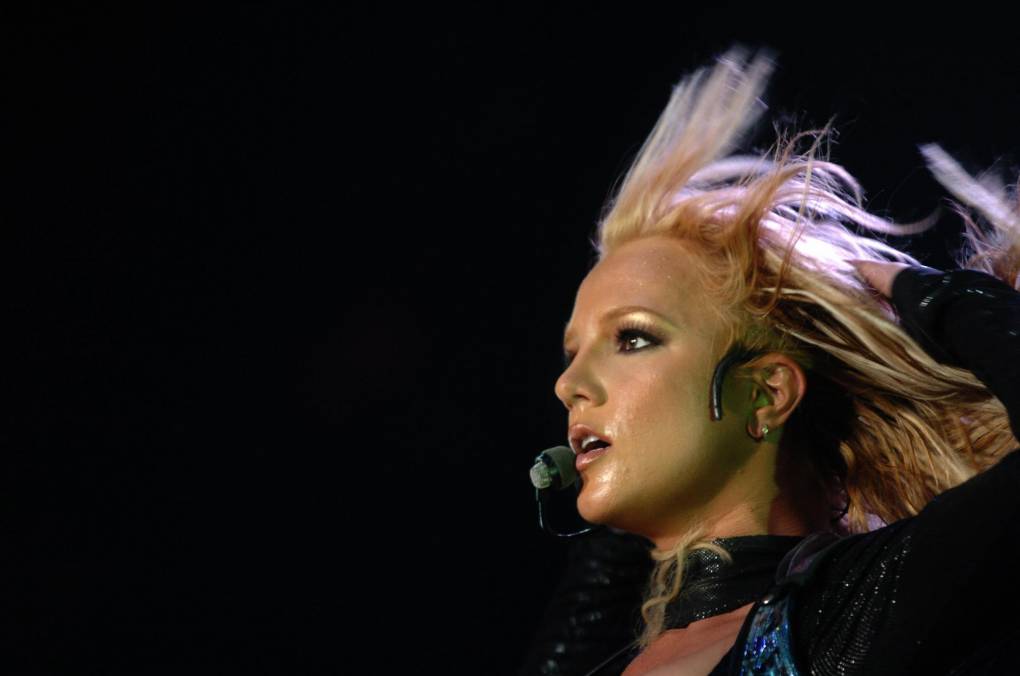
"caption": "Britney Spears onstage in France in 2004. ",
"description": "Britney Spears onstage in France in 2004. ",
"title": "Britney Spears onstage in France in 2004.",
"credit": "MARTIN BUREAU/AFP via Getty Images",
"status": "inherit",
"altTag": "Britney Spears onstage in France in 2004.",
"isLoading": false,
"fetchFailed": false
},
"arts_13901597": {
"type": "attachments",
"id": "arts_13901597",
"meta": {
"index": "attachments_1716263798",
"site": "arts",
"id": "13901597",
"found": true
},
"parent": 13901595,
"imgSizes": {
"twentyfourteen-full-width": {
"file": "https://ww2.kqed.org/app/uploads/sites/2/2021/08/gettyimages-527074912_wide-8d353f10ecd26fd00e760ac90b6389ae9e8911f8-1038x576.jpg",
"width": 1038,
"mimeType": "image/jpeg",
"height": 576
},
"thumbnail": {
"file": "https://ww2.kqed.org/app/uploads/sites/2/2021/08/gettyimages-527074912_wide-8d353f10ecd26fd00e760ac90b6389ae9e8911f8-160x90.jpg",
"width": 160,
"mimeType": "image/jpeg",
"height": 90
},
"post-thumbnail": {
"file": "https://ww2.kqed.org/app/uploads/sites/2/2021/08/gettyimages-527074912_wide-8d353f10ecd26fd00e760ac90b6389ae9e8911f8-672x372.jpg",
"width": 672,
"mimeType": "image/jpeg",
"height": 372
},
"kqedFullSize": {
"file": "https://ww2.kqed.org/app/uploads/sites/2/2021/08/gettyimages-527074912_wide-8d353f10ecd26fd00e760ac90b6389ae9e8911f8-scaled-e1629478926402.jpg",
"width": 1920,
"height": 1081
},
"2048x2048": {
"file": "https://ww2.kqed.org/app/uploads/sites/2/2021/08/gettyimages-527074912_wide-8d353f10ecd26fd00e760ac90b6389ae9e8911f8-2048x1153.jpg",
"width": 2048,
"mimeType": "image/jpeg",
"height": 1153
},
"large": {
"file": "https://ww2.kqed.org/app/uploads/sites/2/2021/08/gettyimages-527074912_wide-8d353f10ecd26fd00e760ac90b6389ae9e8911f8-1020x574.jpg",
"width": 1020,
"mimeType": "image/jpeg",
"height": 574
},
"1536x1536": {
"file": "https://ww2.kqed.org/app/uploads/sites/2/2021/08/gettyimages-527074912_wide-8d353f10ecd26fd00e760ac90b6389ae9e8911f8-1536x864.jpg",
"width": 1536,
"mimeType": "image/jpeg",
"height": 864
},
"full-width": {
"file": "https://ww2.kqed.org/app/uploads/sites/2/2021/08/gettyimages-527074912_wide-8d353f10ecd26fd00e760ac90b6389ae9e8911f8-1920x1081.jpg",
"width": 1920,
"mimeType": "image/jpeg",
"height": 1081
},
"medium": {
"file": "https://ww2.kqed.org/app/uploads/sites/2/2021/08/gettyimages-527074912_wide-8d353f10ecd26fd00e760ac90b6389ae9e8911f8-800x450.jpg",
"width": 800,
"mimeType": "image/jpeg",
"height": 450
},
"medium_large": {
"file": "https://ww2.kqed.org/app/uploads/sites/2/2021/08/gettyimages-527074912_wide-8d353f10ecd26fd00e760ac90b6389ae9e8911f8-768x432.jpg",
"width": 768,
"mimeType": "image/jpeg",
"height": 432
}
},
"publishDate": 1629478272,
"modified": 1629478988,
"caption": "Mike Richards was once the Daytime Emmy-award winning producer of 'The Price Is Right.' Friday, he became the guy who wasn't, and then was, and then wasn't, the new host of 'Jeopardy!'",
"description": "Mike Richards was once the Daytime Emmy-award winning producer of 'The Price Is Right.' Friday, he became the guy who wasn't, and then was, and then wasn't, the new host of 'Jeopardy!'",
"title": "Mike Richards was once the Daytime Emmy-award winning producer of 'The Price Is Right.' Friday, he became the guy who wasn't, and then was, and then wasn't, the new host of 'Jeopardy!'",
"credit": "Matt Winkelmeyer/Getty Images",
"status": "inherit",
"altTag": "Mike Richards was once the Daytime Emmy-award winning producer of 'The Price Is Right.' Friday, he became the guy who wasn't, and then was, and then wasn't, the new host of 'Jeopardy!'",
"isLoading": false,
"fetchFailed": false
},
"arts_13901582": {
"type": "attachments",
"id": "arts_13901582",
"meta": {
"index": "attachments_1716263798",
"site": "arts",
"id": "13901582",
"found": true
},
"parent": 13901573,
"imgSizes": {
"twentyfourteen-full-width": {
"file": "https://ww2.kqed.org/app/uploads/sites/2/2021/08/Erynn-Beer-Truck-1038x576.jpg",
"width": 1038,
"mimeType": "image/jpeg",
"height": 576
},
"thumbnail": {
"file": "https://ww2.kqed.org/app/uploads/sites/2/2021/08/Erynn-Beer-Truck-160x99.jpg",
"width": 160,
"mimeType": "image/jpeg",
"height": 99
},
"post-thumbnail": {
"file": "https://ww2.kqed.org/app/uploads/sites/2/2021/08/Erynn-Beer-Truck-672x372.jpg",
"width": 672,
"mimeType": "image/jpeg",
"height": 372
},
"kqedFullSize": {
"file": "https://ww2.kqed.org/app/uploads/sites/2/2021/08/Erynn-Beer-Truck-scaled.jpg",
"width": 2560,
"height": 1584
},
"2048x2048": {
"file": "https://ww2.kqed.org/app/uploads/sites/2/2021/08/Erynn-Beer-Truck-2048x1267.jpg",
"width": 2048,
"mimeType": "image/jpeg",
"height": 1267
},
"large": {
"file": "https://ww2.kqed.org/app/uploads/sites/2/2021/08/Erynn-Beer-Truck-1020x631.jpg",
"width": 1020,
"mimeType": "image/jpeg",
"height": 631
},
"1536x1536": {
"file": "https://ww2.kqed.org/app/uploads/sites/2/2021/08/Erynn-Beer-Truck-1536x951.jpg",
"width": 1536,
"mimeType": "image/jpeg",
"height": 951
},
"full-width": {
"file": "https://ww2.kqed.org/app/uploads/sites/2/2021/08/Erynn-Beer-Truck-1920x1188.jpg",
"width": 1920,
"mimeType": "image/jpeg",
"height": 1188
},
"medium": {
"file": "https://ww2.kqed.org/app/uploads/sites/2/2021/08/Erynn-Beer-Truck-800x495.jpg",
"width": 800,
"mimeType": "image/jpeg",
"height": 495
},
"medium_large": {
"file": "https://ww2.kqed.org/app/uploads/sites/2/2021/08/Erynn-Beer-Truck-768x475.jpg",
"width": 768,
"mimeType": "image/jpeg",
"height": 475
}
},
"publishDate": 1629401991,
"modified": 1629402400,
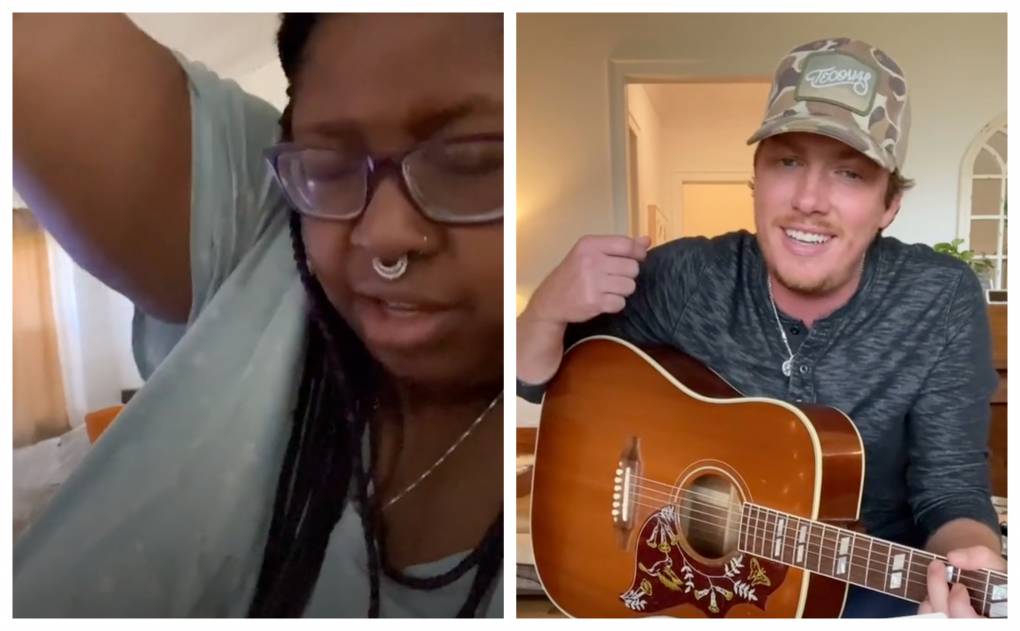
"caption": "(L) Erynn Chambers' original TikTok making fun of country music; (R) George Birge turning it into a song that got him a new record deal. ",
"description": "(L) Erynn Chambers' original TikTok making fun of country music; (R) George Birge turning it into a song that got him a new record deal. ",
"title": "(L) Erynn Chambers' original TikTok making fun of country music; (R) George Birge turning it into a song that got him a new record deal.",
"credit": "TikTok",
"status": "inherit",
"altTag": "(L) Erynn Chambers' original TikTok making fun of country music; (R) George Birge turning it into a song that got him a new record deal.",
"isLoading": false,
"fetchFailed": false
},
"arts_13901551": {
"type": "attachments",
"id": "arts_13901551",
"meta": {
"index": "attachments_1716263798",
"site": "arts",
"id": "13901551",
"found": true
},
"parent": 13901549,
"imgSizes": {
"twentyfourteen-full-width": {
"file": "https://ww2.kqed.org/app/uploads/sites/2/2021/08/7fp5827_r-5b3ca18ba5e0830274a2e3d6948f8fffa6adffd8-1038x576.jpg",
"width": 1038,
"mimeType": "image/jpeg",
"height": 576
},
"thumbnail": {
"file": "https://ww2.kqed.org/app/uploads/sites/2/2021/08/7fp5827_r-5b3ca18ba5e0830274a2e3d6948f8fffa6adffd8-160x120.jpg",
"width": 160,
"mimeType": "image/jpeg",
"height": 120
},
"post-thumbnail": {
"file": "https://ww2.kqed.org/app/uploads/sites/2/2021/08/7fp5827_r-5b3ca18ba5e0830274a2e3d6948f8fffa6adffd8-672x372.jpg",
"width": 672,
"mimeType": "image/jpeg",
"height": 372
},
"kqedFullSize": {
"file": "https://ww2.kqed.org/app/uploads/sites/2/2021/08/7fp5827_r-5b3ca18ba5e0830274a2e3d6948f8fffa6adffd8-scaled-e1629396136999.jpg",
"width": 1920,
"height": 1439
},
"2048x2048": {
"file": "https://ww2.kqed.org/app/uploads/sites/2/2021/08/7fp5827_r-5b3ca18ba5e0830274a2e3d6948f8fffa6adffd8-2048x1535.jpg",
"width": 2048,
"mimeType": "image/jpeg",
"height": 1535
},
"large": {
"file": "https://ww2.kqed.org/app/uploads/sites/2/2021/08/7fp5827_r-5b3ca18ba5e0830274a2e3d6948f8fffa6adffd8-1020x764.jpg",
"width": 1020,
"mimeType": "image/jpeg",
"height": 764
},
"1536x1536": {
"file": "https://ww2.kqed.org/app/uploads/sites/2/2021/08/7fp5827_r-5b3ca18ba5e0830274a2e3d6948f8fffa6adffd8-1536x1151.jpg",
"width": 1536,
"mimeType": "image/jpeg",
"height": 1151
},
"full-width": {
"file": "https://ww2.kqed.org/app/uploads/sites/2/2021/08/7fp5827_r-5b3ca18ba5e0830274a2e3d6948f8fffa6adffd8-1920x1439.jpg",
"width": 1920,
"mimeType": "image/jpeg",
"height": 1439
},
"medium": {
"file": "https://ww2.kqed.org/app/uploads/sites/2/2021/08/7fp5827_r-5b3ca18ba5e0830274a2e3d6948f8fffa6adffd8-800x600.jpg",
"width": 800,
"mimeType": "image/jpeg",
"height": 600
},
"medium_large": {
"file": "https://ww2.kqed.org/app/uploads/sites/2/2021/08/7fp5827_r-5b3ca18ba5e0830274a2e3d6948f8fffa6adffd8-768x576.jpg",
"width": 768,
"mimeType": "image/jpeg",
"height": 576
}
},
"publishDate": 1629395027,
"modified": 1629396197,
"caption": "Stationed at a covert base overseas, Maya (Jessica Chastain) is a member of the elite team of spies and military operatives (Christopher Stanley, left, and Alex Corbet Burcher, right) who devote themselves to finding Osama bin Laden in 'Zero Dark Thirty.'",
"description": "Stationed at a covert base overseas, Maya (Jessica Chastain) is a member of the elite team of spies and military operatives (Christopher Stanley, left, and Alex Corbet Burcher, right) who devote themselves to finding Osama bin Laden in 'Zero Dark Thirty.'",
"title": "Stationed at a covert base overseas, Maya (Jessica Chastain) is a member of the elite team of spies and military operatives (Christopher Stanley, left, and Alex Corbet Burcher, right) who devote themselves to finding Osama bin Laden in 'Zero Dark Thirty.'",
"credit": "Jonathan Olley/Sony Pictures",
"status": "inherit",
"altTag": "Stationed at a covert base overseas, Maya (Jessica Chastain) is a member of the elite team of spies and military operatives (Christopher Stanley, left, and Alex Corbet Burcher, right) who devote themselves to finding Osama bin Laden in 'Zero Dark Thirty.'",
"isLoading": false,
"fetchFailed": false
},
"arts_13901496": {
"type": "attachments",
"id": "arts_13901496",
"meta": {
"index": "attachments_1716263798",
"site": "arts",
"id": "13901496",
"found": true
},
"parent": 13901488,
"imgSizes": {
"twentyfourteen-full-width": {
"file": "https://ww2.kqed.org/app/uploads/sites/2/2021/08/roberto-tumini-n-MJGM3rzDg-unsplash-1038x576.jpg",
"width": 1038,
"mimeType": "image/jpeg",
"height": 576
},
"thumbnail": {
"file": "https://ww2.kqed.org/app/uploads/sites/2/2021/08/roberto-tumini-n-MJGM3rzDg-unsplash-160x107.jpg",
"width": 160,
"mimeType": "image/jpeg",
"height": 107
},
"post-thumbnail": {
"file": "https://ww2.kqed.org/app/uploads/sites/2/2021/08/roberto-tumini-n-MJGM3rzDg-unsplash-672x372.jpg",
"width": 672,
"mimeType": "image/jpeg",
"height": 372
},
"kqedFullSize": {
"file": "https://ww2.kqed.org/app/uploads/sites/2/2021/08/roberto-tumini-n-MJGM3rzDg-unsplash-scaled-e1629319123987.jpg",
"width": 1920,
"height": 1280
},
"2048x2048": {
"file": "https://ww2.kqed.org/app/uploads/sites/2/2021/08/roberto-tumini-n-MJGM3rzDg-unsplash-2048x1365.jpg",
"width": 2048,
"mimeType": "image/jpeg",
"height": 1365
},
"large": {
"file": "https://ww2.kqed.org/app/uploads/sites/2/2021/08/roberto-tumini-n-MJGM3rzDg-unsplash-1020x680.jpg",
"width": 1020,
"mimeType": "image/jpeg",
"height": 680
},
"1536x1536": {
"file": "https://ww2.kqed.org/app/uploads/sites/2/2021/08/roberto-tumini-n-MJGM3rzDg-unsplash-1536x1024.jpg",
"width": 1536,
"mimeType": "image/jpeg",
"height": 1024
},
"full-width": {
"file": "https://ww2.kqed.org/app/uploads/sites/2/2021/08/roberto-tumini-n-MJGM3rzDg-unsplash-1920x1280.jpg",
"width": 1920,
"mimeType": "image/jpeg",
"height": 1280
},
"medium": {
"file": "https://ww2.kqed.org/app/uploads/sites/2/2021/08/roberto-tumini-n-MJGM3rzDg-unsplash-800x533.jpg",
"width": 800,
"mimeType": "image/jpeg",
"height": 533
},
"medium_large": {
"file": "https://ww2.kqed.org/app/uploads/sites/2/2021/08/roberto-tumini-n-MJGM3rzDg-unsplash-768x512.jpg",
"width": 768,
"mimeType": "image/jpeg",
"height": 512
}
},
"publishDate": 1629318333,
"modified": 1629319132,
"caption": null,
"description": null,
"title": "roberto-tumini-n-MJGM3rzDg-unsplash",
"credit": "Roberto Tumini/ Unsplash",
"status": "inherit",
"altTag": null,
"isLoading": false,
"fetchFailed": false
},
"arts_13901480": {
"type": "attachments",
"id": "arts_13901480",
"meta": {
"index": "attachments_1716263798",
"site": "arts",
"id": "13901480",
"found": true
},
"parent": 13901479,
"imgSizes": {
"twentyfourteen-full-width": {
"file": "https://ww2.kqed.org/app/uploads/sites/2/2021/08/becket_yannisdrakoulidis_netflix_btbm_day_008_190228_0054_r_wide-cfbceb6ae0726b95ffe20fb978d20d120656d532-1038x576.jpg",
"width": 1038,
"mimeType": "image/jpeg",
"height": 576
},
"thumbnail": {
"file": "https://ww2.kqed.org/app/uploads/sites/2/2021/08/becket_yannisdrakoulidis_netflix_btbm_day_008_190228_0054_r_wide-cfbceb6ae0726b95ffe20fb978d20d120656d532-160x90.jpg",
"width": 160,
"mimeType": "image/jpeg",
"height": 90
},
"post-thumbnail": {
"file": "https://ww2.kqed.org/app/uploads/sites/2/2021/08/becket_yannisdrakoulidis_netflix_btbm_day_008_190228_0054_r_wide-cfbceb6ae0726b95ffe20fb978d20d120656d532-672x372.jpg",
"width": 672,
"mimeType": "image/jpeg",
"height": 372
},
"kqedFullSize": {
"file": "https://ww2.kqed.org/app/uploads/sites/2/2021/08/becket_yannisdrakoulidis_netflix_btbm_day_008_190228_0054_r_wide-cfbceb6ae0726b95ffe20fb978d20d120656d532-scaled-e1629311151819.jpg",
"width": 1920,
"height": 1080
},
"2048x2048": {
"file": "https://ww2.kqed.org/app/uploads/sites/2/2021/08/becket_yannisdrakoulidis_netflix_btbm_day_008_190228_0054_r_wide-cfbceb6ae0726b95ffe20fb978d20d120656d532-2048x1152.jpg",
"width": 2048,
"mimeType": "image/jpeg",
"height": 1152
},
"large": {
"file": "https://ww2.kqed.org/app/uploads/sites/2/2021/08/becket_yannisdrakoulidis_netflix_btbm_day_008_190228_0054_r_wide-cfbceb6ae0726b95ffe20fb978d20d120656d532-1020x574.jpg",
"width": 1020,
"mimeType": "image/jpeg",
"height": 574
},
"1536x1536": {
"file": "https://ww2.kqed.org/app/uploads/sites/2/2021/08/becket_yannisdrakoulidis_netflix_btbm_day_008_190228_0054_r_wide-cfbceb6ae0726b95ffe20fb978d20d120656d532-1536x864.jpg",
"width": 1536,
"mimeType": "image/jpeg",
"height": 864
},
"full-width": {
"file": "https://ww2.kqed.org/app/uploads/sites/2/2021/08/becket_yannisdrakoulidis_netflix_btbm_day_008_190228_0054_r_wide-cfbceb6ae0726b95ffe20fb978d20d120656d532-1920x1080.jpg",
"width": 1920,
"mimeType": "image/jpeg",
"height": 1080
},
"medium": {
"file": "https://ww2.kqed.org/app/uploads/sites/2/2021/08/becket_yannisdrakoulidis_netflix_btbm_day_008_190228_0054_r_wide-cfbceb6ae0726b95ffe20fb978d20d120656d532-800x450.jpg",
"width": 800,
"mimeType": "image/jpeg",
"height": 450
},
"medium_large": {
"file": "https://ww2.kqed.org/app/uploads/sites/2/2021/08/becket_yannisdrakoulidis_netflix_btbm_day_008_190228_0054_r_wide-cfbceb6ae0726b95ffe20fb978d20d120656d532-768x432.jpg",
"width": 768,
"mimeType": "image/jpeg",
"height": 432
}
},
"publishDate": 1629310367,
"modified": 1629311226,
"caption": "John David Washington sustaining multiple injuries in 'Beckett'.",
"description": "John David Washington sustaining multiple injuries in 'Beckett'.",
"title": "John David Washington sustaining multiple injuries in 'Beckett'.",
"credit": "Yannis Drakoulidis/Netflix",
"status": "inherit",
"altTag": "John David Washington sustaining multiple injuries in 'Beckett'.",
"isLoading": false,
"fetchFailed": false
},
"arts_13901432": {
"type": "attachments",
"id": "arts_13901432",
"meta": {
"index": "attachments_1716263798",
"site": "arts",
"id": "13901432",
"found": true
},
"parent": 13901431,
"imgSizes": {
"twentyfourteen-full-width": {
"file": "https://ww2.kqed.org/app/uploads/sites/2/2021/08/YikYakApp-2eb79cb16b092e3a78a66c4e75804ff8c789b3f7-1038x576.jpg",
"width": 1038,
"mimeType": "image/jpeg",
"height": 576
},
"thumbnail": {
"file": "https://ww2.kqed.org/app/uploads/sites/2/2021/08/YikYakApp-2eb79cb16b092e3a78a66c4e75804ff8c789b3f7-160x120.jpg",
"width": 160,
"mimeType": "image/jpeg",
"height": 120
},
"post-thumbnail": {
"file": "https://ww2.kqed.org/app/uploads/sites/2/2021/08/YikYakApp-2eb79cb16b092e3a78a66c4e75804ff8c789b3f7-672x372.jpg",
"width": 672,
"mimeType": "image/jpeg",
"height": 372
},
"kqedFullSize": {
"file": "https://ww2.kqed.org/app/uploads/sites/2/2021/08/YikYakApp-2eb79cb16b092e3a78a66c4e75804ff8c789b3f7-scaled-e1629232126457.jpg",
"width": 1920,
"height": 1440
},
"2048x2048": {
"file": "https://ww2.kqed.org/app/uploads/sites/2/2021/08/YikYakApp-2eb79cb16b092e3a78a66c4e75804ff8c789b3f7-2048x1536.jpg",
"width": 2048,
"mimeType": "image/jpeg",
"height": 1536
},
"large": {
"file": "https://ww2.kqed.org/app/uploads/sites/2/2021/08/YikYakApp-2eb79cb16b092e3a78a66c4e75804ff8c789b3f7-1020x765.jpg",
"width": 1020,
"mimeType": "image/jpeg",
"height": 765
},
"1536x1536": {
"file": "https://ww2.kqed.org/app/uploads/sites/2/2021/08/YikYakApp-2eb79cb16b092e3a78a66c4e75804ff8c789b3f7-1536x1152.jpg",
"width": 1536,
"mimeType": "image/jpeg",
"height": 1152
},
"full-width": {
"file": "https://ww2.kqed.org/app/uploads/sites/2/2021/08/YikYakApp-2eb79cb16b092e3a78a66c4e75804ff8c789b3f7-1920x1440.jpg",
"width": 1920,
"mimeType": "image/jpeg",
"height": 1440
},
"medium": {
"file": "https://ww2.kqed.org/app/uploads/sites/2/2021/08/YikYakApp-2eb79cb16b092e3a78a66c4e75804ff8c789b3f7-800x600.jpg",
"width": 800,
"mimeType": "image/jpeg",
"height": 600
},
"medium_large": {
"file": "https://ww2.kqed.org/app/uploads/sites/2/2021/08/YikYakApp-2eb79cb16b092e3a78a66c4e75804ff8c789b3f7-768x576.jpg",
"width": 768,
"mimeType": "image/jpeg",
"height": 576
}
},
"publishDate": 1629231469,
"modified": 1629232192,
"caption": "The Yik Yak app in the Google Play store, back in 2014. A new version is only available currently in the Apple app store in the U.S.",
"description": "The Yik Yak app in the Google Play store, back in 2014. A new version is only available currently in the Apple app store in the U.S.",
"title": "The Yik Yak app in the Google Play store, back in 2014. A new version is only available currently in the Apple app store in the U.S.",
"credit": "MANDEL NGAN/AFP via Getty Images",
"status": "inherit",
"altTag": "The Yik Yak app in the Google Play store, back in 2014. A new version is only available currently in the Apple app store in the U.S.",
"isLoading": false,
"fetchFailed": false
},
"arts_13901421": {
"type": "attachments",
"id": "arts_13901421",
"meta": {
"index": "attachments_1716263798",
"site": "arts",
"id": "13901421",
"found": true
},
"parent": 13901414,
"imgSizes": {
"twentyfourteen-full-width": {
"file": "https://ww2.kqed.org/app/uploads/sites/2/2021/08/GettyImages-1085320888-1038x576.jpg",
"width": 1038,
"mimeType": "image/jpeg",
"height": 576
},
"thumbnail": {
"file": "https://ww2.kqed.org/app/uploads/sites/2/2021/08/GettyImages-1085320888-160x106.jpg",
"width": 160,
"mimeType": "image/jpeg",
"height": 106
},
"post-thumbnail": {
"file": "https://ww2.kqed.org/app/uploads/sites/2/2021/08/GettyImages-1085320888-672x372.jpg",
"width": 672,
"mimeType": "image/jpeg",
"height": 372
},
"kqedFullSize": {
"file": "https://ww2.kqed.org/app/uploads/sites/2/2021/08/GettyImages-1085320888-scaled-e1629224945830.jpg",
"width": 1920,
"height": 1276
},
"2048x2048": {
"file": "https://ww2.kqed.org/app/uploads/sites/2/2021/08/GettyImages-1085320888-2048x1361.jpg",
"width": 2048,
"mimeType": "image/jpeg",
"height": 1361
},
"large": {
"file": "https://ww2.kqed.org/app/uploads/sites/2/2021/08/GettyImages-1085320888-1020x678.jpg",
"width": 1020,
"mimeType": "image/jpeg",
"height": 678
},
"1536x1536": {
"file": "https://ww2.kqed.org/app/uploads/sites/2/2021/08/GettyImages-1085320888-1536x1021.jpg",
"width": 1536,
"mimeType": "image/jpeg",
"height": 1021
},
"full-width": {
"file": "https://ww2.kqed.org/app/uploads/sites/2/2021/08/GettyImages-1085320888-1920x1276.jpg",
"width": 1920,
"mimeType": "image/jpeg",
"height": 1276
},
"medium": {
"file": "https://ww2.kqed.org/app/uploads/sites/2/2021/08/GettyImages-1085320888-800x532.jpg",
"width": 800,
"mimeType": "image/jpeg",
"height": 532
},
"medium_large": {
"file": "https://ww2.kqed.org/app/uploads/sites/2/2021/08/GettyImages-1085320888-768x510.jpg",
"width": 768,
"mimeType": "image/jpeg",
"height": 510
}
},
"publishDate": 1629224770,
"modified": 1629224981,
"caption": "Protestors march to City Hall during the Third Annual Women's March in downtown LA, January 2019.",
"description": "Protestors march to City Hall during the Third Annual Women's March in downtown LA, January 2019.",
"title": "Protestors march to City Hall during the Third Annual Women's March in downtown LA, January 2019.",
"credit": "ROBYN BECK/AFP via Getty Images",
"status": "inherit",
"altTag": "Protestors march to City Hall during the Third Annual Women's March in downtown LA, January 2019.",
"isLoading": false,
"fetchFailed": false
},
"arts_13901405": {
"type": "attachments",
"id": "arts_13901405",
"meta": {
"index": "attachments_1716263798",
"site": "arts",
"id": "13901405",
"found": true
},
"parent": 13901400,
"imgSizes": {
"twentyfourteen-full-width": {
"file": "https://ww2.kqed.org/app/uploads/sites/2/2021/08/GettyImages-1158464165-1038x576.jpg",
"width": 1038,
"mimeType": "image/jpeg",
"height": 576
},
"thumbnail": {
"file": "https://ww2.kqed.org/app/uploads/sites/2/2021/08/GettyImages-1158464165-160x107.jpg",
"width": 160,
"mimeType": "image/jpeg",
"height": 107
},
"post-thumbnail": {
"file": "https://ww2.kqed.org/app/uploads/sites/2/2021/08/GettyImages-1158464165-672x372.jpg",
"width": 672,
"mimeType": "image/jpeg",
"height": 372
},
"kqedFullSize": {
"file": "https://ww2.kqed.org/app/uploads/sites/2/2021/08/GettyImages-1158464165-scaled.jpg",
"width": 2560,
"height": 1707
},
"2048x2048": {
"file": "https://ww2.kqed.org/app/uploads/sites/2/2021/08/GettyImages-1158464165-2048x1365.jpg",
"width": 2048,
"mimeType": "image/jpeg",
"height": 1365
},
"large": {
"file": "https://ww2.kqed.org/app/uploads/sites/2/2021/08/GettyImages-1158464165-1020x680.jpg",
"width": 1020,
"mimeType": "image/jpeg",
"height": 680
},
"1536x1536": {
"file": "https://ww2.kqed.org/app/uploads/sites/2/2021/08/GettyImages-1158464165-1536x1024.jpg",
"width": 1536,
"mimeType": "image/jpeg",
"height": 1024
},
"full-width": {
"file": "https://ww2.kqed.org/app/uploads/sites/2/2021/08/GettyImages-1158464165-1920x1280.jpg",
"width": 1920,
"mimeType": "image/jpeg",
"height": 1280
},
"medium": {
"file": "https://ww2.kqed.org/app/uploads/sites/2/2021/08/GettyImages-1158464165-800x533.jpg",
"width": 800,
"mimeType": "image/jpeg",
"height": 533
},
"medium_large": {
"file": "https://ww2.kqed.org/app/uploads/sites/2/2021/08/GettyImages-1158464165-768x512.jpg",
"width": 768,
"mimeType": "image/jpeg",
"height": 512
}
},
"publishDate": 1629158320,
"modified": 1629158370,
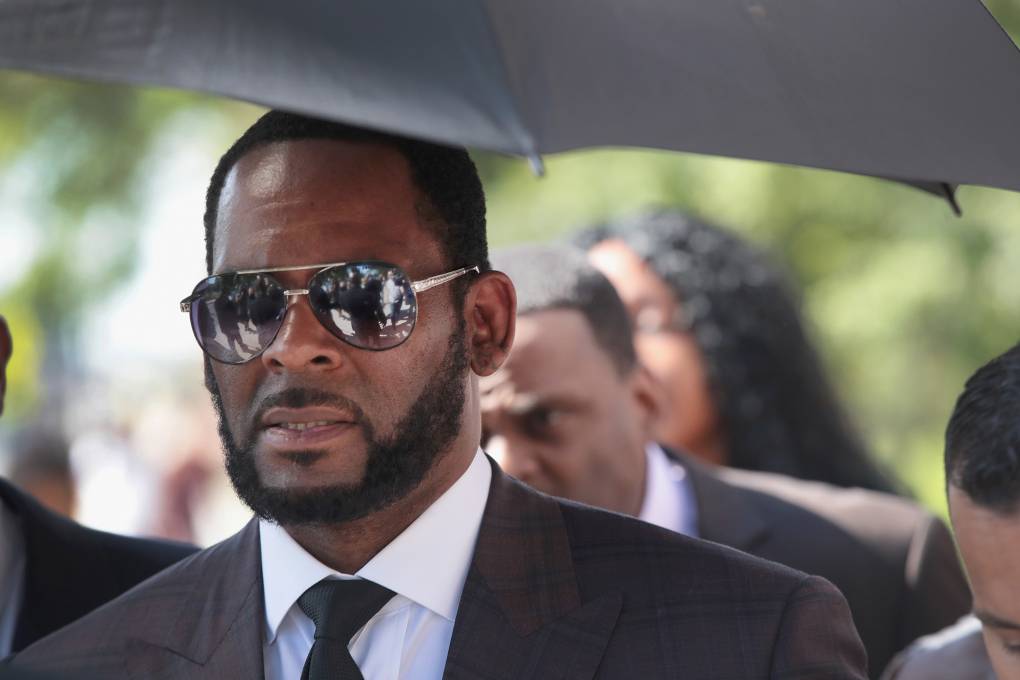
"caption": "R. Kelly leaves the Leighton Criminal Courts Building following a hearing on June 26, 2019 in Chicago, Illinois. ",
"description": "R. Kelly leaves the Leighton Criminal Courts Building following a hearing on June 26, 2019 in Chicago, Illinois. ",
"title": "R. Kelly leaves the Leighton Criminal Courts Building following a hearing on June 26, 2019 in Chicago, Illinois.",
"credit": "Scott Olson/Getty Images",
"status": "inherit",
"altTag": "R. Kelly leaves the Leighton Criminal Courts Building following a hearing on June 26, 2019 in Chicago, Illinois.",
"isLoading": false,
"fetchFailed": false
},
"arts_13901382": {
"type": "attachments",
"id": "arts_13901382",
"meta": {
"index": "attachments_1716263798",
"site": "arts",
"id": "13901382",
"found": true
},
"parent": 13901381,
"imgSizes": {
"twentyfourteen-full-width": {
"file": "https://ww2.kqed.org/app/uploads/sites/2/2021/08/gettyimages-1333981833-0a8c6d63685cf13172b2629c95d8edea3920b342-1038x576.jpg",
"width": 1038,
"mimeType": "image/jpeg",
"height": 576
},
"thumbnail": {
"file": "https://ww2.kqed.org/app/uploads/sites/2/2021/08/gettyimages-1333981833-0a8c6d63685cf13172b2629c95d8edea3920b342-160x120.jpg",
"width": 160,
"mimeType": "image/jpeg",
"height": 120
},
"post-thumbnail": {
"file": "https://ww2.kqed.org/app/uploads/sites/2/2021/08/gettyimages-1333981833-0a8c6d63685cf13172b2629c95d8edea3920b342-672x372.jpg",
"width": 672,
"mimeType": "image/jpeg",
"height": 372
},
"kqedFullSize": {
"file": "https://ww2.kqed.org/app/uploads/sites/2/2021/08/gettyimages-1333981833-0a8c6d63685cf13172b2629c95d8edea3920b342-scaled-e1629154867571.jpg",
"width": 1920,
"height": 1440
},
"2048x2048": {
"file": "https://ww2.kqed.org/app/uploads/sites/2/2021/08/gettyimages-1333981833-0a8c6d63685cf13172b2629c95d8edea3920b342-2048x1536.jpg",
"width": 2048,
"mimeType": "image/jpeg",
"height": 1536
},
"large": {
"file": "https://ww2.kqed.org/app/uploads/sites/2/2021/08/gettyimages-1333981833-0a8c6d63685cf13172b2629c95d8edea3920b342-1020x765.jpg",
"width": 1020,
"mimeType": "image/jpeg",
"height": 765
},
"1536x1536": {
"file": "https://ww2.kqed.org/app/uploads/sites/2/2021/08/gettyimages-1333981833-0a8c6d63685cf13172b2629c95d8edea3920b342-1536x1152.jpg",
"width": 1536,
"mimeType": "image/jpeg",
"height": 1152
},
"full-width": {
"file": "https://ww2.kqed.org/app/uploads/sites/2/2021/08/gettyimages-1333981833-0a8c6d63685cf13172b2629c95d8edea3920b342-1920x1440.jpg",
"width": 1920,
"mimeType": "image/jpeg",
"height": 1440
},
"medium": {
"file": "https://ww2.kqed.org/app/uploads/sites/2/2021/08/gettyimages-1333981833-0a8c6d63685cf13172b2629c95d8edea3920b342-800x600.jpg",
"width": 800,
"mimeType": "image/jpeg",
"height": 600
},
"medium_large": {
"file": "https://ww2.kqed.org/app/uploads/sites/2/2021/08/gettyimages-1333981833-0a8c6d63685cf13172b2629c95d8edea3920b342-768x576.jpg",
"width": 768,
"mimeType": "image/jpeg",
"height": 576
}
},
"publishDate": 1629153592,
"modified": 1629154924,
"caption": "Saweetie speaks at Sprite's Live from the Label Virtual Concert Series in Los Angeles. The best-selling rapper recently became the latest celebrity to have her own branded meal at McDonald's.",
"description": "Saweetie speaks at Sprite's Live from the Label Virtual Concert Series in Los Angeles. The best-selling rapper recently became the latest celebrity to have her own branded meal at McDonald's.",
"title": "Saweetie speaks at Sprite's Live from the Label Virtual Concert Series in Los Angeles. The best-selling rapper recently became the latest celebrity to have her own branded meal at McDonald's.",
"credit": "Rich Fury/Getty Images for Sprite",
"status": "inherit",
"altTag": "Saweetie speaks at Sprite's Live from the Label Virtual Concert Series in Los Angeles. The best-selling rapper recently became the latest celebrity to have her own branded meal at McDonald's.",
"isLoading": false,
"fetchFailed": false
},
"arts_13901280": {
"type": "attachments",
"id": "arts_13901280",
"meta": {
"index": "attachments_1716263798",
"site": "arts",
"id": "13901280",
"found": true
},
"parent": 13901279,
"imgSizes": {
"twentyfourteen-full-width": {
"file": "https://ww2.kqed.org/app/uploads/sites/2/2021/08/coda_photo_0106_wide-70d27a3a56ce1656824675ec7e5e017af621da4d-1038x576.jpg",
"width": 1038,
"mimeType": "image/jpeg",
"height": 576
},
"thumbnail": {
"file": "https://ww2.kqed.org/app/uploads/sites/2/2021/08/coda_photo_0106_wide-70d27a3a56ce1656824675ec7e5e017af621da4d-160x90.jpg",
"width": 160,
"mimeType": "image/jpeg",
"height": 90
},
"post-thumbnail": {
"file": "https://ww2.kqed.org/app/uploads/sites/2/2021/08/coda_photo_0106_wide-70d27a3a56ce1656824675ec7e5e017af621da4d-672x372.jpg",
"width": 672,
"mimeType": "image/jpeg",
"height": 372
},
"kqedFullSize": {
"file": "https://ww2.kqed.org/app/uploads/sites/2/2021/08/coda_photo_0106_wide-70d27a3a56ce1656824675ec7e5e017af621da4d-scaled-e1628882614718.jpg",
"width": 1920,
"height": 1080
},
"2048x2048": {
"file": "https://ww2.kqed.org/app/uploads/sites/2/2021/08/coda_photo_0106_wide-70d27a3a56ce1656824675ec7e5e017af621da4d-2048x1152.jpg",
"width": 2048,
"mimeType": "image/jpeg",
"height": 1152
},
"large": {
"file": "https://ww2.kqed.org/app/uploads/sites/2/2021/08/coda_photo_0106_wide-70d27a3a56ce1656824675ec7e5e017af621da4d-1020x574.jpg",
"width": 1020,
"mimeType": "image/jpeg",
"height": 574
},
"1536x1536": {
"file": "https://ww2.kqed.org/app/uploads/sites/2/2021/08/coda_photo_0106_wide-70d27a3a56ce1656824675ec7e5e017af621da4d-1536x864.jpg",
"width": 1536,
"mimeType": "image/jpeg",
"height": 864
},
"full-width": {
"file": "https://ww2.kqed.org/app/uploads/sites/2/2021/08/coda_photo_0106_wide-70d27a3a56ce1656824675ec7e5e017af621da4d-1920x1080.jpg",
"width": 1920,
"mimeType": "image/jpeg",
"height": 1080
},
"medium": {
"file": "https://ww2.kqed.org/app/uploads/sites/2/2021/08/coda_photo_0106_wide-70d27a3a56ce1656824675ec7e5e017af621da4d-800x450.jpg",
"width": 800,
"mimeType": "image/jpeg",
"height": 450
},
"medium_large": {
"file": "https://ww2.kqed.org/app/uploads/sites/2/2021/08/coda_photo_0106_wide-70d27a3a56ce1656824675ec7e5e017af621da4d-768x432.jpg",
"width": 768,
"mimeType": "image/jpeg",
"height": 432
}
},
"publishDate": 1628881745,
"modified": 1628882645,
"caption": "Emilia Jones and Marlee Matlin play daughter and mother in the new film 'CODA.'",
"description": "Emilia Jones and Marlee Matlin play daughter and mother in the new film 'CODA.'",
"title": "Emilia Jones and Marlee Matlin play daughter and mother in the new film 'CODA.'",
"credit": "Apple TV+",
"status": "inherit",
"altTag": "Emilia Jones and Marlee Matlin play daughter and mother in the new film 'CODA.'",
"isLoading": false,
"fetchFailed": false
},
"arts_13901273": {
"type": "attachments",
"id": "arts_13901273",
"meta": {
"index": "attachments_1716263798",
"site": "arts",
"id": "13901273",
"found": true
},
"parent": 13901270,
"imgSizes": {
"twentyfourteen-full-width": {
"file": "https://ww2.kqed.org/app/uploads/sites/2/2021/08/Screen-Shot-2021-08-13-at-11.37.29-AM-1038x576.png",
"width": 1038,
"mimeType": "image/png",
"height": 576
},
"thumbnail": {
"file": "https://ww2.kqed.org/app/uploads/sites/2/2021/08/Screen-Shot-2021-08-13-at-11.37.29-AM-160x107.png",
"width": 160,
"mimeType": "image/png",
"height": 107
},
"post-thumbnail": {
"file": "https://ww2.kqed.org/app/uploads/sites/2/2021/08/Screen-Shot-2021-08-13-at-11.37.29-AM-672x372.png",
"width": 672,
"mimeType": "image/png",
"height": 372
},
"kqedFullSize": {
"file": "https://ww2.kqed.org/app/uploads/sites/2/2021/08/Screen-Shot-2021-08-13-at-11.37.29-AM-e1628880014226.png",
"width": 1920,
"height": 1281
},
"2048x2048": {
"file": "https://ww2.kqed.org/app/uploads/sites/2/2021/08/Screen-Shot-2021-08-13-at-11.37.29-AM-2048x1367.png",
"width": 2048,
"mimeType": "image/png",
"height": 1367
},
"large": {
"file": "https://ww2.kqed.org/app/uploads/sites/2/2021/08/Screen-Shot-2021-08-13-at-11.37.29-AM-1020x681.png",
"width": 1020,
"mimeType": "image/png",
"height": 681
},
"1536x1536": {
"file": "https://ww2.kqed.org/app/uploads/sites/2/2021/08/Screen-Shot-2021-08-13-at-11.37.29-AM-1536x1025.png",
"width": 1536,
"mimeType": "image/png",
"height": 1025
},
"full-width": {
"file": "https://ww2.kqed.org/app/uploads/sites/2/2021/08/Screen-Shot-2021-08-13-at-11.37.29-AM-1920x1281.png",
"width": 1920,
"mimeType": "image/png",
"height": 1281
},
"medium": {
"file": "https://ww2.kqed.org/app/uploads/sites/2/2021/08/Screen-Shot-2021-08-13-at-11.37.29-AM-800x534.png",
"width": 800,
"mimeType": "image/png",
"height": 534
},
"medium_large": {
"file": "https://ww2.kqed.org/app/uploads/sites/2/2021/08/Screen-Shot-2021-08-13-at-11.37.29-AM-768x512.png",
"width": 768,
"mimeType": "image/png",
"height": 512
}
},
"publishDate": 1628879989,
"modified": 1628880107,
"caption": "The Warfield, photographed on March 15, 2020, at the start of the shutdown.",
"description": "The Warfield, photographed on March 15, 2020, at the start of the shutdown.",
"title": "The Warfield, photographed on March 15, 2020, at the start of the shutdown.",
"credit": "Beth LaBerge/KQED",
"status": "inherit",
"altTag": "The Warfield, photographed on March 15, 2020, at the start of the shutdown.",
"isLoading": false,
"fetchFailed": false
}
},
"audioPlayerReducer": {
"postId": "stream_live",
"isPaused": true,
"isPlaying": false,
"pfsActive": false,
"pledgeModalIsOpen": true,
"playerDrawerIsOpen": false,
"liveAudioPlayStartedAt": 0,
"liveAudioPlayContext": ""
},
"authorsReducer": {
"byline_arts_13901695": {
"type": "authors",
"id": "byline_arts_13901695",
"meta": {
"override": true
},
"slug": "byline_arts_13901695",
"name": "Eric Deggans",
"isLoading": false
},
"byline_arts_13901595": {
"type": "authors",
"id": "byline_arts_13901595",
"meta": {
"override": true
},
"slug": "byline_arts_13901595",
"name": "Linda Holmes",
"isLoading": false
},
"byline_arts_13901573": {
"type": "authors",
"id": "byline_arts_13901573",
"meta": {
"override": true
},
"slug": "byline_arts_13901573",
"name": "Mia Venkat",
"isLoading": false
},
"byline_arts_13901549": {
"type": "authors",
"id": "byline_arts_13901549",
"meta": {
"override": true
},
"slug": "byline_arts_13901549",
"name": "Bob Mondello",
"isLoading": false
},
"byline_arts_13901488": {
"type": "authors",
"id": "byline_arts_13901488",
"meta": {
"override": true
},
"slug": "byline_arts_13901488",
"name": "Maureen Corrigan",
"isLoading": false
},
"byline_arts_13901479": {
"type": "authors",
"id": "byline_arts_13901479",
"meta": {
"override": true
},
"slug": "byline_arts_13901479",
"name": "Linda Holmes",
"isLoading": false
},
"byline_arts_13901431": {
"type": "authors",
"id": "byline_arts_13901431",
"meta": {
"override": true
},
"slug": "byline_arts_13901431",
"name": "Jonathan Franklin",
"isLoading": false
},
"byline_arts_13901414": {
"type": "authors",
"id": "byline_arts_13901414",
"meta": {
"override": true
},
"slug": "byline_arts_13901414",
"name": "Jenny Bhatt",
"isLoading": false
},
"byline_arts_13901400": {
"type": "authors",
"id": "byline_arts_13901400",
"meta": {
"override": true
},
"slug": "byline_arts_13901400",
"name": "Anastasia Tsioulcas",
"isLoading": false
},
"byline_arts_13901381": {
"type": "authors",
"id": "byline_arts_13901381",
"meta": {
"override": true
},
"slug": "byline_arts_13901381",
"name": "Jonathan Franklin",
"isLoading": false
},
"byline_arts_13901279": {
"type": "authors",
"id": "byline_arts_13901279",
"meta": {
"override": true
},
"slug": "byline_arts_13901279",
"name": "Linda Holmes",
"isLoading": false
},
"byline_arts_13901270": {
"type": "authors",
"id": "byline_arts_13901270",
"meta": {
"override": true
},
"slug": "byline_arts_13901270",
"name": "Andrew Limbong",
"isLoading": false
}
},
"pagesReducer": {
"arts_affiliate_npr": {
"type": "terms",
"id": "arts_137",
"meta": {
"index": "terms_1716263798",
"site": "arts",
"id": "137",
"score": 14.258051
},
"featImg": "https://ww2.kqed.org/app/uploads/sites/2/2014/04/logo-npr-lg1.png",
"name": "NPR",
"description": null,
"taxonomy": "affiliate",
"headData": {
"twImgId": null,
"twTitle": null,
"ogTitle": null,
"ogImgId": null,
"twDescription": null,
"description": null,
"title": "NPR Archives | KQED Arts",
"ogDescription": null
},
"ttid": 138,
"slug": "npr",
"isLoading": false,
"title": "NPR",
"pageMeta": {
"site": "arts",
"WpPageTemplate": "page-topic-editorial",
"currentPage": 74
},
"blocks": [
{
"blockName": "kqed/post-list",
"attrs": {
"layout": "cardArticle2",
"query": "posts/arts?affiliate=npr",
"seeMore": false,
"paginated": true,
"page": 74
}
},
{
"blockName": "kqed/ad"
}
]
}
},
"pfsSessionReducer": {},
"postsReducer": {
"stream_live": {
"type": "live",
"id": "stream_live",
"audioUrl": "https://streams.kqed.org/kqedradio",
"title": "Live Stream",
"excerpt": "Live Stream information currently unavailable.",
"link": "/radio",
"featImg": "",
"label": {
"name": "KQED Live",
"link": "/"
}
},
"stream_kqedNewscast": {
"type": "posts",
"id": "stream_kqedNewscast",
"audioUrl": "https://www.kqed.org/.stream/anon/radio/RDnews/newscast.mp3?_=1",
"title": "KQED Newscast",
"featImg": "",
"label": {
"name": "88.5 FM",
"link": "/"
}
},
"arts_13901695": {
"type": "posts",
"id": "arts_13901695",
"meta": {
"index": "posts_1716263798",
"site": "arts",
"id": "13901695",
"score": null,
"sort": [
1629758683000
]
},
"parent": 0,
"labelTerm": {
"site": "arts",
"term": 137
},
"blocks": [],
"publishDate": 1629758683,
"format": "standard",
"title": "R. Kelly and Britney TV Docs Tap Into 'Consequence Culture,' Not Cancel Culture",
"headTitle": "R. Kelly and Britney TV Docs Tap Into ‘Consequence Culture,’ Not Cancel Culture | KQED",
"content": "\u003cp>As the trial of disgraced R&B superstar R. Kelly \u003ca href=\"https://www.kqed.org/arts/13901400/opinion-13-years-after-the-last-r-kelly-trial-the-culture-has-changed\" target=\"_blank\" rel=\"noopener noreferrer\">unfolds\u003c/a>, it’s tough to imagine reaching this moment without the 2019 Lifetime docuseries \u003cem>Surviving R. Kelly\u003c/em>.\u003c/p>\n\u003cp>That’s because the six-part project seemed to transform public opinion about the singer in an instant, with detailed, harrowing accounts from women who said Kelly spent decades pursuing underage girls for sex and maintaining abusive relationships. Kelly has denied the allegations.\u003c/p>\n\u003cp>The public reaction—including prosecutors asking other potential victims to come forward and his longtime label, RCA, \u003ca href=\"https://www.npr.org/2019/01/18/686641970/r-kelly-has-been-dropped-by-rca-records-billboard-reports\" target=\"_blank\" rel=\"noopener noreferrer\">dissolving its working relationship\u003c/a> with him—was surprising because journalists had been reporting on similar allegations against the singer since the late 1990s.\u003c/p>\n\u003cp>But cultural critic and filmmaker dream hampton, an executive producer on \u003cem>Surviving R. Kelly\u003c/em>, says this project hit the world in a crucial moment: Social media spread word quickly, a younger generation was less tolerant, and viewers were drawn in by the power of seeing a succession of survivors telling their stories directly to the camera.\u003c/p>\n\u003cp>“American history isn’t history until there’s a movie about it,” hampton says, wryly. “I was packaging \u003cem>Surviving R. Kelly\u003c/em> for people who probably didn’t read beyond the headlines. … That’s what I thought I could bring to it. There’s something about a visual [of] someone unpacking their story.”\u003c/p>\n\u003cp>[ad fullwidth]\u003c/p>\n\u003cp>https://www.youtube.com/watch?v=vbjnkvxIoSI\u003c/p>\n\u003ch3>A new genre for new sensibilities\u003c/h3>\n\u003cp>Turns out, \u003cem>Surviving R. Kelly \u003c/em>was one on a growing list of documentary projects challenging audiences to reconsider old controversies with fresh eyes, informed by the #MeToo movement’s revelations about harassment, assault and trauma. And those films could bring very tangible results.\u003c/p>\n\u003cp>In February, FX and Hulu’s film \u003cem>The New York Times Presents: Framing Britney Spears\u003c/em> jump-started public conversation about sexist, abusive media coverage of the pop star and the 2008 conservatorship that gave control of her finances to her father, Jamie Spears.\u003c/p>\n\u003cp>[aside postid='arts_13892800']HBO’s four-part \u003ca href=\"https://www.npr.org/2021/02/21/969425823/allen-v-farrow-digs-deep-into-a-tale-of-celebrity-power-and-silence\" target=\"_blank\" rel=\"noopener noreferrer\">\u003cem>Allen v. Farrow\u003c/em>\u003c/a> gave a detailed presentation of Dylan Farrow’s allegations from 1992 that her father, superstar director Woody Allen, molested her as a child (the filmmaker has denied those allegations). And HBO Max’s film \u003ca href=\"https://www.npr.org/2020/05/24/861630479/movie-review-on-the-record-with-russell-simmons-accusers\" target=\"_blank\" rel=\"noopener noreferrer\">\u003cem>On the Record\u003c/em>\u003c/a> debuted last year as a chilling account featuring several women who accused rap mogul Russell Simmons of sexual assault in incidents ranging back to the mid-1990s, which he has denied.\u003c/p>\n\u003cp>“I feel these documentaries could only have been made now … because the standards of accountability have changed,” says Poh Si Teng, producer of the documentary \u003cem>St. Louis Superman \u003c/em>and an executive at the International Documentary Association.\u003c/p>\n\u003cp>“The feedback from the web and social media platforms is so much faster, we are holding ourselves more accountable [as a society],” she adds. “In light of all the reckonings from the past year, especially after the murder of George Floyd and the pandemic, more and more filmmakers and participants are going to be bold. They’re going to be ready to speak now. … So these filmmakers can revisit all these old controversies [on] misogyny, conservatorship, child sexual abuse and rape in ways that they could not before.”\u003c/p>\n\u003ch3>Reconsidering media bullying of Britney\u003c/h3>\n\u003cp>Samantha Stark, director of \u003cem>Framing Britney Spears\u003c/em>, says she originally planned to just reexamine past media coverage of the pop star. After seeing how “incredibly misogynistic” it all was—demonstrated by a clip in the film of an interviewer asking Spears about her breasts—Stark and her team realized many of the journalists who had reported these stories were male.\u003c/p>\n\u003cp>“We just had this idea: What if we try to find women to interview instead?” she says. “We got a completely different picture of her: a woman who was business-savvy, who even as a teenager contributed creatively to her work, who had the stamina of an Olympic athlete and knew what she was doing … someone with agency.”\u003c/p>\n\u003cp>Then, the filmmakers discovered valid concerns about the fairness of Spears’ conservatorship, originally criticized by followers of the “Free Britney” movement. Suddenly, a fan uprising that some treated like a punchline was inspiring renewed public scrutiny. Most recently, Spears’ father has announced his intention to \u003ca href=\"https://www.kqed.org/arts/13901212\" target=\"_blank\" rel=\"noopener noreferrer\">step down from the conservatorship\u003c/a>, but with no definitive timetable.\u003c/p>\n\u003cp>https://www.youtube.com/watch?v=n1wRN5muenY\u003c/p>\n\u003cp>Stark says she thought about \u003cem>Surviving R. Kelly\u003c/em> while making her film, because both projects centered on contentions that people found tough to believe because the alleged abuse was happening in plain sight. And both projects also pointed out the complicity of the general public, which often laughed at comedians’ jokes about Spears’ mental health or Kelly’s proclivities without considering the darker truths behind the punchlines.\u003c/p>\n\u003cp>“I’m the same age as Britney, so when I was watching so much of the footage, I was reliving my [teenage years], when it was OK to bully people and shame them for being different,” says Stark, age 39. “It did feel like we weren’t ready for all these documentaries until now. We do, I think, listen to what women have to say more now.”\u003c/p>\n\u003cp>[aside postid='arts_13899317']That’s an idea which resonates for Amy Ziering, co-director of both \u003cem>Allen v. Farrow\u003c/em> and \u003cem>On the Record\u003c/em> with longtime filmmaking partner Kirby Dick. Ziering says, when she was pitching potential distributors on their 2012 documentary about sexual assault in the military, \u003cem>The Invisible War\u003c/em>, she was told no one wanted to hear women’s stories—especially stories of women raped in the military.\u003c/p>\n\u003cp>Now, \u003cem>Allen v. Farrow\u003c/em> has seven Emmy nominations and \u003cem>On the Record\u003c/em> was part of HBO Max’s opening slate of original programs when the streaming platform launched in May 2020. These days, Ziering says, such films can perform a sort of pop culture jiu-jitsu—leveraging the celebrity that some stars have used to shield themselves to educate viewers, instead.\u003c/p>\n\u003cp>“Would anyone really care to watch a documentary about conservatorship … no, you watched because it was about Britney Spears,” she adds, saying \u003cem>Allen V. Farrow\u003c/em> dropped important information about how the court system treats custody cases and how allegations of incest are investigated. “What is lovely about these films is we get to capitalize on the culture of celebrity for good—not for marketing … but to actually enlighten people.”\u003c/p>\n\u003ch3>Not all films have the same impact\u003c/h3>\n\u003cp>Some critics say these films can be one-sided; Kelly, Allen and Simmons all declined requests to be interviewed for these projects and have denied the crimes they are accused of within them.\u003c/p>\n\u003cp>And not every project can have the impact filmmakers anticipate. Drew Dixon, a former record company executive whose accounts of being raped by Russell Simmons and sexually harassed by well-known producer/executive L.A. Reid form the center of \u003cem>On the Record\u003c/em>, says the film’s impact was blunted when media star Oprah Winfrey \u003ca href=\"https://www.nytimes.com/2020/01/17/movies/oprah-winfrey-russell-simmons-movie.html\" target=\"_blank\" rel=\"noopener noreferrer\">pulled out as an executive producer \u003c/a>in early 2020.\u003c/p>\n\u003cp>“It’s almost worse than if she’d never been involved … [it] left this shadow of confusion and doubt around the film,” says Dixon. “A lot of the powerful voices in the Black community that could have drawn attention to the discussion about Black women and our unique vulnerability to sexual violence didn’t happen. And frankly, I feel more isolated now than I did before.”\u003c/p>\n\u003cp>The film, which also explores how Black women’s stories of harassment and assault may have been left out of the #MeToo movement, also faced criticism from some who viewed it as an attack on successful Black men. Both Dixon and \u003cem>Surviving R. Kelly\u003c/em>‘s dream hampton noted that the subjects of their films still retain support among some Black people, wary of a white-dominated media system going after stars once considered admirable examples of Black achievement.\u003c/p>\n\u003cp>[aside postid='arts_13875370']Still, Dixon says she has no regrets about participating in the film. “A proliferation of documentaries that center survivors and move the spotlight away from the famous, accused, powerful people … that’s really critically important,” she adds.” That’s how we really humanize the experience and the pain and the real cost of sexual violence for the people who have experienced it.”\u003c/p>\n\u003cp>Poh Si Teng of the International Documentary Association expects to see many more of these types of films produced, with a tangible impact on the public discourse.\u003c/p>\n\u003cp>[ad floatright]\u003c/p>\n\u003cp>“It’s not cancel culture,” she says, of the way some celebrities have seen their work sidelined after serious allegations. “It’s consequence culture.”\u003c/p>\n\u003cdiv class=\"fullattribution\">\u003cem>Copyright 2021 NPR. To see more, visit \u003ca href=\"https://www.npr.org\" target=\"_blank\" rel=\"noopener noreferrer\">NPR\u003c/a>.\u003cimg decoding=\"async\" src=\"https://www.google-analytics.com/__utm.gif?utmac=UA-5828686-4&utmdt=R.+Kelly+And+Britney+TV+Docs+Tap+Into+%27Consequence+Culture%2C%27+Not+Cancel+Culture&utme=8(APIKey)9(MDAxOTAwOTE4MDEyMTkxMDAzNjczZDljZA004)\">\u003c/em>\u003c/div>\n\n",
"stats": {
"hasVideo": true,
"hasChartOrMap": false,
"hasAudio": false,
"hasPolis": false,
"wordCount": 1500,
"hasGoogleForm": false,
"hasGallery": false,
"hasHearkenModule": false,
"iframeSrcs": [],
"paragraphCount": 27
},
"modified": 1705007919,
"excerpt": "'Framing Britney Spears' and 'Surviving R. Kelly' are among documentary projects challenging us to reconsider old controversies.",
"headData": {
"twImgId": "",
"twTitle": "",
"ogTitle": "",
"ogImgId": "",
"twDescription": "",
"description": "'Framing Britney Spears' and 'Surviving R. Kelly' are among documentary projects challenging us to reconsider old controversies.",
"title": "R. Kelly and Britney TV Docs Tap Into 'Consequence Culture,' Not Cancel Culture | KQED",
"ogDescription": "",
"schema": {
"@context": "https://schema.org",
"@type": "Article",
"headline": "R. Kelly and Britney TV Docs Tap Into 'Consequence Culture,' Not Cancel Culture",
"datePublished": "2021-08-23T15:44:43-07:00",
"dateModified": "2024-01-11T13:18:39-08:00",
"image": "https://cdn.kqed.org/wp-content/uploads/2020/02/KQED-OG-Image@1x.png"
}
},
"guestAuthors": [],
"slug": "r-kelly-and-britney-tv-docs-tap-into-consequence-culture-not-cancel-culture",
"status": "publish",
"nprApiLink": "http://api.npr.org/query?id=1029623250&apiKey=MDAxOTAwOTE4MDEyMTkxMDAzNjczZDljZA004",
"templateType": "standard",
"nprStoryDate": "Mon, 23 Aug 2021 05:00:00 -0400",
"excludeFromSiteSearch": "Include",
"nprLastModifiedDate": "Mon, 23 Aug 2021 14:34:28 -0400",
"featuredImageType": "standard",
"nprHtmlLink": "https://www.npr.org/2021/08/23/1029623250/r-kelly-britney-spears-allen-farrow-russell-simmons?ft=nprml&f=1029623250",
"nprImageAgency": "Pool via Getty Images",
"nprStoryId": "1029623250",
"nprByline": "Eric Deggans",
"sticky": false,
"nprImageCredit": "Antonio Perez",
"showOnAuthorArchivePages": "No",
"articleAge": "0",
"nprRetrievedStory": "1",
"nprPubDate": "Mon, 23 Aug 2021 14:34:00 -0400",
"path": "/arts/13901695/r-kelly-and-britney-tv-docs-tap-into-consequence-culture-not-cancel-culture",
"audioTrackLength": null,
"parsedContent": [
{
"type": "contentString",
"content": "\u003cdiv class=\"post-body\">\u003cp>\u003cp>As the trial of disgraced R&B superstar R. Kelly \u003ca href=\"https://www.kqed.org/arts/13901400/opinion-13-years-after-the-last-r-kelly-trial-the-culture-has-changed\" target=\"_blank\" rel=\"noopener noreferrer\">unfolds\u003c/a>, it’s tough to imagine reaching this moment without the 2019 Lifetime docuseries \u003cem>Surviving R. Kelly\u003c/em>.\u003c/p>\n\u003cp>That’s because the six-part project seemed to transform public opinion about the singer in an instant, with detailed, harrowing accounts from women who said Kelly spent decades pursuing underage girls for sex and maintaining abusive relationships. Kelly has denied the allegations.\u003c/p>\n\u003cp>The public reaction—including prosecutors asking other potential victims to come forward and his longtime label, RCA, \u003ca href=\"https://www.npr.org/2019/01/18/686641970/r-kelly-has-been-dropped-by-rca-records-billboard-reports\" target=\"_blank\" rel=\"noopener noreferrer\">dissolving its working relationship\u003c/a> with him—was surprising because journalists had been reporting on similar allegations against the singer since the late 1990s.\u003c/p>\n\u003cp>But cultural critic and filmmaker dream hampton, an executive producer on \u003cem>Surviving R. Kelly\u003c/em>, says this project hit the world in a crucial moment: Social media spread word quickly, a younger generation was less tolerant, and viewers were drawn in by the power of seeing a succession of survivors telling their stories directly to the camera.\u003c/p>\n\u003cp>“American history isn’t history until there’s a movie about it,” hampton says, wryly. “I was packaging \u003cem>Surviving R. Kelly\u003c/em> for people who probably didn’t read beyond the headlines. … That’s what I thought I could bring to it. There’s something about a visual [of] someone unpacking their story.”\u003c/p>\n\u003cp>\u003c/p>\u003c/div>",
"attributes": {
"named": {},
"numeric": []
}
},
{
"type": "component",
"content": "",
"name": "ad",
"attributes": {
"named": {
"label": "fullwidth"
},
"numeric": [
"fullwidth"
]
}
},
{
"type": "contentString",
"content": "\u003cdiv class=\"post-body\">\u003cp>\u003c/p>\u003c/p>\u003cp>\u003cspan class='utils-parseShortcode-shortcodes-__youtubeShortcode__embedYoutube'>\n \u003cspan class='utils-parseShortcode-shortcodes-__youtubeShortcode__embedYoutubeInside'>\n \u003ciframe\n loading='lazy'\n class='utils-parseShortcode-shortcodes-__youtubeShortcode__youtubePlayer'\n type='text/html'\n src='//www.youtube.com/embed/vbjnkvxIoSI'\n title='//www.youtube.com/embed/vbjnkvxIoSI'\n allowfullscreen='true'\n style='border:0;'>\u003c/iframe>\n \u003c/span>\n \u003c/span>\u003c/p>\u003cp>\u003ch3>A new genre for new sensibilities\u003c/h3>\n\u003cp>Turns out, \u003cem>Surviving R. Kelly \u003c/em>was one on a growing list of documentary projects challenging audiences to reconsider old controversies with fresh eyes, informed by the #MeToo movement’s revelations about harassment, assault and trauma. And those films could bring very tangible results.\u003c/p>\n\u003cp>In February, FX and Hulu’s film \u003cem>The New York Times Presents: Framing Britney Spears\u003c/em> jump-started public conversation about sexist, abusive media coverage of the pop star and the 2008 conservatorship that gave control of her finances to her father, Jamie Spears.\u003c/p>\n\u003cp>\u003c/p>\u003c/div>",
"attributes": {
"named": {},
"numeric": []
}
},
{
"type": "component",
"content": "",
"name": "aside",
"attributes": {
"named": {
"postid": "arts_13892800",
"label": ""
},
"numeric": []
}
},
{
"type": "contentString",
"content": "\u003cdiv class=\"post-body\">\u003cp>HBO’s four-part \u003ca href=\"https://www.npr.org/2021/02/21/969425823/allen-v-farrow-digs-deep-into-a-tale-of-celebrity-power-and-silence\" target=\"_blank\" rel=\"noopener noreferrer\">\u003cem>Allen v. Farrow\u003c/em>\u003c/a> gave a detailed presentation of Dylan Farrow’s allegations from 1992 that her father, superstar director Woody Allen, molested her as a child (the filmmaker has denied those allegations). And HBO Max’s film \u003ca href=\"https://www.npr.org/2020/05/24/861630479/movie-review-on-the-record-with-russell-simmons-accusers\" target=\"_blank\" rel=\"noopener noreferrer\">\u003cem>On the Record\u003c/em>\u003c/a> debuted last year as a chilling account featuring several women who accused rap mogul Russell Simmons of sexual assault in incidents ranging back to the mid-1990s, which he has denied.\u003c/p>\n\u003cp>“I feel these documentaries could only have been made now … because the standards of accountability have changed,” says Poh Si Teng, producer of the documentary \u003cem>St. Louis Superman \u003c/em>and an executive at the International Documentary Association.\u003c/p>\n\u003cp>“The feedback from the web and social media platforms is so much faster, we are holding ourselves more accountable [as a society],” she adds. “In light of all the reckonings from the past year, especially after the murder of George Floyd and the pandemic, more and more filmmakers and participants are going to be bold. They’re going to be ready to speak now. … So these filmmakers can revisit all these old controversies [on] misogyny, conservatorship, child sexual abuse and rape in ways that they could not before.”\u003c/p>\n\u003ch3>Reconsidering media bullying of Britney\u003c/h3>\n\u003cp>Samantha Stark, director of \u003cem>Framing Britney Spears\u003c/em>, says she originally planned to just reexamine past media coverage of the pop star. After seeing how “incredibly misogynistic” it all was—demonstrated by a clip in the film of an interviewer asking Spears about her breasts—Stark and her team realized many of the journalists who had reported these stories were male.\u003c/p>\n\u003cp>“We just had this idea: What if we try to find women to interview instead?” she says. “We got a completely different picture of her: a woman who was business-savvy, who even as a teenager contributed creatively to her work, who had the stamina of an Olympic athlete and knew what she was doing … someone with agency.”\u003c/p>\n\u003cp>Then, the filmmakers discovered valid concerns about the fairness of Spears’ conservatorship, originally criticized by followers of the “Free Britney” movement. Suddenly, a fan uprising that some treated like a punchline was inspiring renewed public scrutiny. Most recently, Spears’ father has announced his intention to \u003ca href=\"https://www.kqed.org/arts/13901212\" target=\"_blank\" rel=\"noopener noreferrer\">step down from the conservatorship\u003c/a>, but with no definitive timetable.\u003c/p>\u003c/p>\u003cp>\u003cspan class='utils-parseShortcode-shortcodes-__youtubeShortcode__embedYoutube'>\n \u003cspan class='utils-parseShortcode-shortcodes-__youtubeShortcode__embedYoutubeInside'>\n \u003ciframe\n loading='lazy'\n class='utils-parseShortcode-shortcodes-__youtubeShortcode__youtubePlayer'\n type='text/html'\n src='//www.youtube.com/embed/n1wRN5muenY'\n title='//www.youtube.com/embed/n1wRN5muenY'\n allowfullscreen='true'\n style='border:0;'>\u003c/iframe>\n \u003c/span>\n \u003c/span>\u003c/p>\u003cp>\u003cp>Stark says she thought about \u003cem>Surviving R. Kelly\u003c/em> while making her film, because both projects centered on contentions that people found tough to believe because the alleged abuse was happening in plain sight. And both projects also pointed out the complicity of the general public, which often laughed at comedians’ jokes about Spears’ mental health or Kelly’s proclivities without considering the darker truths behind the punchlines.\u003c/p>\n\u003cp>“I’m the same age as Britney, so when I was watching so much of the footage, I was reliving my [teenage years], when it was OK to bully people and shame them for being different,” says Stark, age 39. “It did feel like we weren’t ready for all these documentaries until now. We do, I think, listen to what women have to say more now.”\u003c/p>\n\u003cp>\u003c/p>\u003c/div>",
"attributes": {
"named": {},
"numeric": []
}
},
{
"type": "component",
"content": "",
"name": "aside",
"attributes": {
"named": {
"postid": "arts_13899317",
"label": ""
},
"numeric": []
}
},
{
"type": "contentString",
"content": "\u003cdiv class=\"post-body\">\u003cp>That’s an idea which resonates for Amy Ziering, co-director of both \u003cem>Allen v. Farrow\u003c/em> and \u003cem>On the Record\u003c/em> with longtime filmmaking partner Kirby Dick. Ziering says, when she was pitching potential distributors on their 2012 documentary about sexual assault in the military, \u003cem>The Invisible War\u003c/em>, she was told no one wanted to hear women’s stories—especially stories of women raped in the military.\u003c/p>\n\u003cp>Now, \u003cem>Allen v. Farrow\u003c/em> has seven Emmy nominations and \u003cem>On the Record\u003c/em> was part of HBO Max’s opening slate of original programs when the streaming platform launched in May 2020. These days, Ziering says, such films can perform a sort of pop culture jiu-jitsu—leveraging the celebrity that some stars have used to shield themselves to educate viewers, instead.\u003c/p>\n\u003cp>“Would anyone really care to watch a documentary about conservatorship … no, you watched because it was about Britney Spears,” she adds, saying \u003cem>Allen V. Farrow\u003c/em> dropped important information about how the court system treats custody cases and how allegations of incest are investigated. “What is lovely about these films is we get to capitalize on the culture of celebrity for good—not for marketing … but to actually enlighten people.”\u003c/p>\n\u003ch3>Not all films have the same impact\u003c/h3>\n\u003cp>Some critics say these films can be one-sided; Kelly, Allen and Simmons all declined requests to be interviewed for these projects and have denied the crimes they are accused of within them.\u003c/p>\n\u003cp>And not every project can have the impact filmmakers anticipate. Drew Dixon, a former record company executive whose accounts of being raped by Russell Simmons and sexually harassed by well-known producer/executive L.A. Reid form the center of \u003cem>On the Record\u003c/em>, says the film’s impact was blunted when media star Oprah Winfrey \u003ca href=\"https://www.nytimes.com/2020/01/17/movies/oprah-winfrey-russell-simmons-movie.html\" target=\"_blank\" rel=\"noopener noreferrer\">pulled out as an executive producer \u003c/a>in early 2020.\u003c/p>\n\u003cp>“It’s almost worse than if she’d never been involved … [it] left this shadow of confusion and doubt around the film,” says Dixon. “A lot of the powerful voices in the Black community that could have drawn attention to the discussion about Black women and our unique vulnerability to sexual violence didn’t happen. And frankly, I feel more isolated now than I did before.”\u003c/p>\n\u003cp>The film, which also explores how Black women’s stories of harassment and assault may have been left out of the #MeToo movement, also faced criticism from some who viewed it as an attack on successful Black men. Both Dixon and \u003cem>Surviving R. Kelly\u003c/em>‘s dream hampton noted that the subjects of their films still retain support among some Black people, wary of a white-dominated media system going after stars once considered admirable examples of Black achievement.\u003c/p>\n\u003cp>\u003c/p>\u003c/div>",
"attributes": {
"named": {},
"numeric": []
}
},
{
"type": "component",
"content": "",
"name": "aside",
"attributes": {
"named": {
"postid": "arts_13875370",
"label": ""
},
"numeric": []
}
},
{
"type": "contentString",
"content": "\u003cdiv class=\"post-body\">\u003cp>Still, Dixon says she has no regrets about participating in the film. “A proliferation of documentaries that center survivors and move the spotlight away from the famous, accused, powerful people … that’s really critically important,” she adds.” That’s how we really humanize the experience and the pain and the real cost of sexual violence for the people who have experienced it.”\u003c/p>\n\u003cp>Poh Si Teng of the International Documentary Association expects to see many more of these types of films produced, with a tangible impact on the public discourse.\u003c/p>\n\u003cp>\u003c/p>\u003c/div>",
"attributes": {
"named": {},
"numeric": []
}
},
{
"type": "component",
"content": "",
"name": "ad",
"attributes": {
"named": {
"label": "floatright"
},
"numeric": [
"floatright"
]
}
},
{
"type": "contentString",
"content": "\u003cdiv class=\"post-body\">\u003cp>\u003c/p>\n\u003cp>“It’s not cancel culture,” she says, of the way some celebrities have seen their work sidelined after serious allegations. “It’s consequence culture.”\u003c/p>\n\u003cdiv class=\"fullattribution\">\u003cem>Copyright 2021 NPR. To see more, visit \u003ca href=\"https://www.npr.org\" target=\"_blank\" rel=\"noopener noreferrer\">NPR\u003c/a>.\u003cimg decoding=\"async\" src=\"https://www.google-analytics.com/__utm.gif?utmac=UA-5828686-4&utmdt=R.+Kelly+And+Britney+TV+Docs+Tap+Into+%27Consequence+Culture%2C%27+Not+Cancel+Culture&utme=8(APIKey)9(MDAxOTAwOTE4MDEyMTkxMDAzNjczZDljZA004)\">\u003c/em>\u003c/div>\n\n\u003c/div>\u003c/p>",
"attributes": {
"named": {},
"numeric": []
}
}
],
"link": "/arts/13901695/r-kelly-and-britney-tv-docs-tap-into-consequence-culture-not-cancel-culture",
"authors": [
"byline_arts_13901695"
],
"categories": [
"arts_1",
"arts_2303",
"arts_75"
],
"tags": [
"arts_13475",
"arts_10387",
"arts_2767",
"arts_831",
"arts_2461",
"arts_6443",
"arts_5050"
],
"affiliates": [
"arts_137"
],
"featImg": "arts_13901699",
"label": "arts_137"
},
"arts_13901595": {
"type": "posts",
"id": "arts_13901595",
"meta": {
"index": "posts_1716263798",
"site": "arts",
"id": "13901595",
"score": null,
"sort": [
1629479336000
]
},
"parent": 0,
"labelTerm": {
"site": "arts",
"term": 137
},
"blocks": [],
"publishDate": 1629479336,
"format": "standard",
"title": "What is a Fiasco? Mike Richards Will Not Host 'Jeopardy!'",
"headTitle": "What is a Fiasco? Mike Richards Will Not Host ‘Jeopardy!’ | KQED",
"content": "\u003cp>Exactly a week ago, we gathered in this same internet space to discuss what a \u003ca href=\"https://www.npr.org/2021/08/13/1027426388/jeopardy-host-mike-richards\" target=\"_blank\" rel=\"noopener noreferrer\">complete mess had been made\u003c/a> of the search for a host to succeed Alex Trebek on \u003cem>Jeopardy! \u003c/em>After months of guest-host stints that were received as tryouts but were perhaps not tryouts after all, executive producer Mike Richards was announced as the next host. There were a lot of very carefully worded descriptions of said messy process, as it certainly wouldn’t have been Richards alone who chose the next host. But the undercurrent of a lot of the public reaction was not that different from what it would have been if the headlines had just said, “Man Looks Far And Wide To Find Perfect Candidate For Coveted Job: Self.”\u003c/p>\n\u003cp>But now, a different headline: “Man Quits Job, Keeps Job In Which He Gave Himself That Job.”\u003c/p>\n\u003cp>Richards \u003ca href=\"https://www.npr.org/2021/08/20/1029650746/jeopardy-host-mike-richards-steps-down\" target=\"_blank\" rel=\"noopener noreferrer\">stepped down from the days-old hosting gig\u003c/a> in a note on Friday morning, saying that it was clear to him that he would be “a distraction” as a host. He apologized not for any of his behavior, but for the “unwanted negative attention” that the show had experienced, and the “confusion and delays” that the shuffle was creating. He apparently intends to stay on as the boss.\u003c/p>\n\u003cp>[aside postid='pop_96696']It was a fittingly sloppy end to this effort. From the moment Richards was announced, the whole thing had been called out as disingenuous, sketchy, shady, whatever words you prefer—even for a lot of people who thought Richards had been a good guest host substantively, the process left a bad taste.\u003c/p>\n\u003cp>And then came the \u003ca href=\"https://variety.com/2021/tv/news/mike-richards-jeopardy-price-is-right-lawsuit-1235037434/\" target=\"_blank\" rel=\"noopener noreferrer\">discussions of past discrimination lawsuits\u003c/a> at \u003cem>The Price Is Right\u003c/em>, the show where he used to work (uh-oh!), even though Richards assured everyone that “the way in which my comments and actions have been characterized in these complaints does not reflect the reality of who I am or how we worked together on \u003cem>The Price Is Right\u003c/em>.” Okay, then! Doesn’t reflect the reality of who you are, doesn’t reflect how you work? Everything’s fine! Maybe this would do it, as far as tamping down the criticism?\u003c/p>\n\u003cp>[ad fullwidth]\u003c/p>\n\u003cp>It was not to be. Claire McNear’s reporting at \u003cem>The Ringer\u003c/em>, in particular, \u003ca href=\"https://www.theringer.com/tv/2021/8/18/22631299/mike-richards-jeopardy-host-search-process-past-comments\" target=\"_blank\" rel=\"noopener noreferrer\">kept coming\u003c/a>. She talked to more people about Richards as a producer, and she found old episodes from a \u003cem>The Price Is Right\u003c/em> behind-the-scenes podcast literally called \u003cem>The Randumb Show.\u003c/em> (My friends… I beg you, don’t call your work-related podcast that). In that show, Richards made a variety of remarks about women and their bodies and how they dress—he refers to his own co-host’s past modeling work being a “booth slut” and “booth ho.” This was in 2013-14, \u003cem>after \u003c/em>the lawsuits in which models claimed the environment at \u003cem>The Price Is Right\u003c/em> was harassing and discriminatory. So when \u003ca href=\"https://variety.com/2021/tv/news/jeopardy-mike-richards-host-producer-podcast-1235044209/\" target=\"_blank\" rel=\"noopener noreferrer\">he said later\u003c/a> that he now realizes how unacceptable those comments were, it was hard not to wonder how having seen his show sued over its treatment of models wasn’t adequate to suggest to him that he should pull back from calling his co-host a “booth slut.”\u003c/p>\n\u003cp>These remarks also happened on episodes that McNear says were pulled off the internet and their hosting site deleted after \u003cem>The Ringer\u003c/em> asked about them. In a sequence of events already plagued by bad optics, this was… well, it was more bad optics.\u003c/p>\n\u003cp>Fast-forward a couple of days, and his time as host (or pre-host, or putative host, or host-in-waiting) is over.\u003c/p>\n\u003cp>It’s temping to take this apart piece by piece, isolate the individual bits of information that seemed to put this situation over the top. But really, why? This went in a maddeningly predictable way. It was like watching a rubber ball bounce down a flight of stairs: isolated parts of the trajectory might be surprising, but the end result was always going to be the same. This was always a bad idea, and it got worse, and they dug in their heels and tried to ride it out, and it got worse again, and now it’s over. It’s an utterly unforced error from a show that had every opportunity to find someone who would not have had to resign, \u003cem>as the putative host of \u003c/em>Jeopardy! \u003cem>for crying out loud\u003c/em>, for being too controversial.\u003c/p>\n\u003cp>Two questions remain.\u003c/p>\n\u003cp>First, in a world in which every choice like this is scrutinized, was Claire McNear really the first person to raise questions about that podcast? Why wouldn’t there be someone involved in the process whose job it was, given the fact that there had been lawsuits directed at \u003cem>The Price Is Right \u003c/em>during his tenure, to listen to what he was saying about the show while he was working on it? It’s true that you can’t vet everything, but it’s also true that if a guy wants to make a show about work called \u003cem>The Randumb Show\u003c/em>, you might want to send an intern over to transcribe a couple episodes for you, just to make sure it’s not this. Did they do it and hope it wouldn’t come out, or did they not do it at all?\u003c/p>\n\u003cp>[aside postid='arts_13901062']And second, how does Richards continue in his producing role? However unfair he likely finds it, the story of his Extremely Loud And Incredibly Short tenure as the host of one of the calmest and most dignified syndicated shows on television is going to be that he gave himself the job and then had to bail after he got caught calling women “slut” and “ho” on a podcast that, again, was made behind the scenes of a show where \u003cem>he was managing people\u003c/em>.\u003c/p>\n\u003cp>Is it the intent that he would now oversee a new host selection process? That he would be the person a candidate would sit down with, who would say, “What do you think makes you right for this job?” And that this candidate would have to resist saying, “I have never made a podcast with ‘dumb’ in the title at any of my workplaces?”\u003c/p>\n\u003cp>If anything, you can argue that it’s more pressing that Richards be relieved of the EP job than of the hosting job, and that the only reason he’d leave the latter and not the former is that he’s leaving the one that draws more attention and thus more fire. The substantive problem with these remarks is not that he was somehow going to make them on the air on \u003cem>Jeopardy! \u003c/em>in his capacity as host, since he probably wasn’t going to call anyone a slut while calling on her during the Daily Double. The substantive problem with these remarks is the attitude they convey, and in the context of management jobs, the environment they could create for employees.\u003c/p>\n\u003cp>It comes down, honestly, to this: How do you leave someone in charge of your show who opened with a catastrophic handling of the biggest possible executive producing task, apparently to his own benefit? And how do you make someone the boss who didn’t meet the character requirements to be the host?\u003c/p>\n\u003cp>[ad floatright]\u003c/p>\n\u003cp>Stay tuned. Perhaps the implosion isn’t even over.\u003c/p>\n\u003cdiv class=\"fullattribution\">\u003cem>Copyright 2021 NPR. To see more, visit \u003ca href=\"https://www.npr.org\" target=\"_blank\" rel=\"noopener noreferrer\">NPR\u003c/a>.\u003cimg decoding=\"async\" src=\"https://www.google-analytics.com/__utm.gif?utmac=UA-5828686-4&utmdt=What+Is+A+Fiasco%3F+Mike+Richards+Will+Not+Host+%27Jeopardy%21%27&utme=8(APIKey)9(MDAxOTAwOTE4MDEyMTkxMDAzNjczZDljZA004)\">\u003c/em>\u003c/div>\n\n",
"stats": {
"hasVideo": false,
"hasChartOrMap": false,
"hasAudio": false,
"hasPolis": false,
"wordCount": 1279,
"hasGoogleForm": false,
"hasGallery": false,
"hasHearkenModule": false,
"iframeSrcs": [],
"paragraphCount": 18
},
"modified": 1705007924,
"excerpt": "Online fury followed the announcement that the executive producer of the show would be the new host of 'Jeopardy!'",
"headData": {
"twImgId": "",
"twTitle": "",
"ogTitle": "",
"ogImgId": "",
"twDescription": "",
"description": "Online fury followed the announcement that the executive producer of the show would be the new host of 'Jeopardy!'",
"title": "What is a Fiasco? Mike Richards Will Not Host 'Jeopardy!' | KQED",
"ogDescription": "",
"schema": {
"@context": "https://schema.org",
"@type": "Article",
"headline": "What is a Fiasco? Mike Richards Will Not Host 'Jeopardy!'",
"datePublished": "2021-08-20T10:08:56-07:00",
"dateModified": "2024-01-11T13:18:44-08:00",
"image": "https://cdn.kqed.org/wp-content/uploads/2020/02/KQED-OG-Image@1x.png"
}
},
"guestAuthors": [],
"slug": "what-is-a-fiasco-mike-richards-will-not-host-jeopardy",
"status": "publish",
"nprApiLink": "http://api.npr.org/query?id=1029670481&apiKey=MDAxOTAwOTE4MDEyMTkxMDAzNjczZDljZA004",
"templateType": "standard",
"nprStoryDate": "Fri, 20 Aug 2021 12:32:50 -0400",
"nprLastModifiedDate": "Fri, 20 Aug 2021 12:39:11 -0400",
"featuredImageType": "standard",
"nprHtmlLink": "https://www.npr.org/2021/08/20/1029670481/what-is-a-fiasco-mike-richards-will-not-host-jeopardy?ft=nprml&f=1029670481",
"nprImageAgency": "Invision",
"nprStoryId": "1029670481",
"nprByline": "Linda Holmes",
"sticky": false,
"nprImageCredit": "Willy Sanjuan",
"nprRetrievedStory": "1",
"nprPubDate": "Fri, 20 Aug 2021 12:32:00 -0400",
"path": "/arts/13901595/what-is-a-fiasco-mike-richards-will-not-host-jeopardy",
"audioTrackLength": null,
"parsedContent": [
{
"type": "contentString",
"content": "\u003cdiv class=\"post-body\">\u003cp>\u003cp>Exactly a week ago, we gathered in this same internet space to discuss what a \u003ca href=\"https://www.npr.org/2021/08/13/1027426388/jeopardy-host-mike-richards\" target=\"_blank\" rel=\"noopener noreferrer\">complete mess had been made\u003c/a> of the search for a host to succeed Alex Trebek on \u003cem>Jeopardy! \u003c/em>After months of guest-host stints that were received as tryouts but were perhaps not tryouts after all, executive producer Mike Richards was announced as the next host. There were a lot of very carefully worded descriptions of said messy process, as it certainly wouldn’t have been Richards alone who chose the next host. But the undercurrent of a lot of the public reaction was not that different from what it would have been if the headlines had just said, “Man Looks Far And Wide To Find Perfect Candidate For Coveted Job: Self.”\u003c/p>\n\u003cp>But now, a different headline: “Man Quits Job, Keeps Job In Which He Gave Himself That Job.”\u003c/p>\n\u003cp>Richards \u003ca href=\"https://www.npr.org/2021/08/20/1029650746/jeopardy-host-mike-richards-steps-down\" target=\"_blank\" rel=\"noopener noreferrer\">stepped down from the days-old hosting gig\u003c/a> in a note on Friday morning, saying that it was clear to him that he would be “a distraction” as a host. He apologized not for any of his behavior, but for the “unwanted negative attention” that the show had experienced, and the “confusion and delays” that the shuffle was creating. He apparently intends to stay on as the boss.\u003c/p>\n\u003cp>\u003c/p>\u003c/div>",
"attributes": {
"named": {},
"numeric": []
}
},
{
"type": "component",
"content": "",
"name": "aside",
"attributes": {
"named": {
"postid": "pop_96696",
"label": ""
},
"numeric": []
}
},
{
"type": "contentString",
"content": "\u003cdiv class=\"post-body\">\u003cp>It was a fittingly sloppy end to this effort. From the moment Richards was announced, the whole thing had been called out as disingenuous, sketchy, shady, whatever words you prefer—even for a lot of people who thought Richards had been a good guest host substantively, the process left a bad taste.\u003c/p>\n\u003cp>And then came the \u003ca href=\"https://variety.com/2021/tv/news/mike-richards-jeopardy-price-is-right-lawsuit-1235037434/\" target=\"_blank\" rel=\"noopener noreferrer\">discussions of past discrimination lawsuits\u003c/a> at \u003cem>The Price Is Right\u003c/em>, the show where he used to work (uh-oh!), even though Richards assured everyone that “the way in which my comments and actions have been characterized in these complaints does not reflect the reality of who I am or how we worked together on \u003cem>The Price Is Right\u003c/em>.” Okay, then! Doesn’t reflect the reality of who you are, doesn’t reflect how you work? Everything’s fine! Maybe this would do it, as far as tamping down the criticism?\u003c/p>\n\u003cp>\u003c/p>\u003c/div>",
"attributes": {
"named": {},
"numeric": []
}
},
{
"type": "component",
"content": "",
"name": "ad",
"attributes": {
"named": {
"label": "fullwidth"
},
"numeric": [
"fullwidth"
]
}
},
{
"type": "contentString",
"content": "\u003cdiv class=\"post-body\">\u003cp>\u003c/p>\n\u003cp>It was not to be. Claire McNear’s reporting at \u003cem>The Ringer\u003c/em>, in particular, \u003ca href=\"https://www.theringer.com/tv/2021/8/18/22631299/mike-richards-jeopardy-host-search-process-past-comments\" target=\"_blank\" rel=\"noopener noreferrer\">kept coming\u003c/a>. She talked to more people about Richards as a producer, and she found old episodes from a \u003cem>The Price Is Right\u003c/em> behind-the-scenes podcast literally called \u003cem>The Randumb Show.\u003c/em> (My friends… I beg you, don’t call your work-related podcast that). In that show, Richards made a variety of remarks about women and their bodies and how they dress—he refers to his own co-host’s past modeling work being a “booth slut” and “booth ho.” This was in 2013-14, \u003cem>after \u003c/em>the lawsuits in which models claimed the environment at \u003cem>The Price Is Right\u003c/em> was harassing and discriminatory. So when \u003ca href=\"https://variety.com/2021/tv/news/jeopardy-mike-richards-host-producer-podcast-1235044209/\" target=\"_blank\" rel=\"noopener noreferrer\">he said later\u003c/a> that he now realizes how unacceptable those comments were, it was hard not to wonder how having seen his show sued over its treatment of models wasn’t adequate to suggest to him that he should pull back from calling his co-host a “booth slut.”\u003c/p>\n\u003cp>These remarks also happened on episodes that McNear says were pulled off the internet and their hosting site deleted after \u003cem>The Ringer\u003c/em> asked about them. In a sequence of events already plagued by bad optics, this was… well, it was more bad optics.\u003c/p>\n\u003cp>Fast-forward a couple of days, and his time as host (or pre-host, or putative host, or host-in-waiting) is over.\u003c/p>\n\u003cp>It’s temping to take this apart piece by piece, isolate the individual bits of information that seemed to put this situation over the top. But really, why? This went in a maddeningly predictable way. It was like watching a rubber ball bounce down a flight of stairs: isolated parts of the trajectory might be surprising, but the end result was always going to be the same. This was always a bad idea, and it got worse, and they dug in their heels and tried to ride it out, and it got worse again, and now it’s over. It’s an utterly unforced error from a show that had every opportunity to find someone who would not have had to resign, \u003cem>as the putative host of \u003c/em>Jeopardy! \u003cem>for crying out loud\u003c/em>, for being too controversial.\u003c/p>\n\u003cp>Two questions remain.\u003c/p>\n\u003cp>First, in a world in which every choice like this is scrutinized, was Claire McNear really the first person to raise questions about that podcast? Why wouldn’t there be someone involved in the process whose job it was, given the fact that there had been lawsuits directed at \u003cem>The Price Is Right \u003c/em>during his tenure, to listen to what he was saying about the show while he was working on it? It’s true that you can’t vet everything, but it’s also true that if a guy wants to make a show about work called \u003cem>The Randumb Show\u003c/em>, you might want to send an intern over to transcribe a couple episodes for you, just to make sure it’s not this. Did they do it and hope it wouldn’t come out, or did they not do it at all?\u003c/p>\n\u003cp>\u003c/p>\u003c/div>",
"attributes": {
"named": {},
"numeric": []
}
},
{
"type": "component",
"content": "",
"name": "aside",
"attributes": {
"named": {
"postid": "arts_13901062",
"label": ""
},
"numeric": []
}
},
{
"type": "contentString",
"content": "\u003cdiv class=\"post-body\">\u003cp>And second, how does Richards continue in his producing role? However unfair he likely finds it, the story of his Extremely Loud And Incredibly Short tenure as the host of one of the calmest and most dignified syndicated shows on television is going to be that he gave himself the job and then had to bail after he got caught calling women “slut” and “ho” on a podcast that, again, was made behind the scenes of a show where \u003cem>he was managing people\u003c/em>.\u003c/p>\n\u003cp>Is it the intent that he would now oversee a new host selection process? That he would be the person a candidate would sit down with, who would say, “What do you think makes you right for this job?” And that this candidate would have to resist saying, “I have never made a podcast with ‘dumb’ in the title at any of my workplaces?”\u003c/p>\n\u003cp>If anything, you can argue that it’s more pressing that Richards be relieved of the EP job than of the hosting job, and that the only reason he’d leave the latter and not the former is that he’s leaving the one that draws more attention and thus more fire. The substantive problem with these remarks is not that he was somehow going to make them on the air on \u003cem>Jeopardy! \u003c/em>in his capacity as host, since he probably wasn’t going to call anyone a slut while calling on her during the Daily Double. The substantive problem with these remarks is the attitude they convey, and in the context of management jobs, the environment they could create for employees.\u003c/p>\n\u003cp>It comes down, honestly, to this: How do you leave someone in charge of your show who opened with a catastrophic handling of the biggest possible executive producing task, apparently to his own benefit? And how do you make someone the boss who didn’t meet the character requirements to be the host?\u003c/p>\n\u003cp>\u003c/p>\u003c/div>",
"attributes": {
"named": {},
"numeric": []
}
},
{
"type": "component",
"content": "",
"name": "ad",
"attributes": {
"named": {
"label": "floatright"
},
"numeric": [
"floatright"
]
}
},
{
"type": "contentString",
"content": "\u003cdiv class=\"post-body\">\u003cp>\u003c/p>\n\u003cp>Stay tuned. Perhaps the implosion isn’t even over.\u003c/p>\n\u003cdiv class=\"fullattribution\">\u003cem>Copyright 2021 NPR. To see more, visit \u003ca href=\"https://www.npr.org\" target=\"_blank\" rel=\"noopener noreferrer\">NPR\u003c/a>.\u003cimg decoding=\"async\" src=\"https://www.google-analytics.com/__utm.gif?utmac=UA-5828686-4&utmdt=What+Is+A+Fiasco%3F+Mike+Richards+Will+Not+Host+%27Jeopardy%21%27&utme=8(APIKey)9(MDAxOTAwOTE4MDEyMTkxMDAzNjczZDljZA004)\">\u003c/em>\u003c/div>\n\n\u003c/div>\u003c/p>",
"attributes": {
"named": {},
"numeric": []
}
}
],
"link": "/arts/13901595/what-is-a-fiasco-mike-richards-will-not-host-jeopardy",
"authors": [
"byline_arts_13901595"
],
"categories": [
"arts_1",
"arts_990"
],
"tags": [
"arts_11688",
"arts_15272"
],
"affiliates": [
"arts_137"
],
"featImg": "arts_13901597",
"label": "arts_137"
},
"arts_13901573": {
"type": "posts",
"id": "arts_13901573",
"meta": {
"index": "posts_1716263798",
"site": "arts",
"id": "13901573",
"score": null,
"sort": [
1629402884000
]
},
"parent": 0,
"labelTerm": {
"site": "arts",
"term": 137
},
"blocks": [],
"publishDate": 1629402884,
"format": "standard",
"title": "That Viral TikTok Joke About Country Music is an Actual Country Music Song Now",
"headTitle": "That Viral TikTok Joke About Country Music is an Actual Country Music Song Now | KQED",
"content": "\u003cp>“Could be a hit,” country artist \u003ca href=\"https://www.tiktok.com/@georgebirgeofficial?\" target=\"_blank\" rel=\"noopener noreferrer\">George Birge\u003c/a> says with a shrug and a smile at the end of a TikTok video from last year. He was stitching a video posted by fellow \u003ca href=\"https://www.tiktok.com/@rynnstar?\" target=\"_blank\" rel=\"noopener noreferrer\">TikToker Erynn Chambers\u003c/a>, in which she satirizes the difference in subject matter that men and women in mainstream country music typically sing about. Birge added a melody and a few more lyrics, and a coy tagline: “if this blows up ill [sic] finish the song and release it.”\u003c/p>\n\u003cp>Birge was right on both accounts: His TikTok did blow up, and the full version of the song, which he released in June, is currently a minor hit. It was one of the top 10 most added new singles for country radio on the day it was sent to stations last week.\u003c/p>\n\u003cp>https://www.youtube.com/watch?v=afb-H8fqkJ4&t=48s\u003c/p>\n\u003cp>“Beer Beer, Truck Truck” is not the first song to spring from TikTok to the radio, but here’s how it all came together over the last 10 months.\u003c/p>\n\u003ch3>“Girls in tight jeans” vs. “I destroyed everything he loved—and then I killed him”\u003c/h3>\n\u003cp>In “\u003ca href=\"https://www.youtube.com/watch?v=JXAgv665J14\" target=\"_blank\" rel=\"noopener noreferrer\">Boys ‘Round Here\u003c/a>,” Blake Shelton sings about how he and his friends aren’t like your normal guys who listen to The Beatles or do the Dougie. Blake and his boys keep it country by drinking ice cold beers while “runnin’ them red dirt roads out, kicking up dust.”\u003c/p>\n\u003cp>[ad fullwidth]\u003c/p>\n\u003cp>In “\u003ca href=\"https://www.youtube.com/watch?v=WaSy8yy-mr8\" target=\"_blank\" rel=\"noopener noreferrer\">Before He Cheats\u003c/a>,” Carrie Underwood laments her partner’s infidelity using her writer’s pen, a set of keys and a Louisville Slugger in a passionate fit of property damage.\u003c/p>\n\u003cp>[aside postid='arts_13875953']Meanwhile, in “\u003ca href=\"https://www.youtube.com/watch?v=Mdh2p03cRfw\" target=\"_blank\" rel=\"noopener noreferrer\">Body Like a Backroad\u003c/a>,” Sam Hunt sings about how his partner has “hips like honey” and about the “way she fit in them blue jeans.”\u003c/p>\n\u003cp>And again in “\u003ca href=\"https://www.youtube.com/watch?v=IEPomqor2A8\" target=\"_blank\" rel=\"noopener noreferrer\">No Body, No Crime\u003c/a>,” Taylor Swift and HAIM tell the tale of a woman avenging her best friend’s murder at the hands of an unfaithful husband—and then destroying all the evidence.\u003c/p>\n\u003cp>“A lot of men’s country is ‘the beers’ and ‘the trucks’ and that kind of thing,” Erynn Chambers says. “And then women’s country is like revenge songs on their cheating husbands.”\u003c/p>\n\u003cp>Chambers, a music teacher with a popular TikTok account where she posts educational and social justice related content, decided to poke fun at this stereotype. In October 2020, she posted a video of herself depicting a male country artist, singing the lyrics “beer beer, truck truck, girls in tight jeans,” with the caption “men in country music,” above her head. As for her female country artist? Yeah, she killed her cheating husband.\u003c/p>\n\u003cblockquote class=\"tiktok-embed\" style=\"max-width: 605px;min-width: 325px\" cite=\"https://www.tiktok.com/@rynnstar/video/6884621398111816966\" data-video-id=\"6884621398111816966\">\n\u003csection>\u003ca title=\"@rynnstar\" href=\"https://www.tiktok.com/@rynnstar\" target=\"_blank\" rel=\"noopener noreferrer\">@rynnstar\u003c/a>\u003ca title=\"countrymusic\" href=\"https://www.tiktok.com/tag/countrymusic\" target=\"_blank\" rel=\"noopener noreferrer\">#CountryMusic\u003c/a> \u003ca title=\"♬ original sound - Rynn\" href=\"https://www.tiktok.com/music/original-sound-6884621469750594310\" target=\"_blank\" rel=\"noopener noreferrer\">♬ original sound – Rynn\u003c/a>\u003c/section>\n\u003c/blockquote>\n\u003cp>[tiktok]\u003c/p>\n\u003cp>The video went viral; it currently has 1.8 million likes, over 67,000 shares, and 27,000-plus comments—many of which were polarized, either praising Chambers for her humor and cultural insight or criticizing her for what they thought was an unfair reduction of the genre.\u003c/p>\n\u003ch3>A self-issued songwriting challenge\u003c/h3>\n\u003cp>When country artist George Birge, one of the 5.6 million viewers, first saw the video, he was at a crossroads in his career. Until February of this year, Birge was one half of the country duo Waterloo Revival, but was unsatisfied with its level of success; at that point, he was having more luck writing for other artists and was considering ending his singing career altogether.\u003c/p>\n\u003cp>It was at a writing session with fellow country artist Clay Walker, one of his idols, when Birge first learned about TikTok as a tool to grow his platform.\u003c/p>\n\u003cp>“We had finished writing for the day and he was like, ‘Dude, you just need to get on Tiktok and put your songs on there,’ which was like the last thing I expected,” Birge says—but he ended up taking the advice.\u003c/p>\n\u003cp>[aside postid='arts_13870376']“As musicians, we go grind it out and play to 100 or 1,000 or a couple of thousand people a night,” he says. “But if you do something that catches fire on TikTok, you can get in front of a million people instantly, and so that kind of piqued my interest.”\u003c/p>\n\u003cp>Birge found Chambers’ video in the country music hashtag, one of the first places he went after he made his account.\u003c/p>\n\u003cp>“My first reaction was like, ‘Yeah, she makes a really good point,’ ” he says. “But my second reaction was kind of like, ‘OK, it’d be fun to take this as a challenge and see if I can write a legitimate song using her hook up at the top.’ ”\u003c/p>\n\u003cblockquote class=\"tiktok-embed\" style=\"max-width: 605px;min-width: 325px\" cite=\"https://www.tiktok.com/@georgebirgeofficial/video/6908404290574961926\" data-video-id=\"6908404290574961926\">\n\u003csection>\u003ca title=\"@georgebirgeofficial\" href=\"https://www.tiktok.com/@georgebirgeofficial\" target=\"_blank\" rel=\"noopener noreferrer\">@georgebirgeofficial\u003c/a>If y’all blow this up I may have to finish it and release it, should we write the whole thing @rynnstar 🔥 \u003ca title=\"countrymusic\" href=\"https://www.tiktok.com/tag/countrymusic\" target=\"_blank\" rel=\"noopener noreferrer\">#countrymusic\u003c/a> \u003ca title=\"country\" href=\"https://www.tiktok.com/tag/country\" target=\"_blank\" rel=\"noopener noreferrer\">#country\u003c/a> \u003ca title=\"originalsong\" href=\"https://www.tiktok.com/tag/originalsong\" target=\"_blank\" rel=\"noopener noreferrer\">#originalsong\u003c/a>\u003ca title=\"♬ original sound - George Birge\" href=\"https://www.tiktok.com/music/original-sound-6908404270417201926\" target=\"_blank\" rel=\"noopener noreferrer\">♬ original sound – George Birge\u003c/a>\u003c/section>\n\u003c/blockquote>\n\u003cp>[tiktok]\u003c/p>\n\u003cp>To Birge, Chambers’ TikTok parody poking fun at the genre his life revolves around had all the ingredients for a bonafide country hit.\u003c/p>\n\u003cp>“We always say that the best country songs are the ones that get stuck in your head, that are easy to remember, that you can sing back after one [listen],” he says. “And even though she is kind of doing it in jest—that ‘beer beer, truck truck’ hook she did off the top—I feel like that could be something that could burn in your brain and be a big country hook, so I kind of took it and ran with it.”\u003c/p>\n\u003cp>That same day, Birge wrote a melody for the chorus and added a few more lines. He posted a stitch of him singing the new version in December 2020, and it quickly took off. People made it clear they wanted to hear a full song.\u003c/p>\n\u003ch3>TikTok has not, in fact, killed the radio star\u003c/h3>\n\u003cp>In early January, Birge called his friend and producer, Ash Bowers, and asked him to come over and help him record the song.\u003c/p>\n\u003cp>“So we got on his computer and recorded a demo in like three hours,” Birge says. He posted another TikTok of himself playing the full version from his car speakers—\u003ca href=\"https://www.tiktok.com/@georgebirgeofficial/video/6912460114561649926\">that got 2.6 million views\u003c/a>—and that’s when “almost every record label in Nashville started calling me, asking to take meetings,” he says. Birge signed with RECORDS Nashville and had a studio version recorded by February.\u003c/p>\n\u003cp>[aside postid='arts_13866382']What emerged was “Beer Beer, Truck Truck,” in which Birge takes Chambers’ jesting chorus and turns it into a genuinely sweet ballad. With new lyrics about driving down dirt roads and spending summer nights staring at the stars, the song’s narrator tries to convince his lost love—who gave up her life in the country for the big city filled with bright lights and endless opportunity—that country life \u003cem>isn’t\u003c/em> all beers and trucks.\u003c/p>\n\u003cp>When he posted the initial TikTok, Birge says he had six followers. Now, he has just over 160,000. Likewise, Chambers’ account has ballooned to over 700,000 followers, with just over 70 million likes.\u003c/p>\n\u003cp>“I certainly didn’t think I was going to grow a big audience with it,” she says. As someone who grew up loving country music and just wanted to make a fun parody, she says her TikTok’s success “was never a thing that I was thinking was going to happen.” She never imagined that she’d have writing credits on a song in radio rotation and with over 4 million streams, either.\u003c/p>\n\u003cp>[ad floatright]\u003c/p>\n\u003cp>“It’s really an honor and a privilege and a shock to see something that I came up with on the fly really connect with people and go out there like that,” she says.\u003c/p>\n\u003cdiv class=\"fullattribution\">\u003cem>Copyright 2021 NPR. To see more, visit \u003ca href=\"https://www.npr.org\" target=\"_blank\" rel=\"noopener noreferrer\">NPR\u003c/a>.\u003cimg decoding=\"async\" src=\"https://www.google-analytics.com/__utm.gif?utmac=UA-5828686-4&utmdt=How+A+Joke+TikTok+About+Country+Music+Stereotypes+Hit+The+Radio&utme=8(APIKey)9(MDAxOTAwOTE4MDEyMTkxMDAzNjczZDljZA004)\">\u003c/em>\u003c/div>\n\n",
"stats": {
"hasVideo": true,
"hasChartOrMap": false,
"hasAudio": false,
"hasPolis": false,
"wordCount": 1384,
"hasGoogleForm": false,
"hasGallery": false,
"hasHearkenModule": false,
"iframeSrcs": [],
"paragraphCount": 29
},
"modified": 1705007928,
"excerpt": "George Birge saw Erynn Chambers' funny TikTok and was inspired to write \"Beer Beer, Truck Truck.\" Chambers has a writing credit.",
"headData": {
"twImgId": "",
"twTitle": "",
"ogTitle": "",
"ogImgId": "",
"twDescription": "",
"description": "George Birge saw Erynn Chambers' funny TikTok and was inspired to write "Beer Beer, Truck Truck." Chambers has a writing credit.",
"title": "That Viral TikTok Joke About Country Music is an Actual Country Music Song Now | KQED",
"ogDescription": "",
"schema": {
"@context": "https://schema.org",
"@type": "Article",
"headline": "That Viral TikTok Joke About Country Music is an Actual Country Music Song Now",
"datePublished": "2021-08-19T12:54:44-07:00",
"dateModified": "2024-01-11T13:18:48-08:00",
"image": "https://cdn.kqed.org/wp-content/uploads/2020/02/KQED-OG-Image@1x.png"
}
},
"guestAuthors": [],
"slug": "that-viral-tiktok-joke-about-country-music-is-an-actual-country-music-song-now",
"status": "publish",
"nprApiLink": "http://api.npr.org/query?id=1027537457&apiKey=MDAxOTAwOTE4MDEyMTkxMDAzNjczZDljZA004",
"templateType": "standard",
"nprStoryDate": "Thu, 19 Aug 2021 05:06:59 -0400",
"nprLastModifiedDate": "Thu, 19 Aug 2021 05:07:07 -0400",
"featuredImageType": "standard",
"nprHtmlLink": "https://www.npr.org/2021/08/13/1027537457/beer-beer-truck-truck-tiktok-sound-hits-the-radio?ft=nprml&f=1027537457",
"nprAudio": "https://ondemand.npr.org/anon.npr-mp3/npr/atc/2021/08/20210813_atc_beer_beer_truck_truck.mp3?orgId=1&topicId=1106&d=169&p=2&story=1027537457&ft=nprml&f=1027537457",
"nprImageAgency": "Courtesy of the artist",
"nprAudioM3u": "http://api.npr.org/m3u/11027537458-b2d97c.m3u?orgId=1&topicId=1106&d=169&p=2&story=1027537457&ft=nprml&f=1027537457",
"nprStoryId": "1027537457",
"nprByline": "Mia Venkat",
"sticky": false,
"nprImageCredit": "Dustin Haney",
"nprRetrievedStory": "1",
"nprPubDate": "Thu, 19 Aug 2021 05:07:00 -0400",
"path": "/arts/13901573/that-viral-tiktok-joke-about-country-music-is-an-actual-country-music-song-now",
"audioUrl": "https://ondemand.npr.org/anon.npr-mp3/npr/atc/2021/08/20210813_atc_beer_beer_truck_truck.mp3?orgId=1&topicId=1106&d=169&p=2&story=1027537457&ft=nprml&f=1027537457",
"audioTrackLength": null,
"parsedContent": [
{
"type": "contentString",
"content": "\u003cdiv class=\"post-body\">\u003cp>\u003cp>“Could be a hit,” country artist \u003ca href=\"https://www.tiktok.com/@georgebirgeofficial?\" target=\"_blank\" rel=\"noopener noreferrer\">George Birge\u003c/a> says with a shrug and a smile at the end of a TikTok video from last year. He was stitching a video posted by fellow \u003ca href=\"https://www.tiktok.com/@rynnstar?\" target=\"_blank\" rel=\"noopener noreferrer\">TikToker Erynn Chambers\u003c/a>, in which she satirizes the difference in subject matter that men and women in mainstream country music typically sing about. Birge added a melody and a few more lyrics, and a coy tagline: “if this blows up ill [sic] finish the song and release it.”\u003c/p>\n\u003cp>Birge was right on both accounts: His TikTok did blow up, and the full version of the song, which he released in June, is currently a minor hit. It was one of the top 10 most added new singles for country radio on the day it was sent to stations last week.\u003c/p>\u003c/p>\u003cp>\u003cspan class='utils-parseShortcode-shortcodes-__youtubeShortcode__embedYoutube'>\n \u003cspan class='utils-parseShortcode-shortcodes-__youtubeShortcode__embedYoutubeInside'>\n \u003ciframe\n loading='lazy'\n class='utils-parseShortcode-shortcodes-__youtubeShortcode__youtubePlayer'\n type='text/html'\n src='//www.youtube.com/embed/afb-H8fqkJ4'\n title='//www.youtube.com/embed/afb-H8fqkJ4'\n allowfullscreen='true'\n style='border:0;'>\u003c/iframe>\n \u003c/span>\n \u003c/span>\u003c/p>\u003cp>\u003cp>“Beer Beer, Truck Truck” is not the first song to spring from TikTok to the radio, but here’s how it all came together over the last 10 months.\u003c/p>\n\u003ch3>“Girls in tight jeans” vs. “I destroyed everything he loved—and then I killed him”\u003c/h3>\n\u003cp>In “\u003ca href=\"https://www.youtube.com/watch?v=JXAgv665J14\" target=\"_blank\" rel=\"noopener noreferrer\">Boys ‘Round Here\u003c/a>,” Blake Shelton sings about how he and his friends aren’t like your normal guys who listen to The Beatles or do the Dougie. Blake and his boys keep it country by drinking ice cold beers while “runnin’ them red dirt roads out, kicking up dust.”\u003c/p>\n\u003cp>\u003c/p>\u003c/div>",
"attributes": {
"named": {},
"numeric": []
}
},
{
"type": "component",
"content": "",
"name": "ad",
"attributes": {
"named": {
"label": "fullwidth"
},
"numeric": [
"fullwidth"
]
}
},
{
"type": "contentString",
"content": "\u003cdiv class=\"post-body\">\u003cp>\u003c/p>\n\u003cp>In “\u003ca href=\"https://www.youtube.com/watch?v=WaSy8yy-mr8\" target=\"_blank\" rel=\"noopener noreferrer\">Before He Cheats\u003c/a>,” Carrie Underwood laments her partner’s infidelity using her writer’s pen, a set of keys and a Louisville Slugger in a passionate fit of property damage.\u003c/p>\n\u003cp>\u003c/p>\u003c/div>",
"attributes": {
"named": {},
"numeric": []
}
},
{
"type": "component",
"content": "",
"name": "aside",
"attributes": {
"named": {
"postid": "arts_13875953",
"label": ""
},
"numeric": []
}
},
{
"type": "contentString",
"content": "\u003cdiv class=\"post-body\">\u003cp>Meanwhile, in “\u003ca href=\"https://www.youtube.com/watch?v=Mdh2p03cRfw\" target=\"_blank\" rel=\"noopener noreferrer\">Body Like a Backroad\u003c/a>,” Sam Hunt sings about how his partner has “hips like honey” and about the “way she fit in them blue jeans.”\u003c/p>\n\u003cp>And again in “\u003ca href=\"https://www.youtube.com/watch?v=IEPomqor2A8\" target=\"_blank\" rel=\"noopener noreferrer\">No Body, No Crime\u003c/a>,” Taylor Swift and HAIM tell the tale of a woman avenging her best friend’s murder at the hands of an unfaithful husband—and then destroying all the evidence.\u003c/p>\n\u003cp>“A lot of men’s country is ‘the beers’ and ‘the trucks’ and that kind of thing,” Erynn Chambers says. “And then women’s country is like revenge songs on their cheating husbands.”\u003c/p>\n\u003cp>Chambers, a music teacher with a popular TikTok account where she posts educational and social justice related content, decided to poke fun at this stereotype. In October 2020, she posted a video of herself depicting a male country artist, singing the lyrics “beer beer, truck truck, girls in tight jeans,” with the caption “men in country music,” above her head. As for her female country artist? Yeah, she killed her cheating husband.\u003c/p>\n\u003cblockquote class=\"tiktok-embed\" style=\"max-width: 605px;min-width: 325px\" cite=\"https://www.tiktok.com/@rynnstar/video/6884621398111816966\" data-video-id=\"6884621398111816966\">\n\u003csection>\u003ca title=\"@rynnstar\" href=\"https://www.tiktok.com/@rynnstar\" target=\"_blank\" rel=\"noopener noreferrer\">@rynnstar\u003c/a>\u003ca title=\"countrymusic\" href=\"https://www.tiktok.com/tag/countrymusic\" target=\"_blank\" rel=\"noopener noreferrer\">#CountryMusic\u003c/a> \u003ca title=\"♬ original sound - Rynn\" href=\"https://www.tiktok.com/music/original-sound-6884621469750594310\" target=\"_blank\" rel=\"noopener noreferrer\">♬ original sound – Rynn\u003c/a>\u003c/section>\n\u003c/blockquote>\n\u003cp>\u003c/p>\u003c/div>",
"attributes": {
"named": {},
"numeric": []
}
},
{
"type": "component",
"content": "",
"name": "tiktok",
"attributes": {
"named": {
"label": ""
},
"numeric": []
}
},
{
"type": "contentString",
"content": "\u003cdiv class=\"post-body\">\u003cp>\u003c/p>\n\u003cp>The video went viral; it currently has 1.8 million likes, over 67,000 shares, and 27,000-plus comments—many of which were polarized, either praising Chambers for her humor and cultural insight or criticizing her for what they thought was an unfair reduction of the genre.\u003c/p>\n\u003ch3>A self-issued songwriting challenge\u003c/h3>\n\u003cp>When country artist George Birge, one of the 5.6 million viewers, first saw the video, he was at a crossroads in his career. Until February of this year, Birge was one half of the country duo Waterloo Revival, but was unsatisfied with its level of success; at that point, he was having more luck writing for other artists and was considering ending his singing career altogether.\u003c/p>\n\u003cp>It was at a writing session with fellow country artist Clay Walker, one of his idols, when Birge first learned about TikTok as a tool to grow his platform.\u003c/p>\n\u003cp>“We had finished writing for the day and he was like, ‘Dude, you just need to get on Tiktok and put your songs on there,’ which was like the last thing I expected,” Birge says—but he ended up taking the advice.\u003c/p>\n\u003cp>\u003c/p>\u003c/div>",
"attributes": {
"named": {},
"numeric": []
}
},
{
"type": "component",
"content": "",
"name": "aside",
"attributes": {
"named": {
"postid": "arts_13870376",
"label": ""
},
"numeric": []
}
},
{
"type": "contentString",
"content": "\u003cdiv class=\"post-body\">\u003cp>“As musicians, we go grind it out and play to 100 or 1,000 or a couple of thousand people a night,” he says. “But if you do something that catches fire on TikTok, you can get in front of a million people instantly, and so that kind of piqued my interest.”\u003c/p>\n\u003cp>Birge found Chambers’ video in the country music hashtag, one of the first places he went after he made his account.\u003c/p>\n\u003cp>“My first reaction was like, ‘Yeah, she makes a really good point,’ ” he says. “But my second reaction was kind of like, ‘OK, it’d be fun to take this as a challenge and see if I can write a legitimate song using her hook up at the top.’ ”\u003c/p>\n\u003cblockquote class=\"tiktok-embed\" style=\"max-width: 605px;min-width: 325px\" cite=\"https://www.tiktok.com/@georgebirgeofficial/video/6908404290574961926\" data-video-id=\"6908404290574961926\">\n\u003csection>\u003ca title=\"@georgebirgeofficial\" href=\"https://www.tiktok.com/@georgebirgeofficial\" target=\"_blank\" rel=\"noopener noreferrer\">@georgebirgeofficial\u003c/a>If y’all blow this up I may have to finish it and release it, should we write the whole thing @rynnstar 🔥 \u003ca title=\"countrymusic\" href=\"https://www.tiktok.com/tag/countrymusic\" target=\"_blank\" rel=\"noopener noreferrer\">#countrymusic\u003c/a> \u003ca title=\"country\" href=\"https://www.tiktok.com/tag/country\" target=\"_blank\" rel=\"noopener noreferrer\">#country\u003c/a> \u003ca title=\"originalsong\" href=\"https://www.tiktok.com/tag/originalsong\" target=\"_blank\" rel=\"noopener noreferrer\">#originalsong\u003c/a>\u003ca title=\"♬ original sound - George Birge\" href=\"https://www.tiktok.com/music/original-sound-6908404270417201926\" target=\"_blank\" rel=\"noopener noreferrer\">♬ original sound – George Birge\u003c/a>\u003c/section>\n\u003c/blockquote>\n\u003cp>\u003c/p>\u003c/div>",
"attributes": {
"named": {},
"numeric": []
}
},
{
"type": "component",
"content": "",
"name": "tiktok",
"attributes": {
"named": {
"label": ""
},
"numeric": []
}
},
{
"type": "contentString",
"content": "\u003cdiv class=\"post-body\">\u003cp>\u003c/p>\n\u003cp>To Birge, Chambers’ TikTok parody poking fun at the genre his life revolves around had all the ingredients for a bonafide country hit.\u003c/p>\n\u003cp>“We always say that the best country songs are the ones that get stuck in your head, that are easy to remember, that you can sing back after one [listen],” he says. “And even though she is kind of doing it in jest—that ‘beer beer, truck truck’ hook she did off the top—I feel like that could be something that could burn in your brain and be a big country hook, so I kind of took it and ran with it.”\u003c/p>\n\u003cp>That same day, Birge wrote a melody for the chorus and added a few more lines. He posted a stitch of him singing the new version in December 2020, and it quickly took off. People made it clear they wanted to hear a full song.\u003c/p>\n\u003ch3>TikTok has not, in fact, killed the radio star\u003c/h3>\n\u003cp>In early January, Birge called his friend and producer, Ash Bowers, and asked him to come over and help him record the song.\u003c/p>\n\u003cp>“So we got on his computer and recorded a demo in like three hours,” Birge says. He posted another TikTok of himself playing the full version from his car speakers—\u003ca href=\"https://www.tiktok.com/@georgebirgeofficial/video/6912460114561649926\">that got 2.6 million views\u003c/a>—and that’s when “almost every record label in Nashville started calling me, asking to take meetings,” he says. Birge signed with RECORDS Nashville and had a studio version recorded by February.\u003c/p>\n\u003cp>\u003c/p>\u003c/div>",
"attributes": {
"named": {},
"numeric": []
}
},
{
"type": "component",
"content": "",
"name": "aside",
"attributes": {
"named": {
"postid": "arts_13866382",
"label": ""
},
"numeric": []
}
},
{
"type": "contentString",
"content": "\u003cdiv class=\"post-body\">\u003cp>What emerged was “Beer Beer, Truck Truck,” in which Birge takes Chambers’ jesting chorus and turns it into a genuinely sweet ballad. With new lyrics about driving down dirt roads and spending summer nights staring at the stars, the song’s narrator tries to convince his lost love—who gave up her life in the country for the big city filled with bright lights and endless opportunity—that country life \u003cem>isn’t\u003c/em> all beers and trucks.\u003c/p>\n\u003cp>When he posted the initial TikTok, Birge says he had six followers. Now, he has just over 160,000. Likewise, Chambers’ account has ballooned to over 700,000 followers, with just over 70 million likes.\u003c/p>\n\u003cp>“I certainly didn’t think I was going to grow a big audience with it,” she says. As someone who grew up loving country music and just wanted to make a fun parody, she says her TikTok’s success “was never a thing that I was thinking was going to happen.” She never imagined that she’d have writing credits on a song in radio rotation and with over 4 million streams, either.\u003c/p>\n\u003cp>\u003c/p>\u003c/div>",
"attributes": {
"named": {},
"numeric": []
}
},
{
"type": "component",
"content": "",
"name": "ad",
"attributes": {
"named": {
"label": "floatright"
},
"numeric": [
"floatright"
]
}
},
{
"type": "contentString",
"content": "\u003cdiv class=\"post-body\">\u003cp>\u003c/p>\n\u003cp>“It’s really an honor and a privilege and a shock to see something that I came up with on the fly really connect with people and go out there like that,” she says.\u003c/p>\n\u003cdiv class=\"fullattribution\">\u003cem>Copyright 2021 NPR. To see more, visit \u003ca href=\"https://www.npr.org\" target=\"_blank\" rel=\"noopener noreferrer\">NPR\u003c/a>.\u003cimg decoding=\"async\" src=\"https://www.google-analytics.com/__utm.gif?utmac=UA-5828686-4&utmdt=How+A+Joke+TikTok+About+Country+Music+Stereotypes+Hit+The+Radio&utme=8(APIKey)9(MDAxOTAwOTE4MDEyMTkxMDAzNjczZDljZA004)\">\u003c/em>\u003c/div>\n\n\u003c/div>\u003c/p>",
"attributes": {
"named": {},
"numeric": []
}
}
],
"link": "/arts/13901573/that-viral-tiktok-joke-about-country-music-is-an-actual-country-music-song-now",
"authors": [
"byline_arts_13901573"
],
"categories": [
"arts_1",
"arts_69",
"arts_75"
],
"tags": [
"arts_7534",
"arts_8017"
],
"affiliates": [
"arts_137"
],
"featImg": "arts_13901582",
"label": "arts_137"
},
"arts_13901549": {
"type": "posts",
"id": "arts_13901549",
"meta": {
"index": "posts_1716263798",
"site": "arts",
"id": "13901549",
"score": null,
"sort": [
1629396913000
]
},
"parent": 0,
"labelTerm": {
"site": "arts",
"term": 137
},
"blocks": [],
"publishDate": 1629396913,
"format": "standard",
"title": "NPR's Film Critic Explores Why the Harrowing Afghanistan Images May Feel Familiar",
"headTitle": "NPR’s Film Critic Explores Why the Harrowing Afghanistan Images May Feel Familiar | KQED",
"content": "\u003cp>Looking at the\u003ca href=\"https://www.npr.org/2021/08/16/1028090002/afghanistan-airport-evacuation-taliban\" target=\"_blank\" rel=\"noopener noreferrer\"> newscast images\u003c/a> this week of Afghans \u003ca href=\"http://npr.org/2021/08/17/1028564790/u-s-is-reviewing-the-deaths-of-people-who-may-have-fallen-from-a-plane-leaving-k\" target=\"_blank\" rel=\"noopener noreferrer\">desperate to flee\u003c/a> the Taliban, I’ve been struck again and again by the feeling that the horrors I’m watching in real time are somehow familiar.\u003c/p>\n\u003cp>A throwaway line in a newspaper article cued me as to why. In a report on Biden administration figures who had urged caution in drawing down U.S. forces, Secretary of Defense Lloyd Austin III, was quoted as having told the President, \u003ca href=\"https://www.washingtonpost.com/entertainment/afghanistan-movies-hornaday/2021/08/17/5215eaaa-feb2-11eb-a664-4f6de3e17ff0_story.html\" target=\"_blank\" rel=\"noopener noreferrer\">“we’ve seen this movie before.”\u003c/a>\u003c/p>\n\u003cp>[aside postid='news_11885170']And in several senses, that’s exactly right. Reasonable people may disagree about which movie, but we have all seen it. The recently confirmed Secretary of Defense clearly meant the phrase in a metaphorical sense, but America’s military adventures have been chronicled extensively enough that there’s some truth to the assertion even as fact.\u003c/p>\n\u003ch3>The haunted gaze of children who’d known only war\u003c/h3>\n\u003cp>Documentaries from the black-site interrogation expose \u003ca href=\"https://www.npr.org/templates/story/story.php?storyId=18212203\" target=\"_blank\" rel=\"noopener noreferrer\">\u003cem>Taxi to the Dark Side, \u003c/em>\u003c/a>to\u003ca href=\"https://www.npr.org/templates/story/story.php?storyId=128081316\" target=\"_blank\" rel=\"noopener noreferrer\"> \u003cem>Restrepo, \u003c/em>\u003c/a>which chronicled the tragic human cost of securing an Afghan valley that would be given-up just months after U.S. soldiers left, had offered glimpses of everyday life in the country. Wary villagers, the haunted gaze of children who’d only known war, battle-scarred buildings—all so commonplace as to seem almost unremarkable.\u003c/p>\n\u003cp>https://www.youtube.com/watch?v=eLMaPOuEA4Q\u003c/p>\n\u003cp>[ad fullwidth]\u003c/p>\n\u003cp>In \u003ca href=\"https://www.npr.org/2012/12/19/166896991/shedding-grim-light-on-a-dark-story\" target=\"_blank\" rel=\"noopener noreferrer\">\u003cem>Zero Dark Thirty\u003c/em>, \u003c/a>when Kathryn Bigelow recreated the mission that struck across the Afghan border into Pakistan to take out Osama Bin Laden, her portrait of the society in which the Americans were operating felt as authentic as news footage, and flash-edited and scored with a pounding soundtrack, arguably packed more punch.\u003c/p>\n\u003ch3>‘A place of warring tribes’\u003c/h3>\n\u003cp>This sort of verisimilitude is a relatively recent development, but it augments an already pervasive and unflattering portrait of the region. For roughly half a century Hollywood has used Afghans as background figures for fictional stories in which outsiders consistently underestimate their grit and determination. Afghanistan is “a place of warring tribes,” as Michael Caine’s con-man put it in \u003cem>The Man Who Would Be King\u003c/em>, “which is to say a land of opportunity for such as we.”\u003c/p>\n\u003cp>https://www.youtube.com/watch?v=W6Qf98Wa6VY\u003c/p>\n\u003cp>That 1975 John Huston epic was based on a story Rudyard Kipling had written in 1888, between unsuccessful second and third(!) Anglo-Afghan wars. In telling the story of two rogue ex-soldiers (Caine, and Sean Connery) who hope to exploit what they perceive as the ignorance of the locals, it mocks the racism, misjudgments and false premises that gave Britain’s empire-building in the region such a shaky foundation.\u003c/p>\n\u003cp>The bounders played by Caine and Connery are undeterred even when told by Christopher Plummer’s Kipling (the film gives a name to the story’s unidentifed narrator) that no outsider has survived there “since Alexander the Great, King of Greece about 300 years before Christ.” Their response is dismissive. “If a Greek can do it, we can do it.” Their story didn’t end any better than it did for the Brits.\u003c/p>\n\u003cp>The Soviet attempt at nation-building also ended badly—so badly that it became a Hollywood plot point even at a time when most of the world wasn’t paying attention.\u003c/p>\n\u003ch3>James Bond, John Rambo, and the graveyard of empires\u003c/h3>\n\u003cp>In 1987, \u003cem>The Living Daylights \u003c/em>spent much of its running time shuttling Timothy Dalton’s 007 between Russia and Afghanistan to disrupt a deal between the Soviet military, opium-growing mujahideen and arms dealers.\u003c/p>\n\u003cp>https://www.youtube.com/watch?v=fZ5PvhSFkQ0\u003c/p>\n\u003cp>And a year later, Hollywood’s most famous mercenary reluctantly paid a visit to the country in \u003cem>Rambo III. \u003c/em>He was on a mission to rescue his pal, Col. Sam Trautman (Richard Crenna), who was being held in a Soviet camp high in the Afghan mountains mostly so he could spout exposition about Afghanistan’s reputation as “the graveyard of empires.”\u003c/p>\n\u003cp>“Every day,” he tells his Soviet captors, “your war machines lose ground to a bunch of poorly armed, poorly equipped freedom fighters. If you’d studied your history, you’d know that these people have never given up to anyone. They’d rather die than be slaves to an invading army. You can’t defeat a people like that. We tried. We already had our Vietnam.”\u003c/p>\n\u003cp>Sylvester Stallone then set in motion a routing of the Soviet Army that would require eight more years of pitched battles by mujahideen that \u003cem>Rambo III\u003c/em>‘s end crawl termed “the gallant Afghan people.”\u003c/p>\n\u003cp>A decade and a half later, well after the Taliban’s first takeover and al-Qaida’s Sept. 11 attacks, Afghanistan was finally treated more seriously by filmmakers, including by Afghan director Siddiq Barmak. He used what was reported to be the only 35mm camera in all of Afghanistan to tell the story of a 12-year-old girl who, under Taliban rule must pretend to be a boy to support her widowed mother and family. The film was called \u003cem>Osama, \u003c/em>the name she took as a boy, and it won the 2003 Golden Globe for Best Foreign Language Film.\u003c/p>\n\u003cp>https://www.youtube.com/watch?v=54sKYNvd3CY\u003c/p>\n\u003cp>It took a few years after Sept. 11 before the makers of commercial American movies felt comfortable dealing with the country on screen, and even then, they concentrated initially on the miscalculations that got us involved there during the Soviet era. Mike Nichols’ 2007 satire \u003ca href=\"https://www.npr.org/templates/story/story.php?storyId=17525023\" target=\"_blank\" rel=\"noopener noreferrer\">\u003cem>Charlie Wilson’s War\u003c/em> \u003c/a>arched an eyebrow and enlisted Tom Hanks, Julia Roberts, and Philip Seymour Hoffman to tell the story of how American intelligence agencies—operating on the mistaken theory that the enemy of our enemy is our friend—made the decision to arm the nation’s so-called “freedom fighters.” A flurry of documentaries then looked at the experience of troops on the ground, of families back home, of Afghan culture disrupted or compromised.\u003c/p>\n\u003ch3>Panic, desperation and echoes of other conflicts\u003c/h3>\n\u003cp>At some point, these tales bleed into ones from other conflicts. The Persian Gulf war as depicted in \u003cem>American Sniper \u003c/em>or \u003cem>The Hurt Locker\u003c/em>; Somalia’s failed helicopter rescue in \u003cem>Black Hawk Down. \u003c/em>\u003c/p>\n\u003cp>[aside postid='arts_13901335']And looming over all of them, the chaotic scene from Vietnam that President Biden was so adamant about not repeating in Kabul: helicopters lifting off the roof of the American embassy in Saigon as U.S. involvement drew to a close in April 1975—a moment seared into a generation’s memory by news footage as vivid as anything Hollywood could have devised.\u003c/p>\n\u003cp>Footage from Kabul’s International Airport, of\u003ca href=\"https://www.cnn.com/videos/world/2021/08/16/kabul-clinging-to-airplane-taking-off-tarmac-afghanistan-ward-vpx.cnn\" target=\"_blank\" rel=\"noopener noreferrer\"> Afghans clinging desperately to the fuselage of a U.S. Air Force C-17 transport plane\u003c/a> as it moves down the takeoff runway has that quality, too.\u003c/p>\n\u003cp>[ad floatright]\u003c/p>\n\u003cp>Panic, sacrifice, desperation—we have seen it before. Sadly, it wasn’t a movie.\u003c/p>\n\u003cdiv class=\"fullattribution\">Copyright 2021 NPR. To see more, visit \u003ca href=\"https://www.npr.org.\" target=\"_blank\" rel=\"noopener noreferrer\">NPR\u003c/a>.\u003cimg decoding=\"async\" src=\"https://www.google-analytics.com/__utm.gif?utmac=UA-5828686-4&utmdt=Our+Film+Critic+Explores+Why+The+Harrowing+Afghanistan+Images+May+Feel+Familiar&utme=8(APIKey)9(MDAxOTAwOTE4MDEyMTkxMDAzNjczZDljZA004)\">\u003c/div>\n\n",
"stats": {
"hasVideo": true,
"hasChartOrMap": false,
"hasAudio": false,
"hasPolis": false,
"wordCount": 1213,
"hasGoogleForm": false,
"hasGallery": false,
"hasHearkenModule": false,
"iframeSrcs": [],
"paragraphCount": 21
},
"modified": 1705007931,
"excerpt": "Bob Mondello reflects on the portrayal and the despair of Afghanistan's story, as shown on film for decades.",
"headData": {
"twImgId": "",
"twTitle": "",
"ogTitle": "",
"ogImgId": "",
"twDescription": "",
"description": "Bob Mondello reflects on the portrayal and the despair of Afghanistan's story, as shown on film for decades.",
"title": "NPR's Film Critic Explores Why the Harrowing Afghanistan Images May Feel Familiar | KQED",
"ogDescription": "",
"schema": {
"@context": "https://schema.org",
"@type": "Article",
"headline": "NPR's Film Critic Explores Why the Harrowing Afghanistan Images May Feel Familiar",
"datePublished": "2021-08-19T11:15:13-07:00",
"dateModified": "2024-01-11T13:18:51-08:00",
"image": "https://cdn.kqed.org/wp-content/uploads/2020/02/KQED-OG-Image@1x.png"
}
},
"guestAuthors": [],
"slug": "nprs-film-critic-explores-why-the-harrowing-afghanistan-images-may-feel-familiar",
"status": "publish",
"nprApiLink": "http://api.npr.org/query?id=1029258745&apiKey=MDAxOTAwOTE4MDEyMTkxMDAzNjczZDljZA004",
"templateType": "standard",
"nprStoryDate": "Thu, 19 Aug 2021 12:52:12 -0400",
"nprLastModifiedDate": "Thu, 19 Aug 2021 12:52:12 -0400",
"featuredImageType": "standard",
"nprHtmlLink": "https://www.npr.org/2021/08/19/1029258745/our-film-critic-explores-why-the-harrowing-afghanistan-images-may-feel-familiar?ft=nprml&f=1029258745",
"nprImageAgency": "AP",
"nprStoryId": "1029258745",
"nprByline": "Bob Mondello",
"sticky": false,
"nprImageCredit": "Shekib Rahmani",
"nprRetrievedStory": "1",
"nprPubDate": "Thu, 19 Aug 2021 12:52:00 -0400",
"path": "/arts/13901549/nprs-film-critic-explores-why-the-harrowing-afghanistan-images-may-feel-familiar",
"audioTrackLength": null,
"parsedContent": [
{
"type": "contentString",
"content": "\u003cdiv class=\"post-body\">\u003cp>\u003cp>Looking at the\u003ca href=\"https://www.npr.org/2021/08/16/1028090002/afghanistan-airport-evacuation-taliban\" target=\"_blank\" rel=\"noopener noreferrer\"> newscast images\u003c/a> this week of Afghans \u003ca href=\"http://npr.org/2021/08/17/1028564790/u-s-is-reviewing-the-deaths-of-people-who-may-have-fallen-from-a-plane-leaving-k\" target=\"_blank\" rel=\"noopener noreferrer\">desperate to flee\u003c/a> the Taliban, I’ve been struck again and again by the feeling that the horrors I’m watching in real time are somehow familiar.\u003c/p>\n\u003cp>A throwaway line in a newspaper article cued me as to why. In a report on Biden administration figures who had urged caution in drawing down U.S. forces, Secretary of Defense Lloyd Austin III, was quoted as having told the President, \u003ca href=\"https://www.washingtonpost.com/entertainment/afghanistan-movies-hornaday/2021/08/17/5215eaaa-feb2-11eb-a664-4f6de3e17ff0_story.html\" target=\"_blank\" rel=\"noopener noreferrer\">“we’ve seen this movie before.”\u003c/a>\u003c/p>\n\u003cp>\u003c/p>\u003c/div>",
"attributes": {
"named": {},
"numeric": []
}
},
{
"type": "component",
"content": "",
"name": "aside",
"attributes": {
"named": {
"postid": "news_11885170",
"label": ""
},
"numeric": []
}
},
{
"type": "contentString",
"content": "\u003cdiv class=\"post-body\">\u003cp>And in several senses, that’s exactly right. Reasonable people may disagree about which movie, but we have all seen it. The recently confirmed Secretary of Defense clearly meant the phrase in a metaphorical sense, but America’s military adventures have been chronicled extensively enough that there’s some truth to the assertion even as fact.\u003c/p>\n\u003ch3>The haunted gaze of children who’d known only war\u003c/h3>\n\u003cp>Documentaries from the black-site interrogation expose \u003ca href=\"https://www.npr.org/templates/story/story.php?storyId=18212203\" target=\"_blank\" rel=\"noopener noreferrer\">\u003cem>Taxi to the Dark Side, \u003c/em>\u003c/a>to\u003ca href=\"https://www.npr.org/templates/story/story.php?storyId=128081316\" target=\"_blank\" rel=\"noopener noreferrer\"> \u003cem>Restrepo, \u003c/em>\u003c/a>which chronicled the tragic human cost of securing an Afghan valley that would be given-up just months after U.S. soldiers left, had offered glimpses of everyday life in the country. Wary villagers, the haunted gaze of children who’d only known war, battle-scarred buildings—all so commonplace as to seem almost unremarkable.\u003c/p>\u003c/p>\u003cp>\u003cspan class='utils-parseShortcode-shortcodes-__youtubeShortcode__embedYoutube'>\n \u003cspan class='utils-parseShortcode-shortcodes-__youtubeShortcode__embedYoutubeInside'>\n \u003ciframe\n loading='lazy'\n class='utils-parseShortcode-shortcodes-__youtubeShortcode__youtubePlayer'\n type='text/html'\n src='//www.youtube.com/embed/eLMaPOuEA4Q'\n title='//www.youtube.com/embed/eLMaPOuEA4Q'\n allowfullscreen='true'\n style='border:0;'>\u003c/iframe>\n \u003c/span>\n \u003c/span>\u003c/p>\u003cp>\u003cp>\u003c/p>\u003c/div>",
"attributes": {
"named": {},
"numeric": []
}
},
{
"type": "component",
"content": "",
"name": "ad",
"attributes": {
"named": {
"label": "fullwidth"
},
"numeric": [
"fullwidth"
]
}
},
{
"type": "contentString",
"content": "\u003cdiv class=\"post-body\">\u003cp>\u003c/p>\n\u003cp>In \u003ca href=\"https://www.npr.org/2012/12/19/166896991/shedding-grim-light-on-a-dark-story\" target=\"_blank\" rel=\"noopener noreferrer\">\u003cem>Zero Dark Thirty\u003c/em>, \u003c/a>when Kathryn Bigelow recreated the mission that struck across the Afghan border into Pakistan to take out Osama Bin Laden, her portrait of the society in which the Americans were operating felt as authentic as news footage, and flash-edited and scored with a pounding soundtrack, arguably packed more punch.\u003c/p>\n\u003ch3>‘A place of warring tribes’\u003c/h3>\n\u003cp>This sort of verisimilitude is a relatively recent development, but it augments an already pervasive and unflattering portrait of the region. For roughly half a century Hollywood has used Afghans as background figures for fictional stories in which outsiders consistently underestimate their grit and determination. Afghanistan is “a place of warring tribes,” as Michael Caine’s con-man put it in \u003cem>The Man Who Would Be King\u003c/em>, “which is to say a land of opportunity for such as we.”\u003c/p>\u003c/p>\u003cp>\u003cspan class='utils-parseShortcode-shortcodes-__youtubeShortcode__embedYoutube'>\n \u003cspan class='utils-parseShortcode-shortcodes-__youtubeShortcode__embedYoutubeInside'>\n \u003ciframe\n loading='lazy'\n class='utils-parseShortcode-shortcodes-__youtubeShortcode__youtubePlayer'\n type='text/html'\n src='//www.youtube.com/embed/W6Qf98Wa6VY'\n title='//www.youtube.com/embed/W6Qf98Wa6VY'\n allowfullscreen='true'\n style='border:0;'>\u003c/iframe>\n \u003c/span>\n \u003c/span>\u003c/p>\u003cp>\u003cp>That 1975 John Huston epic was based on a story Rudyard Kipling had written in 1888, between unsuccessful second and third(!) Anglo-Afghan wars. In telling the story of two rogue ex-soldiers (Caine, and Sean Connery) who hope to exploit what they perceive as the ignorance of the locals, it mocks the racism, misjudgments and false premises that gave Britain’s empire-building in the region such a shaky foundation.\u003c/p>\n\u003cp>The bounders played by Caine and Connery are undeterred even when told by Christopher Plummer’s Kipling (the film gives a name to the story’s unidentifed narrator) that no outsider has survived there “since Alexander the Great, King of Greece about 300 years before Christ.” Their response is dismissive. “If a Greek can do it, we can do it.” Their story didn’t end any better than it did for the Brits.\u003c/p>\n\u003cp>The Soviet attempt at nation-building also ended badly—so badly that it became a Hollywood plot point even at a time when most of the world wasn’t paying attention.\u003c/p>\n\u003ch3>James Bond, John Rambo, and the graveyard of empires\u003c/h3>\n\u003cp>In 1987, \u003cem>The Living Daylights \u003c/em>spent much of its running time shuttling Timothy Dalton’s 007 between Russia and Afghanistan to disrupt a deal between the Soviet military, opium-growing mujahideen and arms dealers.\u003c/p>\u003c/p>\u003cp>\u003cspan class='utils-parseShortcode-shortcodes-__youtubeShortcode__embedYoutube'>\n \u003cspan class='utils-parseShortcode-shortcodes-__youtubeShortcode__embedYoutubeInside'>\n \u003ciframe\n loading='lazy'\n class='utils-parseShortcode-shortcodes-__youtubeShortcode__youtubePlayer'\n type='text/html'\n src='//www.youtube.com/embed/fZ5PvhSFkQ0'\n title='//www.youtube.com/embed/fZ5PvhSFkQ0'\n allowfullscreen='true'\n style='border:0;'>\u003c/iframe>\n \u003c/span>\n \u003c/span>\u003c/p>\u003cp>\u003cp>And a year later, Hollywood’s most famous mercenary reluctantly paid a visit to the country in \u003cem>Rambo III. \u003c/em>He was on a mission to rescue his pal, Col. Sam Trautman (Richard Crenna), who was being held in a Soviet camp high in the Afghan mountains mostly so he could spout exposition about Afghanistan’s reputation as “the graveyard of empires.”\u003c/p>\n\u003cp>“Every day,” he tells his Soviet captors, “your war machines lose ground to a bunch of poorly armed, poorly equipped freedom fighters. If you’d studied your history, you’d know that these people have never given up to anyone. They’d rather die than be slaves to an invading army. You can’t defeat a people like that. We tried. We already had our Vietnam.”\u003c/p>\n\u003cp>Sylvester Stallone then set in motion a routing of the Soviet Army that would require eight more years of pitched battles by mujahideen that \u003cem>Rambo III\u003c/em>‘s end crawl termed “the gallant Afghan people.”\u003c/p>\n\u003cp>A decade and a half later, well after the Taliban’s first takeover and al-Qaida’s Sept. 11 attacks, Afghanistan was finally treated more seriously by filmmakers, including by Afghan director Siddiq Barmak. He used what was reported to be the only 35mm camera in all of Afghanistan to tell the story of a 12-year-old girl who, under Taliban rule must pretend to be a boy to support her widowed mother and family. The film was called \u003cem>Osama, \u003c/em>the name she took as a boy, and it won the 2003 Golden Globe for Best Foreign Language Film.\u003c/p>\u003c/p>\u003cp>\u003cspan class='utils-parseShortcode-shortcodes-__youtubeShortcode__embedYoutube'>\n \u003cspan class='utils-parseShortcode-shortcodes-__youtubeShortcode__embedYoutubeInside'>\n \u003ciframe\n loading='lazy'\n class='utils-parseShortcode-shortcodes-__youtubeShortcode__youtubePlayer'\n type='text/html'\n src='//www.youtube.com/embed/54sKYNvd3CY'\n title='//www.youtube.com/embed/54sKYNvd3CY'\n allowfullscreen='true'\n style='border:0;'>\u003c/iframe>\n \u003c/span>\n \u003c/span>\u003c/p>\u003cp>\u003cp>It took a few years after Sept. 11 before the makers of commercial American movies felt comfortable dealing with the country on screen, and even then, they concentrated initially on the miscalculations that got us involved there during the Soviet era. Mike Nichols’ 2007 satire \u003ca href=\"https://www.npr.org/templates/story/story.php?storyId=17525023\" target=\"_blank\" rel=\"noopener noreferrer\">\u003cem>Charlie Wilson’s War\u003c/em> \u003c/a>arched an eyebrow and enlisted Tom Hanks, Julia Roberts, and Philip Seymour Hoffman to tell the story of how American intelligence agencies—operating on the mistaken theory that the enemy of our enemy is our friend—made the decision to arm the nation’s so-called “freedom fighters.” A flurry of documentaries then looked at the experience of troops on the ground, of families back home, of Afghan culture disrupted or compromised.\u003c/p>\n\u003ch3>Panic, desperation and echoes of other conflicts\u003c/h3>\n\u003cp>At some point, these tales bleed into ones from other conflicts. The Persian Gulf war as depicted in \u003cem>American Sniper \u003c/em>or \u003cem>The Hurt Locker\u003c/em>; Somalia’s failed helicopter rescue in \u003cem>Black Hawk Down. \u003c/em>\u003c/p>\n\u003cp>\u003c/p>\u003c/div>",
"attributes": {
"named": {},
"numeric": []
}
},
{
"type": "component",
"content": "",
"name": "aside",
"attributes": {
"named": {
"postid": "arts_13901335",
"label": ""
},
"numeric": []
}
},
{
"type": "contentString",
"content": "\u003cdiv class=\"post-body\">\u003cp>And looming over all of them, the chaotic scene from Vietnam that President Biden was so adamant about not repeating in Kabul: helicopters lifting off the roof of the American embassy in Saigon as U.S. involvement drew to a close in April 1975—a moment seared into a generation’s memory by news footage as vivid as anything Hollywood could have devised.\u003c/p>\n\u003cp>Footage from Kabul’s International Airport, of\u003ca href=\"https://www.cnn.com/videos/world/2021/08/16/kabul-clinging-to-airplane-taking-off-tarmac-afghanistan-ward-vpx.cnn\" target=\"_blank\" rel=\"noopener noreferrer\"> Afghans clinging desperately to the fuselage of a U.S. Air Force C-17 transport plane\u003c/a> as it moves down the takeoff runway has that quality, too.\u003c/p>\n\u003cp>\u003c/p>\u003c/div>",
"attributes": {
"named": {},
"numeric": []
}
},
{
"type": "component",
"content": "",
"name": "ad",
"attributes": {
"named": {
"label": "floatright"
},
"numeric": [
"floatright"
]
}
},
{
"type": "contentString",
"content": "\u003cdiv class=\"post-body\">\u003cp>\u003c/p>\n\u003cp>Panic, sacrifice, desperation—we have seen it before. Sadly, it wasn’t a movie.\u003c/p>\n\u003cdiv class=\"fullattribution\">Copyright 2021 NPR. To see more, visit \u003ca href=\"https://www.npr.org.\" target=\"_blank\" rel=\"noopener noreferrer\">NPR\u003c/a>.\u003cimg decoding=\"async\" src=\"https://www.google-analytics.com/__utm.gif?utmac=UA-5828686-4&utmdt=Our+Film+Critic+Explores+Why+The+Harrowing+Afghanistan+Images+May+Feel+Familiar&utme=8(APIKey)9(MDAxOTAwOTE4MDEyMTkxMDAzNjczZDljZA004)\">\u003c/div>\n\n\u003c/div>\u003c/p>",
"attributes": {
"named": {},
"numeric": []
}
}
],
"link": "/arts/13901549/nprs-film-critic-explores-why-the-harrowing-afghanistan-images-may-feel-familiar",
"authors": [
"byline_arts_13901549"
],
"categories": [
"arts_1",
"arts_74",
"arts_75"
],
"tags": [
"arts_15221",
"arts_977"
],
"affiliates": [
"arts_137"
],
"featImg": "arts_13901551",
"label": "arts_137"
},
"arts_13901488": {
"type": "posts",
"id": "arts_13901488",
"meta": {
"index": "posts_1716263798",
"site": "arts",
"id": "13901488",
"score": null,
"sort": [
1629319196000
]
},
"parent": 0,
"labelTerm": {
"site": "arts",
"term": 137
},
"blocks": [],
"publishDate": 1629319196,
"format": "standard",
"title": "Laura Lippman's 'Dream Girl' is the Latest Thriller to Center on Stolen Stories",
"headTitle": "Laura Lippman’s ‘Dream Girl’ is the Latest Thriller to Center on Stolen Stories | KQED",
"content": "\u003cp>Something strange is afoot in mystery and suspense fiction. The plot of almost every thriller I’ve read in the past six months has had something to do with one character stealing the story of another character and passing it off as their own. The rundown includes: \u003ca href=\"https://www.npr.org/2021/05/16/996976488/the-plot-works-as-literary-satire-but-its-mystery-fizzles\" target=\"_blank\" rel=\"noopener noreferrer\">\u003cem>The Plot\u003c/em>\u003c/a> by Jean Hanff Korelitz, \u003ca href=\"https://www.washingtonpost.com/entertainment/books/a-lonely-man-is-an-elegant-suspense-novel-in-the-tradition-of-the-the-third-man/2021/05/12/5981a17e-ace8-11eb-b476-c3b287e52a01_story.html\" target=\"_blank\" rel=\"noopener noreferrer\">\u003cem>A Lonely Man\u003c/em>\u003c/a> by Chris Power, \u003ca href=\"https://www.npr.org/2021/06/04/1002959204/an-office-rivalry-turns-strange-and-maybe-dangerous-in-the-other-black-girl\" target=\"_blank\" rel=\"noopener noreferrer\">\u003cem>The Other Black Girl\u003c/em>\u003c/a> by Zakiya Dalila Harris, \u003ca href=\"https://www.washingtonpost.com/entertainment/books/an-intense-bond-between-two-women-fuels-the-suspense-in-palace-of-the-drowned/2021/06/25/0cd367ba-d2b1-11eb-ae54-515e2f63d37d_story.html\" target=\"_blank\" rel=\"noopener noreferrer\">\u003cem>Palace of the Drowned \u003c/em>\u003c/a>by Christine Mangan, and \u003ca href=\"https://www.penguinrandomhouse.com/books/543898/a-slow-fire-burning-by-paula-hawkins/\" target=\"_blank\" rel=\"noopener noreferrer\">\u003cem>A Slow Fire Burning\u003c/em>\u003c/a>, the forthcoming novel by Paula Hawkins of\u003ca href=\"https://www.npr.org/2015/01/13/376996145/girl-on-the-train-is-a-journey-into-the-lives-of-familiar-strangers\" target=\"_blank\" rel=\"noopener noreferrer\">\u003cem> Girl on the Train\u003c/em>\u003c/a> fame.\u003c/p>\n\u003cp>[aside postid='arts_13900580']Worry over manuscripts falling into the wrong hands is nothing new in mystery fiction; after all, Edgar Allan Poe, the acknowledged Father of the form, relied on that plot for his 1844 short story, “The Purloined Letter.” But this years’ crop of mystery and suspense novels puts a socially-conscious spin on the missing manuscript tale: they’re about the anxiety of appropriation, about one character in a position of privilege—in terms of gender, financial security, or race—laying their sticky mitts on the writing or life story of another character who’s not so advantaged.\u003c/p>\n\u003cp>The plot of Laura Lippman’s latest standalone suspense novel,\u003cem> Dream Girl,\u003c/em> arises not only out of this anxiety about who gets to tell whose stories, but also out of the #MeToo movement. And, it also owes a lot to Stephen King’s 1987 horror classic, \u003cem>Misery,\u003c/em> altogether making\u003cem> Dream Girl \u003c/em>the ideal cutting-edge, socially-conscious entertainment for late summer.\u003c/p>\n\u003cfigure id=\"attachment_13901489\" class=\"wp-caption aligncenter\" style=\"max-width: 800px\">\u003cimg loading=\"lazy\" decoding=\"async\" class=\"size-medium wp-image-13901489\" src=\"https://ww2.kqed.org/app/uploads/sites/2/2021/08/dreamgirl_custom-9ffbc7821529e35893f989d548a7c2f4fcdb8601-800x1200.jpg\" alt=\"'Dream Girl: A Novel' by Laura Lippman.\" width=\"800\" height=\"1200\" srcset=\"https://cdn.kqed.org/wp-content/uploads/sites/2/2021/08/dreamgirl_custom-9ffbc7821529e35893f989d548a7c2f4fcdb8601-800x1200.jpg 800w, https://cdn.kqed.org/wp-content/uploads/sites/2/2021/08/dreamgirl_custom-9ffbc7821529e35893f989d548a7c2f4fcdb8601-1020x1529.jpg 1020w, https://cdn.kqed.org/wp-content/uploads/sites/2/2021/08/dreamgirl_custom-9ffbc7821529e35893f989d548a7c2f4fcdb8601-160x240.jpg 160w, https://cdn.kqed.org/wp-content/uploads/sites/2/2021/08/dreamgirl_custom-9ffbc7821529e35893f989d548a7c2f4fcdb8601-768x1152.jpg 768w, https://cdn.kqed.org/wp-content/uploads/sites/2/2021/08/dreamgirl_custom-9ffbc7821529e35893f989d548a7c2f4fcdb8601-1024x1536.jpg 1024w, https://cdn.kqed.org/wp-content/uploads/sites/2/2021/08/dreamgirl_custom-9ffbc7821529e35893f989d548a7c2f4fcdb8601-1366x2048.jpg 1366w, https://cdn.kqed.org/wp-content/uploads/sites/2/2021/08/dreamgirl_custom-9ffbc7821529e35893f989d548a7c2f4fcdb8601.jpg 1600w\" sizes=\"(max-width: 800px) 100vw, 800px\">\u003cfigcaption class=\"wp-caption-text\">‘Dream Girl: A Novel’ by Laura Lippman. \u003ccite>(William Morrow)\u003c/cite>\u003c/figcaption>\u003c/figure>\n\u003cp>\u003cem>Dream Girl \u003c/em>is set in the penthouse of a lofty eyesore of a luxury high-rise in Baltimore, Lippman’s hometown and the site of most of her novels. We savvy readers sense that something is “off” from the opening description of famous novelist Gerry Andersen’s lavish digs. Lippman’s narrator tells us:\u003c/p>\n\u003cblockquote>\u003cp>Gerry Andersen’s new apartment is a topsy-turvy affair—living area on the second floor, bedrooms below. The brochure—it is the kind of apartment that had its own brochure when it went on the market in 2018—boasted of 360-degree views, but that was pure hype. … Nothing means anything anymore, Gerry has decided. No one uses words correctly and if you call them on it, they claim that words are fungible, that it’s oppressive and prissy not to let words mean whatever the speaker wishes them to mean.\u003c/p>\u003c/blockquote>\n\u003cp>Isn’t this delicious? A cranky novelist ensconced in a swanky setting, railing at the idiocies of the contemporary world. As Lippman imagines him, Gerry owes something to \u003ca href=\"https://www.npr.org/2018/05/23/613631354/philip-roth-you-begin-every-book-as-an-amateur\" target=\"_blank\" rel=\"noopener noreferrer\">Philip Roth\u003c/a> (as well as to Roth’s fictional alter ego, Nathan Zuckerman). There’s the brilliance, the wit, the complicated sexual history with women, and the fraught relationship with his own mother.\u003c/p>\n\u003cp>[ad fullwidth]\u003c/p>\n\u003cp>But, at the end of the first chapter, Gerry—the Literary Lion in Winter—is taken down, literally: He stumbles over the rowing machine in his bedroom, skids to the edge of the “floating staircase” that connects the floors of the duplex, “wind-mills” down the steps, and lands at the bottom “a crooked broken thing.” There he lies alone throughout the night until his young assistant, Victoria, arrives in the morning.\u003c/p>\n\u003cp>For months, Gerry will be imprisoned in that penthouse, his only constant visitors Victoria and a night nurse named Aileen. During that time, Gerry will be tormented by dead-of-night phone calls from a woman who claims to be the person whose story Gerry stole for his breakthrough novel, also called \u003cem>Dream Girl\u003c/em>. Whenever the phone rings, Aileen claims she doesn’t hear it. In his medicated state Gerry can barely think straight. Is he being gaslighted? Think Stephen King’s \u003cem>Misery\u003c/em> starring Zuckerman “Bound.”\u003c/p>\n\u003cp>[aside postid='arts_13901414']With each standalone novel she writes, Lippman veers off in a different direction: \u003cem>Sunburn \u003c/em>was a sexy noir winking at James M. Cain; \u003ca href=\"https://www.npr.org/2019/07/25/742220303/real-disappearances-are-the-premise-for-laura-lippmans-lady-in-the-lake\" target=\"_blank\" rel=\"noopener noreferrer\">\u003cem>Lady in the Lake,\u003c/em>\u003c/a> a historical crime story, winked even more broadly at Raymond Chandler; and now Lippman has poked a toe into horror. The source of the jitters here is that very hi-rise Gerry is marooned in. Lippman’s series detective, Tess Monaghan, makes a cameo when Gerry tries to hire her. Tess turns up at Gerry’s place and, ultimately, turns down the job. As she explains, the reason is the penthouse itself:\u003c/p>\n\u003cblockquote>\u003cp>“I couldn’t spend a lot of time in this apartment. [Tess says]. [M]aybe it’s like the Spielberg movie where it turns out a grave has been desecrated. Only the thing that’s buried beneath your beautiful apartment is jobs. …”\u003c/p>\n\u003cp>“There were silos here. Grain silos. There were jobs all over this peninsula. . . .[T]his place gives me the creeps, big time. I could never do surveillance here.”\u003c/p>\u003c/blockquote>\n\u003cp>\u003c/p>\n\u003cp>Packed with social criticism, satire, ghosts and narrative turns of the screw, Lippman’s \u003cem>Dream Girl\u003c/em> is indeed a dream of a novel. And all the literary pilferings Lippman herself has committed here are acknowledged, front and center.\u003c/p>\n\u003cdiv class=\"fullattribution\">\u003cem>Copyright 2021 Fresh Air. To see more, visit \u003ca href=\"http://www.npr.org/programs/fresh-air/\" target=\"_blank\" rel=\"noopener noreferrer\">Fresh Air\u003c/a>.\u003cimg decoding=\"async\" src=\"https://www.google-analytics.com/__utm.gif?utmac=UA-5828686-4&utmdt=Laura+Lippman%27s+%27Dream+Girl%27+Is+The+Latest+Thriller+To+Center+On+Stolen+Stories&utme=8(APIKey)9(MDAxOTAwOTE4MDEyMTkxMDAzNjczZDljZA004)\">\u003c/em>\u003c/div>\n\n",
"stats": {
"hasVideo": false,
"hasChartOrMap": false,
"hasAudio": false,
"hasPolis": false,
"wordCount": 897,
"hasGoogleForm": false,
"hasGallery": false,
"hasHearkenModule": false,
"iframeSrcs": [],
"paragraphCount": 14
},
"modified": 1705007937,
"excerpt": "This years' crop of suspense novels puts a socially-conscious spin on the missing manuscript tale—they're about appropriation.",
"headData": {
"twImgId": "",
"twTitle": "",
"ogTitle": "",
"ogImgId": "",
"twDescription": "",
"description": "This years' crop of suspense novels puts a socially-conscious spin on the missing manuscript tale—they're about appropriation.",
"title": "Laura Lippman's 'Dream Girl' is the Latest Thriller to Center on Stolen Stories | KQED",
"ogDescription": "",
"schema": {
"@context": "https://schema.org",
"@type": "Article",
"headline": "Laura Lippman's 'Dream Girl' is the Latest Thriller to Center on Stolen Stories",
"datePublished": "2021-08-18T13:39:56-07:00",
"dateModified": "2024-01-11T13:18:57-08:00",
"image": "https://cdn.kqed.org/wp-content/uploads/2020/02/KQED-OG-Image@1x.png"
}
},
"guestAuthors": [],
"slug": "laura-lippmans-dream-girl-is-the-latest-thriller-to-center-on-stolen-stories",
"status": "publish",
"nprApiLink": "http://api.npr.org/query?id=1028471590&apiKey=MDAxOTAwOTE4MDEyMTkxMDAzNjczZDljZA004",
"templateType": "standard",
"nprStoryDate": "Wed, 18 Aug 2021 12:38:46 -0400",
"nprLastModifiedDate": "Wed, 18 Aug 2021 12:38:46 -0400",
"featuredImageType": "standard",
"nprHtmlLink": "https://www.npr.org/2021/08/18/1028471590/laura-lippmans-dream-girl-is-the-latest-thriller-to-center-on-stolen-stories?ft=nprml&f=1028471590",
"nprAudio": "https://ondemand.npr.org/anon.npr-mp3/npr/fa/2021/08/20210818_fa_02.mp3?orgId=427869011&topicId=1034&d=484&p=13&story=1028471590&ft=nprml&f=1028471590",
"nprImageAgency": "William Morrow",
"nprAudioM3u": "http://api.npr.org/m3u/11028898578-f3427d.m3u?orgId=427869011&topicId=1034&d=484&p=13&story=1028471590&ft=nprml&f=1028471590",
"nprStoryId": "1028471590",
"nprByline": "Maureen Corrigan",
"sticky": false,
"nprRetrievedStory": "1",
"nprPubDate": "Wed, 18 Aug 2021 13:24:00 -0400",
"path": "/arts/13901488/laura-lippmans-dream-girl-is-the-latest-thriller-to-center-on-stolen-stories",
"audioUrl": "https://ondemand.npr.org/anon.npr-mp3/npr/fa/2021/08/20210818_fa_02.mp3?orgId=427869011&topicId=1034&d=484&p=13&story=1028471590&ft=nprml&f=1028471590",
"audioTrackLength": null,
"parsedContent": [
{
"type": "contentString",
"content": "\u003cdiv class=\"post-body\">\u003cp>\u003cp>Something strange is afoot in mystery and suspense fiction. The plot of almost every thriller I’ve read in the past six months has had something to do with one character stealing the story of another character and passing it off as their own. The rundown includes: \u003ca href=\"https://www.npr.org/2021/05/16/996976488/the-plot-works-as-literary-satire-but-its-mystery-fizzles\" target=\"_blank\" rel=\"noopener noreferrer\">\u003cem>The Plot\u003c/em>\u003c/a> by Jean Hanff Korelitz, \u003ca href=\"https://www.washingtonpost.com/entertainment/books/a-lonely-man-is-an-elegant-suspense-novel-in-the-tradition-of-the-the-third-man/2021/05/12/5981a17e-ace8-11eb-b476-c3b287e52a01_story.html\" target=\"_blank\" rel=\"noopener noreferrer\">\u003cem>A Lonely Man\u003c/em>\u003c/a> by Chris Power, \u003ca href=\"https://www.npr.org/2021/06/04/1002959204/an-office-rivalry-turns-strange-and-maybe-dangerous-in-the-other-black-girl\" target=\"_blank\" rel=\"noopener noreferrer\">\u003cem>The Other Black Girl\u003c/em>\u003c/a> by Zakiya Dalila Harris, \u003ca href=\"https://www.washingtonpost.com/entertainment/books/an-intense-bond-between-two-women-fuels-the-suspense-in-palace-of-the-drowned/2021/06/25/0cd367ba-d2b1-11eb-ae54-515e2f63d37d_story.html\" target=\"_blank\" rel=\"noopener noreferrer\">\u003cem>Palace of the Drowned \u003c/em>\u003c/a>by Christine Mangan, and \u003ca href=\"https://www.penguinrandomhouse.com/books/543898/a-slow-fire-burning-by-paula-hawkins/\" target=\"_blank\" rel=\"noopener noreferrer\">\u003cem>A Slow Fire Burning\u003c/em>\u003c/a>, the forthcoming novel by Paula Hawkins of\u003ca href=\"https://www.npr.org/2015/01/13/376996145/girl-on-the-train-is-a-journey-into-the-lives-of-familiar-strangers\" target=\"_blank\" rel=\"noopener noreferrer\">\u003cem> Girl on the Train\u003c/em>\u003c/a> fame.\u003c/p>\n\u003cp>\u003c/p>\u003c/div>",
"attributes": {
"named": {},
"numeric": []
}
},
{
"type": "component",
"content": "",
"name": "aside",
"attributes": {
"named": {
"postid": "arts_13900580",
"label": ""
},
"numeric": []
}
},
{
"type": "contentString",
"content": "\u003cdiv class=\"post-body\">\u003cp>Worry over manuscripts falling into the wrong hands is nothing new in mystery fiction; after all, Edgar Allan Poe, the acknowledged Father of the form, relied on that plot for his 1844 short story, “The Purloined Letter.” But this years’ crop of mystery and suspense novels puts a socially-conscious spin on the missing manuscript tale: they’re about the anxiety of appropriation, about one character in a position of privilege—in terms of gender, financial security, or race—laying their sticky mitts on the writing or life story of another character who’s not so advantaged.\u003c/p>\n\u003cp>The plot of Laura Lippman’s latest standalone suspense novel,\u003cem> Dream Girl,\u003c/em> arises not only out of this anxiety about who gets to tell whose stories, but also out of the #MeToo movement. And, it also owes a lot to Stephen King’s 1987 horror classic, \u003cem>Misery,\u003c/em> altogether making\u003cem> Dream Girl \u003c/em>the ideal cutting-edge, socially-conscious entertainment for late summer.\u003c/p>\n\u003cfigure id=\"attachment_13901489\" class=\"wp-caption aligncenter\" style=\"max-width: 800px\">\u003cimg loading=\"lazy\" decoding=\"async\" class=\"size-medium wp-image-13901489\" src=\"https://ww2.kqed.org/app/uploads/sites/2/2021/08/dreamgirl_custom-9ffbc7821529e35893f989d548a7c2f4fcdb8601-800x1200.jpg\" alt=\"'Dream Girl: A Novel' by Laura Lippman.\" width=\"800\" height=\"1200\" srcset=\"https://cdn.kqed.org/wp-content/uploads/sites/2/2021/08/dreamgirl_custom-9ffbc7821529e35893f989d548a7c2f4fcdb8601-800x1200.jpg 800w, https://cdn.kqed.org/wp-content/uploads/sites/2/2021/08/dreamgirl_custom-9ffbc7821529e35893f989d548a7c2f4fcdb8601-1020x1529.jpg 1020w, https://cdn.kqed.org/wp-content/uploads/sites/2/2021/08/dreamgirl_custom-9ffbc7821529e35893f989d548a7c2f4fcdb8601-160x240.jpg 160w, https://cdn.kqed.org/wp-content/uploads/sites/2/2021/08/dreamgirl_custom-9ffbc7821529e35893f989d548a7c2f4fcdb8601-768x1152.jpg 768w, https://cdn.kqed.org/wp-content/uploads/sites/2/2021/08/dreamgirl_custom-9ffbc7821529e35893f989d548a7c2f4fcdb8601-1024x1536.jpg 1024w, https://cdn.kqed.org/wp-content/uploads/sites/2/2021/08/dreamgirl_custom-9ffbc7821529e35893f989d548a7c2f4fcdb8601-1366x2048.jpg 1366w, https://cdn.kqed.org/wp-content/uploads/sites/2/2021/08/dreamgirl_custom-9ffbc7821529e35893f989d548a7c2f4fcdb8601.jpg 1600w\" sizes=\"(max-width: 800px) 100vw, 800px\">\u003cfigcaption class=\"wp-caption-text\">‘Dream Girl: A Novel’ by Laura Lippman. \u003ccite>(William Morrow)\u003c/cite>\u003c/figcaption>\u003c/figure>\n\u003cp>\u003cem>Dream Girl \u003c/em>is set in the penthouse of a lofty eyesore of a luxury high-rise in Baltimore, Lippman’s hometown and the site of most of her novels. We savvy readers sense that something is “off” from the opening description of famous novelist Gerry Andersen’s lavish digs. Lippman’s narrator tells us:\u003c/p>\n\u003cblockquote>\u003cp>Gerry Andersen’s new apartment is a topsy-turvy affair—living area on the second floor, bedrooms below. The brochure—it is the kind of apartment that had its own brochure when it went on the market in 2018—boasted of 360-degree views, but that was pure hype. … Nothing means anything anymore, Gerry has decided. No one uses words correctly and if you call them on it, they claim that words are fungible, that it’s oppressive and prissy not to let words mean whatever the speaker wishes them to mean.\u003c/p>\u003c/blockquote>\n\u003cp>Isn’t this delicious? A cranky novelist ensconced in a swanky setting, railing at the idiocies of the contemporary world. As Lippman imagines him, Gerry owes something to \u003ca href=\"https://www.npr.org/2018/05/23/613631354/philip-roth-you-begin-every-book-as-an-amateur\" target=\"_blank\" rel=\"noopener noreferrer\">Philip Roth\u003c/a> (as well as to Roth’s fictional alter ego, Nathan Zuckerman). There’s the brilliance, the wit, the complicated sexual history with women, and the fraught relationship with his own mother.\u003c/p>\n\u003cp>\u003c/p>\u003c/div>",
"attributes": {
"named": {},
"numeric": []
}
},
{
"type": "component",
"content": "",
"name": "ad",
"attributes": {
"named": {
"label": "fullwidth"
},
"numeric": [
"fullwidth"
]
}
},
{
"type": "contentString",
"content": "\u003cdiv class=\"post-body\">\u003cp>\u003c/p>\n\u003cp>But, at the end of the first chapter, Gerry—the Literary Lion in Winter—is taken down, literally: He stumbles over the rowing machine in his bedroom, skids to the edge of the “floating staircase” that connects the floors of the duplex, “wind-mills” down the steps, and lands at the bottom “a crooked broken thing.” There he lies alone throughout the night until his young assistant, Victoria, arrives in the morning.\u003c/p>\n\u003cp>For months, Gerry will be imprisoned in that penthouse, his only constant visitors Victoria and a night nurse named Aileen. During that time, Gerry will be tormented by dead-of-night phone calls from a woman who claims to be the person whose story Gerry stole for his breakthrough novel, also called \u003cem>Dream Girl\u003c/em>. Whenever the phone rings, Aileen claims she doesn’t hear it. In his medicated state Gerry can barely think straight. Is he being gaslighted? Think Stephen King’s \u003cem>Misery\u003c/em> starring Zuckerman “Bound.”\u003c/p>\n\u003cp>\u003c/p>\u003c/div>",
"attributes": {
"named": {},
"numeric": []
}
},
{
"type": "component",
"content": "",
"name": "aside",
"attributes": {
"named": {
"postid": "arts_13901414",
"label": ""
},
"numeric": []
}
},
{
"type": "contentString",
"content": "\u003cdiv class=\"post-body\">\u003cp>With each standalone novel she writes, Lippman veers off in a different direction: \u003cem>Sunburn \u003c/em>was a sexy noir winking at James M. Cain; \u003ca href=\"https://www.npr.org/2019/07/25/742220303/real-disappearances-are-the-premise-for-laura-lippmans-lady-in-the-lake\" target=\"_blank\" rel=\"noopener noreferrer\">\u003cem>Lady in the Lake,\u003c/em>\u003c/a> a historical crime story, winked even more broadly at Raymond Chandler; and now Lippman has poked a toe into horror. The source of the jitters here is that very hi-rise Gerry is marooned in. Lippman’s series detective, Tess Monaghan, makes a cameo when Gerry tries to hire her. Tess turns up at Gerry’s place and, ultimately, turns down the job. As she explains, the reason is the penthouse itself:\u003c/p>\n\u003cblockquote>\u003cp>“I couldn’t spend a lot of time in this apartment. [Tess says]. [M]aybe it’s like the Spielberg movie where it turns out a grave has been desecrated. Only the thing that’s buried beneath your beautiful apartment is jobs. …”\u003c/p>\n\u003cp>“There were silos here. Grain silos. There were jobs all over this peninsula. . . .[T]his place gives me the creeps, big time. I could never do surveillance here.”\u003c/p>\u003c/blockquote>\n\u003cp>\u003c/p>\n\u003cp>Packed with social criticism, satire, ghosts and narrative turns of the screw, Lippman’s \u003cem>Dream Girl\u003c/em> is indeed a dream of a novel. And all the literary pilferings Lippman herself has committed here are acknowledged, front and center.\u003c/p>\n\u003cdiv class=\"fullattribution\">\u003cem>Copyright 2021 Fresh Air. To see more, visit \u003ca href=\"http://www.npr.org/programs/fresh-air/\" target=\"_blank\" rel=\"noopener noreferrer\">Fresh Air\u003c/a>.\u003cimg decoding=\"async\" src=\"https://www.google-analytics.com/__utm.gif?utmac=UA-5828686-4&utmdt=Laura+Lippman%27s+%27Dream+Girl%27+Is+The+Latest+Thriller+To+Center+On+Stolen+Stories&utme=8(APIKey)9(MDAxOTAwOTE4MDEyMTkxMDAzNjczZDljZA004)\">\u003c/em>\u003c/div>\n\n\u003c/div>\u003c/p>",
"attributes": {
"named": {},
"numeric": []
}
}
],
"link": "/arts/13901488/laura-lippmans-dream-girl-is-the-latest-thriller-to-center-on-stolen-stories",
"authors": [
"byline_arts_13901488"
],
"categories": [
"arts_1",
"arts_73"
],
"affiliates": [
"arts_137"
],
"featImg": "arts_13901496",
"label": "arts_137"
},
"arts_13901479": {
"type": "posts",
"id": "arts_13901479",
"meta": {
"index": "posts_1716263798",
"site": "arts",
"id": "13901479",
"score": null,
"sort": [
1629311505000
]
},
"parent": 0,
"labelTerm": {
"site": "arts",
"term": 137
},
"blocks": [],
"publishDate": 1629311505,
"format": "standard",
"title": "'Beckett' is a Classic 'For Heaven's Sake, What Now?' Action Thriller",
"headTitle": "‘Beckett’ is a Classic ‘For Heaven’s Sake, What Now?’ Action Thriller | KQED",
"content": "\u003cp>There is a moment in the new Netflix thriller \u003cem>Beckett\u003c/em> in which the main character played by John David Washington—who’s already been in a rollover accident, been shot, been tased, been stung by bees, and likely broken both of his ankles—gets flex cuffs slapped on him, and now he’s on the run … in flex cuffs. The movie isn’t even half over.\u003c/p>\n\u003cp>You already know a lot about how you’ll feel about \u003cem>Beckett\u003c/em> by how much this description makes you roll your eyes, versus shout “hooray!”, versus a little bit of both. \u003cem>Beckett \u003c/em>is listed as Netflix’s number one film as of this writing, and yet there’s little buzz around it. And that may be because of how precisely it meets the requirements of a movie of its type without ever meaningfully exceeding any expectation you might have.\u003c/p>\n\u003cp>[aside postid='arts_13901046']And yet, I found myself coming down (gently) in the positive column on a film that, perhaps inevitably, has a \u003ca href=\"https://www.metacritic.com/movie/beckett/critic-reviews\" target=\"_blank\" rel=\"noopener noreferrer\">51 percent positive rating\u003c/a> over on the review aggregator site Metacritic. I must confess: I just love a movie where a guy cannot catch a break. These cascading problems that become more and more ridiculous are the bread and butter of what you might call the For Heaven’s Sake, What Now? genre. There’s a little bit of this in movies like \u003cem>Die Hard \u003c/em>(with the bare feet) and \u003cem>Speed \u003c/em>(when Keanu Reeves stabs the gas tank with the screwdriver), but in a film like \u003cem>Beckett\u003c/em>, it’s the whole story. This movie doesn’t actually have Beckett come down with scurvy and have him run over by the tuba section of a marching band on his way to a safe house that turns out to be haunted, but that’s only because there’s not time. Directed by Ferdinando Cito Filomarino, \u003cem>Beckett \u003c/em>is a movie about a guy who cannot catch a break—unless it’s a break of his own arm.\u003c/p>\n\u003cp>https://www.youtube.com/watch?v=EPT_PNucTWE\u003c/p>\n\u003cp>Washington plays Beckett (just Beckett), an American on vacation in Greece with his girlfriend (played by Alicia Vikander, but don’t get too excited, because it’s a small role). They get in a terrible car accident, and once Beckett gets out of the hospital, he realizes that people are chasing him, and they are shooting at him, and he has no idea who they are or why they’re doing all this. One can certainly understand how it would be unsettling.\u003c/p>\n\u003cp>[ad fullwidth]\u003c/p>\n\u003cp>The police quickly prove untrustworthy, so Beckett gets it in his head that what he needs to do is get to the U.S. Embassy in Athens. It’s important to set this goal, because one of the problems with on-the-run movies is always the question of where the on-the-run person is trying to get to, and what they think they’re going to do when they arrive. Every obstacle course needs a finish line.\u003c/p>\n\u003cp>[aside postid='arts_13901157']Regrettably, \u003cem>Beckett \u003c/em>does run into the same problem as a lot of films with fun beginnings shrouded in mystery: It has to eventually answer the question of what the heck is going on. What they’re going for here is (as critic Walter Chaw noted when we spoke about the film this week for Pop Culture Happy Hour) is the feeling of a larger conspiracy clamping down on Beckett, like you’d find in a 1970s paranoid thriller. But here, the more the film reveals about those menacing forces, the more it gets bogged down in a lot of only halfway considered material about Greek politics and American diplomacy. The final action set piece is fully ridiculous and poorly paced, particularly in contrast to the fairly straightforward chases of what happens earlier on, and by the end, the idea of Beckett as an everyman has been discarded in favor of the idea of Beckett as a superhero who manages some highly, highly unlikely feats of physics that the Beckett of a day or so earlier would never have even attempted.\u003c/p>\n\u003cp>The whole thing feels strangely conceived, and one hint about why might come from the press materials in which Filomarino says that what inspired this movie was other movies—other “manhunt” type films, only he wanted to try one where the protagonist was more of an ordinary person. It’s not unusual to be inspired by other kinds of storytelling, obviously—that’s the heart and soul of genre, and had they resisted the urge to make Beckett quite so bulletproof and quite so acrobatic, it might have paid off better.\u003c/p>\n\u003cp>But \u003cem>Beckett \u003c/em>feels like perhaps the central story is underbaked because it originated not with an idea about a person, but with an idea about film, and then the task of building the story itself wasn’t quite finished with the polish it needed. That might explain, too, the oddly inert supporting characters: Vicky Krieps shows up in an underdeveloped role as a local activist, for instance, and it’s hard not to wish she had a lot more to do.\u003c/p>\n\u003cp>This kind of movie makes me think, I admit, of \u003cem>The Great British Baking Show\u003c/em>. Sometimes, someone will make, say, a lemon cake. The the judges eat it and they announce, basically, “It’s fine. I don’t know that it’s great, or that it’s very exciting, but it’s fine.” This is not quite a ringing endorsement in the middle of a competition, but in fairness, what the person has made is still a lemon cake. And if you were in the mood for a lemon cake, then the fact that it’s not the best lemon cake you’ve ever had may be something you would not focus on, were it sitting in front of you at home. “I believe I would eat that lemon cake” is a thought you may well find yourself having.\u003c/p>\n\u003cp>\u003cem>Beckett\u003c/em> is a bit of a lemon cake.\u003c/p>\n\u003cp>On the plus side, it benefits from beautiful scenery as Beckett runs around Greece, up city streets and over mountains. It benefits from Washington having quite a natural regular-guy presence, in which he often seems overwhelmed, especially at the beginning. And it benefits from the audacious pile-up of challenges with which Beckett is faced.\u003c/p>\n\u003cp>[aside postid='arts_13900910']But it could certainly be much better were it a tighter story with a more efficiently built puzzle at its center. There is a big difference, after all, between being able to \u003cem>forgive\u003c/em> the flaws in a movie because it meets the basic requirements of its category and thinking there is \u003cem>no meaningful distinction\u003c/em> between a good and bad movie like this, simply because it belongs to the popular genre known as the action thriller.\u003c/p>\n\u003cp>It could be a lot better. It could be a lot stronger as it approaches the finish. But there’s something to be said for watching a guy hide in a car trunk and think, “For him, this is probably the best part of his day.”\u003c/p>\n\u003cp>[ad floatright]\u003c/p>\n\u003cp>\u003cem>The Pop Culture Happy Hour podcast panel is Linda Holmes and Walter Chaw. The audio was produced and edited by Mike Katzif.\u003c/em>\u003c/p>\n\u003cdiv class=\"fullattribution\">\u003cem>Copyright 2021 NPR. To see more, visit \u003ca href=\"https://www.npr.org\" target=\"_blank\" rel=\"noopener noreferrer\">NPR\u003c/a>.\u003cimg decoding=\"async\" src=\"https://www.google-analytics.com/__utm.gif?utmac=UA-5828686-4&utmdt=%27Beckett%27+Is+A+Perfectly+Average+Chase+Thriller&utme=8(APIKey)9(MDAxOTAwOTE4MDEyMTkxMDAzNjczZDljZA004)\">\u003c/em>\u003c/div>\n\n",
"stats": {
"hasVideo": true,
"hasChartOrMap": false,
"hasAudio": false,
"hasPolis": false,
"wordCount": 1264,
"hasGoogleForm": false,
"hasGallery": false,
"hasHearkenModule": false,
"iframeSrcs": [],
"paragraphCount": 16
},
"modified": 1705007939,
"excerpt": "John David Washington plays an American tourist who gets in way over his head in Greece, in this Netflix action thriller.",
"headData": {
"twImgId": "",
"twTitle": "",
"ogTitle": "",
"ogImgId": "",
"twDescription": "",
"description": "John David Washington plays an American tourist who gets in way over his head in Greece, in this Netflix action thriller.",
"title": "'Beckett' is a Classic 'For Heaven's Sake, What Now?' Action Thriller | KQED",
"ogDescription": "",
"schema": {
"@context": "https://schema.org",
"@type": "Article",
"headline": "'Beckett' is a Classic 'For Heaven's Sake, What Now?' Action Thriller",
"datePublished": "2021-08-18T11:31:45-07:00",
"dateModified": "2024-01-11T13:18:59-08:00",
"image": "https://cdn.kqed.org/wp-content/uploads/2020/02/KQED-OG-Image@1x.png"
}
},
"guestAuthors": [],
"slug": "beckett-is-a-classic-for-heavens-sake-what-now-action-thriller",
"status": "publish",
"nprApiLink": "http://api.npr.org/query?id=1026804821&profileTypeId=15&apiKey=MDAxOTAwOTE4MDEyMTkxMDAzNjczZDljZA004",
"templateType": "standard",
"nprStoryDate": "Wed, 18 Aug 2021 00:01:23 -0400",
"nprLastModifiedDate": "Wed, 18 Aug 2021 06:35:32 -0400",
"featuredImageType": "standard",
"nprHtmlLink": "https://www.npr.org/2021/08/11/1026804821/beckett-is-a-perfectly-average-chase-thriller?ft=nprml&f=1026804821",
"nprAudio": "https://ondemand.npr.org/anon.npr-mp3/npr/pchh/2021/08/20210818_pchh_pchh_210818_beckett_final.mp3?orgId=1&topicId=4467349&aggIds=93568166&d=893&p=510282&story=1026804821&t=podcast&e=1026804821&ft=nprml&f=1026804821",
"nprImageAgency": "Netflix",
"nprAudioM3u": "http://api.npr.org/m3u/11028419380-0b66da.m3u?orgId=1&topicId=4467349&aggIds=93568166&d=893&p=510282&story=1026804821&t=podcast&e=1026804821&ft=nprml&f=1026804821",
"nprStoryId": "1026804821",
"nprByline": "Linda Holmes",
"sticky": false,
"nprImageCredit": "Yannis Drakoulidis",
"nprRetrievedStory": "1",
"nprPubDate": "Wed, 18 Aug 2021 06:35:00 -0400",
"path": "/arts/13901479/beckett-is-a-classic-for-heavens-sake-what-now-action-thriller",
"audioUrl": "https://ondemand.npr.org/anon.npr-mp3/npr/pchh/2021/08/20210818_pchh_pchh_210818_beckett_final.mp3?orgId=1&topicId=4467349&aggIds=93568166&d=893&p=510282&story=1026804821&t=podcast&e=1026804821&ft=nprml&f=1026804821",
"audioTrackLength": null,
"parsedContent": [
{
"type": "contentString",
"content": "\u003cdiv class=\"post-body\">\u003cp>\u003cp>There is a moment in the new Netflix thriller \u003cem>Beckett\u003c/em> in which the main character played by John David Washington—who’s already been in a rollover accident, been shot, been tased, been stung by bees, and likely broken both of his ankles—gets flex cuffs slapped on him, and now he’s on the run … in flex cuffs. The movie isn’t even half over.\u003c/p>\n\u003cp>You already know a lot about how you’ll feel about \u003cem>Beckett\u003c/em> by how much this description makes you roll your eyes, versus shout “hooray!”, versus a little bit of both. \u003cem>Beckett \u003c/em>is listed as Netflix’s number one film as of this writing, and yet there’s little buzz around it. And that may be because of how precisely it meets the requirements of a movie of its type without ever meaningfully exceeding any expectation you might have.\u003c/p>\n\u003cp>\u003c/p>\u003c/div>",
"attributes": {
"named": {},
"numeric": []
}
},
{
"type": "component",
"content": "",
"name": "aside",
"attributes": {
"named": {
"postid": "arts_13901046",
"label": ""
},
"numeric": []
}
},
{
"type": "contentString",
"content": "\u003cdiv class=\"post-body\">\u003cp>And yet, I found myself coming down (gently) in the positive column on a film that, perhaps inevitably, has a \u003ca href=\"https://www.metacritic.com/movie/beckett/critic-reviews\" target=\"_blank\" rel=\"noopener noreferrer\">51 percent positive rating\u003c/a> over on the review aggregator site Metacritic. I must confess: I just love a movie where a guy cannot catch a break. These cascading problems that become more and more ridiculous are the bread and butter of what you might call the For Heaven’s Sake, What Now? genre. There’s a little bit of this in movies like \u003cem>Die Hard \u003c/em>(with the bare feet) and \u003cem>Speed \u003c/em>(when Keanu Reeves stabs the gas tank with the screwdriver), but in a film like \u003cem>Beckett\u003c/em>, it’s the whole story. This movie doesn’t actually have Beckett come down with scurvy and have him run over by the tuba section of a marching band on his way to a safe house that turns out to be haunted, but that’s only because there’s not time. Directed by Ferdinando Cito Filomarino, \u003cem>Beckett \u003c/em>is a movie about a guy who cannot catch a break—unless it’s a break of his own arm.\u003c/p>\u003c/p>\u003cp>\u003cspan class='utils-parseShortcode-shortcodes-__youtubeShortcode__embedYoutube'>\n \u003cspan class='utils-parseShortcode-shortcodes-__youtubeShortcode__embedYoutubeInside'>\n \u003ciframe\n loading='lazy'\n class='utils-parseShortcode-shortcodes-__youtubeShortcode__youtubePlayer'\n type='text/html'\n src='//www.youtube.com/embed/EPT_PNucTWE'\n title='//www.youtube.com/embed/EPT_PNucTWE'\n allowfullscreen='true'\n style='border:0;'>\u003c/iframe>\n \u003c/span>\n \u003c/span>\u003c/p>\u003cp>\u003cp>Washington plays Beckett (just Beckett), an American on vacation in Greece with his girlfriend (played by Alicia Vikander, but don’t get too excited, because it’s a small role). They get in a terrible car accident, and once Beckett gets out of the hospital, he realizes that people are chasing him, and they are shooting at him, and he has no idea who they are or why they’re doing all this. One can certainly understand how it would be unsettling.\u003c/p>\n\u003cp>\u003c/p>\u003c/div>",
"attributes": {
"named": {},
"numeric": []
}
},
{
"type": "component",
"content": "",
"name": "ad",
"attributes": {
"named": {
"label": "fullwidth"
},
"numeric": [
"fullwidth"
]
}
},
{
"type": "contentString",
"content": "\u003cdiv class=\"post-body\">\u003cp>\u003c/p>\n\u003cp>The police quickly prove untrustworthy, so Beckett gets it in his head that what he needs to do is get to the U.S. Embassy in Athens. It’s important to set this goal, because one of the problems with on-the-run movies is always the question of where the on-the-run person is trying to get to, and what they think they’re going to do when they arrive. Every obstacle course needs a finish line.\u003c/p>\n\u003cp>\u003c/p>\u003c/div>",
"attributes": {
"named": {},
"numeric": []
}
},
{
"type": "component",
"content": "",
"name": "aside",
"attributes": {
"named": {
"postid": "arts_13901157",
"label": ""
},
"numeric": []
}
},
{
"type": "contentString",
"content": "\u003cdiv class=\"post-body\">\u003cp>Regrettably, \u003cem>Beckett \u003c/em>does run into the same problem as a lot of films with fun beginnings shrouded in mystery: It has to eventually answer the question of what the heck is going on. What they’re going for here is (as critic Walter Chaw noted when we spoke about the film this week for Pop Culture Happy Hour) is the feeling of a larger conspiracy clamping down on Beckett, like you’d find in a 1970s paranoid thriller. But here, the more the film reveals about those menacing forces, the more it gets bogged down in a lot of only halfway considered material about Greek politics and American diplomacy. The final action set piece is fully ridiculous and poorly paced, particularly in contrast to the fairly straightforward chases of what happens earlier on, and by the end, the idea of Beckett as an everyman has been discarded in favor of the idea of Beckett as a superhero who manages some highly, highly unlikely feats of physics that the Beckett of a day or so earlier would never have even attempted.\u003c/p>\n\u003cp>The whole thing feels strangely conceived, and one hint about why might come from the press materials in which Filomarino says that what inspired this movie was other movies—other “manhunt” type films, only he wanted to try one where the protagonist was more of an ordinary person. It’s not unusual to be inspired by other kinds of storytelling, obviously—that’s the heart and soul of genre, and had they resisted the urge to make Beckett quite so bulletproof and quite so acrobatic, it might have paid off better.\u003c/p>\n\u003cp>But \u003cem>Beckett \u003c/em>feels like perhaps the central story is underbaked because it originated not with an idea about a person, but with an idea about film, and then the task of building the story itself wasn’t quite finished with the polish it needed. That might explain, too, the oddly inert supporting characters: Vicky Krieps shows up in an underdeveloped role as a local activist, for instance, and it’s hard not to wish she had a lot more to do.\u003c/p>\n\u003cp>This kind of movie makes me think, I admit, of \u003cem>The Great British Baking Show\u003c/em>. Sometimes, someone will make, say, a lemon cake. The the judges eat it and they announce, basically, “It’s fine. I don’t know that it’s great, or that it’s very exciting, but it’s fine.” This is not quite a ringing endorsement in the middle of a competition, but in fairness, what the person has made is still a lemon cake. And if you were in the mood for a lemon cake, then the fact that it’s not the best lemon cake you’ve ever had may be something you would not focus on, were it sitting in front of you at home. “I believe I would eat that lemon cake” is a thought you may well find yourself having.\u003c/p>\n\u003cp>\u003cem>Beckett\u003c/em> is a bit of a lemon cake.\u003c/p>\n\u003cp>On the plus side, it benefits from beautiful scenery as Beckett runs around Greece, up city streets and over mountains. It benefits from Washington having quite a natural regular-guy presence, in which he often seems overwhelmed, especially at the beginning. And it benefits from the audacious pile-up of challenges with which Beckett is faced.\u003c/p>\n\u003cp>\u003c/p>\u003c/div>",
"attributes": {
"named": {},
"numeric": []
}
},
{
"type": "component",
"content": "",
"name": "aside",
"attributes": {
"named": {
"postid": "arts_13900910",
"label": ""
},
"numeric": []
}
},
{
"type": "contentString",
"content": "\u003cdiv class=\"post-body\">\u003cp>But it could certainly be much better were it a tighter story with a more efficiently built puzzle at its center. There is a big difference, after all, between being able to \u003cem>forgive\u003c/em> the flaws in a movie because it meets the basic requirements of its category and thinking there is \u003cem>no meaningful distinction\u003c/em> between a good and bad movie like this, simply because it belongs to the popular genre known as the action thriller.\u003c/p>\n\u003cp>It could be a lot better. It could be a lot stronger as it approaches the finish. But there’s something to be said for watching a guy hide in a car trunk and think, “For him, this is probably the best part of his day.”\u003c/p>\n\u003cp>\u003c/p>\u003c/div>",
"attributes": {
"named": {},
"numeric": []
}
},
{
"type": "component",
"content": "",
"name": "ad",
"attributes": {
"named": {
"label": "floatright"
},
"numeric": [
"floatright"
]
}
},
{
"type": "contentString",
"content": "\u003cdiv class=\"post-body\">\u003cp>\u003c/p>\n\u003cp>\u003cem>The Pop Culture Happy Hour podcast panel is Linda Holmes and Walter Chaw. The audio was produced and edited by Mike Katzif.\u003c/em>\u003c/p>\n\u003cdiv class=\"fullattribution\">\u003cem>Copyright 2021 NPR. To see more, visit \u003ca href=\"https://www.npr.org\" target=\"_blank\" rel=\"noopener noreferrer\">NPR\u003c/a>.\u003cimg decoding=\"async\" src=\"https://www.google-analytics.com/__utm.gif?utmac=UA-5828686-4&utmdt=%27Beckett%27+Is+A+Perfectly+Average+Chase+Thriller&utme=8(APIKey)9(MDAxOTAwOTE4MDEyMTkxMDAzNjczZDljZA004)\">\u003c/em>\u003c/div>\n\n\u003c/div>\u003c/p>",
"attributes": {
"named": {},
"numeric": []
}
}
],
"link": "/arts/13901479/beckett-is-a-classic-for-heavens-sake-what-now-action-thriller",
"authors": [
"byline_arts_13901479"
],
"categories": [
"arts_1",
"arts_74"
],
"tags": [
"arts_15246",
"arts_977",
"arts_3324"
],
"affiliates": [
"arts_137"
],
"featImg": "arts_13901480",
"label": "arts_137"
},
"arts_13901431": {
"type": "posts",
"id": "arts_13901431",
"meta": {
"index": "posts_1716263798",
"site": "arts",
"id": "13901431",
"score": null,
"sort": [
1629233368000
]
},
"parent": 0,
"labelTerm": {
"site": "arts",
"term": 137
},
"blocks": [],
"publishDate": 1629233368,
"format": "standard",
"title": "Yik Yak, the Anonymous App that Tested Free Speech, is Back",
"headTitle": "Yik Yak, the Anonymous App that Tested Free Speech, is Back | KQED",
"content": "\u003cp>After a four-year break, Yik Yak, the once-popular anonymous messaging app that was blamed for \u003ca href=\"https://www.npr.org/sections/alltechconsidered/2015/07/13/422620195/on-college-campuses-suicide-intervention-via-anonymous-app\" target=\"_blank\" rel=\"noopener noreferrer\">cyberbullying \u003c/a>and \u003ca href=\"https://www.npr.org/sections/alltechconsidered/2016/01/23/463197593/yik-yak-tests-universities-defense-of-free-speech\" target=\"_blank\" rel=\"noopener noreferrer\">hate speech\u003c/a>, is back. This time, the new owners are promising to take a stronger stance against abuse.\u003c/p>\n\u003cp>The new owners of the company purchased the rights to redevelop the location-based app from its original maker in February, calling it “the same Yik Yak experience millions knew and loved.”\u003c/p>\n\u003cp>“We’re bringing Yik Yak back because we believe the global community deserves a place to be authentic, a place to be equal, and a place to connect with people nearby,” the new owners said on the \u003ca href=\"https://yikyak.com/the-yak-is-back\" target=\"_blank\" rel=\"noopener noreferrer\">company’s website on Monday.\u003c/a>\u003c/p>\n\u003ch3>Yik Yak was popular on campus\u003c/h3>\n\u003cp>Launched in 2013, Yik Yak swept the nation as it became popular across college campuses as well as middle schools and high schools.\u003c/p>\n\u003cp>The app allows users to post messages anonymously on its platform within a 5-mile radius of their location. The messages could be up-voted or down-voted by users.\u003c/p>\n\u003cp>[ad fullwidth]\u003c/p>\n\u003cp>During the height of its popularity, the company raised $73 million and was once valued at around $400 million in 2014, according to \u003ca href=\"https://techcrunch.com/2021/08/16/yik-yak-is-back/\" target=\"_blank\" rel=\"noopener noreferrer\">TechCrunch.\u003c/a>\u003c/p>\n\u003cp>In April 2017, the company announced the app would be shutting down following a decline in its engagement from users—by the end of 2016, \u003ca href=\"https://techcrunch.com/2017/04/28/yik-yak-shuts-down-after-square-paid-1-million-for-its-engineers/\" target=\"_blank\" rel=\"noopener noreferrer\">user downloads had dropped 76%\u003c/a> in comparison to 2015.\u003c/p>\n\u003ch3>The new company takes a strong stance against hate speech and bullying\u003c/h3>\n\u003cp>Before shutting down in 2017, Yik Yak was the subject of hate speech and cyberbullying across high school and college campuses.\u003c/p>\n\u003cp>But with the newly launched app, owners say they’re committed to taking a strong stance against threats and other abuse.\u003c/p>\n\u003cp>[aside postid='arts_13901062']“On the new Yik Yak, it’s against the \u003ca href=\"https://yikyak.com/community-guardrails.html\" target=\"_blank\" rel=\"noopener noreferrer\">Community Guardrails\u003c/a> to post bullying messages or use hate speech, make threats, or share anyone’s private information,” the company says on its website.\u003c/p>\n\u003cp>It says if a user bullies another person, uses hate speech, makes a threat, or in any way seriously violates the company’s policies, they could be immediately banned from Yik Yak.\u003c/p>\n\u003cp>“We’re committed to making Yik Yak a fun place free of bullying, threats, and all sort of negativity,” the company said.\u003c/p>\n\u003cp>The app’s return drew mixed responses on Twitter, with some people worried that it would prompt more \u003ca href=\"https://twitter.com/artpopstan420/status/1427335140334719046?s=20\" target=\"_blank\" rel=\"noopener noreferrer\">“toxicity in the world”\u003c/a> and others joking about being able to \u003ca href=\"https://twitter.com/victoriagraupp/status/1427311018066255883?s=20\" target=\"_blank\" rel=\"noopener noreferrer\">complain anonymously about college life\u003c/a>.\u003c/p>\n\u003cp>https://twitter.com/artpopstan420/status/1427335140334719046\u003c/p>\n\u003cp>https://twitter.com/victoriagraupp/status/1427311018066255883\u003c/p>\n\u003cp>\u003c/p>\n\u003cp>The new Yik Yak is currently only available to iOS users to download in the U.S., but the company says it’s planning to expand to more countries and devices in the near future.\u003c/p>\n\u003cdiv class=\"fullattribution\">\u003cem>Copyright 2021 NPR. To see more, visit \u003ca href=\"https://www.npr.org\" target=\"_blank\" rel=\"noopener noreferrer\">NPR\u003c/a>.\u003cimg decoding=\"async\" src=\"https://www.google-analytics.com/__utm.gif?utmac=UA-5828686-4&utmdt=Yik+Yak%2C+The+Anonymous+App+That+Tested+Free+Speech%2C+Is+Back&utme=8(APIKey)9(MDAxOTAwOTE4MDEyMTkxMDAzNjczZDljZA004)\">\u003c/em>\u003c/div>\n\n",
"stats": {
"hasVideo": false,
"hasChartOrMap": false,
"hasAudio": false,
"hasPolis": false,
"wordCount": 483,
"hasGoogleForm": false,
"hasGallery": false,
"hasHearkenModule": false,
"iframeSrcs": [],
"paragraphCount": 16
},
"modified": 1705007944,
"excerpt": "Before shutting down in 2017, Yik Yak was used in hate speech and cyberbullying across college campuses and local schools.",
"headData": {
"twImgId": "",
"twTitle": "",
"ogTitle": "",
"ogImgId": "",
"twDescription": "",
"description": "Before shutting down in 2017, Yik Yak was used in hate speech and cyberbullying across college campuses and local schools.",
"title": "Yik Yak, the Anonymous App that Tested Free Speech, is Back | KQED",
"ogDescription": "",
"schema": {
"@context": "https://schema.org",
"@type": "Article",
"headline": "Yik Yak, the Anonymous App that Tested Free Speech, is Back",
"datePublished": "2021-08-17T13:49:28-07:00",
"dateModified": "2024-01-11T13:19:04-08:00",
"image": "https://cdn.kqed.org/wp-content/uploads/2020/02/KQED-OG-Image@1x.png"
}
},
"guestAuthors": [],
"slug": "yik-yak-the-anonymous-app-that-tested-free-speech-is-back",
"status": "publish",
"nprApiLink": "http://api.npr.org/query?id=1028402237&apiKey=MDAxOTAwOTE4MDEyMTkxMDAzNjczZDljZA004",
"templateType": "standard",
"nprStoryDate": "Tue, 17 Aug 2021 12:30:17 -0400",
"nprLastModifiedDate": "Tue, 17 Aug 2021 12:30:17 -0400",
"featuredImageType": "standard",
"nprHtmlLink": "https://www.npr.org/2021/08/17/1028402237/yik-yak-anonymous-app-free-speech-returns?ft=nprml&f=1028402237",
"nprImageAgency": "AFP via Getty Images",
"nprStoryId": "1028402237",
"nprByline": "Jonathan Franklin",
"sticky": false,
"nprImageCredit": "Mandel Ngan",
"nprRetrievedStory": "1",
"nprPubDate": "Tue, 17 Aug 2021 12:30:00 -0400",
"path": "/arts/13901431/yik-yak-the-anonymous-app-that-tested-free-speech-is-back",
"audioTrackLength": null,
"parsedContent": [
{
"type": "contentString",
"content": "\u003cdiv class=\"post-body\">\u003cp>\u003cp>After a four-year break, Yik Yak, the once-popular anonymous messaging app that was blamed for \u003ca href=\"https://www.npr.org/sections/alltechconsidered/2015/07/13/422620195/on-college-campuses-suicide-intervention-via-anonymous-app\" target=\"_blank\" rel=\"noopener noreferrer\">cyberbullying \u003c/a>and \u003ca href=\"https://www.npr.org/sections/alltechconsidered/2016/01/23/463197593/yik-yak-tests-universities-defense-of-free-speech\" target=\"_blank\" rel=\"noopener noreferrer\">hate speech\u003c/a>, is back. This time, the new owners are promising to take a stronger stance against abuse.\u003c/p>\n\u003cp>The new owners of the company purchased the rights to redevelop the location-based app from its original maker in February, calling it “the same Yik Yak experience millions knew and loved.”\u003c/p>\n\u003cp>“We’re bringing Yik Yak back because we believe the global community deserves a place to be authentic, a place to be equal, and a place to connect with people nearby,” the new owners said on the \u003ca href=\"https://yikyak.com/the-yak-is-back\" target=\"_blank\" rel=\"noopener noreferrer\">company’s website on Monday.\u003c/a>\u003c/p>\n\u003ch3>Yik Yak was popular on campus\u003c/h3>\n\u003cp>Launched in 2013, Yik Yak swept the nation as it became popular across college campuses as well as middle schools and high schools.\u003c/p>\n\u003cp>The app allows users to post messages anonymously on its platform within a 5-mile radius of their location. The messages could be up-voted or down-voted by users.\u003c/p>\n\u003cp>\u003c/p>\u003c/div>",
"attributes": {
"named": {},
"numeric": []
}
},
{
"type": "component",
"content": "",
"name": "ad",
"attributes": {
"named": {
"label": "fullwidth"
},
"numeric": [
"fullwidth"
]
}
},
{
"type": "contentString",
"content": "\u003cdiv class=\"post-body\">\u003cp>\u003c/p>\n\u003cp>During the height of its popularity, the company raised $73 million and was once valued at around $400 million in 2014, according to \u003ca href=\"https://techcrunch.com/2021/08/16/yik-yak-is-back/\" target=\"_blank\" rel=\"noopener noreferrer\">TechCrunch.\u003c/a>\u003c/p>\n\u003cp>In April 2017, the company announced the app would be shutting down following a decline in its engagement from users—by the end of 2016, \u003ca href=\"https://techcrunch.com/2017/04/28/yik-yak-shuts-down-after-square-paid-1-million-for-its-engineers/\" target=\"_blank\" rel=\"noopener noreferrer\">user downloads had dropped 76%\u003c/a> in comparison to 2015.\u003c/p>\n\u003ch3>The new company takes a strong stance against hate speech and bullying\u003c/h3>\n\u003cp>Before shutting down in 2017, Yik Yak was the subject of hate speech and cyberbullying across high school and college campuses.\u003c/p>\n\u003cp>But with the newly launched app, owners say they’re committed to taking a strong stance against threats and other abuse.\u003c/p>\n\u003cp>\u003c/p>\u003c/div>",
"attributes": {
"named": {},
"numeric": []
}
},
{
"type": "component",
"content": "",
"name": "aside",
"attributes": {
"named": {
"postid": "arts_13901062",
"label": ""
},
"numeric": []
}
},
{
"type": "contentString",
"content": "\u003cdiv class=\"post-body\">\u003cp>“On the new Yik Yak, it’s against the \u003ca href=\"https://yikyak.com/community-guardrails.html\" target=\"_blank\" rel=\"noopener noreferrer\">Community Guardrails\u003c/a> to post bullying messages or use hate speech, make threats, or share anyone’s private information,” the company says on its website.\u003c/p>\n\u003cp>It says if a user bullies another person, uses hate speech, makes a threat, or in any way seriously violates the company’s policies, they could be immediately banned from Yik Yak.\u003c/p>\n\u003cp>“We’re committed to making Yik Yak a fun place free of bullying, threats, and all sort of negativity,” the company said.\u003c/p>\n\u003cp>The app’s return drew mixed responses on Twitter, with some people worried that it would prompt more \u003ca href=\"https://twitter.com/artpopstan420/status/1427335140334719046?s=20\" target=\"_blank\" rel=\"noopener noreferrer\">“toxicity in the world”\u003c/a> and others joking about being able to \u003ca href=\"https://twitter.com/victoriagraupp/status/1427311018066255883?s=20\" target=\"_blank\" rel=\"noopener noreferrer\">complain anonymously about college life\u003c/a>.\u003c/p>\u003c/p>\u003c/div>",
"attributes": {
"named": {},
"numeric": []
}
},
{
"type": "component",
"content": "",
"name": "singleTwitterStatus",
"attributes": {
"named": {
"id": "1427335140334719046"
},
"numeric": []
}
},
{
"type": "contentString",
"content": "\u003cdiv class=\"post-body\">\u003cp>\u003c/p>\u003c/div>",
"attributes": {
"named": {},
"numeric": []
}
},
{
"type": "component",
"content": "",
"name": "singleTwitterStatus",
"attributes": {
"named": {
"id": "1427311018066255883"
},
"numeric": []
}
},
{
"type": "contentString",
"content": "\u003cdiv class=\"post-body\">\u003cp>\n\u003cp>\u003c/p>\n\u003cp>The new Yik Yak is currently only available to iOS users to download in the U.S., but the company says it’s planning to expand to more countries and devices in the near future.\u003c/p>\n\u003cdiv class=\"fullattribution\">\u003cem>Copyright 2021 NPR. To see more, visit \u003ca href=\"https://www.npr.org\" target=\"_blank\" rel=\"noopener noreferrer\">NPR\u003c/a>.\u003cimg decoding=\"async\" src=\"https://www.google-analytics.com/__utm.gif?utmac=UA-5828686-4&utmdt=Yik+Yak%2C+The+Anonymous+App+That+Tested+Free+Speech%2C+Is+Back&utme=8(APIKey)9(MDAxOTAwOTE4MDEyMTkxMDAzNjczZDljZA004)\">\u003c/em>\u003c/div>\n\n\u003c/div>\u003c/p>",
"attributes": {
"named": {},
"numeric": []
}
}
],
"link": "/arts/13901431/yik-yak-the-anonymous-app-that-tested-free-speech-is-back",
"authors": [
"byline_arts_13901431"
],
"categories": [
"arts_1",
"arts_75"
],
"tags": [
"arts_2137",
"arts_1935"
],
"affiliates": [
"arts_137"
],
"featImg": "arts_13901432",
"label": "arts_137"
},
"arts_13901414": {
"type": "posts",
"id": "arts_13901414",
"meta": {
"index": "posts_1716263798",
"site": "arts",
"id": "13901414",
"score": null,
"sort": [
1629225447000
]
},
"parent": 0,
"labelTerm": {
"site": "arts",
"term": 137
},
"blocks": [],
"publishDate": 1629225447,
"format": "standard",
"title": "'Against White Feminism' is an Urgent Call to Action for Solidarity and Justice",
"headTitle": "‘Against White Feminism’ is an Urgent Call to Action for Solidarity and Justice | KQED",
"content": "\u003cp>Author Rafia Zakaria states her agenda for \u003cem>Against White Feminism \u003c/em>in a book trailer released by Al Jazeera’s AJPlus brand: “putting the fangs back in feminism is a very urgent project.”\u003c/p>\n\u003cp>She then reminds us that mainstream Western feminism is, and always has been, for white women and girls—and that this how it’s been embedded in popular and news media, our consumerist economy, wars, political discourses, and more.\u003c/p>\n\u003cfigure id=\"attachment_13901415\" class=\"wp-caption aligncenter\" style=\"max-width: 782px\">\u003cimg loading=\"lazy\" decoding=\"async\" class=\"size-full wp-image-13901415\" src=\"https://ww2.kqed.org/app/uploads/sites/2/2021/08/whitefem_custom-7f5742be8ed64dd07daf8bd086f78ddece5f547d.jpg\" alt=\"'Against White Feminism: Notes on Disruption,' Rafia Zakaria\" width=\"782\" height=\"1200\" srcset=\"https://cdn.kqed.org/wp-content/uploads/sites/2/2021/08/whitefem_custom-7f5742be8ed64dd07daf8bd086f78ddece5f547d.jpg 782w, https://cdn.kqed.org/wp-content/uploads/sites/2/2021/08/whitefem_custom-7f5742be8ed64dd07daf8bd086f78ddece5f547d-160x246.jpg 160w, https://cdn.kqed.org/wp-content/uploads/sites/2/2021/08/whitefem_custom-7f5742be8ed64dd07daf8bd086f78ddece5f547d-768x1179.jpg 768w\" sizes=\"(max-width: 782px) 100vw, 782px\">\u003cfigcaption class=\"wp-caption-text\">‘Against White Feminism: Notes on Disruption,’ Rafia Zakaria \u003ccite>(W. W. Norton & Company)\u003c/cite>\u003c/figcaption>\u003c/figure>\n\u003cp>[aside postid='arts_13885402']The first few lines of her book clarify exactly who she’s calling out as a white feminist: “. . . someone who refuses to consider the role that whiteness and the racial privilege attached to it have played and continue to play in universalizing white feminist concerns, agendas, and beliefs as being those of all feminism and all feminists.” This is about a set of entrenched assumptions and behaviors rather than racial identity. Although, of course, this kind of feminism is advanced mostly by white women.\u003c/p>\n\u003cp>As Zakaria, the civil rights attorney, sets up her case in \u003cem>Against White Feminism: Notes On Disruption, \u003c/em>we see that she is not on some earnest mission to educate the misinformed or enlighten the uninformed. This, as Tressie McMillan Cottom would say, \u003ca href=\"https://tressiemcphd.medium.com/breaking-up-with-white-supremacy-was-always-the-end-game-e7101f578363\" target=\"_blank\" rel=\"noopener noreferrer\">ain’t her row to hoe\u003c/a>. Instead, Zakaria presents, calmly and methodically, plenty of well-researched evidence for why white feminism is messed up and why it must be dismantled. Like the feminists of color she cites—Audre Lorde, Kimberlé Crenshaw, Gayatri Chakravorty Spivak, Lila Abu-Lughod, and more—Zakaria’s thesis is that we are dealing with systemic racism built over centuries into our cultures, institutions, socio-political movements, and everyday interactions and behaviors. And, like \u003ca href=\"https://www.npr.org/2020/02/27/802298200/in-minor-feelings-asian-american-racial-trauma-is-laid-bare\" target=\"_blank\" rel=\"noopener noreferrer\">Cathy Park Hong in \u003cem>Minor Feelings\u003c/em>\u003c/a>, Zakaria is not making any allowances for the myth of white innocence.\u003c/p>\n\u003cp>Through historical and contemporary examples from across the world, the book’s eight essays examine how imperialism, settler-colonialism, capitalism, neo-colonialism, and late capitalism have allowed for a white-centric feminism to evolve such that it speaks for all women everywhere. Regardless of their relative disadvantages, cultural differences, and lived experiences, women of color—especially in non-western countries—are only included in this feminist movement when they conform to its particular values. Zakaria illustrates how these values are in service of white supremacy and capitalism, leaving no room for any Black, brown, or Asian feminisms.\u003c/p>\n\u003cp>[ad fullwidth]\u003c/p>\n\u003cp>There’s the extensive damage done by white women who traveled to colonized countries to civilize and save native women from their terrible conditions and, particularly, from native men. And the centering of whiteness by women who traveled to war-ravaged countries to bring attention to the difficulties of the local women. Instead, those local women were often othered, objectified, or exoticized and coerced to follow the Western feminism model, Zakaria writes. When Western neoliberalism and capitalism became the engines driving large-scale foreign aid and development projects, women’s “empowerment” (a term originally introduced by Indian feminists in a more holistic context) became a “fuzzword that could be pinned to numerous motives,” Zakaria says. All of this is not news to those who’ve been keeping score. But Zakaria goes further to quantify how many such white savior initiatives failed precisely because of their harmful, oppressive approaches.\u003c/p>\n\u003cp>[aside postid='arts_13865685']This fuzzy kind of empowerment is also part of the securofeminism that emerged during the war on terror. Discussing the hypocrisies and ironies that not only caused initiatives and programs in those countries to run aground, Zakaria reveals the appalling cruelties they inflicted on local women in the name of freedom.\u003c/p>\n\u003cp>Similarly, Zakaria says, sex-positive feminism has become a stand-in for total liberation and empowerment and led to the commodification of sexual identities. She relates a particularly moving incident from her law school days. As a brown Muslim immigrant, a divorced, single mother, and a survivor of domestic abuse, she felt forced to perform her sexuality or be reduced to the usual stereotypes associated with her cultural identity. The ending of this chapter speaks to so many women like her (and me):\u003c/p>\n\u003cblockquote>\u003cp>“I had broken every gender norm I had been raised with, had chosen education and independence—and all the struggles that came with it—with little support. The seminar’s preoccupation with sexual pleasure instead of sexual politics seemed so disconnected from the feminism I was trying so hard to model for my daughter. If only I could have known I was not alone, had been able to hear the voices of Muslim and other feminists of color like myself waging frontline struggles against terror, against religious obscurantism, and against patriarchal domination, but yet excluded from white feminist discourse.”\u003c/p>\u003c/blockquote>\n\u003cp>Although such personal anecdotes are included throughout, Zakaria’s aim is not to explore her own pain but to retrace the history of how white feminism has caused unending trauma through the centuries to many like her. What she wants is nothing less than transformational change that blows past tokenistic affirmative actions. The last chapter outlines four ways that white feminists need to change their mindset for this transformation to occur. These are not new suggestions but, given the state of things, they bear repeating.\u003c/p>\n\u003cp>More critically, let us all internalize these three ideas that Zakaria threads throughout the book. First, she reminds us of Kimberlé Crenshaw’s “war for narrative”, which asks feminists of color to reshape the story and course of the movement, make the role of whiteness visible, and recalibrate our experiences and politics into feminism. We must develop and honor our own genealogies by including the resilient women in our lives and histories who have not been considered feminist per the traditional Western model. Second, she cites Nancy Fraser’s philosophy of gender justice, which involves redistribution in the economic sphere beyond class hierarchies, recognition in the socio-cultural sphere beyond tokenism, and representation in the political sphere beyond identity politics. Third, she invokes Audre Lorde’s call for solidarity, where community does not mean compromise or competition but a space that accommodates and values different kinds of knowledge and expertise, particularly that which comes from lived experience.\u003c/p>\n\u003cp>[aside postid='arts_13897161']White feminism isn’t confined to the Western world; it has been exported and embedded all over the world. If the ongoing effects and implications of that haven’t made you want to bare your fangs yet, this steely, incisive critique deserves your attention.\u003c/p>\n\u003cp>[ad floatright]\u003c/p>\n\u003cp>\u003cem>\u003ca href=\"https://jennybhattwriter.com\" target=\"_blank\" rel=\"noopener noreferrer\">Jenny Bhatt\u003c/a> is a writer, literary translator, book critic, and host of the \u003c/em>Desi Books \u003cem>podcast.\u003c/em>\u003c/p>\n\u003cdiv class=\"fullattribution\">\u003cem>Copyright 2021 NPR. To see more, visit \u003ca href=\"https://www.npr.org\" target=\"_blank\" rel=\"noopener noreferrer\">NPR\u003c/a>.\u003cimg decoding=\"async\" src=\"https://www.google-analytics.com/__utm.gif?utmac=UA-5828686-4&utmdt=%27Against+White+Feminism%27+Is+An+Urgent+Call+To+Action+For+Solidarity+And+Justice&utme=8(APIKey)9(MDAxOTAwOTE4MDEyMTkxMDAzNjczZDljZA004)\">\u003c/em>\u003c/div>\n\n",
"stats": {
"hasVideo": false,
"hasChartOrMap": false,
"hasAudio": false,
"hasPolis": false,
"wordCount": 1145,
"hasGoogleForm": false,
"hasGallery": false,
"hasHearkenModule": false,
"iframeSrcs": [],
"paragraphCount": 15
},
"modified": 1705007946,
"excerpt": "Civil rights attorney Rafia Zakaria retraces the history of white feminism and relays the trauma it's caused to women of color.",
"headData": {
"twImgId": "",
"twTitle": "",
"ogTitle": "",
"ogImgId": "",
"twDescription": "",
"description": "Civil rights attorney Rafia Zakaria retraces the history of white feminism and relays the trauma it's caused to women of color.",
"title": "'Against White Feminism' is an Urgent Call to Action for Solidarity and Justice | KQED",
"ogDescription": "",
"schema": {
"@context": "https://schema.org",
"@type": "Article",
"headline": "'Against White Feminism' is an Urgent Call to Action for Solidarity and Justice",
"datePublished": "2021-08-17T11:37:27-07:00",
"dateModified": "2024-01-11T13:19:06-08:00",
"image": "https://cdn.kqed.org/wp-content/uploads/2020/02/KQED-OG-Image@1x.png"
}
},
"guestAuthors": [],
"slug": "against-white-feminism-is-an-urgent-call-to-action-for-solidarity-and-justice",
"status": "publish",
"nprApiLink": "http://api.npr.org/query?id=1027660980&apiKey=MDAxOTAwOTE4MDEyMTkxMDAzNjczZDljZA004",
"templateType": "standard",
"nprByline": "Jenny Bhatt",
"nprStoryDate": "Tue, 17 Aug 2021 06:01:00 -0400",
"nprLastModifiedDate": "Tue, 17 Aug 2021 13:14:27 -0400",
"featuredImageType": "standard",
"sticky": false,
"nprHtmlLink": "https://www.npr.org/2021/08/17/1027660980/against-white-feminism-is-an-urgent-call-to-action-for-solidarity-and-justice?ft=nprml&f=1027660980",
"nprImageAgency": "W. W. Norton & Company",
"nprStoryId": "1027660980",
"nprRetrievedStory": "1",
"nprPubDate": "Tue, 17 Aug 2021 13:14:00 -0400",
"path": "/arts/13901414/against-white-feminism-is-an-urgent-call-to-action-for-solidarity-and-justice",
"audioTrackLength": null,
"parsedContent": [
{
"type": "contentString",
"content": "\u003cdiv class=\"post-body\">\u003cp>\u003cp>Author Rafia Zakaria states her agenda for \u003cem>Against White Feminism \u003c/em>in a book trailer released by Al Jazeera’s AJPlus brand: “putting the fangs back in feminism is a very urgent project.”\u003c/p>\n\u003cp>She then reminds us that mainstream Western feminism is, and always has been, for white women and girls—and that this how it’s been embedded in popular and news media, our consumerist economy, wars, political discourses, and more.\u003c/p>\n\u003cfigure id=\"attachment_13901415\" class=\"wp-caption aligncenter\" style=\"max-width: 782px\">\u003cimg loading=\"lazy\" decoding=\"async\" class=\"size-full wp-image-13901415\" src=\"https://ww2.kqed.org/app/uploads/sites/2/2021/08/whitefem_custom-7f5742be8ed64dd07daf8bd086f78ddece5f547d.jpg\" alt=\"'Against White Feminism: Notes on Disruption,' Rafia Zakaria\" width=\"782\" height=\"1200\" srcset=\"https://cdn.kqed.org/wp-content/uploads/sites/2/2021/08/whitefem_custom-7f5742be8ed64dd07daf8bd086f78ddece5f547d.jpg 782w, https://cdn.kqed.org/wp-content/uploads/sites/2/2021/08/whitefem_custom-7f5742be8ed64dd07daf8bd086f78ddece5f547d-160x246.jpg 160w, https://cdn.kqed.org/wp-content/uploads/sites/2/2021/08/whitefem_custom-7f5742be8ed64dd07daf8bd086f78ddece5f547d-768x1179.jpg 768w\" sizes=\"(max-width: 782px) 100vw, 782px\">\u003cfigcaption class=\"wp-caption-text\">‘Against White Feminism: Notes on Disruption,’ Rafia Zakaria \u003ccite>(W. W. Norton & Company)\u003c/cite>\u003c/figcaption>\u003c/figure>\n\u003cp>\u003c/p>\u003c/div>",
"attributes": {
"named": {},
"numeric": []
}
},
{
"type": "component",
"content": "",
"name": "aside",
"attributes": {
"named": {
"postid": "arts_13885402",
"label": ""
},
"numeric": []
}
},
{
"type": "contentString",
"content": "\u003cdiv class=\"post-body\">\u003cp>The first few lines of her book clarify exactly who she’s calling out as a white feminist: “. . . someone who refuses to consider the role that whiteness and the racial privilege attached to it have played and continue to play in universalizing white feminist concerns, agendas, and beliefs as being those of all feminism and all feminists.” This is about a set of entrenched assumptions and behaviors rather than racial identity. Although, of course, this kind of feminism is advanced mostly by white women.\u003c/p>\n\u003cp>As Zakaria, the civil rights attorney, sets up her case in \u003cem>Against White Feminism: Notes On Disruption, \u003c/em>we see that she is not on some earnest mission to educate the misinformed or enlighten the uninformed. This, as Tressie McMillan Cottom would say, \u003ca href=\"https://tressiemcphd.medium.com/breaking-up-with-white-supremacy-was-always-the-end-game-e7101f578363\" target=\"_blank\" rel=\"noopener noreferrer\">ain’t her row to hoe\u003c/a>. Instead, Zakaria presents, calmly and methodically, plenty of well-researched evidence for why white feminism is messed up and why it must be dismantled. Like the feminists of color she cites—Audre Lorde, Kimberlé Crenshaw, Gayatri Chakravorty Spivak, Lila Abu-Lughod, and more—Zakaria’s thesis is that we are dealing with systemic racism built over centuries into our cultures, institutions, socio-political movements, and everyday interactions and behaviors. And, like \u003ca href=\"https://www.npr.org/2020/02/27/802298200/in-minor-feelings-asian-american-racial-trauma-is-laid-bare\" target=\"_blank\" rel=\"noopener noreferrer\">Cathy Park Hong in \u003cem>Minor Feelings\u003c/em>\u003c/a>, Zakaria is not making any allowances for the myth of white innocence.\u003c/p>\n\u003cp>Through historical and contemporary examples from across the world, the book’s eight essays examine how imperialism, settler-colonialism, capitalism, neo-colonialism, and late capitalism have allowed for a white-centric feminism to evolve such that it speaks for all women everywhere. Regardless of their relative disadvantages, cultural differences, and lived experiences, women of color—especially in non-western countries—are only included in this feminist movement when they conform to its particular values. Zakaria illustrates how these values are in service of white supremacy and capitalism, leaving no room for any Black, brown, or Asian feminisms.\u003c/p>\n\u003cp>\u003c/p>\u003c/div>",
"attributes": {
"named": {},
"numeric": []
}
},
{
"type": "component",
"content": "",
"name": "ad",
"attributes": {
"named": {
"label": "fullwidth"
},
"numeric": [
"fullwidth"
]
}
},
{
"type": "contentString",
"content": "\u003cdiv class=\"post-body\">\u003cp>\u003c/p>\n\u003cp>There’s the extensive damage done by white women who traveled to colonized countries to civilize and save native women from their terrible conditions and, particularly, from native men. And the centering of whiteness by women who traveled to war-ravaged countries to bring attention to the difficulties of the local women. Instead, those local women were often othered, objectified, or exoticized and coerced to follow the Western feminism model, Zakaria writes. When Western neoliberalism and capitalism became the engines driving large-scale foreign aid and development projects, women’s “empowerment” (a term originally introduced by Indian feminists in a more holistic context) became a “fuzzword that could be pinned to numerous motives,” Zakaria says. All of this is not news to those who’ve been keeping score. But Zakaria goes further to quantify how many such white savior initiatives failed precisely because of their harmful, oppressive approaches.\u003c/p>\n\u003cp>\u003c/p>\u003c/div>",
"attributes": {
"named": {},
"numeric": []
}
},
{
"type": "component",
"content": "",
"name": "aside",
"attributes": {
"named": {
"postid": "arts_13865685",
"label": ""
},
"numeric": []
}
},
{
"type": "contentString",
"content": "\u003cdiv class=\"post-body\">\u003cp>This fuzzy kind of empowerment is also part of the securofeminism that emerged during the war on terror. Discussing the hypocrisies and ironies that not only caused initiatives and programs in those countries to run aground, Zakaria reveals the appalling cruelties they inflicted on local women in the name of freedom.\u003c/p>\n\u003cp>Similarly, Zakaria says, sex-positive feminism has become a stand-in for total liberation and empowerment and led to the commodification of sexual identities. She relates a particularly moving incident from her law school days. As a brown Muslim immigrant, a divorced, single mother, and a survivor of domestic abuse, she felt forced to perform her sexuality or be reduced to the usual stereotypes associated with her cultural identity. The ending of this chapter speaks to so many women like her (and me):\u003c/p>\n\u003cblockquote>\u003cp>“I had broken every gender norm I had been raised with, had chosen education and independence—and all the struggles that came with it—with little support. The seminar’s preoccupation with sexual pleasure instead of sexual politics seemed so disconnected from the feminism I was trying so hard to model for my daughter. If only I could have known I was not alone, had been able to hear the voices of Muslim and other feminists of color like myself waging frontline struggles against terror, against religious obscurantism, and against patriarchal domination, but yet excluded from white feminist discourse.”\u003c/p>\u003c/blockquote>\n\u003cp>Although such personal anecdotes are included throughout, Zakaria’s aim is not to explore her own pain but to retrace the history of how white feminism has caused unending trauma through the centuries to many like her. What she wants is nothing less than transformational change that blows past tokenistic affirmative actions. The last chapter outlines four ways that white feminists need to change their mindset for this transformation to occur. These are not new suggestions but, given the state of things, they bear repeating.\u003c/p>\n\u003cp>More critically, let us all internalize these three ideas that Zakaria threads throughout the book. First, she reminds us of Kimberlé Crenshaw’s “war for narrative”, which asks feminists of color to reshape the story and course of the movement, make the role of whiteness visible, and recalibrate our experiences and politics into feminism. We must develop and honor our own genealogies by including the resilient women in our lives and histories who have not been considered feminist per the traditional Western model. Second, she cites Nancy Fraser’s philosophy of gender justice, which involves redistribution in the economic sphere beyond class hierarchies, recognition in the socio-cultural sphere beyond tokenism, and representation in the political sphere beyond identity politics. Third, she invokes Audre Lorde’s call for solidarity, where community does not mean compromise or competition but a space that accommodates and values different kinds of knowledge and expertise, particularly that which comes from lived experience.\u003c/p>\n\u003cp>\u003c/p>\u003c/div>",
"attributes": {
"named": {},
"numeric": []
}
},
{
"type": "component",
"content": "",
"name": "aside",
"attributes": {
"named": {
"postid": "arts_13897161",
"label": ""
},
"numeric": []
}
},
{
"type": "contentString",
"content": "\u003cdiv class=\"post-body\">\u003cp>White feminism isn’t confined to the Western world; it has been exported and embedded all over the world. If the ongoing effects and implications of that haven’t made you want to bare your fangs yet, this steely, incisive critique deserves your attention.\u003c/p>\n\u003cp>\u003c/p>\u003c/div>",
"attributes": {
"named": {},
"numeric": []
}
},
{
"type": "component",
"content": "",
"name": "ad",
"attributes": {
"named": {
"label": "floatright"
},
"numeric": [
"floatright"
]
}
},
{
"type": "contentString",
"content": "\u003cdiv class=\"post-body\">\u003cp>\u003c/p>\n\u003cp>\u003cem>\u003ca href=\"https://jennybhattwriter.com\" target=\"_blank\" rel=\"noopener noreferrer\">Jenny Bhatt\u003c/a> is a writer, literary translator, book critic, and host of the \u003c/em>Desi Books \u003cem>podcast.\u003c/em>\u003c/p>\n\u003cdiv class=\"fullattribution\">\u003cem>Copyright 2021 NPR. To see more, visit \u003ca href=\"https://www.npr.org\" target=\"_blank\" rel=\"noopener noreferrer\">NPR\u003c/a>.\u003cimg decoding=\"async\" src=\"https://www.google-analytics.com/__utm.gif?utmac=UA-5828686-4&utmdt=%27Against+White+Feminism%27+Is+An+Urgent+Call+To+Action+For+Solidarity+And+Justice&utme=8(APIKey)9(MDAxOTAwOTE4MDEyMTkxMDAzNjczZDljZA004)\">\u003c/em>\u003c/div>\n\n\u003c/div>\u003c/p>",
"attributes": {
"named": {},
"numeric": []
}
}
],
"link": "/arts/13901414/against-white-feminism-is-an-urgent-call-to-action-for-solidarity-and-justice",
"authors": [
"byline_arts_13901414"
],
"categories": [
"arts_1",
"arts_73",
"arts_75"
],
"tags": [
"arts_1962"
],
"affiliates": [
"arts_137"
],
"featImg": "arts_13901421",
"label": "arts_137"
},
"arts_13901400": {
"type": "posts",
"id": "arts_13901400",
"meta": {
"index": "posts_1716263798",
"site": "arts",
"id": "13901400",
"score": null,
"sort": [
1629209355000
]
},
"parent": 0,
"labelTerm": {},
"blocks": [],
"publishDate": 1629209355,
"format": "standard",
"title": "13 Years After the Last R. Kelly Trial, the Culture Has Changed",
"headTitle": "13 Years After the Last R. Kelly Trial, the Culture Has Changed | KQED",
"content": "\u003cp>\u003cem>Editor’s note: This essay includes allegations of sexual assault and physical abuse.\u003c/em>\u003c/p>\n\u003cp>On Wednesday, testimony is scheduled to begin in a Brooklyn courthouse in the \u003ca href=\"https://www.npr.org/2021/08/09/1022231076/r-kelly-abuse-charges-trial-aaliyah-timeline\" target=\"_blank\" rel=\"noopener noreferrer\">first of two federal trials\u003c/a> against singer, songwriter and producer \u003ca href=\"https://www.npr.org/artists/156679430/r-kelly\" target=\"_blank\" rel=\"noopener noreferrer\">R. Kelly\u003c/a>. Across two sets of indictments in New York and Illinois, the one-time R&B king is accused of abusing 11 girls and women over more than two decades; making child pornography; making hush-money payments to silence alleged victims; and building a \u003ca href=\"https://www.justice.gov/usao-edny/pr/r-kelly-charged-racketeering-including-predicate-acts-coercing-and-transporting-minor\" target=\"_blank\" rel=\"noopener noreferrer\">criminal enterprise\u003c/a> specifically to “prey upon young women and teenagers.”\u003c/p>\n\u003cp>[aside postid='pop_104682']Additionally, the New York prosecutors want to admit what they say is \u003ca href=\"https://www.npr.org/2021/07/23/1019972507/r-kelly-prosecutors-evidence-more-crimes-bribery-trial\" target=\"_blank\" rel=\"noopener noreferrer\">evidence\u003c/a> that Kelly sexually and physically abused girls and women as far back as 1991, sexually abused a boy, and committed bribery. Kelly has pleaded not guilty to all charges, and has consistently denied accusations that he abused anyone.\u003c/p>\n\u003cp>Often, when I’ve told people that I’m covering the New York trial, they have been confused. Allegations have swirled around Kelly for \u003ca href=\"https://www.npr.org/2019/01/11/683936629/r-kelly-allegations-an-abridged-history\" target=\"_blank\" rel=\"noopener noreferrer\">over 25 years now\u003c/a>, and so they ask me: Wasn’t he arrested years ago? Yes: he was arrested most recently in July 2019, and he’s remained in custody for the two years since, awaiting trial. But they may also be thinking of his first big trial in 2008—and those accusations, and that trial, figure into some of the current charges.\u003c/p>\n\u003cp>In 2002, in his hometown of Chicago, Kelly was indicted on numerous child pornography charges after a notorious sex tape circulated: it purportedly showed the singer having sex with and urinating on a female whom prosecutors said was about 14 years old at the time. A full six years later, Kelly went to trial and was acquitted of all charges. The young woman who was thought to be the girl on the tape and her parents refused to testify.\u003c/p>\n\u003cp>[ad fullwidth]\u003c/p>\n\u003cp>That 2008 trial figures heavily into some of the current Illinois charges, which include accusations that Kelly and members of his circle intimidated the girl and her father, and persuaded them to lie to both police and a grand jury. Their subsequent refusal to testify, despite \u003ca href=\"https://www.chicagotribune.com/news/ct-xpm-2008-06-14-0806140185-story.html\" target=\"_blank\" rel=\"noopener noreferrer\">14 other witnesses\u003c/a> identifying the girl, seems to have swayed many jurors to acquit Kelly. (That same woman, now in her thirties, said in 2019 that she was \u003ca href=\"https://www.nytimes.com/2019/07/16/arts/music/r-kelly-sexual-assault-tape.html\" target=\"_blank\" rel=\"noopener noreferrer\">cooperating\u003c/a> with federal investigators.)\u003c/p>\n\u003cp>Back then, it seemed like much of the pop culture conversation was primarily about Kelly and his alleged predilections and behaviors, and not so much about anyone who may have been hurt. In certain ways, the culture has shifted since Kelly last stood on trial. Many fans today seem far less willing to overlook what they perceive as problematic content or context in an artist’s work—whether it’s related to racism, sexism, unfair power dynamics or \u003ca href=\"https://www.kqed.org/arts/13900624/the-music-industry-is-holding-dababy-accountable\" target=\"_blank\" rel=\"noopener noreferrer\">homophobia\u003c/a>.\u003c/p>\n\u003cp>[aside postid='pop_109568']The intervening 13 years have also seen dogged, tenacious reporting on Kelly, including \u003ca href=\"https://www.npr.org/2019/06/04/729310654/in-soulless-a-journalist-takes-on-r-kelly-and-the-business-that-made-him-a-star\" target=\"_blank\" rel=\"noopener noreferrer\">\u003cem>Soulless: The Case Against R. Kelly\u003c/em>\u003c/a>\u003cem>, \u003c/em>a book by former \u003cem>Chicago Sun-Times\u003c/em> journalist and music critic \u003ca href=\"http://jimdero.com/\" target=\"_blank\" rel=\"noopener noreferrer\">Jim DeRogatis\u003c/a>, and \u003ca href=\"https://www.npr.org/2019/02/20/695083431/surviving-r-kelly-producer-dream-hampton-takes-on-ecosystem-that-s-supported-him\" target=\"_blank\" rel=\"noopener noreferrer\">\u003cem>Surviving R. Kelly\u003c/em>\u003c/a>\u003cem>,\u003c/em> a six-part docuseries helmed by \u003ca href=\"https://www.dreamhampton.com/\" target=\"_blank\" rel=\"noopener noreferrer\">dream hampton\u003c/a> that aired on Lifetime. Both were released in 2019, in the midst of the #MeToo movement.\u003c/p>\n\u003cp>In the early days of #MeToo, many prominent accusers were \u003ca href=\"https://www.npr.org/2020/01/22/798222176/the-harvey-weinstein-trial-a-brief-timeline-of-how-we-got-here\" target=\"_blank\" rel=\"noopener noreferrer\">white women\u003c/a>. But the Kelly-related projects explicitly centered the mostly Black girls and women who allegedly were harmed.\u003c/p>\n\u003cp>As those projects were being developed, a \u003ca href=\"https://www.npr.org/2018/05/06/608802024/-muterkelly-gathers-momentum\" target=\"_blank\" rel=\"noopener noreferrer\">#MuteRKelly\u003c/a> movement—founded by two Black women, Kenyette Barnes and Oronike Odeleye—gathered steam in an effort to pressure large entertainment companies to sever their ties with Kelly. In writing about #MuteRKelly, \u003cem>Washington Post\u003c/em> columnist Christine Emba \u003ca href=\"https://www.washingtonpost.com/opinions/black-women-deserve-better-will-2019-be-the-year-of-change/2019/01/09\" target=\"_blank\" rel=\"noopener noreferrer\">cited\u003c/a> a 1962 speech by Malcolm X: “The most disrespected person in America is the Black woman. The most unprotected person in America is the Black woman. The most neglected person in America is the Black woman.”\u003c/p>\n\u003cp>In an \u003ca href=\"https://www.buzzfeednews.com/article/jimderogatis/jerhonda-pace-r-kelly-me-too-tarana-burke#.vc8K1olGo\" target=\"_blank\" rel=\"noopener noreferrer\">interview \u003c/a>Barnes gave to DeRogatis for BuzzFeed News in March 2018, she asserted: “We don’t give a damn about Black girls. If R. Kelly was white, every civil rights leader would be marching in every street in this country. If the girls were white, every feminist group would be coming out enraged in droves of pussy hats to march against him. The bottom line is that R. Kelly and his victims are the perfect storm of people we don’t care about. We protect problematic Black men in the Black community, and we discard Black girls in all communities. Essentially, he is the greatest example of a predator in that he went after the most vulnerable that no one cares about.”\u003c/p>\n\u003cp>A few months later, though, Kelly’s management called #MuteRKelly “a public lynching,” noting that “since America was born, Black men and women have been lynched for having sex or for being accused of it.” At the time, #MeToo founder and activist Tarana Burke \u003ca href=\"https://www.npr.org/sections/therecord/2018/05/01/607448801/-metoo-founder-tarana-burke-responds-to-r-kelly\" target=\"_blank\" rel=\"noopener noreferrer\">told me\u003c/a>, “The reality of lynching in America is so, so painful and so real. This is not a public lynching. This is a call for public accountability.” (Moreover, in many cases Kelly’s accusers have said that they were underage girls, not women, when they began sexual contact with him.)\u003c/p>\n\u003cp>[aside postid='pop_108417']“We have seen 24 years of allegations leveled against R. Kelly, and he has gone unscathed,” Burke continued in that 2018 conversation. “What we are looking for, in our community and out, is some accountability from the corporations that support this person who has a 24-year history of sexual violence perpetrated against Black and brown girls around the country.” (At the end of that year, Burke was one of the victims of a gun threat called into an advance screening of \u003cem>Surviving R. Kelly\u003c/em> in New York; Kelly’s former manager, Donnell Russell, has been \u003ca href=\"https://www.npr.org/2020/08/14/902514816/r-kellys-former-manager-charged-with-gun-threat-to-surviving-r-kelly-screening\" target=\"_blank\" rel=\"noopener noreferrer\">charged\u003c/a> with making that threat. His case is ongoing.)\u003c/p>\n\u003cp>To a large extent, #MuteRKelly came to fruition, albeit years after Kelly’s commercial and creative peak, and sometimes in highly qualified ways. In May 2018, for example, Spotify \u003ca href=\"https://www.npr.org/sections/therecord/2018/05/10/610051559/starting-with-r-kelly-spotify-pulls-artists-from-playlists-for-hateful-conduct\" target=\"_blank\" rel=\"noopener noreferrer\">dropped\u003c/a> Kelly from its playlists, the way that \u003ca href=\"https://www.wired.com/2017/05/secret-hit-making-power-spotify-playlist/\" target=\"_blank\" rel=\"noopener noreferrer\">many listeners\u003c/a> use the service, rather than seeking out particular artists or songs. If you actively search for Kelly’s music on Spotify, however, it’s still there, as are the songs he wrote and/or produced for other artists, including Celine Dion, Janet Jackson, Ludacris, Lil Wayne, Ciara, Missy Elliott and another artist some listeners consider problematic: Michael Jackson.\u003c/p>\n\u003cp>There’s been one notable exception: Much of the music by Kelly’s protégée Aaliyah—whom he married in 1994, when she was 15 years old and he was 27—is not on Spotify or other streaming services at all. But in an interesting bit of timing, Barry Hankerson, Aaliyah’s uncle and the former manager of both artists, \u003ca href=\"https://www.billboard.com/articles/news/9610793/aaliyah-music-return-streaming-services-blackground-empire/\" target=\"_blank\" rel=\"noopener noreferrer\">announced\u003c/a> just days before the Kelly trial began that he is making her recording catalog available to streaming services. The New York prosecutors refer to Aaliyah in their indictment as “Jane Doe #1,” for whom they say Kelly and associates bribed a public official to create a fake ID before their marriage.\u003c/p>\n\u003cp>In Jan. 2019, Kelly’s longtime record label RCA and its parent company, Sony Music Entertainment, \u003ca href=\"https://www.npr.org/2019/01/18/686641970/r-kelly-has-been-dropped-by-rca-records-billboard-reports\" target=\"_blank\" rel=\"noopener noreferrer\">dropped him\u003c/a> from their artist roster after \u003ca href=\"https://www.npr.org/2019/01/16/685912752/the-muterkelly-movement-takes-its-protest-to-the-steps-of-his-record-label\" target=\"_blank\" rel=\"noopener noreferrer\">pressure mounted\u003c/a> from #MuteRKelly. But that decision, apparently made in the wake of \u003cem>Surviving R. Kelly\u003c/em> airing, came 16 years after his last big chart hit, 2003’s “Ignition (Remix).” Furthermore, RCA and Sony never publicly acknowledged having dropped Kelly.\u003c/p>\n\u003cp>Long before the most recent wave of accusations and reporting, Black and brown voices were calling for a reckoning. Nearly two decades before \u003cem>Surviving R. Kelly,\u003c/em> longtime \u003cem>Chicago Sun-Times \u003c/em>columnist Mary Mitchell wrote many pieces asking why the alleged victims were being dismissed or ignored, and why so many Chicagoans were so eager to \u003ca href=\"https://chicago.suntimes.com/2002/8/8/22613656/r-kelly-2002-trial-fans-rally-cook-county-chicago-sun-times-mary-mitchell\" target=\"_blank\" rel=\"noopener noreferrer\">side with Kelly\u003c/a>.\u003c/p>\n\u003cp>Still, many fans adored him. Quite a few fellow artists brushed aside the allegations and continued to work with him. And comedians like \u003ca href=\"https://www.youtube.com/watch?v=eafRE74JGZ8\" target=\"_blank\" rel=\"noopener noreferrer\">Dave Chappelle\u003c/a> joked about the alleged Kelly tape and its contents.\u003c/p>\n\u003cp>In the aftermath of the debut airing of \u003cem>Surviving R. Kelly,\u003c/em> then-\u003cem>New York Times \u003c/em>culture editor (and now \u003ca href=\"https://www.npr.org/people/912788259/aisha-harris\" target=\"_blank\" rel=\"noopener noreferrer\">NPR colleague\u003c/a>) Aisha Harris wrote about how the allegations against Kelly became pop-culture\u003ca href=\"https://www.nytimes.com/2019/01/06/arts/television/surviving-r-kelly-dave-chappelle.html\" target=\"_blank\" rel=\"noopener noreferrer\"> joke fodder\u003c/a>: “For years,” she wrote, “those who laughed at Kelly were able to ignore the charges against him.”\u003c/p>\n\u003cp>[aside postid='pop_109631']In retrospect, that particular spin cycle is reminiscent of what happened to Britney Spears \u003ca href=\"https://www.npr.org/2021/06/25/1009859700/opinion-britney-is-the-latest-victim-of-the-industry-machine\" target=\"_blank\" rel=\"noopener noreferrer\">in the same era\u003c/a>. (She was one of R. Kelly’s labelmates at Jive and then RCA, and Kelly wrote and produced her song “Outrageous,” released in 2004.) Spears’ public struggles, which became little more than a joke and grist for the 24/7 grind of gossip blogs and cable channels vying for eyeballs, happened nearly simultaneously with Kelly’s Chicago trial. The girl at the center of that trial, like Spears, largely became a punchline.\u003c/p>\n\u003cp>Several of the women who have accused Kelly of sexual, physical and/or psychological abuse say that when they met him, they, too, like that girl allegedly featured on the infamous tape, were teenagers attempting to become professional musicians, and hoped that the king of R&B would help them chart their own musical careers.\u003c/p>\n\u003cp>[ad floatright]\u003c/p>\n\u003cp>In the music industry, this is a familiar story. Young men strive to make it in the tough, unforgiving music industry; if they succeed, it’s often at least partly through the help of older male mentors. Young women striving to make it in the tough, unforgiving music industry might also seek the help of older male mentors; after all, there are still \u003ca href=\"https://annenberg.usc.edu/news/research-and-impact/annenberg-inclusion-initiatives-annual-report-popular-music-reveals-little\" target=\"_blank\" rel=\"noopener noreferrer\">far more\u003c/a> successful men in the business than women. But sometimes, rather than being given guidance or opportunity, they instead are cultivated as sexual conquests—and those dreams fade away.\u003c/p>\n\u003cdiv class=\"fullattribution\">\u003cem>Copyright 2021 NPR. To see more, visit \u003ca href=\"https://www.npr.org.\" target=\"_blank\" rel=\"noopener noreferrer\">NPR\u003c/a>.\u003cimg decoding=\"async\" src=\"https://www.google-analytics.com/__utm.gif?utmac=UA-5828686-4&utmdt=Opinion%3A+13+Years+After+The+Last+R.+Kelly+Trial%2C+The+Culture+Has+Changed&utme=8(APIKey)9(MDAxOTAwOTE4MDEyMTkxMDAzNjczZDljZA004)\">\u003c/em>\u003c/div>\n\n",
"stats": {
"hasVideo": false,
"hasChartOrMap": false,
"hasAudio": false,
"hasPolis": false,
"wordCount": 1699,
"hasGoogleForm": false,
"hasGallery": false,
"hasHearkenModule": false,
"iframeSrcs": [],
"paragraphCount": 24
},
"modified": 1705007947,
"excerpt": "The first federal trial against disgraced R&B superstar R. Kelly is finally underway, after over 25 years of abuse allegations.",
"headData": {
"twImgId": "",
"twTitle": "",
"ogTitle": "",
"ogImgId": "",
"twDescription": "",
"description": "The first federal trial against disgraced R&B superstar R. Kelly is finally underway, after over 25 years of abuse allegations.",
"title": "13 Years After the Last R. Kelly Trial, the Culture Has Changed | KQED",
"ogDescription": "",
"schema": {
"@context": "https://schema.org",
"@type": "Article",
"headline": "13 Years After the Last R. Kelly Trial, the Culture Has Changed",
"datePublished": "2021-08-17T07:09:15-07:00",
"dateModified": "2024-01-11T13:19:07-08:00",
"image": "https://cdn.kqed.org/wp-content/uploads/2020/02/KQED-OG-Image@1x.png"
}
},
"guestAuthors": [],
"slug": "opinion-13-years-after-the-last-r-kelly-trial-the-culture-has-changed",
"status": "publish",
"nprApiLink": "http://api.npr.org/query?id=1027268192&apiKey=MDAxOTAwOTE4MDEyMTkxMDAzNjczZDljZA004",
"templateType": "standard",
"nprStoryDate": "Sun, 15 Aug 2021 05:00:54 -0400",
"nprLastModifiedDate": "Sun, 15 Aug 2021 05:00:54 -0400",
"featuredImageType": "standard",
"nprHtmlLink": "https://www.npr.org/2021/08/15/1027268192/r-kelly-sexual-abuse-trial-black-women-girls-metoo?ft=nprml&f=1027268192",
"nprImageAgency": "Getty Images",
"source": "Commentary",
"nprStoryId": "1027268192",
"nprByline": "Anastasia Tsioulcas",
"sticky": false,
"nprImageCredit": "Nuccio DiNuzzo",
"nprRetrievedStory": "1",
"nprPubDate": "Sun, 15 Aug 2021 05:00:00 -0400",
"path": "/arts/13901400/opinion-13-years-after-the-last-r-kelly-trial-the-culture-has-changed",
"audioTrackLength": null,
"parsedContent": [
{
"type": "contentString",
"content": "\u003cdiv class=\"post-body\">\u003cp>\u003cp>\u003cem>Editor’s note: This essay includes allegations of sexual assault and physical abuse.\u003c/em>\u003c/p>\n\u003cp>On Wednesday, testimony is scheduled to begin in a Brooklyn courthouse in the \u003ca href=\"https://www.npr.org/2021/08/09/1022231076/r-kelly-abuse-charges-trial-aaliyah-timeline\" target=\"_blank\" rel=\"noopener noreferrer\">first of two federal trials\u003c/a> against singer, songwriter and producer \u003ca href=\"https://www.npr.org/artists/156679430/r-kelly\" target=\"_blank\" rel=\"noopener noreferrer\">R. Kelly\u003c/a>. Across two sets of indictments in New York and Illinois, the one-time R&B king is accused of abusing 11 girls and women over more than two decades; making child pornography; making hush-money payments to silence alleged victims; and building a \u003ca href=\"https://www.justice.gov/usao-edny/pr/r-kelly-charged-racketeering-including-predicate-acts-coercing-and-transporting-minor\" target=\"_blank\" rel=\"noopener noreferrer\">criminal enterprise\u003c/a> specifically to “prey upon young women and teenagers.”\u003c/p>\n\u003cp>\u003c/p>\u003c/div>",
"attributes": {
"named": {},
"numeric": []
}
},
{
"type": "component",
"content": "",
"name": "aside",
"attributes": {
"named": {
"postid": "pop_104682",
"label": ""
},
"numeric": []
}
},
{
"type": "contentString",
"content": "\u003cdiv class=\"post-body\">\u003cp>Additionally, the New York prosecutors want to admit what they say is \u003ca href=\"https://www.npr.org/2021/07/23/1019972507/r-kelly-prosecutors-evidence-more-crimes-bribery-trial\" target=\"_blank\" rel=\"noopener noreferrer\">evidence\u003c/a> that Kelly sexually and physically abused girls and women as far back as 1991, sexually abused a boy, and committed bribery. Kelly has pleaded not guilty to all charges, and has consistently denied accusations that he abused anyone.\u003c/p>\n\u003cp>Often, when I’ve told people that I’m covering the New York trial, they have been confused. Allegations have swirled around Kelly for \u003ca href=\"https://www.npr.org/2019/01/11/683936629/r-kelly-allegations-an-abridged-history\" target=\"_blank\" rel=\"noopener noreferrer\">over 25 years now\u003c/a>, and so they ask me: Wasn’t he arrested years ago? Yes: he was arrested most recently in July 2019, and he’s remained in custody for the two years since, awaiting trial. But they may also be thinking of his first big trial in 2008—and those accusations, and that trial, figure into some of the current charges.\u003c/p>\n\u003cp>In 2002, in his hometown of Chicago, Kelly was indicted on numerous child pornography charges after a notorious sex tape circulated: it purportedly showed the singer having sex with and urinating on a female whom prosecutors said was about 14 years old at the time. A full six years later, Kelly went to trial and was acquitted of all charges. The young woman who was thought to be the girl on the tape and her parents refused to testify.\u003c/p>\n\u003cp>\u003c/p>\u003c/div>",
"attributes": {
"named": {},
"numeric": []
}
},
{
"type": "component",
"content": "",
"name": "ad",
"attributes": {
"named": {
"label": "fullwidth"
},
"numeric": [
"fullwidth"
]
}
},
{
"type": "contentString",
"content": "\u003cdiv class=\"post-body\">\u003cp>\u003c/p>\n\u003cp>That 2008 trial figures heavily into some of the current Illinois charges, which include accusations that Kelly and members of his circle intimidated the girl and her father, and persuaded them to lie to both police and a grand jury. Their subsequent refusal to testify, despite \u003ca href=\"https://www.chicagotribune.com/news/ct-xpm-2008-06-14-0806140185-story.html\" target=\"_blank\" rel=\"noopener noreferrer\">14 other witnesses\u003c/a> identifying the girl, seems to have swayed many jurors to acquit Kelly. (That same woman, now in her thirties, said in 2019 that she was \u003ca href=\"https://www.nytimes.com/2019/07/16/arts/music/r-kelly-sexual-assault-tape.html\" target=\"_blank\" rel=\"noopener noreferrer\">cooperating\u003c/a> with federal investigators.)\u003c/p>\n\u003cp>Back then, it seemed like much of the pop culture conversation was primarily about Kelly and his alleged predilections and behaviors, and not so much about anyone who may have been hurt. In certain ways, the culture has shifted since Kelly last stood on trial. Many fans today seem far less willing to overlook what they perceive as problematic content or context in an artist’s work—whether it’s related to racism, sexism, unfair power dynamics or \u003ca href=\"https://www.kqed.org/arts/13900624/the-music-industry-is-holding-dababy-accountable\" target=\"_blank\" rel=\"noopener noreferrer\">homophobia\u003c/a>.\u003c/p>\n\u003cp>\u003c/p>\u003c/div>",
"attributes": {
"named": {},
"numeric": []
}
},
{
"type": "component",
"content": "",
"name": "aside",
"attributes": {
"named": {
"postid": "pop_109568",
"label": ""
},
"numeric": []
}
},
{
"type": "contentString",
"content": "\u003cdiv class=\"post-body\">\u003cp>The intervening 13 years have also seen dogged, tenacious reporting on Kelly, including \u003ca href=\"https://www.npr.org/2019/06/04/729310654/in-soulless-a-journalist-takes-on-r-kelly-and-the-business-that-made-him-a-star\" target=\"_blank\" rel=\"noopener noreferrer\">\u003cem>Soulless: The Case Against R. Kelly\u003c/em>\u003c/a>\u003cem>, \u003c/em>a book by former \u003cem>Chicago Sun-Times\u003c/em> journalist and music critic \u003ca href=\"http://jimdero.com/\" target=\"_blank\" rel=\"noopener noreferrer\">Jim DeRogatis\u003c/a>, and \u003ca href=\"https://www.npr.org/2019/02/20/695083431/surviving-r-kelly-producer-dream-hampton-takes-on-ecosystem-that-s-supported-him\" target=\"_blank\" rel=\"noopener noreferrer\">\u003cem>Surviving R. Kelly\u003c/em>\u003c/a>\u003cem>,\u003c/em> a six-part docuseries helmed by \u003ca href=\"https://www.dreamhampton.com/\" target=\"_blank\" rel=\"noopener noreferrer\">dream hampton\u003c/a> that aired on Lifetime. Both were released in 2019, in the midst of the #MeToo movement.\u003c/p>\n\u003cp>In the early days of #MeToo, many prominent accusers were \u003ca href=\"https://www.npr.org/2020/01/22/798222176/the-harvey-weinstein-trial-a-brief-timeline-of-how-we-got-here\" target=\"_blank\" rel=\"noopener noreferrer\">white women\u003c/a>. But the Kelly-related projects explicitly centered the mostly Black girls and women who allegedly were harmed.\u003c/p>\n\u003cp>As those projects were being developed, a \u003ca href=\"https://www.npr.org/2018/05/06/608802024/-muterkelly-gathers-momentum\" target=\"_blank\" rel=\"noopener noreferrer\">#MuteRKelly\u003c/a> movement—founded by two Black women, Kenyette Barnes and Oronike Odeleye—gathered steam in an effort to pressure large entertainment companies to sever their ties with Kelly. In writing about #MuteRKelly, \u003cem>Washington Post\u003c/em> columnist Christine Emba \u003ca href=\"https://www.washingtonpost.com/opinions/black-women-deserve-better-will-2019-be-the-year-of-change/2019/01/09\" target=\"_blank\" rel=\"noopener noreferrer\">cited\u003c/a> a 1962 speech by Malcolm X: “The most disrespected person in America is the Black woman. The most unprotected person in America is the Black woman. The most neglected person in America is the Black woman.”\u003c/p>\n\u003cp>In an \u003ca href=\"https://www.buzzfeednews.com/article/jimderogatis/jerhonda-pace-r-kelly-me-too-tarana-burke#.vc8K1olGo\" target=\"_blank\" rel=\"noopener noreferrer\">interview \u003c/a>Barnes gave to DeRogatis for BuzzFeed News in March 2018, she asserted: “We don’t give a damn about Black girls. If R. Kelly was white, every civil rights leader would be marching in every street in this country. If the girls were white, every feminist group would be coming out enraged in droves of pussy hats to march against him. The bottom line is that R. Kelly and his victims are the perfect storm of people we don’t care about. We protect problematic Black men in the Black community, and we discard Black girls in all communities. Essentially, he is the greatest example of a predator in that he went after the most vulnerable that no one cares about.”\u003c/p>\n\u003cp>A few months later, though, Kelly’s management called #MuteRKelly “a public lynching,” noting that “since America was born, Black men and women have been lynched for having sex or for being accused of it.” At the time, #MeToo founder and activist Tarana Burke \u003ca href=\"https://www.npr.org/sections/therecord/2018/05/01/607448801/-metoo-founder-tarana-burke-responds-to-r-kelly\" target=\"_blank\" rel=\"noopener noreferrer\">told me\u003c/a>, “The reality of lynching in America is so, so painful and so real. This is not a public lynching. This is a call for public accountability.” (Moreover, in many cases Kelly’s accusers have said that they were underage girls, not women, when they began sexual contact with him.)\u003c/p>\n\u003cp>\u003c/p>\u003c/div>",
"attributes": {
"named": {},
"numeric": []
}
},
{
"type": "component",
"content": "",
"name": "aside",
"attributes": {
"named": {
"postid": "pop_108417",
"label": ""
},
"numeric": []
}
},
{
"type": "contentString",
"content": "\u003cdiv class=\"post-body\">\u003cp>“We have seen 24 years of allegations leveled against R. Kelly, and he has gone unscathed,” Burke continued in that 2018 conversation. “What we are looking for, in our community and out, is some accountability from the corporations that support this person who has a 24-year history of sexual violence perpetrated against Black and brown girls around the country.” (At the end of that year, Burke was one of the victims of a gun threat called into an advance screening of \u003cem>Surviving R. Kelly\u003c/em> in New York; Kelly’s former manager, Donnell Russell, has been \u003ca href=\"https://www.npr.org/2020/08/14/902514816/r-kellys-former-manager-charged-with-gun-threat-to-surviving-r-kelly-screening\" target=\"_blank\" rel=\"noopener noreferrer\">charged\u003c/a> with making that threat. His case is ongoing.)\u003c/p>\n\u003cp>To a large extent, #MuteRKelly came to fruition, albeit years after Kelly’s commercial and creative peak, and sometimes in highly qualified ways. In May 2018, for example, Spotify \u003ca href=\"https://www.npr.org/sections/therecord/2018/05/10/610051559/starting-with-r-kelly-spotify-pulls-artists-from-playlists-for-hateful-conduct\" target=\"_blank\" rel=\"noopener noreferrer\">dropped\u003c/a> Kelly from its playlists, the way that \u003ca href=\"https://www.wired.com/2017/05/secret-hit-making-power-spotify-playlist/\" target=\"_blank\" rel=\"noopener noreferrer\">many listeners\u003c/a> use the service, rather than seeking out particular artists or songs. If you actively search for Kelly’s music on Spotify, however, it’s still there, as are the songs he wrote and/or produced for other artists, including Celine Dion, Janet Jackson, Ludacris, Lil Wayne, Ciara, Missy Elliott and another artist some listeners consider problematic: Michael Jackson.\u003c/p>\n\u003cp>There’s been one notable exception: Much of the music by Kelly’s protégée Aaliyah—whom he married in 1994, when she was 15 years old and he was 27—is not on Spotify or other streaming services at all. But in an interesting bit of timing, Barry Hankerson, Aaliyah’s uncle and the former manager of both artists, \u003ca href=\"https://www.billboard.com/articles/news/9610793/aaliyah-music-return-streaming-services-blackground-empire/\" target=\"_blank\" rel=\"noopener noreferrer\">announced\u003c/a> just days before the Kelly trial began that he is making her recording catalog available to streaming services. The New York prosecutors refer to Aaliyah in their indictment as “Jane Doe #1,” for whom they say Kelly and associates bribed a public official to create a fake ID before their marriage.\u003c/p>\n\u003cp>In Jan. 2019, Kelly’s longtime record label RCA and its parent company, Sony Music Entertainment, \u003ca href=\"https://www.npr.org/2019/01/18/686641970/r-kelly-has-been-dropped-by-rca-records-billboard-reports\" target=\"_blank\" rel=\"noopener noreferrer\">dropped him\u003c/a> from their artist roster after \u003ca href=\"https://www.npr.org/2019/01/16/685912752/the-muterkelly-movement-takes-its-protest-to-the-steps-of-his-record-label\" target=\"_blank\" rel=\"noopener noreferrer\">pressure mounted\u003c/a> from #MuteRKelly. But that decision, apparently made in the wake of \u003cem>Surviving R. Kelly\u003c/em> airing, came 16 years after his last big chart hit, 2003’s “Ignition (Remix).” Furthermore, RCA and Sony never publicly acknowledged having dropped Kelly.\u003c/p>\n\u003cp>Long before the most recent wave of accusations and reporting, Black and brown voices were calling for a reckoning. Nearly two decades before \u003cem>Surviving R. Kelly,\u003c/em> longtime \u003cem>Chicago Sun-Times \u003c/em>columnist Mary Mitchell wrote many pieces asking why the alleged victims were being dismissed or ignored, and why so many Chicagoans were so eager to \u003ca href=\"https://chicago.suntimes.com/2002/8/8/22613656/r-kelly-2002-trial-fans-rally-cook-county-chicago-sun-times-mary-mitchell\" target=\"_blank\" rel=\"noopener noreferrer\">side with Kelly\u003c/a>.\u003c/p>\n\u003cp>Still, many fans adored him. Quite a few fellow artists brushed aside the allegations and continued to work with him. And comedians like \u003ca href=\"https://www.youtube.com/watch?v=eafRE74JGZ8\" target=\"_blank\" rel=\"noopener noreferrer\">Dave Chappelle\u003c/a> joked about the alleged Kelly tape and its contents.\u003c/p>\n\u003cp>In the aftermath of the debut airing of \u003cem>Surviving R. Kelly,\u003c/em> then-\u003cem>New York Times \u003c/em>culture editor (and now \u003ca href=\"https://www.npr.org/people/912788259/aisha-harris\" target=\"_blank\" rel=\"noopener noreferrer\">NPR colleague\u003c/a>) Aisha Harris wrote about how the allegations against Kelly became pop-culture\u003ca href=\"https://www.nytimes.com/2019/01/06/arts/television/surviving-r-kelly-dave-chappelle.html\" target=\"_blank\" rel=\"noopener noreferrer\"> joke fodder\u003c/a>: “For years,” she wrote, “those who laughed at Kelly were able to ignore the charges against him.”\u003c/p>\n\u003cp>\u003c/p>\u003c/div>",
"attributes": {
"named": {},
"numeric": []
}
},
{
"type": "component",
"content": "",
"name": "aside",
"attributes": {
"named": {
"postid": "pop_109631",
"label": ""
},
"numeric": []
}
},
{
"type": "contentString",
"content": "\u003cdiv class=\"post-body\">\u003cp>In retrospect, that particular spin cycle is reminiscent of what happened to Britney Spears \u003ca href=\"https://www.npr.org/2021/06/25/1009859700/opinion-britney-is-the-latest-victim-of-the-industry-machine\" target=\"_blank\" rel=\"noopener noreferrer\">in the same era\u003c/a>. (She was one of R. Kelly’s labelmates at Jive and then RCA, and Kelly wrote and produced her song “Outrageous,” released in 2004.) Spears’ public struggles, which became little more than a joke and grist for the 24/7 grind of gossip blogs and cable channels vying for eyeballs, happened nearly simultaneously with Kelly’s Chicago trial. The girl at the center of that trial, like Spears, largely became a punchline.\u003c/p>\n\u003cp>Several of the women who have accused Kelly of sexual, physical and/or psychological abuse say that when they met him, they, too, like that girl allegedly featured on the infamous tape, were teenagers attempting to become professional musicians, and hoped that the king of R&B would help them chart their own musical careers.\u003c/p>\n\u003cp>\u003c/p>\u003c/div>",
"attributes": {
"named": {},
"numeric": []
}
},
{
"type": "component",
"content": "",
"name": "ad",
"attributes": {
"named": {
"label": "floatright"
},
"numeric": [
"floatright"
]
}
},
{
"type": "contentString",
"content": "\u003cdiv class=\"post-body\">\u003cp>\u003c/p>\n\u003cp>In the music industry, this is a familiar story. Young men strive to make it in the tough, unforgiving music industry; if they succeed, it’s often at least partly through the help of older male mentors. Young women striving to make it in the tough, unforgiving music industry might also seek the help of older male mentors; after all, there are still \u003ca href=\"https://annenberg.usc.edu/news/research-and-impact/annenberg-inclusion-initiatives-annual-report-popular-music-reveals-little\" target=\"_blank\" rel=\"noopener noreferrer\">far more\u003c/a> successful men in the business than women. But sometimes, rather than being given guidance or opportunity, they instead are cultivated as sexual conquests—and those dreams fade away.\u003c/p>\n\u003cdiv class=\"fullattribution\">\u003cem>Copyright 2021 NPR. To see more, visit \u003ca href=\"https://www.npr.org.\" target=\"_blank\" rel=\"noopener noreferrer\">NPR\u003c/a>.\u003cimg decoding=\"async\" src=\"https://www.google-analytics.com/__utm.gif?utmac=UA-5828686-4&utmdt=Opinion%3A+13+Years+After+The+Last+R.+Kelly+Trial%2C+The+Culture+Has+Changed&utme=8(APIKey)9(MDAxOTAwOTE4MDEyMTkxMDAzNjczZDljZA004)\">\u003c/em>\u003c/div>\n\n\u003c/div>\u003c/p>",
"attributes": {
"named": {},
"numeric": []
}
}
],
"link": "/arts/13901400/opinion-13-years-after-the-last-r-kelly-trial-the-culture-has-changed",
"authors": [
"byline_arts_13901400"
],
"categories": [
"arts_1",
"arts_2303",
"arts_69",
"arts_75"
],
"tags": [
"arts_2798",
"arts_14452",
"arts_2767",
"arts_1962",
"arts_2461",
"arts_924",
"arts_6443"
],
"affiliates": [
"arts_137"
],
"featImg": "arts_13901405",
"label": "source_arts_13901400"
},
"arts_13901381": {
"type": "posts",
"id": "arts_13901381",
"meta": {
"index": "posts_1716263798",
"site": "arts",
"id": "13901381",
"score": null,
"sort": [
1629155248000
]
},
"parent": 0,
"labelTerm": {
"site": "arts",
"term": 137
},
"blocks": [],
"publishDate": 1629155248,
"format": "standard",
"title": "McDonald's Launches a Saweetie Celebrity Meal",
"headTitle": "McDonald’s Launches a Saweetie Celebrity Meal | KQED",
"content": "\u003cp>Watch out folks: This summer may just be getting a little bit \u003cem>icy\u003c/em>.\u003c/p>\n\u003cp>Multi-platinum rapper Saweetie, who rose to fame with her hit single “Icy Girl,” is teaming up with McDonald’s to bring a little twist to her favorite menu order for her fans. Starting this week, customers across the United States can order “The Saweetie Meal,” featuring a few of the fast-food chain’s signature items—and a “Saweetie ‘N Sour” sauce.\u003c/p>\n\u003cp>https://twitter.com/Saweetie/status/1424809356063764482\u003c/p>\n\u003cp>“McDonald’s and I run deep—from growing up back in Hayward, California, all through my college days—so I had to bring my icy gang in on my all-time favorites,” Saweetie, whose real name is Diamonté Harper, said\u003ca href=\"https://www.prnewswire.com/news-releases/saweetie-taps-in-for-a-new-collab-with-mcdonalds-usa-unveiling-her-signature-order-301343969.html\" target=\"_blank\" rel=\"noopener noreferrer\"> in a news release\u003c/a>.\u003c/p>\n\u003cp>The company’s partnership with the rapper is just the latest example of major brands, from Adidas to Cadillac, reaching out to diverse consumers, as the nation continues to recover from the racial turmoil following George Floyd’s murder last summer.\u003c/p>\n\u003ch3>Saweetie’s promotion joins a variety of diverse artists\u003c/h3>\n\u003cp>Saweetie marks the first female musician, and the first African-American female musician, to have a celebrity menu collaboration with McDonald’s since the company kicked off its \u003ca href=\"https://corporate.mcdonalds.com/corpmcd/en-us/our-stories/article/press-releases.alistair-btsmeal.html\" target=\"_blank\" rel=\"noopener noreferrer\">Famous Orders program in 2020\u003c/a>.\u003c/p>\n\u003cp>[ad fullwidth]\u003c/p>\n\u003cp>Previous limited-time meals introduced by the company featured a wide variety of celebrities, including last September’s meal with rapper \u003ca href=\"https://www.npr.org/2020/09/17/913880991/mcdonalds-runs-low-on-ingredients-for-travis-scott-quarter-pounder\" target=\"_blank\" rel=\"noopener noreferrer\">Travis Scott\u003c/a>, last October’s meal with reggaeton artist\u003ca href=\"https://www.npr.org/sections/altlatino/2018/05/24/613004703/j-balvin-wont-settle-for-anything-less-than-world-domination\" target=\"_blank\" rel=\"noopener noreferrer\"> J Balvin\u003c/a> and, most recently, this summer’s meal with the \u003ca href=\"https://www.npr.org/2021/05/27/1000786862/k-pop-group-bts-and-mcdonalds-launch-exclusive-meal-and-clothing-line\" target=\"_blank\" rel=\"noopener noreferrer\">South Korean pop band BTS\u003c/a>.\u003c/p>\n\u003cp>[aside postid='arts_13881731']The celebrity-inspired meals have been a hit for the fast-food chain. McDonald’s President and CEO Chris Kempczinski hinted this month that more celebrity meals may be coming, according to \u003cem>\u003ca href=\"https://www.usatoday.com/story/money/food/2021/07/29/mcdonalds-saweetie-menu-meal-celebrity-famous-orders/5409895001/\" target=\"_blank\" rel=\"noopener noreferrer\">USA Today\u003c/a>.\u003c/em>\u003c/p>\n\u003cp>In May, McDonald’s announced \u003ca href=\"https://corporate.mcdonalds.com/corpmcd/en-us/our-stories/article/press-releases.diverse-owned-media.html\">new investments in diverse-owned media \u003c/a>content for the company in an effort to further reflect its diverse customers, workers and communities in its marketing.\u003c/p>\n\u003cp>Over the next four years, the company says it will allocate advertising dollars to diverse-owned media companies, production houses and content creators. With Black-owned properties specifically, McDonald’s says its diverse-owned media partners will increase from 2% to 5% of the company’s national advertising spending over time.\u003c/p>\n\u003ch3>Representation of diversity is on the rise among major brands\u003c/h3>\n\u003cp>In the past year, many brands and companies have become noticeably more inclusive, featuring more Black and other minorities in their ads and marketing materials as a way to take a stand against racism.\u003c/p>\n\u003cp>Following George Floyd’s murder last May, companies across the globe began issuing various calls to action—including more diversity in advertising, increased spending on diverse companies and investing a greater amount of money in minority-owned media companies—in an effort to connect with Black and brown consumers.\u003c/p>\n\u003cp>“With the uprising and the advocacy and the demands after the murder of George Floyd, really there’s been a spotlight shining on the importance of highlighting and making space for Black people, specifically Black women,” said Alfredo Del Cid, head of learning and development at Collective, a diversity, equity and inclusion consulting firm.\u003c/p>\n\u003cp>A number of major brands have struck deals with major Black celebrities in an effort to maintain and expand their consumers of color.\u003c/p>\n\u003cp>Earlier this year, Uber Eats partnered with \u003ca href=\"https://adage.com/creativity/work/simone-biles-and-jonathan-van-ness-are-duo-you-never-realized-you-needed-uber-eats-matchup-ads/2288491\" target=\"_blank\" rel=\"noopener noreferrer\">Olympian Simone Biles\u003c/a>, featuring the star gymnast in its ads and TV commercials around the time of the Tokyo Olympics.\u003c/p>\n\u003cp>https://www.youtube.com/watch?v=6VKeiNjM-AM\u003c/p>\n\u003cp>\u003ca href=\"https://media.cadillac.com/media/us/en/cadillac/vehicles/ct4-v/2021.detail.html/content/Pages/news/us/en/2020/sep/0930-cadillac-technologies.html\" target=\"_blank\" rel=\"noopener noreferrer\">Cadillac partnered with award-winning actress\u003c/a> Regina King, naming her a brand ambassador and the star for its campaign for the newest line of the Escalade SUV.\u003c/p>\n\u003cp>And \u003ca href=\"https://news.adidas.com/originals/ivy-park-rodeo--fourth-ivy-park-collection-with-beyonc-/s/2fc39fb5-18b9-45bb-a0de-045df1212125\" target=\"_blank\" rel=\"noopener noreferrer\">Beyoncé partnered with Adidas\u003c/a> to launch her “Ivy Park” clothing collection.\u003c/p>\n\u003cp>“There’s all of these ways that these partnerships are coming together that influence the consumer—because the consumer is ultimately interested in trust, right?” said Christina Ferraz, founder and head consultant of marketing agency Thirty6five.\u003c/p>\n\u003cp>“That trust with the brand is what’s going to make them invest in the brand. When they see that that brand is doing what they want,” they said.\u003c/p>\n\u003ch3>In a social media world, brands are being held accountable\u003c/h3>\n\u003cp>So far in 2021, large brands are continuing their commitment to invest more of their budgets in minority-owned companies.\u003c/p>\n\u003cp>[aside postid='arts_13898881']General Motors \u003ca href=\"https://plants.gm.com/media/us/en/gm/home.detail.html/content/Pages/news/us/en/2021/apr/0423-gm.html\" target=\"_blank\" rel=\"noopener noreferrer\">announced in April\u003c/a> significant changes to its model for partnering with diverse-owned and diverse-targeted media—allocating 2% of its ad spending in Black-owned media in 2021, and 4% in 2022, with a goal of reaching 8% by 2025.\u003c/p>\n\u003cp>And in June, Coca-Cola pledged to double its ad spending with minority-owned media, saying it will be five times higher in 2021 than a year earlier, \u003ca href=\"https://www.coca-colacompany.com/press-releases/minority-owned-media-spending\" target=\"_blank\" rel=\"noopener noreferrer\">according to a news release.\u003c/a>\u003c/p>\n\u003cp>Ferraz says that in the social-media era, companies and their reputations with diverse consumers are in increasingly intense spotlight.\u003c/p>\n\u003cp>“Brands now have to be held accountable in a way that they’ve never been held accountable before,” they said.\u003c/p>\n\u003cp>\u003c/p>\n\u003cp>\u003cem>\u003cstrong>Editor’s note: \u003c/strong>\u003c/em>\u003cem>McDonald’s is among NPR’s financial supporters.\u003c/em>\u003c/p>\n\u003cdiv class=\"fullattribution\">\u003cem>Copyright 2021 NPR. To see more, visit \u003ca href=\"https://www.npr.org\" target=\"_blank\" rel=\"noopener noreferrer\">NPR\u003c/a>.\u003cimg decoding=\"async\" src=\"https://www.google-analytics.com/__utm.gif?utmac=UA-5828686-4&utmdt=As+Brands+Reach+For+Diverse+Customers%2C+McDonald%27s+Launches+A+Saweetie+Celebrity+Meal&utme=8(APIKey)9(MDAxOTAwOTE4MDEyMTkxMDAzNjczZDljZA004)\">\u003c/em>\u003c/div>\n\n",
"stats": {
"hasVideo": true,
"hasChartOrMap": false,
"hasAudio": false,
"hasPolis": false,
"wordCount": 902,
"hasGoogleForm": false,
"hasGallery": false,
"hasHearkenModule": false,
"iframeSrcs": [],
"paragraphCount": 26
},
"modified": 1705007950,
"excerpt": "The meal launch is the latest example of big companies trying to appear more inclusive and invested in diverse communities.",
"headData": {
"twImgId": "",
"twTitle": "",
"ogTitle": "",
"ogImgId": "",
"twDescription": "",
"description": "The meal launch is the latest example of big companies trying to appear more inclusive and invested in diverse communities.",
"title": "McDonald's Launches a Saweetie Celebrity Meal | KQED",
"ogDescription": "",
"schema": {
"@context": "https://schema.org",
"@type": "Article",
"headline": "McDonald's Launches a Saweetie Celebrity Meal",
"datePublished": "2021-08-16T16:07:28-07:00",
"dateModified": "2024-01-11T13:19:10-08:00",
"image": "https://cdn.kqed.org/wp-content/uploads/2020/02/KQED-OG-Image@1x.png"
}
},
"guestAuthors": [],
"slug": "mcdonalds-launches-a-saweetie-celebrity-meal",
"status": "publish",
"nprApiLink": "http://api.npr.org/query?id=1026367895&apiKey=MDAxOTAwOTE4MDEyMTkxMDAzNjczZDljZA004",
"templateType": "standard",
"nprStoryDate": "Sat, 14 Aug 2021 08:00:58 -0400",
"nprLastModifiedDate": "Mon, 16 Aug 2021 06:14:58 -0400",
"featuredImageType": "standard",
"nprHtmlLink": "https://www.npr.org/2021/08/14/1026367895/saweetie-meal-mcdonalds-diversity-ads-brands-icy-girl?ft=nprml&f=1026367895",
"nprImageAgency": "Getty Images for Sprite",
"nprStoryId": "1026367895",
"nprByline": "Jonathan Franklin",
"sticky": false,
"nprImageCredit": "Rich Fury",
"nprRetrievedStory": "1",
"nprPubDate": "Mon, 16 Aug 2021 06:14:00 -0400",
"path": "/arts/13901381/mcdonalds-launches-a-saweetie-celebrity-meal",
"audioTrackLength": null,
"parsedContent": [
{
"type": "contentString",
"content": "\u003cdiv class=\"post-body\">\u003cp>\u003cp>Watch out folks: This summer may just be getting a little bit \u003cem>icy\u003c/em>.\u003c/p>\n\u003cp>Multi-platinum rapper Saweetie, who rose to fame with her hit single “Icy Girl,” is teaming up with McDonald’s to bring a little twist to her favorite menu order for her fans. Starting this week, customers across the United States can order “The Saweetie Meal,” featuring a few of the fast-food chain’s signature items—and a “Saweetie ‘N Sour” sauce.\u003c/p>\u003c/p>\u003c/div>",
"attributes": {
"named": {},
"numeric": []
}
},
{
"type": "component",
"content": "",
"name": "singleTwitterStatus",
"attributes": {
"named": {
"id": "1424809356063764482"
},
"numeric": []
}
},
{
"type": "contentString",
"content": "\u003cdiv class=\"post-body\">\u003cp>\n\u003cp>“McDonald’s and I run deep—from growing up back in Hayward, California, all through my college days—so I had to bring my icy gang in on my all-time favorites,” Saweetie, whose real name is Diamonté Harper, said\u003ca href=\"https://www.prnewswire.com/news-releases/saweetie-taps-in-for-a-new-collab-with-mcdonalds-usa-unveiling-her-signature-order-301343969.html\" target=\"_blank\" rel=\"noopener noreferrer\"> in a news release\u003c/a>.\u003c/p>\n\u003cp>The company’s partnership with the rapper is just the latest example of major brands, from Adidas to Cadillac, reaching out to diverse consumers, as the nation continues to recover from the racial turmoil following George Floyd’s murder last summer.\u003c/p>\n\u003ch3>Saweetie’s promotion joins a variety of diverse artists\u003c/h3>\n\u003cp>Saweetie marks the first female musician, and the first African-American female musician, to have a celebrity menu collaboration with McDonald’s since the company kicked off its \u003ca href=\"https://corporate.mcdonalds.com/corpmcd/en-us/our-stories/article/press-releases.alistair-btsmeal.html\" target=\"_blank\" rel=\"noopener noreferrer\">Famous Orders program in 2020\u003c/a>.\u003c/p>\n\u003cp>\u003c/p>\u003c/div>",
"attributes": {
"named": {},
"numeric": []
}
},
{
"type": "component",
"content": "",
"name": "ad",
"attributes": {
"named": {
"label": "fullwidth"
},
"numeric": [
"fullwidth"
]
}
},
{
"type": "contentString",
"content": "\u003cdiv class=\"post-body\">\u003cp>\u003c/p>\n\u003cp>Previous limited-time meals introduced by the company featured a wide variety of celebrities, including last September’s meal with rapper \u003ca href=\"https://www.npr.org/2020/09/17/913880991/mcdonalds-runs-low-on-ingredients-for-travis-scott-quarter-pounder\" target=\"_blank\" rel=\"noopener noreferrer\">Travis Scott\u003c/a>, last October’s meal with reggaeton artist\u003ca href=\"https://www.npr.org/sections/altlatino/2018/05/24/613004703/j-balvin-wont-settle-for-anything-less-than-world-domination\" target=\"_blank\" rel=\"noopener noreferrer\"> J Balvin\u003c/a> and, most recently, this summer’s meal with the \u003ca href=\"https://www.npr.org/2021/05/27/1000786862/k-pop-group-bts-and-mcdonalds-launch-exclusive-meal-and-clothing-line\" target=\"_blank\" rel=\"noopener noreferrer\">South Korean pop band BTS\u003c/a>.\u003c/p>\n\u003cp>\u003c/p>\u003c/div>",
"attributes": {
"named": {},
"numeric": []
}
},
{
"type": "component",
"content": "",
"name": "aside",
"attributes": {
"named": {
"postid": "arts_13881731",
"label": ""
},
"numeric": []
}
},
{
"type": "contentString",
"content": "\u003cdiv class=\"post-body\">\u003cp>The celebrity-inspired meals have been a hit for the fast-food chain. McDonald’s President and CEO Chris Kempczinski hinted this month that more celebrity meals may be coming, according to \u003cem>\u003ca href=\"https://www.usatoday.com/story/money/food/2021/07/29/mcdonalds-saweetie-menu-meal-celebrity-famous-orders/5409895001/\" target=\"_blank\" rel=\"noopener noreferrer\">USA Today\u003c/a>.\u003c/em>\u003c/p>\n\u003cp>In May, McDonald’s announced \u003ca href=\"https://corporate.mcdonalds.com/corpmcd/en-us/our-stories/article/press-releases.diverse-owned-media.html\">new investments in diverse-owned media \u003c/a>content for the company in an effort to further reflect its diverse customers, workers and communities in its marketing.\u003c/p>\n\u003cp>Over the next four years, the company says it will allocate advertising dollars to diverse-owned media companies, production houses and content creators. With Black-owned properties specifically, McDonald’s says its diverse-owned media partners will increase from 2% to 5% of the company’s national advertising spending over time.\u003c/p>\n\u003ch3>Representation of diversity is on the rise among major brands\u003c/h3>\n\u003cp>In the past year, many brands and companies have become noticeably more inclusive, featuring more Black and other minorities in their ads and marketing materials as a way to take a stand against racism.\u003c/p>\n\u003cp>Following George Floyd’s murder last May, companies across the globe began issuing various calls to action—including more diversity in advertising, increased spending on diverse companies and investing a greater amount of money in minority-owned media companies—in an effort to connect with Black and brown consumers.\u003c/p>\n\u003cp>“With the uprising and the advocacy and the demands after the murder of George Floyd, really there’s been a spotlight shining on the importance of highlighting and making space for Black people, specifically Black women,” said Alfredo Del Cid, head of learning and development at Collective, a diversity, equity and inclusion consulting firm.\u003c/p>\n\u003cp>A number of major brands have struck deals with major Black celebrities in an effort to maintain and expand their consumers of color.\u003c/p>\n\u003cp>Earlier this year, Uber Eats partnered with \u003ca href=\"https://adage.com/creativity/work/simone-biles-and-jonathan-van-ness-are-duo-you-never-realized-you-needed-uber-eats-matchup-ads/2288491\" target=\"_blank\" rel=\"noopener noreferrer\">Olympian Simone Biles\u003c/a>, featuring the star gymnast in its ads and TV commercials around the time of the Tokyo Olympics.\u003c/p>\u003c/p>\u003cp>\u003cspan class='utils-parseShortcode-shortcodes-__youtubeShortcode__embedYoutube'>\n \u003cspan class='utils-parseShortcode-shortcodes-__youtubeShortcode__embedYoutubeInside'>\n \u003ciframe\n loading='lazy'\n class='utils-parseShortcode-shortcodes-__youtubeShortcode__youtubePlayer'\n type='text/html'\n src='//www.youtube.com/embed/6VKeiNjM-AM'\n title='//www.youtube.com/embed/6VKeiNjM-AM'\n allowfullscreen='true'\n style='border:0;'>\u003c/iframe>\n \u003c/span>\n \u003c/span>\u003c/p>\u003cp>\u003cp>\u003ca href=\"https://media.cadillac.com/media/us/en/cadillac/vehicles/ct4-v/2021.detail.html/content/Pages/news/us/en/2020/sep/0930-cadillac-technologies.html\" target=\"_blank\" rel=\"noopener noreferrer\">Cadillac partnered with award-winning actress\u003c/a> Regina King, naming her a brand ambassador and the star for its campaign for the newest line of the Escalade SUV.\u003c/p>\n\u003cp>And \u003ca href=\"https://news.adidas.com/originals/ivy-park-rodeo--fourth-ivy-park-collection-with-beyonc-/s/2fc39fb5-18b9-45bb-a0de-045df1212125\" target=\"_blank\" rel=\"noopener noreferrer\">Beyoncé partnered with Adidas\u003c/a> to launch her “Ivy Park” clothing collection.\u003c/p>\n\u003cp>“There’s all of these ways that these partnerships are coming together that influence the consumer—because the consumer is ultimately interested in trust, right?” said Christina Ferraz, founder and head consultant of marketing agency Thirty6five.\u003c/p>\n\u003cp>“That trust with the brand is what’s going to make them invest in the brand. When they see that that brand is doing what they want,” they said.\u003c/p>\n\u003ch3>In a social media world, brands are being held accountable\u003c/h3>\n\u003cp>So far in 2021, large brands are continuing their commitment to invest more of their budgets in minority-owned companies.\u003c/p>\n\u003cp>\u003c/p>\u003c/div>",
"attributes": {
"named": {},
"numeric": []
}
},
{
"type": "component",
"content": "",
"name": "aside",
"attributes": {
"named": {
"postid": "arts_13898881",
"label": ""
},
"numeric": []
}
},
{
"type": "contentString",
"content": "\u003cdiv class=\"post-body\">\u003cp>General Motors \u003ca href=\"https://plants.gm.com/media/us/en/gm/home.detail.html/content/Pages/news/us/en/2021/apr/0423-gm.html\" target=\"_blank\" rel=\"noopener noreferrer\">announced in April\u003c/a> significant changes to its model for partnering with diverse-owned and diverse-targeted media—allocating 2% of its ad spending in Black-owned media in 2021, and 4% in 2022, with a goal of reaching 8% by 2025.\u003c/p>\n\u003cp>And in June, Coca-Cola pledged to double its ad spending with minority-owned media, saying it will be five times higher in 2021 than a year earlier, \u003ca href=\"https://www.coca-colacompany.com/press-releases/minority-owned-media-spending\" target=\"_blank\" rel=\"noopener noreferrer\">according to a news release.\u003c/a>\u003c/p>\n\u003cp>Ferraz says that in the social-media era, companies and their reputations with diverse consumers are in increasingly intense spotlight.\u003c/p>\n\u003cp>“Brands now have to be held accountable in a way that they’ve never been held accountable before,” they said.\u003c/p>\n\u003cp>\u003c/p>\n\u003cp>\u003cem>\u003cstrong>Editor’s note: \u003c/strong>\u003c/em>\u003cem>McDonald’s is among NPR’s financial supporters.\u003c/em>\u003c/p>\n\u003cdiv class=\"fullattribution\">\u003cem>Copyright 2021 NPR. To see more, visit \u003ca href=\"https://www.npr.org\" target=\"_blank\" rel=\"noopener noreferrer\">NPR\u003c/a>.\u003cimg decoding=\"async\" src=\"https://www.google-analytics.com/__utm.gif?utmac=UA-5828686-4&utmdt=As+Brands+Reach+For+Diverse+Customers%2C+McDonald%27s+Launches+A+Saweetie+Celebrity+Meal&utme=8(APIKey)9(MDAxOTAwOTE4MDEyMTkxMDAzNjczZDljZA004)\">\u003c/em>\u003c/div>\n\n\u003c/div>\u003c/p>",
"attributes": {
"named": {},
"numeric": []
}
}
],
"link": "/arts/13901381/mcdonalds-launches-a-saweetie-celebrity-meal",
"authors": [
"byline_arts_13901381"
],
"categories": [
"arts_1",
"arts_69",
"arts_75"
],
"tags": [
"arts_1686",
"arts_10124",
"arts_2519",
"arts_8682",
"arts_4506",
"arts_5634"
],
"affiliates": [
"arts_137"
],
"featImg": "arts_13901382",
"label": "arts_137"
},
"arts_13901279": {
"type": "posts",
"id": "arts_13901279",
"meta": {
"index": "posts_1716263798",
"site": "arts",
"id": "13901279",
"score": null,
"sort": [
1628888650000
]
},
"parent": 0,
"labelTerm": {
"site": "arts",
"term": 137
},
"blocks": [],
"publishDate": 1628888650,
"format": "standard",
"title": "'CODA' Will Yank Shamelessly on Your Heartstrings ... But it's Very Good at it",
"headTitle": "‘CODA’ Will Yank Shamelessly on Your Heartstrings … But it’s Very Good at it | KQED",
"content": "\u003cp>Ruby Rossi (Emilia Jones) is in her last year of high school. She doesn’t have much of a plan beyond graduation, because she assumes she’s going to continue as she has been, working with her father and brother on the family fishing boat out of Gloucester, Mass. Ruby loves music and loves to sing, but the idea of actually trying to study or explore music seems like an impossible idea, even after her choir teacher (Eugenio Derbez) sees promise in her and encourages her to apply to Berklee College of Music in Boston.\u003c/p>\n\u003cp>Deciding whether to work in the family business or strike out on your own is always tough, but for Ruby, it has an added wrinkle: her parents (Marlee Matlin and Troy Kotsur) and her brother (Daniel Durant) are deaf. Ruby herself is not; she is what’s called a CODA: a Child of Deaf Adults.\u003c/p>\n\u003cp>[aside postid='arts_13853573']Directed and written by Sian Heder, \u003cem>CODA\u003c/em> is closely based on a 2014 French film called \u003cem>La Famille Bélier\u003c/em>, but this version has one important quality that \u003ca href=\"https://www.theguardian.com/commentisfree/2014/dec/19/la-familie-belier-insult-deaf-community\" target=\"_blank\" rel=\"noopener noreferrer\">the French film didn’t\u003c/a>: The deaf characters are played by deaf actors. Matlin is probably the most famous deaf actor in the United States, but \u003cem>CODA\u003c/em> also has hugely appealing turns from Kotsur and Durant, \u003ca href=\"https://www.hollywoodreporter.com/movies/movie-features/coda-film-representation-1234991797/\" target=\"_blank\" rel=\"noopener noreferrer\">both of whom have worked with the Deaf West Theatre in Los Angeles\u003c/a>, including on its lauded production of \u003cem>Spring Awakening. \u003c/em>Matlin has worked there, too.\u003c/p>\n\u003cp>The fundamental conflict for Ruby is the disruption it would cause in her family for her to leave. She’s been her parents’ interpreter since she was a child, and she feels responsible for things like making sure her father isn’t cheated when he sells his fish at the end of every day.\u003c/p>\n\u003cp>Her parents—especially her mother—wonder what they would do without her to act as a bridge to the local community, which seems to have made no effort at all, either socially or in business terms, to communicate with the Rossis. This weighs on her parents, and it weighs on Ruby. It cannot go on like this forever, but what, her mother wonders, is the alternative?\u003c/p>\n\u003cp>[ad fullwidth]\u003c/p>\n\u003cp>https://www.youtube.com/watch?v=0pmfrE1YL4I\u003c/p>\n\u003cp>\u003cem>CODA\u003c/em> is a cheerfully conventional story in many respects: a kid discovers what she loves and has to figure out what she’s willing to give up to follow her dream. She has an inspirational teacher who believes in her. She’s met a boy, and that relationship is also making her think about life beyond the family she defends fiercely and sometimes resents. It’s a predictable piece in structure that’s sharp in execution, and that’s so inventive and fresh in some of its particulars that it almost disguises the most conventional story beats.\u003c/p>\n\u003cp>Widely released films rarely embrace ASL as much as \u003cem>CODA\u003c/em> does, even for deaf characters: here, rather than speech being prioritized for hearing audiences, the actors sign and are subtitled, and the language is allowed to breathe in a way that’s moving, often funny, and very effective. (\u003ca href=\"https://variety.com/2015/film/reviews/la-famille-belier-review-1201486329/\" target=\"_blank\" rel=\"noopener noreferrer\">According to \u003cem>Variety\u003c/em>\u003c/a>, the French film didn’t subtitle the signing; hearing audiences only understood it through the daughter repeating or responding to it.)\u003c/p>\n\u003cp>[aside postid='pop_104339']There is no question that Ruby’s awakening about music can be vigorously corny—but the thing is… so are a lot of real high school awakenings about art. I myself went to a summer music camp as a teenager where lots of people were very serious musicians headed for conservatories. We learned the song \u003ca href=\"https://www.youtube.com/watch?v=tG-wl2qqD7Y&ab_channel=yaddayaddayoooou\" target=\"_blank\" rel=\"noopener noreferrer\">“I Sing the Body Electric”\u003c/a> from \u003cem>Fame\u003c/em>—from actual, literal \u003cem>Fame\u003c/em>, for heaven’s sake!—and believe me, at 15 I was deeply moved by singing lines like “I’ll look back on Venus, look back on Mars/ and I’ll burn with the fire of ten million stars.” It was \u003cem>extremely\u003c/em> corny and it meant the world to me. What’s more, our choral director believed everyone should know how to learn parts by ear, so she taught us that one without sheet music, just standing around together, which made it feel even more like a thing that would… you know, happen in a movie.\u003c/p>\n\u003cp>So while Ruby’s path is audience-ready and feels engineered to cause tears, sometimes music and theater kids are exactly that swept up in what they’re doing. It might be cheesy, but if you’re going to go for this kind of grand emotion, this actually might be the right setting for it.\u003c/p>\n\u003cp>And in the meantime, you get a much more subtle story alongside that about the ways in which this family dynamic both hurts and serves everyone in it. Ruby feels like she’s sacrificed a great deal for her family; her brother senses that she gets something from being the only person she thinks can communicate with the rest of the world effectively. This gentle study of patterns in families, where everybody can love each other while still being stuck in habits they need to break, doesn’t have the bombast of the musical sequences, but it has its own resonance.\u003c/p>\n\u003cp>\u003c/p>\n\u003cp>Did \u003cem>CODA \u003c/em>deserve to \u003ca href=\"https://variety.com/2021/film/news/sundance-2021-award-winners-1234898775/\" target=\"_blank\" rel=\"noopener noreferrer\">crowd out everything else to the degree that it did \u003c/a>when Sundance handed out its awards? Probably not. But there is a place for the crowd-pleaser, the tear-jerker, the movie that wants to manipulate your emotions and make you cry—particularly if it manages to bring something new to an old formula. The performances here, especially from Kotsur and Durant, neither of whom were actors I had seen much of, are excellent. And if it feels silly to cry while people sing, then, well, as we all learn in time, there are worse reasons for tears.\u003c/p>\n\u003cdiv class=\"fullattribution\">\u003cem>Copyright 2021 NPR. To see more, visit \u003ca href=\"https://www.npr.org\" target=\"_blank\" rel=\"noopener noreferrer\">NPR\u003c/a>.\u003cimg decoding=\"async\" src=\"https://www.google-analytics.com/__utm.gif?utmac=UA-5828686-4&utmdt=%27CODA%27+Will+Yank+Shamelessly+On+Your+Heartstrings+...+But+It%27s+Very+Good+At+It&utme=8(APIKey)9(MDAxOTAwOTE4MDEyMTkxMDAzNjczZDljZA004)\">\u003c/em>\u003c/div>\n\n",
"stats": {
"hasVideo": true,
"hasChartOrMap": false,
"hasAudio": false,
"hasPolis": false,
"wordCount": 1008,
"hasGoogleForm": false,
"hasGallery": false,
"hasHearkenModule": false,
"iframeSrcs": [],
"paragraphCount": 13
},
"modified": 1705007957,
"excerpt": "The family comedy-drama 'CODA'—which stands for Child of Deaf Adults—won big at Sundance. Now, it arrives on Apple TV+.",
"headData": {
"twImgId": "",
"twTitle": "",
"ogTitle": "",
"ogImgId": "",
"twDescription": "",
"description": "The family comedy-drama 'CODA'—which stands for Child of Deaf Adults—won big at Sundance. Now, it arrives on Apple TV+.",
"title": "'CODA' Will Yank Shamelessly on Your Heartstrings ... But it's Very Good at it | KQED",
"ogDescription": "",
"schema": {
"@context": "https://schema.org",
"@type": "Article",
"headline": "'CODA' Will Yank Shamelessly on Your Heartstrings ... But it's Very Good at it",
"datePublished": "2021-08-13T14:04:10-07:00",
"dateModified": "2024-01-11T13:19:17-08:00",
"image": "https://cdn.kqed.org/wp-content/uploads/2020/02/KQED-OG-Image@1x.png"
}
},
"guestAuthors": [],
"slug": "coda-will-yank-shamelessly-on-your-heartstrings-but-its-very-good-at-it",
"status": "publish",
"nprApiLink": "http://api.npr.org/query?id=1027033602&apiKey=MDAxOTAwOTE4MDEyMTkxMDAzNjczZDljZA004",
"templateType": "standard",
"nprByline": "Linda Holmes",
"nprStoryDate": "Fri, 13 Aug 2021 07:01:26 -0400",
"nprLastModifiedDate": "Fri, 13 Aug 2021 07:01:26 -0400",
"featuredImageType": "standard",
"sticky": false,
"nprHtmlLink": "https://www.npr.org/2021/08/13/1027033602/coda-will-yank-shamelessly-on-your-heartstrings-but-its-very-good-at-it?ft=nprml&f=1027033602",
"nprImageAgency": "Apple TV+",
"nprStoryId": "1027033602",
"nprRetrievedStory": "1",
"nprPubDate": "Fri, 13 Aug 2021 07:01:00 -0400",
"path": "/arts/13901279/coda-will-yank-shamelessly-on-your-heartstrings-but-its-very-good-at-it",
"audioTrackLength": null,
"parsedContent": [
{
"type": "contentString",
"content": "\u003cdiv class=\"post-body\">\u003cp>\u003cp>Ruby Rossi (Emilia Jones) is in her last year of high school. She doesn’t have much of a plan beyond graduation, because she assumes she’s going to continue as she has been, working with her father and brother on the family fishing boat out of Gloucester, Mass. Ruby loves music and loves to sing, but the idea of actually trying to study or explore music seems like an impossible idea, even after her choir teacher (Eugenio Derbez) sees promise in her and encourages her to apply to Berklee College of Music in Boston.\u003c/p>\n\u003cp>Deciding whether to work in the family business or strike out on your own is always tough, but for Ruby, it has an added wrinkle: her parents (Marlee Matlin and Troy Kotsur) and her brother (Daniel Durant) are deaf. Ruby herself is not; she is what’s called a CODA: a Child of Deaf Adults.\u003c/p>\n\u003cp>\u003c/p>\u003c/div>",
"attributes": {
"named": {},
"numeric": []
}
},
{
"type": "component",
"content": "",
"name": "aside",
"attributes": {
"named": {
"postid": "arts_13853573",
"label": ""
},
"numeric": []
}
},
{
"type": "contentString",
"content": "\u003cdiv class=\"post-body\">\u003cp>Directed and written by Sian Heder, \u003cem>CODA\u003c/em> is closely based on a 2014 French film called \u003cem>La Famille Bélier\u003c/em>, but this version has one important quality that \u003ca href=\"https://www.theguardian.com/commentisfree/2014/dec/19/la-familie-belier-insult-deaf-community\" target=\"_blank\" rel=\"noopener noreferrer\">the French film didn’t\u003c/a>: The deaf characters are played by deaf actors. Matlin is probably the most famous deaf actor in the United States, but \u003cem>CODA\u003c/em> also has hugely appealing turns from Kotsur and Durant, \u003ca href=\"https://www.hollywoodreporter.com/movies/movie-features/coda-film-representation-1234991797/\" target=\"_blank\" rel=\"noopener noreferrer\">both of whom have worked with the Deaf West Theatre in Los Angeles\u003c/a>, including on its lauded production of \u003cem>Spring Awakening. \u003c/em>Matlin has worked there, too.\u003c/p>\n\u003cp>The fundamental conflict for Ruby is the disruption it would cause in her family for her to leave. She’s been her parents’ interpreter since she was a child, and she feels responsible for things like making sure her father isn’t cheated when he sells his fish at the end of every day.\u003c/p>\n\u003cp>Her parents—especially her mother—wonder what they would do without her to act as a bridge to the local community, which seems to have made no effort at all, either socially or in business terms, to communicate with the Rossis. This weighs on her parents, and it weighs on Ruby. It cannot go on like this forever, but what, her mother wonders, is the alternative?\u003c/p>\n\u003cp>\u003c/p>\u003c/div>",
"attributes": {
"named": {},
"numeric": []
}
},
{
"type": "component",
"content": "",
"name": "ad",
"attributes": {
"named": {
"label": "fullwidth"
},
"numeric": [
"fullwidth"
]
}
},
{
"type": "contentString",
"content": "\u003cdiv class=\"post-body\">\u003cp>\u003c/p>\u003c/p>\u003cp>\u003cspan class='utils-parseShortcode-shortcodes-__youtubeShortcode__embedYoutube'>\n \u003cspan class='utils-parseShortcode-shortcodes-__youtubeShortcode__embedYoutubeInside'>\n \u003ciframe\n loading='lazy'\n class='utils-parseShortcode-shortcodes-__youtubeShortcode__youtubePlayer'\n type='text/html'\n src='//www.youtube.com/embed/0pmfrE1YL4I'\n title='//www.youtube.com/embed/0pmfrE1YL4I'\n allowfullscreen='true'\n style='border:0;'>\u003c/iframe>\n \u003c/span>\n \u003c/span>\u003c/p>\u003cp>\u003cp>\u003cem>CODA\u003c/em> is a cheerfully conventional story in many respects: a kid discovers what she loves and has to figure out what she’s willing to give up to follow her dream. She has an inspirational teacher who believes in her. She’s met a boy, and that relationship is also making her think about life beyond the family she defends fiercely and sometimes resents. It’s a predictable piece in structure that’s sharp in execution, and that’s so inventive and fresh in some of its particulars that it almost disguises the most conventional story beats.\u003c/p>\n\u003cp>Widely released films rarely embrace ASL as much as \u003cem>CODA\u003c/em> does, even for deaf characters: here, rather than speech being prioritized for hearing audiences, the actors sign and are subtitled, and the language is allowed to breathe in a way that’s moving, often funny, and very effective. (\u003ca href=\"https://variety.com/2015/film/reviews/la-famille-belier-review-1201486329/\" target=\"_blank\" rel=\"noopener noreferrer\">According to \u003cem>Variety\u003c/em>\u003c/a>, the French film didn’t subtitle the signing; hearing audiences only understood it through the daughter repeating or responding to it.)\u003c/p>\n\u003cp>\u003c/p>\u003c/div>",
"attributes": {
"named": {},
"numeric": []
}
},
{
"type": "component",
"content": "",
"name": "aside",
"attributes": {
"named": {
"postid": "pop_104339",
"label": ""
},
"numeric": []
}
},
{
"type": "contentString",
"content": "\u003cdiv class=\"post-body\">\u003cp>There is no question that Ruby’s awakening about music can be vigorously corny—but the thing is… so are a lot of real high school awakenings about art. I myself went to a summer music camp as a teenager where lots of people were very serious musicians headed for conservatories. We learned the song \u003ca href=\"https://www.youtube.com/watch?v=tG-wl2qqD7Y&ab_channel=yaddayaddayoooou\" target=\"_blank\" rel=\"noopener noreferrer\">“I Sing the Body Electric”\u003c/a> from \u003cem>Fame\u003c/em>—from actual, literal \u003cem>Fame\u003c/em>, for heaven’s sake!—and believe me, at 15 I was deeply moved by singing lines like “I’ll look back on Venus, look back on Mars/ and I’ll burn with the fire of ten million stars.” It was \u003cem>extremely\u003c/em> corny and it meant the world to me. What’s more, our choral director believed everyone should know how to learn parts by ear, so she taught us that one without sheet music, just standing around together, which made it feel even more like a thing that would… you know, happen in a movie.\u003c/p>\n\u003cp>So while Ruby’s path is audience-ready and feels engineered to cause tears, sometimes music and theater kids are exactly that swept up in what they’re doing. It might be cheesy, but if you’re going to go for this kind of grand emotion, this actually might be the right setting for it.\u003c/p>\n\u003cp>And in the meantime, you get a much more subtle story alongside that about the ways in which this family dynamic both hurts and serves everyone in it. Ruby feels like she’s sacrificed a great deal for her family; her brother senses that she gets something from being the only person she thinks can communicate with the rest of the world effectively. This gentle study of patterns in families, where everybody can love each other while still being stuck in habits they need to break, doesn’t have the bombast of the musical sequences, but it has its own resonance.\u003c/p>\n\u003cp>\u003c/p>\n\u003cp>Did \u003cem>CODA \u003c/em>deserve to \u003ca href=\"https://variety.com/2021/film/news/sundance-2021-award-winners-1234898775/\" target=\"_blank\" rel=\"noopener noreferrer\">crowd out everything else to the degree that it did \u003c/a>when Sundance handed out its awards? Probably not. But there is a place for the crowd-pleaser, the tear-jerker, the movie that wants to manipulate your emotions and make you cry—particularly if it manages to bring something new to an old formula. The performances here, especially from Kotsur and Durant, neither of whom were actors I had seen much of, are excellent. And if it feels silly to cry while people sing, then, well, as we all learn in time, there are worse reasons for tears.\u003c/p>\n\u003cdiv class=\"fullattribution\">\u003cem>Copyright 2021 NPR. To see more, visit \u003ca href=\"https://www.npr.org\" target=\"_blank\" rel=\"noopener noreferrer\">NPR\u003c/a>.\u003cimg decoding=\"async\" src=\"https://www.google-analytics.com/__utm.gif?utmac=UA-5828686-4&utmdt=%27CODA%27+Will+Yank+Shamelessly+On+Your+Heartstrings+...+But+It%27s+Very+Good+At+It&utme=8(APIKey)9(MDAxOTAwOTE4MDEyMTkxMDAzNjczZDljZA004)\">\u003c/em>\u003c/div>\n\n\u003c/div>\u003c/p>",
"attributes": {
"named": {},
"numeric": []
}
}
],
"link": "/arts/13901279/coda-will-yank-shamelessly-on-your-heartstrings-but-its-very-good-at-it",
"authors": [
"byline_arts_13901279"
],
"categories": [
"arts_1",
"arts_74"
],
"tags": [
"arts_9222",
"arts_9693"
],
"affiliates": [
"arts_137"
],
"featImg": "arts_13901280",
"label": "arts_137"
},
"arts_13901270": {
"type": "posts",
"id": "arts_13901270",
"meta": {
"index": "posts_1716263798",
"site": "arts",
"id": "13901270",
"score": null,
"sort": [
1628880612000
]
},
"parent": 0,
"labelTerm": {
"site": "arts",
"term": 137
},
"blocks": [],
"publishDate": 1628880612,
"format": "standard",
"title": "One of the Biggest Live Music Companies Will Require Full Vaccination",
"headTitle": "One of the Biggest Live Music Companies Will Require Full Vaccination | KQED",
"content": "\u003cp>Some of the most recognizable music venues across the country will soon require proof of vaccination to enter. The new rules will take full effect by Oct. 1. Until then audience and staff will be able to show a negative COVID test to enter.\u003c/p>\n\u003cp>[aside postid='arts_13900639']AEG Presents, the world’s second-largest live music company, announced today that it will start implementing a new vaccine policy across all the \u003ca href=\"https://www.aegpresents.com/venues/\" target=\"_blank\" rel=\"noopener noreferrer\">48 clubs and theaters\u003c/a> it owns or operates in the country. That includes New York City’s Webster Hall, Los Angeles’ El Rey Theatre, Denver’s Bluebird Theater and others.\u003c/p>\n\u003cp>The policy will also cover the festivals run by AEG Presents—including Coachella, Firefly, and Day N Vegas.\u003c/p>\n\u003cp>The announcement did not specify a policy about masking.\u003c/p>\n\u003cp>In a statement announcing the policy, AEG Presents CEO Jay Marciano said “just a few weeks ago, we were optimistic about where our business, and country, were heading. The delta variant, combined with vaccine hesitancy, is pushing us in the wrong direction again.”\u003c/p>\n\u003cp>[ad fullwidth]\u003c/p>\n\u003cp>The live music industry had been on the verge of returning to normalcy with tours kicking off and music festivals happening across the country. But the delta variant has dampened that initial burst of excitement. Concerts have been cancelled due to positive COVID tests, shows have been delayed, even AEG’s own New Orleans Jazz Fest was cancelled this year due to a surge of COVID cases across Louisiana.\u003c/p>\n\u003cp>[aside postid='arts_13900770']“Certain states’ regulations may override our mandate, or a few artists may not want to immediately get on board with the plan,” said AEG Presents General Counsel Shawn Trell in the press release. “But we know that using our platform to take a strong position on vaccinations can make an impact.”\u003c/p>\n\u003cp>AEG’s rival Live Nation took a different route. According to \u003cem>\u003ca href=\"https://variety.com/2021/music/news/live-nation-vaccination-best-practices-concerts-1235036359/\" target=\"_blank\" rel=\"noopener noreferrer\">Variety\u003c/a>,\u003c/em> it’s letting artists make individual decisions about whether to make any requirements at their shows.\u003c/p>\n\u003cp>\u003c/p>\n\u003cp>AEG Presents’ policy applies only to the clubs, theaters and festivals it owns or operates. A spokesperson for the company says AEG will make the request on behalf of their touring artists when they play shows at non-AEG venues.\u003c/p>\n\u003cdiv class=\"fullattribution\">\u003cem>Copyright 2021 NPR. To see more, visit \u003ca href=\"https://www.npr.org.\" target=\"_blank\" rel=\"noopener noreferrer\">NPR\u003c/a>.\u003cimg decoding=\"async\" src=\"https://www.google-analytics.com/__utm.gif?utmac=UA-5828686-4&utmdt=One+Of+The+Biggest+Live+Music+Companies+Will+Require+Full+Vaccination&utme=8(APIKey)9(MDAxOTAwOTE4MDEyMTkxMDAzNjczZDljZA004)\">\u003c/em>\u003c/div>\n\n",
"stats": {
"hasVideo": false,
"hasChartOrMap": false,
"hasAudio": false,
"hasPolis": false,
"wordCount": 388,
"hasGoogleForm": false,
"hasGallery": false,
"hasHearkenModule": false,
"iframeSrcs": [],
"paragraphCount": 11
},
"modified": 1705007960,
"excerpt": "AEG Presents is behind three Bay Area venues—the Regency, the Warfield and the Mountain Winery. The policy starts Oct. 1.",
"headData": {
"twImgId": "",
"twTitle": "",
"ogTitle": "",
"ogImgId": "",
"twDescription": "",
"description": "AEG Presents is behind three Bay Area venues—the Regency, the Warfield and the Mountain Winery. The policy starts Oct. 1.",
"title": "One of the Biggest Live Music Companies Will Require Full Vaccination | KQED",
"ogDescription": "",
"schema": {
"@context": "https://schema.org",
"@type": "Article",
"headline": "One of the Biggest Live Music Companies Will Require Full Vaccination",
"datePublished": "2021-08-13T11:50:12-07:00",
"dateModified": "2024-01-11T13:19:20-08:00",
"image": "https://cdn.kqed.org/wp-content/uploads/2020/02/KQED-OG-Image@1x.png"
}
},
"guestAuthors": [],
"slug": "one-of-the-biggest-live-music-companies-will-require-full-vaccination",
"status": "publish",
"nprApiLink": "http://api.npr.org/query?id=1027109106&apiKey=MDAxOTAwOTE4MDEyMTkxMDAzNjczZDljZA004",
"templateType": "standard",
"nprStoryDate": "Thu, 12 Aug 2021 14:57:43 -0400",
"nprLastModifiedDate": "Fri, 13 Aug 2021 06:08:37 -0400",
"featuredImageType": "standard",
"nprHtmlLink": "https://www.npr.org/2021/08/12/1027109106/aeg-live-music-venues-vaccine-requirement-covid-test?ft=nprml&f=1027109106",
"nprImageAgency": "Getty Images",
"nprStoryId": "1027109106",
"nprByline": "Andrew Limbong",
"sticky": false,
"nprImageCredit": "Joe Scarnici",
"nprRetrievedStory": "1",
"nprPubDate": "Fri, 13 Aug 2021 06:08:00 -0400",
"path": "/arts/13901270/one-of-the-biggest-live-music-companies-will-require-full-vaccination",
"audioTrackLength": null,
"parsedContent": [
{
"type": "contentString",
"content": "\u003cdiv class=\"post-body\">\u003cp>\u003cp>Some of the most recognizable music venues across the country will soon require proof of vaccination to enter. The new rules will take full effect by Oct. 1. Until then audience and staff will be able to show a negative COVID test to enter.\u003c/p>\n\u003cp>\u003c/p>\u003c/div>",
"attributes": {
"named": {},
"numeric": []
}
},
{
"type": "component",
"content": "",
"name": "aside",
"attributes": {
"named": {
"postid": "arts_13900639",
"label": ""
},
"numeric": []
}
},
{
"type": "contentString",
"content": "\u003cdiv class=\"post-body\">\u003cp>AEG Presents, the world’s second-largest live music company, announced today that it will start implementing a new vaccine policy across all the \u003ca href=\"https://www.aegpresents.com/venues/\" target=\"_blank\" rel=\"noopener noreferrer\">48 clubs and theaters\u003c/a> it owns or operates in the country. That includes New York City’s Webster Hall, Los Angeles’ El Rey Theatre, Denver’s Bluebird Theater and others.\u003c/p>\n\u003cp>The policy will also cover the festivals run by AEG Presents—including Coachella, Firefly, and Day N Vegas.\u003c/p>\n\u003cp>The announcement did not specify a policy about masking.\u003c/p>\n\u003cp>In a statement announcing the policy, AEG Presents CEO Jay Marciano said “just a few weeks ago, we were optimistic about where our business, and country, were heading. The delta variant, combined with vaccine hesitancy, is pushing us in the wrong direction again.”\u003c/p>\n\u003cp>\u003c/p>\u003c/div>",
"attributes": {
"named": {},
"numeric": []
}
},
{
"type": "component",
"content": "",
"name": "ad",
"attributes": {
"named": {
"label": "fullwidth"
},
"numeric": [
"fullwidth"
]
}
},
{
"type": "contentString",
"content": "\u003cdiv class=\"post-body\">\u003cp>\u003c/p>\n\u003cp>The live music industry had been on the verge of returning to normalcy with tours kicking off and music festivals happening across the country. But the delta variant has dampened that initial burst of excitement. Concerts have been cancelled due to positive COVID tests, shows have been delayed, even AEG’s own New Orleans Jazz Fest was cancelled this year due to a surge of COVID cases across Louisiana.\u003c/p>\n\u003cp>\u003c/p>\u003c/div>",
"attributes": {
"named": {},
"numeric": []
}
},
{
"type": "component",
"content": "",
"name": "aside",
"attributes": {
"named": {
"postid": "arts_13900770",
"label": ""
},
"numeric": []
}
},
{
"type": "contentString",
"content": "\u003cdiv class=\"post-body\">\u003cp>“Certain states’ regulations may override our mandate, or a few artists may not want to immediately get on board with the plan,” said AEG Presents General Counsel Shawn Trell in the press release. “But we know that using our platform to take a strong position on vaccinations can make an impact.”\u003c/p>\n\u003cp>AEG’s rival Live Nation took a different route. According to \u003cem>\u003ca href=\"https://variety.com/2021/music/news/live-nation-vaccination-best-practices-concerts-1235036359/\" target=\"_blank\" rel=\"noopener noreferrer\">Variety\u003c/a>,\u003c/em> it’s letting artists make individual decisions about whether to make any requirements at their shows.\u003c/p>\n\u003cp>\u003c/p>\n\u003cp>AEG Presents’ policy applies only to the clubs, theaters and festivals it owns or operates. A spokesperson for the company says AEG will make the request on behalf of their touring artists when they play shows at non-AEG venues.\u003c/p>\n\u003cdiv class=\"fullattribution\">\u003cem>Copyright 2021 NPR. To see more, visit \u003ca href=\"https://www.npr.org.\" target=\"_blank\" rel=\"noopener noreferrer\">NPR\u003c/a>.\u003cimg decoding=\"async\" src=\"https://www.google-analytics.com/__utm.gif?utmac=UA-5828686-4&utmdt=One+Of+The+Biggest+Live+Music+Companies+Will+Require+Full+Vaccination&utme=8(APIKey)9(MDAxOTAwOTE4MDEyMTkxMDAzNjczZDljZA004)\">\u003c/em>\u003c/div>\n\n\u003c/div>\u003c/p>",
"attributes": {
"named": {},
"numeric": []
}
}
],
"link": "/arts/13901270/one-of-the-biggest-live-music-companies-will-require-full-vaccination",
"authors": [
"byline_arts_13901270"
],
"categories": [
"arts_1",
"arts_235"
],
"tags": [
"arts_11014",
"arts_10127",
"arts_9598",
"arts_6387"
],
"affiliates": [
"arts_137"
],
"featImg": "arts_13901273",
"label": "arts_137"
}
},
"podcastsReducer": {
"isFetching": false,
"fetchFailed": false,
"hasFetched": false,
"podcasts": {}
},
"radioProgramsReducer": {
"isFetching": false,
"fetchFailed": false,
"hasFetched": false,
"radioPrograms": {}
},
"radioSearchSegmentsReducer": {},
"programsReducer": {
"all-things-considered": {
"id": "all-things-considered",
"title": "All Things Considered",
"info": "Every weekday, \u003cem>All Things Considered\u003c/em> hosts Robert Siegel, Audie Cornish, Ari Shapiro, and Kelly McEvers present the program's trademark mix of news, interviews, commentaries, reviews, and offbeat features. Michel Martin hosts on the weekends.",
"airtime": "MON-FRI 1pm-2pm, 4:30pm-6:30pm\u003cbr />SAT-SUN 5pm-6pm",
"imageSrc": "https://cdn.kqed.org/wp-content/uploads/2024/04/All-Things-Considered-Podcast-Tile-360x360-1.jpg",
"officialWebsiteLink": "https://www.npr.org/programs/all-things-considered/",
"meta": {
"site": "news",
"source": "npr"
},
"link": "/radio/program/all-things-considered"
},
"american-suburb-podcast": {
"id": "american-suburb-podcast",
"title": "American Suburb: The Podcast",
"tagline": "The flip side of gentrification, told through one town",
"info": "Gentrification is changing cities across America, forcing people from neighborhoods they have long called home. Call them the displaced. Now those priced out of the Bay Area are looking for a better life in an unlikely place. American Suburb follows this migration to one California town along the Delta, 45 miles from San Francisco. But is this once sleepy suburb ready for them?",
"imageSrc": "https://cdn.kqed.org/wp-content/uploads/2024/04/American-Suburb-Podcast-Tile-703x703-1.jpg",
"officialWebsiteLink": "/news/series/american-suburb-podcast",
"meta": {
"site": "news",
"source": "kqed",
"order": 19
},
"link": "/news/series/american-suburb-podcast/",
"subscribe": {
"npr": "https://rpb3r.app.goo.gl/RBrW",
"apple": "https://itunes.apple.com/WebObjects/MZStore.woa/wa/viewPodcast?mt=2&id=1287748328",
"tuneIn": "https://tunein.com/radio/American-Suburb-p1086805/",
"rss": "https://ww2.kqed.org/news/series/american-suburb-podcast/feed/podcast",
"google": "https://podcasts.google.com/feed/aHR0cHM6Ly9mZWVkcy5tZWdhcGhvbmUuZm0vS1FJTkMzMDExODgxNjA5"
}
},
"baycurious": {
"id": "baycurious",
"title": "Bay Curious",
"tagline": "Exploring the Bay Area, one question at a time",
"info": "KQED’s new podcast, Bay Curious, gets to the bottom of the mysteries — both profound and peculiar — that give the Bay Area its unique identity. And we’ll do it with your help! You ask the questions. You decide what Bay Curious investigates. And you join us on the journey to find the answers.",
"imageSrc": "https://cdn.kqed.org/wp-content/uploads/2024/04/Bay-Curious-Podcast-Tile-703x703-1.jpg",
"imageAlt": "KQED Bay Curious",
"officialWebsiteLink": "/news/series/baycurious",
"meta": {
"site": "news",
"source": "kqed",
"order": 3
},
"link": "/podcasts/baycurious",
"subscribe": {
"apple": "https://podcasts.apple.com/us/podcast/bay-curious/id1172473406",
"npr": "https://www.npr.org/podcasts/500557090/bay-curious",
"rss": "https://ww2.kqed.org/news/category/bay-curious-podcast/feed/podcast",
"amazon": "https://music.amazon.com/podcasts/9a90d476-aa04-455d-9a4c-0871ed6216d4/bay-curious",
"stitcher": "https://www.stitcher.com/podcast/kqed/bay-curious",
"spotify": "https://open.spotify.com/show/6O76IdmhixfijmhTZLIJ8k"
}
},
"bbc-world-service": {
"id": "bbc-world-service",
"title": "BBC World Service",
"info": "The day's top stories from BBC News compiled twice daily in the week, once at weekends.",
"airtime": "MON-FRI 9pm-10pm, TUE-FRI 1am-2am",
"imageSrc": "https://cdn.kqed.org/wp-content/uploads/2024/04/BBC-World-Service-Podcast-Tile-360x360-1.jpg",
"officialWebsiteLink": "https://www.bbc.co.uk/sounds/play/live:bbc_world_service",
"meta": {
"site": "news",
"source": "BBC World Service"
},
"link": "/radio/program/bbc-world-service",
"subscribe": {
"apple": "https://itunes.apple.com/us/podcast/global-news-podcast/id135067274?mt=2",
"tuneIn": "https://tunein.com/radio/BBC-World-Service-p455581/",
"rss": "https://podcasts.files.bbci.co.uk/p02nq0gn.rss"
}
},
"californiareport": {
"id": "californiareport",
"title": "The California Report",
"tagline": "California, day by day",
"info": "KQED’s statewide radio news program providing daily coverage of issues, trends and public policy decisions.",
"imageSrc": "https://cdn.kqed.org/wp-content/uploads/2024/04/The-California-Report-Podcast-Tile-703x703-1.jpg",
"imageAlt": "KQED The California Report",
"officialWebsiteLink": "/californiareport",
"meta": {
"site": "news",
"source": "kqed",
"order": 8
},
"link": "/californiareport",
"subscribe": {
"apple": "https://podcasts.apple.com/us/podcast/kqeds-the-california-report/id79681292",
"amazon": "https://music.amazon.com/podcasts/26099305-72af-4542-9dde-ac1807fe36d5/kqed-s-the-california-report",
"npr": "https://www.npr.org/podcasts/432285393/the-california-report",
"stitcher": "https://www.stitcher.com/podcast/kqedfm-kqeds-the-california-report-podcast-8838",
"rss": "https://ww2.kqed.org/news/tag/tcram/feed/podcast"
}
},
"californiareportmagazine": {
"id": "californiareportmagazine",
"title": "The California Report Magazine",
"tagline": "Your state, your stories",
"info": "Every week, The California Report Magazine takes you on a road trip for the ears: to visit the places and meet the people who make California unique. The in-depth storytelling podcast from the California Report.",
"airtime": "FRI 4:30pm-5pm, 6:30pm-7pm, 11pm-11:30pm",
"imageSrc": "https://cdn.kqed.org/wp-content/uploads/2024/04/The-California-Report-Magazine-Podcast-Tile-703x703-1.jpg",
"imageAlt": "KQED The California Report Magazine",
"officialWebsiteLink": "/californiareportmagazine",
"meta": {
"site": "news",
"source": "kqed",
"order": 10
},
"link": "/californiareportmagazine",
"subscribe": {
"apple": "https://podcasts.apple.com/us/podcast/the-california-report-magazine/id1314750545",
"google": "https://podcasts.google.com/feed/aHR0cHM6Ly9mZWVkcy5tZWdhcGhvbmUuZm0vS1FJTkM3NjkwNjk1OTAz",
"npr": "https://www.npr.org/podcasts/564733126/the-california-report-magazine",
"stitcher": "https://www.stitcher.com/podcast/kqed/the-california-report-magazine",
"rss": "https://ww2.kqed.org/news/tag/tcrmag/feed/podcast"
}
},
"city-arts": {
"id": "city-arts",
"title": "City Arts & Lectures",
"info": "A one-hour radio program to hear celebrated writers, artists and thinkers address contemporary ideas and values, often discussing the creative process. Please note: tapes or transcripts are not available",
"imageSrc": "https://ww2.kqed.org/radio/wp-content/uploads/sites/50/2018/05/cityartsandlecture-300x300.jpg",
"officialWebsiteLink": "https://www.cityarts.net/",
"airtime": "SUN 1pm-2pm, TUE 10pm, WED 1am",
"meta": {
"site": "news",
"source": "City Arts & Lectures"
},
"link": "https://www.cityarts.net",
"subscribe": {
"tuneIn": "https://tunein.com/radio/City-Arts-and-Lectures-p692/",
"rss": "https://www.cityarts.net/feed/"
}
},
"closealltabs": {
"id": "closealltabs",
"title": "Close All Tabs",
"tagline": "Your irreverent guide to the trends redefining our world",
"info": "Close All Tabs breaks down how digital culture shapes our world through thoughtful insights and irreverent humor.",
"imageSrc": "https://cdn.kqed.org/wp-content/uploads/2025/02/CAT_2_Tile-scaled.jpg",
"imageAlt": "KQED Close All Tabs",
"officialWebsiteLink": "/podcasts/closealltabs",
"meta": {
"site": "news",
"source": "kqed",
"order": 1
},
"link": "/podcasts/closealltabs",
"subscribe": {
"apple": "https://podcasts.apple.com/us/podcast/close-all-tabs/id214663465",
"rss": "https://feeds.megaphone.fm/KQINC6993880386",
"amazon": "https://music.amazon.com/podcasts/92d9d4ac-67a3-4eed-b10a-fb45d45b1ef2/close-all-tabs",
"spotify": "https://open.spotify.com/show/6LAJFHnGK1pYXYzv6SIol6?si=deb0cae19813417c"
}
},
"code-switch-life-kit": {
"id": "code-switch-life-kit",
"title": "Code Switch / Life Kit",
"info": "\u003cem>Code Switch\u003c/em>, which listeners will hear in the first part of the hour, has fearless and much-needed conversations about race. Hosted by journalists of color, the show tackles the subject of race head-on, exploring how it impacts every part of society — from politics and pop culture to history, sports and more.\u003cbr />\u003cbr />\u003cem>Life Kit\u003c/em>, which will be in the second part of the hour, guides you through spaces and feelings no one prepares you for — from finances to mental health, from workplace microaggressions to imposter syndrome, from relationships to parenting. The show features experts with real world experience and shares their knowledge. Because everyone needs a little help being human.\u003cbr />\u003cbr />\u003ca href=\"https://www.npr.org/podcasts/510312/codeswitch\">\u003cem>Code Switch\u003c/em> offical site and podcast\u003c/a>\u003cbr />\u003ca href=\"https://www.npr.org/lifekit\">\u003cem>Life Kit\u003c/em> offical site and podcast\u003c/a>\u003cbr />",
"airtime": "SUN 9pm-10pm",
"imageSrc": "https://cdn.kqed.org/wp-content/uploads/2024/04/Code-Switch-Life-Kit-Podcast-Tile-360x360-1.jpg",
"meta": {
"site": "radio",
"source": "npr"
},
"link": "/radio/program/code-switch-life-kit",
"subscribe": {
"apple": "https://podcasts.apple.com/podcast/1112190608?mt=2&at=11l79Y&ct=nprdirectory",
"google": "https://podcasts.google.com/feed/aHR0cHM6Ly93d3cubnByLm9yZy9yc3MvcG9kY2FzdC5waHA_aWQ9NTEwMzEy",
"spotify": "https://open.spotify.com/show/3bExJ9JQpkwNhoHvaIIuyV",
"rss": "https://feeds.npr.org/510312/podcast.xml"
}
},
"commonwealth-club": {
"id": "commonwealth-club",
"title": "Commonwealth Club of California Podcast",
"info": "The Commonwealth Club of California is the nation's oldest and largest public affairs forum. As a non-partisan forum, The Club brings to the public airwaves diverse viewpoints on important topics. The Club's weekly radio broadcast - the oldest in the U.S., dating back to 1924 - is carried across the nation on public radio stations and is now podcasting. Our website archive features audio of our recent programs, as well as selected speeches from our long and distinguished history. This podcast feed is usually updated twice a week and is always un-edited.",
"airtime": "THU 10pm, FRI 1am",
"imageSrc": "https://cdn.kqed.org/wp-content/uploads/2024/04/Commonwealth-Club-Podcast-Tile-360x360-1.jpg",
"officialWebsiteLink": "https://www.commonwealthclub.org/podcasts",
"meta": {
"site": "news",
"source": "Commonwealth Club of California"
},
"link": "/radio/program/commonwealth-club",
"subscribe": {
"apple": "https://itunes.apple.com/us/podcast/commonwealth-club-of-california-podcast/id976334034?mt=2",
"google": "https://podcasts.google.com/feed/aHR0cDovL3d3dy5jb21tb253ZWFsdGhjbHViLm9yZy9hdWRpby9wb2RjYXN0L3dlZWtseS54bWw",
"tuneIn": "https://tunein.com/radio/Commonwealth-Club-of-California-p1060/"
}
},
"forum": {
"id": "forum",
"title": "Forum",
"tagline": "The conversation starts here",
"info": "KQED’s live call-in program discussing local, state, national and international issues, as well as in-depth interviews.",
"airtime": "MON-FRI 9am-11am, 10pm-11pm",
"imageSrc": "https://cdn.kqed.org/wp-content/uploads/2024/04/Forum-Podcast-Tile-703x703-1.jpg",
"imageAlt": "KQED Forum with Mina Kim and Alexis Madrigal",
"officialWebsiteLink": "/forum",
"meta": {
"site": "news",
"source": "kqed",
"order": 9
},
"link": "/forum",
"subscribe": {
"apple": "https://podcasts.apple.com/us/podcast/kqeds-forum/id73329719",
"google": "https://podcasts.google.com/feed/aHR0cHM6Ly9mZWVkcy5tZWdhcGhvbmUuZm0vS1FJTkM5NTU3MzgxNjMz",
"npr": "https://www.npr.org/podcasts/432307980/forum",
"stitcher": "https://www.stitcher.com/podcast/kqedfm-kqeds-forum-podcast",
"rss": "https://feeds.megaphone.fm/KQINC9557381633"
}
},
"freakonomics-radio": {
"id": "freakonomics-radio",
"title": "Freakonomics Radio",
"info": "Freakonomics Radio is a one-hour award-winning podcast and public-radio project hosted by Stephen Dubner, with co-author Steve Levitt as a regular guest. It is produced in partnership with WNYC.",
"imageSrc": "https://ww2.kqed.org/news/wp-content/uploads/sites/10/2018/05/freakonomicsRadio.png",
"officialWebsiteLink": "http://freakonomics.com/",
"airtime": "SUN 1am-2am, SAT 3pm-4pm",
"meta": {
"site": "radio",
"source": "WNYC"
},
"link": "/radio/program/freakonomics-radio",
"subscribe": {
"npr": "https://rpb3r.app.goo.gl/4s8b",
"apple": "https://itunes.apple.com/us/podcast/freakonomics-radio/id354668519",
"tuneIn": "https://tunein.com/podcasts/WNYC-Podcasts/Freakonomics-Radio-p272293/",
"rss": "https://feeds.feedburner.com/freakonomicsradio"
}
},
"fresh-air": {
"id": "fresh-air",
"title": "Fresh Air",
"info": "Hosted by Terry Gross, \u003cem>Fresh Air from WHYY\u003c/em> is the Peabody Award-winning weekday magazine of contemporary arts and issues. One of public radio's most popular programs, Fresh Air features intimate conversations with today's biggest luminaries.",
"airtime": "MON-FRI 7pm-8pm",
"imageSrc": "https://cdn.kqed.org/wp-content/uploads/2024/04/Fresh-Air-Podcast-Tile-360x360-1.jpg",
"officialWebsiteLink": "https://www.npr.org/programs/fresh-air/",
"meta": {
"site": "radio",
"source": "npr"
},
"link": "/radio/program/fresh-air",
"subscribe": {
"npr": "https://rpb3r.app.goo.gl/4s8b",
"apple": "https://itunes.apple.com/WebObjects/MZStore.woa/wa/viewPodcast?s=143441&mt=2&id=214089682&at=11l79Y&ct=nprdirectory",
"tuneIn": "https://tunein.com/radio/Fresh-Air-p17/",
"rss": "https://feeds.npr.org/381444908/podcast.xml"
}
},
"here-and-now": {
"id": "here-and-now",
"title": "Here & Now",
"info": "A live production of NPR and WBUR Boston, in collaboration with stations across the country, Here & Now reflects the fluid world of news as it's happening in the middle of the day, with timely, in-depth news, interviews and conversation. Hosted by Robin Young, Jeremy Hobson and Tonya Mosley.",
"airtime": "MON-THU 11am-12pm",
"imageSrc": "https://cdn.kqed.org/wp-content/uploads/2024/04/Here-And-Now-Podcast-Tile-360x360-1.jpg",
"officialWebsiteLink": "http://www.wbur.org/hereandnow",
"meta": {
"site": "news",
"source": "npr"
},
"link": "/radio/program/here-and-now",
"subsdcribe": {
"apple": "https://itunes.apple.com/WebObjects/MZStore.woa/wa/viewPodcast?mt=2&id=426698661",
"tuneIn": "https://tunein.com/radio/Here--Now-p211/",
"rss": "https://feeds.npr.org/510051/podcast.xml"
}
},
"hidden-brain": {
"id": "hidden-brain",
"title": "Hidden Brain",
"info": "Shankar Vedantam uses science and storytelling to reveal the unconscious patterns that drive human behavior, shape our choices and direct our relationships.",
"imageSrc": "https://ww2.kqed.org/radio/wp-content/uploads/sites/50/2018/05/hiddenbrain.jpg",
"officialWebsiteLink": "https://www.npr.org/series/423302056/hidden-brain",
"airtime": "SUN 7pm-8pm",
"meta": {
"site": "news",
"source": "NPR"
},
"link": "/radio/program/hidden-brain",
"subscribe": {
"apple": "https://itunes.apple.com/us/podcast/hidden-brain/id1028908750?mt=2",
"tuneIn": "https://tunein.com/podcasts/Science-Podcasts/Hidden-Brain-p787503/",
"rss": "https://feeds.npr.org/510308/podcast.xml"
}
},
"how-i-built-this": {
"id": "how-i-built-this",
"title": "How I Built This with Guy Raz",
"info": "Guy Raz dives into the stories behind some of the world's best known companies. How I Built This weaves a narrative journey about innovators, entrepreneurs and idealists—and the movements they built.",
"imageSrc": "https://ww2.kqed.org/news/wp-content/uploads/sites/10/2018/05/howIBuiltThis.png",
"officialWebsiteLink": "https://www.npr.org/podcasts/510313/how-i-built-this",
"airtime": "SUN 7:30pm-8pm",
"meta": {
"site": "news",
"source": "npr"
},
"link": "/radio/program/how-i-built-this",
"subscribe": {
"npr": "https://rpb3r.app.goo.gl/3zxy",
"apple": "https://itunes.apple.com/us/podcast/how-i-built-this-with-guy-raz/id1150510297?mt=2",
"tuneIn": "https://tunein.com/podcasts/Arts--Culture-Podcasts/How-I-Built-This-p910896/",
"rss": "https://feeds.npr.org/510313/podcast.xml"
}
},
"hyphenacion": {
"id": "hyphenacion",
"title": "Hyphenación",
"tagline": "Where conversation and cultura meet",
"info": "What kind of no sabo word is Hyphenación? For us, it’s about living within a hyphenation. Like being a third-gen Mexican-American from the Texas border now living that Bay Area Chicano life. Like Xorje! Each week we bring together a couple of hyphenated Latinos to talk all about personal life choices: family, careers, relationships, belonging … everything is on the table. ",
"imageSrc": "https://cdn.kqed.org/wp-content/uploads/2025/03/Hyphenacion_FinalAssets_PodcastTile.png",
"imageAlt": "KQED Hyphenación",
"officialWebsiteLink": "/podcasts/hyphenacion",
"meta": {
"site": "news",
"source": "kqed",
"order": 15
},
"link": "/podcasts/hyphenacion",
"subscribe": {
"apple": "https://podcasts.apple.com/us/podcast/hyphenaci%C3%B3n/id1191591838",
"spotify": "https://open.spotify.com/show/2p3Fifq96nw9BPcmFdIq0o?si=39209f7b25774f38",
"youtube": "https://www.youtube.com/c/kqedarts",
"amazon": "https://music.amazon.com/podcasts/6c3dd23c-93fb-4aab-97ba-1725fa6315f1/hyphenaci%C3%B3n",
"rss": "https://feeds.megaphone.fm/KQINC2275451163"
}
},
"jerrybrown": {
"id": "jerrybrown",
"title": "The Political Mind of Jerry Brown",
"tagline": "Lessons from a lifetime in politics",
"info": "The Political Mind of Jerry Brown brings listeners the wisdom of the former Governor, Mayor, and presidential candidate. Scott Shafer interviewed Brown for more than 40 hours, covering the former governor's life and half-century in the political game – and Brown has some lessons he'd like to share. ",
"imageSrc": "https://cdn.kqed.org/wp-content/uploads/2024/04/The-Political-Mind-of-Jerry-Brown-Podcast-Tile-703x703-1.jpg",
"imageAlt": "KQED The Political Mind of Jerry Brown",
"officialWebsiteLink": "/podcasts/jerrybrown",
"meta": {
"site": "news",
"source": "kqed",
"order": 18
},
"link": "/podcasts/jerrybrown",
"subscribe": {
"npr": "https://www.npr.org/podcasts/790253322/the-political-mind-of-jerry-brown",
"apple": "https://itunes.apple.com/us/podcast/id1492194549",
"rss": "https://ww2.kqed.org/news/series/jerrybrown/feed/podcast/",
"tuneIn": "http://tun.in/pjGcK",
"stitcher": "https://www.stitcher.com/podcast/kqed/the-political-mind-of-jerry-brown",
"spotify": "https://open.spotify.com/show/54C1dmuyFyKMFttY6X2j6r?si=K8SgRCoISNK6ZbjpXrX5-w",
"amazon": "https://music.amazon.com/podcasts/44420f75-3b0e-4301-ab3b-16da6b09e543/the-political-mind-of-jerry-brown"
}
},
"latino-usa": {
"id": "latino-usa",
"title": "Latino USA",
"airtime": "MON 1am-2am, SUN 6pm-7pm",
"info": "Latino USA, the radio journal of news and culture, is the only national, English-language radio program produced from a Latino perspective.",
"imageSrc": "https://ww2.kqed.org/radio/wp-content/uploads/sites/50/2018/04/latinoUsa.jpg",
"officialWebsiteLink": "http://latinousa.org/",
"meta": {
"site": "news",
"source": "npr"
},
"link": "/radio/program/latino-usa",
"subscribe": {
"npr": "https://rpb3r.app.goo.gl/xtTd",
"apple": "https://itunes.apple.com/WebObjects/MZStore.woa/wa/viewPodcast?s=143441&mt=2&id=79681317&at=11l79Y&ct=nprdirectory",
"tuneIn": "https://tunein.com/radio/Latino-USA-p621/",
"rss": "https://feeds.npr.org/510016/podcast.xml"
}
},
"marketplace": {
"id": "marketplace",
"title": "Marketplace",
"info": "Our flagship program, helmed by Kai Ryssdal, examines what the day in money delivered, through stories, conversations, newsworthy numbers and more. Updated Monday through Friday at about 3:30 p.m. PT.",
"airtime": "MON-FRI 4pm-4:30pm, MON-WED 6:30pm-7pm",
"imageSrc": "https://cdn.kqed.org/wp-content/uploads/2024/04/Marketplace-Podcast-Tile-360x360-1.jpg",
"officialWebsiteLink": "https://www.marketplace.org/",
"meta": {
"site": "news",
"source": "American Public Media"
},
"link": "/radio/program/marketplace",
"subscribe": {
"apple": "https://itunes.apple.com/WebObjects/MZStore.woa/wa/viewPodcast?s=143441&mt=2&id=201853034&at=11l79Y&ct=nprdirectory",
"tuneIn": "https://tunein.com/radio/APM-Marketplace-p88/",
"rss": "https://feeds.publicradio.org/public_feeds/marketplace-pm/rss/rss"
}
},
"masters-of-scale": {
"id": "masters-of-scale",
"title": "Masters of Scale",
"info": "Masters of Scale is an original podcast in which LinkedIn co-founder and Greylock Partner Reid Hoffman sets out to describe and prove theories that explain how great entrepreneurs take their companies from zero to a gazillion in ingenious fashion.",
"airtime": "Every other Wednesday June 12 through October 16 at 8pm (repeats Thursdays at 2am)",
"imageSrc": "https://cdn.kqed.org/wp-content/uploads/2024/04/Masters-of-Scale-Podcast-Tile-360x360-1.jpg",
"officialWebsiteLink": "https://mastersofscale.com/",
"meta": {
"site": "radio",
"source": "WaitWhat"
},
"link": "/radio/program/masters-of-scale",
"subscribe": {
"apple": "http://mastersofscale.app.link/",
"rss": "https://rss.art19.com/masters-of-scale"
}
},
"mindshift": {
"id": "mindshift",
"title": "MindShift",
"tagline": "A podcast about the future of learning and how we raise our kids",
"info": "The MindShift podcast explores the innovations in education that are shaping how kids learn. Hosts Ki Sung and Katrina Schwartz introduce listeners to educators, researchers, parents and students who are developing effective ways to improve how kids learn. We cover topics like how fed-up administrators are developing surprising tactics to deal with classroom disruptions; how listening to podcasts are helping kids develop reading skills; the consequences of overparenting; and why interdisciplinary learning can engage students on all ends of the traditional achievement spectrum. This podcast is part of the MindShift education site, a division of KQED News. KQED is an NPR/PBS member station based in San Francisco. You can also visit the MindShift website for episodes and supplemental blog posts or tweet us \u003ca href=\"https://twitter.com/MindShiftKQED\">@MindShiftKQED\u003c/a> or visit us at \u003ca href=\"/mindshift\">MindShift.KQED.org\u003c/a>",
"imageSrc": "https://cdn.kqed.org/wp-content/uploads/2024/04/Mindshift-Podcast-Tile-703x703-1.jpg",
"imageAlt": "KQED MindShift: How We Will Learn",
"officialWebsiteLink": "/mindshift/",
"meta": {
"site": "news",
"source": "kqed",
"order": 12
},
"link": "/podcasts/mindshift",
"subscribe": {
"apple": "https://podcasts.apple.com/us/podcast/mindshift-podcast/id1078765985",
"google": "https://podcasts.google.com/feed/aHR0cHM6Ly9mZWVkcy5tZWdhcGhvbmUuZm0vS1FJTkM1NzY0NjAwNDI5",
"npr": "https://www.npr.org/podcasts/464615685/mind-shift-podcast",
"stitcher": "https://www.stitcher.com/podcast/kqed/stories-teachers-share",
"spotify": "https://open.spotify.com/show/0MxSpNYZKNprFLCl7eEtyx"
}
},
"morning-edition": {
"id": "morning-edition",
"title": "Morning Edition",
"info": "\u003cem>Morning Edition\u003c/em> takes listeners around the country and the world with multi-faceted stories and commentaries every weekday. Hosts Steve Inskeep, David Greene and Rachel Martin bring you the latest breaking news and features to prepare you for the day.",
"airtime": "MON-FRI 3am-9am",
"imageSrc": "https://cdn.kqed.org/wp-content/uploads/2024/04/Morning-Edition-Podcast-Tile-360x360-1.jpg",
"officialWebsiteLink": "https://www.npr.org/programs/morning-edition/",
"meta": {
"site": "news",
"source": "npr"
},
"link": "/radio/program/morning-edition"
},
"onourwatch": {
"id": "onourwatch",
"title": "On Our Watch",
"tagline": "Deeply-reported investigative journalism",
"info": "For decades, the process for how police police themselves has been inconsistent – if not opaque. In some states, like California, these proceedings were completely hidden. After a new police transparency law unsealed scores of internal affairs files, our reporters set out to examine these cases and the shadow world of police discipline. On Our Watch brings listeners into the rooms where officers are questioned and witnesses are interrogated to find out who this system is really protecting. Is it the officers, or the public they've sworn to serve?",
"imageSrc": "https://cdn.kqed.org/wp-content/uploads/2024/04/On-Our-Watch-Podcast-Tile-703x703-1.jpg",
"imageAlt": "On Our Watch from NPR and KQED",
"officialWebsiteLink": "/podcasts/onourwatch",
"meta": {
"site": "news",
"source": "kqed",
"order": 11
},
"link": "/podcasts/onourwatch",
"subscribe": {
"apple": "https://podcasts.apple.com/podcast/id1567098962",
"google": "https://podcasts.google.com/feed/aHR0cHM6Ly9mZWVkcy5ucHIub3JnLzUxMDM2MC9wb2RjYXN0LnhtbD9zYz1nb29nbGVwb2RjYXN0cw",
"npr": "https://rpb3r.app.goo.gl/onourwatch",
"spotify": "https://open.spotify.com/show/0OLWoyizopu6tY1XiuX70x",
"tuneIn": "https://tunein.com/radio/On-Our-Watch-p1436229/",
"stitcher": "https://www.stitcher.com/show/on-our-watch",
"rss": "https://feeds.npr.org/510360/podcast.xml"
}
},
"on-the-media": {
"id": "on-the-media",
"title": "On The Media",
"info": "Our weekly podcast explores how the media 'sausage' is made, casts an incisive eye on fluctuations in the marketplace of ideas, and examines threats to the freedom of information and expression in America and abroad. For one hour a week, the show tries to lift the veil from the process of \"making media,\" especially news media, because it's through that lens that we see the world and the world sees us",
"airtime": "SUN 2pm-3pm, MON 12am-1am",
"imageSrc": "https://ww2.kqed.org/radio/wp-content/uploads/sites/50/2018/04/onTheMedia.png",
"officialWebsiteLink": "https://www.wnycstudios.org/shows/otm",
"meta": {
"site": "news",
"source": "wnyc"
},
"link": "/radio/program/on-the-media",
"subscribe": {
"apple": "https://itunes.apple.com/us/podcast/on-the-media/id73330715?mt=2",
"tuneIn": "https://tunein.com/radio/On-the-Media-p69/",
"rss": "http://feeds.wnyc.org/onthemedia"
}
},
"pbs-newshour": {
"id": "pbs-newshour",
"title": "PBS NewsHour",
"info": "Analysis, background reports and updates from the PBS NewsHour putting today's news in context.",
"airtime": "MON-FRI 3pm-4pm",
"imageSrc": "https://cdn.kqed.org/wp-content/uploads/2024/04/PBS-News-Hour-Podcast-Tile-360x360-1.jpg",
"officialWebsiteLink": "https://www.pbs.org/newshour/",
"meta": {
"site": "news",
"source": "pbs"
},
"link": "/radio/program/pbs-newshour",
"subscribe": {
"apple": "https://itunes.apple.com/us/podcast/pbs-newshour-full-show/id394432287?mt=2",
"tuneIn": "https://tunein.com/radio/PBS-NewsHour---Full-Show-p425698/",
"rss": "https://www.pbs.org/newshour/feeds/rss/podcasts/show"
}
},
"perspectives": {
"id": "perspectives",
"title": "Perspectives",
"tagline": "KQED's series of daily listener commentaries since 1991",
"info": "KQED's series of daily listener commentaries since 1991.",
"imageSrc": "https://cdn.kqed.org/wp-content/uploads/2025/01/Perspectives_Tile_Final.jpg",
"imageAlt": "KQED Perspectives",
"officialWebsiteLink": "/perspectives/",
"meta": {
"site": "radio",
"source": "kqed",
"order": 14
},
"link": "/perspectives",
"subscribe": {
"apple": "https://podcasts.apple.com/us/podcast/id73801135",
"npr": "https://www.npr.org/podcasts/432309616/perspectives",
"rss": "https://ww2.kqed.org/perspectives/category/perspectives/feed/",
"google": "https://podcasts.google.com/feed/aHR0cHM6Ly93dzIua3FlZC5vcmcvcGVyc3BlY3RpdmVzL2NhdGVnb3J5L3BlcnNwZWN0aXZlcy9mZWVkLw"
}
},
"planet-money": {
"id": "planet-money",
"title": "Planet Money",
"info": "The economy explained. Imagine you could call up a friend and say, Meet me at the bar and tell me what's going on with the economy. Now imagine that's actually a fun evening.",
"airtime": "SUN 3pm-4pm",
"imageSrc": "https://ww2.kqed.org/radio/wp-content/uploads/sites/50/2018/04/planetmoney.jpg",
"officialWebsiteLink": "https://www.npr.org/sections/money/",
"meta": {
"site": "news",
"source": "npr"
},
"link": "/radio/program/planet-money",
"subscribe": {
"npr": "https://rpb3r.app.goo.gl/M4f5",
"apple": "https://itunes.apple.com/us/podcast/planet-money/id290783428?mt=2",
"tuneIn": "https://tunein.com/podcasts/Business--Economics-Podcasts/Planet-Money-p164680/",
"rss": "https://feeds.npr.org/510289/podcast.xml"
}
},
"politicalbreakdown": {
"id": "politicalbreakdown",
"title": "Political Breakdown",
"tagline": "Politics from a personal perspective",
"info": "Political Breakdown is a new series that explores the political intersection of California and the nation. Each week hosts Scott Shafer and Marisa Lagos are joined with a new special guest to unpack politics -- with personality — and offer an insider’s glimpse at how politics happens.",
"airtime": "THU 6:30pm-7pm",
"imageSrc": "https://cdn.kqed.org/wp-content/uploads/2024/04/Political-Breakdown-2024-Podcast-Tile-703x703-1.jpg",
"imageAlt": "KQED Political Breakdown",
"officialWebsiteLink": "/podcasts/politicalbreakdown",
"meta": {
"site": "radio",
"source": "kqed",
"order": 5
},
"link": "/podcasts/politicalbreakdown",
"subscribe": {
"apple": "https://podcasts.apple.com/us/podcast/political-breakdown/id1327641087",
"amazon": "https://music.amazon.com/podcasts/e0c2d153-ad36-4c8d-901d-f1da6a724824/political-breakdown",
"npr": "https://www.npr.org/podcasts/572155894/political-breakdown",
"stitcher": "https://www.stitcher.com/podcast/kqed/political-breakdown",
"spotify": "https://open.spotify.com/show/07RVyIjIdk2WDuVehvBMoN",
"rss": "https://ww2.kqed.org/news/tag/political-breakdown/feed/podcast"
}
},
"possible": {
"id": "possible",
"title": "Possible",
"info": "Possible is hosted by entrepreneur Reid Hoffman and writer Aria Finger. Together in Possible, Hoffman and Finger lead enlightening discussions about building a brighter collective future. The show features interviews with visionary guests like Trevor Noah, Sam Altman and Janette Sadik-Khan. Possible paints an optimistic portrait of the world we can create through science, policy, business, art and our shared humanity. It asks: What if everything goes right for once? How can we get there? Each episode also includes a short fiction story generated by advanced AI GPT-4, serving as a thought-provoking springboard to speculate how humanity could leverage technology for good.",
"airtime": "SUN 2pm",
"imageSrc": "https://cdn.kqed.org/wp-content/uploads/2024/04/Possible-Podcast-Tile-360x360-1.jpg",
"officialWebsiteLink": "https://www.possible.fm/",
"meta": {
"site": "news",
"source": "Possible"
},
"link": "/radio/program/possible",
"subscribe": {
"apple": "https://podcasts.apple.com/us/podcast/possible/id1677184070",
"spotify": "https://open.spotify.com/show/730YpdUSNlMyPQwNnyjp4k"
}
},
"pri-the-world": {
"id": "pri-the-world",
"title": "PRI's The World: Latest Edition",
"info": "Each weekday, host Marco Werman and his team of producers bring you the world's most interesting stories in an hour of radio that reminds us just how small our planet really is.",
"airtime": "MON-FRI 2pm-3pm",
"imageSrc": "https://cdn.kqed.org/wp-content/uploads/2024/04/The-World-Podcast-Tile-360x360-1.jpg",
"officialWebsiteLink": "https://www.pri.org/programs/the-world",
"meta": {
"site": "news",
"source": "PRI"
},
"link": "/radio/program/pri-the-world",
"subscribe": {
"apple": "https://itunes.apple.com/us/podcast/pris-the-world-latest-edition/id278196007?mt=2",
"tuneIn": "https://tunein.com/podcasts/News--Politics-Podcasts/PRIs-The-World-p24/",
"rss": "http://feeds.feedburner.com/pri/theworld"
}
},
"radiolab": {
"id": "radiolab",
"title": "Radiolab",
"info": "A two-time Peabody Award-winner, Radiolab is an investigation told through sounds and stories, and centered around one big idea. In the Radiolab world, information sounds like music and science and culture collide. Hosted by Jad Abumrad and Robert Krulwich, the show is designed for listeners who demand skepticism, but appreciate wonder. WNYC Studios is the producer of other leading podcasts including Freakonomics Radio, Death, Sex & Money, On the Media and many more.",
"airtime": "SUN 12am-1am, SAT 2pm-3pm",
"imageSrc": "https://ww2.kqed.org/radio/wp-content/uploads/sites/50/2018/04/radiolab1400.png",
"officialWebsiteLink": "https://www.wnycstudios.org/shows/radiolab/",
"meta": {
"site": "science",
"source": "WNYC"
},
"link": "/radio/program/radiolab",
"subscribe": {
"apple": "https://itunes.apple.com/us/podcast/radiolab/id152249110?mt=2",
"tuneIn": "https://tunein.com/radio/RadioLab-p68032/",
"rss": "https://feeds.wnyc.org/radiolab"
}
},
"reveal": {
"id": "reveal",
"title": "Reveal",
"info": "Created by The Center for Investigative Reporting and PRX, Reveal is public radios first one-hour weekly radio show and podcast dedicated to investigative reporting. Credible, fact based and without a partisan agenda, Reveal combines the power and artistry of driveway moment storytelling with data-rich reporting on critically important issues. The result is stories that inform and inspire, arming our listeners with information to right injustices, hold the powerful accountable and improve lives.Reveal is hosted by Al Letson and showcases the award-winning work of CIR and newsrooms large and small across the nation. In a radio and podcast market crowded with choices, Reveal focuses on important and often surprising stories that illuminate the world for our listeners.",
"airtime": "SAT 4pm-5pm",
"imageSrc": "https://ww2.kqed.org/radio/wp-content/uploads/sites/50/2018/04/reveal300px.png",
"officialWebsiteLink": "https://www.revealnews.org/episodes/",
"meta": {
"site": "news",
"source": "npr"
},
"link": "/radio/program/reveal",
"subscribe": {
"apple": "https://itunes.apple.com/us/podcast/reveal/id886009669",
"tuneIn": "https://tunein.com/radio/Reveal-p679597/",
"rss": "http://feeds.revealradio.org/revealpodcast"
}
},
"rightnowish": {
"id": "rightnowish",
"title": "Rightnowish",
"tagline": "Art is where you find it",
"info": "Rightnowish digs into life in the Bay Area right now… ish. Journalist Pendarvis Harshaw takes us to galleries painted on the sides of liquor stores in West Oakland. We'll dance in warehouses in the Bayview, make smoothies with kids in South Berkeley, and listen to classical music in a 1984 Cutlass Supreme in Richmond. Every week, Pen talks to movers and shakers about how the Bay Area shapes what they create, and how they shape the place we call home.",
"imageSrc": "https://cdn.kqed.org/wp-content/uploads/2024/04/Rightnowish-Podcast-Tile-500x500-1.jpg",
"imageAlt": "KQED Rightnowish with Pendarvis Harshaw",
"officialWebsiteLink": "/podcasts/rightnowish",
"meta": {
"site": "arts",
"source": "kqed",
"order": 16
},
"link": "/podcasts/rightnowish",
"subscribe": {
"npr": "https://www.npr.org/podcasts/721590300/rightnowish",
"rss": "https://ww2.kqed.org/arts/programs/rightnowish/feed/podcast",
"apple": "https://podcasts.apple.com/us/podcast/rightnowish/id1482187648",
"stitcher": "https://www.stitcher.com/podcast/kqed/rightnowish",
"google": "https://podcasts.google.com/feed/aHR0cHM6Ly9mZWVkcy5tZWdhcGhvbmUuZm0vS1FJTkMxMjU5MTY3NDc4",
"spotify": "https://open.spotify.com/show/7kEJuafTzTVan7B78ttz1I"
}
},
"science-friday": {
"id": "science-friday",
"title": "Science Friday",
"info": "Science Friday is a weekly science talk show, broadcast live over public radio stations nationwide. Each week, the show focuses on science topics that are in the news and tries to bring an educated, balanced discussion to bear on the scientific issues at hand. Panels of expert guests join host Ira Flatow, a veteran science journalist, to discuss science and to take questions from listeners during the call-in portion of the program.",
"airtime": "FRI 11am-1pm",
"imageSrc": "https://cdn.kqed.org/wp-content/uploads/2024/04/Science-Friday-Podcast-Tile-360x360-1.jpg",
"officialWebsiteLink": "https://www.wnycstudios.org/shows/science-friday",
"meta": {
"site": "news",
"source": "npr"
},
"link": "/radio/program/science-friday",
"subscribe": {
"apple": "https://itunes.apple.com/WebObjects/MZStore.woa/wa/viewPodcast?s=143441&mt=2&id=73329284&at=11l79Y&ct=nprdirectory",
"tuneIn": "https://tunein.com/radio/Science-Friday-p394/",
"rss": "http://feeds.wnyc.org/science-friday"
}
},
"snap-judgment": {
"id": "snap-judgment",
"title": "Snap Judgment",
"tagline": "Real stories with killer beats",
"info": "The Snap Judgment radio show and podcast mixes real stories with killer beats to produce cinematic, dramatic radio. Snap's musical brand of storytelling dares listeners to see the world through the eyes of another. This is storytelling... with a BEAT!! Snap first aired on public radio stations nationwide in July 2010. Today, Snap Judgment airs on over 450 public radio stations and is brought to the airwaves by KQED & PRX.",
"airtime": "SAT 1pm-2pm, 9pm-10pm",
"imageSrc": "https://cdn.kqed.org/wp-content/uploads/2024/05/Snap-Judgment-Podcast-Tile-703x703-1.jpg",
"imageAlt": "KQED Snap Judgment",
"officialWebsiteLink": "https://snapjudgment.org",
"meta": {
"site": "arts",
"source": "kqed",
"order": 4
},
"link": "https://snapjudgment.org",
"subscribe": {
"apple": "https://podcasts.apple.com/us/podcast/snap-judgment/id283657561",
"npr": "https://www.npr.org/podcasts/449018144/snap-judgment",
"stitcher": "https://www.pandora.com/podcast/snap-judgment/PC:241?source=stitcher-sunset",
"spotify": "https://open.spotify.com/show/3Cct7ZWmxHNAtLgBTqjC5v",
"rss": "https://snap.feed.snapjudgment.org/"
}
},
"soldout": {
"id": "soldout",
"title": "SOLD OUT: Rethinking Housing in America",
"tagline": "A new future for housing",
"info": "Sold Out: Rethinking Housing in America",
"imageSrc": "https://cdn.kqed.org/wp-content/uploads/2024/04/Sold-Out-Podcast-Tile-703x703-1.jpg",
"imageAlt": "KQED Sold Out: Rethinking Housing in America",
"officialWebsiteLink": "/podcasts/soldout",
"meta": {
"site": "news",
"source": "kqed",
"order": 13
},
"link": "/podcasts/soldout",
"subscribe": {
"npr": "https://www.npr.org/podcasts/911586047/s-o-l-d-o-u-t-a-new-future-for-housing",
"apple": "https://podcasts.apple.com/us/podcast/introducing-sold-out-rethinking-housing-in-america/id1531354937",
"rss": "https://feeds.megaphone.fm/soldout",
"spotify": "https://open.spotify.com/show/38dTBSk2ISFoPiyYNoKn1X",
"stitcher": "https://www.stitcher.com/podcast/kqed/sold-out-rethinking-housing-in-america",
"tunein": "https://tunein.com/radio/SOLD-OUT-Rethinking-Housing-in-America-p1365871/"
}
},
"spooked": {
"id": "spooked",
"title": "Spooked",
"tagline": "True-life supernatural stories",
"info": "",
"imageSrc": "https://cdn.kqed.org/wp-content/uploads/2024/10/Spooked-Podcast-Tile-703x703-1.jpg",
"imageAlt": "KQED Spooked",
"officialWebsiteLink": "https://spookedpodcast.org/",
"meta": {
"site": "news",
"source": "kqed",
"order": 7
},
"link": "https://spookedpodcast.org/",
"subscribe": {
"apple": "https://podcasts.apple.com/us/podcast/spooked/id1279361017",
"npr": "https://www.npr.org/podcasts/549547848/snap-judgment-presents-spooked",
"spotify": "https://open.spotify.com/show/76571Rfl3m7PLJQZKQIGCT",
"rss": "https://feeds.simplecast.com/TBotaapn"
}
},
"tech-nation": {
"id": "tech-nation",
"title": "Tech Nation Radio Podcast",
"info": "Tech Nation is a weekly public radio program, hosted by Dr. Moira Gunn. Founded in 1993, it has grown from a simple interview show to a multi-faceted production, featuring conversations with noted technology and science leaders, and a weekly science and technology-related commentary.",
"airtime": "FRI 10pm",
"imageSrc": "https://cdn.kqed.org/wp-content/uploads/2024/04/Tech-Nation-Radio-Podcast-Tile-360x360-1.jpg",
"officialWebsiteLink": "http://technation.podomatic.com/",
"meta": {
"site": "science",
"source": "Tech Nation Media"
},
"link": "/radio/program/tech-nation",
"subscribe": {
"rss": "https://technation.podomatic.com/rss2.xml"
}
},
"ted-radio-hour": {
"id": "ted-radio-hour",
"title": "TED Radio Hour",
"info": "The TED Radio Hour is a journey through fascinating ideas, astonishing inventions, fresh approaches to old problems, and new ways to think and create.",
"airtime": "SUN 3pm-4pm, SAT 10pm-11pm",
"imageSrc": "https://ww2.kqed.org/radio/wp-content/uploads/sites/50/2018/04/tedRadioHour.jpg",
"officialWebsiteLink": "https://www.npr.org/programs/ted-radio-hour/?showDate=2018-06-22",
"meta": {
"site": "news",
"source": "npr"
},
"link": "/radio/program/ted-radio-hour",
"subscribe": {
"npr": "https://rpb3r.app.goo.gl/8vsS",
"apple": "https://itunes.apple.com/WebObjects/MZStore.woa/wa/viewPodcast?s=143441&mt=2&id=523121474&at=11l79Y&ct=nprdirectory",
"tuneIn": "https://tunein.com/radio/TED-Radio-Hour-p418021/",
"rss": "https://feeds.npr.org/510298/podcast.xml"
}
},
"thebay": {
"id": "thebay",
"title": "The Bay",
"tagline": "Local news to keep you rooted",
"info": "Host Devin Katayama walks you through the biggest story of the day with reporters and newsmakers.",
"imageSrc": "https://cdn.kqed.org/wp-content/uploads/2024/04/The-Bay-Podcast-Tile-703x703-1.jpg",
"imageAlt": "KQED The Bay",
"officialWebsiteLink": "/podcasts/thebay",
"meta": {
"site": "radio",
"source": "kqed",
"order": 2
},
"link": "/podcasts/thebay",
"subscribe": {
"apple": "https://podcasts.apple.com/us/podcast/the-bay/id1350043452",
"amazon": "https://music.amazon.com/podcasts/d800ea4c-7a2c-42f2-b861-edaf78a5db0b/the-bay",
"npr": "https://www.npr.org/podcasts/586725995/the-bay",
"stitcher": "https://www.stitcher.com/podcast/kqed/the-bay",
"spotify": "https://open.spotify.com/show/4BIKBKIujizLHlIlBNaAqQ",
"rss": "https://feeds.megaphone.fm/KQINC8259786327"
}
},
"thelatest": {
"id": "thelatest",
"title": "The Latest",
"tagline": "Trusted local news in real time",
"info": "",
"imageSrc": "https://cdn.kqed.org/wp-content/uploads/2025/05/The-Latest-2025-Podcast-Tile-703x703-1.jpg",
"imageAlt": "KQED The Latest",
"officialWebsiteLink": "/thelatest",
"meta": {
"site": "news",
"source": "kqed",
"order": 6
},
"link": "/thelatest",
"subscribe": {
"apple": "https://podcasts.apple.com/us/podcast/the-latest-from-kqed/id1197721799",
"npr": "https://www.npr.org/podcasts/1257949365/the-latest-from-k-q-e-d",
"spotify": "https://open.spotify.com/show/5KIIXMgM9GTi5AepwOYvIZ?si=bd3053fec7244dba",
"rss": "https://feeds.megaphone.fm/KQINC9137121918"
}
},
"theleap": {
"id": "theleap",
"title": "The Leap",
"tagline": "What if you closed your eyes, and jumped?",
"info": "Stories about people making dramatic, risky changes, told by award-winning public radio reporter Judy Campbell.",
"imageSrc": "https://cdn.kqed.org/wp-content/uploads/2024/04/The-Leap-Podcast-Tile-703x703-1.jpg",
"imageAlt": "KQED The Leap",
"officialWebsiteLink": "/podcasts/theleap",
"meta": {
"site": "news",
"source": "kqed",
"order": 17
},
"link": "/podcasts/theleap",
"subscribe": {
"apple": "https://podcasts.apple.com/us/podcast/the-leap/id1046668171",
"npr": "https://www.npr.org/podcasts/447248267/the-leap",
"stitcher": "https://www.stitcher.com/podcast/kqed/the-leap",
"spotify": "https://open.spotify.com/show/3sSlVHHzU0ytLwuGs1SD1U",
"rss": "https://ww2.kqed.org/news/programs/the-leap/feed/podcast"
}
},
"the-moth-radio-hour": {
"id": "the-moth-radio-hour",
"title": "The Moth Radio Hour",
"info": "Since its launch in 1997, The Moth has presented thousands of true stories, told live and without notes, to standing-room-only crowds worldwide. Moth storytellers stand alone, under a spotlight, with only a microphone and a roomful of strangers. The storyteller and the audience embark on a high-wire act of shared experience which is both terrifying and exhilarating. Since 2008, The Moth podcast has featured many of our favorite stories told live on Moth stages around the country. For information on all of our programs and live events, visit themoth.org.",
"airtime": "SAT 8pm-9pm and SUN 11am-12pm",
"imageSrc": "https://ww2.kqed.org/radio/wp-content/uploads/sites/50/2018/04/theMoth.jpg",
"officialWebsiteLink": "https://themoth.org/",
"meta": {
"site": "arts",
"source": "prx"
},
"link": "/radio/program/the-moth-radio-hour",
"subscribe": {
"apple": "https://itunes.apple.com/us/podcast/the-moth-podcast/id275699983?mt=2",
"tuneIn": "https://tunein.com/radio/The-Moth-p273888/",
"rss": "http://feeds.themoth.org/themothpodcast"
}
},
"the-new-yorker-radio-hour": {
"id": "the-new-yorker-radio-hour",
"title": "The New Yorker Radio Hour",
"info": "The New Yorker Radio Hour is a weekly program presented by the magazine's editor, David Remnick, and produced by WNYC Studios and The New Yorker. Each episode features a diverse mix of interviews, profiles, storytelling, and an occasional burst of humor inspired by the magazine, and shaped by its writers, artists, and editors. This isn't a radio version of a magazine, but something all its own, reflecting the rich possibilities of audio storytelling and conversation. Theme music for the show was composed and performed by Merrill Garbus of tUnE-YArDs.",
"airtime": "SAT 10am-11am",
"imageSrc": "https://cdn.kqed.org/wp-content/uploads/2024/04/The-New-Yorker-Podcast-Tile-360x360-1.jpg",
"officialWebsiteLink": "https://www.wnycstudios.org/shows/tnyradiohour",
"meta": {
"site": "arts",
"source": "WNYC"
},
"link": "/radio/program/the-new-yorker-radio-hour",
"subscribe": {
"apple": "https://itunes.apple.com/us/podcast/id1050430296",
"tuneIn": "https://tunein.com/podcasts/WNYC-Podcasts/New-Yorker-Radio-Hour-p803804/",
"rss": "https://feeds.feedburner.com/newyorkerradiohour"
}
},
"the-sam-sanders-show": {
"id": "the-sam-sanders-show",
"title": "The Sam Sanders Show",
"info": "One of public radio's most dynamic voices, Sam Sanders helped launch The NPR Politics Podcast and hosted NPR's hit show It's Been A Minute. Now, the award-winning host returns with something brand new, The Sam Sanders Show. Every week, Sam Sanders and friends dig into the culture that shapes our lives: what's driving the biggest trends, how artists really think, and even the memes you can't stop scrolling past. Sam is beloved for his way of unpacking the world and bringing you up close to fresh currents and engaging conversations. The Sam Sanders Show is smart, funny and always a good time.",
"airtime": "FRI 12-1pm AND SAT 11am-12pm",
"imageSrc": "https://cdn.kqed.org/wp-content/uploads/2025/11/The-Sam-Sanders-Show-Podcast-Tile-400x400-1.jpg",
"officialWebsiteLink": "https://www.kcrw.com/shows/the-sam-sanders-show/latest",
"meta": {
"site": "arts",
"source": "KCRW"
},
"link": "https://www.kcrw.com/shows/the-sam-sanders-show/latest",
"subscribe": {
"rss": "https://feed.cdnstream1.com/zjb/feed/download/ac/28/59/ac28594c-e1d0-4231-8728-61865cdc80e8.xml"
}
},
"the-splendid-table": {
"id": "the-splendid-table",
"title": "The Splendid Table",
"info": "\u003cem>The Splendid Table\u003c/em> hosts our nation's conversations about cooking, sustainability and food culture.",
"imageSrc": "https://cdn.kqed.org/wp-content/uploads/2024/04/The-Splendid-Table-Podcast-Tile-360x360-1.jpg",
"officialWebsiteLink": "https://www.splendidtable.org/",
"airtime": "SUN 10-11 pm",
"meta": {
"site": "radio",
"source": "npr"
},
"link": "/radio/program/the-splendid-table"
},
"this-american-life": {
"id": "this-american-life",
"title": "This American Life",
"info": "This American Life is a weekly public radio show, heard by 2.2 million people on more than 500 stations. Another 2.5 million people download the weekly podcast. It is hosted by Ira Glass, produced in collaboration with Chicago Public Media, delivered to stations by PRX The Public Radio Exchange, and has won all of the major broadcasting awards.",
"airtime": "SAT 12pm-1pm, 7pm-8pm",
"imageSrc": "https://ww2.kqed.org/radio/wp-content/uploads/sites/50/2018/04/thisAmericanLife.png",
"officialWebsiteLink": "https://www.thisamericanlife.org/",
"meta": {
"site": "news",
"source": "wbez"
},
"link": "/radio/program/this-american-life",
"subscribe": {
"apple": "https://itunes.apple.com/WebObjects/MZStore.woa/wa/viewPodcast?s=143441&mt=2&id=201671138&at=11l79Y&ct=nprdirectory",
"rss": "https://www.thisamericanlife.org/podcast/rss.xml"
}
},
"tinydeskradio": {
"id": "tinydeskradio",
"title": "Tiny Desk Radio",
"info": "We're bringing the best of Tiny Desk to the airwaves, only on public radio.",
"airtime": "SUN 8pm and SAT 9pm",
"imageSrc": "https://cdn.kqed.org/wp-content/uploads/2025/04/300x300-For-Member-Station-Logo-Tiny-Desk-Radio-@2x.png",
"officialWebsiteLink": "https://www.npr.org/series/g-s1-52030/tiny-desk-radio",
"meta": {
"site": "news",
"source": "npr"
},
"link": "/radio/program/tinydeskradio",
"subscribe": {
"rss": "https://feeds.npr.org/g-s1-52030/rss.xml"
}
},
"wait-wait-dont-tell-me": {
"id": "wait-wait-dont-tell-me",
"title": "Wait Wait... Don't Tell Me!",
"info": "Peter Sagal and Bill Kurtis host the weekly NPR News quiz show alongside some of the best and brightest news and entertainment personalities.",
"airtime": "SUN 10am-11am, SAT 11am-12pm, SAT 6pm-7pm",
"imageSrc": "https://cdn.kqed.org/wp-content/uploads/2024/04/Wait-Wait-Podcast-Tile-300x300-1.jpg",
"officialWebsiteLink": "https://www.npr.org/programs/wait-wait-dont-tell-me/",
"meta": {
"site": "news",
"source": "npr"
},
"link": "/radio/program/wait-wait-dont-tell-me",
"subscribe": {
"npr": "https://rpb3r.app.goo.gl/Xogv",
"apple": "https://itunes.apple.com/WebObjects/MZStore.woa/wa/viewPodcast?s=143441&mt=2&id=121493804&at=11l79Y&ct=nprdirectory",
"tuneIn": "https://tunein.com/radio/Wait-Wait-Dont-Tell-Me-p46/",
"rss": "https://feeds.npr.org/344098539/podcast.xml"
}
},
"weekend-edition-saturday": {
"id": "weekend-edition-saturday",
"title": "Weekend Edition Saturday",
"info": "Weekend Edition Saturday wraps up the week's news and offers a mix of analysis and features on a wide range of topics, including arts, sports, entertainment, and human interest stories. The two-hour program is hosted by NPR's Peabody Award-winning Scott Simon.",
"airtime": "SAT 5am-10am",
"imageSrc": "https://cdn.kqed.org/wp-content/uploads/2024/04/Weekend-Edition-Podcast-Tile-360x360-1.jpg",
"officialWebsiteLink": "https://www.npr.org/programs/weekend-edition-saturday/",
"meta": {
"site": "news",
"source": "npr"
},
"link": "/radio/program/weekend-edition-saturday"
},
"weekend-edition-sunday": {
"id": "weekend-edition-sunday",
"title": "Weekend Edition Sunday",
"info": "Weekend Edition Sunday features interviews with newsmakers, artists, scientists, politicians, musicians, writers, theologians and historians. The program has covered news events from Nelson Mandela's 1990 release from a South African prison to the capture of Saddam Hussein.",
"airtime": "SUN 5am-10am",
"imageSrc": "https://cdn.kqed.org/wp-content/uploads/2024/04/Weekend-Edition-Podcast-Tile-360x360-1.jpg",
"officialWebsiteLink": "https://www.npr.org/programs/weekend-edition-sunday/",
"meta": {
"site": "news",
"source": "npr"
},
"link": "/radio/program/weekend-edition-sunday"
}
},
"racesReducer": {},
"racesGenElectionReducer": {},
"racesGenElection2026Reducer": {},
"racesGenElection2026PresidentialReducer": {},
"radioSchedulesReducer": {},
"listsReducer": {
"posts/arts?affiliate=npr": {
"isFetching": false,
"latestQuery": {
"from": 876,
"size": 12
},
"vitalsOnly": false,
"totalRequested": 12,
"isLoading": false,
"isLoadingMore": true,
"total": {
"value": 2513,
"relation": "eq"
},
"items": [
"arts_13901695",
"arts_13901595",
"arts_13901573",
"arts_13901549",
"arts_13901488",
"arts_13901479",
"arts_13901431",
"arts_13901414",
"arts_13901400",
"arts_13901381",
"arts_13901279",
"arts_13901270"
],
"complete": true
}
},
"recallGuideReducer": {
"intros": {},
"policy": {},
"candidates": {}
},
"savedArticleReducer": {
"articles": [],
"status": {}
},
"newslettersReducer": {
"isFetching": false,
"fetchFailed": false,
"hasFetched": false,
"newsletters": {},
"isSubscribing": false,
"isUnsubscribing": false,
"subscribedNewsletters": {}
},
"termsReducer": {
"about": {
"name": "About",
"type": "terms",
"id": "about",
"slug": "about",
"link": "/about",
"taxonomy": "site"
},
"arts": {
"name": "Arts & Culture",
"grouping": [
"arts",
"pop",
"trulyca"
],
"description": "KQED Arts provides daily in-depth coverage of the Bay Area's music, art, film, performing arts, literature and arts news, as well as cultural commentary and criticism.",
"type": "terms",
"id": "arts",
"slug": "arts",
"link": "/arts",
"taxonomy": "site"
},
"artschool": {
"name": "Art School",
"parent": "arts",
"type": "terms",
"id": "artschool",
"slug": "artschool",
"link": "/artschool",
"taxonomy": "site"
},
"bayareabites": {
"name": "KQED food",
"grouping": [
"food",
"bayareabites",
"checkplease"
],
"parent": "food",
"type": "terms",
"id": "bayareabites",
"slug": "bayareabites",
"link": "/food",
"taxonomy": "site"
},
"bayareahiphop": {
"name": "Bay Area Hiphop",
"type": "terms",
"id": "bayareahiphop",
"slug": "bayareahiphop",
"link": "/bayareahiphop",
"taxonomy": "site"
},
"campaign21": {
"name": "Campaign 21",
"type": "terms",
"id": "campaign21",
"slug": "campaign21",
"link": "/campaign21",
"taxonomy": "site"
},
"careers": {
"name": "Careers",
"type": "terms",
"id": "careers",
"slug": "careers",
"link": "/careers",
"taxonomy": "site"
},
"checkplease": {
"name": "KQED food",
"grouping": [
"food",
"bayareabites",
"checkplease"
],
"parent": "food",
"type": "terms",
"id": "checkplease",
"slug": "checkplease",
"link": "/food",
"taxonomy": "site"
},
"education": {
"name": "Education",
"grouping": [
"education"
],
"type": "terms",
"id": "education",
"slug": "education",
"link": "/education",
"taxonomy": "site"
},
"elections": {
"name": "Elections",
"type": "terms",
"id": "elections",
"slug": "elections",
"link": "/elections",
"taxonomy": "site"
},
"events": {
"name": "Events",
"type": "terms",
"id": "events",
"slug": "events",
"link": "/events",
"taxonomy": "site"
},
"event": {
"name": "Event",
"alias": "events",
"type": "terms",
"id": "event",
"slug": "event",
"link": "/event",
"taxonomy": "site"
},
"filmschoolshorts": {
"name": "Film School Shorts",
"type": "terms",
"id": "filmschoolshorts",
"slug": "filmschoolshorts",
"link": "/filmschoolshorts",
"taxonomy": "site"
},
"food": {
"name": "KQED food",
"grouping": [
"food",
"bayareabites",
"checkplease"
],
"type": "terms",
"id": "food",
"slug": "food",
"link": "/food",
"taxonomy": "site"
},
"forum": {
"name": "Forum",
"relatedContentQuery": "posts/forum?",
"parent": "news",
"type": "terms",
"id": "forum",
"slug": "forum",
"link": "/forum",
"taxonomy": "site"
},
"futureofyou": {
"name": "Future of You",
"grouping": [
"science",
"futureofyou"
],
"parent": "science",
"type": "terms",
"id": "futureofyou",
"slug": "futureofyou",
"link": "/futureofyou",
"taxonomy": "site"
},
"jpepinheart": {
"name": "KQED food",
"relatedContentQuery": "posts/food,bayareabites,checkplease",
"parent": "food",
"type": "terms",
"id": "jpepinheart",
"slug": "jpepinheart",
"link": "/food",
"taxonomy": "site"
},
"liveblog": {
"name": "Live Blog",
"type": "terms",
"id": "liveblog",
"slug": "liveblog",
"link": "/liveblog",
"taxonomy": "site"
},
"livetv": {
"name": "Live TV",
"parent": "tv",
"type": "terms",
"id": "livetv",
"slug": "livetv",
"link": "/livetv",
"taxonomy": "site"
},
"lowdown": {
"name": "The Lowdown",
"relatedContentQuery": "posts/lowdown?",
"parent": "news",
"type": "terms",
"id": "lowdown",
"slug": "lowdown",
"link": "/lowdown",
"taxonomy": "site"
},
"mindshift": {
"name": "Mindshift",
"parent": "news",
"description": "MindShift explores the future of education by highlighting the innovative – and sometimes counterintuitive – ways educators and parents are helping all children succeed.",
"type": "terms",
"id": "mindshift",
"slug": "mindshift",
"link": "/mindshift",
"taxonomy": "site"
},
"news": {
"name": "News",
"grouping": [
"news",
"forum"
],
"type": "terms",
"id": "news",
"slug": "news",
"link": "/news",
"taxonomy": "site"
},
"newsletters": {
"name": "newsletters",
"type": "terms",
"id": "newsletters",
"slug": "newsletters",
"link": "/newsletters",
"taxonomy": "site"
},
"perspectives": {
"name": "Perspectives",
"parent": "radio",
"type": "terms",
"id": "perspectives",
"slug": "perspectives",
"link": "/perspectives",
"taxonomy": "site"
},
"podcasts": {
"name": "Podcasts",
"type": "terms",
"id": "podcasts",
"slug": "podcasts",
"link": "/podcasts",
"taxonomy": "site"
},
"pop": {
"name": "Pop",
"parent": "arts",
"type": "terms",
"id": "pop",
"slug": "pop",
"link": "/pop",
"taxonomy": "site"
},
"pressroom": {
"name": "Pressroom",
"type": "terms",
"id": "pressroom",
"slug": "pressroom",
"link": "/pressroom",
"taxonomy": "site"
},
"quest": {
"name": "Quest",
"parent": "science",
"type": "terms",
"id": "quest",
"slug": "quest",
"link": "/quest",
"taxonomy": "site"
},
"radio": {
"name": "Radio",
"grouping": [
"forum",
"perspectives"
],
"description": "Listen to KQED Public Radio – home of Forum and The California Report – on 88.5 FM in San Francisco, 89.3 FM in Sacramento, 88.3 FM in Santa Rosa and 88.1 FM in Martinez.",
"type": "terms",
"id": "radio",
"slug": "radio",
"link": "/radio",
"taxonomy": "site"
},
"root": {
"name": "KQED",
"image": "https://ww2.kqed.org/app/uploads/2020/02/KQED-OG-Image@1x.png",
"imageWidth": 1200,
"imageHeight": 630,
"headData": {
"title": "KQED | News, Radio, Podcasts, TV | Public Media for Northern California",
"description": "KQED provides public radio, television, and independent reporting on issues that matter to the Bay Area. We’re the NPR and PBS member station for Northern California."
},
"type": "terms",
"id": "root",
"slug": "root",
"link": "/root",
"taxonomy": "site"
},
"science": {
"name": "Science",
"grouping": [
"science",
"futureofyou"
],
"description": "KQED Science brings you award-winning science and environment coverage from the Bay Area and beyond.",
"type": "terms",
"id": "science",
"slug": "science",
"link": "/science",
"taxonomy": "site"
},
"stateofhealth": {
"name": "State of Health",
"parent": "science",
"type": "terms",
"id": "stateofhealth",
"slug": "stateofhealth",
"link": "/stateofhealth",
"taxonomy": "site"
},
"support": {
"name": "Support",
"type": "terms",
"id": "support",
"slug": "support",
"link": "/support",
"taxonomy": "site"
},
"thedolist": {
"name": "The Do List",
"parent": "arts",
"type": "terms",
"id": "thedolist",
"slug": "thedolist",
"link": "/thedolist",
"taxonomy": "site"
},
"trulyca": {
"name": "Truly CA",
"grouping": [
"arts",
"pop",
"trulyca"
],
"parent": "arts",
"type": "terms",
"id": "trulyca",
"slug": "trulyca",
"link": "/trulyca",
"taxonomy": "site"
},
"tv": {
"name": "TV",
"type": "terms",
"id": "tv",
"slug": "tv",
"link": "/tv",
"taxonomy": "site"
},
"voterguide": {
"name": "Voter Guide",
"parent": "elections",
"alias": "elections",
"type": "terms",
"id": "voterguide",
"slug": "voterguide",
"link": "/voterguide",
"taxonomy": "site"
},
"guiaelectoral": {
"name": "Guia Electoral",
"parent": "elections",
"alias": "elections",
"type": "terms",
"id": "guiaelectoral",
"slug": "guiaelectoral",
"link": "/guiaelectoral",
"taxonomy": "site"
},
"arts_affiliate_npr": {
"isLoading": true
},
"arts_137": {
"type": "terms",
"id": "arts_137",
"meta": {
"index": "terms_1716263798",
"site": "arts",
"id": "137",
"found": true
},
"relationships": {},
"featImg": "https://ww2.kqed.org/app/uploads/sites/2/2014/04/logo-npr-lg1.png",
"name": "NPR",
"description": null,
"taxonomy": "affiliate",
"headData": {
"twImgId": null,
"twTitle": null,
"ogTitle": null,
"ogImgId": null,
"twDescription": null,
"description": null,
"title": "NPR Archives | KQED Arts",
"ogDescription": null
},
"ttid": 138,
"slug": "npr",
"isLoading": false,
"link": "/arts/affiliate/npr"
},
"source_arts_13901400": {
"type": "terms",
"id": "source_arts_13901400",
"meta": {
"override": true
},
"name": "Commentary",
"isLoading": false
},
"arts_1": {
"type": "terms",
"id": "arts_1",
"meta": {
"index": "terms_1716263798",
"site": "arts",
"id": "1",
"found": true
},
"relationships": {},
"featImg": null,
"name": "Arts",
"description": null,
"taxonomy": "category",
"headData": {
"twImgId": null,
"twTitle": null,
"ogTitle": null,
"ogImgId": null,
"twDescription": null,
"description": null,
"title": "Arts Archives | KQED Arts",
"ogDescription": null
},
"ttid": 1,
"slug": "arts",
"isLoading": false,
"link": "/arts/category/arts"
},
"arts_2303": {
"type": "terms",
"id": "arts_2303",
"meta": {
"index": "terms_1716263798",
"site": "arts",
"id": "2303",
"found": true
},
"relationships": {},
"featImg": null,
"name": "Commentary",
"description": null,
"taxonomy": "category",
"headData": {
"twImgId": null,
"twTitle": null,
"ogTitle": null,
"ogImgId": null,
"twDescription": null,
"description": null,
"title": "Commentary Archives | KQED Arts",
"ogDescription": null
},
"ttid": 2315,
"slug": "commentary",
"isLoading": false,
"link": "/arts/category/commentary"
},
"arts_75": {
"type": "terms",
"id": "arts_75",
"meta": {
"index": "terms_1716263798",
"site": "arts",
"id": "75",
"found": true
},
"relationships": {},
"featImg": null,
"name": "Pop Culture",
"description": null,
"taxonomy": "category",
"headData": {
"twImgId": null,
"twTitle": null,
"ogTitle": null,
"ogImgId": null,
"twDescription": null,
"description": null,
"title": "Pop Culture Archives | KQED Arts",
"ogDescription": null
},
"ttid": 76,
"slug": "popculture",
"isLoading": false,
"link": "/arts/category/popculture"
},
"arts_13475": {
"type": "terms",
"id": "arts_13475",
"meta": {
"index": "terms_1716263798",
"site": "arts",
"id": "13475",
"found": true
},
"relationships": {},
"featImg": null,
"name": "#FreeBritney",
"description": null,
"taxonomy": "tag",
"headData": {
"twImgId": null,
"twTitle": null,
"ogTitle": null,
"ogImgId": null,
"twDescription": null,
"description": null,
"title": "#FreeBritney Archives | KQED Arts",
"ogDescription": null
},
"ttid": 13487,
"slug": "freebritney",
"isLoading": false,
"link": "/arts/tag/freebritney"
},
"arts_10387": {
"type": "terms",
"id": "arts_10387",
"meta": {
"index": "terms_1716263798",
"site": "arts",
"id": "10387",
"found": true
},
"relationships": {},
"featImg": null,
"name": "Britney Spears",
"description": null,
"taxonomy": "tag",
"headData": {
"twImgId": null,
"twTitle": null,
"ogTitle": null,
"ogImgId": null,
"twDescription": null,
"description": null,
"title": "Britney Spears Archives | KQED Arts",
"ogDescription": null
},
"ttid": 10399,
"slug": "britney-spears",
"isLoading": false,
"link": "/arts/tag/britney-spears"
},
"arts_2767": {
"type": "terms",
"id": "arts_2767",
"meta": {
"index": "terms_1716263798",
"site": "arts",
"id": "2767",
"found": true
},
"relationships": {},
"featImg": null,
"name": "commentary",
"description": null,
"taxonomy": "tag",
"headData": {
"twImgId": null,
"twTitle": null,
"ogTitle": null,
"ogImgId": null,
"twDescription": null,
"description": null,
"title": "commentary Archives | KQED Arts",
"ogDescription": null
},
"ttid": 2779,
"slug": "commentary",
"isLoading": false,
"link": "/arts/tag/commentary"
},
"arts_831": {
"type": "terms",
"id": "arts_831",
"meta": {
"index": "terms_1716263798",
"site": "arts",
"id": "831",
"found": true
},
"relationships": {},
"featImg": null,
"name": "Hip Hop",
"description": null,
"taxonomy": "tag",
"headData": {
"twImgId": null,
"twTitle": null,
"socialTitle": "Fresh Off the Streets: Get Amped by the Bay's Hottest Hip-Hop Stories",
"ogTitle": null,
"ogImgId": null,
"twDescription": null,
"description": "Discover rising stars, hidden gems, and live events that'll keep your head nodding. Find your next favorite local hip hop artist right here.",
"metaRobotsNoIndex": "index",
"title": "Fresh Off the Streets: Get Amped by the Bay's Hottest Hip-Hop Stories",
"ogDescription": null
},
"ttid": 849,
"slug": "hip-hop",
"isLoading": false,
"link": "/arts/tag/hip-hop"
},
"arts_2461": {
"type": "terms",
"id": "arts_2461",
"meta": {
"index": "terms_1716263798",
"site": "arts",
"id": "2461",
"found": true
},
"relationships": {},
"featImg": null,
"name": "R. Kelly",
"description": null,
"taxonomy": "tag",
"headData": {
"twImgId": null,
"twTitle": null,
"ogTitle": null,
"ogImgId": null,
"twDescription": null,
"description": null,
"title": "R. Kelly Archives | KQED Arts",
"ogDescription": null
},
"ttid": 2473,
"slug": "r-kelly",
"isLoading": false,
"link": "/arts/tag/r-kelly"
},
"arts_6443": {
"type": "terms",
"id": "arts_6443",
"meta": {
"index": "terms_1716263798",
"site": "arts",
"id": "6443",
"found": true
},
"relationships": {},
"featImg": null,
"name": "surviving r. kelly",
"description": null,
"taxonomy": "tag",
"headData": {
"twImgId": null,
"twTitle": null,
"ogTitle": null,
"ogImgId": null,
"twDescription": null,
"description": null,
"title": "surviving r. kelly Archives | KQED Arts",
"ogDescription": null
},
"ttid": 6455,
"slug": "surviving-r-kelly",
"isLoading": false,
"link": "/arts/tag/surviving-r-kelly"
},
"arts_5050": {
"type": "terms",
"id": "arts_5050",
"meta": {
"index": "terms_1716263798",
"site": "arts",
"id": "5050",
"found": true
},
"relationships": {},
"featImg": null,
"name": "Woody Allen",
"description": null,
"taxonomy": "tag",
"headData": {
"twImgId": null,
"twTitle": null,
"ogTitle": null,
"ogImgId": null,
"twDescription": null,
"description": null,
"title": "Woody Allen Archives | KQED Arts",
"ogDescription": null
},
"ttid": 5062,
"slug": "woody-allen",
"isLoading": false,
"link": "/arts/tag/woody-allen"
},
"arts_990": {
"type": "terms",
"id": "arts_990",
"meta": {
"index": "terms_1716263798",
"site": "arts",
"id": "990",
"found": true
},
"relationships": {},
"featImg": null,
"name": "TV",
"description": null,
"taxonomy": "category",
"headData": {
"twImgId": null,
"twTitle": null,
"ogTitle": null,
"ogImgId": null,
"twDescription": null,
"description": null,
"title": "TV Archives | KQED Arts",
"ogDescription": null
},
"ttid": 1008,
"slug": "tv",
"isLoading": false,
"link": "/arts/category/tv"
},
"arts_11688": {
"type": "terms",
"id": "arts_11688",
"meta": {
"index": "terms_1716263798",
"site": "arts",
"id": "11688",
"found": true
},
"relationships": {},
"featImg": null,
"name": "Jeopardy!",
"description": null,
"taxonomy": "tag",
"headData": {
"twImgId": null,
"twTitle": null,
"ogTitle": null,
"ogImgId": null,
"twDescription": null,
"description": null,
"title": "Jeopardy! Archives | KQED Arts",
"ogDescription": null
},
"ttid": 11700,
"slug": "jeopardy",
"isLoading": false,
"link": "/arts/tag/jeopardy"
},
"arts_15272": {
"type": "terms",
"id": "arts_15272",
"meta": {
"index": "terms_1716263798",
"site": "arts",
"id": "15272",
"found": true
},
"relationships": {},
"featImg": null,
"name": "The Price is Right",
"description": null,
"taxonomy": "tag",
"headData": {
"twImgId": null,
"twTitle": null,
"ogTitle": null,
"ogImgId": null,
"twDescription": null,
"description": null,
"title": "The Price is Right Archives | KQED Arts",
"ogDescription": null
},
"ttid": 15284,
"slug": "the-price-is-right",
"isLoading": false,
"link": "/arts/tag/the-price-is-right"
},
"arts_69": {
"type": "terms",
"id": "arts_69",
"meta": {
"index": "terms_1716263798",
"site": "arts",
"id": "69",
"found": true
},
"relationships": {},
"featImg": null,
"name": "Music",
"description": null,
"taxonomy": "category",
"headData": {
"twImgId": null,
"twTitle": null,
"ogTitle": null,
"ogImgId": null,
"twDescription": null,
"description": null,
"title": "Music Archives | KQED Arts",
"ogDescription": null
},
"ttid": 70,
"slug": "music",
"isLoading": false,
"link": "/arts/category/music"
},
"arts_7534": {
"type": "terms",
"id": "arts_7534",
"meta": {
"index": "terms_1716263798",
"site": "arts",
"id": "7534",
"found": true
},
"relationships": {},
"featImg": null,
"name": "country music",
"description": null,
"taxonomy": "tag",
"headData": {
"twImgId": null,
"twTitle": null,
"ogTitle": null,
"ogImgId": null,
"twDescription": null,
"description": null,
"title": "country music Archives | KQED Arts",
"ogDescription": null
},
"ttid": 7546,
"slug": "country-music",
"isLoading": false,
"link": "/arts/tag/country-music"
},
"arts_8017": {
"type": "terms",
"id": "arts_8017",
"meta": {
"index": "terms_1716263798",
"site": "arts",
"id": "8017",
"found": true
},
"relationships": {},
"featImg": null,
"name": "tiktok",
"description": null,
"taxonomy": "tag",
"headData": {
"twImgId": null,
"twTitle": null,
"ogTitle": null,
"ogImgId": null,
"twDescription": null,
"description": null,
"title": "tiktok Archives | KQED Arts",
"ogDescription": null
},
"ttid": 8029,
"slug": "tiktok",
"isLoading": false,
"link": "/arts/tag/tiktok"
},
"arts_74": {
"type": "terms",
"id": "arts_74",
"meta": {
"index": "terms_1716263798",
"site": "arts",
"id": "74",
"found": true
},
"relationships": {},
"featImg": null,
"name": "Movies",
"description": null,
"taxonomy": "category",
"headData": {
"twImgId": null,
"twTitle": null,
"ogTitle": null,
"ogImgId": null,
"twDescription": null,
"description": null,
"title": "Movies Archives | KQED Arts",
"ogDescription": null
},
"ttid": 75,
"slug": "movies",
"isLoading": false,
"link": "/arts/category/movies"
},
"arts_15221": {
"type": "terms",
"id": "arts_15221",
"meta": {
"index": "terms_1716263798",
"site": "arts",
"id": "15221",
"found": true
},
"relationships": {},
"featImg": null,
"name": "Afghanistan",
"description": null,
"taxonomy": "tag",
"headData": {
"twImgId": null,
"twTitle": null,
"ogTitle": null,
"ogImgId": null,
"twDescription": null,
"description": null,
"title": "Afghanistan Archives | KQED Arts",
"ogDescription": null
},
"ttid": 15233,
"slug": "afghanistan",
"isLoading": false,
"link": "/arts/tag/afghanistan"
},
"arts_977": {
"type": "terms",
"id": "arts_977",
"meta": {
"index": "terms_1716263798",
"site": "arts",
"id": "977",
"found": true
},
"relationships": {},
"name": "Film",
"slug": "film",
"taxonomy": "tag",
"description": null,
"featImg": null,
"headData": {
"title": "Film Archives | KQED Arts",
"description": null,
"ogTitle": null,
"ogDescription": null,
"ogImgId": null,
"twTitle": null,
"twDescription": null,
"twImgId": null
},
"ttid": 995,
"isLoading": false,
"link": "/arts/tag/film"
},
"arts_73": {
"type": "terms",
"id": "arts_73",
"meta": {
"index": "terms_1716263798",
"site": "arts",
"id": "73",
"found": true
},
"relationships": {},
"featImg": null,
"name": "Books",
"description": null,
"taxonomy": "category",
"headData": {
"twImgId": null,
"twTitle": null,
"ogTitle": null,
"ogImgId": null,
"twDescription": null,
"description": null,
"title": "Books Archives | KQED Arts",
"ogDescription": null
},
"ttid": 74,
"slug": "literature",
"isLoading": false,
"link": "/arts/category/literature"
},
"arts_15246": {
"type": "terms",
"id": "arts_15246",
"meta": {
"index": "terms_1716263798",
"site": "arts",
"id": "15246",
"found": true
},
"relationships": {},
"featImg": null,
"name": "action",
"description": null,
"taxonomy": "tag",
"headData": {
"twImgId": null,
"twTitle": null,
"ogTitle": null,
"ogImgId": null,
"twDescription": null,
"description": null,
"title": "action Archives | KQED Arts",
"ogDescription": null
},
"ttid": 15258,
"slug": "action",
"isLoading": false,
"link": "/arts/tag/action"
},
"arts_3324": {
"type": "terms",
"id": "arts_3324",
"meta": {
"index": "terms_1716263798",
"site": "arts",
"id": "3324",
"found": true
},
"relationships": {},
"featImg": null,
"name": "Netflix",
"description": null,
"taxonomy": "tag",
"headData": {
"twImgId": null,
"twTitle": null,
"ogTitle": null,
"ogImgId": null,
"twDescription": null,
"description": null,
"title": "Netflix Archives | KQED Arts",
"ogDescription": null
},
"ttid": 3336,
"slug": "netflix",
"isLoading": false,
"link": "/arts/tag/netflix"
},
"arts_2137": {
"type": "terms",
"id": "arts_2137",
"meta": {
"index": "terms_1716263798",
"site": "arts",
"id": "2137",
"found": true
},
"relationships": {},
"featImg": null,
"name": "social media",
"description": null,
"taxonomy": "tag",
"headData": {
"twImgId": null,
"twTitle": null,
"ogTitle": null,
"ogImgId": null,
"twDescription": null,
"description": null,
"title": "social media Archives | KQED Arts",
"ogDescription": null
},
"ttid": 2149,
"slug": "social-media",
"isLoading": false,
"link": "/arts/tag/social-media"
},
"arts_1935": {
"type": "terms",
"id": "arts_1935",
"meta": {
"index": "terms_1716263798",
"site": "arts",
"id": "1935",
"found": true
},
"relationships": {},
"featImg": null,
"name": "tech",
"description": null,
"taxonomy": "tag",
"headData": {
"twImgId": null,
"twTitle": null,
"ogTitle": null,
"ogImgId": null,
"twDescription": null,
"description": null,
"title": "tech Archives | KQED Arts",
"ogDescription": null
},
"ttid": 1947,
"slug": "tech",
"isLoading": false,
"link": "/arts/tag/tech"
},
"arts_1962": {
"type": "terms",
"id": "arts_1962",
"meta": {
"index": "terms_1716263798",
"site": "arts",
"id": "1962",
"found": true
},
"relationships": {},
"featImg": null,
"name": "feminism",
"description": null,
"taxonomy": "tag",
"headData": {
"twImgId": null,
"twTitle": null,
"ogTitle": null,
"ogImgId": null,
"twDescription": null,
"description": null,
"title": "feminism Archives | KQED Arts",
"ogDescription": null
},
"ttid": 1974,
"slug": "feminism",
"isLoading": false,
"link": "/arts/tag/feminism"
},
"arts_2798": {
"type": "terms",
"id": "arts_2798",
"meta": {
"index": "terms_1716263798",
"site": "arts",
"id": "2798",
"found": true
},
"relationships": {},
"name": "#MeToo",
"slug": "metoo",
"taxonomy": "tag",
"description": null,
"featImg": null,
"headData": {
"title": "#MeToo | KQED Arts",
"description": null,
"ogTitle": null,
"ogDescription": null,
"ogImgId": null,
"twTitle": null,
"twDescription": null,
"twImgId": null
},
"ttid": 2810,
"isLoading": false,
"link": "/arts/tag/metoo"
},
"arts_14452": {
"type": "terms",
"id": "arts_14452",
"meta": {
"index": "terms_1716263798",
"site": "arts",
"id": "14452",
"found": true
},
"relationships": {},
"featImg": null,
"name": "artscommentary",
"description": null,
"taxonomy": "tag",
"headData": {
"twImgId": null,
"twTitle": null,
"ogTitle": null,
"ogImgId": null,
"twDescription": null,
"description": null,
"title": "artscommentary Archives | KQED Arts",
"ogDescription": null
},
"ttid": 14464,
"slug": "artscommentary",
"isLoading": false,
"link": "/arts/tag/artscommentary"
},
"arts_924": {
"type": "terms",
"id": "arts_924",
"meta": {
"index": "terms_1716263798",
"site": "arts",
"id": "924",
"found": true
},
"relationships": {},
"featImg": null,
"name": "R&B",
"description": null,
"taxonomy": "tag",
"headData": {
"twImgId": null,
"twTitle": null,
"ogTitle": null,
"ogImgId": null,
"twDescription": null,
"description": null,
"title": "R&B Archives | KQED Arts",
"ogDescription": null
},
"ttid": 942,
"slug": "rb",
"isLoading": false,
"link": "/arts/tag/rb"
},
"arts_1686": {
"type": "terms",
"id": "arts_1686",
"meta": {
"index": "terms_1716263798",
"site": "arts",
"id": "1686",
"found": true
},
"relationships": {},
"featImg": null,
"name": "beyonce",
"description": null,
"taxonomy": "tag",
"headData": {
"twImgId": null,
"twTitle": null,
"ogTitle": null,
"ogImgId": null,
"twDescription": null,
"description": null,
"title": "beyonce Archives | KQED Arts",
"ogDescription": null
},
"ttid": 1698,
"slug": "beyonce",
"isLoading": false,
"link": "/arts/tag/beyonce"
},
"arts_10124": {
"type": "terms",
"id": "arts_10124",
"meta": {
"index": "terms_1716263798",
"site": "arts",
"id": "10124",
"found": true
},
"relationships": {},
"featImg": null,
"name": "bts",
"description": null,
"taxonomy": "tag",
"headData": {
"twImgId": null,
"twTitle": null,
"ogTitle": null,
"ogImgId": null,
"twDescription": null,
"description": null,
"title": "bts Archives | KQED Arts",
"ogDescription": null
},
"ttid": 10136,
"slug": "bts",
"isLoading": false,
"link": "/arts/tag/bts"
},
"arts_2519": {
"type": "terms",
"id": "arts_2519",
"meta": {
"index": "terms_1716263798",
"site": "arts",
"id": "2519",
"found": true
},
"relationships": {},
"featImg": null,
"name": "Latin music",
"description": null,
"taxonomy": "tag",
"headData": {
"twImgId": null,
"twTitle": null,
"ogTitle": null,
"ogImgId": null,
"twDescription": null,
"description": null,
"title": "Latin music Archives | KQED Arts",
"ogDescription": null
},
"ttid": 2531,
"slug": "latin-music",
"isLoading": false,
"link": "/arts/tag/latin-music"
},
"arts_8682": {
"type": "terms",
"id": "arts_8682",
"meta": {
"index": "terms_1716263798",
"site": "arts",
"id": "8682",
"found": true
},
"relationships": {},
"featImg": null,
"name": "saweetie",
"description": null,
"taxonomy": "tag",
"headData": {
"twImgId": null,
"twTitle": null,
"ogTitle": null,
"ogImgId": null,
"twDescription": null,
"description": null,
"title": "saweetie Archives | KQED Arts",
"ogDescription": null
},
"ttid": 8694,
"slug": "saweetie",
"isLoading": false,
"link": "/arts/tag/saweetie"
},
"arts_4506": {
"type": "terms",
"id": "arts_4506",
"meta": {
"index": "terms_1716263798",
"site": "arts",
"id": "4506",
"found": true
},
"relationships": {},
"featImg": null,
"name": "Sports",
"description": null,
"taxonomy": "tag",
"headData": {
"twImgId": null,
"twTitle": null,
"ogTitle": null,
"ogImgId": null,
"twDescription": null,
"description": null,
"title": "Sports Archives | KQED Arts",
"ogDescription": null
},
"ttid": 4518,
"slug": "sports",
"isLoading": false,
"link": "/arts/tag/sports"
},
"arts_5634": {
"type": "terms",
"id": "arts_5634",
"meta": {
"index": "terms_1716263798",
"site": "arts",
"id": "5634",
"found": true
},
"relationships": {},
"featImg": null,
"name": "travis scott",
"description": null,
"taxonomy": "tag",
"headData": {
"twImgId": null,
"twTitle": null,
"ogTitle": null,
"ogImgId": null,
"twDescription": null,
"description": null,
"title": "travis scott Archives | KQED Arts",
"ogDescription": null
},
"ttid": 5646,
"slug": "travis-scott",
"isLoading": false,
"link": "/arts/tag/travis-scott"
},
"arts_9222": {
"type": "terms",
"id": "arts_9222",
"meta": {
"index": "terms_1716263798",
"site": "arts",
"id": "9222",
"found": true
},
"relationships": {},
"featImg": null,
"name": "Apple TV+",
"description": null,
"taxonomy": "tag",
"headData": {
"twImgId": null,
"twTitle": null,
"ogTitle": null,
"ogImgId": null,
"twDescription": null,
"description": null,
"title": "Apple TV+ Archives | KQED Arts",
"ogDescription": null
},
"ttid": 9234,
"slug": "apple-tv",
"isLoading": false,
"link": "/arts/tag/apple-tv"
},
"arts_9693": {
"type": "terms",
"id": "arts_9693",
"meta": {
"index": "terms_1716263798",
"site": "arts",
"id": "9693",
"found": true
},
"relationships": {},
"featImg": null,
"name": "disability",
"description": null,
"taxonomy": "tag",
"headData": {
"twImgId": null,
"twTitle": null,
"ogTitle": null,
"ogImgId": null,
"twDescription": null,
"description": null,
"title": "disability Archives | KQED Arts",
"ogDescription": null
},
"ttid": 9705,
"slug": "disability",
"isLoading": false,
"link": "/arts/tag/disability"
},
"arts_235": {
"type": "terms",
"id": "arts_235",
"meta": {
"index": "terms_1716263798",
"site": "arts",
"id": "235",
"found": true
},
"relationships": {},
"featImg": null,
"name": "News",
"description": null,
"taxonomy": "category",
"headData": {
"twImgId": null,
"twTitle": null,
"ogTitle": null,
"ogImgId": null,
"twDescription": null,
"description": null,
"title": "News Archives | KQED Arts",
"ogDescription": null
},
"ttid": 236,
"slug": "news",
"isLoading": false,
"link": "/arts/category/news"
},
"arts_11014": {
"type": "terms",
"id": "arts_11014",
"meta": {
"index": "terms_1716263798",
"site": "arts",
"id": "11014",
"found": true
},
"relationships": {},
"featImg": null,
"name": "COVID",
"description": null,
"taxonomy": "tag",
"headData": {
"twImgId": null,
"twTitle": null,
"ogTitle": null,
"ogImgId": null,
"twDescription": null,
"description": null,
"title": "COVID Archives | KQED Arts",
"ogDescription": null
},
"ttid": 11026,
"slug": "covid",
"isLoading": false,
"link": "/arts/tag/covid"
},
"arts_10127": {
"type": "terms",
"id": "arts_10127",
"meta": {
"index": "terms_1716263798",
"site": "arts",
"id": "10127",
"found": true
},
"relationships": {},
"featImg": null,
"name": "covid-19",
"description": null,
"taxonomy": "tag",
"headData": {
"twImgId": null,
"twTitle": null,
"ogTitle": null,
"ogImgId": null,
"twDescription": null,
"description": null,
"title": "covid-19 Archives | KQED Arts",
"ogDescription": null
},
"ttid": 10139,
"slug": "covid-19",
"isLoading": false,
"link": "/arts/tag/covid-19"
},
"arts_9598": {
"type": "terms",
"id": "arts_9598",
"meta": {
"index": "terms_1716263798",
"site": "arts",
"id": "9598",
"found": true
},
"relationships": {},
"featImg": null,
"name": "health",
"description": null,
"taxonomy": "tag",
"headData": {
"twImgId": null,
"twTitle": null,
"ogTitle": null,
"ogImgId": null,
"twDescription": null,
"description": null,
"title": "health Archives | KQED Arts",
"ogDescription": null
},
"ttid": 9610,
"slug": "health",
"isLoading": false,
"link": "/arts/tag/health"
},
"arts_6387": {
"type": "terms",
"id": "arts_6387",
"meta": {
"index": "terms_1716263798",
"site": "arts",
"id": "6387",
"found": true
},
"relationships": {},
"featImg": null,
"name": "music venues",
"description": null,
"taxonomy": "tag",
"headData": {
"twImgId": null,
"twTitle": null,
"ogTitle": null,
"ogImgId": null,
"twDescription": null,
"description": null,
"title": "music venues Archives | KQED Arts",
"ogDescription": null
},
"ttid": 6399,
"slug": "music-venues",
"isLoading": false,
"link": "/arts/tag/music-venues"
}
},
"userPermissionsReducer": {
"wpLoggedIn": false
},
"eventsReducer": {},
"fssReducer": {},
"tvDailyScheduleReducer": {},
"tvWeeklyScheduleReducer": {},
"tvPrimetimeScheduleReducer": {},
"tvMonthlyScheduleReducer": {},
"userAccountReducer": {
"user": {
"email": null,
"emailStatus": "EMAIL_UNVALIDATED",
"loggedStatus": "LOGGED_OUT",
"loggingChecked": false,
"articles": [],
"firstName": null,
"lastName": null,
"phoneNumber": null,
"fetchingMembership": false,
"membershipError": false,
"memberships": [
{
"id": null,
"startDate": null,
"firstName": null,
"lastName": null,
"familyNumber": null,
"memberNumber": null,
"memberSince": null,
"expirationDate": null,
"pfsEligible": false,
"isSustaining": false,
"membershipLevel": "Prospect",
"membershipStatus": "Non Member",
"lastGiftDate": null,
"renewalDate": null,
"lastDonationAmount": null
}
]
},
"authModal": {
"isOpen": false,
"view": "LANDING_VIEW"
},
"error": null
},
"youthMediaReducer": {},
"checkPleaseReducer": {
"filterData": {
"region": {
"key": "Restaurant Region",
"filters": [
"Any Region"
]
},
"cuisine": {
"key": "Restaurant Cuisine",
"filters": [
"Any Cuisine"
]
}
},
"restaurantDataById": {},
"restaurantIdsSorted": [],
"error": null
},
"userAgentReducer": {
"userAgent": "Mozilla/5.0 AppleWebKit/537.36 (KHTML, like Gecko; compatible; ClaudeBot/1.0; +claudebot@anthropic.com)",
"isBot": true
},
"requestOutcomesReducer": {
"notFound": []
}
}