window.__IS_SSR__=true
window.__INITIAL_STATE__={
"attachmentsReducer": {
"audio_0": {
"type": "attachments",
"id": "audio_0",
"imgSizes": {
"kqedFullSize": {
"file": "https://ww2.kqed.org/news/wp-content/themes/KQED-unified/img/audio_bgs/background0.jpg"
}
}
},
"audio_1": {
"type": "attachments",
"id": "audio_1",
"imgSizes": {
"kqedFullSize": {
"file": "https://ww2.kqed.org/news/wp-content/themes/KQED-unified/img/audio_bgs/background1.jpg"
}
}
},
"audio_2": {
"type": "attachments",
"id": "audio_2",
"imgSizes": {
"kqedFullSize": {
"file": "https://ww2.kqed.org/news/wp-content/themes/KQED-unified/img/audio_bgs/background2.jpg"
}
}
},
"audio_3": {
"type": "attachments",
"id": "audio_3",
"imgSizes": {
"kqedFullSize": {
"file": "https://ww2.kqed.org/news/wp-content/themes/KQED-unified/img/audio_bgs/background3.jpg"
}
}
},
"audio_4": {
"type": "attachments",
"id": "audio_4",
"imgSizes": {
"kqedFullSize": {
"file": "https://ww2.kqed.org/news/wp-content/themes/KQED-unified/img/audio_bgs/background4.jpg"
}
}
},
"placeholder": {
"type": "attachments",
"id": "placeholder",
"imgSizes": {
"thumbnail": {
"file": "https://cdn.kqed.org/wp-content/uploads/2024/12/KQED-Default-Image-816638274-2000x1333-1-160x107.jpg",
"width": 160,
"height": 107,
"mimeType": "image/jpeg"
},
"medium": {
"file": "https://cdn.kqed.org/wp-content/uploads/2024/12/KQED-Default-Image-816638274-2000x1333-1-800x533.jpg",
"width": 800,
"height": 533,
"mimeType": "image/jpeg"
},
"medium_large": {
"file": "https://cdn.kqed.org/wp-content/uploads/2024/12/KQED-Default-Image-816638274-2000x1333-1-768x512.jpg",
"width": 768,
"height": 512,
"mimeType": "image/jpeg"
},
"large": {
"file": "https://cdn.kqed.org/wp-content/uploads/2024/12/KQED-Default-Image-816638274-2000x1333-1-1020x680.jpg",
"width": 1020,
"height": 680,
"mimeType": "image/jpeg"
},
"1536x1536": {
"file": "https://cdn.kqed.org/wp-content/uploads/2024/12/KQED-Default-Image-816638274-2000x1333-1-1536x1024.jpg",
"width": 1536,
"height": 1024,
"mimeType": "image/jpeg"
},
"fd-lrg": {
"file": "https://cdn.kqed.org/wp-content/uploads/2024/12/KQED-Default-Image-816638274-2000x1333-1-1536x1024.jpg",
"width": 1536,
"height": 1024,
"mimeType": "image/jpeg"
},
"fd-med": {
"file": "https://cdn.kqed.org/wp-content/uploads/2024/12/KQED-Default-Image-816638274-2000x1333-1-1020x680.jpg",
"width": 1020,
"height": 680,
"mimeType": "image/jpeg"
},
"fd-sm": {
"file": "https://cdn.kqed.org/wp-content/uploads/2024/12/KQED-Default-Image-816638274-2000x1333-1-800x533.jpg",
"width": 800,
"height": 533,
"mimeType": "image/jpeg"
},
"post-thumbnail": {
"file": "https://cdn.kqed.org/wp-content/uploads/2024/12/KQED-Default-Image-816638274-2000x1333-1-672x372.jpg",
"width": 672,
"height": 372,
"mimeType": "image/jpeg"
},
"twentyfourteen-full-width": {
"file": "https://cdn.kqed.org/wp-content/uploads/2024/12/KQED-Default-Image-816638274-2000x1333-1-1038x576.jpg",
"width": 1038,
"height": 576,
"mimeType": "image/jpeg"
},
"xxsmall": {
"file": "https://cdn.kqed.org/wp-content/uploads/2024/12/KQED-Default-Image-816638274-2000x1333-1-160x107.jpg",
"width": 160,
"height": 107,
"mimeType": "image/jpeg"
},
"xsmall": {
"file": "https://cdn.kqed.org/wp-content/uploads/2024/12/KQED-Default-Image-816638274-2000x1333-1-672x372.jpg",
"width": 672,
"height": 372,
"mimeType": "image/jpeg"
},
"small": {
"file": "https://cdn.kqed.org/wp-content/uploads/2024/12/KQED-Default-Image-816638274-2000x1333-1-672x372.jpg",
"width": 672,
"height": 372,
"mimeType": "image/jpeg"
},
"xlarge": {
"file": "https://cdn.kqed.org/wp-content/uploads/2024/12/KQED-Default-Image-816638274-2000x1333-1-1020x680.jpg",
"width": 1020,
"height": 680,
"mimeType": "image/jpeg"
},
"full-width": {
"file": "https://cdn.kqed.org/wp-content/uploads/2024/12/KQED-Default-Image-816638274-2000x1333-1-1920x1280.jpg",
"width": 1920,
"height": 1280,
"mimeType": "image/jpeg"
},
"guest-author-32": {
"file": "https://cdn.kqed.org/wp-content/uploads/2025/01/KQED-Default-Image-816638274-1333x1333-1-160x160.jpg",
"width": 32,
"height": 32,
"mimeType": "image/jpeg"
},
"guest-author-50": {
"file": "https://cdn.kqed.org/wp-content/uploads/2025/01/KQED-Default-Image-816638274-1333x1333-1-160x160.jpg",
"width": 50,
"height": 50,
"mimeType": "image/jpeg"
},
"guest-author-64": {
"file": "https://cdn.kqed.org/wp-content/uploads/2025/01/KQED-Default-Image-816638274-1333x1333-1-160x160.jpg",
"width": 64,
"height": 64,
"mimeType": "image/jpeg"
},
"guest-author-96": {
"file": "https://cdn.kqed.org/wp-content/uploads/2025/01/KQED-Default-Image-816638274-1333x1333-1-160x160.jpg",
"width": 96,
"height": 96,
"mimeType": "image/jpeg"
},
"guest-author-128": {
"file": "https://cdn.kqed.org/wp-content/uploads/2025/01/KQED-Default-Image-816638274-1333x1333-1-160x160.jpg",
"width": 128,
"height": 128,
"mimeType": "image/jpeg"
},
"detail": {
"file": "https://cdn.kqed.org/wp-content/uploads/2025/01/KQED-Default-Image-816638274-1333x1333-1-160x160.jpg",
"width": 160,
"height": 160,
"mimeType": "image/jpeg"
},
"kqedFullSize": {
"file": "https://cdn.kqed.org/wp-content/uploads/2024/12/KQED-Default-Image-816638274-2000x1333-1.jpg",
"width": 2000,
"height": 1333
}
}
},
"arts_13938709": {
"type": "attachments",
"id": "arts_13938709",
"meta": {
"index": "attachments_1716263798",
"site": "arts",
"id": "13938709",
"found": true
},
"parent": 13938698,
"imgSizes": {
"twentyfourteen-full-width": {
"file": "https://ww2.kqed.org/app/uploads/sites/2/2023/11/Screen-Shot-2023-11-30-at-11.45.00-AM-1038x576.png",
"width": 1038,
"mimeType": "image/png",
"height": 576
},
"thumbnail": {
"file": "https://ww2.kqed.org/app/uploads/sites/2/2023/11/Screen-Shot-2023-11-30-at-11.45.00-AM-160x94.png",
"width": 160,
"mimeType": "image/png",
"height": 94
},
"post-thumbnail": {
"file": "https://ww2.kqed.org/app/uploads/sites/2/2023/11/Screen-Shot-2023-11-30-at-11.45.00-AM-672x372.png",
"width": 672,
"mimeType": "image/png",
"height": 372
},
"kqedFullSize": {
"file": "https://ww2.kqed.org/app/uploads/sites/2/2023/11/Screen-Shot-2023-11-30-at-11.45.00-AM.png",
"width": 1474,
"height": 868
},
"large": {
"file": "https://ww2.kqed.org/app/uploads/sites/2/2023/11/Screen-Shot-2023-11-30-at-11.45.00-AM-1020x601.png",
"width": 1020,
"mimeType": "image/png",
"height": 601
},
"medium": {
"file": "https://ww2.kqed.org/app/uploads/sites/2/2023/11/Screen-Shot-2023-11-30-at-11.45.00-AM-800x471.png",
"width": 800,
"mimeType": "image/png",
"height": 471
},
"medium_large": {
"file": "https://ww2.kqed.org/app/uploads/sites/2/2023/11/Screen-Shot-2023-11-30-at-11.45.00-AM-768x452.png",
"width": 768,
"mimeType": "image/png",
"height": 452
}
},
"publishDate": 1701373519,
"modified": 1701373608,
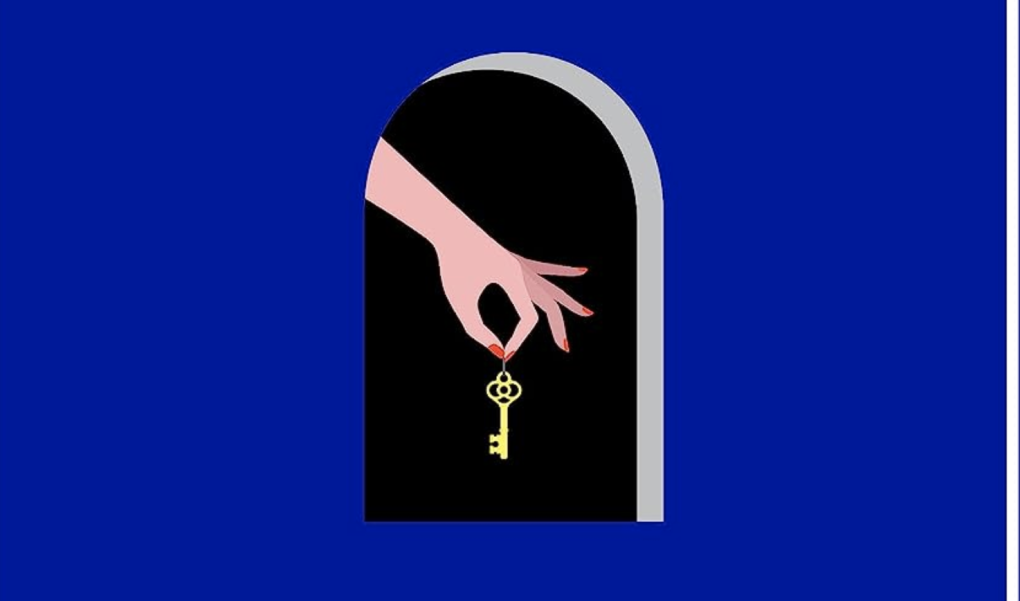
"caption": "‘The Mystery Guest’, by Nita Prose.",
"description": null,
"title": "‘The Mystery Guest’, by Nita Prose.",
"credit": "Ballantine Books",
"status": "inherit",
"altTag": "An illustration of a hand moving through a doorway, clutching a dangling key.",
"isLoading": false,
"fetchFailed": false
},
"arts_13938663": {
"type": "attachments",
"id": "arts_13938663",
"meta": {
"index": "attachments_1716263798",
"site": "arts",
"id": "13938663",
"found": true
},
"parent": 13938662,
"imgSizes": {
"twentyfourteen-full-width": {
"file": "https://ww2.kqed.org/app/uploads/sites/2/2023/11/slow_horses_photo_030601_custom-ad21150fe6453f463992acb05a9f366db94e56d7-scaled-e1701298595895-1038x576.jpg",
"width": 1038,
"mimeType": "image/jpeg",
"height": 576
},
"thumbnail": {
"file": "https://ww2.kqed.org/app/uploads/sites/2/2023/11/slow_horses_photo_030601_custom-ad21150fe6453f463992acb05a9f366db94e56d7-scaled-e1701298595895-160x107.jpg",
"width": 160,
"mimeType": "image/jpeg",
"height": 107
},
"post-thumbnail": {
"file": "https://ww2.kqed.org/app/uploads/sites/2/2023/11/slow_horses_photo_030601_custom-ad21150fe6453f463992acb05a9f366db94e56d7-scaled-e1701298595895-672x372.jpg",
"width": 672,
"mimeType": "image/jpeg",
"height": 372
},
"kqedFullSize": {
"file": "https://ww2.kqed.org/app/uploads/sites/2/2023/11/slow_horses_photo_030601_custom-ad21150fe6453f463992acb05a9f366db94e56d7-scaled-e1701298595895.jpg",
"width": 1920,
"height": 1279
},
"2048x2048": {
"file": "https://ww2.kqed.org/app/uploads/sites/2/2023/11/slow_horses_photo_030601_custom-ad21150fe6453f463992acb05a9f366db94e56d7-2048x1364.jpg",
"width": 2048,
"mimeType": "image/jpeg",
"height": 1364
},
"large": {
"file": "https://ww2.kqed.org/app/uploads/sites/2/2023/11/slow_horses_photo_030601_custom-ad21150fe6453f463992acb05a9f366db94e56d7-scaled-e1701298595895-1020x679.jpg",
"width": 1020,
"mimeType": "image/jpeg",
"height": 679
},
"1536x1536": {
"file": "https://ww2.kqed.org/app/uploads/sites/2/2023/11/slow_horses_photo_030601_custom-ad21150fe6453f463992acb05a9f366db94e56d7-scaled-e1701298595895-1536x1023.jpg",
"width": 1536,
"mimeType": "image/jpeg",
"height": 1023
},
"full-width": {
"file": "https://ww2.kqed.org/app/uploads/sites/2/2023/11/slow_horses_photo_030601_custom-ad21150fe6453f463992acb05a9f366db94e56d7-1920x1279.jpg",
"width": 1920,
"mimeType": "image/jpeg",
"height": 1279
},
"medium": {
"file": "https://ww2.kqed.org/app/uploads/sites/2/2023/11/slow_horses_photo_030601_custom-ad21150fe6453f463992acb05a9f366db94e56d7-scaled-e1701298595895-800x533.jpg",
"width": 800,
"mimeType": "image/jpeg",
"height": 533
},
"medium_large": {
"file": "https://ww2.kqed.org/app/uploads/sites/2/2023/11/slow_horses_photo_030601_custom-ad21150fe6453f463992acb05a9f366db94e56d7-scaled-e1701298595895-768x512.jpg",
"width": 768,
"mimeType": "image/jpeg",
"height": 512
}
},
"publishDate": 1701295838,
"modified": 1701298690,
"caption": "In ‘Slow Horses,’ Gary Oldman plays Jackson Lamb, the slovenly, brilliant spy who's in charge of a group of failed British spies. The series is based on Mick Herron's ‘Slough House’ novels.",
"description": null,
"title": "In ‘Slow Horses,’ Gary Oldman plays Jackson Lamb, the slovenly, brilliant spy who's in charge of a group of failed British spies. The series is based on Mick Herron's ‘Slough House’ novels.",
"credit": "Apple TV+",
"status": "inherit",
"altTag": "An unkempt man wearing a brown overcoat walks through a park eating an ice cream.",
"isLoading": false,
"fetchFailed": false
},
"arts_13938422": {
"type": "attachments",
"id": "arts_13938422",
"meta": {
"index": "attachments_1716263798",
"site": "arts",
"id": "13938422",
"found": true
},
"parent": 13938421,
"imgSizes": {
"twentyfourteen-full-width": {
"file": "https://ww2.kqed.org/app/uploads/sites/2/2023/11/rn7jh5_custom-21dd4a34a900f827dd1abd36f0e0a57c6515030c-scaled-e1700681914217-1038x576.jpg",
"width": 1038,
"mimeType": "image/jpeg",
"height": 576
},
"thumbnail": {
"file": "https://ww2.kqed.org/app/uploads/sites/2/2023/11/rn7jh5_custom-21dd4a34a900f827dd1abd36f0e0a57c6515030c-scaled-e1700681914217-160x121.jpg",
"width": 160,
"mimeType": "image/jpeg",
"height": 121
},
"post-thumbnail": {
"file": "https://ww2.kqed.org/app/uploads/sites/2/2023/11/rn7jh5_custom-21dd4a34a900f827dd1abd36f0e0a57c6515030c-scaled-e1700681914217-672x372.jpg",
"width": 672,
"mimeType": "image/jpeg",
"height": 372
},
"kqedFullSize": {
"file": "https://ww2.kqed.org/app/uploads/sites/2/2023/11/rn7jh5_custom-21dd4a34a900f827dd1abd36f0e0a57c6515030c-scaled-e1700681914217.jpg",
"width": 1920,
"height": 1451
},
"2048x2048": {
"file": "https://ww2.kqed.org/app/uploads/sites/2/2023/11/rn7jh5_custom-21dd4a34a900f827dd1abd36f0e0a57c6515030c-2048x1548.jpg",
"width": 2048,
"mimeType": "image/jpeg",
"height": 1548
},
"large": {
"file": "https://ww2.kqed.org/app/uploads/sites/2/2023/11/rn7jh5_custom-21dd4a34a900f827dd1abd36f0e0a57c6515030c-scaled-e1700681914217-1020x771.jpg",
"width": 1020,
"mimeType": "image/jpeg",
"height": 771
},
"1536x1536": {
"file": "https://ww2.kqed.org/app/uploads/sites/2/2023/11/rn7jh5_custom-21dd4a34a900f827dd1abd36f0e0a57c6515030c-scaled-e1700681914217-1536x1161.jpg",
"width": 1536,
"mimeType": "image/jpeg",
"height": 1161
},
"full-width": {
"file": "https://ww2.kqed.org/app/uploads/sites/2/2023/11/rn7jh5_custom-21dd4a34a900f827dd1abd36f0e0a57c6515030c-1920x1451.jpg",
"width": 1920,
"mimeType": "image/jpeg",
"height": 1451
},
"medium": {
"file": "https://ww2.kqed.org/app/uploads/sites/2/2023/11/rn7jh5_custom-21dd4a34a900f827dd1abd36f0e0a57c6515030c-scaled-e1700681914217-800x605.jpg",
"width": 800,
"mimeType": "image/jpeg",
"height": 605
},
"medium_large": {
"file": "https://ww2.kqed.org/app/uploads/sites/2/2023/11/rn7jh5_custom-21dd4a34a900f827dd1abd36f0e0a57c6515030c-scaled-e1700681914217-768x580.jpg",
"width": 768,
"mimeType": "image/jpeg",
"height": 580
}
},
"publishDate": 1700680896,
"modified": 1700682066,
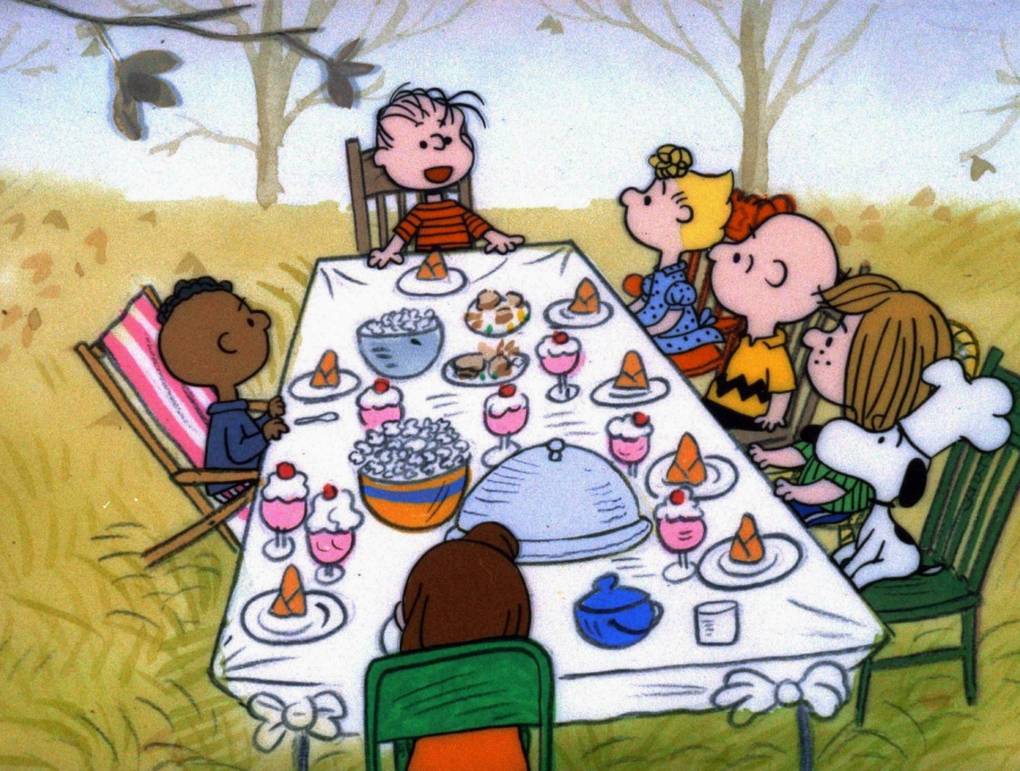
"caption": "The Peanuts gang celebrates Thanksgiving, but why is Franklin by himself on one side of the table?",
"description": null,
"title": "The Peanuts gang celebrates Thanksgiving, but why is Franklin by himself on one side of the table?",
"credit": "Allstar Picture Library Limited/ Alamy",
"status": "inherit",
"altTag": "A scene from animated film 'A Charlie Brown Thanksgiving' featuring a group of white children sitting at the ends and on one side of a dinner table. A Black child is sitting alone on the opposite side of the table.",
"isLoading": false,
"fetchFailed": false
},
"arts_13938144": {
"type": "attachments",
"id": "arts_13938144",
"meta": {
"index": "attachments_1716263798",
"site": "arts",
"id": "13938144",
"found": true
},
"parent": 13938143,
"imgSizes": {
"twentyfourteen-full-width": {
"file": "https://ww2.kqed.org/app/uploads/sites/2/2023/11/maydec_11_01_2022_fd_0149r_custom-c2a9601e9b5df3fc45cae5c0e0b2f2000bb0d579-1038x576.jpg",
"width": 1038,
"mimeType": "image/jpeg",
"height": 576
},
"thumbnail": {
"file": "https://ww2.kqed.org/app/uploads/sites/2/2023/11/maydec_11_01_2022_fd_0149r_custom-c2a9601e9b5df3fc45cae5c0e0b2f2000bb0d579-160x107.jpg",
"width": 160,
"mimeType": "image/jpeg",
"height": 107
},
"post-thumbnail": {
"file": "https://ww2.kqed.org/app/uploads/sites/2/2023/11/maydec_11_01_2022_fd_0149r_custom-c2a9601e9b5df3fc45cae5c0e0b2f2000bb0d579-672x372.jpg",
"width": 672,
"mimeType": "image/jpeg",
"height": 372
},
"kqedFullSize": {
"file": "https://ww2.kqed.org/app/uploads/sites/2/2023/11/maydec_11_01_2022_fd_0149r_custom-c2a9601e9b5df3fc45cae5c0e0b2f2000bb0d579-scaled.jpg",
"width": 2560,
"height": 1705
},
"2048x2048": {
"file": "https://ww2.kqed.org/app/uploads/sites/2/2023/11/maydec_11_01_2022_fd_0149r_custom-c2a9601e9b5df3fc45cae5c0e0b2f2000bb0d579-2048x1364.jpg",
"width": 2048,
"mimeType": "image/jpeg",
"height": 1364
},
"large": {
"file": "https://ww2.kqed.org/app/uploads/sites/2/2023/11/maydec_11_01_2022_fd_0149r_custom-c2a9601e9b5df3fc45cae5c0e0b2f2000bb0d579-1020x679.jpg",
"width": 1020,
"mimeType": "image/jpeg",
"height": 679
},
"1536x1536": {
"file": "https://ww2.kqed.org/app/uploads/sites/2/2023/11/maydec_11_01_2022_fd_0149r_custom-c2a9601e9b5df3fc45cae5c0e0b2f2000bb0d579-1536x1023.jpg",
"width": 1536,
"mimeType": "image/jpeg",
"height": 1023
},
"full-width": {
"file": "https://ww2.kqed.org/app/uploads/sites/2/2023/11/maydec_11_01_2022_fd_0149r_custom-c2a9601e9b5df3fc45cae5c0e0b2f2000bb0d579-1920x1279.jpg",
"width": 1920,
"mimeType": "image/jpeg",
"height": 1279
},
"medium": {
"file": "https://ww2.kqed.org/app/uploads/sites/2/2023/11/maydec_11_01_2022_fd_0149r_custom-c2a9601e9b5df3fc45cae5c0e0b2f2000bb0d579-800x533.jpg",
"width": 800,
"mimeType": "image/jpeg",
"height": 533
},
"medium_large": {
"file": "https://ww2.kqed.org/app/uploads/sites/2/2023/11/maydec_11_01_2022_fd_0149r_custom-c2a9601e9b5df3fc45cae5c0e0b2f2000bb0d579-768x512.jpg",
"width": 768,
"mimeType": "image/jpeg",
"height": 512
}
},
"publishDate": 1700163042,
"modified": 1700163042,
"caption": null,
"description": null,
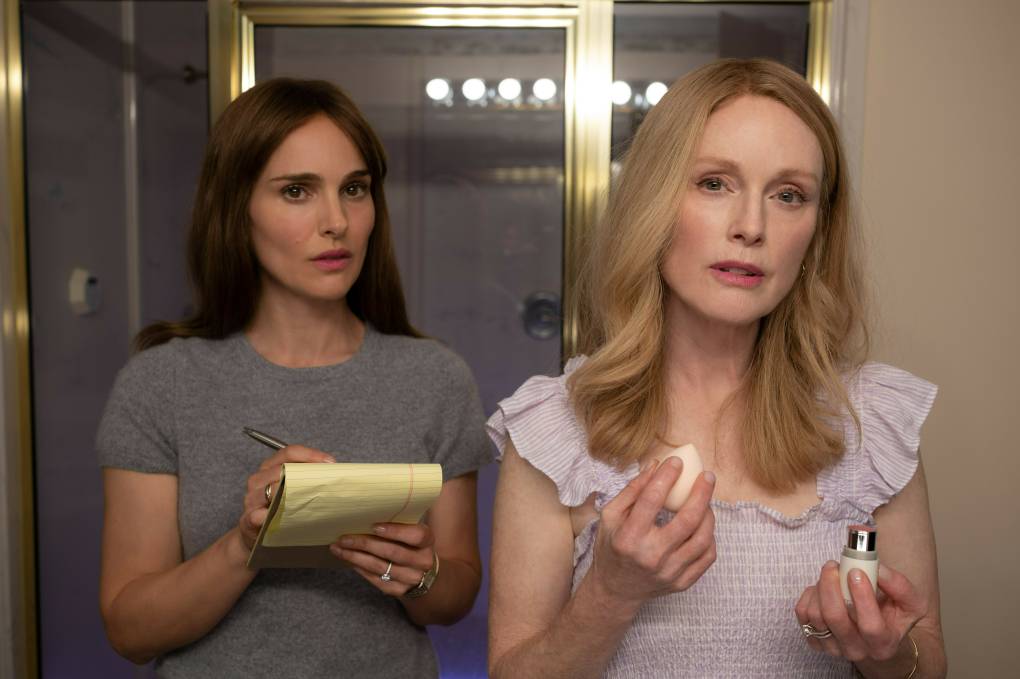
"title": "Natalie Portman (left) and Julianne Moore star in May December, Todd Haynes' film inspired by a real-life story of a schoolteacher who was convicted of raping her sixth-grade student.",
"credit": null,
"status": "inherit",
"altTag": null,
"isLoading": false,
"fetchFailed": false
},
"arts_13938122": {
"type": "attachments",
"id": "arts_13938122",
"meta": {
"index": "attachments_1716263798",
"site": "arts",
"id": "13938122",
"found": true
},
"parent": 13938121,
"imgSizes": {
"twentyfourteen-full-width": {
"file": "https://ww2.kqed.org/app/uploads/sites/2/2023/11/2023-11-15t060104z_1871860269_rc23er9hhcbc_rtrmadp_3_newzealand-bird_wide-02b991880c984cf346b00de03144dde7f4742a2f-scaled-e1700095345104-1038x576.jpg",
"width": 1038,
"mimeType": "image/jpeg",
"height": 576
},
"thumbnail": {
"file": "https://ww2.kqed.org/app/uploads/sites/2/2023/11/2023-11-15t060104z_1871860269_rc23er9hhcbc_rtrmadp_3_newzealand-bird_wide-02b991880c984cf346b00de03144dde7f4742a2f-scaled-e1700095345104-160x90.jpg",
"width": 160,
"mimeType": "image/jpeg",
"height": 90
},
"post-thumbnail": {
"file": "https://ww2.kqed.org/app/uploads/sites/2/2023/11/2023-11-15t060104z_1871860269_rc23er9hhcbc_rtrmadp_3_newzealand-bird_wide-02b991880c984cf346b00de03144dde7f4742a2f-scaled-e1700095345104-672x372.jpg",
"width": 672,
"mimeType": "image/jpeg",
"height": 372
},
"kqedFullSize": {
"file": "https://ww2.kqed.org/app/uploads/sites/2/2023/11/2023-11-15t060104z_1871860269_rc23er9hhcbc_rtrmadp_3_newzealand-bird_wide-02b991880c984cf346b00de03144dde7f4742a2f-scaled-e1700095345104.jpg",
"width": 1920,
"height": 1079
},
"2048x2048": {
"file": "https://ww2.kqed.org/app/uploads/sites/2/2023/11/2023-11-15t060104z_1871860269_rc23er9hhcbc_rtrmadp_3_newzealand-bird_wide-02b991880c984cf346b00de03144dde7f4742a2f-2048x1150.jpg",
"width": 2048,
"mimeType": "image/jpeg",
"height": 1150
},
"large": {
"file": "https://ww2.kqed.org/app/uploads/sites/2/2023/11/2023-11-15t060104z_1871860269_rc23er9hhcbc_rtrmadp_3_newzealand-bird_wide-02b991880c984cf346b00de03144dde7f4742a2f-scaled-e1700095345104-1020x573.jpg",
"width": 1020,
"mimeType": "image/jpeg",
"height": 573
},
"1536x1536": {
"file": "https://ww2.kqed.org/app/uploads/sites/2/2023/11/2023-11-15t060104z_1871860269_rc23er9hhcbc_rtrmadp_3_newzealand-bird_wide-02b991880c984cf346b00de03144dde7f4742a2f-scaled-e1700095345104-1536x863.jpg",
"width": 1536,
"mimeType": "image/jpeg",
"height": 863
},
"full-width": {
"file": "https://ww2.kqed.org/app/uploads/sites/2/2023/11/2023-11-15t060104z_1871860269_rc23er9hhcbc_rtrmadp_3_newzealand-bird_wide-02b991880c984cf346b00de03144dde7f4742a2f-1920x1078.jpg",
"width": 1920,
"mimeType": "image/jpeg",
"height": 1078
},
"medium": {
"file": "https://ww2.kqed.org/app/uploads/sites/2/2023/11/2023-11-15t060104z_1871860269_rc23er9hhcbc_rtrmadp_3_newzealand-bird_wide-02b991880c984cf346b00de03144dde7f4742a2f-scaled-e1700095345104-800x450.jpg",
"width": 800,
"mimeType": "image/jpeg",
"height": 450
},
"medium_large": {
"file": "https://ww2.kqed.org/app/uploads/sites/2/2023/11/2023-11-15t060104z_1871860269_rc23er9hhcbc_rtrmadp_3_newzealand-bird_wide-02b991880c984cf346b00de03144dde7f4742a2f-scaled-e1700095345104-768x432.jpg",
"width": 768,
"mimeType": "image/jpeg",
"height": 432
}
},
"publishDate": 1700093528,
"modified": 1700095435,
"caption": "Pūteketeke are pictured in Lake Alexandrina on South Island, New Zealand, in this undated handout photo.",
"description": null,
"title": "Pūteketeke are pictured in Lake Alexandrina on South Island, New Zealand, in this undated handout photo.",
"credit": "Leanne Buchan/ Reuters",
"status": "inherit",
"altTag": "Two exotic birds with long necks float towards each other, partially submerged in water. Long green grass stretches up behind them.",
"isLoading": false,
"fetchFailed": false
},
"arts_13937954": {
"type": "attachments",
"id": "arts_13937954",
"meta": {
"index": "attachments_1716263798",
"site": "arts",
"id": "13937954",
"found": true
},
"parent": 13937951,
"imgSizes": {
"twentyfourteen-full-width": {
"file": "https://ww2.kqed.org/app/uploads/sites/2/2023/11/Screen-Shot-2023-11-13-at-12.48.37-PM-1038x576.png",
"width": 1038,
"mimeType": "image/png",
"height": 576
},
"thumbnail": {
"file": "https://ww2.kqed.org/app/uploads/sites/2/2023/11/Screen-Shot-2023-11-13-at-12.48.37-PM-160x101.png",
"width": 160,
"mimeType": "image/png",
"height": 101
},
"post-thumbnail": {
"file": "https://ww2.kqed.org/app/uploads/sites/2/2023/11/Screen-Shot-2023-11-13-at-12.48.37-PM-672x372.png",
"width": 672,
"mimeType": "image/png",
"height": 372
},
"kqedFullSize": {
"file": "https://ww2.kqed.org/app/uploads/sites/2/2023/11/Screen-Shot-2023-11-13-at-12.48.37-PM.png",
"width": 1398,
"height": 886
},
"large": {
"file": "https://ww2.kqed.org/app/uploads/sites/2/2023/11/Screen-Shot-2023-11-13-at-12.48.37-PM-1020x646.png",
"width": 1020,
"mimeType": "image/png",
"height": 646
},
"medium": {
"file": "https://ww2.kqed.org/app/uploads/sites/2/2023/11/Screen-Shot-2023-11-13-at-12.48.37-PM-800x507.png",
"width": 800,
"mimeType": "image/png",
"height": 507
},
"medium_large": {
"file": "https://ww2.kqed.org/app/uploads/sites/2/2023/11/Screen-Shot-2023-11-13-at-12.48.37-PM-768x487.png",
"width": 768,
"mimeType": "image/png",
"height": 487
}
},
"publishDate": 1699908562,
"modified": 1699908612,
"caption": "‘So Late in the Day,’ by Claire Keegan.",
"description": null,
"title": "‘So Late in the Day,’ by Claire Keegan.",
"credit": "Grove Atlantic",
"status": "inherit",
"altTag": null,
"isLoading": false,
"fetchFailed": false
},
"arts_13937922": {
"type": "attachments",
"id": "arts_13937922",
"meta": {
"index": "attachments_1716263798",
"site": "arts",
"id": "13937922",
"found": true
},
"parent": 13937921,
"imgSizes": {
"twentyfourteen-full-width": {
"file": "https://ww2.kqed.org/app/uploads/sites/2/2023/11/ap05092601489_custom-850a8043b3bbd9e6c311340a0902cfdb692ca2f5-scaled-e1699575808349-1038x576.jpg",
"width": 1038,
"mimeType": "image/jpeg",
"height": 576
},
"thumbnail": {
"file": "https://ww2.kqed.org/app/uploads/sites/2/2023/11/ap05092601489_custom-850a8043b3bbd9e6c311340a0902cfdb692ca2f5-scaled-e1699575808349-160x108.jpg",
"width": 160,
"mimeType": "image/jpeg",
"height": 108
},
"post-thumbnail": {
"file": "https://ww2.kqed.org/app/uploads/sites/2/2023/11/ap05092601489_custom-850a8043b3bbd9e6c311340a0902cfdb692ca2f5-scaled-e1699575808349-672x372.jpg",
"width": 672,
"mimeType": "image/jpeg",
"height": 372
},
"kqedFullSize": {
"file": "https://ww2.kqed.org/app/uploads/sites/2/2023/11/ap05092601489_custom-850a8043b3bbd9e6c311340a0902cfdb692ca2f5-scaled-e1699575808349.jpg",
"width": 1920,
"height": 1298
},
"2048x2048": {
"file": "https://ww2.kqed.org/app/uploads/sites/2/2023/11/ap05092601489_custom-850a8043b3bbd9e6c311340a0902cfdb692ca2f5-2048x1385.jpg",
"width": 2048,
"mimeType": "image/jpeg",
"height": 1385
},
"large": {
"file": "https://ww2.kqed.org/app/uploads/sites/2/2023/11/ap05092601489_custom-850a8043b3bbd9e6c311340a0902cfdb692ca2f5-scaled-e1699575808349-1020x690.jpg",
"width": 1020,
"mimeType": "image/jpeg",
"height": 690
},
"1536x1536": {
"file": "https://ww2.kqed.org/app/uploads/sites/2/2023/11/ap05092601489_custom-850a8043b3bbd9e6c311340a0902cfdb692ca2f5-scaled-e1699575808349-1536x1038.jpg",
"width": 1536,
"mimeType": "image/jpeg",
"height": 1038
},
"full-width": {
"file": "https://ww2.kqed.org/app/uploads/sites/2/2023/11/ap05092601489_custom-850a8043b3bbd9e6c311340a0902cfdb692ca2f5-1920x1298.jpg",
"width": 1920,
"mimeType": "image/jpeg",
"height": 1298
},
"medium": {
"file": "https://ww2.kqed.org/app/uploads/sites/2/2023/11/ap05092601489_custom-850a8043b3bbd9e6c311340a0902cfdb692ca2f5-scaled-e1699575808349-800x541.jpg",
"width": 800,
"mimeType": "image/jpeg",
"height": 541
},
"medium_large": {
"file": "https://ww2.kqed.org/app/uploads/sites/2/2023/11/ap05092601489_custom-850a8043b3bbd9e6c311340a0902cfdb692ca2f5-scaled-e1699575808349-768x519.jpg",
"width": 768,
"mimeType": "image/jpeg",
"height": 519
}
},
"publishDate": 1699575371,
"modified": 1699575891,
"caption": "Tracy Chapman became the first Black person to win Song of the Year at the 57th annual Country Music Awards in Nashville on Wednesday.",
"description": null,
"title": "Tracy Chapman became the first Black person to win Song of the Year at the 57th annual Country Music Awards in Nashville on Wednesday.",
"credit": "AP Photo/ Bebeto Matthews",
"status": "inherit",
"altTag": "A close-up shot of a Black woman with thin dreadlocks. She is standing behind a microphone, smiling.",
"isLoading": false,
"fetchFailed": false
},
"arts_13937777": {
"type": "attachments",
"id": "arts_13937777",
"meta": {
"index": "attachments_1716263798",
"site": "arts",
"id": "13937777",
"found": true
},
"parent": 13937776,
"imgSizes": {
"twentyfourteen-full-width": {
"file": "https://ww2.kqed.org/app/uploads/sites/2/2023/11/gettyimages-563939281_custom-3a8f2b1fe90eac02acf0fdf0bf433f94c3f31398-1038x576.jpg",
"width": 1038,
"mimeType": "image/jpeg",
"height": 576
},
"thumbnail": {
"file": "https://ww2.kqed.org/app/uploads/sites/2/2023/11/gettyimages-563939281_custom-3a8f2b1fe90eac02acf0fdf0bf433f94c3f31398-160x160.jpg",
"width": 160,
"mimeType": "image/jpeg",
"height": 160
},
"post-thumbnail": {
"file": "https://ww2.kqed.org/app/uploads/sites/2/2023/11/gettyimages-563939281_custom-3a8f2b1fe90eac02acf0fdf0bf433f94c3f31398-672x372.jpg",
"width": 672,
"mimeType": "image/jpeg",
"height": 372
},
"kqedFullSize": {
"file": "https://ww2.kqed.org/app/uploads/sites/2/2023/11/gettyimages-563939281_custom-3a8f2b1fe90eac02acf0fdf0bf433f94c3f31398-scaled.jpg",
"width": 2560,
"height": 2560
},
"2048x2048": {
"file": "https://ww2.kqed.org/app/uploads/sites/2/2023/11/gettyimages-563939281_custom-3a8f2b1fe90eac02acf0fdf0bf433f94c3f31398-2048x2048.jpg",
"width": 2048,
"mimeType": "image/jpeg",
"height": 2048
},
"large": {
"file": "https://ww2.kqed.org/app/uploads/sites/2/2023/11/gettyimages-563939281_custom-3a8f2b1fe90eac02acf0fdf0bf433f94c3f31398-1020x1020.jpg",
"width": 1020,
"mimeType": "image/jpeg",
"height": 1020
},
"1536x1536": {
"file": "https://ww2.kqed.org/app/uploads/sites/2/2023/11/gettyimages-563939281_custom-3a8f2b1fe90eac02acf0fdf0bf433f94c3f31398-1536x1536.jpg",
"width": 1536,
"mimeType": "image/jpeg",
"height": 1536
},
"full-width": {
"file": "https://ww2.kqed.org/app/uploads/sites/2/2023/11/gettyimages-563939281_custom-3a8f2b1fe90eac02acf0fdf0bf433f94c3f31398-1920x1920.jpg",
"width": 1920,
"mimeType": "image/jpeg",
"height": 1920
},
"medium": {
"file": "https://ww2.kqed.org/app/uploads/sites/2/2023/11/gettyimages-563939281_custom-3a8f2b1fe90eac02acf0fdf0bf433f94c3f31398-800x800.jpg",
"width": 800,
"mimeType": "image/jpeg",
"height": 800
},
"medium_large": {
"file": "https://ww2.kqed.org/app/uploads/sites/2/2023/11/gettyimages-563939281_custom-3a8f2b1fe90eac02acf0fdf0bf433f94c3f31398-768x768.jpg",
"width": 768,
"mimeType": "image/jpeg",
"height": 768
}
},
"publishDate": 1699468759,
"modified": 1699468759,
"caption": null,
"description": "1970s CHILDREN BOYS GIRLS CLIMBING ON BARS OF JUNGLE GYM PLAYGROUND ONE KID HANGING UPSIDE DOWN (Photo by H. Armstrong Roberts/ClassicStock/Getty Images)",
"title": "A jungle gym in the 1970s — a staple of playgrounds all across the U.S.",
"credit": null,
"status": "inherit",
"altTag": null,
"isLoading": false,
"fetchFailed": false
},
"arts_13937731": {
"type": "attachments",
"id": "arts_13937731",
"meta": {
"index": "attachments_1716263798",
"site": "arts",
"id": "13937731",
"found": true
},
"parent": 13937730,
"imgSizes": {
"twentyfourteen-full-width": {
"file": "https://ww2.kqed.org/app/uploads/sites/2/2023/11/gettyimages-3134073_custom-7d9432860c60898bfa50e137c84b948b964a3346-scaled-e1699388675757-1038x576.jpg",
"width": 1038,
"mimeType": "image/jpeg",
"height": 576
},
"thumbnail": {
"file": "https://ww2.kqed.org/app/uploads/sites/2/2023/11/gettyimages-3134073_custom-7d9432860c60898bfa50e137c84b948b964a3346-scaled-e1699388675757-160x106.jpg",
"width": 160,
"mimeType": "image/jpeg",
"height": 106
},
"post-thumbnail": {
"file": "https://ww2.kqed.org/app/uploads/sites/2/2023/11/gettyimages-3134073_custom-7d9432860c60898bfa50e137c84b948b964a3346-scaled-e1699388675757-672x372.jpg",
"width": 672,
"mimeType": "image/jpeg",
"height": 372
},
"kqedFullSize": {
"file": "https://ww2.kqed.org/app/uploads/sites/2/2023/11/gettyimages-3134073_custom-7d9432860c60898bfa50e137c84b948b964a3346-scaled-e1699388675757.jpg",
"width": 1920,
"height": 1268
},
"2048x2048": {
"file": "https://ww2.kqed.org/app/uploads/sites/2/2023/11/gettyimages-3134073_custom-7d9432860c60898bfa50e137c84b948b964a3346-2048x1353.jpg",
"width": 2048,
"mimeType": "image/jpeg",
"height": 1353
},
"large": {
"file": "https://ww2.kqed.org/app/uploads/sites/2/2023/11/gettyimages-3134073_custom-7d9432860c60898bfa50e137c84b948b964a3346-scaled-e1699388675757-1020x674.jpg",
"width": 1020,
"mimeType": "image/jpeg",
"height": 674
},
"1536x1536": {
"file": "https://ww2.kqed.org/app/uploads/sites/2/2023/11/gettyimages-3134073_custom-7d9432860c60898bfa50e137c84b948b964a3346-scaled-e1699388675757-1536x1014.jpg",
"width": 1536,
"mimeType": "image/jpeg",
"height": 1014
},
"full-width": {
"file": "https://ww2.kqed.org/app/uploads/sites/2/2023/11/gettyimages-3134073_custom-7d9432860c60898bfa50e137c84b948b964a3346-1920x1269.jpg",
"width": 1920,
"mimeType": "image/jpeg",
"height": 1269
},
"medium": {
"file": "https://ww2.kqed.org/app/uploads/sites/2/2023/11/gettyimages-3134073_custom-7d9432860c60898bfa50e137c84b948b964a3346-scaled-e1699388675757-800x528.jpg",
"width": 800,
"mimeType": "image/jpeg",
"height": 528
},
"medium_large": {
"file": "https://ww2.kqed.org/app/uploads/sites/2/2023/11/gettyimages-3134073_custom-7d9432860c60898bfa50e137c84b948b964a3346-scaled-e1699388675757-768x507.jpg",
"width": 768,
"mimeType": "image/jpeg",
"height": 507
}
},
"publishDate": 1699387132,
"modified": 1699388799,
"caption": "Barbra Streisand in March 1966.",
"description": null,
"title": "Barbra Streisand in March 1966.",
"credit": "Terry Fincher/ Express/ Getty Images)",
"status": "inherit",
"altTag": "A young woman wearing a high necked blouse looks pensive. Her hair is in a small beehive and she's wearing distinctive black eyeliner.",
"isLoading": false,
"fetchFailed": false
},
"arts_13937722": {
"type": "attachments",
"id": "arts_13937722",
"meta": {
"index": "attachments_1716263798",
"site": "arts",
"id": "13937722",
"found": true
},
"parent": 13937708,
"imgSizes": {
"twentyfourteen-full-width": {
"file": "https://cdn.kqed.org/wp-content/uploads/sites/2/2023/11/Screen-Shot-2023-11-07-at-11.06.08-AM-1038x576.png",
"width": 1038,
"mimeType": "image/png",
"height": 576
},
"thumbnail": {
"file": "https://cdn.kqed.org/wp-content/uploads/sites/2/2023/11/Screen-Shot-2023-11-07-at-11.06.08-AM-160x115.png",
"width": 160,
"mimeType": "image/png",
"height": 115
},
"post-thumbnail": {
"file": "https://cdn.kqed.org/wp-content/uploads/sites/2/2023/11/Screen-Shot-2023-11-07-at-11.06.08-AM-672x372.png",
"width": 672,
"mimeType": "image/png",
"height": 372
},
"kqedFullSize": {
"file": "https://cdn.kqed.org/wp-content/uploads/sites/2/2023/11/Screen-Shot-2023-11-07-at-11.06.08-AM.png",
"width": 1584,
"height": 1136
},
"large": {
"file": "https://cdn.kqed.org/wp-content/uploads/sites/2/2023/11/Screen-Shot-2023-11-07-at-11.06.08-AM-1020x732.png",
"width": 1020,
"mimeType": "image/png",
"height": 732
},
"1536x1536": {
"file": "https://cdn.kqed.org/wp-content/uploads/sites/2/2023/11/Screen-Shot-2023-11-07-at-11.06.08-AM-1536x1102.png",
"width": 1536,
"mimeType": "image/png",
"height": 1102
},
"medium": {
"file": "https://cdn.kqed.org/wp-content/uploads/sites/2/2023/11/Screen-Shot-2023-11-07-at-11.06.08-AM-800x574.png",
"width": 800,
"mimeType": "image/png",
"height": 574
},
"medium_large": {
"file": "https://cdn.kqed.org/wp-content/uploads/sites/2/2023/11/Screen-Shot-2023-11-07-at-11.06.08-AM-768x551.png",
"width": 768,
"mimeType": "image/png",
"height": 551
}
},
"publishDate": 1699383992,
"modified": 1709684754,
"caption": "Michael Fassbender stars in ‘The Killer.’",
"description": null,
"title": "Michael Fassbender stars in ‘The Killer.’",
"credit": "Netflix via AP",
"status": "inherit",
"altTag": "A white man wearing leisure wear including white pants and a beige sun hat sits on a bench, looking relaxed.",
"isLoading": false,
"fetchFailed": false
},
"arts_13937656": {
"type": "attachments",
"id": "arts_13937656",
"meta": {
"index": "attachments_1716263798",
"site": "arts",
"id": "13937656",
"found": true
},
"parent": 13937655,
"imgSizes": {
"twentyfourteen-full-width": {
"file": "https://ww2.kqed.org/app/uploads/sites/2/2023/11/untitled-design-42-_wide-4210f2ffc5936423f08075e548e7da5484ca9fa5-1038x576.jpg",
"width": 1038,
"mimeType": "image/jpeg",
"height": 576
},
"thumbnail": {
"file": "https://ww2.kqed.org/app/uploads/sites/2/2023/11/untitled-design-42-_wide-4210f2ffc5936423f08075e548e7da5484ca9fa5-160x90.jpg",
"width": 160,
"mimeType": "image/jpeg",
"height": 90
},
"post-thumbnail": {
"file": "https://ww2.kqed.org/app/uploads/sites/2/2023/11/untitled-design-42-_wide-4210f2ffc5936423f08075e548e7da5484ca9fa5-672x372.jpg",
"width": 672,
"mimeType": "image/jpeg",
"height": 372
},
"kqedFullSize": {
"file": "https://ww2.kqed.org/app/uploads/sites/2/2023/11/untitled-design-42-_wide-4210f2ffc5936423f08075e548e7da5484ca9fa5.jpg",
"width": 1917,
"height": 1078
},
"large": {
"file": "https://ww2.kqed.org/app/uploads/sites/2/2023/11/untitled-design-42-_wide-4210f2ffc5936423f08075e548e7da5484ca9fa5-1020x574.jpg",
"width": 1020,
"mimeType": "image/jpeg",
"height": 574
},
"1536x1536": {
"file": "https://ww2.kqed.org/app/uploads/sites/2/2023/11/untitled-design-42-_wide-4210f2ffc5936423f08075e548e7da5484ca9fa5-1536x864.jpg",
"width": 1536,
"mimeType": "image/jpeg",
"height": 864
},
"medium": {
"file": "https://ww2.kqed.org/app/uploads/sites/2/2023/11/untitled-design-42-_wide-4210f2ffc5936423f08075e548e7da5484ca9fa5-800x450.jpg",
"width": 800,
"mimeType": "image/jpeg",
"height": 450
},
"medium_large": {
"file": "https://ww2.kqed.org/app/uploads/sites/2/2023/11/untitled-design-42-_wide-4210f2ffc5936423f08075e548e7da5484ca9fa5-768x432.jpg",
"width": 768,
"mimeType": "image/jpeg",
"height": 432
}
},
"publishDate": 1699299866,
"modified": 1699302329,
"caption": "‘English as a Second Language’ by Jaswinder Bolina, ‘The Kingdom of Surfaces’ by Sally Wen Mao, ‘Pig’ by Sam Sax.",
"description": null,
"title": "‘English as a Second Language’ by Jaswinder Bolina, ‘The Kingdom of Surfaces’ by Sally Wen Mao, ‘Pig’ by Sam Sax.",
"credit": "Meghan Collins Sullivan/ NPR",
"status": "inherit",
"altTag": "Three books laid out side by side. The first is black with orange and yellow text, the second features a genderless porcelain figure decoraged with blue paint, the third shows a pink square, a red square and the blades of some scissors.",
"isLoading": false,
"fetchFailed": false
},
"arts_13937599": {
"type": "attachments",
"id": "arts_13937599",
"meta": {
"index": "attachments_1716263798",
"site": "arts",
"id": "13937599",
"found": true
},
"parent": 13937598,
"imgSizes": {
"twentyfourteen-full-width": {
"file": "https://ww2.kqed.org/app/uploads/sites/2/2023/11/bassreeves_1_custom-102eb9333b212e9f350280e19101766f7997c56c-1-scaled-e1699055180578-1038x576.jpe",
"width": 1038,
"mimeType": "image/jpeg",
"height": 576
},
"thumbnail": {
"file": "https://ww2.kqed.org/app/uploads/sites/2/2023/11/bassreeves_1_custom-102eb9333b212e9f350280e19101766f7997c56c-1-scaled-e1699055180578-160x107.jpe",
"width": 160,
"mimeType": "image/jpeg",
"height": 107
},
"post-thumbnail": {
"file": "https://ww2.kqed.org/app/uploads/sites/2/2023/11/bassreeves_1_custom-102eb9333b212e9f350280e19101766f7997c56c-1-scaled-e1699055180578-672x372.jpe",
"width": 672,
"mimeType": "image/jpeg",
"height": 372
},
"kqedFullSize": {
"file": "https://ww2.kqed.org/app/uploads/sites/2/2023/11/bassreeves_1_custom-102eb9333b212e9f350280e19101766f7997c56c-1-scaled-e1699055180578.jpe",
"width": 1920,
"height": 1279
},
"2048x2048": {
"file": "https://ww2.kqed.org/app/uploads/sites/2/2023/11/bassreeves_1_custom-102eb9333b212e9f350280e19101766f7997c56c-1-2048x1364.jpe",
"width": 2048,
"mimeType": "image/jpeg",
"height": 1364
},
"large": {
"file": "https://ww2.kqed.org/app/uploads/sites/2/2023/11/bassreeves_1_custom-102eb9333b212e9f350280e19101766f7997c56c-1-scaled-e1699055180578-1020x679.jpe",
"width": 1020,
"mimeType": "image/jpeg",
"height": 679
},
"1536x1536": {
"file": "https://ww2.kqed.org/app/uploads/sites/2/2023/11/bassreeves_1_custom-102eb9333b212e9f350280e19101766f7997c56c-1-scaled-e1699055180578-1536x1023.jpe",
"width": 1536,
"mimeType": "image/jpeg",
"height": 1023
},
"full-width": {
"file": "https://ww2.kqed.org/app/uploads/sites/2/2023/11/bassreeves_1_custom-102eb9333b212e9f350280e19101766f7997c56c-1-1920x1279.jpe",
"width": 1920,
"mimeType": "image/jpeg",
"height": 1279
},
"medium": {
"file": "https://ww2.kqed.org/app/uploads/sites/2/2023/11/bassreeves_1_custom-102eb9333b212e9f350280e19101766f7997c56c-1-scaled-e1699055180578-800x533.jpe",
"width": 800,
"mimeType": "image/jpeg",
"height": 533
},
"medium_large": {
"file": "https://ww2.kqed.org/app/uploads/sites/2/2023/11/bassreeves_1_custom-102eb9333b212e9f350280e19101766f7997c56c-1-scaled-e1699055180578-768x512.jpe",
"width": 768,
"mimeType": "image/jpeg",
"height": 512
}
},
"publishDate": 1699054725,
"modified": 1699055390,
"caption": "David Oyelowo as Bass Reeves.",
"description": null,
"title": "David Oyelowo as Bass Reeves.",
"credit": "Lauren Smith/ Paramount",
"status": "inherit",
"altTag": "A Black man in old west clothing and hat, and wearing a sheriff's badge, leans on a fence post. A white tent is visible behind him.",
"isLoading": false,
"fetchFailed": false
}
},
"audioPlayerReducer": {
"postId": "stream_live",
"isPaused": true,
"isPlaying": false,
"pfsActive": false,
"pledgeModalIsOpen": true,
"playerDrawerIsOpen": false,
"liveAudioPlayStartedAt": 0,
"liveAudioPlayContext": ""
},
"authorsReducer": {
"byline_arts_13938698": {
"type": "authors",
"id": "byline_arts_13938698",
"meta": {
"override": true
},
"slug": "byline_arts_13938698",
"name": "Maureen Corrigan",
"isLoading": false
},
"byline_arts_13938662": {
"type": "authors",
"id": "byline_arts_13938662",
"meta": {
"override": true
},
"slug": "byline_arts_13938662",
"name": "Elizabeth Blair",
"isLoading": false
},
"byline_arts_13938421": {
"type": "authors",
"id": "byline_arts_13938421",
"meta": {
"override": true
},
"slug": "byline_arts_13938421",
"name": "Neda Ulaby",
"isLoading": false
},
"byline_arts_13938143": {
"type": "authors",
"id": "byline_arts_13938143",
"meta": {
"override": true
},
"slug": "byline_arts_13938143",
"name": "Justin Chang",
"isLoading": false
},
"byline_arts_13938121": {
"type": "authors",
"id": "byline_arts_13938121",
"meta": {
"override": true
},
"slug": "byline_arts_13938121",
"name": "Joe Hernandez",
"isLoading": false
},
"byline_arts_13937951": {
"type": "authors",
"id": "byline_arts_13937951",
"meta": {
"override": true
},
"slug": "byline_arts_13937951",
"name": "Maureen Corrigan",
"isLoading": false
},
"byline_arts_13937921": {
"type": "authors",
"id": "byline_arts_13937921",
"meta": {
"override": true
},
"slug": "byline_arts_13937921",
"name": "Ayana Archie",
"isLoading": false
},
"byline_arts_13937776": {
"type": "authors",
"id": "byline_arts_13937776",
"meta": {
"override": true
},
"slug": "byline_arts_13937776",
"name": "Matt Ozug",
"isLoading": false
},
"byline_arts_13937730": {
"type": "authors",
"id": "byline_arts_13937730",
"meta": {
"override": true
},
"slug": "byline_arts_13937730",
"name": "Brittany Luse",
"isLoading": false
},
"byline_arts_13937708": {
"type": "authors",
"id": "byline_arts_13937708",
"meta": {
"override": true
},
"slug": "byline_arts_13937708",
"name": "Jake Coyle, Associated Press",
"isLoading": false
},
"byline_arts_13937655": {
"type": "authors",
"id": "byline_arts_13937655",
"meta": {
"override": true
},
"slug": "byline_arts_13937655",
"name": "Craig Morgan Teicher",
"isLoading": false
},
"byline_arts_13937598": {
"type": "authors",
"id": "byline_arts_13937598",
"meta": {
"override": true
},
"slug": "byline_arts_13937598",
"name": "Eric Deggans",
"isLoading": false
}
},
"pagesReducer": {
"arts_affiliate_npr": {
"type": "terms",
"id": "arts_137",
"meta": {
"index": "terms_1716263798",
"site": "arts",
"id": "137",
"score": 14.262192
},
"featImg": "https://ww2.kqed.org/app/uploads/sites/2/2014/04/logo-npr-lg1.png",
"name": "NPR",
"description": null,
"taxonomy": "affiliate",
"headData": {
"twImgId": null,
"twTitle": null,
"ogTitle": null,
"ogImgId": null,
"twDescription": null,
"description": null,
"title": "NPR Archives | KQED Arts",
"ogDescription": null
},
"ttid": 138,
"slug": "npr",
"isLoading": false,
"title": "NPR",
"pageMeta": {
"site": "arts",
"WpPageTemplate": "page-topic-editorial",
"currentPage": 35
},
"blocks": [
{
"blockName": "kqed/post-list",
"attrs": {
"layout": "cardArticle2",
"query": "posts/arts?affiliate=npr",
"seeMore": false,
"paginated": true,
"page": 35
}
},
{
"blockName": "kqed/ad"
}
]
}
},
"pfsSessionReducer": {},
"postsReducer": {
"stream_live": {
"type": "live",
"id": "stream_live",
"audioUrl": "https://streams.kqed.org/kqedradio",
"title": "Live Stream",
"excerpt": "Live Stream information currently unavailable.",
"link": "/radio",
"featImg": "",
"label": {
"name": "KQED Live",
"link": "/"
}
},
"stream_kqedNewscast": {
"type": "posts",
"id": "stream_kqedNewscast",
"audioUrl": "https://www.kqed.org/.stream/anon/radio/RDnews/newscast.mp3?_=1",
"title": "KQED Newscast",
"featImg": "",
"label": {
"name": "88.5 FM",
"link": "/"
}
},
"arts_13938698": {
"type": "posts",
"id": "arts_13938698",
"meta": {
"index": "posts_1716263798",
"site": "arts",
"id": "13938698",
"score": null,
"sort": [
1701374175000
]
},
"parent": 0,
"labelTerm": {
"site": "arts",
"term": 140
},
"blocks": [],
"publishDate": 1701374175,
"format": "aside",
"title": "A Theater Critic and a Hotel Maid Are on the Case in Two Captivating Mystery Novels",
"headTitle": "A Theater Critic and a Hotel Maid Are on the Case in Two Captivating Mystery Novels | KQED",
"content": "\u003cfigure id=\"attachment_13938702\" class=\"wp-caption aligncenter\" style=\"max-width: 987px\">\u003cimg loading=\"lazy\" decoding=\"async\" class=\"size-full wp-image-13938702\" src=\"https://ww2.kqed.org/app/uploads/sites/2/2023/11/81JCa5NDOeL._SL1500_.jpg\" alt=\"A book cover featuring a woman's face in close up, partially obscured by her own hand.\" width=\"987\" height=\"1500\" srcset=\"https://cdn.kqed.org/wp-content/uploads/sites/2/2023/11/81JCa5NDOeL._SL1500_.jpg 987w, https://cdn.kqed.org/wp-content/uploads/sites/2/2023/11/81JCa5NDOeL._SL1500_-800x1216.jpg 800w, https://cdn.kqed.org/wp-content/uploads/sites/2/2023/11/81JCa5NDOeL._SL1500_-160x243.jpg 160w, https://cdn.kqed.org/wp-content/uploads/sites/2/2023/11/81JCa5NDOeL._SL1500_-768x1167.jpg 768w\" sizes=\"(max-width: 987px) 100vw, 987px\">\u003cfigcaption class=\"wp-caption-text\">‘Here in the Dark,’ by Alexis Soloski. \u003ccite>(Flat Iron Books)\u003c/cite>\u003c/figcaption>\u003c/figure>\n\u003cp>How could I resist a suspense novel in which \u003cem>a critic\u003c/em> becomes an amateur detective in order to avoid becoming a murder suspect or even a victim? I inhaled Alexis Soloski’s debut thriller, \u003cem>Here in the Dark\u003c/em>; but, even readers who don’t feel a professional kinship with Soloski’s main character should be drawn to this moody and erudite mystery. Soloski, who herself is a theater critic for \u003cem>The New York Times\u003c/em>, nods to other stories like the classic noir, \u003ca href=\"https://www.youtube.com/watch?v=Xrz4ODPV1XQ\">\u003cem>Laura\u003c/em>\u003c/a>, and even the screwball comedy, \u003ca href=\"https://www.youtube.com/watch?v=U8rMpemxZrU\">\u003cem>The Man Who Came to Dinner\u003c/em>\u003c/a>, where a critic takes center stage.\u003c/p>\n\u003cp>Our troubled 30-something year old heroine, Vivian Parry, has been the junior theater critic at a New York magazine for years. After a serious breakdown in college, Vivian feels OK about the “small life” she created for herself consisting of a walk-up apartment in the East Village; and lots of casual sex, drinking and theater.\u003c/p>\n\u003cp>Here’s how Vivian explains herself:\u003c/p>\n\u003cblockquote>\u003cp>Warmth is not my forte. As far as the rich palette of human experience goes, I live on a gray scale. Aristotle said that drama was an imitation of an action. I am, of necessity, an imitation of myself — a sharp smile, an acid joke, an abyss where a woman should be. …\u003c/p>\n\u003cp>Except when I’m seeing theater, good theater. When I’m in the dark, at that safe remove from daily life, I feel it all — rage, joy, surprise. Until the houselights come on and break it all apart again, I am alive.\u003c/p>\u003c/blockquote>\n\u003cp>Vivian’s notorious prickliness, however, may be her undoing. The position of chief critic at the magazine has become vacant and Vivian is competing for it against a likeable colleague whom she describes as having “a retina-scarring smile, and the aesthetic discernment of a wedge salad.”\u003c/p>\n\u003cp>When a graduate student requests an interview with Vivian and her participation on a panel on criticism, Vivian thinks this outside validation may just tip the odds for promotion in her favor. Instead, she becomes a person of interest to the police after that grad student vanishes and she discovers the corpse of a stranger in a nearby park.\u003c/p>\n\u003cp>[ad fullwidth]\u003c/p>\n\u003cp>Is this just a series of unfortunate events or is something more sinister going on? Vivian starts investigating on her own, which puts her in the sights of Russian mobsters and a sexually vicious police detective who could have been cast in \u003cem>Marat/Sade\u003c/em>. Maybe Vivian should have played it safe and contented herself with writing snarky reviews of Rockettes holiday shows.\u003c/p>\n\u003cp>[aside postid='arts_13938263']Soloski, too, might have played it safe, but, fortunately for us readers she didn’t. Instead of writing a coy send-up of a theatrical thriller, she’s written a genuinely disturbing suspense tale that explores the theater of cruelty life can sometimes be.\u003c/p>\n\u003cp>Critics should be aware of their biases. For instance I know that given a choice, I’ll pass up a cozy mystery and reach for the hard stuff. That’s why I missed Nita Prose’s mega bestselling cozy debut, \u003ca href=\"https://www.npr.org/2022/01/05/1070131496/in-the-maid-a-devoted-hotel-cleaning-lady-is-a-prime-murder-suspect\">\u003cem>The Maid\u003c/em>\u003c/a>, when it came out nearly two years ago. A mystery featuring a hotel maid named Molly seemed to promise a lot of heartwarming fluff.\u003c/p>\n\u003cp>Heartwarming, yes; but the only fluff in \u003cem>The Maid —\u003c/em> and in its new sequel, \u003cem>The Mystery Guest — \u003c/em>is the kind stuffed into the pillows of the Regency Grand Hotel.\u003c/p>\n\u003cfigure id=\"attachment_13938699\" class=\"wp-caption aligncenter\" style=\"max-width: 1673px\">\u003cimg loading=\"lazy\" decoding=\"async\" class=\"size-full wp-image-13938699\" src=\"https://ww2.kqed.org/app/uploads/sites/2/2023/11/9780593356180_custom-fad200a511d08fd54734260d5db3d6e7eca24a54-scaled.jpg\" alt=\"A blue cover featuring an illustrated hand moving through a doorway, clutching a dangling key.\" width=\"1673\" height=\"2560\" srcset=\"https://cdn.kqed.org/wp-content/uploads/sites/2/2023/11/9780593356180_custom-fad200a511d08fd54734260d5db3d6e7eca24a54-scaled.jpg 1673w, https://cdn.kqed.org/wp-content/uploads/sites/2/2023/11/9780593356180_custom-fad200a511d08fd54734260d5db3d6e7eca24a54-800x1224.jpg 800w, https://cdn.kqed.org/wp-content/uploads/sites/2/2023/11/9780593356180_custom-fad200a511d08fd54734260d5db3d6e7eca24a54-1020x1560.jpg 1020w, https://cdn.kqed.org/wp-content/uploads/sites/2/2023/11/9780593356180_custom-fad200a511d08fd54734260d5db3d6e7eca24a54-160x245.jpg 160w, https://cdn.kqed.org/wp-content/uploads/sites/2/2023/11/9780593356180_custom-fad200a511d08fd54734260d5db3d6e7eca24a54-768x1175.jpg 768w, https://cdn.kqed.org/wp-content/uploads/sites/2/2023/11/9780593356180_custom-fad200a511d08fd54734260d5db3d6e7eca24a54-1004x1536.jpg 1004w, https://cdn.kqed.org/wp-content/uploads/sites/2/2023/11/9780593356180_custom-fad200a511d08fd54734260d5db3d6e7eca24a54-1339x2048.jpg 1339w\" sizes=\"(max-width: 1673px) 100vw, 1673px\">\u003cfigcaption class=\"wp-caption-text\">‘The Mystery Guest’, by Nita Prose. \u003ccite>(Ballantine Books)\u003c/cite>\u003c/figcaption>\u003c/figure>\n\u003cp>At the center of both novels is our narrator, Molly Gray, a sensitive young woman who processes the world differently. She’s hyper-attentive to details: a tiny smudge on a TV remote, say, but not so sharp when it comes to reading people. That’s why the meaner employees at the Regency Grand mockingly call her names like “Roomba the Robot.”\u003c/p>\n\u003cp>[aside postid='arts_13936828']In \u003cem>The Mystery Guest\u003c/em>, Molly, who’s now “head maid,” has to clean up a real mess: A famous mystery writer who’s signing books at the Regency keels over dead, the victim of foul play.\u003c/p>\n\u003cp>It turns out Molly knew this writer because her beloved late grandmother was his maid. Of course, he failed to recognize Molly because he’s one of those people who just looks through the help and their kin.\u003c/p>\n\u003cp>\u003c/p>\n\u003cp>\u003cem>The Mystery Guest\u003c/em> takes readers into Molly’s childhood and fills in the backstory — some of it painful — of her grandmother’s life. Like Agatha Christie’s Miss Marple, who’s rendered invisible because she’s an old woman, Molly and her grandmother are not seen because of the kind of work they do. In this affecting and socially-pointed mystery series, however, invisibility becomes the superpower of the pink-collar proletariat.\u003c/p>\n\u003cdiv class=\"fullattribution\">\u003cem>Copyright 2023 Fresh Air. To see more, visit \u003ca href=\"http://www.npr.org/programs/fresh-air/\">Fresh Air\u003c/a>.\u003cimg decoding=\"async\" src=\"https://www.google-analytics.com/__utm.gif?utmac=UA-5828686-4&utmdt=A+theater+critic+and+a+hotel+maid+are+on+the+case+in+2+captivating+mystery+novels&utme=8(APIKey)9(MDAxOTAwOTE4MDEyMTkxMDAzNjczZDljZA004)\">\u003c/em>\u003c/div>\n\n",
"stats": {
"hasVideo": false,
"hasChartOrMap": false,
"hasAudio": false,
"hasPolis": false,
"wordCount": 849,
"hasGoogleForm": false,
"hasGallery": false,
"hasHearkenModule": false,
"iframeSrcs": [],
"paragraphCount": 17
},
"modified": 1705003039,
"excerpt": "Alexis Soloski’s ‘Here in the Dark’ and ‘The Mystery Guest’ by Nita Prose are both gripping and unexpected novels.",
"headData": {
"twImgId": "",
"twTitle": "",
"ogTitle": "",
"ogImgId": "",
"twDescription": "",
"description": "Alexis Soloski’s ‘Here in the Dark’ and ‘The Mystery Guest’ by Nita Prose are both gripping and unexpected novels.",
"title": "A Theater Critic and a Hotel Maid Are on the Case in Two Captivating Mystery Novels | KQED",
"ogDescription": "",
"schema": {
"@context": "https://schema.org",
"@type": "Article",
"headline": "A Theater Critic and a Hotel Maid Are on the Case in Two Captivating Mystery Novels",
"datePublished": "2023-11-30T11:56:15-08:00",
"dateModified": "2024-01-11T11:57:19-08:00",
"image": "https://cdn.kqed.org/wp-content/uploads/2020/02/KQED-OG-Image@1x.png"
}
},
"guestAuthors": [],
"slug": "great-new-mystery-novels-alexis-soloski-here-in-the-dark-mystery-guest-nita-prose",
"status": "publish",
"nprApiLink": "http://api.npr.org/query?id=1215944414&apiKey=MDAxOTAwOTE4MDEyMTkxMDAzNjczZDljZA004",
"templateType": "standard",
"nprStoryDate": "Thu, 30 Nov 2023 10:43:35 -0500",
"excludeFromSiteSearch": "Include",
"nprLastModifiedDate": "Thu, 30 Nov 2023 10:43:35 -0500",
"featuredImageType": "standard",
"nprHtmlLink": "https://www.npr.org/2023/11/30/1215944414/book-review-here-in-the-dark-alexis-soloski-the-mystery-guest-nita-prose?ft=nprml&f=1215944414",
"nprImageAgency": "Penguin Random House",
"nprStoryId": "1215944414",
"nprByline": "Maureen Corrigan",
"sticky": false,
"showOnAuthorArchivePages": "No",
"articleAge": "0",
"nprRetrievedStory": "1",
"nprPubDate": "Thu, 30 Nov 2023 10:43:00 -0500",
"path": "/arts/13938698/great-new-mystery-novels-alexis-soloski-here-in-the-dark-mystery-guest-nita-prose",
"audioTrackLength": null,
"parsedContent": [
{
"type": "contentString",
"content": "\u003cdiv class=\"post-body\">\u003cp>\u003cfigure id=\"attachment_13938702\" class=\"wp-caption aligncenter\" style=\"max-width: 987px\">\u003cimg loading=\"lazy\" decoding=\"async\" class=\"size-full wp-image-13938702\" src=\"https://ww2.kqed.org/app/uploads/sites/2/2023/11/81JCa5NDOeL._SL1500_.jpg\" alt=\"A book cover featuring a woman's face in close up, partially obscured by her own hand.\" width=\"987\" height=\"1500\" srcset=\"https://cdn.kqed.org/wp-content/uploads/sites/2/2023/11/81JCa5NDOeL._SL1500_.jpg 987w, https://cdn.kqed.org/wp-content/uploads/sites/2/2023/11/81JCa5NDOeL._SL1500_-800x1216.jpg 800w, https://cdn.kqed.org/wp-content/uploads/sites/2/2023/11/81JCa5NDOeL._SL1500_-160x243.jpg 160w, https://cdn.kqed.org/wp-content/uploads/sites/2/2023/11/81JCa5NDOeL._SL1500_-768x1167.jpg 768w\" sizes=\"(max-width: 987px) 100vw, 987px\">\u003cfigcaption class=\"wp-caption-text\">‘Here in the Dark,’ by Alexis Soloski. \u003ccite>(Flat Iron Books)\u003c/cite>\u003c/figcaption>\u003c/figure>\n\u003cp>How could I resist a suspense novel in which \u003cem>a critic\u003c/em> becomes an amateur detective in order to avoid becoming a murder suspect or even a victim? I inhaled Alexis Soloski’s debut thriller, \u003cem>Here in the Dark\u003c/em>; but, even readers who don’t feel a professional kinship with Soloski’s main character should be drawn to this moody and erudite mystery. Soloski, who herself is a theater critic for \u003cem>The New York Times\u003c/em>, nods to other stories like the classic noir, \u003ca href=\"https://www.youtube.com/watch?v=Xrz4ODPV1XQ\">\u003cem>Laura\u003c/em>\u003c/a>, and even the screwball comedy, \u003ca href=\"https://www.youtube.com/watch?v=U8rMpemxZrU\">\u003cem>The Man Who Came to Dinner\u003c/em>\u003c/a>, where a critic takes center stage.\u003c/p>\n\u003cp>Our troubled 30-something year old heroine, Vivian Parry, has been the junior theater critic at a New York magazine for years. After a serious breakdown in college, Vivian feels OK about the “small life” she created for herself consisting of a walk-up apartment in the East Village; and lots of casual sex, drinking and theater.\u003c/p>\n\u003cp>Here’s how Vivian explains herself:\u003c/p>\n\u003cblockquote>\u003cp>Warmth is not my forte. As far as the rich palette of human experience goes, I live on a gray scale. Aristotle said that drama was an imitation of an action. I am, of necessity, an imitation of myself — a sharp smile, an acid joke, an abyss where a woman should be. …\u003c/p>\n\u003cp>Except when I’m seeing theater, good theater. When I’m in the dark, at that safe remove from daily life, I feel it all — rage, joy, surprise. Until the houselights come on and break it all apart again, I am alive.\u003c/p>\u003c/blockquote>\n\u003cp>Vivian’s notorious prickliness, however, may be her undoing. The position of chief critic at the magazine has become vacant and Vivian is competing for it against a likeable colleague whom she describes as having “a retina-scarring smile, and the aesthetic discernment of a wedge salad.”\u003c/p>\n\u003cp>When a graduate student requests an interview with Vivian and her participation on a panel on criticism, Vivian thinks this outside validation may just tip the odds for promotion in her favor. Instead, she becomes a person of interest to the police after that grad student vanishes and she discovers the corpse of a stranger in a nearby park.\u003c/p>\n\u003cp>\u003c/p>\u003c/div>",
"attributes": {
"named": {},
"numeric": []
}
},
{
"type": "component",
"content": "",
"name": "ad",
"attributes": {
"named": {
"label": "fullwidth"
},
"numeric": [
"fullwidth"
]
}
},
{
"type": "contentString",
"content": "\u003cdiv class=\"post-body\">\u003cp>\u003c/p>\n\u003cp>Is this just a series of unfortunate events or is something more sinister going on? Vivian starts investigating on her own, which puts her in the sights of Russian mobsters and a sexually vicious police detective who could have been cast in \u003cem>Marat/Sade\u003c/em>. Maybe Vivian should have played it safe and contented herself with writing snarky reviews of Rockettes holiday shows.\u003c/p>\n\u003cp>\u003c/p>\u003c/div>",
"attributes": {
"named": {},
"numeric": []
}
},
{
"type": "component",
"content": "",
"name": "aside",
"attributes": {
"named": {
"postid": "arts_13938263",
"label": ""
},
"numeric": []
}
},
{
"type": "contentString",
"content": "\u003cdiv class=\"post-body\">\u003cp>Soloski, too, might have played it safe, but, fortunately for us readers she didn’t. Instead of writing a coy send-up of a theatrical thriller, she’s written a genuinely disturbing suspense tale that explores the theater of cruelty life can sometimes be.\u003c/p>\n\u003cp>Critics should be aware of their biases. For instance I know that given a choice, I’ll pass up a cozy mystery and reach for the hard stuff. That’s why I missed Nita Prose’s mega bestselling cozy debut, \u003ca href=\"https://www.npr.org/2022/01/05/1070131496/in-the-maid-a-devoted-hotel-cleaning-lady-is-a-prime-murder-suspect\">\u003cem>The Maid\u003c/em>\u003c/a>, when it came out nearly two years ago. A mystery featuring a hotel maid named Molly seemed to promise a lot of heartwarming fluff.\u003c/p>\n\u003cp>Heartwarming, yes; but the only fluff in \u003cem>The Maid —\u003c/em> and in its new sequel, \u003cem>The Mystery Guest — \u003c/em>is the kind stuffed into the pillows of the Regency Grand Hotel.\u003c/p>\n\u003cfigure id=\"attachment_13938699\" class=\"wp-caption aligncenter\" style=\"max-width: 1673px\">\u003cimg loading=\"lazy\" decoding=\"async\" class=\"size-full wp-image-13938699\" src=\"https://ww2.kqed.org/app/uploads/sites/2/2023/11/9780593356180_custom-fad200a511d08fd54734260d5db3d6e7eca24a54-scaled.jpg\" alt=\"A blue cover featuring an illustrated hand moving through a doorway, clutching a dangling key.\" width=\"1673\" height=\"2560\" srcset=\"https://cdn.kqed.org/wp-content/uploads/sites/2/2023/11/9780593356180_custom-fad200a511d08fd54734260d5db3d6e7eca24a54-scaled.jpg 1673w, https://cdn.kqed.org/wp-content/uploads/sites/2/2023/11/9780593356180_custom-fad200a511d08fd54734260d5db3d6e7eca24a54-800x1224.jpg 800w, https://cdn.kqed.org/wp-content/uploads/sites/2/2023/11/9780593356180_custom-fad200a511d08fd54734260d5db3d6e7eca24a54-1020x1560.jpg 1020w, https://cdn.kqed.org/wp-content/uploads/sites/2/2023/11/9780593356180_custom-fad200a511d08fd54734260d5db3d6e7eca24a54-160x245.jpg 160w, https://cdn.kqed.org/wp-content/uploads/sites/2/2023/11/9780593356180_custom-fad200a511d08fd54734260d5db3d6e7eca24a54-768x1175.jpg 768w, https://cdn.kqed.org/wp-content/uploads/sites/2/2023/11/9780593356180_custom-fad200a511d08fd54734260d5db3d6e7eca24a54-1004x1536.jpg 1004w, https://cdn.kqed.org/wp-content/uploads/sites/2/2023/11/9780593356180_custom-fad200a511d08fd54734260d5db3d6e7eca24a54-1339x2048.jpg 1339w\" sizes=\"(max-width: 1673px) 100vw, 1673px\">\u003cfigcaption class=\"wp-caption-text\">‘The Mystery Guest’, by Nita Prose. \u003ccite>(Ballantine Books)\u003c/cite>\u003c/figcaption>\u003c/figure>\n\u003cp>At the center of both novels is our narrator, Molly Gray, a sensitive young woman who processes the world differently. She’s hyper-attentive to details: a tiny smudge on a TV remote, say, but not so sharp when it comes to reading people. That’s why the meaner employees at the Regency Grand mockingly call her names like “Roomba the Robot.”\u003c/p>\n\u003cp>\u003c/p>\u003c/div>",
"attributes": {
"named": {},
"numeric": []
}
},
{
"type": "component",
"content": "",
"name": "aside",
"attributes": {
"named": {
"postid": "arts_13936828",
"label": ""
},
"numeric": []
}
},
{
"type": "contentString",
"content": "\u003cdiv class=\"post-body\">\u003cp>In \u003cem>The Mystery Guest\u003c/em>, Molly, who’s now “head maid,” has to clean up a real mess: A famous mystery writer who’s signing books at the Regency keels over dead, the victim of foul play.\u003c/p>\n\u003cp>It turns out Molly knew this writer because her beloved late grandmother was his maid. Of course, he failed to recognize Molly because he’s one of those people who just looks through the help and their kin.\u003c/p>\n\u003cp>\u003c/p>\n\u003cp>\u003cem>The Mystery Guest\u003c/em> takes readers into Molly’s childhood and fills in the backstory — some of it painful — of her grandmother’s life. Like Agatha Christie’s Miss Marple, who’s rendered invisible because she’s an old woman, Molly and her grandmother are not seen because of the kind of work they do. In this affecting and socially-pointed mystery series, however, invisibility becomes the superpower of the pink-collar proletariat.\u003c/p>\n\u003cdiv class=\"fullattribution\">\u003cem>Copyright 2023 Fresh Air. To see more, visit \u003ca href=\"http://www.npr.org/programs/fresh-air/\">Fresh Air\u003c/a>.\u003cimg decoding=\"async\" src=\"https://www.google-analytics.com/__utm.gif?utmac=UA-5828686-4&utmdt=A+theater+critic+and+a+hotel+maid+are+on+the+case+in+2+captivating+mystery+novels&utme=8(APIKey)9(MDAxOTAwOTE4MDEyMTkxMDAzNjczZDljZA004)\">\u003c/em>\u003c/div>\n\n\u003c/div>\u003c/p>",
"attributes": {
"named": {},
"numeric": []
}
}
],
"link": "/arts/13938698/great-new-mystery-novels-alexis-soloski-here-in-the-dark-mystery-guest-nita-prose",
"authors": [
"byline_arts_13938698"
],
"programs": [
"arts_140"
],
"categories": [
"arts_1",
"arts_73",
"arts_75"
],
"tags": [
"arts_5221",
"arts_4567",
"arts_585"
],
"affiliates": [
"arts_137"
],
"featImg": "arts_13938709",
"label": "arts_140"
},
"arts_13938662": {
"type": "posts",
"id": "arts_13938662",
"meta": {
"index": "posts_1716263798",
"site": "arts",
"id": "13938662",
"score": null,
"sort": [
1701297277000
]
},
"parent": 0,
"labelTerm": {
"site": "arts",
"term": 140
},
"blocks": [],
"publishDate": 1701297277,
"format": "standard",
"title": "Gary Oldman Had ‘Free Rein’ in Spy Thriller ‘Slow Horses’ — Now Back for Season 3",
"headTitle": "Gary Oldman Had ‘Free Rein’ in Spy Thriller ‘Slow Horses’ — Now Back for Season 3 | KQED",
"content": "\u003cp>The hapless spies and their boorish leader are back.\u003c/p>\n\u003cp>The third season of the Apple TV+ drama \u003cem>Slow Horses, \u003c/em>based on Mick Herron’s \u003cem>Slough House \u003c/em>novels\u003cem>,\u003c/em> debuts Nov. 29.\u003c/p>\n\u003cp>[aside postid='arts_13937598']Gary Oldman plays Jackson Lamb, the comically unpleasant leader of a gang of dejected British spies. He smokes and drinks on the job, needs a shower, eats junk and has flatulence issues which he seems to use strategically.\u003c/p>\n\u003cp>Lamb’s band of spooks became Slow Horses, as they’re called, after messing up their careers in a variety of mishaps, including botching a surveillance operation and leaving a top secret file on a train. They’ve messed up good and Lamb never lets them forget it.\u003c/p>\n\u003cp>“Working with you has been the lowest point in a disappointing career,” he tells them in a supposed pep talk.\u003c/p>\n\u003cp>[ad fullwidth]\u003c/p>\n\u003cp>“Despicable characters are more interesting to write about than kind, humane characters,” says Herron.\u003c/p>\n\u003cp>Lamb “has a lot of unpleasant habits, very poor personal hygiene and a tendency to be as rude as he possibly can to his subordinates,” Herron explains, “What we don’t know is how much of this he actually means.”\u003c/p>\n\u003cp>https://www.youtube.com/watch?v=HLVg_D1cznE\u003c/p>\n\u003cp>\u003cstrong>Oldman is a ‘constant wonder’\u003c/strong>\u003c/p>\n\u003cp>Herron says Gary Oldman called him before they started shooting the first season which debuted in the spring of 2022.\u003c/p>\n\u003cp>“He wanted to talk about what I could tell him about Lamb that wasn’t in the books,” Herron recalls. “And the fact is … anything that’s not in the books hasn’t happened as far as I’m concerned. So Gary in many ways had free rein to add his own bits of history to the character.\u003c/p>\n\u003cp>[aside postid='arts_13938187']“He likes to know what a character has in his fridge. He likes to know where characters went to school and what sort of childhood they had. And I’ve never written about any of that sort of thing. But Gary thinks about it when he’s delivering his performance, and it’s all part of the perfectly rounded spectacle that he brings to the screen.”\u003c/p>\n\u003cp>“He’s a constant wonder to me,” says \u003cem>Slow Horses\u003c/em> writer and executive producer Will Smith of Gary Oldman.\u003c/p>\n\u003cp>Smith says Herron’s take on the spy genre is refreshing — and a natural for TV — because his characters are so believable.\u003c/p>\n\u003cp>“People struggling with kind of relatable issues everyone goes through: divorce, grief, feeling they’re not in the right place in their careers. They hate their boss,” says Smith.\u003c/p>\n\u003cp>Critics have \u003ca href=\"https://www.npr.org/2022/03/31/1089680823/slow-horses-review-apple-tv\">raved\u003c/a> about \u003cem>Slow Horses\u003c/em>. The first two seasons were so successful, Apple TV+ ordered two more.\u003c/p>\n\u003cfigure id=\"attachment_13938664\" class=\"wp-caption aligncenter\" style=\"max-width: 1920px\">\u003cimg loading=\"lazy\" decoding=\"async\" class=\"size-full wp-image-13938664\" src=\"https://ww2.kqed.org/app/uploads/sites/2/2023/11/slow_horses_photo_010604_custom-df019d45e9978f36baef2ed6abcbc61380856fdc-scaled-e1701296420143.jpg\" alt=\"A slender white woman with a blonde bob stands at the bottom of a set of stone stairs. She is looking at an unkempt white man with long hair who is holding a brown envelope. The park they are standing in looks cold.\" width=\"1920\" height=\"1279\" srcset=\"https://cdn.kqed.org/wp-content/uploads/sites/2/2023/11/slow_horses_photo_010604_custom-df019d45e9978f36baef2ed6abcbc61380856fdc-scaled-e1701296420143.jpg 1920w, https://cdn.kqed.org/wp-content/uploads/sites/2/2023/11/slow_horses_photo_010604_custom-df019d45e9978f36baef2ed6abcbc61380856fdc-scaled-e1701296420143-800x533.jpg 800w, https://cdn.kqed.org/wp-content/uploads/sites/2/2023/11/slow_horses_photo_010604_custom-df019d45e9978f36baef2ed6abcbc61380856fdc-scaled-e1701296420143-1020x679.jpg 1020w, https://cdn.kqed.org/wp-content/uploads/sites/2/2023/11/slow_horses_photo_010604_custom-df019d45e9978f36baef2ed6abcbc61380856fdc-scaled-e1701296420143-160x107.jpg 160w, https://cdn.kqed.org/wp-content/uploads/sites/2/2023/11/slow_horses_photo_010604_custom-df019d45e9978f36baef2ed6abcbc61380856fdc-scaled-e1701296420143-768x512.jpg 768w, https://cdn.kqed.org/wp-content/uploads/sites/2/2023/11/slow_horses_photo_010604_custom-df019d45e9978f36baef2ed6abcbc61380856fdc-scaled-e1701296420143-1536x1023.jpg 1536w\" sizes=\"(max-width: 1920px) 100vw, 1920px\">\u003cfigcaption class=\"wp-caption-text\">Jackson Lamb (Gary Oldman), right, and MI5’s second in command Diana Taverner (Kristin Scott Thomas) are formidable adversaries who constantly try to outplay each other. \u003ccite>(Apple TV+)\u003c/cite>\u003c/figcaption>\u003c/figure>\n\u003cp>\u003cstrong>‘Surrounded by losers, misfits and boozers’\u003c/strong>\u003c/p>\n\u003cp>Another high-profile fan of the books is Mick Jagger who co-wrote \u003ca href=\"https://www.youtube.com/watch?v=tegw25qqbAs\">the theme song.\u003c/a> “I really enjoyed creating the theme track for \u003cem>Slow Horses \u003c/em>with Daniel Pemberton,” Jagger \u003ca href=\"https://www.instagram.com/p/CbzLPZ6jUDJ/\">writes\u003c/a> on Instagram. “I’ve read a lot of the books and was familiar with some of the more dark and unsavoury characters and knew the direction I wanted to take it…hope you enjoy it!”\u003c/p>\n\u003cp>Season 3 is based on \u003cem>Real Tigers\u003c/em>, Herron’s third novel in the \u003cem>Slough House \u003c/em>series. The villains are different but Lamb and his spies are still very much the underdogs.\u003c/p>\n\u003cfigure id=\"attachment_13938665\" class=\"wp-caption aligncenter\" style=\"max-width: 1920px\">\u003cimg loading=\"lazy\" decoding=\"async\" class=\"size-full wp-image-13938665\" src=\"https://ww2.kqed.org/app/uploads/sites/2/2023/11/slow_horses_photo_030204_custom-f1c8055f213bff6f1508f38dadc624f4d5542615-scaled-e1701296659554.jpg\" alt=\"A young man wearing jeans and a T-shirt sits slouched in an office chair facing a young Black woman who is perched on a desk. Between them is computer equipment and a fan.\" width=\"1920\" height=\"1199\" srcset=\"https://cdn.kqed.org/wp-content/uploads/sites/2/2023/11/slow_horses_photo_030204_custom-f1c8055f213bff6f1508f38dadc624f4d5542615-scaled-e1701296659554.jpg 1920w, https://cdn.kqed.org/wp-content/uploads/sites/2/2023/11/slow_horses_photo_030204_custom-f1c8055f213bff6f1508f38dadc624f4d5542615-scaled-e1701296659554-800x500.jpg 800w, https://cdn.kqed.org/wp-content/uploads/sites/2/2023/11/slow_horses_photo_030204_custom-f1c8055f213bff6f1508f38dadc624f4d5542615-scaled-e1701296659554-1020x637.jpg 1020w, https://cdn.kqed.org/wp-content/uploads/sites/2/2023/11/slow_horses_photo_030204_custom-f1c8055f213bff6f1508f38dadc624f4d5542615-scaled-e1701296659554-160x100.jpg 160w, https://cdn.kqed.org/wp-content/uploads/sites/2/2023/11/slow_horses_photo_030204_custom-f1c8055f213bff6f1508f38dadc624f4d5542615-scaled-e1701296659554-768x480.jpg 768w, https://cdn.kqed.org/wp-content/uploads/sites/2/2023/11/slow_horses_photo_030204_custom-f1c8055f213bff6f1508f38dadc624f4d5542615-scaled-e1701296659554-1536x959.jpg 1536w\" sizes=\"(max-width: 1920px) 100vw, 1920px\">\u003cfigcaption class=\"wp-caption-text\">Rosalind Eleazar and Christopher Chung play spies in Apple TV+’s ‘Slow Horses.’ \u003ccite>(Apple TV+)\u003c/cite>\u003c/figcaption>\u003c/figure>\n\u003cp>“Fiction is full of heroes,” says Herron. “I’m not averse to adding to their number but with Lamb, I’m more interested in his failings than I am in his virtues.”\u003c/p>\n\u003cp>Lamb isn’t \u003cem>all\u003c/em> bluster. Herron adds that he might not have “a heart of gold” but he “does have a moral code.”\u003c/p>\n\u003cp>\u003c/p>\n\u003cp>\u003cem>This story was edited for audio and digital by Rose Friedman.\u003c/em>\u003c/p>\n\u003cdiv class=\"fullattribution\">\u003cem>Copyright 2023 NPR. To see more, \u003ca href=\"https://www.npr.org\">visit NPR\u003c/a>.\u003cimg decoding=\"async\" src=\"https://www.google-analytics.com/__utm.gif?utmac=UA-5828686-4&utmdt=Gary+Oldman+had+%27free+rein%27+in+spy+thriller+%27Slow+Horses%27+%E2%80%94+now+back+for+Season+3&utme=8(APIKey)9(MDAxOTAwOTE4MDEyMTkxMDAzNjczZDljZA004)\">\u003c/em>\u003c/div>\n\n",
"stats": {
"hasVideo": true,
"hasChartOrMap": false,
"hasAudio": false,
"hasPolis": false,
"wordCount": 723,
"hasGoogleForm": false,
"hasGallery": false,
"hasHearkenModule": false,
"iframeSrcs": [],
"paragraphCount": 23
},
"modified": 1705003044,
"excerpt": "Oldman plays the slovenly leader of failed British spies in the Apple TV+ drama, based on Mick Herron's ‘Slough House’ novels.",
"headData": {
"twImgId": "",
"twTitle": "",
"ogTitle": "",
"ogImgId": "",
"twDescription": "",
"description": "Oldman plays the slovenly leader of failed British spies in the Apple TV+ drama, based on Mick Herron's ‘Slough House’ novels.",
"title": "Gary Oldman Had ‘Free Rein’ in Spy Thriller ‘Slow Horses’ — Now Back for Season 3 | KQED",
"ogDescription": "",
"schema": {
"@context": "https://schema.org",
"@type": "Article",
"headline": "Gary Oldman Had ‘Free Rein’ in Spy Thriller ‘Slow Horses’ — Now Back for Season 3",
"datePublished": "2023-11-29T14:34:37-08:00",
"dateModified": "2024-01-11T11:57:24-08:00",
"image": "https://cdn.kqed.org/wp-content/uploads/2020/02/KQED-OG-Image@1x.png"
}
},
"guestAuthors": [],
"slug": "gary-oldman-had-free-rein-in-spy-thriller-slow-horses-now-back-for-season-3",
"status": "publish",
"nprApiLink": "http://api.npr.org/query?id=1215684431&apiKey=MDAxOTAwOTE4MDEyMTkxMDAzNjczZDljZA004",
"templateType": "standard",
"nprStoryDate": "Wed, 29 Nov 2023 16:01:57 -0500",
"excludeFromSiteSearch": "Include",
"nprLastModifiedDate": "Wed, 29 Nov 2023 16:03:01 -0500",
"featuredImageType": "standard",
"nprHtmlLink": "https://www.npr.org/2023/11/29/1215684431/slow-horses-season-3-gary-oldman-mick-herron?ft=nprml&f=1215684431",
"nprImageAgency": "Apple TV+",
"nprStoryId": "1215684431",
"nprByline": "Elizabeth Blair",
"sticky": false,
"showOnAuthorArchivePages": "No",
"articleAge": "0",
"nprRetrievedStory": "1",
"nprPubDate": "Wed, 29 Nov 2023 17:05:00 -0500",
"path": "/arts/13938662/gary-oldman-had-free-rein-in-spy-thriller-slow-horses-now-back-for-season-3",
"audioTrackLength": null,
"parsedContent": [
{
"type": "contentString",
"content": "\u003cdiv class=\"post-body\">\u003cp>\u003cp>The hapless spies and their boorish leader are back.\u003c/p>\n\u003cp>The third season of the Apple TV+ drama \u003cem>Slow Horses, \u003c/em>based on Mick Herron’s \u003cem>Slough House \u003c/em>novels\u003cem>,\u003c/em> debuts Nov. 29.\u003c/p>\n\u003cp>\u003c/p>\u003c/div>",
"attributes": {
"named": {},
"numeric": []
}
},
{
"type": "component",
"content": "",
"name": "aside",
"attributes": {
"named": {
"postid": "arts_13937598",
"label": ""
},
"numeric": []
}
},
{
"type": "contentString",
"content": "\u003cdiv class=\"post-body\">\u003cp>Gary Oldman plays Jackson Lamb, the comically unpleasant leader of a gang of dejected British spies. He smokes and drinks on the job, needs a shower, eats junk and has flatulence issues which he seems to use strategically.\u003c/p>\n\u003cp>Lamb’s band of spooks became Slow Horses, as they’re called, after messing up their careers in a variety of mishaps, including botching a surveillance operation and leaving a top secret file on a train. They’ve messed up good and Lamb never lets them forget it.\u003c/p>\n\u003cp>“Working with you has been the lowest point in a disappointing career,” he tells them in a supposed pep talk.\u003c/p>\n\u003cp>\u003c/p>\u003c/div>",
"attributes": {
"named": {},
"numeric": []
}
},
{
"type": "component",
"content": "",
"name": "ad",
"attributes": {
"named": {
"label": "fullwidth"
},
"numeric": [
"fullwidth"
]
}
},
{
"type": "contentString",
"content": "\u003cdiv class=\"post-body\">\u003cp>\u003c/p>\n\u003cp>“Despicable characters are more interesting to write about than kind, humane characters,” says Herron.\u003c/p>\n\u003cp>Lamb “has a lot of unpleasant habits, very poor personal hygiene and a tendency to be as rude as he possibly can to his subordinates,” Herron explains, “What we don’t know is how much of this he actually means.”\u003c/p>\u003c/p>\u003cp>\u003cspan class='utils-parseShortcode-shortcodes-__youtubeShortcode__embedYoutube'>\n \u003cspan class='utils-parseShortcode-shortcodes-__youtubeShortcode__embedYoutubeInside'>\n \u003ciframe\n loading='lazy'\n class='utils-parseShortcode-shortcodes-__youtubeShortcode__youtubePlayer'\n type='text/html'\n src='//www.youtube.com/embed/HLVg_D1cznE'\n title='//www.youtube.com/embed/HLVg_D1cznE'\n allowfullscreen='true'\n style='border:0;'>\u003c/iframe>\n \u003c/span>\n \u003c/span>\u003c/p>\u003cp>\u003cp>\u003cstrong>Oldman is a ‘constant wonder’\u003c/strong>\u003c/p>\n\u003cp>Herron says Gary Oldman called him before they started shooting the first season which debuted in the spring of 2022.\u003c/p>\n\u003cp>“He wanted to talk about what I could tell him about Lamb that wasn’t in the books,” Herron recalls. “And the fact is … anything that’s not in the books hasn’t happened as far as I’m concerned. So Gary in many ways had free rein to add his own bits of history to the character.\u003c/p>\n\u003cp>\u003c/p>\u003c/div>",
"attributes": {
"named": {},
"numeric": []
}
},
{
"type": "component",
"content": "",
"name": "aside",
"attributes": {
"named": {
"postid": "arts_13938187",
"label": ""
},
"numeric": []
}
},
{
"type": "contentString",
"content": "\u003cdiv class=\"post-body\">\u003cp>“He likes to know what a character has in his fridge. He likes to know where characters went to school and what sort of childhood they had. And I’ve never written about any of that sort of thing. But Gary thinks about it when he’s delivering his performance, and it’s all part of the perfectly rounded spectacle that he brings to the screen.”\u003c/p>\n\u003cp>“He’s a constant wonder to me,” says \u003cem>Slow Horses\u003c/em> writer and executive producer Will Smith of Gary Oldman.\u003c/p>\n\u003cp>Smith says Herron’s take on the spy genre is refreshing — and a natural for TV — because his characters are so believable.\u003c/p>\n\u003cp>“People struggling with kind of relatable issues everyone goes through: divorce, grief, feeling they’re not in the right place in their careers. They hate their boss,” says Smith.\u003c/p>\n\u003cp>Critics have \u003ca href=\"https://www.npr.org/2022/03/31/1089680823/slow-horses-review-apple-tv\">raved\u003c/a> about \u003cem>Slow Horses\u003c/em>. The first two seasons were so successful, Apple TV+ ordered two more.\u003c/p>\n\u003cfigure id=\"attachment_13938664\" class=\"wp-caption aligncenter\" style=\"max-width: 1920px\">\u003cimg loading=\"lazy\" decoding=\"async\" class=\"size-full wp-image-13938664\" src=\"https://ww2.kqed.org/app/uploads/sites/2/2023/11/slow_horses_photo_010604_custom-df019d45e9978f36baef2ed6abcbc61380856fdc-scaled-e1701296420143.jpg\" alt=\"A slender white woman with a blonde bob stands at the bottom of a set of stone stairs. She is looking at an unkempt white man with long hair who is holding a brown envelope. The park they are standing in looks cold.\" width=\"1920\" height=\"1279\" srcset=\"https://cdn.kqed.org/wp-content/uploads/sites/2/2023/11/slow_horses_photo_010604_custom-df019d45e9978f36baef2ed6abcbc61380856fdc-scaled-e1701296420143.jpg 1920w, https://cdn.kqed.org/wp-content/uploads/sites/2/2023/11/slow_horses_photo_010604_custom-df019d45e9978f36baef2ed6abcbc61380856fdc-scaled-e1701296420143-800x533.jpg 800w, https://cdn.kqed.org/wp-content/uploads/sites/2/2023/11/slow_horses_photo_010604_custom-df019d45e9978f36baef2ed6abcbc61380856fdc-scaled-e1701296420143-1020x679.jpg 1020w, https://cdn.kqed.org/wp-content/uploads/sites/2/2023/11/slow_horses_photo_010604_custom-df019d45e9978f36baef2ed6abcbc61380856fdc-scaled-e1701296420143-160x107.jpg 160w, https://cdn.kqed.org/wp-content/uploads/sites/2/2023/11/slow_horses_photo_010604_custom-df019d45e9978f36baef2ed6abcbc61380856fdc-scaled-e1701296420143-768x512.jpg 768w, https://cdn.kqed.org/wp-content/uploads/sites/2/2023/11/slow_horses_photo_010604_custom-df019d45e9978f36baef2ed6abcbc61380856fdc-scaled-e1701296420143-1536x1023.jpg 1536w\" sizes=\"(max-width: 1920px) 100vw, 1920px\">\u003cfigcaption class=\"wp-caption-text\">Jackson Lamb (Gary Oldman), right, and MI5’s second in command Diana Taverner (Kristin Scott Thomas) are formidable adversaries who constantly try to outplay each other. \u003ccite>(Apple TV+)\u003c/cite>\u003c/figcaption>\u003c/figure>\n\u003cp>\u003cstrong>‘Surrounded by losers, misfits and boozers’\u003c/strong>\u003c/p>\n\u003cp>Another high-profile fan of the books is Mick Jagger who co-wrote \u003ca href=\"https://www.youtube.com/watch?v=tegw25qqbAs\">the theme song.\u003c/a> “I really enjoyed creating the theme track for \u003cem>Slow Horses \u003c/em>with Daniel Pemberton,” Jagger \u003ca href=\"https://www.instagram.com/p/CbzLPZ6jUDJ/\">writes\u003c/a> on Instagram. “I’ve read a lot of the books and was familiar with some of the more dark and unsavoury characters and knew the direction I wanted to take it…hope you enjoy it!”\u003c/p>\n\u003cp>Season 3 is based on \u003cem>Real Tigers\u003c/em>, Herron’s third novel in the \u003cem>Slough House \u003c/em>series. The villains are different but Lamb and his spies are still very much the underdogs.\u003c/p>\n\u003cfigure id=\"attachment_13938665\" class=\"wp-caption aligncenter\" style=\"max-width: 1920px\">\u003cimg loading=\"lazy\" decoding=\"async\" class=\"size-full wp-image-13938665\" src=\"https://ww2.kqed.org/app/uploads/sites/2/2023/11/slow_horses_photo_030204_custom-f1c8055f213bff6f1508f38dadc624f4d5542615-scaled-e1701296659554.jpg\" alt=\"A young man wearing jeans and a T-shirt sits slouched in an office chair facing a young Black woman who is perched on a desk. Between them is computer equipment and a fan.\" width=\"1920\" height=\"1199\" srcset=\"https://cdn.kqed.org/wp-content/uploads/sites/2/2023/11/slow_horses_photo_030204_custom-f1c8055f213bff6f1508f38dadc624f4d5542615-scaled-e1701296659554.jpg 1920w, https://cdn.kqed.org/wp-content/uploads/sites/2/2023/11/slow_horses_photo_030204_custom-f1c8055f213bff6f1508f38dadc624f4d5542615-scaled-e1701296659554-800x500.jpg 800w, https://cdn.kqed.org/wp-content/uploads/sites/2/2023/11/slow_horses_photo_030204_custom-f1c8055f213bff6f1508f38dadc624f4d5542615-scaled-e1701296659554-1020x637.jpg 1020w, https://cdn.kqed.org/wp-content/uploads/sites/2/2023/11/slow_horses_photo_030204_custom-f1c8055f213bff6f1508f38dadc624f4d5542615-scaled-e1701296659554-160x100.jpg 160w, https://cdn.kqed.org/wp-content/uploads/sites/2/2023/11/slow_horses_photo_030204_custom-f1c8055f213bff6f1508f38dadc624f4d5542615-scaled-e1701296659554-768x480.jpg 768w, https://cdn.kqed.org/wp-content/uploads/sites/2/2023/11/slow_horses_photo_030204_custom-f1c8055f213bff6f1508f38dadc624f4d5542615-scaled-e1701296659554-1536x959.jpg 1536w\" sizes=\"(max-width: 1920px) 100vw, 1920px\">\u003cfigcaption class=\"wp-caption-text\">Rosalind Eleazar and Christopher Chung play spies in Apple TV+’s ‘Slow Horses.’ \u003ccite>(Apple TV+)\u003c/cite>\u003c/figcaption>\u003c/figure>\n\u003cp>“Fiction is full of heroes,” says Herron. “I’m not averse to adding to their number but with Lamb, I’m more interested in his failings than I am in his virtues.”\u003c/p>\n\u003cp>Lamb isn’t \u003cem>all\u003c/em> bluster. Herron adds that he might not have “a heart of gold” but he “does have a moral code.”\u003c/p>\n\u003cp>\u003c/p>\n\u003cp>\u003cem>This story was edited for audio and digital by Rose Friedman.\u003c/em>\u003c/p>\n\u003cdiv class=\"fullattribution\">\u003cem>Copyright 2023 NPR. To see more, \u003ca href=\"https://www.npr.org\">visit NPR\u003c/a>.\u003cimg decoding=\"async\" src=\"https://www.google-analytics.com/__utm.gif?utmac=UA-5828686-4&utmdt=Gary+Oldman+had+%27free+rein%27+in+spy+thriller+%27Slow+Horses%27+%E2%80%94+now+back+for+Season+3&utme=8(APIKey)9(MDAxOTAwOTE4MDEyMTkxMDAzNjczZDljZA004)\">\u003c/em>\u003c/div>\n\n\u003c/div>\u003c/p>",
"attributes": {
"named": {},
"numeric": []
}
}
],
"link": "/arts/13938662/gary-oldman-had-free-rein-in-spy-thriller-slow-horses-now-back-for-season-3",
"authors": [
"byline_arts_13938662"
],
"programs": [
"arts_140"
],
"categories": [
"arts_1",
"arts_75",
"arts_990"
],
"tags": [
"arts_9222",
"arts_585"
],
"affiliates": [
"arts_137"
],
"featImg": "arts_13938663",
"label": "arts_140"
},
"arts_13938421": {
"type": "posts",
"id": "arts_13938421",
"meta": {
"index": "posts_1716263798",
"site": "arts",
"id": "13938421",
"score": null,
"sort": [
1700682353000
]
},
"parent": 0,
"labelTerm": {
"site": "arts",
"term": 140
},
"blocks": [],
"publishDate": 1700682353,
"format": "standard",
"title": "‘A Charlie Brown Thanksgiving’ Turns 50 This Year. How Has It Held Up?",
"headTitle": "‘A Charlie Brown Thanksgiving’ Turns 50 This Year. How Has It Held Up? | KQED",
"content": "\u003cp>The 50\u003csup>th\u003c/sup> anniversary of the classic \u003cem>Peanuts\u003c/em> holiday special, \u003cem>A Charlie Brown Thanksgiving, \u003c/em>has arrived. These days, the show, which first aired on CBS in 1973, feels like a bittersweet relic from the era of the Vietnam War.\u003c/p>\n\u003cp>Its age creeps through the soft watercolors of its autumnal landscapes and in the tone of some characters. (“Sally, Thanksgiving is a very important holiday,” Linus drones in what we now commonly recognize as “mansplaining.”)\u003c/p>\n\u003cp>[aside postid='arts_13937608']Poor Charlie Brown, who wants to go to his grandmother’s for dinner, has to manage his bossy friend, Peppermint Patty. Today, many viewers celebrate the athletic, confident character as a beacon of non-normative girlhood; she is swaggering and subversive.\u003c/p>\n\u003cp>Peppermint Patty invites herself over to Charlie Brown’s for dinner, along with her very best friend, Marcie, and Franklin, the only Black character in \u003cem>Peanuts\u003c/em>. Franklin was added to the strip in 1968, in the immediate aftermath of the assassination of Dr. Martin Luther King Jr., at the suggestion of a schoolteacher. \u003cem>Peanuts\u003c/em> creator Charles Schulz later said at least one newspaper editor in the South balked at running comics that showed a Black child attending school along with the rest of the \u003cem>Peanuts\u003c/em> gang.\u003c/p>\n\u003cp>Schulz had very little to do with the animated television specials. During the dinner scene in \u003cem>A Charlie Brown Thanksgiving,\u003c/em> Franklin is seated alone in a sagging lawn chair at one side of the table. To our eyes today, it seems jarring.\u003c/p>\n\u003cp>[ad fullwidth]\u003c/p>\n\u003cp>“It’s so very easy to get offended or upset … but we have to remember that at that time, that actually represented progress,” said Robin Reed \u003ca href=\"https://www.msnbc.com/gibson-reiser/watch/lindsey-reiser-talks-to-the-voice-behind-franklin-126784581956\">in a 2021 MSNBC interview\u003c/a>. He voiced the character of Franklin when he was only 11. Reed said he’s still proud of the special and the character.\u003c/p>\n\u003cp>“I’m glad he’s at the table!” Bryant Keith Alexander told NPR. “Does it matter that he’s sitting in a lawn chair, isolated on one side of the table? Yeah, because that’s symbolic of the time. … His positionality at the table is secondary to the fact that he’s at the table.”\u003c/p>\n\u003cp>[aside postid='arts_10870599']Now, \u003ca href=\"https://www.lmu.edu/about/academicdeans/bryantkeithalexander/\">dean of Loyola Marymount College of Communication and Fine Arts\u003c/a>, Alexander says he adored Franklin as a child growing up in Louisiana.\u003c/p>\n\u003cp>“Dear Franklin, you have always been my hero,” Alexander wrote in an essay in the 2022 collection \u003ca href=\"https://www.routledge.com/Performative-Intergenerational-Dialogues-of-a-Black-Quartet-Qualitative/Alexander-Weems-Hill-Callier/p/book/9781032228181\">\u003cem>Performative Intergenerational Dialogues of a Black Quartet: Qualitative Inquiries on Race, Gender, Sexualities, and Culture\u003c/em>\u003c/a>\u003cem>. \u003c/em>\u003c/p>\n\u003cp>“Oh, how lonely it must have been as the first, and only Black Peanut on the Charlie Brown cartoon series, being the perpetual other. But you always presented with such style, grace, insight and character. I wanted to be you when I was growing up. You gave me great joy. A boy with few words but great presence. ”\u003c/p>\n\u003cp>As someone who often finds himself the only Black man sitting at the table, Alexander says Franklin was the first to show him what it’s like and modeled that position with dignity.\u003c/p>\n\u003cp>The widow of \u003cem>Peanuts\u003c/em>‘ creator addressed the dinner scene in \u003cem>A Charlie Brown Thanksgiving \u003c/em>in her blog, which is on \u003ca href=\"https://schulzmuseum.org/\">the Charles M. Schulz Museum website\u003c/a>.\u003c/p>\n\u003cp>“While it can’t be known now which animator drew that particular scene, you can be sure there was no ulterior motive,” Jean Schulz \u003ca href=\"https://schulzmuseum.org/the-pumpkins-are-out/\">wrote in 2019\u003c/a>, reflecting on how her husband created Franklin’s character out of sincerity and an intention of inclusiveness.\u003c/p>\n\u003cp>[aside postid='pop_7560']“I fall back on Peppermint Patty’s apology to Charlie Brown, explaining she meant no harm when she criticized his poor Thanksgiving offering, which goes something like: ‘There are enough problems in the world already without these misunderstandings.’ To suggest the show had any other messages than the importance of family, sharing, and gratitude is to look for an issue where there is none.”\u003c/p>\n\u003cp>The takeaway from this \u003cem>Peanuts\u003c/em> Thanksgiving, adds Bryant Keith Alexander, should be that we’re learning how to make room at the table for everyone. And he’s especially grateful to Franklin, he says, for taking space at the pop culture table.\u003c/p>\n\u003cp>\u003c/p>\n\u003cp>\u003cem>A Charlie Brown Thanksgiving\u003c/em> \u003ca href=\"https://tv.apple.com/us/movie/a-charlie-brown-thanksgiving/umc.cmc.7grdgbjdq3tiy37f4dc3yeyms\">can be streamed for free\u003c/a> on Apple TV+.\u003c/p>\n\u003cdiv class=\"fullattribution\">\u003cem>Copyright 2023 NPR. To see more, \u003ca href=\"https://www.npr.org\">visit NPR\u003c/a>.\u003cimg decoding=\"async\" src=\"https://www.google-analytics.com/__utm.gif?utmac=UA-5828686-4&utmdt=%27A+Charlie+Brown+Thanksgiving%27+turns+50+this+year.+How+has+it+held+up%3F&utme=8(APIKey)9(MDAxOTAwOTE4MDEyMTkxMDAzNjczZDljZA004)\">\u003c/em>\u003c/div>\n\n",
"stats": {
"hasVideo": false,
"hasChartOrMap": false,
"hasAudio": false,
"hasPolis": false,
"wordCount": 742,
"hasGoogleForm": false,
"hasGallery": false,
"hasHearkenModule": false,
"iframeSrcs": [],
"paragraphCount": 18
},
"modified": 1705003063,
"excerpt": "CBS first aired the holiday special in 1973. The message still shines, but some characters and scenes feel a little dated.",
"headData": {
"twImgId": "",
"twTitle": "",
"ogTitle": "",
"ogImgId": "",
"twDescription": "",
"description": "CBS first aired the holiday special in 1973. The message still shines, but some characters and scenes feel a little dated.",
"title": "‘A Charlie Brown Thanksgiving’ Turns 50 This Year. How Has It Held Up? | KQED",
"ogDescription": "",
"schema": {
"@context": "https://schema.org",
"@type": "Article",
"headline": "‘A Charlie Brown Thanksgiving’ Turns 50 This Year. How Has It Held Up?",
"datePublished": "2023-11-22T11:45:53-08:00",
"dateModified": "2024-01-11T11:57:43-08:00",
"image": "https://cdn.kqed.org/wp-content/uploads/2020/02/KQED-OG-Image@1x.png"
}
},
"guestAuthors": [],
"slug": "charlie-brown-thanksgiving-special-at-50-franklin-snoopy-peppermint-patty",
"status": "publish",
"nprApiLink": "http://api.npr.org/query?id=1214168977&apiKey=MDAxOTAwOTE4MDEyMTkxMDAzNjczZDljZA004",
"templateType": "standard",
"nprStoryDate": "Wed, 22 Nov 2023 10:58:20 -0500",
"excludeFromSiteSearch": "Include",
"nprLastModifiedDate": "Wed, 22 Nov 2023 10:58:20 -0500",
"featuredImageType": "standard",
"nprHtmlLink": "https://www.npr.org/2023/11/22/1214168977/a-charlie-brown-thanksgiving-charles-schulz-franklin?ft=nprml&f=1214168977",
"nprImageAgency": "Allstar Picture Library Limited/Alamy",
"nprStoryId": "1214168977",
"nprByline": "Neda Ulaby",
"sticky": false,
"showOnAuthorArchivePages": "No",
"articleAge": "0",
"nprRetrievedStory": "1",
"nprPubDate": "Wed, 22 Nov 2023 10:58:00 -0500",
"path": "/arts/13938421/charlie-brown-thanksgiving-special-at-50-franklin-snoopy-peppermint-patty",
"audioTrackLength": null,
"parsedContent": [
{
"type": "contentString",
"content": "\u003cdiv class=\"post-body\">\u003cp>\u003cp>The 50\u003csup>th\u003c/sup> anniversary of the classic \u003cem>Peanuts\u003c/em> holiday special, \u003cem>A Charlie Brown Thanksgiving, \u003c/em>has arrived. These days, the show, which first aired on CBS in 1973, feels like a bittersweet relic from the era of the Vietnam War.\u003c/p>\n\u003cp>Its age creeps through the soft watercolors of its autumnal landscapes and in the tone of some characters. (“Sally, Thanksgiving is a very important holiday,” Linus drones in what we now commonly recognize as “mansplaining.”)\u003c/p>\n\u003cp>\u003c/p>\u003c/div>",
"attributes": {
"named": {},
"numeric": []
}
},
{
"type": "component",
"content": "",
"name": "aside",
"attributes": {
"named": {
"postid": "arts_13937608",
"label": ""
},
"numeric": []
}
},
{
"type": "contentString",
"content": "\u003cdiv class=\"post-body\">\u003cp>Poor Charlie Brown, who wants to go to his grandmother’s for dinner, has to manage his bossy friend, Peppermint Patty. Today, many viewers celebrate the athletic, confident character as a beacon of non-normative girlhood; she is swaggering and subversive.\u003c/p>\n\u003cp>Peppermint Patty invites herself over to Charlie Brown’s for dinner, along with her very best friend, Marcie, and Franklin, the only Black character in \u003cem>Peanuts\u003c/em>. Franklin was added to the strip in 1968, in the immediate aftermath of the assassination of Dr. Martin Luther King Jr., at the suggestion of a schoolteacher. \u003cem>Peanuts\u003c/em> creator Charles Schulz later said at least one newspaper editor in the South balked at running comics that showed a Black child attending school along with the rest of the \u003cem>Peanuts\u003c/em> gang.\u003c/p>\n\u003cp>Schulz had very little to do with the animated television specials. During the dinner scene in \u003cem>A Charlie Brown Thanksgiving,\u003c/em> Franklin is seated alone in a sagging lawn chair at one side of the table. To our eyes today, it seems jarring.\u003c/p>\n\u003cp>\u003c/p>\u003c/div>",
"attributes": {
"named": {},
"numeric": []
}
},
{
"type": "component",
"content": "",
"name": "ad",
"attributes": {
"named": {
"label": "fullwidth"
},
"numeric": [
"fullwidth"
]
}
},
{
"type": "contentString",
"content": "\u003cdiv class=\"post-body\">\u003cp>\u003c/p>\n\u003cp>“It’s so very easy to get offended or upset … but we have to remember that at that time, that actually represented progress,” said Robin Reed \u003ca href=\"https://www.msnbc.com/gibson-reiser/watch/lindsey-reiser-talks-to-the-voice-behind-franklin-126784581956\">in a 2021 MSNBC interview\u003c/a>. He voiced the character of Franklin when he was only 11. Reed said he’s still proud of the special and the character.\u003c/p>\n\u003cp>“I’m glad he’s at the table!” Bryant Keith Alexander told NPR. “Does it matter that he’s sitting in a lawn chair, isolated on one side of the table? Yeah, because that’s symbolic of the time. … His positionality at the table is secondary to the fact that he’s at the table.”\u003c/p>\n\u003cp>\u003c/p>\u003c/div>",
"attributes": {
"named": {},
"numeric": []
}
},
{
"type": "component",
"content": "",
"name": "aside",
"attributes": {
"named": {
"postid": "arts_10870599",
"label": ""
},
"numeric": []
}
},
{
"type": "contentString",
"content": "\u003cdiv class=\"post-body\">\u003cp>Now, \u003ca href=\"https://www.lmu.edu/about/academicdeans/bryantkeithalexander/\">dean of Loyola Marymount College of Communication and Fine Arts\u003c/a>, Alexander says he adored Franklin as a child growing up in Louisiana.\u003c/p>\n\u003cp>“Dear Franklin, you have always been my hero,” Alexander wrote in an essay in the 2022 collection \u003ca href=\"https://www.routledge.com/Performative-Intergenerational-Dialogues-of-a-Black-Quartet-Qualitative/Alexander-Weems-Hill-Callier/p/book/9781032228181\">\u003cem>Performative Intergenerational Dialogues of a Black Quartet: Qualitative Inquiries on Race, Gender, Sexualities, and Culture\u003c/em>\u003c/a>\u003cem>. \u003c/em>\u003c/p>\n\u003cp>“Oh, how lonely it must have been as the first, and only Black Peanut on the Charlie Brown cartoon series, being the perpetual other. But you always presented with such style, grace, insight and character. I wanted to be you when I was growing up. You gave me great joy. A boy with few words but great presence. ”\u003c/p>\n\u003cp>As someone who often finds himself the only Black man sitting at the table, Alexander says Franklin was the first to show him what it’s like and modeled that position with dignity.\u003c/p>\n\u003cp>The widow of \u003cem>Peanuts\u003c/em>‘ creator addressed the dinner scene in \u003cem>A Charlie Brown Thanksgiving \u003c/em>in her blog, which is on \u003ca href=\"https://schulzmuseum.org/\">the Charles M. Schulz Museum website\u003c/a>.\u003c/p>\n\u003cp>“While it can’t be known now which animator drew that particular scene, you can be sure there was no ulterior motive,” Jean Schulz \u003ca href=\"https://schulzmuseum.org/the-pumpkins-are-out/\">wrote in 2019\u003c/a>, reflecting on how her husband created Franklin’s character out of sincerity and an intention of inclusiveness.\u003c/p>\n\u003cp>\u003c/p>\u003c/div>",
"attributes": {
"named": {},
"numeric": []
}
},
{
"type": "component",
"content": "",
"name": "aside",
"attributes": {
"named": {
"postid": "pop_7560",
"label": ""
},
"numeric": []
}
},
{
"type": "contentString",
"content": "\u003cdiv class=\"post-body\">\u003cp>“I fall back on Peppermint Patty’s apology to Charlie Brown, explaining she meant no harm when she criticized his poor Thanksgiving offering, which goes something like: ‘There are enough problems in the world already without these misunderstandings.’ To suggest the show had any other messages than the importance of family, sharing, and gratitude is to look for an issue where there is none.”\u003c/p>\n\u003cp>The takeaway from this \u003cem>Peanuts\u003c/em> Thanksgiving, adds Bryant Keith Alexander, should be that we’re learning how to make room at the table for everyone. And he’s especially grateful to Franklin, he says, for taking space at the pop culture table.\u003c/p>\n\u003cp>\u003c/p>\n\u003cp>\u003cem>A Charlie Brown Thanksgiving\u003c/em> \u003ca href=\"https://tv.apple.com/us/movie/a-charlie-brown-thanksgiving/umc.cmc.7grdgbjdq3tiy37f4dc3yeyms\">can be streamed for free\u003c/a> on Apple TV+.\u003c/p>\n\u003cdiv class=\"fullattribution\">\u003cem>Copyright 2023 NPR. To see more, \u003ca href=\"https://www.npr.org\">visit NPR\u003c/a>.\u003cimg decoding=\"async\" src=\"https://www.google-analytics.com/__utm.gif?utmac=UA-5828686-4&utmdt=%27A+Charlie+Brown+Thanksgiving%27+turns+50+this+year.+How+has+it+held+up%3F&utme=8(APIKey)9(MDAxOTAwOTE4MDEyMTkxMDAzNjczZDljZA004)\">\u003c/em>\u003c/div>\n\n\u003c/div>\u003c/p>",
"attributes": {
"named": {},
"numeric": []
}
}
],
"link": "/arts/13938421/charlie-brown-thanksgiving-special-at-50-franklin-snoopy-peppermint-patty",
"authors": [
"byline_arts_13938421"
],
"programs": [
"arts_140"
],
"categories": [
"arts_1",
"arts_74",
"arts_75",
"arts_990"
],
"tags": [
"arts_9222",
"arts_585"
],
"affiliates": [
"arts_137"
],
"featImg": "arts_13938422",
"label": "arts_140"
},
"arts_13938143": {
"type": "posts",
"id": "arts_13938143",
"meta": {
"index": "posts_1716263798",
"site": "arts",
"id": "13938143",
"score": null,
"sort": [
1700164764000
]
},
"parent": 0,
"labelTerm": {
"site": "arts",
"term": 140
},
"blocks": [],
"publishDate": 1700164764,
"format": "standard",
"title": "Inspired by a 1990s Tabloid Story, ‘May December’ Fictionalizes a Real Tragedy",
"headTitle": "Inspired by a 1990s Tabloid Story, ‘May December’ Fictionalizes a Real Tragedy | KQED",
"content": "\u003cp>If you were in reach of a TV or a tabloid in the ’90s, you probably remember the case of Mary Kay Letourneau, the Washington state schoolteacher who was convicted of raping her sixth-grade student Vili Fualaau.\u003c/p>\n\u003cp>Fualaau was 12 when Letourneau, 34, first had sex with him. They had two children, one of whom was born while Letourneau was in prison. After her release in 2004, she and the now-adult Fualauu wed and were married for 14 years until their separation. Letourneau died of cancer in 2020.\u003c/p>\n\u003cp>[aside postid='arts_13937866']The dark and sometimes disturbingly funny new movie \u003cem>May December\u003c/em> was inspired by the Letourneau-Fualaau story, though it never mentions them by name. \u003ca href=\"https://www.npr.org/2013/05/23/182597401/julianne-moore-relishing-complicated-characters\">Julianne Moore\u003c/a> plays Gracie Atherton-Yoo, who’s in her late 50s, and Charles Melton plays her husband, Joe Yoo, who’s in his 30s. They have three college-age children and a beautiful home in Savannah, Ga., where their close-knit community has long accepted them despite the scandal that broke out when their relationship came to light two decades earlier.\u003c/p>\n\u003cp>The director \u003ca href=\"https://www.npr.org/2007/11/19/16419557/todd-haynes-exploring-six-degrees-of-dylan\">Todd Haynes\u003c/a>, working from a smart, layered script by Samy Burch, comes at this material from a fascinating angle. A famous TV actor named Elizabeth Berry, played by the famous movie actor \u003ca href=\"https://www.npr.org/2010/11/29/131667596/to-become-a-black-swan-portman-had-to-go-dark\">Natalie Portman\u003c/a>, is set to play Gracie in an independent film. Elizabeth has come to Savannah to do some research by spending time with the couple, who are hoping they’ll be depicted sympathetically. In one scene, Elizabeth attends a barbeque at Gracie and Joe’s house and strikes up a conversation about them with one of their friends, who says what she most loves about Gracie is that she’s an “unapologetic” woman who “always knows what she wants.”\u003c/p>\n\u003cp>https://www.youtube.com/watch?v=4VdAParM4h8\u003c/p>\n\u003cp>[ad fullwidth]\u003c/p>\n\u003cp>Moore, who gave two of her greatest performances in Haynes’ earlier dramas \u003cem>Safe\u003c/em> and \u003cem>Far From Heaven\u003c/em>, plays Gracie with an edge of steel and a childlike lisp inspired by Letourneau herself. Although Gracie gives Elizabeth a friendly welcome, over the next few days she turns brittle and a little testy as the actor asks about her and Joe’s relationship. There’s an acid humor to Gracie’s defiance as she refuses to wring her hands over her past misdeeds. In her mind, she and Joe and their kids are a happy and pretty normal family.\u003c/p>\n\u003cp>[aside postid='arts_13937140']But Gracie is clearly deluding herself, and it doesn’t take long for Elizabeth’s presence to drive a wedge between the couple as old, unresolved issues rise to the surface. Melton, best known for the series \u003ca href=\"https://www.npr.org/2017/01/26/511672776/archie-got-hot-is-a-sentence-youll-hear-in-new-noir-riverdale\">\u003cem>Riverdale\u003c/em>\u003c/a>, is quietly revelatory as Joe, a man stuck in a kind of suspended adolescence. We can’t help but notice how closely Joe resembles his teenage kids, not just in appearance but in age. Or how Gracie seems to treat him the way a needy mother might treat her son.\u003c/p>\n\u003cp>But as messed up as Gracie and Joe are, \u003cem>May December\u003c/em> seems to respect them more than it does Elizabeth, who’s clearly working this situation from every possible angle. Portman, doing her best and subtlest work in some time, brilliantly reveals the calculation behind Elizabeth’s polite smiles and gently probing questions. Haynes clearly loves actors, but he isn’t afraid to show how callous and even monstrous some of them can be in pursuit of their art. He’s also critiquing the endless appetite for sensationalized, ripped-from-the-headlines stories and the industry’s willingness to feed it.\u003c/p>\n\u003cp>All this would be rich dramatic fodder even if it were played perfectly straight. But Haynes, one of the most inventive stylists working in American movies, is incapable of being completely straightforward, and here he walks a tricky tonal line between melodrama, realism and camp.\u003c/p>\n\u003cp>[aside postid='arts_13937499']At times he accents key moments with a deliberately overwrought burst of music, as if to give us a glimpse of the soap opera that Elizabeth’s indie film project might well become. Elsewhere his references skew higher-brow: When he positions Moore and Portman side-by-side in closeup, he evokes the dreamy surrealism of Ingmar Bergman’s \u003cem>Persona \u003c/em>and \u003ca href=\"https://www.npr.org/artists/1104241680/david-lynch\">David Lynch\u003c/a>‘s \u003cem>Mulholland Drive\u003c/em>, as if to suggest that Gracie’s and Elizabeth’s identities are blurring together.\u003c/p>\n\u003cp>In shifting among these different modes, Haynes reminds us that we’re watching a movie, and that most movies can only give us a partial understanding of the truth. Still, for all its surface artifice and self-aware humor, what’s striking about \u003cem>May December\u003c/em> is how piercingly sad it becomes as it invites us to feel the full weight of Gracie and Joe’s loneliness and desperation. These characters may be fictionalized constructs, but their tragedy is all too real.\u003c/p>\n\u003cdiv class=\"fullattribution\">\u003cem>Copyright 2023 Fresh Air. To see more, visit \u003ca href=\"http://www.npr.org/programs/fresh-air/\">Fresh Air\u003c/a>.\u003cimg decoding=\"async\" src=\"https://www.google-analytics.com/__utm.gif?utmac=UA-5828686-4&utmdt=Inspired+by+a+1990s+tabloid+story%2C+%27May+December%27+fictionalizes+a+real+tragedy&utme=8(APIKey)9(MDAxOTAwOTE4MDEyMTkxMDAzNjczZDljZA004)\">\u003c/em>\u003c/div>\n\u003cp>\u003cimg loading=\"lazy\" decoding=\"async\" class=\"aligncenter size-medium wp-image-12127869\" src=\"https://ww2.kqed.org/arts/wp-content/uploads/sites/2/2016/09/Q.Logo_.Break_-800x78.jpg\" alt=\"\" width=\"800\" height=\"78\" srcset=\"https://cdn.kqed.org/wp-content/uploads/sites/2/2016/09/Q.Logo_.Break_.jpg 800w, https://cdn.kqed.org/wp-content/uploads/sites/2/2016/09/Q.Logo_.Break_-400x39.jpg 400w, https://cdn.kqed.org/wp-content/uploads/sites/2/2016/09/Q.Logo_.Break_-768x75.jpg 768w\" sizes=\"(max-width: 800px) 100vw, 800px\">\u003c/p>\n\u003cp>\u003c/p>\n\u003cp>\u003cem>‘May December’ is in theaters nationwide from Nov. 17 and begins streaming on Netflix on Dec. 1, 2023.\u003c/em>\u003c/p>\n\n",
"stats": {
"hasVideo": true,
"hasChartOrMap": false,
"hasAudio": false,
"hasPolis": false,
"wordCount": 860,
"hasGoogleForm": false,
"hasGallery": false,
"hasHearkenModule": false,
"iframeSrcs": [],
"paragraphCount": 14
},
"modified": 1705003090,
"excerpt": "Todd Haynes’ dark and disturbingly funny new movie recalls the Mary Kay Letourneau scandal.",
"headData": {
"twImgId": "",
"twTitle": "",
"ogTitle": "",
"ogImgId": "",
"twDescription": "",
"description": "Todd Haynes’ dark and disturbingly funny new movie recalls the Mary Kay Letourneau scandal.",
"title": "Inspired by a 1990s Tabloid Story, ‘May December’ Fictionalizes a Real Tragedy | KQED",
"ogDescription": "",
"schema": {
"@context": "https://schema.org",
"@type": "Article",
"headline": "Inspired by a 1990s Tabloid Story, ‘May December’ Fictionalizes a Real Tragedy",
"datePublished": "2023-11-16T11:59:24-08:00",
"dateModified": "2024-01-11T11:58:10-08:00",
"image": "https://cdn.kqed.org/wp-content/uploads/2020/02/KQED-OG-Image@1x.png"
}
},
"guestAuthors": [],
"slug": "may-december-movie-review-netflix-mary-kay-letourneau-julianne-moore",
"status": "publish",
"nprApiLink": "http://api.npr.org/query?id=1213186005&apiKey=MDAxOTAwOTE4MDEyMTkxMDAzNjczZDljZA004",
"templateType": "standard",
"nprStoryDate": "Thu, 16 Nov 2023 12:25:16 -0500",
"excludeFromSiteSearch": "Include",
"nprLastModifiedDate": "Thu, 16 Nov 2023 12:25:16 -0500",
"featuredImageType": "standard",
"nprHtmlLink": "https://www.npr.org/2023/11/17/1213186005/may-december-review-julianne-moore-natalie-portman-todd-haynes?ft=nprml&f=1213186005",
"nprImageAgency": "Netflix",
"nprStoryId": "1213186005",
"nprByline": "Justin Chang",
"sticky": false,
"nprImageCredit": "Francois Duhamel",
"showOnAuthorArchivePages": "No",
"articleAge": "0",
"nprRetrievedStory": "1",
"nprPubDate": "Thu, 16 Nov 2023 12:25:00 -0500",
"path": "/arts/13938143/may-december-movie-review-netflix-mary-kay-letourneau-julianne-moore",
"audioTrackLength": null,
"parsedContent": [
{
"type": "contentString",
"content": "\u003cdiv class=\"post-body\">\u003cp>\u003cp>If you were in reach of a TV or a tabloid in the ’90s, you probably remember the case of Mary Kay Letourneau, the Washington state schoolteacher who was convicted of raping her sixth-grade student Vili Fualaau.\u003c/p>\n\u003cp>Fualaau was 12 when Letourneau, 34, first had sex with him. They had two children, one of whom was born while Letourneau was in prison. After her release in 2004, she and the now-adult Fualauu wed and were married for 14 years until their separation. Letourneau died of cancer in 2020.\u003c/p>\n\u003cp>\u003c/p>\u003c/div>",
"attributes": {
"named": {},
"numeric": []
}
},
{
"type": "component",
"content": "",
"name": "aside",
"attributes": {
"named": {
"postid": "arts_13937866",
"label": ""
},
"numeric": []
}
},
{
"type": "contentString",
"content": "\u003cdiv class=\"post-body\">\u003cp>The dark and sometimes disturbingly funny new movie \u003cem>May December\u003c/em> was inspired by the Letourneau-Fualaau story, though it never mentions them by name. \u003ca href=\"https://www.npr.org/2013/05/23/182597401/julianne-moore-relishing-complicated-characters\">Julianne Moore\u003c/a> plays Gracie Atherton-Yoo, who’s in her late 50s, and Charles Melton plays her husband, Joe Yoo, who’s in his 30s. They have three college-age children and a beautiful home in Savannah, Ga., where their close-knit community has long accepted them despite the scandal that broke out when their relationship came to light two decades earlier.\u003c/p>\n\u003cp>The director \u003ca href=\"https://www.npr.org/2007/11/19/16419557/todd-haynes-exploring-six-degrees-of-dylan\">Todd Haynes\u003c/a>, working from a smart, layered script by Samy Burch, comes at this material from a fascinating angle. A famous TV actor named Elizabeth Berry, played by the famous movie actor \u003ca href=\"https://www.npr.org/2010/11/29/131667596/to-become-a-black-swan-portman-had-to-go-dark\">Natalie Portman\u003c/a>, is set to play Gracie in an independent film. Elizabeth has come to Savannah to do some research by spending time with the couple, who are hoping they’ll be depicted sympathetically. In one scene, Elizabeth attends a barbeque at Gracie and Joe’s house and strikes up a conversation about them with one of their friends, who says what she most loves about Gracie is that she’s an “unapologetic” woman who “always knows what she wants.”\u003c/p>\u003c/p>\u003cp>\u003cspan class='utils-parseShortcode-shortcodes-__youtubeShortcode__embedYoutube'>\n \u003cspan class='utils-parseShortcode-shortcodes-__youtubeShortcode__embedYoutubeInside'>\n \u003ciframe\n loading='lazy'\n class='utils-parseShortcode-shortcodes-__youtubeShortcode__youtubePlayer'\n type='text/html'\n src='//www.youtube.com/embed/4VdAParM4h8'\n title='//www.youtube.com/embed/4VdAParM4h8'\n allowfullscreen='true'\n style='border:0;'>\u003c/iframe>\n \u003c/span>\n \u003c/span>\u003c/p>\u003cp>\u003cp>\u003c/p>\u003c/div>",
"attributes": {
"named": {},
"numeric": []
}
},
{
"type": "component",
"content": "",
"name": "ad",
"attributes": {
"named": {
"label": "fullwidth"
},
"numeric": [
"fullwidth"
]
}
},
{
"type": "contentString",
"content": "\u003cdiv class=\"post-body\">\u003cp>\u003c/p>\n\u003cp>Moore, who gave two of her greatest performances in Haynes’ earlier dramas \u003cem>Safe\u003c/em> and \u003cem>Far From Heaven\u003c/em>, plays Gracie with an edge of steel and a childlike lisp inspired by Letourneau herself. Although Gracie gives Elizabeth a friendly welcome, over the next few days she turns brittle and a little testy as the actor asks about her and Joe’s relationship. There’s an acid humor to Gracie’s defiance as she refuses to wring her hands over her past misdeeds. In her mind, she and Joe and their kids are a happy and pretty normal family.\u003c/p>\n\u003cp>\u003c/p>\u003c/div>",
"attributes": {
"named": {},
"numeric": []
}
},
{
"type": "component",
"content": "",
"name": "aside",
"attributes": {
"named": {
"postid": "arts_13937140",
"label": ""
},
"numeric": []
}
},
{
"type": "contentString",
"content": "\u003cdiv class=\"post-body\">\u003cp>But Gracie is clearly deluding herself, and it doesn’t take long for Elizabeth’s presence to drive a wedge between the couple as old, unresolved issues rise to the surface. Melton, best known for the series \u003ca href=\"https://www.npr.org/2017/01/26/511672776/archie-got-hot-is-a-sentence-youll-hear-in-new-noir-riverdale\">\u003cem>Riverdale\u003c/em>\u003c/a>, is quietly revelatory as Joe, a man stuck in a kind of suspended adolescence. We can’t help but notice how closely Joe resembles his teenage kids, not just in appearance but in age. Or how Gracie seems to treat him the way a needy mother might treat her son.\u003c/p>\n\u003cp>But as messed up as Gracie and Joe are, \u003cem>May December\u003c/em> seems to respect them more than it does Elizabeth, who’s clearly working this situation from every possible angle. Portman, doing her best and subtlest work in some time, brilliantly reveals the calculation behind Elizabeth’s polite smiles and gently probing questions. Haynes clearly loves actors, but he isn’t afraid to show how callous and even monstrous some of them can be in pursuit of their art. He’s also critiquing the endless appetite for sensationalized, ripped-from-the-headlines stories and the industry’s willingness to feed it.\u003c/p>\n\u003cp>All this would be rich dramatic fodder even if it were played perfectly straight. But Haynes, one of the most inventive stylists working in American movies, is incapable of being completely straightforward, and here he walks a tricky tonal line between melodrama, realism and camp.\u003c/p>\n\u003cp>\u003c/p>\u003c/div>",
"attributes": {
"named": {},
"numeric": []
}
},
{
"type": "component",
"content": "",
"name": "aside",
"attributes": {
"named": {
"postid": "arts_13937499",
"label": ""
},
"numeric": []
}
},
{
"type": "contentString",
"content": "\u003cdiv class=\"post-body\">\u003cp>At times he accents key moments with a deliberately overwrought burst of music, as if to give us a glimpse of the soap opera that Elizabeth’s indie film project might well become. Elsewhere his references skew higher-brow: When he positions Moore and Portman side-by-side in closeup, he evokes the dreamy surrealism of Ingmar Bergman’s \u003cem>Persona \u003c/em>and \u003ca href=\"https://www.npr.org/artists/1104241680/david-lynch\">David Lynch\u003c/a>‘s \u003cem>Mulholland Drive\u003c/em>, as if to suggest that Gracie’s and Elizabeth’s identities are blurring together.\u003c/p>\n\u003cp>In shifting among these different modes, Haynes reminds us that we’re watching a movie, and that most movies can only give us a partial understanding of the truth. Still, for all its surface artifice and self-aware humor, what’s striking about \u003cem>May December\u003c/em> is how piercingly sad it becomes as it invites us to feel the full weight of Gracie and Joe’s loneliness and desperation. These characters may be fictionalized constructs, but their tragedy is all too real.\u003c/p>\n\u003cdiv class=\"fullattribution\">\u003cem>Copyright 2023 Fresh Air. To see more, visit \u003ca href=\"http://www.npr.org/programs/fresh-air/\">Fresh Air\u003c/a>.\u003cimg decoding=\"async\" src=\"https://www.google-analytics.com/__utm.gif?utmac=UA-5828686-4&utmdt=Inspired+by+a+1990s+tabloid+story%2C+%27May+December%27+fictionalizes+a+real+tragedy&utme=8(APIKey)9(MDAxOTAwOTE4MDEyMTkxMDAzNjczZDljZA004)\">\u003c/em>\u003c/div>\n\u003cp>\u003cimg loading=\"lazy\" decoding=\"async\" class=\"aligncenter size-medium wp-image-12127869\" src=\"https://ww2.kqed.org/arts/wp-content/uploads/sites/2/2016/09/Q.Logo_.Break_-800x78.jpg\" alt=\"\" width=\"800\" height=\"78\" srcset=\"https://cdn.kqed.org/wp-content/uploads/sites/2/2016/09/Q.Logo_.Break_.jpg 800w, https://cdn.kqed.org/wp-content/uploads/sites/2/2016/09/Q.Logo_.Break_-400x39.jpg 400w, https://cdn.kqed.org/wp-content/uploads/sites/2/2016/09/Q.Logo_.Break_-768x75.jpg 768w\" sizes=\"(max-width: 800px) 100vw, 800px\">\u003c/p>\n\u003cp>\u003c/p>\n\u003cp>\u003cem>‘May December’ is in theaters nationwide from Nov. 17 and begins streaming on Netflix on Dec. 1, 2023.\u003c/em>\u003c/p>\n\n\u003c/div>\u003c/p>",
"attributes": {
"named": {},
"numeric": []
}
}
],
"link": "/arts/13938143/may-december-movie-review-netflix-mary-kay-letourneau-julianne-moore",
"authors": [
"byline_arts_13938143"
],
"programs": [
"arts_140"
],
"categories": [
"arts_1",
"arts_74",
"arts_75"
],
"tags": [
"arts_3324",
"arts_585"
],
"affiliates": [
"arts_137"
],
"featImg": "arts_13938144",
"label": "arts_140"
},
"arts_13938121": {
"type": "posts",
"id": "arts_13938121",
"meta": {
"index": "posts_1716263798",
"site": "arts",
"id": "13938121",
"score": null,
"sort": [
1700146033000
]
},
"parent": 0,
"labelTerm": {
"site": "arts",
"term": 137
},
"blocks": [],
"publishDate": 1700146033,
"format": "standard",
"title": "With a Boost From John Oliver, Pūteketeke Soars to First in New Zealand Bird Contest",
"headTitle": "With a Boost From John Oliver, Pūteketeke Soars to First in New Zealand Bird Contest | KQED",
"content": "\u003cp>A threatened bird called the pūteketeke landed the top spot in a New Zealand bird contest after comedian and talk show host \u003ca href=\"https://www.kqed.org/arts/tag/john-oliver\">John Oliver\u003c/a> unleashed a zany, worldwide campaign on its behalf.\u003c/p>\n\u003cp>[aside postid='arts_13927659']The New Zealand conservation organization Forest & Bird held the contest for \u003ca href=\"https://www.birdoftheyear.org.nz/\">Bird of the Century\u003c/a>, asking people in the country and abroad to vote for their favorite threatened species among dozens of contestants.\u003c/p>\n\u003cp>The \u003cem>Last Week Tonight\u003c/em> host said his staff asked Forest & Bird if they could campaign for the pūteketeke, a native water bird with a distinctive black-brown frill around its neck, and the group agreed.\u003c/p>\n\u003cp>https://www.youtube.com/watch?v=6GF6Gd7wrlk\u003c/p>\n\u003cp>“I don’t think they understood quite what they were unleashing when they said, ‘Go for it,’ ” said Oliver, dressed as a pūteketeke, \u003ca href=\"https://www.youtube.com/watch?v=uVE1hBzHn3s\">during an appearance\u003c/a> on \u003cem>The Tonight Show\u003c/em> with Jimmy Fallon.\u003c/p>\n\u003cp>[ad fullwidth]\u003c/p>\n\u003cp>To boost support for the species, which he called “magnificent” and “charming,” Oliver did a \u003cem>Last Week Tonight\u003c/em> \u003ca href=\"https://www.youtube.com/watch?v=6GF6Gd7wrlk\">segment\u003c/a> hyping the pūteketeke and took out billboard ads for the bird in New Zealand, the U.S., India, Japan and elsewhere.\u003c/p>\n\u003cp>“This is what democracy is all about: America interfering in foreign elections,” he joked on his show.\u003c/p>\n\u003cp>The meddling paid off.\u003c/p>\n\u003cp>[aside postid='arts_13911108']Forest & Bird \u003ca href=\"https://www.forestandbird.org.nz/resources/bird-century-winner-announced-puteketeke-pandemonium-prevails\">announced\u003c/a> Wednesday that the pūteketeke won the contest with a whopping 290,374 votes.\u003c/p>\n\u003cp>By comparison, the North Island brown kiwi secured second place with only 12,904 votes.\u003c/p>\n\u003cp>“We promised controversy but didn’t quite expect this!” Forest & Bird Chief Executive Nicola Toki said in a statement. “We’re stoked to see the outpouring of passion, creativity and debate that this campaign has ignited.”\u003c/p>\n\u003cp>Even New Zealand’s incoming Prime Minister Christopher Luxon applauded the talk show host for vaulting the pūteketeke to victory.\u003c/p>\n\u003cp>“Congratulations to campaign manager @iamjohnoliver and all those who gave their support to the Pūteketeke,” Luxon said \u003ca href=\"https://twitter.com/chrisluxonmp/status/1724509183704494367\">in a tweet\u003c/a>.\u003c/p>\n\u003cfigure id=\"attachment_13938125\" class=\"wp-caption aligncenter\" style=\"max-width: 1296px\">\u003cimg loading=\"lazy\" decoding=\"async\" class=\"size-full wp-image-13938125\" src=\"https://ww2.kqed.org/app/uploads/sites/2/2023/11/Screen-Shot-2023-11-15-at-4.15.09-PM.png\" alt='A couple walks past a bus billboard depicting a parody of Lord of the Rings featuring unusual birds. \"Lord of the wings,\" it reads. \"One bird to rule them all.\"' width=\"1296\" height=\"856\" srcset=\"https://cdn.kqed.org/wp-content/uploads/sites/2/2023/11/Screen-Shot-2023-11-15-at-4.15.09-PM.png 1296w, https://cdn.kqed.org/wp-content/uploads/sites/2/2023/11/Screen-Shot-2023-11-15-at-4.15.09-PM-800x528.png 800w, https://cdn.kqed.org/wp-content/uploads/sites/2/2023/11/Screen-Shot-2023-11-15-at-4.15.09-PM-1020x674.png 1020w, https://cdn.kqed.org/wp-content/uploads/sites/2/2023/11/Screen-Shot-2023-11-15-at-4.15.09-PM-160x106.png 160w, https://cdn.kqed.org/wp-content/uploads/sites/2/2023/11/Screen-Shot-2023-11-15-at-4.15.09-PM-768x507.png 768w\" sizes=\"(max-width: 1296px) 100vw, 1296px\">\u003cfigcaption class=\"wp-caption-text\">A billboard at a bus stop promotes comedian John Oliver’s campaign for the pūteketeke to be named New Zealand’s Bird of the Century on Saturday in Wellington. \u003ccite>(Nick Perry/ AP)\u003c/cite>\u003c/figcaption>\u003c/figure>\n\u003cp>Also known as the Australasian crested grebe, the pūteketeke has a pointy black beak and a long white neck and is known for its strange behaviors.\u003c/p>\n\u003cp>The species boasts a bizarre \u003ca href=\"https://www.youtube.com/watch?v=98ceB5SPRXI\">mating ritual\u003c/a>, \u003ca href=\"https://nzbirdsonline.org.nz/species/australasian-crested-grebe\">carries around its young\u003c/a> on its back in the water and has been known to \u003ca href=\"https://apnews.com/article/new-zealand-bird-contest-john-oliver-211ed05e6101f58e5e61a282f1e9b9cc\">eat its own feathers\u003c/a> before vomiting them back up.\u003c/p>\n\u003cp>[aside postid='arts_13912438']“Pūteketeke began as an outside contender for Bird of the Century but was catapulted to the top spot thanks to its unique looks, adorable parenting style, and propensity for puking,” Toki said.\u003c/p>\n\u003cp>According to Forest & Bird, there are fewer than 3,000 of the birds across New Zealand and Australia, but that number was even lower a few decades ago and has been steadily increasing thanks in part to conservation efforts.\u003c/p>\n\u003cp>\u003c/p>\n\u003cp>The group noted that more than 80% of the native birds in New Zealand are on the threatened species list.\u003c/p>\n\u003cdiv class=\"fullattribution\">\u003cem>Copyright 2023 NPR. To see more, \u003ca href=\"https://www.npr.org\">visit NPR\u003c/a>.\u003cimg decoding=\"async\" src=\"https://www.google-analytics.com/__utm.gif?utmac=UA-5828686-4&utmdt=With+a+boost+from+John+Oliver%2C+p%C5%ABteketeke+soars+to+first+in+New+Zealand+bird+contest&utme=8(APIKey)9(MDAxOTAwOTE4MDEyMTkxMDAzNjczZDljZA004)\">\u003c/em>\u003c/div>\n\n",
"stats": {
"hasVideo": true,
"hasChartOrMap": false,
"hasAudio": false,
"hasPolis": false,
"wordCount": 556,
"hasGoogleForm": false,
"hasGallery": false,
"hasHearkenModule": false,
"iframeSrcs": [],
"paragraphCount": 19
},
"modified": 1705003091,
"excerpt": "The water bird was named Bird of the Century after the ‘Last Week Tonight’ host took out billboard ads across the globe. ",
"headData": {
"twImgId": "",
"twTitle": "",
"ogTitle": "",
"ogImgId": "",
"twDescription": "",
"description": "The water bird was named Bird of the Century after the ‘Last Week Tonight’ host took out billboard ads across the globe. ",
"title": "With a Boost From John Oliver, Pūteketeke Soars to First in New Zealand Bird Contest | KQED",
"ogDescription": "",
"schema": {
"@context": "https://schema.org",
"@type": "Article",
"headline": "With a Boost From John Oliver, Pūteketeke Soars to First in New Zealand Bird Contest",
"datePublished": "2023-11-16T06:47:13-08:00",
"dateModified": "2024-01-11T11:58:11-08:00",
"image": "https://cdn.kqed.org/wp-content/uploads/2020/02/KQED-OG-Image@1x.png"
}
},
"guestAuthors": [],
"slug": "john-oliver-bird-contest-puteketeke-new-zealand-bird-century",
"status": "publish",
"nprApiLink": "http://api.npr.org/query?id=1213228757&apiKey=MDAxOTAwOTE4MDEyMTkxMDAzNjczZDljZA004",
"templateType": "standard",
"nprStoryDate": "Wed, 15 Nov 2023 14:27:42 -0500",
"excludeFromSiteSearch": "Include",
"nprLastModifiedDate": "Wed, 15 Nov 2023 14:27:42 -0500",
"featuredImageType": "standard",
"nprHtmlLink": "https://www.npr.org/2023/11/15/1213228757/john-oliver-new-zealand-bird-century-contest-puteketeke?ft=nprml&f=1213228757",
"nprImageAgency": "Reuters",
"nprStoryId": "1213228757",
"nprByline": "Joe Hernandez",
"sticky": false,
"nprImageCredit": "Leanne Buchan",
"showOnAuthorArchivePages": "No",
"articleAge": "0",
"nprRetrievedStory": "1",
"nprPubDate": "Wed, 15 Nov 2023 14:27:00 -0500",
"path": "/arts/13938121/john-oliver-bird-contest-puteketeke-new-zealand-bird-century",
"audioTrackLength": null,
"parsedContent": [
{
"type": "contentString",
"content": "\u003cdiv class=\"post-body\">\u003cp>\u003cp>A threatened bird called the pūteketeke landed the top spot in a New Zealand bird contest after comedian and talk show host \u003ca href=\"https://www.kqed.org/arts/tag/john-oliver\">John Oliver\u003c/a> unleashed a zany, worldwide campaign on its behalf.\u003c/p>\n\u003cp>\u003c/p>\u003c/div>",
"attributes": {
"named": {},
"numeric": []
}
},
{
"type": "component",
"content": "",
"name": "aside",
"attributes": {
"named": {
"postid": "arts_13927659",
"label": ""
},
"numeric": []
}
},
{
"type": "contentString",
"content": "\u003cdiv class=\"post-body\">\u003cp>The New Zealand conservation organization Forest & Bird held the contest for \u003ca href=\"https://www.birdoftheyear.org.nz/\">Bird of the Century\u003c/a>, asking people in the country and abroad to vote for their favorite threatened species among dozens of contestants.\u003c/p>\n\u003cp>The \u003cem>Last Week Tonight\u003c/em> host said his staff asked Forest & Bird if they could campaign for the pūteketeke, a native water bird with a distinctive black-brown frill around its neck, and the group agreed.\u003c/p>\u003c/p>\u003cp>\u003cspan class='utils-parseShortcode-shortcodes-__youtubeShortcode__embedYoutube'>\n \u003cspan class='utils-parseShortcode-shortcodes-__youtubeShortcode__embedYoutubeInside'>\n \u003ciframe\n loading='lazy'\n class='utils-parseShortcode-shortcodes-__youtubeShortcode__youtubePlayer'\n type='text/html'\n src='//www.youtube.com/embed/6GF6Gd7wrlk'\n title='//www.youtube.com/embed/6GF6Gd7wrlk'\n allowfullscreen='true'\n style='border:0;'>\u003c/iframe>\n \u003c/span>\n \u003c/span>\u003c/p>\u003cp>\u003cp>“I don’t think they understood quite what they were unleashing when they said, ‘Go for it,’ ” said Oliver, dressed as a pūteketeke, \u003ca href=\"https://www.youtube.com/watch?v=uVE1hBzHn3s\">during an appearance\u003c/a> on \u003cem>The Tonight Show\u003c/em> with Jimmy Fallon.\u003c/p>\n\u003cp>\u003c/p>\u003c/div>",
"attributes": {
"named": {},
"numeric": []
}
},
{
"type": "component",
"content": "",
"name": "ad",
"attributes": {
"named": {
"label": "fullwidth"
},
"numeric": [
"fullwidth"
]
}
},
{
"type": "contentString",
"content": "\u003cdiv class=\"post-body\">\u003cp>\u003c/p>\n\u003cp>To boost support for the species, which he called “magnificent” and “charming,” Oliver did a \u003cem>Last Week Tonight\u003c/em> \u003ca href=\"https://www.youtube.com/watch?v=6GF6Gd7wrlk\">segment\u003c/a> hyping the pūteketeke and took out billboard ads for the bird in New Zealand, the U.S., India, Japan and elsewhere.\u003c/p>\n\u003cp>“This is what democracy is all about: America interfering in foreign elections,” he joked on his show.\u003c/p>\n\u003cp>The meddling paid off.\u003c/p>\n\u003cp>\u003c/p>\u003c/div>",
"attributes": {
"named": {},
"numeric": []
}
},
{
"type": "component",
"content": "",
"name": "aside",
"attributes": {
"named": {
"postid": "arts_13911108",
"label": ""
},
"numeric": []
}
},
{
"type": "contentString",
"content": "\u003cdiv class=\"post-body\">\u003cp>Forest & Bird \u003ca href=\"https://www.forestandbird.org.nz/resources/bird-century-winner-announced-puteketeke-pandemonium-prevails\">announced\u003c/a> Wednesday that the pūteketeke won the contest with a whopping 290,374 votes.\u003c/p>\n\u003cp>By comparison, the North Island brown kiwi secured second place with only 12,904 votes.\u003c/p>\n\u003cp>“We promised controversy but didn’t quite expect this!” Forest & Bird Chief Executive Nicola Toki said in a statement. “We’re stoked to see the outpouring of passion, creativity and debate that this campaign has ignited.”\u003c/p>\n\u003cp>Even New Zealand’s incoming Prime Minister Christopher Luxon applauded the talk show host for vaulting the pūteketeke to victory.\u003c/p>\n\u003cp>“Congratulations to campaign manager @iamjohnoliver and all those who gave their support to the Pūteketeke,” Luxon said \u003ca href=\"https://twitter.com/chrisluxonmp/status/1724509183704494367\">in a tweet\u003c/a>.\u003c/p>\n\u003cfigure id=\"attachment_13938125\" class=\"wp-caption aligncenter\" style=\"max-width: 1296px\">\u003cimg loading=\"lazy\" decoding=\"async\" class=\"size-full wp-image-13938125\" src=\"https://ww2.kqed.org/app/uploads/sites/2/2023/11/Screen-Shot-2023-11-15-at-4.15.09-PM.png\" alt='A couple walks past a bus billboard depicting a parody of Lord of the Rings featuring unusual birds. \"Lord of the wings,\" it reads. \"One bird to rule them all.\"' width=\"1296\" height=\"856\" srcset=\"https://cdn.kqed.org/wp-content/uploads/sites/2/2023/11/Screen-Shot-2023-11-15-at-4.15.09-PM.png 1296w, https://cdn.kqed.org/wp-content/uploads/sites/2/2023/11/Screen-Shot-2023-11-15-at-4.15.09-PM-800x528.png 800w, https://cdn.kqed.org/wp-content/uploads/sites/2/2023/11/Screen-Shot-2023-11-15-at-4.15.09-PM-1020x674.png 1020w, https://cdn.kqed.org/wp-content/uploads/sites/2/2023/11/Screen-Shot-2023-11-15-at-4.15.09-PM-160x106.png 160w, https://cdn.kqed.org/wp-content/uploads/sites/2/2023/11/Screen-Shot-2023-11-15-at-4.15.09-PM-768x507.png 768w\" sizes=\"(max-width: 1296px) 100vw, 1296px\">\u003cfigcaption class=\"wp-caption-text\">A billboard at a bus stop promotes comedian John Oliver’s campaign for the pūteketeke to be named New Zealand’s Bird of the Century on Saturday in Wellington. \u003ccite>(Nick Perry/ AP)\u003c/cite>\u003c/figcaption>\u003c/figure>\n\u003cp>Also known as the Australasian crested grebe, the pūteketeke has a pointy black beak and a long white neck and is known for its strange behaviors.\u003c/p>\n\u003cp>The species boasts a bizarre \u003ca href=\"https://www.youtube.com/watch?v=98ceB5SPRXI\">mating ritual\u003c/a>, \u003ca href=\"https://nzbirdsonline.org.nz/species/australasian-crested-grebe\">carries around its young\u003c/a> on its back in the water and has been known to \u003ca href=\"https://apnews.com/article/new-zealand-bird-contest-john-oliver-211ed05e6101f58e5e61a282f1e9b9cc\">eat its own feathers\u003c/a> before vomiting them back up.\u003c/p>\n\u003cp>\u003c/p>\u003c/div>",
"attributes": {
"named": {},
"numeric": []
}
},
{
"type": "component",
"content": "",
"name": "aside",
"attributes": {
"named": {
"postid": "arts_13912438",
"label": ""
},
"numeric": []
}
},
{
"type": "contentString",
"content": "\u003cdiv class=\"post-body\">\u003cp>“Pūteketeke began as an outside contender for Bird of the Century but was catapulted to the top spot thanks to its unique looks, adorable parenting style, and propensity for puking,” Toki said.\u003c/p>\n\u003cp>According to Forest & Bird, there are fewer than 3,000 of the birds across New Zealand and Australia, but that number was even lower a few decades ago and has been steadily increasing thanks in part to conservation efforts.\u003c/p>\n\u003cp>\u003c/p>\n\u003cp>The group noted that more than 80% of the native birds in New Zealand are on the threatened species list.\u003c/p>\n\u003cdiv class=\"fullattribution\">\u003cem>Copyright 2023 NPR. To see more, \u003ca href=\"https://www.npr.org\">visit NPR\u003c/a>.\u003cimg decoding=\"async\" src=\"https://www.google-analytics.com/__utm.gif?utmac=UA-5828686-4&utmdt=With+a+boost+from+John+Oliver%2C+p%C5%ABteketeke+soars+to+first+in+New+Zealand+bird+contest&utme=8(APIKey)9(MDAxOTAwOTE4MDEyMTkxMDAzNjczZDljZA004)\">\u003c/em>\u003c/div>\n\n\u003c/div>\u003c/p>",
"attributes": {
"named": {},
"numeric": []
}
}
],
"link": "/arts/13938121/john-oliver-bird-contest-puteketeke-new-zealand-bird-century",
"authors": [
"byline_arts_13938121"
],
"categories": [
"arts_1",
"arts_75",
"arts_990"
],
"tags": [
"arts_16385",
"arts_21747",
"arts_21746"
],
"affiliates": [
"arts_137"
],
"featImg": "arts_13938122",
"label": "arts_137"
},
"arts_13937951": {
"type": "posts",
"id": "arts_13937951",
"meta": {
"index": "posts_1716263798",
"site": "arts",
"id": "13937951",
"score": null,
"sort": [
1699909487000
]
},
"parent": 0,
"labelTerm": {
"site": "arts",
"term": 140
},
"blocks": [],
"publishDate": 1699909487,
"format": "aside",
"title": "‘Stories of Women and Men’ Explores What Goes Wrong Between Them",
"headTitle": "‘Stories of Women and Men’ Explores What Goes Wrong Between Them | KQED",
"content": "\u003cfigure id=\"attachment_13937952\" class=\"wp-caption aligncenter\" style=\"max-width: 1456px\">\u003cimg loading=\"lazy\" decoding=\"async\" class=\"size-full wp-image-13937952\" src=\"https://ww2.kqed.org/app/uploads/sites/2/2023/11/thumbnail_solatedayintheday_hc-1_custom-8355d94497480f86404f46dbe16db70488602f28.jpg\" alt=\"a painting of a rail, river and long stretch of tightly packed buildings overlooking the water. \" width=\"1456\" height=\"2116\" srcset=\"https://cdn.kqed.org/wp-content/uploads/sites/2/2023/11/thumbnail_solatedayintheday_hc-1_custom-8355d94497480f86404f46dbe16db70488602f28.jpg 1456w, https://cdn.kqed.org/wp-content/uploads/sites/2/2023/11/thumbnail_solatedayintheday_hc-1_custom-8355d94497480f86404f46dbe16db70488602f28-800x1163.jpg 800w, https://cdn.kqed.org/wp-content/uploads/sites/2/2023/11/thumbnail_solatedayintheday_hc-1_custom-8355d94497480f86404f46dbe16db70488602f28-1020x1482.jpg 1020w, https://cdn.kqed.org/wp-content/uploads/sites/2/2023/11/thumbnail_solatedayintheday_hc-1_custom-8355d94497480f86404f46dbe16db70488602f28-160x233.jpg 160w, https://cdn.kqed.org/wp-content/uploads/sites/2/2023/11/thumbnail_solatedayintheday_hc-1_custom-8355d94497480f86404f46dbe16db70488602f28-768x1116.jpg 768w, https://cdn.kqed.org/wp-content/uploads/sites/2/2023/11/thumbnail_solatedayintheday_hc-1_custom-8355d94497480f86404f46dbe16db70488602f28-1057x1536.jpg 1057w, https://cdn.kqed.org/wp-content/uploads/sites/2/2023/11/thumbnail_solatedayintheday_hc-1_custom-8355d94497480f86404f46dbe16db70488602f28-1409x2048.jpg 1409w\" sizes=\"(max-width: 1456px) 100vw, 1456px\">\u003cfigcaption class=\"wp-caption-text\">‘So Late in the Day,’ by Claire Keegan. \u003ccite>(Grove Atlantic)\u003c/cite>\u003c/figcaption>\u003c/figure>\n\u003cp>Claire Keegan’s newly published short story collection, \u003cem>So Late in the Day\u003c/em>, contains three tales that testify to the screwed up relations between women and men. To give you a hint about Keegan’s views on who’s to blame for that situation, be aware that when the title story was published in France earlier this year, it was called, “Misogynie.”\u003c/p>\n\u003cp>[aside postid='arts_13937655']In that story, a Dublin office worker named Cathal is feeling the minutes drag by on a Friday afternoon. Something about the situation soon begins to seem “off.” Cathal’s boss comes over and urges him to “call it a day”; Cathal absentmindedly neglects to save the budget file he’s been working on. He refrains from checking his messages on the bus ride home, because, as we’re told, he: “found he wasn’t ready — then wondered if anyone ever was ready for what was difficult or painful.” Cathal eventually returns to his empty house and thinks about his fiancée who’s moved out.\u003c/p>\n\u003cp>On first reading we think: poor guy, he’s numb because he’s been dumped; on rereading — and Keegan is the kind of writer whose spare, slippery work you want to reread — maybe we think differently. Keegan’s sentences shape shift the second time ’round, twisting themselves into a more emotionally complicated story. For instance, here’s her brief description of how Cathal’s bus ride home ends:\u003c/p>\n\u003cblockquote>\u003cp>[A]t the stop for Jack White’s Inn, a young woman came down the aisle and sat in the vacated seat across from him. He sat breathing in her scent until it occurred to him that there must be thousands if not hundreds of thousands of women who smelled the same.\u003c/p>\u003c/blockquote>\n\u003cp>Perhaps Cathal is clumsily trying to console himself; perhaps, though, the French were onto something in entitling this story, “Misogynie.”\u003c/p>\n\u003cp>[aside postid='arts_13937277']It’s evident from the arrangement of this collection that Keegan’s nuanced, suggestive style is one she’s achieved over the years. The three short stories in \u003cem>So Late in the Day\u003c/em> appear in reverse chronological order, so that the last story, “Antarctica,” is the oldest, first published in 1999. It’s far from an obvious tale, but there’s a definite foreboding “woman-in-peril” vibe going on throughout “Antarctica.” In contrast, the central story of this collection, called, “The Long and Painful Death,” which was originally published in 2007, is a pensive masterpiece about male anger toward successful women and the female impulse to placate that anger.\u003c/p>\n\u003cp>[ad fullwidth]\u003c/p>\n\u003cp>Our unnamed heroine, a writer, has been awarded a precious two-week’s residency at the isolated Heinrich Böll house on Achill Island, a real place on Ireland’s west coast. She arrives at the house, exhausted, and falls asleep on the couch. Keegan writes that: “When she woke, she felt the tail end of a dream — a feeling, like silk — disappearing; …”\u003c/p>\n\u003cp>The house phone starts ringing and the writer, reluctantly, answers it. A man, who identifies himself as a professor of German literature, says he’s standing right outside and that he’s gotten permission to tour the house.\u003c/p>\n\u003cp>Our writer, like many women, needs more work on her personal boundaries: She puts off this unwanted visitor ’till evening; but she’s not strong enough to refuse him altogether. After she puts the phone down, we’re told that:\u003c/p>\n\u003cp>“What had begun as a fine day was still a fine day, but had changed; now that she had fixed a time, the day in some way was obliged to proceed in the direction of the German’s coming.”\u003c/p>\n\u003cp>[aside postid='arts_13937144']She spends valuable writing time making a cake for her guest, who, when he arrives, turns out to be a man with “a healthy face and angry blue eyes.” He mentions something about how:\u003c/p>\n\u003cp>“Many people want to come here. … Many, many applications.” ”\u003c/p>\n\u003cp>“I am lucky, I know,” [murmurs our writer.]\u003c/p>\n\u003cp>The professor is that tiresome kind of guest who “could neither create conversation nor respond nor be content to have none.” That is, until he reveals himself to be a raging green-eyed monster of an academic.\u003c/p>\n\u003cp>\u003c/p>\n\u003cp>This story is the only one of the three that has what I’d consider to be a happy ending. But, maybe upon rereading I’ll find still another tone lurking in Keegan’s magnificently simple, resonant sentences.\u003c/p>\n\u003cdiv class=\"fullattribution\">\u003cem>Copyright 2023 Fresh Air. To see more, visit \u003ca href=\"http://www.npr.org/programs/fresh-air/\">Fresh Air\u003c/a>.\u003cimg decoding=\"async\" src=\"https://www.google-analytics.com/__utm.gif?utmac=UA-5828686-4&utmdt=Claire+Keegan%27s+%27stories+of+women+and+men%27+explore+what+goes+wrong+between+them&utme=8(APIKey)9(MDAxOTAwOTE4MDEyMTkxMDAzNjczZDljZA004)\">\u003c/em>\u003c/div>\n\n",
"stats": {
"hasVideo": false,
"hasChartOrMap": false,
"hasAudio": false,
"hasPolis": false,
"wordCount": 828,
"hasGoogleForm": false,
"hasGallery": false,
"hasHearkenModule": false,
"iframeSrcs": [],
"paragraphCount": 17
},
"modified": 1705003106,
"excerpt": "Claire Keegan’s ‘So Late in the Day’ is a nuanced, suggestive book containing three pensive masterpieces.",
"headData": {
"twImgId": "",
"twTitle": "",
"ogTitle": "",
"ogImgId": "",
"twDescription": "",
"description": "Claire Keegan’s ‘So Late in the Day’ is a nuanced, suggestive book containing three pensive masterpieces.",
"title": "‘Stories of Women and Men’ Explores What Goes Wrong Between Them | KQED",
"ogDescription": "",
"schema": {
"@context": "https://schema.org",
"@type": "Article",
"headline": "‘Stories of Women and Men’ Explores What Goes Wrong Between Them",
"datePublished": "2023-11-13T13:04:47-08:00",
"dateModified": "2024-01-11T11:58:26-08:00",
"image": "https://cdn.kqed.org/wp-content/uploads/2020/02/KQED-OG-Image@1x.png"
}
},
"guestAuthors": [],
"slug": "so-late-in-the-day-stories-of-women-and-men-claire-keegan-book-review",
"status": "publish",
"nprApiLink": "http://api.npr.org/query?id=1211203685&apiKey=MDAxOTAwOTE4MDEyMTkxMDAzNjczZDljZA004",
"templateType": "standard",
"nprStoryDate": "Mon, 13 Nov 2023 12:12:47 -0500",
"excludeFromSiteSearch": "Include",
"nprLastModifiedDate": "Mon, 13 Nov 2023 14:14:17 -0500",
"featuredImageType": "standard",
"nprHtmlLink": "https://www.npr.org/2023/11/13/1211203685/claire-keegan-so-late-in-the-day-review?ft=nprml&f=1211203685",
"nprAudio": "https://play.podtrac.com/npr-1069977606/ondemand.npr.org/anon.npr-mp3/npr/fa/2023/11/20231113_fa_fbdc589b-f730-45fd-8f4a-be599cdcb7fd.mp3?orgId=427869011&topicId=1034&d=443&p=13&story=1211203685&ft=nprml&f=1211203685",
"nprImageAgency": "Grove Atlantic",
"nprAudioM3u": "http://api.npr.org/m3u/11212700936-154d50.m3u?orgId=427869011&topicId=1034&d=443&p=13&story=1211203685&ft=nprml&f=1211203685",
"nprStoryId": "1211203685",
"nprByline": "Maureen Corrigan",
"sticky": false,
"showOnAuthorArchivePages": "No",
"articleAge": "0",
"nprRetrievedStory": "1",
"nprPubDate": "Mon, 13 Nov 2023 14:14:00 -0500",
"path": "/arts/13937951/so-late-in-the-day-stories-of-women-and-men-claire-keegan-book-review",
"audioUrl": "https://play.podtrac.com/npr-1069977606/ondemand.npr.org/anon.npr-mp3/npr/fa/2023/11/20231113_fa_fbdc589b-f730-45fd-8f4a-be599cdcb7fd.mp3?orgId=427869011&topicId=1034&d=443&p=13&story=1211203685&ft=nprml&f=1211203685",
"audioTrackLength": null,
"parsedContent": [
{
"type": "contentString",
"content": "\u003cdiv class=\"post-body\">\u003cp>\u003cfigure id=\"attachment_13937952\" class=\"wp-caption aligncenter\" style=\"max-width: 1456px\">\u003cimg loading=\"lazy\" decoding=\"async\" class=\"size-full wp-image-13937952\" src=\"https://ww2.kqed.org/app/uploads/sites/2/2023/11/thumbnail_solatedayintheday_hc-1_custom-8355d94497480f86404f46dbe16db70488602f28.jpg\" alt=\"a painting of a rail, river and long stretch of tightly packed buildings overlooking the water. \" width=\"1456\" height=\"2116\" srcset=\"https://cdn.kqed.org/wp-content/uploads/sites/2/2023/11/thumbnail_solatedayintheday_hc-1_custom-8355d94497480f86404f46dbe16db70488602f28.jpg 1456w, https://cdn.kqed.org/wp-content/uploads/sites/2/2023/11/thumbnail_solatedayintheday_hc-1_custom-8355d94497480f86404f46dbe16db70488602f28-800x1163.jpg 800w, https://cdn.kqed.org/wp-content/uploads/sites/2/2023/11/thumbnail_solatedayintheday_hc-1_custom-8355d94497480f86404f46dbe16db70488602f28-1020x1482.jpg 1020w, https://cdn.kqed.org/wp-content/uploads/sites/2/2023/11/thumbnail_solatedayintheday_hc-1_custom-8355d94497480f86404f46dbe16db70488602f28-160x233.jpg 160w, https://cdn.kqed.org/wp-content/uploads/sites/2/2023/11/thumbnail_solatedayintheday_hc-1_custom-8355d94497480f86404f46dbe16db70488602f28-768x1116.jpg 768w, https://cdn.kqed.org/wp-content/uploads/sites/2/2023/11/thumbnail_solatedayintheday_hc-1_custom-8355d94497480f86404f46dbe16db70488602f28-1057x1536.jpg 1057w, https://cdn.kqed.org/wp-content/uploads/sites/2/2023/11/thumbnail_solatedayintheday_hc-1_custom-8355d94497480f86404f46dbe16db70488602f28-1409x2048.jpg 1409w\" sizes=\"(max-width: 1456px) 100vw, 1456px\">\u003cfigcaption class=\"wp-caption-text\">‘So Late in the Day,’ by Claire Keegan. \u003ccite>(Grove Atlantic)\u003c/cite>\u003c/figcaption>\u003c/figure>\n\u003cp>Claire Keegan’s newly published short story collection, \u003cem>So Late in the Day\u003c/em>, contains three tales that testify to the screwed up relations between women and men. To give you a hint about Keegan’s views on who’s to blame for that situation, be aware that when the title story was published in France earlier this year, it was called, “Misogynie.”\u003c/p>\n\u003cp>\u003c/p>\u003c/div>",
"attributes": {
"named": {},
"numeric": []
}
},
{
"type": "component",
"content": "",
"name": "aside",
"attributes": {
"named": {
"postid": "arts_13937655",
"label": ""
},
"numeric": []
}
},
{
"type": "contentString",
"content": "\u003cdiv class=\"post-body\">\u003cp>In that story, a Dublin office worker named Cathal is feeling the minutes drag by on a Friday afternoon. Something about the situation soon begins to seem “off.” Cathal’s boss comes over and urges him to “call it a day”; Cathal absentmindedly neglects to save the budget file he’s been working on. He refrains from checking his messages on the bus ride home, because, as we’re told, he: “found he wasn’t ready — then wondered if anyone ever was ready for what was difficult or painful.” Cathal eventually returns to his empty house and thinks about his fiancée who’s moved out.\u003c/p>\n\u003cp>On first reading we think: poor guy, he’s numb because he’s been dumped; on rereading — and Keegan is the kind of writer whose spare, slippery work you want to reread — maybe we think differently. Keegan’s sentences shape shift the second time ’round, twisting themselves into a more emotionally complicated story. For instance, here’s her brief description of how Cathal’s bus ride home ends:\u003c/p>\n\u003cblockquote>\u003cp>[A]t the stop for Jack White’s Inn, a young woman came down the aisle and sat in the vacated seat across from him. He sat breathing in her scent until it occurred to him that there must be thousands if not hundreds of thousands of women who smelled the same.\u003c/p>\u003c/blockquote>\n\u003cp>Perhaps Cathal is clumsily trying to console himself; perhaps, though, the French were onto something in entitling this story, “Misogynie.”\u003c/p>\n\u003cp>\u003c/p>\u003c/div>",
"attributes": {
"named": {},
"numeric": []
}
},
{
"type": "component",
"content": "",
"name": "aside",
"attributes": {
"named": {
"postid": "arts_13937277",
"label": ""
},
"numeric": []
}
},
{
"type": "contentString",
"content": "\u003cdiv class=\"post-body\">\u003cp>It’s evident from the arrangement of this collection that Keegan’s nuanced, suggestive style is one she’s achieved over the years. The three short stories in \u003cem>So Late in the Day\u003c/em> appear in reverse chronological order, so that the last story, “Antarctica,” is the oldest, first published in 1999. It’s far from an obvious tale, but there’s a definite foreboding “woman-in-peril” vibe going on throughout “Antarctica.” In contrast, the central story of this collection, called, “The Long and Painful Death,” which was originally published in 2007, is a pensive masterpiece about male anger toward successful women and the female impulse to placate that anger.\u003c/p>\n\u003cp>\u003c/p>\u003c/div>",
"attributes": {
"named": {},
"numeric": []
}
},
{
"type": "component",
"content": "",
"name": "ad",
"attributes": {
"named": {
"label": "fullwidth"
},
"numeric": [
"fullwidth"
]
}
},
{
"type": "contentString",
"content": "\u003cdiv class=\"post-body\">\u003cp>\u003c/p>\n\u003cp>Our unnamed heroine, a writer, has been awarded a precious two-week’s residency at the isolated Heinrich Böll house on Achill Island, a real place on Ireland’s west coast. She arrives at the house, exhausted, and falls asleep on the couch. Keegan writes that: “When she woke, she felt the tail end of a dream — a feeling, like silk — disappearing; …”\u003c/p>\n\u003cp>The house phone starts ringing and the writer, reluctantly, answers it. A man, who identifies himself as a professor of German literature, says he’s standing right outside and that he’s gotten permission to tour the house.\u003c/p>\n\u003cp>Our writer, like many women, needs more work on her personal boundaries: She puts off this unwanted visitor ’till evening; but she’s not strong enough to refuse him altogether. After she puts the phone down, we’re told that:\u003c/p>\n\u003cp>“What had begun as a fine day was still a fine day, but had changed; now that she had fixed a time, the day in some way was obliged to proceed in the direction of the German’s coming.”\u003c/p>\n\u003cp>\u003c/p>\u003c/div>",
"attributes": {
"named": {},
"numeric": []
}
},
{
"type": "component",
"content": "",
"name": "aside",
"attributes": {
"named": {
"postid": "arts_13937144",
"label": ""
},
"numeric": []
}
},
{
"type": "contentString",
"content": "\u003cdiv class=\"post-body\">\u003cp>She spends valuable writing time making a cake for her guest, who, when he arrives, turns out to be a man with “a healthy face and angry blue eyes.” He mentions something about how:\u003c/p>\n\u003cp>“Many people want to come here. … Many, many applications.” ”\u003c/p>\n\u003cp>“I am lucky, I know,” [murmurs our writer.]\u003c/p>\n\u003cp>The professor is that tiresome kind of guest who “could neither create conversation nor respond nor be content to have none.” That is, until he reveals himself to be a raging green-eyed monster of an academic.\u003c/p>\n\u003cp>\u003c/p>\n\u003cp>This story is the only one of the three that has what I’d consider to be a happy ending. But, maybe upon rereading I’ll find still another tone lurking in Keegan’s magnificently simple, resonant sentences.\u003c/p>\n\u003cdiv class=\"fullattribution\">\u003cem>Copyright 2023 Fresh Air. To see more, visit \u003ca href=\"http://www.npr.org/programs/fresh-air/\">Fresh Air\u003c/a>.\u003cimg decoding=\"async\" src=\"https://www.google-analytics.com/__utm.gif?utmac=UA-5828686-4&utmdt=Claire+Keegan%27s+%27stories+of+women+and+men%27+explore+what+goes+wrong+between+them&utme=8(APIKey)9(MDAxOTAwOTE4MDEyMTkxMDAzNjczZDljZA004)\">\u003c/em>\u003c/div>\n\n\u003c/div>\u003c/p>",
"attributes": {
"named": {},
"numeric": []
}
}
],
"link": "/arts/13937951/so-late-in-the-day-stories-of-women-and-men-claire-keegan-book-review",
"authors": [
"byline_arts_13937951"
],
"programs": [
"arts_140"
],
"categories": [
"arts_1",
"arts_73"
],
"tags": [
"arts_1962",
"arts_5221",
"arts_585"
],
"affiliates": [
"arts_137"
],
"featImg": "arts_13937954",
"label": "arts_140"
},
"arts_13937921": {
"type": "posts",
"id": "arts_13937921",
"meta": {
"index": "posts_1716263798",
"site": "arts",
"id": "13937921",
"score": null,
"sort": [
1699576172000
]
},
"parent": 0,
"labelTerm": {
"site": "arts",
"term": 137
},
"blocks": [],
"publishDate": 1699576172,
"format": "standard",
"title": "Tracy Chapman Becomes First Black Person to Win CMAs’ Song of the Year",
"headTitle": "Tracy Chapman Becomes First Black Person to Win CMAs’ Song of the Year | KQED",
"content": "\u003cp>Tracy Chapman was honored with Song of the Year for her 1988 folk anthem “Fast Car” at the Country Music Awards on Wednesday, becoming the first Black songwriter to ever win the award.\u003c/p>\n\u003cp>[aside postid='arts_13937563']“Fast Car” peaked at No. 6 on the Billboard Hot 100 chart following its release more than 30 years ago. The song was nominated for three Grammys when it first came out, and Chapman won Best Female Pop Vocal Performance.\u003c/p>\n\u003cp>But it got a second wind in recent months after singer Luke Combs came out with a cover of the song in April. His version peaked at No. 2 on the Hot 100 chart and won Single of the Year at the CMAs in Nashville.\u003c/p>\n\u003cp>https://www.youtube.com/watch?v=Fr7oYjnt3bM\u003c/p>\n\u003cp>Chapman did not attend the ceremony, but she sent a written statement.\u003c/p>\n\u003cp>[ad fullwidth]\u003c/p>\n\u003cp>“I’m sorry I couldn’t join you all tonight,” she said. “It’s truly an honor for my song to be newly recognized after 35 years of its debut. Thank you to the CMAs and a special thanks to Luke and all of the fans of ‘Fast Car.’”\u003c/p>\n\u003cp>[aside postid='arts_13937489']Combs called “Fast Car” his “first favorite song” in his acceptance speech for Single of the Year.\u003c/p>\n\u003cp>“First and foremost, I want to thank Tracy Chapman for writing one of the best songs of all time,” he said. “Never intended for that — I just recorded it because I love this song so much. It’s meant so much to me throughout my entire life. It’s the first favorite song I ever had from the time I was four years old.”\u003c/p>\n\u003cp>https://www.youtube.com/watch?v=AIOAlaACuv4\u003c/p>\n\u003cp>\u003c/p>\n\u003cp>Chapman, originally from Cleveland, is additionally behind such hits as “Give Me One Reason,” “Baby Can I Hold You” and “Crossroads.” She has been nominated for 13 Grammys and won four.\u003c/p>\n\u003cdiv class=\"fullattribution\">\n\u003cp>\u003cem>Copyright 2023 NPR. To see more, \u003ca href=\"https://www.npr.org\">visit NPR\u003c/a>.\u003cimg decoding=\"async\" src=\"https://www.google-analytics.com/__utm.gif?utmac=UA-5828686-4&utmdt=Tracy+Chapman+becomes+the+first+Black+person+to+win+Song+of+the+Year+at+the+CMAs&utme=8(APIKey)9(MDAxOTAwOTE4MDEyMTkxMDAzNjczZDljZA004)\">\u003c/em>\u003c/p>\n\u003cp>\u003cimg loading=\"lazy\" decoding=\"async\" class=\"aligncenter size-medium wp-image-12127869\" src=\"https://ww2.kqed.org/arts/wp-content/uploads/sites/2/2016/09/Q.Logo_.Break_-800x78.jpg\" alt=\"\" width=\"800\" height=\"78\" srcset=\"https://cdn.kqed.org/wp-content/uploads/sites/2/2016/09/Q.Logo_.Break_.jpg 800w, https://cdn.kqed.org/wp-content/uploads/sites/2/2016/09/Q.Logo_.Break_-400x39.jpg 400w, https://cdn.kqed.org/wp-content/uploads/sites/2/2016/09/Q.Logo_.Break_-768x75.jpg 768w\" sizes=\"(max-width: 800px) 100vw, 800px\">\u003c/p>\n\u003cdiv>\u003cem>This year’s Country Music Awards ceremony will be available to watch on Nov. 9 at 5 p.m. via \u003ca href=\"https://www.abcinstantaccess.com/\">ABC Instant Access\u003c/a>. It begins streaming on \u003ca href=\"https://www.hulu.com/hub/home\">Hulu\u003c/a> on Nov. 10.\u003c/em>\u003c/div>\n\u003c/div>\n\n",
"stats": {
"hasVideo": true,
"hasChartOrMap": false,
"hasAudio": false,
"hasPolis": false,
"wordCount": 383,
"hasGoogleForm": false,
"hasGallery": false,
"hasHearkenModule": false,
"iframeSrcs": [],
"paragraphCount": 12
},
"modified": 1705003110,
"excerpt": "Chapman won the award for her 1988 hit ‘Fast Car,’ which got renewed attention after singer Luke Combs covered the song.",
"headData": {
"twImgId": "",
"twTitle": "",
"ogTitle": "",
"ogImgId": "",
"twDescription": "",
"description": "Chapman won the award for her 1988 hit ‘Fast Car,’ which got renewed attention after singer Luke Combs covered the song.",
"title": "Tracy Chapman Becomes First Black Person to Win CMAs’ Song of the Year | KQED",
"ogDescription": "",
"schema": {
"@context": "https://schema.org",
"@type": "Article",
"headline": "Tracy Chapman Becomes First Black Person to Win CMAs’ Song of the Year",
"datePublished": "2023-11-09T16:29:32-08:00",
"dateModified": "2024-01-11T11:58:30-08:00",
"image": "https://cdn.kqed.org/wp-content/uploads/2020/02/KQED-OG-Image@1x.png"
}
},
"guestAuthors": [],
"slug": "tracy-chapman-cmas-award-song-of-the-year-first-black-person",
"status": "publish",
"nprApiLink": "http://api.npr.org/query?id=1211853629&apiKey=MDAxOTAwOTE4MDEyMTkxMDAzNjczZDljZA004",
"templateType": "standard",
"nprStoryDate": "Thu, 09 Nov 2023 15:32:14 -0500",
"excludeFromSiteSearch": "Include",
"nprLastModifiedDate": "Thu, 09 Nov 2023 15:32:14 -0500",
"featuredImageType": "standard",
"nprHtmlLink": "https://www.npr.org/2023/11/09/1211853629/tracy-champan-fast-car-cmas-luke-combs?ft=nprml&f=1211853629",
"nprImageAgency": "Associated Press",
"nprStoryId": "1211853629",
"nprByline": "Ayana Archie",
"sticky": false,
"nprImageCredit": "Bebeto Matthews",
"showOnAuthorArchivePages": "No",
"articleAge": "0",
"nprRetrievedStory": "1",
"nprPubDate": "Thu, 09 Nov 2023 15:32:00 -0500",
"path": "/arts/13937921/tracy-chapman-cmas-award-song-of-the-year-first-black-person",
"audioTrackLength": null,
"parsedContent": [
{
"type": "contentString",
"content": "\u003cdiv class=\"post-body\">\u003cp>\u003cp>Tracy Chapman was honored with Song of the Year for her 1988 folk anthem “Fast Car” at the Country Music Awards on Wednesday, becoming the first Black songwriter to ever win the award.\u003c/p>\n\u003cp>\u003c/p>\u003c/div>",
"attributes": {
"named": {},
"numeric": []
}
},
{
"type": "component",
"content": "",
"name": "aside",
"attributes": {
"named": {
"postid": "arts_13937563",
"label": ""
},
"numeric": []
}
},
{
"type": "contentString",
"content": "\u003cdiv class=\"post-body\">\u003cp>“Fast Car” peaked at No. 6 on the Billboard Hot 100 chart following its release more than 30 years ago. The song was nominated for three Grammys when it first came out, and Chapman won Best Female Pop Vocal Performance.\u003c/p>\n\u003cp>But it got a second wind in recent months after singer Luke Combs came out with a cover of the song in April. His version peaked at No. 2 on the Hot 100 chart and won Single of the Year at the CMAs in Nashville.\u003c/p>\u003c/p>\u003cp>\u003cspan class='utils-parseShortcode-shortcodes-__youtubeShortcode__embedYoutube'>\n \u003cspan class='utils-parseShortcode-shortcodes-__youtubeShortcode__embedYoutubeInside'>\n \u003ciframe\n loading='lazy'\n class='utils-parseShortcode-shortcodes-__youtubeShortcode__youtubePlayer'\n type='text/html'\n src='//www.youtube.com/embed/Fr7oYjnt3bM'\n title='//www.youtube.com/embed/Fr7oYjnt3bM'\n allowfullscreen='true'\n style='border:0;'>\u003c/iframe>\n \u003c/span>\n \u003c/span>\u003c/p>\u003cp>\u003cp>Chapman did not attend the ceremony, but she sent a written statement.\u003c/p>\n\u003cp>\u003c/p>\u003c/div>",
"attributes": {
"named": {},
"numeric": []
}
},
{
"type": "component",
"content": "",
"name": "ad",
"attributes": {
"named": {
"label": "fullwidth"
},
"numeric": [
"fullwidth"
]
}
},
{
"type": "contentString",
"content": "\u003cdiv class=\"post-body\">\u003cp>\u003c/p>\n\u003cp>“I’m sorry I couldn’t join you all tonight,” she said. “It’s truly an honor for my song to be newly recognized after 35 years of its debut. Thank you to the CMAs and a special thanks to Luke and all of the fans of ‘Fast Car.’”\u003c/p>\n\u003cp>\u003c/p>\u003c/div>",
"attributes": {
"named": {},
"numeric": []
}
},
{
"type": "component",
"content": "",
"name": "aside",
"attributes": {
"named": {
"postid": "arts_13937489",
"label": ""
},
"numeric": []
}
},
{
"type": "contentString",
"content": "\u003cdiv class=\"post-body\">\u003cp>Combs called “Fast Car” his “first favorite song” in his acceptance speech for Single of the Year.\u003c/p>\n\u003cp>“First and foremost, I want to thank Tracy Chapman for writing one of the best songs of all time,” he said. “Never intended for that — I just recorded it because I love this song so much. It’s meant so much to me throughout my entire life. It’s the first favorite song I ever had from the time I was four years old.”\u003c/p>\u003c/p>\u003cp>\u003cspan class='utils-parseShortcode-shortcodes-__youtubeShortcode__embedYoutube'>\n \u003cspan class='utils-parseShortcode-shortcodes-__youtubeShortcode__embedYoutubeInside'>\n \u003ciframe\n loading='lazy'\n class='utils-parseShortcode-shortcodes-__youtubeShortcode__youtubePlayer'\n type='text/html'\n src='//www.youtube.com/embed/AIOAlaACuv4'\n title='//www.youtube.com/embed/AIOAlaACuv4'\n allowfullscreen='true'\n style='border:0;'>\u003c/iframe>\n \u003c/span>\n \u003c/span>\u003c/p>\u003cp>\u003cp>\u003c/p>\n\u003cp>Chapman, originally from Cleveland, is additionally behind such hits as “Give Me One Reason,” “Baby Can I Hold You” and “Crossroads.” She has been nominated for 13 Grammys and won four.\u003c/p>\n\u003cdiv class=\"fullattribution\">\n\u003cp>\u003cem>Copyright 2023 NPR. To see more, \u003ca href=\"https://www.npr.org\">visit NPR\u003c/a>.\u003cimg decoding=\"async\" src=\"https://www.google-analytics.com/__utm.gif?utmac=UA-5828686-4&utmdt=Tracy+Chapman+becomes+the+first+Black+person+to+win+Song+of+the+Year+at+the+CMAs&utme=8(APIKey)9(MDAxOTAwOTE4MDEyMTkxMDAzNjczZDljZA004)\">\u003c/em>\u003c/p>\n\u003cp>\u003cimg loading=\"lazy\" decoding=\"async\" class=\"aligncenter size-medium wp-image-12127869\" src=\"https://ww2.kqed.org/arts/wp-content/uploads/sites/2/2016/09/Q.Logo_.Break_-800x78.jpg\" alt=\"\" width=\"800\" height=\"78\" srcset=\"https://cdn.kqed.org/wp-content/uploads/sites/2/2016/09/Q.Logo_.Break_.jpg 800w, https://cdn.kqed.org/wp-content/uploads/sites/2/2016/09/Q.Logo_.Break_-400x39.jpg 400w, https://cdn.kqed.org/wp-content/uploads/sites/2/2016/09/Q.Logo_.Break_-768x75.jpg 768w\" sizes=\"(max-width: 800px) 100vw, 800px\">\u003c/p>\n\u003cdiv>\u003cem>This year’s Country Music Awards ceremony will be available to watch on Nov. 9 at 5 p.m. via \u003ca href=\"https://www.abcinstantaccess.com/\">ABC Instant Access\u003c/a>. It begins streaming on \u003ca href=\"https://www.hulu.com/hub/home\">Hulu\u003c/a> on Nov. 10.\u003c/em>\u003c/div>\n\u003c/div>\n\n\u003c/div>\u003c/p>",
"attributes": {
"named": {},
"numeric": []
}
}
],
"link": "/arts/13937921/tracy-chapman-cmas-award-song-of-the-year-first-black-person",
"authors": [
"byline_arts_13937921"
],
"categories": [
"arts_1",
"arts_69",
"arts_75"
],
"tags": [
"arts_7534"
],
"affiliates": [
"arts_137"
],
"featImg": "arts_13937922",
"label": "arts_137"
},
"arts_13937776": {
"type": "posts",
"id": "arts_13937776",
"meta": {
"index": "posts_1716263798",
"site": "arts",
"id": "13937776",
"score": null,
"sort": [
1699549746000
]
},
"parent": 0,
"labelTerm": {
"site": "arts",
"term": 137
},
"blocks": [],
"publishDate": 1699549746,
"format": "standard",
"title": "Inside the Weird and Delightful Origins of the Jungle Gym, Which Just Turned 100",
"headTitle": "Inside the Weird and Delightful Origins of the Jungle Gym, Which Just Turned 100 | KQED",
"content": "\u003cp>This story starts in the fourth dimension.\u003c/p>\n\u003cp>Or, more specifically, with a British mathematician who, in the late 1800s, was intrigued by the fourth dimension and how to teach disinterested children about it.\u003c/p>\n\u003cp>Charles Hinton wore a lot of hats. He wrote sci-fi stories before there was sci-fi — he called them “scientific romances.” At Princeton, where he worked for a time as mathematics instructor, he invented a baseball pitching machine powered by gunpowder. He also practiced polygamy, which was against both the mores and laws of his native England. And when he was convicted of bigamy in the 1880s, he was forced to move his young family to Japan where he found work teaching mathematics.\u003c/p>\n\u003cp>We will save all of that for the biopic, because for the purposes of \u003cem>this \u003c/em>story, Hinton was the unintentional inspiration behind the jungle gym — the patent for which has just turned 100.\u003c/p>\n\u003cp>It turns out that the history of the jungle gym, and its sibling the monkey bars, is full of weird and delightful twists and sub-plots that take us from Japan to suburban Chicago and touch on child development theories and, yes, theoretical math.\u003c/p>\n\u003ch3>Imagining dimensions — in bamboo\u003c/h3>\n\u003cp>Hinton was a mathematician who explored the concept of the fourth dimension and how to represent it. His model of a tesseract as a way to represent the fourth dimension in geometrical space has since inspired a long lineage of science fiction writing and movies — from \u003ca href=\"https://www.youtube.com/watch?v=MHJBdfmeCss\">\u003cem>A Wrinkle in Time\u003c/em>\u003c/a> to \u003ca href=\"https://www.youtube.com/watch?v=iJio07EtKYc\">\u003cem>Interstellar\u003c/em>\u003c/a>.\u003c/p>\n\u003cp>[ad fullwidth]\u003c/p>\n\u003cp>Yet it was while living in Japan that Hinton struggled to get his students to adequately wrestle with the concept of the fourth dimension.\u003c/p>\n\u003cp>“He said, you know, the reason these students can’t grasp the fourth dimension is because they were never exposed to the \u003cem>third \u003c/em>dimension as children,” says Luke Fannin, a primatologist and Ph.D. candidate at Dartmouth College, who became obsessed with finding out where the term “monkey bars” came from (more on that later) and ended up \u003ca href=\"https://www.smithsonianmag.com/history/history-monkey-bars-180981556/\">becoming something of a Hinton family expert\u003c/a>.\u003c/p>\n\u003cp>Hinton theorized that since we spend so much of our lives simply walking in straight lines, and not using all of the three-dimensional space around us, we have an even harder time making the mental leap to fourth dimension.\u003c/p>\n\u003cp>[aside postid='arts_13934227']His solution was to train young children, namely his own kids, to internalize the third dimension. To pull this off, Hinton built his children a series of stacked bamboo cubes. He labeled the bamboo in all three directions, Fannin says: “Where the junctions would be, he would put X, Y, Z coordinates.” Then he attempted to turn these stacked cubes into a game. “He would say, ‘X2, Y4, Z3 — go! And all the kids would race each other towards the correct coordinate,'” says Fannin.\u003c/p>\n\u003cp>If that does not sound like a fun game to you, you are not alone. And those bamboo cubes never amounted to much. But years later, Hinton’s son Sebastian would recall how much fun it was to climb and swing on them.\u003c/p>\n\u003cp>“And he goes, ‘That’s what I remember. I don’t remember anything about the math, but I remember that it was so fun,'” says Fannin.\u003c/p>\n\u003cp>By now it was the early 1920s, and the junior Hinton had moved to Winnetka, Illinois where he worked as a patent lawyer. He dreamed of recreating the bamboo climbing structure of his youth — minus the not very fun math games — and he started describing his plans at a dinner party one night.\u003c/p>\n\u003cp>Winnetka at this time was a hotbed for progressive education. The village was taken with the educational philosophy of John Dewey, which called for “whole child education.” This meant not just teaching reading, writing and arithmetic, but also how to be healthy and active humans.\u003c/p>\n\u003cp>So, as Hinton was describing his dream climbing structure, the dinner party was stacked with educators, including the superintendent of the Winnetka City Schools, Carleton Washburne. Fannin says he imagines Washburne’s eyes widening before telling Hinton, “We need to build this in the schools!”\u003c/p>\n\u003cp>[aside postid='arts_13906656']Soon after, Hinton began filing his early patents for the design, which he registered to something he called JungleGym Inc. And the rest, as they say, is history.\u003c/p>\n\u003cp>If that dinner party had taken place anywhere else in the world, this iconic piece of equipment may never have existed. Or, as Fannin says, “It only stays in Hinton’s backyard. It never becomes sort of the cultural mainstay that is now ubiquitous on most playgrounds.”\u003c/p>\n\u003ch3>The difference between monkeys and apes\u003c/h3>\n\u003cp>From the outside, there’s nothing remarkable about the old Victorian home at 411 Linden Street in Winnetka, Illinois, which these days serves as the headquarters for the town’s historical society.\u003c/p>\n\u003cp>Inside, the 30,000 artifacts range from typewriters to vacuum cleaners. But for visitors who walk through a small gate into the back yard, surrounded by 20-foot tall conifers, there’s a little bit of a hidden treasure, says Mary Treishman, the executive director of the Winnetka Historical Society.\u003c/p>\n\u003cp>“We currently don’t have a historical plaque on it,” she says. “We just have this laminated sign that says, ‘Please do not climb on this artifact. It’s not safe.'”\u003c/p>\n\u003cp>That artifact is a 100-year-old jungle gym — the first real version.\u003c/p>\n\u003cfigure id=\"attachment_13937784\" class=\"wp-caption aligncenter\" style=\"max-width: 1518px\">\u003cimg loading=\"lazy\" decoding=\"async\" class=\"size-full wp-image-13937784\" src=\"https://ww2.kqed.org/app/uploads/sites/2/2023/11/Screen-Shot-2023-11-08-at-10.56.48-AM.png\" alt=\"A scaffolding-like play structure in the shape of a cube. Two children stand on top of it.\" width=\"1518\" height=\"1180\" srcset=\"https://cdn.kqed.org/wp-content/uploads/sites/2/2023/11/Screen-Shot-2023-11-08-at-10.56.48-AM.png 1518w, https://cdn.kqed.org/wp-content/uploads/sites/2/2023/11/Screen-Shot-2023-11-08-at-10.56.48-AM-800x622.png 800w, https://cdn.kqed.org/wp-content/uploads/sites/2/2023/11/Screen-Shot-2023-11-08-at-10.56.48-AM-1020x793.png 1020w, https://cdn.kqed.org/wp-content/uploads/sites/2/2023/11/Screen-Shot-2023-11-08-at-10.56.48-AM-160x124.png 160w, https://cdn.kqed.org/wp-content/uploads/sites/2/2023/11/Screen-Shot-2023-11-08-at-10.56.48-AM-768x597.png 768w\" sizes=\"(max-width: 1518px) 100vw, 1518px\">\u003cfigcaption class=\"wp-caption-text\">Hinton’s original jungle gym, pictured here in the 1930s at the Horace Mann School before it was moved to the Winnetka Historical Society. \u003ccite>(Courtesy of Winnetka Historical Society)\u003c/cite>\u003c/figcaption>\u003c/figure>\n\u003cp>To this day, kids sometimes still stumble across it, and Treishman has to politely tell them to stay off.\u003c/p>\n\u003cp>“I’ve seen adults come back here and really want to climb it because it reminds them of their childhood,” she says, adding that something about the classic bars really animates people. “The memories of this climbing structure are very deep. This is what everyone played on.”\u003c/p>\n\u003cp>Few things last 100 years. Children’s toys seem particularly fickle. Pet rocks, pogo sticks and scooters have all had full boom and bust cycles while the jungle gym — unflashy, workman-like, no fuss — keeps children coming back. Why is that?\u003c/p>\n\u003cp>It may be that the act of swinging and climbing in the jungle gym contains\u003cem> just enough \u003c/em>risk, says Ellen Sandseter — a professor at the Department of Physical Education and Health at Norway’s Queen Maud University College, and an expert on risky play.\u003c/p>\n\u003cp>[aside postid='arts_13886018']Sandseter says the jungle gym, and its sibling the monkey bars, offer a lot of challenging and also risky play, which is a good thing. She says it helps kids’ physical development — think motor skills — and their mental health, by building courage and self-confidence while reducing anxiety.\u003c/p>\n\u003cp>What’s more, unlike a lot of newer equipment that tells kids how it’s supposed to be used, Sandseter says the beauty of the jungle gym is in its simplicity.\u003c/p>\n\u003cp>“A monkey bar could be used in many different ways. And it, therefore, also affords creativity among children,” she says.\u003c/p>\n\u003cp>This all may help explain why the jungle gym has endured 100 years. But what about Fannin’s original question: how did the monkey bars get their name? Well, in the original 1923 patent for the jungle gym, Hinton seems to imagine children playing on it in language that has an ethereal quality of dreaming, of imagination:\u003c/p>\n\u003cp>\u003cem>“I have designed a climbing apparatus, so proportioned and constructed that it provides a kind of forest top through which a troop of children may play in a manner somewhat similar to that of a troop of monkeys through the treetops in a jungle.”\u003c/em>\u003c/p>\n\u003cfigure id=\"attachment_13937785\" class=\"wp-caption aligncenter\" style=\"max-width: 1552px\">\u003cimg loading=\"lazy\" decoding=\"async\" class=\"size-full wp-image-13937785\" src=\"https://ww2.kqed.org/app/uploads/sites/2/2023/11/Screen-Shot-2023-11-08-at-10.59.31-AM.png\" alt=\"Blueprints for the first jungle gym play structure.\" width=\"1552\" height=\"1140\" srcset=\"https://cdn.kqed.org/wp-content/uploads/sites/2/2023/11/Screen-Shot-2023-11-08-at-10.59.31-AM.png 1552w, https://cdn.kqed.org/wp-content/uploads/sites/2/2023/11/Screen-Shot-2023-11-08-at-10.59.31-AM-800x588.png 800w, https://cdn.kqed.org/wp-content/uploads/sites/2/2023/11/Screen-Shot-2023-11-08-at-10.59.31-AM-1020x749.png 1020w, https://cdn.kqed.org/wp-content/uploads/sites/2/2023/11/Screen-Shot-2023-11-08-at-10.59.31-AM-160x118.png 160w, https://cdn.kqed.org/wp-content/uploads/sites/2/2023/11/Screen-Shot-2023-11-08-at-10.59.31-AM-768x564.png 768w, https://cdn.kqed.org/wp-content/uploads/sites/2/2023/11/Screen-Shot-2023-11-08-at-10.59.31-AM-1536x1128.png 1536w\" sizes=\"(max-width: 1552px) 100vw, 1552px\">\u003cfigcaption class=\"wp-caption-text\">Hinton’s plans for the jungle gym, as outlined in his patent application. \u003ccite>(United States Patent and Trademark Office, Sebastian Hinton)\u003c/cite>\u003c/figcaption>\u003c/figure>\n\u003cp>“There’s an illustration of it in the last patent he had approved. It basically is a jungle gym, and then adhered next to it is the ‘Accessory monkey runway,'” says Fannin. AKA, the monkey bars.\u003c/p>\n\u003cp>It’s worth remembering, Hinton was a patent lawyer, not a primatologist. And that behavior — swinging by your arms — is \u003cem>ape \u003c/em>behavior, not what monkeys do. So should they be called ape bars?\u003c/p>\n\u003cp>[aside postid='arts_13883118']“If you want to be pedantic about it,” says Fannin. “But I love the term monkey bars.”\u003c/p>\n\u003cp>Sadly, Sebastian Hinton never saw his invention get the U.S. Patent Office’s stamp of approval. He died in April of 1923, just six months before his patent was officially approved.\u003c/p>\n\u003cp>Much has changed since then: safety concerns have softened materials and rounded edges in playgrounds. But Hinton’s simple design that doesn’t dictate behavior, but facilitates it, has endured.\u003c/p>\n\u003cp>[ad floatright]\u003c/p>\n\u003cp>Perhaps it’s precisely because of this freedom that jungle gyms have afforded children the chance to dream for the last century. And maybe some of them will even dream about new dimensions.\u003c/p>\n\u003cdiv class=\"fullattribution\">\u003cem>Copyright 2023 NPR. To see more, \u003ca href=\"https://www.npr.org\">visit NPR\u003c/a>.\u003cimg decoding=\"async\" src=\"https://www.google-analytics.com/__utm.gif?utmac=UA-5828686-4&utmdt=Inside+the+weird+and+delightful+origins+of+the+jungle+gym%2C+which+just+turned+100&utme=8(APIKey)9(MDAxOTAwOTE4MDEyMTkxMDAzNjczZDljZA004)\">\u003c/em>\u003c/div>\n\n",
"stats": {
"hasVideo": false,
"hasChartOrMap": false,
"hasAudio": false,
"hasPolis": false,
"wordCount": 1569,
"hasGoogleForm": false,
"hasGallery": false,
"hasHearkenModule": false,
"iframeSrcs": [],
"paragraphCount": 38
},
"modified": 1705003114,
"excerpt": "How weird exactly? Well, monkey bars were originally referred to by their inventor as an ‘accessory monkey runway.’ So, yeah.",
"headData": {
"twImgId": "",
"twTitle": "",
"ogTitle": "",
"ogImgId": "",
"twDescription": "",
"description": "How weird exactly? Well, monkey bars were originally referred to by their inventor as an ‘accessory monkey runway.’ So, yeah.",
"title": "Inside the Weird and Delightful Origins of the Jungle Gym, Which Just Turned 100 | KQED",
"ogDescription": "",
"schema": {
"@context": "https://schema.org",
"@type": "Article",
"headline": "Inside the Weird and Delightful Origins of the Jungle Gym, Which Just Turned 100",
"datePublished": "2023-11-09T09:09:06-08:00",
"dateModified": "2024-01-11T11:58:34-08:00",
"image": "https://cdn.kqed.org/wp-content/uploads/2020/02/KQED-OG-Image@1x.png"
}
},
"guestAuthors": [],
"slug": "inside-the-weird-and-delightful-origins-of-the-jungle-gym-which-just-turned-100",
"status": "publish",
"nprApiLink": "http://api.npr.org/query?id=1209932614&apiKey=MDAxOTAwOTE4MDEyMTkxMDAzNjczZDljZA004",
"templateType": "standard",
"nprStoryDate": "Wed, 08 Nov 2023 05:01:19 -0500",
"excludeFromSiteSearch": "Include",
"nprLastModifiedDate": "Wed, 08 Nov 2023 10:29:39 -0500",
"featuredImageType": "standard",
"nprHtmlLink": "https://www.npr.org/2023/11/08/1209932614/jungle-gym-playground-monkey-bars-maths-hinton-fourth-dimension?ft=nprml&f=1209932614",
"nprAudio": "https://play.podtrac.com/npr-191676894/ondemand.npr.org/anon.npr-mp3/npr/atc/2023/10/20231024_atc_jungle_gym_100.mp3?orgId=1&topicId=1136&d=494&story=1209932614&ft=nprml&f=1209932614",
"nprImageAgency": "H. Armstrong Roberts/ClassicStock/Getty Images",
"nprAudioM3u": "http://api.npr.org/m3u/11210404168-65d81f.m3u?orgId=1&topicId=1136&d=494&story=1209932614&ft=nprml&f=1209932614",
"nprStoryId": "1209932614",
"nprByline": "Matt Ozug",
"sticky": false,
"showOnAuthorArchivePages": "No",
"articleAge": "0",
"nprRetrievedStory": "1",
"nprPubDate": "Wed, 08 Nov 2023 10:29:00 -0500",
"path": "/arts/13937776/inside-the-weird-and-delightful-origins-of-the-jungle-gym-which-just-turned-100",
"audioUrl": "https://play.podtrac.com/npr-191676894/ondemand.npr.org/anon.npr-mp3/npr/atc/2023/10/20231024_atc_jungle_gym_100.mp3?orgId=1&topicId=1136&d=494&story=1209932614&ft=nprml&f=1209932614",
"audioTrackLength": null,
"parsedContent": [
{
"type": "contentString",
"content": "\u003cdiv class=\"post-body\">\u003cp>\u003cp>This story starts in the fourth dimension.\u003c/p>\n\u003cp>Or, more specifically, with a British mathematician who, in the late 1800s, was intrigued by the fourth dimension and how to teach disinterested children about it.\u003c/p>\n\u003cp>Charles Hinton wore a lot of hats. He wrote sci-fi stories before there was sci-fi — he called them “scientific romances.” At Princeton, where he worked for a time as mathematics instructor, he invented a baseball pitching machine powered by gunpowder. He also practiced polygamy, which was against both the mores and laws of his native England. And when he was convicted of bigamy in the 1880s, he was forced to move his young family to Japan where he found work teaching mathematics.\u003c/p>\n\u003cp>We will save all of that for the biopic, because for the purposes of \u003cem>this \u003c/em>story, Hinton was the unintentional inspiration behind the jungle gym — the patent for which has just turned 100.\u003c/p>\n\u003cp>It turns out that the history of the jungle gym, and its sibling the monkey bars, is full of weird and delightful twists and sub-plots that take us from Japan to suburban Chicago and touch on child development theories and, yes, theoretical math.\u003c/p>\n\u003ch3>Imagining dimensions — in bamboo\u003c/h3>\n\u003cp>Hinton was a mathematician who explored the concept of the fourth dimension and how to represent it. His model of a tesseract as a way to represent the fourth dimension in geometrical space has since inspired a long lineage of science fiction writing and movies — from \u003ca href=\"https://www.youtube.com/watch?v=MHJBdfmeCss\">\u003cem>A Wrinkle in Time\u003c/em>\u003c/a> to \u003ca href=\"https://www.youtube.com/watch?v=iJio07EtKYc\">\u003cem>Interstellar\u003c/em>\u003c/a>.\u003c/p>\n\u003cp>\u003c/p>\u003c/div>",
"attributes": {
"named": {},
"numeric": []
}
},
{
"type": "component",
"content": "",
"name": "ad",
"attributes": {
"named": {
"label": "fullwidth"
},
"numeric": [
"fullwidth"
]
}
},
{
"type": "contentString",
"content": "\u003cdiv class=\"post-body\">\u003cp>\u003c/p>\n\u003cp>Yet it was while living in Japan that Hinton struggled to get his students to adequately wrestle with the concept of the fourth dimension.\u003c/p>\n\u003cp>“He said, you know, the reason these students can’t grasp the fourth dimension is because they were never exposed to the \u003cem>third \u003c/em>dimension as children,” says Luke Fannin, a primatologist and Ph.D. candidate at Dartmouth College, who became obsessed with finding out where the term “monkey bars” came from (more on that later) and ended up \u003ca href=\"https://www.smithsonianmag.com/history/history-monkey-bars-180981556/\">becoming something of a Hinton family expert\u003c/a>.\u003c/p>\n\u003cp>Hinton theorized that since we spend so much of our lives simply walking in straight lines, and not using all of the three-dimensional space around us, we have an even harder time making the mental leap to fourth dimension.\u003c/p>\n\u003cp>\u003c/p>\u003c/div>",
"attributes": {
"named": {},
"numeric": []
}
},
{
"type": "component",
"content": "",
"name": "aside",
"attributes": {
"named": {
"postid": "arts_13934227",
"label": ""
},
"numeric": []
}
},
{
"type": "contentString",
"content": "\u003cdiv class=\"post-body\">\u003cp>His solution was to train young children, namely his own kids, to internalize the third dimension. To pull this off, Hinton built his children a series of stacked bamboo cubes. He labeled the bamboo in all three directions, Fannin says: “Where the junctions would be, he would put X, Y, Z coordinates.” Then he attempted to turn these stacked cubes into a game. “He would say, ‘X2, Y4, Z3 — go! And all the kids would race each other towards the correct coordinate,'” says Fannin.\u003c/p>\n\u003cp>If that does not sound like a fun game to you, you are not alone. And those bamboo cubes never amounted to much. But years later, Hinton’s son Sebastian would recall how much fun it was to climb and swing on them.\u003c/p>\n\u003cp>“And he goes, ‘That’s what I remember. I don’t remember anything about the math, but I remember that it was so fun,'” says Fannin.\u003c/p>\n\u003cp>By now it was the early 1920s, and the junior Hinton had moved to Winnetka, Illinois where he worked as a patent lawyer. He dreamed of recreating the bamboo climbing structure of his youth — minus the not very fun math games — and he started describing his plans at a dinner party one night.\u003c/p>\n\u003cp>Winnetka at this time was a hotbed for progressive education. The village was taken with the educational philosophy of John Dewey, which called for “whole child education.” This meant not just teaching reading, writing and arithmetic, but also how to be healthy and active humans.\u003c/p>\n\u003cp>So, as Hinton was describing his dream climbing structure, the dinner party was stacked with educators, including the superintendent of the Winnetka City Schools, Carleton Washburne. Fannin says he imagines Washburne’s eyes widening before telling Hinton, “We need to build this in the schools!”\u003c/p>\n\u003cp>\u003c/p>\u003c/div>",
"attributes": {
"named": {},
"numeric": []
}
},
{
"type": "component",
"content": "",
"name": "aside",
"attributes": {
"named": {
"postid": "arts_13906656",
"label": ""
},
"numeric": []
}
},
{
"type": "contentString",
"content": "\u003cdiv class=\"post-body\">\u003cp>Soon after, Hinton began filing his early patents for the design, which he registered to something he called JungleGym Inc. And the rest, as they say, is history.\u003c/p>\n\u003cp>If that dinner party had taken place anywhere else in the world, this iconic piece of equipment may never have existed. Or, as Fannin says, “It only stays in Hinton’s backyard. It never becomes sort of the cultural mainstay that is now ubiquitous on most playgrounds.”\u003c/p>\n\u003ch3>The difference between monkeys and apes\u003c/h3>\n\u003cp>From the outside, there’s nothing remarkable about the old Victorian home at 411 Linden Street in Winnetka, Illinois, which these days serves as the headquarters for the town’s historical society.\u003c/p>\n\u003cp>Inside, the 30,000 artifacts range from typewriters to vacuum cleaners. But for visitors who walk through a small gate into the back yard, surrounded by 20-foot tall conifers, there’s a little bit of a hidden treasure, says Mary Treishman, the executive director of the Winnetka Historical Society.\u003c/p>\n\u003cp>“We currently don’t have a historical plaque on it,” she says. “We just have this laminated sign that says, ‘Please do not climb on this artifact. It’s not safe.'”\u003c/p>\n\u003cp>That artifact is a 100-year-old jungle gym — the first real version.\u003c/p>\n\u003cfigure id=\"attachment_13937784\" class=\"wp-caption aligncenter\" style=\"max-width: 1518px\">\u003cimg loading=\"lazy\" decoding=\"async\" class=\"size-full wp-image-13937784\" src=\"https://ww2.kqed.org/app/uploads/sites/2/2023/11/Screen-Shot-2023-11-08-at-10.56.48-AM.png\" alt=\"A scaffolding-like play structure in the shape of a cube. Two children stand on top of it.\" width=\"1518\" height=\"1180\" srcset=\"https://cdn.kqed.org/wp-content/uploads/sites/2/2023/11/Screen-Shot-2023-11-08-at-10.56.48-AM.png 1518w, https://cdn.kqed.org/wp-content/uploads/sites/2/2023/11/Screen-Shot-2023-11-08-at-10.56.48-AM-800x622.png 800w, https://cdn.kqed.org/wp-content/uploads/sites/2/2023/11/Screen-Shot-2023-11-08-at-10.56.48-AM-1020x793.png 1020w, https://cdn.kqed.org/wp-content/uploads/sites/2/2023/11/Screen-Shot-2023-11-08-at-10.56.48-AM-160x124.png 160w, https://cdn.kqed.org/wp-content/uploads/sites/2/2023/11/Screen-Shot-2023-11-08-at-10.56.48-AM-768x597.png 768w\" sizes=\"(max-width: 1518px) 100vw, 1518px\">\u003cfigcaption class=\"wp-caption-text\">Hinton’s original jungle gym, pictured here in the 1930s at the Horace Mann School before it was moved to the Winnetka Historical Society. \u003ccite>(Courtesy of Winnetka Historical Society)\u003c/cite>\u003c/figcaption>\u003c/figure>\n\u003cp>To this day, kids sometimes still stumble across it, and Treishman has to politely tell them to stay off.\u003c/p>\n\u003cp>“I’ve seen adults come back here and really want to climb it because it reminds them of their childhood,” she says, adding that something about the classic bars really animates people. “The memories of this climbing structure are very deep. This is what everyone played on.”\u003c/p>\n\u003cp>Few things last 100 years. Children’s toys seem particularly fickle. Pet rocks, pogo sticks and scooters have all had full boom and bust cycles while the jungle gym — unflashy, workman-like, no fuss — keeps children coming back. Why is that?\u003c/p>\n\u003cp>It may be that the act of swinging and climbing in the jungle gym contains\u003cem> just enough \u003c/em>risk, says Ellen Sandseter — a professor at the Department of Physical Education and Health at Norway’s Queen Maud University College, and an expert on risky play.\u003c/p>\n\u003cp>\u003c/p>\u003c/div>",
"attributes": {
"named": {},
"numeric": []
}
},
{
"type": "component",
"content": "",
"name": "aside",
"attributes": {
"named": {
"postid": "arts_13886018",
"label": ""
},
"numeric": []
}
},
{
"type": "contentString",
"content": "\u003cdiv class=\"post-body\">\u003cp>Sandseter says the jungle gym, and its sibling the monkey bars, offer a lot of challenging and also risky play, which is a good thing. She says it helps kids’ physical development — think motor skills — and their mental health, by building courage and self-confidence while reducing anxiety.\u003c/p>\n\u003cp>What’s more, unlike a lot of newer equipment that tells kids how it’s supposed to be used, Sandseter says the beauty of the jungle gym is in its simplicity.\u003c/p>\n\u003cp>“A monkey bar could be used in many different ways. And it, therefore, also affords creativity among children,” she says.\u003c/p>\n\u003cp>This all may help explain why the jungle gym has endured 100 years. But what about Fannin’s original question: how did the monkey bars get their name? Well, in the original 1923 patent for the jungle gym, Hinton seems to imagine children playing on it in language that has an ethereal quality of dreaming, of imagination:\u003c/p>\n\u003cp>\u003cem>“I have designed a climbing apparatus, so proportioned and constructed that it provides a kind of forest top through which a troop of children may play in a manner somewhat similar to that of a troop of monkeys through the treetops in a jungle.”\u003c/em>\u003c/p>\n\u003cfigure id=\"attachment_13937785\" class=\"wp-caption aligncenter\" style=\"max-width: 1552px\">\u003cimg loading=\"lazy\" decoding=\"async\" class=\"size-full wp-image-13937785\" src=\"https://ww2.kqed.org/app/uploads/sites/2/2023/11/Screen-Shot-2023-11-08-at-10.59.31-AM.png\" alt=\"Blueprints for the first jungle gym play structure.\" width=\"1552\" height=\"1140\" srcset=\"https://cdn.kqed.org/wp-content/uploads/sites/2/2023/11/Screen-Shot-2023-11-08-at-10.59.31-AM.png 1552w, https://cdn.kqed.org/wp-content/uploads/sites/2/2023/11/Screen-Shot-2023-11-08-at-10.59.31-AM-800x588.png 800w, https://cdn.kqed.org/wp-content/uploads/sites/2/2023/11/Screen-Shot-2023-11-08-at-10.59.31-AM-1020x749.png 1020w, https://cdn.kqed.org/wp-content/uploads/sites/2/2023/11/Screen-Shot-2023-11-08-at-10.59.31-AM-160x118.png 160w, https://cdn.kqed.org/wp-content/uploads/sites/2/2023/11/Screen-Shot-2023-11-08-at-10.59.31-AM-768x564.png 768w, https://cdn.kqed.org/wp-content/uploads/sites/2/2023/11/Screen-Shot-2023-11-08-at-10.59.31-AM-1536x1128.png 1536w\" sizes=\"(max-width: 1552px) 100vw, 1552px\">\u003cfigcaption class=\"wp-caption-text\">Hinton’s plans for the jungle gym, as outlined in his patent application. \u003ccite>(United States Patent and Trademark Office, Sebastian Hinton)\u003c/cite>\u003c/figcaption>\u003c/figure>\n\u003cp>“There’s an illustration of it in the last patent he had approved. It basically is a jungle gym, and then adhered next to it is the ‘Accessory monkey runway,'” says Fannin. AKA, the monkey bars.\u003c/p>\n\u003cp>It’s worth remembering, Hinton was a patent lawyer, not a primatologist. And that behavior — swinging by your arms — is \u003cem>ape \u003c/em>behavior, not what monkeys do. So should they be called ape bars?\u003c/p>\n\u003cp>\u003c/p>\u003c/div>",
"attributes": {
"named": {},
"numeric": []
}
},
{
"type": "component",
"content": "",
"name": "aside",
"attributes": {
"named": {
"postid": "arts_13883118",
"label": ""
},
"numeric": []
}
},
{
"type": "contentString",
"content": "\u003cdiv class=\"post-body\">\u003cp>“If you want to be pedantic about it,” says Fannin. “But I love the term monkey bars.”\u003c/p>\n\u003cp>Sadly, Sebastian Hinton never saw his invention get the U.S. Patent Office’s stamp of approval. He died in April of 1923, just six months before his patent was officially approved.\u003c/p>\n\u003cp>Much has changed since then: safety concerns have softened materials and rounded edges in playgrounds. But Hinton’s simple design that doesn’t dictate behavior, but facilitates it, has endured.\u003c/p>\n\u003cp>\u003c/p>\u003c/div>",
"attributes": {
"named": {},
"numeric": []
}
},
{
"type": "component",
"content": "",
"name": "ad",
"attributes": {
"named": {
"label": "floatright"
},
"numeric": [
"floatright"
]
}
},
{
"type": "contentString",
"content": "\u003cdiv class=\"post-body\">\u003cp>\u003c/p>\n\u003cp>Perhaps it’s precisely because of this freedom that jungle gyms have afforded children the chance to dream for the last century. And maybe some of them will even dream about new dimensions.\u003c/p>\n\u003cdiv class=\"fullattribution\">\u003cem>Copyright 2023 NPR. To see more, \u003ca href=\"https://www.npr.org\">visit NPR\u003c/a>.\u003cimg decoding=\"async\" src=\"https://www.google-analytics.com/__utm.gif?utmac=UA-5828686-4&utmdt=Inside+the+weird+and+delightful+origins+of+the+jungle+gym%2C+which+just+turned+100&utme=8(APIKey)9(MDAxOTAwOTE4MDEyMTkxMDAzNjczZDljZA004)\">\u003c/em>\u003c/div>\n\n\u003c/div>\u003c/p>",
"attributes": {
"named": {},
"numeric": []
}
}
],
"link": "/arts/13937776/inside-the-weird-and-delightful-origins-of-the-jungle-gym-which-just-turned-100",
"authors": [
"byline_arts_13937776"
],
"categories": [
"arts_1",
"arts_7862"
],
"tags": [
"arts_930"
],
"affiliates": [
"arts_137"
],
"featImg": "arts_13937777",
"label": "arts_137"
},
"arts_13937730": {
"type": "posts",
"id": "arts_13937730",
"meta": {
"index": "posts_1716263798",
"site": "arts",
"id": "13937730",
"score": null,
"sort": [
1699392823000
]
},
"parent": 0,
"labelTerm": {
"site": "arts",
"term": 140
},
"blocks": [],
"publishDate": 1699392823,
"format": "standard",
"title": "Barbra Streisand's Memoir Shows She Wasn't Born a Leading Lady — She Made Herself One",
"headTitle": "Barbra Streisand’s Memoir Shows She Wasn’t Born a Leading Lady — She Made Herself One | KQED",
"content": "\u003cp>The season of the celebrity memoir is upon us. In just the past few months \u003ca href=\"https://www.kqed.org/arts/13936729/britney-spears-book-autobiography-the-woman-in-me-gallery-books\">Britney Spears\u003c/a>, Jada Pinkett Smith, Kerry Washington, and more have showered us with bombshells and revelations about their origin stories and private lives. Despite those heavy hitters and the crowded field they occupy, the celebrity memoir I’ve coveted most is that of the singular Ms. Barbra Streisand. Thanks to the opportunity to speak with her for this week’s edition of \u003cem>It’s Been A Minute\u003c/em>, I was able to get my hands on a copy.\u003c/p>\n\u003cp>For me, the iconography of Streisand begins with her nails. More than the deeply parted bouffant of Streisand’s early stardom, or the sleek bob she adopted in the ’90s, or even the smoky chevrons of her signature cat eye, her elegant talons — all natural, by the way — are visual proof of Streisand’s trademark steadfastness.\u003c/p>\n\u003cp>As the old story goes, when Streisand was a fledgling actor, her mother suggested she take typing classes to become a secretary in the New York school system. Streisand grew out her nails in refusal, went all in on show business, and the rest is history — though Streisand now concedes that the ability to type might have made book writing a bit easier.\u003c/p>\n\u003cp>\u003cimg loading=\"lazy\" decoding=\"async\" class=\"size-full wp-image-13937733 alignright\" src=\"https://ww2.kqed.org/app/uploads/sites/2/2023/11/mynameisbarbra_custom-29d0cf4fa23d7c15d82e2915d82cb3dfe1267e51.jpg\" alt=\"\" width=\"200\" height=\"303\" srcset=\"https://cdn.kqed.org/wp-content/uploads/sites/2/2023/11/mynameisbarbra_custom-29d0cf4fa23d7c15d82e2915d82cb3dfe1267e51.jpg 200w, https://cdn.kqed.org/wp-content/uploads/sites/2/2023/11/mynameisbarbra_custom-29d0cf4fa23d7c15d82e2915d82cb3dfe1267e51-160x242.jpg 160w\" sizes=\"(max-width: 200px) 100vw, 200px\">Streisand’s memoir, \u003cem>My Name Is Barbra\u003c/em>, is nearly 1,000 pages of such gumption, her rhythmic Brooklyn cadence communicated via countless ellipses and more than a few pleasant divergences on her favorite kind of egg roll or a particularly good antique shopping trip. There was the time Streisand jumped in to offer a blocking cue to Robert Redford on the set of \u003cem>The Way We Were\u003c/em>. And of \u003cem>course\u003c/em> she informed the director of the best way to block herself for her Broadway debut at the tender age of 20.\u003c/p>\n\u003cp>Years later, when everyone from her agent to dozens of producers suggested \u003cem>Yentl\u003c/em> was “too Jewish” to connect with mainstream audiences, she pressed on, eventually garnering five Academy Award nominations and one win for the film. The film took over 15 years to make, but ultimately Streisand’s resolve won out. “I became what I wanted to be … I don’t want somebody telling me what I can’t be,” she told me.\u003c/p>\n\u003cp>[ad fullwidth]\u003c/p>\n\u003cp>[aside postid='arts_13937207']Across the book’s 59 chapters and many decades, Streisand is careful to uplift the names of those who encouraged, impressed, or even challenged her. Her detractors tend to be aired out or paid dust. She recounts her life as a series of odysseys, and she the ever triumphant victor.\u003c/p>\n\u003cp>Frankly, she’s earned it. Her resumé is living legend: more than 50 albums, a box office titan, and a whole EGOT (Emmy, Grammy, Oscar and Tony for those unfamiliar). She was told to alter her features and change her name, and by not doing so, she redefined Hollywood notions of beauty and relatability. But even I’ve known the diva reputation that has followed her for decades and wanted to go there. “Divas, I don’t think, come from Brooklyn,” Streisand quipped to me, and yet the rumors persist. Sexism and misogyny are to blame, but there’s also a fundamental misread of Streisand’s artistry at play.\u003c/p>\n\u003cfigure id=\"attachment_13937736\" class=\"wp-caption aligncenter\" style=\"max-width: 1808px\">\u003cimg loading=\"lazy\" decoding=\"async\" class=\"size-full wp-image-13937736\" src=\"https://ww2.kqed.org/app/uploads/sites/2/2023/11/Screen-Shot-2023-11-07-at-12.20.32-PM.png\" alt=\"A young woman, casually dressed, talks on a landline telephone in a dressing room, a table scattered with make-up in front of her.\" width=\"1808\" height=\"1210\" srcset=\"https://cdn.kqed.org/wp-content/uploads/sites/2/2023/11/Screen-Shot-2023-11-07-at-12.20.32-PM.png 1808w, https://cdn.kqed.org/wp-content/uploads/sites/2/2023/11/Screen-Shot-2023-11-07-at-12.20.32-PM-800x535.png 800w, https://cdn.kqed.org/wp-content/uploads/sites/2/2023/11/Screen-Shot-2023-11-07-at-12.20.32-PM-1020x683.png 1020w, https://cdn.kqed.org/wp-content/uploads/sites/2/2023/11/Screen-Shot-2023-11-07-at-12.20.32-PM-160x107.png 160w, https://cdn.kqed.org/wp-content/uploads/sites/2/2023/11/Screen-Shot-2023-11-07-at-12.20.32-PM-768x514.png 768w, https://cdn.kqed.org/wp-content/uploads/sites/2/2023/11/Screen-Shot-2023-11-07-at-12.20.32-PM-1536x1028.png 1536w\" sizes=\"(max-width: 1808px) 100vw, 1808px\">\u003cfigcaption class=\"wp-caption-text\">Barbra Streisand in her dressing room in October 1965. \u003ccite>(Harry Benson/ Daily Express/ Hulton Archive/ Getty Images)\u003c/cite>\u003c/figcaption>\u003c/figure>\n\u003cp>Our culture loves to see and persistently pause Streisand as Babs, the consummate prima donna, our forever leading lady. But in doing so, audiences, critics and biographers have failed to acknowledge the shrewd image-maker she has always been — the architect of her persona and performance.\u003c/p>\n\u003cp>[aside postid='arts_13936614']In 1984, Streisand became the first woman to win the Golden Globe for Best Director for her work on \u003cem>Yentl\u003c/em>, and still remains one of only three female winners in history. In 1996, her direction on \u003cem>The Mirror Has Two Faces\u003c/em> led Lauren Bacall to the first Academy Award nomination in Bacall’s then five-decade career. By the time all American women had won the right to open a credit card without a husband, Streisand had already founded two production companies. When I asked Streisand about her legacy as a trailblazing businesswoman, she insisted that her goal wasn’t to become a mogul, but simply to serve her ultimate artistic vision. “I just never thought about, really, the business aspect. I just thought about it from the control aspect,” she said.\u003c/p>\n\u003cp>And still, even as a devoted fan, I don’t think I grasped the depth of Streisand’s mastery until I saw a video of her that recently made the rounds on social media. It’s a behind-the-scenes clip of an explosive scene from \u003cem>Yentl\u003c/em>. Streisand is in a pixie-length wig topped with a yarmulke, seamlessly shifting gears between directing a screaming Mandy Patinkin, instructing the camera operator, and playing a key emotional moment in character. We don’t see a diva, we see a genius.\u003c/p>\n\u003cp>https://www.youtube.com/watch?v=d0MngamiROs\u003c/p>\n\u003cp>\u003c/p>\n\u003cp>Streisand’s legacy still scatters like a constellation across our cultural landscape; Jane Campion’s Oscar win, Lady Gaga’s screen goddess turn, Beyoncé’s Parkwood Entertainment. But artistic powerhouses like them, like Barbra, don’t spring forth, fully formed. They’re sharpened over years, one overnight shoot, one “let’s take that again from the top,” and one lengthy fingernail at a time. And in a society that tends to value women’s passivity while lauding their accomplishments in hindsight, it’s a distinct pleasure to look back with \u003cem>My Name Is Barbra\u003c/em> and marvel at how the real she came to be.\u003c/p>\n\u003cdiv class=\"fullattribution\">\u003cem>Copyright 2023 NPR. To see more, \u003ca href=\"https://www.npr.org\">visit NPR\u003c/a>.\u003cimg decoding=\"async\" src=\"https://www.google-analytics.com/__utm.gif?utmac=UA-5828686-4&utmdt=Barbra+Streisand%27s+memoir+shows+she+wasn%27t+born+a+leading+lady+%E2%80%94+she+made+herself+one&utme=8(APIKey)9(MDAxOTAwOTE4MDEyMTkxMDAzNjczZDljZA004)\">\u003c/em>\u003c/div>\n\n",
"stats": {
"hasVideo": true,
"hasChartOrMap": false,
"hasAudio": false,
"hasPolis": false,
"wordCount": 993,
"hasGoogleForm": false,
"hasGallery": false,
"hasHearkenModule": false,
"iframeSrcs": [],
"paragraphCount": 13
},
"modified": 1705003123,
"excerpt": "At nearly 1,000 pages long, ‘My Name Is Barbra’ is a celebration of women's authorship.",
"headData": {
"twImgId": "",
"twTitle": "Barbra Streisand's Memoir Shows She Wasn't Born a Leading Lady — She Made Herself One",
"socialTitle": "‘My Name Is Barbra’ Book Review: She's a Genius, Not a Diva, %%page%% %%sep%% KQED",
"ogTitle": "Barbra Streisand's Memoir Shows She Wasn't Born a Leading Lady — She Made Herself One",
"ogImgId": "",
"twDescription": "",
"description": "At nearly 1,000 pages long, ‘My Name Is Barbra’ is a celebration of women's authorship.",
"title": "‘My Name Is Barbra’ Book Review: She's a Genius, Not a Diva, | KQED",
"ogDescription": "",
"schema": {
"@context": "https://schema.org",
"@type": "Article",
"headline": "Barbra Streisand's Memoir Shows She Wasn't Born a Leading Lady — She Made Herself One",
"datePublished": "2023-11-07T13:33:43-08:00",
"dateModified": "2024-01-11T11:58:43-08:00",
"image": "https://cdn.kqed.org/wp-content/uploads/2020/02/KQED-OG-Image@1x.png"
}
},
"guestAuthors": [],
"slug": "barbra-streisands-memoir-review-my-name-is-barbra",
"status": "publish",
"nprApiLink": "http://api.npr.org/query?id=1210819637&apiKey=MDAxOTAwOTE4MDEyMTkxMDAzNjczZDljZA004",
"templateType": "standard",
"nprStoryDate": "Tue, 07 Nov 2023 05:00:58 -0500",
"excludeFromSiteSearch": "Include",
"nprLastModifiedDate": "Tue, 07 Nov 2023 05:00:58 -0500",
"featuredImageType": "standard",
"nprHtmlLink": "https://www.npr.org/2023/11/07/1210819637/barbra-streisand-memoir-review?ft=nprml&f=1210819637",
"nprImageAgency": "Express/Getty Images",
"nprStoryId": "1210819637",
"nprByline": "Brittany Luse",
"sticky": false,
"nprImageCredit": "Terry Fincher",
"showOnAuthorArchivePages": "No",
"articleAge": "0",
"nprRetrievedStory": "1",
"nprPubDate": "Tue, 07 Nov 2023 05:00:00 -0500",
"path": "/arts/13937730/barbra-streisands-memoir-review-my-name-is-barbra",
"audioTrackLength": null,
"parsedContent": [
{
"type": "contentString",
"content": "\u003cdiv class=\"post-body\">\u003cp>\u003cp>The season of the celebrity memoir is upon us. In just the past few months \u003ca href=\"https://www.kqed.org/arts/13936729/britney-spears-book-autobiography-the-woman-in-me-gallery-books\">Britney Spears\u003c/a>, Jada Pinkett Smith, Kerry Washington, and more have showered us with bombshells and revelations about their origin stories and private lives. Despite those heavy hitters and the crowded field they occupy, the celebrity memoir I’ve coveted most is that of the singular Ms. Barbra Streisand. Thanks to the opportunity to speak with her for this week’s edition of \u003cem>It’s Been A Minute\u003c/em>, I was able to get my hands on a copy.\u003c/p>\n\u003cp>For me, the iconography of Streisand begins with her nails. More than the deeply parted bouffant of Streisand’s early stardom, or the sleek bob she adopted in the ’90s, or even the smoky chevrons of her signature cat eye, her elegant talons — all natural, by the way — are visual proof of Streisand’s trademark steadfastness.\u003c/p>\n\u003cp>As the old story goes, when Streisand was a fledgling actor, her mother suggested she take typing classes to become a secretary in the New York school system. Streisand grew out her nails in refusal, went all in on show business, and the rest is history — though Streisand now concedes that the ability to type might have made book writing a bit easier.\u003c/p>\n\u003cp>\u003cimg loading=\"lazy\" decoding=\"async\" class=\"size-full wp-image-13937733 alignright\" src=\"https://ww2.kqed.org/app/uploads/sites/2/2023/11/mynameisbarbra_custom-29d0cf4fa23d7c15d82e2915d82cb3dfe1267e51.jpg\" alt=\"\" width=\"200\" height=\"303\" srcset=\"https://cdn.kqed.org/wp-content/uploads/sites/2/2023/11/mynameisbarbra_custom-29d0cf4fa23d7c15d82e2915d82cb3dfe1267e51.jpg 200w, https://cdn.kqed.org/wp-content/uploads/sites/2/2023/11/mynameisbarbra_custom-29d0cf4fa23d7c15d82e2915d82cb3dfe1267e51-160x242.jpg 160w\" sizes=\"(max-width: 200px) 100vw, 200px\">Streisand’s memoir, \u003cem>My Name Is Barbra\u003c/em>, is nearly 1,000 pages of such gumption, her rhythmic Brooklyn cadence communicated via countless ellipses and more than a few pleasant divergences on her favorite kind of egg roll or a particularly good antique shopping trip. There was the time Streisand jumped in to offer a blocking cue to Robert Redford on the set of \u003cem>The Way We Were\u003c/em>. And of \u003cem>course\u003c/em> she informed the director of the best way to block herself for her Broadway debut at the tender age of 20.\u003c/p>\n\u003cp>Years later, when everyone from her agent to dozens of producers suggested \u003cem>Yentl\u003c/em> was “too Jewish” to connect with mainstream audiences, she pressed on, eventually garnering five Academy Award nominations and one win for the film. The film took over 15 years to make, but ultimately Streisand’s resolve won out. “I became what I wanted to be … I don’t want somebody telling me what I can’t be,” she told me.\u003c/p>\n\u003cp>\u003c/p>\u003c/div>",
"attributes": {
"named": {},
"numeric": []
}
},
{
"type": "component",
"content": "",
"name": "ad",
"attributes": {
"named": {
"label": "fullwidth"
},
"numeric": [
"fullwidth"
]
}
},
{
"type": "contentString",
"content": "\u003cdiv class=\"post-body\">\u003cp>\u003c/p>\n\u003cp>\u003c/p>\u003c/div>",
"attributes": {
"named": {},
"numeric": []
}
},
{
"type": "component",
"content": "",
"name": "aside",
"attributes": {
"named": {
"postid": "arts_13937207",
"label": ""
},
"numeric": []
}
},
{
"type": "contentString",
"content": "\u003cdiv class=\"post-body\">\u003cp>Across the book’s 59 chapters and many decades, Streisand is careful to uplift the names of those who encouraged, impressed, or even challenged her. Her detractors tend to be aired out or paid dust. She recounts her life as a series of odysseys, and she the ever triumphant victor.\u003c/p>\n\u003cp>Frankly, she’s earned it. Her resumé is living legend: more than 50 albums, a box office titan, and a whole EGOT (Emmy, Grammy, Oscar and Tony for those unfamiliar). She was told to alter her features and change her name, and by not doing so, she redefined Hollywood notions of beauty and relatability. But even I’ve known the diva reputation that has followed her for decades and wanted to go there. “Divas, I don’t think, come from Brooklyn,” Streisand quipped to me, and yet the rumors persist. Sexism and misogyny are to blame, but there’s also a fundamental misread of Streisand’s artistry at play.\u003c/p>\n\u003cfigure id=\"attachment_13937736\" class=\"wp-caption aligncenter\" style=\"max-width: 1808px\">\u003cimg loading=\"lazy\" decoding=\"async\" class=\"size-full wp-image-13937736\" src=\"https://ww2.kqed.org/app/uploads/sites/2/2023/11/Screen-Shot-2023-11-07-at-12.20.32-PM.png\" alt=\"A young woman, casually dressed, talks on a landline telephone in a dressing room, a table scattered with make-up in front of her.\" width=\"1808\" height=\"1210\" srcset=\"https://cdn.kqed.org/wp-content/uploads/sites/2/2023/11/Screen-Shot-2023-11-07-at-12.20.32-PM.png 1808w, https://cdn.kqed.org/wp-content/uploads/sites/2/2023/11/Screen-Shot-2023-11-07-at-12.20.32-PM-800x535.png 800w, https://cdn.kqed.org/wp-content/uploads/sites/2/2023/11/Screen-Shot-2023-11-07-at-12.20.32-PM-1020x683.png 1020w, https://cdn.kqed.org/wp-content/uploads/sites/2/2023/11/Screen-Shot-2023-11-07-at-12.20.32-PM-160x107.png 160w, https://cdn.kqed.org/wp-content/uploads/sites/2/2023/11/Screen-Shot-2023-11-07-at-12.20.32-PM-768x514.png 768w, https://cdn.kqed.org/wp-content/uploads/sites/2/2023/11/Screen-Shot-2023-11-07-at-12.20.32-PM-1536x1028.png 1536w\" sizes=\"(max-width: 1808px) 100vw, 1808px\">\u003cfigcaption class=\"wp-caption-text\">Barbra Streisand in her dressing room in October 1965. \u003ccite>(Harry Benson/ Daily Express/ Hulton Archive/ Getty Images)\u003c/cite>\u003c/figcaption>\u003c/figure>\n\u003cp>Our culture loves to see and persistently pause Streisand as Babs, the consummate prima donna, our forever leading lady. But in doing so, audiences, critics and biographers have failed to acknowledge the shrewd image-maker she has always been — the architect of her persona and performance.\u003c/p>\n\u003cp>\u003c/p>\u003c/div>",
"attributes": {
"named": {},
"numeric": []
}
},
{
"type": "component",
"content": "",
"name": "aside",
"attributes": {
"named": {
"postid": "arts_13936614",
"label": ""
},
"numeric": []
}
},
{
"type": "contentString",
"content": "\u003cdiv class=\"post-body\">\u003cp>In 1984, Streisand became the first woman to win the Golden Globe for Best Director for her work on \u003cem>Yentl\u003c/em>, and still remains one of only three female winners in history. In 1996, her direction on \u003cem>The Mirror Has Two Faces\u003c/em> led Lauren Bacall to the first Academy Award nomination in Bacall’s then five-decade career. By the time all American women had won the right to open a credit card without a husband, Streisand had already founded two production companies. When I asked Streisand about her legacy as a trailblazing businesswoman, she insisted that her goal wasn’t to become a mogul, but simply to serve her ultimate artistic vision. “I just never thought about, really, the business aspect. I just thought about it from the control aspect,” she said.\u003c/p>\n\u003cp>And still, even as a devoted fan, I don’t think I grasped the depth of Streisand’s mastery until I saw a video of her that recently made the rounds on social media. It’s a behind-the-scenes clip of an explosive scene from \u003cem>Yentl\u003c/em>. Streisand is in a pixie-length wig topped with a yarmulke, seamlessly shifting gears between directing a screaming Mandy Patinkin, instructing the camera operator, and playing a key emotional moment in character. We don’t see a diva, we see a genius.\u003c/p>\u003c/p>\u003cp>\u003cspan class='utils-parseShortcode-shortcodes-__youtubeShortcode__embedYoutube'>\n \u003cspan class='utils-parseShortcode-shortcodes-__youtubeShortcode__embedYoutubeInside'>\n \u003ciframe\n loading='lazy'\n class='utils-parseShortcode-shortcodes-__youtubeShortcode__youtubePlayer'\n type='text/html'\n src='//www.youtube.com/embed/d0MngamiROs'\n title='//www.youtube.com/embed/d0MngamiROs'\n allowfullscreen='true'\n style='border:0;'>\u003c/iframe>\n \u003c/span>\n \u003c/span>\u003c/p>\u003cp>\u003cp>\u003c/p>\n\u003cp>Streisand’s legacy still scatters like a constellation across our cultural landscape; Jane Campion’s Oscar win, Lady Gaga’s screen goddess turn, Beyoncé’s Parkwood Entertainment. But artistic powerhouses like them, like Barbra, don’t spring forth, fully formed. They’re sharpened over years, one overnight shoot, one “let’s take that again from the top,” and one lengthy fingernail at a time. And in a society that tends to value women’s passivity while lauding their accomplishments in hindsight, it’s a distinct pleasure to look back with \u003cem>My Name Is Barbra\u003c/em> and marvel at how the real she came to be.\u003c/p>\n\u003cdiv class=\"fullattribution\">\u003cem>Copyright 2023 NPR. To see more, \u003ca href=\"https://www.npr.org\">visit NPR\u003c/a>.\u003cimg decoding=\"async\" src=\"https://www.google-analytics.com/__utm.gif?utmac=UA-5828686-4&utmdt=Barbra+Streisand%27s+memoir+shows+she+wasn%27t+born+a+leading+lady+%E2%80%94+she+made+herself+one&utme=8(APIKey)9(MDAxOTAwOTE4MDEyMTkxMDAzNjczZDljZA004)\">\u003c/em>\u003c/div>\n\n\u003c/div>\u003c/p>",
"attributes": {
"named": {},
"numeric": []
}
}
],
"link": "/arts/13937730/barbra-streisands-memoir-review-my-name-is-barbra",
"authors": [
"byline_arts_13937730"
],
"programs": [
"arts_140"
],
"categories": [
"arts_1",
"arts_73",
"arts_74",
"arts_69"
],
"tags": [
"arts_21719",
"arts_9054",
"arts_585"
],
"affiliates": [
"arts_137"
],
"featImg": "arts_13937731",
"label": "arts_140"
},
"arts_13937708": {
"type": "posts",
"id": "arts_13937708",
"meta": {
"index": "posts_1716263798",
"site": "arts",
"id": "13937708",
"score": null,
"sort": [
1699382692000
]
},
"parent": 0,
"labelTerm": {
"site": "arts",
"term": 140
},
"blocks": [],
"publishDate": 1699382692,
"format": "standard",
"title": "In David Fincher’s ‘The Killer,’ an Assassin Hides in Plain Sight",
"headTitle": "In David Fincher’s ‘The Killer,’ an Assassin Hides in Plain Sight | KQED",
"content": "\u003cp>It’s a noir staple to open with a bit of narration, but once the nameless hit-man protagonist of David Fincher’s \u003cem>The Killer\u003c/em> starts gabbing, he doesn’t stop.\u003c/p>\n\u003cp>[aside postid='arts_34570']As Fincher’s assassin (Michael Fassbender) awaits his target from a high, unfinished floor in a Paris building that looks out on the home of his mark, his inner monologue runs with a smooth, affectless monotone. His musings are a mix of professional tips (“Anticipate, don’t improvise”), nihilistic existential observations (“Most people refuse to believe that the great beyond is anything more than a cold, infinite void”) and sincere self-reflections (“I’m not exceptional, I’m just apart”).\u003c/p>\n\u003cp>That last line is the most telling one. \u003cem>The Killer\u003c/em> is a terse, minimalist thriller in the cool, cold-hearted tradition of Jean Pierre Melville’s \u003cem>Le Samouraï\u003c/em>. But while its methodical and solitary assassin acts and moves like cunning killers we’ve seen before, he blends into a modern background. He doesn’t wear a trench coat or fedora; he dresses like a German tourist, with a dopey bucket hat. He shops for tools on Amazon. He picks up supplies at Home Depot. His position in Paris is an unused WeWork space.\u003c/p>\n\u003cp>https://www.youtube.com/watch?v=vs1epO_zLG8\u003c/p>\n\u003cp>In \u003cem>The Killer\u003c/em>, an agent of death is hiding in plain sight. He’s an assassin for our homogeneous, corporate world operating in the same spaces we all do. He eats McDonalds. He drives a white Avis rental van that’s the exact same as a dozen others in the rental car parking lot. Sameness is his superpower.\u003c/p>\n\u003cp>[ad fullwidth]\u003c/p>\n\u003cp>That also means that his nihilism is ours, too. \u003cem>The Killer\u003c/em>, which begins streaming Friday on Netflix, is a thriller where pointlessness isn’t just lurking in the shadows. It’s everywhere, even in a movie plot that grows increasingly resistant to offering the usual genre satisfactions. Fassbender’s hitman, a background actor supreme, is a lethal manifestation of our soulless environment.\u003c/p>\n\u003cp>[aside postid='arts_13937525']In that opening scene, he boasts of having a batting average (1.000, he brags) ‘better than Ted Williams.’ Yet the job goes badly. In the ensuing turmoil, he races to erase his footsteps but not before a dissatisfied client has his girlfriend (Sophie Charlotte) nearly beaten to death at their clandestine Dominican Republic home.\u003c/p>\n\u003cp>He embarks on a location-hopping mission to eliminate those responsible, an odd twist for an assassin who, at length, preaches disaffection. Much doesn’t quite fit in \u003cem>The Killer\u003c/em>. That he even has a live-in girlfriend — we barely see her and his thoughts never again turn back to her — seems unlikely. A revenge plot also doesn’t quite suit such a dispassionate protagonist. “Forbid empathy,” he says. And the movie, too, can be withholding of anything like emotion. The most distinct thing about Fassbender’s killer is that, like Patrick Bateman bopped to Huey Lewis and the News, he listens exclusively to the Smiths.\u003c/p>\n\u003cp>There’s much pleasure to be found in the unnamed hit man’s proficiency, just as there is in Fincher’s cool finesse. Here, the director — long known for his own meticulous rigor — is working with some regular collaborators, among them screenwriter Andrew Kevin Walker (\u003cem>Se7en\u003c/em>), composers Trent Reznor and Atticus Ross (\u003cem>The Social Network\u003c/em>) and cinematographer Erik Messerschmidt (\u003cem>Mank\u003c/em>). And there’s a kinetic thrill to seeing Fincher back in B-movie territory. (The script is based on a French graphic novel by Alexis “Matz” Nolent.)\u003c/p>\n\u003cp>Especially good is a nighttime sequence set in Florida that begins and ends with a bloodthirsty dog and in between features violent hand-to-hand combat that careens through glass and walls. The scene, like several others in \u003cem>The Killer\u003c/em>, is a filmmaking feat of control. Fassbender, a natural at playing a loner (see \u003cem>Shame\u003c/em>), is captivating throughout because he so possesses the movie’s chief traits of guile and a deadpan sense of humor.\u003c/p>\n\u003cp>[aside postid='arts_13937499']Everything here is tantalizingly close to calculated perfection that it comes almost as a surprise how \u003cem>The Killer\u003c/em> ends up missing its mark. You could call it a feature of the film’s existentialism, but \u003cem>The Killer\u003c/em> increasingly is working, albeit proficiently, in a vacuum. Our hitman travels from place to place — always with fake passports with the names of TV characters like Felix Unger, Lou Grant or Sam Malone — but we don’t get anywhere deeper with him or anything else. Meaningless may be the point in \u003cem>The Killer\u003c/em>, but at a certain point in this stylishly composed but empty vessel, you feel like pleading as another Fincher protagonist once did: What’s in the box?\u003c/p>\n\u003cp>\u003cimg loading=\"lazy\" decoding=\"async\" class=\"aligncenter size-medium wp-image-12127869\" src=\"https://ww2.kqed.org/arts/wp-content/uploads/sites/2/2016/09/Q.Logo_.Break_-800x78.jpg\" alt=\"\" width=\"800\" height=\"78\" srcset=\"https://cdn.kqed.org/wp-content/uploads/sites/2/2016/09/Q.Logo_.Break_.jpg 800w, https://cdn.kqed.org/wp-content/uploads/sites/2/2016/09/Q.Logo_.Break_-400x39.jpg 400w, https://cdn.kqed.org/wp-content/uploads/sites/2/2016/09/Q.Logo_.Break_-768x75.jpg 768w\" sizes=\"(max-width: 800px) 100vw, 800px\">\u003c/p>\n\u003cp>\u003c/p>\n\u003cp>\u003cem>‘The Killer’ begins streaming on Netflix on Nov. 10.\u003c/em>\u003c/p>\n\n",
"stats": {
"hasVideo": true,
"hasChartOrMap": false,
"hasAudio": false,
"hasPolis": false,
"wordCount": 838,
"hasGoogleForm": false,
"hasGallery": false,
"hasHearkenModule": false,
"iframeSrcs": [],
"paragraphCount": 14
},
"modified": 1705003129,
"excerpt": "The new Michael Fassbender movie is a terse, minimalist thriller in the cool, cold-hearted tradition of ‘Le Samouraï.’",
"headData": {
"twImgId": "",
"twTitle": "In David Fincher’s ‘The Killer,’ an Assassin Hides in Plain Sight",
"socialTitle": "‘The Killer’: David Fincher and Trent Reznor Go Dark Once Again%%page%% %%sep%% KQED",
"ogTitle": "In David Fincher’s ‘The Killer,’ an Assassin Hides in Plain Sight",
"ogImgId": "",
"twDescription": "",
"description": "The new Michael Fassbender movie is a terse, minimalist thriller in the cool, cold-hearted tradition of ‘Le Samouraï.’",
"title": "‘The Killer’: David Fincher and Trent Reznor Go Dark Once Again | KQED",
"ogDescription": "",
"schema": {
"@context": "https://schema.org",
"@type": "Article",
"headline": "In David Fincher’s ‘The Killer,’ an Assassin Hides in Plain Sight",
"datePublished": "2023-11-07T10:44:52-08:00",
"dateModified": "2024-01-11T11:58:49-08:00",
"image": "https://cdn.kqed.org/wp-content/uploads/2020/02/KQED-OG-Image@1x.png"
}
},
"guestAuthors": [],
"slug": "the-killer-movie-review-david-fincher-trent-reznor-michael-fassbender",
"status": "publish",
"templateType": "standard",
"nprByline": "Jake Coyle, Associated Press",
"excludeFromSiteSearch": "Include",
"featuredImageType": "standard",
"sticky": false,
"showOnAuthorArchivePages": "No",
"articleAge": "0",
"path": "/arts/13937708/the-killer-movie-review-david-fincher-trent-reznor-michael-fassbender",
"audioTrackLength": null,
"parsedContent": [
{
"type": "contentString",
"content": "\u003cdiv class=\"post-body\">\u003cp>\u003cp>It’s a noir staple to open with a bit of narration, but once the nameless hit-man protagonist of David Fincher’s \u003cem>The Killer\u003c/em> starts gabbing, he doesn’t stop.\u003c/p>\n\u003cp>\u003c/p>\u003c/div>",
"attributes": {
"named": {},
"numeric": []
}
},
{
"type": "component",
"content": "",
"name": "aside",
"attributes": {
"named": {
"postid": "arts_34570",
"label": ""
},
"numeric": []
}
},
{
"type": "contentString",
"content": "\u003cdiv class=\"post-body\">\u003cp>As Fincher’s assassin (Michael Fassbender) awaits his target from a high, unfinished floor in a Paris building that looks out on the home of his mark, his inner monologue runs with a smooth, affectless monotone. His musings are a mix of professional tips (“Anticipate, don’t improvise”), nihilistic existential observations (“Most people refuse to believe that the great beyond is anything more than a cold, infinite void”) and sincere self-reflections (“I’m not exceptional, I’m just apart”).\u003c/p>\n\u003cp>That last line is the most telling one. \u003cem>The Killer\u003c/em> is a terse, minimalist thriller in the cool, cold-hearted tradition of Jean Pierre Melville’s \u003cem>Le Samouraï\u003c/em>. But while its methodical and solitary assassin acts and moves like cunning killers we’ve seen before, he blends into a modern background. He doesn’t wear a trench coat or fedora; he dresses like a German tourist, with a dopey bucket hat. He shops for tools on Amazon. He picks up supplies at Home Depot. His position in Paris is an unused WeWork space.\u003c/p>\u003c/p>\u003cp>\u003cspan class='utils-parseShortcode-shortcodes-__youtubeShortcode__embedYoutube'>\n \u003cspan class='utils-parseShortcode-shortcodes-__youtubeShortcode__embedYoutubeInside'>\n \u003ciframe\n loading='lazy'\n class='utils-parseShortcode-shortcodes-__youtubeShortcode__youtubePlayer'\n type='text/html'\n src='//www.youtube.com/embed/vs1epO_zLG8'\n title='//www.youtube.com/embed/vs1epO_zLG8'\n allowfullscreen='true'\n style='border:0;'>\u003c/iframe>\n \u003c/span>\n \u003c/span>\u003c/p>\u003cp>\u003cp>In \u003cem>The Killer\u003c/em>, an agent of death is hiding in plain sight. He’s an assassin for our homogeneous, corporate world operating in the same spaces we all do. He eats McDonalds. He drives a white Avis rental van that’s the exact same as a dozen others in the rental car parking lot. Sameness is his superpower.\u003c/p>\n\u003cp>\u003c/p>\u003c/div>",
"attributes": {
"named": {},
"numeric": []
}
},
{
"type": "component",
"content": "",
"name": "ad",
"attributes": {
"named": {
"label": "fullwidth"
},
"numeric": [
"fullwidth"
]
}
},
{
"type": "contentString",
"content": "\u003cdiv class=\"post-body\">\u003cp>\u003c/p>\n\u003cp>That also means that his nihilism is ours, too. \u003cem>The Killer\u003c/em>, which begins streaming Friday on Netflix, is a thriller where pointlessness isn’t just lurking in the shadows. It’s everywhere, even in a movie plot that grows increasingly resistant to offering the usual genre satisfactions. Fassbender’s hitman, a background actor supreme, is a lethal manifestation of our soulless environment.\u003c/p>\n\u003cp>\u003c/p>\u003c/div>",
"attributes": {
"named": {},
"numeric": []
}
},
{
"type": "component",
"content": "",
"name": "aside",
"attributes": {
"named": {
"postid": "arts_13937525",
"label": ""
},
"numeric": []
}
},
{
"type": "contentString",
"content": "\u003cdiv class=\"post-body\">\u003cp>In that opening scene, he boasts of having a batting average (1.000, he brags) ‘better than Ted Williams.’ Yet the job goes badly. In the ensuing turmoil, he races to erase his footsteps but not before a dissatisfied client has his girlfriend (Sophie Charlotte) nearly beaten to death at their clandestine Dominican Republic home.\u003c/p>\n\u003cp>He embarks on a location-hopping mission to eliminate those responsible, an odd twist for an assassin who, at length, preaches disaffection. Much doesn’t quite fit in \u003cem>The Killer\u003c/em>. That he even has a live-in girlfriend — we barely see her and his thoughts never again turn back to her — seems unlikely. A revenge plot also doesn’t quite suit such a dispassionate protagonist. “Forbid empathy,” he says. And the movie, too, can be withholding of anything like emotion. The most distinct thing about Fassbender’s killer is that, like Patrick Bateman bopped to Huey Lewis and the News, he listens exclusively to the Smiths.\u003c/p>\n\u003cp>There’s much pleasure to be found in the unnamed hit man’s proficiency, just as there is in Fincher’s cool finesse. Here, the director — long known for his own meticulous rigor — is working with some regular collaborators, among them screenwriter Andrew Kevin Walker (\u003cem>Se7en\u003c/em>), composers Trent Reznor and Atticus Ross (\u003cem>The Social Network\u003c/em>) and cinematographer Erik Messerschmidt (\u003cem>Mank\u003c/em>). And there’s a kinetic thrill to seeing Fincher back in B-movie territory. (The script is based on a French graphic novel by Alexis “Matz” Nolent.)\u003c/p>\n\u003cp>Especially good is a nighttime sequence set in Florida that begins and ends with a bloodthirsty dog and in between features violent hand-to-hand combat that careens through glass and walls. The scene, like several others in \u003cem>The Killer\u003c/em>, is a filmmaking feat of control. Fassbender, a natural at playing a loner (see \u003cem>Shame\u003c/em>), is captivating throughout because he so possesses the movie’s chief traits of guile and a deadpan sense of humor.\u003c/p>\n\u003cp>\u003c/p>\u003c/div>",
"attributes": {
"named": {},
"numeric": []
}
},
{
"type": "component",
"content": "",
"name": "aside",
"attributes": {
"named": {
"postid": "arts_13937499",
"label": ""
},
"numeric": []
}
},
{
"type": "contentString",
"content": "\u003cdiv class=\"post-body\">\u003cp>Everything here is tantalizingly close to calculated perfection that it comes almost as a surprise how \u003cem>The Killer\u003c/em> ends up missing its mark. You could call it a feature of the film’s existentialism, but \u003cem>The Killer\u003c/em> increasingly is working, albeit proficiently, in a vacuum. Our hitman travels from place to place — always with fake passports with the names of TV characters like Felix Unger, Lou Grant or Sam Malone — but we don’t get anywhere deeper with him or anything else. Meaningless may be the point in \u003cem>The Killer\u003c/em>, but at a certain point in this stylishly composed but empty vessel, you feel like pleading as another Fincher protagonist once did: What’s in the box?\u003c/p>\n\u003cp>\u003cimg loading=\"lazy\" decoding=\"async\" class=\"aligncenter size-medium wp-image-12127869\" src=\"https://ww2.kqed.org/arts/wp-content/uploads/sites/2/2016/09/Q.Logo_.Break_-800x78.jpg\" alt=\"\" width=\"800\" height=\"78\" srcset=\"https://cdn.kqed.org/wp-content/uploads/sites/2/2016/09/Q.Logo_.Break_.jpg 800w, https://cdn.kqed.org/wp-content/uploads/sites/2/2016/09/Q.Logo_.Break_-400x39.jpg 400w, https://cdn.kqed.org/wp-content/uploads/sites/2/2016/09/Q.Logo_.Break_-768x75.jpg 768w\" sizes=\"(max-width: 800px) 100vw, 800px\">\u003c/p>\n\u003cp>\u003c/p>\n\u003cp>\u003cem>‘The Killer’ begins streaming on Netflix on Nov. 10.\u003c/em>\u003c/p>\n\n\u003c/div>\u003c/p>",
"attributes": {
"named": {},
"numeric": []
}
}
],
"link": "/arts/13937708/the-killer-movie-review-david-fincher-trent-reznor-michael-fassbender",
"authors": [
"byline_arts_13937708"
],
"programs": [
"arts_140"
],
"categories": [
"arts_1",
"arts_74",
"arts_75",
"arts_990"
],
"tags": [
"arts_3324",
"arts_585"
],
"affiliates": [
"arts_137"
],
"featImg": "arts_13937722",
"label": "arts_140"
},
"arts_13937655": {
"type": "posts",
"id": "arts_13937655",
"meta": {
"index": "posts_1716263798",
"site": "arts",
"id": "13937655",
"score": null,
"sort": [
1699303261000
]
},
"guestAuthors": [],
"slug": "new-poetry-collection-jaswinder-bolina-sam-sax-sally-wen-mao",
"title": "3 New Poetry Collections Taking the Pulse of the Times",
"publishDate": 1699303261,
"format": "standard",
"headTitle": "3 New Poetry Collections Taking the Pulse of the Times | KQED",
"labelTerm": {
"term": 140,
"site": "arts"
},
"content": "\u003cp>Poetry takes the pulse of the times.\u003c/p>\n\u003cp>These times are dark: wars raging; a pandemic that, though it has ebbed, still has everyone confused and afraid; monstrous, hate-filled social media posts spreading like wildfire.\u003c/p>\n\u003cp>Poets have been writing about all of this in real time, posting and publishing their poems, and now they’re gathering them up into books. Here are three of the first poetry collections to register the still-unfolding social and physical fallout of the pandemic and Trump-era politics.\u003c/p>\n\u003ch3>\u003cem>English as a Second Language\u003c/em> by Jaswinder Bolina\u003c/h3>\n\u003cp>[aside postid='arts_13928174']With his third collection, Jaswinder Bolina hits his stride, melding fierce and heartbroken politics with a flair for the surreal, to portray America in the throes of the pandemic — and tarnished daily by bold expressions of racism and anti-immigrant sentiment in the years following Trump’s rise to power. It’s a country where one is accosted constantly by urgent, out-of-context messages in waiting rooms; “in hotel bars that used to be/ so well-regarded when white people wore their finest//laundry and ate snails there”; and splattered on consumer products: “IF YOU’RE NOT ANGRY YOU’RE NOT PAYING/ ATTENTION, hollered a passing tote bag.”\u003c/p>\n\u003cp>These poems are tightly packed, a whimsical fabric interwoven with snippets of soundbites and telling phrases gathered by a highly alert ear. I don’t mean at all that this is found poetry, but that Bolina’s poems are precisely attuned to the stupidness, bigotry, and willful ignorance encoded into American English. There’s always this “second language” beneath the one we hear — it’s what people aren’t saying, or aren’t quite saying but, of course, they’re actually saying it.\u003c/p>\n\u003cp>[ad fullwidth]\u003c/p>\n\u003cp>Bolina’s ironic humor feels like the inevitable vehicle for this insight, and these poems are often darkly laugh-out-loud funny. The book is set up to be read either from the front or the back, complete with a reversed table of contents at the end. Read from the front, it’s a book about American racism and immigrant experience. From the back, there’s a baby in the picture, and a pandemic happening: “I go on debating with myself whether it’d be better/ to die of the plague or to die of anything other than/ the plague during a plague.”\u003c/p>\n\u003cp>The cynicism of these poems can sometimes feel like too much. Of course, it’s not really cynicism, it’s reportage. Even “the Abominable News,” as Bolina calls it, is ascribed a sinister kind of sentience: “the Bad News hotwires the buzzer,/ invites itself up with its bouquet of wild/ aneurysms and drooping embolisms.” Bolina’s take on parenthood is equally startling and politicized, an occasion for social commentary. “Poor little guy, alighted/ into what he doesn’t know is America.”\u003c/p>\n\u003ch3>\u003cem>The Kingdom of Surfaces\u003c/em> by Sally Wen Mao\u003c/h3>\n\u003cp>In the meditative and sometimes essayistic poems and sequences of \u003cem>The Kingdom of Surfaces\u003c/em>, Sally Wen Mao visits real and imagined art galleries and other sites of cultural production and display, raging against stereotyped and reductive representations of Chinese women in the arenas of fine art, pop culture, and politics. She visits Wuhan, China, and describes its people with a kind of compassion that has been utterly lacking. The elegant surfaces of these poems belie their internal fury: “It’s a shame/ how people die like their animals.”\u003c/p>\n\u003cp>[aside postid='arts_13933527']In a series of concrete poems shaped like vases, Mao excavates the underbelly of the long history of, and fetishization for, porcelain. Elsewhere she recounts the tyranny of Karens (“A white woman feigns distress,/ calls the cops/ \u003ca href=\"https://www.kqed.org/arts/13900749/central-park-karen-amy-cooper-remains-unrepentant-about-central-park-karen-ing\">On a black man, a bird-/ watcher\u003c/a>“); exposes the dark facts of how silk is made and traded; and, most urgently, revisits her childhood memories of the City of Wuhan (“my birthplace”), and recalls the tides of racism directed at Chinese people during the pandemic years: “security camera footage showed a sixty-five-year-old woman shoved, punched, and kicking in front of 360 West 43rd Street.” A poem about a long-ago sexual assault joins a lamenting chorus that grieves millennia of pillaging: “my feelings were leaves/ that bypassed everyone and buried me.”\u003c/p>\n\u003cp>Mao’s sentences here are more straightforward than in her two previous books, which I loved for their careful eye and quiet roiling. In \u003cem>The Kingdom of Surfaces\u003c/em>, the anger bubbles over, is evident everywhere, and yet these poems have a kind of conversational intimacy that is new to Mao, as if recent events have led her to drop some of the pretense and protection of style. She distills all the ugliness of these years, and the many years before, down to its grim essence: “\u003cem>But beauty is political. But beauty is political. But beauty is political\u003c/em>.”\u003c/p>\n\u003ch3>\u003cem>Pig\u003c/em> by Sam Sax\u003c/h3>\n\u003cp>For Jews, pork is terefah, forbidden food — and, in this book, with a surprisingly light touch, Sam Sax makes of the pig a powerful, all purpose symbol. It becomes an injunction to search oneself, in rather informal and conversational terms, for hedging pathways forward: “do your work with care, as i have tried & failed here.”\u003c/p>\n\u003cp>Though every poem involves a pig somehow (as food, as a slur, as a colloquialism for a police officer, as an \u003cem>Animal Farm\u003c/em> fascist, as a quizzical farm animal, as Wilbur, the pig saved by language), this one-species menagerie doesn’t feel like a conceit. Sometimes the pig is the poem’s stated subject, but more often it waddles in from the side, a verbal tick, a reminder that a shared set of concerns is pulling on these poems. Each poem needs its pig, and each pig is different so each poem is different. In a way, Sax could write this book about anything and he even says as much: “what would i learn if i were to write/ this book on an entirely different subject:/ antique clock repair, the sex lives of astronomers, joy.”\u003c/p>\n\u003cp>[aside postid='arts_13932147']One might think Sax’s chattiness would somehow diminish the poems’ gravity, but Sax again and again says profound things very informally. I feel like I am conversing with a very articulate and clever friend who understands that there are some serious things best said with humor. And he’s got a way with a sentence, offhandedly delivered, tonally precise, able to say what it’s not saying. Sax deploys a kind of serious sarcasm that isn’t irony — it’s a tonal admission that things are too messed up to meet head on, but they also aren’t funny, and can’t be ignored: “Everything that happens on earth happens everywhere.”\u003c/p>\n\u003cp>Language is the salve for, or the weapon against, a disordered world: “the phrases either make love or/ set down a border,” Sax writes in “It’s a Little Anxious to Be a Very Small Animal,” a poem that rather remarkably weaves together Passover traditions, the biography of Karl Marx, genetics, fundraising, and the myth of Daphne to speak out of the uncertainty that so many feel in American for so many different reasons.\u003c/p>\n\u003cp>As a fellow Jew, this book hits hard at this particular moment, though it was of course written well before the current war between Israel and Hamas began. Sax registers the fact that, over the last several years, America has come to feel less safe for Jews, that language, which he sees as the true Jewish homeland, has become less hospitable:\u003c/p>\n\u003cblockquote>\u003cp>inside the skin but\u003c/p>\n\u003cp>just exists in language. let me explain. my people\u003c/p>\n\u003cp>kiss books as a form of prayer. if dropped we\u003c/p>\n\u003cp>lift them to our lips & mouth an honest &\u003c/p>\n\u003cp>uncomplicated apology—\u003c/p>\n\u003cp>\u003cem>nowhere on earth belongs to us\u003c/em>.\u003c/p>\u003c/blockquote>\n\u003cp>The stakes are high — this book is about nothing less than survival, and why to survive, what’s worth living for when so much is so obviously so wrong: “what will be left after we’ve left/ I dare not consider it/ instead dance with me a moment/ late in this late extinction/ that you are reading this/ must be enough.”\u003c/p>\n\u003cp>[ad floatright]\u003c/p>\n\u003cp>\u003cem>Craig Morgan Teicher is the author of several books, including ‘The Trembling Answers,’ which won the 2018 Lenore Marshall Poetry Prize from the Academy of American Poets, and the essay collection ‘We Begin in Gladness: How Poets Progress.’\u003c/em>\u003c/p>\n\u003cdiv class=\"fullattribution\">\u003cem>Copyright 2023 NPR. To see more, \u003ca href=\"https://www.npr.org\">visit NPR\u003c/a>.\u003cimg decoding=\"async\" src=\"https://www.google-analytics.com/__utm.gif?utmac=UA-5828686-4&utmdt=3+new+poetry+collections+taking+the+pulse+of+the+times&utme=8(APIKey)9(MDAxOTAwOTE4MDEyMTkxMDAzNjczZDljZA004)\">\u003c/em>\u003c/div>\n\n",
"blocks": [],
"excerpt": "Three poetry books — including one by Stanford lecturer Sam Sax — register the still-unfolding fallout of the last three years.",
"status": "publish",
"parent": 0,
"modified": 1726757587,
"stats": {
"hasAudio": false,
"hasVideo": false,
"hasChartOrMap": false,
"iframeSrcs": [],
"hasGoogleForm": false,
"hasGallery": false,
"hasHearkenModule": false,
"hasPolis": false,
"paragraphCount": 25,
"wordCount": 1479
},
"headData": {
"title": "3 New Poetry Collections Taking the Pulse of the Times | KQED",
"description": "Three poetry books — including one by Stanford lecturer Sam Sax — register the still-unfolding fallout of the last three years.",
"ogTitle": "",
"ogDescription": "",
"ogImgId": "",
"twTitle": "",
"twDescription": "",
"twImgId": "",
"schema": {
"@context": "https://schema.org",
"@type": "Article",
"headline": "3 New Poetry Collections Taking the Pulse of the Times",
"datePublished": "2023-11-06T12:41:01-08:00",
"dateModified": "2024-09-19T07:53:07-07:00",
"image": "https://cdn.kqed.org/wp-content/uploads/2020/02/KQED-OG-Image@1x.png"
}
},
"sticky": false,
"nprImageCredit": "Meghan Collins Sullivan",
"nprByline": "Craig Morgan Teicher",
"nprImageAgency": "NPR",
"nprStoryId": "1209701376",
"nprApiLink": "http://api.npr.org/query?id=1209701376&apiKey=MDAxOTAwOTE4MDEyMTkxMDAzNjczZDljZA004",
"nprHtmlLink": "https://www.npr.org/2023/11/06/1209701376/poetry-the-kingdom-of-surfaces-pig-english-as-a-second-language?ft=nprml&f=1209701376",
"nprRetrievedStory": "1",
"nprPubDate": "Mon, 06 Nov 2023 11:53:00 -0500",
"nprStoryDate": "Mon, 06 Nov 2023 11:53:30 -0500",
"nprLastModifiedDate": "Mon, 06 Nov 2023 11:53:30 -0500",
"templateType": "standard",
"featuredImageType": "standard",
"excludeFromSiteSearch": "Include",
"showOnAuthorArchivePages": "No",
"articleAge": "0",
"path": "/arts/13937655/new-poetry-collection-jaswinder-bolina-sam-sax-sally-wen-mao",
"audioTrackLength": null,
"parsedContent": [
{
"type": "contentString",
"content": "\u003cdiv class=\"post-body\">\u003cp>\u003cp>Poetry takes the pulse of the times.\u003c/p>\n\u003cp>These times are dark: wars raging; a pandemic that, though it has ebbed, still has everyone confused and afraid; monstrous, hate-filled social media posts spreading like wildfire.\u003c/p>\n\u003cp>Poets have been writing about all of this in real time, posting and publishing their poems, and now they’re gathering them up into books. Here are three of the first poetry collections to register the still-unfolding social and physical fallout of the pandemic and Trump-era politics.\u003c/p>\n\u003ch3>\u003cem>English as a Second Language\u003c/em> by Jaswinder Bolina\u003c/h3>\n\u003cp>\u003c/p>\u003c/div>",
"attributes": {
"named": {},
"numeric": []
}
},
{
"type": "component",
"content": "",
"name": "aside",
"attributes": {
"named": {
"postid": "arts_13928174",
"label": ""
},
"numeric": []
}
},
{
"type": "contentString",
"content": "\u003cdiv class=\"post-body\">\u003cp>With his third collection, Jaswinder Bolina hits his stride, melding fierce and heartbroken politics with a flair for the surreal, to portray America in the throes of the pandemic — and tarnished daily by bold expressions of racism and anti-immigrant sentiment in the years following Trump’s rise to power. It’s a country where one is accosted constantly by urgent, out-of-context messages in waiting rooms; “in hotel bars that used to be/ so well-regarded when white people wore their finest//laundry and ate snails there”; and splattered on consumer products: “IF YOU’RE NOT ANGRY YOU’RE NOT PAYING/ ATTENTION, hollered a passing tote bag.”\u003c/p>\n\u003cp>These poems are tightly packed, a whimsical fabric interwoven with snippets of soundbites and telling phrases gathered by a highly alert ear. I don’t mean at all that this is found poetry, but that Bolina’s poems are precisely attuned to the stupidness, bigotry, and willful ignorance encoded into American English. There’s always this “second language” beneath the one we hear — it’s what people aren’t saying, or aren’t quite saying but, of course, they’re actually saying it.\u003c/p>\n\u003cp>\u003c/p>\u003c/div>",
"attributes": {
"named": {},
"numeric": []
}
},
{
"type": "component",
"content": "",
"name": "ad",
"attributes": {
"named": {
"label": "fullwidth"
},
"numeric": [
"fullwidth"
]
}
},
{
"type": "contentString",
"content": "\u003cdiv class=\"post-body\">\u003cp>\u003c/p>\n\u003cp>Bolina’s ironic humor feels like the inevitable vehicle for this insight, and these poems are often darkly laugh-out-loud funny. The book is set up to be read either from the front or the back, complete with a reversed table of contents at the end. Read from the front, it’s a book about American racism and immigrant experience. From the back, there’s a baby in the picture, and a pandemic happening: “I go on debating with myself whether it’d be better/ to die of the plague or to die of anything other than/ the plague during a plague.”\u003c/p>\n\u003cp>The cynicism of these poems can sometimes feel like too much. Of course, it’s not really cynicism, it’s reportage. Even “the Abominable News,” as Bolina calls it, is ascribed a sinister kind of sentience: “the Bad News hotwires the buzzer,/ invites itself up with its bouquet of wild/ aneurysms and drooping embolisms.” Bolina’s take on parenthood is equally startling and politicized, an occasion for social commentary. “Poor little guy, alighted/ into what he doesn’t know is America.”\u003c/p>\n\u003ch3>\u003cem>The Kingdom of Surfaces\u003c/em> by Sally Wen Mao\u003c/h3>\n\u003cp>In the meditative and sometimes essayistic poems and sequences of \u003cem>The Kingdom of Surfaces\u003c/em>, Sally Wen Mao visits real and imagined art galleries and other sites of cultural production and display, raging against stereotyped and reductive representations of Chinese women in the arenas of fine art, pop culture, and politics. She visits Wuhan, China, and describes its people with a kind of compassion that has been utterly lacking. The elegant surfaces of these poems belie their internal fury: “It’s a shame/ how people die like their animals.”\u003c/p>\n\u003cp>\u003c/p>\u003c/div>",
"attributes": {
"named": {},
"numeric": []
}
},
{
"type": "component",
"content": "",
"name": "aside",
"attributes": {
"named": {
"postid": "arts_13933527",
"label": ""
},
"numeric": []
}
},
{
"type": "contentString",
"content": "\u003cdiv class=\"post-body\">\u003cp>In a series of concrete poems shaped like vases, Mao excavates the underbelly of the long history of, and fetishization for, porcelain. Elsewhere she recounts the tyranny of Karens (“A white woman feigns distress,/ calls the cops/ \u003ca href=\"https://www.kqed.org/arts/13900749/central-park-karen-amy-cooper-remains-unrepentant-about-central-park-karen-ing\">On a black man, a bird-/ watcher\u003c/a>“); exposes the dark facts of how silk is made and traded; and, most urgently, revisits her childhood memories of the City of Wuhan (“my birthplace”), and recalls the tides of racism directed at Chinese people during the pandemic years: “security camera footage showed a sixty-five-year-old woman shoved, punched, and kicking in front of 360 West 43rd Street.” A poem about a long-ago sexual assault joins a lamenting chorus that grieves millennia of pillaging: “my feelings were leaves/ that bypassed everyone and buried me.”\u003c/p>\n\u003cp>Mao’s sentences here are more straightforward than in her two previous books, which I loved for their careful eye and quiet roiling. In \u003cem>The Kingdom of Surfaces\u003c/em>, the anger bubbles over, is evident everywhere, and yet these poems have a kind of conversational intimacy that is new to Mao, as if recent events have led her to drop some of the pretense and protection of style. She distills all the ugliness of these years, and the many years before, down to its grim essence: “\u003cem>But beauty is political. But beauty is political. But beauty is political\u003c/em>.”\u003c/p>\n\u003ch3>\u003cem>Pig\u003c/em> by Sam Sax\u003c/h3>\n\u003cp>For Jews, pork is terefah, forbidden food — and, in this book, with a surprisingly light touch, Sam Sax makes of the pig a powerful, all purpose symbol. It becomes an injunction to search oneself, in rather informal and conversational terms, for hedging pathways forward: “do your work with care, as i have tried & failed here.”\u003c/p>\n\u003cp>Though every poem involves a pig somehow (as food, as a slur, as a colloquialism for a police officer, as an \u003cem>Animal Farm\u003c/em> fascist, as a quizzical farm animal, as Wilbur, the pig saved by language), this one-species menagerie doesn’t feel like a conceit. Sometimes the pig is the poem’s stated subject, but more often it waddles in from the side, a verbal tick, a reminder that a shared set of concerns is pulling on these poems. Each poem needs its pig, and each pig is different so each poem is different. In a way, Sax could write this book about anything and he even says as much: “what would i learn if i were to write/ this book on an entirely different subject:/ antique clock repair, the sex lives of astronomers, joy.”\u003c/p>\n\u003cp>\u003c/p>\u003c/div>",
"attributes": {
"named": {},
"numeric": []
}
},
{
"type": "component",
"content": "",
"name": "aside",
"attributes": {
"named": {
"postid": "arts_13932147",
"label": ""
},
"numeric": []
}
},
{
"type": "contentString",
"content": "\u003cdiv class=\"post-body\">\u003cp>One might think Sax’s chattiness would somehow diminish the poems’ gravity, but Sax again and again says profound things very informally. I feel like I am conversing with a very articulate and clever friend who understands that there are some serious things best said with humor. And he’s got a way with a sentence, offhandedly delivered, tonally precise, able to say what it’s not saying. Sax deploys a kind of serious sarcasm that isn’t irony — it’s a tonal admission that things are too messed up to meet head on, but they also aren’t funny, and can’t be ignored: “Everything that happens on earth happens everywhere.”\u003c/p>\n\u003cp>Language is the salve for, or the weapon against, a disordered world: “the phrases either make love or/ set down a border,” Sax writes in “It’s a Little Anxious to Be a Very Small Animal,” a poem that rather remarkably weaves together Passover traditions, the biography of Karl Marx, genetics, fundraising, and the myth of Daphne to speak out of the uncertainty that so many feel in American for so many different reasons.\u003c/p>\n\u003cp>As a fellow Jew, this book hits hard at this particular moment, though it was of course written well before the current war between Israel and Hamas began. Sax registers the fact that, over the last several years, America has come to feel less safe for Jews, that language, which he sees as the true Jewish homeland, has become less hospitable:\u003c/p>\n\u003cblockquote>\u003cp>inside the skin but\u003c/p>\n\u003cp>just exists in language. let me explain. my people\u003c/p>\n\u003cp>kiss books as a form of prayer. if dropped we\u003c/p>\n\u003cp>lift them to our lips & mouth an honest &\u003c/p>\n\u003cp>uncomplicated apology—\u003c/p>\n\u003cp>\u003cem>nowhere on earth belongs to us\u003c/em>.\u003c/p>\u003c/blockquote>\n\u003cp>The stakes are high — this book is about nothing less than survival, and why to survive, what’s worth living for when so much is so obviously so wrong: “what will be left after we’ve left/ I dare not consider it/ instead dance with me a moment/ late in this late extinction/ that you are reading this/ must be enough.”\u003c/p>\n\u003cp>\u003c/p>\u003c/div>",
"attributes": {
"named": {},
"numeric": []
}
},
{
"type": "component",
"content": "",
"name": "ad",
"attributes": {
"named": {
"label": "floatright"
},
"numeric": [
"floatright"
]
}
},
{
"type": "contentString",
"content": "\u003cdiv class=\"post-body\">\u003cp>\u003c/p>\n\u003cp>\u003cem>Craig Morgan Teicher is the author of several books, including ‘The Trembling Answers,’ which won the 2018 Lenore Marshall Poetry Prize from the Academy of American Poets, and the essay collection ‘We Begin in Gladness: How Poets Progress.’\u003c/em>\u003c/p>\n\u003cdiv class=\"fullattribution\">\u003cem>Copyright 2023 NPR. To see more, \u003ca href=\"https://www.npr.org\">visit NPR\u003c/a>.\u003cimg decoding=\"async\" src=\"https://www.google-analytics.com/__utm.gif?utmac=UA-5828686-4&utmdt=3+new+poetry+collections+taking+the+pulse+of+the+times&utme=8(APIKey)9(MDAxOTAwOTE4MDEyMTkxMDAzNjczZDljZA004)\">\u003c/em>\u003c/div>\n\n\u003c/div>\u003c/p>",
"attributes": {
"named": {},
"numeric": []
}
}
],
"link": "/arts/13937655/new-poetry-collection-jaswinder-bolina-sam-sax-sally-wen-mao",
"authors": [
"byline_arts_13937655"
],
"programs": [
"arts_140"
],
"categories": [
"arts_1",
"arts_73"
],
"tags": [
"arts_1496",
"arts_585"
],
"affiliates": [
"arts_137"
],
"featImg": "arts_13937656",
"label": "arts_140"
},
"arts_13937598": {
"type": "posts",
"id": "arts_13937598",
"meta": {
"index": "posts_1716263798",
"site": "arts",
"id": "13937598",
"score": null,
"sort": [
1699056574000
]
},
"parent": 0,
"labelTerm": {
"site": "arts",
"term": 137
},
"blocks": [],
"publishDate": 1699056574,
"format": "standard",
"title": "Bass Reeves Deserves Better – ‘Lawmen’ Doesn’t Do Justice to the Black US Marshal",
"headTitle": "Bass Reeves Deserves Better – ‘Lawmen’ Doesn’t Do Justice to the Black US Marshal | KQED",
"content": "\u003cp>I really, \u003cem>really \u003c/em>wanted to love Paramount+’s new series \u003cem>Lawmen: Bass Reeves\u003c/em>.\u003c/p>\n\u003cp>[aside postid='arts_13937572']Not just because it stars magnetic British actor David Oyelowo, in a series he reportedly \u003ca href=\"https://www.vanityfair.com/hollywood/2023/08/lawmen-bass-reeves-first-look-david-oyelowo\">worked more than eight years to get made\u003c/a>. But because, as a Black man who loves Westerns, I have been complaining for decades about the need for someone to make a great TV show or film about Reeves, a real person who was among the first African Americans \u003ca href=\"https://www.washingtonpost.com/entertainment/tv/2023/11/02/bass-reeves-tv-history/\">to serve as a deputy U.S. marshal \u003c/a>west of the Mississippi.\u003c/p>\n\u003cp>Unfortunately, after watching four episodes of \u003cem>Bass Reeves\u003c/em>, I fear this is not the series I have been waiting for. Because it spends so much time trying to be a Modern Western Epic, it forgets about why we watch shows like this in the first place: to see a charismatic, take-charge fighter corral the bad guys and save the day.\u003c/p>\n\u003cp>And his victory feels all the sweeter because, this time, the hero is a Black man.\u003c/p>\n\u003ch3>Once enslaved, Reeves becomes a free hero\u003c/h3>\n\u003cp>Instead, \u003cem>Bass Reeves\u003c/em> kicks off with the lead character in servitude during the Civil War — he’s enslaved by an officer in the Confederate Army. On the battlefield, Reeves kills another Black man on the Confederate side who tries to run away from a brutal battle with Union forces.\u003c/p>\n\u003cp>[ad fullwidth]\u003c/p>\n\u003cp>Later, when his master cheats at a card game where the prize was to be his freedom, Reeves beats him down and has to flee. (This is a recurring theme which also doesn’t get much explanation — how was Reeves able to develop the habit of beating up white men who violate his strong moral code, given how oppressed most Black people were at the time?)\u003c/p>\n\u003cp>What follows is an over-long preamble setting up Reeves’ legend — we see him living with a Native American family and becoming a failed farmer before actually joining law enforcement in episode three — delaying his appearance as the galvanizing force for justice that made him a western legend.\u003c/p>\n\u003cp>https://www.youtube.com/watch?v=x3XFsQEoJZI\u003c/p>\n\u003cp>Oyelowo plays Reeves as a taciturn man of few words. Which means a lot of screen time goes to know-it-all white guys around him constantly telling the camera who they are, played by some of the best character actors in the business — like Shea Whigham as the Confederate officer who once owned Reeves, Dennis Quaid as a marshal who enlists his help to catch a fugitive and Donald Sutherland as the judge who eventually hires him to be a marshal, too.\u003c/p>\n\u003cp>[aside postid='arts_13933946']But the central tension in a story about a Black lawman in the Old West should be the fact that the law was so often used as a cudgel to unfairly oppress people who weren’t white. And while we see Reeves advocate for treating non-white criminals with more understanding — one of them even becomes his backup partner — we don’t see him questioning the basic structure of it all, at least in the first four episodes.\u003c/p>\n\u003cp>And the show doesn’t do much to explain why a formerly enslaved man would even agree to enforce a justice system built by white men — though his devout Christianity is often shown to be the source of his strong moral code.\u003c/p>\n\u003ch3>Challenging the cowboy myth with casting\u003c/h3>\n\u003cfigure id=\"attachment_13937600\" class=\"wp-caption aligncenter\" style=\"max-width: 1920px\">\u003cimg loading=\"lazy\" decoding=\"async\" class=\"size-full wp-image-13937600\" src=\"https://ww2.kqed.org/app/uploads/sites/2/2023/11/bassreeves_quaid-and-oyelowo_wide-2368d052fd4a1b77c8cbdba4c52eaea26b4aba71-e1699055417469.jpe\" alt=\"Two cowboys face each other on a wooden porch. One, a white man with a sheriff's badge, points in the face of the other, a Black man.\" width=\"1920\" height=\"1080\" srcset=\"https://cdn.kqed.org/wp-content/uploads/sites/2/2023/11/bassreeves_quaid-and-oyelowo_wide-2368d052fd4a1b77c8cbdba4c52eaea26b4aba71-e1699055417469.jpe 1920w, https://cdn.kqed.org/wp-content/uploads/sites/2/2023/11/bassreeves_quaid-and-oyelowo_wide-2368d052fd4a1b77c8cbdba4c52eaea26b4aba71-e1699055417469-800x450.jpe 800w, https://cdn.kqed.org/wp-content/uploads/sites/2/2023/11/bassreeves_quaid-and-oyelowo_wide-2368d052fd4a1b77c8cbdba4c52eaea26b4aba71-e1699055417469-1020x574.jpe 1020w, https://cdn.kqed.org/wp-content/uploads/sites/2/2023/11/bassreeves_quaid-and-oyelowo_wide-2368d052fd4a1b77c8cbdba4c52eaea26b4aba71-e1699055417469-160x90.jpe 160w, https://cdn.kqed.org/wp-content/uploads/sites/2/2023/11/bassreeves_quaid-and-oyelowo_wide-2368d052fd4a1b77c8cbdba4c52eaea26b4aba71-e1699055417469-768x432.jpe 768w, https://cdn.kqed.org/wp-content/uploads/sites/2/2023/11/bassreeves_quaid-and-oyelowo_wide-2368d052fd4a1b77c8cbdba4c52eaea26b4aba71-e1699055417469-1536x864.jpe 1536w\" sizes=\"(max-width: 1920px) 100vw, 1920px\">\u003cfigcaption class=\"wp-caption-text\">David Oyelowo as Bass Reeves and Dennis Quaid as Deputy U.S. Marshal Sherrill Lynn. \u003ccite>(Lauren Smith/ Paramount+)\u003c/cite>\u003c/figcaption>\u003c/figure>\n\u003cp>America loves tales where it is the hero of its own story. It’s one reason why Westerns are often so popular — traditionally, they’ve offered unambiguous stories about the triumph of heroes, the depravity of villains and the virtue of brave (usually white) cowboys and settlers populating the American west.\u003c/p>\n\u003cp>But placing a non-white person, especially a Black person, in the center of that narrative for a TV show or film changes everything. Because suddenly, storytellers must account for slavery, racism, oppression and the way in which many average white people back then simply assumed that Black people were not fully people — a decidedly non-heroic posture for 21\u003csup>st\u003c/sup> century audiences.\u003c/p>\n\u003cp>It’s easier to ignore that reality — which is probably why Hollywood produced two \u003cem>Wyatt Earp\u003c/em> films in the mid 1990s, but has taken decades to tackle the story of a Black western hero who \u003ca href=\"https://www.texasmonthly.com/being-texan/the-resurrection-of-bass-reeves/\">may have inspired the fictional Lone Ranger\u003c/a> character.\u003c/p>\n\u003cp>[aside postid='arts_13936637']Oyelowo wound up teaming with \u003cem>Yellowstone\u003c/em> creator Taylor Sheridan to get \u003cem>Bass Reeves\u003c/em> made, which may explain its strained attempts to build his story into an epic tale and its awkwardness around race. (Despite its success,\u003cem> Yellowstone\u003c/em>‘s focus on validating the virtue of the white Dutton family’s possession of land in the west has always made its attempts to feature Native American characters feel perfunctory.)\u003c/p>\n\u003cp>One trap the series falls into is showing Reeves as a singular superman — he is the only Black character whose skills, smarts and moral code elevate him above the oppression most of his people faced, even after the Civil War ends. He walks through the front door of saloons without question. He challenges white men, punching Quaid’s character in one contentious moment, without fear of being lynched.\u003c/p>\n\u003cp>Watch too much of this and you get the sense that all anyone like Reeves had to do to escape oppression back then was to shoot straight, be honest and beat up anyone who disrespected them. When Sutherland’s character makes him a marshal, they don’t even have a conversation over whether the public will accept a Black man arresting white people — which feels a tad unrealistic.\u003c/p>\n\u003cfigure id=\"attachment_13937601\" class=\"wp-caption aligncenter\" style=\"max-width: 1602px\">\u003cimg loading=\"lazy\" decoding=\"async\" class=\"size-full wp-image-13937601\" src=\"https://ww2.kqed.org/app/uploads/sites/2/2023/11/bass_reeves_tintype_bass_and_jennie_vert-8891ee277875bfdaafe92bc87f4a8691d668de07.jpe\" alt=\"A tintype image featuring a Black cowboy wearing a sheriff's badge sitting down and, standing at his side, a Black woman wearing a white dress.\" width=\"1602\" height=\"2136\" srcset=\"https://cdn.kqed.org/wp-content/uploads/sites/2/2023/11/bass_reeves_tintype_bass_and_jennie_vert-8891ee277875bfdaafe92bc87f4a8691d668de07.jpe 1602w, https://cdn.kqed.org/wp-content/uploads/sites/2/2023/11/bass_reeves_tintype_bass_and_jennie_vert-8891ee277875bfdaafe92bc87f4a8691d668de07-800x1067.jpe 800w, https://cdn.kqed.org/wp-content/uploads/sites/2/2023/11/bass_reeves_tintype_bass_and_jennie_vert-8891ee277875bfdaafe92bc87f4a8691d668de07-1020x1360.jpe 1020w, https://cdn.kqed.org/wp-content/uploads/sites/2/2023/11/bass_reeves_tintype_bass_and_jennie_vert-8891ee277875bfdaafe92bc87f4a8691d668de07-160x213.jpe 160w, https://cdn.kqed.org/wp-content/uploads/sites/2/2023/11/bass_reeves_tintype_bass_and_jennie_vert-8891ee277875bfdaafe92bc87f4a8691d668de07-768x1024.jpe 768w, https://cdn.kqed.org/wp-content/uploads/sites/2/2023/11/bass_reeves_tintype_bass_and_jennie_vert-8891ee277875bfdaafe92bc87f4a8691d668de07-1152x1536.jpe 1152w, https://cdn.kqed.org/wp-content/uploads/sites/2/2023/11/bass_reeves_tintype_bass_and_jennie_vert-8891ee277875bfdaafe92bc87f4a8691d668de07-1536x2048.jpe 1536w\" sizes=\"(max-width: 1602px) 100vw, 1602px\">\u003cfigcaption class=\"wp-caption-text\">Lauren E. Banks as Jennie Reeves and David Oyelewo as Bass Reeves. \u003ccite>(Sarah Coulter/ Paramount+)\u003c/cite>\u003c/figcaption>\u003c/figure>\n\u003cp>I’ve only seen four of the show’s episodes, so with any luck, some of these issues will be addressed in future installments. And given how white families are centered in all the other series in Sheridan’s \u003cem>Yellowstone\u003c/em>-inspired TV universe, it is a pleasure to see an intact Black family at the heart of this one.\u003c/p>\n\u003cp>But this is just the first season of an anthology series which will go on to profile other lawmen. And its struggle to remain entertaining while also telling Reeves’ complicated story shows there’s still a ways to go before we get true equality in the world of heroes from the Old West.\u003c/p>\n\u003cdiv class=\"fullattribution\">\u003cem>Copyright 2023 NPR. To see more,\u003ca href=\"https://www.npr.org\"> visit NPR\u003c/a>.\u003cimg decoding=\"async\" src=\"https://www.google-analytics.com/__utm.gif?utmac=UA-5828686-4&utmdt=Bass+Reeves+deserves+better+%E2%80%93+%27Lawmen%27+doesn%27t+do+justice+to+the+Black+U.S.+marshal&utme=8(APIKey)9(MDAxOTAwOTE4MDEyMTkxMDAzNjczZDljZA004)\">\u003c/em>\u003c/div>\n\u003cp>\u003cimg loading=\"lazy\" decoding=\"async\" class=\"aligncenter size-medium wp-image-12127869\" src=\"https://ww2.kqed.org/arts/wp-content/uploads/sites/2/2016/09/Q.Logo_.Break_-800x78.jpg\" alt=\"\" width=\"800\" height=\"78\" srcset=\"https://cdn.kqed.org/wp-content/uploads/sites/2/2016/09/Q.Logo_.Break_.jpg 800w, https://cdn.kqed.org/wp-content/uploads/sites/2/2016/09/Q.Logo_.Break_-400x39.jpg 400w, https://cdn.kqed.org/wp-content/uploads/sites/2/2016/09/Q.Logo_.Break_-768x75.jpg 768w\" sizes=\"(max-width: 800px) 100vw, 800px\">\u003c/p>\n\u003cp>[ad floatright]\u003c/p>\n\u003cp>\u003cem>‘Lawmen: Bass Reeves’ begins streaming on Nov. 5 on Paramount+.\u003c/em>\u003c/p>\n\n",
"stats": {
"hasVideo": true,
"hasChartOrMap": false,
"hasAudio": false,
"hasPolis": false,
"wordCount": 1121,
"hasGoogleForm": false,
"hasGallery": false,
"hasHearkenModule": false,
"iframeSrcs": [],
"paragraphCount": 22
},
"modified": 1705003134,
"excerpt": "As a Black critic who loves Westerns, Eric Deggans really wanted to like this show. Instead, he found historical inaccuracies.",
"headData": {
"twImgId": "",
"twTitle": "Bass Reeves Deserves Better – ‘Lawmen’ Doesn't Do Justice to the Black U.S. Marshal",
"socialTitle": "‘Lawmen: Bass Reeves’ Series Glosses Over Racist Realities %%page%% %%sep%% KQED",
"ogTitle": "Bass Reeves Deserves Better – ‘Lawmen’ Doesn't Do Justice to the Black U.S. Marshal",
"ogImgId": "",
"twDescription": "",
"description": "As a Black critic who loves Westerns, Eric Deggans really wanted to like this show. Instead, he found historical inaccuracies.",
"title": "‘Lawmen: Bass Reeves’ Series Glosses Over Racist Realities | KQED",
"ogDescription": "",
"schema": {
"@context": "https://schema.org",
"@type": "Article",
"headline": "Bass Reeves Deserves Better – ‘Lawmen’ Doesn’t Do Justice to the Black US Marshal",
"datePublished": "2023-11-03T17:09:34-07:00",
"dateModified": "2024-01-11T11:58:54-08:00",
"image": "https://cdn.kqed.org/wp-content/uploads/2020/02/KQED-OG-Image@1x.png"
}
},
"guestAuthors": [],
"slug": "bass-reeves-deserves-better-lawmen-doesnt-do-justice-to-the-black-u-s-marshal",
"status": "publish",
"nprApiLink": "http://api.npr.org/query?id=1210170873&apiKey=MDAxOTAwOTE4MDEyMTkxMDAzNjczZDljZA004",
"templateType": "standard",
"nprStoryDate": "Fri, 03 Nov 2023 16:00:47 -0400",
"excludeFromSiteSearch": "Include",
"nprLastModifiedDate": "Fri, 03 Nov 2023 16:00:47 -0400",
"featuredImageType": "standard",
"nprHtmlLink": "https://www.npr.org/2023/11/03/1210170873/lawmen-bass-reeves-review-black-u-s-marshal?ft=nprml&f=1210170873",
"nprAudio": "https://play.podtrac.com/npr-1210442692/ondemand.npr.org/anon.npr-mp3/npr/atc/2023/11/20231103_atc_bass_reeves_deserves_better_lawmen_doesnt_do_justice_to_the_black_us_marshal.mp3?orgId=1&topicId=1163&d=225&p=2&story=1210170873&ft=nprml&f=1210170873",
"nprImageAgency": "Paramount ",
"nprAudioM3u": "http://api.npr.org/m3u/11210559591-818fde.m3u?orgId=1&topicId=1163&d=225&p=2&story=1210170873&ft=nprml&f=1210170873",
"nprStoryId": "1210170873",
"nprByline": "Eric Deggans",
"sticky": false,
"nprImageCredit": "Lauren Smith",
"showOnAuthorArchivePages": "No",
"articleAge": "0",
"nprRetrievedStory": "1",
"nprPubDate": "Fri, 03 Nov 2023 18:46:00 -0400",
"path": "/arts/13937598/bass-reeves-deserves-better-lawmen-doesnt-do-justice-to-the-black-u-s-marshal",
"audioUrl": "https://play.podtrac.com/npr-1210442692/ondemand.npr.org/anon.npr-mp3/npr/atc/2023/11/20231103_atc_bass_reeves_deserves_better_lawmen_doesnt_do_justice_to_the_black_us_marshal.mp3?orgId=1&topicId=1163&d=225&p=2&story=1210170873&ft=nprml&f=1210170873",
"audioTrackLength": null,
"parsedContent": [
{
"type": "contentString",
"content": "\u003cdiv class=\"post-body\">\u003cp>\u003cp>I really, \u003cem>really \u003c/em>wanted to love Paramount+’s new series \u003cem>Lawmen: Bass Reeves\u003c/em>.\u003c/p>\n\u003cp>\u003c/p>\u003c/div>",
"attributes": {
"named": {},
"numeric": []
}
},
{
"type": "component",
"content": "",
"name": "aside",
"attributes": {
"named": {
"postid": "arts_13937572",
"label": ""
},
"numeric": []
}
},
{
"type": "contentString",
"content": "\u003cdiv class=\"post-body\">\u003cp>Not just because it stars magnetic British actor David Oyelowo, in a series he reportedly \u003ca href=\"https://www.vanityfair.com/hollywood/2023/08/lawmen-bass-reeves-first-look-david-oyelowo\">worked more than eight years to get made\u003c/a>. But because, as a Black man who loves Westerns, I have been complaining for decades about the need for someone to make a great TV show or film about Reeves, a real person who was among the first African Americans \u003ca href=\"https://www.washingtonpost.com/entertainment/tv/2023/11/02/bass-reeves-tv-history/\">to serve as a deputy U.S. marshal \u003c/a>west of the Mississippi.\u003c/p>\n\u003cp>Unfortunately, after watching four episodes of \u003cem>Bass Reeves\u003c/em>, I fear this is not the series I have been waiting for. Because it spends so much time trying to be a Modern Western Epic, it forgets about why we watch shows like this in the first place: to see a charismatic, take-charge fighter corral the bad guys and save the day.\u003c/p>\n\u003cp>And his victory feels all the sweeter because, this time, the hero is a Black man.\u003c/p>\n\u003ch3>Once enslaved, Reeves becomes a free hero\u003c/h3>\n\u003cp>Instead, \u003cem>Bass Reeves\u003c/em> kicks off with the lead character in servitude during the Civil War — he’s enslaved by an officer in the Confederate Army. On the battlefield, Reeves kills another Black man on the Confederate side who tries to run away from a brutal battle with Union forces.\u003c/p>\n\u003cp>\u003c/p>\u003c/div>",
"attributes": {
"named": {},
"numeric": []
}
},
{
"type": "component",
"content": "",
"name": "ad",
"attributes": {
"named": {
"label": "fullwidth"
},
"numeric": [
"fullwidth"
]
}
},
{
"type": "contentString",
"content": "\u003cdiv class=\"post-body\">\u003cp>\u003c/p>\n\u003cp>Later, when his master cheats at a card game where the prize was to be his freedom, Reeves beats him down and has to flee. (This is a recurring theme which also doesn’t get much explanation — how was Reeves able to develop the habit of beating up white men who violate his strong moral code, given how oppressed most Black people were at the time?)\u003c/p>\n\u003cp>What follows is an over-long preamble setting up Reeves’ legend — we see him living with a Native American family and becoming a failed farmer before actually joining law enforcement in episode three — delaying his appearance as the galvanizing force for justice that made him a western legend.\u003c/p>\u003c/p>\u003cp>\u003cspan class='utils-parseShortcode-shortcodes-__youtubeShortcode__embedYoutube'>\n \u003cspan class='utils-parseShortcode-shortcodes-__youtubeShortcode__embedYoutubeInside'>\n \u003ciframe\n loading='lazy'\n class='utils-parseShortcode-shortcodes-__youtubeShortcode__youtubePlayer'\n type='text/html'\n src='//www.youtube.com/embed/x3XFsQEoJZI'\n title='//www.youtube.com/embed/x3XFsQEoJZI'\n allowfullscreen='true'\n style='border:0;'>\u003c/iframe>\n \u003c/span>\n \u003c/span>\u003c/p>\u003cp>\u003cp>Oyelowo plays Reeves as a taciturn man of few words. Which means a lot of screen time goes to know-it-all white guys around him constantly telling the camera who they are, played by some of the best character actors in the business — like Shea Whigham as the Confederate officer who once owned Reeves, Dennis Quaid as a marshal who enlists his help to catch a fugitive and Donald Sutherland as the judge who eventually hires him to be a marshal, too.\u003c/p>\n\u003cp>\u003c/p>\u003c/div>",
"attributes": {
"named": {},
"numeric": []
}
},
{
"type": "component",
"content": "",
"name": "aside",
"attributes": {
"named": {
"postid": "arts_13933946",
"label": ""
},
"numeric": []
}
},
{
"type": "contentString",
"content": "\u003cdiv class=\"post-body\">\u003cp>But the central tension in a story about a Black lawman in the Old West should be the fact that the law was so often used as a cudgel to unfairly oppress people who weren’t white. And while we see Reeves advocate for treating non-white criminals with more understanding — one of them even becomes his backup partner — we don’t see him questioning the basic structure of it all, at least in the first four episodes.\u003c/p>\n\u003cp>And the show doesn’t do much to explain why a formerly enslaved man would even agree to enforce a justice system built by white men — though his devout Christianity is often shown to be the source of his strong moral code.\u003c/p>\n\u003ch3>Challenging the cowboy myth with casting\u003c/h3>\n\u003cfigure id=\"attachment_13937600\" class=\"wp-caption aligncenter\" style=\"max-width: 1920px\">\u003cimg loading=\"lazy\" decoding=\"async\" class=\"size-full wp-image-13937600\" src=\"https://ww2.kqed.org/app/uploads/sites/2/2023/11/bassreeves_quaid-and-oyelowo_wide-2368d052fd4a1b77c8cbdba4c52eaea26b4aba71-e1699055417469.jpe\" alt=\"Two cowboys face each other on a wooden porch. One, a white man with a sheriff's badge, points in the face of the other, a Black man.\" width=\"1920\" height=\"1080\" srcset=\"https://cdn.kqed.org/wp-content/uploads/sites/2/2023/11/bassreeves_quaid-and-oyelowo_wide-2368d052fd4a1b77c8cbdba4c52eaea26b4aba71-e1699055417469.jpe 1920w, https://cdn.kqed.org/wp-content/uploads/sites/2/2023/11/bassreeves_quaid-and-oyelowo_wide-2368d052fd4a1b77c8cbdba4c52eaea26b4aba71-e1699055417469-800x450.jpe 800w, https://cdn.kqed.org/wp-content/uploads/sites/2/2023/11/bassreeves_quaid-and-oyelowo_wide-2368d052fd4a1b77c8cbdba4c52eaea26b4aba71-e1699055417469-1020x574.jpe 1020w, https://cdn.kqed.org/wp-content/uploads/sites/2/2023/11/bassreeves_quaid-and-oyelowo_wide-2368d052fd4a1b77c8cbdba4c52eaea26b4aba71-e1699055417469-160x90.jpe 160w, https://cdn.kqed.org/wp-content/uploads/sites/2/2023/11/bassreeves_quaid-and-oyelowo_wide-2368d052fd4a1b77c8cbdba4c52eaea26b4aba71-e1699055417469-768x432.jpe 768w, https://cdn.kqed.org/wp-content/uploads/sites/2/2023/11/bassreeves_quaid-and-oyelowo_wide-2368d052fd4a1b77c8cbdba4c52eaea26b4aba71-e1699055417469-1536x864.jpe 1536w\" sizes=\"(max-width: 1920px) 100vw, 1920px\">\u003cfigcaption class=\"wp-caption-text\">David Oyelowo as Bass Reeves and Dennis Quaid as Deputy U.S. Marshal Sherrill Lynn. \u003ccite>(Lauren Smith/ Paramount+)\u003c/cite>\u003c/figcaption>\u003c/figure>\n\u003cp>America loves tales where it is the hero of its own story. It’s one reason why Westerns are often so popular — traditionally, they’ve offered unambiguous stories about the triumph of heroes, the depravity of villains and the virtue of brave (usually white) cowboys and settlers populating the American west.\u003c/p>\n\u003cp>But placing a non-white person, especially a Black person, in the center of that narrative for a TV show or film changes everything. Because suddenly, storytellers must account for slavery, racism, oppression and the way in which many average white people back then simply assumed that Black people were not fully people — a decidedly non-heroic posture for 21\u003csup>st\u003c/sup> century audiences.\u003c/p>\n\u003cp>It’s easier to ignore that reality — which is probably why Hollywood produced two \u003cem>Wyatt Earp\u003c/em> films in the mid 1990s, but has taken decades to tackle the story of a Black western hero who \u003ca href=\"https://www.texasmonthly.com/being-texan/the-resurrection-of-bass-reeves/\">may have inspired the fictional Lone Ranger\u003c/a> character.\u003c/p>\n\u003cp>\u003c/p>\u003c/div>",
"attributes": {
"named": {},
"numeric": []
}
},
{
"type": "component",
"content": "",
"name": "aside",
"attributes": {
"named": {
"postid": "arts_13936637",
"label": ""
},
"numeric": []
}
},
{
"type": "contentString",
"content": "\u003cdiv class=\"post-body\">\u003cp>Oyelowo wound up teaming with \u003cem>Yellowstone\u003c/em> creator Taylor Sheridan to get \u003cem>Bass Reeves\u003c/em> made, which may explain its strained attempts to build his story into an epic tale and its awkwardness around race. (Despite its success,\u003cem> Yellowstone\u003c/em>‘s focus on validating the virtue of the white Dutton family’s possession of land in the west has always made its attempts to feature Native American characters feel perfunctory.)\u003c/p>\n\u003cp>One trap the series falls into is showing Reeves as a singular superman — he is the only Black character whose skills, smarts and moral code elevate him above the oppression most of his people faced, even after the Civil War ends. He walks through the front door of saloons without question. He challenges white men, punching Quaid’s character in one contentious moment, without fear of being lynched.\u003c/p>\n\u003cp>Watch too much of this and you get the sense that all anyone like Reeves had to do to escape oppression back then was to shoot straight, be honest and beat up anyone who disrespected them. When Sutherland’s character makes him a marshal, they don’t even have a conversation over whether the public will accept a Black man arresting white people — which feels a tad unrealistic.\u003c/p>\n\u003cfigure id=\"attachment_13937601\" class=\"wp-caption aligncenter\" style=\"max-width: 1602px\">\u003cimg loading=\"lazy\" decoding=\"async\" class=\"size-full wp-image-13937601\" src=\"https://ww2.kqed.org/app/uploads/sites/2/2023/11/bass_reeves_tintype_bass_and_jennie_vert-8891ee277875bfdaafe92bc87f4a8691d668de07.jpe\" alt=\"A tintype image featuring a Black cowboy wearing a sheriff's badge sitting down and, standing at his side, a Black woman wearing a white dress.\" width=\"1602\" height=\"2136\" srcset=\"https://cdn.kqed.org/wp-content/uploads/sites/2/2023/11/bass_reeves_tintype_bass_and_jennie_vert-8891ee277875bfdaafe92bc87f4a8691d668de07.jpe 1602w, https://cdn.kqed.org/wp-content/uploads/sites/2/2023/11/bass_reeves_tintype_bass_and_jennie_vert-8891ee277875bfdaafe92bc87f4a8691d668de07-800x1067.jpe 800w, https://cdn.kqed.org/wp-content/uploads/sites/2/2023/11/bass_reeves_tintype_bass_and_jennie_vert-8891ee277875bfdaafe92bc87f4a8691d668de07-1020x1360.jpe 1020w, https://cdn.kqed.org/wp-content/uploads/sites/2/2023/11/bass_reeves_tintype_bass_and_jennie_vert-8891ee277875bfdaafe92bc87f4a8691d668de07-160x213.jpe 160w, https://cdn.kqed.org/wp-content/uploads/sites/2/2023/11/bass_reeves_tintype_bass_and_jennie_vert-8891ee277875bfdaafe92bc87f4a8691d668de07-768x1024.jpe 768w, https://cdn.kqed.org/wp-content/uploads/sites/2/2023/11/bass_reeves_tintype_bass_and_jennie_vert-8891ee277875bfdaafe92bc87f4a8691d668de07-1152x1536.jpe 1152w, https://cdn.kqed.org/wp-content/uploads/sites/2/2023/11/bass_reeves_tintype_bass_and_jennie_vert-8891ee277875bfdaafe92bc87f4a8691d668de07-1536x2048.jpe 1536w\" sizes=\"(max-width: 1602px) 100vw, 1602px\">\u003cfigcaption class=\"wp-caption-text\">Lauren E. Banks as Jennie Reeves and David Oyelewo as Bass Reeves. \u003ccite>(Sarah Coulter/ Paramount+)\u003c/cite>\u003c/figcaption>\u003c/figure>\n\u003cp>I’ve only seen four of the show’s episodes, so with any luck, some of these issues will be addressed in future installments. And given how white families are centered in all the other series in Sheridan’s \u003cem>Yellowstone\u003c/em>-inspired TV universe, it is a pleasure to see an intact Black family at the heart of this one.\u003c/p>\n\u003cp>But this is just the first season of an anthology series which will go on to profile other lawmen. And its struggle to remain entertaining while also telling Reeves’ complicated story shows there’s still a ways to go before we get true equality in the world of heroes from the Old West.\u003c/p>\n\u003cdiv class=\"fullattribution\">\u003cem>Copyright 2023 NPR. To see more,\u003ca href=\"https://www.npr.org\"> visit NPR\u003c/a>.\u003cimg decoding=\"async\" src=\"https://www.google-analytics.com/__utm.gif?utmac=UA-5828686-4&utmdt=Bass+Reeves+deserves+better+%E2%80%93+%27Lawmen%27+doesn%27t+do+justice+to+the+Black+U.S.+marshal&utme=8(APIKey)9(MDAxOTAwOTE4MDEyMTkxMDAzNjczZDljZA004)\">\u003c/em>\u003c/div>\n\u003cp>\u003cimg loading=\"lazy\" decoding=\"async\" class=\"aligncenter size-medium wp-image-12127869\" src=\"https://ww2.kqed.org/arts/wp-content/uploads/sites/2/2016/09/Q.Logo_.Break_-800x78.jpg\" alt=\"\" width=\"800\" height=\"78\" srcset=\"https://cdn.kqed.org/wp-content/uploads/sites/2/2016/09/Q.Logo_.Break_.jpg 800w, https://cdn.kqed.org/wp-content/uploads/sites/2/2016/09/Q.Logo_.Break_-400x39.jpg 400w, https://cdn.kqed.org/wp-content/uploads/sites/2/2016/09/Q.Logo_.Break_-768x75.jpg 768w\" sizes=\"(max-width: 800px) 100vw, 800px\">\u003c/p>\n\u003cp>\u003c/p>\u003c/div>",
"attributes": {
"named": {},
"numeric": []
}
},
{
"type": "component",
"content": "",
"name": "ad",
"attributes": {
"named": {
"label": "floatright"
},
"numeric": [
"floatright"
]
}
},
{
"type": "contentString",
"content": "\u003cdiv class=\"post-body\">\u003cp>\u003c/p>\n\u003cp>\u003cem>‘Lawmen: Bass Reeves’ begins streaming on Nov. 5 on Paramount+.\u003c/em>\u003c/p>\n\n\u003c/div>\u003c/p>",
"attributes": {
"named": {},
"numeric": []
}
}
],
"link": "/arts/13937598/bass-reeves-deserves-better-lawmen-doesnt-do-justice-to-the-black-u-s-marshal",
"authors": [
"byline_arts_13937598"
],
"categories": [
"arts_1",
"arts_75",
"arts_990"
],
"tags": [
"arts_16493",
"arts_585"
],
"affiliates": [
"arts_137"
],
"featImg": "arts_13937599",
"label": "arts_137"
}
},
"podcastsReducer": {
"isFetching": false,
"fetchFailed": false,
"hasFetched": false,
"podcasts": {}
},
"radioProgramsReducer": {
"isFetching": false,
"fetchFailed": false,
"hasFetched": false,
"radioPrograms": {}
},
"radioSearchSegmentsReducer": {},
"programsReducer": {
"all-things-considered": {
"id": "all-things-considered",
"title": "All Things Considered",
"info": "Every weekday, \u003cem>All Things Considered\u003c/em> hosts Robert Siegel, Audie Cornish, Ari Shapiro, and Kelly McEvers present the program's trademark mix of news, interviews, commentaries, reviews, and offbeat features. Michel Martin hosts on the weekends.",
"airtime": "MON-FRI 1pm-2pm, 4:30pm-6:30pm\u003cbr />SAT-SUN 5pm-6pm",
"imageSrc": "https://cdn.kqed.org/wp-content/uploads/2024/04/All-Things-Considered-Podcast-Tile-360x360-1.jpg",
"officialWebsiteLink": "https://www.npr.org/programs/all-things-considered/",
"meta": {
"site": "news",
"source": "npr"
},
"link": "/radio/program/all-things-considered"
},
"american-suburb-podcast": {
"id": "american-suburb-podcast",
"title": "American Suburb: The Podcast",
"tagline": "The flip side of gentrification, told through one town",
"info": "Gentrification is changing cities across America, forcing people from neighborhoods they have long called home. Call them the displaced. Now those priced out of the Bay Area are looking for a better life in an unlikely place. American Suburb follows this migration to one California town along the Delta, 45 miles from San Francisco. But is this once sleepy suburb ready for them?",
"imageSrc": "https://cdn.kqed.org/wp-content/uploads/2024/04/American-Suburb-Podcast-Tile-703x703-1.jpg",
"officialWebsiteLink": "/news/series/american-suburb-podcast",
"meta": {
"site": "news",
"source": "kqed",
"order": 19
},
"link": "/news/series/american-suburb-podcast/",
"subscribe": {
"npr": "https://rpb3r.app.goo.gl/RBrW",
"apple": "https://itunes.apple.com/WebObjects/MZStore.woa/wa/viewPodcast?mt=2&id=1287748328",
"tuneIn": "https://tunein.com/radio/American-Suburb-p1086805/",
"rss": "https://ww2.kqed.org/news/series/american-suburb-podcast/feed/podcast",
"google": "https://podcasts.google.com/feed/aHR0cHM6Ly9mZWVkcy5tZWdhcGhvbmUuZm0vS1FJTkMzMDExODgxNjA5"
}
},
"baycurious": {
"id": "baycurious",
"title": "Bay Curious",
"tagline": "Exploring the Bay Area, one question at a time",
"info": "KQED’s new podcast, Bay Curious, gets to the bottom of the mysteries — both profound and peculiar — that give the Bay Area its unique identity. And we’ll do it with your help! You ask the questions. You decide what Bay Curious investigates. And you join us on the journey to find the answers.",
"imageSrc": "https://cdn.kqed.org/wp-content/uploads/2024/04/Bay-Curious-Podcast-Tile-703x703-1.jpg",
"imageAlt": "KQED Bay Curious",
"officialWebsiteLink": "/news/series/baycurious",
"meta": {
"site": "news",
"source": "kqed",
"order": 3
},
"link": "/podcasts/baycurious",
"subscribe": {
"apple": "https://podcasts.apple.com/us/podcast/bay-curious/id1172473406",
"npr": "https://www.npr.org/podcasts/500557090/bay-curious",
"rss": "https://ww2.kqed.org/news/category/bay-curious-podcast/feed/podcast",
"amazon": "https://music.amazon.com/podcasts/9a90d476-aa04-455d-9a4c-0871ed6216d4/bay-curious",
"stitcher": "https://www.stitcher.com/podcast/kqed/bay-curious",
"spotify": "https://open.spotify.com/show/6O76IdmhixfijmhTZLIJ8k"
}
},
"bbc-world-service": {
"id": "bbc-world-service",
"title": "BBC World Service",
"info": "The day's top stories from BBC News compiled twice daily in the week, once at weekends.",
"airtime": "MON-FRI 9pm-10pm, TUE-FRI 1am-2am",
"imageSrc": "https://cdn.kqed.org/wp-content/uploads/2024/04/BBC-World-Service-Podcast-Tile-360x360-1.jpg",
"officialWebsiteLink": "https://www.bbc.co.uk/sounds/play/live:bbc_world_service",
"meta": {
"site": "news",
"source": "BBC World Service"
},
"link": "/radio/program/bbc-world-service",
"subscribe": {
"apple": "https://itunes.apple.com/us/podcast/global-news-podcast/id135067274?mt=2",
"tuneIn": "https://tunein.com/radio/BBC-World-Service-p455581/",
"rss": "https://podcasts.files.bbci.co.uk/p02nq0gn.rss"
}
},
"californiareport": {
"id": "californiareport",
"title": "The California Report",
"tagline": "California, day by day",
"info": "KQED’s statewide radio news program providing daily coverage of issues, trends and public policy decisions.",
"imageSrc": "https://cdn.kqed.org/wp-content/uploads/2024/04/The-California-Report-Podcast-Tile-703x703-1.jpg",
"imageAlt": "KQED The California Report",
"officialWebsiteLink": "/californiareport",
"meta": {
"site": "news",
"source": "kqed",
"order": 8
},
"link": "/californiareport",
"subscribe": {
"apple": "https://podcasts.apple.com/us/podcast/kqeds-the-california-report/id79681292",
"amazon": "https://music.amazon.com/podcasts/26099305-72af-4542-9dde-ac1807fe36d5/kqed-s-the-california-report",
"npr": "https://www.npr.org/podcasts/432285393/the-california-report",
"stitcher": "https://www.stitcher.com/podcast/kqedfm-kqeds-the-california-report-podcast-8838",
"rss": "https://ww2.kqed.org/news/tag/tcram/feed/podcast"
}
},
"californiareportmagazine": {
"id": "californiareportmagazine",
"title": "The California Report Magazine",
"tagline": "Your state, your stories",
"info": "Every week, The California Report Magazine takes you on a road trip for the ears: to visit the places and meet the people who make California unique. The in-depth storytelling podcast from the California Report.",
"airtime": "FRI 4:30pm-5pm, 6:30pm-7pm, 11pm-11:30pm",
"imageSrc": "https://cdn.kqed.org/wp-content/uploads/2024/04/The-California-Report-Magazine-Podcast-Tile-703x703-1.jpg",
"imageAlt": "KQED The California Report Magazine",
"officialWebsiteLink": "/californiareportmagazine",
"meta": {
"site": "news",
"source": "kqed",
"order": 10
},
"link": "/californiareportmagazine",
"subscribe": {
"apple": "https://podcasts.apple.com/us/podcast/the-california-report-magazine/id1314750545",
"google": "https://podcasts.google.com/feed/aHR0cHM6Ly9mZWVkcy5tZWdhcGhvbmUuZm0vS1FJTkM3NjkwNjk1OTAz",
"npr": "https://www.npr.org/podcasts/564733126/the-california-report-magazine",
"stitcher": "https://www.stitcher.com/podcast/kqed/the-california-report-magazine",
"rss": "https://ww2.kqed.org/news/tag/tcrmag/feed/podcast"
}
},
"city-arts": {
"id": "city-arts",
"title": "City Arts & Lectures",
"info": "A one-hour radio program to hear celebrated writers, artists and thinkers address contemporary ideas and values, often discussing the creative process. Please note: tapes or transcripts are not available",
"imageSrc": "https://ww2.kqed.org/radio/wp-content/uploads/sites/50/2018/05/cityartsandlecture-300x300.jpg",
"officialWebsiteLink": "https://www.cityarts.net/",
"airtime": "SUN 1pm-2pm, TUE 10pm, WED 1am",
"meta": {
"site": "news",
"source": "City Arts & Lectures"
},
"link": "https://www.cityarts.net",
"subscribe": {
"tuneIn": "https://tunein.com/radio/City-Arts-and-Lectures-p692/",
"rss": "https://www.cityarts.net/feed/"
}
},
"closealltabs": {
"id": "closealltabs",
"title": "Close All Tabs",
"tagline": "Your irreverent guide to the trends redefining our world",
"info": "Close All Tabs breaks down how digital culture shapes our world through thoughtful insights and irreverent humor.",
"imageSrc": "https://cdn.kqed.org/wp-content/uploads/2025/02/CAT_2_Tile-scaled.jpg",
"imageAlt": "KQED Close All Tabs",
"officialWebsiteLink": "/podcasts/closealltabs",
"meta": {
"site": "news",
"source": "kqed",
"order": 1
},
"link": "/podcasts/closealltabs",
"subscribe": {
"apple": "https://podcasts.apple.com/us/podcast/close-all-tabs/id214663465",
"rss": "https://feeds.megaphone.fm/KQINC6993880386",
"amazon": "https://music.amazon.com/podcasts/92d9d4ac-67a3-4eed-b10a-fb45d45b1ef2/close-all-tabs",
"spotify": "https://open.spotify.com/show/6LAJFHnGK1pYXYzv6SIol6?si=deb0cae19813417c"
}
},
"code-switch-life-kit": {
"id": "code-switch-life-kit",
"title": "Code Switch / Life Kit",
"info": "\u003cem>Code Switch\u003c/em>, which listeners will hear in the first part of the hour, has fearless and much-needed conversations about race. Hosted by journalists of color, the show tackles the subject of race head-on, exploring how it impacts every part of society — from politics and pop culture to history, sports and more.\u003cbr />\u003cbr />\u003cem>Life Kit\u003c/em>, which will be in the second part of the hour, guides you through spaces and feelings no one prepares you for — from finances to mental health, from workplace microaggressions to imposter syndrome, from relationships to parenting. The show features experts with real world experience and shares their knowledge. Because everyone needs a little help being human.\u003cbr />\u003cbr />\u003ca href=\"https://www.npr.org/podcasts/510312/codeswitch\">\u003cem>Code Switch\u003c/em> offical site and podcast\u003c/a>\u003cbr />\u003ca href=\"https://www.npr.org/lifekit\">\u003cem>Life Kit\u003c/em> offical site and podcast\u003c/a>\u003cbr />",
"airtime": "SUN 9pm-10pm",
"imageSrc": "https://cdn.kqed.org/wp-content/uploads/2024/04/Code-Switch-Life-Kit-Podcast-Tile-360x360-1.jpg",
"meta": {
"site": "radio",
"source": "npr"
},
"link": "/radio/program/code-switch-life-kit",
"subscribe": {
"apple": "https://podcasts.apple.com/podcast/1112190608?mt=2&at=11l79Y&ct=nprdirectory",
"google": "https://podcasts.google.com/feed/aHR0cHM6Ly93d3cubnByLm9yZy9yc3MvcG9kY2FzdC5waHA_aWQ9NTEwMzEy",
"spotify": "https://open.spotify.com/show/3bExJ9JQpkwNhoHvaIIuyV",
"rss": "https://feeds.npr.org/510312/podcast.xml"
}
},
"commonwealth-club": {
"id": "commonwealth-club",
"title": "Commonwealth Club of California Podcast",
"info": "The Commonwealth Club of California is the nation's oldest and largest public affairs forum. As a non-partisan forum, The Club brings to the public airwaves diverse viewpoints on important topics. The Club's weekly radio broadcast - the oldest in the U.S., dating back to 1924 - is carried across the nation on public radio stations and is now podcasting. Our website archive features audio of our recent programs, as well as selected speeches from our long and distinguished history. This podcast feed is usually updated twice a week and is always un-edited.",
"airtime": "THU 10pm, FRI 1am",
"imageSrc": "https://cdn.kqed.org/wp-content/uploads/2024/04/Commonwealth-Club-Podcast-Tile-360x360-1.jpg",
"officialWebsiteLink": "https://www.commonwealthclub.org/podcasts",
"meta": {
"site": "news",
"source": "Commonwealth Club of California"
},
"link": "/radio/program/commonwealth-club",
"subscribe": {
"apple": "https://itunes.apple.com/us/podcast/commonwealth-club-of-california-podcast/id976334034?mt=2",
"google": "https://podcasts.google.com/feed/aHR0cDovL3d3dy5jb21tb253ZWFsdGhjbHViLm9yZy9hdWRpby9wb2RjYXN0L3dlZWtseS54bWw",
"tuneIn": "https://tunein.com/radio/Commonwealth-Club-of-California-p1060/"
}
},
"forum": {
"id": "forum",
"title": "Forum",
"tagline": "The conversation starts here",
"info": "KQED’s live call-in program discussing local, state, national and international issues, as well as in-depth interviews.",
"airtime": "MON-FRI 9am-11am, 10pm-11pm",
"imageSrc": "https://cdn.kqed.org/wp-content/uploads/2024/04/Forum-Podcast-Tile-703x703-1.jpg",
"imageAlt": "KQED Forum with Mina Kim and Alexis Madrigal",
"officialWebsiteLink": "/forum",
"meta": {
"site": "news",
"source": "kqed",
"order": 9
},
"link": "/forum",
"subscribe": {
"apple": "https://podcasts.apple.com/us/podcast/kqeds-forum/id73329719",
"google": "https://podcasts.google.com/feed/aHR0cHM6Ly9mZWVkcy5tZWdhcGhvbmUuZm0vS1FJTkM5NTU3MzgxNjMz",
"npr": "https://www.npr.org/podcasts/432307980/forum",
"stitcher": "https://www.stitcher.com/podcast/kqedfm-kqeds-forum-podcast",
"rss": "https://feeds.megaphone.fm/KQINC9557381633"
}
},
"freakonomics-radio": {
"id": "freakonomics-radio",
"title": "Freakonomics Radio",
"info": "Freakonomics Radio is a one-hour award-winning podcast and public-radio project hosted by Stephen Dubner, with co-author Steve Levitt as a regular guest. It is produced in partnership with WNYC.",
"imageSrc": "https://ww2.kqed.org/news/wp-content/uploads/sites/10/2018/05/freakonomicsRadio.png",
"officialWebsiteLink": "http://freakonomics.com/",
"airtime": "SUN 1am-2am, SAT 3pm-4pm",
"meta": {
"site": "radio",
"source": "WNYC"
},
"link": "/radio/program/freakonomics-radio",
"subscribe": {
"npr": "https://rpb3r.app.goo.gl/4s8b",
"apple": "https://itunes.apple.com/us/podcast/freakonomics-radio/id354668519",
"tuneIn": "https://tunein.com/podcasts/WNYC-Podcasts/Freakonomics-Radio-p272293/",
"rss": "https://feeds.feedburner.com/freakonomicsradio"
}
},
"fresh-air": {
"id": "fresh-air",
"title": "Fresh Air",
"info": "Hosted by Terry Gross, \u003cem>Fresh Air from WHYY\u003c/em> is the Peabody Award-winning weekday magazine of contemporary arts and issues. One of public radio's most popular programs, Fresh Air features intimate conversations with today's biggest luminaries.",
"airtime": "MON-FRI 7pm-8pm",
"imageSrc": "https://cdn.kqed.org/wp-content/uploads/2024/04/Fresh-Air-Podcast-Tile-360x360-1.jpg",
"officialWebsiteLink": "https://www.npr.org/programs/fresh-air/",
"meta": {
"site": "radio",
"source": "npr"
},
"link": "/radio/program/fresh-air",
"subscribe": {
"npr": "https://rpb3r.app.goo.gl/4s8b",
"apple": "https://itunes.apple.com/WebObjects/MZStore.woa/wa/viewPodcast?s=143441&mt=2&id=214089682&at=11l79Y&ct=nprdirectory",
"tuneIn": "https://tunein.com/radio/Fresh-Air-p17/",
"rss": "https://feeds.npr.org/381444908/podcast.xml"
}
},
"here-and-now": {
"id": "here-and-now",
"title": "Here & Now",
"info": "A live production of NPR and WBUR Boston, in collaboration with stations across the country, Here & Now reflects the fluid world of news as it's happening in the middle of the day, with timely, in-depth news, interviews and conversation. Hosted by Robin Young, Jeremy Hobson and Tonya Mosley.",
"airtime": "MON-THU 11am-12pm",
"imageSrc": "https://cdn.kqed.org/wp-content/uploads/2024/04/Here-And-Now-Podcast-Tile-360x360-1.jpg",
"officialWebsiteLink": "http://www.wbur.org/hereandnow",
"meta": {
"site": "news",
"source": "npr"
},
"link": "/radio/program/here-and-now",
"subsdcribe": {
"apple": "https://itunes.apple.com/WebObjects/MZStore.woa/wa/viewPodcast?mt=2&id=426698661",
"tuneIn": "https://tunein.com/radio/Here--Now-p211/",
"rss": "https://feeds.npr.org/510051/podcast.xml"
}
},
"hidden-brain": {
"id": "hidden-brain",
"title": "Hidden Brain",
"info": "Shankar Vedantam uses science and storytelling to reveal the unconscious patterns that drive human behavior, shape our choices and direct our relationships.",
"imageSrc": "https://ww2.kqed.org/radio/wp-content/uploads/sites/50/2018/05/hiddenbrain.jpg",
"officialWebsiteLink": "https://www.npr.org/series/423302056/hidden-brain",
"airtime": "SUN 7pm-8pm",
"meta": {
"site": "news",
"source": "NPR"
},
"link": "/radio/program/hidden-brain",
"subscribe": {
"apple": "https://itunes.apple.com/us/podcast/hidden-brain/id1028908750?mt=2",
"tuneIn": "https://tunein.com/podcasts/Science-Podcasts/Hidden-Brain-p787503/",
"rss": "https://feeds.npr.org/510308/podcast.xml"
}
},
"how-i-built-this": {
"id": "how-i-built-this",
"title": "How I Built This with Guy Raz",
"info": "Guy Raz dives into the stories behind some of the world's best known companies. How I Built This weaves a narrative journey about innovators, entrepreneurs and idealists—and the movements they built.",
"imageSrc": "https://ww2.kqed.org/news/wp-content/uploads/sites/10/2018/05/howIBuiltThis.png",
"officialWebsiteLink": "https://www.npr.org/podcasts/510313/how-i-built-this",
"airtime": "SUN 7:30pm-8pm",
"meta": {
"site": "news",
"source": "npr"
},
"link": "/radio/program/how-i-built-this",
"subscribe": {
"npr": "https://rpb3r.app.goo.gl/3zxy",
"apple": "https://itunes.apple.com/us/podcast/how-i-built-this-with-guy-raz/id1150510297?mt=2",
"tuneIn": "https://tunein.com/podcasts/Arts--Culture-Podcasts/How-I-Built-This-p910896/",
"rss": "https://feeds.npr.org/510313/podcast.xml"
}
},
"hyphenacion": {
"id": "hyphenacion",
"title": "Hyphenación",
"tagline": "Where conversation and cultura meet",
"info": "What kind of no sabo word is Hyphenación? For us, it’s about living within a hyphenation. Like being a third-gen Mexican-American from the Texas border now living that Bay Area Chicano life. Like Xorje! Each week we bring together a couple of hyphenated Latinos to talk all about personal life choices: family, careers, relationships, belonging … everything is on the table. ",
"imageSrc": "https://cdn.kqed.org/wp-content/uploads/2025/03/Hyphenacion_FinalAssets_PodcastTile.png",
"imageAlt": "KQED Hyphenación",
"officialWebsiteLink": "/podcasts/hyphenacion",
"meta": {
"site": "news",
"source": "kqed",
"order": 15
},
"link": "/podcasts/hyphenacion",
"subscribe": {
"apple": "https://podcasts.apple.com/us/podcast/hyphenaci%C3%B3n/id1191591838",
"spotify": "https://open.spotify.com/show/2p3Fifq96nw9BPcmFdIq0o?si=39209f7b25774f38",
"youtube": "https://www.youtube.com/c/kqedarts",
"amazon": "https://music.amazon.com/podcasts/6c3dd23c-93fb-4aab-97ba-1725fa6315f1/hyphenaci%C3%B3n",
"rss": "https://feeds.megaphone.fm/KQINC2275451163"
}
},
"jerrybrown": {
"id": "jerrybrown",
"title": "The Political Mind of Jerry Brown",
"tagline": "Lessons from a lifetime in politics",
"info": "The Political Mind of Jerry Brown brings listeners the wisdom of the former Governor, Mayor, and presidential candidate. Scott Shafer interviewed Brown for more than 40 hours, covering the former governor's life and half-century in the political game and Brown has some lessons he'd like to share. ",
"imageSrc": "https://cdn.kqed.org/wp-content/uploads/2024/04/The-Political-Mind-of-Jerry-Brown-Podcast-Tile-703x703-1.jpg",
"imageAlt": "KQED The Political Mind of Jerry Brown",
"officialWebsiteLink": "/podcasts/jerrybrown",
"meta": {
"site": "news",
"source": "kqed",
"order": 18
},
"link": "/podcasts/jerrybrown",
"subscribe": {
"npr": "https://www.npr.org/podcasts/790253322/the-political-mind-of-jerry-brown",
"apple": "https://itunes.apple.com/us/podcast/id1492194549",
"rss": "https://ww2.kqed.org/news/series/jerrybrown/feed/podcast/",
"tuneIn": "http://tun.in/pjGcK",
"stitcher": "https://www.stitcher.com/podcast/kqed/the-political-mind-of-jerry-brown",
"spotify": "https://open.spotify.com/show/54C1dmuyFyKMFttY6X2j6r?si=K8SgRCoISNK6ZbjpXrX5-w",
"amazon": "https://music.amazon.com/podcasts/44420f75-3b0e-4301-ab3b-16da6b09e543/the-political-mind-of-jerry-brown"
}
},
"latino-usa": {
"id": "latino-usa",
"title": "Latino USA",
"airtime": "MON 1am-2am, SUN 6pm-7pm",
"info": "Latino USA, the radio journal of news and culture, is the only national, English-language radio program produced from a Latino perspective.",
"imageSrc": "https://ww2.kqed.org/radio/wp-content/uploads/sites/50/2018/04/latinoUsa.jpg",
"officialWebsiteLink": "http://latinousa.org/",
"meta": {
"site": "news",
"source": "npr"
},
"link": "/radio/program/latino-usa",
"subscribe": {
"npr": "https://rpb3r.app.goo.gl/xtTd",
"apple": "https://itunes.apple.com/WebObjects/MZStore.woa/wa/viewPodcast?s=143441&mt=2&id=79681317&at=11l79Y&ct=nprdirectory",
"tuneIn": "https://tunein.com/radio/Latino-USA-p621/",
"rss": "https://feeds.npr.org/510016/podcast.xml"
}
},
"marketplace": {
"id": "marketplace",
"title": "Marketplace",
"info": "Our flagship program, helmed by Kai Ryssdal, examines what the day in money delivered, through stories, conversations, newsworthy numbers and more. Updated Monday through Friday at about 3:30 p.m. PT.",
"airtime": "MON-FRI 4pm-4:30pm, MON-WED 6:30pm-7pm",
"imageSrc": "https://cdn.kqed.org/wp-content/uploads/2024/04/Marketplace-Podcast-Tile-360x360-1.jpg",
"officialWebsiteLink": "https://www.marketplace.org/",
"meta": {
"site": "news",
"source": "American Public Media"
},
"link": "/radio/program/marketplace",
"subscribe": {
"apple": "https://itunes.apple.com/WebObjects/MZStore.woa/wa/viewPodcast?s=143441&mt=2&id=201853034&at=11l79Y&ct=nprdirectory",
"tuneIn": "https://tunein.com/radio/APM-Marketplace-p88/",
"rss": "https://feeds.publicradio.org/public_feeds/marketplace-pm/rss/rss"
}
},
"masters-of-scale": {
"id": "masters-of-scale",
"title": "Masters of Scale",
"info": "Masters of Scale is an original podcast in which LinkedIn co-founder and Greylock Partner Reid Hoffman sets out to describe and prove theories that explain how great entrepreneurs take their companies from zero to a gazillion in ingenious fashion.",
"airtime": "Every other Wednesday June 12 through October 16 at 8pm (repeats Thursdays at 2am)",
"imageSrc": "https://cdn.kqed.org/wp-content/uploads/2024/04/Masters-of-Scale-Podcast-Tile-360x360-1.jpg",
"officialWebsiteLink": "https://mastersofscale.com/",
"meta": {
"site": "radio",
"source": "WaitWhat"
},
"link": "/radio/program/masters-of-scale",
"subscribe": {
"apple": "http://mastersofscale.app.link/",
"rss": "https://rss.art19.com/masters-of-scale"
}
},
"mindshift": {
"id": "mindshift",
"title": "MindShift",
"tagline": "A podcast about the future of learning and how we raise our kids",
"info": "The MindShift podcast explores the innovations in education that are shaping how kids learn. Hosts Ki Sung and Katrina Schwartz introduce listeners to educators, researchers, parents and students who are developing effective ways to improve how kids learn. We cover topics like how fed-up administrators are developing surprising tactics to deal with classroom disruptions; how listening to podcasts are helping kids develop reading skills; the consequences of overparenting; and why interdisciplinary learning can engage students on all ends of the traditional achievement spectrum. This podcast is part of the MindShift education site, a division of KQED News. KQED is an NPR/PBS member station based in San Francisco. You can also visit the MindShift website for episodes and supplemental blog posts or tweet us \u003ca href=\"https://twitter.com/MindShiftKQED\">@MindShiftKQED\u003c/a> or visit us at \u003ca href=\"/mindshift\">MindShift.KQED.org\u003c/a>",
"imageSrc": "https://cdn.kqed.org/wp-content/uploads/2024/04/Mindshift-Podcast-Tile-703x703-1.jpg",
"imageAlt": "KQED MindShift: How We Will Learn",
"officialWebsiteLink": "/mindshift/",
"meta": {
"site": "news",
"source": "kqed",
"order": 12
},
"link": "/podcasts/mindshift",
"subscribe": {
"apple": "https://podcasts.apple.com/us/podcast/mindshift-podcast/id1078765985",
"google": "https://podcasts.google.com/feed/aHR0cHM6Ly9mZWVkcy5tZWdhcGhvbmUuZm0vS1FJTkM1NzY0NjAwNDI5",
"npr": "https://www.npr.org/podcasts/464615685/mind-shift-podcast",
"stitcher": "https://www.stitcher.com/podcast/kqed/stories-teachers-share",
"spotify": "https://open.spotify.com/show/0MxSpNYZKNprFLCl7eEtyx"
}
},
"morning-edition": {
"id": "morning-edition",
"title": "Morning Edition",
"info": "\u003cem>Morning Edition\u003c/em> takes listeners around the country and the world with multi-faceted stories and commentaries every weekday. Hosts Steve Inskeep, David Greene and Rachel Martin bring you the latest breaking news and features to prepare you for the day.",
"airtime": "MON-FRI 3am-9am",
"imageSrc": "https://cdn.kqed.org/wp-content/uploads/2024/04/Morning-Edition-Podcast-Tile-360x360-1.jpg",
"officialWebsiteLink": "https://www.npr.org/programs/morning-edition/",
"meta": {
"site": "news",
"source": "npr"
},
"link": "/radio/program/morning-edition"
},
"onourwatch": {
"id": "onourwatch",
"title": "On Our Watch",
"tagline": "Deeply-reported investigative journalism",
"info": "For decades, the process for how police police themselves has been inconsistent – if not opaque. In some states, like California, these proceedings were completely hidden. After a new police transparency law unsealed scores of internal affairs files, our reporters set out to examine these cases and the shadow world of police discipline. On Our Watch brings listeners into the rooms where officers are questioned and witnesses are interrogated to find out who this system is really protecting. Is it the officers, or the public they've sworn to serve?",
"imageSrc": "https://cdn.kqed.org/wp-content/uploads/2024/04/On-Our-Watch-Podcast-Tile-703x703-1.jpg",
"imageAlt": "On Our Watch from NPR and KQED",
"officialWebsiteLink": "/podcasts/onourwatch",
"meta": {
"site": "news",
"source": "kqed",
"order": 11
},
"link": "/podcasts/onourwatch",
"subscribe": {
"apple": "https://podcasts.apple.com/podcast/id1567098962",
"google": "https://podcasts.google.com/feed/aHR0cHM6Ly9mZWVkcy5ucHIub3JnLzUxMDM2MC9wb2RjYXN0LnhtbD9zYz1nb29nbGVwb2RjYXN0cw",
"npr": "https://rpb3r.app.goo.gl/onourwatch",
"spotify": "https://open.spotify.com/show/0OLWoyizopu6tY1XiuX70x",
"tuneIn": "https://tunein.com/radio/On-Our-Watch-p1436229/",
"stitcher": "https://www.stitcher.com/show/on-our-watch",
"rss": "https://feeds.npr.org/510360/podcast.xml"
}
},
"on-the-media": {
"id": "on-the-media",
"title": "On The Media",
"info": "Our weekly podcast explores how the media 'sausage' is made, casts an incisive eye on fluctuations in the marketplace of ideas, and examines threats to the freedom of information and expression in America and abroad. For one hour a week, the show tries to lift the veil from the process of \"making media,\" especially news media, because it's through that lens that we see the world and the world sees us",
"airtime": "SUN 2pm-3pm, MON 12am-1am",
"imageSrc": "https://ww2.kqed.org/radio/wp-content/uploads/sites/50/2018/04/onTheMedia.png",
"officialWebsiteLink": "https://www.wnycstudios.org/shows/otm",
"meta": {
"site": "news",
"source": "wnyc"
},
"link": "/radio/program/on-the-media",
"subscribe": {
"apple": "https://itunes.apple.com/us/podcast/on-the-media/id73330715?mt=2",
"tuneIn": "https://tunein.com/radio/On-the-Media-p69/",
"rss": "http://feeds.wnyc.org/onthemedia"
}
},
"pbs-newshour": {
"id": "pbs-newshour",
"title": "PBS NewsHour",
"info": "Analysis, background reports and updates from the PBS NewsHour putting today's news in context.",
"airtime": "MON-FRI 3pm-4pm",
"imageSrc": "https://cdn.kqed.org/wp-content/uploads/2024/04/PBS-News-Hour-Podcast-Tile-360x360-1.jpg",
"officialWebsiteLink": "https://www.pbs.org/newshour/",
"meta": {
"site": "news",
"source": "pbs"
},
"link": "/radio/program/pbs-newshour",
"subscribe": {
"apple": "https://itunes.apple.com/us/podcast/pbs-newshour-full-show/id394432287?mt=2",
"tuneIn": "https://tunein.com/radio/PBS-NewsHour---Full-Show-p425698/",
"rss": "https://www.pbs.org/newshour/feeds/rss/podcasts/show"
}
},
"perspectives": {
"id": "perspectives",
"title": "Perspectives",
"tagline": "KQED's series of daily listener commentaries since 1991",
"info": "KQED's series of daily listener commentaries since 1991.",
"imageSrc": "https://cdn.kqed.org/wp-content/uploads/2025/01/Perspectives_Tile_Final.jpg",
"imageAlt": "KQED Perspectives",
"officialWebsiteLink": "/perspectives/",
"meta": {
"site": "radio",
"source": "kqed",
"order": 14
},
"link": "/perspectives",
"subscribe": {
"apple": "https://podcasts.apple.com/us/podcast/id73801135",
"npr": "https://www.npr.org/podcasts/432309616/perspectives",
"rss": "https://ww2.kqed.org/perspectives/category/perspectives/feed/",
"google": "https://podcasts.google.com/feed/aHR0cHM6Ly93dzIua3FlZC5vcmcvcGVyc3BlY3RpdmVzL2NhdGVnb3J5L3BlcnNwZWN0aXZlcy9mZWVkLw"
}
},
"planet-money": {
"id": "planet-money",
"title": "Planet Money",
"info": "The economy explained. Imagine you could call up a friend and say, Meet me at the bar and tell me what's going on with the economy. Now imagine that's actually a fun evening.",
"airtime": "SUN 3pm-4pm",
"imageSrc": "https://ww2.kqed.org/radio/wp-content/uploads/sites/50/2018/04/planetmoney.jpg",
"officialWebsiteLink": "https://www.npr.org/sections/money/",
"meta": {
"site": "news",
"source": "npr"
},
"link": "/radio/program/planet-money",
"subscribe": {
"npr": "https://rpb3r.app.goo.gl/M4f5",
"apple": "https://itunes.apple.com/us/podcast/planet-money/id290783428?mt=2",
"tuneIn": "https://tunein.com/podcasts/Business--Economics-Podcasts/Planet-Money-p164680/",
"rss": "https://feeds.npr.org/510289/podcast.xml"
}
},
"politicalbreakdown": {
"id": "politicalbreakdown",
"title": "Political Breakdown",
"tagline": "Politics from a personal perspective",
"info": "Political Breakdown is a new series that explores the political intersection of California and the nation. Each week hosts Scott Shafer and Marisa Lagos are joined with a new special guest to unpack politics -- with personality — and offer an insider’s glimpse at how politics happens.",
"airtime": "THU 6:30pm-7pm",
"imageSrc": "https://cdn.kqed.org/wp-content/uploads/2024/04/Political-Breakdown-2024-Podcast-Tile-703x703-1.jpg",
"imageAlt": "KQED Political Breakdown",
"officialWebsiteLink": "/podcasts/politicalbreakdown",
"meta": {
"site": "radio",
"source": "kqed",
"order": 5
},
"link": "/podcasts/politicalbreakdown",
"subscribe": {
"apple": "https://podcasts.apple.com/us/podcast/political-breakdown/id1327641087",
"amazon": "https://music.amazon.com/podcasts/e0c2d153-ad36-4c8d-901d-f1da6a724824/political-breakdown",
"npr": "https://www.npr.org/podcasts/572155894/political-breakdown",
"stitcher": "https://www.stitcher.com/podcast/kqed/political-breakdown",
"spotify": "https://open.spotify.com/show/07RVyIjIdk2WDuVehvBMoN",
"rss": "https://ww2.kqed.org/news/tag/political-breakdown/feed/podcast"
}
},
"possible": {
"id": "possible",
"title": "Possible",
"info": "Possible is hosted by entrepreneur Reid Hoffman and writer Aria Finger. Together in Possible, Hoffman and Finger lead enlightening discussions about building a brighter collective future. The show features interviews with visionary guests like Trevor Noah, Sam Altman and Janette Sadik-Khan. Possible paints an optimistic portrait of the world we can create through science, policy, business, art and our shared humanity. It asks: What if everything goes right for once? How can we get there? Each episode also includes a short fiction story generated by advanced AI GPT-4, serving as a thought-provoking springboard to speculate how humanity could leverage technology for good.",
"airtime": "SUN 2pm",
"imageSrc": "https://cdn.kqed.org/wp-content/uploads/2024/04/Possible-Podcast-Tile-360x360-1.jpg",
"officialWebsiteLink": "https://www.possible.fm/",
"meta": {
"site": "news",
"source": "Possible"
},
"link": "/radio/program/possible",
"subscribe": {
"apple": "https://podcasts.apple.com/us/podcast/possible/id1677184070",
"spotify": "https://open.spotify.com/show/730YpdUSNlMyPQwNnyjp4k"
}
},
"pri-the-world": {
"id": "pri-the-world",
"title": "PRI's The World: Latest Edition",
"info": "Each weekday, host Marco Werman and his team of producers bring you the world's most interesting stories in an hour of radio that reminds us just how small our planet really is.",
"airtime": "MON-FRI 2pm-3pm",
"imageSrc": "https://cdn.kqed.org/wp-content/uploads/2024/04/The-World-Podcast-Tile-360x360-1.jpg",
"officialWebsiteLink": "https://www.pri.org/programs/the-world",
"meta": {
"site": "news",
"source": "PRI"
},
"link": "/radio/program/pri-the-world",
"subscribe": {
"apple": "https://itunes.apple.com/us/podcast/pris-the-world-latest-edition/id278196007?mt=2",
"tuneIn": "https://tunein.com/podcasts/News--Politics-Podcasts/PRIs-The-World-p24/",
"rss": "http://feeds.feedburner.com/pri/theworld"
}
},
"radiolab": {
"id": "radiolab",
"title": "Radiolab",
"info": "A two-time Peabody Award-winner, Radiolab is an investigation told through sounds and stories, and centered around one big idea. In the Radiolab world, information sounds like music and science and culture collide. Hosted by Jad Abumrad and Robert Krulwich, the show is designed for listeners who demand skepticism, but appreciate wonder. WNYC Studios is the producer of other leading podcasts including Freakonomics Radio, Death, Sex & Money, On the Media and many more.",
"airtime": "SUN 12am-1am, SAT 2pm-3pm",
"imageSrc": "https://ww2.kqed.org/radio/wp-content/uploads/sites/50/2018/04/radiolab1400.png",
"officialWebsiteLink": "https://www.wnycstudios.org/shows/radiolab/",
"meta": {
"site": "science",
"source": "WNYC"
},
"link": "/radio/program/radiolab",
"subscribe": {
"apple": "https://itunes.apple.com/us/podcast/radiolab/id152249110?mt=2",
"tuneIn": "https://tunein.com/radio/RadioLab-p68032/",
"rss": "https://feeds.wnyc.org/radiolab"
}
},
"reveal": {
"id": "reveal",
"title": "Reveal",
"info": "Created by The Center for Investigative Reporting and PRX, Reveal is public radios first one-hour weekly radio show and podcast dedicated to investigative reporting. Credible, fact based and without a partisan agenda, Reveal combines the power and artistry of driveway moment storytelling with data-rich reporting on critically important issues. The result is stories that inform and inspire, arming our listeners with information to right injustices, hold the powerful accountable and improve lives.Reveal is hosted by Al Letson and showcases the award-winning work of CIR and newsrooms large and small across the nation. In a radio and podcast market crowded with choices, Reveal focuses on important and often surprising stories that illuminate the world for our listeners.",
"airtime": "SAT 4pm-5pm",
"imageSrc": "https://ww2.kqed.org/radio/wp-content/uploads/sites/50/2018/04/reveal300px.png",
"officialWebsiteLink": "https://www.revealnews.org/episodes/",
"meta": {
"site": "news",
"source": "npr"
},
"link": "/radio/program/reveal",
"subscribe": {
"apple": "https://itunes.apple.com/us/podcast/reveal/id886009669",
"tuneIn": "https://tunein.com/radio/Reveal-p679597/",
"rss": "http://feeds.revealradio.org/revealpodcast"
}
},
"rightnowish": {
"id": "rightnowish",
"title": "Rightnowish",
"tagline": "Art is where you find it",
"info": "Rightnowish digs into life in the Bay Area right now… ish. Journalist Pendarvis Harshaw takes us to galleries painted on the sides of liquor stores in West Oakland. We'll dance in warehouses in the Bayview, make smoothies with kids in South Berkeley, and listen to classical music in a 1984 Cutlass Supreme in Richmond. Every week, Pen talks to movers and shakers about how the Bay Area shapes what they create, and how they shape the place we call home.",
"imageSrc": "https://cdn.kqed.org/wp-content/uploads/2024/04/Rightnowish-Podcast-Tile-500x500-1.jpg",
"imageAlt": "KQED Rightnowish with Pendarvis Harshaw",
"officialWebsiteLink": "/podcasts/rightnowish",
"meta": {
"site": "arts",
"source": "kqed",
"order": 16
},
"link": "/podcasts/rightnowish",
"subscribe": {
"npr": "https://www.npr.org/podcasts/721590300/rightnowish",
"rss": "https://ww2.kqed.org/arts/programs/rightnowish/feed/podcast",
"apple": "https://podcasts.apple.com/us/podcast/rightnowish/id1482187648",
"stitcher": "https://www.stitcher.com/podcast/kqed/rightnowish",
"google": "https://podcasts.google.com/feed/aHR0cHM6Ly9mZWVkcy5tZWdhcGhvbmUuZm0vS1FJTkMxMjU5MTY3NDc4",
"spotify": "https://open.spotify.com/show/7kEJuafTzTVan7B78ttz1I"
}
},
"science-friday": {
"id": "science-friday",
"title": "Science Friday",
"info": "Science Friday is a weekly science talk show, broadcast live over public radio stations nationwide. Each week, the show focuses on science topics that are in the news and tries to bring an educated, balanced discussion to bear on the scientific issues at hand. Panels of expert guests join host Ira Flatow, a veteran science journalist, to discuss science and to take questions from listeners during the call-in portion of the program.",
"airtime": "FRI 11am-1pm",
"imageSrc": "https://cdn.kqed.org/wp-content/uploads/2024/04/Science-Friday-Podcast-Tile-360x360-1.jpg",
"officialWebsiteLink": "https://www.wnycstudios.org/shows/science-friday",
"meta": {
"site": "news",
"source": "npr"
},
"link": "/radio/program/science-friday",
"subscribe": {
"apple": "https://itunes.apple.com/WebObjects/MZStore.woa/wa/viewPodcast?s=143441&mt=2&id=73329284&at=11l79Y&ct=nprdirectory",
"tuneIn": "https://tunein.com/radio/Science-Friday-p394/",
"rss": "http://feeds.wnyc.org/science-friday"
}
},
"snap-judgment": {
"id": "snap-judgment",
"title": "Snap Judgment",
"tagline": "Real stories with killer beats",
"info": "The Snap Judgment radio show and podcast mixes real stories with killer beats to produce cinematic, dramatic radio. Snap's musical brand of storytelling dares listeners to see the world through the eyes of another. This is storytelling... with a BEAT!! Snap first aired on public radio stations nationwide in July 2010. Today, Snap Judgment airs on over 450 public radio stations and is brought to the airwaves by KQED & PRX.",
"airtime": "SAT 1pm-2pm, 9pm-10pm",
"imageSrc": "https://cdn.kqed.org/wp-content/uploads/2024/05/Snap-Judgment-Podcast-Tile-703x703-1.jpg",
"imageAlt": "KQED Snap Judgment",
"officialWebsiteLink": "https://snapjudgment.org",
"meta": {
"site": "arts",
"source": "kqed",
"order": 4
},
"link": "https://snapjudgment.org",
"subscribe": {
"apple": "https://podcasts.apple.com/us/podcast/snap-judgment/id283657561",
"npr": "https://www.npr.org/podcasts/449018144/snap-judgment",
"stitcher": "https://www.pandora.com/podcast/snap-judgment/PC:241?source=stitcher-sunset",
"spotify": "https://open.spotify.com/show/3Cct7ZWmxHNAtLgBTqjC5v",
"rss": "https://snap.feed.snapjudgment.org/"
}
},
"soldout": {
"id": "soldout",
"title": "SOLD OUT: Rethinking Housing in America",
"tagline": "A new future for housing",
"info": "Sold Out: Rethinking Housing in America",
"imageSrc": "https://cdn.kqed.org/wp-content/uploads/2024/04/Sold-Out-Podcast-Tile-703x703-1.jpg",
"imageAlt": "KQED Sold Out: Rethinking Housing in America",
"officialWebsiteLink": "/podcasts/soldout",
"meta": {
"site": "news",
"source": "kqed",
"order": 13
},
"link": "/podcasts/soldout",
"subscribe": {
"npr": "https://www.npr.org/podcasts/911586047/s-o-l-d-o-u-t-a-new-future-for-housing",
"apple": "https://podcasts.apple.com/us/podcast/introducing-sold-out-rethinking-housing-in-america/id1531354937",
"rss": "https://feeds.megaphone.fm/soldout",
"spotify": "https://open.spotify.com/show/38dTBSk2ISFoPiyYNoKn1X",
"stitcher": "https://www.stitcher.com/podcast/kqed/sold-out-rethinking-housing-in-america",
"tunein": "https://tunein.com/radio/SOLD-OUT-Rethinking-Housing-in-America-p1365871/"
}
},
"spooked": {
"id": "spooked",
"title": "Spooked",
"tagline": "True-life supernatural stories",
"info": "",
"imageSrc": "https://cdn.kqed.org/wp-content/uploads/2024/10/Spooked-Podcast-Tile-703x703-1.jpg",
"imageAlt": "KQED Spooked",
"officialWebsiteLink": "https://spookedpodcast.org/",
"meta": {
"site": "news",
"source": "kqed",
"order": 7
},
"link": "https://spookedpodcast.org/",
"subscribe": {
"apple": "https://podcasts.apple.com/us/podcast/spooked/id1279361017",
"npr": "https://www.npr.org/podcasts/549547848/snap-judgment-presents-spooked",
"spotify": "https://open.spotify.com/show/76571Rfl3m7PLJQZKQIGCT",
"rss": "https://feeds.simplecast.com/TBotaapn"
}
},
"tech-nation": {
"id": "tech-nation",
"title": "Tech Nation Radio Podcast",
"info": "Tech Nation is a weekly public radio program, hosted by Dr. Moira Gunn. Founded in 1993, it has grown from a simple interview show to a multi-faceted production, featuring conversations with noted technology and science leaders, and a weekly science and technology-related commentary.",
"airtime": "FRI 10pm",
"imageSrc": "https://cdn.kqed.org/wp-content/uploads/2024/04/Tech-Nation-Radio-Podcast-Tile-360x360-1.jpg",
"officialWebsiteLink": "http://technation.podomatic.com/",
"meta": {
"site": "science",
"source": "Tech Nation Media"
},
"link": "/radio/program/tech-nation",
"subscribe": {
"rss": "https://technation.podomatic.com/rss2.xml"
}
},
"ted-radio-hour": {
"id": "ted-radio-hour",
"title": "TED Radio Hour",
"info": "The TED Radio Hour is a journey through fascinating ideas, astonishing inventions, fresh approaches to old problems, and new ways to think and create.",
"airtime": "SUN 3pm-4pm, SAT 10pm-11pm",
"imageSrc": "https://ww2.kqed.org/radio/wp-content/uploads/sites/50/2018/04/tedRadioHour.jpg",
"officialWebsiteLink": "https://www.npr.org/programs/ted-radio-hour/?showDate=2018-06-22",
"meta": {
"site": "news",
"source": "npr"
},
"link": "/radio/program/ted-radio-hour",
"subscribe": {
"npr": "https://rpb3r.app.goo.gl/8vsS",
"apple": "https://itunes.apple.com/WebObjects/MZStore.woa/wa/viewPodcast?s=143441&mt=2&id=523121474&at=11l79Y&ct=nprdirectory",
"tuneIn": "https://tunein.com/radio/TED-Radio-Hour-p418021/",
"rss": "https://feeds.npr.org/510298/podcast.xml"
}
},
"thebay": {
"id": "thebay",
"title": "The Bay",
"tagline": "Local news to keep you rooted",
"info": "Host Devin Katayama walks you through the biggest story of the day with reporters and newsmakers.",
"imageSrc": "https://cdn.kqed.org/wp-content/uploads/2024/04/The-Bay-Podcast-Tile-703x703-1.jpg",
"imageAlt": "KQED The Bay",
"officialWebsiteLink": "/podcasts/thebay",
"meta": {
"site": "radio",
"source": "kqed",
"order": 2
},
"link": "/podcasts/thebay",
"subscribe": {
"apple": "https://podcasts.apple.com/us/podcast/the-bay/id1350043452",
"amazon": "https://music.amazon.com/podcasts/d800ea4c-7a2c-42f2-b861-edaf78a5db0b/the-bay",
"npr": "https://www.npr.org/podcasts/586725995/the-bay",
"stitcher": "https://www.stitcher.com/podcast/kqed/the-bay",
"spotify": "https://open.spotify.com/show/4BIKBKIujizLHlIlBNaAqQ",
"rss": "https://feeds.megaphone.fm/KQINC8259786327"
}
},
"thelatest": {
"id": "thelatest",
"title": "The Latest",
"tagline": "Trusted local news in real time",
"info": "",
"imageSrc": "https://cdn.kqed.org/wp-content/uploads/2025/05/The-Latest-2025-Podcast-Tile-703x703-1.jpg",
"imageAlt": "KQED The Latest",
"officialWebsiteLink": "/thelatest",
"meta": {
"site": "news",
"source": "kqed",
"order": 6
},
"link": "/thelatest",
"subscribe": {
"apple": "https://podcasts.apple.com/us/podcast/the-latest-from-kqed/id1197721799",
"npr": "https://www.npr.org/podcasts/1257949365/the-latest-from-k-q-e-d",
"spotify": "https://open.spotify.com/show/5KIIXMgM9GTi5AepwOYvIZ?si=bd3053fec7244dba",
"rss": "https://feeds.megaphone.fm/KQINC9137121918"
}
},
"theleap": {
"id": "theleap",
"title": "The Leap",
"tagline": "What if you closed your eyes, and jumped?",
"info": "Stories about people making dramatic, risky changes, told by award-winning public radio reporter Judy Campbell.",
"imageSrc": "https://cdn.kqed.org/wp-content/uploads/2024/04/The-Leap-Podcast-Tile-703x703-1.jpg",
"imageAlt": "KQED The Leap",
"officialWebsiteLink": "/podcasts/theleap",
"meta": {
"site": "news",
"source": "kqed",
"order": 17
},
"link": "/podcasts/theleap",
"subscribe": {
"apple": "https://podcasts.apple.com/us/podcast/the-leap/id1046668171",
"npr": "https://www.npr.org/podcasts/447248267/the-leap",
"stitcher": "https://www.stitcher.com/podcast/kqed/the-leap",
"spotify": "https://open.spotify.com/show/3sSlVHHzU0ytLwuGs1SD1U",
"rss": "https://ww2.kqed.org/news/programs/the-leap/feed/podcast"
}
},
"the-moth-radio-hour": {
"id": "the-moth-radio-hour",
"title": "The Moth Radio Hour",
"info": "Since its launch in 1997, The Moth has presented thousands of true stories, told live and without notes, to standing-room-only crowds worldwide. Moth storytellers stand alone, under a spotlight, with only a microphone and a roomful of strangers. The storyteller and the audience embark on a high-wire act of shared experience which is both terrifying and exhilarating. Since 2008, The Moth podcast has featured many of our favorite stories told live on Moth stages around the country. For information on all of our programs and live events, visit themoth.org.",
"airtime": "SAT 8pm-9pm and SUN 11am-12pm",
"imageSrc": "https://ww2.kqed.org/radio/wp-content/uploads/sites/50/2018/04/theMoth.jpg",
"officialWebsiteLink": "https://themoth.org/",
"meta": {
"site": "arts",
"source": "prx"
},
"link": "/radio/program/the-moth-radio-hour",
"subscribe": {
"apple": "https://itunes.apple.com/us/podcast/the-moth-podcast/id275699983?mt=2",
"tuneIn": "https://tunein.com/radio/The-Moth-p273888/",
"rss": "http://feeds.themoth.org/themothpodcast"
}
},
"the-new-yorker-radio-hour": {
"id": "the-new-yorker-radio-hour",
"title": "The New Yorker Radio Hour",
"info": "The New Yorker Radio Hour is a weekly program presented by the magazine's editor, David Remnick, and produced by WNYC Studios and The New Yorker. Each episode features a diverse mix of interviews, profiles, storytelling, and an occasional burst of humor inspired by the magazine, and shaped by its writers, artists, and editors. This isn't a radio version of a magazine, but something all its own, reflecting the rich possibilities of audio storytelling and conversation. Theme music for the show was composed and performed by Merrill Garbus of tUnE-YArDs.",
"airtime": "SAT 10am-11am",
"imageSrc": "https://cdn.kqed.org/wp-content/uploads/2024/04/The-New-Yorker-Podcast-Tile-360x360-1.jpg",
"officialWebsiteLink": "https://www.wnycstudios.org/shows/tnyradiohour",
"meta": {
"site": "arts",
"source": "WNYC"
},
"link": "/radio/program/the-new-yorker-radio-hour",
"subscribe": {
"apple": "https://itunes.apple.com/us/podcast/id1050430296",
"tuneIn": "https://tunein.com/podcasts/WNYC-Podcasts/New-Yorker-Radio-Hour-p803804/",
"rss": "https://feeds.feedburner.com/newyorkerradiohour"
}
},
"the-sam-sanders-show": {
"id": "the-sam-sanders-show",
"title": "The Sam Sanders Show",
"info": "One of public radio's most dynamic voices, Sam Sanders helped launch The NPR Politics Podcast and hosted NPR's hit show It's Been A Minute. Now, the award-winning host returns with something brand new, The Sam Sanders Show. Every week, Sam Sanders and friends dig into the culture that shapes our lives: what's driving the biggest trends, how artists really think, and even the memes you can't stop scrolling past. Sam is beloved for his way of unpacking the world and bringing you up close to fresh currents and engaging conversations. The Sam Sanders Show is smart, funny and always a good time.",
"airtime": "FRI 12-1pm AND SAT 11am-12pm",
"imageSrc": "https://cdn.kqed.org/wp-content/uploads/2025/11/The-Sam-Sanders-Show-Podcast-Tile-400x400-1.jpg",
"officialWebsiteLink": "https://www.kcrw.com/shows/the-sam-sanders-show/latest",
"meta": {
"site": "arts",
"source": "KCRW"
},
"link": "https://www.kcrw.com/shows/the-sam-sanders-show/latest",
"subscribe": {
"rss": "https://feed.cdnstream1.com/zjb/feed/download/ac/28/59/ac28594c-e1d0-4231-8728-61865cdc80e8.xml"
}
},
"the-splendid-table": {
"id": "the-splendid-table",
"title": "The Splendid Table",
"info": "\u003cem>The Splendid Table\u003c/em> hosts our nation's conversations about cooking, sustainability and food culture.",
"imageSrc": "https://cdn.kqed.org/wp-content/uploads/2024/04/The-Splendid-Table-Podcast-Tile-360x360-1.jpg",
"officialWebsiteLink": "https://www.splendidtable.org/",
"airtime": "SUN 10-11 pm",
"meta": {
"site": "radio",
"source": "npr"
},
"link": "/radio/program/the-splendid-table"
},
"this-american-life": {
"id": "this-american-life",
"title": "This American Life",
"info": "This American Life is a weekly public radio show, heard by 2.2 million people on more than 500 stations. Another 2.5 million people download the weekly podcast. It is hosted by Ira Glass, produced in collaboration with Chicago Public Media, delivered to stations by PRX The Public Radio Exchange, and has won all of the major broadcasting awards.",
"airtime": "SAT 12pm-1pm, 7pm-8pm",
"imageSrc": "https://ww2.kqed.org/radio/wp-content/uploads/sites/50/2018/04/thisAmericanLife.png",
"officialWebsiteLink": "https://www.thisamericanlife.org/",
"meta": {
"site": "news",
"source": "wbez"
},
"link": "/radio/program/this-american-life",
"subscribe": {
"apple": "https://itunes.apple.com/WebObjects/MZStore.woa/wa/viewPodcast?s=143441&mt=2&id=201671138&at=11l79Y&ct=nprdirectory",
"rss": "https://www.thisamericanlife.org/podcast/rss.xml"
}
},
"tinydeskradio": {
"id": "tinydeskradio",
"title": "Tiny Desk Radio",
"info": "We're bringing the best of Tiny Desk to the airwaves, only on public radio.",
"airtime": "SUN 8pm and SAT 9pm",
"imageSrc": "https://cdn.kqed.org/wp-content/uploads/2025/04/300x300-For-Member-Station-Logo-Tiny-Desk-Radio-@2x.png",
"officialWebsiteLink": "https://www.npr.org/series/g-s1-52030/tiny-desk-radio",
"meta": {
"site": "news",
"source": "npr"
},
"link": "/radio/program/tinydeskradio",
"subscribe": {
"rss": "https://feeds.npr.org/g-s1-52030/rss.xml"
}
},
"wait-wait-dont-tell-me": {
"id": "wait-wait-dont-tell-me",
"title": "Wait Wait... Don't Tell Me!",
"info": "Peter Sagal and Bill Kurtis host the weekly NPR News quiz show alongside some of the best and brightest news and entertainment personalities.",
"airtime": "SUN 10am-11am, SAT 11am-12pm, SAT 6pm-7pm",
"imageSrc": "https://cdn.kqed.org/wp-content/uploads/2024/04/Wait-Wait-Podcast-Tile-300x300-1.jpg",
"officialWebsiteLink": "https://www.npr.org/programs/wait-wait-dont-tell-me/",
"meta": {
"site": "news",
"source": "npr"
},
"link": "/radio/program/wait-wait-dont-tell-me",
"subscribe": {
"npr": "https://rpb3r.app.goo.gl/Xogv",
"apple": "https://itunes.apple.com/WebObjects/MZStore.woa/wa/viewPodcast?s=143441&mt=2&id=121493804&at=11l79Y&ct=nprdirectory",
"tuneIn": "https://tunein.com/radio/Wait-Wait-Dont-Tell-Me-p46/",
"rss": "https://feeds.npr.org/344098539/podcast.xml"
}
},
"weekend-edition-saturday": {
"id": "weekend-edition-saturday",
"title": "Weekend Edition Saturday",
"info": "Weekend Edition Saturday wraps up the week's news and offers a mix of analysis and features on a wide range of topics, including arts, sports, entertainment, and human interest stories. The two-hour program is hosted by NPR's Peabody Award-winning Scott Simon.",
"airtime": "SAT 5am-10am",
"imageSrc": "https://cdn.kqed.org/wp-content/uploads/2024/04/Weekend-Edition-Podcast-Tile-360x360-1.jpg",
"officialWebsiteLink": "https://www.npr.org/programs/weekend-edition-saturday/",
"meta": {
"site": "news",
"source": "npr"
},
"link": "/radio/program/weekend-edition-saturday"
},
"weekend-edition-sunday": {
"id": "weekend-edition-sunday",
"title": "Weekend Edition Sunday",
"info": "Weekend Edition Sunday features interviews with newsmakers, artists, scientists, politicians, musicians, writers, theologians and historians. The program has covered news events from Nelson Mandela's 1990 release from a South African prison to the capture of Saddam Hussein.",
"airtime": "SUN 5am-10am",
"imageSrc": "https://cdn.kqed.org/wp-content/uploads/2024/04/Weekend-Edition-Podcast-Tile-360x360-1.jpg",
"officialWebsiteLink": "https://www.npr.org/programs/weekend-edition-sunday/",
"meta": {
"site": "news",
"source": "npr"
},
"link": "/radio/program/weekend-edition-sunday"
}
},
"racesReducer": {},
"racesGenElectionReducer": {},
"racesGenElection2026Reducer": {},
"radioSchedulesReducer": {},
"listsReducer": {
"posts/arts?affiliate=npr": {
"isFetching": false,
"latestQuery": {
"from": 408,
"size": 12
},
"vitalsOnly": false,
"totalRequested": 12,
"isLoading": false,
"isLoadingMore": true,
"total": {
"value": 2506,
"relation": "eq"
},
"items": [
"arts_13938698",
"arts_13938662",
"arts_13938421",
"arts_13938143",
"arts_13938121",
"arts_13937951",
"arts_13937921",
"arts_13937776",
"arts_13937730",
"arts_13937708",
"arts_13937655",
"arts_13937598"
],
"complete": true
}
},
"recallGuideReducer": {
"intros": {},
"policy": {},
"candidates": {}
},
"savedArticleReducer": {
"articles": [],
"status": {}
},
"newslettersReducer": {
"isFetching": false,
"fetchFailed": false,
"hasFetched": false,
"newsletters": {},
"isSubscribing": false,
"isUnsubscribing": false,
"subscribedNewsletters": {}
},
"termsReducer": {
"about": {
"name": "About",
"type": "terms",
"id": "about",
"slug": "about",
"link": "/about",
"taxonomy": "site"
},
"arts": {
"name": "Arts & Culture",
"grouping": [
"arts",
"pop",
"trulyca"
],
"description": "KQED Arts provides daily in-depth coverage of the Bay Area's music, art, film, performing arts, literature and arts news, as well as cultural commentary and criticism.",
"type": "terms",
"id": "arts",
"slug": "arts",
"link": "/arts",
"taxonomy": "site"
},
"artschool": {
"name": "Art School",
"parent": "arts",
"type": "terms",
"id": "artschool",
"slug": "artschool",
"link": "/artschool",
"taxonomy": "site"
},
"bayareabites": {
"name": "KQED food",
"grouping": [
"food",
"bayareabites",
"checkplease"
],
"parent": "food",
"type": "terms",
"id": "bayareabites",
"slug": "bayareabites",
"link": "/food",
"taxonomy": "site"
},
"bayareahiphop": {
"name": "Bay Area Hiphop",
"type": "terms",
"id": "bayareahiphop",
"slug": "bayareahiphop",
"link": "/bayareahiphop",
"taxonomy": "site"
},
"campaign21": {
"name": "Campaign 21",
"type": "terms",
"id": "campaign21",
"slug": "campaign21",
"link": "/campaign21",
"taxonomy": "site"
},
"careers": {
"name": "Careers",
"type": "terms",
"id": "careers",
"slug": "careers",
"link": "/careers",
"taxonomy": "site"
},
"checkplease": {
"name": "KQED food",
"grouping": [
"food",
"bayareabites",
"checkplease"
],
"parent": "food",
"type": "terms",
"id": "checkplease",
"slug": "checkplease",
"link": "/food",
"taxonomy": "site"
},
"education": {
"name": "Education",
"grouping": [
"education"
],
"type": "terms",
"id": "education",
"slug": "education",
"link": "/education",
"taxonomy": "site"
},
"elections": {
"name": "Elections",
"type": "terms",
"id": "elections",
"slug": "elections",
"link": "/elections",
"taxonomy": "site"
},
"events": {
"name": "Events",
"type": "terms",
"id": "events",
"slug": "events",
"link": "/events",
"taxonomy": "site"
},
"event": {
"name": "Event",
"alias": "events",
"type": "terms",
"id": "event",
"slug": "event",
"link": "/event",
"taxonomy": "site"
},
"filmschoolshorts": {
"name": "Film School Shorts",
"type": "terms",
"id": "filmschoolshorts",
"slug": "filmschoolshorts",
"link": "/filmschoolshorts",
"taxonomy": "site"
},
"food": {
"name": "KQED food",
"grouping": [
"food",
"bayareabites",
"checkplease"
],
"type": "terms",
"id": "food",
"slug": "food",
"link": "/food",
"taxonomy": "site"
},
"forum": {
"name": "Forum",
"relatedContentQuery": "posts/forum?",
"parent": "news",
"type": "terms",
"id": "forum",
"slug": "forum",
"link": "/forum",
"taxonomy": "site"
},
"futureofyou": {
"name": "Future of You",
"grouping": [
"science",
"futureofyou"
],
"parent": "science",
"type": "terms",
"id": "futureofyou",
"slug": "futureofyou",
"link": "/futureofyou",
"taxonomy": "site"
},
"jpepinheart": {
"name": "KQED food",
"relatedContentQuery": "posts/food,bayareabites,checkplease",
"parent": "food",
"type": "terms",
"id": "jpepinheart",
"slug": "jpepinheart",
"link": "/food",
"taxonomy": "site"
},
"liveblog": {
"name": "Live Blog",
"type": "terms",
"id": "liveblog",
"slug": "liveblog",
"link": "/liveblog",
"taxonomy": "site"
},
"livetv": {
"name": "Live TV",
"parent": "tv",
"type": "terms",
"id": "livetv",
"slug": "livetv",
"link": "/livetv",
"taxonomy": "site"
},
"lowdown": {
"name": "The Lowdown",
"relatedContentQuery": "posts/lowdown?",
"parent": "news",
"type": "terms",
"id": "lowdown",
"slug": "lowdown",
"link": "/lowdown",
"taxonomy": "site"
},
"mindshift": {
"name": "Mindshift",
"parent": "news",
"description": "MindShift explores the future of education by highlighting the innovative – and sometimes counterintuitive – ways educators and parents are helping all children succeed.",
"type": "terms",
"id": "mindshift",
"slug": "mindshift",
"link": "/mindshift",
"taxonomy": "site"
},
"news": {
"name": "News",
"grouping": [
"news",
"forum"
],
"type": "terms",
"id": "news",
"slug": "news",
"link": "/news",
"taxonomy": "site"
},
"newsletters": {
"name": "newsletters",
"type": "terms",
"id": "newsletters",
"slug": "newsletters",
"link": "/newsletters",
"taxonomy": "site"
},
"perspectives": {
"name": "Perspectives",
"parent": "radio",
"type": "terms",
"id": "perspectives",
"slug": "perspectives",
"link": "/perspectives",
"taxonomy": "site"
},
"podcasts": {
"name": "Podcasts",
"type": "terms",
"id": "podcasts",
"slug": "podcasts",
"link": "/podcasts",
"taxonomy": "site"
},
"pop": {
"name": "Pop",
"parent": "arts",
"type": "terms",
"id": "pop",
"slug": "pop",
"link": "/pop",
"taxonomy": "site"
},
"pressroom": {
"name": "Pressroom",
"type": "terms",
"id": "pressroom",
"slug": "pressroom",
"link": "/pressroom",
"taxonomy": "site"
},
"quest": {
"name": "Quest",
"parent": "science",
"type": "terms",
"id": "quest",
"slug": "quest",
"link": "/quest",
"taxonomy": "site"
},
"radio": {
"name": "Radio",
"grouping": [
"forum",
"perspectives"
],
"description": "Listen to KQED Public Radio – home of Forum and The California Report – on 88.5 FM in San Francisco, 89.3 FM in Sacramento, 88.3 FM in Santa Rosa and 88.1 FM in Martinez.",
"type": "terms",
"id": "radio",
"slug": "radio",
"link": "/radio",
"taxonomy": "site"
},
"root": {
"name": "KQED",
"image": "https://ww2.kqed.org/app/uploads/2020/02/KQED-OG-Image@1x.png",
"imageWidth": 1200,
"imageHeight": 630,
"headData": {
"title": "KQED | News, Radio, Podcasts, TV | Public Media for Northern California",
"description": "KQED provides public radio, television, and independent reporting on issues that matter to the Bay Area. We’re the NPR and PBS member station for Northern California."
},
"type": "terms",
"id": "root",
"slug": "root",
"link": "/root",
"taxonomy": "site"
},
"science": {
"name": "Science",
"grouping": [
"science",
"futureofyou"
],
"description": "KQED Science brings you award-winning science and environment coverage from the Bay Area and beyond.",
"type": "terms",
"id": "science",
"slug": "science",
"link": "/science",
"taxonomy": "site"
},
"stateofhealth": {
"name": "State of Health",
"parent": "science",
"type": "terms",
"id": "stateofhealth",
"slug": "stateofhealth",
"link": "/stateofhealth",
"taxonomy": "site"
},
"support": {
"name": "Support",
"type": "terms",
"id": "support",
"slug": "support",
"link": "/support",
"taxonomy": "site"
},
"thedolist": {
"name": "The Do List",
"parent": "arts",
"type": "terms",
"id": "thedolist",
"slug": "thedolist",
"link": "/thedolist",
"taxonomy": "site"
},
"trulyca": {
"name": "Truly CA",
"grouping": [
"arts",
"pop",
"trulyca"
],
"parent": "arts",
"type": "terms",
"id": "trulyca",
"slug": "trulyca",
"link": "/trulyca",
"taxonomy": "site"
},
"tv": {
"name": "TV",
"type": "terms",
"id": "tv",
"slug": "tv",
"link": "/tv",
"taxonomy": "site"
},
"voterguide": {
"name": "Voter Guide",
"parent": "elections",
"alias": "elections",
"type": "terms",
"id": "voterguide",
"slug": "voterguide",
"link": "/voterguide",
"taxonomy": "site"
},
"guiaelectoral": {
"name": "Guia Electoral",
"parent": "elections",
"alias": "elections",
"type": "terms",
"id": "guiaelectoral",
"slug": "guiaelectoral",
"link": "/guiaelectoral",
"taxonomy": "site"
},
"arts_affiliate_npr": {
"isLoading": true
},
"arts_137": {
"type": "terms",
"id": "arts_137",
"meta": {
"index": "terms_1716263798",
"site": "arts",
"id": "137",
"found": true
},
"relationships": {},
"featImg": "https://ww2.kqed.org/app/uploads/sites/2/2014/04/logo-npr-lg1.png",
"name": "NPR",
"description": null,
"taxonomy": "affiliate",
"headData": {
"twImgId": null,
"twTitle": null,
"ogTitle": null,
"ogImgId": null,
"twDescription": null,
"description": null,
"title": "NPR Archives | KQED Arts",
"ogDescription": null
},
"ttid": 138,
"slug": "npr",
"isLoading": false,
"link": "/arts/affiliate/npr"
},
"arts_140": {
"type": "terms",
"id": "arts_140",
"meta": {
"index": "terms_1716263798",
"site": "arts",
"id": "140",
"found": true
},
"relationships": {},
"name": "The Do List",
"slug": "the-do-list",
"taxonomy": "program",
"description": null,
"featImg": "https://cdn.kqed.org/wp-content/uploads/sites/2/2015/11/The-Do-LIst-logo-2014-horizontal-015.png",
"headData": {
"title": "The Do List Archives | KQED Arts",
"description": null,
"ogTitle": null,
"ogDescription": null,
"ogImgId": null,
"twTitle": null,
"twDescription": null,
"twImgId": null
},
"ttid": 141,
"isLoading": false,
"link": "/arts/program/the-do-list"
},
"arts_1": {
"type": "terms",
"id": "arts_1",
"meta": {
"index": "terms_1716263798",
"site": "arts",
"id": "1",
"found": true
},
"relationships": {},
"featImg": null,
"name": "Arts",
"description": null,
"taxonomy": "category",
"headData": {
"twImgId": null,
"twTitle": null,
"ogTitle": null,
"ogImgId": null,
"twDescription": null,
"description": null,
"title": "Arts Archives | KQED Arts",
"ogDescription": null
},
"ttid": 1,
"slug": "arts",
"isLoading": false,
"link": "/arts/category/arts"
},
"arts_73": {
"type": "terms",
"id": "arts_73",
"meta": {
"index": "terms_1716263798",
"site": "arts",
"id": "73",
"found": true
},
"relationships": {},
"featImg": null,
"name": "Books",
"description": null,
"taxonomy": "category",
"headData": {
"twImgId": null,
"twTitle": null,
"ogTitle": null,
"ogImgId": null,
"twDescription": null,
"description": null,
"title": "Books Archives | KQED Arts",
"ogDescription": null
},
"ttid": 74,
"slug": "literature",
"isLoading": false,
"link": "/arts/category/literature"
},
"arts_75": {
"type": "terms",
"id": "arts_75",
"meta": {
"index": "terms_1716263798",
"site": "arts",
"id": "75",
"found": true
},
"relationships": {},
"featImg": null,
"name": "Pop Culture",
"description": null,
"taxonomy": "category",
"headData": {
"twImgId": null,
"twTitle": null,
"ogTitle": null,
"ogImgId": null,
"twDescription": null,
"description": null,
"title": "Pop Culture Archives | KQED Arts",
"ogDescription": null
},
"ttid": 76,
"slug": "popculture",
"isLoading": false,
"link": "/arts/category/popculture"
},
"arts_5221": {
"type": "terms",
"id": "arts_5221",
"meta": {
"index": "terms_1716263798",
"site": "arts",
"id": "5221",
"found": true
},
"relationships": {},
"featImg": null,
"name": "fiction",
"description": null,
"taxonomy": "tag",
"headData": {
"twImgId": null,
"twTitle": null,
"ogTitle": null,
"ogImgId": null,
"twDescription": null,
"description": null,
"title": "fiction Archives | KQED Arts",
"ogDescription": null
},
"ttid": 5233,
"slug": "fiction",
"isLoading": false,
"link": "/arts/tag/fiction"
},
"arts_4567": {
"type": "terms",
"id": "arts_4567",
"meta": {
"index": "terms_1716263798",
"site": "arts",
"id": "4567",
"found": true
},
"relationships": {},
"featImg": null,
"name": "novels",
"description": null,
"taxonomy": "tag",
"headData": {
"twImgId": null,
"twTitle": null,
"ogTitle": null,
"ogImgId": null,
"twDescription": null,
"description": null,
"title": "novels Archives | KQED Arts",
"ogDescription": null
},
"ttid": 4579,
"slug": "novels",
"isLoading": false,
"link": "/arts/tag/novels"
},
"arts_585": {
"type": "terms",
"id": "arts_585",
"meta": {
"index": "terms_1716263798",
"site": "arts",
"id": "585",
"found": true
},
"relationships": {},
"featImg": null,
"name": "thedolist",
"description": null,
"taxonomy": "tag",
"headData": {
"twImgId": null,
"twTitle": null,
"ogTitle": null,
"ogImgId": null,
"twDescription": null,
"description": null,
"title": "thedolist Archives | KQED Arts",
"ogDescription": null
},
"ttid": 590,
"slug": "thedolist",
"isLoading": false,
"link": "/arts/tag/thedolist"
},
"arts_990": {
"type": "terms",
"id": "arts_990",
"meta": {
"index": "terms_1716263798",
"site": "arts",
"id": "990",
"found": true
},
"relationships": {},
"featImg": null,
"name": "TV",
"description": null,
"taxonomy": "category",
"headData": {
"twImgId": null,
"twTitle": null,
"ogTitle": null,
"ogImgId": null,
"twDescription": null,
"description": null,
"title": "TV Archives | KQED Arts",
"ogDescription": null
},
"ttid": 1008,
"slug": "tv",
"isLoading": false,
"link": "/arts/category/tv"
},
"arts_9222": {
"type": "terms",
"id": "arts_9222",
"meta": {
"index": "terms_1716263798",
"site": "arts",
"id": "9222",
"found": true
},
"relationships": {},
"featImg": null,
"name": "Apple TV+",
"description": null,
"taxonomy": "tag",
"headData": {
"twImgId": null,
"twTitle": null,
"ogTitle": null,
"ogImgId": null,
"twDescription": null,
"description": null,
"title": "Apple TV+ Archives | KQED Arts",
"ogDescription": null
},
"ttid": 9234,
"slug": "apple-tv",
"isLoading": false,
"link": "/arts/tag/apple-tv"
},
"arts_74": {
"type": "terms",
"id": "arts_74",
"meta": {
"index": "terms_1716263798",
"site": "arts",
"id": "74",
"found": true
},
"relationships": {},
"featImg": null,
"name": "Movies",
"description": null,
"taxonomy": "category",
"headData": {
"twImgId": null,
"twTitle": null,
"ogTitle": null,
"ogImgId": null,
"twDescription": null,
"description": null,
"title": "Movies Archives | KQED Arts",
"ogDescription": null
},
"ttid": 75,
"slug": "movies",
"isLoading": false,
"link": "/arts/category/movies"
},
"arts_3324": {
"type": "terms",
"id": "arts_3324",
"meta": {
"index": "terms_1716263798",
"site": "arts",
"id": "3324",
"found": true
},
"relationships": {},
"featImg": null,
"name": "Netflix",
"description": null,
"taxonomy": "tag",
"headData": {
"twImgId": null,
"twTitle": null,
"ogTitle": null,
"ogImgId": null,
"twDescription": null,
"description": null,
"title": "Netflix Archives | KQED Arts",
"ogDescription": null
},
"ttid": 3336,
"slug": "netflix",
"isLoading": false,
"link": "/arts/tag/netflix"
},
"arts_16385": {
"type": "terms",
"id": "arts_16385",
"meta": {
"index": "terms_1716263798",
"site": "arts",
"id": "16385",
"found": true
},
"relationships": {},
"featImg": null,
"name": "birds",
"description": null,
"taxonomy": "tag",
"headData": {
"twImgId": null,
"twTitle": null,
"ogTitle": null,
"ogImgId": null,
"twDescription": null,
"description": null,
"title": "birds Archives | KQED Arts",
"ogDescription": null
},
"ttid": 16397,
"slug": "birds",
"isLoading": false,
"link": "/arts/tag/birds"
},
"arts_21747": {
"type": "terms",
"id": "arts_21747",
"meta": {
"index": "terms_1716263798",
"site": "arts",
"id": "21747",
"found": true
},
"relationships": {},
"featImg": null,
"name": "John Oliver",
"description": null,
"taxonomy": "tag",
"headData": {
"twImgId": null,
"twTitle": null,
"ogTitle": null,
"ogImgId": null,
"twDescription": null,
"description": null,
"title": "John Oliver Archives | KQED Arts",
"ogDescription": null
},
"ttid": 21759,
"slug": "john-oliver",
"isLoading": false,
"link": "/arts/tag/john-oliver"
},
"arts_21746": {
"type": "terms",
"id": "arts_21746",
"meta": {
"index": "terms_1716263798",
"site": "arts",
"id": "21746",
"found": true
},
"relationships": {},
"featImg": null,
"name": "New Zealand",
"description": null,
"taxonomy": "tag",
"headData": {
"twImgId": null,
"twTitle": null,
"ogTitle": null,
"ogImgId": null,
"twDescription": null,
"description": null,
"title": "New Zealand Archives | KQED Arts",
"ogDescription": null
},
"ttid": 21758,
"slug": "new-zealand",
"isLoading": false,
"link": "/arts/tag/new-zealand"
},
"arts_1962": {
"type": "terms",
"id": "arts_1962",
"meta": {
"index": "terms_1716263798",
"site": "arts",
"id": "1962",
"found": true
},
"relationships": {},
"featImg": null,
"name": "feminism",
"description": null,
"taxonomy": "tag",
"headData": {
"twImgId": null,
"twTitle": null,
"ogTitle": null,
"ogImgId": null,
"twDescription": null,
"description": null,
"title": "feminism Archives | KQED Arts",
"ogDescription": null
},
"ttid": 1974,
"slug": "feminism",
"isLoading": false,
"link": "/arts/tag/feminism"
},
"arts_69": {
"type": "terms",
"id": "arts_69",
"meta": {
"index": "terms_1716263798",
"site": "arts",
"id": "69",
"found": true
},
"relationships": {},
"featImg": null,
"name": "Music",
"description": null,
"taxonomy": "category",
"headData": {
"twImgId": null,
"twTitle": null,
"ogTitle": null,
"ogImgId": null,
"twDescription": null,
"description": null,
"title": "Music Archives | KQED Arts",
"ogDescription": null
},
"ttid": 70,
"slug": "music",
"isLoading": false,
"link": "/arts/category/music"
},
"arts_7534": {
"type": "terms",
"id": "arts_7534",
"meta": {
"index": "terms_1716263798",
"site": "arts",
"id": "7534",
"found": true
},
"relationships": {},
"featImg": null,
"name": "country music",
"description": null,
"taxonomy": "tag",
"headData": {
"twImgId": null,
"twTitle": null,
"ogTitle": null,
"ogImgId": null,
"twDescription": null,
"description": null,
"title": "country music Archives | KQED Arts",
"ogDescription": null
},
"ttid": 7546,
"slug": "country-music",
"isLoading": false,
"link": "/arts/tag/country-music"
},
"arts_7862": {
"type": "terms",
"id": "arts_7862",
"meta": {
"index": "terms_1716263798",
"site": "arts",
"id": "7862",
"found": true
},
"relationships": {},
"featImg": null,
"name": "History",
"description": null,
"taxonomy": "category",
"headData": {
"twImgId": null,
"twTitle": null,
"ogTitle": null,
"ogImgId": null,
"twDescription": null,
"description": null,
"title": "History Archives | KQED Arts",
"ogDescription": null
},
"ttid": 7874,
"slug": "history",
"isLoading": false,
"link": "/arts/category/history"
},
"arts_930": {
"type": "terms",
"id": "arts_930",
"meta": {
"index": "terms_1716263798",
"site": "arts",
"id": "930",
"found": true
},
"relationships": {},
"featImg": null,
"name": "kids",
"description": null,
"taxonomy": "tag",
"headData": {
"twImgId": null,
"twTitle": null,
"ogTitle": null,
"ogImgId": null,
"twDescription": null,
"description": null,
"title": "kids Archives | KQED Arts",
"ogDescription": null
},
"ttid": 948,
"slug": "kids",
"isLoading": false,
"link": "/arts/tag/kids"
},
"arts_21719": {
"type": "terms",
"id": "arts_21719",
"meta": {
"index": "terms_1716263798",
"site": "arts",
"id": "21719",
"found": true
},
"relationships": {},
"featImg": null,
"name": "autobiography",
"description": null,
"taxonomy": "tag",
"headData": {
"twImgId": null,
"twTitle": null,
"ogTitle": null,
"ogImgId": null,
"twDescription": null,
"description": null,
"title": "autobiography Archives | KQED Arts",
"ogDescription": null
},
"ttid": 21731,
"slug": "autobiography",
"isLoading": false,
"link": "/arts/tag/autobiography"
},
"arts_9054": {
"type": "terms",
"id": "arts_9054",
"meta": {
"index": "terms_1716263798",
"site": "arts",
"id": "9054",
"found": true
},
"relationships": {},
"featImg": null,
"name": "memoir",
"description": null,
"taxonomy": "tag",
"headData": {
"twImgId": null,
"twTitle": null,
"ogTitle": null,
"ogImgId": null,
"twDescription": null,
"description": null,
"title": "memoir Archives | KQED Arts",
"ogDescription": null
},
"ttid": 9066,
"slug": "memoir",
"isLoading": false,
"link": "/arts/tag/memoir"
},
"arts_1496": {
"type": "terms",
"id": "arts_1496",
"meta": {
"index": "terms_1716263798",
"site": "arts",
"id": "1496",
"found": true
},
"relationships": {},
"featImg": null,
"name": "Poetry",
"description": null,
"taxonomy": "tag",
"headData": {
"twImgId": null,
"twTitle": null,
"ogTitle": null,
"ogImgId": null,
"twDescription": null,
"description": null,
"title": "Poetry Archives | KQED Arts",
"ogDescription": null
},
"ttid": 1508,
"slug": "poetry",
"isLoading": false,
"link": "/arts/tag/poetry"
},
"arts_16493": {
"type": "terms",
"id": "arts_16493",
"meta": {
"index": "terms_1716263798",
"site": "arts",
"id": "16493",
"found": true
},
"relationships": {},
"featImg": null,
"name": "old west",
"description": null,
"taxonomy": "tag",
"headData": {
"twImgId": null,
"twTitle": null,
"ogTitle": null,
"ogImgId": null,
"twDescription": null,
"description": null,
"title": "old west Archives | KQED Arts",
"ogDescription": null
},
"ttid": 16505,
"slug": "old-west",
"isLoading": false,
"link": "/arts/tag/old-west"
}
},
"userPermissionsReducer": {
"wpLoggedIn": false
},
"eventsReducer": {},
"fssReducer": {},
"tvDailyScheduleReducer": {},
"tvWeeklyScheduleReducer": {},
"tvPrimetimeScheduleReducer": {},
"tvMonthlyScheduleReducer": {},
"userAccountReducer": {
"user": {
"email": null,
"emailStatus": "EMAIL_UNVALIDATED",
"loggedStatus": "LOGGED_OUT",
"loggingChecked": false,
"articles": [],
"firstName": null,
"lastName": null,
"phoneNumber": null,
"fetchingMembership": false,
"membershipError": false,
"memberships": [
{
"id": null,
"startDate": null,
"firstName": null,
"lastName": null,
"familyNumber": null,
"memberNumber": null,
"memberSince": null,
"expirationDate": null,
"pfsEligible": false,
"isSustaining": false,
"membershipLevel": "Prospect",
"membershipStatus": "Non Member",
"lastGiftDate": null,
"renewalDate": null,
"lastDonationAmount": null
}
]
},
"authModal": {
"isOpen": false,
"view": "LANDING_VIEW"
},
"error": null
},
"youthMediaReducer": {},
"checkPleaseReducer": {
"filterData": {
"region": {
"key": "Restaurant Region",
"filters": [
"Any Region"
]
},
"cuisine": {
"key": "Restaurant Cuisine",
"filters": [
"Any Cuisine"
]
}
},
"restaurantDataById": {},
"restaurantIdsSorted": [],
"error": null
},
"userAgentReducer": {
"userAgent": "Mozilla/5.0 AppleWebKit/537.36 (KHTML, like Gecko; compatible; ClaudeBot/1.0; +claudebot@anthropic.com)",
"isBot": true
}
}