window.__IS_SSR__=true
window.__INITIAL_STATE__={
"attachmentsReducer": {
"audio_0": {
"type": "attachments",
"id": "audio_0",
"imgSizes": {
"kqedFullSize": {
"file": "https://ww2.kqed.org/news/wp-content/themes/KQED-unified/img/audio_bgs/background0.jpg"
}
}
},
"audio_1": {
"type": "attachments",
"id": "audio_1",
"imgSizes": {
"kqedFullSize": {
"file": "https://ww2.kqed.org/news/wp-content/themes/KQED-unified/img/audio_bgs/background1.jpg"
}
}
},
"audio_2": {
"type": "attachments",
"id": "audio_2",
"imgSizes": {
"kqedFullSize": {
"file": "https://ww2.kqed.org/news/wp-content/themes/KQED-unified/img/audio_bgs/background2.jpg"
}
}
},
"audio_3": {
"type": "attachments",
"id": "audio_3",
"imgSizes": {
"kqedFullSize": {
"file": "https://ww2.kqed.org/news/wp-content/themes/KQED-unified/img/audio_bgs/background3.jpg"
}
}
},
"audio_4": {
"type": "attachments",
"id": "audio_4",
"imgSizes": {
"kqedFullSize": {
"file": "https://ww2.kqed.org/news/wp-content/themes/KQED-unified/img/audio_bgs/background4.jpg"
}
}
},
"placeholder": {
"type": "attachments",
"id": "placeholder",
"imgSizes": {
"thumbnail": {
"file": "https://cdn.kqed.org/wp-content/uploads/2024/12/KQED-Default-Image-816638274-2000x1333-1-160x107.jpg",
"width": 160,
"height": 107,
"mimeType": "image/jpeg"
},
"medium": {
"file": "https://cdn.kqed.org/wp-content/uploads/2024/12/KQED-Default-Image-816638274-2000x1333-1-800x533.jpg",
"width": 800,
"height": 533,
"mimeType": "image/jpeg"
},
"medium_large": {
"file": "https://cdn.kqed.org/wp-content/uploads/2024/12/KQED-Default-Image-816638274-2000x1333-1-768x512.jpg",
"width": 768,
"height": 512,
"mimeType": "image/jpeg"
},
"large": {
"file": "https://cdn.kqed.org/wp-content/uploads/2024/12/KQED-Default-Image-816638274-2000x1333-1-1020x680.jpg",
"width": 1020,
"height": 680,
"mimeType": "image/jpeg"
},
"1536x1536": {
"file": "https://cdn.kqed.org/wp-content/uploads/2024/12/KQED-Default-Image-816638274-2000x1333-1-1536x1024.jpg",
"width": 1536,
"height": 1024,
"mimeType": "image/jpeg"
},
"fd-lrg": {
"file": "https://cdn.kqed.org/wp-content/uploads/2024/12/KQED-Default-Image-816638274-2000x1333-1-1536x1024.jpg",
"width": 1536,
"height": 1024,
"mimeType": "image/jpeg"
},
"fd-med": {
"file": "https://cdn.kqed.org/wp-content/uploads/2024/12/KQED-Default-Image-816638274-2000x1333-1-1020x680.jpg",
"width": 1020,
"height": 680,
"mimeType": "image/jpeg"
},
"fd-sm": {
"file": "https://cdn.kqed.org/wp-content/uploads/2024/12/KQED-Default-Image-816638274-2000x1333-1-800x533.jpg",
"width": 800,
"height": 533,
"mimeType": "image/jpeg"
},
"post-thumbnail": {
"file": "https://cdn.kqed.org/wp-content/uploads/2024/12/KQED-Default-Image-816638274-2000x1333-1-672x372.jpg",
"width": 672,
"height": 372,
"mimeType": "image/jpeg"
},
"twentyfourteen-full-width": {
"file": "https://cdn.kqed.org/wp-content/uploads/2024/12/KQED-Default-Image-816638274-2000x1333-1-1038x576.jpg",
"width": 1038,
"height": 576,
"mimeType": "image/jpeg"
},
"xxsmall": {
"file": "https://cdn.kqed.org/wp-content/uploads/2024/12/KQED-Default-Image-816638274-2000x1333-1-160x107.jpg",
"width": 160,
"height": 107,
"mimeType": "image/jpeg"
},
"xsmall": {
"file": "https://cdn.kqed.org/wp-content/uploads/2024/12/KQED-Default-Image-816638274-2000x1333-1-672x372.jpg",
"width": 672,
"height": 372,
"mimeType": "image/jpeg"
},
"small": {
"file": "https://cdn.kqed.org/wp-content/uploads/2024/12/KQED-Default-Image-816638274-2000x1333-1-672x372.jpg",
"width": 672,
"height": 372,
"mimeType": "image/jpeg"
},
"xlarge": {
"file": "https://cdn.kqed.org/wp-content/uploads/2024/12/KQED-Default-Image-816638274-2000x1333-1-1020x680.jpg",
"width": 1020,
"height": 680,
"mimeType": "image/jpeg"
},
"full-width": {
"file": "https://cdn.kqed.org/wp-content/uploads/2024/12/KQED-Default-Image-816638274-2000x1333-1-1920x1280.jpg",
"width": 1920,
"height": 1280,
"mimeType": "image/jpeg"
},
"guest-author-32": {
"file": "https://cdn.kqed.org/wp-content/uploads/2025/01/KQED-Default-Image-816638274-1333x1333-1-160x160.jpg",
"width": 32,
"height": 32,
"mimeType": "image/jpeg"
},
"guest-author-50": {
"file": "https://cdn.kqed.org/wp-content/uploads/2025/01/KQED-Default-Image-816638274-1333x1333-1-160x160.jpg",
"width": 50,
"height": 50,
"mimeType": "image/jpeg"
},
"guest-author-64": {
"file": "https://cdn.kqed.org/wp-content/uploads/2025/01/KQED-Default-Image-816638274-1333x1333-1-160x160.jpg",
"width": 64,
"height": 64,
"mimeType": "image/jpeg"
},
"guest-author-96": {
"file": "https://cdn.kqed.org/wp-content/uploads/2025/01/KQED-Default-Image-816638274-1333x1333-1-160x160.jpg",
"width": 96,
"height": 96,
"mimeType": "image/jpeg"
},
"guest-author-128": {
"file": "https://cdn.kqed.org/wp-content/uploads/2025/01/KQED-Default-Image-816638274-1333x1333-1-160x160.jpg",
"width": 128,
"height": 128,
"mimeType": "image/jpeg"
},
"detail": {
"file": "https://cdn.kqed.org/wp-content/uploads/2025/01/KQED-Default-Image-816638274-1333x1333-1-160x160.jpg",
"width": 160,
"height": 160,
"mimeType": "image/jpeg"
},
"kqedFullSize": {
"file": "https://cdn.kqed.org/wp-content/uploads/2024/12/KQED-Default-Image-816638274-2000x1333-1.jpg",
"width": 2000,
"height": 1333
}
}
},
"stateofhealth_23925": {
"type": "attachments",
"id": "stateofhealth_23925",
"meta": {
"index": "attachments_1716263798",
"site": "stateofhealth",
"id": "23925",
"found": true
},
"parent": 23919,
"imgSizes": {
"twentyfourteen-full-width": {
"file": "https://ww2.kqed.org/app/uploads/sites/27/2015/02/RhettGetsVaccine-e1423893179584-1038x576.jpg",
"width": 1038,
"mimeType": "image/jpeg",
"height": 576
},
"thumbnail": {
"file": "https://ww2.kqed.org/app/uploads/sites/27/2015/02/RhettGetsVaccine-e1423893179584-400x300.jpg",
"width": 400,
"mimeType": "image/jpeg",
"height": 300
},
"fd-sm": {
"file": "https://ww2.kqed.org/app/uploads/sites/27/2015/02/RhettGetsVaccine-e1423893179584-320x240.jpg",
"width": 320,
"mimeType": "image/jpeg",
"height": 240
},
"post-thumbnail": {
"file": "https://ww2.kqed.org/app/uploads/sites/27/2015/02/RhettGetsVaccine-e1423893179584-672x372.jpg",
"width": 672,
"mimeType": "image/jpeg",
"height": 372
},
"kqedFullSize": {
"file": "https://ww2.kqed.org/app/uploads/sites/27/2015/02/RhettGetsVaccine-e1423893179584.jpg",
"width": 1440,
"height": 1080
},
"large": {
"file": "https://ww2.kqed.org/app/uploads/sites/27/2015/02/RhettGetsVaccine-e1423893179584-1440x1080.jpg",
"width": 1440,
"mimeType": "image/jpeg",
"height": 1080
},
"guest-author-96": {
"file": "https://ww2.kqed.org/app/uploads/sites/27/2015/02/RhettGetsVaccine-e1423893179584-96x96.jpg",
"width": 96,
"mimeType": "image/jpeg",
"height": 96
},
"medium": {
"file": "https://ww2.kqed.org/app/uploads/sites/27/2015/02/RhettGetsVaccine-e1423893179584-800x600.jpg",
"width": 800,
"mimeType": "image/jpeg",
"height": 600
},
"guest-author-64": {
"file": "https://ww2.kqed.org/app/uploads/sites/27/2015/02/RhettGetsVaccine-e1423893179584-64x64.jpg",
"width": 64,
"mimeType": "image/jpeg",
"height": 64
},
"guest-author-32": {
"file": "https://ww2.kqed.org/app/uploads/sites/27/2015/02/RhettGetsVaccine-e1423893179584-32x32.jpg",
"width": 32,
"mimeType": "image/jpeg",
"height": 32
},
"fd-lrg": {
"file": "https://ww2.kqed.org/app/uploads/sites/27/2015/02/RhettGetsVaccine-e1423893179584-1180x885.jpg",
"width": 1180,
"mimeType": "image/jpeg",
"height": 885
},
"fd-med": {
"file": "https://ww2.kqed.org/app/uploads/sites/27/2015/02/RhettGetsVaccine-e1423893179584-768x576.jpg",
"width": 768,
"mimeType": "image/jpeg",
"height": 576
},
"detail": {
"file": "https://ww2.kqed.org/app/uploads/sites/27/2015/02/RhettGetsVaccine-e1423893179584-75x75.jpg",
"width": 75,
"mimeType": "image/jpeg",
"height": 75
},
"guest-author-128": {
"file": "https://ww2.kqed.org/app/uploads/sites/27/2015/02/RhettGetsVaccine-e1423893179584-128x128.jpg",
"width": 128,
"mimeType": "image/jpeg",
"height": 128
}
},
"publishDate": 1423893165,
"modified": 1425505393,
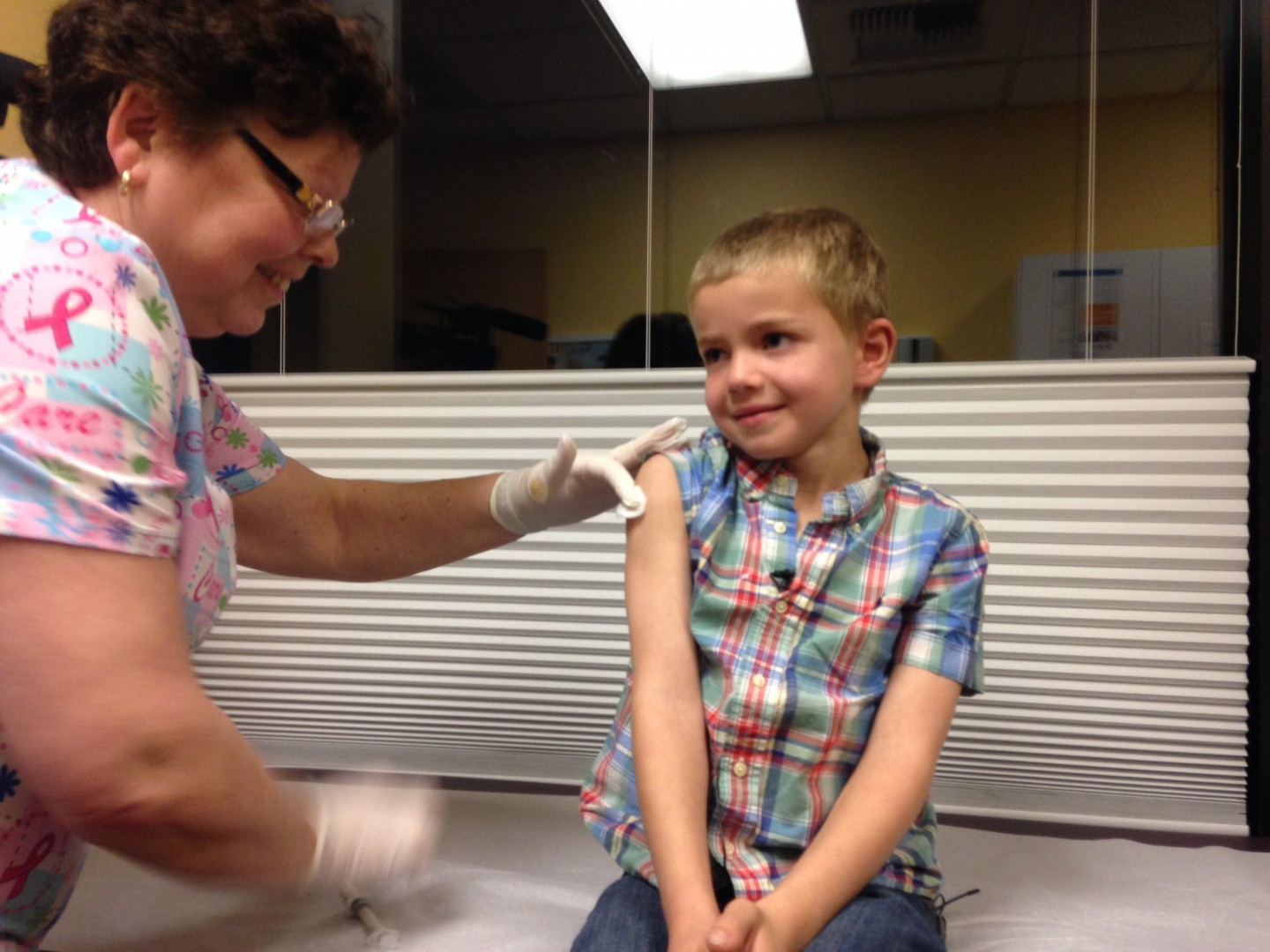
"caption": "Rhett Krawitt, of Corte Madera, received the measles, mumps, rubella vaccine. (Lisa Aliferis/KQED)",
"description": "Rhett Krawitt, of Corte Madera, received the measles, mumps, rubella vaccine on Friday. (Lisa Aliferis/KQED)",
"title": "RhettGetsVaccine",
"credit": null,
"status": "inherit",
"isLoading": false,
"fetchFailed": false
},
"stateofhealth_17094": {
"type": "attachments",
"id": "stateofhealth_17094",
"meta": {
"index": "attachments_1716263798",
"site": "stateofhealth",
"id": "17094",
"found": true
},
"parent": 17086,
"imgSizes": {
"thumbnail": {
"file": "https://ww2.kqed.org/app/uploads/sites/27/2014/01/8978559463_6e3a52ef6d_b-e1389244423486-400x266.jpg",
"width": 400,
"mimeType": "image/jpeg",
"height": 266
},
"fd-sm": {
"file": "https://ww2.kqed.org/app/uploads/sites/27/2014/01/8978559463_6e3a52ef6d_b-e1389244423486-320x213.jpg",
"width": 320,
"mimeType": "image/jpeg",
"height": 213
},
"post-thumbnail": {
"file": "https://ww2.kqed.org/app/uploads/sites/27/2014/01/8978559463_6e3a52ef6d_b-e1389244423486-641x372.jpg",
"width": 641,
"mimeType": "image/jpeg",
"height": 372
},
"kqedFullSize": {
"file": "https://ww2.kqed.org/app/uploads/sites/27/2014/01/8978559463_6e3a52ef6d_b-e1389244423486.jpg",
"width": 641,
"height": 426
},
"guest-author-96": {
"file": "https://ww2.kqed.org/app/uploads/sites/27/2014/01/8978559463_6e3a52ef6d_b-e1389244423486-96x96.jpg",
"width": 96,
"mimeType": "image/jpeg",
"height": 96
},
"guest-author-64": {
"file": "https://ww2.kqed.org/app/uploads/sites/27/2014/01/8978559463_6e3a52ef6d_b-e1389244423486-64x64.jpg",
"width": 64,
"mimeType": "image/jpeg",
"height": 64
},
"detail": {
"file": "https://ww2.kqed.org/app/uploads/sites/27/2014/01/8978559463_6e3a52ef6d_b-e1389244423486-75x75.jpg",
"width": 75,
"mimeType": "image/jpeg",
"height": 75
},
"guest-author-32": {
"file": "https://ww2.kqed.org/app/uploads/sites/27/2014/01/8978559463_6e3a52ef6d_b-e1389244423486-32x32.jpg",
"width": 32,
"mimeType": "image/jpeg",
"height": 32
},
"guest-author-128": {
"file": "https://ww2.kqed.org/app/uploads/sites/27/2014/01/8978559463_6e3a52ef6d_b-e1389244423486-128x128.jpg",
"width": 128,
"mimeType": "image/jpeg",
"height": 128
}
},
"publishDate": 1389244347,
"modified": 1389244347,
"caption": "Health care providers joined in a rally at the state capitol to protest cuts in Medi-Cal reimbursement rates in June, 2013. (California Medical Association/Flickr)",
"description": "We Care Medi-Cal; Medi-Cal provider cuts",
"title": "8978559463_6e3a52ef6d_b",
"credit": null,
"status": "inherit",
"isLoading": false,
"fetchFailed": false
},
"stateofhealth_22796": {
"type": "attachments",
"id": "stateofhealth_22796",
"meta": {
"index": "attachments_1716263798",
"site": "stateofhealth",
"id": "22796",
"found": true
},
"parent": 22786,
"imgSizes": {
"twentyfourteen-full-width": {
"file": "https://ww2.kqed.org/app/uploads/sites/27/2014/12/iStock_000050853770_Large-e1417630663656-1038x576.jpg",
"width": 1038,
"mimeType": "image/jpeg",
"height": 576
},
"thumbnail": {
"file": "https://ww2.kqed.org/app/uploads/sites/27/2014/12/iStock_000050853770_Large-e1417630663656-400x348.jpg",
"width": 400,
"mimeType": "image/jpeg",
"height": 348
},
"fd-sm": {
"file": "https://ww2.kqed.org/app/uploads/sites/27/2014/12/iStock_000050853770_Large-e1417630663656-320x278.jpg",
"width": 320,
"mimeType": "image/jpeg",
"height": 278
},
"post-thumbnail": {
"file": "https://ww2.kqed.org/app/uploads/sites/27/2014/12/iStock_000050853770_Large-e1417630663656-672x372.jpg",
"width": 672,
"mimeType": "image/jpeg",
"height": 372
},
"kqedFullSize": {
"file": "https://ww2.kqed.org/app/uploads/sites/27/2014/12/iStock_000050853770_Large-e1417630663656.jpg",
"width": 1440,
"height": 1251
},
"large": {
"file": "https://ww2.kqed.org/app/uploads/sites/27/2014/12/iStock_000050853770_Large-e1417630663656-1440x1251.jpg",
"width": 1440,
"mimeType": "image/jpeg",
"height": 1251
},
"guest-author-96": {
"file": "https://ww2.kqed.org/app/uploads/sites/27/2014/12/iStock_000050853770_Large-e1417630663656-96x96.jpg",
"width": 96,
"mimeType": "image/jpeg",
"height": 96
},
"medium": {
"file": "https://ww2.kqed.org/app/uploads/sites/27/2014/12/iStock_000050853770_Large-e1417630663656-800x695.jpg",
"width": 800,
"mimeType": "image/jpeg",
"height": 695
},
"guest-author-64": {
"file": "https://ww2.kqed.org/app/uploads/sites/27/2014/12/iStock_000050853770_Large-e1417630663656-64x64.jpg",
"width": 64,
"mimeType": "image/jpeg",
"height": 64
},
"guest-author-32": {
"file": "https://ww2.kqed.org/app/uploads/sites/27/2014/12/iStock_000050853770_Large-e1417630663656-32x32.jpg",
"width": 32,
"mimeType": "image/jpeg",
"height": 32
},
"fd-lrg": {
"file": "https://ww2.kqed.org/app/uploads/sites/27/2014/12/iStock_000050853770_Large-e1417630663656-1180x1025.jpg",
"width": 1180,
"mimeType": "image/jpeg",
"height": 1025
},
"fd-med": {
"file": "https://ww2.kqed.org/app/uploads/sites/27/2014/12/iStock_000050853770_Large-e1417630663656-768x667.jpg",
"width": 768,
"mimeType": "image/jpeg",
"height": 667
},
"detail": {
"file": "https://ww2.kqed.org/app/uploads/sites/27/2014/12/iStock_000050853770_Large-e1417630663656-75x75.jpg",
"width": 75,
"mimeType": "image/jpeg",
"height": 75
},
"guest-author-128": {
"file": "https://ww2.kqed.org/app/uploads/sites/27/2014/12/iStock_000050853770_Large-e1417630663656-128x128.jpg",
"width": 128,
"mimeType": "image/jpeg",
"height": 128
}
},
"publishDate": 1417630638,
"modified": 1417630667,
"caption": "(Getty Images)",
"description": "close up of scale, weight, overweight, obesity",
"title": "Closeup of a Scale",
"credit": null,
"status": "inherit",
"isLoading": false,
"fetchFailed": false
},
"stateofhealth_25002": {
"type": "attachments",
"id": "stateofhealth_25002",
"meta": {
"index": "attachments_1716263798",
"site": "stateofhealth",
"id": "25002",
"found": true
},
"parent": 24111,
"imgSizes": {
"thumbnail": {
"file": "https://ww2.kqed.org/app/uploads/sites/27/2015/03/Screen-Shot-2015-03-02-at-11.16.25-AM-640x4231-400x264.png",
"width": 400,
"mimeType": "image/png",
"height": 264
},
"fd-sm": {
"file": "https://ww2.kqed.org/app/uploads/sites/27/2015/03/Screen-Shot-2015-03-02-at-11.16.25-AM-640x4231-320x212.png",
"width": 320,
"mimeType": "image/png",
"height": 212
},
"post-thumbnail": {
"file": "https://ww2.kqed.org/app/uploads/sites/27/2015/03/Screen-Shot-2015-03-02-at-11.16.25-AM-640x4231-640x372.png",
"width": 640,
"mimeType": "image/png",
"height": 372
},
"kqedFullSize": {
"file": "https://ww2.kqed.org/app/uploads/sites/27/2015/03/Screen-Shot-2015-03-02-at-11.16.25-AM-640x4231.png",
"width": 640,
"height": 423
},
"guest-author-96": {
"file": "https://ww2.kqed.org/app/uploads/sites/27/2015/03/Screen-Shot-2015-03-02-at-11.16.25-AM-640x4231-96x96.png",
"width": 96,
"mimeType": "image/png",
"height": 96
},
"guest-author-64": {
"file": "https://ww2.kqed.org/app/uploads/sites/27/2015/03/Screen-Shot-2015-03-02-at-11.16.25-AM-640x4231-64x64.png",
"width": 64,
"mimeType": "image/png",
"height": 64
},
"detail": {
"file": "https://ww2.kqed.org/app/uploads/sites/27/2015/03/Screen-Shot-2015-03-02-at-11.16.25-AM-640x4231-75x75.png",
"width": 75,
"mimeType": "image/png",
"height": 75
},
"guest-author-32": {
"file": "https://ww2.kqed.org/app/uploads/sites/27/2015/03/Screen-Shot-2015-03-02-at-11.16.25-AM-640x4231-32x32.png",
"width": 32,
"mimeType": "image/png",
"height": 32
},
"guest-author-128": {
"file": "https://ww2.kqed.org/app/uploads/sites/27/2015/03/Screen-Shot-2015-03-02-at-11.16.25-AM-640x4231-128x128.png",
"width": 128,
"mimeType": "image/png",
"height": 128
}
},
"publishDate": 1429556188,
"modified": 1429556188,
"caption": null,
"description": null,
"title": "Screen-Shot-2015-03-02-at-11.16.25-AM-640x423",
"credit": null,
"status": "inherit",
"isLoading": false,
"fetchFailed": false
},
"stateofhealth_24091": {
"type": "attachments",
"id": "stateofhealth_24091",
"meta": {
"index": "attachments_1716263798",
"site": "stateofhealth",
"id": "24091",
"found": true
},
"parent": 24088,
"imgSizes": {
"twentyfourteen-full-width": {
"file": "https://ww2.kqed.org/app/uploads/sites/27/2015/02/Hayfork-13-e1425075174221-1038x576.jpg",
"width": 1038,
"mimeType": "image/jpeg",
"height": 576
},
"thumbnail": {
"file": "https://ww2.kqed.org/app/uploads/sites/27/2015/02/Hayfork-13-e1425075174221-400x267.jpg",
"width": 400,
"mimeType": "image/jpeg",
"height": 267
},
"fd-sm": {
"file": "https://ww2.kqed.org/app/uploads/sites/27/2015/02/Hayfork-13-e1425075174221-320x214.jpg",
"width": 320,
"mimeType": "image/jpeg",
"height": 214
},
"post-thumbnail": {
"file": "https://ww2.kqed.org/app/uploads/sites/27/2015/02/Hayfork-13-e1425075174221-672x372.jpg",
"width": 672,
"mimeType": "image/jpeg",
"height": 372
},
"kqedFullSize": {
"file": "https://ww2.kqed.org/app/uploads/sites/27/2015/02/Hayfork-13-e1425075174221.jpg",
"width": 1919,
"height": 1281
},
"large": {
"file": "https://ww2.kqed.org/app/uploads/sites/27/2015/02/Hayfork-13-e1425075174221-1440x961.jpg",
"width": 1440,
"mimeType": "image/jpeg",
"height": 961
},
"guest-author-96": {
"file": "https://ww2.kqed.org/app/uploads/sites/27/2015/02/Hayfork-13-e1425075174221-96x96.jpg",
"width": 96,
"mimeType": "image/jpeg",
"height": 96
},
"medium": {
"file": "https://ww2.kqed.org/app/uploads/sites/27/2015/02/Hayfork-13-e1425075174221-800x534.jpg",
"width": 800,
"mimeType": "image/jpeg",
"height": 534
},
"guest-author-64": {
"file": "https://ww2.kqed.org/app/uploads/sites/27/2015/02/Hayfork-13-e1425075174221-64x64.jpg",
"width": 64,
"mimeType": "image/jpeg",
"height": 64
},
"guest-author-32": {
"file": "https://ww2.kqed.org/app/uploads/sites/27/2015/02/Hayfork-13-e1425075174221-32x32.jpg",
"width": 32,
"mimeType": "image/jpeg",
"height": 32
},
"fd-lrg": {
"file": "https://ww2.kqed.org/app/uploads/sites/27/2015/02/Hayfork-13-e1425075174221-1180x788.jpg",
"width": 1180,
"mimeType": "image/jpeg",
"height": 788
},
"fd-med": {
"file": "https://ww2.kqed.org/app/uploads/sites/27/2015/02/Hayfork-13-e1425075174221-768x513.jpg",
"width": 768,
"mimeType": "image/jpeg",
"height": 513
},
"detail": {
"file": "https://ww2.kqed.org/app/uploads/sites/27/2015/02/Hayfork-13-e1425075174221-75x75.jpg",
"width": 75,
"mimeType": "image/jpeg",
"height": 75
},
"guest-author-128": {
"file": "https://ww2.kqed.org/app/uploads/sites/27/2015/02/Hayfork-13-e1425075174221-128x128.jpg",
"width": 128,
"mimeType": "image/jpeg",
"height": 128
}
},
"publishDate": 1425074798,
"modified": 1425075167,
"caption": "Richard Sandor, 65, of Hayfork, took the hour long bus ride to Mad River Clinic to pick up his medication for chronic pain. (Heidi de Marco/KHN).",
"description": "Richard Sandor, 65, from Hayfork, took the hour long bus ride to Mad River Clinic to pick up his medication for chronic pain on June 17, 2014 (Photo by Heidi de Marco/KHN).",
"title": "Hayfork-13",
"credit": null,
"status": "inherit",
"isLoading": false,
"fetchFailed": false
},
"stateofhealth_23433": {
"type": "attachments",
"id": "stateofhealth_23433",
"meta": {
"index": "attachments_1716263798",
"site": "stateofhealth",
"id": "23433",
"found": true
},
"parent": 23418,
"imgSizes": {
"thumbnail": {
"file": "https://ww2.kqed.org/app/uploads/sites/27/2015/01/Kaiser-jpg-640x480-400x300.jpg",
"width": 400,
"mimeType": "image/jpeg",
"height": 300
},
"fd-sm": {
"file": "https://ww2.kqed.org/app/uploads/sites/27/2015/01/Kaiser-jpg-640x480-320x240.jpg",
"width": 320,
"mimeType": "image/jpeg",
"height": 240
},
"post-thumbnail": {
"file": "https://ww2.kqed.org/app/uploads/sites/27/2015/01/Kaiser-jpg-640x480-640x372.jpg",
"width": 640,
"mimeType": "image/jpeg",
"height": 372
},
"kqedFullSize": {
"file": "https://ww2.kqed.org/app/uploads/sites/27/2015/01/Kaiser-jpg-640x480.jpg",
"width": 640,
"height": 480
},
"guest-author-96": {
"file": "https://ww2.kqed.org/app/uploads/sites/27/2015/01/Kaiser-jpg-640x480-96x96.jpg",
"width": 96,
"mimeType": "image/jpeg",
"height": 96
},
"guest-author-64": {
"file": "https://ww2.kqed.org/app/uploads/sites/27/2015/01/Kaiser-jpg-640x480-64x64.jpg",
"width": 64,
"mimeType": "image/jpeg",
"height": 64
},
"detail": {
"file": "https://ww2.kqed.org/app/uploads/sites/27/2015/01/Kaiser-jpg-640x480-75x75.jpg",
"width": 75,
"mimeType": "image/jpeg",
"height": 75
},
"guest-author-32": {
"file": "https://ww2.kqed.org/app/uploads/sites/27/2015/01/Kaiser-jpg-640x480-32x32.jpg",
"width": 32,
"mimeType": "image/jpeg",
"height": 32
},
"guest-author-128": {
"file": "https://ww2.kqed.org/app/uploads/sites/27/2015/01/Kaiser-jpg-640x480-128x128.jpg",
"width": 128,
"mimeType": "image/jpeg",
"height": 128
}
},
"publishDate": 1421086414,
"modified": 1421086430,
"caption": "Kaiser Permanente’s medical center in Oakland. (Lisa Aliferis/KQED)",
"description": "Kaiser Oakland",
"title": "Kaiser-jpg-640x480",
"credit": null,
"status": "inherit",
"isLoading": false,
"fetchFailed": false
},
"stateofhealth_15266": {
"type": "attachments",
"id": "stateofhealth_15266",
"meta": {
"index": "attachments_1716263798",
"site": "stateofhealth",
"id": "15266",
"found": true
},
"parent": 15263,
"imgSizes": {
"thumbnail": {
"file": "https://ww2.kqed.org/app/uploads/sites/27/2013/09/149948672-e1380559925587-400x283.jpg",
"width": 400,
"mimeType": "image/jpeg",
"height": 283
},
"fd-sm": {
"file": "https://ww2.kqed.org/app/uploads/sites/27/2013/09/149948672-e1380559925587-320x226.jpg",
"width": 320,
"mimeType": "image/jpeg",
"height": 226
},
"post-thumbnail": {
"file": "https://ww2.kqed.org/app/uploads/sites/27/2013/09/149948672-e1380559925587-641x372.jpg",
"width": 641,
"mimeType": "image/jpeg",
"height": 372
},
"kqedFullSize": {
"file": "https://ww2.kqed.org/app/uploads/sites/27/2013/09/149948672-e1380559925587.jpg",
"width": 641,
"height": 453
},
"guest-author-96": {
"file": "https://ww2.kqed.org/app/uploads/sites/27/2013/09/149948672-e1380559925587-96x96.jpg",
"width": 96,
"mimeType": "image/jpeg",
"height": 96
},
"guest-author-64": {
"file": "https://ww2.kqed.org/app/uploads/sites/27/2013/09/149948672-e1380559925587-64x64.jpg",
"width": 64,
"mimeType": "image/jpeg",
"height": 64
},
"detail": {
"file": "https://ww2.kqed.org/app/uploads/sites/27/2013/09/149948672-e1380559925587-75x75.jpg",
"width": 75,
"mimeType": "image/jpeg",
"height": 75
},
"guest-author-32": {
"file": "https://ww2.kqed.org/app/uploads/sites/27/2013/09/149948672-e1380559925587-32x32.jpg",
"width": 32,
"mimeType": "image/jpeg",
"height": 32
},
"guest-author-128": {
"file": "https://ww2.kqed.org/app/uploads/sites/27/2013/09/149948672-e1380559925587-128x128.jpg",
"width": 128,
"mimeType": "image/jpeg",
"height": 128
}
},
"publishDate": 1380559911,
"modified": 1380559911,
"caption": "Students leaving a vaccine clinic after being vaccinated against whooping cough at a middle school in Los Angeles. (Kevork Djansezian/Getty Images)",
"description": "vaccine clinic",
"title": "149948672",
"credit": null,
"status": "inherit",
"isLoading": false,
"fetchFailed": false
},
"stateofhealth_23966": {
"type": "attachments",
"id": "stateofhealth_23966",
"meta": {
"index": "attachments_1716263798",
"site": "stateofhealth",
"id": "23966",
"found": true
},
"parent": 23957,
"imgSizes": {
"twentyfourteen-full-width": {
"file": "https://ww2.kqed.org/app/uploads/sites/27/2015/02/IMG_4338-e1424384287189-1038x576.jpg",
"width": 1038,
"mimeType": "image/jpeg",
"height": 576
},
"thumbnail": {
"file": "https://ww2.kqed.org/app/uploads/sites/27/2015/02/IMG_4338-e1424384287189-400x300.jpg",
"width": 400,
"mimeType": "image/jpeg",
"height": 300
},
"fd-sm": {
"file": "https://ww2.kqed.org/app/uploads/sites/27/2015/02/IMG_4338-e1424384287189-320x240.jpg",
"width": 320,
"mimeType": "image/jpeg",
"height": 240
},
"post-thumbnail": {
"file": "https://ww2.kqed.org/app/uploads/sites/27/2015/02/IMG_4338-e1424384287189-672x372.jpg",
"width": 672,
"mimeType": "image/jpeg",
"height": 372
},
"kqedFullSize": {
"file": "https://ww2.kqed.org/app/uploads/sites/27/2015/02/IMG_4338-e1424384287189.jpg",
"width": 1440,
"height": 1080
},
"large": {
"file": "https://ww2.kqed.org/app/uploads/sites/27/2015/02/IMG_4338-e1424384287189-1440x1080.jpg",
"width": 1440,
"mimeType": "image/jpeg",
"height": 1080
},
"guest-author-96": {
"file": "https://ww2.kqed.org/app/uploads/sites/27/2015/02/IMG_4338-e1424384287189-96x96.jpg",
"width": 96,
"mimeType": "image/jpeg",
"height": 96
},
"medium": {
"file": "https://ww2.kqed.org/app/uploads/sites/27/2015/02/IMG_4338-e1424384287189-800x600.jpg",
"width": 800,
"mimeType": "image/jpeg",
"height": 600
},
"guest-author-64": {
"file": "https://ww2.kqed.org/app/uploads/sites/27/2015/02/IMG_4338-e1424384287189-64x64.jpg",
"width": 64,
"mimeType": "image/jpeg",
"height": 64
},
"guest-author-32": {
"file": "https://ww2.kqed.org/app/uploads/sites/27/2015/02/IMG_4338-e1424384287189-32x32.jpg",
"width": 32,
"mimeType": "image/jpeg",
"height": 32
},
"fd-lrg": {
"file": "https://ww2.kqed.org/app/uploads/sites/27/2015/02/IMG_4338-e1424384287189-1180x885.jpg",
"width": 1180,
"mimeType": "image/jpeg",
"height": 885
},
"fd-med": {
"file": "https://ww2.kqed.org/app/uploads/sites/27/2015/02/IMG_4338-e1424384287189-768x576.jpg",
"width": 768,
"mimeType": "image/jpeg",
"height": 576
},
"detail": {
"file": "https://ww2.kqed.org/app/uploads/sites/27/2015/02/IMG_4338-e1424384287189-75x75.jpg",
"width": 75,
"mimeType": "image/jpeg",
"height": 75
},
"guest-author-128": {
"file": "https://ww2.kqed.org/app/uploads/sites/27/2015/02/IMG_4338-e1424384287189-128x128.jpg",
"width": 128,
"mimeType": "image/jpeg",
"height": 128
}
},
"publishDate": 1424384274,
"modified": 1424384328,
"caption": "Dr. Davi Pakter, of Berkeley LifeLong Clinic, prepares to see patients. (Julie Small/KQED)",
"description": "Dr. Davi Pakter, of Berkeley LifeLong Clinic, prepares to see patients. (Julie Small/KQED)",
"title": "IMG_4338",
"credit": null,
"status": "inherit",
"isLoading": false,
"fetchFailed": false
},
"stateofhealth_23949": {
"type": "attachments",
"id": "stateofhealth_23949",
"meta": {
"index": "attachments_1716263798",
"site": "stateofhealth",
"id": "23949",
"found": true
},
"parent": 23947,
"imgSizes": {
"twentyfourteen-full-width": {
"file": "https://ww2.kqed.org/app/uploads/sites/27/2015/02/iStock_000057849064_Large-e1424368592567-1038x576.jpg",
"width": 1038,
"mimeType": "image/jpeg",
"height": 576
},
"thumbnail": {
"file": "https://ww2.kqed.org/app/uploads/sites/27/2015/02/iStock_000057849064_Large-e1424368592567-400x266.jpg",
"width": 400,
"mimeType": "image/jpeg",
"height": 266
},
"fd-sm": {
"file": "https://ww2.kqed.org/app/uploads/sites/27/2015/02/iStock_000057849064_Large-e1424368592567-320x213.jpg",
"width": 320,
"mimeType": "image/jpeg",
"height": 213
},
"post-thumbnail": {
"file": "https://ww2.kqed.org/app/uploads/sites/27/2015/02/iStock_000057849064_Large-e1424368592567-672x372.jpg",
"width": 672,
"mimeType": "image/jpeg",
"height": 372
},
"kqedFullSize": {
"file": "https://ww2.kqed.org/app/uploads/sites/27/2015/02/iStock_000057849064_Large-e1424368592567.jpg",
"width": 1441,
"height": 960
},
"large": {
"file": "https://ww2.kqed.org/app/uploads/sites/27/2015/02/iStock_000057849064_Large-e1424368592567-1440x959.jpg",
"width": 1440,
"mimeType": "image/jpeg",
"height": 959
},
"guest-author-96": {
"file": "https://ww2.kqed.org/app/uploads/sites/27/2015/02/iStock_000057849064_Large-e1424368592567-96x96.jpg",
"width": 96,
"mimeType": "image/jpeg",
"height": 96
},
"medium": {
"file": "https://ww2.kqed.org/app/uploads/sites/27/2015/02/iStock_000057849064_Large-e1424368592567-800x533.jpg",
"width": 800,
"mimeType": "image/jpeg",
"height": 533
},
"guest-author-64": {
"file": "https://ww2.kqed.org/app/uploads/sites/27/2015/02/iStock_000057849064_Large-e1424368592567-64x64.jpg",
"width": 64,
"mimeType": "image/jpeg",
"height": 64
},
"guest-author-32": {
"file": "https://ww2.kqed.org/app/uploads/sites/27/2015/02/iStock_000057849064_Large-e1424368592567-32x32.jpg",
"width": 32,
"mimeType": "image/jpeg",
"height": 32
},
"fd-lrg": {
"file": "https://ww2.kqed.org/app/uploads/sites/27/2015/02/iStock_000057849064_Large-e1424368592567-1180x786.jpg",
"width": 1180,
"mimeType": "image/jpeg",
"height": 786
},
"fd-med": {
"file": "https://ww2.kqed.org/app/uploads/sites/27/2015/02/iStock_000057849064_Large-e1424368592567-768x512.jpg",
"width": 768,
"mimeType": "image/jpeg",
"height": 512
},
"detail": {
"file": "https://ww2.kqed.org/app/uploads/sites/27/2015/02/iStock_000057849064_Large-e1424368592567-75x75.jpg",
"width": 75,
"mimeType": "image/jpeg",
"height": 75
},
"guest-author-128": {
"file": "https://ww2.kqed.org/app/uploads/sites/27/2015/02/iStock_000057849064_Large-e1424368592567-128x128.jpg",
"width": 128,
"mimeType": "image/jpeg",
"height": 128
}
},
"publishDate": 1424368583,
"modified": 1424369090,
"caption": "(Getty Images)",
"description": "A glass vial of M-M-R Vaccine",
"title": "MMR Vaccine",
"credit": null,
"status": "inherit",
"isLoading": false,
"fetchFailed": false
},
"stateofhealth_23940": {
"type": "attachments",
"id": "stateofhealth_23940",
"meta": {
"index": "attachments_1716263798",
"site": "stateofhealth",
"id": "23940",
"found": true
},
"parent": 23930,
"imgSizes": {
"twentyfourteen-full-width": {
"file": "https://ww2.kqed.org/app/uploads/sites/27/2015/02/178270443-e1424287446474-1038x576.jpg",
"width": 1038,
"mimeType": "image/jpeg",
"height": 576
},
"thumbnail": {
"file": "https://ww2.kqed.org/app/uploads/sites/27/2015/02/178270443-e1424287446474-400x267.jpg",
"width": 400,
"mimeType": "image/jpeg",
"height": 267
},
"fd-sm": {
"file": "https://ww2.kqed.org/app/uploads/sites/27/2015/02/178270443-e1424287446474-320x213.jpg",
"width": 320,
"mimeType": "image/jpeg",
"height": 213
},
"post-thumbnail": {
"file": "https://ww2.kqed.org/app/uploads/sites/27/2015/02/178270443-e1424287446474-672x372.jpg",
"width": 672,
"mimeType": "image/jpeg",
"height": 372
},
"kqedFullSize": {
"file": "https://ww2.kqed.org/app/uploads/sites/27/2015/02/178270443-e1424287446474.jpg",
"width": 1440,
"height": 960
},
"large": {
"file": "https://ww2.kqed.org/app/uploads/sites/27/2015/02/178270443-e1424287446474-1440x960.jpg",
"width": 1440,
"mimeType": "image/jpeg",
"height": 960
},
"guest-author-96": {
"file": "https://ww2.kqed.org/app/uploads/sites/27/2015/02/178270443-e1424287446474-96x96.jpg",
"width": 96,
"mimeType": "image/jpeg",
"height": 96
},
"medium": {
"file": "https://ww2.kqed.org/app/uploads/sites/27/2015/02/178270443-e1424287446474-800x533.jpg",
"width": 800,
"mimeType": "image/jpeg",
"height": 533
},
"guest-author-64": {
"file": "https://ww2.kqed.org/app/uploads/sites/27/2015/02/178270443-e1424287446474-64x64.jpg",
"width": 64,
"mimeType": "image/jpeg",
"height": 64
},
"guest-author-32": {
"file": "https://ww2.kqed.org/app/uploads/sites/27/2015/02/178270443-e1424287446474-32x32.jpg",
"width": 32,
"mimeType": "image/jpeg",
"height": 32
},
"fd-lrg": {
"file": "https://ww2.kqed.org/app/uploads/sites/27/2015/02/178270443-e1424287446474-1180x787.jpg",
"width": 1180,
"mimeType": "image/jpeg",
"height": 787
},
"fd-med": {
"file": "https://ww2.kqed.org/app/uploads/sites/27/2015/02/178270443-e1424287446474-768x512.jpg",
"width": 768,
"mimeType": "image/jpeg",
"height": 512
},
"detail": {
"file": "https://ww2.kqed.org/app/uploads/sites/27/2015/02/178270443-e1424287446474-75x75.jpg",
"width": 75,
"mimeType": "image/jpeg",
"height": 75
},
"guest-author-128": {
"file": "https://ww2.kqed.org/app/uploads/sites/27/2015/02/178270443-e1424287446474-128x128.jpg",
"width": 128,
"mimeType": "image/jpeg",
"height": 128
}
},
"publishDate": 1424287434,
"modified": 1424287477,
"caption": "(Spencer Platt/Getty Images)",
"description": "NEWARK, NJ - AUGUST 28: A nurse holds out a tray of immunization's at the city of Newark's \"School Bus Express\" free immunization program for Newark youth on August 28, 2013 in Newark, New Jersey. The program is being held at the Department of Child and Family Well-Being and seeks to highlight the importance of childhood immunizations before the school year gets started. Newark, where some 30% of residents live in poverty, provides immunizations for all residents. (Photo by Spencer Platt/Getty Images)",
"title": "Newark Offers Free Immunizations For Children Ahead Of The School Year",
"credit": null,
"status": "inherit",
"isLoading": false,
"fetchFailed": false
}
},
"audioPlayerReducer": {
"postId": "stream_live",
"isPaused": true,
"isPlaying": false,
"pfsActive": false,
"pledgeModalIsOpen": true,
"playerDrawerIsOpen": false,
"liveAudioPlayStartedAt": 0,
"liveAudioPlayContext": ""
},
"authorsReducer": {
"jbrooks": {
"type": "authors",
"id": "80",
"meta": {
"index": "authors_1716337520",
"id": "80",
"found": true
},
"name": "Jon Brooks",
"firstName": "Jon",
"lastName": "Brooks",
"slug": "jbrooks",
"email": "jbrooks@kqed.org",
"display_author_email": true,
"staff_mastheads": [
"science"
],
"title": "Digital Editor",
"bio": "Jon Brooks is a former Digital Editor for KQED Science. He is the former editor of KQED’s daily news blog, News Fix. In 2014, he won a California Journalism Award for his coverage of ride services like Uber and Lyft and the taxi industry. A veteran blogger, he previously worked for Yahoo! in various news writing and editing roles. Jon is also a playwright whose work has been produced in San Francisco, New York, Italy, and around the U.S. He has written about film for his own blog and studied film at Boston University.",
"avatar": "https://secure.gravatar.com/avatar/98887f7ed1c876ed414d4c915e969584?s=600&d=blank&r=g",
"twitter": "jbrooksfoy",
"facebook": null,
"instagram": null,
"linkedin": null,
"sites": [
{
"site": "arts",
"roles": [
"Contributor",
"editor"
]
},
{
"site": "news",
"roles": [
"author"
]
},
{
"site": "futureofyou",
"roles": [
"administrator"
]
},
{
"site": "mindshift",
"roles": [
"editor"
]
},
{
"site": "stateofhealth",
"roles": [
"editor"
]
},
{
"site": "science",
"roles": [
"administrator"
]
},
{
"site": "quest",
"roles": [
"editor"
]
}
],
"headData": {
"title": "Jon Brooks | KQED",
"description": "Digital Editor",
"ogImgSrc": "https://secure.gravatar.com/avatar/98887f7ed1c876ed414d4c915e969584?s=600&d=blank&r=g",
"twImgSrc": "https://secure.gravatar.com/avatar/98887f7ed1c876ed414d4c915e969584?s=600&d=blank&r=g"
},
"isLoading": false,
"link": "/author/jbrooks"
},
"lisaaliferis": {
"type": "authors",
"id": "240",
"meta": {
"index": "authors_1716337520",
"id": "240",
"found": true
},
"name": "Lisa Aliferis",
"firstName": "Lisa",
"lastName": "Aliferis",
"slug": "lisaaliferis",
"email": "laliferis@kqed.org",
"display_author_email": false,
"staff_mastheads": [],
"title": "KQED Contributor",
"bio": "Lisa Aliferis is the founding editor of KQED's \u003cem>State of Health\u003c/em> blog. Since 2011, she's been writing and editing stories for the site. Before taking up blogging, she toiled for many years (more than we can count) producing health stories for television, including\u003cem> Dateline NBC\u003c/em> and San Francisco's CBS affiliate, KPIX-TV. She also wrote up a \u003ca title=\"http://www.kqed.org/news/health/obamacare/obamacare-guide.jsp\" href=\"http://www.kqed.org/news/health/obamacare/obamacare-guide.jsp\">handy guide to the Affordable Care Act\u003c/a>, especially for Californians. Her work has been honored for many awards. Most recently she was a finalist for \"Best Topical Reporting\" from the Online News Association. You can follow her on Twitter: \u003ca title=\"https://twitter.com/laliferis\" href=\"https://twitter.com/laliferis\">@laliferis\u003c/a>",
"avatar": "https://secure.gravatar.com/avatar/86c339d5cdcb0dcd2b6cf5d7c3f5886b?s=600&d=mm&r=g",
"twitter": "laliferis",
"facebook": null,
"instagram": null,
"linkedin": null,
"sites": [
{
"site": "news",
"roles": [
"subscriber"
]
},
{
"site": "futureofyou",
"roles": [
"subscriber"
]
},
{
"site": "stateofhealth",
"roles": [
"subscriber"
]
},
{
"site": "science",
"roles": [
"subscriber"
]
},
{
"site": "food",
"roles": []
}
],
"headData": {
"title": "Lisa Aliferis | KQED",
"description": "KQED Contributor",
"ogImgSrc": "https://secure.gravatar.com/avatar/86c339d5cdcb0dcd2b6cf5d7c3f5886b?s=600&d=mm&r=g",
"twImgSrc": "https://secure.gravatar.com/avatar/86c339d5cdcb0dcd2b6cf5d7c3f5886b?s=600&d=mm&r=g"
},
"isLoading": false,
"link": "/author/lisaaliferis"
},
"lizagross": {
"type": "authors",
"id": "6322",
"meta": {
"index": "authors_1716337520",
"id": "6322",
"found": true
},
"name": "Liza Gross",
"firstName": "Liza",
"lastName": "Gross",
"slug": "lizagross",
"email": "lizagross@gmail.com",
"display_author_email": false,
"staff_mastheads": [],
"title": null,
"bio": "Liza Gross, an award-winning independent journalist and senior editor at the biomedical journal PLOS Biology, writes mostly about conservation and public and environmental health. She was a 2013 recipient of the NYU Reporting Award, a 2013 Dennis Hunt Health Journalism fellow and a 2015 USC Data Journalism fellow.\r\n\r\nRead her \u003ca href=\"http://science.kqed.org/quest/author/lizagross/\">previous contributions\u003c/a> to \u003ca href=\"science.kqed.org/quest/\">QUEST\u003c/a>, a project dedicated to exploring the Science of Sustainability.",
"avatar": "https://secure.gravatar.com/avatar/1f7d36efc78088d63466cef5f10c4c7a?s=600&d=blank&r=g",
"twitter": null,
"facebook": null,
"instagram": null,
"linkedin": null,
"sites": [
{
"site": "stateofhealth",
"roles": [
"author"
]
},
{
"site": "science",
"roles": [
"author"
]
},
{
"site": "quest",
"roles": [
"subscriber"
]
}
],
"headData": {
"title": "Liza Gross | KQED",
"description": null,
"ogImgSrc": "https://secure.gravatar.com/avatar/1f7d36efc78088d63466cef5f10c4c7a?s=600&d=blank&r=g",
"twImgSrc": "https://secure.gravatar.com/avatar/1f7d36efc78088d63466cef5f10c4c7a?s=600&d=blank&r=g"
},
"isLoading": false,
"link": "/author/lizagross"
},
"state-of-health": {
"type": "authors",
"id": "8344",
"meta": {
"index": "authors_1716337520",
"id": "8344",
"found": true
},
"name": "State of Health",
"firstName": "State of Health",
"lastName": null,
"slug": "state-of-health",
"email": "stateofhealth@kqed.org",
"display_author_email": false,
"staff_mastheads": [],
"title": null,
"bio": null,
"avatar": "https://secure.gravatar.com/avatar/66de4bf6d331fa7402bba1ffe8135e17?s=600&d=blank&r=g",
"twitter": null,
"facebook": null,
"instagram": null,
"linkedin": null,
"sites": [
{
"site": "arts",
"roles": [
"author"
]
},
{
"site": "stateofhealth",
"roles": [
"editor"
]
}
],
"headData": {
"title": "State of Health | KQED",
"description": null,
"ogImgSrc": "https://secure.gravatar.com/avatar/66de4bf6d331fa7402bba1ffe8135e17?s=600&d=blank&r=g",
"twImgSrc": "https://secure.gravatar.com/avatar/66de4bf6d331fa7402bba1ffe8135e17?s=600&d=blank&r=g"
},
"isLoading": false,
"link": "/author/state-of-health"
}
},
"pagesReducer": {
"stateofhealth_category_place-matters": {
"type": "terms",
"id": "stateofhealth_11",
"meta": {
"index": "terms_1716263798",
"site": "stateofhealth",
"id": "11",
"score": 14.406195
},
"featImg": null,
"name": "Community Health",
"description": "\r\n\r\nFrom rural California to urban neighborhoods, where you live affects your health",
"taxonomy": "category",
"headData": {
"twImgId": null,
"twTitle": null,
"ogTitle": null,
"ogImgId": null,
"twDescription": null,
"description": "From rural California to urban neighborhoods, where you live affects your health",
"title": "Community Health Archives | KQED Arts",
"ogDescription": null
},
"ttid": 11,
"slug": "place-matters",
"isLoading": false,
"title": "Community Health",
"pageMeta": {
"site": "stateofhealth",
"WpPageTemplate": "page-topic-editorial",
"currentPage": 27
},
"blocks": [
{
"blockName": "kqed/company-paragraph",
"content": "\r\n\r\nFrom rural California to urban neighborhoods, where you live affects your health"
},
{
"blockName": "kqed/post-list",
"attrs": {
"layout": "cardArticle2",
"query": "posts/stateofhealth?category=place-matters",
"seeMore": false,
"paginated": true,
"page": 27
}
},
{
"blockName": "kqed/ad"
}
]
}
},
"pfsSessionReducer": {},
"postsReducer": {
"stream_live": {
"type": "live",
"id": "stream_live",
"audioUrl": "https://streams.kqed.org/kqedradio",
"title": "Live Stream",
"excerpt": "Live Stream information currently unavailable.",
"link": "/radio",
"featImg": "",
"label": {
"name": "KQED Live",
"link": "/"
}
},
"stream_kqedNewscast": {
"type": "posts",
"id": "stream_kqedNewscast",
"audioUrl": "https://www.kqed.org/.stream/anon/radio/RDnews/newscast.mp3?_=1",
"title": "KQED Newscast",
"featImg": "",
"label": {
"name": "88.5 FM",
"link": "/"
}
},
"stateofhealth_24232": {
"type": "posts",
"id": "stateofhealth_24232",
"meta": {
"index": "posts_1716263798",
"site": "stateofhealth",
"id": "24232",
"score": null,
"sort": [
1425505697000
]
},
"parent": 0,
"labelTerm": {
"site": "stateofhealth"
},
"blocks": [],
"publishDate": 1425505697,
"format": "aside",
"disqusTitle": "California Bill Would Outlaw Unvaccinated Workers at Child-Care Facilities",
"title": "California Bill Would Outlaw Unvaccinated Workers at Child-Care Facilities",
"headTitle": "State of Health | KQED News",
"content": "\u003cfigure id=\"attachment_23925\" class=\"wp-caption aligncenter\" style=\"max-width: 640px\">\u003ca href=\"http://ww2.kqed.org/stateofhealth/wp-content/uploads/sites/27/2015/02/RhettGetsVaccine-e1423893179584.jpg\">\u003cimg class=\"size-large wp-image-23925\" title=\"\" src=\"http://ww2.kqed.org/stateofhealth/wp-content/uploads/sites/27/2015/02/RhettGetsVaccine-640x480.jpg\" alt=\"Rhett Krawitt, of Corte Madera, received the measles, mumps, rubella vaccine. (Lisa Aliferis/KQED)\" width=\"640\" height=\"480\">\u003c/a>\u003cfigcaption class=\"wp-caption-text\">Rhett Krawitt, of Corte Madera, received the measles, mumps, rubella vaccine. (Lisa Aliferis/KQED)\u003c/figcaption>\u003c/figure>\n\u003cp>Child-care facilities and preschools would be prevented from employing anyone who has not been vaccinated against influenza, pertussis and measles under a bill introduced in the California state Senate last week\u003c/p>\n\u003cp>\u003ca href=\"http://leginfo.legislature.ca.gov/faces/billNavClient.xhtml?bill_id=201520160SB792\" target=\"_blank\">SB792\u003c/a>, sponsored by state Sen. Tony Mendoza (D-Artesia) would amend the state Health and Safety Code to add the requirement that workers be vaccinated.\u003c/p>\n\u003cp>“Children under the age of five are one of the most vulnerable age groups for contracting infection and developing complications from these very serious diseases, so it is critical that we use all available methods to protect them,” Mendoza said in a press release announcing the legislation.\u003c/p>\n\u003cp>From the \u003ca href=\"http://www.latimes.com/local/lanow/la-me-ln-vaccines-for-daycare-workers-20150304-story.html\" target=\"_blank\">L.A .Times\u003c/a>:\u003c/p>\n\u003cblockquote>\u003cp>Currently, there are no vaccine requirements for day-care workers. Across schools, restaurants and the workplace, adults generally are not tracked for vaccinations as closely as young children entering school.\u003c/p>\u003c/blockquote>\n\u003cp>Since a December outbreak that started in Disneyland, \u003ca href=\"http://www.cdph.ca.gov/HealthInfo/discond/Documents/Measles_update_3_-_2_-_2015_public.pdf\" target=\"_blank\">131 cases of measles in California\u003c/a> have been confirmed, the Department of Public Health said Monday. Among those individuals for whom the department has vaccination documentation, 55 were unvaccinated and 18 had one or more doses of the Measles, Mumps and Rubella (MMR) vaccine. In the Bay Area, Alameda County has seen six cases, and Marin, San Mateo, Santa Clara and Solano counties have each experienced a handful.\u003c/p>\n\u003cp>[ad fullwidth]\u003c/p>\n\u003cp>\u003c/p>\n\u003cp>A previously introduced bill, \u003ca href=\"http://leginfo.legislature.ca.gov/faces/billNavClient.xhtml?bill_id=201520160SB277\" target=\"_blank\">SB277\u003c/a>, would eliminate parents' right to leave their children unvaccinated due to a personal belief exemption if enrolled in school or a child-care facility.\u003c/p>\n\n",
"disqusIdentifier": "24232 http://blogs.kqed.org/stateofhealth/?p=24232",
"disqusUrl": "https://ww2.kqed.org/stateofhealth/2015/03/04/california-bill-would-outlaw-unvaccinated-workers-at-child-care-facilities/",
"stats": {
"hasVideo": false,
"hasChartOrMap": false,
"hasAudio": false,
"hasPolis": false,
"wordCount": 268,
"hasGoogleForm": false,
"hasGallery": false,
"hasHearkenModule": false,
"iframeSrcs": [],
"paragraphCount": 9
},
"modified": 1425510867,
"excerpt": "131 cases of measles have been confirmed in state since December outbreak that started at Disneyland.",
"headData": {
"twImgId": "",
"twTitle": "",
"ogTitle": "",
"ogImgId": "",
"twDescription": "",
"description": "131 cases of measles have been confirmed in state since December outbreak that started at Disneyland.",
"title": "California Bill Would Outlaw Unvaccinated Workers at Child-Care Facilities | KQED",
"ogDescription": "",
"schema": {
"@context": "https://schema.org",
"@type": "Article",
"headline": "California Bill Would Outlaw Unvaccinated Workers at Child-Care Facilities",
"datePublished": "2015-03-04T13:48:17-08:00",
"dateModified": "2015-03-04T15:14:27-08:00",
"image": "https://cdn.kqed.org/wp-content/uploads/2020/02/KQED-OG-Image@1x.png"
}
},
"guestAuthors": [],
"slug": "california-bill-would-outlaw-unvaccinated-workers-at-child-care-facilities",
"status": "publish",
"path": "/stateofhealth/24232/california-bill-would-outlaw-unvaccinated-workers-at-child-care-facilities",
"audioTrackLength": null,
"parsedContent": [
{
"type": "contentString",
"content": "\u003cdiv class=\"post-body\">\u003cp>\u003cfigure id=\"attachment_23925\" class=\"wp-caption aligncenter\" style=\"max-width: 640px\">\u003ca href=\"http://ww2.kqed.org/stateofhealth/wp-content/uploads/sites/27/2015/02/RhettGetsVaccine-e1423893179584.jpg\">\u003cimg class=\"size-large wp-image-23925\" title=\"\" src=\"http://ww2.kqed.org/stateofhealth/wp-content/uploads/sites/27/2015/02/RhettGetsVaccine-640x480.jpg\" alt=\"Rhett Krawitt, of Corte Madera, received the measles, mumps, rubella vaccine. (Lisa Aliferis/KQED)\" width=\"640\" height=\"480\">\u003c/a>\u003cfigcaption class=\"wp-caption-text\">Rhett Krawitt, of Corte Madera, received the measles, mumps, rubella vaccine. (Lisa Aliferis/KQED)\u003c/figcaption>\u003c/figure>\n\u003cp>Child-care facilities and preschools would be prevented from employing anyone who has not been vaccinated against influenza, pertussis and measles under a bill introduced in the California state Senate last week\u003c/p>\n\u003cp>\u003ca href=\"http://leginfo.legislature.ca.gov/faces/billNavClient.xhtml?bill_id=201520160SB792\" target=\"_blank\">SB792\u003c/a>, sponsored by state Sen. Tony Mendoza (D-Artesia) would amend the state Health and Safety Code to add the requirement that workers be vaccinated.\u003c/p>\n\u003cp>“Children under the age of five are one of the most vulnerable age groups for contracting infection and developing complications from these very serious diseases, so it is critical that we use all available methods to protect them,” Mendoza said in a press release announcing the legislation.\u003c/p>\n\u003cp>From the \u003ca href=\"http://www.latimes.com/local/lanow/la-me-ln-vaccines-for-daycare-workers-20150304-story.html\" target=\"_blank\">L.A .Times\u003c/a>:\u003c/p>\n\u003cblockquote>\u003cp>Currently, there are no vaccine requirements for day-care workers. Across schools, restaurants and the workplace, adults generally are not tracked for vaccinations as closely as young children entering school.\u003c/p>\u003c/blockquote>\n\u003cp>Since a December outbreak that started in Disneyland, \u003ca href=\"http://www.cdph.ca.gov/HealthInfo/discond/Documents/Measles_update_3_-_2_-_2015_public.pdf\" target=\"_blank\">131 cases of measles in California\u003c/a> have been confirmed, the Department of Public Health said Monday. Among those individuals for whom the department has vaccination documentation, 55 were unvaccinated and 18 had one or more doses of the Measles, Mumps and Rubella (MMR) vaccine. In the Bay Area, Alameda County has seen six cases, and Marin, San Mateo, Santa Clara and Solano counties have each experienced a handful.\u003c/p>\n\u003cp>\u003c/p>\u003c/div>",
"attributes": {
"named": {},
"numeric": []
}
},
{
"type": "component",
"content": "",
"name": "ad",
"attributes": {
"named": {
"label": "fullwidth"
},
"numeric": [
"fullwidth"
]
}
},
{
"type": "contentString",
"content": "\u003cdiv class=\"post-body\">\u003cp>\u003c/p>\n\u003cp>\u003c/p>\n\u003cp>A previously introduced bill, \u003ca href=\"http://leginfo.legislature.ca.gov/faces/billNavClient.xhtml?bill_id=201520160SB277\" target=\"_blank\">SB277\u003c/a>, would eliminate parents' right to leave their children unvaccinated due to a personal belief exemption if enrolled in school or a child-care facility.\u003c/p>\n\n\u003c/div>\u003c/p>",
"attributes": {
"named": {},
"numeric": []
}
}
],
"link": "/stateofhealth/24232/california-bill-would-outlaw-unvaccinated-workers-at-child-care-facilities",
"authors": [
"80"
],
"categories": [
"stateofhealth_11"
],
"tags": [
"stateofhealth_726"
],
"featImg": "stateofhealth_23925",
"label": "stateofhealth"
},
"stateofhealth_24182": {
"type": "posts",
"id": "stateofhealth_24182",
"meta": {
"index": "posts_1716263798",
"site": "stateofhealth",
"id": "24182",
"score": null,
"sort": [
1425491969000
]
},
"parent": 0,
"labelTerm": {
"site": "stateofhealth"
},
"blocks": [],
"publishDate": 1425491969,
"format": "aside",
"disqusTitle": "Pressure Rising to Restore Medi-Cal Provider Rates",
"title": "Pressure Rising to Restore Medi-Cal Provider Rates",
"headTitle": "State of Health | KQED News",
"content": "\u003cfigure id=\"attachment_24190\" class=\"wp-caption aligncenter\" style=\"max-width: 640px\">\u003ca href=\"http://ww2.kqed.org/stateofhealth/wp-content/uploads/sites/27/2015/03/RS1782_medi-cal-patient-2-e1425491890809.jpg\">\u003cimg class=\"size-large wp-image-24190\" title=\"\" src=\"http://ww2.kqed.org/stateofhealth/wp-content/uploads/sites/27/2015/03/RS1782_medi-cal-patient-2-640x427.jpg\" alt=\"FILE PHOTO: Doctors in an emergency room in Panorama City, Calif. (David McNew/Getty Images)\" width=\"640\" height=\"427\">\u003c/a>\u003cfigcaption class=\"wp-caption-text\">FILE PHOTO: Doctors in an emergency room in Panorama City, Calif. (David McNew/Getty Images)\u003c/figcaption>\u003c/figure>\n\u003cp>\u003cstrong>By David Gorn, California Healthline\u003c/strong>\u003c/p>\n\u003cp>A protest Wednesday at the Capitol Building will highlight proposed legislation to reverse cuts to Medi-Cal provider rates.\u003c/p>\n\u003cp>In 2011 during a bleak budgeting period, the Legislature agreed to cut most Medi-Cal provider payments by 10 percent. The cutbacks were held up in legal battles for two years, and the court eventually sided with the state. Implementation came from the state in stages, and primary care providers started getting the lower reimbursement rate this year, on Jan. 1.\u003c/p>\n\u003cp>Last month, Assembly member Rob Bonta (D-Alameda), who chairs the Assembly Committee on Health, introduced a bill -- AB366 -- to reverse the cuts made in 2011.\u003c/p>\n\u003caside class=\"pullquote alignright\">Protest at Capitol Building aims to reverse cuts.\u003c/aside>\n\u003cp>\"This is my top priority,\" Bonta said. \"The reason I'm interested in health policy is to maximize quality care and access for as many people as possible. And access within Medi-Cal is not what it needs to be.\"\u003c/p>\n\u003cp>[ad fullwidth]\u003c/p>\n\u003cp>The number of providers participating in Medi-Cal has dropped, Bonta said, because they lose money on Medi-Cal patients and can't afford to take on too many of them.\u003c/p>\n\u003cp>Legislation to restore Medi-Cal rates has been floated before and failed. Bonta said those efforts were setting the groundwork for this push. \u003c!--more-->\u003c/p>\n\u003cp>\"The urgency is at a level it's never been at before, with one-third of the state in Medi-Cal, with 12 million folks on the program,\" Bonta said. \"We think some of the buildup has put us in a good place. There are huge moral and policy reasons for this.\"\u003c/p>\n\u003cp>That's what the people gathering on the Capitol Building steps will try to convey. The event is co-sponsored by the Service Employees International Union-United Healthcare Workers, which is pushing for eventually setting reimbursement levels at Medicare rates, though Bonta's bill doesn't include that stipulation.\u003c/p>\n\u003cp>The big test for the bill will be the receptivity of Brown administration officials, who have made it clear they believe the state pays a steep price for Medi-Cal already, and that cost will rise when the federal government gradually steps down its funding of beneficiaries from Medi-Cal expansion.\u003c/p>\n\u003cp>\u003c/p>\n\u003cp>\"This issue is moving on two tracks, the bill and the budget talks,\" Bonta said. \"For us to hit the governor's needs in the budget, we need to push hard and say we need this, that this is one of the things we need.\"\u003c/p>\n\n",
"disqusIdentifier": "24182 http://blogs.kqed.org/stateofhealth/?p=24182",
"disqusUrl": "https://ww2.kqed.org/stateofhealth/2015/03/04/pressure-rising-to-restore-medi-cal-provider-rates/",
"stats": {
"hasVideo": false,
"hasChartOrMap": false,
"hasAudio": false,
"hasPolis": false,
"wordCount": 427,
"hasGoogleForm": false,
"hasGallery": false,
"hasHearkenModule": false,
"iframeSrcs": [],
"paragraphCount": 13
},
"modified": 1425514833,
"excerpt": "Supporters of a bill to reverse cuts say Medi-Cal providers are dropping out due to low reimbursement.",
"headData": {
"twImgId": "",
"twTitle": "",
"ogTitle": "",
"ogImgId": "",
"twDescription": "",
"description": "Supporters of a bill to reverse cuts say Medi-Cal providers are dropping out due to low reimbursement.",
"title": "Pressure Rising to Restore Medi-Cal Provider Rates | KQED",
"ogDescription": "",
"schema": {
"@context": "https://schema.org",
"@type": "Article",
"headline": "Pressure Rising to Restore Medi-Cal Provider Rates",
"datePublished": "2015-03-04T09:59:29-08:00",
"dateModified": "2015-03-04T16:20:33-08:00",
"image": "https://cdn.kqed.org/wp-content/uploads/2020/02/KQED-OG-Image@1x.png"
}
},
"guestAuthors": [],
"slug": "pressure-rising-to-restore-medi-cal-provider-rates",
"status": "publish",
"path": "/stateofhealth/24182/pressure-rising-to-restore-medi-cal-provider-rates",
"audioTrackLength": null,
"parsedContent": [
{
"type": "contentString",
"content": "\u003cdiv class=\"post-body\">\u003cp>\u003cfigure id=\"attachment_24190\" class=\"wp-caption aligncenter\" style=\"max-width: 640px\">\u003ca href=\"http://ww2.kqed.org/stateofhealth/wp-content/uploads/sites/27/2015/03/RS1782_medi-cal-patient-2-e1425491890809.jpg\">\u003cimg class=\"size-large wp-image-24190\" title=\"\" src=\"http://ww2.kqed.org/stateofhealth/wp-content/uploads/sites/27/2015/03/RS1782_medi-cal-patient-2-640x427.jpg\" alt=\"FILE PHOTO: Doctors in an emergency room in Panorama City, Calif. (David McNew/Getty Images)\" width=\"640\" height=\"427\">\u003c/a>\u003cfigcaption class=\"wp-caption-text\">FILE PHOTO: Doctors in an emergency room in Panorama City, Calif. (David McNew/Getty Images)\u003c/figcaption>\u003c/figure>\n\u003cp>\u003cstrong>By David Gorn, California Healthline\u003c/strong>\u003c/p>\n\u003cp>A protest Wednesday at the Capitol Building will highlight proposed legislation to reverse cuts to Medi-Cal provider rates.\u003c/p>\n\u003cp>In 2011 during a bleak budgeting period, the Legislature agreed to cut most Medi-Cal provider payments by 10 percent. The cutbacks were held up in legal battles for two years, and the court eventually sided with the state. Implementation came from the state in stages, and primary care providers started getting the lower reimbursement rate this year, on Jan. 1.\u003c/p>\n\u003cp>Last month, Assembly member Rob Bonta (D-Alameda), who chairs the Assembly Committee on Health, introduced a bill -- AB366 -- to reverse the cuts made in 2011.\u003c/p>\n\u003caside class=\"pullquote alignright\">Protest at Capitol Building aims to reverse cuts.\u003c/aside>\n\u003cp>\"This is my top priority,\" Bonta said. \"The reason I'm interested in health policy is to maximize quality care and access for as many people as possible. And access within Medi-Cal is not what it needs to be.\"\u003c/p>\n\u003cp>\u003c/p>\u003c/div>",
"attributes": {
"named": {},
"numeric": []
}
},
{
"type": "component",
"content": "",
"name": "ad",
"attributes": {
"named": {
"label": "fullwidth"
},
"numeric": [
"fullwidth"
]
}
},
{
"type": "contentString",
"content": "\u003cdiv class=\"post-body\">\u003cp>\u003c/p>\n\u003cp>The number of providers participating in Medi-Cal has dropped, Bonta said, because they lose money on Medi-Cal patients and can't afford to take on too many of them.\u003c/p>\n\u003cp>Legislation to restore Medi-Cal rates has been floated before and failed. Bonta said those efforts were setting the groundwork for this push. \u003c!--more-->\u003c/p>\n\u003cp>\"The urgency is at a level it's never been at before, with one-third of the state in Medi-Cal, with 12 million folks on the program,\" Bonta said. \"We think some of the buildup has put us in a good place. There are huge moral and policy reasons for this.\"\u003c/p>\n\u003cp>That's what the people gathering on the Capitol Building steps will try to convey. The event is co-sponsored by the Service Employees International Union-United Healthcare Workers, which is pushing for eventually setting reimbursement levels at Medicare rates, though Bonta's bill doesn't include that stipulation.\u003c/p>\n\u003cp>The big test for the bill will be the receptivity of Brown administration officials, who have made it clear they believe the state pays a steep price for Medi-Cal already, and that cost will rise when the federal government gradually steps down its funding of beneficiaries from Medi-Cal expansion.\u003c/p>\n\u003cp>\u003c/p>\n\u003cp>\"This issue is moving on two tracks, the bill and the budget talks,\" Bonta said. \"For us to hit the governor's needs in the budget, we need to push hard and say we need this, that this is one of the things we need.\"\u003c/p>\n\n\u003c/div>\u003c/p>",
"attributes": {
"named": {},
"numeric": []
}
}
],
"link": "/stateofhealth/24182/pressure-rising-to-restore-medi-cal-provider-rates",
"authors": [
"8344"
],
"categories": [
"stateofhealth_11"
],
"tags": [
"stateofhealth_99"
],
"featImg": "stateofhealth_17094",
"label": "stateofhealth"
},
"stateofhealth_24125": {
"type": "posts",
"id": "stateofhealth_24125",
"meta": {
"index": "posts_1716263798",
"site": "stateofhealth",
"id": "24125",
"score": null,
"sort": [
1425334197000
]
},
"parent": 0,
"labelTerm": {
"site": "stateofhealth"
},
"blocks": [],
"publishDate": 1425334197,
"format": "aside",
"disqusTitle": "Silicon Valley is Thinner Than San Francisco-Oakland, Report Says",
"title": "Silicon Valley is Thinner Than San Francisco-Oakland, Report Says",
"headTitle": "State of Health | KQED News",
"content": "\u003cfigure id=\"attachment_546\" class=\"wp-caption aligncenter\" style=\"max-width: 620px\">\u003ca href=\"http://ww2.kqed.org/stateofhealth/wp-content/uploads/sites/27/2011/11/ScaleGeneric081211-e1425334365300.jpg\">\u003cimg class=\"size-large wp-image-546\" title=\"\" src=\"http://ww2.kqed.org/stateofhealth/wp-content/uploads/sites/27/2011/11/ScaleGeneric081211-620x415.jpg\" alt=\"Woman's feet on scale.\" width=\"620\" height=\"415\">\u003c/a>\u003cfigcaption class=\"wp-caption-text\">(Justin Sullivan/Getty Images)\u003c/figcaption>\u003c/figure>\n\u003cp>The South Bay and San Francisco compete on a multitude of fronts: Which will snag the hottest tech firms, which can retain or attract the most sports teams, which will win the prize for least affordable housing...\u003c/p>\n\u003cp>But no matter how many prestige points San Francisco racks up, the South Bay can claim bragging rights based on at least one important metric: weight.\u003c/p>\n\u003cp>\u003ca href=\"http://wallethub.com/edu/metro-areas-with-the-biggest-smallest-weight-problems/10532/\" target=\"_blank\">That's according to WalletHub,\u003c/a> a personal finance website that spends a lot of time compiling data on all sorts of things. (Last month they told us the Bay Area is one of the more diverse regions in the U.S.) From the site:\u003c/p>\n\u003cblockquote>\u003cp>In light of National Nutrition Month, WalletHub analyzed 100 of the most populated U.S. metro areas to identify those where weight-related problems call for heightened attention. We did so by examining 12 key metrics, among which are the percentage of adults and high school students who are obese and the percentage of people who are physically inactive.\u003c/p>\u003c/blockquote>\n\u003cp>\u003c!--more-->\u003c/p>\n\u003cp>WalletHub ranked the San Jose-Sunnyvale-Santa Clara area as having the third-smallest problem with weight. That was best in the Bay Area and two slots higher than San Francisco-Oakland-Hayward, which came in at No. 5. (San Franciscans, feel free to blame Oakland and Hayward for weighing you down; Oaklanders and Haywardians, commence vice versa.)\u003c/p>\n\u003cp>[ad fullwidth]\u003c/p>\n\u003cp>In terms of obesity itself, San Jose-Sunnyvale-Santa Clara is sixth best, San Francisco et al. is three slots behind at No. 9.\u003c/p>\n\u003cp>Here's the methodology the site used. The report drew on data from the Centers for Disease Control and Prevention, the U.S. Department of Agriculture Economic Research Service, the Child and Adolescent Health Measurement Initiative and WalletHub's own research, it said.\u003c/p>\n\u003cp>Of course, obesity's nothing to joke about -- it can lead to diabetes, heart disease, stroke and a host of other health problems. WalletHub asked medical and health academic experts to weigh in on the impact of the problem and how to combat it here.\u003c/p>\n\u003cp>And here's a clickable map where you can see which communities have the most and least problems with weight:\u003c/p>\n\u003cp>\u003c/p>\n\u003cp>\u003ciframe src=\"//d2e70e9yced57e.cloudfront.net/wallethub/embed/10532/geochart-obesity4.html\" width=\"750\" height=\"477\" frameborder=\"0\" scrolling=\"no\">\u003c/iframe>\u003c/p>\n\u003cdiv style=\"width: 750px;font-size: 12px;color: #888\">Source: \u003ca href=\"http://wallethub.com/edu/metro-areas-with-the-biggest-smallest-weight-problems/10532/\">WalletHub\u003c/a>\u003c/div>\n\n",
"disqusIdentifier": "24125 http://blogs.kqed.org/stateofhealth/?p=24125",
"disqusUrl": "https://ww2.kqed.org/stateofhealth/2015/03/02/silicon-valley-is-thinner-than-san-francisco-oakland-according-to-this/",
"stats": {
"hasVideo": false,
"hasChartOrMap": true,
"hasAudio": false,
"hasPolis": false,
"wordCount": 364,
"hasGoogleForm": false,
"hasGallery": false,
"hasHearkenModule": false,
"iframeSrcs": [
"//d2e70e9yced57e.cloudfront.net/wallethub/embed/10532/geochart-obesity4.html"
],
"paragraphCount": 13
},
"modified": 1425344499,
"excerpt": "A WalletHub analysis looked at the 100 most populous U.S. metropolitan areas with an eye toward weight-related problems.",
"headData": {
"twImgId": "",
"twTitle": "",
"ogTitle": "",
"ogImgId": "",
"twDescription": "",
"description": "A WalletHub analysis looked at the 100 most populous U.S. metropolitan areas with an eye toward weight-related problems.",
"title": "Silicon Valley is Thinner Than San Francisco-Oakland, Report Says | KQED",
"ogDescription": "",
"schema": {
"@context": "https://schema.org",
"@type": "Article",
"headline": "Silicon Valley is Thinner Than San Francisco-Oakland, Report Says",
"datePublished": "2015-03-02T14:09:57-08:00",
"dateModified": "2015-03-02T17:01:39-08:00",
"image": "https://cdn.kqed.org/wp-content/uploads/2020/02/KQED-OG-Image@1x.png"
}
},
"guestAuthors": [],
"slug": "silicon-valley-is-thinner-than-san-francisco-oakland-according-to-this",
"status": "publish",
"path": "/stateofhealth/24125/silicon-valley-is-thinner-than-san-francisco-oakland-according-to-this",
"audioTrackLength": null,
"parsedContent": [
{
"type": "contentString",
"content": "\u003cdiv class=\"post-body\">\u003cp>\u003cfigure id=\"attachment_546\" class=\"wp-caption aligncenter\" style=\"max-width: 620px\">\u003ca href=\"http://ww2.kqed.org/stateofhealth/wp-content/uploads/sites/27/2011/11/ScaleGeneric081211-e1425334365300.jpg\">\u003cimg class=\"size-large wp-image-546\" title=\"\" src=\"http://ww2.kqed.org/stateofhealth/wp-content/uploads/sites/27/2011/11/ScaleGeneric081211-620x415.jpg\" alt=\"Woman's feet on scale.\" width=\"620\" height=\"415\">\u003c/a>\u003cfigcaption class=\"wp-caption-text\">(Justin Sullivan/Getty Images)\u003c/figcaption>\u003c/figure>\n\u003cp>The South Bay and San Francisco compete on a multitude of fronts: Which will snag the hottest tech firms, which can retain or attract the most sports teams, which will win the prize for least affordable housing...\u003c/p>\n\u003cp>But no matter how many prestige points San Francisco racks up, the South Bay can claim bragging rights based on at least one important metric: weight.\u003c/p>\n\u003cp>\u003ca href=\"http://wallethub.com/edu/metro-areas-with-the-biggest-smallest-weight-problems/10532/\" target=\"_blank\">That's according to WalletHub,\u003c/a> a personal finance website that spends a lot of time compiling data on all sorts of things. (Last month they told us the Bay Area is one of the more diverse regions in the U.S.) From the site:\u003c/p>\n\u003cblockquote>\u003cp>In light of National Nutrition Month, WalletHub analyzed 100 of the most populated U.S. metro areas to identify those where weight-related problems call for heightened attention. We did so by examining 12 key metrics, among which are the percentage of adults and high school students who are obese and the percentage of people who are physically inactive.\u003c/p>\u003c/blockquote>\n\u003cp>\u003c!--more-->\u003c/p>\n\u003cp>WalletHub ranked the San Jose-Sunnyvale-Santa Clara area as having the third-smallest problem with weight. That was best in the Bay Area and two slots higher than San Francisco-Oakland-Hayward, which came in at No. 5. (San Franciscans, feel free to blame Oakland and Hayward for weighing you down; Oaklanders and Haywardians, commence vice versa.)\u003c/p>\n\u003cp>\u003c/p>\u003c/div>",
"attributes": {
"named": {},
"numeric": []
}
},
{
"type": "component",
"content": "",
"name": "ad",
"attributes": {
"named": {
"label": "fullwidth"
},
"numeric": [
"fullwidth"
]
}
},
{
"type": "contentString",
"content": "\u003cdiv class=\"post-body\">\u003cp>\u003c/p>\n\u003cp>In terms of obesity itself, San Jose-Sunnyvale-Santa Clara is sixth best, San Francisco et al. is three slots behind at No. 9.\u003c/p>\n\u003cp>Here's the methodology the site used. The report drew on data from the Centers for Disease Control and Prevention, the U.S. Department of Agriculture Economic Research Service, the Child and Adolescent Health Measurement Initiative and WalletHub's own research, it said.\u003c/p>\n\u003cp>Of course, obesity's nothing to joke about -- it can lead to diabetes, heart disease, stroke and a host of other health problems. WalletHub asked medical and health academic experts to weigh in on the impact of the problem and how to combat it here.\u003c/p>\n\u003cp>And here's a clickable map where you can see which communities have the most and least problems with weight:\u003c/p>\n\u003cp>\u003c/p>\n\u003cp>\u003ciframe src=\"//d2e70e9yced57e.cloudfront.net/wallethub/embed/10532/geochart-obesity4.html\" width=\"750\" height=\"477\" frameborder=\"0\" scrolling=\"no\">\u003c/iframe>\u003c/p>\n\u003cdiv style=\"width: 750px;font-size: 12px;color: #888\">Source: \u003ca href=\"http://wallethub.com/edu/metro-areas-with-the-biggest-smallest-weight-problems/10532/\">WalletHub\u003c/a>\u003c/div>\n\n\u003c/div>\u003c/p>",
"attributes": {
"named": {},
"numeric": []
}
}
],
"link": "/stateofhealth/24125/silicon-valley-is-thinner-than-san-francisco-oakland-according-to-this",
"authors": [
"80"
],
"categories": [
"stateofhealth_11",
"stateofhealth_12"
],
"featImg": "stateofhealth_22796",
"label": "stateofhealth"
},
"stateofhealth_24111": {
"type": "posts",
"id": "stateofhealth_24111",
"meta": {
"index": "posts_1716263798",
"site": "stateofhealth",
"id": "24111",
"score": null,
"sort": [
1425324174000
]
},
"parent": 0,
"labelTerm": {
"site": "stateofhealth"
},
"blocks": [],
"publishDate": 1425324174,
"format": "aside",
"disqusTitle": "People with Low Incomes Say They Suffer Poorer Health",
"title": "People with Low Incomes Say They Suffer Poorer Health",
"headTitle": "State of Health | KQED News",
"content": "\u003cfigure id=\"attachment_24117\" class=\"wp-caption aligncenter\" style=\"max-width: 640px\">\u003ca href=\"http://ww2.kqed.org/stateofhealth/wp-content/uploads/sites/27/2015/03/Screen-Shot-2015-03-02-at-11.16.25-AM.png\">\u003cimg class=\"size-large wp-image-24117\" title=\"\" src=\"http://ww2.kqed.org/stateofhealth/wp-content/uploads/sites/27/2015/03/Screen-Shot-2015-03-02-at-11.16.25-AM-640x423.png\" alt=\"Uzuri Pease-Greene talks with two police officers in the public housing complex in San Francisco where she lives. (Talia Herman/NPR)\" width=\"640\" height=\"423\">\u003c/a>\u003cfigcaption class=\"wp-caption-text\">Uzuri Pease-Greene talks with two police officers in the public housing complex in San Francisco where she lives. (Talia Herman/NPR)\u003c/figcaption>\u003c/figure>\n\u003cp>\u003cstrong>By Patti Neighmond,\u003c/strong> \u003ca title=\"http://www.npr.org/blogs/health/2015/03/02/389347123/people-with-low-incomes-say-they-pay-a-price-in-poor-health\" href=\"http://www.npr.org/blogs/health/2015/03/02/389347123/people-with-low-incomes-say-they-pay-a-price-in-poor-health\" target=\"_blank\">NPR\u003c/a>\u003c/p>\n\u003cp>When you ask people what impacts health you'll get a lot of different answers: Access to good health care and preventative services, personal behavior, exposure to germs or pollution and stress.\u003c/p>\n\u003cp>But if you dig a little deeper you'll find a clear dividing line, and it boils down to one word: money.\u003c/p>\n\u003caside class=\"pullquote alignleft\">\"My health is deteriorating, and I know what the cause of it is, but I can't fix it.\" \u003c/aside>\n\u003cp>People whose household income is more than $75,000 a year have very different perceptions of what affects health than those whose household income is less than $25,000. This is one key finding in\u003ca href=\"http://media.npr.org/documents/2015/feb/What_Shapes_Health_Report.pdf\" target=\"_blank\"> a poll\u003c/a> conducted by NPR, the Robert Wood Johnson Foundation and the Harvard School of Public Health. \u003ca href=\"http://www.npr.org/blogs/health/2015/03/02/388994897/poll-finds-factors-large-and-small-shape-peoples-health\" target=\"_blank\">One third of respondents\u003c/a> who are low income say lack of money has a harmful effect on health.\u003c/p>\n\u003cp>This is the case for 29-year-old Anna Beer of Spokane, Wash. She lives with her husband in the basement of her father's house. Beer got laid off from her job as a nanny last summer. Now she is attending college in the hope that she will get a better than minimum-wage job when she graduates. Beer's husband earns $10 an hour working at a retail store. \"This is probably the most poor we've been,\" Beer says.\u003c!--more-->\u003c/p>\n\u003cp>[ad fullwidth]\u003c/p>\n\u003cp>When she was working, Beer could afford to buy fresh fruits and vegetables and chicken from the local farmer's markets. She can't afford that any more.\u003c/p>\n\u003cp>Her migraines are worse, and her health has deteriorated. It's frustrating, she says. \"I know what the cause of it is, but I can't fix it. It's hard.\"\u003c/p>\n\u003cp>One in five people in our poll say they are in a similar position — low paying jobs or unemployment harms their health. And there's research to back this up. \u003ca href=\"http://www.albany.edu/sph/24581.php\" target=\"_blank\">Kate Strully\u003c/a>, a sociologist at the University at Albany, State University of New York,\u003ca href=\"http://link.springer.com/article/10.1353/dem.0.0050\" target=\"_blank\"> studied \u003c/a>what happened when healthy people were laid off following a plant closing. She found that losing a job increased the odds of developing stress-related health conditions by 83 percent — conditions like stroke, heart disease, diabetes and emotional or psychiatric conditions.\u003c/p>\n\u003cp>Another social fact that affects health is housing. Forty percent of the low-income people in our poll say bad housing causes bad health. Uzuri Pease-Greene says this is true for her family. She rents a small two-bedroom apartment with her husband, two daughters and a grandchild in a public housing complex in San Francisco. When something breaks, she says it takes years to get it fixed. Ovens don't work, there are holes in the walls, the water doesn't work or there's a sewage backup.\u003c/p>\n\u003cp>Then there is the constant stress of the neighborhood. \"You have shootings, stabbings and break-ins,\" Pease-Greene, 49, says. \"People with their music up at all times of the night, people arguing, fighting, fussing, people using dope, being drunk.\" She worries about her 4-year-old granddaughter growing up in this environment.\u003c/p>\n\u003cp>The impact of childhood experiences on adult health is another surprising finding in our poll. More than any other factor in childhood, people say abuse and neglect contribute to poor health in adults. This is what happened to Daniel, who is 65 years old and lives in San Diego. We agreed not to use his full name because he worries about losing his job.\u003c/p>\n\u003cp>When he was about 8 years old and his sister was 4, \"I walked in to the dining room and my mother was beating my sister with a big old wooden spoon,\" he says. \"My mother's just wailing on her, telling her she's a dirty little girl and a pig.\"\u003c/p>\n\u003cp>It turned out Daniel's sister had gone across the street to the grocery store. A man touched her inappropriately and she told her mother. When he saw his sister being beaten, Daniel started crying. His stepfather said, \"I'll give you something to cry about.\" And he started \"beating the hell out of me too, so there we were — that's our Sunday — not untypical at all.\"\u003c/p>\n\u003cp>By the time he was 12 years old, Daniel says, he was smoking cigarettes and drinking alcohol. He started doing drugs after getting out of the military, all to nearly unbelievable extremes. On any given day, seven days a week, Daniel says he drank 12 to 18 beers, a half bottle of whiskey and smoked two to four packs of cigarettes a day.\u003c/p>\n\u003cp>Daniel traces his addictions to the abuse he suffered as a child. And by the time he reached his 50s, Daniel's health problems were severe. He was 60 pounds overweight; he had high blood pressure, high cholesterol, liver damage, lung damage and diabetes. But nothing was as overwhelming as the emotional burden. \"Have you ever seen a dog that's been beaten and abused?\" he says. \"You raise your hand and the dog will cower.\u003c/p>\n\u003cp>\u003c/p>\n\u003cp>Daniel was finally diagnosed with \u003ca href=\"http://www.ptsd.va.gov/public/types/violence/index.asp\">PTSD\u003c/a> when he was in his mid-50s. It was a relief, he says. With the help of talk therapy he learned to manage his symptoms. He quit smoking, rarely drinks and has lost weight, exercising four times a week. And life is finally tolerable.\u003c/p>\n\n",
"disqusIdentifier": "24111 http://blogs.kqed.org/stateofhealth/?p=24111",
"disqusUrl": "https://ww2.kqed.org/stateofhealth/2015/03/02/people-with-low-incomes-say-they-suffer-poorer-health/",
"stats": {
"hasVideo": false,
"hasChartOrMap": false,
"hasAudio": false,
"hasPolis": false,
"wordCount": 930,
"hasGoogleForm": false,
"hasGallery": false,
"hasHearkenModule": false,
"iframeSrcs": [],
"paragraphCount": 18
},
"modified": 1429556226,
"excerpt": "In NPR poll, people with household incomes below $25,000 a year say lack of cash harms their health.",
"headData": {
"twImgId": "",
"twTitle": "",
"ogTitle": "",
"ogImgId": "",
"twDescription": "",
"description": "In NPR poll, people with household incomes below $25,000 a year say lack of cash harms their health.",
"title": "People with Low Incomes Say They Suffer Poorer Health | KQED",
"ogDescription": "",
"schema": {
"@context": "https://schema.org",
"@type": "Article",
"headline": "People with Low Incomes Say They Suffer Poorer Health",
"datePublished": "2015-03-02T11:22:54-08:00",
"dateModified": "2015-04-20T11:57:06-07:00",
"image": "https://cdn.kqed.org/wp-content/uploads/2020/02/KQED-OG-Image@1x.png"
}
},
"guestAuthors": [],
"slug": "people-with-low-incomes-say-they-suffer-poorer-health",
"status": "publish",
"path": "/stateofhealth/24111/people-with-low-incomes-say-they-suffer-poorer-health",
"audioTrackLength": null,
"parsedContent": [
{
"type": "contentString",
"content": "\u003cdiv class=\"post-body\">\u003cp>\u003cfigure id=\"attachment_24117\" class=\"wp-caption aligncenter\" style=\"max-width: 640px\">\u003ca href=\"http://ww2.kqed.org/stateofhealth/wp-content/uploads/sites/27/2015/03/Screen-Shot-2015-03-02-at-11.16.25-AM.png\">\u003cimg class=\"size-large wp-image-24117\" title=\"\" src=\"http://ww2.kqed.org/stateofhealth/wp-content/uploads/sites/27/2015/03/Screen-Shot-2015-03-02-at-11.16.25-AM-640x423.png\" alt=\"Uzuri Pease-Greene talks with two police officers in the public housing complex in San Francisco where she lives. (Talia Herman/NPR)\" width=\"640\" height=\"423\">\u003c/a>\u003cfigcaption class=\"wp-caption-text\">Uzuri Pease-Greene talks with two police officers in the public housing complex in San Francisco where she lives. (Talia Herman/NPR)\u003c/figcaption>\u003c/figure>\n\u003cp>\u003cstrong>By Patti Neighmond,\u003c/strong> \u003ca title=\"http://www.npr.org/blogs/health/2015/03/02/389347123/people-with-low-incomes-say-they-pay-a-price-in-poor-health\" href=\"http://www.npr.org/blogs/health/2015/03/02/389347123/people-with-low-incomes-say-they-pay-a-price-in-poor-health\" target=\"_blank\">NPR\u003c/a>\u003c/p>\n\u003cp>When you ask people what impacts health you'll get a lot of different answers: Access to good health care and preventative services, personal behavior, exposure to germs or pollution and stress.\u003c/p>\n\u003cp>But if you dig a little deeper you'll find a clear dividing line, and it boils down to one word: money.\u003c/p>\n\u003caside class=\"pullquote alignleft\">\"My health is deteriorating, and I know what the cause of it is, but I can't fix it.\" \u003c/aside>\n\u003cp>People whose household income is more than $75,000 a year have very different perceptions of what affects health than those whose household income is less than $25,000. This is one key finding in\u003ca href=\"http://media.npr.org/documents/2015/feb/What_Shapes_Health_Report.pdf\" target=\"_blank\"> a poll\u003c/a> conducted by NPR, the Robert Wood Johnson Foundation and the Harvard School of Public Health. \u003ca href=\"http://www.npr.org/blogs/health/2015/03/02/388994897/poll-finds-factors-large-and-small-shape-peoples-health\" target=\"_blank\">One third of respondents\u003c/a> who are low income say lack of money has a harmful effect on health.\u003c/p>\n\u003cp>This is the case for 29-year-old Anna Beer of Spokane, Wash. She lives with her husband in the basement of her father's house. Beer got laid off from her job as a nanny last summer. Now she is attending college in the hope that she will get a better than minimum-wage job when she graduates. Beer's husband earns $10 an hour working at a retail store. \"This is probably the most poor we've been,\" Beer says.\u003c!--more-->\u003c/p>\n\u003cp>\u003c/p>\u003c/div>",
"attributes": {
"named": {},
"numeric": []
}
},
{
"type": "component",
"content": "",
"name": "ad",
"attributes": {
"named": {
"label": "fullwidth"
},
"numeric": [
"fullwidth"
]
}
},
{
"type": "contentString",
"content": "\u003cdiv class=\"post-body\">\u003cp>\u003c/p>\n\u003cp>When she was working, Beer could afford to buy fresh fruits and vegetables and chicken from the local farmer's markets. She can't afford that any more.\u003c/p>\n\u003cp>Her migraines are worse, and her health has deteriorated. It's frustrating, she says. \"I know what the cause of it is, but I can't fix it. It's hard.\"\u003c/p>\n\u003cp>One in five people in our poll say they are in a similar position — low paying jobs or unemployment harms their health. And there's research to back this up. \u003ca href=\"http://www.albany.edu/sph/24581.php\" target=\"_blank\">Kate Strully\u003c/a>, a sociologist at the University at Albany, State University of New York,\u003ca href=\"http://link.springer.com/article/10.1353/dem.0.0050\" target=\"_blank\"> studied \u003c/a>what happened when healthy people were laid off following a plant closing. She found that losing a job increased the odds of developing stress-related health conditions by 83 percent — conditions like stroke, heart disease, diabetes and emotional or psychiatric conditions.\u003c/p>\n\u003cp>Another social fact that affects health is housing. Forty percent of the low-income people in our poll say bad housing causes bad health. Uzuri Pease-Greene says this is true for her family. She rents a small two-bedroom apartment with her husband, two daughters and a grandchild in a public housing complex in San Francisco. When something breaks, she says it takes years to get it fixed. Ovens don't work, there are holes in the walls, the water doesn't work or there's a sewage backup.\u003c/p>\n\u003cp>Then there is the constant stress of the neighborhood. \"You have shootings, stabbings and break-ins,\" Pease-Greene, 49, says. \"People with their music up at all times of the night, people arguing, fighting, fussing, people using dope, being drunk.\" She worries about her 4-year-old granddaughter growing up in this environment.\u003c/p>\n\u003cp>The impact of childhood experiences on adult health is another surprising finding in our poll. More than any other factor in childhood, people say abuse and neglect contribute to poor health in adults. This is what happened to Daniel, who is 65 years old and lives in San Diego. We agreed not to use his full name because he worries about losing his job.\u003c/p>\n\u003cp>When he was about 8 years old and his sister was 4, \"I walked in to the dining room and my mother was beating my sister with a big old wooden spoon,\" he says. \"My mother's just wailing on her, telling her she's a dirty little girl and a pig.\"\u003c/p>\n\u003cp>It turned out Daniel's sister had gone across the street to the grocery store. A man touched her inappropriately and she told her mother. When he saw his sister being beaten, Daniel started crying. His stepfather said, \"I'll give you something to cry about.\" And he started \"beating the hell out of me too, so there we were — that's our Sunday — not untypical at all.\"\u003c/p>\n\u003cp>By the time he was 12 years old, Daniel says, he was smoking cigarettes and drinking alcohol. He started doing drugs after getting out of the military, all to nearly unbelievable extremes. On any given day, seven days a week, Daniel says he drank 12 to 18 beers, a half bottle of whiskey and smoked two to four packs of cigarettes a day.\u003c/p>\n\u003cp>Daniel traces his addictions to the abuse he suffered as a child. And by the time he reached his 50s, Daniel's health problems were severe. He was 60 pounds overweight; he had high blood pressure, high cholesterol, liver damage, lung damage and diabetes. But nothing was as overwhelming as the emotional burden. \"Have you ever seen a dog that's been beaten and abused?\" he says. \"You raise your hand and the dog will cower.\u003c/p>\n\u003cp>\u003c/p>\n\u003cp>Daniel was finally diagnosed with \u003ca href=\"http://www.ptsd.va.gov/public/types/violence/index.asp\">PTSD\u003c/a> when he was in his mid-50s. It was a relief, he says. With the help of talk therapy he learned to manage his symptoms. He quit smoking, rarely drinks and has lost weight, exercising four times a week. And life is finally tolerable.\u003c/p>\n\n\u003c/div>\u003c/p>",
"attributes": {
"named": {},
"numeric": []
}
}
],
"link": "/stateofhealth/24111/people-with-low-incomes-say-they-suffer-poorer-health",
"authors": [
"8344"
],
"categories": [
"stateofhealth_11"
],
"tags": [
"stateofhealth_68",
"stateofhealth_248"
],
"featImg": "stateofhealth_25002",
"label": "stateofhealth"
},
"stateofhealth_24088": {
"type": "posts",
"id": "stateofhealth_24088",
"meta": {
"index": "posts_1716263798",
"site": "stateofhealth",
"id": "24088",
"score": null,
"sort": [
1425146533000
]
},
"parent": 0,
"labelTerm": {
"site": "stateofhealth"
},
"blocks": [],
"publishDate": 1425146533,
"format": "aside",
"disqusTitle": "When Health Care Is Far From Home",
"title": "When Health Care Is Far From Home",
"headTitle": "State of Health | KQED News",
"content": "\u003cfigure id=\"attachment_24091\" class=\"wp-caption aligncenter\" style=\"max-width: 640px\">\u003ca href=\"http://ww2.kqed.org/stateofhealth/wp-content/uploads/sites/27/2015/02/Hayfork-13-e1425075174221.jpg\">\u003cimg class=\"size-large wp-image-24091\" title=\"\" src=\"http://ww2.kqed.org/stateofhealth/wp-content/uploads/sites/27/2015/02/Hayfork-13-640x427.jpg\" alt=\"Richard Sandor, 65, of Hayfork, took the hour long bus ride to Mad River Clinic to pick up his medication for chronic pain. (Heidi de Marco/KHN).\" width=\"640\" height=\"427\">\u003c/a>\u003cfigcaption class=\"wp-caption-text\">Richard Sandor, 65, of Hayfork, took the hour-long bus ride to illad River Clinic to pick up his medication for chronic pain. (Heidi de Marco/KHN).\u003c/figcaption>\u003c/figure>\n\u003cp>\u003cem>\u003cstrong>The biggest barrier to treatment for residents of a tiny town in the mountains of Northern California isn’t insurance coverage -- it’s distance.\u003c/strong>\u003c/em>\u003c/p>\n\u003cp>\u003cstrong>By Daniela Hernandez,\u003c/strong> \u003cem>Kaiser Health News\u003c/em>\u003c/p>\n\u003cp>HAYFORK, Calif. -- It’s Tuesday morning, half past eight and already hot, when the small bus pulls up to the community clinic. Most of the passengers are waiting in front -- an old man with a cane, two mothers with four kids between them, packed lunches in hand.\u003c/p>\n\u003cp>Two more arrive. A gray-bearded man with a pirate bandana steps from the shelter of his Subaru. A sunken-cheeked woman rushes up on her bike.\u003c/p>\n\u003cp>“Woohoo! We have a full car!” the driver says brightly after they’ve all climbed aboard. The riders smile back, some with a hint of resignation. It’s time for the weekly trip to the clinic in Mad River, about 30 miles down a winding mountain road. The tight twists and turns are hard on the stomach, but even harder on the joints -- especially if you have chronic Lyme disease, as more than a few of these riders do.\u003c/p>\n\u003cp>[ad fullwidth]\u003c/p>\n\u003cp>Jeff Clarke is one of them. He acquired Lyme long ago from deer ticks that dwell in the region’s sprawling forests. But today he’s going to ask about a lump that’s been growing in his left breast. It’s starting to hurt, and he’s worried. His fellow riders list their own ailments matter-of-factly: asthma, dental decay, diabetes, drug addiction, heart disease and much more.\u003c!--more-->\u003c/p>\n\u003cfigure id=\"attachment_24094\" class=\"wp-caption alignright\" style=\"max-width: 300px\">\u003ca href=\"http://ww2.kqed.org/stateofhealth/wp-content/uploads/sites/27/2015/02/Hayfork-24_C-e1425076091597.jpg\">\u003cimg class=\"wp-image-24094 size-medium\" src=\"http://ww2.kqed.org/stateofhealth/wp-content/uploads/sites/27/2015/02/Hayfork-24_C-300x200.jpg\" alt=\"Hayfork-24_C\" width=\"300\" height=\"200\">\u003c/a>\u003cfigcaption class=\"wp-caption-text\">Jeff Clarke, 57, at his trailer in Hayfork, Calif. Clarke says the lack of health care in Hayfork makes it hard to treat his high blood pressure, hepatitis C and Lyme disease. (Heidi de Marco/KHN).\u003c/figcaption>\u003c/figure>\n\u003cp>They wouldn’t be making this trip if they didn’t have to. In Hayfork, “we’re down to the remnants of the medical personnel,” says Clarke, 58, a well-spoken musician with a love for science and cats. “It just came to the point where if I needed to deal with anything important I just felt much more comfortable going over to Mad River.\u003c/p>\n\u003cp>Like so many American small towns, Hayfork has lost its vitality and much of its youth to bigger places. Nestled midway between Redding and Eureka, it’s not near anything. Even Weaverville, the tiny county seat, is 45 minutes away. There are no retail stores, theaters, museums, fancy restaurants. What the town has is star-filled skies and tree-lined ridges.\u003c/p>\n\u003cp>“We were all just fine with that,” says Shannon Barnett, a 41-year-old a former school teacher who grew up here. “Now it’s different.”\u003c/p>\n\u003cp>She’s referring to the dearth of basic health services.\u003c/p>\n\u003cp>There’s a local clinic but it’s staffed by doctors who rotate in from Weaverville once or twice a week, and otherwise it’s run by physician’s assistants. There are no hospitals for miles.\u003c/p>\n\u003cp>The Mad River clinic is bigger than Hayfork’s and offers a wider array of services but Clarke says it’s so backed up with patients it can take weeks to get an appointment.\u003c/p>\n\u003cp>In 2012, according to state data, there were \u003ca href=\"http://www.oshpd.ca.gov/HWDD/HWC/FactSheets/PhysiciansSurgeonsMD.pdf\">11 medical doctors\u003c/a> practicing in all of Trinity County, roughly one per 1,200 residents. Statewide, the ratio is closer to one per 300. Specialists like dentists and psychiatrists are nearly non-existent in the county.\u003c/p>\n\u003cp>A county behavioral office offers counseling in Hayfork, but a counselor isn't there every day and sessions are by appointment only. Sometimes the most expedient treatment comes in jail -- Clarke calls it the “nudge from the judge.”\u003c/p>\n\u003cp>He mentions an acquaintance named Robbie, who suffers from paranoid schizophrenia. Since being released from jail, he’s been off his meds, Clarke says. He walks up and down Hayfork’s main strip, muttering to passers-by about the many people who are after him.\u003c/p>\n\u003cp>In these tiny towns of California’s far north, lacking insurance is not the biggest obstacle to care. Most people are insured, a good number are on Medi-Cal.\u003c/p>\n\u003cp>What’s ailing these people is geography – that, and poverty. The median household income in \u003ca href=\"http://factfinder.census.gov/faces/tableservices/jsf/pages/productview.xhtml?pid=ACS_13_5YR_B19013&prodType=table\">Hayfork is about $34,000 a year\u003c/a>, well below the \u003ca href=\"http://factfinder.census.gov/faces/tableservices/jsf/pages/productview.xhtml?pid=ACS_13_1YR_S1901&prodType=table\">statewide figure of about $60,000\u003c/a>,.. Unemployment is extraordinarily high – estimates range between \u003ca href=\"http://www.homefacts.com/unemployment/California/Trinity-County/Hayfork.html\">9\u003c/a> and \u003ca href=\"http://factfinder.census.gov/faces/tableservices/jsf/pages/productview.xhtml?pid=ACS_13_5YR_S2301&prodType=table\">26 percent\u003c/a>. Many people lack a sturdy car to drive, or even money for gas.\u003c/p>\n\u003cp>In the federal government’s parlance, Hayfork is a “medically underserved” community – one of 170 in California and roughly 3,500 in the country.\u003c/p>\n\u003cp>By definition, these areas have too few primary care providers, high infant mortality, pervasive poverty or a significant elderly population. Some medically underserved areas are islands of deprivation within otherwise well-stocked urban areas. Others are dots on the map like Hayfork, far from where doctors and medical services are clustered. According to the National Rural Health Association, \u003ca href=\"http://www.ruralhealthweb.org/go/left/about-rural-health/what-s-different-about-rural-health-care\">only about ten percent of physicians practice in rural America, where nearly a quarter of the population lives.\u003c/a>\u003c/p>\n\u003cp>For Hayforkers, health care is available – just on the other side of the mountain. “The problem, says Greg Schneider, a 65-year-old writer and band mate of Clarke’s, “is getting there.”\u003c/p>\n\u003cp>\u003cstrong>Lumberjacks and Janes\u003c/strong>\u003c/p>\n\u003cp>For decades\u003cstrong>,\u003c/strong> Hayfork had been fortunate. Well after the rise of urban health systems and their intricate business arrangements, it had a tight-knit local “system” founded on the simple, generous commitment of two people: a general practitioner and a pharmacist.\u003c/p>\n\u003cp>“He was everybody’s doctor,” Barnettsays of Dr. Earl Mercill, a GP who moved up from the Central Valley almost 50 years ago. “You never thought about going to anyone else.”\u003c/p>\n\u003cp>Mercill moved his large family to Hayfork in 1967 on a friend’s recommendation. It was still a mill town then, filled with lumberjacks and Janes, as the women were known, though it also had restaurants, shops and even a thriving art and music scene.\u003c/p>\n\u003cp>They built a house and settled on 40 acres. Mercill opened a clinic downtown.\u003c/p>\n\u003cfigure id=\"attachment_24096\" class=\"wp-caption alignright\" style=\"max-width: 300px\">\u003ca href=\"http://ww2.kqed.org/stateofhealth/wp-content/uploads/sites/27/2015/02/Hayfork-18-e1425076271333.jpg\">\u003cimg class=\"wp-image-24096 size-medium\" src=\"http://ww2.kqed.org/stateofhealth/wp-content/uploads/sites/27/2015/02/Hayfork-18-300x200.jpg\" alt=\"Hayfork-18\" width=\"300\" height=\"200\">\u003c/a>\u003cfigcaption class=\"wp-caption-text\">Dr. Earl Mercill moved his family to Hayfork in 1967. He opened the town's first clinic and was the only doctor for decades until he retired in the late 1990s. (Heidi de Marco/KHN).\u003c/figcaption>\u003c/figure>\n\u003cp>He was beloved almost from the beginning. He made house calls -- sometimes walking over precariously narrow log bridges or shuttling to his patients’ homes by snowmobile. He delivered babies by flashlight after storms knocked down power and waited by his patients’ bedsides for hours, sometimes charging little more than a slice of cake.\u003c/p>\n\u003cp>“If they didn’t have any money, I saw them,” recalls Mercill, who’s now 91 years old. “If they could pay later, fine.\" If they didn’t, they didn’t.”\u003c/p>\n\u003cp>In 1982, Gerry Reichelderfer, a genial pharmacist from Marin County, came up and fell in love with mountain life. He took over the drug store next to Mercill’s clinic.\u003c/p>\n\u003cp>Reichelderfer lived just seven minutes and a single stop sign away from his shop. He’d open up anytime people needed a prescription. If they couldn’t pay right then, he’d put it on an I.O.U.\u003c/p>\n\u003cp>The men joined forces, talking daily by intercom. The partnership would last nearly two decades.\u003c/p>\n\u003cp>Mercill officially retired in the late 1990s, though he kept seeing patients for some time afterward. The town dedicated a clock to him in the square.\u003c/p>\n\u003cp>Eventually he sold his clinic to a doctor based in Weaverville. That doctor recently sold it again, to a district hospital.\u003c/p>\n\u003cp>“It was like a limb being cut off,” Barnett says of Mercill’s retirement. “I know at first I didn’t have another doctor for a long time. Other people didn’t either.”\u003c/p>\n\u003cp>\u003cstrong>A Turn of Fortune\u003c/strong>\u003c/p>\n\u003cp>After Hayfork’s mill closed in the early-1990s, the town's population -- never higher than the low thousands -- dwindled. Homelessness, poverty and drug addiction took hold.\u003c/p>\n\u003cp>Clarke, a runaway and hitchhiker in his youth, was in some ways typical of Hayfork’s new generation. He arrived in the 1980s, in the clutches of methamphetamine addiction, a habit he picked up in the bars where he played guitar. For years, he landed jobs and lost them -- working as a wood chopper, sandwich maker and cabinet craftsman. He started seeing a woman he met in rehab, then split with her, but not before they had a daughter. They named her Stormy Brooke. He gained custody and lost it more than once.\u003c/p>\n\u003cp>The 12-step meetings at Hayfork’s Solid Rock Church saved his life, he says. He goes every Monday and has been sober 10 years.\u003c/p>\n\u003cp>His health is ok, considering. He lost his teeth. His bottom denture wore out long ago and his top one is breaking\u003cstrong>. \u003c/strong>He has high blood pressure and hepatitis C, plus the Lyme disease that became chronic because it wasn’t treated right away.\u003c/p>\n\u003cp>Clarke lives in a two-room trailer next to the town cemetery. Supported by $889 a month in disability insurance, he spends his time organizing 12-step meetings, reading and volunteering as a sound engineer at a local coffee shop. On good nights, he gets paid a little. He wants to stay as healthy as possible, hesays, so he can look after 23-year-old Stormy and her 2-year-old son, Tony, who lives with his dad.\u003c/p>\n\u003cp>Stormy Clarke, a tall beauty too insecure to know it, cuts herself and has made several attempts at suicide. Her porcelain arms bear the scars.\u003c/p>\n\u003cp>“She has no self-esteem,” Jeff Clarke says. “She has no faith in love, or trust for any other human beings. She has some real darkness inside her, you know? I’m sure I’m responsible for a majority of that.”\u003c/p>\n\u003cp>Stormy Clarke has tried to get help, she says, but it's only sporadically available and hasn't helped much.\u003c/p>\n\u003cp>In June, during a fight with her father, Stormy had what Jeff thought was a stroke. En route to Redding in an ambulance, she started seizing so they put her on a chopper. At the hospital, the doctors said she’d had a stress-induced seizure\u003cstrong>.\u003c/strong>\u003c/p>\n\u003cp>After three hours, the doctors released her with a prescription to control her seizures and panic attacks, and told her to follow-up with her primary care physician.\u003c/p>\n\u003cp>“I had to laugh,” Jeff Clarkesays. “We’re in Hayfork!”\u003c/p>\n\u003cp>\u003cobject id=\"flashObj\" width=\"486\" height=\"412\" classid=\"D27CDB6E-AE6D-11cf-96B8-444553540000\" codebase=\"http://download.macromedia.com/pub/shockwave/cabs/flash/swflash.cab#version=9,0,47,0\">\u003cparam name=\"movie\" value=\"http://c.brightcove.com/services/viewer/federated_f9?isVid=1\">\u003cparam name=\"bgcolor\" value=\"#FFFFFF\">\u003cparam name=\"flashVars\" value=\"videoId=4064883481001&playerID=1875349721&playerKey=AQ~~,AAAAAG_HivY~,sgDjaI7wvsueyxYvBTnH9ElGyGMdLEbW&domain=embed&dynamicStreaming=true\">\u003cparam name=\"base\" value=\"http://admin.brightcove.com\">\u003cparam name=\"seamlesstabbing\" value=\"false\">\u003cparam name=\"allowFullScreen\" value=\"true\">\u003cparam name=\"swLiveConnect\" value=\"true\">\u003cparam name=\"allowScriptAccess\" value=\"always\">\u003cembed src=\"http://c.brightcove.com/services/viewer/federated_f9?isVid=1\" bgcolor=\"#FFFFFF\" flashvars=\"videoId=4064883481001&playerID=1875349721&playerKey=AQ~~,AAAAAG_HivY~,sgDjaI7wvsueyxYvBTnH9ElGyGMdLEbW&domain=embed&dynamicStreaming=true\" base=\"http://admin.brightcove.com\" name=\"flashObj\" width=\"486\" height=\"412\" seamlesstabbing=\"false\" type=\"application/x-shockwave-flash\" pluginspage=\"http://www.macromedia.com/shockwave/download/index.cgi?P1_Prod_Version=ShockwaveFlash\">\u003c/embed>\u003c/object>\u003c/p>\n\u003cp>\u003cstrong>Back on the Bus\u003c/strong>\u003c/p>\n\u003cp>After the bus pulls into the Mad River clinic -- a remodeled blue cottage that used to serve as the local forest service office -- the riders start their wait. They are used to it by now: The kids pull out games and books; the adults chat in the waiting room or by a weathered picnic table on the back lawn.\u003c/p>\n\u003cp>Everybody has to be seen before the bus can head back.\u003c/p>\n\u003cp>On this day, Clarke is among the first in line. The physician’s assistant on duty examines his chest lump and advises against a biopsy, an invasive procedure, because he wants to run more tests. Clarke takes the news with some concern.\u003c/p>\n\u003cp>“I was pretty freaked out. I went in there with the agenda of the biopsy. They wanted to explore other options,” he says afterward.\u003c/p>\n\u003cp>By the time the bus gets back to Hayfork, it’s mid-afternoon. He drives back to his trailer, frustrated and spent.\u003c/p>\n\u003cp>A few Tuesdays later, he takes the bus back to Mad River and is referred to a specialist in Weaverville.\u003c/p>\n\u003cp>It is another two months before he learns the lump is a side effect of the medications he’s taking -- a hypothesis he’d mentioned earlier to physicians and their assistants in Hayfork and Mad River\u003c/p>\n\u003cp>Now he has to start thinking about replacing those dentures, which means another bus trip -- or several – around the mountain.\u003c/p>\n\u003cp>\u003cstrong>The Final Loss\u003c/strong>\u003c/p>\n\u003cp>Reichelderfer, 82 and in failing health, began looking for a buyer for his shop last year. Even the independents weren’t interested. Pharmacists’ family members didn’t want to move to Hayfork, and his business model wasn’t working.\u003c/p>\n\u003cp>Always generous about cutting patients like Clarke a break on payment, he wasn’t recouping enough from insurers. The clinic next door, Mercill’s former base, was referring patients to Weaverville.\u003c/p>\n\u003cp>With great sadness, he shut his doors on Sept. 18.\u003c/p>\n\u003cp>“I wish I could have been able to sell it to somebody,” he says, “for the convenience of the people.\"\u003c/p>\n\u003cp>From now on, Hayforkers will havto e to get a ride to Owens Pharmacy in Weaverville or Wal-Mart or CVS in Redding.\u003c/p>\n\u003cp>It took only a few days to board up a drug store open for 32 years.\u003c/p>\n\u003cp>It’s a relic now, standing just yards from the clock the town dedicated to Mercill, with his years of service gratefully memorialized on a plaque.\u003cstrong> \u003c/strong>\u003c/p>\n\u003cp>[ad floatright]\u003c/p>\n\u003cp>\u003cstrong>Heidi De Marco and Carol Eisenberg contributed reporting.\u003c/strong>\u003c/p>\n\n",
"disqusIdentifier": "24088 http://blogs.kqed.org/stateofhealth/?p=24088",
"disqusUrl": "https://ww2.kqed.org/stateofhealth/2015/02/28/when-health-care-is-far-from-home/",
"stats": {
"hasVideo": false,
"hasChartOrMap": false,
"hasAudio": false,
"hasPolis": false,
"wordCount": 2285,
"hasGoogleForm": false,
"hasGallery": false,
"hasHearkenModule": false,
"iframeSrcs": [],
"paragraphCount": 66
},
"modified": 1425322878,
"excerpt": "The biggest barrier to health care for residents in tiny Hayfork isn’t insurance coverage -- it’s distance.",
"headData": {
"twImgId": "",
"twTitle": "",
"ogTitle": "",
"ogImgId": "",
"twDescription": "",
"description": "The biggest barrier to health care for residents in tiny Hayfork isn’t insurance coverage -- it’s distance.",
"title": "When Health Care Is Far From Home | KQED",
"ogDescription": "",
"schema": {
"@context": "https://schema.org",
"@type": "Article",
"headline": "When Health Care Is Far From Home",
"datePublished": "2015-02-28T10:02:13-08:00",
"dateModified": "2015-03-02T11:01:18-08:00",
"image": "https://cdn.kqed.org/wp-content/uploads/2020/02/KQED-OG-Image@1x.png"
}
},
"guestAuthors": [],
"slug": "when-health-care-is-far-from-home",
"status": "publish",
"path": "/stateofhealth/24088/when-health-care-is-far-from-home",
"audioTrackLength": null,
"parsedContent": [
{
"type": "contentString",
"content": "\u003cdiv class=\"post-body\">\u003cp>\u003cfigure id=\"attachment_24091\" class=\"wp-caption aligncenter\" style=\"max-width: 640px\">\u003ca href=\"http://ww2.kqed.org/stateofhealth/wp-content/uploads/sites/27/2015/02/Hayfork-13-e1425075174221.jpg\">\u003cimg class=\"size-large wp-image-24091\" title=\"\" src=\"http://ww2.kqed.org/stateofhealth/wp-content/uploads/sites/27/2015/02/Hayfork-13-640x427.jpg\" alt=\"Richard Sandor, 65, of Hayfork, took the hour long bus ride to Mad River Clinic to pick up his medication for chronic pain. (Heidi de Marco/KHN).\" width=\"640\" height=\"427\">\u003c/a>\u003cfigcaption class=\"wp-caption-text\">Richard Sandor, 65, of Hayfork, took the hour-long bus ride to illad River Clinic to pick up his medication for chronic pain. (Heidi de Marco/KHN).\u003c/figcaption>\u003c/figure>\n\u003cp>\u003cem>\u003cstrong>The biggest barrier to treatment for residents of a tiny town in the mountains of Northern California isn’t insurance coverage -- it’s distance.\u003c/strong>\u003c/em>\u003c/p>\n\u003cp>\u003cstrong>By Daniela Hernandez,\u003c/strong> \u003cem>Kaiser Health News\u003c/em>\u003c/p>\n\u003cp>HAYFORK, Calif. -- It’s Tuesday morning, half past eight and already hot, when the small bus pulls up to the community clinic. Most of the passengers are waiting in front -- an old man with a cane, two mothers with four kids between them, packed lunches in hand.\u003c/p>\n\u003cp>Two more arrive. A gray-bearded man with a pirate bandana steps from the shelter of his Subaru. A sunken-cheeked woman rushes up on her bike.\u003c/p>\n\u003cp>“Woohoo! We have a full car!” the driver says brightly after they’ve all climbed aboard. The riders smile back, some with a hint of resignation. It’s time for the weekly trip to the clinic in Mad River, about 30 miles down a winding mountain road. The tight twists and turns are hard on the stomach, but even harder on the joints -- especially if you have chronic Lyme disease, as more than a few of these riders do.\u003c/p>\n\u003cp>\u003c/p>\u003c/div>",
"attributes": {
"named": {},
"numeric": []
}
},
{
"type": "component",
"content": "",
"name": "ad",
"attributes": {
"named": {
"label": "fullwidth"
},
"numeric": [
"fullwidth"
]
}
},
{
"type": "contentString",
"content": "\u003cdiv class=\"post-body\">\u003cp>\u003c/p>\n\u003cp>Jeff Clarke is one of them. He acquired Lyme long ago from deer ticks that dwell in the region’s sprawling forests. But today he’s going to ask about a lump that’s been growing in his left breast. It’s starting to hurt, and he’s worried. His fellow riders list their own ailments matter-of-factly: asthma, dental decay, diabetes, drug addiction, heart disease and much more.\u003c!--more-->\u003c/p>\n\u003cfigure id=\"attachment_24094\" class=\"wp-caption alignright\" style=\"max-width: 300px\">\u003ca href=\"http://ww2.kqed.org/stateofhealth/wp-content/uploads/sites/27/2015/02/Hayfork-24_C-e1425076091597.jpg\">\u003cimg class=\"wp-image-24094 size-medium\" src=\"http://ww2.kqed.org/stateofhealth/wp-content/uploads/sites/27/2015/02/Hayfork-24_C-300x200.jpg\" alt=\"Hayfork-24_C\" width=\"300\" height=\"200\">\u003c/a>\u003cfigcaption class=\"wp-caption-text\">Jeff Clarke, 57, at his trailer in Hayfork, Calif. Clarke says the lack of health care in Hayfork makes it hard to treat his high blood pressure, hepatitis C and Lyme disease. (Heidi de Marco/KHN).\u003c/figcaption>\u003c/figure>\n\u003cp>They wouldn’t be making this trip if they didn’t have to. In Hayfork, “we’re down to the remnants of the medical personnel,” says Clarke, 58, a well-spoken musician with a love for science and cats. “It just came to the point where if I needed to deal with anything important I just felt much more comfortable going over to Mad River.\u003c/p>\n\u003cp>Like so many American small towns, Hayfork has lost its vitality and much of its youth to bigger places. Nestled midway between Redding and Eureka, it’s not near anything. Even Weaverville, the tiny county seat, is 45 minutes away. There are no retail stores, theaters, museums, fancy restaurants. What the town has is star-filled skies and tree-lined ridges.\u003c/p>\n\u003cp>“We were all just fine with that,” says Shannon Barnett, a 41-year-old a former school teacher who grew up here. “Now it’s different.”\u003c/p>\n\u003cp>She’s referring to the dearth of basic health services.\u003c/p>\n\u003cp>There’s a local clinic but it’s staffed by doctors who rotate in from Weaverville once or twice a week, and otherwise it’s run by physician’s assistants. There are no hospitals for miles.\u003c/p>\n\u003cp>The Mad River clinic is bigger than Hayfork’s and offers a wider array of services but Clarke says it’s so backed up with patients it can take weeks to get an appointment.\u003c/p>\n\u003cp>In 2012, according to state data, there were \u003ca href=\"http://www.oshpd.ca.gov/HWDD/HWC/FactSheets/PhysiciansSurgeonsMD.pdf\">11 medical doctors\u003c/a> practicing in all of Trinity County, roughly one per 1,200 residents. Statewide, the ratio is closer to one per 300. Specialists like dentists and psychiatrists are nearly non-existent in the county.\u003c/p>\n\u003cp>A county behavioral office offers counseling in Hayfork, but a counselor isn't there every day and sessions are by appointment only. Sometimes the most expedient treatment comes in jail -- Clarke calls it the “nudge from the judge.”\u003c/p>\n\u003cp>He mentions an acquaintance named Robbie, who suffers from paranoid schizophrenia. Since being released from jail, he’s been off his meds, Clarke says. He walks up and down Hayfork’s main strip, muttering to passers-by about the many people who are after him.\u003c/p>\n\u003cp>In these tiny towns of California’s far north, lacking insurance is not the biggest obstacle to care. Most people are insured, a good number are on Medi-Cal.\u003c/p>\n\u003cp>What’s ailing these people is geography – that, and poverty. The median household income in \u003ca href=\"http://factfinder.census.gov/faces/tableservices/jsf/pages/productview.xhtml?pid=ACS_13_5YR_B19013&prodType=table\">Hayfork is about $34,000 a year\u003c/a>, well below the \u003ca href=\"http://factfinder.census.gov/faces/tableservices/jsf/pages/productview.xhtml?pid=ACS_13_1YR_S1901&prodType=table\">statewide figure of about $60,000\u003c/a>,.. Unemployment is extraordinarily high – estimates range between \u003ca href=\"http://www.homefacts.com/unemployment/California/Trinity-County/Hayfork.html\">9\u003c/a> and \u003ca href=\"http://factfinder.census.gov/faces/tableservices/jsf/pages/productview.xhtml?pid=ACS_13_5YR_S2301&prodType=table\">26 percent\u003c/a>. Many people lack a sturdy car to drive, or even money for gas.\u003c/p>\n\u003cp>In the federal government’s parlance, Hayfork is a “medically underserved” community – one of 170 in California and roughly 3,500 in the country.\u003c/p>\n\u003cp>By definition, these areas have too few primary care providers, high infant mortality, pervasive poverty or a significant elderly population. Some medically underserved areas are islands of deprivation within otherwise well-stocked urban areas. Others are dots on the map like Hayfork, far from where doctors and medical services are clustered. According to the National Rural Health Association, \u003ca href=\"http://www.ruralhealthweb.org/go/left/about-rural-health/what-s-different-about-rural-health-care\">only about ten percent of physicians practice in rural America, where nearly a quarter of the population lives.\u003c/a>\u003c/p>\n\u003cp>For Hayforkers, health care is available – just on the other side of the mountain. “The problem, says Greg Schneider, a 65-year-old writer and band mate of Clarke’s, “is getting there.”\u003c/p>\n\u003cp>\u003cstrong>Lumberjacks and Janes\u003c/strong>\u003c/p>\n\u003cp>For decades\u003cstrong>,\u003c/strong> Hayfork had been fortunate. Well after the rise of urban health systems and their intricate business arrangements, it had a tight-knit local “system” founded on the simple, generous commitment of two people: a general practitioner and a pharmacist.\u003c/p>\n\u003cp>“He was everybody’s doctor,” Barnettsays of Dr. Earl Mercill, a GP who moved up from the Central Valley almost 50 years ago. “You never thought about going to anyone else.”\u003c/p>\n\u003cp>Mercill moved his large family to Hayfork in 1967 on a friend’s recommendation. It was still a mill town then, filled with lumberjacks and Janes, as the women were known, though it also had restaurants, shops and even a thriving art and music scene.\u003c/p>\n\u003cp>They built a house and settled on 40 acres. Mercill opened a clinic downtown.\u003c/p>\n\u003cfigure id=\"attachment_24096\" class=\"wp-caption alignright\" style=\"max-width: 300px\">\u003ca href=\"http://ww2.kqed.org/stateofhealth/wp-content/uploads/sites/27/2015/02/Hayfork-18-e1425076271333.jpg\">\u003cimg class=\"wp-image-24096 size-medium\" src=\"http://ww2.kqed.org/stateofhealth/wp-content/uploads/sites/27/2015/02/Hayfork-18-300x200.jpg\" alt=\"Hayfork-18\" width=\"300\" height=\"200\">\u003c/a>\u003cfigcaption class=\"wp-caption-text\">Dr. Earl Mercill moved his family to Hayfork in 1967. He opened the town's first clinic and was the only doctor for decades until he retired in the late 1990s. (Heidi de Marco/KHN).\u003c/figcaption>\u003c/figure>\n\u003cp>He was beloved almost from the beginning. He made house calls -- sometimes walking over precariously narrow log bridges or shuttling to his patients’ homes by snowmobile. He delivered babies by flashlight after storms knocked down power and waited by his patients’ bedsides for hours, sometimes charging little more than a slice of cake.\u003c/p>\n\u003cp>“If they didn’t have any money, I saw them,” recalls Mercill, who’s now 91 years old. “If they could pay later, fine.\" If they didn’t, they didn’t.”\u003c/p>\n\u003cp>In 1982, Gerry Reichelderfer, a genial pharmacist from Marin County, came up and fell in love with mountain life. He took over the drug store next to Mercill’s clinic.\u003c/p>\n\u003cp>Reichelderfer lived just seven minutes and a single stop sign away from his shop. He’d open up anytime people needed a prescription. If they couldn’t pay right then, he’d put it on an I.O.U.\u003c/p>\n\u003cp>The men joined forces, talking daily by intercom. The partnership would last nearly two decades.\u003c/p>\n\u003cp>Mercill officially retired in the late 1990s, though he kept seeing patients for some time afterward. The town dedicated a clock to him in the square.\u003c/p>\n\u003cp>Eventually he sold his clinic to a doctor based in Weaverville. That doctor recently sold it again, to a district hospital.\u003c/p>\n\u003cp>“It was like a limb being cut off,” Barnett says of Mercill’s retirement. “I know at first I didn’t have another doctor for a long time. Other people didn’t either.”\u003c/p>\n\u003cp>\u003cstrong>A Turn of Fortune\u003c/strong>\u003c/p>\n\u003cp>After Hayfork’s mill closed in the early-1990s, the town's population -- never higher than the low thousands -- dwindled. Homelessness, poverty and drug addiction took hold.\u003c/p>\n\u003cp>Clarke, a runaway and hitchhiker in his youth, was in some ways typical of Hayfork’s new generation. He arrived in the 1980s, in the clutches of methamphetamine addiction, a habit he picked up in the bars where he played guitar. For years, he landed jobs and lost them -- working as a wood chopper, sandwich maker and cabinet craftsman. He started seeing a woman he met in rehab, then split with her, but not before they had a daughter. They named her Stormy Brooke. He gained custody and lost it more than once.\u003c/p>\n\u003cp>The 12-step meetings at Hayfork’s Solid Rock Church saved his life, he says. He goes every Monday and has been sober 10 years.\u003c/p>\n\u003cp>His health is ok, considering. He lost his teeth. His bottom denture wore out long ago and his top one is breaking\u003cstrong>. \u003c/strong>He has high blood pressure and hepatitis C, plus the Lyme disease that became chronic because it wasn’t treated right away.\u003c/p>\n\u003cp>Clarke lives in a two-room trailer next to the town cemetery. Supported by $889 a month in disability insurance, he spends his time organizing 12-step meetings, reading and volunteering as a sound engineer at a local coffee shop. On good nights, he gets paid a little. He wants to stay as healthy as possible, hesays, so he can look after 23-year-old Stormy and her 2-year-old son, Tony, who lives with his dad.\u003c/p>\n\u003cp>Stormy Clarke, a tall beauty too insecure to know it, cuts herself and has made several attempts at suicide. Her porcelain arms bear the scars.\u003c/p>\n\u003cp>“She has no self-esteem,” Jeff Clarke says. “She has no faith in love, or trust for any other human beings. She has some real darkness inside her, you know? I’m sure I’m responsible for a majority of that.”\u003c/p>\n\u003cp>Stormy Clarke has tried to get help, she says, but it's only sporadically available and hasn't helped much.\u003c/p>\n\u003cp>In June, during a fight with her father, Stormy had what Jeff thought was a stroke. En route to Redding in an ambulance, she started seizing so they put her on a chopper. At the hospital, the doctors said she’d had a stress-induced seizure\u003cstrong>.\u003c/strong>\u003c/p>\n\u003cp>After three hours, the doctors released her with a prescription to control her seizures and panic attacks, and told her to follow-up with her primary care physician.\u003c/p>\n\u003cp>“I had to laugh,” Jeff Clarkesays. “We’re in Hayfork!”\u003c/p>\n\u003cp>\u003cobject id=\"flashObj\" width=\"486\" height=\"412\" classid=\"D27CDB6E-AE6D-11cf-96B8-444553540000\" codebase=\"http://download.macromedia.com/pub/shockwave/cabs/flash/swflash.cab#version=9,0,47,0\">\u003cparam name=\"movie\" value=\"http://c.brightcove.com/services/viewer/federated_f9?isVid=1\">\u003cparam name=\"bgcolor\" value=\"#FFFFFF\">\u003cparam name=\"flashVars\" value=\"videoId=4064883481001&playerID=1875349721&playerKey=AQ~~,AAAAAG_HivY~,sgDjaI7wvsueyxYvBTnH9ElGyGMdLEbW&domain=embed&dynamicStreaming=true\">\u003cparam name=\"base\" value=\"http://admin.brightcove.com\">\u003cparam name=\"seamlesstabbing\" value=\"false\">\u003cparam name=\"allowFullScreen\" value=\"true\">\u003cparam name=\"swLiveConnect\" value=\"true\">\u003cparam name=\"allowScriptAccess\" value=\"always\">\u003cembed src=\"http://c.brightcove.com/services/viewer/federated_f9?isVid=1\" bgcolor=\"#FFFFFF\" flashvars=\"videoId=4064883481001&playerID=1875349721&playerKey=AQ~~,AAAAAG_HivY~,sgDjaI7wvsueyxYvBTnH9ElGyGMdLEbW&domain=embed&dynamicStreaming=true\" base=\"http://admin.brightcove.com\" name=\"flashObj\" width=\"486\" height=\"412\" seamlesstabbing=\"false\" type=\"application/x-shockwave-flash\" pluginspage=\"http://www.macromedia.com/shockwave/download/index.cgi?P1_Prod_Version=ShockwaveFlash\">\u003c/embed>\u003c/object>\u003c/p>\n\u003cp>\u003cstrong>Back on the Bus\u003c/strong>\u003c/p>\n\u003cp>After the bus pulls into the Mad River clinic -- a remodeled blue cottage that used to serve as the local forest service office -- the riders start their wait. They are used to it by now: The kids pull out games and books; the adults chat in the waiting room or by a weathered picnic table on the back lawn.\u003c/p>\n\u003cp>Everybody has to be seen before the bus can head back.\u003c/p>\n\u003cp>On this day, Clarke is among the first in line. The physician’s assistant on duty examines his chest lump and advises against a biopsy, an invasive procedure, because he wants to run more tests. Clarke takes the news with some concern.\u003c/p>\n\u003cp>“I was pretty freaked out. I went in there with the agenda of the biopsy. They wanted to explore other options,” he says afterward.\u003c/p>\n\u003cp>By the time the bus gets back to Hayfork, it’s mid-afternoon. He drives back to his trailer, frustrated and spent.\u003c/p>\n\u003cp>A few Tuesdays later, he takes the bus back to Mad River and is referred to a specialist in Weaverville.\u003c/p>\n\u003cp>It is another two months before he learns the lump is a side effect of the medications he’s taking -- a hypothesis he’d mentioned earlier to physicians and their assistants in Hayfork and Mad River\u003c/p>\n\u003cp>Now he has to start thinking about replacing those dentures, which means another bus trip -- or several – around the mountain.\u003c/p>\n\u003cp>\u003cstrong>The Final Loss\u003c/strong>\u003c/p>\n\u003cp>Reichelderfer, 82 and in failing health, began looking for a buyer for his shop last year. Even the independents weren’t interested. Pharmacists’ family members didn’t want to move to Hayfork, and his business model wasn’t working.\u003c/p>\n\u003cp>Always generous about cutting patients like Clarke a break on payment, he wasn’t recouping enough from insurers. The clinic next door, Mercill’s former base, was referring patients to Weaverville.\u003c/p>\n\u003cp>With great sadness, he shut his doors on Sept. 18.\u003c/p>\n\u003cp>“I wish I could have been able to sell it to somebody,” he says, “for the convenience of the people.\"\u003c/p>\n\u003cp>From now on, Hayforkers will havto e to get a ride to Owens Pharmacy in Weaverville or Wal-Mart or CVS in Redding.\u003c/p>\n\u003cp>It took only a few days to board up a drug store open for 32 years.\u003c/p>\n\u003cp>It’s a relic now, standing just yards from the clock the town dedicated to Mercill, with his years of service gratefully memorialized on a plaque.\u003cstrong> \u003c/strong>\u003c/p>\n\u003cp>\u003c/p>\u003c/div>",
"attributes": {
"named": {},
"numeric": []
}
},
{
"type": "component",
"content": "",
"name": "ad",
"attributes": {
"named": {
"label": "floatright"
},
"numeric": [
"floatright"
]
}
},
{
"type": "contentString",
"content": "\u003cdiv class=\"post-body\">\u003cp>\u003c/p>\n\u003cp>\u003cstrong>Heidi De Marco and Carol Eisenberg contributed reporting.\u003c/strong>\u003c/p>\n\n\u003c/div>\u003c/p>",
"attributes": {
"named": {},
"numeric": []
}
}
],
"link": "/stateofhealth/24088/when-health-care-is-far-from-home",
"authors": [
"8344"
],
"categories": [
"stateofhealth_11"
],
"tags": [
"stateofhealth_68",
"stateofhealth_251"
],
"featImg": "stateofhealth_24091",
"label": "stateofhealth"
},
"stateofhealth_24029": {
"type": "posts",
"id": "stateofhealth_24029",
"meta": {
"index": "posts_1716263798",
"site": "stateofhealth",
"id": "24029",
"score": null,
"sort": [
1424909644000
]
},
"parent": 0,
"labelTerm": {
"site": "stateofhealth"
},
"blocks": [],
"publishDate": 1424909644,
"format": "aside",
"disqusTitle": "California Lawmakers Scrutinize Psychotropic Drug Prescriptions to Foster Kids",
"title": "California Lawmakers Scrutinize Psychotropic Drug Prescriptions to Foster Kids",
"headTitle": "State of Health | KQED News",
"content": "\u003cp>In California, 63,000 children and teenagers are in foster care in private homes or group homes run by the state.\u003c/p>\n\u003cp>A quarter of them were prescribed potent psychotropic drugs.\u003c/p>\n\u003cp>That sobering statistic was unearthed in a \u003ca title=\"http://webspecial.mercurynews.com/druggedkids/\" href=\"http://webspecial.mercurynews.com/druggedkids/\" target=\"_blank\">Bay Area News Group investigation\u003c/a> last year, which analyzed a decade of state statistics. The drugs include \u003cspan class=\"Apple-style-span\">Lithium and Depakote as well as anti-psychotics such as Haldol, Risperdal and Abilify.\u003c/span>\u003c!--more-->\u003c/p>\n\u003cp>Former foster kids and public health officials addressed the issue in a hearing Tuesday. They told senators who oversee state agencies responsible for foster youth that the problem is most acute in group homes where half the youth are prescribed one or more psychotropic drugs.\u003c/p>\n\u003cp>“I remember lining up with more than half of the girls I was in group home settings with, to receive our meds” said Iris Hoffman, 18, “then proceed to class, sleep through our first classes, dozing off. This is more than half of us!”\u003c/p>\n\u003cp>[ad fullwidth]\u003c/p>\n\u003cp>Hoffman testified that most of the girls wanted to get off the drugs, but were afraid to try.\u003c/p>\n\u003cp>“There are all kinds of punishments that you have to be fearful of,\" she said, \"if you are to refuse medication that is prescribed to you by a psychiatrist that only meets with you for an hour a month.”\u003c/p>\n\u003cp>Sen. Mike McGuire (D-San Rafael) chairs the Senate Oversight Committee for Human Services.\u003c/p>\n\u003cp>“All too often, wonder drugs have become the first response in this state,\" he said. “We all know we must do better.”\u003c/p>\n\u003cp>Over the last 10 years, McGuire said, Medi-Cal, the state's health insurance program for people who are low income, has spent $226 million on psychotropic medication. More than 70 percent of that money was spent on foster children.\u003c/p>\n\u003cp>McGuire pressed state agency representatives at the hearing on whether they agreed that prescription rates were far too high.\u003c/p>\n\u003cp>“There’s very deep concern about the volume,” responded Will Lightbourne, head of the Department of Social Services, the agency which oversees foster care.\u003c/p>\n\u003cp>Lightbourne said an overhaul of California’s foster care system already underway reflects that concern. The state seeks to expand alternative therapies for kids, restrict the use of psychotropic drugs -- especially prescribing drugs to control kids’ behavior -- and reduce the number of children sent to group homes and shorten their stays. “All that says, yes, we want to bring those numbers down,” Lightbourne said.\u003c/p>\n\u003cp>But he cautioned that it would be take years to achieve the reforms.\u003c/p>\n\u003cp>State lawmakers at the hearing planned to move forward with reforms of their own.\u003c/p>\n\u003cp>Sen. Jim Beall (D-San Jose), the chair of the Senate Committee on Mental Health, said he would introduce two bills to protect foster children.\u003c/p>\n\u003cp>One bill would require public health nurses to oversee foster kids’ medication; another would establish treatment protocols and oversight in group homes.\u003c/p>\n\u003cp>\u003c/p>\n\u003cp>Beall also co-sponsored a bill with Sen. Holly Mitchell (D-Los Angeles) to require state agencies to collect and share data on how many kids are taking psychotropic drugs, at what dose and for how long.\u003c/p>\n\n",
"disqusIdentifier": "24029 http://blogs.kqed.org/stateofhealth/?p=24029",
"disqusUrl": "https://ww2.kqed.org/stateofhealth/2015/02/25/california-lawmakers-scrutinize-psychotropic-drug-prescriptions-to-foster-kids/",
"stats": {
"hasVideo": false,
"hasChartOrMap": false,
"hasAudio": false,
"hasPolis": false,
"wordCount": 531,
"hasGoogleForm": false,
"hasGallery": false,
"hasHearkenModule": false,
"iframeSrcs": [],
"paragraphCount": 20
},
"modified": 1424915385,
"excerpt": null,
"headData": {
"twImgId": "",
"twTitle": "",
"ogTitle": "",
"ogImgId": "",
"twDescription": "",
"description": "In California, 63,000 children and teenagers are in foster care in private homes or group homes run by the state. A quarter of them were prescribed potent psychotropic drugs. That sobering statistic was unearthed in a Bay Area News Group investigation last year, which analyzed a decade of state statistics. The drugs include Lithium and Depakote as well",
"title": "California Lawmakers Scrutinize Psychotropic Drug Prescriptions to Foster Kids | KQED",
"ogDescription": "",
"schema": {
"@context": "https://schema.org",
"@type": "Article",
"headline": "California Lawmakers Scrutinize Psychotropic Drug Prescriptions to Foster Kids",
"datePublished": "2015-02-25T16:14:04-08:00",
"dateModified": "2015-02-25T17:49:45-08:00",
"image": "https://cdn.kqed.org/wp-content/uploads/2020/02/KQED-OG-Image@1x.png"
}
},
"guestAuthors": [],
"slug": "california-lawmakers-scrutinize-psychotropic-drug-prescriptions-to-foster-kids",
"status": "publish",
"path": "/stateofhealth/24029/california-lawmakers-scrutinize-psychotropic-drug-prescriptions-to-foster-kids",
"audioTrackLength": null,
"parsedContent": [
{
"type": "contentString",
"content": "\u003cdiv class=\"post-body\">\u003cp>\u003cp>In California, 63,000 children and teenagers are in foster care in private homes or group homes run by the state.\u003c/p>\n\u003cp>A quarter of them were prescribed potent psychotropic drugs.\u003c/p>\n\u003cp>That sobering statistic was unearthed in a \u003ca title=\"http://webspecial.mercurynews.com/druggedkids/\" href=\"http://webspecial.mercurynews.com/druggedkids/\" target=\"_blank\">Bay Area News Group investigation\u003c/a> last year, which analyzed a decade of state statistics. The drugs include \u003cspan class=\"Apple-style-span\">Lithium and Depakote as well as anti-psychotics such as Haldol, Risperdal and Abilify.\u003c/span>\u003c!--more-->\u003c/p>\n\u003cp>Former foster kids and public health officials addressed the issue in a hearing Tuesday. They told senators who oversee state agencies responsible for foster youth that the problem is most acute in group homes where half the youth are prescribed one or more psychotropic drugs.\u003c/p>\n\u003cp>“I remember lining up with more than half of the girls I was in group home settings with, to receive our meds” said Iris Hoffman, 18, “then proceed to class, sleep through our first classes, dozing off. This is more than half of us!”\u003c/p>\n\u003cp>\u003c/p>\u003c/div>",
"attributes": {
"named": {},
"numeric": []
}
},
{
"type": "component",
"content": "",
"name": "ad",
"attributes": {
"named": {
"label": "fullwidth"
},
"numeric": [
"fullwidth"
]
}
},
{
"type": "contentString",
"content": "\u003cdiv class=\"post-body\">\u003cp>\u003c/p>\n\u003cp>Hoffman testified that most of the girls wanted to get off the drugs, but were afraid to try.\u003c/p>\n\u003cp>“There are all kinds of punishments that you have to be fearful of,\" she said, \"if you are to refuse medication that is prescribed to you by a psychiatrist that only meets with you for an hour a month.”\u003c/p>\n\u003cp>Sen. Mike McGuire (D-San Rafael) chairs the Senate Oversight Committee for Human Services.\u003c/p>\n\u003cp>“All too often, wonder drugs have become the first response in this state,\" he said. “We all know we must do better.”\u003c/p>\n\u003cp>Over the last 10 years, McGuire said, Medi-Cal, the state's health insurance program for people who are low income, has spent $226 million on psychotropic medication. More than 70 percent of that money was spent on foster children.\u003c/p>\n\u003cp>McGuire pressed state agency representatives at the hearing on whether they agreed that prescription rates were far too high.\u003c/p>\n\u003cp>“There’s very deep concern about the volume,” responded Will Lightbourne, head of the Department of Social Services, the agency which oversees foster care.\u003c/p>\n\u003cp>Lightbourne said an overhaul of California’s foster care system already underway reflects that concern. The state seeks to expand alternative therapies for kids, restrict the use of psychotropic drugs -- especially prescribing drugs to control kids’ behavior -- and reduce the number of children sent to group homes and shorten their stays. “All that says, yes, we want to bring those numbers down,” Lightbourne said.\u003c/p>\n\u003cp>But he cautioned that it would be take years to achieve the reforms.\u003c/p>\n\u003cp>State lawmakers at the hearing planned to move forward with reforms of their own.\u003c/p>\n\u003cp>Sen. Jim Beall (D-San Jose), the chair of the Senate Committee on Mental Health, said he would introduce two bills to protect foster children.\u003c/p>\n\u003cp>One bill would require public health nurses to oversee foster kids’ medication; another would establish treatment protocols and oversight in group homes.\u003c/p>\n\u003cp>\u003c/p>\n\u003cp>Beall also co-sponsored a bill with Sen. Holly Mitchell (D-Los Angeles) to require state agencies to collect and share data on how many kids are taking psychotropic drugs, at what dose and for how long.\u003c/p>\n\n\u003c/div>\u003c/p>",
"attributes": {
"named": {},
"numeric": []
}
}
],
"link": "/stateofhealth/24029/california-lawmakers-scrutinize-psychotropic-drug-prescriptions-to-foster-kids",
"authors": [
"8588"
],
"categories": [
"stateofhealth_11",
"stateofhealth_166",
"stateofhealth_14"
],
"tags": [
"stateofhealth_96"
],
"label": "stateofhealth"
},
"stateofhealth_23993": {
"type": "posts",
"id": "stateofhealth_23993",
"meta": {
"index": "posts_1716263798",
"site": "stateofhealth",
"id": "23993",
"score": null,
"sort": [
1424901834000
]
},
"parent": 0,
"labelTerm": {
"site": "stateofhealth"
},
"blocks": [],
"publishDate": 1424901834,
"format": "aside",
"disqusTitle": "Calif. Calls Kaiser Mental Health Services 'Inadequate' as Treatment Delays Persist",
"title": "Calif. Calls Kaiser Mental Health Services 'Inadequate' as Treatment Delays Persist",
"headTitle": "State of Health | KQED News",
"content": "\u003cfigure id=\"attachment_23433\" class=\"wp-caption aligncenter\" style=\"max-width: 640px\">\u003ca href=\"http://ww2.kqed.org/stateofhealth/wp-content/uploads/sites/27/2015/01/Kaiser-jpg-640x480.jpg\">\u003cimg class=\"size-full wp-image-23433\" title=\"\" src=\"http://ww2.kqed.org/stateofhealth/wp-content/uploads/sites/27/2015/01/Kaiser-jpg-640x480.jpg\" alt=\"Kaiser Permanente’s medical center in Oakland. (Lisa Aliferis/KQED)\" width=\"640\" height=\"480\" srcset=\"https://ww2.kqed.org/app/uploads/sites/27/2015/01/Kaiser-jpg-640x480.jpg 640w, https://ww2.kqed.org/app/uploads/sites/27/2015/01/Kaiser-jpg-640x480-400x300.jpg 400w, https://ww2.kqed.org/app/uploads/sites/27/2015/01/Kaiser-jpg-640x480-320x240.jpg 320w\" sizes=\"(max-width: 640px) 100vw, 640px\">\u003c/a>\u003cfigcaption class=\"wp-caption-text\">Kaiser Permanente’s medical center in Oakland. (Lisa Aliferis/KQED)\u003c/figcaption>\u003c/figure>\n\u003cp>A teenager with major depression and thoughts of suicide is forced to wait 24 days for an initial appointment.\u003c/p>\n\u003cp>A sexual assault victim, diagnosed with PTSD and major depression, sends numerous emails requesting individual psychotherapy, only to have her psychiatrist suggest she should get outside help at her own expense because no weekly appointments are available. Total time between appointments: Five months.\u003c/p>\n\u003caside class=\"pullquote alignleft\">Following up on a survey that resulted in a $4 million fine against the HMO in 2013. \u003c/aside>\n\u003cp>A patient deemed high-risk for domestic abuse doesn't show up for appointments, but mental health staff do not attempt contact. The couples therapy called for in his treatment plan does not occur. Domestic violence resulting in severe injury ensues. The man then tries to make an appointment but can't get one.\u003c/p>\n\u003cp>\u003c!--more-->\u003c/p>\n\u003cp>These are just a few of the cases documented in the California Department of Managed Health Care’s\u003ca title=\"http://www.dmhc.ca.gov/desktopmodules/dmhc/medsurveys/surveys/055bhfu022415.pdf\" href=\"http://www.dmhc.ca.gov/desktopmodules/dmhc/medsurveys/surveys/055bhfu022415.pdf\" target=\"_blank\"> latest report of Kaiser’s mental health services,\u003c/a> released to the public Tuesday. The report, a follow-up to the survey that \u003ca title=\"http://ww2.kqed.org/stateofhealth/2014/09/09/kaiser-agrees-to-pay-4-million-fine-over-mental-health-care-drops-lawsuit/\" href=\"http://ww2.kqed.org/stateofhealth/2014/09/09/kaiser-agrees-to-pay-4-million-fine-over-mental-health-care-drops-lawsuit/\" target=\"_blank\">resulted in a $4 million fine against Kaiser in 2013,\u003c/a> says that while the health care giant has made progress in providing mental health services to its enrollees, it still has a long way to go in adequately serving patients.\u003c/p>\n\u003cp>[ad fullwidth]\u003c/p>\n\u003cp>\"Despite the very significant strides made by the Plan in monitoring and assessing corrective action related to timely access to behavioral health services,\" the report reads, \"the Plan’s monthly access reports suggest that the Plan’s current behavioral health provider network remains inadequate to serve the needs of its enrollee population.\u003c/p>\n\u003cp>\"(T)he Plan’s own monthly access reports continue to show a lack of stability or a lack of available providers within the Plan’s behavioral health provider network,\" the DMHC writes in its conclusion to the 32-page report.\u003c/p>\n\u003cp>\"Even with all the changes Kaiser has made, there are still serious concerns about patients' ability to get timely access to mental health services,\" Shelley Rouillard, director of the Department of Managed Health Care, \u003ca title=\"http://www.latimes.com/business/la-fi-kaiser-mental-health-20150225-story.html\" href=\"http://www.latimes.com/business/la-fi-kaiser-mental-health-20150225-story.html\" target=\"_blank\">told the Los Angeles Times\u003c/a>. \"I want Kaiser to fix the problem and do what they need to do to make sure their members get the mental health services they need.\"\u003c/p>\n\u003cp>Kaiser, which serves nearly 7.7 million members statewide, agreed to pay the $4 million fine last September after an initial appeal. That penalty resulted from a routine DMHC \u003ca href=\"http://www.dmhc.ca.gov/desktopmodules/dmhc/medsurveys/surveys/055bh031813.pdf\" target=\"_blank\">survey\u003c/a> finding four basic deficiencies related to plan members experiencing excessive wait times for initial appointments.\u003c/p>\n\u003col>\n\u003cli>Kaiser measured wait times for initial appointments in ways that minimized their length. For instance, it used paper waiting lists, not counting the days patients languished there. Or it logged the interval between a canceled appointment and a new appointment instead of from the original appointment, thus decreasing its wait times statistically.\u003c/li>\n\u003cli>Kaiser's methodology for measuring timely access -- averaging all reported enrollee wait times for a given month -- obscured the lengthy wait times of some individuals. \"Such an approach could prevent effective treatment of an enrollee’s condition or fail to prevent further deterioration of an enrollee’s health,\" the DMHC said in its follow-up report.\u003c/li>\n\u003cli>Long wait times for an initial appointment and the failure of the plan's quality assurance program to address these delays violated department regulations.\u003c/li>\n\u003cli>By focusing on limitations and exclusions of mental health benefits, some Kaiser mental health personnel, as well as printed and online materials, disseminated \"inaccurate and misleading health education information to enrollees regarding the scope of their coverage for behavioral health services.\" Some materials, for instance, failed to inform enrollees that coverage for severe mental illness or serious emotional disturbances of a child is required.\u003c/li>\n\u003c/ol>\n\u003cp>The current report designates deficiencies 1 and 2 as \"corrected\" and numbers 3 and 4 as \"not corrected.\" The new report has been referred to the DMHC's Office of Enforcement \"for further investigation and possible disciplinary action, based on the Plan’s failure to correct Deficiencies #3 and #4.\"\u003c/p>\n\u003cp>\"Financial penalties are an option available to the DMHC,\" said DMHC information officer Rodger Butler, \"but it's too early to say if that will be the course of action.\"\u003c/p>\n\u003cp>\u003cstrong>Focusing on the Positive\u003c/strong>\u003c/p>\n\u003cp>In a lengthy \u003ca href=\"http://share.kaiserpermanente.org/article/kaiser-permanente-comments-on-the-department-of-managed-health-care-follow-up-mental-health-survey/\" target=\"_blank\">statement\u003c/a>, Kaiser focused on the progress the DMHC said Kaiser had made in correcting problems:\u003c/p>\n\u003cblockquote>\u003cp>\"We are proud of the progress we have made to improve access to mental health care. The DMHC’s initial survey was conducted in 2012. This follow-up survey was conducted in 2013-14, including the case review portion. Since the follow-up review was conducted, we have made even more progress. We have hired new mental health therapists in Northern and Southern California, and we currently are recruiting to hire more. We have engaged with high quality community-based mental health care providers, including ValueOptions, a network of community providers with which we began successfully partnering in 2014, to ensure our patients receive timely access to mental health care, especially in locations where there are increases in appointment requests.\"\u003c/p>\u003c/blockquote>\n\u003cp>In its statement, Kaiser acknowledged that DMHC had found some Kaiser health centers experienced significant fluctuations in providing timely access. The report cited four unnamed medical centers in Northern California at which access rates plummeted over several months or more.\u003c/p>\n\u003cp>Last year, the National Union of Healthcare Workers, which has been in a years-long, bitter contract fight with Kaiser, provided statistics to KQED that showed timely access rates at both the Oakland and Richmond medical centers suddenly dropped 28 percent and 32 percent, respectively, over the course of one month.\u003c/p>\n\u003cp>[contextly_sidebar id=\"DtHW2FaezVom7dvstOt3kRTcbQqNDv75\"]\u003c/p>\n\u003cp>\"While the report acknowledges that Kaiser Permanente ‘took significant steps’ to track and address timely access challenges,\" Kaiser said in its statement issued Tuesday, \"there remain locations where access to appointments is not consistently where it should be. We are continuing to address these challenges, through making caregivers available where they are needed, continuing to recruit more staff, partnering more with community providers and being more flexible and innovative in finding solutions.\"\u003c/p>\n\u003cp>The report did point to some success stories stemming from Kaiser's efforts at truncating wait times. In early 2013, for example, the psychiatry department at the Napa-Solano Medical Center was experiencing a months-long decline in on-time appointments.\u003c/p>\n\u003cp>\"The Plan began video and telephone appointments, utilized a psychiatrist from another medical center, increased clinic hours, recruited new staff, and utilized use of other staff temporarily to fulfill the duties,\" DMHC said. \"For the remainder of the year, the rate was above 90% with 100% compliance in December.\"\u003c/p>\n\u003cp>NUHW President Sal Roselli said, \"For four years-plus, our clinicians have been bringing these major issues to Kaiser and for four years-plus, Kaiser has dismissed their concerns, refused to talk about them.\" Roselli said Kaiser and the union returned to the bargaining table in Northern California last week, and that the DMHC report was \"certainly helping.\"\u003c/p>\n\u003cp>\u003cstrong>Delays and Misinformed Patients\u003c/strong>\u003c/p>\n\u003cp>The current report took into account delays in follow-up care in addition to initial appointments. Delays in follow-up appointments at Kaiser were the subject of an \u003ca href=\"http://ww2.kqed.org/stateofhealth/2014/07/17/therapists-patients-criticize-kaiser-over-long-delays-for-therapy/\" target=\"_blank\">investigation by KQED's State of Health\u003c/a> last year, which found Kaiser patients and therapists complaining about delays similar to those found by the DMHC.\u003c/p>\n\u003cp>Department regulations state that non-urgent initial appointments with a therapist must be available within 10 business days of request; non-urgent appointments with a psychiatrist must be available within 15 business days, and urgent appointments that do not require prior authorization must be available within 48 hours.\u003c/p>\n\u003cp>The DMHC follow-up survey included a look at the medical records of 297 patients -- 149 in Kaiser's Southern Region and 148 in the Northern Region. It found that in the north, 33 out of 148 patients, or 22 percent, did not receive timely initial or follow-up appointments within those timeframes. Just 9 percent experienced the same delays in the south.\u003c/p>\n\u003cp>Regarding uncorrected deficiency No. 4, \"inaccurate and misleading information provided to enrollees about the limits of their coverage,\" the DMHC found that Kaiser mental health personnel did not inform patients they could be seen as often as medically necessary. From the report:\u003c/p>\n\u003cblockquote>\u003cp>\"To the contrary, messages conveyed to enrollees in certain cases indicated that access to behavioral health services is quite limited in scope. (Such) information ... can actively discourage patients from obtaining care. In addition, in situations where providers misunderstand the scope of benefits available to enrollees, they may fail to schedule patients for additional, medically necessary covered services.\"\u003c/p>\u003c/blockquote>\n\u003cp>The report pointed to examples of clinicians misinforming patients about their rights to coverage.\u003c/p>\n\u003cp>\"No one ever sees a therapist once a week in the Kaiser Health Plan,\" one psychiatrist wrote in an email to a patient. \"Not a covered benefit for the past 20 something years and will not be a benefit in the future.”\u003c/p>\n\u003cp>Andy Weisskoff, a former Kaiser therapist who published a scathing \u003ca href=\"http://90daystochange.com/\" target=\"_blank\">series of blog posts\u003c/a> last year about his experiences with treatment delays at Kaiser Santa Rosa, thought the report was a step in the right direction but that it probably undercounted the number of delays. He pointed to a footnote in which the DMHC said it was \"difficult to differentiate between appointment availability and lack of clinical follow-up.\"\u003c/p>\n\u003cp>\"The reviewers were uncertain if the delays between initial appointment and follow-up were because a follow-up was unavailable or if the therapist didn't set one up properly,\" he said.\u003c/p>\n\u003cp>\"These reviewers were clearly uninformed about the great lengths therapists at Kaiser have gone to to try to make more appointments available.\"\u003c/p>\n\u003cp>Still, he was pleased.\u003c/p>\n\u003cp>[ad floatright]\u003c/p>\n\u003cp>\"I feel relieved that the facts are coming out, and they're coming out in such a dramatic and public way.\"\u003c/p>\n\n",
"disqusIdentifier": "23993 http://blogs.kqed.org/stateofhealth/?p=23993",
"disqusUrl": "https://ww2.kqed.org/stateofhealth/2015/02/25/calif-calls-kaiser-mental-health-services-inadequate-as-treatment-delays-persist/",
"stats": {
"hasVideo": false,
"hasChartOrMap": false,
"hasAudio": false,
"hasPolis": false,
"wordCount": 1656,
"hasGoogleForm": false,
"hasGallery": false,
"hasHearkenModule": false,
"iframeSrcs": [],
"paragraphCount": 36
},
"modified": 1429556382,
"excerpt": "The report is a follow-up to a 2013 survey that found deficiencies and ended in Kaiser paying a $4 million fine.",
"headData": {
"twImgId": "",
"twTitle": "",
"ogTitle": "",
"ogImgId": "",
"twDescription": "",
"description": "The report is a follow-up to a 2013 survey that found deficiencies and ended in Kaiser paying a $4 million fine.",
"title": "Calif. Calls Kaiser Mental Health Services 'Inadequate' as Treatment Delays Persist | KQED",
"ogDescription": "",
"schema": {
"@context": "https://schema.org",
"@type": "Article",
"headline": "Calif. Calls Kaiser Mental Health Services 'Inadequate' as Treatment Delays Persist",
"datePublished": "2015-02-25T14:03:54-08:00",
"dateModified": "2015-04-20T11:59:42-07:00",
"image": "https://cdn.kqed.org/wp-content/uploads/2020/02/KQED-OG-Image@1x.png"
}
},
"guestAuthors": [],
"slug": "calif-calls-kaiser-mental-health-services-inadequate-as-treatment-delays-persist",
"status": "publish",
"path": "/stateofhealth/23993/calif-calls-kaiser-mental-health-services-inadequate-as-treatment-delays-persist",
"audioTrackLength": null,
"parsedContent": [
{
"type": "contentString",
"content": "\u003cdiv class=\"post-body\">\u003cp>\u003cfigure id=\"attachment_23433\" class=\"wp-caption aligncenter\" style=\"max-width: 640px\">\u003ca href=\"http://ww2.kqed.org/stateofhealth/wp-content/uploads/sites/27/2015/01/Kaiser-jpg-640x480.jpg\">\u003cimg class=\"size-full wp-image-23433\" title=\"\" src=\"http://ww2.kqed.org/stateofhealth/wp-content/uploads/sites/27/2015/01/Kaiser-jpg-640x480.jpg\" alt=\"Kaiser Permanente’s medical center in Oakland. (Lisa Aliferis/KQED)\" width=\"640\" height=\"480\" srcset=\"https://ww2.kqed.org/app/uploads/sites/27/2015/01/Kaiser-jpg-640x480.jpg 640w, https://ww2.kqed.org/app/uploads/sites/27/2015/01/Kaiser-jpg-640x480-400x300.jpg 400w, https://ww2.kqed.org/app/uploads/sites/27/2015/01/Kaiser-jpg-640x480-320x240.jpg 320w\" sizes=\"(max-width: 640px) 100vw, 640px\">\u003c/a>\u003cfigcaption class=\"wp-caption-text\">Kaiser Permanente’s medical center in Oakland. (Lisa Aliferis/KQED)\u003c/figcaption>\u003c/figure>\n\u003cp>A teenager with major depression and thoughts of suicide is forced to wait 24 days for an initial appointment.\u003c/p>\n\u003cp>A sexual assault victim, diagnosed with PTSD and major depression, sends numerous emails requesting individual psychotherapy, only to have her psychiatrist suggest she should get outside help at her own expense because no weekly appointments are available. Total time between appointments: Five months.\u003c/p>\n\u003caside class=\"pullquote alignleft\">Following up on a survey that resulted in a $4 million fine against the HMO in 2013. \u003c/aside>\n\u003cp>A patient deemed high-risk for domestic abuse doesn't show up for appointments, but mental health staff do not attempt contact. The couples therapy called for in his treatment plan does not occur. Domestic violence resulting in severe injury ensues. The man then tries to make an appointment but can't get one.\u003c/p>\n\u003cp>\u003c!--more-->\u003c/p>\n\u003cp>These are just a few of the cases documented in the California Department of Managed Health Care’s\u003ca title=\"http://www.dmhc.ca.gov/desktopmodules/dmhc/medsurveys/surveys/055bhfu022415.pdf\" href=\"http://www.dmhc.ca.gov/desktopmodules/dmhc/medsurveys/surveys/055bhfu022415.pdf\" target=\"_blank\"> latest report of Kaiser’s mental health services,\u003c/a> released to the public Tuesday. The report, a follow-up to the survey that \u003ca title=\"http://ww2.kqed.org/stateofhealth/2014/09/09/kaiser-agrees-to-pay-4-million-fine-over-mental-health-care-drops-lawsuit/\" href=\"http://ww2.kqed.org/stateofhealth/2014/09/09/kaiser-agrees-to-pay-4-million-fine-over-mental-health-care-drops-lawsuit/\" target=\"_blank\">resulted in a $4 million fine against Kaiser in 2013,\u003c/a> says that while the health care giant has made progress in providing mental health services to its enrollees, it still has a long way to go in adequately serving patients.\u003c/p>\n\u003cp>\u003c/p>\u003c/div>",
"attributes": {
"named": {},
"numeric": []
}
},
{
"type": "component",
"content": "",
"name": "ad",
"attributes": {
"named": {
"label": "fullwidth"
},
"numeric": [
"fullwidth"
]
}
},
{
"type": "contentString",
"content": "\u003cdiv class=\"post-body\">\u003cp>\u003c/p>\n\u003cp>\"Despite the very significant strides made by the Plan in monitoring and assessing corrective action related to timely access to behavioral health services,\" the report reads, \"the Plan’s monthly access reports suggest that the Plan’s current behavioral health provider network remains inadequate to serve the needs of its enrollee population.\u003c/p>\n\u003cp>\"(T)he Plan’s own monthly access reports continue to show a lack of stability or a lack of available providers within the Plan’s behavioral health provider network,\" the DMHC writes in its conclusion to the 32-page report.\u003c/p>\n\u003cp>\"Even with all the changes Kaiser has made, there are still serious concerns about patients' ability to get timely access to mental health services,\" Shelley Rouillard, director of the Department of Managed Health Care, \u003ca title=\"http://www.latimes.com/business/la-fi-kaiser-mental-health-20150225-story.html\" href=\"http://www.latimes.com/business/la-fi-kaiser-mental-health-20150225-story.html\" target=\"_blank\">told the Los Angeles Times\u003c/a>. \"I want Kaiser to fix the problem and do what they need to do to make sure their members get the mental health services they need.\"\u003c/p>\n\u003cp>Kaiser, which serves nearly 7.7 million members statewide, agreed to pay the $4 million fine last September after an initial appeal. That penalty resulted from a routine DMHC \u003ca href=\"http://www.dmhc.ca.gov/desktopmodules/dmhc/medsurveys/surveys/055bh031813.pdf\" target=\"_blank\">survey\u003c/a> finding four basic deficiencies related to plan members experiencing excessive wait times for initial appointments.\u003c/p>\n\u003col>\n\u003cli>Kaiser measured wait times for initial appointments in ways that minimized their length. For instance, it used paper waiting lists, not counting the days patients languished there. Or it logged the interval between a canceled appointment and a new appointment instead of from the original appointment, thus decreasing its wait times statistically.\u003c/li>\n\u003cli>Kaiser's methodology for measuring timely access -- averaging all reported enrollee wait times for a given month -- obscured the lengthy wait times of some individuals. \"Such an approach could prevent effective treatment of an enrollee’s condition or fail to prevent further deterioration of an enrollee’s health,\" the DMHC said in its follow-up report.\u003c/li>\n\u003cli>Long wait times for an initial appointment and the failure of the plan's quality assurance program to address these delays violated department regulations.\u003c/li>\n\u003cli>By focusing on limitations and exclusions of mental health benefits, some Kaiser mental health personnel, as well as printed and online materials, disseminated \"inaccurate and misleading health education information to enrollees regarding the scope of their coverage for behavioral health services.\" Some materials, for instance, failed to inform enrollees that coverage for severe mental illness or serious emotional disturbances of a child is required.\u003c/li>\n\u003c/ol>\n\u003cp>The current report designates deficiencies 1 and 2 as \"corrected\" and numbers 3 and 4 as \"not corrected.\" The new report has been referred to the DMHC's Office of Enforcement \"for further investigation and possible disciplinary action, based on the Plan’s failure to correct Deficiencies #3 and #4.\"\u003c/p>\n\u003cp>\"Financial penalties are an option available to the DMHC,\" said DMHC information officer Rodger Butler, \"but it's too early to say if that will be the course of action.\"\u003c/p>\n\u003cp>\u003cstrong>Focusing on the Positive\u003c/strong>\u003c/p>\n\u003cp>In a lengthy \u003ca href=\"http://share.kaiserpermanente.org/article/kaiser-permanente-comments-on-the-department-of-managed-health-care-follow-up-mental-health-survey/\" target=\"_blank\">statement\u003c/a>, Kaiser focused on the progress the DMHC said Kaiser had made in correcting problems:\u003c/p>\n\u003cblockquote>\u003cp>\"We are proud of the progress we have made to improve access to mental health care. The DMHC’s initial survey was conducted in 2012. This follow-up survey was conducted in 2013-14, including the case review portion. Since the follow-up review was conducted, we have made even more progress. We have hired new mental health therapists in Northern and Southern California, and we currently are recruiting to hire more. We have engaged with high quality community-based mental health care providers, including ValueOptions, a network of community providers with which we began successfully partnering in 2014, to ensure our patients receive timely access to mental health care, especially in locations where there are increases in appointment requests.\"\u003c/p>\u003c/blockquote>\n\u003cp>In its statement, Kaiser acknowledged that DMHC had found some Kaiser health centers experienced significant fluctuations in providing timely access. The report cited four unnamed medical centers in Northern California at which access rates plummeted over several months or more.\u003c/p>\n\u003cp>Last year, the National Union of Healthcare Workers, which has been in a years-long, bitter contract fight with Kaiser, provided statistics to KQED that showed timely access rates at both the Oakland and Richmond medical centers suddenly dropped 28 percent and 32 percent, respectively, over the course of one month.\u003c/p>\n\u003cp>\u003c/p>\u003cp>\u003c/p>\u003cp>\u003c/p>\n\u003cp>\"While the report acknowledges that Kaiser Permanente ‘took significant steps’ to track and address timely access challenges,\" Kaiser said in its statement issued Tuesday, \"there remain locations where access to appointments is not consistently where it should be. We are continuing to address these challenges, through making caregivers available where they are needed, continuing to recruit more staff, partnering more with community providers and being more flexible and innovative in finding solutions.\"\u003c/p>\n\u003cp>The report did point to some success stories stemming from Kaiser's efforts at truncating wait times. In early 2013, for example, the psychiatry department at the Napa-Solano Medical Center was experiencing a months-long decline in on-time appointments.\u003c/p>\n\u003cp>\"The Plan began video and telephone appointments, utilized a psychiatrist from another medical center, increased clinic hours, recruited new staff, and utilized use of other staff temporarily to fulfill the duties,\" DMHC said. \"For the remainder of the year, the rate was above 90% with 100% compliance in December.\"\u003c/p>\n\u003cp>NUHW President Sal Roselli said, \"For four years-plus, our clinicians have been bringing these major issues to Kaiser and for four years-plus, Kaiser has dismissed their concerns, refused to talk about them.\" Roselli said Kaiser and the union returned to the bargaining table in Northern California last week, and that the DMHC report was \"certainly helping.\"\u003c/p>\n\u003cp>\u003cstrong>Delays and Misinformed Patients\u003c/strong>\u003c/p>\n\u003cp>The current report took into account delays in follow-up care in addition to initial appointments. Delays in follow-up appointments at Kaiser were the subject of an \u003ca href=\"http://ww2.kqed.org/stateofhealth/2014/07/17/therapists-patients-criticize-kaiser-over-long-delays-for-therapy/\" target=\"_blank\">investigation by KQED's State of Health\u003c/a> last year, which found Kaiser patients and therapists complaining about delays similar to those found by the DMHC.\u003c/p>\n\u003cp>Department regulations state that non-urgent initial appointments with a therapist must be available within 10 business days of request; non-urgent appointments with a psychiatrist must be available within 15 business days, and urgent appointments that do not require prior authorization must be available within 48 hours.\u003c/p>\n\u003cp>The DMHC follow-up survey included a look at the medical records of 297 patients -- 149 in Kaiser's Southern Region and 148 in the Northern Region. It found that in the north, 33 out of 148 patients, or 22 percent, did not receive timely initial or follow-up appointments within those timeframes. Just 9 percent experienced the same delays in the south.\u003c/p>\n\u003cp>Regarding uncorrected deficiency No. 4, \"inaccurate and misleading information provided to enrollees about the limits of their coverage,\" the DMHC found that Kaiser mental health personnel did not inform patients they could be seen as often as medically necessary. From the report:\u003c/p>\n\u003cblockquote>\u003cp>\"To the contrary, messages conveyed to enrollees in certain cases indicated that access to behavioral health services is quite limited in scope. (Such) information ... can actively discourage patients from obtaining care. In addition, in situations where providers misunderstand the scope of benefits available to enrollees, they may fail to schedule patients for additional, medically necessary covered services.\"\u003c/p>\u003c/blockquote>\n\u003cp>The report pointed to examples of clinicians misinforming patients about their rights to coverage.\u003c/p>\n\u003cp>\"No one ever sees a therapist once a week in the Kaiser Health Plan,\" one psychiatrist wrote in an email to a patient. \"Not a covered benefit for the past 20 something years and will not be a benefit in the future.”\u003c/p>\n\u003cp>Andy Weisskoff, a former Kaiser therapist who published a scathing \u003ca href=\"http://90daystochange.com/\" target=\"_blank\">series of blog posts\u003c/a> last year about his experiences with treatment delays at Kaiser Santa Rosa, thought the report was a step in the right direction but that it probably undercounted the number of delays. He pointed to a footnote in which the DMHC said it was \"difficult to differentiate between appointment availability and lack of clinical follow-up.\"\u003c/p>\n\u003cp>\"The reviewers were uncertain if the delays between initial appointment and follow-up were because a follow-up was unavailable or if the therapist didn't set one up properly,\" he said.\u003c/p>\n\u003cp>\"These reviewers were clearly uninformed about the great lengths therapists at Kaiser have gone to to try to make more appointments available.\"\u003c/p>\n\u003cp>Still, he was pleased.\u003c/p>\n\u003cp>\u003c/p>\u003c/div>",
"attributes": {
"named": {},
"numeric": []
}
},
{
"type": "component",
"content": "",
"name": "ad",
"attributes": {
"named": {
"label": "floatright"
},
"numeric": [
"floatright"
]
}
},
{
"type": "contentString",
"content": "\u003cdiv class=\"post-body\">\u003cp>\u003c/p>\n\u003cp>\"I feel relieved that the facts are coming out, and they're coming out in such a dramatic and public way.\"\u003c/p>\n\n\u003c/div>\u003c/p>",
"attributes": {
"named": {},
"numeric": []
}
}
],
"link": "/stateofhealth/23993/calif-calls-kaiser-mental-health-services-inadequate-as-treatment-delays-persist",
"authors": [
"80"
],
"categories": [
"stateofhealth_11",
"stateofhealth_13"
],
"tags": [
"stateofhealth_803",
"stateofhealth_68"
],
"featImg": "stateofhealth_23433",
"label": "stateofhealth"
},
"stateofhealth_23986": {
"type": "posts",
"id": "stateofhealth_23986",
"meta": {
"index": "posts_1716263798",
"site": "stateofhealth",
"id": "23986",
"score": null,
"sort": [
1424826422000
]
},
"parent": 0,
"labelTerm": {
"site": "stateofhealth"
},
"blocks": [],
"publishDate": 1424826422,
"format": "aside",
"disqusTitle": "Beyond Abolishing the 'Personal Belief Exemption' To Raise Vaccination Rates",
"title": "Beyond Abolishing the 'Personal Belief Exemption' To Raise Vaccination Rates",
"headTitle": "State of Health | KQED News",
"content": "\u003cfigure id=\"attachment_15266\" class=\"wp-caption aligncenter\" style=\"max-width: 640px\">\u003ca href=\"http://ww2.kqed.org/stateofhealth/wp-content/uploads/sites/27/2013/09/149948672-e1380559925587.jpg\">\u003cimg class=\"size-large wp-image-15266\" title=\"\" src=\"http://ww2.kqed.org/stateofhealth/wp-content/uploads/sites/27/2013/09/149948672-640x452.jpg\" alt=\"Students leaving a vaccine clinic after being vaccinated against whooping cough at a middle school in Los Angeles. (Kevork Djansezian/Getty Images)\" width=\"640\" height=\"452\">\u003c/a>\u003cfigcaption class=\"wp-caption-text\">Students leaving a vaccine clinic after being vaccinated against whooping cough at a middle school in Los Angeles. (Kevork Djansezian/Getty Images)\u003c/figcaption>\u003c/figure>\n\u003cp>On Wednesday in Sacramento, a MoveOn.org member is expected to \u003ca title=\"http://petitions.moveon.org/sign/make-vaccines-mandatory\" href=\"http://petitions.moveon.org/sign/make-vaccines-mandatory\" target=\"_blank\">deliver a petition \u003c/a>with 21,000 signatures calling on the state's government to abolish the personal belief exemption.\u003c/p>\n\u003caside class=\"pullquote alignleft\">\"Focusing on the parental-choice issue risks provoking a counter-productive backlash.\"\u003c/aside>\n\u003cp>She will be holding a press conference with Sen. Richard Pan (D-Sacramento), who announced a \u003ca title=\"http://ww2.kqed.org/stateofhealth/2015/02/04/new-vaccination-bill-would-end-exemptions-for-personal-religious-beliefs/\" href=\"http://ww2.kqed.org/stateofhealth/2015/02/04/new-vaccination-bill-would-end-exemptions-for-personal-religious-beliefs/\" target=\"_blank\">bill earlier this mont\u003c/a>h to do just that. When he made the announcement, Pan repeatedly spoke of wanting to increase vaccination rates.\u003c/p>\n\u003cp>It sounds so good: Just wipe out the option to refuse vaccines, and vaccination rates will improve.\u003c/p>\n\u003cp>But is abolishing the personal belief exemption -- a choice that permits parents to lawfully send their children to school unvaccinated -- the best way to accomplish that goal?\u003c!--more-->\u003c/p>\n\u003cp>\"I think focusing on the parental-choice issue risks provoking a counterproductive backlash,\" Professor Brendan Nyhan told me in an interview. He's a political scientist at Dartmouth whose research focuses on misperceptions in politics and health care.\u003c/p>\n\u003cp>[ad fullwidth]\u003c/p>\n\u003cp>It's pretty easy to imagine that people who are ardently opposed to vaccinating their children are also going to be ardently opposed to a law that removes their personal choice.\u003c/p>\n\u003cp>\u003cstrong>Tightening Rules\u003c/strong>\u003c/p>\n\u003cp>\"Rather than eliminating choice,\" Nyhan says, \"we alter the administrative procedures to reflect the cost that going unvaccinated affects the community.\"\u003c/p>\n\u003cp>Those administrative procedures have to do with tightening the rules around how people can obtain an exemption from vaccination.\u003c/p>\n\u003cp>Backing up for a moment, \u003ca title=\"http://www.ncsl.org/research/health/school-immunization-exemption-state-laws.aspx\" href=\"http://www.ncsl.org/research/health/school-immunization-exemption-state-laws.aspx\" target=\"_blank\">California is one of 20 states\u003c/a> that permits a philosophical exemption from vaccines. In addition, all states, except two, permit a religious exemption. Only West Virginia and Mississippi require all children to be vaccinated, except those who cannot be immunized for a medical reasons.\u003c/p>\n\u003cp>Until this school year, it was easier in California to opt out of vaccines than it was to vaccinate your children. While it's state law that all kindergartners be vaccinated to attend any school statewide -- public, private or religious -- parents could opt out simply by writing a short statement declaring that they opposed vaccines.\u003c/p>\n\u003cp>With this school year, parents now must meet first with a health care provider, who must attest that the parents have been provided with information about vaccines and vaccine-preventable illness. Right away, the rate of personal belief exemptions \u003ca title=\"http://ww2.kqed.org/stateofhealth/2015/01/30/vaccine-opt-out-rate-drops-first-time-since-1998-look-up-your-calif-school/\" href=\"http://ww2.kqed.org/stateofhealth/2015/01/30/vaccine-opt-out-rate-drops-first-time-since-1998-look-up-your-calif-school/\" target=\"_blank\">dropped by 19 percent statewide\u003c/a>.\u003c/p>\n\u003cp>\"The educational requirement can be a significant step in getting people to choose to have their children vaccinated,\" Ross Silverman, a professor of public health law at Indiana University, told me. \"The decision to have these exemptions at all is a purely political one.\"\u003c/p>\n\u003cp>While public health agencies have the power to require vaccination, he said, \"you want to strike the balance with protecting the public's health against being seen as too forceful.\"\u003c/p>\n\u003cp>He \u003ca title=\"http://jama.jamanetwork.com/article.aspx?articleid=2091313\" href=\"//jama.jamanetwork.com/article.aspx?articleid=2091313\" target=\"_blank\">wrote recently in JAMA\u003c/a> about different legislative tools to limit non-medical vaccine exemptions, including options that California has not pursued:\u003c/p>\n\u003cul>\n\u003cli>Requiring annual renewal of the personal belief exemption. Right now, parents need only file at kindergarten and seventh grade\u003c/li>\n\u003cli>Require notarization to file the personal belief exemption form\u003c/li>\n\u003cli>For religious exemptions, require a religious leader within the organization to submit a letter on your behalf\u003c/li>\n\u003c/ul>\n\u003cp>The state with the best \"evidence-driven structure\" for a philosophical exemption, Silverman said, is Arkansas, which has all three policies above in place.\u003c/p>\n\u003cp>Arkansas' exemption rate in the 2013-2014 school year was 1.2 percent, versus California's 3.3 percent that year.\u003c/p>\n\u003cp>Meanwhile, Oregon has only a religious exemption, and its rate in 2013-2014 was 7.1 percent. That's among the highest exemption rates in the country, Silverman says, \"and they don't even have a philosophical exemption.\"\u003c/p>\n\u003cp>In addition to strict rules about obtaining an exemption, the other opportunity to increase vaccination has to do with messaging around vaccines. Simply spreading straightforward public health information is not effective -- and may even be counterproductive -- for some people already hesitant about vaccines, Nyhan reported in \u003ca title=\"http://www.nytimes.com/2014/05/09/upshot/vaccine-opponents-can-be-immune-to-education.html\" href=\"http://www.nytimes.com/2014/05/09/upshot/vaccine-opponents-can-be-immune-to-education.html\" target=\"_blank\">a famous study last year\u003c/a>.\u003c/p>\n\u003cp>But he recommends other approaches to improving vaccination rates. He cited a campaign in a community in Western Australia that focuses on values, not science, shared by community members. \u003ca title=\"http://immunise.org.au/andrew/\" href=\"http://immunise.org.au/andrew/\" target=\"_blank\">One photo shows a dad, \"Andrew,\"\u003c/a> carrying a baby in a sling, with the message \"I use cloth nappies, I eat whole foods, and I immunise.\"\u003c/p>\n\u003cp>It's a powerful message, and it \"communicate(s) that you share the values and backgrounds of the people exempting,\" Nyhan said.\u003c/p>\n\u003cp>\u003c/p>\n\u003cp>Nyhan \u003ca title=\"http://www.nytimes.com/2015/02/03/upshot/spreading-along-with-measles-polarization-on-a-hot-button-issue.html?rref=upshot&abt=0002&abg=1\" href=\"http://www.nytimes.com/2015/02/03/upshot/spreading-along-with-measles-polarization-on-a-hot-button-issue.html?rref=upshot&abt=0002&abg=1\" target=\"_blank\">also worries \u003c/a>that the media focus on people who refuse vaccines may create a false impression that those views are mainstream. Even in California, measles outbreak and all, only 2.5 percent of kindergartners this year had a non-medical exemption. Put a different way, more than 97 percent of California parents vaccinate their kids.\u003c/p>\n\n",
"disqusIdentifier": "23986 http://blogs.kqed.org/stateofhealth/?p=23986",
"disqusUrl": "https://ww2.kqed.org/stateofhealth/2015/02/24/beyond-abolishing-the-personal-belief-exemption-to-raise-vaccination-rates/",
"stats": {
"hasVideo": false,
"hasChartOrMap": false,
"hasAudio": false,
"hasPolis": false,
"wordCount": 824,
"hasGoogleForm": false,
"hasGallery": false,
"hasHearkenModule": false,
"iframeSrcs": [],
"paragraphCount": 24
},
"modified": 1424914787,
"excerpt": null,
"headData": {
"twImgId": "",
"twTitle": "",
"ogTitle": "",
"ogImgId": "",
"twDescription": "",
"description": "On Wednesday in Sacramento, a MoveOn.org member is expected to deliver a petition with 21,000 signatures calling on the state's government to abolish the personal belief exemption. "Focusing on the parental-choice issue risks provoking a counter-productive backlash." She will be holding a press conference with Sen. Richard Pan (D-Sacramento), who announced a bill earlier this month to",
"title": "Beyond Abolishing the 'Personal Belief Exemption' To Raise Vaccination Rates | KQED",
"ogDescription": "",
"schema": {
"@context": "https://schema.org",
"@type": "Article",
"headline": "Beyond Abolishing the 'Personal Belief Exemption' To Raise Vaccination Rates",
"datePublished": "2015-02-24T17:07:02-08:00",
"dateModified": "2015-02-25T17:39:47-08:00",
"image": "https://cdn.kqed.org/wp-content/uploads/2020/02/KQED-OG-Image@1x.png"
}
},
"guestAuthors": [],
"slug": "beyond-abolishing-the-personal-belief-exemption-to-raise-vaccination-rates",
"status": "publish",
"path": "/stateofhealth/23986/beyond-abolishing-the-personal-belief-exemption-to-raise-vaccination-rates",
"audioTrackLength": null,
"parsedContent": [
{
"type": "contentString",
"content": "\u003cdiv class=\"post-body\">\u003cp>\u003cfigure id=\"attachment_15266\" class=\"wp-caption aligncenter\" style=\"max-width: 640px\">\u003ca href=\"http://ww2.kqed.org/stateofhealth/wp-content/uploads/sites/27/2013/09/149948672-e1380559925587.jpg\">\u003cimg class=\"size-large wp-image-15266\" title=\"\" src=\"http://ww2.kqed.org/stateofhealth/wp-content/uploads/sites/27/2013/09/149948672-640x452.jpg\" alt=\"Students leaving a vaccine clinic after being vaccinated against whooping cough at a middle school in Los Angeles. (Kevork Djansezian/Getty Images)\" width=\"640\" height=\"452\">\u003c/a>\u003cfigcaption class=\"wp-caption-text\">Students leaving a vaccine clinic after being vaccinated against whooping cough at a middle school in Los Angeles. (Kevork Djansezian/Getty Images)\u003c/figcaption>\u003c/figure>\n\u003cp>On Wednesday in Sacramento, a MoveOn.org member is expected to \u003ca title=\"http://petitions.moveon.org/sign/make-vaccines-mandatory\" href=\"http://petitions.moveon.org/sign/make-vaccines-mandatory\" target=\"_blank\">deliver a petition \u003c/a>with 21,000 signatures calling on the state's government to abolish the personal belief exemption.\u003c/p>\n\u003caside class=\"pullquote alignleft\">\"Focusing on the parental-choice issue risks provoking a counter-productive backlash.\"\u003c/aside>\n\u003cp>She will be holding a press conference with Sen. Richard Pan (D-Sacramento), who announced a \u003ca title=\"http://ww2.kqed.org/stateofhealth/2015/02/04/new-vaccination-bill-would-end-exemptions-for-personal-religious-beliefs/\" href=\"http://ww2.kqed.org/stateofhealth/2015/02/04/new-vaccination-bill-would-end-exemptions-for-personal-religious-beliefs/\" target=\"_blank\">bill earlier this mont\u003c/a>h to do just that. When he made the announcement, Pan repeatedly spoke of wanting to increase vaccination rates.\u003c/p>\n\u003cp>It sounds so good: Just wipe out the option to refuse vaccines, and vaccination rates will improve.\u003c/p>\n\u003cp>But is abolishing the personal belief exemption -- a choice that permits parents to lawfully send their children to school unvaccinated -- the best way to accomplish that goal?\u003c!--more-->\u003c/p>\n\u003cp>\"I think focusing on the parental-choice issue risks provoking a counterproductive backlash,\" Professor Brendan Nyhan told me in an interview. He's a political scientist at Dartmouth whose research focuses on misperceptions in politics and health care.\u003c/p>\n\u003cp>\u003c/p>\u003c/div>",
"attributes": {
"named": {},
"numeric": []
}
},
{
"type": "component",
"content": "",
"name": "ad",
"attributes": {
"named": {
"label": "fullwidth"
},
"numeric": [
"fullwidth"
]
}
},
{
"type": "contentString",
"content": "\u003cdiv class=\"post-body\">\u003cp>\u003c/p>\n\u003cp>It's pretty easy to imagine that people who are ardently opposed to vaccinating their children are also going to be ardently opposed to a law that removes their personal choice.\u003c/p>\n\u003cp>\u003cstrong>Tightening Rules\u003c/strong>\u003c/p>\n\u003cp>\"Rather than eliminating choice,\" Nyhan says, \"we alter the administrative procedures to reflect the cost that going unvaccinated affects the community.\"\u003c/p>\n\u003cp>Those administrative procedures have to do with tightening the rules around how people can obtain an exemption from vaccination.\u003c/p>\n\u003cp>Backing up for a moment, \u003ca title=\"http://www.ncsl.org/research/health/school-immunization-exemption-state-laws.aspx\" href=\"http://www.ncsl.org/research/health/school-immunization-exemption-state-laws.aspx\" target=\"_blank\">California is one of 20 states\u003c/a> that permits a philosophical exemption from vaccines. In addition, all states, except two, permit a religious exemption. Only West Virginia and Mississippi require all children to be vaccinated, except those who cannot be immunized for a medical reasons.\u003c/p>\n\u003cp>Until this school year, it was easier in California to opt out of vaccines than it was to vaccinate your children. While it's state law that all kindergartners be vaccinated to attend any school statewide -- public, private or religious -- parents could opt out simply by writing a short statement declaring that they opposed vaccines.\u003c/p>\n\u003cp>With this school year, parents now must meet first with a health care provider, who must attest that the parents have been provided with information about vaccines and vaccine-preventable illness. Right away, the rate of personal belief exemptions \u003ca title=\"http://ww2.kqed.org/stateofhealth/2015/01/30/vaccine-opt-out-rate-drops-first-time-since-1998-look-up-your-calif-school/\" href=\"http://ww2.kqed.org/stateofhealth/2015/01/30/vaccine-opt-out-rate-drops-first-time-since-1998-look-up-your-calif-school/\" target=\"_blank\">dropped by 19 percent statewide\u003c/a>.\u003c/p>\n\u003cp>\"The educational requirement can be a significant step in getting people to choose to have their children vaccinated,\" Ross Silverman, a professor of public health law at Indiana University, told me. \"The decision to have these exemptions at all is a purely political one.\"\u003c/p>\n\u003cp>While public health agencies have the power to require vaccination, he said, \"you want to strike the balance with protecting the public's health against being seen as too forceful.\"\u003c/p>\n\u003cp>He \u003ca title=\"http://jama.jamanetwork.com/article.aspx?articleid=2091313\" href=\"//jama.jamanetwork.com/article.aspx?articleid=2091313\" target=\"_blank\">wrote recently in JAMA\u003c/a> about different legislative tools to limit non-medical vaccine exemptions, including options that California has not pursued:\u003c/p>\n\u003cul>\n\u003cli>Requiring annual renewal of the personal belief exemption. Right now, parents need only file at kindergarten and seventh grade\u003c/li>\n\u003cli>Require notarization to file the personal belief exemption form\u003c/li>\n\u003cli>For religious exemptions, require a religious leader within the organization to submit a letter on your behalf\u003c/li>\n\u003c/ul>\n\u003cp>The state with the best \"evidence-driven structure\" for a philosophical exemption, Silverman said, is Arkansas, which has all three policies above in place.\u003c/p>\n\u003cp>Arkansas' exemption rate in the 2013-2014 school year was 1.2 percent, versus California's 3.3 percent that year.\u003c/p>\n\u003cp>Meanwhile, Oregon has only a religious exemption, and its rate in 2013-2014 was 7.1 percent. That's among the highest exemption rates in the country, Silverman says, \"and they don't even have a philosophical exemption.\"\u003c/p>\n\u003cp>In addition to strict rules about obtaining an exemption, the other opportunity to increase vaccination has to do with messaging around vaccines. Simply spreading straightforward public health information is not effective -- and may even be counterproductive -- for some people already hesitant about vaccines, Nyhan reported in \u003ca title=\"http://www.nytimes.com/2014/05/09/upshot/vaccine-opponents-can-be-immune-to-education.html\" href=\"http://www.nytimes.com/2014/05/09/upshot/vaccine-opponents-can-be-immune-to-education.html\" target=\"_blank\">a famous study last year\u003c/a>.\u003c/p>\n\u003cp>But he recommends other approaches to improving vaccination rates. He cited a campaign in a community in Western Australia that focuses on values, not science, shared by community members. \u003ca title=\"http://immunise.org.au/andrew/\" href=\"http://immunise.org.au/andrew/\" target=\"_blank\">One photo shows a dad, \"Andrew,\"\u003c/a> carrying a baby in a sling, with the message \"I use cloth nappies, I eat whole foods, and I immunise.\"\u003c/p>\n\u003cp>It's a powerful message, and it \"communicate(s) that you share the values and backgrounds of the people exempting,\" Nyhan said.\u003c/p>\n\u003cp>\u003c/p>\n\u003cp>Nyhan \u003ca title=\"http://www.nytimes.com/2015/02/03/upshot/spreading-along-with-measles-polarization-on-a-hot-button-issue.html?rref=upshot&abt=0002&abg=1\" href=\"http://www.nytimes.com/2015/02/03/upshot/spreading-along-with-measles-polarization-on-a-hot-button-issue.html?rref=upshot&abt=0002&abg=1\" target=\"_blank\">also worries \u003c/a>that the media focus on people who refuse vaccines may create a false impression that those views are mainstream. Even in California, measles outbreak and all, only 2.5 percent of kindergartners this year had a non-medical exemption. Put a different way, more than 97 percent of California parents vaccinate their kids.\u003c/p>\n\n\u003c/div>\u003c/p>",
"attributes": {
"named": {},
"numeric": []
}
}
],
"link": "/stateofhealth/23986/beyond-abolishing-the-personal-belief-exemption-to-raise-vaccination-rates",
"authors": [
"240"
],
"categories": [
"stateofhealth_11"
],
"tags": [
"stateofhealth_618",
"stateofhealth_461",
"stateofhealth_725"
],
"featImg": "stateofhealth_15266",
"label": "stateofhealth"
},
"stateofhealth_23957": {
"type": "posts",
"id": "stateofhealth_23957",
"meta": {
"index": "posts_1716263798",
"site": "stateofhealth",
"id": "23957",
"score": null,
"sort": [
1424384341000
]
},
"parent": 0,
"labelTerm": {
"site": "stateofhealth"
},
"blocks": [],
"publishDate": 1424384341,
"format": "aside",
"disqusTitle": "More Pressure on Providers in Face of Medi-Cal Expansion",
"title": "More Pressure on Providers in Face of Medi-Cal Expansion",
"headTitle": "State of Health | KQED News",
"content": "\u003cfigure id=\"attachment_23966\" class=\"wp-caption aligncenter\" style=\"max-width: 640px\">\u003ca href=\"http://ww2.kqed.org/stateofhealth/wp-content/uploads/sites/27/2015/02/IMG_4338-e1424384287189.jpg\">\u003cimg class=\"size-large wp-image-23966\" title=\"\" src=\"http://ww2.kqed.org/stateofhealth/wp-content/uploads/sites/27/2015/02/IMG_4338-640x480.jpg\" alt=\"Dr. Davi Pakter, of Berkeley LifeLong Clinic, prepares to see patients. (Julie Small/KQED)\" width=\"640\" height=\"480\">\u003c/a>\u003cfigcaption class=\"wp-caption-text\">Dr. Davi Pakter, of Berkeley LifeLong Clinic, (right) prepares to see patients. (Julie Small/KQED)\u003c/figcaption>\u003c/figure>\n\u003cp>Medi-Cal -- the public health insurance program for low-income Californians -- is growing faster under federal health care reform than the state expected. Twelve million residents -- nearly a third of the state’s population -- now rely on Medi-Cal, and that’s increased pressure to find more doctors willing and able to treat patients for what has historically been low reimbursement rates.\u003c/p>\n\u003cp>At the LifeLong Clinic in West Berkeley most of the patients waiting to see a doctor are on Medi-Cal. Among them, 26-year-old Amanda Hopkins, says she enrolled half a year ago when the state expanded the benefits program.\u003c/p>\n\u003cp>“It’s been relieving to have Medi-Cal and know that if something happened -- I needed an ambulance or there was an emergency -- I wouldn’t have to worry about being in debt thousands of dollars,\" she said.\u003c!--more-->\u003c/p>\n\u003cp>Hopkins says before she would not have gone to the doctor. “It’s nice to have this option, although it’s been taking a long time to be able to get an appointment.”\u003c/p>\n\u003cp>Hopkins says she had to wait five weeks for her first doctor’s visit.\u003c/p>\n\u003cp>[ad fullwidth]\u003c/p>\n\u003cp>Clinic medical director Dr. Davi Pakter says the long wait is one side effect of adding nearly three million people to Medi-Cal since January, 2014. At his clinic, the patients with the greatest need are seen first.\u003c/p>\n\u003cp>“We try very hard to arrange our schedules so that we can accommodate folks that are in urgent need,\" he said, \"and try to avoid sending folks to the emergency room -- which is a much higher cost and usually not in the best interest of the patient.”\u003c/p>\n\u003cp>Pakter says that means people who need a check-up or treatment for a less urgent condition can end up waiting one to two months.\u003c/p>\n\u003cp>A lot of Medi-Cal patients are turning to federally subsidized clinics like LifeLong because private practice doctors won’t accept Medi-Cal insurance.\u003c/p>\n\u003cp>“They’re not able to afford it,” says Dr. Del Morris, the president of the California Academy of Family Physicians. Morris says the state’s notoriously low reimbursement rate -- one of the lowest in the nation -- won’t cover the cost of caring for Medi-Cal patients.\u003c/p>\n\u003cp>“These patients, because of their social circumstance have a higher acuity level than an average patient of the same age,” he says. “These are complicated patients with complex problems and take up a lot of a physician’s time. To be taking on patients like this and lose money in the process is just not something most private practices are willing to do.”\u003c/p>\n\u003cp>Morris who’s also the medical director of the Stanislaus County Health Services Agency -- says Medi-Cal patients are often forced to get care at emergency rooms.\u003c/p>\n\u003cp>Morris expects the situation to worsen, unless state lawmakers take action.\u003c/p>\n\u003cp>A provision of the Affordable Care Act that temporarily boosted Medi-Cal reimbursement rates expired on December 31. Also, state lawmakers passed a ten percent cut to California’s reimbursement rates during the depths of the state’s recession \u003ca title=\"http://www.californiahealthline.org/insight/2015/will-twin-medical-cuts-affect-access\" href=\"http://www.californiahealthline.org/insight/2015/will-twin-medical-cuts-affect-access\" target=\"_blank\">took effect last month for primary care doctors\u003c/a>.\u003c/p>\n\u003cp>State lawmakers Sen. Ed Hernandez (D-La Puente) and Asm. Rob Bonta (D-Alameda) introduced \u003ca title=\"http://www.leginfo.ca.gov/pub/15-16/bill/asm/ab_0351-0400/ab_366_bill_20150217_introduced.htm\" href=\"http://www.leginfo.ca.gov/pub/15-16/bill/asm/ab_0351-0400/ab_366_bill_20150217_introduced.htm\" target=\"_blank\">a bill this week\u003c/a> that would restore the higher reimbursement rates. But even if it passes, they’ll have to persuade Gov. Jerry Brown to sign it.\u003c/p>\n\u003cp>H.D. Palmer with the state’s finance department says the governor’s not budgeting for higher provider rates because California faces numerous fiscal uncertainties.\u003c/p>\n\u003cp>“So we have to be very careful and prudent about adopting any new major spending commitments or dealing with some of the difficult but necessary reductions that had to be made in recent years,” he said.\u003c/p>\n\u003cp>\u003c/p>\n\u003cp>California’s spending on Medi-Cal will jump by $1.7 billion in a just a few years. Right now and through 2016, the federal government pays 100 percent of the cost of covering people who are eligible under the Medicaid expansion. From 2016 to 2020, the contribution will gradually decline to 90 percent, meaning California must pick up the rest.\u003c/p>\n\n",
"disqusIdentifier": "23957 http://blogs.kqed.org/stateofhealth/?p=23957",
"disqusUrl": "https://ww2.kqed.org/stateofhealth/2015/02/19/more-pressure-on-providers-in-face-of-medi-cal-expansion/",
"stats": {
"hasVideo": false,
"hasChartOrMap": false,
"hasAudio": false,
"hasPolis": false,
"wordCount": 732,
"hasGoogleForm": false,
"hasGallery": false,
"hasHearkenModule": false,
"iframeSrcs": [],
"paragraphCount": 20
},
"modified": 1424475209,
"excerpt": "12 million Californians -- one-third of the state's population -- is now covered by Medi-Cal.",
"headData": {
"twImgId": "",
"twTitle": "",
"ogTitle": "",
"ogImgId": "",
"twDescription": "",
"description": "12 million Californians -- one-third of the state's population -- is now covered by Medi-Cal.",
"title": "More Pressure on Providers in Face of Medi-Cal Expansion | KQED",
"ogDescription": "",
"schema": {
"@context": "https://schema.org",
"@type": "Article",
"headline": "More Pressure on Providers in Face of Medi-Cal Expansion",
"datePublished": "2015-02-19T14:19:01-08:00",
"dateModified": "2015-02-20T15:33:29-08:00",
"image": "https://cdn.kqed.org/wp-content/uploads/2020/02/KQED-OG-Image@1x.png"
}
},
"guestAuthors": [],
"slug": "more-pressure-on-providers-in-face-of-medi-cal-expansion",
"status": "publish",
"path": "/stateofhealth/23957/more-pressure-on-providers-in-face-of-medi-cal-expansion",
"audioTrackLength": null,
"parsedContent": [
{
"type": "contentString",
"content": "\u003cdiv class=\"post-body\">\u003cp>\u003cfigure id=\"attachment_23966\" class=\"wp-caption aligncenter\" style=\"max-width: 640px\">\u003ca href=\"http://ww2.kqed.org/stateofhealth/wp-content/uploads/sites/27/2015/02/IMG_4338-e1424384287189.jpg\">\u003cimg class=\"size-large wp-image-23966\" title=\"\" src=\"http://ww2.kqed.org/stateofhealth/wp-content/uploads/sites/27/2015/02/IMG_4338-640x480.jpg\" alt=\"Dr. Davi Pakter, of Berkeley LifeLong Clinic, prepares to see patients. (Julie Small/KQED)\" width=\"640\" height=\"480\">\u003c/a>\u003cfigcaption class=\"wp-caption-text\">Dr. Davi Pakter, of Berkeley LifeLong Clinic, (right) prepares to see patients. (Julie Small/KQED)\u003c/figcaption>\u003c/figure>\n\u003cp>Medi-Cal -- the public health insurance program for low-income Californians -- is growing faster under federal health care reform than the state expected. Twelve million residents -- nearly a third of the state’s population -- now rely on Medi-Cal, and that’s increased pressure to find more doctors willing and able to treat patients for what has historically been low reimbursement rates.\u003c/p>\n\u003cp>At the LifeLong Clinic in West Berkeley most of the patients waiting to see a doctor are on Medi-Cal. Among them, 26-year-old Amanda Hopkins, says she enrolled half a year ago when the state expanded the benefits program.\u003c/p>\n\u003cp>“It’s been relieving to have Medi-Cal and know that if something happened -- I needed an ambulance or there was an emergency -- I wouldn’t have to worry about being in debt thousands of dollars,\" she said.\u003c!--more-->\u003c/p>\n\u003cp>Hopkins says before she would not have gone to the doctor. “It’s nice to have this option, although it’s been taking a long time to be able to get an appointment.”\u003c/p>\n\u003cp>Hopkins says she had to wait five weeks for her first doctor’s visit.\u003c/p>\n\u003cp>\u003c/p>\u003c/div>",
"attributes": {
"named": {},
"numeric": []
}
},
{
"type": "component",
"content": "",
"name": "ad",
"attributes": {
"named": {
"label": "fullwidth"
},
"numeric": [
"fullwidth"
]
}
},
{
"type": "contentString",
"content": "\u003cdiv class=\"post-body\">\u003cp>\u003c/p>\n\u003cp>Clinic medical director Dr. Davi Pakter says the long wait is one side effect of adding nearly three million people to Medi-Cal since January, 2014. At his clinic, the patients with the greatest need are seen first.\u003c/p>\n\u003cp>“We try very hard to arrange our schedules so that we can accommodate folks that are in urgent need,\" he said, \"and try to avoid sending folks to the emergency room -- which is a much higher cost and usually not in the best interest of the patient.”\u003c/p>\n\u003cp>Pakter says that means people who need a check-up or treatment for a less urgent condition can end up waiting one to two months.\u003c/p>\n\u003cp>A lot of Medi-Cal patients are turning to federally subsidized clinics like LifeLong because private practice doctors won’t accept Medi-Cal insurance.\u003c/p>\n\u003cp>“They’re not able to afford it,” says Dr. Del Morris, the president of the California Academy of Family Physicians. Morris says the state’s notoriously low reimbursement rate -- one of the lowest in the nation -- won’t cover the cost of caring for Medi-Cal patients.\u003c/p>\n\u003cp>“These patients, because of their social circumstance have a higher acuity level than an average patient of the same age,” he says. “These are complicated patients with complex problems and take up a lot of a physician’s time. To be taking on patients like this and lose money in the process is just not something most private practices are willing to do.”\u003c/p>\n\u003cp>Morris who’s also the medical director of the Stanislaus County Health Services Agency -- says Medi-Cal patients are often forced to get care at emergency rooms.\u003c/p>\n\u003cp>Morris expects the situation to worsen, unless state lawmakers take action.\u003c/p>\n\u003cp>A provision of the Affordable Care Act that temporarily boosted Medi-Cal reimbursement rates expired on December 31. Also, state lawmakers passed a ten percent cut to California’s reimbursement rates during the depths of the state’s recession \u003ca title=\"http://www.californiahealthline.org/insight/2015/will-twin-medical-cuts-affect-access\" href=\"http://www.californiahealthline.org/insight/2015/will-twin-medical-cuts-affect-access\" target=\"_blank\">took effect last month for primary care doctors\u003c/a>.\u003c/p>\n\u003cp>State lawmakers Sen. Ed Hernandez (D-La Puente) and Asm. Rob Bonta (D-Alameda) introduced \u003ca title=\"http://www.leginfo.ca.gov/pub/15-16/bill/asm/ab_0351-0400/ab_366_bill_20150217_introduced.htm\" href=\"http://www.leginfo.ca.gov/pub/15-16/bill/asm/ab_0351-0400/ab_366_bill_20150217_introduced.htm\" target=\"_blank\">a bill this week\u003c/a> that would restore the higher reimbursement rates. But even if it passes, they’ll have to persuade Gov. Jerry Brown to sign it.\u003c/p>\n\u003cp>H.D. Palmer with the state’s finance department says the governor’s not budgeting for higher provider rates because California faces numerous fiscal uncertainties.\u003c/p>\n\u003cp>“So we have to be very careful and prudent about adopting any new major spending commitments or dealing with some of the difficult but necessary reductions that had to be made in recent years,” he said.\u003c/p>\n\u003cp>\u003c/p>\n\u003cp>California’s spending on Medi-Cal will jump by $1.7 billion in a just a few years. Right now and through 2016, the federal government pays 100 percent of the cost of covering people who are eligible under the Medicaid expansion. From 2016 to 2020, the contribution will gradually decline to 90 percent, meaning California must pick up the rest.\u003c/p>\n\n\u003c/div>\u003c/p>",
"attributes": {
"named": {},
"numeric": []
}
}
],
"link": "/stateofhealth/23957/more-pressure-on-providers-in-face-of-medi-cal-expansion",
"authors": [
"8588"
],
"categories": [
"stateofhealth_11",
"stateofhealth_14"
],
"tags": [
"stateofhealth_99"
],
"featImg": "stateofhealth_23966",
"label": "stateofhealth"
},
"stateofhealth_23947": {
"type": "posts",
"id": "stateofhealth_23947",
"meta": {
"index": "posts_1716263798",
"site": "stateofhealth",
"id": "23947",
"score": null,
"sort": [
1424368654000
]
},
"parent": 0,
"labelTerm": {
"site": "stateofhealth"
},
"blocks": [],
"publishDate": 1424368654,
"format": "aside",
"disqusTitle": "When A Court Ordered Kids Vaccinated -- Against Parents' Will",
"title": "When A Court Ordered Kids Vaccinated -- Against Parents' Will",
"headTitle": "State of Health | KQED News",
"content": "\u003cfigure id=\"attachment_23949\" class=\"wp-caption aligncenter\" style=\"max-width: 640px\">\u003ca href=\"http://ww2.kqed.org/stateofhealth/wp-content/uploads/sites/27/2015/02/iStock_000057849064_Large-e1424368592567.jpg\">\u003cimg class=\"size-large wp-image-23949\" title=\"\" src=\"http://ww2.kqed.org/stateofhealth/wp-content/uploads/sites/27/2015/02/iStock_000057849064_Large-640x427.jpg\" alt=\"(Getty Images)\" width=\"640\" height=\"427\">\u003c/a>\u003cfigcaption class=\"wp-caption-text\">(Getty Images)\u003c/figcaption>\u003c/figure>\n\u003cp>\u003cstrong style=\"font-size: 14px\">By Anders Kelto,\u003c/strong> \u003ca style=\"font-size: 14px\" title=\"http://www.npr.org/blogs/health/2015/02/19/386040745/why-a-court-once-ordered-kids-vaccinated-against-their-parents-will\" href=\"http://www.npr.org/blogs/health/2015/02/19/386040745/why-a-court-once-ordered-kids-vaccinated-against-their-parents-will\" target=\"_blank\">NPR\u003c/a>\u003c/p>\n\u003cp>A highly contagious disease was sweeping across the United States. Thousands of children were sick and some were dying. In the midst of this outbreak, health officials did something that experts say had never been done before and hasn't been done since. They forced parents to vaccinate their children.\u003c/p>\n\u003caside class=\"pullquote alignleft\">The church ran a school with about a thousand kids. None had been vaccinated. \u003c/aside>\n\u003cp>It sounds like something that would have happened a hundred years ago. But this was 1991 — and the disease was measles.\u003c/p>\n\u003cp>Dr. Robert Ross was deputy health commissioner of the hardest-hit city, Philadelphia, where the outbreak was centered around the Faith Tabernacle Congregation in the northern part of town.\u003c/p>\n\u003cp>\"This church community did not believe in either immunizations or medical care,\" says \u003ca href=\"http://www.calendow.org/about/Leadership/R_Ross_Bio.aspx\">Ross\u003c/a>. Today, he heads The California Endowment, a private health foundation, based in Los Angeles.\u003c!--more-->\u003c/p>\n\u003cp>[ad fullwidth]\u003c/p>\n\u003cp>The church ran a school with about a thousand kids. Ross says that none had been vaccinated. One day, his office got a phone call from a grandparent, saying that a lot of children at the school were sick. They had developed rashes from head to toe and fevers — telltale signs of measles.\u003c/p>\n\u003cp>Ross and his colleagues approached the church and pleaded with the pastor to allow health officials to examine and immunize the children. But the pastor refused. So Ross and his colleagues went door to door, to church members' homes.\u003c/p>\n\u003cp>He says that most of the parents were pleasant and cooperative, and allowed health officials to enter their homes. Many of the children they saw had measles. Ross says the majority were doing fine, but some were very sick, including an 8-year-old girl.\u003c/p>\n\u003cp>\"[She] was lying on the couch in front of the television, ashen and pale, and with a very rapid respiratory rate. I felt that she may die within hours if we didn't get her to treatment,\" Ross says.\u003c/p>\n\u003cp>He went to the family's living room to call a judge, who was on call and ready to issue a court order, requiring any gravely ill children to be taken to a hospital. But as Ross held the phone, the girl's grandmother grabbed his arm and tried to prevent him from dialing.\u003c/p>\n\u003cp>\"She began lecturing me about believing in the power of the Lord,\" Ross says. \"It was a viscerally disturbing episode that left me quite shaken.\"\u003c/p>\n\u003cp>Ross eventually reached the judge, and the girl was taken to a local hospital. She survived.\u003c/p>\n\u003cp>But across the city, hundreds more were sick. So Ross and his colleagues did something unprecedented: They got a court order to force parents at Faith Tabernacle to have their children vaccinated.\u003c/p>\n\u003cp>Ross says it was the right thing to do, because it was in the best interest of the children. But it was deeply traumatizing to the parents.\u003c/p>\n\u003cp>\"I recall we lined the children up and gave the immunizations, and many of the parents were actually weeping,\" he says.\u003c/p>\n\u003cp>The court order had taken a few weeks. By the time \u003ca href=\"http://articles.latimes.com/1991-03-09/news/mn-2208_1_court-order\" target=\"_blank\">the vaccines were administered\u003c/a>, the measles outbreak was subsiding in Philadelphia. Only nine children from the church were ultimately vaccinated, and Ross says the intervention probably didn't affect the spread of the disease.\u003c/p>\n\u003cp>In the end, nine kids across Philadelphia died, including six from Faith Tabernacle. The church is still operating the school today but declined to comment.\u003c/p>\n\u003cp>Some experts say it's rather surprising that the parents were forced to have their children vaccinated.\u003c/p>\n\u003cp>\"There was a law that protected these church members' right to refuse vaccination on religious ground,\" says \u003ca href=\"http://www.chop.edu/doctors/offit-paul-a\" target=\"_blank\">Dr. Paul Offit\u003c/a>, director of the Vaccine Education Center at Children's Hospital of Philadelphia.\u003c/p>\n\u003cp>But the U.S. Supreme Court had ruled years earlier that parents can't deny life-saving medical treatments to their children for religious reasons. That ruling set a precedent that made it difficult for Faith Tabernacle to find legal representation.\u003c/p>\n\u003cp>\"Even the American Civil Liberties Union, which was perfectly willing to represent an unpopular cause, \u003ca href=\"http://articles.philly.com/1991-03-02/news/25790822_1_first-century-gospel-church-faith-tabernacle-congregation-court-ordered-measles-vaccinations\" target=\"_blank\">declined to take the case\u003c/a>, because they felt that it was not [the parents'] right to martyr their children to their beliefs,\" Offit says.\u003c/p>\n\u003cp>So the question now is this: If there were a similar outbreak today, could the courts force parents to vaccinate their children?\u003c/p>\n\u003cp>Offit says it's possible. \"Were things ever to get as bad, even approaching as bad as things were in Philadelphia in 1991, yes, there are certainly legal remedies to make sure that we can compel parents to protect their children,\" he says.\u003c/p>\n\u003cp>Ross, who led the fight against measles in Philadelphia, says health officials must go to great lengths to educate parents about the importance of vaccines. He believes courts should only intervene when parents are clearly putting their children's lives at risk.\u003c/p>\n\u003cp>\u003c/p>\n\u003cp>\"It should be 'break glass in case of emergency,'\" he says.\u003c/p>\n\n",
"disqusIdentifier": "23947 http://blogs.kqed.org/stateofhealth/?p=23947",
"disqusUrl": "https://ww2.kqed.org/stateofhealth/2015/02/19/when-a-court-once-ordered-kids-vaccinated-against-parents-will/",
"stats": {
"hasVideo": false,
"hasChartOrMap": false,
"hasAudio": false,
"hasPolis": false,
"wordCount": 826,
"hasGoogleForm": false,
"hasGallery": false,
"hasHearkenModule": false,
"iframeSrcs": [],
"paragraphCount": 27
},
"modified": 1424475225,
"excerpt": null,
"headData": {
"twImgId": "",
"twTitle": "",
"ogTitle": "",
"ogImgId": "",
"twDescription": "",
"description": "By Anders Kelto, NPR A highly contagious disease was sweeping across the United States. Thousands of children were sick and some were dying. In the midst of this outbreak, health officials did something that experts say had never been done before and hasn't been done since. They forced parents to vaccinate their children. The church",
"title": "When A Court Ordered Kids Vaccinated -- Against Parents' Will | KQED",
"ogDescription": "",
"schema": {
"@context": "https://schema.org",
"@type": "Article",
"headline": "When A Court Ordered Kids Vaccinated -- Against Parents' Will",
"datePublished": "2015-02-19T09:57:34-08:00",
"dateModified": "2015-02-20T15:33:45-08:00",
"image": "https://cdn.kqed.org/wp-content/uploads/2020/02/KQED-OG-Image@1x.png"
}
},
"guestAuthors": [],
"slug": "when-a-court-once-ordered-kids-vaccinated-against-parents-will",
"status": "publish",
"path": "/stateofhealth/23947/when-a-court-once-ordered-kids-vaccinated-against-parents-will",
"audioTrackLength": null,
"parsedContent": [
{
"type": "contentString",
"content": "\u003cdiv class=\"post-body\">\u003cp>\u003cfigure id=\"attachment_23949\" class=\"wp-caption aligncenter\" style=\"max-width: 640px\">\u003ca href=\"http://ww2.kqed.org/stateofhealth/wp-content/uploads/sites/27/2015/02/iStock_000057849064_Large-e1424368592567.jpg\">\u003cimg class=\"size-large wp-image-23949\" title=\"\" src=\"http://ww2.kqed.org/stateofhealth/wp-content/uploads/sites/27/2015/02/iStock_000057849064_Large-640x427.jpg\" alt=\"(Getty Images)\" width=\"640\" height=\"427\">\u003c/a>\u003cfigcaption class=\"wp-caption-text\">(Getty Images)\u003c/figcaption>\u003c/figure>\n\u003cp>\u003cstrong style=\"font-size: 14px\">By Anders Kelto,\u003c/strong> \u003ca style=\"font-size: 14px\" title=\"http://www.npr.org/blogs/health/2015/02/19/386040745/why-a-court-once-ordered-kids-vaccinated-against-their-parents-will\" href=\"http://www.npr.org/blogs/health/2015/02/19/386040745/why-a-court-once-ordered-kids-vaccinated-against-their-parents-will\" target=\"_blank\">NPR\u003c/a>\u003c/p>\n\u003cp>A highly contagious disease was sweeping across the United States. Thousands of children were sick and some were dying. In the midst of this outbreak, health officials did something that experts say had never been done before and hasn't been done since. They forced parents to vaccinate their children.\u003c/p>\n\u003caside class=\"pullquote alignleft\">The church ran a school with about a thousand kids. None had been vaccinated. \u003c/aside>\n\u003cp>It sounds like something that would have happened a hundred years ago. But this was 1991 — and the disease was measles.\u003c/p>\n\u003cp>Dr. Robert Ross was deputy health commissioner of the hardest-hit city, Philadelphia, where the outbreak was centered around the Faith Tabernacle Congregation in the northern part of town.\u003c/p>\n\u003cp>\"This church community did not believe in either immunizations or medical care,\" says \u003ca href=\"http://www.calendow.org/about/Leadership/R_Ross_Bio.aspx\">Ross\u003c/a>. Today, he heads The California Endowment, a private health foundation, based in Los Angeles.\u003c!--more-->\u003c/p>\n\u003cp>\u003c/p>\u003c/div>",
"attributes": {
"named": {},
"numeric": []
}
},
{
"type": "component",
"content": "",
"name": "ad",
"attributes": {
"named": {
"label": "fullwidth"
},
"numeric": [
"fullwidth"
]
}
},
{
"type": "contentString",
"content": "\u003cdiv class=\"post-body\">\u003cp>\u003c/p>\n\u003cp>The church ran a school with about a thousand kids. Ross says that none had been vaccinated. One day, his office got a phone call from a grandparent, saying that a lot of children at the school were sick. They had developed rashes from head to toe and fevers — telltale signs of measles.\u003c/p>\n\u003cp>Ross and his colleagues approached the church and pleaded with the pastor to allow health officials to examine and immunize the children. But the pastor refused. So Ross and his colleagues went door to door, to church members' homes.\u003c/p>\n\u003cp>He says that most of the parents were pleasant and cooperative, and allowed health officials to enter their homes. Many of the children they saw had measles. Ross says the majority were doing fine, but some were very sick, including an 8-year-old girl.\u003c/p>\n\u003cp>\"[She] was lying on the couch in front of the television, ashen and pale, and with a very rapid respiratory rate. I felt that she may die within hours if we didn't get her to treatment,\" Ross says.\u003c/p>\n\u003cp>He went to the family's living room to call a judge, who was on call and ready to issue a court order, requiring any gravely ill children to be taken to a hospital. But as Ross held the phone, the girl's grandmother grabbed his arm and tried to prevent him from dialing.\u003c/p>\n\u003cp>\"She began lecturing me about believing in the power of the Lord,\" Ross says. \"It was a viscerally disturbing episode that left me quite shaken.\"\u003c/p>\n\u003cp>Ross eventually reached the judge, and the girl was taken to a local hospital. She survived.\u003c/p>\n\u003cp>But across the city, hundreds more were sick. So Ross and his colleagues did something unprecedented: They got a court order to force parents at Faith Tabernacle to have their children vaccinated.\u003c/p>\n\u003cp>Ross says it was the right thing to do, because it was in the best interest of the children. But it was deeply traumatizing to the parents.\u003c/p>\n\u003cp>\"I recall we lined the children up and gave the immunizations, and many of the parents were actually weeping,\" he says.\u003c/p>\n\u003cp>The court order had taken a few weeks. By the time \u003ca href=\"http://articles.latimes.com/1991-03-09/news/mn-2208_1_court-order\" target=\"_blank\">the vaccines were administered\u003c/a>, the measles outbreak was subsiding in Philadelphia. Only nine children from the church were ultimately vaccinated, and Ross says the intervention probably didn't affect the spread of the disease.\u003c/p>\n\u003cp>In the end, nine kids across Philadelphia died, including six from Faith Tabernacle. The church is still operating the school today but declined to comment.\u003c/p>\n\u003cp>Some experts say it's rather surprising that the parents were forced to have their children vaccinated.\u003c/p>\n\u003cp>\"There was a law that protected these church members' right to refuse vaccination on religious ground,\" says \u003ca href=\"http://www.chop.edu/doctors/offit-paul-a\" target=\"_blank\">Dr. Paul Offit\u003c/a>, director of the Vaccine Education Center at Children's Hospital of Philadelphia.\u003c/p>\n\u003cp>But the U.S. Supreme Court had ruled years earlier that parents can't deny life-saving medical treatments to their children for religious reasons. That ruling set a precedent that made it difficult for Faith Tabernacle to find legal representation.\u003c/p>\n\u003cp>\"Even the American Civil Liberties Union, which was perfectly willing to represent an unpopular cause, \u003ca href=\"http://articles.philly.com/1991-03-02/news/25790822_1_first-century-gospel-church-faith-tabernacle-congregation-court-ordered-measles-vaccinations\" target=\"_blank\">declined to take the case\u003c/a>, because they felt that it was not [the parents'] right to martyr their children to their beliefs,\" Offit says.\u003c/p>\n\u003cp>So the question now is this: If there were a similar outbreak today, could the courts force parents to vaccinate their children?\u003c/p>\n\u003cp>Offit says it's possible. \"Were things ever to get as bad, even approaching as bad as things were in Philadelphia in 1991, yes, there are certainly legal remedies to make sure that we can compel parents to protect their children,\" he says.\u003c/p>\n\u003cp>Ross, who led the fight against measles in Philadelphia, says health officials must go to great lengths to educate parents about the importance of vaccines. He believes courts should only intervene when parents are clearly putting their children's lives at risk.\u003c/p>\n\u003cp>\u003c/p>\n\u003cp>\"It should be 'break glass in case of emergency,'\" he says.\u003c/p>\n\n\u003c/div>\u003c/p>",
"attributes": {
"named": {},
"numeric": []
}
}
],
"link": "/stateofhealth/23947/when-a-court-once-ordered-kids-vaccinated-against-parents-will",
"authors": [
"8344"
],
"categories": [
"stateofhealth_11",
"stateofhealth_13"
],
"tags": [
"stateofhealth_726",
"stateofhealth_31"
],
"featImg": "stateofhealth_23949",
"label": "stateofhealth"
},
"stateofhealth_23930": {
"type": "posts",
"id": "stateofhealth_23930",
"meta": {
"index": "posts_1716263798",
"site": "stateofhealth",
"id": "23930",
"score": null,
"sort": [
1424287574000
]
},
"parent": 0,
"labelTerm": {
"site": "stateofhealth"
},
"blocks": [],
"publishDate": 1424287574,
"format": "aside",
"disqusTitle": "Getting Vaccinated Against Measles: What You Need to Know",
"title": "Getting Vaccinated Against Measles: What You Need to Know",
"headTitle": "State of Health | KQED News",
"content": "\u003cfigure id=\"attachment_23940\" class=\"wp-caption aligncenter\" style=\"max-width: 640px\">\u003ca href=\"http://ww2.kqed.org/stateofhealth/wp-content/uploads/sites/27/2015/02/178270443-e1424287446474.jpg\">\u003cimg class=\"size-large wp-image-23940\" title=\"\" src=\"http://ww2.kqed.org/stateofhealth/wp-content/uploads/sites/27/2015/02/178270443-640x427.jpg\" alt=\"(Spencer Platt/Getty Images)\" width=\"640\" height=\"427\">\u003c/a>\u003cfigcaption class=\"wp-caption-text\">(Spencer Platt/Getty Images)\u003c/figcaption>\u003c/figure>\n\u003cp>The measles outbreak that started in December has sickened 141 people in 17 states. California has the most cases by far: 113 as of last Friday with about half traced to Disneyland.\u003c/p>\n\u003cp>State health officials are urging anyone who is not immunized against measles to get vaccinated. To help people figure out whether they need to get vaccinated against measles or other diseases, I spoke with Dr. Roger Baxter, who co-directs Kaiser Permanente’s Vaccine Study Center in Oakland.\u003c/p>\n\u003cp>\u003cstrong>First up, children.\u003c/strong> The \u003ca title=\"http://www.cdc.gov/vaccines/schedules/easy-to-read/child-easyread.html\" href=\"http://www.cdc.gov/vaccines/schedules/easy-to-read/child-easyread.html\" target=\"_blank\">Centers for Disease Control recommends two doses \u003c/a>of the MMR (measles, mumps, rubella) vaccine as follows:\u003c/p>\n\u003cul>\n\u003cli>First dose at 12-15 months\u003c/li>\n\u003cli>Second dose at 4-6 years\u003c/li>\n\u003c/ul>\n\u003cp>\u003cstrong>I asked Dr. Baxter, why is a second shot needed?\u003c/strong>\u003c!--more-->\u003c/p>\n\u003cp>A. In general, we really only care that adults have had one dose because in the vast majority of people, one dose is very effective. It's a really fantastic vaccine, and one dose protects people most of the time for life. But some people don't [mount an immune response] the first time, and that's what the second dose is all about. We think if you get two doses, that covers everybody. And since it’s the school-age kids who are most at risk, you need to get that second dose into the whole group of kids.\u003c/p>\n\u003cp>[ad fullwidth]\u003c/p>\n\u003cp>\u003cstrong>Q. Since the MMR contains a live version of the measles virus, some people wonder if you could be contagious right after you get a shot.\u003c/strong>\u003c/p>\n\u003cp>A. It's an attenuated [weakened] live virus, so we're not really worried about it. You get an infection but it's not enough to make you contagious. It gives you a good immune response, but it doesn't cause a full-blown infection.\u003c/p>\n\u003cp>\u003cstrong>Q. If you're an adult who doesn't know your vaccination status, what should you do to ensure that you have immunity?\u003c/strong>\u003c/p>\n\u003cp>A. If you were born in 1956 or earlier, then you're considered immune because everybody got measles back then. You don't need anything at all. It's important to let people know that. For other adults, most of them have had a vaccine, but it's a little complicated because there were a few years when the vaccine didn't work very well. (Editor's note: Between 1963, when the measles vaccine was released, and 1967 people received a killed vaccine that wasn’t as effective as the current live-virus vaccine.) So we didn't consider a person vaccinated until 1968.\u003c/p>\n\u003cp>But if you don't remember if you've been vaccinated, you can just take another dose, that's fine. Some people want to get (a blood test) to see if they have antibodies. You can do that and see if you have antibodies before you get the shot. But the shot is very safe. Even if you've had it before and don't need it, it won't hurt you at all [to get an extra dose].\u003c/p>\n\u003cp>\u003cstrong>Q. A second dose of MMR was recommended in 1989 as a severe measles outbreak ultimately infected 55,000 people, including some vaccinated children. More than 120 people died. Was there a problem with the vaccine?\u003c/strong>\u003c/p>\n\u003cp>A. No, it's actually a very effective vaccine but to achieve herd immunity, to knock a virus out of the community so it actually can't get into the community at all, you really have to achieve a very high level of protection. So let's say you give a vaccine and 10 percent of kids don't take on that first dose, it may seem like the virus went away for a while but then eventually as more kids come up that aren't immune, eventually you'll have enough kids that can create the potential for an outbreak.\u003c/p>\n\u003cp>\u003cstrong>Q. What about pregnant women?\u003c/strong>\u003c/p>\n\u003cp>A: That’s a special group that can't be vaccinated for measles, because it’s a live vaccine. Not that we know it would cause a problem -- but just to be cautious. Two vaccines are recommended for pregnant women: flu and Tdap (tetanus, diphtheria, pertussis). They're both killed vaccines with no live components.\u003c/p>\n\u003cp>\u003cstrong>Q. What are the chances that a person vaccinated against measles or pertussis (also called whooping cough) can transmit the disease?\u003c/strong>\u003c/p>\n\u003cp>A. We don't think that the vaccine creates a \"carrier state\" in people who have contact with a case. Not at all. We think they provide protection for themselves, their family, their community, for everybody. Each person provides a tiny amount of herd immunity.\u003c/p>\n\u003cp>\u003cstrong>Q. Adults often don’t worry about getting vaccinated, because they think of measles, whooping cough and other vaccine-preventable diseases as childhood diseases. But aren’t some infectious diseases more dangerous for adults?\u003c/strong>\u003c/p>\n\u003cp>A. You're probably thinking of chicken pox and that's true. There were worries when the childhood chicken pox vaccine came out that it would push the age of chicken pox to older children and adults, where the disease is much more virulent, but \u003ca title=\"http://www.ncbi.nlm.nih.gov/pubmed/24913796\" href=\"http://www.ncbi.nlm.nih.gov/pubmed/24913796\" target=\"_blank\">we actually recently published\u003c/a> and showed that that didn't happen. It was such a good vaccine that it took away chicken pox for everybody, it had a big herd effect.\u003c/p>\n\u003cp>But yes, diseases in childhood can be worse in adults. Measles is not an easy event for anybody. A full-blown case of measles is a rough illness for anyone.\u003c/p>\n\u003cp>\u003cstrong>Q. Are there any vaccines that seniors should make sure they get?\u003c/strong>\u003c/p>\n\u003cp>A. They don't have to worry about measles at all. With the pertussis, they just have to be aware that they can get it, but pertussis is much more of a problem in infants, teens and family members. When it comes to the elderly, we're really talking about flu and pneumococcal and Zostavax (for shingles). The older they are the more likely they should get the high-dose flu shot. And the shingles vaccine is recommended at age 60 and above.\u003c/p>\n\u003cp>\u003cstrong>Q. A \u003ca title=\"http://www.pewresearch.org/fact-tank/2015/02/02/young-adults-more-likely-to-say-vaccinating-kids-should-be-a-parental-choice/\" href=\"http://www.pewresearch.org/fact-tank/2015/02/02/young-adults-more-likely-to-say-vaccinating-kids-should-be-a-parental-choice/\" target=\"_blank\">recent Pew study \u003c/a>found that over 40 percent of young adults, ages 18 to 29, think childhood vaccinations shouldn’t be required but should be up to parents. And a 2013 Harris Poll found that 61 percent of people think drug companies minimize vaccine risk. As head of the Vaccine Study Center you’re constantly reevaluating the safety of vaccines. How safe are vaccines compared to widely prescribed preventive drugs like statins? And what are you looking for in your studies?\u003c/strong>\u003c/p>\n\u003cp>A. What I see in what I read and hear from people is that there's a total lack of trust with regard to vaccines. They feel that there's some sort of hidden information that someone's covering up that they're really not safe. But I've been looking at this for years and we work with a lot of people who are dedicated to the safety of vaccines. There's no hidden agenda here. We care about these kids and about the people we give vaccines to. We want to ensure that the vaccine supply is extremely safe and stays safe. That's why there's ongoing surveillance. Even though we don't see signals of risk we keep looking for it.\u003c/p>\n\u003cp>The problem is that when you say you're looking for something people think it's there, so the discussion can be very difficult. When I tell someone we didn't see something in a vaccine, if they're not educated on it, they go, \"What? You thought it was there?\" It's a difficult conversation, and I'm not sure there's a simple answer to that when there's such distrust.\u003c/p>\n\u003cp>But beyond mistrust, there's also a lot of misinformation out there from people who have an extremely loud voice, on the internet, and are giving information that is neither true nor appropriate. I've actually had patients tell me that they thought their search on the internet was worth more than their visit with me.\u003c/p>\n\u003cp>[ad floatright]\u003c/p>\n\u003cp>How safe are vaccines? I think vaccines are unbelievably safe. The bar for vaccine safety is probably 100 times higher than it is for medications. It's because we give them to our most vulnerable population, little babies. For the little babies, we're really fanatic about ensuring safety from the vaccines.\u003c/p>\n\n",
"disqusIdentifier": "23930 http://blogs.kqed.org/stateofhealth/?p=23930",
"disqusUrl": "https://ww2.kqed.org/stateofhealth/2015/02/18/getting-vaccinated-against-measles-what-you-need-to-know/",
"stats": {
"hasVideo": false,
"hasChartOrMap": false,
"hasAudio": false,
"hasPolis": false,
"wordCount": 1406,
"hasGoogleForm": false,
"hasGallery": false,
"hasHearkenModule": false,
"iframeSrcs": [],
"paragraphCount": 28
},
"modified": 1445377412,
"excerpt": "For starters, if you've just been vaccinated, you cannot spread measles to others.",
"headData": {
"twImgId": "",
"twTitle": "",
"ogTitle": "",
"ogImgId": "",
"twDescription": "",
"description": "For starters, if you've just been vaccinated, you cannot spread measles to others.",
"title": "Getting Vaccinated Against Measles: What You Need to Know | KQED",
"ogDescription": "",
"schema": {
"@context": "https://schema.org",
"@type": "Article",
"headline": "Getting Vaccinated Against Measles: What You Need to Know",
"datePublished": "2015-02-18T11:26:14-08:00",
"dateModified": "2015-10-20T14:43:32-07:00",
"image": "https://cdn.kqed.org/wp-content/uploads/2020/02/KQED-OG-Image@1x.png"
}
},
"guestAuthors": [],
"slug": "getting-vaccinated-against-measles-what-you-need-to-know",
"status": "publish",
"path": "/stateofhealth/23930/getting-vaccinated-against-measles-what-you-need-to-know",
"audioTrackLength": null,
"parsedContent": [
{
"type": "contentString",
"content": "\u003cdiv class=\"post-body\">\u003cp>\u003cfigure id=\"attachment_23940\" class=\"wp-caption aligncenter\" style=\"max-width: 640px\">\u003ca href=\"http://ww2.kqed.org/stateofhealth/wp-content/uploads/sites/27/2015/02/178270443-e1424287446474.jpg\">\u003cimg class=\"size-large wp-image-23940\" title=\"\" src=\"http://ww2.kqed.org/stateofhealth/wp-content/uploads/sites/27/2015/02/178270443-640x427.jpg\" alt=\"(Spencer Platt/Getty Images)\" width=\"640\" height=\"427\">\u003c/a>\u003cfigcaption class=\"wp-caption-text\">(Spencer Platt/Getty Images)\u003c/figcaption>\u003c/figure>\n\u003cp>The measles outbreak that started in December has sickened 141 people in 17 states. California has the most cases by far: 113 as of last Friday with about half traced to Disneyland.\u003c/p>\n\u003cp>State health officials are urging anyone who is not immunized against measles to get vaccinated. To help people figure out whether they need to get vaccinated against measles or other diseases, I spoke with Dr. Roger Baxter, who co-directs Kaiser Permanente’s Vaccine Study Center in Oakland.\u003c/p>\n\u003cp>\u003cstrong>First up, children.\u003c/strong> The \u003ca title=\"http://www.cdc.gov/vaccines/schedules/easy-to-read/child-easyread.html\" href=\"http://www.cdc.gov/vaccines/schedules/easy-to-read/child-easyread.html\" target=\"_blank\">Centers for Disease Control recommends two doses \u003c/a>of the MMR (measles, mumps, rubella) vaccine as follows:\u003c/p>\n\u003cul>\n\u003cli>First dose at 12-15 months\u003c/li>\n\u003cli>Second dose at 4-6 years\u003c/li>\n\u003c/ul>\n\u003cp>\u003cstrong>I asked Dr. Baxter, why is a second shot needed?\u003c/strong>\u003c!--more-->\u003c/p>\n\u003cp>A. In general, we really only care that adults have had one dose because in the vast majority of people, one dose is very effective. It's a really fantastic vaccine, and one dose protects people most of the time for life. But some people don't [mount an immune response] the first time, and that's what the second dose is all about. We think if you get two doses, that covers everybody. And since it’s the school-age kids who are most at risk, you need to get that second dose into the whole group of kids.\u003c/p>\n\u003cp>\u003c/p>\u003c/div>",
"attributes": {
"named": {},
"numeric": []
}
},
{
"type": "component",
"content": "",
"name": "ad",
"attributes": {
"named": {
"label": "fullwidth"
},
"numeric": [
"fullwidth"
]
}
},
{
"type": "contentString",
"content": "\u003cdiv class=\"post-body\">\u003cp>\u003c/p>\n\u003cp>\u003cstrong>Q. Since the MMR contains a live version of the measles virus, some people wonder if you could be contagious right after you get a shot.\u003c/strong>\u003c/p>\n\u003cp>A. It's an attenuated [weakened] live virus, so we're not really worried about it. You get an infection but it's not enough to make you contagious. It gives you a good immune response, but it doesn't cause a full-blown infection.\u003c/p>\n\u003cp>\u003cstrong>Q. If you're an adult who doesn't know your vaccination status, what should you do to ensure that you have immunity?\u003c/strong>\u003c/p>\n\u003cp>A. If you were born in 1956 or earlier, then you're considered immune because everybody got measles back then. You don't need anything at all. It's important to let people know that. For other adults, most of them have had a vaccine, but it's a little complicated because there were a few years when the vaccine didn't work very well. (Editor's note: Between 1963, when the measles vaccine was released, and 1967 people received a killed vaccine that wasn’t as effective as the current live-virus vaccine.) So we didn't consider a person vaccinated until 1968.\u003c/p>\n\u003cp>But if you don't remember if you've been vaccinated, you can just take another dose, that's fine. Some people want to get (a blood test) to see if they have antibodies. You can do that and see if you have antibodies before you get the shot. But the shot is very safe. Even if you've had it before and don't need it, it won't hurt you at all [to get an extra dose].\u003c/p>\n\u003cp>\u003cstrong>Q. A second dose of MMR was recommended in 1989 as a severe measles outbreak ultimately infected 55,000 people, including some vaccinated children. More than 120 people died. Was there a problem with the vaccine?\u003c/strong>\u003c/p>\n\u003cp>A. No, it's actually a very effective vaccine but to achieve herd immunity, to knock a virus out of the community so it actually can't get into the community at all, you really have to achieve a very high level of protection. So let's say you give a vaccine and 10 percent of kids don't take on that first dose, it may seem like the virus went away for a while but then eventually as more kids come up that aren't immune, eventually you'll have enough kids that can create the potential for an outbreak.\u003c/p>\n\u003cp>\u003cstrong>Q. What about pregnant women?\u003c/strong>\u003c/p>\n\u003cp>A: That’s a special group that can't be vaccinated for measles, because it’s a live vaccine. Not that we know it would cause a problem -- but just to be cautious. Two vaccines are recommended for pregnant women: flu and Tdap (tetanus, diphtheria, pertussis). They're both killed vaccines with no live components.\u003c/p>\n\u003cp>\u003cstrong>Q. What are the chances that a person vaccinated against measles or pertussis (also called whooping cough) can transmit the disease?\u003c/strong>\u003c/p>\n\u003cp>A. We don't think that the vaccine creates a \"carrier state\" in people who have contact with a case. Not at all. We think they provide protection for themselves, their family, their community, for everybody. Each person provides a tiny amount of herd immunity.\u003c/p>\n\u003cp>\u003cstrong>Q. Adults often don’t worry about getting vaccinated, because they think of measles, whooping cough and other vaccine-preventable diseases as childhood diseases. But aren’t some infectious diseases more dangerous for adults?\u003c/strong>\u003c/p>\n\u003cp>A. You're probably thinking of chicken pox and that's true. There were worries when the childhood chicken pox vaccine came out that it would push the age of chicken pox to older children and adults, where the disease is much more virulent, but \u003ca title=\"http://www.ncbi.nlm.nih.gov/pubmed/24913796\" href=\"http://www.ncbi.nlm.nih.gov/pubmed/24913796\" target=\"_blank\">we actually recently published\u003c/a> and showed that that didn't happen. It was such a good vaccine that it took away chicken pox for everybody, it had a big herd effect.\u003c/p>\n\u003cp>But yes, diseases in childhood can be worse in adults. Measles is not an easy event for anybody. A full-blown case of measles is a rough illness for anyone.\u003c/p>\n\u003cp>\u003cstrong>Q. Are there any vaccines that seniors should make sure they get?\u003c/strong>\u003c/p>\n\u003cp>A. They don't have to worry about measles at all. With the pertussis, they just have to be aware that they can get it, but pertussis is much more of a problem in infants, teens and family members. When it comes to the elderly, we're really talking about flu and pneumococcal and Zostavax (for shingles). The older they are the more likely they should get the high-dose flu shot. And the shingles vaccine is recommended at age 60 and above.\u003c/p>\n\u003cp>\u003cstrong>Q. A \u003ca title=\"http://www.pewresearch.org/fact-tank/2015/02/02/young-adults-more-likely-to-say-vaccinating-kids-should-be-a-parental-choice/\" href=\"http://www.pewresearch.org/fact-tank/2015/02/02/young-adults-more-likely-to-say-vaccinating-kids-should-be-a-parental-choice/\" target=\"_blank\">recent Pew study \u003c/a>found that over 40 percent of young adults, ages 18 to 29, think childhood vaccinations shouldn’t be required but should be up to parents. And a 2013 Harris Poll found that 61 percent of people think drug companies minimize vaccine risk. As head of the Vaccine Study Center you’re constantly reevaluating the safety of vaccines. How safe are vaccines compared to widely prescribed preventive drugs like statins? And what are you looking for in your studies?\u003c/strong>\u003c/p>\n\u003cp>A. What I see in what I read and hear from people is that there's a total lack of trust with regard to vaccines. They feel that there's some sort of hidden information that someone's covering up that they're really not safe. But I've been looking at this for years and we work with a lot of people who are dedicated to the safety of vaccines. There's no hidden agenda here. We care about these kids and about the people we give vaccines to. We want to ensure that the vaccine supply is extremely safe and stays safe. That's why there's ongoing surveillance. Even though we don't see signals of risk we keep looking for it.\u003c/p>\n\u003cp>The problem is that when you say you're looking for something people think it's there, so the discussion can be very difficult. When I tell someone we didn't see something in a vaccine, if they're not educated on it, they go, \"What? You thought it was there?\" It's a difficult conversation, and I'm not sure there's a simple answer to that when there's such distrust.\u003c/p>\n\u003cp>But beyond mistrust, there's also a lot of misinformation out there from people who have an extremely loud voice, on the internet, and are giving information that is neither true nor appropriate. I've actually had patients tell me that they thought their search on the internet was worth more than their visit with me.\u003c/p>\n\u003cp>\u003c/p>\u003c/div>",
"attributes": {
"named": {},
"numeric": []
}
},
{
"type": "component",
"content": "",
"name": "ad",
"attributes": {
"named": {
"label": "floatright"
},
"numeric": [
"floatright"
]
}
},
{
"type": "contentString",
"content": "\u003cdiv class=\"post-body\">\u003cp>\u003c/p>\n\u003cp>How safe are vaccines? I think vaccines are unbelievably safe. The bar for vaccine safety is probably 100 times higher than it is for medications. It's because we give them to our most vulnerable population, little babies. For the little babies, we're really fanatic about ensuring safety from the vaccines.\u003c/p>\n\n\u003c/div>\u003c/p>",
"attributes": {
"named": {},
"numeric": []
}
}
],
"link": "/stateofhealth/23930/getting-vaccinated-against-measles-what-you-need-to-know",
"authors": [
"6322"
],
"categories": [
"stateofhealth_11",
"stateofhealth_13"
],
"tags": [
"stateofhealth_726",
"stateofhealth_461",
"stateofhealth_31"
],
"featImg": "stateofhealth_23940",
"label": "stateofhealth"
},
"stateofhealth_23919": {
"type": "posts",
"id": "stateofhealth_23919",
"meta": {
"index": "posts_1716263798",
"site": "stateofhealth",
"id": "23919",
"score": null,
"sort": [
1423893635000
]
},
"parent": 0,
"labelTerm": {
"site": "stateofhealth"
},
"blocks": [],
"publishDate": 1423893635,
"format": "aside",
"disqusTitle": "Parents Relieved as Son Gets First Post-Leukemia Vaccines",
"title": "Parents Relieved as Son Gets First Post-Leukemia Vaccines",
"headTitle": "State of Health | KQED News",
"content": "\u003cfigure id=\"attachment_23925\" class=\"wp-caption aligncenter\" style=\"max-width: 640px\">\u003ca href=\"http://ww2.kqed.org/stateofhealth/wp-content/uploads/sites/27/2015/02/RhettGetsVaccine-e1423893179584.jpg\">\u003cimg class=\"size-large wp-image-23925\" title=\"\" src=\"http://ww2.kqed.org/stateofhealth/wp-content/uploads/sites/27/2015/02/RhettGetsVaccine-640x480.jpg\" alt=\"Rhett Krawitt, of Corte Madera, received the measles, mumps, rubella vaccine on Friday. (Lisa Aliferis/KQED)\" width=\"640\" height=\"480\">\u003c/a>\u003cfigcaption class=\"wp-caption-text\">Rhett Krawitt, of Corte Madera, received the measles, mumps, rubella vaccine on Friday at the Prima Medical Group in Greenbrae. (Lisa Aliferis/KQED)\u003c/figcaption>\u003c/figure>\n\u003cp>It's been a big week for 7-year-old Rhett Krawitt.\u003c/p>\n\u003cp>On Tuesday, he stood on a folding chair at the podium to address his southern Marin school district's board members and \u003ca title=\"http://ww2.kqed.org/stateofhealth/2015/02/10/marin-school-district-considers-endorsing-ban-of-vaccine-personal-belief-exemption/\" href=\"http://ww2.kqed.org/stateofhealth/2015/02/10/marin-school-district-considers-endorsing-ban-of-vaccine-personal-belief-exemption/\" target=\"_blank\">urged them to adopt a resolution\u003c/a> in favor of ending the vaccine \"personal belief exemption\" in California. Television news crews lined one side of the auditorium. Rhett is recovering from cancer, and \u003ca title=\"http://ww2.kqed.org/stateofhealth/2015/01/26/not-vaccinated-stay-home-from-school-says-marin-dad-of-leukemia-patient/\" href=\"http://ww2.kqed.org/stateofhealth/2015/01/26/not-vaccinated-stay-home-from-school-says-marin-dad-of-leukemia-patient/\" target=\"_blank\">he's become the face\u003c/a> of the importance of widespread vaccination.\u003c/p>\n\u003cp>Because Rhett is recovering from years of chemotherapy, he's been unable to be vaccinated. His immune system wasn't strong enough.\u003c/p>\n\u003cp>Until now.\u003c!--more-->\u003c/p>\n\u003cp>This week, Rhett went in for a check up, and his family learned that he is now able to be immunized. On Friday, Rhett got the first round of vaccines.\u003c/p>\n\u003cp>[ad fullwidth]\u003c/p>\n\u003cp>\"It's such a milestone for us. It's such a marking point in how far we've come.\" said Rhett's mother, Jodi Krawitt, in reference to Rhett being one year from the end of his treatment. She said she had wondered, \"Would we ever get to this day? And here we are.\"\u003c/p>\n\u003cp>Among the three shots Rhett received, perhaps the most important was the \"MMR\" -- measles, mumps, rubella. This first of two doses offers 95 percent protection against measles, the disease of greatest concern to the Krawitts in light of the \u003ca title=\"http://www.cdph.ca.gov/HealthInfo/discond/Documents/Measles_update_2_-_11_-_2015_public.pdf\" href=\"http://www.cdph.ca.gov/HealthInfo/discond/Documents/Measles_update_2_-_11_-_2015_public.pdf\" target=\"_blank\">ongoing outbreak\u003c/a> in California.\u003c/p>\n\u003cp>\"It's a lot of emotions altogether,\" Jodi Krawitt said. \"It's one of those things you think you'd never get excited about, getting a shot.\"\u003c/p>\n\u003cp>Carl and Jodi gained national attention after their story was \u003ca title=\"http://ww2.kqed.org/stateofhealth/2015/01/26/not-vaccinated-stay-home-from-school-says-marin-dad-of-leukemia-patient/\" href=\"http://ww2.kqed.org/stateofhealth/2015/01/26/not-vaccinated-stay-home-from-school-says-marin-dad-of-leukemia-patient/\" target=\"_blank\">first told on State of Health\u003c/a>. They advocate a change in state policy to eliminate the personal belief exemption which permits parents to lawfully send their children to school unvaccinated.\u003c/p>\n\u003cp>Rhett had been vaccinated against many illnesses before he was diagnosed with leukemia when he was two. But three years of chemotherapy wiped out the protection of the vaccines. While he was undergoing chemotherapy, his parents kept him isolated to protect him, they said. He missed years of pre-school.\u003c/p>\n\u003cp>But he was well enough to start kindergarten on time, when he was five.\u003c/p>\n\u003cp>Then came a new fear -- measles. Rhett, and anyone else with a weak immune system, relies on herd immunity. That's when so many people in a community, such as a school, are vaccinated, that if a disease is introduced, it cannot spread. While the overwhelming majority of parents in Marin vaccinate their children, the county has a personal belief exemption rate triple the statewide average, 6.45 percent. Pockets within the county have \u003ca title=\"http://ww2.kqed.org/stateofhealth/2015/01/18/bay-area-communities-are-home-to-clusters-of-people-refusing-vaccines/\" href=\"http://ww2.kqed.org/stateofhealth/2015/01/18/bay-area-communities-are-home-to-clusters-of-people-refusing-vaccines/\" target=\"_blank\">refusal rates significantly higher.\u003c/a>\u003c/p>\n\u003cp>While Rhett's parents are delighted by their son's recovery, their commitment to the importance of vaccination goes on. \"This is not about Rhett,\" Carl Krawitt said, \"It's about the expecting mothers, children under one, [too young to be vaccinated against some diseases] and hundreds of kids across the Bay Area going through chemotherapy.\"\u003c/p>\n\u003cp>\u003c/p>\n\u003cp>Herd immunity protects immunocompromised adults, too, including people being treated for cancer or people living with HIV.\u003c/p>\n\n",
"disqusIdentifier": "23919 http://blogs.kqed.org/stateofhealth/?p=23919",
"disqusUrl": "https://ww2.kqed.org/stateofhealth/2015/02/13/parents-relieved-as-son-gets-first-post-leukemia-vaccines/",
"stats": {
"hasVideo": false,
"hasChartOrMap": false,
"hasAudio": false,
"hasPolis": false,
"wordCount": 537,
"hasGoogleForm": false,
"hasGallery": false,
"hasHearkenModule": false,
"iframeSrcs": [],
"paragraphCount": 16
},
"modified": 1424306796,
"excerpt": "Rhett Krawitt's parents made national news after they argued that children unvaccinated by parent choice should not attend school.",
"headData": {
"twImgId": "",
"twTitle": "",
"ogTitle": "",
"ogImgId": "",
"twDescription": "",
"description": "Rhett Krawitt's parents made national news after they argued that children unvaccinated by parent choice should not attend school.",
"title": "Parents Relieved as Son Gets First Post-Leukemia Vaccines | KQED",
"ogDescription": "",
"schema": {
"@context": "https://schema.org",
"@type": "Article",
"headline": "Parents Relieved as Son Gets First Post-Leukemia Vaccines",
"datePublished": "2015-02-13T22:00:35-08:00",
"dateModified": "2015-02-18T16:46:36-08:00",
"image": "https://cdn.kqed.org/wp-content/uploads/2020/02/KQED-OG-Image@1x.png"
}
},
"guestAuthors": [],
"slug": "parents-relieved-as-son-gets-first-post-leukemia-vaccines",
"status": "publish",
"path": "/stateofhealth/23919/parents-relieved-as-son-gets-first-post-leukemia-vaccines",
"audioTrackLength": null,
"parsedContent": [
{
"type": "contentString",
"content": "\u003cdiv class=\"post-body\">\u003cp>\u003cfigure id=\"attachment_23925\" class=\"wp-caption aligncenter\" style=\"max-width: 640px\">\u003ca href=\"http://ww2.kqed.org/stateofhealth/wp-content/uploads/sites/27/2015/02/RhettGetsVaccine-e1423893179584.jpg\">\u003cimg class=\"size-large wp-image-23925\" title=\"\" src=\"http://ww2.kqed.org/stateofhealth/wp-content/uploads/sites/27/2015/02/RhettGetsVaccine-640x480.jpg\" alt=\"Rhett Krawitt, of Corte Madera, received the measles, mumps, rubella vaccine on Friday. (Lisa Aliferis/KQED)\" width=\"640\" height=\"480\">\u003c/a>\u003cfigcaption class=\"wp-caption-text\">Rhett Krawitt, of Corte Madera, received the measles, mumps, rubella vaccine on Friday at the Prima Medical Group in Greenbrae. (Lisa Aliferis/KQED)\u003c/figcaption>\u003c/figure>\n\u003cp>It's been a big week for 7-year-old Rhett Krawitt.\u003c/p>\n\u003cp>On Tuesday, he stood on a folding chair at the podium to address his southern Marin school district's board members and \u003ca title=\"http://ww2.kqed.org/stateofhealth/2015/02/10/marin-school-district-considers-endorsing-ban-of-vaccine-personal-belief-exemption/\" href=\"http://ww2.kqed.org/stateofhealth/2015/02/10/marin-school-district-considers-endorsing-ban-of-vaccine-personal-belief-exemption/\" target=\"_blank\">urged them to adopt a resolution\u003c/a> in favor of ending the vaccine \"personal belief exemption\" in California. Television news crews lined one side of the auditorium. Rhett is recovering from cancer, and \u003ca title=\"http://ww2.kqed.org/stateofhealth/2015/01/26/not-vaccinated-stay-home-from-school-says-marin-dad-of-leukemia-patient/\" href=\"http://ww2.kqed.org/stateofhealth/2015/01/26/not-vaccinated-stay-home-from-school-says-marin-dad-of-leukemia-patient/\" target=\"_blank\">he's become the face\u003c/a> of the importance of widespread vaccination.\u003c/p>\n\u003cp>Because Rhett is recovering from years of chemotherapy, he's been unable to be vaccinated. His immune system wasn't strong enough.\u003c/p>\n\u003cp>Until now.\u003c!--more-->\u003c/p>\n\u003cp>This week, Rhett went in for a check up, and his family learned that he is now able to be immunized. On Friday, Rhett got the first round of vaccines.\u003c/p>\n\u003cp>\u003c/p>\u003c/div>",
"attributes": {
"named": {},
"numeric": []
}
},
{
"type": "component",
"content": "",
"name": "ad",
"attributes": {
"named": {
"label": "fullwidth"
},
"numeric": [
"fullwidth"
]
}
},
{
"type": "contentString",
"content": "\u003cdiv class=\"post-body\">\u003cp>\u003c/p>\n\u003cp>\"It's such a milestone for us. It's such a marking point in how far we've come.\" said Rhett's mother, Jodi Krawitt, in reference to Rhett being one year from the end of his treatment. She said she had wondered, \"Would we ever get to this day? And here we are.\"\u003c/p>\n\u003cp>Among the three shots Rhett received, perhaps the most important was the \"MMR\" -- measles, mumps, rubella. This first of two doses offers 95 percent protection against measles, the disease of greatest concern to the Krawitts in light of the \u003ca title=\"http://www.cdph.ca.gov/HealthInfo/discond/Documents/Measles_update_2_-_11_-_2015_public.pdf\" href=\"http://www.cdph.ca.gov/HealthInfo/discond/Documents/Measles_update_2_-_11_-_2015_public.pdf\" target=\"_blank\">ongoing outbreak\u003c/a> in California.\u003c/p>\n\u003cp>\"It's a lot of emotions altogether,\" Jodi Krawitt said. \"It's one of those things you think you'd never get excited about, getting a shot.\"\u003c/p>\n\u003cp>Carl and Jodi gained national attention after their story was \u003ca title=\"http://ww2.kqed.org/stateofhealth/2015/01/26/not-vaccinated-stay-home-from-school-says-marin-dad-of-leukemia-patient/\" href=\"http://ww2.kqed.org/stateofhealth/2015/01/26/not-vaccinated-stay-home-from-school-says-marin-dad-of-leukemia-patient/\" target=\"_blank\">first told on State of Health\u003c/a>. They advocate a change in state policy to eliminate the personal belief exemption which permits parents to lawfully send their children to school unvaccinated.\u003c/p>\n\u003cp>Rhett had been vaccinated against many illnesses before he was diagnosed with leukemia when he was two. But three years of chemotherapy wiped out the protection of the vaccines. While he was undergoing chemotherapy, his parents kept him isolated to protect him, they said. He missed years of pre-school.\u003c/p>\n\u003cp>But he was well enough to start kindergarten on time, when he was five.\u003c/p>\n\u003cp>Then came a new fear -- measles. Rhett, and anyone else with a weak immune system, relies on herd immunity. That's when so many people in a community, such as a school, are vaccinated, that if a disease is introduced, it cannot spread. While the overwhelming majority of parents in Marin vaccinate their children, the county has a personal belief exemption rate triple the statewide average, 6.45 percent. Pockets within the county have \u003ca title=\"http://ww2.kqed.org/stateofhealth/2015/01/18/bay-area-communities-are-home-to-clusters-of-people-refusing-vaccines/\" href=\"http://ww2.kqed.org/stateofhealth/2015/01/18/bay-area-communities-are-home-to-clusters-of-people-refusing-vaccines/\" target=\"_blank\">refusal rates significantly higher.\u003c/a>\u003c/p>\n\u003cp>While Rhett's parents are delighted by their son's recovery, their commitment to the importance of vaccination goes on. \"This is not about Rhett,\" Carl Krawitt said, \"It's about the expecting mothers, children under one, [too young to be vaccinated against some diseases] and hundreds of kids across the Bay Area going through chemotherapy.\"\u003c/p>\n\u003cp>\u003c/p>\n\u003cp>Herd immunity protects immunocompromised adults, too, including people being treated for cancer or people living with HIV.\u003c/p>\n\n\u003c/div>\u003c/p>",
"attributes": {
"named": {},
"numeric": []
}
}
],
"link": "/stateofhealth/23919/parents-relieved-as-son-gets-first-post-leukemia-vaccines",
"authors": [
"240"
],
"categories": [
"stateofhealth_11",
"stateofhealth_13"
],
"tags": [
"stateofhealth_618",
"stateofhealth_31"
],
"featImg": "stateofhealth_23925",
"label": "stateofhealth"
}
},
"podcastsReducer": {
"isFetching": false,
"fetchFailed": false,
"hasFetched": false,
"podcasts": {}
},
"radioProgramsReducer": {
"isFetching": false,
"fetchFailed": false,
"hasFetched": false,
"radioPrograms": {}
},
"radioSearchSegmentsReducer": {},
"programsReducer": {
"all-things-considered": {
"id": "all-things-considered",
"title": "All Things Considered",
"info": "Every weekday, \u003cem>All Things Considered\u003c/em> hosts Robert Siegel, Audie Cornish, Ari Shapiro, and Kelly McEvers present the program's trademark mix of news, interviews, commentaries, reviews, and offbeat features. Michel Martin hosts on the weekends.",
"airtime": "MON-FRI 1pm-2pm, 4:30pm-6:30pm\u003cbr />SAT-SUN 5pm-6pm",
"imageSrc": "https://cdn.kqed.org/wp-content/uploads/2024/04/All-Things-Considered-Podcast-Tile-360x360-1.jpg",
"officialWebsiteLink": "https://www.npr.org/programs/all-things-considered/",
"meta": {
"site": "news",
"source": "npr"
},
"link": "/radio/program/all-things-considered"
},
"american-suburb-podcast": {
"id": "american-suburb-podcast",
"title": "American Suburb: The Podcast",
"tagline": "The flip side of gentrification, told through one town",
"info": "Gentrification is changing cities across America, forcing people from neighborhoods they have long called home. Call them the displaced. Now those priced out of the Bay Area are looking for a better life in an unlikely place. American Suburb follows this migration to one California town along the Delta, 45 miles from San Francisco. But is this once sleepy suburb ready for them?",
"imageSrc": "https://cdn.kqed.org/wp-content/uploads/2024/04/American-Suburb-Podcast-Tile-703x703-1.jpg",
"officialWebsiteLink": "/news/series/american-suburb-podcast",
"meta": {
"site": "news",
"source": "kqed",
"order": 19
},
"link": "/news/series/american-suburb-podcast/",
"subscribe": {
"npr": "https://rpb3r.app.goo.gl/RBrW",
"apple": "https://itunes.apple.com/WebObjects/MZStore.woa/wa/viewPodcast?mt=2&id=1287748328",
"tuneIn": "https://tunein.com/radio/American-Suburb-p1086805/",
"rss": "https://ww2.kqed.org/news/series/american-suburb-podcast/feed/podcast",
"google": "https://podcasts.google.com/feed/aHR0cHM6Ly9mZWVkcy5tZWdhcGhvbmUuZm0vS1FJTkMzMDExODgxNjA5"
}
},
"baycurious": {
"id": "baycurious",
"title": "Bay Curious",
"tagline": "Exploring the Bay Area, one question at a time",
"info": "KQED’s new podcast, Bay Curious, gets to the bottom of the mysteries — both profound and peculiar — that give the Bay Area its unique identity. And we’ll do it with your help! You ask the questions. You decide what Bay Curious investigates. And you join us on the journey to find the answers.",
"imageSrc": "https://cdn.kqed.org/wp-content/uploads/2024/04/Bay-Curious-Podcast-Tile-703x703-1.jpg",
"imageAlt": "KQED Bay Curious",
"officialWebsiteLink": "/news/series/baycurious",
"meta": {
"site": "news",
"source": "kqed",
"order": 3
},
"link": "/podcasts/baycurious",
"subscribe": {
"apple": "https://podcasts.apple.com/us/podcast/bay-curious/id1172473406",
"npr": "https://www.npr.org/podcasts/500557090/bay-curious",
"rss": "https://ww2.kqed.org/news/category/bay-curious-podcast/feed/podcast",
"amazon": "https://music.amazon.com/podcasts/9a90d476-aa04-455d-9a4c-0871ed6216d4/bay-curious",
"stitcher": "https://www.stitcher.com/podcast/kqed/bay-curious",
"spotify": "https://open.spotify.com/show/6O76IdmhixfijmhTZLIJ8k"
}
},
"bbc-world-service": {
"id": "bbc-world-service",
"title": "BBC World Service",
"info": "The day's top stories from BBC News compiled twice daily in the week, once at weekends.",
"airtime": "MON-FRI 9pm-10pm, TUE-FRI 1am-2am",
"imageSrc": "https://cdn.kqed.org/wp-content/uploads/2024/04/BBC-World-Service-Podcast-Tile-360x360-1.jpg",
"officialWebsiteLink": "https://www.bbc.co.uk/sounds/play/live:bbc_world_service",
"meta": {
"site": "news",
"source": "BBC World Service"
},
"link": "/radio/program/bbc-world-service",
"subscribe": {
"apple": "https://itunes.apple.com/us/podcast/global-news-podcast/id135067274?mt=2",
"tuneIn": "https://tunein.com/radio/BBC-World-Service-p455581/",
"rss": "https://podcasts.files.bbci.co.uk/p02nq0gn.rss"
}
},
"californiareport": {
"id": "californiareport",
"title": "The California Report",
"tagline": "California, day by day",
"info": "KQED’s statewide radio news program providing daily coverage of issues, trends and public policy decisions.",
"imageSrc": "https://cdn.kqed.org/wp-content/uploads/2024/04/The-California-Report-Podcast-Tile-703x703-1.jpg",
"imageAlt": "KQED The California Report",
"officialWebsiteLink": "/californiareport",
"meta": {
"site": "news",
"source": "kqed",
"order": 8
},
"link": "/californiareport",
"subscribe": {
"apple": "https://podcasts.apple.com/us/podcast/kqeds-the-california-report/id79681292",
"amazon": "https://music.amazon.com/podcasts/26099305-72af-4542-9dde-ac1807fe36d5/kqed-s-the-california-report",
"npr": "https://www.npr.org/podcasts/432285393/the-california-report",
"stitcher": "https://www.stitcher.com/podcast/kqedfm-kqeds-the-california-report-podcast-8838",
"rss": "https://ww2.kqed.org/news/tag/tcram/feed/podcast"
}
},
"californiareportmagazine": {
"id": "californiareportmagazine",
"title": "The California Report Magazine",
"tagline": "Your state, your stories",
"info": "Every week, The California Report Magazine takes you on a road trip for the ears: to visit the places and meet the people who make California unique. The in-depth storytelling podcast from the California Report.",
"airtime": "FRI 4:30pm-5pm, 6:30pm-7pm, 11pm-11:30pm",
"imageSrc": "https://cdn.kqed.org/wp-content/uploads/2024/04/The-California-Report-Magazine-Podcast-Tile-703x703-1.jpg",
"imageAlt": "KQED The California Report Magazine",
"officialWebsiteLink": "/californiareportmagazine",
"meta": {
"site": "news",
"source": "kqed",
"order": 10
},
"link": "/californiareportmagazine",
"subscribe": {
"apple": "https://podcasts.apple.com/us/podcast/the-california-report-magazine/id1314750545",
"google": "https://podcasts.google.com/feed/aHR0cHM6Ly9mZWVkcy5tZWdhcGhvbmUuZm0vS1FJTkM3NjkwNjk1OTAz",
"npr": "https://www.npr.org/podcasts/564733126/the-california-report-magazine",
"stitcher": "https://www.stitcher.com/podcast/kqed/the-california-report-magazine",
"rss": "https://ww2.kqed.org/news/tag/tcrmag/feed/podcast"
}
},
"city-arts": {
"id": "city-arts",
"title": "City Arts & Lectures",
"info": "A one-hour radio program to hear celebrated writers, artists and thinkers address contemporary ideas and values, often discussing the creative process. Please note: tapes or transcripts are not available",
"imageSrc": "https://ww2.kqed.org/radio/wp-content/uploads/sites/50/2018/05/cityartsandlecture-300x300.jpg",
"officialWebsiteLink": "https://www.cityarts.net/",
"airtime": "SUN 1pm-2pm, TUE 10pm, WED 1am",
"meta": {
"site": "news",
"source": "City Arts & Lectures"
},
"link": "https://www.cityarts.net",
"subscribe": {
"tuneIn": "https://tunein.com/radio/City-Arts-and-Lectures-p692/",
"rss": "https://www.cityarts.net/feed/"
}
},
"closealltabs": {
"id": "closealltabs",
"title": "Close All Tabs",
"tagline": "Your irreverent guide to the trends redefining our world",
"info": "Close All Tabs breaks down how digital culture shapes our world through thoughtful insights and irreverent humor.",
"imageSrc": "https://cdn.kqed.org/wp-content/uploads/2025/02/CAT_2_Tile-scaled.jpg",
"imageAlt": "KQED Close All Tabs",
"officialWebsiteLink": "/podcasts/closealltabs",
"meta": {
"site": "news",
"source": "kqed",
"order": 1
},
"link": "/podcasts/closealltabs",
"subscribe": {
"apple": "https://podcasts.apple.com/us/podcast/close-all-tabs/id214663465",
"rss": "https://feeds.megaphone.fm/KQINC6993880386",
"amazon": "https://music.amazon.com/podcasts/92d9d4ac-67a3-4eed-b10a-fb45d45b1ef2/close-all-tabs",
"spotify": "https://open.spotify.com/show/6LAJFHnGK1pYXYzv6SIol6?si=deb0cae19813417c"
}
},
"code-switch-life-kit": {
"id": "code-switch-life-kit",
"title": "Code Switch / Life Kit",
"info": "\u003cem>Code Switch\u003c/em>, which listeners will hear in the first part of the hour, has fearless and much-needed conversations about race. Hosted by journalists of color, the show tackles the subject of race head-on, exploring how it impacts every part of society — from politics and pop culture to history, sports and more.\u003cbr />\u003cbr />\u003cem>Life Kit\u003c/em>, which will be in the second part of the hour, guides you through spaces and feelings no one prepares you for — from finances to mental health, from workplace microaggressions to imposter syndrome, from relationships to parenting. The show features experts with real world experience and shares their knowledge. Because everyone needs a little help being human.\u003cbr />\u003cbr />\u003ca href=\"https://www.npr.org/podcasts/510312/codeswitch\">\u003cem>Code Switch\u003c/em> offical site and podcast\u003c/a>\u003cbr />\u003ca href=\"https://www.npr.org/lifekit\">\u003cem>Life Kit\u003c/em> offical site and podcast\u003c/a>\u003cbr />",
"airtime": "SUN 9pm-10pm",
"imageSrc": "https://cdn.kqed.org/wp-content/uploads/2024/04/Code-Switch-Life-Kit-Podcast-Tile-360x360-1.jpg",
"meta": {
"site": "radio",
"source": "npr"
},
"link": "/radio/program/code-switch-life-kit",
"subscribe": {
"apple": "https://podcasts.apple.com/podcast/1112190608?mt=2&at=11l79Y&ct=nprdirectory",
"google": "https://podcasts.google.com/feed/aHR0cHM6Ly93d3cubnByLm9yZy9yc3MvcG9kY2FzdC5waHA_aWQ9NTEwMzEy",
"spotify": "https://open.spotify.com/show/3bExJ9JQpkwNhoHvaIIuyV",
"rss": "https://feeds.npr.org/510312/podcast.xml"
}
},
"commonwealth-club": {
"id": "commonwealth-club",
"title": "Commonwealth Club of California Podcast",
"info": "The Commonwealth Club of California is the nation's oldest and largest public affairs forum. As a non-partisan forum, The Club brings to the public airwaves diverse viewpoints on important topics. The Club's weekly radio broadcast - the oldest in the U.S., dating back to 1924 - is carried across the nation on public radio stations and is now podcasting. Our website archive features audio of our recent programs, as well as selected speeches from our long and distinguished history. This podcast feed is usually updated twice a week and is always un-edited.",
"airtime": "THU 10pm, FRI 1am",
"imageSrc": "https://cdn.kqed.org/wp-content/uploads/2024/04/Commonwealth-Club-Podcast-Tile-360x360-1.jpg",
"officialWebsiteLink": "https://www.commonwealthclub.org/podcasts",
"meta": {
"site": "news",
"source": "Commonwealth Club of California"
},
"link": "/radio/program/commonwealth-club",
"subscribe": {
"apple": "https://itunes.apple.com/us/podcast/commonwealth-club-of-california-podcast/id976334034?mt=2",
"google": "https://podcasts.google.com/feed/aHR0cDovL3d3dy5jb21tb253ZWFsdGhjbHViLm9yZy9hdWRpby9wb2RjYXN0L3dlZWtseS54bWw",
"tuneIn": "https://tunein.com/radio/Commonwealth-Club-of-California-p1060/"
}
},
"forum": {
"id": "forum",
"title": "Forum",
"tagline": "The conversation starts here",
"info": "KQED’s live call-in program discussing local, state, national and international issues, as well as in-depth interviews.",
"airtime": "MON-FRI 9am-11am, 10pm-11pm",
"imageSrc": "https://cdn.kqed.org/wp-content/uploads/2024/04/Forum-Podcast-Tile-703x703-1.jpg",
"imageAlt": "KQED Forum with Mina Kim and Alexis Madrigal",
"officialWebsiteLink": "/forum",
"meta": {
"site": "news",
"source": "kqed",
"order": 9
},
"link": "/forum",
"subscribe": {
"apple": "https://podcasts.apple.com/us/podcast/kqeds-forum/id73329719",
"google": "https://podcasts.google.com/feed/aHR0cHM6Ly9mZWVkcy5tZWdhcGhvbmUuZm0vS1FJTkM5NTU3MzgxNjMz",
"npr": "https://www.npr.org/podcasts/432307980/forum",
"stitcher": "https://www.stitcher.com/podcast/kqedfm-kqeds-forum-podcast",
"rss": "https://feeds.megaphone.fm/KQINC9557381633"
}
},
"freakonomics-radio": {
"id": "freakonomics-radio",
"title": "Freakonomics Radio",
"info": "Freakonomics Radio is a one-hour award-winning podcast and public-radio project hosted by Stephen Dubner, with co-author Steve Levitt as a regular guest. It is produced in partnership with WNYC.",
"imageSrc": "https://ww2.kqed.org/news/wp-content/uploads/sites/10/2018/05/freakonomicsRadio.png",
"officialWebsiteLink": "http://freakonomics.com/",
"airtime": "SUN 1am-2am, SAT 3pm-4pm",
"meta": {
"site": "radio",
"source": "WNYC"
},
"link": "/radio/program/freakonomics-radio",
"subscribe": {
"npr": "https://rpb3r.app.goo.gl/4s8b",
"apple": "https://itunes.apple.com/us/podcast/freakonomics-radio/id354668519",
"tuneIn": "https://tunein.com/podcasts/WNYC-Podcasts/Freakonomics-Radio-p272293/",
"rss": "https://feeds.feedburner.com/freakonomicsradio"
}
},
"fresh-air": {
"id": "fresh-air",
"title": "Fresh Air",
"info": "Hosted by Terry Gross, \u003cem>Fresh Air from WHYY\u003c/em> is the Peabody Award-winning weekday magazine of contemporary arts and issues. One of public radio's most popular programs, Fresh Air features intimate conversations with today's biggest luminaries.",
"airtime": "MON-FRI 7pm-8pm",
"imageSrc": "https://cdn.kqed.org/wp-content/uploads/2024/04/Fresh-Air-Podcast-Tile-360x360-1.jpg",
"officialWebsiteLink": "https://www.npr.org/programs/fresh-air/",
"meta": {
"site": "radio",
"source": "npr"
},
"link": "/radio/program/fresh-air",
"subscribe": {
"npr": "https://rpb3r.app.goo.gl/4s8b",
"apple": "https://itunes.apple.com/WebObjects/MZStore.woa/wa/viewPodcast?s=143441&mt=2&id=214089682&at=11l79Y&ct=nprdirectory",
"tuneIn": "https://tunein.com/radio/Fresh-Air-p17/",
"rss": "https://feeds.npr.org/381444908/podcast.xml"
}
},
"here-and-now": {
"id": "here-and-now",
"title": "Here & Now",
"info": "A live production of NPR and WBUR Boston, in collaboration with stations across the country, Here & Now reflects the fluid world of news as it's happening in the middle of the day, with timely, in-depth news, interviews and conversation. Hosted by Robin Young, Jeremy Hobson and Tonya Mosley.",
"airtime": "MON-THU 11am-12pm",
"imageSrc": "https://cdn.kqed.org/wp-content/uploads/2024/04/Here-And-Now-Podcast-Tile-360x360-1.jpg",
"officialWebsiteLink": "http://www.wbur.org/hereandnow",
"meta": {
"site": "news",
"source": "npr"
},
"link": "/radio/program/here-and-now",
"subsdcribe": {
"apple": "https://itunes.apple.com/WebObjects/MZStore.woa/wa/viewPodcast?mt=2&id=426698661",
"tuneIn": "https://tunein.com/radio/Here--Now-p211/",
"rss": "https://feeds.npr.org/510051/podcast.xml"
}
},
"hidden-brain": {
"id": "hidden-brain",
"title": "Hidden Brain",
"info": "Shankar Vedantam uses science and storytelling to reveal the unconscious patterns that drive human behavior, shape our choices and direct our relationships.",
"imageSrc": "https://ww2.kqed.org/radio/wp-content/uploads/sites/50/2018/05/hiddenbrain.jpg",
"officialWebsiteLink": "https://www.npr.org/series/423302056/hidden-brain",
"airtime": "SUN 7pm-8pm",
"meta": {
"site": "news",
"source": "NPR"
},
"link": "/radio/program/hidden-brain",
"subscribe": {
"apple": "https://itunes.apple.com/us/podcast/hidden-brain/id1028908750?mt=2",
"tuneIn": "https://tunein.com/podcasts/Science-Podcasts/Hidden-Brain-p787503/",
"rss": "https://feeds.npr.org/510308/podcast.xml"
}
},
"how-i-built-this": {
"id": "how-i-built-this",
"title": "How I Built This with Guy Raz",
"info": "Guy Raz dives into the stories behind some of the world's best known companies. How I Built This weaves a narrative journey about innovators, entrepreneurs and idealists—and the movements they built.",
"imageSrc": "https://ww2.kqed.org/news/wp-content/uploads/sites/10/2018/05/howIBuiltThis.png",
"officialWebsiteLink": "https://www.npr.org/podcasts/510313/how-i-built-this",
"airtime": "SUN 7:30pm-8pm",
"meta": {
"site": "news",
"source": "npr"
},
"link": "/radio/program/how-i-built-this",
"subscribe": {
"npr": "https://rpb3r.app.goo.gl/3zxy",
"apple": "https://itunes.apple.com/us/podcast/how-i-built-this-with-guy-raz/id1150510297?mt=2",
"tuneIn": "https://tunein.com/podcasts/Arts--Culture-Podcasts/How-I-Built-This-p910896/",
"rss": "https://feeds.npr.org/510313/podcast.xml"
}
},
"hyphenacion": {
"id": "hyphenacion",
"title": "Hyphenación",
"tagline": "Where conversation and cultura meet",
"info": "What kind of no sabo word is Hyphenación? For us, it’s about living within a hyphenation. Like being a third-gen Mexican-American from the Texas border now living that Bay Area Chicano life. Like Xorje! Each week we bring together a couple of hyphenated Latinos to talk all about personal life choices: family, careers, relationships, belonging … everything is on the table. ",
"imageSrc": "https://cdn.kqed.org/wp-content/uploads/2025/03/Hyphenacion_FinalAssets_PodcastTile.png",
"imageAlt": "KQED Hyphenación",
"officialWebsiteLink": "/podcasts/hyphenacion",
"meta": {
"site": "news",
"source": "kqed",
"order": 15
},
"link": "/podcasts/hyphenacion",
"subscribe": {
"apple": "https://podcasts.apple.com/us/podcast/hyphenaci%C3%B3n/id1191591838",
"spotify": "https://open.spotify.com/show/2p3Fifq96nw9BPcmFdIq0o?si=39209f7b25774f38",
"youtube": "https://www.youtube.com/c/kqedarts",
"amazon": "https://music.amazon.com/podcasts/6c3dd23c-93fb-4aab-97ba-1725fa6315f1/hyphenaci%C3%B3n",
"rss": "https://feeds.megaphone.fm/KQINC2275451163"
}
},
"jerrybrown": {
"id": "jerrybrown",
"title": "The Political Mind of Jerry Brown",
"tagline": "Lessons from a lifetime in politics",
"info": "The Political Mind of Jerry Brown brings listeners the wisdom of the former Governor, Mayor, and presidential candidate. Scott Shafer interviewed Brown for more than 40 hours, covering the former governor's life and half-century in the political game – and Brown has some lessons he'd like to share. ",
"imageSrc": "https://cdn.kqed.org/wp-content/uploads/2024/04/The-Political-Mind-of-Jerry-Brown-Podcast-Tile-703x703-1.jpg",
"imageAlt": "KQED The Political Mind of Jerry Brown",
"officialWebsiteLink": "/podcasts/jerrybrown",
"meta": {
"site": "news",
"source": "kqed",
"order": 18
},
"link": "/podcasts/jerrybrown",
"subscribe": {
"npr": "https://www.npr.org/podcasts/790253322/the-political-mind-of-jerry-brown",
"apple": "https://itunes.apple.com/us/podcast/id1492194549",
"rss": "https://ww2.kqed.org/news/series/jerrybrown/feed/podcast/",
"tuneIn": "http://tun.in/pjGcK",
"stitcher": "https://www.stitcher.com/podcast/kqed/the-political-mind-of-jerry-brown",
"spotify": "https://open.spotify.com/show/54C1dmuyFyKMFttY6X2j6r?si=K8SgRCoISNK6ZbjpXrX5-w",
"amazon": "https://music.amazon.com/podcasts/44420f75-3b0e-4301-ab3b-16da6b09e543/the-political-mind-of-jerry-brown"
}
},
"latino-usa": {
"id": "latino-usa",
"title": "Latino USA",
"airtime": "MON 1am-2am, SUN 6pm-7pm",
"info": "Latino USA, the radio journal of news and culture, is the only national, English-language radio program produced from a Latino perspective.",
"imageSrc": "https://ww2.kqed.org/radio/wp-content/uploads/sites/50/2018/04/latinoUsa.jpg",
"officialWebsiteLink": "http://latinousa.org/",
"meta": {
"site": "news",
"source": "npr"
},
"link": "/radio/program/latino-usa",
"subscribe": {
"npr": "https://rpb3r.app.goo.gl/xtTd",
"apple": "https://itunes.apple.com/WebObjects/MZStore.woa/wa/viewPodcast?s=143441&mt=2&id=79681317&at=11l79Y&ct=nprdirectory",
"tuneIn": "https://tunein.com/radio/Latino-USA-p621/",
"rss": "https://feeds.npr.org/510016/podcast.xml"
}
},
"marketplace": {
"id": "marketplace",
"title": "Marketplace",
"info": "Our flagship program, helmed by Kai Ryssdal, examines what the day in money delivered, through stories, conversations, newsworthy numbers and more. Updated Monday through Friday at about 3:30 p.m. PT.",
"airtime": "MON-FRI 4pm-4:30pm, MON-WED 6:30pm-7pm",
"imageSrc": "https://cdn.kqed.org/wp-content/uploads/2024/04/Marketplace-Podcast-Tile-360x360-1.jpg",
"officialWebsiteLink": "https://www.marketplace.org/",
"meta": {
"site": "news",
"source": "American Public Media"
},
"link": "/radio/program/marketplace",
"subscribe": {
"apple": "https://itunes.apple.com/WebObjects/MZStore.woa/wa/viewPodcast?s=143441&mt=2&id=201853034&at=11l79Y&ct=nprdirectory",
"tuneIn": "https://tunein.com/radio/APM-Marketplace-p88/",
"rss": "https://feeds.publicradio.org/public_feeds/marketplace-pm/rss/rss"
}
},
"masters-of-scale": {
"id": "masters-of-scale",
"title": "Masters of Scale",
"info": "Masters of Scale is an original podcast in which LinkedIn co-founder and Greylock Partner Reid Hoffman sets out to describe and prove theories that explain how great entrepreneurs take their companies from zero to a gazillion in ingenious fashion.",
"airtime": "Every other Wednesday June 12 through October 16 at 8pm (repeats Thursdays at 2am)",
"imageSrc": "https://cdn.kqed.org/wp-content/uploads/2024/04/Masters-of-Scale-Podcast-Tile-360x360-1.jpg",
"officialWebsiteLink": "https://mastersofscale.com/",
"meta": {
"site": "radio",
"source": "WaitWhat"
},
"link": "/radio/program/masters-of-scale",
"subscribe": {
"apple": "http://mastersofscale.app.link/",
"rss": "https://rss.art19.com/masters-of-scale"
}
},
"mindshift": {
"id": "mindshift",
"title": "MindShift",
"tagline": "A podcast about the future of learning and how we raise our kids",
"info": "The MindShift podcast explores the innovations in education that are shaping how kids learn. Hosts Ki Sung and Katrina Schwartz introduce listeners to educators, researchers, parents and students who are developing effective ways to improve how kids learn. We cover topics like how fed-up administrators are developing surprising tactics to deal with classroom disruptions; how listening to podcasts are helping kids develop reading skills; the consequences of overparenting; and why interdisciplinary learning can engage students on all ends of the traditional achievement spectrum. This podcast is part of the MindShift education site, a division of KQED News. KQED is an NPR/PBS member station based in San Francisco. You can also visit the MindShift website for episodes and supplemental blog posts or tweet us \u003ca href=\"https://twitter.com/MindShiftKQED\">@MindShiftKQED\u003c/a> or visit us at \u003ca href=\"/mindshift\">MindShift.KQED.org\u003c/a>",
"imageSrc": "https://cdn.kqed.org/wp-content/uploads/2024/04/Mindshift-Podcast-Tile-703x703-1.jpg",
"imageAlt": "KQED MindShift: How We Will Learn",
"officialWebsiteLink": "/mindshift/",
"meta": {
"site": "news",
"source": "kqed",
"order": 12
},
"link": "/podcasts/mindshift",
"subscribe": {
"apple": "https://podcasts.apple.com/us/podcast/mindshift-podcast/id1078765985",
"google": "https://podcasts.google.com/feed/aHR0cHM6Ly9mZWVkcy5tZWdhcGhvbmUuZm0vS1FJTkM1NzY0NjAwNDI5",
"npr": "https://www.npr.org/podcasts/464615685/mind-shift-podcast",
"stitcher": "https://www.stitcher.com/podcast/kqed/stories-teachers-share",
"spotify": "https://open.spotify.com/show/0MxSpNYZKNprFLCl7eEtyx"
}
},
"morning-edition": {
"id": "morning-edition",
"title": "Morning Edition",
"info": "\u003cem>Morning Edition\u003c/em> takes listeners around the country and the world with multi-faceted stories and commentaries every weekday. Hosts Steve Inskeep, David Greene and Rachel Martin bring you the latest breaking news and features to prepare you for the day.",
"airtime": "MON-FRI 3am-9am",
"imageSrc": "https://cdn.kqed.org/wp-content/uploads/2024/04/Morning-Edition-Podcast-Tile-360x360-1.jpg",
"officialWebsiteLink": "https://www.npr.org/programs/morning-edition/",
"meta": {
"site": "news",
"source": "npr"
},
"link": "/radio/program/morning-edition"
},
"onourwatch": {
"id": "onourwatch",
"title": "On Our Watch",
"tagline": "Deeply-reported investigative journalism",
"info": "For decades, the process for how police police themselves has been inconsistent – if not opaque. In some states, like California, these proceedings were completely hidden. After a new police transparency law unsealed scores of internal affairs files, our reporters set out to examine these cases and the shadow world of police discipline. On Our Watch brings listeners into the rooms where officers are questioned and witnesses are interrogated to find out who this system is really protecting. Is it the officers, or the public they've sworn to serve?",
"imageSrc": "https://cdn.kqed.org/wp-content/uploads/2024/04/On-Our-Watch-Podcast-Tile-703x703-1.jpg",
"imageAlt": "On Our Watch from NPR and KQED",
"officialWebsiteLink": "/podcasts/onourwatch",
"meta": {
"site": "news",
"source": "kqed",
"order": 11
},
"link": "/podcasts/onourwatch",
"subscribe": {
"apple": "https://podcasts.apple.com/podcast/id1567098962",
"google": "https://podcasts.google.com/feed/aHR0cHM6Ly9mZWVkcy5ucHIub3JnLzUxMDM2MC9wb2RjYXN0LnhtbD9zYz1nb29nbGVwb2RjYXN0cw",
"npr": "https://rpb3r.app.goo.gl/onourwatch",
"spotify": "https://open.spotify.com/show/0OLWoyizopu6tY1XiuX70x",
"tuneIn": "https://tunein.com/radio/On-Our-Watch-p1436229/",
"stitcher": "https://www.stitcher.com/show/on-our-watch",
"rss": "https://feeds.npr.org/510360/podcast.xml"
}
},
"on-the-media": {
"id": "on-the-media",
"title": "On The Media",
"info": "Our weekly podcast explores how the media 'sausage' is made, casts an incisive eye on fluctuations in the marketplace of ideas, and examines threats to the freedom of information and expression in America and abroad. For one hour a week, the show tries to lift the veil from the process of \"making media,\" especially news media, because it's through that lens that we see the world and the world sees us",
"airtime": "SUN 2pm-3pm, MON 12am-1am",
"imageSrc": "https://ww2.kqed.org/radio/wp-content/uploads/sites/50/2018/04/onTheMedia.png",
"officialWebsiteLink": "https://www.wnycstudios.org/shows/otm",
"meta": {
"site": "news",
"source": "wnyc"
},
"link": "/radio/program/on-the-media",
"subscribe": {
"apple": "https://itunes.apple.com/us/podcast/on-the-media/id73330715?mt=2",
"tuneIn": "https://tunein.com/radio/On-the-Media-p69/",
"rss": "http://feeds.wnyc.org/onthemedia"
}
},
"pbs-newshour": {
"id": "pbs-newshour",
"title": "PBS NewsHour",
"info": "Analysis, background reports and updates from the PBS NewsHour putting today's news in context.",
"airtime": "MON-FRI 3pm-4pm",
"imageSrc": "https://cdn.kqed.org/wp-content/uploads/2024/04/PBS-News-Hour-Podcast-Tile-360x360-1.jpg",
"officialWebsiteLink": "https://www.pbs.org/newshour/",
"meta": {
"site": "news",
"source": "pbs"
},
"link": "/radio/program/pbs-newshour",
"subscribe": {
"apple": "https://itunes.apple.com/us/podcast/pbs-newshour-full-show/id394432287?mt=2",
"tuneIn": "https://tunein.com/radio/PBS-NewsHour---Full-Show-p425698/",
"rss": "https://www.pbs.org/newshour/feeds/rss/podcasts/show"
}
},
"perspectives": {
"id": "perspectives",
"title": "Perspectives",
"tagline": "KQED's series of daily listener commentaries since 1991",
"info": "KQED's series of daily listener commentaries since 1991.",
"imageSrc": "https://cdn.kqed.org/wp-content/uploads/2025/01/Perspectives_Tile_Final.jpg",
"imageAlt": "KQED Perspectives",
"officialWebsiteLink": "/perspectives/",
"meta": {
"site": "radio",
"source": "kqed",
"order": 14
},
"link": "/perspectives",
"subscribe": {
"apple": "https://podcasts.apple.com/us/podcast/id73801135",
"npr": "https://www.npr.org/podcasts/432309616/perspectives",
"rss": "https://ww2.kqed.org/perspectives/category/perspectives/feed/",
"google": "https://podcasts.google.com/feed/aHR0cHM6Ly93dzIua3FlZC5vcmcvcGVyc3BlY3RpdmVzL2NhdGVnb3J5L3BlcnNwZWN0aXZlcy9mZWVkLw"
}
},
"planet-money": {
"id": "planet-money",
"title": "Planet Money",
"info": "The economy explained. Imagine you could call up a friend and say, Meet me at the bar and tell me what's going on with the economy. Now imagine that's actually a fun evening.",
"airtime": "SUN 3pm-4pm",
"imageSrc": "https://ww2.kqed.org/radio/wp-content/uploads/sites/50/2018/04/planetmoney.jpg",
"officialWebsiteLink": "https://www.npr.org/sections/money/",
"meta": {
"site": "news",
"source": "npr"
},
"link": "/radio/program/planet-money",
"subscribe": {
"npr": "https://rpb3r.app.goo.gl/M4f5",
"apple": "https://itunes.apple.com/us/podcast/planet-money/id290783428?mt=2",
"tuneIn": "https://tunein.com/podcasts/Business--Economics-Podcasts/Planet-Money-p164680/",
"rss": "https://feeds.npr.org/510289/podcast.xml"
}
},
"politicalbreakdown": {
"id": "politicalbreakdown",
"title": "Political Breakdown",
"tagline": "Politics from a personal perspective",
"info": "Political Breakdown is a new series that explores the political intersection of California and the nation. Each week hosts Scott Shafer and Marisa Lagos are joined with a new special guest to unpack politics -- with personality — and offer an insider’s glimpse at how politics happens.",
"airtime": "THU 6:30pm-7pm",
"imageSrc": "https://cdn.kqed.org/wp-content/uploads/2024/04/Political-Breakdown-2024-Podcast-Tile-703x703-1.jpg",
"imageAlt": "KQED Political Breakdown",
"officialWebsiteLink": "/podcasts/politicalbreakdown",
"meta": {
"site": "radio",
"source": "kqed",
"order": 5
},
"link": "/podcasts/politicalbreakdown",
"subscribe": {
"apple": "https://podcasts.apple.com/us/podcast/political-breakdown/id1327641087",
"amazon": "https://music.amazon.com/podcasts/e0c2d153-ad36-4c8d-901d-f1da6a724824/political-breakdown",
"npr": "https://www.npr.org/podcasts/572155894/political-breakdown",
"stitcher": "https://www.stitcher.com/podcast/kqed/political-breakdown",
"spotify": "https://open.spotify.com/show/07RVyIjIdk2WDuVehvBMoN",
"rss": "https://ww2.kqed.org/news/tag/political-breakdown/feed/podcast"
}
},
"possible": {
"id": "possible",
"title": "Possible",
"info": "Possible is hosted by entrepreneur Reid Hoffman and writer Aria Finger. Together in Possible, Hoffman and Finger lead enlightening discussions about building a brighter collective future. The show features interviews with visionary guests like Trevor Noah, Sam Altman and Janette Sadik-Khan. Possible paints an optimistic portrait of the world we can create through science, policy, business, art and our shared humanity. It asks: What if everything goes right for once? How can we get there? Each episode also includes a short fiction story generated by advanced AI GPT-4, serving as a thought-provoking springboard to speculate how humanity could leverage technology for good.",
"airtime": "SUN 2pm",
"imageSrc": "https://cdn.kqed.org/wp-content/uploads/2024/04/Possible-Podcast-Tile-360x360-1.jpg",
"officialWebsiteLink": "https://www.possible.fm/",
"meta": {
"site": "news",
"source": "Possible"
},
"link": "/radio/program/possible",
"subscribe": {
"apple": "https://podcasts.apple.com/us/podcast/possible/id1677184070",
"spotify": "https://open.spotify.com/show/730YpdUSNlMyPQwNnyjp4k"
}
},
"pri-the-world": {
"id": "pri-the-world",
"title": "PRI's The World: Latest Edition",
"info": "Each weekday, host Marco Werman and his team of producers bring you the world's most interesting stories in an hour of radio that reminds us just how small our planet really is.",
"airtime": "MON-FRI 2pm-3pm",
"imageSrc": "https://cdn.kqed.org/wp-content/uploads/2024/04/The-World-Podcast-Tile-360x360-1.jpg",
"officialWebsiteLink": "https://www.pri.org/programs/the-world",
"meta": {
"site": "news",
"source": "PRI"
},
"link": "/radio/program/pri-the-world",
"subscribe": {
"apple": "https://itunes.apple.com/us/podcast/pris-the-world-latest-edition/id278196007?mt=2",
"tuneIn": "https://tunein.com/podcasts/News--Politics-Podcasts/PRIs-The-World-p24/",
"rss": "http://feeds.feedburner.com/pri/theworld"
}
},
"radiolab": {
"id": "radiolab",
"title": "Radiolab",
"info": "A two-time Peabody Award-winner, Radiolab is an investigation told through sounds and stories, and centered around one big idea. In the Radiolab world, information sounds like music and science and culture collide. Hosted by Jad Abumrad and Robert Krulwich, the show is designed for listeners who demand skepticism, but appreciate wonder. WNYC Studios is the producer of other leading podcasts including Freakonomics Radio, Death, Sex & Money, On the Media and many more.",
"airtime": "SUN 12am-1am, SAT 2pm-3pm",
"imageSrc": "https://ww2.kqed.org/radio/wp-content/uploads/sites/50/2018/04/radiolab1400.png",
"officialWebsiteLink": "https://www.wnycstudios.org/shows/radiolab/",
"meta": {
"site": "science",
"source": "WNYC"
},
"link": "/radio/program/radiolab",
"subscribe": {
"apple": "https://itunes.apple.com/us/podcast/radiolab/id152249110?mt=2",
"tuneIn": "https://tunein.com/radio/RadioLab-p68032/",
"rss": "https://feeds.wnyc.org/radiolab"
}
},
"reveal": {
"id": "reveal",
"title": "Reveal",
"info": "Created by The Center for Investigative Reporting and PRX, Reveal is public radios first one-hour weekly radio show and podcast dedicated to investigative reporting. Credible, fact based and without a partisan agenda, Reveal combines the power and artistry of driveway moment storytelling with data-rich reporting on critically important issues. The result is stories that inform and inspire, arming our listeners with information to right injustices, hold the powerful accountable and improve lives.Reveal is hosted by Al Letson and showcases the award-winning work of CIR and newsrooms large and small across the nation. In a radio and podcast market crowded with choices, Reveal focuses on important and often surprising stories that illuminate the world for our listeners.",
"airtime": "SAT 4pm-5pm",
"imageSrc": "https://ww2.kqed.org/radio/wp-content/uploads/sites/50/2018/04/reveal300px.png",
"officialWebsiteLink": "https://www.revealnews.org/episodes/",
"meta": {
"site": "news",
"source": "npr"
},
"link": "/radio/program/reveal",
"subscribe": {
"apple": "https://itunes.apple.com/us/podcast/reveal/id886009669",
"tuneIn": "https://tunein.com/radio/Reveal-p679597/",
"rss": "http://feeds.revealradio.org/revealpodcast"
}
},
"rightnowish": {
"id": "rightnowish",
"title": "Rightnowish",
"tagline": "Art is where you find it",
"info": "Rightnowish digs into life in the Bay Area right now… ish. Journalist Pendarvis Harshaw takes us to galleries painted on the sides of liquor stores in West Oakland. We'll dance in warehouses in the Bayview, make smoothies with kids in South Berkeley, and listen to classical music in a 1984 Cutlass Supreme in Richmond. Every week, Pen talks to movers and shakers about how the Bay Area shapes what they create, and how they shape the place we call home.",
"imageSrc": "https://cdn.kqed.org/wp-content/uploads/2024/04/Rightnowish-Podcast-Tile-500x500-1.jpg",
"imageAlt": "KQED Rightnowish with Pendarvis Harshaw",
"officialWebsiteLink": "/podcasts/rightnowish",
"meta": {
"site": "arts",
"source": "kqed",
"order": 16
},
"link": "/podcasts/rightnowish",
"subscribe": {
"npr": "https://www.npr.org/podcasts/721590300/rightnowish",
"rss": "https://ww2.kqed.org/arts/programs/rightnowish/feed/podcast",
"apple": "https://podcasts.apple.com/us/podcast/rightnowish/id1482187648",
"stitcher": "https://www.stitcher.com/podcast/kqed/rightnowish",
"google": "https://podcasts.google.com/feed/aHR0cHM6Ly9mZWVkcy5tZWdhcGhvbmUuZm0vS1FJTkMxMjU5MTY3NDc4",
"spotify": "https://open.spotify.com/show/7kEJuafTzTVan7B78ttz1I"
}
},
"science-friday": {
"id": "science-friday",
"title": "Science Friday",
"info": "Science Friday is a weekly science talk show, broadcast live over public radio stations nationwide. Each week, the show focuses on science topics that are in the news and tries to bring an educated, balanced discussion to bear on the scientific issues at hand. Panels of expert guests join host Ira Flatow, a veteran science journalist, to discuss science and to take questions from listeners during the call-in portion of the program.",
"airtime": "FRI 11am-1pm",
"imageSrc": "https://cdn.kqed.org/wp-content/uploads/2024/04/Science-Friday-Podcast-Tile-360x360-1.jpg",
"officialWebsiteLink": "https://www.wnycstudios.org/shows/science-friday",
"meta": {
"site": "news",
"source": "npr"
},
"link": "/radio/program/science-friday",
"subscribe": {
"apple": "https://itunes.apple.com/WebObjects/MZStore.woa/wa/viewPodcast?s=143441&mt=2&id=73329284&at=11l79Y&ct=nprdirectory",
"tuneIn": "https://tunein.com/radio/Science-Friday-p394/",
"rss": "http://feeds.wnyc.org/science-friday"
}
},
"snap-judgment": {
"id": "snap-judgment",
"title": "Snap Judgment",
"tagline": "Real stories with killer beats",
"info": "The Snap Judgment radio show and podcast mixes real stories with killer beats to produce cinematic, dramatic radio. Snap's musical brand of storytelling dares listeners to see the world through the eyes of another. This is storytelling... with a BEAT!! Snap first aired on public radio stations nationwide in July 2010. Today, Snap Judgment airs on over 450 public radio stations and is brought to the airwaves by KQED & PRX.",
"airtime": "SAT 1pm-2pm, 9pm-10pm",
"imageSrc": "https://cdn.kqed.org/wp-content/uploads/2024/05/Snap-Judgment-Podcast-Tile-703x703-1.jpg",
"imageAlt": "KQED Snap Judgment",
"officialWebsiteLink": "https://snapjudgment.org",
"meta": {
"site": "arts",
"source": "kqed",
"order": 4
},
"link": "https://snapjudgment.org",
"subscribe": {
"apple": "https://podcasts.apple.com/us/podcast/snap-judgment/id283657561",
"npr": "https://www.npr.org/podcasts/449018144/snap-judgment",
"stitcher": "https://www.pandora.com/podcast/snap-judgment/PC:241?source=stitcher-sunset",
"spotify": "https://open.spotify.com/show/3Cct7ZWmxHNAtLgBTqjC5v",
"rss": "https://snap.feed.snapjudgment.org/"
}
},
"soldout": {
"id": "soldout",
"title": "SOLD OUT: Rethinking Housing in America",
"tagline": "A new future for housing",
"info": "Sold Out: Rethinking Housing in America",
"imageSrc": "https://cdn.kqed.org/wp-content/uploads/2024/04/Sold-Out-Podcast-Tile-703x703-1.jpg",
"imageAlt": "KQED Sold Out: Rethinking Housing in America",
"officialWebsiteLink": "/podcasts/soldout",
"meta": {
"site": "news",
"source": "kqed",
"order": 13
},
"link": "/podcasts/soldout",
"subscribe": {
"npr": "https://www.npr.org/podcasts/911586047/s-o-l-d-o-u-t-a-new-future-for-housing",
"apple": "https://podcasts.apple.com/us/podcast/introducing-sold-out-rethinking-housing-in-america/id1531354937",
"rss": "https://feeds.megaphone.fm/soldout",
"spotify": "https://open.spotify.com/show/38dTBSk2ISFoPiyYNoKn1X",
"stitcher": "https://www.stitcher.com/podcast/kqed/sold-out-rethinking-housing-in-america",
"tunein": "https://tunein.com/radio/SOLD-OUT-Rethinking-Housing-in-America-p1365871/"
}
},
"spooked": {
"id": "spooked",
"title": "Spooked",
"tagline": "True-life supernatural stories",
"info": "",
"imageSrc": "https://cdn.kqed.org/wp-content/uploads/2024/10/Spooked-Podcast-Tile-703x703-1.jpg",
"imageAlt": "KQED Spooked",
"officialWebsiteLink": "https://spookedpodcast.org/",
"meta": {
"site": "news",
"source": "kqed",
"order": 7
},
"link": "https://spookedpodcast.org/",
"subscribe": {
"apple": "https://podcasts.apple.com/us/podcast/spooked/id1279361017",
"npr": "https://www.npr.org/podcasts/549547848/snap-judgment-presents-spooked",
"spotify": "https://open.spotify.com/show/76571Rfl3m7PLJQZKQIGCT",
"rss": "https://feeds.simplecast.com/TBotaapn"
}
},
"tech-nation": {
"id": "tech-nation",
"title": "Tech Nation Radio Podcast",
"info": "Tech Nation is a weekly public radio program, hosted by Dr. Moira Gunn. Founded in 1993, it has grown from a simple interview show to a multi-faceted production, featuring conversations with noted technology and science leaders, and a weekly science and technology-related commentary.",
"airtime": "FRI 10pm",
"imageSrc": "https://cdn.kqed.org/wp-content/uploads/2024/04/Tech-Nation-Radio-Podcast-Tile-360x360-1.jpg",
"officialWebsiteLink": "http://technation.podomatic.com/",
"meta": {
"site": "science",
"source": "Tech Nation Media"
},
"link": "/radio/program/tech-nation",
"subscribe": {
"rss": "https://technation.podomatic.com/rss2.xml"
}
},
"ted-radio-hour": {
"id": "ted-radio-hour",
"title": "TED Radio Hour",
"info": "The TED Radio Hour is a journey through fascinating ideas, astonishing inventions, fresh approaches to old problems, and new ways to think and create.",
"airtime": "SUN 3pm-4pm, SAT 10pm-11pm",
"imageSrc": "https://ww2.kqed.org/radio/wp-content/uploads/sites/50/2018/04/tedRadioHour.jpg",
"officialWebsiteLink": "https://www.npr.org/programs/ted-radio-hour/?showDate=2018-06-22",
"meta": {
"site": "news",
"source": "npr"
},
"link": "/radio/program/ted-radio-hour",
"subscribe": {
"npr": "https://rpb3r.app.goo.gl/8vsS",
"apple": "https://itunes.apple.com/WebObjects/MZStore.woa/wa/viewPodcast?s=143441&mt=2&id=523121474&at=11l79Y&ct=nprdirectory",
"tuneIn": "https://tunein.com/radio/TED-Radio-Hour-p418021/",
"rss": "https://feeds.npr.org/510298/podcast.xml"
}
},
"thebay": {
"id": "thebay",
"title": "The Bay",
"tagline": "Local news to keep you rooted",
"info": "Host Devin Katayama walks you through the biggest story of the day with reporters and newsmakers.",
"imageSrc": "https://cdn.kqed.org/wp-content/uploads/2024/04/The-Bay-Podcast-Tile-703x703-1.jpg",
"imageAlt": "KQED The Bay",
"officialWebsiteLink": "/podcasts/thebay",
"meta": {
"site": "radio",
"source": "kqed",
"order": 2
},
"link": "/podcasts/thebay",
"subscribe": {
"apple": "https://podcasts.apple.com/us/podcast/the-bay/id1350043452",
"amazon": "https://music.amazon.com/podcasts/d800ea4c-7a2c-42f2-b861-edaf78a5db0b/the-bay",
"npr": "https://www.npr.org/podcasts/586725995/the-bay",
"stitcher": "https://www.stitcher.com/podcast/kqed/the-bay",
"spotify": "https://open.spotify.com/show/4BIKBKIujizLHlIlBNaAqQ",
"rss": "https://feeds.megaphone.fm/KQINC8259786327"
}
},
"thelatest": {
"id": "thelatest",
"title": "The Latest",
"tagline": "Trusted local news in real time",
"info": "",
"imageSrc": "https://cdn.kqed.org/wp-content/uploads/2025/05/The-Latest-2025-Podcast-Tile-703x703-1.jpg",
"imageAlt": "KQED The Latest",
"officialWebsiteLink": "/thelatest",
"meta": {
"site": "news",
"source": "kqed",
"order": 6
},
"link": "/thelatest",
"subscribe": {
"apple": "https://podcasts.apple.com/us/podcast/the-latest-from-kqed/id1197721799",
"npr": "https://www.npr.org/podcasts/1257949365/the-latest-from-k-q-e-d",
"spotify": "https://open.spotify.com/show/5KIIXMgM9GTi5AepwOYvIZ?si=bd3053fec7244dba",
"rss": "https://feeds.megaphone.fm/KQINC9137121918"
}
},
"theleap": {
"id": "theleap",
"title": "The Leap",
"tagline": "What if you closed your eyes, and jumped?",
"info": "Stories about people making dramatic, risky changes, told by award-winning public radio reporter Judy Campbell.",
"imageSrc": "https://cdn.kqed.org/wp-content/uploads/2024/04/The-Leap-Podcast-Tile-703x703-1.jpg",
"imageAlt": "KQED The Leap",
"officialWebsiteLink": "/podcasts/theleap",
"meta": {
"site": "news",
"source": "kqed",
"order": 17
},
"link": "/podcasts/theleap",
"subscribe": {
"apple": "https://podcasts.apple.com/us/podcast/the-leap/id1046668171",
"npr": "https://www.npr.org/podcasts/447248267/the-leap",
"stitcher": "https://www.stitcher.com/podcast/kqed/the-leap",
"spotify": "https://open.spotify.com/show/3sSlVHHzU0ytLwuGs1SD1U",
"rss": "https://ww2.kqed.org/news/programs/the-leap/feed/podcast"
}
},
"the-moth-radio-hour": {
"id": "the-moth-radio-hour",
"title": "The Moth Radio Hour",
"info": "Since its launch in 1997, The Moth has presented thousands of true stories, told live and without notes, to standing-room-only crowds worldwide. Moth storytellers stand alone, under a spotlight, with only a microphone and a roomful of strangers. The storyteller and the audience embark on a high-wire act of shared experience which is both terrifying and exhilarating. Since 2008, The Moth podcast has featured many of our favorite stories told live on Moth stages around the country. For information on all of our programs and live events, visit themoth.org.",
"airtime": "SAT 8pm-9pm and SUN 11am-12pm",
"imageSrc": "https://ww2.kqed.org/radio/wp-content/uploads/sites/50/2018/04/theMoth.jpg",
"officialWebsiteLink": "https://themoth.org/",
"meta": {
"site": "arts",
"source": "prx"
},
"link": "/radio/program/the-moth-radio-hour",
"subscribe": {
"apple": "https://itunes.apple.com/us/podcast/the-moth-podcast/id275699983?mt=2",
"tuneIn": "https://tunein.com/radio/The-Moth-p273888/",
"rss": "http://feeds.themoth.org/themothpodcast"
}
},
"the-new-yorker-radio-hour": {
"id": "the-new-yorker-radio-hour",
"title": "The New Yorker Radio Hour",
"info": "The New Yorker Radio Hour is a weekly program presented by the magazine's editor, David Remnick, and produced by WNYC Studios and The New Yorker. Each episode features a diverse mix of interviews, profiles, storytelling, and an occasional burst of humor inspired by the magazine, and shaped by its writers, artists, and editors. This isn't a radio version of a magazine, but something all its own, reflecting the rich possibilities of audio storytelling and conversation. Theme music for the show was composed and performed by Merrill Garbus of tUnE-YArDs.",
"airtime": "SAT 10am-11am",
"imageSrc": "https://cdn.kqed.org/wp-content/uploads/2024/04/The-New-Yorker-Podcast-Tile-360x360-1.jpg",
"officialWebsiteLink": "https://www.wnycstudios.org/shows/tnyradiohour",
"meta": {
"site": "arts",
"source": "WNYC"
},
"link": "/radio/program/the-new-yorker-radio-hour",
"subscribe": {
"apple": "https://itunes.apple.com/us/podcast/id1050430296",
"tuneIn": "https://tunein.com/podcasts/WNYC-Podcasts/New-Yorker-Radio-Hour-p803804/",
"rss": "https://feeds.feedburner.com/newyorkerradiohour"
}
},
"the-sam-sanders-show": {
"id": "the-sam-sanders-show",
"title": "The Sam Sanders Show",
"info": "One of public radio's most dynamic voices, Sam Sanders helped launch The NPR Politics Podcast and hosted NPR's hit show It's Been A Minute. Now, the award-winning host returns with something brand new, The Sam Sanders Show. Every week, Sam Sanders and friends dig into the culture that shapes our lives: what's driving the biggest trends, how artists really think, and even the memes you can't stop scrolling past. Sam is beloved for his way of unpacking the world and bringing you up close to fresh currents and engaging conversations. The Sam Sanders Show is smart, funny and always a good time.",
"airtime": "FRI 12-1pm AND SAT 11am-12pm",
"imageSrc": "https://cdn.kqed.org/wp-content/uploads/2025/11/The-Sam-Sanders-Show-Podcast-Tile-400x400-1.jpg",
"officialWebsiteLink": "https://www.kcrw.com/shows/the-sam-sanders-show/latest",
"meta": {
"site": "arts",
"source": "KCRW"
},
"link": "https://www.kcrw.com/shows/the-sam-sanders-show/latest",
"subscribe": {
"rss": "https://feed.cdnstream1.com/zjb/feed/download/ac/28/59/ac28594c-e1d0-4231-8728-61865cdc80e8.xml"
}
},
"the-splendid-table": {
"id": "the-splendid-table",
"title": "The Splendid Table",
"info": "\u003cem>The Splendid Table\u003c/em> hosts our nation's conversations about cooking, sustainability and food culture.",
"imageSrc": "https://cdn.kqed.org/wp-content/uploads/2024/04/The-Splendid-Table-Podcast-Tile-360x360-1.jpg",
"officialWebsiteLink": "https://www.splendidtable.org/",
"airtime": "SUN 10-11 pm",
"meta": {
"site": "radio",
"source": "npr"
},
"link": "/radio/program/the-splendid-table"
},
"this-american-life": {
"id": "this-american-life",
"title": "This American Life",
"info": "This American Life is a weekly public radio show, heard by 2.2 million people on more than 500 stations. Another 2.5 million people download the weekly podcast. It is hosted by Ira Glass, produced in collaboration with Chicago Public Media, delivered to stations by PRX The Public Radio Exchange, and has won all of the major broadcasting awards.",
"airtime": "SAT 12pm-1pm, 7pm-8pm",
"imageSrc": "https://ww2.kqed.org/radio/wp-content/uploads/sites/50/2018/04/thisAmericanLife.png",
"officialWebsiteLink": "https://www.thisamericanlife.org/",
"meta": {
"site": "news",
"source": "wbez"
},
"link": "/radio/program/this-american-life",
"subscribe": {
"apple": "https://itunes.apple.com/WebObjects/MZStore.woa/wa/viewPodcast?s=143441&mt=2&id=201671138&at=11l79Y&ct=nprdirectory",
"rss": "https://www.thisamericanlife.org/podcast/rss.xml"
}
},
"tinydeskradio": {
"id": "tinydeskradio",
"title": "Tiny Desk Radio",
"info": "We're bringing the best of Tiny Desk to the airwaves, only on public radio.",
"airtime": "SUN 8pm and SAT 9pm",
"imageSrc": "https://cdn.kqed.org/wp-content/uploads/2025/04/300x300-For-Member-Station-Logo-Tiny-Desk-Radio-@2x.png",
"officialWebsiteLink": "https://www.npr.org/series/g-s1-52030/tiny-desk-radio",
"meta": {
"site": "news",
"source": "npr"
},
"link": "/radio/program/tinydeskradio",
"subscribe": {
"rss": "https://feeds.npr.org/g-s1-52030/rss.xml"
}
},
"wait-wait-dont-tell-me": {
"id": "wait-wait-dont-tell-me",
"title": "Wait Wait... Don't Tell Me!",
"info": "Peter Sagal and Bill Kurtis host the weekly NPR News quiz show alongside some of the best and brightest news and entertainment personalities.",
"airtime": "SUN 10am-11am, SAT 11am-12pm, SAT 6pm-7pm",
"imageSrc": "https://cdn.kqed.org/wp-content/uploads/2024/04/Wait-Wait-Podcast-Tile-300x300-1.jpg",
"officialWebsiteLink": "https://www.npr.org/programs/wait-wait-dont-tell-me/",
"meta": {
"site": "news",
"source": "npr"
},
"link": "/radio/program/wait-wait-dont-tell-me",
"subscribe": {
"npr": "https://rpb3r.app.goo.gl/Xogv",
"apple": "https://itunes.apple.com/WebObjects/MZStore.woa/wa/viewPodcast?s=143441&mt=2&id=121493804&at=11l79Y&ct=nprdirectory",
"tuneIn": "https://tunein.com/radio/Wait-Wait-Dont-Tell-Me-p46/",
"rss": "https://feeds.npr.org/344098539/podcast.xml"
}
},
"weekend-edition-saturday": {
"id": "weekend-edition-saturday",
"title": "Weekend Edition Saturday",
"info": "Weekend Edition Saturday wraps up the week's news and offers a mix of analysis and features on a wide range of topics, including arts, sports, entertainment, and human interest stories. The two-hour program is hosted by NPR's Peabody Award-winning Scott Simon.",
"airtime": "SAT 5am-10am",
"imageSrc": "https://cdn.kqed.org/wp-content/uploads/2024/04/Weekend-Edition-Podcast-Tile-360x360-1.jpg",
"officialWebsiteLink": "https://www.npr.org/programs/weekend-edition-saturday/",
"meta": {
"site": "news",
"source": "npr"
},
"link": "/radio/program/weekend-edition-saturday"
},
"weekend-edition-sunday": {
"id": "weekend-edition-sunday",
"title": "Weekend Edition Sunday",
"info": "Weekend Edition Sunday features interviews with newsmakers, artists, scientists, politicians, musicians, writers, theologians and historians. The program has covered news events from Nelson Mandela's 1990 release from a South African prison to the capture of Saddam Hussein.",
"airtime": "SUN 5am-10am",
"imageSrc": "https://cdn.kqed.org/wp-content/uploads/2024/04/Weekend-Edition-Podcast-Tile-360x360-1.jpg",
"officialWebsiteLink": "https://www.npr.org/programs/weekend-edition-sunday/",
"meta": {
"site": "news",
"source": "npr"
},
"link": "/radio/program/weekend-edition-sunday"
}
},
"racesReducer": {},
"racesGenElectionReducer": {},
"racesGenElection2026Reducer": {},
"racesGenElection2026PresidentialReducer": {},
"radioSchedulesReducer": {},
"listsReducer": {
"posts/stateofhealth?category=place-matters": {
"isFetching": false,
"latestQuery": {
"from": 312,
"size": 12
},
"vitalsOnly": false,
"totalRequested": 12,
"isLoading": false,
"isLoadingMore": true,
"total": {
"value": 676,
"relation": "eq"
},
"items": [
"stateofhealth_24232",
"stateofhealth_24182",
"stateofhealth_24125",
"stateofhealth_24111",
"stateofhealth_24088",
"stateofhealth_24029",
"stateofhealth_23993",
"stateofhealth_23986",
"stateofhealth_23957",
"stateofhealth_23947",
"stateofhealth_23930",
"stateofhealth_23919"
],
"complete": true
}
},
"recallGuideReducer": {
"intros": {},
"policy": {},
"candidates": {}
},
"savedArticleReducer": {
"articles": [],
"status": {}
},
"newslettersReducer": {
"isFetching": false,
"fetchFailed": false,
"hasFetched": false,
"newsletters": {},
"isSubscribing": false,
"isUnsubscribing": false,
"subscribedNewsletters": {}
},
"termsReducer": {
"about": {
"name": "About",
"type": "terms",
"id": "about",
"slug": "about",
"link": "/about",
"taxonomy": "site"
},
"arts": {
"name": "Arts & Culture",
"grouping": [
"arts",
"pop",
"trulyca"
],
"description": "KQED Arts provides daily in-depth coverage of the Bay Area's music, art, film, performing arts, literature and arts news, as well as cultural commentary and criticism.",
"type": "terms",
"id": "arts",
"slug": "arts",
"link": "/arts",
"taxonomy": "site"
},
"artschool": {
"name": "Art School",
"parent": "arts",
"type": "terms",
"id": "artschool",
"slug": "artschool",
"link": "/artschool",
"taxonomy": "site"
},
"bayareabites": {
"name": "KQED food",
"grouping": [
"food",
"bayareabites",
"checkplease"
],
"parent": "food",
"type": "terms",
"id": "bayareabites",
"slug": "bayareabites",
"link": "/food",
"taxonomy": "site"
},
"bayareahiphop": {
"name": "Bay Area Hiphop",
"type": "terms",
"id": "bayareahiphop",
"slug": "bayareahiphop",
"link": "/bayareahiphop",
"taxonomy": "site"
},
"campaign21": {
"name": "Campaign 21",
"type": "terms",
"id": "campaign21",
"slug": "campaign21",
"link": "/campaign21",
"taxonomy": "site"
},
"careers": {
"name": "Careers",
"type": "terms",
"id": "careers",
"slug": "careers",
"link": "/careers",
"taxonomy": "site"
},
"checkplease": {
"name": "KQED food",
"grouping": [
"food",
"bayareabites",
"checkplease"
],
"parent": "food",
"type": "terms",
"id": "checkplease",
"slug": "checkplease",
"link": "/food",
"taxonomy": "site"
},
"education": {
"name": "Education",
"grouping": [
"education"
],
"type": "terms",
"id": "education",
"slug": "education",
"link": "/education",
"taxonomy": "site"
},
"elections": {
"name": "Elections",
"type": "terms",
"id": "elections",
"slug": "elections",
"link": "/elections",
"taxonomy": "site"
},
"events": {
"name": "Events",
"type": "terms",
"id": "events",
"slug": "events",
"link": "/events",
"taxonomy": "site"
},
"event": {
"name": "Event",
"alias": "events",
"type": "terms",
"id": "event",
"slug": "event",
"link": "/event",
"taxonomy": "site"
},
"filmschoolshorts": {
"name": "Film School Shorts",
"type": "terms",
"id": "filmschoolshorts",
"slug": "filmschoolshorts",
"link": "/filmschoolshorts",
"taxonomy": "site"
},
"food": {
"name": "KQED food",
"grouping": [
"food",
"bayareabites",
"checkplease"
],
"type": "terms",
"id": "food",
"slug": "food",
"link": "/food",
"taxonomy": "site"
},
"forum": {
"name": "Forum",
"relatedContentQuery": "posts/forum?",
"parent": "news",
"type": "terms",
"id": "forum",
"slug": "forum",
"link": "/forum",
"taxonomy": "site"
},
"futureofyou": {
"name": "Future of You",
"grouping": [
"science",
"futureofyou"
],
"parent": "science",
"type": "terms",
"id": "futureofyou",
"slug": "futureofyou",
"link": "/futureofyou",
"taxonomy": "site"
},
"jpepinheart": {
"name": "KQED food",
"relatedContentQuery": "posts/food,bayareabites,checkplease",
"parent": "food",
"type": "terms",
"id": "jpepinheart",
"slug": "jpepinheart",
"link": "/food",
"taxonomy": "site"
},
"liveblog": {
"name": "Live Blog",
"type": "terms",
"id": "liveblog",
"slug": "liveblog",
"link": "/liveblog",
"taxonomy": "site"
},
"livetv": {
"name": "Live TV",
"parent": "tv",
"type": "terms",
"id": "livetv",
"slug": "livetv",
"link": "/livetv",
"taxonomy": "site"
},
"lowdown": {
"name": "The Lowdown",
"relatedContentQuery": "posts/lowdown?",
"parent": "news",
"type": "terms",
"id": "lowdown",
"slug": "lowdown",
"link": "/lowdown",
"taxonomy": "site"
},
"mindshift": {
"name": "Mindshift",
"parent": "news",
"description": "MindShift explores the future of education by highlighting the innovative – and sometimes counterintuitive – ways educators and parents are helping all children succeed.",
"type": "terms",
"id": "mindshift",
"slug": "mindshift",
"link": "/mindshift",
"taxonomy": "site"
},
"news": {
"name": "News",
"grouping": [
"news",
"forum"
],
"type": "terms",
"id": "news",
"slug": "news",
"link": "/news",
"taxonomy": "site"
},
"newsletters": {
"name": "newsletters",
"type": "terms",
"id": "newsletters",
"slug": "newsletters",
"link": "/newsletters",
"taxonomy": "site"
},
"perspectives": {
"name": "Perspectives",
"parent": "radio",
"type": "terms",
"id": "perspectives",
"slug": "perspectives",
"link": "/perspectives",
"taxonomy": "site"
},
"podcasts": {
"name": "Podcasts",
"type": "terms",
"id": "podcasts",
"slug": "podcasts",
"link": "/podcasts",
"taxonomy": "site"
},
"pop": {
"name": "Pop",
"parent": "arts",
"type": "terms",
"id": "pop",
"slug": "pop",
"link": "/pop",
"taxonomy": "site"
},
"pressroom": {
"name": "Pressroom",
"type": "terms",
"id": "pressroom",
"slug": "pressroom",
"link": "/pressroom",
"taxonomy": "site"
},
"quest": {
"name": "Quest",
"parent": "science",
"type": "terms",
"id": "quest",
"slug": "quest",
"link": "/quest",
"taxonomy": "site"
},
"radio": {
"name": "Radio",
"grouping": [
"forum",
"perspectives"
],
"description": "Listen to KQED Public Radio – home of Forum and The California Report – on 88.5 FM in San Francisco, 89.3 FM in Sacramento, 88.3 FM in Santa Rosa and 88.1 FM in Martinez.",
"type": "terms",
"id": "radio",
"slug": "radio",
"link": "/radio",
"taxonomy": "site"
},
"root": {
"name": "KQED",
"image": "https://ww2.kqed.org/app/uploads/2020/02/KQED-OG-Image@1x.png",
"imageWidth": 1200,
"imageHeight": 630,
"headData": {
"title": "KQED | News, Radio, Podcasts, TV | Public Media for Northern California",
"description": "KQED provides public radio, television, and independent reporting on issues that matter to the Bay Area. We’re the NPR and PBS member station for Northern California."
},
"type": "terms",
"id": "root",
"slug": "root",
"link": "/root",
"taxonomy": "site"
},
"science": {
"name": "Science",
"grouping": [
"science",
"futureofyou"
],
"description": "KQED Science brings you award-winning science and environment coverage from the Bay Area and beyond.",
"type": "terms",
"id": "science",
"slug": "science",
"link": "/science",
"taxonomy": "site"
},
"stateofhealth": {
"name": "State of Health",
"parent": "science",
"type": "terms",
"id": "stateofhealth",
"slug": "stateofhealth",
"link": "/stateofhealth",
"taxonomy": "site"
},
"support": {
"name": "Support",
"type": "terms",
"id": "support",
"slug": "support",
"link": "/support",
"taxonomy": "site"
},
"thedolist": {
"name": "The Do List",
"parent": "arts",
"type": "terms",
"id": "thedolist",
"slug": "thedolist",
"link": "/thedolist",
"taxonomy": "site"
},
"trulyca": {
"name": "Truly CA",
"grouping": [
"arts",
"pop",
"trulyca"
],
"parent": "arts",
"type": "terms",
"id": "trulyca",
"slug": "trulyca",
"link": "/trulyca",
"taxonomy": "site"
},
"tv": {
"name": "TV",
"type": "terms",
"id": "tv",
"slug": "tv",
"link": "/tv",
"taxonomy": "site"
},
"voterguide": {
"name": "Voter Guide",
"parent": "elections",
"alias": "elections",
"type": "terms",
"id": "voterguide",
"slug": "voterguide",
"link": "/voterguide",
"taxonomy": "site"
},
"guiaelectoral": {
"name": "Guia Electoral",
"parent": "elections",
"alias": "elections",
"type": "terms",
"id": "guiaelectoral",
"slug": "guiaelectoral",
"link": "/guiaelectoral",
"taxonomy": "site"
},
"stateofhealth_category_place-matters": {
"isLoading": true
},
"stateofhealth_11": {
"type": "terms",
"id": "stateofhealth_11",
"meta": {
"index": "terms_1716263798",
"site": "stateofhealth",
"id": "11",
"found": true
},
"relationships": {},
"featImg": null,
"name": "Community Health",
"description": "\r\n\r\nFrom rural California to urban neighborhoods, where you live affects your health",
"taxonomy": "category",
"headData": {
"twImgId": null,
"twTitle": null,
"ogTitle": null,
"ogImgId": null,
"twDescription": null,
"description": "From rural California to urban neighborhoods, where you live affects your health",
"title": "Community Health Archives | KQED Arts",
"ogDescription": null
},
"ttid": 11,
"slug": "place-matters",
"isLoading": false,
"link": "/stateofhealth/category/place-matters"
},
"stateofhealth_726": {
"type": "terms",
"id": "stateofhealth_726",
"meta": {
"index": "terms_1716263798",
"site": "stateofhealth",
"id": "726",
"found": true
},
"relationships": {},
"featImg": null,
"name": "Measles",
"description": null,
"taxonomy": "tag",
"headData": {
"twImgId": null,
"twTitle": null,
"ogTitle": null,
"ogImgId": null,
"twDescription": null,
"description": null,
"title": "Measles Archives | KQED Arts",
"ogDescription": null
},
"ttid": 728,
"slug": "measles",
"isLoading": false,
"link": "/stateofhealth/tag/measles"
},
"stateofhealth_99": {
"type": "terms",
"id": "stateofhealth_99",
"meta": {
"index": "terms_1716263798",
"site": "stateofhealth",
"id": "99",
"found": true
},
"relationships": {},
"featImg": null,
"name": "Medi-Cal",
"description": null,
"taxonomy": "tag",
"headData": {
"twImgId": null,
"twTitle": null,
"ogTitle": null,
"ogImgId": null,
"twDescription": null,
"description": null,
"title": "Medi-Cal Archives | KQED Arts",
"ogDescription": null
},
"ttid": 99,
"slug": "medi-cal",
"isLoading": false,
"link": "/stateofhealth/tag/medi-cal"
},
"stateofhealth_12": {
"type": "terms",
"id": "stateofhealth_12",
"meta": {
"index": "terms_1716263798",
"site": "stateofhealth",
"id": "12",
"found": true
},
"relationships": {},
"featImg": null,
"name": "Living Healthy",
"description": "Health is about much more than medicine. We show you what's new to help you attain and maintain a healthy life",
"taxonomy": "category",
"headData": {
"twImgId": null,
"twTitle": null,
"ogTitle": null,
"ogImgId": null,
"twDescription": null,
"description": "Health is about much more than medicine. We show you what's new to help you attain and maintain a healthy life",
"title": "Living Healthy Archives | KQED Arts",
"ogDescription": null
},
"ttid": 12,
"slug": "living-healthy",
"isLoading": false,
"link": "/stateofhealth/category/living-healthy"
},
"stateofhealth_68": {
"type": "terms",
"id": "stateofhealth_68",
"meta": {
"index": "terms_1716263798",
"site": "stateofhealth",
"id": "68",
"found": true
},
"relationships": {},
"featImg": null,
"name": "Mental Health",
"description": null,
"taxonomy": "tag",
"headData": {
"twImgId": null,
"twTitle": null,
"ogTitle": null,
"ogImgId": null,
"twDescription": null,
"description": null,
"title": "Mental Health Archives | KQED Arts",
"ogDescription": null
},
"ttid": 68,
"slug": "mental-health",
"isLoading": false,
"link": "/stateofhealth/tag/mental-health"
},
"stateofhealth_248": {
"type": "terms",
"id": "stateofhealth_248",
"meta": {
"index": "terms_1716263798",
"site": "stateofhealth",
"id": "248",
"found": true
},
"relationships": {},
"featImg": null,
"name": "Social Determinants of Health",
"description": null,
"taxonomy": "tag",
"headData": {
"twImgId": null,
"twTitle": null,
"ogTitle": null,
"ogImgId": null,
"twDescription": null,
"description": null,
"title": "Social Determinants of Health Archives | KQED Arts",
"ogDescription": null
},
"ttid": 248,
"slug": "social-determinants-of-health",
"isLoading": false,
"link": "/stateofhealth/tag/social-determinants-of-health"
},
"stateofhealth_251": {
"type": "terms",
"id": "stateofhealth_251",
"meta": {
"index": "terms_1716263798",
"site": "stateofhealth",
"id": "251",
"found": true
},
"relationships": {},
"featImg": null,
"name": "Rural Health",
"description": null,
"taxonomy": "tag",
"headData": {
"twImgId": null,
"twTitle": null,
"ogTitle": null,
"ogImgId": null,
"twDescription": null,
"description": null,
"title": "Rural Health Archives | KQED Arts",
"ogDescription": null
},
"ttid": 251,
"slug": "rural-health",
"isLoading": false,
"link": "/stateofhealth/tag/rural-health"
},
"stateofhealth_166": {
"type": "terms",
"id": "stateofhealth_166",
"meta": {
"index": "terms_1716263798",
"site": "stateofhealth",
"id": "166",
"found": true
},
"relationships": {},
"featImg": null,
"name": "KQED blogs",
"description": null,
"taxonomy": "category",
"headData": {
"twImgId": null,
"twTitle": null,
"ogTitle": null,
"ogImgId": null,
"twDescription": null,
"description": null,
"title": "KQED blogs Archives | KQED Arts",
"ogDescription": null
},
"ttid": 166,
"slug": "kqed-blogs",
"isLoading": false,
"link": "/stateofhealth/category/kqed-blogs"
},
"stateofhealth_14": {
"type": "terms",
"id": "stateofhealth_14",
"meta": {
"index": "terms_1716263798",
"site": "stateofhealth",
"id": "14",
"found": true
},
"relationships": {},
"featImg": null,
"name": "Policy",
"description": "Actions by people in power – lawmakers, regulators and the like – can make a difference to your health, for better or for worse. We keep you informed",
"taxonomy": "category",
"headData": {
"twImgId": null,
"twTitle": null,
"ogTitle": null,
"ogImgId": null,
"twDescription": null,
"description": "Actions by people in power – lawmakers, regulators and the like – can make a difference to your health, for better or for worse. We keep you informed",
"title": "Policy Archives | KQED Arts",
"ogDescription": null
},
"ttid": 14,
"slug": "policy",
"isLoading": false,
"link": "/stateofhealth/category/policy"
},
"stateofhealth_96": {
"type": "terms",
"id": "stateofhealth_96",
"meta": {
"index": "terms_1716263798",
"site": "stateofhealth",
"id": "96",
"found": true
},
"relationships": {},
"featImg": null,
"name": "Children's Health",
"description": null,
"taxonomy": "tag",
"headData": {
"twImgId": null,
"twTitle": null,
"ogTitle": null,
"ogImgId": null,
"twDescription": null,
"description": null,
"title": "Children's Health Archives | KQED Arts",
"ogDescription": null
},
"ttid": 96,
"slug": "childrens-health",
"isLoading": false,
"link": "/stateofhealth/tag/childrens-health"
},
"stateofhealth_13": {
"type": "terms",
"id": "stateofhealth_13",
"meta": {
"index": "terms_1716263798",
"site": "stateofhealth",
"id": "13",
"found": true
},
"relationships": {},
"featImg": null,
"name": "Tests & Treatments",
"description": "Information and new research about advances in discovering and treating diseases and conditions.",
"taxonomy": "category",
"headData": {
"twImgId": null,
"twTitle": null,
"ogTitle": null,
"ogImgId": null,
"twDescription": null,
"description": "Information and new research about advances in discovering and treating diseases and conditions.",
"title": "Tests & Treatments Archives | KQED Arts",
"ogDescription": null
},
"ttid": 13,
"slug": "tests-treatments",
"isLoading": false,
"link": "/stateofhealth/category/tests-treatments"
},
"stateofhealth_803": {
"type": "terms",
"id": "stateofhealth_803",
"meta": {
"index": "terms_1716263798",
"site": "stateofhealth",
"id": "803",
"found": true
},
"relationships": {},
"featImg": null,
"name": "Kaiser",
"description": null,
"taxonomy": "tag",
"headData": {
"twImgId": null,
"twTitle": null,
"ogTitle": null,
"ogImgId": null,
"twDescription": null,
"description": null,
"title": "Kaiser Archives | KQED Arts",
"ogDescription": null
},
"ttid": 806,
"slug": "kaiser",
"isLoading": false,
"link": "/stateofhealth/tag/kaiser"
},
"stateofhealth_618": {
"type": "terms",
"id": "stateofhealth_618",
"meta": {
"index": "terms_1716263798",
"site": "stateofhealth",
"id": "618",
"found": true
},
"relationships": {},
"featImg": null,
"name": "personal belief exemption",
"description": null,
"taxonomy": "tag",
"headData": {
"twImgId": null,
"twTitle": null,
"ogTitle": null,
"ogImgId": null,
"twDescription": null,
"description": null,
"title": "personal belief exemption Archives | KQED Arts",
"ogDescription": null
},
"ttid": 619,
"slug": "personal-belief-exemption",
"isLoading": false,
"link": "/stateofhealth/tag/personal-belief-exemption"
},
"stateofhealth_461": {
"type": "terms",
"id": "stateofhealth_461",
"meta": {
"index": "terms_1716263798",
"site": "stateofhealth",
"id": "461",
"found": true
},
"relationships": {},
"featImg": null,
"name": "Science",
"description": null,
"taxonomy": "tag",
"headData": {
"twImgId": null,
"twTitle": null,
"ogTitle": null,
"ogImgId": null,
"twDescription": null,
"description": null,
"title": "Science Archives | KQED Arts",
"ogDescription": null
},
"ttid": 462,
"slug": "science",
"isLoading": false,
"link": "/stateofhealth/tag/science"
},
"stateofhealth_725": {
"type": "terms",
"id": "stateofhealth_725",
"meta": {
"index": "terms_1716263798",
"site": "stateofhealth",
"id": "725",
"found": true
},
"relationships": {},
"featImg": null,
"name": "Vaccine",
"description": null,
"taxonomy": "tag",
"headData": {
"twImgId": null,
"twTitle": null,
"ogTitle": null,
"ogImgId": null,
"twDescription": null,
"description": null,
"title": "Vaccine Archives | KQED Arts",
"ogDescription": null
},
"ttid": 727,
"slug": "vaccine",
"isLoading": false,
"link": "/stateofhealth/tag/vaccine"
},
"stateofhealth_31": {
"type": "terms",
"id": "stateofhealth_31",
"meta": {
"index": "terms_1716263798",
"site": "stateofhealth",
"id": "31",
"found": true
},
"relationships": {},
"featImg": null,
"name": "Vaccines",
"description": null,
"taxonomy": "tag",
"headData": {
"twImgId": null,
"twTitle": null,
"ogTitle": null,
"ogImgId": null,
"twDescription": null,
"description": null,
"title": "Vaccines Archives | KQED Arts",
"ogDescription": null
},
"ttid": 31,
"slug": "vaccines",
"isLoading": false,
"link": "/stateofhealth/tag/vaccines"
}
},
"userPermissionsReducer": {
"wpLoggedIn": false
},
"eventsReducer": {},
"fssReducer": {},
"tvDailyScheduleReducer": {},
"tvWeeklyScheduleReducer": {},
"tvPrimetimeScheduleReducer": {},
"tvMonthlyScheduleReducer": {},
"userAccountReducer": {
"user": {
"email": null,
"emailStatus": "EMAIL_UNVALIDATED",
"loggedStatus": "LOGGED_OUT",
"loggingChecked": false,
"articles": [],
"firstName": null,
"lastName": null,
"phoneNumber": null,
"fetchingMembership": false,
"membershipError": false,
"memberships": [
{
"id": null,
"startDate": null,
"firstName": null,
"lastName": null,
"familyNumber": null,
"memberNumber": null,
"memberSince": null,
"expirationDate": null,
"pfsEligible": false,
"isSustaining": false,
"membershipLevel": "Prospect",
"membershipStatus": "Non Member",
"lastGiftDate": null,
"renewalDate": null,
"lastDonationAmount": null
}
]
},
"authModal": {
"isOpen": false,
"view": "LANDING_VIEW"
},
"error": null
},
"youthMediaReducer": {},
"checkPleaseReducer": {
"filterData": {
"region": {
"key": "Restaurant Region",
"filters": [
"Any Region"
]
},
"cuisine": {
"key": "Restaurant Cuisine",
"filters": [
"Any Cuisine"
]
}
},
"restaurantDataById": {},
"restaurantIdsSorted": [],
"error": null
},
"userAgentReducer": {
"userAgent": "Mozilla/5.0 AppleWebKit/537.36 (KHTML, like Gecko; compatible; ClaudeBot/1.0; +claudebot@anthropic.com)",
"isBot": true
},
"requestOutcomesReducer": {
"notFound": []
}
}