window.__IS_SSR__=true
window.__INITIAL_STATE__={
"attachmentsReducer": {
"audio_0": {
"type": "attachments",
"id": "audio_0",
"imgSizes": {
"kqedFullSize": {
"file": "https://ww2.kqed.org/news/wp-content/themes/KQED-unified/img/audio_bgs/background0.jpg"
}
}
},
"audio_1": {
"type": "attachments",
"id": "audio_1",
"imgSizes": {
"kqedFullSize": {
"file": "https://ww2.kqed.org/news/wp-content/themes/KQED-unified/img/audio_bgs/background1.jpg"
}
}
},
"audio_2": {
"type": "attachments",
"id": "audio_2",
"imgSizes": {
"kqedFullSize": {
"file": "https://ww2.kqed.org/news/wp-content/themes/KQED-unified/img/audio_bgs/background2.jpg"
}
}
},
"audio_3": {
"type": "attachments",
"id": "audio_3",
"imgSizes": {
"kqedFullSize": {
"file": "https://ww2.kqed.org/news/wp-content/themes/KQED-unified/img/audio_bgs/background3.jpg"
}
}
},
"audio_4": {
"type": "attachments",
"id": "audio_4",
"imgSizes": {
"kqedFullSize": {
"file": "https://ww2.kqed.org/news/wp-content/themes/KQED-unified/img/audio_bgs/background4.jpg"
}
}
},
"placeholder": {
"type": "attachments",
"id": "placeholder",
"imgSizes": {
"thumbnail": {
"file": "https://cdn.kqed.org/wp-content/uploads/2024/12/KQED-Default-Image-816638274-2000x1333-1-160x107.jpg",
"width": 160,
"height": 107,
"mimeType": "image/jpeg"
},
"medium": {
"file": "https://cdn.kqed.org/wp-content/uploads/2024/12/KQED-Default-Image-816638274-2000x1333-1-800x533.jpg",
"width": 800,
"height": 533,
"mimeType": "image/jpeg"
},
"medium_large": {
"file": "https://cdn.kqed.org/wp-content/uploads/2024/12/KQED-Default-Image-816638274-2000x1333-1-768x512.jpg",
"width": 768,
"height": 512,
"mimeType": "image/jpeg"
},
"large": {
"file": "https://cdn.kqed.org/wp-content/uploads/2024/12/KQED-Default-Image-816638274-2000x1333-1-1020x680.jpg",
"width": 1020,
"height": 680,
"mimeType": "image/jpeg"
},
"1536x1536": {
"file": "https://cdn.kqed.org/wp-content/uploads/2024/12/KQED-Default-Image-816638274-2000x1333-1-1536x1024.jpg",
"width": 1536,
"height": 1024,
"mimeType": "image/jpeg"
},
"fd-lrg": {
"file": "https://cdn.kqed.org/wp-content/uploads/2024/12/KQED-Default-Image-816638274-2000x1333-1-1536x1024.jpg",
"width": 1536,
"height": 1024,
"mimeType": "image/jpeg"
},
"fd-med": {
"file": "https://cdn.kqed.org/wp-content/uploads/2024/12/KQED-Default-Image-816638274-2000x1333-1-1020x680.jpg",
"width": 1020,
"height": 680,
"mimeType": "image/jpeg"
},
"fd-sm": {
"file": "https://cdn.kqed.org/wp-content/uploads/2024/12/KQED-Default-Image-816638274-2000x1333-1-800x533.jpg",
"width": 800,
"height": 533,
"mimeType": "image/jpeg"
},
"post-thumbnail": {
"file": "https://cdn.kqed.org/wp-content/uploads/2024/12/KQED-Default-Image-816638274-2000x1333-1-672x372.jpg",
"width": 672,
"height": 372,
"mimeType": "image/jpeg"
},
"twentyfourteen-full-width": {
"file": "https://cdn.kqed.org/wp-content/uploads/2024/12/KQED-Default-Image-816638274-2000x1333-1-1038x576.jpg",
"width": 1038,
"height": 576,
"mimeType": "image/jpeg"
},
"xxsmall": {
"file": "https://cdn.kqed.org/wp-content/uploads/2024/12/KQED-Default-Image-816638274-2000x1333-1-160x107.jpg",
"width": 160,
"height": 107,
"mimeType": "image/jpeg"
},
"xsmall": {
"file": "https://cdn.kqed.org/wp-content/uploads/2024/12/KQED-Default-Image-816638274-2000x1333-1-672x372.jpg",
"width": 672,
"height": 372,
"mimeType": "image/jpeg"
},
"small": {
"file": "https://cdn.kqed.org/wp-content/uploads/2024/12/KQED-Default-Image-816638274-2000x1333-1-672x372.jpg",
"width": 672,
"height": 372,
"mimeType": "image/jpeg"
},
"xlarge": {
"file": "https://cdn.kqed.org/wp-content/uploads/2024/12/KQED-Default-Image-816638274-2000x1333-1-1020x680.jpg",
"width": 1020,
"height": 680,
"mimeType": "image/jpeg"
},
"full-width": {
"file": "https://cdn.kqed.org/wp-content/uploads/2024/12/KQED-Default-Image-816638274-2000x1333-1-1920x1280.jpg",
"width": 1920,
"height": 1280,
"mimeType": "image/jpeg"
},
"guest-author-32": {
"file": "https://cdn.kqed.org/wp-content/uploads/2025/01/KQED-Default-Image-816638274-1333x1333-1-160x160.jpg",
"width": 32,
"height": 32,
"mimeType": "image/jpeg"
},
"guest-author-50": {
"file": "https://cdn.kqed.org/wp-content/uploads/2025/01/KQED-Default-Image-816638274-1333x1333-1-160x160.jpg",
"width": 50,
"height": 50,
"mimeType": "image/jpeg"
},
"guest-author-64": {
"file": "https://cdn.kqed.org/wp-content/uploads/2025/01/KQED-Default-Image-816638274-1333x1333-1-160x160.jpg",
"width": 64,
"height": 64,
"mimeType": "image/jpeg"
},
"guest-author-96": {
"file": "https://cdn.kqed.org/wp-content/uploads/2025/01/KQED-Default-Image-816638274-1333x1333-1-160x160.jpg",
"width": 96,
"height": 96,
"mimeType": "image/jpeg"
},
"guest-author-128": {
"file": "https://cdn.kqed.org/wp-content/uploads/2025/01/KQED-Default-Image-816638274-1333x1333-1-160x160.jpg",
"width": 128,
"height": 128,
"mimeType": "image/jpeg"
},
"detail": {
"file": "https://cdn.kqed.org/wp-content/uploads/2025/01/KQED-Default-Image-816638274-1333x1333-1-160x160.jpg",
"width": 160,
"height": 160,
"mimeType": "image/jpeg"
},
"kqedFullSize": {
"file": "https://cdn.kqed.org/wp-content/uploads/2024/12/KQED-Default-Image-816638274-2000x1333-1.jpg",
"width": 2000,
"height": 1333
}
}
},
"science_1952606": {
"type": "attachments",
"id": "science_1952606",
"meta": {
"index": "attachments_1716263798",
"site": "science",
"id": "1952606",
"found": true
},
"parent": 1952464,
"imgSizes": {
"twentyfourteen-full-width": {
"file": "https://ww2.kqed.org/app/uploads/sites/35/2019/12/Pluto-New-Horizons-1038x576.jpg",
"width": 1038,
"mimeType": "image/jpeg",
"height": 576
},
"thumbnail": {
"file": "https://ww2.kqed.org/app/uploads/sites/35/2019/12/Pluto-New-Horizons-160x104.jpg",
"width": 160,
"mimeType": "image/jpeg",
"height": 104
},
"post-thumbnail": {
"file": "https://ww2.kqed.org/app/uploads/sites/35/2019/12/Pluto-New-Horizons-672x372.jpg",
"width": 672,
"mimeType": "image/jpeg",
"height": 372
},
"kqedFullSize": {
"file": "https://ww2.kqed.org/app/uploads/sites/35/2019/12/Pluto-New-Horizons.jpg",
"width": 1180,
"height": 766
},
"large": {
"file": "https://ww2.kqed.org/app/uploads/sites/35/2019/12/Pluto-New-Horizons-1020x662.jpg",
"width": 1020,
"mimeType": "image/jpeg",
"height": 662
},
"medium": {
"file": "https://ww2.kqed.org/app/uploads/sites/35/2019/12/Pluto-New-Horizons-800x519.jpg",
"width": 800,
"mimeType": "image/jpeg",
"height": 519
},
"medium_large": {
"file": "https://ww2.kqed.org/app/uploads/sites/35/2019/12/Pluto-New-Horizons-768x499.jpg",
"width": 768,
"mimeType": "image/jpeg",
"height": 499
}
},
"publishDate": 1576892638,
"modified": 1576892831,
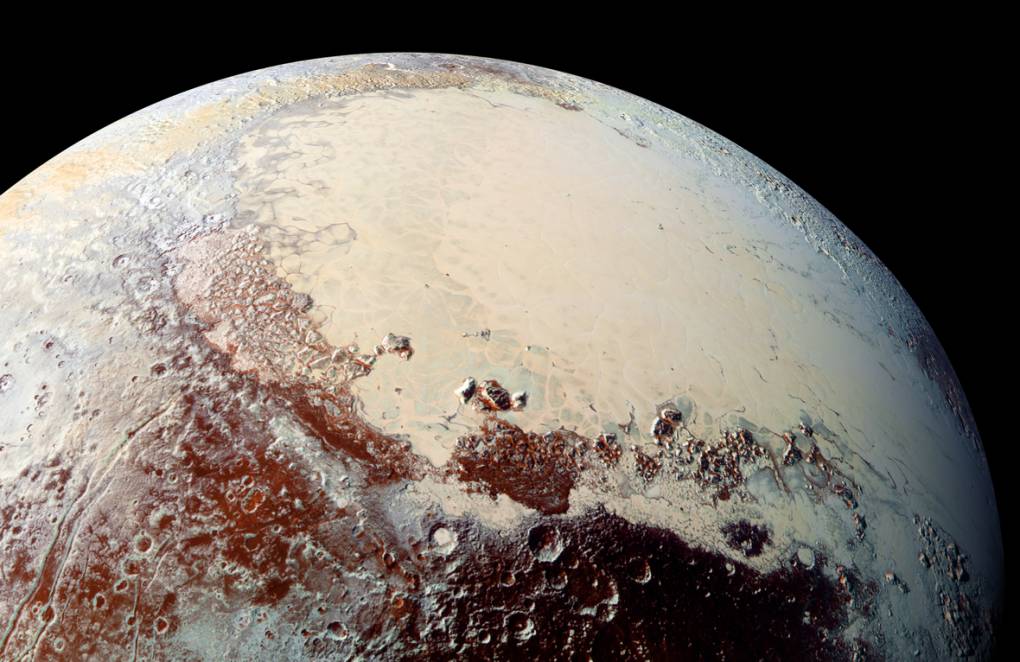
"caption": "High-resolution image of Pluto captured by NASA’s New Horizons spacecraft in January 2016.",
"description": "High-resolution image of Pluto captured by NASA’s New Horizons spacecraft in January 2016.",
"title": "Pluto-New-Horizons",
"credit": "NASA",
"status": "inherit",
"isLoading": false,
"fetchFailed": false
},
"science_1934475": {
"type": "attachments",
"id": "science_1934475",
"meta": {
"index": "attachments_1716263798",
"site": "science",
"id": "1934475",
"found": true
},
"parent": 1930023,
"imgSizes": {
"small": {
"file": "https://ww2.kqed.org/app/uploads/sites/35/2018/11/Planet_CampFire_181108-520x293.jpg",
"width": 520,
"mimeType": "image/jpeg",
"height": 293
},
"twentyfourteen-full-width": {
"file": "https://ww2.kqed.org/app/uploads/sites/35/2018/11/Planet_CampFire_181108-1038x576.jpg",
"width": 1038,
"mimeType": "image/jpeg",
"height": 576
},
"thumbnail": {
"file": "https://ww2.kqed.org/app/uploads/sites/35/2018/11/Planet_CampFire_181108-160x90.jpg",
"width": 160,
"mimeType": "image/jpeg",
"height": 90
},
"fd-sm": {
"file": "https://ww2.kqed.org/app/uploads/sites/35/2018/11/Planet_CampFire_181108-960x540.jpg",
"width": 960,
"mimeType": "image/jpeg",
"height": 540
},
"post-thumbnail": {
"file": "https://ww2.kqed.org/app/uploads/sites/35/2018/11/Planet_CampFire_181108-672x372.jpg",
"width": 672,
"mimeType": "image/jpeg",
"height": 372
},
"xsmall": {
"file": "https://ww2.kqed.org/app/uploads/sites/35/2018/11/Planet_CampFire_181108-375x211.jpg",
"width": 375,
"mimeType": "image/jpeg",
"height": 211
},
"kqedFullSize": {
"file": "https://ww2.kqed.org/app/uploads/sites/35/2018/11/Planet_CampFire_181108.jpg",
"width": 1920,
"height": 1080
},
"large": {
"file": "https://ww2.kqed.org/app/uploads/sites/35/2018/11/Planet_CampFire_181108-1020x574.jpg",
"width": 1020,
"mimeType": "image/jpeg",
"height": 574
},
"xlarge": {
"file": "https://ww2.kqed.org/app/uploads/sites/35/2018/11/Planet_CampFire_181108-1180x664.jpg",
"width": 1180,
"mimeType": "image/jpeg",
"height": 664
},
"complete_open_graph": {
"file": "https://ww2.kqed.org/app/uploads/sites/35/2018/11/Planet_CampFire_181108-1200x675.jpg",
"width": 1200,
"mimeType": "image/jpeg",
"height": 675
},
"guest-author-50": {
"file": "https://ww2.kqed.org/app/uploads/sites/35/2018/11/Planet_CampFire_181108-50x50.jpg",
"width": 50,
"mimeType": "image/jpeg",
"height": 50
},
"guest-author-96": {
"file": "https://ww2.kqed.org/app/uploads/sites/35/2018/11/Planet_CampFire_181108-96x96.jpg",
"width": 96,
"mimeType": "image/jpeg",
"height": 96
},
"medium": {
"file": "https://ww2.kqed.org/app/uploads/sites/35/2018/11/Planet_CampFire_181108-800x450.jpg",
"width": 800,
"mimeType": "image/jpeg",
"height": 450
},
"guest-author-64": {
"file": "https://ww2.kqed.org/app/uploads/sites/35/2018/11/Planet_CampFire_181108-64x64.jpg",
"width": 64,
"mimeType": "image/jpeg",
"height": 64
},
"guest-author-32": {
"file": "https://ww2.kqed.org/app/uploads/sites/35/2018/11/Planet_CampFire_181108-32x32.jpg",
"width": 32,
"mimeType": "image/jpeg",
"height": 32
},
"fd-lrg": {
"file": "https://ww2.kqed.org/app/uploads/sites/35/2018/11/Planet_CampFire_181108-1920x1080.jpg",
"width": 1920,
"mimeType": "image/jpeg",
"height": 1080
},
"fd-med": {
"file": "https://ww2.kqed.org/app/uploads/sites/35/2018/11/Planet_CampFire_181108-1180x664.jpg",
"width": 1180,
"mimeType": "image/jpeg",
"height": 664
},
"full-width": {
"file": "https://ww2.kqed.org/app/uploads/sites/35/2018/11/Planet_CampFire_181108-1920x1080.jpg",
"width": 1920,
"mimeType": "image/jpeg",
"height": 1080
},
"detail": {
"file": "https://ww2.kqed.org/app/uploads/sites/35/2018/11/Planet_CampFire_181108-150x150.jpg",
"width": 150,
"mimeType": "image/jpeg",
"height": 150
},
"medium_large": {
"file": "https://ww2.kqed.org/app/uploads/sites/35/2018/11/Planet_CampFire_181108-768x432.jpg",
"width": 768,
"mimeType": "image/jpeg",
"height": 432
},
"guest-author-128": {
"file": "https://ww2.kqed.org/app/uploads/sites/35/2018/11/Planet_CampFire_181108-128x128.jpg",
"width": 128,
"mimeType": "image/jpeg",
"height": 128
},
"xxsmall": {
"file": "https://ww2.kqed.org/app/uploads/sites/35/2018/11/Planet_CampFire_181108-240x135.jpg",
"width": 240,
"mimeType": "image/jpeg",
"height": 135
}
},
"publishDate": 1542399259,
"modified": 1542399317,
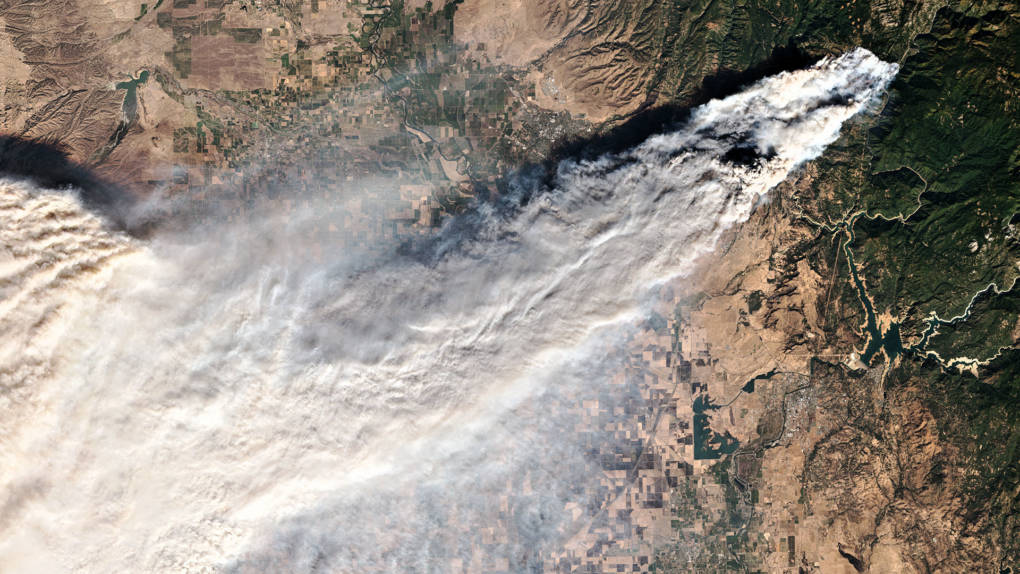
"caption": "Smoke blows over the Bay Area from the Camp Fire in Butte County.",
"description": "Smoke blows over the Bay Area from the Camp Fire in Butte County.",
"title": "Planet_CampFire_181108",
"credit": "Images provided by \u003ca href=\"https://www.planet.com\">Planet\u003c/a>",
"status": "inherit",
"isLoading": false,
"fetchFailed": false
},
"science_1942463": {
"type": "attachments",
"id": "science_1942463",
"meta": {
"index": "attachments_1716263798",
"site": "science",
"id": "1942463",
"found": true
},
"parent": 1941376,
"imgSizes": {
"twentyfourteen-full-width": {
"file": "https://ww2.kqed.org/app/uploads/sites/35/2029/05/California-wildfire-1038x576.jpg",
"width": 1038,
"mimeType": "image/jpeg",
"height": 576
},
"thumbnail": {
"file": "https://ww2.kqed.org/app/uploads/sites/35/2029/05/California-wildfire-160x107.jpg",
"width": 160,
"mimeType": "image/jpeg",
"height": 107
},
"post-thumbnail": {
"file": "https://ww2.kqed.org/app/uploads/sites/35/2029/05/California-wildfire-672x372.jpg",
"width": 672,
"mimeType": "image/jpeg",
"height": 372
},
"kqedFullSize": {
"file": "https://ww2.kqed.org/app/uploads/sites/35/2029/05/California-wildfire.jpg",
"width": 1920,
"height": 1280
},
"large": {
"file": "https://ww2.kqed.org/app/uploads/sites/35/2029/05/California-wildfire-1020x680.jpg",
"width": 1020,
"mimeType": "image/jpeg",
"height": 680
},
"complete_open_graph": {
"file": "https://ww2.kqed.org/app/uploads/sites/35/2029/05/California-wildfire-1200x800.jpg",
"width": 1200,
"mimeType": "image/jpeg",
"height": 800
},
"full-width": {
"file": "https://ww2.kqed.org/app/uploads/sites/35/2029/05/California-wildfire-1920x1280.jpg",
"width": 1920,
"mimeType": "image/jpeg",
"height": 1280
},
"medium": {
"file": "https://ww2.kqed.org/app/uploads/sites/35/2029/05/California-wildfire-800x533.jpg",
"width": 800,
"mimeType": "image/jpeg",
"height": 533
},
"medium_large": {
"file": "https://ww2.kqed.org/app/uploads/sites/35/2029/05/California-wildfire-768x512.jpg",
"width": 768,
"mimeType": "image/jpeg",
"height": 512
}
},
"publishDate": 1559166249,
"modified": 1576012382,
"caption": "Embers fly as wind and flames from the Camp fire tear through Paradise, California on Nov. 8, 2018.",
"description": null,
"title": "US-FIRE-WEATHER",
"credit": "Josh Edelson/AFP/Getty Images",
"status": "inherit",
"isLoading": false,
"fetchFailed": false
},
"science_1951124": {
"type": "attachments",
"id": "science_1951124",
"meta": {
"index": "attachments_1716263798",
"site": "science",
"id": "1951124",
"found": true
},
"parent": 1951118,
"imgSizes": {
"twentyfourteen-full-width": {
"file": "https://ww2.kqed.org/app/uploads/sites/35/2019/11/RS34825_GettyImages-1059345288-qut-1038x576.jpg",
"width": 1038,
"mimeType": "image/jpeg",
"height": 576
},
"thumbnail": {
"file": "https://ww2.kqed.org/app/uploads/sites/35/2019/11/RS34825_GettyImages-1059345288-qut-160x107.jpg",
"width": 160,
"mimeType": "image/jpeg",
"height": 107
},
"post-thumbnail": {
"file": "https://ww2.kqed.org/app/uploads/sites/35/2019/11/RS34825_GettyImages-1059345288-qut-672x372.jpg",
"width": 672,
"mimeType": "image/jpeg",
"height": 372
},
"kqedFullSize": {
"file": "https://ww2.kqed.org/app/uploads/sites/35/2019/11/RS34825_GettyImages-1059345288-qut.jpg",
"width": 1920,
"height": 1281
},
"large": {
"file": "https://ww2.kqed.org/app/uploads/sites/35/2019/11/RS34825_GettyImages-1059345288-qut-1020x681.jpg",
"width": 1020,
"mimeType": "image/jpeg",
"height": 681
},
"complete_open_graph": {
"file": "https://ww2.kqed.org/app/uploads/sites/35/2019/11/RS34825_GettyImages-1059345288-qut-1200x801.jpg",
"width": 1200,
"mimeType": "image/jpeg",
"height": 801
},
"full-width": {
"file": "https://ww2.kqed.org/app/uploads/sites/35/2019/11/RS34825_GettyImages-1059345288-qut-1920x1281.jpg",
"width": 1920,
"mimeType": "image/jpeg",
"height": 1281
},
"medium": {
"file": "https://ww2.kqed.org/app/uploads/sites/35/2019/11/RS34825_GettyImages-1059345288-qut-800x534.jpg",
"width": 800,
"mimeType": "image/jpeg",
"height": 534
},
"medium_large": {
"file": "https://ww2.kqed.org/app/uploads/sites/35/2019/11/RS34825_GettyImages-1059345288-qut-768x512.jpg",
"width": 768,
"mimeType": "image/jpeg",
"height": 512
}
},
"publishDate": 1574704044,
"modified": 1574704088,
"caption": "A hospital worker embraces her co-worker as they evacuate patients from the Feather River Hospital during the Camp Fire on November 8, 2018 in Paradise, California. ",
"description": null,
"title": "Rapidly-Spreading Wildfire In California's Butte County Prompts Evacuations",
"credit": " Justin Sullivan/Getty Images",
"status": "inherit",
"isLoading": false,
"fetchFailed": false
},
"science_1950844": {
"type": "attachments",
"id": "science_1950844",
"meta": {
"index": "attachments_1716263798",
"site": "science",
"id": "1950844",
"found": true
},
"parent": 1950842,
"imgSizes": {
"twentyfourteen-full-width": {
"file": "https://ww2.kqed.org/app/uploads/sites/35/2019/11/GettyImages-1183840160-1038x576.jpg",
"width": 1038,
"mimeType": "image/jpeg",
"height": 576
},
"thumbnail": {
"file": "https://ww2.kqed.org/app/uploads/sites/35/2019/11/GettyImages-1183840160-160x108.jpg",
"width": 160,
"mimeType": "image/jpeg",
"height": 108
},
"post-thumbnail": {
"file": "https://ww2.kqed.org/app/uploads/sites/35/2019/11/GettyImages-1183840160-672x372.jpg",
"width": 672,
"mimeType": "image/jpeg",
"height": 372
},
"kqedFullSize": {
"file": "https://ww2.kqed.org/app/uploads/sites/35/2019/11/GettyImages-1183840160-e1573600440233.jpg",
"width": 1925,
"height": 1298
},
"large": {
"file": "https://ww2.kqed.org/app/uploads/sites/35/2019/11/GettyImages-1183840160-1020x688.jpg",
"width": 1020,
"mimeType": "image/jpeg",
"height": 688
},
"complete_open_graph": {
"file": "https://ww2.kqed.org/app/uploads/sites/35/2019/11/GettyImages-1183840160-1200x809.jpg",
"width": 1200,
"mimeType": "image/jpeg",
"height": 809
},
"full-width": {
"file": "https://ww2.kqed.org/app/uploads/sites/35/2019/11/GettyImages-1183840160-1920x1295.jpg",
"width": 1920,
"mimeType": "image/jpeg",
"height": 1295
},
"medium": {
"file": "https://ww2.kqed.org/app/uploads/sites/35/2019/11/GettyImages-1183840160-800x539.jpg",
"width": 800,
"mimeType": "image/jpeg",
"height": 539
},
"medium_large": {
"file": "https://ww2.kqed.org/app/uploads/sites/35/2019/11/GettyImages-1183840160-768x518.jpg",
"width": 768,
"mimeType": "image/jpeg",
"height": 518
}
},
"publishDate": 1573600399,
"modified": 1573600431,
"caption": "A firefighter walks through heavy smoke as he battles the Kincade Fire on October 27, 2019 in Windsor, California. ",
"description": null,
"title": "Evacuations Issued For Parts of Sonoma County As Kincade Fire Spreads",
"credit": "Photo by Justin Sullivan/Getty Images",
"status": "inherit",
"isLoading": false,
"fetchFailed": false
},
"science_1950792": {
"type": "attachments",
"id": "science_1950792",
"meta": {
"index": "attachments_1716263798",
"site": "science",
"id": "1950792",
"found": true
},
"parent": 1950762,
"imgSizes": {
"twentyfourteen-full-width": {
"file": "https://ww2.kqed.org/app/uploads/sites/35/2019/11/mark-prell-edited-1038x576.jpg",
"width": 1038,
"mimeType": "image/jpeg",
"height": 576
},
"thumbnail": {
"file": "https://ww2.kqed.org/app/uploads/sites/35/2019/11/mark-prell-edited-160x121.jpg",
"width": 160,
"mimeType": "image/jpeg",
"height": 121
},
"post-thumbnail": {
"file": "https://ww2.kqed.org/app/uploads/sites/35/2019/11/mark-prell-edited-672x372.jpg",
"width": 672,
"mimeType": "image/jpeg",
"height": 372
},
"kqedFullSize": {
"file": "https://ww2.kqed.org/app/uploads/sites/35/2019/11/mark-prell-edited.jpg",
"width": 1519,
"height": 1149
},
"large": {
"file": "https://ww2.kqed.org/app/uploads/sites/35/2019/11/mark-prell-edited-1020x772.jpg",
"width": 1020,
"mimeType": "image/jpeg",
"height": 772
},
"complete_open_graph": {
"file": "https://ww2.kqed.org/app/uploads/sites/35/2019/11/mark-prell-edited-1200x908.jpg",
"width": 1200,
"mimeType": "image/jpeg",
"height": 908
},
"medium": {
"file": "https://ww2.kqed.org/app/uploads/sites/35/2019/11/mark-prell-edited-800x605.jpg",
"width": 800,
"mimeType": "image/jpeg",
"height": 605
},
"medium_large": {
"file": "https://ww2.kqed.org/app/uploads/sites/35/2019/11/mark-prell-edited-768x581.jpg",
"width": 768,
"mimeType": "image/jpeg",
"height": 581
}
},
"publishDate": 1573233276,
"modified": 1573233308,
"caption": "Announcer/operator Mark Prell at the helm of KRCB-FM Radio 91 during Kincade Fire coverage.",
"description": "Man in a radio studio.",
"title": "mark-prell-edited",
"credit": "Danielle Venton/KQED",
"status": "inherit",
"isLoading": false,
"fetchFailed": false
},
"science_1950737": {
"type": "attachments",
"id": "science_1950737",
"meta": {
"index": "attachments_1716263798",
"site": "science",
"id": "1950737",
"found": true
},
"parent": 1950703,
"imgSizes": {
"twentyfourteen-full-width": {
"file": "https://ww2.kqed.org/app/uploads/sites/35/2019/11/GettyImages-1178969847-1038x576.jpg",
"width": 1038,
"mimeType": "image/jpeg",
"height": 576
},
"thumbnail": {
"file": "https://ww2.kqed.org/app/uploads/sites/35/2019/11/GettyImages-1178969847-160x107.jpg",
"width": 160,
"mimeType": "image/jpeg",
"height": 107
},
"post-thumbnail": {
"file": "https://ww2.kqed.org/app/uploads/sites/35/2019/11/GettyImages-1178969847-672x372.jpg",
"width": 672,
"mimeType": "image/jpeg",
"height": 372
},
"kqedFullSize": {
"file": "https://ww2.kqed.org/app/uploads/sites/35/2019/11/GettyImages-1178969847-e1573063276762.jpg",
"width": 1925,
"height": 1283
},
"large": {
"file": "https://ww2.kqed.org/app/uploads/sites/35/2019/11/GettyImages-1178969847-1020x680.jpg",
"width": 1020,
"mimeType": "image/jpeg",
"height": 680
},
"complete_open_graph": {
"file": "https://ww2.kqed.org/app/uploads/sites/35/2019/11/GettyImages-1178969847-1200x800.jpg",
"width": 1200,
"mimeType": "image/jpeg",
"height": 800
},
"full-width": {
"file": "https://ww2.kqed.org/app/uploads/sites/35/2019/11/GettyImages-1178969847-1920x1280.jpg",
"width": 1920,
"mimeType": "image/jpeg",
"height": 1280
},
"medium": {
"file": "https://ww2.kqed.org/app/uploads/sites/35/2019/11/GettyImages-1178969847-800x533.jpg",
"width": 800,
"mimeType": "image/jpeg",
"height": 533
},
"medium_large": {
"file": "https://ww2.kqed.org/app/uploads/sites/35/2019/11/GettyImages-1178969847-768x512.jpg",
"width": 768,
"mimeType": "image/jpeg",
"height": 512
}
},
"publishDate": 1573063217,
"modified": 1573074745,
"caption": "A strong gust of wind blows embers from a burning tree across Ida Clayton Road during the Kincade fire near Knights Valley, east of Healdsburg, California on Oct. 29, 2019.",
"description": null,
"title": "TOPSHOT-US-CALIFORNIA-FIRES",
"credit": "PHILIP PACHECO/AFP via Getty Images",
"status": "inherit",
"isLoading": false,
"fetchFailed": false
},
"science_1950579": {
"type": "attachments",
"id": "science_1950579",
"meta": {
"index": "attachments_1716263798",
"site": "science",
"id": "1950579",
"found": true
},
"parent": 1950575,
"imgSizes": {
"twentyfourteen-full-width": {
"file": "https://ww2.kqed.org/app/uploads/sites/35/2019/11/Home-battery-1038x576.jpg",
"width": 1038,
"mimeType": "image/jpeg",
"height": 576
},
"thumbnail": {
"file": "https://ww2.kqed.org/app/uploads/sites/35/2019/11/Home-battery-160x102.jpg",
"width": 160,
"mimeType": "image/jpeg",
"height": 102
},
"post-thumbnail": {
"file": "https://ww2.kqed.org/app/uploads/sites/35/2019/11/Home-battery-672x372.jpg",
"width": 672,
"mimeType": "image/jpeg",
"height": 372
},
"kqedFullSize": {
"file": "https://ww2.kqed.org/app/uploads/sites/35/2019/11/Home-battery.jpg",
"width": 1920,
"height": 1224
},
"large": {
"file": "https://ww2.kqed.org/app/uploads/sites/35/2019/11/Home-battery-1020x650.jpg",
"width": 1020,
"mimeType": "image/jpeg",
"height": 650
},
"complete_open_graph": {
"file": "https://ww2.kqed.org/app/uploads/sites/35/2019/11/Home-battery-1200x765.jpg",
"width": 1200,
"mimeType": "image/jpeg",
"height": 765
},
"full-width": {
"file": "https://ww2.kqed.org/app/uploads/sites/35/2019/11/Home-battery-1920x1224.jpg",
"width": 1920,
"mimeType": "image/jpeg",
"height": 1224
},
"medium": {
"file": "https://ww2.kqed.org/app/uploads/sites/35/2019/11/Home-battery-800x510.jpg",
"width": 800,
"mimeType": "image/jpeg",
"height": 510
},
"medium_large": {
"file": "https://ww2.kqed.org/app/uploads/sites/35/2019/11/Home-battery-768x490.jpg",
"width": 768,
"mimeType": "image/jpeg",
"height": 490
}
},
"publishDate": 1572646036,
"modified": 1572649453,
"caption": "Two Tesla batteries kept Howard Matis' lights on during the recent PG&E blackout.",
"description": null,
"title": "Home-battery",
"credit": "Lauren Sommer/KQED",
"status": "inherit",
"isLoading": false,
"fetchFailed": false
},
"science_1950445": {
"type": "attachments",
"id": "science_1950445",
"meta": {
"index": "attachments_1716263798",
"site": "science",
"id": "1950445",
"found": true
},
"parent": 1928658,
"imgSizes": {
"twentyfourteen-full-width": {
"file": "https://ww2.kqed.org/app/uploads/sites/35/2018/08/Image-from-iOS-1038x576.jpg",
"width": 1038,
"mimeType": "image/jpeg",
"height": 576
},
"thumbnail": {
"file": "https://ww2.kqed.org/app/uploads/sites/35/2018/08/Image-from-iOS-160x120.jpg",
"width": 160,
"mimeType": "image/jpeg",
"height": 120
},
"post-thumbnail": {
"file": "https://ww2.kqed.org/app/uploads/sites/35/2018/08/Image-from-iOS-672x372.jpg",
"width": 672,
"mimeType": "image/jpeg",
"height": 372
},
"kqedFullSize": {
"file": "https://ww2.kqed.org/app/uploads/sites/35/2018/08/Image-from-iOS.jpg",
"width": 4032,
"height": 3024
},
"large": {
"file": "https://ww2.kqed.org/app/uploads/sites/35/2018/08/Image-from-iOS-1020x765.jpg",
"width": 1020,
"mimeType": "image/jpeg",
"height": 765
},
"complete_open_graph": {
"file": "https://ww2.kqed.org/app/uploads/sites/35/2018/08/Image-from-iOS-1200x900.jpg",
"width": 1200,
"mimeType": "image/jpeg",
"height": 900
},
"full-width": {
"file": "https://ww2.kqed.org/app/uploads/sites/35/2018/08/Image-from-iOS-1920x1440.jpg",
"width": 1920,
"mimeType": "image/jpeg",
"height": 1440
},
"medium": {
"file": "https://ww2.kqed.org/app/uploads/sites/35/2018/08/Image-from-iOS-800x600.jpg",
"width": 800,
"mimeType": "image/jpeg",
"height": 600
},
"medium_large": {
"file": "https://ww2.kqed.org/app/uploads/sites/35/2018/08/Image-from-iOS-768x576.jpg",
"width": 768,
"mimeType": "image/jpeg",
"height": 576
}
},
"publishDate": 1572379777,
"modified": 1572538095,
"caption": "Danielle Bryant waits for updates, and a change in the weather, outside her workplace in Santa Rosa on Oct. 28, 2019.",
"description": "Danielle Bryant waits for updates - and a change in the weather - outside her workplace in Santa Rosa on October 28, 2019.",
"title": "Image from iOS",
"credit": "Lesley McClurg/KQED Science",
"status": "inherit",
"isLoading": false,
"fetchFailed": false
},
"science_1950372": {
"type": "attachments",
"id": "science_1950372",
"meta": {
"index": "attachments_1716263798",
"site": "science",
"id": "1950372",
"found": true
},
"parent": 1950367,
"imgSizes": {
"twentyfourteen-full-width": {
"file": "https://ww2.kqed.org/app/uploads/sites/35/2019/10/GettyImages-1177955433-1-1038x576.jpg",
"width": 1038,
"mimeType": "image/jpeg",
"height": 576
},
"thumbnail": {
"file": "https://ww2.kqed.org/app/uploads/sites/35/2019/10/GettyImages-1177955433-1-160x106.jpg",
"width": 160,
"mimeType": "image/jpeg",
"height": 106
},
"post-thumbnail": {
"file": "https://ww2.kqed.org/app/uploads/sites/35/2019/10/GettyImages-1177955433-1-672x372.jpg",
"width": 672,
"mimeType": "image/jpeg",
"height": 372
},
"kqedFullSize": {
"file": "https://ww2.kqed.org/app/uploads/sites/35/2019/10/GettyImages-1177955433-1.jpg",
"width": 4871,
"height": 3242
},
"large": {
"file": "https://ww2.kqed.org/app/uploads/sites/35/2019/10/GettyImages-1177955433-1-1020x679.jpg",
"width": 1020,
"mimeType": "image/jpeg",
"height": 679
},
"complete_open_graph": {
"file": "https://ww2.kqed.org/app/uploads/sites/35/2019/10/GettyImages-1177955433-1-1200x799.jpg",
"width": 1200,
"mimeType": "image/jpeg",
"height": 799
},
"full-width": {
"file": "https://ww2.kqed.org/app/uploads/sites/35/2019/10/GettyImages-1177955433-1-1920x1278.jpg",
"width": 1920,
"mimeType": "image/jpeg",
"height": 1278
},
"medium": {
"file": "https://ww2.kqed.org/app/uploads/sites/35/2019/10/GettyImages-1177955433-1-800x532.jpg",
"width": 800,
"mimeType": "image/jpeg",
"height": 532
},
"medium_large": {
"file": "https://ww2.kqed.org/app/uploads/sites/35/2019/10/GettyImages-1177955433-1-768x511.jpg",
"width": 768,
"mimeType": "image/jpeg",
"height": 511
}
},
"publishDate": 1572305699,
"modified": 1572305838,
"caption": "Embers rise above a burning tree along a road during the Kincade fire near Geyserville. ",
"description": null,
"title": "US-CALIFORNIA-FIRE",
"credit": "Josh Edelson/AFP via Getty Images",
"status": "inherit",
"isLoading": false,
"fetchFailed": false
},
"science_1950004": {
"type": "attachments",
"id": "science_1950004",
"meta": {
"index": "attachments_1716263798",
"site": "science",
"id": "1950004",
"found": true
},
"parent": 1949911,
"imgSizes": {
"twentyfourteen-full-width": {
"file": "https://ww2.kqed.org/app/uploads/sites/35/2019/10/Kincade-Fire-Map-1038x576.png",
"width": 1038,
"mimeType": "image/png",
"height": 576
},
"thumbnail": {
"file": "https://ww2.kqed.org/app/uploads/sites/35/2019/10/Kincade-Fire-Map-160x79.png",
"width": 160,
"mimeType": "image/png",
"height": 79
},
"post-thumbnail": {
"file": "https://ww2.kqed.org/app/uploads/sites/35/2019/10/Kincade-Fire-Map-672x372.png",
"width": 672,
"mimeType": "image/png",
"height": 372
},
"kqedFullSize": {
"file": "https://ww2.kqed.org/app/uploads/sites/35/2019/10/Kincade-Fire-Map-e1571960792348.png",
"width": 1920,
"height": 949
},
"large": {
"file": "https://ww2.kqed.org/app/uploads/sites/35/2019/10/Kincade-Fire-Map-1020x504.png",
"width": 1020,
"mimeType": "image/png",
"height": 504
},
"complete_open_graph": {
"file": "https://ww2.kqed.org/app/uploads/sites/35/2019/10/Kincade-Fire-Map-1200x593.png",
"width": 1200,
"mimeType": "image/png",
"height": 593
},
"full-width": {
"file": "https://ww2.kqed.org/app/uploads/sites/35/2019/10/Kincade-Fire-Map-1920x949.png",
"width": 1920,
"mimeType": "image/png",
"height": 949
},
"medium": {
"file": "https://ww2.kqed.org/app/uploads/sites/35/2019/10/Kincade-Fire-Map-800x395.png",
"width": 800,
"mimeType": "image/png",
"height": 395
},
"medium_large": {
"file": "https://ww2.kqed.org/app/uploads/sites/35/2019/10/Kincade-Fire-Map-768x380.png",
"width": 768,
"mimeType": "image/png",
"height": 380
}
},
"publishDate": 1571960763,
"modified": 1571960763,
"caption": null,
"description": null,
"title": "Kincade Fire Map",
"credit": null,
"status": "inherit",
"isLoading": false,
"fetchFailed": false
},
"science_1950308": {
"type": "attachments",
"id": "science_1950308",
"meta": {
"index": "attachments_1716263798",
"site": "science",
"id": "1950308",
"found": true
},
"parent": 1950014,
"imgSizes": {
"twentyfourteen-full-width": {
"file": "https://ww2.kqed.org/app/uploads/sites/35/2019/10/GettyImages-1183853585-1038x576.jpg",
"width": 1038,
"mimeType": "image/jpeg",
"height": 576
},
"thumbnail": {
"file": "https://ww2.kqed.org/app/uploads/sites/35/2019/10/GettyImages-1183853585-160x107.jpg",
"width": 160,
"mimeType": "image/jpeg",
"height": 107
},
"post-thumbnail": {
"file": "https://ww2.kqed.org/app/uploads/sites/35/2019/10/GettyImages-1183853585-672x372.jpg",
"width": 672,
"mimeType": "image/jpeg",
"height": 372
},
"kqedFullSize": {
"file": "https://ww2.kqed.org/app/uploads/sites/35/2019/10/GettyImages-1183853585.jpg",
"width": 5472,
"height": 3648
},
"large": {
"file": "https://ww2.kqed.org/app/uploads/sites/35/2019/10/GettyImages-1183853585-1020x680.jpg",
"width": 1020,
"mimeType": "image/jpeg",
"height": 680
},
"complete_open_graph": {
"file": "https://ww2.kqed.org/app/uploads/sites/35/2019/10/GettyImages-1183853585-1200x800.jpg",
"width": 1200,
"mimeType": "image/jpeg",
"height": 800
},
"full-width": {
"file": "https://ww2.kqed.org/app/uploads/sites/35/2019/10/GettyImages-1183853585-1920x1280.jpg",
"width": 1920,
"mimeType": "image/jpeg",
"height": 1280
},
"medium": {
"file": "https://ww2.kqed.org/app/uploads/sites/35/2019/10/GettyImages-1183853585-800x533.jpg",
"width": 800,
"mimeType": "image/jpeg",
"height": 533
},
"medium_large": {
"file": "https://ww2.kqed.org/app/uploads/sites/35/2019/10/GettyImages-1183853585-768x512.jpg",
"width": 768,
"mimeType": "image/jpeg",
"height": 512
}
},
"publishDate": 1572285946,
"modified": 1572286042,
"caption": "A helicopter drops water on the Kincade Fire as it burns through the Windsor area on Sunday.",
"description": null,
"title": "Evacuations Issued For Parts of Sonoma County As Kincade Fire Spreads",
"credit": "Photo by Justin Sullivan/Getty Images",
"status": "inherit",
"isLoading": false,
"fetchFailed": false
}
},
"audioPlayerReducer": {
"postId": "stream_live",
"isPaused": true,
"isPlaying": false,
"pfsActive": false,
"pledgeModalIsOpen": true,
"playerDrawerIsOpen": false,
"liveAudioPlayStartedAt": 0,
"liveAudioPlayContext": ""
},
"authorsReducer": {
"byline_science_1951118": {
"type": "authors",
"id": "byline_science_1951118",
"meta": {
"override": true
},
"slug": "byline_science_1951118",
"name": "InsideClimate News",
"isLoading": false
},
"byline_science_1950842": {
"type": "authors",
"id": "byline_science_1950842",
"meta": {
"override": true
},
"slug": "byline_science_1950842",
"name": "Rachel Becker \u003cbr/>CalMatters\u003cbr>",
"isLoading": false
},
"katsnow": {
"type": "authors",
"id": "235",
"meta": {
"index": "authors_1716337520",
"id": "235",
"found": true
},
"name": "Katrin Snow",
"firstName": "Katrin",
"lastName": "Snow",
"slug": "katsnow",
"email": "ksnow@kqed.org",
"display_author_email": true,
"staff_mastheads": [
"science"
],
"title": "Senior Editor",
"bio": "Kat started in radio in 1985 at KMUN in Astoria, Oregon, where the Columbia River meets the sea. She worked several years protecting monarch butterfly habitat in California with the Xerces Society, an invertebrate conservation organization, before a love for radio news drew her back into journalism. Kat came to KQED in 2002, and before that was a reporter and news director at KUER in Salt Lake City, covering the state legislature, the environment and health. Kat coaches reporters and others in embodied narration and public speaking. She is a certified teacher of Soul Motion®, a conscious dance practice, and can sometimes be found in the Mojave desert or the Eastern Sierra.",
"avatar": "https://secure.gravatar.com/avatar/fa6bf8a74a2692973a5484e64ebd2b52?s=600&d=blank&r=g",
"twitter": "cosmologicalkat",
"facebook": null,
"instagram": null,
"linkedin": null,
"sites": [
{
"site": "arts",
"roles": [
"contributor"
]
},
{
"site": "news",
"roles": [
"editor"
]
},
{
"site": "futureofyou",
"roles": [
"editor"
]
},
{
"site": "science",
"roles": [
"editor"
]
}
],
"headData": {
"title": "Katrin Snow | KQED",
"description": "Senior Editor",
"ogImgSrc": "https://secure.gravatar.com/avatar/fa6bf8a74a2692973a5484e64ebd2b52?s=600&d=blank&r=g",
"twImgSrc": "https://secure.gravatar.com/avatar/fa6bf8a74a2692973a5484e64ebd2b52?s=600&d=blank&r=g"
},
"isLoading": false,
"link": "/author/katsnow"
},
"laurensommer": {
"type": "authors",
"id": "239",
"meta": {
"index": "authors_1716337520",
"id": "239",
"found": true
},
"name": "Lauren Sommer",
"firstName": "Lauren",
"lastName": "Sommer",
"slug": "laurensommer",
"email": "lsommer@kqed.org",
"display_author_email": false,
"staff_mastheads": [],
"title": "KQED Contributor",
"bio": "Lauren is a radio reporter formerly covering environment, water, and energy for KQED Science. As part of her day job, she has scaled Sierra Nevada peaks, run from charging elephant seals, and desperately tried to get her sea legs - all in pursuit of good radio. Her work has appeared on Marketplace, Living on Earth, Science Friday and NPR's Morning Edition and All Things Considered. You can find her on Twitter at \u003ca href=\"https://twitter.com/lesommer\">@lesommer\u003c/a>.",
"avatar": "https://secure.gravatar.com/avatar/33aa3772bb86c6ad45b8aca6a238bbdf?s=600&d=blank&r=g",
"twitter": null,
"facebook": null,
"instagram": null,
"linkedin": null,
"sites": [
{
"site": "news",
"roles": [
"author"
]
},
{
"site": "science",
"roles": [
"editor",
"manage_content_types",
"manage_taxonomies"
]
},
{
"site": "quest",
"roles": [
"editor"
]
}
],
"headData": {
"title": "Lauren Sommer | KQED",
"description": "KQED Contributor",
"ogImgSrc": "https://secure.gravatar.com/avatar/33aa3772bb86c6ad45b8aca6a238bbdf?s=600&d=blank&r=g",
"twImgSrc": "https://secure.gravatar.com/avatar/33aa3772bb86c6ad45b8aca6a238bbdf?s=600&d=blank&r=g"
},
"isLoading": false,
"link": "/author/laurensommer"
},
"kqedscience": {
"type": "authors",
"id": "6387",
"meta": {
"index": "authors_1716337520",
"id": "6387",
"found": true
},
"name": "KQED Science",
"firstName": "KQED",
"lastName": "Science",
"slug": "kqedscience",
"email": "kqedscience@gmail.com",
"display_author_email": false,
"staff_mastheads": [],
"title": null,
"bio": "KQED Science brings you award-winning science and environment coverage from the Bay Area and beyond by the flagship Northern California PBS and NPR affiliate.",
"avatar": "https://secure.gravatar.com/avatar/5a295ff49cf82a8c0f30937d3f788b2f?s=600&d=blank&r=g",
"twitter": null,
"facebook": null,
"instagram": null,
"linkedin": null,
"sites": [
{
"site": "science",
"roles": [
"contributor"
]
},
{
"site": "quest",
"roles": [
"editor"
]
},
{
"site": "food",
"roles": [
"contributor"
]
}
],
"headData": {
"title": "KQED Science | KQED",
"description": null,
"ogImgSrc": "https://secure.gravatar.com/avatar/5a295ff49cf82a8c0f30937d3f788b2f?s=600&d=blank&r=g",
"twImgSrc": "https://secure.gravatar.com/avatar/5a295ff49cf82a8c0f30937d3f788b2f?s=600&d=blank&r=g"
},
"isLoading": false,
"link": "/author/kqedscience"
},
"dventon": {
"type": "authors",
"id": "11088",
"meta": {
"index": "authors_1716337520",
"id": "11088",
"found": true
},
"name": "Danielle Venton",
"firstName": "Danielle",
"lastName": "Venton",
"slug": "dventon",
"email": "dventon@kqed.org",
"display_author_email": true,
"staff_mastheads": [
"science"
],
"title": "Science reporter",
"bio": "Danielle Venton is a reporter for KQED Science. She covers wildfires, space and oceans (though she is prone to sea sickness).\r\n\r\nBefore joining KQED in 2015, Danielle was a staff reporter at KRCB in Sonoma County and a freelancer. She studied science communication at UC Santa Cruz and formerly worked at CERN in Geneva, Switzerland where she wrote about computing. She lives in Sonoma County and enjoys backpacking.",
"avatar": "https://secure.gravatar.com/avatar/37b292b5c40c8d93959c4f48d73b5286f41b7abd8588277e941905a3ed4c801c?s=600&d=blank&r=g",
"twitter": "DanielleVenton",
"bluesky": null,
"facebook": null,
"instagram": null,
"linkedin": null,
"sites": [
{
"site": "arts",
"roles": [
"contributor"
]
},
{
"site": "news",
"roles": [
"editor"
]
},
{
"site": "futureofyou",
"roles": [
"editor"
]
},
{
"site": "science",
"roles": [
"editor"
]
},
{
"site": "liveblog",
"roles": [
"contributor"
]
}
],
"headData": {
"title": "Danielle Venton | KQED",
"description": "Science reporter",
"ogImgSrc": "https://secure.gravatar.com/avatar/37b292b5c40c8d93959c4f48d73b5286f41b7abd8588277e941905a3ed4c801c?s=600&d=blank&r=g",
"twImgSrc": "https://secure.gravatar.com/avatar/37b292b5c40c8d93959c4f48d73b5286f41b7abd8588277e941905a3ed4c801c?s=600&d=blank&r=g"
},
"isLoading": false,
"link": "/author/dventon"
},
"lesleymcclurg": {
"type": "authors",
"id": "11229",
"meta": {
"index": "authors_1716337520",
"id": "11229",
"found": true
},
"name": "Lesley McClurg",
"firstName": "Lesley",
"lastName": "McClurg",
"slug": "lesleymcclurg",
"email": "lmcclurg@KQED.org",
"display_author_email": false,
"staff_mastheads": [],
"title": "KQED Health Correspondent",
"bio": "Lesley McClurg is a health correspondent and fill-in host whose work is regularly rebroadcast on NPR and PBS programs. She’s earned multiple regional Emmy awards, a national and a regional Edward R. Murrow award, and was named Best Beat Reporter by the Association of Health Care Journalists. The Society of Professional Journalists has recognized her work several times, and the Society of Environmental Journalists spotlighted her coverage of California’s historic drought.\r\n\r\nBefore joining KQED in 2016, Lesley covered food and sustainability for Capital Public Radio, environmental issues for Colorado Public Radio, and reported for KUOW and KCTS 9 in Seattle. Away from the newsroom, she loves skiing with her daughter, mountain biking with her partner, and playing with Ollie, the family’s goldendoodle. On deadline, she runs almost entirely on chocolate chips.\r\n\r\n ",
"avatar": "https://secure.gravatar.com/avatar/bab49e972ea10c774fe0f5e29dba1722b158f7c0d58a360923d1389d380b2978?s=600&d=blank&r=g",
"twitter": "lesleywmcclurg",
"bluesky": null,
"facebook": null,
"instagram": null,
"linkedin": null,
"sites": [
{
"site": "arts",
"roles": [
"subscriber"
]
},
{
"site": "news",
"roles": [
"subscriber"
]
},
{
"site": "futureofyou",
"roles": [
"subscriber"
]
},
{
"site": "stateofhealth",
"roles": [
"subscriber"
]
},
{
"site": "science",
"roles": [
"subscriber"
]
},
{
"site": "quest",
"roles": [
"subscriber"
]
},
{
"site": "forum",
"roles": [
"subscriber"
]
},
{
"site": "liveblog",
"roles": [
"subscriber"
]
}
],
"headData": {
"title": "Lesley McClurg | KQED",
"description": "KQED Health Correspondent",
"ogImgSrc": "https://secure.gravatar.com/avatar/bab49e972ea10c774fe0f5e29dba1722b158f7c0d58a360923d1389d380b2978?s=600&d=blank&r=g",
"twImgSrc": "https://secure.gravatar.com/avatar/bab49e972ea10c774fe0f5e29dba1722b158f7c0d58a360923d1389d380b2978?s=600&d=blank&r=g"
},
"isLoading": false,
"link": "/author/lesleymcclurg"
},
"kevinstark": {
"type": "authors",
"id": "11608",
"meta": {
"index": "authors_1716337520",
"id": "11608",
"found": true
},
"name": "Kevin Stark",
"firstName": "Kevin",
"lastName": "Stark",
"slug": "kevinstark",
"email": "kstark@kqed.org",
"display_author_email": true,
"staff_mastheads": [
"science"
],
"title": "Senior Editor",
"bio": "Kevin is a senior editor for KQED Science, managing the station's health and climate desks. His journalism career began in the Pacific Northwest, and he later became a lead reporter for the San Francisco Public Press. His work has appeared in Pacific Standard magazine, the Energy News Network, the Center for Investigative Reporting's Reveal and WBEZ in Chicago. Kevin joined KQED in 2019, and has covered issues related to energy, wildfire, climate change and the environment.",
"avatar": "https://secure.gravatar.com/avatar/365aaa4b597d3a8374f67504ff0facd323d7906e8eb4be0a7efd2427408e802c?s=600&d=blank&r=g",
"twitter": "starkkev",
"bluesky": null,
"facebook": null,
"instagram": null,
"linkedin": null,
"sites": [
{
"site": "",
"roles": [
"editor"
]
},
{
"site": "news",
"roles": [
"editor"
]
},
{
"site": "science",
"roles": [
"administrator"
]
}
],
"headData": {
"title": "Kevin Stark | KQED",
"description": "Senior Editor",
"ogImgSrc": "https://secure.gravatar.com/avatar/365aaa4b597d3a8374f67504ff0facd323d7906e8eb4be0a7efd2427408e802c?s=600&d=blank&r=g",
"twImgSrc": "https://secure.gravatar.com/avatar/365aaa4b597d3a8374f67504ff0facd323d7906e8eb4be0a7efd2427408e802c?s=600&d=blank&r=g"
},
"isLoading": false,
"link": "/author/kevinstark"
}
},
"pagesReducer": {
"science_tag_wildfire": {
"type": "terms",
"id": "science_113",
"meta": {
"index": "terms_1716263798",
"site": "science",
"id": "113",
"score": 8.673303
},
"featImg": null,
"name": "wildfire",
"description": null,
"taxonomy": "tag",
"headData": {
"twImgId": null,
"twTitle": null,
"ogTitle": null,
"ogImgId": null,
"twDescription": null,
"description": null,
"title": "wildfire Archives | KQED Science",
"ogDescription": null
},
"ttid": 117,
"slug": "wildfire",
"isLoading": false,
"title": "wildfire",
"pageMeta": {
"site": "science",
"WpPageTemplate": "page-topic-editorial",
"currentPage": 9
},
"blocks": [
{
"blockName": "kqed/post-list",
"attrs": {
"layout": "cardArticle2",
"query": "posts/science?tag=wildfire",
"seeMore": false,
"paginated": true,
"page": 9
}
},
{
"blockName": "kqed/ad"
}
]
}
},
"pfsSessionReducer": {},
"postsReducer": {
"stream_live": {
"type": "live",
"id": "stream_live",
"audioUrl": "https://hls.kqed.org/hls/kqed_app/playlist.m3u8",
"title": "Live Stream",
"excerpt": "Live Stream information currently unavailable.",
"link": "/radio",
"featImg": "",
"label": {
"name": "KQED Live",
"link": "/"
}
},
"stream_kqedNewscast": {
"type": "posts",
"id": "stream_kqedNewscast",
"audioUrl": "https://www.kqed.org/.stream/anon/radio/RDnews/newscast.mp3?_=1",
"title": "KQED Newscast",
"featImg": "",
"label": {
"name": "88.5 FM",
"link": "/"
}
},
"science_1952464": {
"type": "posts",
"id": "science_1952464",
"meta": {
"index": "posts_1716263798",
"site": "science",
"id": "1952464",
"score": null,
"sort": [
1577109604000
]
},
"guestAuthors": [],
"slug": "the-big-science-and-environment-stories-of-the-decade",
"title": "The Big Science and Environment Stories of the Decade",
"publishDate": 1577109604,
"format": "standard",
"headTitle": "The Big Science and Environment Stories of the Decade | KQED",
"labelTerm": {},
"content": "\u003cp>The 2010s saw breakthroughs in medical science and spectacular discoveries in space and physics. For Californians, it was also the decade that climate change arrived in our front yards in the form of serial cataclysmic fire seasons.\u003c/p>\n\u003cp>During the decade, scientists refined the regimen of HIV/AIDS medication, made life-saving advances in the treatment of cancer, and invented an entirely new gene-editing technology, with the hope of one day curing diseases before they begin.\u003c/p>\n\u003cp>NASA’s New Horizons probe captured the first close-up \u003ca href=\"https://www.nasa.gov/feature/new-horizons-best-close-up-of-plutos-surface\" target=\"_blank\" rel=\"noopener noreferrer\">images\u003c/a> \u003ca href=\"https://www.nasa.gov/feature/new-horizons-best-close-up-of-plutos-surface\">of\u003c/a> \u003ca href=\"https://www.nasa.gov/feature/new-horizons-best-close-up-of-plutos-surface\">Pluto\u003c/a>, and the world caught its first \u003ca href=\"https://www.kqed.org/forum/2010101870482/first-photos-of-a-black-hole-captured-by-event-horizon-telescope-project\" target=\"_blank\" rel=\"noopener noreferrer\">glimpse\u003c/a>, albeit a bit blurry, of a black hole. Our understanding of exoplanets exploded: the Kepler Space Telescope and the TESS satellite found thousands of new planets outside our solar system, and researchers began to comprehend what those worlds might actually look like.\u003c/p>\n\u003cp>As the decade closes, the KQED Science team has created a sort of mixtape of the major trends, significant moments and noteworthy discoveries, with an eye toward California and the Bay Area.\u003c/p>\n\u003cp>Do you want the good news or the bad news first? Well, let’s get it out of the way …\u003c/p>\n\u003cp>\u003cstrong>Wildfires Create Havoc\u003c/strong>\u003c/p>\n\u003cfigure id=\"attachment_1952558\" class=\"wp-caption alignright\" style=\"max-width: 640px\">\u003cimg loading=\"lazy\" decoding=\"async\" class=\"wp-image-1952558 size-complete_open_graph\" src=\"https://ww2.kqed.org/app/uploads/sites/35/2019/12/RS40592_GettyImages-1178415177-qut-1200x800.jpg\" alt=\"\" width=\"640\" height=\"427\" srcset=\"https://cdn.kqed.org/wp-content/uploads/sites/35/2019/12/RS40592_GettyImages-1178415177-qut-1200x800.jpg 1200w, https://cdn.kqed.org/wp-content/uploads/sites/35/2019/12/RS40592_GettyImages-1178415177-qut-160x107.jpg 160w, https://cdn.kqed.org/wp-content/uploads/sites/35/2019/12/RS40592_GettyImages-1178415177-qut-800x533.jpg 800w, https://cdn.kqed.org/wp-content/uploads/sites/35/2019/12/RS40592_GettyImages-1178415177-qut-768x512.jpg 768w, https://cdn.kqed.org/wp-content/uploads/sites/35/2019/12/RS40592_GettyImages-1178415177-qut-1020x680.jpg 1020w, https://cdn.kqed.org/wp-content/uploads/sites/35/2019/12/RS40592_GettyImages-1178415177-qut.jpg 1920w\" sizes=\"(max-width: 640px) 100vw, 640px\">\u003cfigcaption class=\"wp-caption-text\">A crew of inmate firefighters make their way to firefighting operations to battle the Kincade Fire in Healdsburg, California on October 26, 2019.\u003c/figcaption>\u003c/figure>\n\u003cp>The changing climate is leading to longer dry periods in California, which is at least three degrees warmer since the beginning of the industrial era, the Environmental Protection Agency \u003ca href=\"https://www.epa.gov/sites/production/files/2016-09/documents/climate-change-ca.pdf\" target=\"_blank\" rel=\"noopener noreferrer\">reported\u003c/a> in 2016.\u003c/p>\n\u003cp>Climate change, combined with a century of suppressing wildfires and denser populations in areas perilously close to fire-prone wilderness, have created the worst fire seasons on record. Since 2012, four of the five \u003ca href=\"https://www.fire.ca.gov/media/5510/top20_acres.pdf\" target=\"_blank\" rel=\"noopener noreferrer\">biggest\u003c/a> California wildfires have \u003ca href=\"https://www.kqed.org/science/1934533/the-new-abnormal-climate-effects-on-the-fire-season-are-just-beginning;%20https:/www.kqed.org/science/1950703/climate-change-is-driving-californias-wildfires-the-kincade-fire-not-so-much)\" target=\"_blank\" rel=\"noopener noreferrer\">burned\u003c/a> over 1.2 million acres.\u003c/p>\n\u003cp>Late on Oct. 8, 2017, hot, dry winds downed power lines, carrying sparks and flaming embers long distances to ignite multiple fires. The Tubbs Fire and other North Bay blazes scorched large areas of Sonoma and Napa counties, claiming 44 lives and destroying over 8,000 buildings.\u003c/p>\n\u003cp>The following summer, during the Carr Fire, a “\u003ca href=\"https://www.kqed.org/science/1928143/reddings-firenado-was-not-your-garden-variety-fire-whirl\" target=\"_blank\" rel=\"noopener noreferrer\">fire tornado\u003c/a>” exploded into the outskirts of Redding, devastating everything in its path. The blaze killed eight people and destroyed 1,000 homes.\u003c/p>\n\u003cp>But the worst was yet to come. In November, the Camp Fire nearly wiped out the town of Paradise and surrounding communities. It was the deadliest wildfire in California history, killing 86 people, destroying almost 14,000 homes, and costing more money than any natural disaster in the world that year. Across wide swaths of the state, smoke from the fire rendered the air unhealthy to breathe, inundating the Bay Area for almost two weeks so that the region registered its worst air quality on record.\u003c/p>\n\u003cfigure id=\"attachment_1952579\" class=\"wp-caption alignleft\" style=\"max-width: 640px\">\u003cimg loading=\"lazy\" decoding=\"async\" class=\"wp-image-1952579 size-complete_open_graph\" src=\"https://ww2.kqed.org/app/uploads/sites/35/2019/12/RS40593_GettyImages-1129061413-qut-1200x774.jpg\" alt=\"\" width=\"640\" height=\"413\" srcset=\"https://cdn.kqed.org/wp-content/uploads/sites/35/2019/12/RS40593_GettyImages-1129061413-qut-1200x774.jpg 1200w, https://cdn.kqed.org/wp-content/uploads/sites/35/2019/12/RS40593_GettyImages-1129061413-qut-160x103.jpg 160w, https://cdn.kqed.org/wp-content/uploads/sites/35/2019/12/RS40593_GettyImages-1129061413-qut-800x516.jpg 800w, https://cdn.kqed.org/wp-content/uploads/sites/35/2019/12/RS40593_GettyImages-1129061413-qut-768x495.jpg 768w, https://cdn.kqed.org/wp-content/uploads/sites/35/2019/12/RS40593_GettyImages-1129061413-qut-1020x658.jpg 1020w, https://cdn.kqed.org/wp-content/uploads/sites/35/2019/12/RS40593_GettyImages-1129061413-qut.jpg 1920w\" sizes=\"(max-width: 640px) 100vw, 640px\">\u003cfigcaption class=\"wp-caption-text\">An aerial view of homes destroyed by the Camp Fire on February 11, 2019 in Paradise, California. \u003ccite>(Photo by Justin Sullivan/Getty Images)\u003c/cite>\u003c/figcaption>\u003c/figure>\n\u003cp>As far as global warming goes, the outlook is not good, whether it relates to fires or to other natural disasters. The 2010s included the hottest year (2017) and the hottest month (July 2019) on record, and the 10 years that make up the decade will almost certainly set a new temperature mark as well, according to the U.N., based on millions of global measurements taken over the last 170 years.\u003c/p>\n\u003cp>This summer, our series \u003ca href=\"https://www.kqed.org/science/tag/livingwithwildfire\" target=\"_blank\" rel=\"noopener noreferrer\">Living With Wildfire: California Reimagined\u003c/a> asked some big questions about how the state can, in our warming world, learn to survive more frequent and ferocious conflagrations. Are some fire-prone areas now too dangerous to accommodate new housing? How can towns prepare for mass evacuations? And neighborhoods make themselves fire-resistant? Are Californians willing to suffer the inconvenience and financial cost to protect the state from extreme wildfires? Perhaps, but it will mean big changes in how we think and live. — \u003ca href=\"https://twitter.com/DanielleVenton\" target=\"_blank\" rel=\"noopener noreferrer\">Danielle Venton\u003c/a>\u003c/p>\n\u003cp>\u003cstrong>Rise of Renewables\u003c/strong>\u003c/p>\n\u003cp>As Californians began to experience climate change in the form of hotter days and more destructive fires, state policies to mitigate global warming began to pay dividends. California’s investor-owned utilities shattered \u003ca href=\"https://www.cpuc.ca.gov/rps/\" target=\"_blank\" rel=\"noopener noreferrer\">renewable energy\u003c/a> targets mandated by the state, and California \u003ca href=\"https://apnews.com/942b5a251fac413a84fc4eb93a67c46c/California-meets-greenhouse-gas-reduction-goal-years-early\">reduced\u003c/a> its overall emissions of greenhouse gases below the 1990 level, two years ahead of schedule.\u003c/p>\n\u003cp>These climate policies, in a state with the world’s fifth largest economy, helped spur a rapid decline in the cost of renewable energy around the U.S. This past decade, the cost of wind energy fell by 57%, utility-scale solar power by 86%, and battery energy storage by 76%. In 2019, for the first time, power generation in the U.S. from renewable energy \u003ca href=\"https://www.eia.gov/todayinenergy/detail.php?id=39992\" target=\"_blank\" rel=\"noopener noreferrer\">surpassed\u003c/a> power produced from coal. \u003cimg loading=\"lazy\" decoding=\"async\" class=\"size-full wp-image-1952593 alignright\" src=\"https://ww2.kqed.org/app/uploads/sites/35/2019/12/2019Batteries_Cost_CMN-768x564-1.jpg\" alt=\"\" width=\"768\" height=\"564\" srcset=\"https://cdn.kqed.org/wp-content/uploads/sites/35/2019/12/2019Batteries_Cost_CMN-768x564-1.jpg 768w, https://cdn.kqed.org/wp-content/uploads/sites/35/2019/12/2019Batteries_Cost_CMN-768x564-1-160x118.jpg 160w\" sizes=\"(max-width: 768px) 100vw, 768px\">\u003c/p>\n\u003cp>Those are big successes, but California has a lot of work to do over the next 10 years if the state is going to meet its 2045 goal of net-zero emissions, also called carbon neutrality. California is \u003ca href=\"https://www.kqed.org/science/1948712/your-suv-is-really-messing-with-the-states-climate-plans\" target=\"_blank\" rel=\"noopener noreferrer\">way behind \u003c/a>in meeting this ambitious objective, in part because emissions from the transportation sector are soaring, due to Californians driving more miles in larger, gas-guzzling trucks and of SUVs.\u003c/p>\n\u003cp>The state is trying to reverse this trend by incentivizing fuel-efficient cars and setting a \u003ca href=\"https://www.cpuc.ca.gov/zev/\" target=\"_blank\" rel=\"noopener noreferrer\">target\u003c/a> of 5 million electric vehicles traversing California roads by 2030. But meeting that goal is going to be tough, with sales of EVs currently standing at only a \u003ca href=\"https://www.veloz.org/sales-dashboard/\" target=\"_blank\" rel=\"noopener noreferrer\">fraction of that total.\u003c/a>\u003c/p>\n\u003cp>Meanwhile, frustrated by the lack of progress in the fight against climate change, young people took to the streets the last couple of years. The Sunrise Movement, Youth vs. Apocalypse and other Bay Area advocacy groups participated in \u003ca href=\"https://www.kqed.org/science/1947584/live-blog-bay-area-climate-strike\" target=\"_blank\" rel=\"noopener noreferrer\">global climate strikes \u003c/a>protesting the failure of government, finance, industry and other institutions to address climate change.– \u003ca href=\"https://twitter.com/StarkKev\" target=\"_blank\" rel=\"noopener noreferrer\">Kevin Stark\u003c/a>\u003c/p>\n\u003cp>\u003cstrong>Medical Advances\u003c/strong>\u003c/p>\n\u003cp>The decade saw major advances in the treatment of HIV and cancer.\u003c/p>\n\u003cp>Over the last 10 years, scientists have perfected antiretroviral drugs, taken daily in a single pill by people who are HIV-positive. These drugs allow HIV patients to live relatively free of sickness, a far cry from the first decade of the epidemic, when the diagnosis was tantamount to a death sentence. No longer highly toxic, antiretrovirals now work so well they can lower a patient’s viral load to undetectable levels, making it untransmittable from one person to another. Another daily pill, called \u003ca href=\"https://www.sfaf.org/resource-library/prep/?utm_source=GoogleAds&utm_medium=CPC&utm_campaign=GoogleAds_UEqualsU_PrEP&gclid=CjwKCAiAluLvBRASEiwAAbX3GcnQ19OOhwWeCw4YFui4HMm-wM45wQzXB0fgh9a1hPAxzgkFYKnxRBoCsswQAvD_BwE\" target=\"_blank\" rel=\"noopener noreferrer\">PrEP,\u003c/a> can be used as a prophylactic against HIV exposure by people who are still free of the virus. Such major strides in treatment and prevention are why scientists are optimistic HIV will be eradicated altogether within the next decade.\u003c/p>\n\u003cp>For some types of cancer, a treatment called immunotherapy drastically improved survival and cure rates. For example, \u003ca href=\"https://www.kqed.org/futureofyou/444527/advanced-skin-cancer-was-once-a-death-sentence-immunotherapy-is-changing-that\" target=\"_blank\" rel=\"noopener noreferrer\">stage 4 melanoma \u003c/a>, which doesn’t respond to radiation or chemotherapy, used to mean \u003ca href=\"https://www.kqed.org/futureofyou/444527/advanced-skin-cancer-was-once-a-death-sentence-immunotherapy-is-changing-that\" target=\"_blank\" rel=\"noopener noreferrer\">certain death\u003c/a>, with patients surviving less than a year on average. But over the last decade, instead of burning or poisoning cancer cells to stop the disease, new medicines have unleashed the body’s natural defenses.\u003c/p>\n\u003cp>Normally the immune system recognizes disease-causing organisms. But cancer cells go undetected as harmful. New drugs, as well as \u003ca href=\"https://www.kqed.org/futureofyou/439584/new-gene-therapy-gives-teen-a-second-chance-after-cancer\" target=\"_blank\" rel=\"noopener noreferrer\">genetic engineering\u003c/a> techniques, make them visible and ripe for attack. Think of it like affixing a flag with the message “kill me” on cells that previously operated with impunity. Pancreatic, breast and prostate cancer, among other types, do not currently respond to immunotherapy, but scientists foresee a day when the treatment could be the primary weapon against an array of cancers.\u003c/p>\n\u003cp>\u003ca href=\"https://ww2.kqed.org/app/uploads/sites/35/2019/12/DESKTOP_CRISPR_171115-1.jpg\">\u003cimg loading=\"lazy\" decoding=\"async\" class=\"alignnone wp-image-1952602 size-complete_open_graph\" src=\"https://ww2.kqed.org/app/uploads/sites/35/2019/12/DESKTOP_CRISPR_171115-1-1200x797.jpg\" alt=\"\" width=\"640\" height=\"425\" srcset=\"https://cdn.kqed.org/wp-content/uploads/sites/35/2019/12/DESKTOP_CRISPR_171115-1-1200x797.jpg 1200w, https://cdn.kqed.org/wp-content/uploads/sites/35/2019/12/DESKTOP_CRISPR_171115-1-160x106.jpg 160w, https://cdn.kqed.org/wp-content/uploads/sites/35/2019/12/DESKTOP_CRISPR_171115-1-800x531.jpg 800w, https://cdn.kqed.org/wp-content/uploads/sites/35/2019/12/DESKTOP_CRISPR_171115-1-768x510.jpg 768w, https://cdn.kqed.org/wp-content/uploads/sites/35/2019/12/DESKTOP_CRISPR_171115-1-1020x677.jpg 1020w, https://cdn.kqed.org/wp-content/uploads/sites/35/2019/12/DESKTOP_CRISPR_171115-1.jpg 1280w\" sizes=\"(max-width: 640px) 100vw, 640px\">\u003c/a>\u003c/p>\n\u003cp>There may also be a day when doctors can eliminate genetic diseases altogether. A tool called \u003ca href=\"https://www.kqed.org/futureofyou/370/a-crispr-solution-to-bubble-boy-disease\" target=\"_blank\" rel=\"noopener noreferrer\">CRISPR \u003c/a>acts as a molecular scalpel that can make precise changes to genetic mutations giving rise to disease. Scientists hope to one day cure genetic conditions like blindness or sickle cell anemia before they even start. Though tinkering with our DNA raises all kinds of ethical questions about “\u003ca href=\"https://www.kqed.org/science/1934916/chinese-scientist-says-hes-first-to-create-genetically-modified-babies-using-crispr\" target=\"_blank\" rel=\"noopener noreferrer\">playing God\u003c/a>.”– \u003ca href=\"https://twitter.com/lesleywmcclurg\" target=\"_blank\" rel=\"noopener noreferrer\">Lesley McClurg\u003c/a>\u003c/p>\n\u003cp>[ad fullwidth]\u003c/p>\n\u003cp>\u003cstrong>Predictions Fulfilled\u003c/strong>\u003c/p>\n\u003cp>The decade saw some spectacular discoveries in space and physics, some of which had been predicted for decades. Theoretical foresight frequently falls short or remains unproven, but once in a while, it’s right on the money.\u003c/p>\n\u003cp>Two discoveries in particular should be remembered as a vindication of the human ability to understand and model the world.\u003c/p>\n\u003cp>In 2012, two teams at CERN, often referred to as the European Laboratory for Particle Physics, announced they had independently detected the Higgs boson. This is a particle associated with an energy field, called the Higgs field, that was theorized in the 1960s and ’70s as a solution to the question: How does matter obtain mass?\u003c/p>\n\u003cp>The answer: Through the action of an elementary particle, such as an electron or a quark, interacting with the Higgs field. The more the particle interacts, the more massive it is. And the boson? That’s the particle that the Higgs field emits. The detection of the Higgs boson proved that the Higgs field is real, and it was the final piece of the puzzle for the Standard Model, a set of equations describing how three of the four fundamental forces work. Now, only gravity remains unexplained.\u003c/p>\n\u003cp>The decade also saw the discovery of gravitational waves, predicted by none other than Albert Einstein in 1916. Einstein thought the acceleration of objects with enough mass would create ripples in the fabric of spacetime. And he thought right. About 100 years later, dual detectors that make up the Laser Interferometer Gravitational-Wave Observatory, or LIGO, registered those ripples in the form of the aftershock created by two black holes colliding.\u003c/p>\n\u003cp>Traveling far above Earth-bound detection instruments like LIGO, spacecraft originating on Earth reached interstellar space for the first time. These are the Voyager probes, each carrying a copy of the \u003ca href=\"https://voyager.jpl.nasa.gov/golden-record/\" target=\"_blank\" rel=\"noopener noreferrer\">Golden Record\u003c/a>, which holds images, music and greetings from Earth. — \u003ca href=\"https://twitter.com/DanielleVenton\" target=\"_blank\" rel=\"noopener noreferrer\">Danielle Venton\u003c/a>\u003c/p>\n\u003cp>[ad floatright]\u003c/p>\n",
"blocks": [],
"excerpt": "Developments and discoveries with the biggest impact, as curated by the KQED Science team.",
"status": "publish",
"parent": 0,
"modified": 1727135534,
"stats": {
"hasAudio": false,
"hasVideo": false,
"hasChartOrMap": false,
"iframeSrcs": [],
"hasGoogleForm": false,
"hasGallery": false,
"hasHearkenModule": false,
"hasPolis": false,
"paragraphCount": 35,
"wordCount": 1647
},
"headData": {
"title": "The Big Science and Environment Stories of the Decade | KQED",
"description": "Developments and discoveries with the biggest impact, as curated by the KQED Science team.",
"ogTitle": "",
"ogDescription": "",
"ogImgId": "",
"twTitle": "",
"twDescription": "",
"twImgId": "",
"schema": {
"@context": "https://schema.org",
"@type": "Article",
"headline": "The Big Science and Environment Stories of the Decade",
"datePublished": "2019-12-23T06:00:04-08:00",
"dateModified": "2024-09-23T16:52:14-07:00",
"image": "https://cdn.kqed.org/wp-content/uploads/2020/02/KQED-OG-Image@1x.png"
}
},
"source": "Food",
"sourceUrl": "https://www.kqed.org/food",
"audioUrl": "https://www.kqed.org/.stream/anon/radio/science/2019/12/ScienceDecadeRoundtable.mp3",
"sticky": false,
"audioTrackLength": 441,
"path": "/science/1952464/the-big-science-and-environment-stories-of-the-decade",
"parsedContent": [
{
"type": "contentString",
"content": "\u003cdiv class=\"post-body\">\u003cp>\u003cp>The 2010s saw breakthroughs in medical science and spectacular discoveries in space and physics. For Californians, it was also the decade that climate change arrived in our front yards in the form of serial cataclysmic fire seasons.\u003c/p>\n\u003cp>During the decade, scientists refined the regimen of HIV/AIDS medication, made life-saving advances in the treatment of cancer, and invented an entirely new gene-editing technology, with the hope of one day curing diseases before they begin.\u003c/p>\n\u003cp>NASA’s New Horizons probe captured the first close-up \u003ca href=\"https://www.nasa.gov/feature/new-horizons-best-close-up-of-plutos-surface\" target=\"_blank\" rel=\"noopener noreferrer\">images\u003c/a> \u003ca href=\"https://www.nasa.gov/feature/new-horizons-best-close-up-of-plutos-surface\">of\u003c/a> \u003ca href=\"https://www.nasa.gov/feature/new-horizons-best-close-up-of-plutos-surface\">Pluto\u003c/a>, and the world caught its first \u003ca href=\"https://www.kqed.org/forum/2010101870482/first-photos-of-a-black-hole-captured-by-event-horizon-telescope-project\" target=\"_blank\" rel=\"noopener noreferrer\">glimpse\u003c/a>, albeit a bit blurry, of a black hole. Our understanding of exoplanets exploded: the Kepler Space Telescope and the TESS satellite found thousands of new planets outside our solar system, and researchers began to comprehend what those worlds might actually look like.\u003c/p>\n\u003cp>As the decade closes, the KQED Science team has created a sort of mixtape of the major trends, significant moments and noteworthy discoveries, with an eye toward California and the Bay Area.\u003c/p>\n\u003cp>Do you want the good news or the bad news first? Well, let’s get it out of the way …\u003c/p>\n\u003cp>\u003cstrong>Wildfires Create Havoc\u003c/strong>\u003c/p>\n\u003cfigure id=\"attachment_1952558\" class=\"wp-caption alignright\" style=\"max-width: 640px\">\u003cimg loading=\"lazy\" decoding=\"async\" class=\"wp-image-1952558 size-complete_open_graph\" src=\"https://ww2.kqed.org/app/uploads/sites/35/2019/12/RS40592_GettyImages-1178415177-qut-1200x800.jpg\" alt=\"\" width=\"640\" height=\"427\" srcset=\"https://cdn.kqed.org/wp-content/uploads/sites/35/2019/12/RS40592_GettyImages-1178415177-qut-1200x800.jpg 1200w, https://cdn.kqed.org/wp-content/uploads/sites/35/2019/12/RS40592_GettyImages-1178415177-qut-160x107.jpg 160w, https://cdn.kqed.org/wp-content/uploads/sites/35/2019/12/RS40592_GettyImages-1178415177-qut-800x533.jpg 800w, https://cdn.kqed.org/wp-content/uploads/sites/35/2019/12/RS40592_GettyImages-1178415177-qut-768x512.jpg 768w, https://cdn.kqed.org/wp-content/uploads/sites/35/2019/12/RS40592_GettyImages-1178415177-qut-1020x680.jpg 1020w, https://cdn.kqed.org/wp-content/uploads/sites/35/2019/12/RS40592_GettyImages-1178415177-qut.jpg 1920w\" sizes=\"(max-width: 640px) 100vw, 640px\">\u003cfigcaption class=\"wp-caption-text\">A crew of inmate firefighters make their way to firefighting operations to battle the Kincade Fire in Healdsburg, California on October 26, 2019.\u003c/figcaption>\u003c/figure>\n\u003cp>The changing climate is leading to longer dry periods in California, which is at least three degrees warmer since the beginning of the industrial era, the Environmental Protection Agency \u003ca href=\"https://www.epa.gov/sites/production/files/2016-09/documents/climate-change-ca.pdf\" target=\"_blank\" rel=\"noopener noreferrer\">reported\u003c/a> in 2016.\u003c/p>\n\u003cp>Climate change, combined with a century of suppressing wildfires and denser populations in areas perilously close to fire-prone wilderness, have created the worst fire seasons on record. Since 2012, four of the five \u003ca href=\"https://www.fire.ca.gov/media/5510/top20_acres.pdf\" target=\"_blank\" rel=\"noopener noreferrer\">biggest\u003c/a> California wildfires have \u003ca href=\"https://www.kqed.org/science/1934533/the-new-abnormal-climate-effects-on-the-fire-season-are-just-beginning;%20https:/www.kqed.org/science/1950703/climate-change-is-driving-californias-wildfires-the-kincade-fire-not-so-much)\" target=\"_blank\" rel=\"noopener noreferrer\">burned\u003c/a> over 1.2 million acres.\u003c/p>\n\u003cp>Late on Oct. 8, 2017, hot, dry winds downed power lines, carrying sparks and flaming embers long distances to ignite multiple fires. The Tubbs Fire and other North Bay blazes scorched large areas of Sonoma and Napa counties, claiming 44 lives and destroying over 8,000 buildings.\u003c/p>\n\u003cp>The following summer, during the Carr Fire, a “\u003ca href=\"https://www.kqed.org/science/1928143/reddings-firenado-was-not-your-garden-variety-fire-whirl\" target=\"_blank\" rel=\"noopener noreferrer\">fire tornado\u003c/a>” exploded into the outskirts of Redding, devastating everything in its path. The blaze killed eight people and destroyed 1,000 homes.\u003c/p>\n\u003cp>But the worst was yet to come. In November, the Camp Fire nearly wiped out the town of Paradise and surrounding communities. It was the deadliest wildfire in California history, killing 86 people, destroying almost 14,000 homes, and costing more money than any natural disaster in the world that year. Across wide swaths of the state, smoke from the fire rendered the air unhealthy to breathe, inundating the Bay Area for almost two weeks so that the region registered its worst air quality on record.\u003c/p>\n\u003cfigure id=\"attachment_1952579\" class=\"wp-caption alignleft\" style=\"max-width: 640px\">\u003cimg loading=\"lazy\" decoding=\"async\" class=\"wp-image-1952579 size-complete_open_graph\" src=\"https://ww2.kqed.org/app/uploads/sites/35/2019/12/RS40593_GettyImages-1129061413-qut-1200x774.jpg\" alt=\"\" width=\"640\" height=\"413\" srcset=\"https://cdn.kqed.org/wp-content/uploads/sites/35/2019/12/RS40593_GettyImages-1129061413-qut-1200x774.jpg 1200w, https://cdn.kqed.org/wp-content/uploads/sites/35/2019/12/RS40593_GettyImages-1129061413-qut-160x103.jpg 160w, https://cdn.kqed.org/wp-content/uploads/sites/35/2019/12/RS40593_GettyImages-1129061413-qut-800x516.jpg 800w, https://cdn.kqed.org/wp-content/uploads/sites/35/2019/12/RS40593_GettyImages-1129061413-qut-768x495.jpg 768w, https://cdn.kqed.org/wp-content/uploads/sites/35/2019/12/RS40593_GettyImages-1129061413-qut-1020x658.jpg 1020w, https://cdn.kqed.org/wp-content/uploads/sites/35/2019/12/RS40593_GettyImages-1129061413-qut.jpg 1920w\" sizes=\"(max-width: 640px) 100vw, 640px\">\u003cfigcaption class=\"wp-caption-text\">An aerial view of homes destroyed by the Camp Fire on February 11, 2019 in Paradise, California. \u003ccite>(Photo by Justin Sullivan/Getty Images)\u003c/cite>\u003c/figcaption>\u003c/figure>\n\u003cp>As far as global warming goes, the outlook is not good, whether it relates to fires or to other natural disasters. The 2010s included the hottest year (2017) and the hottest month (July 2019) on record, and the 10 years that make up the decade will almost certainly set a new temperature mark as well, according to the U.N., based on millions of global measurements taken over the last 170 years.\u003c/p>\n\u003cp>This summer, our series \u003ca href=\"https://www.kqed.org/science/tag/livingwithwildfire\" target=\"_blank\" rel=\"noopener noreferrer\">Living With Wildfire: California Reimagined\u003c/a> asked some big questions about how the state can, in our warming world, learn to survive more frequent and ferocious conflagrations. Are some fire-prone areas now too dangerous to accommodate new housing? How can towns prepare for mass evacuations? And neighborhoods make themselves fire-resistant? Are Californians willing to suffer the inconvenience and financial cost to protect the state from extreme wildfires? Perhaps, but it will mean big changes in how we think and live. — \u003ca href=\"https://twitter.com/DanielleVenton\" target=\"_blank\" rel=\"noopener noreferrer\">Danielle Venton\u003c/a>\u003c/p>\n\u003cp>\u003cstrong>Rise of Renewables\u003c/strong>\u003c/p>\n\u003cp>As Californians began to experience climate change in the form of hotter days and more destructive fires, state policies to mitigate global warming began to pay dividends. California’s investor-owned utilities shattered \u003ca href=\"https://www.cpuc.ca.gov/rps/\" target=\"_blank\" rel=\"noopener noreferrer\">renewable energy\u003c/a> targets mandated by the state, and California \u003ca href=\"https://apnews.com/942b5a251fac413a84fc4eb93a67c46c/California-meets-greenhouse-gas-reduction-goal-years-early\">reduced\u003c/a> its overall emissions of greenhouse gases below the 1990 level, two years ahead of schedule.\u003c/p>\n\u003cp>These climate policies, in a state with the world’s fifth largest economy, helped spur a rapid decline in the cost of renewable energy around the U.S. This past decade, the cost of wind energy fell by 57%, utility-scale solar power by 86%, and battery energy storage by 76%. In 2019, for the first time, power generation in the U.S. from renewable energy \u003ca href=\"https://www.eia.gov/todayinenergy/detail.php?id=39992\" target=\"_blank\" rel=\"noopener noreferrer\">surpassed\u003c/a> power produced from coal. \u003cimg loading=\"lazy\" decoding=\"async\" class=\"size-full wp-image-1952593 alignright\" src=\"https://ww2.kqed.org/app/uploads/sites/35/2019/12/2019Batteries_Cost_CMN-768x564-1.jpg\" alt=\"\" width=\"768\" height=\"564\" srcset=\"https://cdn.kqed.org/wp-content/uploads/sites/35/2019/12/2019Batteries_Cost_CMN-768x564-1.jpg 768w, https://cdn.kqed.org/wp-content/uploads/sites/35/2019/12/2019Batteries_Cost_CMN-768x564-1-160x118.jpg 160w\" sizes=\"(max-width: 768px) 100vw, 768px\">\u003c/p>\n\u003cp>Those are big successes, but California has a lot of work to do over the next 10 years if the state is going to meet its 2045 goal of net-zero emissions, also called carbon neutrality. California is \u003ca href=\"https://www.kqed.org/science/1948712/your-suv-is-really-messing-with-the-states-climate-plans\" target=\"_blank\" rel=\"noopener noreferrer\">way behind \u003c/a>in meeting this ambitious objective, in part because emissions from the transportation sector are soaring, due to Californians driving more miles in larger, gas-guzzling trucks and of SUVs.\u003c/p>\n\u003cp>The state is trying to reverse this trend by incentivizing fuel-efficient cars and setting a \u003ca href=\"https://www.cpuc.ca.gov/zev/\" target=\"_blank\" rel=\"noopener noreferrer\">target\u003c/a> of 5 million electric vehicles traversing California roads by 2030. But meeting that goal is going to be tough, with sales of EVs currently standing at only a \u003ca href=\"https://www.veloz.org/sales-dashboard/\" target=\"_blank\" rel=\"noopener noreferrer\">fraction of that total.\u003c/a>\u003c/p>\n\u003cp>Meanwhile, frustrated by the lack of progress in the fight against climate change, young people took to the streets the last couple of years. The Sunrise Movement, Youth vs. Apocalypse and other Bay Area advocacy groups participated in \u003ca href=\"https://www.kqed.org/science/1947584/live-blog-bay-area-climate-strike\" target=\"_blank\" rel=\"noopener noreferrer\">global climate strikes \u003c/a>protesting the failure of government, finance, industry and other institutions to address climate change.– \u003ca href=\"https://twitter.com/StarkKev\" target=\"_blank\" rel=\"noopener noreferrer\">Kevin Stark\u003c/a>\u003c/p>\n\u003cp>\u003cstrong>Medical Advances\u003c/strong>\u003c/p>\n\u003cp>The decade saw major advances in the treatment of HIV and cancer.\u003c/p>\n\u003cp>Over the last 10 years, scientists have perfected antiretroviral drugs, taken daily in a single pill by people who are HIV-positive. These drugs allow HIV patients to live relatively free of sickness, a far cry from the first decade of the epidemic, when the diagnosis was tantamount to a death sentence. No longer highly toxic, antiretrovirals now work so well they can lower a patient’s viral load to undetectable levels, making it untransmittable from one person to another. Another daily pill, called \u003ca href=\"https://www.sfaf.org/resource-library/prep/?utm_source=GoogleAds&utm_medium=CPC&utm_campaign=GoogleAds_UEqualsU_PrEP&gclid=CjwKCAiAluLvBRASEiwAAbX3GcnQ19OOhwWeCw4YFui4HMm-wM45wQzXB0fgh9a1hPAxzgkFYKnxRBoCsswQAvD_BwE\" target=\"_blank\" rel=\"noopener noreferrer\">PrEP,\u003c/a> can be used as a prophylactic against HIV exposure by people who are still free of the virus. Such major strides in treatment and prevention are why scientists are optimistic HIV will be eradicated altogether within the next decade.\u003c/p>\n\u003cp>For some types of cancer, a treatment called immunotherapy drastically improved survival and cure rates. For example, \u003ca href=\"https://www.kqed.org/futureofyou/444527/advanced-skin-cancer-was-once-a-death-sentence-immunotherapy-is-changing-that\" target=\"_blank\" rel=\"noopener noreferrer\">stage 4 melanoma \u003c/a>, which doesn’t respond to radiation or chemotherapy, used to mean \u003ca href=\"https://www.kqed.org/futureofyou/444527/advanced-skin-cancer-was-once-a-death-sentence-immunotherapy-is-changing-that\" target=\"_blank\" rel=\"noopener noreferrer\">certain death\u003c/a>, with patients surviving less than a year on average. But over the last decade, instead of burning or poisoning cancer cells to stop the disease, new medicines have unleashed the body’s natural defenses.\u003c/p>\n\u003cp>Normally the immune system recognizes disease-causing organisms. But cancer cells go undetected as harmful. New drugs, as well as \u003ca href=\"https://www.kqed.org/futureofyou/439584/new-gene-therapy-gives-teen-a-second-chance-after-cancer\" target=\"_blank\" rel=\"noopener noreferrer\">genetic engineering\u003c/a> techniques, make them visible and ripe for attack. Think of it like affixing a flag with the message “kill me” on cells that previously operated with impunity. Pancreatic, breast and prostate cancer, among other types, do not currently respond to immunotherapy, but scientists foresee a day when the treatment could be the primary weapon against an array of cancers.\u003c/p>\n\u003cp>\u003ca href=\"https://ww2.kqed.org/app/uploads/sites/35/2019/12/DESKTOP_CRISPR_171115-1.jpg\">\u003cimg loading=\"lazy\" decoding=\"async\" class=\"alignnone wp-image-1952602 size-complete_open_graph\" src=\"https://ww2.kqed.org/app/uploads/sites/35/2019/12/DESKTOP_CRISPR_171115-1-1200x797.jpg\" alt=\"\" width=\"640\" height=\"425\" srcset=\"https://cdn.kqed.org/wp-content/uploads/sites/35/2019/12/DESKTOP_CRISPR_171115-1-1200x797.jpg 1200w, https://cdn.kqed.org/wp-content/uploads/sites/35/2019/12/DESKTOP_CRISPR_171115-1-160x106.jpg 160w, https://cdn.kqed.org/wp-content/uploads/sites/35/2019/12/DESKTOP_CRISPR_171115-1-800x531.jpg 800w, https://cdn.kqed.org/wp-content/uploads/sites/35/2019/12/DESKTOP_CRISPR_171115-1-768x510.jpg 768w, https://cdn.kqed.org/wp-content/uploads/sites/35/2019/12/DESKTOP_CRISPR_171115-1-1020x677.jpg 1020w, https://cdn.kqed.org/wp-content/uploads/sites/35/2019/12/DESKTOP_CRISPR_171115-1.jpg 1280w\" sizes=\"(max-width: 640px) 100vw, 640px\">\u003c/a>\u003c/p>\n\u003cp>There may also be a day when doctors can eliminate genetic diseases altogether. A tool called \u003ca href=\"https://www.kqed.org/futureofyou/370/a-crispr-solution-to-bubble-boy-disease\" target=\"_blank\" rel=\"noopener noreferrer\">CRISPR \u003c/a>acts as a molecular scalpel that can make precise changes to genetic mutations giving rise to disease. Scientists hope to one day cure genetic conditions like blindness or sickle cell anemia before they even start. Though tinkering with our DNA raises all kinds of ethical questions about “\u003ca href=\"https://www.kqed.org/science/1934916/chinese-scientist-says-hes-first-to-create-genetically-modified-babies-using-crispr\" target=\"_blank\" rel=\"noopener noreferrer\">playing God\u003c/a>.”– \u003ca href=\"https://twitter.com/lesleywmcclurg\" target=\"_blank\" rel=\"noopener noreferrer\">Lesley McClurg\u003c/a>\u003c/p>\n\u003cp>\u003c/p>\u003c/div>",
"attributes": {
"named": {},
"numeric": []
}
},
{
"type": "component",
"content": "",
"name": "ad",
"attributes": {
"named": {
"label": "fullwidth"
},
"numeric": [
"fullwidth"
]
}
},
{
"type": "contentString",
"content": "\u003cdiv class=\"post-body\">\u003cp>\u003c/p>\n\u003cp>\u003cstrong>Predictions Fulfilled\u003c/strong>\u003c/p>\n\u003cp>The decade saw some spectacular discoveries in space and physics, some of which had been predicted for decades. Theoretical foresight frequently falls short or remains unproven, but once in a while, it’s right on the money.\u003c/p>\n\u003cp>Two discoveries in particular should be remembered as a vindication of the human ability to understand and model the world.\u003c/p>\n\u003cp>In 2012, two teams at CERN, often referred to as the European Laboratory for Particle Physics, announced they had independently detected the Higgs boson. This is a particle associated with an energy field, called the Higgs field, that was theorized in the 1960s and ’70s as a solution to the question: How does matter obtain mass?\u003c/p>\n\u003cp>The answer: Through the action of an elementary particle, such as an electron or a quark, interacting with the Higgs field. The more the particle interacts, the more massive it is. And the boson? That’s the particle that the Higgs field emits. The detection of the Higgs boson proved that the Higgs field is real, and it was the final piece of the puzzle for the Standard Model, a set of equations describing how three of the four fundamental forces work. Now, only gravity remains unexplained.\u003c/p>\n\u003cp>The decade also saw the discovery of gravitational waves, predicted by none other than Albert Einstein in 1916. Einstein thought the acceleration of objects with enough mass would create ripples in the fabric of spacetime. And he thought right. About 100 years later, dual detectors that make up the Laser Interferometer Gravitational-Wave Observatory, or LIGO, registered those ripples in the form of the aftershock created by two black holes colliding.\u003c/p>\n\u003cp>Traveling far above Earth-bound detection instruments like LIGO, spacecraft originating on Earth reached interstellar space for the first time. These are the Voyager probes, each carrying a copy of the \u003ca href=\"https://voyager.jpl.nasa.gov/golden-record/\" target=\"_blank\" rel=\"noopener noreferrer\">Golden Record\u003c/a>, which holds images, music and greetings from Earth. — \u003ca href=\"https://twitter.com/DanielleVenton\" target=\"_blank\" rel=\"noopener noreferrer\">Danielle Venton\u003c/a>\u003c/p>\n\u003cp>\u003c/p>\u003c/div>",
"attributes": {
"named": {},
"numeric": []
}
},
{
"type": "component",
"content": "",
"name": "ad",
"attributes": {
"named": {
"label": "floatright"
},
"numeric": [
"floatright"
]
}
},
{
"type": "contentString",
"content": "\u003cdiv class=\"post-body\">\u003cp>\u003c/p>\n\u003c/div>\u003c/p>",
"attributes": {
"named": {},
"numeric": []
}
}
],
"link": "/science/1952464/the-big-science-and-environment-stories-of-the-decade",
"authors": [
"6387"
],
"programs": [
"science_5376"
],
"categories": [
"science_28",
"science_30",
"science_29",
"science_31",
"science_33",
"science_35",
"science_39",
"science_40",
"science_2873",
"science_42",
"science_5141",
"science_3423",
"science_3947",
"science_3730"
],
"tags": [
"science_194",
"science_134",
"science_3370",
"science_660",
"science_4154",
"science_672",
"science_309",
"science_577",
"science_113"
],
"featImg": "science_1952606",
"label": "source_science_1952464"
},
"science_1951474": {
"type": "posts",
"id": "science_1951474",
"meta": {
"index": "posts_1716263798",
"site": "science",
"id": "1951474",
"score": null,
"sort": [
1576021899000
]
},
"parent": 0,
"labelTerm": {},
"blocks": [],
"publishDate": 1576021899,
"format": "audio",
"title": "Wildfire Smoke, Once Considered Sterile, Teems With Life",
"headTitle": "Wildfire Smoke, Once Considered Sterile, Teems With Life | KQED",
"content": "\u003cp>Wildfire smoke can transport ash, dust and pollution over hundreds of miles. Fire scientists are finding it can also transport living things.\u003c/p>\n\u003cp>Fire ecologist \u003ca href=\"https://www.uidaho.edu/cnr/faculty/kobziar\" target=\"_blank\" rel=\"noopener noreferrer\">Leda Kobziar\u003c/a> had just learned some snow-making machines use bacteria to seed ice crystals when she went on a prescribed burn with her University of Florida students.\u003c/p>\n\u003cp>“And I just started thinking about the smoke in a new way and just wondering if there might be anything living in it,” she said.\u003c/p>\n\u003cp>Kobziar, now with the University of Idaho, \u003ca href=\"https://agu.confex.com/agu/fm19/meetingapp.cgi/Paper/559426\" target=\"_blank\" rel=\"noopener noreferrer\">presented the research\u003c/a> at the \u003ca href=\"https://www.agu.org/fall-meeting\" target=\"_blank\" rel=\"noopener noreferrer\">American Geophysical Union conference\u003c/a> this week in San Francisco. She and colleagues sampled the living contents of smoke during fires by leaving open Petri dishes and flying drones through smoke at varying distances. Then they compared what was collected to the contents of ambient (non-smoky) air. They sampled for abundance and diversity by culturing colonies and analyzing DNA.\u003c/p>\n\u003cp>Turns out a surprising amount and diversity of bacterial cells and fungal spores gets lofted into wildfire smoke during a fire. The more severe the burn, the more cells it transports. This is a newly emerging area of research, but Kobziar thinks these microbes have the potential to affect human health.\u003c/p>\n\u003cp>[ad fullwidth]\u003c/p>\n\u003cp>“There are numerous allergens that we’ve found in the smoke. And so it may be that some people who are sensitive to smoke have that sensitivity, not only because of the particulate matter and the smoke, but also because there are some biological organisms in it.”\u003c/p>\n\u003cp>She believes these microbes are also affecting precipitation, as the cells can act as nuclei around which ice crystals can form more effectively than they can around dust. Possibly, she says, wildfire smoke has been a driving factor in the global distribution of microbial life.\u003c/p>\n\u003cp>\u003c/p>\n\u003cp>“We think that the role that wildland fire is playing in transporting organisms through smoke has probably had some influence on the evolution of species as well and development of communities,” Kobziar said.\u003c/p>\n\n",
"stats": {
"hasVideo": false,
"hasChartOrMap": false,
"hasAudio": false,
"hasPolis": false,
"wordCount": 333,
"hasGoogleForm": false,
"hasGallery": false,
"hasHearkenModule": false,
"iframeSrcs": [],
"paragraphCount": 10
},
"modified": 1704848042,
"excerpt": "New research indicates that wildfire smoke transports living microbes, along with ash, dust and pollution.",
"headData": {
"twImgId": "",
"twTitle": "",
"ogTitle": "",
"ogImgId": "",
"twDescription": "",
"description": "New research indicates that wildfire smoke transports living microbes, along with ash, dust and pollution.",
"title": "Wildfire Smoke, Once Considered Sterile, Teems With Life | KQED",
"ogDescription": "",
"schema": {
"@context": "https://schema.org",
"@type": "Article",
"headline": "Wildfire Smoke, Once Considered Sterile, Teems With Life",
"datePublished": "2019-12-10T15:51:39-08:00",
"dateModified": "2024-01-09T16:54:02-08:00",
"image": "https://cdn.kqed.org/wp-content/uploads/2020/02/KQED-OG-Image@1x.png"
}
},
"guestAuthors": [],
"slug": "wildfire-smoke-once-considered-sterile-teems-with-life",
"status": "publish",
"audioUrl": "https://www.kqed.org/.stream/anon/radio/tcr/2019/12/VentonFiresmoke.mp3",
"sticky": false,
"audioTrackLength": 96,
"source": "Wildfire ",
"path": "/science/1951474/wildfire-smoke-once-considered-sterile-teems-with-life",
"parsedContent": [
{
"type": "contentString",
"content": "\u003cdiv class=\"post-body\">\u003cp>\u003cp>Wildfire smoke can transport ash, dust and pollution over hundreds of miles. Fire scientists are finding it can also transport living things.\u003c/p>\n\u003cp>Fire ecologist \u003ca href=\"https://www.uidaho.edu/cnr/faculty/kobziar\" target=\"_blank\" rel=\"noopener noreferrer\">Leda Kobziar\u003c/a> had just learned some snow-making machines use bacteria to seed ice crystals when she went on a prescribed burn with her University of Florida students.\u003c/p>\n\u003cp>“And I just started thinking about the smoke in a new way and just wondering if there might be anything living in it,” she said.\u003c/p>\n\u003cp>Kobziar, now with the University of Idaho, \u003ca href=\"https://agu.confex.com/agu/fm19/meetingapp.cgi/Paper/559426\" target=\"_blank\" rel=\"noopener noreferrer\">presented the research\u003c/a> at the \u003ca href=\"https://www.agu.org/fall-meeting\" target=\"_blank\" rel=\"noopener noreferrer\">American Geophysical Union conference\u003c/a> this week in San Francisco. She and colleagues sampled the living contents of smoke during fires by leaving open Petri dishes and flying drones through smoke at varying distances. Then they compared what was collected to the contents of ambient (non-smoky) air. They sampled for abundance and diversity by culturing colonies and analyzing DNA.\u003c/p>\n\u003cp>Turns out a surprising amount and diversity of bacterial cells and fungal spores gets lofted into wildfire smoke during a fire. The more severe the burn, the more cells it transports. This is a newly emerging area of research, but Kobziar thinks these microbes have the potential to affect human health.\u003c/p>\n\u003cp>\u003c/p>\u003c/div>",
"attributes": {
"named": {},
"numeric": []
}
},
{
"type": "component",
"content": "",
"name": "ad",
"attributes": {
"named": {
"label": "fullwidth"
},
"numeric": [
"fullwidth"
]
}
},
{
"type": "contentString",
"content": "\u003cdiv class=\"post-body\">\u003cp>\u003c/p>\n\u003cp>“There are numerous allergens that we’ve found in the smoke. And so it may be that some people who are sensitive to smoke have that sensitivity, not only because of the particulate matter and the smoke, but also because there are some biological organisms in it.”\u003c/p>\n\u003cp>She believes these microbes are also affecting precipitation, as the cells can act as nuclei around which ice crystals can form more effectively than they can around dust. Possibly, she says, wildfire smoke has been a driving factor in the global distribution of microbial life.\u003c/p>\n\u003cp>\u003c/p>\n\u003cp>“We think that the role that wildland fire is playing in transporting organisms through smoke has probably had some influence on the evolution of species as well and development of communities,” Kobziar said.\u003c/p>\n\n\u003c/div>\u003c/p>",
"attributes": {
"named": {},
"numeric": []
}
}
],
"link": "/science/1951474/wildfire-smoke-once-considered-sterile-teems-with-life",
"authors": [
"11088"
],
"categories": [
"science_40",
"science_3730"
],
"tags": [
"science_5196",
"science_3370",
"science_113",
"science_3693"
],
"featImg": "science_1934475",
"label": "source_science_1951474"
},
"science_1951430": {
"type": "posts",
"id": "science_1951430",
"meta": {
"index": "posts_1716263798",
"site": "science",
"id": "1951430",
"score": null,
"sort": [
1575935243000
]
},
"guestAuthors": [],
"slug": "climate-change-contributing-to-weather-catastrophes-right-now",
"title": "Climate Change Contributing to Weather Catastrophes 'Right Now'",
"publishDate": 1575935243,
"format": "standard",
"headTitle": "Climate Change Contributing to Weather Catastrophes ‘Right Now’ | KQED",
"labelTerm": {},
"content": "\u003cp>Devastating wildfires in California. A sweltering drought in the American Southwest. Punishing heat waves in Europe and Asia. Record-low sea ice in the Bering Sea.\u003c/p>\n\u003cp>[pullquote citation=\"Stephanie Herring, NOAA\"]‘Climate change is impacting the weather we are experiencing today. It is not something we are talking about in the future. It is here now, and it is having real implications right now.’[/pullquote]Scientists detected the fingerprints of human-caused warming on each of these extreme weather events from 2018, according to the \u003cem>Bulletin of the American Meteorological Society\u003c/em>‘s latest \u003ca href=\"https://www.ametsoc.org/ams/index.cfm/publications/bulletin-of-the-american-meteorological-society-bams/explaining-extreme-events-from-a-climate-perspective/\">report\u003c/a>, called “Explaining Extreme Events from a Climate Perspective.”\u003c/p>\n\u003cp>The report’s editor, NOAA climate scientist Stephanie Herring, says researchers have found mounting evidence linking climate change to specific heat waves, droughts and other extreme weather events. She presented the findings at the American Geophysical Union’s annual conference in San Francisco Monday.\u003c/p>\n\u003cp>“Climate change is impacting the weather we are experiencing today,” Herring said. “It is not something we are talking about in the future. It is here now, and it is having real implications right now.”\u003c/p>\n\u003cp>Jeff Rosenfeld, the Bulletin’s editor-in-chief, says the science of determining the impact of climate on weather events, presented in research called attribution studies, has become increasingly powerful and reveals the stark reality of humanity’s contribution to extreme weather.\u003c/p>\n\u003cp>[ad fullwidth]\u003c/p>\n\u003cp>“We are living in a new climate,” he said. “We have made a new atmosphere and are playing out a new experiment.”\u003c/p>\n\u003cfigure id=\"attachment_1951453\" class=\"wp-caption alignright\" style=\"max-width: 640px\">\u003cimg loading=\"lazy\" decoding=\"async\" class=\"wp-image-1951453 size-complete_open_graph\" src=\"https://ww2.kqed.org/app/uploads/sites/35/2019/12/AGU_003-1200x843.jpg\" alt=\"\" width=\"640\" height=\"450\" srcset=\"https://cdn.kqed.org/wp-content/uploads/sites/35/2019/12/AGU_003-1200x843.jpg 1200w, https://cdn.kqed.org/wp-content/uploads/sites/35/2019/12/AGU_003-160x112.jpg 160w, https://cdn.kqed.org/wp-content/uploads/sites/35/2019/12/AGU_003-800x562.jpg 800w, https://cdn.kqed.org/wp-content/uploads/sites/35/2019/12/AGU_003-768x539.jpg 768w, https://cdn.kqed.org/wp-content/uploads/sites/35/2019/12/AGU_003-1020x716.jpg 1020w, https://cdn.kqed.org/wp-content/uploads/sites/35/2019/12/AGU_003.jpg 1920w\" sizes=\"(max-width: 640px) 100vw, 640px\">\u003cfigcaption class=\"wp-caption-text\">Stephanie Herring, a climate scientist with NOAA, presenting at the American Geophysical Union’s fall 2019 conference. \u003ccite>(Lindsey Moore/KQED)\u003c/cite>\u003c/figcaption>\u003c/figure>\n\u003cp>In the last eight years, 73% of the 168 peer-reviewed studies the journal published on the influence of climate change on weather-related catastrophes found that climate played some role in those events.\u003c/p>\n\u003cp>Since 2016, researchers have identified some phenomena, like the rapidly warming waters in the Bering Sea, that would not have occurred without global warming.\u003c/p>\n\u003cp>“Everyone expected that we would get to this point someday,” Herring said. “We didn’t think it would happen so quickly.”\u003c/p>\n\u003cp>Of the 21 peer-reviewed studies on the extreme events of 2018, only one did not implicate global warming.\u003c/p>\n\u003cp>Herring cautioned that scientists still need to study each extreme weather event closely to determine the exact role of climate change.\u003c/p>\n\u003cp>People cannot assume, for example, that every major wildfire in California is a result of global warming. The impacts of any \u003ca href=\"https://www.kqed.org/science/1950703/climate-change-is-driving-californias-wildfires-the-kincade-fire-not-so-much\" target=\"_blank\" rel=\"noopener noreferrer\">particular wildfire\u003c/a> are driven by an array of factors, including urban sprawl, wind and lack of precipitation.\u003c/p>\n\u003cp>An increasing number of studies could be detecting the impact of climate change, in part, because the scientific models have become more refined.\u003c/p>\n\u003cp>Still, Herring is clear that warming is definitely impacting weather in new ways.\u003c/p>\n\u003cp>\u003c/p>\n\u003cp>“It’s now been 15 years since the publication of what is considered the first research on the role of climate change in extreme weather, and during that time the evidence that human-caused climate change is impacting weather events has only been increasing,” she said.\u003c/p>\n\n",
"blocks": [],
"excerpt": "The science of attributing the role of climate change in extreme weather continues to improve, resulting in strong evidence that a warming planet is impacting heat waves, floods and other disasters. ",
"status": "publish",
"parent": 0,
"modified": 1725577904,
"stats": {
"hasAudio": false,
"hasVideo": false,
"hasChartOrMap": false,
"iframeSrcs": [],
"hasGoogleForm": false,
"hasGallery": false,
"hasHearkenModule": false,
"hasPolis": false,
"paragraphCount": 17,
"wordCount": 532
},
"headData": {
"title": "Climate Change Contributing to Weather Catastrophes 'Right Now' | KQED",
"description": "The science of attributing the role of climate change in extreme weather continues to improve, resulting in strong evidence that a warming planet is impacting heat waves, floods and other disasters. ",
"ogTitle": "",
"ogDescription": "",
"ogImgId": "",
"twTitle": "",
"twDescription": "",
"twImgId": "",
"schema": {
"@context": "https://schema.org",
"@type": "Article",
"headline": "Climate Change Contributing to Weather Catastrophes 'Right Now'",
"datePublished": "2019-12-09T15:47:23-08:00",
"dateModified": "2024-09-05T16:11:44-07:00",
"image": "https://cdn.kqed.org/wp-content/uploads/2020/02/KQED-OG-Image@1x.png"
}
},
"source": "Climate Change",
"sticky": false,
"path": "/science/1951430/climate-change-contributing-to-weather-catastrophes-right-now",
"audioTrackLength": null,
"parsedContent": [
{
"type": "contentString",
"content": "\u003cdiv class=\"post-body\">\u003cp>\u003cp>Devastating wildfires in California. A sweltering drought in the American Southwest. Punishing heat waves in Europe and Asia. Record-low sea ice in the Bering Sea.\u003c/p>\n\u003cp>\u003c/p>\u003c/div>",
"attributes": {
"named": {},
"numeric": []
}
},
{
"type": "component",
"content": "‘Climate change is impacting the weather we are experiencing today. It is not something we are talking about in the future. It is here now, and it is having real implications right now.’",
"name": "pullquote",
"attributes": {
"named": {
"citation": "Stephanie Herring, NOAA",
"label": ""
},
"numeric": []
}
},
{
"type": "contentString",
"content": "\u003cdiv class=\"post-body\">\u003cp>Scientists detected the fingerprints of human-caused warming on each of these extreme weather events from 2018, according to the \u003cem>Bulletin of the American Meteorological Society\u003c/em>‘s latest \u003ca href=\"https://www.ametsoc.org/ams/index.cfm/publications/bulletin-of-the-american-meteorological-society-bams/explaining-extreme-events-from-a-climate-perspective/\">report\u003c/a>, called “Explaining Extreme Events from a Climate Perspective.”\u003c/p>\n\u003cp>The report’s editor, NOAA climate scientist Stephanie Herring, says researchers have found mounting evidence linking climate change to specific heat waves, droughts and other extreme weather events. She presented the findings at the American Geophysical Union’s annual conference in San Francisco Monday.\u003c/p>\n\u003cp>“Climate change is impacting the weather we are experiencing today,” Herring said. “It is not something we are talking about in the future. It is here now, and it is having real implications right now.”\u003c/p>\n\u003cp>Jeff Rosenfeld, the Bulletin’s editor-in-chief, says the science of determining the impact of climate on weather events, presented in research called attribution studies, has become increasingly powerful and reveals the stark reality of humanity’s contribution to extreme weather.\u003c/p>\n\u003cp>\u003c/p>\u003c/div>",
"attributes": {
"named": {},
"numeric": []
}
},
{
"type": "component",
"content": "",
"name": "ad",
"attributes": {
"named": {
"label": "fullwidth"
},
"numeric": [
"fullwidth"
]
}
},
{
"type": "contentString",
"content": "\u003cdiv class=\"post-body\">\u003cp>\u003c/p>\n\u003cp>“We are living in a new climate,” he said. “We have made a new atmosphere and are playing out a new experiment.”\u003c/p>\n\u003cfigure id=\"attachment_1951453\" class=\"wp-caption alignright\" style=\"max-width: 640px\">\u003cimg loading=\"lazy\" decoding=\"async\" class=\"wp-image-1951453 size-complete_open_graph\" src=\"https://ww2.kqed.org/app/uploads/sites/35/2019/12/AGU_003-1200x843.jpg\" alt=\"\" width=\"640\" height=\"450\" srcset=\"https://cdn.kqed.org/wp-content/uploads/sites/35/2019/12/AGU_003-1200x843.jpg 1200w, https://cdn.kqed.org/wp-content/uploads/sites/35/2019/12/AGU_003-160x112.jpg 160w, https://cdn.kqed.org/wp-content/uploads/sites/35/2019/12/AGU_003-800x562.jpg 800w, https://cdn.kqed.org/wp-content/uploads/sites/35/2019/12/AGU_003-768x539.jpg 768w, https://cdn.kqed.org/wp-content/uploads/sites/35/2019/12/AGU_003-1020x716.jpg 1020w, https://cdn.kqed.org/wp-content/uploads/sites/35/2019/12/AGU_003.jpg 1920w\" sizes=\"(max-width: 640px) 100vw, 640px\">\u003cfigcaption class=\"wp-caption-text\">Stephanie Herring, a climate scientist with NOAA, presenting at the American Geophysical Union’s fall 2019 conference. \u003ccite>(Lindsey Moore/KQED)\u003c/cite>\u003c/figcaption>\u003c/figure>\n\u003cp>In the last eight years, 73% of the 168 peer-reviewed studies the journal published on the influence of climate change on weather-related catastrophes found that climate played some role in those events.\u003c/p>\n\u003cp>Since 2016, researchers have identified some phenomena, like the rapidly warming waters in the Bering Sea, that would not have occurred without global warming.\u003c/p>\n\u003cp>“Everyone expected that we would get to this point someday,” Herring said. “We didn’t think it would happen so quickly.”\u003c/p>\n\u003cp>Of the 21 peer-reviewed studies on the extreme events of 2018, only one did not implicate global warming.\u003c/p>\n\u003cp>Herring cautioned that scientists still need to study each extreme weather event closely to determine the exact role of climate change.\u003c/p>\n\u003cp>People cannot assume, for example, that every major wildfire in California is a result of global warming. The impacts of any \u003ca href=\"https://www.kqed.org/science/1950703/climate-change-is-driving-californias-wildfires-the-kincade-fire-not-so-much\" target=\"_blank\" rel=\"noopener noreferrer\">particular wildfire\u003c/a> are driven by an array of factors, including urban sprawl, wind and lack of precipitation.\u003c/p>\n\u003cp>An increasing number of studies could be detecting the impact of climate change, in part, because the scientific models have become more refined.\u003c/p>\n\u003cp>Still, Herring is clear that warming is definitely impacting weather in new ways.\u003c/p>\n\u003cp>\u003c/p>\n\u003cp>“It’s now been 15 years since the publication of what is considered the first research on the role of climate change in extreme weather, and during that time the evidence that human-caused climate change is impacting weather events has only been increasing,” she said.\u003c/p>\n\n\u003c/div>\u003c/p>",
"attributes": {
"named": {},
"numeric": []
}
}
],
"link": "/science/1951430/climate-change-contributing-to-weather-catastrophes-right-now",
"authors": [
"11608"
],
"categories": [
"science_31",
"science_33",
"science_35",
"science_40",
"science_3730"
],
"tags": [
"science_194",
"science_3840",
"science_3370",
"science_2184",
"science_5182",
"science_2878",
"science_113"
],
"featImg": "science_1942463",
"label": "source_science_1951430"
},
"science_1951118": {
"type": "posts",
"id": "science_1951118",
"meta": {
"index": "posts_1716263798",
"site": "science",
"id": "1951118",
"score": null,
"sort": [
1574704272000
]
},
"guestAuthors": [],
"slug": "american-climate-a-shared-experience-connects-survivors-of-disaster",
"title": "American Climate: A Shared Experience Connects Survivors of Disaster",
"publishDate": 1574704272,
"format": "aside",
"headTitle": "American Climate: A Shared Experience Connects Survivors of Disaster | KQED",
"labelTerm": {},
"content": "\u003cp>https://www.youtube.com/watch?time_continue=67&v=hjIRI4hbkmg&feature=emb_logo\u003c/p>\n\u003cp style=\"font-weight: 400\">\u003ci>\u003cem>In the InsideClimate News documentary project \u003ca href=\"https://insideclimatenews.org/american-climate\" target=\"_blank\" rel=\"noopener noreferrer\">American Climate\u003c/a>, reporter Neela Banerjee and videographer Anna Belle Peevey share the stories of people trying to rebuild lives splintered by three weather-related disasters. \u003ca href=\"https://insideclimatenews.org/american-climate\" target=\"_blank\" rel=\"noopener noreferrer\">Explore the videos and essays here\u003c/a>.\u003c/em>\u003c/i>\u003c/p>\n\u003cp>\u003cem>\u003ca href=\"https://protect-us.mimecast.com/s/Neq_CwpkPvsGmMG7hVOy7A?domain=insideclimatenews.org\" target=\"_blank\" rel=\"noopener noreferrer\">InsideClimate News\u003c/a> is a nonprofit, independent news organization that covers climate, energy and the environment. Sign up for the ICN newsletter \u003ca href=\"https://protect-us.mimecast.com/s/pD-rCxklQwf1V61yTviMEq?domain=insideclimatenews.org\" target=\"_blank\" rel=\"noopener noreferrer\">here\u003c/a>.\u003c/em>\u003c/p>\n\u003cp style=\"font-weight: 400\">Four months after the Camp Fire incinerated his home and the entire nearby town of Paradise, California, Randy Larsen sat on the steps of his RV and struggled to process what he’d survived.\u003c/p>\n\u003cp style=\"font-weight: 400\">He remembered seeing the smoke and fire in Paradise across the canyon and the traffic streaming down the Skyway.\u003c/p>\n\u003cp>[ad fullwidth]\u003c/p>\n\u003cp style=\"font-weight: 400\">“I still hadn’t pieced it all together,” he said. “I mean, I think I realized that there was an evacuation from Paradise, but I didn’t assume it was on fire. I assumed it—I don’t know what I assumed that day. The idea that the town had burned up … was nowhere in my imagination.”\u003c/p>\n\u003cp style=\"font-weight: 400\">His inability to comprehend the disaster he’d endured—a wildfire that jumped the length of a football field each second—was echoed by survivors of Hurricane Michael, the first Category 5 storm to hit the Florida Panhandle, and some of the most destructive flooding to inundate the Midwest.\u003c/p>\n\u003cp style=\"font-weight: 400\">In the year-long documentary project \u003ca href=\"https://insideclimatenews.org/american-climate\" target=\"_blank\" rel=\"noopener noreferrer\">American Climate\u003c/a>, InsideClimate News reporter Neela Banerjee and videographer Anna Belle Peevey found shared experiences in the aftermath of extreme weather and climate-related disasters.\u003c/p>\n\u003cp style=\"font-weight: 400\">In dozens of interviews, victims and survivors used a \u003ca href=\"https://insideclimatenews.org/american-climate/essay/loss\" target=\"_blank\" rel=\"noopener noreferrer\">common language of loss\u003c/a>, describing their communities in terms normally reserved for war zones. \u003ca href=\"https://insideclimatenews.org/american-climate/essay/sounds\" target=\"_blank\" rel=\"noopener noreferrer\">Sounds evoked what they’d lost\u003c/a>—exploding propane tanks, beeping smoke detectors in piles of rubble, chainsaws cutting through downed trees.\u003c/p>\n\u003cp style=\"font-weight: 400\">Often, they drew strength from \u003ca href=\"https://insideclimatenews.org/american-climate/essay/animals\" target=\"_blank\" rel=\"noopener noreferrer\">the animals they cared for\u003c/a>. As emergency planners learned in New Orleans after Hurricane Katrina in 2005, some Americans love their animals so much they’re willing to risk their lives for them.\u003c/p>\n\u003cp dir=\"ltr\">A country accustomed to taking in refugees from around the globe now found itself dealing with climate refugees made here in America. The sheer destructive force of \u003ca href=\"https://insideclimatenews.org/american-climate/essay/wildfire-climate-change\" target=\"_blank\" rel=\"noopener noreferrer\">wildfires\u003c/a>, \u003ca href=\"https://insideclimatenews.org/american-climate/essay/hurricane-climate-change\" target=\"_blank\" rel=\"noopener noreferrer\">hurricanes\u003c/a> and \u003ca href=\"https://insideclimatenews.org/american-climate/essay/floods-climate-change\" target=\"_blank\" rel=\"noopener noreferrer\">river flooding\u003c/a> had rattled assumptions about the limits of disaster as climate change has increasingly eroded people’s sense of security across the American landscape, the interviews showed.\u003c/p>\n\u003cp dir=\"ltr\">Read the essays on the \u003ca href=\"https://insideclimatenews.org/american-climate/essay/loss\" target=\"_blank\" rel=\"noopener noreferrer\">Common Language of Loss\u003c/a>, the \u003ca href=\"https://insideclimatenews.org/american-climate/essay/sounds\" target=\"_blank\" rel=\"noopener noreferrer\">Sounds that Trigger Trauma\u003c/a> and the \u003ca href=\"https://insideclimatenews.org/american-climate/essay/animals\" target=\"_blank\" rel=\"noopener noreferrer\">Bonds Between People and Animals\u003c/a>.\u003c/p>\n\u003cp dir=\"ltr\">And there was a relentlessness to calamities: As reporters found victims of Hurricane Michael and the Camp Fire still in the throes of recovery in March, the devastating floods struck Nebraska, Iowa and Missouri.\u003c/p>\n\u003cp dir=\"ltr\">Some survivors acknowledged climate change as a influence in the disasters. Others didn’t.\u003c/p>\n\u003cp style=\"font-weight: 400\">Randy Larsen saw the Camp Fire, which killed 85 people in Butte County, as an obvious consequence of a warming planet.\u003c/p>\n\u003cp style=\"font-weight: 400\">“I grew up in California,” he said. “We’ve never had wildfires in November. We can fix all the power lines that PG&E was perhaps negligent in dealing with, we can fix all of those things, but we’re still going to have this tinderbox of a forest. Unless we do something about climate change.”\u003c/p>\n\u003cp>https://www.youtube.com/watch?time_continue=3&v=16BGKwjP2ms&feature=emb_logo\u003c/p>\n\u003cp style=\"font-weight: 400\">Louis Byford, a farmer in Corning, Missouri, whose home fared only slightly better in the flooding than Larsen’s had in the fire, was having none of that.\u003c/p>\n\u003cp style=\"font-weight: 400\">“There’s been changes taking place since God created earth,” he said. “We are simply kidding ourselves if we think we can control anything. It’s just part of God’s creation. The cycle. The come and go, the ebb and flow, whatever.”\u003c/p>\n\u003cp style=\"font-weight: 400\">Still, Byford found himself haunted by the calculus of loss, struggling to rebuild a farmhouse his wife wouldn’t live in anymore. “Where does that leave me?” Byford asked. “I told you I’m a determined man. I’ll give this compassion and patience. I may be a bachelor living here. It’s a burden that I can’t get rid of, every day.”\u003c/p>\n\u003cp style=\"font-weight: 400\">Scientists point out that there is broad consensus that global warming will fuel more wildfires, floods and intense hurricanes.\u003c/p>\n\u003cp style=\"font-weight: 400\">Research shows that climate change has made California hotter and drier and more prone to wildfires. Summertime average temperatures in the state have risen 3.2 degrees Fahrenheit since the late 1800s, nearly all of it over the last 50 years.\u003c/p>\n\u003cp style=\"font-weight: 400\">The northern Great Plains are expected to see more drought, intense rainfall and flooding as the planet warms. The 12-month period leading up to February 2019 was the fifth-wettest stretch of weather in Nebraska since 1895.\u003c/p>\n\u003cp style=\"font-weight: 400\">The oceans are now warmer than they have been in 125,000 years, providing more energy to fuel the destructive power of hurricanes like Michael.\u003c/p>\n\u003cp style=\"font-weight: 400\">Perched on the steps of his RV in Butte Creek Canyon, Larsen sees little reason for optimism over the long term.\u003c/p>\n\u003cp style=\"font-weight: 400\">“I wish I could say this is the new normal, but that would be profoundly optimistic if it stayed at being just this bad,” he said. “And I haven’t seen any research that suggests that it’s going to level off. The best research says maybe what? Two degrees (Celsius) increase by the turn of the century? That’s super optimistic. I think these are the good ol’ days, in terms of wildfire in California, and that’s a bit heartbreaking.”\u003c/p>\n\u003cp>\u003c/p>\n\u003cp style=\"font-weight: 400\">\u003ci>\u003cem>Explore the \u003ca href=\"https://insideclimatenews.org/american-climate\" target=\"_blank\" rel=\"noopener noreferrer\">American Climate\u003c/a> project.\u003c/em>\u003c/i>\u003c/p>\n\n",
"blocks": [],
"excerpt": "In three U.S. communities devastated by disaster, themes of loss and survival resonate through the personal stories of the people who were there. ",
"status": "publish",
"parent": 0,
"modified": 1725577910,
"stats": {
"hasAudio": false,
"hasVideo": true,
"hasChartOrMap": false,
"iframeSrcs": [],
"hasGoogleForm": false,
"hasGallery": false,
"hasHearkenModule": false,
"hasPolis": false,
"paragraphCount": 3,
"wordCount": 1002
},
"headData": {
"title": "American Climate: A Shared Experience Connects Survivors of Disaster | KQED",
"description": "In three U.S. communities devastated by disaster, themes of loss and survival resonate through the personal stories of the people who were there. ",
"ogTitle": "",
"ogDescription": "",
"ogImgId": "",
"twTitle": "",
"twDescription": "",
"twImgId": "",
"schema": {
"@context": "https://schema.org",
"@type": "Article",
"headline": "American Climate: A Shared Experience Connects Survivors of Disaster",
"datePublished": "2019-11-25T09:51:12-08:00",
"dateModified": "2024-09-05T16:11:50-07:00",
"image": "https://cdn.kqed.org/wp-content/uploads/2020/02/KQED-OG-Image@1x.png"
}
},
"source": "InsideClimate News",
"sticky": false,
"nprByline": "InsideClimate News",
"path": "/science/1951118/american-climate-a-shared-experience-connects-survivors-of-disaster",
"audioTrackLength": null,
"parsedContent": [
{
"type": "contentString",
"content": "\u003cdiv class=\"post-body\">\u003cp>\u003c/p>\u003cp>\u003cspan class='utils-parseShortcode-shortcodes-__youtubeShortcode__embedYoutube'>\n \u003cspan class='utils-parseShortcode-shortcodes-__youtubeShortcode__embedYoutubeInside'>\n \u003ciframe\n loading='lazy'\n class='utils-parseShortcode-shortcodes-__youtubeShortcode__youtubePlayer'\n type='text/html'\n src='//www.youtube.com/embed/hjIRI4hbkmg'\n title='//www.youtube.com/embed/hjIRI4hbkmg'\n allowfullscreen='true'\n style='border:0;'>\u003c/iframe>\n \u003c/span>\n \u003c/span>\u003c/p>\u003cp>\u003cp style=\"font-weight: 400\">\u003ci>\u003cem>In the InsideClimate News documentary project \u003ca href=\"https://insideclimatenews.org/american-climate\" target=\"_blank\" rel=\"noopener noreferrer\">American Climate\u003c/a>, reporter Neela Banerjee and videographer Anna Belle Peevey share the stories of people trying to rebuild lives splintered by three weather-related disasters. \u003ca href=\"https://insideclimatenews.org/american-climate\" target=\"_blank\" rel=\"noopener noreferrer\">Explore the videos and essays here\u003c/a>.\u003c/em>\u003c/i>\u003c/p>\n\u003cp>\u003cem>\u003ca href=\"https://protect-us.mimecast.com/s/Neq_CwpkPvsGmMG7hVOy7A?domain=insideclimatenews.org\" target=\"_blank\" rel=\"noopener noreferrer\">InsideClimate News\u003c/a> is a nonprofit, independent news organization that covers climate, energy and the environment. Sign up for the ICN newsletter \u003ca href=\"https://protect-us.mimecast.com/s/pD-rCxklQwf1V61yTviMEq?domain=insideclimatenews.org\" target=\"_blank\" rel=\"noopener noreferrer\">here\u003c/a>.\u003c/em>\u003c/p>\n\u003cp style=\"font-weight: 400\">Four months after the Camp Fire incinerated his home and the entire nearby town of Paradise, California, Randy Larsen sat on the steps of his RV and struggled to process what he’d survived.\u003c/p>\n\u003cp style=\"font-weight: 400\">He remembered seeing the smoke and fire in Paradise across the canyon and the traffic streaming down the Skyway.\u003c/p>\n\u003cp>\u003c/p>\u003c/div>",
"attributes": {
"named": {},
"numeric": []
}
},
{
"type": "component",
"content": "",
"name": "ad",
"attributes": {
"named": {
"label": "fullwidth"
},
"numeric": [
"fullwidth"
]
}
},
{
"type": "contentString",
"content": "\u003cdiv class=\"post-body\">\u003cp>\u003c/p>\n\u003cp style=\"font-weight: 400\">“I still hadn’t pieced it all together,” he said. “I mean, I think I realized that there was an evacuation from Paradise, but I didn’t assume it was on fire. I assumed it—I don’t know what I assumed that day. The idea that the town had burned up … was nowhere in my imagination.”\u003c/p>\n\u003cp style=\"font-weight: 400\">His inability to comprehend the disaster he’d endured—a wildfire that jumped the length of a football field each second—was echoed by survivors of Hurricane Michael, the first Category 5 storm to hit the Florida Panhandle, and some of the most destructive flooding to inundate the Midwest.\u003c/p>\n\u003cp style=\"font-weight: 400\">In the year-long documentary project \u003ca href=\"https://insideclimatenews.org/american-climate\" target=\"_blank\" rel=\"noopener noreferrer\">American Climate\u003c/a>, InsideClimate News reporter Neela Banerjee and videographer Anna Belle Peevey found shared experiences in the aftermath of extreme weather and climate-related disasters.\u003c/p>\n\u003cp style=\"font-weight: 400\">In dozens of interviews, victims and survivors used a \u003ca href=\"https://insideclimatenews.org/american-climate/essay/loss\" target=\"_blank\" rel=\"noopener noreferrer\">common language of loss\u003c/a>, describing their communities in terms normally reserved for war zones. \u003ca href=\"https://insideclimatenews.org/american-climate/essay/sounds\" target=\"_blank\" rel=\"noopener noreferrer\">Sounds evoked what they’d lost\u003c/a>—exploding propane tanks, beeping smoke detectors in piles of rubble, chainsaws cutting through downed trees.\u003c/p>\n\u003cp style=\"font-weight: 400\">Often, they drew strength from \u003ca href=\"https://insideclimatenews.org/american-climate/essay/animals\" target=\"_blank\" rel=\"noopener noreferrer\">the animals they cared for\u003c/a>. As emergency planners learned in New Orleans after Hurricane Katrina in 2005, some Americans love their animals so much they’re willing to risk their lives for them.\u003c/p>\n\u003cp dir=\"ltr\">A country accustomed to taking in refugees from around the globe now found itself dealing with climate refugees made here in America. The sheer destructive force of \u003ca href=\"https://insideclimatenews.org/american-climate/essay/wildfire-climate-change\" target=\"_blank\" rel=\"noopener noreferrer\">wildfires\u003c/a>, \u003ca href=\"https://insideclimatenews.org/american-climate/essay/hurricane-climate-change\" target=\"_blank\" rel=\"noopener noreferrer\">hurricanes\u003c/a> and \u003ca href=\"https://insideclimatenews.org/american-climate/essay/floods-climate-change\" target=\"_blank\" rel=\"noopener noreferrer\">river flooding\u003c/a> had rattled assumptions about the limits of disaster as climate change has increasingly eroded people’s sense of security across the American landscape, the interviews showed.\u003c/p>\n\u003cp dir=\"ltr\">Read the essays on the \u003ca href=\"https://insideclimatenews.org/american-climate/essay/loss\" target=\"_blank\" rel=\"noopener noreferrer\">Common Language of Loss\u003c/a>, the \u003ca href=\"https://insideclimatenews.org/american-climate/essay/sounds\" target=\"_blank\" rel=\"noopener noreferrer\">Sounds that Trigger Trauma\u003c/a> and the \u003ca href=\"https://insideclimatenews.org/american-climate/essay/animals\" target=\"_blank\" rel=\"noopener noreferrer\">Bonds Between People and Animals\u003c/a>.\u003c/p>\n\u003cp dir=\"ltr\">And there was a relentlessness to calamities: As reporters found victims of Hurricane Michael and the Camp Fire still in the throes of recovery in March, the devastating floods struck Nebraska, Iowa and Missouri.\u003c/p>\n\u003cp dir=\"ltr\">Some survivors acknowledged climate change as a influence in the disasters. Others didn’t.\u003c/p>\n\u003cp style=\"font-weight: 400\">Randy Larsen saw the Camp Fire, which killed 85 people in Butte County, as an obvious consequence of a warming planet.\u003c/p>\n\u003cp style=\"font-weight: 400\">“I grew up in California,” he said. “We’ve never had wildfires in November. We can fix all the power lines that PG&E was perhaps negligent in dealing with, we can fix all of those things, but we’re still going to have this tinderbox of a forest. Unless we do something about climate change.”\u003c/p>\u003c/p>\u003cp>\u003cspan class='utils-parseShortcode-shortcodes-__youtubeShortcode__embedYoutube'>\n \u003cspan class='utils-parseShortcode-shortcodes-__youtubeShortcode__embedYoutubeInside'>\n \u003ciframe\n loading='lazy'\n class='utils-parseShortcode-shortcodes-__youtubeShortcode__youtubePlayer'\n type='text/html'\n src='//www.youtube.com/embed/16BGKwjP2ms'\n title='//www.youtube.com/embed/16BGKwjP2ms'\n allowfullscreen='true'\n style='border:0;'>\u003c/iframe>\n \u003c/span>\n \u003c/span>\u003c/p>\u003cp>\u003cp style=\"font-weight: 400\">Louis Byford, a farmer in Corning, Missouri, whose home fared only slightly better in the flooding than Larsen’s had in the fire, was having none of that.\u003c/p>\n\u003cp style=\"font-weight: 400\">“There’s been changes taking place since God created earth,” he said. “We are simply kidding ourselves if we think we can control anything. It’s just part of God’s creation. The cycle. The come and go, the ebb and flow, whatever.”\u003c/p>\n\u003cp style=\"font-weight: 400\">Still, Byford found himself haunted by the calculus of loss, struggling to rebuild a farmhouse his wife wouldn’t live in anymore. “Where does that leave me?” Byford asked. “I told you I’m a determined man. I’ll give this compassion and patience. I may be a bachelor living here. It’s a burden that I can’t get rid of, every day.”\u003c/p>\n\u003cp style=\"font-weight: 400\">Scientists point out that there is broad consensus that global warming will fuel more wildfires, floods and intense hurricanes.\u003c/p>\n\u003cp style=\"font-weight: 400\">Research shows that climate change has made California hotter and drier and more prone to wildfires. Summertime average temperatures in the state have risen 3.2 degrees Fahrenheit since the late 1800s, nearly all of it over the last 50 years.\u003c/p>\n\u003cp style=\"font-weight: 400\">The northern Great Plains are expected to see more drought, intense rainfall and flooding as the planet warms. The 12-month period leading up to February 2019 was the fifth-wettest stretch of weather in Nebraska since 1895.\u003c/p>\n\u003cp style=\"font-weight: 400\">The oceans are now warmer than they have been in 125,000 years, providing more energy to fuel the destructive power of hurricanes like Michael.\u003c/p>\n\u003cp style=\"font-weight: 400\">Perched on the steps of his RV in Butte Creek Canyon, Larsen sees little reason for optimism over the long term.\u003c/p>\n\u003cp style=\"font-weight: 400\">“I wish I could say this is the new normal, but that would be profoundly optimistic if it stayed at being just this bad,” he said. “And I haven’t seen any research that suggests that it’s going to level off. The best research says maybe what? Two degrees (Celsius) increase by the turn of the century? That’s super optimistic. I think these are the good ol’ days, in terms of wildfire in California, and that’s a bit heartbreaking.”\u003c/p>\n\u003cp>\u003c/p>\n\u003cp style=\"font-weight: 400\">\u003ci>\u003cem>Explore the \u003ca href=\"https://insideclimatenews.org/american-climate\" target=\"_blank\" rel=\"noopener noreferrer\">American Climate\u003c/a> project.\u003c/em>\u003c/i>\u003c/p>\n\n\u003c/div>\u003c/p>",
"attributes": {
"named": {},
"numeric": []
}
}
],
"link": "/science/1951118/american-climate-a-shared-experience-connects-survivors-of-disaster",
"authors": [
"byline_science_1951118"
],
"categories": [
"science_31",
"science_33",
"science_35",
"science_39",
"science_40",
"science_98",
"science_3730"
],
"tags": [
"science_194",
"science_4203",
"science_3448",
"science_3838",
"science_4122",
"science_201",
"science_365",
"science_113"
],
"featImg": "science_1951124",
"label": "source_science_1951118"
},
"science_1950842": {
"type": "posts",
"id": "science_1950842",
"meta": {
"index": "posts_1716263798",
"site": "science",
"id": "1950842",
"score": null,
"sort": [
1573665534000
]
},
"parent": 0,
"labelTerm": {},
"blocks": [],
"publishDate": 1573665534,
"format": "standard",
"title": "Researchers Probe the Toxic Soup From Wildfire",
"headTitle": "Researchers Probe the Toxic Soup From Wildfire | KQED",
"content": "\u003cp>Matt Rahn was about 200 feet away when flames started climbing up the side of the garage and creeping toward the car inside.\u003c/p>\n\u003cp>\u003ca href=\"https://news.csusm.edu/csusm-wildland-firefighting-research/\" target=\"_blank\" rel=\"noopener noreferrer\">A wildfire researcher\u003c/a> with California State University San Marcos, Rahn was at the edge of \u003ca href=\"https://fire.ca.gov/incidents/2014/7/25/sand-fire/\" target=\"_blank\" rel=\"noopener noreferrer\">a fire that would go on to burn 4,240 acres\u003c/a> across California’s Amador and El Dorado counties. He was there to study the smoke rising off blackening shrubs and trees. Watching the garage burn, though, he realized that firefighters fending off flames without any real lung protection were inhaling more than airborne remnants of burnt plants.\u003c/p>\n\u003cp>“Think about the average home, all the chemicals and things that are in there, not to mention all the building materials and furniture,” said Rahn, who also is \u003ca href=\"https://temeculaca.gov/904/Council-Member-Matt-Rahn\" target=\"_blank\" rel=\"noopener noreferrer\">a member of \u003c/a>Temecula’s city council. “That’s when we started really thinking about what happens. What’s in the smoke when you have all that complicated fuel being combusted at the same time?”\u003c/p>\n\u003cp>That was in 2014, when wildfires burned 568 buildings across the state. Fire season is not yet over this year and the toll already is higher: three people dead and 732 buildings burned. And the state is still recovering from back-to-back years of catastrophic fires that killed 137 people and damaged or destroyed nearly 35,000 buildings.\u003c/p>\n\u003cp>As \u003ca href=\"https://nca2018.globalchange.gov/chapter/6/\" target=\"_blank\" rel=\"noopener noreferrer\">climate change primes the West to burn\u003c/a> and more \u003ca href=\"https://www.pnas.org/content/115/13/3314\" target=\"_blank\" rel=\"noopener noreferrer\">people build closer to nature\u003c/a>, the question of what’s in the smoke when fires tear through wilderness and homes alike is still far from being answered. Yet the health of those breathing the smoke — like the firefighters battling the flames — depends on real data.\u003c/p>\n\u003cp>[ad fullwidth]\u003c/p>\n\u003cp>“Right now, we’re trying to keep California from burning down,” said \u003ca href=\"https://www.yourcsd.com/161/Message-from-the-Fire-Chief\">Michael McLaughlin\u003c/a>, chief of the Cosumnes Fire Department and legislative director of the \u003ca href=\"https://calchiefs.org/who-we-are/committees/legislative-committee/\" target=\"_blank\" rel=\"noopener noreferrer\">California Fire Chiefs Association\u003c/a>. “But how do we put emphasis on those that we’re putting between the fire and the communities we’re trying to save?”\u003c/p>\n\u003cp>\u003cstrong>On People’s Radar\u003c/strong>\u003c/p>\n\u003cp>When a wildfire burns through grasslands, forests, and chaparral, the blaze \u003ca href=\"https://www.fs.fed.us/t-d/pubs/pdfpubs/pdf13511803/pdf13511803dpi100.pdf\" target=\"_blank\" rel=\"noopener noreferrer\">churns out fine airborne particles\u003c/a> that can irritate the lungs and have been \u003ca href=\"https://www.nejm.org/doi/full/10.1056/NEJMp1716846\" target=\"_blank\" rel=\"noopener noreferrer\">linked to heart and lung problems\u003c/a>, as well as \u003ca href=\"https://www3.epa.gov/airnow/wildfire-smoke/wildfire-smoke-guide-revised-2019.pdf\" target=\"_blank\" rel=\"noopener noreferrer\">premature death\u003c/a>. Deadly gases like carbon monoxide and irritating, potentially cancer-causing chemicals like polycyclic aromatic hydrocarbons mix into the smoke cloud as well.\u003c/p>\n\u003cp>It’s a complex soup with ingredients that can change depending on the fuel and the ferocity of the fire. And as the chemicals stew in the atmosphere, \u003ca href=\"https://www.fs.fed.us/t-d/pubs/pdfpubs/pdf13511803/pdf13511803dpi100.pdf\" target=\"_blank\" rel=\"noopener noreferrer\">they continue to react\u003c/a> — breaking apart and joining together to create new ingredients to inhale.\u003c/p>\n\u003cp>Burning buildings and cars typically make up only a small proportion of wildfire smoke, according to \u003ca href=\"https://www.firelab.org/profile/urbanski-shawn\" target=\"_blank\" rel=\"noopener noreferrer\">Shawn Urbanski\u003c/a>, a research physical scientist at the Missoula Fire Sciences Laboratory — but their contributions are starting to capture scientists’ attention. “With these recent fires, it’s really sort of gotten on people’s radar,” Urbanski said.\u003c/p>\n\u003cp>For folks inhaling smoke far from its source, toxic emissions from burning cars and houses are likely to pose less of a health risk as they’re diluted away. “All the way down in the Bay Area, probably the smoke from the Paradise Fire was pretty much just wood smoke,” said \u003ca href=\"https://profiles.ucsf.edu/john.balmes\">John Balmes\u003c/a>, a professor at the University of California, San Francisco.\u003c/p>\n\u003cp>Of course, wood smoke isn’t benign; \u003ca href=\"https://www.nejm.org/doi/full/10.1056/NEJMp1716846\" target=\"_blank\" rel=\"noopener noreferrer\">researchers\u003c/a> as well as \u003ca href=\"https://www.revealnews.org/article/the-smokes-gone-but-hearts-and-lungs-still-may-be-in-danger-months-after-wildfires/\" target=\"_blank\" rel=\"noopener noreferrer\">reporters at Reveal\u003c/a> found increases in emergency room visits \u003ca href=\"https://www.ncbi.nlm.nih.gov/pmc/articles/PMC6015400/\" target=\"_blank\" rel=\"noopener noreferrer\">for heart\u003c/a> and \u003ca href=\"https://ehjournal.biomedcentral.com/articles/10.1186/s12940-016-0146-8#Sec4\" target=\"_blank\" rel=\"noopener noreferrer\">breathing problems\u003c/a> after exposure to wildfire smoke. But for people immediately downwind and for the firefighters battling the flames, the metals, carcinogens, and toxic air pollutants rising from burning homes and cars could present an additional hazard. “It definitely is an occupational risk for the firefighters when they’re trying to save buildings, and for community exposures,” Balmes said.\u003c/p>\n\u003cp>We do know that municipal firefighters battling structure fires in towns and cities can run into heavy metals as well as all \u003ca href=\"https://www.ncbi.nlm.nih.gov/books/NBK326815/\" target=\"_blank\" rel=\"noopener noreferrer\">kinds of cancer-causing chemicals\u003c/a>, like formaldehyde, benzene, and asbestos.\u003c/p>\n\u003cp>They’re also more \u003ca href=\"https://www.fsi.illinois.edu/documents/research/CardioChemRisksModernFF_InterimReport2016.pdf\" target=\"_blank\" rel=\"noopener noreferrer\">prone to getting cancer\u003c/a> than the general population, according to a massive study of 30,000 firefighters in San Francisco, Chicago, and Philadelphia. The paper, published \u003ca href=\"https://www.ncbi.nlm.nih.gov/pmc/articles/PMC4499779/\" target=\"_blank\" rel=\"noopener noreferrer\">in the journal \u003cem>Occupational and Environmental Medicine\u003c/em>\u003c/a>\u003cem>,\u003c/em> reported an increase in certain cancers, including of the esophagus, lungs, mouth and throat, large intestine, and kidney.\u003c/p>\n\u003cp>There haven’t been any similar long-term epidemiology studies of firefighters battling blazes in the wilderness, according to a deep dive into the scientific literature that was published in the journal \u003ca href=\"https://www.fs.fed.us/pnw/pubs/journals/pnw_2016_adetona001.pdf\" target=\"_blank\" rel=\"noopener noreferrer\">\u003cem>Inhalation Toxicology\u003c/em>\u003c/a> in 2016.\u003c/p>\n\u003cp>Shorter-term studies, however, have reported \u003ca href=\"https://www.tandfonline.com/doi/abs/10.3109/08958378.2011.617790\" target=\"_blank\" rel=\"noopener noreferrer\">small drops in lung function\u003c/a> and \u003ca href=\"https://erj.ersjournals.com/content/erj/32/1/129.full.pdf\" target=\"_blank\" rel=\"noopener noreferrer\">increased inflammation\u003c/a> among wildland firefighters exposed to smoke. Kathleen Navarro is a research industrial hygienist at the National Institute for Occupational Safety and Health who has worked as a wildland firefighter. She estimated in a recent study published in \u003ca href=\"https://www.ncbi.nlm.nih.gov/pubmed/30981117\" target=\"_blank\" rel=\"noopener noreferrer\">\u003cem>Environmental Research\u003c/em>\u003c/a> that based on their smoke exposures, wildland firefighters may be at greater risk of dying from lung cancer and cardiovascular disease.\u003c/p>\n\u003cp>Wildland firefighters also tend to battle conflagrations without any lung protection beyond a bandana or a mask to filter out airborne particles — even when they’re working where wilderness and homes intersect, a junction known as the wildland urban interface.\u003c/p>\n\u003cp>For structure fires in towns or cities, firefighters typically use a breathing apparatus equipped with a clean air tank that lasts about 20 to 30 minutes, according to Cosumnes Fire Chief McLaughlin. That’s not feasible for wildland firefighters who can end up working long shifts, in treacherous terrain.\u003c/p>\n\u003cp>That’s why figuring out what’s in the smoke, and what it means for health, is so important, said Jesse Estrada, the department safety officer for the California Department of Forestry and Fire Protection, also known as Cal Fire. “You get exposed to a lot of stuff over the years, and the body takes a beatdown,” he said. “We need to understand what the short term and long term effects are. The only way to know that is to let time pass as they do the research, and truly see what we are facing.”\u003c/p>\n\u003cp>\u003cstrong>A Different Landscape\u003c/strong>\u003c/p>\n\u003cp>One of the people driving this research is Aida Rodriguez, a master’s student working with Matt Rahn at CSU San Marcos. The day after the \u003ca href=\"https://www.fire.ca.gov/incidents/2019/10/23/kincade-fire/\" target=\"_blank\" rel=\"noopener noreferrer\">Kincade fire\u003c/a> started in Sonoma County, Rodriguez hopped on a plane with a pink duffle bag full of pre-labeled glass vials, patches made out of the same Nomex material in firefighters’ uniforms, and fabric staplers. Airport security, Rodriguez said, “were concerned about everything in there.”\u003c/p>\n\u003cp>The next morning, under a reddish haze of smoke on the horizon and the faint smell of camp fires in the air, Rodriguez got to work. Balancing the vials and Nomex patches on the front of a fire engine at the base camp in Santa Rosa, she tacked the material to the outside and the inside of the firefighters’ gear. She was done in about 20 minutes. “I was fast and furiously going through it,” she said.\u003c/p>\n\u003cp>Twenty-four hours later, it was Rahn who was in charge of ripping the patches from the returning firefighters’ uniforms, pushing them into the glass vials, and mailing them to an independent lab in Ohio for testing. His team’s goal is to find out which chemicals settle on the outside of the firefighters’ uniforms while they’re fighting the flames, and which ones soak through.\u003c/p>\n\u003cp>“Are they harmful chemicals? Are they cancer causing?” Rodriguez said. “If that’s something we can answer, then you can develop a decontamination protocol to mitigate the exposure to those chemicals.”\u003c/p>\n\u003cp>Scientists across the country are asking these questions. \u003ca href=\"https://www.epa.gov/sites/production/files/2019-03/documents/holderamara_biosketche_aemd.pdf\">Amara Holder\u003c/a>, a scientist with the U.S. Environmental Protection Agency, is working with the U.S. Forest Service to review what we know — and what we don’t — about the air pollution from fires that burn homes and wilderness together.\u003c/p>\n\u003cp>The stakes are high for firefighters and other emergency responders, and for the people living close to a conflagration. “You’ve got smoke from a house, or a car, as well as trees,” Holder said. “It’s just a different landscape.”\u003c/p>\n\u003cp>Key will be measuring what’s in the smoke, and determining how far these pollutants travel — as some might dissipate before they reach nearby towns, and some might not. Figuring that out could help guide evacuations and determine when and where wildland firefighters need to wear protective equipment. “Then we’ll know what we need to do to protect people,” Holder said.\u003c/p>\n\u003cp>Navarro, the scientist who has worked as a wildland firefighter, is taking an even closer\u003cem> \u003c/em>look at wildland firefighter health — by studying their bodily fluids. She and a team of researchers at the University of Miami and the University of Arizona are collecting blood and urine samples from firefighters battling fires at the interface between homes and nature. She’s looking for signs of metals, certain flame retardants, and a family of chemicals called \u003ca href=\"https://www.sciencedirect.com/science/article/pii/S1110062114200237\">polycyclic aromatic hydrocarbons\u003c/a> that’s known to include carcinogens.\u003c/p>\n\u003cp>In those environments, firefighters’ chemical exposures become much more complex, according to Navarro’s colleague, \u003ca href=\"https://www.nfpa.org/-/media/Files/Membership/member-sections/Metro-Chiefs/Urban-Fire-Forum/2019/2019UFFCancerRegistry.ashx?la=en\" target=\"_blank\" rel=\"noopener noreferrer\">Kenneth Fent\u003c/a>. “There are a lot more questions about their health risks even above and beyond other wildland firefighters where it may be more vegetation exposure,” Fent said.\u003c/p>\n\u003cp>Fent is helming a voluntary \u003ca href=\"https://www.cdc.gov/niosh/firefighters/health.html\">National Firefighter Registry\u003c/a> to \u003ca href=\"https://www.cdc.gov/media/releases/2019/p0328-firefighter-registry.html\">track the long-term health\u003c/a> of any firefighter who signs up. The goal is to understand the long-term cancer risk of firefighters across the field, from those rushing into burning buildings to those fighting to keep a wildfire from engulfing a nearby town.\u003c/p>\n\u003cp>For wildland firefighters in particular, he said, this is the kind of study that’s been missing. And identifying the risks is the first step for trying to prevent them.\u003c/p>\n\u003cp>\u003cstrong>An Expensive Consideration\u003c/strong>\u003c/p>\n\u003cp>Why don’t we know yet what long-term health problems might plague wildland firefighters? One reason is logistics: it’s tough for scientists to tag along with firefighters while they’re working in extreme conditions to save lives and homes. “To do my work, I became a firefighter,” Navarro said. Her training allows her to measure smoke exposures at active wildfires, and gives her insights into what the job as a wildland firefighter actually involves.\u003c/p>\n\u003cp>Another reason is that this research is expensive, according to CSU San Marcos’ Rahn. “The laboratory analysis costs us about $2,000 per firefighter,” he said. “This is an expensive consideration. That’s the hurdle we’re up against.”\u003c/p>\n\u003cp>And the money — which Rahn said includes a grant from the Federal Emergency Management Agency and another from the \u003ca href=\"http://www.calfirelocal2881.org/\">Cal Fire Local 2881 union\u003c/a> — is running out.\u003c/p>\n\u003cp>Researchers have struggled to find someone willing to pay to investigate the risks to wildland firefighters, he said. “We have to convince these funding agencies, believe it or not, that the work we do here is not just a California issue — this is a national concern,” he said. “It’s a challenge every year to try to receive that funding.”\u003c/p>\n\u003cp>That’s why two years ago Cal Fire Local 2881 pushed the state of California to fund the research, according to union President Tim Edwards. And \u003ca href=\"https://leginfo.legislature.ca.gov/faces/billAnalysisClient.xhtml?bill_id=201720180SB774\">a bill by Sen. Connie Leyva\u003c/a>, a Democrat from Chino, would have tapped $5 million from the state’s general fund to pay for wildland firefighting research at California State University campuses.\u003c/p>\n\u003cp>Although the bill sailed through the Legislature, former Gov. Jerry Brown vetoed it, calling it a “well-intentioned and important proposal” that belonged in the budget, not legislation. Edwards, an engineer with Cal Fire and thyroid cancer survivor, said the veto was disappointing. “Being a state employee, and a state firefighter, I think that hurt me more than anything. It frustrated me more than anything,” he said.\u003c/p>\n\u003cp>Now, Edwards said the union is working to get the funding included in the state budget. H.D. Palmer, deputy director for external affairs at the California Department of Finance, wouldn’t say whether the union’s latest efforts will work. “I’ll respectfully decline to speculate on what will or will not be included in next year’s budget proposal,” he said.\u003c/p>\n\u003cp>\u003cstrong>What’s Next?\u003c/strong>\u003c/p>\n\u003cp>There are\u003cem> \u003c/em>strategies to reduce wildland firefighters’ risks by removing them from the smoke when they’re off shift, and giving them a chance to clean up, Cal Fire’s Estrada said. “It doesn’t mean that when they go out in these environments that 100 percent of the time, every firefighter is completely immersed in the smoke for the duration,” he said.\u003c/p>\n\u003cp>Still, union president Edwards said, “We’re hoping to eventually find a breathing apparatus that will work at the wildland conditions.”\u003c/p>\n\u003cp>To that end, the Department of Homeland Security Science and Technology Directorate has contracted with a company called TDA Research to \u003ca href=\"https://www.dhs.gov/sites/default/files/publications/931_R-Tech_Wildland-Firefighter-Respiration-Protection-FactSheet_180606-508.pdf\">create a lightweight respirator\u003c/a> that firefighters can use in the wildland for days to weeks. Since many wildland firefighters wear bandanas over their faces, the device is shaped like a scarf.\u003c/p>\n\u003cp>“We wanted to create something that was similar to what they use,” said Kimberli Jones-Holt, program manager with the DHS Science and Technology Directorate. Jones-Holt is optimistic that wildland firefighters could be using the device by 2021.\u003c/p>\n\u003cp>[ad floatright]\u003c/p>\n\u003cp>As for Rodriguez, the results aren’t back yet from the patches she sent into the smoke in Sonoma. But in the meantime, she has her glass vials and fabric staplers still packed in that pink duffle bag, ready for the next fire, she said: “It’s important for us to realize that fire season is year round. I don’t really have the time to sit and wait.”\u003c/p>\n\n",
"stats": {
"hasVideo": false,
"hasChartOrMap": false,
"hasAudio": false,
"hasPolis": false,
"wordCount": 2456,
"hasGoogleForm": false,
"hasGallery": false,
"hasHearkenModule": false,
"iframeSrcs": [],
"paragraphCount": 47
},
"modified": 1704848157,
"excerpt": "As climate change primes California to burn, the long-term health risks of wildland firefighting are still a mystery. ",
"headData": {
"twImgId": "",
"twTitle": "",
"ogTitle": "",
"ogImgId": "",
"twDescription": "",
"description": "As climate change primes California to burn, the long-term health risks of wildland firefighting are still a mystery. ",
"title": "Researchers Probe the Toxic Soup From Wildfire | KQED",
"ogDescription": "",
"schema": {
"@context": "https://schema.org",
"@type": "Article",
"headline": "Researchers Probe the Toxic Soup From Wildfire",
"datePublished": "2019-11-13T09:18:54-08:00",
"dateModified": "2024-01-09T16:55:57-08:00",
"image": "https://cdn.kqed.org/wp-content/uploads/2020/02/KQED-OG-Image@1x.png"
}
},
"guestAuthors": [],
"slug": "researchers-probe-the-toxic-soup-from-wildfire",
"status": "publish",
"nprByline": "Rachel Becker \u003cbr/>CalMatters\u003cbr>",
"sticky": false,
"source": "CALMATTERS",
"path": "/science/1950842/researchers-probe-the-toxic-soup-from-wildfire",
"audioTrackLength": null,
"parsedContent": [
{
"type": "contentString",
"content": "\u003cdiv class=\"post-body\">\u003cp>\u003cp>Matt Rahn was about 200 feet away when flames started climbing up the side of the garage and creeping toward the car inside.\u003c/p>\n\u003cp>\u003ca href=\"https://news.csusm.edu/csusm-wildland-firefighting-research/\" target=\"_blank\" rel=\"noopener noreferrer\">A wildfire researcher\u003c/a> with California State University San Marcos, Rahn was at the edge of \u003ca href=\"https://fire.ca.gov/incidents/2014/7/25/sand-fire/\" target=\"_blank\" rel=\"noopener noreferrer\">a fire that would go on to burn 4,240 acres\u003c/a> across California’s Amador and El Dorado counties. He was there to study the smoke rising off blackening shrubs and trees. Watching the garage burn, though, he realized that firefighters fending off flames without any real lung protection were inhaling more than airborne remnants of burnt plants.\u003c/p>\n\u003cp>“Think about the average home, all the chemicals and things that are in there, not to mention all the building materials and furniture,” said Rahn, who also is \u003ca href=\"https://temeculaca.gov/904/Council-Member-Matt-Rahn\" target=\"_blank\" rel=\"noopener noreferrer\">a member of \u003c/a>Temecula’s city council. “That’s when we started really thinking about what happens. What’s in the smoke when you have all that complicated fuel being combusted at the same time?”\u003c/p>\n\u003cp>That was in 2014, when wildfires burned 568 buildings across the state. Fire season is not yet over this year and the toll already is higher: three people dead and 732 buildings burned. And the state is still recovering from back-to-back years of catastrophic fires that killed 137 people and damaged or destroyed nearly 35,000 buildings.\u003c/p>\n\u003cp>As \u003ca href=\"https://nca2018.globalchange.gov/chapter/6/\" target=\"_blank\" rel=\"noopener noreferrer\">climate change primes the West to burn\u003c/a> and more \u003ca href=\"https://www.pnas.org/content/115/13/3314\" target=\"_blank\" rel=\"noopener noreferrer\">people build closer to nature\u003c/a>, the question of what’s in the smoke when fires tear through wilderness and homes alike is still far from being answered. Yet the health of those breathing the smoke — like the firefighters battling the flames — depends on real data.\u003c/p>\n\u003cp>\u003c/p>\u003c/div>",
"attributes": {
"named": {},
"numeric": []
}
},
{
"type": "component",
"content": "",
"name": "ad",
"attributes": {
"named": {
"label": "fullwidth"
},
"numeric": [
"fullwidth"
]
}
},
{
"type": "contentString",
"content": "\u003cdiv class=\"post-body\">\u003cp>\u003c/p>\n\u003cp>“Right now, we’re trying to keep California from burning down,” said \u003ca href=\"https://www.yourcsd.com/161/Message-from-the-Fire-Chief\">Michael McLaughlin\u003c/a>, chief of the Cosumnes Fire Department and legislative director of the \u003ca href=\"https://calchiefs.org/who-we-are/committees/legislative-committee/\" target=\"_blank\" rel=\"noopener noreferrer\">California Fire Chiefs Association\u003c/a>. “But how do we put emphasis on those that we’re putting between the fire and the communities we’re trying to save?”\u003c/p>\n\u003cp>\u003cstrong>On People’s Radar\u003c/strong>\u003c/p>\n\u003cp>When a wildfire burns through grasslands, forests, and chaparral, the blaze \u003ca href=\"https://www.fs.fed.us/t-d/pubs/pdfpubs/pdf13511803/pdf13511803dpi100.pdf\" target=\"_blank\" rel=\"noopener noreferrer\">churns out fine airborne particles\u003c/a> that can irritate the lungs and have been \u003ca href=\"https://www.nejm.org/doi/full/10.1056/NEJMp1716846\" target=\"_blank\" rel=\"noopener noreferrer\">linked to heart and lung problems\u003c/a>, as well as \u003ca href=\"https://www3.epa.gov/airnow/wildfire-smoke/wildfire-smoke-guide-revised-2019.pdf\" target=\"_blank\" rel=\"noopener noreferrer\">premature death\u003c/a>. Deadly gases like carbon monoxide and irritating, potentially cancer-causing chemicals like polycyclic aromatic hydrocarbons mix into the smoke cloud as well.\u003c/p>\n\u003cp>It’s a complex soup with ingredients that can change depending on the fuel and the ferocity of the fire. And as the chemicals stew in the atmosphere, \u003ca href=\"https://www.fs.fed.us/t-d/pubs/pdfpubs/pdf13511803/pdf13511803dpi100.pdf\" target=\"_blank\" rel=\"noopener noreferrer\">they continue to react\u003c/a> — breaking apart and joining together to create new ingredients to inhale.\u003c/p>\n\u003cp>Burning buildings and cars typically make up only a small proportion of wildfire smoke, according to \u003ca href=\"https://www.firelab.org/profile/urbanski-shawn\" target=\"_blank\" rel=\"noopener noreferrer\">Shawn Urbanski\u003c/a>, a research physical scientist at the Missoula Fire Sciences Laboratory — but their contributions are starting to capture scientists’ attention. “With these recent fires, it’s really sort of gotten on people’s radar,” Urbanski said.\u003c/p>\n\u003cp>For folks inhaling smoke far from its source, toxic emissions from burning cars and houses are likely to pose less of a health risk as they’re diluted away. “All the way down in the Bay Area, probably the smoke from the Paradise Fire was pretty much just wood smoke,” said \u003ca href=\"https://profiles.ucsf.edu/john.balmes\">John Balmes\u003c/a>, a professor at the University of California, San Francisco.\u003c/p>\n\u003cp>Of course, wood smoke isn’t benign; \u003ca href=\"https://www.nejm.org/doi/full/10.1056/NEJMp1716846\" target=\"_blank\" rel=\"noopener noreferrer\">researchers\u003c/a> as well as \u003ca href=\"https://www.revealnews.org/article/the-smokes-gone-but-hearts-and-lungs-still-may-be-in-danger-months-after-wildfires/\" target=\"_blank\" rel=\"noopener noreferrer\">reporters at Reveal\u003c/a> found increases in emergency room visits \u003ca href=\"https://www.ncbi.nlm.nih.gov/pmc/articles/PMC6015400/\" target=\"_blank\" rel=\"noopener noreferrer\">for heart\u003c/a> and \u003ca href=\"https://ehjournal.biomedcentral.com/articles/10.1186/s12940-016-0146-8#Sec4\" target=\"_blank\" rel=\"noopener noreferrer\">breathing problems\u003c/a> after exposure to wildfire smoke. But for people immediately downwind and for the firefighters battling the flames, the metals, carcinogens, and toxic air pollutants rising from burning homes and cars could present an additional hazard. “It definitely is an occupational risk for the firefighters when they’re trying to save buildings, and for community exposures,” Balmes said.\u003c/p>\n\u003cp>We do know that municipal firefighters battling structure fires in towns and cities can run into heavy metals as well as all \u003ca href=\"https://www.ncbi.nlm.nih.gov/books/NBK326815/\" target=\"_blank\" rel=\"noopener noreferrer\">kinds of cancer-causing chemicals\u003c/a>, like formaldehyde, benzene, and asbestos.\u003c/p>\n\u003cp>They’re also more \u003ca href=\"https://www.fsi.illinois.edu/documents/research/CardioChemRisksModernFF_InterimReport2016.pdf\" target=\"_blank\" rel=\"noopener noreferrer\">prone to getting cancer\u003c/a> than the general population, according to a massive study of 30,000 firefighters in San Francisco, Chicago, and Philadelphia. The paper, published \u003ca href=\"https://www.ncbi.nlm.nih.gov/pmc/articles/PMC4499779/\" target=\"_blank\" rel=\"noopener noreferrer\">in the journal \u003cem>Occupational and Environmental Medicine\u003c/em>\u003c/a>\u003cem>,\u003c/em> reported an increase in certain cancers, including of the esophagus, lungs, mouth and throat, large intestine, and kidney.\u003c/p>\n\u003cp>There haven’t been any similar long-term epidemiology studies of firefighters battling blazes in the wilderness, according to a deep dive into the scientific literature that was published in the journal \u003ca href=\"https://www.fs.fed.us/pnw/pubs/journals/pnw_2016_adetona001.pdf\" target=\"_blank\" rel=\"noopener noreferrer\">\u003cem>Inhalation Toxicology\u003c/em>\u003c/a> in 2016.\u003c/p>\n\u003cp>Shorter-term studies, however, have reported \u003ca href=\"https://www.tandfonline.com/doi/abs/10.3109/08958378.2011.617790\" target=\"_blank\" rel=\"noopener noreferrer\">small drops in lung function\u003c/a> and \u003ca href=\"https://erj.ersjournals.com/content/erj/32/1/129.full.pdf\" target=\"_blank\" rel=\"noopener noreferrer\">increased inflammation\u003c/a> among wildland firefighters exposed to smoke. Kathleen Navarro is a research industrial hygienist at the National Institute for Occupational Safety and Health who has worked as a wildland firefighter. She estimated in a recent study published in \u003ca href=\"https://www.ncbi.nlm.nih.gov/pubmed/30981117\" target=\"_blank\" rel=\"noopener noreferrer\">\u003cem>Environmental Research\u003c/em>\u003c/a> that based on their smoke exposures, wildland firefighters may be at greater risk of dying from lung cancer and cardiovascular disease.\u003c/p>\n\u003cp>Wildland firefighters also tend to battle conflagrations without any lung protection beyond a bandana or a mask to filter out airborne particles — even when they’re working where wilderness and homes intersect, a junction known as the wildland urban interface.\u003c/p>\n\u003cp>For structure fires in towns or cities, firefighters typically use a breathing apparatus equipped with a clean air tank that lasts about 20 to 30 minutes, according to Cosumnes Fire Chief McLaughlin. That’s not feasible for wildland firefighters who can end up working long shifts, in treacherous terrain.\u003c/p>\n\u003cp>That’s why figuring out what’s in the smoke, and what it means for health, is so important, said Jesse Estrada, the department safety officer for the California Department of Forestry and Fire Protection, also known as Cal Fire. “You get exposed to a lot of stuff over the years, and the body takes a beatdown,” he said. “We need to understand what the short term and long term effects are. The only way to know that is to let time pass as they do the research, and truly see what we are facing.”\u003c/p>\n\u003cp>\u003cstrong>A Different Landscape\u003c/strong>\u003c/p>\n\u003cp>One of the people driving this research is Aida Rodriguez, a master’s student working with Matt Rahn at CSU San Marcos. The day after the \u003ca href=\"https://www.fire.ca.gov/incidents/2019/10/23/kincade-fire/\" target=\"_blank\" rel=\"noopener noreferrer\">Kincade fire\u003c/a> started in Sonoma County, Rodriguez hopped on a plane with a pink duffle bag full of pre-labeled glass vials, patches made out of the same Nomex material in firefighters’ uniforms, and fabric staplers. Airport security, Rodriguez said, “were concerned about everything in there.”\u003c/p>\n\u003cp>The next morning, under a reddish haze of smoke on the horizon and the faint smell of camp fires in the air, Rodriguez got to work. Balancing the vials and Nomex patches on the front of a fire engine at the base camp in Santa Rosa, she tacked the material to the outside and the inside of the firefighters’ gear. She was done in about 20 minutes. “I was fast and furiously going through it,” she said.\u003c/p>\n\u003cp>Twenty-four hours later, it was Rahn who was in charge of ripping the patches from the returning firefighters’ uniforms, pushing them into the glass vials, and mailing them to an independent lab in Ohio for testing. His team’s goal is to find out which chemicals settle on the outside of the firefighters’ uniforms while they’re fighting the flames, and which ones soak through.\u003c/p>\n\u003cp>“Are they harmful chemicals? Are they cancer causing?” Rodriguez said. “If that’s something we can answer, then you can develop a decontamination protocol to mitigate the exposure to those chemicals.”\u003c/p>\n\u003cp>Scientists across the country are asking these questions. \u003ca href=\"https://www.epa.gov/sites/production/files/2019-03/documents/holderamara_biosketche_aemd.pdf\">Amara Holder\u003c/a>, a scientist with the U.S. Environmental Protection Agency, is working with the U.S. Forest Service to review what we know — and what we don’t — about the air pollution from fires that burn homes and wilderness together.\u003c/p>\n\u003cp>The stakes are high for firefighters and other emergency responders, and for the people living close to a conflagration. “You’ve got smoke from a house, or a car, as well as trees,” Holder said. “It’s just a different landscape.”\u003c/p>\n\u003cp>Key will be measuring what’s in the smoke, and determining how far these pollutants travel — as some might dissipate before they reach nearby towns, and some might not. Figuring that out could help guide evacuations and determine when and where wildland firefighters need to wear protective equipment. “Then we’ll know what we need to do to protect people,” Holder said.\u003c/p>\n\u003cp>Navarro, the scientist who has worked as a wildland firefighter, is taking an even closer\u003cem> \u003c/em>look at wildland firefighter health — by studying their bodily fluids. She and a team of researchers at the University of Miami and the University of Arizona are collecting blood and urine samples from firefighters battling fires at the interface between homes and nature. She’s looking for signs of metals, certain flame retardants, and a family of chemicals called \u003ca href=\"https://www.sciencedirect.com/science/article/pii/S1110062114200237\">polycyclic aromatic hydrocarbons\u003c/a> that’s known to include carcinogens.\u003c/p>\n\u003cp>In those environments, firefighters’ chemical exposures become much more complex, according to Navarro’s colleague, \u003ca href=\"https://www.nfpa.org/-/media/Files/Membership/member-sections/Metro-Chiefs/Urban-Fire-Forum/2019/2019UFFCancerRegistry.ashx?la=en\" target=\"_blank\" rel=\"noopener noreferrer\">Kenneth Fent\u003c/a>. “There are a lot more questions about their health risks even above and beyond other wildland firefighters where it may be more vegetation exposure,” Fent said.\u003c/p>\n\u003cp>Fent is helming a voluntary \u003ca href=\"https://www.cdc.gov/niosh/firefighters/health.html\">National Firefighter Registry\u003c/a> to \u003ca href=\"https://www.cdc.gov/media/releases/2019/p0328-firefighter-registry.html\">track the long-term health\u003c/a> of any firefighter who signs up. The goal is to understand the long-term cancer risk of firefighters across the field, from those rushing into burning buildings to those fighting to keep a wildfire from engulfing a nearby town.\u003c/p>\n\u003cp>For wildland firefighters in particular, he said, this is the kind of study that’s been missing. And identifying the risks is the first step for trying to prevent them.\u003c/p>\n\u003cp>\u003cstrong>An Expensive Consideration\u003c/strong>\u003c/p>\n\u003cp>Why don’t we know yet what long-term health problems might plague wildland firefighters? One reason is logistics: it’s tough for scientists to tag along with firefighters while they’re working in extreme conditions to save lives and homes. “To do my work, I became a firefighter,” Navarro said. Her training allows her to measure smoke exposures at active wildfires, and gives her insights into what the job as a wildland firefighter actually involves.\u003c/p>\n\u003cp>Another reason is that this research is expensive, according to CSU San Marcos’ Rahn. “The laboratory analysis costs us about $2,000 per firefighter,” he said. “This is an expensive consideration. That’s the hurdle we’re up against.”\u003c/p>\n\u003cp>And the money — which Rahn said includes a grant from the Federal Emergency Management Agency and another from the \u003ca href=\"http://www.calfirelocal2881.org/\">Cal Fire Local 2881 union\u003c/a> — is running out.\u003c/p>\n\u003cp>Researchers have struggled to find someone willing to pay to investigate the risks to wildland firefighters, he said. “We have to convince these funding agencies, believe it or not, that the work we do here is not just a California issue — this is a national concern,” he said. “It’s a challenge every year to try to receive that funding.”\u003c/p>\n\u003cp>That’s why two years ago Cal Fire Local 2881 pushed the state of California to fund the research, according to union President Tim Edwards. And \u003ca href=\"https://leginfo.legislature.ca.gov/faces/billAnalysisClient.xhtml?bill_id=201720180SB774\">a bill by Sen. Connie Leyva\u003c/a>, a Democrat from Chino, would have tapped $5 million from the state’s general fund to pay for wildland firefighting research at California State University campuses.\u003c/p>\n\u003cp>Although the bill sailed through the Legislature, former Gov. Jerry Brown vetoed it, calling it a “well-intentioned and important proposal” that belonged in the budget, not legislation. Edwards, an engineer with Cal Fire and thyroid cancer survivor, said the veto was disappointing. “Being a state employee, and a state firefighter, I think that hurt me more than anything. It frustrated me more than anything,” he said.\u003c/p>\n\u003cp>Now, Edwards said the union is working to get the funding included in the state budget. H.D. Palmer, deputy director for external affairs at the California Department of Finance, wouldn’t say whether the union’s latest efforts will work. “I’ll respectfully decline to speculate on what will or will not be included in next year’s budget proposal,” he said.\u003c/p>\n\u003cp>\u003cstrong>What’s Next?\u003c/strong>\u003c/p>\n\u003cp>There are\u003cem> \u003c/em>strategies to reduce wildland firefighters’ risks by removing them from the smoke when they’re off shift, and giving them a chance to clean up, Cal Fire’s Estrada said. “It doesn’t mean that when they go out in these environments that 100 percent of the time, every firefighter is completely immersed in the smoke for the duration,” he said.\u003c/p>\n\u003cp>Still, union president Edwards said, “We’re hoping to eventually find a breathing apparatus that will work at the wildland conditions.”\u003c/p>\n\u003cp>To that end, the Department of Homeland Security Science and Technology Directorate has contracted with a company called TDA Research to \u003ca href=\"https://www.dhs.gov/sites/default/files/publications/931_R-Tech_Wildland-Firefighter-Respiration-Protection-FactSheet_180606-508.pdf\">create a lightweight respirator\u003c/a> that firefighters can use in the wildland for days to weeks. Since many wildland firefighters wear bandanas over their faces, the device is shaped like a scarf.\u003c/p>\n\u003cp>“We wanted to create something that was similar to what they use,” said Kimberli Jones-Holt, program manager with the DHS Science and Technology Directorate. Jones-Holt is optimistic that wildland firefighters could be using the device by 2021.\u003c/p>\n\u003cp>\u003c/p>\u003c/div>",
"attributes": {
"named": {},
"numeric": []
}
},
{
"type": "component",
"content": "",
"name": "ad",
"attributes": {
"named": {
"label": "floatright"
},
"numeric": [
"floatright"
]
}
},
{
"type": "contentString",
"content": "\u003cdiv class=\"post-body\">\u003cp>\u003c/p>\n\u003cp>As for Rodriguez, the results aren’t back yet from the patches she sent into the smoke in Sonoma. But in the meantime, she has her glass vials and fabric staplers still packed in that pink duffle bag, ready for the next fire, she said: “It’s important for us to realize that fire season is year round. I don’t really have the time to sit and wait.”\u003c/p>\n\n\u003c/div>\u003c/p>",
"attributes": {
"named": {},
"numeric": []
}
}
],
"link": "/science/1950842/researchers-probe-the-toxic-soup-from-wildfire",
"authors": [
"byline_science_1950842"
],
"categories": [
"science_35",
"science_39",
"science_40",
"science_3730"
],
"tags": [
"science_524",
"science_3370",
"science_3838",
"science_3463",
"science_381",
"science_113"
],
"featImg": "science_1950844",
"label": "source_science_1950842"
},
"science_1950762": {
"type": "posts",
"id": "science_1950762",
"meta": {
"index": "posts_1716263798",
"site": "science",
"id": "1950762",
"score": null,
"sort": [
1573232929000
]
},
"guestAuthors": [],
"slug": "when-your-powers-out-internets-off-and-theres-no-cell-service-radio-still-works",
"title": "When Your Power's Out, Internet's Off and There's No Cell Service, Radio Still Works",
"publishDate": 1573232929,
"format": "audio",
"headTitle": "When Your Power’s Out, Internet’s Off and There’s No Cell Service, Radio Still Works | KQED",
"labelTerm": {},
"content": "\u003cp>The Kincade Fire is 100 percent contained. Emergency officials are earning praise for the way they communicated evacuation orders and health advisories. But, along with mobile phone and social media alerts, the humble 100-year-old technology of radio proved its value again.\u003c/p>\n\u003cp>It’s reliable when everything else — the electrical grid, internet, cell service — is down. Radio can immediately relay information if it’s got backup power. It doesn’t require anyone to edit text or add visuals. And, during times of crisis, it calms anxious listeners eager to hear a familiar voice.\u003c/p>\n\u003cp>Tami Scharff of Santa Rosa says she never thought her town would face another crisis just two years after the wildfires of 2017.\u003c/p>\n\u003cp>“Unfortunately,” she says, “it was, OK, here we go again. And I really just right away go to KSRO.”\u003c/p>\n\u003cp>\u003ca href=\"https://www.ksro.com/2019/08/13/listen-live-to-ksro-1350-1035-am-fm/\" target=\"_blank\" rel=\"noopener\">KSRO\u003c/a> is a News-Talk radio station in Sonoma County. Two years ago and again this Fall, it offered rolling, 24/7 wildfire coverage, taking listener calls and amplifying officials and emergency responders on air.\u003c/p>\n\u003cp>“In 2017 it was such a lifeline,” Scharff says. “We were in an evacuation warning from the first day on.”\u003c/p>\n\u003cp>For days she carried in her car everything she planned to take in case that warning became an order.\u003c/p>\n\u003cp>“And I remember when the Annadel Fire was going on right near our home, I kept saying to my husband, ‘If I see flames, we’re going.’ ” Scharff says.\u003c/p>\n\u003cfigure id=\"attachment_1950784\" class=\"wp-caption alignright\" style=\"max-width: 800px\">\u003cimg loading=\"lazy\" decoding=\"async\" class=\"wp-image-1950784 size-medium\" src=\"https://ww2.kqed.org/science/wp-content/uploads/sites/35/2019/11/IMG_1410-800x533.jpg\" alt=\"A woman sits at microphone\" width=\"800\" height=\"533\" srcset=\"https://cdn.kqed.org/wp-content/uploads/sites/35/2019/11/IMG_1410-800x533.jpg 800w, https://cdn.kqed.org/wp-content/uploads/sites/35/2019/11/IMG_1410-160x107.jpg 160w, https://cdn.kqed.org/wp-content/uploads/sites/35/2019/11/IMG_1410-768x512.jpg 768w, https://cdn.kqed.org/wp-content/uploads/sites/35/2019/11/IMG_1410-1020x680.jpg 1020w, https://cdn.kqed.org/wp-content/uploads/sites/35/2019/11/IMG_1410-1200x800.jpg 1200w, https://cdn.kqed.org/wp-content/uploads/sites/35/2019/11/IMG_1410-1920x1280.jpg 1920w\" sizes=\"(max-width: 800px) 100vw, 800px\">\u003cfigcaption class=\"wp-caption-text\">KSRO News Director and Morning News Anchor, Pat Kerrigan came out of medical leave to help cover the Kincade Fire. Her coverage of the 2017 North Bay Fires won her a radio Marconi award. \u003ccite>(Danielle Venton/KQED)\u003c/cite>\u003c/figcaption>\u003c/figure>\n\u003cp>“All of a sudden, a huge [smoke] plume came up and I say, ‘We’ve got to go, we’ve got to go!’ Right then, I hear on the radio, which I had on the whole time, saying ‘Bennett Valley people, it’s a back fire!'”\u003c/p>\n\u003cp>Firefighters had set it on purpose to stop approaching flames. There was no need to evacuate. Scharff says she and her husband sighed with relief.\u003c/p>\n\u003cp>“Having the radio on, telling us what was going on minute-by-minute. It was so, so vital when you’re going through something like that.”\u003c/p>\n\u003cp>\u003cstrong>A Personal Connection\u003c/strong>\u003c/p>\n\u003cp>Steve Garner normally hosts a gardening and a culinary show on KSRO. But when he needs to, he steps easily into the role of news anchor.\u003c/p>\n\u003cp>“You have to be a rock,” he says. “You have to reassure people that it’s going to be OK. You have to make sure you don’t jump the gun and give out inaccurate information.”\u003c/p>\n\u003cfigure id=\"attachment_1950785\" class=\"wp-caption alignleft\" style=\"max-width: 800px\">\u003cimg loading=\"lazy\" decoding=\"async\" class=\"size-medium wp-image-1950785\" src=\"https://ww2.kqed.org/science/wp-content/uploads/sites/35/2019/11/IMG_1408-800x533.jpg\" alt=\"A man sits in a chair. \" width=\"800\" height=\"533\" srcset=\"https://cdn.kqed.org/wp-content/uploads/sites/35/2019/11/IMG_1408-800x533.jpg 800w, https://cdn.kqed.org/wp-content/uploads/sites/35/2019/11/IMG_1408-160x107.jpg 160w, https://cdn.kqed.org/wp-content/uploads/sites/35/2019/11/IMG_1408-768x512.jpg 768w, https://cdn.kqed.org/wp-content/uploads/sites/35/2019/11/IMG_1408-1020x680.jpg 1020w, https://cdn.kqed.org/wp-content/uploads/sites/35/2019/11/IMG_1408-1200x800.jpg 1200w, https://cdn.kqed.org/wp-content/uploads/sites/35/2019/11/IMG_1408-1920x1280.jpg 1920w\" sizes=\"(max-width: 800px) 100vw, 800px\">\u003cfigcaption class=\"wp-caption-text\">KSRO’s Steve Garner normally hosts gardening and food shows, but slips easily into news anchoring. During emergencies, he says, “I think we function as de facto therapists for the listeners.” \u003ccite>(Danielle Venton/KQED)\u003c/cite>\u003c/figcaption>\u003c/figure>\n\u003cp>Garner points to social media as an irritating source of incomplete, inaccurate or speculative information about what the first responders were doing.\u003c/p>\n\u003cp>“While they were out putting out literal fires, we were putting out fires because of misinformation, squelching the rumor line.”\u003c/p>\n\u003cp>There’s another reason people tune in, he says.\u003c/p>\n\u003cp>“Radio is about a personal connection. Hearing people’s voices rather than just reading their words.\u003c/p>\n\u003cp>“When I was on air I tried to balance the hard news, the hard interviews and something I saw in the community that was heartwarming, for instance when someone that told me they had just been reunited with their pet,” Garner says. “These are the stories that humanize us and bring us together and and momentarily can distract us enough to remember that this, too, will pass.”\u003c/p>\n\u003cp>\u003cstrong>Lessons from 2017 Pay Off in 2019\u003c/strong>\u003c/p>\n\u003cp>Redwood Empire Stereocasters owns five broadcast stations with formats from country to jazz. During 2017, and again this year, the stations merged their streams and provided continuous news coverage.\u003c/p>\n\u003cp>“We didn’t have a plan in 2017,” says general manager Frank Kulbertis. “It was haphazard and fly by the seat of our pants.”\u003c/p>\n\u003cp>This time, he says, his staff prepared for the task. He keeps on his desk a binder with emergency contacts for emergency and locally elected officials.\u003c/p>\n\u003cp>“When this broke out this time, it was kind of easy for me hop on the phone and line these people up to be on air and tell us what was going on,” Kulbertis says.\u003c/p>\n\u003cp>With an emergency staffing plan in place, everyone took on new job roles. He booked interviews and updated the website.\u003c/p>\n\u003cp>“We had on air-personalities that are typically doing music and happy talk and that sort of thing doing serious news reports,” the general manager recalls. “We had people from our sales staff who normally are trying to sell advertising, spending time on phones and online, contacting public officials, gathering information and getting notes into the studio.”\u003c/p>\n\u003cp>In preparation, the stations also outfitted the studios with two large generators, and installed generators at each of their tower sites. They were never off the air.\u003c/p>\n\u003cp>\u003cstrong>Fire Hits a Transmitter\u003c/strong>\u003c/p>\n\u003cfigure id=\"attachment_1950782\" class=\"wp-caption alignright\" style=\"max-width: 800px\">\u003cimg loading=\"lazy\" decoding=\"async\" class=\"size-medium wp-image-1950782\" src=\"https://ww2.kqed.org/science/wp-content/uploads/sites/35/2019/11/IMG_1406-800x533.jpg\" alt=\"A man sits at a microphone.\" width=\"800\" height=\"533\" srcset=\"https://cdn.kqed.org/wp-content/uploads/sites/35/2019/11/IMG_1406-800x533.jpg 800w, https://cdn.kqed.org/wp-content/uploads/sites/35/2019/11/IMG_1406-160x107.jpg 160w, https://cdn.kqed.org/wp-content/uploads/sites/35/2019/11/IMG_1406-768x512.jpg 768w, https://cdn.kqed.org/wp-content/uploads/sites/35/2019/11/IMG_1406-1020x680.jpg 1020w, https://cdn.kqed.org/wp-content/uploads/sites/35/2019/11/IMG_1406-1200x800.jpg 1200w, https://cdn.kqed.org/wp-content/uploads/sites/35/2019/11/IMG_1406-1920x1280.jpg 1920w\" sizes=\"(max-width: 800px) 100vw, 800px\">\u003cfigcaption class=\"wp-caption-text\">Steve Mencher, KRCB news director provided hourly updates during the Kincade Fire, even as the station temporarily lost one of its frequencies. \u003ccite>(Danielle Venton/KQED)\u003c/cite>\u003c/figcaption>\u003c/figure>\n\u003cp>That wasn’t the case for all of Sonoma County’s local stations. NPR member station \u003ca href=\"https://norcalpublicmedia.org/radio/radio\" target=\"_blank\" rel=\"noopener\">KRCB 91-FM\u003c/a> transmits on two frequencies: 90.9 and 91.1. After the Kincade Fire exploded on the night of Oct. 23, program director and operations manager Sean Knight was in his car and couldn’t hear his station on its 91.1 frequency.\u003c/p>\n\u003cp>“It was just off and I thought, ‘Well, that’s different.'”\u003c/p>\n\u003cp>A few calls and a little investigating indicated that the transmitter, 1,700 feet above sea level in the Geyser Hills area, had burned. The station had installed the high-definition transmitter in March.\u003c/p>\n\u003cp>Nature also took down the station’s previous set up, Knight says.\u003c/p>\n\u003cp>“It got knocked down in the rainstorms back in January. So we just got it replaced.” Knight adds. “We can’t catch a break with that thing.”\u003c/p>\n\u003cp>The transmitter loss reduced the station’s reach over the air. Still, like its commercial counterparts, KRCB stayed on the air throughout the wildfires.\u003c/p>\n\u003cp>“We still had 90.9, and all of our social media, and streams and the apps,” he says. “So I just said, ‘Keep the news flowing, and when there’s no news play some music.'”\u003c/p>\n\u003cp>In the meantime the station contacted NPR in Washington, D.C.. This year, the network created a \u003ca href=\"https://www.prss.org/news/npr-distribution-creates-emergency-backup-transmitter-antenna-studio-kits-stations\" target=\"_blank\" rel=\"noopener\">program to supply\u003c/a> temporary backup transmitters and antennas to stations that go off the air during emergencies.\u003c/p>\n\u003cp>Knight shows me the new replacement, set up in the station’s backyard in Rohnert Park. To the untrained eye it looks like a thick silver paper clip high up on a tower.\u003c/p>\n\u003cp>He proclaims: “We’re calling it Junior.”\u003c/p>\n\u003cp>91.1 FM is back up and running.\u003c/p>\n\u003cp>\u003cstrong>Radio Rises Again\u003c/strong>\u003c/p>\n\u003cp>Justin Lane lives in Cotati. He and his family lost electricity, internet and cell service. They found emergency alerts “basically unusable.”\u003c/p>\n\u003cp>If PG&E shuts off power again for an extended period of time, he’s not counting on using his phone.\u003c/p>\n\u003cp>“Moving forward, I’m just going to brace for the worst,” Lane says. “We’ve got a battery- operated radio now, which is great as long as the radio stations kind of keep doing what they did this last time, keeping us updated constantly.”\u003c/p>\n\u003cp>That’s one reason the American Red Cross \u003ca href=\"https://www.redcross.org/get-help/how-to-prepare-for-emergencies/survival-kit-supplies.html\" target=\"_blank\" rel=\"noopener\">recommends\u003c/a> that everyone’s emergency kit includes a radio.\u003c/p>\n\u003cp>After the 2017 North Bay Fires, the Napa County Grand Jury convened an investigation into what worked and what didn’t work in saving lives in Napa. The report reads, in part: When the power went out, and the public could no longer receive information from TV, the Internet or Nixle, it was old technology that saved the day. Residents got in their cars or dug out their battery powered radios to tune in to KVON.\u003c/p>\n\u003cp>“I really think that old school radio has been far too often overlooked too, because it is a major channel to reach the people who need it to get a mass message in a mass disaster,” says Doug Carlson, a former reporter and public information officer who \u003ca href=\"https://wildfirecrisis.com/\" target=\"_blank\" rel=\"noopener\">advocates for improved communications\u003c/a> during wildfire crises.\u003c/p>\n\u003cp>“It has worked for the last hundred years and we can’t ignore it going forward.”\u003c/p>\n\u003cfigure id=\"attachment_1950781\" class=\"wp-caption alignright\" style=\"max-width: 800px\">\u003cimg loading=\"lazy\" decoding=\"async\" class=\"size-medium wp-image-1950781\" src=\"https://ww2.kqed.org/science/wp-content/uploads/sites/35/2019/11/IMG_1398-800x533.jpg\" alt=\"A man sits at a microphone.\" width=\"800\" height=\"533\" srcset=\"https://cdn.kqed.org/wp-content/uploads/sites/35/2019/11/IMG_1398-800x533.jpg 800w, https://cdn.kqed.org/wp-content/uploads/sites/35/2019/11/IMG_1398-160x107.jpg 160w, https://cdn.kqed.org/wp-content/uploads/sites/35/2019/11/IMG_1398-768x512.jpg 768w, https://cdn.kqed.org/wp-content/uploads/sites/35/2019/11/IMG_1398-1020x680.jpg 1020w, https://cdn.kqed.org/wp-content/uploads/sites/35/2019/11/IMG_1398-1200x800.jpg 1200w, https://cdn.kqed.org/wp-content/uploads/sites/35/2019/11/IMG_1398-1920x1280.jpg 1920w\" sizes=\"(max-width: 800px) 100vw, 800px\">\u003cfigcaption class=\"wp-caption-text\">Mike Adams in the KZST studios. \u003ccite>(Danielle Venton/KQED)\u003c/cite>\u003c/figcaption>\u003c/figure>\n\u003cp>On \u003ca href=\"https://kzst.com/\" target=\"_blank\" rel=\"noopener\">KZST\u003c/a>, Mike Adams normally plays three decades of pop hits. When the station and its affiliates switched to fire coverage, he became part reporter, part emergency coordinator.\u003c/p>\n\u003cp>“We’re the ones that are going to give you the information you need,” he says. “We’re the ones that are are gonna be there for you when you call.”\u003c/p>\n\u003cp>Adams remembers a call from an elderly couple trying to evacuate their neighborhood and drive to safety. “They were broke down on the side of the road and they needed help.”\u003c/p>\n\u003cp>Unsure about what to do, they called the station.\u003c/p>\n\u003cp>“And you can see me tearing up over this,” Adams says“A listener pulled up and helped them. They got taken care of.”\u003c/p>\n\u003cp>Now that the emergency’s wound down, KZST, KSRO and other North Bay stations are back to their normal programming.\u003c/p>\n\u003cp>As they do, the boost in listenership will likely subside. That’s too bad, Kulbertis says, adding, “I wish it didn’t take circumstances like these for people to understand the value of radio.”\u003c/p>\n\u003cp>You can count on it, even though it’s not the newest technology.\u003c/p>\n\u003cp>“I mean, I honestly think we are the Rodney Dangerfield of all media,” he sighs. “We get no respect except maybe at times like this and then it’s fleeting.”\u003c/p>\n\u003cp>Until…of course…\u003cem>next\u003c/em> time.\u003c/p>\n\u003cp>\u003cem>KQED’s Miranda Leitsinger contributed reporting to this post.\u003c/em>\u003c/p>\n\u003cp>[ad fullwidth]\u003c/p>\n\u003cp>[ad floatright]\u003c/p>\n",
"blocks": [],
"excerpt": "During the Kincade Fire, when other communication methods failed, radio once again proved its worth.",
"status": "publish",
"parent": 0,
"modified": 1725576223,
"stats": {
"hasAudio": false,
"hasVideo": false,
"hasChartOrMap": false,
"iframeSrcs": [],
"hasGoogleForm": false,
"hasGallery": false,
"hasHearkenModule": false,
"hasPolis": false,
"paragraphCount": 60,
"wordCount": 1770
},
"headData": {
"title": "When Your Power's Out, Internet's Off and There's No Cell Service, Radio Still Works | KQED",
"description": "During the Kincade Fire, when other communication methods failed, radio once again proved its worth.",
"ogTitle": "",
"ogDescription": "",
"ogImgId": "",
"twTitle": "",
"twDescription": "",
"twImgId": "",
"schema": {
"@context": "https://schema.org",
"@type": "Article",
"headline": "When Your Power's Out, Internet's Off and There's No Cell Service, Radio Still Works",
"datePublished": "2019-11-08T09:08:49-08:00",
"dateModified": "2024-09-05T15:43:43-07:00",
"image": "https://cdn.kqed.org/wp-content/uploads/2020/02/KQED-OG-Image@1x.png"
}
},
"source": "Wildfire",
"audioUrl": "https://www.kqed.org/.stream/anon/radio/RDnews/2019/11/VentonDisasterRadio.mp3",
"sticky": false,
"audioTrackLength": 255,
"path": "/science/1950762/when-your-powers-out-internets-off-and-theres-no-cell-service-radio-still-works",
"parsedContent": [
{
"type": "contentString",
"content": "\u003cdiv class=\"post-body\">\u003cp>\u003cp>The Kincade Fire is 100 percent contained. Emergency officials are earning praise for the way they communicated evacuation orders and health advisories. But, along with mobile phone and social media alerts, the humble 100-year-old technology of radio proved its value again.\u003c/p>\n\u003cp>It’s reliable when everything else — the electrical grid, internet, cell service — is down. Radio can immediately relay information if it’s got backup power. It doesn’t require anyone to edit text or add visuals. And, during times of crisis, it calms anxious listeners eager to hear a familiar voice.\u003c/p>\n\u003cp>Tami Scharff of Santa Rosa says she never thought her town would face another crisis just two years after the wildfires of 2017.\u003c/p>\n\u003cp>“Unfortunately,” she says, “it was, OK, here we go again. And I really just right away go to KSRO.”\u003c/p>\n\u003cp>\u003ca href=\"https://www.ksro.com/2019/08/13/listen-live-to-ksro-1350-1035-am-fm/\" target=\"_blank\" rel=\"noopener\">KSRO\u003c/a> is a News-Talk radio station in Sonoma County. Two years ago and again this Fall, it offered rolling, 24/7 wildfire coverage, taking listener calls and amplifying officials and emergency responders on air.\u003c/p>\n\u003cp>“In 2017 it was such a lifeline,” Scharff says. “We were in an evacuation warning from the first day on.”\u003c/p>\n\u003cp>For days she carried in her car everything she planned to take in case that warning became an order.\u003c/p>\n\u003cp>“And I remember when the Annadel Fire was going on right near our home, I kept saying to my husband, ‘If I see flames, we’re going.’ ” Scharff says.\u003c/p>\n\u003cfigure id=\"attachment_1950784\" class=\"wp-caption alignright\" style=\"max-width: 800px\">\u003cimg loading=\"lazy\" decoding=\"async\" class=\"wp-image-1950784 size-medium\" src=\"https://ww2.kqed.org/science/wp-content/uploads/sites/35/2019/11/IMG_1410-800x533.jpg\" alt=\"A woman sits at microphone\" width=\"800\" height=\"533\" srcset=\"https://cdn.kqed.org/wp-content/uploads/sites/35/2019/11/IMG_1410-800x533.jpg 800w, https://cdn.kqed.org/wp-content/uploads/sites/35/2019/11/IMG_1410-160x107.jpg 160w, https://cdn.kqed.org/wp-content/uploads/sites/35/2019/11/IMG_1410-768x512.jpg 768w, https://cdn.kqed.org/wp-content/uploads/sites/35/2019/11/IMG_1410-1020x680.jpg 1020w, https://cdn.kqed.org/wp-content/uploads/sites/35/2019/11/IMG_1410-1200x800.jpg 1200w, https://cdn.kqed.org/wp-content/uploads/sites/35/2019/11/IMG_1410-1920x1280.jpg 1920w\" sizes=\"(max-width: 800px) 100vw, 800px\">\u003cfigcaption class=\"wp-caption-text\">KSRO News Director and Morning News Anchor, Pat Kerrigan came out of medical leave to help cover the Kincade Fire. Her coverage of the 2017 North Bay Fires won her a radio Marconi award. \u003ccite>(Danielle Venton/KQED)\u003c/cite>\u003c/figcaption>\u003c/figure>\n\u003cp>“All of a sudden, a huge [smoke] plume came up and I say, ‘We’ve got to go, we’ve got to go!’ Right then, I hear on the radio, which I had on the whole time, saying ‘Bennett Valley people, it’s a back fire!'”\u003c/p>\n\u003cp>Firefighters had set it on purpose to stop approaching flames. There was no need to evacuate. Scharff says she and her husband sighed with relief.\u003c/p>\n\u003cp>“Having the radio on, telling us what was going on minute-by-minute. It was so, so vital when you’re going through something like that.”\u003c/p>\n\u003cp>\u003cstrong>A Personal Connection\u003c/strong>\u003c/p>\n\u003cp>Steve Garner normally hosts a gardening and a culinary show on KSRO. But when he needs to, he steps easily into the role of news anchor.\u003c/p>\n\u003cp>“You have to be a rock,” he says. “You have to reassure people that it’s going to be OK. You have to make sure you don’t jump the gun and give out inaccurate information.”\u003c/p>\n\u003cfigure id=\"attachment_1950785\" class=\"wp-caption alignleft\" style=\"max-width: 800px\">\u003cimg loading=\"lazy\" decoding=\"async\" class=\"size-medium wp-image-1950785\" src=\"https://ww2.kqed.org/science/wp-content/uploads/sites/35/2019/11/IMG_1408-800x533.jpg\" alt=\"A man sits in a chair. \" width=\"800\" height=\"533\" srcset=\"https://cdn.kqed.org/wp-content/uploads/sites/35/2019/11/IMG_1408-800x533.jpg 800w, https://cdn.kqed.org/wp-content/uploads/sites/35/2019/11/IMG_1408-160x107.jpg 160w, https://cdn.kqed.org/wp-content/uploads/sites/35/2019/11/IMG_1408-768x512.jpg 768w, https://cdn.kqed.org/wp-content/uploads/sites/35/2019/11/IMG_1408-1020x680.jpg 1020w, https://cdn.kqed.org/wp-content/uploads/sites/35/2019/11/IMG_1408-1200x800.jpg 1200w, https://cdn.kqed.org/wp-content/uploads/sites/35/2019/11/IMG_1408-1920x1280.jpg 1920w\" sizes=\"(max-width: 800px) 100vw, 800px\">\u003cfigcaption class=\"wp-caption-text\">KSRO’s Steve Garner normally hosts gardening and food shows, but slips easily into news anchoring. During emergencies, he says, “I think we function as de facto therapists for the listeners.” \u003ccite>(Danielle Venton/KQED)\u003c/cite>\u003c/figcaption>\u003c/figure>\n\u003cp>Garner points to social media as an irritating source of incomplete, inaccurate or speculative information about what the first responders were doing.\u003c/p>\n\u003cp>“While they were out putting out literal fires, we were putting out fires because of misinformation, squelching the rumor line.”\u003c/p>\n\u003cp>There’s another reason people tune in, he says.\u003c/p>\n\u003cp>“Radio is about a personal connection. Hearing people’s voices rather than just reading their words.\u003c/p>\n\u003cp>“When I was on air I tried to balance the hard news, the hard interviews and something I saw in the community that was heartwarming, for instance when someone that told me they had just been reunited with their pet,” Garner says. “These are the stories that humanize us and bring us together and and momentarily can distract us enough to remember that this, too, will pass.”\u003c/p>\n\u003cp>\u003cstrong>Lessons from 2017 Pay Off in 2019\u003c/strong>\u003c/p>\n\u003cp>Redwood Empire Stereocasters owns five broadcast stations with formats from country to jazz. During 2017, and again this year, the stations merged their streams and provided continuous news coverage.\u003c/p>\n\u003cp>“We didn’t have a plan in 2017,” says general manager Frank Kulbertis. “It was haphazard and fly by the seat of our pants.”\u003c/p>\n\u003cp>This time, he says, his staff prepared for the task. He keeps on his desk a binder with emergency contacts for emergency and locally elected officials.\u003c/p>\n\u003cp>“When this broke out this time, it was kind of easy for me hop on the phone and line these people up to be on air and tell us what was going on,” Kulbertis says.\u003c/p>\n\u003cp>With an emergency staffing plan in place, everyone took on new job roles. He booked interviews and updated the website.\u003c/p>\n\u003cp>“We had on air-personalities that are typically doing music and happy talk and that sort of thing doing serious news reports,” the general manager recalls. “We had people from our sales staff who normally are trying to sell advertising, spending time on phones and online, contacting public officials, gathering information and getting notes into the studio.”\u003c/p>\n\u003cp>In preparation, the stations also outfitted the studios with two large generators, and installed generators at each of their tower sites. They were never off the air.\u003c/p>\n\u003cp>\u003cstrong>Fire Hits a Transmitter\u003c/strong>\u003c/p>\n\u003cfigure id=\"attachment_1950782\" class=\"wp-caption alignright\" style=\"max-width: 800px\">\u003cimg loading=\"lazy\" decoding=\"async\" class=\"size-medium wp-image-1950782\" src=\"https://ww2.kqed.org/science/wp-content/uploads/sites/35/2019/11/IMG_1406-800x533.jpg\" alt=\"A man sits at a microphone.\" width=\"800\" height=\"533\" srcset=\"https://cdn.kqed.org/wp-content/uploads/sites/35/2019/11/IMG_1406-800x533.jpg 800w, https://cdn.kqed.org/wp-content/uploads/sites/35/2019/11/IMG_1406-160x107.jpg 160w, https://cdn.kqed.org/wp-content/uploads/sites/35/2019/11/IMG_1406-768x512.jpg 768w, https://cdn.kqed.org/wp-content/uploads/sites/35/2019/11/IMG_1406-1020x680.jpg 1020w, https://cdn.kqed.org/wp-content/uploads/sites/35/2019/11/IMG_1406-1200x800.jpg 1200w, https://cdn.kqed.org/wp-content/uploads/sites/35/2019/11/IMG_1406-1920x1280.jpg 1920w\" sizes=\"(max-width: 800px) 100vw, 800px\">\u003cfigcaption class=\"wp-caption-text\">Steve Mencher, KRCB news director provided hourly updates during the Kincade Fire, even as the station temporarily lost one of its frequencies. \u003ccite>(Danielle Venton/KQED)\u003c/cite>\u003c/figcaption>\u003c/figure>\n\u003cp>That wasn’t the case for all of Sonoma County’s local stations. NPR member station \u003ca href=\"https://norcalpublicmedia.org/radio/radio\" target=\"_blank\" rel=\"noopener\">KRCB 91-FM\u003c/a> transmits on two frequencies: 90.9 and 91.1. After the Kincade Fire exploded on the night of Oct. 23, program director and operations manager Sean Knight was in his car and couldn’t hear his station on its 91.1 frequency.\u003c/p>\n\u003cp>“It was just off and I thought, ‘Well, that’s different.'”\u003c/p>\n\u003cp>A few calls and a little investigating indicated that the transmitter, 1,700 feet above sea level in the Geyser Hills area, had burned. The station had installed the high-definition transmitter in March.\u003c/p>\n\u003cp>Nature also took down the station’s previous set up, Knight says.\u003c/p>\n\u003cp>“It got knocked down in the rainstorms back in January. So we just got it replaced.” Knight adds. “We can’t catch a break with that thing.”\u003c/p>\n\u003cp>The transmitter loss reduced the station’s reach over the air. Still, like its commercial counterparts, KRCB stayed on the air throughout the wildfires.\u003c/p>\n\u003cp>“We still had 90.9, and all of our social media, and streams and the apps,” he says. “So I just said, ‘Keep the news flowing, and when there’s no news play some music.'”\u003c/p>\n\u003cp>In the meantime the station contacted NPR in Washington, D.C.. This year, the network created a \u003ca href=\"https://www.prss.org/news/npr-distribution-creates-emergency-backup-transmitter-antenna-studio-kits-stations\" target=\"_blank\" rel=\"noopener\">program to supply\u003c/a> temporary backup transmitters and antennas to stations that go off the air during emergencies.\u003c/p>\n\u003cp>Knight shows me the new replacement, set up in the station’s backyard in Rohnert Park. To the untrained eye it looks like a thick silver paper clip high up on a tower.\u003c/p>\n\u003cp>He proclaims: “We’re calling it Junior.”\u003c/p>\n\u003cp>91.1 FM is back up and running.\u003c/p>\n\u003cp>\u003cstrong>Radio Rises Again\u003c/strong>\u003c/p>\n\u003cp>Justin Lane lives in Cotati. He and his family lost electricity, internet and cell service. They found emergency alerts “basically unusable.”\u003c/p>\n\u003cp>If PG&E shuts off power again for an extended period of time, he’s not counting on using his phone.\u003c/p>\n\u003cp>“Moving forward, I’m just going to brace for the worst,” Lane says. “We’ve got a battery- operated radio now, which is great as long as the radio stations kind of keep doing what they did this last time, keeping us updated constantly.”\u003c/p>\n\u003cp>That’s one reason the American Red Cross \u003ca href=\"https://www.redcross.org/get-help/how-to-prepare-for-emergencies/survival-kit-supplies.html\" target=\"_blank\" rel=\"noopener\">recommends\u003c/a> that everyone’s emergency kit includes a radio.\u003c/p>\n\u003cp>After the 2017 North Bay Fires, the Napa County Grand Jury convened an investigation into what worked and what didn’t work in saving lives in Napa. The report reads, in part: When the power went out, and the public could no longer receive information from TV, the Internet or Nixle, it was old technology that saved the day. Residents got in their cars or dug out their battery powered radios to tune in to KVON.\u003c/p>\n\u003cp>“I really think that old school radio has been far too often overlooked too, because it is a major channel to reach the people who need it to get a mass message in a mass disaster,” says Doug Carlson, a former reporter and public information officer who \u003ca href=\"https://wildfirecrisis.com/\" target=\"_blank\" rel=\"noopener\">advocates for improved communications\u003c/a> during wildfire crises.\u003c/p>\n\u003cp>“It has worked for the last hundred years and we can’t ignore it going forward.”\u003c/p>\n\u003cfigure id=\"attachment_1950781\" class=\"wp-caption alignright\" style=\"max-width: 800px\">\u003cimg loading=\"lazy\" decoding=\"async\" class=\"size-medium wp-image-1950781\" src=\"https://ww2.kqed.org/science/wp-content/uploads/sites/35/2019/11/IMG_1398-800x533.jpg\" alt=\"A man sits at a microphone.\" width=\"800\" height=\"533\" srcset=\"https://cdn.kqed.org/wp-content/uploads/sites/35/2019/11/IMG_1398-800x533.jpg 800w, https://cdn.kqed.org/wp-content/uploads/sites/35/2019/11/IMG_1398-160x107.jpg 160w, https://cdn.kqed.org/wp-content/uploads/sites/35/2019/11/IMG_1398-768x512.jpg 768w, https://cdn.kqed.org/wp-content/uploads/sites/35/2019/11/IMG_1398-1020x680.jpg 1020w, https://cdn.kqed.org/wp-content/uploads/sites/35/2019/11/IMG_1398-1200x800.jpg 1200w, https://cdn.kqed.org/wp-content/uploads/sites/35/2019/11/IMG_1398-1920x1280.jpg 1920w\" sizes=\"(max-width: 800px) 100vw, 800px\">\u003cfigcaption class=\"wp-caption-text\">Mike Adams in the KZST studios. \u003ccite>(Danielle Venton/KQED)\u003c/cite>\u003c/figcaption>\u003c/figure>\n\u003cp>On \u003ca href=\"https://kzst.com/\" target=\"_blank\" rel=\"noopener\">KZST\u003c/a>, Mike Adams normally plays three decades of pop hits. When the station and its affiliates switched to fire coverage, he became part reporter, part emergency coordinator.\u003c/p>\n\u003cp>“We’re the ones that are going to give you the information you need,” he says. “We’re the ones that are are gonna be there for you when you call.”\u003c/p>\n\u003cp>Adams remembers a call from an elderly couple trying to evacuate their neighborhood and drive to safety. “They were broke down on the side of the road and they needed help.”\u003c/p>\n\u003cp>Unsure about what to do, they called the station.\u003c/p>\n\u003cp>“And you can see me tearing up over this,” Adams says“A listener pulled up and helped them. They got taken care of.”\u003c/p>\n\u003cp>Now that the emergency’s wound down, KZST, KSRO and other North Bay stations are back to their normal programming.\u003c/p>\n\u003cp>As they do, the boost in listenership will likely subside. That’s too bad, Kulbertis says, adding, “I wish it didn’t take circumstances like these for people to understand the value of radio.”\u003c/p>\n\u003cp>You can count on it, even though it’s not the newest technology.\u003c/p>\n\u003cp>“I mean, I honestly think we are the Rodney Dangerfield of all media,” he sighs. “We get no respect except maybe at times like this and then it’s fleeting.”\u003c/p>\n\u003cp>Until…of course…\u003cem>next\u003c/em> time.\u003c/p>\n\u003cp>\u003cem>KQED’s Miranda Leitsinger contributed reporting to this post.\u003c/em>\u003c/p>\n\u003cp>\u003c/p>\u003c/div>",
"attributes": {
"named": {},
"numeric": []
}
},
{
"type": "component",
"content": "",
"name": "ad",
"attributes": {
"named": {
"label": "fullwidth"
},
"numeric": [
"fullwidth"
]
}
},
{
"type": "contentString",
"content": "\u003cdiv class=\"post-body\">\u003cp>\u003c/p>\n\u003cp>\u003c/p>\u003c/div>",
"attributes": {
"named": {},
"numeric": []
}
},
{
"type": "component",
"content": "",
"name": "ad",
"attributes": {
"named": {
"label": "floatright"
},
"numeric": [
"floatright"
]
}
},
{
"type": "contentString",
"content": "\u003cdiv class=\"post-body\">\u003cp>\u003c/p>\n\u003c/div>\u003c/p>",
"attributes": {
"named": {},
"numeric": []
}
}
],
"link": "/science/1950762/when-your-powers-out-internets-off-and-theres-no-cell-service-radio-still-works",
"authors": [
"11088"
],
"categories": [
"science_39",
"science_40",
"science_43",
"science_3730"
],
"tags": [
"science_5181",
"science_113"
],
"featImg": "science_1950792",
"label": "source_science_1950762"
},
"science_1950703": {
"type": "posts",
"id": "science_1950703",
"meta": {
"index": "posts_1716263798",
"site": "science",
"id": "1950703",
"score": null,
"sort": [
1573074769000
]
},
"parent": 0,
"labelTerm": {},
"blocks": [],
"publishDate": 1573074769,
"format": "standard",
"title": "Climate Change is Driving California’s Wildfires. The Kincade Fire? Not So Much",
"headTitle": "Climate Change is Driving California’s Wildfires. The Kincade Fire? Not So Much | KQED",
"content": "\u003cp>Let’s get something out of the way.\u003c/p>\n\u003cp>California’s wildfire activity has increased for five decades, and a strong body of research implicates climate change as a key driver.\u003c/p>\n\u003cp>One \u003ca href=\"https://www.kqed.org/science/1944993/study-climate-change-a-leading-driver-of-californias-wildfires\">study\u003c/a> from Columbia University found that warming is the \u003cem>lead \u003c/em>driver in a five-fold increase in the area of California that burns during any given year. The U.S. Forest Service policy of stomping out every fire as quickly as possible exacerbates the long-term trend, loading forests with fuel to burn.\u003c/p>\n\u003cp>That said, 2019 is an unusual year.\u003c/p>\n\u003cp>By several measures, it is so far the least destructive wildfire year of the last five.\u003c/p>\n\u003cp>[ad fullwidth]\u003c/p>\n\u003cp>As of this writing, California has experienced fewer fire incidents, acres burned, and structures destroyed in 2019 than any other year dating back to 2015, based on data from Cal Fire.\u003c/p>\n\u003cp>Three people have lost their lives to wildfire this year. The only recent year with fewer wildfire deaths was 2016, when there were none.\u003c/p>\n\u003cp>\u003c!-- iframe plugin v.4.3 wordpress.org/plugins/iframe/ -->\u003cbr>\n\u003ciframe loading=\"lazy\" title=\"California Wildfire\" aria-label=\"Table\" src=\"//datawrapper.dwcdn.net/mKMWX/1/\" scrolling=\"no\" frameborder=\"0\" style=\"border: none;\" width=\"600\" height=\"339\" class=\"iframe-class\">\u003c/iframe>\u003c/p>\n\u003cp>Yet wildfires have upended life across California. The Kincade Fire forced the evacuation of more than 180,000 people, a record for Sonoma County.\u003c/p>\n\u003cp>Meanwhile, PG&E cut power to hundreds of thousands of customers across 29 counties, to try and prevent more fires from starting. Some people went for days without electricity.\u003c/p>\n\u003cp>So, what’s going on?\u003c/p>\n\u003cp>\u003cstrong>No Forest Fires\u003c/strong>\u003c/p>\n\u003cp>To start, the fir, pine and other trees that fill the Sierra Nevada and higher elevations of Northern California are not burning much, thanks to a \u003ca href=\"https://www.kqed.org/science/1939675/big-snow-year-is-good-and-bad-news-for-california-but-mostly-good\">monster\u003c/a> \u003ca href=\"https://www.kqed.org/science/1939675/big-snow-year-is-good-and-bad-news-for-california-but-mostly-good\">snow\u003c/a> \u003ca href=\"https://www.kqed.org/science/1939675/big-snow-year-is-good-and-bad-news-for-california-but-mostly-good\">year\u003c/a> and a thorough soaking of \u003ca href=\"https://www.kqed.org/science/1942464/bay-area-logs-its-wettest-may-this-century\">May\u003c/a> \u003ca href=\"https://www.kqed.org/science/1942464/bay-area-logs-its-wettest-may-this-century\">rain\u003c/a>.\u003c/p>\n\u003cp>The Kincade Fire, the year’s largest, has burned more than 77,000 acres of Sonoma County’s chaparral. Sage, shrubs, coastal live oak and madrones spot the grassy woodlands. Sure, there are areas with forest canopies here, but they are not nearly as thick as in the Sierra.\u003c/p>\n\u003cp>Now that the fire is 100% contained, fire scientists say that strong winds, not forest fuel, drove the Kincade’s growth.\u003c/p>\n\u003cp>“The Sierra Nevada generally has less fires when we have wet years,” says Jon Keeley, a fire scientist with the U.S. Geological Survey. “But when you get into coastal California, rain isn’t necessarily a good predictor. It’s these extreme autumn winds which ultimately determine what happens.”\u003c/p>\n\u003cp>Keeley says that the Kincade Fire and other severe fires from the last few years, including the Thomas Fire, Woolsey Fire and the North Bay fires of 2017, were “all blown by extreme wind events.”\u003c/p>\n\u003cp>\u003cstrong>The People\u003c/strong>\u003c/p>\n\u003cp>Climate change “is probably secondary” as a cause, Oregon State University fire ecologist Meg Krawchuk says about the Kincade Fire.\u003c/p>\n\u003cp>Other incidents this year underscore California’s wildfire vulnerabilities beyond warming, she adds. “This year’s fires are showing more sensitivity associated with how California is growing, where populations are, building codes, and where people are allowed to live.”\u003c/p>\n\u003cp>Millions of Californians — about a third of the state’s population — live in what academics call the WUI, or the “\u003ca href=\"https://www.nrs.fs.fed.us/data/WUI/\">wildland-urban interface\u003c/a>” (pronounced whoo-ie). Wildfires \u003ca href=\"https://www.kqed.org/science/1917302/bay-area-sprawl-has-put-homes-in-the-path-of-fires-what-now\" target=\"_blank\" rel=\"noopener\">threaten\u003c/a> these neighborhoods, trailer parks and small developments that have sprawled into the forests.\u003c/p>\n\u003cp>The number of people expected to move into harm’s way is increasing. That means it’s likelier that somebody will ignite a fire when the winds are strong.\u003c/p>\n\u003cp>Increasingly, humans do not directly start fires. Our stuff does.\u003c/p>\n\u003cp>“Primarily, power lines,” Keeley says.\u003c/p>\n\u003cp>“If you look at acreage burned by power line ignitions from 2000 to the present, they burned about half a million acres in California. That’s five times more than burned in the previous 20 years.”\u003c/p>\n\u003cp>\u003cstrong>Climate Change\u003c/strong>\u003c/p>\n\u003cp>Warming temperatures play an important role in California’s uptick in wildfires.\u003c/p>\n\u003cp>Heat waves are more common. Snow is melting earlier in the spring. The state is at least three degrees warmer and less rain is falling, report \u003ca href=\"https://www.epa.gov/sites/production/files/2016-09/documents/climate-change-ca.pdf\">scientists\u003c/a> at the federal Environmental Protection Agency. The heat is expanding the area of the state prone to wildfire.\u003c/p>\n\u003cp>Fire needs three ingredients to burn: ignition, fuel and oxygen.\u003c/p>\n\u003cp>Warming temperatures are baking conifer forests in the Sierra Nevada and Northern California, increasing the available fuel.\u003c/p>\n\u003cp>“The strongest effect of that warming is in the summertime forest fires,” says Park Williams, a bioclimatologist at Columbia University’s Lamont-Doherty Earth Observatory.\u003c/p>\n\u003cp>The arrival of winter rains this year and strong dry winds were “essential ingredients” that likely contributed to the Kincade Fire, Williams says, but climate change may have been a contributing factor, too.\u003c/p>\n\u003cp>“If you have one of those ingredients, but not the other, then you’re not going to get big fires,” he says. “When both of those switches are on, then it suddenly becomes very relevant that California is about three degrees Fahrenheit warmer than it would be without global warming.”\u003c/p>\n\u003cp>\u003cstrong>The Wind\u003c/strong>\u003c/p>\n\u003cp>Between Oct. 23 and Nov. 1, the National Weather Service issued three red flag warnings for windy, dry conditions in Sonoma County.\u003c/p>\n\u003cp>Arriving back-to-back, the offshore winds were a kind of three-act play, with brief interludes in which the gusts calmed for a day before whipping up again and expanding the Kincade Fire.\u003c/p>\n\u003cp>\u003cspan style=\"font-weight: 400;\">James Matson battled it in a bulldozer. “The fire was outrunning us,” he recalls. “We couldn’t go as fast as the fire, it would jump ahead of us.” \u003c/span>\u003c/p>\n\u003cp>National Weather Service forecasters in the Bay Area had not seen these conditions before, says David King, one of the meteorologists. “At one point I stood up and asked if anyone has ever put out three red flag warnings in one week, and no one had an answer.”\u003c/p>\n\u003cp>The wind peaked the night of Saturday, Oct. 26 into Sunday, when gusts ripped faster than 90 miles per hour, in some locations.\u003c/p>\n\u003cp>https://youtu.be/Ot4H8Y-NtHs\u003c/p>\n\u003cp>\u003cem>The cellphone video above shows the Kincade Fire during one of the wind events. The video was provided by California Department of Corrections and Rehabilitation’s Ben Ingwerson, who led a \u003ca href=\"https://www.kqed.org/news/11784042/inmates-saved-homes-in-the-kincade-fire-theyll-face-an-uphill-battle-getting-firefighting-jobs-after-release\" target=\"_blank\" rel=\"noopener\">crew of inmate firefighters\u003c/a> in a fight against the wildfire. \u003c/em>\u003c/p>\n\u003cp>Some media outlets incorrectly reported the gusts as “hurricane force.” Scientists measure hurricane intensity by sustained wind speed, not gusts. Regardless, the winds were strong and \u003ca href=\"https://www.kqed.org/science/1950377/heres-what-makes-the-winds-driving-the-kincade-fire-so-unusual\">the event lasted\u003c/a> for about 30 hours, which itself, is uncommon (King says these wind storms normally last for about 12 hours).\u003c/p>\n\u003cp>While the gusts have subsided, the area remains bone dry.\u003c/p>\n\u003cp>King says measurements of the moisture in the atmosphere — known as precipitable water — tied the record for the lowest October reading ever recorded in the Bay Area.\u003c/p>\n\u003cp>https://twitter.com/NWSBayArea/status/1190300390106910720?s=20\u003c/p>\n\u003cp>While light winds are projected for the foreseeable future in Northern California, the reading is a reminder that fire season in California doesn’t adhere to a calendar. King suggests that 2019’s wildfire season could extend late into November or even December.\u003c/p>\n\u003cp>[ad floatright]\u003c/p>\n\u003cp>“There’s no on-off switch,” he says. “Once it’s this dry, you must be prepared until you get a good soaking of rain. But nothing in the models shows even a sliver of rain coming our way.”\u003c/p>\n\n",
"stats": {
"hasVideo": false,
"hasChartOrMap": true,
"hasAudio": false,
"hasPolis": false,
"wordCount": 1244,
"hasGoogleForm": false,
"hasGallery": false,
"hasHearkenModule": false,
"iframeSrcs": [
"//datawrapper.dwcdn.net/mKMWX/1/"
],
"paragraphCount": 47
},
"modified": 1704848166,
"excerpt": "By several measures, 2019 is so far the least destructive wildfire year of the last five.",
"headData": {
"twImgId": "",
"twTitle": "",
"ogTitle": "",
"ogImgId": "",
"twDescription": "",
"description": "By several measures, 2019 is so far the least destructive wildfire year of the last five.",
"title": "Climate Change is Driving California’s Wildfires. The Kincade Fire? Not So Much | KQED",
"ogDescription": "",
"schema": {
"@context": "https://schema.org",
"@type": "Article",
"headline": "Climate Change is Driving California’s Wildfires. The Kincade Fire? Not So Much",
"datePublished": "2019-11-06T13:12:49-08:00",
"dateModified": "2024-01-09T16:56:06-08:00",
"image": "https://cdn.kqed.org/wp-content/uploads/2020/02/KQED-OG-Image@1x.png"
}
},
"guestAuthors": [],
"slug": "climate-change-is-driving-californias-wildfires-the-kincade-fire-not-so-much",
"status": "publish",
"sticky": false,
"source": "Wildfire",
"path": "/science/1950703/climate-change-is-driving-californias-wildfires-the-kincade-fire-not-so-much",
"audioTrackLength": null,
"parsedContent": [
{
"type": "contentString",
"content": "\u003cdiv class=\"post-body\">\u003cp>\u003cp>Let’s get something out of the way.\u003c/p>\n\u003cp>California’s wildfire activity has increased for five decades, and a strong body of research implicates climate change as a key driver.\u003c/p>\n\u003cp>One \u003ca href=\"https://www.kqed.org/science/1944993/study-climate-change-a-leading-driver-of-californias-wildfires\">study\u003c/a> from Columbia University found that warming is the \u003cem>lead \u003c/em>driver in a five-fold increase in the area of California that burns during any given year. The U.S. Forest Service policy of stomping out every fire as quickly as possible exacerbates the long-term trend, loading forests with fuel to burn.\u003c/p>\n\u003cp>That said, 2019 is an unusual year.\u003c/p>\n\u003cp>By several measures, it is so far the least destructive wildfire year of the last five.\u003c/p>\n\u003cp>\u003c/p>\u003c/div>",
"attributes": {
"named": {},
"numeric": []
}
},
{
"type": "component",
"content": "",
"name": "ad",
"attributes": {
"named": {
"label": "fullwidth"
},
"numeric": [
"fullwidth"
]
}
},
{
"type": "contentString",
"content": "\u003cdiv class=\"post-body\">\u003cp>\u003c/p>\n\u003cp>As of this writing, California has experienced fewer fire incidents, acres burned, and structures destroyed in 2019 than any other year dating back to 2015, based on data from Cal Fire.\u003c/p>\n\u003cp>Three people have lost their lives to wildfire this year. The only recent year with fewer wildfire deaths was 2016, when there were none.\u003c/p>\n\u003cp>\u003c!-- iframe plugin v.4.3 wordpress.org/plugins/iframe/ -->\u003cbr>\n\u003ciframe loading=\"lazy\" title=\"California Wildfire\" aria-label=\"Table\" src=\"//datawrapper.dwcdn.net/mKMWX/1/\" scrolling=\"no\" frameborder=\"0\" style=\"border: none;\" width=\"600\" height=\"339\" class=\"iframe-class\">\u003c/iframe>\u003c/p>\n\u003cp>Yet wildfires have upended life across California. The Kincade Fire forced the evacuation of more than 180,000 people, a record for Sonoma County.\u003c/p>\n\u003cp>Meanwhile, PG&E cut power to hundreds of thousands of customers across 29 counties, to try and prevent more fires from starting. Some people went for days without electricity.\u003c/p>\n\u003cp>So, what’s going on?\u003c/p>\n\u003cp>\u003cstrong>No Forest Fires\u003c/strong>\u003c/p>\n\u003cp>To start, the fir, pine and other trees that fill the Sierra Nevada and higher elevations of Northern California are not burning much, thanks to a \u003ca href=\"https://www.kqed.org/science/1939675/big-snow-year-is-good-and-bad-news-for-california-but-mostly-good\">monster\u003c/a> \u003ca href=\"https://www.kqed.org/science/1939675/big-snow-year-is-good-and-bad-news-for-california-but-mostly-good\">snow\u003c/a> \u003ca href=\"https://www.kqed.org/science/1939675/big-snow-year-is-good-and-bad-news-for-california-but-mostly-good\">year\u003c/a> and a thorough soaking of \u003ca href=\"https://www.kqed.org/science/1942464/bay-area-logs-its-wettest-may-this-century\">May\u003c/a> \u003ca href=\"https://www.kqed.org/science/1942464/bay-area-logs-its-wettest-may-this-century\">rain\u003c/a>.\u003c/p>\n\u003cp>The Kincade Fire, the year’s largest, has burned more than 77,000 acres of Sonoma County’s chaparral. Sage, shrubs, coastal live oak and madrones spot the grassy woodlands. Sure, there are areas with forest canopies here, but they are not nearly as thick as in the Sierra.\u003c/p>\n\u003cp>Now that the fire is 100% contained, fire scientists say that strong winds, not forest fuel, drove the Kincade’s growth.\u003c/p>\n\u003cp>“The Sierra Nevada generally has less fires when we have wet years,” says Jon Keeley, a fire scientist with the U.S. Geological Survey. “But when you get into coastal California, rain isn’t necessarily a good predictor. It’s these extreme autumn winds which ultimately determine what happens.”\u003c/p>\n\u003cp>Keeley says that the Kincade Fire and other severe fires from the last few years, including the Thomas Fire, Woolsey Fire and the North Bay fires of 2017, were “all blown by extreme wind events.”\u003c/p>\n\u003cp>\u003cstrong>The People\u003c/strong>\u003c/p>\n\u003cp>Climate change “is probably secondary” as a cause, Oregon State University fire ecologist Meg Krawchuk says about the Kincade Fire.\u003c/p>\n\u003cp>Other incidents this year underscore California’s wildfire vulnerabilities beyond warming, she adds. “This year’s fires are showing more sensitivity associated with how California is growing, where populations are, building codes, and where people are allowed to live.”\u003c/p>\n\u003cp>Millions of Californians — about a third of the state’s population — live in what academics call the WUI, or the “\u003ca href=\"https://www.nrs.fs.fed.us/data/WUI/\">wildland-urban interface\u003c/a>” (pronounced whoo-ie). Wildfires \u003ca href=\"https://www.kqed.org/science/1917302/bay-area-sprawl-has-put-homes-in-the-path-of-fires-what-now\" target=\"_blank\" rel=\"noopener\">threaten\u003c/a> these neighborhoods, trailer parks and small developments that have sprawled into the forests.\u003c/p>\n\u003cp>The number of people expected to move into harm’s way is increasing. That means it’s likelier that somebody will ignite a fire when the winds are strong.\u003c/p>\n\u003cp>Increasingly, humans do not directly start fires. Our stuff does.\u003c/p>\n\u003cp>“Primarily, power lines,” Keeley says.\u003c/p>\n\u003cp>“If you look at acreage burned by power line ignitions from 2000 to the present, they burned about half a million acres in California. That’s five times more than burned in the previous 20 years.”\u003c/p>\n\u003cp>\u003cstrong>Climate Change\u003c/strong>\u003c/p>\n\u003cp>Warming temperatures play an important role in California’s uptick in wildfires.\u003c/p>\n\u003cp>Heat waves are more common. Snow is melting earlier in the spring. The state is at least three degrees warmer and less rain is falling, report \u003ca href=\"https://www.epa.gov/sites/production/files/2016-09/documents/climate-change-ca.pdf\">scientists\u003c/a> at the federal Environmental Protection Agency. The heat is expanding the area of the state prone to wildfire.\u003c/p>\n\u003cp>Fire needs three ingredients to burn: ignition, fuel and oxygen.\u003c/p>\n\u003cp>Warming temperatures are baking conifer forests in the Sierra Nevada and Northern California, increasing the available fuel.\u003c/p>\n\u003cp>“The strongest effect of that warming is in the summertime forest fires,” says Park Williams, a bioclimatologist at Columbia University’s Lamont-Doherty Earth Observatory.\u003c/p>\n\u003cp>The arrival of winter rains this year and strong dry winds were “essential ingredients” that likely contributed to the Kincade Fire, Williams says, but climate change may have been a contributing factor, too.\u003c/p>\n\u003cp>“If you have one of those ingredients, but not the other, then you’re not going to get big fires,” he says. “When both of those switches are on, then it suddenly becomes very relevant that California is about three degrees Fahrenheit warmer than it would be without global warming.”\u003c/p>\n\u003cp>\u003cstrong>The Wind\u003c/strong>\u003c/p>\n\u003cp>Between Oct. 23 and Nov. 1, the National Weather Service issued three red flag warnings for windy, dry conditions in Sonoma County.\u003c/p>\n\u003cp>Arriving back-to-back, the offshore winds were a kind of three-act play, with brief interludes in which the gusts calmed for a day before whipping up again and expanding the Kincade Fire.\u003c/p>\n\u003cp>\u003cspan style=\"font-weight: 400;\">James Matson battled it in a bulldozer. “The fire was outrunning us,” he recalls. “We couldn’t go as fast as the fire, it would jump ahead of us.” \u003c/span>\u003c/p>\n\u003cp>National Weather Service forecasters in the Bay Area had not seen these conditions before, says David King, one of the meteorologists. “At one point I stood up and asked if anyone has ever put out three red flag warnings in one week, and no one had an answer.”\u003c/p>\n\u003cp>The wind peaked the night of Saturday, Oct. 26 into Sunday, when gusts ripped faster than 90 miles per hour, in some locations.\u003c/p>\u003c/p>\u003cp>\u003cspan class='utils-parseShortcode-shortcodes-__youtubeShortcode__embedYoutube'>\n \u003cspan class='utils-parseShortcode-shortcodes-__youtubeShortcode__embedYoutubeInside'>\n \u003ciframe\n loading='lazy'\n class='utils-parseShortcode-shortcodes-__youtubeShortcode__youtubePlayer'\n type='text/html'\n src='//www.youtube.com/embed/Ot4H8Y-NtHs'\n title='//www.youtube.com/embed/Ot4H8Y-NtHs'\n allowfullscreen='true'\n style='border:0;'>\u003c/iframe>\n \u003c/span>\n \u003c/span>\u003c/p>\u003cp>\u003cp>\u003cem>The cellphone video above shows the Kincade Fire during one of the wind events. The video was provided by California Department of Corrections and Rehabilitation’s Ben Ingwerson, who led a \u003ca href=\"https://www.kqed.org/news/11784042/inmates-saved-homes-in-the-kincade-fire-theyll-face-an-uphill-battle-getting-firefighting-jobs-after-release\" target=\"_blank\" rel=\"noopener\">crew of inmate firefighters\u003c/a> in a fight against the wildfire. \u003c/em>\u003c/p>\n\u003cp>Some media outlets incorrectly reported the gusts as “hurricane force.” Scientists measure hurricane intensity by sustained wind speed, not gusts. Regardless, the winds were strong and \u003ca href=\"https://www.kqed.org/science/1950377/heres-what-makes-the-winds-driving-the-kincade-fire-so-unusual\">the event lasted\u003c/a> for about 30 hours, which itself, is uncommon (King says these wind storms normally last for about 12 hours).\u003c/p>\n\u003cp>While the gusts have subsided, the area remains bone dry.\u003c/p>\n\u003cp>King says measurements of the moisture in the atmosphere — known as precipitable water — tied the record for the lowest October reading ever recorded in the Bay Area.\u003c/p>\u003c/p>\u003c/div>",
"attributes": {
"named": {},
"numeric": []
}
},
{
"type": "component",
"content": "",
"name": "singleTwitterStatus",
"attributes": {
"named": {
"id": "1190300390106910720"
},
"numeric": []
}
},
{
"type": "contentString",
"content": "\u003cdiv class=\"post-body\">\u003cp>\n\u003cp>While light winds are projected for the foreseeable future in Northern California, the reading is a reminder that fire season in California doesn’t adhere to a calendar. King suggests that 2019’s wildfire season could extend late into November or even December.\u003c/p>\n\u003cp>\u003c/p>\u003c/div>",
"attributes": {
"named": {},
"numeric": []
}
},
{
"type": "component",
"content": "",
"name": "ad",
"attributes": {
"named": {
"label": "floatright"
},
"numeric": [
"floatright"
]
}
},
{
"type": "contentString",
"content": "\u003cdiv class=\"post-body\">\u003cp>\u003c/p>\n\u003cp>“There’s no on-off switch,” he says. “Once it’s this dry, you must be prepared until you get a good soaking of rain. But nothing in the models shows even a sliver of rain coming our way.”\u003c/p>\n\n\u003c/div>\u003c/p>",
"attributes": {
"named": {},
"numeric": []
}
}
],
"link": "/science/1950703/climate-change-is-driving-californias-wildfires-the-kincade-fire-not-so-much",
"authors": [
"11608"
],
"categories": [
"science_31",
"science_33",
"science_35",
"science_40",
"science_3730"
],
"tags": [
"science_194",
"science_4203",
"science_113",
"science_187"
],
"featImg": "science_1950737",
"label": "source_science_1950703"
},
"science_1950575": {
"type": "posts",
"id": "science_1950575",
"meta": {
"index": "posts_1716263798",
"site": "science",
"id": "1950575",
"score": null,
"sort": [
1572854609000
]
},
"parent": 0,
"labelTerm": {},
"blocks": [],
"publishDate": 1572854609,
"format": "standard",
"title": "Solar and Batteries Work in a Blackout, But What Does That Mean for the Grid?",
"headTitle": "Solar and Batteries Work in a Blackout, But What Does That Mean for the Grid? | KQED",
"content": "\u003cp>While his neighbors’ homes in the Berkeley Hills sat in the dark during a recent PG&E outage, Howard Matis had working lights, a cold fridge and a fully functional garage door.\u003c/p>\n\u003cp>Two Tesla Powerwall batteries he installed just days before high winds prompted the utility to shut off electricity to millions in Northern California kept the power on in his house.\u003c/p>\n\u003caside class=\"pullquote alignright\">“How can we build a system so all those investments that people are making can bring a benefit to the grid as a whole?”\u003cbr>\n\u003ccite>Anne Hoskins, Sunrun\u003c/cite>\u003c/aside>\n\u003cp>Home solar suppliers have seen a surge in interest since the PG&E shutoffs began. Most battery owners are still early adopters, but as prices come down, the technology is sparking a debate over whether California’s electric grid will be supplied by far-reaching transmission lines or powered by hyper-local sources.\u003c/p>\n\u003cp>Solar panels on the roof charge Matis’ battery system, which can power most of his house. During an outage, those panels generally don’t work when they’re interconnected with the grid. A battery system, though, can store the solar energy and “island” a property from the grid.\u003c/p>\n\u003cp>“You see the garage door,” Matis said. “It’s too heavy for my wife to lift. That’s why we have electricity. If we had a real fire right now, a lot of people couldn’t flee.”\u003c/p>\n\u003cp>[ad fullwidth]\u003c/p>\n\u003cp>\u003cstrong>Lessons From Experience\u003c/strong>\u003c/p>\n\u003cp>He knows what it’s like to escape a wildfire. In 1991, the Oakland Hills fire consumed his neighborhood. Vehicles jammed the roads, so a policeman loaded Matis and his son into another car.\u003c/p>\n\u003cp>“This incredibly brave woman drove on a twisty road,” he recalled. “She couldn’t see through the flames. And then she drove us to safety.”\u003c/p>\n\u003cp>Some of his neighbors died trying to escape. Matis’ neighborhood is more fire aware now and the power lines are buried underground. But the people there are not immune from PG&E’s blackouts or from the frustration they cause.\u003c/p>\n\u003cp>“I’ve talked to PG&E in the past, and I realized they didn’t know what they’re talking about,” Matis said.\u003c/p>\n\u003cp>The utility would disagree, but other companies see an opportunity in that resentment.\u003c/p>\n\u003cp>“We’ve had a very big uptick,” said Anne Hoskins, chief policy officer at Sunrun, which sells solar and battery systems. The company saw 15 times more web traffic to its battery pages than usual during the most recent outages. “We have a better way than relying on this over-century-old system that has to take power from far distances to serve communities and people.”\u003c/p>\n\u003cp>Hoskins said home batteries aren’t just for emergencies. Homeowners can use them every day to store solar power for use when the sun goes down. Other solutions, like portable gas generators, are a temporary measure.\u003c/p>\n\u003cp>“They’re loud,” Hoskins said. “They’re dirty. And that also contributes to the problem, in our view, that we’re facing, which is climate change.”\u003c/p>\n\u003cp>Still, batteries are expensive. Telsa’s Powerwalls, the kind Howard Matis has in his garage, cost around $6,500 each, plus thousands more in installation. CEO Elon Musk recently \u003ca href=\"https://twitter.com/elonmusk/status/1188880437067665408?s=20\" target=\"_blank\" rel=\"noopener\">tweeted\u003c/a> that the company was knocking $1,000 off the price of their systems for Californians affected by the outages.\u003c/p>\n\u003cp>A 30% federal tax credit for solar and battery systems helps reduce the cost. So does California’s \u003ca href=\"https://www.selfgenca.com/\" target=\"_blank\" rel=\"noopener\">Self-Generation Incentive Program\u003c/a>, which provides rebates \u003ca href=\"https://www.tesla.com/support/energy/powerwall/learn/incentives\" target=\"_blank\" rel=\"noopener\">in the thousands of dollars\u003c/a>. The California Public Utilities Commission recently \u003ca href=\"https://www.greentechmedia.com/articles/read/recent-changes-to-californias-self-generation-incentive-program-explained\" target=\"_blank\" rel=\"noopener\">carved out $100 million\u003c/a> in rebates for low-income households or communities in high fire-risk areas.\u003c/p>\n\u003cp>Companies like Sunrun also offer leasing options with little money down for home batteries . That adds about $40 a month to a solar lease. But potentially, wealthier Californian homeowners could buy their way out of blackouts, leaving everyone else feeling the brunt.\u003c/p>\n\u003cp>\u003cstrong>Sharing the Benefits\u003c/strong>\u003c/p>\n\u003cp>“So what you want to do is get ahead of that and figure out, okay, how can we build a system so all those investments that people are making can bring a benefit to the grid as a whole?” Hoskins said.\u003c/p>\n\u003cp>She added that’s possible with “virtual power plants.” In \u003ca href=\"https://ebce.org/ebce-expands-its-renewable-energy-and-storage-portfolio-with-three-new-contracts/\" target=\"_blank\" rel=\"noopener\">one project\u003c/a> planned by \u003ca href=\"https://ebce.org/\" target=\"_blank\" rel=\"noopener\">East Bay Community Energy\u003c/a> in West Oakland, 500 low-income households will get solar and batteries. During times of high demand, those systems will feed power back onto the grid for everyone to use, almost like a traditional power plant.\u003c/p>\n\u003cp>The idea is that locally produced power reduces the need for big transmission lines to bring it in from far away.\u003c/p>\n\u003cp>“There’s definitely some truth to that, but there’s also some real cost to trying to operate smaller grids independently,” said Severin Borenstein, an energy economist at UC Berkeley.\u003c/p>\n\u003cp>California utilities could spend billions on these microgrids, he says, but they’ll also need to spend billions on improving the existing grid to prevent fires.\u003c/p>\n\u003cp>“When we make all these investments, if we load it all into electricity rates, we’re going to have even higher electricity rates,” he said.\u003c/p>\n\u003cp>Higher PG&E rates could encourage more Californians to install solar and batteries to avoid the rising costs. But when households make their own electricity, they buy less from PG&E, so the utility gets less revenue for grid improvements.\u003c/p>\n\u003cp>“What I have been arguing is that we really need to take some of these programs and take them off of electricity bills and put them into the state budget,” Borentsein said.\u003c/p>\n\u003cp>\u003c/p>\n\u003cp>Either way, PG&E’s blackouts and ongoing bankruptcy could add urgency to these conversations, as California looks for ways to create a safer and more reliable grid.\u003c/p>\n\n",
"stats": {
"hasVideo": false,
"hasChartOrMap": false,
"hasAudio": false,
"hasPolis": false,
"wordCount": 1006,
"hasGoogleForm": false,
"hasGallery": false,
"hasHearkenModule": false,
"iframeSrcs": [],
"paragraphCount": 29
},
"modified": 1704848177,
"excerpt": "Most battery owners are still early adopters, but the technology is sparking a debate over whether California’s electric grid will be supplied by far-reaching transmission lines or powered by hyper-local sources.",
"headData": {
"twImgId": "",
"twTitle": "",
"ogTitle": "",
"ogImgId": "",
"twDescription": "",
"description": "Most battery owners are still early adopters, but the technology is sparking a debate over whether California’s electric grid will be supplied by far-reaching transmission lines or powered by hyper-local sources.",
"title": "Solar and Batteries Work in a Blackout, But What Does That Mean for the Grid? | KQED",
"ogDescription": "",
"schema": {
"@context": "https://schema.org",
"@type": "Article",
"headline": "Solar and Batteries Work in a Blackout, But What Does That Mean for the Grid?",
"datePublished": "2019-11-04T00:03:29-08:00",
"dateModified": "2024-01-09T16:56:17-08:00",
"image": "https://cdn.kqed.org/wp-content/uploads/2020/02/KQED-OG-Image@1x.png"
}
},
"guestAuthors": [],
"slug": "solar-and-batteries-work-in-a-blackout-but-what-does-that-mean-for-the-grid",
"status": "publish",
"sticky": false,
"source": "PG&E Power Outages",
"path": "/science/1950575/solar-and-batteries-work-in-a-blackout-but-what-does-that-mean-for-the-grid",
"audioTrackLength": null,
"parsedContent": [
{
"type": "contentString",
"content": "\u003cdiv class=\"post-body\">\u003cp>\u003cp>While his neighbors’ homes in the Berkeley Hills sat in the dark during a recent PG&E outage, Howard Matis had working lights, a cold fridge and a fully functional garage door.\u003c/p>\n\u003cp>Two Tesla Powerwall batteries he installed just days before high winds prompted the utility to shut off electricity to millions in Northern California kept the power on in his house.\u003c/p>\n\u003caside class=\"pullquote alignright\">“How can we build a system so all those investments that people are making can bring a benefit to the grid as a whole?”\u003cbr>\n\u003ccite>Anne Hoskins, Sunrun\u003c/cite>\u003c/aside>\n\u003cp>Home solar suppliers have seen a surge in interest since the PG&E shutoffs began. Most battery owners are still early adopters, but as prices come down, the technology is sparking a debate over whether California’s electric grid will be supplied by far-reaching transmission lines or powered by hyper-local sources.\u003c/p>\n\u003cp>Solar panels on the roof charge Matis’ battery system, which can power most of his house. During an outage, those panels generally don’t work when they’re interconnected with the grid. A battery system, though, can store the solar energy and “island” a property from the grid.\u003c/p>\n\u003cp>“You see the garage door,” Matis said. “It’s too heavy for my wife to lift. That’s why we have electricity. If we had a real fire right now, a lot of people couldn’t flee.”\u003c/p>\n\u003cp>\u003c/p>\u003c/div>",
"attributes": {
"named": {},
"numeric": []
}
},
{
"type": "component",
"content": "",
"name": "ad",
"attributes": {
"named": {
"label": "fullwidth"
},
"numeric": [
"fullwidth"
]
}
},
{
"type": "contentString",
"content": "\u003cdiv class=\"post-body\">\u003cp>\u003c/p>\n\u003cp>\u003cstrong>Lessons From Experience\u003c/strong>\u003c/p>\n\u003cp>He knows what it’s like to escape a wildfire. In 1991, the Oakland Hills fire consumed his neighborhood. Vehicles jammed the roads, so a policeman loaded Matis and his son into another car.\u003c/p>\n\u003cp>“This incredibly brave woman drove on a twisty road,” he recalled. “She couldn’t see through the flames. And then she drove us to safety.”\u003c/p>\n\u003cp>Some of his neighbors died trying to escape. Matis’ neighborhood is more fire aware now and the power lines are buried underground. But the people there are not immune from PG&E’s blackouts or from the frustration they cause.\u003c/p>\n\u003cp>“I’ve talked to PG&E in the past, and I realized they didn’t know what they’re talking about,” Matis said.\u003c/p>\n\u003cp>The utility would disagree, but other companies see an opportunity in that resentment.\u003c/p>\n\u003cp>“We’ve had a very big uptick,” said Anne Hoskins, chief policy officer at Sunrun, which sells solar and battery systems. The company saw 15 times more web traffic to its battery pages than usual during the most recent outages. “We have a better way than relying on this over-century-old system that has to take power from far distances to serve communities and people.”\u003c/p>\n\u003cp>Hoskins said home batteries aren’t just for emergencies. Homeowners can use them every day to store solar power for use when the sun goes down. Other solutions, like portable gas generators, are a temporary measure.\u003c/p>\n\u003cp>“They’re loud,” Hoskins said. “They’re dirty. And that also contributes to the problem, in our view, that we’re facing, which is climate change.”\u003c/p>\n\u003cp>Still, batteries are expensive. Telsa’s Powerwalls, the kind Howard Matis has in his garage, cost around $6,500 each, plus thousands more in installation. CEO Elon Musk recently \u003ca href=\"https://twitter.com/elonmusk/status/1188880437067665408?s=20\" target=\"_blank\" rel=\"noopener\">tweeted\u003c/a> that the company was knocking $1,000 off the price of their systems for Californians affected by the outages.\u003c/p>\n\u003cp>A 30% federal tax credit for solar and battery systems helps reduce the cost. So does California’s \u003ca href=\"https://www.selfgenca.com/\" target=\"_blank\" rel=\"noopener\">Self-Generation Incentive Program\u003c/a>, which provides rebates \u003ca href=\"https://www.tesla.com/support/energy/powerwall/learn/incentives\" target=\"_blank\" rel=\"noopener\">in the thousands of dollars\u003c/a>. The California Public Utilities Commission recently \u003ca href=\"https://www.greentechmedia.com/articles/read/recent-changes-to-californias-self-generation-incentive-program-explained\" target=\"_blank\" rel=\"noopener\">carved out $100 million\u003c/a> in rebates for low-income households or communities in high fire-risk areas.\u003c/p>\n\u003cp>Companies like Sunrun also offer leasing options with little money down for home batteries . That adds about $40 a month to a solar lease. But potentially, wealthier Californian homeowners could buy their way out of blackouts, leaving everyone else feeling the brunt.\u003c/p>\n\u003cp>\u003cstrong>Sharing the Benefits\u003c/strong>\u003c/p>\n\u003cp>“So what you want to do is get ahead of that and figure out, okay, how can we build a system so all those investments that people are making can bring a benefit to the grid as a whole?” Hoskins said.\u003c/p>\n\u003cp>She added that’s possible with “virtual power plants.” In \u003ca href=\"https://ebce.org/ebce-expands-its-renewable-energy-and-storage-portfolio-with-three-new-contracts/\" target=\"_blank\" rel=\"noopener\">one project\u003c/a> planned by \u003ca href=\"https://ebce.org/\" target=\"_blank\" rel=\"noopener\">East Bay Community Energy\u003c/a> in West Oakland, 500 low-income households will get solar and batteries. During times of high demand, those systems will feed power back onto the grid for everyone to use, almost like a traditional power plant.\u003c/p>\n\u003cp>The idea is that locally produced power reduces the need for big transmission lines to bring it in from far away.\u003c/p>\n\u003cp>“There’s definitely some truth to that, but there’s also some real cost to trying to operate smaller grids independently,” said Severin Borenstein, an energy economist at UC Berkeley.\u003c/p>\n\u003cp>California utilities could spend billions on these microgrids, he says, but they’ll also need to spend billions on improving the existing grid to prevent fires.\u003c/p>\n\u003cp>“When we make all these investments, if we load it all into electricity rates, we’re going to have even higher electricity rates,” he said.\u003c/p>\n\u003cp>Higher PG&E rates could encourage more Californians to install solar and batteries to avoid the rising costs. But when households make their own electricity, they buy less from PG&E, so the utility gets less revenue for grid improvements.\u003c/p>\n\u003cp>“What I have been arguing is that we really need to take some of these programs and take them off of electricity bills and put them into the state budget,” Borentsein said.\u003c/p>\n\u003cp>\u003c/p>\n\u003cp>Either way, PG&E’s blackouts and ongoing bankruptcy could add urgency to these conversations, as California looks for ways to create a safer and more reliable grid.\u003c/p>\n\n\u003c/div>\u003c/p>",
"attributes": {
"named": {},
"numeric": []
}
}
],
"link": "/science/1950575/solar-and-batteries-work-in-a-blackout-but-what-does-that-mean-for-the-grid",
"authors": [
"239"
],
"categories": [
"science_33",
"science_89",
"science_35",
"science_40",
"science_43",
"science_3730"
],
"tags": [
"science_188",
"science_3370",
"science_136",
"science_138",
"science_113"
],
"featImg": "science_1950579",
"label": "source_science_1950575"
},
"science_1928658": {
"type": "posts",
"id": "science_1928658",
"meta": {
"index": "posts_1716263798",
"site": "science",
"id": "1928658",
"score": null,
"sort": [
1572387997000
]
},
"guestAuthors": [],
"slug": "wildfires-reignite-old-trauma-for-survivors-of-last-octobers-devastation",
"title": "Wildfires Reignite Old Trauma for Survivors of Previous Evacuations",
"publishDate": 1572387997,
"format": "standard",
"headTitle": "Wildfires Reignite Old Trauma for Survivors of Previous Evacuations | KQED",
"labelTerm": {},
"content": "\u003cp>There are 18 wildfires now blazing across California, which means many of the state’s residents are waking up to the \u003ca href=\"https://www.kqed.org/science/1926793/protecting-your-health-from-toxic-wildfire-smoke\" target=\"_blank\" rel=\"noopener noreferrer\">smell of smoke\u003c/a> and hazy skies. The Carr fire near Redding has scorched \u003ca href=\"http://www.fire.ca.gov/current_incidents/incidentdetails/Index/2164\" target=\"_blank\" rel=\"noopener noreferrer\">at least 141,000 acres\u003c/a>, and killed seven people. Three fires in Mendocino County are all less than an hour away from Santa Rosa — where some neighborhoods burned to the ground last year.\u003c/p>\n\u003caside class=\"pullquote alignright\">‘You can just feel it. There’s a sense of tension here in Santa Rosa.’\u003ccite>Danielle Bryant, Santa Rosa \u003c/cite>\u003c/aside>\n\u003cp>Confronting constant reminders of what fire can do has become a terrifying reality for people who survived last year’s flames and are still piecing their lives back together.\u003c/p>\n\u003cp>Psychologists, therapists and other counselors are working to assure these survivors that surges of panic, grief and agitation are healthy and normal, even as they offer tips for quenching the terror.\u003c/p>\n\u003cp>The view from Danielle Bryant’s bedroom window, in her new temporary apartment in Santa Rosa, is pretty unsettling these days.\u003c/p>\n\u003cp>“The orange-tinged sky is just enough for me, to set off my anxiety and feelings of fear,” Bryant says.\u003c/p>\n\u003cp>[ad fullwidth]\u003c/p>\n\u003cp>\u003cstrong>Running for Your Life\u003c/strong>\u003c/p>\n\u003cp>Last year on Oct. 8, an explosion jolted Bryant awake in the middle of the night. Howling winds shook her Santa Rosa house. The air was hot. Bryant and her husband jumped in their car and fled with only the clothes on their backs.\u003c/p>\n\u003cp>“I feared for our life,” she says. “We were running for our life.”\u003c/p>\n\u003cp>When they returned the next day the street was desolate. The air wreaked of burnt chemicals. Homes were charred rubble. The October flames eventually destroyed thousands of houses and killed 44 people.\u003c/p>\n\u003cp>“We were victims to one of the most terrible events in history,” says Bryant.\u003c/p>\n\u003cp>\u003cstrong>Still Haunted 10 Months Later\u003c/strong>\u003c/p>\n\u003cp>For the past year, Bryant has struggled with many symptoms of trauma: sleeplessness, nightmares, irritability, and loss of appetite.\u003c/p>\n\u003cp>“Agitation — so quick to agitation,” Bryant says. “Hence the fight that I got in the other night with my husband.”\u003c/p>\n\u003caside class=\"pullquote alignright\">‘“The trouble is, the brain keeps rising to the occasion, even when the threat isn’t current.’\u003ccite>Jennifer Freeman, LMFT\u003c/cite>\u003c/aside>\n\u003cp>It was a fight about nothing. She says she blew up after watching the news about all the fires on television. She hasn’t turned on the TV since. She’s hearing similar stories from friends and neighbors.\u003c/p>\n\u003cp>“You can just feel it,” Bryant says. “There’s a sense of tension here in Santa Rosa.”\u003c/p>\n\u003cp>Bryant’s current apartment is about a mile away from her old house. She’s still working through everything that happened.\u003c/p>\n\u003cp>“These last 10 months,” she says, “have been one of the hardest times of my life, because what you have to do after an event like this is, you have to go on living.”\u003c/p>\n\u003cp>\u003cstrong>There’s Nothing Wrong With You\u003c/strong>\u003c/p>\n\u003cp>The emotions and physiological responses Bryant describes are common after a life-threatening event. \u003ca href=\"http://www.francesfuchsphd.com/\" target=\"_blank\" rel=\"noopener noreferrer\">Francis Fuchs\u003c/a> is a psychologist and counselor in Santa Rosa who has been treating fire victims who are highly affected by all the current blazes in northern California.\u003c/p>\n\u003cp>[contextly_sidebar id=”IDGNibKXzC1suzCgQlBF4ihTNqdejZ0J”]”They are having more difficulty with sleeping,” Fuchs says. “They are having a heightened sense of anxiety and unease. They are having some flashbacks of their fire experience from last October. Also mood changes — more anxious or tearful.”\u003c/p>\n\u003cp>Many laypeople casually use the term PTSD – \u003ca href=\"https://www.nimh.nih.gov/health/topics/post-traumatic-stress-disorder-ptsd/index.shtml\" target=\"_blank\" rel=\"noopener noreferrer\">post traumatic stress disorder\u003c/a> — to loosely describe a response to a terrifying experience. But psychologists say not all responses to trauma actually fit that diagnosis, which includes symptoms that must last more than a month and be severe enough to interfere with relationships or work.\u003c/p>\n\u003cp>Rather, the fear, anxiety, sleeplessness or shallow breathing many fire survivors are experiencing right now are healthy and transient, psychologists and therapists say — the body’s evolutionary responses to the belief that danger is again near.\u003c/p>\n\u003cp>“It’s preverbal, it’s precognitive,” says \u003ca href=\"https://www.padmagordon.com/\" target=\"_blank\" rel=\"noopener noreferrer\">Padma Gordon\u003c/a>, a spiritual counselor and mindfulness educator in San Rafael. “So what happens when we’re threatened: We grip; we contract; we stop breathing. And all this is registering in our brains and in our bodies, instantaneously. Because we’re hardwired for survival.”\u003c/p>\n\u003cp>When a survivor of trauma again senses signs of the previous threat – the smell of smoke, the color of the orange sky, the sound of a phone “ding” for an emergency alert — the protective survival system kicks in, even when the danger isn’t immediate this time.\u003c/p>\n\u003cp>“The brain is designed to alert you to threats,” says \u003ca href=\"http://www.narrativeapproaches.com/\" target=\"_blank\" rel=\"noopener noreferrer\">Jennifer Freeman\u003c/a>, a licensed marriage and family therapist in Berkeley. “The trouble is, the brain keeps rising to the occasion, even when the threat isn’t current.” Freeman has worked with survivors of trauma and in the aftermath of natural disasters — including earthquakes and tsunamis — for three decades, both in the U.S. and internationally.\u003c/p>\n\u003cp>\u003cstrong>What You Can Do \u003c/strong>\u003c/p>\n\u003cp>There are a variety of cognitive and physical techniques that can help us through periods of trauma, counselors say, and people vary in which ones they find most helpful, often depending on their own cultural traditions.\u003c/p>\n\u003cp>[contextly_sidebar id=”DoMftZ0opUaLlZB6oulpFZ9Z6AAuj1In”]Freeman says one of the first steps to calm the mind and body is to be kind to yourself and respect that your system is trying to help you survive.\u003c/p>\n\u003cp>“We can say, ‘Thank you body, thank you brain for trying to take care of me,'” Freeman says. “Which is very different than, ‘Oh, what’s wrong with me?’ and ‘I need to get rid of it.'”\u003c/p>\n\u003cp>Gordon recommends reminding yourself out loud that the fearful event is not happening again. It may sound silly to talk to yourself, but the body, she says, recognizes and calms with the sound of your voice.\u003c/p>\n\u003cp>“’I’m sitting here in a space that doesn’t smell like smoke,’” Gordon says, as an example. “’And I’m not hearing sirens, and people aren’t running, trying to escape. I’m not hearing the sound of flames.’ It’s basically ‘getting present.’ Bring yourself back into the present.”\u003c/p>\n\u003cp>Even setting yourself a task — counting all the green objects you can see from where you sitting, for example — shows your brain there is no threat nearby, says Wowlvenn Seward-Katzmiller, a somatic psychotherapist in Sebastopol.\u003c/p>\n\u003cp>Other tools for ‘coming back to the present’ can be as simple as tapping your feet, Gordon says. Or smelling something you enjoy — such as tangerine or balsam fir or cinnamon — or playing calming music. To consciously \u003ca href=\"https://www.drweil.com/health-wellness/body-mind-spirit/stress-anxiety/breathing-three-exercises/\" target=\"_blank\" rel=\"noopener noreferrer\">slow rapid breathing\u003c/a>, try putting one hand on your belly and one hand on your heart.\u003c/p>\n\u003cp>\u003ca href=\"https://www.npr.org/templates/story/story.php?storyId=105931606\" target=\"_blank\" rel=\"noopener noreferrer\">Slowing your breath\u003c/a> activates the parasympathetic nervous system, Freeman points out, which is the body’s calming system. Seward-Katzmiller suggests long, slow exhalations as if you are blowing out a candle through a long straw. And here’s a fun one: have a long (20 seconds) belly-to-belly hug with a pet or loved one.\u003c/p>\n\u003cp>People also can heal by helping others. Asking questions that elicit the story of how someone survived the traumatic event is an approach Freeman worked with in Samoa, after the 2009 tsunami.\u003c/p>\n\u003cp>“We asked, ‘What did you do during the wave, and after the wave. What did you turn to for strength?’ So we don’t elicit narratives of helplessness. They are stories of pain and hope, struggle and resilience.”\u003c/p>\n\u003cp>If you are helping someone, it’s important to ask what kinds of help they want — not to assume that each approach works with everyone, she adds. When Freeman was working in Samoa, for example, she learned from local therapists and others there that many people preferred to work via community and family groups, rather than in individual therapy.\u003c/p>\n\u003cp>Plus, basic situations such as an inability to pay for a temporary home or the \u003ca href=\"https://www.kqed.org/arts/13815450/for-undocumented-workers-an-uphill-journey-after-the-fires\" target=\"_blank\" rel=\"noopener noreferrer\">threat of deportation\u003c/a> can change what a person most needs in order to heal.\u003c/p>\n\u003cp>[ad floatright]\u003c/p>\n\u003cp>\u003cstrong>Grieving and Finding Hope\u003c/strong>\u003c/p>\n\u003cdiv id=\"storytext\" class=\"storytext storylocation linkLocation\">\n\u003cp>During especially hard times recently, Bryant has found herself driving to the empty lot in Santa Rosa where she used to live.\u003c/p>\n\u003cp>“It was like visiting like a gravesite,” Bryant says. “So it was a place to just come and be and to cry.”\u003c/p>\n\u003cp>After spending a few moments gazing at the ruins, she backs out of her parking spot, pauses, then takes a deep breath.\u003c/p>\n\u003cp>“Just seeing the smoke off to the east,” Bryant says, looking at the sky, “I get this sense of dread.”\u003c/p>\n\u003cp>As we drive down her old street in the Coffey Park neighborhood we pass the skeleton of a burnt-out car, still parked in a pile of ash.\u003c/p>\n\u003cp>Bryant pulls up to an empty lot overgrown with weeds, and gets out of the car. We carefully tread through some weeds and knee high bushes. “See this outline, this box? That was it. That was our home.” Bryant crouches and puts her head in her hands.\u003c/p>\n\u003cp>Triggered memories can still feel overwhelming, but her neighborhood is also coming back to life. Next door, a crane drops a pile of plywood beams, and construction crews are framing new homes. All over the ground, green sprouts are pushing through the blackened decay.\u003c/p>\n\u003cfigure id=\"attachment_11684689\" class=\"wp-caption aligncenter\" style=\"max-width: 640px\">\u003cimg loading=\"lazy\" decoding=\"async\" class=\"wp-image-11684689 size-large\" src=\"https://ww2.kqed.org/news/wp-content/uploads/sites/10/2018/08/danieles-lot-1020x574.jpg\" alt=\"\" width=\"640\" height=\"360\">\u003cfigcaption class=\"wp-caption-text\">The foundation that was once Danielle Bryant’s home in the Coffee\u003c/figcaption>\u003c/figure>\n\u003cp>“This green is hopeful to me,” Bryant says. “This is just a sign that nature comes back — and is forgiving. And that we can, we \u003cem>can\u003c/em>. We can come back.”\u003c/p>\n\u003cp>To help process her grief, Bryant is taking a writing class. She finds it therapeutic to put her painful memories into words and phrases.\u003c/p>\n\u003cp>“Grief breathing into my bones of lead,” Bryant reads. “It stuck there in the deep. Was it all a dream? After we were refugees.”\u003c/p>\n\u003cp>Even as wildfires rage within an hour of Santa Rosa, Bryant is excited at the prospect of rebuilding the house in the old neighborhood, and moving back — she hopes within about a year.\u003c/p>\n\u003cp>“It is going back to the place of trauma,” Bryant admits. “But it’s also going back to our home.”\u003c/p>\n\u003cp>\u003cstrong>Resources for Fire Survivors\u003c/strong>\u003c/p>\n\u003cul>\n\u003cli>Disaster Distress Helpline 1(800)985-5990\u003c/li>\n\u003cli>\u003ca href=\"https://healthcarefoundation.net/category/wildfire-mental-health-collaborative/\">Wildfire Mental Health Collaborative \u003c/a>\u003c/li>\n\u003cli>Free \u003ca href=\"http://www.recamft.org/freecounseling\">therapy sessions\u003c/a> to fire survivors\u003c/li>\n\u003cli>California Association of Marriage and Family Therapists \u003ca href=\"http://www.recamft.org/\" target=\"_blank\" rel=\"noopener noreferrer\">fire survivors’ page\u003c/a>\u003c/li>\n\u003cli>\u003ca href=\"https://www.mysonomastrong.com/\" target=\"_blank\" rel=\"noopener noreferrer\">My Sonoma Strong\u003c/a>, a self-help service\u003c/li>\n\u003c/ul>\n\u003cp>\u003cem>Editor’s Note: Marisol Medina-Cadena contributed to this report.\u003c/em>\u003c/p>\n\u003c/div>\n\n",
"blocks": [],
"excerpt": "In fire-torn parts of the West, some people now safe still struggle emotionally when they again smell smoke or spot an orange haze in the sky. That's normal, say therapists. ",
"status": "publish",
"parent": 0,
"modified": 1727135570,
"stats": {
"hasAudio": false,
"hasVideo": false,
"hasChartOrMap": false,
"iframeSrcs": [],
"hasGoogleForm": false,
"hasGallery": false,
"hasHearkenModule": false,
"hasPolis": false,
"paragraphCount": 55,
"wordCount": 1892
},
"headData": {
"title": "Wildfires Reignite Old Trauma for Survivors of Previous Evacuations | KQED",
"description": "In fire-torn parts of the West, some people now safe still struggle emotionally when they again smell smoke or spot an orange haze in the sky. That's normal, say therapists. ",
"ogTitle": "",
"ogDescription": "",
"ogImgId": "",
"twTitle": "",
"twDescription": "",
"twImgId": "",
"schema": {
"@context": "https://schema.org",
"@type": "Article",
"headline": "Wildfires Reignite Old Trauma for Survivors of Previous Evacuations",
"datePublished": "2019-10-29T15:26:37-07:00",
"dateModified": "2024-09-23T16:52:50-07:00",
"image": "https://cdn.kqed.org/wp-content/uploads/2020/02/KQED-OG-Image@1x.png"
}
},
"source": "Wildfires",
"audioUrl": "https://www.kqed.org/.stream/anon/radio/RDnews/2018/08/McClurgFireTrauma.mp3",
"sticky": false,
"audioTrackLength": 313,
"path": "/science/1928658/wildfires-reignite-old-trauma-for-survivors-of-last-octobers-devastation",
"parsedContent": [
{
"type": "contentString",
"content": "\u003cdiv class=\"post-body\">\u003cp>\u003cp>There are 18 wildfires now blazing across California, which means many of the state’s residents are waking up to the \u003ca href=\"https://www.kqed.org/science/1926793/protecting-your-health-from-toxic-wildfire-smoke\" target=\"_blank\" rel=\"noopener noreferrer\">smell of smoke\u003c/a> and hazy skies. The Carr fire near Redding has scorched \u003ca href=\"http://www.fire.ca.gov/current_incidents/incidentdetails/Index/2164\" target=\"_blank\" rel=\"noopener noreferrer\">at least 141,000 acres\u003c/a>, and killed seven people. Three fires in Mendocino County are all less than an hour away from Santa Rosa — where some neighborhoods burned to the ground last year.\u003c/p>\n\u003caside class=\"pullquote alignright\">‘You can just feel it. There’s a sense of tension here in Santa Rosa.’\u003ccite>Danielle Bryant, Santa Rosa \u003c/cite>\u003c/aside>\n\u003cp>Confronting constant reminders of what fire can do has become a terrifying reality for people who survived last year’s flames and are still piecing their lives back together.\u003c/p>\n\u003cp>Psychologists, therapists and other counselors are working to assure these survivors that surges of panic, grief and agitation are healthy and normal, even as they offer tips for quenching the terror.\u003c/p>\n\u003cp>The view from Danielle Bryant’s bedroom window, in her new temporary apartment in Santa Rosa, is pretty unsettling these days.\u003c/p>\n\u003cp>“The orange-tinged sky is just enough for me, to set off my anxiety and feelings of fear,” Bryant says.\u003c/p>\n\u003cp>\u003c/p>\u003c/div>",
"attributes": {
"named": {},
"numeric": []
}
},
{
"type": "component",
"content": "",
"name": "ad",
"attributes": {
"named": {
"label": "fullwidth"
},
"numeric": [
"fullwidth"
]
}
},
{
"type": "contentString",
"content": "\u003cdiv class=\"post-body\">\u003cp>\u003c/p>\n\u003cp>\u003cstrong>Running for Your Life\u003c/strong>\u003c/p>\n\u003cp>Last year on Oct. 8, an explosion jolted Bryant awake in the middle of the night. Howling winds shook her Santa Rosa house. The air was hot. Bryant and her husband jumped in their car and fled with only the clothes on their backs.\u003c/p>\n\u003cp>“I feared for our life,” she says. “We were running for our life.”\u003c/p>\n\u003cp>When they returned the next day the street was desolate. The air wreaked of burnt chemicals. Homes were charred rubble. The October flames eventually destroyed thousands of houses and killed 44 people.\u003c/p>\n\u003cp>“We were victims to one of the most terrible events in history,” says Bryant.\u003c/p>\n\u003cp>\u003cstrong>Still Haunted 10 Months Later\u003c/strong>\u003c/p>\n\u003cp>For the past year, Bryant has struggled with many symptoms of trauma: sleeplessness, nightmares, irritability, and loss of appetite.\u003c/p>\n\u003cp>“Agitation — so quick to agitation,” Bryant says. “Hence the fight that I got in the other night with my husband.”\u003c/p>\n\u003caside class=\"pullquote alignright\">‘“The trouble is, the brain keeps rising to the occasion, even when the threat isn’t current.’\u003ccite>Jennifer Freeman, LMFT\u003c/cite>\u003c/aside>\n\u003cp>It was a fight about nothing. She says she blew up after watching the news about all the fires on television. She hasn’t turned on the TV since. She’s hearing similar stories from friends and neighbors.\u003c/p>\n\u003cp>“You can just feel it,” Bryant says. “There’s a sense of tension here in Santa Rosa.”\u003c/p>\n\u003cp>Bryant’s current apartment is about a mile away from her old house. She’s still working through everything that happened.\u003c/p>\n\u003cp>“These last 10 months,” she says, “have been one of the hardest times of my life, because what you have to do after an event like this is, you have to go on living.”\u003c/p>\n\u003cp>\u003cstrong>There’s Nothing Wrong With You\u003c/strong>\u003c/p>\n\u003cp>The emotions and physiological responses Bryant describes are common after a life-threatening event. \u003ca href=\"http://www.francesfuchsphd.com/\" target=\"_blank\" rel=\"noopener noreferrer\">Francis Fuchs\u003c/a> is a psychologist and counselor in Santa Rosa who has been treating fire victims who are highly affected by all the current blazes in northern California.\u003c/p>\n\u003cp>\u003c/p>\u003cp>\u003c/p>\u003cp>”They are having more difficulty with sleeping,” Fuchs says. “They are having a heightened sense of anxiety and unease. They are having some flashbacks of their fire experience from last October. Also mood changes — more anxious or tearful.”\u003c/p>\n\u003cp>Many laypeople casually use the term PTSD – \u003ca href=\"https://www.nimh.nih.gov/health/topics/post-traumatic-stress-disorder-ptsd/index.shtml\" target=\"_blank\" rel=\"noopener noreferrer\">post traumatic stress disorder\u003c/a> — to loosely describe a response to a terrifying experience. But psychologists say not all responses to trauma actually fit that diagnosis, which includes symptoms that must last more than a month and be severe enough to interfere with relationships or work.\u003c/p>\n\u003cp>Rather, the fear, anxiety, sleeplessness or shallow breathing many fire survivors are experiencing right now are healthy and transient, psychologists and therapists say — the body’s evolutionary responses to the belief that danger is again near.\u003c/p>\n\u003cp>“It’s preverbal, it’s precognitive,” says \u003ca href=\"https://www.padmagordon.com/\" target=\"_blank\" rel=\"noopener noreferrer\">Padma Gordon\u003c/a>, a spiritual counselor and mindfulness educator in San Rafael. “So what happens when we’re threatened: We grip; we contract; we stop breathing. And all this is registering in our brains and in our bodies, instantaneously. Because we’re hardwired for survival.”\u003c/p>\n\u003cp>When a survivor of trauma again senses signs of the previous threat – the smell of smoke, the color of the orange sky, the sound of a phone “ding” for an emergency alert — the protective survival system kicks in, even when the danger isn’t immediate this time.\u003c/p>\n\u003cp>“The brain is designed to alert you to threats,” says \u003ca href=\"http://www.narrativeapproaches.com/\" target=\"_blank\" rel=\"noopener noreferrer\">Jennifer Freeman\u003c/a>, a licensed marriage and family therapist in Berkeley. “The trouble is, the brain keeps rising to the occasion, even when the threat isn’t current.” Freeman has worked with survivors of trauma and in the aftermath of natural disasters — including earthquakes and tsunamis — for three decades, both in the U.S. and internationally.\u003c/p>\n\u003cp>\u003cstrong>What You Can Do \u003c/strong>\u003c/p>\n\u003cp>There are a variety of cognitive and physical techniques that can help us through periods of trauma, counselors say, and people vary in which ones they find most helpful, often depending on their own cultural traditions.\u003c/p>\n\u003cp>\u003c/p>\u003cp>\u003c/p>\u003cp>Freeman says one of the first steps to calm the mind and body is to be kind to yourself and respect that your system is trying to help you survive.\u003c/p>\n\u003cp>“We can say, ‘Thank you body, thank you brain for trying to take care of me,'” Freeman says. “Which is very different than, ‘Oh, what’s wrong with me?’ and ‘I need to get rid of it.'”\u003c/p>\n\u003cp>Gordon recommends reminding yourself out loud that the fearful event is not happening again. It may sound silly to talk to yourself, but the body, she says, recognizes and calms with the sound of your voice.\u003c/p>\n\u003cp>“’I’m sitting here in a space that doesn’t smell like smoke,’” Gordon says, as an example. “’And I’m not hearing sirens, and people aren’t running, trying to escape. I’m not hearing the sound of flames.’ It’s basically ‘getting present.’ Bring yourself back into the present.”\u003c/p>\n\u003cp>Even setting yourself a task — counting all the green objects you can see from where you sitting, for example — shows your brain there is no threat nearby, says Wowlvenn Seward-Katzmiller, a somatic psychotherapist in Sebastopol.\u003c/p>\n\u003cp>Other tools for ‘coming back to the present’ can be as simple as tapping your feet, Gordon says. Or smelling something you enjoy — such as tangerine or balsam fir or cinnamon — or playing calming music. To consciously \u003ca href=\"https://www.drweil.com/health-wellness/body-mind-spirit/stress-anxiety/breathing-three-exercises/\" target=\"_blank\" rel=\"noopener noreferrer\">slow rapid breathing\u003c/a>, try putting one hand on your belly and one hand on your heart.\u003c/p>\n\u003cp>\u003ca href=\"https://www.npr.org/templates/story/story.php?storyId=105931606\" target=\"_blank\" rel=\"noopener noreferrer\">Slowing your breath\u003c/a> activates the parasympathetic nervous system, Freeman points out, which is the body’s calming system. Seward-Katzmiller suggests long, slow exhalations as if you are blowing out a candle through a long straw. And here’s a fun one: have a long (20 seconds) belly-to-belly hug with a pet or loved one.\u003c/p>\n\u003cp>People also can heal by helping others. Asking questions that elicit the story of how someone survived the traumatic event is an approach Freeman worked with in Samoa, after the 2009 tsunami.\u003c/p>\n\u003cp>“We asked, ‘What did you do during the wave, and after the wave. What did you turn to for strength?’ So we don’t elicit narratives of helplessness. They are stories of pain and hope, struggle and resilience.”\u003c/p>\n\u003cp>If you are helping someone, it’s important to ask what kinds of help they want — not to assume that each approach works with everyone, she adds. When Freeman was working in Samoa, for example, she learned from local therapists and others there that many people preferred to work via community and family groups, rather than in individual therapy.\u003c/p>\n\u003cp>Plus, basic situations such as an inability to pay for a temporary home or the \u003ca href=\"https://www.kqed.org/arts/13815450/for-undocumented-workers-an-uphill-journey-after-the-fires\" target=\"_blank\" rel=\"noopener noreferrer\">threat of deportation\u003c/a> can change what a person most needs in order to heal.\u003c/p>\n\u003cp>\u003c/p>\u003c/div>",
"attributes": {
"named": {},
"numeric": []
}
},
{
"type": "component",
"content": "",
"name": "ad",
"attributes": {
"named": {
"label": "floatright"
},
"numeric": [
"floatright"
]
}
},
{
"type": "contentString",
"content": "\u003cdiv class=\"post-body\">\u003cp>\u003c/p>\n\u003cp>\u003cstrong>Grieving and Finding Hope\u003c/strong>\u003c/p>\n\u003cdiv id=\"storytext\" class=\"storytext storylocation linkLocation\">\n\u003cp>During especially hard times recently, Bryant has found herself driving to the empty lot in Santa Rosa where she used to live.\u003c/p>\n\u003cp>“It was like visiting like a gravesite,” Bryant says. “So it was a place to just come and be and to cry.”\u003c/p>\n\u003cp>After spending a few moments gazing at the ruins, she backs out of her parking spot, pauses, then takes a deep breath.\u003c/p>\n\u003cp>“Just seeing the smoke off to the east,” Bryant says, looking at the sky, “I get this sense of dread.”\u003c/p>\n\u003cp>As we drive down her old street in the Coffey Park neighborhood we pass the skeleton of a burnt-out car, still parked in a pile of ash.\u003c/p>\n\u003cp>Bryant pulls up to an empty lot overgrown with weeds, and gets out of the car. We carefully tread through some weeds and knee high bushes. “See this outline, this box? That was it. That was our home.” Bryant crouches and puts her head in her hands.\u003c/p>\n\u003cp>Triggered memories can still feel overwhelming, but her neighborhood is also coming back to life. Next door, a crane drops a pile of plywood beams, and construction crews are framing new homes. All over the ground, green sprouts are pushing through the blackened decay.\u003c/p>\n\u003cfigure id=\"attachment_11684689\" class=\"wp-caption aligncenter\" style=\"max-width: 640px\">\u003cimg loading=\"lazy\" decoding=\"async\" class=\"wp-image-11684689 size-large\" src=\"https://ww2.kqed.org/news/wp-content/uploads/sites/10/2018/08/danieles-lot-1020x574.jpg\" alt=\"\" width=\"640\" height=\"360\">\u003cfigcaption class=\"wp-caption-text\">The foundation that was once Danielle Bryant’s home in the Coffee\u003c/figcaption>\u003c/figure>\n\u003cp>“This green is hopeful to me,” Bryant says. “This is just a sign that nature comes back — and is forgiving. And that we can, we \u003cem>can\u003c/em>. We can come back.”\u003c/p>\n\u003cp>To help process her grief, Bryant is taking a writing class. She finds it therapeutic to put her painful memories into words and phrases.\u003c/p>\n\u003cp>“Grief breathing into my bones of lead,” Bryant reads. “It stuck there in the deep. Was it all a dream? After we were refugees.”\u003c/p>\n\u003cp>Even as wildfires rage within an hour of Santa Rosa, Bryant is excited at the prospect of rebuilding the house in the old neighborhood, and moving back — she hopes within about a year.\u003c/p>\n\u003cp>“It is going back to the place of trauma,” Bryant admits. “But it’s also going back to our home.”\u003c/p>\n\u003cp>\u003cstrong>Resources for Fire Survivors\u003c/strong>\u003c/p>\n\u003cul>\n\u003cli>Disaster Distress Helpline 1(800)985-5990\u003c/li>\n\u003cli>\u003ca href=\"https://healthcarefoundation.net/category/wildfire-mental-health-collaborative/\">Wildfire Mental Health Collaborative \u003c/a>\u003c/li>\n\u003cli>Free \u003ca href=\"http://www.recamft.org/freecounseling\">therapy sessions\u003c/a> to fire survivors\u003c/li>\n\u003cli>California Association of Marriage and Family Therapists \u003ca href=\"http://www.recamft.org/\" target=\"_blank\" rel=\"noopener noreferrer\">fire survivors’ page\u003c/a>\u003c/li>\n\u003cli>\u003ca href=\"https://www.mysonomastrong.com/\" target=\"_blank\" rel=\"noopener noreferrer\">My Sonoma Strong\u003c/a>, a self-help service\u003c/li>\n\u003c/ul>\n\u003cp>\u003cem>Editor’s Note: Marisol Medina-Cadena contributed to this report.\u003c/em>\u003c/p>\n\u003c/div>\n\n\u003c/div>\u003c/p>",
"attributes": {
"named": {},
"numeric": []
}
}
],
"link": "/science/1928658/wildfires-reignite-old-trauma-for-survivors-of-last-octobers-devastation",
"authors": [
"11229",
"235"
],
"programs": [
"science_5376"
],
"categories": [
"science_46",
"science_35",
"science_3424",
"science_40",
"science_5141",
"science_43",
"science_3423",
"science_3730"
],
"tags": [
"science_249",
"science_113"
],
"featImg": "science_1950445",
"label": "source_science_1928658"
},
"science_1950367": {
"type": "posts",
"id": "science_1950367",
"meta": {
"index": "posts_1716263798",
"site": "science",
"id": "1950367",
"score": null,
"sort": [
1572309931000
]
},
"guestAuthors": [],
"slug": "its-hard-to-predict-where-an-ember-hurled-from-a-fire-might-land",
"title": "It's Hard to Predict Where an Ember Hurled From a Fire Might Land",
"publishDate": 1572309931,
"format": "standard",
"headTitle": "It’s Hard to Predict Where an Ember Hurled From a Fire Might Land | KQED",
"labelTerm": {},
"content": "\u003cp>\u003cspan style=\"font-weight: 400\">The hardest thing to predict when looking at fire behavior is where a fire might “spot” next. Fires spot when winds hurl burning branches, sparks or embers, called “firebrands,” out beyond the leading edge of the fire, igniting new fires. \u003c/span>\u003c/p>\n\u003cp>\u003cspan style=\"font-weight: 400\">[pullquote size='medium' citation='Craig Clements, SJSU Fire Weather Research Laboratory']‘Fire prediction models don’t have anything for spotting. That’s why a lot of them get these big, wind-driven fires wrong.’[/pullquote] Yet it was one of the most important questions facing Sonoma County officials over the weekend, given the extraordinary winds meteorologists predicted would bear down on the Kincade Fire. \u003c/span>\u003c/p>\n\u003cp>\u003cspan style=\"font-weight: 400\">“This is extreme wind,” said Craig Clements, director of San José State University’s Fire Weather Research Laboratory. “Very strong, and the fire behavior was very extreme.” \u003c/span>\u003c/p>\n\u003cp>\u003cspan style=\"font-weight: 400\">Clements and his team were up near Healdsburg Sunday morning, after a night when winds hit the fire at speeds above 75 miles per hour.\u003c/span>\u003c/p>\n\u003cp>\u003cspan style=\"font-weight: 400\">“We were observing flame heights of hundreds and hundreds of feet,” he said. “Whole conifer trees torching. Rapid rates of spread. Spotting. It was just phenomenal.” \u003c/span>\u003c/p>\n\u003cp>\u003cspan style=\"font-weight: 400\">That’s one reason county officials said they issued evacuation warnings and orders well ahead of the advancing fire; Cal Fire’s models of the fire behavior predicted the Kincade Fire could spot more than a mile from the existing front. \u003c/span>\u003c/p>\n\u003cfigure id=\"attachment_1950394\" class=\"wp-caption alignright\" style=\"max-width: 640px\">\u003ca href=\"https://ww2.kqed.org/science/wp-content/uploads/sites/35/2019/10/IMG_2730.jpeg\">\u003cimg loading=\"lazy\" decoding=\"async\" class=\"size-large wp-image-1950394\" src=\"https://ww2.kqed.org/science/wp-content/uploads/sites/35/2019/10/IMG_2730-1020x765.jpeg\" alt=\"\" width=\"640\" height=\"480\" srcset=\"https://cdn.kqed.org/wp-content/uploads/sites/35/2019/10/IMG_2730-1020x765.jpeg 1020w, https://cdn.kqed.org/wp-content/uploads/sites/35/2019/10/IMG_2730-160x120.jpeg 160w, https://cdn.kqed.org/wp-content/uploads/sites/35/2019/10/IMG_2730-800x600.jpeg 800w, https://cdn.kqed.org/wp-content/uploads/sites/35/2019/10/IMG_2730-768x576.jpeg 768w, https://cdn.kqed.org/wp-content/uploads/sites/35/2019/10/IMG_2730-1200x900.jpeg 1200w, https://cdn.kqed.org/wp-content/uploads/sites/35/2019/10/IMG_2730-1920x1440.jpeg 1920w\" sizes=\"(max-width: 640px) 100vw, 640px\">\u003c/a>\u003cfigcaption class=\"wp-caption-text\">This new mobile radar allows scientists with SJSU’s Fire Weather Research lab to collect information they’ve never had before, to help learn how fires spot. \u003ccite>(Courtesy of Craig Clements/SJSU Fire Weather Research Laboratory)\u003c/cite>\u003c/figcaption>\u003c/figure>\n\u003cp>\u003cspan style=\"font-weight: 400\">And any new spot fire would have the same rapid rate of spreading as the main fire does, said Steve Volmer, Cal Fire’s chief fire behavior analyst, and the same potential for spotting a mile or more further on.\u003c/span>\u003c/p>\n\u003cp>\u003cspan style=\"font-weight: 400\">“If anything does start on the other side of 101, the west side,” he said Sunday morning, “that area hasn’t seen any fire history since the 1940s. So the fuels in that area are extremely dense. They’re extremely old and decadent. They’re extremely dry.”\u003c/span>\u003c/p>\n\u003cp>\u003cb>The ‘Black Box’ of Fire Behavior\u003c/b>\u003c/p>\n\u003cp>\u003cspan style=\"font-weight: 400\">Over such long distances, it’s well nigh impossible to predict with any precision where a firebrand might land, and even less possible to predict the behavior of every item spinning in a plume of smoke that can cause a spot fire — from a branch to a pine needle to a tiny spark.\u003c/span>\u003c/p>\n\u003cp>\u003cspan style=\"font-weight: 400\">“Fire prediction models don’t have anything for spotting,” Clements said. “That’s why a lot of them get these big, wind-driven fires wrong, because they can’t handle the spotting.”\u003c/span>\u003c/p>\n\u003cfigure id=\"attachment_1950399\" class=\"wp-caption alignleft\" style=\"max-width: 640px\">\u003ca href=\"https://ww2.kqed.org/science/wp-content/uploads/sites/35/2019/10/IMG_2709.jpeg\">\u003cimg loading=\"lazy\" decoding=\"async\" class=\"size-large wp-image-1950399\" src=\"https://ww2.kqed.org/science/wp-content/uploads/sites/35/2019/10/IMG_2709-1020x765.jpeg\" alt=\"\" width=\"640\" height=\"480\" srcset=\"https://cdn.kqed.org/wp-content/uploads/sites/35/2019/10/IMG_2709-1020x765.jpeg 1020w, https://cdn.kqed.org/wp-content/uploads/sites/35/2019/10/IMG_2709-160x120.jpeg 160w, https://cdn.kqed.org/wp-content/uploads/sites/35/2019/10/IMG_2709-800x600.jpeg 800w, https://cdn.kqed.org/wp-content/uploads/sites/35/2019/10/IMG_2709-768x576.jpeg 768w, https://cdn.kqed.org/wp-content/uploads/sites/35/2019/10/IMG_2709-1200x900.jpeg 1200w, https://cdn.kqed.org/wp-content/uploads/sites/35/2019/10/IMG_2709-1920x1440.jpeg 1920w\" sizes=\"(max-width: 640px) 100vw, 640px\">\u003c/a>\u003cfigcaption class=\"wp-caption-text\">Scientists with SJSU’s Fire Weather Research Lab are collecting information on all the items spinning inside that huge smoke plume that could cause fire spots. They set up Saturday night in Knights Valley, near state Route 128. \u003ccite>(Courtesy of Craig Clements/SJSU Fire Weather Research Laboratory)\u003c/cite>\u003c/figcaption>\u003c/figure>\n\u003cp>\u003cspan style=\"font-weight: 400\">Clements and his research team now have a brand new tool they’re using to examine this problem, a tool that allows them to gather information fire meteorologists didn’t have before.\u003c/span>\u003c/p>\n\u003cp>\u003cspan style=\"font-weight: 400\">“This is the only mobile radar in the Western U.S.,” he said.\u003c/span>\u003c/p>\n\u003cp>\u003cspan style=\"font-weight: 400\">That is, the only mobile radar with the precision to do research. It’s a huge white dome mounted on the back of a pickup truck, and Clements is using it peer inside fire plumes. He shoots radio waves into the plume, and the information that bounces back can tell him the size and speed of what’s blowing around. \u003c/span>\u003c/p>\n\u003cp>\u003cspan style=\"font-weight: 400\">“We don’t know what’s inside them,” Clements said. “We don’t know how big the particles [are]. We know on the ground what these firebrands look like; they look like needles, leaves — but there’s also ash. It looks like big snowflakes of ash falling.”\u003c/span>\u003c/p>\n\u003cp>\u003cspan style=\"font-weight: 400\">Fire meteorologists call this kinematics — all the winds inside the smoke plume, and the size and speed and direction of the particles blowing about. \u003c/span>\u003cspan style=\"font-weight: 400\">Clements hopes this kind of information will eventually help him and other fire analysts learn more about where fires might spot. \u003c/span>\u003c/p>\n\u003cp>\u003cspan style=\"font-weight: 400\">Meteorologists expect a lull in the winds from midday Monday until late Tuesday. After that they predict another strong surge in offshore winds.\u003c/span>\u003c/p>\n\u003cp>[ad fullwidth]\u003c/p>\n\u003cp>\u003c/p>\n",
"blocks": [],
"excerpt": "As extreme winds bore down on the Kincade Fire over the weekend, fire meteorologists worked to understand as much as they could about where burning branches or sparks would land and ignite new fires. It's the hardest thing to predict about fire behavior.",
"status": "publish",
"parent": 0,
"modified": 1727135576,
"stats": {
"hasAudio": false,
"hasVideo": false,
"hasChartOrMap": false,
"iframeSrcs": [],
"hasGoogleForm": false,
"hasGallery": false,
"hasHearkenModule": false,
"hasPolis": false,
"paragraphCount": 19,
"wordCount": 770
},
"headData": {
"title": "It's Hard to Predict Where an Ember Hurled From a Fire Might Land | KQED",
"description": "As extreme winds bore down on the Kincade Fire over the weekend, fire meteorologists worked to understand as much as they could about where burning branches or sparks would land and ignite new fires. It's the hardest thing to predict about fire behavior.",
"ogTitle": "",
"ogDescription": "",
"ogImgId": "",
"twTitle": "",
"twDescription": "",
"twImgId": "",
"schema": {
"@context": "https://schema.org",
"@type": "Article",
"headline": "It's Hard to Predict Where an Ember Hurled From a Fire Might Land",
"datePublished": "2019-10-28T17:45:31-07:00",
"dateModified": "2024-09-23T16:52:56-07:00",
"image": "https://cdn.kqed.org/wp-content/uploads/2020/02/KQED-OG-Image@1x.png"
}
},
"source": "Wildfires",
"audioUrl": "https://www.kqed.org/.stream/anon/radio/science/2019/10/VentonFireBehavior.mp3",
"sticky": false,
"audioTrackLength": 238,
"path": "/science/1950367/its-hard-to-predict-where-an-ember-hurled-from-a-fire-might-land",
"parsedContent": [
{
"type": "contentString",
"content": "\u003cdiv class=\"post-body\">\u003cp>\u003cp>\u003cspan style=\"font-weight: 400\">The hardest thing to predict when looking at fire behavior is where a fire might “spot” next. Fires spot when winds hurl burning branches, sparks or embers, called “firebrands,” out beyond the leading edge of the fire, igniting new fires. \u003c/span>\u003c/p>\n\u003cp>\u003cspan style=\"font-weight: 400\">\u003c/p>\u003c/div>",
"attributes": {
"named": {},
"numeric": []
}
},
{
"type": "component",
"content": "‘Fire prediction models don’t have anything for spotting. That’s why a lot of them get these big, wind-driven fires wrong.’",
"name": "pullquote",
"attributes": {
"named": {
"size": "medium",
"citation": "Craig Clements, SJSU Fire Weather Research Laboratory",
"label": ""
},
"numeric": []
}
},
{
"type": "contentString",
"content": "\u003cdiv class=\"post-body\">\u003cp> Yet it was one of the most important questions facing Sonoma County officials over the weekend, given the extraordinary winds meteorologists predicted would bear down on the Kincade Fire. \u003c/span>\u003c/p>\n\u003cp>\u003cspan style=\"font-weight: 400\">“This is extreme wind,” said Craig Clements, director of San José State University’s Fire Weather Research Laboratory. “Very strong, and the fire behavior was very extreme.” \u003c/span>\u003c/p>\n\u003cp>\u003cspan style=\"font-weight: 400\">Clements and his team were up near Healdsburg Sunday morning, after a night when winds hit the fire at speeds above 75 miles per hour.\u003c/span>\u003c/p>\n\u003cp>\u003cspan style=\"font-weight: 400\">“We were observing flame heights of hundreds and hundreds of feet,” he said. “Whole conifer trees torching. Rapid rates of spread. Spotting. It was just phenomenal.” \u003c/span>\u003c/p>\n\u003cp>\u003cspan style=\"font-weight: 400\">That’s one reason county officials said they issued evacuation warnings and orders well ahead of the advancing fire; Cal Fire’s models of the fire behavior predicted the Kincade Fire could spot more than a mile from the existing front. \u003c/span>\u003c/p>\n\u003cfigure id=\"attachment_1950394\" class=\"wp-caption alignright\" style=\"max-width: 640px\">\u003ca href=\"https://ww2.kqed.org/science/wp-content/uploads/sites/35/2019/10/IMG_2730.jpeg\">\u003cimg loading=\"lazy\" decoding=\"async\" class=\"size-large wp-image-1950394\" src=\"https://ww2.kqed.org/science/wp-content/uploads/sites/35/2019/10/IMG_2730-1020x765.jpeg\" alt=\"\" width=\"640\" height=\"480\" srcset=\"https://cdn.kqed.org/wp-content/uploads/sites/35/2019/10/IMG_2730-1020x765.jpeg 1020w, https://cdn.kqed.org/wp-content/uploads/sites/35/2019/10/IMG_2730-160x120.jpeg 160w, https://cdn.kqed.org/wp-content/uploads/sites/35/2019/10/IMG_2730-800x600.jpeg 800w, https://cdn.kqed.org/wp-content/uploads/sites/35/2019/10/IMG_2730-768x576.jpeg 768w, https://cdn.kqed.org/wp-content/uploads/sites/35/2019/10/IMG_2730-1200x900.jpeg 1200w, https://cdn.kqed.org/wp-content/uploads/sites/35/2019/10/IMG_2730-1920x1440.jpeg 1920w\" sizes=\"(max-width: 640px) 100vw, 640px\">\u003c/a>\u003cfigcaption class=\"wp-caption-text\">This new mobile radar allows scientists with SJSU’s Fire Weather Research lab to collect information they’ve never had before, to help learn how fires spot. \u003ccite>(Courtesy of Craig Clements/SJSU Fire Weather Research Laboratory)\u003c/cite>\u003c/figcaption>\u003c/figure>\n\u003cp>\u003cspan style=\"font-weight: 400\">And any new spot fire would have the same rapid rate of spreading as the main fire does, said Steve Volmer, Cal Fire’s chief fire behavior analyst, and the same potential for spotting a mile or more further on.\u003c/span>\u003c/p>\n\u003cp>\u003cspan style=\"font-weight: 400\">“If anything does start on the other side of 101, the west side,” he said Sunday morning, “that area hasn’t seen any fire history since the 1940s. So the fuels in that area are extremely dense. They’re extremely old and decadent. They’re extremely dry.”\u003c/span>\u003c/p>\n\u003cp>\u003cb>The ‘Black Box’ of Fire Behavior\u003c/b>\u003c/p>\n\u003cp>\u003cspan style=\"font-weight: 400\">Over such long distances, it’s well nigh impossible to predict with any precision where a firebrand might land, and even less possible to predict the behavior of every item spinning in a plume of smoke that can cause a spot fire — from a branch to a pine needle to a tiny spark.\u003c/span>\u003c/p>\n\u003cp>\u003cspan style=\"font-weight: 400\">“Fire prediction models don’t have anything for spotting,” Clements said. “That’s why a lot of them get these big, wind-driven fires wrong, because they can’t handle the spotting.”\u003c/span>\u003c/p>\n\u003cfigure id=\"attachment_1950399\" class=\"wp-caption alignleft\" style=\"max-width: 640px\">\u003ca href=\"https://ww2.kqed.org/science/wp-content/uploads/sites/35/2019/10/IMG_2709.jpeg\">\u003cimg loading=\"lazy\" decoding=\"async\" class=\"size-large wp-image-1950399\" src=\"https://ww2.kqed.org/science/wp-content/uploads/sites/35/2019/10/IMG_2709-1020x765.jpeg\" alt=\"\" width=\"640\" height=\"480\" srcset=\"https://cdn.kqed.org/wp-content/uploads/sites/35/2019/10/IMG_2709-1020x765.jpeg 1020w, https://cdn.kqed.org/wp-content/uploads/sites/35/2019/10/IMG_2709-160x120.jpeg 160w, https://cdn.kqed.org/wp-content/uploads/sites/35/2019/10/IMG_2709-800x600.jpeg 800w, https://cdn.kqed.org/wp-content/uploads/sites/35/2019/10/IMG_2709-768x576.jpeg 768w, https://cdn.kqed.org/wp-content/uploads/sites/35/2019/10/IMG_2709-1200x900.jpeg 1200w, https://cdn.kqed.org/wp-content/uploads/sites/35/2019/10/IMG_2709-1920x1440.jpeg 1920w\" sizes=\"(max-width: 640px) 100vw, 640px\">\u003c/a>\u003cfigcaption class=\"wp-caption-text\">Scientists with SJSU’s Fire Weather Research Lab are collecting information on all the items spinning inside that huge smoke plume that could cause fire spots. They set up Saturday night in Knights Valley, near state Route 128. \u003ccite>(Courtesy of Craig Clements/SJSU Fire Weather Research Laboratory)\u003c/cite>\u003c/figcaption>\u003c/figure>\n\u003cp>\u003cspan style=\"font-weight: 400\">Clements and his research team now have a brand new tool they’re using to examine this problem, a tool that allows them to gather information fire meteorologists didn’t have before.\u003c/span>\u003c/p>\n\u003cp>\u003cspan style=\"font-weight: 400\">“This is the only mobile radar in the Western U.S.,” he said.\u003c/span>\u003c/p>\n\u003cp>\u003cspan style=\"font-weight: 400\">That is, the only mobile radar with the precision to do research. It’s a huge white dome mounted on the back of a pickup truck, and Clements is using it peer inside fire plumes. He shoots radio waves into the plume, and the information that bounces back can tell him the size and speed of what’s blowing around. \u003c/span>\u003c/p>\n\u003cp>\u003cspan style=\"font-weight: 400\">“We don’t know what’s inside them,” Clements said. “We don’t know how big the particles [are]. We know on the ground what these firebrands look like; they look like needles, leaves — but there’s also ash. It looks like big snowflakes of ash falling.”\u003c/span>\u003c/p>\n\u003cp>\u003cspan style=\"font-weight: 400\">Fire meteorologists call this kinematics — all the winds inside the smoke plume, and the size and speed and direction of the particles blowing about. \u003c/span>\u003cspan style=\"font-weight: 400\">Clements hopes this kind of information will eventually help him and other fire analysts learn more about where fires might spot. \u003c/span>\u003c/p>\n\u003cp>\u003cspan style=\"font-weight: 400\">Meteorologists expect a lull in the winds from midday Monday until late Tuesday. After that they predict another strong surge in offshore winds.\u003c/span>\u003c/p>\n\u003cp>\u003c/p>\u003c/div>",
"attributes": {
"named": {},
"numeric": []
}
},
{
"type": "component",
"content": "",
"name": "ad",
"attributes": {
"named": {
"label": "fullwidth"
},
"numeric": [
"fullwidth"
]
}
},
{
"type": "contentString",
"content": "\u003cdiv class=\"post-body\">\u003cp>\u003c/p>\n\u003cp>\u003c/p>\n\u003c/div>\u003c/p>",
"attributes": {
"named": {},
"numeric": []
}
}
],
"link": "/science/1950367/its-hard-to-predict-where-an-ember-hurled-from-a-fire-might-land",
"authors": [
"11088"
],
"programs": [
"science_5376"
],
"categories": [
"science_40",
"science_5141",
"science_43",
"science_3423",
"science_3730"
],
"tags": [
"science_113"
],
"featImg": "science_1950372",
"label": "source_science_1950367"
},
"science_1949911": {
"type": "posts",
"id": "science_1949911",
"meta": {
"index": "posts_1716263798",
"site": "science",
"id": "1949911",
"score": null,
"sort": [
1572194171000
]
},
"parent": 0,
"labelTerm": {},
"blocks": [],
"publishDate": 1572194171,
"format": "aside",
"title": "Map of Kincade Fire in Sonoma County",
"headTitle": "Map of Kincade Fire in Sonoma County | KQED",
"content": "\u003cp>\u003cem>This map is updated continuously.\u003c/em>\u003c/p>\n\u003cp>Below is the Sonoma County incident map of the \u003ca href=\"https://www.kqed.org/news/11782314/what-you-need-to-know-sonoma-countys-kincade-fire\" target=\"_blank\" rel=\"noopener\">Kincade Fire\u003c/a>. The red areas with white spots indicate increased levels of what’s called fire radiative power, detected by NASA satellites; they do not necessarily show acreage that the fire has burned. The map also includes the fire perimeter, evacuation zones, road closures, emergency shelters, PG&E outage areas and other local information. Click on the menu bar in the top right area to see all of the information options.\u003c/p>\n\u003cp>[IFrameFullWidth src='https://sonomacounty.maps.arcgis.com/apps/webappviewer/index.html?id=2cb4401e1fc0494dbf9d9e22aa794617']\u003c/p>\n\u003cp>[ad fullwidth]\u003c/p>\u003cp>\u003c/p>\n",
"stats": {
"hasVideo": false,
"hasChartOrMap": true,
"hasAudio": false,
"hasPolis": false,
"wordCount": 102,
"hasGoogleForm": false,
"hasGallery": false,
"hasHearkenModule": false,
"iframeSrcs": [
"https://sonomacounty.maps.arcgis.com/apps/webappviewer/index.html"
],
"paragraphCount": 5
},
"modified": 1704848194,
"excerpt": "Sonoma County incident heat map also shows evacuation zones, fire perimeter, road closures, emergency shelters and other local information.",
"headData": {
"twImgId": "",
"twTitle": "",
"ogTitle": "",
"ogImgId": "",
"twDescription": "",
"description": "Sonoma County incident heat map also shows evacuation zones, fire perimeter, road closures, emergency shelters and other local information.",
"title": "Map of Kincade Fire in Sonoma County | KQED",
"ogDescription": "",
"schema": {
"@context": "https://schema.org",
"@type": "Article",
"headline": "Map of Kincade Fire in Sonoma County",
"datePublished": "2019-10-27T09:36:11-07:00",
"dateModified": "2024-01-09T16:56:34-08:00",
"image": "https://cdn.kqed.org/wp-content/uploads/2020/02/KQED-OG-Image@1x.png"
}
},
"guestAuthors": [],
"slug": "map-of-the-kincade-fire-in-sonoma-county",
"status": "publish",
"sticky": false,
"source": "Wildfire",
"path": "/science/1949911/map-of-the-kincade-fire-in-sonoma-county",
"audioTrackLength": null,
"parsedContent": [
{
"type": "contentString",
"content": "\u003cdiv class=\"post-body\">\u003cp>\u003cp>\u003cem>This map is updated continuously.\u003c/em>\u003c/p>\n\u003cp>Below is the Sonoma County incident map of the \u003ca href=\"https://www.kqed.org/news/11782314/what-you-need-to-know-sonoma-countys-kincade-fire\" target=\"_blank\" rel=\"noopener\">Kincade Fire\u003c/a>. The red areas with white spots indicate increased levels of what’s called fire radiative power, detected by NASA satellites; they do not necessarily show acreage that the fire has burned. The map also includes the fire perimeter, evacuation zones, road closures, emergency shelters, PG&E outage areas and other local information. Click on the menu bar in the top right area to see all of the information options.\u003c/p>\n\u003cp>\u003c/p>\u003c/div>",
"attributes": {
"named": {},
"numeric": []
}
},
{
"type": "component",
"content": "",
"name": "IFrameFullWidth",
"attributes": {
"named": {
"src": "https://sonomacounty.maps.arcgis.com/apps/webappviewer/index.html?id=2cb4401e1fc0494dbf9d9e22aa794617",
"label": ""
},
"numeric": []
}
},
{
"type": "contentString",
"content": "\u003cdiv class=\"post-body\">\u003cp>\u003c/p>\n\u003cp>\u003c/p>\u003c/div>",
"attributes": {
"named": {},
"numeric": []
}
},
{
"type": "component",
"content": "",
"name": "ad",
"attributes": {
"named": {
"label": "fullwidth"
},
"numeric": [
"fullwidth"
]
}
},
{
"type": "contentString",
"content": "\u003cdiv class=\"post-body\">\u003cp>\u003c/p>\u003cp>\u003c/p>\n\u003c/div>\u003c/p>",
"attributes": {
"named": {},
"numeric": []
}
}
],
"link": "/science/1949911/map-of-the-kincade-fire-in-sonoma-county",
"authors": [
"6387"
],
"categories": [
"science_40",
"science_3730"
],
"tags": [
"science_3370",
"science_113"
],
"featImg": "science_1950004",
"label": "source_science_1949911"
},
"science_1950014": {
"type": "posts",
"id": "science_1950014",
"meta": {
"index": "posts_1716263798",
"site": "science",
"id": "1950014",
"score": null,
"sort": [
1571974656000
]
},
"parent": 0,
"labelTerm": {},
"blocks": [],
"publishDate": 1571974656,
"format": "standard",
"title": "Bay Area Air Quality Improves Slightly Tuesday, Suggests Caution",
"headTitle": "Bay Area Air Quality Improves Slightly Tuesday, Suggests Caution | KQED",
"content": "\u003cp>\u003cem>\u003cstrong>Update Tuesday, 10:50 a.m.:\u003c/strong>\u003c/em> The interactive, crowdsourced air quality \u003ca href=\"https://www.purpleair.com/map?module=AQI&conversion=C0&average=10&layer=standard&advanced=false&inside=true&outside=true&mine=true#9.48/37.8229/-122.118\">map\u003c/a> called Purple Air shows orange levels today throughout San Francisco, Oakland and Berkeley. This means all active adults and children, and people with respiratory problems should limit outdoor exertion.\u003c/p>\n\u003cp>Air quality deteriorates to red, or “unhealthy” levels in Richmond, Vallejo, and the North Bay up through Novato. This means everyone, especially children, should limit prolonged outdoor activity, and active children and adults as well as people who have respiratory problems should avoid prolonged outdoor exertion.\u003c/p>\n\u003cp>North of Cotati and closer to the Kincade Fire, the air quality continues to deteriorate to “hazardous” levels. In these conditions, health officials encourage people to avoid all outdoor activity and warn that the anyone’s health can be affected.\u003c/p>\n\u003cp>\u003cem>\u003cstrong>Update Monday, 9:55 a.m.: \u003c/strong>\u003c/em>The air over Berkeley smells like an ashtray this morning, as winds died off and stopped pushing smoke out of the region. The interactive, crowdsourced air quality \u003ca href=\"https://www.purpleair.com/map?module=AQI&conversion=C0&average=10&layer=standard&advanced=false&inside=true&outside=true&mine=true#9.48/37.8229/-122.118\">map\u003c/a> called Purple Air shows red, “unhealthy” levels of ash and soot throughout Berkeley and north past Richmond and San Pablo all the way to the Carquinez Bridge. This means everyone, especially children, should limit prolonged outdoor activity, and active children and adults as well as people who have respiratory problems should avoid prolonged outdoor exertion. Health officials recommend staying indoors with windows and doors closed.\u003c/p>\n\u003cp>Across the Carquinez Bridge, air quality drops into the “very unhealthy” and “hazardous” levels. When the air is “very unhealthy,” officials say everyone, especially children, should limit outdoor activity, and active children and adults as well as people who have respiratory problems should avoid \u003cem>all\u003c/em> outdoor exertion. “Hazardous” levels of soot and ash create a healthy emergency for everyone.\u003c/p>\n\u003cp>In much of Oakland, Purple Air sensors show air quality in the orange, meaning it’s unhealthy for sensitive people. This means all active adults and children, and people with respiratory problems should limit outdoor activity. Scattered parts of East Oakland are showing slightly better air quality, at yellow levels. However, to know where these areas are, you’d need to check the Purple Air \u003ca href=\"https://www.purpleair.com/map?module=AQI&conversion=C0&average=10&layer=standard&advanced=false&inside=true&outside=true&mine=true#11.74/37.8201/-122.3184\" target=\"_blank\" rel=\"noopener\">map\u003c/a>. The Bay Area Air Quality management district’s sensor at Laney College is showing yellow levels of particulates.\u003c/p>\n\u003cp>Purple Air sensors in much of San Francisco are showing yellow levels, meaning people with particularly sensitive respiratory systems should consider limiting outdoor activity. In downtown San Francisco, however, sensors are showing slightly worse air quality, with orange levels.\u003c/p>\n\u003cp>\u003cem>\u003cstrong>Update Sunday, 10:50 a.m.: \u003c/strong>\u003c/em>A \u003ca href=\"https://airnow.gov/index.cfm?action=airnow.mapcenter&mapcenter=1\" target=\"_blank\" rel=\"noopener\">map loop\u003c/a> on the government website Air Now shows the overnight story — yellow and orange followed by red and purple. That is, air quality that’s moderate or unhealthy for sensitive groups deteriorating into very unhealthy air as smoke from the Kincade Fire moves in on strong winds.\u003c/p>\n\u003cp>By Area air quality officials say those same winds, though, are already turning things around by moving smoke out of the region. \u003ca href=\"http://www.baaqmd.gov/about-air-quality/current-air-quality/air-monitoring-data/#/aqi?id=316&date=2019-10-27&view=hourly\" target=\"_blank\" rel=\"noopener\">Current readings\u003c/a> for tiny particulate matter, the dusty smoke and feathery ash that cause the most health problems, are “good” to “moderate.” Moderate means very sensitive people should consider limiting outdoor activity.\u003c/p>\n\u003cp>Air quality in the eastern part of California, though, is poor. In Davis and Sacramento, air quality is “unhealthy for sensitive groups,” and people are advised to stay indoors and limit outdoor activity. In Fresno and Modesto, air quality is in the most dangerous “hazardous” category, which can affect everyone.\u003c/p>\n\u003cp>The interactive, crowdsourced air quality \u003ca href=\"https://www.purpleair.com/map?module=AQI&conversion=C0&average=10&layer=standard&advanced=false&inside=true&outside=true&mine=true#9.48/37.8229/-122.118\">map\u003c/a> called Purple Air shows a wide range of air quality conditions across the Bay Area, from “good” to “unhealthy.”\u003c/p>\n\u003cp>\u003cem>\u003cstrong>Update Saturday, 10 a.m.: \u003c/strong>\u003c/em> An interactive, crowdsourced air quality \u003ca href=\"https://www.purpleair.com/map?module=AQI&conversion=C0&average=10&layer=standard&advanced=false&inside=true&outside=true&mine=true#9.48/37.8229/-122.118\">map\u003c/a> indicates “moderate” to “unhealthy” conditions over a large swath of the Bay Area. The least healthy air readings, visible as orange on the map, are near the origin of the fire – Healdsburg and Cloverdale in Sonoma County, where people with respiratory issues along with active adults and children should limit their exertion outdoors.\u003c/p>\n\u003cp>Throughout the northern, central and eastern Bay Area, air quality conditions are “moderate.” That reading means people with unusual sensitivity to air quality should limit their outdoor activities.\u003c/p>\n\u003cp>The maps are based on reports of fine, often microscopic, particulates in the air – the ash, soot and other materials in the smoke from the Kincade Fire that’s spreading as far south as Santa Clara County. Prolonged exposure to these particles can damage the heart and lungs. so it’s important to avoid breathing outdoor air as much as possible. Here’s some \u003ca href=\"https://www.kqed.org/science/1926793/protecting-your-health-from-toxic-wildfire-smoke\">information\u003c/a> about ways to stay safe.\u003c/p>\n\u003cp>\u003cem>\u003cstrong>Update Friday, 12:05 p.m.\u003c/strong>:\u003c/em>\u003cb>\u003ci> \u003c/i>\u003c/b>\u003cspan style=\"font-weight: 400\">“Moderate” air quality conditions spread through the Bay Area Friday morning. As of 11 a.m., the current recommendation from air quality officials is that “unusually sensitive people should consider limiting prolonged outdoor exertion.”\u003c/span>\u003c/p>\n\u003cp>\u003cspan style=\"font-weight: 400\">At a San Francisco press conference Friday morning, Jarrett Claiborne, an air quality meteorologist with the Bay Area Air Quality Management District (BAAQMD), said air quality is expected to deteriorate throughout Friday afternoon.\u003c/span>\u003c/p>\n\u003cp>\u003cspan style=\"font-weight: 400\">Claiborne says Thursday afternoon, winds that were pushing smoke from the Kincade Fire toward the Pacific Ocean relaxed, while winds from the North picked up.\u003c/span>\u003c/p>\n\u003cp>\u003cspan style=\"font-weight: 400\">“So what that means for us is the winds came from the North to the South, and now that plume of smoke is tracking toward the Bay Area as we speak,” he said.\u003c/span>\u003c/p>\n\u003cp>\u003cspan style=\"font-weight: 400\">Claiborne forecasts air quality in the Bay Area will reach levels “Unhealthy for Sensitive Groups.” That appears orange on air quality maps later Friday afternoon and into Saturday. \u003c/span>\u003c/p>\n\u003cp>\u003cspan style=\"font-weight: 400\">This means active children and adults, and people with respiratory disease, such as asthma, should limit their activities outdoors.\u003c/span>\u003c/p>\n\u003cp>\u003cspan style=\"font-weight: 400\">Air quality officials say that while smoke is one concern for Bay Area residents this weekend, compounding that is heat. Temperatures in the high 80s are expected Bay-wide.\u003c/span>\u003c/p>\n\u003cp>\u003cspan style=\"font-weight: 400\">“Normally when we have air quality issues, we tell people to stay indoors with their windows and doors closed. But that may not be an option for some if heat is an issue in their home,” said Kristine Roselius, spokesperson for BAAQMD.\u003c/span>\u003c/p>\n\u003cp>\u003cspan style=\"font-weight: 400\">“We’re recommending people seek out cooling centers or places that have filtered air such as libraries, movie theaters or malls.”\u003c/span>\u003c/p>\n\u003cp>\u003cspan style=\"font-weight: 400\">Roselius says winds forecast for later this weekend are expected to blow fire-related pollution out of the Bay Area. \u003c/span>\u003c/p>\n\u003cp>[pullquote]\u003cstrong>More Resources\u003c/strong>\u003c/p>\n\u003cul>\n\u003cli style=\"list-style-type: none\">\n\u003cul>\n\u003cli>\u003ca href=\"https://www.kqed.org/science/1926793/protecting-your-health-from-toxic-wildfire-smoke\" rel=\"noopener\">How to Protect Yourself From Wildfire Smoke\u003c/a>\u003c/li>\n\u003cli>\u003ca href=\"https://www.kqed.org/news/11782314/what-you-need-to-know-sonoma-countys-kincade-fire\" rel=\"noopener\">What You Need to Know About Sonoma County’s Kincade Fire\u003c/a>\u003c/li>\n\u003cli>\u003ca href=\"https://www.kqed.org/science/1930023/map-heres-your-daily-air-quality-report-for-the-bay-area\" target=\"_blank\" rel=\"noopener\">KQED’s air quality map\u003c/a>\u003c/li>\n\u003c/ul>\n\u003c/li>\n\u003c/ul>\n\u003cp>\u003cem>\u003cstrong>“The combination of high temperatures in San Francisco and across the Bay Area and expected wildfire smoke from the Kincade Fire may cause a simultaneous heat and poor air quality event. People should prioritize keeping cool and hydrated when the weather is hot and the air quality is poor.” \u003c/strong>\u003c/em>\u003c/p>\n\u003cp>\u003cstrong>-The Bay Area Air Quality Management District and the San Francisco Department of Public Health\u003c/strong>\u003c/p>\n\u003cp>[pullquote]\u003c/p>\n\u003cp>\u003cem>\u003cstrong>Update Friday, 9 a.m.: \u003c/strong>\u003c/em>As of Friday morning at 8:00 am, the Air Quality Index (AQI) for San Francisco shifted from “good” to “moderate.” That means “Unusually sensitive people should consider limiting prolonged outdoor exertion.” Moderate conditions show up in yellow on air quality maps. These are present around Santa Rosa in the North, San Jose in the South and Livermore in the East Bay.\u003c/p>\n\u003cp>Air quality in other Bay Area cities remains “good” as of Friday morning. However, officials say they expect unhealthy conditions to spread throughout Friday and into the weekend.\u003c/p>\n\u003cp>https://twitter.com/NWSCWSUZOA/status/1187494054998634496\u003c/p>\n\u003cp>\u003cem>We will continue to update this post throughout the day.\u003c/em>\u003c/p>\n\u003cp>While winds in Sonoma County fell Thursday afternoon, the National Weather Service is warning that extreme winds this weekend could be the most dangerous since the 2017 wine country fires. Officials are expecting winds to kick up Saturday night with gusts up to 45 miles-per-hour along the San Francisco peninsula and Santa Cruz Mountains and 75 miles-per-hour at the tallest mountain peaks in the North Bay and East Bay. They’ve issued a fire weather watch through Monday morning.\u003c/p>\n\u003cp>\u003cstrong>Unhealthy Air Moving In\u003c/strong>\u003c/p>\n\u003cp>Smoke from the Kincade fire moved out over the ocean on Thursday, but winds are expected to shift overnight and National Weather Service maps show smoke moving south across the Bay Area throughout the day on Friday.\u003c/p>\n\u003cblockquote class=\"twitter-tweet\">\n\u003cp dir=\"ltr\" lang=\"en\">\u003ca href=\"https://t.co/cV7IlxLskq\">pic.twitter.com/cV7IlxLskq\u003c/a>\u003c/p>\n\u003cp>— NWS Bay Area (@NWSBayArea) \u003ca href=\"https://twitter.com/NWSBayArea/status/1187486067005353984?ref_src=twsrc%5Etfw\">October 24, 2019\u003c/a>\u003c/p>\u003c/blockquote>\n\u003cp>The Bay Area Air Quality Management District has called a Spare the Air alert for Friday and is urging people to stay indoors with doors and windows closed; this alone can cut indoor pollution by half. Officials also advise setting air conditioning to recirculate in order to prevent outdoor air from being pulled indoors. If you’re troubled by the level of smoke in the air, \u003ca href=\"https://www.kqed.org/science/1926793/protecting-your-health-from-toxic-wildfire-smoke\" target=\"_blank\" rel=\"noopener\">here are\u003c/a> other steps you can take to protect your health.\u003c/p>\n\u003cp>Wildfire smoke contains tiny particles in the ash and soot that can lodge in the lungs; the smallest particles can even enter the blood stream. They cause inflammation that can trigger breathing problems, and can damage the lungs, leading to pneumonia or bronchitis.\u003c/p>\n\u003cp>\u003cstrong>Kincade Fire Spreads\u003c/strong>\u003c/p>\n\u003cp>Late Thursday, CalFire officials said the Kincade Fire has burned 49 buildings and spread to 16,000 acres.\u003c/p>\n\u003cblockquote class=\"twitter-tweet\">\n\u003cp dir=\"ltr\" lang=\"en\">Latest \u003ca href=\"https://twitter.com/hashtag/KincaidFire?src=hash&ref_src=twsrc%5Etfw\">#KincaidFire\u003c/a> \u003ca href=\"https://twitter.com/hashtag/SatMap?src=hash&ref_src=twsrc%5Etfw\">#SatMap\u003c/a> 16,000 acres, 5% contained. 49 structures destroyed. No fatalities. \u003ca href=\"https://twitter.com/hashtag/CAfire?src=hash&ref_src=twsrc%5Etfw\">#CAfire\u003c/a>\u003cbr>\nAll evacuation orders and warnings are still in place. This includes Geyserville, which is under an evacuation order.\u003cbr>\nWx Note *Sunday will be very bad with winds up to 80 mph \u003ca href=\"https://t.co/uGdh1bguye\">pic.twitter.com/uGdh1bguye\u003c/a>\u003c/p>\n\u003cp>— CAL FIRE NEWS (@CalFireNews) \u003ca href=\"https://twitter.com/CalFireNews/status/1187566326304231426?ref_src=twsrc%5Etfw\">October 25, 2019\u003c/a>\u003c/p>\u003c/blockquote>\n\u003cp>[ad fullwidth]\u003c/p>\n\u003cp>[ad floatright]\u003c/p>\n",
"stats": {
"hasVideo": false,
"hasChartOrMap": false,
"hasAudio": false,
"hasPolis": false,
"wordCount": 1680,
"hasGoogleForm": false,
"hasGallery": false,
"hasHearkenModule": false,
"iframeSrcs": [],
"paragraphCount": 42
},
"modified": 1704848197,
"excerpt": "Smoke from the Kincade Fire has moved in more heavily across the Bay Area ",
"headData": {
"twImgId": "",
"twTitle": "",
"ogTitle": "",
"ogImgId": "",
"twDescription": "",
"description": "Smoke from the Kincade Fire has moved in more heavily across the Bay Area ",
"title": "Bay Area Air Quality Improves Slightly Tuesday, Suggests Caution | KQED",
"ogDescription": "",
"schema": {
"@context": "https://schema.org",
"@type": "Article",
"headline": "Bay Area Air Quality Improves Slightly Tuesday, Suggests Caution",
"datePublished": "2019-10-24T20:37:36-07:00",
"dateModified": "2024-01-09T16:56:37-08:00",
"image": "https://cdn.kqed.org/wp-content/uploads/2020/02/KQED-OG-Image@1x.png"
}
},
"guestAuthors": [],
"slug": "wildfire-smoke-expected-to-blanket-bay-area-friday-high-wind-warning-this-weekend",
"status": "publish",
"sticky": false,
"source": "Air Quality",
"path": "/science/1950014/wildfire-smoke-expected-to-blanket-bay-area-friday-high-wind-warning-this-weekend",
"audioTrackLength": null,
"parsedContent": [
{
"type": "contentString",
"content": "\u003cdiv class=\"post-body\">\u003cp>\u003cp>\u003cem>\u003cstrong>Update Tuesday, 10:50 a.m.:\u003c/strong>\u003c/em> The interactive, crowdsourced air quality \u003ca href=\"https://www.purpleair.com/map?module=AQI&conversion=C0&average=10&layer=standard&advanced=false&inside=true&outside=true&mine=true#9.48/37.8229/-122.118\">map\u003c/a> called Purple Air shows orange levels today throughout San Francisco, Oakland and Berkeley. This means all active adults and children, and people with respiratory problems should limit outdoor exertion.\u003c/p>\n\u003cp>Air quality deteriorates to red, or “unhealthy” levels in Richmond, Vallejo, and the North Bay up through Novato. This means everyone, especially children, should limit prolonged outdoor activity, and active children and adults as well as people who have respiratory problems should avoid prolonged outdoor exertion.\u003c/p>\n\u003cp>North of Cotati and closer to the Kincade Fire, the air quality continues to deteriorate to “hazardous” levels. In these conditions, health officials encourage people to avoid all outdoor activity and warn that the anyone’s health can be affected.\u003c/p>\n\u003cp>\u003cem>\u003cstrong>Update Monday, 9:55 a.m.: \u003c/strong>\u003c/em>The air over Berkeley smells like an ashtray this morning, as winds died off and stopped pushing smoke out of the region. The interactive, crowdsourced air quality \u003ca href=\"https://www.purpleair.com/map?module=AQI&conversion=C0&average=10&layer=standard&advanced=false&inside=true&outside=true&mine=true#9.48/37.8229/-122.118\">map\u003c/a> called Purple Air shows red, “unhealthy” levels of ash and soot throughout Berkeley and north past Richmond and San Pablo all the way to the Carquinez Bridge. This means everyone, especially children, should limit prolonged outdoor activity, and active children and adults as well as people who have respiratory problems should avoid prolonged outdoor exertion. Health officials recommend staying indoors with windows and doors closed.\u003c/p>\n\u003cp>Across the Carquinez Bridge, air quality drops into the “very unhealthy” and “hazardous” levels. When the air is “very unhealthy,” officials say everyone, especially children, should limit outdoor activity, and active children and adults as well as people who have respiratory problems should avoid \u003cem>all\u003c/em> outdoor exertion. “Hazardous” levels of soot and ash create a healthy emergency for everyone.\u003c/p>\n\u003cp>In much of Oakland, Purple Air sensors show air quality in the orange, meaning it’s unhealthy for sensitive people. This means all active adults and children, and people with respiratory problems should limit outdoor activity. Scattered parts of East Oakland are showing slightly better air quality, at yellow levels. However, to know where these areas are, you’d need to check the Purple Air \u003ca href=\"https://www.purpleair.com/map?module=AQI&conversion=C0&average=10&layer=standard&advanced=false&inside=true&outside=true&mine=true#11.74/37.8201/-122.3184\" target=\"_blank\" rel=\"noopener\">map\u003c/a>. The Bay Area Air Quality management district’s sensor at Laney College is showing yellow levels of particulates.\u003c/p>\n\u003cp>Purple Air sensors in much of San Francisco are showing yellow levels, meaning people with particularly sensitive respiratory systems should consider limiting outdoor activity. In downtown San Francisco, however, sensors are showing slightly worse air quality, with orange levels.\u003c/p>\n\u003cp>\u003cem>\u003cstrong>Update Sunday, 10:50 a.m.: \u003c/strong>\u003c/em>A \u003ca href=\"https://airnow.gov/index.cfm?action=airnow.mapcenter&mapcenter=1\" target=\"_blank\" rel=\"noopener\">map loop\u003c/a> on the government website Air Now shows the overnight story — yellow and orange followed by red and purple. That is, air quality that’s moderate or unhealthy for sensitive groups deteriorating into very unhealthy air as smoke from the Kincade Fire moves in on strong winds.\u003c/p>\n\u003cp>By Area air quality officials say those same winds, though, are already turning things around by moving smoke out of the region. \u003ca href=\"http://www.baaqmd.gov/about-air-quality/current-air-quality/air-monitoring-data/#/aqi?id=316&date=2019-10-27&view=hourly\" target=\"_blank\" rel=\"noopener\">Current readings\u003c/a> for tiny particulate matter, the dusty smoke and feathery ash that cause the most health problems, are “good” to “moderate.” Moderate means very sensitive people should consider limiting outdoor activity.\u003c/p>\n\u003cp>Air quality in the eastern part of California, though, is poor. In Davis and Sacramento, air quality is “unhealthy for sensitive groups,” and people are advised to stay indoors and limit outdoor activity. In Fresno and Modesto, air quality is in the most dangerous “hazardous” category, which can affect everyone.\u003c/p>\n\u003cp>The interactive, crowdsourced air quality \u003ca href=\"https://www.purpleair.com/map?module=AQI&conversion=C0&average=10&layer=standard&advanced=false&inside=true&outside=true&mine=true#9.48/37.8229/-122.118\">map\u003c/a> called Purple Air shows a wide range of air quality conditions across the Bay Area, from “good” to “unhealthy.”\u003c/p>\n\u003cp>\u003cem>\u003cstrong>Update Saturday, 10 a.m.: \u003c/strong>\u003c/em> An interactive, crowdsourced air quality \u003ca href=\"https://www.purpleair.com/map?module=AQI&conversion=C0&average=10&layer=standard&advanced=false&inside=true&outside=true&mine=true#9.48/37.8229/-122.118\">map\u003c/a> indicates “moderate” to “unhealthy” conditions over a large swath of the Bay Area. The least healthy air readings, visible as orange on the map, are near the origin of the fire – Healdsburg and Cloverdale in Sonoma County, where people with respiratory issues along with active adults and children should limit their exertion outdoors.\u003c/p>\n\u003cp>Throughout the northern, central and eastern Bay Area, air quality conditions are “moderate.” That reading means people with unusual sensitivity to air quality should limit their outdoor activities.\u003c/p>\n\u003cp>The maps are based on reports of fine, often microscopic, particulates in the air – the ash, soot and other materials in the smoke from the Kincade Fire that’s spreading as far south as Santa Clara County. Prolonged exposure to these particles can damage the heart and lungs. so it’s important to avoid breathing outdoor air as much as possible. Here’s some \u003ca href=\"https://www.kqed.org/science/1926793/protecting-your-health-from-toxic-wildfire-smoke\">information\u003c/a> about ways to stay safe.\u003c/p>\n\u003cp>\u003cem>\u003cstrong>Update Friday, 12:05 p.m.\u003c/strong>:\u003c/em>\u003cb>\u003ci> \u003c/i>\u003c/b>\u003cspan style=\"font-weight: 400\">“Moderate” air quality conditions spread through the Bay Area Friday morning. As of 11 a.m., the current recommendation from air quality officials is that “unusually sensitive people should consider limiting prolonged outdoor exertion.”\u003c/span>\u003c/p>\n\u003cp>\u003cspan style=\"font-weight: 400\">At a San Francisco press conference Friday morning, Jarrett Claiborne, an air quality meteorologist with the Bay Area Air Quality Management District (BAAQMD), said air quality is expected to deteriorate throughout Friday afternoon.\u003c/span>\u003c/p>\n\u003cp>\u003cspan style=\"font-weight: 400\">Claiborne says Thursday afternoon, winds that were pushing smoke from the Kincade Fire toward the Pacific Ocean relaxed, while winds from the North picked up.\u003c/span>\u003c/p>\n\u003cp>\u003cspan style=\"font-weight: 400\">“So what that means for us is the winds came from the North to the South, and now that plume of smoke is tracking toward the Bay Area as we speak,” he said.\u003c/span>\u003c/p>\n\u003cp>\u003cspan style=\"font-weight: 400\">Claiborne forecasts air quality in the Bay Area will reach levels “Unhealthy for Sensitive Groups.” That appears orange on air quality maps later Friday afternoon and into Saturday. \u003c/span>\u003c/p>\n\u003cp>\u003cspan style=\"font-weight: 400\">This means active children and adults, and people with respiratory disease, such as asthma, should limit their activities outdoors.\u003c/span>\u003c/p>\n\u003cp>\u003cspan style=\"font-weight: 400\">Air quality officials say that while smoke is one concern for Bay Area residents this weekend, compounding that is heat. Temperatures in the high 80s are expected Bay-wide.\u003c/span>\u003c/p>\n\u003cp>\u003cspan style=\"font-weight: 400\">“Normally when we have air quality issues, we tell people to stay indoors with their windows and doors closed. But that may not be an option for some if heat is an issue in their home,” said Kristine Roselius, spokesperson for BAAQMD.\u003c/span>\u003c/p>\n\u003cp>\u003cspan style=\"font-weight: 400\">“We’re recommending people seek out cooling centers or places that have filtered air such as libraries, movie theaters or malls.”\u003c/span>\u003c/p>\n\u003cp>\u003cspan style=\"font-weight: 400\">Roselius says winds forecast for later this weekend are expected to blow fire-related pollution out of the Bay Area. \u003c/span>\u003c/p>\n\u003cp>\u003c/p>\u003c/div>",
"attributes": {
"named": {},
"numeric": []
}
},
{
"type": "component",
"content": "",
"name": "pullquote",
"attributes": {
"named": {
"label": ""
},
"numeric": []
}
},
{
"type": "contentString",
"content": "\u003cdiv class=\"post-body\">\u003cp>\u003cstrong>More Resources\u003c/strong>\u003c/p>\n\u003cul>\n\u003cli style=\"list-style-type: none\">\n\u003cul>\n\u003cli>\u003ca href=\"https://www.kqed.org/science/1926793/protecting-your-health-from-toxic-wildfire-smoke\" rel=\"noopener\">How to Protect Yourself From Wildfire Smoke\u003c/a>\u003c/li>\n\u003cli>\u003ca href=\"https://www.kqed.org/news/11782314/what-you-need-to-know-sonoma-countys-kincade-fire\" rel=\"noopener\">What You Need to Know About Sonoma County’s Kincade Fire\u003c/a>\u003c/li>\n\u003cli>\u003ca href=\"https://www.kqed.org/science/1930023/map-heres-your-daily-air-quality-report-for-the-bay-area\" target=\"_blank\" rel=\"noopener\">KQED’s air quality map\u003c/a>\u003c/li>\n\u003c/ul>\n\u003c/li>\n\u003c/ul>\n\u003cp>\u003cem>\u003cstrong>“The combination of high temperatures in San Francisco and across the Bay Area and expected wildfire smoke from the Kincade Fire may cause a simultaneous heat and poor air quality event. People should prioritize keeping cool and hydrated when the weather is hot and the air quality is poor.” \u003c/strong>\u003c/em>\u003c/p>\n\u003cp>\u003cstrong>-The Bay Area Air Quality Management District and the San Francisco Department of Public Health\u003c/strong>\u003c/p>\n\u003cp>\u003c/p>\u003c/div>",
"attributes": {
"named": {},
"numeric": []
}
},
{
"type": "component",
"content": "",
"name": "pullquote",
"attributes": {
"named": {
"label": ""
},
"numeric": []
}
},
{
"type": "contentString",
"content": "\u003cdiv class=\"post-body\">\u003cp>\u003c/p>\n\u003cp>\u003cem>\u003cstrong>Update Friday, 9 a.m.: \u003c/strong>\u003c/em>As of Friday morning at 8:00 am, the Air Quality Index (AQI) for San Francisco shifted from “good” to “moderate.” That means “Unusually sensitive people should consider limiting prolonged outdoor exertion.” Moderate conditions show up in yellow on air quality maps. These are present around Santa Rosa in the North, San Jose in the South and Livermore in the East Bay.\u003c/p>\n\u003cp>Air quality in other Bay Area cities remains “good” as of Friday morning. However, officials say they expect unhealthy conditions to spread throughout Friday and into the weekend.\u003c/p>\u003c/p>\u003c/div>",
"attributes": {
"named": {},
"numeric": []
}
},
{
"type": "component",
"content": "",
"name": "singleTwitterStatus",
"attributes": {
"named": {
"id": "1187494054998634496"
},
"numeric": []
}
},
{
"type": "contentString",
"content": "\u003cdiv class=\"post-body\">\u003cp>\n\u003cp>\u003cem>We will continue to update this post throughout the day.\u003c/em>\u003c/p>\n\u003cp>While winds in Sonoma County fell Thursday afternoon, the National Weather Service is warning that extreme winds this weekend could be the most dangerous since the 2017 wine country fires. Officials are expecting winds to kick up Saturday night with gusts up to 45 miles-per-hour along the San Francisco peninsula and Santa Cruz Mountains and 75 miles-per-hour at the tallest mountain peaks in the North Bay and East Bay. They’ve issued a fire weather watch through Monday morning.\u003c/p>\n\u003cp>\u003cstrong>Unhealthy Air Moving In\u003c/strong>\u003c/p>\n\u003cp>Smoke from the Kincade fire moved out over the ocean on Thursday, but winds are expected to shift overnight and National Weather Service maps show smoke moving south across the Bay Area throughout the day on Friday.\u003c/p>\n\u003cblockquote class=\"twitter-tweet\">\n\u003cp dir=\"ltr\" lang=\"en\">\u003ca href=\"https://t.co/cV7IlxLskq\">pic.twitter.com/cV7IlxLskq\u003c/a>\u003c/p>\n\u003cp>— NWS Bay Area (@NWSBayArea) \u003ca href=\"https://twitter.com/NWSBayArea/status/1187486067005353984?ref_src=twsrc%5Etfw\">October 24, 2019\u003c/a>\u003c/p>\u003c/blockquote>\n\u003cp>The Bay Area Air Quality Management District has called a Spare the Air alert for Friday and is urging people to stay indoors with doors and windows closed; this alone can cut indoor pollution by half. Officials also advise setting air conditioning to recirculate in order to prevent outdoor air from being pulled indoors. If you’re troubled by the level of smoke in the air, \u003ca href=\"https://www.kqed.org/science/1926793/protecting-your-health-from-toxic-wildfire-smoke\" target=\"_blank\" rel=\"noopener\">here are\u003c/a> other steps you can take to protect your health.\u003c/p>\n\u003cp>Wildfire smoke contains tiny particles in the ash and soot that can lodge in the lungs; the smallest particles can even enter the blood stream. They cause inflammation that can trigger breathing problems, and can damage the lungs, leading to pneumonia or bronchitis.\u003c/p>\n\u003cp>\u003cstrong>Kincade Fire Spreads\u003c/strong>\u003c/p>\n\u003cp>Late Thursday, CalFire officials said the Kincade Fire has burned 49 buildings and spread to 16,000 acres.\u003c/p>\n\u003cblockquote class=\"twitter-tweet\">\n\u003cp dir=\"ltr\" lang=\"en\">Latest \u003ca href=\"https://twitter.com/hashtag/KincaidFire?src=hash&ref_src=twsrc%5Etfw\">#KincaidFire\u003c/a> \u003ca href=\"https://twitter.com/hashtag/SatMap?src=hash&ref_src=twsrc%5Etfw\">#SatMap\u003c/a> 16,000 acres, 5% contained. 49 structures destroyed. No fatalities. \u003ca href=\"https://twitter.com/hashtag/CAfire?src=hash&ref_src=twsrc%5Etfw\">#CAfire\u003c/a>\u003cbr>\nAll evacuation orders and warnings are still in place. This includes Geyserville, which is under an evacuation order.\u003cbr>\nWx Note *Sunday will be very bad with winds up to 80 mph \u003ca href=\"https://t.co/uGdh1bguye\">pic.twitter.com/uGdh1bguye\u003c/a>\u003c/p>\n\u003cp>— CAL FIRE NEWS (@CalFireNews) \u003ca href=\"https://twitter.com/CalFireNews/status/1187566326304231426?ref_src=twsrc%5Etfw\">October 25, 2019\u003c/a>\u003c/p>\u003c/blockquote>\n\u003cp>\u003c/p>\u003c/div>",
"attributes": {
"named": {},
"numeric": []
}
},
{
"type": "component",
"content": "",
"name": "ad",
"attributes": {
"named": {
"label": "fullwidth"
},
"numeric": [
"fullwidth"
]
}
},
{
"type": "contentString",
"content": "\u003cdiv class=\"post-body\">\u003cp>\u003c/p>\n\u003cp>\u003c/p>\u003c/div>",
"attributes": {
"named": {},
"numeric": []
}
},
{
"type": "component",
"content": "",
"name": "ad",
"attributes": {
"named": {
"label": "floatright"
},
"numeric": [
"floatright"
]
}
},
{
"type": "contentString",
"content": "\u003cdiv class=\"post-body\">\u003cp>\u003c/p>\n\u003c/div>\u003c/p>",
"attributes": {
"named": {},
"numeric": []
}
}
],
"link": "/science/1950014/wildfire-smoke-expected-to-blanket-bay-area-friday-high-wind-warning-this-weekend",
"authors": [
"6387"
],
"categories": [
"science_39",
"science_40",
"science_3730"
],
"tags": [
"science_524",
"science_113"
],
"featImg": "science_1950308",
"label": "source_science_1950014"
}
},
"podcastsReducer": {
"isFetching": false,
"fetchFailed": false,
"hasFetched": false,
"podcasts": {}
},
"radioProgramsReducer": {
"isFetching": false,
"fetchFailed": false,
"hasFetched": false,
"radioPrograms": {}
},
"radioSearchSegmentsReducer": {},
"programsReducer": {
"all-things-considered": {
"id": "all-things-considered",
"title": "All Things Considered",
"info": "Every weekday, \u003cem>All Things Considered\u003c/em> hosts Robert Siegel, Audie Cornish, Ari Shapiro, and Kelly McEvers present the program's trademark mix of news, interviews, commentaries, reviews, and offbeat features. Michel Martin hosts on the weekends.",
"airtime": "MON-FRI 1pm-2pm, 4:30pm-6:30pm\u003cbr />SAT-SUN 5pm-6pm",
"imageSrc": "https://cdn.kqed.org/wp-content/uploads/2024/04/All-Things-Considered-Podcast-Tile-360x360-1.jpg",
"officialWebsiteLink": "https://www.npr.org/programs/all-things-considered/",
"meta": {
"site": "news",
"source": "npr"
},
"link": "/radio/program/all-things-considered"
},
"american-suburb-podcast": {
"id": "american-suburb-podcast",
"title": "American Suburb: The Podcast",
"tagline": "The flip side of gentrification, told through one town",
"info": "Gentrification is changing cities across America, forcing people from neighborhoods they have long called home. Call them the displaced. Now those priced out of the Bay Area are looking for a better life in an unlikely place. American Suburb follows this migration to one California town along the Delta, 45 miles from San Francisco. But is this once sleepy suburb ready for them?",
"imageSrc": "https://cdn.kqed.org/wp-content/uploads/2024/04/American-Suburb-Podcast-Tile-703x703-1.jpg",
"officialWebsiteLink": "/news/series/american-suburb-podcast",
"meta": {
"site": "news",
"source": "kqed",
"order": 19
},
"link": "/news/series/american-suburb-podcast/",
"subscribe": {
"npr": "https://rpb3r.app.goo.gl/RBrW",
"apple": "https://itunes.apple.com/WebObjects/MZStore.woa/wa/viewPodcast?mt=2&id=1287748328",
"tuneIn": "https://tunein.com/radio/American-Suburb-p1086805/",
"rss": "https://ww2.kqed.org/news/series/american-suburb-podcast/feed/podcast",
"google": "https://podcasts.google.com/feed/aHR0cHM6Ly9mZWVkcy5tZWdhcGhvbmUuZm0vS1FJTkMzMDExODgxNjA5"
}
},
"baycurious": {
"id": "baycurious",
"title": "Bay Curious",
"tagline": "Exploring the Bay Area, one question at a time",
"info": "KQED’s new podcast, Bay Curious, gets to the bottom of the mysteries — both profound and peculiar — that give the Bay Area its unique identity. And we’ll do it with your help! You ask the questions. You decide what Bay Curious investigates. And you join us on the journey to find the answers.",
"imageSrc": "https://cdn.kqed.org/wp-content/uploads/2024/04/Bay-Curious-Podcast-Tile-703x703-1.jpg",
"imageAlt": "KQED Bay Curious",
"officialWebsiteLink": "/news/series/baycurious",
"meta": {
"site": "news",
"source": "kqed",
"order": 3
},
"link": "/podcasts/baycurious",
"subscribe": {
"apple": "https://podcasts.apple.com/us/podcast/bay-curious/id1172473406",
"npr": "https://www.npr.org/podcasts/500557090/bay-curious",
"rss": "https://ww2.kqed.org/news/category/bay-curious-podcast/feed/podcast",
"amazon": "https://music.amazon.com/podcasts/9a90d476-aa04-455d-9a4c-0871ed6216d4/bay-curious",
"stitcher": "https://www.stitcher.com/podcast/kqed/bay-curious",
"spotify": "https://open.spotify.com/show/6O76IdmhixfijmhTZLIJ8k"
}
},
"bbc-world-service": {
"id": "bbc-world-service",
"title": "BBC World Service",
"info": "The day's top stories from BBC News compiled twice daily in the week, once at weekends.",
"airtime": "MON-FRI 9pm-10pm, TUE-FRI 1am-2am",
"imageSrc": "https://cdn.kqed.org/wp-content/uploads/2024/04/BBC-World-Service-Podcast-Tile-360x360-1.jpg",
"officialWebsiteLink": "https://www.bbc.co.uk/sounds/play/live:bbc_world_service",
"meta": {
"site": "news",
"source": "BBC World Service"
},
"link": "/radio/program/bbc-world-service",
"subscribe": {
"apple": "https://itunes.apple.com/us/podcast/global-news-podcast/id135067274?mt=2",
"tuneIn": "https://tunein.com/radio/BBC-World-Service-p455581/",
"rss": "https://podcasts.files.bbci.co.uk/p02nq0gn.rss"
}
},
"californiareport": {
"id": "californiareport",
"title": "The California Report",
"tagline": "California, day by day",
"info": "KQED’s statewide radio news program providing daily coverage of issues, trends and public policy decisions.",
"imageSrc": "https://cdn.kqed.org/wp-content/uploads/2024/04/The-California-Report-Podcast-Tile-703x703-1.jpg",
"imageAlt": "KQED The California Report",
"officialWebsiteLink": "/californiareport",
"meta": {
"site": "news",
"source": "kqed",
"order": 8
},
"link": "/californiareport",
"subscribe": {
"apple": "https://podcasts.apple.com/us/podcast/kqeds-the-california-report/id79681292",
"amazon": "https://music.amazon.com/podcasts/26099305-72af-4542-9dde-ac1807fe36d5/kqed-s-the-california-report",
"npr": "https://www.npr.org/podcasts/432285393/the-california-report",
"stitcher": "https://www.stitcher.com/podcast/kqedfm-kqeds-the-california-report-podcast-8838",
"rss": "https://ww2.kqed.org/news/tag/tcram/feed/podcast"
}
},
"californiareportmagazine": {
"id": "californiareportmagazine",
"title": "The California Report Magazine",
"tagline": "Your state, your stories",
"info": "Every week, The California Report Magazine takes you on a road trip for the ears: to visit the places and meet the people who make California unique. The in-depth storytelling podcast from the California Report.",
"airtime": "FRI 4:30pm-5pm, 6:30pm-7pm, 11pm-11:30pm",
"imageSrc": "https://cdn.kqed.org/wp-content/uploads/2024/04/The-California-Report-Magazine-Podcast-Tile-703x703-1.jpg",
"imageAlt": "KQED The California Report Magazine",
"officialWebsiteLink": "/californiareportmagazine",
"meta": {
"site": "news",
"source": "kqed",
"order": 10
},
"link": "/californiareportmagazine",
"subscribe": {
"apple": "https://podcasts.apple.com/us/podcast/the-california-report-magazine/id1314750545",
"google": "https://podcasts.google.com/feed/aHR0cHM6Ly9mZWVkcy5tZWdhcGhvbmUuZm0vS1FJTkM3NjkwNjk1OTAz",
"npr": "https://www.npr.org/podcasts/564733126/the-california-report-magazine",
"stitcher": "https://www.stitcher.com/podcast/kqed/the-california-report-magazine",
"rss": "https://ww2.kqed.org/news/tag/tcrmag/feed/podcast"
}
},
"city-arts": {
"id": "city-arts",
"title": "City Arts & Lectures",
"info": "A one-hour radio program to hear celebrated writers, artists and thinkers address contemporary ideas and values, often discussing the creative process. Please note: tapes or transcripts are not available",
"imageSrc": "https://ww2.kqed.org/radio/wp-content/uploads/sites/50/2018/05/cityartsandlecture-300x300.jpg",
"officialWebsiteLink": "https://www.cityarts.net/",
"airtime": "SUN 1pm-2pm, TUE 10pm, WED 1am",
"meta": {
"site": "news",
"source": "City Arts & Lectures"
},
"link": "https://www.cityarts.net",
"subscribe": {
"tuneIn": "https://tunein.com/radio/City-Arts-and-Lectures-p692/",
"rss": "https://www.cityarts.net/feed/"
}
},
"closealltabs": {
"id": "closealltabs",
"title": "Close All Tabs",
"tagline": "Your irreverent guide to the trends redefining our world",
"info": "Close All Tabs breaks down how digital culture shapes our world through thoughtful insights and irreverent humor.",
"imageSrc": "https://cdn.kqed.org/wp-content/uploads/2025/02/CAT_2_Tile-scaled.jpg",
"imageAlt": "KQED Close All Tabs",
"officialWebsiteLink": "/podcasts/closealltabs",
"meta": {
"site": "news",
"source": "kqed",
"order": 1
},
"link": "/podcasts/closealltabs",
"subscribe": {
"apple": "https://podcasts.apple.com/us/podcast/close-all-tabs/id214663465",
"rss": "https://feeds.megaphone.fm/KQINC6993880386",
"amazon": "https://music.amazon.com/podcasts/92d9d4ac-67a3-4eed-b10a-fb45d45b1ef2/close-all-tabs",
"spotify": "https://open.spotify.com/show/6LAJFHnGK1pYXYzv6SIol6?si=deb0cae19813417c"
}
},
"code-switch-life-kit": {
"id": "code-switch-life-kit",
"title": "Code Switch / Life Kit",
"info": "\u003cem>Code Switch\u003c/em>, which listeners will hear in the first part of the hour, has fearless and much-needed conversations about race. Hosted by journalists of color, the show tackles the subject of race head-on, exploring how it impacts every part of society — from politics and pop culture to history, sports and more.\u003cbr />\u003cbr />\u003cem>Life Kit\u003c/em>, which will be in the second part of the hour, guides you through spaces and feelings no one prepares you for — from finances to mental health, from workplace microaggressions to imposter syndrome, from relationships to parenting. The show features experts with real world experience and shares their knowledge. Because everyone needs a little help being human.\u003cbr />\u003cbr />\u003ca href=\"https://www.npr.org/podcasts/510312/codeswitch\">\u003cem>Code Switch\u003c/em> offical site and podcast\u003c/a>\u003cbr />\u003ca href=\"https://www.npr.org/lifekit\">\u003cem>Life Kit\u003c/em> offical site and podcast\u003c/a>\u003cbr />",
"airtime": "SUN 9pm-10pm",
"imageSrc": "https://cdn.kqed.org/wp-content/uploads/2024/04/Code-Switch-Life-Kit-Podcast-Tile-360x360-1.jpg",
"meta": {
"site": "radio",
"source": "npr"
},
"link": "/radio/program/code-switch-life-kit",
"subscribe": {
"apple": "https://podcasts.apple.com/podcast/1112190608?mt=2&at=11l79Y&ct=nprdirectory",
"google": "https://podcasts.google.com/feed/aHR0cHM6Ly93d3cubnByLm9yZy9yc3MvcG9kY2FzdC5waHA_aWQ9NTEwMzEy",
"spotify": "https://open.spotify.com/show/3bExJ9JQpkwNhoHvaIIuyV",
"rss": "https://feeds.npr.org/510312/podcast.xml"
}
},
"commonwealth-club": {
"id": "commonwealth-club",
"title": "Commonwealth Club of California Podcast",
"info": "The Commonwealth Club of California is the nation's oldest and largest public affairs forum. As a non-partisan forum, The Club brings to the public airwaves diverse viewpoints on important topics. The Club's weekly radio broadcast - the oldest in the U.S., dating back to 1924 - is carried across the nation on public radio stations and is now podcasting. Our website archive features audio of our recent programs, as well as selected speeches from our long and distinguished history. This podcast feed is usually updated twice a week and is always un-edited.",
"airtime": "THU 10pm, FRI 1am",
"imageSrc": "https://cdn.kqed.org/wp-content/uploads/2024/04/Commonwealth-Club-Podcast-Tile-360x360-1.jpg",
"officialWebsiteLink": "https://www.commonwealthclub.org/podcasts",
"meta": {
"site": "news",
"source": "Commonwealth Club of California"
},
"link": "/radio/program/commonwealth-club",
"subscribe": {
"apple": "https://itunes.apple.com/us/podcast/commonwealth-club-of-california-podcast/id976334034?mt=2",
"google": "https://podcasts.google.com/feed/aHR0cDovL3d3dy5jb21tb253ZWFsdGhjbHViLm9yZy9hdWRpby9wb2RjYXN0L3dlZWtseS54bWw",
"tuneIn": "https://tunein.com/radio/Commonwealth-Club-of-California-p1060/"
}
},
"forum": {
"id": "forum",
"title": "Forum",
"tagline": "The conversation starts here",
"info": "KQED’s live call-in program discussing local, state, national and international issues, as well as in-depth interviews.",
"airtime": "MON-FRI 9am-11am, 10pm-11pm",
"imageSrc": "https://cdn.kqed.org/wp-content/uploads/2024/04/Forum-Podcast-Tile-703x703-1.jpg",
"imageAlt": "KQED Forum with Mina Kim and Alexis Madrigal",
"officialWebsiteLink": "/forum",
"meta": {
"site": "news",
"source": "kqed",
"order": 9
},
"link": "/forum",
"subscribe": {
"apple": "https://podcasts.apple.com/us/podcast/kqeds-forum/id73329719",
"google": "https://podcasts.google.com/feed/aHR0cHM6Ly9mZWVkcy5tZWdhcGhvbmUuZm0vS1FJTkM5NTU3MzgxNjMz",
"npr": "https://www.npr.org/podcasts/432307980/forum",
"stitcher": "https://www.stitcher.com/podcast/kqedfm-kqeds-forum-podcast",
"rss": "https://feeds.megaphone.fm/KQINC9557381633"
}
},
"freakonomics-radio": {
"id": "freakonomics-radio",
"title": "Freakonomics Radio",
"info": "Freakonomics Radio is a one-hour award-winning podcast and public-radio project hosted by Stephen Dubner, with co-author Steve Levitt as a regular guest. It is produced in partnership with WNYC.",
"imageSrc": "https://ww2.kqed.org/news/wp-content/uploads/sites/10/2018/05/freakonomicsRadio.png",
"officialWebsiteLink": "http://freakonomics.com/",
"airtime": "SUN 1am-2am, SAT 3pm-4pm",
"meta": {
"site": "radio",
"source": "WNYC"
},
"link": "/radio/program/freakonomics-radio",
"subscribe": {
"npr": "https://rpb3r.app.goo.gl/4s8b",
"apple": "https://itunes.apple.com/us/podcast/freakonomics-radio/id354668519",
"tuneIn": "https://tunein.com/podcasts/WNYC-Podcasts/Freakonomics-Radio-p272293/",
"rss": "https://feeds.feedburner.com/freakonomicsradio"
}
},
"fresh-air": {
"id": "fresh-air",
"title": "Fresh Air",
"info": "Hosted by Terry Gross, \u003cem>Fresh Air from WHYY\u003c/em> is the Peabody Award-winning weekday magazine of contemporary arts and issues. One of public radio's most popular programs, Fresh Air features intimate conversations with today's biggest luminaries.",
"airtime": "MON-FRI 7pm-8pm",
"imageSrc": "https://cdn.kqed.org/wp-content/uploads/2024/04/Fresh-Air-Podcast-Tile-360x360-1.jpg",
"officialWebsiteLink": "https://www.npr.org/programs/fresh-air/",
"meta": {
"site": "radio",
"source": "npr"
},
"link": "/radio/program/fresh-air",
"subscribe": {
"npr": "https://rpb3r.app.goo.gl/4s8b",
"apple": "https://itunes.apple.com/WebObjects/MZStore.woa/wa/viewPodcast?s=143441&mt=2&id=214089682&at=11l79Y&ct=nprdirectory",
"tuneIn": "https://tunein.com/radio/Fresh-Air-p17/",
"rss": "https://feeds.npr.org/381444908/podcast.xml"
}
},
"here-and-now": {
"id": "here-and-now",
"title": "Here & Now",
"info": "A live production of NPR and WBUR Boston, in collaboration with stations across the country, Here & Now reflects the fluid world of news as it's happening in the middle of the day, with timely, in-depth news, interviews and conversation. Hosted by Robin Young, Jeremy Hobson and Tonya Mosley.",
"airtime": "MON-THU 11am-12pm",
"imageSrc": "https://cdn.kqed.org/wp-content/uploads/2024/04/Here-And-Now-Podcast-Tile-360x360-1.jpg",
"officialWebsiteLink": "http://www.wbur.org/hereandnow",
"meta": {
"site": "news",
"source": "npr"
},
"link": "/radio/program/here-and-now",
"subsdcribe": {
"apple": "https://itunes.apple.com/WebObjects/MZStore.woa/wa/viewPodcast?mt=2&id=426698661",
"tuneIn": "https://tunein.com/radio/Here--Now-p211/",
"rss": "https://feeds.npr.org/510051/podcast.xml"
}
},
"hidden-brain": {
"id": "hidden-brain",
"title": "Hidden Brain",
"info": "Shankar Vedantam uses science and storytelling to reveal the unconscious patterns that drive human behavior, shape our choices and direct our relationships.",
"imageSrc": "https://ww2.kqed.org/radio/wp-content/uploads/sites/50/2018/05/hiddenbrain.jpg",
"officialWebsiteLink": "https://www.npr.org/series/423302056/hidden-brain",
"airtime": "SUN 7pm-8pm",
"meta": {
"site": "news",
"source": "NPR"
},
"link": "/radio/program/hidden-brain",
"subscribe": {
"apple": "https://itunes.apple.com/us/podcast/hidden-brain/id1028908750?mt=2",
"tuneIn": "https://tunein.com/podcasts/Science-Podcasts/Hidden-Brain-p787503/",
"rss": "https://feeds.npr.org/510308/podcast.xml"
}
},
"how-i-built-this": {
"id": "how-i-built-this",
"title": "How I Built This with Guy Raz",
"info": "Guy Raz dives into the stories behind some of the world's best known companies. How I Built This weaves a narrative journey about innovators, entrepreneurs and idealists—and the movements they built.",
"imageSrc": "https://ww2.kqed.org/news/wp-content/uploads/sites/10/2018/05/howIBuiltThis.png",
"officialWebsiteLink": "https://www.npr.org/podcasts/510313/how-i-built-this",
"airtime": "SUN 7:30pm-8pm",
"meta": {
"site": "news",
"source": "npr"
},
"link": "/radio/program/how-i-built-this",
"subscribe": {
"npr": "https://rpb3r.app.goo.gl/3zxy",
"apple": "https://itunes.apple.com/us/podcast/how-i-built-this-with-guy-raz/id1150510297?mt=2",
"tuneIn": "https://tunein.com/podcasts/Arts--Culture-Podcasts/How-I-Built-This-p910896/",
"rss": "https://feeds.npr.org/510313/podcast.xml"
}
},
"hyphenacion": {
"id": "hyphenacion",
"title": "Hyphenación",
"tagline": "Where conversation and cultura meet",
"info": "What kind of no sabo word is Hyphenación? For us, it’s about living within a hyphenation. Like being a third-gen Mexican-American from the Texas border now living that Bay Area Chicano life. Like Xorje! Each week we bring together a couple of hyphenated Latinos to talk all about personal life choices: family, careers, relationships, belonging … everything is on the table. ",
"imageSrc": "https://cdn.kqed.org/wp-content/uploads/2025/03/Hyphenacion_FinalAssets_PodcastTile.png",
"imageAlt": "KQED Hyphenación",
"officialWebsiteLink": "/podcasts/hyphenacion",
"meta": {
"site": "news",
"source": "kqed",
"order": 15
},
"link": "/podcasts/hyphenacion",
"subscribe": {
"apple": "https://podcasts.apple.com/us/podcast/hyphenaci%C3%B3n/id1191591838",
"spotify": "https://open.spotify.com/show/2p3Fifq96nw9BPcmFdIq0o?si=39209f7b25774f38",
"youtube": "https://www.youtube.com/c/kqedarts",
"amazon": "https://music.amazon.com/podcasts/6c3dd23c-93fb-4aab-97ba-1725fa6315f1/hyphenaci%C3%B3n",
"rss": "https://feeds.megaphone.fm/KQINC2275451163"
}
},
"jerrybrown": {
"id": "jerrybrown",
"title": "The Political Mind of Jerry Brown",
"tagline": "Lessons from a lifetime in politics",
"info": "The Political Mind of Jerry Brown brings listeners the wisdom of the former Governor, Mayor, and presidential candidate. Scott Shafer interviewed Brown for more than 40 hours, covering the former governor's life and half-century in the political game – and Brown has some lessons he'd like to share. ",
"imageSrc": "https://cdn.kqed.org/wp-content/uploads/2024/04/The-Political-Mind-of-Jerry-Brown-Podcast-Tile-703x703-1.jpg",
"imageAlt": "KQED The Political Mind of Jerry Brown",
"officialWebsiteLink": "/podcasts/jerrybrown",
"meta": {
"site": "news",
"source": "kqed",
"order": 18
},
"link": "/podcasts/jerrybrown",
"subscribe": {
"npr": "https://www.npr.org/podcasts/790253322/the-political-mind-of-jerry-brown",
"apple": "https://itunes.apple.com/us/podcast/id1492194549",
"rss": "https://ww2.kqed.org/news/series/jerrybrown/feed/podcast/",
"tuneIn": "http://tun.in/pjGcK",
"stitcher": "https://www.stitcher.com/podcast/kqed/the-political-mind-of-jerry-brown",
"spotify": "https://open.spotify.com/show/54C1dmuyFyKMFttY6X2j6r?si=K8SgRCoISNK6ZbjpXrX5-w",
"amazon": "https://music.amazon.com/podcasts/44420f75-3b0e-4301-ab3b-16da6b09e543/the-political-mind-of-jerry-brown"
}
},
"latino-usa": {
"id": "latino-usa",
"title": "Latino USA",
"airtime": "MON 1am-2am, SUN 6pm-7pm",
"info": "Latino USA, the radio journal of news and culture, is the only national, English-language radio program produced from a Latino perspective.",
"imageSrc": "https://ww2.kqed.org/radio/wp-content/uploads/sites/50/2018/04/latinoUsa.jpg",
"officialWebsiteLink": "http://latinousa.org/",
"meta": {
"site": "news",
"source": "npr"
},
"link": "/radio/program/latino-usa",
"subscribe": {
"npr": "https://rpb3r.app.goo.gl/xtTd",
"apple": "https://itunes.apple.com/WebObjects/MZStore.woa/wa/viewPodcast?s=143441&mt=2&id=79681317&at=11l79Y&ct=nprdirectory",
"tuneIn": "https://tunein.com/radio/Latino-USA-p621/",
"rss": "https://feeds.npr.org/510016/podcast.xml"
}
},
"marketplace": {
"id": "marketplace",
"title": "Marketplace",
"info": "Our flagship program, helmed by Kai Ryssdal, examines what the day in money delivered, through stories, conversations, newsworthy numbers and more. Updated Monday through Friday at about 3:30 p.m. PT.",
"airtime": "MON-FRI 4pm-4:30pm, MON-WED 6:30pm-7pm",
"imageSrc": "https://cdn.kqed.org/wp-content/uploads/2024/04/Marketplace-Podcast-Tile-360x360-1.jpg",
"officialWebsiteLink": "https://www.marketplace.org/",
"meta": {
"site": "news",
"source": "American Public Media"
},
"link": "/radio/program/marketplace",
"subscribe": {
"apple": "https://itunes.apple.com/WebObjects/MZStore.woa/wa/viewPodcast?s=143441&mt=2&id=201853034&at=11l79Y&ct=nprdirectory",
"tuneIn": "https://tunein.com/radio/APM-Marketplace-p88/",
"rss": "https://feeds.publicradio.org/public_feeds/marketplace-pm/rss/rss"
}
},
"masters-of-scale": {
"id": "masters-of-scale",
"title": "Masters of Scale",
"info": "Masters of Scale is an original podcast in which LinkedIn co-founder and Greylock Partner Reid Hoffman sets out to describe and prove theories that explain how great entrepreneurs take their companies from zero to a gazillion in ingenious fashion.",
"airtime": "Every other Wednesday June 12 through October 16 at 8pm (repeats Thursdays at 2am)",
"imageSrc": "https://cdn.kqed.org/wp-content/uploads/2024/04/Masters-of-Scale-Podcast-Tile-360x360-1.jpg",
"officialWebsiteLink": "https://mastersofscale.com/",
"meta": {
"site": "radio",
"source": "WaitWhat"
},
"link": "/radio/program/masters-of-scale",
"subscribe": {
"apple": "http://mastersofscale.app.link/",
"rss": "https://rss.art19.com/masters-of-scale"
}
},
"mindshift": {
"id": "mindshift",
"title": "MindShift",
"tagline": "A podcast about the future of learning and how we raise our kids",
"info": "The MindShift podcast explores the innovations in education that are shaping how kids learn. Hosts Ki Sung and Katrina Schwartz introduce listeners to educators, researchers, parents and students who are developing effective ways to improve how kids learn. We cover topics like how fed-up administrators are developing surprising tactics to deal with classroom disruptions; how listening to podcasts are helping kids develop reading skills; the consequences of overparenting; and why interdisciplinary learning can engage students on all ends of the traditional achievement spectrum. This podcast is part of the MindShift education site, a division of KQED News. KQED is an NPR/PBS member station based in San Francisco. You can also visit the MindShift website for episodes and supplemental blog posts or tweet us \u003ca href=\"https://twitter.com/MindShiftKQED\">@MindShiftKQED\u003c/a> or visit us at \u003ca href=\"/mindshift\">MindShift.KQED.org\u003c/a>",
"imageSrc": "https://cdn.kqed.org/wp-content/uploads/2024/04/Mindshift-Podcast-Tile-703x703-1.jpg",
"imageAlt": "KQED MindShift: How We Will Learn",
"officialWebsiteLink": "/mindshift/",
"meta": {
"site": "news",
"source": "kqed",
"order": 12
},
"link": "/podcasts/mindshift",
"subscribe": {
"apple": "https://podcasts.apple.com/us/podcast/mindshift-podcast/id1078765985",
"google": "https://podcasts.google.com/feed/aHR0cHM6Ly9mZWVkcy5tZWdhcGhvbmUuZm0vS1FJTkM1NzY0NjAwNDI5",
"npr": "https://www.npr.org/podcasts/464615685/mind-shift-podcast",
"stitcher": "https://www.stitcher.com/podcast/kqed/stories-teachers-share",
"spotify": "https://open.spotify.com/show/0MxSpNYZKNprFLCl7eEtyx"
}
},
"morning-edition": {
"id": "morning-edition",
"title": "Morning Edition",
"info": "\u003cem>Morning Edition\u003c/em> takes listeners around the country and the world with multi-faceted stories and commentaries every weekday. Hosts Steve Inskeep, David Greene and Rachel Martin bring you the latest breaking news and features to prepare you for the day.",
"airtime": "MON-FRI 3am-9am",
"imageSrc": "https://cdn.kqed.org/wp-content/uploads/2024/04/Morning-Edition-Podcast-Tile-360x360-1.jpg",
"officialWebsiteLink": "https://www.npr.org/programs/morning-edition/",
"meta": {
"site": "news",
"source": "npr"
},
"link": "/radio/program/morning-edition"
},
"onourwatch": {
"id": "onourwatch",
"title": "On Our Watch",
"tagline": "Deeply-reported investigative journalism",
"info": "For decades, the process for how police police themselves has been inconsistent – if not opaque. In some states, like California, these proceedings were completely hidden. After a new police transparency law unsealed scores of internal affairs files, our reporters set out to examine these cases and the shadow world of police discipline. On Our Watch brings listeners into the rooms where officers are questioned and witnesses are interrogated to find out who this system is really protecting. Is it the officers, or the public they've sworn to serve?",
"imageSrc": "https://cdn.kqed.org/wp-content/uploads/2024/04/On-Our-Watch-Podcast-Tile-703x703-1.jpg",
"imageAlt": "On Our Watch from NPR and KQED",
"officialWebsiteLink": "/podcasts/onourwatch",
"meta": {
"site": "news",
"source": "kqed",
"order": 11
},
"link": "/podcasts/onourwatch",
"subscribe": {
"apple": "https://podcasts.apple.com/podcast/id1567098962",
"google": "https://podcasts.google.com/feed/aHR0cHM6Ly9mZWVkcy5ucHIub3JnLzUxMDM2MC9wb2RjYXN0LnhtbD9zYz1nb29nbGVwb2RjYXN0cw",
"npr": "https://rpb3r.app.goo.gl/onourwatch",
"spotify": "https://open.spotify.com/show/0OLWoyizopu6tY1XiuX70x",
"tuneIn": "https://tunein.com/radio/On-Our-Watch-p1436229/",
"stitcher": "https://www.stitcher.com/show/on-our-watch",
"rss": "https://feeds.npr.org/510360/podcast.xml"
}
},
"on-the-media": {
"id": "on-the-media",
"title": "On The Media",
"info": "Our weekly podcast explores how the media 'sausage' is made, casts an incisive eye on fluctuations in the marketplace of ideas, and examines threats to the freedom of information and expression in America and abroad. For one hour a week, the show tries to lift the veil from the process of \"making media,\" especially news media, because it's through that lens that we see the world and the world sees us",
"airtime": "SUN 2pm-3pm, MON 12am-1am",
"imageSrc": "https://ww2.kqed.org/radio/wp-content/uploads/sites/50/2018/04/onTheMedia.png",
"officialWebsiteLink": "https://www.wnycstudios.org/shows/otm",
"meta": {
"site": "news",
"source": "wnyc"
},
"link": "/radio/program/on-the-media",
"subscribe": {
"apple": "https://itunes.apple.com/us/podcast/on-the-media/id73330715?mt=2",
"tuneIn": "https://tunein.com/radio/On-the-Media-p69/",
"rss": "http://feeds.wnyc.org/onthemedia"
}
},
"pbs-newshour": {
"id": "pbs-newshour",
"title": "PBS NewsHour",
"info": "Analysis, background reports and updates from the PBS NewsHour putting today's news in context.",
"airtime": "MON-FRI 3pm-4pm",
"imageSrc": "https://cdn.kqed.org/wp-content/uploads/2024/04/PBS-News-Hour-Podcast-Tile-360x360-1.jpg",
"officialWebsiteLink": "https://www.pbs.org/newshour/",
"meta": {
"site": "news",
"source": "pbs"
},
"link": "/radio/program/pbs-newshour",
"subscribe": {
"apple": "https://itunes.apple.com/us/podcast/pbs-newshour-full-show/id394432287?mt=2",
"tuneIn": "https://tunein.com/radio/PBS-NewsHour---Full-Show-p425698/",
"rss": "https://www.pbs.org/newshour/feeds/rss/podcasts/show"
}
},
"perspectives": {
"id": "perspectives",
"title": "Perspectives",
"tagline": "KQED's series of daily listener commentaries since 1991",
"info": "KQED's series of daily listener commentaries since 1991.",
"imageSrc": "https://cdn.kqed.org/wp-content/uploads/2025/01/Perspectives_Tile_Final.jpg",
"imageAlt": "KQED Perspectives",
"officialWebsiteLink": "/perspectives/",
"meta": {
"site": "radio",
"source": "kqed",
"order": 14
},
"link": "/perspectives",
"subscribe": {
"apple": "https://podcasts.apple.com/us/podcast/id73801135",
"npr": "https://www.npr.org/podcasts/432309616/perspectives",
"rss": "https://ww2.kqed.org/perspectives/category/perspectives/feed/",
"google": "https://podcasts.google.com/feed/aHR0cHM6Ly93dzIua3FlZC5vcmcvcGVyc3BlY3RpdmVzL2NhdGVnb3J5L3BlcnNwZWN0aXZlcy9mZWVkLw"
}
},
"planet-money": {
"id": "planet-money",
"title": "Planet Money",
"info": "The economy explained. Imagine you could call up a friend and say, Meet me at the bar and tell me what's going on with the economy. Now imagine that's actually a fun evening.",
"airtime": "SUN 3pm-4pm",
"imageSrc": "https://ww2.kqed.org/radio/wp-content/uploads/sites/50/2018/04/planetmoney.jpg",
"officialWebsiteLink": "https://www.npr.org/sections/money/",
"meta": {
"site": "news",
"source": "npr"
},
"link": "/radio/program/planet-money",
"subscribe": {
"npr": "https://rpb3r.app.goo.gl/M4f5",
"apple": "https://itunes.apple.com/us/podcast/planet-money/id290783428?mt=2",
"tuneIn": "https://tunein.com/podcasts/Business--Economics-Podcasts/Planet-Money-p164680/",
"rss": "https://feeds.npr.org/510289/podcast.xml"
}
},
"politicalbreakdown": {
"id": "politicalbreakdown",
"title": "Political Breakdown",
"tagline": "Politics from a personal perspective",
"info": "Political Breakdown is a new series that explores the political intersection of California and the nation. Each week hosts Scott Shafer and Marisa Lagos are joined with a new special guest to unpack politics -- with personality — and offer an insider’s glimpse at how politics happens.",
"airtime": "THU 6:30pm-7pm",
"imageSrc": "https://cdn.kqed.org/wp-content/uploads/2024/04/Political-Breakdown-2024-Podcast-Tile-703x703-1.jpg",
"imageAlt": "KQED Political Breakdown",
"officialWebsiteLink": "/podcasts/politicalbreakdown",
"meta": {
"site": "radio",
"source": "kqed",
"order": 5
},
"link": "/podcasts/politicalbreakdown",
"subscribe": {
"apple": "https://podcasts.apple.com/us/podcast/political-breakdown/id1327641087",
"amazon": "https://music.amazon.com/podcasts/e0c2d153-ad36-4c8d-901d-f1da6a724824/political-breakdown",
"npr": "https://www.npr.org/podcasts/572155894/political-breakdown",
"stitcher": "https://www.stitcher.com/podcast/kqed/political-breakdown",
"spotify": "https://open.spotify.com/show/07RVyIjIdk2WDuVehvBMoN",
"rss": "https://ww2.kqed.org/news/tag/political-breakdown/feed/podcast"
}
},
"possible": {
"id": "possible",
"title": "Possible",
"info": "Possible is hosted by entrepreneur Reid Hoffman and writer Aria Finger. Together in Possible, Hoffman and Finger lead enlightening discussions about building a brighter collective future. The show features interviews with visionary guests like Trevor Noah, Sam Altman and Janette Sadik-Khan. Possible paints an optimistic portrait of the world we can create through science, policy, business, art and our shared humanity. It asks: What if everything goes right for once? How can we get there? Each episode also includes a short fiction story generated by advanced AI GPT-4, serving as a thought-provoking springboard to speculate how humanity could leverage technology for good.",
"airtime": "SUN 2pm",
"imageSrc": "https://cdn.kqed.org/wp-content/uploads/2024/04/Possible-Podcast-Tile-360x360-1.jpg",
"officialWebsiteLink": "https://www.possible.fm/",
"meta": {
"site": "news",
"source": "Possible"
},
"link": "/radio/program/possible",
"subscribe": {
"apple": "https://podcasts.apple.com/us/podcast/possible/id1677184070",
"spotify": "https://open.spotify.com/show/730YpdUSNlMyPQwNnyjp4k"
}
},
"pri-the-world": {
"id": "pri-the-world",
"title": "PRI's The World: Latest Edition",
"info": "Each weekday, host Marco Werman and his team of producers bring you the world's most interesting stories in an hour of radio that reminds us just how small our planet really is.",
"airtime": "MON-FRI 2pm-3pm",
"imageSrc": "https://cdn.kqed.org/wp-content/uploads/2024/04/The-World-Podcast-Tile-360x360-1.jpg",
"officialWebsiteLink": "https://www.pri.org/programs/the-world",
"meta": {
"site": "news",
"source": "PRI"
},
"link": "/radio/program/pri-the-world",
"subscribe": {
"apple": "https://itunes.apple.com/us/podcast/pris-the-world-latest-edition/id278196007?mt=2",
"tuneIn": "https://tunein.com/podcasts/News--Politics-Podcasts/PRIs-The-World-p24/",
"rss": "http://feeds.feedburner.com/pri/theworld"
}
},
"radiolab": {
"id": "radiolab",
"title": "Radiolab",
"info": "A two-time Peabody Award-winner, Radiolab is an investigation told through sounds and stories, and centered around one big idea. In the Radiolab world, information sounds like music and science and culture collide. Hosted by Jad Abumrad and Robert Krulwich, the show is designed for listeners who demand skepticism, but appreciate wonder. WNYC Studios is the producer of other leading podcasts including Freakonomics Radio, Death, Sex & Money, On the Media and many more.",
"airtime": "SUN 12am-1am, SAT 2pm-3pm",
"imageSrc": "https://ww2.kqed.org/radio/wp-content/uploads/sites/50/2018/04/radiolab1400.png",
"officialWebsiteLink": "https://www.wnycstudios.org/shows/radiolab/",
"meta": {
"site": "science",
"source": "WNYC"
},
"link": "/radio/program/radiolab",
"subscribe": {
"apple": "https://itunes.apple.com/us/podcast/radiolab/id152249110?mt=2",
"tuneIn": "https://tunein.com/radio/RadioLab-p68032/",
"rss": "https://feeds.wnyc.org/radiolab"
}
},
"reveal": {
"id": "reveal",
"title": "Reveal",
"info": "Created by The Center for Investigative Reporting and PRX, Reveal is public radios first one-hour weekly radio show and podcast dedicated to investigative reporting. Credible, fact based and without a partisan agenda, Reveal combines the power and artistry of driveway moment storytelling with data-rich reporting on critically important issues. The result is stories that inform and inspire, arming our listeners with information to right injustices, hold the powerful accountable and improve lives.Reveal is hosted by Al Letson and showcases the award-winning work of CIR and newsrooms large and small across the nation. In a radio and podcast market crowded with choices, Reveal focuses on important and often surprising stories that illuminate the world for our listeners.",
"airtime": "SAT 4pm-5pm",
"imageSrc": "https://ww2.kqed.org/radio/wp-content/uploads/sites/50/2018/04/reveal300px.png",
"officialWebsiteLink": "https://www.revealnews.org/episodes/",
"meta": {
"site": "news",
"source": "npr"
},
"link": "/radio/program/reveal",
"subscribe": {
"apple": "https://itunes.apple.com/us/podcast/reveal/id886009669",
"tuneIn": "https://tunein.com/radio/Reveal-p679597/",
"rss": "http://feeds.revealradio.org/revealpodcast"
}
},
"rightnowish": {
"id": "rightnowish",
"title": "Rightnowish",
"tagline": "Art is where you find it",
"info": "Rightnowish digs into life in the Bay Area right now… ish. Journalist Pendarvis Harshaw takes us to galleries painted on the sides of liquor stores in West Oakland. We'll dance in warehouses in the Bayview, make smoothies with kids in South Berkeley, and listen to classical music in a 1984 Cutlass Supreme in Richmond. Every week, Pen talks to movers and shakers about how the Bay Area shapes what they create, and how they shape the place we call home.",
"imageSrc": "https://cdn.kqed.org/wp-content/uploads/2024/04/Rightnowish-Podcast-Tile-500x500-1.jpg",
"imageAlt": "KQED Rightnowish with Pendarvis Harshaw",
"officialWebsiteLink": "/podcasts/rightnowish",
"meta": {
"site": "arts",
"source": "kqed",
"order": 16
},
"link": "/podcasts/rightnowish",
"subscribe": {
"npr": "https://www.npr.org/podcasts/721590300/rightnowish",
"rss": "https://ww2.kqed.org/arts/programs/rightnowish/feed/podcast",
"apple": "https://podcasts.apple.com/us/podcast/rightnowish/id1482187648",
"stitcher": "https://www.stitcher.com/podcast/kqed/rightnowish",
"google": "https://podcasts.google.com/feed/aHR0cHM6Ly9mZWVkcy5tZWdhcGhvbmUuZm0vS1FJTkMxMjU5MTY3NDc4",
"spotify": "https://open.spotify.com/show/7kEJuafTzTVan7B78ttz1I"
}
},
"science-friday": {
"id": "science-friday",
"title": "Science Friday",
"info": "Science Friday is a weekly science talk show, broadcast live over public radio stations nationwide. Each week, the show focuses on science topics that are in the news and tries to bring an educated, balanced discussion to bear on the scientific issues at hand. Panels of expert guests join host Ira Flatow, a veteran science journalist, to discuss science and to take questions from listeners during the call-in portion of the program.",
"airtime": "FRI 11am-1pm",
"imageSrc": "https://cdn.kqed.org/wp-content/uploads/2024/04/Science-Friday-Podcast-Tile-360x360-1.jpg",
"officialWebsiteLink": "https://www.wnycstudios.org/shows/science-friday",
"meta": {
"site": "news",
"source": "npr"
},
"link": "/radio/program/science-friday",
"subscribe": {
"apple": "https://itunes.apple.com/WebObjects/MZStore.woa/wa/viewPodcast?s=143441&mt=2&id=73329284&at=11l79Y&ct=nprdirectory",
"tuneIn": "https://tunein.com/radio/Science-Friday-p394/",
"rss": "http://feeds.wnyc.org/science-friday"
}
},
"snap-judgment": {
"id": "snap-judgment",
"title": "Snap Judgment",
"tagline": "Real stories with killer beats",
"info": "The Snap Judgment radio show and podcast mixes real stories with killer beats to produce cinematic, dramatic radio. Snap's musical brand of storytelling dares listeners to see the world through the eyes of another. This is storytelling... with a BEAT!! Snap first aired on public radio stations nationwide in July 2010. Today, Snap Judgment airs on over 450 public radio stations and is brought to the airwaves by KQED & PRX.",
"airtime": "SAT 1pm-2pm, 9pm-10pm",
"imageSrc": "https://cdn.kqed.org/wp-content/uploads/2024/05/Snap-Judgment-Podcast-Tile-703x703-1.jpg",
"imageAlt": "KQED Snap Judgment",
"officialWebsiteLink": "https://snapjudgment.org",
"meta": {
"site": "arts",
"source": "kqed",
"order": 4
},
"link": "https://snapjudgment.org",
"subscribe": {
"apple": "https://podcasts.apple.com/us/podcast/snap-judgment/id283657561",
"npr": "https://www.npr.org/podcasts/449018144/snap-judgment",
"stitcher": "https://www.pandora.com/podcast/snap-judgment/PC:241?source=stitcher-sunset",
"spotify": "https://open.spotify.com/show/3Cct7ZWmxHNAtLgBTqjC5v",
"rss": "https://snap.feed.snapjudgment.org/"
}
},
"soldout": {
"id": "soldout",
"title": "SOLD OUT: Rethinking Housing in America",
"tagline": "A new future for housing",
"info": "Sold Out: Rethinking Housing in America",
"imageSrc": "https://cdn.kqed.org/wp-content/uploads/2024/04/Sold-Out-Podcast-Tile-703x703-1.jpg",
"imageAlt": "KQED Sold Out: Rethinking Housing in America",
"officialWebsiteLink": "/podcasts/soldout",
"meta": {
"site": "news",
"source": "kqed",
"order": 13
},
"link": "/podcasts/soldout",
"subscribe": {
"npr": "https://www.npr.org/podcasts/911586047/s-o-l-d-o-u-t-a-new-future-for-housing",
"apple": "https://podcasts.apple.com/us/podcast/introducing-sold-out-rethinking-housing-in-america/id1531354937",
"rss": "https://feeds.megaphone.fm/soldout",
"spotify": "https://open.spotify.com/show/38dTBSk2ISFoPiyYNoKn1X",
"stitcher": "https://www.stitcher.com/podcast/kqed/sold-out-rethinking-housing-in-america",
"tunein": "https://tunein.com/radio/SOLD-OUT-Rethinking-Housing-in-America-p1365871/"
}
},
"spooked": {
"id": "spooked",
"title": "Spooked",
"tagline": "True-life supernatural stories",
"info": "",
"imageSrc": "https://cdn.kqed.org/wp-content/uploads/2024/10/Spooked-Podcast-Tile-703x703-1.jpg",
"imageAlt": "KQED Spooked",
"officialWebsiteLink": "https://spookedpodcast.org/",
"meta": {
"site": "news",
"source": "kqed",
"order": 7
},
"link": "https://spookedpodcast.org/",
"subscribe": {
"apple": "https://podcasts.apple.com/us/podcast/spooked/id1279361017",
"npr": "https://www.npr.org/podcasts/549547848/snap-judgment-presents-spooked",
"spotify": "https://open.spotify.com/show/76571Rfl3m7PLJQZKQIGCT",
"rss": "https://feeds.simplecast.com/TBotaapn"
}
},
"tech-nation": {
"id": "tech-nation",
"title": "Tech Nation Radio Podcast",
"info": "Tech Nation is a weekly public radio program, hosted by Dr. Moira Gunn. Founded in 1993, it has grown from a simple interview show to a multi-faceted production, featuring conversations with noted technology and science leaders, and a weekly science and technology-related commentary.",
"airtime": "FRI 10pm",
"imageSrc": "https://cdn.kqed.org/wp-content/uploads/2024/04/Tech-Nation-Radio-Podcast-Tile-360x360-1.jpg",
"officialWebsiteLink": "http://technation.podomatic.com/",
"meta": {
"site": "science",
"source": "Tech Nation Media"
},
"link": "/radio/program/tech-nation",
"subscribe": {
"rss": "https://technation.podomatic.com/rss2.xml"
}
},
"ted-radio-hour": {
"id": "ted-radio-hour",
"title": "TED Radio Hour",
"info": "The TED Radio Hour is a journey through fascinating ideas, astonishing inventions, fresh approaches to old problems, and new ways to think and create.",
"airtime": "SUN 3pm-4pm, SAT 10pm-11pm",
"imageSrc": "https://ww2.kqed.org/radio/wp-content/uploads/sites/50/2018/04/tedRadioHour.jpg",
"officialWebsiteLink": "https://www.npr.org/programs/ted-radio-hour/?showDate=2018-06-22",
"meta": {
"site": "news",
"source": "npr"
},
"link": "/radio/program/ted-radio-hour",
"subscribe": {
"npr": "https://rpb3r.app.goo.gl/8vsS",
"apple": "https://itunes.apple.com/WebObjects/MZStore.woa/wa/viewPodcast?s=143441&mt=2&id=523121474&at=11l79Y&ct=nprdirectory",
"tuneIn": "https://tunein.com/radio/TED-Radio-Hour-p418021/",
"rss": "https://feeds.npr.org/510298/podcast.xml"
}
},
"thebay": {
"id": "thebay",
"title": "The Bay",
"tagline": "Local news to keep you rooted",
"info": "Host Devin Katayama walks you through the biggest story of the day with reporters and newsmakers.",
"imageSrc": "https://cdn.kqed.org/wp-content/uploads/2024/04/The-Bay-Podcast-Tile-703x703-1.jpg",
"imageAlt": "KQED The Bay",
"officialWebsiteLink": "/podcasts/thebay",
"meta": {
"site": "radio",
"source": "kqed",
"order": 2
},
"link": "/podcasts/thebay",
"subscribe": {
"apple": "https://podcasts.apple.com/us/podcast/the-bay/id1350043452",
"amazon": "https://music.amazon.com/podcasts/d800ea4c-7a2c-42f2-b861-edaf78a5db0b/the-bay",
"npr": "https://www.npr.org/podcasts/586725995/the-bay",
"stitcher": "https://www.stitcher.com/podcast/kqed/the-bay",
"spotify": "https://open.spotify.com/show/4BIKBKIujizLHlIlBNaAqQ",
"rss": "https://feeds.megaphone.fm/KQINC8259786327"
}
},
"thelatest": {
"id": "thelatest",
"title": "The Latest",
"tagline": "Trusted local news in real time",
"info": "",
"imageSrc": "https://cdn.kqed.org/wp-content/uploads/2025/05/The-Latest-2025-Podcast-Tile-703x703-1.jpg",
"imageAlt": "KQED The Latest",
"officialWebsiteLink": "/thelatest",
"meta": {
"site": "news",
"source": "kqed",
"order": 6
},
"link": "/thelatest",
"subscribe": {
"apple": "https://podcasts.apple.com/us/podcast/the-latest-from-kqed/id1197721799",
"npr": "https://www.npr.org/podcasts/1257949365/the-latest-from-k-q-e-d",
"spotify": "https://open.spotify.com/show/5KIIXMgM9GTi5AepwOYvIZ?si=bd3053fec7244dba",
"rss": "https://feeds.megaphone.fm/KQINC9137121918"
}
},
"theleap": {
"id": "theleap",
"title": "The Leap",
"tagline": "What if you closed your eyes, and jumped?",
"info": "Stories about people making dramatic, risky changes, told by award-winning public radio reporter Judy Campbell.",
"imageSrc": "https://cdn.kqed.org/wp-content/uploads/2024/04/The-Leap-Podcast-Tile-703x703-1.jpg",
"imageAlt": "KQED The Leap",
"officialWebsiteLink": "/podcasts/theleap",
"meta": {
"site": "news",
"source": "kqed",
"order": 17
},
"link": "/podcasts/theleap",
"subscribe": {
"apple": "https://podcasts.apple.com/us/podcast/the-leap/id1046668171",
"npr": "https://www.npr.org/podcasts/447248267/the-leap",
"stitcher": "https://www.stitcher.com/podcast/kqed/the-leap",
"spotify": "https://open.spotify.com/show/3sSlVHHzU0ytLwuGs1SD1U",
"rss": "https://ww2.kqed.org/news/programs/the-leap/feed/podcast"
}
},
"the-moth-radio-hour": {
"id": "the-moth-radio-hour",
"title": "The Moth Radio Hour",
"info": "Since its launch in 1997, The Moth has presented thousands of true stories, told live and without notes, to standing-room-only crowds worldwide. Moth storytellers stand alone, under a spotlight, with only a microphone and a roomful of strangers. The storyteller and the audience embark on a high-wire act of shared experience which is both terrifying and exhilarating. Since 2008, The Moth podcast has featured many of our favorite stories told live on Moth stages around the country. For information on all of our programs and live events, visit themoth.org.",
"airtime": "SAT 8pm-9pm and SUN 11am-12pm",
"imageSrc": "https://ww2.kqed.org/radio/wp-content/uploads/sites/50/2018/04/theMoth.jpg",
"officialWebsiteLink": "https://themoth.org/",
"meta": {
"site": "arts",
"source": "prx"
},
"link": "/radio/program/the-moth-radio-hour",
"subscribe": {
"apple": "https://itunes.apple.com/us/podcast/the-moth-podcast/id275699983?mt=2",
"tuneIn": "https://tunein.com/radio/The-Moth-p273888/",
"rss": "http://feeds.themoth.org/themothpodcast"
}
},
"the-new-yorker-radio-hour": {
"id": "the-new-yorker-radio-hour",
"title": "The New Yorker Radio Hour",
"info": "The New Yorker Radio Hour is a weekly program presented by the magazine's editor, David Remnick, and produced by WNYC Studios and The New Yorker. Each episode features a diverse mix of interviews, profiles, storytelling, and an occasional burst of humor inspired by the magazine, and shaped by its writers, artists, and editors. This isn't a radio version of a magazine, but something all its own, reflecting the rich possibilities of audio storytelling and conversation. Theme music for the show was composed and performed by Merrill Garbus of tUnE-YArDs.",
"airtime": "SAT 10am-11am",
"imageSrc": "https://cdn.kqed.org/wp-content/uploads/2024/04/The-New-Yorker-Podcast-Tile-360x360-1.jpg",
"officialWebsiteLink": "https://www.wnycstudios.org/shows/tnyradiohour",
"meta": {
"site": "arts",
"source": "WNYC"
},
"link": "/radio/program/the-new-yorker-radio-hour",
"subscribe": {
"apple": "https://itunes.apple.com/us/podcast/id1050430296",
"tuneIn": "https://tunein.com/podcasts/WNYC-Podcasts/New-Yorker-Radio-Hour-p803804/",
"rss": "https://feeds.feedburner.com/newyorkerradiohour"
}
},
"the-sam-sanders-show": {
"id": "the-sam-sanders-show",
"title": "The Sam Sanders Show",
"info": "One of public radio's most dynamic voices, Sam Sanders helped launch The NPR Politics Podcast and hosted NPR's hit show It's Been A Minute. Now, the award-winning host returns with something brand new, The Sam Sanders Show. Every week, Sam Sanders and friends dig into the culture that shapes our lives: what's driving the biggest trends, how artists really think, and even the memes you can't stop scrolling past. Sam is beloved for his way of unpacking the world and bringing you up close to fresh currents and engaging conversations. The Sam Sanders Show is smart, funny and always a good time.",
"airtime": "FRI 12-1pm AND SAT 11am-12pm",
"imageSrc": "https://cdn.kqed.org/wp-content/uploads/2025/11/The-Sam-Sanders-Show-Podcast-Tile-400x400-1.jpg",
"officialWebsiteLink": "https://www.kcrw.com/shows/the-sam-sanders-show/latest",
"meta": {
"site": "arts",
"source": "KCRW"
},
"link": "https://www.kcrw.com/shows/the-sam-sanders-show/latest",
"subscribe": {
"rss": "https://feed.cdnstream1.com/zjb/feed/download/ac/28/59/ac28594c-e1d0-4231-8728-61865cdc80e8.xml"
}
},
"the-splendid-table": {
"id": "the-splendid-table",
"title": "The Splendid Table",
"info": "\u003cem>The Splendid Table\u003c/em> hosts our nation's conversations about cooking, sustainability and food culture.",
"imageSrc": "https://cdn.kqed.org/wp-content/uploads/2024/04/The-Splendid-Table-Podcast-Tile-360x360-1.jpg",
"officialWebsiteLink": "https://www.splendidtable.org/",
"airtime": "SUN 10-11 pm",
"meta": {
"site": "radio",
"source": "npr"
},
"link": "/radio/program/the-splendid-table"
},
"this-american-life": {
"id": "this-american-life",
"title": "This American Life",
"info": "This American Life is a weekly public radio show, heard by 2.2 million people on more than 500 stations. Another 2.5 million people download the weekly podcast. It is hosted by Ira Glass, produced in collaboration with Chicago Public Media, delivered to stations by PRX The Public Radio Exchange, and has won all of the major broadcasting awards.",
"airtime": "SAT 12pm-1pm, 7pm-8pm",
"imageSrc": "https://ww2.kqed.org/radio/wp-content/uploads/sites/50/2018/04/thisAmericanLife.png",
"officialWebsiteLink": "https://www.thisamericanlife.org/",
"meta": {
"site": "news",
"source": "wbez"
},
"link": "/radio/program/this-american-life",
"subscribe": {
"apple": "https://itunes.apple.com/WebObjects/MZStore.woa/wa/viewPodcast?s=143441&mt=2&id=201671138&at=11l79Y&ct=nprdirectory",
"rss": "https://www.thisamericanlife.org/podcast/rss.xml"
}
},
"tinydeskradio": {
"id": "tinydeskradio",
"title": "Tiny Desk Radio",
"info": "We're bringing the best of Tiny Desk to the airwaves, only on public radio.",
"airtime": "SUN 8pm and SAT 9pm",
"imageSrc": "https://cdn.kqed.org/wp-content/uploads/2025/04/300x300-For-Member-Station-Logo-Tiny-Desk-Radio-@2x.png",
"officialWebsiteLink": "https://www.npr.org/series/g-s1-52030/tiny-desk-radio",
"meta": {
"site": "news",
"source": "npr"
},
"link": "/radio/program/tinydeskradio",
"subscribe": {
"rss": "https://feeds.npr.org/g-s1-52030/rss.xml"
}
},
"wait-wait-dont-tell-me": {
"id": "wait-wait-dont-tell-me",
"title": "Wait Wait... Don't Tell Me!",
"info": "Peter Sagal and Bill Kurtis host the weekly NPR News quiz show alongside some of the best and brightest news and entertainment personalities.",
"airtime": "SUN 10am-11am, SAT 11am-12pm, SAT 6pm-7pm",
"imageSrc": "https://cdn.kqed.org/wp-content/uploads/2024/04/Wait-Wait-Podcast-Tile-300x300-1.jpg",
"officialWebsiteLink": "https://www.npr.org/programs/wait-wait-dont-tell-me/",
"meta": {
"site": "news",
"source": "npr"
},
"link": "/radio/program/wait-wait-dont-tell-me",
"subscribe": {
"npr": "https://rpb3r.app.goo.gl/Xogv",
"apple": "https://itunes.apple.com/WebObjects/MZStore.woa/wa/viewPodcast?s=143441&mt=2&id=121493804&at=11l79Y&ct=nprdirectory",
"tuneIn": "https://tunein.com/radio/Wait-Wait-Dont-Tell-Me-p46/",
"rss": "https://feeds.npr.org/344098539/podcast.xml"
}
},
"weekend-edition-saturday": {
"id": "weekend-edition-saturday",
"title": "Weekend Edition Saturday",
"info": "Weekend Edition Saturday wraps up the week's news and offers a mix of analysis and features on a wide range of topics, including arts, sports, entertainment, and human interest stories. The two-hour program is hosted by NPR's Peabody Award-winning Scott Simon.",
"airtime": "SAT 5am-10am",
"imageSrc": "https://cdn.kqed.org/wp-content/uploads/2024/04/Weekend-Edition-Podcast-Tile-360x360-1.jpg",
"officialWebsiteLink": "https://www.npr.org/programs/weekend-edition-saturday/",
"meta": {
"site": "news",
"source": "npr"
},
"link": "/radio/program/weekend-edition-saturday"
},
"weekend-edition-sunday": {
"id": "weekend-edition-sunday",
"title": "Weekend Edition Sunday",
"info": "Weekend Edition Sunday features interviews with newsmakers, artists, scientists, politicians, musicians, writers, theologians and historians. The program has covered news events from Nelson Mandela's 1990 release from a South African prison to the capture of Saddam Hussein.",
"airtime": "SUN 5am-10am",
"imageSrc": "https://cdn.kqed.org/wp-content/uploads/2024/04/Weekend-Edition-Podcast-Tile-360x360-1.jpg",
"officialWebsiteLink": "https://www.npr.org/programs/weekend-edition-sunday/",
"meta": {
"site": "news",
"source": "npr"
},
"link": "/radio/program/weekend-edition-sunday"
}
},
"racesReducer": {},
"racesGenElectionReducer": {},
"racesGenElection2026Reducer": {},
"racesGeneralEl2026Reducer": {},
"radioSchedulesReducer": {},
"listsReducer": {
"posts/science?tag=wildfire": {
"isFetching": false,
"latestQuery": {
"from": 96,
"size": 12
},
"vitalsOnly": false,
"totalRequested": 12,
"isLoading": false,
"isLoadingMore": true,
"total": {
"value": 221,
"relation": "eq"
},
"items": [
"science_1952464",
"science_1951474",
"science_1951430",
"science_1951118",
"science_1950842",
"science_1950762",
"science_1950703",
"science_1950575",
"science_1928658",
"science_1950367",
"science_1949911",
"science_1950014"
],
"complete": true
}
},
"recallGuideReducer": {
"intros": {},
"policy": {},
"candidates": {}
},
"savedArticleReducer": {
"articles": [],
"status": {}
},
"newslettersReducer": {
"isFetching": false,
"fetchFailed": false,
"hasFetched": false,
"newsletters": {},
"isSubscribing": false,
"isUnsubscribing": false,
"subscribedNewsletters": {}
},
"termsReducer": {
"about": {
"name": "About",
"type": "terms",
"id": "about",
"slug": "about",
"link": "/about",
"taxonomy": "site"
},
"arts": {
"name": "Arts & Culture",
"grouping": [
"arts",
"pop",
"trulyca"
],
"description": "KQED Arts provides daily in-depth coverage of the Bay Area's music, art, film, performing arts, literature and arts news, as well as cultural commentary and criticism.",
"type": "terms",
"id": "arts",
"slug": "arts",
"link": "/arts",
"taxonomy": "site"
},
"artschool": {
"name": "Art School",
"parent": "arts",
"type": "terms",
"id": "artschool",
"slug": "artschool",
"link": "/artschool",
"taxonomy": "site"
},
"bayareabites": {
"name": "KQED food",
"grouping": [
"food",
"bayareabites",
"checkplease"
],
"parent": "food",
"type": "terms",
"id": "bayareabites",
"slug": "bayareabites",
"link": "/food",
"taxonomy": "site"
},
"bayareahiphop": {
"name": "Bay Area Hiphop",
"type": "terms",
"id": "bayareahiphop",
"slug": "bayareahiphop",
"link": "/bayareahiphop",
"taxonomy": "site"
},
"campaign21": {
"name": "Campaign 21",
"type": "terms",
"id": "campaign21",
"slug": "campaign21",
"link": "/campaign21",
"taxonomy": "site"
},
"careers": {
"name": "Careers",
"type": "terms",
"id": "careers",
"slug": "careers",
"link": "/careers",
"taxonomy": "site"
},
"checkplease": {
"name": "KQED food",
"grouping": [
"food",
"bayareabites",
"checkplease"
],
"parent": "food",
"type": "terms",
"id": "checkplease",
"slug": "checkplease",
"link": "/food",
"taxonomy": "site"
},
"education": {
"name": "Education",
"grouping": [
"education"
],
"type": "terms",
"id": "education",
"slug": "education",
"link": "/education",
"taxonomy": "site"
},
"elections": {
"name": "Elections",
"type": "terms",
"id": "elections",
"slug": "elections",
"link": "/elections",
"taxonomy": "site"
},
"events": {
"name": "Events",
"type": "terms",
"id": "events",
"slug": "events",
"link": "/events",
"taxonomy": "site"
},
"event": {
"name": "Event",
"alias": "events",
"type": "terms",
"id": "event",
"slug": "event",
"link": "/event",
"taxonomy": "site"
},
"filmschoolshorts": {
"name": "Film School Shorts",
"type": "terms",
"id": "filmschoolshorts",
"slug": "filmschoolshorts",
"link": "/filmschoolshorts",
"taxonomy": "site"
},
"food": {
"name": "KQED food",
"grouping": [
"food",
"bayareabites",
"checkplease"
],
"type": "terms",
"id": "food",
"slug": "food",
"link": "/food",
"taxonomy": "site"
},
"forum": {
"name": "Forum",
"relatedContentQuery": "posts/forum?",
"parent": "news",
"type": "terms",
"id": "forum",
"slug": "forum",
"link": "/forum",
"taxonomy": "site"
},
"futureofyou": {
"name": "Future of You",
"grouping": [
"science",
"futureofyou"
],
"parent": "science",
"type": "terms",
"id": "futureofyou",
"slug": "futureofyou",
"link": "/futureofyou",
"taxonomy": "site"
},
"jpepinheart": {
"name": "KQED food",
"relatedContentQuery": "posts/food,bayareabites,checkplease",
"parent": "food",
"type": "terms",
"id": "jpepinheart",
"slug": "jpepinheart",
"link": "/food",
"taxonomy": "site"
},
"liveblog": {
"name": "Live Blog",
"type": "terms",
"id": "liveblog",
"slug": "liveblog",
"link": "/liveblog",
"taxonomy": "site"
},
"livetv": {
"name": "Live TV",
"parent": "tv",
"type": "terms",
"id": "livetv",
"slug": "livetv",
"link": "/livetv",
"taxonomy": "site"
},
"lowdown": {
"name": "The Lowdown",
"relatedContentQuery": "posts/lowdown?",
"parent": "news",
"type": "terms",
"id": "lowdown",
"slug": "lowdown",
"link": "/lowdown",
"taxonomy": "site"
},
"mindshift": {
"name": "Mindshift",
"parent": "news",
"description": "MindShift explores the future of education by highlighting the innovative – and sometimes counterintuitive – ways educators and parents are helping all children succeed.",
"type": "terms",
"id": "mindshift",
"slug": "mindshift",
"link": "/mindshift",
"taxonomy": "site"
},
"news": {
"name": "News",
"grouping": [
"news",
"forum"
],
"type": "terms",
"id": "news",
"slug": "news",
"link": "/news",
"taxonomy": "site"
},
"newsletters": {
"name": "newsletters",
"type": "terms",
"id": "newsletters",
"slug": "newsletters",
"link": "/newsletters",
"taxonomy": "site"
},
"perspectives": {
"name": "Perspectives",
"parent": "radio",
"type": "terms",
"id": "perspectives",
"slug": "perspectives",
"link": "/perspectives",
"taxonomy": "site"
},
"podcasts": {
"name": "Podcasts",
"type": "terms",
"id": "podcasts",
"slug": "podcasts",
"link": "/podcasts",
"taxonomy": "site"
},
"pop": {
"name": "Pop",
"parent": "arts",
"type": "terms",
"id": "pop",
"slug": "pop",
"link": "/pop",
"taxonomy": "site"
},
"pressroom": {
"name": "Pressroom",
"type": "terms",
"id": "pressroom",
"slug": "pressroom",
"link": "/pressroom",
"taxonomy": "site"
},
"quest": {
"name": "Quest",
"parent": "science",
"type": "terms",
"id": "quest",
"slug": "quest",
"link": "/quest",
"taxonomy": "site"
},
"radio": {
"name": "Radio",
"grouping": [
"forum",
"perspectives"
],
"description": "Listen to KQED Public Radio – home of Forum and The California Report – on 88.5 FM in San Francisco, 89.3 FM in Sacramento, 88.3 FM in Santa Rosa and 88.1 FM in Martinez.",
"type": "terms",
"id": "radio",
"slug": "radio",
"link": "/radio",
"taxonomy": "site"
},
"root": {
"name": "KQED",
"image": "https://ww2.kqed.org/app/uploads/2020/02/KQED-OG-Image@1x.png",
"imageWidth": 1200,
"imageHeight": 630,
"headData": {
"title": "KQED | News, Radio, Podcasts, TV | Public Media for Northern California",
"description": "KQED provides public radio, television, and independent reporting on issues that matter to the Bay Area. We’re the NPR and PBS member station for Northern California."
},
"type": "terms",
"id": "root",
"slug": "root",
"link": "/root",
"taxonomy": "site"
},
"science": {
"name": "Science",
"grouping": [
"science",
"futureofyou"
],
"description": "KQED Science brings you award-winning science and environment coverage from the Bay Area and beyond.",
"type": "terms",
"id": "science",
"slug": "science",
"link": "/science",
"taxonomy": "site"
},
"stateofhealth": {
"name": "State of Health",
"parent": "science",
"type": "terms",
"id": "stateofhealth",
"slug": "stateofhealth",
"link": "/stateofhealth",
"taxonomy": "site"
},
"support": {
"name": "Support",
"type": "terms",
"id": "support",
"slug": "support",
"link": "/support",
"taxonomy": "site"
},
"thedolist": {
"name": "The Do List",
"parent": "arts",
"type": "terms",
"id": "thedolist",
"slug": "thedolist",
"link": "/thedolist",
"taxonomy": "site"
},
"trulyca": {
"name": "Truly CA",
"grouping": [
"arts",
"pop",
"trulyca"
],
"parent": "arts",
"type": "terms",
"id": "trulyca",
"slug": "trulyca",
"link": "/trulyca",
"taxonomy": "site"
},
"tv": {
"name": "TV",
"type": "terms",
"id": "tv",
"slug": "tv",
"link": "/tv",
"taxonomy": "site"
},
"voterguide": {
"name": "Voter Guide",
"parent": "elections",
"alias": "elections",
"type": "terms",
"id": "voterguide",
"slug": "voterguide",
"link": "/voterguide",
"taxonomy": "site"
},
"guiaelectoral": {
"name": "Guia Electoral",
"parent": "elections",
"alias": "elections",
"type": "terms",
"id": "guiaelectoral",
"slug": "guiaelectoral",
"link": "/guiaelectoral",
"taxonomy": "site"
},
"science_tag_wildfire": {
"isLoading": true
},
"science_113": {
"type": "terms",
"id": "science_113",
"meta": {
"index": "terms_1716263798",
"site": "science",
"id": "113",
"found": true
},
"relationships": {},
"featImg": null,
"name": "wildfire",
"description": null,
"taxonomy": "tag",
"headData": {
"twImgId": null,
"twTitle": null,
"ogTitle": null,
"ogImgId": null,
"twDescription": null,
"description": null,
"title": "wildfire Archives | KQED Science",
"ogDescription": null
},
"ttid": 117,
"slug": "wildfire",
"isLoading": false,
"link": "/science/tag/wildfire"
},
"source_science_1952464": {
"type": "terms",
"id": "source_science_1952464",
"meta": {
"override": true
},
"name": "Food",
"link": "https://www.kqed.org/food",
"isLoading": false
},
"source_science_1951474": {
"type": "terms",
"id": "source_science_1951474",
"meta": {
"override": true
},
"name": "Wildfire ",
"isLoading": false
},
"source_science_1951430": {
"type": "terms",
"id": "source_science_1951430",
"meta": {
"override": true
},
"name": "Climate Change",
"isLoading": false
},
"source_science_1951118": {
"type": "terms",
"id": "source_science_1951118",
"meta": {
"override": true
},
"name": "InsideClimate News",
"isLoading": false
},
"source_science_1950842": {
"type": "terms",
"id": "source_science_1950842",
"meta": {
"override": true
},
"name": "CALMATTERS",
"isLoading": false
},
"source_science_1950762": {
"type": "terms",
"id": "source_science_1950762",
"meta": {
"override": true
},
"name": "Wildfire",
"isLoading": false
},
"source_science_1950703": {
"type": "terms",
"id": "source_science_1950703",
"meta": {
"override": true
},
"name": "Wildfire",
"isLoading": false
},
"source_science_1950575": {
"type": "terms",
"id": "source_science_1950575",
"meta": {
"override": true
},
"name": "PG&E Power Outages",
"isLoading": false
},
"source_science_1928658": {
"type": "terms",
"id": "source_science_1928658",
"meta": {
"override": true
},
"name": "Wildfires",
"isLoading": false
},
"source_science_1950367": {
"type": "terms",
"id": "source_science_1950367",
"meta": {
"override": true
},
"name": "Wildfires",
"isLoading": false
},
"source_science_1949911": {
"type": "terms",
"id": "source_science_1949911",
"meta": {
"override": true
},
"name": "Wildfire",
"isLoading": false
},
"source_science_1950014": {
"type": "terms",
"id": "source_science_1950014",
"meta": {
"override": true
},
"name": "Air Quality",
"isLoading": false
},
"science_5376": {
"type": "terms",
"id": "science_5376",
"meta": {
"index": "terms_1716263798",
"site": "science",
"id": "5376",
"found": true
},
"relationships": {},
"name": "Science Podcast",
"slug": "science-podcast",
"taxonomy": "program",
"description": null,
"featImg": null,
"headData": {
"title": "Science Podcast | KQED Science",
"description": null,
"ogTitle": null,
"ogDescription": null,
"ogImgId": null,
"twTitle": null,
"twDescription": null,
"twImgId": null
},
"ttid": 5376,
"isLoading": false,
"link": "/science/program/science-podcast"
},
"science_28": {
"type": "terms",
"id": "science_28",
"meta": {
"index": "terms_1716263798",
"site": "science",
"id": "28",
"found": true
},
"relationships": {},
"featImg": null,
"name": "Astronomy",
"description": "Explore the universe with KQED Science! Dive into the latest astronomy news, discover celestial events, and unravel the mysteries of outer space.",
"taxonomy": "category",
"headData": {
"twImgId": null,
"twTitle": null,
"ogTitle": null,
"ogImgId": null,
"twDescription": null,
"description": "Explore the universe with KQED Science! Dive into the latest astronomy news, discover celestial events, and unravel the mysteries of outer space.",
"title": "Astronomy Articles | KQED Science",
"ogDescription": null
},
"ttid": 30,
"slug": "astronomy",
"isLoading": false,
"link": "/science/category/astronomy"
},
"science_30": {
"type": "terms",
"id": "science_30",
"meta": {
"index": "terms_1716263798",
"site": "science",
"id": "30",
"found": true
},
"relationships": {},
"featImg": null,
"name": "Biology",
"description": null,
"taxonomy": "category",
"headData": {
"twImgId": null,
"twTitle": null,
"ogTitle": null,
"ogImgId": null,
"twDescription": null,
"description": null,
"title": "Biology Archives | KQED Science",
"ogDescription": null
},
"ttid": 32,
"slug": "biology",
"isLoading": false,
"link": "/science/category/biology"
},
"science_29": {
"type": "terms",
"id": "science_29",
"meta": {
"index": "terms_1716263798",
"site": "science",
"id": "29",
"found": true
},
"relationships": {},
"featImg": null,
"name": "Chemistry",
"description": null,
"taxonomy": "category",
"headData": {
"twImgId": null,
"twTitle": null,
"ogTitle": null,
"ogImgId": null,
"twDescription": null,
"description": null,
"title": "Chemistry Archives | KQED Science",
"ogDescription": null
},
"ttid": 31,
"slug": "chemistry",
"isLoading": false,
"link": "/science/category/chemistry"
},
"science_31": {
"type": "terms",
"id": "science_31",
"meta": {
"index": "terms_1716263798",
"site": "science",
"id": "31",
"found": true
},
"relationships": {},
"featImg": null,
"name": "Climate",
"description": null,
"taxonomy": "category",
"headData": {
"twImgId": null,
"twTitle": null,
"ogTitle": null,
"ogImgId": null,
"twDescription": null,
"description": null,
"title": "Climate Archives | KQED Science",
"ogDescription": null
},
"ttid": 33,
"slug": "climate",
"isLoading": false,
"link": "/science/category/climate"
},
"science_33": {
"type": "terms",
"id": "science_33",
"meta": {
"index": "terms_1716263798",
"site": "science",
"id": "33",
"found": true
},
"relationships": {},
"featImg": null,
"name": "Energy",
"description": null,
"taxonomy": "category",
"headData": {
"twImgId": null,
"twTitle": null,
"ogTitle": null,
"ogImgId": null,
"twDescription": null,
"description": null,
"title": "Energy Archives | KQED Science",
"ogDescription": null
},
"ttid": 35,
"slug": "energy",
"isLoading": false,
"link": "/science/category/energy"
},
"science_35": {
"type": "terms",
"id": "science_35",
"meta": {
"index": "terms_1716263798",
"site": "science",
"id": "35",
"found": true
},
"relationships": {},
"featImg": null,
"name": "Environment",
"description": null,
"taxonomy": "category",
"headData": {
"twImgId": null,
"twTitle": null,
"ogTitle": null,
"ogImgId": null,
"twDescription": null,
"description": null,
"title": "Environment Archives | KQED Science",
"ogDescription": null
},
"ttid": 37,
"slug": "environment",
"isLoading": false,
"link": "/science/category/environment"
},
"science_39": {
"type": "terms",
"id": "science_39",
"meta": {
"index": "terms_1716263798",
"site": "science",
"id": "39",
"found": true
},
"relationships": {},
"featImg": null,
"name": "Health",
"description": null,
"taxonomy": "category",
"headData": {
"twImgId": null,
"twTitle": null,
"ogTitle": null,
"ogImgId": null,
"twDescription": null,
"description": null,
"title": "Health Archives | KQED Science",
"ogDescription": null
},
"ttid": 41,
"slug": "health",
"isLoading": false,
"link": "/science/category/health"
},
"science_40": {
"type": "terms",
"id": "science_40",
"meta": {
"index": "terms_1716263798",
"site": "science",
"id": "40",
"found": true
},
"relationships": {},
"featImg": null,
"name": "News",
"description": null,
"taxonomy": "category",
"headData": {
"twImgId": null,
"twTitle": null,
"ogTitle": null,
"ogImgId": null,
"twDescription": null,
"description": null,
"title": "News Archives | KQED Science",
"ogDescription": null
},
"ttid": 42,
"slug": "news",
"isLoading": false,
"link": "/science/category/news"
},
"science_2873": {
"type": "terms",
"id": "science_2873",
"meta": {
"index": "terms_1716263798",
"site": "science",
"id": "2873",
"found": true
},
"relationships": {},
"featImg": null,
"name": "Oceans",
"description": null,
"taxonomy": "category",
"headData": {
"twImgId": null,
"twTitle": null,
"ogTitle": null,
"ogImgId": null,
"twDescription": null,
"description": null,
"title": "Oceans Archives | KQED Science",
"ogDescription": null
},
"ttid": 2873,
"slug": "oceans",
"isLoading": false,
"link": "/science/category/oceans"
},
"science_42": {
"type": "terms",
"id": "science_42",
"meta": {
"index": "terms_1716263798",
"site": "science",
"id": "42",
"found": true
},
"relationships": {},
"featImg": null,
"name": "Physics",
"description": null,
"taxonomy": "category",
"headData": {
"twImgId": null,
"twTitle": null,
"ogTitle": null,
"ogImgId": null,
"twDescription": null,
"description": null,
"title": "Physics Archives | KQED Science",
"ogDescription": null
},
"ttid": 44,
"slug": "physics",
"isLoading": false,
"link": "/science/category/physics"
},
"science_5141": {
"type": "terms",
"id": "science_5141",
"meta": {
"index": "terms_1716263798",
"site": "science",
"id": "5141",
"found": true
},
"relationships": {},
"featImg": null,
"name": "Podcast",
"description": null,
"taxonomy": "category",
"headData": {
"twImgId": null,
"twTitle": null,
"ogTitle": null,
"ogImgId": null,
"twDescription": null,
"description": null,
"title": "Podcast Archives | KQED Science",
"ogDescription": null
},
"ttid": 5141,
"slug": "podcast",
"isLoading": false,
"link": "/science/category/podcast"
},
"science_3423": {
"type": "terms",
"id": "science_3423",
"meta": {
"index": "terms_1716263798",
"site": "science",
"id": "3423",
"found": true
},
"relationships": {},
"featImg": null,
"name": "Science Podcast",
"description": null,
"taxonomy": "category",
"headData": {
"twImgId": null,
"twTitle": null,
"socialTitle": "Bay Area Science: Stories & Insights with KQED's Science Podcasts",
"ogTitle": null,
"ogImgId": null,
"twDescription": null,
"description": "Our captivating podcasts take you on a journey through the Bay Area's vibrant scientific landscape. Discover groundbreaking research & hear expert insights.",
"title": "Bay Area Science: Stories & Insights with KQED's Science Podcasts",
"ogDescription": null
},
"ttid": 3423,
"slug": "science-podcast",
"isLoading": false,
"link": "/science/category/science-podcast"
},
"science_3947": {
"type": "terms",
"id": "science_3947",
"meta": {
"index": "terms_1716263798",
"site": "science",
"id": "3947",
"found": true
},
"relationships": {},
"featImg": null,
"name": "Space",
"description": null,
"taxonomy": "category",
"headData": {
"twImgId": null,
"twTitle": null,
"ogTitle": null,
"ogImgId": null,
"twDescription": null,
"description": null,
"title": "Space Archives | KQED Science",
"ogDescription": null
},
"ttid": 3947,
"slug": "space",
"isLoading": false,
"link": "/science/category/space"
},
"science_3730": {
"type": "terms",
"id": "science_3730",
"meta": {
"index": "terms_1716263798",
"site": "science",
"id": "3730",
"found": true
},
"relationships": {},
"featImg": null,
"name": "Wildfires",
"description": null,
"taxonomy": "category",
"headData": {
"twImgId": null,
"twTitle": null,
"ogTitle": null,
"ogImgId": null,
"twDescription": null,
"description": null,
"title": "Wildfires Archives | KQED Science",
"ogDescription": null
},
"ttid": 3730,
"slug": "wildfires",
"isLoading": false,
"link": "/science/category/wildfires"
},
"science_194": {
"type": "terms",
"id": "science_194",
"meta": {
"index": "terms_1716263798",
"site": "science",
"id": "194",
"found": true
},
"relationships": {},
"featImg": null,
"name": "climate change",
"description": null,
"taxonomy": "tag",
"headData": {
"twImgId": null,
"twTitle": null,
"ogTitle": null,
"ogImgId": null,
"twDescription": null,
"description": null,
"title": "climate change Archives | KQED Science",
"ogDescription": null
},
"ttid": 198,
"slug": "climate-change",
"isLoading": false,
"link": "/science/tag/climate-change"
},
"science_134": {
"type": "terms",
"id": "science_134",
"meta": {
"index": "terms_1716263798",
"site": "science",
"id": "134",
"found": true
},
"relationships": {},
"featImg": null,
"name": "energy",
"description": null,
"taxonomy": "tag",
"headData": {
"twImgId": null,
"twTitle": null,
"ogTitle": null,
"ogImgId": null,
"twDescription": null,
"description": null,
"title": "energy Archives | KQED Science",
"ogDescription": null
},
"ttid": 138,
"slug": "energy-2",
"isLoading": false,
"link": "/science/tag/energy-2"
},
"science_3370": {
"type": "terms",
"id": "science_3370",
"meta": {
"index": "terms_1716263798",
"site": "science",
"id": "3370",
"found": true
},
"relationships": {},
"featImg": null,
"name": "featured",
"description": null,
"taxonomy": "tag",
"headData": {
"twImgId": null,
"twTitle": null,
"ogTitle": null,
"ogImgId": null,
"twDescription": null,
"description": null,
"title": "featured Archives | KQED Science",
"ogDescription": null
},
"ttid": 3370,
"slug": "featured",
"isLoading": false,
"link": "/science/tag/featured"
},
"science_660": {
"type": "terms",
"id": "science_660",
"meta": {
"index": "terms_1716263798",
"site": "science",
"id": "660",
"found": true
},
"relationships": {},
"featImg": null,
"name": "HIV",
"description": null,
"taxonomy": "tag",
"headData": {
"twImgId": null,
"twTitle": null,
"ogTitle": null,
"ogImgId": null,
"twDescription": null,
"description": null,
"title": "HIV Archives | KQED Science",
"ogDescription": null
},
"ttid": 666,
"slug": "hiv",
"isLoading": false,
"link": "/science/tag/hiv"
},
"science_4154": {
"type": "terms",
"id": "science_4154",
"meta": {
"index": "terms_1716263798",
"site": "science",
"id": "4154",
"found": true
},
"relationships": {},
"featImg": null,
"name": "Medical science",
"description": null,
"taxonomy": "tag",
"headData": {
"twImgId": null,
"twTitle": null,
"ogTitle": null,
"ogImgId": null,
"twDescription": null,
"description": null,
"title": "Medical science Archives | KQED Science",
"ogDescription": null
},
"ttid": 4154,
"slug": "medical-science",
"isLoading": false,
"link": "/science/tag/medical-science"
},
"science_672": {
"type": "terms",
"id": "science_672",
"meta": {
"index": "terms_1716263798",
"site": "science",
"id": "672",
"found": true
},
"relationships": {},
"featImg": null,
"name": "physics",
"description": null,
"taxonomy": "tag",
"headData": {
"twImgId": null,
"twTitle": null,
"ogTitle": null,
"ogImgId": null,
"twDescription": null,
"description": null,
"title": "physics Archives | KQED Science",
"ogDescription": null
},
"ttid": 678,
"slug": "physics-2",
"isLoading": false,
"link": "/science/tag/physics-2"
},
"science_309": {
"type": "terms",
"id": "science_309",
"meta": {
"index": "terms_1716263798",
"site": "science",
"id": "309",
"found": true
},
"relationships": {},
"featImg": null,
"name": "science",
"description": null,
"taxonomy": "tag",
"headData": {
"twImgId": null,
"twTitle": null,
"ogTitle": null,
"ogImgId": null,
"twDescription": null,
"description": null,
"title": "science Archives | KQED Science",
"ogDescription": null
},
"ttid": 314,
"slug": "science",
"isLoading": false,
"link": "/science/tag/science"
},
"science_577": {
"type": "terms",
"id": "science_577",
"meta": {
"index": "terms_1716263798",
"site": "science",
"id": "577",
"found": true
},
"relationships": {},
"featImg": null,
"name": "space",
"description": null,
"taxonomy": "tag",
"headData": {
"twImgId": null,
"twTitle": null,
"ogTitle": null,
"ogImgId": null,
"twDescription": null,
"description": null,
"title": "space Archives | KQED Science",
"ogDescription": null
},
"ttid": 583,
"slug": "space",
"isLoading": false,
"link": "/science/tag/space"
},
"science_5196": {
"type": "terms",
"id": "science_5196",
"meta": {
"index": "terms_1716263798",
"site": "science",
"id": "5196",
"found": true
},
"relationships": {},
"featImg": null,
"name": "biology",
"description": null,
"taxonomy": "tag",
"headData": {
"twImgId": null,
"twTitle": null,
"ogTitle": null,
"ogImgId": null,
"twDescription": null,
"description": null,
"title": "biology Archives | KQED Science",
"ogDescription": null
},
"ttid": 5196,
"slug": "biology",
"isLoading": false,
"link": "/science/tag/biology"
},
"science_3693": {
"type": "terms",
"id": "science_3693",
"meta": {
"index": "terms_1716263798",
"site": "science",
"id": "3693",
"found": true
},
"relationships": {},
"featImg": null,
"name": "wildfire smoke",
"description": null,
"taxonomy": "tag",
"headData": {
"twImgId": null,
"twTitle": null,
"ogTitle": null,
"ogImgId": null,
"twDescription": null,
"description": null,
"title": "wildfire smoke Archives | KQED Science",
"ogDescription": null
},
"ttid": 3693,
"slug": "wildfire-smoke",
"isLoading": false,
"link": "/science/tag/wildfire-smoke"
},
"science_3840": {
"type": "terms",
"id": "science_3840",
"meta": {
"index": "terms_1716263798",
"site": "science",
"id": "3840",
"found": true
},
"relationships": {},
"featImg": null,
"name": "daily",
"description": null,
"taxonomy": "tag",
"headData": {
"twImgId": null,
"twTitle": null,
"ogTitle": null,
"ogImgId": null,
"twDescription": null,
"description": null,
"title": "daily Archives | KQED Science",
"ogDescription": null
},
"ttid": 3840,
"slug": "daily",
"isLoading": false,
"link": "/science/tag/daily"
},
"science_2184": {
"type": "terms",
"id": "science_2184",
"meta": {
"index": "terms_1716263798",
"site": "science",
"id": "2184",
"found": true
},
"relationships": {},
"featImg": null,
"name": "heat",
"description": null,
"taxonomy": "tag",
"headData": {
"twImgId": null,
"twTitle": null,
"ogTitle": null,
"ogImgId": null,
"twDescription": null,
"description": null,
"title": "heat Archives | KQED Science",
"ogDescription": null
},
"ttid": 2196,
"slug": "heat",
"isLoading": false,
"link": "/science/tag/heat"
},
"science_5182": {
"type": "terms",
"id": "science_5182",
"meta": {
"index": "terms_1716263798",
"site": "science",
"id": "5182",
"found": true
},
"relationships": {},
"featImg": null,
"name": "NOAA",
"description": null,
"taxonomy": "tag",
"headData": {
"twImgId": null,
"twTitle": null,
"ogTitle": null,
"ogImgId": null,
"twDescription": null,
"description": null,
"title": "NOAA Archives | KQED Science",
"ogDescription": null
},
"ttid": 5182,
"slug": "noaa",
"isLoading": false,
"link": "/science/tag/noaa"
},
"science_2878": {
"type": "terms",
"id": "science_2878",
"meta": {
"index": "terms_1716263798",
"site": "science",
"id": "2878",
"found": true
},
"relationships": {},
"featImg": null,
"name": "storms",
"description": null,
"taxonomy": "tag",
"headData": {
"twImgId": null,
"twTitle": null,
"ogTitle": null,
"ogImgId": null,
"twDescription": null,
"description": null,
"title": "storms Archives | KQED Science",
"ogDescription": null
},
"ttid": 2878,
"slug": "storms",
"isLoading": false,
"link": "/science/tag/storms"
},
"science_98": {
"type": "terms",
"id": "science_98",
"meta": {
"index": "terms_1716263798",
"site": "science",
"id": "98",
"found": true
},
"relationships": {},
"featImg": null,
"name": "Water",
"description": null,
"taxonomy": "category",
"headData": {
"twImgId": null,
"twTitle": null,
"ogTitle": null,
"ogImgId": null,
"twDescription": null,
"description": null,
"title": "Water Archives | KQED Science",
"ogDescription": null
},
"ttid": 102,
"slug": "water",
"isLoading": false,
"link": "/science/category/water"
},
"science_4203": {
"type": "terms",
"id": "science_4203",
"meta": {
"index": "terms_1716263798",
"site": "science",
"id": "4203",
"found": true
},
"relationships": {},
"featImg": null,
"name": "Covering Climate Now",
"description": null,
"taxonomy": "tag",
"headData": {
"twImgId": null,
"twTitle": null,
"ogTitle": null,
"ogImgId": null,
"twDescription": null,
"description": null,
"title": "Covering Climate Now Archives | KQED Science",
"ogDescription": null
},
"ttid": 4203,
"slug": "covering-climate-now",
"isLoading": false,
"link": "/science/tag/covering-climate-now"
},
"science_3448": {
"type": "terms",
"id": "science_3448",
"meta": {
"index": "terms_1716263798",
"site": "science",
"id": "3448",
"found": true
},
"relationships": {},
"featImg": null,
"name": "flood",
"description": null,
"taxonomy": "tag",
"headData": {
"twImgId": null,
"twTitle": null,
"ogTitle": null,
"ogImgId": null,
"twDescription": null,
"description": null,
"title": "flood Archives | KQED Science",
"ogDescription": null
},
"ttid": 3448,
"slug": "flood",
"isLoading": false,
"link": "/science/tag/flood"
},
"science_3838": {
"type": "terms",
"id": "science_3838",
"meta": {
"index": "terms_1716263798",
"site": "science",
"id": "3838",
"found": true
},
"relationships": {},
"featImg": null,
"name": "ingest",
"description": null,
"taxonomy": "tag",
"headData": {
"twImgId": null,
"twTitle": null,
"ogTitle": null,
"ogImgId": null,
"twDescription": null,
"description": null,
"title": "ingest Archives | KQED Science",
"ogDescription": null
},
"ttid": 3838,
"slug": "ingest",
"isLoading": false,
"link": "/science/tag/ingest"
},
"science_4122": {
"type": "terms",
"id": "science_4122",
"meta": {
"index": "terms_1716263798",
"site": "science",
"id": "4122",
"found": true
},
"relationships": {},
"featImg": null,
"name": "InsideClimate News",
"description": null,
"taxonomy": "tag",
"headData": {
"twImgId": null,
"twTitle": null,
"ogTitle": null,
"ogImgId": null,
"twDescription": null,
"description": null,
"title": "InsideClimate News Archives | KQED Science",
"ogDescription": null
},
"ttid": 4122,
"slug": "insideclimate-news",
"isLoading": false,
"link": "/science/tag/insideclimate-news"
},
"science_201": {
"type": "terms",
"id": "science_201",
"meta": {
"index": "terms_1716263798",
"site": "science",
"id": "201",
"found": true
},
"relationships": {},
"featImg": null,
"name": "water",
"description": null,
"taxonomy": "tag",
"headData": {
"twImgId": null,
"twTitle": null,
"ogTitle": null,
"ogImgId": null,
"twDescription": null,
"description": null,
"title": "water Archives | KQED Science",
"ogDescription": null
},
"ttid": 205,
"slug": "water-2",
"isLoading": false,
"link": "/science/tag/water-2"
},
"science_365": {
"type": "terms",
"id": "science_365",
"meta": {
"index": "terms_1716263798",
"site": "science",
"id": "365",
"found": true
},
"relationships": {},
"featImg": null,
"name": "weather",
"description": null,
"taxonomy": "tag",
"headData": {
"twImgId": null,
"twTitle": null,
"ogTitle": null,
"ogImgId": null,
"twDescription": null,
"description": null,
"title": "weather Archives | KQED Science",
"ogDescription": null
},
"ttid": 371,
"slug": "weather",
"isLoading": false,
"link": "/science/tag/weather"
},
"science_524": {
"type": "terms",
"id": "science_524",
"meta": {
"index": "terms_1716263798",
"site": "science",
"id": "524",
"found": true
},
"relationships": {},
"featImg": null,
"name": "air quality",
"description": null,
"taxonomy": "tag",
"headData": {
"twImgId": null,
"twTitle": null,
"ogTitle": null,
"ogImgId": null,
"twDescription": null,
"description": null,
"title": "air quality Archives | KQED Science",
"ogDescription": null
},
"ttid": 530,
"slug": "air-quality",
"isLoading": false,
"link": "/science/tag/air-quality"
},
"science_3463": {
"type": "terms",
"id": "science_3463",
"meta": {
"index": "terms_1716263798",
"site": "science",
"id": "3463",
"found": true
},
"relationships": {},
"featImg": null,
"name": "smoke",
"description": null,
"taxonomy": "tag",
"headData": {
"twImgId": null,
"twTitle": null,
"ogTitle": null,
"ogImgId": null,
"twDescription": null,
"description": null,
"title": "smoke Archives | KQED Science",
"ogDescription": null
},
"ttid": 3463,
"slug": "smoke",
"isLoading": false,
"link": "/science/tag/smoke"
},
"science_381": {
"type": "terms",
"id": "science_381",
"meta": {
"index": "terms_1716263798",
"site": "science",
"id": "381",
"found": true
},
"relationships": {},
"featImg": null,
"name": "toxics",
"description": null,
"taxonomy": "tag",
"headData": {
"twImgId": null,
"twTitle": null,
"ogTitle": null,
"ogImgId": null,
"twDescription": null,
"description": null,
"title": "toxics Archives | KQED Science",
"ogDescription": null
},
"ttid": 387,
"slug": "toxics",
"isLoading": false,
"link": "/science/tag/toxics"
},
"science_43": {
"type": "terms",
"id": "science_43",
"meta": {
"index": "terms_1716263798",
"site": "science",
"id": "43",
"found": true
},
"relationships": {},
"featImg": null,
"name": "Radio",
"description": null,
"taxonomy": "category",
"headData": {
"twImgId": null,
"twTitle": null,
"ogTitle": null,
"ogImgId": null,
"twDescription": null,
"description": null,
"title": "Radio Archives | KQED Science",
"ogDescription": null
},
"ttid": 45,
"slug": "radio",
"isLoading": false,
"link": "/science/category/radio"
},
"science_5181": {
"type": "terms",
"id": "science_5181",
"meta": {
"index": "terms_1716263798",
"site": "science",
"id": "5181",
"found": true
},
"relationships": {},
"featImg": null,
"name": "health",
"description": null,
"taxonomy": "tag",
"headData": {
"twImgId": null,
"twTitle": null,
"ogTitle": null,
"ogImgId": null,
"twDescription": null,
"description": null,
"title": "health Archives | KQED Science",
"ogDescription": null
},
"ttid": 5181,
"slug": "health",
"isLoading": false,
"link": "/science/tag/health"
},
"science_187": {
"type": "terms",
"id": "science_187",
"meta": {
"index": "terms_1716263798",
"site": "science",
"id": "187",
"found": true
},
"relationships": {},
"featImg": null,
"name": "wind",
"description": null,
"taxonomy": "tag",
"headData": {
"twImgId": null,
"twTitle": null,
"ogTitle": null,
"ogImgId": null,
"twDescription": null,
"description": null,
"title": "wind Archives | KQED Science",
"ogDescription": null
},
"ttid": 191,
"slug": "wind",
"isLoading": false,
"link": "/science/tag/wind"
},
"science_89": {
"type": "terms",
"id": "science_89",
"meta": {
"index": "terms_1716263798",
"site": "science",
"id": "89",
"found": true
},
"relationships": {},
"featImg": null,
"name": "Engineering",
"description": null,
"taxonomy": "category",
"headData": {
"twImgId": null,
"twTitle": null,
"ogTitle": null,
"ogImgId": null,
"twDescription": null,
"description": null,
"title": "Engineering Archives | KQED Science",
"ogDescription": null
},
"ttid": 92,
"slug": "engineering",
"isLoading": false,
"link": "/science/category/engineering"
},
"science_188": {
"type": "terms",
"id": "science_188",
"meta": {
"index": "terms_1716263798",
"site": "science",
"id": "188",
"found": true
},
"relationships": {},
"featImg": null,
"name": "batteries",
"description": null,
"taxonomy": "tag",
"headData": {
"twImgId": null,
"twTitle": null,
"ogTitle": null,
"ogImgId": null,
"twDescription": null,
"description": null,
"title": "batteries Archives | KQED Science",
"ogDescription": null
},
"ttid": 192,
"slug": "batteries",
"isLoading": false,
"link": "/science/tag/batteries"
},
"science_136": {
"type": "terms",
"id": "science_136",
"meta": {
"index": "terms_1716263798",
"site": "science",
"id": "136",
"found": true
},
"relationships": {},
"featImg": null,
"name": "PG&E",
"description": null,
"taxonomy": "tag",
"headData": {
"twImgId": null,
"twTitle": null,
"ogTitle": null,
"ogImgId": null,
"twDescription": null,
"description": null,
"title": "PG&E Archives | KQED Science",
"ogDescription": null
},
"ttid": 140,
"slug": "pge",
"isLoading": false,
"link": "/science/tag/pge"
},
"science_138": {
"type": "terms",
"id": "science_138",
"meta": {
"index": "terms_1716263798",
"site": "science",
"id": "138",
"found": true
},
"relationships": {},
"featImg": null,
"name": "solar",
"description": null,
"taxonomy": "tag",
"headData": {
"twImgId": null,
"twTitle": null,
"ogTitle": null,
"ogImgId": null,
"twDescription": null,
"description": null,
"title": "solar Archives | KQED Science",
"ogDescription": null
},
"ttid": 142,
"slug": "solar",
"isLoading": false,
"link": "/science/tag/solar"
},
"science_46": {
"type": "terms",
"id": "science_46",
"meta": {
"index": "terms_1716263798",
"site": "science",
"id": "46",
"found": true
},
"relationships": {},
"featImg": null,
"name": "Audio",
"description": null,
"taxonomy": "category",
"headData": {
"twImgId": null,
"twTitle": null,
"ogTitle": null,
"ogImgId": null,
"twDescription": null,
"description": null,
"title": "Audio Archives | KQED Science",
"ogDescription": null
},
"ttid": 48,
"slug": "audio",
"isLoading": false,
"link": "/science/category/audio"
},
"science_3424": {
"type": "terms",
"id": "science_3424",
"meta": {
"index": "terms_1716263798",
"site": "science",
"id": "3424",
"found": true
},
"relationships": {},
"featImg": null,
"name": "KQED Future of You",
"description": null,
"taxonomy": "category",
"headData": {
"twImgId": null,
"twTitle": null,
"ogTitle": null,
"ogImgId": null,
"twDescription": null,
"description": null,
"title": "KQED Future of You Archives | KQED Science",
"ogDescription": null
},
"ttid": 3424,
"slug": "kqed-future-of-you",
"isLoading": false,
"link": "/science/category/kqed-future-of-you"
},
"science_249": {
"type": "terms",
"id": "science_249",
"meta": {
"index": "terms_1716263798",
"site": "science",
"id": "249",
"found": true
},
"relationships": {},
"featImg": null,
"name": "mental health",
"description": null,
"taxonomy": "tag",
"headData": {
"twImgId": null,
"twTitle": null,
"ogTitle": null,
"ogImgId": null,
"twDescription": null,
"description": null,
"title": "mental health Archives | KQED Science",
"ogDescription": null
},
"ttid": 253,
"slug": "mental-health",
"isLoading": false,
"link": "/science/tag/mental-health"
}
},
"userPermissionsReducer": {
"wpLoggedIn": false
},
"eventsReducer": {},
"fssReducer": {},
"tvDailyScheduleReducer": {},
"tvWeeklyScheduleReducer": {},
"tvPrimetimeScheduleReducer": {},
"tvMonthlyScheduleReducer": {},
"userAccountReducer": {
"user": {
"email": null,
"emailStatus": "EMAIL_UNVALIDATED",
"loggedStatus": "LOGGED_OUT",
"loggingChecked": false,
"articles": [],
"firstName": null,
"lastName": null,
"phoneNumber": null,
"fetchingMembership": false,
"membershipError": false,
"memberships": [
{
"id": null,
"startDate": null,
"firstName": null,
"lastName": null,
"familyNumber": null,
"memberNumber": null,
"memberSince": null,
"expirationDate": null,
"pfsEligible": false,
"isSustaining": false,
"membershipLevel": "Prospect",
"membershipStatus": "Non Member",
"lastGiftDate": null,
"renewalDate": null,
"lastDonationAmount": null
}
]
},
"authModal": {
"isOpen": false,
"view": "LANDING_VIEW"
},
"error": null
},
"youthMediaReducer": {},
"checkPleaseReducer": {
"filterData": {
"region": {
"key": "Restaurant Region",
"filters": [
"Any Region"
]
},
"cuisine": {
"key": "Restaurant Cuisine",
"filters": [
"Any Cuisine"
]
}
},
"restaurantDataById": {},
"restaurantIdsSorted": [],
"error": null
},
"userAgentReducer": {
"userAgent": "Mozilla/5.0 AppleWebKit/537.36 (KHTML, like Gecko; compatible; ClaudeBot/1.0; +claudebot@anthropic.com)",
"isBot": true
},
"requestOutcomesReducer": {
"notFound": []
},
"navPromosReducer": {
"isFetching": false,
"fetchFailed": false,
"hasFetched": true,
"promos": {
"news": {},
"podcasts-radio": {},
"video-tv": {},
"events": {},
"support": {
"name": "Shop exclusive Bay Area offers",
"link": "https://shop.kqed.org/",
"imageURL": "https://cdn.kqed.org/wp-content/uploads/2026/11/Nav-Support-KQED-Marketplace@2x-e29b8111.png",
"description": "100% of net proceeds go to support KQED’s mission."
}
}
}
}