window.__IS_SSR__=true
window.__INITIAL_STATE__={
"attachmentsReducer": {
"audio_0": {
"type": "attachments",
"id": "audio_0",
"imgSizes": {
"kqedFullSize": {
"file": "https://ww2.kqed.org/news/wp-content/themes/KQED-unified/img/audio_bgs/background0.jpg"
}
}
},
"audio_1": {
"type": "attachments",
"id": "audio_1",
"imgSizes": {
"kqedFullSize": {
"file": "https://ww2.kqed.org/news/wp-content/themes/KQED-unified/img/audio_bgs/background1.jpg"
}
}
},
"audio_2": {
"type": "attachments",
"id": "audio_2",
"imgSizes": {
"kqedFullSize": {
"file": "https://ww2.kqed.org/news/wp-content/themes/KQED-unified/img/audio_bgs/background2.jpg"
}
}
},
"audio_3": {
"type": "attachments",
"id": "audio_3",
"imgSizes": {
"kqedFullSize": {
"file": "https://ww2.kqed.org/news/wp-content/themes/KQED-unified/img/audio_bgs/background3.jpg"
}
}
},
"audio_4": {
"type": "attachments",
"id": "audio_4",
"imgSizes": {
"kqedFullSize": {
"file": "https://ww2.kqed.org/news/wp-content/themes/KQED-unified/img/audio_bgs/background4.jpg"
}
}
},
"placeholder": {
"type": "attachments",
"id": "placeholder",
"imgSizes": {
"thumbnail": {
"file": "https://cdn.kqed.org/wp-content/uploads/2024/12/KQED-Default-Image-816638274-2000x1333-1-160x107.jpg",
"width": 160,
"height": 107,
"mimeType": "image/jpeg"
},
"medium": {
"file": "https://cdn.kqed.org/wp-content/uploads/2024/12/KQED-Default-Image-816638274-2000x1333-1-800x533.jpg",
"width": 800,
"height": 533,
"mimeType": "image/jpeg"
},
"medium_large": {
"file": "https://cdn.kqed.org/wp-content/uploads/2024/12/KQED-Default-Image-816638274-2000x1333-1-768x512.jpg",
"width": 768,
"height": 512,
"mimeType": "image/jpeg"
},
"large": {
"file": "https://cdn.kqed.org/wp-content/uploads/2024/12/KQED-Default-Image-816638274-2000x1333-1-1020x680.jpg",
"width": 1020,
"height": 680,
"mimeType": "image/jpeg"
},
"1536x1536": {
"file": "https://cdn.kqed.org/wp-content/uploads/2024/12/KQED-Default-Image-816638274-2000x1333-1-1536x1024.jpg",
"width": 1536,
"height": 1024,
"mimeType": "image/jpeg"
},
"fd-lrg": {
"file": "https://cdn.kqed.org/wp-content/uploads/2024/12/KQED-Default-Image-816638274-2000x1333-1-1536x1024.jpg",
"width": 1536,
"height": 1024,
"mimeType": "image/jpeg"
},
"fd-med": {
"file": "https://cdn.kqed.org/wp-content/uploads/2024/12/KQED-Default-Image-816638274-2000x1333-1-1020x680.jpg",
"width": 1020,
"height": 680,
"mimeType": "image/jpeg"
},
"fd-sm": {
"file": "https://cdn.kqed.org/wp-content/uploads/2024/12/KQED-Default-Image-816638274-2000x1333-1-800x533.jpg",
"width": 800,
"height": 533,
"mimeType": "image/jpeg"
},
"post-thumbnail": {
"file": "https://cdn.kqed.org/wp-content/uploads/2024/12/KQED-Default-Image-816638274-2000x1333-1-672x372.jpg",
"width": 672,
"height": 372,
"mimeType": "image/jpeg"
},
"twentyfourteen-full-width": {
"file": "https://cdn.kqed.org/wp-content/uploads/2024/12/KQED-Default-Image-816638274-2000x1333-1-1038x576.jpg",
"width": 1038,
"height": 576,
"mimeType": "image/jpeg"
},
"xxsmall": {
"file": "https://cdn.kqed.org/wp-content/uploads/2024/12/KQED-Default-Image-816638274-2000x1333-1-160x107.jpg",
"width": 160,
"height": 107,
"mimeType": "image/jpeg"
},
"xsmall": {
"file": "https://cdn.kqed.org/wp-content/uploads/2024/12/KQED-Default-Image-816638274-2000x1333-1-672x372.jpg",
"width": 672,
"height": 372,
"mimeType": "image/jpeg"
},
"small": {
"file": "https://cdn.kqed.org/wp-content/uploads/2024/12/KQED-Default-Image-816638274-2000x1333-1-672x372.jpg",
"width": 672,
"height": 372,
"mimeType": "image/jpeg"
},
"xlarge": {
"file": "https://cdn.kqed.org/wp-content/uploads/2024/12/KQED-Default-Image-816638274-2000x1333-1-1020x680.jpg",
"width": 1020,
"height": 680,
"mimeType": "image/jpeg"
},
"full-width": {
"file": "https://cdn.kqed.org/wp-content/uploads/2024/12/KQED-Default-Image-816638274-2000x1333-1-1920x1280.jpg",
"width": 1920,
"height": 1280,
"mimeType": "image/jpeg"
},
"guest-author-32": {
"file": "https://cdn.kqed.org/wp-content/uploads/2025/01/KQED-Default-Image-816638274-1333x1333-1-160x160.jpg",
"width": 32,
"height": 32,
"mimeType": "image/jpeg"
},
"guest-author-50": {
"file": "https://cdn.kqed.org/wp-content/uploads/2025/01/KQED-Default-Image-816638274-1333x1333-1-160x160.jpg",
"width": 50,
"height": 50,
"mimeType": "image/jpeg"
},
"guest-author-64": {
"file": "https://cdn.kqed.org/wp-content/uploads/2025/01/KQED-Default-Image-816638274-1333x1333-1-160x160.jpg",
"width": 64,
"height": 64,
"mimeType": "image/jpeg"
},
"guest-author-96": {
"file": "https://cdn.kqed.org/wp-content/uploads/2025/01/KQED-Default-Image-816638274-1333x1333-1-160x160.jpg",
"width": 96,
"height": 96,
"mimeType": "image/jpeg"
},
"guest-author-128": {
"file": "https://cdn.kqed.org/wp-content/uploads/2025/01/KQED-Default-Image-816638274-1333x1333-1-160x160.jpg",
"width": 128,
"height": 128,
"mimeType": "image/jpeg"
},
"detail": {
"file": "https://cdn.kqed.org/wp-content/uploads/2025/01/KQED-Default-Image-816638274-1333x1333-1-160x160.jpg",
"width": 160,
"height": 160,
"mimeType": "image/jpeg"
},
"kqedFullSize": {
"file": "https://cdn.kqed.org/wp-content/uploads/2024/12/KQED-Default-Image-816638274-2000x1333-1.jpg",
"width": 2000,
"height": 1333
}
}
},
"science_1964539": {
"type": "attachments",
"id": "science_1964539",
"meta": {
"index": "attachments_1716263798",
"site": "science",
"id": "1964539",
"found": true
},
"parent": 1964530,
"imgSizes": {
"twentyfourteen-full-width": {
"file": "https://ww2.kqed.org/app/uploads/sites/35/2020/05/KQED-Coronavirus-Updates-1038x576.jpg",
"width": 1038,
"mimeType": "image/jpeg",
"height": 576
},
"thumbnail": {
"file": "https://ww2.kqed.org/app/uploads/sites/35/2020/05/KQED-Coronavirus-Updates-160x84.jpg",
"width": 160,
"mimeType": "image/jpeg",
"height": 84
},
"post-thumbnail": {
"file": "https://ww2.kqed.org/app/uploads/sites/35/2020/05/KQED-Coronavirus-Updates-672x372.jpg",
"width": 672,
"mimeType": "image/jpeg",
"height": 372
},
"kqedFullSize": {
"file": "https://ww2.kqed.org/app/uploads/sites/35/2020/05/KQED-Coronavirus-Updates.jpg",
"width": 1200,
"height": 628
},
"large": {
"file": "https://ww2.kqed.org/app/uploads/sites/35/2020/05/KQED-Coronavirus-Updates-1020x534.jpg",
"width": 1020,
"mimeType": "image/jpeg",
"height": 534
},
"medium": {
"file": "https://ww2.kqed.org/app/uploads/sites/35/2020/05/KQED-Coronavirus-Updates-800x419.jpg",
"width": 800,
"mimeType": "image/jpeg",
"height": 419
},
"medium_large": {
"file": "https://ww2.kqed.org/app/uploads/sites/35/2020/05/KQED-Coronavirus-Updates-768x402.jpg",
"width": 768,
"mimeType": "image/jpeg",
"height": 402
}
},
"publishDate": 1589835805,
"modified": 1597783869,
"caption": null,
"description": null,
"title": "KQED-Coronavirus-Updates",
"credit": null,
"status": "inherit",
"isLoading": false,
"fetchFailed": false
},
"science_1971401": {
"type": "attachments",
"id": "science_1971401",
"meta": {
"index": "attachments_1716263798",
"site": "science",
"id": "1971401",
"found": true
},
"parent": 1971367,
"imgSizes": {
"twentyfourteen-full-width": {
"file": "https://ww2.kqed.org/app/uploads/sites/35/2020/12/RS46130_038_KQED_SanFrancisco_COVIDTesting_11302020-qut-1038x576.jpg",
"width": 1038,
"mimeType": "image/jpeg",
"height": 576
},
"thumbnail": {
"file": "https://ww2.kqed.org/app/uploads/sites/35/2020/12/RS46130_038_KQED_SanFrancisco_COVIDTesting_11302020-qut-160x107.jpg",
"width": 160,
"mimeType": "image/jpeg",
"height": 107
},
"post-thumbnail": {
"file": "https://ww2.kqed.org/app/uploads/sites/35/2020/12/RS46130_038_KQED_SanFrancisco_COVIDTesting_11302020-qut-672x372.jpg",
"width": 672,
"mimeType": "image/jpeg",
"height": 372
},
"kqedFullSize": {
"file": "https://ww2.kqed.org/app/uploads/sites/35/2020/12/RS46130_038_KQED_SanFrancisco_COVIDTesting_11302020-qut.jpg",
"width": 1920,
"height": 1280
},
"large": {
"file": "https://ww2.kqed.org/app/uploads/sites/35/2020/12/RS46130_038_KQED_SanFrancisco_COVIDTesting_11302020-qut-1020x680.jpg",
"width": 1020,
"mimeType": "image/jpeg",
"height": 680
},
"1536x1536": {
"file": "https://ww2.kqed.org/app/uploads/sites/35/2020/12/RS46130_038_KQED_SanFrancisco_COVIDTesting_11302020-qut-1536x1024.jpg",
"width": 1536,
"mimeType": "image/jpeg",
"height": 1024
},
"medium": {
"file": "https://ww2.kqed.org/app/uploads/sites/35/2020/12/RS46130_038_KQED_SanFrancisco_COVIDTesting_11302020-qut-800x533.jpg",
"width": 800,
"mimeType": "image/jpeg",
"height": 533
},
"medium_large": {
"file": "https://ww2.kqed.org/app/uploads/sites/35/2020/12/RS46130_038_KQED_SanFrancisco_COVIDTesting_11302020-qut-768x512.jpg",
"width": 768,
"mimeType": "image/jpeg",
"height": 512
}
},
"publishDate": 1606955791,
"modified": 1607034720,
"caption": "Health care worker Jaden Anderson tests a child for COVID-19 at a Unidos En Salud testing site on 24th and Mission streets in San Francisco on Nov. 30, 2020.",
"description": "Health care worker Jaden Anderson tests a child for COVID-19 at a Unidos En Salud testing site on 24th and Mission Streets in San Francisco on Nov. 30, 2020. Unidos en Salud (United in Health) is a collaboration by UCSF and the Latino Task Force to help vulnerable populations through COVID-19.",
"title": "RS46130_038_KQED_SanFrancisco_COVIDTesting_11302020-qut",
"credit": "Beth LaBerge/KQED",
"status": "inherit",
"altTag": "Healthcare worker Jaden Anderson tests a child for COVID-19 at a Unidos En Salud testing site on 24th and Mission Streets in San Francisco on Nov. 30, 2020. Unidos en Salud (United in Health) is a collaboration by UCSF and the Latino Task Force to help vulnerable populations through COVID-19.",
"isLoading": false,
"fetchFailed": false
},
"science_1971149": {
"type": "attachments",
"id": "science_1971149",
"meta": {
"index": "attachments_1716263798",
"site": "science",
"id": "1971149",
"found": true
},
"parent": 1971148,
"imgSizes": {
"twentyfourteen-full-width": {
"file": "https://ww2.kqed.org/app/uploads/sites/35/2020/11/GettyImages-1229551858-1038x576.jpg",
"width": 1038,
"mimeType": "image/jpeg",
"height": 576
},
"thumbnail": {
"file": "https://ww2.kqed.org/app/uploads/sites/35/2020/11/GettyImages-1229551858-160x107.jpg",
"width": 160,
"mimeType": "image/jpeg",
"height": 107
},
"post-thumbnail": {
"file": "https://ww2.kqed.org/app/uploads/sites/35/2020/11/GettyImages-1229551858-672x372.jpg",
"width": 672,
"mimeType": "image/jpeg",
"height": 372
},
"kqedFullSize": {
"file": "https://ww2.kqed.org/app/uploads/sites/35/2020/11/GettyImages-1229551858-scaled.jpg",
"width": 2560,
"height": 1707
},
"2048x2048": {
"file": "https://ww2.kqed.org/app/uploads/sites/35/2020/11/GettyImages-1229551858-2048x1365.jpg",
"width": 2048,
"mimeType": "image/jpeg",
"height": 1365
},
"large": {
"file": "https://ww2.kqed.org/app/uploads/sites/35/2020/11/GettyImages-1229551858-1020x680.jpg",
"width": 1020,
"mimeType": "image/jpeg",
"height": 680
},
"1536x1536": {
"file": "https://ww2.kqed.org/app/uploads/sites/35/2020/11/GettyImages-1229551858-1536x1024.jpg",
"width": 1536,
"mimeType": "image/jpeg",
"height": 1024
},
"full-width": {
"file": "https://ww2.kqed.org/app/uploads/sites/35/2020/11/GettyImages-1229551858-1920x1280.jpg",
"width": 1920,
"mimeType": "image/jpeg",
"height": 1280
},
"medium": {
"file": "https://ww2.kqed.org/app/uploads/sites/35/2020/11/GettyImages-1229551858-800x533.jpg",
"width": 800,
"mimeType": "image/jpeg",
"height": 533
},
"medium_large": {
"file": "https://ww2.kqed.org/app/uploads/sites/35/2020/11/GettyImages-1229551858-768x512.jpg",
"width": 768,
"mimeType": "image/jpeg",
"height": 512
}
},
"publishDate": 1605724943,
"modified": 1605733736,
"caption": "A woman wears a face mask as she walks by the Pfizer world headquarters in New York on Nov. 9, 2020. ",
"description": null,
"title": "US-HEALTH-VIRUS-STOCKS",
"credit": "Kena Betancur/AFP via Getty Images",
"status": "inherit",
"isLoading": false,
"fetchFailed": false
},
"science_1965328": {
"type": "attachments",
"id": "science_1965328",
"meta": {
"index": "attachments_1716263798",
"site": "science",
"id": "1965328",
"found": true
},
"parent": 1965321,
"imgSizes": {
"twentyfourteen-full-width": {
"file": "https://ww2.kqed.org/app/uploads/sites/35/2029/06/Coronavirus-Bay-Area-1038x576.jpg",
"width": 1038,
"mimeType": "image/jpeg",
"height": 576
},
"thumbnail": {
"file": "https://ww2.kqed.org/app/uploads/sites/35/2029/06/Coronavirus-Bay-Area-160x107.jpg",
"width": 160,
"mimeType": "image/jpeg",
"height": 107
},
"post-thumbnail": {
"file": "https://ww2.kqed.org/app/uploads/sites/35/2029/06/Coronavirus-Bay-Area-672x372.jpg",
"width": 672,
"mimeType": "image/jpeg",
"height": 372
},
"kqedFullSize": {
"file": "https://ww2.kqed.org/app/uploads/sites/35/2029/06/Coronavirus-Bay-Area.jpg",
"width": 1920,
"height": 1280
},
"large": {
"file": "https://ww2.kqed.org/app/uploads/sites/35/2029/06/Coronavirus-Bay-Area-1020x680.jpg",
"width": 1020,
"mimeType": "image/jpeg",
"height": 680
},
"full-width": {
"file": "https://ww2.kqed.org/app/uploads/sites/35/2029/06/Coronavirus-Bay-Area-1920x1280.jpg",
"width": 1920,
"mimeType": "image/jpeg",
"height": 1280
},
"medium": {
"file": "https://ww2.kqed.org/app/uploads/sites/35/2029/06/Coronavirus-Bay-Area-800x533.jpg",
"width": 800,
"mimeType": "image/jpeg",
"height": 533
},
"medium_large": {
"file": "https://ww2.kqed.org/app/uploads/sites/35/2029/06/Coronavirus-Bay-Area-768x512.jpg",
"width": 768,
"mimeType": "image/jpeg",
"height": 512
}
},
"publishDate": 1591057135,
"modified": 1591128541,
"caption": "Pedestrians walk in San Francisco's Mission District on April 23, 2020.",
"description": null,
"title": "Pedestrians walk in San Francisco's Mission District on April 23, 2020.",
"credit": "Beth LaBerge/KQED",
"status": "inherit",
"isLoading": false,
"fetchFailed": false
},
"science_1971080": {
"type": "attachments",
"id": "science_1971080",
"meta": {
"index": "attachments_1716263798",
"site": "science",
"id": "1971080",
"found": true
},
"parent": 1971077,
"imgSizes": {
"twentyfourteen-full-width": {
"file": "https://ww2.kqed.org/app/uploads/sites/35/2020/11/AdobeStock_37090855-1600x900-1-1038x576.jpeg",
"width": 1038,
"mimeType": "image/jpeg",
"height": 576
},
"thumbnail": {
"file": "https://ww2.kqed.org/app/uploads/sites/35/2020/11/AdobeStock_37090855-1600x900-1-160x90.jpeg",
"width": 160,
"mimeType": "image/jpeg",
"height": 90
},
"post-thumbnail": {
"file": "https://ww2.kqed.org/app/uploads/sites/35/2020/11/AdobeStock_37090855-1600x900-1-672x372.jpeg",
"width": 672,
"mimeType": "image/jpeg",
"height": 372
},
"kqedFullSize": {
"file": "https://ww2.kqed.org/app/uploads/sites/35/2020/11/AdobeStock_37090855-1600x900-1.jpeg",
"width": 1600,
"height": 900
},
"large": {
"file": "https://ww2.kqed.org/app/uploads/sites/35/2020/11/AdobeStock_37090855-1600x900-1-1020x574.jpeg",
"width": 1020,
"mimeType": "image/jpeg",
"height": 574
},
"1536x1536": {
"file": "https://ww2.kqed.org/app/uploads/sites/35/2020/11/AdobeStock_37090855-1600x900-1-1536x864.jpeg",
"width": 1536,
"mimeType": "image/jpeg",
"height": 864
},
"medium": {
"file": "https://ww2.kqed.org/app/uploads/sites/35/2020/11/AdobeStock_37090855-1600x900-1-800x450.jpeg",
"width": 800,
"mimeType": "image/jpeg",
"height": 450
},
"medium_large": {
"file": "https://ww2.kqed.org/app/uploads/sites/35/2020/11/AdobeStock_37090855-1600x900-1-768x432.jpeg",
"width": 768,
"mimeType": "image/jpeg",
"height": 432
}
},
"publishDate": 1605549704,
"modified": 1605555331,
"caption": null,
"description": null,
"title": "AdobeStock_37090855-1600x900",
"credit": null,
"status": "inherit",
"isLoading": false,
"fetchFailed": false
},
"science_1971026": {
"type": "attachments",
"id": "science_1971026",
"meta": {
"index": "attachments_1716263798",
"site": "science",
"id": "1971026",
"found": true
},
"parent": 1971025,
"imgSizes": {
"twentyfourteen-full-width": {
"file": "https://ww2.kqed.org/app/uploads/sites/35/2020/11/mask_custom-a07328bf08b6a5e738c8ec8734ef4cf1c5c2fb0b-1038x576.jpg",
"width": 1038,
"mimeType": "image/jpeg",
"height": 576
},
"thumbnail": {
"file": "https://ww2.kqed.org/app/uploads/sites/35/2020/11/mask_custom-a07328bf08b6a5e738c8ec8734ef4cf1c5c2fb0b-160x107.jpg",
"width": 160,
"mimeType": "image/jpeg",
"height": 107
},
"post-thumbnail": {
"file": "https://ww2.kqed.org/app/uploads/sites/35/2020/11/mask_custom-a07328bf08b6a5e738c8ec8734ef4cf1c5c2fb0b-672x372.jpg",
"width": 672,
"mimeType": "image/jpeg",
"height": 372
},
"kqedFullSize": {
"file": "https://ww2.kqed.org/app/uploads/sites/35/2020/11/mask_custom-a07328bf08b6a5e738c8ec8734ef4cf1c5c2fb0b.jpg",
"width": 2000,
"height": 1332
},
"large": {
"file": "https://ww2.kqed.org/app/uploads/sites/35/2020/11/mask_custom-a07328bf08b6a5e738c8ec8734ef4cf1c5c2fb0b-1020x679.jpg",
"width": 1020,
"mimeType": "image/jpeg",
"height": 679
},
"1536x1536": {
"file": "https://ww2.kqed.org/app/uploads/sites/35/2020/11/mask_custom-a07328bf08b6a5e738c8ec8734ef4cf1c5c2fb0b-1536x1023.jpg",
"width": 1536,
"mimeType": "image/jpeg",
"height": 1023
},
"full-width": {
"file": "https://ww2.kqed.org/app/uploads/sites/35/2020/11/mask_custom-a07328bf08b6a5e738c8ec8734ef4cf1c5c2fb0b-1920x1279.jpg",
"width": 1920,
"mimeType": "image/jpeg",
"height": 1279
},
"medium": {
"file": "https://ww2.kqed.org/app/uploads/sites/35/2020/11/mask_custom-a07328bf08b6a5e738c8ec8734ef4cf1c5c2fb0b-800x533.jpg",
"width": 800,
"mimeType": "image/jpeg",
"height": 533
},
"medium_large": {
"file": "https://ww2.kqed.org/app/uploads/sites/35/2020/11/mask_custom-a07328bf08b6a5e738c8ec8734ef4cf1c5c2fb0b-768x511.jpg",
"width": 768,
"mimeType": "image/jpeg",
"height": 511
}
},
"publishDate": 1605224927,
"modified": 1605295472,
"caption": "A woman is seen wearing a plaid protective face mask during the coronavirus (COVID-19) pandemic in Washington Square Park on May 24, 2020, in New York City. ",
"description": "NEW YORK, NEW YORK - MAY 24: A woman is seen wearing a plaid protective face mask during the coronavirus (COVID-19) pandemic in Washington Square Park on May 24, 2020 in New York City. (Photo by TheStewartofNY/GC Images)",
"title": "The CDC says that when it comes to cloth masks, multiple layers made of higher thread counts do a better job of protecting the wearer.",
"credit": "TheStewartofNY/GC Images",
"status": "inherit",
"isLoading": false,
"fetchFailed": false
},
"science_1969205": {
"type": "attachments",
"id": "science_1969205",
"meta": {
"index": "attachments_1716263798",
"site": "science",
"id": "1969205",
"found": true
},
"parent": 1969199,
"imgSizes": {
"twentyfourteen-full-width": {
"file": "https://ww2.kqed.org/app/uploads/sites/35/2020/09/GettyImages-1214819350-1038x576.jpg",
"width": 1038,
"mimeType": "image/jpeg",
"height": 576
},
"thumbnail": {
"file": "https://ww2.kqed.org/app/uploads/sites/35/2020/09/GettyImages-1214819350-160x107.jpg",
"width": 160,
"mimeType": "image/jpeg",
"height": 107
},
"post-thumbnail": {
"file": "https://ww2.kqed.org/app/uploads/sites/35/2020/09/GettyImages-1214819350-672x372.jpg",
"width": 672,
"mimeType": "image/jpeg",
"height": 372
},
"kqedFullSize": {
"file": "https://ww2.kqed.org/app/uploads/sites/35/2020/09/GettyImages-1214819350-scaled.jpg",
"width": 2560,
"height": 1706
},
"2048x2048": {
"file": "https://ww2.kqed.org/app/uploads/sites/35/2020/09/GettyImages-1214819350-2048x1365.jpg",
"width": 2048,
"mimeType": "image/jpeg",
"height": 1365
},
"large": {
"file": "https://ww2.kqed.org/app/uploads/sites/35/2020/09/GettyImages-1214819350-1020x680.jpg",
"width": 1020,
"mimeType": "image/jpeg",
"height": 680
},
"1536x1536": {
"file": "https://ww2.kqed.org/app/uploads/sites/35/2020/09/GettyImages-1214819350-1536x1024.jpg",
"width": 1536,
"mimeType": "image/jpeg",
"height": 1024
},
"full-width": {
"file": "https://ww2.kqed.org/app/uploads/sites/35/2020/09/GettyImages-1214819350-1920x1280.jpg",
"width": 1920,
"mimeType": "image/jpeg",
"height": 1280
},
"medium": {
"file": "https://ww2.kqed.org/app/uploads/sites/35/2020/09/GettyImages-1214819350-800x533.jpg",
"width": 800,
"mimeType": "image/jpeg",
"height": 533
},
"medium_large": {
"file": "https://ww2.kqed.org/app/uploads/sites/35/2020/09/GettyImages-1214819350-768x512.jpg",
"width": 768,
"mimeType": "image/jpeg",
"height": 512
}
},
"publishDate": 1599150307,
"modified": 1602002937,
"caption": "A laboratory technician holds a dose of a coronavirus vaccine candidate ready for trial on monkeys at the National Primate Research Center of Thailand at Chulalongkorn University in Saraburi. ",
"description": null,
"title": "THAILAND-HEALTH-VIRUS-ANIMAL-VACCINE",
"credit": "Mladen Antonov/AFP",
"status": "inherit",
"isLoading": false,
"fetchFailed": false
},
"science_1970887": {
"type": "attachments",
"id": "science_1970887",
"meta": {
"index": "attachments_1716263798",
"site": "science",
"id": "1970887",
"found": true
},
"parent": 1970886,
"imgSizes": {
"twentyfourteen-full-width": {
"file": "https://ww2.kqed.org/app/uploads/sites/35/2020/11/GettyImages-1214738416-1038x576.jpg",
"width": 1038,
"mimeType": "image/jpeg",
"height": 576
},
"thumbnail": {
"file": "https://ww2.kqed.org/app/uploads/sites/35/2020/11/GettyImages-1214738416-160x107.jpg",
"width": 160,
"mimeType": "image/jpeg",
"height": 107
},
"post-thumbnail": {
"file": "https://ww2.kqed.org/app/uploads/sites/35/2020/11/GettyImages-1214738416-672x372.jpg",
"width": 672,
"mimeType": "image/jpeg",
"height": 372
},
"kqedFullSize": {
"file": "https://ww2.kqed.org/app/uploads/sites/35/2020/11/GettyImages-1214738416-scaled.jpg",
"width": 2560,
"height": 1713
},
"2048x2048": {
"file": "https://ww2.kqed.org/app/uploads/sites/35/2020/11/GettyImages-1214738416-2048x1370.jpg",
"width": 2048,
"mimeType": "image/jpeg",
"height": 1370
},
"large": {
"file": "https://ww2.kqed.org/app/uploads/sites/35/2020/11/GettyImages-1214738416-1020x682.jpg",
"width": 1020,
"mimeType": "image/jpeg",
"height": 682
},
"1536x1536": {
"file": "https://ww2.kqed.org/app/uploads/sites/35/2020/11/GettyImages-1214738416-1536x1028.jpg",
"width": 1536,
"mimeType": "image/jpeg",
"height": 1028
},
"full-width": {
"file": "https://ww2.kqed.org/app/uploads/sites/35/2020/11/GettyImages-1214738416-1920x1285.jpg",
"width": 1920,
"mimeType": "image/jpeg",
"height": 1285
},
"medium": {
"file": "https://ww2.kqed.org/app/uploads/sites/35/2020/11/GettyImages-1214738416-800x535.jpg",
"width": 800,
"mimeType": "image/jpeg",
"height": 535
},
"medium_large": {
"file": "https://ww2.kqed.org/app/uploads/sites/35/2020/11/GettyImages-1214738416-768x514.jpg",
"width": 768,
"mimeType": "image/jpeg",
"height": 514
}
},
"publishDate": 1604709387,
"modified": 1604964839,
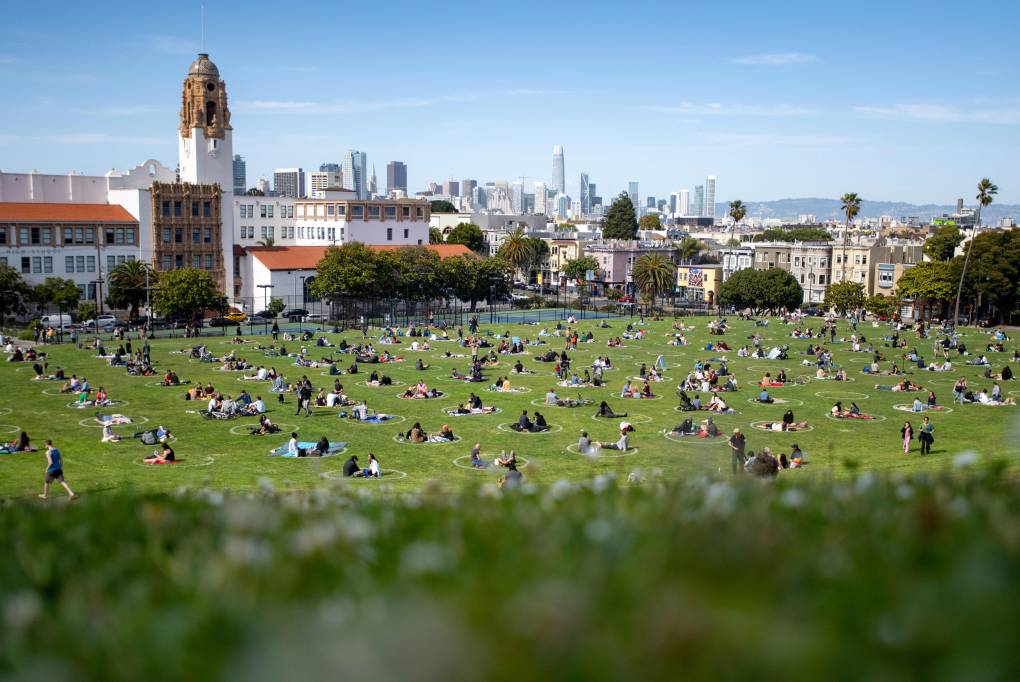
"caption": "One of the lowest-risk ways to gather is outside. Last spring, San Francisco placed circles on the grass at Dolores Park in the city's Mission neighborhood to encourage groups to be socially distanced. ",
"description": "One of the lowest-risk ways to gather is outside. Last spring, San Francisco placed circles on the grass at Dolores Park in the city's Mission neighborhood, to encourage groups to be socially distanced. ",
"title": "coronavirus Dolores Park",
"credit": "Josh Edelson/AFP via Getty Images",
"status": "inherit",
"isLoading": false,
"fetchFailed": false
},
"science_1970773": {
"type": "attachments",
"id": "science_1970773",
"meta": {
"index": "attachments_1716263798",
"site": "science",
"id": "1970773",
"found": true
},
"parent": 1970770,
"imgSizes": {
"twentyfourteen-full-width": {
"file": "https://ww2.kqed.org/app/uploads/sites/35/2020/11/TRUMP_BIDEN_SCIENCE-1600x900-1-1038x576.jpg",
"width": 1038,
"mimeType": "image/jpeg",
"height": 576
},
"thumbnail": {
"file": "https://ww2.kqed.org/app/uploads/sites/35/2020/11/TRUMP_BIDEN_SCIENCE-1600x900-1-160x90.jpg",
"width": 160,
"mimeType": "image/jpeg",
"height": 90
},
"post-thumbnail": {
"file": "https://ww2.kqed.org/app/uploads/sites/35/2020/11/TRUMP_BIDEN_SCIENCE-1600x900-1-672x372.jpg",
"width": 672,
"mimeType": "image/jpeg",
"height": 372
},
"kqedFullSize": {
"file": "https://ww2.kqed.org/app/uploads/sites/35/2020/11/TRUMP_BIDEN_SCIENCE-1600x900-1.jpg",
"width": 1600,
"height": 900
},
"large": {
"file": "https://ww2.kqed.org/app/uploads/sites/35/2020/11/TRUMP_BIDEN_SCIENCE-1600x900-1-1020x574.jpg",
"width": 1020,
"mimeType": "image/jpeg",
"height": 574
},
"1536x1536": {
"file": "https://ww2.kqed.org/app/uploads/sites/35/2020/11/TRUMP_BIDEN_SCIENCE-1600x900-1-1536x864.jpg",
"width": 1536,
"mimeType": "image/jpeg",
"height": 864
},
"medium": {
"file": "https://ww2.kqed.org/app/uploads/sites/35/2020/11/TRUMP_BIDEN_SCIENCE-1600x900-1-800x450.jpg",
"width": 800,
"mimeType": "image/jpeg",
"height": 450
},
"medium_large": {
"file": "https://ww2.kqed.org/app/uploads/sites/35/2020/11/TRUMP_BIDEN_SCIENCE-1600x900-1-768x432.jpg",
"width": 768,
"mimeType": "image/jpeg",
"height": 432
}
},
"publishDate": 1604348048,
"modified": 1604358548,
"caption": null,
"description": null,
"title": "TRUMP_BIDEN_SCIENCE-1600x900",
"credit": "Alex Hogan/STAT",
"status": "inherit",
"isLoading": false,
"fetchFailed": false
},
"science_1970689": {
"type": "attachments",
"id": "science_1970689",
"meta": {
"index": "attachments_1716263798",
"site": "science",
"id": "1970689",
"found": true
},
"parent": 1970688,
"imgSizes": {
"thumbnail": {
"file": "https://ww2.kqed.org/app/uploads/sites/35/2020/10/DSC07654-1-160x95.jpg",
"width": 160,
"mimeType": "image/jpeg",
"height": 95
},
"post-thumbnail": {
"file": "https://ww2.kqed.org/app/uploads/sites/35/2020/10/DSC07654-1-672x372.jpg",
"width": 672,
"mimeType": "image/jpeg",
"height": 372
},
"kqedFullSize": {
"file": "https://ww2.kqed.org/app/uploads/sites/35/2020/10/DSC07654-1.jpg",
"width": 924,
"height": 547
},
"medium": {
"file": "https://ww2.kqed.org/app/uploads/sites/35/2020/10/DSC07654-1-800x474.jpg",
"width": 800,
"mimeType": "image/jpeg",
"height": 474
},
"medium_large": {
"file": "https://ww2.kqed.org/app/uploads/sites/35/2020/10/DSC07654-1-768x455.jpg",
"width": 768,
"mimeType": "image/jpeg",
"height": 455
}
},
"publishDate": 1603733405,
"modified": 1603821996,
"caption": "The smoke wave and pyrocumulus clouds from the East Troublesome Fire on the Front Range of the Colorado Rocky Mountains on Oct. 21, 2020. The prominent peak on the left is Bald Mountain at the south end of Indian Peaks Wilderness. ",
"description": null,
"title": "DSC07654 (1)",
"credit": "Amanda Windischmann/InsideClimate News",
"status": "inherit",
"isLoading": false,
"fetchFailed": false
},
"science_1964431": {
"type": "attachments",
"id": "science_1964431",
"meta": {
"index": "attachments_1716263798",
"site": "science",
"id": "1964431",
"found": true
},
"parent": 1964430,
"imgSizes": {
"twentyfourteen-full-width": {
"file": "https://ww2.kqed.org/app/uploads/sites/35/2020/05/us-map-promo-0510-2fd83dfaf05894d4d11be3843b3fef1cec5c95be-1-1038x576.png",
"width": 1038,
"mimeType": "image/png",
"height": 576
},
"thumbnail": {
"file": "https://ww2.kqed.org/app/uploads/sites/35/2020/05/us-map-promo-0510-2fd83dfaf05894d4d11be3843b3fef1cec5c95be-1-160x120.png",
"width": 160,
"mimeType": "image/png",
"height": 120
},
"post-thumbnail": {
"file": "https://ww2.kqed.org/app/uploads/sites/35/2020/05/us-map-promo-0510-2fd83dfaf05894d4d11be3843b3fef1cec5c95be-1-672x372.png",
"width": 672,
"mimeType": "image/png",
"height": 372
},
"kqedFullSize": {
"file": "https://ww2.kqed.org/app/uploads/sites/35/2020/05/us-map-promo-0510-2fd83dfaf05894d4d11be3843b3fef1cec5c95be-1.png",
"width": 1198,
"height": 898
},
"large": {
"file": "https://ww2.kqed.org/app/uploads/sites/35/2020/05/us-map-promo-0510-2fd83dfaf05894d4d11be3843b3fef1cec5c95be-1-1020x765.png",
"width": 1020,
"mimeType": "image/png",
"height": 765
},
"medium": {
"file": "https://ww2.kqed.org/app/uploads/sites/35/2020/05/us-map-promo-0510-2fd83dfaf05894d4d11be3843b3fef1cec5c95be-1-800x600.png",
"width": 800,
"mimeType": "image/png",
"height": 600
},
"medium_large": {
"file": "https://ww2.kqed.org/app/uploads/sites/35/2020/05/us-map-promo-0510-2fd83dfaf05894d4d11be3843b3fef1cec5c95be-1-768x576.png",
"width": 768,
"mimeType": "image/png",
"height": 576
}
},
"publishDate": 1589582733,
"modified": 1589582733,
"caption": null,
"description": null,
"title": "Chart showing growth of COVID-19 cases in the U.S. as of May 10",
"credit": null,
"status": "inherit",
"isLoading": false,
"fetchFailed": false
}
},
"audioPlayerReducer": {
"postId": "stream_live",
"isPaused": true,
"isPlaying": false,
"pfsActive": false,
"pledgeModalIsOpen": true,
"playerDrawerIsOpen": false,
"liveAudioPlayStartedAt": 0,
"liveAudioPlayContext": ""
},
"authorsReducer": {
"byline_science_1971148": {
"type": "authors",
"id": "byline_science_1971148",
"meta": {
"override": true
},
"slug": "byline_science_1971148",
"name": "Linda A. Johnson and Frank Jordans \u003cbr />Associated Press\u003cbr>",
"isLoading": false
},
"byline_science_1971077": {
"type": "authors",
"id": "byline_science_1971077",
"meta": {
"override": true
},
"slug": "byline_science_1971077",
"name": "Adam Feuerstein Damian Garde and Andrew Joseph \u003cbr />STAT\u003cbr>",
"isLoading": false
},
"byline_science_1971025": {
"type": "authors",
"id": "byline_science_1971025",
"meta": {
"override": true
},
"slug": "byline_science_1971025",
"name": "Maria Godoy\u003cbr>NPR ",
"isLoading": false
},
"byline_science_1970770": {
"type": "authors",
"id": "byline_science_1970770",
"meta": {
"override": true
},
"slug": "byline_science_1970770",
"name": "Lev Facher \u003cbr />STAT\u003cbr>",
"isLoading": false
},
"byline_science_1970688": {
"type": "authors",
"id": "byline_science_1970688",
"meta": {
"override": true
},
"slug": "byline_science_1970688",
"name": "Judy Fahys \u003cbr />InsideClimate News",
"isLoading": false
},
"byline_science_1964430": {
"type": "authors",
"id": "byline_science_1964430",
"meta": {
"override": true
},
"slug": "byline_science_1964430",
"name": "Stephanie Adeline, Connie Hanzhang, Jin, Alyson Hurt, Thomas Wilburn, Daniel Wood, Ruth Talbot\u003cbr />NPR",
"isLoading": false
},
"lklivans": {
"type": "authors",
"id": "8648",
"meta": {
"index": "authors_1716337520",
"id": "8648",
"found": true
},
"name": "Laura Klivans",
"firstName": "Laura",
"lastName": "Klivans",
"slug": "lklivans",
"email": "lklivans@kqed.org",
"display_author_email": true,
"staff_mastheads": [
"news",
"science"
],
"title": "Reporter",
"bio": "Laura Klivans is an award-winning science reporter for KQED News, where she covers climate change with an eye on both groundbreaking progress and gaps in action. She is the former host of KQED's blockbuster video series about tiny, amazing animals, \u003cem>Deep Look\u003c/em>. Her work reaches national audiences through NPR, \u003cem>Here & Now, \u003c/em>PRI, and other major outlets. \r\n\r\nLaura’s won five Northern California Area Emmy Awards for Deep Look and First Place in the Greater Bay Area Journalism Awards for a podcast exploring how one Oakland neighborhood teamed up to reduce planet-heating pollution.\r\n\r\nBeyond her reporting, she hosts and moderates events. In the past, she taught audio storytelling at the UC Berkeley Graduate School of Journalism, led international education programs, worked with immigrants and refugees along the Thai-Burmese border, taught high schoolers sex ed, and was an actress. \r\n\r\nShe's a former UC Berkeley Human Rights Fellow, USC Center for Health Journalism's California Fellow and Coro Fellow in Public Affairs. Laura has a master’s in journalism from UC Berkeley, a master’s in education from Harvard, and an undergraduate degree from Northwestern University.\r\n\r\nShe loves trying to riddle the meaning out of vanity license plates.",
"avatar": "https://secure.gravatar.com/avatar/2d2ecd1550a494cc10ad4a503406965585902124739e775a9b3817eebf1d88be?s=600&d=blank&r=g",
"twitter": "lauraklivans",
"bluesky": null,
"facebook": null,
"instagram": null,
"linkedin": null,
"sites": [
{
"site": "news",
"roles": [
"editor"
]
},
{
"site": "stateofhealth",
"roles": [
"contributor",
"editor"
]
},
{
"site": "science",
"roles": [
"editor"
]
},
{
"site": "forum",
"roles": [
"editor"
]
}
],
"headData": {
"title": "Laura Klivans | KQED",
"description": "Reporter",
"ogImgSrc": "https://secure.gravatar.com/avatar/2d2ecd1550a494cc10ad4a503406965585902124739e775a9b3817eebf1d88be?s=600&d=blank&r=g",
"twImgSrc": "https://secure.gravatar.com/avatar/2d2ecd1550a494cc10ad4a503406965585902124739e775a9b3817eebf1d88be?s=600&d=blank&r=g"
},
"isLoading": false,
"link": "/author/lklivans"
},
"dventon": {
"type": "authors",
"id": "11088",
"meta": {
"index": "authors_1716337520",
"id": "11088",
"found": true
},
"name": "Danielle Venton",
"firstName": "Danielle",
"lastName": "Venton",
"slug": "dventon",
"email": "dventon@kqed.org",
"display_author_email": true,
"staff_mastheads": [
"science"
],
"title": "Science reporter",
"bio": "Danielle Venton is a reporter for KQED Science. She covers wildfires, space and oceans (though she is prone to sea sickness).\r\n\r\nBefore joining KQED in 2015, Danielle was a staff reporter at KRCB in Sonoma County and a freelancer. She studied science communication at UC Santa Cruz and formerly worked at CERN in Geneva, Switzerland where she wrote about computing. She lives in Sonoma County and enjoys backpacking.",
"avatar": "https://secure.gravatar.com/avatar/37b292b5c40c8d93959c4f48d73b5286f41b7abd8588277e941905a3ed4c801c?s=600&d=blank&r=g",
"twitter": "DanielleVenton",
"bluesky": null,
"facebook": null,
"instagram": null,
"linkedin": null,
"sites": [
{
"site": "arts",
"roles": [
"contributor"
]
},
{
"site": "news",
"roles": [
"editor"
]
},
{
"site": "futureofyou",
"roles": [
"editor"
]
},
{
"site": "science",
"roles": [
"editor"
]
},
{
"site": "liveblog",
"roles": [
"contributor"
]
}
],
"headData": {
"title": "Danielle Venton | KQED",
"description": "Science reporter",
"ogImgSrc": "https://secure.gravatar.com/avatar/37b292b5c40c8d93959c4f48d73b5286f41b7abd8588277e941905a3ed4c801c?s=600&d=blank&r=g",
"twImgSrc": "https://secure.gravatar.com/avatar/37b292b5c40c8d93959c4f48d73b5286f41b7abd8588277e941905a3ed4c801c?s=600&d=blank&r=g"
},
"isLoading": false,
"link": "/author/dventon"
},
"parcuni": {
"type": "authors",
"id": "11368",
"meta": {
"index": "authors_1716337520",
"id": "11368",
"found": true
},
"name": "Peter Arcuni",
"firstName": "Peter",
"lastName": "Arcuni",
"slug": "parcuni",
"email": "parcuni@KQED.org",
"display_author_email": false,
"staff_mastheads": [
"science"
],
"title": "Reporter",
"bio": "Peter reports radio and online stories for \u003cem>KQED Science\u003c/em>. His work has also appeared on the \u003cem>The California Report\u003c/em> morning show and \u003cem>KQED News\u003c/em>. His production credits include \u003cem>The California Report, The California Report Magazine\u003c/em> and KQED's local news podcast \u003cem>The Bay\u003c/em>. Other credits include NPR's \u003cem>All Things Considered\u003c/em>, WNYC's \u003cem>Science Friday\u003c/em>, WBUR's \u003cem>Here & Now\u003c/em>, WIRED and SFGate. Peter graduated from Brown University and earned a master's degree in journalism from Stanford. He's covered everything from homelessness to wildfires, health, the environment, arts and Thanksgiving in San Quentin prison. In other lives, he played rock n roll music and studied neuroscience. You can email him at: parcuni@kqed.org",
"avatar": "https://secure.gravatar.com/avatar/d5032f6f27199d478af34ad2e1d98732?s=600&d=blank&r=g",
"twitter": "peterarcuni",
"facebook": null,
"instagram": null,
"linkedin": null,
"sites": [
{
"site": "news",
"roles": [
"editor"
]
},
{
"site": "science",
"roles": [
"editor"
]
}
],
"headData": {
"title": "Peter Arcuni | KQED",
"description": "Reporter",
"ogImgSrc": "https://secure.gravatar.com/avatar/d5032f6f27199d478af34ad2e1d98732?s=600&d=blank&r=g",
"twImgSrc": "https://secure.gravatar.com/avatar/d5032f6f27199d478af34ad2e1d98732?s=600&d=blank&r=g"
},
"isLoading": false,
"link": "/author/parcuni"
},
"kevinstark": {
"type": "authors",
"id": "11608",
"meta": {
"index": "authors_1716337520",
"id": "11608",
"found": true
},
"name": "Kevin Stark",
"firstName": "Kevin",
"lastName": "Stark",
"slug": "kevinstark",
"email": "kstark@kqed.org",
"display_author_email": true,
"staff_mastheads": [
"science"
],
"title": "Senior Editor",
"bio": "Kevin is a senior editor for KQED Science, managing the station's health and climate desks. His journalism career began in the Pacific Northwest, and he later became a lead reporter for the San Francisco Public Press. His work has appeared in Pacific Standard magazine, the Energy News Network, the Center for Investigative Reporting's Reveal and WBEZ in Chicago. Kevin joined KQED in 2019, and has covered issues related to energy, wildfire, climate change and the environment.",
"avatar": "https://secure.gravatar.com/avatar/365aaa4b597d3a8374f67504ff0facd323d7906e8eb4be0a7efd2427408e802c?s=600&d=blank&r=g",
"twitter": "starkkev",
"bluesky": null,
"facebook": null,
"instagram": null,
"linkedin": null,
"sites": [
{
"site": "",
"roles": [
"editor"
]
},
{
"site": "news",
"roles": [
"editor"
]
},
{
"site": "science",
"roles": [
"administrator"
]
}
],
"headData": {
"title": "Kevin Stark | KQED",
"description": "Senior Editor",
"ogImgSrc": "https://secure.gravatar.com/avatar/365aaa4b597d3a8374f67504ff0facd323d7906e8eb4be0a7efd2427408e802c?s=600&d=blank&r=g",
"twImgSrc": "https://secure.gravatar.com/avatar/365aaa4b597d3a8374f67504ff0facd323d7906e8eb4be0a7efd2427408e802c?s=600&d=blank&r=g"
},
"isLoading": false,
"link": "/author/kevinstark"
}
},
"pagesReducer": {
"science_tag_coronavirus": {
"type": "terms",
"id": "science_4329",
"meta": {
"index": "terms_1716263798",
"site": "science",
"id": "4329",
"score": 8.457276
},
"featImg": null,
"name": "Coronavirus",
"description": null,
"taxonomy": "tag",
"headData": {
"twImgId": null,
"twTitle": null,
"ogTitle": null,
"ogImgId": null,
"twDescription": null,
"description": null,
"title": "Coronavirus Archives | KQED Science",
"ogDescription": null
},
"ttid": 4329,
"slug": "coronavirus",
"isLoading": false,
"title": "Coronavirus",
"pageMeta": {
"site": "science",
"WpPageTemplate": "page-topic-editorial",
"currentPage": 5
},
"blocks": [
{
"blockName": "kqed/post-list",
"attrs": {
"layout": "cardArticle2",
"query": "posts/science?tag=coronavirus",
"seeMore": false,
"paginated": true,
"page": 5
}
},
{
"blockName": "kqed/ad"
}
]
}
},
"pfsSessionReducer": {},
"postsReducer": {
"stream_live": {
"type": "live",
"id": "stream_live",
"audioUrl": "https://streams.kqed.org/kqedradio",
"title": "Live Stream",
"excerpt": "Live Stream information currently unavailable.",
"link": "/radio",
"featImg": "",
"label": {
"name": "KQED Live",
"link": "/"
}
},
"stream_kqedNewscast": {
"type": "posts",
"id": "stream_kqedNewscast",
"audioUrl": "https://www.kqed.org/.stream/anon/radio/RDnews/newscast.mp3?_=1",
"title": "KQED Newscast",
"featImg": "",
"label": {
"name": "88.5 FM",
"link": "/"
}
},
"science_1971534": {
"type": "posts",
"id": "science_1971534",
"meta": {
"index": "posts_1716263798",
"site": "science",
"id": "1971534",
"score": null,
"sort": [
1607476638000
]
},
"parent": 0,
"labelTerm": {
"site": "science"
},
"blocks": [],
"publishDate": 1607476638,
"format": "standard",
"title": "California's Top Health Official Says Stricter Orders Not About 'Relative Safety' of Banned Activities",
"headTitle": "California’s Top Health Official Says Stricter Orders Not About ‘Relative Safety’ of Banned Activities | KQED",
"content": "\u003cp class=\"p1\">California’s top health official acknowledged in a coronavirus briefing Tuesday that the state’s order banning outdoor dining and closing playgrounds in certain regions is an effort to encourage people to stay home and not a “comment on the relative safety” of eating on patios or using a seesaw.\u003c/p>\n\u003cp class=\"p1\">Dr. Mark Ghaly, secretary of the California Health and Human Services Agency, said coronavirus transmission is now so extensive in the state that every nonessential activity carries a serious risk.\u003c/p>\n\u003cp class=\"p1\">“The goal is really to keep people at home,” Ghaly said. “We have reached a point where COVID-19 is so widespread in California that just leaving the house is a risky behavior.”\u003c/p>\n\u003cp class=\"p1\">“Any mixing among households presents a risk of disease transmission,” he said.\u003c/p>\n\u003cp>Restaurant groups, lawmakers, parents and others have criticized the state’s latest attempt at curbing the coronavirus by shutting down a host of activities and businesses.\u003c/p>\n\u003cp>Ghaly’s comments came on the same day a judge tentatively ruled that Los Angeles County acted “arbitrarily” and without “rational” justification when it ordered all restaurants to stop dining service in outdoor parklets and patios.\u003c/p>\n\u003cp>Superior Court Judge James Chalfant noted, however, that outdoor dining in L.A. cannot resume because of the state’s separate, regional stay-at-home order.\u003c/p>\n\u003cp>https://twitter.com/FitzTheReporter/status/1336440676083372032?s=20\u003c/p>\n\u003cp>California reported more than 23,000 new coronavirus cases on Tuesday. The state’s hospitals are swollen with over 10,500 COVID-19 patients, a record number.\u003c/p>\n\u003cp class=\"p1\">Ghaly said officials are racing to ensure enough nurses are trained to manage the surge.\u003c/p>\n\u003cp>He also applauded San Francisco, Santa Clara, Alameda, Contra Costa and Marin counties for issuing local stay-at-home orders before the state-designated region the counties are in fell below the threshold for available intensive care units that triggers more restrictions.\u003c/p>\n\u003cp class=\"p1\">“The sooner some of these changes go into effect, the hope [is] that the impact is greater and that we can shorten the time that these orders are in place,” he said.\u003c/p>\n\u003cp class=\"p1\">In an \u003ca href=\"https://www.kqed.org/news/11850180/a-plan-to-reopen-california-schools-by-march-with-conditions\">\u003cspan class=\"s1\">interview\u003c/span>\u003c/a> with KQED’s Lily Jamali, Dr. Monica Gandhi, an infectious-disease specialist at UCSF, questioned whether the state’s lockdown approach is working, and she said the public is losing trust in public health officials.\u003c/p>\n\u003cp class=\"p1\">While Gandhi thinks the message from government should be that the illness “causes suffering and death and we have to do what it takes to minimize spread,” she said the public is aware that the risk of transmission is much lower outside and that the coronavirus does not often spread through surface transmission, as scientists once believed.\u003c/p>\n\u003cp>“The arbitrariness of shutting down completely can be really disturbing to the public and you don’t want to erode trust,” she said. “We have to close down things where there can be unsafe spread.”\u003c/p>\n\u003cp>\u003cspan class=\"s2\">— \u003cem>Kevin Stark (\u003ca href=\"https://twitter.com/StarkKev\" target=\"_blank\" rel=\"noopener noreferrer\">@starkkev\u003c/a>)\u003c/em>\u003c/span>\u003ci>\u003c/i>\u003c/p>\n",
"stats": {
"hasVideo": false,
"hasChartOrMap": false,
"hasAudio": false,
"hasPolis": false,
"wordCount": 473,
"hasGoogleForm": false,
"hasGallery": false,
"hasHearkenModule": false,
"iframeSrcs": [],
"paragraphCount": 7
},
"modified": 1704846902,
"excerpt": null,
"headData": {
"twImgId": "",
"twTitle": "",
"ogTitle": "",
"ogImgId": "",
"twDescription": "",
"description": "California’s top health official acknowledged in a coronavirus briefing Tuesday that the state’s order banning outdoor dining and closing playgrounds in certain regions is an effort to encourage people to stay home and not a “comment on the relative safety” of eating on patios or using a seesaw. Dr. Mark Ghaly, secretary of the California",
"title": "California's Top Health Official Says Stricter Orders Not About 'Relative Safety' of Banned Activities | KQED",
"ogDescription": "",
"schema": {
"@context": "https://schema.org",
"@type": "Article",
"headline": "California's Top Health Official Says Stricter Orders Not About 'Relative Safety' of Banned Activities",
"datePublished": "2020-12-08T17:17:18-08:00",
"dateModified": "2024-01-09T16:35:02-08:00",
"image": "https://cdn.kqed.org/wp-content/uploads/2020/02/KQED-OG-Image@1x.png"
}
},
"guestAuthors": [],
"slug": "california-top-health-official-says-stricter-orders-not-about-relative-safety-of-banned-activities",
"status": "publish",
"justInHeadline": "California's top health official says stricter orders not about 'relative safety' of banned activities ",
"sticky": false,
"path": "/science/1971534/california-top-health-official-says-stricter-orders-not-about-relative-safety-of-banned-activities",
"redirect": {
"type": "internal",
"url": "/coronavirusliveupdates/science/1971534/california-top-health-official-says-stricter-orders-not-about-relative-safety-of-banned-activities"
},
"audioTrackLength": null,
"parsedContent": [
{
"type": "contentString",
"content": "\u003cdiv class=\"post-body\">\u003cp>\u003cp class=\"p1\">California’s top health official acknowledged in a coronavirus briefing Tuesday that the state’s order banning outdoor dining and closing playgrounds in certain regions is an effort to encourage people to stay home and not a “comment on the relative safety” of eating on patios or using a seesaw.\u003c/p>\n\u003cp class=\"p1\">Dr. Mark Ghaly, secretary of the California Health and Human Services Agency, said coronavirus transmission is now so extensive in the state that every nonessential activity carries a serious risk.\u003c/p>\n\u003cp class=\"p1\">“The goal is really to keep people at home,” Ghaly said. “We have reached a point where COVID-19 is so widespread in California that just leaving the house is a risky behavior.”\u003c/p>\n\u003cp class=\"p1\">“Any mixing among households presents a risk of disease transmission,” he said.\u003c/p>\n\u003cp>Restaurant groups, lawmakers, parents and others have criticized the state’s latest attempt at curbing the coronavirus by shutting down a host of activities and businesses.\u003c/p>\n\u003cp>Ghaly’s comments came on the same day a judge tentatively ruled that Los Angeles County acted “arbitrarily” and without “rational” justification when it ordered all restaurants to stop dining service in outdoor parklets and patios.\u003c/p>\n\u003cp>Superior Court Judge James Chalfant noted, however, that outdoor dining in L.A. cannot resume because of the state’s separate, regional stay-at-home order.\u003c/p>\u003c/p>\u003c/div>",
"attributes": {
"named": {},
"numeric": []
}
},
{
"type": "component",
"content": "",
"name": "singleTwitterStatus",
"attributes": {
"named": {
"id": "1336440676083372032"
},
"numeric": []
}
},
{
"type": "contentString",
"content": "\u003cdiv class=\"post-body\">\u003cp>\n\u003cp>California reported more than 23,000 new coronavirus cases on Tuesday. The state’s hospitals are swollen with over 10,500 COVID-19 patients, a record number.\u003c/p>\n\u003cp class=\"p1\">Ghaly said officials are racing to ensure enough nurses are trained to manage the surge.\u003c/p>\n\u003cp>He also applauded San Francisco, Santa Clara, Alameda, Contra Costa and Marin counties for issuing local stay-at-home orders before the state-designated region the counties are in fell below the threshold for available intensive care units that triggers more restrictions.\u003c/p>\n\u003cp class=\"p1\">“The sooner some of these changes go into effect, the hope [is] that the impact is greater and that we can shorten the time that these orders are in place,” he said.\u003c/p>\n\u003cp class=\"p1\">In an \u003ca href=\"https://www.kqed.org/news/11850180/a-plan-to-reopen-california-schools-by-march-with-conditions\">\u003cspan class=\"s1\">interview\u003c/span>\u003c/a> with KQED’s Lily Jamali, Dr. Monica Gandhi, an infectious-disease specialist at UCSF, questioned whether the state’s lockdown approach is working, and she said the public is losing trust in public health officials.\u003c/p>\n\u003cp class=\"p1\">While Gandhi thinks the message from government should be that the illness “causes suffering and death and we have to do what it takes to minimize spread,” she said the public is aware that the risk of transmission is much lower outside and that the coronavirus does not often spread through surface transmission, as scientists once believed.\u003c/p>\n\u003cp>“The arbitrariness of shutting down completely can be really disturbing to the public and you don’t want to erode trust,” she said. “We have to close down things where there can be unsafe spread.”\u003c/p>\n\u003cp>\u003cspan class=\"s2\">— \u003cem>Kevin Stark (\u003ca href=\"https://twitter.com/StarkKev\" target=\"_blank\" rel=\"noopener noreferrer\">@starkkev\u003c/a>)\u003c/em>\u003c/span>\u003ci>\u003c/i>\u003c/p>\n\u003c/div>\u003c/p>",
"attributes": {
"named": {},
"numeric": []
}
}
],
"link": "/coronavirusliveupdates/science/1971534/california-top-health-official-says-stricter-orders-not-about-relative-safety-of-banned-activities",
"authors": [
"11608"
],
"categories": [
"science_4487"
],
"tags": [
"science_4329",
"science_4477"
],
"featImg": "science_1964539",
"label": "science"
},
"science_1971452": {
"type": "posts",
"id": "science_1971452",
"meta": {
"index": "posts_1716263798",
"site": "science",
"id": "1971452",
"score": null,
"sort": [
1607372148000
]
},
"parent": 0,
"labelTerm": {
"site": "science"
},
"blocks": [],
"publishDate": 1607372148,
"format": "standard",
"title": "State to Train Nurses to Work in ICU as Hospitals Fill",
"headTitle": "State to Train Nurses to Work in ICU as Hospitals Fill | KQED",
"content": "\u003cp class=\"p1\">The state’s health department will provide training for floor nurses to serve in intensive care units to meet the need of hospitals crowded with severely ill COVID-19 patients.\u003c/p>\n\u003cp class=\"p1\">“There’s more ICU bed and ventilator capacity at hospitals than there is staff who can manage critically ill patients,” said Matt Willis, Marin County’s health officer. “I’m trying to determine, if we had 40 patients who rolled in today, how many staff would you have available to actually come in to the hospital and provide the care they need.”\u003c/p>\n\u003cp class=\"p1\">Willis, as well as health officials in Santa Clara, say their counties plan to participate in the state’s virtual training, announced Friday and offered free of charge to registered nurses.\u003c/p>\n\u003cp class=\"p1\">Meanwhile, in Contra Costa County, officials say the old Ford plant in Richmond could be turned into a site for alternative care in a few days.\u003c/p>\n\u003cp>\u003cem>—Sara Hossaini (\u003ca href=\"https://twitter.com/MsHossaini\" target=\"_blank\" rel=\"noopener noreferrer\">@MsHossaini\u003c/a>)\u003cspan class=\"css-901oao css-16my406 r-1qd0xha r-ad9z0x r-bcqeeo r-qvutc0\"> \u003c/span>and Kevin Stark (\u003ca href=\"https://twitter.com/StarkKev\" target=\"_blank\" rel=\"noopener noreferrer\">@starkkev\u003c/a>)\u003c/em>\u003c/p>\n",
"stats": {
"hasVideo": false,
"hasChartOrMap": false,
"hasAudio": false,
"hasPolis": false,
"wordCount": 159,
"hasGoogleForm": false,
"hasGallery": false,
"hasHearkenModule": false,
"iframeSrcs": [],
"paragraphCount": 1
},
"modified": 1704846912,
"excerpt": null,
"headData": {
"twImgId": "",
"twTitle": "",
"ogTitle": "",
"ogImgId": "",
"twDescription": "",
"description": "The state’s health department will provide training for floor nurses to serve in intensive care units to meet the need of hospitals crowded with severely ill COVID-19 patients. “There's more ICU bed and ventilator capacity at hospitals than there is staff who can manage critically ill patients,” said Matt Willis, Marin County's health officer. “I'm",
"title": "State to Train Nurses to Work in ICU as Hospitals Fill | KQED",
"ogDescription": "",
"schema": {
"@context": "https://schema.org",
"@type": "Article",
"headline": "State to Train Nurses to Work in ICU as Hospitals Fill",
"datePublished": "2020-12-07T12:15:48-08:00",
"dateModified": "2024-01-09T16:35:12-08:00",
"image": "https://cdn.kqed.org/wp-content/uploads/2020/02/KQED-OG-Image@1x.png"
}
},
"guestAuthors": [],
"slug": "state-to-train-nurses-to-work-in-icu",
"status": "publish",
"justInHeadline": "State to train nurses to work in ICU as hospitals fill",
"sticky": false,
"path": "/science/1971452/state-to-train-nurses-to-work-in-icu",
"redirect": {
"type": "internal",
"url": "/coronavirusliveupdates/science/1971452/state-to-train-nurses-to-work-in-icu"
},
"audioTrackLength": null,
"parsedContent": [
{
"type": "contentString",
"content": "\u003cdiv class=\"post-body\">\u003cp>\u003cp class=\"p1\">The state’s health department will provide training for floor nurses to serve in intensive care units to meet the need of hospitals crowded with severely ill COVID-19 patients.\u003c/p>\n\u003cp class=\"p1\">“There’s more ICU bed and ventilator capacity at hospitals than there is staff who can manage critically ill patients,” said Matt Willis, Marin County’s health officer. “I’m trying to determine, if we had 40 patients who rolled in today, how many staff would you have available to actually come in to the hospital and provide the care they need.”\u003c/p>\n\u003cp class=\"p1\">Willis, as well as health officials in Santa Clara, say their counties plan to participate in the state’s virtual training, announced Friday and offered free of charge to registered nurses.\u003c/p>\n\u003cp class=\"p1\">Meanwhile, in Contra Costa County, officials say the old Ford plant in Richmond could be turned into a site for alternative care in a few days.\u003c/p>\n\u003cp>\u003cem>—Sara Hossaini (\u003ca href=\"https://twitter.com/MsHossaini\" target=\"_blank\" rel=\"noopener noreferrer\">@MsHossaini\u003c/a>)\u003cspan class=\"css-901oao css-16my406 r-1qd0xha r-ad9z0x r-bcqeeo r-qvutc0\"> \u003c/span>and Kevin Stark (\u003ca href=\"https://twitter.com/StarkKev\" target=\"_blank\" rel=\"noopener noreferrer\">@starkkev\u003c/a>)\u003c/em>\u003c/p>\n\u003c/div>\u003c/p>",
"attributes": {
"named": {},
"numeric": []
}
}
],
"link": "/coronavirusliveupdates/science/1971452/state-to-train-nurses-to-work-in-icu",
"authors": [
"11608"
],
"categories": [
"science_4487"
],
"tags": [
"science_4329",
"science_4477"
],
"featImg": "science_1964539",
"label": "science"
},
"science_1971367": {
"type": "posts",
"id": "science_1971367",
"meta": {
"index": "posts_1716263798",
"site": "science",
"id": "1971367",
"score": null,
"sort": [
1606956269000
]
},
"parent": 0,
"labelTerm": {},
"blocks": [],
"publishDate": 1606956269,
"format": "standard",
"title": "Preliminary Testing Shows Coronavirus Surge in San Francisco Mission District",
"headTitle": "Preliminary Testing Shows Coronavirus Surge in San Francisco Mission District | KQED",
"content": "\u003cp>Health workers are wrapping up testing at four temporary sites in San Francisco neighborhoods hard hit by COVID-19, and preliminary results in at least one location show a marked increase in test positivity rates during the coronavirus surge in the city, state, and nation.\u003c/p>\n\u003cp>Doctors, nurses and volunteers fanned out to test sites in the Mission, Bayview, Tenderloin and Excelsior neighborhoods for a handful of days before and after Thanksgiving, testing more than 6,800 people. The testing is part of a health initiative called \u003ca href=\"https://unitedinhealth.org/\" target=\"_blank\" rel=\"noopener noreferrer\">Unidos en Salud\u003c/a>, a partnership between UCSF, the community organization \u003ca href=\"https://www.ltfrespuestalatina.com/\" target=\"_blank\" rel=\"noopener noreferrer\">Latino Task Force\u003c/a>, the City and County of San Francisco, and the Chan Zuckerberg Biohub.\u003c/p>\n\u003cp>The group has offered pop-up testing every few months since the start of the pandemic, running a weekly test site in the Mission on Thursdays.\u003c/p>\n\u003cp>Unidos en Salud co-founder and UCSF infectious disease expert Dr. Diane Havlir says she was already worried about the high positivity rates when she saw them go even higher after Thanksgiving.\u003c/p>\n\u003cp>“At the Mission test site, post-Thanksgiving test positivity seems to be in the 9-10% range,” Havlir wrote in an email. “The increase from 6% before the holiday likely reflects the serious and rapidly increasing trajectory in the city overall.”\u003c/p>\n\u003cp>The numbers represent those who voluntarily took tests and are not representative of the Mission or the city as a whole, Havlir said.\u003c/p>\n\u003cp>Still, the numbers are high.\u003c/p>\n\u003cp>“(P)reliminary data suggest that the Latinx community, low-income individuals and front-line workers living in crowded households continue to be disproportionately affected,” she said.\u003c/p>\n\u003cp>[ad fullwidth]\u003c/p>\n\u003cp>\u003cstrong>Rapid Test Used for Quicker Results\u003c/strong>\u003c/p>\n\u003cp>In this recent round of testing, each resident was given both a rapid and standard PCR test.\u003c/p>\n\u003cp>The results from the rapid test, Abbott’s BinaxNOW, are available in 15 minutes. The test detects high levels of the virus, an indication that someone is particularly infectious. People who show up positive on the rapid test may spread the virus more easily and should isolate as soon as possible. The rapid tests sometimes produce false negatives in those with a smaller viral load, so the PCR test is also given.\u003c/p>\n\u003cp>For those who test positive, a “community wellness team member” from Unidos en Salud works to connect them with free food and cleaning supplies, as well as a hotel room where they can quarantine. The case worker may also refer them to San Francisco’s\u003ca href=\"https://oewd.org/employees-impacted-covid-19#Paid%20Sick%20Leave\" target=\"_blank\" rel=\"noopener noreferrer\"> Right to Recover\u003c/a> program, which provides cash assistance for people without access to paid sick leave, unemployment benefits or other public benefits.\u003c/p>\n\u003cp>\u003c/p>\n",
"stats": {
"hasVideo": false,
"hasChartOrMap": false,
"hasAudio": false,
"hasPolis": false,
"wordCount": 438,
"hasGoogleForm": false,
"hasGallery": false,
"hasHearkenModule": false,
"iframeSrcs": [],
"paragraphCount": 14
},
"modified": 1704846915,
"excerpt": "Preliminary test positivity rates in San Francisco's Mission District soar, as health workers deploy rapid tests in hopes people can isolate sooner.",
"headData": {
"twImgId": "",
"twTitle": "",
"ogTitle": "",
"ogImgId": "",
"twDescription": "",
"description": "Preliminary test positivity rates in San Francisco's Mission District soar, as health workers deploy rapid tests in hopes people can isolate sooner.",
"title": "Preliminary Testing Shows Coronavirus Surge in San Francisco Mission District | KQED",
"ogDescription": "",
"schema": {
"@context": "https://schema.org",
"@type": "Article",
"headline": "Preliminary Testing Shows Coronavirus Surge in San Francisco Mission District",
"datePublished": "2020-12-02T16:44:29-08:00",
"dateModified": "2024-01-09T16:35:15-08:00",
"image": "https://cdn.kqed.org/wp-content/uploads/2020/02/KQED-OG-Image@1x.png"
}
},
"guestAuthors": [],
"slug": "preliminary-testing-shows-coronavirus-surge-in-san-francisco-mission-district",
"status": "publish",
"sticky": false,
"source": "Coronavirus",
"path": "/science/1971367/preliminary-testing-shows-coronavirus-surge-in-san-francisco-mission-district",
"audioTrackLength": null,
"parsedContent": [
{
"type": "contentString",
"content": "\u003cdiv class=\"post-body\">\u003cp>\u003cp>Health workers are wrapping up testing at four temporary sites in San Francisco neighborhoods hard hit by COVID-19, and preliminary results in at least one location show a marked increase in test positivity rates during the coronavirus surge in the city, state, and nation.\u003c/p>\n\u003cp>Doctors, nurses and volunteers fanned out to test sites in the Mission, Bayview, Tenderloin and Excelsior neighborhoods for a handful of days before and after Thanksgiving, testing more than 6,800 people. The testing is part of a health initiative called \u003ca href=\"https://unitedinhealth.org/\" target=\"_blank\" rel=\"noopener noreferrer\">Unidos en Salud\u003c/a>, a partnership between UCSF, the community organization \u003ca href=\"https://www.ltfrespuestalatina.com/\" target=\"_blank\" rel=\"noopener noreferrer\">Latino Task Force\u003c/a>, the City and County of San Francisco, and the Chan Zuckerberg Biohub.\u003c/p>\n\u003cp>The group has offered pop-up testing every few months since the start of the pandemic, running a weekly test site in the Mission on Thursdays.\u003c/p>\n\u003cp>Unidos en Salud co-founder and UCSF infectious disease expert Dr. Diane Havlir says she was already worried about the high positivity rates when she saw them go even higher after Thanksgiving.\u003c/p>\n\u003cp>“At the Mission test site, post-Thanksgiving test positivity seems to be in the 9-10% range,” Havlir wrote in an email. “The increase from 6% before the holiday likely reflects the serious and rapidly increasing trajectory in the city overall.”\u003c/p>\n\u003cp>The numbers represent those who voluntarily took tests and are not representative of the Mission or the city as a whole, Havlir said.\u003c/p>\n\u003cp>Still, the numbers are high.\u003c/p>\n\u003cp>“(P)reliminary data suggest that the Latinx community, low-income individuals and front-line workers living in crowded households continue to be disproportionately affected,” she said.\u003c/p>\n\u003cp>\u003c/p>\u003c/div>",
"attributes": {
"named": {},
"numeric": []
}
},
{
"type": "component",
"content": "",
"name": "ad",
"attributes": {
"named": {
"label": "fullwidth"
},
"numeric": [
"fullwidth"
]
}
},
{
"type": "contentString",
"content": "\u003cdiv class=\"post-body\">\u003cp>\u003c/p>\n\u003cp>\u003cstrong>Rapid Test Used for Quicker Results\u003c/strong>\u003c/p>\n\u003cp>In this recent round of testing, each resident was given both a rapid and standard PCR test.\u003c/p>\n\u003cp>The results from the rapid test, Abbott’s BinaxNOW, are available in 15 minutes. The test detects high levels of the virus, an indication that someone is particularly infectious. People who show up positive on the rapid test may spread the virus more easily and should isolate as soon as possible. The rapid tests sometimes produce false negatives in those with a smaller viral load, so the PCR test is also given.\u003c/p>\n\u003cp>For those who test positive, a “community wellness team member” from Unidos en Salud works to connect them with free food and cleaning supplies, as well as a hotel room where they can quarantine. The case worker may also refer them to San Francisco’s\u003ca href=\"https://oewd.org/employees-impacted-covid-19#Paid%20Sick%20Leave\" target=\"_blank\" rel=\"noopener noreferrer\"> Right to Recover\u003c/a> program, which provides cash assistance for people without access to paid sick leave, unemployment benefits or other public benefits.\u003c/p>\n\u003cp>\u003c/p>\n\u003c/div>\u003c/p>",
"attributes": {
"named": {},
"numeric": []
}
}
],
"link": "/science/1971367/preliminary-testing-shows-coronavirus-surge-in-san-francisco-mission-district",
"authors": [
"8648"
],
"categories": [
"science_39",
"science_3890",
"science_40",
"science_4450"
],
"tags": [
"science_4329",
"science_4368"
],
"featImg": "science_1971401",
"label": "source_science_1971367"
},
"science_1971148": {
"type": "posts",
"id": "science_1971148",
"meta": {
"index": "posts_1716263798",
"site": "science",
"id": "1971148",
"score": null,
"sort": [
1605726339000
]
},
"parent": 0,
"labelTerm": {},
"blocks": [],
"publishDate": 1605726339,
"format": "standard",
"title": "Pfizer to Seek Approval for Coronavirus Vaccine 'Within Days'",
"headTitle": "Pfizer to Seek Approval for Coronavirus Vaccine ‘Within Days’ | KQED",
"content": "\u003cp class=\"Component-root-0-2-62 Component-p-0-2-53\">Pfizer said Wednesday that new test results show its coronavirus vaccine is 95% effective, is safe and also protects older people most at risk of dying — the last data needed to seek emergency use of limited shot supplies as the catastrophic outbreak worsens across the globe.\u003c/p>\n\u003cp class=\"Component-root-0-2-62 Component-p-0-2-53\">The announcement from Pfizer and its German partner BioNTech, just a week after they revealed the first promising preliminary \u003ca class=\"\" href=\"https://apnews.com/article/pfizer-vaccine-effective-early-data-4f4ae2e3bad122d17742be22a2240ae8\">results\u003c/a>, comes as the team is preparing within days to formally ask U.S. regulators to allow emergency use of the vaccine.\u003c/p>\n\u003cp class=\"Component-root-0-2-62 Component-p-0-2-53\">They also have begun “rolling submissions” for the vaccine with regulators in Europe, the U.K. and Canada and soon will add this new data.\u003c/p>\n\u003cp class=\"Component-root-0-2-62 Component-p-0-2-53\">Pfizer and BioNTech had initially estimated the vaccine was more than 90% effective after 94 infections had been counted in a study that included 44,000 people.\u003c/p>\n\u003cp class=\"Component-root-0-2-62 Component-p-0-2-53\">With the new announcement, the companies now have accumulated 170 infections in the study — and said only eight of them occurred in volunteers who got the actual vaccine rather than a dummy shot. One of those eight developed severe disease, the companies said.\u003c/p>\n\u003cp>[ad fullwidth]\u003c/p>\n\u003cp class=\"Component-root-0-2-62 Component-p-0-2-53\">“This is an extraordinarily strong protection,” Dr. Ugur Sahin, BioNTech’s CEO and co-founder, told The Associated Press.\u003c/p>\n\u003cp class=\"Component-root-0-2-62 Component-p-0-2-53\">The companies have not yet released detailed data on their study, and results have not been analyzed by independent experts. Also still to be determined are important questions such as how long protection lasts and whether people might need boosters.\u003c/p>\n\u003cp class=\"Component-root-0-2-62 Component-p-0-2-53\">But all eyes are on the progress of potential vaccines as the grim infection toll jumps in the U.S. and abroad as winter weather forces people indoors, in the close quarters that fuels viral spread.\u003c/p>\n\u003cp class=\"Component-root-0-2-62 Component-p-0-2-53\">Pfizer and BioNTech said the vaccine was more than 94% effective in adults over age 65, though it is not clear exactly how that was determined with only eight infections in the vaccinated group to analyze and no breakdown provided of those people’s ages.\u003c/p>\n\u003cp class=\"Component-root-0-2-62 Component-p-0-2-53\">Sahin said there were enough older adults enrolled in the study and among the placebo recipients who became infected that he is confident “this vaccine appears to work in the higher-risk population.”\u003c/p>\n\u003cp class=\"Component-root-0-2-62 Component-p-0-2-53\">Earlier this week Moderna announced that its experimental vaccine appears to be 94.5% \u003ca class=\"\" href=\"https://apnews.com/article/2nd-virus-vaccine-success-us-tests-5575a8a8ca3825a9bf39a5d234aba07b\">effective\u003c/a> after an interim analysis of its late-stage study.\u003c/p>\n\u003cp class=\"Component-root-0-2-62 Component-p-0-2-53\">Similar results from two vaccines both made with a brand-new technology — using a snippet of the genetic code of the coronavirus to train the body to recognize if the real virus comes along — likely will add to experts’ reassurance about the novel approach.\u003c/p>\n\u003cp class=\"Component-root-0-2-62 Component-p-0-2-53\">While initial supplies will be scarce and rationed, as the supply grows Sahin said the companies have a responsibility to help ensure access for lower income countries as well.\u003c/p>\n\u003cp class=\"Component-root-0-2-62 Component-p-0-2-53\">Pfizer and BioNTech also say they now have the required data on the vaccine’s safety needed to seek emergency authorization from the Food and Drug Administration.\u003c/p>\n\u003cp class=\"Component-root-0-2-62 Component-p-0-2-53\">The companies didn’t disclose safety details, but said no serious vaccine side effects have been reported, with the most common problem being fatigue after the second vaccine dose, affecting about 4% of participants.\u003c/p>\n\u003cp class=\"Component-root-0-2-62 Component-p-0-2-53\">The study has enrolled nearly 44,000 people in the U.S. and five other countries. The trial will continue to collect safety and effectiveness data on volunteers for two more years.\u003c/p>\n\u003cp class=\"Component-root-0-2-62 Component-p-0-2-53\">Pfizer and BioNTech said they expect to produce up to 50 million vaccine doses globally in 2020 and up to 1.3 billion doses in 2021.\u003c/p>\n\u003cp class=\"Component-root-0-2-62 Component-p-0-2-53\">U.S. officials have said they hope to have about 20 million vaccine doses each from Moderna and Pfizer available for distribution in late December. The first shots are expected to be offered to vulnerable groups like medical and nursing home workers, and people with serious health conditions.\u003c/p>\n\u003cp>\u003c/p>\n\u003cp>\u003cem>AP medical writer Lauran Neergaard contributed to this report.\u003c/em>\u003c/p>\n\n",
"stats": {
"hasVideo": false,
"hasChartOrMap": false,
"hasAudio": false,
"hasPolis": false,
"wordCount": 648,
"hasGoogleForm": false,
"hasGallery": false,
"hasHearkenModule": false,
"iframeSrcs": [],
"paragraphCount": 3
},
"modified": 1704846932,
"excerpt": "The companies have not yet released detailed data on their study, and results have not been analyzed by independent experts. ",
"headData": {
"twImgId": "",
"twTitle": "",
"ogTitle": "",
"ogImgId": "",
"twDescription": "",
"description": "The companies have not yet released detailed data on their study, and results have not been analyzed by independent experts. ",
"title": "Pfizer to Seek Approval for Coronavirus Vaccine 'Within Days' | KQED",
"ogDescription": "",
"schema": {
"@context": "https://schema.org",
"@type": "Article",
"headline": "Pfizer to Seek Approval for Coronavirus Vaccine 'Within Days'",
"datePublished": "2020-11-18T11:05:39-08:00",
"dateModified": "2024-01-09T16:35:32-08:00",
"image": "https://cdn.kqed.org/wp-content/uploads/2020/02/KQED-OG-Image@1x.png"
}
},
"guestAuthors": [],
"slug": "pfizer-to-seek-approval-for-coronavirus-vaccine-within-days",
"status": "publish",
"nprByline": "Linda A. Johnson and Frank Jordans \u003cbr />Associated Press\u003cbr>",
"sticky": false,
"source": "AP",
"path": "/science/1971148/pfizer-to-seek-approval-for-coronavirus-vaccine-within-days",
"audioTrackLength": null,
"parsedContent": [
{
"type": "contentString",
"content": "\u003cdiv class=\"post-body\">\u003cp>\u003cp class=\"Component-root-0-2-62 Component-p-0-2-53\">Pfizer said Wednesday that new test results show its coronavirus vaccine is 95% effective, is safe and also protects older people most at risk of dying — the last data needed to seek emergency use of limited shot supplies as the catastrophic outbreak worsens across the globe.\u003c/p>\n\u003cp class=\"Component-root-0-2-62 Component-p-0-2-53\">The announcement from Pfizer and its German partner BioNTech, just a week after they revealed the first promising preliminary \u003ca class=\"\" href=\"https://apnews.com/article/pfizer-vaccine-effective-early-data-4f4ae2e3bad122d17742be22a2240ae8\">results\u003c/a>, comes as the team is preparing within days to formally ask U.S. regulators to allow emergency use of the vaccine.\u003c/p>\n\u003cp class=\"Component-root-0-2-62 Component-p-0-2-53\">They also have begun “rolling submissions” for the vaccine with regulators in Europe, the U.K. and Canada and soon will add this new data.\u003c/p>\n\u003cp class=\"Component-root-0-2-62 Component-p-0-2-53\">Pfizer and BioNTech had initially estimated the vaccine was more than 90% effective after 94 infections had been counted in a study that included 44,000 people.\u003c/p>\n\u003cp class=\"Component-root-0-2-62 Component-p-0-2-53\">With the new announcement, the companies now have accumulated 170 infections in the study — and said only eight of them occurred in volunteers who got the actual vaccine rather than a dummy shot. One of those eight developed severe disease, the companies said.\u003c/p>\n\u003cp>\u003c/p>\u003c/div>",
"attributes": {
"named": {},
"numeric": []
}
},
{
"type": "component",
"content": "",
"name": "ad",
"attributes": {
"named": {
"label": "fullwidth"
},
"numeric": [
"fullwidth"
]
}
},
{
"type": "contentString",
"content": "\u003cdiv class=\"post-body\">\u003cp>\u003c/p>\n\u003cp class=\"Component-root-0-2-62 Component-p-0-2-53\">“This is an extraordinarily strong protection,” Dr. Ugur Sahin, BioNTech’s CEO and co-founder, told The Associated Press.\u003c/p>\n\u003cp class=\"Component-root-0-2-62 Component-p-0-2-53\">The companies have not yet released detailed data on their study, and results have not been analyzed by independent experts. Also still to be determined are important questions such as how long protection lasts and whether people might need boosters.\u003c/p>\n\u003cp class=\"Component-root-0-2-62 Component-p-0-2-53\">But all eyes are on the progress of potential vaccines as the grim infection toll jumps in the U.S. and abroad as winter weather forces people indoors, in the close quarters that fuels viral spread.\u003c/p>\n\u003cp class=\"Component-root-0-2-62 Component-p-0-2-53\">Pfizer and BioNTech said the vaccine was more than 94% effective in adults over age 65, though it is not clear exactly how that was determined with only eight infections in the vaccinated group to analyze and no breakdown provided of those people’s ages.\u003c/p>\n\u003cp class=\"Component-root-0-2-62 Component-p-0-2-53\">Sahin said there were enough older adults enrolled in the study and among the placebo recipients who became infected that he is confident “this vaccine appears to work in the higher-risk population.”\u003c/p>\n\u003cp class=\"Component-root-0-2-62 Component-p-0-2-53\">Earlier this week Moderna announced that its experimental vaccine appears to be 94.5% \u003ca class=\"\" href=\"https://apnews.com/article/2nd-virus-vaccine-success-us-tests-5575a8a8ca3825a9bf39a5d234aba07b\">effective\u003c/a> after an interim analysis of its late-stage study.\u003c/p>\n\u003cp class=\"Component-root-0-2-62 Component-p-0-2-53\">Similar results from two vaccines both made with a brand-new technology — using a snippet of the genetic code of the coronavirus to train the body to recognize if the real virus comes along — likely will add to experts’ reassurance about the novel approach.\u003c/p>\n\u003cp class=\"Component-root-0-2-62 Component-p-0-2-53\">While initial supplies will be scarce and rationed, as the supply grows Sahin said the companies have a responsibility to help ensure access for lower income countries as well.\u003c/p>\n\u003cp class=\"Component-root-0-2-62 Component-p-0-2-53\">Pfizer and BioNTech also say they now have the required data on the vaccine’s safety needed to seek emergency authorization from the Food and Drug Administration.\u003c/p>\n\u003cp class=\"Component-root-0-2-62 Component-p-0-2-53\">The companies didn’t disclose safety details, but said no serious vaccine side effects have been reported, with the most common problem being fatigue after the second vaccine dose, affecting about 4% of participants.\u003c/p>\n\u003cp class=\"Component-root-0-2-62 Component-p-0-2-53\">The study has enrolled nearly 44,000 people in the U.S. and five other countries. The trial will continue to collect safety and effectiveness data on volunteers for two more years.\u003c/p>\n\u003cp class=\"Component-root-0-2-62 Component-p-0-2-53\">Pfizer and BioNTech said they expect to produce up to 50 million vaccine doses globally in 2020 and up to 1.3 billion doses in 2021.\u003c/p>\n\u003cp class=\"Component-root-0-2-62 Component-p-0-2-53\">U.S. officials have said they hope to have about 20 million vaccine doses each from Moderna and Pfizer available for distribution in late December. The first shots are expected to be offered to vulnerable groups like medical and nursing home workers, and people with serious health conditions.\u003c/p>\n\u003cp>\u003c/p>\n\u003cp>\u003cem>AP medical writer Lauran Neergaard contributed to this report.\u003c/em>\u003c/p>\n\n\u003c/div>\u003c/p>",
"attributes": {
"named": {},
"numeric": []
}
}
],
"link": "/science/1971148/pfizer-to-seek-approval-for-coronavirus-vaccine-within-days",
"authors": [
"byline_science_1971148"
],
"categories": [
"science_3890",
"science_40",
"science_4450"
],
"tags": [
"science_4209",
"science_4081",
"science_4329",
"science_197"
],
"featImg": "science_1971149",
"label": "source_science_1971148"
},
"science_1971124": {
"type": "posts",
"id": "science_1971124",
"meta": {
"index": "posts_1716263798",
"site": "science",
"id": "1971124",
"score": null,
"sort": [
1605725275000
]
},
"parent": 0,
"labelTerm": {},
"blocks": [],
"publishDate": 1605725275,
"format": "audio",
"title": "Most Coronavirus Transmission Happens at Indoor Restaurants, Cafes, Gyms: Study",
"headTitle": "Most Coronavirus Transmission Happens at Indoor Restaurants, Cafes, Gyms: Study | KQED",
"content": "\u003cp>You may know by now that in order to make, say, a weather app or Google Maps work correctly, your phone tracks your location as you move about the world.\u003c/p>\n\u003cp>That functionality came in handy for a\u003ca href=\"https://www.nature.com/articles/s41586-020-2923-3\" target=\"_blank\" rel=\"noopener noreferrer\"> study\u003c/a> about coronavirus transmission, recently published online in \u003cem>Nature.\u003c/em> The researchers used anonymized phone data to track and model how people’s excursions have driven the course of the pandemic in the 10 biggest U.S. metropolitan areas. Using a computer model to build a network of where people visited and for how long, the researchers were able to infer which locations were hot spots for virus transmission.\u003c/p>\n\u003cp>The results?\u003c/p>\n\u003cp>“There is a very small number of places, about, let’s say, 10%, where 85% of all infections happen,” said \u003ca href=\"https://cs.stanford.edu/people/jure/\" target=\"_blank\" rel=\"noopener noreferrer\">Jure Leskovec\u003c/a>, a Stanford computer scientist and one of the study’s authors. The research, conducted by a group from Northwestern University and the Chan Zuckerberg Biohub as well as Stanford, looked at infections between March 1 and May 2 of this year.\u003c/p>\n\u003cp>Indoor sit-down restaurants, cafes and gyms were the top three points of transmission, and crowding in any indoor business increased the risk of contracting the virus.\u003c/p>\n\u003cp>[ad fullwidth]\u003c/p>\n\u003cp>The data also show that grocery stores in low-income areas were more crowded, with longer customer visits.\u003c/p>\n\u003cp>“We found out that even a trip to a grocery store is twice as risky for an individual from a low-income neighborhood versus an individual from a high-income neighborhood,” Leskovec said.\u003c/p>\n\u003cp>In addition, residents of low-income census tracts reduced their movements less than those of higher-income tracts, the analysis found.\u003c/p>\n\u003cp>“For example, in Chicago, poorer neighborhoods decreased their mobility 30% less than what richer or higher-income neighborhoods did,” Leskovec said.\u003c/p>\n\u003cp>He partially attributes this to low-wage service jobs requiring in-person work, as opposed to higher-wage positions that can be carried out online.\u003c/p>\n\u003cp>https://www.youtube.com/watch?v=FZG85TN1nhE&feature=youtu.be\u003c/p>\n\u003cp>“One of the big achievements of this study is to highlight the occupational vulnerability that people on the lowest ends of our occupational structure have had to face,” said \u003ca href=\"https://www.publichealth.columbia.edu/people/our-faculty/mc2028\" target=\"_blank\" rel=\"noopener noreferrer\">Merlin Chowkwanyun\u003c/a>, a public health professor at Columbia University, who was not involved in the research.\u003c/p>\n\u003cp>He favorably compared the study’s ability to specify what was happening on the ground compared to the more generalized data available on COVID-19 dashboards like the one from \u003ca href=\"https://coronavirus.jhu.edu/us-map\" target=\"_blank\" rel=\"noopener noreferrer\">Johns Hopkins University\u003c/a>, which provide a limited picture in terms of cause and effect. Those illustrate a good macro view of the virus’s growth rate, but leave public health officials and researchers to read the tea leaves amid the peaks, valleys and plateaus of the data.\u003c/p>\n\u003cp>“Afterwards we kind of guess, ‘Oh, maybe this event like a mask ordinance or a stay-at-home order or a big rally or whatever, may have caused this or that jump,'” Chowkwyanyun said. “But it’s all kind of post hoc speculation.\u003c/p>\n\u003cp>“What was cool about this was it used some of that data, but it overlaid it with very, very specific data about individual behavior that you could actually document,” he said.\u003c/p>\n\u003cp>The analysis shows that despite the current surge in cases, public health safety precautions are working insofar as they decreased the probability of the virus jumping from one person to another.\u003c/p>\n\u003cp>“Even though the numbers are rising, they are actually lower than what our model would predict,” said Leskovec. “We attribute that to the fact that people are wearing masks.”\u003c/p>\n\u003cfigure id=\"attachment_1971126\" class=\"wp-caption alignright\" style=\"max-width: 800px\">\u003cimg loading=\"lazy\" decoding=\"async\" class=\"size-medium wp-image-1971126\" src=\"https://ww2.kqed.org/app/uploads/sites/35/2020/11/Screen-Shot-2020-11-17-at-2.35.38-PM-800x786.png\" alt=\"\" width=\"800\" height=\"786\" srcset=\"https://cdn.kqed.org/wp-content/uploads/sites/35/2020/11/Screen-Shot-2020-11-17-at-2.35.38-PM-800x786.png 800w, https://cdn.kqed.org/wp-content/uploads/sites/35/2020/11/Screen-Shot-2020-11-17-at-2.35.38-PM-1020x1002.png 1020w, https://cdn.kqed.org/wp-content/uploads/sites/35/2020/11/Screen-Shot-2020-11-17-at-2.35.38-PM-160x157.png 160w, https://cdn.kqed.org/wp-content/uploads/sites/35/2020/11/Screen-Shot-2020-11-17-at-2.35.38-PM-768x754.png 768w, https://cdn.kqed.org/wp-content/uploads/sites/35/2020/11/Screen-Shot-2020-11-17-at-2.35.38-PM-1536x1508.png 1536w, https://cdn.kqed.org/wp-content/uploads/sites/35/2020/11/Screen-Shot-2020-11-17-at-2.35.38-PM.png 1554w\" sizes=\"(max-width: 800px) 100vw, 800px\">\u003cfigcaption class=\"wp-caption-text\">The number of transmissions after one month of opening verses the number of visits to points of interest in the San Francisco Bay region, as modeled in a new study. \u003ccite>(Stanford University)\u003c/cite>\u003c/figcaption>\u003c/figure>\n\u003cp>Importantly, the study also confirms that capping a business’s peak capacity can reduce transmissions even though the overall number of customers permitted inside is decreased by just a small amount.\u003c/p>\n\u003cp>In the San Francisco Bay Area, the team calculated, putting a cap of 30% of capacity for the number of people allowed indoors at the same time leads to a 600% decrease in transmissions, while still permitting 70% of visits overall.\u003cstrong> \u003c/strong>\u003c/p>\n\u003cp>“The conclusion here,” said Leskovec, “is that you can get quite a large benefit in terms of infections stopped.”\u003c/p>\n\u003cp>The most important takeaway for the public, he said, is simply: “Stay at home. Stay at home.”\u003c/p>\n\u003cp>\u003c/p>\n\u003cp>Failing that, you should avoid dense crowds where people congregate for longer periods of time.\u003c/p>\n\n",
"stats": {
"hasVideo": true,
"hasChartOrMap": false,
"hasAudio": false,
"hasPolis": false,
"wordCount": 772,
"hasGoogleForm": false,
"hasGallery": false,
"hasHearkenModule": false,
"iframeSrcs": [],
"paragraphCount": 23
},
"modified": 1704846934,
"excerpt": "The research used phone data to determine the types of locations where the most transmissions occurred.",
"headData": {
"twImgId": "",
"twTitle": "",
"ogTitle": "",
"ogImgId": "",
"twDescription": "",
"description": "The research used phone data to determine the types of locations where the most transmissions occurred.",
"title": "Most Coronavirus Transmission Happens at Indoor Restaurants, Cafes, Gyms: Study | KQED",
"ogDescription": "",
"schema": {
"@context": "https://schema.org",
"@type": "Article",
"headline": "Most Coronavirus Transmission Happens at Indoor Restaurants, Cafes, Gyms: Study",
"datePublished": "2020-11-18T10:47:55-08:00",
"dateModified": "2024-01-09T16:35:34-08:00",
"image": "https://cdn.kqed.org/wp-content/uploads/2020/02/KQED-OG-Image@1x.png"
}
},
"guestAuthors": [],
"slug": "most-coronavirus-transmission-happens-at-indoor-restataurants-cafes-gyms-study",
"status": "publish",
"audioUrl": "https://traffic.omny.fm/d/clips/0af137ef-751e-4b19-a055-aaef00d2d578/ffca7e9f-6831-41c5-bcaf-aaef00f5a073/a76e3968-5366-4b2c-af95-ac760143b58a/audio.mp3",
"sticky": false,
"source": "Coronavirus",
"path": "/science/1971124/most-coronavirus-transmission-happens-at-indoor-restataurants-cafes-gyms-study",
"audioTrackLength": null,
"parsedContent": [
{
"type": "contentString",
"content": "\u003cdiv class=\"post-body\">\u003cp>\u003cp>You may know by now that in order to make, say, a weather app or Google Maps work correctly, your phone tracks your location as you move about the world.\u003c/p>\n\u003cp>That functionality came in handy for a\u003ca href=\"https://www.nature.com/articles/s41586-020-2923-3\" target=\"_blank\" rel=\"noopener noreferrer\"> study\u003c/a> about coronavirus transmission, recently published online in \u003cem>Nature.\u003c/em> The researchers used anonymized phone data to track and model how people’s excursions have driven the course of the pandemic in the 10 biggest U.S. metropolitan areas. Using a computer model to build a network of where people visited and for how long, the researchers were able to infer which locations were hot spots for virus transmission.\u003c/p>\n\u003cp>The results?\u003c/p>\n\u003cp>“There is a very small number of places, about, let’s say, 10%, where 85% of all infections happen,” said \u003ca href=\"https://cs.stanford.edu/people/jure/\" target=\"_blank\" rel=\"noopener noreferrer\">Jure Leskovec\u003c/a>, a Stanford computer scientist and one of the study’s authors. The research, conducted by a group from Northwestern University and the Chan Zuckerberg Biohub as well as Stanford, looked at infections between March 1 and May 2 of this year.\u003c/p>\n\u003cp>Indoor sit-down restaurants, cafes and gyms were the top three points of transmission, and crowding in any indoor business increased the risk of contracting the virus.\u003c/p>\n\u003cp>\u003c/p>\u003c/div>",
"attributes": {
"named": {},
"numeric": []
}
},
{
"type": "component",
"content": "",
"name": "ad",
"attributes": {
"named": {
"label": "fullwidth"
},
"numeric": [
"fullwidth"
]
}
},
{
"type": "contentString",
"content": "\u003cdiv class=\"post-body\">\u003cp>\u003c/p>\n\u003cp>The data also show that grocery stores in low-income areas were more crowded, with longer customer visits.\u003c/p>\n\u003cp>“We found out that even a trip to a grocery store is twice as risky for an individual from a low-income neighborhood versus an individual from a high-income neighborhood,” Leskovec said.\u003c/p>\n\u003cp>In addition, residents of low-income census tracts reduced their movements less than those of higher-income tracts, the analysis found.\u003c/p>\n\u003cp>“For example, in Chicago, poorer neighborhoods decreased their mobility 30% less than what richer or higher-income neighborhoods did,” Leskovec said.\u003c/p>\n\u003cp>He partially attributes this to low-wage service jobs requiring in-person work, as opposed to higher-wage positions that can be carried out online.\u003c/p>\u003c/p>\u003cp>\u003cspan class='utils-parseShortcode-shortcodes-__youtubeShortcode__embedYoutube'>\n \u003cspan class='utils-parseShortcode-shortcodes-__youtubeShortcode__embedYoutubeInside'>\n \u003ciframe\n loading='lazy'\n class='utils-parseShortcode-shortcodes-__youtubeShortcode__youtubePlayer'\n type='text/html'\n src='//www.youtube.com/embed/FZG85TN1nhE'\n title='//www.youtube.com/embed/FZG85TN1nhE'\n allowfullscreen='true'\n style='border:0;'>\u003c/iframe>\n \u003c/span>\n \u003c/span>\u003c/p>\u003cp>\u003cp>“One of the big achievements of this study is to highlight the occupational vulnerability that people on the lowest ends of our occupational structure have had to face,” said \u003ca href=\"https://www.publichealth.columbia.edu/people/our-faculty/mc2028\" target=\"_blank\" rel=\"noopener noreferrer\">Merlin Chowkwanyun\u003c/a>, a public health professor at Columbia University, who was not involved in the research.\u003c/p>\n\u003cp>He favorably compared the study’s ability to specify what was happening on the ground compared to the more generalized data available on COVID-19 dashboards like the one from \u003ca href=\"https://coronavirus.jhu.edu/us-map\" target=\"_blank\" rel=\"noopener noreferrer\">Johns Hopkins University\u003c/a>, which provide a limited picture in terms of cause and effect. Those illustrate a good macro view of the virus’s growth rate, but leave public health officials and researchers to read the tea leaves amid the peaks, valleys and plateaus of the data.\u003c/p>\n\u003cp>“Afterwards we kind of guess, ‘Oh, maybe this event like a mask ordinance or a stay-at-home order or a big rally or whatever, may have caused this or that jump,'” Chowkwyanyun said. “But it’s all kind of post hoc speculation.\u003c/p>\n\u003cp>“What was cool about this was it used some of that data, but it overlaid it with very, very specific data about individual behavior that you could actually document,” he said.\u003c/p>\n\u003cp>The analysis shows that despite the current surge in cases, public health safety precautions are working insofar as they decreased the probability of the virus jumping from one person to another.\u003c/p>\n\u003cp>“Even though the numbers are rising, they are actually lower than what our model would predict,” said Leskovec. “We attribute that to the fact that people are wearing masks.”\u003c/p>\n\u003cfigure id=\"attachment_1971126\" class=\"wp-caption alignright\" style=\"max-width: 800px\">\u003cimg loading=\"lazy\" decoding=\"async\" class=\"size-medium wp-image-1971126\" src=\"https://ww2.kqed.org/app/uploads/sites/35/2020/11/Screen-Shot-2020-11-17-at-2.35.38-PM-800x786.png\" alt=\"\" width=\"800\" height=\"786\" srcset=\"https://cdn.kqed.org/wp-content/uploads/sites/35/2020/11/Screen-Shot-2020-11-17-at-2.35.38-PM-800x786.png 800w, https://cdn.kqed.org/wp-content/uploads/sites/35/2020/11/Screen-Shot-2020-11-17-at-2.35.38-PM-1020x1002.png 1020w, https://cdn.kqed.org/wp-content/uploads/sites/35/2020/11/Screen-Shot-2020-11-17-at-2.35.38-PM-160x157.png 160w, https://cdn.kqed.org/wp-content/uploads/sites/35/2020/11/Screen-Shot-2020-11-17-at-2.35.38-PM-768x754.png 768w, https://cdn.kqed.org/wp-content/uploads/sites/35/2020/11/Screen-Shot-2020-11-17-at-2.35.38-PM-1536x1508.png 1536w, https://cdn.kqed.org/wp-content/uploads/sites/35/2020/11/Screen-Shot-2020-11-17-at-2.35.38-PM.png 1554w\" sizes=\"(max-width: 800px) 100vw, 800px\">\u003cfigcaption class=\"wp-caption-text\">The number of transmissions after one month of opening verses the number of visits to points of interest in the San Francisco Bay region, as modeled in a new study. \u003ccite>(Stanford University)\u003c/cite>\u003c/figcaption>\u003c/figure>\n\u003cp>Importantly, the study also confirms that capping a business’s peak capacity can reduce transmissions even though the overall number of customers permitted inside is decreased by just a small amount.\u003c/p>\n\u003cp>In the San Francisco Bay Area, the team calculated, putting a cap of 30% of capacity for the number of people allowed indoors at the same time leads to a 600% decrease in transmissions, while still permitting 70% of visits overall.\u003cstrong> \u003c/strong>\u003c/p>\n\u003cp>“The conclusion here,” said Leskovec, “is that you can get quite a large benefit in terms of infections stopped.”\u003c/p>\n\u003cp>The most important takeaway for the public, he said, is simply: “Stay at home. Stay at home.”\u003c/p>\n\u003cp>\u003c/p>\n\u003cp>Failing that, you should avoid dense crowds where people congregate for longer periods of time.\u003c/p>\n\n\u003c/div>\u003c/p>",
"attributes": {
"named": {},
"numeric": []
}
}
],
"link": "/science/1971124/most-coronavirus-transmission-happens-at-indoor-restataurants-cafes-gyms-study",
"authors": [
"11088"
],
"categories": [
"science_39",
"science_3890",
"science_40",
"science_4450"
],
"tags": [
"science_4329",
"science_4417",
"science_4414"
],
"featImg": "science_1965328",
"label": "source_science_1971124"
},
"science_1971077": {
"type": "posts",
"id": "science_1971077",
"meta": {
"index": "posts_1716263798",
"site": "science",
"id": "1971077",
"score": null,
"sort": [
1605550593000
]
},
"parent": 0,
"labelTerm": {},
"blocks": [],
"publishDate": 1605550593,
"format": "standard",
"title": "What We Know and What We Don't About the Moderna and Pfizer COVID-19 Vaccines",
"headTitle": "What We Know and What We Don’t About the Moderna and Pfizer COVID-19 Vaccines | KQED",
"content": "\u003cp>\u003cspan class=\"big-cap-wrap\">\u003cspan class=\"big-cap\">T\u003c/span>\u003c/span>he success of a second vaccine against COVID-19 means the world is a big step closer to curbing the coronavirus pandemic.\u003c/p>\n\u003cp>Moderna, joined by U.S. government scientists, announced Monday that their mRNA vaccine candidate was \u003ca href=\"https://www.statnews.com/2020/11/16/modernas-covid-19-vaccine-is-strongly-effective-early-look-at-data-show/\">94.5% effective in preventing COVID-19\u003c/a>, the disease caused by the novel coronavirus, according to an interim analysis of a 30,000-patient clinical trial. The news comes exactly one week after Pfizer and BioNTech said their respective COVID-19 vaccine candidate, also created using mRNA technology, was \u003ca href=\"https://www.statnews.com/2020/11/09/covid-19-vaccine-from-pfizer-and-biontech-is-strongly-effective-early-data-from-large-trial-indicate/\">more than 90% effective\u003c/a> in its own 60,000-patient clinical trial.\u003c/p>\n\u003cp>Here’s what we know — and still need to learn — about the two most advanced COVID-19 vaccines and how they might reshape the pandemic that has killed 1.3 million people worldwide and infected at least 54.5 million.\u003c/p>\n\u003cp>[ad fullwidth]\u003c/p>\n\u003cp>\u003cb>Are the two vaccines equally effective?\u003c/b>\u003c/p>\n\u003cp>It’s too early to tell for certain, but the overall efficacy of the vaccines appears to be similar, based on the data disclosed to date. This isn’t altogether surprising, since the Moderna and the Pfizer/BioNTech vaccine candidates are both based on the \u003ca href=\"https://www.statnews.com/2020/10/26/mrna-vaccines-face-their-first-test-in-the-fight-against-covid-19-how-do-they-work/\">same kind of technology\u003c/a>.\u003c/p>\n\u003cp>Based on data disclosed Monday, the Moderna vaccine appears to have been protective in important subsets of participants — the elderly and people from communities of color, the latter of which make up 37% of the volunteers in Moderna’s trial.\u003c/p>\n\u003cp>Moderna also released data about the number of participants who developed severe COVID-19. There were 11 cases of severe disease, all of them in the placebo group. The elderly often respond less robustly to vaccines and are more vulnerable to having severe cases of COVID-19, if infected.\u003c/p>\n\u003cp>The clinical trial conducted by Pfizer and BioNTech included the same subpopulations of participants, but specific results have not been disclosed.\u003c/p>\n\u003cp>\u003cb>We don’t know how effective these vaccines are in the long term.\u003c/b>\u003c/p>\n\u003cp>Some immunizations provide protection against a pathogen for decades (think the measles vaccine). It’s thought that the benefits of a COVID-19 vaccine — no matter the manufacturer — won’t last nearly as long. But researchers won’t know how long until the immunity offered by these vaccines begins to wear off. This will be something scientists keep an eye on in the months to come.\u003c/p>\n\u003cp>“We do not know at this point what the durability of protection will be,” Dr. Anthony Fauci, the director of the National Institute of Allergy and Infectious Diseases, said on a call with reporters Monday.\u003c/p>\n\u003cp>How long vaccine-derived protection lasts has implications not only for manufacturing and how frequently people might be required to get boosters, but also for the ongoing risk of transmission of SARS-CoV-2.\u003c/p>\n\u003cp>There are other unanswered questions about these vaccines as well. For one, the trials were designed primarily to look at the impact on symptomatic COVID-19. But experts will also want to see if the vaccine candidates can block infections entirely, or if they’re just making people less sick. Another: If people can still contract SARS-2 after getting vaccinated, are they less infectious to other people?\u003c/p>\n\u003cp>\u003cb>The safety profile of the vaccines is encouraging, so far.\u003c/b>\u003c/p>\n\u003cp>So far, both vaccines appear to be generally tolerable — but by no means painless. In its announcement on Monday, Moderna said it observed a few short-lived severe side effects in volunteers, including fatigue, muscle pain and headache. None required hospitalization. For its part, Pfizer said last week that its independent data monitors reported no serious safety concerns. In an earlier update from its Phase 1 clinical trial, Pfizer’s vaccine led to mild or moderate fever and pain at the site of injection, side effects that resolved over time, the company said.\u003c/p>\n\u003cp>But the most important safety data won’t come until patients have been followed for months and even years. Pfizer and Moderna have promised to collect and disclose that information in time.\u003c/p>\n\u003cp>\u003cb>What does this mean for the other vaccines in development?\u003c/b>\u003c/p>\n\u003cp>While both the Moderna and the Pfizer/BioNTech vaccines are based on mRNA technology, the other front-runners — from AstraZeneca and Johnson & Johnson — use different approaches. (Other companies, including Sanofi, are at work on mRNA vaccines, but their candidates are not as far along in the development process.)\u003c/p>\n\u003cp>But all the top candidates are targeting the virus’ spike protein, which the pathogen uses to infect cells. The results from the Pfizer and Moderna trials give hope that other vaccine candidates could be effective as well, given that they’re all going after the same bull’s-eye.\u003c/p>\n\u003cp>“Today’s announcement provides further confirmation that spike-directed vaccines can provide a protective immune response,” said Richard Hatchett, the CEO of the Coalition for Epidemic Preparedness Innovations, known as CEPI.\u003c/p>\n\u003cp>\u003cb>What does this mean for mRNA?\u003c/b>\u003c/p>\n\u003cp>Outside of its implications for the global pandemic, the tandem success of Moderna and Pfizer’s vaccines is a massive affirmation of the promise of mRNA, a medical technology that has advanced in fits and starts for three decades.\u003c/p>\n\u003cp>At the start of 2020, SARS-2 was a virus that had never been studied, or even known. Less than a year later, two companies have developed what appears to be an effective vaccine for it. That suggests mRNA technology can be used to rapidly design and deploy vaccines for other pathogens. In Moderna’s case, it bodes well for in-development vaccines for Zika virus and cytomegalovirus, and it supports the company’s long-term plan to get into the business of manufacturing flu vaccines each year. For Pfizer’s partner BioNTech, which is developing vaccines for cancer, HIV, and influenza, it’s similarly encouraging.\u003c/p>\n\u003cp>\u003c!-- iframe plugin v.4.3 wordpress.org/plugins/iframe/ -->\u003cbr>\n\u003ciframe loading=\"lazy\" src=\"//content.jwplatform.com/players/9qNGS0CK-jEuQjxp9.html\" width=\"100%\" height=\"500\" scrolling=\"yes\" class=\"iframe-class\" frameborder=\"0\">\u003c/iframe>\u003cbr>\n\u003cspan class=\"media-caption\">Scientists can now design genetic material called mRNA to help us build immunity to certain viruses, including SARS-CoV-2, the coronavirus that causes COVID-19. Find out how mRNA vaccines work in this video.\u003c/span>\u003ccite class=\"media-credit\">HYACINTH EMPINADO/STAT\u003c/cite>\u003c/p>\n\u003cp>At the same time, vaccines have always been the lowest hanging fruit in the minds of mRNA researchers. The baseline promise of mRNA is that it can compel cells in the body to manufacture a specific protein, treating or preventing disease in the process. But developing mRNA medicines has always been a delicate balance: Scientists have to administer enough of the synthetic substance to ensure protein production, but not too much so as to avoid a dangerous immune reaction.\u003c/p>\n\u003cp>Vaccines, which require only one or two doses of mRNA, are the most logical application of the technology. The bigger — and more lucrative — use for mRNA would be therapeutics for the scores of diseases that can be treated by making certain proteins in the body. That would require routine and lifelong administrations of mRNA, something neither Moderna nor BioNTech is yet to crack in a large clinical trial.\u003c/p>\n\u003cp>\u003cb>When can I get a vaccine?\u003c/b>\u003c/p>\n\u003cp>Both Moderna and Pfizer have promised to file for emergency use authorizations in the coming weeks. If the FDA grants them, as it’s widely expected to do before the end of the year, the companies will ship doses to the federal government, which is in charge of allocating the limited supply to front-line workers and people at an elevated risk of severe COVID-19.\u003c/p>\n\u003cp>For everyone else, neither vaccine is likely to be available until spring at the earliest, in large part because of logistics. (By that time, Pfizer and Moderna are also likely to have generated enough supporting data to justify full FDA approvals.) Pfizer and Moderna expect to produce just 70 million doses of their vaccines by the end of 2020, enough for only 35 million people around the globe. In 2021, the companies could have as many as 2.3 billion doses between them, but in a pandemic-ravaged world of 7.5 billion people, that’s not going to be enough to satisfy demand. Unless more COVID-19 vaccines prove to work in the coming months, the world will be rationing doses well into next year.\u003c/p>\n\u003cp>Further complicating matters is the issue of storage. Pfizer is capable of manufacturing more doses than Moderna, but its vaccine must be shipped and stored at \u003ca href=\"https://www.statnews.com/2020/11/11/rural-hospitals-cant-afford-freezers-to-store-pfizer-covid19-vaccine/\">ultra-cold temperatures\u003c/a>, which could make it difficult to deploy in parts of the world that lack specialized freezers. By contrast, Moderna said its vaccine can be safely stored in a conventional refrigerator. That sets up a short-term situation in which Pfizer’s vaccine is the most bountiful, but Moderna’s is the most convenient, which will require some deft maneuvering on the part of global health agencies.\u003c/p>\n\u003cp>\u003cb>Vaccines are important, but only if people get them.\u003c/b>\u003c/p>\n\u003cp>Public health experts are quick to tell you: Even the world’s best vaccine won’t do much unless people are willing to get it.\u003c/p>\n\u003cp>This has been a particular concern with COVID-19 vaccines, \u003ca href=\"https://www.statnews.com/pharmalot/2020/10/19/covid19-coronavirus-pandemic-vaccine-racial-disparities/\">as polls show\u003c/a> that a substantial portion of Americans — whether because of how fast the process has moved or because of concerns that the vaccine review process would become politicized — said they would not get a COVID-19 vaccine when it became available. Skepticism about COVID-19 vaccines was even higher among people of color, who have experienced historic and ongoing mistreatment and discrimination in health care, and who are suffering from a disproportionate impact of the pandemic in the United States.\u003c/p>\n\u003cp>As vaccines start to roll out, the supply will be so limited that they’ll be used for front-line workers or people more vulnerable to COVID-19. But eventually, immunizations will be more widely available, and the majority of Americans will need to get vaccinated if the pandemic is going to draw to a close. Health authorities planning for the allocation and distribution of COVID-19 vaccines have been taking this into account as they’ve charted out their campaigns.\u003c/p>\n\u003cp>There’s another piece of good news in just how effective the Pfizer and Moderna vaccines appear to be. Experts believe — and polling data supports — that reluctance to get vaccinated may abate in some quarters if the vaccines work well. The public has been more or less warned these vaccines might be flu vax redux — and at least half the public doesn’t think flu vax is worth getting. A highly efficacious vaccine bodes well for uptake.\u003c/p>\n\u003cp>\u003ci>Helen Branswell and Matthew Herper contributed reporting.\u003c/i>\u003c/p>\n\u003cp>\u003ci>\u003cem>This story was originally published by \u003ca href=\"https://www.statnews.com/2020/08/10/winter-is-coming-as-flu-season-nears-americas-window-of-opportunity-to-beat-back-covid-19-is-narrowing/\" target=\"_blank\" rel=\"noopener noreferrer\">STAT\u003c/a>, an online publication of Boston Globe Media that covers health, medicine, and scientific discovery.\u003c/em>\u003c/i>\u003c/p>\n\u003cp>[ad floatright]\u003c/p>\n",
"stats": {
"hasVideo": false,
"hasChartOrMap": true,
"hasAudio": false,
"hasPolis": false,
"wordCount": 1793,
"hasGoogleForm": false,
"hasGallery": false,
"hasHearkenModule": false,
"iframeSrcs": [
"//content.jwplatform.com/players/9qNGS0CK-jEuQjxp9.html"
],
"paragraphCount": 39
},
"modified": 1704846939,
"excerpt": "A look at the two most advanced COVID-19 vaccines and how they might reshape the pandemic.",
"headData": {
"twImgId": "",
"twTitle": "",
"ogTitle": "",
"ogImgId": "",
"twDescription": "",
"description": "A look at the two most advanced COVID-19 vaccines and how they might reshape the pandemic.",
"title": "What We Know and What We Don't About the Moderna and Pfizer COVID-19 Vaccines | KQED",
"ogDescription": "",
"schema": {
"@context": "https://schema.org",
"@type": "Article",
"headline": "What We Know and What We Don't About the Moderna and Pfizer COVID-19 Vaccines",
"datePublished": "2020-11-16T10:16:33-08:00",
"dateModified": "2024-01-09T16:35:39-08:00",
"image": "https://cdn.kqed.org/wp-content/uploads/2020/02/KQED-OG-Image@1x.png"
}
},
"guestAuthors": [],
"slug": "what-we-know-and-what-we-dont-about-the-moderna-and-pfizer-covid-19-vaccines",
"status": "publish",
"nprByline": "Adam Feuerstein Damian Garde and Andrew Joseph \u003cbr />STAT\u003cbr>",
"sticky": false,
"source": "Coronavirus",
"path": "/science/1971077/what-we-know-and-what-we-dont-about-the-moderna-and-pfizer-covid-19-vaccines",
"audioTrackLength": null,
"parsedContent": [
{
"type": "contentString",
"content": "\u003cdiv class=\"post-body\">\u003cp>\u003cp>\u003cspan class=\"big-cap-wrap\">\u003cspan class=\"big-cap\">T\u003c/span>\u003c/span>he success of a second vaccine against COVID-19 means the world is a big step closer to curbing the coronavirus pandemic.\u003c/p>\n\u003cp>Moderna, joined by U.S. government scientists, announced Monday that their mRNA vaccine candidate was \u003ca href=\"https://www.statnews.com/2020/11/16/modernas-covid-19-vaccine-is-strongly-effective-early-look-at-data-show/\">94.5% effective in preventing COVID-19\u003c/a>, the disease caused by the novel coronavirus, according to an interim analysis of a 30,000-patient clinical trial. The news comes exactly one week after Pfizer and BioNTech said their respective COVID-19 vaccine candidate, also created using mRNA technology, was \u003ca href=\"https://www.statnews.com/2020/11/09/covid-19-vaccine-from-pfizer-and-biontech-is-strongly-effective-early-data-from-large-trial-indicate/\">more than 90% effective\u003c/a> in its own 60,000-patient clinical trial.\u003c/p>\n\u003cp>Here’s what we know — and still need to learn — about the two most advanced COVID-19 vaccines and how they might reshape the pandemic that has killed 1.3 million people worldwide and infected at least 54.5 million.\u003c/p>\n\u003cp>\u003c/p>\u003c/div>",
"attributes": {
"named": {},
"numeric": []
}
},
{
"type": "component",
"content": "",
"name": "ad",
"attributes": {
"named": {
"label": "fullwidth"
},
"numeric": [
"fullwidth"
]
}
},
{
"type": "contentString",
"content": "\u003cdiv class=\"post-body\">\u003cp>\u003c/p>\n\u003cp>\u003cb>Are the two vaccines equally effective?\u003c/b>\u003c/p>\n\u003cp>It’s too early to tell for certain, but the overall efficacy of the vaccines appears to be similar, based on the data disclosed to date. This isn’t altogether surprising, since the Moderna and the Pfizer/BioNTech vaccine candidates are both based on the \u003ca href=\"https://www.statnews.com/2020/10/26/mrna-vaccines-face-their-first-test-in-the-fight-against-covid-19-how-do-they-work/\">same kind of technology\u003c/a>.\u003c/p>\n\u003cp>Based on data disclosed Monday, the Moderna vaccine appears to have been protective in important subsets of participants — the elderly and people from communities of color, the latter of which make up 37% of the volunteers in Moderna’s trial.\u003c/p>\n\u003cp>Moderna also released data about the number of participants who developed severe COVID-19. There were 11 cases of severe disease, all of them in the placebo group. The elderly often respond less robustly to vaccines and are more vulnerable to having severe cases of COVID-19, if infected.\u003c/p>\n\u003cp>The clinical trial conducted by Pfizer and BioNTech included the same subpopulations of participants, but specific results have not been disclosed.\u003c/p>\n\u003cp>\u003cb>We don’t know how effective these vaccines are in the long term.\u003c/b>\u003c/p>\n\u003cp>Some immunizations provide protection against a pathogen for decades (think the measles vaccine). It’s thought that the benefits of a COVID-19 vaccine — no matter the manufacturer — won’t last nearly as long. But researchers won’t know how long until the immunity offered by these vaccines begins to wear off. This will be something scientists keep an eye on in the months to come.\u003c/p>\n\u003cp>“We do not know at this point what the durability of protection will be,” Dr. Anthony Fauci, the director of the National Institute of Allergy and Infectious Diseases, said on a call with reporters Monday.\u003c/p>\n\u003cp>How long vaccine-derived protection lasts has implications not only for manufacturing and how frequently people might be required to get boosters, but also for the ongoing risk of transmission of SARS-CoV-2.\u003c/p>\n\u003cp>There are other unanswered questions about these vaccines as well. For one, the trials were designed primarily to look at the impact on symptomatic COVID-19. But experts will also want to see if the vaccine candidates can block infections entirely, or if they’re just making people less sick. Another: If people can still contract SARS-2 after getting vaccinated, are they less infectious to other people?\u003c/p>\n\u003cp>\u003cb>The safety profile of the vaccines is encouraging, so far.\u003c/b>\u003c/p>\n\u003cp>So far, both vaccines appear to be generally tolerable — but by no means painless. In its announcement on Monday, Moderna said it observed a few short-lived severe side effects in volunteers, including fatigue, muscle pain and headache. None required hospitalization. For its part, Pfizer said last week that its independent data monitors reported no serious safety concerns. In an earlier update from its Phase 1 clinical trial, Pfizer’s vaccine led to mild or moderate fever and pain at the site of injection, side effects that resolved over time, the company said.\u003c/p>\n\u003cp>But the most important safety data won’t come until patients have been followed for months and even years. Pfizer and Moderna have promised to collect and disclose that information in time.\u003c/p>\n\u003cp>\u003cb>What does this mean for the other vaccines in development?\u003c/b>\u003c/p>\n\u003cp>While both the Moderna and the Pfizer/BioNTech vaccines are based on mRNA technology, the other front-runners — from AstraZeneca and Johnson & Johnson — use different approaches. (Other companies, including Sanofi, are at work on mRNA vaccines, but their candidates are not as far along in the development process.)\u003c/p>\n\u003cp>But all the top candidates are targeting the virus’ spike protein, which the pathogen uses to infect cells. The results from the Pfizer and Moderna trials give hope that other vaccine candidates could be effective as well, given that they’re all going after the same bull’s-eye.\u003c/p>\n\u003cp>“Today’s announcement provides further confirmation that spike-directed vaccines can provide a protective immune response,” said Richard Hatchett, the CEO of the Coalition for Epidemic Preparedness Innovations, known as CEPI.\u003c/p>\n\u003cp>\u003cb>What does this mean for mRNA?\u003c/b>\u003c/p>\n\u003cp>Outside of its implications for the global pandemic, the tandem success of Moderna and Pfizer’s vaccines is a massive affirmation of the promise of mRNA, a medical technology that has advanced in fits and starts for three decades.\u003c/p>\n\u003cp>At the start of 2020, SARS-2 was a virus that had never been studied, or even known. Less than a year later, two companies have developed what appears to be an effective vaccine for it. That suggests mRNA technology can be used to rapidly design and deploy vaccines for other pathogens. In Moderna’s case, it bodes well for in-development vaccines for Zika virus and cytomegalovirus, and it supports the company’s long-term plan to get into the business of manufacturing flu vaccines each year. For Pfizer’s partner BioNTech, which is developing vaccines for cancer, HIV, and influenza, it’s similarly encouraging.\u003c/p>\n\u003cp>\u003c!-- iframe plugin v.4.3 wordpress.org/plugins/iframe/ -->\u003cbr>\n\u003ciframe loading=\"lazy\" src=\"//content.jwplatform.com/players/9qNGS0CK-jEuQjxp9.html\" width=\"100%\" height=\"500\" scrolling=\"yes\" class=\"iframe-class\" frameborder=\"0\">\u003c/iframe>\u003cbr>\n\u003cspan class=\"media-caption\">Scientists can now design genetic material called mRNA to help us build immunity to certain viruses, including SARS-CoV-2, the coronavirus that causes COVID-19. Find out how mRNA vaccines work in this video.\u003c/span>\u003ccite class=\"media-credit\">HYACINTH EMPINADO/STAT\u003c/cite>\u003c/p>\n\u003cp>At the same time, vaccines have always been the lowest hanging fruit in the minds of mRNA researchers. The baseline promise of mRNA is that it can compel cells in the body to manufacture a specific protein, treating or preventing disease in the process. But developing mRNA medicines has always been a delicate balance: Scientists have to administer enough of the synthetic substance to ensure protein production, but not too much so as to avoid a dangerous immune reaction.\u003c/p>\n\u003cp>Vaccines, which require only one or two doses of mRNA, are the most logical application of the technology. The bigger — and more lucrative — use for mRNA would be therapeutics for the scores of diseases that can be treated by making certain proteins in the body. That would require routine and lifelong administrations of mRNA, something neither Moderna nor BioNTech is yet to crack in a large clinical trial.\u003c/p>\n\u003cp>\u003cb>When can I get a vaccine?\u003c/b>\u003c/p>\n\u003cp>Both Moderna and Pfizer have promised to file for emergency use authorizations in the coming weeks. If the FDA grants them, as it’s widely expected to do before the end of the year, the companies will ship doses to the federal government, which is in charge of allocating the limited supply to front-line workers and people at an elevated risk of severe COVID-19.\u003c/p>\n\u003cp>For everyone else, neither vaccine is likely to be available until spring at the earliest, in large part because of logistics. (By that time, Pfizer and Moderna are also likely to have generated enough supporting data to justify full FDA approvals.) Pfizer and Moderna expect to produce just 70 million doses of their vaccines by the end of 2020, enough for only 35 million people around the globe. In 2021, the companies could have as many as 2.3 billion doses between them, but in a pandemic-ravaged world of 7.5 billion people, that’s not going to be enough to satisfy demand. Unless more COVID-19 vaccines prove to work in the coming months, the world will be rationing doses well into next year.\u003c/p>\n\u003cp>Further complicating matters is the issue of storage. Pfizer is capable of manufacturing more doses than Moderna, but its vaccine must be shipped and stored at \u003ca href=\"https://www.statnews.com/2020/11/11/rural-hospitals-cant-afford-freezers-to-store-pfizer-covid19-vaccine/\">ultra-cold temperatures\u003c/a>, which could make it difficult to deploy in parts of the world that lack specialized freezers. By contrast, Moderna said its vaccine can be safely stored in a conventional refrigerator. That sets up a short-term situation in which Pfizer’s vaccine is the most bountiful, but Moderna’s is the most convenient, which will require some deft maneuvering on the part of global health agencies.\u003c/p>\n\u003cp>\u003cb>Vaccines are important, but only if people get them.\u003c/b>\u003c/p>\n\u003cp>Public health experts are quick to tell you: Even the world’s best vaccine won’t do much unless people are willing to get it.\u003c/p>\n\u003cp>This has been a particular concern with COVID-19 vaccines, \u003ca href=\"https://www.statnews.com/pharmalot/2020/10/19/covid19-coronavirus-pandemic-vaccine-racial-disparities/\">as polls show\u003c/a> that a substantial portion of Americans — whether because of how fast the process has moved or because of concerns that the vaccine review process would become politicized — said they would not get a COVID-19 vaccine when it became available. Skepticism about COVID-19 vaccines was even higher among people of color, who have experienced historic and ongoing mistreatment and discrimination in health care, and who are suffering from a disproportionate impact of the pandemic in the United States.\u003c/p>\n\u003cp>As vaccines start to roll out, the supply will be so limited that they’ll be used for front-line workers or people more vulnerable to COVID-19. But eventually, immunizations will be more widely available, and the majority of Americans will need to get vaccinated if the pandemic is going to draw to a close. Health authorities planning for the allocation and distribution of COVID-19 vaccines have been taking this into account as they’ve charted out their campaigns.\u003c/p>\n\u003cp>There’s another piece of good news in just how effective the Pfizer and Moderna vaccines appear to be. Experts believe — and polling data supports — that reluctance to get vaccinated may abate in some quarters if the vaccines work well. The public has been more or less warned these vaccines might be flu vax redux — and at least half the public doesn’t think flu vax is worth getting. A highly efficacious vaccine bodes well for uptake.\u003c/p>\n\u003cp>\u003ci>Helen Branswell and Matthew Herper contributed reporting.\u003c/i>\u003c/p>\n\u003cp>\u003ci>\u003cem>This story was originally published by \u003ca href=\"https://www.statnews.com/2020/08/10/winter-is-coming-as-flu-season-nears-americas-window-of-opportunity-to-beat-back-covid-19-is-narrowing/\" target=\"_blank\" rel=\"noopener noreferrer\">STAT\u003c/a>, an online publication of Boston Globe Media that covers health, medicine, and scientific discovery.\u003c/em>\u003c/i>\u003c/p>\n\u003cp>\u003c/p>\u003c/div>",
"attributes": {
"named": {},
"numeric": []
}
},
{
"type": "component",
"content": "",
"name": "ad",
"attributes": {
"named": {
"label": "floatright"
},
"numeric": [
"floatright"
]
}
},
{
"type": "contentString",
"content": "\u003cdiv class=\"post-body\">\u003cp>\u003c/p>\n\u003c/div>\u003c/p>",
"attributes": {
"named": {},
"numeric": []
}
}
],
"link": "/science/1971077/what-we-know-and-what-we-dont-about-the-moderna-and-pfizer-covid-19-vaccines",
"authors": [
"byline_science_1971077"
],
"categories": [
"science_3890",
"science_40",
"science_4450"
],
"tags": [
"science_4329",
"science_2203",
"science_3977",
"science_197"
],
"featImg": "science_1971080",
"label": "source_science_1971077"
},
"science_1971025": {
"type": "posts",
"id": "science_1971025",
"meta": {
"index": "posts_1716263798",
"site": "science",
"id": "1971025",
"score": null,
"sort": [
1605227121000
]
},
"parent": 0,
"labelTerm": {},
"blocks": [],
"publishDate": 1605227121,
"format": "standard",
"title": "CDC Says Masks Protect the Wearer, Not Just Other People",
"headTitle": "CDC Says Masks Protect the Wearer, Not Just Other People | KQED",
"content": "\u003cp>Wearing a mask protects the wearer, and not just other people, from the coronavirus, the Centers for Disease Control and Prevention emphasized in an \u003ca href=\"https://www.cdc.gov/coronavirus/2019-ncov/more/masking-science-sars-cov2.html\">updated scientific brief\u003c/a> issued Tuesday. And the protective benefits of masks are stronger the more people wear masks consistently and correctly, the agency says.\u003c/p>\n\u003cp>When the CDC first recommended that Americans wear cloth face coverings back in April, it cited evidence that the coronavirus could be transmitted by asymptomatic people who might not be aware of their infectiousness — a group estimated to account for more than 50% of transmissions. The agency said masks were intended to block virus-laden particles that might be emitted by an infected person.\u003c/p>\n\u003cp>In a report updated Tuesday, the CDC says that is still the primary intention of wearing masks. But it also cites growing evidence that even cloth masks can also reduce the amount of infectious droplets inhaled by the wearer.\u003c/p>\n\u003cp>“This messaging is key to increase adherence and interest in mask wearing. I am thrilled!” \u003ca href=\"https://www.ucsfhealth.org/providers/dr-monica-gandhi\">Dr. Monica Gandhi,\u003c/a> an infectious disease physician with UC San Francisco, said in a \u003ca href=\"https://twitter.com/MonicaGandhi9/status/1326291896788951040\">tweet Tuesday\u003c/a>.\u003c/p>\n\u003cp>Ghandi argued in a \u003ca href=\"https://link.springer.com/article/10.1007/s11606-020-06067-8\">recently published paper \u003c/a>that wearing masks can reduce the severity of illness with COVID-19, even if the wearer does become infected.\u003c/p>\n\u003cp>[ad fullwidth]\u003c/p>\n\u003cp>As for which mask to choose? The CDC notes that when it comes to cloth masks, multiple layers made of higher thread counts do a better job of protecting the wearer than single layers of cloth with lower thread counts.\u003c/p>\n\u003cp>\u003ca href=\"https://school.wakehealth.edu/Faculty/S/B-Scott-Segal\">Dr. Scott Segal\u003c/a>, a professor and chair of anesthesiology at Wake Forest School of Medicine, has been putting various cloth masks to the test since March. He shared this rule of thumb with NPR \u003ca href=\"https://www.npr.org/sections/goatsandsoda/2020/04/22/840146830/adding-a-nylon-stocking-layer-could-boost-protection-from-cloth-masks-study-find\">earlier this year\u003c/a>: Hold up the fabric to a bright light or to the sun. He says if you can “see the light outlining the individual fibers in the fabric, it’s probably not a good filter. And if you can’t, it’s probably going to filter better.” He and other researchers say a tight-weave 100% cotton material is a good bet.\u003c/p>\n\u003cp>(If you want \u003ca href=\"https://www.npr.org/sections/goatsandsoda/2020/07/01/880621610/a-users-guide-to-masks-what-s-best-at-protecting-others-and-yourself\">more advice on choosing a mask\u003c/a>, here’s our guide.)\u003c/p>\n\u003cp>In its new scientific brief, the CDC reviews the epidemiological and observational evidence on the use of masking and the spread of the coronavirus. That includes a study of 124 Beijing households where at least one person had a laboratory-confirmed case of COVID-19. \u003ca href=\"https://www.npr.org/sections/health-shots/2020/06/21/880832213/yes-wearing-masks-helps-heres-why\">As we’ve reported\u003c/a>, when everyone in the household wore masks as a preventative measure before the infected person started showing symptoms, the risk of transmission was cut by 79%.\u003c/p>\n\u003cp>Another study highlighted by the CDC found that among \u003ca href=\"https://pubmed.ncbi.nlm.nih.gov/32931726/\">1,000 people contact-traced in Thailand\u003c/a>, those who reported always wearing a mask during high-risk exposures had a greater than 70% reduced risk of becoming infected compared with those who didn’t wear masks under those circumstances.\u003c/p>\n\u003cp>The CDC also pointed to research that found that \u003ca href=\"https://www.npr.org/sections/goatsandsoda/2020/10/20/925892185/do-masks-really-cut-your-risk-of-catching-covid-19-on-long-plane-flights\">when mask wearing was strictly enforced onboard long flights\u003c/a>, infected passengers did not transmit the virus to anyone else on the plane.\u003c/p>\n\u003cp>What’s more, the CDC notes, “seven studies have confirmed the benefit of universal masking in community level analyses.” That includes research on masking in a hospital system, a German city, as well as several U.S. states and the U.S. and Canada nationwide.\u003c/p>\n\u003cp>“Each analysis demonstrated that, following directives from organizational and political leadership for universal masking, new infections fell significantly,” the CDC writes. Two of those studies, as well as other analyses, showed that universal masking policies reduced mortality, the CDC says.\u003c/p>\n\u003cp>\u003c/p>\n\u003cp>Interestingly, the CDC’s scientific brief also cites an economic argument for masks, noting an analysis using U.S. data that found that “increasing universal masking by 15% could prevent the need for lockdowns and reduce associated losses of up to $1 trillion or about 5% of gross domestic product.”\u003c/p>\n\u003cdiv class=\"fullattribution\">Copyright 2020 NPR. To see more, visit https://www.npr.org.\u003cimg decoding=\"async\" src=\"https://www.google-analytics.com/__utm.gif?utmac=UA-5828686-4&utmdt=Wear+Masks+To+Protect+Yourself+From+The+Coronavirus%2C+Not+Only+Others%2C+CDC+Stresses&utme=8(APIKey)9(MDAxOTAwOTE4MDEyMTkxMDAzNjczZDljZA004)\">\u003c/div>\n\n",
"stats": {
"hasVideo": false,
"hasChartOrMap": false,
"hasAudio": false,
"hasPolis": false,
"wordCount": 680,
"hasGoogleForm": false,
"hasGallery": false,
"hasHearkenModule": false,
"iframeSrcs": [],
"paragraphCount": 16
},
"modified": 1704846942,
"excerpt": "The public health agency had previously emphasized that masks protect other people from viruses you might expel. The new advice gives a less altruistic reason to wear face coverings.",
"headData": {
"twImgId": "",
"twTitle": "",
"ogTitle": "",
"ogImgId": "",
"twDescription": "",
"description": "The public health agency had previously emphasized that masks protect other people from viruses you might expel. The new advice gives a less altruistic reason to wear face coverings.",
"title": "CDC Says Masks Protect the Wearer, Not Just Other People | KQED",
"ogDescription": "",
"schema": {
"@context": "https://schema.org",
"@type": "Article",
"headline": "CDC Says Masks Protect the Wearer, Not Just Other People",
"datePublished": "2020-11-12T16:25:21-08:00",
"dateModified": "2024-01-09T16:35:42-08:00",
"image": "https://cdn.kqed.org/wp-content/uploads/2020/02/KQED-OG-Image@1x.png"
}
},
"guestAuthors": [],
"slug": "cdc-says-masks-protect-the-wearer-not-just-other-people",
"status": "publish",
"nprApiLink": "http://api.npr.org/query?id=933903848&apiKey=MDAxOTAwOTE4MDEyMTkxMDAzNjczZDljZA004",
"nprByline": "Maria Godoy\u003cbr>NPR ",
"nprStoryDate": "Wed, 11 Nov 2020 15:25:17 -0500",
"nprLastModifiedDate": "Wed, 11 Nov 2020 18:41:51 -0500",
"sticky": false,
"nprHtmlLink": "https://www.npr.org/sections/health-shots/2020/11/11/933903848/wear-masks-to-protect-yourself-from-the-coronavirus-not-only-others-cdc-stresses?ft=nprml&f=933903848",
"nprImageAgency": "GC Images",
"nprImageCredit": "Michael Stewart",
"source": "NPR",
"nprStoryId": "933903848",
"nprRetrievedStory": "1",
"nprPubDate": "Wed, 11 Nov 2020 18:41:00 -0500",
"path": "/science/1971025/cdc-says-masks-protect-the-wearer-not-just-other-people",
"audioTrackLength": null,
"parsedContent": [
{
"type": "contentString",
"content": "\u003cdiv class=\"post-body\">\u003cp>\u003cp>Wearing a mask protects the wearer, and not just other people, from the coronavirus, the Centers for Disease Control and Prevention emphasized in an \u003ca href=\"https://www.cdc.gov/coronavirus/2019-ncov/more/masking-science-sars-cov2.html\">updated scientific brief\u003c/a> issued Tuesday. And the protective benefits of masks are stronger the more people wear masks consistently and correctly, the agency says.\u003c/p>\n\u003cp>When the CDC first recommended that Americans wear cloth face coverings back in April, it cited evidence that the coronavirus could be transmitted by asymptomatic people who might not be aware of their infectiousness — a group estimated to account for more than 50% of transmissions. The agency said masks were intended to block virus-laden particles that might be emitted by an infected person.\u003c/p>\n\u003cp>In a report updated Tuesday, the CDC says that is still the primary intention of wearing masks. But it also cites growing evidence that even cloth masks can also reduce the amount of infectious droplets inhaled by the wearer.\u003c/p>\n\u003cp>“This messaging is key to increase adherence and interest in mask wearing. I am thrilled!” \u003ca href=\"https://www.ucsfhealth.org/providers/dr-monica-gandhi\">Dr. Monica Gandhi,\u003c/a> an infectious disease physician with UC San Francisco, said in a \u003ca href=\"https://twitter.com/MonicaGandhi9/status/1326291896788951040\">tweet Tuesday\u003c/a>.\u003c/p>\n\u003cp>Ghandi argued in a \u003ca href=\"https://link.springer.com/article/10.1007/s11606-020-06067-8\">recently published paper \u003c/a>that wearing masks can reduce the severity of illness with COVID-19, even if the wearer does become infected.\u003c/p>\n\u003cp>\u003c/p>\u003c/div>",
"attributes": {
"named": {},
"numeric": []
}
},
{
"type": "component",
"content": "",
"name": "ad",
"attributes": {
"named": {
"label": "fullwidth"
},
"numeric": [
"fullwidth"
]
}
},
{
"type": "contentString",
"content": "\u003cdiv class=\"post-body\">\u003cp>\u003c/p>\n\u003cp>As for which mask to choose? The CDC notes that when it comes to cloth masks, multiple layers made of higher thread counts do a better job of protecting the wearer than single layers of cloth with lower thread counts.\u003c/p>\n\u003cp>\u003ca href=\"https://school.wakehealth.edu/Faculty/S/B-Scott-Segal\">Dr. Scott Segal\u003c/a>, a professor and chair of anesthesiology at Wake Forest School of Medicine, has been putting various cloth masks to the test since March. He shared this rule of thumb with NPR \u003ca href=\"https://www.npr.org/sections/goatsandsoda/2020/04/22/840146830/adding-a-nylon-stocking-layer-could-boost-protection-from-cloth-masks-study-find\">earlier this year\u003c/a>: Hold up the fabric to a bright light or to the sun. He says if you can “see the light outlining the individual fibers in the fabric, it’s probably not a good filter. And if you can’t, it’s probably going to filter better.” He and other researchers say a tight-weave 100% cotton material is a good bet.\u003c/p>\n\u003cp>(If you want \u003ca href=\"https://www.npr.org/sections/goatsandsoda/2020/07/01/880621610/a-users-guide-to-masks-what-s-best-at-protecting-others-and-yourself\">more advice on choosing a mask\u003c/a>, here’s our guide.)\u003c/p>\n\u003cp>In its new scientific brief, the CDC reviews the epidemiological and observational evidence on the use of masking and the spread of the coronavirus. That includes a study of 124 Beijing households where at least one person had a laboratory-confirmed case of COVID-19. \u003ca href=\"https://www.npr.org/sections/health-shots/2020/06/21/880832213/yes-wearing-masks-helps-heres-why\">As we’ve reported\u003c/a>, when everyone in the household wore masks as a preventative measure before the infected person started showing symptoms, the risk of transmission was cut by 79%.\u003c/p>\n\u003cp>Another study highlighted by the CDC found that among \u003ca href=\"https://pubmed.ncbi.nlm.nih.gov/32931726/\">1,000 people contact-traced in Thailand\u003c/a>, those who reported always wearing a mask during high-risk exposures had a greater than 70% reduced risk of becoming infected compared with those who didn’t wear masks under those circumstances.\u003c/p>\n\u003cp>The CDC also pointed to research that found that \u003ca href=\"https://www.npr.org/sections/goatsandsoda/2020/10/20/925892185/do-masks-really-cut-your-risk-of-catching-covid-19-on-long-plane-flights\">when mask wearing was strictly enforced onboard long flights\u003c/a>, infected passengers did not transmit the virus to anyone else on the plane.\u003c/p>\n\u003cp>What’s more, the CDC notes, “seven studies have confirmed the benefit of universal masking in community level analyses.” That includes research on masking in a hospital system, a German city, as well as several U.S. states and the U.S. and Canada nationwide.\u003c/p>\n\u003cp>“Each analysis demonstrated that, following directives from organizational and political leadership for universal masking, new infections fell significantly,” the CDC writes. Two of those studies, as well as other analyses, showed that universal masking policies reduced mortality, the CDC says.\u003c/p>\n\u003cp>\u003c/p>\n\u003cp>Interestingly, the CDC’s scientific brief also cites an economic argument for masks, noting an analysis using U.S. data that found that “increasing universal masking by 15% could prevent the need for lockdowns and reduce associated losses of up to $1 trillion or about 5% of gross domestic product.”\u003c/p>\n\u003cdiv class=\"fullattribution\">Copyright 2020 NPR. To see more, visit https://www.npr.org.\u003cimg decoding=\"async\" src=\"https://www.google-analytics.com/__utm.gif?utmac=UA-5828686-4&utmdt=Wear+Masks+To+Protect+Yourself+From+The+Coronavirus%2C+Not+Only+Others%2C+CDC+Stresses&utme=8(APIKey)9(MDAxOTAwOTE4MDEyMTkxMDAzNjczZDljZA004)\">\u003c/div>\n\n\u003c/div>\u003c/p>",
"attributes": {
"named": {},
"numeric": []
}
}
],
"link": "/science/1971025/cdc-says-masks-protect-the-wearer-not-just-other-people",
"authors": [
"byline_science_1971025"
],
"categories": [
"science_39",
"science_3890",
"science_40",
"science_4450"
],
"tags": [
"science_4329"
],
"featImg": "science_1971026",
"label": "source_science_1971025"
},
"science_1970942": {
"type": "posts",
"id": "science_1970942",
"meta": {
"index": "posts_1716263798",
"site": "science",
"id": "1970942",
"score": null,
"sort": [
1605041295000
]
},
"parent": 0,
"labelTerm": {},
"blocks": [],
"publishDate": 1605041295,
"format": "audio",
"title": "California Doctors Work to Prioritize Who Will Get COVID-19 Vaccine First",
"headTitle": "California Doctors Work to Prioritize Who Will Get COVID-19 Vaccine First | KQED",
"content": "\u003cp>With coronavirus cases surging across the U.S. and ticking higher in California, pharmaceutical company Pfizer’s announcement on Monday about preliminary results showing its COVID-19 vaccine to be more than 90% effective in clinical trials is welcome news.\u003c/p>\n\u003cp>Both Pfizer and Moderna, another pharmaceutical company with a promising vaccine, anticipate they will have millions of doses available before the end of 2020. But those will likely not be enough for everyone who wants a vaccine to get it right away.\u003c/p>\n\u003cp>A panel of experts with the state’s Department of Public Health is working to prioritize who will be first in line to get innoculated when the Food and Drug Administration finally approves a vaccine.\u003c/p>\n\u003cp>KQED’s Raquel Maria Dillon and science reporter \u003cstrong>Laura Klivans\u003c/strong> on Monday discussed what Pfizer’s announcement means and how experts are thinking about just who will get the vaccine when. The following excerpts have been edited for length and clarity.\u003c/p>\n\u003cp>\u003cstrong>Does Pfizer’s announcement mean we’re going to have an approved vaccine very soon? \u003c/strong>\u003c/p>\n\u003cp>[ad fullwidth]\u003c/p>\n\u003cp>Not exactly.\u003c/p>\n\u003cp>Yes, Pfizer is planning to have a limited number of doses by the end of this year. But the FDA has to review the company’s data and decide whether Pfizer has met the requirements for approval.\u003c/p>\n\u003cp>The company has to show that the vaccine prevents or lessens the severity of disease in at least half the people who get the vaccine. Trials must have participants that are diverse in terms of age and race. The company also has to monitor people for at least two months after their last vaccine dose. In the cases of the Pfizer and Moderna vaccines, the two that are furthest along in the United States, both require two doses.\u003c/p>\n\u003cp>\u003cstrong>So where are we in the process?\u003c/strong>\u003c/p>\n\u003cp>Pfizer and Moderna are currently doing phase 3 trials in the U.S. A phase 3 trial involves testing a vaccine in thousands of people. Pfizer’s phase 3 trial, for example, has 44,000 people enrolled, and they may add more. Moderna has 30,000 people enrolled. Both companies started their trials at the end of July.\u003c/p>\n\u003cp>\u003cstrong>We had a lot of issues when it came to getting coronavirus tests out. Will we have similar problems with the vaccine? \u003c/strong>\u003c/p>\n\u003cp>Three experts who spoke on a webinar Monday are all on California’s panel that will make the decisions about who will be eligible to get the COVID-19 vaccine first.\u003c/p>\n\u003cp>“You can imagine, at least at the onset, there will be a severe shortage, which forces us to all consider the question, who should go first for the vaccine?” said Dr. Bernard Lo, professor emeritus at UCSF and a panel member.\u003c/p>\n\u003cp>Lo talked about different categories of people who would make great candidates: elderly residents of nursing homes and folks who work there. Also, home health aides, nurses, doctors, first responders, respiratory technicians, hospital cleaning staff, teachers and other essential workers.\u003c/p>\n\u003cp>“The people who work in particular in meat processing plants,” Lo said. The people who work as “grocery store clerks, as drivers of public transportation.”\u003c/p>\n\u003cp>\u003cstrong>What about populations that have been particularly hard hit, like in Oakland’s Fruitvale neighborhood or San Francisco’s Mission District?\u003c/strong>\u003c/p>\n\u003cp>Lo mentioned this too, that part of distributing the vaccine is prioritizing protection of people who are most at risk. In San Francisco, for example, he pointed out that we see high vulnerability for COVID-19 in the Mission, the Tenderloin, SOMA and Bayview-Hunters Point.\u003c/p>\n\u003cp>Lo pointed out that the \u003ca href=\"https://www.nationalacademies.org/our-work/a-framework-for-equitable-allocation-of-vaccine-for-the-novel-coronavirus\" target=\"_blank\" rel=\"noopener noreferrer\">National Academies of Sciences, Engineering, and Medicine\u003c/a> recommends 25% of vaccines be set aside for vulnerable neighborhoods where there’s a markedly higher rate of infection and death.\u003c/p>\n\u003cp>\u003cstrong>That seems like a lot of high-priority people and competing concerns. When are we going to know who would get the vaccine first?\u003c/strong>\u003c/p>\n\u003cp>\u003c/p>\n\u003cp>The panel said they’re meeting this week to map out a timeline for how they will get all these decisions made and when they’ll notify the public. So we don’t know yet when exactly we’ll learn all of this, but we should know a lot more by the new year.\u003c/p>\n\n",
"stats": {
"hasVideo": false,
"hasChartOrMap": false,
"hasAudio": false,
"hasPolis": false,
"wordCount": 720,
"hasGoogleForm": false,
"hasGallery": false,
"hasHearkenModule": false,
"iframeSrcs": [],
"paragraphCount": 22
},
"modified": 1704846949,
"excerpt": "From nursing home residents to people who work in meat-packing plants, a host of groups may be near the top of the list.",
"headData": {
"twImgId": "",
"twTitle": "",
"ogTitle": "",
"ogImgId": "",
"twDescription": "",
"description": "From nursing home residents to people who work in meat-packing plants, a host of groups may be near the top of the list.",
"title": "California Doctors Work to Prioritize Who Will Get COVID-19 Vaccine First | KQED",
"ogDescription": "",
"schema": {
"@context": "https://schema.org",
"@type": "Article",
"headline": "California Doctors Work to Prioritize Who Will Get COVID-19 Vaccine First",
"datePublished": "2020-11-10T12:48:15-08:00",
"dateModified": "2024-01-09T16:35:49-08:00",
"image": "https://cdn.kqed.org/wp-content/uploads/2020/02/KQED-OG-Image@1x.png"
}
},
"guestAuthors": [],
"slug": "california-doctors-work-to-prioritize-who-will-get-covid-19-vaccine-first",
"status": "publish",
"audioUrl": "https://www.kqed.org/.stream/anon/radio/RDnews/2020/11/KlivansDillonVaccine2Way.mp3",
"sticky": false,
"source": "Coronavirus",
"path": "/science/1970942/california-doctors-work-to-prioritize-who-will-get-covid-19-vaccine-first",
"audioTrackLength": null,
"parsedContent": [
{
"type": "contentString",
"content": "\u003cdiv class=\"post-body\">\u003cp>\u003cp>With coronavirus cases surging across the U.S. and ticking higher in California, pharmaceutical company Pfizer’s announcement on Monday about preliminary results showing its COVID-19 vaccine to be more than 90% effective in clinical trials is welcome news.\u003c/p>\n\u003cp>Both Pfizer and Moderna, another pharmaceutical company with a promising vaccine, anticipate they will have millions of doses available before the end of 2020. But those will likely not be enough for everyone who wants a vaccine to get it right away.\u003c/p>\n\u003cp>A panel of experts with the state’s Department of Public Health is working to prioritize who will be first in line to get innoculated when the Food and Drug Administration finally approves a vaccine.\u003c/p>\n\u003cp>KQED’s Raquel Maria Dillon and science reporter \u003cstrong>Laura Klivans\u003c/strong> on Monday discussed what Pfizer’s announcement means and how experts are thinking about just who will get the vaccine when. The following excerpts have been edited for length and clarity.\u003c/p>\n\u003cp>\u003cstrong>Does Pfizer’s announcement mean we’re going to have an approved vaccine very soon? \u003c/strong>\u003c/p>\n\u003cp>\u003c/p>\u003c/div>",
"attributes": {
"named": {},
"numeric": []
}
},
{
"type": "component",
"content": "",
"name": "ad",
"attributes": {
"named": {
"label": "fullwidth"
},
"numeric": [
"fullwidth"
]
}
},
{
"type": "contentString",
"content": "\u003cdiv class=\"post-body\">\u003cp>\u003c/p>\n\u003cp>Not exactly.\u003c/p>\n\u003cp>Yes, Pfizer is planning to have a limited number of doses by the end of this year. But the FDA has to review the company’s data and decide whether Pfizer has met the requirements for approval.\u003c/p>\n\u003cp>The company has to show that the vaccine prevents or lessens the severity of disease in at least half the people who get the vaccine. Trials must have participants that are diverse in terms of age and race. The company also has to monitor people for at least two months after their last vaccine dose. In the cases of the Pfizer and Moderna vaccines, the two that are furthest along in the United States, both require two doses.\u003c/p>\n\u003cp>\u003cstrong>So where are we in the process?\u003c/strong>\u003c/p>\n\u003cp>Pfizer and Moderna are currently doing phase 3 trials in the U.S. A phase 3 trial involves testing a vaccine in thousands of people. Pfizer’s phase 3 trial, for example, has 44,000 people enrolled, and they may add more. Moderna has 30,000 people enrolled. Both companies started their trials at the end of July.\u003c/p>\n\u003cp>\u003cstrong>We had a lot of issues when it came to getting coronavirus tests out. Will we have similar problems with the vaccine? \u003c/strong>\u003c/p>\n\u003cp>Three experts who spoke on a webinar Monday are all on California’s panel that will make the decisions about who will be eligible to get the COVID-19 vaccine first.\u003c/p>\n\u003cp>“You can imagine, at least at the onset, there will be a severe shortage, which forces us to all consider the question, who should go first for the vaccine?” said Dr. Bernard Lo, professor emeritus at UCSF and a panel member.\u003c/p>\n\u003cp>Lo talked about different categories of people who would make great candidates: elderly residents of nursing homes and folks who work there. Also, home health aides, nurses, doctors, first responders, respiratory technicians, hospital cleaning staff, teachers and other essential workers.\u003c/p>\n\u003cp>“The people who work in particular in meat processing plants,” Lo said. The people who work as “grocery store clerks, as drivers of public transportation.”\u003c/p>\n\u003cp>\u003cstrong>What about populations that have been particularly hard hit, like in Oakland’s Fruitvale neighborhood or San Francisco’s Mission District?\u003c/strong>\u003c/p>\n\u003cp>Lo mentioned this too, that part of distributing the vaccine is prioritizing protection of people who are most at risk. In San Francisco, for example, he pointed out that we see high vulnerability for COVID-19 in the Mission, the Tenderloin, SOMA and Bayview-Hunters Point.\u003c/p>\n\u003cp>Lo pointed out that the \u003ca href=\"https://www.nationalacademies.org/our-work/a-framework-for-equitable-allocation-of-vaccine-for-the-novel-coronavirus\" target=\"_blank\" rel=\"noopener noreferrer\">National Academies of Sciences, Engineering, and Medicine\u003c/a> recommends 25% of vaccines be set aside for vulnerable neighborhoods where there’s a markedly higher rate of infection and death.\u003c/p>\n\u003cp>\u003cstrong>That seems like a lot of high-priority people and competing concerns. When are we going to know who would get the vaccine first?\u003c/strong>\u003c/p>\n\u003cp>\u003c/p>\n\u003cp>The panel said they’re meeting this week to map out a timeline for how they will get all these decisions made and when they’ll notify the public. So we don’t know yet when exactly we’ll learn all of this, but we should know a lot more by the new year.\u003c/p>\n\n\u003c/div>\u003c/p>",
"attributes": {
"named": {},
"numeric": []
}
}
],
"link": "/science/1970942/california-doctors-work-to-prioritize-who-will-get-covid-19-vaccine-first",
"authors": [
"8648"
],
"categories": [
"science_39",
"science_3890",
"science_40"
],
"tags": [
"science_4329",
"science_4368",
"science_2203",
"science_197"
],
"featImg": "science_1969205",
"label": "source_science_1970942"
},
"science_1970886": {
"type": "posts",
"id": "science_1970886",
"meta": {
"index": "posts_1716263798",
"site": "science",
"id": "1970886",
"score": null,
"sort": [
1604908913000
]
},
"parent": 0,
"labelTerm": {},
"blocks": [],
"publishDate": 1604908913,
"format": "standard",
"title": "Visiting Family Over the Holidays? Here's How to Lower Your Risk for COVID-19",
"headTitle": "Visiting Family Over the Holidays? Here’s How to Lower Your Risk for COVID-19 | KQED",
"content": "\u003cp>It’s been months of quarantine and the urge to see friends and family is real, especially as the holidays approach. But as people are considering traveling to spend Christmas or Hanukkah with loved ones, COVID-19 cases are again surging across the U.S.\u003c/p>\n\u003cp>While doctors say there’s no way to completely eliminate the risk of catching or spreading the novel coronavirus when venturing out, there are things you can do to reduce the risk, and all nine Bay Area counties plus the city of Berkeley released \u003ca href=\"https://cchealth.org/press-releases/2020/1109-ABAHO-Holiday-Recommendations.pdf\" target=\"_blank\" rel=\"noopener noreferrer\">recommendations\u003c/a> Monday for doing just that.\u003c/p>\n\u003cp>[pullquote citation='Dr. Yvonne Maldonado, Stanford School of Medicine']‘What I’ve seen in the hospital is we’re just not seeing transmissions if people just wear surgical masks. I’m not talking about N95 or hazmat suits.’ [/pullquote]Along with these recommendations, we consulted public health experts and guidelines from the Centers for Disease Control and Prevention for ways to minimize your travel risk. Think of it as a checklist to help you track your household’s distancing habits and test for leaks in your stay-at-home bubble. You’ll also want to consider the health of the people you’re visiting, how you’ll travel, and getting tested.\u003c/p>\n\u003cp>If it’s been a challenge to follow health recommendations, you’ll want to consider postponing that big trip until you’re more confident you’ve minimized the risks.\u003c/p>\n\u003cp>\u003cstrong>Consider Age and Health\u003c/strong>\u003c/p>\n\u003cp>Age is a major risk factor for the severity of COVID-19. \u003ca href=\"https://www.cdc.gov/coronavirus/2019-ncov/need-extra-precautions/older-adults.html\" target=\"_blank\" rel=\"noopener noreferrer\">CDC guidance\u003c/a> says 8 out of 10 coronavirus deaths have occurred in people age 65 or older, and the greatest risk for serious illness is among those who are at least 85.\u003c/p>\n\u003cp>People of any age with serious medical conditions, including cancer, diabetes and respiratory disease, are also at \u003ca href=\"https://www.cdc.gov/coronavirus/2019-ncov/need-extra-precautions/people-with-medical-conditions.html\" target=\"_blank\" rel=\"noopener noreferrer\">higher risk\u003c/a> for severe cases.\u003c/p>\n\u003cp>[pullquote citation='Dr. R. Sean Morrison, Mount Sinai Health System']‘We’re recommending that older adults avoid contact with children. We want to minimize the risk of that child passing on disease to their grandparents, who are at increased risk.’[/pullquote]If you or the people you plan to visit are elderly or have underlying health problems, consider eating Thanksgiving turkey together on Zoom instead.\u003c/p>\n\u003cp>\u003cstrong>Have You Been Wearing Your Mask?\u003c/strong>\u003c/p>\n\u003cp>The \u003ca href=\"https://www.cdc.gov/coronavirus/2019-ncov/more/scientific-brief-sars-cov-2.html\" target=\"_blank\" rel=\"noopener noreferrer\">CDC now says\u003c/a> the coronavirus can be transmitted by large respiratory droplets at short distances and sometimes by smaller “aerosolized” particles over longer distances. This makes \u003ca href=\"https://www.kqed.org/news/11810490/masks-to-wear-or-not-to-wear-that-is-the-question\" target=\"_blank\" rel=\"noopener noreferrer\">wearing a face covering\u003c/a> over your mouth and nose whenever you’re out in public a key component of \u003ca href=\"https://www.cdc.gov/coronavirus/2019-ncov/prevent-getting-sick/diy-cloth-face-coverings.html\" target=\"_blank\" rel=\"noopener noreferrer\">protecting yourself and others\u003c/a>.\u003c/p>\n\u003cp>“What I’ve seen in the hospital is we’re just not seeing transmissions if people just wear surgical masks. I’m not talking about N95 or hazmat suits,” said Dr. Yvonne Maldonado, professor of pediatrics, epidemiology and population health at the Stanford School of Medicine.\u003c/p>\n\u003cp>Remember, even if you’re scrupulously wearing a mask, if the people you are in close contact with aren’t, your coronavirus risk goes up.\u003c/p>\n\u003cp>\u003cstrong>Remember the 6-Foot Rule\u003c/strong>\u003c/p>\n\u003cp>Health experts say social distancing is \u003ca href=\"https://www.kqed.org/science/1970286/from-condoms-to-coronavirus-masks-harm-reduction-has-worked-to-protect-public-health\" target=\"_blank\" rel=\"noopener noreferrer\">here to stay\u003c/a>, and it’s one of the best ways to \u003ca href=\"https://www.kqed.org/science/1965321/so-whats-going-to-happen-to-bay-area-case-counts-now-medical-experts-weigh-in\" target=\"_blank\" rel=\"noopener noreferrer\">combat the coronavirus\u003c/a>. In addition to wearing your mask, you should keep 6 feet or more from others when at the store, park or other public spaces.\u003c/p>\n\u003cp>Follow the same rule when meeting a friend for a socially distanced picnic.\u003c/p>\n\u003cp>\u003cstrong>Wash Hands Often\u003c/strong>\u003c/p>\n\u003cp>[aside postID=\"news_11846759,science_1960866,science_1967231,science_1962884\" target=_blank]Scientists say \u003ca href=\"https://www.kqed.org/science/1960866/why-washing-your-hands-works-so-well-and-how-to-d%20o-it-right\" target=\"_blank\" rel=\"noopener noreferrer\">washing your hands\u003c/a> for at least 20 seconds is another important way to protect against infection, because soap and water can destroy the virus. If you can’t \u003ca href=\"https://www.cdc.gov/coronavirus/2019-ncov/hcp/hand-hygiene.html\" target=\"_blank\" rel=\"noopener noreferrer\">wash your hands\u003c/a> when you’re outdoors, \u003ca href=\"https://www.cdc.gov/coronavirus/2019-ncov/hcp/hand-hygiene.html\" target=\"_blank\" rel=\"noopener noreferrer\">use a sanitizer\u003c/a> with at least 60% alcohol.\u003c/p>\n\u003cp>\u003cstrong>Limit Your Exposure\u003c/strong>\u003c/p>\n\u003cp>COVID-19 is thought to \u003ca href=\"https://www.cdc.gov/coronavirus/2019-ncov/prevent-getting-sick/how-covid-spreads.html\" target=\"_blank\" rel=\"noopener noreferrer\">spread\u003c/a> mainly through close contact between people. That’s why health experts say to \u003ca href=\"https://www.cdc.gov/coronavirus/2019-ncov/daily-life-coping/deciding-to-go-out.html\" target=\"_blank\" rel=\"noopener noreferrer\">limit\u003c/a> how much exposure you have to people outside of your household.\u003c/p>\n\u003cp>In California, gatherings with people from more than three households are prohibited. State guidance is to limit these events to no more than two hours.\u003c/p>\n\u003cp>Some health officials say if you want to socialize, keep your group to a \u003ca href=\"https://coronavirus.marinhhs.org/sites/default/files/2020-06/fnl_social-bubble-flyers_6-18-20-v2-accessible-1.pdf\" target=\"_blank\" rel=\"noopener noreferrer\">social bubble\u003c/a> of 12 or fewer people, including household members, with everyone agreeing to the same rules.\u003c/p>\n\u003cp>Here are other ways to limit your potential for exposure:\u003c/p>\n\u003cul>\n\u003cli>If possible, \u003ca href=\"https://www.thelancet.com/journals/lancet/article/PIIS0140-6736(20)31200-9/fulltext\" target=\"_blank\" rel=\"noopener noreferrer\">work from home\u003c/a>\u003c/li>\n\u003cli>Avoid mass gatherings\u003c/li>\n\u003cli>Limit the number of outside \u003ca href=\"https://www.cdc.gov/coronavirus/2019-ncov/daily-life-coping/personal-social-activities.html\" target=\"_blank\" rel=\"noopener noreferrer\">visitors\u003c/a> into your home\u003c/li>\n\u003cli>When \u003ca href=\"https://www.fda.gov/food/food-safety-during-emergencies/shopping-food-during-covid-19-pandemic-information-consumers\" target=\"_blank\" rel=\"noopener noreferrer\">shopping for groceries\u003c/a>, make a list to reduce time spent inside and buy extra to limit trips. Or consider a delivery service like Instacart or Good Eggs.\u003c/li>\n\u003c/ul>\n\u003cp>\u003cstrong>While the Risk Is Lower, Children Can Spread the Virus\u003c/strong>\u003c/p>\n\u003cp>Early research suggests kids are at a \u003ca href=\"https://www.kqed.org/science/1966149/weighing-the-risks-of-sending-kids-to-camp-or-day-care-during-the-coronavirus-pandemic\" target=\"_blank\" rel=\"noopener noreferrer\">lower risk\u003c/a> for getting sick and spreading COVID-19 — but this doesn’t mean they are immune. In some cases, children can transmit the disease.\u003c/p>\n\u003cp>“We’re recommending that older adults avoid contact with children,” said Dr. R. Sean Morrison, a geriatrician with Mount Sinai Health System. “We want to minimize the risk of that child passing on disease to their grandparents, who are at increased risk.”\u003c/p>\n\u003cp>If your kids are going in person to school, day care or other group activities, make sure your care provider is taking precautions and following state and local guidelines.\u003c/p>\n\u003cp>\u003cstrong>Consider Outdoor Visits Over Indoor\u003c/strong>\u003c/p>\n\u003cp>The CDC says indoor spaces are more risky than outdoor ones for spreading the virus.\u003c/p>\n\u003cp>If an outdoor meetup is impossible due to weather or other factors and you decide to meet indoors, the CDC recommends you “avoid crowded, poorly ventilated, and fully enclosed indoor spaces. Increase ventilation by opening windows and doors to the extent that is safe and feasible.”\u003c/p>\n\u003cp>\u003cstrong>Choose a Car Ride Over a Flight\u003c/strong>\u003c/p>\n\u003cp>Some health experts say driving is safer than flying, where you’ll be in tight quarters with strangers for hours. But long car trips may require stopping for gas or food, so you’ll still want to take precautions. The recommendations are that you don’t share vehicles with people you don’t live with and that everyone where a mask. You should also open windows to increase air circulation.\u003c/p>\n\u003cp>Before flying, doctors say it’s a good idea to check the airline’s coronavirus policies. Most require passengers to wear a mask, and some limit the number of passengers aboard a flight or block out middle seats. Remember that it’s likely you will be sitting within 6 feet of other people for hours on end, depending on where you’re traveling, plus time in airline terminals that may be more crowded over the holidays.\u003c/p>\n\u003cp>\u003cstrong>Get Tested or Plan to Quarantine\u003c/strong>\u003c/p>\n\u003cp>Health experts say \u003ca href=\"https://www.kqed.org/science/1966181/should-you-get-tested-for-the-coronavirus-what-do-the-results-mean-our-testing-faq\" target=\"_blank\" rel=\"noopener noreferrer\">getting tested\u003c/a>, while not a fail-safe, can give you a measure of confidence. Dr. Bob Wachter, chair of the Department of Medicine at UCSF, says receiving a negative test result before your trip significantly reduces, though doesn’t eliminate, the chance you’ll transmit the coronavirus when traveling.\u003c/p>\n\u003cp>“If I was on the fence about visiting and I had a negative test in the last couple of days, it might get me to leave the fence and go,” Wachter said. “But it would not lead me to give them a hug and a kiss.”\u003c/p>\n\u003cp>A second test four to five days after your journey can help rule out infection during a flight or road trip. Getting a test immediately upon arrival, Wachter says, will likely be too soon for you to test positive. While you wait for the results, doctors recommend keeping your distance from others.\u003c/p>\n\u003cp>If testing isn’t an option and you have the luxury of time, experts say quarantining for 14 days before and after your travel is prudent.\u003c/p>\n\u003cp>[ad fullwidth]\u003c/p>\n\u003cp>\u003cstrong>Monitor Spikes in Cases\u003c/strong>\u003c/p>\n\u003cp>Nonessential travel to or from a place with a high positivity rate is \u003ca href=\"https://www.kqed.org/news/11829403/summer-travel-during-covid-19-in-california-can-i-do-it-safely\" target=\"_blank\" rel=\"noopener noreferrer\">not advised\u003c/a>, and many states and counties have their own rules in place — so you’ll want to check local guidelines before planning a trip.\u003c/p>\n\u003cp>\u003cstrong>Start the Conversation\u003c/strong>\u003c/p>\n\u003cp>Taking basic precautions can go a long way, but there will still be some risk of coronavirus spread when exposing yourself to more people and different environments. Before you travel, take stock of your own habits and have a conversation with your loved ones about the potential risks of getting together.\u003c/p>\n\u003cp>“We can think of transmission risk with a simple phrase: time, space, people, place,” explains Dr. William Miller, an epidemiologist at Ohio State University.\u003c/p>\n\u003cp>Here’s his rule of thumb: The more time you spend and the closer in space you are to any infected people, the higher your risk.\u003c/p>\n\u003cp>Interacting with more people raises your risk, and indoor places are riskier than outdoors.\u003c/p>\n\u003cp>Once you’re confident in your family’s stay-at-home vigilance over the course of 14 days, experts say, it becomes less risky to visit loved ones. You’ll want to be extra cautious during a surge and if your family members are elderly or have health problems.\u003c/p>\n\u003cp>\u003cem>Jon Brooks contributed to this post.\u003c/em>\u003c/p>\n\u003cp>[ad floatright]\u003c/p>\n",
"stats": {
"hasVideo": false,
"hasChartOrMap": false,
"hasAudio": false,
"hasPolis": false,
"wordCount": 1558,
"hasGoogleForm": false,
"hasGallery": false,
"hasHearkenModule": false,
"iframeSrcs": [],
"paragraphCount": 48
},
"modified": 1704846953,
"excerpt": "By now, you're probably familiar with how to lower the risk of transmitting the coronavirus. But a family visit can take some planning. Here's your guide from public health experts and the CDC.",
"headData": {
"twImgId": "",
"twTitle": "",
"ogTitle": "",
"ogImgId": "",
"twDescription": "",
"description": "By now, you're probably familiar with how to lower the risk of transmitting the coronavirus. But a family visit can take some planning. Here's your guide from public health experts and the CDC.",
"title": "Visiting Family Over the Holidays? Here's How to Lower Your Risk for COVID-19 | KQED",
"ogDescription": "",
"schema": {
"@context": "https://schema.org",
"@type": "Article",
"headline": "Visiting Family Over the Holidays? Here's How to Lower Your Risk for COVID-19",
"datePublished": "2020-11-09T00:01:53-08:00",
"dateModified": "2024-01-09T16:35:53-08:00",
"image": "https://cdn.kqed.org/wp-content/uploads/2020/02/KQED-OG-Image@1x.png"
}
},
"guestAuthors": [],
"slug": "visiting-family-over-the-holidays-heres-how-to-lower-your-risk-for-covid-19",
"status": "publish",
"sticky": false,
"source": "Coronavirus",
"path": "/science/1970886/visiting-family-over-the-holidays-heres-how-to-lower-your-risk-for-covid-19",
"audioTrackLength": null,
"parsedContent": [
{
"type": "contentString",
"content": "\u003cdiv class=\"post-body\">\u003cp>\u003cp>It’s been months of quarantine and the urge to see friends and family is real, especially as the holidays approach. But as people are considering traveling to spend Christmas or Hanukkah with loved ones, COVID-19 cases are again surging across the U.S.\u003c/p>\n\u003cp>While doctors say there’s no way to completely eliminate the risk of catching or spreading the novel coronavirus when venturing out, there are things you can do to reduce the risk, and all nine Bay Area counties plus the city of Berkeley released \u003ca href=\"https://cchealth.org/press-releases/2020/1109-ABAHO-Holiday-Recommendations.pdf\" target=\"_blank\" rel=\"noopener noreferrer\">recommendations\u003c/a> Monday for doing just that.\u003c/p>\n\u003cp>\u003c/p>\u003c/div>",
"attributes": {
"named": {},
"numeric": []
}
},
{
"type": "component",
"content": "‘What I’ve seen in the hospital is we’re just not seeing transmissions if people just wear surgical masks. I’m not talking about N95 or hazmat suits.’ ",
"name": "pullquote",
"attributes": {
"named": {
"citation": "Dr. Yvonne Maldonado, Stanford School of Medicine",
"label": ""
},
"numeric": []
}
},
{
"type": "contentString",
"content": "\u003cdiv class=\"post-body\">\u003cp>Along with these recommendations, we consulted public health experts and guidelines from the Centers for Disease Control and Prevention for ways to minimize your travel risk. Think of it as a checklist to help you track your household’s distancing habits and test for leaks in your stay-at-home bubble. You’ll also want to consider the health of the people you’re visiting, how you’ll travel, and getting tested.\u003c/p>\n\u003cp>If it’s been a challenge to follow health recommendations, you’ll want to consider postponing that big trip until you’re more confident you’ve minimized the risks.\u003c/p>\n\u003cp>\u003cstrong>Consider Age and Health\u003c/strong>\u003c/p>\n\u003cp>Age is a major risk factor for the severity of COVID-19. \u003ca href=\"https://www.cdc.gov/coronavirus/2019-ncov/need-extra-precautions/older-adults.html\" target=\"_blank\" rel=\"noopener noreferrer\">CDC guidance\u003c/a> says 8 out of 10 coronavirus deaths have occurred in people age 65 or older, and the greatest risk for serious illness is among those who are at least 85.\u003c/p>\n\u003cp>People of any age with serious medical conditions, including cancer, diabetes and respiratory disease, are also at \u003ca href=\"https://www.cdc.gov/coronavirus/2019-ncov/need-extra-precautions/people-with-medical-conditions.html\" target=\"_blank\" rel=\"noopener noreferrer\">higher risk\u003c/a> for severe cases.\u003c/p>\n\u003cp>\u003c/p>\u003c/div>",
"attributes": {
"named": {},
"numeric": []
}
},
{
"type": "component",
"content": "‘We’re recommending that older adults avoid contact with children. We want to minimize the risk of that child passing on disease to their grandparents, who are at increased risk.’",
"name": "pullquote",
"attributes": {
"named": {
"citation": "Dr. R. Sean Morrison, Mount Sinai Health System",
"label": ""
},
"numeric": []
}
},
{
"type": "contentString",
"content": "\u003cdiv class=\"post-body\">\u003cp>If you or the people you plan to visit are elderly or have underlying health problems, consider eating Thanksgiving turkey together on Zoom instead.\u003c/p>\n\u003cp>\u003cstrong>Have You Been Wearing Your Mask?\u003c/strong>\u003c/p>\n\u003cp>The \u003ca href=\"https://www.cdc.gov/coronavirus/2019-ncov/more/scientific-brief-sars-cov-2.html\" target=\"_blank\" rel=\"noopener noreferrer\">CDC now says\u003c/a> the coronavirus can be transmitted by large respiratory droplets at short distances and sometimes by smaller “aerosolized” particles over longer distances. This makes \u003ca href=\"https://www.kqed.org/news/11810490/masks-to-wear-or-not-to-wear-that-is-the-question\" target=\"_blank\" rel=\"noopener noreferrer\">wearing a face covering\u003c/a> over your mouth and nose whenever you’re out in public a key component of \u003ca href=\"https://www.cdc.gov/coronavirus/2019-ncov/prevent-getting-sick/diy-cloth-face-coverings.html\" target=\"_blank\" rel=\"noopener noreferrer\">protecting yourself and others\u003c/a>.\u003c/p>\n\u003cp>“What I’ve seen in the hospital is we’re just not seeing transmissions if people just wear surgical masks. I’m not talking about N95 or hazmat suits,” said Dr. Yvonne Maldonado, professor of pediatrics, epidemiology and population health at the Stanford School of Medicine.\u003c/p>\n\u003cp>Remember, even if you’re scrupulously wearing a mask, if the people you are in close contact with aren’t, your coronavirus risk goes up.\u003c/p>\n\u003cp>\u003cstrong>Remember the 6-Foot Rule\u003c/strong>\u003c/p>\n\u003cp>Health experts say social distancing is \u003ca href=\"https://www.kqed.org/science/1970286/from-condoms-to-coronavirus-masks-harm-reduction-has-worked-to-protect-public-health\" target=\"_blank\" rel=\"noopener noreferrer\">here to stay\u003c/a>, and it’s one of the best ways to \u003ca href=\"https://www.kqed.org/science/1965321/so-whats-going-to-happen-to-bay-area-case-counts-now-medical-experts-weigh-in\" target=\"_blank\" rel=\"noopener noreferrer\">combat the coronavirus\u003c/a>. In addition to wearing your mask, you should keep 6 feet or more from others when at the store, park or other public spaces.\u003c/p>\n\u003cp>Follow the same rule when meeting a friend for a socially distanced picnic.\u003c/p>\n\u003cp>\u003cstrong>Wash Hands Often\u003c/strong>\u003c/p>\n\u003cp>\u003c/p>\u003c/div>",
"attributes": {
"named": {},
"numeric": []
}
},
{
"type": "component",
"content": "",
"name": "aside",
"attributes": {
"named": {
"postid": "news_11846759,science_1960866,science_1967231,science_1962884",
"target": "_blank",
"label": ""
},
"numeric": []
}
},
{
"type": "contentString",
"content": "\u003cdiv class=\"post-body\">\u003cp>Scientists say \u003ca href=\"https://www.kqed.org/science/1960866/why-washing-your-hands-works-so-well-and-how-to-d%20o-it-right\" target=\"_blank\" rel=\"noopener noreferrer\">washing your hands\u003c/a> for at least 20 seconds is another important way to protect against infection, because soap and water can destroy the virus. If you can’t \u003ca href=\"https://www.cdc.gov/coronavirus/2019-ncov/hcp/hand-hygiene.html\" target=\"_blank\" rel=\"noopener noreferrer\">wash your hands\u003c/a> when you’re outdoors, \u003ca href=\"https://www.cdc.gov/coronavirus/2019-ncov/hcp/hand-hygiene.html\" target=\"_blank\" rel=\"noopener noreferrer\">use a sanitizer\u003c/a> with at least 60% alcohol.\u003c/p>\n\u003cp>\u003cstrong>Limit Your Exposure\u003c/strong>\u003c/p>\n\u003cp>COVID-19 is thought to \u003ca href=\"https://www.cdc.gov/coronavirus/2019-ncov/prevent-getting-sick/how-covid-spreads.html\" target=\"_blank\" rel=\"noopener noreferrer\">spread\u003c/a> mainly through close contact between people. That’s why health experts say to \u003ca href=\"https://www.cdc.gov/coronavirus/2019-ncov/daily-life-coping/deciding-to-go-out.html\" target=\"_blank\" rel=\"noopener noreferrer\">limit\u003c/a> how much exposure you have to people outside of your household.\u003c/p>\n\u003cp>In California, gatherings with people from more than three households are prohibited. State guidance is to limit these events to no more than two hours.\u003c/p>\n\u003cp>Some health officials say if you want to socialize, keep your group to a \u003ca href=\"https://coronavirus.marinhhs.org/sites/default/files/2020-06/fnl_social-bubble-flyers_6-18-20-v2-accessible-1.pdf\" target=\"_blank\" rel=\"noopener noreferrer\">social bubble\u003c/a> of 12 or fewer people, including household members, with everyone agreeing to the same rules.\u003c/p>\n\u003cp>Here are other ways to limit your potential for exposure:\u003c/p>\n\u003cul>\n\u003cli>If possible, \u003ca href=\"https://www.thelancet.com/journals/lancet/article/PIIS0140-6736(20)31200-9/fulltext\" target=\"_blank\" rel=\"noopener noreferrer\">work from home\u003c/a>\u003c/li>\n\u003cli>Avoid mass gatherings\u003c/li>\n\u003cli>Limit the number of outside \u003ca href=\"https://www.cdc.gov/coronavirus/2019-ncov/daily-life-coping/personal-social-activities.html\" target=\"_blank\" rel=\"noopener noreferrer\">visitors\u003c/a> into your home\u003c/li>\n\u003cli>When \u003ca href=\"https://www.fda.gov/food/food-safety-during-emergencies/shopping-food-during-covid-19-pandemic-information-consumers\" target=\"_blank\" rel=\"noopener noreferrer\">shopping for groceries\u003c/a>, make a list to reduce time spent inside and buy extra to limit trips. Or consider a delivery service like Instacart or Good Eggs.\u003c/li>\n\u003c/ul>\n\u003cp>\u003cstrong>While the Risk Is Lower, Children Can Spread the Virus\u003c/strong>\u003c/p>\n\u003cp>Early research suggests kids are at a \u003ca href=\"https://www.kqed.org/science/1966149/weighing-the-risks-of-sending-kids-to-camp-or-day-care-during-the-coronavirus-pandemic\" target=\"_blank\" rel=\"noopener noreferrer\">lower risk\u003c/a> for getting sick and spreading COVID-19 — but this doesn’t mean they are immune. In some cases, children can transmit the disease.\u003c/p>\n\u003cp>“We’re recommending that older adults avoid contact with children,” said Dr. R. Sean Morrison, a geriatrician with Mount Sinai Health System. “We want to minimize the risk of that child passing on disease to their grandparents, who are at increased risk.”\u003c/p>\n\u003cp>If your kids are going in person to school, day care or other group activities, make sure your care provider is taking precautions and following state and local guidelines.\u003c/p>\n\u003cp>\u003cstrong>Consider Outdoor Visits Over Indoor\u003c/strong>\u003c/p>\n\u003cp>The CDC says indoor spaces are more risky than outdoor ones for spreading the virus.\u003c/p>\n\u003cp>If an outdoor meetup is impossible due to weather or other factors and you decide to meet indoors, the CDC recommends you “avoid crowded, poorly ventilated, and fully enclosed indoor spaces. Increase ventilation by opening windows and doors to the extent that is safe and feasible.”\u003c/p>\n\u003cp>\u003cstrong>Choose a Car Ride Over a Flight\u003c/strong>\u003c/p>\n\u003cp>Some health experts say driving is safer than flying, where you’ll be in tight quarters with strangers for hours. But long car trips may require stopping for gas or food, so you’ll still want to take precautions. The recommendations are that you don’t share vehicles with people you don’t live with and that everyone where a mask. You should also open windows to increase air circulation.\u003c/p>\n\u003cp>Before flying, doctors say it’s a good idea to check the airline’s coronavirus policies. Most require passengers to wear a mask, and some limit the number of passengers aboard a flight or block out middle seats. Remember that it’s likely you will be sitting within 6 feet of other people for hours on end, depending on where you’re traveling, plus time in airline terminals that may be more crowded over the holidays.\u003c/p>\n\u003cp>\u003cstrong>Get Tested or Plan to Quarantine\u003c/strong>\u003c/p>\n\u003cp>Health experts say \u003ca href=\"https://www.kqed.org/science/1966181/should-you-get-tested-for-the-coronavirus-what-do-the-results-mean-our-testing-faq\" target=\"_blank\" rel=\"noopener noreferrer\">getting tested\u003c/a>, while not a fail-safe, can give you a measure of confidence. Dr. Bob Wachter, chair of the Department of Medicine at UCSF, says receiving a negative test result before your trip significantly reduces, though doesn’t eliminate, the chance you’ll transmit the coronavirus when traveling.\u003c/p>\n\u003cp>“If I was on the fence about visiting and I had a negative test in the last couple of days, it might get me to leave the fence and go,” Wachter said. “But it would not lead me to give them a hug and a kiss.”\u003c/p>\n\u003cp>A second test four to five days after your journey can help rule out infection during a flight or road trip. Getting a test immediately upon arrival, Wachter says, will likely be too soon for you to test positive. While you wait for the results, doctors recommend keeping your distance from others.\u003c/p>\n\u003cp>If testing isn’t an option and you have the luxury of time, experts say quarantining for 14 days before and after your travel is prudent.\u003c/p>\n\u003cp>\u003c/p>\u003c/div>",
"attributes": {
"named": {},
"numeric": []
}
},
{
"type": "component",
"content": "",
"name": "ad",
"attributes": {
"named": {
"label": "fullwidth"
},
"numeric": [
"fullwidth"
]
}
},
{
"type": "contentString",
"content": "\u003cdiv class=\"post-body\">\u003cp>\u003c/p>\n\u003cp>\u003cstrong>Monitor Spikes in Cases\u003c/strong>\u003c/p>\n\u003cp>Nonessential travel to or from a place with a high positivity rate is \u003ca href=\"https://www.kqed.org/news/11829403/summer-travel-during-covid-19-in-california-can-i-do-it-safely\" target=\"_blank\" rel=\"noopener noreferrer\">not advised\u003c/a>, and many states and counties have their own rules in place — so you’ll want to check local guidelines before planning a trip.\u003c/p>\n\u003cp>\u003cstrong>Start the Conversation\u003c/strong>\u003c/p>\n\u003cp>Taking basic precautions can go a long way, but there will still be some risk of coronavirus spread when exposing yourself to more people and different environments. Before you travel, take stock of your own habits and have a conversation with your loved ones about the potential risks of getting together.\u003c/p>\n\u003cp>“We can think of transmission risk with a simple phrase: time, space, people, place,” explains Dr. William Miller, an epidemiologist at Ohio State University.\u003c/p>\n\u003cp>Here’s his rule of thumb: The more time you spend and the closer in space you are to any infected people, the higher your risk.\u003c/p>\n\u003cp>Interacting with more people raises your risk, and indoor places are riskier than outdoors.\u003c/p>\n\u003cp>Once you’re confident in your family’s stay-at-home vigilance over the course of 14 days, experts say, it becomes less risky to visit loved ones. You’ll want to be extra cautious during a surge and if your family members are elderly or have health problems.\u003c/p>\n\u003cp>\u003cem>Jon Brooks contributed to this post.\u003c/em>\u003c/p>\n\u003cp>\u003c/p>\u003c/div>",
"attributes": {
"named": {},
"numeric": []
}
},
{
"type": "component",
"content": "",
"name": "ad",
"attributes": {
"named": {
"label": "floatright"
},
"numeric": [
"floatright"
]
}
},
{
"type": "contentString",
"content": "\u003cdiv class=\"post-body\">\u003cp>\u003c/p>\n\u003c/div>\u003c/p>",
"attributes": {
"named": {},
"numeric": []
}
}
],
"link": "/science/1970886/visiting-family-over-the-holidays-heres-how-to-lower-your-risk-for-covid-19",
"authors": [
"11368"
],
"categories": [
"science_39",
"science_40",
"science_4450"
],
"tags": [
"science_4329",
"science_4414",
"science_5181"
],
"featImg": "science_1970887",
"label": "source_science_1970886"
},
"science_1970770": {
"type": "posts",
"id": "science_1970770",
"meta": {
"index": "posts_1716263798",
"site": "science",
"id": "1970770",
"score": null,
"sort": [
1604348992000
]
},
"parent": 0,
"labelTerm": {},
"blocks": [],
"publishDate": 1604348992,
"format": "standard",
"title": "Also On the Line This Election: Integrity of U.S. Health Science Institutions",
"headTitle": "Also On the Line This Election: Integrity of U.S. Health Science Institutions | KQED",
"content": "\u003cp>It’s impossible to overstate the impact of Tuesday’s presidential election on the health and science landscape.\u003c/p>\n\u003cp>It’s a contest between a candidate who says he’ll give federal scientists a major say in national policy and a president whose top aides have boasted that he wrested control of the U.S. “back from the doctors” in the early stages of the COVID-19 pandemic. One candidate has made the phrase “trust the scientists” a constant refrain. The other has focused far more on economic indicators than scientific ones — and considered it an insult to suggest that his opponent will “listen to the scientists” in determining pandemic policy.\u003c/p>\n\u003cp>The divergent positions of President Trump and former Vice President Joe Biden on these issues may be central to the outcome of the election and will likely impact every element of the American medical and scientific worlds. Based on the candidates’ own words, interviews with officials in both camps as well as public health experts, STAT outlines eight traditions, institutions, and norms that are on the line in the election.\u003c/p>\n\u003cp>\u003cstrong>Will the World’s Most Storied Public Health Agency Come Out of the Shadows?\u003c/strong>\u003c/p>\n\u003cp>One of the most surprising aspects of the Trump administration’s pandemic response has been its continued \u003ca href=\"https://www.statnews.com/2020/07/13/cdc-apolitical-island-defenseless/\" target=\"_blank\" rel=\"noopener noreferrer\">sidelining\u003c/a> of the Centers for Disease Control and Prevention, the agency typically responsible for responding to infectious disease outbreaks, keeping the public informed, distributing vaccines (when they’re available), and tracking the latest data. This much seems clear: The role and the profile of the CDC would dramatically change if Biden is elected.\u003c/p>\n\u003cp>[ad fullwidth]\u003c/p>\n\u003cp>During Trump’s tenure, the agency has faded from the public eye. Trump has denigrated the CDC director, \u003ca href=\"https://www.statnews.com/2020/04/04/an-interview-with-the-cdc-director-on-coronavirus-masks-and-an-agency-gone-quiet/\" target=\"_blank\" rel=\"noopener noreferrer\">Robert Redfield\u003c/a>, for providing basic information to the public: that masks are a more effective tool than vaccines at stopping coronavirus spread (vaccines, of course, don’t exist yet), and that most Americans might not be able to receive COVID-19 vaccinations until the middle of 2021.\u003c/p>\n\u003cp>Trump has also pushed CDC to the side within Operation Warp Speed, the government’s efforts to manufacture and distribute hundreds of millions of COVID-19 vaccine doses. Instead, the project \u003ca href=\"https://www.statnews.com/2020/09/28/operation-warp-speed-vast-military-involvement/\" target=\"_blank\" rel=\"noopener noreferrer\">relies heavily on military personnel\u003c/a> — and experts say that’s not necessarily a bad thing.\u003c/p>\n\u003cp>Biden has pledged to institute daily pandemic press briefings with public health experts, which presumably would include the CDC. He’s made clear that his administration would place doctors at the center of the federal government’s COVID-19 messaging.\u003c/p>\n\u003cp>It’s an open question, however, whether a President Biden would stay the course or \u003ca href=\"https://www.statnews.com/2020/10/22/slaoui-warp-speed-biden-complicated/\" target=\"_blank\" rel=\"noopener noreferrer\">implement major changes to the Warp Speed\u003c/a> vaccine distribution system.\u003c/p>\n\u003cp>“When you’ve got a question that impinges on science, you listen to the people who know what they’re talking about,” said Ezekiel Emanuel, a physician who was among the Affordable Care Act’s lead architects and a health care adviser to Biden’s campaign. “And I think that’s a characteristic of Joe Biden. He did the [cancer] moonshot. What was the moonshot? The moonshot was to empower and facilitate science. So I think that’s the kind of thing you’re likely to see from him.”\u003c/p>\n\u003cp>Informed health officials say that if Trump is reelected, expect an exodus of talent from the CDC, where many officials find the president’s treatment of the agency inexcusable.\u003c/p>\n\u003cp>\u003cstrong>Will Scientists Have the Last Word?\u003c/strong>\u003c/p>\n\u003cp>Often when leading federal scientists have opportunities to speak publicly about the COVID-19 pandemic, they’re undercut by Trump.\u003c/p>\n\u003cp>The president has \u003ca href=\"https://www.statnews.com/2020/03/20/trump-coronavirus-drug-just-a-feeling/\" target=\"_blank\" rel=\"noopener noreferrer\">directly contradicted Anthony Fauci\u003c/a>, the government’s top infectious disease expert, on the effectiveness of hydroxychloroquine. He’s told reporters that Redfield was “confused” and had “made a mistake” about mask use and vaccine timelines, respectively. At a now-infamous press briefing, he suggested that injecting \u003ca href=\"https://www.statnews.com/2020/06/05/cdc-misusing-bleach-try-kill-coronavirus/\" target=\"_blank\" rel=\"noopener noreferrer\">store-bought disinfectant\u003c/a> or shining ultraviolet rays on skin might be worth examining as COVID-19 treatments. (He later insisted he was joking.)\u003c/p>\n\u003cp>Biden, meanwhile, has pledged his daily COVID-19 briefings will “put scientists and public health officials front and center.” Many Democrats have speculated that he would install Ron Klain as his chief of staff. Klain has no deep background in health and science, but he was respected as President Barack Obama’s “Ebola czar’’ and has the trust of Biden, for whom he served in several senior roles over the years.\u003c/p>\n\u003cp>Trump allies argue that his combativeness is reflective of long-simmering resentment toward “establishment” scientists, and his pushback toward Fauci and Redfield attempts to incorporate the economic and social costs of extended economic slowdowns and social distancing.\u003c/p>\n\u003cp>“It’s above my pay grade, it’s above economists’ pay grade, to weigh the trade-offs between those two positions,” said Katy Talento, an epidemiologist, Trump campaign surrogate, and former Trump health care adviser, who argued Trump hasn’t received appropriate credit for his efforts to balance economic growth and pandemic management. “If this were Barack Obama or Joe Biden weighing these trade-offs, and taking the exact same position the president had taken in practice, you would not have any of the criticism you’re seeing today.”\u003c/p>\n\u003cp>Biden isn’t immune to scientific exaggeration, even if it’s to a lesser degree. Even in the context of the cancer moonshot, he’s pledged that the country will “cure cancer” if he’s elected. (In fact, \u003ca href=\"https://www.statnews.com/2019/06/19/trump-biden-cancer/\" target=\"_blank\" rel=\"noopener noreferrer\">so has Trump\u003c/a>.) Both claims have prompted rebukes from scientists who warn it’s an impossible pledge and stress that cancer, of course, isn’t just a single disease.\u003c/p>\n\u003cp>\u003cstrong>What Does the Future Hold for Anthony Fauci?\u003c/strong>\u003c/p>\n\u003cp>That depends on who is president. Biden has made his respect for Fauci a campaign promise. The former vice president says that if he wins, he would immediately call Fauci, who turns 80 in December, and ask him to continue his government service.\u003c/p>\n\u003cp>By contrast, Trump’s patience with Fauci is wearing thin, as this past weekend made clear. In a \u003ca href=\"https://www.washingtonpost.com/politics/fauci-covid-winter-forecast/2020/10/31/e3970eb0-1b8b-11eb-bb35-2dcfdab0a345_story.html\" target=\"_blank\" rel=\"noopener noreferrer\">Saturday interview with the Washington Post\u003c/a>, Fauci seemed to voice a clear preference for Biden’s public health approach. The former vice president, he said, “is taking [the pandemic] seriously from a public health perspective,” while Trump is “looking at it from a different perspective,” citing the president’s focus on the economy and lifting COVID-19 restrictions.\u003c/p>\n\u003cp>On Sunday, Trump suggested he would fire him after the election. As a crowd at a Pennsylvania rally chanted “Fire Fauci,” Trump \u003ca href=\"https://www.statnews.com/2020/11/02/trump-threatens-to-fire-fauci-after-the-election/\" target=\"_blank\" rel=\"noopener noreferrer\">paused and then responded\u003c/a>: “Don’t tell anybody, but let me wait until after the election … he’s a nice man, but he’s been wrong on a lot.”\u003c/p>\n\u003cp>\u003c!-- iframe plugin v.4.3 wordpress.org/plugins/iframe/ -->\u003cbr>\n\u003ciframe loading=\"lazy\" src=\"//content.jwplatform.com/players/AHF0OrhK-jEuQjxp9.html\" width=\"100%\" height=\"500\" scrolling=\"yes\" class=\"iframe-class\" frameborder=\"0\">\u003c/iframe>\u003c/p>\n\u003cp>Trump has expressed discontent with Fauci all through 2020, but he’s also expressed reluctance to dismiss him (technically, he doesn’t have the authority to do so, though his administration could likely reassign Fauci if it wanted to).\u003c/p>\n\u003cp>“Every time he goes on television, there’s always a bomb,” Trump said on a recent call with campaign staff. “But there’s a bigger bomb if you fire him.”\u003c/p>\n\u003cp>One reading of Trump’s remarks: He recognizes that Fauci is a popular figure nationally, and dismissing him could be harmful politically. But if Trump is reelected, campaign concerns are no longer relevant, and Fauci’s standing in government would be more tenuous than ever before.\u003c/p>\n\u003cp>\u003cstrong>Can We Trust the FDA?\u003c/strong>\u003c/p>\n\u003cp>For most of its 114-year history, the Food and Drug Administration has pronounced drugs safe or unsafe, and for the most part, the public hasn’t thought twice about following the agency’s advice. But the COVID-19 pandemic and highly politicized messaging regarding therapeutic and vaccine approvals has brought an end to that long-held trust. States including California, Washington and New York, fearing a politicized vaccine process, have created independent commissions to review the data underpinning a potential emergency authorization.\u003c/p>\n\u003cp>A similar effort, \u003ca href=\"https://www.statnews.com/2020/09/21/black-doctors-group-creates-panel-to-vet-covid19-vaccines/\" target=\"_blank\" rel=\"noopener noreferrer\">from the National Medical Association\u003c/a>, a professional association of Black doctors, has said it will independently review safety and efficacy data for drugs and vaccines that the FDA authorizes or approves. It’s partly an acknowledgment of the United States’ brutal history of abusing Black participants in medical research or failing to include the Black population in clinical trials altogether. It’s also a response to the Trump administration’s frequent pledges of an imminent vaccine approval and the controversial messaging that accompanied emergency authorizations for potential COVID-19 therapies like convalescent plasma. Whether or not the president has inappropriately leaned on FDA, the agency’s credibility has taken a major hit.\u003c/p>\n\u003cp>Perhaps more remarkably, state governments are forming their own working groups to evaluate vaccine safety in the event of an FDA authorization or approval. California, Washington, Oregon and Nevada have teamed up on one such effort, and New York’s government also announced a similar task force.\u003c/p>\n\u003cp>If he wins, Biden has his work cut out for him if he wants to restore that trust. But his campaign has pledged that the FDA and the federal government’s vaccine efforts would be more broadly transparent with all relevant data and decision-making. And while it’s impossible to erase centuries of justified mistrust, Biden’s campaign has highlighted racial disparities in its health care platform.\u003c/p>\n\u003cp>“If Biden wins, he will need to reassure African Americans that the federal government will limit bias and assure this group that the government will treat medical racism as any other manageable risk factor in vaccine development, testing, and trials,” said Kristie Lipford, an urban studies professor and health disparities researcher at Rhodes College in Memphis, Tennessee.\u003c/p>\n\u003cp>\u003cstrong>Will the U.S. Rejoin the WHO?\u003c/strong>\u003c/p>\n\u003cp>Trump shook the global health world when he began the \u003ca href=\"https://www.statnews.com/2020/07/07/trump-administration-submits-formal-notice-of-withdrawal-from-who/\" target=\"_blank\" rel=\"noopener noreferrer\">process of withdrawing\u003c/a> the United States from World Health Organization membership. For months, he’s blamed the global health agency for failing to demand transparency from China in the pandemic’s early stages and complained that China shoulders a comparatively tiny amount of the WHO’s cost compared to the United States.\u003c/p>\n\u003cp>The WHO hasn’t been immune to criticism from the broader scientific community, but there’s near-consensus among global health experts that a U.S. withdrawal could have major consequences for international research partnerships, coordinated health communication, and even the country’s ability to develop effective \u003ca href=\"https://www.statnews.com/2020/06/29/u-s-withdrawal-from-who-threatens-to-leave-it-flying-blind-on-flu-vaccines/\" target=\"_blank\" rel=\"noopener noreferrer\">flu vaccines\u003c/a>.\u003c/p>\n\u003cp>Biden has said he would reverse the decision to withdraw on his first day in office. By law, Trump had to give one year’s notice, so if Biden is elected, he’d have ample time to prevent the move from going forward.\u003c/p>\n\u003cp>“There was a lot of criticism for the WHO after Ebola, and there’s always going to be criticism because they’re a body of consensus,” said Nahid Bhadelia, an infectious diseases physician and assistant professor at Boston University School of Medicine. “They’ve had issues, but they are the only body that creates a platform for this type of international collaboration in the middle of a pandemic. Rather than investing in and making the WHO better, we’ve actually shot ourselves in the foot, because we’re farther away from this global collaboration.”\u003c/p>\n\u003cp>\u003cstrong>Will the White House Actually Empower its Science Adviser?\u003c/strong>\u003c/p>\n\u003cp>In the Obama administration, White House science adviser and Office of Science and Technology Policy director John Holdren played a central role in many policy decisions, from climate change to artificial intelligence.\u003c/p>\n\u003cp>The office hasn’t received much attention during the Trump administration. The president left the office without a director for nearly two years following his inauguration. Major scientific organizations generally voiced approval for the president’s eventual pick, meteorologist \u003ca href=\"https://www.statnews.com/2018/08/10/ostp-droegemeier-health-research/\" target=\"_blank\" rel=\"noopener noreferrer\">Kelvin Droegemeier\u003c/a>, but have since soured on his two-year tenure, \u003ca href=\"https://www.sciencemag.org/news/2020/10/very-disappointed-trump-s-science-adviser-has-left-us-researchers-wanting-more\" target=\"_blank\" rel=\"noopener noreferrer\">arguing\u003c/a> there is little evidence he has attempted to mitigate Trump’s anti-science tendencies.\u003c/p>\n\u003cp>Perhaps the biggest headlines OSTP has received under Trump were last week, after the office issued a press release trumpeting the administration’s scientific accomplishments that included “Ending the COVID-19 Pandemic.” The obvious mischaracterization was a sign of how far the office has fallen, said Holdren, who added he was confident Biden would quickly install new scientific leadership.\u003c/p>\n\u003cp>“The idea that the administration claimed to have defeated [COVID-19] is emblematic of the kind of preposterous misstatements that continue to issue from this White House,” he said. “The key to ensuring that public policy is informed by up-to-date and authoritative scientific evidence, the key to that is science-savvy leadership at the top.”\u003c/p>\n\u003cp>\u003cstrong>Will Brad Pitt and His Ilk be Front and Center in Public Health Messaging?\u003c/strong>\u003c/p>\n\u003cp>Trump has assigned himself the marquee role of being the frontman on public health. The role of federal officials has been muted. Yes, there’s an ongoing partnership between the Ad Council, the nonprofit that often works with the government on PSA campaigns, and the CDC. But its spots don’t usually appear in prime time, and there hasn’t been much engagement on the part of big-name celebrities.\u003c/p>\n\u003cp>The Trump administration’s recent attempt at a $250 million public outreach campaign to educate the public on COVID-19 — and sell the public on the president’s accomplishments — has failed to recruit celebrities, who feared their participation would be seen as political and pro-Trump.\u003c/p>\n\u003cp>The Biden campaign has hinted that it would revive such a campaign. Given Biden’s long list of celebrity endorsements — last week he aired a prime-time ad voiced by Brad Pitt — that world would be more likely to climb on board, whether or not their participation is viewed as partisan. It’s likely that if Biden wins, his public outreach work could begin even before he takes office, especially if he moves quickly to select heads of health care agencies.\u003c/p>\n\u003cp>“Once you have these appointees, before they take their positions they can publicly start speaking about this,” said Bhadelia. “They’d have a certain amount of credibility.”\u003c/p>\n\u003cp>\u003cstrong>Remember the White House Science Fair?\u003c/strong>\u003c/p>\n\u003cp>While Trump once said he has “a natural instinct for science,’’ it has been obvious for years that he is not a science enthusiast.\u003c/p>\n\u003cp>One of his recent business flops was a \u003ca href=\"https://www.statnews.com/2016/03/02/donald-trump-vitamin-company/\" target=\"_blank\" rel=\"noopener noreferrer\">nutritional supplement company\u003c/a> that attempted to sell customers scientifically dubious urine test kits. He also made it a priority to withdraw the U.S. from the Paris climate accord, over the near-consensus objections of American researchers.\u003c/p>\n\u003cp>But perhaps the most telling example is that Trump discontinued the custom of hosting U.S. Nobel laureates at the White House.\u003c/p>\n\u003cp>The tradition doesn’t exactly date back centuries — it was only a fixture during the administrations of George W. Bush and Barack Obama. But the scientific community viewed the Trump administration’s decision to forgo the event, and the Nobel laureates’ refusal to participate even if they’d been invited, as an early sign that their community and the Trump administration were not copacetic. The same goes for the Trump administration’s failure to follow through on an initial pledge that they’d continue the Obama-era tradition of a White House science fair.\u003c/p>\n\u003cp>Biden hasn’t made it explicit that he’d invite the Nobel laureates back, or that he’d restart the White House Science Fair. But Holdren, Obama’s science adviser, said Biden would be a “science-savvy” leader, and recalled that he, as vice president, frequently lingered after meetings with a White House scientific council.\u003c/p>\n\u003cp>“Almost invariably Vice President Biden would want to stay and continue to interact with this group of eminent scientists and technologists, to pick their brains,” he said.\u003c/p>\n\u003cp>[ad floatright]\u003c/p>\n\u003cp>\u003cem>This story was originally published by \u003ca href=\"https://www.statnews.com/2020/08/10/winter-is-coming-as-flu-season-nears-americas-window-of-opportunity-to-beat-back-covid-19-is-narrowing/\" target=\"_blank\" rel=\"noopener noreferrer\">STAT\u003c/a>, an online publication of Boston Globe Media that covers health, medicine, and scientific discovery.\u003c/em>\u003c/p>\n\n",
"stats": {
"hasVideo": false,
"hasChartOrMap": true,
"hasAudio": false,
"hasPolis": false,
"wordCount": 2790,
"hasGoogleForm": false,
"hasGallery": false,
"hasHearkenModule": false,
"iframeSrcs": [
"//content.jwplatform.com/players/AHF0OrhK-jEuQjxp9.html"
],
"paragraphCount": 57
},
"modified": 1704846965,
"excerpt": "The presidential election is a contest between a candidate who says he’ll give federal scientists a major say in national policy and a president whose top aides have boasted he wrested control “back from the doctors” in the early stages of the pandemic.",
"headData": {
"twImgId": "",
"twTitle": "",
"ogTitle": "",
"ogImgId": "",
"twDescription": "",
"description": "The presidential election is a contest between a candidate who says he’ll give federal scientists a major say in national policy and a president whose top aides have boasted he wrested control “back from the doctors” in the early stages of the pandemic.",
"title": "Also On the Line This Election: Integrity of U.S. Health Science Institutions | KQED",
"ogDescription": "",
"schema": {
"@context": "https://schema.org",
"@type": "Article",
"headline": "Also On the Line This Election: Integrity of U.S. Health Science Institutions",
"datePublished": "2020-11-02T12:29:52-08:00",
"dateModified": "2024-01-09T16:36:05-08:00",
"image": "https://cdn.kqed.org/wp-content/uploads/2020/02/KQED-OG-Image@1x.png"
}
},
"guestAuthors": [],
"slug": "also-on-the-line-this-election-integrity-of-u-s-health-science-institutions",
"status": "publish",
"nprByline": "Lev Facher \u003cbr />STAT\u003cbr>",
"sticky": false,
"source": "STAT",
"path": "/science/1970770/also-on-the-line-this-election-integrity-of-u-s-health-science-institutions",
"audioTrackLength": null,
"parsedContent": [
{
"type": "contentString",
"content": "\u003cdiv class=\"post-body\">\u003cp>\u003cp>It’s impossible to overstate the impact of Tuesday’s presidential election on the health and science landscape.\u003c/p>\n\u003cp>It’s a contest between a candidate who says he’ll give federal scientists a major say in national policy and a president whose top aides have boasted that he wrested control of the U.S. “back from the doctors” in the early stages of the COVID-19 pandemic. One candidate has made the phrase “trust the scientists” a constant refrain. The other has focused far more on economic indicators than scientific ones — and considered it an insult to suggest that his opponent will “listen to the scientists” in determining pandemic policy.\u003c/p>\n\u003cp>The divergent positions of President Trump and former Vice President Joe Biden on these issues may be central to the outcome of the election and will likely impact every element of the American medical and scientific worlds. Based on the candidates’ own words, interviews with officials in both camps as well as public health experts, STAT outlines eight traditions, institutions, and norms that are on the line in the election.\u003c/p>\n\u003cp>\u003cstrong>Will the World’s Most Storied Public Health Agency Come Out of the Shadows?\u003c/strong>\u003c/p>\n\u003cp>One of the most surprising aspects of the Trump administration’s pandemic response has been its continued \u003ca href=\"https://www.statnews.com/2020/07/13/cdc-apolitical-island-defenseless/\" target=\"_blank\" rel=\"noopener noreferrer\">sidelining\u003c/a> of the Centers for Disease Control and Prevention, the agency typically responsible for responding to infectious disease outbreaks, keeping the public informed, distributing vaccines (when they’re available), and tracking the latest data. This much seems clear: The role and the profile of the CDC would dramatically change if Biden is elected.\u003c/p>\n\u003cp>\u003c/p>\u003c/div>",
"attributes": {
"named": {},
"numeric": []
}
},
{
"type": "component",
"content": "",
"name": "ad",
"attributes": {
"named": {
"label": "fullwidth"
},
"numeric": [
"fullwidth"
]
}
},
{
"type": "contentString",
"content": "\u003cdiv class=\"post-body\">\u003cp>\u003c/p>\n\u003cp>During Trump’s tenure, the agency has faded from the public eye. Trump has denigrated the CDC director, \u003ca href=\"https://www.statnews.com/2020/04/04/an-interview-with-the-cdc-director-on-coronavirus-masks-and-an-agency-gone-quiet/\" target=\"_blank\" rel=\"noopener noreferrer\">Robert Redfield\u003c/a>, for providing basic information to the public: that masks are a more effective tool than vaccines at stopping coronavirus spread (vaccines, of course, don’t exist yet), and that most Americans might not be able to receive COVID-19 vaccinations until the middle of 2021.\u003c/p>\n\u003cp>Trump has also pushed CDC to the side within Operation Warp Speed, the government’s efforts to manufacture and distribute hundreds of millions of COVID-19 vaccine doses. Instead, the project \u003ca href=\"https://www.statnews.com/2020/09/28/operation-warp-speed-vast-military-involvement/\" target=\"_blank\" rel=\"noopener noreferrer\">relies heavily on military personnel\u003c/a> — and experts say that’s not necessarily a bad thing.\u003c/p>\n\u003cp>Biden has pledged to institute daily pandemic press briefings with public health experts, which presumably would include the CDC. He’s made clear that his administration would place doctors at the center of the federal government’s COVID-19 messaging.\u003c/p>\n\u003cp>It’s an open question, however, whether a President Biden would stay the course or \u003ca href=\"https://www.statnews.com/2020/10/22/slaoui-warp-speed-biden-complicated/\" target=\"_blank\" rel=\"noopener noreferrer\">implement major changes to the Warp Speed\u003c/a> vaccine distribution system.\u003c/p>\n\u003cp>“When you’ve got a question that impinges on science, you listen to the people who know what they’re talking about,” said Ezekiel Emanuel, a physician who was among the Affordable Care Act’s lead architects and a health care adviser to Biden’s campaign. “And I think that’s a characteristic of Joe Biden. He did the [cancer] moonshot. What was the moonshot? The moonshot was to empower and facilitate science. So I think that’s the kind of thing you’re likely to see from him.”\u003c/p>\n\u003cp>Informed health officials say that if Trump is reelected, expect an exodus of talent from the CDC, where many officials find the president’s treatment of the agency inexcusable.\u003c/p>\n\u003cp>\u003cstrong>Will Scientists Have the Last Word?\u003c/strong>\u003c/p>\n\u003cp>Often when leading federal scientists have opportunities to speak publicly about the COVID-19 pandemic, they’re undercut by Trump.\u003c/p>\n\u003cp>The president has \u003ca href=\"https://www.statnews.com/2020/03/20/trump-coronavirus-drug-just-a-feeling/\" target=\"_blank\" rel=\"noopener noreferrer\">directly contradicted Anthony Fauci\u003c/a>, the government’s top infectious disease expert, on the effectiveness of hydroxychloroquine. He’s told reporters that Redfield was “confused” and had “made a mistake” about mask use and vaccine timelines, respectively. At a now-infamous press briefing, he suggested that injecting \u003ca href=\"https://www.statnews.com/2020/06/05/cdc-misusing-bleach-try-kill-coronavirus/\" target=\"_blank\" rel=\"noopener noreferrer\">store-bought disinfectant\u003c/a> or shining ultraviolet rays on skin might be worth examining as COVID-19 treatments. (He later insisted he was joking.)\u003c/p>\n\u003cp>Biden, meanwhile, has pledged his daily COVID-19 briefings will “put scientists and public health officials front and center.” Many Democrats have speculated that he would install Ron Klain as his chief of staff. Klain has no deep background in health and science, but he was respected as President Barack Obama’s “Ebola czar’’ and has the trust of Biden, for whom he served in several senior roles over the years.\u003c/p>\n\u003cp>Trump allies argue that his combativeness is reflective of long-simmering resentment toward “establishment” scientists, and his pushback toward Fauci and Redfield attempts to incorporate the economic and social costs of extended economic slowdowns and social distancing.\u003c/p>\n\u003cp>“It’s above my pay grade, it’s above economists’ pay grade, to weigh the trade-offs between those two positions,” said Katy Talento, an epidemiologist, Trump campaign surrogate, and former Trump health care adviser, who argued Trump hasn’t received appropriate credit for his efforts to balance economic growth and pandemic management. “If this were Barack Obama or Joe Biden weighing these trade-offs, and taking the exact same position the president had taken in practice, you would not have any of the criticism you’re seeing today.”\u003c/p>\n\u003cp>Biden isn’t immune to scientific exaggeration, even if it’s to a lesser degree. Even in the context of the cancer moonshot, he’s pledged that the country will “cure cancer” if he’s elected. (In fact, \u003ca href=\"https://www.statnews.com/2019/06/19/trump-biden-cancer/\" target=\"_blank\" rel=\"noopener noreferrer\">so has Trump\u003c/a>.) Both claims have prompted rebukes from scientists who warn it’s an impossible pledge and stress that cancer, of course, isn’t just a single disease.\u003c/p>\n\u003cp>\u003cstrong>What Does the Future Hold for Anthony Fauci?\u003c/strong>\u003c/p>\n\u003cp>That depends on who is president. Biden has made his respect for Fauci a campaign promise. The former vice president says that if he wins, he would immediately call Fauci, who turns 80 in December, and ask him to continue his government service.\u003c/p>\n\u003cp>By contrast, Trump’s patience with Fauci is wearing thin, as this past weekend made clear. In a \u003ca href=\"https://www.washingtonpost.com/politics/fauci-covid-winter-forecast/2020/10/31/e3970eb0-1b8b-11eb-bb35-2dcfdab0a345_story.html\" target=\"_blank\" rel=\"noopener noreferrer\">Saturday interview with the Washington Post\u003c/a>, Fauci seemed to voice a clear preference for Biden’s public health approach. The former vice president, he said, “is taking [the pandemic] seriously from a public health perspective,” while Trump is “looking at it from a different perspective,” citing the president’s focus on the economy and lifting COVID-19 restrictions.\u003c/p>\n\u003cp>On Sunday, Trump suggested he would fire him after the election. As a crowd at a Pennsylvania rally chanted “Fire Fauci,” Trump \u003ca href=\"https://www.statnews.com/2020/11/02/trump-threatens-to-fire-fauci-after-the-election/\" target=\"_blank\" rel=\"noopener noreferrer\">paused and then responded\u003c/a>: “Don’t tell anybody, but let me wait until after the election … he’s a nice man, but he’s been wrong on a lot.”\u003c/p>\n\u003cp>\u003c!-- iframe plugin v.4.3 wordpress.org/plugins/iframe/ -->\u003cbr>\n\u003ciframe loading=\"lazy\" src=\"//content.jwplatform.com/players/AHF0OrhK-jEuQjxp9.html\" width=\"100%\" height=\"500\" scrolling=\"yes\" class=\"iframe-class\" frameborder=\"0\">\u003c/iframe>\u003c/p>\n\u003cp>Trump has expressed discontent with Fauci all through 2020, but he’s also expressed reluctance to dismiss him (technically, he doesn’t have the authority to do so, though his administration could likely reassign Fauci if it wanted to).\u003c/p>\n\u003cp>“Every time he goes on television, there’s always a bomb,” Trump said on a recent call with campaign staff. “But there’s a bigger bomb if you fire him.”\u003c/p>\n\u003cp>One reading of Trump’s remarks: He recognizes that Fauci is a popular figure nationally, and dismissing him could be harmful politically. But if Trump is reelected, campaign concerns are no longer relevant, and Fauci’s standing in government would be more tenuous than ever before.\u003c/p>\n\u003cp>\u003cstrong>Can We Trust the FDA?\u003c/strong>\u003c/p>\n\u003cp>For most of its 114-year history, the Food and Drug Administration has pronounced drugs safe or unsafe, and for the most part, the public hasn’t thought twice about following the agency’s advice. But the COVID-19 pandemic and highly politicized messaging regarding therapeutic and vaccine approvals has brought an end to that long-held trust. States including California, Washington and New York, fearing a politicized vaccine process, have created independent commissions to review the data underpinning a potential emergency authorization.\u003c/p>\n\u003cp>A similar effort, \u003ca href=\"https://www.statnews.com/2020/09/21/black-doctors-group-creates-panel-to-vet-covid19-vaccines/\" target=\"_blank\" rel=\"noopener noreferrer\">from the National Medical Association\u003c/a>, a professional association of Black doctors, has said it will independently review safety and efficacy data for drugs and vaccines that the FDA authorizes or approves. It’s partly an acknowledgment of the United States’ brutal history of abusing Black participants in medical research or failing to include the Black population in clinical trials altogether. It’s also a response to the Trump administration’s frequent pledges of an imminent vaccine approval and the controversial messaging that accompanied emergency authorizations for potential COVID-19 therapies like convalescent plasma. Whether or not the president has inappropriately leaned on FDA, the agency’s credibility has taken a major hit.\u003c/p>\n\u003cp>Perhaps more remarkably, state governments are forming their own working groups to evaluate vaccine safety in the event of an FDA authorization or approval. California, Washington, Oregon and Nevada have teamed up on one such effort, and New York’s government also announced a similar task force.\u003c/p>\n\u003cp>If he wins, Biden has his work cut out for him if he wants to restore that trust. But his campaign has pledged that the FDA and the federal government’s vaccine efforts would be more broadly transparent with all relevant data and decision-making. And while it’s impossible to erase centuries of justified mistrust, Biden’s campaign has highlighted racial disparities in its health care platform.\u003c/p>\n\u003cp>“If Biden wins, he will need to reassure African Americans that the federal government will limit bias and assure this group that the government will treat medical racism as any other manageable risk factor in vaccine development, testing, and trials,” said Kristie Lipford, an urban studies professor and health disparities researcher at Rhodes College in Memphis, Tennessee.\u003c/p>\n\u003cp>\u003cstrong>Will the U.S. Rejoin the WHO?\u003c/strong>\u003c/p>\n\u003cp>Trump shook the global health world when he began the \u003ca href=\"https://www.statnews.com/2020/07/07/trump-administration-submits-formal-notice-of-withdrawal-from-who/\" target=\"_blank\" rel=\"noopener noreferrer\">process of withdrawing\u003c/a> the United States from World Health Organization membership. For months, he’s blamed the global health agency for failing to demand transparency from China in the pandemic’s early stages and complained that China shoulders a comparatively tiny amount of the WHO’s cost compared to the United States.\u003c/p>\n\u003cp>The WHO hasn’t been immune to criticism from the broader scientific community, but there’s near-consensus among global health experts that a U.S. withdrawal could have major consequences for international research partnerships, coordinated health communication, and even the country’s ability to develop effective \u003ca href=\"https://www.statnews.com/2020/06/29/u-s-withdrawal-from-who-threatens-to-leave-it-flying-blind-on-flu-vaccines/\" target=\"_blank\" rel=\"noopener noreferrer\">flu vaccines\u003c/a>.\u003c/p>\n\u003cp>Biden has said he would reverse the decision to withdraw on his first day in office. By law, Trump had to give one year’s notice, so if Biden is elected, he’d have ample time to prevent the move from going forward.\u003c/p>\n\u003cp>“There was a lot of criticism for the WHO after Ebola, and there’s always going to be criticism because they’re a body of consensus,” said Nahid Bhadelia, an infectious diseases physician and assistant professor at Boston University School of Medicine. “They’ve had issues, but they are the only body that creates a platform for this type of international collaboration in the middle of a pandemic. Rather than investing in and making the WHO better, we’ve actually shot ourselves in the foot, because we’re farther away from this global collaboration.”\u003c/p>\n\u003cp>\u003cstrong>Will the White House Actually Empower its Science Adviser?\u003c/strong>\u003c/p>\n\u003cp>In the Obama administration, White House science adviser and Office of Science and Technology Policy director John Holdren played a central role in many policy decisions, from climate change to artificial intelligence.\u003c/p>\n\u003cp>The office hasn’t received much attention during the Trump administration. The president left the office without a director for nearly two years following his inauguration. Major scientific organizations generally voiced approval for the president’s eventual pick, meteorologist \u003ca href=\"https://www.statnews.com/2018/08/10/ostp-droegemeier-health-research/\" target=\"_blank\" rel=\"noopener noreferrer\">Kelvin Droegemeier\u003c/a>, but have since soured on his two-year tenure, \u003ca href=\"https://www.sciencemag.org/news/2020/10/very-disappointed-trump-s-science-adviser-has-left-us-researchers-wanting-more\" target=\"_blank\" rel=\"noopener noreferrer\">arguing\u003c/a> there is little evidence he has attempted to mitigate Trump’s anti-science tendencies.\u003c/p>\n\u003cp>Perhaps the biggest headlines OSTP has received under Trump were last week, after the office issued a press release trumpeting the administration’s scientific accomplishments that included “Ending the COVID-19 Pandemic.” The obvious mischaracterization was a sign of how far the office has fallen, said Holdren, who added he was confident Biden would quickly install new scientific leadership.\u003c/p>\n\u003cp>“The idea that the administration claimed to have defeated [COVID-19] is emblematic of the kind of preposterous misstatements that continue to issue from this White House,” he said. “The key to ensuring that public policy is informed by up-to-date and authoritative scientific evidence, the key to that is science-savvy leadership at the top.”\u003c/p>\n\u003cp>\u003cstrong>Will Brad Pitt and His Ilk be Front and Center in Public Health Messaging?\u003c/strong>\u003c/p>\n\u003cp>Trump has assigned himself the marquee role of being the frontman on public health. The role of federal officials has been muted. Yes, there’s an ongoing partnership between the Ad Council, the nonprofit that often works with the government on PSA campaigns, and the CDC. But its spots don’t usually appear in prime time, and there hasn’t been much engagement on the part of big-name celebrities.\u003c/p>\n\u003cp>The Trump administration’s recent attempt at a $250 million public outreach campaign to educate the public on COVID-19 — and sell the public on the president’s accomplishments — has failed to recruit celebrities, who feared their participation would be seen as political and pro-Trump.\u003c/p>\n\u003cp>The Biden campaign has hinted that it would revive such a campaign. Given Biden’s long list of celebrity endorsements — last week he aired a prime-time ad voiced by Brad Pitt — that world would be more likely to climb on board, whether or not their participation is viewed as partisan. It’s likely that if Biden wins, his public outreach work could begin even before he takes office, especially if he moves quickly to select heads of health care agencies.\u003c/p>\n\u003cp>“Once you have these appointees, before they take their positions they can publicly start speaking about this,” said Bhadelia. “They’d have a certain amount of credibility.”\u003c/p>\n\u003cp>\u003cstrong>Remember the White House Science Fair?\u003c/strong>\u003c/p>\n\u003cp>While Trump once said he has “a natural instinct for science,’’ it has been obvious for years that he is not a science enthusiast.\u003c/p>\n\u003cp>One of his recent business flops was a \u003ca href=\"https://www.statnews.com/2016/03/02/donald-trump-vitamin-company/\" target=\"_blank\" rel=\"noopener noreferrer\">nutritional supplement company\u003c/a> that attempted to sell customers scientifically dubious urine test kits. He also made it a priority to withdraw the U.S. from the Paris climate accord, over the near-consensus objections of American researchers.\u003c/p>\n\u003cp>But perhaps the most telling example is that Trump discontinued the custom of hosting U.S. Nobel laureates at the White House.\u003c/p>\n\u003cp>The tradition doesn’t exactly date back centuries — it was only a fixture during the administrations of George W. Bush and Barack Obama. But the scientific community viewed the Trump administration’s decision to forgo the event, and the Nobel laureates’ refusal to participate even if they’d been invited, as an early sign that their community and the Trump administration were not copacetic. The same goes for the Trump administration’s failure to follow through on an initial pledge that they’d continue the Obama-era tradition of a White House science fair.\u003c/p>\n\u003cp>Biden hasn’t made it explicit that he’d invite the Nobel laureates back, or that he’d restart the White House Science Fair. But Holdren, Obama’s science adviser, said Biden would be a “science-savvy” leader, and recalled that he, as vice president, frequently lingered after meetings with a White House scientific council.\u003c/p>\n\u003cp>“Almost invariably Vice President Biden would want to stay and continue to interact with this group of eminent scientists and technologists, to pick their brains,” he said.\u003c/p>\n\u003cp>\u003c/p>\u003c/div>",
"attributes": {
"named": {},
"numeric": []
}
},
{
"type": "component",
"content": "",
"name": "ad",
"attributes": {
"named": {
"label": "floatright"
},
"numeric": [
"floatright"
]
}
},
{
"type": "contentString",
"content": "\u003cdiv class=\"post-body\">\u003cp>\u003c/p>\n\u003cp>\u003cem>This story was originally published by \u003ca href=\"https://www.statnews.com/2020/08/10/winter-is-coming-as-flu-season-nears-americas-window-of-opportunity-to-beat-back-covid-19-is-narrowing/\" target=\"_blank\" rel=\"noopener noreferrer\">STAT\u003c/a>, an online publication of Boston Globe Media that covers health, medicine, and scientific discovery.\u003c/em>\u003c/p>\n\n\u003c/div>\u003c/p>",
"attributes": {
"named": {},
"numeric": []
}
}
],
"link": "/science/1970770/also-on-the-line-this-election-integrity-of-u-s-health-science-institutions",
"authors": [
"byline_science_1970770"
],
"categories": [
"science_39",
"science_40",
"science_4450"
],
"tags": [
"science_4329",
"science_4414"
],
"featImg": "science_1970773",
"label": "source_science_1970770"
},
"science_1970688": {
"type": "posts",
"id": "science_1970688",
"meta": {
"index": "posts_1716263798",
"site": "science",
"id": "1970688",
"score": null,
"sort": [
1603743696000
]
},
"parent": 0,
"labelTerm": {},
"blocks": [],
"publishDate": 1603743696,
"format": "standard",
"title": "Long-Term Health Effects of Wildfire Smoke Feared, With COVID as Wild Card",
"headTitle": "Long-Term Health Effects of Wildfire Smoke Feared, With COVID as Wild Card | KQED",
"content": "\u003cp>Wildfire smoke had choked the mountain valleys of western Montana for nearly two months when a team of university researchers landed in Seeley Lake in the fall of 2017. Students and faculty left their labs behind, headed to the small community and launched a study on how the relentless wildfire smoke was affecting the health of the people breathing it.\u003c/p>\n\u003cp>The \u003ca href=\"https://www.mdpi.com/2305-6304/8/3/53/htm#B16-toxics-08-00053\" target=\"_blank\" rel=\"noopener noreferrer\">results\u003c/a> of their study, published in the journal \u003cem>Toxics\u003c/em> this summer, were stunning. They showed that lung function in the 100 Montanans who participated declined the year after the fires and stayed compromised the year after that, said lead researcher, Christopher T. Migliaccio, whose work at the University of Montana focuses on how environmental factors affect respiratory function and immunity, with an emphasis on wildfire smoke exposures.\u003c/p>\n\u003cp>“Seeing that there is this long-term effect is new,” he said, in telling how the findings showed that short-term symptoms like scratchy throats and persistent coughing were only part of the story.\u003c/p>\n\u003cp>In a year when wildfires have burned 8 million acres across America, findings like these have raised concern to new levels — not only because Colorado and California both suffered through their\u003ca href=\"https://earthobservatory.nasa.gov/images/147443/record-setting-fires-in-colorado-and-california\" target=\"_blank\" rel=\"noopener noreferrer\"> largest fires \u003c/a>in history this year, but also because of the global pandemic.\u003c/p>\n\u003cp>Worry is only growing as the fire season expands into the flu season, and continues to choke the air with wildfire smoke, while the risk of COVID-19 infections swells, too. Roughly 78 million people who live in the smoky West also face heightened health risks from two viruses, the common flu and the strange and unchecked coronavirus that has claimed more than 223,000 American lives in a matter of months.\u003c/p>\n\u003cp>[ad fullwidth]\u003c/p>\n\u003cp>\u003cstrong>Growing Concern About Health Risks From Wildfire Smoke\u003c/strong>\u003c/p>\n\u003cp>More than a dozen studies have emerged from around the world in recent weeks on how air pollution affects COVID-19, but many urgent questions remain. Will I get sicker from the coronavirus because I inhaled so much wildfire smoke for so long? Am I more likely to die from COVID-19 because I live downwind of these massive wildfires? As a coronavirus survivor, am I more vulnerable to wildfire smoke? Does wood smoke harm my health even more than urban pollution?\u003c/p>\n\u003cp>“When it comes to how we might expect wildfire smoke to exacerbate COVID-19 risks, we don’t know yet, since we are just now experiencing our 2020 wildfire season with this new emerging infectious disease,” said Erin Landguth, an associate professor at the Center for Population Health Research at the University of Montana. “However, we have a lot of pieces to this puzzle that warrant concern.”\u003c/p>\n\u003cp dir=\"ltr\">Solid answers about the connection between air pollution and COVID-19 are probably two years away, said C. Arden Pope, a researcher at Brigham Young University who pioneered air pollution epidemiology.\u003c/p>\n\u003cp>But, he added, “It would not surprise me if air pollution contributes to the risk of coronavirus infection.”\u003c/p>\n\u003cdiv class=\"media media-element-container media-image_centered_medium\">\u003cimg loading=\"lazy\" decoding=\"async\" class=\"size-full wp-image-1970690 alignright\" src=\"https://ww2.kqed.org/app/uploads/sites/35/2020/10/PM2.5ExplainerSmoke529px.png\" alt=\"\" width=\"529\" height=\"680\" srcset=\"https://cdn.kqed.org/wp-content/uploads/sites/35/2020/10/PM2.5ExplainerSmoke529px.png 529w, https://cdn.kqed.org/wp-content/uploads/sites/35/2020/10/PM2.5ExplainerSmoke529px-160x206.png 160w\" sizes=\"(max-width: 529px) 100vw, 529px\">\u003c/div>\n\u003cp>Pope’s own research, reported two years ago in the \u003cem>American Journal of Respiratory Critical Care Medicine\u003c/em>, has \u003ca href=\"https://www.atsjournals.org/doi/full/10.1164/rccm.201709-1883OC\" target=\"_blank\" rel=\"noopener noreferrer\">linked \u003c/a>PM2.5 air pollution — particulate matter that is smaller than 2.5 microns, or about 30 times smaller than a human hair — to the influenza virus.\u003c/p>\n\u003cp>And even though that link has been well-established in research, the most prominent study so far linking air pollution with the coronavirus has taken heat, Pope noted. The T.H. Chan School of Public Health at Harvard University last spring \u003ca href=\"https://www.hsph.harvard.edu/c-change/subtopics/coronavirus-and-pollution/\" target=\"_blank\" rel=\"noopener noreferrer\">projected\u003c/a> an 8% increase in mortality for increased pollution concentrations as small as 1 microgram of PM2.5 per cubic meter of air.\u003c/p>\n\u003cp>Since then, other studies have linked higher air pollution exposures to increased severity of COVID-19 infections. But so far, no research specifically ties wildfire smoke exposure to increased infection from the coronavirus or severity of symptoms, scientists told InsideClimate News.\u003c/p>\n\u003cp>\u003cstrong>Air Pollution, Regardless of its Source, Harms Health\u003c/strong>\u003c/p>\n\u003cp dir=\"ltr\">How PM 2.5 makes people sick has been the subject of thousands of studies over decades. These microscopic particles of soot, which come from fossil fuel combustion as well as from burning forests and grasslands, burrow into the sensitive lining of the lungs, triggering heart and lung damage. They also are sometimes small enough to pass into the bloodstream.\u003c/p>\n\u003cp dir=\"ltr\">The World Health Organization blames indoor pollution from burning wood and other fuels used for cooking and heating for 4 million premature deaths a year — just as many as from outdoor pollution sources.\u003c/p>\n\u003cp dir=\"ltr\">Landguth pointed out that groups considered “sensitive” to air pollution make up about 30 percent of the U.S. population. Children under 18, adults over 65, women who are pregnant and those with medical conditions such as heart or lung disease, COPD, asthma, diabetes or compromised immune systems are included in that group. So are those who work outdoors or who have lower socioeconomic status, such as people who are homeless and those with limited access to medical care.\u003c/p>\n\u003cp dir=\"ltr\">A subset of studies has begun drilling down into the health impacts of pollution from wildfires. One was led by Landguth, who reviewed a decade’s worth of data on PM 2.5 from wildfires in Montana and hospitalizations and urgent-care clinic visits for influenza.\u003c/p>\n\u003cp>Past studies of wildfire smoke have focused on acute cardiopulmonary health effects that happen within days or weeks of exposure. Landguth said that’s the timeframe the researchers expected to see increased treatment for flu in this study. Her team, however, was shocked to find \u003ca href=\"https://reader.elsevier.com/reader/sd/pii/S0160412019326935?token=73D3A077751F8235C4B160A8E5876A0E6C06B9170186805735E20068707909ED57F0B514DCBA5D20035335C1ECFB5146\" target=\"_blank\" rel=\"noopener noreferrer\">delayed effects\u003c/a>, as well.\u003c/p>\n\u003cp>After bad summer fire seasons, influenza was three to five times worse during the traditional flu season of fall and winter. After four bad fire years, including 2017, the number of annual flu cases in Montana jumped from the typical 3,000 to around 12,000.\u003c/p>\n\u003cp>“We were just — we couldn’t believe it,” she said, noting that the lag time was months, rather than days or weeks.\u003c/p>\n\u003cp>“We’re furiously pulling in that data right now trying to see if this association is gonna hold across other states [because] wildfire season is a lot longer in California, and it’s different in Oregon and Washington and Colorado,” she said. “We don’t know. We need to investigate that.”\u003c/p>\n\u003cp>Even though there hasn’t been enough time to compile the peer-reviewed research that doctors and public health professionals rely on, the coronavirus-wildfire smoke connections are already seen as significant. The federal Centers for Disease Control and Prevention updated its \u003ca href=\"https://www.cdc.gov/disasters/covid-19/wildfire_smoke_covid-19.html\" target=\"_blank\" rel=\"noopener noreferrer\">coronavirus website\u003c/a> this summer to say that people with COVID-19 are at increased risk from wildfire smoke, Landguth pointed out.\u003c/p>\n\u003cp>“Wildfire smoke can irritate your lungs, cause inflammation, affect your immune system and make you more prone to lung infections, including SARS-CoV-2, the virus that causes COVID-19,” the CDC page says. “Know how wildfire smoke can affect you and your loved ones during the COVID-19 pandemic and what you can do to protect yourselves.”\u003c/p>\n\u003cp>[ad floatright]\u003c/p>\n\u003cp>The size and duration of this summer’s Western wildfires have prompted a growing urgency to find answers to questions about the smoke-pandemic dynamic. But researchers mention longer-term concerns too.\u003c/p>\n\u003cdiv>\n\u003cp>Climate change is increasing the likelihood of wildfire, and the health burden of fire pollution on public health is growing, too. And the addition of the coronavirus to the mix adds still more concern.\u003c/p>\n\u003cp>A \u003ca href=\"https://www.nature.com/articles/s41893-020-00610-5\" target=\"_blank\" rel=\"noopener noreferrer\">study\u003c/a> published this week in \u003cem>Nature Sustainability\u003c/em> underscores the scope of the potential impacts from the converging trends. In it, researchers detailed how the health care costs associated with PM 2.5 from the 2019-20 Australian megafires was nearly $1.4 billion, with 3,230 hospital admissions for cardiovascular and respiratory disorders and 429 premature deaths attributed to the smoke.\u003c/p>\n\u003cp>Marshall Burke, associate professor in Stanford University’s Department of Earth System Science, is \u003ca href=\"http://www.g-feed.com/2020/09/indirect-mortality-from-recent.html\">researching\u003c/a> the overall health costs of exposure to six weeks of smoke from the recent wildfires across the West Coast. Early findings suggest that the smoke impacts are huge, possibly responsible for serious disease or death in thousands of people.\u003c/p>\n\u003cp>“It’s really important in thinking about the overall cost,” he said, “putting a sort of a back of the envelope magnitude, on how large these hidden costs could be.”\u003c/p>\n\u003cp>Burke said he needs to see more data before he would conclude that a bad fire year will cause more severe illness and more frequent death from COVID-19. Studies only suggest “the plausible biological story that exposure to air pollution worsens immune function,” he said.\u003c/p>\n\u003cp>“We’ve seen that it causes you to either be more susceptible to viral infection or more harmed by it if you are exposed or infected,” he said. But “there has not been the smoking gun study that totally proves that true.”\u003c/p>\n\u003cp>Many experts on air pollution and health have been fielding questions about COVID-19 and the wildfire smoke all summer. It’s hard to find the right answer, said \u003ca href=\"https://ehp.niehs.nih.gov/doi/full/10.1289/ehp.1409277\" target=\"_blank\" rel=\"noopener noreferrer\">Colleen E. Reid\u003c/a>, an assistant professor in the department of geography at the University of Colorado in Boulder, who has literally been in the thick of it, as hundreds of thousands of acres burn in her state.\u003c/p>\n\u003cp>“The recommendations we have for protecting health need to be studied more to know what’s really effective,” she said, noting that most recommendations are based on common sense and good judgment.\u003c/p>\n\u003cp>Some are asking how to tell if their cough is from COVID-19 or from breathing wildfire smoke for days. People who live in poorly insulated or leaky homes might seek relief from the heat and smoke at a mall or public library with better ventilation, but that could increase the risk of being exposed to the coronavirus.\u003c/p>\n\u003cp>“We need more evidence,” she said, “about the efficacy of different specific interventions that could protect people from smoke.”\u003c/p>\n\u003cp>Migliaccio, the University of Montana researcher, has also been fielding calls about managing personal risk as coronavirus case rates climb in his state and the flu season picks up. Some of those calls are from the 109 people who participated in the Seeley Lake study two years ago.\u003c/p>\n\u003cp>The pandemic prevented researchers from doing follow-up spirometry tests this summer, he said, so his team hasn’t been able to measure how much those research subjects have healed from the smoke of 2017. Migliaccio said he talks to them about the importance of taking precautions against the flu, such as getting the annual vaccine, as well as the masks and social distancing credited with the spread of COVID-19.\u003c/p>\n\u003cp>“Be even more vigilant” about taking steps against the twin viruses, he said he tells them, “because you’re going to be a little bit compromised, unfortunately.”\u003c/p>\n\u003c/div>\n\n",
"stats": {
"hasVideo": false,
"hasChartOrMap": false,
"hasAudio": false,
"hasPolis": false,
"wordCount": 1848,
"hasGoogleForm": false,
"hasGallery": false,
"hasHearkenModule": false,
"iframeSrcs": [],
"paragraphCount": 35
},
"modified": 1704846971,
"excerpt": "The deadly virus adds new uncertainties, while a growing body of research shows significant and enduring health risks from wildfire smoke.\r\n\r\n",
"headData": {
"twImgId": "",
"twTitle": "",
"ogTitle": "",
"ogImgId": "",
"twDescription": "",
"description": "The deadly virus adds new uncertainties, while a growing body of research shows significant and enduring health risks from wildfire smoke.\r\n\r\n",
"title": "Long-Term Health Effects of Wildfire Smoke Feared, With COVID as Wild Card | KQED",
"ogDescription": "",
"schema": {
"@context": "https://schema.org",
"@type": "Article",
"headline": "Long-Term Health Effects of Wildfire Smoke Feared, With COVID as Wild Card",
"datePublished": "2020-10-26T13:21:36-07:00",
"dateModified": "2024-01-09T16:36:11-08:00",
"image": "https://cdn.kqed.org/wp-content/uploads/2020/02/KQED-OG-Image@1x.png"
}
},
"guestAuthors": [],
"slug": "long-term-health-effects-of-wildfire-smoke-feared-with-covid-as-wild-card",
"status": "publish",
"nprByline": "Judy Fahys \u003cbr />InsideClimate News",
"sticky": false,
"source": "InsideClimate News",
"path": "/science/1970688/long-term-health-effects-of-wildfire-smoke-feared-with-covid-as-wild-card",
"audioTrackLength": null,
"parsedContent": [
{
"type": "contentString",
"content": "\u003cdiv class=\"post-body\">\u003cp>\u003cp>Wildfire smoke had choked the mountain valleys of western Montana for nearly two months when a team of university researchers landed in Seeley Lake in the fall of 2017. Students and faculty left their labs behind, headed to the small community and launched a study on how the relentless wildfire smoke was affecting the health of the people breathing it.\u003c/p>\n\u003cp>The \u003ca href=\"https://www.mdpi.com/2305-6304/8/3/53/htm#B16-toxics-08-00053\" target=\"_blank\" rel=\"noopener noreferrer\">results\u003c/a> of their study, published in the journal \u003cem>Toxics\u003c/em> this summer, were stunning. They showed that lung function in the 100 Montanans who participated declined the year after the fires and stayed compromised the year after that, said lead researcher, Christopher T. Migliaccio, whose work at the University of Montana focuses on how environmental factors affect respiratory function and immunity, with an emphasis on wildfire smoke exposures.\u003c/p>\n\u003cp>“Seeing that there is this long-term effect is new,” he said, in telling how the findings showed that short-term symptoms like scratchy throats and persistent coughing were only part of the story.\u003c/p>\n\u003cp>In a year when wildfires have burned 8 million acres across America, findings like these have raised concern to new levels — not only because Colorado and California both suffered through their\u003ca href=\"https://earthobservatory.nasa.gov/images/147443/record-setting-fires-in-colorado-and-california\" target=\"_blank\" rel=\"noopener noreferrer\"> largest fires \u003c/a>in history this year, but also because of the global pandemic.\u003c/p>\n\u003cp>Worry is only growing as the fire season expands into the flu season, and continues to choke the air with wildfire smoke, while the risk of COVID-19 infections swells, too. Roughly 78 million people who live in the smoky West also face heightened health risks from two viruses, the common flu and the strange and unchecked coronavirus that has claimed more than 223,000 American lives in a matter of months.\u003c/p>\n\u003cp>\u003c/p>\u003c/div>",
"attributes": {
"named": {},
"numeric": []
}
},
{
"type": "component",
"content": "",
"name": "ad",
"attributes": {
"named": {
"label": "fullwidth"
},
"numeric": [
"fullwidth"
]
}
},
{
"type": "contentString",
"content": "\u003cdiv class=\"post-body\">\u003cp>\u003c/p>\n\u003cp>\u003cstrong>Growing Concern About Health Risks From Wildfire Smoke\u003c/strong>\u003c/p>\n\u003cp>More than a dozen studies have emerged from around the world in recent weeks on how air pollution affects COVID-19, but many urgent questions remain. Will I get sicker from the coronavirus because I inhaled so much wildfire smoke for so long? Am I more likely to die from COVID-19 because I live downwind of these massive wildfires? As a coronavirus survivor, am I more vulnerable to wildfire smoke? Does wood smoke harm my health even more than urban pollution?\u003c/p>\n\u003cp>“When it comes to how we might expect wildfire smoke to exacerbate COVID-19 risks, we don’t know yet, since we are just now experiencing our 2020 wildfire season with this new emerging infectious disease,” said Erin Landguth, an associate professor at the Center for Population Health Research at the University of Montana. “However, we have a lot of pieces to this puzzle that warrant concern.”\u003c/p>\n\u003cp dir=\"ltr\">Solid answers about the connection between air pollution and COVID-19 are probably two years away, said C. Arden Pope, a researcher at Brigham Young University who pioneered air pollution epidemiology.\u003c/p>\n\u003cp>But, he added, “It would not surprise me if air pollution contributes to the risk of coronavirus infection.”\u003c/p>\n\u003cdiv class=\"media media-element-container media-image_centered_medium\">\u003cimg loading=\"lazy\" decoding=\"async\" class=\"size-full wp-image-1970690 alignright\" src=\"https://ww2.kqed.org/app/uploads/sites/35/2020/10/PM2.5ExplainerSmoke529px.png\" alt=\"\" width=\"529\" height=\"680\" srcset=\"https://cdn.kqed.org/wp-content/uploads/sites/35/2020/10/PM2.5ExplainerSmoke529px.png 529w, https://cdn.kqed.org/wp-content/uploads/sites/35/2020/10/PM2.5ExplainerSmoke529px-160x206.png 160w\" sizes=\"(max-width: 529px) 100vw, 529px\">\u003c/div>\n\u003cp>Pope’s own research, reported two years ago in the \u003cem>American Journal of Respiratory Critical Care Medicine\u003c/em>, has \u003ca href=\"https://www.atsjournals.org/doi/full/10.1164/rccm.201709-1883OC\" target=\"_blank\" rel=\"noopener noreferrer\">linked \u003c/a>PM2.5 air pollution — particulate matter that is smaller than 2.5 microns, or about 30 times smaller than a human hair — to the influenza virus.\u003c/p>\n\u003cp>And even though that link has been well-established in research, the most prominent study so far linking air pollution with the coronavirus has taken heat, Pope noted. The T.H. Chan School of Public Health at Harvard University last spring \u003ca href=\"https://www.hsph.harvard.edu/c-change/subtopics/coronavirus-and-pollution/\" target=\"_blank\" rel=\"noopener noreferrer\">projected\u003c/a> an 8% increase in mortality for increased pollution concentrations as small as 1 microgram of PM2.5 per cubic meter of air.\u003c/p>\n\u003cp>Since then, other studies have linked higher air pollution exposures to increased severity of COVID-19 infections. But so far, no research specifically ties wildfire smoke exposure to increased infection from the coronavirus or severity of symptoms, scientists told InsideClimate News.\u003c/p>\n\u003cp>\u003cstrong>Air Pollution, Regardless of its Source, Harms Health\u003c/strong>\u003c/p>\n\u003cp dir=\"ltr\">How PM 2.5 makes people sick has been the subject of thousands of studies over decades. These microscopic particles of soot, which come from fossil fuel combustion as well as from burning forests and grasslands, burrow into the sensitive lining of the lungs, triggering heart and lung damage. They also are sometimes small enough to pass into the bloodstream.\u003c/p>\n\u003cp dir=\"ltr\">The World Health Organization blames indoor pollution from burning wood and other fuels used for cooking and heating for 4 million premature deaths a year — just as many as from outdoor pollution sources.\u003c/p>\n\u003cp dir=\"ltr\">Landguth pointed out that groups considered “sensitive” to air pollution make up about 30 percent of the U.S. population. Children under 18, adults over 65, women who are pregnant and those with medical conditions such as heart or lung disease, COPD, asthma, diabetes or compromised immune systems are included in that group. So are those who work outdoors or who have lower socioeconomic status, such as people who are homeless and those with limited access to medical care.\u003c/p>\n\u003cp dir=\"ltr\">A subset of studies has begun drilling down into the health impacts of pollution from wildfires. One was led by Landguth, who reviewed a decade’s worth of data on PM 2.5 from wildfires in Montana and hospitalizations and urgent-care clinic visits for influenza.\u003c/p>\n\u003cp>Past studies of wildfire smoke have focused on acute cardiopulmonary health effects that happen within days or weeks of exposure. Landguth said that’s the timeframe the researchers expected to see increased treatment for flu in this study. Her team, however, was shocked to find \u003ca href=\"https://reader.elsevier.com/reader/sd/pii/S0160412019326935?token=73D3A077751F8235C4B160A8E5876A0E6C06B9170186805735E20068707909ED57F0B514DCBA5D20035335C1ECFB5146\" target=\"_blank\" rel=\"noopener noreferrer\">delayed effects\u003c/a>, as well.\u003c/p>\n\u003cp>After bad summer fire seasons, influenza was three to five times worse during the traditional flu season of fall and winter. After four bad fire years, including 2017, the number of annual flu cases in Montana jumped from the typical 3,000 to around 12,000.\u003c/p>\n\u003cp>“We were just — we couldn’t believe it,” she said, noting that the lag time was months, rather than days or weeks.\u003c/p>\n\u003cp>“We’re furiously pulling in that data right now trying to see if this association is gonna hold across other states [because] wildfire season is a lot longer in California, and it’s different in Oregon and Washington and Colorado,” she said. “We don’t know. We need to investigate that.”\u003c/p>\n\u003cp>Even though there hasn’t been enough time to compile the peer-reviewed research that doctors and public health professionals rely on, the coronavirus-wildfire smoke connections are already seen as significant. The federal Centers for Disease Control and Prevention updated its \u003ca href=\"https://www.cdc.gov/disasters/covid-19/wildfire_smoke_covid-19.html\" target=\"_blank\" rel=\"noopener noreferrer\">coronavirus website\u003c/a> this summer to say that people with COVID-19 are at increased risk from wildfire smoke, Landguth pointed out.\u003c/p>\n\u003cp>“Wildfire smoke can irritate your lungs, cause inflammation, affect your immune system and make you more prone to lung infections, including SARS-CoV-2, the virus that causes COVID-19,” the CDC page says. “Know how wildfire smoke can affect you and your loved ones during the COVID-19 pandemic and what you can do to protect yourselves.”\u003c/p>\n\u003cp>\u003c/p>\u003c/div>",
"attributes": {
"named": {},
"numeric": []
}
},
{
"type": "component",
"content": "",
"name": "ad",
"attributes": {
"named": {
"label": "floatright"
},
"numeric": [
"floatright"
]
}
},
{
"type": "contentString",
"content": "\u003cdiv class=\"post-body\">\u003cp>\u003c/p>\n\u003cp>The size and duration of this summer’s Western wildfires have prompted a growing urgency to find answers to questions about the smoke-pandemic dynamic. But researchers mention longer-term concerns too.\u003c/p>\n\u003cdiv>\n\u003cp>Climate change is increasing the likelihood of wildfire, and the health burden of fire pollution on public health is growing, too. And the addition of the coronavirus to the mix adds still more concern.\u003c/p>\n\u003cp>A \u003ca href=\"https://www.nature.com/articles/s41893-020-00610-5\" target=\"_blank\" rel=\"noopener noreferrer\">study\u003c/a> published this week in \u003cem>Nature Sustainability\u003c/em> underscores the scope of the potential impacts from the converging trends. In it, researchers detailed how the health care costs associated with PM 2.5 from the 2019-20 Australian megafires was nearly $1.4 billion, with 3,230 hospital admissions for cardiovascular and respiratory disorders and 429 premature deaths attributed to the smoke.\u003c/p>\n\u003cp>Marshall Burke, associate professor in Stanford University’s Department of Earth System Science, is \u003ca href=\"http://www.g-feed.com/2020/09/indirect-mortality-from-recent.html\">researching\u003c/a> the overall health costs of exposure to six weeks of smoke from the recent wildfires across the West Coast. Early findings suggest that the smoke impacts are huge, possibly responsible for serious disease or death in thousands of people.\u003c/p>\n\u003cp>“It’s really important in thinking about the overall cost,” he said, “putting a sort of a back of the envelope magnitude, on how large these hidden costs could be.”\u003c/p>\n\u003cp>Burke said he needs to see more data before he would conclude that a bad fire year will cause more severe illness and more frequent death from COVID-19. Studies only suggest “the plausible biological story that exposure to air pollution worsens immune function,” he said.\u003c/p>\n\u003cp>“We’ve seen that it causes you to either be more susceptible to viral infection or more harmed by it if you are exposed or infected,” he said. But “there has not been the smoking gun study that totally proves that true.”\u003c/p>\n\u003cp>Many experts on air pollution and health have been fielding questions about COVID-19 and the wildfire smoke all summer. It’s hard to find the right answer, said \u003ca href=\"https://ehp.niehs.nih.gov/doi/full/10.1289/ehp.1409277\" target=\"_blank\" rel=\"noopener noreferrer\">Colleen E. Reid\u003c/a>, an assistant professor in the department of geography at the University of Colorado in Boulder, who has literally been in the thick of it, as hundreds of thousands of acres burn in her state.\u003c/p>\n\u003cp>“The recommendations we have for protecting health need to be studied more to know what’s really effective,” she said, noting that most recommendations are based on common sense and good judgment.\u003c/p>\n\u003cp>Some are asking how to tell if their cough is from COVID-19 or from breathing wildfire smoke for days. People who live in poorly insulated or leaky homes might seek relief from the heat and smoke at a mall or public library with better ventilation, but that could increase the risk of being exposed to the coronavirus.\u003c/p>\n\u003cp>“We need more evidence,” she said, “about the efficacy of different specific interventions that could protect people from smoke.”\u003c/p>\n\u003cp>Migliaccio, the University of Montana researcher, has also been fielding calls about managing personal risk as coronavirus case rates climb in his state and the flu season picks up. Some of those calls are from the 109 people who participated in the Seeley Lake study two years ago.\u003c/p>\n\u003cp>The pandemic prevented researchers from doing follow-up spirometry tests this summer, he said, so his team hasn’t been able to measure how much those research subjects have healed from the smoke of 2017. Migliaccio said he talks to them about the importance of taking precautions against the flu, such as getting the annual vaccine, as well as the masks and social distancing credited with the spread of COVID-19.\u003c/p>\n\u003cp>“Be even more vigilant” about taking steps against the twin viruses, he said he tells them, “because you’re going to be a little bit compromised, unfortunately.”\u003c/p>\n\u003c/div>\n\n\u003c/div>\u003c/p>",
"attributes": {
"named": {},
"numeric": []
}
}
],
"link": "/science/1970688/long-term-health-effects-of-wildfire-smoke-feared-with-covid-as-wild-card",
"authors": [
"byline_science_1970688"
],
"categories": [
"science_35",
"science_39",
"science_40",
"science_4450",
"science_3730"
],
"tags": [
"science_4329",
"science_4414",
"science_4122",
"science_113"
],
"featImg": "science_1970689",
"label": "source_science_1970688"
},
"science_1964430": {
"type": "posts",
"id": "science_1964430",
"meta": {
"index": "posts_1716263798",
"site": "science",
"id": "1964430",
"score": null,
"sort": [
1603475122000
]
},
"parent": 0,
"labelTerm": {},
"blocks": [],
"publishDate": 1603475122,
"format": "aside",
"title": "Coronavirus Maps: Compare Severity of Outbreak in Each State",
"headTitle": "Coronavirus Maps: Compare Severity of Outbreak in Each State | KQED",
"content": "\u003cdiv id=\"storytext\" class=\"storytext storylocation linkLocation\">\n\u003cdiv id=\"res833624014\" class=\"bucketwrap statichtml\">\n\u003cp id=\"responsive-embed-coronavirus-d3-us-map-20200312-topline\" data-pym-loader=\"\" data-child-src=\"https://apps.npr.org/dailygraphics/graphics/coronavirus-d3-us-map-20200312/topline.html\">Loading…\u003c/p>\n\u003cp>\u003cscript src=\"https://pym.nprapps.org/npr-pym-loader.v2.min.js\">\u003c/script>\u003c/p>\n\u003c/div>\n\u003cp>\u003c!-- END ID=\"RES833624014\" CLASS=\"BUCKETWRAP STATICHTML\" -->\u003c/p>\n\u003cp>More than 8 million people in the U.S. have been infected with the coronavirus and more than 220,000 have died. Tens of thousands of new cases are reported daily nationwide. In the graphics below, explore the trends in your state.\u003c/p>\n\u003cp>View the data via a \u003cstrong>heat map\u003c/strong> (immediately below), \u003ca href=\"#res873434568\">\u003cstrong>curve charts\u003c/strong>\u003c/a>\u003cstrong>,\u003c/strong> a \u003ca href=\"#res818547056\">\u003cstrong>table\u003c/strong>\u003c/a> of state-by-state trends over four weeks, or a\u003ca href=\"#res816753519\"> \u003cstrong>map\u003c/strong>\u003c/a> of total cases and deaths.\u003c/p>\n\u003cdiv id=\"res873431766\" class=\"bucketwrap statichtml\">\n\u003cp id=\"responsive-embed-coronavirus-d3-us-map-20200312-change-map\" data-pym-loader=\"\" data-child-src=\"https://apps.npr.org/dailygraphics/graphics/coronavirus-d3-us-map-20200312/change-map.html\">Loading…\u003c/p>\n\u003cp>\u003cscript src=\"https://pym.nprapps.org/npr-pym-loader.v2.min.js\">\u003c/script>\u003c/p>\n\u003c/div>\n\u003cp>The map above shows the risk of infection in each state based on new daily cases per capita. These color-coded risk levels were developed by \u003ca href=\"https://www.npr.org/sections/health-shots/2020/07/01/885263658/green-yellow-orange-or-red-this-new-tool-shows-covid-19-risk-in-your-county\">a consortium of researchers\u003c/a> and public health experts.\u003c/p>\n\u003cp>\u003ca href=\"https://globalepidemics.org/key-metrics-for-covid-suppression/\">The group advises\u003c/a> states in the red category to issue stay-home orders. Orange states may need to consider stay-home orders, along with increased testing and contact tracing. Yellow states need to keep up social distancing and mask usage, and both yellow and green states should continue testing and contact tracing.\u003ca id=\"curves\" class=\"anchor\">\u003c/a>\u003c/p>\n\u003cdiv id=\"res873434568\" class=\"bucketwrap statichtml\">\n\u003cp id=\"responsive-embed-coronavirus-d3-us-map-20200312-curve-bend\" data-pym-loader=\"\" data-child-src=\"https://apps.npr.org/dailygraphics/graphics/coronavirus-d3-us-map-20200312/curve-bend.html\">Loading…\u003c/p>\n\u003cp>\u003cscript src=\"https://pym.nprapps.org/npr-pym-loader.v2.min.js\">\u003c/script>\u003c/p>\n\u003c/div>\n\u003cp>To compare state outbreaks, the chart above graphs trend lines for average new daily cases and deaths against each state’s totals to date. This type of visualization highlights a state’s daily growth or decline relative to the overall size of its outbreak.\u003c/p>\n\u003cp>When both new and total case and death counts grow quickly, the curves bend upward. As new cases and deaths slow, the curves level or bend down. In New York, the curve rose sharply before reaching over 170,000 total cases in April. Since then, new cases have fallen from about 10,000 per day in mid-April to over 1,000 per day in mid October. \u003ca id=\"map\" class=\"anchor\">\u003c/a>\u003c/p>\n\u003cdiv id=\"res816753519\" class=\"bucketwrap statichtml\">\n\u003cp id=\"responsive-embed-coronavirus-d3-us-map-20200312\" data-pym-loader=\"\" data-child-src=\"https://apps.npr.org/dailygraphics/graphics/coronavirus-d3-us-map-20200312/\">Loading…\u003c/p>\n\u003cp>\u003cscript src=\"https://pym.nprapps.org/npr-pym-loader.v2.min.js\">\u003c/script>\u003c/p>\n\u003c/div>\n\u003cp>Explore the map above to see totals and per capita figures around the country for both new confirmed cases and reported deaths from COVID-19. New York was the original epicenter of the pandemic in the U.S. As of mid October, California, Florida and Texas surpass New York for total cases to date, though New York still has the highest death total.\u003c/p>\n\u003cp>\u003ca href=\"https://www.npr.org/sections/goatsandsoda/2020/03/30/822491838/coronavirus-world-map-tracking-the-spread-of-the-outbreak\">\u003cem>Click here to see a global map\u003c/em>\u003c/a>\u003cem> of confirmed cases and deaths.\u003c/em>\u003c/p>\n\u003cp>\u003ca id=\"table\" class=\"anchor\">\u003c/a> To show trends, the table below shows the change in average new cases per day in each state, week over week for the last 28 days. States marked in shades of red have growing outbreaks; those in shades of green, are declining.\u003c/p>\n\u003cdiv id=\"res818547056\" class=\"bucketwrap statichtml\">\n\u003cp id=\"responsive-embed-coronavirus-d3-us-map-20200312-table\" data-pym-loader=\"\" data-child-src=\"https://apps.npr.org/dailygraphics/graphics/coronavirus-d3-us-map-20200312/table.html\">Loading…\u003c/p>\n\u003cp>\u003cscript src=\"https://pym.nprapps.org/npr-pym-loader.v2.min.js\">\u003c/script>\u003c/p>\n\u003c/div>\n\u003cp>\u003cem>\u003cstrong>Methodology\u003c/strong>\u003c/em>\u003c/p>\n\u003cp>\u003cem>The graphics on this page pull from data compiled by the \u003c/em>\u003ca href=\"https://coronavirus.jhu.edu/map.html\">\u003cem>Center for Systems Science and Engineering at Johns Hopkins University\u003c/em>\u003c/a>\u003cem> from several sources, including the Centers for Disease Control and Prevention; the World Health Organization; national, state and local government health departments; \u003c/em>\u003ca href=\"https://coronavirus.1point3acres.com/\">\u003cem>1point3acres\u003c/em>\u003c/a>\u003cem>; and local media reports. \u003c/em>\u003c/p>\n\u003cp>\u003cem>The JHU team automates its data uploads and regularly checks them for anomalies. This may result in occasional data discrepancies on this page as the JHU team resolves anomalies and updates its feeds. State-by-state recovery data are unavailable at this time. There may be discrepancies between what you see here and what you see on your local health department’s website. Figures shown do not include cases on cruise ships.\u003c/em>\u003c/p>\n\u003cp>\u003cem>Fluctuations in the numbers may happen as health authorities review old cases and or update their methodologies. For example, in early June, Michigan health authorities started including probable cases in its totals. This resulted in a brief spike in the state’s daily numbers until the JHU team was able to reconcile the historical data. On June 25, \u003c/em>\u003ca href=\"https://nj.gov/governor/news/news/562020/approved/20200625a.shtml\">\u003cem>New Jersey\u003c/em>\u003c/a>\u003cem> included 1,854 previously-unreported probable deaths in its totals, resulting in a spike in the state’s daily death numbers. On Sept. 2, Massachusetts \u003c/em>\u003ca href=\"https://www.mass.gov/doc/covid-19-dashboard-september-3-2020/download\">\u003cem>changed its methodology for counting probable cases\u003c/em>\u003c/a>\u003cem>, which lowered its overall case and death numbers. \u003c/em>\u003ca href=\"https://github.com/CSSEGISandData/COVID-19/tree/master/csse_covid_19_data#data-modification-records\">\u003cem>The JHU team maintains a list of such changes.\u003c/em>\u003c/a>\u003c/p>\n\u003cp>\u003cem>This story was originally published on March 16, 2020. Elena Renken was a co-author on that version.\u003c/em>\u003c/p>\n\u003cp>\u003cem>Sean McMinn contributed to and Carmel Wroth edited this story.\u003c/em>\u003c/p>\n\u003cdiv class=\"fullattribution\">Copyright 2020 NPR. To see more, visit https://www.npr.org.\u003cimg decoding=\"async\" src=\"https://www.google-analytics.com/__utm.gif?utmac=UA-5828686-4&utmdt=Coronavirus+Maps%3A+How+Severe+Is+Your+State%27s+Outbreak%3F&utme=8(APIKey)9(MDAxOTAwOTE4MDEyMTkxMDAzNjczZDljZA004)\">\u003c/div>\n\u003c/div>\n\u003cp>[ad fullwidth]\u003c/p>\u003cp>\u003c/p>\n",
"stats": {
"hasVideo": false,
"hasChartOrMap": false,
"hasAudio": false,
"hasPolis": false,
"wordCount": 671,
"hasGoogleForm": false,
"hasGallery": false,
"hasHearkenModule": false,
"iframeSrcs": [],
"paragraphCount": 23
},
"modified": 1704846977,
"excerpt": "NPR's maps and graphics show where COVID-19 is hitting hardest in the U.S., which state outbreaks are growing, and which are leveling off.",
"headData": {
"twImgId": "",
"twTitle": "",
"ogTitle": "",
"ogImgId": "",
"twDescription": "",
"description": "NPR's maps and graphics show where COVID-19 is hitting hardest in the U.S., which state outbreaks are growing, and which are leveling off.",
"title": "Coronavirus Maps: Compare Severity of Outbreak in Each State | KQED",
"ogDescription": "",
"schema": {
"@context": "https://schema.org",
"@type": "Article",
"headline": "Coronavirus Maps: Compare Severity of Outbreak in Each State",
"datePublished": "2020-10-23T10:45:22-07:00",
"dateModified": "2024-01-09T16:36:17-08:00",
"image": "https://cdn.kqed.org/wp-content/uploads/2020/02/KQED-OG-Image@1x.png"
}
},
"guestAuthors": [],
"slug": "coronavirus-maps-how-severe-is-your-states-outbreak",
"status": "publish",
"nprApiLink": "http://api.npr.org/query?id=816707182&apiKey=MDAxOTAwOTE4MDEyMTkxMDAzNjczZDljZA004",
"nprByline": "Stephanie Adeline, Connie Hanzhang, Jin, Alyson Hurt, Thomas Wilburn, Daniel Wood, Ruth Talbot\u003cbr />NPR",
"nprStoryDate": "Fri, 23 Oct 2020 08:55:00 -0400",
"nprLastModifiedDate": "Fri, 23 Oct 2020 08:55:43 -0400",
"sticky": false,
"nprHtmlLink": "https://www.npr.org/sections/health-shots/2020/09/01/816707182/map-tracking-the-spread-of-the-coronavirus-in-the-u-s?ft=nprml&f=816707182",
"nprImageAgency": "NPR",
"nprImageCredit": "Connie Hanzhang Jin",
"source": "Coronavirus",
"nprStoryId": "816707182",
"nprRetrievedStory": "1",
"nprPubDate": "Fri, 23 Oct 2020 08:55:00 -0400",
"path": "/science/1964430/coronavirus-maps-how-severe-is-your-states-outbreak",
"audioTrackLength": null,
"parsedContent": [
{
"type": "contentString",
"content": "\u003cdiv class=\"post-body\">\u003cp>\u003cdiv id=\"storytext\" class=\"storytext storylocation linkLocation\">\n\u003cdiv id=\"res833624014\" class=\"bucketwrap statichtml\">\n\u003cp id=\"responsive-embed-coronavirus-d3-us-map-20200312-topline\" data-pym-loader=\"\" data-child-src=\"https://apps.npr.org/dailygraphics/graphics/coronavirus-d3-us-map-20200312/topline.html\">Loading…\u003c/p>\n\u003cp>\u003cscript src=\"https://pym.nprapps.org/npr-pym-loader.v2.min.js\">\u003c/script>\u003c/p>\n\u003c/div>\n\u003cp>\u003c!-- END ID=\"RES833624014\" CLASS=\"BUCKETWRAP STATICHTML\" -->\u003c/p>\n\u003cp>More than 8 million people in the U.S. have been infected with the coronavirus and more than 220,000 have died. Tens of thousands of new cases are reported daily nationwide. In the graphics below, explore the trends in your state.\u003c/p>\n\u003cp>View the data via a \u003cstrong>heat map\u003c/strong> (immediately below), \u003ca href=\"#res873434568\">\u003cstrong>curve charts\u003c/strong>\u003c/a>\u003cstrong>,\u003c/strong> a \u003ca href=\"#res818547056\">\u003cstrong>table\u003c/strong>\u003c/a> of state-by-state trends over four weeks, or a\u003ca href=\"#res816753519\"> \u003cstrong>map\u003c/strong>\u003c/a> of total cases and deaths.\u003c/p>\n\u003cdiv id=\"res873431766\" class=\"bucketwrap statichtml\">\n\u003cp id=\"responsive-embed-coronavirus-d3-us-map-20200312-change-map\" data-pym-loader=\"\" data-child-src=\"https://apps.npr.org/dailygraphics/graphics/coronavirus-d3-us-map-20200312/change-map.html\">Loading…\u003c/p>\n\u003cp>\u003cscript src=\"https://pym.nprapps.org/npr-pym-loader.v2.min.js\">\u003c/script>\u003c/p>\n\u003c/div>\n\u003cp>The map above shows the risk of infection in each state based on new daily cases per capita. These color-coded risk levels were developed by \u003ca href=\"https://www.npr.org/sections/health-shots/2020/07/01/885263658/green-yellow-orange-or-red-this-new-tool-shows-covid-19-risk-in-your-county\">a consortium of researchers\u003c/a> and public health experts.\u003c/p>\n\u003cp>\u003ca href=\"https://globalepidemics.org/key-metrics-for-covid-suppression/\">The group advises\u003c/a> states in the red category to issue stay-home orders. Orange states may need to consider stay-home orders, along with increased testing and contact tracing. Yellow states need to keep up social distancing and mask usage, and both yellow and green states should continue testing and contact tracing.\u003ca id=\"curves\" class=\"anchor\">\u003c/a>\u003c/p>\n\u003cdiv id=\"res873434568\" class=\"bucketwrap statichtml\">\n\u003cp id=\"responsive-embed-coronavirus-d3-us-map-20200312-curve-bend\" data-pym-loader=\"\" data-child-src=\"https://apps.npr.org/dailygraphics/graphics/coronavirus-d3-us-map-20200312/curve-bend.html\">Loading…\u003c/p>\n\u003cp>\u003cscript src=\"https://pym.nprapps.org/npr-pym-loader.v2.min.js\">\u003c/script>\u003c/p>\n\u003c/div>\n\u003cp>To compare state outbreaks, the chart above graphs trend lines for average new daily cases and deaths against each state’s totals to date. This type of visualization highlights a state’s daily growth or decline relative to the overall size of its outbreak.\u003c/p>\n\u003cp>When both new and total case and death counts grow quickly, the curves bend upward. As new cases and deaths slow, the curves level or bend down. In New York, the curve rose sharply before reaching over 170,000 total cases in April. Since then, new cases have fallen from about 10,000 per day in mid-April to over 1,000 per day in mid October. \u003ca id=\"map\" class=\"anchor\">\u003c/a>\u003c/p>\n\u003cdiv id=\"res816753519\" class=\"bucketwrap statichtml\">\n\u003cp id=\"responsive-embed-coronavirus-d3-us-map-20200312\" data-pym-loader=\"\" data-child-src=\"https://apps.npr.org/dailygraphics/graphics/coronavirus-d3-us-map-20200312/\">Loading…\u003c/p>\n\u003cp>\u003cscript src=\"https://pym.nprapps.org/npr-pym-loader.v2.min.js\">\u003c/script>\u003c/p>\n\u003c/div>\n\u003cp>Explore the map above to see totals and per capita figures around the country for both new confirmed cases and reported deaths from COVID-19. New York was the original epicenter of the pandemic in the U.S. As of mid October, California, Florida and Texas surpass New York for total cases to date, though New York still has the highest death total.\u003c/p>\n\u003cp>\u003ca href=\"https://www.npr.org/sections/goatsandsoda/2020/03/30/822491838/coronavirus-world-map-tracking-the-spread-of-the-outbreak\">\u003cem>Click here to see a global map\u003c/em>\u003c/a>\u003cem> of confirmed cases and deaths.\u003c/em>\u003c/p>\n\u003cp>\u003ca id=\"table\" class=\"anchor\">\u003c/a> To show trends, the table below shows the change in average new cases per day in each state, week over week for the last 28 days. States marked in shades of red have growing outbreaks; those in shades of green, are declining.\u003c/p>\n\u003cdiv id=\"res818547056\" class=\"bucketwrap statichtml\">\n\u003cp id=\"responsive-embed-coronavirus-d3-us-map-20200312-table\" data-pym-loader=\"\" data-child-src=\"https://apps.npr.org/dailygraphics/graphics/coronavirus-d3-us-map-20200312/table.html\">Loading…\u003c/p>\n\u003cp>\u003cscript src=\"https://pym.nprapps.org/npr-pym-loader.v2.min.js\">\u003c/script>\u003c/p>\n\u003c/div>\n\u003cp>\u003cem>\u003cstrong>Methodology\u003c/strong>\u003c/em>\u003c/p>\n\u003cp>\u003cem>The graphics on this page pull from data compiled by the \u003c/em>\u003ca href=\"https://coronavirus.jhu.edu/map.html\">\u003cem>Center for Systems Science and Engineering at Johns Hopkins University\u003c/em>\u003c/a>\u003cem> from several sources, including the Centers for Disease Control and Prevention; the World Health Organization; national, state and local government health departments; \u003c/em>\u003ca href=\"https://coronavirus.1point3acres.com/\">\u003cem>1point3acres\u003c/em>\u003c/a>\u003cem>; and local media reports. \u003c/em>\u003c/p>\n\u003cp>\u003cem>The JHU team automates its data uploads and regularly checks them for anomalies. This may result in occasional data discrepancies on this page as the JHU team resolves anomalies and updates its feeds. State-by-state recovery data are unavailable at this time. There may be discrepancies between what you see here and what you see on your local health department’s website. Figures shown do not include cases on cruise ships.\u003c/em>\u003c/p>\n\u003cp>\u003cem>Fluctuations in the numbers may happen as health authorities review old cases and or update their methodologies. For example, in early June, Michigan health authorities started including probable cases in its totals. This resulted in a brief spike in the state’s daily numbers until the JHU team was able to reconcile the historical data. On June 25, \u003c/em>\u003ca href=\"https://nj.gov/governor/news/news/562020/approved/20200625a.shtml\">\u003cem>New Jersey\u003c/em>\u003c/a>\u003cem> included 1,854 previously-unreported probable deaths in its totals, resulting in a spike in the state’s daily death numbers. On Sept. 2, Massachusetts \u003c/em>\u003ca href=\"https://www.mass.gov/doc/covid-19-dashboard-september-3-2020/download\">\u003cem>changed its methodology for counting probable cases\u003c/em>\u003c/a>\u003cem>, which lowered its overall case and death numbers. \u003c/em>\u003ca href=\"https://github.com/CSSEGISandData/COVID-19/tree/master/csse_covid_19_data#data-modification-records\">\u003cem>The JHU team maintains a list of such changes.\u003c/em>\u003c/a>\u003c/p>\n\u003cp>\u003cem>This story was originally published on March 16, 2020. Elena Renken was a co-author on that version.\u003c/em>\u003c/p>\n\u003cp>\u003cem>Sean McMinn contributed to and Carmel Wroth edited this story.\u003c/em>\u003c/p>\n\u003cdiv class=\"fullattribution\">Copyright 2020 NPR. To see more, visit https://www.npr.org.\u003cimg decoding=\"async\" src=\"https://www.google-analytics.com/__utm.gif?utmac=UA-5828686-4&utmdt=Coronavirus+Maps%3A+How+Severe+Is+Your+State%27s+Outbreak%3F&utme=8(APIKey)9(MDAxOTAwOTE4MDEyMTkxMDAzNjczZDljZA004)\">\u003c/div>\n\u003c/div>\n\u003cp>\u003c/p>\u003c/div>",
"attributes": {
"named": {},
"numeric": []
}
},
{
"type": "component",
"content": "",
"name": "ad",
"attributes": {
"named": {
"label": "fullwidth"
},
"numeric": [
"fullwidth"
]
}
},
{
"type": "contentString",
"content": "\u003cdiv class=\"post-body\">\u003cp>\u003c/p>\u003cp>\u003c/p>\n\u003c/div>\u003c/p>",
"attributes": {
"named": {},
"numeric": []
}
}
],
"link": "/science/1964430/coronavirus-maps-how-severe-is-your-states-outbreak",
"authors": [
"byline_science_1964430"
],
"categories": [
"science_39",
"science_3890",
"science_40",
"science_4450"
],
"tags": [
"science_4329",
"science_4414"
],
"featImg": "science_1964431",
"label": "source_science_1964430"
}
},
"podcastsReducer": {
"isFetching": false,
"fetchFailed": false,
"hasFetched": false,
"podcasts": {}
},
"radioProgramsReducer": {
"isFetching": false,
"fetchFailed": false,
"hasFetched": false,
"radioPrograms": {}
},
"radioSearchSegmentsReducer": {},
"programsReducer": {
"all-things-considered": {
"id": "all-things-considered",
"title": "All Things Considered",
"info": "Every weekday, \u003cem>All Things Considered\u003c/em> hosts Robert Siegel, Audie Cornish, Ari Shapiro, and Kelly McEvers present the program's trademark mix of news, interviews, commentaries, reviews, and offbeat features. Michel Martin hosts on the weekends.",
"airtime": "MON-FRI 1pm-2pm, 4:30pm-6:30pm\u003cbr />SAT-SUN 5pm-6pm",
"imageSrc": "https://cdn.kqed.org/wp-content/uploads/2024/04/All-Things-Considered-Podcast-Tile-360x360-1.jpg",
"officialWebsiteLink": "https://www.npr.org/programs/all-things-considered/",
"meta": {
"site": "news",
"source": "npr"
},
"link": "/radio/program/all-things-considered"
},
"american-suburb-podcast": {
"id": "american-suburb-podcast",
"title": "American Suburb: The Podcast",
"tagline": "The flip side of gentrification, told through one town",
"info": "Gentrification is changing cities across America, forcing people from neighborhoods they have long called home. Call them the displaced. Now those priced out of the Bay Area are looking for a better life in an unlikely place. American Suburb follows this migration to one California town along the Delta, 45 miles from San Francisco. But is this once sleepy suburb ready for them?",
"imageSrc": "https://cdn.kqed.org/wp-content/uploads/2024/04/American-Suburb-Podcast-Tile-703x703-1.jpg",
"officialWebsiteLink": "/news/series/american-suburb-podcast",
"meta": {
"site": "news",
"source": "kqed",
"order": 19
},
"link": "/news/series/american-suburb-podcast/",
"subscribe": {
"npr": "https://rpb3r.app.goo.gl/RBrW",
"apple": "https://itunes.apple.com/WebObjects/MZStore.woa/wa/viewPodcast?mt=2&id=1287748328",
"tuneIn": "https://tunein.com/radio/American-Suburb-p1086805/",
"rss": "https://ww2.kqed.org/news/series/american-suburb-podcast/feed/podcast",
"google": "https://podcasts.google.com/feed/aHR0cHM6Ly9mZWVkcy5tZWdhcGhvbmUuZm0vS1FJTkMzMDExODgxNjA5"
}
},
"baycurious": {
"id": "baycurious",
"title": "Bay Curious",
"tagline": "Exploring the Bay Area, one question at a time",
"info": "KQED’s new podcast, Bay Curious, gets to the bottom of the mysteries — both profound and peculiar — that give the Bay Area its unique identity. And we’ll do it with your help! You ask the questions. You decide what Bay Curious investigates. And you join us on the journey to find the answers.",
"imageSrc": "https://cdn.kqed.org/wp-content/uploads/2024/04/Bay-Curious-Podcast-Tile-703x703-1.jpg",
"imageAlt": "KQED Bay Curious",
"officialWebsiteLink": "/news/series/baycurious",
"meta": {
"site": "news",
"source": "kqed",
"order": 3
},
"link": "/podcasts/baycurious",
"subscribe": {
"apple": "https://podcasts.apple.com/us/podcast/bay-curious/id1172473406",
"npr": "https://www.npr.org/podcasts/500557090/bay-curious",
"rss": "https://ww2.kqed.org/news/category/bay-curious-podcast/feed/podcast",
"amazon": "https://music.amazon.com/podcasts/9a90d476-aa04-455d-9a4c-0871ed6216d4/bay-curious",
"stitcher": "https://www.stitcher.com/podcast/kqed/bay-curious",
"spotify": "https://open.spotify.com/show/6O76IdmhixfijmhTZLIJ8k"
}
},
"bbc-world-service": {
"id": "bbc-world-service",
"title": "BBC World Service",
"info": "The day's top stories from BBC News compiled twice daily in the week, once at weekends.",
"airtime": "MON-FRI 9pm-10pm, TUE-FRI 1am-2am",
"imageSrc": "https://cdn.kqed.org/wp-content/uploads/2024/04/BBC-World-Service-Podcast-Tile-360x360-1.jpg",
"officialWebsiteLink": "https://www.bbc.co.uk/sounds/play/live:bbc_world_service",
"meta": {
"site": "news",
"source": "BBC World Service"
},
"link": "/radio/program/bbc-world-service",
"subscribe": {
"apple": "https://itunes.apple.com/us/podcast/global-news-podcast/id135067274?mt=2",
"tuneIn": "https://tunein.com/radio/BBC-World-Service-p455581/",
"rss": "https://podcasts.files.bbci.co.uk/p02nq0gn.rss"
}
},
"californiareport": {
"id": "californiareport",
"title": "The California Report",
"tagline": "California, day by day",
"info": "KQED’s statewide radio news program providing daily coverage of issues, trends and public policy decisions.",
"imageSrc": "https://cdn.kqed.org/wp-content/uploads/2024/04/The-California-Report-Podcast-Tile-703x703-1.jpg",
"imageAlt": "KQED The California Report",
"officialWebsiteLink": "/californiareport",
"meta": {
"site": "news",
"source": "kqed",
"order": 8
},
"link": "/californiareport",
"subscribe": {
"apple": "https://podcasts.apple.com/us/podcast/kqeds-the-california-report/id79681292",
"amazon": "https://music.amazon.com/podcasts/26099305-72af-4542-9dde-ac1807fe36d5/kqed-s-the-california-report",
"npr": "https://www.npr.org/podcasts/432285393/the-california-report",
"stitcher": "https://www.stitcher.com/podcast/kqedfm-kqeds-the-california-report-podcast-8838",
"rss": "https://ww2.kqed.org/news/tag/tcram/feed/podcast"
}
},
"californiareportmagazine": {
"id": "californiareportmagazine",
"title": "The California Report Magazine",
"tagline": "Your state, your stories",
"info": "Every week, The California Report Magazine takes you on a road trip for the ears: to visit the places and meet the people who make California unique. The in-depth storytelling podcast from the California Report.",
"airtime": "FRI 4:30pm-5pm, 6:30pm-7pm, 11pm-11:30pm",
"imageSrc": "https://cdn.kqed.org/wp-content/uploads/2024/04/The-California-Report-Magazine-Podcast-Tile-703x703-1.jpg",
"imageAlt": "KQED The California Report Magazine",
"officialWebsiteLink": "/californiareportmagazine",
"meta": {
"site": "news",
"source": "kqed",
"order": 10
},
"link": "/californiareportmagazine",
"subscribe": {
"apple": "https://podcasts.apple.com/us/podcast/the-california-report-magazine/id1314750545",
"google": "https://podcasts.google.com/feed/aHR0cHM6Ly9mZWVkcy5tZWdhcGhvbmUuZm0vS1FJTkM3NjkwNjk1OTAz",
"npr": "https://www.npr.org/podcasts/564733126/the-california-report-magazine",
"stitcher": "https://www.stitcher.com/podcast/kqed/the-california-report-magazine",
"rss": "https://ww2.kqed.org/news/tag/tcrmag/feed/podcast"
}
},
"city-arts": {
"id": "city-arts",
"title": "City Arts & Lectures",
"info": "A one-hour radio program to hear celebrated writers, artists and thinkers address contemporary ideas and values, often discussing the creative process. Please note: tapes or transcripts are not available",
"imageSrc": "https://ww2.kqed.org/radio/wp-content/uploads/sites/50/2018/05/cityartsandlecture-300x300.jpg",
"officialWebsiteLink": "https://www.cityarts.net/",
"airtime": "SUN 1pm-2pm, TUE 10pm, WED 1am",
"meta": {
"site": "news",
"source": "City Arts & Lectures"
},
"link": "https://www.cityarts.net",
"subscribe": {
"tuneIn": "https://tunein.com/radio/City-Arts-and-Lectures-p692/",
"rss": "https://www.cityarts.net/feed/"
}
},
"closealltabs": {
"id": "closealltabs",
"title": "Close All Tabs",
"tagline": "Your irreverent guide to the trends redefining our world",
"info": "Close All Tabs breaks down how digital culture shapes our world through thoughtful insights and irreverent humor.",
"imageSrc": "https://cdn.kqed.org/wp-content/uploads/2025/02/CAT_2_Tile-scaled.jpg",
"imageAlt": "KQED Close All Tabs",
"officialWebsiteLink": "/podcasts/closealltabs",
"meta": {
"site": "news",
"source": "kqed",
"order": 1
},
"link": "/podcasts/closealltabs",
"subscribe": {
"apple": "https://podcasts.apple.com/us/podcast/close-all-tabs/id214663465",
"rss": "https://feeds.megaphone.fm/KQINC6993880386",
"amazon": "https://music.amazon.com/podcasts/92d9d4ac-67a3-4eed-b10a-fb45d45b1ef2/close-all-tabs",
"spotify": "https://open.spotify.com/show/6LAJFHnGK1pYXYzv6SIol6?si=deb0cae19813417c"
}
},
"code-switch-life-kit": {
"id": "code-switch-life-kit",
"title": "Code Switch / Life Kit",
"info": "\u003cem>Code Switch\u003c/em>, which listeners will hear in the first part of the hour, has fearless and much-needed conversations about race. Hosted by journalists of color, the show tackles the subject of race head-on, exploring how it impacts every part of society — from politics and pop culture to history, sports and more.\u003cbr />\u003cbr />\u003cem>Life Kit\u003c/em>, which will be in the second part of the hour, guides you through spaces and feelings no one prepares you for — from finances to mental health, from workplace microaggressions to imposter syndrome, from relationships to parenting. The show features experts with real world experience and shares their knowledge. Because everyone needs a little help being human.\u003cbr />\u003cbr />\u003ca href=\"https://www.npr.org/podcasts/510312/codeswitch\">\u003cem>Code Switch\u003c/em> offical site and podcast\u003c/a>\u003cbr />\u003ca href=\"https://www.npr.org/lifekit\">\u003cem>Life Kit\u003c/em> offical site and podcast\u003c/a>\u003cbr />",
"airtime": "SUN 9pm-10pm",
"imageSrc": "https://cdn.kqed.org/wp-content/uploads/2024/04/Code-Switch-Life-Kit-Podcast-Tile-360x360-1.jpg",
"meta": {
"site": "radio",
"source": "npr"
},
"link": "/radio/program/code-switch-life-kit",
"subscribe": {
"apple": "https://podcasts.apple.com/podcast/1112190608?mt=2&at=11l79Y&ct=nprdirectory",
"google": "https://podcasts.google.com/feed/aHR0cHM6Ly93d3cubnByLm9yZy9yc3MvcG9kY2FzdC5waHA_aWQ9NTEwMzEy",
"spotify": "https://open.spotify.com/show/3bExJ9JQpkwNhoHvaIIuyV",
"rss": "https://feeds.npr.org/510312/podcast.xml"
}
},
"commonwealth-club": {
"id": "commonwealth-club",
"title": "Commonwealth Club of California Podcast",
"info": "The Commonwealth Club of California is the nation's oldest and largest public affairs forum. As a non-partisan forum, The Club brings to the public airwaves diverse viewpoints on important topics. The Club's weekly radio broadcast - the oldest in the U.S., dating back to 1924 - is carried across the nation on public radio stations and is now podcasting. Our website archive features audio of our recent programs, as well as selected speeches from our long and distinguished history. This podcast feed is usually updated twice a week and is always un-edited.",
"airtime": "THU 10pm, FRI 1am",
"imageSrc": "https://cdn.kqed.org/wp-content/uploads/2024/04/Commonwealth-Club-Podcast-Tile-360x360-1.jpg",
"officialWebsiteLink": "https://www.commonwealthclub.org/podcasts",
"meta": {
"site": "news",
"source": "Commonwealth Club of California"
},
"link": "/radio/program/commonwealth-club",
"subscribe": {
"apple": "https://itunes.apple.com/us/podcast/commonwealth-club-of-california-podcast/id976334034?mt=2",
"google": "https://podcasts.google.com/feed/aHR0cDovL3d3dy5jb21tb253ZWFsdGhjbHViLm9yZy9hdWRpby9wb2RjYXN0L3dlZWtseS54bWw",
"tuneIn": "https://tunein.com/radio/Commonwealth-Club-of-California-p1060/"
}
},
"forum": {
"id": "forum",
"title": "Forum",
"tagline": "The conversation starts here",
"info": "KQED’s live call-in program discussing local, state, national and international issues, as well as in-depth interviews.",
"airtime": "MON-FRI 9am-11am, 10pm-11pm",
"imageSrc": "https://cdn.kqed.org/wp-content/uploads/2024/04/Forum-Podcast-Tile-703x703-1.jpg",
"imageAlt": "KQED Forum with Mina Kim and Alexis Madrigal",
"officialWebsiteLink": "/forum",
"meta": {
"site": "news",
"source": "kqed",
"order": 9
},
"link": "/forum",
"subscribe": {
"apple": "https://podcasts.apple.com/us/podcast/kqeds-forum/id73329719",
"google": "https://podcasts.google.com/feed/aHR0cHM6Ly9mZWVkcy5tZWdhcGhvbmUuZm0vS1FJTkM5NTU3MzgxNjMz",
"npr": "https://www.npr.org/podcasts/432307980/forum",
"stitcher": "https://www.stitcher.com/podcast/kqedfm-kqeds-forum-podcast",
"rss": "https://feeds.megaphone.fm/KQINC9557381633"
}
},
"freakonomics-radio": {
"id": "freakonomics-radio",
"title": "Freakonomics Radio",
"info": "Freakonomics Radio is a one-hour award-winning podcast and public-radio project hosted by Stephen Dubner, with co-author Steve Levitt as a regular guest. It is produced in partnership with WNYC.",
"imageSrc": "https://ww2.kqed.org/news/wp-content/uploads/sites/10/2018/05/freakonomicsRadio.png",
"officialWebsiteLink": "http://freakonomics.com/",
"airtime": "SUN 1am-2am, SAT 3pm-4pm",
"meta": {
"site": "radio",
"source": "WNYC"
},
"link": "/radio/program/freakonomics-radio",
"subscribe": {
"npr": "https://rpb3r.app.goo.gl/4s8b",
"apple": "https://itunes.apple.com/us/podcast/freakonomics-radio/id354668519",
"tuneIn": "https://tunein.com/podcasts/WNYC-Podcasts/Freakonomics-Radio-p272293/",
"rss": "https://feeds.feedburner.com/freakonomicsradio"
}
},
"fresh-air": {
"id": "fresh-air",
"title": "Fresh Air",
"info": "Hosted by Terry Gross, \u003cem>Fresh Air from WHYY\u003c/em> is the Peabody Award-winning weekday magazine of contemporary arts and issues. One of public radio's most popular programs, Fresh Air features intimate conversations with today's biggest luminaries.",
"airtime": "MON-FRI 7pm-8pm",
"imageSrc": "https://cdn.kqed.org/wp-content/uploads/2024/04/Fresh-Air-Podcast-Tile-360x360-1.jpg",
"officialWebsiteLink": "https://www.npr.org/programs/fresh-air/",
"meta": {
"site": "radio",
"source": "npr"
},
"link": "/radio/program/fresh-air",
"subscribe": {
"npr": "https://rpb3r.app.goo.gl/4s8b",
"apple": "https://itunes.apple.com/WebObjects/MZStore.woa/wa/viewPodcast?s=143441&mt=2&id=214089682&at=11l79Y&ct=nprdirectory",
"tuneIn": "https://tunein.com/radio/Fresh-Air-p17/",
"rss": "https://feeds.npr.org/381444908/podcast.xml"
}
},
"here-and-now": {
"id": "here-and-now",
"title": "Here & Now",
"info": "A live production of NPR and WBUR Boston, in collaboration with stations across the country, Here & Now reflects the fluid world of news as it's happening in the middle of the day, with timely, in-depth news, interviews and conversation. Hosted by Robin Young, Jeremy Hobson and Tonya Mosley.",
"airtime": "MON-THU 11am-12pm",
"imageSrc": "https://cdn.kqed.org/wp-content/uploads/2024/04/Here-And-Now-Podcast-Tile-360x360-1.jpg",
"officialWebsiteLink": "http://www.wbur.org/hereandnow",
"meta": {
"site": "news",
"source": "npr"
},
"link": "/radio/program/here-and-now",
"subsdcribe": {
"apple": "https://itunes.apple.com/WebObjects/MZStore.woa/wa/viewPodcast?mt=2&id=426698661",
"tuneIn": "https://tunein.com/radio/Here--Now-p211/",
"rss": "https://feeds.npr.org/510051/podcast.xml"
}
},
"hidden-brain": {
"id": "hidden-brain",
"title": "Hidden Brain",
"info": "Shankar Vedantam uses science and storytelling to reveal the unconscious patterns that drive human behavior, shape our choices and direct our relationships.",
"imageSrc": "https://ww2.kqed.org/radio/wp-content/uploads/sites/50/2018/05/hiddenbrain.jpg",
"officialWebsiteLink": "https://www.npr.org/series/423302056/hidden-brain",
"airtime": "SUN 7pm-8pm",
"meta": {
"site": "news",
"source": "NPR"
},
"link": "/radio/program/hidden-brain",
"subscribe": {
"apple": "https://itunes.apple.com/us/podcast/hidden-brain/id1028908750?mt=2",
"tuneIn": "https://tunein.com/podcasts/Science-Podcasts/Hidden-Brain-p787503/",
"rss": "https://feeds.npr.org/510308/podcast.xml"
}
},
"how-i-built-this": {
"id": "how-i-built-this",
"title": "How I Built This with Guy Raz",
"info": "Guy Raz dives into the stories behind some of the world's best known companies. How I Built This weaves a narrative journey about innovators, entrepreneurs and idealists—and the movements they built.",
"imageSrc": "https://ww2.kqed.org/news/wp-content/uploads/sites/10/2018/05/howIBuiltThis.png",
"officialWebsiteLink": "https://www.npr.org/podcasts/510313/how-i-built-this",
"airtime": "SUN 7:30pm-8pm",
"meta": {
"site": "news",
"source": "npr"
},
"link": "/radio/program/how-i-built-this",
"subscribe": {
"npr": "https://rpb3r.app.goo.gl/3zxy",
"apple": "https://itunes.apple.com/us/podcast/how-i-built-this-with-guy-raz/id1150510297?mt=2",
"tuneIn": "https://tunein.com/podcasts/Arts--Culture-Podcasts/How-I-Built-This-p910896/",
"rss": "https://feeds.npr.org/510313/podcast.xml"
}
},
"hyphenacion": {
"id": "hyphenacion",
"title": "Hyphenación",
"tagline": "Where conversation and cultura meet",
"info": "What kind of no sabo word is Hyphenación? For us, it’s about living within a hyphenation. Like being a third-gen Mexican-American from the Texas border now living that Bay Area Chicano life. Like Xorje! Each week we bring together a couple of hyphenated Latinos to talk all about personal life choices: family, careers, relationships, belonging … everything is on the table. ",
"imageSrc": "https://cdn.kqed.org/wp-content/uploads/2025/03/Hyphenacion_FinalAssets_PodcastTile.png",
"imageAlt": "KQED Hyphenación",
"officialWebsiteLink": "/podcasts/hyphenacion",
"meta": {
"site": "news",
"source": "kqed",
"order": 15
},
"link": "/podcasts/hyphenacion",
"subscribe": {
"apple": "https://podcasts.apple.com/us/podcast/hyphenaci%C3%B3n/id1191591838",
"spotify": "https://open.spotify.com/show/2p3Fifq96nw9BPcmFdIq0o?si=39209f7b25774f38",
"youtube": "https://www.youtube.com/c/kqedarts",
"amazon": "https://music.amazon.com/podcasts/6c3dd23c-93fb-4aab-97ba-1725fa6315f1/hyphenaci%C3%B3n",
"rss": "https://feeds.megaphone.fm/KQINC2275451163"
}
},
"jerrybrown": {
"id": "jerrybrown",
"title": "The Political Mind of Jerry Brown",
"tagline": "Lessons from a lifetime in politics",
"info": "The Political Mind of Jerry Brown brings listeners the wisdom of the former Governor, Mayor, and presidential candidate. Scott Shafer interviewed Brown for more than 40 hours, covering the former governor's life and half-century in the political game – and Brown has some lessons he'd like to share. ",
"imageSrc": "https://cdn.kqed.org/wp-content/uploads/2024/04/The-Political-Mind-of-Jerry-Brown-Podcast-Tile-703x703-1.jpg",
"imageAlt": "KQED The Political Mind of Jerry Brown",
"officialWebsiteLink": "/podcasts/jerrybrown",
"meta": {
"site": "news",
"source": "kqed",
"order": 18
},
"link": "/podcasts/jerrybrown",
"subscribe": {
"npr": "https://www.npr.org/podcasts/790253322/the-political-mind-of-jerry-brown",
"apple": "https://itunes.apple.com/us/podcast/id1492194549",
"rss": "https://ww2.kqed.org/news/series/jerrybrown/feed/podcast/",
"tuneIn": "http://tun.in/pjGcK",
"stitcher": "https://www.stitcher.com/podcast/kqed/the-political-mind-of-jerry-brown",
"spotify": "https://open.spotify.com/show/54C1dmuyFyKMFttY6X2j6r?si=K8SgRCoISNK6ZbjpXrX5-w",
"amazon": "https://music.amazon.com/podcasts/44420f75-3b0e-4301-ab3b-16da6b09e543/the-political-mind-of-jerry-brown"
}
},
"latino-usa": {
"id": "latino-usa",
"title": "Latino USA",
"airtime": "MON 1am-2am, SUN 6pm-7pm",
"info": "Latino USA, the radio journal of news and culture, is the only national, English-language radio program produced from a Latino perspective.",
"imageSrc": "https://ww2.kqed.org/radio/wp-content/uploads/sites/50/2018/04/latinoUsa.jpg",
"officialWebsiteLink": "http://latinousa.org/",
"meta": {
"site": "news",
"source": "npr"
},
"link": "/radio/program/latino-usa",
"subscribe": {
"npr": "https://rpb3r.app.goo.gl/xtTd",
"apple": "https://itunes.apple.com/WebObjects/MZStore.woa/wa/viewPodcast?s=143441&mt=2&id=79681317&at=11l79Y&ct=nprdirectory",
"tuneIn": "https://tunein.com/radio/Latino-USA-p621/",
"rss": "https://feeds.npr.org/510016/podcast.xml"
}
},
"marketplace": {
"id": "marketplace",
"title": "Marketplace",
"info": "Our flagship program, helmed by Kai Ryssdal, examines what the day in money delivered, through stories, conversations, newsworthy numbers and more. Updated Monday through Friday at about 3:30 p.m. PT.",
"airtime": "MON-FRI 4pm-4:30pm, MON-WED 6:30pm-7pm",
"imageSrc": "https://cdn.kqed.org/wp-content/uploads/2024/04/Marketplace-Podcast-Tile-360x360-1.jpg",
"officialWebsiteLink": "https://www.marketplace.org/",
"meta": {
"site": "news",
"source": "American Public Media"
},
"link": "/radio/program/marketplace",
"subscribe": {
"apple": "https://itunes.apple.com/WebObjects/MZStore.woa/wa/viewPodcast?s=143441&mt=2&id=201853034&at=11l79Y&ct=nprdirectory",
"tuneIn": "https://tunein.com/radio/APM-Marketplace-p88/",
"rss": "https://feeds.publicradio.org/public_feeds/marketplace-pm/rss/rss"
}
},
"masters-of-scale": {
"id": "masters-of-scale",
"title": "Masters of Scale",
"info": "Masters of Scale is an original podcast in which LinkedIn co-founder and Greylock Partner Reid Hoffman sets out to describe and prove theories that explain how great entrepreneurs take their companies from zero to a gazillion in ingenious fashion.",
"airtime": "Every other Wednesday June 12 through October 16 at 8pm (repeats Thursdays at 2am)",
"imageSrc": "https://cdn.kqed.org/wp-content/uploads/2024/04/Masters-of-Scale-Podcast-Tile-360x360-1.jpg",
"officialWebsiteLink": "https://mastersofscale.com/",
"meta": {
"site": "radio",
"source": "WaitWhat"
},
"link": "/radio/program/masters-of-scale",
"subscribe": {
"apple": "http://mastersofscale.app.link/",
"rss": "https://rss.art19.com/masters-of-scale"
}
},
"mindshift": {
"id": "mindshift",
"title": "MindShift",
"tagline": "A podcast about the future of learning and how we raise our kids",
"info": "The MindShift podcast explores the innovations in education that are shaping how kids learn. Hosts Ki Sung and Katrina Schwartz introduce listeners to educators, researchers, parents and students who are developing effective ways to improve how kids learn. We cover topics like how fed-up administrators are developing surprising tactics to deal with classroom disruptions; how listening to podcasts are helping kids develop reading skills; the consequences of overparenting; and why interdisciplinary learning can engage students on all ends of the traditional achievement spectrum. This podcast is part of the MindShift education site, a division of KQED News. KQED is an NPR/PBS member station based in San Francisco. You can also visit the MindShift website for episodes and supplemental blog posts or tweet us \u003ca href=\"https://twitter.com/MindShiftKQED\">@MindShiftKQED\u003c/a> or visit us at \u003ca href=\"/mindshift\">MindShift.KQED.org\u003c/a>",
"imageSrc": "https://cdn.kqed.org/wp-content/uploads/2024/04/Mindshift-Podcast-Tile-703x703-1.jpg",
"imageAlt": "KQED MindShift: How We Will Learn",
"officialWebsiteLink": "/mindshift/",
"meta": {
"site": "news",
"source": "kqed",
"order": 12
},
"link": "/podcasts/mindshift",
"subscribe": {
"apple": "https://podcasts.apple.com/us/podcast/mindshift-podcast/id1078765985",
"google": "https://podcasts.google.com/feed/aHR0cHM6Ly9mZWVkcy5tZWdhcGhvbmUuZm0vS1FJTkM1NzY0NjAwNDI5",
"npr": "https://www.npr.org/podcasts/464615685/mind-shift-podcast",
"stitcher": "https://www.stitcher.com/podcast/kqed/stories-teachers-share",
"spotify": "https://open.spotify.com/show/0MxSpNYZKNprFLCl7eEtyx"
}
},
"morning-edition": {
"id": "morning-edition",
"title": "Morning Edition",
"info": "\u003cem>Morning Edition\u003c/em> takes listeners around the country and the world with multi-faceted stories and commentaries every weekday. Hosts Steve Inskeep, David Greene and Rachel Martin bring you the latest breaking news and features to prepare you for the day.",
"airtime": "MON-FRI 3am-9am",
"imageSrc": "https://cdn.kqed.org/wp-content/uploads/2024/04/Morning-Edition-Podcast-Tile-360x360-1.jpg",
"officialWebsiteLink": "https://www.npr.org/programs/morning-edition/",
"meta": {
"site": "news",
"source": "npr"
},
"link": "/radio/program/morning-edition"
},
"onourwatch": {
"id": "onourwatch",
"title": "On Our Watch",
"tagline": "Deeply-reported investigative journalism",
"info": "For decades, the process for how police police themselves has been inconsistent – if not opaque. In some states, like California, these proceedings were completely hidden. After a new police transparency law unsealed scores of internal affairs files, our reporters set out to examine these cases and the shadow world of police discipline. On Our Watch brings listeners into the rooms where officers are questioned and witnesses are interrogated to find out who this system is really protecting. Is it the officers, or the public they've sworn to serve?",
"imageSrc": "https://cdn.kqed.org/wp-content/uploads/2024/04/On-Our-Watch-Podcast-Tile-703x703-1.jpg",
"imageAlt": "On Our Watch from NPR and KQED",
"officialWebsiteLink": "/podcasts/onourwatch",
"meta": {
"site": "news",
"source": "kqed",
"order": 11
},
"link": "/podcasts/onourwatch",
"subscribe": {
"apple": "https://podcasts.apple.com/podcast/id1567098962",
"google": "https://podcasts.google.com/feed/aHR0cHM6Ly9mZWVkcy5ucHIub3JnLzUxMDM2MC9wb2RjYXN0LnhtbD9zYz1nb29nbGVwb2RjYXN0cw",
"npr": "https://rpb3r.app.goo.gl/onourwatch",
"spotify": "https://open.spotify.com/show/0OLWoyizopu6tY1XiuX70x",
"tuneIn": "https://tunein.com/radio/On-Our-Watch-p1436229/",
"stitcher": "https://www.stitcher.com/show/on-our-watch",
"rss": "https://feeds.npr.org/510360/podcast.xml"
}
},
"on-the-media": {
"id": "on-the-media",
"title": "On The Media",
"info": "Our weekly podcast explores how the media 'sausage' is made, casts an incisive eye on fluctuations in the marketplace of ideas, and examines threats to the freedom of information and expression in America and abroad. For one hour a week, the show tries to lift the veil from the process of \"making media,\" especially news media, because it's through that lens that we see the world and the world sees us",
"airtime": "SUN 2pm-3pm, MON 12am-1am",
"imageSrc": "https://ww2.kqed.org/radio/wp-content/uploads/sites/50/2018/04/onTheMedia.png",
"officialWebsiteLink": "https://www.wnycstudios.org/shows/otm",
"meta": {
"site": "news",
"source": "wnyc"
},
"link": "/radio/program/on-the-media",
"subscribe": {
"apple": "https://itunes.apple.com/us/podcast/on-the-media/id73330715?mt=2",
"tuneIn": "https://tunein.com/radio/On-the-Media-p69/",
"rss": "http://feeds.wnyc.org/onthemedia"
}
},
"pbs-newshour": {
"id": "pbs-newshour",
"title": "PBS NewsHour",
"info": "Analysis, background reports and updates from the PBS NewsHour putting today's news in context.",
"airtime": "MON-FRI 3pm-4pm",
"imageSrc": "https://cdn.kqed.org/wp-content/uploads/2024/04/PBS-News-Hour-Podcast-Tile-360x360-1.jpg",
"officialWebsiteLink": "https://www.pbs.org/newshour/",
"meta": {
"site": "news",
"source": "pbs"
},
"link": "/radio/program/pbs-newshour",
"subscribe": {
"apple": "https://itunes.apple.com/us/podcast/pbs-newshour-full-show/id394432287?mt=2",
"tuneIn": "https://tunein.com/radio/PBS-NewsHour---Full-Show-p425698/",
"rss": "https://www.pbs.org/newshour/feeds/rss/podcasts/show"
}
},
"perspectives": {
"id": "perspectives",
"title": "Perspectives",
"tagline": "KQED's series of daily listener commentaries since 1991",
"info": "KQED's series of daily listener commentaries since 1991.",
"imageSrc": "https://cdn.kqed.org/wp-content/uploads/2025/01/Perspectives_Tile_Final.jpg",
"imageAlt": "KQED Perspectives",
"officialWebsiteLink": "/perspectives/",
"meta": {
"site": "radio",
"source": "kqed",
"order": 14
},
"link": "/perspectives",
"subscribe": {
"apple": "https://podcasts.apple.com/us/podcast/id73801135",
"npr": "https://www.npr.org/podcasts/432309616/perspectives",
"rss": "https://ww2.kqed.org/perspectives/category/perspectives/feed/",
"google": "https://podcasts.google.com/feed/aHR0cHM6Ly93dzIua3FlZC5vcmcvcGVyc3BlY3RpdmVzL2NhdGVnb3J5L3BlcnNwZWN0aXZlcy9mZWVkLw"
}
},
"planet-money": {
"id": "planet-money",
"title": "Planet Money",
"info": "The economy explained. Imagine you could call up a friend and say, Meet me at the bar and tell me what's going on with the economy. Now imagine that's actually a fun evening.",
"airtime": "SUN 3pm-4pm",
"imageSrc": "https://ww2.kqed.org/radio/wp-content/uploads/sites/50/2018/04/planetmoney.jpg",
"officialWebsiteLink": "https://www.npr.org/sections/money/",
"meta": {
"site": "news",
"source": "npr"
},
"link": "/radio/program/planet-money",
"subscribe": {
"npr": "https://rpb3r.app.goo.gl/M4f5",
"apple": "https://itunes.apple.com/us/podcast/planet-money/id290783428?mt=2",
"tuneIn": "https://tunein.com/podcasts/Business--Economics-Podcasts/Planet-Money-p164680/",
"rss": "https://feeds.npr.org/510289/podcast.xml"
}
},
"politicalbreakdown": {
"id": "politicalbreakdown",
"title": "Political Breakdown",
"tagline": "Politics from a personal perspective",
"info": "Political Breakdown is a new series that explores the political intersection of California and the nation. Each week hosts Scott Shafer and Marisa Lagos are joined with a new special guest to unpack politics -- with personality — and offer an insider’s glimpse at how politics happens.",
"airtime": "THU 6:30pm-7pm",
"imageSrc": "https://cdn.kqed.org/wp-content/uploads/2024/04/Political-Breakdown-2024-Podcast-Tile-703x703-1.jpg",
"imageAlt": "KQED Political Breakdown",
"officialWebsiteLink": "/podcasts/politicalbreakdown",
"meta": {
"site": "radio",
"source": "kqed",
"order": 5
},
"link": "/podcasts/politicalbreakdown",
"subscribe": {
"apple": "https://podcasts.apple.com/us/podcast/political-breakdown/id1327641087",
"amazon": "https://music.amazon.com/podcasts/e0c2d153-ad36-4c8d-901d-f1da6a724824/political-breakdown",
"npr": "https://www.npr.org/podcasts/572155894/political-breakdown",
"stitcher": "https://www.stitcher.com/podcast/kqed/political-breakdown",
"spotify": "https://open.spotify.com/show/07RVyIjIdk2WDuVehvBMoN",
"rss": "https://ww2.kqed.org/news/tag/political-breakdown/feed/podcast"
}
},
"possible": {
"id": "possible",
"title": "Possible",
"info": "Possible is hosted by entrepreneur Reid Hoffman and writer Aria Finger. Together in Possible, Hoffman and Finger lead enlightening discussions about building a brighter collective future. The show features interviews with visionary guests like Trevor Noah, Sam Altman and Janette Sadik-Khan. Possible paints an optimistic portrait of the world we can create through science, policy, business, art and our shared humanity. It asks: What if everything goes right for once? How can we get there? Each episode also includes a short fiction story generated by advanced AI GPT-4, serving as a thought-provoking springboard to speculate how humanity could leverage technology for good.",
"airtime": "SUN 2pm",
"imageSrc": "https://cdn.kqed.org/wp-content/uploads/2024/04/Possible-Podcast-Tile-360x360-1.jpg",
"officialWebsiteLink": "https://www.possible.fm/",
"meta": {
"site": "news",
"source": "Possible"
},
"link": "/radio/program/possible",
"subscribe": {
"apple": "https://podcasts.apple.com/us/podcast/possible/id1677184070",
"spotify": "https://open.spotify.com/show/730YpdUSNlMyPQwNnyjp4k"
}
},
"pri-the-world": {
"id": "pri-the-world",
"title": "PRI's The World: Latest Edition",
"info": "Each weekday, host Marco Werman and his team of producers bring you the world's most interesting stories in an hour of radio that reminds us just how small our planet really is.",
"airtime": "MON-FRI 2pm-3pm",
"imageSrc": "https://cdn.kqed.org/wp-content/uploads/2024/04/The-World-Podcast-Tile-360x360-1.jpg",
"officialWebsiteLink": "https://www.pri.org/programs/the-world",
"meta": {
"site": "news",
"source": "PRI"
},
"link": "/radio/program/pri-the-world",
"subscribe": {
"apple": "https://itunes.apple.com/us/podcast/pris-the-world-latest-edition/id278196007?mt=2",
"tuneIn": "https://tunein.com/podcasts/News--Politics-Podcasts/PRIs-The-World-p24/",
"rss": "http://feeds.feedburner.com/pri/theworld"
}
},
"radiolab": {
"id": "radiolab",
"title": "Radiolab",
"info": "A two-time Peabody Award-winner, Radiolab is an investigation told through sounds and stories, and centered around one big idea. In the Radiolab world, information sounds like music and science and culture collide. Hosted by Jad Abumrad and Robert Krulwich, the show is designed for listeners who demand skepticism, but appreciate wonder. WNYC Studios is the producer of other leading podcasts including Freakonomics Radio, Death, Sex & Money, On the Media and many more.",
"airtime": "SUN 12am-1am, SAT 2pm-3pm",
"imageSrc": "https://ww2.kqed.org/radio/wp-content/uploads/sites/50/2018/04/radiolab1400.png",
"officialWebsiteLink": "https://www.wnycstudios.org/shows/radiolab/",
"meta": {
"site": "science",
"source": "WNYC"
},
"link": "/radio/program/radiolab",
"subscribe": {
"apple": "https://itunes.apple.com/us/podcast/radiolab/id152249110?mt=2",
"tuneIn": "https://tunein.com/radio/RadioLab-p68032/",
"rss": "https://feeds.wnyc.org/radiolab"
}
},
"reveal": {
"id": "reveal",
"title": "Reveal",
"info": "Created by The Center for Investigative Reporting and PRX, Reveal is public radios first one-hour weekly radio show and podcast dedicated to investigative reporting. Credible, fact based and without a partisan agenda, Reveal combines the power and artistry of driveway moment storytelling with data-rich reporting on critically important issues. The result is stories that inform and inspire, arming our listeners with information to right injustices, hold the powerful accountable and improve lives.Reveal is hosted by Al Letson and showcases the award-winning work of CIR and newsrooms large and small across the nation. In a radio and podcast market crowded with choices, Reveal focuses on important and often surprising stories that illuminate the world for our listeners.",
"airtime": "SAT 4pm-5pm",
"imageSrc": "https://ww2.kqed.org/radio/wp-content/uploads/sites/50/2018/04/reveal300px.png",
"officialWebsiteLink": "https://www.revealnews.org/episodes/",
"meta": {
"site": "news",
"source": "npr"
},
"link": "/radio/program/reveal",
"subscribe": {
"apple": "https://itunes.apple.com/us/podcast/reveal/id886009669",
"tuneIn": "https://tunein.com/radio/Reveal-p679597/",
"rss": "http://feeds.revealradio.org/revealpodcast"
}
},
"rightnowish": {
"id": "rightnowish",
"title": "Rightnowish",
"tagline": "Art is where you find it",
"info": "Rightnowish digs into life in the Bay Area right now… ish. Journalist Pendarvis Harshaw takes us to galleries painted on the sides of liquor stores in West Oakland. We'll dance in warehouses in the Bayview, make smoothies with kids in South Berkeley, and listen to classical music in a 1984 Cutlass Supreme in Richmond. Every week, Pen talks to movers and shakers about how the Bay Area shapes what they create, and how they shape the place we call home.",
"imageSrc": "https://cdn.kqed.org/wp-content/uploads/2024/04/Rightnowish-Podcast-Tile-500x500-1.jpg",
"imageAlt": "KQED Rightnowish with Pendarvis Harshaw",
"officialWebsiteLink": "/podcasts/rightnowish",
"meta": {
"site": "arts",
"source": "kqed",
"order": 16
},
"link": "/podcasts/rightnowish",
"subscribe": {
"npr": "https://www.npr.org/podcasts/721590300/rightnowish",
"rss": "https://ww2.kqed.org/arts/programs/rightnowish/feed/podcast",
"apple": "https://podcasts.apple.com/us/podcast/rightnowish/id1482187648",
"stitcher": "https://www.stitcher.com/podcast/kqed/rightnowish",
"google": "https://podcasts.google.com/feed/aHR0cHM6Ly9mZWVkcy5tZWdhcGhvbmUuZm0vS1FJTkMxMjU5MTY3NDc4",
"spotify": "https://open.spotify.com/show/7kEJuafTzTVan7B78ttz1I"
}
},
"science-friday": {
"id": "science-friday",
"title": "Science Friday",
"info": "Science Friday is a weekly science talk show, broadcast live over public radio stations nationwide. Each week, the show focuses on science topics that are in the news and tries to bring an educated, balanced discussion to bear on the scientific issues at hand. Panels of expert guests join host Ira Flatow, a veteran science journalist, to discuss science and to take questions from listeners during the call-in portion of the program.",
"airtime": "FRI 11am-1pm",
"imageSrc": "https://cdn.kqed.org/wp-content/uploads/2024/04/Science-Friday-Podcast-Tile-360x360-1.jpg",
"officialWebsiteLink": "https://www.wnycstudios.org/shows/science-friday",
"meta": {
"site": "news",
"source": "npr"
},
"link": "/radio/program/science-friday",
"subscribe": {
"apple": "https://itunes.apple.com/WebObjects/MZStore.woa/wa/viewPodcast?s=143441&mt=2&id=73329284&at=11l79Y&ct=nprdirectory",
"tuneIn": "https://tunein.com/radio/Science-Friday-p394/",
"rss": "http://feeds.wnyc.org/science-friday"
}
},
"snap-judgment": {
"id": "snap-judgment",
"title": "Snap Judgment",
"tagline": "Real stories with killer beats",
"info": "The Snap Judgment radio show and podcast mixes real stories with killer beats to produce cinematic, dramatic radio. Snap's musical brand of storytelling dares listeners to see the world through the eyes of another. This is storytelling... with a BEAT!! Snap first aired on public radio stations nationwide in July 2010. Today, Snap Judgment airs on over 450 public radio stations and is brought to the airwaves by KQED & PRX.",
"airtime": "SAT 1pm-2pm, 9pm-10pm",
"imageSrc": "https://cdn.kqed.org/wp-content/uploads/2024/05/Snap-Judgment-Podcast-Tile-703x703-1.jpg",
"imageAlt": "KQED Snap Judgment",
"officialWebsiteLink": "https://snapjudgment.org",
"meta": {
"site": "arts",
"source": "kqed",
"order": 4
},
"link": "https://snapjudgment.org",
"subscribe": {
"apple": "https://podcasts.apple.com/us/podcast/snap-judgment/id283657561",
"npr": "https://www.npr.org/podcasts/449018144/snap-judgment",
"stitcher": "https://www.pandora.com/podcast/snap-judgment/PC:241?source=stitcher-sunset",
"spotify": "https://open.spotify.com/show/3Cct7ZWmxHNAtLgBTqjC5v",
"rss": "https://snap.feed.snapjudgment.org/"
}
},
"soldout": {
"id": "soldout",
"title": "SOLD OUT: Rethinking Housing in America",
"tagline": "A new future for housing",
"info": "Sold Out: Rethinking Housing in America",
"imageSrc": "https://cdn.kqed.org/wp-content/uploads/2024/04/Sold-Out-Podcast-Tile-703x703-1.jpg",
"imageAlt": "KQED Sold Out: Rethinking Housing in America",
"officialWebsiteLink": "/podcasts/soldout",
"meta": {
"site": "news",
"source": "kqed",
"order": 13
},
"link": "/podcasts/soldout",
"subscribe": {
"npr": "https://www.npr.org/podcasts/911586047/s-o-l-d-o-u-t-a-new-future-for-housing",
"apple": "https://podcasts.apple.com/us/podcast/introducing-sold-out-rethinking-housing-in-america/id1531354937",
"rss": "https://feeds.megaphone.fm/soldout",
"spotify": "https://open.spotify.com/show/38dTBSk2ISFoPiyYNoKn1X",
"stitcher": "https://www.stitcher.com/podcast/kqed/sold-out-rethinking-housing-in-america",
"tunein": "https://tunein.com/radio/SOLD-OUT-Rethinking-Housing-in-America-p1365871/"
}
},
"spooked": {
"id": "spooked",
"title": "Spooked",
"tagline": "True-life supernatural stories",
"info": "",
"imageSrc": "https://cdn.kqed.org/wp-content/uploads/2024/10/Spooked-Podcast-Tile-703x703-1.jpg",
"imageAlt": "KQED Spooked",
"officialWebsiteLink": "https://spookedpodcast.org/",
"meta": {
"site": "news",
"source": "kqed",
"order": 7
},
"link": "https://spookedpodcast.org/",
"subscribe": {
"apple": "https://podcasts.apple.com/us/podcast/spooked/id1279361017",
"npr": "https://www.npr.org/podcasts/549547848/snap-judgment-presents-spooked",
"spotify": "https://open.spotify.com/show/76571Rfl3m7PLJQZKQIGCT",
"rss": "https://feeds.simplecast.com/TBotaapn"
}
},
"tech-nation": {
"id": "tech-nation",
"title": "Tech Nation Radio Podcast",
"info": "Tech Nation is a weekly public radio program, hosted by Dr. Moira Gunn. Founded in 1993, it has grown from a simple interview show to a multi-faceted production, featuring conversations with noted technology and science leaders, and a weekly science and technology-related commentary.",
"airtime": "FRI 10pm",
"imageSrc": "https://cdn.kqed.org/wp-content/uploads/2024/04/Tech-Nation-Radio-Podcast-Tile-360x360-1.jpg",
"officialWebsiteLink": "http://technation.podomatic.com/",
"meta": {
"site": "science",
"source": "Tech Nation Media"
},
"link": "/radio/program/tech-nation",
"subscribe": {
"rss": "https://technation.podomatic.com/rss2.xml"
}
},
"ted-radio-hour": {
"id": "ted-radio-hour",
"title": "TED Radio Hour",
"info": "The TED Radio Hour is a journey through fascinating ideas, astonishing inventions, fresh approaches to old problems, and new ways to think and create.",
"airtime": "SUN 3pm-4pm, SAT 10pm-11pm",
"imageSrc": "https://ww2.kqed.org/radio/wp-content/uploads/sites/50/2018/04/tedRadioHour.jpg",
"officialWebsiteLink": "https://www.npr.org/programs/ted-radio-hour/?showDate=2018-06-22",
"meta": {
"site": "news",
"source": "npr"
},
"link": "/radio/program/ted-radio-hour",
"subscribe": {
"npr": "https://rpb3r.app.goo.gl/8vsS",
"apple": "https://itunes.apple.com/WebObjects/MZStore.woa/wa/viewPodcast?s=143441&mt=2&id=523121474&at=11l79Y&ct=nprdirectory",
"tuneIn": "https://tunein.com/radio/TED-Radio-Hour-p418021/",
"rss": "https://feeds.npr.org/510298/podcast.xml"
}
},
"thebay": {
"id": "thebay",
"title": "The Bay",
"tagline": "Local news to keep you rooted",
"info": "Host Devin Katayama walks you through the biggest story of the day with reporters and newsmakers.",
"imageSrc": "https://cdn.kqed.org/wp-content/uploads/2024/04/The-Bay-Podcast-Tile-703x703-1.jpg",
"imageAlt": "KQED The Bay",
"officialWebsiteLink": "/podcasts/thebay",
"meta": {
"site": "radio",
"source": "kqed",
"order": 2
},
"link": "/podcasts/thebay",
"subscribe": {
"apple": "https://podcasts.apple.com/us/podcast/the-bay/id1350043452",
"amazon": "https://music.amazon.com/podcasts/d800ea4c-7a2c-42f2-b861-edaf78a5db0b/the-bay",
"npr": "https://www.npr.org/podcasts/586725995/the-bay",
"stitcher": "https://www.stitcher.com/podcast/kqed/the-bay",
"spotify": "https://open.spotify.com/show/4BIKBKIujizLHlIlBNaAqQ",
"rss": "https://feeds.megaphone.fm/KQINC8259786327"
}
},
"thelatest": {
"id": "thelatest",
"title": "The Latest",
"tagline": "Trusted local news in real time",
"info": "",
"imageSrc": "https://cdn.kqed.org/wp-content/uploads/2025/05/The-Latest-2025-Podcast-Tile-703x703-1.jpg",
"imageAlt": "KQED The Latest",
"officialWebsiteLink": "/thelatest",
"meta": {
"site": "news",
"source": "kqed",
"order": 6
},
"link": "/thelatest",
"subscribe": {
"apple": "https://podcasts.apple.com/us/podcast/the-latest-from-kqed/id1197721799",
"npr": "https://www.npr.org/podcasts/1257949365/the-latest-from-k-q-e-d",
"spotify": "https://open.spotify.com/show/5KIIXMgM9GTi5AepwOYvIZ?si=bd3053fec7244dba",
"rss": "https://feeds.megaphone.fm/KQINC9137121918"
}
},
"theleap": {
"id": "theleap",
"title": "The Leap",
"tagline": "What if you closed your eyes, and jumped?",
"info": "Stories about people making dramatic, risky changes, told by award-winning public radio reporter Judy Campbell.",
"imageSrc": "https://cdn.kqed.org/wp-content/uploads/2024/04/The-Leap-Podcast-Tile-703x703-1.jpg",
"imageAlt": "KQED The Leap",
"officialWebsiteLink": "/podcasts/theleap",
"meta": {
"site": "news",
"source": "kqed",
"order": 17
},
"link": "/podcasts/theleap",
"subscribe": {
"apple": "https://podcasts.apple.com/us/podcast/the-leap/id1046668171",
"npr": "https://www.npr.org/podcasts/447248267/the-leap",
"stitcher": "https://www.stitcher.com/podcast/kqed/the-leap",
"spotify": "https://open.spotify.com/show/3sSlVHHzU0ytLwuGs1SD1U",
"rss": "https://ww2.kqed.org/news/programs/the-leap/feed/podcast"
}
},
"the-moth-radio-hour": {
"id": "the-moth-radio-hour",
"title": "The Moth Radio Hour",
"info": "Since its launch in 1997, The Moth has presented thousands of true stories, told live and without notes, to standing-room-only crowds worldwide. Moth storytellers stand alone, under a spotlight, with only a microphone and a roomful of strangers. The storyteller and the audience embark on a high-wire act of shared experience which is both terrifying and exhilarating. Since 2008, The Moth podcast has featured many of our favorite stories told live on Moth stages around the country. For information on all of our programs and live events, visit themoth.org.",
"airtime": "SAT 8pm-9pm and SUN 11am-12pm",
"imageSrc": "https://ww2.kqed.org/radio/wp-content/uploads/sites/50/2018/04/theMoth.jpg",
"officialWebsiteLink": "https://themoth.org/",
"meta": {
"site": "arts",
"source": "prx"
},
"link": "/radio/program/the-moth-radio-hour",
"subscribe": {
"apple": "https://itunes.apple.com/us/podcast/the-moth-podcast/id275699983?mt=2",
"tuneIn": "https://tunein.com/radio/The-Moth-p273888/",
"rss": "http://feeds.themoth.org/themothpodcast"
}
},
"the-new-yorker-radio-hour": {
"id": "the-new-yorker-radio-hour",
"title": "The New Yorker Radio Hour",
"info": "The New Yorker Radio Hour is a weekly program presented by the magazine's editor, David Remnick, and produced by WNYC Studios and The New Yorker. Each episode features a diverse mix of interviews, profiles, storytelling, and an occasional burst of humor inspired by the magazine, and shaped by its writers, artists, and editors. This isn't a radio version of a magazine, but something all its own, reflecting the rich possibilities of audio storytelling and conversation. Theme music for the show was composed and performed by Merrill Garbus of tUnE-YArDs.",
"airtime": "SAT 10am-11am",
"imageSrc": "https://cdn.kqed.org/wp-content/uploads/2024/04/The-New-Yorker-Podcast-Tile-360x360-1.jpg",
"officialWebsiteLink": "https://www.wnycstudios.org/shows/tnyradiohour",
"meta": {
"site": "arts",
"source": "WNYC"
},
"link": "/radio/program/the-new-yorker-radio-hour",
"subscribe": {
"apple": "https://itunes.apple.com/us/podcast/id1050430296",
"tuneIn": "https://tunein.com/podcasts/WNYC-Podcasts/New-Yorker-Radio-Hour-p803804/",
"rss": "https://feeds.feedburner.com/newyorkerradiohour"
}
},
"the-sam-sanders-show": {
"id": "the-sam-sanders-show",
"title": "The Sam Sanders Show",
"info": "One of public radio's most dynamic voices, Sam Sanders helped launch The NPR Politics Podcast and hosted NPR's hit show It's Been A Minute. Now, the award-winning host returns with something brand new, The Sam Sanders Show. Every week, Sam Sanders and friends dig into the culture that shapes our lives: what's driving the biggest trends, how artists really think, and even the memes you can't stop scrolling past. Sam is beloved for his way of unpacking the world and bringing you up close to fresh currents and engaging conversations. The Sam Sanders Show is smart, funny and always a good time.",
"airtime": "FRI 12-1pm AND SAT 11am-12pm",
"imageSrc": "https://cdn.kqed.org/wp-content/uploads/2025/11/The-Sam-Sanders-Show-Podcast-Tile-400x400-1.jpg",
"officialWebsiteLink": "https://www.kcrw.com/shows/the-sam-sanders-show/latest",
"meta": {
"site": "arts",
"source": "KCRW"
},
"link": "https://www.kcrw.com/shows/the-sam-sanders-show/latest",
"subscribe": {
"rss": "https://feed.cdnstream1.com/zjb/feed/download/ac/28/59/ac28594c-e1d0-4231-8728-61865cdc80e8.xml"
}
},
"the-splendid-table": {
"id": "the-splendid-table",
"title": "The Splendid Table",
"info": "\u003cem>The Splendid Table\u003c/em> hosts our nation's conversations about cooking, sustainability and food culture.",
"imageSrc": "https://cdn.kqed.org/wp-content/uploads/2024/04/The-Splendid-Table-Podcast-Tile-360x360-1.jpg",
"officialWebsiteLink": "https://www.splendidtable.org/",
"airtime": "SUN 10-11 pm",
"meta": {
"site": "radio",
"source": "npr"
},
"link": "/radio/program/the-splendid-table"
},
"this-american-life": {
"id": "this-american-life",
"title": "This American Life",
"info": "This American Life is a weekly public radio show, heard by 2.2 million people on more than 500 stations. Another 2.5 million people download the weekly podcast. It is hosted by Ira Glass, produced in collaboration with Chicago Public Media, delivered to stations by PRX The Public Radio Exchange, and has won all of the major broadcasting awards.",
"airtime": "SAT 12pm-1pm, 7pm-8pm",
"imageSrc": "https://ww2.kqed.org/radio/wp-content/uploads/sites/50/2018/04/thisAmericanLife.png",
"officialWebsiteLink": "https://www.thisamericanlife.org/",
"meta": {
"site": "news",
"source": "wbez"
},
"link": "/radio/program/this-american-life",
"subscribe": {
"apple": "https://itunes.apple.com/WebObjects/MZStore.woa/wa/viewPodcast?s=143441&mt=2&id=201671138&at=11l79Y&ct=nprdirectory",
"rss": "https://www.thisamericanlife.org/podcast/rss.xml"
}
},
"tinydeskradio": {
"id": "tinydeskradio",
"title": "Tiny Desk Radio",
"info": "We're bringing the best of Tiny Desk to the airwaves, only on public radio.",
"airtime": "SUN 8pm and SAT 9pm",
"imageSrc": "https://cdn.kqed.org/wp-content/uploads/2025/04/300x300-For-Member-Station-Logo-Tiny-Desk-Radio-@2x.png",
"officialWebsiteLink": "https://www.npr.org/series/g-s1-52030/tiny-desk-radio",
"meta": {
"site": "news",
"source": "npr"
},
"link": "/radio/program/tinydeskradio",
"subscribe": {
"rss": "https://feeds.npr.org/g-s1-52030/rss.xml"
}
},
"wait-wait-dont-tell-me": {
"id": "wait-wait-dont-tell-me",
"title": "Wait Wait... Don't Tell Me!",
"info": "Peter Sagal and Bill Kurtis host the weekly NPR News quiz show alongside some of the best and brightest news and entertainment personalities.",
"airtime": "SUN 10am-11am, SAT 11am-12pm, SAT 6pm-7pm",
"imageSrc": "https://cdn.kqed.org/wp-content/uploads/2024/04/Wait-Wait-Podcast-Tile-300x300-1.jpg",
"officialWebsiteLink": "https://www.npr.org/programs/wait-wait-dont-tell-me/",
"meta": {
"site": "news",
"source": "npr"
},
"link": "/radio/program/wait-wait-dont-tell-me",
"subscribe": {
"npr": "https://rpb3r.app.goo.gl/Xogv",
"apple": "https://itunes.apple.com/WebObjects/MZStore.woa/wa/viewPodcast?s=143441&mt=2&id=121493804&at=11l79Y&ct=nprdirectory",
"tuneIn": "https://tunein.com/radio/Wait-Wait-Dont-Tell-Me-p46/",
"rss": "https://feeds.npr.org/344098539/podcast.xml"
}
},
"weekend-edition-saturday": {
"id": "weekend-edition-saturday",
"title": "Weekend Edition Saturday",
"info": "Weekend Edition Saturday wraps up the week's news and offers a mix of analysis and features on a wide range of topics, including arts, sports, entertainment, and human interest stories. The two-hour program is hosted by NPR's Peabody Award-winning Scott Simon.",
"airtime": "SAT 5am-10am",
"imageSrc": "https://cdn.kqed.org/wp-content/uploads/2024/04/Weekend-Edition-Podcast-Tile-360x360-1.jpg",
"officialWebsiteLink": "https://www.npr.org/programs/weekend-edition-saturday/",
"meta": {
"site": "news",
"source": "npr"
},
"link": "/radio/program/weekend-edition-saturday"
},
"weekend-edition-sunday": {
"id": "weekend-edition-sunday",
"title": "Weekend Edition Sunday",
"info": "Weekend Edition Sunday features interviews with newsmakers, artists, scientists, politicians, musicians, writers, theologians and historians. The program has covered news events from Nelson Mandela's 1990 release from a South African prison to the capture of Saddam Hussein.",
"airtime": "SUN 5am-10am",
"imageSrc": "https://cdn.kqed.org/wp-content/uploads/2024/04/Weekend-Edition-Podcast-Tile-360x360-1.jpg",
"officialWebsiteLink": "https://www.npr.org/programs/weekend-edition-sunday/",
"meta": {
"site": "news",
"source": "npr"
},
"link": "/radio/program/weekend-edition-sunday"
}
},
"racesReducer": {},
"racesGenElectionReducer": {},
"racesGenElection2026Reducer": {},
"radioSchedulesReducer": {},
"listsReducer": {
"posts/science?tag=coronavirus": {
"isFetching": false,
"latestQuery": {
"from": 48,
"size": 12
},
"vitalsOnly": false,
"totalRequested": 12,
"isLoading": false,
"isLoadingMore": true,
"total": {
"value": 277,
"relation": "eq"
},
"items": [
"science_1971534",
"science_1971452",
"science_1971367",
"science_1971148",
"science_1971124",
"science_1971077",
"science_1971025",
"science_1970942",
"science_1970886",
"science_1970770",
"science_1970688",
"science_1964430"
],
"complete": true
}
},
"recallGuideReducer": {
"intros": {},
"policy": {},
"candidates": {}
},
"savedArticleReducer": {
"articles": [],
"status": {}
},
"newslettersReducer": {
"isFetching": false,
"fetchFailed": false,
"hasFetched": false,
"newsletters": {},
"isSubscribing": false,
"isUnsubscribing": false,
"subscribedNewsletters": {}
},
"termsReducer": {
"about": {
"name": "About",
"type": "terms",
"id": "about",
"slug": "about",
"link": "/about",
"taxonomy": "site"
},
"arts": {
"name": "Arts & Culture",
"grouping": [
"arts",
"pop",
"trulyca"
],
"description": "KQED Arts provides daily in-depth coverage of the Bay Area's music, art, film, performing arts, literature and arts news, as well as cultural commentary and criticism.",
"type": "terms",
"id": "arts",
"slug": "arts",
"link": "/arts",
"taxonomy": "site"
},
"artschool": {
"name": "Art School",
"parent": "arts",
"type": "terms",
"id": "artschool",
"slug": "artschool",
"link": "/artschool",
"taxonomy": "site"
},
"bayareabites": {
"name": "KQED food",
"grouping": [
"food",
"bayareabites",
"checkplease"
],
"parent": "food",
"type": "terms",
"id": "bayareabites",
"slug": "bayareabites",
"link": "/food",
"taxonomy": "site"
},
"bayareahiphop": {
"name": "Bay Area Hiphop",
"type": "terms",
"id": "bayareahiphop",
"slug": "bayareahiphop",
"link": "/bayareahiphop",
"taxonomy": "site"
},
"campaign21": {
"name": "Campaign 21",
"type": "terms",
"id": "campaign21",
"slug": "campaign21",
"link": "/campaign21",
"taxonomy": "site"
},
"careers": {
"name": "Careers",
"type": "terms",
"id": "careers",
"slug": "careers",
"link": "/careers",
"taxonomy": "site"
},
"checkplease": {
"name": "KQED food",
"grouping": [
"food",
"bayareabites",
"checkplease"
],
"parent": "food",
"type": "terms",
"id": "checkplease",
"slug": "checkplease",
"link": "/food",
"taxonomy": "site"
},
"education": {
"name": "Education",
"grouping": [
"education"
],
"type": "terms",
"id": "education",
"slug": "education",
"link": "/education",
"taxonomy": "site"
},
"elections": {
"name": "Elections",
"type": "terms",
"id": "elections",
"slug": "elections",
"link": "/elections",
"taxonomy": "site"
},
"events": {
"name": "Events",
"type": "terms",
"id": "events",
"slug": "events",
"link": "/events",
"taxonomy": "site"
},
"event": {
"name": "Event",
"alias": "events",
"type": "terms",
"id": "event",
"slug": "event",
"link": "/event",
"taxonomy": "site"
},
"filmschoolshorts": {
"name": "Film School Shorts",
"type": "terms",
"id": "filmschoolshorts",
"slug": "filmschoolshorts",
"link": "/filmschoolshorts",
"taxonomy": "site"
},
"food": {
"name": "KQED food",
"grouping": [
"food",
"bayareabites",
"checkplease"
],
"type": "terms",
"id": "food",
"slug": "food",
"link": "/food",
"taxonomy": "site"
},
"forum": {
"name": "Forum",
"relatedContentQuery": "posts/forum?",
"parent": "news",
"type": "terms",
"id": "forum",
"slug": "forum",
"link": "/forum",
"taxonomy": "site"
},
"futureofyou": {
"name": "Future of You",
"grouping": [
"science",
"futureofyou"
],
"parent": "science",
"type": "terms",
"id": "futureofyou",
"slug": "futureofyou",
"link": "/futureofyou",
"taxonomy": "site"
},
"jpepinheart": {
"name": "KQED food",
"relatedContentQuery": "posts/food,bayareabites,checkplease",
"parent": "food",
"type": "terms",
"id": "jpepinheart",
"slug": "jpepinheart",
"link": "/food",
"taxonomy": "site"
},
"liveblog": {
"name": "Live Blog",
"type": "terms",
"id": "liveblog",
"slug": "liveblog",
"link": "/liveblog",
"taxonomy": "site"
},
"livetv": {
"name": "Live TV",
"parent": "tv",
"type": "terms",
"id": "livetv",
"slug": "livetv",
"link": "/livetv",
"taxonomy": "site"
},
"lowdown": {
"name": "The Lowdown",
"relatedContentQuery": "posts/lowdown?",
"parent": "news",
"type": "terms",
"id": "lowdown",
"slug": "lowdown",
"link": "/lowdown",
"taxonomy": "site"
},
"mindshift": {
"name": "Mindshift",
"parent": "news",
"description": "MindShift explores the future of education by highlighting the innovative – and sometimes counterintuitive – ways educators and parents are helping all children succeed.",
"type": "terms",
"id": "mindshift",
"slug": "mindshift",
"link": "/mindshift",
"taxonomy": "site"
},
"news": {
"name": "News",
"grouping": [
"news",
"forum"
],
"type": "terms",
"id": "news",
"slug": "news",
"link": "/news",
"taxonomy": "site"
},
"newsletters": {
"name": "newsletters",
"type": "terms",
"id": "newsletters",
"slug": "newsletters",
"link": "/newsletters",
"taxonomy": "site"
},
"perspectives": {
"name": "Perspectives",
"parent": "radio",
"type": "terms",
"id": "perspectives",
"slug": "perspectives",
"link": "/perspectives",
"taxonomy": "site"
},
"podcasts": {
"name": "Podcasts",
"type": "terms",
"id": "podcasts",
"slug": "podcasts",
"link": "/podcasts",
"taxonomy": "site"
},
"pop": {
"name": "Pop",
"parent": "arts",
"type": "terms",
"id": "pop",
"slug": "pop",
"link": "/pop",
"taxonomy": "site"
},
"pressroom": {
"name": "Pressroom",
"type": "terms",
"id": "pressroom",
"slug": "pressroom",
"link": "/pressroom",
"taxonomy": "site"
},
"quest": {
"name": "Quest",
"parent": "science",
"type": "terms",
"id": "quest",
"slug": "quest",
"link": "/quest",
"taxonomy": "site"
},
"radio": {
"name": "Radio",
"grouping": [
"forum",
"perspectives"
],
"description": "Listen to KQED Public Radio – home of Forum and The California Report – on 88.5 FM in San Francisco, 89.3 FM in Sacramento, 88.3 FM in Santa Rosa and 88.1 FM in Martinez.",
"type": "terms",
"id": "radio",
"slug": "radio",
"link": "/radio",
"taxonomy": "site"
},
"root": {
"name": "KQED",
"image": "https://ww2.kqed.org/app/uploads/2020/02/KQED-OG-Image@1x.png",
"imageWidth": 1200,
"imageHeight": 630,
"headData": {
"title": "KQED | News, Radio, Podcasts, TV | Public Media for Northern California",
"description": "KQED provides public radio, television, and independent reporting on issues that matter to the Bay Area. We’re the NPR and PBS member station for Northern California."
},
"type": "terms",
"id": "root",
"slug": "root",
"link": "/root",
"taxonomy": "site"
},
"science": {
"name": "Science",
"grouping": [
"science",
"futureofyou"
],
"description": "KQED Science brings you award-winning science and environment coverage from the Bay Area and beyond.",
"type": "terms",
"id": "science",
"slug": "science",
"link": "/science",
"taxonomy": "site"
},
"stateofhealth": {
"name": "State of Health",
"parent": "science",
"type": "terms",
"id": "stateofhealth",
"slug": "stateofhealth",
"link": "/stateofhealth",
"taxonomy": "site"
},
"support": {
"name": "Support",
"type": "terms",
"id": "support",
"slug": "support",
"link": "/support",
"taxonomy": "site"
},
"thedolist": {
"name": "The Do List",
"parent": "arts",
"type": "terms",
"id": "thedolist",
"slug": "thedolist",
"link": "/thedolist",
"taxonomy": "site"
},
"trulyca": {
"name": "Truly CA",
"grouping": [
"arts",
"pop",
"trulyca"
],
"parent": "arts",
"type": "terms",
"id": "trulyca",
"slug": "trulyca",
"link": "/trulyca",
"taxonomy": "site"
},
"tv": {
"name": "TV",
"type": "terms",
"id": "tv",
"slug": "tv",
"link": "/tv",
"taxonomy": "site"
},
"voterguide": {
"name": "Voter Guide",
"parent": "elections",
"alias": "elections",
"type": "terms",
"id": "voterguide",
"slug": "voterguide",
"link": "/voterguide",
"taxonomy": "site"
},
"guiaelectoral": {
"name": "Guia Electoral",
"parent": "elections",
"alias": "elections",
"type": "terms",
"id": "guiaelectoral",
"slug": "guiaelectoral",
"link": "/guiaelectoral",
"taxonomy": "site"
},
"science_tag_coronavirus": {
"isLoading": true
},
"science_4329": {
"type": "terms",
"id": "science_4329",
"meta": {
"index": "terms_1716263798",
"site": "science",
"id": "4329",
"found": true
},
"relationships": {},
"featImg": null,
"name": "Coronavirus",
"description": null,
"taxonomy": "tag",
"headData": {
"twImgId": null,
"twTitle": null,
"ogTitle": null,
"ogImgId": null,
"twDescription": null,
"description": null,
"title": "Coronavirus Archives | KQED Science",
"ogDescription": null
},
"ttid": 4329,
"slug": "coronavirus",
"isLoading": false,
"link": "/science/tag/coronavirus"
},
"source_science_1971367": {
"type": "terms",
"id": "source_science_1971367",
"meta": {
"override": true
},
"name": "Coronavirus",
"isLoading": false
},
"source_science_1971148": {
"type": "terms",
"id": "source_science_1971148",
"meta": {
"override": true
},
"name": "AP",
"isLoading": false
},
"source_science_1971124": {
"type": "terms",
"id": "source_science_1971124",
"meta": {
"override": true
},
"name": "Coronavirus",
"isLoading": false
},
"source_science_1971077": {
"type": "terms",
"id": "source_science_1971077",
"meta": {
"override": true
},
"name": "Coronavirus",
"isLoading": false
},
"source_science_1971025": {
"type": "terms",
"id": "source_science_1971025",
"meta": {
"override": true
},
"name": "NPR",
"isLoading": false
},
"source_science_1970942": {
"type": "terms",
"id": "source_science_1970942",
"meta": {
"override": true
},
"name": "Coronavirus",
"isLoading": false
},
"source_science_1970886": {
"type": "terms",
"id": "source_science_1970886",
"meta": {
"override": true
},
"name": "Coronavirus",
"isLoading": false
},
"source_science_1970770": {
"type": "terms",
"id": "source_science_1970770",
"meta": {
"override": true
},
"name": "STAT",
"isLoading": false
},
"source_science_1970688": {
"type": "terms",
"id": "source_science_1970688",
"meta": {
"override": true
},
"name": "InsideClimate News",
"isLoading": false
},
"source_science_1964430": {
"type": "terms",
"id": "source_science_1964430",
"meta": {
"override": true
},
"name": "Coronavirus",
"isLoading": false
},
"science_4487": {
"type": "terms",
"id": "science_4487",
"meta": {
"index": "terms_1716263798",
"site": "science",
"id": "4487",
"found": true
},
"relationships": {},
"featImg": null,
"name": "Live Updates",
"description": null,
"taxonomy": "category",
"headData": {
"twImgId": null,
"twTitle": null,
"ogTitle": null,
"ogImgId": null,
"twDescription": null,
"description": null,
"title": "Live Updates Archives | KQED Science",
"ogDescription": null
},
"ttid": 4487,
"slug": "live-updates",
"isLoading": false,
"link": "/science/category/live-updates"
},
"science_4477": {
"type": "terms",
"id": "science_4477",
"meta": {
"index": "terms_1716263798",
"site": "science",
"id": "4477",
"found": true
},
"relationships": {},
"featImg": null,
"name": "liveupdates",
"description": null,
"taxonomy": "tag",
"headData": {
"twImgId": null,
"twTitle": null,
"ogTitle": null,
"ogImgId": null,
"twDescription": null,
"description": null,
"title": "liveupdates Archives | KQED Science",
"ogDescription": null
},
"ttid": 4477,
"slug": "liveupdates",
"isLoading": false,
"link": "/science/tag/liveupdates"
},
"science_39": {
"type": "terms",
"id": "science_39",
"meta": {
"index": "terms_1716263798",
"site": "science",
"id": "39",
"found": true
},
"relationships": {},
"featImg": null,
"name": "Health",
"description": null,
"taxonomy": "category",
"headData": {
"twImgId": null,
"twTitle": null,
"ogTitle": null,
"ogImgId": null,
"twDescription": null,
"description": null,
"title": "Health Archives | KQED Science",
"ogDescription": null
},
"ttid": 41,
"slug": "health",
"isLoading": false,
"link": "/science/category/health"
},
"science_3890": {
"type": "terms",
"id": "science_3890",
"meta": {
"index": "terms_1716263798",
"site": "science",
"id": "3890",
"found": true
},
"relationships": {},
"featImg": null,
"name": "Medical Science",
"description": null,
"taxonomy": "category",
"headData": {
"twImgId": null,
"twTitle": null,
"ogTitle": null,
"ogImgId": null,
"twDescription": null,
"description": null,
"title": "Medical Science Archives | KQED Science",
"ogDescription": null
},
"ttid": 3890,
"slug": "medical-science",
"isLoading": false,
"link": "/science/category/medical-science"
},
"science_40": {
"type": "terms",
"id": "science_40",
"meta": {
"index": "terms_1716263798",
"site": "science",
"id": "40",
"found": true
},
"relationships": {},
"featImg": null,
"name": "News",
"description": null,
"taxonomy": "category",
"headData": {
"twImgId": null,
"twTitle": null,
"ogTitle": null,
"ogImgId": null,
"twDescription": null,
"description": null,
"title": "News Archives | KQED Science",
"ogDescription": null
},
"ttid": 42,
"slug": "news",
"isLoading": false,
"link": "/science/category/news"
},
"science_4450": {
"type": "terms",
"id": "science_4450",
"meta": {
"index": "terms_1716263798",
"site": "science",
"id": "4450",
"found": true
},
"relationships": {},
"featImg": null,
"name": "Science",
"description": null,
"taxonomy": "category",
"headData": {
"twImgId": null,
"twTitle": null,
"ogTitle": null,
"ogImgId": null,
"twDescription": null,
"description": null,
"title": "Science Archives | KQED Science",
"ogDescription": null
},
"ttid": 4450,
"slug": "science",
"isLoading": false,
"link": "/science/category/science"
},
"science_4368": {
"type": "terms",
"id": "science_4368",
"meta": {
"index": "terms_1716263798",
"site": "science",
"id": "4368",
"found": true
},
"relationships": {},
"featImg": null,
"name": "COVID-19",
"description": null,
"taxonomy": "tag",
"headData": {
"twImgId": null,
"twTitle": null,
"ogTitle": null,
"ogImgId": null,
"twDescription": null,
"description": null,
"title": "COVID-19 Archives | KQED Science",
"ogDescription": null
},
"ttid": 4368,
"slug": "covid-19",
"isLoading": false,
"link": "/science/tag/covid-19"
},
"science_4209": {
"type": "terms",
"id": "science_4209",
"meta": {
"index": "terms_1716263798",
"site": "science",
"id": "4209",
"found": true
},
"relationships": {},
"featImg": null,
"name": "AP",
"description": null,
"taxonomy": "tag",
"headData": {
"twImgId": null,
"twTitle": null,
"ogTitle": null,
"ogImgId": null,
"twDescription": null,
"description": null,
"title": "AP Archives | KQED Science",
"ogDescription": null
},
"ttid": 4209,
"slug": "ap",
"isLoading": false,
"link": "/science/tag/ap"
},
"science_4081": {
"type": "terms",
"id": "science_4081",
"meta": {
"index": "terms_1716263798",
"site": "science",
"id": "4081",
"found": true
},
"relationships": {},
"featImg": null,
"name": "Associated Press",
"description": null,
"taxonomy": "tag",
"headData": {
"twImgId": null,
"twTitle": null,
"ogTitle": null,
"ogImgId": null,
"twDescription": null,
"description": null,
"title": "Associated Press Archives | KQED Science",
"ogDescription": null
},
"ttid": 4081,
"slug": "associated-press",
"isLoading": false,
"link": "/science/tag/associated-press"
},
"science_197": {
"type": "terms",
"id": "science_197",
"meta": {
"index": "terms_1716263798",
"site": "science",
"id": "197",
"found": true
},
"relationships": {},
"featImg": null,
"name": "vaccine",
"description": null,
"taxonomy": "tag",
"headData": {
"twImgId": null,
"twTitle": null,
"ogTitle": null,
"ogImgId": null,
"twDescription": null,
"description": null,
"title": "vaccine Archives | KQED Science",
"ogDescription": null
},
"ttid": 201,
"slug": "vaccine",
"isLoading": false,
"link": "/science/tag/vaccine"
},
"science_4417": {
"type": "terms",
"id": "science_4417",
"meta": {
"index": "terms_1716263798",
"site": "science",
"id": "4417",
"found": true
},
"relationships": {},
"featImg": null,
"name": "featured-news",
"description": null,
"taxonomy": "tag",
"headData": {
"twImgId": null,
"twTitle": null,
"ogTitle": null,
"ogImgId": null,
"twDescription": null,
"description": null,
"title": "featured-news Archives | KQED Science",
"ogDescription": null
},
"ttid": 4417,
"slug": "featured-news",
"isLoading": false,
"link": "/science/tag/featured-news"
},
"science_4414": {
"type": "terms",
"id": "science_4414",
"meta": {
"index": "terms_1716263798",
"site": "science",
"id": "4414",
"found": true
},
"relationships": {},
"featImg": null,
"name": "featured-science",
"description": null,
"taxonomy": "tag",
"headData": {
"twImgId": null,
"twTitle": null,
"ogTitle": null,
"ogImgId": null,
"twDescription": null,
"description": null,
"title": "featured-science Archives | KQED Science",
"ogDescription": null
},
"ttid": 4414,
"slug": "featured-science",
"isLoading": false,
"link": "/science/tag/featured-science"
},
"science_2203": {
"type": "terms",
"id": "science_2203",
"meta": {
"index": "terms_1716263798",
"site": "science",
"id": "2203",
"found": true
},
"relationships": {},
"featImg": null,
"name": "Pfizer",
"description": null,
"taxonomy": "tag",
"headData": {
"twImgId": null,
"twTitle": null,
"ogTitle": null,
"ogImgId": null,
"twDescription": null,
"description": null,
"title": "Pfizer Archives | KQED Science",
"ogDescription": null
},
"ttid": 2215,
"slug": "pfizer",
"isLoading": false,
"link": "/science/tag/pfizer"
},
"science_3977": {
"type": "terms",
"id": "science_3977",
"meta": {
"index": "terms_1716263798",
"site": "science",
"id": "3977",
"found": true
},
"relationships": {},
"featImg": null,
"name": "STAT",
"description": null,
"taxonomy": "tag",
"headData": {
"twImgId": null,
"twTitle": null,
"ogTitle": null,
"ogImgId": null,
"twDescription": null,
"description": null,
"title": "STAT Archives | KQED Science",
"ogDescription": null
},
"ttid": 3977,
"slug": "stat",
"isLoading": false,
"link": "/science/tag/stat"
},
"science_5181": {
"type": "terms",
"id": "science_5181",
"meta": {
"index": "terms_1716263798",
"site": "science",
"id": "5181",
"found": true
},
"relationships": {},
"featImg": null,
"name": "health",
"description": null,
"taxonomy": "tag",
"headData": {
"twImgId": null,
"twTitle": null,
"ogTitle": null,
"ogImgId": null,
"twDescription": null,
"description": null,
"title": "health Archives | KQED Science",
"ogDescription": null
},
"ttid": 5181,
"slug": "health",
"isLoading": false,
"link": "/science/tag/health"
},
"science_35": {
"type": "terms",
"id": "science_35",
"meta": {
"index": "terms_1716263798",
"site": "science",
"id": "35",
"found": true
},
"relationships": {},
"featImg": null,
"name": "Environment",
"description": null,
"taxonomy": "category",
"headData": {
"twImgId": null,
"twTitle": null,
"ogTitle": null,
"ogImgId": null,
"twDescription": null,
"description": null,
"title": "Environment Archives | KQED Science",
"ogDescription": null
},
"ttid": 37,
"slug": "environment",
"isLoading": false,
"link": "/science/category/environment"
},
"science_3730": {
"type": "terms",
"id": "science_3730",
"meta": {
"index": "terms_1716263798",
"site": "science",
"id": "3730",
"found": true
},
"relationships": {},
"featImg": null,
"name": "Wildfires",
"description": null,
"taxonomy": "category",
"headData": {
"twImgId": null,
"twTitle": null,
"ogTitle": null,
"ogImgId": null,
"twDescription": null,
"description": null,
"title": "Wildfires Archives | KQED Science",
"ogDescription": null
},
"ttid": 3730,
"slug": "wildfires",
"isLoading": false,
"link": "/science/category/wildfires"
},
"science_4122": {
"type": "terms",
"id": "science_4122",
"meta": {
"index": "terms_1716263798",
"site": "science",
"id": "4122",
"found": true
},
"relationships": {},
"featImg": null,
"name": "InsideClimate News",
"description": null,
"taxonomy": "tag",
"headData": {
"twImgId": null,
"twTitle": null,
"ogTitle": null,
"ogImgId": null,
"twDescription": null,
"description": null,
"title": "InsideClimate News Archives | KQED Science",
"ogDescription": null
},
"ttid": 4122,
"slug": "insideclimate-news",
"isLoading": false,
"link": "/science/tag/insideclimate-news"
},
"science_113": {
"type": "terms",
"id": "science_113",
"meta": {
"index": "terms_1716263798",
"site": "science",
"id": "113",
"found": true
},
"relationships": {},
"featImg": null,
"name": "wildfire",
"description": null,
"taxonomy": "tag",
"headData": {
"twImgId": null,
"twTitle": null,
"ogTitle": null,
"ogImgId": null,
"twDescription": null,
"description": null,
"title": "wildfire Archives | KQED Science",
"ogDescription": null
},
"ttid": 117,
"slug": "wildfire",
"isLoading": false,
"link": "/science/tag/wildfire"
}
},
"userPermissionsReducer": {
"wpLoggedIn": false
},
"eventsReducer": {},
"fssReducer": {},
"tvDailyScheduleReducer": {},
"tvWeeklyScheduleReducer": {},
"tvPrimetimeScheduleReducer": {},
"tvMonthlyScheduleReducer": {},
"userAccountReducer": {
"user": {
"email": null,
"emailStatus": "EMAIL_UNVALIDATED",
"loggedStatus": "LOGGED_OUT",
"loggingChecked": false,
"articles": [],
"firstName": null,
"lastName": null,
"phoneNumber": null,
"fetchingMembership": false,
"membershipError": false,
"memberships": [
{
"id": null,
"startDate": null,
"firstName": null,
"lastName": null,
"familyNumber": null,
"memberNumber": null,
"memberSince": null,
"expirationDate": null,
"pfsEligible": false,
"isSustaining": false,
"membershipLevel": "Prospect",
"membershipStatus": "Non Member",
"lastGiftDate": null,
"renewalDate": null,
"lastDonationAmount": null
}
]
},
"authModal": {
"isOpen": false,
"view": "LANDING_VIEW"
},
"error": null
},
"youthMediaReducer": {},
"checkPleaseReducer": {
"filterData": {
"region": {
"key": "Restaurant Region",
"filters": [
"Any Region"
]
},
"cuisine": {
"key": "Restaurant Cuisine",
"filters": [
"Any Cuisine"
]
}
},
"restaurantDataById": {},
"restaurantIdsSorted": [],
"error": null
},
"userAgentReducer": {
"userAgent": "Mozilla/5.0 AppleWebKit/537.36 (KHTML, like Gecko; compatible; ClaudeBot/1.0; +claudebot@anthropic.com)",
"isBot": true
},
"requestOutcomesReducer": {
"notFound": []
}
}