window.__IS_SSR__=true
window.__INITIAL_STATE__={
"attachmentsReducer": {
"audio_0": {
"type": "attachments",
"id": "audio_0",
"imgSizes": {
"kqedFullSize": {
"file": "https://ww2.kqed.org/news/wp-content/themes/KQED-unified/img/audio_bgs/background0.jpg"
}
}
},
"audio_1": {
"type": "attachments",
"id": "audio_1",
"imgSizes": {
"kqedFullSize": {
"file": "https://ww2.kqed.org/news/wp-content/themes/KQED-unified/img/audio_bgs/background1.jpg"
}
}
},
"audio_2": {
"type": "attachments",
"id": "audio_2",
"imgSizes": {
"kqedFullSize": {
"file": "https://ww2.kqed.org/news/wp-content/themes/KQED-unified/img/audio_bgs/background2.jpg"
}
}
},
"audio_3": {
"type": "attachments",
"id": "audio_3",
"imgSizes": {
"kqedFullSize": {
"file": "https://ww2.kqed.org/news/wp-content/themes/KQED-unified/img/audio_bgs/background3.jpg"
}
}
},
"audio_4": {
"type": "attachments",
"id": "audio_4",
"imgSizes": {
"kqedFullSize": {
"file": "https://ww2.kqed.org/news/wp-content/themes/KQED-unified/img/audio_bgs/background4.jpg"
}
}
},
"placeholder": {
"type": "attachments",
"id": "placeholder",
"imgSizes": {
"thumbnail": {
"file": "https://cdn.kqed.org/wp-content/uploads/2024/12/KQED-Default-Image-816638274-2000x1333-1-160x107.jpg",
"width": 160,
"height": 107,
"mimeType": "image/jpeg"
},
"medium": {
"file": "https://cdn.kqed.org/wp-content/uploads/2024/12/KQED-Default-Image-816638274-2000x1333-1-800x533.jpg",
"width": 800,
"height": 533,
"mimeType": "image/jpeg"
},
"medium_large": {
"file": "https://cdn.kqed.org/wp-content/uploads/2024/12/KQED-Default-Image-816638274-2000x1333-1-768x512.jpg",
"width": 768,
"height": 512,
"mimeType": "image/jpeg"
},
"large": {
"file": "https://cdn.kqed.org/wp-content/uploads/2024/12/KQED-Default-Image-816638274-2000x1333-1-1020x680.jpg",
"width": 1020,
"height": 680,
"mimeType": "image/jpeg"
},
"1536x1536": {
"file": "https://cdn.kqed.org/wp-content/uploads/2024/12/KQED-Default-Image-816638274-2000x1333-1-1536x1024.jpg",
"width": 1536,
"height": 1024,
"mimeType": "image/jpeg"
},
"fd-lrg": {
"file": "https://cdn.kqed.org/wp-content/uploads/2024/12/KQED-Default-Image-816638274-2000x1333-1-1536x1024.jpg",
"width": 1536,
"height": 1024,
"mimeType": "image/jpeg"
},
"fd-med": {
"file": "https://cdn.kqed.org/wp-content/uploads/2024/12/KQED-Default-Image-816638274-2000x1333-1-1020x680.jpg",
"width": 1020,
"height": 680,
"mimeType": "image/jpeg"
},
"fd-sm": {
"file": "https://cdn.kqed.org/wp-content/uploads/2024/12/KQED-Default-Image-816638274-2000x1333-1-800x533.jpg",
"width": 800,
"height": 533,
"mimeType": "image/jpeg"
},
"post-thumbnail": {
"file": "https://cdn.kqed.org/wp-content/uploads/2024/12/KQED-Default-Image-816638274-2000x1333-1-672x372.jpg",
"width": 672,
"height": 372,
"mimeType": "image/jpeg"
},
"twentyfourteen-full-width": {
"file": "https://cdn.kqed.org/wp-content/uploads/2024/12/KQED-Default-Image-816638274-2000x1333-1-1038x576.jpg",
"width": 1038,
"height": 576,
"mimeType": "image/jpeg"
},
"xxsmall": {
"file": "https://cdn.kqed.org/wp-content/uploads/2024/12/KQED-Default-Image-816638274-2000x1333-1-160x107.jpg",
"width": 160,
"height": 107,
"mimeType": "image/jpeg"
},
"xsmall": {
"file": "https://cdn.kqed.org/wp-content/uploads/2024/12/KQED-Default-Image-816638274-2000x1333-1-672x372.jpg",
"width": 672,
"height": 372,
"mimeType": "image/jpeg"
},
"small": {
"file": "https://cdn.kqed.org/wp-content/uploads/2024/12/KQED-Default-Image-816638274-2000x1333-1-672x372.jpg",
"width": 672,
"height": 372,
"mimeType": "image/jpeg"
},
"xlarge": {
"file": "https://cdn.kqed.org/wp-content/uploads/2024/12/KQED-Default-Image-816638274-2000x1333-1-1020x680.jpg",
"width": 1020,
"height": 680,
"mimeType": "image/jpeg"
},
"full-width": {
"file": "https://cdn.kqed.org/wp-content/uploads/2024/12/KQED-Default-Image-816638274-2000x1333-1-1920x1280.jpg",
"width": 1920,
"height": 1280,
"mimeType": "image/jpeg"
},
"guest-author-32": {
"file": "https://cdn.kqed.org/wp-content/uploads/2025/01/KQED-Default-Image-816638274-1333x1333-1-160x160.jpg",
"width": 32,
"height": 32,
"mimeType": "image/jpeg"
},
"guest-author-50": {
"file": "https://cdn.kqed.org/wp-content/uploads/2025/01/KQED-Default-Image-816638274-1333x1333-1-160x160.jpg",
"width": 50,
"height": 50,
"mimeType": "image/jpeg"
},
"guest-author-64": {
"file": "https://cdn.kqed.org/wp-content/uploads/2025/01/KQED-Default-Image-816638274-1333x1333-1-160x160.jpg",
"width": 64,
"height": 64,
"mimeType": "image/jpeg"
},
"guest-author-96": {
"file": "https://cdn.kqed.org/wp-content/uploads/2025/01/KQED-Default-Image-816638274-1333x1333-1-160x160.jpg",
"width": 96,
"height": 96,
"mimeType": "image/jpeg"
},
"guest-author-128": {
"file": "https://cdn.kqed.org/wp-content/uploads/2025/01/KQED-Default-Image-816638274-1333x1333-1-160x160.jpg",
"width": 128,
"height": 128,
"mimeType": "image/jpeg"
},
"detail": {
"file": "https://cdn.kqed.org/wp-content/uploads/2025/01/KQED-Default-Image-816638274-1333x1333-1-160x160.jpg",
"width": 160,
"height": 160,
"mimeType": "image/jpeg"
},
"kqedFullSize": {
"file": "https://cdn.kqed.org/wp-content/uploads/2024/12/KQED-Default-Image-816638274-2000x1333-1.jpg",
"width": 2000,
"height": 1333
}
}
},
"science_1975575": {
"type": "attachments",
"id": "science_1975575",
"meta": {
"index": "attachments_1716263798",
"site": "science",
"id": "1975575",
"found": true
},
"parent": 1975573,
"imgSizes": {
"twentyfourteen-full-width": {
"file": "https://ww2.kqed.org/app/uploads/sites/35/2021/06/RS50174_GettyImages-82038491-qut-1038x576.jpg",
"width": 1038,
"mimeType": "image/jpeg",
"height": 576
},
"thumbnail": {
"file": "https://ww2.kqed.org/app/uploads/sites/35/2021/06/RS50174_GettyImages-82038491-qut-160x107.jpg",
"width": 160,
"mimeType": "image/jpeg",
"height": 107
},
"post-thumbnail": {
"file": "https://ww2.kqed.org/app/uploads/sites/35/2021/06/RS50174_GettyImages-82038491-qut-672x372.jpg",
"width": 672,
"mimeType": "image/jpeg",
"height": 372
},
"kqedFullSize": {
"file": "https://ww2.kqed.org/app/uploads/sites/35/2021/06/RS50174_GettyImages-82038491-qut.jpg",
"width": 1920,
"height": 1280
},
"large": {
"file": "https://ww2.kqed.org/app/uploads/sites/35/2021/06/RS50174_GettyImages-82038491-qut-1020x680.jpg",
"width": 1020,
"mimeType": "image/jpeg",
"height": 680
},
"1536x1536": {
"file": "https://ww2.kqed.org/app/uploads/sites/35/2021/06/RS50174_GettyImages-82038491-qut-1536x1024.jpg",
"width": 1536,
"mimeType": "image/jpeg",
"height": 1024
},
"medium": {
"file": "https://ww2.kqed.org/app/uploads/sites/35/2021/06/RS50174_GettyImages-82038491-qut-800x533.jpg",
"width": 800,
"mimeType": "image/jpeg",
"height": 533
},
"medium_large": {
"file": "https://ww2.kqed.org/app/uploads/sites/35/2021/06/RS50174_GettyImages-82038491-qut-768x512.jpg",
"width": 768,
"mimeType": "image/jpeg",
"height": 512
}
},
"publishDate": 1624902033,
"modified": 1624922686,
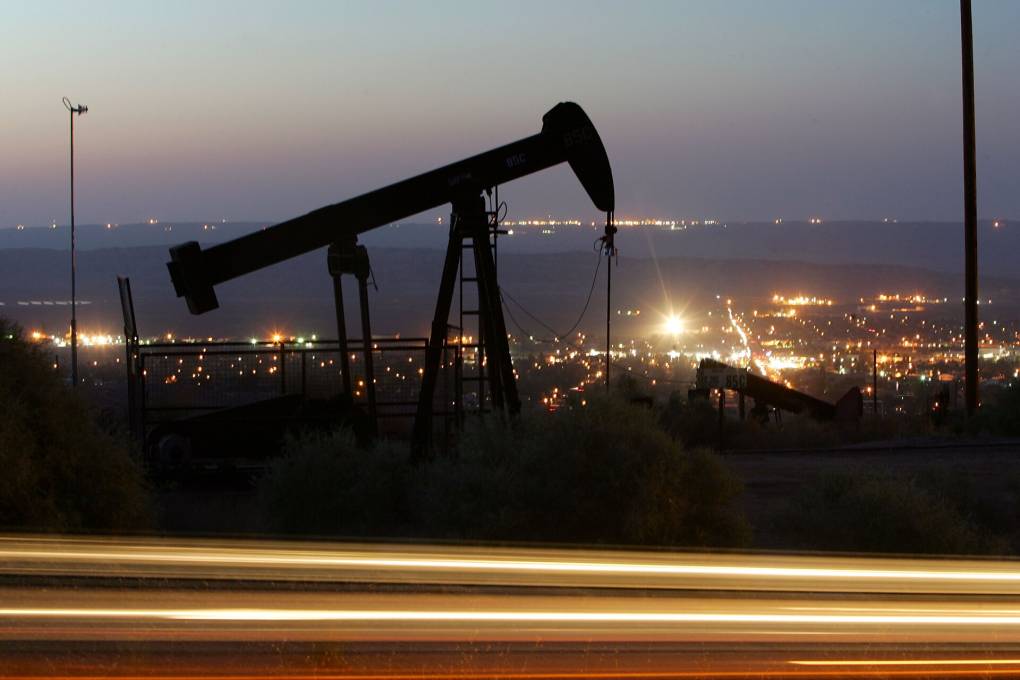
"caption": "An oil rig extracts crude on July 21, 2008 near Taft, California, in Kern County.",
"description": "An oil rig extracts crude on July 21, 2008 near Taft, California, in Kern County.",
"title": "Surging Oil Industry Brings Opportunity To Rural California",
"credit": "David McNew/Getty Images)",
"status": "inherit",
"altTag": null,
"isLoading": false,
"fetchFailed": false
},
"science_1975528": {
"type": "attachments",
"id": "science_1975528",
"meta": {
"index": "attachments_1716263798",
"site": "science",
"id": "1975528",
"found": true
},
"parent": 1975505,
"imgSizes": {
"twentyfourteen-full-width": {
"file": "https://ww2.kqed.org/app/uploads/sites/35/2021/06/RS50133_GettyImages-610889522-qut-1038x576.jpg",
"width": 1038,
"mimeType": "image/jpeg",
"height": 576
},
"thumbnail": {
"file": "https://ww2.kqed.org/app/uploads/sites/35/2021/06/RS50133_GettyImages-610889522-qut-160x98.jpg",
"width": 160,
"mimeType": "image/jpeg",
"height": 98
},
"post-thumbnail": {
"file": "https://ww2.kqed.org/app/uploads/sites/35/2021/06/RS50133_GettyImages-610889522-qut-672x372.jpg",
"width": 672,
"mimeType": "image/jpeg",
"height": 372
},
"kqedFullSize": {
"file": "https://ww2.kqed.org/app/uploads/sites/35/2021/06/RS50133_GettyImages-610889522-qut.jpg",
"width": 1920,
"height": 1180
},
"large": {
"file": "https://ww2.kqed.org/app/uploads/sites/35/2021/06/RS50133_GettyImages-610889522-qut-1020x627.jpg",
"width": 1020,
"mimeType": "image/jpeg",
"height": 627
},
"1536x1536": {
"file": "https://ww2.kqed.org/app/uploads/sites/35/2021/06/RS50133_GettyImages-610889522-qut-1536x944.jpg",
"width": 1536,
"mimeType": "image/jpeg",
"height": 944
},
"medium": {
"file": "https://ww2.kqed.org/app/uploads/sites/35/2021/06/RS50133_GettyImages-610889522-qut-800x492.jpg",
"width": 800,
"mimeType": "image/jpeg",
"height": 492
},
"medium_large": {
"file": "https://ww2.kqed.org/app/uploads/sites/35/2021/06/RS50133_GettyImages-610889522-qut-768x472.jpg",
"width": 768,
"mimeType": "image/jpeg",
"height": 472
}
},
"publishDate": 1624559134,
"modified": 1624640597,
"caption": "Sampson Spence of the Fremont Fire Department uses a water hose to douse flames in the Santa Cruz Mountains near Loma Prieta, Calif., on Sept. 28, 2016. \n ",
"description": null,
"title": "US-WILDFIRE",
"credit": "Josh Edelson/AFP via Getty Images",
"status": "inherit",
"altTag": null,
"isLoading": false,
"fetchFailed": false
},
"science_1975449": {
"type": "attachments",
"id": "science_1975449",
"meta": {
"index": "attachments_1716263798",
"site": "science",
"id": "1975449",
"found": true
},
"parent": 1975443,
"imgSizes": {
"twentyfourteen-full-width": {
"file": "https://ww2.kqed.org/app/uploads/sites/35/2021/06/RS50018_GettyImages-1229318331-qut-1038x576.jpg",
"width": 1038,
"mimeType": "image/jpeg",
"height": 576
},
"thumbnail": {
"file": "https://ww2.kqed.org/app/uploads/sites/35/2021/06/RS50018_GettyImages-1229318331-qut-160x107.jpg",
"width": 160,
"mimeType": "image/jpeg",
"height": 107
},
"post-thumbnail": {
"file": "https://ww2.kqed.org/app/uploads/sites/35/2021/06/RS50018_GettyImages-1229318331-qut-672x372.jpg",
"width": 672,
"mimeType": "image/jpeg",
"height": 372
},
"kqedFullSize": {
"file": "https://ww2.kqed.org/app/uploads/sites/35/2021/06/RS50018_GettyImages-1229318331-qut.jpg",
"width": 1920,
"height": 1280
},
"large": {
"file": "https://ww2.kqed.org/app/uploads/sites/35/2021/06/RS50018_GettyImages-1229318331-qut-1020x680.jpg",
"width": 1020,
"mimeType": "image/jpeg",
"height": 680
},
"1536x1536": {
"file": "https://ww2.kqed.org/app/uploads/sites/35/2021/06/RS50018_GettyImages-1229318331-qut-1536x1024.jpg",
"width": 1536,
"mimeType": "image/jpeg",
"height": 1024
},
"medium": {
"file": "https://ww2.kqed.org/app/uploads/sites/35/2021/06/RS50018_GettyImages-1229318331-qut-800x533.jpg",
"width": 800,
"mimeType": "image/jpeg",
"height": 533
},
"medium_large": {
"file": "https://ww2.kqed.org/app/uploads/sites/35/2021/06/RS50018_GettyImages-1229318331-qut-768x512.jpg",
"width": 768,
"mimeType": "image/jpeg",
"height": 512
}
},
"publishDate": 1624037543,
"modified": 1624041218,
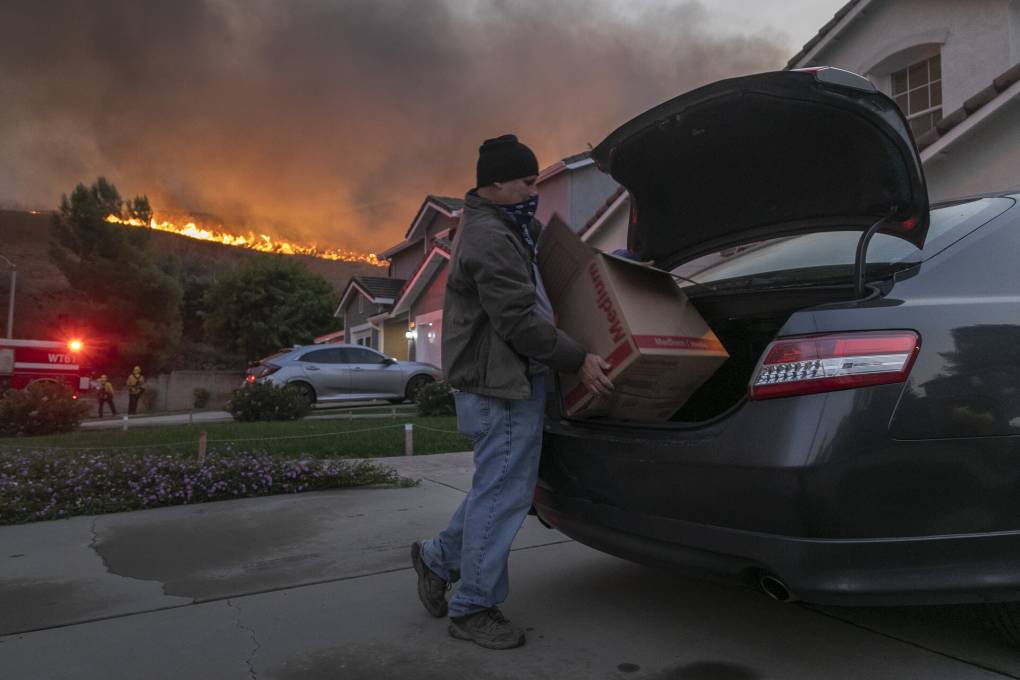
"caption": "A man evacuates as flames come close to houses during the Blue Ridge Fire on Oct. 27, 2020, in Chino Hills, California. ",
"description": null,
"title": "Silverado Fire In Orange Country, California Forces Evacuations",
"credit": "Photo by David McNew/Getty Images",
"status": "inherit",
"altTag": null,
"isLoading": false,
"fetchFailed": false
},
"science_1975477": {
"type": "attachments",
"id": "science_1975477",
"meta": {
"index": "attachments_1716263798",
"site": "science",
"id": "1975477",
"found": true
},
"parent": 1975476,
"imgSizes": {
"twentyfourteen-full-width": {
"file": "https://ww2.kqed.org/app/uploads/sites/35/2021/06/gettyimages-1233512800-ec5d82bddb20430c17d716d000d2adfa92dcef14-1038x576.jpg",
"width": 1038,
"mimeType": "image/jpeg",
"height": 576
},
"thumbnail": {
"file": "https://ww2.kqed.org/app/uploads/sites/35/2021/06/gettyimages-1233512800-ec5d82bddb20430c17d716d000d2adfa92dcef14-160x120.jpg",
"width": 160,
"mimeType": "image/jpeg",
"height": 120
},
"post-thumbnail": {
"file": "https://ww2.kqed.org/app/uploads/sites/35/2021/06/gettyimages-1233512800-ec5d82bddb20430c17d716d000d2adfa92dcef14-672x372.jpg",
"width": 672,
"mimeType": "image/jpeg",
"height": 372
},
"kqedFullSize": {
"file": "https://ww2.kqed.org/app/uploads/sites/35/2021/06/gettyimages-1233512800-ec5d82bddb20430c17d716d000d2adfa92dcef14-scaled.jpg",
"width": 2560,
"height": 1920
},
"2048x2048": {
"file": "https://ww2.kqed.org/app/uploads/sites/35/2021/06/gettyimages-1233512800-ec5d82bddb20430c17d716d000d2adfa92dcef14-2048x1536.jpg",
"width": 2048,
"mimeType": "image/jpeg",
"height": 1536
},
"large": {
"file": "https://ww2.kqed.org/app/uploads/sites/35/2021/06/gettyimages-1233512800-ec5d82bddb20430c17d716d000d2adfa92dcef14-1020x765.jpg",
"width": 1020,
"mimeType": "image/jpeg",
"height": 765
},
"1536x1536": {
"file": "https://ww2.kqed.org/app/uploads/sites/35/2021/06/gettyimages-1233512800-ec5d82bddb20430c17d716d000d2adfa92dcef14-1536x1152.jpg",
"width": 1536,
"mimeType": "image/jpeg",
"height": 1152
},
"full-width": {
"file": "https://ww2.kqed.org/app/uploads/sites/35/2021/06/gettyimages-1233512800-ec5d82bddb20430c17d716d000d2adfa92dcef14-1920x1440.jpg",
"width": 1920,
"mimeType": "image/jpeg",
"height": 1440
},
"medium": {
"file": "https://ww2.kqed.org/app/uploads/sites/35/2021/06/gettyimages-1233512800-ec5d82bddb20430c17d716d000d2adfa92dcef14-800x600.jpg",
"width": 800,
"mimeType": "image/jpeg",
"height": 600
},
"medium_large": {
"file": "https://ww2.kqed.org/app/uploads/sites/35/2021/06/gettyimages-1233512800-ec5d82bddb20430c17d716d000d2adfa92dcef14-768x576.jpg",
"width": 768,
"mimeType": "image/jpeg",
"height": 576
}
},
"publishDate": 1624297416,
"modified": 1624318648,
"caption": "Visitors feel the heat in California's Death Valley last week. ",
"description": null,
"title": "Visitors feel the heat in California's Death Valley earlier this week. This record-setting heat wave's remarkable power, reach and unusually early appearance is giving meteorologists yet more cause for concern about extreme weather in an era of climate change.",
"credit": "Patrick T. FallonAFP via Getty Images",
"status": "inherit",
"altTag": null,
"isLoading": false,
"fetchFailed": false
},
"science_1975431": {
"type": "attachments",
"id": "science_1975431",
"meta": {
"index": "attachments_1716263798",
"site": "science",
"id": "1975431",
"found": true
},
"parent": 1975422,
"imgSizes": {
"twentyfourteen-full-width": {
"file": "https://ww2.kqed.org/app/uploads/sites/35/2021/06/RS49272_027_NorthFairOaks_ClimateListening_05102021-qut-1038x576.jpg",
"width": 1038,
"mimeType": "image/jpeg",
"height": 576
},
"thumbnail": {
"file": "https://ww2.kqed.org/app/uploads/sites/35/2021/06/RS49272_027_NorthFairOaks_ClimateListening_05102021-qut-160x107.jpg",
"width": 160,
"mimeType": "image/jpeg",
"height": 107
},
"post-thumbnail": {
"file": "https://ww2.kqed.org/app/uploads/sites/35/2021/06/RS49272_027_NorthFairOaks_ClimateListening_05102021-qut-672x372.jpg",
"width": 672,
"mimeType": "image/jpeg",
"height": 372
},
"kqedFullSize": {
"file": "https://ww2.kqed.org/app/uploads/sites/35/2021/06/RS49272_027_NorthFairOaks_ClimateListening_05102021-qut.jpg",
"width": 1920,
"height": 1280
},
"large": {
"file": "https://ww2.kqed.org/app/uploads/sites/35/2021/06/RS49272_027_NorthFairOaks_ClimateListening_05102021-qut-1020x680.jpg",
"width": 1020,
"mimeType": "image/jpeg",
"height": 680
},
"1536x1536": {
"file": "https://ww2.kqed.org/app/uploads/sites/35/2021/06/RS49272_027_NorthFairOaks_ClimateListening_05102021-qut-1536x1024.jpg",
"width": 1536,
"mimeType": "image/jpeg",
"height": 1024
},
"medium": {
"file": "https://ww2.kqed.org/app/uploads/sites/35/2021/06/RS49272_027_NorthFairOaks_ClimateListening_05102021-qut-800x533.jpg",
"width": 800,
"mimeType": "image/jpeg",
"height": 533
},
"medium_large": {
"file": "https://ww2.kqed.org/app/uploads/sites/35/2021/06/RS49272_027_NorthFairOaks_ClimateListening_05102021-qut-768x512.jpg",
"width": 768,
"mimeType": "image/jpeg",
"height": 512
}
},
"publishDate": 1623963446,
"modified": 1624045778,
"caption": "Ever Rodriguez strikes a pose in front of a mural on Middlefield Road in North Fair Oaks on May 10, 2021. The mural was made by artist Jose Castro.",
"description": null,
"title": "RS49272_027_NorthFairOaks_ClimateListening_05102021-qut",
"credit": "Beth LaBerge/KQED",
"status": "inherit",
"altTag": null,
"isLoading": false,
"fetchFailed": false
},
"science_1975378": {
"type": "attachments",
"id": "science_1975378",
"meta": {
"index": "attachments_1716263798",
"site": "science",
"id": "1975378",
"found": true
},
"parent": 1975362,
"imgSizes": {
"twentyfourteen-full-width": {
"file": "https://ww2.kqed.org/app/uploads/sites/35/2021/06/059_SanFrancisco_YouthClimateActivists_06142021-1038x576.jpg",
"width": 1038,
"mimeType": "image/jpeg",
"height": 576
},
"thumbnail": {
"file": "https://ww2.kqed.org/app/uploads/sites/35/2021/06/059_SanFrancisco_YouthClimateActivists_06142021-160x107.jpg",
"width": 160,
"mimeType": "image/jpeg",
"height": 107
},
"post-thumbnail": {
"file": "https://ww2.kqed.org/app/uploads/sites/35/2021/06/059_SanFrancisco_YouthClimateActivists_06142021-672x372.jpg",
"width": 672,
"mimeType": "image/jpeg",
"height": 372
},
"kqedFullSize": {
"file": "https://ww2.kqed.org/app/uploads/sites/35/2021/06/059_SanFrancisco_YouthClimateActivists_06142021.jpg",
"width": 1920,
"height": 1278
},
"large": {
"file": "https://ww2.kqed.org/app/uploads/sites/35/2021/06/059_SanFrancisco_YouthClimateActivists_06142021-1020x679.jpg",
"width": 1020,
"mimeType": "image/jpeg",
"height": 679
},
"1536x1536": {
"file": "https://ww2.kqed.org/app/uploads/sites/35/2021/06/059_SanFrancisco_YouthClimateActivists_06142021-1536x1022.jpg",
"width": 1536,
"mimeType": "image/jpeg",
"height": 1022
},
"medium": {
"file": "https://ww2.kqed.org/app/uploads/sites/35/2021/06/059_SanFrancisco_YouthClimateActivists_06142021-800x533.jpg",
"width": 800,
"mimeType": "image/jpeg",
"height": 533
},
"medium_large": {
"file": "https://ww2.kqed.org/app/uploads/sites/35/2021/06/059_SanFrancisco_YouthClimateActivists_06142021-768x511.jpg",
"width": 768,
"mimeType": "image/jpeg",
"height": 511
}
},
"publishDate": 1623718155,
"modified": 1623791189,
"caption": "Youth climate activists march across the Golden Gate Bridge in support of the Civilian Climate Corps on June 14, 2021.",
"description": null,
"title": "059_SanFrancisco_YouthClimateActivists_06142021",
"credit": "Beth LaBerge/KQED",
"status": "inherit",
"altTag": null,
"isLoading": false,
"fetchFailed": false
},
"science_1975258": {
"type": "attachments",
"id": "science_1975258",
"meta": {
"index": "attachments_1716263798",
"site": "science",
"id": "1975258",
"found": true
},
"parent": 1975249,
"imgSizes": {
"twentyfourteen-full-width": {
"file": "https://ww2.kqed.org/app/uploads/sites/35/2021/06/grapevine-flood_george-rose-getty-1920x1080-1-1038x576.jpg",
"width": 1038,
"mimeType": "image/jpeg",
"height": 576
},
"thumbnail": {
"file": "https://ww2.kqed.org/app/uploads/sites/35/2021/06/grapevine-flood_george-rose-getty-1920x1080-1-160x90.jpg",
"width": 160,
"mimeType": "image/jpeg",
"height": 90
},
"post-thumbnail": {
"file": "https://ww2.kqed.org/app/uploads/sites/35/2021/06/grapevine-flood_george-rose-getty-1920x1080-1-672x372.jpg",
"width": 672,
"mimeType": "image/jpeg",
"height": 372
},
"kqedFullSize": {
"file": "https://ww2.kqed.org/app/uploads/sites/35/2021/06/grapevine-flood_george-rose-getty-1920x1080-1.jpg",
"width": 1920,
"height": 1080
},
"large": {
"file": "https://ww2.kqed.org/app/uploads/sites/35/2021/06/grapevine-flood_george-rose-getty-1920x1080-1-1020x574.jpg",
"width": 1020,
"mimeType": "image/jpeg",
"height": 574
},
"1536x1536": {
"file": "https://ww2.kqed.org/app/uploads/sites/35/2021/06/grapevine-flood_george-rose-getty-1920x1080-1-1536x864.jpg",
"width": 1536,
"mimeType": "image/jpeg",
"height": 864
},
"medium": {
"file": "https://ww2.kqed.org/app/uploads/sites/35/2021/06/grapevine-flood_george-rose-getty-1920x1080-1-800x450.jpg",
"width": 800,
"mimeType": "image/jpeg",
"height": 450
},
"medium_large": {
"file": "https://ww2.kqed.org/app/uploads/sites/35/2021/06/grapevine-flood_george-rose-getty-1920x1080-1-768x432.jpg",
"width": 768,
"mimeType": "image/jpeg",
"height": 432
}
},
"publishDate": 1623260911,
"modified": 1623260962,
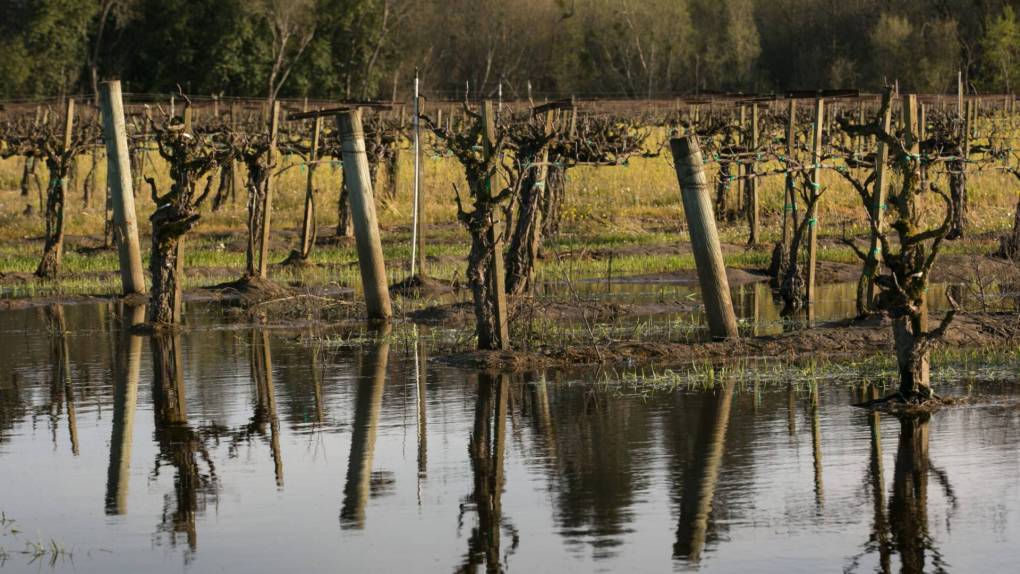
"caption": "Chardonnay grapevines in the Russian River Valley flood on March 12, 2018, near Sebastopol, California.",
"description": null,
"title": "grapevine-flood_george-rose-getty 1920x1080",
"credit": "Photo: George Rose/Getty Images",
"status": "inherit",
"altTag": "Chardonnay grapevines in the Russian River Valley flood on March 12, 2018, near Sebastopol, California.",
"isLoading": false,
"fetchFailed": false
},
"science_1975166": {
"type": "attachments",
"id": "science_1975166",
"meta": {
"index": "attachments_1716263798",
"site": "science",
"id": "1975166",
"found": true
},
"parent": 1975164,
"imgSizes": {
"twentyfourteen-full-width": {
"file": "https://ww2.kqed.org/app/uploads/sites/35/2021/06/RS49662_GettyImages-177068763-1-qut-1038x576.jpg",
"width": 1038,
"mimeType": "image/jpeg",
"height": 576
},
"thumbnail": {
"file": "https://ww2.kqed.org/app/uploads/sites/35/2021/06/RS49662_GettyImages-177068763-1-qut-160x107.jpg",
"width": 160,
"mimeType": "image/jpeg",
"height": 107
},
"post-thumbnail": {
"file": "https://ww2.kqed.org/app/uploads/sites/35/2021/06/RS49662_GettyImages-177068763-1-qut-672x372.jpg",
"width": 672,
"mimeType": "image/jpeg",
"height": 372
},
"kqedFullSize": {
"file": "https://ww2.kqed.org/app/uploads/sites/35/2021/06/RS49662_GettyImages-177068763-1-qut.jpg",
"width": 1920,
"height": 1281
},
"large": {
"file": "https://ww2.kqed.org/app/uploads/sites/35/2021/06/RS49662_GettyImages-177068763-1-qut-1020x681.jpg",
"width": 1020,
"mimeType": "image/jpeg",
"height": 681
},
"1536x1536": {
"file": "https://ww2.kqed.org/app/uploads/sites/35/2021/06/RS49662_GettyImages-177068763-1-qut-1536x1025.jpg",
"width": 1536,
"mimeType": "image/jpeg",
"height": 1025
},
"medium": {
"file": "https://ww2.kqed.org/app/uploads/sites/35/2021/06/RS49662_GettyImages-177068763-1-qut-800x534.jpg",
"width": 800,
"mimeType": "image/jpeg",
"height": 534
},
"medium_large": {
"file": "https://ww2.kqed.org/app/uploads/sites/35/2021/06/RS49662_GettyImages-177068763-1-qut-768x512.jpg",
"width": 768,
"mimeType": "image/jpeg",
"height": 512
}
},
"publishDate": 1622848786,
"modified": 1622848813,
"caption": "Thick coastal forests with redwood trees can store double the amount of carbon per acre compared to shrubbier, smaller forests in inland areas of California. ",
"description": null,
"title": "Sequoias And Coastal Redwoods Appear To Flourish Despite Climate Change",
"credit": "Justin Sullivan/Getty Images",
"status": "inherit",
"altTag": null,
"isLoading": false,
"fetchFailed": false
},
"science_1974949": {
"type": "attachments",
"id": "science_1974949",
"meta": {
"index": "attachments_1716263798",
"site": "science",
"id": "1974949",
"found": true
},
"parent": 1974948,
"imgSizes": {
"twentyfourteen-full-width": {
"file": "https://ww2.kqed.org/app/uploads/sites/35/2021/05/ap21146462397958_wide-9930ad5d5a6fe00f0bd53343a70b72c5579748ad-1038x576.jpg",
"width": 1038,
"mimeType": "image/jpeg",
"height": 576
},
"thumbnail": {
"file": "https://ww2.kqed.org/app/uploads/sites/35/2021/05/ap21146462397958_wide-9930ad5d5a6fe00f0bd53343a70b72c5579748ad-160x90.jpg",
"width": 160,
"mimeType": "image/jpeg",
"height": 90
},
"post-thumbnail": {
"file": "https://ww2.kqed.org/app/uploads/sites/35/2021/05/ap21146462397958_wide-9930ad5d5a6fe00f0bd53343a70b72c5579748ad-672x372.jpg",
"width": 672,
"mimeType": "image/jpeg",
"height": 372
},
"kqedFullSize": {
"file": "https://ww2.kqed.org/app/uploads/sites/35/2021/05/ap21146462397958_wide-9930ad5d5a6fe00f0bd53343a70b72c5579748ad-scaled.jpg",
"width": 2560,
"height": 1440
},
"2048x2048": {
"file": "https://ww2.kqed.org/app/uploads/sites/35/2021/05/ap21146462397958_wide-9930ad5d5a6fe00f0bd53343a70b72c5579748ad-2048x1152.jpg",
"width": 2048,
"mimeType": "image/jpeg",
"height": 1152
},
"large": {
"file": "https://ww2.kqed.org/app/uploads/sites/35/2021/05/ap21146462397958_wide-9930ad5d5a6fe00f0bd53343a70b72c5579748ad-1020x574.jpg",
"width": 1020,
"mimeType": "image/jpeg",
"height": 574
},
"1536x1536": {
"file": "https://ww2.kqed.org/app/uploads/sites/35/2021/05/ap21146462397958_wide-9930ad5d5a6fe00f0bd53343a70b72c5579748ad-1536x864.jpg",
"width": 1536,
"mimeType": "image/jpeg",
"height": 864
},
"full-width": {
"file": "https://ww2.kqed.org/app/uploads/sites/35/2021/05/ap21146462397958_wide-9930ad5d5a6fe00f0bd53343a70b72c5579748ad-1920x1080.jpg",
"width": 1920,
"mimeType": "image/jpeg",
"height": 1080
},
"medium": {
"file": "https://ww2.kqed.org/app/uploads/sites/35/2021/05/ap21146462397958_wide-9930ad5d5a6fe00f0bd53343a70b72c5579748ad-800x450.jpg",
"width": 800,
"mimeType": "image/jpeg",
"height": 450
},
"medium_large": {
"file": "https://ww2.kqed.org/app/uploads/sites/35/2021/05/ap21146462397958_wide-9930ad5d5a6fe00f0bd53343a70b72c5579748ad-768x432.jpg",
"width": 768,
"mimeType": "image/jpeg",
"height": 432
}
},
"publishDate": 1622135532,
"modified": 1622220433,
"caption": "Pictures of plaintiffs fly outside the court where Milieudefensie, the Dutch arm of the Friends of the Earth environmental organization, took Shell to court in The Hague, Netherlands, on May 26, 2021. Judges were to render their verdict in landmark legal battle of climate change activists in the Netherlands who went to court seeking an order for energy giant Shell to rein in its carbon emissions. ",
"description": null,
"title": "Pictures of plaintiffs fly outside the court in The Hague, Netherlands, before Wednesday's ruling ordering Royal Dutch Shell to rein in its carbon emissions. Thousands of citizens joined the suit charging that Shell's fossil fuel investments endanger lives.",
"credit": "AP Photo via NPR/Peter Dejong",
"status": "inherit",
"altTag": null,
"isLoading": false,
"fetchFailed": false
},
"science_1974913": {
"type": "attachments",
"id": "science_1974913",
"meta": {
"index": "attachments_1716263798",
"site": "science",
"id": "1974913",
"found": true
},
"parent": 1974912,
"imgSizes": {
"twentyfourteen-full-width": {
"file": "https://ww2.kqed.org/app/uploads/sites/35/2021/05/offshore-wind_eric-thayer-bloomberg-getty-2048x1365-1-1038x576.jpg",
"width": 1038,
"mimeType": "image/jpeg",
"height": 576
},
"thumbnail": {
"file": "https://ww2.kqed.org/app/uploads/sites/35/2021/05/offshore-wind_eric-thayer-bloomberg-getty-2048x1365-1-160x107.jpg",
"width": 160,
"mimeType": "image/jpeg",
"height": 107
},
"post-thumbnail": {
"file": "https://ww2.kqed.org/app/uploads/sites/35/2021/05/offshore-wind_eric-thayer-bloomberg-getty-2048x1365-1-672x372.jpg",
"width": 672,
"mimeType": "image/jpeg",
"height": 372
},
"kqedFullSize": {
"file": "https://ww2.kqed.org/app/uploads/sites/35/2021/05/offshore-wind_eric-thayer-bloomberg-getty-2048x1365-1.jpg",
"width": 2048,
"height": 1365
},
"large": {
"file": "https://ww2.kqed.org/app/uploads/sites/35/2021/05/offshore-wind_eric-thayer-bloomberg-getty-2048x1365-1-1020x680.jpg",
"width": 1020,
"mimeType": "image/jpeg",
"height": 680
},
"1536x1536": {
"file": "https://ww2.kqed.org/app/uploads/sites/35/2021/05/offshore-wind_eric-thayer-bloomberg-getty-2048x1365-1-1536x1024.jpg",
"width": 1536,
"mimeType": "image/jpeg",
"height": 1024
},
"full-width": {
"file": "https://ww2.kqed.org/app/uploads/sites/35/2021/05/offshore-wind_eric-thayer-bloomberg-getty-2048x1365-1-1920x1280.jpg",
"width": 1920,
"mimeType": "image/jpeg",
"height": 1280
},
"medium": {
"file": "https://ww2.kqed.org/app/uploads/sites/35/2021/05/offshore-wind_eric-thayer-bloomberg-getty-2048x1365-1-800x533.jpg",
"width": 800,
"mimeType": "image/jpeg",
"height": 533
},
"medium_large": {
"file": "https://ww2.kqed.org/app/uploads/sites/35/2021/05/offshore-wind_eric-thayer-bloomberg-getty-2048x1365-1-768x512.jpg",
"width": 768,
"mimeType": "image/jpeg",
"height": 512
}
},
"publishDate": 1622049006,
"modified": 1622178631,
"caption": "The GE-Alstom Block Island Wind Farm stands in the water off Block Island, Rhode Island, on Sept, 14, 2016. ",
"description": null,
"title": "Views Of General Electric Co.'s First U.S. Offshore Wind Farm",
"credit": "Eric Thayer/Bloomberg via Getty Images",
"status": "inherit",
"altTag": null,
"isLoading": false,
"fetchFailed": false
},
"science_1974859": {
"type": "attachments",
"id": "science_1974859",
"meta": {
"index": "attachments_1716263798",
"site": "science",
"id": "1974859",
"found": true
},
"parent": 1974858,
"imgSizes": {
"twentyfourteen-full-width": {
"file": "https://ww2.kqed.org/app/uploads/sites/35/2021/05/ap_21140077457924-448a767e4135c7a06ebfb11b859e5082bc179428-1038x576.jpg",
"width": 1038,
"mimeType": "image/jpeg",
"height": 576
},
"thumbnail": {
"file": "https://ww2.kqed.org/app/uploads/sites/35/2021/05/ap_21140077457924-448a767e4135c7a06ebfb11b859e5082bc179428-160x120.jpg",
"width": 160,
"mimeType": "image/jpeg",
"height": 120
},
"post-thumbnail": {
"file": "https://ww2.kqed.org/app/uploads/sites/35/2021/05/ap_21140077457924-448a767e4135c7a06ebfb11b859e5082bc179428-672x372.jpg",
"width": 672,
"mimeType": "image/jpeg",
"height": 372
},
"kqedFullSize": {
"file": "https://ww2.kqed.org/app/uploads/sites/35/2021/05/ap_21140077457924-448a767e4135c7a06ebfb11b859e5082bc179428-scaled.jpg",
"width": 2560,
"height": 1917
},
"2048x2048": {
"file": "https://ww2.kqed.org/app/uploads/sites/35/2021/05/ap_21140077457924-448a767e4135c7a06ebfb11b859e5082bc179428-2048x1533.jpg",
"width": 2048,
"mimeType": "image/jpeg",
"height": 1533
},
"large": {
"file": "https://ww2.kqed.org/app/uploads/sites/35/2021/05/ap_21140077457924-448a767e4135c7a06ebfb11b859e5082bc179428-1020x764.jpg",
"width": 1020,
"mimeType": "image/jpeg",
"height": 764
},
"1536x1536": {
"file": "https://ww2.kqed.org/app/uploads/sites/35/2021/05/ap_21140077457924-448a767e4135c7a06ebfb11b859e5082bc179428-1536x1150.jpg",
"width": 1536,
"mimeType": "image/jpeg",
"height": 1150
},
"full-width": {
"file": "https://ww2.kqed.org/app/uploads/sites/35/2021/05/ap_21140077457924-448a767e4135c7a06ebfb11b859e5082bc179428-1920x1438.jpg",
"width": 1920,
"mimeType": "image/jpeg",
"height": 1438
},
"medium": {
"file": "https://ww2.kqed.org/app/uploads/sites/35/2021/05/ap_21140077457924-448a767e4135c7a06ebfb11b859e5082bc179428-800x599.jpg",
"width": 800,
"mimeType": "image/jpeg",
"height": 599
},
"medium_large": {
"file": "https://ww2.kqed.org/app/uploads/sites/35/2021/05/ap_21140077457924-448a767e4135c7a06ebfb11b859e5082bc179428-768x575.jpg",
"width": 768,
"mimeType": "image/jpeg",
"height": 575
}
},
"publishDate": 1621534296,
"modified": 1621534487,
"caption": "Pictured is the front grill of the new Ford F-150 Lightning unveiled on Wednesday in Dearborn, Mich. The electric version of Ford's bestselling pickup truck marks a major push to get buyers to switch to electric vehicles.",
"description": null,
"title": "ap_21140077457924-448a767e4135c7a06ebfb11b859e5082bc179428",
"credit": "Photo by Bill Pugliano/Getty Images",
"status": "inherit",
"altTag": null,
"isLoading": false,
"fetchFailed": false
},
"science_1974779": {
"type": "attachments",
"id": "science_1974779",
"meta": {
"index": "attachments_1716263798",
"site": "science",
"id": "1974779",
"found": true
},
"parent": 1974648,
"imgSizes": {
"twentyfourteen-full-width": {
"file": "https://ww2.kqed.org/app/uploads/sites/35/2021/05/KQED_BigBasin_Fire_09102020-qut-1038x576.jpg",
"width": 1038,
"mimeType": "image/jpeg",
"height": 576
},
"thumbnail": {
"file": "https://ww2.kqed.org/app/uploads/sites/35/2021/05/KQED_BigBasin_Fire_09102020-qut-160x107.jpg",
"width": 160,
"mimeType": "image/jpeg",
"height": 107
},
"post-thumbnail": {
"file": "https://ww2.kqed.org/app/uploads/sites/35/2021/05/KQED_BigBasin_Fire_09102020-qut-672x372.jpg",
"width": 672,
"mimeType": "image/jpeg",
"height": 372
},
"kqedFullSize": {
"file": "https://ww2.kqed.org/app/uploads/sites/35/2021/05/KQED_BigBasin_Fire_09102020-qut.jpg",
"width": 1920,
"height": 1278
},
"large": {
"file": "https://ww2.kqed.org/app/uploads/sites/35/2021/05/KQED_BigBasin_Fire_09102020-qut-1020x679.jpg",
"width": 1020,
"mimeType": "image/jpeg",
"height": 679
},
"1536x1536": {
"file": "https://ww2.kqed.org/app/uploads/sites/35/2021/05/KQED_BigBasin_Fire_09102020-qut-1536x1022.jpg",
"width": 1536,
"mimeType": "image/jpeg",
"height": 1022
},
"medium": {
"file": "https://ww2.kqed.org/app/uploads/sites/35/2021/05/KQED_BigBasin_Fire_09102020-qut-800x533.jpg",
"width": 800,
"mimeType": "image/jpeg",
"height": 533
},
"medium_large": {
"file": "https://ww2.kqed.org/app/uploads/sites/35/2021/05/KQED_BigBasin_Fire_09102020-qut-768x511.jpg",
"width": 768,
"mimeType": "image/jpeg",
"height": 511
}
},
"publishDate": 1620944350,
"modified": 1620946848,
"caption": "Redwood trees after the CZU Lightning Complex wildfires burned much of the area at Big Basin Redwoods State Park on Sept. 10, 2020.",
"description": null,
"title": "KQED_BigBasin_Fire_09102020-qut",
"credit": "Beth LaBerge/KQED",
"status": "inherit",
"altTag": null,
"isLoading": false,
"fetchFailed": false
}
},
"audioPlayerReducer": {
"postId": "stream_live",
"isPaused": true,
"isPlaying": false,
"pfsActive": false,
"pledgeModalIsOpen": true,
"playerDrawerIsOpen": false,
"liveAudioPlayStartedAt": 0,
"liveAudioPlayContext": ""
},
"authorsReducer": {
"byline_science_1975476": {
"type": "authors",
"id": "byline_science_1975476",
"meta": {
"override": true
},
"slug": "byline_science_1975476",
"name": "Eric Westervelt \u003cbr />NPR\u003cbr>",
"isLoading": false
},
"byline_science_1975249": {
"type": "authors",
"id": "byline_science_1975249",
"meta": {
"override": true
},
"slug": "byline_science_1975249",
"name": "Liza Gross \u003c/br> Inside Climate News",
"isLoading": false
},
"byline_science_1974948": {
"type": "authors",
"id": "byline_science_1974948",
"meta": {
"override": true
},
"slug": "byline_science_1974948",
"name": "Jeff Brady \u003cbr />NPR\u003cbr>",
"isLoading": false
},
"byline_science_1974912": {
"type": "authors",
"id": "byline_science_1974912",
"meta": {
"override": true
},
"slug": "byline_science_1974912",
"name": "Emma Foehringer Merchant \u003cbr />InsideClimate News\u003cbr>",
"isLoading": false
},
"byline_science_1974858": {
"type": "authors",
"id": "byline_science_1974858",
"meta": {
"override": true
},
"slug": "byline_science_1974858",
"name": "Camila Domonoske \u003cbr />NPR\u003cbr>",
"isLoading": false
},
"parcuni": {
"type": "authors",
"id": "11368",
"meta": {
"index": "authors_1716337520",
"id": "11368",
"found": true
},
"name": "Peter Arcuni",
"firstName": "Peter",
"lastName": "Arcuni",
"slug": "parcuni",
"email": "parcuni@KQED.org",
"display_author_email": false,
"staff_mastheads": [
"science"
],
"title": "Reporter",
"bio": "Peter reports radio and online stories for \u003cem>KQED Science\u003c/em>. His work has also appeared on the \u003cem>The California Report\u003c/em> morning show and \u003cem>KQED News\u003c/em>. His production credits include \u003cem>The California Report, The California Report Magazine\u003c/em> and KQED's local news podcast \u003cem>The Bay\u003c/em>. Other credits include NPR's \u003cem>All Things Considered\u003c/em>, WNYC's \u003cem>Science Friday\u003c/em>, WBUR's \u003cem>Here & Now\u003c/em>, WIRED and SFGate. Peter graduated from Brown University and earned a master's degree in journalism from Stanford. He's covered everything from homelessness to wildfires, health, the environment, arts and Thanksgiving in San Quentin prison. In other lives, he played rock n roll music and studied neuroscience. You can email him at: parcuni@kqed.org",
"avatar": "https://secure.gravatar.com/avatar/d5032f6f27199d478af34ad2e1d98732?s=600&d=blank&r=g",
"twitter": "peterarcuni",
"facebook": null,
"instagram": null,
"linkedin": null,
"sites": [
{
"site": "news",
"roles": [
"editor"
]
},
{
"site": "science",
"roles": [
"editor"
]
}
],
"headData": {
"title": "Peter Arcuni | KQED",
"description": "Reporter",
"ogImgSrc": "https://secure.gravatar.com/avatar/d5032f6f27199d478af34ad2e1d98732?s=600&d=blank&r=g",
"twImgSrc": "https://secure.gravatar.com/avatar/d5032f6f27199d478af34ad2e1d98732?s=600&d=blank&r=g"
},
"isLoading": false,
"link": "/author/parcuni"
},
"rdillon": {
"type": "authors",
"id": "11495",
"meta": {
"index": "authors_1716337520",
"id": "11495",
"found": true
},
"name": "Raquel Maria Dillon",
"firstName": "Raquel Maria",
"lastName": "Dillon",
"slug": "rdillon",
"email": "rdillon@kqed.org",
"display_author_email": false,
"staff_mastheads": [],
"title": null,
"bio": "Raquel Maria Dillon was a reporter and host for KQED News. Previously, she produced the daily statewide California Report, edited newscasts, and covered health and education stories. Before returning to the Bay Area in 2016, she worked in Los Angeles as a wire reporter and one-woman-band video journalist for the Associated Press, where she shot, edited and reported breaking news and features across the West. Her work has appeared online and in print around the globe, and also on NPR’s Morning Edition, All Things Considered, Here and Now, Marketplace, On The Media, and Studio 360. She previously edited and mentored up-and-coming reporters at KALW, produced social videos for Timeline.com, and was a local TV news videographer for KTVU and digital producer for KNTV. She got her start as a Radio News Trainee at KQED, produced a weekly public affairs roundtable show for OPB, and covered health and politics at New Hampshire Public Radio. She has a BA in political science from Barnard College and a MA in video journalism from UC Berkeley, where she was awarded the Faith Fancher Scholarship and a Student Emmy. She has received numerous local awards from the Associated Press and the Society of Professional Journalists.",
"avatar": "https://secure.gravatar.com/avatar/b8e02ae982913d0950df605910267c1b?s=600&d=blank&r=g",
"twitter": "RaquelMDillon",
"facebook": null,
"instagram": null,
"linkedin": null,
"sites": [
{
"site": "news",
"roles": [
"subscriber"
]
},
{
"site": "stateofhealth",
"roles": [
"editor"
]
},
{
"site": "science",
"roles": [
"editor"
]
},
{
"site": "forum",
"roles": [
"editor"
]
}
],
"headData": {
"title": "Raquel Maria Dillon | KQED",
"description": null,
"ogImgSrc": "https://secure.gravatar.com/avatar/b8e02ae982913d0950df605910267c1b?s=600&d=blank&r=g",
"twImgSrc": "https://secure.gravatar.com/avatar/b8e02ae982913d0950df605910267c1b?s=600&d=blank&r=g"
},
"isLoading": false,
"link": "/author/rdillon"
},
"kevinstark": {
"type": "authors",
"id": "11608",
"meta": {
"index": "authors_1716337520",
"id": "11608",
"found": true
},
"name": "Kevin Stark",
"firstName": "Kevin",
"lastName": "Stark",
"slug": "kevinstark",
"email": "kstark@kqed.org",
"display_author_email": true,
"staff_mastheads": [
"science"
],
"title": "Senior Editor",
"bio": "Kevin is a senior editor for KQED Science, managing the station's health and climate desks. His journalism career began in the Pacific Northwest, and he later became a lead reporter for the San Francisco Public Press. His work has appeared in Pacific Standard magazine, the Energy News Network, the Center for Investigative Reporting's Reveal and WBEZ in Chicago. Kevin joined KQED in 2019, and has covered issues related to energy, wildfire, climate change and the environment.",
"avatar": "https://secure.gravatar.com/avatar/365aaa4b597d3a8374f67504ff0facd323d7906e8eb4be0a7efd2427408e802c?s=600&d=blank&r=g",
"twitter": "starkkev",
"bluesky": null,
"facebook": null,
"instagram": null,
"linkedin": null,
"sites": [
{
"site": "",
"roles": [
"editor"
]
},
{
"site": "news",
"roles": [
"editor"
]
},
{
"site": "science",
"roles": [
"administrator"
]
}
],
"headData": {
"title": "Kevin Stark | KQED",
"description": "Senior Editor",
"ogImgSrc": "https://secure.gravatar.com/avatar/365aaa4b597d3a8374f67504ff0facd323d7906e8eb4be0a7efd2427408e802c?s=600&d=blank&r=g",
"twImgSrc": "https://secure.gravatar.com/avatar/365aaa4b597d3a8374f67504ff0facd323d7906e8eb4be0a7efd2427408e802c?s=600&d=blank&r=g"
},
"isLoading": false,
"link": "/author/kevinstark"
},
"eromero": {
"type": "authors",
"id": "11746",
"meta": {
"index": "authors_1716337520",
"id": "11746",
"found": true
},
"name": "Ezra David Romero",
"firstName": "Ezra David",
"lastName": "Romero",
"slug": "eromero",
"email": "eromero@kqed.org",
"display_author_email": true,
"staff_mastheads": [
"news",
"science"
],
"title": "Climate Reporter",
"bio": "Ezra David Romero is a climate reporter for KQED News. He covers the absence and excess of water in the Bay Area — think sea level rise, flooding and drought. For nearly a decade he’s covered how warming temperatures are altering the lives of Californians. He’s reported on farmers worried their pistachio trees aren’t getting enough sleep, families desperate for water, scientists studying dying giant sequoias, and alongside firefighters containing wildfires. His work has appeared on local stations across California and nationally on public radio shows like Morning Edition, Here and Now, All Things Considered and Science Friday. ",
"avatar": "https://secure.gravatar.com/avatar/c76404d287c10ed40224227551ac36e24352c7306f106632caf6fead76f8801f?s=600&d=blank&r=g",
"twitter": "ezraromero",
"bluesky": null,
"facebook": null,
"instagram": null,
"linkedin": null,
"sites": [
{
"site": "arts",
"roles": [
"editor"
]
},
{
"site": "news",
"roles": [
"editor"
]
},
{
"site": "science",
"roles": [
"editor"
]
},
{
"site": "liveblog",
"roles": [
"author"
]
}
],
"headData": {
"title": "Ezra David Romero | KQED",
"description": "Climate Reporter",
"ogImgSrc": "https://secure.gravatar.com/avatar/c76404d287c10ed40224227551ac36e24352c7306f106632caf6fead76f8801f?s=600&d=blank&r=g",
"twImgSrc": "https://secure.gravatar.com/avatar/c76404d287c10ed40224227551ac36e24352c7306f106632caf6fead76f8801f?s=600&d=blank&r=g"
},
"isLoading": false,
"link": "/author/eromero"
}
},
"pagesReducer": {
"science_tag_climate-change": {
"type": "terms",
"id": "science_194",
"meta": {
"index": "terms_1716263798",
"site": "science",
"id": "194",
"score": 7.946677
},
"featImg": null,
"name": "climate change",
"description": null,
"taxonomy": "tag",
"headData": {
"twImgId": null,
"twTitle": null,
"ogTitle": null,
"ogImgId": null,
"twDescription": null,
"description": null,
"title": "climate change Archives | KQED Science",
"ogDescription": null
},
"ttid": 198,
"slug": "climate-change",
"isLoading": false,
"title": "climate change",
"pageMeta": {
"site": "science",
"WpPageTemplate": "page-topic-editorial",
"currentPage": 21
},
"blocks": [
{
"blockName": "kqed/post-list",
"attrs": {
"layout": "cardArticle2",
"query": "posts/science?tag=climate-change",
"seeMore": false,
"paginated": true,
"page": 21
}
},
{
"blockName": "kqed/ad"
}
]
}
},
"pfsSessionReducer": {},
"postsReducer": {
"stream_live": {
"type": "live",
"id": "stream_live",
"audioUrl": "https://streams.kqed.org/kqedradio",
"title": "Live Stream",
"excerpt": "Live Stream information currently unavailable.",
"link": "/radio",
"featImg": "",
"label": {
"name": "KQED Live",
"link": "/"
}
},
"stream_kqedNewscast": {
"type": "posts",
"id": "stream_kqedNewscast",
"audioUrl": "https://www.kqed.org/.stream/anon/radio/RDnews/newscast.mp3?_=1",
"title": "KQED Newscast",
"featImg": "",
"label": {
"name": "88.5 FM",
"link": "/"
}
},
"science_1975573": {
"type": "posts",
"id": "science_1975573",
"meta": {
"index": "posts_1716263798",
"site": "science",
"id": "1975573",
"score": null,
"sort": [
1624923934000
]
},
"parent": 0,
"labelTerm": {
"site": "science"
},
"blocks": [],
"publishDate": 1624923934,
"format": "standard",
"title": "'Bottom of the Barrel' California Oil Can Be Far More Carbon Intensive Than What State Imports",
"headTitle": "‘Bottom of the Barrel’ California Oil Can Be Far More Carbon Intensive Than What State Imports | KQED",
"content": "\u003cp>A new analysis from an environmental advocacy group highlights a dirty secret about California-produced oil: It is responsible for higher carbon emissions than the oil the state imports.\u003c/p>\n\u003cp>Scientists with the Center for Biological Diversity examined the carbon intensity of the crude oil supplied to California refineries and released their \u003ca href=\"https://www.biologicaldiversity.org/programs/climate_law_institute/pdfs/June-2021-Killer-Crude-Rpt.pdf\">\u003cspan class=\"s2\">analysis\u003c/span>\u003c/a> on Monday, which shows that producing gasoline from heavy crude oil drilled in places like Kern County takes a lot of energy and creates tons of pollution.\u003c/p>\n\u003cp>They found that the carbon intensity of oil produced in California has climbed by 22% since 2012.\u003c/p>\n\u003cp>“California’s oil is getting dirtier and heavier, heating the planet more and requiring more polluting methods to extract it,” said John Fleming, the report’s lead author, in a statement. “The idea that California oil is somehow cleaner or climate-friendly is ludicrous.”\u003c/p>\n\u003cp>[ad fullwidth]\u003c/p>\n\u003cp>The report \u003ca href=\"https://ww2.arb.ca.gov/sites/default/files/classic//fuels/lcfs/crude-oil/2019_crude_average_ci_value_final.pdf\" target=\"_blank\" rel=\"noopener noreferrer\">tracks\u003c/a> with similar statistics released by California regulators.\u003c/p>\n\u003cp>Dave Clegern, a spokesperson for the California Air Resources Board, said agency staff haven’t yet read the environmentalists’ report.\u003c/p>\n\u003cp>But he said California and its regulators are working to drive down consumer demand for gasoline with its policies, like incentivizing the use of electric vehicles. Gov. Gavin Newsom \u003ca href=\"https://www.kqed.org/science/1969807/california-to-halt-sales-of-new-gas-cars-by-2035\">announced\u003c/a> last September that California will ban the sale of new gasoline-powered cars by the year 2035.\u003c/p>\n\u003cp>[pullquote size=\"medium\" align=\"right\" citation=\"John Fleming, Center for Biological Diversity\"]‘The idea that California oil is somehow cleaner or climate-friendly is ludicrous.’[/pullquote]“We know that as you get to the bottom of the barrel, more and more unconventional fuels, from light sweet crude to heavy crude — which California produces a lot off — to tar sands, it takes more effort to make gasoline,” said Dan Kammen, an energy professor at UC Berkeley who helped the state craft its fuel standard more than a decade ago.\u003c/p>\n\u003cp>“More effort means more energy. It means more pollution. It also typically means removing more impurities, all of that adds up to a dirtier and dirtier product,” he said. “This report really calls that out. California produces in Kern County some very sour, high-toxics fuels. It is not a surprise.”\u003c/p>\n\u003cp>Kammen was not involved in the center’s report, but he helped design the methodology behind California’s Low Carbon Fuel Standard. The environmentalists used equations from that state regulation in their report.\u003c/p>\n\u003cp>Proponents of California oil drilling have \u003ca href=\"https://www.desertsun.com/story/news/environment/2021/03/08/californias-big-oil-wins-okay-40-500-wells-farmer-vows-sue/4629935001/\">\u003cspan class=\"s2\">argued\u003c/span>\u003c/a> that California-produced oil products are cleaner than the imported alternatives. These statistics undercut that argument — at least, in part.\u003c/p>\n\u003cp>While the production of California oil could contribute more planet-warming gas emissions, industry groups and labor groups have \u003ca href=\"https://www.latimes.com/california/story/2021-04-04/newsom-california-fracking-ban-vision-exceeds-original-scope\">argued\u003c/a> that California oil is preferable to imported alternatives because it is produced under strict environmental and labor regulations. Limiting drilling here could hurt jobs, they say.\u003c/p>\n\u003cp>[aside label='Related Coverage' tag='oil-drilling']“Foreign oil is not produced with the same environmental protections or humanitarian values that we have here in California; nor do they pay billions in California taxes or hundreds of millions of dollars in fees that are reinvested to advance California’s climate goals,” Rock Zierman, CEO of the California Independent Petroleum Association, told the \u003ca href=\"https://www.latimes.com/california/story/2021-04-04/newsom-california-fracking-ban-vision-exceeds-original-scope\" target=\"_blank\" rel=\"noopener noreferrer\">Los Angeles Times\u003c/a>.\u003c/p>\n\u003cp>The environmentalists are using the report to call on California to swiftly stop approving new oil and gas wells, ban fracking and “immediately implement a health-and-safety buffer to prevent oil and gas drilling in communities and protect public health and safety from the air pollution and other harms of oil and gas extraction,” they wrote.\u003c/p>\n\u003cp>Regulators with the California Geologic Energy Management Division, known as CalGEM, have \u003ca href=\"https://www.kqed.org/science/1975538/california-oil-regulators-delay-health-safety-rules-again\" target=\"_blank\" rel=\"noopener noreferrer\">delayed\u003c/a>, for the second time, the release of draft rules that could require oil and gas drilling sites be set back from homes and schools in the state.\u003c/p>\n\u003cp>\u003c/p>\n",
"stats": {
"hasVideo": false,
"hasChartOrMap": false,
"hasAudio": false,
"hasPolis": false,
"wordCount": 652,
"hasGoogleForm": false,
"hasGallery": false,
"hasHearkenModule": false,
"iframeSrcs": [],
"paragraphCount": 17
},
"modified": 1704846541,
"excerpt": "A new analysis from an environmental advocacy group suggests some California-produced oil is responsible for higher carbon emissions than the oil the state imports.",
"headData": {
"twImgId": "",
"twTitle": "",
"ogTitle": "",
"ogImgId": "",
"twDescription": "",
"description": "A new analysis from an environmental advocacy group suggests some California-produced oil is responsible for higher carbon emissions than the oil the state imports.",
"title": "'Bottom of the Barrel' California Oil Can Be Far More Carbon Intensive Than What State Imports | KQED",
"ogDescription": "",
"schema": {
"@context": "https://schema.org",
"@type": "Article",
"headline": "'Bottom of the Barrel' California Oil Can Be Far More Carbon Intensive Than What State Imports",
"datePublished": "2021-06-28T16:45:34-07:00",
"dateModified": "2024-01-09T16:29:01-08:00",
"image": "https://cdn.kqed.org/wp-content/uploads/2020/02/KQED-OG-Image@1x.png"
}
},
"guestAuthors": [],
"slug": "bottom-of-the-barrel-california-oil-can-be-far-more-carbon-intensive-than-what-state-imports",
"status": "publish",
"sticky": false,
"path": "/science/1975573/bottom-of-the-barrel-california-oil-can-be-far-more-carbon-intensive-than-what-state-imports",
"audioTrackLength": null,
"parsedContent": [
{
"type": "contentString",
"content": "\u003cdiv class=\"post-body\">\u003cp>\u003cp>A new analysis from an environmental advocacy group highlights a dirty secret about California-produced oil: It is responsible for higher carbon emissions than the oil the state imports.\u003c/p>\n\u003cp>Scientists with the Center for Biological Diversity examined the carbon intensity of the crude oil supplied to California refineries and released their \u003ca href=\"https://www.biologicaldiversity.org/programs/climate_law_institute/pdfs/June-2021-Killer-Crude-Rpt.pdf\">\u003cspan class=\"s2\">analysis\u003c/span>\u003c/a> on Monday, which shows that producing gasoline from heavy crude oil drilled in places like Kern County takes a lot of energy and creates tons of pollution.\u003c/p>\n\u003cp>They found that the carbon intensity of oil produced in California has climbed by 22% since 2012.\u003c/p>\n\u003cp>“California’s oil is getting dirtier and heavier, heating the planet more and requiring more polluting methods to extract it,” said John Fleming, the report’s lead author, in a statement. “The idea that California oil is somehow cleaner or climate-friendly is ludicrous.”\u003c/p>\n\u003cp>\u003c/p>\u003c/div>",
"attributes": {
"named": {},
"numeric": []
}
},
{
"type": "component",
"content": "",
"name": "ad",
"attributes": {
"named": {
"label": "fullwidth"
},
"numeric": [
"fullwidth"
]
}
},
{
"type": "contentString",
"content": "\u003cdiv class=\"post-body\">\u003cp>\u003c/p>\n\u003cp>The report \u003ca href=\"https://ww2.arb.ca.gov/sites/default/files/classic//fuels/lcfs/crude-oil/2019_crude_average_ci_value_final.pdf\" target=\"_blank\" rel=\"noopener noreferrer\">tracks\u003c/a> with similar statistics released by California regulators.\u003c/p>\n\u003cp>Dave Clegern, a spokesperson for the California Air Resources Board, said agency staff haven’t yet read the environmentalists’ report.\u003c/p>\n\u003cp>But he said California and its regulators are working to drive down consumer demand for gasoline with its policies, like incentivizing the use of electric vehicles. Gov. Gavin Newsom \u003ca href=\"https://www.kqed.org/science/1969807/california-to-halt-sales-of-new-gas-cars-by-2035\">announced\u003c/a> last September that California will ban the sale of new gasoline-powered cars by the year 2035.\u003c/p>\n\u003cp>\u003c/p>\u003c/div>",
"attributes": {
"named": {},
"numeric": []
}
},
{
"type": "component",
"content": "‘The idea that California oil is somehow cleaner or climate-friendly is ludicrous.’",
"name": "pullquote",
"attributes": {
"named": {
"size": "medium",
"align": "right",
"citation": "John Fleming, Center for Biological Diversity",
"label": ""
},
"numeric": []
}
},
{
"type": "contentString",
"content": "\u003cdiv class=\"post-body\">\u003cp>“We know that as you get to the bottom of the barrel, more and more unconventional fuels, from light sweet crude to heavy crude — which California produces a lot off — to tar sands, it takes more effort to make gasoline,” said Dan Kammen, an energy professor at UC Berkeley who helped the state craft its fuel standard more than a decade ago.\u003c/p>\n\u003cp>“More effort means more energy. It means more pollution. It also typically means removing more impurities, all of that adds up to a dirtier and dirtier product,” he said. “This report really calls that out. California produces in Kern County some very sour, high-toxics fuels. It is not a surprise.”\u003c/p>\n\u003cp>Kammen was not involved in the center’s report, but he helped design the methodology behind California’s Low Carbon Fuel Standard. The environmentalists used equations from that state regulation in their report.\u003c/p>\n\u003cp>Proponents of California oil drilling have \u003ca href=\"https://www.desertsun.com/story/news/environment/2021/03/08/californias-big-oil-wins-okay-40-500-wells-farmer-vows-sue/4629935001/\">\u003cspan class=\"s2\">argued\u003c/span>\u003c/a> that California-produced oil products are cleaner than the imported alternatives. These statistics undercut that argument — at least, in part.\u003c/p>\n\u003cp>While the production of California oil could contribute more planet-warming gas emissions, industry groups and labor groups have \u003ca href=\"https://www.latimes.com/california/story/2021-04-04/newsom-california-fracking-ban-vision-exceeds-original-scope\">argued\u003c/a> that California oil is preferable to imported alternatives because it is produced under strict environmental and labor regulations. Limiting drilling here could hurt jobs, they say.\u003c/p>\n\u003cp>\u003c/p>\u003c/div>",
"attributes": {
"named": {},
"numeric": []
}
},
{
"type": "component",
"content": "",
"name": "aside",
"attributes": {
"named": {
"label": "Related Coverage ",
"tag": "oil-drilling"
},
"numeric": []
}
},
{
"type": "contentString",
"content": "\u003cdiv class=\"post-body\">\u003cp>“Foreign oil is not produced with the same environmental protections or humanitarian values that we have here in California; nor do they pay billions in California taxes or hundreds of millions of dollars in fees that are reinvested to advance California’s climate goals,” Rock Zierman, CEO of the California Independent Petroleum Association, told the \u003ca href=\"https://www.latimes.com/california/story/2021-04-04/newsom-california-fracking-ban-vision-exceeds-original-scope\" target=\"_blank\" rel=\"noopener noreferrer\">Los Angeles Times\u003c/a>.\u003c/p>\n\u003cp>The environmentalists are using the report to call on California to swiftly stop approving new oil and gas wells, ban fracking and “immediately implement a health-and-safety buffer to prevent oil and gas drilling in communities and protect public health and safety from the air pollution and other harms of oil and gas extraction,” they wrote.\u003c/p>\n\u003cp>Regulators with the California Geologic Energy Management Division, known as CalGEM, have \u003ca href=\"https://www.kqed.org/science/1975538/california-oil-regulators-delay-health-safety-rules-again\" target=\"_blank\" rel=\"noopener noreferrer\">delayed\u003c/a>, for the second time, the release of draft rules that could require oil and gas drilling sites be set back from homes and schools in the state.\u003c/p>\n\u003cp>\u003c/p>\n\u003c/div>\u003c/p>",
"attributes": {
"named": {},
"numeric": []
}
}
],
"link": "/science/1975573/bottom-of-the-barrel-california-oil-can-be-far-more-carbon-intensive-than-what-state-imports",
"authors": [
"11608"
],
"categories": [
"science_31",
"science_33",
"science_35",
"science_40",
"science_4450"
],
"tags": [
"science_194",
"science_552",
"science_134",
"science_4414",
"science_3301",
"science_2541"
],
"featImg": "science_1975575",
"label": "science"
},
"science_1975505": {
"type": "posts",
"id": "science_1975505",
"meta": {
"index": "posts_1716263798",
"site": "science",
"id": "1975505",
"score": null,
"sort": [
1624562618000
]
},
"parent": 0,
"labelTerm": {},
"blocks": [],
"publishDate": 1624562618,
"format": "audio",
"title": "Bone Dry Bay Area Forests Portend Fierce Fire Season",
"headTitle": "Bone Dry Bay Area Forests Portend Fierce Fire Season | KQED",
"content": "\u003cp>Blackberry Hill has a panoramic vista of the South Bay, the stuff of bucolic, real estate fantasies. Serene, nothing but birds and chaparral and oaks.\u003c/p>\n\u003cp>Alan Huston appreciates the view, but he’s much more interested in the chamise bushes that dot the sun-drenched hillside above Los Gatos.\u003c/p>\n\u003cp>Twice a month, Huston, a meteorology grad student at San Jose State University, comes here, snipping new growth off of the native chamise plant. On a sunny afternoon, he took part in a data collection project to measure how much water plants have lost to heat and drought.\u003c/p>\n\u003cp>“Up here at \u003ca href=\"https://www.wfas.net/nfmd/public/site.php?site_fuel=Blackberry%20Hill&gacc=NOCC&state=CA&grup=CalFire%20Santa%20Clara%20Unit&sitefuel=site&display_type=Graph%20With%20Tables%20Bi\">\u003cspan style=\"font-weight: 400\">Blackberry Hill\u003c/span>\u003c/a>\u003cspan style=\"font-weight: 400\">, you can tell the plants are struggling,” Huston said, pruning twigs off the bushes and placing them in tin cans. “A ton of chaparral, chamise plants that are just dead.”\u003c/span>\u003c/p>\n\u003cfigure id=\"attachment_1975518\" class=\"wp-caption aligncenter\" style=\"max-width: 800px\">\u003cimg loading=\"lazy\" decoding=\"async\" class=\"wp-image-1975518 size-medium\" src=\"https://ww2.kqed.org/app/uploads/sites/35/2021/06/RS50131_Huston-qut-800x600.jpg\" alt=\"\" width=\"800\" height=\"600\" srcset=\"https://cdn.kqed.org/wp-content/uploads/sites/35/2021/06/RS50131_Huston-qut-800x600.jpg 800w, https://cdn.kqed.org/wp-content/uploads/sites/35/2021/06/RS50131_Huston-qut-1020x765.jpg 1020w, https://cdn.kqed.org/wp-content/uploads/sites/35/2021/06/RS50131_Huston-qut-160x120.jpg 160w, https://cdn.kqed.org/wp-content/uploads/sites/35/2021/06/RS50131_Huston-qut-768x576.jpg 768w, https://cdn.kqed.org/wp-content/uploads/sites/35/2021/06/RS50131_Huston-qut-1536x1152.jpg 1536w, https://cdn.kqed.org/wp-content/uploads/sites/35/2021/06/RS50131_Huston-qut.jpg 1920w\" sizes=\"(max-width: 800px) 100vw, 800px\">\u003cfigcaption class=\"wp-caption-text\">San Jose State’s Alan Huston, a grad student studying meteorology, snips new growth from a chamise bush on a hill outside of Los Gatos on May 14, 2021. (Raquel Maria Dillon/KQED)\u003c/figcaption>\u003c/figure>\n\u003cp>In mid-May, the chamise had taken advantage of a late spring sprinkle of rain to send out tender new shoots in between gray, dead branches — a valiant, last-ditch attempt to grow during a dry winter.\u003c/p>\n\u003cp>[ad fullwidth]\u003c/p>\n\u003cp>“Seeing the plants slowly creep out of winter when we didn’t have a lot of rain — it’s the most hopeful time because you see the new growth come out. This is supposed to be the brightest point of the year in terms of fuel moisture.”\u003c/p>\n\u003cp>But not this year. Researchers started tracking vegetation moisture at the Blackberry Hill site eight years ago. This year, fuel moisture levels in the forest and chaparral of the Santa Cruz Mountains are lower than they’ve ever seen. That means trees and shrubs of the Santa Cruz Mountains are drier than the peak of the last major California drought, and any other moment since researchers began collecting records about a decade ago.\u003c/p>\n\u003cp>Research \u003ca class=\"c-link\" href=\"https://www.kqed.org/science/22106/the-connection-between-californias-drought-and-climate-change\" target=\"_blank\" rel=\"noopener noreferrer\" data-stringify-link=\"https://www.kqed.org/science/22106/the-connection-between-californias-drought-and-climate-change\" data-sk=\"tooltip_parent\">suggests\u003c/a> that climate change is making weather patterns responsible for drought conditions in California more likely. Warming is also a \u003ca class=\"c-link\" href=\"https://www.kqed.org/science/1944993/study-climate-change-a-leading-driver-of-californias-wildfires\" target=\"_blank\" rel=\"noopener noreferrer\" data-stringify-link=\"https://www.kqed.org/science/1944993/study-climate-change-a-leading-driver-of-californias-wildfires\" data-sk=\"tooltip_parent\">key driver\u003c/a> of more frequent wildfires in the state. One \u003ca class=\"c-link\" href=\"https://iopscience.iop.org/article/10.1088/1748-9326/ab83a7\" target=\"_blank\" rel=\"noopener noreferrer\" data-stringify-link=\"https://iopscience.iop.org/article/10.1088/1748-9326/ab83a7\" data-sk=\"tooltip_parent\">study \u003c/a>found the number of extreme fire-weather days has already doubled due to rising temperatures and will continue to increase.\u003c/p>\n\u003cp>Huston collects enough tiny twigs to add up to about 30 grams. Later, he’ll analyze the samples in the lab by baking them in tin containers for 24 hours in an oven and measuring how much moisture is lost to determine the precise moisture content of the chamise.\u003c/p>\n\u003cp>Huston’s boss, professor Craig Clements, summed up these findings in April, when he posted a line graph of the fuel moisture content at this monitoring site, along with a rough prediction about this fire season.\u003c/p>\n\u003cp>https://twitter.com/FireWeatherLab/status/1379117042897391621\u003c/p>\n\u003cp>The tweet caught on well beyond his usual followers in the fire and weather research community.\u003c/p>\n\u003cp>Clements regularly posts wonky, data-rich tweets about vegetation moisture, as part of his job as the director of San Jose State’s \u003ca href=\"https://www.sjsu.edu/wildfire/\">\u003cspan style=\"font-weight: 400\">Wildfire Interdisciplinary Research Center\u003c/span>\u003c/a>\u003cspan style=\"font-weight: 400\">. But until this spring, only scientists and firefighters seemed to notice. \u003c/span>\u003c/p>\n\u003cp>The “fuel” in what academics like Clements call “fuel moisture” is basically just plants or buildings that could burn in a wildfire. Fuel moisture content is a measure of how much moisture is in the vegetation, which influences how fast it can ignite and burn. (It’s expressed as percentage, which indicates the ratio of moisture to combustible plant material.)\u003c/p>\n\u003cp>“It was shocking because usually when we go up in April to these sites, it’s full of new growth and the plants are growing,” Clements said. “I tweet out fuel moistures all the time, nobody really cared until this year.”\u003c/p>\n\u003cp>This year is different because Northern California is in the second year of a punishing drought that’s hurt even native plants like chamise and manzanita, which are adapted to thrive in the Bay Area with winter rain and almost no moisture during summer months. But the low vegetation moisture is another data point reminding researchers and the public that the forests around the Bay Area are bone dry. These graphs indicate precisely how dangerous wildfire conditions are right now along the coastal mountains in the South Bay.\u003c/p>\n\u003cp>Measurements are collected at \u003ca href=\"http://www.wfas.net/nfmd/public/states_map.php?state=CA\">\u003cspan style=\"font-weight: 400\">more than a hundred sites\u003c/span>\u003c/a>\u003cspan style=\"font-weight: 400\"> across California. San Jose State’s \u003c/span>\u003ca href=\"https://www.fireweather.org/\">\u003cspan style=\"font-weight: 400\">Fire Weather Research Lab\u003c/span>\u003c/a>\u003cspan style=\"font-weight: 400\">, which is part of the Wildfire Interdisciplinary Research Center, manages three sampling sites in the hills around the South Bay. Cal Fire and other agencies and researchers manage \u003c/span>\u003ca href=\"http://www.wfas.net/nfmd/public/\">\u003cspan style=\"font-weight: 400\">others\u003c/span>\u003c/a>\u003cspan style=\"font-weight: 400\">. The data informs a \u003c/span>\u003ca href=\"http://www.wfas.net/nfmd/public/\">\u003cspan style=\"font-weight: 400\">national database\u003c/span>\u003c/a>\u003cspan style=\"font-weight: 400\"> that helps scientists understand how wildfires burn, along with topography and weather, the other two factors that determine fire behavior.\u003c/span>\u003c/p>\n\u003cp>The chamise and other native chaparral plants have evolved to go without water for months through hot summers, but they still are ignitable, Clements said. Later in the season as the soil dries out, the plant moisture content falls, and the fuel becomes easier to burn.\u003c/p>\n\u003cp>Low fuel moisture content “sets the stage for fires being able to spread a lot easier and earlier in the season than [is typical],” Clements said. “These data are really critical [to our understanding of wildfire] because of the new modeling and forecasting tools that we’re developing at San Jose State, where we’re actually developing very high-resolution prediction systems.”\u003c/p>\n\u003cp>Vegetation moisture is one parameter that goes into the fire danger rating system. Think of those Smokey the Bear signs, with colors that indicate fire danger. Predictions based on this vegetation moisture data allow fire officials to pre-position crews and allocate resources to respond quickly and put out fires while they’re still small. The information also helps park officials and land managers decide whether or not to keep a park open or close it during hot, windy weather.\u003c/p>\n\u003cp>Patrick McIntyre, a fire captain with the East Bay Regional Park District, is one of those decision-makers. The park district samples for fuel moisture at four remote weather stations around the East Bay.\u003c/p>\n\u003cfigure id=\"attachment_1975519\" class=\"wp-caption aligncenter\" style=\"max-width: 800px\">\u003cimg loading=\"lazy\" decoding=\"async\" class=\"wp-image-1975519 size-medium\" src=\"https://ww2.kqed.org/app/uploads/sites/35/2021/06/RS50128_McIntyre-tight-1-qut-800x600.jpg\" alt=\"\" width=\"800\" height=\"600\" srcset=\"https://cdn.kqed.org/wp-content/uploads/sites/35/2021/06/RS50128_McIntyre-tight-1-qut-800x600.jpg 800w, https://cdn.kqed.org/wp-content/uploads/sites/35/2021/06/RS50128_McIntyre-tight-1-qut-1020x765.jpg 1020w, https://cdn.kqed.org/wp-content/uploads/sites/35/2021/06/RS50128_McIntyre-tight-1-qut-160x120.jpg 160w, https://cdn.kqed.org/wp-content/uploads/sites/35/2021/06/RS50128_McIntyre-tight-1-qut-768x576.jpg 768w, https://cdn.kqed.org/wp-content/uploads/sites/35/2021/06/RS50128_McIntyre-tight-1-qut-1536x1152.jpg 1536w, https://cdn.kqed.org/wp-content/uploads/sites/35/2021/06/RS50128_McIntyre-tight-1-qut.jpg 1920w\" sizes=\"(max-width: 800px) 100vw, 800px\">\u003cfigcaption class=\"wp-caption-text\">Patrick McIntyre, a fire captain with the East Bay Regional Parks District, points out signs of drought stress in a cluster of Monterey pines in Tilden Park on May 17, 2021. (Raquel Maria Dillon/KQED)\u003c/figcaption>\u003c/figure>\n\u003cp>But for him — a trained forester, outdoorsman, and veteran firefighter — vegetation moisture isn’t just a number. His senses provide other data points that tell the story without graphs or charts. The foliage in the parks he patrolled last spring looked more washed out instead of brilliant green.\u003c/p>\n\u003cp>Brush crunched underfoot earlier this year because it dried out sooner. As he drives through Tilden Park, he points out trees — eucalyptus from Australia, Monterey pines from just across the bay, Ponderosa pines from the Sierra — native and non-native alike, all showing signs of drought stress.\u003c/p>\n\u003cp>Leaning out his department-issued pickup truck, he points across a grassy swale at a copse of majestic redwoods. “The health of these giant sequoias is definitely declining,” he said. “Some of them might not even make it. The plants that look the healthiest are the native trees: coast live oaks, California bays, poison oak.”\u003c/p>\n\u003cp>He sees signs of drought and the ominous wildfire season all over: a pine tree “flagging” a branch of dead needles, eucalyptus bark peeling more than usual, a hardy bay laurel dropping yellow leaves, or the puffs of dry dirt and brittleness of the brush underfoot. He says those symptoms are shocking.\u003c/p>\n\u003cp>“Everywhere — freeway, roadside trees, up in Oakland Hills there’s just massive swaths [of forest] that’re just looking peakish,” he said, describing it as a “visible kind of sadness.”\u003c/p>\n\u003cp>“It doesn’t seem as though there’s enough soil moisture to keep the trees happy and alive right now,” he said. “It’s worrisome.”\u003c/p>\n\u003cp>The district is working to clear the brush, especially the fallen bark and leaves in eucalyptus groves near buildings and infrastructure. McIntyre surveyed a crew from the Conservation Corps clearing a small grove of trees.\u003c/p>\n\u003cfigure id=\"attachment_1975520\" class=\"wp-caption aligncenter\" style=\"max-width: 800px\">\u003cimg loading=\"lazy\" decoding=\"async\" class=\"wp-image-1975520 size-medium\" src=\"https://ww2.kqed.org/app/uploads/sites/35/2021/06/RS50130_ThinningEBRPD-qut-800x600.jpg\" alt=\"\" width=\"800\" height=\"600\" srcset=\"https://cdn.kqed.org/wp-content/uploads/sites/35/2021/06/RS50130_ThinningEBRPD-qut-800x600.jpg 800w, https://cdn.kqed.org/wp-content/uploads/sites/35/2021/06/RS50130_ThinningEBRPD-qut-1020x765.jpg 1020w, https://cdn.kqed.org/wp-content/uploads/sites/35/2021/06/RS50130_ThinningEBRPD-qut-160x120.jpg 160w, https://cdn.kqed.org/wp-content/uploads/sites/35/2021/06/RS50130_ThinningEBRPD-qut-768x576.jpg 768w, https://cdn.kqed.org/wp-content/uploads/sites/35/2021/06/RS50130_ThinningEBRPD-qut-1536x1152.jpg 1536w, https://cdn.kqed.org/wp-content/uploads/sites/35/2021/06/RS50130_ThinningEBRPD-qut.jpg 1920w\" sizes=\"(max-width: 800px) 100vw, 800px\">\u003cfigcaption class=\"wp-caption-text\">A work crew builds a fire break by clearing overgrown eucalyptus saplings from along a trail in Tilden Park on May 17, 2021. (Raquel Maria Dillon/KQED)\u003c/figcaption>\u003c/figure>\n\u003cp>“A lot of the smaller diameter eucalyptus, less than 8 to 12 inches, we’ll remove and get out of there and then we’ll leave the larger diameter to still provide shade habitat,” he said.\u003c/p>\n\u003cp>The winding trail by Tilden Park’s public golf course will still be shady and cool, but there will be less dry fuels — vegetation that could catch and spread fire.\u003c/p>\n\u003cp>These symptoms of drought won’t go away until rain returns in the fall — if it returns. Those record low vegetation moisture readings aren’t likely to get any better until then either.\u003c/p>\n\u003cp>[ad floatright]\u003c/p>\n\u003cp>Firefighters and scientists agree: this kind of dryness sets the table for earlier, bigger wildfires this season. One errant firecracker, one spark from an unlucky vehicle, is all it takes. The data and the look of the landscape point in the same, grim direction.\u003c/p>\n\n",
"stats": {
"hasVideo": false,
"hasChartOrMap": false,
"hasAudio": false,
"hasPolis": false,
"wordCount": 1582,
"hasGoogleForm": false,
"hasGallery": false,
"hasHearkenModule": false,
"iframeSrcs": [],
"paragraphCount": 33
},
"modified": 1704846545,
"excerpt": "It’s dry, but how dry? Fire researchers say some vegetation is drier now than at the peak of California's last major drought.",
"headData": {
"twImgId": "",
"twTitle": "",
"ogTitle": "",
"ogImgId": "",
"twDescription": "",
"description": "It’s dry, but how dry? Fire researchers say some vegetation is drier now than at the peak of California's last major drought.",
"title": "Bone Dry Bay Area Forests Portend Fierce Fire Season | KQED",
"ogDescription": "",
"schema": {
"@context": "https://schema.org",
"@type": "Article",
"headline": "Bone Dry Bay Area Forests Portend Fierce Fire Season",
"datePublished": "2021-06-24T12:23:38-07:00",
"dateModified": "2024-01-09T16:29:05-08:00",
"image": "https://cdn.kqed.org/wp-content/uploads/2020/02/KQED-OG-Image@1x.png"
}
},
"guestAuthors": [],
"slug": "bone-dry-bay-area-forests-portend-fierce-fire-season",
"status": "publish",
"audioUrl": "https://www.kqed.org/.stream/anon/radio/science/2021/06/VegMoistureKQED210614.mp3",
"sticky": false,
"source": "Climate Change",
"path": "/science/1975505/bone-dry-bay-area-forests-portend-fierce-fire-season",
"audioTrackLength": null,
"parsedContent": [
{
"type": "contentString",
"content": "\u003cdiv class=\"post-body\">\u003cp>\u003cp>Blackberry Hill has a panoramic vista of the South Bay, the stuff of bucolic, real estate fantasies. Serene, nothing but birds and chaparral and oaks.\u003c/p>\n\u003cp>Alan Huston appreciates the view, but he’s much more interested in the chamise bushes that dot the sun-drenched hillside above Los Gatos.\u003c/p>\n\u003cp>Twice a month, Huston, a meteorology grad student at San Jose State University, comes here, snipping new growth off of the native chamise plant. On a sunny afternoon, he took part in a data collection project to measure how much water plants have lost to heat and drought.\u003c/p>\n\u003cp>“Up here at \u003ca href=\"https://www.wfas.net/nfmd/public/site.php?site_fuel=Blackberry%20Hill&gacc=NOCC&state=CA&grup=CalFire%20Santa%20Clara%20Unit&sitefuel=site&display_type=Graph%20With%20Tables%20Bi\">\u003cspan style=\"font-weight: 400\">Blackberry Hill\u003c/span>\u003c/a>\u003cspan style=\"font-weight: 400\">, you can tell the plants are struggling,” Huston said, pruning twigs off the bushes and placing them in tin cans. “A ton of chaparral, chamise plants that are just dead.”\u003c/span>\u003c/p>\n\u003cfigure id=\"attachment_1975518\" class=\"wp-caption aligncenter\" style=\"max-width: 800px\">\u003cimg loading=\"lazy\" decoding=\"async\" class=\"wp-image-1975518 size-medium\" src=\"https://ww2.kqed.org/app/uploads/sites/35/2021/06/RS50131_Huston-qut-800x600.jpg\" alt=\"\" width=\"800\" height=\"600\" srcset=\"https://cdn.kqed.org/wp-content/uploads/sites/35/2021/06/RS50131_Huston-qut-800x600.jpg 800w, https://cdn.kqed.org/wp-content/uploads/sites/35/2021/06/RS50131_Huston-qut-1020x765.jpg 1020w, https://cdn.kqed.org/wp-content/uploads/sites/35/2021/06/RS50131_Huston-qut-160x120.jpg 160w, https://cdn.kqed.org/wp-content/uploads/sites/35/2021/06/RS50131_Huston-qut-768x576.jpg 768w, https://cdn.kqed.org/wp-content/uploads/sites/35/2021/06/RS50131_Huston-qut-1536x1152.jpg 1536w, https://cdn.kqed.org/wp-content/uploads/sites/35/2021/06/RS50131_Huston-qut.jpg 1920w\" sizes=\"(max-width: 800px) 100vw, 800px\">\u003cfigcaption class=\"wp-caption-text\">San Jose State’s Alan Huston, a grad student studying meteorology, snips new growth from a chamise bush on a hill outside of Los Gatos on May 14, 2021. (Raquel Maria Dillon/KQED)\u003c/figcaption>\u003c/figure>\n\u003cp>In mid-May, the chamise had taken advantage of a late spring sprinkle of rain to send out tender new shoots in between gray, dead branches — a valiant, last-ditch attempt to grow during a dry winter.\u003c/p>\n\u003cp>\u003c/p>\u003c/div>",
"attributes": {
"named": {},
"numeric": []
}
},
{
"type": "component",
"content": "",
"name": "ad",
"attributes": {
"named": {
"label": "fullwidth"
},
"numeric": [
"fullwidth"
]
}
},
{
"type": "contentString",
"content": "\u003cdiv class=\"post-body\">\u003cp>\u003c/p>\n\u003cp>“Seeing the plants slowly creep out of winter when we didn’t have a lot of rain — it’s the most hopeful time because you see the new growth come out. This is supposed to be the brightest point of the year in terms of fuel moisture.”\u003c/p>\n\u003cp>But not this year. Researchers started tracking vegetation moisture at the Blackberry Hill site eight years ago. This year, fuel moisture levels in the forest and chaparral of the Santa Cruz Mountains are lower than they’ve ever seen. That means trees and shrubs of the Santa Cruz Mountains are drier than the peak of the last major California drought, and any other moment since researchers began collecting records about a decade ago.\u003c/p>\n\u003cp>Research \u003ca class=\"c-link\" href=\"https://www.kqed.org/science/22106/the-connection-between-californias-drought-and-climate-change\" target=\"_blank\" rel=\"noopener noreferrer\" data-stringify-link=\"https://www.kqed.org/science/22106/the-connection-between-californias-drought-and-climate-change\" data-sk=\"tooltip_parent\">suggests\u003c/a> that climate change is making weather patterns responsible for drought conditions in California more likely. Warming is also a \u003ca class=\"c-link\" href=\"https://www.kqed.org/science/1944993/study-climate-change-a-leading-driver-of-californias-wildfires\" target=\"_blank\" rel=\"noopener noreferrer\" data-stringify-link=\"https://www.kqed.org/science/1944993/study-climate-change-a-leading-driver-of-californias-wildfires\" data-sk=\"tooltip_parent\">key driver\u003c/a> of more frequent wildfires in the state. One \u003ca class=\"c-link\" href=\"https://iopscience.iop.org/article/10.1088/1748-9326/ab83a7\" target=\"_blank\" rel=\"noopener noreferrer\" data-stringify-link=\"https://iopscience.iop.org/article/10.1088/1748-9326/ab83a7\" data-sk=\"tooltip_parent\">study \u003c/a>found the number of extreme fire-weather days has already doubled due to rising temperatures and will continue to increase.\u003c/p>\n\u003cp>Huston collects enough tiny twigs to add up to about 30 grams. Later, he’ll analyze the samples in the lab by baking them in tin containers for 24 hours in an oven and measuring how much moisture is lost to determine the precise moisture content of the chamise.\u003c/p>\n\u003cp>Huston’s boss, professor Craig Clements, summed up these findings in April, when he posted a line graph of the fuel moisture content at this monitoring site, along with a rough prediction about this fire season.\u003c/p>\u003c/p>\u003c/div>",
"attributes": {
"named": {},
"numeric": []
}
},
{
"type": "component",
"content": "",
"name": "singleTwitterStatus",
"attributes": {
"named": {
"id": "1379117042897391621"
},
"numeric": []
}
},
{
"type": "contentString",
"content": "\u003cdiv class=\"post-body\">\u003cp>\n\u003cp>The tweet caught on well beyond his usual followers in the fire and weather research community.\u003c/p>\n\u003cp>Clements regularly posts wonky, data-rich tweets about vegetation moisture, as part of his job as the director of San Jose State’s \u003ca href=\"https://www.sjsu.edu/wildfire/\">\u003cspan style=\"font-weight: 400\">Wildfire Interdisciplinary Research Center\u003c/span>\u003c/a>\u003cspan style=\"font-weight: 400\">. But until this spring, only scientists and firefighters seemed to notice. \u003c/span>\u003c/p>\n\u003cp>The “fuel” in what academics like Clements call “fuel moisture” is basically just plants or buildings that could burn in a wildfire. Fuel moisture content is a measure of how much moisture is in the vegetation, which influences how fast it can ignite and burn. (It’s expressed as percentage, which indicates the ratio of moisture to combustible plant material.)\u003c/p>\n\u003cp>“It was shocking because usually when we go up in April to these sites, it’s full of new growth and the plants are growing,” Clements said. “I tweet out fuel moistures all the time, nobody really cared until this year.”\u003c/p>\n\u003cp>This year is different because Northern California is in the second year of a punishing drought that’s hurt even native plants like chamise and manzanita, which are adapted to thrive in the Bay Area with winter rain and almost no moisture during summer months. But the low vegetation moisture is another data point reminding researchers and the public that the forests around the Bay Area are bone dry. These graphs indicate precisely how dangerous wildfire conditions are right now along the coastal mountains in the South Bay.\u003c/p>\n\u003cp>Measurements are collected at \u003ca href=\"http://www.wfas.net/nfmd/public/states_map.php?state=CA\">\u003cspan style=\"font-weight: 400\">more than a hundred sites\u003c/span>\u003c/a>\u003cspan style=\"font-weight: 400\"> across California. San Jose State’s \u003c/span>\u003ca href=\"https://www.fireweather.org/\">\u003cspan style=\"font-weight: 400\">Fire Weather Research Lab\u003c/span>\u003c/a>\u003cspan style=\"font-weight: 400\">, which is part of the Wildfire Interdisciplinary Research Center, manages three sampling sites in the hills around the South Bay. Cal Fire and other agencies and researchers manage \u003c/span>\u003ca href=\"http://www.wfas.net/nfmd/public/\">\u003cspan style=\"font-weight: 400\">others\u003c/span>\u003c/a>\u003cspan style=\"font-weight: 400\">. The data informs a \u003c/span>\u003ca href=\"http://www.wfas.net/nfmd/public/\">\u003cspan style=\"font-weight: 400\">national database\u003c/span>\u003c/a>\u003cspan style=\"font-weight: 400\"> that helps scientists understand how wildfires burn, along with topography and weather, the other two factors that determine fire behavior.\u003c/span>\u003c/p>\n\u003cp>The chamise and other native chaparral plants have evolved to go without water for months through hot summers, but they still are ignitable, Clements said. Later in the season as the soil dries out, the plant moisture content falls, and the fuel becomes easier to burn.\u003c/p>\n\u003cp>Low fuel moisture content “sets the stage for fires being able to spread a lot easier and earlier in the season than [is typical],” Clements said. “These data are really critical [to our understanding of wildfire] because of the new modeling and forecasting tools that we’re developing at San Jose State, where we’re actually developing very high-resolution prediction systems.”\u003c/p>\n\u003cp>Vegetation moisture is one parameter that goes into the fire danger rating system. Think of those Smokey the Bear signs, with colors that indicate fire danger. Predictions based on this vegetation moisture data allow fire officials to pre-position crews and allocate resources to respond quickly and put out fires while they’re still small. The information also helps park officials and land managers decide whether or not to keep a park open or close it during hot, windy weather.\u003c/p>\n\u003cp>Patrick McIntyre, a fire captain with the East Bay Regional Park District, is one of those decision-makers. The park district samples for fuel moisture at four remote weather stations around the East Bay.\u003c/p>\n\u003cfigure id=\"attachment_1975519\" class=\"wp-caption aligncenter\" style=\"max-width: 800px\">\u003cimg loading=\"lazy\" decoding=\"async\" class=\"wp-image-1975519 size-medium\" src=\"https://ww2.kqed.org/app/uploads/sites/35/2021/06/RS50128_McIntyre-tight-1-qut-800x600.jpg\" alt=\"\" width=\"800\" height=\"600\" srcset=\"https://cdn.kqed.org/wp-content/uploads/sites/35/2021/06/RS50128_McIntyre-tight-1-qut-800x600.jpg 800w, https://cdn.kqed.org/wp-content/uploads/sites/35/2021/06/RS50128_McIntyre-tight-1-qut-1020x765.jpg 1020w, https://cdn.kqed.org/wp-content/uploads/sites/35/2021/06/RS50128_McIntyre-tight-1-qut-160x120.jpg 160w, https://cdn.kqed.org/wp-content/uploads/sites/35/2021/06/RS50128_McIntyre-tight-1-qut-768x576.jpg 768w, https://cdn.kqed.org/wp-content/uploads/sites/35/2021/06/RS50128_McIntyre-tight-1-qut-1536x1152.jpg 1536w, https://cdn.kqed.org/wp-content/uploads/sites/35/2021/06/RS50128_McIntyre-tight-1-qut.jpg 1920w\" sizes=\"(max-width: 800px) 100vw, 800px\">\u003cfigcaption class=\"wp-caption-text\">Patrick McIntyre, a fire captain with the East Bay Regional Parks District, points out signs of drought stress in a cluster of Monterey pines in Tilden Park on May 17, 2021. (Raquel Maria Dillon/KQED)\u003c/figcaption>\u003c/figure>\n\u003cp>But for him — a trained forester, outdoorsman, and veteran firefighter — vegetation moisture isn’t just a number. His senses provide other data points that tell the story without graphs or charts. The foliage in the parks he patrolled last spring looked more washed out instead of brilliant green.\u003c/p>\n\u003cp>Brush crunched underfoot earlier this year because it dried out sooner. As he drives through Tilden Park, he points out trees — eucalyptus from Australia, Monterey pines from just across the bay, Ponderosa pines from the Sierra — native and non-native alike, all showing signs of drought stress.\u003c/p>\n\u003cp>Leaning out his department-issued pickup truck, he points across a grassy swale at a copse of majestic redwoods. “The health of these giant sequoias is definitely declining,” he said. “Some of them might not even make it. The plants that look the healthiest are the native trees: coast live oaks, California bays, poison oak.”\u003c/p>\n\u003cp>He sees signs of drought and the ominous wildfire season all over: a pine tree “flagging” a branch of dead needles, eucalyptus bark peeling more than usual, a hardy bay laurel dropping yellow leaves, or the puffs of dry dirt and brittleness of the brush underfoot. He says those symptoms are shocking.\u003c/p>\n\u003cp>“Everywhere — freeway, roadside trees, up in Oakland Hills there’s just massive swaths [of forest] that’re just looking peakish,” he said, describing it as a “visible kind of sadness.”\u003c/p>\n\u003cp>“It doesn’t seem as though there’s enough soil moisture to keep the trees happy and alive right now,” he said. “It’s worrisome.”\u003c/p>\n\u003cp>The district is working to clear the brush, especially the fallen bark and leaves in eucalyptus groves near buildings and infrastructure. McIntyre surveyed a crew from the Conservation Corps clearing a small grove of trees.\u003c/p>\n\u003cfigure id=\"attachment_1975520\" class=\"wp-caption aligncenter\" style=\"max-width: 800px\">\u003cimg loading=\"lazy\" decoding=\"async\" class=\"wp-image-1975520 size-medium\" src=\"https://ww2.kqed.org/app/uploads/sites/35/2021/06/RS50130_ThinningEBRPD-qut-800x600.jpg\" alt=\"\" width=\"800\" height=\"600\" srcset=\"https://cdn.kqed.org/wp-content/uploads/sites/35/2021/06/RS50130_ThinningEBRPD-qut-800x600.jpg 800w, https://cdn.kqed.org/wp-content/uploads/sites/35/2021/06/RS50130_ThinningEBRPD-qut-1020x765.jpg 1020w, https://cdn.kqed.org/wp-content/uploads/sites/35/2021/06/RS50130_ThinningEBRPD-qut-160x120.jpg 160w, https://cdn.kqed.org/wp-content/uploads/sites/35/2021/06/RS50130_ThinningEBRPD-qut-768x576.jpg 768w, https://cdn.kqed.org/wp-content/uploads/sites/35/2021/06/RS50130_ThinningEBRPD-qut-1536x1152.jpg 1536w, https://cdn.kqed.org/wp-content/uploads/sites/35/2021/06/RS50130_ThinningEBRPD-qut.jpg 1920w\" sizes=\"(max-width: 800px) 100vw, 800px\">\u003cfigcaption class=\"wp-caption-text\">A work crew builds a fire break by clearing overgrown eucalyptus saplings from along a trail in Tilden Park on May 17, 2021. (Raquel Maria Dillon/KQED)\u003c/figcaption>\u003c/figure>\n\u003cp>“A lot of the smaller diameter eucalyptus, less than 8 to 12 inches, we’ll remove and get out of there and then we’ll leave the larger diameter to still provide shade habitat,” he said.\u003c/p>\n\u003cp>The winding trail by Tilden Park’s public golf course will still be shady and cool, but there will be less dry fuels — vegetation that could catch and spread fire.\u003c/p>\n\u003cp>These symptoms of drought won’t go away until rain returns in the fall — if it returns. Those record low vegetation moisture readings aren’t likely to get any better until then either.\u003c/p>\n\u003cp>\u003c/p>\u003c/div>",
"attributes": {
"named": {},
"numeric": []
}
},
{
"type": "component",
"content": "",
"name": "ad",
"attributes": {
"named": {
"label": "floatright"
},
"numeric": [
"floatright"
]
}
},
{
"type": "contentString",
"content": "\u003cdiv class=\"post-body\">\u003cp>\u003c/p>\n\u003cp>Firefighters and scientists agree: this kind of dryness sets the table for earlier, bigger wildfires this season. One errant firecracker, one spark from an unlucky vehicle, is all it takes. The data and the look of the landscape point in the same, grim direction.\u003c/p>\n\n\u003c/div>\u003c/p>",
"attributes": {
"named": {},
"numeric": []
}
}
],
"link": "/science/1975505/bone-dry-bay-area-forests-portend-fierce-fire-season",
"authors": [
"11495"
],
"categories": [
"science_31",
"science_35",
"science_40",
"science_4450"
],
"tags": [
"science_194",
"science_4414",
"science_113"
],
"featImg": "science_1975528",
"label": "source_science_1975505"
},
"science_1975443": {
"type": "posts",
"id": "science_1975443",
"meta": {
"index": "posts_1716263798",
"site": "science",
"id": "1975443",
"score": null,
"sort": [
1624366875000
]
},
"guestAuthors": [],
"slug": "millions-of-calif-homes-are-in-fire-prone-areas-researchers-say-its-time-to-reimagine-where-they-live",
"title": "Millions of Calif. Homes Are in Fire-Prone Areas. Researchers Say It's Time To Reimagine Where People Live",
"publishDate": 1624366875,
"format": "standard",
"headTitle": "Millions of Calif. Homes Are in Fire-Prone Areas. Researchers Say It’s Time To Reimagine Where People Live | KQED",
"labelTerm": {},
"content": "\u003cp class=\"p1\">Millions of Californians are at risk of losing their homes to wildfire.\u003c/p>\n\u003cp>When tragedy strikes, people often rebuild in the same risky places, according to researchers at UC Berkeley and \u003ca href=\"https://www.next10.org/about\">\u003cspan class=\"s1\">Next 10,\u003c/span>\u003c/a> a nonprofit think tank, who are urging California policymakers to rethink how communities are rebuilt after destructive wildfires.\u003c/p>\n\u003cp>The academics want state policymakers to encourage rebuilding efforts away from fire-prone areas, many of which are increasingly risky places to live as warming temperatures bake forests across California, priming them to burn. \u003cspan class=\"Apple-converted-space\"> \u003c/span>\u003c/p>\n\u003cp class=\"p2\">“This is really important in a state where the focus has been on specific [wildfire] mitigation measures such as hardening homes, prescribed burns, fuel breaks, and not on land use planning, not on making more sustainable settlement patterns around the state,” said report co-author Karen Chapple, an \u003cspan class=\"s2\">urban planning professor and \u003c/span>director of UC Berkeley’s \u003ca href=\"https://communityinnovation.berkeley.edu/\">\u003cspan class=\"s1\">Center for Community Innovation\u003c/span>\u003c/a>. “It’s about thinking about what our post-fire communities look like before the fire happens.”\u003c/p>\n\u003cp class=\"p2\">More than 11 million Californians, roughly a quarter of the state’s population, live in high-risk wildfire areas known as the wildland-urban interface, or as its often referred to in academic circles, the WUI (pronounced woo-eee). Chapple says California’s housing crisis threatens to drive that number even higher.\u003c/p>\n\u003cp>[ad fullwidth]\u003c/p>\n\u003cp class=\"p2\">“We have a housing crisis that is pushing housing out to the periphery of our urban areas. We’re building on peripheral land, on exurban land,” she said, “And that’s putting much more housing at risk than we’ve ever had before.”\u003c/p>\n\u003cp class=\"p2\">Chapple adds that when wildfire hits, the state loses a portion of that housing stock, putting more pressure on the system.\u003c/p>\n\u003cp class=\"p2\">\u003cb>Alternatives to ‘Rebuilding as Usual’\u003c/b>\u003c/p>\n\u003cp class=\"p2\">\u003cspan class=\"Apple-converted-space\">In a \u003ca href=\"https://www.next10.org/publications/rebuilding-resilient\" target=\"_blank\" rel=\"noopener noreferrer\">\u003cspan class=\"s1\">new report\u003c/span>\u003c/a>, \u003c/span>Chapple and a group of Berkeley graduate students looked at rebuilding alternatives for three California communities that were hit hard by catastrophic fires over the last five years: Santa Rosa, Ventura and Paradise.\u003c/p>\n\u003cp class=\"p2\">Following the Tubbs Fire in 2017, Chapple says, Santa Rosa’s planning division mobilized to help homeowners rebuild the homes they lost. But, she said, “They helped them rebuild right in place, right back in the wildland-urban interface. And what if they had instead looked at building in an alternative way?”\u003c/p>\n\u003cp class=\"p2\">In one scenario, fire survivors would be given incentives to relocate to cities and other lower-risk areas (researchers call this “managed retreat”) and found it was the most effective way to pull people out of the path of destructive wildfires, potentially reducing the number of housing units in fire zones by more than 50% in Santa Rosa and Ventura, and to a lesser extent, Paradise.\u003c/p>\n\u003cp>A second scenario drives survivors toward\u003cspan class=\"Apple-converted-space\"> \u003c/span>pockets of development in rural areas with robust wildfire mitigation features, neighborhoods surrounded by defensible space to act as a fire break. Chapple describes these communities — what she calls “resilience nodes” — as mini villages or stand alone neighborhoods.\u003c/p>\n\u003cp class=\"p2\">“This is a scenario where you would rebuild partly in the exurban areas or in the suburban areas, in the wildland-urban interface. But you would build with more density,” she said. “You would create dense, walkable nodes with small protective green buffers around them so people wouldn’t have to move totally out of their areas and into downtown, which a lot of people don’t want to do.”\u003c/p>\n\u003cp class=\"p2\">Researchers compared these scenarios against what it labeled the typical “rebuilding as usual” strategy, noting that encouraging people to relocate to cities has added climate benefits.\u003cspan class=\"Apple-converted-space\"> \u003c/span>Urbanites typically drive less and consume less energy (not to mention, have lower costs for transportation, power and water).\u003c/p>\n\u003cp>Conserving forested areas is beneficial, too. Trees sequester carbon dioxide, a planet warming gas contributing to climate change, which is a \u003ca href=\"https://iopscience.iop.org/article/10.1088/1748-9326/ab83a7?ftag=MSF0951a18\" target=\"_blank\" rel=\"noopener noreferrer\">\u003cspan class=\"s1\">driver of extreme wildfire\u003c/span>\u003c/a>\u003cb>.\u003c/b>\u003c/p>\n\u003cp class=\"p2\">\u003cb>A Costly Problem\u003c/b>\u003c/p>\n\u003cp class=\"p2\">Building in fire-prone regions comes with financial risk. An analysis from \u003ca href=\"https://urbanfootprint.com/\">\u003cspan class=\"s1\">Urban Footprint\u003c/span>\u003c/a> , a sustainability-focussed urban planning site, estimates the cost of rebuilding all of the 1.4 million homes located in California’s highest-risk fire zones to be around $600 billion.\u003c/p>\n\u003cp class=\"p2\">These costs threaten to send insurance rates skyrocketing.\u003cspan class=\"Apple-converted-space\"> \u003c/span>\u003c/p>\n\u003cp class=\"p2\">“Ultimately, rates that adequately insure property that is endangered by wildfire will simply be too high for customers to pay, which means insurers may choose to get out of the market entirely, leaving homes in the WUI uninsurable,” Robert Olshansky, an urban and regional planning researcher at University of Illinois Urbana-Champaign, wrote in a statement. “If we continue with rebuilding as usual, it’s almost inevitable that a major insurance crisis lies ahead.”\u003c/p>\n\u003cp class=\"p3\">\u003cspan class=\"s3\">The \u003ca href=\"https://www.nytimes.com/2021/06/04/climate/climate-California-wildfires-insurance.html#click=https://t.co/JilE2jWg19\">\u003cspan class=\"s1\">New York Times\u003c/span>\u003c/a> reported earlier this month that California Insurance Commissioner Ricardo Lara \u003c/span>endorsed a list of \u003ca href=\"http://www.insurance.ca.gov/01-consumers/180-climate-change/upload/Draft-Climate-Insurance-Recommendations.pdf\">\u003cspan class=\"s1\">policy recommendations\u003c/span>\u003c/a>, floated by a state working group,\u003cbr>\naimed at curtailing development in wildfire hazard zones. Some insurers have already pulled out of regions prone to wildfire, making it harder for Californians to secure financial protection from potential home damage or loss.\u003c/p>\n\u003cp class=\"p2\">\u003cb>Rebuilding Safer With ‘Carrots and Sticks’\u003c/b>\u003c/p>\n\u003cp class=\"p2\">Imagining what alternative rebuilding strategies could look like is one thing, finding feasible ways to implement them is another. Officials also have to ask people who’ve just endured the trauma of losing their homes and possessions to move away from their communities, potentially disrupting jobs, school and family — and that’s all the more difficult if a person lost a childhood home or their dream house.\u003c/p>\n\u003cp class=\"p2\">Chapple says a couple solutions that might work could be a combination of new local zoning policies that would enable denser housing and statewide financial incentives to encourage residents to relocate. The state could also reserve funds to support subsidized housing when disaster strikes.\u003cspan class=\"Apple-converted-space\"> \u003c/span>\u003c/p>\n\u003cp class=\"p2\">She notes that renters, disadvantaged communities, communities of color and immigrants are more vulnerable to the displacement caused by wildfire; another set of policies could be necessary to support these people.\u003c/p>\n\u003cp class=\"p2\">“How do you rethink your hazard mitigation and fire recovery policies to help people so they’re not doubly vulnerable?” she said.\u003c/p>\n\u003cp class=\"p2\">The report recommends California policymakers discourage risky development, while incentivizing the development of more affordable housing in lower-risk areas. Prohibitively expensive fire insurance rates may also drive an exodus of people leaving forested, fire-prone areas.\u003c/p>\n\u003cp class=\"p2\">Jim Thorne, a UC Davis landscape ecologist with no connection to the new report, says the idea of managed retreat is gaining traction for another climate-related crisis the state is facing: sea level rise.\u003c/p>\n\u003cp class=\"p2\">“Many California cities are looking at that,” he said. “But this report is talking about managed retreat from areas in the WUI.”\u003c/p>\n\u003cp>He says the study could capture the attention of people who are living in these areas and “grappling with that insecurity of, ‘Wow, it’s really difficult to be sure that we’re going to be able maintain things here\u003ci>.’” \u003c/i>\u003c/p>\n\u003cp class=\"p2\">Incentivizing residents to relocate away from wildfire-prone areas could help, Thorne adds, but the lack of affordable housing in urban areas is still a concern.\u003c/p>\n\u003cp class=\"p2\">“If you moved 500,000 units out of the WUI, where are you going to move them?” he said. Some research suggests the most effective strategy would be the creation of more \u003ca href=\"https://www.sciencedirect.com/science/article/abs/pii/S0169204616301669\">\u003cspan class=\"s1\">infill housing\u003c/span>\u003c/a> units in urban areas around existing housing developments.\u003c/p>\n\u003cp class=\"p2\">Thorne calls resilience nodes a “great idea,” even if it might not be all together practical\u003cstrong>.\u003c/strong> A more realistic idea might be more akin to the ways in which the \u003cspan class=\"s4\">California Department of Forestry and Fire Protection\u003c/span> has begun prioritizing wildfire-prone communities for vegetation removal and fire breaks.\u003c/p>\n\u003cp class=\"p2\">“Even though those [areas] might not be planned as urban pods,” he said, “There’s already a recognition of, ‘hey, we need to do that.'”\u003c/p>\n\u003cp class=\"p2\">Thorne says there is no single, magic solution. Solving this problem will be a process, a policy combination of “some carrots and sticks” along with “some ways of moving people around.”\u003c/p>\n\u003cp>[ad floatright]\u003c/p>\n\u003cp class=\"p2\">“It won’t be a clean break where you just go, ‘Okay, now from here on out all the housing is going to go over here,'” he said. “We need to implement these types of resiliency measures, but how we go about it? That’s one of the current challenges.”\u003c/p>\n\n",
"blocks": [],
"excerpt": "More than 11 million Californians, roughly a quarter the state’s population, live in high-risk wildfire areas known as the wildland-urban interface.",
"status": "publish",
"parent": 0,
"modified": 1725577045,
"stats": {
"hasAudio": false,
"hasVideo": false,
"hasChartOrMap": false,
"iframeSrcs": [],
"hasGoogleForm": false,
"hasGallery": false,
"hasHearkenModule": false,
"hasPolis": false,
"paragraphCount": 7,
"wordCount": 1429
},
"headData": {
"title": "Millions of Calif. Homes Are in Fire-Prone Areas. Researchers Say It's Time To Reimagine Where People Live | KQED",
"description": "More than 11 million Californians, roughly a quarter the state’s population, live in high-risk wildfire areas known as the wildland-urban interface.",
"ogTitle": "",
"ogDescription": "",
"ogImgId": "",
"twTitle": "",
"twDescription": "",
"twImgId": "",
"schema": {
"@context": "https://schema.org",
"@type": "Article",
"headline": "Millions of Calif. Homes Are in Fire-Prone Areas. Researchers Say It's Time To Reimagine Where People Live",
"datePublished": "2021-06-22T06:01:15-07:00",
"dateModified": "2024-09-05T15:57:25-07:00",
"image": "https://cdn.kqed.org/wp-content/uploads/2020/02/KQED-OG-Image@1x.png"
}
},
"source": "Climate Change",
"sticky": false,
"path": "/science/1975443/millions-of-calif-homes-are-in-fire-prone-areas-researchers-say-its-time-to-reimagine-where-they-live",
"audioTrackLength": null,
"parsedContent": [
{
"type": "contentString",
"content": "\u003cdiv class=\"post-body\">\u003cp>\u003cp class=\"p1\">Millions of Californians are at risk of losing their homes to wildfire.\u003c/p>\n\u003cp>When tragedy strikes, people often rebuild in the same risky places, according to researchers at UC Berkeley and \u003ca href=\"https://www.next10.org/about\">\u003cspan class=\"s1\">Next 10,\u003c/span>\u003c/a> a nonprofit think tank, who are urging California policymakers to rethink how communities are rebuilt after destructive wildfires.\u003c/p>\n\u003cp>The academics want state policymakers to encourage rebuilding efforts away from fire-prone areas, many of which are increasingly risky places to live as warming temperatures bake forests across California, priming them to burn. \u003cspan class=\"Apple-converted-space\"> \u003c/span>\u003c/p>\n\u003cp class=\"p2\">“This is really important in a state where the focus has been on specific [wildfire] mitigation measures such as hardening homes, prescribed burns, fuel breaks, and not on land use planning, not on making more sustainable settlement patterns around the state,” said report co-author Karen Chapple, an \u003cspan class=\"s2\">urban planning professor and \u003c/span>director of UC Berkeley’s \u003ca href=\"https://communityinnovation.berkeley.edu/\">\u003cspan class=\"s1\">Center for Community Innovation\u003c/span>\u003c/a>. “It’s about thinking about what our post-fire communities look like before the fire happens.”\u003c/p>\n\u003cp class=\"p2\">More than 11 million Californians, roughly a quarter of the state’s population, live in high-risk wildfire areas known as the wildland-urban interface, or as its often referred to in academic circles, the WUI (pronounced woo-eee). Chapple says California’s housing crisis threatens to drive that number even higher.\u003c/p>\n\u003cp>\u003c/p>\u003c/div>",
"attributes": {
"named": {},
"numeric": []
}
},
{
"type": "component",
"content": "",
"name": "ad",
"attributes": {
"named": {
"label": "fullwidth"
},
"numeric": [
"fullwidth"
]
}
},
{
"type": "contentString",
"content": "\u003cdiv class=\"post-body\">\u003cp>\u003c/p>\n\u003cp class=\"p2\">“We have a housing crisis that is pushing housing out to the periphery of our urban areas. We’re building on peripheral land, on exurban land,” she said, “And that’s putting much more housing at risk than we’ve ever had before.”\u003c/p>\n\u003cp class=\"p2\">Chapple adds that when wildfire hits, the state loses a portion of that housing stock, putting more pressure on the system.\u003c/p>\n\u003cp class=\"p2\">\u003cb>Alternatives to ‘Rebuilding as Usual’\u003c/b>\u003c/p>\n\u003cp class=\"p2\">\u003cspan class=\"Apple-converted-space\">In a \u003ca href=\"https://www.next10.org/publications/rebuilding-resilient\" target=\"_blank\" rel=\"noopener noreferrer\">\u003cspan class=\"s1\">new report\u003c/span>\u003c/a>, \u003c/span>Chapple and a group of Berkeley graduate students looked at rebuilding alternatives for three California communities that were hit hard by catastrophic fires over the last five years: Santa Rosa, Ventura and Paradise.\u003c/p>\n\u003cp class=\"p2\">Following the Tubbs Fire in 2017, Chapple says, Santa Rosa’s planning division mobilized to help homeowners rebuild the homes they lost. But, she said, “They helped them rebuild right in place, right back in the wildland-urban interface. And what if they had instead looked at building in an alternative way?”\u003c/p>\n\u003cp class=\"p2\">In one scenario, fire survivors would be given incentives to relocate to cities and other lower-risk areas (researchers call this “managed retreat”) and found it was the most effective way to pull people out of the path of destructive wildfires, potentially reducing the number of housing units in fire zones by more than 50% in Santa Rosa and Ventura, and to a lesser extent, Paradise.\u003c/p>\n\u003cp>A second scenario drives survivors toward\u003cspan class=\"Apple-converted-space\"> \u003c/span>pockets of development in rural areas with robust wildfire mitigation features, neighborhoods surrounded by defensible space to act as a fire break. Chapple describes these communities — what she calls “resilience nodes” — as mini villages or stand alone neighborhoods.\u003c/p>\n\u003cp class=\"p2\">“This is a scenario where you would rebuild partly in the exurban areas or in the suburban areas, in the wildland-urban interface. But you would build with more density,” she said. “You would create dense, walkable nodes with small protective green buffers around them so people wouldn’t have to move totally out of their areas and into downtown, which a lot of people don’t want to do.”\u003c/p>\n\u003cp class=\"p2\">Researchers compared these scenarios against what it labeled the typical “rebuilding as usual” strategy, noting that encouraging people to relocate to cities has added climate benefits.\u003cspan class=\"Apple-converted-space\"> \u003c/span>Urbanites typically drive less and consume less energy (not to mention, have lower costs for transportation, power and water).\u003c/p>\n\u003cp>Conserving forested areas is beneficial, too. Trees sequester carbon dioxide, a planet warming gas contributing to climate change, which is a \u003ca href=\"https://iopscience.iop.org/article/10.1088/1748-9326/ab83a7?ftag=MSF0951a18\" target=\"_blank\" rel=\"noopener noreferrer\">\u003cspan class=\"s1\">driver of extreme wildfire\u003c/span>\u003c/a>\u003cb>.\u003c/b>\u003c/p>\n\u003cp class=\"p2\">\u003cb>A Costly Problem\u003c/b>\u003c/p>\n\u003cp class=\"p2\">Building in fire-prone regions comes with financial risk. An analysis from \u003ca href=\"https://urbanfootprint.com/\">\u003cspan class=\"s1\">Urban Footprint\u003c/span>\u003c/a> , a sustainability-focussed urban planning site, estimates the cost of rebuilding all of the 1.4 million homes located in California’s highest-risk fire zones to be around $600 billion.\u003c/p>\n\u003cp class=\"p2\">These costs threaten to send insurance rates skyrocketing.\u003cspan class=\"Apple-converted-space\"> \u003c/span>\u003c/p>\n\u003cp class=\"p2\">“Ultimately, rates that adequately insure property that is endangered by wildfire will simply be too high for customers to pay, which means insurers may choose to get out of the market entirely, leaving homes in the WUI uninsurable,” Robert Olshansky, an urban and regional planning researcher at University of Illinois Urbana-Champaign, wrote in a statement. “If we continue with rebuilding as usual, it’s almost inevitable that a major insurance crisis lies ahead.”\u003c/p>\n\u003cp class=\"p3\">\u003cspan class=\"s3\">The \u003ca href=\"https://www.nytimes.com/2021/06/04/climate/climate-California-wildfires-insurance.html#click=https://t.co/JilE2jWg19\">\u003cspan class=\"s1\">New York Times\u003c/span>\u003c/a> reported earlier this month that California Insurance Commissioner Ricardo Lara \u003c/span>endorsed a list of \u003ca href=\"http://www.insurance.ca.gov/01-consumers/180-climate-change/upload/Draft-Climate-Insurance-Recommendations.pdf\">\u003cspan class=\"s1\">policy recommendations\u003c/span>\u003c/a>, floated by a state working group,\u003cbr>\naimed at curtailing development in wildfire hazard zones. Some insurers have already pulled out of regions prone to wildfire, making it harder for Californians to secure financial protection from potential home damage or loss.\u003c/p>\n\u003cp class=\"p2\">\u003cb>Rebuilding Safer With ‘Carrots and Sticks’\u003c/b>\u003c/p>\n\u003cp class=\"p2\">Imagining what alternative rebuilding strategies could look like is one thing, finding feasible ways to implement them is another. Officials also have to ask people who’ve just endured the trauma of losing their homes and possessions to move away from their communities, potentially disrupting jobs, school and family — and that’s all the more difficult if a person lost a childhood home or their dream house.\u003c/p>\n\u003cp class=\"p2\">Chapple says a couple solutions that might work could be a combination of new local zoning policies that would enable denser housing and statewide financial incentives to encourage residents to relocate. The state could also reserve funds to support subsidized housing when disaster strikes.\u003cspan class=\"Apple-converted-space\"> \u003c/span>\u003c/p>\n\u003cp class=\"p2\">She notes that renters, disadvantaged communities, communities of color and immigrants are more vulnerable to the displacement caused by wildfire; another set of policies could be necessary to support these people.\u003c/p>\n\u003cp class=\"p2\">“How do you rethink your hazard mitigation and fire recovery policies to help people so they’re not doubly vulnerable?” she said.\u003c/p>\n\u003cp class=\"p2\">The report recommends California policymakers discourage risky development, while incentivizing the development of more affordable housing in lower-risk areas. Prohibitively expensive fire insurance rates may also drive an exodus of people leaving forested, fire-prone areas.\u003c/p>\n\u003cp class=\"p2\">Jim Thorne, a UC Davis landscape ecologist with no connection to the new report, says the idea of managed retreat is gaining traction for another climate-related crisis the state is facing: sea level rise.\u003c/p>\n\u003cp class=\"p2\">“Many California cities are looking at that,” he said. “But this report is talking about managed retreat from areas in the WUI.”\u003c/p>\n\u003cp>He says the study could capture the attention of people who are living in these areas and “grappling with that insecurity of, ‘Wow, it’s really difficult to be sure that we’re going to be able maintain things here\u003ci>.’” \u003c/i>\u003c/p>\n\u003cp class=\"p2\">Incentivizing residents to relocate away from wildfire-prone areas could help, Thorne adds, but the lack of affordable housing in urban areas is still a concern.\u003c/p>\n\u003cp class=\"p2\">“If you moved 500,000 units out of the WUI, where are you going to move them?” he said. Some research suggests the most effective strategy would be the creation of more \u003ca href=\"https://www.sciencedirect.com/science/article/abs/pii/S0169204616301669\">\u003cspan class=\"s1\">infill housing\u003c/span>\u003c/a> units in urban areas around existing housing developments.\u003c/p>\n\u003cp class=\"p2\">Thorne calls resilience nodes a “great idea,” even if it might not be all together practical\u003cstrong>.\u003c/strong> A more realistic idea might be more akin to the ways in which the \u003cspan class=\"s4\">California Department of Forestry and Fire Protection\u003c/span> has begun prioritizing wildfire-prone communities for vegetation removal and fire breaks.\u003c/p>\n\u003cp class=\"p2\">“Even though those [areas] might not be planned as urban pods,” he said, “There’s already a recognition of, ‘hey, we need to do that.'”\u003c/p>\n\u003cp class=\"p2\">Thorne says there is no single, magic solution. Solving this problem will be a process, a policy combination of “some carrots and sticks” along with “some ways of moving people around.”\u003c/p>\n\u003cp>\u003c/p>\u003c/div>",
"attributes": {
"named": {},
"numeric": []
}
},
{
"type": "component",
"content": "",
"name": "ad",
"attributes": {
"named": {
"label": "floatright"
},
"numeric": [
"floatright"
]
}
},
{
"type": "contentString",
"content": "\u003cdiv class=\"post-body\">\u003cp>\u003c/p>\n\u003cp class=\"p2\">“It won’t be a clean break where you just go, ‘Okay, now from here on out all the housing is going to go over here,'” he said. “We need to implement these types of resiliency measures, but how we go about it? That’s one of the current challenges.”\u003c/p>\n\n\u003c/div>\u003c/p>",
"attributes": {
"named": {},
"numeric": []
}
}
],
"link": "/science/1975443/millions-of-calif-homes-are-in-fire-prone-areas-researchers-say-its-time-to-reimagine-where-they-live",
"authors": [
"11368"
],
"categories": [
"science_31",
"science_35",
"science_40",
"science_4450",
"science_3730"
],
"tags": [
"science_194",
"science_4417",
"science_4414",
"science_113"
],
"featImg": "science_1975449",
"label": "source_science_1975443"
},
"science_1975476": {
"type": "posts",
"id": "science_1975476",
"meta": {
"index": "posts_1716263798",
"site": "science",
"id": "1975476",
"score": null,
"sort": [
1624308502000
]
},
"parent": 0,
"labelTerm": {},
"blocks": [],
"publishDate": 1624308502,
"format": "standard",
"title": "Sizzling June Heat Wave Raises Concern About Climate Change-Driven Extreme Weather",
"headTitle": "Sizzling June Heat Wave Raises Concern About Climate Change-Driven Extreme Weather | KQED",
"content": "\u003cp>It might be tempting to shrug at the scorching weather across large swaths of the West. This just in: It gets hot in the summer.\u003c/p>\n\u003cp>But this record-setting heat wave’s remarkable power, size and unusually early appearance is giving meteorologists and climate experts yet more cause for concern about the routinization of extreme weather in an era of climate change.\u003c/p>\n\u003cp>These sprawling, persistent high-pressure zones popularly called “heat domes” are relatively common in later summer months. This current system is different.\u003c/p>\n\u003cp>“It’s not only unusual for June, but it is pretty extreme even in absolute terms,” said Daniel Swain, climate scientist at the UCLA Institute of the Environment and Sustainability. “It would be a pretty extreme event for August,” Swain says, when these typically occur.\u003c/p>\n\u003cp>\u003cstrong>Even in Coastal California, Cities Are Setting Record Temps\u003c/strong>\u003c/p>\n\u003cp>[ad fullwidth]\u003c/p>\n\u003cp>This heat dome’s reach is remarkable, too: It has set record highs stretching from the Great Plains to coastal California. And these aren’t just records for that specific date or month, but in a few spots, they are records for the singularly hottest day in the entire period of record, sometimes stretching back 100 to 150 years. “That’s a pretty big deal,” Swain says.\u003c/p>\n\u003cp>“It’s unusual in that it’s more intense in terms of the maximum temperature,” said Alison Bridger, a professor in the Meteorology and Climate Science Department at San Jose State University. “And how widespread the impact is.”\u003c/p>\n\u003cp>For example, Palm Springs, California, recently hit 123 degrees, equaling its highest recorded temperature.\u003c/p>\n\u003cp>Las Vegas set a daily record of 114 degrees. Phoenix \u003ca href=\"https://twitter.com/NWSPhoenix/status/1405654514141589505\">reached a record 118\u003c/a> degrees, the earliest the city has hit that high a mark. It broke the previous record of 114 set in 2015.\u003c/p>\n\u003cp>Sacramento, California, set a new daily record of 109 degrees. The National Weather Service \u003ca href=\"https://twitter.com/NWSSacramento/status/1405989947912376326/photo/1\">extended its excessive heat warning through Sunday\u003c/a> night in the Central Valley and parts of Northern California.\u003c/p>\n\u003cp>Denver this week hit 100 for three straight days, the earliest date of such a streak on record, \u003ca href=\"https://twitter.com/bhensonweather/status/1405619186538139649\">tweeted meteorologist Bob Henson. \u003c/a>He noted that all of the 100-degree streaks in Denver’s 150 years of climate record keeping have occurred in the last three decades.\u003c/p>\n\u003cp>And in the Great Plains, several cities including Omaha, Nebraska, set records, including a daily \u003ca href=\"https://twitter.com/NWSOmaha/status/1405679809053614080\">record high of 105 degrees\u003c/a>. That breaks an Omaha daily record set in 1918.\u003c/p>\n\u003cp>Just last year, several cities in the West also hit record highs.\u003c/p>\n\u003cp>This current heat dome “fits with climate change ideas, global warming, meaning that it’s just a little bit warmer than it would have been last year,” Bridger says. “And if we have this next year, it’ll be just a little bit warmer again.”\u003c/p>\n\u003cp>\u003cstrong>The ‘Heat Dome’ is Making Droughts Even Worse\u003c/strong>\u003c/p>\n\u003cp>It’s also coinciding with and worsening record drought across big parts of the West. These two things, Swain says, are now making each other worse.\u003c/p>\n\u003cp>“The drought is leading to extremely low soil moisture, which is making it easier for these high pressure systems to generate extreme heat waves because more of the sun’s energy is going into heating the atmosphere rather than evaporating nonexistent water in the soil.”\u003c/p>\n\u003cp>And that is only making things hotter and drier.\u003c/p>\n\u003cp>“That’s sort of the vicious cycle of drought and extreme heat in a warming climate,” he says.\u003c/p>\n\u003cp>\u003cstrong>It’s More Evidence of Human-Caused Climate Change\u003c/strong>\u003c/p>\n\u003cp>The excessive heat and widening drought continues to \u003ca href=\"https://www.npr.org/2021/05/06/993172298/deepening-drought-holds-ominous-signs-for-wildfire-threat-in-the-west\">elevate wildfire risk across\u003c/a> much of the West. New federal data show that the number of new wildfires in the U.S. so far this year is at \u003ca href=\"https://www.nifc.gov/fire-information/nfn\">a 10-year high\u003c/a>, signaling a long, \u003ca href=\"https://www.npr.org/2021/06/17/1007784176/new-wildfires-10-year-high-western-u-s\">potentially dangerous summer and fall for wildfires.\u003c/a>\u003c/p>\n\u003cp>Experts say this current heat dome is yet more evidence of the impact of human-caused climate change.\u003c/p>\n\u003cp>Bridger at San Jose State says while that is most likely the case, “it takes a lot of work to figure that out. A lot of hard scientific work in order to be statistically sure that it’s associated with climate change,” she says.\u003c/p>\n\u003cp>Others are more certain.\u003c/p>\n\u003cp>“It’s just so clear at this point,” says climate scientist Swain, “when it comes to record-breaking heat events, the study has been run for event after event after event in region after region after region in year after year.”\u003c/p>\n\u003cp>And the answer is almost always the same, he says: “There’s a crystal clear human fingerprint on extreme heat and extreme heat events … climate change is making these sorts of things worse.”\u003c/p>\n\u003cp>And what was historically rare is now becoming almost commonplace: Forecasters say there’s a chance of yet another heat wave of similar magnitude in the West about 10 days from now.\u003c/p>\n\u003cp>\u003c/p>\n\u003cp>“That sounds crazy, except that last summer we saw like three to five of these, you know, ‘unprecedented events’ in different regions of the West,” Swain points out.\u003c/p>\n\u003cdiv class=\"fullattribution\">Copyright 2021 NPR. To see more, visit https://www.npr.org.\u003cimg decoding=\"async\" src=\"https://www.google-analytics.com/__utm.gif?utmac=UA-5828686-4&utmdt=The+Record+Temperatures+Enveloping+The+West+Are+Not+Your+Average+Heat+Wave&utme=8(APIKey)9(MDAxOTAwOTE4MDEyMTkxMDAzNjczZDljZA004)\">\u003c/div>\n\n",
"stats": {
"hasVideo": false,
"hasChartOrMap": false,
"hasAudio": false,
"hasPolis": false,
"wordCount": 887,
"hasGoogleForm": false,
"hasGallery": false,
"hasHearkenModule": false,
"iframeSrcs": [],
"paragraphCount": 30
},
"modified": 1704846550,
"excerpt": "From the Great Plains to the California coast, a powerful \"heat dome\" has set records. ",
"headData": {
"twImgId": "",
"twTitle": "",
"ogTitle": "",
"ogImgId": "",
"twDescription": "",
"description": "From the Great Plains to the California coast, a powerful "heat dome" has set records. ",
"title": "Sizzling June Heat Wave Raises Concern About Climate Change-Driven Extreme Weather | KQED",
"ogDescription": "",
"schema": {
"@context": "https://schema.org",
"@type": "Article",
"headline": "Sizzling June Heat Wave Raises Concern About Climate Change-Driven Extreme Weather",
"datePublished": "2021-06-21T13:48:22-07:00",
"dateModified": "2024-01-09T16:29:10-08:00",
"image": "https://cdn.kqed.org/wp-content/uploads/2020/02/KQED-OG-Image@1x.png"
}
},
"guestAuthors": [],
"slug": "sizzling-june-heat-wave-raises-concern-about-climate-change-driven-extreme-weather",
"status": "publish",
"nprApiLink": "http://api.npr.org/query?id=1008248475&apiKey=MDAxOTAwOTE4MDEyMTkxMDAzNjczZDljZA004",
"nprByline": "Eric Westervelt \u003cbr />NPR\u003cbr>",
"nprStoryDate": "Sat, 19 Jun 2021 06:01:11 -0400",
"nprLastModifiedDate": "Sat, 19 Jun 2021 13:48:10 -0400",
"sticky": false,
"nprHtmlLink": "https://www.npr.org/2021/06/19/1008248475/the-record-temperatures-enveloping-the-west-is-not-your-average-heat-wave?ft=nprml&f=1008248475",
"nprImageAgency": "AFP via Getty Images",
"nprImageCredit": "Patrick T. Fallon",
"source": "NPR",
"nprStoryId": "1008248475",
"nprRetrievedStory": "1",
"nprPubDate": "Sat, 19 Jun 2021 13:48:00 -0400",
"path": "/science/1975476/sizzling-june-heat-wave-raises-concern-about-climate-change-driven-extreme-weather",
"audioTrackLength": null,
"parsedContent": [
{
"type": "contentString",
"content": "\u003cdiv class=\"post-body\">\u003cp>\u003cp>It might be tempting to shrug at the scorching weather across large swaths of the West. This just in: It gets hot in the summer.\u003c/p>\n\u003cp>But this record-setting heat wave’s remarkable power, size and unusually early appearance is giving meteorologists and climate experts yet more cause for concern about the routinization of extreme weather in an era of climate change.\u003c/p>\n\u003cp>These sprawling, persistent high-pressure zones popularly called “heat domes” are relatively common in later summer months. This current system is different.\u003c/p>\n\u003cp>“It’s not only unusual for June, but it is pretty extreme even in absolute terms,” said Daniel Swain, climate scientist at the UCLA Institute of the Environment and Sustainability. “It would be a pretty extreme event for August,” Swain says, when these typically occur.\u003c/p>\n\u003cp>\u003cstrong>Even in Coastal California, Cities Are Setting Record Temps\u003c/strong>\u003c/p>\n\u003cp>\u003c/p>\u003c/div>",
"attributes": {
"named": {},
"numeric": []
}
},
{
"type": "component",
"content": "",
"name": "ad",
"attributes": {
"named": {
"label": "fullwidth"
},
"numeric": [
"fullwidth"
]
}
},
{
"type": "contentString",
"content": "\u003cdiv class=\"post-body\">\u003cp>\u003c/p>\n\u003cp>This heat dome’s reach is remarkable, too: It has set record highs stretching from the Great Plains to coastal California. And these aren’t just records for that specific date or month, but in a few spots, they are records for the singularly hottest day in the entire period of record, sometimes stretching back 100 to 150 years. “That’s a pretty big deal,” Swain says.\u003c/p>\n\u003cp>“It’s unusual in that it’s more intense in terms of the maximum temperature,” said Alison Bridger, a professor in the Meteorology and Climate Science Department at San Jose State University. “And how widespread the impact is.”\u003c/p>\n\u003cp>For example, Palm Springs, California, recently hit 123 degrees, equaling its highest recorded temperature.\u003c/p>\n\u003cp>Las Vegas set a daily record of 114 degrees. Phoenix \u003ca href=\"https://twitter.com/NWSPhoenix/status/1405654514141589505\">reached a record 118\u003c/a> degrees, the earliest the city has hit that high a mark. It broke the previous record of 114 set in 2015.\u003c/p>\n\u003cp>Sacramento, California, set a new daily record of 109 degrees. The National Weather Service \u003ca href=\"https://twitter.com/NWSSacramento/status/1405989947912376326/photo/1\">extended its excessive heat warning through Sunday\u003c/a> night in the Central Valley and parts of Northern California.\u003c/p>\n\u003cp>Denver this week hit 100 for three straight days, the earliest date of such a streak on record, \u003ca href=\"https://twitter.com/bhensonweather/status/1405619186538139649\">tweeted meteorologist Bob Henson. \u003c/a>He noted that all of the 100-degree streaks in Denver’s 150 years of climate record keeping have occurred in the last three decades.\u003c/p>\n\u003cp>And in the Great Plains, several cities including Omaha, Nebraska, set records, including a daily \u003ca href=\"https://twitter.com/NWSOmaha/status/1405679809053614080\">record high of 105 degrees\u003c/a>. That breaks an Omaha daily record set in 1918.\u003c/p>\n\u003cp>Just last year, several cities in the West also hit record highs.\u003c/p>\n\u003cp>This current heat dome “fits with climate change ideas, global warming, meaning that it’s just a little bit warmer than it would have been last year,” Bridger says. “And if we have this next year, it’ll be just a little bit warmer again.”\u003c/p>\n\u003cp>\u003cstrong>The ‘Heat Dome’ is Making Droughts Even Worse\u003c/strong>\u003c/p>\n\u003cp>It’s also coinciding with and worsening record drought across big parts of the West. These two things, Swain says, are now making each other worse.\u003c/p>\n\u003cp>“The drought is leading to extremely low soil moisture, which is making it easier for these high pressure systems to generate extreme heat waves because more of the sun’s energy is going into heating the atmosphere rather than evaporating nonexistent water in the soil.”\u003c/p>\n\u003cp>And that is only making things hotter and drier.\u003c/p>\n\u003cp>“That’s sort of the vicious cycle of drought and extreme heat in a warming climate,” he says.\u003c/p>\n\u003cp>\u003cstrong>It’s More Evidence of Human-Caused Climate Change\u003c/strong>\u003c/p>\n\u003cp>The excessive heat and widening drought continues to \u003ca href=\"https://www.npr.org/2021/05/06/993172298/deepening-drought-holds-ominous-signs-for-wildfire-threat-in-the-west\">elevate wildfire risk across\u003c/a> much of the West. New federal data show that the number of new wildfires in the U.S. so far this year is at \u003ca href=\"https://www.nifc.gov/fire-information/nfn\">a 10-year high\u003c/a>, signaling a long, \u003ca href=\"https://www.npr.org/2021/06/17/1007784176/new-wildfires-10-year-high-western-u-s\">potentially dangerous summer and fall for wildfires.\u003c/a>\u003c/p>\n\u003cp>Experts say this current heat dome is yet more evidence of the impact of human-caused climate change.\u003c/p>\n\u003cp>Bridger at San Jose State says while that is most likely the case, “it takes a lot of work to figure that out. A lot of hard scientific work in order to be statistically sure that it’s associated with climate change,” she says.\u003c/p>\n\u003cp>Others are more certain.\u003c/p>\n\u003cp>“It’s just so clear at this point,” says climate scientist Swain, “when it comes to record-breaking heat events, the study has been run for event after event after event in region after region after region in year after year.”\u003c/p>\n\u003cp>And the answer is almost always the same, he says: “There’s a crystal clear human fingerprint on extreme heat and extreme heat events … climate change is making these sorts of things worse.”\u003c/p>\n\u003cp>And what was historically rare is now becoming almost commonplace: Forecasters say there’s a chance of yet another heat wave of similar magnitude in the West about 10 days from now.\u003c/p>\n\u003cp>\u003c/p>\n\u003cp>“That sounds crazy, except that last summer we saw like three to five of these, you know, ‘unprecedented events’ in different regions of the West,” Swain points out.\u003c/p>\n\u003cdiv class=\"fullattribution\">Copyright 2021 NPR. To see more, visit https://www.npr.org.\u003cimg decoding=\"async\" src=\"https://www.google-analytics.com/__utm.gif?utmac=UA-5828686-4&utmdt=The+Record+Temperatures+Enveloping+The+West+Are+Not+Your+Average+Heat+Wave&utme=8(APIKey)9(MDAxOTAwOTE4MDEyMTkxMDAzNjczZDljZA004)\">\u003c/div>\n\n\u003c/div>\u003c/p>",
"attributes": {
"named": {},
"numeric": []
}
}
],
"link": "/science/1975476/sizzling-june-heat-wave-raises-concern-about-climate-change-driven-extreme-weather",
"authors": [
"byline_science_1975476"
],
"categories": [
"science_31",
"science_35",
"science_40",
"science_4450"
],
"tags": [
"science_194",
"science_572",
"science_2936"
],
"featImg": "science_1975477",
"label": "source_science_1975476"
},
"science_1975422": {
"type": "posts",
"id": "science_1975422",
"meta": {
"index": "posts_1716263798",
"site": "science",
"id": "1975422",
"score": null,
"sort": [
1624273256000
]
},
"parent": 0,
"labelTerm": {},
"blocks": [],
"publishDate": 1624273256,
"format": "standard",
"title": "'Communities Know Best': Climate Solutions in The South Bay Start With Listening",
"headTitle": "‘Communities Know Best’: Climate Solutions in The South Bay Start With Listening | KQED",
"content": "\u003cp>\u003cspan style=\"font-weight: 400\">As the South Bay grapples with the impacts of climate change, people there are creating solutions by relying on arguably the most fundamental element of conversation: listening.\u003cbr>\n\u003c/span>\u003c/p>\n\u003cp>\u003cspan style=\"font-weight: 400\">This process began in East Palo Alto, where community groups and scientists are helping residents understand how warming temperatures are raising water levels in the bay — already half the city lies in a federal flood zone. And the idea is now spreading to nearby communities like North Fair Oaks, a small unincorporated area of mostly neighborhoods. Soon, it will expand into a regional science project where hundreds of residents will document how climate change is altering their lives over the next five years. \u003c/span>\u003c/p>\n\u003cp>\u003cspan style=\"font-weight: 400\">The listening project is led by \u003c/span>\u003ca href=\"https://www.climatercommunities.org/staff\" target=\"_blank\" rel=\"noopener noreferrer\">\u003cspan style=\"font-weight: 400\">Violet Wulf-Saena,\u003c/span>\u003c/a> founder and executive director of the\u003cspan style=\"font-weight: 400\"> nonprofit \u003c/span>\u003ca href=\"https://www.climatercommunities.org/\">\u003cspan style=\"font-weight: 400\">Climate Resilient Communities\u003c/span>\u003c/a>\u003cspan style=\"font-weight: 400\">. Her group advocates for climate change solutions that integrate the communities most affected by warming temperatures in the Bay Area. \u003c/span>\u003c/p>\n\u003cp>\u003cspan style=\"font-weight: 400\">“There’s a lot of power in the community,” she said. “They are the ones who are being impacted. They’re the ones who live in East Palo Alto, they know more than me. They are the experts. … Success is really about bringing the community together and finding ways where they can also be part of the process.”\u003c/span>\u003c/p>\n\u003cp>\u003cspan style=\"font-weight: 400\">Too often, she says, climate change policies are top-down approaches that forgo meaningful exchanges with the people who are going to have to live with solutions created for \u003c/span>\u003cspan style=\"font-weight: 400\">them\u003c/span>\u003cspan style=\"font-weight: 400\">.\u003c/span>\u003c/p>\n\u003cp>[ad fullwidth]\u003c/p>\n\u003cp>\u003cspan style=\"font-weight: 400\">Wulf-Saena’s primary mode for closing that gap is conversation. It works, she says, because her team looks like the communities they work with. She’s from Samoa and emigrated to the U.S. to be closer to her husband’s family nearly two decades ago.\u003c/span>\u003c/p>\n\u003cp>\u003cspan style=\"font-weight: 400\">“It’s easier for me, because I’m a person of color and I do come from the island,” she said. “They see that: ‘Oh, yeah, she’s part of us.’”\u003c/span>\u003cspan style=\"font-weight: 400\">\u003cbr>\n\u003c/span>\u003c/p>\n\u003cp>\u003cspan style=\"font-weight: 400\">Last April, \u003ca href=\"https://www.kqed.org/science/1973805/climate-solutions-in-east-palo-alto\" target=\"_blank\" rel=\"noopener noreferrer\">I met Wulf-Saena while speaking with residents who came to East Palo Alto after fleeing flooding and sea level rise back home in the Pacific Islands\u003c/a>, only to find that in the coming decades they could be climate migrants for a second time. One of those residents is Appollonia Grey ‘Uhilamoelangi, known as Mama Dee.\u003c/span>\u003c/p>\n\u003cp>\u003cspan style=\"font-weight: 400\">“The last two floods over here, the question is, where was God?’ she said. “Don’t get me wrong. I believe in prayers. But I lived through so many disasters.”\u003c/span>\u003c/p>\n\u003cp>\u003cspan style=\"font-weight: 400\">I learned East Palo Alto is ahead of some other Bay Area cities in planning for rising tides — thanks in large part to the community activism of those who emigrated to this small city along the bay.\u003c/span>\u003c/p>\n\u003cfigure id=\"attachment_1975434\" class=\"wp-caption alignnone\" style=\"max-width: 800px\">\u003cimg loading=\"lazy\" decoding=\"async\" class=\"size-medium wp-image-1975434\" src=\"https://ww2.kqed.org/app/uploads/sites/35/2021/06/RS48316_043_EastPaloAlto_SeaLevelRise_03292021-qut-800x533.jpg\" alt=\"\" width=\"800\" height=\"533\" srcset=\"https://cdn.kqed.org/wp-content/uploads/sites/35/2021/06/RS48316_043_EastPaloAlto_SeaLevelRise_03292021-qut-800x533.jpg 800w, https://cdn.kqed.org/wp-content/uploads/sites/35/2021/06/RS48316_043_EastPaloAlto_SeaLevelRise_03292021-qut-1020x680.jpg 1020w, https://cdn.kqed.org/wp-content/uploads/sites/35/2021/06/RS48316_043_EastPaloAlto_SeaLevelRise_03292021-qut-160x107.jpg 160w, https://cdn.kqed.org/wp-content/uploads/sites/35/2021/06/RS48316_043_EastPaloAlto_SeaLevelRise_03292021-qut-768x512.jpg 768w, https://cdn.kqed.org/wp-content/uploads/sites/35/2021/06/RS48316_043_EastPaloAlto_SeaLevelRise_03292021-qut-1536x1024.jpg 1536w, https://cdn.kqed.org/wp-content/uploads/sites/35/2021/06/RS48316_043_EastPaloAlto_SeaLevelRise_03292021-qut.jpg 1920w\" sizes=\"(max-width: 800px) 100vw, 800px\">\u003cfigcaption class=\"wp-caption-text\">Appollonia Grey ‘Uhilamoelangi, known as “Mama Dee,” and her husband, Senita Uhila, at their home in East Palo Alto on March 29, 2021. \u003ccite>(Beth LaBerge/KQED)\u003c/cite>\u003c/figcaption>\u003c/figure>\n\u003cp>\u003cb>It Began in Samoa\u003c/b>\u003c/p>\n\u003cp>\u003cspan style=\"font-weight: 400\">This idea of listening isn’t new. People likely listened (or, \u003cem>didn’t\u003c/em> listen) \u003c/span>\u003cspan style=\"font-weight: 400\">before they even learned to write.\u003c/span>\u003cspan style=\"font-weight: 400\"> But Wulf-Saena experienced an epiphany about the power of listening when she was Samoa’s first climate change officer in the early 2000s.\u003c/span>\u003c/p>\n\u003cp>\u003cspan style=\"font-weight: 400\">The government she represented wanted to move the village of Saoluafata, located on the north side of the island Upolu, upland and away from an eroding shoreline — a problem that would be exacerbated as climate change pushed tide levels even higher. Already, residents reported waves washing away the land and encroaching on homes, according to a study titled \u003ca href=\"https://digitalcollections.sit.edu/cgi/viewcontent.cgi?article=2084&context=isp_collection\">“Seawalls in Samoa\u003c/a>.”\u003c/span>\u003c/p>\n\u003cp>\u003cspan style=\"font-weight: 400\">While drinking kava — usually sipped to mark important occasions within Samoan society — with elders of the village in Saoluafata, Wulf-Saena quickly learned they didn’t want to move inland.\u003c/span>\u003c/p>\n\u003cp>“Being able to stay on their ancestral land is more important than adapting or moving to another place where their families can be safe,” she explained. “In the end, we compromised.”\u003cspan style=\"font-weight: 400\">\u003cbr>\n\u003c/span>\u003cspan style=\"font-weight: 400\">\u003cbr>\n\u003c/span>\u003cspan style=\"font-weight: 400\">The solution? A \u003ca href=\"https://youtu.be/k9WcaStolhY\" target=\"_blank\" rel=\"noopener noreferrer\">seawall the length of 22 San Francisco city blocks constructed of boulders\u003c/a> piled on top of sand that allowed the villagers to stay. The coastline was revegetated, the village water tank was upgraded and residents were taught about coral gardening and how to protect the reef. Residents said in the survey that the seawall solved the erosion problem, and a study suggests it was a success because the “villagers made all of the decisions.”\u003c/span>\u003cspan style=\"font-weight: 400\">\u003cbr>\n\u003c/span>\u003cspan style=\"font-weight: 400\">\u003cbr>\n\u003c/span>\u003cspan style=\"font-weight: 400\">The big lesson for Wulf-Saena in Saoluafata was that engaging residents in climate change solutions opens the opportunity for them to thrive despite the ever-increasing climate emergency. \u003c/span>\u003c/p>\n\u003cp>\u003cspan style=\"font-weight: 400\">“It’s really about being in their shoes … trying to understand their situations, the conflicts, and the barriers that they’re facing. And also working with them to find a way forward,” she said. \u003c/span>\u003c/p>\n\u003cfigure id=\"attachment_1975435\" class=\"wp-caption alignnone\" style=\"max-width: 800px\">\u003cimg loading=\"lazy\" decoding=\"async\" class=\"size-medium wp-image-1975435\" src=\"https://ww2.kqed.org/app/uploads/sites/35/2021/06/RS48287_013_EastPaloAlto_SeaLevelRise_03292021-qut-800x533.jpg\" alt=\"\" width=\"800\" height=\"533\" srcset=\"https://cdn.kqed.org/wp-content/uploads/sites/35/2021/06/RS48287_013_EastPaloAlto_SeaLevelRise_03292021-qut-800x533.jpg 800w, https://cdn.kqed.org/wp-content/uploads/sites/35/2021/06/RS48287_013_EastPaloAlto_SeaLevelRise_03292021-qut-1020x680.jpg 1020w, https://cdn.kqed.org/wp-content/uploads/sites/35/2021/06/RS48287_013_EastPaloAlto_SeaLevelRise_03292021-qut-160x107.jpg 160w, https://cdn.kqed.org/wp-content/uploads/sites/35/2021/06/RS48287_013_EastPaloAlto_SeaLevelRise_03292021-qut-768x512.jpg 768w, https://cdn.kqed.org/wp-content/uploads/sites/35/2021/06/RS48287_013_EastPaloAlto_SeaLevelRise_03292021-qut-1536x1024.jpg 1536w, https://cdn.kqed.org/wp-content/uploads/sites/35/2021/06/RS48287_013_EastPaloAlto_SeaLevelRise_03292021-qut.jpg 1920w\" sizes=\"(max-width: 800px) 100vw, 800px\">\u003cfigcaption class=\"wp-caption-text\">Climate Resilient Communities Executive Director Violet Wulf-Saena at Cooley Landing Park in East Palo Alto on March 29, 2021. \u003ccite>(Beth LaBerge/KQED)\u003c/cite>\u003c/figcaption>\u003c/figure>\n\u003cp>\u003cb>Listening to People Around the Bay\u003c/b>\u003c/p>\n\u003cp>\u003cspan style=\"font-weight: 400\">Wulf-Saena moved to California in 2005. Shortly after she took what she learned in Samoa and began applying it to the community of East Palo Alto in San Mateo County, which out of all the Bay Area counties, is the most at risk from sea level rise. The city is one of the most vulnerable to climate-driven inundation. \u003c/span>\u003c/p>\n\u003cp>\u003cspan style=\"font-weight: 400\">About 2.5 square miles, the city is made up of mostly one-story homes. Scientists say in about a decade two-thirds of the city may regularly flood, and by 2050, those areas could be frequently underwater during high tides.\u003c/span>\u003c/p>\n\u003cp>\u003cspan style=\"font-weight: 400\">Wulf-Saena partnered with Stanford students on a door-to-door climate survey, and she learned that the community did not understand the link between increased flooding and warming temperatures. \u003c/span>\u003c/p>\n\u003cp>\u003cspan style=\"font-weight: 400\">“What I found was a lot of the community members didn’t know what climate change was,” she said. \u003c/span>\u003c/p>\n\u003cp>\u003cspan style=\"font-weight: 400\">Through community meetings and one-on-one peer counseling, local organizations and the county worked to help residents connect the dots. Her team fostered community buy-in for a levee project to protect against future flooding as the bay rises, much like the sea wall in Samoa. \u003c/span>\u003cspan style=\"font-weight: 400\">\u003cbr>\n\u003c/span>\u003cspan style=\"font-weight: 400\">\u003cbr>\n\u003c/span>\u003cspan style=\"font-weight: 400\">Still, she understands that there’s a large percentage of the population she hasn’t reached; working with other nonprofit groups, she hopes to “help residents plan and respond [to climate change].”\u003c/span>\u003c/p>\n\u003cfigure id=\"attachment_1975432\" class=\"wp-caption alignnone\" style=\"max-width: 800px\">\u003cimg loading=\"lazy\" decoding=\"async\" class=\"size-medium wp-image-1975432\" src=\"https://ww2.kqed.org/app/uploads/sites/35/2021/06/RS49260_015_NorthFairOaks_ClimateListening_05102021-qut-800x533.jpg\" alt=\"\" width=\"800\" height=\"533\" srcset=\"https://cdn.kqed.org/wp-content/uploads/sites/35/2021/06/RS49260_015_NorthFairOaks_ClimateListening_05102021-qut-800x533.jpg 800w, https://cdn.kqed.org/wp-content/uploads/sites/35/2021/06/RS49260_015_NorthFairOaks_ClimateListening_05102021-qut-1020x680.jpg 1020w, https://cdn.kqed.org/wp-content/uploads/sites/35/2021/06/RS49260_015_NorthFairOaks_ClimateListening_05102021-qut-160x107.jpg 160w, https://cdn.kqed.org/wp-content/uploads/sites/35/2021/06/RS49260_015_NorthFairOaks_ClimateListening_05102021-qut-768x512.jpg 768w, https://cdn.kqed.org/wp-content/uploads/sites/35/2021/06/RS49260_015_NorthFairOaks_ClimateListening_05102021-qut-1536x1024.jpg 1536w, https://cdn.kqed.org/wp-content/uploads/sites/35/2021/06/RS49260_015_NorthFairOaks_ClimateListening_05102021-qut.jpg 1920w\" sizes=\"(max-width: 800px) 100vw, 800px\">\u003cfigcaption class=\"wp-caption-text\">An apartment building in North Fair Oaks on May 10, 2021. \u003ccite>(Beth LaBerge/KQED)\u003c/cite>\u003c/figcaption>\u003c/figure>\n\u003cp>\u003cb>‘The Community Knows Best’\u003c/b>\u003c/p>\n\u003cp>\u003cspan style=\"font-weight: 400\">A similar listening session occurred 15 minutes north of East Palo Alto in the community of North Fair Oaks. In 2018, San Mateo County announced the community would receive a $50,000 grant to study climate change-related flooding impacts. The contract was finalized in 2019. \u003c/span>\u003c/p>\n\u003cp>\u003cspan style=\"font-weight: 400\">But when advocates and Stanford students once again went door to door, they were surprised with what residents like Linda Lopez, who moved to the community in 1959 when she was 9 years old, told them. \u003c/span>\u003cspan style=\"font-weight: 400\">\u003cbr>\n\u003c/span>\u003cspan style=\"font-weight: 400\">\u003cbr>\n\u003c/span>\u003cspan style=\"font-weight: 400\">Their climate concern? Heat and smoke from wildfires, not flooding.\u003c/span>\u003cspan style=\"font-weight: 400\">\u003cbr>\n\u003c/span>\u003c/p>\n\u003cp>\u003cspan style=\"font-weight: 400\">“I just wasn’t thinking about [sea level rise] because we’ve never had any degree of flooding,” she said. “We think we live far enough from the (San Francisco) Bay that if it did rise, it’s not going to affect us.”\u003c/span>\u003c/p>\n\u003cp>\u003cspan style=\"font-weight: 400\">Climate models show water encroaching only on the eastern edge of North Fair Oaks as the seas rise by mid-century. (Although, flooding could block roads and create other transportation problems, cutting off access to food.) \u003c/span>\u003c/p>\n\u003cp>\u003cspan style=\"font-weight: 400\">Smaller than a couple square miles and home to roughly 15,000 people, the main drag of North Fair Oaks is a predominantly Latino area, lined with taquerias, paleterias and joyerias. But what’s noticeably missing are trees, says Ever Rodriguez, chair of the volunteer \u003c/span>\u003ca href=\"http://dev.nfoc.nimbusdesign.com/about-north-fair-oaks/north-fair-oaks-community-council\">\u003cspan style=\"font-weight: 400\">North Fair Oaks Community Council.\u003c/span>\u003c/a>\u003cspan style=\"font-weight: 400\"> \u003c/span>\u003c/p>\n\u003cp>\u003cspan style=\"font-weight: 400\">North Fair Oaks borders Menlo Park to the south, which he describes as a “more affluent area” with many “beautiful oaks” and other trees.\u003c/span>\u003c/p>\n\u003cp>“Here on this side, there aren’t any trees, really. Just all cement and asphalt,” he said.\u003c/p>\n\u003cp>\u003cspan style=\"font-weight: 400\">This is where that fundamental part of conversation comes in again. The organizers realized they had to listen. \u003c/span>\u003c/p>\n\u003cp>\u003cspan style=\"font-weight: 400\">Early research questions were centered around flooding, but the community insisted that the blistering heat was the more imminent problem. Organizers say the community feedback helped them convince the county that the most immediate climate risk for North Fair Oaks was heat. \u003c/span>\u003c/p>\n\u003cp>\u003cspan style=\"font-weight: 400\">Community leaders and the county began working with \u003c/span>\u003ca href=\"https://canopy.org/\">\u003cspan style=\"font-weight: 400\">Canopy\u003c/span>\u003c/a>\u003cspan style=\"font-weight: 400\">, a nonprofit, to reduce temperatures by planting free trees in people’s yards. Temps in North Fair Oaks, a heat island, are higher than surrounding areas.\u003c/span>\u003c/p>\n\u003cp>\u003cspan style=\"font-weight: 400\">With little shade from sparse greenery, black asphalt streets and cement sidewalks absorb sunlight, radiating heat out into the neighborhoods.\u003cbr>\n\u003c/span>\u003c/p>\n\u003cp>\u003cspan style=\"font-weight: 400\">“The community knows best and I think all public servants need to be guided by listening,” Rodriguez said. \u003c/span>\u003c/p>\n\u003cp>\u003cspan style=\"font-weight: 400\">Rodriguez is in the process of helping organize climate change ambassadors on each block of North Fair Oaks. He wants every resident to be prepared for when the effects of climate change — fire, floods, drought, smoke — inevitably worsen. \u003c/span>\u003c/p>\n\u003cfigure id=\"attachment_1975438\" class=\"wp-caption alignnone\" style=\"max-width: 800px\">\u003cimg loading=\"lazy\" decoding=\"async\" class=\"wp-image-1975438 size-medium\" src=\"https://ww2.kqed.org/app/uploads/sites/35/2021/06/RS49270_025_NorthFairOaks_ClimateListening_05102021-qut-800x533.jpg\" alt=\"\" width=\"800\" height=\"533\" srcset=\"https://cdn.kqed.org/wp-content/uploads/sites/35/2021/06/RS49270_025_NorthFairOaks_ClimateListening_05102021-qut-800x533.jpg 800w, https://cdn.kqed.org/wp-content/uploads/sites/35/2021/06/RS49270_025_NorthFairOaks_ClimateListening_05102021-qut-1020x680.jpg 1020w, https://cdn.kqed.org/wp-content/uploads/sites/35/2021/06/RS49270_025_NorthFairOaks_ClimateListening_05102021-qut-160x107.jpg 160w, https://cdn.kqed.org/wp-content/uploads/sites/35/2021/06/RS49270_025_NorthFairOaks_ClimateListening_05102021-qut-768x512.jpg 768w, https://cdn.kqed.org/wp-content/uploads/sites/35/2021/06/RS49270_025_NorthFairOaks_ClimateListening_05102021-qut-1536x1024.jpg 1536w, https://cdn.kqed.org/wp-content/uploads/sites/35/2021/06/RS49270_025_NorthFairOaks_ClimateListening_05102021-qut.jpg 1920w\" sizes=\"(max-width: 800px) 100vw, 800px\">\u003cfigcaption class=\"wp-caption-text\">A new tree planted in front of a home in North Fair Oaks on May 10, 2021. The tree was provided by the not-for-profit Canopy, which plants trees in urban environments in the mid-Peninsula region. (Beth LeBerge/KQED)\u003c/figcaption>\u003c/figure>\n\u003cp>\u003cb>‘Partly a Problem of Consent’\u003c/b>\u003c/p>\n\u003cp>\u003cspan style=\"font-weight: 400\">But why is it important for scientists and government leaders to listen to communities while creating climate solutions? \u003c/span>\u003c/p>\n\u003cp>\u003ca href=\"https://www.brittwray.com/\">\u003cspan style=\"font-weight: 400\">Britt Wray\u003c/span>\u003c/a>\u003cspan style=\"font-weight: 400\"> says listening replaces the mindset that the government or scientists know best. She studies the mental health impacts of climate change as a postdoc at Stanford University and the London School of Hygiene & Tropical Medicine. \u003c/span>\u003c/p>\n\u003cp>\u003cspan style=\"font-weight: 400\">Wray says listening to people is about moving past the “dark legacies” that have shaped the climate crisis and figuring out “why it hurts some people more than others,” referring to the world’s dependence on fossil fuels, corporations valuing wealth over people’s health, and how \u003ca href=\"https://www.nationalgeographic.com/environment/article/-in-california-extreme-heat-and-ozone-pollution-hit-poor-communities-hardest\">low-income people are more negatively affected by a changing climate\u003c/a>. \u003c/span>\u003c/p>\n\u003cp>“Domination is the predominant force in this crisis, as compared with true partnership that centers around human values like reciprocity, trust, dignity and respect,” she said.\u003c/p>\n\u003cp>\u003cspan style=\"font-weight: 400\">Wray says listening empowers people to come up with climate solutions that better life at the neighborhood level. \u003c/span>\u003c/p>\n\u003cp>\u003cspan style=\"font-weight: 400\">“We can actually start moving towards the world that isn’t the one we’ve been living in, but the one that we want to live in,” she said. “We can’t do that without listening deeply to the people who are most affected.”\u003c/span>\u003cspan style=\"font-weight: 400\">\u003cbr>\n\u003c/span>\u003c/p>\n\u003cp>\u003cspan style=\"font-weight: 400\">For \u003c/span>\u003ca href=\"https://seas.umich.edu/research/faculty/kyle-whyte\">\u003cspan style=\"font-weight: 400\">Kyle Powys Whyte\u003c/span>\u003c/a>\u003cspan style=\"font-weight: 400\">, listening to people is about restoring consent. He’s an \u003c/span>\u003cspan style=\"font-weight: 400\">enrolled member of the Citizen Potawatomi Nation in Oklahoma, and \u003c/span>\u003cspan style=\"font-weight: 400\">as a University of Michigan professor, he studies the moral and political issues around climate policy, and Indigenous people.\u003c/span>\u003c/p>\n\u003cp>\u003cspan style=\"font-weight: 400\">He says the issue of climate change in the country’s history “was created not just because people were addicted to the benefits of fossil fuels, but they were also addicted to getting away with taking advantage of Indigenous people and other groups without those people’s consent.”\u003c/span>\u003c/p>\n\u003cp>\u003cspan style=\"font-weight: 400\">He says the consent issue hasn’t improved and he’s concerned “that we actually haven’t gotten out of the situation that got us into the climate crisis, and it’s partly a problem of consent,” he said. \u003c/span>\u003c/p>\n\u003cp>\u003cspan style=\"font-weight: 400\">Whyte is on the \u003c/span>\u003ca href=\"https://www.whitehouse.gov/ceq/news-updates/2021/03/29/white-house-announces-environmental-justice-advisory-council-members/\" target=\"_blank\" rel=\"noopener noreferrer\">\u003cspan style=\"font-weight: 400\">White House Environmental Justice Advisory Council\u003c/span>\u003c/a>\u003cspan style=\"font-weight: 400\"> advising the administration on the \u003c/span>\u003ca href=\"https://www.whitehouse.gov/briefing-room/statements-releases/2021/03/31/fact-sheet-the-american-jobs-plan/\" target=\"_blank\" rel=\"noopener noreferrer\">\u003cspan style=\"font-weight: 400\">American Jobs Plan\u003c/span>\u003c/a>\u003cspan style=\"font-weight: 400\">, which calls for 40% of the proposal’s benefits to go to communities affected by environmental justice. He says his role is to remind the team that these projects will take longer to implement because these communities already have an infrastructure deficit because of a lack of federal investment — like, inadequate roads, housing and transmission lines. \u003c/span>\u003c/p>\n\u003cp>\u003cspan style=\"font-weight: 400\">“People haven’t listened to tribes for years and they don’t understand the current infrastructure situation that tribes are in,” he said. “They’re about to consider spending billions of dollars and it could just be wasted if our policymakers and legislators aren’t listening to what tribes are going to actually need to be able to use and benefit from the renewable energy and clean water infrastructure being advocated for right now in Washington.”\u003c/span>\u003c/p>\n\u003cfigure id=\"attachment_1975436\" class=\"wp-caption alignnone\" style=\"max-width: 800px\">\u003cimg loading=\"lazy\" decoding=\"async\" class=\"size-medium wp-image-1975436\" src=\"https://ww2.kqed.org/app/uploads/sites/35/2021/06/RS48282_008_EastPaloAlto_SeaLevelRise_03292021-qut-800x533.jpg\" alt=\"\" width=\"800\" height=\"533\" srcset=\"https://cdn.kqed.org/wp-content/uploads/sites/35/2021/06/RS48282_008_EastPaloAlto_SeaLevelRise_03292021-qut-800x533.jpg 800w, https://cdn.kqed.org/wp-content/uploads/sites/35/2021/06/RS48282_008_EastPaloAlto_SeaLevelRise_03292021-qut-1020x680.jpg 1020w, https://cdn.kqed.org/wp-content/uploads/sites/35/2021/06/RS48282_008_EastPaloAlto_SeaLevelRise_03292021-qut-160x107.jpg 160w, https://cdn.kqed.org/wp-content/uploads/sites/35/2021/06/RS48282_008_EastPaloAlto_SeaLevelRise_03292021-qut-768x512.jpg 768w, https://cdn.kqed.org/wp-content/uploads/sites/35/2021/06/RS48282_008_EastPaloAlto_SeaLevelRise_03292021-qut-1536x1024.jpg 1536w, https://cdn.kqed.org/wp-content/uploads/sites/35/2021/06/RS48282_008_EastPaloAlto_SeaLevelRise_03292021-qut.jpg 1920w\" sizes=\"(max-width: 800px) 100vw, 800px\">\u003cfigcaption class=\"wp-caption-text\">A family looks out into the bay from Cooley Landing Park in East Palo Alto on March 29, 2021. \u003ccite>(Beth LaBerge/KQED)\u003c/cite>\u003c/figcaption>\u003c/figure>\n\u003cp>\u003cb>The Wake-Up Call\u003c/b>\u003c/p>\n\u003cp>\u003cspan style=\"font-weight: 400\">Wulf-Saena and Stanford lecturer \u003c/span>\u003ca href=\"https://profiles.stanford.edu/derek-ouyang\">\u003cspan style=\"font-weight: 400\">Derek Ouyang\u003c/span>\u003c/a>\u003cspan style=\"font-weight: 400\"> will soon start recruiting 500 families for a big listening project over the next five years in Redwood City, East Palo Alto, Palo Alto, and Alviso in San Jose. They’ll routinely check in with participants to see how climate change is challenging their lives. Participants have the option to be contacted through an app, over the phone or in-person. \u003c/span>\u003c/p>\n\u003cp>\u003cspan style=\"font-weight: 400\">Ouyang had a major realization several years ago that if his research doesn’t help regular people he feels like it’s worthless. \u003c/span>\u003c/p>\n\u003cp>\u003cspan style=\"font-weight: 400\">“Listening from the bottom up ensures that you’re identifying the most important challenges that communities are facing and the most feasible, and holistic solution,” he said. \u003c/span>\u003c/p>\n\u003cp>\u003cspan style=\"font-weight: 400\">He hopes the study illuminates blind spots to exactly what impacts floods, heat waves and wildfires can have on the most housing insecure.\u003c/span>\u003c/p>\n\u003cp>\u003cspan style=\"font-weight: 400\">“The only way to really understand the deep underlying challenges households face is if you can really follow them for the next few years, until those events inevitably occur,” he said.\u003c/span>\u003c/p>\n\u003cp>\u003cspan style=\"font-weight: 400\">The team of scientists, students and community organizers will lead the five-year study to examine the social and psychological effects of climate exposure, while building relationships with the families as warming alters their lives. The goal is to come up with the best solutions with the families involved.\u003c/span>\u003cspan style=\"font-weight: 400\">\u003cbr>\n\u003c/span>\u003cspan style=\"font-weight: 400\">\u003cbr>\n\u003c/span>\u003cspan style=\"font-weight: 400\">“Our hypothesis is that we’ll find that the things that work are exactly the kinds of things that organizations like Climate Resilient Communities are best poised to offer,” he said. “Because they look like the neighborhood, they’re more trusted and have built those networks already.”\u003c/span>\u003cspan style=\"font-weight: 400\">\u003cbr>\n\u003c/span>\u003cspan style=\"font-weight: 400\">\u003cbr>\n\u003c/span>\u003cspan style=\"font-weight: 400\">He thinks that the impacts of climate change are being felt “much deeper than we like to admit right now” and could “look like [families] increasingly foregoing healthy food and the kinds of care you want to provide for your children,” he said. \u003c/span>\u003cspan style=\"font-weight: 400\">\u003cbr>\n\u003c/span>\u003cspan style=\"font-weight: 400\">\u003cbr>\n\u003c/span>\u003cspan style=\"font-weight: 400\">Ouyang wants to examine how vulnerable communities in the South Bay really are, and if they need greater access to mental health services, sandbags for flood times, ventilators for smoky times, and cooling centers for hot times. \u003c/span>\u003cspan style=\"font-weight: 400\">\u003cbr>\n\u003c/span>\u003cspan style=\"font-weight: 400\">\u003cbr>\n\u003c/span>\u003cspan style=\"font-weight: 400\">Wulf-Saena says that she’s involved because she believes it will lead to solutions for people.\u003c/span>\u003c/p>\n\u003cp>“I’m also on the other side protecting the interests of the communities,” she said. “I’m there thinking, ‘Okay, Stanford, this is not just a study.’ Whatever the outcome of this project will be, let’s have something that will give back to the communities that we’re going to work with.”\u003c/p>\n\u003cp>[ad floatright]\u003c/p>\n\u003cp> \u003c/p>\n\n",
"stats": {
"hasVideo": false,
"hasChartOrMap": false,
"hasAudio": false,
"hasPolis": false,
"wordCount": 2637,
"hasGoogleForm": false,
"hasGallery": false,
"hasHearkenModule": false,
"iframeSrcs": [],
"paragraphCount": 58
},
"modified": 1704846552,
"excerpt": "Leaders in the South Bay are trying out a radical new approach to designing climate solutions. ",
"headData": {
"twImgId": "",
"twTitle": "",
"ogTitle": "",
"ogImgId": "",
"twDescription": "",
"description": "Leaders in the South Bay are trying out a radical new approach to designing climate solutions. ",
"title": "'Communities Know Best': Climate Solutions in The South Bay Start With Listening | KQED",
"ogDescription": "",
"schema": {
"@context": "https://schema.org",
"@type": "Article",
"headline": "'Communities Know Best': Climate Solutions in The South Bay Start With Listening",
"datePublished": "2021-06-21T04:00:56-07:00",
"dateModified": "2024-01-09T16:29:12-08:00",
"image": "https://cdn.kqed.org/wp-content/uploads/2020/02/KQED-OG-Image@1x.png"
}
},
"guestAuthors": [],
"slug": "communities-know-best-climate-solutions-in-the-south-bay-start-with-listening",
"status": "publish",
"audioUrl": "https://traffic.omny.fm/d/clips/0af137ef-751e-4b19-a055-aaef00d2d578/ffca7e9f-6831-41c5-bcaf-aaef00f5a073/d9e30b76-8ac0-4495-8134-ad4e01292d89/audio.mp3",
"sticky": false,
"source": "Climate Change",
"path": "/science/1975422/communities-know-best-climate-solutions-in-the-south-bay-start-with-listening",
"audioTrackLength": null,
"parsedContent": [
{
"type": "contentString",
"content": "\u003cdiv class=\"post-body\">\u003cp>\u003cp>\u003cspan style=\"font-weight: 400\">As the South Bay grapples with the impacts of climate change, people there are creating solutions by relying on arguably the most fundamental element of conversation: listening.\u003cbr>\n\u003c/span>\u003c/p>\n\u003cp>\u003cspan style=\"font-weight: 400\">This process began in East Palo Alto, where community groups and scientists are helping residents understand how warming temperatures are raising water levels in the bay — already half the city lies in a federal flood zone. And the idea is now spreading to nearby communities like North Fair Oaks, a small unincorporated area of mostly neighborhoods. Soon, it will expand into a regional science project where hundreds of residents will document how climate change is altering their lives over the next five years. \u003c/span>\u003c/p>\n\u003cp>\u003cspan style=\"font-weight: 400\">The listening project is led by \u003c/span>\u003ca href=\"https://www.climatercommunities.org/staff\" target=\"_blank\" rel=\"noopener noreferrer\">\u003cspan style=\"font-weight: 400\">Violet Wulf-Saena,\u003c/span>\u003c/a> founder and executive director of the\u003cspan style=\"font-weight: 400\"> nonprofit \u003c/span>\u003ca href=\"https://www.climatercommunities.org/\">\u003cspan style=\"font-weight: 400\">Climate Resilient Communities\u003c/span>\u003c/a>\u003cspan style=\"font-weight: 400\">. Her group advocates for climate change solutions that integrate the communities most affected by warming temperatures in the Bay Area. \u003c/span>\u003c/p>\n\u003cp>\u003cspan style=\"font-weight: 400\">“There’s a lot of power in the community,” she said. “They are the ones who are being impacted. They’re the ones who live in East Palo Alto, they know more than me. They are the experts. … Success is really about bringing the community together and finding ways where they can also be part of the process.”\u003c/span>\u003c/p>\n\u003cp>\u003cspan style=\"font-weight: 400\">Too often, she says, climate change policies are top-down approaches that forgo meaningful exchanges with the people who are going to have to live with solutions created for \u003c/span>\u003cspan style=\"font-weight: 400\">them\u003c/span>\u003cspan style=\"font-weight: 400\">.\u003c/span>\u003c/p>\n\u003cp>\u003c/p>\u003c/div>",
"attributes": {
"named": {},
"numeric": []
}
},
{
"type": "component",
"content": "",
"name": "ad",
"attributes": {
"named": {
"label": "fullwidth"
},
"numeric": [
"fullwidth"
]
}
},
{
"type": "contentString",
"content": "\u003cdiv class=\"post-body\">\u003cp>\u003c/p>\n\u003cp>\u003cspan style=\"font-weight: 400\">Wulf-Saena’s primary mode for closing that gap is conversation. It works, she says, because her team looks like the communities they work with. She’s from Samoa and emigrated to the U.S. to be closer to her husband’s family nearly two decades ago.\u003c/span>\u003c/p>\n\u003cp>\u003cspan style=\"font-weight: 400\">“It’s easier for me, because I’m a person of color and I do come from the island,” she said. “They see that: ‘Oh, yeah, she’s part of us.’”\u003c/span>\u003cspan style=\"font-weight: 400\">\u003cbr>\n\u003c/span>\u003c/p>\n\u003cp>\u003cspan style=\"font-weight: 400\">Last April, \u003ca href=\"https://www.kqed.org/science/1973805/climate-solutions-in-east-palo-alto\" target=\"_blank\" rel=\"noopener noreferrer\">I met Wulf-Saena while speaking with residents who came to East Palo Alto after fleeing flooding and sea level rise back home in the Pacific Islands\u003c/a>, only to find that in the coming decades they could be climate migrants for a second time. One of those residents is Appollonia Grey ‘Uhilamoelangi, known as Mama Dee.\u003c/span>\u003c/p>\n\u003cp>\u003cspan style=\"font-weight: 400\">“The last two floods over here, the question is, where was God?’ she said. “Don’t get me wrong. I believe in prayers. But I lived through so many disasters.”\u003c/span>\u003c/p>\n\u003cp>\u003cspan style=\"font-weight: 400\">I learned East Palo Alto is ahead of some other Bay Area cities in planning for rising tides — thanks in large part to the community activism of those who emigrated to this small city along the bay.\u003c/span>\u003c/p>\n\u003cfigure id=\"attachment_1975434\" class=\"wp-caption alignnone\" style=\"max-width: 800px\">\u003cimg loading=\"lazy\" decoding=\"async\" class=\"size-medium wp-image-1975434\" src=\"https://ww2.kqed.org/app/uploads/sites/35/2021/06/RS48316_043_EastPaloAlto_SeaLevelRise_03292021-qut-800x533.jpg\" alt=\"\" width=\"800\" height=\"533\" srcset=\"https://cdn.kqed.org/wp-content/uploads/sites/35/2021/06/RS48316_043_EastPaloAlto_SeaLevelRise_03292021-qut-800x533.jpg 800w, https://cdn.kqed.org/wp-content/uploads/sites/35/2021/06/RS48316_043_EastPaloAlto_SeaLevelRise_03292021-qut-1020x680.jpg 1020w, https://cdn.kqed.org/wp-content/uploads/sites/35/2021/06/RS48316_043_EastPaloAlto_SeaLevelRise_03292021-qut-160x107.jpg 160w, https://cdn.kqed.org/wp-content/uploads/sites/35/2021/06/RS48316_043_EastPaloAlto_SeaLevelRise_03292021-qut-768x512.jpg 768w, https://cdn.kqed.org/wp-content/uploads/sites/35/2021/06/RS48316_043_EastPaloAlto_SeaLevelRise_03292021-qut-1536x1024.jpg 1536w, https://cdn.kqed.org/wp-content/uploads/sites/35/2021/06/RS48316_043_EastPaloAlto_SeaLevelRise_03292021-qut.jpg 1920w\" sizes=\"(max-width: 800px) 100vw, 800px\">\u003cfigcaption class=\"wp-caption-text\">Appollonia Grey ‘Uhilamoelangi, known as “Mama Dee,” and her husband, Senita Uhila, at their home in East Palo Alto on March 29, 2021. \u003ccite>(Beth LaBerge/KQED)\u003c/cite>\u003c/figcaption>\u003c/figure>\n\u003cp>\u003cb>It Began in Samoa\u003c/b>\u003c/p>\n\u003cp>\u003cspan style=\"font-weight: 400\">This idea of listening isn’t new. People likely listened (or, \u003cem>didn’t\u003c/em> listen) \u003c/span>\u003cspan style=\"font-weight: 400\">before they even learned to write.\u003c/span>\u003cspan style=\"font-weight: 400\"> But Wulf-Saena experienced an epiphany about the power of listening when she was Samoa’s first climate change officer in the early 2000s.\u003c/span>\u003c/p>\n\u003cp>\u003cspan style=\"font-weight: 400\">The government she represented wanted to move the village of Saoluafata, located on the north side of the island Upolu, upland and away from an eroding shoreline — a problem that would be exacerbated as climate change pushed tide levels even higher. Already, residents reported waves washing away the land and encroaching on homes, according to a study titled \u003ca href=\"https://digitalcollections.sit.edu/cgi/viewcontent.cgi?article=2084&context=isp_collection\">“Seawalls in Samoa\u003c/a>.”\u003c/span>\u003c/p>\n\u003cp>\u003cspan style=\"font-weight: 400\">While drinking kava — usually sipped to mark important occasions within Samoan society — with elders of the village in Saoluafata, Wulf-Saena quickly learned they didn’t want to move inland.\u003c/span>\u003c/p>\n\u003cp>“Being able to stay on their ancestral land is more important than adapting or moving to another place where their families can be safe,” she explained. “In the end, we compromised.”\u003cspan style=\"font-weight: 400\">\u003cbr>\n\u003c/span>\u003cspan style=\"font-weight: 400\">\u003cbr>\n\u003c/span>\u003cspan style=\"font-weight: 400\">The solution? A \u003ca href=\"https://youtu.be/k9WcaStolhY\" target=\"_blank\" rel=\"noopener noreferrer\">seawall the length of 22 San Francisco city blocks constructed of boulders\u003c/a> piled on top of sand that allowed the villagers to stay. The coastline was revegetated, the village water tank was upgraded and residents were taught about coral gardening and how to protect the reef. Residents said in the survey that the seawall solved the erosion problem, and a study suggests it was a success because the “villagers made all of the decisions.”\u003c/span>\u003cspan style=\"font-weight: 400\">\u003cbr>\n\u003c/span>\u003cspan style=\"font-weight: 400\">\u003cbr>\n\u003c/span>\u003cspan style=\"font-weight: 400\">The big lesson for Wulf-Saena in Saoluafata was that engaging residents in climate change solutions opens the opportunity for them to thrive despite the ever-increasing climate emergency. \u003c/span>\u003c/p>\n\u003cp>\u003cspan style=\"font-weight: 400\">“It’s really about being in their shoes … trying to understand their situations, the conflicts, and the barriers that they’re facing. And also working with them to find a way forward,” she said. \u003c/span>\u003c/p>\n\u003cfigure id=\"attachment_1975435\" class=\"wp-caption alignnone\" style=\"max-width: 800px\">\u003cimg loading=\"lazy\" decoding=\"async\" class=\"size-medium wp-image-1975435\" src=\"https://ww2.kqed.org/app/uploads/sites/35/2021/06/RS48287_013_EastPaloAlto_SeaLevelRise_03292021-qut-800x533.jpg\" alt=\"\" width=\"800\" height=\"533\" srcset=\"https://cdn.kqed.org/wp-content/uploads/sites/35/2021/06/RS48287_013_EastPaloAlto_SeaLevelRise_03292021-qut-800x533.jpg 800w, https://cdn.kqed.org/wp-content/uploads/sites/35/2021/06/RS48287_013_EastPaloAlto_SeaLevelRise_03292021-qut-1020x680.jpg 1020w, https://cdn.kqed.org/wp-content/uploads/sites/35/2021/06/RS48287_013_EastPaloAlto_SeaLevelRise_03292021-qut-160x107.jpg 160w, https://cdn.kqed.org/wp-content/uploads/sites/35/2021/06/RS48287_013_EastPaloAlto_SeaLevelRise_03292021-qut-768x512.jpg 768w, https://cdn.kqed.org/wp-content/uploads/sites/35/2021/06/RS48287_013_EastPaloAlto_SeaLevelRise_03292021-qut-1536x1024.jpg 1536w, https://cdn.kqed.org/wp-content/uploads/sites/35/2021/06/RS48287_013_EastPaloAlto_SeaLevelRise_03292021-qut.jpg 1920w\" sizes=\"(max-width: 800px) 100vw, 800px\">\u003cfigcaption class=\"wp-caption-text\">Climate Resilient Communities Executive Director Violet Wulf-Saena at Cooley Landing Park in East Palo Alto on March 29, 2021. \u003ccite>(Beth LaBerge/KQED)\u003c/cite>\u003c/figcaption>\u003c/figure>\n\u003cp>\u003cb>Listening to People Around the Bay\u003c/b>\u003c/p>\n\u003cp>\u003cspan style=\"font-weight: 400\">Wulf-Saena moved to California in 2005. Shortly after she took what she learned in Samoa and began applying it to the community of East Palo Alto in San Mateo County, which out of all the Bay Area counties, is the most at risk from sea level rise. The city is one of the most vulnerable to climate-driven inundation. \u003c/span>\u003c/p>\n\u003cp>\u003cspan style=\"font-weight: 400\">About 2.5 square miles, the city is made up of mostly one-story homes. Scientists say in about a decade two-thirds of the city may regularly flood, and by 2050, those areas could be frequently underwater during high tides.\u003c/span>\u003c/p>\n\u003cp>\u003cspan style=\"font-weight: 400\">Wulf-Saena partnered with Stanford students on a door-to-door climate survey, and she learned that the community did not understand the link between increased flooding and warming temperatures. \u003c/span>\u003c/p>\n\u003cp>\u003cspan style=\"font-weight: 400\">“What I found was a lot of the community members didn’t know what climate change was,” she said. \u003c/span>\u003c/p>\n\u003cp>\u003cspan style=\"font-weight: 400\">Through community meetings and one-on-one peer counseling, local organizations and the county worked to help residents connect the dots. Her team fostered community buy-in for a levee project to protect against future flooding as the bay rises, much like the sea wall in Samoa. \u003c/span>\u003cspan style=\"font-weight: 400\">\u003cbr>\n\u003c/span>\u003cspan style=\"font-weight: 400\">\u003cbr>\n\u003c/span>\u003cspan style=\"font-weight: 400\">Still, she understands that there’s a large percentage of the population she hasn’t reached; working with other nonprofit groups, she hopes to “help residents plan and respond [to climate change].”\u003c/span>\u003c/p>\n\u003cfigure id=\"attachment_1975432\" class=\"wp-caption alignnone\" style=\"max-width: 800px\">\u003cimg loading=\"lazy\" decoding=\"async\" class=\"size-medium wp-image-1975432\" src=\"https://ww2.kqed.org/app/uploads/sites/35/2021/06/RS49260_015_NorthFairOaks_ClimateListening_05102021-qut-800x533.jpg\" alt=\"\" width=\"800\" height=\"533\" srcset=\"https://cdn.kqed.org/wp-content/uploads/sites/35/2021/06/RS49260_015_NorthFairOaks_ClimateListening_05102021-qut-800x533.jpg 800w, https://cdn.kqed.org/wp-content/uploads/sites/35/2021/06/RS49260_015_NorthFairOaks_ClimateListening_05102021-qut-1020x680.jpg 1020w, https://cdn.kqed.org/wp-content/uploads/sites/35/2021/06/RS49260_015_NorthFairOaks_ClimateListening_05102021-qut-160x107.jpg 160w, https://cdn.kqed.org/wp-content/uploads/sites/35/2021/06/RS49260_015_NorthFairOaks_ClimateListening_05102021-qut-768x512.jpg 768w, https://cdn.kqed.org/wp-content/uploads/sites/35/2021/06/RS49260_015_NorthFairOaks_ClimateListening_05102021-qut-1536x1024.jpg 1536w, https://cdn.kqed.org/wp-content/uploads/sites/35/2021/06/RS49260_015_NorthFairOaks_ClimateListening_05102021-qut.jpg 1920w\" sizes=\"(max-width: 800px) 100vw, 800px\">\u003cfigcaption class=\"wp-caption-text\">An apartment building in North Fair Oaks on May 10, 2021. \u003ccite>(Beth LaBerge/KQED)\u003c/cite>\u003c/figcaption>\u003c/figure>\n\u003cp>\u003cb>‘The Community Knows Best’\u003c/b>\u003c/p>\n\u003cp>\u003cspan style=\"font-weight: 400\">A similar listening session occurred 15 minutes north of East Palo Alto in the community of North Fair Oaks. In 2018, San Mateo County announced the community would receive a $50,000 grant to study climate change-related flooding impacts. The contract was finalized in 2019. \u003c/span>\u003c/p>\n\u003cp>\u003cspan style=\"font-weight: 400\">But when advocates and Stanford students once again went door to door, they were surprised with what residents like Linda Lopez, who moved to the community in 1959 when she was 9 years old, told them. \u003c/span>\u003cspan style=\"font-weight: 400\">\u003cbr>\n\u003c/span>\u003cspan style=\"font-weight: 400\">\u003cbr>\n\u003c/span>\u003cspan style=\"font-weight: 400\">Their climate concern? Heat and smoke from wildfires, not flooding.\u003c/span>\u003cspan style=\"font-weight: 400\">\u003cbr>\n\u003c/span>\u003c/p>\n\u003cp>\u003cspan style=\"font-weight: 400\">“I just wasn’t thinking about [sea level rise] because we’ve never had any degree of flooding,” she said. “We think we live far enough from the (San Francisco) Bay that if it did rise, it’s not going to affect us.”\u003c/span>\u003c/p>\n\u003cp>\u003cspan style=\"font-weight: 400\">Climate models show water encroaching only on the eastern edge of North Fair Oaks as the seas rise by mid-century. (Although, flooding could block roads and create other transportation problems, cutting off access to food.) \u003c/span>\u003c/p>\n\u003cp>\u003cspan style=\"font-weight: 400\">Smaller than a couple square miles and home to roughly 15,000 people, the main drag of North Fair Oaks is a predominantly Latino area, lined with taquerias, paleterias and joyerias. But what’s noticeably missing are trees, says Ever Rodriguez, chair of the volunteer \u003c/span>\u003ca href=\"http://dev.nfoc.nimbusdesign.com/about-north-fair-oaks/north-fair-oaks-community-council\">\u003cspan style=\"font-weight: 400\">North Fair Oaks Community Council.\u003c/span>\u003c/a>\u003cspan style=\"font-weight: 400\"> \u003c/span>\u003c/p>\n\u003cp>\u003cspan style=\"font-weight: 400\">North Fair Oaks borders Menlo Park to the south, which he describes as a “more affluent area” with many “beautiful oaks” and other trees.\u003c/span>\u003c/p>\n\u003cp>“Here on this side, there aren’t any trees, really. Just all cement and asphalt,” he said.\u003c/p>\n\u003cp>\u003cspan style=\"font-weight: 400\">This is where that fundamental part of conversation comes in again. The organizers realized they had to listen. \u003c/span>\u003c/p>\n\u003cp>\u003cspan style=\"font-weight: 400\">Early research questions were centered around flooding, but the community insisted that the blistering heat was the more imminent problem. Organizers say the community feedback helped them convince the county that the most immediate climate risk for North Fair Oaks was heat. \u003c/span>\u003c/p>\n\u003cp>\u003cspan style=\"font-weight: 400\">Community leaders and the county began working with \u003c/span>\u003ca href=\"https://canopy.org/\">\u003cspan style=\"font-weight: 400\">Canopy\u003c/span>\u003c/a>\u003cspan style=\"font-weight: 400\">, a nonprofit, to reduce temperatures by planting free trees in people’s yards. Temps in North Fair Oaks, a heat island, are higher than surrounding areas.\u003c/span>\u003c/p>\n\u003cp>\u003cspan style=\"font-weight: 400\">With little shade from sparse greenery, black asphalt streets and cement sidewalks absorb sunlight, radiating heat out into the neighborhoods.\u003cbr>\n\u003c/span>\u003c/p>\n\u003cp>\u003cspan style=\"font-weight: 400\">“The community knows best and I think all public servants need to be guided by listening,” Rodriguez said. \u003c/span>\u003c/p>\n\u003cp>\u003cspan style=\"font-weight: 400\">Rodriguez is in the process of helping organize climate change ambassadors on each block of North Fair Oaks. He wants every resident to be prepared for when the effects of climate change — fire, floods, drought, smoke — inevitably worsen. \u003c/span>\u003c/p>\n\u003cfigure id=\"attachment_1975438\" class=\"wp-caption alignnone\" style=\"max-width: 800px\">\u003cimg loading=\"lazy\" decoding=\"async\" class=\"wp-image-1975438 size-medium\" src=\"https://ww2.kqed.org/app/uploads/sites/35/2021/06/RS49270_025_NorthFairOaks_ClimateListening_05102021-qut-800x533.jpg\" alt=\"\" width=\"800\" height=\"533\" srcset=\"https://cdn.kqed.org/wp-content/uploads/sites/35/2021/06/RS49270_025_NorthFairOaks_ClimateListening_05102021-qut-800x533.jpg 800w, https://cdn.kqed.org/wp-content/uploads/sites/35/2021/06/RS49270_025_NorthFairOaks_ClimateListening_05102021-qut-1020x680.jpg 1020w, https://cdn.kqed.org/wp-content/uploads/sites/35/2021/06/RS49270_025_NorthFairOaks_ClimateListening_05102021-qut-160x107.jpg 160w, https://cdn.kqed.org/wp-content/uploads/sites/35/2021/06/RS49270_025_NorthFairOaks_ClimateListening_05102021-qut-768x512.jpg 768w, https://cdn.kqed.org/wp-content/uploads/sites/35/2021/06/RS49270_025_NorthFairOaks_ClimateListening_05102021-qut-1536x1024.jpg 1536w, https://cdn.kqed.org/wp-content/uploads/sites/35/2021/06/RS49270_025_NorthFairOaks_ClimateListening_05102021-qut.jpg 1920w\" sizes=\"(max-width: 800px) 100vw, 800px\">\u003cfigcaption class=\"wp-caption-text\">A new tree planted in front of a home in North Fair Oaks on May 10, 2021. The tree was provided by the not-for-profit Canopy, which plants trees in urban environments in the mid-Peninsula region. (Beth LeBerge/KQED)\u003c/figcaption>\u003c/figure>\n\u003cp>\u003cb>‘Partly a Problem of Consent’\u003c/b>\u003c/p>\n\u003cp>\u003cspan style=\"font-weight: 400\">But why is it important for scientists and government leaders to listen to communities while creating climate solutions? \u003c/span>\u003c/p>\n\u003cp>\u003ca href=\"https://www.brittwray.com/\">\u003cspan style=\"font-weight: 400\">Britt Wray\u003c/span>\u003c/a>\u003cspan style=\"font-weight: 400\"> says listening replaces the mindset that the government or scientists know best. She studies the mental health impacts of climate change as a postdoc at Stanford University and the London School of Hygiene & Tropical Medicine. \u003c/span>\u003c/p>\n\u003cp>\u003cspan style=\"font-weight: 400\">Wray says listening to people is about moving past the “dark legacies” that have shaped the climate crisis and figuring out “why it hurts some people more than others,” referring to the world’s dependence on fossil fuels, corporations valuing wealth over people’s health, and how \u003ca href=\"https://www.nationalgeographic.com/environment/article/-in-california-extreme-heat-and-ozone-pollution-hit-poor-communities-hardest\">low-income people are more negatively affected by a changing climate\u003c/a>. \u003c/span>\u003c/p>\n\u003cp>“Domination is the predominant force in this crisis, as compared with true partnership that centers around human values like reciprocity, trust, dignity and respect,” she said.\u003c/p>\n\u003cp>\u003cspan style=\"font-weight: 400\">Wray says listening empowers people to come up with climate solutions that better life at the neighborhood level. \u003c/span>\u003c/p>\n\u003cp>\u003cspan style=\"font-weight: 400\">“We can actually start moving towards the world that isn’t the one we’ve been living in, but the one that we want to live in,” she said. “We can’t do that without listening deeply to the people who are most affected.”\u003c/span>\u003cspan style=\"font-weight: 400\">\u003cbr>\n\u003c/span>\u003c/p>\n\u003cp>\u003cspan style=\"font-weight: 400\">For \u003c/span>\u003ca href=\"https://seas.umich.edu/research/faculty/kyle-whyte\">\u003cspan style=\"font-weight: 400\">Kyle Powys Whyte\u003c/span>\u003c/a>\u003cspan style=\"font-weight: 400\">, listening to people is about restoring consent. He’s an \u003c/span>\u003cspan style=\"font-weight: 400\">enrolled member of the Citizen Potawatomi Nation in Oklahoma, and \u003c/span>\u003cspan style=\"font-weight: 400\">as a University of Michigan professor, he studies the moral and political issues around climate policy, and Indigenous people.\u003c/span>\u003c/p>\n\u003cp>\u003cspan style=\"font-weight: 400\">He says the issue of climate change in the country’s history “was created not just because people were addicted to the benefits of fossil fuels, but they were also addicted to getting away with taking advantage of Indigenous people and other groups without those people’s consent.”\u003c/span>\u003c/p>\n\u003cp>\u003cspan style=\"font-weight: 400\">He says the consent issue hasn’t improved and he’s concerned “that we actually haven’t gotten out of the situation that got us into the climate crisis, and it’s partly a problem of consent,” he said. \u003c/span>\u003c/p>\n\u003cp>\u003cspan style=\"font-weight: 400\">Whyte is on the \u003c/span>\u003ca href=\"https://www.whitehouse.gov/ceq/news-updates/2021/03/29/white-house-announces-environmental-justice-advisory-council-members/\" target=\"_blank\" rel=\"noopener noreferrer\">\u003cspan style=\"font-weight: 400\">White House Environmental Justice Advisory Council\u003c/span>\u003c/a>\u003cspan style=\"font-weight: 400\"> advising the administration on the \u003c/span>\u003ca href=\"https://www.whitehouse.gov/briefing-room/statements-releases/2021/03/31/fact-sheet-the-american-jobs-plan/\" target=\"_blank\" rel=\"noopener noreferrer\">\u003cspan style=\"font-weight: 400\">American Jobs Plan\u003c/span>\u003c/a>\u003cspan style=\"font-weight: 400\">, which calls for 40% of the proposal’s benefits to go to communities affected by environmental justice. He says his role is to remind the team that these projects will take longer to implement because these communities already have an infrastructure deficit because of a lack of federal investment — like, inadequate roads, housing and transmission lines. \u003c/span>\u003c/p>\n\u003cp>\u003cspan style=\"font-weight: 400\">“People haven’t listened to tribes for years and they don’t understand the current infrastructure situation that tribes are in,” he said. “They’re about to consider spending billions of dollars and it could just be wasted if our policymakers and legislators aren’t listening to what tribes are going to actually need to be able to use and benefit from the renewable energy and clean water infrastructure being advocated for right now in Washington.”\u003c/span>\u003c/p>\n\u003cfigure id=\"attachment_1975436\" class=\"wp-caption alignnone\" style=\"max-width: 800px\">\u003cimg loading=\"lazy\" decoding=\"async\" class=\"size-medium wp-image-1975436\" src=\"https://ww2.kqed.org/app/uploads/sites/35/2021/06/RS48282_008_EastPaloAlto_SeaLevelRise_03292021-qut-800x533.jpg\" alt=\"\" width=\"800\" height=\"533\" srcset=\"https://cdn.kqed.org/wp-content/uploads/sites/35/2021/06/RS48282_008_EastPaloAlto_SeaLevelRise_03292021-qut-800x533.jpg 800w, https://cdn.kqed.org/wp-content/uploads/sites/35/2021/06/RS48282_008_EastPaloAlto_SeaLevelRise_03292021-qut-1020x680.jpg 1020w, https://cdn.kqed.org/wp-content/uploads/sites/35/2021/06/RS48282_008_EastPaloAlto_SeaLevelRise_03292021-qut-160x107.jpg 160w, https://cdn.kqed.org/wp-content/uploads/sites/35/2021/06/RS48282_008_EastPaloAlto_SeaLevelRise_03292021-qut-768x512.jpg 768w, https://cdn.kqed.org/wp-content/uploads/sites/35/2021/06/RS48282_008_EastPaloAlto_SeaLevelRise_03292021-qut-1536x1024.jpg 1536w, https://cdn.kqed.org/wp-content/uploads/sites/35/2021/06/RS48282_008_EastPaloAlto_SeaLevelRise_03292021-qut.jpg 1920w\" sizes=\"(max-width: 800px) 100vw, 800px\">\u003cfigcaption class=\"wp-caption-text\">A family looks out into the bay from Cooley Landing Park in East Palo Alto on March 29, 2021. \u003ccite>(Beth LaBerge/KQED)\u003c/cite>\u003c/figcaption>\u003c/figure>\n\u003cp>\u003cb>The Wake-Up Call\u003c/b>\u003c/p>\n\u003cp>\u003cspan style=\"font-weight: 400\">Wulf-Saena and Stanford lecturer \u003c/span>\u003ca href=\"https://profiles.stanford.edu/derek-ouyang\">\u003cspan style=\"font-weight: 400\">Derek Ouyang\u003c/span>\u003c/a>\u003cspan style=\"font-weight: 400\"> will soon start recruiting 500 families for a big listening project over the next five years in Redwood City, East Palo Alto, Palo Alto, and Alviso in San Jose. They’ll routinely check in with participants to see how climate change is challenging their lives. Participants have the option to be contacted through an app, over the phone or in-person. \u003c/span>\u003c/p>\n\u003cp>\u003cspan style=\"font-weight: 400\">Ouyang had a major realization several years ago that if his research doesn’t help regular people he feels like it’s worthless. \u003c/span>\u003c/p>\n\u003cp>\u003cspan style=\"font-weight: 400\">“Listening from the bottom up ensures that you’re identifying the most important challenges that communities are facing and the most feasible, and holistic solution,” he said. \u003c/span>\u003c/p>\n\u003cp>\u003cspan style=\"font-weight: 400\">He hopes the study illuminates blind spots to exactly what impacts floods, heat waves and wildfires can have on the most housing insecure.\u003c/span>\u003c/p>\n\u003cp>\u003cspan style=\"font-weight: 400\">“The only way to really understand the deep underlying challenges households face is if you can really follow them for the next few years, until those events inevitably occur,” he said.\u003c/span>\u003c/p>\n\u003cp>\u003cspan style=\"font-weight: 400\">The team of scientists, students and community organizers will lead the five-year study to examine the social and psychological effects of climate exposure, while building relationships with the families as warming alters their lives. The goal is to come up with the best solutions with the families involved.\u003c/span>\u003cspan style=\"font-weight: 400\">\u003cbr>\n\u003c/span>\u003cspan style=\"font-weight: 400\">\u003cbr>\n\u003c/span>\u003cspan style=\"font-weight: 400\">“Our hypothesis is that we’ll find that the things that work are exactly the kinds of things that organizations like Climate Resilient Communities are best poised to offer,” he said. “Because they look like the neighborhood, they’re more trusted and have built those networks already.”\u003c/span>\u003cspan style=\"font-weight: 400\">\u003cbr>\n\u003c/span>\u003cspan style=\"font-weight: 400\">\u003cbr>\n\u003c/span>\u003cspan style=\"font-weight: 400\">He thinks that the impacts of climate change are being felt “much deeper than we like to admit right now” and could “look like [families] increasingly foregoing healthy food and the kinds of care you want to provide for your children,” he said. \u003c/span>\u003cspan style=\"font-weight: 400\">\u003cbr>\n\u003c/span>\u003cspan style=\"font-weight: 400\">\u003cbr>\n\u003c/span>\u003cspan style=\"font-weight: 400\">Ouyang wants to examine how vulnerable communities in the South Bay really are, and if they need greater access to mental health services, sandbags for flood times, ventilators for smoky times, and cooling centers for hot times. \u003c/span>\u003cspan style=\"font-weight: 400\">\u003cbr>\n\u003c/span>\u003cspan style=\"font-weight: 400\">\u003cbr>\n\u003c/span>\u003cspan style=\"font-weight: 400\">Wulf-Saena says that she’s involved because she believes it will lead to solutions for people.\u003c/span>\u003c/p>\n\u003cp>“I’m also on the other side protecting the interests of the communities,” she said. “I’m there thinking, ‘Okay, Stanford, this is not just a study.’ Whatever the outcome of this project will be, let’s have something that will give back to the communities that we’re going to work with.”\u003c/p>\n\u003cp>\u003c/p>\u003c/div>",
"attributes": {
"named": {},
"numeric": []
}
},
{
"type": "component",
"content": "",
"name": "ad",
"attributes": {
"named": {
"label": "floatright"
},
"numeric": [
"floatright"
]
}
},
{
"type": "contentString",
"content": "\u003cdiv class=\"post-body\">\u003cp>\u003c/p>\n\u003cp> \u003c/p>\n\n\u003c/div>\u003c/p>",
"attributes": {
"named": {},
"numeric": []
}
}
],
"link": "/science/1975422/communities-know-best-climate-solutions-in-the-south-bay-start-with-listening",
"authors": [
"11746"
],
"categories": [
"science_31",
"science_35",
"science_40",
"science_4450",
"science_98"
],
"tags": [
"science_194",
"science_4417",
"science_4414"
],
"featImg": "science_1975431",
"label": "source_science_1975422"
},
"science_1975362": {
"type": "posts",
"id": "science_1975362",
"meta": {
"index": "posts_1716263798",
"site": "science",
"id": "1975362",
"score": null,
"sort": [
1623778145000
]
},
"guestAuthors": [],
"slug": "young-activists-march-from-paradise-to-sf-in-100-degree-heat-to-protest-climate-crisis",
"title": "Young Activists March From Paradise to SF in 100 Degree Heat to Protest Climate Crisis",
"publishDate": 1623778145,
"format": "audio",
"headTitle": "Young Activists March From Paradise to SF in 100 Degree Heat to Protest Climate Crisis | KQED",
"labelTerm": {},
"content": "\u003cp>A climate justice march led by a small group of young activists that began in Paradise ended in San Francisco on Monday, after more than 100 climate activists from the youth-led Sunrise Movement marched across the Golden Gate Bridge.\u003c/p>\n\u003cp>The young activists are calling on California lawmakers to support the “most progressive version possible” of President Biden’s plan to retool former President Franklin Roosevelt’s Civilian Conservation Corps, a Great Depression-era program that created jobs by putting people to work building roads and bridges, installing telephone lines and establishing campgrounds.\u003c/p>\n\u003cp>The Biden administration has proposed a $10 billion revamp called the \u003ca href=\"https://www.npr.org/2021/05/11/993976948/reaching-back-to-the-new-deal-biden-proposes-a-civilian-climate-corps\" target=\"_blank\" rel=\"noopener noreferrer\">Civilian Climate Corps,\u003c/a> a program geared toward fighting climate change by employing people to restore wetlands and remove invasive species.\u003c/p>\n\u003cfigure id=\"attachment_1975380\" class=\"wp-caption alignnone\" style=\"max-width: 800px\">\u003cimg loading=\"lazy\" decoding=\"async\" class=\"size-medium wp-image-1975380\" src=\"https://ww2.kqed.org/app/uploads/sites/35/2021/06/048_SanFrancisco_YouthClimateActivists_06142021-800x533.jpg\" alt=\"\" width=\"800\" height=\"533\" srcset=\"https://cdn.kqed.org/wp-content/uploads/sites/35/2021/06/048_SanFrancisco_YouthClimateActivists_06142021-800x533.jpg 800w, https://cdn.kqed.org/wp-content/uploads/sites/35/2021/06/048_SanFrancisco_YouthClimateActivists_06142021-1020x680.jpg 1020w, https://cdn.kqed.org/wp-content/uploads/sites/35/2021/06/048_SanFrancisco_YouthClimateActivists_06142021-160x107.jpg 160w, https://cdn.kqed.org/wp-content/uploads/sites/35/2021/06/048_SanFrancisco_YouthClimateActivists_06142021-768x512.jpg 768w, https://cdn.kqed.org/wp-content/uploads/sites/35/2021/06/048_SanFrancisco_YouthClimateActivists_06142021-1536x1024.jpg 1536w, https://cdn.kqed.org/wp-content/uploads/sites/35/2021/06/048_SanFrancisco_YouthClimateActivists_06142021.jpg 1920w\" sizes=\"(max-width: 800px) 100vw, 800px\">\u003cfigcaption class=\"wp-caption-text\">Climate activists on the final leg of a march from Paradise to San Francisco on June 14, 2021. \u003ccite>(Beth LaBerge/KQED)\u003c/cite>\u003c/figcaption>\u003c/figure>\n\u003cp>Seven of the marchers began walking the 266-mile stretch \u003ca href=\"https://www.kqed.org/news/11875863/a-266-mile-walk-youth-climate-activists-march-from-paradise-to-san-francisco\">\u003cspan class=\"s1\">last month\u003c/span>\u003c/a> as part of a national campaign called \u003ca href=\"https://www.sunrisemovement.org/campaign/generation-on-fire/\">Generation on Fire\u003c/a>.\u003c/p>\n\u003cp>Their ranks swelled to more than 20 last week, with dozens more joining for the final leg, many of them beating drums and singing as they crossed from Marin to San Francisco over the iconic bridge.\u003c/p>\n\u003cp>[ad fullwidth]\u003c/p>\n\u003cp>One of the marchers, Ema Govea, a 17-year-old high school student from Santa Rosa, spoke with KQED’s Brian Watt last week. The following has been lightly edited for length and clarity.\u003c/p>\n\u003cfigure id=\"attachment_1975377\" class=\"wp-caption alignnone\" style=\"max-width: 800px\">\u003cimg loading=\"lazy\" decoding=\"async\" class=\"size-medium wp-image-1975377\" src=\"https://ww2.kqed.org/app/uploads/sites/35/2021/06/029_SanFrancisco_YouthClimateActivists_06142021-800x533.jpg\" alt=\"\" width=\"800\" height=\"533\" srcset=\"https://cdn.kqed.org/wp-content/uploads/sites/35/2021/06/029_SanFrancisco_YouthClimateActivists_06142021-800x533.jpg 800w, https://cdn.kqed.org/wp-content/uploads/sites/35/2021/06/029_SanFrancisco_YouthClimateActivists_06142021-1020x680.jpg 1020w, https://cdn.kqed.org/wp-content/uploads/sites/35/2021/06/029_SanFrancisco_YouthClimateActivists_06142021-160x107.jpg 160w, https://cdn.kqed.org/wp-content/uploads/sites/35/2021/06/029_SanFrancisco_YouthClimateActivists_06142021-768x512.jpg 768w, https://cdn.kqed.org/wp-content/uploads/sites/35/2021/06/029_SanFrancisco_YouthClimateActivists_06142021-1536x1024.jpg 1536w, https://cdn.kqed.org/wp-content/uploads/sites/35/2021/06/029_SanFrancisco_YouthClimateActivists_06142021.jpg 1920w\" sizes=\"(max-width: 800px) 100vw, 800px\">\u003cfigcaption class=\"wp-caption-text\">Santa Rosa resident Ema Govea,17, speaks before the marchers by the Golden Gate Bridge on June 14, 2021. \u003ccite>(Beth LaBerge/KQED)\u003c/cite>\u003c/figcaption>\u003c/figure>\n\u003cp>\u003cb>How did this idea come together? You’re walking from Paradise? \u003c/b>\u003c/p>\n\u003cp>\u003cem>Ema Govea:\u003c/em> We are really excited to have started in Paradise because it’s such a flashpoint for all the [conversations around] fire in California. And this idea really came together out of an urgency of really wanting to do something as big as we can. I was really excited to organize this march and participate in it. We walked so far because we have an opportunity right now politically, and as young people at this moment.\u003c/p>\n\u003cp>\u003cb>Paradise is a very important place to start a march like this. But I’m thinking about your feet. How are you feeling at this moment after all this walking?\u003c/b>\u003c/p>\n\u003cp>\u003cem>Govea:\u003c/em> The first week was over 100 degrees and I had a lot of blisters. I was really feeling it. At this point, my legs have gotten used to it. And thinking about what we’re fighting for, plans that we have for the future, and future actions has kept me going. It honestly doesn’t matter if my legs are sore or if my feet hurt, at this point.\u003c/p>\n\u003cfigure id=\"attachment_1975381\" class=\"wp-caption alignnone\" style=\"max-width: 800px\">\u003cimg loading=\"lazy\" decoding=\"async\" class=\"size-medium wp-image-1975381\" src=\"https://ww2.kqed.org/app/uploads/sites/35/2021/06/006_SanFrancisco_YouthClimateActivists_06142021-800x533.jpg\" alt=\"\" width=\"800\" height=\"533\" srcset=\"https://cdn.kqed.org/wp-content/uploads/sites/35/2021/06/006_SanFrancisco_YouthClimateActivists_06142021-800x533.jpg 800w, https://cdn.kqed.org/wp-content/uploads/sites/35/2021/06/006_SanFrancisco_YouthClimateActivists_06142021-1020x679.jpg 1020w, https://cdn.kqed.org/wp-content/uploads/sites/35/2021/06/006_SanFrancisco_YouthClimateActivists_06142021-160x107.jpg 160w, https://cdn.kqed.org/wp-content/uploads/sites/35/2021/06/006_SanFrancisco_YouthClimateActivists_06142021-768x511.jpg 768w, https://cdn.kqed.org/wp-content/uploads/sites/35/2021/06/006_SanFrancisco_YouthClimateActivists_06142021-1536x1022.jpg 1536w, https://cdn.kqed.org/wp-content/uploads/sites/35/2021/06/006_SanFrancisco_YouthClimateActivists_06142021.jpg 1920w\" sizes=\"(max-width: 800px) 100vw, 800px\">\u003cfigcaption class=\"wp-caption-text\">Students from Analy High School in Sebastopol sit at the Golden Gate Bridge Vista Point. \u003ccite>(Beth LaBerge/KQED)\u003c/cite>\u003c/figcaption>\u003c/figure>\n\u003cp>\u003cb>I imagine you’ve done some travels like this through California by car on a freeway. What did you notice about the landscape as you walked?\u003c/b>\u003c/p>\n\u003cp>\u003cem>Govea:\u003c/em> One thing that was especially amazing was talking to people in towns who I would have never met before. We walked through some of the reddest parts of the state and had really amazing conversations with a lot of people. Also, we passed hills that had burned, trees that were all black and didn’t have any growth on them — it really brought home what is at stake.\u003c/p>\n\u003cp>\u003cb>When you say walking through and meeting people in some of the reddest parts of the state, I think I know what you mean. But what kinds of feedback did you get on your march from the people you met?\u003c/b>\u003c/p>\n\u003cp>\u003cem>Govea:\u003c/em> We would walk by and we have these big flags. People would ask us: “What are you doing?” We would say: “We’re marching to San Francisco and we’re demanding good jobs to stop the climate crisis.”\u003c/p>\n\u003cp>And that would start a conversation with a lot of people. And we would talk to them about what jobs are like in their areas. A lot of times the job opportunities are not great. A lot of people, regardless of political affiliation, were really supportive of the cause.\u003c/p>\n\u003cfigure id=\"attachment_1975382\" class=\"wp-caption alignnone\" style=\"max-width: 800px\">\u003cimg loading=\"lazy\" decoding=\"async\" class=\"wp-image-1975382 size-medium\" src=\"https://ww2.kqed.org/app/uploads/sites/35/2021/06/057_SanFrancisco_YouthClimateActivists_06142021-800x533.jpg\" alt=\"\" width=\"800\" height=\"533\" srcset=\"https://cdn.kqed.org/wp-content/uploads/sites/35/2021/06/057_SanFrancisco_YouthClimateActivists_06142021-800x533.jpg 800w, https://cdn.kqed.org/wp-content/uploads/sites/35/2021/06/057_SanFrancisco_YouthClimateActivists_06142021-1020x680.jpg 1020w, https://cdn.kqed.org/wp-content/uploads/sites/35/2021/06/057_SanFrancisco_YouthClimateActivists_06142021-160x107.jpg 160w, https://cdn.kqed.org/wp-content/uploads/sites/35/2021/06/057_SanFrancisco_YouthClimateActivists_06142021-768x512.jpg 768w, https://cdn.kqed.org/wp-content/uploads/sites/35/2021/06/057_SanFrancisco_YouthClimateActivists_06142021-1536x1024.jpg 1536w, https://cdn.kqed.org/wp-content/uploads/sites/35/2021/06/057_SanFrancisco_YouthClimateActivists_06142021.jpg 1920w\" sizes=\"(max-width: 800px) 100vw, 800px\">\u003cfigcaption class=\"wp-caption-text\">The rally was the culmination of a 266-mile march from Paradise, California, to San Francisco led by seven youth activists. (Beth LaBerge/KQED)\u003c/figcaption>\u003c/figure>\n\u003cp>\u003cb>You’re in this group of seven people who are around your age. And in what way does your experience growing up in California shape how you’re doing this work for climate justice?\u003c/b>\u003c/p>\n\u003cp>\u003cem>Govea:\u003c/em> I am really grateful for this group of seven people. And now, actually, as we’re speaking, there’s an even larger group of over 20 people who are now marching with us, who have joined us along the way.\u003c/p>\n\u003cp>\u003cb>Your group grew as you walked, is what you’re telling us?\u003c/b>\u003c/p>\n\u003cp>It started with a group of seven and now we’re around 30 people.\u003c/p>\n\u003cfigure id=\"attachment_1975383\" class=\"wp-caption alignnone\" style=\"max-width: 800px\">\u003cimg loading=\"lazy\" decoding=\"async\" class=\"wp-image-1975383 size-medium\" src=\"https://ww2.kqed.org/app/uploads/sites/35/2021/06/050_SanFrancisco_YouthClimateActivists_06142021-800x533.jpg\" alt=\"\" width=\"800\" height=\"533\" srcset=\"https://cdn.kqed.org/wp-content/uploads/sites/35/2021/06/050_SanFrancisco_YouthClimateActivists_06142021-800x533.jpg 800w, https://cdn.kqed.org/wp-content/uploads/sites/35/2021/06/050_SanFrancisco_YouthClimateActivists_06142021-1020x679.jpg 1020w, https://cdn.kqed.org/wp-content/uploads/sites/35/2021/06/050_SanFrancisco_YouthClimateActivists_06142021-160x107.jpg 160w, https://cdn.kqed.org/wp-content/uploads/sites/35/2021/06/050_SanFrancisco_YouthClimateActivists_06142021-768x511.jpg 768w, https://cdn.kqed.org/wp-content/uploads/sites/35/2021/06/050_SanFrancisco_YouthClimateActivists_06142021-1536x1022.jpg 1536w, https://cdn.kqed.org/wp-content/uploads/sites/35/2021/06/050_SanFrancisco_YouthClimateActivists_06142021.jpg 1920w\" sizes=\"(max-width: 800px) 100vw, 800px\">\u003cfigcaption class=\"wp-caption-text\">The young climate activists prepare to cross the Golden Gate Bridge. \u003ccite>(Beth LaBerge/KQED)\u003c/cite>\u003c/figcaption>\u003c/figure>\n\u003cp>\u003cb>You’re doing all of this while you are a high school student. I’m kind of curious how you were thinking about this issue during the pandemic?\u003c/b>\u003c/p>\n\u003cp>\u003cem>Govea:\u003c/em> The pandemic and the recession that has come along with it has really shown the inequalities people face in this county. I have talked to a lot of people who’ve lost their jobs and who have even more instability than they had before. And there’s a need right now for good paying jobs. And the Civilian Climate Corps would be one of those things that could provide really good paying union jobs that would also benefit society.\u003c/p>\n\u003cp>\u003cb>Now, you want to end this march, crossing the Golden Gate Bridge into San Francisco — all in support of the Civilian Climate Corps. What do you make of congressional action on the issue?\u003c/b>\u003c/p>\n\u003cp>\u003cem>Govea:\u003c/em> It’s been wholly inadequate. We’re demanding that our politicians step up and be brave and pass the boldest version of the Climate Corps possible.\u003c/p>\n\u003cp>[ad floatright]\u003c/p>\n\u003cp>\u003cem>House Speaker Nancy Pelosi’s office told KQED that “congressional Democrats support the goals of the Civilian Climate Corps and look forward to working with the administration to enact it in the jobs plan.”\u003c/em>\u003c/p>\n\n",
"blocks": [],
"excerpt": "A 266-mile climate justice march led by a small group of activists that began last month ended in San Francisco on Monday.",
"status": "publish",
"parent": 0,
"modified": 1725577047,
"stats": {
"hasAudio": false,
"hasVideo": false,
"hasChartOrMap": false,
"iframeSrcs": [],
"hasGoogleForm": false,
"hasGallery": false,
"hasHearkenModule": false,
"hasPolis": false,
"paragraphCount": 26,
"wordCount": 1071
},
"headData": {
"title": "Young Activists March From Paradise to SF in 100 Degree Heat to Protest Climate Crisis | KQED",
"description": "A 266-mile climate justice march led by a small group of activists that began last month ended in San Francisco on Monday.",
"ogTitle": "",
"ogDescription": "",
"ogImgId": "",
"twTitle": "",
"twDescription": "",
"twImgId": "",
"schema": {
"@context": "https://schema.org",
"@type": "Article",
"headline": "Young Activists March From Paradise to SF in 100 Degree Heat to Protest Climate Crisis",
"datePublished": "2021-06-15T10:29:05-07:00",
"dateModified": "2024-09-05T15:57:27-07:00",
"image": "https://cdn.kqed.org/wp-content/uploads/2020/02/KQED-OG-Image@1x.png"
}
},
"source": "Climate Change",
"audioUrl": "https://traffic.omny.fm/d/clips/0af137ef-751e-4b19-a055-aaef00d2d578/ffca7e9f-6831-41c5-bcaf-aaef00f5a073/5b11b88e-6273-4d44-b2c1-ad4701224375/audio.mp3",
"sticky": false,
"path": "/science/1975362/young-activists-march-from-paradise-to-sf-in-100-degree-heat-to-protest-climate-crisis",
"audioDuration": 191000,
"audioTrackLength": null,
"parsedContent": [
{
"type": "contentString",
"content": "\u003cdiv class=\"post-body\">\u003cp>\u003cp>A climate justice march led by a small group of young activists that began in Paradise ended in San Francisco on Monday, after more than 100 climate activists from the youth-led Sunrise Movement marched across the Golden Gate Bridge.\u003c/p>\n\u003cp>The young activists are calling on California lawmakers to support the “most progressive version possible” of President Biden’s plan to retool former President Franklin Roosevelt’s Civilian Conservation Corps, a Great Depression-era program that created jobs by putting people to work building roads and bridges, installing telephone lines and establishing campgrounds.\u003c/p>\n\u003cp>The Biden administration has proposed a $10 billion revamp called the \u003ca href=\"https://www.npr.org/2021/05/11/993976948/reaching-back-to-the-new-deal-biden-proposes-a-civilian-climate-corps\" target=\"_blank\" rel=\"noopener noreferrer\">Civilian Climate Corps,\u003c/a> a program geared toward fighting climate change by employing people to restore wetlands and remove invasive species.\u003c/p>\n\u003cfigure id=\"attachment_1975380\" class=\"wp-caption alignnone\" style=\"max-width: 800px\">\u003cimg loading=\"lazy\" decoding=\"async\" class=\"size-medium wp-image-1975380\" src=\"https://ww2.kqed.org/app/uploads/sites/35/2021/06/048_SanFrancisco_YouthClimateActivists_06142021-800x533.jpg\" alt=\"\" width=\"800\" height=\"533\" srcset=\"https://cdn.kqed.org/wp-content/uploads/sites/35/2021/06/048_SanFrancisco_YouthClimateActivists_06142021-800x533.jpg 800w, https://cdn.kqed.org/wp-content/uploads/sites/35/2021/06/048_SanFrancisco_YouthClimateActivists_06142021-1020x680.jpg 1020w, https://cdn.kqed.org/wp-content/uploads/sites/35/2021/06/048_SanFrancisco_YouthClimateActivists_06142021-160x107.jpg 160w, https://cdn.kqed.org/wp-content/uploads/sites/35/2021/06/048_SanFrancisco_YouthClimateActivists_06142021-768x512.jpg 768w, https://cdn.kqed.org/wp-content/uploads/sites/35/2021/06/048_SanFrancisco_YouthClimateActivists_06142021-1536x1024.jpg 1536w, https://cdn.kqed.org/wp-content/uploads/sites/35/2021/06/048_SanFrancisco_YouthClimateActivists_06142021.jpg 1920w\" sizes=\"(max-width: 800px) 100vw, 800px\">\u003cfigcaption class=\"wp-caption-text\">Climate activists on the final leg of a march from Paradise to San Francisco on June 14, 2021. \u003ccite>(Beth LaBerge/KQED)\u003c/cite>\u003c/figcaption>\u003c/figure>\n\u003cp>Seven of the marchers began walking the 266-mile stretch \u003ca href=\"https://www.kqed.org/news/11875863/a-266-mile-walk-youth-climate-activists-march-from-paradise-to-san-francisco\">\u003cspan class=\"s1\">last month\u003c/span>\u003c/a> as part of a national campaign called \u003ca href=\"https://www.sunrisemovement.org/campaign/generation-on-fire/\">Generation on Fire\u003c/a>.\u003c/p>\n\u003cp>Their ranks swelled to more than 20 last week, with dozens more joining for the final leg, many of them beating drums and singing as they crossed from Marin to San Francisco over the iconic bridge.\u003c/p>\n\u003cp>\u003c/p>\u003c/div>",
"attributes": {
"named": {},
"numeric": []
}
},
{
"type": "component",
"content": "",
"name": "ad",
"attributes": {
"named": {
"label": "fullwidth"
},
"numeric": [
"fullwidth"
]
}
},
{
"type": "contentString",
"content": "\u003cdiv class=\"post-body\">\u003cp>\u003c/p>\n\u003cp>One of the marchers, Ema Govea, a 17-year-old high school student from Santa Rosa, spoke with KQED’s Brian Watt last week. The following has been lightly edited for length and clarity.\u003c/p>\n\u003cfigure id=\"attachment_1975377\" class=\"wp-caption alignnone\" style=\"max-width: 800px\">\u003cimg loading=\"lazy\" decoding=\"async\" class=\"size-medium wp-image-1975377\" src=\"https://ww2.kqed.org/app/uploads/sites/35/2021/06/029_SanFrancisco_YouthClimateActivists_06142021-800x533.jpg\" alt=\"\" width=\"800\" height=\"533\" srcset=\"https://cdn.kqed.org/wp-content/uploads/sites/35/2021/06/029_SanFrancisco_YouthClimateActivists_06142021-800x533.jpg 800w, https://cdn.kqed.org/wp-content/uploads/sites/35/2021/06/029_SanFrancisco_YouthClimateActivists_06142021-1020x680.jpg 1020w, https://cdn.kqed.org/wp-content/uploads/sites/35/2021/06/029_SanFrancisco_YouthClimateActivists_06142021-160x107.jpg 160w, https://cdn.kqed.org/wp-content/uploads/sites/35/2021/06/029_SanFrancisco_YouthClimateActivists_06142021-768x512.jpg 768w, https://cdn.kqed.org/wp-content/uploads/sites/35/2021/06/029_SanFrancisco_YouthClimateActivists_06142021-1536x1024.jpg 1536w, https://cdn.kqed.org/wp-content/uploads/sites/35/2021/06/029_SanFrancisco_YouthClimateActivists_06142021.jpg 1920w\" sizes=\"(max-width: 800px) 100vw, 800px\">\u003cfigcaption class=\"wp-caption-text\">Santa Rosa resident Ema Govea,17, speaks before the marchers by the Golden Gate Bridge on June 14, 2021. \u003ccite>(Beth LaBerge/KQED)\u003c/cite>\u003c/figcaption>\u003c/figure>\n\u003cp>\u003cb>How did this idea come together? You’re walking from Paradise? \u003c/b>\u003c/p>\n\u003cp>\u003cem>Ema Govea:\u003c/em> We are really excited to have started in Paradise because it’s such a flashpoint for all the [conversations around] fire in California. And this idea really came together out of an urgency of really wanting to do something as big as we can. I was really excited to organize this march and participate in it. We walked so far because we have an opportunity right now politically, and as young people at this moment.\u003c/p>\n\u003cp>\u003cb>Paradise is a very important place to start a march like this. But I’m thinking about your feet. How are you feeling at this moment after all this walking?\u003c/b>\u003c/p>\n\u003cp>\u003cem>Govea:\u003c/em> The first week was over 100 degrees and I had a lot of blisters. I was really feeling it. At this point, my legs have gotten used to it. And thinking about what we’re fighting for, plans that we have for the future, and future actions has kept me going. It honestly doesn’t matter if my legs are sore or if my feet hurt, at this point.\u003c/p>\n\u003cfigure id=\"attachment_1975381\" class=\"wp-caption alignnone\" style=\"max-width: 800px\">\u003cimg loading=\"lazy\" decoding=\"async\" class=\"size-medium wp-image-1975381\" src=\"https://ww2.kqed.org/app/uploads/sites/35/2021/06/006_SanFrancisco_YouthClimateActivists_06142021-800x533.jpg\" alt=\"\" width=\"800\" height=\"533\" srcset=\"https://cdn.kqed.org/wp-content/uploads/sites/35/2021/06/006_SanFrancisco_YouthClimateActivists_06142021-800x533.jpg 800w, https://cdn.kqed.org/wp-content/uploads/sites/35/2021/06/006_SanFrancisco_YouthClimateActivists_06142021-1020x679.jpg 1020w, https://cdn.kqed.org/wp-content/uploads/sites/35/2021/06/006_SanFrancisco_YouthClimateActivists_06142021-160x107.jpg 160w, https://cdn.kqed.org/wp-content/uploads/sites/35/2021/06/006_SanFrancisco_YouthClimateActivists_06142021-768x511.jpg 768w, https://cdn.kqed.org/wp-content/uploads/sites/35/2021/06/006_SanFrancisco_YouthClimateActivists_06142021-1536x1022.jpg 1536w, https://cdn.kqed.org/wp-content/uploads/sites/35/2021/06/006_SanFrancisco_YouthClimateActivists_06142021.jpg 1920w\" sizes=\"(max-width: 800px) 100vw, 800px\">\u003cfigcaption class=\"wp-caption-text\">Students from Analy High School in Sebastopol sit at the Golden Gate Bridge Vista Point. \u003ccite>(Beth LaBerge/KQED)\u003c/cite>\u003c/figcaption>\u003c/figure>\n\u003cp>\u003cb>I imagine you’ve done some travels like this through California by car on a freeway. What did you notice about the landscape as you walked?\u003c/b>\u003c/p>\n\u003cp>\u003cem>Govea:\u003c/em> One thing that was especially amazing was talking to people in towns who I would have never met before. We walked through some of the reddest parts of the state and had really amazing conversations with a lot of people. Also, we passed hills that had burned, trees that were all black and didn’t have any growth on them — it really brought home what is at stake.\u003c/p>\n\u003cp>\u003cb>When you say walking through and meeting people in some of the reddest parts of the state, I think I know what you mean. But what kinds of feedback did you get on your march from the people you met?\u003c/b>\u003c/p>\n\u003cp>\u003cem>Govea:\u003c/em> We would walk by and we have these big flags. People would ask us: “What are you doing?” We would say: “We’re marching to San Francisco and we’re demanding good jobs to stop the climate crisis.”\u003c/p>\n\u003cp>And that would start a conversation with a lot of people. And we would talk to them about what jobs are like in their areas. A lot of times the job opportunities are not great. A lot of people, regardless of political affiliation, were really supportive of the cause.\u003c/p>\n\u003cfigure id=\"attachment_1975382\" class=\"wp-caption alignnone\" style=\"max-width: 800px\">\u003cimg loading=\"lazy\" decoding=\"async\" class=\"wp-image-1975382 size-medium\" src=\"https://ww2.kqed.org/app/uploads/sites/35/2021/06/057_SanFrancisco_YouthClimateActivists_06142021-800x533.jpg\" alt=\"\" width=\"800\" height=\"533\" srcset=\"https://cdn.kqed.org/wp-content/uploads/sites/35/2021/06/057_SanFrancisco_YouthClimateActivists_06142021-800x533.jpg 800w, https://cdn.kqed.org/wp-content/uploads/sites/35/2021/06/057_SanFrancisco_YouthClimateActivists_06142021-1020x680.jpg 1020w, https://cdn.kqed.org/wp-content/uploads/sites/35/2021/06/057_SanFrancisco_YouthClimateActivists_06142021-160x107.jpg 160w, https://cdn.kqed.org/wp-content/uploads/sites/35/2021/06/057_SanFrancisco_YouthClimateActivists_06142021-768x512.jpg 768w, https://cdn.kqed.org/wp-content/uploads/sites/35/2021/06/057_SanFrancisco_YouthClimateActivists_06142021-1536x1024.jpg 1536w, https://cdn.kqed.org/wp-content/uploads/sites/35/2021/06/057_SanFrancisco_YouthClimateActivists_06142021.jpg 1920w\" sizes=\"(max-width: 800px) 100vw, 800px\">\u003cfigcaption class=\"wp-caption-text\">The rally was the culmination of a 266-mile march from Paradise, California, to San Francisco led by seven youth activists. (Beth LaBerge/KQED)\u003c/figcaption>\u003c/figure>\n\u003cp>\u003cb>You’re in this group of seven people who are around your age. And in what way does your experience growing up in California shape how you’re doing this work for climate justice?\u003c/b>\u003c/p>\n\u003cp>\u003cem>Govea:\u003c/em> I am really grateful for this group of seven people. And now, actually, as we’re speaking, there’s an even larger group of over 20 people who are now marching with us, who have joined us along the way.\u003c/p>\n\u003cp>\u003cb>Your group grew as you walked, is what you’re telling us?\u003c/b>\u003c/p>\n\u003cp>It started with a group of seven and now we’re around 30 people.\u003c/p>\n\u003cfigure id=\"attachment_1975383\" class=\"wp-caption alignnone\" style=\"max-width: 800px\">\u003cimg loading=\"lazy\" decoding=\"async\" class=\"wp-image-1975383 size-medium\" src=\"https://ww2.kqed.org/app/uploads/sites/35/2021/06/050_SanFrancisco_YouthClimateActivists_06142021-800x533.jpg\" alt=\"\" width=\"800\" height=\"533\" srcset=\"https://cdn.kqed.org/wp-content/uploads/sites/35/2021/06/050_SanFrancisco_YouthClimateActivists_06142021-800x533.jpg 800w, https://cdn.kqed.org/wp-content/uploads/sites/35/2021/06/050_SanFrancisco_YouthClimateActivists_06142021-1020x679.jpg 1020w, https://cdn.kqed.org/wp-content/uploads/sites/35/2021/06/050_SanFrancisco_YouthClimateActivists_06142021-160x107.jpg 160w, https://cdn.kqed.org/wp-content/uploads/sites/35/2021/06/050_SanFrancisco_YouthClimateActivists_06142021-768x511.jpg 768w, https://cdn.kqed.org/wp-content/uploads/sites/35/2021/06/050_SanFrancisco_YouthClimateActivists_06142021-1536x1022.jpg 1536w, https://cdn.kqed.org/wp-content/uploads/sites/35/2021/06/050_SanFrancisco_YouthClimateActivists_06142021.jpg 1920w\" sizes=\"(max-width: 800px) 100vw, 800px\">\u003cfigcaption class=\"wp-caption-text\">The young climate activists prepare to cross the Golden Gate Bridge. \u003ccite>(Beth LaBerge/KQED)\u003c/cite>\u003c/figcaption>\u003c/figure>\n\u003cp>\u003cb>You’re doing all of this while you are a high school student. I’m kind of curious how you were thinking about this issue during the pandemic?\u003c/b>\u003c/p>\n\u003cp>\u003cem>Govea:\u003c/em> The pandemic and the recession that has come along with it has really shown the inequalities people face in this county. I have talked to a lot of people who’ve lost their jobs and who have even more instability than they had before. And there’s a need right now for good paying jobs. And the Civilian Climate Corps would be one of those things that could provide really good paying union jobs that would also benefit society.\u003c/p>\n\u003cp>\u003cb>Now, you want to end this march, crossing the Golden Gate Bridge into San Francisco — all in support of the Civilian Climate Corps. What do you make of congressional action on the issue?\u003c/b>\u003c/p>\n\u003cp>\u003cem>Govea:\u003c/em> It’s been wholly inadequate. We’re demanding that our politicians step up and be brave and pass the boldest version of the Climate Corps possible.\u003c/p>\n\u003cp>\u003c/p>\u003c/div>",
"attributes": {
"named": {},
"numeric": []
}
},
{
"type": "component",
"content": "",
"name": "ad",
"attributes": {
"named": {
"label": "floatright"
},
"numeric": [
"floatright"
]
}
},
{
"type": "contentString",
"content": "\u003cdiv class=\"post-body\">\u003cp>\u003c/p>\n\u003cp>\u003cem>House Speaker Nancy Pelosi’s office told KQED that “congressional Democrats support the goals of the Civilian Climate Corps and look forward to working with the administration to enact it in the jobs plan.”\u003c/em>\u003c/p>\n\n\u003c/div>\u003c/p>",
"attributes": {
"named": {},
"numeric": []
}
}
],
"link": "/science/1975362/young-activists-march-from-paradise-to-sf-in-100-degree-heat-to-protest-climate-crisis",
"authors": [
"11608"
],
"categories": [
"science_31",
"science_35",
"science_40",
"science_4450",
"science_3730"
],
"tags": [
"science_194",
"science_4414"
],
"featImg": "science_1975378",
"label": "source_science_1975362"
},
"science_1975249": {
"type": "posts",
"id": "science_1975249",
"meta": {
"index": "posts_1716263798",
"site": "science",
"id": "1975249",
"score": null,
"sort": [
1623262159000
]
},
"guestAuthors": [],
"slug": "how-capturing-floodwaters-can-reduce-flooding-and-combat-drought",
"title": "How Capturing Floodwaters Can Reduce Flooding and Combat Drought",
"publishDate": 1623262159,
"format": "standard",
"headTitle": "How Capturing Floodwaters Can Reduce Flooding and Combat Drought | KQED",
"labelTerm": {},
"content": "\u003cp>Farmers toil at the mercy of nature’s whims, which can prove particularly vexing in California.\u003c/p>\n\u003cp>Even before climate change, bouncing between drought and deluge was routine in the Central Valley, the state’s richest farming region. Humans have amplified these natural cycles by pumping greenhouse gases into the atmosphere, \u003ca href=\"https://www.nature.com/articles/s41598-019-39936-2\" target=\"_blank\" rel=\"noopener noreferrer\">studies\u003c/a> show, creating a future filled with what scientists recently dubbed “\u003ca href=\"https://www.nature.com/articles/s41558-018-0140-y\" target=\"_blank\" rel=\"noopener noreferrer\">whiplash events\u003c/a>.”\u003c/p>\n\u003cp>California got a taste of whiplash four years ago, when one of its wettest winters immediately followed one of its deepest, longest droughts. Heavy runoff from rivers in the Sierra Nevada damaged the main spillway of the Oroville Dam, the largest in the nation, forcing more than 180,000 people to evacuate.\u003c/p>\n\u003cp>Such dramatic swings will create even more headaches for California farmers and water managers, who have more than their share in a good year.\u003c/p>\n\u003cp>Now, as California farmers grapple with reduced federal water allocations amid an intensifying drought, a \u003ca href=\"https://advances.sciencemag.org/content/7/17/eabe6025\" target=\"_blank\" rel=\"noopener noreferrer\">recent study\u003c/a> challenges policymakers to think about floods.\u003c/p>\n\u003cp>[ad fullwidth]\u003c/p>\n\u003cp>The increased frequency of extreme drought and flooding under climate change in the nation’s largest economy will intensify the already fierce competition for water, said Xiaogang He, a hydrologist who led the research while a postdoctoral scholar at Stanford University.\u003c/p>\n\u003cp>But the potential for more storms also points to an opportunity. If climate change is likely to unleash more floods on California, reasoned He, why not try to capture that water and send it to where it’s needed most.\u003c/p>\n\u003cp>In the study, published in Science Advances, He and his colleagues provided the first statewide analysis of the floodwater potentially available to restore depleted groundwater basins under future climate change scenarios. The increase in floodwater available to replenish over-drafted aquifers over the next 30 years, they found, would be enough to fill 192,000 Olympic swimming pools each year under an intermediate-emissions scenario, and 232,000 pools under a high-emissions scenario.\u003c/p>\n\u003cp>Potential additional floodwaters increased even more toward the end of the century, with enough available to fill up to 552,000 Olympic swimming pools under the high-emissions scenario. But the extent to which this additional water could be used to replenish basins would be limited by constraints on the ability to capture and divert it, they found.\u003c/p>\n\u003cp>Their analysis focused on the highest levels of streamflow likely to accompany future spikes in big storms. Harvesting those high-water flows, they concluded, could help mitigate flood risk while boosting the state’s dwindling groundwater supplies.\u003c/p>\n\u003cp>Those supplies are critically low in the backbone of the state’s $50 billion agricultural industry, the San Joaquin Valley. Farmers there have sucked so much water from the Tulare Basin to grow crops in an arid landscape that parts of the San Joaquin Valley, including \u003ca href=\"https://www.nytimes.com/2021/05/25/us/corcoran-california-sinking.html\" target=\"_blank\" rel=\"noopener noreferrer\">one entire town\u003c/a>, have sunk several feet.\u003c/p>\n\u003cp>The state’s groundwater sustainability law gives water managers roughly 20 years to replenish, or recharge, aquifers by balancing pumping and resupply levels.\u003c/p>\n\u003cp>Studies show that farmers may need to retire \u003ca href=\"https://www.frontiersin.org/articles/10.3389/fsufs.2020.00138/full\" target=\"_blank\" rel=\"noopener noreferrer\">hundreds of thousands of acres\u003c/a> worth \u003ca href=\"https://www.restorethedelta.org/wp-content/uploads/SJV-Blueprint-for-Extinction-Economic-Study-2-15-2020.pdf\" target=\"_blank\" rel=\"noopener noreferrer\">billions of dollars\u003c/a> to reduce groundwater demand and comply with the requirements of the sustainability law, said He, now assistant professor of civil and environmental engineering at the National University of Singapore. “But a lot of farmers may not be willing to retire their crops, especially if they’re perennial high-profit crops like grapes or almonds.”\u003c/p>\n\u003cp>He undertook the ambitious task of estimating the potential for capturing runoff throughout the state from whatever nature may have in store to help farmers adapt to the new pumping restrictions and future droughts.\u003c/p>\n\u003cp>Toward that end, the team designed a computer model to simulate streamflow and climate conditions under different emissions scenarios, and used statistical methods to account for human actions like irrigation and reservoir operation. They prioritized regions where investing in structures to divert floodwaters to the increasingly parched south would make the most sense.\u003c/p>\n\u003cp>“What’s really nice about this paper is that they look at a lot of different scenarios about what we might be seeing in terms of future runoff,” said Ellen Hanak, director of the Public Policy Institute of California’s Water Policy Center, who was not involved in the research. “And that’s really key to thinking about how much extra water might be available for recharge.”\u003c/p>\n\u003cp>\u003cimg loading=\"lazy\" decoding=\"async\" class=\"alignleft size-full wp-image-2010101883843\" src=\"https://ww2.kqed.org/app/uploads/sites/43/2021/06/CaliforniaAquiferFuture700px.png\" alt=\"\" width=\"700\" height=\"621\">\u003c/p>\n\u003cp>The study also predicted, in line with previous research, that the wetter parts of the state will get wetter and the drier parts drier.\u003c/p>\n\u003cp>That will further complicate what’s arguably the biggest challenge for California water managers: \u003ca href=\"https://water.ca.gov/water-basics/the-california-water-system\" target=\"_blank\" rel=\"noopener noreferrer\">Three-quarters\u003c/a> of the rain, hail and snow that feeds reservoirs falls in the north of the state, while 80%. of demand for that water comes from the southern two-thirds. To manage the mismatch between water availability and need, state and federal agencies over the last century built an extensive network of dams, reservoirs and canals to shuttle water from north to south.\u003c/p>\n\u003cp>For decades, however, cities and farms supplemented the water from reservoirs with groundwater. A dramatic increase in groundwater pumping during the last drought, which lingered from 2012 to 2016, prompted the state to enact the \u003ca href=\"https://water.ca.gov/programs/groundwater-management/sgma-groundwater-management\" target=\"_blank\" rel=\"noopener noreferrer\">2014 Sustainable Groundwater Management Act\u003c/a>.\u003c/p>\n\u003cp>By then, though, decades of unregulated pumping had extracted far more water from underground aquifers than was replenished. Eleven of the state’s 21 “critically overdrafted” groundwater basins are in the fertile San Joaquin Valley.\u003c/p>\n\u003cp>The dire condition of the San Joaquin Valley’s groundwater inspired the state to explore innovative ways to safeguard its most precious resource.\u003c/p>\n\u003cp>“Groundwater recharge has been a tool for a long time,” said the Public Policy Institute of California’s Hanak. But the sustainability law, she said, “has really kicked interest to a higher level.”\u003c/p>\n\u003cp>\u003cstrong>Embracing Nature’s Whims\u003c/strong>\u003c/p>\n\u003cp>California’s water system is built around three main storage systems: reservoirs, groundwater and snowpack. “As the climate warms, you’re getting less precipitation as snow and it’s melting sooner,” said Hanak. “You don’t want to lose that water, and groundwater basins are a great place to store it.”\u003c/p>\n\u003cp>Groundwater accounts for about \u003ca href=\"https://econpapers.repec.org/paper/auewpaper/0402.htm\" target=\"_blank\" rel=\"noopener noreferrer\">90%\u003c/a> of the world’s freshwater reserves, excluding the polar ice caps. California’s unique hydrology and succession of droughts have drained many of the state’s natural underground reservoirs, even as the prospect of more heavy rainstorms and earlier snowmelt threatens to increase flood risk.\u003c/p>\n\u003cp>The state recognized the urgent need to “rehabilitate and modernize” the state’s water and flood infrastructure three years ago, when it launched the Flood-Managed Aquifer Recharge (Flood-MAR) program.\u003c/p>\n\u003cp>Flood-MAR also seeks to integrate the disparate elements of California’s famously complex water system to better manage surface and groundwater, upgrade canals and aqueducts that move water and identify opportunities to harness floodwater to recharge aquifers.\u003c/p>\n\u003cp>The state’s interest in integrating flood and groundwater management inspired He to figure out how much future floodwater might be available to recharge aquifers and where high-water flows are likely to occur in the face of huge uncertainties.\u003c/p>\n\u003cp>“A very nice thing about doing a study in California is that the state cares so much about climate change,” said He. “So we can get very high quality climate change scenarios that reflect California’s climate.”\u003c/p>\n\u003cp>His team’s models showed that increases in high-volume flows as a result of climate change are likely to be concentrated in a shorter window during the wet season. Shorter periods of heavy rain in several regions, mostly in Northern California, will increase flood risks by straining dams, levees and facilities meant to contain rising waters.\u003c/p>\n\u003cp>But even climate models tailored to California carry a range of uncertainties about exactly when, where and how much floodwater might occur over the next several decades. And since reinforcing or building structures to catch, store and divert floodwaters can run into billions of dollars, policymakers need tools to determine whether the benefits justify the costs.\u003c/p>\n\u003cp>A model can’t capture the universe of uncertainties embedded in policymaking decisions, but it can simulate a range of possibilities for a specific factor. For example, the amount of water available to recharge basins is set by “high-magnitude flow” thresholds — flows that exceed water rights allocations and levels legally required to protect freshwater ecosystems and could be used to recharge groundwater.\u003c/p>\n\u003cp>But the definition for “high magnitude flow” varies, He said, depending on how much water different experts think should be in a river. Hydrologists, for example, use a lower threshold than salmon and fisheries biologists, who generally favor higher flows for ecological reasons.\u003c/p>\n\u003cp>Streamflow volume typically rises fairly rapidly during a storm, hits a peak and then declines, said study co-author David Freyberg, an associate professor of civil and environmental engineering at Stanford. The researchers looked at just the highest peaks.\u003c/p>\n\u003cp>It’s easier to remove water when flows are lower than when a river is raging, but that has “huge impacts” on salmon and downstream water supply, among other issues, Freyberg said. So they focused on the high flows, even though it’s more challenging to remove that water. “Whether or not we can actually do that, and how much of it we could do, I view it as still an open question,” he said.\u003c/p>\n\u003cp>He added that the next challenge would be to figure out how to capture floodwaters in such a way that the benefits are worth the costs.\u003c/p>\n\u003cp>Policymakers will also have to weigh the balance between reducing flood risks and the environmental benefits of letting floodplains flood. Another reason the researchers considered just high-magnitude flows, Freyberg said, “was to acknowledge that we don’t want to just stop all flooding, because flooding is really important for ecosystems.”\u003c/p>\n\u003cp>Still, knowing that a watershed faces a high risk of flooding down the road may give policymakers the incentive they need to build structures to divert extra water. That leaves the increasingly difficult problem of moving large volumes of water from Northern California to the southern reaches of the state.\u003c/p>\n\u003cp>\u003cstrong>Planning for a Changing Climate\u003c/strong>\u003c/p>\n\u003cp>The prospect of a wetter north and an even drier south is certain to place greater strain on the Sacramento-San Joaquin Delta, the already overtaxed fulcrum of the state’s water system.\u003c/p>\n\u003cp>The massive network of reservoirs, dams and canals operated by federal and state water projects was designed to move water from north to south through the delta. “That’s a major bottleneck already for moving water, just about at any time,” Hanak said, “because it’s a complicated ecosystem and environmental constraints on pumping have increased over time.”\u003c/p>\n\u003cp>That’s why the state is exploring alternatives for moving water, including tunnels, she said. “If you want to get water from north to south in the state, you’ve got to fix the delta.”\u003c/p>\n\u003cp>Accounting for all the political, environmental, technical and socioeconomic drivers of water policy around the delta, which Hanak called “a world unto itself,” was beyond the scope of He’s research. But by focusing on the physical availability of floodwater, He and his colleagues hoped to help policymakers decide where building canals and recharge basins would offer the biggest return on investment.\u003c/p>\n\u003cp>What this research and other studies have shown is that current systems aren’t robust enough to convey the water that’s already available, Hanak said. “Now the question comes, what’s cost effective, because you don’t want to build stuff if it’s mostly going to be empty. So what are the smart plays in terms of expanding infrastructure, given the probabilities of what you’re going to be able to do with it?”\u003c/p>\n\u003cp>For He, tackling California’s future water challenges will require finding ways to integrate management of droughts, floods, water allocations and groundwater depletion — all overseen now by a highly decentralized, fragmented network of water districts and agencies.\u003c/p>\n\u003cp>Eighty percent of the land subject to California’s groundwater sustainability law is managed by multiple entities, He said, with as many as 24 separate authorities in a single groundwater basin. Decisions to build floodwater infrastructure in even a single basin would call for an extraordinary level of collaboration.\u003c/p>\n\u003cp>In some places, it might make more sense to consider changing the way reservoirs operate, He said, which in any event should update decisions about how much water is released, and when, to account for climate projections.\u003c/p>\n\u003cp>“Water policy is really complicated,” Freyberg said. “As soon as you recommend one thing, there’s always a counterargument.”\u003c/p>\n\u003cp>Still, he added, any plans to boost groundwater sustainability must explicitly consider climate change, rather than designing a future based on historical or current conditions.\u003c/p>\n\u003cp>[ad floatright]\u003c/p>\n\u003cp>“We have to be thinking about the changing climate,” Freyberg said. “You have to take changing climate seriously.”\u003c/p>\n\n",
"blocks": [],
"excerpt": null,
"status": "publish",
"parent": 0,
"modified": 1725577050,
"stats": {
"hasAudio": false,
"hasVideo": false,
"hasChartOrMap": false,
"iframeSrcs": [],
"hasGoogleForm": false,
"hasGallery": false,
"hasHearkenModule": false,
"hasPolis": false,
"paragraphCount": 53,
"wordCount": 2216
},
"headData": {
"title": "How Capturing Floodwaters Can Reduce Flooding and Combat Drought | KQED",
"description": "Farmers toil at the mercy of nature’s whims, which can prove particularly vexing in California. Even before climate change, bouncing between drought and deluge was routine in the Central Valley, the state’s richest farming region. Humans have amplified these natural cycles by pumping greenhouse gases into the atmosphere, studies show, creating a future filled with what scientists recently dubbed “whiplash events.” California got a taste of whiplash four years ago, when one of its wettest winters immediately followed one of its deepest, longest droughts. Heavy runoff from rivers in the Sierra Nevada damaged the main spillway of the Oroville Dam,",
"ogTitle": "",
"ogDescription": "",
"ogImgId": "",
"twTitle": "",
"twDescription": "",
"twImgId": "",
"schema": {
"@context": "https://schema.org",
"@type": "Article",
"headline": "How Capturing Floodwaters Can Reduce Flooding and Combat Drought",
"datePublished": "2021-06-09T11:09:19-07:00",
"dateModified": "2024-09-05T15:57:30-07:00",
"image": "https://cdn.kqed.org/wp-content/uploads/2020/02/KQED-OG-Image@1x.png"
}
},
"source": "Inside Climate News",
"sticky": false,
"nprByline": "Liza Gross \u003c/br> Inside Climate News",
"path": "/science/1975249/how-capturing-floodwaters-can-reduce-flooding-and-combat-drought",
"audioTrackLength": null,
"parsedContent": [
{
"type": "contentString",
"content": "\u003cdiv class=\"post-body\">\u003cp>\u003cp>Farmers toil at the mercy of nature’s whims, which can prove particularly vexing in California.\u003c/p>\n\u003cp>Even before climate change, bouncing between drought and deluge was routine in the Central Valley, the state’s richest farming region. Humans have amplified these natural cycles by pumping greenhouse gases into the atmosphere, \u003ca href=\"https://www.nature.com/articles/s41598-019-39936-2\" target=\"_blank\" rel=\"noopener noreferrer\">studies\u003c/a> show, creating a future filled with what scientists recently dubbed “\u003ca href=\"https://www.nature.com/articles/s41558-018-0140-y\" target=\"_blank\" rel=\"noopener noreferrer\">whiplash events\u003c/a>.”\u003c/p>\n\u003cp>California got a taste of whiplash four years ago, when one of its wettest winters immediately followed one of its deepest, longest droughts. Heavy runoff from rivers in the Sierra Nevada damaged the main spillway of the Oroville Dam, the largest in the nation, forcing more than 180,000 people to evacuate.\u003c/p>\n\u003cp>Such dramatic swings will create even more headaches for California farmers and water managers, who have more than their share in a good year.\u003c/p>\n\u003cp>Now, as California farmers grapple with reduced federal water allocations amid an intensifying drought, a \u003ca href=\"https://advances.sciencemag.org/content/7/17/eabe6025\" target=\"_blank\" rel=\"noopener noreferrer\">recent study\u003c/a> challenges policymakers to think about floods.\u003c/p>\n\u003cp>\u003c/p>\u003c/div>",
"attributes": {
"named": {},
"numeric": []
}
},
{
"type": "component",
"content": "",
"name": "ad",
"attributes": {
"named": {
"label": "fullwidth"
},
"numeric": [
"fullwidth"
]
}
},
{
"type": "contentString",
"content": "\u003cdiv class=\"post-body\">\u003cp>\u003c/p>\n\u003cp>The increased frequency of extreme drought and flooding under climate change in the nation’s largest economy will intensify the already fierce competition for water, said Xiaogang He, a hydrologist who led the research while a postdoctoral scholar at Stanford University.\u003c/p>\n\u003cp>But the potential for more storms also points to an opportunity. If climate change is likely to unleash more floods on California, reasoned He, why not try to capture that water and send it to where it’s needed most.\u003c/p>\n\u003cp>In the study, published in Science Advances, He and his colleagues provided the first statewide analysis of the floodwater potentially available to restore depleted groundwater basins under future climate change scenarios. The increase in floodwater available to replenish over-drafted aquifers over the next 30 years, they found, would be enough to fill 192,000 Olympic swimming pools each year under an intermediate-emissions scenario, and 232,000 pools under a high-emissions scenario.\u003c/p>\n\u003cp>Potential additional floodwaters increased even more toward the end of the century, with enough available to fill up to 552,000 Olympic swimming pools under the high-emissions scenario. But the extent to which this additional water could be used to replenish basins would be limited by constraints on the ability to capture and divert it, they found.\u003c/p>\n\u003cp>Their analysis focused on the highest levels of streamflow likely to accompany future spikes in big storms. Harvesting those high-water flows, they concluded, could help mitigate flood risk while boosting the state’s dwindling groundwater supplies.\u003c/p>\n\u003cp>Those supplies are critically low in the backbone of the state’s $50 billion agricultural industry, the San Joaquin Valley. Farmers there have sucked so much water from the Tulare Basin to grow crops in an arid landscape that parts of the San Joaquin Valley, including \u003ca href=\"https://www.nytimes.com/2021/05/25/us/corcoran-california-sinking.html\" target=\"_blank\" rel=\"noopener noreferrer\">one entire town\u003c/a>, have sunk several feet.\u003c/p>\n\u003cp>The state’s groundwater sustainability law gives water managers roughly 20 years to replenish, or recharge, aquifers by balancing pumping and resupply levels.\u003c/p>\n\u003cp>Studies show that farmers may need to retire \u003ca href=\"https://www.frontiersin.org/articles/10.3389/fsufs.2020.00138/full\" target=\"_blank\" rel=\"noopener noreferrer\">hundreds of thousands of acres\u003c/a> worth \u003ca href=\"https://www.restorethedelta.org/wp-content/uploads/SJV-Blueprint-for-Extinction-Economic-Study-2-15-2020.pdf\" target=\"_blank\" rel=\"noopener noreferrer\">billions of dollars\u003c/a> to reduce groundwater demand and comply with the requirements of the sustainability law, said He, now assistant professor of civil and environmental engineering at the National University of Singapore. “But a lot of farmers may not be willing to retire their crops, especially if they’re perennial high-profit crops like grapes or almonds.”\u003c/p>\n\u003cp>He undertook the ambitious task of estimating the potential for capturing runoff throughout the state from whatever nature may have in store to help farmers adapt to the new pumping restrictions and future droughts.\u003c/p>\n\u003cp>Toward that end, the team designed a computer model to simulate streamflow and climate conditions under different emissions scenarios, and used statistical methods to account for human actions like irrigation and reservoir operation. They prioritized regions where investing in structures to divert floodwaters to the increasingly parched south would make the most sense.\u003c/p>\n\u003cp>“What’s really nice about this paper is that they look at a lot of different scenarios about what we might be seeing in terms of future runoff,” said Ellen Hanak, director of the Public Policy Institute of California’s Water Policy Center, who was not involved in the research. “And that’s really key to thinking about how much extra water might be available for recharge.”\u003c/p>\n\u003cp>\u003cimg loading=\"lazy\" decoding=\"async\" class=\"alignleft size-full wp-image-2010101883843\" src=\"https://ww2.kqed.org/app/uploads/sites/43/2021/06/CaliforniaAquiferFuture700px.png\" alt=\"\" width=\"700\" height=\"621\">\u003c/p>\n\u003cp>The study also predicted, in line with previous research, that the wetter parts of the state will get wetter and the drier parts drier.\u003c/p>\n\u003cp>That will further complicate what’s arguably the biggest challenge for California water managers: \u003ca href=\"https://water.ca.gov/water-basics/the-california-water-system\" target=\"_blank\" rel=\"noopener noreferrer\">Three-quarters\u003c/a> of the rain, hail and snow that feeds reservoirs falls in the north of the state, while 80%. of demand for that water comes from the southern two-thirds. To manage the mismatch between water availability and need, state and federal agencies over the last century built an extensive network of dams, reservoirs and canals to shuttle water from north to south.\u003c/p>\n\u003cp>For decades, however, cities and farms supplemented the water from reservoirs with groundwater. A dramatic increase in groundwater pumping during the last drought, which lingered from 2012 to 2016, prompted the state to enact the \u003ca href=\"https://water.ca.gov/programs/groundwater-management/sgma-groundwater-management\" target=\"_blank\" rel=\"noopener noreferrer\">2014 Sustainable Groundwater Management Act\u003c/a>.\u003c/p>\n\u003cp>By then, though, decades of unregulated pumping had extracted far more water from underground aquifers than was replenished. Eleven of the state’s 21 “critically overdrafted” groundwater basins are in the fertile San Joaquin Valley.\u003c/p>\n\u003cp>The dire condition of the San Joaquin Valley’s groundwater inspired the state to explore innovative ways to safeguard its most precious resource.\u003c/p>\n\u003cp>“Groundwater recharge has been a tool for a long time,” said the Public Policy Institute of California’s Hanak. But the sustainability law, she said, “has really kicked interest to a higher level.”\u003c/p>\n\u003cp>\u003cstrong>Embracing Nature’s Whims\u003c/strong>\u003c/p>\n\u003cp>California’s water system is built around three main storage systems: reservoirs, groundwater and snowpack. “As the climate warms, you’re getting less precipitation as snow and it’s melting sooner,” said Hanak. “You don’t want to lose that water, and groundwater basins are a great place to store it.”\u003c/p>\n\u003cp>Groundwater accounts for about \u003ca href=\"https://econpapers.repec.org/paper/auewpaper/0402.htm\" target=\"_blank\" rel=\"noopener noreferrer\">90%\u003c/a> of the world’s freshwater reserves, excluding the polar ice caps. California’s unique hydrology and succession of droughts have drained many of the state’s natural underground reservoirs, even as the prospect of more heavy rainstorms and earlier snowmelt threatens to increase flood risk.\u003c/p>\n\u003cp>The state recognized the urgent need to “rehabilitate and modernize” the state’s water and flood infrastructure three years ago, when it launched the Flood-Managed Aquifer Recharge (Flood-MAR) program.\u003c/p>\n\u003cp>Flood-MAR also seeks to integrate the disparate elements of California’s famously complex water system to better manage surface and groundwater, upgrade canals and aqueducts that move water and identify opportunities to harness floodwater to recharge aquifers.\u003c/p>\n\u003cp>The state’s interest in integrating flood and groundwater management inspired He to figure out how much future floodwater might be available to recharge aquifers and where high-water flows are likely to occur in the face of huge uncertainties.\u003c/p>\n\u003cp>“A very nice thing about doing a study in California is that the state cares so much about climate change,” said He. “So we can get very high quality climate change scenarios that reflect California’s climate.”\u003c/p>\n\u003cp>His team’s models showed that increases in high-volume flows as a result of climate change are likely to be concentrated in a shorter window during the wet season. Shorter periods of heavy rain in several regions, mostly in Northern California, will increase flood risks by straining dams, levees and facilities meant to contain rising waters.\u003c/p>\n\u003cp>But even climate models tailored to California carry a range of uncertainties about exactly when, where and how much floodwater might occur over the next several decades. And since reinforcing or building structures to catch, store and divert floodwaters can run into billions of dollars, policymakers need tools to determine whether the benefits justify the costs.\u003c/p>\n\u003cp>A model can’t capture the universe of uncertainties embedded in policymaking decisions, but it can simulate a range of possibilities for a specific factor. For example, the amount of water available to recharge basins is set by “high-magnitude flow” thresholds — flows that exceed water rights allocations and levels legally required to protect freshwater ecosystems and could be used to recharge groundwater.\u003c/p>\n\u003cp>But the definition for “high magnitude flow” varies, He said, depending on how much water different experts think should be in a river. Hydrologists, for example, use a lower threshold than salmon and fisheries biologists, who generally favor higher flows for ecological reasons.\u003c/p>\n\u003cp>Streamflow volume typically rises fairly rapidly during a storm, hits a peak and then declines, said study co-author David Freyberg, an associate professor of civil and environmental engineering at Stanford. The researchers looked at just the highest peaks.\u003c/p>\n\u003cp>It’s easier to remove water when flows are lower than when a river is raging, but that has “huge impacts” on salmon and downstream water supply, among other issues, Freyberg said. So they focused on the high flows, even though it’s more challenging to remove that water. “Whether or not we can actually do that, and how much of it we could do, I view it as still an open question,” he said.\u003c/p>\n\u003cp>He added that the next challenge would be to figure out how to capture floodwaters in such a way that the benefits are worth the costs.\u003c/p>\n\u003cp>Policymakers will also have to weigh the balance between reducing flood risks and the environmental benefits of letting floodplains flood. Another reason the researchers considered just high-magnitude flows, Freyberg said, “was to acknowledge that we don’t want to just stop all flooding, because flooding is really important for ecosystems.”\u003c/p>\n\u003cp>Still, knowing that a watershed faces a high risk of flooding down the road may give policymakers the incentive they need to build structures to divert extra water. That leaves the increasingly difficult problem of moving large volumes of water from Northern California to the southern reaches of the state.\u003c/p>\n\u003cp>\u003cstrong>Planning for a Changing Climate\u003c/strong>\u003c/p>\n\u003cp>The prospect of a wetter north and an even drier south is certain to place greater strain on the Sacramento-San Joaquin Delta, the already overtaxed fulcrum of the state’s water system.\u003c/p>\n\u003cp>The massive network of reservoirs, dams and canals operated by federal and state water projects was designed to move water from north to south through the delta. “That’s a major bottleneck already for moving water, just about at any time,” Hanak said, “because it’s a complicated ecosystem and environmental constraints on pumping have increased over time.”\u003c/p>\n\u003cp>That’s why the state is exploring alternatives for moving water, including tunnels, she said. “If you want to get water from north to south in the state, you’ve got to fix the delta.”\u003c/p>\n\u003cp>Accounting for all the political, environmental, technical and socioeconomic drivers of water policy around the delta, which Hanak called “a world unto itself,” was beyond the scope of He’s research. But by focusing on the physical availability of floodwater, He and his colleagues hoped to help policymakers decide where building canals and recharge basins would offer the biggest return on investment.\u003c/p>\n\u003cp>What this research and other studies have shown is that current systems aren’t robust enough to convey the water that’s already available, Hanak said. “Now the question comes, what’s cost effective, because you don’t want to build stuff if it’s mostly going to be empty. So what are the smart plays in terms of expanding infrastructure, given the probabilities of what you’re going to be able to do with it?”\u003c/p>\n\u003cp>For He, tackling California’s future water challenges will require finding ways to integrate management of droughts, floods, water allocations and groundwater depletion — all overseen now by a highly decentralized, fragmented network of water districts and agencies.\u003c/p>\n\u003cp>Eighty percent of the land subject to California’s groundwater sustainability law is managed by multiple entities, He said, with as many as 24 separate authorities in a single groundwater basin. Decisions to build floodwater infrastructure in even a single basin would call for an extraordinary level of collaboration.\u003c/p>\n\u003cp>In some places, it might make more sense to consider changing the way reservoirs operate, He said, which in any event should update decisions about how much water is released, and when, to account for climate projections.\u003c/p>\n\u003cp>“Water policy is really complicated,” Freyberg said. “As soon as you recommend one thing, there’s always a counterargument.”\u003c/p>\n\u003cp>Still, he added, any plans to boost groundwater sustainability must explicitly consider climate change, rather than designing a future based on historical or current conditions.\u003c/p>\n\u003cp>\u003c/p>\u003c/div>",
"attributes": {
"named": {},
"numeric": []
}
},
{
"type": "component",
"content": "",
"name": "ad",
"attributes": {
"named": {
"label": "floatright"
},
"numeric": [
"floatright"
]
}
},
{
"type": "contentString",
"content": "\u003cdiv class=\"post-body\">\u003cp>\u003c/p>\n\u003cp>“We have to be thinking about the changing climate,” Freyberg said. “You have to take changing climate seriously.”\u003c/p>\n\n\u003c/div>\u003c/p>",
"attributes": {
"named": {},
"numeric": []
}
}
],
"link": "/science/1975249/how-capturing-floodwaters-can-reduce-flooding-and-combat-drought",
"authors": [
"byline_science_1975249"
],
"categories": [
"science_31",
"science_4450"
],
"tags": [
"science_194",
"science_572",
"science_2828",
"science_365"
],
"featImg": "science_1975258",
"label": "source_science_1975249"
},
"science_1975164": {
"type": "posts",
"id": "science_1975164",
"meta": {
"index": "posts_1716263798",
"site": "science",
"id": "1975164",
"score": null,
"sort": [
1623063631000
]
},
"parent": 0,
"labelTerm": {},
"blocks": [],
"publishDate": 1623063631,
"format": "standard",
"title": "California Not Doing as Well as It Thinks in Reducing Carbon, Investigation Finds",
"headTitle": "California Not Doing as Well as It Thinks in Reducing Carbon, Investigation Finds | KQED",
"content": "\u003cp>In her latest investigation, Pulitzer Prize-winning investigative journalist Lisa Song \u003ca href=\"https://www.propublica.org/article/the-climate-solution-actually-adding-millions-of-tons-of-co2-into-the-atmosphere\">\u003cspan class=\"s2\">reports\u003c/span>\u003c/a> that millions of carbon credits generated by California’s cap-and-trade program do not represent real reductions in planet-warming gas emissions.\u003c/p>\n\u003cp>Song writes that these “ghost credits” allowed the industry to emit unaccounted for emissions that are the equivalent of adding millions of cars to the road.\u003c/p>\n\u003cp>“Those ghost credits represent nearly one-in-three credits issued through California’s primary forest offset program, highlighting systemic flaws in the rules and suggesting widespread gaming of the market,” Song writes.\u003c/p>\n\u003cp>The story, which was co-reported with James Temple of MIT Technology Review, relies on \u003ca href=\"https://carbonplan.org/research/forest-offsets-explainer\">\u003cspan class=\"s2\">data\u003c/span>\u003c/a> from the Bay Area nonprofit research group Carbon Plan.\u003c/p>\n\u003cp>The group’s calculations found that because of flaws in the rules, between 20 million and 39 million carbon credits awarded to landowners don’t achieve real climate benefits.\u003c/p>\n\u003cp>[ad fullwidth]\u003c/p>\n\u003cp>Danny Cullenward, Carbon Plan’s director, told Song that California’s forest offsets program is increasing greenhouse gas emissions “despite being a large part of the state’s strategy for reducing climate pollution.”\u003c/p>\n\u003cp>“The program creates the false appearance of progress when in fact it makes the climate problem worse,” Cullenward said.\u003c/p>\n\u003cp>In a \u003ca href=\"https://www.documentcloud.org/documents/20705679-response-propublica-05102021-sy-final\">\u003cspan class=\"s2\">response\u003c/span>\u003c/a> to the ProPublica story, the California Air Resources Board aggressively defended the program, writing that the carbon credits “represent real, quantifiable, permanent, verifiable, enforceable, and additional CO2 reductions.”\u003c/p>\n\u003cp>But the board did not ask ProPublica for any corrections, as Song and Temple note in their \u003ca href=\"https://www.propublica.org/article/the-california-air-resources-board-challenges-our-carbon-credits-investigations-we-respond\">\u003cspan class=\"s2\">response\u003c/span>\u003c/a> to CARB’s complaints.\u003c/p>\n\u003cp>KQED’s Brian Watt on Thursday interviewed Song about the investigation. The following has been lightly edited for length and clarity.\u003c/p>\n\u003cp>\u003cb>First, let’s just do a quick review of how cap and trade and the carbon credits work.\u003cbr>\n\u003c/b>\u003cbr>\nCap and trade is one of the main programs that California has for reducing its carbon emissions. Every year there’s a statewide limit on the CO2 emissions allowed from major industry. Companies in those industries have to buy permits to emit a certain amount of CO2. Companies can trade those permits with each other or buy and sell them. There is flexibility company-to-company as part of the program.\u003c/p>\n\u003cp>With carbon offsets, companies are allowed to pay somebody else, to reduce CO2 emissions somewhere else, instead of reducing the emissions themselves. There’s a limit to how many offsets each industry can buy per year. This is where the forest carbon offsets come in, because landowners anywhere in the country can start an offset project where they find ways to manage their forests to store or prevent carbon emissions and quantify the carbon savings from those projects. Then those polluters in California can buy those carbon offsets and use them, theoretically, to cancel out a ton of their real CO2 emissions.\u003cbr>\n\u003cb>\u003cbr>\nWhat part of this system is going wrong? \u003c/b>\u003c/p>\n\u003cp>The problem is that the way the rules are written in how the state of California quantifies the carbon offsets, there are flaws that are allowing these projects to generate far more carbon savings than they deserve. So they’re generating a bunch of empty carbon credits that aren’t actually canceling out the real tons of emissions coming out of these polluters.\u003c/p>\n\u003cp>\u003cb>You write that it isn’t that companies are actually cheating the system, it’s flaws within the system.\u003c/b>\u003c/p>\n\u003cp>The people who buy these carbon credits are major polluters in the state, like refineries and power plants. They are not the ones cheating the system. The problem is deeper and has to do with flaws in the rules as they were written.\u003c/p>\n\u003cp>\u003cb>What rules could have been written better to make this work?\u003c/b>\u003c/p>\n\u003cp>This gets to some pretty complicated science. But essentially the way you earn credits is if you’re a landowner, you can say, here’s a forest that I have and I was going to cut it down. But now, in exchange for carbon credits, I will save the forest or reduce logging so that it is preserving more carbon than it otherwise would have. As a landowner, you calculate how much carbon per acre is stored in your forest and you compare that to the amount of carbon per acre stored in a forest that is typical — that is, one that is similar to your forest.\u003c/p>\n\u003cp>These kinds of baseline forests are called regional averages, and the Air Resources Board calculates the regional averages for many different types of forests across the country. The problem is those regional average numbers are done using very coarse data that doesn’t take into account a lot of the nuances between different types of forests. And as a result, you are seeing a pattern where a lot of projects are being done in places where the trees hold so much more carbon than the regional average. It’s inflating the carbon savings generated.\u003c/p>\n\u003cp>\u003cstrong>State officials stand by the policy and do not agree with the conclusions of your report, noting that the research hasn’t been formally peer reviewed.\u003c/strong>\u003c/p>\n\u003cp>Knowing that the study was not peer reviewed, we put in place our own peer review system. When the first completed draft of the study was done, we took it from Carbon Plan and we sent it to several independent scientists in academia. These are all people who had not worked with Carbon Plan, who didn’t know Carbon Plan, and we were able to send them the studies and get their independent analysis to make sure the study was sound and the methodology was good. And only after we got that did we then fully take on the project and the story and fully confirm that we wanted to write this story.\u003c/p>\n\u003cp>\u003cb>The state notes that its program has protected hundreds of millions of trees, and Native American tribes have used proceeds from the program to buy back traditional tribal forests. These are good things, right? \u003c/b>\u003c/p>\n\u003cp>[ad floatright]\u003c/p>\n\u003cp>These are unquestionably good things. And the study and our reporting doesn’t criticize any of that. I think it’s important to point out that with this forest offset program you are trying to achieve carbon savings and help the climate. But in the process of doing that, you are also creating good benefits for forest conservation and for many Native American tribes. The story isn’t about how you can only have one thing or the other. Our story goes into great detail about these conservation and cultural co-benefits. The real question is: Should we be more honest about the actual carbon savings coming out of these projects? We have some folks in the story quoted who are saying that it’s absolutely worthwhile to fund these conservation goals and absolutely worthwhile to bring more resources to tribes so they can do things like buy back their ancestral land. But should that be tied to a flawed program where we’re overpromising the carbon savings achieved?\u003c/p>\n\n",
"stats": {
"hasVideo": false,
"hasChartOrMap": false,
"hasAudio": false,
"hasPolis": false,
"wordCount": 1195,
"hasGoogleForm": false,
"hasGallery": false,
"hasHearkenModule": false,
"iframeSrcs": [],
"paragraphCount": 24
},
"modified": 1704846571,
"excerpt": "New reporting from ProPublica questions the impact of a key component of one of California’s signature climate change policies, even as the state’s powerful Air Resource Board defends the program. ",
"headData": {
"twImgId": "",
"twTitle": "",
"ogTitle": "",
"ogImgId": "",
"twDescription": "",
"description": "New reporting from ProPublica questions the impact of a key component of one of California’s signature climate change policies, even as the state’s powerful Air Resource Board defends the program. ",
"title": "California Not Doing as Well as It Thinks in Reducing Carbon, Investigation Finds | KQED",
"ogDescription": "",
"schema": {
"@context": "https://schema.org",
"@type": "Article",
"headline": "California Not Doing as Well as It Thinks in Reducing Carbon, Investigation Finds",
"datePublished": "2021-06-07T04:00:31-07:00",
"dateModified": "2024-01-09T16:29:31-08:00",
"image": "https://cdn.kqed.org/wp-content/uploads/2020/02/KQED-OG-Image@1x.png"
}
},
"guestAuthors": [],
"slug": "california-not-doing-as-well-as-it-thinks-in-reducing-carbon-investigation-finds",
"status": "publish",
"sticky": false,
"source": "Climate Change",
"path": "/science/1975164/california-not-doing-as-well-as-it-thinks-in-reducing-carbon-investigation-finds",
"audioTrackLength": null,
"parsedContent": [
{
"type": "contentString",
"content": "\u003cdiv class=\"post-body\">\u003cp>\u003cp>In her latest investigation, Pulitzer Prize-winning investigative journalist Lisa Song \u003ca href=\"https://www.propublica.org/article/the-climate-solution-actually-adding-millions-of-tons-of-co2-into-the-atmosphere\">\u003cspan class=\"s2\">reports\u003c/span>\u003c/a> that millions of carbon credits generated by California’s cap-and-trade program do not represent real reductions in planet-warming gas emissions.\u003c/p>\n\u003cp>Song writes that these “ghost credits” allowed the industry to emit unaccounted for emissions that are the equivalent of adding millions of cars to the road.\u003c/p>\n\u003cp>“Those ghost credits represent nearly one-in-three credits issued through California’s primary forest offset program, highlighting systemic flaws in the rules and suggesting widespread gaming of the market,” Song writes.\u003c/p>\n\u003cp>The story, which was co-reported with James Temple of MIT Technology Review, relies on \u003ca href=\"https://carbonplan.org/research/forest-offsets-explainer\">\u003cspan class=\"s2\">data\u003c/span>\u003c/a> from the Bay Area nonprofit research group Carbon Plan.\u003c/p>\n\u003cp>The group’s calculations found that because of flaws in the rules, between 20 million and 39 million carbon credits awarded to landowners don’t achieve real climate benefits.\u003c/p>\n\u003cp>\u003c/p>\u003c/div>",
"attributes": {
"named": {},
"numeric": []
}
},
{
"type": "component",
"content": "",
"name": "ad",
"attributes": {
"named": {
"label": "fullwidth"
},
"numeric": [
"fullwidth"
]
}
},
{
"type": "contentString",
"content": "\u003cdiv class=\"post-body\">\u003cp>\u003c/p>\n\u003cp>Danny Cullenward, Carbon Plan’s director, told Song that California’s forest offsets program is increasing greenhouse gas emissions “despite being a large part of the state’s strategy for reducing climate pollution.”\u003c/p>\n\u003cp>“The program creates the false appearance of progress when in fact it makes the climate problem worse,” Cullenward said.\u003c/p>\n\u003cp>In a \u003ca href=\"https://www.documentcloud.org/documents/20705679-response-propublica-05102021-sy-final\">\u003cspan class=\"s2\">response\u003c/span>\u003c/a> to the ProPublica story, the California Air Resources Board aggressively defended the program, writing that the carbon credits “represent real, quantifiable, permanent, verifiable, enforceable, and additional CO2 reductions.”\u003c/p>\n\u003cp>But the board did not ask ProPublica for any corrections, as Song and Temple note in their \u003ca href=\"https://www.propublica.org/article/the-california-air-resources-board-challenges-our-carbon-credits-investigations-we-respond\">\u003cspan class=\"s2\">response\u003c/span>\u003c/a> to CARB’s complaints.\u003c/p>\n\u003cp>KQED’s Brian Watt on Thursday interviewed Song about the investigation. The following has been lightly edited for length and clarity.\u003c/p>\n\u003cp>\u003cb>First, let’s just do a quick review of how cap and trade and the carbon credits work.\u003cbr>\n\u003c/b>\u003cbr>\nCap and trade is one of the main programs that California has for reducing its carbon emissions. Every year there’s a statewide limit on the CO2 emissions allowed from major industry. Companies in those industries have to buy permits to emit a certain amount of CO2. Companies can trade those permits with each other or buy and sell them. There is flexibility company-to-company as part of the program.\u003c/p>\n\u003cp>With carbon offsets, companies are allowed to pay somebody else, to reduce CO2 emissions somewhere else, instead of reducing the emissions themselves. There’s a limit to how many offsets each industry can buy per year. This is where the forest carbon offsets come in, because landowners anywhere in the country can start an offset project where they find ways to manage their forests to store or prevent carbon emissions and quantify the carbon savings from those projects. Then those polluters in California can buy those carbon offsets and use them, theoretically, to cancel out a ton of their real CO2 emissions.\u003cbr>\n\u003cb>\u003cbr>\nWhat part of this system is going wrong? \u003c/b>\u003c/p>\n\u003cp>The problem is that the way the rules are written in how the state of California quantifies the carbon offsets, there are flaws that are allowing these projects to generate far more carbon savings than they deserve. So they’re generating a bunch of empty carbon credits that aren’t actually canceling out the real tons of emissions coming out of these polluters.\u003c/p>\n\u003cp>\u003cb>You write that it isn’t that companies are actually cheating the system, it’s flaws within the system.\u003c/b>\u003c/p>\n\u003cp>The people who buy these carbon credits are major polluters in the state, like refineries and power plants. They are not the ones cheating the system. The problem is deeper and has to do with flaws in the rules as they were written.\u003c/p>\n\u003cp>\u003cb>What rules could have been written better to make this work?\u003c/b>\u003c/p>\n\u003cp>This gets to some pretty complicated science. But essentially the way you earn credits is if you’re a landowner, you can say, here’s a forest that I have and I was going to cut it down. But now, in exchange for carbon credits, I will save the forest or reduce logging so that it is preserving more carbon than it otherwise would have. As a landowner, you calculate how much carbon per acre is stored in your forest and you compare that to the amount of carbon per acre stored in a forest that is typical — that is, one that is similar to your forest.\u003c/p>\n\u003cp>These kinds of baseline forests are called regional averages, and the Air Resources Board calculates the regional averages for many different types of forests across the country. The problem is those regional average numbers are done using very coarse data that doesn’t take into account a lot of the nuances between different types of forests. And as a result, you are seeing a pattern where a lot of projects are being done in places where the trees hold so much more carbon than the regional average. It’s inflating the carbon savings generated.\u003c/p>\n\u003cp>\u003cstrong>State officials stand by the policy and do not agree with the conclusions of your report, noting that the research hasn’t been formally peer reviewed.\u003c/strong>\u003c/p>\n\u003cp>Knowing that the study was not peer reviewed, we put in place our own peer review system. When the first completed draft of the study was done, we took it from Carbon Plan and we sent it to several independent scientists in academia. These are all people who had not worked with Carbon Plan, who didn’t know Carbon Plan, and we were able to send them the studies and get their independent analysis to make sure the study was sound and the methodology was good. And only after we got that did we then fully take on the project and the story and fully confirm that we wanted to write this story.\u003c/p>\n\u003cp>\u003cb>The state notes that its program has protected hundreds of millions of trees, and Native American tribes have used proceeds from the program to buy back traditional tribal forests. These are good things, right? \u003c/b>\u003c/p>\n\u003cp>\u003c/p>\u003c/div>",
"attributes": {
"named": {},
"numeric": []
}
},
{
"type": "component",
"content": "",
"name": "ad",
"attributes": {
"named": {
"label": "floatright"
},
"numeric": [
"floatright"
]
}
},
{
"type": "contentString",
"content": "\u003cdiv class=\"post-body\">\u003cp>\u003c/p>\n\u003cp>These are unquestionably good things. And the study and our reporting doesn’t criticize any of that. I think it’s important to point out that with this forest offset program you are trying to achieve carbon savings and help the climate. But in the process of doing that, you are also creating good benefits for forest conservation and for many Native American tribes. The story isn’t about how you can only have one thing or the other. Our story goes into great detail about these conservation and cultural co-benefits. The real question is: Should we be more honest about the actual carbon savings coming out of these projects? We have some folks in the story quoted who are saying that it’s absolutely worthwhile to fund these conservation goals and absolutely worthwhile to bring more resources to tribes so they can do things like buy back their ancestral land. But should that be tied to a flawed program where we’re overpromising the carbon savings achieved?\u003c/p>\n\n\u003c/div>\u003c/p>",
"attributes": {
"named": {},
"numeric": []
}
}
],
"link": "/science/1975164/california-not-doing-as-well-as-it-thinks-in-reducing-carbon-investigation-finds",
"authors": [
"11608"
],
"categories": [
"science_31",
"science_35",
"science_40",
"science_4450"
],
"tags": [
"science_121",
"science_194",
"science_4417",
"science_4414"
],
"featImg": "science_1975166",
"label": "source_science_1975164"
},
"science_1974948": {
"type": "posts",
"id": "science_1974948",
"meta": {
"index": "posts_1716263798",
"site": "science",
"id": "1974948",
"score": null,
"sort": [
1622137753000
]
},
"parent": 0,
"labelTerm": {},
"blocks": [],
"publishDate": 1622137753,
"format": "standard",
"title": "Dutch Court First to Order an Oil Company to Slash Net Emissions",
"headTitle": "Dutch Court First to Order an Oil Company to Slash Net Emissions | KQED",
"content": "\u003cp>Climate change activists have won a big legal victory against oil giant Royal Dutch Shell. A Dutch court ruled Wednesday that the company must reduce its greenhouse gas emissions 45% by 2030, based on 2019 levels.\u003c/p>\n\u003cp>The \u003ca href=\"https://www.npr.org/2020/12/01/940717012/climate-case-against-shell-begins-in-the-netherlands\" target=\"_blank\" rel=\"noopener noreferrer\">case could set a precedent\u003c/a> for similar lawsuits against huge oil companies that operate across the globe.\u003c/p>\n\u003cp>“Our hope is that this verdict will trigger a wave of climate litigation against big polluters, to force them to stop extracting and burning fossil fuels,” said Sara Shaw of \u003ca href=\"https://www.foei.org/features/historic-victory-judge-forces-shell-to-drastically-reduce-co2-emissions\" target=\"_blank\" rel=\"noopener noreferrer\">Friends of the Earth International\u003c/a>.\u003c/p>\n\u003cp>The 2030 goal affirmed by the court is more ambitious than Shell’s target of becoming “a net-zero emissions energy business by 2050.” Shell \u003ca href=\"https://www.shell.com/energy-and-innovation/the-energy-future/our-climate-target.html#iframe=L3dlYmFwcHMvY2xpbWF0ZV9hbWJpdGlvbi8\" target=\"_blank\" rel=\"noopener noreferrer\">argues\u003c/a> the 2050 goal is in line with the Paris climate accord. But The Hague District Court determined Shell’s plans were not adequate.\u003c/p>\n\u003cp>The ruling applies to Shell and its suppliers and covers not only the companies’ emissions, but also emissions from products burned by its customers.\u003c/p>\n\u003cp>[ad fullwidth]\u003c/p>\n\u003cp>“This is a monumental victory for our planet, for our children and a big leap towards a livable future for everyone,” said Donald Pols, director of Friends of the Earth Netherlands.\u003c/p>\n\u003cp>In a statement, Shell spokesperson Anna Arata acknowledged that “urgent action is needed on climate change,” and said the company has accelerated efforts to reduce emissions. The oil giant is “investing billions of dollars in low-carbon energy, including electric vehicle charging, hydrogen, renewables and biofuels,” Arata said.\u003c/p>\n\u003cp>The decision comes after \u003ca href=\"https://unfccc.int/news/most-fossil-fuels-must-stay-in-the-ground-new-study\" target=\"_blank\" rel=\"noopener noreferrer\">scientists have said\u003c/a> most of the known fossil fuel reserves will have to be left in the ground to avoid the worst effects of climate change.\u003c/p>\n\u003cp>This month the U.S. Supreme Court \u003ca href=\"https://www.reuters.com/business/sustainable-business/us-supreme-court-backs-energy-companies-over-baltimore-climate-case-2021-05-17/\" target=\"_blank\" rel=\"noopener noreferrer\">sided with major oil companies\u003c/a> in a climate change lawsuit brought by the city of Baltimore. Justices delivered a victory to the oil giants on a technical issue — that the case should be heard in federal court instead of state court, as the city preferred. There are about a dozen similar lawsuits that U.S. state and local governments have brought.\u003c/p>\n\u003cp>Seven environmental groups filed the lawsuit against Shell, including Friends of the Earth Netherlands, or \u003ca href=\"https://en.milieudefensie.nl/\" target=\"_blank\" rel=\"noopener noreferrer\">Milieudefensie\u003c/a>, Greenpeace and Fossil Free Netherlands. The lawsuit also named 17,000 Dutch citizens as co-plaintiffs.\u003c/p>\n\u003cp>\u003c/p>\n\u003cp>Royal Dutch Shell is based in The Hague, where the case was heard. Shell can still appeal the ruling, something the company said it expects to do. The Dutch judge said the more ambitious target for the company will remain in effect while the appeals process plays out.\u003c/p>\n\u003cdiv class=\"fullattribution\">Copyright 2021 NPR. To see more, visit https://www.npr.org.\u003cimg decoding=\"async\" src=\"https://www.google-analytics.com/__utm.gif?utmac=UA-5828686-4&utmdt=In+A+Landmark+Case%2C+A+Dutch+Court+Orders+Shell+To+Cut+Its+Carbon+Emissions+Faster&utme=8(APIKey)9(MDAxOTAwOTE4MDEyMTkxMDAzNjczZDljZA004)\">\u003c/div>\n\n",
"stats": {
"hasVideo": false,
"hasChartOrMap": false,
"hasAudio": false,
"hasPolis": false,
"wordCount": 447,
"hasGoogleForm": false,
"hasGallery": false,
"hasHearkenModule": false,
"iframeSrcs": [],
"paragraphCount": 13
},
"modified": 1704846587,
"excerpt": "Thousands of Dutch citizens joined environmental groups to accuse the oil giant with endangering lives. The first-of-its-kind decision could pressure other companies to take aggressive climate action.",
"headData": {
"twImgId": "",
"twTitle": "",
"ogTitle": "",
"ogImgId": "",
"twDescription": "",
"description": "Thousands of Dutch citizens joined environmental groups to accuse the oil giant with endangering lives. The first-of-its-kind decision could pressure other companies to take aggressive climate action.",
"title": "Dutch Court First to Order an Oil Company to Slash Net Emissions | KQED",
"ogDescription": "",
"schema": {
"@context": "https://schema.org",
"@type": "Article",
"headline": "Dutch Court First to Order an Oil Company to Slash Net Emissions",
"datePublished": "2021-05-27T10:49:13-07:00",
"dateModified": "2024-01-09T16:29:47-08:00",
"image": "https://cdn.kqed.org/wp-content/uploads/2020/02/KQED-OG-Image@1x.png"
}
},
"guestAuthors": [],
"slug": "in-a-first-dutch-court-orders-shell-to-slash-its-net-emissions-nearly-in-half",
"status": "publish",
"nprApiLink": "http://api.npr.org/query?id=1000475878&apiKey=MDAxOTAwOTE4MDEyMTkxMDAzNjczZDljZA004",
"nprByline": "Jeff Brady \u003cbr />NPR\u003cbr>",
"nprStoryDate": "Wed, 26 May 2021 11:08:13 -0400",
"nprLastModifiedDate": "Wed, 26 May 2021 15:56:40 -0400",
"sticky": false,
"nprHtmlLink": "https://www.npr.org/2021/05/26/1000475878/in-landmark-case-dutch-court-orders-shell-to-cut-its-carbon-emissions-faster?ft=nprml&f=1000475878",
"nprImageAgency": "AP",
"nprImageCredit": "Peter Dejong",
"source": "NPR",
"nprStoryId": "1000475878",
"nprRetrievedStory": "1",
"nprPubDate": "Wed, 26 May 2021 15:56:00 -0400",
"path": "/science/1974948/in-a-first-dutch-court-orders-shell-to-slash-its-net-emissions-nearly-in-half",
"audioTrackLength": null,
"parsedContent": [
{
"type": "contentString",
"content": "\u003cdiv class=\"post-body\">\u003cp>\u003cp>Climate change activists have won a big legal victory against oil giant Royal Dutch Shell. A Dutch court ruled Wednesday that the company must reduce its greenhouse gas emissions 45% by 2030, based on 2019 levels.\u003c/p>\n\u003cp>The \u003ca href=\"https://www.npr.org/2020/12/01/940717012/climate-case-against-shell-begins-in-the-netherlands\" target=\"_blank\" rel=\"noopener noreferrer\">case could set a precedent\u003c/a> for similar lawsuits against huge oil companies that operate across the globe.\u003c/p>\n\u003cp>“Our hope is that this verdict will trigger a wave of climate litigation against big polluters, to force them to stop extracting and burning fossil fuels,” said Sara Shaw of \u003ca href=\"https://www.foei.org/features/historic-victory-judge-forces-shell-to-drastically-reduce-co2-emissions\" target=\"_blank\" rel=\"noopener noreferrer\">Friends of the Earth International\u003c/a>.\u003c/p>\n\u003cp>The 2030 goal affirmed by the court is more ambitious than Shell’s target of becoming “a net-zero emissions energy business by 2050.” Shell \u003ca href=\"https://www.shell.com/energy-and-innovation/the-energy-future/our-climate-target.html#iframe=L3dlYmFwcHMvY2xpbWF0ZV9hbWJpdGlvbi8\" target=\"_blank\" rel=\"noopener noreferrer\">argues\u003c/a> the 2050 goal is in line with the Paris climate accord. But The Hague District Court determined Shell’s plans were not adequate.\u003c/p>\n\u003cp>The ruling applies to Shell and its suppliers and covers not only the companies’ emissions, but also emissions from products burned by its customers.\u003c/p>\n\u003cp>\u003c/p>\u003c/div>",
"attributes": {
"named": {},
"numeric": []
}
},
{
"type": "component",
"content": "",
"name": "ad",
"attributes": {
"named": {
"label": "fullwidth"
},
"numeric": [
"fullwidth"
]
}
},
{
"type": "contentString",
"content": "\u003cdiv class=\"post-body\">\u003cp>\u003c/p>\n\u003cp>“This is a monumental victory for our planet, for our children and a big leap towards a livable future for everyone,” said Donald Pols, director of Friends of the Earth Netherlands.\u003c/p>\n\u003cp>In a statement, Shell spokesperson Anna Arata acknowledged that “urgent action is needed on climate change,” and said the company has accelerated efforts to reduce emissions. The oil giant is “investing billions of dollars in low-carbon energy, including electric vehicle charging, hydrogen, renewables and biofuels,” Arata said.\u003c/p>\n\u003cp>The decision comes after \u003ca href=\"https://unfccc.int/news/most-fossil-fuels-must-stay-in-the-ground-new-study\" target=\"_blank\" rel=\"noopener noreferrer\">scientists have said\u003c/a> most of the known fossil fuel reserves will have to be left in the ground to avoid the worst effects of climate change.\u003c/p>\n\u003cp>This month the U.S. Supreme Court \u003ca href=\"https://www.reuters.com/business/sustainable-business/us-supreme-court-backs-energy-companies-over-baltimore-climate-case-2021-05-17/\" target=\"_blank\" rel=\"noopener noreferrer\">sided with major oil companies\u003c/a> in a climate change lawsuit brought by the city of Baltimore. Justices delivered a victory to the oil giants on a technical issue — that the case should be heard in federal court instead of state court, as the city preferred. There are about a dozen similar lawsuits that U.S. state and local governments have brought.\u003c/p>\n\u003cp>Seven environmental groups filed the lawsuit against Shell, including Friends of the Earth Netherlands, or \u003ca href=\"https://en.milieudefensie.nl/\" target=\"_blank\" rel=\"noopener noreferrer\">Milieudefensie\u003c/a>, Greenpeace and Fossil Free Netherlands. The lawsuit also named 17,000 Dutch citizens as co-plaintiffs.\u003c/p>\n\u003cp>\u003c/p>\n\u003cp>Royal Dutch Shell is based in The Hague, where the case was heard. Shell can still appeal the ruling, something the company said it expects to do. The Dutch judge said the more ambitious target for the company will remain in effect while the appeals process plays out.\u003c/p>\n\u003cdiv class=\"fullattribution\">Copyright 2021 NPR. To see more, visit https://www.npr.org.\u003cimg decoding=\"async\" src=\"https://www.google-analytics.com/__utm.gif?utmac=UA-5828686-4&utmdt=In+A+Landmark+Case%2C+A+Dutch+Court+Orders+Shell+To+Cut+Its+Carbon+Emissions+Faster&utme=8(APIKey)9(MDAxOTAwOTE4MDEyMTkxMDAzNjczZDljZA004)\">\u003c/div>\n\n\u003c/div>\u003c/p>",
"attributes": {
"named": {},
"numeric": []
}
}
],
"link": "/science/1974948/in-a-first-dutch-court-orders-shell-to-slash-its-net-emissions-nearly-in-half",
"authors": [
"byline_science_1974948"
],
"categories": [
"science_31",
"science_35",
"science_40",
"science_4450"
],
"tags": [
"science_194",
"science_2936"
],
"featImg": "science_1974949",
"label": "source_science_1974948"
},
"science_1974912": {
"type": "posts",
"id": "science_1974912",
"meta": {
"index": "posts_1716263798",
"site": "science",
"id": "1974912",
"score": null,
"sort": [
1622120444000
]
},
"parent": 0,
"labelTerm": {},
"blocks": [],
"publishDate": 1622120444,
"format": "standard",
"title": "Calif. Offshore Wind Will Require a Feat of Engineering. And That's Not Even the Hard Part",
"headTitle": "Calif. Offshore Wind Will Require a Feat of Engineering. And That’s Not Even the Hard Part | KQED",
"content": "\u003cp>In January 2016, Trident Winds, a small, Seattle-based wind company, submitted an unsolicited application to the U.S. Department of the Interior, laying out its aspirations to build a 1-gigawatt wind farm off California’s central coast.\u003c/p>\n\u003cp>The scale was ambitious, especially for the United States. But Trident Winds’ chief executive officer, Alla Weinstein, sensed an opportunity.\u003c/p>\n\u003cp>“Effectively, that’s what kick-started the whole discussion on offshore wind in California,” Weinstein said of the application.\u003c/p>\n\u003cp>Years later, California’s waters still have no finalized leases for the development of any offshore wind farms. Instead, the state’s market has been bogged down by politics and technological hurdles.\u003c/p>\n\u003cp>But on Tuesday, the Biden administration and the state announced a target to hold an auction in mid-2022 to award leases for wind development off California’s coast, a significant step toward encouraging the state’s stalled market. The effort would contribute to the administration’s recently announced goal of reaching 30 gigawatts of offshore wind nationally by 2030, a target that seemed to favor the Northeast, which has already cultivated the foundations of a thriving offshore wind market. The United States currently has only about 42 megawatts of offshore wind capacity in operation.\u003c/p>\n\u003cp>[ad fullwidth]\u003c/p>\n\u003cp>Given California’s leadership in clean energy and combating climate change, “it’s only fitting that California is totally unwilling to let the expansion we’re witnessing on the East Coast leave California behind,” said White House National Climate Advisor Gina McCarthy, on a Tuesday call with reporters highlighting the Biden administration’s announcement.\u003c/p>\n\u003cp>California has many qualities that would seem to make it an enticing location to build offshore wind: high power prices, cities along the coast ready to use the electricity and a\u003ca href=\"https://www.latimes.com/business/la-fi-solar-batteries-renewable-energy-california-20190605-story.html\" target=\"_blank\" rel=\"noopener noreferrer\"> solar-saturated grid\u003c/a>, which makes wind a complementary resource when the sun isn’t shining. The state has more than 200 gigawatts of technical offshore wind potential, according to the National Renewable Energy Laboratory, but current projections for offshore wind cast doubt on whether it can complete any projects in the next decade.\u003c/p>\n\u003cp>The state is now grappling with how to fit offshore wind into legislatively mandated efforts to achieve 100% clean energy by 2045.\u003ca href=\"https://e360.yale.edu/features/on-u-s-east-coast-has-offshore-winds-moment-finally-arrived\" target=\"_blank\" rel=\"noopener noreferrer\"> Climate goals in numerous Eastern states\u003c/a> have hinged on significant offshore wind deployment, with plans to add more than 30 gigawatts of offshore wind by 2035.\u003c/p>\n\u003cp>A \u003ca href=\"https://leginfo.legislature.ca.gov/faces/billNavClient.xhtml?bill_id=202120220AB525\" target=\"_blank\" rel=\"noopener noreferrer\">recently-introduced California bill\u003c/a> would also help invigorate the state’s offshore wind market, directing energy regulators to establish offshore wind targets for 2030 and 2045.\u003cstrong> \u003c/strong>A similar bill is under consideration in Oregon, calling for up to 3 gigawatts of offshore wind by 2030. The legislation, along with the federal administration’s efforts to coax California’s market forward, underscore the opportunity in Western waters, if politicians can seize it.\u003c/p>\n\u003cp>California has consistently been a front-runner in clean energy deployments. Last month, a large swath of the state ran on 95% renewables for a brief four seconds — a milestone that reportedly\u003ca href=\"https://www.latimes.com/environment/newsletter/2021-04-29/solar-power-water-canals-california-climate-change-boiling-point\" target=\"_blank\" rel=\"noopener noreferrer\"> sent chills of excitement down the spine\u003c/a> of the state grid operator’s chief executive officer.\u003c/p>\n\u003cp>Solar accounts for a majority of California’s renewable resources, leaving an opening for a budding offshore wind market. Wind and solar work well together in an energy portfolio because wind generally continues to blow at night, while solar produces the most at the sunniest times of day. A 2021 report from the California Energy Commission suggested offshore wind should play a significant role in the state’s clean energy targets, accounting for as much as 10 gigawatts of capacity additions in coming decades.\u003c/p>\n\u003cp>As California gets closer to carbon-free electricity, it’s increasingly seeing the need for a wider array of technologies to balance solar production. “That’s where offshore wind fits in,” said Mohit Chhabra, a senior scientist with the Natural Resources Defense Council’s climate and clean energy program.\u003c/p>\n\u003cp>California realized the potential for offshore wind years ago. Along with the U.S. Bureau of Ocean Energy Management (BOEM), which manages offshore leasing, the state launched an Offshore Renewable Energy Task Force back in 2016, several months after Trident Winds filed its application with the Interior Department.\u003c/p>\n\u003cp>The federal agency went on to select three possible lease zones, known as “call areas,” off the California coast, and in 2018 asked companies to submit proposals for building in those areas. More than a dozen did, including some wind industry heavyweights like Avangrid Renewables and Norwegian oil major\u003cstrong> \u003c/strong>Equinor.\u003c/p>\n\u003cp>But since then, BOEM hasn’t leased any of California’s waters. The state’s lucrative fishing industry worried that turbines would disrupt business, while the Defense Department raised concerns about the impact on training exercises off the coast — opposition that held up lease sales.\u003c/p>\n\u003cp>On Tuesday, the Biden administration said it had brokered a compromise on some of those issues. The Defense Department said it was committed to finding “creative solutions” to advance offshore wind in California. Overall, the initial development areas could support up to 4.6 gigawatts of floating offshore wind, according to the administration.\u003c/p>\n\u003cp>“We at the Defense Department are satisfied that there’s not a trade-off between the clean energy goals of this endeavor and our military readiness,” said Dr. Colin Kahl, the under secretary of defense for policy, on the Tuesday call with press.\u003c/p>\n\u003cp>Holding lease sales is just one step in the extended process to begin building offshore wind farms, however. Project developers must also secure dozens of permits and survive government review to move forward.\u003c/p>\n\u003cp>Vineyard Wind, a project off the coast of Massachusetts, just won final federal approval in May. Its developers submitted plans to the government in 2017. A project \u003ca href=\"https://insideclimatenews.org/news/26102020/icebreaker-project-lake-erie-cleveland-wind-energy/\" target=\"_blank\" rel=\"noopener noreferrer\">planned for Lake Erie\u003c/a> was proposed over a decade ago. The country’s first offshore wind project, Rhode Island’s Block Island, came online in 2016. Many more projects are now under federal review.\u003c/p>\n\u003cp>That pace makes both the administration’s 2030 target and aspirations to build offshore wind off California’s coast in the next decade “a stretch,” said Oliver Metcalf, head of U.S. wind research at Bloomberg New Energy Finance. The research firm expects the United States to add just 23 gigawatts of offshore wind by 2030, with no projects off the coast of California by that year.\u003c/p>\n\u003cp>\u003cstrong>‘California Open For Business’\u003c/strong>\u003c/p>\n\u003cp>The West’s challenges go beyond politics; the region’s deep waters require the use of floating offshore wind\u003ca href=\"https://www.greentechmedia.com/articles/read/so-what-exactly-floating-offshore-wind\" target=\"_blank\" rel=\"noopener noreferrer\"> technology\u003c/a>, where a buoyant platform is moored to the seafloor. Floating wind is currently more expensive and less common than fixed-bottom offshore wind, which is affixed to the ocean floor and could be used in much of the East Coast’s shallower waters.\u003c/p>\n\u003cp>Floating projects installed worldwide represented less than 100 megawatts combined at the end of 2019, according to the National Renewable Energy Laboratory, and most were pilot projects. Equinor, one of the companies that submitted a proposal to build off the coast of California, has one floating commercial project in operation off the coast of Scotland and another in the works in the Norwegian North Sea.\u003c/p>\n\u003cp>Bloomberg forecasts the build-out of just 6.3 gigawatts of floating offshore wind worldwide by 2030, compared to about 200 gigawatts of fixed offshore wind projects.\u003c/p>\n\u003cp>But the Biden administration’s Tuesday announcement bodes well for future development. NREL analysis suggests commercial floating projects could technically land in California waters as early as the mid-2020s, with costs dropping an estimated 44% between 2019 and 2032. Technology advancements and commercial growth driven by planned projects in Europe and Asia will also help the West Coast market.\u003c/p>\n\u003cp>California Gov. Gavin Newsom included $20 million for offshore wind development in his 2021-2022 budget request.\u003c/p>\n\u003cp>And Castle Wind, a joint venture Trident Winds entered into in 2018 with\u003ca href=\"https://www.greentechmedia.com/articles/read/enbw-wants-to-be-the-next-big-us-offshore-wind-developer\" target=\"_blank\" rel=\"noopener noreferrer\"> German power provider EnBW\u003c/a>, has negotiated a “mutual benefits agreement” with the local fishing community near one of the California call areas, possibly curtailing the type of controversy that has dogged other offshore projects.\u003c/p>\n\u003cp>Assemblyman David Chiu, who introduced the California bill, hopes to seize on the momentum. The legislation, he said, “will let the country and the rest of the world know that California is open for business in this space.”\u003c/p>\n\u003cp>Some utilities and renewables developers are equally bullish. Castle Wind has already inked a tentative supply agreement with power provider Central Coast Community Energy. Weinstein, of Trident, hoped for a lease sale in 2021, but believes the state can execute on development by 2030.\u003c/p>\n\u003cp>“I have no doubt that it can be done,” said Weinstein. “If there is a will, which I think the will is there, then yeah, we can find a way to do it.”\u003c/p>\n\u003cp>Metcalf, of Bloomberg New Energy Finance, agrees that offshore wind in the West “does seem to be a question of when, rather than if.” But it remains unclear if the timeline will align with the administration’s splashy target.\u003c/p>\n\u003cp>That 2030 target “is truly a national goal,” said Jocelyn Brown-Saracino, the offshore wind lead at the Department of Energy’s (DOE) Wind Energy Technologies Office. To nudge along progress on the West Coast, the department has invested more than $100 million in research on and development of floating offshore wind. It’s working with BOEM to gather data in California waters and funding floating offshore wind demonstrations off the East Coast, with the expectation that what it learns will translate to the West. In 2019, the DOE launched a program to design “radically new” floating wind turbines.\u003c/p>\n\u003cp>As soon as auctions happen, Trident’s Weinstein said, “then we can move.”\u003c/p>\n\u003cp>“I think at this point, we’re on the verge of seeing significant movement in California,” she said. “This is the beginning of a much longer path to the expansion of offshore wind.”\u003c/p>\n\u003cp>[ad floatright]\u003c/p>\n\u003cp>\u003cem>\u003ca href=\"https://insideclimatenews.org/\" target=\"_blank\" rel=\"noopener noreferrer\">InsideClimate News\u003c/a> is a nonprofit, independent news organization that covers climate, energy and the environment. Sign up for the ICN newsletter \u003ca href=\"https://insideclimatenews.org/newsletter\" target=\"_blank\" rel=\"noopener noreferrer\">here\u003c/a>.\u003c/em>\u003c/p>\n\n",
"stats": {
"hasVideo": false,
"hasChartOrMap": false,
"hasAudio": false,
"hasPolis": false,
"wordCount": 1745,
"hasGoogleForm": false,
"hasGallery": false,
"hasHearkenModule": false,
"iframeSrcs": [],
"paragraphCount": 37
},
"modified": 1704846589,
"excerpt": "Offshore wind development in California has been stalled by politics and technological challenges. But on Tuesday, the administration announced plans to advance offshore wind in the state.",
"headData": {
"twImgId": "",
"twTitle": "",
"ogTitle": "",
"ogImgId": "",
"twDescription": "",
"description": "Offshore wind development in California has been stalled by politics and technological challenges. But on Tuesday, the administration announced plans to advance offshore wind in the state.",
"title": "Calif. Offshore Wind Will Require a Feat of Engineering. And That's Not Even the Hard Part | KQED",
"ogDescription": "",
"schema": {
"@context": "https://schema.org",
"@type": "Article",
"headline": "Calif. Offshore Wind Will Require a Feat of Engineering. And That's Not Even the Hard Part",
"datePublished": "2021-05-27T06:00:44-07:00",
"dateModified": "2024-01-09T16:29:49-08:00",
"image": "https://cdn.kqed.org/wp-content/uploads/2020/02/KQED-OG-Image@1x.png"
}
},
"guestAuthors": [],
"slug": "calif-offshore-wind-will-require-a-feat-of-engineering-and-thats-not-even-the-hard-part",
"status": "publish",
"nprByline": "Emma Foehringer Merchant \u003cbr />InsideClimate News\u003cbr>",
"sticky": false,
"source": "InsideClimate News",
"path": "/science/1974912/calif-offshore-wind-will-require-a-feat-of-engineering-and-thats-not-even-the-hard-part",
"audioTrackLength": null,
"parsedContent": [
{
"type": "contentString",
"content": "\u003cdiv class=\"post-body\">\u003cp>\u003cp>In January 2016, Trident Winds, a small, Seattle-based wind company, submitted an unsolicited application to the U.S. Department of the Interior, laying out its aspirations to build a 1-gigawatt wind farm off California’s central coast.\u003c/p>\n\u003cp>The scale was ambitious, especially for the United States. But Trident Winds’ chief executive officer, Alla Weinstein, sensed an opportunity.\u003c/p>\n\u003cp>“Effectively, that’s what kick-started the whole discussion on offshore wind in California,” Weinstein said of the application.\u003c/p>\n\u003cp>Years later, California’s waters still have no finalized leases for the development of any offshore wind farms. Instead, the state’s market has been bogged down by politics and technological hurdles.\u003c/p>\n\u003cp>But on Tuesday, the Biden administration and the state announced a target to hold an auction in mid-2022 to award leases for wind development off California’s coast, a significant step toward encouraging the state’s stalled market. The effort would contribute to the administration’s recently announced goal of reaching 30 gigawatts of offshore wind nationally by 2030, a target that seemed to favor the Northeast, which has already cultivated the foundations of a thriving offshore wind market. The United States currently has only about 42 megawatts of offshore wind capacity in operation.\u003c/p>\n\u003cp>\u003c/p>\u003c/div>",
"attributes": {
"named": {},
"numeric": []
}
},
{
"type": "component",
"content": "",
"name": "ad",
"attributes": {
"named": {
"label": "fullwidth"
},
"numeric": [
"fullwidth"
]
}
},
{
"type": "contentString",
"content": "\u003cdiv class=\"post-body\">\u003cp>\u003c/p>\n\u003cp>Given California’s leadership in clean energy and combating climate change, “it’s only fitting that California is totally unwilling to let the expansion we’re witnessing on the East Coast leave California behind,” said White House National Climate Advisor Gina McCarthy, on a Tuesday call with reporters highlighting the Biden administration’s announcement.\u003c/p>\n\u003cp>California has many qualities that would seem to make it an enticing location to build offshore wind: high power prices, cities along the coast ready to use the electricity and a\u003ca href=\"https://www.latimes.com/business/la-fi-solar-batteries-renewable-energy-california-20190605-story.html\" target=\"_blank\" rel=\"noopener noreferrer\"> solar-saturated grid\u003c/a>, which makes wind a complementary resource when the sun isn’t shining. The state has more than 200 gigawatts of technical offshore wind potential, according to the National Renewable Energy Laboratory, but current projections for offshore wind cast doubt on whether it can complete any projects in the next decade.\u003c/p>\n\u003cp>The state is now grappling with how to fit offshore wind into legislatively mandated efforts to achieve 100% clean energy by 2045.\u003ca href=\"https://e360.yale.edu/features/on-u-s-east-coast-has-offshore-winds-moment-finally-arrived\" target=\"_blank\" rel=\"noopener noreferrer\"> Climate goals in numerous Eastern states\u003c/a> have hinged on significant offshore wind deployment, with plans to add more than 30 gigawatts of offshore wind by 2035.\u003c/p>\n\u003cp>A \u003ca href=\"https://leginfo.legislature.ca.gov/faces/billNavClient.xhtml?bill_id=202120220AB525\" target=\"_blank\" rel=\"noopener noreferrer\">recently-introduced California bill\u003c/a> would also help invigorate the state’s offshore wind market, directing energy regulators to establish offshore wind targets for 2030 and 2045.\u003cstrong> \u003c/strong>A similar bill is under consideration in Oregon, calling for up to 3 gigawatts of offshore wind by 2030. The legislation, along with the federal administration’s efforts to coax California’s market forward, underscore the opportunity in Western waters, if politicians can seize it.\u003c/p>\n\u003cp>California has consistently been a front-runner in clean energy deployments. Last month, a large swath of the state ran on 95% renewables for a brief four seconds — a milestone that reportedly\u003ca href=\"https://www.latimes.com/environment/newsletter/2021-04-29/solar-power-water-canals-california-climate-change-boiling-point\" target=\"_blank\" rel=\"noopener noreferrer\"> sent chills of excitement down the spine\u003c/a> of the state grid operator’s chief executive officer.\u003c/p>\n\u003cp>Solar accounts for a majority of California’s renewable resources, leaving an opening for a budding offshore wind market. Wind and solar work well together in an energy portfolio because wind generally continues to blow at night, while solar produces the most at the sunniest times of day. A 2021 report from the California Energy Commission suggested offshore wind should play a significant role in the state’s clean energy targets, accounting for as much as 10 gigawatts of capacity additions in coming decades.\u003c/p>\n\u003cp>As California gets closer to carbon-free electricity, it’s increasingly seeing the need for a wider array of technologies to balance solar production. “That’s where offshore wind fits in,” said Mohit Chhabra, a senior scientist with the Natural Resources Defense Council’s climate and clean energy program.\u003c/p>\n\u003cp>California realized the potential for offshore wind years ago. Along with the U.S. Bureau of Ocean Energy Management (BOEM), which manages offshore leasing, the state launched an Offshore Renewable Energy Task Force back in 2016, several months after Trident Winds filed its application with the Interior Department.\u003c/p>\n\u003cp>The federal agency went on to select three possible lease zones, known as “call areas,” off the California coast, and in 2018 asked companies to submit proposals for building in those areas. More than a dozen did, including some wind industry heavyweights like Avangrid Renewables and Norwegian oil major\u003cstrong> \u003c/strong>Equinor.\u003c/p>\n\u003cp>But since then, BOEM hasn’t leased any of California’s waters. The state’s lucrative fishing industry worried that turbines would disrupt business, while the Defense Department raised concerns about the impact on training exercises off the coast — opposition that held up lease sales.\u003c/p>\n\u003cp>On Tuesday, the Biden administration said it had brokered a compromise on some of those issues. The Defense Department said it was committed to finding “creative solutions” to advance offshore wind in California. Overall, the initial development areas could support up to 4.6 gigawatts of floating offshore wind, according to the administration.\u003c/p>\n\u003cp>“We at the Defense Department are satisfied that there’s not a trade-off between the clean energy goals of this endeavor and our military readiness,” said Dr. Colin Kahl, the under secretary of defense for policy, on the Tuesday call with press.\u003c/p>\n\u003cp>Holding lease sales is just one step in the extended process to begin building offshore wind farms, however. Project developers must also secure dozens of permits and survive government review to move forward.\u003c/p>\n\u003cp>Vineyard Wind, a project off the coast of Massachusetts, just won final federal approval in May. Its developers submitted plans to the government in 2017. A project \u003ca href=\"https://insideclimatenews.org/news/26102020/icebreaker-project-lake-erie-cleveland-wind-energy/\" target=\"_blank\" rel=\"noopener noreferrer\">planned for Lake Erie\u003c/a> was proposed over a decade ago. The country’s first offshore wind project, Rhode Island’s Block Island, came online in 2016. Many more projects are now under federal review.\u003c/p>\n\u003cp>That pace makes both the administration’s 2030 target and aspirations to build offshore wind off California’s coast in the next decade “a stretch,” said Oliver Metcalf, head of U.S. wind research at Bloomberg New Energy Finance. The research firm expects the United States to add just 23 gigawatts of offshore wind by 2030, with no projects off the coast of California by that year.\u003c/p>\n\u003cp>\u003cstrong>‘California Open For Business’\u003c/strong>\u003c/p>\n\u003cp>The West’s challenges go beyond politics; the region’s deep waters require the use of floating offshore wind\u003ca href=\"https://www.greentechmedia.com/articles/read/so-what-exactly-floating-offshore-wind\" target=\"_blank\" rel=\"noopener noreferrer\"> technology\u003c/a>, where a buoyant platform is moored to the seafloor. Floating wind is currently more expensive and less common than fixed-bottom offshore wind, which is affixed to the ocean floor and could be used in much of the East Coast’s shallower waters.\u003c/p>\n\u003cp>Floating projects installed worldwide represented less than 100 megawatts combined at the end of 2019, according to the National Renewable Energy Laboratory, and most were pilot projects. Equinor, one of the companies that submitted a proposal to build off the coast of California, has one floating commercial project in operation off the coast of Scotland and another in the works in the Norwegian North Sea.\u003c/p>\n\u003cp>Bloomberg forecasts the build-out of just 6.3 gigawatts of floating offshore wind worldwide by 2030, compared to about 200 gigawatts of fixed offshore wind projects.\u003c/p>\n\u003cp>But the Biden administration’s Tuesday announcement bodes well for future development. NREL analysis suggests commercial floating projects could technically land in California waters as early as the mid-2020s, with costs dropping an estimated 44% between 2019 and 2032. Technology advancements and commercial growth driven by planned projects in Europe and Asia will also help the West Coast market.\u003c/p>\n\u003cp>California Gov. Gavin Newsom included $20 million for offshore wind development in his 2021-2022 budget request.\u003c/p>\n\u003cp>And Castle Wind, a joint venture Trident Winds entered into in 2018 with\u003ca href=\"https://www.greentechmedia.com/articles/read/enbw-wants-to-be-the-next-big-us-offshore-wind-developer\" target=\"_blank\" rel=\"noopener noreferrer\"> German power provider EnBW\u003c/a>, has negotiated a “mutual benefits agreement” with the local fishing community near one of the California call areas, possibly curtailing the type of controversy that has dogged other offshore projects.\u003c/p>\n\u003cp>Assemblyman David Chiu, who introduced the California bill, hopes to seize on the momentum. The legislation, he said, “will let the country and the rest of the world know that California is open for business in this space.”\u003c/p>\n\u003cp>Some utilities and renewables developers are equally bullish. Castle Wind has already inked a tentative supply agreement with power provider Central Coast Community Energy. Weinstein, of Trident, hoped for a lease sale in 2021, but believes the state can execute on development by 2030.\u003c/p>\n\u003cp>“I have no doubt that it can be done,” said Weinstein. “If there is a will, which I think the will is there, then yeah, we can find a way to do it.”\u003c/p>\n\u003cp>Metcalf, of Bloomberg New Energy Finance, agrees that offshore wind in the West “does seem to be a question of when, rather than if.” But it remains unclear if the timeline will align with the administration’s splashy target.\u003c/p>\n\u003cp>That 2030 target “is truly a national goal,” said Jocelyn Brown-Saracino, the offshore wind lead at the Department of Energy’s (DOE) Wind Energy Technologies Office. To nudge along progress on the West Coast, the department has invested more than $100 million in research on and development of floating offshore wind. It’s working with BOEM to gather data in California waters and funding floating offshore wind demonstrations off the East Coast, with the expectation that what it learns will translate to the West. In 2019, the DOE launched a program to design “radically new” floating wind turbines.\u003c/p>\n\u003cp>As soon as auctions happen, Trident’s Weinstein said, “then we can move.”\u003c/p>\n\u003cp>“I think at this point, we’re on the verge of seeing significant movement in California,” she said. “This is the beginning of a much longer path to the expansion of offshore wind.”\u003c/p>\n\u003cp>\u003c/p>\u003c/div>",
"attributes": {
"named": {},
"numeric": []
}
},
{
"type": "component",
"content": "",
"name": "ad",
"attributes": {
"named": {
"label": "floatright"
},
"numeric": [
"floatright"
]
}
},
{
"type": "contentString",
"content": "\u003cdiv class=\"post-body\">\u003cp>\u003c/p>\n\u003cp>\u003cem>\u003ca href=\"https://insideclimatenews.org/\" target=\"_blank\" rel=\"noopener noreferrer\">InsideClimate News\u003c/a> is a nonprofit, independent news organization that covers climate, energy and the environment. Sign up for the ICN newsletter \u003ca href=\"https://insideclimatenews.org/newsletter\" target=\"_blank\" rel=\"noopener noreferrer\">here\u003c/a>.\u003c/em>\u003c/p>\n\n\u003c/div>\u003c/p>",
"attributes": {
"named": {},
"numeric": []
}
}
],
"link": "/science/1974912/calif-offshore-wind-will-require-a-feat-of-engineering-and-thats-not-even-the-hard-part",
"authors": [
"byline_science_1974912"
],
"categories": [
"science_31",
"science_33",
"science_35",
"science_40",
"science_2873",
"science_4450"
],
"tags": [
"science_194",
"science_4414",
"science_4122"
],
"featImg": "science_1974913",
"label": "source_science_1974912"
},
"science_1974858": {
"type": "posts",
"id": "science_1974858",
"meta": {
"index": "posts_1716263798",
"site": "science",
"id": "1974858",
"score": null,
"sort": [
1621540440000
]
},
"parent": 0,
"labelTerm": {},
"blocks": [],
"publishDate": 1621540440,
"format": "standard",
"title": "The Ford F-150 is America's Top-Selling Car. Now There's an Electric Version",
"headTitle": "The Ford F-150 is America’s Top-Selling Car. Now There’s an Electric Version | KQED",
"content": "\u003cp>There’s a lot riding on the F-150 Lightning, the all-electric pickup that Ford unveiled Wednesday.\u003c/p>\n\u003cp>For the company, it represents a big strategic bet on the rise of electric vehicles — one that nearly every rival automaker is also making. And it’s also a symbol for the vision of America that President Biden has been promoting: made in America, pairing blue-collar roots and high-tech ambitions, fighting climate change without making compromises.\u003c/p>\n\u003cp>The subtext was made explicit when the president visited Ford’s Rouge complex on Tuesday to tout electric vehicles in general and praise this one in particular — even taking it for a spin on the test track.\u003c/p>\n\u003cp>Behind all this buzz and boosterism is an incredibly daunting challenge for the auto industry. According to \u003ca href=\"https://www.iea.org/reports/net-zero-by-2050\">a report\u003c/a> out this week from the International Energy Agency, for the energy sector to reduce its greenhouse gas emissions to net zero by 2050, electric vehicles would need to go from 5% of global sales to 60% in less than a decade. Five years later, in 2035, \u003cem>all \u003c/em>new cars would need to be electric.\u003c/p>\n\u003cp>Automakers such as General Motors and Volvo have openly embraced that timeline, as have governments such as the United Kingdom. But a transformation of that scale raises \u003ca href=\"https://www.npr.org/2020/06/23/880941975/an-electric-pickup-truck-brings-new-energy-to-lordstown-ohio\">myriad challenges\u003c/a> — chargers that need to be built, supply chains that need to expand, factories that need to be retooled.\u003c/p>\n\u003cp>[ad fullwidth]\u003c/p>\n\u003cp>And for many in the auto industry, it raises a fundamental question: Can companies make electric cars that will bring \u003cem>drivers \u003c/em>on board, and fast?\u003c/p>\n\u003cp>Ford hopes that’s where the \u003ca href=\"https://www.npr.org/2021/05/19/998268622/ford-says-electric-f-150-will-start-under-40-000-it-can-also-power-your-home\">F-150 Lightning\u003c/a> comes in.\u003c/p>\n\u003cp>“There’s a lot at stake here, not just for Ford, but really for the country,” says Darren Palmer, Ford’s head of battery electric vehicles. “This could be the point when people really notice electric [vehicles].”\u003c/p>\n\u003cp>Ford’s not the only one hoping there’s a big pool of would-be buyers who aren’t interested in a Tesla or a Nissan Leaf but would happily spring for an electric version of their favorite pickup.\u003c/p>\n\u003cp>“That vehicle is going to come in and fill a void. And if it’s affordable, I mean, it’s going to be a game changer,” says Shelley Francis, co-founder of EVHybridNoire, a network of diverse electric vehicle enthusiasts.\u003c/p>\n\u003cp>“It’s the No. 1-selling vehicle in the country just across the board; it’s also the No. 1-selling vehicle among African American communities,” she says. “Then when you think about rural communities … there’s an opportunity for this community to be part of this conversation.”\u003c/p>\n\u003cp>Ford’s F-150 Lightning, unveiled at a ceremony on Wednesday evening, is part of \u003ca href=\"https://www.npr.org/2020/12/16/945626639/all-the-oomph-minus-the-vroom-electric-pickups-take-aim-at-american-market\">a spate of electric pickups\u003c/a> arriving on the market.\u003c/p>\n\u003cp>There are the startups: Rivian is targeting outdoor enthusiasts with its $75,000 truck, which is poised to start deliveries next month and win the race to be the first electric pickup to market. The futuristic Tesla Cybertruck is on the way at a much lower price point, while Lordstown Motors is focusing on business customers with its upcoming vehicle.\u003c/p>\n\u003cp>Meanwhile, General Motors is bringing the Hummer brand back as a top-of-the-line premium electric pickup, initially starting at more than $100,000. An electric Silverado is also in the works. And Stellantis, Chrysler’s parent company, has promised a battery-powered Ram eventually.\u003c/p>\n\u003cp>The F-150 carries extra symbolic and economic weight. It’s America’s best-selling vehicle and has been for 40 years. Ford sells more than 1 million F-series trucks per year, raking in more than $40 billion annually, more than McDonald’s or Nike bring in as entire companies.\u003c/p>\n\u003cp>But that doesn’t mean that Ford enthusiasts will automatically leap at this new vehicle.\u003c/p>\n\u003cp>\u003ca href=\"https://www.npr.org/2020/12/16/945626639/all-the-oomph-minus-the-vroom-electric-pickups-take-aim-at-american-market\">Surveys show\u003c/a> that more than half of truck drivers are not interested in going electric, full stop.\u003c/p>\n\u003cp>Palmer laid out Ford’s argument to skeptical V-8-loving pickup drivers using a cordless drill metaphor. It wasn’t hard to convince people to switch from old battery technology to lighter, longer-running lithium-ion drills: quite the opposite.\u003c/p>\n\u003cp>“The functionality difference — [it] was better,” Palmer says. “Everybody wanted the best tool. It’s the same thing.”\u003c/p>\n\u003cp>Ford argues that the perks of electrification will speak for themselves, such as the effortless torque that’s characteristic of all electric motors and the potential for new, practical features. (The hybrid F-150 has an option that allows you to run power tools off the car’s battery at a work site, for instance.)\u003c/p>\n\u003cp>But can the electric F-150 win over regular drivers, map a path to new profits for an entire industry and prove effective in the fight against climate change?\u003c/p>\n\u003cp>\u003c/p>\n\u003cp>It’s a lot of economic, political and environmental baggage for one vehicle, no matter how powerful its towing capacity.\u003c/p>\n\u003cdiv class=\"fullattribution\">Copyright 2021 NPR. To see more, visit https://www.npr.org.\u003cimg decoding=\"async\" src=\"https://www.google-analytics.com/__utm.gif?utmac=UA-5828686-4&utmdt=Why+Ford+Unveiling+An+Electric+F-150+Is+A+Big+Deal&utme=8(APIKey)9(MDAxOTAwOTE4MDEyMTkxMDAzNjczZDljZA004)\">\u003c/div>\n\n",
"stats": {
"hasVideo": false,
"hasChartOrMap": false,
"hasAudio": false,
"hasPolis": false,
"wordCount": 867,
"hasGoogleForm": false,
"hasGallery": false,
"hasHearkenModule": false,
"iframeSrcs": [],
"paragraphCount": 24
},
"modified": 1704846595,
"excerpt": "Ford is introducing an electric F-150 pickup, called Lightning, at a pivotal moment as the industry moves towards electric vehicles. \r\n",
"headData": {
"twImgId": "",
"twTitle": "",
"ogTitle": "",
"ogImgId": "",
"twDescription": "",
"description": "Ford is introducing an electric F-150 pickup, called Lightning, at a pivotal moment as the industry moves towards electric vehicles. \r\n",
"title": "The Ford F-150 is America's Top-Selling Car. Now There's an Electric Version | KQED",
"ogDescription": "",
"schema": {
"@context": "https://schema.org",
"@type": "Article",
"headline": "The Ford F-150 is America's Top-Selling Car. Now There's an Electric Version",
"datePublished": "2021-05-20T12:54:00-07:00",
"dateModified": "2024-01-09T16:29:55-08:00",
"image": "https://cdn.kqed.org/wp-content/uploads/2020/02/KQED-OG-Image@1x.png"
}
},
"guestAuthors": [],
"slug": "the-ford-f-150-is-americas-top-selling-car-now-theres-an-electric-version",
"status": "publish",
"nprApiLink": "http://api.npr.org/query?id=998205598&apiKey=MDAxOTAwOTE4MDEyMTkxMDAzNjczZDljZA004",
"nprStoryDate": "Wed, 19 May 2021 16:10:17 -0400",
"nprLastModifiedDate": "Thu, 20 May 2021 07:27:58 -0400",
"nprHtmlLink": "https://www.npr.org/2021/05/19/998205598/can-a-battery-powered-f-150-truck-persuade-americans-to-embrace-electric-vehicle?ft=nprml&f=998205598",
"nprAudio": "https://ondemand.npr.org/anon.npr-mp3/npr/me/2021/05/20210519_me_electric_f-150_preview.mp3?orgId=1&topicId=1006&d=235&story=998205598&ft=nprml&f=998205598",
"nprImageAgency": "AP",
"source": "NPR",
"nprAudioM3u": "http://api.npr.org/m3u/1998342869-1038b9.m3u?orgId=1&topicId=1006&d=235&story=998205598&ft=nprml&f=998205598",
"nprStoryId": "998205598",
"nprByline": "Camila Domonoske \u003cbr />NPR\u003cbr>",
"sticky": false,
"nprImageCredit": "Carlos Osorio",
"nprRetrievedStory": "1",
"nprPubDate": "Thu, 20 May 2021 07:27:00 -0400",
"path": "/science/1974858/the-ford-f-150-is-americas-top-selling-car-now-theres-an-electric-version",
"audioUrl": "https://ondemand.npr.org/anon.npr-mp3/npr/me/2021/05/20210519_me_electric_f-150_preview.mp3?orgId=1&topicId=1006&d=235&story=998205598&ft=nprml&f=998205598",
"audioTrackLength": null,
"parsedContent": [
{
"type": "contentString",
"content": "\u003cdiv class=\"post-body\">\u003cp>\u003cp>There’s a lot riding on the F-150 Lightning, the all-electric pickup that Ford unveiled Wednesday.\u003c/p>\n\u003cp>For the company, it represents a big strategic bet on the rise of electric vehicles — one that nearly every rival automaker is also making. And it’s also a symbol for the vision of America that President Biden has been promoting: made in America, pairing blue-collar roots and high-tech ambitions, fighting climate change without making compromises.\u003c/p>\n\u003cp>The subtext was made explicit when the president visited Ford’s Rouge complex on Tuesday to tout electric vehicles in general and praise this one in particular — even taking it for a spin on the test track.\u003c/p>\n\u003cp>Behind all this buzz and boosterism is an incredibly daunting challenge for the auto industry. According to \u003ca href=\"https://www.iea.org/reports/net-zero-by-2050\">a report\u003c/a> out this week from the International Energy Agency, for the energy sector to reduce its greenhouse gas emissions to net zero by 2050, electric vehicles would need to go from 5% of global sales to 60% in less than a decade. Five years later, in 2035, \u003cem>all \u003c/em>new cars would need to be electric.\u003c/p>\n\u003cp>Automakers such as General Motors and Volvo have openly embraced that timeline, as have governments such as the United Kingdom. But a transformation of that scale raises \u003ca href=\"https://www.npr.org/2020/06/23/880941975/an-electric-pickup-truck-brings-new-energy-to-lordstown-ohio\">myriad challenges\u003c/a> — chargers that need to be built, supply chains that need to expand, factories that need to be retooled.\u003c/p>\n\u003cp>\u003c/p>\u003c/div>",
"attributes": {
"named": {},
"numeric": []
}
},
{
"type": "component",
"content": "",
"name": "ad",
"attributes": {
"named": {
"label": "fullwidth"
},
"numeric": [
"fullwidth"
]
}
},
{
"type": "contentString",
"content": "\u003cdiv class=\"post-body\">\u003cp>\u003c/p>\n\u003cp>And for many in the auto industry, it raises a fundamental question: Can companies make electric cars that will bring \u003cem>drivers \u003c/em>on board, and fast?\u003c/p>\n\u003cp>Ford hopes that’s where the \u003ca href=\"https://www.npr.org/2021/05/19/998268622/ford-says-electric-f-150-will-start-under-40-000-it-can-also-power-your-home\">F-150 Lightning\u003c/a> comes in.\u003c/p>\n\u003cp>“There’s a lot at stake here, not just for Ford, but really for the country,” says Darren Palmer, Ford’s head of battery electric vehicles. “This could be the point when people really notice electric [vehicles].”\u003c/p>\n\u003cp>Ford’s not the only one hoping there’s a big pool of would-be buyers who aren’t interested in a Tesla or a Nissan Leaf but would happily spring for an electric version of their favorite pickup.\u003c/p>\n\u003cp>“That vehicle is going to come in and fill a void. And if it’s affordable, I mean, it’s going to be a game changer,” says Shelley Francis, co-founder of EVHybridNoire, a network of diverse electric vehicle enthusiasts.\u003c/p>\n\u003cp>“It’s the No. 1-selling vehicle in the country just across the board; it’s also the No. 1-selling vehicle among African American communities,” she says. “Then when you think about rural communities … there’s an opportunity for this community to be part of this conversation.”\u003c/p>\n\u003cp>Ford’s F-150 Lightning, unveiled at a ceremony on Wednesday evening, is part of \u003ca href=\"https://www.npr.org/2020/12/16/945626639/all-the-oomph-minus-the-vroom-electric-pickups-take-aim-at-american-market\">a spate of electric pickups\u003c/a> arriving on the market.\u003c/p>\n\u003cp>There are the startups: Rivian is targeting outdoor enthusiasts with its $75,000 truck, which is poised to start deliveries next month and win the race to be the first electric pickup to market. The futuristic Tesla Cybertruck is on the way at a much lower price point, while Lordstown Motors is focusing on business customers with its upcoming vehicle.\u003c/p>\n\u003cp>Meanwhile, General Motors is bringing the Hummer brand back as a top-of-the-line premium electric pickup, initially starting at more than $100,000. An electric Silverado is also in the works. And Stellantis, Chrysler’s parent company, has promised a battery-powered Ram eventually.\u003c/p>\n\u003cp>The F-150 carries extra symbolic and economic weight. It’s America’s best-selling vehicle and has been for 40 years. Ford sells more than 1 million F-series trucks per year, raking in more than $40 billion annually, more than McDonald’s or Nike bring in as entire companies.\u003c/p>\n\u003cp>But that doesn’t mean that Ford enthusiasts will automatically leap at this new vehicle.\u003c/p>\n\u003cp>\u003ca href=\"https://www.npr.org/2020/12/16/945626639/all-the-oomph-minus-the-vroom-electric-pickups-take-aim-at-american-market\">Surveys show\u003c/a> that more than half of truck drivers are not interested in going electric, full stop.\u003c/p>\n\u003cp>Palmer laid out Ford’s argument to skeptical V-8-loving pickup drivers using a cordless drill metaphor. It wasn’t hard to convince people to switch from old battery technology to lighter, longer-running lithium-ion drills: quite the opposite.\u003c/p>\n\u003cp>“The functionality difference — [it] was better,” Palmer says. “Everybody wanted the best tool. It’s the same thing.”\u003c/p>\n\u003cp>Ford argues that the perks of electrification will speak for themselves, such as the effortless torque that’s characteristic of all electric motors and the potential for new, practical features. (The hybrid F-150 has an option that allows you to run power tools off the car’s battery at a work site, for instance.)\u003c/p>\n\u003cp>But can the electric F-150 win over regular drivers, map a path to new profits for an entire industry and prove effective in the fight against climate change?\u003c/p>\n\u003cp>\u003c/p>\n\u003cp>It’s a lot of economic, political and environmental baggage for one vehicle, no matter how powerful its towing capacity.\u003c/p>\n\u003cdiv class=\"fullattribution\">Copyright 2021 NPR. To see more, visit https://www.npr.org.\u003cimg decoding=\"async\" src=\"https://www.google-analytics.com/__utm.gif?utmac=UA-5828686-4&utmdt=Why+Ford+Unveiling+An+Electric+F-150+Is+A+Big+Deal&utme=8(APIKey)9(MDAxOTAwOTE4MDEyMTkxMDAzNjczZDljZA004)\">\u003c/div>\n\n\u003c/div>\u003c/p>",
"attributes": {
"named": {},
"numeric": []
}
}
],
"link": "/science/1974858/the-ford-f-150-is-americas-top-selling-car-now-theres-an-electric-version",
"authors": [
"byline_science_1974858"
],
"categories": [
"science_31",
"science_33",
"science_35",
"science_40",
"science_4450"
],
"tags": [
"science_194",
"science_1133",
"science_2936"
],
"featImg": "science_1974859",
"label": "source_science_1974858"
},
"science_1974648": {
"type": "posts",
"id": "science_1974648",
"meta": {
"index": "posts_1716263798",
"site": "science",
"id": "1974648",
"score": null,
"sort": [
1620944467000
]
},
"guestAuthors": [],
"slug": "last-years-santa-cruz-lightning-fires-still-causing-trouble",
"title": "Last Year's Santa Cruz Lightning Fires Still Causing Trouble",
"publishDate": 1620944467,
"format": "standard",
"headTitle": "Last Year’s Santa Cruz Lightning Fires Still Causing Trouble | KQED",
"labelTerm": {},
"content": "\u003cp>A small fire in the Santa Cruz Mountains started on May 2 because of a flare-up inside a tree that had burned in last year’s CZU Lightning Complex fires. Those fires raged for more than 40 days, consumed over 85,000 acres and destroyed about 7,000 buildings.\u003c/p>\n\u003cp>Sunday’s Basin Fire ignited from embers that had smoldered for roughly eight months inside a 30-foot tree with a 6-foot diameter. The fire burned through about 7 acres and was quickly contained by Cal Fire.\u003c/p>\n\u003cp>On Monday, the fire agency conducted an infrared-mapping flight that identified several similar hot spots within the CZU burn scar.\u003c/p>\n\u003cp>“Our crews have been hiking into each identified location,” said Jonathan Cox, deputy chief of the agency’s San Mateo division, in an email.\u003c/p>\n\u003cp>Coastal California around the Bay Area received less than half its average rainfall this past winter. “When you have that type of setup, these fuels can smolder,” said Scott Stephens, a fire scientist at UC Berkeley. “And they could smolder for many months.”\u003c/p>\n\u003cp>[ad fullwidth]\u003c/p>\n\u003cp>The incident is not the only flare-up this year. Last week, scientists with Sequoia National Park \u003ca href=\"https://www.usatoday.com/story/news/nation/2021/05/06/sequoia-national-park-tree-still-burning-after-2020-castle-fire/4973223001/\">\u003cspan class=\"s1\">found\u003c/span>\u003c/a> a giant tree still beset by flameless burning in the remote Board Camp Grove, nine months after it was scorched during last summer’s Castle Fire.\u003c/p>\n\u003cp>Flare-ups are not uncommon in thickly forested places after wildfires have ripped through areas with heavy fuels. Coals remain warm and deep within big logs, root balls, and rotten material buried underground.\u003c/p>\n\u003cp>When the weather warms up and trees, brush and grasses dry out, these embers can flare up and ignite new fires. At times, they spread and burn dangerously out of control. That’s how the 1991 \u003ca href=\"https://www.ebparks.org/about/history/the_oakland_hills_firestorm___forward.htm\">\u003cspan class=\"s1\">Oakland Hills Firestorm \u003c/span>\u003c/a>began, Stephens says, which eventually spread to consume 2.5 square miles of neighborhoods off Grizzly Peak Boulevard and Claremont Canyon, killing 25 people.\u003c/p>\n\u003cp>“Generally, agencies will go around the edges of big fires and do a mop-up operation, trying to get rid of all of those smoldering areas,” Stephens said. “Maybe 200 feet, 300 feet from the fire line. But the interior of those big giant fires are not going to be mopped up. They’re just too large.”\u003c/p>\n\u003cp>A lack of substantial winter rain has left much of the state parched in drought conditions, especially in the Bay Area.\u003c/p>\n\u003cp>Last weekend the National Weather Service issued a rare spring red flag warning across the inland hills of the Bay Area.\u003c/p>\n\u003cp>UCLA climate scientist Daniel Swain says California is drier than it was at “any point during the last drought, which is kind of shocking, because things got pretty bad then.”\u003c/p>\n\u003cp>He says the dry conditions are a “very alarming signal” in terms of the health of forests and wildfire risk.\u003c/p>\n\u003cp>“You’re going to see increased forest mortality, and we’re going to reap the wildfire impacts, unfortunately, later in the season,” he said.\u003cspan class=\"Apple-converted-space\"> \u003c/span>\u003c/p>\n\u003cp>More fires have ignited earlier this year than last year in the state, but spring fires tend to be smaller and less dangerous. Swain says conditions are primed for a particularly severe fire season, once again, in most of the state.\u003c/p>\n\u003cp>https://twitter.com/CALFIRE_PIO/status/1390000487018209280?s=20\u003c/p>\n\u003cp>Last year’s season was so bad due to extreme heat and dryness, but it was August’s dry lightning storms that sparked hundreds of fires, including the summer’s largest and most catastrophic wildfires.\u003c/p>\n\u003cp>\u003c/p>\n\u003cp>“I’m hopeful that we won’t have that simultaneous ignition of hundreds of fires in August coupled with one of the hottest heat waves on record,” Swain said. “My fingers are crossed. Statistically, we should be able to avoid it. The odds aren’t high. But that doesn’t mean we won’t see something similar.”\u003c/p>\n\n",
"blocks": [],
"excerpt": "The Basin Fire began when embers from the CZU fire that had smoldered for roughly eight months inside a tree ignited.",
"status": "publish",
"parent": 0,
"modified": 1725577052,
"stats": {
"hasAudio": false,
"hasVideo": false,
"hasChartOrMap": false,
"iframeSrcs": [],
"hasGoogleForm": false,
"hasGallery": false,
"hasHearkenModule": false,
"hasPolis": false,
"paragraphCount": 19,
"wordCount": 670
},
"headData": {
"title": "Last Year's Santa Cruz Lightning Fires Still Causing Trouble | KQED",
"description": "The Basin Fire began when embers from the CZU fire that had smoldered for roughly eight months inside a tree ignited.",
"ogTitle": "",
"ogDescription": "",
"ogImgId": "",
"twTitle": "",
"twDescription": "",
"twImgId": "",
"schema": {
"@context": "https://schema.org",
"@type": "Article",
"headline": "Last Year's Santa Cruz Lightning Fires Still Causing Trouble",
"datePublished": "2021-05-13T15:21:07-07:00",
"dateModified": "2024-09-05T15:57:32-07:00",
"image": "https://cdn.kqed.org/wp-content/uploads/2020/02/KQED-OG-Image@1x.png"
}
},
"source": "Wildfire",
"sticky": false,
"path": "/science/1974648/last-years-santa-cruz-lightning-fires-still-causing-trouble",
"audioTrackLength": null,
"parsedContent": [
{
"type": "contentString",
"content": "\u003cdiv class=\"post-body\">\u003cp>\u003cp>A small fire in the Santa Cruz Mountains started on May 2 because of a flare-up inside a tree that had burned in last year’s CZU Lightning Complex fires. Those fires raged for more than 40 days, consumed over 85,000 acres and destroyed about 7,000 buildings.\u003c/p>\n\u003cp>Sunday’s Basin Fire ignited from embers that had smoldered for roughly eight months inside a 30-foot tree with a 6-foot diameter. The fire burned through about 7 acres and was quickly contained by Cal Fire.\u003c/p>\n\u003cp>On Monday, the fire agency conducted an infrared-mapping flight that identified several similar hot spots within the CZU burn scar.\u003c/p>\n\u003cp>“Our crews have been hiking into each identified location,” said Jonathan Cox, deputy chief of the agency’s San Mateo division, in an email.\u003c/p>\n\u003cp>Coastal California around the Bay Area received less than half its average rainfall this past winter. “When you have that type of setup, these fuels can smolder,” said Scott Stephens, a fire scientist at UC Berkeley. “And they could smolder for many months.”\u003c/p>\n\u003cp>\u003c/p>\u003c/div>",
"attributes": {
"named": {},
"numeric": []
}
},
{
"type": "component",
"content": "",
"name": "ad",
"attributes": {
"named": {
"label": "fullwidth"
},
"numeric": [
"fullwidth"
]
}
},
{
"type": "contentString",
"content": "\u003cdiv class=\"post-body\">\u003cp>\u003c/p>\n\u003cp>The incident is not the only flare-up this year. Last week, scientists with Sequoia National Park \u003ca href=\"https://www.usatoday.com/story/news/nation/2021/05/06/sequoia-national-park-tree-still-burning-after-2020-castle-fire/4973223001/\">\u003cspan class=\"s1\">found\u003c/span>\u003c/a> a giant tree still beset by flameless burning in the remote Board Camp Grove, nine months after it was scorched during last summer’s Castle Fire.\u003c/p>\n\u003cp>Flare-ups are not uncommon in thickly forested places after wildfires have ripped through areas with heavy fuels. Coals remain warm and deep within big logs, root balls, and rotten material buried underground.\u003c/p>\n\u003cp>When the weather warms up and trees, brush and grasses dry out, these embers can flare up and ignite new fires. At times, they spread and burn dangerously out of control. That’s how the 1991 \u003ca href=\"https://www.ebparks.org/about/history/the_oakland_hills_firestorm___forward.htm\">\u003cspan class=\"s1\">Oakland Hills Firestorm \u003c/span>\u003c/a>began, Stephens says, which eventually spread to consume 2.5 square miles of neighborhoods off Grizzly Peak Boulevard and Claremont Canyon, killing 25 people.\u003c/p>\n\u003cp>“Generally, agencies will go around the edges of big fires and do a mop-up operation, trying to get rid of all of those smoldering areas,” Stephens said. “Maybe 200 feet, 300 feet from the fire line. But the interior of those big giant fires are not going to be mopped up. They’re just too large.”\u003c/p>\n\u003cp>A lack of substantial winter rain has left much of the state parched in drought conditions, especially in the Bay Area.\u003c/p>\n\u003cp>Last weekend the National Weather Service issued a rare spring red flag warning across the inland hills of the Bay Area.\u003c/p>\n\u003cp>UCLA climate scientist Daniel Swain says California is drier than it was at “any point during the last drought, which is kind of shocking, because things got pretty bad then.”\u003c/p>\n\u003cp>He says the dry conditions are a “very alarming signal” in terms of the health of forests and wildfire risk.\u003c/p>\n\u003cp>“You’re going to see increased forest mortality, and we’re going to reap the wildfire impacts, unfortunately, later in the season,” he said.\u003cspan class=\"Apple-converted-space\"> \u003c/span>\u003c/p>\n\u003cp>More fires have ignited earlier this year than last year in the state, but spring fires tend to be smaller and less dangerous. Swain says conditions are primed for a particularly severe fire season, once again, in most of the state.\u003c/p>\u003c/p>\u003c/div>",
"attributes": {
"named": {},
"numeric": []
}
},
{
"type": "component",
"content": "",
"name": "singleTwitterStatus",
"attributes": {
"named": {
"id": "1390000487018209280"
},
"numeric": []
}
},
{
"type": "contentString",
"content": "\u003cdiv class=\"post-body\">\u003cp>\n\u003cp>Last year’s season was so bad due to extreme heat and dryness, but it was August’s dry lightning storms that sparked hundreds of fires, including the summer’s largest and most catastrophic wildfires.\u003c/p>\n\u003cp>\u003c/p>\n\u003cp>“I’m hopeful that we won’t have that simultaneous ignition of hundreds of fires in August coupled with one of the hottest heat waves on record,” Swain said. “My fingers are crossed. Statistically, we should be able to avoid it. The odds aren’t high. But that doesn’t mean we won’t see something similar.”\u003c/p>\n\n\u003c/div>\u003c/p>",
"attributes": {
"named": {},
"numeric": []
}
}
],
"link": "/science/1974648/last-years-santa-cruz-lightning-fires-still-causing-trouble",
"authors": [
"11608"
],
"categories": [
"science_31",
"science_40",
"science_4450",
"science_98",
"science_3730"
],
"tags": [
"science_194",
"science_572",
"science_113"
],
"featImg": "science_1974779",
"label": "source_science_1974648"
}
},
"podcastsReducer": {
"isFetching": false,
"fetchFailed": false,
"hasFetched": false,
"podcasts": {}
},
"radioProgramsReducer": {
"isFetching": false,
"fetchFailed": false,
"hasFetched": false,
"radioPrograms": {}
},
"radioSearchSegmentsReducer": {},
"programsReducer": {
"all-things-considered": {
"id": "all-things-considered",
"title": "All Things Considered",
"info": "Every weekday, \u003cem>All Things Considered\u003c/em> hosts Robert Siegel, Audie Cornish, Ari Shapiro, and Kelly McEvers present the program's trademark mix of news, interviews, commentaries, reviews, and offbeat features. Michel Martin hosts on the weekends.",
"airtime": "MON-FRI 1pm-2pm, 4:30pm-6:30pm\u003cbr />SAT-SUN 5pm-6pm",
"imageSrc": "https://cdn.kqed.org/wp-content/uploads/2024/04/All-Things-Considered-Podcast-Tile-360x360-1.jpg",
"officialWebsiteLink": "https://www.npr.org/programs/all-things-considered/",
"meta": {
"site": "news",
"source": "npr"
},
"link": "/radio/program/all-things-considered"
},
"american-suburb-podcast": {
"id": "american-suburb-podcast",
"title": "American Suburb: The Podcast",
"tagline": "The flip side of gentrification, told through one town",
"info": "Gentrification is changing cities across America, forcing people from neighborhoods they have long called home. Call them the displaced. Now those priced out of the Bay Area are looking for a better life in an unlikely place. American Suburb follows this migration to one California town along the Delta, 45 miles from San Francisco. But is this once sleepy suburb ready for them?",
"imageSrc": "https://cdn.kqed.org/wp-content/uploads/2024/04/American-Suburb-Podcast-Tile-703x703-1.jpg",
"officialWebsiteLink": "/news/series/american-suburb-podcast",
"meta": {
"site": "news",
"source": "kqed",
"order": 19
},
"link": "/news/series/american-suburb-podcast/",
"subscribe": {
"npr": "https://rpb3r.app.goo.gl/RBrW",
"apple": "https://itunes.apple.com/WebObjects/MZStore.woa/wa/viewPodcast?mt=2&id=1287748328",
"tuneIn": "https://tunein.com/radio/American-Suburb-p1086805/",
"rss": "https://ww2.kqed.org/news/series/american-suburb-podcast/feed/podcast",
"google": "https://podcasts.google.com/feed/aHR0cHM6Ly9mZWVkcy5tZWdhcGhvbmUuZm0vS1FJTkMzMDExODgxNjA5"
}
},
"baycurious": {
"id": "baycurious",
"title": "Bay Curious",
"tagline": "Exploring the Bay Area, one question at a time",
"info": "KQED’s new podcast, Bay Curious, gets to the bottom of the mysteries — both profound and peculiar — that give the Bay Area its unique identity. And we’ll do it with your help! You ask the questions. You decide what Bay Curious investigates. And you join us on the journey to find the answers.",
"imageSrc": "https://cdn.kqed.org/wp-content/uploads/2024/04/Bay-Curious-Podcast-Tile-703x703-1.jpg",
"imageAlt": "KQED Bay Curious",
"officialWebsiteLink": "/news/series/baycurious",
"meta": {
"site": "news",
"source": "kqed",
"order": 3
},
"link": "/podcasts/baycurious",
"subscribe": {
"apple": "https://podcasts.apple.com/us/podcast/bay-curious/id1172473406",
"npr": "https://www.npr.org/podcasts/500557090/bay-curious",
"rss": "https://ww2.kqed.org/news/category/bay-curious-podcast/feed/podcast",
"amazon": "https://music.amazon.com/podcasts/9a90d476-aa04-455d-9a4c-0871ed6216d4/bay-curious",
"stitcher": "https://www.stitcher.com/podcast/kqed/bay-curious",
"spotify": "https://open.spotify.com/show/6O76IdmhixfijmhTZLIJ8k"
}
},
"bbc-world-service": {
"id": "bbc-world-service",
"title": "BBC World Service",
"info": "The day's top stories from BBC News compiled twice daily in the week, once at weekends.",
"airtime": "MON-FRI 9pm-10pm, TUE-FRI 1am-2am",
"imageSrc": "https://cdn.kqed.org/wp-content/uploads/2024/04/BBC-World-Service-Podcast-Tile-360x360-1.jpg",
"officialWebsiteLink": "https://www.bbc.co.uk/sounds/play/live:bbc_world_service",
"meta": {
"site": "news",
"source": "BBC World Service"
},
"link": "/radio/program/bbc-world-service",
"subscribe": {
"apple": "https://itunes.apple.com/us/podcast/global-news-podcast/id135067274?mt=2",
"tuneIn": "https://tunein.com/radio/BBC-World-Service-p455581/",
"rss": "https://podcasts.files.bbci.co.uk/p02nq0gn.rss"
}
},
"californiareport": {
"id": "californiareport",
"title": "The California Report",
"tagline": "California, day by day",
"info": "KQED’s statewide radio news program providing daily coverage of issues, trends and public policy decisions.",
"imageSrc": "https://cdn.kqed.org/wp-content/uploads/2024/04/The-California-Report-Podcast-Tile-703x703-1.jpg",
"imageAlt": "KQED The California Report",
"officialWebsiteLink": "/californiareport",
"meta": {
"site": "news",
"source": "kqed",
"order": 8
},
"link": "/californiareport",
"subscribe": {
"apple": "https://podcasts.apple.com/us/podcast/kqeds-the-california-report/id79681292",
"amazon": "https://music.amazon.com/podcasts/26099305-72af-4542-9dde-ac1807fe36d5/kqed-s-the-california-report",
"npr": "https://www.npr.org/podcasts/432285393/the-california-report",
"stitcher": "https://www.stitcher.com/podcast/kqedfm-kqeds-the-california-report-podcast-8838",
"rss": "https://ww2.kqed.org/news/tag/tcram/feed/podcast"
}
},
"californiareportmagazine": {
"id": "californiareportmagazine",
"title": "The California Report Magazine",
"tagline": "Your state, your stories",
"info": "Every week, The California Report Magazine takes you on a road trip for the ears: to visit the places and meet the people who make California unique. The in-depth storytelling podcast from the California Report.",
"airtime": "FRI 4:30pm-5pm, 6:30pm-7pm, 11pm-11:30pm",
"imageSrc": "https://cdn.kqed.org/wp-content/uploads/2024/04/The-California-Report-Magazine-Podcast-Tile-703x703-1.jpg",
"imageAlt": "KQED The California Report Magazine",
"officialWebsiteLink": "/californiareportmagazine",
"meta": {
"site": "news",
"source": "kqed",
"order": 10
},
"link": "/californiareportmagazine",
"subscribe": {
"apple": "https://podcasts.apple.com/us/podcast/the-california-report-magazine/id1314750545",
"google": "https://podcasts.google.com/feed/aHR0cHM6Ly9mZWVkcy5tZWdhcGhvbmUuZm0vS1FJTkM3NjkwNjk1OTAz",
"npr": "https://www.npr.org/podcasts/564733126/the-california-report-magazine",
"stitcher": "https://www.stitcher.com/podcast/kqed/the-california-report-magazine",
"rss": "https://ww2.kqed.org/news/tag/tcrmag/feed/podcast"
}
},
"city-arts": {
"id": "city-arts",
"title": "City Arts & Lectures",
"info": "A one-hour radio program to hear celebrated writers, artists and thinkers address contemporary ideas and values, often discussing the creative process. Please note: tapes or transcripts are not available",
"imageSrc": "https://ww2.kqed.org/radio/wp-content/uploads/sites/50/2018/05/cityartsandlecture-300x300.jpg",
"officialWebsiteLink": "https://www.cityarts.net/",
"airtime": "SUN 1pm-2pm, TUE 10pm, WED 1am",
"meta": {
"site": "news",
"source": "City Arts & Lectures"
},
"link": "https://www.cityarts.net",
"subscribe": {
"tuneIn": "https://tunein.com/radio/City-Arts-and-Lectures-p692/",
"rss": "https://www.cityarts.net/feed/"
}
},
"closealltabs": {
"id": "closealltabs",
"title": "Close All Tabs",
"tagline": "Your irreverent guide to the trends redefining our world",
"info": "Close All Tabs breaks down how digital culture shapes our world through thoughtful insights and irreverent humor.",
"imageSrc": "https://cdn.kqed.org/wp-content/uploads/2025/02/CAT_2_Tile-scaled.jpg",
"imageAlt": "KQED Close All Tabs",
"officialWebsiteLink": "/podcasts/closealltabs",
"meta": {
"site": "news",
"source": "kqed",
"order": 1
},
"link": "/podcasts/closealltabs",
"subscribe": {
"apple": "https://podcasts.apple.com/us/podcast/close-all-tabs/id214663465",
"rss": "https://feeds.megaphone.fm/KQINC6993880386",
"amazon": "https://music.amazon.com/podcasts/92d9d4ac-67a3-4eed-b10a-fb45d45b1ef2/close-all-tabs",
"spotify": "https://open.spotify.com/show/6LAJFHnGK1pYXYzv6SIol6?si=deb0cae19813417c"
}
},
"code-switch-life-kit": {
"id": "code-switch-life-kit",
"title": "Code Switch / Life Kit",
"info": "\u003cem>Code Switch\u003c/em>, which listeners will hear in the first part of the hour, has fearless and much-needed conversations about race. Hosted by journalists of color, the show tackles the subject of race head-on, exploring how it impacts every part of society — from politics and pop culture to history, sports and more.\u003cbr />\u003cbr />\u003cem>Life Kit\u003c/em>, which will be in the second part of the hour, guides you through spaces and feelings no one prepares you for — from finances to mental health, from workplace microaggressions to imposter syndrome, from relationships to parenting. The show features experts with real world experience and shares their knowledge. Because everyone needs a little help being human.\u003cbr />\u003cbr />\u003ca href=\"https://www.npr.org/podcasts/510312/codeswitch\">\u003cem>Code Switch\u003c/em> offical site and podcast\u003c/a>\u003cbr />\u003ca href=\"https://www.npr.org/lifekit\">\u003cem>Life Kit\u003c/em> offical site and podcast\u003c/a>\u003cbr />",
"airtime": "SUN 9pm-10pm",
"imageSrc": "https://cdn.kqed.org/wp-content/uploads/2024/04/Code-Switch-Life-Kit-Podcast-Tile-360x360-1.jpg",
"meta": {
"site": "radio",
"source": "npr"
},
"link": "/radio/program/code-switch-life-kit",
"subscribe": {
"apple": "https://podcasts.apple.com/podcast/1112190608?mt=2&at=11l79Y&ct=nprdirectory",
"google": "https://podcasts.google.com/feed/aHR0cHM6Ly93d3cubnByLm9yZy9yc3MvcG9kY2FzdC5waHA_aWQ9NTEwMzEy",
"spotify": "https://open.spotify.com/show/3bExJ9JQpkwNhoHvaIIuyV",
"rss": "https://feeds.npr.org/510312/podcast.xml"
}
},
"commonwealth-club": {
"id": "commonwealth-club",
"title": "Commonwealth Club of California Podcast",
"info": "The Commonwealth Club of California is the nation's oldest and largest public affairs forum. As a non-partisan forum, The Club brings to the public airwaves diverse viewpoints on important topics. The Club's weekly radio broadcast - the oldest in the U.S., dating back to 1924 - is carried across the nation on public radio stations and is now podcasting. Our website archive features audio of our recent programs, as well as selected speeches from our long and distinguished history. This podcast feed is usually updated twice a week and is always un-edited.",
"airtime": "THU 10pm, FRI 1am",
"imageSrc": "https://cdn.kqed.org/wp-content/uploads/2024/04/Commonwealth-Club-Podcast-Tile-360x360-1.jpg",
"officialWebsiteLink": "https://www.commonwealthclub.org/podcasts",
"meta": {
"site": "news",
"source": "Commonwealth Club of California"
},
"link": "/radio/program/commonwealth-club",
"subscribe": {
"apple": "https://itunes.apple.com/us/podcast/commonwealth-club-of-california-podcast/id976334034?mt=2",
"google": "https://podcasts.google.com/feed/aHR0cDovL3d3dy5jb21tb253ZWFsdGhjbHViLm9yZy9hdWRpby9wb2RjYXN0L3dlZWtseS54bWw",
"tuneIn": "https://tunein.com/radio/Commonwealth-Club-of-California-p1060/"
}
},
"forum": {
"id": "forum",
"title": "Forum",
"tagline": "The conversation starts here",
"info": "KQED’s live call-in program discussing local, state, national and international issues, as well as in-depth interviews.",
"airtime": "MON-FRI 9am-11am, 10pm-11pm",
"imageSrc": "https://cdn.kqed.org/wp-content/uploads/2024/04/Forum-Podcast-Tile-703x703-1.jpg",
"imageAlt": "KQED Forum with Mina Kim and Alexis Madrigal",
"officialWebsiteLink": "/forum",
"meta": {
"site": "news",
"source": "kqed",
"order": 9
},
"link": "/forum",
"subscribe": {
"apple": "https://podcasts.apple.com/us/podcast/kqeds-forum/id73329719",
"google": "https://podcasts.google.com/feed/aHR0cHM6Ly9mZWVkcy5tZWdhcGhvbmUuZm0vS1FJTkM5NTU3MzgxNjMz",
"npr": "https://www.npr.org/podcasts/432307980/forum",
"stitcher": "https://www.stitcher.com/podcast/kqedfm-kqeds-forum-podcast",
"rss": "https://feeds.megaphone.fm/KQINC9557381633"
}
},
"freakonomics-radio": {
"id": "freakonomics-radio",
"title": "Freakonomics Radio",
"info": "Freakonomics Radio is a one-hour award-winning podcast and public-radio project hosted by Stephen Dubner, with co-author Steve Levitt as a regular guest. It is produced in partnership with WNYC.",
"imageSrc": "https://ww2.kqed.org/news/wp-content/uploads/sites/10/2018/05/freakonomicsRadio.png",
"officialWebsiteLink": "http://freakonomics.com/",
"airtime": "SUN 1am-2am, SAT 3pm-4pm",
"meta": {
"site": "radio",
"source": "WNYC"
},
"link": "/radio/program/freakonomics-radio",
"subscribe": {
"npr": "https://rpb3r.app.goo.gl/4s8b",
"apple": "https://itunes.apple.com/us/podcast/freakonomics-radio/id354668519",
"tuneIn": "https://tunein.com/podcasts/WNYC-Podcasts/Freakonomics-Radio-p272293/",
"rss": "https://feeds.feedburner.com/freakonomicsradio"
}
},
"fresh-air": {
"id": "fresh-air",
"title": "Fresh Air",
"info": "Hosted by Terry Gross, \u003cem>Fresh Air from WHYY\u003c/em> is the Peabody Award-winning weekday magazine of contemporary arts and issues. One of public radio's most popular programs, Fresh Air features intimate conversations with today's biggest luminaries.",
"airtime": "MON-FRI 7pm-8pm",
"imageSrc": "https://cdn.kqed.org/wp-content/uploads/2024/04/Fresh-Air-Podcast-Tile-360x360-1.jpg",
"officialWebsiteLink": "https://www.npr.org/programs/fresh-air/",
"meta": {
"site": "radio",
"source": "npr"
},
"link": "/radio/program/fresh-air",
"subscribe": {
"npr": "https://rpb3r.app.goo.gl/4s8b",
"apple": "https://itunes.apple.com/WebObjects/MZStore.woa/wa/viewPodcast?s=143441&mt=2&id=214089682&at=11l79Y&ct=nprdirectory",
"tuneIn": "https://tunein.com/radio/Fresh-Air-p17/",
"rss": "https://feeds.npr.org/381444908/podcast.xml"
}
},
"here-and-now": {
"id": "here-and-now",
"title": "Here & Now",
"info": "A live production of NPR and WBUR Boston, in collaboration with stations across the country, Here & Now reflects the fluid world of news as it's happening in the middle of the day, with timely, in-depth news, interviews and conversation. Hosted by Robin Young, Jeremy Hobson and Tonya Mosley.",
"airtime": "MON-THU 11am-12pm",
"imageSrc": "https://cdn.kqed.org/wp-content/uploads/2024/04/Here-And-Now-Podcast-Tile-360x360-1.jpg",
"officialWebsiteLink": "http://www.wbur.org/hereandnow",
"meta": {
"site": "news",
"source": "npr"
},
"link": "/radio/program/here-and-now",
"subsdcribe": {
"apple": "https://itunes.apple.com/WebObjects/MZStore.woa/wa/viewPodcast?mt=2&id=426698661",
"tuneIn": "https://tunein.com/radio/Here--Now-p211/",
"rss": "https://feeds.npr.org/510051/podcast.xml"
}
},
"hidden-brain": {
"id": "hidden-brain",
"title": "Hidden Brain",
"info": "Shankar Vedantam uses science and storytelling to reveal the unconscious patterns that drive human behavior, shape our choices and direct our relationships.",
"imageSrc": "https://ww2.kqed.org/radio/wp-content/uploads/sites/50/2018/05/hiddenbrain.jpg",
"officialWebsiteLink": "https://www.npr.org/series/423302056/hidden-brain",
"airtime": "SUN 7pm-8pm",
"meta": {
"site": "news",
"source": "NPR"
},
"link": "/radio/program/hidden-brain",
"subscribe": {
"apple": "https://itunes.apple.com/us/podcast/hidden-brain/id1028908750?mt=2",
"tuneIn": "https://tunein.com/podcasts/Science-Podcasts/Hidden-Brain-p787503/",
"rss": "https://feeds.npr.org/510308/podcast.xml"
}
},
"how-i-built-this": {
"id": "how-i-built-this",
"title": "How I Built This with Guy Raz",
"info": "Guy Raz dives into the stories behind some of the world's best known companies. How I Built This weaves a narrative journey about innovators, entrepreneurs and idealists—and the movements they built.",
"imageSrc": "https://ww2.kqed.org/news/wp-content/uploads/sites/10/2018/05/howIBuiltThis.png",
"officialWebsiteLink": "https://www.npr.org/podcasts/510313/how-i-built-this",
"airtime": "SUN 7:30pm-8pm",
"meta": {
"site": "news",
"source": "npr"
},
"link": "/radio/program/how-i-built-this",
"subscribe": {
"npr": "https://rpb3r.app.goo.gl/3zxy",
"apple": "https://itunes.apple.com/us/podcast/how-i-built-this-with-guy-raz/id1150510297?mt=2",
"tuneIn": "https://tunein.com/podcasts/Arts--Culture-Podcasts/How-I-Built-This-p910896/",
"rss": "https://feeds.npr.org/510313/podcast.xml"
}
},
"hyphenacion": {
"id": "hyphenacion",
"title": "Hyphenación",
"tagline": "Where conversation and cultura meet",
"info": "What kind of no sabo word is Hyphenación? For us, it’s about living within a hyphenation. Like being a third-gen Mexican-American from the Texas border now living that Bay Area Chicano life. Like Xorje! Each week we bring together a couple of hyphenated Latinos to talk all about personal life choices: family, careers, relationships, belonging … everything is on the table. ",
"imageSrc": "https://cdn.kqed.org/wp-content/uploads/2025/03/Hyphenacion_FinalAssets_PodcastTile.png",
"imageAlt": "KQED Hyphenación",
"officialWebsiteLink": "/podcasts/hyphenacion",
"meta": {
"site": "news",
"source": "kqed",
"order": 15
},
"link": "/podcasts/hyphenacion",
"subscribe": {
"apple": "https://podcasts.apple.com/us/podcast/hyphenaci%C3%B3n/id1191591838",
"spotify": "https://open.spotify.com/show/2p3Fifq96nw9BPcmFdIq0o?si=39209f7b25774f38",
"youtube": "https://www.youtube.com/c/kqedarts",
"amazon": "https://music.amazon.com/podcasts/6c3dd23c-93fb-4aab-97ba-1725fa6315f1/hyphenaci%C3%B3n",
"rss": "https://feeds.megaphone.fm/KQINC2275451163"
}
},
"jerrybrown": {
"id": "jerrybrown",
"title": "The Political Mind of Jerry Brown",
"tagline": "Lessons from a lifetime in politics",
"info": "The Political Mind of Jerry Brown brings listeners the wisdom of the former Governor, Mayor, and presidential candidate. Scott Shafer interviewed Brown for more than 40 hours, covering the former governor's life and half-century in the political game – and Brown has some lessons he'd like to share. ",
"imageSrc": "https://cdn.kqed.org/wp-content/uploads/2024/04/The-Political-Mind-of-Jerry-Brown-Podcast-Tile-703x703-1.jpg",
"imageAlt": "KQED The Political Mind of Jerry Brown",
"officialWebsiteLink": "/podcasts/jerrybrown",
"meta": {
"site": "news",
"source": "kqed",
"order": 18
},
"link": "/podcasts/jerrybrown",
"subscribe": {
"npr": "https://www.npr.org/podcasts/790253322/the-political-mind-of-jerry-brown",
"apple": "https://itunes.apple.com/us/podcast/id1492194549",
"rss": "https://ww2.kqed.org/news/series/jerrybrown/feed/podcast/",
"tuneIn": "http://tun.in/pjGcK",
"stitcher": "https://www.stitcher.com/podcast/kqed/the-political-mind-of-jerry-brown",
"spotify": "https://open.spotify.com/show/54C1dmuyFyKMFttY6X2j6r?si=K8SgRCoISNK6ZbjpXrX5-w",
"amazon": "https://music.amazon.com/podcasts/44420f75-3b0e-4301-ab3b-16da6b09e543/the-political-mind-of-jerry-brown"
}
},
"latino-usa": {
"id": "latino-usa",
"title": "Latino USA",
"airtime": "MON 1am-2am, SUN 6pm-7pm",
"info": "Latino USA, the radio journal of news and culture, is the only national, English-language radio program produced from a Latino perspective.",
"imageSrc": "https://ww2.kqed.org/radio/wp-content/uploads/sites/50/2018/04/latinoUsa.jpg",
"officialWebsiteLink": "http://latinousa.org/",
"meta": {
"site": "news",
"source": "npr"
},
"link": "/radio/program/latino-usa",
"subscribe": {
"npr": "https://rpb3r.app.goo.gl/xtTd",
"apple": "https://itunes.apple.com/WebObjects/MZStore.woa/wa/viewPodcast?s=143441&mt=2&id=79681317&at=11l79Y&ct=nprdirectory",
"tuneIn": "https://tunein.com/radio/Latino-USA-p621/",
"rss": "https://feeds.npr.org/510016/podcast.xml"
}
},
"marketplace": {
"id": "marketplace",
"title": "Marketplace",
"info": "Our flagship program, helmed by Kai Ryssdal, examines what the day in money delivered, through stories, conversations, newsworthy numbers and more. Updated Monday through Friday at about 3:30 p.m. PT.",
"airtime": "MON-FRI 4pm-4:30pm, MON-WED 6:30pm-7pm",
"imageSrc": "https://cdn.kqed.org/wp-content/uploads/2024/04/Marketplace-Podcast-Tile-360x360-1.jpg",
"officialWebsiteLink": "https://www.marketplace.org/",
"meta": {
"site": "news",
"source": "American Public Media"
},
"link": "/radio/program/marketplace",
"subscribe": {
"apple": "https://itunes.apple.com/WebObjects/MZStore.woa/wa/viewPodcast?s=143441&mt=2&id=201853034&at=11l79Y&ct=nprdirectory",
"tuneIn": "https://tunein.com/radio/APM-Marketplace-p88/",
"rss": "https://feeds.publicradio.org/public_feeds/marketplace-pm/rss/rss"
}
},
"masters-of-scale": {
"id": "masters-of-scale",
"title": "Masters of Scale",
"info": "Masters of Scale is an original podcast in which LinkedIn co-founder and Greylock Partner Reid Hoffman sets out to describe and prove theories that explain how great entrepreneurs take their companies from zero to a gazillion in ingenious fashion.",
"airtime": "Every other Wednesday June 12 through October 16 at 8pm (repeats Thursdays at 2am)",
"imageSrc": "https://cdn.kqed.org/wp-content/uploads/2024/04/Masters-of-Scale-Podcast-Tile-360x360-1.jpg",
"officialWebsiteLink": "https://mastersofscale.com/",
"meta": {
"site": "radio",
"source": "WaitWhat"
},
"link": "/radio/program/masters-of-scale",
"subscribe": {
"apple": "http://mastersofscale.app.link/",
"rss": "https://rss.art19.com/masters-of-scale"
}
},
"mindshift": {
"id": "mindshift",
"title": "MindShift",
"tagline": "A podcast about the future of learning and how we raise our kids",
"info": "The MindShift podcast explores the innovations in education that are shaping how kids learn. Hosts Ki Sung and Katrina Schwartz introduce listeners to educators, researchers, parents and students who are developing effective ways to improve how kids learn. We cover topics like how fed-up administrators are developing surprising tactics to deal with classroom disruptions; how listening to podcasts are helping kids develop reading skills; the consequences of overparenting; and why interdisciplinary learning can engage students on all ends of the traditional achievement spectrum. This podcast is part of the MindShift education site, a division of KQED News. KQED is an NPR/PBS member station based in San Francisco. You can also visit the MindShift website for episodes and supplemental blog posts or tweet us \u003ca href=\"https://twitter.com/MindShiftKQED\">@MindShiftKQED\u003c/a> or visit us at \u003ca href=\"/mindshift\">MindShift.KQED.org\u003c/a>",
"imageSrc": "https://cdn.kqed.org/wp-content/uploads/2024/04/Mindshift-Podcast-Tile-703x703-1.jpg",
"imageAlt": "KQED MindShift: How We Will Learn",
"officialWebsiteLink": "/mindshift/",
"meta": {
"site": "news",
"source": "kqed",
"order": 12
},
"link": "/podcasts/mindshift",
"subscribe": {
"apple": "https://podcasts.apple.com/us/podcast/mindshift-podcast/id1078765985",
"google": "https://podcasts.google.com/feed/aHR0cHM6Ly9mZWVkcy5tZWdhcGhvbmUuZm0vS1FJTkM1NzY0NjAwNDI5",
"npr": "https://www.npr.org/podcasts/464615685/mind-shift-podcast",
"stitcher": "https://www.stitcher.com/podcast/kqed/stories-teachers-share",
"spotify": "https://open.spotify.com/show/0MxSpNYZKNprFLCl7eEtyx"
}
},
"morning-edition": {
"id": "morning-edition",
"title": "Morning Edition",
"info": "\u003cem>Morning Edition\u003c/em> takes listeners around the country and the world with multi-faceted stories and commentaries every weekday. Hosts Steve Inskeep, David Greene and Rachel Martin bring you the latest breaking news and features to prepare you for the day.",
"airtime": "MON-FRI 3am-9am",
"imageSrc": "https://cdn.kqed.org/wp-content/uploads/2024/04/Morning-Edition-Podcast-Tile-360x360-1.jpg",
"officialWebsiteLink": "https://www.npr.org/programs/morning-edition/",
"meta": {
"site": "news",
"source": "npr"
},
"link": "/radio/program/morning-edition"
},
"onourwatch": {
"id": "onourwatch",
"title": "On Our Watch",
"tagline": "Deeply-reported investigative journalism",
"info": "For decades, the process for how police police themselves has been inconsistent – if not opaque. In some states, like California, these proceedings were completely hidden. After a new police transparency law unsealed scores of internal affairs files, our reporters set out to examine these cases and the shadow world of police discipline. On Our Watch brings listeners into the rooms where officers are questioned and witnesses are interrogated to find out who this system is really protecting. Is it the officers, or the public they've sworn to serve?",
"imageSrc": "https://cdn.kqed.org/wp-content/uploads/2024/04/On-Our-Watch-Podcast-Tile-703x703-1.jpg",
"imageAlt": "On Our Watch from NPR and KQED",
"officialWebsiteLink": "/podcasts/onourwatch",
"meta": {
"site": "news",
"source": "kqed",
"order": 11
},
"link": "/podcasts/onourwatch",
"subscribe": {
"apple": "https://podcasts.apple.com/podcast/id1567098962",
"google": "https://podcasts.google.com/feed/aHR0cHM6Ly9mZWVkcy5ucHIub3JnLzUxMDM2MC9wb2RjYXN0LnhtbD9zYz1nb29nbGVwb2RjYXN0cw",
"npr": "https://rpb3r.app.goo.gl/onourwatch",
"spotify": "https://open.spotify.com/show/0OLWoyizopu6tY1XiuX70x",
"tuneIn": "https://tunein.com/radio/On-Our-Watch-p1436229/",
"stitcher": "https://www.stitcher.com/show/on-our-watch",
"rss": "https://feeds.npr.org/510360/podcast.xml"
}
},
"on-the-media": {
"id": "on-the-media",
"title": "On The Media",
"info": "Our weekly podcast explores how the media 'sausage' is made, casts an incisive eye on fluctuations in the marketplace of ideas, and examines threats to the freedom of information and expression in America and abroad. For one hour a week, the show tries to lift the veil from the process of \"making media,\" especially news media, because it's through that lens that we see the world and the world sees us",
"airtime": "SUN 2pm-3pm, MON 12am-1am",
"imageSrc": "https://ww2.kqed.org/radio/wp-content/uploads/sites/50/2018/04/onTheMedia.png",
"officialWebsiteLink": "https://www.wnycstudios.org/shows/otm",
"meta": {
"site": "news",
"source": "wnyc"
},
"link": "/radio/program/on-the-media",
"subscribe": {
"apple": "https://itunes.apple.com/us/podcast/on-the-media/id73330715?mt=2",
"tuneIn": "https://tunein.com/radio/On-the-Media-p69/",
"rss": "http://feeds.wnyc.org/onthemedia"
}
},
"pbs-newshour": {
"id": "pbs-newshour",
"title": "PBS NewsHour",
"info": "Analysis, background reports and updates from the PBS NewsHour putting today's news in context.",
"airtime": "MON-FRI 3pm-4pm",
"imageSrc": "https://cdn.kqed.org/wp-content/uploads/2024/04/PBS-News-Hour-Podcast-Tile-360x360-1.jpg",
"officialWebsiteLink": "https://www.pbs.org/newshour/",
"meta": {
"site": "news",
"source": "pbs"
},
"link": "/radio/program/pbs-newshour",
"subscribe": {
"apple": "https://itunes.apple.com/us/podcast/pbs-newshour-full-show/id394432287?mt=2",
"tuneIn": "https://tunein.com/radio/PBS-NewsHour---Full-Show-p425698/",
"rss": "https://www.pbs.org/newshour/feeds/rss/podcasts/show"
}
},
"perspectives": {
"id": "perspectives",
"title": "Perspectives",
"tagline": "KQED's series of daily listener commentaries since 1991",
"info": "KQED's series of daily listener commentaries since 1991.",
"imageSrc": "https://cdn.kqed.org/wp-content/uploads/2025/01/Perspectives_Tile_Final.jpg",
"imageAlt": "KQED Perspectives",
"officialWebsiteLink": "/perspectives/",
"meta": {
"site": "radio",
"source": "kqed",
"order": 14
},
"link": "/perspectives",
"subscribe": {
"apple": "https://podcasts.apple.com/us/podcast/id73801135",
"npr": "https://www.npr.org/podcasts/432309616/perspectives",
"rss": "https://ww2.kqed.org/perspectives/category/perspectives/feed/",
"google": "https://podcasts.google.com/feed/aHR0cHM6Ly93dzIua3FlZC5vcmcvcGVyc3BlY3RpdmVzL2NhdGVnb3J5L3BlcnNwZWN0aXZlcy9mZWVkLw"
}
},
"planet-money": {
"id": "planet-money",
"title": "Planet Money",
"info": "The economy explained. Imagine you could call up a friend and say, Meet me at the bar and tell me what's going on with the economy. Now imagine that's actually a fun evening.",
"airtime": "SUN 3pm-4pm",
"imageSrc": "https://ww2.kqed.org/radio/wp-content/uploads/sites/50/2018/04/planetmoney.jpg",
"officialWebsiteLink": "https://www.npr.org/sections/money/",
"meta": {
"site": "news",
"source": "npr"
},
"link": "/radio/program/planet-money",
"subscribe": {
"npr": "https://rpb3r.app.goo.gl/M4f5",
"apple": "https://itunes.apple.com/us/podcast/planet-money/id290783428?mt=2",
"tuneIn": "https://tunein.com/podcasts/Business--Economics-Podcasts/Planet-Money-p164680/",
"rss": "https://feeds.npr.org/510289/podcast.xml"
}
},
"politicalbreakdown": {
"id": "politicalbreakdown",
"title": "Political Breakdown",
"tagline": "Politics from a personal perspective",
"info": "Political Breakdown is a new series that explores the political intersection of California and the nation. Each week hosts Scott Shafer and Marisa Lagos are joined with a new special guest to unpack politics -- with personality — and offer an insider’s glimpse at how politics happens.",
"airtime": "THU 6:30pm-7pm",
"imageSrc": "https://cdn.kqed.org/wp-content/uploads/2024/04/Political-Breakdown-2024-Podcast-Tile-703x703-1.jpg",
"imageAlt": "KQED Political Breakdown",
"officialWebsiteLink": "/podcasts/politicalbreakdown",
"meta": {
"site": "radio",
"source": "kqed",
"order": 5
},
"link": "/podcasts/politicalbreakdown",
"subscribe": {
"apple": "https://podcasts.apple.com/us/podcast/political-breakdown/id1327641087",
"amazon": "https://music.amazon.com/podcasts/e0c2d153-ad36-4c8d-901d-f1da6a724824/political-breakdown",
"npr": "https://www.npr.org/podcasts/572155894/political-breakdown",
"stitcher": "https://www.stitcher.com/podcast/kqed/political-breakdown",
"spotify": "https://open.spotify.com/show/07RVyIjIdk2WDuVehvBMoN",
"rss": "https://ww2.kqed.org/news/tag/political-breakdown/feed/podcast"
}
},
"possible": {
"id": "possible",
"title": "Possible",
"info": "Possible is hosted by entrepreneur Reid Hoffman and writer Aria Finger. Together in Possible, Hoffman and Finger lead enlightening discussions about building a brighter collective future. The show features interviews with visionary guests like Trevor Noah, Sam Altman and Janette Sadik-Khan. Possible paints an optimistic portrait of the world we can create through science, policy, business, art and our shared humanity. It asks: What if everything goes right for once? How can we get there? Each episode also includes a short fiction story generated by advanced AI GPT-4, serving as a thought-provoking springboard to speculate how humanity could leverage technology for good.",
"airtime": "SUN 2pm",
"imageSrc": "https://cdn.kqed.org/wp-content/uploads/2024/04/Possible-Podcast-Tile-360x360-1.jpg",
"officialWebsiteLink": "https://www.possible.fm/",
"meta": {
"site": "news",
"source": "Possible"
},
"link": "/radio/program/possible",
"subscribe": {
"apple": "https://podcasts.apple.com/us/podcast/possible/id1677184070",
"spotify": "https://open.spotify.com/show/730YpdUSNlMyPQwNnyjp4k"
}
},
"pri-the-world": {
"id": "pri-the-world",
"title": "PRI's The World: Latest Edition",
"info": "Each weekday, host Marco Werman and his team of producers bring you the world's most interesting stories in an hour of radio that reminds us just how small our planet really is.",
"airtime": "MON-FRI 2pm-3pm",
"imageSrc": "https://cdn.kqed.org/wp-content/uploads/2024/04/The-World-Podcast-Tile-360x360-1.jpg",
"officialWebsiteLink": "https://www.pri.org/programs/the-world",
"meta": {
"site": "news",
"source": "PRI"
},
"link": "/radio/program/pri-the-world",
"subscribe": {
"apple": "https://itunes.apple.com/us/podcast/pris-the-world-latest-edition/id278196007?mt=2",
"tuneIn": "https://tunein.com/podcasts/News--Politics-Podcasts/PRIs-The-World-p24/",
"rss": "http://feeds.feedburner.com/pri/theworld"
}
},
"radiolab": {
"id": "radiolab",
"title": "Radiolab",
"info": "A two-time Peabody Award-winner, Radiolab is an investigation told through sounds and stories, and centered around one big idea. In the Radiolab world, information sounds like music and science and culture collide. Hosted by Jad Abumrad and Robert Krulwich, the show is designed for listeners who demand skepticism, but appreciate wonder. WNYC Studios is the producer of other leading podcasts including Freakonomics Radio, Death, Sex & Money, On the Media and many more.",
"airtime": "SUN 12am-1am, SAT 2pm-3pm",
"imageSrc": "https://ww2.kqed.org/radio/wp-content/uploads/sites/50/2018/04/radiolab1400.png",
"officialWebsiteLink": "https://www.wnycstudios.org/shows/radiolab/",
"meta": {
"site": "science",
"source": "WNYC"
},
"link": "/radio/program/radiolab",
"subscribe": {
"apple": "https://itunes.apple.com/us/podcast/radiolab/id152249110?mt=2",
"tuneIn": "https://tunein.com/radio/RadioLab-p68032/",
"rss": "https://feeds.wnyc.org/radiolab"
}
},
"reveal": {
"id": "reveal",
"title": "Reveal",
"info": "Created by The Center for Investigative Reporting and PRX, Reveal is public radios first one-hour weekly radio show and podcast dedicated to investigative reporting. Credible, fact based and without a partisan agenda, Reveal combines the power and artistry of driveway moment storytelling with data-rich reporting on critically important issues. The result is stories that inform and inspire, arming our listeners with information to right injustices, hold the powerful accountable and improve lives.Reveal is hosted by Al Letson and showcases the award-winning work of CIR and newsrooms large and small across the nation. In a radio and podcast market crowded with choices, Reveal focuses on important and often surprising stories that illuminate the world for our listeners.",
"airtime": "SAT 4pm-5pm",
"imageSrc": "https://ww2.kqed.org/radio/wp-content/uploads/sites/50/2018/04/reveal300px.png",
"officialWebsiteLink": "https://www.revealnews.org/episodes/",
"meta": {
"site": "news",
"source": "npr"
},
"link": "/radio/program/reveal",
"subscribe": {
"apple": "https://itunes.apple.com/us/podcast/reveal/id886009669",
"tuneIn": "https://tunein.com/radio/Reveal-p679597/",
"rss": "http://feeds.revealradio.org/revealpodcast"
}
},
"rightnowish": {
"id": "rightnowish",
"title": "Rightnowish",
"tagline": "Art is where you find it",
"info": "Rightnowish digs into life in the Bay Area right now… ish. Journalist Pendarvis Harshaw takes us to galleries painted on the sides of liquor stores in West Oakland. We'll dance in warehouses in the Bayview, make smoothies with kids in South Berkeley, and listen to classical music in a 1984 Cutlass Supreme in Richmond. Every week, Pen talks to movers and shakers about how the Bay Area shapes what they create, and how they shape the place we call home.",
"imageSrc": "https://cdn.kqed.org/wp-content/uploads/2024/04/Rightnowish-Podcast-Tile-500x500-1.jpg",
"imageAlt": "KQED Rightnowish with Pendarvis Harshaw",
"officialWebsiteLink": "/podcasts/rightnowish",
"meta": {
"site": "arts",
"source": "kqed",
"order": 16
},
"link": "/podcasts/rightnowish",
"subscribe": {
"npr": "https://www.npr.org/podcasts/721590300/rightnowish",
"rss": "https://ww2.kqed.org/arts/programs/rightnowish/feed/podcast",
"apple": "https://podcasts.apple.com/us/podcast/rightnowish/id1482187648",
"stitcher": "https://www.stitcher.com/podcast/kqed/rightnowish",
"google": "https://podcasts.google.com/feed/aHR0cHM6Ly9mZWVkcy5tZWdhcGhvbmUuZm0vS1FJTkMxMjU5MTY3NDc4",
"spotify": "https://open.spotify.com/show/7kEJuafTzTVan7B78ttz1I"
}
},
"science-friday": {
"id": "science-friday",
"title": "Science Friday",
"info": "Science Friday is a weekly science talk show, broadcast live over public radio stations nationwide. Each week, the show focuses on science topics that are in the news and tries to bring an educated, balanced discussion to bear on the scientific issues at hand. Panels of expert guests join host Ira Flatow, a veteran science journalist, to discuss science and to take questions from listeners during the call-in portion of the program.",
"airtime": "FRI 11am-1pm",
"imageSrc": "https://cdn.kqed.org/wp-content/uploads/2024/04/Science-Friday-Podcast-Tile-360x360-1.jpg",
"officialWebsiteLink": "https://www.wnycstudios.org/shows/science-friday",
"meta": {
"site": "news",
"source": "npr"
},
"link": "/radio/program/science-friday",
"subscribe": {
"apple": "https://itunes.apple.com/WebObjects/MZStore.woa/wa/viewPodcast?s=143441&mt=2&id=73329284&at=11l79Y&ct=nprdirectory",
"tuneIn": "https://tunein.com/radio/Science-Friday-p394/",
"rss": "http://feeds.wnyc.org/science-friday"
}
},
"snap-judgment": {
"id": "snap-judgment",
"title": "Snap Judgment",
"tagline": "Real stories with killer beats",
"info": "The Snap Judgment radio show and podcast mixes real stories with killer beats to produce cinematic, dramatic radio. Snap's musical brand of storytelling dares listeners to see the world through the eyes of another. This is storytelling... with a BEAT!! Snap first aired on public radio stations nationwide in July 2010. Today, Snap Judgment airs on over 450 public radio stations and is brought to the airwaves by KQED & PRX.",
"airtime": "SAT 1pm-2pm, 9pm-10pm",
"imageSrc": "https://cdn.kqed.org/wp-content/uploads/2024/05/Snap-Judgment-Podcast-Tile-703x703-1.jpg",
"imageAlt": "KQED Snap Judgment",
"officialWebsiteLink": "https://snapjudgment.org",
"meta": {
"site": "arts",
"source": "kqed",
"order": 4
},
"link": "https://snapjudgment.org",
"subscribe": {
"apple": "https://podcasts.apple.com/us/podcast/snap-judgment/id283657561",
"npr": "https://www.npr.org/podcasts/449018144/snap-judgment",
"stitcher": "https://www.pandora.com/podcast/snap-judgment/PC:241?source=stitcher-sunset",
"spotify": "https://open.spotify.com/show/3Cct7ZWmxHNAtLgBTqjC5v",
"rss": "https://snap.feed.snapjudgment.org/"
}
},
"soldout": {
"id": "soldout",
"title": "SOLD OUT: Rethinking Housing in America",
"tagline": "A new future for housing",
"info": "Sold Out: Rethinking Housing in America",
"imageSrc": "https://cdn.kqed.org/wp-content/uploads/2024/04/Sold-Out-Podcast-Tile-703x703-1.jpg",
"imageAlt": "KQED Sold Out: Rethinking Housing in America",
"officialWebsiteLink": "/podcasts/soldout",
"meta": {
"site": "news",
"source": "kqed",
"order": 13
},
"link": "/podcasts/soldout",
"subscribe": {
"npr": "https://www.npr.org/podcasts/911586047/s-o-l-d-o-u-t-a-new-future-for-housing",
"apple": "https://podcasts.apple.com/us/podcast/introducing-sold-out-rethinking-housing-in-america/id1531354937",
"rss": "https://feeds.megaphone.fm/soldout",
"spotify": "https://open.spotify.com/show/38dTBSk2ISFoPiyYNoKn1X",
"stitcher": "https://www.stitcher.com/podcast/kqed/sold-out-rethinking-housing-in-america",
"tunein": "https://tunein.com/radio/SOLD-OUT-Rethinking-Housing-in-America-p1365871/"
}
},
"spooked": {
"id": "spooked",
"title": "Spooked",
"tagline": "True-life supernatural stories",
"info": "",
"imageSrc": "https://cdn.kqed.org/wp-content/uploads/2024/10/Spooked-Podcast-Tile-703x703-1.jpg",
"imageAlt": "KQED Spooked",
"officialWebsiteLink": "https://spookedpodcast.org/",
"meta": {
"site": "news",
"source": "kqed",
"order": 7
},
"link": "https://spookedpodcast.org/",
"subscribe": {
"apple": "https://podcasts.apple.com/us/podcast/spooked/id1279361017",
"npr": "https://www.npr.org/podcasts/549547848/snap-judgment-presents-spooked",
"spotify": "https://open.spotify.com/show/76571Rfl3m7PLJQZKQIGCT",
"rss": "https://feeds.simplecast.com/TBotaapn"
}
},
"tech-nation": {
"id": "tech-nation",
"title": "Tech Nation Radio Podcast",
"info": "Tech Nation is a weekly public radio program, hosted by Dr. Moira Gunn. Founded in 1993, it has grown from a simple interview show to a multi-faceted production, featuring conversations with noted technology and science leaders, and a weekly science and technology-related commentary.",
"airtime": "FRI 10pm",
"imageSrc": "https://cdn.kqed.org/wp-content/uploads/2024/04/Tech-Nation-Radio-Podcast-Tile-360x360-1.jpg",
"officialWebsiteLink": "http://technation.podomatic.com/",
"meta": {
"site": "science",
"source": "Tech Nation Media"
},
"link": "/radio/program/tech-nation",
"subscribe": {
"rss": "https://technation.podomatic.com/rss2.xml"
}
},
"ted-radio-hour": {
"id": "ted-radio-hour",
"title": "TED Radio Hour",
"info": "The TED Radio Hour is a journey through fascinating ideas, astonishing inventions, fresh approaches to old problems, and new ways to think and create.",
"airtime": "SUN 3pm-4pm, SAT 10pm-11pm",
"imageSrc": "https://ww2.kqed.org/radio/wp-content/uploads/sites/50/2018/04/tedRadioHour.jpg",
"officialWebsiteLink": "https://www.npr.org/programs/ted-radio-hour/?showDate=2018-06-22",
"meta": {
"site": "news",
"source": "npr"
},
"link": "/radio/program/ted-radio-hour",
"subscribe": {
"npr": "https://rpb3r.app.goo.gl/8vsS",
"apple": "https://itunes.apple.com/WebObjects/MZStore.woa/wa/viewPodcast?s=143441&mt=2&id=523121474&at=11l79Y&ct=nprdirectory",
"tuneIn": "https://tunein.com/radio/TED-Radio-Hour-p418021/",
"rss": "https://feeds.npr.org/510298/podcast.xml"
}
},
"thebay": {
"id": "thebay",
"title": "The Bay",
"tagline": "Local news to keep you rooted",
"info": "Host Devin Katayama walks you through the biggest story of the day with reporters and newsmakers.",
"imageSrc": "https://cdn.kqed.org/wp-content/uploads/2024/04/The-Bay-Podcast-Tile-703x703-1.jpg",
"imageAlt": "KQED The Bay",
"officialWebsiteLink": "/podcasts/thebay",
"meta": {
"site": "radio",
"source": "kqed",
"order": 2
},
"link": "/podcasts/thebay",
"subscribe": {
"apple": "https://podcasts.apple.com/us/podcast/the-bay/id1350043452",
"amazon": "https://music.amazon.com/podcasts/d800ea4c-7a2c-42f2-b861-edaf78a5db0b/the-bay",
"npr": "https://www.npr.org/podcasts/586725995/the-bay",
"stitcher": "https://www.stitcher.com/podcast/kqed/the-bay",
"spotify": "https://open.spotify.com/show/4BIKBKIujizLHlIlBNaAqQ",
"rss": "https://feeds.megaphone.fm/KQINC8259786327"
}
},
"thelatest": {
"id": "thelatest",
"title": "The Latest",
"tagline": "Trusted local news in real time",
"info": "",
"imageSrc": "https://cdn.kqed.org/wp-content/uploads/2025/05/The-Latest-2025-Podcast-Tile-703x703-1.jpg",
"imageAlt": "KQED The Latest",
"officialWebsiteLink": "/thelatest",
"meta": {
"site": "news",
"source": "kqed",
"order": 6
},
"link": "/thelatest",
"subscribe": {
"apple": "https://podcasts.apple.com/us/podcast/the-latest-from-kqed/id1197721799",
"npr": "https://www.npr.org/podcasts/1257949365/the-latest-from-k-q-e-d",
"spotify": "https://open.spotify.com/show/5KIIXMgM9GTi5AepwOYvIZ?si=bd3053fec7244dba",
"rss": "https://feeds.megaphone.fm/KQINC9137121918"
}
},
"theleap": {
"id": "theleap",
"title": "The Leap",
"tagline": "What if you closed your eyes, and jumped?",
"info": "Stories about people making dramatic, risky changes, told by award-winning public radio reporter Judy Campbell.",
"imageSrc": "https://cdn.kqed.org/wp-content/uploads/2024/04/The-Leap-Podcast-Tile-703x703-1.jpg",
"imageAlt": "KQED The Leap",
"officialWebsiteLink": "/podcasts/theleap",
"meta": {
"site": "news",
"source": "kqed",
"order": 17
},
"link": "/podcasts/theleap",
"subscribe": {
"apple": "https://podcasts.apple.com/us/podcast/the-leap/id1046668171",
"npr": "https://www.npr.org/podcasts/447248267/the-leap",
"stitcher": "https://www.stitcher.com/podcast/kqed/the-leap",
"spotify": "https://open.spotify.com/show/3sSlVHHzU0ytLwuGs1SD1U",
"rss": "https://ww2.kqed.org/news/programs/the-leap/feed/podcast"
}
},
"the-moth-radio-hour": {
"id": "the-moth-radio-hour",
"title": "The Moth Radio Hour",
"info": "Since its launch in 1997, The Moth has presented thousands of true stories, told live and without notes, to standing-room-only crowds worldwide. Moth storytellers stand alone, under a spotlight, with only a microphone and a roomful of strangers. The storyteller and the audience embark on a high-wire act of shared experience which is both terrifying and exhilarating. Since 2008, The Moth podcast has featured many of our favorite stories told live on Moth stages around the country. For information on all of our programs and live events, visit themoth.org.",
"airtime": "SAT 8pm-9pm and SUN 11am-12pm",
"imageSrc": "https://ww2.kqed.org/radio/wp-content/uploads/sites/50/2018/04/theMoth.jpg",
"officialWebsiteLink": "https://themoth.org/",
"meta": {
"site": "arts",
"source": "prx"
},
"link": "/radio/program/the-moth-radio-hour",
"subscribe": {
"apple": "https://itunes.apple.com/us/podcast/the-moth-podcast/id275699983?mt=2",
"tuneIn": "https://tunein.com/radio/The-Moth-p273888/",
"rss": "http://feeds.themoth.org/themothpodcast"
}
},
"the-new-yorker-radio-hour": {
"id": "the-new-yorker-radio-hour",
"title": "The New Yorker Radio Hour",
"info": "The New Yorker Radio Hour is a weekly program presented by the magazine's editor, David Remnick, and produced by WNYC Studios and The New Yorker. Each episode features a diverse mix of interviews, profiles, storytelling, and an occasional burst of humor inspired by the magazine, and shaped by its writers, artists, and editors. This isn't a radio version of a magazine, but something all its own, reflecting the rich possibilities of audio storytelling and conversation. Theme music for the show was composed and performed by Merrill Garbus of tUnE-YArDs.",
"airtime": "SAT 10am-11am",
"imageSrc": "https://cdn.kqed.org/wp-content/uploads/2024/04/The-New-Yorker-Podcast-Tile-360x360-1.jpg",
"officialWebsiteLink": "https://www.wnycstudios.org/shows/tnyradiohour",
"meta": {
"site": "arts",
"source": "WNYC"
},
"link": "/radio/program/the-new-yorker-radio-hour",
"subscribe": {
"apple": "https://itunes.apple.com/us/podcast/id1050430296",
"tuneIn": "https://tunein.com/podcasts/WNYC-Podcasts/New-Yorker-Radio-Hour-p803804/",
"rss": "https://feeds.feedburner.com/newyorkerradiohour"
}
},
"the-sam-sanders-show": {
"id": "the-sam-sanders-show",
"title": "The Sam Sanders Show",
"info": "One of public radio's most dynamic voices, Sam Sanders helped launch The NPR Politics Podcast and hosted NPR's hit show It's Been A Minute. Now, the award-winning host returns with something brand new, The Sam Sanders Show. Every week, Sam Sanders and friends dig into the culture that shapes our lives: what's driving the biggest trends, how artists really think, and even the memes you can't stop scrolling past. Sam is beloved for his way of unpacking the world and bringing you up close to fresh currents and engaging conversations. The Sam Sanders Show is smart, funny and always a good time.",
"airtime": "FRI 12-1pm AND SAT 11am-12pm",
"imageSrc": "https://cdn.kqed.org/wp-content/uploads/2025/11/The-Sam-Sanders-Show-Podcast-Tile-400x400-1.jpg",
"officialWebsiteLink": "https://www.kcrw.com/shows/the-sam-sanders-show/latest",
"meta": {
"site": "arts",
"source": "KCRW"
},
"link": "https://www.kcrw.com/shows/the-sam-sanders-show/latest",
"subscribe": {
"rss": "https://feed.cdnstream1.com/zjb/feed/download/ac/28/59/ac28594c-e1d0-4231-8728-61865cdc80e8.xml"
}
},
"the-splendid-table": {
"id": "the-splendid-table",
"title": "The Splendid Table",
"info": "\u003cem>The Splendid Table\u003c/em> hosts our nation's conversations about cooking, sustainability and food culture.",
"imageSrc": "https://cdn.kqed.org/wp-content/uploads/2024/04/The-Splendid-Table-Podcast-Tile-360x360-1.jpg",
"officialWebsiteLink": "https://www.splendidtable.org/",
"airtime": "SUN 10-11 pm",
"meta": {
"site": "radio",
"source": "npr"
},
"link": "/radio/program/the-splendid-table"
},
"this-american-life": {
"id": "this-american-life",
"title": "This American Life",
"info": "This American Life is a weekly public radio show, heard by 2.2 million people on more than 500 stations. Another 2.5 million people download the weekly podcast. It is hosted by Ira Glass, produced in collaboration with Chicago Public Media, delivered to stations by PRX The Public Radio Exchange, and has won all of the major broadcasting awards.",
"airtime": "SAT 12pm-1pm, 7pm-8pm",
"imageSrc": "https://ww2.kqed.org/radio/wp-content/uploads/sites/50/2018/04/thisAmericanLife.png",
"officialWebsiteLink": "https://www.thisamericanlife.org/",
"meta": {
"site": "news",
"source": "wbez"
},
"link": "/radio/program/this-american-life",
"subscribe": {
"apple": "https://itunes.apple.com/WebObjects/MZStore.woa/wa/viewPodcast?s=143441&mt=2&id=201671138&at=11l79Y&ct=nprdirectory",
"rss": "https://www.thisamericanlife.org/podcast/rss.xml"
}
},
"tinydeskradio": {
"id": "tinydeskradio",
"title": "Tiny Desk Radio",
"info": "We're bringing the best of Tiny Desk to the airwaves, only on public radio.",
"airtime": "SUN 8pm and SAT 9pm",
"imageSrc": "https://cdn.kqed.org/wp-content/uploads/2025/04/300x300-For-Member-Station-Logo-Tiny-Desk-Radio-@2x.png",
"officialWebsiteLink": "https://www.npr.org/series/g-s1-52030/tiny-desk-radio",
"meta": {
"site": "news",
"source": "npr"
},
"link": "/radio/program/tinydeskradio",
"subscribe": {
"rss": "https://feeds.npr.org/g-s1-52030/rss.xml"
}
},
"wait-wait-dont-tell-me": {
"id": "wait-wait-dont-tell-me",
"title": "Wait Wait... Don't Tell Me!",
"info": "Peter Sagal and Bill Kurtis host the weekly NPR News quiz show alongside some of the best and brightest news and entertainment personalities.",
"airtime": "SUN 10am-11am, SAT 11am-12pm, SAT 6pm-7pm",
"imageSrc": "https://cdn.kqed.org/wp-content/uploads/2024/04/Wait-Wait-Podcast-Tile-300x300-1.jpg",
"officialWebsiteLink": "https://www.npr.org/programs/wait-wait-dont-tell-me/",
"meta": {
"site": "news",
"source": "npr"
},
"link": "/radio/program/wait-wait-dont-tell-me",
"subscribe": {
"npr": "https://rpb3r.app.goo.gl/Xogv",
"apple": "https://itunes.apple.com/WebObjects/MZStore.woa/wa/viewPodcast?s=143441&mt=2&id=121493804&at=11l79Y&ct=nprdirectory",
"tuneIn": "https://tunein.com/radio/Wait-Wait-Dont-Tell-Me-p46/",
"rss": "https://feeds.npr.org/344098539/podcast.xml"
}
},
"weekend-edition-saturday": {
"id": "weekend-edition-saturday",
"title": "Weekend Edition Saturday",
"info": "Weekend Edition Saturday wraps up the week's news and offers a mix of analysis and features on a wide range of topics, including arts, sports, entertainment, and human interest stories. The two-hour program is hosted by NPR's Peabody Award-winning Scott Simon.",
"airtime": "SAT 5am-10am",
"imageSrc": "https://cdn.kqed.org/wp-content/uploads/2024/04/Weekend-Edition-Podcast-Tile-360x360-1.jpg",
"officialWebsiteLink": "https://www.npr.org/programs/weekend-edition-saturday/",
"meta": {
"site": "news",
"source": "npr"
},
"link": "/radio/program/weekend-edition-saturday"
},
"weekend-edition-sunday": {
"id": "weekend-edition-sunday",
"title": "Weekend Edition Sunday",
"info": "Weekend Edition Sunday features interviews with newsmakers, artists, scientists, politicians, musicians, writers, theologians and historians. The program has covered news events from Nelson Mandela's 1990 release from a South African prison to the capture of Saddam Hussein.",
"airtime": "SUN 5am-10am",
"imageSrc": "https://cdn.kqed.org/wp-content/uploads/2024/04/Weekend-Edition-Podcast-Tile-360x360-1.jpg",
"officialWebsiteLink": "https://www.npr.org/programs/weekend-edition-sunday/",
"meta": {
"site": "news",
"source": "npr"
},
"link": "/radio/program/weekend-edition-sunday"
}
},
"racesReducer": {},
"racesGenElectionReducer": {},
"racesGenElection2026Reducer": {},
"radioSchedulesReducer": {},
"listsReducer": {
"posts/science?tag=climate-change": {
"isFetching": false,
"latestQuery": {
"from": 240,
"size": 12
},
"vitalsOnly": false,
"totalRequested": 12,
"isLoading": false,
"isLoadingMore": true,
"total": {
"value": 634,
"relation": "eq"
},
"items": [
"science_1975573",
"science_1975505",
"science_1975443",
"science_1975476",
"science_1975422",
"science_1975362",
"science_1975249",
"science_1975164",
"science_1974948",
"science_1974912",
"science_1974858",
"science_1974648"
],
"complete": true
}
},
"recallGuideReducer": {
"intros": {},
"policy": {},
"candidates": {}
},
"savedArticleReducer": {
"articles": [],
"status": {}
},
"newslettersReducer": {
"isFetching": false,
"fetchFailed": false,
"hasFetched": false,
"newsletters": {},
"isSubscribing": false,
"isUnsubscribing": false,
"subscribedNewsletters": {}
},
"termsReducer": {
"about": {
"name": "About",
"type": "terms",
"id": "about",
"slug": "about",
"link": "/about",
"taxonomy": "site"
},
"arts": {
"name": "Arts & Culture",
"grouping": [
"arts",
"pop",
"trulyca"
],
"description": "KQED Arts provides daily in-depth coverage of the Bay Area's music, art, film, performing arts, literature and arts news, as well as cultural commentary and criticism.",
"type": "terms",
"id": "arts",
"slug": "arts",
"link": "/arts",
"taxonomy": "site"
},
"artschool": {
"name": "Art School",
"parent": "arts",
"type": "terms",
"id": "artschool",
"slug": "artschool",
"link": "/artschool",
"taxonomy": "site"
},
"bayareabites": {
"name": "KQED food",
"grouping": [
"food",
"bayareabites",
"checkplease"
],
"parent": "food",
"type": "terms",
"id": "bayareabites",
"slug": "bayareabites",
"link": "/food",
"taxonomy": "site"
},
"bayareahiphop": {
"name": "Bay Area Hiphop",
"type": "terms",
"id": "bayareahiphop",
"slug": "bayareahiphop",
"link": "/bayareahiphop",
"taxonomy": "site"
},
"campaign21": {
"name": "Campaign 21",
"type": "terms",
"id": "campaign21",
"slug": "campaign21",
"link": "/campaign21",
"taxonomy": "site"
},
"careers": {
"name": "Careers",
"type": "terms",
"id": "careers",
"slug": "careers",
"link": "/careers",
"taxonomy": "site"
},
"checkplease": {
"name": "KQED food",
"grouping": [
"food",
"bayareabites",
"checkplease"
],
"parent": "food",
"type": "terms",
"id": "checkplease",
"slug": "checkplease",
"link": "/food",
"taxonomy": "site"
},
"education": {
"name": "Education",
"grouping": [
"education"
],
"type": "terms",
"id": "education",
"slug": "education",
"link": "/education",
"taxonomy": "site"
},
"elections": {
"name": "Elections",
"type": "terms",
"id": "elections",
"slug": "elections",
"link": "/elections",
"taxonomy": "site"
},
"events": {
"name": "Events",
"type": "terms",
"id": "events",
"slug": "events",
"link": "/events",
"taxonomy": "site"
},
"event": {
"name": "Event",
"alias": "events",
"type": "terms",
"id": "event",
"slug": "event",
"link": "/event",
"taxonomy": "site"
},
"filmschoolshorts": {
"name": "Film School Shorts",
"type": "terms",
"id": "filmschoolshorts",
"slug": "filmschoolshorts",
"link": "/filmschoolshorts",
"taxonomy": "site"
},
"food": {
"name": "KQED food",
"grouping": [
"food",
"bayareabites",
"checkplease"
],
"type": "terms",
"id": "food",
"slug": "food",
"link": "/food",
"taxonomy": "site"
},
"forum": {
"name": "Forum",
"relatedContentQuery": "posts/forum?",
"parent": "news",
"type": "terms",
"id": "forum",
"slug": "forum",
"link": "/forum",
"taxonomy": "site"
},
"futureofyou": {
"name": "Future of You",
"grouping": [
"science",
"futureofyou"
],
"parent": "science",
"type": "terms",
"id": "futureofyou",
"slug": "futureofyou",
"link": "/futureofyou",
"taxonomy": "site"
},
"jpepinheart": {
"name": "KQED food",
"relatedContentQuery": "posts/food,bayareabites,checkplease",
"parent": "food",
"type": "terms",
"id": "jpepinheart",
"slug": "jpepinheart",
"link": "/food",
"taxonomy": "site"
},
"liveblog": {
"name": "Live Blog",
"type": "terms",
"id": "liveblog",
"slug": "liveblog",
"link": "/liveblog",
"taxonomy": "site"
},
"livetv": {
"name": "Live TV",
"parent": "tv",
"type": "terms",
"id": "livetv",
"slug": "livetv",
"link": "/livetv",
"taxonomy": "site"
},
"lowdown": {
"name": "The Lowdown",
"relatedContentQuery": "posts/lowdown?",
"parent": "news",
"type": "terms",
"id": "lowdown",
"slug": "lowdown",
"link": "/lowdown",
"taxonomy": "site"
},
"mindshift": {
"name": "Mindshift",
"parent": "news",
"description": "MindShift explores the future of education by highlighting the innovative – and sometimes counterintuitive – ways educators and parents are helping all children succeed.",
"type": "terms",
"id": "mindshift",
"slug": "mindshift",
"link": "/mindshift",
"taxonomy": "site"
},
"news": {
"name": "News",
"grouping": [
"news",
"forum"
],
"type": "terms",
"id": "news",
"slug": "news",
"link": "/news",
"taxonomy": "site"
},
"newsletters": {
"name": "newsletters",
"type": "terms",
"id": "newsletters",
"slug": "newsletters",
"link": "/newsletters",
"taxonomy": "site"
},
"perspectives": {
"name": "Perspectives",
"parent": "radio",
"type": "terms",
"id": "perspectives",
"slug": "perspectives",
"link": "/perspectives",
"taxonomy": "site"
},
"podcasts": {
"name": "Podcasts",
"type": "terms",
"id": "podcasts",
"slug": "podcasts",
"link": "/podcasts",
"taxonomy": "site"
},
"pop": {
"name": "Pop",
"parent": "arts",
"type": "terms",
"id": "pop",
"slug": "pop",
"link": "/pop",
"taxonomy": "site"
},
"pressroom": {
"name": "Pressroom",
"type": "terms",
"id": "pressroom",
"slug": "pressroom",
"link": "/pressroom",
"taxonomy": "site"
},
"quest": {
"name": "Quest",
"parent": "science",
"type": "terms",
"id": "quest",
"slug": "quest",
"link": "/quest",
"taxonomy": "site"
},
"radio": {
"name": "Radio",
"grouping": [
"forum",
"perspectives"
],
"description": "Listen to KQED Public Radio – home of Forum and The California Report – on 88.5 FM in San Francisco, 89.3 FM in Sacramento, 88.3 FM in Santa Rosa and 88.1 FM in Martinez.",
"type": "terms",
"id": "radio",
"slug": "radio",
"link": "/radio",
"taxonomy": "site"
},
"root": {
"name": "KQED",
"image": "https://ww2.kqed.org/app/uploads/2020/02/KQED-OG-Image@1x.png",
"imageWidth": 1200,
"imageHeight": 630,
"headData": {
"title": "KQED | News, Radio, Podcasts, TV | Public Media for Northern California",
"description": "KQED provides public radio, television, and independent reporting on issues that matter to the Bay Area. We’re the NPR and PBS member station for Northern California."
},
"type": "terms",
"id": "root",
"slug": "root",
"link": "/root",
"taxonomy": "site"
},
"science": {
"name": "Science",
"grouping": [
"science",
"futureofyou"
],
"description": "KQED Science brings you award-winning science and environment coverage from the Bay Area and beyond.",
"type": "terms",
"id": "science",
"slug": "science",
"link": "/science",
"taxonomy": "site"
},
"stateofhealth": {
"name": "State of Health",
"parent": "science",
"type": "terms",
"id": "stateofhealth",
"slug": "stateofhealth",
"link": "/stateofhealth",
"taxonomy": "site"
},
"support": {
"name": "Support",
"type": "terms",
"id": "support",
"slug": "support",
"link": "/support",
"taxonomy": "site"
},
"thedolist": {
"name": "The Do List",
"parent": "arts",
"type": "terms",
"id": "thedolist",
"slug": "thedolist",
"link": "/thedolist",
"taxonomy": "site"
},
"trulyca": {
"name": "Truly CA",
"grouping": [
"arts",
"pop",
"trulyca"
],
"parent": "arts",
"type": "terms",
"id": "trulyca",
"slug": "trulyca",
"link": "/trulyca",
"taxonomy": "site"
},
"tv": {
"name": "TV",
"type": "terms",
"id": "tv",
"slug": "tv",
"link": "/tv",
"taxonomy": "site"
},
"voterguide": {
"name": "Voter Guide",
"parent": "elections",
"alias": "elections",
"type": "terms",
"id": "voterguide",
"slug": "voterguide",
"link": "/voterguide",
"taxonomy": "site"
},
"guiaelectoral": {
"name": "Guia Electoral",
"parent": "elections",
"alias": "elections",
"type": "terms",
"id": "guiaelectoral",
"slug": "guiaelectoral",
"link": "/guiaelectoral",
"taxonomy": "site"
},
"science_tag_climate-change": {
"isLoading": true
},
"science_194": {
"type": "terms",
"id": "science_194",
"meta": {
"index": "terms_1716263798",
"site": "science",
"id": "194",
"found": true
},
"relationships": {},
"featImg": null,
"name": "climate change",
"description": null,
"taxonomy": "tag",
"headData": {
"twImgId": null,
"twTitle": null,
"ogTitle": null,
"ogImgId": null,
"twDescription": null,
"description": null,
"title": "climate change Archives | KQED Science",
"ogDescription": null
},
"ttid": 198,
"slug": "climate-change",
"isLoading": false,
"link": "/science/tag/climate-change"
},
"source_science_1975505": {
"type": "terms",
"id": "source_science_1975505",
"meta": {
"override": true
},
"name": "Climate Change",
"isLoading": false
},
"source_science_1975443": {
"type": "terms",
"id": "source_science_1975443",
"meta": {
"override": true
},
"name": "Climate Change",
"isLoading": false
},
"source_science_1975476": {
"type": "terms",
"id": "source_science_1975476",
"meta": {
"override": true
},
"name": "NPR",
"isLoading": false
},
"source_science_1975422": {
"type": "terms",
"id": "source_science_1975422",
"meta": {
"override": true
},
"name": "Climate Change",
"isLoading": false
},
"source_science_1975362": {
"type": "terms",
"id": "source_science_1975362",
"meta": {
"override": true
},
"name": "Climate Change",
"isLoading": false
},
"source_science_1975249": {
"type": "terms",
"id": "source_science_1975249",
"meta": {
"override": true
},
"name": "Inside Climate News",
"isLoading": false
},
"source_science_1975164": {
"type": "terms",
"id": "source_science_1975164",
"meta": {
"override": true
},
"name": "Climate Change",
"isLoading": false
},
"source_science_1974948": {
"type": "terms",
"id": "source_science_1974948",
"meta": {
"override": true
},
"name": "NPR",
"isLoading": false
},
"source_science_1974912": {
"type": "terms",
"id": "source_science_1974912",
"meta": {
"override": true
},
"name": "InsideClimate News",
"isLoading": false
},
"source_science_1974858": {
"type": "terms",
"id": "source_science_1974858",
"meta": {
"override": true
},
"name": "NPR",
"isLoading": false
},
"source_science_1974648": {
"type": "terms",
"id": "source_science_1974648",
"meta": {
"override": true
},
"name": "Wildfire",
"isLoading": false
},
"science_31": {
"type": "terms",
"id": "science_31",
"meta": {
"index": "terms_1716263798",
"site": "science",
"id": "31",
"found": true
},
"relationships": {},
"featImg": null,
"name": "Climate",
"description": null,
"taxonomy": "category",
"headData": {
"twImgId": null,
"twTitle": null,
"ogTitle": null,
"ogImgId": null,
"twDescription": null,
"description": null,
"title": "Climate Archives | KQED Science",
"ogDescription": null
},
"ttid": 33,
"slug": "climate",
"isLoading": false,
"link": "/science/category/climate"
},
"science_33": {
"type": "terms",
"id": "science_33",
"meta": {
"index": "terms_1716263798",
"site": "science",
"id": "33",
"found": true
},
"relationships": {},
"featImg": null,
"name": "Energy",
"description": null,
"taxonomy": "category",
"headData": {
"twImgId": null,
"twTitle": null,
"ogTitle": null,
"ogImgId": null,
"twDescription": null,
"description": null,
"title": "Energy Archives | KQED Science",
"ogDescription": null
},
"ttid": 35,
"slug": "energy",
"isLoading": false,
"link": "/science/category/energy"
},
"science_35": {
"type": "terms",
"id": "science_35",
"meta": {
"index": "terms_1716263798",
"site": "science",
"id": "35",
"found": true
},
"relationships": {},
"featImg": null,
"name": "Environment",
"description": null,
"taxonomy": "category",
"headData": {
"twImgId": null,
"twTitle": null,
"ogTitle": null,
"ogImgId": null,
"twDescription": null,
"description": null,
"title": "Environment Archives | KQED Science",
"ogDescription": null
},
"ttid": 37,
"slug": "environment",
"isLoading": false,
"link": "/science/category/environment"
},
"science_40": {
"type": "terms",
"id": "science_40",
"meta": {
"index": "terms_1716263798",
"site": "science",
"id": "40",
"found": true
},
"relationships": {},
"featImg": null,
"name": "News",
"description": null,
"taxonomy": "category",
"headData": {
"twImgId": null,
"twTitle": null,
"ogTitle": null,
"ogImgId": null,
"twDescription": null,
"description": null,
"title": "News Archives | KQED Science",
"ogDescription": null
},
"ttid": 42,
"slug": "news",
"isLoading": false,
"link": "/science/category/news"
},
"science_4450": {
"type": "terms",
"id": "science_4450",
"meta": {
"index": "terms_1716263798",
"site": "science",
"id": "4450",
"found": true
},
"relationships": {},
"featImg": null,
"name": "Science",
"description": null,
"taxonomy": "category",
"headData": {
"twImgId": null,
"twTitle": null,
"ogTitle": null,
"ogImgId": null,
"twDescription": null,
"description": null,
"title": "Science Archives | KQED Science",
"ogDescription": null
},
"ttid": 4450,
"slug": "science",
"isLoading": false,
"link": "/science/category/science"
},
"science_552": {
"type": "terms",
"id": "science_552",
"meta": {
"index": "terms_1716263798",
"site": "science",
"id": "552",
"found": true
},
"relationships": {},
"featImg": null,
"name": "crude oil",
"description": null,
"taxonomy": "tag",
"headData": {
"twImgId": null,
"twTitle": null,
"ogTitle": null,
"ogImgId": null,
"twDescription": null,
"description": null,
"title": "crude oil Archives | KQED Science",
"ogDescription": null
},
"ttid": 558,
"slug": "crude-oil",
"isLoading": false,
"link": "/science/tag/crude-oil"
},
"science_134": {
"type": "terms",
"id": "science_134",
"meta": {
"index": "terms_1716263798",
"site": "science",
"id": "134",
"found": true
},
"relationships": {},
"featImg": null,
"name": "energy",
"description": null,
"taxonomy": "tag",
"headData": {
"twImgId": null,
"twTitle": null,
"ogTitle": null,
"ogImgId": null,
"twDescription": null,
"description": null,
"title": "energy Archives | KQED Science",
"ogDescription": null
},
"ttid": 138,
"slug": "energy-2",
"isLoading": false,
"link": "/science/tag/energy-2"
},
"science_4414": {
"type": "terms",
"id": "science_4414",
"meta": {
"index": "terms_1716263798",
"site": "science",
"id": "4414",
"found": true
},
"relationships": {},
"featImg": null,
"name": "featured-science",
"description": null,
"taxonomy": "tag",
"headData": {
"twImgId": null,
"twTitle": null,
"ogTitle": null,
"ogImgId": null,
"twDescription": null,
"description": null,
"title": "featured-science Archives | KQED Science",
"ogDescription": null
},
"ttid": 4414,
"slug": "featured-science",
"isLoading": false,
"link": "/science/tag/featured-science"
},
"science_3301": {
"type": "terms",
"id": "science_3301",
"meta": {
"index": "terms_1716263798",
"site": "science",
"id": "3301",
"found": true
},
"relationships": {},
"featImg": null,
"name": "fossil fuels",
"description": null,
"taxonomy": "tag",
"headData": {
"twImgId": null,
"twTitle": null,
"ogTitle": null,
"ogImgId": null,
"twDescription": null,
"description": null,
"title": "fossil fuels Archives | KQED Science",
"ogDescription": null
},
"ttid": 3301,
"slug": "fossil-fuels",
"isLoading": false,
"link": "/science/tag/fossil-fuels"
},
"science_2541": {
"type": "terms",
"id": "science_2541",
"meta": {
"index": "terms_1716263798",
"site": "science",
"id": "2541",
"found": true
},
"relationships": {},
"featImg": null,
"name": "oil drilling",
"description": null,
"taxonomy": "tag",
"headData": {
"twImgId": null,
"twTitle": null,
"ogTitle": null,
"ogImgId": null,
"twDescription": null,
"description": null,
"title": "oil drilling Archives | KQED Science",
"ogDescription": null
},
"ttid": 2553,
"slug": "oil-drilling",
"isLoading": false,
"link": "/science/tag/oil-drilling"
},
"science_113": {
"type": "terms",
"id": "science_113",
"meta": {
"index": "terms_1716263798",
"site": "science",
"id": "113",
"found": true
},
"relationships": {},
"featImg": null,
"name": "wildfire",
"description": null,
"taxonomy": "tag",
"headData": {
"twImgId": null,
"twTitle": null,
"ogTitle": null,
"ogImgId": null,
"twDescription": null,
"description": null,
"title": "wildfire Archives | KQED Science",
"ogDescription": null
},
"ttid": 117,
"slug": "wildfire",
"isLoading": false,
"link": "/science/tag/wildfire"
},
"science_3730": {
"type": "terms",
"id": "science_3730",
"meta": {
"index": "terms_1716263798",
"site": "science",
"id": "3730",
"found": true
},
"relationships": {},
"featImg": null,
"name": "Wildfires",
"description": null,
"taxonomy": "category",
"headData": {
"twImgId": null,
"twTitle": null,
"ogTitle": null,
"ogImgId": null,
"twDescription": null,
"description": null,
"title": "Wildfires Archives | KQED Science",
"ogDescription": null
},
"ttid": 3730,
"slug": "wildfires",
"isLoading": false,
"link": "/science/category/wildfires"
},
"science_4417": {
"type": "terms",
"id": "science_4417",
"meta": {
"index": "terms_1716263798",
"site": "science",
"id": "4417",
"found": true
},
"relationships": {},
"featImg": null,
"name": "featured-news",
"description": null,
"taxonomy": "tag",
"headData": {
"twImgId": null,
"twTitle": null,
"ogTitle": null,
"ogImgId": null,
"twDescription": null,
"description": null,
"title": "featured-news Archives | KQED Science",
"ogDescription": null
},
"ttid": 4417,
"slug": "featured-news",
"isLoading": false,
"link": "/science/tag/featured-news"
},
"science_572": {
"type": "terms",
"id": "science_572",
"meta": {
"index": "terms_1716263798",
"site": "science",
"id": "572",
"found": true
},
"relationships": {},
"featImg": null,
"name": "drought",
"description": null,
"taxonomy": "tag",
"headData": {
"twImgId": null,
"twTitle": null,
"ogTitle": null,
"ogImgId": null,
"twDescription": null,
"description": null,
"title": "drought Archives | KQED Science",
"ogDescription": null
},
"ttid": 578,
"slug": "drought",
"isLoading": false,
"link": "/science/tag/drought"
},
"science_2936": {
"type": "terms",
"id": "science_2936",
"meta": {
"index": "terms_1716263798",
"site": "science",
"id": "2936",
"found": true
},
"relationships": {},
"featImg": null,
"name": "NPR",
"description": null,
"taxonomy": "tag",
"headData": {
"twImgId": null,
"twTitle": null,
"ogTitle": null,
"ogImgId": null,
"twDescription": null,
"description": null,
"title": "NPR Archives | KQED Science",
"ogDescription": null
},
"ttid": 2936,
"slug": "npr",
"isLoading": false,
"link": "/science/tag/npr"
},
"science_98": {
"type": "terms",
"id": "science_98",
"meta": {
"index": "terms_1716263798",
"site": "science",
"id": "98",
"found": true
},
"relationships": {},
"featImg": null,
"name": "Water",
"description": null,
"taxonomy": "category",
"headData": {
"twImgId": null,
"twTitle": null,
"ogTitle": null,
"ogImgId": null,
"twDescription": null,
"description": null,
"title": "Water Archives | KQED Science",
"ogDescription": null
},
"ttid": 102,
"slug": "water",
"isLoading": false,
"link": "/science/category/water"
},
"science_2828": {
"type": "terms",
"id": "science_2828",
"meta": {
"index": "terms_1716263798",
"site": "science",
"id": "2828",
"found": true
},
"relationships": {},
"featImg": null,
"name": "floods",
"description": null,
"taxonomy": "tag",
"headData": {
"twImgId": null,
"twTitle": null,
"ogTitle": null,
"ogImgId": null,
"twDescription": null,
"description": null,
"title": "floods Archives | KQED Science",
"ogDescription": null
},
"ttid": 2828,
"slug": "floods",
"isLoading": false,
"link": "/science/tag/floods"
},
"science_365": {
"type": "terms",
"id": "science_365",
"meta": {
"index": "terms_1716263798",
"site": "science",
"id": "365",
"found": true
},
"relationships": {},
"featImg": null,
"name": "weather",
"description": null,
"taxonomy": "tag",
"headData": {
"twImgId": null,
"twTitle": null,
"ogTitle": null,
"ogImgId": null,
"twDescription": null,
"description": null,
"title": "weather Archives | KQED Science",
"ogDescription": null
},
"ttid": 371,
"slug": "weather",
"isLoading": false,
"link": "/science/tag/weather"
},
"science_121": {
"type": "terms",
"id": "science_121",
"meta": {
"index": "terms_1716263798",
"site": "science",
"id": "121",
"found": true
},
"relationships": {},
"featImg": null,
"name": "cap and trade",
"description": null,
"taxonomy": "tag",
"headData": {
"twImgId": null,
"twTitle": null,
"ogTitle": null,
"ogImgId": null,
"twDescription": null,
"description": null,
"title": "cap and trade Archives | KQED Science",
"ogDescription": null
},
"ttid": 125,
"slug": "cap-and-trade",
"isLoading": false,
"link": "/science/tag/cap-and-trade"
},
"science_2873": {
"type": "terms",
"id": "science_2873",
"meta": {
"index": "terms_1716263798",
"site": "science",
"id": "2873",
"found": true
},
"relationships": {},
"featImg": null,
"name": "Oceans",
"description": null,
"taxonomy": "category",
"headData": {
"twImgId": null,
"twTitle": null,
"ogTitle": null,
"ogImgId": null,
"twDescription": null,
"description": null,
"title": "Oceans Archives | KQED Science",
"ogDescription": null
},
"ttid": 2873,
"slug": "oceans",
"isLoading": false,
"link": "/science/category/oceans"
},
"science_4122": {
"type": "terms",
"id": "science_4122",
"meta": {
"index": "terms_1716263798",
"site": "science",
"id": "4122",
"found": true
},
"relationships": {},
"featImg": null,
"name": "InsideClimate News",
"description": null,
"taxonomy": "tag",
"headData": {
"twImgId": null,
"twTitle": null,
"ogTitle": null,
"ogImgId": null,
"twDescription": null,
"description": null,
"title": "InsideClimate News Archives | KQED Science",
"ogDescription": null
},
"ttid": 4122,
"slug": "insideclimate-news",
"isLoading": false,
"link": "/science/tag/insideclimate-news"
},
"science_1133": {
"type": "terms",
"id": "science_1133",
"meta": {
"index": "terms_1716263798",
"site": "science",
"id": "1133",
"found": true
},
"relationships": {},
"featImg": null,
"name": "electric vehicles",
"description": null,
"taxonomy": "tag",
"headData": {
"twImgId": null,
"twTitle": null,
"ogTitle": null,
"ogImgId": null,
"twDescription": null,
"description": null,
"title": "electric vehicles Archives | KQED Science",
"ogDescription": null
},
"ttid": 1141,
"slug": "electric-vehicles",
"isLoading": false,
"link": "/science/tag/electric-vehicles"
}
},
"userPermissionsReducer": {
"wpLoggedIn": false
},
"eventsReducer": {},
"fssReducer": {},
"tvDailyScheduleReducer": {},
"tvWeeklyScheduleReducer": {},
"tvPrimetimeScheduleReducer": {},
"tvMonthlyScheduleReducer": {},
"userAccountReducer": {
"user": {
"email": null,
"emailStatus": "EMAIL_UNVALIDATED",
"loggedStatus": "LOGGED_OUT",
"loggingChecked": false,
"articles": [],
"firstName": null,
"lastName": null,
"phoneNumber": null,
"fetchingMembership": false,
"membershipError": false,
"memberships": [
{
"id": null,
"startDate": null,
"firstName": null,
"lastName": null,
"familyNumber": null,
"memberNumber": null,
"memberSince": null,
"expirationDate": null,
"pfsEligible": false,
"isSustaining": false,
"membershipLevel": "Prospect",
"membershipStatus": "Non Member",
"lastGiftDate": null,
"renewalDate": null,
"lastDonationAmount": null
}
]
},
"authModal": {
"isOpen": false,
"view": "LANDING_VIEW"
},
"error": null
},
"youthMediaReducer": {},
"checkPleaseReducer": {
"filterData": {
"region": {
"key": "Restaurant Region",
"filters": [
"Any Region"
]
},
"cuisine": {
"key": "Restaurant Cuisine",
"filters": [
"Any Cuisine"
]
}
},
"restaurantDataById": {},
"restaurantIdsSorted": [],
"error": null
},
"userAgentReducer": {
"userAgent": "Mozilla/5.0 AppleWebKit/537.36 (KHTML, like Gecko; compatible; ClaudeBot/1.0; +claudebot@anthropic.com)",
"isBot": true
},
"requestOutcomesReducer": {
"notFound": []
}
}