window.__IS_SSR__=true
window.__INITIAL_STATE__={
"attachmentsReducer": {
"audio_0": {
"type": "attachments",
"id": "audio_0",
"imgSizes": {
"kqedFullSize": {
"file": "https://ww2.kqed.org/news/wp-content/themes/KQED-unified/img/audio_bgs/background0.jpg"
}
}
},
"audio_1": {
"type": "attachments",
"id": "audio_1",
"imgSizes": {
"kqedFullSize": {
"file": "https://ww2.kqed.org/news/wp-content/themes/KQED-unified/img/audio_bgs/background1.jpg"
}
}
},
"audio_2": {
"type": "attachments",
"id": "audio_2",
"imgSizes": {
"kqedFullSize": {
"file": "https://ww2.kqed.org/news/wp-content/themes/KQED-unified/img/audio_bgs/background2.jpg"
}
}
},
"audio_3": {
"type": "attachments",
"id": "audio_3",
"imgSizes": {
"kqedFullSize": {
"file": "https://ww2.kqed.org/news/wp-content/themes/KQED-unified/img/audio_bgs/background3.jpg"
}
}
},
"audio_4": {
"type": "attachments",
"id": "audio_4",
"imgSizes": {
"kqedFullSize": {
"file": "https://ww2.kqed.org/news/wp-content/themes/KQED-unified/img/audio_bgs/background4.jpg"
}
}
},
"placeholder": {
"type": "attachments",
"id": "placeholder",
"imgSizes": {
"thumbnail": {
"file": "https://cdn.kqed.org/wp-content/uploads/2024/12/KQED-Default-Image-816638274-2000x1333-1-160x107.jpg",
"width": 160,
"height": 107,
"mimeType": "image/jpeg"
},
"medium": {
"file": "https://cdn.kqed.org/wp-content/uploads/2024/12/KQED-Default-Image-816638274-2000x1333-1-800x533.jpg",
"width": 800,
"height": 533,
"mimeType": "image/jpeg"
},
"medium_large": {
"file": "https://cdn.kqed.org/wp-content/uploads/2024/12/KQED-Default-Image-816638274-2000x1333-1-768x512.jpg",
"width": 768,
"height": 512,
"mimeType": "image/jpeg"
},
"large": {
"file": "https://cdn.kqed.org/wp-content/uploads/2024/12/KQED-Default-Image-816638274-2000x1333-1-1020x680.jpg",
"width": 1020,
"height": 680,
"mimeType": "image/jpeg"
},
"1536x1536": {
"file": "https://cdn.kqed.org/wp-content/uploads/2024/12/KQED-Default-Image-816638274-2000x1333-1-1536x1024.jpg",
"width": 1536,
"height": 1024,
"mimeType": "image/jpeg"
},
"fd-lrg": {
"file": "https://cdn.kqed.org/wp-content/uploads/2024/12/KQED-Default-Image-816638274-2000x1333-1-1536x1024.jpg",
"width": 1536,
"height": 1024,
"mimeType": "image/jpeg"
},
"fd-med": {
"file": "https://cdn.kqed.org/wp-content/uploads/2024/12/KQED-Default-Image-816638274-2000x1333-1-1020x680.jpg",
"width": 1020,
"height": 680,
"mimeType": "image/jpeg"
},
"fd-sm": {
"file": "https://cdn.kqed.org/wp-content/uploads/2024/12/KQED-Default-Image-816638274-2000x1333-1-800x533.jpg",
"width": 800,
"height": 533,
"mimeType": "image/jpeg"
},
"post-thumbnail": {
"file": "https://cdn.kqed.org/wp-content/uploads/2024/12/KQED-Default-Image-816638274-2000x1333-1-672x372.jpg",
"width": 672,
"height": 372,
"mimeType": "image/jpeg"
},
"twentyfourteen-full-width": {
"file": "https://cdn.kqed.org/wp-content/uploads/2024/12/KQED-Default-Image-816638274-2000x1333-1-1038x576.jpg",
"width": 1038,
"height": 576,
"mimeType": "image/jpeg"
},
"xxsmall": {
"file": "https://cdn.kqed.org/wp-content/uploads/2024/12/KQED-Default-Image-816638274-2000x1333-1-160x107.jpg",
"width": 160,
"height": 107,
"mimeType": "image/jpeg"
},
"xsmall": {
"file": "https://cdn.kqed.org/wp-content/uploads/2024/12/KQED-Default-Image-816638274-2000x1333-1-672x372.jpg",
"width": 672,
"height": 372,
"mimeType": "image/jpeg"
},
"small": {
"file": "https://cdn.kqed.org/wp-content/uploads/2024/12/KQED-Default-Image-816638274-2000x1333-1-672x372.jpg",
"width": 672,
"height": 372,
"mimeType": "image/jpeg"
},
"xlarge": {
"file": "https://cdn.kqed.org/wp-content/uploads/2024/12/KQED-Default-Image-816638274-2000x1333-1-1020x680.jpg",
"width": 1020,
"height": 680,
"mimeType": "image/jpeg"
},
"full-width": {
"file": "https://cdn.kqed.org/wp-content/uploads/2024/12/KQED-Default-Image-816638274-2000x1333-1-1920x1280.jpg",
"width": 1920,
"height": 1280,
"mimeType": "image/jpeg"
},
"guest-author-32": {
"file": "https://cdn.kqed.org/wp-content/uploads/2025/01/KQED-Default-Image-816638274-1333x1333-1-160x160.jpg",
"width": 32,
"height": 32,
"mimeType": "image/jpeg"
},
"guest-author-50": {
"file": "https://cdn.kqed.org/wp-content/uploads/2025/01/KQED-Default-Image-816638274-1333x1333-1-160x160.jpg",
"width": 50,
"height": 50,
"mimeType": "image/jpeg"
},
"guest-author-64": {
"file": "https://cdn.kqed.org/wp-content/uploads/2025/01/KQED-Default-Image-816638274-1333x1333-1-160x160.jpg",
"width": 64,
"height": 64,
"mimeType": "image/jpeg"
},
"guest-author-96": {
"file": "https://cdn.kqed.org/wp-content/uploads/2025/01/KQED-Default-Image-816638274-1333x1333-1-160x160.jpg",
"width": 96,
"height": 96,
"mimeType": "image/jpeg"
},
"guest-author-128": {
"file": "https://cdn.kqed.org/wp-content/uploads/2025/01/KQED-Default-Image-816638274-1333x1333-1-160x160.jpg",
"width": 128,
"height": 128,
"mimeType": "image/jpeg"
},
"detail": {
"file": "https://cdn.kqed.org/wp-content/uploads/2025/01/KQED-Default-Image-816638274-1333x1333-1-160x160.jpg",
"width": 160,
"height": 160,
"mimeType": "image/jpeg"
},
"kqedFullSize": {
"file": "https://cdn.kqed.org/wp-content/uploads/2024/12/KQED-Default-Image-816638274-2000x1333-1.jpg",
"width": 2000,
"height": 1333
}
}
},
"science_1983984": {
"type": "attachments",
"id": "science_1983984",
"meta": {
"index": "attachments_1716263798",
"site": "science",
"id": "1983984",
"found": true
},
"parent": 1983983,
"imgSizes": {
"twentyfourteen-full-width": {
"file": "https://ww2.kqed.org/app/uploads/sites/35/2023/08/lahiana-21_custom-dbc34c4bfa452d7771dcd89ba7e72ebd533f44b2-1038x576.jpg",
"width": 1038,
"mimeType": "image/jpeg",
"height": 576
},
"thumbnail": {
"file": "https://ww2.kqed.org/app/uploads/sites/35/2023/08/lahiana-21_custom-dbc34c4bfa452d7771dcd89ba7e72ebd533f44b2-160x106.jpg",
"width": 160,
"mimeType": "image/jpeg",
"height": 106
},
"post-thumbnail": {
"file": "https://ww2.kqed.org/app/uploads/sites/35/2023/08/lahiana-21_custom-dbc34c4bfa452d7771dcd89ba7e72ebd533f44b2-672x372.jpg",
"width": 672,
"mimeType": "image/jpeg",
"height": 372
},
"kqedFullSize": {
"file": "https://ww2.kqed.org/app/uploads/sites/35/2023/08/lahiana-21_custom-dbc34c4bfa452d7771dcd89ba7e72ebd533f44b2.jpg",
"width": 1800,
"height": 1198
},
"large": {
"file": "https://ww2.kqed.org/app/uploads/sites/35/2023/08/lahiana-21_custom-dbc34c4bfa452d7771dcd89ba7e72ebd533f44b2-1020x679.jpg",
"width": 1020,
"mimeType": "image/jpeg",
"height": 679
},
"1536x1536": {
"file": "https://ww2.kqed.org/app/uploads/sites/35/2023/08/lahiana-21_custom-dbc34c4bfa452d7771dcd89ba7e72ebd533f44b2-1536x1022.jpg",
"width": 1536,
"mimeType": "image/jpeg",
"height": 1022
},
"medium": {
"file": "https://ww2.kqed.org/app/uploads/sites/35/2023/08/lahiana-21_custom-dbc34c4bfa452d7771dcd89ba7e72ebd533f44b2-800x532.jpg",
"width": 800,
"mimeType": "image/jpeg",
"height": 532
},
"medium_large": {
"file": "https://ww2.kqed.org/app/uploads/sites/35/2023/08/lahiana-21_custom-dbc34c4bfa452d7771dcd89ba7e72ebd533f44b2-768x511.jpg",
"width": 768,
"mimeType": "image/jpeg",
"height": 511
}
},
"publishDate": 1692383031,
"modified": 1692383275,
"caption": "Volunteers helping those who lost homes in Lahaina stop to pray on a hillside. The town is surrounded by dry, invasive grasses which are highly flammable.",
"description": null,
"title": "Maui Fires",
"credit": "Deanne Fitzmaurice for NPR",
"status": "inherit",
"altTag": "An image of three people embracing in a group hug. They are surrounded by dry grass with a backdrop of the blue ocean and skies.",
"isLoading": false,
"fetchFailed": false
},
"science_1983910": {
"type": "attachments",
"id": "science_1983910",
"meta": {
"index": "attachments_1716263798",
"site": "science",
"id": "1983910",
"found": true
},
"parent": 1983909,
"imgSizes": {
"twentyfourteen-full-width": {
"file": "https://ww2.kqed.org/app/uploads/sites/35/2023/08/gettyimages-1592922802-ee9a7912aae0457baa62c0f57266fbf4b3597969-1038x576.jpg",
"width": 1038,
"mimeType": "image/jpeg",
"height": 576
},
"thumbnail": {
"file": "https://ww2.kqed.org/app/uploads/sites/35/2023/08/gettyimages-1592922802-ee9a7912aae0457baa62c0f57266fbf4b3597969-160x120.jpg",
"width": 160,
"mimeType": "image/jpeg",
"height": 120
},
"post-thumbnail": {
"file": "https://ww2.kqed.org/app/uploads/sites/35/2023/08/gettyimages-1592922802-ee9a7912aae0457baa62c0f57266fbf4b3597969-672x372.jpg",
"width": 672,
"mimeType": "image/jpeg",
"height": 372
},
"kqedFullSize": {
"file": "https://ww2.kqed.org/app/uploads/sites/35/2023/08/gettyimages-1592922802-ee9a7912aae0457baa62c0f57266fbf4b3597969-scaled.jpg",
"width": 2560,
"height": 1920
},
"2048x2048": {
"file": "https://ww2.kqed.org/app/uploads/sites/35/2023/08/gettyimages-1592922802-ee9a7912aae0457baa62c0f57266fbf4b3597969-2048x1536.jpg",
"width": 2048,
"mimeType": "image/jpeg",
"height": 1536
},
"large": {
"file": "https://ww2.kqed.org/app/uploads/sites/35/2023/08/gettyimages-1592922802-ee9a7912aae0457baa62c0f57266fbf4b3597969-1020x765.jpg",
"width": 1020,
"mimeType": "image/jpeg",
"height": 765
},
"1536x1536": {
"file": "https://ww2.kqed.org/app/uploads/sites/35/2023/08/gettyimages-1592922802-ee9a7912aae0457baa62c0f57266fbf4b3597969-1536x1152.jpg",
"width": 1536,
"mimeType": "image/jpeg",
"height": 1152
},
"full-width": {
"file": "https://ww2.kqed.org/app/uploads/sites/35/2023/08/gettyimages-1592922802-ee9a7912aae0457baa62c0f57266fbf4b3597969-1920x1440.jpg",
"width": 1920,
"mimeType": "image/jpeg",
"height": 1440
},
"medium": {
"file": "https://ww2.kqed.org/app/uploads/sites/35/2023/08/gettyimages-1592922802-ee9a7912aae0457baa62c0f57266fbf4b3597969-800x600.jpg",
"width": 800,
"mimeType": "image/jpeg",
"height": 600
},
"medium_large": {
"file": "https://ww2.kqed.org/app/uploads/sites/35/2023/08/gettyimages-1592922802-ee9a7912aae0457baa62c0f57266fbf4b3597969-768x576.jpg",
"width": 768,
"mimeType": "image/jpeg",
"height": 576
}
},
"publishDate": 1692117639,
"modified": 1692124187,
"caption": "A wildfire in Maui destroyed the historic town of Lahaina and killed at least 99 people, making it the worst natural disaster in state history and the deadliest US wildfire in over a century.",
"description": null,
"title": "Wildfire in Maui",
"credit": "Patrick T. Fallon/AFP via Getty Images",
"status": "inherit",
"altTag": "Two people look from a road above a town in the aftermath of a wildfire.",
"isLoading": false,
"fetchFailed": false
},
"science_1983444": {
"type": "attachments",
"id": "science_1983444",
"meta": {
"index": "attachments_1716263798",
"site": "science",
"id": "1983444",
"found": true
},
"parent": 1983443,
"imgSizes": {
"twentyfourteen-full-width": {
"file": "https://ww2.kqed.org/app/uploads/sites/35/2023/07/ap21265829838225_custom-347d0bf15fafa3f704267f162cc17fe6c778e994-1038x576.jpg",
"width": 1038,
"mimeType": "image/jpeg",
"height": 576
},
"thumbnail": {
"file": "https://ww2.kqed.org/app/uploads/sites/35/2023/07/ap21265829838225_custom-347d0bf15fafa3f704267f162cc17fe6c778e994-160x107.jpg",
"width": 160,
"mimeType": "image/jpeg",
"height": 107
},
"post-thumbnail": {
"file": "https://ww2.kqed.org/app/uploads/sites/35/2023/07/ap21265829838225_custom-347d0bf15fafa3f704267f162cc17fe6c778e994-672x372.jpg",
"width": 672,
"mimeType": "image/jpeg",
"height": 372
},
"kqedFullSize": {
"file": "https://ww2.kqed.org/app/uploads/sites/35/2023/07/ap21265829838225_custom-347d0bf15fafa3f704267f162cc17fe6c778e994.jpg",
"width": 2000,
"height": 1332
},
"large": {
"file": "https://ww2.kqed.org/app/uploads/sites/35/2023/07/ap21265829838225_custom-347d0bf15fafa3f704267f162cc17fe6c778e994-1020x679.jpg",
"width": 1020,
"mimeType": "image/jpeg",
"height": 679
},
"1536x1536": {
"file": "https://ww2.kqed.org/app/uploads/sites/35/2023/07/ap21265829838225_custom-347d0bf15fafa3f704267f162cc17fe6c778e994-1536x1023.jpg",
"width": 1536,
"mimeType": "image/jpeg",
"height": 1023
},
"full-width": {
"file": "https://ww2.kqed.org/app/uploads/sites/35/2023/07/ap21265829838225_custom-347d0bf15fafa3f704267f162cc17fe6c778e994-1920x1279.jpg",
"width": 1920,
"mimeType": "image/jpeg",
"height": 1279
},
"medium": {
"file": "https://ww2.kqed.org/app/uploads/sites/35/2023/07/ap21265829838225_custom-347d0bf15fafa3f704267f162cc17fe6c778e994-800x533.jpg",
"width": 800,
"mimeType": "image/jpeg",
"height": 533
},
"medium_large": {
"file": "https://ww2.kqed.org/app/uploads/sites/35/2023/07/ap21265829838225_custom-347d0bf15fafa3f704267f162cc17fe6c778e994-768x511.jpg",
"width": 768,
"mimeType": "image/jpeg",
"height": 511
}
},
"publishDate": 1689114158,
"modified": 1689117176,
"caption": "A two-decade-long drought on the Colorado River is drying up reservoirs. Droughts there and in California are bringing new scrutiny to the way Western states decide whose water allotment gets cut back.",
"description": "FILE - In this Aug. 13, 2021, file photo a buoy rests on the ground at a closed boat ramp on Lake Mead at the Lake Mead National Recreation Area near Boulder City, Nev. The U.S. Bureau of Reclamation released projections Wednesday, Sept. 22, 2021, that indicate an even more troubling outlook for a river that serves millions of people in the U.S. West. The agency recently declared the first-ever shortage on the Colorado River, which means Arizona, Nevada and Mexico won't get all the water they were allocated next year. (AP Photo/John Locher, File)",
"title": "Drought",
"credit": "John Locher/AP",
"status": "inherit",
"altTag": "A river is seen during a drought.",
"isLoading": false,
"fetchFailed": false
},
"science_1983340": {
"type": "attachments",
"id": "science_1983340",
"meta": {
"index": "attachments_1716263798",
"site": "science",
"id": "1983340",
"found": true
},
"parent": 0,
"imgSizes": {
"twentyfourteen-full-width": {
"file": "https://ww2.kqed.org/app/uploads/sites/35/2023/07/RS66742_230705-LakeMendocino-36-BL-KQED-1038x576.jpg",
"width": 1038,
"mimeType": "image/jpeg",
"height": 576
},
"thumbnail": {
"file": "https://ww2.kqed.org/app/uploads/sites/35/2023/07/RS66742_230705-LakeMendocino-36-BL-KQED-160x107.jpg",
"width": 160,
"mimeType": "image/jpeg",
"height": 107
},
"post-thumbnail": {
"file": "https://ww2.kqed.org/app/uploads/sites/35/2023/07/RS66742_230705-LakeMendocino-36-BL-KQED-672x372.jpg",
"width": 672,
"mimeType": "image/jpeg",
"height": 372
},
"kqedFullSize": {
"file": "https://ww2.kqed.org/app/uploads/sites/35/2023/07/RS66742_230705-LakeMendocino-36-BL-KQED.jpg",
"width": 2000,
"height": 1333
},
"large": {
"file": "https://ww2.kqed.org/app/uploads/sites/35/2023/07/RS66742_230705-LakeMendocino-36-BL-KQED-1020x680.jpg",
"width": 1020,
"mimeType": "image/jpeg",
"height": 680
},
"1536x1536": {
"file": "https://ww2.kqed.org/app/uploads/sites/35/2023/07/RS66742_230705-LakeMendocino-36-BL-KQED-1536x1024.jpg",
"width": 1536,
"mimeType": "image/jpeg",
"height": 1024
},
"full-width": {
"file": "https://ww2.kqed.org/app/uploads/sites/35/2023/07/RS66742_230705-LakeMendocino-36-BL-KQED-1920x1280.jpg",
"width": 1920,
"mimeType": "image/jpeg",
"height": 1280
},
"medium": {
"file": "https://ww2.kqed.org/app/uploads/sites/35/2023/07/RS66742_230705-LakeMendocino-36-BL-KQED-800x533.jpg",
"width": 800,
"mimeType": "image/jpeg",
"height": 533
},
"medium_large": {
"file": "https://ww2.kqed.org/app/uploads/sites/35/2023/07/RS66742_230705-LakeMendocino-36-BL-KQED-768x512.jpg",
"width": 768,
"mimeType": "image/jpeg",
"height": 512
}
},
"publishDate": 1688835483,
"modified": 1688835775,
"caption": "A picnic table is partially submerged by high water levels at the Lake Mendocino North Ramp on July 5, 2023.",
"description": null,
"title": "RS66742_230705-LakeMendocino-36-BL-KQED",
"credit": "Beth LaBerge/KQED",
"status": "inherit",
"altTag": "Ducks float by a partially submerged picnic bench on a lake shore.",
"isLoading": false,
"fetchFailed": false
},
"science_1983305": {
"type": "attachments",
"id": "science_1983305",
"meta": {
"index": "attachments_1716263798",
"site": "science",
"id": "1983305",
"found": true
},
"parent": 1983299,
"imgSizes": {
"twentyfourteen-full-width": {
"file": "https://ww2.kqed.org/app/uploads/sites/35/2023/07/RS62046_022_KQED_StormSanFrancisco_01102023-qut-1038x576.jpg",
"width": 1038,
"mimeType": "image/jpeg",
"height": 576
},
"thumbnail": {
"file": "https://ww2.kqed.org/app/uploads/sites/35/2023/07/RS62046_022_KQED_StormSanFrancisco_01102023-qut-160x107.jpg",
"width": 160,
"mimeType": "image/jpeg",
"height": 107
},
"post-thumbnail": {
"file": "https://ww2.kqed.org/app/uploads/sites/35/2023/07/RS62046_022_KQED_StormSanFrancisco_01102023-qut-672x372.jpg",
"width": 672,
"mimeType": "image/jpeg",
"height": 372
},
"kqedFullSize": {
"file": "https://ww2.kqed.org/app/uploads/sites/35/2023/07/RS62046_022_KQED_StormSanFrancisco_01102023-qut.jpg",
"width": 1920,
"height": 1280
},
"large": {
"file": "https://ww2.kqed.org/app/uploads/sites/35/2023/07/RS62046_022_KQED_StormSanFrancisco_01102023-qut-1020x680.jpg",
"width": 1020,
"mimeType": "image/jpeg",
"height": 680
},
"1536x1536": {
"file": "https://ww2.kqed.org/app/uploads/sites/35/2023/07/RS62046_022_KQED_StormSanFrancisco_01102023-qut-1536x1024.jpg",
"width": 1536,
"mimeType": "image/jpeg",
"height": 1024
},
"medium": {
"file": "https://ww2.kqed.org/app/uploads/sites/35/2023/07/RS62046_022_KQED_StormSanFrancisco_01102023-qut-800x533.jpg",
"width": 800,
"mimeType": "image/jpeg",
"height": 533
},
"medium_large": {
"file": "https://ww2.kqed.org/app/uploads/sites/35/2023/07/RS62046_022_KQED_StormSanFrancisco_01102023-qut-768x512.jpg",
"width": 768,
"mimeType": "image/jpeg",
"height": 512
}
},
"publishDate": 1688770479,
"modified": 1688772085,
"caption": "Mission District residents work to open a clogged drain on Mission and 21st streets in San Francisco on Jan. 10, 2023.",
"description": null,
"title": "RS62046_022_KQED_StormSanFrancisco_01102023-qut",
"credit": "Beth LaBerge/KQED",
"status": "inherit",
"altTag": "Two people in raincoats and boots use tools to try to open a drain on a flooded street.",
"isLoading": false,
"fetchFailed": false
},
"science_1983265": {
"type": "attachments",
"id": "science_1983265",
"meta": {
"index": "attachments_1716263798",
"site": "science",
"id": "1983265",
"found": true
},
"parent": 0,
"imgSizes": {
"twentyfourteen-full-width": {
"file": "https://ww2.kqed.org/app/uploads/sites/35/2023/07/RS42448_GettyImages-94155086-qut-1038x576.jpg",
"width": 1038,
"mimeType": "image/jpeg",
"height": 576
},
"thumbnail": {
"file": "https://ww2.kqed.org/app/uploads/sites/35/2023/07/RS42448_GettyImages-94155086-qut-160x107.jpg",
"width": 160,
"mimeType": "image/jpeg",
"height": 107
},
"post-thumbnail": {
"file": "https://ww2.kqed.org/app/uploads/sites/35/2023/07/RS42448_GettyImages-94155086-qut-672x372.jpg",
"width": 672,
"mimeType": "image/jpeg",
"height": 372
},
"kqedFullSize": {
"file": "https://ww2.kqed.org/app/uploads/sites/35/2023/07/RS42448_GettyImages-94155086-qut.jpg",
"width": 1920,
"height": 1280
},
"large": {
"file": "https://ww2.kqed.org/app/uploads/sites/35/2023/07/RS42448_GettyImages-94155086-qut-1020x680.jpg",
"width": 1020,
"mimeType": "image/jpeg",
"height": 680
},
"1536x1536": {
"file": "https://ww2.kqed.org/app/uploads/sites/35/2023/07/RS42448_GettyImages-94155086-qut-1536x1024.jpg",
"width": 1536,
"mimeType": "image/jpeg",
"height": 1024
},
"medium": {
"file": "https://ww2.kqed.org/app/uploads/sites/35/2023/07/RS42448_GettyImages-94155086-qut-800x533.jpg",
"width": 800,
"mimeType": "image/jpeg",
"height": 533
},
"medium_large": {
"file": "https://ww2.kqed.org/app/uploads/sites/35/2023/07/RS42448_GettyImages-94155086-qut-768x512.jpg",
"width": 768,
"mimeType": "image/jpeg",
"height": 512
}
},
"publishDate": 1688673211,
"modified": 1688674661,
"caption": "Carbon pollution wafting from cars and trucks remains the state's largest source of planet-warming emissions, and transportation has been one of the trickiest sectors for the state to decarbonize.",
"description": null,
"title": "New Climate Report Names Current Decade As Warmest On Record",
"credit": "David McNew/Getty Images",
"status": "inherit",
"altTag": "Many diesel trucks drive along a highway in California during the daytime with other family vehicles staggered in between each big rig on the road. Dozens and dozen of wind turbines are seen in the background, along with more cars, trucks and three more diesels.",
"isLoading": false,
"fetchFailed": false
},
"science_1983206": {
"type": "attachments",
"id": "science_1983206",
"meta": {
"index": "attachments_1716263798",
"site": "science",
"id": "1983206",
"found": true
},
"parent": 0,
"imgSizes": {
"twentyfourteen-full-width": {
"file": "https://ww2.kqed.org/app/uploads/sites/35/2023/06/RS59512_014_KQEDScience_IntCommunitySchoolOakland_10202022-qut-1038x576.jpg",
"width": 1038,
"mimeType": "image/jpeg",
"height": 576
},
"thumbnail": {
"file": "https://ww2.kqed.org/app/uploads/sites/35/2023/06/RS59512_014_KQEDScience_IntCommunitySchoolOakland_10202022-qut-160x107.jpg",
"width": 160,
"mimeType": "image/jpeg",
"height": 107
},
"post-thumbnail": {
"file": "https://ww2.kqed.org/app/uploads/sites/35/2023/06/RS59512_014_KQEDScience_IntCommunitySchoolOakland_10202022-qut-672x372.jpg",
"width": 672,
"mimeType": "image/jpeg",
"height": 372
},
"kqedFullSize": {
"file": "https://ww2.kqed.org/app/uploads/sites/35/2023/06/RS59512_014_KQEDScience_IntCommunitySchoolOakland_10202022-qut.jpg",
"width": 1920,
"height": 1280
},
"large": {
"file": "https://ww2.kqed.org/app/uploads/sites/35/2023/06/RS59512_014_KQEDScience_IntCommunitySchoolOakland_10202022-qut-1020x680.jpg",
"width": 1020,
"mimeType": "image/jpeg",
"height": 680
},
"1536x1536": {
"file": "https://ww2.kqed.org/app/uploads/sites/35/2023/06/RS59512_014_KQEDScience_IntCommunitySchoolOakland_10202022-qut-1536x1024.jpg",
"width": 1536,
"mimeType": "image/jpeg",
"height": 1024
},
"medium": {
"file": "https://ww2.kqed.org/app/uploads/sites/35/2023/06/RS59512_014_KQEDScience_IntCommunitySchoolOakland_10202022-qut-800x533.jpg",
"width": 800,
"mimeType": "image/jpeg",
"height": 533
},
"medium_large": {
"file": "https://ww2.kqed.org/app/uploads/sites/35/2023/06/RS59512_014_KQEDScience_IntCommunitySchoolOakland_10202022-qut-768x512.jpg",
"width": 768,
"mimeType": "image/jpeg",
"height": 512
}
},
"publishDate": 1687990778,
"modified": 1687990945,
"caption": "Trees line one edge of the schoolyard at International Community School in Oakland on Oct. 20, 2022.",
"description": null,
"title": "RS59512_014_KQEDScience_IntCommunitySchoolOakland_10202022-qut",
"credit": "Beth LaBerge/KQED",
"status": "inherit",
"altTag": "Two children are seen walking next to a tree line outdoors in the schoolyard.",
"isLoading": false,
"fetchFailed": false
},
"science_1983108": {
"type": "attachments",
"id": "science_1983108",
"meta": {
"index": "attachments_1716263798",
"site": "science",
"id": "1983108",
"found": true
},
"parent": 1983097,
"imgSizes": {
"twentyfourteen-full-width": {
"file": "https://ww2.kqed.org/app/uploads/sites/35/2023/06/RS66481_230620-TallDryGrass-04-BL-qut-1038x576.jpg",
"width": 1038,
"mimeType": "image/jpeg",
"height": 576
},
"thumbnail": {
"file": "https://ww2.kqed.org/app/uploads/sites/35/2023/06/RS66481_230620-TallDryGrass-04-BL-qut-160x107.jpg",
"width": 160,
"mimeType": "image/jpeg",
"height": 107
},
"post-thumbnail": {
"file": "https://ww2.kqed.org/app/uploads/sites/35/2023/06/RS66481_230620-TallDryGrass-04-BL-qut-672x372.jpg",
"width": 672,
"mimeType": "image/jpeg",
"height": 372
},
"kqedFullSize": {
"file": "https://ww2.kqed.org/app/uploads/sites/35/2023/06/RS66481_230620-TallDryGrass-04-BL-qut.jpg",
"width": 1920,
"height": 1280
},
"large": {
"file": "https://ww2.kqed.org/app/uploads/sites/35/2023/06/RS66481_230620-TallDryGrass-04-BL-qut-1020x680.jpg",
"width": 1020,
"mimeType": "image/jpeg",
"height": 680
},
"1536x1536": {
"file": "https://ww2.kqed.org/app/uploads/sites/35/2023/06/RS66481_230620-TallDryGrass-04-BL-qut-1536x1024.jpg",
"width": 1536,
"mimeType": "image/jpeg",
"height": 1024
},
"medium": {
"file": "https://ww2.kqed.org/app/uploads/sites/35/2023/06/RS66481_230620-TallDryGrass-04-BL-qut-800x533.jpg",
"width": 800,
"mimeType": "image/jpeg",
"height": 533
},
"medium_large": {
"file": "https://ww2.kqed.org/app/uploads/sites/35/2023/06/RS66481_230620-TallDryGrass-04-BL-qut-768x512.jpg",
"width": 768,
"mimeType": "image/jpeg",
"height": 512
}
},
"publishDate": 1687459121,
"modified": 1687459172,
"caption": "Tall dry grass covers a hillside in John McLaren Park in San Francisco on June 20, 2023.",
"description": null,
"title": "RS66481_230620-TallDryGrass-04-BL-qut",
"credit": "Beth LaBerge/KQED",
"status": "inherit",
"altTag": "Dry yellow grass and a blue bird sky.",
"isLoading": false,
"fetchFailed": false
},
"science_1983157": {
"type": "attachments",
"id": "science_1983157",
"meta": {
"index": "attachments_1716263798",
"site": "science",
"id": "1983157",
"found": true
},
"parent": 1983155,
"imgSizes": {
"twentyfourteen-full-width": {
"file": "https://ww2.kqed.org/app/uploads/sites/35/2023/06/mg_2639-enhanced-nr-e29d7c7e3b36de7b81d92f4533a05120d38427f0-1038x576.jpg",
"width": 1038,
"mimeType": "image/jpeg",
"height": 576
},
"thumbnail": {
"file": "https://ww2.kqed.org/app/uploads/sites/35/2023/06/mg_2639-enhanced-nr-e29d7c7e3b36de7b81d92f4533a05120d38427f0-160x120.jpg",
"width": 160,
"mimeType": "image/jpeg",
"height": 120
},
"post-thumbnail": {
"file": "https://ww2.kqed.org/app/uploads/sites/35/2023/06/mg_2639-enhanced-nr-e29d7c7e3b36de7b81d92f4533a05120d38427f0-672x372.jpg",
"width": 672,
"mimeType": "image/jpeg",
"height": 372
},
"kqedFullSize": {
"file": "https://ww2.kqed.org/app/uploads/sites/35/2023/06/mg_2639-enhanced-nr-e29d7c7e3b36de7b81d92f4533a05120d38427f0.jpg",
"width": 2220,
"height": 1665
},
"2048x2048": {
"file": "https://ww2.kqed.org/app/uploads/sites/35/2023/06/mg_2639-enhanced-nr-e29d7c7e3b36de7b81d92f4533a05120d38427f0-2048x1536.jpg",
"width": 2048,
"mimeType": "image/jpeg",
"height": 1536
},
"large": {
"file": "https://ww2.kqed.org/app/uploads/sites/35/2023/06/mg_2639-enhanced-nr-e29d7c7e3b36de7b81d92f4533a05120d38427f0-1020x765.jpg",
"width": 1020,
"mimeType": "image/jpeg",
"height": 765
},
"1536x1536": {
"file": "https://ww2.kqed.org/app/uploads/sites/35/2023/06/mg_2639-enhanced-nr-e29d7c7e3b36de7b81d92f4533a05120d38427f0-1536x1152.jpg",
"width": 1536,
"mimeType": "image/jpeg",
"height": 1152
},
"full-width": {
"file": "https://ww2.kqed.org/app/uploads/sites/35/2023/06/mg_2639-enhanced-nr-e29d7c7e3b36de7b81d92f4533a05120d38427f0-1920x1440.jpg",
"width": 1920,
"mimeType": "image/jpeg",
"height": 1440
},
"medium": {
"file": "https://ww2.kqed.org/app/uploads/sites/35/2023/06/mg_2639-enhanced-nr-e29d7c7e3b36de7b81d92f4533a05120d38427f0-800x600.jpg",
"width": 800,
"mimeType": "image/jpeg",
"height": 600
},
"medium_large": {
"file": "https://ww2.kqed.org/app/uploads/sites/35/2023/06/mg_2639-enhanced-nr-e29d7c7e3b36de7b81d92f4533a05120d38427f0-768x576.jpg",
"width": 768,
"mimeType": "image/jpeg",
"height": 576
}
},
"publishDate": 1687796184,
"modified": 1687825488,
"caption": "A lobsterman paddles out to his boat in a harbor in Maine.",
"description": null,
"title": "A lobsterman paddles out to his boat in a harbor in Maine.",
"credit": "Courtesy Ryan Kellman",
"status": "inherit",
"altTag": "A silhouette of boats and a person paddling on a boat is seen on a backdrop of silhouette trees and the first light during sunrise.",
"isLoading": false,
"fetchFailed": false
},
"science_1983120": {
"type": "attachments",
"id": "science_1983120",
"meta": {
"index": "attachments_1716263798",
"site": "science",
"id": "1983120",
"found": true
},
"parent": 1983106,
"imgSizes": {
"twentyfourteen-full-width": {
"file": "https://ww2.kqed.org/app/uploads/sites/35/2023/06/GettyImages-1408947194-1024x576.jpg",
"width": 1024,
"mimeType": "image/jpeg",
"height": 576
},
"thumbnail": {
"file": "https://ww2.kqed.org/app/uploads/sites/35/2023/06/GettyImages-1408947194-160x107.jpg",
"width": 160,
"mimeType": "image/jpeg",
"height": 107
},
"post-thumbnail": {
"file": "https://ww2.kqed.org/app/uploads/sites/35/2023/06/GettyImages-1408947194-672x372.jpg",
"width": 672,
"mimeType": "image/jpeg",
"height": 372
},
"kqedFullSize": {
"file": "https://ww2.kqed.org/app/uploads/sites/35/2023/06/GettyImages-1408947194.jpg",
"width": 1024,
"height": 683
},
"large": {
"file": "https://ww2.kqed.org/app/uploads/sites/35/2023/06/GettyImages-1408947194-1020x680.jpg",
"width": 1020,
"mimeType": "image/jpeg",
"height": 680
},
"medium": {
"file": "https://ww2.kqed.org/app/uploads/sites/35/2023/06/GettyImages-1408947194-800x534.jpg",
"width": 800,
"mimeType": "image/jpeg",
"height": 534
},
"medium_large": {
"file": "https://ww2.kqed.org/app/uploads/sites/35/2023/06/GettyImages-1408947194-768x512.jpg",
"width": 768,
"mimeType": "image/jpeg",
"height": 512
}
},
"publishDate": 1687472253,
"modified": 1687472294,
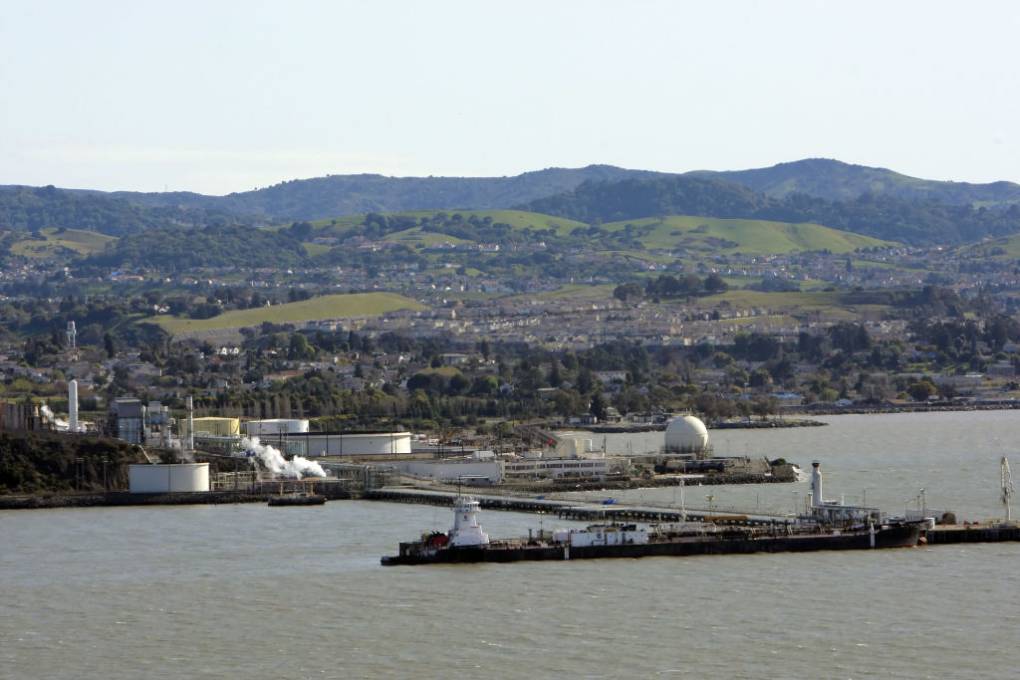
"caption": "Phillips 66's refinery in Rodeo, along the San Pablo Bay, near several open toxic sites that are vulnerable to groundwater rise.",
"description": null,
"title": "Industrial facilities dumped 2.6 million pounds of toxic chemicals into California’s waterways, according to a new report released today by Environment California. The worst polluter of them all is in the Bay Area — Conoco Phillips, shown here",
"credit": "Carlos Avila Gonzalez/The San Francisco Chronicle via Getty Images",
"status": "inherit",
"altTag": "A panoramic view of the North Bay shoreline near Rodeo. In the foreground are oil refinery terminals. Behind them are houses and hills.",
"isLoading": false,
"fetchFailed": false
},
"science_1983002": {
"type": "attachments",
"id": "science_1983002",
"meta": {
"index": "attachments_1716263798",
"site": "science",
"id": "1983002",
"found": true
},
"parent": 1983001,
"imgSizes": {
"twentyfourteen-full-width": {
"file": "https://ww2.kqed.org/app/uploads/sites/35/2023/06/gettyimages-1258513142_custom-fe583680dfe42a4b91eed6bfac99d12b16065fbd-1038x576.jpg",
"width": 1038,
"mimeType": "image/jpeg",
"height": 576
},
"thumbnail": {
"file": "https://ww2.kqed.org/app/uploads/sites/35/2023/06/gettyimages-1258513142_custom-fe583680dfe42a4b91eed6bfac99d12b16065fbd-160x107.jpg",
"width": 160,
"mimeType": "image/jpeg",
"height": 107
},
"post-thumbnail": {
"file": "https://ww2.kqed.org/app/uploads/sites/35/2023/06/gettyimages-1258513142_custom-fe583680dfe42a4b91eed6bfac99d12b16065fbd-672x372.jpg",
"width": 672,
"mimeType": "image/jpeg",
"height": 372
},
"kqedFullSize": {
"file": "https://ww2.kqed.org/app/uploads/sites/35/2023/06/gettyimages-1258513142_custom-fe583680dfe42a4b91eed6bfac99d12b16065fbd.jpg",
"width": 2000,
"height": 1332
},
"large": {
"file": "https://ww2.kqed.org/app/uploads/sites/35/2023/06/gettyimages-1258513142_custom-fe583680dfe42a4b91eed6bfac99d12b16065fbd-1020x679.jpg",
"width": 1020,
"mimeType": "image/jpeg",
"height": 679
},
"1536x1536": {
"file": "https://ww2.kqed.org/app/uploads/sites/35/2023/06/gettyimages-1258513142_custom-fe583680dfe42a4b91eed6bfac99d12b16065fbd-1536x1023.jpg",
"width": 1536,
"mimeType": "image/jpeg",
"height": 1023
},
"full-width": {
"file": "https://ww2.kqed.org/app/uploads/sites/35/2023/06/gettyimages-1258513142_custom-fe583680dfe42a4b91eed6bfac99d12b16065fbd-1920x1279.jpg",
"width": 1920,
"mimeType": "image/jpeg",
"height": 1279
},
"medium": {
"file": "https://ww2.kqed.org/app/uploads/sites/35/2023/06/gettyimages-1258513142_custom-fe583680dfe42a4b91eed6bfac99d12b16065fbd-800x533.jpg",
"width": 800,
"mimeType": "image/jpeg",
"height": 533
},
"medium_large": {
"file": "https://ww2.kqed.org/app/uploads/sites/35/2023/06/gettyimages-1258513142_custom-fe583680dfe42a4b91eed6bfac99d12b16065fbd-768x511.jpg",
"width": 768,
"mimeType": "image/jpeg",
"height": 511
}
},
"publishDate": 1686334822,
"modified": 1686340241,
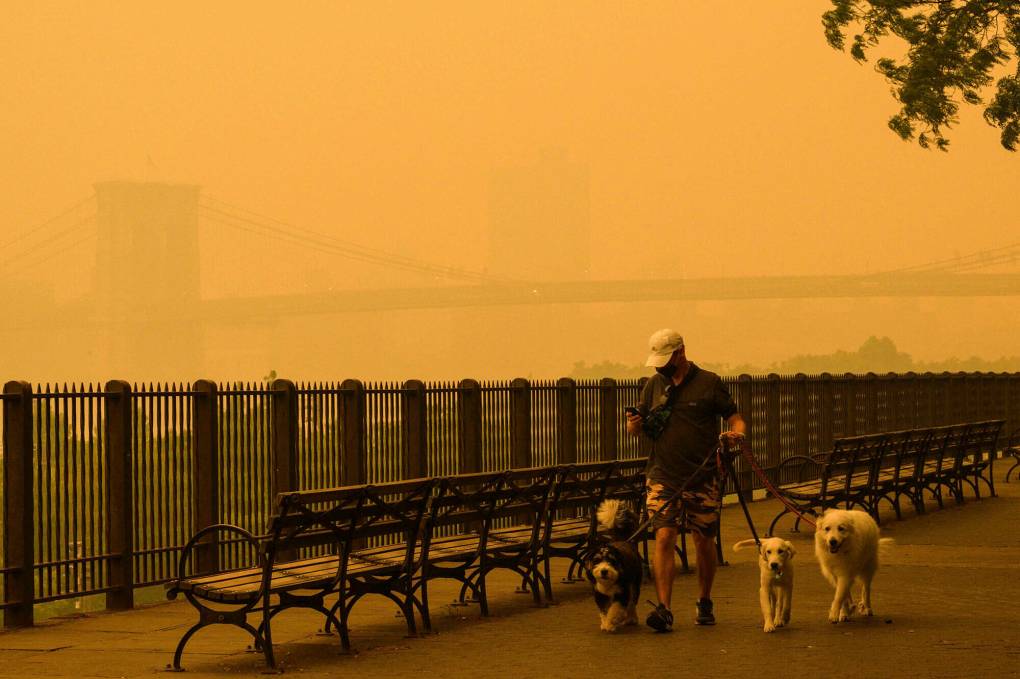
"caption": "Wildfire smoke filling a skyline, here in New York City, was a familiar sight to communities in the Western US, who have had to learn to live with the effects of more extreme fires.",
"description": null,
"title": "Wildfire smoke filling the New York City skyline was a familiar sight to communities in the Western U.S., who have had to learn to live with the effects of more extreme fires.",
"credit": "Angela Weiss/AFP via Getty Images",
"status": "inherit",
"altTag": "A person walks dogs as smoke from wildfires in Canada cause hazy conditions in New York City on June 7, 2023. An orange-tinged smog caused by Canada's wildfires shrouded New York on Wednesday, obscuring its famous skyscrapers and causing residents to don face masks, as cities along the US East Coast issued air quality alerts.",
"isLoading": false,
"fetchFailed": false
},
"science_1982914": {
"type": "attachments",
"id": "science_1982914",
"meta": {
"index": "attachments_1716263798",
"site": "science",
"id": "1982914",
"found": true
},
"parent": 0,
"imgSizes": {
"twentyfourteen-full-width": {
"file": "https://ww2.kqed.org/app/uploads/sites/35/2023/06/RS65981_002_KQED_SanLeandroSeaLevelRise_06012023-KQED-1038x576.jpg",
"width": 1038,
"mimeType": "image/jpeg",
"height": 576
},
"thumbnail": {
"file": "https://ww2.kqed.org/app/uploads/sites/35/2023/06/RS65981_002_KQED_SanLeandroSeaLevelRise_06012023-KQED-160x107.jpg",
"width": 160,
"mimeType": "image/jpeg",
"height": 107
},
"post-thumbnail": {
"file": "https://ww2.kqed.org/app/uploads/sites/35/2023/06/RS65981_002_KQED_SanLeandroSeaLevelRise_06012023-KQED-672x372.jpg",
"width": 672,
"mimeType": "image/jpeg",
"height": 372
},
"kqedFullSize": {
"file": "https://ww2.kqed.org/app/uploads/sites/35/2023/06/RS65981_002_KQED_SanLeandroSeaLevelRise_06012023-KQED.jpg",
"width": 1920,
"height": 1280
},
"large": {
"file": "https://ww2.kqed.org/app/uploads/sites/35/2023/06/RS65981_002_KQED_SanLeandroSeaLevelRise_06012023-KQED-1020x680.jpg",
"width": 1020,
"mimeType": "image/jpeg",
"height": 680
},
"1536x1536": {
"file": "https://ww2.kqed.org/app/uploads/sites/35/2023/06/RS65981_002_KQED_SanLeandroSeaLevelRise_06012023-KQED-1536x1024.jpg",
"width": 1536,
"mimeType": "image/jpeg",
"height": 1024
},
"medium": {
"file": "https://ww2.kqed.org/app/uploads/sites/35/2023/06/RS65981_002_KQED_SanLeandroSeaLevelRise_06012023-KQED-800x533.jpg",
"width": 800,
"mimeType": "image/jpeg",
"height": 533
},
"medium_large": {
"file": "https://ww2.kqed.org/app/uploads/sites/35/2023/06/RS65981_002_KQED_SanLeandroSeaLevelRise_06012023-KQED-768x512.jpg",
"width": 768,
"mimeType": "image/jpeg",
"height": 512
}
},
"publishDate": 1685737126,
"modified": 1685752324,
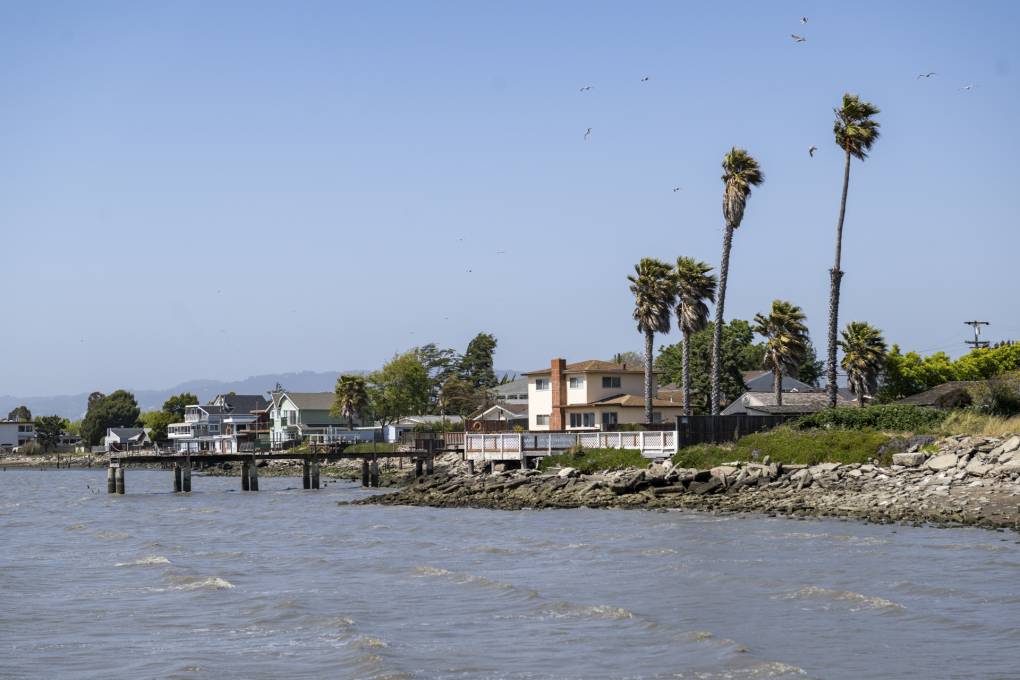
"caption": "Houses line the shore in the Mulford Gardens neighborhood of San Leandro, on June 1, 2023.",
"description": null,
"title": "RS65981_002_KQED_SanLeandroSeaLevelRise_06012023-KQED",
"credit": "Beth LaBerge/KQED",
"status": "inherit",
"altTag": "Houses on the shore of a brown watered bay with palm trees.",
"isLoading": false,
"fetchFailed": false
}
},
"audioPlayerReducer": {
"postId": "stream_live",
"isPaused": true,
"isPlaying": false,
"pfsActive": false,
"pledgeModalIsOpen": true,
"playerDrawerIsOpen": false,
"liveAudioPlayStartedAt": 0,
"liveAudioPlayContext": ""
},
"authorsReducer": {
"byline_science_1983983": {
"type": "authors",
"id": "byline_science_1983983",
"meta": {
"override": true
},
"slug": "byline_science_1983983",
"name": "\u003ca href=\"https://www.npr.org/people/803934365/lauren-sommer\">Lauren Sommer\u003c/a>",
"isLoading": false
},
"byline_science_1983909": {
"type": "authors",
"id": "byline_science_1983909",
"meta": {
"override": true
},
"slug": "byline_science_1983909",
"name": "\u003ca href=\"https://www.npr.org/people/776048102/rachel-treisman\">Rachel Treisman\u003c/a>",
"isLoading": false
},
"byline_science_1983443": {
"type": "authors",
"id": "byline_science_1983443",
"meta": {
"override": true
},
"slug": "byline_science_1983443",
"name": "\u003ca href=\"https://www.npr.org/people/803934365/lauren-sommer\">Lauren Sommer\u003c/a>",
"isLoading": false
},
"byline_science_1983155": {
"type": "authors",
"id": "byline_science_1983155",
"meta": {
"override": true
},
"slug": "byline_science_1983155",
"name": "\u003ca href=\"https://www.npr.org/people/803934365/lauren-sommer\">Lauren Sommer\u003c/a>",
"isLoading": false
},
"byline_science_1983001": {
"type": "authors",
"id": "byline_science_1983001",
"meta": {
"override": true
},
"slug": "byline_science_1983001",
"name": "\u003ca href=\"https://www.npr.org/people/803934365/lauren-sommer\">Lauren Sommer\u003c/a>",
"isLoading": false
},
"lklivans": {
"type": "authors",
"id": "8648",
"meta": {
"index": "authors_1716337520",
"id": "8648",
"found": true
},
"name": "Laura Klivans",
"firstName": "Laura",
"lastName": "Klivans",
"slug": "lklivans",
"email": "lklivans@kqed.org",
"display_author_email": true,
"staff_mastheads": [
"news",
"science"
],
"title": "Reporter",
"bio": "Laura Klivans is an award-winning science reporter for KQED News, where she covers climate change with an eye on both groundbreaking progress and gaps in action. She is the former host of KQED's blockbuster video series about tiny, amazing animals, \u003cem>Deep Look\u003c/em>. Her work reaches national audiences through NPR, \u003cem>Here & Now, \u003c/em>PRI, and other major outlets. \r\n\r\nLaura’s won five Northern California Area Emmy Awards for Deep Look and First Place in the Greater Bay Area Journalism Awards for a podcast exploring how one Oakland neighborhood teamed up to reduce planet-heating pollution.\r\n\r\nBeyond her reporting, she hosts and moderates events. In the past, she taught audio storytelling at the UC Berkeley Graduate School of Journalism, led international education programs, worked with immigrants and refugees along the Thai-Burmese border, taught high schoolers sex ed, and was an actress. \r\n\r\nShe's a former UC Berkeley Human Rights Fellow, USC Center for Health Journalism's California Fellow and Coro Fellow in Public Affairs. Laura has a master’s in journalism from UC Berkeley, a master’s in education from Harvard, and an undergraduate degree from Northwestern University.\r\n\r\nShe loves trying to riddle the meaning out of vanity license plates.",
"avatar": "https://secure.gravatar.com/avatar/2d2ecd1550a494cc10ad4a503406965585902124739e775a9b3817eebf1d88be?s=600&d=blank&r=g",
"twitter": "lauraklivans",
"bluesky": null,
"facebook": null,
"instagram": null,
"linkedin": null,
"sites": [
{
"site": "news",
"roles": [
"editor"
]
},
{
"site": "stateofhealth",
"roles": [
"contributor",
"editor"
]
},
{
"site": "science",
"roles": [
"editor"
]
},
{
"site": "forum",
"roles": [
"editor"
]
}
],
"headData": {
"title": "Laura Klivans | KQED",
"description": "Reporter",
"ogImgSrc": "https://secure.gravatar.com/avatar/2d2ecd1550a494cc10ad4a503406965585902124739e775a9b3817eebf1d88be?s=600&d=blank&r=g",
"twImgSrc": "https://secure.gravatar.com/avatar/2d2ecd1550a494cc10ad4a503406965585902124739e775a9b3817eebf1d88be?s=600&d=blank&r=g"
},
"isLoading": false,
"link": "/author/lklivans"
},
"dcronin": {
"type": "authors",
"id": "11362",
"meta": {
"index": "authors_1716337520",
"id": "11362",
"found": true
},
"name": "Dana Cronin",
"firstName": "Dana",
"lastName": "Cronin",
"slug": "dcronin",
"email": "dcronin@KQED.org",
"display_author_email": true,
"staff_mastheads": [],
"title": "KQED Contributor",
"bio": "Dana Cronin is a reporter for KQED News. She loves writing stories about climate change, environmental issues, food and agriculture. She's reported across the country, from Colorado to Washington D.C. to Illinois, and has won numerous awards for her coverage. Her work is regularly featured on national broadcasts, including NPR’s Morning Edition, All Things Considered, PBS Newshour and Science Friday. She lives in Oakland and has an avocado tree in her back yard.",
"avatar": "https://secure.gravatar.com/avatar/bcf89e3455ff7235f96ab6fa7258dd95?s=600&d=blank&r=g",
"twitter": "DanaHCronin",
"facebook": null,
"instagram": null,
"linkedin": null,
"sites": [
{
"site": "arts",
"roles": [
"author"
]
},
{
"site": "news",
"roles": [
"editor"
]
},
{
"site": "science",
"roles": [
"author"
]
},
{
"site": "liveblog",
"roles": [
"author"
]
}
],
"headData": {
"title": "Dana Cronin | KQED",
"description": "KQED Contributor",
"ogImgSrc": "https://secure.gravatar.com/avatar/bcf89e3455ff7235f96ab6fa7258dd95?s=600&d=blank&r=g",
"twImgSrc": "https://secure.gravatar.com/avatar/bcf89e3455ff7235f96ab6fa7258dd95?s=600&d=blank&r=g"
},
"isLoading": false,
"link": "/author/dcronin"
},
"kevinstark": {
"type": "authors",
"id": "11608",
"meta": {
"index": "authors_1716337520",
"id": "11608",
"found": true
},
"name": "Kevin Stark",
"firstName": "Kevin",
"lastName": "Stark",
"slug": "kevinstark",
"email": "kstark@kqed.org",
"display_author_email": true,
"staff_mastheads": [
"science"
],
"title": "Senior Editor",
"bio": "Kevin is a senior editor for KQED Science, managing the station's health and climate desks. His journalism career began in the Pacific Northwest, and he later became a lead reporter for the San Francisco Public Press. His work has appeared in Pacific Standard magazine, the Energy News Network, the Center for Investigative Reporting's Reveal and WBEZ in Chicago. Kevin joined KQED in 2019, and has covered issues related to energy, wildfire, climate change and the environment.",
"avatar": "https://secure.gravatar.com/avatar/365aaa4b597d3a8374f67504ff0facd323d7906e8eb4be0a7efd2427408e802c?s=600&d=blank&r=g",
"twitter": "starkkev",
"bluesky": null,
"facebook": null,
"instagram": null,
"linkedin": null,
"sites": [
{
"site": "",
"roles": [
"editor"
]
},
{
"site": "news",
"roles": [
"editor"
]
},
{
"site": "science",
"roles": [
"administrator"
]
}
],
"headData": {
"title": "Kevin Stark | KQED",
"description": "Senior Editor",
"ogImgSrc": "https://secure.gravatar.com/avatar/365aaa4b597d3a8374f67504ff0facd323d7906e8eb4be0a7efd2427408e802c?s=600&d=blank&r=g",
"twImgSrc": "https://secure.gravatar.com/avatar/365aaa4b597d3a8374f67504ff0facd323d7906e8eb4be0a7efd2427408e802c?s=600&d=blank&r=g"
},
"isLoading": false,
"link": "/author/kevinstark"
},
"eromero": {
"type": "authors",
"id": "11746",
"meta": {
"index": "authors_1716337520",
"id": "11746",
"found": true
},
"name": "Ezra David Romero",
"firstName": "Ezra David",
"lastName": "Romero",
"slug": "eromero",
"email": "eromero@kqed.org",
"display_author_email": true,
"staff_mastheads": [
"news",
"science"
],
"title": "Climate Reporter",
"bio": "Ezra David Romero is a climate reporter for KQED News. He covers the absence and excess of water in the Bay Area — think sea level rise, flooding and drought. For nearly a decade he’s covered how warming temperatures are altering the lives of Californians. He’s reported on farmers worried their pistachio trees aren’t getting enough sleep, families desperate for water, scientists studying dying giant sequoias, and alongside firefighters containing wildfires. His work has appeared on local stations across California and nationally on public radio shows like Morning Edition, Here and Now, All Things Considered and Science Friday. ",
"avatar": "https://secure.gravatar.com/avatar/c76404d287c10ed40224227551ac36e24352c7306f106632caf6fead76f8801f?s=600&d=blank&r=g",
"twitter": "ezraromero",
"bluesky": null,
"facebook": null,
"instagram": null,
"linkedin": null,
"sites": [
{
"site": "arts",
"roles": [
"editor"
]
},
{
"site": "news",
"roles": [
"editor"
]
},
{
"site": "science",
"roles": [
"editor"
]
},
{
"site": "liveblog",
"roles": [
"author"
]
}
],
"headData": {
"title": "Ezra David Romero | KQED",
"description": "Climate Reporter",
"ogImgSrc": "https://secure.gravatar.com/avatar/c76404d287c10ed40224227551ac36e24352c7306f106632caf6fead76f8801f?s=600&d=blank&r=g",
"twImgSrc": "https://secure.gravatar.com/avatar/c76404d287c10ed40224227551ac36e24352c7306f106632caf6fead76f8801f?s=600&d=blank&r=g"
},
"isLoading": false,
"link": "/author/eromero"
}
},
"pagesReducer": {
"science_tag_climate-change": {
"type": "terms",
"id": "science_194",
"meta": {
"index": "terms_1716263798",
"site": "science",
"id": "194",
"score": 7.946657
},
"featImg": null,
"name": "climate change",
"description": null,
"taxonomy": "tag",
"headData": {
"twImgId": null,
"twTitle": null,
"ogTitle": null,
"ogImgId": null,
"twDescription": null,
"description": null,
"title": "climate change Archives | KQED Science",
"ogDescription": null
},
"ttid": 198,
"slug": "climate-change",
"isLoading": false,
"title": "climate change",
"pageMeta": {
"site": "science",
"WpPageTemplate": "page-topic-editorial",
"currentPage": 12
},
"blocks": [
{
"blockName": "kqed/post-list",
"attrs": {
"layout": "cardArticle2",
"query": "posts/science?tag=climate-change",
"seeMore": false,
"paginated": true,
"page": 12
}
},
{
"blockName": "kqed/ad"
}
]
}
},
"pfsSessionReducer": {},
"postsReducer": {
"stream_live": {
"type": "live",
"id": "stream_live",
"audioUrl": "https://streams.kqed.org/kqedradio",
"title": "Live Stream",
"excerpt": "Live Stream information currently unavailable.",
"link": "/radio",
"featImg": "",
"label": {
"name": "KQED Live",
"link": "/"
}
},
"stream_kqedNewscast": {
"type": "posts",
"id": "stream_kqedNewscast",
"audioUrl": "https://www.kqed.org/.stream/anon/radio/RDnews/newscast.mp3?_=1",
"title": "KQED Newscast",
"featImg": "",
"label": {
"name": "88.5 FM",
"link": "/"
}
},
"science_1983983": {
"type": "posts",
"id": "science_1983983",
"meta": {
"index": "posts_1716263798",
"site": "science",
"id": "1983983",
"score": null,
"sort": [
1692385409000
]
},
"parent": 0,
"labelTerm": {},
"blocks": [],
"publishDate": 1692385409,
"format": "standard",
"title": "Wildfire Prevention Strategies Maui Can Adopt From California",
"headTitle": "Wildfire Prevention Strategies Maui Can Adopt From California | KQED",
"content": "\u003cp>As the community in West Maui begins a slow recovery after the deadliest U.S. wildfire in the last century, one of the biggest questions is how a similar tragedy can be prevented.\u003c/p>\n\u003cp>Hawaii may not have to look far. Other states, like California, have adopted strategies that are known to reduce the risk that a wildfire will spread.\u003c/p>\n\u003cp>Many of them are no secret to Hawaii state officials. The government’s own reports have shown that West Maui is at severe risk for wildfire, its foothills covered in dry, invasive grasses that are highly flammable. Previous recommendations included improving evacuation plans, managing dry vegetation around towns and clearing defensible space around houses.\u003c/p>\n\u003cp>[ad fullwidth]\u003c/p>\n\u003cp>Other Western states have mandated those policies after their own histories with destructive wildfires. Despite the recommendations, Hawaii fire experts say little was accomplished to do wildfire prevention in West Maui. Like so many communities, it struggled to find funding to clear large areas of vegetation and maintain them.\u003c/p>\n\u003cp>No precautions are guaranteed to stop a fire, especially in extreme winds. However, fire experts say the tragedy shows communities cannot ignore their own warnings.\u003c/p>\n\u003cp>“My hope would be that what just happened in Hawaii is really a wake-up call, so that any state that has fire risk of this sort is planning ahead to keep their citizens safe,” says Michael Wara, director of the Climate and Energy Policy Program at the Woods Institute for the Environment at Stanford University.\u003c/p>\n\u003cp>As Hawaii takes a close look at its wildfire policies, there are three core strategies it could adopt.\u003c/p>\n\u003ch2>Use better evacuation technology\u003c/h2>\n\u003cp>For many residents in downtown Lahaina, the only warning to leave was seeing the flames race toward their home. In the aftermath of the fire, many are angry that the town’s network of warning sirens weren’t turned on.\u003c/p>\n\u003cp>“If I would have heard the siren that morning, I would have at least prepared, packed something in my car, called my parents,” says Alex Calma, a Lahaina resident who lost his home.[aside postID='news_11957996,science_1983909' label='Related coverage']Instead, he and his neighbors drove away with little time to spare, jamming one of the only roads out of town.\u003c/p>\n\u003cp>Government officials instead turned on the Wireless Emergency Alert system, which blasts a message to people’s phones, like AMBER Alerts for missing children. Many residents NPR spoke to didn’t receive it. High winds, power outages and flames took out the cell service network. A similar thing happened in \u003ca href=\"https://www.sfchronicle.com/california-wildfires/article/County-officials-failed-to-use-cell-phone-alerts-13400300.php\">California’s deadly Camp Fire in 2018\u003c/a>.\u003c/p>\n\u003cp>“Look at how often it doesn’t work — how often cell phone towers like in Paradise and Maui get burned right away,” says Thomas Cova, a professor of geography who studies evacuations at the University of Utah. “That’s the first thing that happens is the fire burns the cell phone tower.”\u003c/p>\n\u003cp>Maui officials defended their choice not to turn on the sirens, saying the public would have been confused. People, they say, associate the sirens with tsunami warnings and could have run into the hills instead. That’s despite the fact that it was the direction the flames were coming from.\u003c/p>\n\u003cp>To clarify the alerts, a number of cities have installed new siren networks that can also broadcast voice messages, like \u003ca href=\"https://www.cityofmillvalley.org/213/Warnings-Alerts\">Mill Valley, California\u003c/a>, where wildfires are a danger. In Alaska’s Kenai Peninsula, the \u003ca href=\"https://www.kpb.us/emergency-mgmt/oem/50-borough/emergency-management/491-sirens\">sirens play pre-recorded messages\u003c/a> to tell residents what kind of threat they’re alerting about, like a volcano, tsunami or storm, then instruct residents to tune into the radio for more details.\u003c/p>\n\u003cp>Disaster response experts stress that cities need to have multiple strategies to alert and evacuate people safely, especially ones that don’t rely entirely on cell networks.\u003c/p>\n\u003ch2>Pass a requirement to clear flammable brush and grass\u003c/h2>\n\u003cp>As one of the people who has worked to prevent fires near Lahaina, it’s not easy for Gordon Firestein to look at the view from his house: a dark black burn scar and the blue Pacific Ocean beyond.\u003c/p>\n\u003cfigure id=\"attachment_1983985\" class=\"wp-caption alignnone\" style=\"max-width: 800px\">\u003cimg loading=\"lazy\" decoding=\"async\" class=\"size-medium wp-image-1983985\" src=\"https://ww2.kqed.org/app/uploads/sites/35/2023/08/gordon-fire-eb3237a6ffc83a4ee304e8e5be8e5a0e5920fb93-800x600.jpg\" alt=\"A man wearing a light brown t-shirt and sunglasses stands in front of a mountain shadowed by white clouds above it. In the background there are a few palm trees, with a view of the ocean, dry grass, and plants.\" width=\"800\" height=\"600\" srcset=\"https://cdn.kqed.org/wp-content/uploads/sites/35/2023/08/gordon-fire-eb3237a6ffc83a4ee304e8e5be8e5a0e5920fb93-800x600.jpg 800w, https://cdn.kqed.org/wp-content/uploads/sites/35/2023/08/gordon-fire-eb3237a6ffc83a4ee304e8e5be8e5a0e5920fb93-1020x765.jpg 1020w, https://cdn.kqed.org/wp-content/uploads/sites/35/2023/08/gordon-fire-eb3237a6ffc83a4ee304e8e5be8e5a0e5920fb93-160x120.jpg 160w, https://cdn.kqed.org/wp-content/uploads/sites/35/2023/08/gordon-fire-eb3237a6ffc83a4ee304e8e5be8e5a0e5920fb93-768x576.jpg 768w, https://cdn.kqed.org/wp-content/uploads/sites/35/2023/08/gordon-fire-eb3237a6ffc83a4ee304e8e5be8e5a0e5920fb93.jpg 1499w\" sizes=\"(max-width: 800px) 100vw, 800px\">\u003cfigcaption class=\"wp-caption-text\">For years, Gordon Firestein has worked with neighbors to make Lahaina safer from wildfires. He’s hopeful the state will pass mandatory policies to clear vegetation. \u003ccite>(Lauren Sommer/NPR)\u003c/cite>\u003c/figcaption>\u003c/figure>\n\u003cp>Once a California resident, Firestein moved to West Maui 15 years ago and found the golden hillsides were all too reminiscent of his home state. Former sugarcane fields have been abandoned and overrun with invasive grasses. He banded together with a few neighbors to join \u003ca href=\"https://www.nfpa.org/Public-Education/Fire-causes-and-risks/Wildfire/Firewise-USA\">the FireWise program\u003c/a>. Run by the nonprofit National Fire Protection Association, it provides a blueprint for communities to become better prepared for wildfires.\u003c/p>\n\u003cp>Firestein says they’ve educated neighbors about trimming the dry vegetation directly around a home to create defensible space. But Hawaii doesn’t have mandatory rules that compel homeowners to do it.\u003c/p>\n\u003cp>States like California \u003ca href=\"https://www.readyforwildfire.org/prepare-for-wildfire/get-ready/defensible-space/\">require homeowners in high risk areas to clear brush\u003c/a> and inspections are done by both city and state fire agencies. In San Diego, \u003ca href=\"https://www.kqed.org/science/1943058/whos-checking-homes-for-flammable-brush-in-some-high-risk-areas-maybe-no-one\">if a homeowner doesn’t comply, the city hires a contractor\u003c/a> to do the work and puts a lien on the property to recoup the cost.\u003c/p>\n\u003cp>“I certainly hope that’s part of the post-fire process — that we begin to look seriously at California, for example, as a model,” Firestein says.\u003c/p>\n\u003cp>Larger areas at the edges of towns also need to be cleared of dry grass to act as a buffer against fire. On the outskirts of Lahaina, rows of houses are nestled in the hills. After the fire, some residents said the problem had been ignored for years.\u003c/p>\n\u003cp>“We need some accountability,” says Chris Arnold, a Lahaina resident who lost his home. “Give us some fire breaks and I don’t want to hear any more excuses.”\u003c/p>\n\u003cfigure id=\"attachment_1983986\" class=\"wp-caption alignnone\" style=\"max-width: 800px\">\u003cimg loading=\"lazy\" decoding=\"async\" class=\"size-medium wp-image-1983986\" src=\"https://ww2.kqed.org/app/uploads/sites/35/2023/08/lahaina-town-a3deb94d8652b208c556c0430e55fb6d74640ba4-800x600.jpg\" alt=\"Image shows destruction caused in a town after a wildfire. \" width=\"800\" height=\"600\" srcset=\"https://cdn.kqed.org/wp-content/uploads/sites/35/2023/08/lahaina-town-a3deb94d8652b208c556c0430e55fb6d74640ba4-800x600.jpg 800w, https://cdn.kqed.org/wp-content/uploads/sites/35/2023/08/lahaina-town-a3deb94d8652b208c556c0430e55fb6d74640ba4-1020x765.jpg 1020w, https://cdn.kqed.org/wp-content/uploads/sites/35/2023/08/lahaina-town-a3deb94d8652b208c556c0430e55fb6d74640ba4-160x120.jpg 160w, https://cdn.kqed.org/wp-content/uploads/sites/35/2023/08/lahaina-town-a3deb94d8652b208c556c0430e55fb6d74640ba4-768x576.jpg 768w, https://cdn.kqed.org/wp-content/uploads/sites/35/2023/08/lahaina-town-a3deb94d8652b208c556c0430e55fb6d74640ba4-1536x1152.jpg 1536w, https://cdn.kqed.org/wp-content/uploads/sites/35/2023/08/lahaina-town-a3deb94d8652b208c556c0430e55fb6d74640ba4.jpg 1598w\" sizes=\"(max-width: 800px) 100vw, 800px\">\u003cfigcaption class=\"wp-caption-text\">After the destruction in Lahaina, Hawaii, fire experts say they’re hopeful the state will take a hard look at its wildfire policies. \u003ccite>(Deanne Fitzmaurice for NPR)\u003c/cite>\u003c/figcaption>\u003c/figure>\n\u003cp>Almost a decade ago, a \u003ca href=\"https://static1.squarespace.com/static/5254fbe2e4b04bbc53b57821/t/54ff533ee4b0d8debf83ed8d/1426019167515/Western+Maui+CWPP+Final+with+Appendices.pdf\">community protection plan (PDF)\u003c/a> was written for Western Maui, which found wildfire was an extreme risk there. It recommended managing invasive grasses, creating defensible space and working with private landowners to create fire breaks. Another \u003ca href=\"https://www.mauicounty.gov/DocumentCenter/View/129493/Report-on-Wildfire-Prevention--Cost-Recovery-on-Maui---Part-1-Report--Exhibits-A-B-33-MB\">Maui county report (PDF)\u003c/a> two years ago made similar recommendations.\u003c/p>\n\u003cp>Some of the projects were completed, but not the majority, especially given that grasses grow back and must be maintained every year. West Maui, like other fire-prone regions, has struggled to find the funding to manage vegetation.\u003c/p>\n\u003cp>“The scope and level and amount that needed to get done was never really reached, because we actually really never found funds or capacity to do the full scale of what we’d like to have done,” says Elizabeth Pickett with the Hawaii Wildfire Management Organization, a nonprofit that helped write the plan.\u003c/p>\n\u003ch2>Rebuild homes to resist wildfire embers\u003c/h2>\n\u003cp>Residents who fled Lahaina describe leaving in a rain of embers from the sky. In most wildfires, houses catch on fire because of these embers, not because of the advancing flames.\u003c/p>\n\u003cp>\u003ca href=\"https://www.npr.org/2019/04/02/704854496/step-1-build-a-house-step-2-set-it-on-fire\">Fire researchers have documented\u003c/a> how embers can get caught on wood-shingled roofs and siding, fall into gutters with leaves or even get blown into attic vents, igniting the building from the inside.\u003c/p>\n\u003cp>California and a handful of other states have \u003ca href=\"https://www.npr.org/2020/11/25/936685629/rebuilding-after-a-wildfire-most-states-dont-require-fire-resistant-materials\">passed wildfire building codes\u003c/a>, requiring new homes to use fire-resistant materials if they’re built in risky areas. The rules cover roofs, siding, windows and ventilation, since attic vents can be protected by covering them with a fine mesh screen. Research shows for new construction, \u003ca href=\"https://www.npr.org/2022/07/28/1114242871/fireproofing-your-home-isnt-very-expensive-but-few-states-require-it\">it’s not substantially more expensive\u003c/a> to build that way.\u003c/p>\n\u003cp>While residents in Lahaina will have the option to build this way, fire experts say using mandatory building codes ensures all new buildings have a better chance of surviving and are less likely to spread fire to other structures. For older homes that are already built, some communities \u003ca href=\"https://www.npr.org/2020/10/21/924507691/millions-of-homes-are-at-risk-of-wildfires-but-its-rarely-disclosed\">offer home inspections\u003c/a> to give homeowners a specific list of recommendations.\u003c/p>\n\u003cp>“Communities need to start investing in those strategies and perhaps recognizing that everyone is in this together, that people need to be given assistance to do these things,” Wara says. “They also need to be pushed to take the steps that will protect the whole community from a wildfire.”\u003c/p>\n\u003cp>Wildfire building codes \u003ca href=\"https://www.npr.org/2020/11/25/936685629/rebuilding-after-a-wildfire-most-states-dont-require-fire-resistant-materials\">have faced pushback in some states\u003c/a> that have proposed them, especially from home building associations. Fire experts in Hawaii say they’re hopeful that, given the heavy toll of Maui’s fires, lawmakers will embrace change.\u003c/p>\n\u003cp>“I really want to believe that we will rally the way that we do so well as an island state and use this toward progress, improvement, and all the things that felt too big to deal with,” Pickett says.\u003c/p>\n\u003cdiv class=\"fullattribution\">Copyright 2023 NPR. To see more, visit https://www.npr.org.\u003cimg decoding=\"async\" src=\"https://www.google-analytics.com/__utm.gif?utmac=UA-5828686-4&utmdt=3+strategies+Maui+can+adopt+from+other+states+to+help+prevent+dangerous+wildfires+&utme=8(APIKey)9(MDAxOTAwOTE4MDEyMTkxMDAzNjczZDljZA004)\">\u003c/div>\n\u003cp>[ad floatright]\u003c/p>\n",
"stats": {
"hasVideo": false,
"hasChartOrMap": false,
"hasAudio": false,
"hasPolis": false,
"wordCount": 1503,
"hasGoogleForm": false,
"hasGallery": false,
"hasHearkenModule": false,
"iframeSrcs": [],
"paragraphCount": 33
},
"modified": 1704845921,
"excerpt": "In preparing for future fires, Maui doesn't have to look far. States like California have passed wildfire policies to reduce the risk that a community will be destroyed. ",
"headData": {
"twImgId": "",
"twTitle": "",
"ogTitle": "",
"ogImgId": "",
"twDescription": "",
"description": "In preparing for future fires, Maui doesn't have to look far. States like California have passed wildfire policies to reduce the risk that a community will be destroyed. ",
"title": "Wildfire Prevention Strategies Maui Can Adopt From California | KQED",
"ogDescription": "",
"schema": {
"@context": "https://schema.org",
"@type": "Article",
"headline": "Wildfire Prevention Strategies Maui Can Adopt From California",
"datePublished": "2023-08-18T12:03:29-07:00",
"dateModified": "2024-01-09T16:18:41-08:00",
"image": "https://cdn.kqed.org/wp-content/uploads/2020/02/KQED-OG-Image@1x.png"
}
},
"guestAuthors": [],
"slug": "wildfire-prevention-strategies-maui-can-adopt-from-california",
"status": "publish",
"nprApiLink": "http://api.npr.org/query?id=1194505306&apiKey=MDAxOTAwOTE4MDEyMTkxMDAzNjczZDljZA004",
"nprStoryDate": "Fri, 18 Aug 2023 06:00:31 -0400",
"excludeFromSiteSearch": "Include",
"nprLastModifiedDate": "Fri, 18 Aug 2023 11:08:25 -0400",
"nprHtmlLink": "https://www.npr.org/2023/08/18/1194505306/3-strategies-maui-can-adopt-from-other-states-to-help-prevent-dangerous-wildfire?ft=nprml&f=1194505306",
"nprImageAgency": "Deanne Fitzmaurice for NPR",
"source": "NPR",
"nprStoryId": "1194505306",
"sourceUrl": "https://www.npr.org/",
"nprByline": "\u003ca href=\"https://www.npr.org/people/803934365/lauren-sommer\">Lauren Sommer\u003c/a>",
"sticky": false,
"showOnAuthorArchivePages": "No",
"articleAge": "0",
"nprRetrievedStory": "1",
"nprPubDate": "Fri, 18 Aug 2023 11:08:00 -0400",
"path": "/science/1983983/wildfire-prevention-strategies-maui-can-adopt-from-california",
"audioTrackLength": null,
"parsedContent": [
{
"type": "contentString",
"content": "\u003cdiv class=\"post-body\">\u003cp>\u003cp>As the community in West Maui begins a slow recovery after the deadliest U.S. wildfire in the last century, one of the biggest questions is how a similar tragedy can be prevented.\u003c/p>\n\u003cp>Hawaii may not have to look far. Other states, like California, have adopted strategies that are known to reduce the risk that a wildfire will spread.\u003c/p>\n\u003cp>Many of them are no secret to Hawaii state officials. The government’s own reports have shown that West Maui is at severe risk for wildfire, its foothills covered in dry, invasive grasses that are highly flammable. Previous recommendations included improving evacuation plans, managing dry vegetation around towns and clearing defensible space around houses.\u003c/p>\n\u003cp>\u003c/p>\u003c/div>",
"attributes": {
"named": {},
"numeric": []
}
},
{
"type": "component",
"content": "",
"name": "ad",
"attributes": {
"named": {
"label": "fullwidth"
},
"numeric": [
"fullwidth"
]
}
},
{
"type": "contentString",
"content": "\u003cdiv class=\"post-body\">\u003cp>\u003c/p>\n\u003cp>Other Western states have mandated those policies after their own histories with destructive wildfires. Despite the recommendations, Hawaii fire experts say little was accomplished to do wildfire prevention in West Maui. Like so many communities, it struggled to find funding to clear large areas of vegetation and maintain them.\u003c/p>\n\u003cp>No precautions are guaranteed to stop a fire, especially in extreme winds. However, fire experts say the tragedy shows communities cannot ignore their own warnings.\u003c/p>\n\u003cp>“My hope would be that what just happened in Hawaii is really a wake-up call, so that any state that has fire risk of this sort is planning ahead to keep their citizens safe,” says Michael Wara, director of the Climate and Energy Policy Program at the Woods Institute for the Environment at Stanford University.\u003c/p>\n\u003cp>As Hawaii takes a close look at its wildfire policies, there are three core strategies it could adopt.\u003c/p>\n\u003ch2>Use better evacuation technology\u003c/h2>\n\u003cp>For many residents in downtown Lahaina, the only warning to leave was seeing the flames race toward their home. In the aftermath of the fire, many are angry that the town’s network of warning sirens weren’t turned on.\u003c/p>\n\u003cp>“If I would have heard the siren that morning, I would have at least prepared, packed something in my car, called my parents,” says Alex Calma, a Lahaina resident who lost his home.\u003c/p>\u003c/div>",
"attributes": {
"named": {},
"numeric": []
}
},
{
"type": "component",
"content": "",
"name": "aside",
"attributes": {
"named": {
"postid": "news_11957996,science_1983909",
"label": "Related coverage "
},
"numeric": []
}
},
{
"type": "contentString",
"content": "\u003cdiv class=\"post-body\">\u003cp>Instead, he and his neighbors drove away with little time to spare, jamming one of the only roads out of town.\u003c/p>\n\u003cp>Government officials instead turned on the Wireless Emergency Alert system, which blasts a message to people’s phones, like AMBER Alerts for missing children. Many residents NPR spoke to didn’t receive it. High winds, power outages and flames took out the cell service network. A similar thing happened in \u003ca href=\"https://www.sfchronicle.com/california-wildfires/article/County-officials-failed-to-use-cell-phone-alerts-13400300.php\">California’s deadly Camp Fire in 2018\u003c/a>.\u003c/p>\n\u003cp>“Look at how often it doesn’t work — how often cell phone towers like in Paradise and Maui get burned right away,” says Thomas Cova, a professor of geography who studies evacuations at the University of Utah. “That’s the first thing that happens is the fire burns the cell phone tower.”\u003c/p>\n\u003cp>Maui officials defended their choice not to turn on the sirens, saying the public would have been confused. People, they say, associate the sirens with tsunami warnings and could have run into the hills instead. That’s despite the fact that it was the direction the flames were coming from.\u003c/p>\n\u003cp>To clarify the alerts, a number of cities have installed new siren networks that can also broadcast voice messages, like \u003ca href=\"https://www.cityofmillvalley.org/213/Warnings-Alerts\">Mill Valley, California\u003c/a>, where wildfires are a danger. In Alaska’s Kenai Peninsula, the \u003ca href=\"https://www.kpb.us/emergency-mgmt/oem/50-borough/emergency-management/491-sirens\">sirens play pre-recorded messages\u003c/a> to tell residents what kind of threat they’re alerting about, like a volcano, tsunami or storm, then instruct residents to tune into the radio for more details.\u003c/p>\n\u003cp>Disaster response experts stress that cities need to have multiple strategies to alert and evacuate people safely, especially ones that don’t rely entirely on cell networks.\u003c/p>\n\u003ch2>Pass a requirement to clear flammable brush and grass\u003c/h2>\n\u003cp>As one of the people who has worked to prevent fires near Lahaina, it’s not easy for Gordon Firestein to look at the view from his house: a dark black burn scar and the blue Pacific Ocean beyond.\u003c/p>\n\u003cfigure id=\"attachment_1983985\" class=\"wp-caption alignnone\" style=\"max-width: 800px\">\u003cimg loading=\"lazy\" decoding=\"async\" class=\"size-medium wp-image-1983985\" src=\"https://ww2.kqed.org/app/uploads/sites/35/2023/08/gordon-fire-eb3237a6ffc83a4ee304e8e5be8e5a0e5920fb93-800x600.jpg\" alt=\"A man wearing a light brown t-shirt and sunglasses stands in front of a mountain shadowed by white clouds above it. In the background there are a few palm trees, with a view of the ocean, dry grass, and plants.\" width=\"800\" height=\"600\" srcset=\"https://cdn.kqed.org/wp-content/uploads/sites/35/2023/08/gordon-fire-eb3237a6ffc83a4ee304e8e5be8e5a0e5920fb93-800x600.jpg 800w, https://cdn.kqed.org/wp-content/uploads/sites/35/2023/08/gordon-fire-eb3237a6ffc83a4ee304e8e5be8e5a0e5920fb93-1020x765.jpg 1020w, https://cdn.kqed.org/wp-content/uploads/sites/35/2023/08/gordon-fire-eb3237a6ffc83a4ee304e8e5be8e5a0e5920fb93-160x120.jpg 160w, https://cdn.kqed.org/wp-content/uploads/sites/35/2023/08/gordon-fire-eb3237a6ffc83a4ee304e8e5be8e5a0e5920fb93-768x576.jpg 768w, https://cdn.kqed.org/wp-content/uploads/sites/35/2023/08/gordon-fire-eb3237a6ffc83a4ee304e8e5be8e5a0e5920fb93.jpg 1499w\" sizes=\"(max-width: 800px) 100vw, 800px\">\u003cfigcaption class=\"wp-caption-text\">For years, Gordon Firestein has worked with neighbors to make Lahaina safer from wildfires. He’s hopeful the state will pass mandatory policies to clear vegetation. \u003ccite>(Lauren Sommer/NPR)\u003c/cite>\u003c/figcaption>\u003c/figure>\n\u003cp>Once a California resident, Firestein moved to West Maui 15 years ago and found the golden hillsides were all too reminiscent of his home state. Former sugarcane fields have been abandoned and overrun with invasive grasses. He banded together with a few neighbors to join \u003ca href=\"https://www.nfpa.org/Public-Education/Fire-causes-and-risks/Wildfire/Firewise-USA\">the FireWise program\u003c/a>. Run by the nonprofit National Fire Protection Association, it provides a blueprint for communities to become better prepared for wildfires.\u003c/p>\n\u003cp>Firestein says they’ve educated neighbors about trimming the dry vegetation directly around a home to create defensible space. But Hawaii doesn’t have mandatory rules that compel homeowners to do it.\u003c/p>\n\u003cp>States like California \u003ca href=\"https://www.readyforwildfire.org/prepare-for-wildfire/get-ready/defensible-space/\">require homeowners in high risk areas to clear brush\u003c/a> and inspections are done by both city and state fire agencies. In San Diego, \u003ca href=\"https://www.kqed.org/science/1943058/whos-checking-homes-for-flammable-brush-in-some-high-risk-areas-maybe-no-one\">if a homeowner doesn’t comply, the city hires a contractor\u003c/a> to do the work and puts a lien on the property to recoup the cost.\u003c/p>\n\u003cp>“I certainly hope that’s part of the post-fire process — that we begin to look seriously at California, for example, as a model,” Firestein says.\u003c/p>\n\u003cp>Larger areas at the edges of towns also need to be cleared of dry grass to act as a buffer against fire. On the outskirts of Lahaina, rows of houses are nestled in the hills. After the fire, some residents said the problem had been ignored for years.\u003c/p>\n\u003cp>“We need some accountability,” says Chris Arnold, a Lahaina resident who lost his home. “Give us some fire breaks and I don’t want to hear any more excuses.”\u003c/p>\n\u003cfigure id=\"attachment_1983986\" class=\"wp-caption alignnone\" style=\"max-width: 800px\">\u003cimg loading=\"lazy\" decoding=\"async\" class=\"size-medium wp-image-1983986\" src=\"https://ww2.kqed.org/app/uploads/sites/35/2023/08/lahaina-town-a3deb94d8652b208c556c0430e55fb6d74640ba4-800x600.jpg\" alt=\"Image shows destruction caused in a town after a wildfire. \" width=\"800\" height=\"600\" srcset=\"https://cdn.kqed.org/wp-content/uploads/sites/35/2023/08/lahaina-town-a3deb94d8652b208c556c0430e55fb6d74640ba4-800x600.jpg 800w, https://cdn.kqed.org/wp-content/uploads/sites/35/2023/08/lahaina-town-a3deb94d8652b208c556c0430e55fb6d74640ba4-1020x765.jpg 1020w, https://cdn.kqed.org/wp-content/uploads/sites/35/2023/08/lahaina-town-a3deb94d8652b208c556c0430e55fb6d74640ba4-160x120.jpg 160w, https://cdn.kqed.org/wp-content/uploads/sites/35/2023/08/lahaina-town-a3deb94d8652b208c556c0430e55fb6d74640ba4-768x576.jpg 768w, https://cdn.kqed.org/wp-content/uploads/sites/35/2023/08/lahaina-town-a3deb94d8652b208c556c0430e55fb6d74640ba4-1536x1152.jpg 1536w, https://cdn.kqed.org/wp-content/uploads/sites/35/2023/08/lahaina-town-a3deb94d8652b208c556c0430e55fb6d74640ba4.jpg 1598w\" sizes=\"(max-width: 800px) 100vw, 800px\">\u003cfigcaption class=\"wp-caption-text\">After the destruction in Lahaina, Hawaii, fire experts say they’re hopeful the state will take a hard look at its wildfire policies. \u003ccite>(Deanne Fitzmaurice for NPR)\u003c/cite>\u003c/figcaption>\u003c/figure>\n\u003cp>Almost a decade ago, a \u003ca href=\"https://static1.squarespace.com/static/5254fbe2e4b04bbc53b57821/t/54ff533ee4b0d8debf83ed8d/1426019167515/Western+Maui+CWPP+Final+with+Appendices.pdf\">community protection plan (PDF)\u003c/a> was written for Western Maui, which found wildfire was an extreme risk there. It recommended managing invasive grasses, creating defensible space and working with private landowners to create fire breaks. Another \u003ca href=\"https://www.mauicounty.gov/DocumentCenter/View/129493/Report-on-Wildfire-Prevention--Cost-Recovery-on-Maui---Part-1-Report--Exhibits-A-B-33-MB\">Maui county report (PDF)\u003c/a> two years ago made similar recommendations.\u003c/p>\n\u003cp>Some of the projects were completed, but not the majority, especially given that grasses grow back and must be maintained every year. West Maui, like other fire-prone regions, has struggled to find the funding to manage vegetation.\u003c/p>\n\u003cp>“The scope and level and amount that needed to get done was never really reached, because we actually really never found funds or capacity to do the full scale of what we’d like to have done,” says Elizabeth Pickett with the Hawaii Wildfire Management Organization, a nonprofit that helped write the plan.\u003c/p>\n\u003ch2>Rebuild homes to resist wildfire embers\u003c/h2>\n\u003cp>Residents who fled Lahaina describe leaving in a rain of embers from the sky. In most wildfires, houses catch on fire because of these embers, not because of the advancing flames.\u003c/p>\n\u003cp>\u003ca href=\"https://www.npr.org/2019/04/02/704854496/step-1-build-a-house-step-2-set-it-on-fire\">Fire researchers have documented\u003c/a> how embers can get caught on wood-shingled roofs and siding, fall into gutters with leaves or even get blown into attic vents, igniting the building from the inside.\u003c/p>\n\u003cp>California and a handful of other states have \u003ca href=\"https://www.npr.org/2020/11/25/936685629/rebuilding-after-a-wildfire-most-states-dont-require-fire-resistant-materials\">passed wildfire building codes\u003c/a>, requiring new homes to use fire-resistant materials if they’re built in risky areas. The rules cover roofs, siding, windows and ventilation, since attic vents can be protected by covering them with a fine mesh screen. Research shows for new construction, \u003ca href=\"https://www.npr.org/2022/07/28/1114242871/fireproofing-your-home-isnt-very-expensive-but-few-states-require-it\">it’s not substantially more expensive\u003c/a> to build that way.\u003c/p>\n\u003cp>While residents in Lahaina will have the option to build this way, fire experts say using mandatory building codes ensures all new buildings have a better chance of surviving and are less likely to spread fire to other structures. For older homes that are already built, some communities \u003ca href=\"https://www.npr.org/2020/10/21/924507691/millions-of-homes-are-at-risk-of-wildfires-but-its-rarely-disclosed\">offer home inspections\u003c/a> to give homeowners a specific list of recommendations.\u003c/p>\n\u003cp>“Communities need to start investing in those strategies and perhaps recognizing that everyone is in this together, that people need to be given assistance to do these things,” Wara says. “They also need to be pushed to take the steps that will protect the whole community from a wildfire.”\u003c/p>\n\u003cp>Wildfire building codes \u003ca href=\"https://www.npr.org/2020/11/25/936685629/rebuilding-after-a-wildfire-most-states-dont-require-fire-resistant-materials\">have faced pushback in some states\u003c/a> that have proposed them, especially from home building associations. Fire experts in Hawaii say they’re hopeful that, given the heavy toll of Maui’s fires, lawmakers will embrace change.\u003c/p>\n\u003cp>“I really want to believe that we will rally the way that we do so well as an island state and use this toward progress, improvement, and all the things that felt too big to deal with,” Pickett says.\u003c/p>\n\u003cdiv class=\"fullattribution\">Copyright 2023 NPR. To see more, visit https://www.npr.org.\u003cimg decoding=\"async\" src=\"https://www.google-analytics.com/__utm.gif?utmac=UA-5828686-4&utmdt=3+strategies+Maui+can+adopt+from+other+states+to+help+prevent+dangerous+wildfires+&utme=8(APIKey)9(MDAxOTAwOTE4MDEyMTkxMDAzNjczZDljZA004)\">\u003c/div>\n\u003cp>\u003c/p>\u003c/div>",
"attributes": {
"named": {},
"numeric": []
}
},
{
"type": "component",
"content": "",
"name": "ad",
"attributes": {
"named": {
"label": "floatright"
},
"numeric": [
"floatright"
]
}
},
{
"type": "contentString",
"content": "\u003cdiv class=\"post-body\">\u003cp>\u003c/p>\n\u003c/div>\u003c/p>",
"attributes": {
"named": {},
"numeric": []
}
}
],
"link": "/science/1983983/wildfire-prevention-strategies-maui-can-adopt-from-california",
"authors": [
"byline_science_1983983"
],
"categories": [
"science_31",
"science_40",
"science_4450"
],
"tags": [
"science_4877",
"science_182",
"science_194",
"science_113",
"science_1498"
],
"featImg": "science_1983984",
"label": "source_science_1983983"
},
"science_1983909": {
"type": "posts",
"id": "science_1983909",
"meta": {
"index": "posts_1716263798",
"site": "science",
"id": "1983909",
"score": null,
"sort": [
1692126030000
]
},
"parent": 0,
"labelTerm": {},
"blocks": [],
"publishDate": 1692126030,
"format": "standard",
"title": "Maui Fires Now Among Deadliest US Wildfires Ever. Here Are Some Others",
"headTitle": "Maui Fires Now Among Deadliest US Wildfires Ever. Here Are Some Others | KQED",
"content": "\u003cp>The wildfires that tore through western Maui last week have already earned the tragic distinction of being among the deadliest in modern U.S. history — and the death toll is only expected to climb as recovery efforts continue.\u003c/p>\n\u003cp>Hawaii officials confirmed 99 fatalities as of late Monday, and have warned that number is \u003ca href=\"https://www.npr.org/2023/08/12/1193614596/death-toll-on-maui-climbs-to-80-as-questions-over-islands-emergency-response-gro\">likely to keep rising\u003c/a>.\u003c/p>\n\u003cp>“This is the largest natural disaster we’ve ever experienced,” Hawaii Gov. Josh Green said \u003ca href=\"https://www.cnn.com/2023/08/14/us/maui-wildfires-what-we-know/index.html#:~:text=The%20Maui%20wildfires%20are%20the,the%20National%20Fire%20Protection%20Association.\">over the weekend\u003c/a>. “It’s going to also be a natural disaster that’s going to take an incredible amount of time to recover from.”\u003c/p>\n\u003cp>Last week’s wildfires — which destroyed the historic town of Lahaina and left thousands of residents without homes — also constitute the deadliest U.S. wildfire in more than a century. They surpass the 2018 Camp Fire in Paradise, Calif., which killed 85 people.\u003c/p>\n\u003cp>\u003c!-- iframe plugin v.4.3 wordpress.org/plugins/iframe/ -->\u003cbr>\n\u003ciframe loading=\"lazy\" src=\"https://apps.npr.org/datawrapper/henz5/1/?initialWidth=953&childId=responsive-embed-henz5&parentTitle=Maui%20joins%20the%20list%20of%20deadliest%20wildfires%20in%20recorded%20U.S.%20history%20%3A%20NPR&parentUrl=https%3A%2F%2Fwww.npr.org%2F2023%2F08%2F15%2F1193710165%2Fmaui-wildfires-deadliest-us-history\" width=\"800\" height=\"600\" scrolling=\"yes\" class=\"iframe-class\" frameborder=\"0\">\u003c/iframe>\u003c/p>\n\u003cp>The Maui fire now ranks among the top 10 deadliest U.S. wildfires on record since 1871, according to the \u003ca href=\"https://www.nfpa.org/-/media/Files/News-and-Research/Fire-statistics-and-reports/WUI/Wildland-Fires-in-the-US-history-with-10-or-more-deaths.ashx\">National Fire Protection Association\u003c/a> (NFPA), a global nonprofit focused on eliminating loss due to fire hazards. Four of them — Maui included — have happened in the years since 2017.\u003c/p>\n\u003cp>Climate change is increasing the risk of major wildfires across the U.S., and more people are moving to fire-prone areas without realizing it, as \u003ca href=\"https://apps.npr.org/us-wildfires-impact-environment-climate-change/\">NPR has reported\u003c/a>.\u003c/p>\n\u003cp>Many of the most devastating wildfires in U.S. history ravaged western states. But others — including the 1871 Peshtigo Fire, the deadliest on record — have struck elsewhere, including in the Midwest.\u003c/p>\n\u003cp>Here’s a look at some of the other tragedies on that list, and some lessons learned.\u003c/p>\n\u003ch2>Peshtigo Fire, 1871\u003c/h2>\n\u003cfigure id=\"attachment_1983911\" class=\"wp-caption alignnone\" style=\"max-width: 800px\">\u003cimg loading=\"lazy\" decoding=\"async\" class=\"size-medium wp-image-1983911\" src=\"https://ww2.kqed.org/app/uploads/sites/35/2023/08/gettyimages-517220336_custom-36b3960e4206c18876faf4e6df40069608991ea9-800x595.jpg\" alt=\"An illustration shows people trying to flee a fire.\" width=\"800\" height=\"595\" srcset=\"https://cdn.kqed.org/wp-content/uploads/sites/35/2023/08/gettyimages-517220336_custom-36b3960e4206c18876faf4e6df40069608991ea9-800x595.jpg 800w, https://cdn.kqed.org/wp-content/uploads/sites/35/2023/08/gettyimages-517220336_custom-36b3960e4206c18876faf4e6df40069608991ea9-1020x759.jpg 1020w, https://cdn.kqed.org/wp-content/uploads/sites/35/2023/08/gettyimages-517220336_custom-36b3960e4206c18876faf4e6df40069608991ea9-160x119.jpg 160w, https://cdn.kqed.org/wp-content/uploads/sites/35/2023/08/gettyimages-517220336_custom-36b3960e4206c18876faf4e6df40069608991ea9-768x571.jpg 768w, https://cdn.kqed.org/wp-content/uploads/sites/35/2023/08/gettyimages-517220336_custom-36b3960e4206c18876faf4e6df40069608991ea9-1536x1143.jpg 1536w, https://cdn.kqed.org/wp-content/uploads/sites/35/2023/08/gettyimages-517220336_custom-36b3960e4206c18876faf4e6df40069608991ea9-2048x1524.jpg 2048w, https://cdn.kqed.org/wp-content/uploads/sites/35/2023/08/gettyimages-517220336_custom-36b3960e4206c18876faf4e6df40069608991ea9-1920x1429.jpg 1920w\" sizes=\"(max-width: 800px) 100vw, 800px\">\u003cfigcaption class=\"wp-caption-text\">An illustration shows people trying to flee the fire of Peshtigo in Wisconsin in 1871. \u003ccite>(Bettmann/Getty Images)\u003c/cite>\u003c/figcaption>\u003c/figure>\n\u003cp>The deadliest \u003ca href=\"https://www.weather.gov/grb/peshtigofire\">wildfire in U.S. history\u003c/a> tore through northeastern Wisconsin in October 1871 — the exact same day as, and only about 250 miles away from, the better known \u003ca href=\"https://www.wbur.org/hereandnow/2021/10/08/great-chicago-fire\">Great Chicago Fire\u003c/a>.\u003c/p>\n\u003cp>The Peshtigo fire scorched about 1.5 million acres, leaving only one building standing. It killed at least 1,152 people, injured about 1,500 and left another 3,000 homeless, according to the \u003ca href=\"https://www.wisconsinhistory.org/Records/Article/CS1750\">Wisconsin Historical Society\u003c/a>.\u003c/p>\n\u003cp>At the time, Peshtigo was home to many immigrants working in the lumbering and railroad industries — and a lot of wood, according to the \u003ca href=\"http://www.peshtigofiremuseum.com/fire/\">Peshtigo Fire Museum\u003c/a>.\u003c/p>\n\u003cp>It boasted the world’s largest woodenware factory, as well as one of the country’s largest sawmills. The town was surrounded by pine forests, most of its structures and sidewalks were made of wood and the streets were covered in sawdust from the factory.\u003c/p>\n\u003cp>Lumberjacks and railroad construction crews regularly set fires in the area to clear debris, the museum explains, so it wasn’t unusual for the air to be filled with smoke (or for ships to navigate by compass during the day, or for schools to close, or for people to get sick).\u003c/p>\n\u003cp>[ad fullwidth]\u003c/p>\n\u003cp>“The citizens of Peshtigo had become used to the smell of ashes and thought nothing amiss when they retired on the night of October 8, 1871,” reads the historical society’s website. “Suddenly ‘all hell rode into town on the back of a wind.'”\u003c/p>\n\u003cp>As the fire spread, some people hid in water wells while others rushed to the river, \u003ca href=\"https://www.npr.org/2021/07/07/1013898724/the-deadliest-fire-in-american-history-happened-in-a-place-you-wouldnt-expect\">as NPR has reported\u003c/a>. Of those that survived the initial fire, many died of drowning and hypothermia.\u003c/p>\n\u003cp>The \u003ca href=\"https://www.weather.gov/grb/peshtigofire2#:~:text=Fire%20reached%20Peshtigo%20during%20the,the%20fire%20(Figure%201).\">National Weather Service\u003c/a> attributes the fire to several factors, including prolonged drought, a strong autumn storm system, logging and clearing of land for agriculture and the “ignorance and indifference of the population,” as timber was often discarded with little regard for its flammability.\u003c/p>\n\u003cp>The tragedy, it adds, was an important wake-up call about land-use practices of the time.\u003c/p>\n\u003ch2>Thumb Fire, 1881\u003c/h2>\n\u003cp>The Thumb Fire swept through central Michigan in September 1881. It burned a million acres in Sanilac and Huron Counties alone, according to a \u003ca href=\"https://www.hmdb.org/m.asp?m=160706\">historical marker\u003c/a> near Bay Port.\u003c/p>\n\u003cp>“Small fires were burning in the forests of the Thumb, tinder-dry after a long, hot summer, when a gale swept in from the southwest on Sept. 5, 1881,” it reads. “Fanned into an inferno, the fires raged for three days.”\u003c/p>\n\u003cp>The \u003ca href=\"https://news.umich.edu/fires-ravaged-michigans-thumb-in-1871-1881/\">University of Michigan\u003c/a> says the fire killed at least 300 people (NFPA puts the death toll at 282), destroyed 1,521 dwellings and left more than 14,000 people dependent on public aid.\u003c/p>\n\u003cp>Many residents were left either temporarily or permanently blinded by the smoke and flying ashes that “traveled faster than a whirlwind and blotted out the sun for days,” according to \u003ca href=\"https://thumbwind.com/2021/09/04/1881-michigan-fire/\">Thumbwind.com\u003c/a>. It adds that yellow smoke made its way east, where it darkened the skies over all six New England states.\u003c/p>\n\u003cp>The American Red Cross, which had been founded earlier that year, \u003ca href=\"https://www.redcross.org/content/dam/redcross/enterprise-assets/about-us/history/history-clara-barton-v5-4-19-23.pdf\">collected funds and clothing (PDF)\u003c/a> to support victims — marking its first-ever official disaster relief effort.\u003c/p>\n\u003ch2>Great Fire, 1910\u003c/h2>\n\u003cfigure id=\"attachment_1983912\" class=\"wp-caption alignnone\" style=\"max-width: 800px\">\u003cimg loading=\"lazy\" decoding=\"async\" class=\"size-medium wp-image-1983912\" src=\"https://ww2.kqed.org/app/uploads/sites/35/2023/08/gettyimages-1354519558_custom-2150f760df2bd256c6bd8f7a8842f848f4107737-800x588.jpg\" alt=\"A black and white photograph of a town destroyed by fires. \" width=\"800\" height=\"588\" srcset=\"https://cdn.kqed.org/wp-content/uploads/sites/35/2023/08/gettyimages-1354519558_custom-2150f760df2bd256c6bd8f7a8842f848f4107737-800x588.jpg 800w, https://cdn.kqed.org/wp-content/uploads/sites/35/2023/08/gettyimages-1354519558_custom-2150f760df2bd256c6bd8f7a8842f848f4107737-1020x750.jpg 1020w, https://cdn.kqed.org/wp-content/uploads/sites/35/2023/08/gettyimages-1354519558_custom-2150f760df2bd256c6bd8f7a8842f848f4107737-160x118.jpg 160w, https://cdn.kqed.org/wp-content/uploads/sites/35/2023/08/gettyimages-1354519558_custom-2150f760df2bd256c6bd8f7a8842f848f4107737-768x564.jpg 768w, https://cdn.kqed.org/wp-content/uploads/sites/35/2023/08/gettyimages-1354519558_custom-2150f760df2bd256c6bd8f7a8842f848f4107737-1536x1129.jpg 1536w, https://cdn.kqed.org/wp-content/uploads/sites/35/2023/08/gettyimages-1354519558_custom-2150f760df2bd256c6bd8f7a8842f848f4107737-2048x1505.jpg 2048w, https://cdn.kqed.org/wp-content/uploads/sites/35/2023/08/gettyimages-1354519558_custom-2150f760df2bd256c6bd8f7a8842f848f4107737-1920x1411.jpg 1920w\" sizes=\"(max-width: 800px) 100vw, 800px\">\u003cfigcaption class=\"wp-caption-text\">A view of Wallace, Idaho, destroyed by forest fires in 1910. \u003ccite>(HUM Images/Universal Images Group via Getty Images)\u003c/cite>\u003c/figcaption>\u003c/figure>\n\u003cp>The Great Fire of 1910 was a \u003ca href=\"https://foresthistory.org/research-explore/us-forest-service-history/policy-and-law/fire-u-s-forest-service/famous-fires/the-1910-fires/\">series of forest fires\u003c/a> that burned through Idaho, Montana and Washington between April and August, culminating in the so-called “Big Blowup.”\u003c/p>\n\u003cp>Hurricane-force winds arrived on Aug. 20, whipping the small fires into flames hundreds of feet high. Forester Edward Stahl \u003ca href=\"https://www.nationalforests.org/our-forests/your-national-forests-magazine/blazing-battles-the-1910-fire-and-its-legacy\">described them\u003c/a> as being “fanned by a tornado wind so violent that the flames flattened out ahead, swooping to earth in great darting curves, truly a veritable red demon from hell.”\u003c/p>\n\u003cp>The fire lasted for \u003ca href=\"https://www.fs.usda.gov/Internet/FSE_DOCUMENTS/stelprdb5444731.pdf\">two days and two nights (PDF)\u003c/a>, devastating more than 3 million acres of timberland in the Northern Rockies. The exact death toll varies, with the \u003ca href=\"https://www.fs.usda.gov/Internet/FSE_DOCUMENTS/stelprdb5444731.pdf\">U.S. Forest Service (PDF)\u003c/a> putting it at 86, saying most were firefighters on the front lines.\u003c/p>\n\u003cp>Notably, the Forest Service had only existed for five years by this point. The \u003ca href=\"https://www.nationalforests.org/our-forests/your-national-forests-magazine/blazing-battles-the-1910-fire-and-its-legacy\">National Forest Foundation\u003c/a> says the fire “left not only scars on the land, but also lasting and fervent opinions about how forests and wildfire should be managed.”\u003c/p>\n\u003ch2>Cloquet and Moose Lake Fires, 1918\u003c/h2>\n\u003cp>The Cloquet and Moose Lake fires of 1918 (which were actually made up of \u003ca href=\"https://mndigital.org/projects/primary-source-sets/natural-disasters-minnesota#:~:text=One%20of%20the%20worst%20natural,provided%20fuel%20for%20the%20fires.\">50 blazes\u003c/a>) remain one of the deadliest natural disasters in Minnesota history.\u003c/p>\n\u003cp>Records from the \u003ca href=\"https://www.weather.gov/dlh/MooseLake_Cloquet_1918Fires\">National Weather Service\u003c/a> show Northeast Minnesota was experiencing its “driest season in 48 years” when sparks from a passing train, fueled by gusty winds, ignited fires that lasted for several days.\u003c/p>\n\u003cp>The fire consumed approximately 1,500 square miles and killed more than 450 people, according to the \u003ca href=\"https://mndigital.org/projects/primary-source-sets/natural-disasters-minnesota#:~:text=One%20of%20the%20worst%20natural,provided%20fuel%20for%20the%20fires.\">Minnesota Digital Library\u003c/a>.\u003c/p>\n\u003cp>Nearly half of the victims were from the Moose Lake area. Many of them died trying to escape in cars or suffocating in root cellars and wells, as \u003ca href=\"https://www.mprnews.org/story/2018/10/12/moose-lake-fire-no-less-horrible-100-years-later\">MPR News\u003c/a> reported on the 100th anniversary.\u003c/p>\n\u003cp>Natalie Frohrip, the vice president of the Moose Lake Area Historical Society, told the station that her mother-in-law, a teenager at the time, had survived the fire by wading into the lake.\u003c/p>\n\u003cp>“She said that when she had been in Sunday school, she had learned that when the end of the world came, the stars were going to fall out of the sky,” Frohrip said. “And so when they came down the hill and saw all the sparks, she was sure this was going to be the end.”\u003c/p>\n\u003ch2>Griffith Park Fire, 1933\u003c/h2>\n\u003cfigure id=\"attachment_1983913\" class=\"wp-caption alignnone\" style=\"max-width: 800px\">\u003cimg loading=\"lazy\" decoding=\"async\" class=\"size-medium wp-image-1983913\" src=\"https://ww2.kqed.org/app/uploads/sites/35/2023/08/gettyimages-564024413_custom-46d66869284461412635fcaa8442688a9cc40b97-800x531.jpg\" alt=\"A group of people plant a pine tree. \" width=\"800\" height=\"531\" srcset=\"https://cdn.kqed.org/wp-content/uploads/sites/35/2023/08/gettyimages-564024413_custom-46d66869284461412635fcaa8442688a9cc40b97-800x531.jpg 800w, https://cdn.kqed.org/wp-content/uploads/sites/35/2023/08/gettyimages-564024413_custom-46d66869284461412635fcaa8442688a9cc40b97-1020x677.jpg 1020w, https://cdn.kqed.org/wp-content/uploads/sites/35/2023/08/gettyimages-564024413_custom-46d66869284461412635fcaa8442688a9cc40b97-160x106.jpg 160w, https://cdn.kqed.org/wp-content/uploads/sites/35/2023/08/gettyimages-564024413_custom-46d66869284461412635fcaa8442688a9cc40b97-768x510.jpg 768w, https://cdn.kqed.org/wp-content/uploads/sites/35/2023/08/gettyimages-564024413_custom-46d66869284461412635fcaa8442688a9cc40b97-1536x1019.jpg 1536w, https://cdn.kqed.org/wp-content/uploads/sites/35/2023/08/gettyimages-564024413_custom-46d66869284461412635fcaa8442688a9cc40b97-2048x1359.jpg 2048w, https://cdn.kqed.org/wp-content/uploads/sites/35/2023/08/gettyimages-564024413_custom-46d66869284461412635fcaa8442688a9cc40b97-1920x1274.jpg 1920w\" sizes=\"(max-width: 800px) 100vw, 800px\">\u003cfigcaption class=\"wp-caption-text\">John Loa (right), a survivor of the 1933 Griffith Park fire, helped plant a pine tree in memoriam in 2007, at the age of 96. \u003ccite>(Al Seib/Los Angeles Times via Getty Images)\u003c/cite>\u003c/figcaption>\u003c/figure>\n\u003cp>The Griffith Park fire was once the deadliest fire in California history, killing 29 people in 1933. But it burned a relatively small 47 acres and damaged no property.\u003c/p>\n\u003cp>All of the victims of the fire were civilians who had been doing cleanup and assistance work in the Los Angeles park for 40 cents an hour through a Depression-era government program, as \u003ca href=\"https://www.kqed.org/news/11705774/remembering-l-a-s-1933-griffith-park-fire-the-states-deadliest-fire-until-now\">member station KQED reported\u003c/a>.\u003c/p>\n\u003cp>There were 3,784 workers in the park when a brush fire broke out on the afternoon of Oct. 3.\u003c/p>\n\u003cp>“Accounts differ on whether workers were ordered by their foremen to head down into Mineral Wells Canyon to fight the fire or whether they were simply asked to help put out the flames,” KQED reported. “Either way, into the canyon they went, with only shovels, their hands and the earth at their feet to work with.”\u003c/p>\n\u003cp>The fire department had arrived relatively quickly but was \u003ca href=\"https://friendsofgriffithpark.org/griffith-parks-1933-fire/\">reportedly overwhelmed\u003c/a> by the thousands of amateurs crowding the scene. Then a sudden change in the winds sent the fire up the canyon, \u003ca href=\"https://lafire.com/famous_fires/1933-1003_GriffithParkFire/1933-1003_GriffithParkFire.htm\">killing 29 workers\u003c/a> of thermal burns and injuring more than 150 others.\u003c/p>\n\u003cp>Reporter Caroline Walker \u003ca href=\"https://lafire.com/famous_fires/1933-1003_GriffithParkFire/1933-1003_GriffithParkFire.htm\">wrote in the Oct. 4, 1933 issue\u003c/a> of the \u003cem>Los Angeles Herald-Express\u003c/em> of the men, that “in their hearts a little candle of hope had been burning again because they had a chance to earn a little money.”\u003c/p>\n\u003cp>“It was only a brush fire that they were asked to extinguish. It was the sort that skilled fireworkers know how to handle. But the men in the park weren’t fire fighters. They did not know that canyons become flutes in a brush fire, or that flames travel with such deadly swiftness over grass and trees grown brittle with the summer drought. It was work. That was all that mattered.”\u003c/p>\n\u003ch2>Camp Fire, 2018\u003c/h2>\n\u003cfigure id=\"attachment_1983915\" class=\"wp-caption alignnone\" style=\"max-width: 800px\">\u003cimg loading=\"lazy\" decoding=\"async\" class=\"size-medium wp-image-1983915\" src=\"https://ww2.kqed.org/app/uploads/sites/35/2023/08/gettyimages-1177682049-26f322515b8f907ddecb5aef035dd77b47bd1e33-800x600.jpg\" alt=\"Crosses are seen lined up at a memorial.\" width=\"800\" height=\"600\" srcset=\"https://cdn.kqed.org/wp-content/uploads/sites/35/2023/08/gettyimages-1177682049-26f322515b8f907ddecb5aef035dd77b47bd1e33-800x600.jpg 800w, https://cdn.kqed.org/wp-content/uploads/sites/35/2023/08/gettyimages-1177682049-26f322515b8f907ddecb5aef035dd77b47bd1e33-1020x765.jpg 1020w, https://cdn.kqed.org/wp-content/uploads/sites/35/2023/08/gettyimages-1177682049-26f322515b8f907ddecb5aef035dd77b47bd1e33-160x120.jpg 160w, https://cdn.kqed.org/wp-content/uploads/sites/35/2023/08/gettyimages-1177682049-26f322515b8f907ddecb5aef035dd77b47bd1e33-768x576.jpg 768w, https://cdn.kqed.org/wp-content/uploads/sites/35/2023/08/gettyimages-1177682049-26f322515b8f907ddecb5aef035dd77b47bd1e33-1536x1152.jpg 1536w, https://cdn.kqed.org/wp-content/uploads/sites/35/2023/08/gettyimages-1177682049-26f322515b8f907ddecb5aef035dd77b47bd1e33-2048x1536.jpg 2048w, https://cdn.kqed.org/wp-content/uploads/sites/35/2023/08/gettyimages-1177682049-26f322515b8f907ddecb5aef035dd77b47bd1e33-1920x1440.jpg 1920w\" sizes=\"(max-width: 800px) 100vw, 800px\">\u003cfigcaption class=\"wp-caption-text\">Crosses line the road to remember the people who died as a result of the Camp Fire in Paradise, Butte County. \u003ccite>(Robyn Beck/AFP via Getty Images)\u003c/cite>\u003c/figcaption>\u003c/figure>\n\u003cp>The Camp Fire broke out in Northern California in November 2018, sweeping through the towns of Paradise and Concow — which each lost about 95% of their structures.\u003c/p>\n\u003cp>It spanned an area of 153,336 acres, and eventually killed at least 85 people, injuring 12 civilians and five firefighters.\u003c/p>\n\u003cp>A yearlong investigation found that the fire had been ignited by outdated power lines. Pacific Gas & Electric \u003ca href=\"https://www.npr.org/2020/06/16/879008760/pg-e-pleads-guilty-on-2018-california-camp-fire-our-equipment-started-that-fire\">pleaded guilty\u003c/a> in 2020 to 84 separate counts of involuntary manslaughter and one felony count of unlawfully starting a fire.\u003c/p>\n\u003cp>PG&E has been blamed for more than 30 wildfires, which have killed \u003ca href=\"https://www.npr.org/2022/04/12/1092259419/california-wildfires-pacific-gas-electric-55-million\">more than 100 people since 2017\u003c/a>.\u003c/p>\n\u003ch2>California Fire Siege, 2020\u003c/h2>\n\u003cp>More than 8,600 wildfires burned across California in 2020, scorching some 4.2 million acres — a state record — and killing 33 people.\u003c/p>\n\u003cp>“The 2020 California wildfire year was characterized by record-setting wildfires that burned across the state of California as measured during the modern era of wildfire management and record keeping,” according to the \u003ca href=\"https://www.fire.ca.gov/incidents/2020\">California Department of Forestry and Fire Protection\u003c/a>.\u003c/p>\n\u003cp>The years 2020 and 2021 together burned more area than the previous seven years combined, according to the \u003ca href=\"https://www.ucdavis.edu/climate/news/californias-2020-wildfire-season-numbers\">University of California, Davis\u003c/a>.\u003c/p>\n\u003cp>Officials described 2020 as a “fire siege” because it saw 18 of the state’s 20 most destructive fires on record, as \u003ca href=\"https://www.scientificamerican.com/article/californias-2020-wildfires-negated-years-of-emission-cuts/\">\u003cem>Scientific American\u003c/em>\u003c/a> explains.\u003c/p>\n\u003cp>Among them was the \u003ca href=\"https://www.fs.usda.gov/detail/mendocino/home/?cid=FSEPRD860382\">August Complex\u003c/a> fire, which officials called the first “gigafire” since it burned more than 1 million acres. It was ignited by lightning in mid-August and burned for four months, scorching an area larger than the state of Rhode Island to become the largest fire in California history.\u003c/p>\n\u003cdiv class=\"fullattribution\">Copyright 2023 NPR. To see more, visit https://www.npr.org.\u003cimg decoding=\"async\" src=\"https://www.google-analytics.com/__utm.gif?utmac=UA-5828686-4&utmdt=Maui%27s+wildfires+are+among+the+deadliest+on+record+in+the+U.S.+Here+are+some+others&utme=8(APIKey)9(MDAxOTAwOTE4MDEyMTkxMDAzNjczZDljZA004)\">\u003c/div>\n\u003cp>[ad floatright]\u003c/p>\n",
"stats": {
"hasVideo": false,
"hasChartOrMap": true,
"hasAudio": false,
"hasPolis": false,
"wordCount": 1923,
"hasGoogleForm": false,
"hasGallery": false,
"hasHearkenModule": false,
"iframeSrcs": [
"https://apps.npr.org/datawrapper/henz5/1/"
],
"paragraphCount": 51
},
"modified": 1704845926,
"excerpt": "The wildfires that killed at least 99 people in Maui are the deadliest to hit the US in more than a century. Here's a look back at some of the country's most lethal blazes and lessons learned.",
"headData": {
"twImgId": "",
"twTitle": "",
"ogTitle": "",
"ogImgId": "",
"twDescription": "",
"description": "The wildfires that killed at least 99 people in Maui are the deadliest to hit the US in more than a century. Here's a look back at some of the country's most lethal blazes and lessons learned.",
"title": "Maui Fires Now Among Deadliest US Wildfires Ever. Here Are Some Others | KQED",
"ogDescription": "",
"schema": {
"@context": "https://schema.org",
"@type": "Article",
"headline": "Maui Fires Now Among Deadliest US Wildfires Ever. Here Are Some Others",
"datePublished": "2023-08-15T12:00:30-07:00",
"dateModified": "2024-01-09T16:18:46-08:00",
"image": "https://cdn.kqed.org/wp-content/uploads/2020/02/KQED-OG-Image@1x.png"
}
},
"guestAuthors": [],
"slug": "maui-fires-now-among-uss-deadliest-wildfires-ever-here-are-some-others",
"status": "publish",
"nprApiLink": "http://api.npr.org/query?id=1193710165&apiKey=MDAxOTAwOTE4MDEyMTkxMDAzNjczZDljZA004",
"nprStoryDate": "Tue, 15 Aug 2023 05:00:38 -0400",
"excludeFromSiteSearch": "Include",
"nprLastModifiedDate": "Tue, 15 Aug 2023 05:00:38 -0400",
"nprHtmlLink": "https://www.npr.org/2023/08/15/1193710165/maui-wildfires-deadliest-us-history?ft=nprml&f=1193710165",
"nprImageAgency": "AFP via Getty Images",
"source": "NPR",
"nprStoryId": "1193710165",
"nprByline": "\u003ca href=\"https://www.npr.org/people/776048102/rachel-treisman\">Rachel Treisman\u003c/a>",
"sticky": false,
"nprImageCredit": "Patrick T. Fallon",
"showOnAuthorArchivePages": "No",
"articleAge": "0",
"nprRetrievedStory": "1",
"nprPubDate": "Tue, 15 Aug 2023 05:00:00 -0400",
"path": "/science/1983909/maui-fires-now-among-uss-deadliest-wildfires-ever-here-are-some-others",
"audioTrackLength": null,
"parsedContent": [
{
"type": "contentString",
"content": "\u003cdiv class=\"post-body\">\u003cp>\u003cp>The wildfires that tore through western Maui last week have already earned the tragic distinction of being among the deadliest in modern U.S. history — and the death toll is only expected to climb as recovery efforts continue.\u003c/p>\n\u003cp>Hawaii officials confirmed 99 fatalities as of late Monday, and have warned that number is \u003ca href=\"https://www.npr.org/2023/08/12/1193614596/death-toll-on-maui-climbs-to-80-as-questions-over-islands-emergency-response-gro\">likely to keep rising\u003c/a>.\u003c/p>\n\u003cp>“This is the largest natural disaster we’ve ever experienced,” Hawaii Gov. Josh Green said \u003ca href=\"https://www.cnn.com/2023/08/14/us/maui-wildfires-what-we-know/index.html#:~:text=The%20Maui%20wildfires%20are%20the,the%20National%20Fire%20Protection%20Association.\">over the weekend\u003c/a>. “It’s going to also be a natural disaster that’s going to take an incredible amount of time to recover from.”\u003c/p>\n\u003cp>Last week’s wildfires — which destroyed the historic town of Lahaina and left thousands of residents without homes — also constitute the deadliest U.S. wildfire in more than a century. They surpass the 2018 Camp Fire in Paradise, Calif., which killed 85 people.\u003c/p>\n\u003cp>\u003c!-- iframe plugin v.4.3 wordpress.org/plugins/iframe/ -->\u003cbr>\n\u003ciframe loading=\"lazy\" src=\"https://apps.npr.org/datawrapper/henz5/1/?initialWidth=953&childId=responsive-embed-henz5&parentTitle=Maui%20joins%20the%20list%20of%20deadliest%20wildfires%20in%20recorded%20U.S.%20history%20%3A%20NPR&parentUrl=https%3A%2F%2Fwww.npr.org%2F2023%2F08%2F15%2F1193710165%2Fmaui-wildfires-deadliest-us-history\" width=\"800\" height=\"600\" scrolling=\"yes\" class=\"iframe-class\" frameborder=\"0\">\u003c/iframe>\u003c/p>\n\u003cp>The Maui fire now ranks among the top 10 deadliest U.S. wildfires on record since 1871, according to the \u003ca href=\"https://www.nfpa.org/-/media/Files/News-and-Research/Fire-statistics-and-reports/WUI/Wildland-Fires-in-the-US-history-with-10-or-more-deaths.ashx\">National Fire Protection Association\u003c/a> (NFPA), a global nonprofit focused on eliminating loss due to fire hazards. Four of them — Maui included — have happened in the years since 2017.\u003c/p>\n\u003cp>Climate change is increasing the risk of major wildfires across the U.S., and more people are moving to fire-prone areas without realizing it, as \u003ca href=\"https://apps.npr.org/us-wildfires-impact-environment-climate-change/\">NPR has reported\u003c/a>.\u003c/p>\n\u003cp>Many of the most devastating wildfires in U.S. history ravaged western states. But others — including the 1871 Peshtigo Fire, the deadliest on record — have struck elsewhere, including in the Midwest.\u003c/p>\n\u003cp>Here’s a look at some of the other tragedies on that list, and some lessons learned.\u003c/p>\n\u003ch2>Peshtigo Fire, 1871\u003c/h2>\n\u003cfigure id=\"attachment_1983911\" class=\"wp-caption alignnone\" style=\"max-width: 800px\">\u003cimg loading=\"lazy\" decoding=\"async\" class=\"size-medium wp-image-1983911\" src=\"https://ww2.kqed.org/app/uploads/sites/35/2023/08/gettyimages-517220336_custom-36b3960e4206c18876faf4e6df40069608991ea9-800x595.jpg\" alt=\"An illustration shows people trying to flee a fire.\" width=\"800\" height=\"595\" srcset=\"https://cdn.kqed.org/wp-content/uploads/sites/35/2023/08/gettyimages-517220336_custom-36b3960e4206c18876faf4e6df40069608991ea9-800x595.jpg 800w, https://cdn.kqed.org/wp-content/uploads/sites/35/2023/08/gettyimages-517220336_custom-36b3960e4206c18876faf4e6df40069608991ea9-1020x759.jpg 1020w, https://cdn.kqed.org/wp-content/uploads/sites/35/2023/08/gettyimages-517220336_custom-36b3960e4206c18876faf4e6df40069608991ea9-160x119.jpg 160w, https://cdn.kqed.org/wp-content/uploads/sites/35/2023/08/gettyimages-517220336_custom-36b3960e4206c18876faf4e6df40069608991ea9-768x571.jpg 768w, https://cdn.kqed.org/wp-content/uploads/sites/35/2023/08/gettyimages-517220336_custom-36b3960e4206c18876faf4e6df40069608991ea9-1536x1143.jpg 1536w, https://cdn.kqed.org/wp-content/uploads/sites/35/2023/08/gettyimages-517220336_custom-36b3960e4206c18876faf4e6df40069608991ea9-2048x1524.jpg 2048w, https://cdn.kqed.org/wp-content/uploads/sites/35/2023/08/gettyimages-517220336_custom-36b3960e4206c18876faf4e6df40069608991ea9-1920x1429.jpg 1920w\" sizes=\"(max-width: 800px) 100vw, 800px\">\u003cfigcaption class=\"wp-caption-text\">An illustration shows people trying to flee the fire of Peshtigo in Wisconsin in 1871. \u003ccite>(Bettmann/Getty Images)\u003c/cite>\u003c/figcaption>\u003c/figure>\n\u003cp>The deadliest \u003ca href=\"https://www.weather.gov/grb/peshtigofire\">wildfire in U.S. history\u003c/a> tore through northeastern Wisconsin in October 1871 — the exact same day as, and only about 250 miles away from, the better known \u003ca href=\"https://www.wbur.org/hereandnow/2021/10/08/great-chicago-fire\">Great Chicago Fire\u003c/a>.\u003c/p>\n\u003cp>The Peshtigo fire scorched about 1.5 million acres, leaving only one building standing. It killed at least 1,152 people, injured about 1,500 and left another 3,000 homeless, according to the \u003ca href=\"https://www.wisconsinhistory.org/Records/Article/CS1750\">Wisconsin Historical Society\u003c/a>.\u003c/p>\n\u003cp>At the time, Peshtigo was home to many immigrants working in the lumbering and railroad industries — and a lot of wood, according to the \u003ca href=\"http://www.peshtigofiremuseum.com/fire/\">Peshtigo Fire Museum\u003c/a>.\u003c/p>\n\u003cp>It boasted the world’s largest woodenware factory, as well as one of the country’s largest sawmills. The town was surrounded by pine forests, most of its structures and sidewalks were made of wood and the streets were covered in sawdust from the factory.\u003c/p>\n\u003cp>Lumberjacks and railroad construction crews regularly set fires in the area to clear debris, the museum explains, so it wasn’t unusual for the air to be filled with smoke (or for ships to navigate by compass during the day, or for schools to close, or for people to get sick).\u003c/p>\n\u003cp>\u003c/p>\u003c/div>",
"attributes": {
"named": {},
"numeric": []
}
},
{
"type": "component",
"content": "",
"name": "ad",
"attributes": {
"named": {
"label": "fullwidth"
},
"numeric": [
"fullwidth"
]
}
},
{
"type": "contentString",
"content": "\u003cdiv class=\"post-body\">\u003cp>\u003c/p>\n\u003cp>“The citizens of Peshtigo had become used to the smell of ashes and thought nothing amiss when they retired on the night of October 8, 1871,” reads the historical society’s website. “Suddenly ‘all hell rode into town on the back of a wind.'”\u003c/p>\n\u003cp>As the fire spread, some people hid in water wells while others rushed to the river, \u003ca href=\"https://www.npr.org/2021/07/07/1013898724/the-deadliest-fire-in-american-history-happened-in-a-place-you-wouldnt-expect\">as NPR has reported\u003c/a>. Of those that survived the initial fire, many died of drowning and hypothermia.\u003c/p>\n\u003cp>The \u003ca href=\"https://www.weather.gov/grb/peshtigofire2#:~:text=Fire%20reached%20Peshtigo%20during%20the,the%20fire%20(Figure%201).\">National Weather Service\u003c/a> attributes the fire to several factors, including prolonged drought, a strong autumn storm system, logging and clearing of land for agriculture and the “ignorance and indifference of the population,” as timber was often discarded with little regard for its flammability.\u003c/p>\n\u003cp>The tragedy, it adds, was an important wake-up call about land-use practices of the time.\u003c/p>\n\u003ch2>Thumb Fire, 1881\u003c/h2>\n\u003cp>The Thumb Fire swept through central Michigan in September 1881. It burned a million acres in Sanilac and Huron Counties alone, according to a \u003ca href=\"https://www.hmdb.org/m.asp?m=160706\">historical marker\u003c/a> near Bay Port.\u003c/p>\n\u003cp>“Small fires were burning in the forests of the Thumb, tinder-dry after a long, hot summer, when a gale swept in from the southwest on Sept. 5, 1881,” it reads. “Fanned into an inferno, the fires raged for three days.”\u003c/p>\n\u003cp>The \u003ca href=\"https://news.umich.edu/fires-ravaged-michigans-thumb-in-1871-1881/\">University of Michigan\u003c/a> says the fire killed at least 300 people (NFPA puts the death toll at 282), destroyed 1,521 dwellings and left more than 14,000 people dependent on public aid.\u003c/p>\n\u003cp>Many residents were left either temporarily or permanently blinded by the smoke and flying ashes that “traveled faster than a whirlwind and blotted out the sun for days,” according to \u003ca href=\"https://thumbwind.com/2021/09/04/1881-michigan-fire/\">Thumbwind.com\u003c/a>. It adds that yellow smoke made its way east, where it darkened the skies over all six New England states.\u003c/p>\n\u003cp>The American Red Cross, which had been founded earlier that year, \u003ca href=\"https://www.redcross.org/content/dam/redcross/enterprise-assets/about-us/history/history-clara-barton-v5-4-19-23.pdf\">collected funds and clothing (PDF)\u003c/a> to support victims — marking its first-ever official disaster relief effort.\u003c/p>\n\u003ch2>Great Fire, 1910\u003c/h2>\n\u003cfigure id=\"attachment_1983912\" class=\"wp-caption alignnone\" style=\"max-width: 800px\">\u003cimg loading=\"lazy\" decoding=\"async\" class=\"size-medium wp-image-1983912\" src=\"https://ww2.kqed.org/app/uploads/sites/35/2023/08/gettyimages-1354519558_custom-2150f760df2bd256c6bd8f7a8842f848f4107737-800x588.jpg\" alt=\"A black and white photograph of a town destroyed by fires. \" width=\"800\" height=\"588\" srcset=\"https://cdn.kqed.org/wp-content/uploads/sites/35/2023/08/gettyimages-1354519558_custom-2150f760df2bd256c6bd8f7a8842f848f4107737-800x588.jpg 800w, https://cdn.kqed.org/wp-content/uploads/sites/35/2023/08/gettyimages-1354519558_custom-2150f760df2bd256c6bd8f7a8842f848f4107737-1020x750.jpg 1020w, https://cdn.kqed.org/wp-content/uploads/sites/35/2023/08/gettyimages-1354519558_custom-2150f760df2bd256c6bd8f7a8842f848f4107737-160x118.jpg 160w, https://cdn.kqed.org/wp-content/uploads/sites/35/2023/08/gettyimages-1354519558_custom-2150f760df2bd256c6bd8f7a8842f848f4107737-768x564.jpg 768w, https://cdn.kqed.org/wp-content/uploads/sites/35/2023/08/gettyimages-1354519558_custom-2150f760df2bd256c6bd8f7a8842f848f4107737-1536x1129.jpg 1536w, https://cdn.kqed.org/wp-content/uploads/sites/35/2023/08/gettyimages-1354519558_custom-2150f760df2bd256c6bd8f7a8842f848f4107737-2048x1505.jpg 2048w, https://cdn.kqed.org/wp-content/uploads/sites/35/2023/08/gettyimages-1354519558_custom-2150f760df2bd256c6bd8f7a8842f848f4107737-1920x1411.jpg 1920w\" sizes=\"(max-width: 800px) 100vw, 800px\">\u003cfigcaption class=\"wp-caption-text\">A view of Wallace, Idaho, destroyed by forest fires in 1910. \u003ccite>(HUM Images/Universal Images Group via Getty Images)\u003c/cite>\u003c/figcaption>\u003c/figure>\n\u003cp>The Great Fire of 1910 was a \u003ca href=\"https://foresthistory.org/research-explore/us-forest-service-history/policy-and-law/fire-u-s-forest-service/famous-fires/the-1910-fires/\">series of forest fires\u003c/a> that burned through Idaho, Montana and Washington between April and August, culminating in the so-called “Big Blowup.”\u003c/p>\n\u003cp>Hurricane-force winds arrived on Aug. 20, whipping the small fires into flames hundreds of feet high. Forester Edward Stahl \u003ca href=\"https://www.nationalforests.org/our-forests/your-national-forests-magazine/blazing-battles-the-1910-fire-and-its-legacy\">described them\u003c/a> as being “fanned by a tornado wind so violent that the flames flattened out ahead, swooping to earth in great darting curves, truly a veritable red demon from hell.”\u003c/p>\n\u003cp>The fire lasted for \u003ca href=\"https://www.fs.usda.gov/Internet/FSE_DOCUMENTS/stelprdb5444731.pdf\">two days and two nights (PDF)\u003c/a>, devastating more than 3 million acres of timberland in the Northern Rockies. The exact death toll varies, with the \u003ca href=\"https://www.fs.usda.gov/Internet/FSE_DOCUMENTS/stelprdb5444731.pdf\">U.S. Forest Service (PDF)\u003c/a> putting it at 86, saying most were firefighters on the front lines.\u003c/p>\n\u003cp>Notably, the Forest Service had only existed for five years by this point. The \u003ca href=\"https://www.nationalforests.org/our-forests/your-national-forests-magazine/blazing-battles-the-1910-fire-and-its-legacy\">National Forest Foundation\u003c/a> says the fire “left not only scars on the land, but also lasting and fervent opinions about how forests and wildfire should be managed.”\u003c/p>\n\u003ch2>Cloquet and Moose Lake Fires, 1918\u003c/h2>\n\u003cp>The Cloquet and Moose Lake fires of 1918 (which were actually made up of \u003ca href=\"https://mndigital.org/projects/primary-source-sets/natural-disasters-minnesota#:~:text=One%20of%20the%20worst%20natural,provided%20fuel%20for%20the%20fires.\">50 blazes\u003c/a>) remain one of the deadliest natural disasters in Minnesota history.\u003c/p>\n\u003cp>Records from the \u003ca href=\"https://www.weather.gov/dlh/MooseLake_Cloquet_1918Fires\">National Weather Service\u003c/a> show Northeast Minnesota was experiencing its “driest season in 48 years” when sparks from a passing train, fueled by gusty winds, ignited fires that lasted for several days.\u003c/p>\n\u003cp>The fire consumed approximately 1,500 square miles and killed more than 450 people, according to the \u003ca href=\"https://mndigital.org/projects/primary-source-sets/natural-disasters-minnesota#:~:text=One%20of%20the%20worst%20natural,provided%20fuel%20for%20the%20fires.\">Minnesota Digital Library\u003c/a>.\u003c/p>\n\u003cp>Nearly half of the victims were from the Moose Lake area. Many of them died trying to escape in cars or suffocating in root cellars and wells, as \u003ca href=\"https://www.mprnews.org/story/2018/10/12/moose-lake-fire-no-less-horrible-100-years-later\">MPR News\u003c/a> reported on the 100th anniversary.\u003c/p>\n\u003cp>Natalie Frohrip, the vice president of the Moose Lake Area Historical Society, told the station that her mother-in-law, a teenager at the time, had survived the fire by wading into the lake.\u003c/p>\n\u003cp>“She said that when she had been in Sunday school, she had learned that when the end of the world came, the stars were going to fall out of the sky,” Frohrip said. “And so when they came down the hill and saw all the sparks, she was sure this was going to be the end.”\u003c/p>\n\u003ch2>Griffith Park Fire, 1933\u003c/h2>\n\u003cfigure id=\"attachment_1983913\" class=\"wp-caption alignnone\" style=\"max-width: 800px\">\u003cimg loading=\"lazy\" decoding=\"async\" class=\"size-medium wp-image-1983913\" src=\"https://ww2.kqed.org/app/uploads/sites/35/2023/08/gettyimages-564024413_custom-46d66869284461412635fcaa8442688a9cc40b97-800x531.jpg\" alt=\"A group of people plant a pine tree. \" width=\"800\" height=\"531\" srcset=\"https://cdn.kqed.org/wp-content/uploads/sites/35/2023/08/gettyimages-564024413_custom-46d66869284461412635fcaa8442688a9cc40b97-800x531.jpg 800w, https://cdn.kqed.org/wp-content/uploads/sites/35/2023/08/gettyimages-564024413_custom-46d66869284461412635fcaa8442688a9cc40b97-1020x677.jpg 1020w, https://cdn.kqed.org/wp-content/uploads/sites/35/2023/08/gettyimages-564024413_custom-46d66869284461412635fcaa8442688a9cc40b97-160x106.jpg 160w, https://cdn.kqed.org/wp-content/uploads/sites/35/2023/08/gettyimages-564024413_custom-46d66869284461412635fcaa8442688a9cc40b97-768x510.jpg 768w, https://cdn.kqed.org/wp-content/uploads/sites/35/2023/08/gettyimages-564024413_custom-46d66869284461412635fcaa8442688a9cc40b97-1536x1019.jpg 1536w, https://cdn.kqed.org/wp-content/uploads/sites/35/2023/08/gettyimages-564024413_custom-46d66869284461412635fcaa8442688a9cc40b97-2048x1359.jpg 2048w, https://cdn.kqed.org/wp-content/uploads/sites/35/2023/08/gettyimages-564024413_custom-46d66869284461412635fcaa8442688a9cc40b97-1920x1274.jpg 1920w\" sizes=\"(max-width: 800px) 100vw, 800px\">\u003cfigcaption class=\"wp-caption-text\">John Loa (right), a survivor of the 1933 Griffith Park fire, helped plant a pine tree in memoriam in 2007, at the age of 96. \u003ccite>(Al Seib/Los Angeles Times via Getty Images)\u003c/cite>\u003c/figcaption>\u003c/figure>\n\u003cp>The Griffith Park fire was once the deadliest fire in California history, killing 29 people in 1933. But it burned a relatively small 47 acres and damaged no property.\u003c/p>\n\u003cp>All of the victims of the fire were civilians who had been doing cleanup and assistance work in the Los Angeles park for 40 cents an hour through a Depression-era government program, as \u003ca href=\"https://www.kqed.org/news/11705774/remembering-l-a-s-1933-griffith-park-fire-the-states-deadliest-fire-until-now\">member station KQED reported\u003c/a>.\u003c/p>\n\u003cp>There were 3,784 workers in the park when a brush fire broke out on the afternoon of Oct. 3.\u003c/p>\n\u003cp>“Accounts differ on whether workers were ordered by their foremen to head down into Mineral Wells Canyon to fight the fire or whether they were simply asked to help put out the flames,” KQED reported. “Either way, into the canyon they went, with only shovels, their hands and the earth at their feet to work with.”\u003c/p>\n\u003cp>The fire department had arrived relatively quickly but was \u003ca href=\"https://friendsofgriffithpark.org/griffith-parks-1933-fire/\">reportedly overwhelmed\u003c/a> by the thousands of amateurs crowding the scene. Then a sudden change in the winds sent the fire up the canyon, \u003ca href=\"https://lafire.com/famous_fires/1933-1003_GriffithParkFire/1933-1003_GriffithParkFire.htm\">killing 29 workers\u003c/a> of thermal burns and injuring more than 150 others.\u003c/p>\n\u003cp>Reporter Caroline Walker \u003ca href=\"https://lafire.com/famous_fires/1933-1003_GriffithParkFire/1933-1003_GriffithParkFire.htm\">wrote in the Oct. 4, 1933 issue\u003c/a> of the \u003cem>Los Angeles Herald-Express\u003c/em> of the men, that “in their hearts a little candle of hope had been burning again because they had a chance to earn a little money.”\u003c/p>\n\u003cp>“It was only a brush fire that they were asked to extinguish. It was the sort that skilled fireworkers know how to handle. But the men in the park weren’t fire fighters. They did not know that canyons become flutes in a brush fire, or that flames travel with such deadly swiftness over grass and trees grown brittle with the summer drought. It was work. That was all that mattered.”\u003c/p>\n\u003ch2>Camp Fire, 2018\u003c/h2>\n\u003cfigure id=\"attachment_1983915\" class=\"wp-caption alignnone\" style=\"max-width: 800px\">\u003cimg loading=\"lazy\" decoding=\"async\" class=\"size-medium wp-image-1983915\" src=\"https://ww2.kqed.org/app/uploads/sites/35/2023/08/gettyimages-1177682049-26f322515b8f907ddecb5aef035dd77b47bd1e33-800x600.jpg\" alt=\"Crosses are seen lined up at a memorial.\" width=\"800\" height=\"600\" srcset=\"https://cdn.kqed.org/wp-content/uploads/sites/35/2023/08/gettyimages-1177682049-26f322515b8f907ddecb5aef035dd77b47bd1e33-800x600.jpg 800w, https://cdn.kqed.org/wp-content/uploads/sites/35/2023/08/gettyimages-1177682049-26f322515b8f907ddecb5aef035dd77b47bd1e33-1020x765.jpg 1020w, https://cdn.kqed.org/wp-content/uploads/sites/35/2023/08/gettyimages-1177682049-26f322515b8f907ddecb5aef035dd77b47bd1e33-160x120.jpg 160w, https://cdn.kqed.org/wp-content/uploads/sites/35/2023/08/gettyimages-1177682049-26f322515b8f907ddecb5aef035dd77b47bd1e33-768x576.jpg 768w, https://cdn.kqed.org/wp-content/uploads/sites/35/2023/08/gettyimages-1177682049-26f322515b8f907ddecb5aef035dd77b47bd1e33-1536x1152.jpg 1536w, https://cdn.kqed.org/wp-content/uploads/sites/35/2023/08/gettyimages-1177682049-26f322515b8f907ddecb5aef035dd77b47bd1e33-2048x1536.jpg 2048w, https://cdn.kqed.org/wp-content/uploads/sites/35/2023/08/gettyimages-1177682049-26f322515b8f907ddecb5aef035dd77b47bd1e33-1920x1440.jpg 1920w\" sizes=\"(max-width: 800px) 100vw, 800px\">\u003cfigcaption class=\"wp-caption-text\">Crosses line the road to remember the people who died as a result of the Camp Fire in Paradise, Butte County. \u003ccite>(Robyn Beck/AFP via Getty Images)\u003c/cite>\u003c/figcaption>\u003c/figure>\n\u003cp>The Camp Fire broke out in Northern California in November 2018, sweeping through the towns of Paradise and Concow — which each lost about 95% of their structures.\u003c/p>\n\u003cp>It spanned an area of 153,336 acres, and eventually killed at least 85 people, injuring 12 civilians and five firefighters.\u003c/p>\n\u003cp>A yearlong investigation found that the fire had been ignited by outdated power lines. Pacific Gas & Electric \u003ca href=\"https://www.npr.org/2020/06/16/879008760/pg-e-pleads-guilty-on-2018-california-camp-fire-our-equipment-started-that-fire\">pleaded guilty\u003c/a> in 2020 to 84 separate counts of involuntary manslaughter and one felony count of unlawfully starting a fire.\u003c/p>\n\u003cp>PG&E has been blamed for more than 30 wildfires, which have killed \u003ca href=\"https://www.npr.org/2022/04/12/1092259419/california-wildfires-pacific-gas-electric-55-million\">more than 100 people since 2017\u003c/a>.\u003c/p>\n\u003ch2>California Fire Siege, 2020\u003c/h2>\n\u003cp>More than 8,600 wildfires burned across California in 2020, scorching some 4.2 million acres — a state record — and killing 33 people.\u003c/p>\n\u003cp>“The 2020 California wildfire year was characterized by record-setting wildfires that burned across the state of California as measured during the modern era of wildfire management and record keeping,” according to the \u003ca href=\"https://www.fire.ca.gov/incidents/2020\">California Department of Forestry and Fire Protection\u003c/a>.\u003c/p>\n\u003cp>The years 2020 and 2021 together burned more area than the previous seven years combined, according to the \u003ca href=\"https://www.ucdavis.edu/climate/news/californias-2020-wildfire-season-numbers\">University of California, Davis\u003c/a>.\u003c/p>\n\u003cp>Officials described 2020 as a “fire siege” because it saw 18 of the state’s 20 most destructive fires on record, as \u003ca href=\"https://www.scientificamerican.com/article/californias-2020-wildfires-negated-years-of-emission-cuts/\">\u003cem>Scientific American\u003c/em>\u003c/a> explains.\u003c/p>\n\u003cp>Among them was the \u003ca href=\"https://www.fs.usda.gov/detail/mendocino/home/?cid=FSEPRD860382\">August Complex\u003c/a> fire, which officials called the first “gigafire” since it burned more than 1 million acres. It was ignited by lightning in mid-August and burned for four months, scorching an area larger than the state of Rhode Island to become the largest fire in California history.\u003c/p>\n\u003cdiv class=\"fullattribution\">Copyright 2023 NPR. To see more, visit https://www.npr.org.\u003cimg decoding=\"async\" src=\"https://www.google-analytics.com/__utm.gif?utmac=UA-5828686-4&utmdt=Maui%27s+wildfires+are+among+the+deadliest+on+record+in+the+U.S.+Here+are+some+others&utme=8(APIKey)9(MDAxOTAwOTE4MDEyMTkxMDAzNjczZDljZA004)\">\u003c/div>\n\u003cp>\u003c/p>\u003c/div>",
"attributes": {
"named": {},
"numeric": []
}
},
{
"type": "component",
"content": "",
"name": "ad",
"attributes": {
"named": {
"label": "floatright"
},
"numeric": [
"floatright"
]
}
},
{
"type": "contentString",
"content": "\u003cdiv class=\"post-body\">\u003cp>\u003c/p>\n\u003c/div>\u003c/p>",
"attributes": {
"named": {},
"numeric": []
}
}
],
"link": "/science/1983909/maui-fires-now-among-uss-deadliest-wildfires-ever-here-are-some-others",
"authors": [
"byline_science_1983909"
],
"categories": [
"science_31",
"science_40",
"science_4450"
],
"tags": [
"science_182",
"science_194",
"science_4414",
"science_112",
"science_2184",
"science_113"
],
"featImg": "science_1983910",
"label": "source_science_1983909"
},
"science_1983443": {
"type": "posts",
"id": "science_1983443",
"meta": {
"index": "posts_1716263798",
"site": "science",
"id": "1983443",
"score": null,
"sort": [
1689159630000
]
},
"parent": 0,
"labelTerm": {},
"blocks": [],
"publishDate": 1689159630,
"format": "image",
"title": "A Racist Past and Hotter Future Are Testing Western Water Like Never Before",
"headTitle": "A Racist Past and Hotter Future Are Testing Western Water Like Never Before | KQED",
"content": "\u003cp>As droughts strain water supplies across Western states, some cities and farmers have struggled with mandatory cutbacks. Determining who gets cut is decided by the foundational pecking order of Western water: the older your claim to water, created as the country expanded westward, the better protected it is.\u003c/p>\n\u003cp>When there’s a shortage, those with newer water rights have to cut back first, sometimes giving up their water completely before older claims lose a single drop.\u003c/p>\n\u003cp>It’s known as “first in time, first in right.” But “first” is a relative term.\u003c/p>\n\u003cp>“First in time, first in right is kind of laughable, because the ones that were here first were the indigenous people,” says Gary Mulcahy, government liaison for the Winnemem Wintu tribe in Northern California.\u003c/p>\n\u003cp>As the climate gets hotter and further shrinks strained water supplies, Western states are grappling with whether a century-old water system created by white settlers can equitably handle a future of worsening droughts.\u003c/p>\n\u003cp>[ad fullwidth]\u003c/p>\n\u003cp>Rights to water have long been seen as sacrosanct by many. But after decades of exclusion, Native American tribes are helping lead the charge both in California and on the Colorado River, arguing for overhauling an arcane system they say is inherently racist.\u003c/p>\n\u003cp>California lawmakers are debating whether to create new authority to rein in the oldest water users, who have long contended their rights can’t be constrained by the state. Cities like San Francisco and farming districts with senior water rights are lobbying hard against the bills, saying billions of dollars invested into the water system are at stake.\u003c/p>\n\u003cp>“The weight of the inequities is really stunning,” say Felicia Marcus, a fellow at Stanford University’s Water in the West program and a former California water regulator. “Folks are going to need to think about what are the alternatives to cure what might be a historic injustice, while also being aware of the equities of all the communities and people dependent on the system that we do have.”\u003c/p>\n\u003cfigure id=\"attachment_1983451\" class=\"wp-caption alignnone\" style=\"max-width: 800px\">\u003cimg loading=\"lazy\" decoding=\"async\" class=\"size-medium wp-image-1983451\" src=\"https://ww2.kqed.org/app/uploads/sites/35/2023/07/lfc_3672_custom-0e499fdf69d08753c0ceebb82b9c055dcfc1d402-s1600-c85-800x533.jpg\" alt='A group of 9 people stand in protest with signs reading \"Free the eel\" and \"Save the salmon\" in front of a building. A man on the far right holds a microphone.' width=\"800\" height=\"533\" srcset=\"https://cdn.kqed.org/wp-content/uploads/sites/35/2023/07/lfc_3672_custom-0e499fdf69d08753c0ceebb82b9c055dcfc1d402-s1600-c85-800x533.jpg 800w, https://cdn.kqed.org/wp-content/uploads/sites/35/2023/07/lfc_3672_custom-0e499fdf69d08753c0ceebb82b9c055dcfc1d402-s1600-c85-1020x679.jpg 1020w, https://cdn.kqed.org/wp-content/uploads/sites/35/2023/07/lfc_3672_custom-0e499fdf69d08753c0ceebb82b9c055dcfc1d402-s1600-c85-160x107.jpg 160w, https://cdn.kqed.org/wp-content/uploads/sites/35/2023/07/lfc_3672_custom-0e499fdf69d08753c0ceebb82b9c055dcfc1d402-s1600-c85-768x511.jpg 768w, https://cdn.kqed.org/wp-content/uploads/sites/35/2023/07/lfc_3672_custom-0e499fdf69d08753c0ceebb82b9c055dcfc1d402-s1600-c85-1536x1022.jpg 1536w, https://cdn.kqed.org/wp-content/uploads/sites/35/2023/07/lfc_3672_custom-0e499fdf69d08753c0ceebb82b9c055dcfc1d402-s1600-c85.jpg 1600w\" sizes=\"(max-width: 800px) 100vw, 800px\">\u003cfigcaption class=\"wp-caption-text\">Gary Mulcahy of the Winnemem Wintu Tribe (right) speaks at a rally for water rights and the environment at California’s state Capitol building. \u003ccite>(Tim Daw)\u003c/cite>\u003c/figcaption>\u003c/figure>\n\u003ch2>First in time, via a piece of paper on a tree\u003c/h2>\n\u003cp>More than a century ago, San Francisco locked up a pristine water supply. The city was booming in the late 1800s, and officials knew that local supplies wouldn’t be enough for the growing population. They set their sights on a river high in the Sierra Nevada mountains, more than 150 miles away.\u003c/p>\n\u003cp>To tap into that river, the city had to first officially file for a water right.\u003c/p>\n\u003cp>“It meant you write it on a piece of paper and nail it to a tree,” says Steve Ritchie, assistant general manager at the San Francisco Public Utilities Commission.\u003c/p>\n\u003cp>Thanks to that piece of paper \u003ca href=\"https://www.google.com/books/edition/San_Francisco_Municipal_Reports/DHRFLjqZG3UC?hl=en&gbpv=1&dq=san+francisco+water+tree+tuolumne&pg=PA405&printsec=frontcover\">nailed to an 8-inch round oak tree\u003c/a> near the Tuolumne River in 1901, San Francisco has enjoyed a stable water supply ever since. During California’s most severe droughts, the city hasn’t had to make mandatory cutbacks, even when other cities and farms around the state saw their supplies dwindle.\u003c/p>\n\u003cp>“We and others have invested a lot of money in our systems to make them work based on the principle of first in time and first in right,” Ritchie says.\u003c/p>\n\u003ch2>For tribes, being first doesn’t mean you have water\u003c/h2>\n\u003cp>For California’s Native American tribes, which have largely been excluded from the water rights hierarchy, that focus on the history of settlers’ interests rings hollow.\u003c/p>\n\u003cp>“What we say about the senior water rights holders is they all got their water through murder, mayhem, rape, theft and genocide,” Mulcahy says.\u003c/p>\n\u003cp>The traditional land of the Winnemem Wintu tribe in Northern California was flooded in the 1940s when California built Shasta Dam, creating the largest reservoir in the state. Today, it’s one of the most valuable sources of water, supplying farms and cities that stretch hundreds of miles, all the way to Los Angeles.\u003c/p>\n\u003cfigure id=\"attachment_1983446\" class=\"wp-caption alignnone\" style=\"max-width: 800px\">\u003cimg loading=\"lazy\" decoding=\"async\" class=\"size-medium wp-image-1983446\" src=\"https://ww2.kqed.org/app/uploads/sites/35/2023/07/2023_06_12_kj_2673_aerials_lake_levels_custom-66cec55890637f346881987a0f214049cc0f2d5b-800x533.jpg\" alt=\"A vast blue lake is seen with a large dam connecting to a reservoir. In the background are white clouds in blue skies with green mountains.\" width=\"800\" height=\"533\" srcset=\"https://cdn.kqed.org/wp-content/uploads/sites/35/2023/07/2023_06_12_kj_2673_aerials_lake_levels_custom-66cec55890637f346881987a0f214049cc0f2d5b-800x533.jpg 800w, https://cdn.kqed.org/wp-content/uploads/sites/35/2023/07/2023_06_12_kj_2673_aerials_lake_levels_custom-66cec55890637f346881987a0f214049cc0f2d5b-1020x679.jpg 1020w, https://cdn.kqed.org/wp-content/uploads/sites/35/2023/07/2023_06_12_kj_2673_aerials_lake_levels_custom-66cec55890637f346881987a0f214049cc0f2d5b-160x107.jpg 160w, https://cdn.kqed.org/wp-content/uploads/sites/35/2023/07/2023_06_12_kj_2673_aerials_lake_levels_custom-66cec55890637f346881987a0f214049cc0f2d5b-768x511.jpg 768w, https://cdn.kqed.org/wp-content/uploads/sites/35/2023/07/2023_06_12_kj_2673_aerials_lake_levels_custom-66cec55890637f346881987a0f214049cc0f2d5b-1536x1023.jpg 1536w, https://cdn.kqed.org/wp-content/uploads/sites/35/2023/07/2023_06_12_kj_2673_aerials_lake_levels_custom-66cec55890637f346881987a0f214049cc0f2d5b-1920x1279.jpg 1920w, https://cdn.kqed.org/wp-content/uploads/sites/35/2023/07/2023_06_12_kj_2673_aerials_lake_levels_custom-66cec55890637f346881987a0f214049cc0f2d5b.jpg 2000w\" sizes=\"(max-width: 800px) 100vw, 800px\">\u003cfigcaption class=\"wp-caption-text\">Lake Shasta in Northern California is one of the state’s most vital water supplies. When it was built in the 1940s, it also flooded the traditional homeland of the Wimmemem Wintu Tribe. \u003ccite>(Ken James/California Department of Water Resources)\u003c/cite>\u003c/figcaption>\u003c/figure>\n\u003cp>“We have no water rights,” Mulcahy says. “We’re the Winnemem Wintu tribe. Winnemem means ‘middle water’– middle water people. That kind of tells you our culture, our spirituality is based on water.”\u003c/p>\n\u003cp>California’s tribes, like most across the West, were forced to sign treaties with the federal government, giving up their land in exchange for a reservation to live on. But the treaties with most California tribes were never ratified by the U.S. Senate and \u003ca href=\"https://www.archives.gov/files/publications/prologue/2013/fall-winter/treaties.pdf\">were lost for 50 years (PDF)\u003c/a>. As a result, the tribes have no federal recognition, giving them little standing to claim water.\u003c/p>\n\u003cp>“The water rights system absolutely totally needs to change for everybody’s right, for everybody’s health and well-being, and not just a select few who think that they are the gods of water and they can’t be touched,” Mulcahy says.\u003c/p>\n\u003ch2>State bills would grant authority over senior rights\u003c/h2>\n\u003cp>California lawmakers are now debating whether to take some steps toward reform. State bills would give regulators more power to investigate the water use of senior rights holders, allow them to order those rights holders to stop using water when there’s a shortage, and to increase the fines against those who take water illegally.\u003c/p>\n\u003cp>The pushback has been swift from senior rights holders, which represent some of California’s wealthiest cities and farming areas. Many contend their water use can’t be curbed, since their rights were established before California created its regulatory water agency in 1914, the California State Water Resources Control Board.\u003c/p>\n\u003cp>“We don’t think that curtailment should apply to us,” Ritchie says. “Water rights are basically a form of a property right. So having the uncertainty that that supply might be cut at some point, that is very troubling.”\u003c/p>\n\u003cfigure id=\"attachment_1983447\" class=\"wp-caption alignnone\" style=\"max-width: 800px\">\u003cimg loading=\"lazy\" decoding=\"async\" class=\"size-medium wp-image-1983447\" src=\"https://ww2.kqed.org/app/uploads/sites/35/2023/07/gettyimages-1153763326_custom-42a2dabb5e51047cf49fa272e6126303d6e5d965-800x533.jpg\" alt=\"Two women are seen on a truck filling up large containers of water through a pipe. \" width=\"800\" height=\"533\" srcset=\"https://cdn.kqed.org/wp-content/uploads/sites/35/2023/07/gettyimages-1153763326_custom-42a2dabb5e51047cf49fa272e6126303d6e5d965-800x533.jpg 800w, https://cdn.kqed.org/wp-content/uploads/sites/35/2023/07/gettyimages-1153763326_custom-42a2dabb5e51047cf49fa272e6126303d6e5d965-1020x679.jpg 1020w, https://cdn.kqed.org/wp-content/uploads/sites/35/2023/07/gettyimages-1153763326_custom-42a2dabb5e51047cf49fa272e6126303d6e5d965-160x107.jpg 160w, https://cdn.kqed.org/wp-content/uploads/sites/35/2023/07/gettyimages-1153763326_custom-42a2dabb5e51047cf49fa272e6126303d6e5d965-768x511.jpg 768w, https://cdn.kqed.org/wp-content/uploads/sites/35/2023/07/gettyimages-1153763326_custom-42a2dabb5e51047cf49fa272e6126303d6e5d965-1536x1023.jpg 1536w, https://cdn.kqed.org/wp-content/uploads/sites/35/2023/07/gettyimages-1153763326_custom-42a2dabb5e51047cf49fa272e6126303d6e5d965-1920x1279.jpg 1920w, https://cdn.kqed.org/wp-content/uploads/sites/35/2023/07/gettyimages-1153763326_custom-42a2dabb5e51047cf49fa272e6126303d6e5d965.jpg 2000w\" sizes=\"(max-width: 800px) 100vw, 800px\">\u003cfigcaption class=\"wp-caption-text\">Women who belong to the Navajo Nation fill up their family’s water containers. Parts of the reservation still lack running water and the tribe has been pushing for rights to the Colorado River for decades. \u003ccite>(Spencer Platt/Getty Images)\u003c/cite>\u003c/figcaption>\u003c/figure>\n\u003cp>During California’s last two droughts, state regulators struggled to order cutbacks among those with senior water rights, lacking data about how much water was being used and what rights were affected. When water users have defied orders to cut their use, \u003ca href=\"https://calmatters.org/environment/2022/11/california-ranchers-drought-fine/\">the state’s ability to levy fines has been minimal\u003c/a>.\u003c/p>\n\u003cp>“I don’t mean to say it’s kind of a hot mess, but it’s kind of a mess,” Marcus says. “We have to figure out how to have a better way of allocating water more fairly according to set-upon rules that everybody can see.”\u003c/p>\n\u003ch2>Tribes push for water rights on the Colorado River\u003c/h2>\n\u003cp>Water cutbacks are also contentious on the Colorado River. There, a \u003ca href=\"https://www.npr.org/2021/06/09/1003424717/the-drought-in-the-western-u-s-is-getting-bad-climate-change-is-making-it-worse\">two-decades-long drought\u003c/a> is forcing states to face a harsh reality: the future will mean less water for everyone. But tribes on the river \u003ca href=\"https://www.kunc.org/thirstgap/2023-05-15/first-in-time\">have been left out from the very beginning\u003c/a>.\u003c/p>\n\u003cp>The \u003ca href=\"https://www.npr.org/2023/03/20/1164852475/supreme-court-navajo-nation-water-rights\">Navajo Nation has been battling with the state of Arizona\u003c/a> for decades over getting its water rights clarified on the river. Some parts of the reservation \u003ca href=\"https://www.npr.org/sections/codeswitch/2015/01/06/374584452/for-many-of-navajo-nation-water-delivery-comes-monthly\">still lack running water\u003c/a>, forcing residents to get deliveries by truck. As a federally-recognized tribe, the Navajo Nation has rights to water as part of the “permanent home” the federal government granted with a treaty creating the reservation.\u003c/p>\n\u003cp>“The issue is that they haven’t been quantified and no one really knows what the scope of those rights look like,” says Dylan Hedden-Nicely, director of the Native American Law Program at the University of Idaho College of Law.\u003c/p>\n\u003cp>Last month, the Supreme Court ruled against the tribe, saying the federal government had no duty to support the investment needed to deliver a water supply. Still, after a long-fought battle, tribes are now \u003ca href=\"https://www.npr.org/2023/04/27/1172273665/tribal-nations-were-once-excluded-from-colorado-river-talks-now-theyre-key-playe\">being included in key negotiations\u003c/a> over the future of the river.\u003c/p>\n\u003cfigure id=\"attachment_1983448\" class=\"wp-caption alignnone\" style=\"max-width: 800px\">\u003cimg loading=\"lazy\" decoding=\"async\" class=\"size-medium wp-image-1983448\" src=\"https://ww2.kqed.org/app/uploads/sites/35/2023/07/hetch_hetchy_18_custom-1b4a57f0d87c8b165d5278a110d6a170c8924343-800x542.jpg\" alt=\"An image of a lake with a backdrop of mountain cliffs. Green trees, rocks and dirt surfaces are seen in the frame.\" width=\"800\" height=\"542\" srcset=\"https://cdn.kqed.org/wp-content/uploads/sites/35/2023/07/hetch_hetchy_18_custom-1b4a57f0d87c8b165d5278a110d6a170c8924343-800x542.jpg 800w, https://cdn.kqed.org/wp-content/uploads/sites/35/2023/07/hetch_hetchy_18_custom-1b4a57f0d87c8b165d5278a110d6a170c8924343-1020x692.jpg 1020w, https://cdn.kqed.org/wp-content/uploads/sites/35/2023/07/hetch_hetchy_18_custom-1b4a57f0d87c8b165d5278a110d6a170c8924343-160x108.jpg 160w, https://cdn.kqed.org/wp-content/uploads/sites/35/2023/07/hetch_hetchy_18_custom-1b4a57f0d87c8b165d5278a110d6a170c8924343-768x521.jpg 768w, https://cdn.kqed.org/wp-content/uploads/sites/35/2023/07/hetch_hetchy_18_custom-1b4a57f0d87c8b165d5278a110d6a170c8924343-1536x1041.jpg 1536w, https://cdn.kqed.org/wp-content/uploads/sites/35/2023/07/hetch_hetchy_18_custom-1b4a57f0d87c8b165d5278a110d6a170c8924343-1920x1302.jpg 1920w, https://cdn.kqed.org/wp-content/uploads/sites/35/2023/07/hetch_hetchy_18_custom-1b4a57f0d87c8b165d5278a110d6a170c8924343.jpg 2000w\" sizes=\"(max-width: 800px) 100vw, 800px\">\u003cfigcaption class=\"wp-caption-text\">In 1901, San Francisco claimed water from the Tuolumne River by nailing a piece of paper to a tree. The city has long contended that its senior water rights shouldn’t be constrained by the state. \u003ccite>(California Department of Water Resources)\u003c/cite>\u003c/figcaption>\u003c/figure>\n\u003cp>In cases where tribes have had their water rights spelled out, they’ve struck deals to \u003ca href=\"https://apnews.com/article/colorado-river-water-tribes-climate-drought-540c7db3588b2369985351ac9e9114b1\">transfer some of that water\u003c/a> to alleviate the overall shortage for everyone.\u003c/p>\n\u003cp>“Those are the types of opportunities that exist if people can get over this historical paradigm that this is a zero-sum game – if you get anything, it’s coming out of my hide and therefore I’m going to fight you tooth and nail,” Hedden-Nicely says.\u003c/p>\n\u003cp>As the climate gets hotter, water supplies both on the Colorado River and in California \u003ca href=\"https://www.npr.org/2021/06/09/1003424717/the-drought-in-the-western-u-s-is-getting-bad-climate-change-is-making-it-worse\">are expected to shrink\u003c/a> and become more erratic. With the pressure mounting, the inequities in the system are becoming hard to ignore.\u003c/p>\n\u003cp>[ad floatright]\u003c/p>\n\u003cp>“I think climate change is forcing these conversations that are uncomfortable because the water’s just not there,” Marcus says. “And we need to figure out what to do.”\u003c/p>\n\u003cdiv class=\"fullattribution\">Copyright 2023 NPR. To see more, visit https://www.npr.org.\u003cimg decoding=\"async\" src=\"https://www.google-analytics.com/__utm.gif?utmac=UA-5828686-4&utmdt=A+racist+past+and+hotter+future+are+testing+Western+water+like+never+before&utme=8(APIKey)9(MDAxOTAwOTE4MDEyMTkxMDAzNjczZDljZA004)\">\u003c/div>\n\n",
"stats": {
"hasVideo": false,
"hasChartOrMap": false,
"hasAudio": false,
"hasPolis": false,
"wordCount": 1623,
"hasGoogleForm": false,
"hasGallery": false,
"hasHearkenModule": false,
"iframeSrcs": [],
"paragraphCount": 34
},
"modified": 1704845958,
"excerpt": "In Western states, the older a water claim, the more secure it is during a drought. Tribes have long been excluded from that system, and now, they're pushing for change.",
"headData": {
"twImgId": "",
"twTitle": "",
"ogTitle": "",
"ogImgId": "",
"twDescription": "",
"description": "In Western states, the older a water claim, the more secure it is during a drought. Tribes have long been excluded from that system, and now, they're pushing for change.",
"title": "A Racist Past and Hotter Future Are Testing Western Water Like Never Before | KQED",
"ogDescription": "",
"schema": {
"@context": "https://schema.org",
"@type": "Article",
"headline": "A Racist Past and Hotter Future Are Testing Western Water Like Never Before",
"datePublished": "2023-07-12T04:00:30-07:00",
"dateModified": "2024-01-09T16:19:18-08:00",
"image": "https://cdn.kqed.org/wp-content/uploads/2020/02/KQED-OG-Image@1x.png"
}
},
"guestAuthors": [],
"slug": "a-racist-past-and-hotter-future-are-testing-western-water-like-never-before",
"status": "publish",
"nprApiLink": "http://api.npr.org/query?id=1186771880&apiKey=MDAxOTAwOTE4MDEyMTkxMDAzNjczZDljZA004",
"nprStoryDate": "Tue, 11 Jul 2023 05:00:00 -0400",
"excludeFromSiteSearch": "Include",
"nprLastModifiedDate": "Tue, 11 Jul 2023 05:11:16 -0400",
"nprHtmlLink": "https://www.npr.org/2023/07/11/1186771880/west-water-rights-tribes-climate-change-drought?ft=nprml&f=1186771880",
"nprImageAgency": "AP",
"source": "NPR",
"nprStoryId": "1186771880",
"nprByline": "\u003ca href=\"https://www.npr.org/people/803934365/lauren-sommer\">Lauren Sommer\u003c/a>",
"sticky": false,
"nprImageCredit": "John Locher",
"showOnAuthorArchivePages": "No",
"articleAge": "0",
"nprRetrievedStory": "1",
"nprPubDate": "Tue, 11 Jul 2023 05:11:00 -0400",
"path": "/science/1983443/a-racist-past-and-hotter-future-are-testing-western-water-like-never-before",
"audioTrackLength": null,
"parsedContent": [
{
"type": "contentString",
"content": "\u003cdiv class=\"post-body\">\u003cp>\u003cp>As droughts strain water supplies across Western states, some cities and farmers have struggled with mandatory cutbacks. Determining who gets cut is decided by the foundational pecking order of Western water: the older your claim to water, created as the country expanded westward, the better protected it is.\u003c/p>\n\u003cp>When there’s a shortage, those with newer water rights have to cut back first, sometimes giving up their water completely before older claims lose a single drop.\u003c/p>\n\u003cp>It’s known as “first in time, first in right.” But “first” is a relative term.\u003c/p>\n\u003cp>“First in time, first in right is kind of laughable, because the ones that were here first were the indigenous people,” says Gary Mulcahy, government liaison for the Winnemem Wintu tribe in Northern California.\u003c/p>\n\u003cp>As the climate gets hotter and further shrinks strained water supplies, Western states are grappling with whether a century-old water system created by white settlers can equitably handle a future of worsening droughts.\u003c/p>\n\u003cp>\u003c/p>\u003c/div>",
"attributes": {
"named": {},
"numeric": []
}
},
{
"type": "component",
"content": "",
"name": "ad",
"attributes": {
"named": {
"label": "fullwidth"
},
"numeric": [
"fullwidth"
]
}
},
{
"type": "contentString",
"content": "\u003cdiv class=\"post-body\">\u003cp>\u003c/p>\n\u003cp>Rights to water have long been seen as sacrosanct by many. But after decades of exclusion, Native American tribes are helping lead the charge both in California and on the Colorado River, arguing for overhauling an arcane system they say is inherently racist.\u003c/p>\n\u003cp>California lawmakers are debating whether to create new authority to rein in the oldest water users, who have long contended their rights can’t be constrained by the state. Cities like San Francisco and farming districts with senior water rights are lobbying hard against the bills, saying billions of dollars invested into the water system are at stake.\u003c/p>\n\u003cp>“The weight of the inequities is really stunning,” say Felicia Marcus, a fellow at Stanford University’s Water in the West program and a former California water regulator. “Folks are going to need to think about what are the alternatives to cure what might be a historic injustice, while also being aware of the equities of all the communities and people dependent on the system that we do have.”\u003c/p>\n\u003cfigure id=\"attachment_1983451\" class=\"wp-caption alignnone\" style=\"max-width: 800px\">\u003cimg loading=\"lazy\" decoding=\"async\" class=\"size-medium wp-image-1983451\" src=\"https://ww2.kqed.org/app/uploads/sites/35/2023/07/lfc_3672_custom-0e499fdf69d08753c0ceebb82b9c055dcfc1d402-s1600-c85-800x533.jpg\" alt='A group of 9 people stand in protest with signs reading \"Free the eel\" and \"Save the salmon\" in front of a building. A man on the far right holds a microphone.' width=\"800\" height=\"533\" srcset=\"https://cdn.kqed.org/wp-content/uploads/sites/35/2023/07/lfc_3672_custom-0e499fdf69d08753c0ceebb82b9c055dcfc1d402-s1600-c85-800x533.jpg 800w, https://cdn.kqed.org/wp-content/uploads/sites/35/2023/07/lfc_3672_custom-0e499fdf69d08753c0ceebb82b9c055dcfc1d402-s1600-c85-1020x679.jpg 1020w, https://cdn.kqed.org/wp-content/uploads/sites/35/2023/07/lfc_3672_custom-0e499fdf69d08753c0ceebb82b9c055dcfc1d402-s1600-c85-160x107.jpg 160w, https://cdn.kqed.org/wp-content/uploads/sites/35/2023/07/lfc_3672_custom-0e499fdf69d08753c0ceebb82b9c055dcfc1d402-s1600-c85-768x511.jpg 768w, https://cdn.kqed.org/wp-content/uploads/sites/35/2023/07/lfc_3672_custom-0e499fdf69d08753c0ceebb82b9c055dcfc1d402-s1600-c85-1536x1022.jpg 1536w, https://cdn.kqed.org/wp-content/uploads/sites/35/2023/07/lfc_3672_custom-0e499fdf69d08753c0ceebb82b9c055dcfc1d402-s1600-c85.jpg 1600w\" sizes=\"(max-width: 800px) 100vw, 800px\">\u003cfigcaption class=\"wp-caption-text\">Gary Mulcahy of the Winnemem Wintu Tribe (right) speaks at a rally for water rights and the environment at California’s state Capitol building. \u003ccite>(Tim Daw)\u003c/cite>\u003c/figcaption>\u003c/figure>\n\u003ch2>First in time, via a piece of paper on a tree\u003c/h2>\n\u003cp>More than a century ago, San Francisco locked up a pristine water supply. The city was booming in the late 1800s, and officials knew that local supplies wouldn’t be enough for the growing population. They set their sights on a river high in the Sierra Nevada mountains, more than 150 miles away.\u003c/p>\n\u003cp>To tap into that river, the city had to first officially file for a water right.\u003c/p>\n\u003cp>“It meant you write it on a piece of paper and nail it to a tree,” says Steve Ritchie, assistant general manager at the San Francisco Public Utilities Commission.\u003c/p>\n\u003cp>Thanks to that piece of paper \u003ca href=\"https://www.google.com/books/edition/San_Francisco_Municipal_Reports/DHRFLjqZG3UC?hl=en&gbpv=1&dq=san+francisco+water+tree+tuolumne&pg=PA405&printsec=frontcover\">nailed to an 8-inch round oak tree\u003c/a> near the Tuolumne River in 1901, San Francisco has enjoyed a stable water supply ever since. During California’s most severe droughts, the city hasn’t had to make mandatory cutbacks, even when other cities and farms around the state saw their supplies dwindle.\u003c/p>\n\u003cp>“We and others have invested a lot of money in our systems to make them work based on the principle of first in time and first in right,” Ritchie says.\u003c/p>\n\u003ch2>For tribes, being first doesn’t mean you have water\u003c/h2>\n\u003cp>For California’s Native American tribes, which have largely been excluded from the water rights hierarchy, that focus on the history of settlers’ interests rings hollow.\u003c/p>\n\u003cp>“What we say about the senior water rights holders is they all got their water through murder, mayhem, rape, theft and genocide,” Mulcahy says.\u003c/p>\n\u003cp>The traditional land of the Winnemem Wintu tribe in Northern California was flooded in the 1940s when California built Shasta Dam, creating the largest reservoir in the state. Today, it’s one of the most valuable sources of water, supplying farms and cities that stretch hundreds of miles, all the way to Los Angeles.\u003c/p>\n\u003cfigure id=\"attachment_1983446\" class=\"wp-caption alignnone\" style=\"max-width: 800px\">\u003cimg loading=\"lazy\" decoding=\"async\" class=\"size-medium wp-image-1983446\" src=\"https://ww2.kqed.org/app/uploads/sites/35/2023/07/2023_06_12_kj_2673_aerials_lake_levels_custom-66cec55890637f346881987a0f214049cc0f2d5b-800x533.jpg\" alt=\"A vast blue lake is seen with a large dam connecting to a reservoir. In the background are white clouds in blue skies with green mountains.\" width=\"800\" height=\"533\" srcset=\"https://cdn.kqed.org/wp-content/uploads/sites/35/2023/07/2023_06_12_kj_2673_aerials_lake_levels_custom-66cec55890637f346881987a0f214049cc0f2d5b-800x533.jpg 800w, https://cdn.kqed.org/wp-content/uploads/sites/35/2023/07/2023_06_12_kj_2673_aerials_lake_levels_custom-66cec55890637f346881987a0f214049cc0f2d5b-1020x679.jpg 1020w, https://cdn.kqed.org/wp-content/uploads/sites/35/2023/07/2023_06_12_kj_2673_aerials_lake_levels_custom-66cec55890637f346881987a0f214049cc0f2d5b-160x107.jpg 160w, https://cdn.kqed.org/wp-content/uploads/sites/35/2023/07/2023_06_12_kj_2673_aerials_lake_levels_custom-66cec55890637f346881987a0f214049cc0f2d5b-768x511.jpg 768w, https://cdn.kqed.org/wp-content/uploads/sites/35/2023/07/2023_06_12_kj_2673_aerials_lake_levels_custom-66cec55890637f346881987a0f214049cc0f2d5b-1536x1023.jpg 1536w, https://cdn.kqed.org/wp-content/uploads/sites/35/2023/07/2023_06_12_kj_2673_aerials_lake_levels_custom-66cec55890637f346881987a0f214049cc0f2d5b-1920x1279.jpg 1920w, https://cdn.kqed.org/wp-content/uploads/sites/35/2023/07/2023_06_12_kj_2673_aerials_lake_levels_custom-66cec55890637f346881987a0f214049cc0f2d5b.jpg 2000w\" sizes=\"(max-width: 800px) 100vw, 800px\">\u003cfigcaption class=\"wp-caption-text\">Lake Shasta in Northern California is one of the state’s most vital water supplies. When it was built in the 1940s, it also flooded the traditional homeland of the Wimmemem Wintu Tribe. \u003ccite>(Ken James/California Department of Water Resources)\u003c/cite>\u003c/figcaption>\u003c/figure>\n\u003cp>“We have no water rights,” Mulcahy says. “We’re the Winnemem Wintu tribe. Winnemem means ‘middle water’– middle water people. That kind of tells you our culture, our spirituality is based on water.”\u003c/p>\n\u003cp>California’s tribes, like most across the West, were forced to sign treaties with the federal government, giving up their land in exchange for a reservation to live on. But the treaties with most California tribes were never ratified by the U.S. Senate and \u003ca href=\"https://www.archives.gov/files/publications/prologue/2013/fall-winter/treaties.pdf\">were lost for 50 years (PDF)\u003c/a>. As a result, the tribes have no federal recognition, giving them little standing to claim water.\u003c/p>\n\u003cp>“The water rights system absolutely totally needs to change for everybody’s right, for everybody’s health and well-being, and not just a select few who think that they are the gods of water and they can’t be touched,” Mulcahy says.\u003c/p>\n\u003ch2>State bills would grant authority over senior rights\u003c/h2>\n\u003cp>California lawmakers are now debating whether to take some steps toward reform. State bills would give regulators more power to investigate the water use of senior rights holders, allow them to order those rights holders to stop using water when there’s a shortage, and to increase the fines against those who take water illegally.\u003c/p>\n\u003cp>The pushback has been swift from senior rights holders, which represent some of California’s wealthiest cities and farming areas. Many contend their water use can’t be curbed, since their rights were established before California created its regulatory water agency in 1914, the California State Water Resources Control Board.\u003c/p>\n\u003cp>“We don’t think that curtailment should apply to us,” Ritchie says. “Water rights are basically a form of a property right. So having the uncertainty that that supply might be cut at some point, that is very troubling.”\u003c/p>\n\u003cfigure id=\"attachment_1983447\" class=\"wp-caption alignnone\" style=\"max-width: 800px\">\u003cimg loading=\"lazy\" decoding=\"async\" class=\"size-medium wp-image-1983447\" src=\"https://ww2.kqed.org/app/uploads/sites/35/2023/07/gettyimages-1153763326_custom-42a2dabb5e51047cf49fa272e6126303d6e5d965-800x533.jpg\" alt=\"Two women are seen on a truck filling up large containers of water through a pipe. \" width=\"800\" height=\"533\" srcset=\"https://cdn.kqed.org/wp-content/uploads/sites/35/2023/07/gettyimages-1153763326_custom-42a2dabb5e51047cf49fa272e6126303d6e5d965-800x533.jpg 800w, https://cdn.kqed.org/wp-content/uploads/sites/35/2023/07/gettyimages-1153763326_custom-42a2dabb5e51047cf49fa272e6126303d6e5d965-1020x679.jpg 1020w, https://cdn.kqed.org/wp-content/uploads/sites/35/2023/07/gettyimages-1153763326_custom-42a2dabb5e51047cf49fa272e6126303d6e5d965-160x107.jpg 160w, https://cdn.kqed.org/wp-content/uploads/sites/35/2023/07/gettyimages-1153763326_custom-42a2dabb5e51047cf49fa272e6126303d6e5d965-768x511.jpg 768w, https://cdn.kqed.org/wp-content/uploads/sites/35/2023/07/gettyimages-1153763326_custom-42a2dabb5e51047cf49fa272e6126303d6e5d965-1536x1023.jpg 1536w, https://cdn.kqed.org/wp-content/uploads/sites/35/2023/07/gettyimages-1153763326_custom-42a2dabb5e51047cf49fa272e6126303d6e5d965-1920x1279.jpg 1920w, https://cdn.kqed.org/wp-content/uploads/sites/35/2023/07/gettyimages-1153763326_custom-42a2dabb5e51047cf49fa272e6126303d6e5d965.jpg 2000w\" sizes=\"(max-width: 800px) 100vw, 800px\">\u003cfigcaption class=\"wp-caption-text\">Women who belong to the Navajo Nation fill up their family’s water containers. Parts of the reservation still lack running water and the tribe has been pushing for rights to the Colorado River for decades. \u003ccite>(Spencer Platt/Getty Images)\u003c/cite>\u003c/figcaption>\u003c/figure>\n\u003cp>During California’s last two droughts, state regulators struggled to order cutbacks among those with senior water rights, lacking data about how much water was being used and what rights were affected. When water users have defied orders to cut their use, \u003ca href=\"https://calmatters.org/environment/2022/11/california-ranchers-drought-fine/\">the state’s ability to levy fines has been minimal\u003c/a>.\u003c/p>\n\u003cp>“I don’t mean to say it’s kind of a hot mess, but it’s kind of a mess,” Marcus says. “We have to figure out how to have a better way of allocating water more fairly according to set-upon rules that everybody can see.”\u003c/p>\n\u003ch2>Tribes push for water rights on the Colorado River\u003c/h2>\n\u003cp>Water cutbacks are also contentious on the Colorado River. There, a \u003ca href=\"https://www.npr.org/2021/06/09/1003424717/the-drought-in-the-western-u-s-is-getting-bad-climate-change-is-making-it-worse\">two-decades-long drought\u003c/a> is forcing states to face a harsh reality: the future will mean less water for everyone. But tribes on the river \u003ca href=\"https://www.kunc.org/thirstgap/2023-05-15/first-in-time\">have been left out from the very beginning\u003c/a>.\u003c/p>\n\u003cp>The \u003ca href=\"https://www.npr.org/2023/03/20/1164852475/supreme-court-navajo-nation-water-rights\">Navajo Nation has been battling with the state of Arizona\u003c/a> for decades over getting its water rights clarified on the river. Some parts of the reservation \u003ca href=\"https://www.npr.org/sections/codeswitch/2015/01/06/374584452/for-many-of-navajo-nation-water-delivery-comes-monthly\">still lack running water\u003c/a>, forcing residents to get deliveries by truck. As a federally-recognized tribe, the Navajo Nation has rights to water as part of the “permanent home” the federal government granted with a treaty creating the reservation.\u003c/p>\n\u003cp>“The issue is that they haven’t been quantified and no one really knows what the scope of those rights look like,” says Dylan Hedden-Nicely, director of the Native American Law Program at the University of Idaho College of Law.\u003c/p>\n\u003cp>Last month, the Supreme Court ruled against the tribe, saying the federal government had no duty to support the investment needed to deliver a water supply. Still, after a long-fought battle, tribes are now \u003ca href=\"https://www.npr.org/2023/04/27/1172273665/tribal-nations-were-once-excluded-from-colorado-river-talks-now-theyre-key-playe\">being included in key negotiations\u003c/a> over the future of the river.\u003c/p>\n\u003cfigure id=\"attachment_1983448\" class=\"wp-caption alignnone\" style=\"max-width: 800px\">\u003cimg loading=\"lazy\" decoding=\"async\" class=\"size-medium wp-image-1983448\" src=\"https://ww2.kqed.org/app/uploads/sites/35/2023/07/hetch_hetchy_18_custom-1b4a57f0d87c8b165d5278a110d6a170c8924343-800x542.jpg\" alt=\"An image of a lake with a backdrop of mountain cliffs. Green trees, rocks and dirt surfaces are seen in the frame.\" width=\"800\" height=\"542\" srcset=\"https://cdn.kqed.org/wp-content/uploads/sites/35/2023/07/hetch_hetchy_18_custom-1b4a57f0d87c8b165d5278a110d6a170c8924343-800x542.jpg 800w, https://cdn.kqed.org/wp-content/uploads/sites/35/2023/07/hetch_hetchy_18_custom-1b4a57f0d87c8b165d5278a110d6a170c8924343-1020x692.jpg 1020w, https://cdn.kqed.org/wp-content/uploads/sites/35/2023/07/hetch_hetchy_18_custom-1b4a57f0d87c8b165d5278a110d6a170c8924343-160x108.jpg 160w, https://cdn.kqed.org/wp-content/uploads/sites/35/2023/07/hetch_hetchy_18_custom-1b4a57f0d87c8b165d5278a110d6a170c8924343-768x521.jpg 768w, https://cdn.kqed.org/wp-content/uploads/sites/35/2023/07/hetch_hetchy_18_custom-1b4a57f0d87c8b165d5278a110d6a170c8924343-1536x1041.jpg 1536w, https://cdn.kqed.org/wp-content/uploads/sites/35/2023/07/hetch_hetchy_18_custom-1b4a57f0d87c8b165d5278a110d6a170c8924343-1920x1302.jpg 1920w, https://cdn.kqed.org/wp-content/uploads/sites/35/2023/07/hetch_hetchy_18_custom-1b4a57f0d87c8b165d5278a110d6a170c8924343.jpg 2000w\" sizes=\"(max-width: 800px) 100vw, 800px\">\u003cfigcaption class=\"wp-caption-text\">In 1901, San Francisco claimed water from the Tuolumne River by nailing a piece of paper to a tree. The city has long contended that its senior water rights shouldn’t be constrained by the state. \u003ccite>(California Department of Water Resources)\u003c/cite>\u003c/figcaption>\u003c/figure>\n\u003cp>In cases where tribes have had their water rights spelled out, they’ve struck deals to \u003ca href=\"https://apnews.com/article/colorado-river-water-tribes-climate-drought-540c7db3588b2369985351ac9e9114b1\">transfer some of that water\u003c/a> to alleviate the overall shortage for everyone.\u003c/p>\n\u003cp>“Those are the types of opportunities that exist if people can get over this historical paradigm that this is a zero-sum game – if you get anything, it’s coming out of my hide and therefore I’m going to fight you tooth and nail,” Hedden-Nicely says.\u003c/p>\n\u003cp>As the climate gets hotter, water supplies both on the Colorado River and in California \u003ca href=\"https://www.npr.org/2021/06/09/1003424717/the-drought-in-the-western-u-s-is-getting-bad-climate-change-is-making-it-worse\">are expected to shrink\u003c/a> and become more erratic. With the pressure mounting, the inequities in the system are becoming hard to ignore.\u003c/p>\n\u003cp>\u003c/p>\u003c/div>",
"attributes": {
"named": {},
"numeric": []
}
},
{
"type": "component",
"content": "",
"name": "ad",
"attributes": {
"named": {
"label": "floatright"
},
"numeric": [
"floatright"
]
}
},
{
"type": "contentString",
"content": "\u003cdiv class=\"post-body\">\u003cp>\u003c/p>\n\u003cp>“I think climate change is forcing these conversations that are uncomfortable because the water’s just not there,” Marcus says. “And we need to figure out what to do.”\u003c/p>\n\u003cdiv class=\"fullattribution\">Copyright 2023 NPR. To see more, visit https://www.npr.org.\u003cimg decoding=\"async\" src=\"https://www.google-analytics.com/__utm.gif?utmac=UA-5828686-4&utmdt=A+racist+past+and+hotter+future+are+testing+Western+water+like+never+before&utme=8(APIKey)9(MDAxOTAwOTE4MDEyMTkxMDAzNjczZDljZA004)\">\u003c/div>\n\n\u003c/div>\u003c/p>",
"attributes": {
"named": {},
"numeric": []
}
}
],
"link": "/science/1983443/a-racist-past-and-hotter-future-are-testing-western-water-like-never-before",
"authors": [
"byline_science_1983443"
],
"categories": [
"science_31",
"science_40",
"science_4450"
],
"tags": [
"science_3905",
"science_194",
"science_572",
"science_4417",
"science_539"
],
"featImg": "science_1983444",
"label": "source_science_1983443"
},
"science_1983357": {
"type": "posts",
"id": "science_1983357",
"meta": {
"index": "posts_1716263798",
"site": "science",
"id": "1983357",
"score": null,
"sort": [
1689026661000
]
},
"guestAuthors": [],
"slug": "record-lows-to-near-brimming-north-bay-reservoirs-stage-remarkable-recovery",
"title": "Record Lows to Near Brimming: North Bay Reservoirs Stage Remarkable Recovery",
"publishDate": 1689026661,
"format": "standard",
"headTitle": "Record Lows to Near Brimming: North Bay Reservoirs Stage Remarkable Recovery | KQED",
"labelTerm": {
"site": "science"
},
"content": "\u003cp>Two North Bay reservoirs are flush with water just a year after their levels fell to record-setting lows.\u003c/p>\n\u003cp>Heading into the second week of July, Lake Sonoma and Lake Mendocino — at 66% and 79% full, respectively — are both well \u003ca href=\"https://cdec.water.ca.gov/reportapp/javareports?name=RES\">above their average levels for this time of year\u003c/a>, and roughly twice as full as they were last summer.\u003c/p>\n\u003cp>“Unless you count the first year it was filled, Lake Sonoma had dropped to the lowest level ever,” said David Rabbitt, a Sonoma County supervisor and a Sonoma Water director. “To rebound like that in one year was beyond anyone’s imagination.”\u003c/p>\n\u003cfigure id=\"attachment_1983352\" class=\"wp-caption aligncenter\" style=\"max-width: 2500px\">\u003cimg loading=\"lazy\" decoding=\"async\" class=\"size-full wp-image-1983352\" src=\"https://ww2.kqed.org/app/uploads/sites/35/2023/07/071023-Lakes-Sonoma-Mendocino-Diptych-1-KQED.jpg\" alt=\"Two photos of the a lake with low water levels. On the left, a bridge crosses a span where the banks of the lake are so low that the lake bed has been exposed. On the right, the same is the case but boats are also seen in dock.\" width=\"2500\" height=\"827\" srcset=\"https://cdn.kqed.org/wp-content/uploads/sites/35/2023/07/071023-Lakes-Sonoma-Mendocino-Diptych-1-KQED.jpg 2500w, https://cdn.kqed.org/wp-content/uploads/sites/35/2023/07/071023-Lakes-Sonoma-Mendocino-Diptych-1-KQED-800x265.jpg 800w, https://cdn.kqed.org/wp-content/uploads/sites/35/2023/07/071023-Lakes-Sonoma-Mendocino-Diptych-1-KQED-1020x337.jpg 1020w, https://cdn.kqed.org/wp-content/uploads/sites/35/2023/07/071023-Lakes-Sonoma-Mendocino-Diptych-1-KQED-160x53.jpg 160w, https://cdn.kqed.org/wp-content/uploads/sites/35/2023/07/071023-Lakes-Sonoma-Mendocino-Diptych-1-KQED-768x254.jpg 768w, https://cdn.kqed.org/wp-content/uploads/sites/35/2023/07/071023-Lakes-Sonoma-Mendocino-Diptych-1-KQED-1536x508.jpg 1536w, https://cdn.kqed.org/wp-content/uploads/sites/35/2023/07/071023-Lakes-Sonoma-Mendocino-Diptych-1-KQED-2048x677.jpg 2048w, https://cdn.kqed.org/wp-content/uploads/sites/35/2023/07/071023-Lakes-Sonoma-Mendocino-Diptych-1-KQED-1920x635.jpg 1920w\" sizes=\"(max-width: 2500px) 100vw, 2500px\">\u003cfigcaption class=\"wp-caption-text\">Left: A view of the Warm Springs Creek Bridge from the Lake Sonoma Overlook on the southeastern coast of the lake on June 11, 2021. Right: A view of the Lake Sonoma Resort Area from the Lake Sonoma Overlook on the southeastern coast of the lake on June 11, 2021. \u003ccite>(Beth LaBerge/KQED)\u003c/cite>\u003c/figcaption>\u003c/figure>\n\u003cp>As the summer heats up, \u003ca href=\"https://cdec.water.ca.gov/reportapp/javareports?name=RES\">reservoir levels statewide are collectively at around 87%\u003c/a>, the result of the massive amount of precipitation that storms dumped on the state this year. But while other reservoirs across California depend on runoff from the Sierra Nevada snowpack, Lake Mendocino and Lake Sonoma — serving over 600,000 customers in Sonoma and Marin counties — rely on seasonal rains in the hills above the Russian River.\u003c/p>\n\u003cp>And although this flash-in-the-pan system normally goes through wet-to-dry extremes, human-caused climate change has significantly widened that chasm.\u003c/p>\n\u003cp>“The weather patterns are so volatile,” said Rabbitt. “Three years of drought can be followed by one year of intense rainfall can be followed by three or more years of drought again. And we seem to be in this pattern.”\u003c/p>\n\u003cfigure id=\"attachment_1983333\" class=\"wp-caption aligncenter\" style=\"max-width: 2000px\">\u003cimg loading=\"lazy\" decoding=\"async\" class=\"size-full wp-image-1983333\" src=\"https://ww2.kqed.org/app/uploads/sites/35/2023/07/RS49925_029_MendocinoCounty_LakeMendocinoDrought_06112021-KQED.jpg\" alt=\"Two people stand in the middle of a dried out lake bed.\" width=\"2000\" height=\"1331\" srcset=\"https://cdn.kqed.org/wp-content/uploads/sites/35/2023/07/RS49925_029_MendocinoCounty_LakeMendocinoDrought_06112021-KQED.jpg 2000w, https://cdn.kqed.org/wp-content/uploads/sites/35/2023/07/RS49925_029_MendocinoCounty_LakeMendocinoDrought_06112021-KQED-800x532.jpg 800w, https://cdn.kqed.org/wp-content/uploads/sites/35/2023/07/RS49925_029_MendocinoCounty_LakeMendocinoDrought_06112021-KQED-1020x679.jpg 1020w, https://cdn.kqed.org/wp-content/uploads/sites/35/2023/07/RS49925_029_MendocinoCounty_LakeMendocinoDrought_06112021-KQED-160x106.jpg 160w, https://cdn.kqed.org/wp-content/uploads/sites/35/2023/07/RS49925_029_MendocinoCounty_LakeMendocinoDrought_06112021-KQED-768x511.jpg 768w, https://cdn.kqed.org/wp-content/uploads/sites/35/2023/07/RS49925_029_MendocinoCounty_LakeMendocinoDrought_06112021-KQED-1536x1022.jpg 1536w, https://cdn.kqed.org/wp-content/uploads/sites/35/2023/07/RS49925_029_MendocinoCounty_LakeMendocinoDrought_06112021-KQED-1920x1278.jpg 1920w\" sizes=\"(max-width: 2000px) 100vw, 2000px\">\u003cfigcaption class=\"wp-caption-text\">Two people and a dog wade near the coast of Lake Mendocino on June 11, 2021. \u003ccite>(Beth LaBerge/KQED)\u003c/cite>\u003c/figcaption>\u003c/figure>\n\u003cp>He notes that even with the \u003ca href=\"https://www.kqed.org/science/1982822/6-common-misconceptions-about-el-nino-and-its-impact-on-california-weather\">grand reentrance of El Niño this summer\u003c/a> — which could usher in another wet, stormy winter — his agency has to prepare for what may be a dry year ahead.[pullquote size='medium' align='right' citation=\"Supervisor David Rabbitt, Sonoma County\"]‘The weather patterns are so volatile. Three years of drought can be followed by one year of intense rainfall can be followed by three or more years of drought again.’[/pullquote]Regardless of what comes from the skies, Sonoma Water, which collectively manages both reservoirs with the Army Corps of Engineers, uses satellite forecasting to watch for coming storms to decide in real time when to release water. When a storm is on its way, the agency can decide to let water out or keep it in the reservoir if there is no storm on track. While it sounds like a no-brainer, the concept is new to how the reservoirs are managed because of rules set up decades ago. This practice allowed the agencies to keep 19,000 acre-feet of water in Lake Sonoma and 5,000 acre-feet of water in Lake Mendocino this winter, instead of releasing it into the ocean.\u003c/p>\n\u003cp>“While we think of Lake Sonoma as a large reservoir, compared to some of the others in the state, it’s not,” said Nicholas Malasavage, chief of the operations and readiness division at the Army Corps’ San Francisco office. “Imagine the amount of water that could be saved if [the state] utilized that tool to its fullest potential.”\u003c/p>\n\u003cfigure id=\"attachment_1983350\" class=\"wp-caption aligncenter\" style=\"max-width: 2500px\">\u003cimg loading=\"lazy\" decoding=\"async\" class=\"size-full wp-image-1983350\" src=\"https://ww2.kqed.org/app/uploads/sites/35/2023/07/071023-Lakes-Sonoma-Mendocino-Diptych-2-KQED.jpg\" alt=\"Two photos of the boat dock at different points in time. On the left, the dock sits on the floor of the dried out lake bed. On the right, it floats on top of the water.\" width=\"2500\" height=\"827\" srcset=\"https://cdn.kqed.org/wp-content/uploads/sites/35/2023/07/071023-Lakes-Sonoma-Mendocino-Diptych-2-KQED.jpg 2500w, https://cdn.kqed.org/wp-content/uploads/sites/35/2023/07/071023-Lakes-Sonoma-Mendocino-Diptych-2-KQED-800x265.jpg 800w, https://cdn.kqed.org/wp-content/uploads/sites/35/2023/07/071023-Lakes-Sonoma-Mendocino-Diptych-2-KQED-1020x337.jpg 1020w, https://cdn.kqed.org/wp-content/uploads/sites/35/2023/07/071023-Lakes-Sonoma-Mendocino-Diptych-2-KQED-160x53.jpg 160w, https://cdn.kqed.org/wp-content/uploads/sites/35/2023/07/071023-Lakes-Sonoma-Mendocino-Diptych-2-KQED-768x254.jpg 768w, https://cdn.kqed.org/wp-content/uploads/sites/35/2023/07/071023-Lakes-Sonoma-Mendocino-Diptych-2-KQED-1536x508.jpg 1536w, https://cdn.kqed.org/wp-content/uploads/sites/35/2023/07/071023-Lakes-Sonoma-Mendocino-Diptych-2-KQED-2048x677.jpg 2048w, https://cdn.kqed.org/wp-content/uploads/sites/35/2023/07/071023-Lakes-Sonoma-Mendocino-Diptych-2-KQED-1920x635.jpg 1920w\" sizes=\"(max-width: 2500px) 100vw, 2500px\">\u003cfigcaption class=\"wp-caption-text\">A boat dock at Lake Mendocino on June 11, 2021 (left) and July 5, 2023 (right). \u003ccite>(Beth LaBerge/KQED)\u003c/cite>\u003c/figcaption>\u003c/figure>\n\u003cp>Sonoma Water also uses a series of stationary radar units across the Bay Area to better understand where these storms will drop the majority of their rainfall.\u003c/p>\n\u003cp>But Malasavage said fuller reservoirs and the possibility of another wet year also raise a concern that was avoided last winter along the Russian River: disastrous flooding.\u003c/p>\n\u003cp>“Last year we were just hoping for rain,” he said. But this year, with reservoirs fuller, the agency has “to be more methodical and more mindful” of potential flooding when winter begins.\u003c/p>\n\u003cfigure id=\"attachment_1983339\" class=\"wp-caption aligncenter\" style=\"max-width: 2000px\">\u003cimg loading=\"lazy\" decoding=\"async\" class=\"size-full wp-image-1983339\" src=\"https://ww2.kqed.org/app/uploads/sites/35/2023/07/RS66732_230705-LakeMendocino-21-BL-KQED.jpg\" alt=\"A person wearing a baseball cap wades into water holding a fishing rod in their hands.\" width=\"2000\" height=\"1333\" srcset=\"https://cdn.kqed.org/wp-content/uploads/sites/35/2023/07/RS66732_230705-LakeMendocino-21-BL-KQED.jpg 2000w, https://cdn.kqed.org/wp-content/uploads/sites/35/2023/07/RS66732_230705-LakeMendocino-21-BL-KQED-800x533.jpg 800w, https://cdn.kqed.org/wp-content/uploads/sites/35/2023/07/RS66732_230705-LakeMendocino-21-BL-KQED-1020x680.jpg 1020w, https://cdn.kqed.org/wp-content/uploads/sites/35/2023/07/RS66732_230705-LakeMendocino-21-BL-KQED-160x107.jpg 160w, https://cdn.kqed.org/wp-content/uploads/sites/35/2023/07/RS66732_230705-LakeMendocino-21-BL-KQED-768x512.jpg 768w, https://cdn.kqed.org/wp-content/uploads/sites/35/2023/07/RS66732_230705-LakeMendocino-21-BL-KQED-1536x1024.jpg 1536w, https://cdn.kqed.org/wp-content/uploads/sites/35/2023/07/RS66732_230705-LakeMendocino-21-BL-KQED-1920x1280.jpg 1920w\" sizes=\"(max-width: 2000px) 100vw, 2000px\">\u003cfigcaption class=\"wp-caption-text\">Sean Adams stands on a partially submerged park bench to fish at the Lake Mendocino South Ramp on July 5, 2023. \u003ccite>(Beth LaBerge/KQED)\u003c/cite>\u003c/figcaption>\u003c/figure>\n\u003cp>During the rainy season, managers in charge of flows from the reservoirs also allowed farmers to use excess water from the Russian River to submerge their land, a process meant to slowly recharge groundwater aquifers.\u003c/p>\n\u003cp>“They were just simulating what naturally would have been a rainy season,” said Elizabeth Salomone, general manager for the Russian River Flood Control and Water Conservation Improvement District. “Some of these farmers who did that saw better yields in 2022. Word of mouth got around and now folks are opening up a lot more to it.”\u003c/p>\n\u003cp>But even with all the rain this year, Salomone said she is worried about both too much and too little rainfall next winter.\u003c/p>\n\u003cfigure id=\"attachment_1983351\" class=\"wp-caption aligncenter\" style=\"max-width: 2500px\">\u003cimg loading=\"lazy\" decoding=\"async\" class=\"size-full wp-image-1983351\" src=\"https://ww2.kqed.org/app/uploads/sites/35/2023/07/071023-Lakes-Sonoma-Mendocino-Diptych-3-KQED.jpg\" alt=\"Two photos of the same iron bridge at different moments in time. On the left, there are standing pools of water in the river bed. On the right, the banks of the river brim with flowing water.\" width=\"2500\" height=\"827\" srcset=\"https://cdn.kqed.org/wp-content/uploads/sites/35/2023/07/071023-Lakes-Sonoma-Mendocino-Diptych-3-KQED.jpg 2500w, https://cdn.kqed.org/wp-content/uploads/sites/35/2023/07/071023-Lakes-Sonoma-Mendocino-Diptych-3-KQED-800x265.jpg 800w, https://cdn.kqed.org/wp-content/uploads/sites/35/2023/07/071023-Lakes-Sonoma-Mendocino-Diptych-3-KQED-1020x337.jpg 1020w, https://cdn.kqed.org/wp-content/uploads/sites/35/2023/07/071023-Lakes-Sonoma-Mendocino-Diptych-3-KQED-160x53.jpg 160w, https://cdn.kqed.org/wp-content/uploads/sites/35/2023/07/071023-Lakes-Sonoma-Mendocino-Diptych-3-KQED-768x254.jpg 768w, https://cdn.kqed.org/wp-content/uploads/sites/35/2023/07/071023-Lakes-Sonoma-Mendocino-Diptych-3-KQED-1536x508.jpg 1536w, https://cdn.kqed.org/wp-content/uploads/sites/35/2023/07/071023-Lakes-Sonoma-Mendocino-Diptych-3-KQED-2048x677.jpg 2048w, https://cdn.kqed.org/wp-content/uploads/sites/35/2023/07/071023-Lakes-Sonoma-Mendocino-Diptych-3-KQED-1920x635.jpg 1920w\" sizes=\"(max-width: 2500px) 100vw, 2500px\">\u003cfigcaption class=\"wp-caption-text\">The Memorial Bridge over the Russian River near Healdsburg on June 3, 2021 (left), and July 5, 2023 (right). \u003ccite>(Justin Sullivan/Getty Images (left), Beth LaBerge/KQED (right))\u003c/cite>\u003c/figcaption>\u003c/figure>\n\u003cp>“I need to dust off my crystal ball because as a water supplier, I always have to consider the worst-case scenario,” she said.\u003c/p>\n\u003cp>She says she gets calls from farmers all the time asking whether the drought is over, and tells them they’re asking the wrong question.\u003c/p>\n\u003cp>“We need to stop focusing on whether we are out of a drought, but instead, ask this question: What if it doesn’t rain when we expect it to rain?” Salomone said. “Because one thing we can expect is that it’s likely not going to occur the way we have expected it to in the past. The historical patterns of precipitation are no more.”[ad fullwidth]\u003c/p>\n\u003cp>\u003c/p>\n",
"blocks": [],
"excerpt": "Lake Sonoma and Lake Mendocino — at 66% and 79% full, respectively — are both well above their average levels for this time of year. But there are concerns about future rainfall.",
"status": "publish",
"parent": 0,
"modified": 1725576829,
"stats": {
"hasAudio": false,
"hasVideo": false,
"hasChartOrMap": false,
"iframeSrcs": [],
"hasGoogleForm": false,
"hasGallery": false,
"hasHearkenModule": false,
"hasPolis": false,
"paragraphCount": 18,
"wordCount": 995
},
"headData": {
"title": "Record Lows to Near Brimming: North Bay Reservoirs Stage Remarkable Recovery | KQED",
"description": "Lake Sonoma and Lake Mendocino — at 66% and 79% full, respectively — are both well above their average levels for this time of year. But there are concerns about future rainfall.",
"ogTitle": "",
"ogDescription": "",
"ogImgId": "",
"twTitle": "",
"twDescription": "",
"twImgId": "",
"schema": {
"@context": "https://schema.org",
"@type": "Article",
"headline": "Record Lows to Near Brimming: North Bay Reservoirs Stage Remarkable Recovery",
"datePublished": "2023-07-10T15:04:21-07:00",
"dateModified": "2024-09-05T15:53:49-07:00",
"image": "https://cdn.kqed.org/wp-content/uploads/2020/02/KQED-OG-Image@1x.png"
}
},
"sticky": false,
"excludeFromSiteSearch": "Include",
"articleAge": "0",
"path": "/science/1983357/record-lows-to-near-brimming-north-bay-reservoirs-stage-remarkable-recovery",
"audioTrackLength": null,
"parsedContent": [
{
"type": "contentString",
"content": "\u003cdiv class=\"post-body\">\u003cp>\u003cp>Two North Bay reservoirs are flush with water just a year after their levels fell to record-setting lows.\u003c/p>\n\u003cp>Heading into the second week of July, Lake Sonoma and Lake Mendocino — at 66% and 79% full, respectively — are both well \u003ca href=\"https://cdec.water.ca.gov/reportapp/javareports?name=RES\">above their average levels for this time of year\u003c/a>, and roughly twice as full as they were last summer.\u003c/p>\n\u003cp>“Unless you count the first year it was filled, Lake Sonoma had dropped to the lowest level ever,” said David Rabbitt, a Sonoma County supervisor and a Sonoma Water director. “To rebound like that in one year was beyond anyone’s imagination.”\u003c/p>\n\u003cfigure id=\"attachment_1983352\" class=\"wp-caption aligncenter\" style=\"max-width: 2500px\">\u003cimg loading=\"lazy\" decoding=\"async\" class=\"size-full wp-image-1983352\" src=\"https://ww2.kqed.org/app/uploads/sites/35/2023/07/071023-Lakes-Sonoma-Mendocino-Diptych-1-KQED.jpg\" alt=\"Two photos of the a lake with low water levels. On the left, a bridge crosses a span where the banks of the lake are so low that the lake bed has been exposed. On the right, the same is the case but boats are also seen in dock.\" width=\"2500\" height=\"827\" srcset=\"https://cdn.kqed.org/wp-content/uploads/sites/35/2023/07/071023-Lakes-Sonoma-Mendocino-Diptych-1-KQED.jpg 2500w, https://cdn.kqed.org/wp-content/uploads/sites/35/2023/07/071023-Lakes-Sonoma-Mendocino-Diptych-1-KQED-800x265.jpg 800w, https://cdn.kqed.org/wp-content/uploads/sites/35/2023/07/071023-Lakes-Sonoma-Mendocino-Diptych-1-KQED-1020x337.jpg 1020w, https://cdn.kqed.org/wp-content/uploads/sites/35/2023/07/071023-Lakes-Sonoma-Mendocino-Diptych-1-KQED-160x53.jpg 160w, https://cdn.kqed.org/wp-content/uploads/sites/35/2023/07/071023-Lakes-Sonoma-Mendocino-Diptych-1-KQED-768x254.jpg 768w, https://cdn.kqed.org/wp-content/uploads/sites/35/2023/07/071023-Lakes-Sonoma-Mendocino-Diptych-1-KQED-1536x508.jpg 1536w, https://cdn.kqed.org/wp-content/uploads/sites/35/2023/07/071023-Lakes-Sonoma-Mendocino-Diptych-1-KQED-2048x677.jpg 2048w, https://cdn.kqed.org/wp-content/uploads/sites/35/2023/07/071023-Lakes-Sonoma-Mendocino-Diptych-1-KQED-1920x635.jpg 1920w\" sizes=\"(max-width: 2500px) 100vw, 2500px\">\u003cfigcaption class=\"wp-caption-text\">Left: A view of the Warm Springs Creek Bridge from the Lake Sonoma Overlook on the southeastern coast of the lake on June 11, 2021. Right: A view of the Lake Sonoma Resort Area from the Lake Sonoma Overlook on the southeastern coast of the lake on June 11, 2021. \u003ccite>(Beth LaBerge/KQED)\u003c/cite>\u003c/figcaption>\u003c/figure>\n\u003cp>As the summer heats up, \u003ca href=\"https://cdec.water.ca.gov/reportapp/javareports?name=RES\">reservoir levels statewide are collectively at around 87%\u003c/a>, the result of the massive amount of precipitation that storms dumped on the state this year. But while other reservoirs across California depend on runoff from the Sierra Nevada snowpack, Lake Mendocino and Lake Sonoma — serving over 600,000 customers in Sonoma and Marin counties — rely on seasonal rains in the hills above the Russian River.\u003c/p>\n\u003cp>And although this flash-in-the-pan system normally goes through wet-to-dry extremes, human-caused climate change has significantly widened that chasm.\u003c/p>\n\u003cp>“The weather patterns are so volatile,” said Rabbitt. “Three years of drought can be followed by one year of intense rainfall can be followed by three or more years of drought again. And we seem to be in this pattern.”\u003c/p>\n\u003cfigure id=\"attachment_1983333\" class=\"wp-caption aligncenter\" style=\"max-width: 2000px\">\u003cimg loading=\"lazy\" decoding=\"async\" class=\"size-full wp-image-1983333\" src=\"https://ww2.kqed.org/app/uploads/sites/35/2023/07/RS49925_029_MendocinoCounty_LakeMendocinoDrought_06112021-KQED.jpg\" alt=\"Two people stand in the middle of a dried out lake bed.\" width=\"2000\" height=\"1331\" srcset=\"https://cdn.kqed.org/wp-content/uploads/sites/35/2023/07/RS49925_029_MendocinoCounty_LakeMendocinoDrought_06112021-KQED.jpg 2000w, https://cdn.kqed.org/wp-content/uploads/sites/35/2023/07/RS49925_029_MendocinoCounty_LakeMendocinoDrought_06112021-KQED-800x532.jpg 800w, https://cdn.kqed.org/wp-content/uploads/sites/35/2023/07/RS49925_029_MendocinoCounty_LakeMendocinoDrought_06112021-KQED-1020x679.jpg 1020w, https://cdn.kqed.org/wp-content/uploads/sites/35/2023/07/RS49925_029_MendocinoCounty_LakeMendocinoDrought_06112021-KQED-160x106.jpg 160w, https://cdn.kqed.org/wp-content/uploads/sites/35/2023/07/RS49925_029_MendocinoCounty_LakeMendocinoDrought_06112021-KQED-768x511.jpg 768w, https://cdn.kqed.org/wp-content/uploads/sites/35/2023/07/RS49925_029_MendocinoCounty_LakeMendocinoDrought_06112021-KQED-1536x1022.jpg 1536w, https://cdn.kqed.org/wp-content/uploads/sites/35/2023/07/RS49925_029_MendocinoCounty_LakeMendocinoDrought_06112021-KQED-1920x1278.jpg 1920w\" sizes=\"(max-width: 2000px) 100vw, 2000px\">\u003cfigcaption class=\"wp-caption-text\">Two people and a dog wade near the coast of Lake Mendocino on June 11, 2021. \u003ccite>(Beth LaBerge/KQED)\u003c/cite>\u003c/figcaption>\u003c/figure>\n\u003cp>He notes that even with the \u003ca href=\"https://www.kqed.org/science/1982822/6-common-misconceptions-about-el-nino-and-its-impact-on-california-weather\">grand reentrance of El Niño this summer\u003c/a> — which could usher in another wet, stormy winter — his agency has to prepare for what may be a dry year ahead.\u003c/p>\u003c/div>",
"attributes": {
"named": {},
"numeric": []
}
},
{
"type": "component",
"content": "‘The weather patterns are so volatile. Three years of drought can be followed by one year of intense rainfall can be followed by three or more years of drought again.’",
"name": "pullquote",
"attributes": {
"named": {
"size": "medium",
"align": "right",
"citation": "Supervisor David Rabbitt, Sonoma County",
"label": ""
},
"numeric": []
}
},
{
"type": "contentString",
"content": "\u003cdiv class=\"post-body\">\u003cp>Regardless of what comes from the skies, Sonoma Water, which collectively manages both reservoirs with the Army Corps of Engineers, uses satellite forecasting to watch for coming storms to decide in real time when to release water. When a storm is on its way, the agency can decide to let water out or keep it in the reservoir if there is no storm on track. While it sounds like a no-brainer, the concept is new to how the reservoirs are managed because of rules set up decades ago. This practice allowed the agencies to keep 19,000 acre-feet of water in Lake Sonoma and 5,000 acre-feet of water in Lake Mendocino this winter, instead of releasing it into the ocean.\u003c/p>\n\u003cp>“While we think of Lake Sonoma as a large reservoir, compared to some of the others in the state, it’s not,” said Nicholas Malasavage, chief of the operations and readiness division at the Army Corps’ San Francisco office. “Imagine the amount of water that could be saved if [the state] utilized that tool to its fullest potential.”\u003c/p>\n\u003cfigure id=\"attachment_1983350\" class=\"wp-caption aligncenter\" style=\"max-width: 2500px\">\u003cimg loading=\"lazy\" decoding=\"async\" class=\"size-full wp-image-1983350\" src=\"https://ww2.kqed.org/app/uploads/sites/35/2023/07/071023-Lakes-Sonoma-Mendocino-Diptych-2-KQED.jpg\" alt=\"Two photos of the boat dock at different points in time. On the left, the dock sits on the floor of the dried out lake bed. On the right, it floats on top of the water.\" width=\"2500\" height=\"827\" srcset=\"https://cdn.kqed.org/wp-content/uploads/sites/35/2023/07/071023-Lakes-Sonoma-Mendocino-Diptych-2-KQED.jpg 2500w, https://cdn.kqed.org/wp-content/uploads/sites/35/2023/07/071023-Lakes-Sonoma-Mendocino-Diptych-2-KQED-800x265.jpg 800w, https://cdn.kqed.org/wp-content/uploads/sites/35/2023/07/071023-Lakes-Sonoma-Mendocino-Diptych-2-KQED-1020x337.jpg 1020w, https://cdn.kqed.org/wp-content/uploads/sites/35/2023/07/071023-Lakes-Sonoma-Mendocino-Diptych-2-KQED-160x53.jpg 160w, https://cdn.kqed.org/wp-content/uploads/sites/35/2023/07/071023-Lakes-Sonoma-Mendocino-Diptych-2-KQED-768x254.jpg 768w, https://cdn.kqed.org/wp-content/uploads/sites/35/2023/07/071023-Lakes-Sonoma-Mendocino-Diptych-2-KQED-1536x508.jpg 1536w, https://cdn.kqed.org/wp-content/uploads/sites/35/2023/07/071023-Lakes-Sonoma-Mendocino-Diptych-2-KQED-2048x677.jpg 2048w, https://cdn.kqed.org/wp-content/uploads/sites/35/2023/07/071023-Lakes-Sonoma-Mendocino-Diptych-2-KQED-1920x635.jpg 1920w\" sizes=\"(max-width: 2500px) 100vw, 2500px\">\u003cfigcaption class=\"wp-caption-text\">A boat dock at Lake Mendocino on June 11, 2021 (left) and July 5, 2023 (right). \u003ccite>(Beth LaBerge/KQED)\u003c/cite>\u003c/figcaption>\u003c/figure>\n\u003cp>Sonoma Water also uses a series of stationary radar units across the Bay Area to better understand where these storms will drop the majority of their rainfall.\u003c/p>\n\u003cp>But Malasavage said fuller reservoirs and the possibility of another wet year also raise a concern that was avoided last winter along the Russian River: disastrous flooding.\u003c/p>\n\u003cp>“Last year we were just hoping for rain,” he said. But this year, with reservoirs fuller, the agency has “to be more methodical and more mindful” of potential flooding when winter begins.\u003c/p>\n\u003cfigure id=\"attachment_1983339\" class=\"wp-caption aligncenter\" style=\"max-width: 2000px\">\u003cimg loading=\"lazy\" decoding=\"async\" class=\"size-full wp-image-1983339\" src=\"https://ww2.kqed.org/app/uploads/sites/35/2023/07/RS66732_230705-LakeMendocino-21-BL-KQED.jpg\" alt=\"A person wearing a baseball cap wades into water holding a fishing rod in their hands.\" width=\"2000\" height=\"1333\" srcset=\"https://cdn.kqed.org/wp-content/uploads/sites/35/2023/07/RS66732_230705-LakeMendocino-21-BL-KQED.jpg 2000w, https://cdn.kqed.org/wp-content/uploads/sites/35/2023/07/RS66732_230705-LakeMendocino-21-BL-KQED-800x533.jpg 800w, https://cdn.kqed.org/wp-content/uploads/sites/35/2023/07/RS66732_230705-LakeMendocino-21-BL-KQED-1020x680.jpg 1020w, https://cdn.kqed.org/wp-content/uploads/sites/35/2023/07/RS66732_230705-LakeMendocino-21-BL-KQED-160x107.jpg 160w, https://cdn.kqed.org/wp-content/uploads/sites/35/2023/07/RS66732_230705-LakeMendocino-21-BL-KQED-768x512.jpg 768w, https://cdn.kqed.org/wp-content/uploads/sites/35/2023/07/RS66732_230705-LakeMendocino-21-BL-KQED-1536x1024.jpg 1536w, https://cdn.kqed.org/wp-content/uploads/sites/35/2023/07/RS66732_230705-LakeMendocino-21-BL-KQED-1920x1280.jpg 1920w\" sizes=\"(max-width: 2000px) 100vw, 2000px\">\u003cfigcaption class=\"wp-caption-text\">Sean Adams stands on a partially submerged park bench to fish at the Lake Mendocino South Ramp on July 5, 2023. \u003ccite>(Beth LaBerge/KQED)\u003c/cite>\u003c/figcaption>\u003c/figure>\n\u003cp>During the rainy season, managers in charge of flows from the reservoirs also allowed farmers to use excess water from the Russian River to submerge their land, a process meant to slowly recharge groundwater aquifers.\u003c/p>\n\u003cp>“They were just simulating what naturally would have been a rainy season,” said Elizabeth Salomone, general manager for the Russian River Flood Control and Water Conservation Improvement District. “Some of these farmers who did that saw better yields in 2022. Word of mouth got around and now folks are opening up a lot more to it.”\u003c/p>\n\u003cp>But even with all the rain this year, Salomone said she is worried about both too much and too little rainfall next winter.\u003c/p>\n\u003cfigure id=\"attachment_1983351\" class=\"wp-caption aligncenter\" style=\"max-width: 2500px\">\u003cimg loading=\"lazy\" decoding=\"async\" class=\"size-full wp-image-1983351\" src=\"https://ww2.kqed.org/app/uploads/sites/35/2023/07/071023-Lakes-Sonoma-Mendocino-Diptych-3-KQED.jpg\" alt=\"Two photos of the same iron bridge at different moments in time. On the left, there are standing pools of water in the river bed. On the right, the banks of the river brim with flowing water.\" width=\"2500\" height=\"827\" srcset=\"https://cdn.kqed.org/wp-content/uploads/sites/35/2023/07/071023-Lakes-Sonoma-Mendocino-Diptych-3-KQED.jpg 2500w, https://cdn.kqed.org/wp-content/uploads/sites/35/2023/07/071023-Lakes-Sonoma-Mendocino-Diptych-3-KQED-800x265.jpg 800w, https://cdn.kqed.org/wp-content/uploads/sites/35/2023/07/071023-Lakes-Sonoma-Mendocino-Diptych-3-KQED-1020x337.jpg 1020w, https://cdn.kqed.org/wp-content/uploads/sites/35/2023/07/071023-Lakes-Sonoma-Mendocino-Diptych-3-KQED-160x53.jpg 160w, https://cdn.kqed.org/wp-content/uploads/sites/35/2023/07/071023-Lakes-Sonoma-Mendocino-Diptych-3-KQED-768x254.jpg 768w, https://cdn.kqed.org/wp-content/uploads/sites/35/2023/07/071023-Lakes-Sonoma-Mendocino-Diptych-3-KQED-1536x508.jpg 1536w, https://cdn.kqed.org/wp-content/uploads/sites/35/2023/07/071023-Lakes-Sonoma-Mendocino-Diptych-3-KQED-2048x677.jpg 2048w, https://cdn.kqed.org/wp-content/uploads/sites/35/2023/07/071023-Lakes-Sonoma-Mendocino-Diptych-3-KQED-1920x635.jpg 1920w\" sizes=\"(max-width: 2500px) 100vw, 2500px\">\u003cfigcaption class=\"wp-caption-text\">The Memorial Bridge over the Russian River near Healdsburg on June 3, 2021 (left), and July 5, 2023 (right). \u003ccite>(Justin Sullivan/Getty Images (left), Beth LaBerge/KQED (right))\u003c/cite>\u003c/figcaption>\u003c/figure>\n\u003cp>“I need to dust off my crystal ball because as a water supplier, I always have to consider the worst-case scenario,” she said.\u003c/p>\n\u003cp>She says she gets calls from farmers all the time asking whether the drought is over, and tells them they’re asking the wrong question.\u003c/p>\n\u003cp>“We need to stop focusing on whether we are out of a drought, but instead, ask this question: What if it doesn’t rain when we expect it to rain?” Salomone said. “Because one thing we can expect is that it’s likely not going to occur the way we have expected it to in the past. The historical patterns of precipitation are no more.”\u003c/p>\u003c/div>",
"attributes": {
"named": {},
"numeric": []
}
},
{
"type": "component",
"content": "",
"name": "ad",
"attributes": {
"named": {
"label": "fullwidth"
},
"numeric": [
"fullwidth"
]
}
},
{
"type": "contentString",
"content": "\u003cdiv class=\"post-body\">\u003cp>\u003c/p>\n\u003cp>\u003c/p>\n\u003c/div>\u003c/p>",
"attributes": {
"named": {},
"numeric": []
}
}
],
"link": "/science/1983357/record-lows-to-near-brimming-north-bay-reservoirs-stage-remarkable-recovery",
"authors": [
"11746"
],
"categories": [
"science_31",
"science_40",
"science_4450"
],
"tags": [
"science_194",
"science_539"
],
"featImg": "science_1983340",
"label": "science"
},
"science_1983299": {
"type": "posts",
"id": "science_1983299",
"meta": {
"index": "posts_1716263798",
"site": "science",
"id": "1983299",
"score": null,
"sort": [
1688851437000
]
},
"guestAuthors": [],
"slug": "san-franciscos-aging-infrastructure-isnt-ready-for-its-wetter-future",
"title": "San Francisco's Aging Infrastructure Isn't Ready for Its Wetter Future",
"publishDate": 1688851437,
"format": "standard",
"headTitle": "San Francisco’s Aging Infrastructure Isn’t Ready for Its Wetter Future | KQED",
"labelTerm": {
"site": "science"
},
"content": "\u003cp>San Francisco’s future looks a whole lot wetter, thanks in part to human-caused climate change.\u003c/p>\n\u003cp>That’s according to a new city-funded study that predicts that San Francisco will be hit by\u003ca href=\"https://sfpuc.org/about-us/reports/san-francisco-bay-area-precipitation-warmer-world\"> increasingly intense storms in the coming decades\u003c/a>, and needs to dramatically update its stormwater infrastructure to try to handle the deluge.\u003c/p>\n\u003cp>“We’re gonna see more areas that flood that have never flooded before,” said Kris May, founder of the Pathways Climate Institute, a San Francisco-based consulting firm, who helped lead the study. “I don’t think we have nomenclature anymore for what is coming with climate change.”\u003c/p>\n\u003cp>The report, which was released weeks after KQED filed a public records request about it, predicts that storms in San Francisco, and throughout the Bay Area, could become 37% wetter by the end of this century.\u003c/p>\n\u003cp>“Our infrastructure is not designed for these big storms, and we’re never going to really be able to design it to handle them,” said May, noting that the study stops short of recommending how the city should adapt its sewer system and water-related infrastructure.\u003c/p>\n\u003cp>[ad fullwidth]\u003c/p>\n\u003cp>“We don’t know how to solve this yet and that’s what’s scary for most of the folks I’ve been working with,” she said.\u003c/p>\n\u003cp>While San Francisco has its own unique challenges, May added, it’s among scores of coastal cities that are now being forced to address storm-related threats.\u003c/p>\n\u003cp>“I don’t think any city is really in the shape to prepare for the storms that are coming,” May said. “It’s just going to be a big change that the country as a whole has to deal with.”\u003c/p>\n\u003cp>[aside label=\"more on climate adaptation\" tag=\"climate-change-adaptation\"]Unlike typical climate studies that cover larger geographic areas, this report focuses on only 3 kilometers (just under 2 miles), in an effort to identify which parts of the city are most vulnerable to flooding.\u003c/p>\n\u003cp>“It enables us to look at extreme weather in ways we hadn’t before,” said study co-author Michael Wehner, a senior scientist at the Lawrence Berkeley National Laboratory. “If you use the old techniques, you’re underestimating how bad the future is.”\u003c/p>\n\u003cp>For San Francisco, that future periodically brings the heightened risk of intense flooding in a city with aging infrastructure that’s bordered by water on three sides.\u003c/p>\n\u003cp>“The public needs to know that dangerous climate change is already here,” he said, pointing to the intense atmospheric river storms that battered the city earlier this year. “This is not our grandchildren’s problem or our children’s problem. It’s ours.”\u003c/p>\n\u003cp>In addition to overall wetter conditions, the study predicts increasingly intense bursts of heavy rain during storms — up to two-thirds wetter by the end of the century — the type of brief torrents that can easily overwhelm sewer systems, swamp cars and cause significant property damage and even loss of life, said Michael Mak, a Pathways water resources engineer.\u003c/p>\n\u003cp>San Francisco got a preview of that this winter, when massive amounts of rainfall in short periods left thousands without power, turned roads into rivers and downed scores of trees across the city.\u003c/p>\n\u003cp>If the city does not adapt, “we’re going to see more events like we saw over the past few months, except it might be much more frequent than once every few decades and might be every other year, or it might be multiple times a season,” said Mak.\u003c/p>\n\u003cp>According to Mak, San Francisco’s sewer system and flood infrastructure, designed to clean and push water out to the bay during storms, simply don’t have the capacity to handle the extreme influxes of water that are expected to become more frequent.\u003c/p>\n\u003cp>“At first, it was like, ‘Wow, OK, these extreme storms are going to be much more extreme than what we’ve seen,’” said Brian Strong, San Francisco’s chief resilience officer. “Then this past year, we’ve seen some of that come true.”\u003c/p>\n\u003cp>Strong, whose office helped commission the study, recognizes there are limits to how San Francisco can physically adapt its infrastructure to deal with substantially more rainfall. But he hopes the study will help guide future development decisions.\u003c/p>\n\u003cp>“We can’t build streets without thinking about where the water is going to go,” he said. “We can’t completely engineer our way out of all of these things. So, we will have to work together and figure out how to do a better job capturing water and reducing runoff.”\u003c/p>\n\u003cp>New infrastructure, Strong said, can only help so much.\u003c/p>\n\u003cp>\u003c/p>\n\u003cp>“It doesn’t make sense to keep building a bigger pipe if, ultimately, it’s still not going to be big enough,” he said.\u003c/p>\n\n",
"blocks": [],
"excerpt": "The city will be hit by increasingly intense storms in the coming decades and needs to dramatically update its stormwater infrastructure to handle the deluge, according to a new city-funded report.",
"status": "publish",
"parent": 0,
"modified": 1725576831,
"stats": {
"hasAudio": false,
"hasVideo": false,
"hasChartOrMap": false,
"iframeSrcs": [],
"hasGoogleForm": false,
"hasGallery": false,
"hasHearkenModule": false,
"hasPolis": false,
"paragraphCount": 23,
"wordCount": 852
},
"headData": {
"title": "San Francisco's Aging Infrastructure Isn't Ready for Its Wetter Future | KQED",
"description": "The city will be hit by increasingly intense storms in the coming decades and needs to dramatically update its stormwater infrastructure to handle the deluge, according to a new city-funded report.",
"ogTitle": "",
"ogDescription": "",
"ogImgId": "",
"twTitle": "",
"twDescription": "",
"twImgId": "",
"schema": {
"@context": "https://schema.org",
"@type": "Article",
"headline": "San Francisco's Aging Infrastructure Isn't Ready for Its Wetter Future",
"datePublished": "2023-07-08T14:23:57-07:00",
"dateModified": "2024-09-05T15:53:51-07:00",
"image": "https://cdn.kqed.org/wp-content/uploads/2020/02/KQED-OG-Image@1x.png"
}
},
"sticky": false,
"templateType": "standard",
"featuredImageType": "standard",
"excludeFromSiteSearch": "Include",
"articleAge": "0",
"path": "/science/1983299/san-franciscos-aging-infrastructure-isnt-ready-for-its-wetter-future",
"audioTrackLength": null,
"parsedContent": [
{
"type": "contentString",
"content": "\u003cdiv class=\"post-body\">\u003cp>\u003cp>San Francisco’s future looks a whole lot wetter, thanks in part to human-caused climate change.\u003c/p>\n\u003cp>That’s according to a new city-funded study that predicts that San Francisco will be hit by\u003ca href=\"https://sfpuc.org/about-us/reports/san-francisco-bay-area-precipitation-warmer-world\"> increasingly intense storms in the coming decades\u003c/a>, and needs to dramatically update its stormwater infrastructure to try to handle the deluge.\u003c/p>\n\u003cp>“We’re gonna see more areas that flood that have never flooded before,” said Kris May, founder of the Pathways Climate Institute, a San Francisco-based consulting firm, who helped lead the study. “I don’t think we have nomenclature anymore for what is coming with climate change.”\u003c/p>\n\u003cp>The report, which was released weeks after KQED filed a public records request about it, predicts that storms in San Francisco, and throughout the Bay Area, could become 37% wetter by the end of this century.\u003c/p>\n\u003cp>“Our infrastructure is not designed for these big storms, and we’re never going to really be able to design it to handle them,” said May, noting that the study stops short of recommending how the city should adapt its sewer system and water-related infrastructure.\u003c/p>\n\u003cp>\u003c/p>\u003c/div>",
"attributes": {
"named": {},
"numeric": []
}
},
{
"type": "component",
"content": "",
"name": "ad",
"attributes": {
"named": {
"label": "fullwidth"
},
"numeric": [
"fullwidth"
]
}
},
{
"type": "contentString",
"content": "\u003cdiv class=\"post-body\">\u003cp>\u003c/p>\n\u003cp>“We don’t know how to solve this yet and that’s what’s scary for most of the folks I’ve been working with,” she said.\u003c/p>\n\u003cp>While San Francisco has its own unique challenges, May added, it’s among scores of coastal cities that are now being forced to address storm-related threats.\u003c/p>\n\u003cp>“I don’t think any city is really in the shape to prepare for the storms that are coming,” May said. “It’s just going to be a big change that the country as a whole has to deal with.”\u003c/p>\n\u003cp>\u003c/p>\u003c/div>",
"attributes": {
"named": {},
"numeric": []
}
},
{
"type": "component",
"content": "",
"name": "aside",
"attributes": {
"named": {
"label": "more on climate adaptation ",
"tag": "climate-change-adaptation"
},
"numeric": []
}
},
{
"type": "contentString",
"content": "\u003cdiv class=\"post-body\">\u003cp>Unlike typical climate studies that cover larger geographic areas, this report focuses on only 3 kilometers (just under 2 miles), in an effort to identify which parts of the city are most vulnerable to flooding.\u003c/p>\n\u003cp>“It enables us to look at extreme weather in ways we hadn’t before,” said study co-author Michael Wehner, a senior scientist at the Lawrence Berkeley National Laboratory. “If you use the old techniques, you’re underestimating how bad the future is.”\u003c/p>\n\u003cp>For San Francisco, that future periodically brings the heightened risk of intense flooding in a city with aging infrastructure that’s bordered by water on three sides.\u003c/p>\n\u003cp>“The public needs to know that dangerous climate change is already here,” he said, pointing to the intense atmospheric river storms that battered the city earlier this year. “This is not our grandchildren’s problem or our children’s problem. It’s ours.”\u003c/p>\n\u003cp>In addition to overall wetter conditions, the study predicts increasingly intense bursts of heavy rain during storms — up to two-thirds wetter by the end of the century — the type of brief torrents that can easily overwhelm sewer systems, swamp cars and cause significant property damage and even loss of life, said Michael Mak, a Pathways water resources engineer.\u003c/p>\n\u003cp>San Francisco got a preview of that this winter, when massive amounts of rainfall in short periods left thousands without power, turned roads into rivers and downed scores of trees across the city.\u003c/p>\n\u003cp>If the city does not adapt, “we’re going to see more events like we saw over the past few months, except it might be much more frequent than once every few decades and might be every other year, or it might be multiple times a season,” said Mak.\u003c/p>\n\u003cp>According to Mak, San Francisco’s sewer system and flood infrastructure, designed to clean and push water out to the bay during storms, simply don’t have the capacity to handle the extreme influxes of water that are expected to become more frequent.\u003c/p>\n\u003cp>“At first, it was like, ‘Wow, OK, these extreme storms are going to be much more extreme than what we’ve seen,’” said Brian Strong, San Francisco’s chief resilience officer. “Then this past year, we’ve seen some of that come true.”\u003c/p>\n\u003cp>Strong, whose office helped commission the study, recognizes there are limits to how San Francisco can physically adapt its infrastructure to deal with substantially more rainfall. But he hopes the study will help guide future development decisions.\u003c/p>\n\u003cp>“We can’t build streets without thinking about where the water is going to go,” he said. “We can’t completely engineer our way out of all of these things. So, we will have to work together and figure out how to do a better job capturing water and reducing runoff.”\u003c/p>\n\u003cp>New infrastructure, Strong said, can only help so much.\u003c/p>\n\u003cp>\u003c/p>\n\u003cp>“It doesn’t make sense to keep building a bigger pipe if, ultimately, it’s still not going to be big enough,” he said.\u003c/p>\n\n\u003c/div>\u003c/p>",
"attributes": {
"named": {},
"numeric": []
}
}
],
"link": "/science/1983299/san-franciscos-aging-infrastructure-isnt-ready-for-its-wetter-future",
"authors": [
"11746"
],
"categories": [
"science_31",
"science_40",
"science_4450"
],
"tags": [
"science_194",
"science_1461",
"science_4414",
"science_2114",
"science_271",
"science_813",
"science_5183"
],
"featImg": "science_1983305",
"label": "science"
},
"science_1983253": {
"type": "posts",
"id": "science_1983253",
"meta": {
"index": "posts_1716263798",
"site": "science",
"id": "1983253",
"score": null,
"sort": [
1688674808000
]
},
"parent": 0,
"labelTerm": {
"site": "science"
},
"blocks": [],
"publishDate": 1688674808,
"format": "standard",
"title": "Ford, General Motors OK California's Plan to Ban New Diesel Big Rig Sales",
"headTitle": "Ford, General Motors OK California’s Plan to Ban New Diesel Big Rig Sales | KQED",
"content": "\u003cp>Ford, General Motors and several other large-truck manufacturers announced an agreement today with California over its clean truck rules, including a ban on the sale of new diesel big rigs by 2036, which the state passed in an attempt to fight air pollution and climate change.\u003c/p>\n\u003cp>Carbon pollution wafting from cars and trucks remains the state’s largest source of planet-warming emissions, and transportation has been one of the trickiest sectors for the state to decarbonize.\u003c/p>\n\u003cp>The state’s powerful Air Resources Board solidified two nation-leading clean truck rules this year. The new agreement is an industry stamp of approval on those plans.\u003c/p>\n\u003cp>[ad fullwidth]\u003c/p>\n\u003cp>Last March, the Biden administration approved California’s plan to require truck makers to ramp up the sale of electric, heavy-duty trucks by 2035. Next year, the state will require truck manufacturers to begin to sell more and more electric models. By 2045, most heavy-duty vehicles on the road must be electric.\u003c/p>\n\u003cp>Then in April, California banned the sale of combustion engine trucks by 2036.\u003c/p>\n\u003cp>Those rules are likely to face legal challenges from Republican-led states or industry groups, but the Truck and Engine Manufacturers Association agreed to follow them anyway. And the large-truck manufacturers say they are committed to electrification.\u003c/p>\n\u003cp>Gov. Gavin Newsom applauded the agreement in a statement that said: “Today, truck manufacturers join our urgent efforts to slash air pollution, showing the rest of the country that we can both cut dangerous pollution and build the economy of the future.”\u003c/p>\n\u003cp>[pullquote size=\"medium\" align=\"right\" citation=\"Gov. Gavin Newsom\"]‘Today, truck manufacturers join our urgent efforts to slash air pollution, showing the rest of the country that we can both cut dangerous pollution and build the economy of the future.’[/pullquote]\u003c/p>\n\u003cp>Jed Mandel, president of the manufacturing association, said in a statement that the agreement is evidence of the group’s “commitment to reducing emissions and to a zero-emissions commercial vehicle future.”\u003c/p>\n\u003cp>He touted it as an example of industry and California’s air regulators working together, although truck makers had previously fought these clean truck rules.\u003c/p>\n\u003cp>Mandel’s manufacturers association and several truck companies, including Volvo, Daimler Truck, Volkswagen and PACCAR, had opposed clean truck rules on the federal and state level while they were publicly promoting zero-emissions fleets, \u003ca href=\"https://www.npr.org/2022/12/08/1141303693/truck-makers-lobby-to-weaken-u-s-climate-policies-report-finds\">KQED’s Laura Klivans reported\u003c/a>.\u003c/p>\n\u003cp>Sasan Sadaat, a senior researcher and policy analyst with the environmental law organization Earth Justice, said the manufacturing association has for years actively fought against clean trucks in California and across the country.\u003c/p>\n\u003cp>“At every turn, whether it’s the Advanced Clean Truck rule, the Advanced Clean Fleets rule, the Heavy Duty NOx rule, challenging California’s authority to pass its own regulations, countering the stringency of EPA’s regulations, they’ve been the greatest barrier to more ambitious rules in slashing air pollution from trucks.” he said. “That’s their record.”\u003c/p>\n\u003cp>As part of the new agreement, California will adopt some of the federal Environmental Protection Agency’s less-strict rules on nitrogen oxide emissions and provide several years of lead time before passing new regulations.[aside label='More on Climate Change' tag='climate-change']“Through this agreement, we have aligned on a single nationwide nitrogen oxide emissions standard, secured needed lead time and stability for manufacturers, and agreed on regulatory changes that will ensure continued availability of commercial vehicles,” Mandel said.\u003c/p>\n\u003cp>The American Trucking Associations has said that California’s regulations are too costly and will be burdensome for businesses to adopt.\u003c/p>\n\u003cp>The industry group did not appear to approve of the agreement and issued a statement Thursday that said that while it has long advocated for harmonious regulations between California and the federal government, “the trucking industry shouldn’t be strong armed by the government into an agreement with such terms.”\u003c/p>\n\u003cp>“Our association represents motor carrier members — the paying customers who will inherit the costs of this agreement — and we will not roll over nor relinquish our right to litigate with any party when our interests are threatened,” the statement said. “It is clear that America has lost its way when the government bullies the private sector to succumb to unachievable timelines, targets and technologies.”\u003c/p>\n\u003cp>The pact will have national implications, as other states typically follow California’s rules. Several other states adopted some of California’s earlier truck rules, representing more than one-fifth of the U.S. truck market.\u003c/p>\n\u003cp>The federal government sets emissions standards by law, but the EPA has allowed California to pass tighter rules on cars and trucks that the federal government eventually adopts.\u003c/p>\n\u003cp>\u003c/p>\n",
"stats": {
"hasVideo": false,
"hasChartOrMap": false,
"hasAudio": false,
"hasPolis": false,
"wordCount": 802,
"hasGoogleForm": false,
"hasGallery": false,
"hasHearkenModule": false,
"iframeSrcs": [],
"paragraphCount": 21
},
"modified": 1704845971,
"excerpt": "The Truck and Engine Manufacturers Association once opposed the state’s clean truck rules, including a ban on the sale of new diesel big rigs by 2036. Now, it will follow them.",
"headData": {
"twImgId": "",
"twTitle": "",
"ogTitle": "",
"ogImgId": "",
"twDescription": "",
"description": "The Truck and Engine Manufacturers Association once opposed the state’s clean truck rules, including a ban on the sale of new diesel big rigs by 2036. Now, it will follow them.",
"title": "Ford, General Motors OK California's Plan to Ban New Diesel Big Rig Sales | KQED",
"ogDescription": "",
"schema": {
"@context": "https://schema.org",
"@type": "Article",
"headline": "Ford, General Motors OK California's Plan to Ban New Diesel Big Rig Sales",
"datePublished": "2023-07-06T13:20:08-07:00",
"dateModified": "2024-01-09T16:19:31-08:00",
"image": "https://cdn.kqed.org/wp-content/uploads/2020/02/KQED-OG-Image@1x.png"
}
},
"guestAuthors": [],
"slug": "ford-general-motors-ok-california-ban-new-diesel-big-rig-sales",
"status": "publish",
"excludeFromSiteSearch": "Include",
"sticky": false,
"articleAge": "0",
"path": "/science/1983253/ford-general-motors-ok-california-ban-new-diesel-big-rig-sales",
"audioTrackLength": null,
"parsedContent": [
{
"type": "contentString",
"content": "\u003cdiv class=\"post-body\">\u003cp>\u003cp>Ford, General Motors and several other large-truck manufacturers announced an agreement today with California over its clean truck rules, including a ban on the sale of new diesel big rigs by 2036, which the state passed in an attempt to fight air pollution and climate change.\u003c/p>\n\u003cp>Carbon pollution wafting from cars and trucks remains the state’s largest source of planet-warming emissions, and transportation has been one of the trickiest sectors for the state to decarbonize.\u003c/p>\n\u003cp>The state’s powerful Air Resources Board solidified two nation-leading clean truck rules this year. The new agreement is an industry stamp of approval on those plans.\u003c/p>\n\u003cp>\u003c/p>\u003c/div>",
"attributes": {
"named": {},
"numeric": []
}
},
{
"type": "component",
"content": "",
"name": "ad",
"attributes": {
"named": {
"label": "fullwidth"
},
"numeric": [
"fullwidth"
]
}
},
{
"type": "contentString",
"content": "\u003cdiv class=\"post-body\">\u003cp>\u003c/p>\n\u003cp>Last March, the Biden administration approved California’s plan to require truck makers to ramp up the sale of electric, heavy-duty trucks by 2035. Next year, the state will require truck manufacturers to begin to sell more and more electric models. By 2045, most heavy-duty vehicles on the road must be electric.\u003c/p>\n\u003cp>Then in April, California banned the sale of combustion engine trucks by 2036.\u003c/p>\n\u003cp>Those rules are likely to face legal challenges from Republican-led states or industry groups, but the Truck and Engine Manufacturers Association agreed to follow them anyway. And the large-truck manufacturers say they are committed to electrification.\u003c/p>\n\u003cp>Gov. Gavin Newsom applauded the agreement in a statement that said: “Today, truck manufacturers join our urgent efforts to slash air pollution, showing the rest of the country that we can both cut dangerous pollution and build the economy of the future.”\u003c/p>\n\u003cp>\u003c/p>\u003c/div>",
"attributes": {
"named": {},
"numeric": []
}
},
{
"type": "component",
"content": "‘Today, truck manufacturers join our urgent efforts to slash air pollution, showing the rest of the country that we can both cut dangerous pollution and build the economy of the future.’",
"name": "pullquote",
"attributes": {
"named": {
"size": "medium",
"align": "right",
"citation": "Gov. Gavin Newsom",
"label": ""
},
"numeric": []
}
},
{
"type": "contentString",
"content": "\u003cdiv class=\"post-body\">\u003cp>\u003c/p>\n\u003cp>Jed Mandel, president of the manufacturing association, said in a statement that the agreement is evidence of the group’s “commitment to reducing emissions and to a zero-emissions commercial vehicle future.”\u003c/p>\n\u003cp>He touted it as an example of industry and California’s air regulators working together, although truck makers had previously fought these clean truck rules.\u003c/p>\n\u003cp>Mandel’s manufacturers association and several truck companies, including Volvo, Daimler Truck, Volkswagen and PACCAR, had opposed clean truck rules on the federal and state level while they were publicly promoting zero-emissions fleets, \u003ca href=\"https://www.npr.org/2022/12/08/1141303693/truck-makers-lobby-to-weaken-u-s-climate-policies-report-finds\">KQED’s Laura Klivans reported\u003c/a>.\u003c/p>\n\u003cp>Sasan Sadaat, a senior researcher and policy analyst with the environmental law organization Earth Justice, said the manufacturing association has for years actively fought against clean trucks in California and across the country.\u003c/p>\n\u003cp>“At every turn, whether it’s the Advanced Clean Truck rule, the Advanced Clean Fleets rule, the Heavy Duty NOx rule, challenging California’s authority to pass its own regulations, countering the stringency of EPA’s regulations, they’ve been the greatest barrier to more ambitious rules in slashing air pollution from trucks.” he said. “That’s their record.”\u003c/p>\n\u003cp>As part of the new agreement, California will adopt some of the federal Environmental Protection Agency’s less-strict rules on nitrogen oxide emissions and provide several years of lead time before passing new regulations.\u003c/p>\u003c/div>",
"attributes": {
"named": {},
"numeric": []
}
},
{
"type": "component",
"content": "",
"name": "aside",
"attributes": {
"named": {
"label": "More on Climate Change ",
"tag": "climate-change"
},
"numeric": []
}
},
{
"type": "contentString",
"content": "\u003cdiv class=\"post-body\">\u003cp>“Through this agreement, we have aligned on a single nationwide nitrogen oxide emissions standard, secured needed lead time and stability for manufacturers, and agreed on regulatory changes that will ensure continued availability of commercial vehicles,” Mandel said.\u003c/p>\n\u003cp>The American Trucking Associations has said that California’s regulations are too costly and will be burdensome for businesses to adopt.\u003c/p>\n\u003cp>The industry group did not appear to approve of the agreement and issued a statement Thursday that said that while it has long advocated for harmonious regulations between California and the federal government, “the trucking industry shouldn’t be strong armed by the government into an agreement with such terms.”\u003c/p>\n\u003cp>“Our association represents motor carrier members — the paying customers who will inherit the costs of this agreement — and we will not roll over nor relinquish our right to litigate with any party when our interests are threatened,” the statement said. “It is clear that America has lost its way when the government bullies the private sector to succumb to unachievable timelines, targets and technologies.”\u003c/p>\n\u003cp>The pact will have national implications, as other states typically follow California’s rules. Several other states adopted some of California’s earlier truck rules, representing more than one-fifth of the U.S. truck market.\u003c/p>\n\u003cp>The federal government sets emissions standards by law, but the EPA has allowed California to pass tighter rules on cars and trucks that the federal government eventually adopts.\u003c/p>\n\u003cp>\u003c/p>\n\u003c/div>\u003c/p>",
"attributes": {
"named": {},
"numeric": []
}
}
],
"link": "/science/1983253/ford-general-motors-ok-california-ban-new-diesel-big-rig-sales",
"authors": [
"11608"
],
"categories": [
"science_31",
"science_35",
"science_40",
"science_4450"
],
"tags": [
"science_505",
"science_5178",
"science_1627",
"science_194",
"science_3301"
],
"featImg": "science_1983265",
"label": "science"
},
"science_1983199": {
"type": "posts",
"id": "science_1983199",
"meta": {
"index": "posts_1716263798",
"site": "science",
"id": "1983199",
"score": null,
"sort": [
1688043601000
]
},
"guestAuthors": [],
"slug": "how-greening-california-schoolyards-protects-kids-and-the-climate",
"title": "How Greening California Schoolyards Protects Kids and the Climate",
"publishDate": 1688043601,
"format": "audio",
"headTitle": "How Greening California Schoolyards Protects Kids and the Climate | KQED",
"labelTerm": {
"site": "science"
},
"content": "\u003cp>Mayra Gudiño walked across the central schoolyard at Bridges Academy at Melrose, a public elementary school in East Oakland last fall. It’s a familiar place, where Gudiño has sent all three of her children for their education.\u003c/p>\n\u003cp>\u003cspan style=\"font-weight: 400\">[pullquote size=\"medium\" align=\"right\" citation=\"Mayra Gudiño, parent\"]‘They don’t have green areas, they don’t have shade. Everything is cement, children get hurt very often.’[/pullquote]\u003c/span>\u003c/p>\n\u003cp>But the yard didn’t look much like one, it was closer to an enormous parking lot, surrounded by blue, one-story school buildings.\u003c/p>\n\u003cp>“I’ve always said Bridges is my second home and the second home of my children,” Gudiño said in Spanish.\u003c/p>\n\u003cp>But Gudiño said it looks sad. She’d like something far happier for her kids.\u003c/p>\n\u003cp>“They don’t have green areas, they don’t have shade. Everything is cement, children get hurt very often,” she said.\u003c/p>\n\u003cfigure id=\"attachment_1983205\" class=\"wp-caption aligncenter\" style=\"max-width: 1920px\">\u003cimg loading=\"lazy\" decoding=\"async\" class=\"size-full wp-image-1983205\" src=\"https://ww2.kqed.org/app/uploads/sites/35/2023/06/RS59505_036_KQEDScience_BridgesAcademyOakland_10202022-qut.jpg\" alt=\"Children wearing masks play in a schoolyard on asphalt.\" width=\"1920\" height=\"1280\" srcset=\"https://cdn.kqed.org/wp-content/uploads/sites/35/2023/06/RS59505_036_KQEDScience_BridgesAcademyOakland_10202022-qut.jpg 1920w, https://cdn.kqed.org/wp-content/uploads/sites/35/2023/06/RS59505_036_KQEDScience_BridgesAcademyOakland_10202022-qut-800x533.jpg 800w, https://cdn.kqed.org/wp-content/uploads/sites/35/2023/06/RS59505_036_KQEDScience_BridgesAcademyOakland_10202022-qut-1020x680.jpg 1020w, https://cdn.kqed.org/wp-content/uploads/sites/35/2023/06/RS59505_036_KQEDScience_BridgesAcademyOakland_10202022-qut-160x107.jpg 160w, https://cdn.kqed.org/wp-content/uploads/sites/35/2023/06/RS59505_036_KQEDScience_BridgesAcademyOakland_10202022-qut-768x512.jpg 768w, https://cdn.kqed.org/wp-content/uploads/sites/35/2023/06/RS59505_036_KQEDScience_BridgesAcademyOakland_10202022-qut-1536x1024.jpg 1536w\" sizes=\"(max-width: 1920px) 100vw, 1920px\">\u003cfigcaption class=\"wp-caption-text\">Children play in the schoolyard at Bridges Academy at Melrose in Oakland on Oct. 20, 2022. \u003ccite>(Beth LaBerge/KQED)\u003c/cite>\u003c/figcaption>\u003c/figure>\n\u003cp>And even on a mild morning, the blacktop beneath Gudiño’s feet was getting warm. Asphalt and other surfaces made from petroleum (asphalt is a byproduct of refining crude oil) heat up far beyond the temperature of the surrounding air, especially in the direct sun. As the world warms, schoolyards like this one are becoming a safety hazard due to extreme heat.\u003c/p>\n\u003cp>Sharon Danks is the founder and CEO of \u003ca href=\"https://www.greenschoolyards.org/\">Green Schoolyards America\u003c/a>, a nonprofit that works to transform asphalt playgrounds into ones teeming with nature. She said asphalt-based schoolyards are common: “It’s the standard way our schools have been built: Take out the trees, flatten the site, build your school.”\u003c/p>\n\u003cp>\u003cspan style=\"font-weight: 400\">[ad fullwidth]\u003c/span>\u003c/p>\n\u003cp>She and her colleagues are concerned about the effect extreme heat from these schoolyards will have on the young bodies running across them.\u003c/p>\n\u003cp>Danks has taken many schoolyard heat measurements in her years in this field. “On a 90-degree day when we’ve measured temperatures with our surface thermometers, rubber safety surfaces are 165 degrees and asphalt is a mere 140,” she said. Rubber safety surfaces are spongy materials sometimes made from recycled tires.\u003c/p>\n\u003cp>Those temperatures can overheat or burn a young body.\u003c/p>\n\u003cp>Grass, on the other hand, is typically just above air temperature in the sun, and below it in the shade.\u003c/p>\n\u003cfigure id=\"attachment_1983207\" class=\"wp-caption aligncenter\" style=\"max-width: 800px\">\u003cimg loading=\"lazy\" decoding=\"async\" class=\"size-full wp-image-1983207\" src=\"https://ww2.kqed.org/app/uploads/sites/35/2023/06/Screen-Shot-2022-11-30-at-2.11.36-PM-800x447-1.png\" alt=\"An infographic slide showing side by side thermal imaging of a playground and a regular photo of a playground.\" width=\"800\" height=\"447\" srcset=\"https://cdn.kqed.org/wp-content/uploads/sites/35/2023/06/Screen-Shot-2022-11-30-at-2.11.36-PM-800x447-1.png 800w, https://cdn.kqed.org/wp-content/uploads/sites/35/2023/06/Screen-Shot-2022-11-30-at-2.11.36-PM-800x447-1-160x89.png 160w, https://cdn.kqed.org/wp-content/uploads/sites/35/2023/06/Screen-Shot-2022-11-30-at-2.11.36-PM-800x447-1-768x429.png 768w\" sizes=\"(max-width: 800px) 100vw, 800px\">\u003cfigcaption class=\"wp-caption-text\">The nonprofit Green Schoolyards America regularly finds that asphalt and rubber surfaces in full sun greatly exceed the temperature of the air, as seen in this image taken with a thermal camera. \u003ccite>(Courtesy of Green Schoolyards America)\u003c/cite>\u003c/figcaption>\u003c/figure>\n\u003cp>Using geographic information system (GIS) mapping, Danks and colleagues at the mapping service \u003ca href=\"https://www.greeninfo.org/\">GreenInfo Network\u003c/a> found that the average California school has just 9% of tree cover. And those trees are typically in places where students are not, like outside the front entrance, or by a parking lot.\u003c/p>\n\u003cp>All this asphalt can contribute to the \u003ca href=\"https://www.epa.gov/heatislands/climate-change-and-heat-islands\">urban heat island effect\u003c/a>, in which structures like buildings and roads absorb and reemit the sun’s heat more than natural landscapes like forests or bodies of water, leading to higher-than-average temperatures in urban areas.\u003c/p>\n\u003ch2>California invests in greening schoolyards\u003c/h2>\n\u003cp>Last year, California earmarked $150 million for green schoolyards. One initiative pushing the work forward is called the “\u003ca href=\"https://www.greenschoolyards.org/ca-schoolyard-forests\" target=\"_blank\" rel=\"noopener\">California Schoolyard Forest System\u003c/a>,” a collaboration between the California Department of Education, the California Department of Forestry and Fire Protection (Cal Fire), nonprofits Green Schoolyards America and Ten Strands, school districts and county offices of education.[pullquote size=\"medium\" align=\"right\" citation=\"Walter Passmore, CAL FIRE State Urban Forester\"]‘Our big, green audacious goal is to plant enough trees by 2035 so that when mature, they’ll provide 30% shade cover to child-accessible areas.’[/pullquote]“Our big, green audacious goal is to plant enough trees by 2035 so that when mature, they’ll provide 30% shade cover to child-accessible areas,” said Walter Passmore, a State Urban Forester with CAL FIRE.\u003c/p>\n\u003cp>Passmore said the money is just a drop in the bucket when you consider the state’s more than 10,000 public schools, roughly 130,000 acres of land, and nearly 6 million students. The program will prioritize schools in communities with high poverty levels, minimal tree cover and hot climates. Passmore hopes the initial funding will be a “down payment,” with more to come in the future.\u003c/p>\n\u003cp>State legislators also sent a bill to Gov. Gavin Newsom to \u003ca href=\"https://leginfo.legislature.ca.gov/faces/billStatusClient.xhtml?bill_id=202120220AB2566\">codify a grant program for school greening projects\u003c/a>. Newsom vetoed the bill in September, stating it would put “cost pressure” on the state with an “ongoing commitment not provided for in the budget.”\u003c/p>\n\u003cp>State lawmakers are working on various bills to accelerate the greening of schoolyards. \u003ca href=\"https://leginfo.legislature.ca.gov/faces/billNavClient.xhtml?bill_id=202320240AB527\" target=\"_blank\" rel=\"noopener\">One bill\u003c/a> aims to codify a grant program for school greening projects (a \u003ca href=\"https://leginfo.legislature.ca.gov/faces/billStatusClient.xhtml?bill_id=202120220AB2566\" target=\"_blank\" rel=\"noopener\">similar bill\u003c/a> was vetoed by Gov. Gavin Newsom last year, in which he stated it would put cost pressure on the state with an “ongoing commitment not provided for in the budget”). \u003ca href=\"https://leginfo.legislature.ca.gov/faces/billNavClient.xhtml?bill_id=202320240SB499\" target=\"_blank\" rel=\"noopener\">Another\u003c/a> focuses on creating extreme heat plans for schools and includes planting shade trees and gardens. And \u003ca href=\"https://leginfo.legislature.ca.gov/faces/billNavClient.xhtml?bill_id=202320240SB394\" target=\"_blank\" rel=\"noopener\">a third\u003c/a> would require various state agencies to build a “master plan for healthy, sustainable, and climate resilient schools.” There are others in the works, too.\u003c/p>\n\u003cp>Nationally, U.S. Senator Martin Heinrich of New Mexico introduced the \u003ca href=\"https://www.heinrich.senate.gov/newsroom/press-releases/heinrich-introduces-legislation-to-help-schools-re-envision-build-outdoor-learning-spaces\" target=\"_blank\" rel=\"noopener\">Living Schoolyards Act\u003c/a> in May, legislation that, if passed, would fund outdoor classrooms and other greening projects through the U.S. Department of Education.\u003c/p>\n\u003cfigure id=\"attachment_1983208\" class=\"wp-caption aligncenter\" style=\"max-width: 1238px\">\u003cimg loading=\"lazy\" decoding=\"async\" class=\"size-full wp-image-1983208\" src=\"https://ww2.kqed.org/app/uploads/sites/35/2023/06/Screen-Shot-2022-11-30-at-2.13.19-PM.png\" alt=\"Children playing on equipment in a schoolyard.\" width=\"1238\" height=\"822\" srcset=\"https://cdn.kqed.org/wp-content/uploads/sites/35/2023/06/Screen-Shot-2022-11-30-at-2.13.19-PM.png 1238w, https://cdn.kqed.org/wp-content/uploads/sites/35/2023/06/Screen-Shot-2022-11-30-at-2.13.19-PM-800x531.png 800w, https://cdn.kqed.org/wp-content/uploads/sites/35/2023/06/Screen-Shot-2022-11-30-at-2.13.19-PM-1020x677.png 1020w, https://cdn.kqed.org/wp-content/uploads/sites/35/2023/06/Screen-Shot-2022-11-30-at-2.13.19-PM-160x106.png 160w, https://cdn.kqed.org/wp-content/uploads/sites/35/2023/06/Screen-Shot-2022-11-30-at-2.13.19-PM-768x510.png 768w\" sizes=\"(max-width: 1238px) 100vw, 1238px\">\u003cfigcaption class=\"wp-caption-text\">Children play on the newly renovated ‘green’ schoolyard at Oakland Unified School District’s Cesar Chavez campus in East Oakland. Fence-to-fence asphalt a few years ago, the schoolyard is now home to 64 new trees. \u003ccite>(Beth LaBerge/KQED)\u003c/cite>\u003c/figcaption>\u003c/figure>\n\u003ch2>An urban oasis\u003c/h2>\n\u003cp>Just a few miles away from the asphalt schoolyard at Bridges Academy at Melrose is an outdoor space that’s quite the opposite. Oakland Unified School District’s Cesar Chavez campus houses two elementary schools, and nature abounds outside its classrooms.\u003c/p>\n\u003cp>Kira Maritano is a senior program manager for the \u003ca href=\"https://www.tpl.org/\">Trust for Public Land\u003c/a>, a nonprofit that has partnered with the district to pilot a handful of green schoolyards.\u003c/p>\n\u003cp>Maritano points out some of the 64 new trees on this campus: Catalina ironwoods, southern live oaks, red maples and Chinese evergreen elms. She said they were chosen for a host of reasons, like how fast they grow, how much heat they can tolerate, and how much carbon they can sequester.\u003c/p>\n\u003cp>“This schoolyard is now built to get cooler and cooler every year as we see the effects of climate change increase,” Maritano said.\u003c/p>\n\u003cp>The trees shade the yard and building. They cool the air around them through evapotranspiration: water evaporating from their leaves.\u003c/p>\n\u003cp>There are still sections of asphalt. Maritano explains that they’re needed for the myriad functions a schoolyard serves. But these paved surfaces make up far less of the overall outdoor footprint. A few years ago, the asphalt was fence-to-fence.\u003c/p>\n\u003cfigure id=\"attachment_1983209\" class=\"wp-caption aligncenter\" style=\"max-width: 1920px\">\u003cimg loading=\"lazy\" decoding=\"async\" class=\"size-full wp-image-1983209\" src=\"https://ww2.kqed.org/app/uploads/sites/35/2023/06/RS59531_031_KQEDScience_IntCommunitySchoolOakland_10202022-qut.jpg\" alt=\"A display in both English and Spanish on the schoolyard.\" width=\"1920\" height=\"1280\" srcset=\"https://cdn.kqed.org/wp-content/uploads/sites/35/2023/06/RS59531_031_KQEDScience_IntCommunitySchoolOakland_10202022-qut.jpg 1920w, https://cdn.kqed.org/wp-content/uploads/sites/35/2023/06/RS59531_031_KQEDScience_IntCommunitySchoolOakland_10202022-qut-800x533.jpg 800w, https://cdn.kqed.org/wp-content/uploads/sites/35/2023/06/RS59531_031_KQEDScience_IntCommunitySchoolOakland_10202022-qut-1020x680.jpg 1020w, https://cdn.kqed.org/wp-content/uploads/sites/35/2023/06/RS59531_031_KQEDScience_IntCommunitySchoolOakland_10202022-qut-160x107.jpg 160w, https://cdn.kqed.org/wp-content/uploads/sites/35/2023/06/RS59531_031_KQEDScience_IntCommunitySchoolOakland_10202022-qut-768x512.jpg 768w, https://cdn.kqed.org/wp-content/uploads/sites/35/2023/06/RS59531_031_KQEDScience_IntCommunitySchoolOakland_10202022-qut-1536x1024.jpg 1536w\" sizes=\"(max-width: 1920px) 100vw, 1920px\">\u003cfigcaption class=\"wp-caption-text\">Students play near a sign describing the living schoolyard at International Community School in Oakland on Oct. 20, 2022. \u003ccite>(Beth LaBerge/KQED)\u003c/cite>\u003c/figcaption>\u003c/figure>\n\u003cp>Now children swing on ropes attached to logs above wood chips, two girls wander across a “bioswale” — a curving ditch, now dry, which collects stormwater when it rains — and a group of boys play soccer on a grass field. There’s an enormous garden and a fruit tree orchard.\u003c/p>\n\u003cp>“Giving kids the opportunity to have a tangible relationship with these natural materials is really important,” Maritano said. “A lot of these kids don’t have a chance in their day-to-day life, in their urban environment, to climb on a tree. Just knowing what that feels like starts to break down outdoor equity gaps.”\u003c/p>\n\u003cp>A green schoolyard is also more permeable than one covered in asphalt or rubber safety tiles.\u003c/p>\n\u003cp>“This is basically a stormwater sink,” Maritano said, referring to a woodchip-covered play area. “As much as possible, if we can remove asphalt and sink that water back into the earth, we’re benefiting the environment,” and avoiding putting pressure on public utilities like sewer systems, she adds.\u003c/p>\n\u003cfigure id=\"attachment_1983210\" class=\"wp-caption aligncenter\" style=\"max-width: 1920px\">\u003cimg loading=\"lazy\" decoding=\"async\" class=\"size-full wp-image-1983210\" src=\"https://ww2.kqed.org/app/uploads/sites/35/2023/06/RS59518_016_KQEDScience_IntCommunitySchoolOakland_10202022-qut.jpg\" alt=\"Children running after a soccer ball on a grassy school yard.\" width=\"1920\" height=\"1280\" srcset=\"https://cdn.kqed.org/wp-content/uploads/sites/35/2023/06/RS59518_016_KQEDScience_IntCommunitySchoolOakland_10202022-qut.jpg 1920w, https://cdn.kqed.org/wp-content/uploads/sites/35/2023/06/RS59518_016_KQEDScience_IntCommunitySchoolOakland_10202022-qut-800x533.jpg 800w, https://cdn.kqed.org/wp-content/uploads/sites/35/2023/06/RS59518_016_KQEDScience_IntCommunitySchoolOakland_10202022-qut-1020x680.jpg 1020w, https://cdn.kqed.org/wp-content/uploads/sites/35/2023/06/RS59518_016_KQEDScience_IntCommunitySchoolOakland_10202022-qut-160x107.jpg 160w, https://cdn.kqed.org/wp-content/uploads/sites/35/2023/06/RS59518_016_KQEDScience_IntCommunitySchoolOakland_10202022-qut-768x512.jpg 768w, https://cdn.kqed.org/wp-content/uploads/sites/35/2023/06/RS59518_016_KQEDScience_IntCommunitySchoolOakland_10202022-qut-1536x1024.jpg 1536w\" sizes=\"(max-width: 1920px) 100vw, 1920px\">\u003cfigcaption class=\"wp-caption-text\">Students play soccer in a grass field at International Community School in Oakland on Oct. 20, 2022. \u003ccite>(Beth LaBerge/KQED)\u003c/cite>\u003c/figcaption>\u003c/figure>\n\u003ch2>Benefits for health, gender equality\u003c/h2>\n\u003cp>Proponents of green schoolyards throw around the word “co-benefits” with regularity. One of the co-benefits of such a yard, beyond cooling a school and even a neighborhood, is better human health.[aside label='More on Climate Change' tag='climate-change']“Our immune system becomes more robust and stronger against infectious agents when we spend time digging in the dirt, when we have regular exposure to vitamin D from sunlight, and when we engage in physical activity on a regular basis,” said Marcella Raney, of the Office of Well-Being at Children’s Hospital Los Angeles.\u003c/p>\n\u003cp>She said for many kids, their schoolyard is one of the only places to exercise and be outside — and, to combat issues like obesity, it’s important that their schoolyard be an inviting place.\u003c/p>\n\u003cp>Raney has also found \u003ca href=\"https://www.sciencedirect.com/science/article/pii/S016920462200281X\">differences in how boys and girls use schoolyards\u003c/a>: Kids who identify as boys are more active on asphalt schoolyards than kids who identify as girls. That’s because asphalt schoolyards are typically designed for “ball-based” games such as basketball, kickball and dodgeball — larger group sports that are competitive — and, Raney said, these games appeal most to boys.\u003c/p>\n\u003cp>Green schoolyards appeal to both genders, however.\u003c/p>\n\u003cp>“Girls are going to be a lot more active on a green schoolyard than they are on an asphalt schoolyard,” Raney said. “When we compare girls versus boys in green spaces, their activity levels are the same.”\u003c/p>\n\u003cfigure id=\"attachment_1983211\" class=\"wp-caption aligncenter\" style=\"max-width: 1920px\">\u003cimg loading=\"lazy\" decoding=\"async\" class=\"size-full wp-image-1983211\" src=\"https://ww2.kqed.org/app/uploads/sites/35/2023/06/RS59515_007_KQEDScience_IntCommunitySchoolOakland_10202022-qut.jpg\" alt=\"A group of children play on equipment in a school yard.\" width=\"1920\" height=\"1280\" srcset=\"https://cdn.kqed.org/wp-content/uploads/sites/35/2023/06/RS59515_007_KQEDScience_IntCommunitySchoolOakland_10202022-qut.jpg 1920w, https://cdn.kqed.org/wp-content/uploads/sites/35/2023/06/RS59515_007_KQEDScience_IntCommunitySchoolOakland_10202022-qut-800x533.jpg 800w, https://cdn.kqed.org/wp-content/uploads/sites/35/2023/06/RS59515_007_KQEDScience_IntCommunitySchoolOakland_10202022-qut-1020x680.jpg 1020w, https://cdn.kqed.org/wp-content/uploads/sites/35/2023/06/RS59515_007_KQEDScience_IntCommunitySchoolOakland_10202022-qut-160x107.jpg 160w, https://cdn.kqed.org/wp-content/uploads/sites/35/2023/06/RS59515_007_KQEDScience_IntCommunitySchoolOakland_10202022-qut-768x512.jpg 768w, https://cdn.kqed.org/wp-content/uploads/sites/35/2023/06/RS59515_007_KQEDScience_IntCommunitySchoolOakland_10202022-qut-1536x1024.jpg 1536w\" sizes=\"(max-width: 1920px) 100vw, 1920px\">\u003cfigcaption class=\"wp-caption-text\">Students play in the schoolyard at International Community School in Oakland on Oct. 20, 2022. \u003ccite>(Beth LaBerge/KQED)\u003c/cite>\u003c/figcaption>\u003c/figure>\n\u003cp>Raney has observed that girls favor smaller group activities and want to challenge themselves by climbing, jumping and swinging. A green schoolyard is designed to promote more of these activities.\u003c/p>\n\u003cp>And, better physical activity for kids tends to mean better school performance.\u003c/p>\n\u003ch2>Barriers to change\u003c/h2>\n\u003cp>For many, green schoolyards are a no-brainer, but there are hurdles to overcome before they’re widely adopted. One such hurdle, according to Cal Poly Pomona landscape architecture professor Claire Latané, is that decision-makers in schools and cities often work in silos, with very specific responsibilities like curriculum design, mental health or maintenance.\u003c/p>\n\u003cp>But “when we do get people together to have those conversations and really talk about the multiple benefits [of green schoolyards], that conversation changes dramatically, because when thinking about the big picture, everyone wants what’s best for students and the community,” Latané said.\u003c/p>\n\u003cp>Districts are also hesitant to jump into large projects spearheaded by one “champion,” Latané said, for fear no one will maintain the work when that individual moves on. Schools are understandably risk-averse, and a schoolyard of abandoned trees can become a liability.\u003c/p>\n\u003cp>Latané said another challenge is that “schools have always been strained for finances in terms of maintenance. And asphalt is seen as a really low-maintenance material,” despite studies showing that over the long term,\u003ca href=\"https://www.planetizen.com/news/2022/05/117296-social-and-economic-benefits-green-schoolyards\"> green schoolyards are actually less expensive than asphalt ones\u003c/a>.\u003c/p>\n\u003cfigure id=\"attachment_1983212\" class=\"wp-caption aligncenter\" style=\"max-width: 1920px\">\u003cimg loading=\"lazy\" decoding=\"async\" class=\"size-full wp-image-1983212\" src=\"https://ww2.kqed.org/app/uploads/sites/35/2023/06/RS59528_025_KQEDScience_IntCommunitySchoolOakland_10202022-qut.jpg\" alt=\"A monarch butterfly rests on a plant outside.\" width=\"1920\" height=\"1280\" srcset=\"https://cdn.kqed.org/wp-content/uploads/sites/35/2023/06/RS59528_025_KQEDScience_IntCommunitySchoolOakland_10202022-qut.jpg 1920w, https://cdn.kqed.org/wp-content/uploads/sites/35/2023/06/RS59528_025_KQEDScience_IntCommunitySchoolOakland_10202022-qut-800x533.jpg 800w, https://cdn.kqed.org/wp-content/uploads/sites/35/2023/06/RS59528_025_KQEDScience_IntCommunitySchoolOakland_10202022-qut-1020x680.jpg 1020w, https://cdn.kqed.org/wp-content/uploads/sites/35/2023/06/RS59528_025_KQEDScience_IntCommunitySchoolOakland_10202022-qut-160x107.jpg 160w, https://cdn.kqed.org/wp-content/uploads/sites/35/2023/06/RS59528_025_KQEDScience_IntCommunitySchoolOakland_10202022-qut-768x512.jpg 768w, https://cdn.kqed.org/wp-content/uploads/sites/35/2023/06/RS59528_025_KQEDScience_IntCommunitySchoolOakland_10202022-qut-1536x1024.jpg 1536w\" sizes=\"(max-width: 1920px) 100vw, 1920px\">\u003cfigcaption class=\"wp-caption-text\">A monarch butterfly lands on a plant growing in the schoolyard at International Community School in Oakland on Oct. 20, 2022. \u003ccite>(Beth LaBerge/KQED)\u003c/cite>\u003c/figcaption>\u003c/figure>\n\u003cp>LaMonte Douglas was a maintenance project manager for the Los Angeles Unified School District for 35 years. He has since retired. He says that when LA started greening schools, he saw the directive as “yet another thing on the plate to do.”\u003c/p>\n\u003cp>But when he learned of and saw the benefits of a green schoolyard, he said it became a no-brainer.\u003c/p>\n\u003cp>He remembers a day he planted a bush at a school site and, immediately, he said, “Some exotic bird came and landed right by that bush. I’ve never seen that type of bird before. And it was almost like the bird was saying, ‘Well, finally, you give me a place to rest.’”\u003c/p>\n\u003ch2>Schoolyard as community space\u003c/h2>\n\u003cp>At Bridges Academy at Melrose in Oakland, Mayra Gudiño lays out a vision for the transformation she wants for her kids’ asphalt schoolyard: trees, green spaces and more color.\u003c/p>\n\u003cfigure id=\"attachment_1983213\" class=\"wp-caption aligncenter\" style=\"max-width: 1920px\">\u003cimg loading=\"lazy\" decoding=\"async\" class=\"size-full wp-image-1983213\" src=\"https://ww2.kqed.org/app/uploads/sites/35/2023/06/RS59504_033_KQEDScience_BridgesAcademyOakland_10202022-qut.jpg\" alt=\"Two women walking on a schoolyard with children playing in the background.\" width=\"1920\" height=\"1280\" srcset=\"https://cdn.kqed.org/wp-content/uploads/sites/35/2023/06/RS59504_033_KQEDScience_BridgesAcademyOakland_10202022-qut.jpg 1920w, https://cdn.kqed.org/wp-content/uploads/sites/35/2023/06/RS59504_033_KQEDScience_BridgesAcademyOakland_10202022-qut-800x533.jpg 800w, https://cdn.kqed.org/wp-content/uploads/sites/35/2023/06/RS59504_033_KQEDScience_BridgesAcademyOakland_10202022-qut-1020x680.jpg 1020w, https://cdn.kqed.org/wp-content/uploads/sites/35/2023/06/RS59504_033_KQEDScience_BridgesAcademyOakland_10202022-qut-160x107.jpg 160w, https://cdn.kqed.org/wp-content/uploads/sites/35/2023/06/RS59504_033_KQEDScience_BridgesAcademyOakland_10202022-qut-768x512.jpg 768w, https://cdn.kqed.org/wp-content/uploads/sites/35/2023/06/RS59504_033_KQEDScience_BridgesAcademyOakland_10202022-qut-1536x1024.jpg 1536w\" sizes=\"(max-width: 1920px) 100vw, 1920px\">\u003cfigcaption class=\"wp-caption-text\">Mayra Gudiño walks through the schoolyard with her daughter at Bridges Academy at Melrose in Oakland on Oct. 20, 2022. \u003ccite>(Beth LaBerge/KQED)\u003c/cite>\u003c/figcaption>\u003c/figure>\n\u003cp>It turns out they’ll get it. Through Gudiño and other parents, teacher and administrative activism, the school has received funding to transform their schoolyard: to rip up asphalt and plant trees. They broke ground early this summer.\u003c/p>\n\u003cp>One condition of their funding is that they keep the schoolyard open for community use on nights and weekends, a boon for their neighborhood without nearby parks.\u003c/p>\n\u003cp>Gudiño said they deserve it.\u003c/p>\n\u003cp>[ad floatright]\u003c/p>\n",
"blocks": [],
"excerpt": "With $150 million dedicated to green schoolyards over the next 2 years under the California Schoolyard Forest System, Oakland campuses are already feeling the impact.",
"status": "publish",
"parent": 0,
"modified": 1725576832,
"stats": {
"hasAudio": false,
"hasVideo": false,
"hasChartOrMap": false,
"iframeSrcs": [],
"hasGoogleForm": false,
"hasGallery": false,
"hasHearkenModule": false,
"hasPolis": false,
"paragraphCount": 49,
"wordCount": 2237
},
"headData": {
"title": "How Greening California Schoolyards Protects Kids and the Climate | KQED",
"description": "With $150 million dedicated to green schoolyards over the next 2 years under the California Schoolyard Forest System, Oakland campuses are already feeling the impact.",
"ogTitle": "",
"ogDescription": "",
"ogImgId": "",
"twTitle": "",
"twDescription": "",
"twImgId": "",
"schema": {
"@context": "https://schema.org",
"@type": "Article",
"headline": "How Greening California Schoolyards Protects Kids and the Climate",
"datePublished": "2023-06-29T06:00:01-07:00",
"dateModified": "2024-09-05T15:53:52-07:00",
"image": "https://cdn.kqed.org/wp-content/uploads/2020/02/KQED-OG-Image@1x.png"
}
},
"audioUrl": "https://traffic.omny.fm/d/clips/0af137ef-751e-4b19-a055-aaef00d2d578/ffca7e9f-6831-4[…]f-aaef00f5a073/5b0d3868-f867-460f-ba3d-b03001199ede/audio.mp3",
"sticky": false,
"excludeFromSiteSearch": "Include",
"articleAge": "0",
"path": "/science/1983199/how-greening-california-schoolyards-protects-kids-and-the-climate",
"audioTrackLength": null,
"parsedContent": [
{
"type": "contentString",
"content": "\u003cdiv class=\"post-body\">\u003cp>\u003cp>Mayra Gudiño walked across the central schoolyard at Bridges Academy at Melrose, a public elementary school in East Oakland last fall. It’s a familiar place, where Gudiño has sent all three of her children for their education.\u003c/p>\n\u003cp>\u003cspan style=\"font-weight: 400\">\u003c/p>\u003c/div>",
"attributes": {
"named": {},
"numeric": []
}
},
{
"type": "component",
"content": "‘They don’t have green areas, they don’t have shade. Everything is cement, children get hurt very often.’",
"name": "pullquote",
"attributes": {
"named": {
"size": "medium",
"align": "right",
"citation": "Mayra Gudiño, parent",
"label": ""
},
"numeric": []
}
},
{
"type": "contentString",
"content": "\u003cdiv class=\"post-body\">\u003cp>\u003c/span>\u003c/p>\n\u003cp>But the yard didn’t look much like one, it was closer to an enormous parking lot, surrounded by blue, one-story school buildings.\u003c/p>\n\u003cp>“I’ve always said Bridges is my second home and the second home of my children,” Gudiño said in Spanish.\u003c/p>\n\u003cp>But Gudiño said it looks sad. She’d like something far happier for her kids.\u003c/p>\n\u003cp>“They don’t have green areas, they don’t have shade. Everything is cement, children get hurt very often,” she said.\u003c/p>\n\u003cfigure id=\"attachment_1983205\" class=\"wp-caption aligncenter\" style=\"max-width: 1920px\">\u003cimg loading=\"lazy\" decoding=\"async\" class=\"size-full wp-image-1983205\" src=\"https://ww2.kqed.org/app/uploads/sites/35/2023/06/RS59505_036_KQEDScience_BridgesAcademyOakland_10202022-qut.jpg\" alt=\"Children wearing masks play in a schoolyard on asphalt.\" width=\"1920\" height=\"1280\" srcset=\"https://cdn.kqed.org/wp-content/uploads/sites/35/2023/06/RS59505_036_KQEDScience_BridgesAcademyOakland_10202022-qut.jpg 1920w, https://cdn.kqed.org/wp-content/uploads/sites/35/2023/06/RS59505_036_KQEDScience_BridgesAcademyOakland_10202022-qut-800x533.jpg 800w, https://cdn.kqed.org/wp-content/uploads/sites/35/2023/06/RS59505_036_KQEDScience_BridgesAcademyOakland_10202022-qut-1020x680.jpg 1020w, https://cdn.kqed.org/wp-content/uploads/sites/35/2023/06/RS59505_036_KQEDScience_BridgesAcademyOakland_10202022-qut-160x107.jpg 160w, https://cdn.kqed.org/wp-content/uploads/sites/35/2023/06/RS59505_036_KQEDScience_BridgesAcademyOakland_10202022-qut-768x512.jpg 768w, https://cdn.kqed.org/wp-content/uploads/sites/35/2023/06/RS59505_036_KQEDScience_BridgesAcademyOakland_10202022-qut-1536x1024.jpg 1536w\" sizes=\"(max-width: 1920px) 100vw, 1920px\">\u003cfigcaption class=\"wp-caption-text\">Children play in the schoolyard at Bridges Academy at Melrose in Oakland on Oct. 20, 2022. \u003ccite>(Beth LaBerge/KQED)\u003c/cite>\u003c/figcaption>\u003c/figure>\n\u003cp>And even on a mild morning, the blacktop beneath Gudiño’s feet was getting warm. Asphalt and other surfaces made from petroleum (asphalt is a byproduct of refining crude oil) heat up far beyond the temperature of the surrounding air, especially in the direct sun. As the world warms, schoolyards like this one are becoming a safety hazard due to extreme heat.\u003c/p>\n\u003cp>Sharon Danks is the founder and CEO of \u003ca href=\"https://www.greenschoolyards.org/\">Green Schoolyards America\u003c/a>, a nonprofit that works to transform asphalt playgrounds into ones teeming with nature. She said asphalt-based schoolyards are common: “It’s the standard way our schools have been built: Take out the trees, flatten the site, build your school.”\u003c/p>\n\u003cp>\u003cspan style=\"font-weight: 400\">\u003c/p>\u003c/div>",
"attributes": {
"named": {},
"numeric": []
}
},
{
"type": "component",
"content": "",
"name": "ad",
"attributes": {
"named": {
"label": "fullwidth"
},
"numeric": [
"fullwidth"
]
}
},
{
"type": "contentString",
"content": "\u003cdiv class=\"post-body\">\u003cp>\u003c/span>\u003c/p>\n\u003cp>She and her colleagues are concerned about the effect extreme heat from these schoolyards will have on the young bodies running across them.\u003c/p>\n\u003cp>Danks has taken many schoolyard heat measurements in her years in this field. “On a 90-degree day when we’ve measured temperatures with our surface thermometers, rubber safety surfaces are 165 degrees and asphalt is a mere 140,” she said. Rubber safety surfaces are spongy materials sometimes made from recycled tires.\u003c/p>\n\u003cp>Those temperatures can overheat or burn a young body.\u003c/p>\n\u003cp>Grass, on the other hand, is typically just above air temperature in the sun, and below it in the shade.\u003c/p>\n\u003cfigure id=\"attachment_1983207\" class=\"wp-caption aligncenter\" style=\"max-width: 800px\">\u003cimg loading=\"lazy\" decoding=\"async\" class=\"size-full wp-image-1983207\" src=\"https://ww2.kqed.org/app/uploads/sites/35/2023/06/Screen-Shot-2022-11-30-at-2.11.36-PM-800x447-1.png\" alt=\"An infographic slide showing side by side thermal imaging of a playground and a regular photo of a playground.\" width=\"800\" height=\"447\" srcset=\"https://cdn.kqed.org/wp-content/uploads/sites/35/2023/06/Screen-Shot-2022-11-30-at-2.11.36-PM-800x447-1.png 800w, https://cdn.kqed.org/wp-content/uploads/sites/35/2023/06/Screen-Shot-2022-11-30-at-2.11.36-PM-800x447-1-160x89.png 160w, https://cdn.kqed.org/wp-content/uploads/sites/35/2023/06/Screen-Shot-2022-11-30-at-2.11.36-PM-800x447-1-768x429.png 768w\" sizes=\"(max-width: 800px) 100vw, 800px\">\u003cfigcaption class=\"wp-caption-text\">The nonprofit Green Schoolyards America regularly finds that asphalt and rubber surfaces in full sun greatly exceed the temperature of the air, as seen in this image taken with a thermal camera. \u003ccite>(Courtesy of Green Schoolyards America)\u003c/cite>\u003c/figcaption>\u003c/figure>\n\u003cp>Using geographic information system (GIS) mapping, Danks and colleagues at the mapping service \u003ca href=\"https://www.greeninfo.org/\">GreenInfo Network\u003c/a> found that the average California school has just 9% of tree cover. And those trees are typically in places where students are not, like outside the front entrance, or by a parking lot.\u003c/p>\n\u003cp>All this asphalt can contribute to the \u003ca href=\"https://www.epa.gov/heatislands/climate-change-and-heat-islands\">urban heat island effect\u003c/a>, in which structures like buildings and roads absorb and reemit the sun’s heat more than natural landscapes like forests or bodies of water, leading to higher-than-average temperatures in urban areas.\u003c/p>\n\u003ch2>California invests in greening schoolyards\u003c/h2>\n\u003cp>Last year, California earmarked $150 million for green schoolyards. One initiative pushing the work forward is called the “\u003ca href=\"https://www.greenschoolyards.org/ca-schoolyard-forests\" target=\"_blank\" rel=\"noopener\">California Schoolyard Forest System\u003c/a>,” a collaboration between the California Department of Education, the California Department of Forestry and Fire Protection (Cal Fire), nonprofits Green Schoolyards America and Ten Strands, school districts and county offices of education.\u003c/p>\u003c/div>",
"attributes": {
"named": {},
"numeric": []
}
},
{
"type": "component",
"content": "‘Our big, green audacious goal is to plant enough trees by 2035 so that when mature, they’ll provide 30% shade cover to child-accessible areas.’",
"name": "pullquote",
"attributes": {
"named": {
"size": "medium",
"align": "right",
"citation": "Walter Passmore, CAL FIRE State Urban Forester",
"label": ""
},
"numeric": []
}
},
{
"type": "contentString",
"content": "\u003cdiv class=\"post-body\">\u003cp>“Our big, green audacious goal is to plant enough trees by 2035 so that when mature, they’ll provide 30% shade cover to child-accessible areas,” said Walter Passmore, a State Urban Forester with CAL FIRE.\u003c/p>\n\u003cp>Passmore said the money is just a drop in the bucket when you consider the state’s more than 10,000 public schools, roughly 130,000 acres of land, and nearly 6 million students. The program will prioritize schools in communities with high poverty levels, minimal tree cover and hot climates. Passmore hopes the initial funding will be a “down payment,” with more to come in the future.\u003c/p>\n\u003cp>State legislators also sent a bill to Gov. Gavin Newsom to \u003ca href=\"https://leginfo.legislature.ca.gov/faces/billStatusClient.xhtml?bill_id=202120220AB2566\">codify a grant program for school greening projects\u003c/a>. Newsom vetoed the bill in September, stating it would put “cost pressure” on the state with an “ongoing commitment not provided for in the budget.”\u003c/p>\n\u003cp>State lawmakers are working on various bills to accelerate the greening of schoolyards. \u003ca href=\"https://leginfo.legislature.ca.gov/faces/billNavClient.xhtml?bill_id=202320240AB527\" target=\"_blank\" rel=\"noopener\">One bill\u003c/a> aims to codify a grant program for school greening projects (a \u003ca href=\"https://leginfo.legislature.ca.gov/faces/billStatusClient.xhtml?bill_id=202120220AB2566\" target=\"_blank\" rel=\"noopener\">similar bill\u003c/a> was vetoed by Gov. Gavin Newsom last year, in which he stated it would put cost pressure on the state with an “ongoing commitment not provided for in the budget”). \u003ca href=\"https://leginfo.legislature.ca.gov/faces/billNavClient.xhtml?bill_id=202320240SB499\" target=\"_blank\" rel=\"noopener\">Another\u003c/a> focuses on creating extreme heat plans for schools and includes planting shade trees and gardens. And \u003ca href=\"https://leginfo.legislature.ca.gov/faces/billNavClient.xhtml?bill_id=202320240SB394\" target=\"_blank\" rel=\"noopener\">a third\u003c/a> would require various state agencies to build a “master plan for healthy, sustainable, and climate resilient schools.” There are others in the works, too.\u003c/p>\n\u003cp>Nationally, U.S. Senator Martin Heinrich of New Mexico introduced the \u003ca href=\"https://www.heinrich.senate.gov/newsroom/press-releases/heinrich-introduces-legislation-to-help-schools-re-envision-build-outdoor-learning-spaces\" target=\"_blank\" rel=\"noopener\">Living Schoolyards Act\u003c/a> in May, legislation that, if passed, would fund outdoor classrooms and other greening projects through the U.S. Department of Education.\u003c/p>\n\u003cfigure id=\"attachment_1983208\" class=\"wp-caption aligncenter\" style=\"max-width: 1238px\">\u003cimg loading=\"lazy\" decoding=\"async\" class=\"size-full wp-image-1983208\" src=\"https://ww2.kqed.org/app/uploads/sites/35/2023/06/Screen-Shot-2022-11-30-at-2.13.19-PM.png\" alt=\"Children playing on equipment in a schoolyard.\" width=\"1238\" height=\"822\" srcset=\"https://cdn.kqed.org/wp-content/uploads/sites/35/2023/06/Screen-Shot-2022-11-30-at-2.13.19-PM.png 1238w, https://cdn.kqed.org/wp-content/uploads/sites/35/2023/06/Screen-Shot-2022-11-30-at-2.13.19-PM-800x531.png 800w, https://cdn.kqed.org/wp-content/uploads/sites/35/2023/06/Screen-Shot-2022-11-30-at-2.13.19-PM-1020x677.png 1020w, https://cdn.kqed.org/wp-content/uploads/sites/35/2023/06/Screen-Shot-2022-11-30-at-2.13.19-PM-160x106.png 160w, https://cdn.kqed.org/wp-content/uploads/sites/35/2023/06/Screen-Shot-2022-11-30-at-2.13.19-PM-768x510.png 768w\" sizes=\"(max-width: 1238px) 100vw, 1238px\">\u003cfigcaption class=\"wp-caption-text\">Children play on the newly renovated ‘green’ schoolyard at Oakland Unified School District’s Cesar Chavez campus in East Oakland. Fence-to-fence asphalt a few years ago, the schoolyard is now home to 64 new trees. \u003ccite>(Beth LaBerge/KQED)\u003c/cite>\u003c/figcaption>\u003c/figure>\n\u003ch2>An urban oasis\u003c/h2>\n\u003cp>Just a few miles away from the asphalt schoolyard at Bridges Academy at Melrose is an outdoor space that’s quite the opposite. Oakland Unified School District’s Cesar Chavez campus houses two elementary schools, and nature abounds outside its classrooms.\u003c/p>\n\u003cp>Kira Maritano is a senior program manager for the \u003ca href=\"https://www.tpl.org/\">Trust for Public Land\u003c/a>, a nonprofit that has partnered with the district to pilot a handful of green schoolyards.\u003c/p>\n\u003cp>Maritano points out some of the 64 new trees on this campus: Catalina ironwoods, southern live oaks, red maples and Chinese evergreen elms. She said they were chosen for a host of reasons, like how fast they grow, how much heat they can tolerate, and how much carbon they can sequester.\u003c/p>\n\u003cp>“This schoolyard is now built to get cooler and cooler every year as we see the effects of climate change increase,” Maritano said.\u003c/p>\n\u003cp>The trees shade the yard and building. They cool the air around them through evapotranspiration: water evaporating from their leaves.\u003c/p>\n\u003cp>There are still sections of asphalt. Maritano explains that they’re needed for the myriad functions a schoolyard serves. But these paved surfaces make up far less of the overall outdoor footprint. A few years ago, the asphalt was fence-to-fence.\u003c/p>\n\u003cfigure id=\"attachment_1983209\" class=\"wp-caption aligncenter\" style=\"max-width: 1920px\">\u003cimg loading=\"lazy\" decoding=\"async\" class=\"size-full wp-image-1983209\" src=\"https://ww2.kqed.org/app/uploads/sites/35/2023/06/RS59531_031_KQEDScience_IntCommunitySchoolOakland_10202022-qut.jpg\" alt=\"A display in both English and Spanish on the schoolyard.\" width=\"1920\" height=\"1280\" srcset=\"https://cdn.kqed.org/wp-content/uploads/sites/35/2023/06/RS59531_031_KQEDScience_IntCommunitySchoolOakland_10202022-qut.jpg 1920w, https://cdn.kqed.org/wp-content/uploads/sites/35/2023/06/RS59531_031_KQEDScience_IntCommunitySchoolOakland_10202022-qut-800x533.jpg 800w, https://cdn.kqed.org/wp-content/uploads/sites/35/2023/06/RS59531_031_KQEDScience_IntCommunitySchoolOakland_10202022-qut-1020x680.jpg 1020w, https://cdn.kqed.org/wp-content/uploads/sites/35/2023/06/RS59531_031_KQEDScience_IntCommunitySchoolOakland_10202022-qut-160x107.jpg 160w, https://cdn.kqed.org/wp-content/uploads/sites/35/2023/06/RS59531_031_KQEDScience_IntCommunitySchoolOakland_10202022-qut-768x512.jpg 768w, https://cdn.kqed.org/wp-content/uploads/sites/35/2023/06/RS59531_031_KQEDScience_IntCommunitySchoolOakland_10202022-qut-1536x1024.jpg 1536w\" sizes=\"(max-width: 1920px) 100vw, 1920px\">\u003cfigcaption class=\"wp-caption-text\">Students play near a sign describing the living schoolyard at International Community School in Oakland on Oct. 20, 2022. \u003ccite>(Beth LaBerge/KQED)\u003c/cite>\u003c/figcaption>\u003c/figure>\n\u003cp>Now children swing on ropes attached to logs above wood chips, two girls wander across a “bioswale” — a curving ditch, now dry, which collects stormwater when it rains — and a group of boys play soccer on a grass field. There’s an enormous garden and a fruit tree orchard.\u003c/p>\n\u003cp>“Giving kids the opportunity to have a tangible relationship with these natural materials is really important,” Maritano said. “A lot of these kids don’t have a chance in their day-to-day life, in their urban environment, to climb on a tree. Just knowing what that feels like starts to break down outdoor equity gaps.”\u003c/p>\n\u003cp>A green schoolyard is also more permeable than one covered in asphalt or rubber safety tiles.\u003c/p>\n\u003cp>“This is basically a stormwater sink,” Maritano said, referring to a woodchip-covered play area. “As much as possible, if we can remove asphalt and sink that water back into the earth, we’re benefiting the environment,” and avoiding putting pressure on public utilities like sewer systems, she adds.\u003c/p>\n\u003cfigure id=\"attachment_1983210\" class=\"wp-caption aligncenter\" style=\"max-width: 1920px\">\u003cimg loading=\"lazy\" decoding=\"async\" class=\"size-full wp-image-1983210\" src=\"https://ww2.kqed.org/app/uploads/sites/35/2023/06/RS59518_016_KQEDScience_IntCommunitySchoolOakland_10202022-qut.jpg\" alt=\"Children running after a soccer ball on a grassy school yard.\" width=\"1920\" height=\"1280\" srcset=\"https://cdn.kqed.org/wp-content/uploads/sites/35/2023/06/RS59518_016_KQEDScience_IntCommunitySchoolOakland_10202022-qut.jpg 1920w, https://cdn.kqed.org/wp-content/uploads/sites/35/2023/06/RS59518_016_KQEDScience_IntCommunitySchoolOakland_10202022-qut-800x533.jpg 800w, https://cdn.kqed.org/wp-content/uploads/sites/35/2023/06/RS59518_016_KQEDScience_IntCommunitySchoolOakland_10202022-qut-1020x680.jpg 1020w, https://cdn.kqed.org/wp-content/uploads/sites/35/2023/06/RS59518_016_KQEDScience_IntCommunitySchoolOakland_10202022-qut-160x107.jpg 160w, https://cdn.kqed.org/wp-content/uploads/sites/35/2023/06/RS59518_016_KQEDScience_IntCommunitySchoolOakland_10202022-qut-768x512.jpg 768w, https://cdn.kqed.org/wp-content/uploads/sites/35/2023/06/RS59518_016_KQEDScience_IntCommunitySchoolOakland_10202022-qut-1536x1024.jpg 1536w\" sizes=\"(max-width: 1920px) 100vw, 1920px\">\u003cfigcaption class=\"wp-caption-text\">Students play soccer in a grass field at International Community School in Oakland on Oct. 20, 2022. \u003ccite>(Beth LaBerge/KQED)\u003c/cite>\u003c/figcaption>\u003c/figure>\n\u003ch2>Benefits for health, gender equality\u003c/h2>\n\u003cp>Proponents of green schoolyards throw around the word “co-benefits” with regularity. One of the co-benefits of such a yard, beyond cooling a school and even a neighborhood, is better human health.\u003c/p>\u003c/div>",
"attributes": {
"named": {},
"numeric": []
}
},
{
"type": "component",
"content": "",
"name": "aside",
"attributes": {
"named": {
"label": "More on Climate Change ",
"tag": "climate-change"
},
"numeric": []
}
},
{
"type": "contentString",
"content": "\u003cdiv class=\"post-body\">\u003cp>“Our immune system becomes more robust and stronger against infectious agents when we spend time digging in the dirt, when we have regular exposure to vitamin D from sunlight, and when we engage in physical activity on a regular basis,” said Marcella Raney, of the Office of Well-Being at Children’s Hospital Los Angeles.\u003c/p>\n\u003cp>She said for many kids, their schoolyard is one of the only places to exercise and be outside — and, to combat issues like obesity, it’s important that their schoolyard be an inviting place.\u003c/p>\n\u003cp>Raney has also found \u003ca href=\"https://www.sciencedirect.com/science/article/pii/S016920462200281X\">differences in how boys and girls use schoolyards\u003c/a>: Kids who identify as boys are more active on asphalt schoolyards than kids who identify as girls. That’s because asphalt schoolyards are typically designed for “ball-based” games such as basketball, kickball and dodgeball — larger group sports that are competitive — and, Raney said, these games appeal most to boys.\u003c/p>\n\u003cp>Green schoolyards appeal to both genders, however.\u003c/p>\n\u003cp>“Girls are going to be a lot more active on a green schoolyard than they are on an asphalt schoolyard,” Raney said. “When we compare girls versus boys in green spaces, their activity levels are the same.”\u003c/p>\n\u003cfigure id=\"attachment_1983211\" class=\"wp-caption aligncenter\" style=\"max-width: 1920px\">\u003cimg loading=\"lazy\" decoding=\"async\" class=\"size-full wp-image-1983211\" src=\"https://ww2.kqed.org/app/uploads/sites/35/2023/06/RS59515_007_KQEDScience_IntCommunitySchoolOakland_10202022-qut.jpg\" alt=\"A group of children play on equipment in a school yard.\" width=\"1920\" height=\"1280\" srcset=\"https://cdn.kqed.org/wp-content/uploads/sites/35/2023/06/RS59515_007_KQEDScience_IntCommunitySchoolOakland_10202022-qut.jpg 1920w, https://cdn.kqed.org/wp-content/uploads/sites/35/2023/06/RS59515_007_KQEDScience_IntCommunitySchoolOakland_10202022-qut-800x533.jpg 800w, https://cdn.kqed.org/wp-content/uploads/sites/35/2023/06/RS59515_007_KQEDScience_IntCommunitySchoolOakland_10202022-qut-1020x680.jpg 1020w, https://cdn.kqed.org/wp-content/uploads/sites/35/2023/06/RS59515_007_KQEDScience_IntCommunitySchoolOakland_10202022-qut-160x107.jpg 160w, https://cdn.kqed.org/wp-content/uploads/sites/35/2023/06/RS59515_007_KQEDScience_IntCommunitySchoolOakland_10202022-qut-768x512.jpg 768w, https://cdn.kqed.org/wp-content/uploads/sites/35/2023/06/RS59515_007_KQEDScience_IntCommunitySchoolOakland_10202022-qut-1536x1024.jpg 1536w\" sizes=\"(max-width: 1920px) 100vw, 1920px\">\u003cfigcaption class=\"wp-caption-text\">Students play in the schoolyard at International Community School in Oakland on Oct. 20, 2022. \u003ccite>(Beth LaBerge/KQED)\u003c/cite>\u003c/figcaption>\u003c/figure>\n\u003cp>Raney has observed that girls favor smaller group activities and want to challenge themselves by climbing, jumping and swinging. A green schoolyard is designed to promote more of these activities.\u003c/p>\n\u003cp>And, better physical activity for kids tends to mean better school performance.\u003c/p>\n\u003ch2>Barriers to change\u003c/h2>\n\u003cp>For many, green schoolyards are a no-brainer, but there are hurdles to overcome before they’re widely adopted. One such hurdle, according to Cal Poly Pomona landscape architecture professor Claire Latané, is that decision-makers in schools and cities often work in silos, with very specific responsibilities like curriculum design, mental health or maintenance.\u003c/p>\n\u003cp>But “when we do get people together to have those conversations and really talk about the multiple benefits [of green schoolyards], that conversation changes dramatically, because when thinking about the big picture, everyone wants what’s best for students and the community,” Latané said.\u003c/p>\n\u003cp>Districts are also hesitant to jump into large projects spearheaded by one “champion,” Latané said, for fear no one will maintain the work when that individual moves on. Schools are understandably risk-averse, and a schoolyard of abandoned trees can become a liability.\u003c/p>\n\u003cp>Latané said another challenge is that “schools have always been strained for finances in terms of maintenance. And asphalt is seen as a really low-maintenance material,” despite studies showing that over the long term,\u003ca href=\"https://www.planetizen.com/news/2022/05/117296-social-and-economic-benefits-green-schoolyards\"> green schoolyards are actually less expensive than asphalt ones\u003c/a>.\u003c/p>\n\u003cfigure id=\"attachment_1983212\" class=\"wp-caption aligncenter\" style=\"max-width: 1920px\">\u003cimg loading=\"lazy\" decoding=\"async\" class=\"size-full wp-image-1983212\" src=\"https://ww2.kqed.org/app/uploads/sites/35/2023/06/RS59528_025_KQEDScience_IntCommunitySchoolOakland_10202022-qut.jpg\" alt=\"A monarch butterfly rests on a plant outside.\" width=\"1920\" height=\"1280\" srcset=\"https://cdn.kqed.org/wp-content/uploads/sites/35/2023/06/RS59528_025_KQEDScience_IntCommunitySchoolOakland_10202022-qut.jpg 1920w, https://cdn.kqed.org/wp-content/uploads/sites/35/2023/06/RS59528_025_KQEDScience_IntCommunitySchoolOakland_10202022-qut-800x533.jpg 800w, https://cdn.kqed.org/wp-content/uploads/sites/35/2023/06/RS59528_025_KQEDScience_IntCommunitySchoolOakland_10202022-qut-1020x680.jpg 1020w, https://cdn.kqed.org/wp-content/uploads/sites/35/2023/06/RS59528_025_KQEDScience_IntCommunitySchoolOakland_10202022-qut-160x107.jpg 160w, https://cdn.kqed.org/wp-content/uploads/sites/35/2023/06/RS59528_025_KQEDScience_IntCommunitySchoolOakland_10202022-qut-768x512.jpg 768w, https://cdn.kqed.org/wp-content/uploads/sites/35/2023/06/RS59528_025_KQEDScience_IntCommunitySchoolOakland_10202022-qut-1536x1024.jpg 1536w\" sizes=\"(max-width: 1920px) 100vw, 1920px\">\u003cfigcaption class=\"wp-caption-text\">A monarch butterfly lands on a plant growing in the schoolyard at International Community School in Oakland on Oct. 20, 2022. \u003ccite>(Beth LaBerge/KQED)\u003c/cite>\u003c/figcaption>\u003c/figure>\n\u003cp>LaMonte Douglas was a maintenance project manager for the Los Angeles Unified School District for 35 years. He has since retired. He says that when LA started greening schools, he saw the directive as “yet another thing on the plate to do.”\u003c/p>\n\u003cp>But when he learned of and saw the benefits of a green schoolyard, he said it became a no-brainer.\u003c/p>\n\u003cp>He remembers a day he planted a bush at a school site and, immediately, he said, “Some exotic bird came and landed right by that bush. I’ve never seen that type of bird before. And it was almost like the bird was saying, ‘Well, finally, you give me a place to rest.’”\u003c/p>\n\u003ch2>Schoolyard as community space\u003c/h2>\n\u003cp>At Bridges Academy at Melrose in Oakland, Mayra Gudiño lays out a vision for the transformation she wants for her kids’ asphalt schoolyard: trees, green spaces and more color.\u003c/p>\n\u003cfigure id=\"attachment_1983213\" class=\"wp-caption aligncenter\" style=\"max-width: 1920px\">\u003cimg loading=\"lazy\" decoding=\"async\" class=\"size-full wp-image-1983213\" src=\"https://ww2.kqed.org/app/uploads/sites/35/2023/06/RS59504_033_KQEDScience_BridgesAcademyOakland_10202022-qut.jpg\" alt=\"Two women walking on a schoolyard with children playing in the background.\" width=\"1920\" height=\"1280\" srcset=\"https://cdn.kqed.org/wp-content/uploads/sites/35/2023/06/RS59504_033_KQEDScience_BridgesAcademyOakland_10202022-qut.jpg 1920w, https://cdn.kqed.org/wp-content/uploads/sites/35/2023/06/RS59504_033_KQEDScience_BridgesAcademyOakland_10202022-qut-800x533.jpg 800w, https://cdn.kqed.org/wp-content/uploads/sites/35/2023/06/RS59504_033_KQEDScience_BridgesAcademyOakland_10202022-qut-1020x680.jpg 1020w, https://cdn.kqed.org/wp-content/uploads/sites/35/2023/06/RS59504_033_KQEDScience_BridgesAcademyOakland_10202022-qut-160x107.jpg 160w, https://cdn.kqed.org/wp-content/uploads/sites/35/2023/06/RS59504_033_KQEDScience_BridgesAcademyOakland_10202022-qut-768x512.jpg 768w, https://cdn.kqed.org/wp-content/uploads/sites/35/2023/06/RS59504_033_KQEDScience_BridgesAcademyOakland_10202022-qut-1536x1024.jpg 1536w\" sizes=\"(max-width: 1920px) 100vw, 1920px\">\u003cfigcaption class=\"wp-caption-text\">Mayra Gudiño walks through the schoolyard with her daughter at Bridges Academy at Melrose in Oakland on Oct. 20, 2022. \u003ccite>(Beth LaBerge/KQED)\u003c/cite>\u003c/figcaption>\u003c/figure>\n\u003cp>It turns out they’ll get it. Through Gudiño and other parents, teacher and administrative activism, the school has received funding to transform their schoolyard: to rip up asphalt and plant trees. They broke ground early this summer.\u003c/p>\n\u003cp>One condition of their funding is that they keep the schoolyard open for community use on nights and weekends, a boon for their neighborhood without nearby parks.\u003c/p>\n\u003cp>Gudiño said they deserve it.\u003c/p>\n\u003cp>\u003c/p>\u003c/div>",
"attributes": {
"named": {},
"numeric": []
}
},
{
"type": "component",
"content": "",
"name": "ad",
"attributes": {
"named": {
"label": "floatright"
},
"numeric": [
"floatright"
]
}
},
{
"type": "contentString",
"content": "\u003cdiv class=\"post-body\">\u003cp>\u003c/p>\n\u003c/div>\u003c/p>",
"attributes": {
"named": {},
"numeric": []
}
}
],
"link": "/science/1983199/how-greening-california-schoolyards-protects-kids-and-the-climate",
"authors": [
"8648"
],
"categories": [
"science_31",
"science_40",
"science_4450"
],
"tags": [
"science_194"
],
"featImg": "science_1983206",
"label": "science"
},
"science_1983097": {
"type": "posts",
"id": "science_1983097",
"meta": {
"index": "posts_1716263798",
"site": "science",
"id": "1983097",
"score": null,
"sort": [
1688036429000
]
},
"parent": 0,
"labelTerm": {},
"blocks": [],
"publishDate": 1688036429,
"format": "standard",
"title": "What California's Wet Winter Means for Fire Season",
"headTitle": "What California’s Wet Winter Means for Fire Season | KQED",
"content": "\u003cp>The series of 31 atmospheric rivers that drenched California this past winter has wildfire officials and scientists breathing sighs of relief — for the most part.\u003c/p>\n\u003cp>According to a coalition of state and federal fire directors, which puts out regular \u003ca href=\"https://gacc.nifc.gov/oncc/predictive/outlooks/Outlook_NOps.pdf\">predictions about wildfire season in Northern California (PDF)\u003c/a>, the potential for significant fires this year is normal to below normal.\u003c/p>\n\u003cp>That Northern California Geographic Area Coordination Center’s prediction comes from a compilation of factors, chief among them weather (past, present and future) and fuel moisture (how much water trees and plants are holding onto). Given the wet, cool winter and spring months, this year’s fire season is off to a slow start. The ground is still wet and grasses, shrubs and trees are holding onto that moisture, making them less likely to burn.\u003c/p>\n\u003cp>“It’s the same thing as when you try to start a campfire: You don’t use wet wood. It’s very hard to get wet wood to ignite,” said Craig Clements, \u003ca href=\"https://www.sjsu.edu/wildfire/team/faculty.php\">director\u003c/a> of the Wildfire Interdisciplinary Research Center at San José State University.\u003c/p>\n\u003cp>\u003c!-- iframe plugin v.4.3 wordpress.org/plugins/iframe/ -->\u003cbr>\n\u003ciframe loading=\"lazy\" title=\"California Statewide Rainfall/Acres Burned (2000-2022) \" aria-label=\"Scatter Plot\" id=\"datawrapper-chart-61l7B\" src=\"https://datawrapper.dwcdn.net/61l7B/4/\" scrolling=\"no\" frameborder=\"0\" style=\"border: none;\" width=\"800\" height=\"600\" data-external=\"1\" class=\"iframe-class\">\u003c/iframe>\u003c/p>\n\u003ch2>But what about all that extra vegetation?\u003c/h2>\n\u003cp>Maybe you’ve heard that all that rain means more vegetation, and that more vegetation means more fuel for wildfires. That’s true — but only in certain ecosystems.\u003c/p>\n\u003cp>For example, you might’ve noticed grasses are extra tall this year due to all the rain. Grassland ecosystems are certainly more dense this year and once those grasses cure, they’ll be primed for burning. Thus, if conditions are ripe for fires in August, September and October, grassy environments could be at increased risk. That risk could spill over into next year, too, depending on the weather.\u003c/p>\n\u003cp>“This year is going to be more a function of the soil moisture content being so high,” said Clements. In other words, because grasses, shrubs and trees are holding onto their moisture longer than usual, the window for them to cure — and for severe wildfire risk — is narrower.\u003c/p>\n\u003cp>Plus, Clements added, grass fires are among the least concerning to firefighters.\u003c/p>\n\u003cp>“They’re dangerous, they spread rapidly, but aircraft suppression works really well on grass fires,” he said.\u003c/p>\n\u003cp>Cal Fire ramped up its flight suppression last year, which the agency said helped prevent wildfires from blazing out of control.\u003c/p>\n\u003ch2>So where will fires be worst this year?\u003c/h2>\n\u003cp>In short: likely in the coastal grasslands.\u003c/p>\n\u003cp>“If we do get significant heat waves or wind events in August, September and October, there could be a high level of fire activity in [the grasslands],” UCLA climate scientist Daniel Swain said in a recent live YouTube \u003ca href=\"https://www.youtube.com/watch?v=E45I9YeO0ek\">video\u003c/a>.\u003c/p>\n\u003cp>[ad fullwidth]\u003c/p>\n\u003cp>Much of the Bay Area is considered coastal grassland and, depending on the late summer weather — particularly heat waves followed by gusty, dry offshore winds — the region could see increased fire activity later this year.\u003c/p>\n\u003cp>On the other hand, forest and mountain ecosystems like the Sierra Nevada are still blanketed in snow, which could mean they’ll be spared this fire season. The \u003ca href=\"https://www.washingtonpost.com/weather/2023/03/30/california-snowpack-record-sierra/\">record-breaking snowpack in the mountains is lingering into the summer months\u003c/a>, thereby decreasing fire danger. Even when it all melts later this summer, the fuel moisture will likely stay high enough to ward off any severe burning.\u003c/p>\n\u003ch2>How will this summer’s weather factor in?\u003c/h2>\n\u003cp>Of course all of these predictions are contingent upon the weather, which in California is notoriously fickle. June has already been cooler and wetter than usual, and with \u003ca href=\"https://www.kqed.org/science/1982822/6-common-misconceptions-about-el-nino-and-its-impact-on-california-weather\">El\u003c/a> \u003ca href=\"https://www.kqed.org/science/1982822/6-common-misconceptions-about-el-nino-and-its-impact-on-california-weather\">Niño\u003c/a> conditions here, that trend is likely to continue later on this year. That narrows the window for high fire danger conditions.\u003c/p>\n\u003cp>But that window will still exist. Although fuel moisture is higher than normal right now, the tall grasses and shrubs will cure at some point this summer, likely in August, and will be ready to burn. August, September and October are notoriously hot, dry and windy across California, and even the dozens of atmospheric rivers from the previous winter won’t be enough to quell the fire season entirely. That’s thanks in part to climate change.\u003c/p>\n\u003cp>“We’re getting more fire weather days and worse high fire risk days because of climate change,” said Clements. “It’s day-to-day weather that really drives fire behavior on the ground.”\u003c/p>\n\u003cp>One heatwave can drastically change the fire danger outlook. “It can happen just in a matter of days,” said Clements.\u003c/p>\n\u003cp>It’s too soon to know how those late summer months will play out weather-wise, but one thing is for sure: There will be fires in California this year. Because fire is a natural part of the state’s landscape, and many ecosystems are adapted to it and even need it to survive and thrive.\u003c/p>\n\u003cp>\u003c/p>\n",
"stats": {
"hasVideo": false,
"hasChartOrMap": true,
"hasAudio": false,
"hasPolis": false,
"wordCount": 823,
"hasGoogleForm": false,
"hasGallery": false,
"hasHearkenModule": false,
"iframeSrcs": [
"https://datawrapper.dwcdn.net/61l7B/4/"
],
"paragraphCount": 22
},
"modified": 1704845974,
"excerpt": "A group of fire directors say the potential for big fires this year is much less than in recent years. ",
"headData": {
"twImgId": "",
"twTitle": "",
"ogTitle": "",
"ogImgId": "",
"twDescription": "",
"description": "A group of fire directors say the potential for big fires this year is much less than in recent years. ",
"title": "What California's Wet Winter Means for Fire Season | KQED",
"ogDescription": "",
"schema": {
"@context": "https://schema.org",
"@type": "Article",
"headline": "What California's Wet Winter Means for Fire Season",
"datePublished": "2023-06-29T04:00:29-07:00",
"dateModified": "2024-01-09T16:19:34-08:00",
"image": "https://cdn.kqed.org/wp-content/uploads/2020/02/KQED-OG-Image@1x.png"
}
},
"guestAuthors": [],
"slug": "what-californias-wet-winter-means-for-fire-season",
"status": "publish",
"audioUrl": "https://traffic.omny.fm/d/clips/0af137ef-751e-4b19-a055-aaef00d2d578/ffca7e9f-6831-4[…]f-aaef00f5a073/ead9443b-000b-47bb-a085-b02801224935/audio.mp3",
"excludeFromSiteSearch": "Include",
"sticky": false,
"source": "Wildfire ",
"articleAge": "0",
"path": "/science/1983097/what-californias-wet-winter-means-for-fire-season",
"audioTrackLength": null,
"parsedContent": [
{
"type": "contentString",
"content": "\u003cdiv class=\"post-body\">\u003cp>\u003cp>The series of 31 atmospheric rivers that drenched California this past winter has wildfire officials and scientists breathing sighs of relief — for the most part.\u003c/p>\n\u003cp>According to a coalition of state and federal fire directors, which puts out regular \u003ca href=\"https://gacc.nifc.gov/oncc/predictive/outlooks/Outlook_NOps.pdf\">predictions about wildfire season in Northern California (PDF)\u003c/a>, the potential for significant fires this year is normal to below normal.\u003c/p>\n\u003cp>That Northern California Geographic Area Coordination Center’s prediction comes from a compilation of factors, chief among them weather (past, present and future) and fuel moisture (how much water trees and plants are holding onto). Given the wet, cool winter and spring months, this year’s fire season is off to a slow start. The ground is still wet and grasses, shrubs and trees are holding onto that moisture, making them less likely to burn.\u003c/p>\n\u003cp>“It’s the same thing as when you try to start a campfire: You don’t use wet wood. It’s very hard to get wet wood to ignite,” said Craig Clements, \u003ca href=\"https://www.sjsu.edu/wildfire/team/faculty.php\">director\u003c/a> of the Wildfire Interdisciplinary Research Center at San José State University.\u003c/p>\n\u003cp>\u003c!-- iframe plugin v.4.3 wordpress.org/plugins/iframe/ -->\u003cbr>\n\u003ciframe loading=\"lazy\" title=\"California Statewide Rainfall/Acres Burned (2000-2022) \" aria-label=\"Scatter Plot\" id=\"datawrapper-chart-61l7B\" src=\"https://datawrapper.dwcdn.net/61l7B/4/\" scrolling=\"no\" frameborder=\"0\" style=\"border: none;\" width=\"800\" height=\"600\" data-external=\"1\" class=\"iframe-class\">\u003c/iframe>\u003c/p>\n\u003ch2>But what about all that extra vegetation?\u003c/h2>\n\u003cp>Maybe you’ve heard that all that rain means more vegetation, and that more vegetation means more fuel for wildfires. That’s true — but only in certain ecosystems.\u003c/p>\n\u003cp>For example, you might’ve noticed grasses are extra tall this year due to all the rain. Grassland ecosystems are certainly more dense this year and once those grasses cure, they’ll be primed for burning. Thus, if conditions are ripe for fires in August, September and October, grassy environments could be at increased risk. That risk could spill over into next year, too, depending on the weather.\u003c/p>\n\u003cp>“This year is going to be more a function of the soil moisture content being so high,” said Clements. In other words, because grasses, shrubs and trees are holding onto their moisture longer than usual, the window for them to cure — and for severe wildfire risk — is narrower.\u003c/p>\n\u003cp>Plus, Clements added, grass fires are among the least concerning to firefighters.\u003c/p>\n\u003cp>“They’re dangerous, they spread rapidly, but aircraft suppression works really well on grass fires,” he said.\u003c/p>\n\u003cp>Cal Fire ramped up its flight suppression last year, which the agency said helped prevent wildfires from blazing out of control.\u003c/p>\n\u003ch2>So where will fires be worst this year?\u003c/h2>\n\u003cp>In short: likely in the coastal grasslands.\u003c/p>\n\u003cp>“If we do get significant heat waves or wind events in August, September and October, there could be a high level of fire activity in [the grasslands],” UCLA climate scientist Daniel Swain said in a recent live YouTube \u003ca href=\"https://www.youtube.com/watch?v=E45I9YeO0ek\">video\u003c/a>.\u003c/p>\n\u003cp>\u003c/p>\u003c/div>",
"attributes": {
"named": {},
"numeric": []
}
},
{
"type": "component",
"content": "",
"name": "ad",
"attributes": {
"named": {
"label": "fullwidth"
},
"numeric": [
"fullwidth"
]
}
},
{
"type": "contentString",
"content": "\u003cdiv class=\"post-body\">\u003cp>\u003c/p>\n\u003cp>Much of the Bay Area is considered coastal grassland and, depending on the late summer weather — particularly heat waves followed by gusty, dry offshore winds — the region could see increased fire activity later this year.\u003c/p>\n\u003cp>On the other hand, forest and mountain ecosystems like the Sierra Nevada are still blanketed in snow, which could mean they’ll be spared this fire season. The \u003ca href=\"https://www.washingtonpost.com/weather/2023/03/30/california-snowpack-record-sierra/\">record-breaking snowpack in the mountains is lingering into the summer months\u003c/a>, thereby decreasing fire danger. Even when it all melts later this summer, the fuel moisture will likely stay high enough to ward off any severe burning.\u003c/p>\n\u003ch2>How will this summer’s weather factor in?\u003c/h2>\n\u003cp>Of course all of these predictions are contingent upon the weather, which in California is notoriously fickle. June has already been cooler and wetter than usual, and with \u003ca href=\"https://www.kqed.org/science/1982822/6-common-misconceptions-about-el-nino-and-its-impact-on-california-weather\">El\u003c/a> \u003ca href=\"https://www.kqed.org/science/1982822/6-common-misconceptions-about-el-nino-and-its-impact-on-california-weather\">Niño\u003c/a> conditions here, that trend is likely to continue later on this year. That narrows the window for high fire danger conditions.\u003c/p>\n\u003cp>But that window will still exist. Although fuel moisture is higher than normal right now, the tall grasses and shrubs will cure at some point this summer, likely in August, and will be ready to burn. August, September and October are notoriously hot, dry and windy across California, and even the dozens of atmospheric rivers from the previous winter won’t be enough to quell the fire season entirely. That’s thanks in part to climate change.\u003c/p>\n\u003cp>“We’re getting more fire weather days and worse high fire risk days because of climate change,” said Clements. “It’s day-to-day weather that really drives fire behavior on the ground.”\u003c/p>\n\u003cp>One heatwave can drastically change the fire danger outlook. “It can happen just in a matter of days,” said Clements.\u003c/p>\n\u003cp>It’s too soon to know how those late summer months will play out weather-wise, but one thing is for sure: There will be fires in California this year. Because fire is a natural part of the state’s landscape, and many ecosystems are adapted to it and even need it to survive and thrive.\u003c/p>\n\u003cp>\u003c/p>\n\u003c/div>\u003c/p>",
"attributes": {
"named": {},
"numeric": []
}
}
],
"link": "/science/1983097/what-californias-wet-winter-means-for-fire-season",
"authors": [
"11362"
],
"categories": [
"science_31",
"science_35",
"science_40",
"science_4450"
],
"tags": [
"science_5194",
"science_4877",
"science_194",
"science_1596",
"science_3464",
"science_113"
],
"featImg": "science_1983108",
"label": "source_science_1983097"
},
"science_1983155": {
"type": "posts",
"id": "science_1983155",
"meta": {
"index": "posts_1716263798",
"site": "science",
"id": "1983155",
"score": null,
"sort": [
1687863657000
]
},
"parent": 0,
"labelTerm": {},
"blocks": [],
"publishDate": 1687863657,
"format": "standard",
"title": "This Fishing Gear Can Help Save Whales. What Will It Take for Fishermen to Use It?",
"headTitle": "This Fishing Gear Can Help Save Whales. What Will It Take for Fishermen to Use It? | KQED",
"content": "\u003cp>Fishing boats would normally still be unloading Dungeness crabs at San Francisco’s fisherman’s wharf in May. This year, the docks were quiet, except for one berth.\u003c/p>\n\u003cp>“We’re the only boat right now,” says Brand Little, standing next to a large tank of bright red crabs on the deck of his boat, the Pale Horse.\u003c/p>\n\u003cp>State regulators closed the Dungeness season two months early this year, due to the arrival of humpback whales in the area. On both the East and West Coasts, crab and lobster fishermen are \u003ca href=\"https://www.wbur.org/news/2023/02/01/massachusetts-lobster-crab-fishing-banned-restriction-noaa-whale\">seeing their fishing seasons shrink\u003c/a> over concerns that whales are getting entangled in the long ropes attached to their gear, accidents that often end up injuring or killing the animals.\u003c/p>\n\u003cfigure id=\"attachment_1983168\" class=\"wp-caption alignnone\" style=\"max-width: 800px\">\u003cimg loading=\"lazy\" decoding=\"async\" class=\"wp-image-1983168 size-medium\" src=\"https://ww2.kqed.org/app/uploads/sites/35/2023/06/dsc04615_custom-1696faf5fb1bdfd3e39e5bf9e6318eb2ccb805aa-s1300-c85-800x532.jpg\" alt=\"A fisherman wearing a black baseball cap, black sweater, and black shorts is standing at a fishery posing for a photo. There is a large blue bin next to him on the far right of the photo. The fisherman's right hand is rested on a large white compartment that is half opened. \" width=\"800\" height=\"532\" srcset=\"https://cdn.kqed.org/wp-content/uploads/sites/35/2023/06/dsc04615_custom-1696faf5fb1bdfd3e39e5bf9e6318eb2ccb805aa-s1300-c85-800x532.jpg 800w, https://cdn.kqed.org/wp-content/uploads/sites/35/2023/06/dsc04615_custom-1696faf5fb1bdfd3e39e5bf9e6318eb2ccb805aa-s1300-c85-1020x679.jpg 1020w, https://cdn.kqed.org/wp-content/uploads/sites/35/2023/06/dsc04615_custom-1696faf5fb1bdfd3e39e5bf9e6318eb2ccb805aa-s1300-c85-160x106.jpg 160w, https://cdn.kqed.org/wp-content/uploads/sites/35/2023/06/dsc04615_custom-1696faf5fb1bdfd3e39e5bf9e6318eb2ccb805aa-s1300-c85-768x511.jpg 768w, https://cdn.kqed.org/wp-content/uploads/sites/35/2023/06/dsc04615_custom-1696faf5fb1bdfd3e39e5bf9e6318eb2ccb805aa-s1300-c85.jpg 1300w\" sizes=\"(max-width: 800px) 100vw, 800px\">\u003cfigcaption class=\"wp-caption-text\">Despite the early closure of the Dungeness crab fishery, fisherman Brand Little has been able to keep fishing using pop-up gear, designed to avoid entangling whales. \u003ccite>(Lauren Summer/NPR)\u003c/cite>\u003c/figcaption>\u003c/figure>\n\u003cp>But Little is still fishing, because he’s trying out a system that many hope will be a technological fix to the problem: \u003ca href=\"https://www.fisheries.noaa.gov/new-england-mid-atlantic/marine-mammal-protection/developing-viable-demand-gear-systems\">“pop-up” fishing gear\u003c/a>.\u003c/p>\n\u003cp>Normally, crab and lobster traps sit on the bottom of the ocean and are tethered to the surface by a rope that can stretch hundreds of feet. Pop-up fishing gear, also known as on-demand or ropeless gear, keeps the rope and buoy stowed on the ocean floor, until the fisherman comes to retrieve it. This spring, a dozen lobstermen were also permitted to fish in closed areas off Massachusetts and Rhode Island with pop-up gear.\u003c/p>\n\u003cfigure id=\"attachment_1983156\" class=\"wp-caption alignnone\" style=\"max-width: 800px\">\u003cimg loading=\"lazy\" decoding=\"async\" class=\"wp-image-1983156 size-medium\" src=\"https://ww2.kqed.org/app/uploads/sites/35/2023/06/348274596_6193085530739907_7897540296190815100_n_custom-30c3cb9e5b3f2cf30b41e5dba60414747cbeb77d-800x600.jpg\" alt=\"A man in a black and gray baseball cap is wearing a red t-shirt and brown pants. He wears orange gloves and is holding a circular shaped crab trap.\" width=\"800\" height=\"600\" srcset=\"https://cdn.kqed.org/wp-content/uploads/sites/35/2023/06/348274596_6193085530739907_7897540296190815100_n_custom-30c3cb9e5b3f2cf30b41e5dba60414747cbeb77d-800x600.jpg 800w, https://cdn.kqed.org/wp-content/uploads/sites/35/2023/06/348274596_6193085530739907_7897540296190815100_n_custom-30c3cb9e5b3f2cf30b41e5dba60414747cbeb77d-1020x765.jpg 1020w, https://cdn.kqed.org/wp-content/uploads/sites/35/2023/06/348274596_6193085530739907_7897540296190815100_n_custom-30c3cb9e5b3f2cf30b41e5dba60414747cbeb77d-160x120.jpg 160w, https://cdn.kqed.org/wp-content/uploads/sites/35/2023/06/348274596_6193085530739907_7897540296190815100_n_custom-30c3cb9e5b3f2cf30b41e5dba60414747cbeb77d-768x576.jpg 768w, https://cdn.kqed.org/wp-content/uploads/sites/35/2023/06/348274596_6193085530739907_7897540296190815100_n_custom-30c3cb9e5b3f2cf30b41e5dba60414747cbeb77d-1536x1151.jpg 1536w, https://cdn.kqed.org/wp-content/uploads/sites/35/2023/06/348274596_6193085530739907_7897540296190815100_n_custom-30c3cb9e5b3f2cf30b41e5dba60414747cbeb77d-1920x1439.jpg 1920w, https://cdn.kqed.org/wp-content/uploads/sites/35/2023/06/348274596_6193085530739907_7897540296190815100_n_custom-30c3cb9e5b3f2cf30b41e5dba60414747cbeb77d.jpg 2048w\" sizes=\"(max-width: 800px) 100vw, 800px\">\u003cfigcaption class=\"wp-caption-text\">Deckhand Justin Middleton pulls in a crab trap off San Francisco, where new pop-up fishing gear is being piloted. \u003ccite>(Courtesy Brand Little)\u003c/cite>\u003c/figcaption>\u003c/figure>\n\u003cp>The new gear has the potential to help whales and fishermen alike, but it isn’t a quick fix. There are technical issues to iron out, including ensuring the gear can be used in crowded areas. The cost for each pop-up system can also run thousands of dollars, a massive expenditure for boats that would need to buy hundreds.\u003c/p>\n\u003cp>Within the fishing community, there’s also reluctance to even test the equipment because many fishermen fear government regulators will mandate it.\u003c/p>\n\u003cp>Still, the urgency to make the gear work is growing, as fishermen keep taking financial hits and whales remain at risk. On the East Coast, North Atlantic right whales are dangerously close to extinction and more than 85% show injuries from being entangled.\u003c/p>\n\u003cfigure id=\"attachment_1983169\" class=\"wp-caption alignnone\" style=\"max-width: 800px\">\u003cimg loading=\"lazy\" decoding=\"async\" class=\"wp-image-1983169 size-medium\" src=\"https://ww2.kqed.org/app/uploads/sites/35/2023/06/dsc2058_custom-bb7e686498dea94d5c8feb848702d71d513b0f78-s1300-c85-800x534.jpg\" alt=\"An orange float is seen floating in the dark ocean with clear blue and cloudy skies at the top.\" width=\"800\" height=\"534\" srcset=\"https://cdn.kqed.org/wp-content/uploads/sites/35/2023/06/dsc2058_custom-bb7e686498dea94d5c8feb848702d71d513b0f78-s1300-c85-800x534.jpg 800w, https://cdn.kqed.org/wp-content/uploads/sites/35/2023/06/dsc2058_custom-bb7e686498dea94d5c8feb848702d71d513b0f78-s1300-c85-1020x680.jpg 1020w, https://cdn.kqed.org/wp-content/uploads/sites/35/2023/06/dsc2058_custom-bb7e686498dea94d5c8feb848702d71d513b0f78-s1300-c85-160x107.jpg 160w, https://cdn.kqed.org/wp-content/uploads/sites/35/2023/06/dsc2058_custom-bb7e686498dea94d5c8feb848702d71d513b0f78-s1300-c85-768x512.jpg 768w, https://cdn.kqed.org/wp-content/uploads/sites/35/2023/06/dsc2058_custom-bb7e686498dea94d5c8feb848702d71d513b0f78-s1300-c85.jpg 1300w\" sizes=\"(max-width: 800px) 100vw, 800px\">\u003cfigcaption class=\"wp-caption-text\">With ropeless technology, orange markers rise to the surface of the water at the traps once they are triggered remotely. \u003ccite>(Claire Harbage/NPR)\u003c/cite>\u003c/figcaption>\u003c/figure>\n\u003cp>“I think this on-demand system, this ropeless fishing, is a very human way to tackle the problem because it’s technology,” says Mark Baumgartner, senior scientist at the Woods Hole Oceanographic Institution. “What we’re good at is coming up with technology to solve problems.”\u003c/p>\n\u003ch3>Testing pop-up gear in the water\u003c/h3>\n\u003cp>On a Saturday morning, a steady stream of customers stop by Little’s boat to snag a few crabs. Little’s catch is far less than he’d get at the peak of crab season, but his goal is to test the pop-up fishing gear and look for pitfalls.\u003c/p>\n\u003cp>“That’s what fishermen need to do — be part of the development of it or take what’s handed to you,” he says. “And 90% of what’s out there I would not want to be handed.”\u003c/p>\n\u003cp>The system works like this: The large round crab trap is tossed overboard along with a coiled rope, buoy and inflatable bag. After it’s collected crabs on the seafloor, Little returns, finding the trap on an app. He hits a button, sending an acoustic signal to release the rope and buoy, which rise to the surface. Other gear manufacturers have different variations of this system.\u003c/p>\n\u003cp>Little says he was skeptical at first, but has found the gear has potential. The last few years have been tough on him and the rest of California’s crab fleet. The season opening was also delayed several times in recent years, after humpback whales returned to coastal waters on their yearly migration in the winter.\u003c/p>\n\u003cfigure id=\"attachment_1983170\" class=\"wp-caption alignnone\" style=\"max-width: 800px\">\u003cimg loading=\"lazy\" decoding=\"async\" class=\"wp-image-1983170 size-medium\" src=\"https://ww2.kqed.org/app/uploads/sites/35/2023/06/mg_2944_custom-0a14d18f1ff372add0dfaf81a0bcac4ca091561c-s1300-c85-800x532.jpg\" alt=\"A person in orange overalls is holding a large shrimp in their hands. The person is on a boat.\" width=\"800\" height=\"532\" srcset=\"https://cdn.kqed.org/wp-content/uploads/sites/35/2023/06/mg_2944_custom-0a14d18f1ff372add0dfaf81a0bcac4ca091561c-s1300-c85-800x532.jpg 800w, https://cdn.kqed.org/wp-content/uploads/sites/35/2023/06/mg_2944_custom-0a14d18f1ff372add0dfaf81a0bcac4ca091561c-s1300-c85-1020x679.jpg 1020w, https://cdn.kqed.org/wp-content/uploads/sites/35/2023/06/mg_2944_custom-0a14d18f1ff372add0dfaf81a0bcac4ca091561c-s1300-c85-160x106.jpg 160w, https://cdn.kqed.org/wp-content/uploads/sites/35/2023/06/mg_2944_custom-0a14d18f1ff372add0dfaf81a0bcac4ca091561c-s1300-c85-768x511.jpg 768w, https://cdn.kqed.org/wp-content/uploads/sites/35/2023/06/mg_2944_custom-0a14d18f1ff372add0dfaf81a0bcac4ca091561c-s1300-c85.jpg 1300w\" sizes=\"(max-width: 800px) 100vw, 800px\">\u003cfigcaption class=\"wp-caption-text\">Lobster fishermen on the East Coast have faced closures over North Atlantic right whales. Only around 340 right whales remain in the population. \u003ccite>(Courtesy Ryan Kellman)\u003c/cite>\u003c/figcaption>\u003c/figure>\n\u003cp>Lobster fishermen on the East Coast have faced similar closures over North Atlantic right whales. Only around 340 right whales remain in the population and federal officials \u003ca href=\"https://www.fisheries.noaa.gov/national/marine-life-distress/2017-2023-north-atlantic-right-whale-unusual-mortality-event\">have documented dozens of entanglements since 2017\u003c/a>. The whales feed by swimming slowly with open mouths, making them vulnerable to long ropes hanging in the water. The injuries can be grisly. Ropes dig into the whale’s flesh, exhausting or killing whales after they drag the gear for miles. Earlier this year, rescuers worked for 3 days to \u003ca href=\"https://www.fisheries.noaa.gov/national/endangered-species-conservation/north-atlantic-right-whale-updates#entanglement-response-mounted-for-newly-entangled-right-whale,-argo-(#1218)\">remove more than 150 feet of rope\u003c/a> from a whale, equipment later linked to the Canadian fishing industry.\u003c/p>\n\u003cp>Concerns about whales led Whole Foods to announce last spring that it would \u003ca href=\"https://www.npr.org/2022/11/30/1139876157/whole-foods-maine-lobster-north-atlantic-right-whale\">no longer sell live lobsters from Maine\u003c/a>. The controversy has been intense, with Maine’s lobster industry contending that no whale deaths have been linked to their fishery.\u003c/p>\n\u003cp>It’s challenging for regulators to determine exactly where whales are being entangled. Many injured whales are found after the ropes have fallen off, and federal rules only recently required fishermen to put \u003ca href=\"https://www.mainepublic.org/environment-and-outdoors/2023-04-13/right-whales-arent-having-a-good-year-the-pressure-is-on-to-save-this-hard-to-track-species\">color coding on their ropes\u003c/a> to better identify where they came from. As the oceans get hotter with climate change, \u003ca href=\"https://apps.npr.org/arctic-ice-melting-climate-change/greenland-whales.html\">right whales have also been shifting their migration\u003c/a>, spending less time in Maine waters.\u003c/p>\n\u003cfigure id=\"attachment_1983171\" class=\"wp-caption alignnone\" style=\"max-width: 800px\">\u003cimg loading=\"lazy\" decoding=\"async\" class=\"size-medium wp-image-1983171\" src=\"https://ww2.kqed.org/app/uploads/sites/35/2023/06/11468719096_f7acc916b7_k_custom-ae5d1a61371fef3c6991ec8d352ce37fd353a5d9-s1300-c85-800x422.jpg\" alt=\"An image of a whale swimming in dark green waters.\" width=\"800\" height=\"422\" srcset=\"https://cdn.kqed.org/wp-content/uploads/sites/35/2023/06/11468719096_f7acc916b7_k_custom-ae5d1a61371fef3c6991ec8d352ce37fd353a5d9-s1300-c85-800x422.jpg 800w, https://cdn.kqed.org/wp-content/uploads/sites/35/2023/06/11468719096_f7acc916b7_k_custom-ae5d1a61371fef3c6991ec8d352ce37fd353a5d9-s1300-c85-1020x538.jpg 1020w, https://cdn.kqed.org/wp-content/uploads/sites/35/2023/06/11468719096_f7acc916b7_k_custom-ae5d1a61371fef3c6991ec8d352ce37fd353a5d9-s1300-c85-160x84.jpg 160w, https://cdn.kqed.org/wp-content/uploads/sites/35/2023/06/11468719096_f7acc916b7_k_custom-ae5d1a61371fef3c6991ec8d352ce37fd353a5d9-s1300-c85-768x405.jpg 768w, https://cdn.kqed.org/wp-content/uploads/sites/35/2023/06/11468719096_f7acc916b7_k_custom-ae5d1a61371fef3c6991ec8d352ce37fd353a5d9-s1300-c85.jpg 1300w\" sizes=\"(max-width: 800px) 100vw, 800px\">\u003cfigcaption class=\"wp-caption-text\">Entangled North Atlantic right whales can drag fishing gear hundreds of miles, like this whale off of Florida. The injuries can be life-threatening. \u003ccite>(NOAA News Archive 123110)\u003c/cite>\u003c/figcaption>\u003c/figure>\n\u003ch3>Some fishermen hesitant to dive in\u003c/h3>\n\u003cp>On social media, Little has been posting when “whale-safe” crab is available to help customers understand what fishermen are doing about the problem.\u003c/p>\n\u003cp>“For me, it’s adapt or die,” he says. “You gotta roll with the punches. This problem isn’t going away without changing the way we do stuff.”\u003c/p>\n\u003cp>Still, his willingness to test out the new fishing gear has not made him popular at the docks.\u003c/p>\n\u003cp>“I get a lot of flack,” Little says. “There’s a lot of guys really upset with me for doing this.”\u003c/p>\n\u003cp>On the East Coast, gear testing has faced a similar atmosphere of doubt. Dave Casoni, who has been lobstering off Cape Cod for five decades, said he’s tested pop-up gear, but there’s a fair amount of peer pressure to steer clear over worries it will bring more regulation.\u003c/p>\n\u003cp>“Maybe it would send a message that: See, the industry did it, therefore they were in favor of it,” Casoni says. “I was accused of that and I had not intended to do that. I intended to find the shortfalls.”\u003c/p>\n\u003cp>NOAA’s Northwest Fisheries Science Center has created a \u003ca href=\"https://www.fisheries.noaa.gov/new-england-mid-atlantic/marine-mammal-protection/borrow-northeast-fisheries-science-center-gear\">library of ropeless gear\u003c/a>, where fishermen can test gear in the water and help provide feedback to manufacturers. But of more than 5,000 lobstermen in New England, only 50 have used the library since it was created several years ago.\u003c/p>\n\u003cfigure id=\"attachment_1983172\" class=\"wp-caption alignnone\" style=\"max-width: 800px\">\u003cimg loading=\"lazy\" decoding=\"async\" class=\"size-medium wp-image-1983172\" src=\"https://ww2.kqed.org/app/uploads/sites/35/2023/06/dsc1970_custom-2b5f7edde43a70922a02d838f137c4d3c3f6e628-s1300-c85-800x532.jpg\" alt=\"A white woman in a gray baseball cap, light blue t-shirt, blue jeans, and gray sneakers stands on a wooden surface next to a white boat. The backdrop is a lakeside with houses in front of the lake.\" width=\"800\" height=\"532\" srcset=\"https://cdn.kqed.org/wp-content/uploads/sites/35/2023/06/dsc1970_custom-2b5f7edde43a70922a02d838f137c4d3c3f6e628-s1300-c85-800x532.jpg 800w, https://cdn.kqed.org/wp-content/uploads/sites/35/2023/06/dsc1970_custom-2b5f7edde43a70922a02d838f137c4d3c3f6e628-s1300-c85-1020x679.jpg 1020w, https://cdn.kqed.org/wp-content/uploads/sites/35/2023/06/dsc1970_custom-2b5f7edde43a70922a02d838f137c4d3c3f6e628-s1300-c85-160x106.jpg 160w, https://cdn.kqed.org/wp-content/uploads/sites/35/2023/06/dsc1970_custom-2b5f7edde43a70922a02d838f137c4d3c3f6e628-s1300-c85-768x511.jpg 768w, https://cdn.kqed.org/wp-content/uploads/sites/35/2023/06/dsc1970_custom-2b5f7edde43a70922a02d838f137c4d3c3f6e628-s1300-c85.jpg 1300w\" sizes=\"(max-width: 800px) 100vw, 800px\">\u003cfigcaption class=\"wp-caption-text\">Patrice McCarron of the Maine Lobsterman’s Association says the fear among fishermen is that if regulators see them using pop-up gear, they’ll mandate it year-round. \u003ccite>(Claire Harbage/NPR)\u003c/cite>\u003c/figcaption>\u003c/figure>\n\u003cp>Patrice Maccarron, policy director of the Maine Lobstermen’s Association, says the fear among fishermen is that if regulators see them using pop-up gear, they’ll mandate it year-round, even when whales are not present. But some lobstermen are still trying to be part of the process.\u003c/p>\n\u003cp>“They tend to be younger people with families who want to be in the fishery,” Maccarron says. “And they’re thinking, you know, I don’t want to do this. This is going to be really hard. But I also don’t want my livelihood to be removed and to reach a point where we don’t have options.”\u003c/p>\n\u003cp>As the fishery closures have mounted, hitting the more than $500 million lobster industry, the conversation is shifting, albeit slowly.\u003c/p>\n\u003cp>“I think we’re now seeing a lot more willingness to try this, a lot more feedback, a lot more people who are understanding that we’re simply trying to provide fishermen a tool so they can access these closed areas,” says Henry Milliken, who helps run the gear library at NOAA’s Northeast Fisheries Science Center.\u003c/p>\n\u003cfigure id=\"attachment_1983173\" class=\"wp-caption alignnone\" style=\"max-width: 800px\">\u003cimg loading=\"lazy\" decoding=\"async\" class=\"size-medium wp-image-1983173\" src=\"https://ww2.kqed.org/app/uploads/sites/35/2023/06/2014summerswans-181-4c921061ff7d5c703fd8d037747254058a049943-s1300-c85-800x600.jpg\" alt=\"A boat with a blue sail is seen on the waters during the early hours of the morning.\" width=\"800\" height=\"600\" srcset=\"https://cdn.kqed.org/wp-content/uploads/sites/35/2023/06/2014summerswans-181-4c921061ff7d5c703fd8d037747254058a049943-s1300-c85-800x600.jpg 800w, https://cdn.kqed.org/wp-content/uploads/sites/35/2023/06/2014summerswans-181-4c921061ff7d5c703fd8d037747254058a049943-s1300-c85-1020x765.jpg 1020w, https://cdn.kqed.org/wp-content/uploads/sites/35/2023/06/2014summerswans-181-4c921061ff7d5c703fd8d037747254058a049943-s1300-c85-160x120.jpg 160w, https://cdn.kqed.org/wp-content/uploads/sites/35/2023/06/2014summerswans-181-4c921061ff7d5c703fd8d037747254058a049943-s1300-c85-768x576.jpg 768w, https://cdn.kqed.org/wp-content/uploads/sites/35/2023/06/2014summerswans-181-4c921061ff7d5c703fd8d037747254058a049943-s1300-c85.jpg 1300w\" sizes=\"(max-width: 800px) 100vw, 800px\">\u003cfigcaption class=\"wp-caption-text\">A boat is prepared for a day at sea. \u003ccite>(Courtesy Ryan Kellman)\u003c/cite>\u003c/figcaption>\u003c/figure>\n\u003ch3>Technical issues still remain\u003c/h3>\n\u003cp>Pop-up gear may work well in tests, but many fishermen worry it could be a different story when hundreds of boats use it during a busy commercial fishing season.\u003c/p>\n\u003cp>Buoys on the surface normally mark where traps are located, so fishermen can avoid putting their traps on top of someone else’s. With pop-up gear, fishermen would need to use an app or their onboard navigation system to see where traps already are on the seafloor. And some worry there could be conflict when boats are working close together.\u003c/p>\n\u003cp>“It’s very, very congested,” Casoni says. “So I think the fear is it would create more problems amongst each other just fishing. It’s a very busy, dangerous operation to begin with, and we don’t need to add that.”\u003c/p>\n\u003cp>[ad fullwidth]\u003c/p>\n\u003cp>To prevent problems, fishing gear made by different manufacturers needs to show up on the same maps, just as cell phones from different carriers can all use the same network. NOAA plans on holding a workshop this fall to develop universal technical standards for manufacturers.\u003c/p>\n\u003cp>Then there’s the question how much slower it is to use pop-up gear. Dick Ogg, a crab fisherman from Bodega Bay, California, says he’s tested the gear. He points out that fishermen work with hundreds of traps during already grueling work days, and adding any extra time with new gear would be an economic hit.\u003c/p>\n\u003cp>“The process is very fast and it’s important to understand if we alter any of this, it has to be comparable,” Ogg says. “If I do one extra minute on my pot allocation, that’s an extra 5.8 hours a day.”\u003c/p>\n\u003cfigure id=\"attachment_1983174\" class=\"wp-caption alignnone\" style=\"max-width: 800px\">\u003cimg loading=\"lazy\" decoding=\"async\" class=\"size-medium wp-image-1983174\" src=\"https://ww2.kqed.org/app/uploads/sites/35/2023/06/ogg1_custom-394b757826fc16c16c2af78babed56b7be77eca0-s1300-c85-800x599.jpg\" alt=\"A fisherman with gray hair is wearing a gray sweater and sunglasses poses for a photo in front of some fishing gear.\" width=\"800\" height=\"599\" srcset=\"https://cdn.kqed.org/wp-content/uploads/sites/35/2023/06/ogg1_custom-394b757826fc16c16c2af78babed56b7be77eca0-s1300-c85-800x599.jpg 800w, https://cdn.kqed.org/wp-content/uploads/sites/35/2023/06/ogg1_custom-394b757826fc16c16c2af78babed56b7be77eca0-s1300-c85-1020x763.jpg 1020w, https://cdn.kqed.org/wp-content/uploads/sites/35/2023/06/ogg1_custom-394b757826fc16c16c2af78babed56b7be77eca0-s1300-c85-160x120.jpg 160w, https://cdn.kqed.org/wp-content/uploads/sites/35/2023/06/ogg1_custom-394b757826fc16c16c2af78babed56b7be77eca0-s1300-c85-768x575.jpg 768w, https://cdn.kqed.org/wp-content/uploads/sites/35/2023/06/ogg1_custom-394b757826fc16c16c2af78babed56b7be77eca0-s1300-c85.jpg 1300w\" sizes=\"(max-width: 800px) 100vw, 800px\">\u003cfigcaption class=\"wp-caption-text\">Dick Ogg, a crab fisherman from Bodega Bay, California, says he’s tested the gear, but since fishermen work with hundreds of traps during already grueling work days, adding any extra time would be an economic hit. \u003ccite>(Lauren Sommer/NPR)\u003c/cite>\u003c/figcaption>\u003c/figure>\n\u003cp>The price tag for pop-up systems can cost from hundreds to thousands of dollars per unit, which adds up for boats with hundreds of traps. To deploy the gear in a fishery equitably, boats would likely need grants or loans to defray the costs.\u003c/p>\n\u003cp>“If we bring in a capital-intensive model, we know our small boats don’t have that sort of operating capital,” McCarron says. “And, you know, there’s a very, very strong concern that we’re going to lose them and there won’t be a place for them.”\u003c/p>\n\u003ch3>New resources to make pop-up gear work\u003c/h3>\n\u003cp>To accelerate the process, the federal government is putting almost $68 million toward efforts to help North Atlantic right whales this year, funding that comes from the Inflation Reduction Act and the omnibus spending bill passed in December. Of that, $27 million will go to new kinds of fishing gear.\u003c/p>\n\u003cp>“It’s a very significant investment that we haven’t seen before to address the issues that are facing North Atlantic right whales,” says Kim Damon-Randall, director of NOAA Fisheries Office of Protected Resources. “If we can develop on-demand technology for gear in the Northeast, that technology can be applied elsewhere.”\u003c/p>\n\u003cp>Fishermen on both coasts are able to use pop-up gear voluntarily now, and lobstermen on the East Coast aren’t facing imminent rules mandating the gear. While NOAA had developed new regulations that would close fishing grounds and limit the number of traps in the water, a last-minute Congressional effort in December \u003ca href=\"https://www.npr.org/2023/01/04/1146637583/maine-lobster-industry-wins-reprieve-but-environmentalists-say-whales-will-die\">delayed those rules for six years\u003c/a>.\u003c/p>\n\u003cfigure id=\"attachment_1983175\" class=\"wp-caption alignnone\" style=\"max-width: 800px\">\u003cimg loading=\"lazy\" decoding=\"async\" class=\"size-medium wp-image-1983175\" src=\"https://ww2.kqed.org/app/uploads/sites/35/2023/06/mg_3876-2_custom-5b88e265b16803d0d69913005aeed519cf012d80-s1300-c85-1-800x532.jpg\" alt=\"A person wearing purple gloves and an orange fishing overall carries a blue tub that is filled with large shrimp.\" width=\"800\" height=\"532\" srcset=\"https://cdn.kqed.org/wp-content/uploads/sites/35/2023/06/mg_3876-2_custom-5b88e265b16803d0d69913005aeed519cf012d80-s1300-c85-1-800x532.jpg 800w, https://cdn.kqed.org/wp-content/uploads/sites/35/2023/06/mg_3876-2_custom-5b88e265b16803d0d69913005aeed519cf012d80-s1300-c85-1-1020x679.jpg 1020w, https://cdn.kqed.org/wp-content/uploads/sites/35/2023/06/mg_3876-2_custom-5b88e265b16803d0d69913005aeed519cf012d80-s1300-c85-1-160x106.jpg 160w, https://cdn.kqed.org/wp-content/uploads/sites/35/2023/06/mg_3876-2_custom-5b88e265b16803d0d69913005aeed519cf012d80-s1300-c85-1-768x511.jpg 768w, https://cdn.kqed.org/wp-content/uploads/sites/35/2023/06/mg_3876-2_custom-5b88e265b16803d0d69913005aeed519cf012d80-s1300-c85-1.jpg 1300w\" sizes=\"(max-width: 800px) 100vw, 800px\">\u003cfigcaption class=\"wp-caption-text\">Federal officials say pop-up gear technology being piloted in the lobster industry could lead the way for other fisheries around the world that risk entangling whales. \u003ccite>(Courtesy Ryan Kellman)\u003c/cite>\u003c/figcaption>\u003c/figure>\n\u003cp>No matter what side of the issue, most agree that pop-up gear will take some time, both to iron out the technical issues and to work on acceptance in the fishing industry. In the Northeast, a group of manufacturers, fishermen and the Woods Hole Oceanographic Institute, known as the \u003ca href=\"https://ropeless.org/\">Ropeless Consortium\u003c/a>, is working together on improving the technology.\u003c/p>\n\u003cp>“Everything just needs to happen faster,” Baumgartner says. “So more focus and more resources are what’s needed. Those are coming but it’s been slow in coming.”\u003c/p>\n\u003cdiv class=\"fullattribution\">Copyright 2023 NPR. To see more, visit https://www.npr.org.\u003cimg decoding=\"async\" src=\"https://www.google-analytics.com/__utm.gif?utmac=UA-5828686-4&utmdt=This+fishing+gear+can+help+save+whales.+What+will+it+take+for+fishermen+to+use+it%3F&utme=8(APIKey)9(MDAxOTAwOTE4MDEyMTkxMDAzNjczZDljZA004)\">\u003c/div>\n\u003cp>[ad floatright]\u003c/p>\n",
"stats": {
"hasVideo": false,
"hasChartOrMap": false,
"hasAudio": false,
"hasPolis": false,
"wordCount": 2246,
"hasGoogleForm": false,
"hasGallery": false,
"hasHearkenModule": false,
"iframeSrcs": [],
"paragraphCount": 42
},
"modified": 1704845975,
"excerpt": "On both the East and West coasts, whales are at risk of being entangled and injured by ropes used by fishermen. Fishing grounds are being closed, but new technology could help avoid that. ",
"headData": {
"twImgId": "",
"twTitle": "",
"socialTitle": "%%title%% %%page%% %%sep%% KQED %",
"ogTitle": "",
"ogImgId": "",
"twDescription": "",
"description": "On both the East and West coasts, whales are at risk of being entangled and injured by ropes used by fishermen. Fishing grounds are being closed, but new technology could help avoid that. ",
"title": "This Fishing Gear Can Help Save Whales. What Will It Take for Fishermen to Use It? | KQED %",
"ogDescription": "",
"schema": {
"@context": "https://schema.org",
"@type": "Article",
"headline": "This Fishing Gear Can Help Save Whales. What Will It Take for Fishermen to Use It?",
"datePublished": "2023-06-27T04:00:57-07:00",
"dateModified": "2024-01-09T16:19:35-08:00",
"image": "https://cdn.kqed.org/wp-content/uploads/2020/02/KQED-OG-Image@1x.png"
}
},
"guestAuthors": [],
"slug": "this-fishing-gear-can-help-save-whales-what-will-it-take-for-fishermen-to-use-it",
"status": "publish",
"nprApiLink": "http://api.npr.org/query?id=1183727733&apiKey=MDAxOTAwOTE4MDEyMTkxMDAzNjczZDljZA004",
"nprStoryDate": "Sun, 25 Jun 2023 06:01:08 -0400",
"excludeFromSiteSearch": "Include",
"nprLastModifiedDate": "Sun, 25 Jun 2023 06:01:08 -0400",
"nprHtmlLink": "https://www.npr.org/2023/06/25/1183727733/this-fishing-gear-can-help-save-whales-what-will-it-take-for-fishermen-to-use-it?ft=nprml&f=1183727733",
"nprAudio": "https://ondemand.npr.org/anon.npr-mp3/npr/atc/2023/06/20230620_atc_pop_up_fishing_gear_to_save_whales.mp3?orgId=1&topicId=1167&d=264&story=1183727733&ft=nprml&f=1183727733",
"nprImageAgency": "Brand Little",
"source": "NPR",
"nprAudioM3u": "http://api.npr.org/m3u/11184088263-a08123.m3u?orgId=1&topicId=1167&d=264&story=1183727733&ft=nprml&f=1183727733",
"nprStoryId": "1183727733",
"nprByline": "\u003ca href=\"https://www.npr.org/people/803934365/lauren-sommer\">Lauren Sommer\u003c/a>",
"sticky": false,
"showOnAuthorArchivePages": "No",
"articleAge": "0",
"nprRetrievedStory": "1",
"nprPubDate": "Sun, 25 Jun 2023 06:01:00 -0400",
"path": "/science/1983155/this-fishing-gear-can-help-save-whales-what-will-it-take-for-fishermen-to-use-it",
"audioUrl": "https://ondemand.npr.org/anon.npr-mp3/npr/atc/2023/06/20230620_atc_pop_up_fishing_gear_to_save_whales.mp3?orgId=1&topicId=1167&d=264&story=1183727733&ft=nprml&f=1183727733",
"audioTrackLength": null,
"parsedContent": [
{
"type": "contentString",
"content": "\u003cdiv class=\"post-body\">\u003cp>\u003cp>Fishing boats would normally still be unloading Dungeness crabs at San Francisco’s fisherman’s wharf in May. This year, the docks were quiet, except for one berth.\u003c/p>\n\u003cp>“We’re the only boat right now,” says Brand Little, standing next to a large tank of bright red crabs on the deck of his boat, the Pale Horse.\u003c/p>\n\u003cp>State regulators closed the Dungeness season two months early this year, due to the arrival of humpback whales in the area. On both the East and West Coasts, crab and lobster fishermen are \u003ca href=\"https://www.wbur.org/news/2023/02/01/massachusetts-lobster-crab-fishing-banned-restriction-noaa-whale\">seeing their fishing seasons shrink\u003c/a> over concerns that whales are getting entangled in the long ropes attached to their gear, accidents that often end up injuring or killing the animals.\u003c/p>\n\u003cfigure id=\"attachment_1983168\" class=\"wp-caption alignnone\" style=\"max-width: 800px\">\u003cimg loading=\"lazy\" decoding=\"async\" class=\"wp-image-1983168 size-medium\" src=\"https://ww2.kqed.org/app/uploads/sites/35/2023/06/dsc04615_custom-1696faf5fb1bdfd3e39e5bf9e6318eb2ccb805aa-s1300-c85-800x532.jpg\" alt=\"A fisherman wearing a black baseball cap, black sweater, and black shorts is standing at a fishery posing for a photo. There is a large blue bin next to him on the far right of the photo. The fisherman's right hand is rested on a large white compartment that is half opened. \" width=\"800\" height=\"532\" srcset=\"https://cdn.kqed.org/wp-content/uploads/sites/35/2023/06/dsc04615_custom-1696faf5fb1bdfd3e39e5bf9e6318eb2ccb805aa-s1300-c85-800x532.jpg 800w, https://cdn.kqed.org/wp-content/uploads/sites/35/2023/06/dsc04615_custom-1696faf5fb1bdfd3e39e5bf9e6318eb2ccb805aa-s1300-c85-1020x679.jpg 1020w, https://cdn.kqed.org/wp-content/uploads/sites/35/2023/06/dsc04615_custom-1696faf5fb1bdfd3e39e5bf9e6318eb2ccb805aa-s1300-c85-160x106.jpg 160w, https://cdn.kqed.org/wp-content/uploads/sites/35/2023/06/dsc04615_custom-1696faf5fb1bdfd3e39e5bf9e6318eb2ccb805aa-s1300-c85-768x511.jpg 768w, https://cdn.kqed.org/wp-content/uploads/sites/35/2023/06/dsc04615_custom-1696faf5fb1bdfd3e39e5bf9e6318eb2ccb805aa-s1300-c85.jpg 1300w\" sizes=\"(max-width: 800px) 100vw, 800px\">\u003cfigcaption class=\"wp-caption-text\">Despite the early closure of the Dungeness crab fishery, fisherman Brand Little has been able to keep fishing using pop-up gear, designed to avoid entangling whales. \u003ccite>(Lauren Summer/NPR)\u003c/cite>\u003c/figcaption>\u003c/figure>\n\u003cp>But Little is still fishing, because he’s trying out a system that many hope will be a technological fix to the problem: \u003ca href=\"https://www.fisheries.noaa.gov/new-england-mid-atlantic/marine-mammal-protection/developing-viable-demand-gear-systems\">“pop-up” fishing gear\u003c/a>.\u003c/p>\n\u003cp>Normally, crab and lobster traps sit on the bottom of the ocean and are tethered to the surface by a rope that can stretch hundreds of feet. Pop-up fishing gear, also known as on-demand or ropeless gear, keeps the rope and buoy stowed on the ocean floor, until the fisherman comes to retrieve it. This spring, a dozen lobstermen were also permitted to fish in closed areas off Massachusetts and Rhode Island with pop-up gear.\u003c/p>\n\u003cfigure id=\"attachment_1983156\" class=\"wp-caption alignnone\" style=\"max-width: 800px\">\u003cimg loading=\"lazy\" decoding=\"async\" class=\"wp-image-1983156 size-medium\" src=\"https://ww2.kqed.org/app/uploads/sites/35/2023/06/348274596_6193085530739907_7897540296190815100_n_custom-30c3cb9e5b3f2cf30b41e5dba60414747cbeb77d-800x600.jpg\" alt=\"A man in a black and gray baseball cap is wearing a red t-shirt and brown pants. He wears orange gloves and is holding a circular shaped crab trap.\" width=\"800\" height=\"600\" srcset=\"https://cdn.kqed.org/wp-content/uploads/sites/35/2023/06/348274596_6193085530739907_7897540296190815100_n_custom-30c3cb9e5b3f2cf30b41e5dba60414747cbeb77d-800x600.jpg 800w, https://cdn.kqed.org/wp-content/uploads/sites/35/2023/06/348274596_6193085530739907_7897540296190815100_n_custom-30c3cb9e5b3f2cf30b41e5dba60414747cbeb77d-1020x765.jpg 1020w, https://cdn.kqed.org/wp-content/uploads/sites/35/2023/06/348274596_6193085530739907_7897540296190815100_n_custom-30c3cb9e5b3f2cf30b41e5dba60414747cbeb77d-160x120.jpg 160w, https://cdn.kqed.org/wp-content/uploads/sites/35/2023/06/348274596_6193085530739907_7897540296190815100_n_custom-30c3cb9e5b3f2cf30b41e5dba60414747cbeb77d-768x576.jpg 768w, https://cdn.kqed.org/wp-content/uploads/sites/35/2023/06/348274596_6193085530739907_7897540296190815100_n_custom-30c3cb9e5b3f2cf30b41e5dba60414747cbeb77d-1536x1151.jpg 1536w, https://cdn.kqed.org/wp-content/uploads/sites/35/2023/06/348274596_6193085530739907_7897540296190815100_n_custom-30c3cb9e5b3f2cf30b41e5dba60414747cbeb77d-1920x1439.jpg 1920w, https://cdn.kqed.org/wp-content/uploads/sites/35/2023/06/348274596_6193085530739907_7897540296190815100_n_custom-30c3cb9e5b3f2cf30b41e5dba60414747cbeb77d.jpg 2048w\" sizes=\"(max-width: 800px) 100vw, 800px\">\u003cfigcaption class=\"wp-caption-text\">Deckhand Justin Middleton pulls in a crab trap off San Francisco, where new pop-up fishing gear is being piloted. \u003ccite>(Courtesy Brand Little)\u003c/cite>\u003c/figcaption>\u003c/figure>\n\u003cp>The new gear has the potential to help whales and fishermen alike, but it isn’t a quick fix. There are technical issues to iron out, including ensuring the gear can be used in crowded areas. The cost for each pop-up system can also run thousands of dollars, a massive expenditure for boats that would need to buy hundreds.\u003c/p>\n\u003cp>Within the fishing community, there’s also reluctance to even test the equipment because many fishermen fear government regulators will mandate it.\u003c/p>\n\u003cp>Still, the urgency to make the gear work is growing, as fishermen keep taking financial hits and whales remain at risk. On the East Coast, North Atlantic right whales are dangerously close to extinction and more than 85% show injuries from being entangled.\u003c/p>\n\u003cfigure id=\"attachment_1983169\" class=\"wp-caption alignnone\" style=\"max-width: 800px\">\u003cimg loading=\"lazy\" decoding=\"async\" class=\"wp-image-1983169 size-medium\" src=\"https://ww2.kqed.org/app/uploads/sites/35/2023/06/dsc2058_custom-bb7e686498dea94d5c8feb848702d71d513b0f78-s1300-c85-800x534.jpg\" alt=\"An orange float is seen floating in the dark ocean with clear blue and cloudy skies at the top.\" width=\"800\" height=\"534\" srcset=\"https://cdn.kqed.org/wp-content/uploads/sites/35/2023/06/dsc2058_custom-bb7e686498dea94d5c8feb848702d71d513b0f78-s1300-c85-800x534.jpg 800w, https://cdn.kqed.org/wp-content/uploads/sites/35/2023/06/dsc2058_custom-bb7e686498dea94d5c8feb848702d71d513b0f78-s1300-c85-1020x680.jpg 1020w, https://cdn.kqed.org/wp-content/uploads/sites/35/2023/06/dsc2058_custom-bb7e686498dea94d5c8feb848702d71d513b0f78-s1300-c85-160x107.jpg 160w, https://cdn.kqed.org/wp-content/uploads/sites/35/2023/06/dsc2058_custom-bb7e686498dea94d5c8feb848702d71d513b0f78-s1300-c85-768x512.jpg 768w, https://cdn.kqed.org/wp-content/uploads/sites/35/2023/06/dsc2058_custom-bb7e686498dea94d5c8feb848702d71d513b0f78-s1300-c85.jpg 1300w\" sizes=\"(max-width: 800px) 100vw, 800px\">\u003cfigcaption class=\"wp-caption-text\">With ropeless technology, orange markers rise to the surface of the water at the traps once they are triggered remotely. \u003ccite>(Claire Harbage/NPR)\u003c/cite>\u003c/figcaption>\u003c/figure>\n\u003cp>“I think this on-demand system, this ropeless fishing, is a very human way to tackle the problem because it’s technology,” says Mark Baumgartner, senior scientist at the Woods Hole Oceanographic Institution. “What we’re good at is coming up with technology to solve problems.”\u003c/p>\n\u003ch3>Testing pop-up gear in the water\u003c/h3>\n\u003cp>On a Saturday morning, a steady stream of customers stop by Little’s boat to snag a few crabs. Little’s catch is far less than he’d get at the peak of crab season, but his goal is to test the pop-up fishing gear and look for pitfalls.\u003c/p>\n\u003cp>“That’s what fishermen need to do — be part of the development of it or take what’s handed to you,” he says. “And 90% of what’s out there I would not want to be handed.”\u003c/p>\n\u003cp>The system works like this: The large round crab trap is tossed overboard along with a coiled rope, buoy and inflatable bag. After it’s collected crabs on the seafloor, Little returns, finding the trap on an app. He hits a button, sending an acoustic signal to release the rope and buoy, which rise to the surface. Other gear manufacturers have different variations of this system.\u003c/p>\n\u003cp>Little says he was skeptical at first, but has found the gear has potential. The last few years have been tough on him and the rest of California’s crab fleet. The season opening was also delayed several times in recent years, after humpback whales returned to coastal waters on their yearly migration in the winter.\u003c/p>\n\u003cfigure id=\"attachment_1983170\" class=\"wp-caption alignnone\" style=\"max-width: 800px\">\u003cimg loading=\"lazy\" decoding=\"async\" class=\"wp-image-1983170 size-medium\" src=\"https://ww2.kqed.org/app/uploads/sites/35/2023/06/mg_2944_custom-0a14d18f1ff372add0dfaf81a0bcac4ca091561c-s1300-c85-800x532.jpg\" alt=\"A person in orange overalls is holding a large shrimp in their hands. The person is on a boat.\" width=\"800\" height=\"532\" srcset=\"https://cdn.kqed.org/wp-content/uploads/sites/35/2023/06/mg_2944_custom-0a14d18f1ff372add0dfaf81a0bcac4ca091561c-s1300-c85-800x532.jpg 800w, https://cdn.kqed.org/wp-content/uploads/sites/35/2023/06/mg_2944_custom-0a14d18f1ff372add0dfaf81a0bcac4ca091561c-s1300-c85-1020x679.jpg 1020w, https://cdn.kqed.org/wp-content/uploads/sites/35/2023/06/mg_2944_custom-0a14d18f1ff372add0dfaf81a0bcac4ca091561c-s1300-c85-160x106.jpg 160w, https://cdn.kqed.org/wp-content/uploads/sites/35/2023/06/mg_2944_custom-0a14d18f1ff372add0dfaf81a0bcac4ca091561c-s1300-c85-768x511.jpg 768w, https://cdn.kqed.org/wp-content/uploads/sites/35/2023/06/mg_2944_custom-0a14d18f1ff372add0dfaf81a0bcac4ca091561c-s1300-c85.jpg 1300w\" sizes=\"(max-width: 800px) 100vw, 800px\">\u003cfigcaption class=\"wp-caption-text\">Lobster fishermen on the East Coast have faced closures over North Atlantic right whales. Only around 340 right whales remain in the population. \u003ccite>(Courtesy Ryan Kellman)\u003c/cite>\u003c/figcaption>\u003c/figure>\n\u003cp>Lobster fishermen on the East Coast have faced similar closures over North Atlantic right whales. Only around 340 right whales remain in the population and federal officials \u003ca href=\"https://www.fisheries.noaa.gov/national/marine-life-distress/2017-2023-north-atlantic-right-whale-unusual-mortality-event\">have documented dozens of entanglements since 2017\u003c/a>. The whales feed by swimming slowly with open mouths, making them vulnerable to long ropes hanging in the water. The injuries can be grisly. Ropes dig into the whale’s flesh, exhausting or killing whales after they drag the gear for miles. Earlier this year, rescuers worked for 3 days to \u003ca href=\"https://www.fisheries.noaa.gov/national/endangered-species-conservation/north-atlantic-right-whale-updates#entanglement-response-mounted-for-newly-entangled-right-whale,-argo-(#1218)\">remove more than 150 feet of rope\u003c/a> from a whale, equipment later linked to the Canadian fishing industry.\u003c/p>\n\u003cp>Concerns about whales led Whole Foods to announce last spring that it would \u003ca href=\"https://www.npr.org/2022/11/30/1139876157/whole-foods-maine-lobster-north-atlantic-right-whale\">no longer sell live lobsters from Maine\u003c/a>. The controversy has been intense, with Maine’s lobster industry contending that no whale deaths have been linked to their fishery.\u003c/p>\n\u003cp>It’s challenging for regulators to determine exactly where whales are being entangled. Many injured whales are found after the ropes have fallen off, and federal rules only recently required fishermen to put \u003ca href=\"https://www.mainepublic.org/environment-and-outdoors/2023-04-13/right-whales-arent-having-a-good-year-the-pressure-is-on-to-save-this-hard-to-track-species\">color coding on their ropes\u003c/a> to better identify where they came from. As the oceans get hotter with climate change, \u003ca href=\"https://apps.npr.org/arctic-ice-melting-climate-change/greenland-whales.html\">right whales have also been shifting their migration\u003c/a>, spending less time in Maine waters.\u003c/p>\n\u003cfigure id=\"attachment_1983171\" class=\"wp-caption alignnone\" style=\"max-width: 800px\">\u003cimg loading=\"lazy\" decoding=\"async\" class=\"size-medium wp-image-1983171\" src=\"https://ww2.kqed.org/app/uploads/sites/35/2023/06/11468719096_f7acc916b7_k_custom-ae5d1a61371fef3c6991ec8d352ce37fd353a5d9-s1300-c85-800x422.jpg\" alt=\"An image of a whale swimming in dark green waters.\" width=\"800\" height=\"422\" srcset=\"https://cdn.kqed.org/wp-content/uploads/sites/35/2023/06/11468719096_f7acc916b7_k_custom-ae5d1a61371fef3c6991ec8d352ce37fd353a5d9-s1300-c85-800x422.jpg 800w, https://cdn.kqed.org/wp-content/uploads/sites/35/2023/06/11468719096_f7acc916b7_k_custom-ae5d1a61371fef3c6991ec8d352ce37fd353a5d9-s1300-c85-1020x538.jpg 1020w, https://cdn.kqed.org/wp-content/uploads/sites/35/2023/06/11468719096_f7acc916b7_k_custom-ae5d1a61371fef3c6991ec8d352ce37fd353a5d9-s1300-c85-160x84.jpg 160w, https://cdn.kqed.org/wp-content/uploads/sites/35/2023/06/11468719096_f7acc916b7_k_custom-ae5d1a61371fef3c6991ec8d352ce37fd353a5d9-s1300-c85-768x405.jpg 768w, https://cdn.kqed.org/wp-content/uploads/sites/35/2023/06/11468719096_f7acc916b7_k_custom-ae5d1a61371fef3c6991ec8d352ce37fd353a5d9-s1300-c85.jpg 1300w\" sizes=\"(max-width: 800px) 100vw, 800px\">\u003cfigcaption class=\"wp-caption-text\">Entangled North Atlantic right whales can drag fishing gear hundreds of miles, like this whale off of Florida. The injuries can be life-threatening. \u003ccite>(NOAA News Archive 123110)\u003c/cite>\u003c/figcaption>\u003c/figure>\n\u003ch3>Some fishermen hesitant to dive in\u003c/h3>\n\u003cp>On social media, Little has been posting when “whale-safe” crab is available to help customers understand what fishermen are doing about the problem.\u003c/p>\n\u003cp>“For me, it’s adapt or die,” he says. “You gotta roll with the punches. This problem isn’t going away without changing the way we do stuff.”\u003c/p>\n\u003cp>Still, his willingness to test out the new fishing gear has not made him popular at the docks.\u003c/p>\n\u003cp>“I get a lot of flack,” Little says. “There’s a lot of guys really upset with me for doing this.”\u003c/p>\n\u003cp>On the East Coast, gear testing has faced a similar atmosphere of doubt. Dave Casoni, who has been lobstering off Cape Cod for five decades, said he’s tested pop-up gear, but there’s a fair amount of peer pressure to steer clear over worries it will bring more regulation.\u003c/p>\n\u003cp>“Maybe it would send a message that: See, the industry did it, therefore they were in favor of it,” Casoni says. “I was accused of that and I had not intended to do that. I intended to find the shortfalls.”\u003c/p>\n\u003cp>NOAA’s Northwest Fisheries Science Center has created a \u003ca href=\"https://www.fisheries.noaa.gov/new-england-mid-atlantic/marine-mammal-protection/borrow-northeast-fisheries-science-center-gear\">library of ropeless gear\u003c/a>, where fishermen can test gear in the water and help provide feedback to manufacturers. But of more than 5,000 lobstermen in New England, only 50 have used the library since it was created several years ago.\u003c/p>\n\u003cfigure id=\"attachment_1983172\" class=\"wp-caption alignnone\" style=\"max-width: 800px\">\u003cimg loading=\"lazy\" decoding=\"async\" class=\"size-medium wp-image-1983172\" src=\"https://ww2.kqed.org/app/uploads/sites/35/2023/06/dsc1970_custom-2b5f7edde43a70922a02d838f137c4d3c3f6e628-s1300-c85-800x532.jpg\" alt=\"A white woman in a gray baseball cap, light blue t-shirt, blue jeans, and gray sneakers stands on a wooden surface next to a white boat. The backdrop is a lakeside with houses in front of the lake.\" width=\"800\" height=\"532\" srcset=\"https://cdn.kqed.org/wp-content/uploads/sites/35/2023/06/dsc1970_custom-2b5f7edde43a70922a02d838f137c4d3c3f6e628-s1300-c85-800x532.jpg 800w, https://cdn.kqed.org/wp-content/uploads/sites/35/2023/06/dsc1970_custom-2b5f7edde43a70922a02d838f137c4d3c3f6e628-s1300-c85-1020x679.jpg 1020w, https://cdn.kqed.org/wp-content/uploads/sites/35/2023/06/dsc1970_custom-2b5f7edde43a70922a02d838f137c4d3c3f6e628-s1300-c85-160x106.jpg 160w, https://cdn.kqed.org/wp-content/uploads/sites/35/2023/06/dsc1970_custom-2b5f7edde43a70922a02d838f137c4d3c3f6e628-s1300-c85-768x511.jpg 768w, https://cdn.kqed.org/wp-content/uploads/sites/35/2023/06/dsc1970_custom-2b5f7edde43a70922a02d838f137c4d3c3f6e628-s1300-c85.jpg 1300w\" sizes=\"(max-width: 800px) 100vw, 800px\">\u003cfigcaption class=\"wp-caption-text\">Patrice McCarron of the Maine Lobsterman’s Association says the fear among fishermen is that if regulators see them using pop-up gear, they’ll mandate it year-round. \u003ccite>(Claire Harbage/NPR)\u003c/cite>\u003c/figcaption>\u003c/figure>\n\u003cp>Patrice Maccarron, policy director of the Maine Lobstermen’s Association, says the fear among fishermen is that if regulators see them using pop-up gear, they’ll mandate it year-round, even when whales are not present. But some lobstermen are still trying to be part of the process.\u003c/p>\n\u003cp>“They tend to be younger people with families who want to be in the fishery,” Maccarron says. “And they’re thinking, you know, I don’t want to do this. This is going to be really hard. But I also don’t want my livelihood to be removed and to reach a point where we don’t have options.”\u003c/p>\n\u003cp>As the fishery closures have mounted, hitting the more than $500 million lobster industry, the conversation is shifting, albeit slowly.\u003c/p>\n\u003cp>“I think we’re now seeing a lot more willingness to try this, a lot more feedback, a lot more people who are understanding that we’re simply trying to provide fishermen a tool so they can access these closed areas,” says Henry Milliken, who helps run the gear library at NOAA’s Northeast Fisheries Science Center.\u003c/p>\n\u003cfigure id=\"attachment_1983173\" class=\"wp-caption alignnone\" style=\"max-width: 800px\">\u003cimg loading=\"lazy\" decoding=\"async\" class=\"size-medium wp-image-1983173\" src=\"https://ww2.kqed.org/app/uploads/sites/35/2023/06/2014summerswans-181-4c921061ff7d5c703fd8d037747254058a049943-s1300-c85-800x600.jpg\" alt=\"A boat with a blue sail is seen on the waters during the early hours of the morning.\" width=\"800\" height=\"600\" srcset=\"https://cdn.kqed.org/wp-content/uploads/sites/35/2023/06/2014summerswans-181-4c921061ff7d5c703fd8d037747254058a049943-s1300-c85-800x600.jpg 800w, https://cdn.kqed.org/wp-content/uploads/sites/35/2023/06/2014summerswans-181-4c921061ff7d5c703fd8d037747254058a049943-s1300-c85-1020x765.jpg 1020w, https://cdn.kqed.org/wp-content/uploads/sites/35/2023/06/2014summerswans-181-4c921061ff7d5c703fd8d037747254058a049943-s1300-c85-160x120.jpg 160w, https://cdn.kqed.org/wp-content/uploads/sites/35/2023/06/2014summerswans-181-4c921061ff7d5c703fd8d037747254058a049943-s1300-c85-768x576.jpg 768w, https://cdn.kqed.org/wp-content/uploads/sites/35/2023/06/2014summerswans-181-4c921061ff7d5c703fd8d037747254058a049943-s1300-c85.jpg 1300w\" sizes=\"(max-width: 800px) 100vw, 800px\">\u003cfigcaption class=\"wp-caption-text\">A boat is prepared for a day at sea. \u003ccite>(Courtesy Ryan Kellman)\u003c/cite>\u003c/figcaption>\u003c/figure>\n\u003ch3>Technical issues still remain\u003c/h3>\n\u003cp>Pop-up gear may work well in tests, but many fishermen worry it could be a different story when hundreds of boats use it during a busy commercial fishing season.\u003c/p>\n\u003cp>Buoys on the surface normally mark where traps are located, so fishermen can avoid putting their traps on top of someone else’s. With pop-up gear, fishermen would need to use an app or their onboard navigation system to see where traps already are on the seafloor. And some worry there could be conflict when boats are working close together.\u003c/p>\n\u003cp>“It’s very, very congested,” Casoni says. “So I think the fear is it would create more problems amongst each other just fishing. It’s a very busy, dangerous operation to begin with, and we don’t need to add that.”\u003c/p>\n\u003cp>\u003c/p>\u003c/div>",
"attributes": {
"named": {},
"numeric": []
}
},
{
"type": "component",
"content": "",
"name": "ad",
"attributes": {
"named": {
"label": "fullwidth"
},
"numeric": [
"fullwidth"
]
}
},
{
"type": "contentString",
"content": "\u003cdiv class=\"post-body\">\u003cp>\u003c/p>\n\u003cp>To prevent problems, fishing gear made by different manufacturers needs to show up on the same maps, just as cell phones from different carriers can all use the same network. NOAA plans on holding a workshop this fall to develop universal technical standards for manufacturers.\u003c/p>\n\u003cp>Then there’s the question how much slower it is to use pop-up gear. Dick Ogg, a crab fisherman from Bodega Bay, California, says he’s tested the gear. He points out that fishermen work with hundreds of traps during already grueling work days, and adding any extra time with new gear would be an economic hit.\u003c/p>\n\u003cp>“The process is very fast and it’s important to understand if we alter any of this, it has to be comparable,” Ogg says. “If I do one extra minute on my pot allocation, that’s an extra 5.8 hours a day.”\u003c/p>\n\u003cfigure id=\"attachment_1983174\" class=\"wp-caption alignnone\" style=\"max-width: 800px\">\u003cimg loading=\"lazy\" decoding=\"async\" class=\"size-medium wp-image-1983174\" src=\"https://ww2.kqed.org/app/uploads/sites/35/2023/06/ogg1_custom-394b757826fc16c16c2af78babed56b7be77eca0-s1300-c85-800x599.jpg\" alt=\"A fisherman with gray hair is wearing a gray sweater and sunglasses poses for a photo in front of some fishing gear.\" width=\"800\" height=\"599\" srcset=\"https://cdn.kqed.org/wp-content/uploads/sites/35/2023/06/ogg1_custom-394b757826fc16c16c2af78babed56b7be77eca0-s1300-c85-800x599.jpg 800w, https://cdn.kqed.org/wp-content/uploads/sites/35/2023/06/ogg1_custom-394b757826fc16c16c2af78babed56b7be77eca0-s1300-c85-1020x763.jpg 1020w, https://cdn.kqed.org/wp-content/uploads/sites/35/2023/06/ogg1_custom-394b757826fc16c16c2af78babed56b7be77eca0-s1300-c85-160x120.jpg 160w, https://cdn.kqed.org/wp-content/uploads/sites/35/2023/06/ogg1_custom-394b757826fc16c16c2af78babed56b7be77eca0-s1300-c85-768x575.jpg 768w, https://cdn.kqed.org/wp-content/uploads/sites/35/2023/06/ogg1_custom-394b757826fc16c16c2af78babed56b7be77eca0-s1300-c85.jpg 1300w\" sizes=\"(max-width: 800px) 100vw, 800px\">\u003cfigcaption class=\"wp-caption-text\">Dick Ogg, a crab fisherman from Bodega Bay, California, says he’s tested the gear, but since fishermen work with hundreds of traps during already grueling work days, adding any extra time would be an economic hit. \u003ccite>(Lauren Sommer/NPR)\u003c/cite>\u003c/figcaption>\u003c/figure>\n\u003cp>The price tag for pop-up systems can cost from hundreds to thousands of dollars per unit, which adds up for boats with hundreds of traps. To deploy the gear in a fishery equitably, boats would likely need grants or loans to defray the costs.\u003c/p>\n\u003cp>“If we bring in a capital-intensive model, we know our small boats don’t have that sort of operating capital,” McCarron says. “And, you know, there’s a very, very strong concern that we’re going to lose them and there won’t be a place for them.”\u003c/p>\n\u003ch3>New resources to make pop-up gear work\u003c/h3>\n\u003cp>To accelerate the process, the federal government is putting almost $68 million toward efforts to help North Atlantic right whales this year, funding that comes from the Inflation Reduction Act and the omnibus spending bill passed in December. Of that, $27 million will go to new kinds of fishing gear.\u003c/p>\n\u003cp>“It’s a very significant investment that we haven’t seen before to address the issues that are facing North Atlantic right whales,” says Kim Damon-Randall, director of NOAA Fisheries Office of Protected Resources. “If we can develop on-demand technology for gear in the Northeast, that technology can be applied elsewhere.”\u003c/p>\n\u003cp>Fishermen on both coasts are able to use pop-up gear voluntarily now, and lobstermen on the East Coast aren’t facing imminent rules mandating the gear. While NOAA had developed new regulations that would close fishing grounds and limit the number of traps in the water, a last-minute Congressional effort in December \u003ca href=\"https://www.npr.org/2023/01/04/1146637583/maine-lobster-industry-wins-reprieve-but-environmentalists-say-whales-will-die\">delayed those rules for six years\u003c/a>.\u003c/p>\n\u003cfigure id=\"attachment_1983175\" class=\"wp-caption alignnone\" style=\"max-width: 800px\">\u003cimg loading=\"lazy\" decoding=\"async\" class=\"size-medium wp-image-1983175\" src=\"https://ww2.kqed.org/app/uploads/sites/35/2023/06/mg_3876-2_custom-5b88e265b16803d0d69913005aeed519cf012d80-s1300-c85-1-800x532.jpg\" alt=\"A person wearing purple gloves and an orange fishing overall carries a blue tub that is filled with large shrimp.\" width=\"800\" height=\"532\" srcset=\"https://cdn.kqed.org/wp-content/uploads/sites/35/2023/06/mg_3876-2_custom-5b88e265b16803d0d69913005aeed519cf012d80-s1300-c85-1-800x532.jpg 800w, https://cdn.kqed.org/wp-content/uploads/sites/35/2023/06/mg_3876-2_custom-5b88e265b16803d0d69913005aeed519cf012d80-s1300-c85-1-1020x679.jpg 1020w, https://cdn.kqed.org/wp-content/uploads/sites/35/2023/06/mg_3876-2_custom-5b88e265b16803d0d69913005aeed519cf012d80-s1300-c85-1-160x106.jpg 160w, https://cdn.kqed.org/wp-content/uploads/sites/35/2023/06/mg_3876-2_custom-5b88e265b16803d0d69913005aeed519cf012d80-s1300-c85-1-768x511.jpg 768w, https://cdn.kqed.org/wp-content/uploads/sites/35/2023/06/mg_3876-2_custom-5b88e265b16803d0d69913005aeed519cf012d80-s1300-c85-1.jpg 1300w\" sizes=\"(max-width: 800px) 100vw, 800px\">\u003cfigcaption class=\"wp-caption-text\">Federal officials say pop-up gear technology being piloted in the lobster industry could lead the way for other fisheries around the world that risk entangling whales. \u003ccite>(Courtesy Ryan Kellman)\u003c/cite>\u003c/figcaption>\u003c/figure>\n\u003cp>No matter what side of the issue, most agree that pop-up gear will take some time, both to iron out the technical issues and to work on acceptance in the fishing industry. In the Northeast, a group of manufacturers, fishermen and the Woods Hole Oceanographic Institute, known as the \u003ca href=\"https://ropeless.org/\">Ropeless Consortium\u003c/a>, is working together on improving the technology.\u003c/p>\n\u003cp>“Everything just needs to happen faster,” Baumgartner says. “So more focus and more resources are what’s needed. Those are coming but it’s been slow in coming.”\u003c/p>\n\u003cdiv class=\"fullattribution\">Copyright 2023 NPR. To see more, visit https://www.npr.org.\u003cimg decoding=\"async\" src=\"https://www.google-analytics.com/__utm.gif?utmac=UA-5828686-4&utmdt=This+fishing+gear+can+help+save+whales.+What+will+it+take+for+fishermen+to+use+it%3F&utme=8(APIKey)9(MDAxOTAwOTE4MDEyMTkxMDAzNjczZDljZA004)\">\u003c/div>\n\u003cp>\u003c/p>\u003c/div>",
"attributes": {
"named": {},
"numeric": []
}
},
{
"type": "component",
"content": "",
"name": "ad",
"attributes": {
"named": {
"label": "floatright"
},
"numeric": [
"floatright"
]
}
},
{
"type": "contentString",
"content": "\u003cdiv class=\"post-body\">\u003cp>\u003c/p>\n\u003c/div>\u003c/p>",
"attributes": {
"named": {},
"numeric": []
}
}
],
"link": "/science/1983155/this-fishing-gear-can-help-save-whales-what-will-it-take-for-fishermen-to-use-it",
"authors": [
"byline_science_1983155"
],
"categories": [
"science_31",
"science_40",
"science_4450"
],
"tags": [
"science_194",
"science_1275"
],
"featImg": "science_1983157",
"label": "source_science_1983155"
},
"science_1983106": {
"type": "posts",
"id": "science_1983106",
"meta": {
"index": "posts_1716263798",
"site": "science",
"id": "1983106",
"score": null,
"sort": [
1687525258000
]
},
"parent": 0,
"labelTerm": {
"site": "science"
},
"blocks": [],
"publishDate": 1687525258,
"format": "standard",
"title": "MAP: More Than 5,000 Toxic Sites Along SF Bay Threatened by Rising Groundwater, New Study Finds",
"headTitle": "MAP: More Than 5,000 Toxic Sites Along SF Bay Threatened by Rising Groundwater, New Study Finds | KQED",
"content": "\u003cp>More than 5,200 toxic sites buried along the lip of San Francisco Bay could be impacted by rising groundwater levels over the next century, posing potentially severe risks to human and environmental health, according to a \u003ca href=\"https://news.berkeley.edu/2023/06/20/rising-groundwater-threatens-thousands-of-toxic-sites-in-the-bay-area/\">recently released study\u003c/a>.\u003c/p>\n\u003cp>That’s more than 10 times as many potentially at-risk Bay Area sites as had been identified in previous reports. A disproportionate number are located in lower-income communities of color, including in low-lying areas of San Francisco, Richmond, West Oakland and East Palo Alto.\u003c/p>\n\u003cp>“The higher the social vulnerability, the higher the density of contaminated sites,” said Kristina Hill, director of UC Berkeley’s Institute of Urban and Regional Development, who co-authored the study.\u003c/p>\n\u003cp>Unlike much lower tallies from the federal and state agencies that oversee these sites, Hill’s study includes 1,480 open sites, which are in the process of being cleaned up or have not yet been cleaned up, as well as an additional 3,817 closed sites where some level of cleanup work may have been conducted, but that may still contain residual contaminants and be vulnerable to rising groundwater.\u003c/p>\n\u003cp>\u003ci>The map below shows the more than 5,000 open (orange circle) and closed (black square) contaminated sites in the Bay Area that UC Berkeley Institute of Urban and Regional Development researchers identified as being potentially at risk of inundation by rising groundwater over the next century. Open sites include areas where cleanup has yet to begin or is still in progress. Closed sites include areas where cleanup has been completed but may still contain harmful toxins. For more information on each toxic site and the agency overseeing its cleanup, visit either of these searchable databases: \u003ca href=\"https://www.envirostor.dtsc.ca.gov/public/\">Envirostor\u003c/a> (from California’s Department of Toxics Control) or \u003ca href=\"https://geotracker.waterboards.ca.gov/\">GeoTracker\u003c/a> (from the state Water Resources Control Board).\u003c/i>\u003c/p>\n\u003cdiv style=\"width: 100%;\" align=\"center\">\n\u003c!-- iframe plugin v.4.3 wordpress.org/plugins/iframe/ -->\u003cbr>\n\u003ciframe loading=\"lazy\" width=\"1000\" height=\"750\" frameborder=\"0\" scrolling=\"no\" marginheight=\"0\" marginwidth=\"0\" title=\"Contaminated sites\" src=\"//www.arcgis.com/apps/Embed/index.html?webmap=35ac1447ecd04b8faa3429f3e8fa429e&extent=-123.928,37.114,-120.4481,38.5586&home=true&zoom=true&previewImage=false&scale=true&search=true&searchextent=true&details=true&legendlayers=true&active_panel=legend&disable_scroll=false&theme=light\" class=\"iframe-class\">\u003c/iframe>\n\u003c/div>\n\u003cdiv align=\"left\">\u003csmall>\u003ci>Map by Matthew Green/KQED\u003c/i>\u003c/small>\u003c/div>\n\u003cp> \u003c/p>\n\u003cp>Sites are contaminated with everything from radioactive materials and small underground petroleum tanks to toxic chemicals that can vaporize into pipes leading directly to homes, Hill said. Some sites date to the 19th century.\u003c/p>\n\u003cp>“It’s like a graveyard,” Hill said. “Everything we’ve done in the past is coming up with that groundwater to haunt us in the present.”\u003c/p>\n\u003cp>While \u003ca href=\"https://www.kqed.org/science/1979645/see-a-map-of-hazardous-sites-at-risk-from-rising-seas\">other studies have identified toxic sites at risk of coastal flooding\u003c/a> due to climate change, this is the first to comprehensively pinpoint areas where rising groundwater is likely to come into contact with contaminants and potentially move them toward both the bay and people’s homes. Twice as much land in the Bay Area could be affected by groundwater rise compared to coastal flooding, according to the new study, which is currently in the process of peer review (a \u003ca href=\"https://essopenarchive.org/users/621729/articles/645176-rising-coastal-groundwater-as-a-result-of-sea-level-rise-will-influence-contaminated-coastal-sites-and-underground-infrastructure\">preprint\u003c/a> and preliminary data are publicly available).\u003c/p>\n\u003cp>Hill found that in nearly all Bay Area counties, the impact from rising groundwater along the bay will be more severe than from the more than three feet of sea level that could take place by mid-century. She said additional research is needed to better understand the risks those contaminants pose to human health.\u003c/p>\n\u003cp>In the study, Hill found that in all but one Bay Area county (Santa Clara County), the impact from rising groundwater along the bay will be more severe than that from rising seas. She said additional research is needed to better understand the risks those contaminants pose to human health.[aside label=\"More on toxic sites\" postID=\"science_1979645,science_1980255,science_1979092\"]The risk of potential contamination from groundwater rise is notably higher in California as compared to most other states because of its vast coastline and sheer number of vulnerable sites, she noted.\u003c/p>\n\u003cp>Hill said that rising groundwater — potentially made worse during atmospheric river storms and rising tides — is “already moving contaminants”\u003ca href=\"https://www.kqed.org/science/1981077/state-regulators-scrutinize-climate-plan-for-controversial-richmond-housing-development\">\u003cb> toward homes and businesses from toxic sites in places like Richmond.\u003c/b>\u003c/a>\u003c/p>\n\u003cp>The two state agencies in charge of enforcing cleanup of the sites, Hill said, need “to flip a switch” to the default goal of removing or neutralizing contaminants.\u003c/p>\n\u003cp>“It’s a solvable problem. But it requires us to dig up the graves,” she said, emphasizing the need to consider rising groundwater levels in future climate adaptation plans.\u003c/p>\n\u003cp>“The idea is not to run away from these places,” she added. “The idea is to make them safe and healthy again.”\u003c/p>\n\u003cp>Cleanup of toxic sites can range from digging up contaminants and trucking debris to contained locations, treating toxics directly on-site, or capping the pollutants in the ground with materials like cement to prevent them from leaking. That third option, Hill said, is likely not a good long-term solution because groundwater rise will generally circumvent barriers over time.\u003c/p>\n\u003cp>The new findings presented in the study are revelatory and underscore the urgency of the situation, said Todd Sax, deputy director of site mitigation and restoration with the California Department of Toxic Substances Control, or DTSC, one of the agencies tasked with holding polluters accountable for cleaning up at-risk contaminated areas.\u003c/p>\n\u003cp>Sax said his agency has identified about 300 particularly vulnerable toxic sites in the Bay Area and has set the goal of shoring them up to withstand 3.5 feet of sea level rise by 2050 and 6 feet by 2100. On a rolling basis, the agency is beginning to require known polluters to \u003ca href=\"https://dtsc.ca.gov/climate-change/\">assess the risks posed by sea-level and groundwater rise\u003c/a> at those sites and perform the necessary cleanups.\u003c/p>\n\u003cp>“The bottom line is the polluter will pay for the vulnerability assessment unless the site does not have a responsible party,” Sax said.\u003c/p>\n\u003cp>But he noted that a site cleanup doesn’t always mean polluters will be required to remove all contamination, even after a vulnerability assessment. He said that sometimes trucking contaminants out of a community can be more harmful to human health and the bay than leaving them in the ground.\u003c/p>\n\u003cp>“There aren’t any magic bullets to help solve the environmental contamination problem,” he said. “The best we can do is remove or treat the contamination where we can and then to engineer robust solutions that protect public health and the environment into the future.”\u003c/p>\n\u003cp>Meanwhile, the San Francisco Bay Regional Water Quality Control Board, which oversees cleanup operations in some 1,000 vulnerable toxic sites in the region, has only begun enforcing groundwater rise assessment in a tiny percentage of cleanup plans, said Alec Naugle, the agency’s toxics cleanup division manager.\u003c/p>\n\u003cp>“We have to act more quickly on the most vulnerable sites,” he said, stressing the need for more caseworkers to manage the cleanups. He said the agency recently began requiring landfill operators to account for groundwater rise.\u003c/p>\n\u003cp>“The public can understand that this isn’t going ignored,” he said. “It is a sort of a slow-moving train and, at the same time, we need to have eyes on it now because the remedy is going to be costly.”\u003c/p>\n\u003cp>Naugle and Sax note that the number of toxic sites identified in this study is substantially larger than the number their agencies oversee, due largely to Hill’s inclusion of closed sites, which could pose a lower risk to public health.\u003c/p>\n\u003cp>Still, both agencies said they are assessing Hill’s data.\u003c/p>\n\u003cp>“What Dr. Hill’s study points out, is that fundamentally, there’s going to be issues with these sites into the future,” Sax said.[ad fullwidth]\u003c/p>\n\u003cp>[ad floatright]\u003c/p>\n",
"stats": {
"hasVideo": false,
"hasChartOrMap": true,
"hasAudio": false,
"hasPolis": false,
"wordCount": 1265,
"hasGoogleForm": false,
"hasGallery": false,
"hasHearkenModule": false,
"iframeSrcs": [
"//www.arcgis.com/apps/Embed/index.html"
],
"paragraphCount": 27
},
"modified": 1704845977,
"excerpt": "The study is among the first to pinpoint areas where rising groundwater is at risk of making contact with contaminants and could move them toward the bay or people’s homes.",
"headData": {
"twImgId": "",
"twTitle": "",
"ogTitle": "",
"ogImgId": "",
"twDescription": "",
"description": "The study is among the first to pinpoint areas where rising groundwater is at risk of making contact with contaminants and could move them toward the bay or people’s homes.",
"title": "MAP: More Than 5,000 Toxic Sites Along SF Bay Threatened by Rising Groundwater, New Study Finds | KQED",
"ogDescription": "",
"schema": {
"@context": "https://schema.org",
"@type": "Article",
"headline": "MAP: More Than 5,000 Toxic Sites Along SF Bay Threatened by Rising Groundwater, New Study Finds",
"datePublished": "2023-06-23T06:00:58-07:00",
"dateModified": "2024-01-09T16:19:37-08:00",
"image": "https://cdn.kqed.org/wp-content/uploads/2020/02/KQED-OG-Image@1x.png"
}
},
"guestAuthors": [],
"slug": "map-more-than-5000-toxic-sites-along-sf-bay-are-threatened-by-rising-groundwater-new-study-finds",
"status": "publish",
"excludeFromSiteSearch": "Include",
"sticky": false,
"articleAge": "0",
"path": "/science/1983106/map-more-than-5000-toxic-sites-along-sf-bay-are-threatened-by-rising-groundwater-new-study-finds",
"audioTrackLength": null,
"parsedContent": [
{
"type": "contentString",
"content": "\u003cdiv class=\"post-body\">\u003cp>\u003cp>More than 5,200 toxic sites buried along the lip of San Francisco Bay could be impacted by rising groundwater levels over the next century, posing potentially severe risks to human and environmental health, according to a \u003ca href=\"https://news.berkeley.edu/2023/06/20/rising-groundwater-threatens-thousands-of-toxic-sites-in-the-bay-area/\">recently released study\u003c/a>.\u003c/p>\n\u003cp>That’s more than 10 times as many potentially at-risk Bay Area sites as had been identified in previous reports. A disproportionate number are located in lower-income communities of color, including in low-lying areas of San Francisco, Richmond, West Oakland and East Palo Alto.\u003c/p>\n\u003cp>“The higher the social vulnerability, the higher the density of contaminated sites,” said Kristina Hill, director of UC Berkeley’s Institute of Urban and Regional Development, who co-authored the study.\u003c/p>\n\u003cp>Unlike much lower tallies from the federal and state agencies that oversee these sites, Hill’s study includes 1,480 open sites, which are in the process of being cleaned up or have not yet been cleaned up, as well as an additional 3,817 closed sites where some level of cleanup work may have been conducted, but that may still contain residual contaminants and be vulnerable to rising groundwater.\u003c/p>\n\u003cp>\u003ci>The map below shows the more than 5,000 open (orange circle) and closed (black square) contaminated sites in the Bay Area that UC Berkeley Institute of Urban and Regional Development researchers identified as being potentially at risk of inundation by rising groundwater over the next century. Open sites include areas where cleanup has yet to begin or is still in progress. Closed sites include areas where cleanup has been completed but may still contain harmful toxins. For more information on each toxic site and the agency overseeing its cleanup, visit either of these searchable databases: \u003ca href=\"https://www.envirostor.dtsc.ca.gov/public/\">Envirostor\u003c/a> (from California’s Department of Toxics Control) or \u003ca href=\"https://geotracker.waterboards.ca.gov/\">GeoTracker\u003c/a> (from the state Water Resources Control Board).\u003c/i>\u003c/p>\n\u003cdiv style=\"width: 100%;\" align=\"center\">\n\u003c!-- iframe plugin v.4.3 wordpress.org/plugins/iframe/ -->\u003cbr>\n\u003ciframe loading=\"lazy\" width=\"1000\" height=\"750\" frameborder=\"0\" scrolling=\"no\" marginheight=\"0\" marginwidth=\"0\" title=\"Contaminated sites\" src=\"//www.arcgis.com/apps/Embed/index.html?webmap=35ac1447ecd04b8faa3429f3e8fa429e&extent=-123.928,37.114,-120.4481,38.5586&home=true&zoom=true&previewImage=false&scale=true&search=true&searchextent=true&details=true&legendlayers=true&active_panel=legend&disable_scroll=false&theme=light\" class=\"iframe-class\">\u003c/iframe>\n\u003c/div>\n\u003cdiv align=\"left\">\u003csmall>\u003ci>Map by Matthew Green/KQED\u003c/i>\u003c/small>\u003c/div>\n\u003cp> \u003c/p>\n\u003cp>Sites are contaminated with everything from radioactive materials and small underground petroleum tanks to toxic chemicals that can vaporize into pipes leading directly to homes, Hill said. Some sites date to the 19th century.\u003c/p>\n\u003cp>“It’s like a graveyard,” Hill said. “Everything we’ve done in the past is coming up with that groundwater to haunt us in the present.”\u003c/p>\n\u003cp>While \u003ca href=\"https://www.kqed.org/science/1979645/see-a-map-of-hazardous-sites-at-risk-from-rising-seas\">other studies have identified toxic sites at risk of coastal flooding\u003c/a> due to climate change, this is the first to comprehensively pinpoint areas where rising groundwater is likely to come into contact with contaminants and potentially move them toward both the bay and people’s homes. Twice as much land in the Bay Area could be affected by groundwater rise compared to coastal flooding, according to the new study, which is currently in the process of peer review (a \u003ca href=\"https://essopenarchive.org/users/621729/articles/645176-rising-coastal-groundwater-as-a-result-of-sea-level-rise-will-influence-contaminated-coastal-sites-and-underground-infrastructure\">preprint\u003c/a> and preliminary data are publicly available).\u003c/p>\n\u003cp>Hill found that in nearly all Bay Area counties, the impact from rising groundwater along the bay will be more severe than from the more than three feet of sea level that could take place by mid-century. She said additional research is needed to better understand the risks those contaminants pose to human health.\u003c/p>\n\u003cp>In the study, Hill found that in all but one Bay Area county (Santa Clara County), the impact from rising groundwater along the bay will be more severe than that from rising seas. She said additional research is needed to better understand the risks those contaminants pose to human health.\u003c/p>\u003c/div>",
"attributes": {
"named": {},
"numeric": []
}
},
{
"type": "component",
"content": "",
"name": "aside",
"attributes": {
"named": {
"label": "More on toxic sites ",
"postid": "science_1979645,science_1980255,science_1979092"
},
"numeric": []
}
},
{
"type": "contentString",
"content": "\u003cdiv class=\"post-body\">\u003cp>The risk of potential contamination from groundwater rise is notably higher in California as compared to most other states because of its vast coastline and sheer number of vulnerable sites, she noted.\u003c/p>\n\u003cp>Hill said that rising groundwater — potentially made worse during atmospheric river storms and rising tides — is “already moving contaminants”\u003ca href=\"https://www.kqed.org/science/1981077/state-regulators-scrutinize-climate-plan-for-controversial-richmond-housing-development\">\u003cb> toward homes and businesses from toxic sites in places like Richmond.\u003c/b>\u003c/a>\u003c/p>\n\u003cp>The two state agencies in charge of enforcing cleanup of the sites, Hill said, need “to flip a switch” to the default goal of removing or neutralizing contaminants.\u003c/p>\n\u003cp>“It’s a solvable problem. But it requires us to dig up the graves,” she said, emphasizing the need to consider rising groundwater levels in future climate adaptation plans.\u003c/p>\n\u003cp>“The idea is not to run away from these places,” she added. “The idea is to make them safe and healthy again.”\u003c/p>\n\u003cp>Cleanup of toxic sites can range from digging up contaminants and trucking debris to contained locations, treating toxics directly on-site, or capping the pollutants in the ground with materials like cement to prevent them from leaking. That third option, Hill said, is likely not a good long-term solution because groundwater rise will generally circumvent barriers over time.\u003c/p>\n\u003cp>The new findings presented in the study are revelatory and underscore the urgency of the situation, said Todd Sax, deputy director of site mitigation and restoration with the California Department of Toxic Substances Control, or DTSC, one of the agencies tasked with holding polluters accountable for cleaning up at-risk contaminated areas.\u003c/p>\n\u003cp>Sax said his agency has identified about 300 particularly vulnerable toxic sites in the Bay Area and has set the goal of shoring them up to withstand 3.5 feet of sea level rise by 2050 and 6 feet by 2100. On a rolling basis, the agency is beginning to require known polluters to \u003ca href=\"https://dtsc.ca.gov/climate-change/\">assess the risks posed by sea-level and groundwater rise\u003c/a> at those sites and perform the necessary cleanups.\u003c/p>\n\u003cp>“The bottom line is the polluter will pay for the vulnerability assessment unless the site does not have a responsible party,” Sax said.\u003c/p>\n\u003cp>But he noted that a site cleanup doesn’t always mean polluters will be required to remove all contamination, even after a vulnerability assessment. He said that sometimes trucking contaminants out of a community can be more harmful to human health and the bay than leaving them in the ground.\u003c/p>\n\u003cp>“There aren’t any magic bullets to help solve the environmental contamination problem,” he said. “The best we can do is remove or treat the contamination where we can and then to engineer robust solutions that protect public health and the environment into the future.”\u003c/p>\n\u003cp>Meanwhile, the San Francisco Bay Regional Water Quality Control Board, which oversees cleanup operations in some 1,000 vulnerable toxic sites in the region, has only begun enforcing groundwater rise assessment in a tiny percentage of cleanup plans, said Alec Naugle, the agency’s toxics cleanup division manager.\u003c/p>\n\u003cp>“We have to act more quickly on the most vulnerable sites,” he said, stressing the need for more caseworkers to manage the cleanups. He said the agency recently began requiring landfill operators to account for groundwater rise.\u003c/p>\n\u003cp>“The public can understand that this isn’t going ignored,” he said. “It is a sort of a slow-moving train and, at the same time, we need to have eyes on it now because the remedy is going to be costly.”\u003c/p>\n\u003cp>Naugle and Sax note that the number of toxic sites identified in this study is substantially larger than the number their agencies oversee, due largely to Hill’s inclusion of closed sites, which could pose a lower risk to public health.\u003c/p>\n\u003cp>Still, both agencies said they are assessing Hill’s data.\u003c/p>\n\u003cp>“What Dr. Hill’s study points out, is that fundamentally, there’s going to be issues with these sites into the future,” Sax said.\u003c/p>\u003c/div>",
"attributes": {
"named": {},
"numeric": []
}
},
{
"type": "component",
"content": "",
"name": "ad",
"attributes": {
"named": {
"label": "fullwidth"
},
"numeric": [
"fullwidth"
]
}
},
{
"type": "contentString",
"content": "\u003cdiv class=\"post-body\">\u003cp>\u003c/p>\n\u003cp>\u003c/p>\u003c/div>",
"attributes": {
"named": {},
"numeric": []
}
},
{
"type": "component",
"content": "",
"name": "ad",
"attributes": {
"named": {
"label": "floatright"
},
"numeric": [
"floatright"
]
}
},
{
"type": "contentString",
"content": "\u003cdiv class=\"post-body\">\u003cp>\u003c/p>\n\u003c/div>\u003c/p>",
"attributes": {
"named": {},
"numeric": []
}
}
],
"link": "/science/1983106/map-more-than-5000-toxic-sites-along-sf-bay-are-threatened-by-rising-groundwater-new-study-finds",
"authors": [
"11746"
],
"categories": [
"science_31",
"science_39",
"science_40",
"science_4450"
],
"tags": [
"science_194",
"science_4414",
"science_4859",
"science_4833",
"science_206"
],
"featImg": "science_1983120",
"label": "science"
},
"science_1983001": {
"type": "posts",
"id": "science_1983001",
"meta": {
"index": "posts_1716263798",
"site": "science",
"id": "1983001",
"score": null,
"sort": [
1686338437000
]
},
"parent": 0,
"labelTerm": {},
"blocks": [],
"publishDate": 1686338437,
"format": "standard",
"title": "3 Lessons From the Western US for Dealing With Wildfire Smoke",
"headTitle": "3 Lessons From the Western US for Dealing With Wildfire Smoke | KQED",
"content": "\u003cp>When New York City’s skyline turned an eerie orange color with smoke from widespread wildfires in Canada, it was an all-too-familiar sight for residents of the Western U.S. In recent years, \u003ca href=\"https://www.kqed.org/search?q=wildfires&site=all\">record-setting wildfires\u003c/a> have darkened the sky for weeks at a time with unhealthy air, upending life for Westerners.\u003c/p>\n\u003cp>Hazardous wildfire smoke is becoming an \u003ca href=\"https://www.kqed.org/news/11890211/dangerous%E2%80%91air%E2%80%91as%E2%80%91california%E2%80%91burns%E2%80%91america%E2%80%91breathes%E2%80%91toxic%E2%80%91smoke.\">increasing problem around the country\u003c/a>, as NPR’s California Newsroom has \u003ca href=\"https://www.kqed.org/news/11890211/dangerous%E2%80%91air%E2%80%91as%E2%80%91california%E2%80%91burns%E2%80%91america%E2%80%91breathes%E2%80%91toxic%E2%80%91smoke.\">reported\u003c/a>. The risk is only expected to rise, as a hotter climate helps create bigger and more severe fires that can take months to contain.\u003c/p>\n\u003cp>The tiny particles in smoke can go deep in the lungs, increasing the risk of asthma, heart attack and stroke. One scientific study found wildfire smoke is \u003ca href=\"https://www.npr.org/sections/health-shots/2021/03/05/973848360/study-finds-wildfire-smoke-more-harmful-to-humans-than-pollution-from-cars\">even more dangerous\u003c/a> than pollution from cars and trucks.\u003c/p>\n\u003cp>Across the West, schools districts, businesses and families have had to grapple with how to live with smoke. Here’s what they’ve learned.\u003c/p>\n\u003ch2>1. Everyone needs to protect themselves, even when they’re indoors\u003c/h2>\n\u003cp>When wildfires raged in California in the summer of 2020, the air was choked with smoke for weeks. Many residents tracked the air quality in real-time on \u003ca href=\"https://www2.purpleair.com/\">Purple Air\u003c/a>, a crowd-sourced network of sensors that shows pollution readings across a city.\u003c/p>\n\u003cp>[ad fullwidth]\u003c/p>\n\u003cp>On those same maps, pollution also spiked inside people’s homes.\u003c/p>\n\u003cp>Some households had installed sensors indoors to track air quality levels. Researchers at the University of California Berkeley studied the data from 1,400 sensors in San Francisco and Los Angeles and found that \u003ca href=\"https://www.npr.org/2021/09/07/1034895514/sheltering-inside-may-not-protect-you-from-the-dangers-of-wildfire-smoke\">even indoors, air pollution tripled during the fires\u003c/a>.\u003c/p>\n\u003cp>The lesson: just going inside isn’t enough. Invisible particles in smoke, known as particulate matter or PM 2.5, can seep in through doors and cracks in windows. In older homes and substandard housing, the infiltration can be even worse.\u003c/p>\n\u003cp>Still, researchers found the households that took action fared much better. Those that closed their windows, had air purifiers or ran central air conditioners had lower levels of indoor pollution.\u003c/p>\n\u003cp>The Covid-19 pandemic has made portable indoor air purifiers a much more common item, but when smoke fills the skies, it can be tough to find one in a store. So, plans to build more affordable DIY air purifiers have proliferated online where \u003ca href=\"https://aghealth.ucdavis.edu/news/corsi-rosenthal-box-diy-box-fan-air-filter-covid-19-and-wildfire-smoke\">all someone needs is a box fan, some air filters and duct tape\u003c/a>.\u003c/p>\n\u003ch2>2. Create a plan for what to do with kids\u003c/h2>\n\u003cp>A haze of gray smoke in the sky usually means one thing for families: a scramble for childcare.\u003c/p>\n\u003cp>\u003ca href=\"https://www.npr.org/live-updates/air-quality-wildfires-canada-smoke#new-york-city-schools-canceled-all-outdoor-activities-for-the-day\">Many schools close\u003c/a> when air quality reaches hazardous levels, but policies can be patchwork and haphazard. While an elementary school might close for the day, nearby preschools or aftercare programs might remain open.\u003c/p>\n\u003cp>For school administrators, the decision can be fraught. Many working parents have no other options for where to send their kids. And knowing when to keep kids indoors can be tough for families, based on the official \u003ca href=\"https://www.airnow.gov/aqi/aqi-basics/\">air quality index\u003c/a> or AQI. While children are considered a “sensitive” group, there’s not much guidance about whether a \u003ca href=\"https://www.airnow.gov/aqi/aqi-basics/\">yellow or orange air alert\u003c/a> is enough to keep kids under lockdown.\u003c/p>\n\u003cp>Children are \u003ca href=\"http://childrenscolorado.org/conditions-and-advice/parenting/parenting-articles/wildfire-smoke/\">particularly vulnerable to the effects of wildfire smoke\u003c/a>. They’re more active, have developing lungs and take in more air than adults do relative to their body size. The decision to close school is up to each local district, but just a few years ago, there weren’t many health resources to inform those decisions.\u003c/p>\n\u003cp>As wildfire smoke became more severe in California, state officials released an index with more specific \u003ca href=\"https://www.cde.ca.gov/ls/ep/documents/airqualityguidance.pdf\">advice for schools about activities (PDF)\u003c/a>, like what to do about P.E., recess and sports events. (In the state’s version, it doesn’t mention exact air quality index numbers, though many school districts have consulted local air quality officials and created guidelines, \u003ca href=\"https://www.shastacounty.gov/sites/default/files/fileattachments/air_quality/page/2400/aq-levels-guidelines.pdf\">like this version (PDF)\u003c/a> from Shasta County Office of Education.)\u003c/p>\n\u003cp>Creating smoke response plans ahead of time, with community input, is key for schools, according to Eric Wittmershaus, director of communications for the Sonoma County Office of Education. On the West Coast, “smoke days” are becoming the new “snow days.”\u003c/p>\n\u003cp>“One of the things we tell school officials to balance is whether the students will be safer and healthier if they’re in their school building, which may have a better HVAC system than what the students have at home,” Wittmershaus says. “It’s going to be a fact of life we struggle with.”\u003c/p>\n\u003ch2>3. The most vulnerable communities of people need direct help\u003c/h2>\n\u003cp>Some of those most susceptible to the health impacts of wildfire smoke are the least able to protect themselves. Recent episodes of smoke on the West Coast have revealed how some populations are falling through the cracks.\u003c/p>\n\u003cp>Many people don’t realize they need to protect themselves from smoke, unlike other extreme weather events. The elderly or those with health problems might struggle to get the tools and solutions to filter the air at home. Those who lack housing have no way to escape being exposed.\u003c/p>\n\u003cp>“We see individuals with access to fewer resources, who may live in substandard housing, who may desire to reduce their exposure but who are unable to do so,” says Gabrielle Wong-Parodi, assistant professor in the department of earth system science at Stanford University, who has studied how communities responded to smoke in California.\u003c/p>\n\u003cp>Overall, \u003ca href=\"https://earth.stanford.edu/news/how-do-people-respond-wildfire-smoke\">not many people are checking the air quality index\u003c/a> on a regular basis and changing their behavior, her research found. Instead, seeing how other people react to smoke is the bigger motivator.\u003c/p>\n\u003cp>\u003c/p>\n\u003cp>The lesson: make sure the message is coming from those in the local community, like community groups, senior centers or faith groups. Providing masks, air filters and resources to groups on the ground can help ensure it reaches those who need it most.\u003c/p>\n\u003cdiv class=\"fullattribution\">Copyright 2023 NPR. To see more, visit https://www.npr.org.\u003cimg decoding=\"async\" src=\"https://www.google-analytics.com/__utm.gif?utmac=UA-5828686-4&utmdt=3+lessons+from+the+Western+U.S.+for+dealing+with+wildfire+smoke+&utme=8(APIKey)9(MDAxOTAwOTE4MDEyMTkxMDAzNjczZDljZA004)\">\u003c/div>\n\n",
"stats": {
"hasVideo": false,
"hasChartOrMap": false,
"hasAudio": false,
"hasPolis": false,
"wordCount": 1008,
"hasGoogleForm": false,
"hasGallery": false,
"hasHearkenModule": false,
"iframeSrcs": [],
"paragraphCount": 24
},
"modified": 1704845987,
"excerpt": "How bad does the air get inside your house? What should schools do about recess? Western states have grappled with all that before.",
"headData": {
"twImgId": "",
"twTitle": "",
"ogTitle": "",
"ogImgId": "",
"twDescription": "",
"description": "How bad does the air get inside your house? What should schools do about recess? Western states have grappled with all that before.",
"title": "3 Lessons From the Western US for Dealing With Wildfire Smoke | KQED",
"ogDescription": "",
"schema": {
"@context": "https://schema.org",
"@type": "Article",
"headline": "3 Lessons From the Western US for Dealing With Wildfire Smoke",
"datePublished": "2023-06-09T12:20:37-07:00",
"dateModified": "2024-01-09T16:19:47-08:00",
"image": "https://cdn.kqed.org/wp-content/uploads/2020/02/KQED-OG-Image@1x.png"
}
},
"guestAuthors": [],
"slug": "3-lessons-from-the-western-u-s-for-dealing-with-wildfire-smoke",
"status": "publish",
"nprApiLink": "http://api.npr.org/query?id=1181179929&apiKey=MDAxOTAwOTE4MDEyMTkxMDAzNjczZDljZA004",
"nprStoryDate": "Fri, 09 Jun 2023 05:00:00 -0400",
"excludeFromSiteSearch": "Include",
"nprLastModifiedDate": "Fri, 09 Jun 2023 13:23:01 -0400",
"nprHtmlLink": "https://www.npr.org/2023/06/09/1181179929/wildfire-smoke-health-western-tips?ft=nprml&f=1181179929",
"nprImageAgency": "AFP via Getty Images",
"source": "NPR",
"nprStoryId": "1181179929",
"sourceUrl": "https://www.npr.org",
"nprByline": "\u003ca href=\"https://www.npr.org/people/803934365/lauren-sommer\">Lauren Sommer\u003c/a>",
"sticky": false,
"nprImageCredit": "Angela Weiss",
"showOnAuthorArchivePages": "No",
"articleAge": "0",
"nprRetrievedStory": "1",
"nprPubDate": "Fri, 09 Jun 2023 13:23:00 -0400",
"path": "/science/1983001/3-lessons-from-the-western-u-s-for-dealing-with-wildfire-smoke",
"audioTrackLength": null,
"parsedContent": [
{
"type": "contentString",
"content": "\u003cdiv class=\"post-body\">\u003cp>\u003cp>When New York City’s skyline turned an eerie orange color with smoke from widespread wildfires in Canada, it was an all-too-familiar sight for residents of the Western U.S. In recent years, \u003ca href=\"https://www.kqed.org/search?q=wildfires&site=all\">record-setting wildfires\u003c/a> have darkened the sky for weeks at a time with unhealthy air, upending life for Westerners.\u003c/p>\n\u003cp>Hazardous wildfire smoke is becoming an \u003ca href=\"https://www.kqed.org/news/11890211/dangerous%E2%80%91air%E2%80%91as%E2%80%91california%E2%80%91burns%E2%80%91america%E2%80%91breathes%E2%80%91toxic%E2%80%91smoke.\">increasing problem around the country\u003c/a>, as NPR’s California Newsroom has \u003ca href=\"https://www.kqed.org/news/11890211/dangerous%E2%80%91air%E2%80%91as%E2%80%91california%E2%80%91burns%E2%80%91america%E2%80%91breathes%E2%80%91toxic%E2%80%91smoke.\">reported\u003c/a>. The risk is only expected to rise, as a hotter climate helps create bigger and more severe fires that can take months to contain.\u003c/p>\n\u003cp>The tiny particles in smoke can go deep in the lungs, increasing the risk of asthma, heart attack and stroke. One scientific study found wildfire smoke is \u003ca href=\"https://www.npr.org/sections/health-shots/2021/03/05/973848360/study-finds-wildfire-smoke-more-harmful-to-humans-than-pollution-from-cars\">even more dangerous\u003c/a> than pollution from cars and trucks.\u003c/p>\n\u003cp>Across the West, schools districts, businesses and families have had to grapple with how to live with smoke. Here’s what they’ve learned.\u003c/p>\n\u003ch2>1. Everyone needs to protect themselves, even when they’re indoors\u003c/h2>\n\u003cp>When wildfires raged in California in the summer of 2020, the air was choked with smoke for weeks. Many residents tracked the air quality in real-time on \u003ca href=\"https://www2.purpleair.com/\">Purple Air\u003c/a>, a crowd-sourced network of sensors that shows pollution readings across a city.\u003c/p>\n\u003cp>\u003c/p>\u003c/div>",
"attributes": {
"named": {},
"numeric": []
}
},
{
"type": "component",
"content": "",
"name": "ad",
"attributes": {
"named": {
"label": "fullwidth"
},
"numeric": [
"fullwidth"
]
}
},
{
"type": "contentString",
"content": "\u003cdiv class=\"post-body\">\u003cp>\u003c/p>\n\u003cp>On those same maps, pollution also spiked inside people’s homes.\u003c/p>\n\u003cp>Some households had installed sensors indoors to track air quality levels. Researchers at the University of California Berkeley studied the data from 1,400 sensors in San Francisco and Los Angeles and found that \u003ca href=\"https://www.npr.org/2021/09/07/1034895514/sheltering-inside-may-not-protect-you-from-the-dangers-of-wildfire-smoke\">even indoors, air pollution tripled during the fires\u003c/a>.\u003c/p>\n\u003cp>The lesson: just going inside isn’t enough. Invisible particles in smoke, known as particulate matter or PM 2.5, can seep in through doors and cracks in windows. In older homes and substandard housing, the infiltration can be even worse.\u003c/p>\n\u003cp>Still, researchers found the households that took action fared much better. Those that closed their windows, had air purifiers or ran central air conditioners had lower levels of indoor pollution.\u003c/p>\n\u003cp>The Covid-19 pandemic has made portable indoor air purifiers a much more common item, but when smoke fills the skies, it can be tough to find one in a store. So, plans to build more affordable DIY air purifiers have proliferated online where \u003ca href=\"https://aghealth.ucdavis.edu/news/corsi-rosenthal-box-diy-box-fan-air-filter-covid-19-and-wildfire-smoke\">all someone needs is a box fan, some air filters and duct tape\u003c/a>.\u003c/p>\n\u003ch2>2. Create a plan for what to do with kids\u003c/h2>\n\u003cp>A haze of gray smoke in the sky usually means one thing for families: a scramble for childcare.\u003c/p>\n\u003cp>\u003ca href=\"https://www.npr.org/live-updates/air-quality-wildfires-canada-smoke#new-york-city-schools-canceled-all-outdoor-activities-for-the-day\">Many schools close\u003c/a> when air quality reaches hazardous levels, but policies can be patchwork and haphazard. While an elementary school might close for the day, nearby preschools or aftercare programs might remain open.\u003c/p>\n\u003cp>For school administrators, the decision can be fraught. Many working parents have no other options for where to send their kids. And knowing when to keep kids indoors can be tough for families, based on the official \u003ca href=\"https://www.airnow.gov/aqi/aqi-basics/\">air quality index\u003c/a> or AQI. While children are considered a “sensitive” group, there’s not much guidance about whether a \u003ca href=\"https://www.airnow.gov/aqi/aqi-basics/\">yellow or orange air alert\u003c/a> is enough to keep kids under lockdown.\u003c/p>\n\u003cp>Children are \u003ca href=\"http://childrenscolorado.org/conditions-and-advice/parenting/parenting-articles/wildfire-smoke/\">particularly vulnerable to the effects of wildfire smoke\u003c/a>. They’re more active, have developing lungs and take in more air than adults do relative to their body size. The decision to close school is up to each local district, but just a few years ago, there weren’t many health resources to inform those decisions.\u003c/p>\n\u003cp>As wildfire smoke became more severe in California, state officials released an index with more specific \u003ca href=\"https://www.cde.ca.gov/ls/ep/documents/airqualityguidance.pdf\">advice for schools about activities (PDF)\u003c/a>, like what to do about P.E., recess and sports events. (In the state’s version, it doesn’t mention exact air quality index numbers, though many school districts have consulted local air quality officials and created guidelines, \u003ca href=\"https://www.shastacounty.gov/sites/default/files/fileattachments/air_quality/page/2400/aq-levels-guidelines.pdf\">like this version (PDF)\u003c/a> from Shasta County Office of Education.)\u003c/p>\n\u003cp>Creating smoke response plans ahead of time, with community input, is key for schools, according to Eric Wittmershaus, director of communications for the Sonoma County Office of Education. On the West Coast, “smoke days” are becoming the new “snow days.”\u003c/p>\n\u003cp>“One of the things we tell school officials to balance is whether the students will be safer and healthier if they’re in their school building, which may have a better HVAC system than what the students have at home,” Wittmershaus says. “It’s going to be a fact of life we struggle with.”\u003c/p>\n\u003ch2>3. The most vulnerable communities of people need direct help\u003c/h2>\n\u003cp>Some of those most susceptible to the health impacts of wildfire smoke are the least able to protect themselves. Recent episodes of smoke on the West Coast have revealed how some populations are falling through the cracks.\u003c/p>\n\u003cp>Many people don’t realize they need to protect themselves from smoke, unlike other extreme weather events. The elderly or those with health problems might struggle to get the tools and solutions to filter the air at home. Those who lack housing have no way to escape being exposed.\u003c/p>\n\u003cp>“We see individuals with access to fewer resources, who may live in substandard housing, who may desire to reduce their exposure but who are unable to do so,” says Gabrielle Wong-Parodi, assistant professor in the department of earth system science at Stanford University, who has studied how communities responded to smoke in California.\u003c/p>\n\u003cp>Overall, \u003ca href=\"https://earth.stanford.edu/news/how-do-people-respond-wildfire-smoke\">not many people are checking the air quality index\u003c/a> on a regular basis and changing their behavior, her research found. Instead, seeing how other people react to smoke is the bigger motivator.\u003c/p>\n\u003cp>\u003c/p>\n\u003cp>The lesson: make sure the message is coming from those in the local community, like community groups, senior centers or faith groups. Providing masks, air filters and resources to groups on the ground can help ensure it reaches those who need it most.\u003c/p>\n\u003cdiv class=\"fullattribution\">Copyright 2023 NPR. To see more, visit https://www.npr.org.\u003cimg decoding=\"async\" src=\"https://www.google-analytics.com/__utm.gif?utmac=UA-5828686-4&utmdt=3+lessons+from+the+Western+U.S.+for+dealing+with+wildfire+smoke+&utme=8(APIKey)9(MDAxOTAwOTE4MDEyMTkxMDAzNjczZDljZA004)\">\u003c/div>\n\n\u003c/div>\u003c/p>",
"attributes": {
"named": {},
"numeric": []
}
}
],
"link": "/science/1983001/3-lessons-from-the-western-u-s-for-dealing-with-wildfire-smoke",
"authors": [
"byline_science_1983001"
],
"categories": [
"science_31",
"science_40",
"science_4450"
],
"tags": [
"science_524",
"science_4877",
"science_194",
"science_3463",
"science_113",
"science_3693"
],
"featImg": "science_1983002",
"label": "source_science_1983001"
},
"science_1982875": {
"type": "posts",
"id": "science_1982875",
"meta": {
"index": "posts_1716263798",
"site": "science",
"id": "1982875",
"score": null,
"sort": [
1686056411000
]
},
"parent": 0,
"labelTerm": {
"site": "science"
},
"blocks": [],
"publishDate": 1686056411,
"format": "standard",
"title": "How Sea Level Rise Poses a Looming Threat to San Leandro's Underground Infrastructure",
"headTitle": "How Sea Level Rise Poses a Looming Threat to San Leandro’s Underground Infrastructure | KQED",
"content": "\u003cp>On an unseasonably hot day on the edge of the San Leandro neighborhood of Mulford Gardens, David O’Donnell uses a heavy metal bar to lift a thick steel cover off a utility hole, exposing an echoey chamber running several hundred feet to the bay.\u003c/p>\n\u003cp>“Oh, we got a crab in there. It crawled all the way through,” said O’Donnell, a maintenance supervisor for the city.\u003c/p>\n\u003cp>Below ground, tidal water pushes through the city’s pipes that were built to pump stormwater in the opposite direction.\u003c/p>\n\u003cp>“We’re fighting the tide and fighting nature,” O’Donnell said. “It’s a bit of an uphill battle. There’s no pump we can install underground to hold the bay back at high tide.”\u003c/p>\n\u003cp>These pipes — and other below-ground infrastructure — which already periodically flood during high tides could become more routinely inundated as the bay continues to rise because of human-caused climate change.\u003c/p>\n\u003cfigure id=\"attachment_1982915\" class=\"wp-caption alignnone\" style=\"max-width: 1920px\">\u003cimg loading=\"lazy\" decoding=\"async\" class=\"size-full wp-image-1982915\" src=\"https://ww2.kqed.org/app/uploads/sites/35/2023/06/RS65982_010_KQED_SanLeandroSeaLevelRise_06012023-KQED.jpg\" alt=\"A view of a drain with water flowing.\" width=\"1920\" height=\"1280\" srcset=\"https://cdn.kqed.org/wp-content/uploads/sites/35/2023/06/RS65982_010_KQED_SanLeandroSeaLevelRise_06012023-KQED.jpg 1920w, https://cdn.kqed.org/wp-content/uploads/sites/35/2023/06/RS65982_010_KQED_SanLeandroSeaLevelRise_06012023-KQED-800x533.jpg 800w, https://cdn.kqed.org/wp-content/uploads/sites/35/2023/06/RS65982_010_KQED_SanLeandroSeaLevelRise_06012023-KQED-1020x680.jpg 1020w, https://cdn.kqed.org/wp-content/uploads/sites/35/2023/06/RS65982_010_KQED_SanLeandroSeaLevelRise_06012023-KQED-160x107.jpg 160w, https://cdn.kqed.org/wp-content/uploads/sites/35/2023/06/RS65982_010_KQED_SanLeandroSeaLevelRise_06012023-KQED-768x512.jpg 768w, https://cdn.kqed.org/wp-content/uploads/sites/35/2023/06/RS65982_010_KQED_SanLeandroSeaLevelRise_06012023-KQED-1536x1024.jpg 1536w\" sizes=\"(max-width: 1920px) 100vw, 1920px\">\u003cfigcaption class=\"wp-caption-text\">Water flows from a drain into the bay at the San Leandro Marina on June 1, 2023. \u003ccite>(Beth LaBerge/KQED)\u003c/cite>\u003c/figcaption>\u003c/figure>\n\u003cp>San Leandro recently secured a small grant to develop a comprehensive plan to address the potential impact rising sea levels could have on its roughly 10-mile shoreline and intricate network of underground pipes. The city is also partnering with a team of San Diego State University climate scientists to determine how many of its 90,000 residents may be at risk from flooding.\u003c/p>\n\u003cp>“Having the plan now will put us in a much better place to plan how we can move forward into [the future],” said Hoi-Fei Mok, San Leandro’s sustainability manager, who uses they/them pronouns.[aside label=\"Related Stories\" postID=\"science_1981900,science_1982800,science_1981687\"]“It’s not like people don’t care,” said Mok, who grew up in San Leandro, where the vast majority of residents are people of color. “I’m able to tap into what the community is saying and bring that forward to [the San Leandro City Council] and be that extra amplification of community voices.”\u003c/p>\n\u003cp>A former community organizer, Mok says they are dedicated to making sure this community is able to persevere through smoky skies, heat waves, floods and other increasingly frequent climate-induced conditions.\u003c/p>\n\u003cp>“Ultimately, it is my community that is being impacted,” they added.\u003c/p>\n\u003cp>San Leandro’s shoreline makes up less than 3% of the entirety of the lip of San Francisco Bay, but sea level rise will affect this entire region. Mok’s work is feeding into a regional partnership to ready every inch of the shoreline for the future.\u003c/p>\n\u003cp>A Bay Area-wide Regional Shoreline Adaptation Plan is expected to be completed in mid-2024. The team behind it, led by Dana Brechwald, must get buy-in from more than 40 cities and counties — including San Leandro — to engage environmental-justice communities and develop uniform sea level rise standards.\u003c/p>\n\u003cp>“We want to make sure we’re considering impacts on neighbors so that we don’t have this issue of one city behind a tall wall and everybody around it flooding,” said Brechwald.\u003c/p>\n\u003cfigure id=\"attachment_1982918\" class=\"wp-caption alignnone\" style=\"max-width: 1920px\">\u003cimg loading=\"lazy\" decoding=\"async\" class=\"size-full wp-image-1982918\" src=\"https://ww2.kqed.org/app/uploads/sites/35/2023/06/RS65999_004_KQED_HoiFeiMokSanLeandro_06012023-KQED.jpg\" alt=\"An Asian American person sits and looks away from the camera.\" width=\"1920\" height=\"1280\" srcset=\"https://cdn.kqed.org/wp-content/uploads/sites/35/2023/06/RS65999_004_KQED_HoiFeiMokSanLeandro_06012023-KQED.jpg 1920w, https://cdn.kqed.org/wp-content/uploads/sites/35/2023/06/RS65999_004_KQED_HoiFeiMokSanLeandro_06012023-KQED-800x533.jpg 800w, https://cdn.kqed.org/wp-content/uploads/sites/35/2023/06/RS65999_004_KQED_HoiFeiMokSanLeandro_06012023-KQED-1020x680.jpg 1020w, https://cdn.kqed.org/wp-content/uploads/sites/35/2023/06/RS65999_004_KQED_HoiFeiMokSanLeandro_06012023-KQED-160x107.jpg 160w, https://cdn.kqed.org/wp-content/uploads/sites/35/2023/06/RS65999_004_KQED_HoiFeiMokSanLeandro_06012023-KQED-768x512.jpg 768w, https://cdn.kqed.org/wp-content/uploads/sites/35/2023/06/RS65999_004_KQED_HoiFeiMokSanLeandro_06012023-KQED-1536x1024.jpg 1536w\" sizes=\"(max-width: 1920px) 100vw, 1920px\">\u003cfigcaption class=\"wp-caption-text\">Hoi-Fei Mok, sustainability manager for the city of San Leandro, stands outside San Leandro City Hall on June 1, 2023. \u003ccite>(Beth LaBerge/KQED)\u003c/cite>\u003c/figcaption>\u003c/figure>\n\u003cp>It’s still unclear how San Leandro’s underground infrastructure will be affected as groundwater rises under the city. \u003ca href=\"https://sfei.maps.arcgis.com/apps/instant/portfolio/index.html?appid=2ab0c998497f4f7398aa54f176a6fb26%20\">Maps\u003c/a> produced by the San Francisco Estuary Institute and Pathways Climate Institute show that even 1 foot of sea level rise will cause groundwater to emerge in San Leandro.\u003c/p>\n\u003cp>The city’s stormwater pipes appear to be in good condition, according to Hassan Davani, associate professor at SDSU and a water resources engineer who is leading the team that’s partnering with San Leandro. Davani’s models don’t show major threats in the near term. Still, he said, his work, sponsored by the National Oceanic and Atmospheric Administration, does not include many other underground infrastructures like sewers, belowground power lines and drinking water pipes.\u003c/p>\n\u003cp>Also, by looking at United States Geological Survey groundwater data, maps of underground infrastructure in the city and middle-of-the-road climate models, Hassan concluded that — as climate change worsens — the current stormwater system will almost certainly “be disrupted” by the end of the century. This could look like the bay pushing further up the drainage system, preventing stormwater from escaping and in turn flooding inland areas of the city.\u003c/p>\n\u003cfigure id=\"attachment_1982880\" class=\"wp-caption alignnone\" style=\"max-width: 2560px\">\u003cimg loading=\"lazy\" decoding=\"async\" class=\"size-full wp-image-1982880\" src=\"https://ww2.kqed.org/app/uploads/sites/35/2023/06/IMG_7810-scaled.jpg\" alt=\"Two young men stand by the side of a street and gaze at a handheld screen.\" width=\"2560\" height=\"1920\" srcset=\"https://cdn.kqed.org/wp-content/uploads/sites/35/2023/06/IMG_7810-scaled.jpg 2560w, https://cdn.kqed.org/wp-content/uploads/sites/35/2023/06/IMG_7810-800x600.jpg 800w, https://cdn.kqed.org/wp-content/uploads/sites/35/2023/06/IMG_7810-1020x765.jpg 1020w, https://cdn.kqed.org/wp-content/uploads/sites/35/2023/06/IMG_7810-160x120.jpg 160w, https://cdn.kqed.org/wp-content/uploads/sites/35/2023/06/IMG_7810-768x576.jpg 768w, https://cdn.kqed.org/wp-content/uploads/sites/35/2023/06/IMG_7810-1536x1152.jpg 1536w, https://cdn.kqed.org/wp-content/uploads/sites/35/2023/06/IMG_7810-2048x1536.jpg 2048w, https://cdn.kqed.org/wp-content/uploads/sites/35/2023/06/IMG_7810-1920x1440.jpg 1920w\" sizes=\"(max-width: 2560px) 100vw, 2560px\">\u003cfigcaption class=\"wp-caption-text\">Hassan Davani (right), a San Diego State University professor and water resources engineer, said that as climate change worsens, San Leandro will become increasingly vulnerable, and its current stormwater system will almost certainly ‘be disrupted’ by the end of the century. Kian Bagheri (left) is a doctoral student in Davani’s lab. \u003ccite>(Ezra David Romero/KQED)\u003c/cite>\u003c/figcaption>\u003c/figure>\n\u003cp>“We’re going to have flooding further inland, kilometers inland, because the system will be packed with water at the downstream side,” he said.\u003c/p>\n\u003cp>But when taking into account more extreme climate models, Davani said, the disruption to the stormwater system could come around mid-century.\u003c/p>\n\u003cp>Pauline Russo Cutter, who served as mayor of San Leandro until earlier this year, said the city has also tested its wastewater infrastructure and has yet to find any red flags.\u003c/p>\n\u003cp>But she recognizes “it’s only a matter of time” before emerging groundwater becomes an issue.\u003c/p>\n\u003cp>“If no one’s thinking about it, then these things kind of appear. That’s what can sink a city,” she said.\u003c/p>\n\u003cfigure id=\"attachment_1982881\" class=\"wp-caption alignnone\" style=\"max-width: 2560px\">\u003cimg loading=\"lazy\" decoding=\"async\" class=\"size-full wp-image-1982881\" src=\"https://ww2.kqed.org/app/uploads/sites/35/2023/06/IMG_7758-scaled.jpg\" alt=\"A middle aged white woman with dark brown hair stands beside the shore of San Leandro Bay as she talks toward the camera with sunglasses on.\" width=\"2560\" height=\"1920\" srcset=\"https://cdn.kqed.org/wp-content/uploads/sites/35/2023/06/IMG_7758-scaled.jpg 2560w, https://cdn.kqed.org/wp-content/uploads/sites/35/2023/06/IMG_7758-800x600.jpg 800w, https://cdn.kqed.org/wp-content/uploads/sites/35/2023/06/IMG_7758-1020x765.jpg 1020w, https://cdn.kqed.org/wp-content/uploads/sites/35/2023/06/IMG_7758-160x120.jpg 160w, https://cdn.kqed.org/wp-content/uploads/sites/35/2023/06/IMG_7758-768x576.jpg 768w, https://cdn.kqed.org/wp-content/uploads/sites/35/2023/06/IMG_7758-1536x1152.jpg 1536w, https://cdn.kqed.org/wp-content/uploads/sites/35/2023/06/IMG_7758-2048x1536.jpg 2048w, https://cdn.kqed.org/wp-content/uploads/sites/35/2023/06/IMG_7758-1920x1440.jpg 1920w\" sizes=\"(max-width: 2560px) 100vw, 2560px\">\u003cfigcaption class=\"wp-caption-text\">Former San Leandro Mayor Pauline Russo Cutter says ‘it’s only a matter of time’ before emerging groundwater becomes an issue. \u003ccite>(Ezra David Romero/KQED)\u003c/cite>\u003c/figcaption>\u003c/figure>\n\u003cp>In preparing for sea level rise, Mok, the sustainability manager, dreams of a range of solutions — everything from building levees to utilizing marshes to soak up waves.\u003c/p>\n\u003cp>“I think nature-based solutions have a lot of benefits that I think would be great for us,” Mok said.\u003c/p>\n\u003cp>But, despite the imminent threat that sea level rise poses — with the bay expected to rise by at least a foot in the next three decades — Mok acknowledges that actively preparing for it now can be a hard sell given more immediate concerns like budget issues, staff shortages and ongoing health emergencies.\u003c/p>\n\u003cfigure id=\"attachment_1982916\" class=\"wp-caption alignnone\" style=\"max-width: 1920px\">\u003cimg loading=\"lazy\" decoding=\"async\" class=\"size-full wp-image-1982916\" src=\"https://ww2.kqed.org/app/uploads/sites/35/2023/06/RS65984_011_KQED_SanLeandroSeaLevelRise_06012023-KQED.jpg\" alt=\"A view of a street leading to a marina sign.\" width=\"1920\" height=\"1280\" srcset=\"https://cdn.kqed.org/wp-content/uploads/sites/35/2023/06/RS65984_011_KQED_SanLeandroSeaLevelRise_06012023-KQED.jpg 1920w, https://cdn.kqed.org/wp-content/uploads/sites/35/2023/06/RS65984_011_KQED_SanLeandroSeaLevelRise_06012023-KQED-800x533.jpg 800w, https://cdn.kqed.org/wp-content/uploads/sites/35/2023/06/RS65984_011_KQED_SanLeandroSeaLevelRise_06012023-KQED-1020x680.jpg 1020w, https://cdn.kqed.org/wp-content/uploads/sites/35/2023/06/RS65984_011_KQED_SanLeandroSeaLevelRise_06012023-KQED-160x107.jpg 160w, https://cdn.kqed.org/wp-content/uploads/sites/35/2023/06/RS65984_011_KQED_SanLeandroSeaLevelRise_06012023-KQED-768x512.jpg 768w, https://cdn.kqed.org/wp-content/uploads/sites/35/2023/06/RS65984_011_KQED_SanLeandroSeaLevelRise_06012023-KQED-1536x1024.jpg 1536w\" sizes=\"(max-width: 1920px) 100vw, 1920px\">\u003cfigcaption class=\"wp-caption-text\">A sign for the San Leandro Marina marks the entrance to the shoreline in the Mulford Gardens neighborhood in San Leandro on June 1, 2023. \u003ccite>(Beth LaBerge/KQED)\u003c/cite>\u003c/figcaption>\u003c/figure>\n\u003cp>“Sea level rise is tricky for people to wrap their heads around,” said Mok. “I’m hoping this is an opportunity not to get alarmed, but to realize this is something that is coming, not just in San Leandro, but regionally.”\u003c/p>\n\u003cp>[ad fullwidth]\u003c/p>\n\u003cp>[ad floatright]\u003c/p>\n",
"stats": {
"hasVideo": false,
"hasChartOrMap": false,
"hasAudio": false,
"hasPolis": false,
"wordCount": 1166,
"hasGoogleForm": false,
"hasGallery": false,
"hasHearkenModule": false,
"iframeSrcs": [],
"paragraphCount": 26
},
"modified": 1704845994,
"excerpt": "San Leandro is fighting an uphill battle as climate change leads to sea level rise. Sustainability manager Hoi-Fei Mok amplifies community voices and dreams of nature-based solutions amid emerging challenges.",
"headData": {
"twImgId": "",
"twTitle": "",
"ogTitle": "",
"ogImgId": "",
"twDescription": "",
"description": "San Leandro is fighting an uphill battle as climate change leads to sea level rise. Sustainability manager Hoi-Fei Mok amplifies community voices and dreams of nature-based solutions amid emerging challenges.",
"title": "How Sea Level Rise Poses a Looming Threat to San Leandro's Underground Infrastructure | KQED",
"ogDescription": "",
"schema": {
"@context": "https://schema.org",
"@type": "Article",
"headline": "How Sea Level Rise Poses a Looming Threat to San Leandro's Underground Infrastructure",
"datePublished": "2023-06-06T06:00:11-07:00",
"dateModified": "2024-01-09T16:19:54-08:00",
"image": "https://cdn.kqed.org/wp-content/uploads/2020/02/KQED-OG-Image@1x.png"
}
},
"guestAuthors": [],
"slug": "rising-seas-and-underground-perils-san-leandros-fight-for-climate-resilience",
"status": "publish",
"excludeFromSiteSearch": "Include",
"sticky": false,
"articleAge": "0",
"path": "/science/1982875/rising-seas-and-underground-perils-san-leandros-fight-for-climate-resilience",
"audioTrackLength": null,
"parsedContent": [
{
"type": "contentString",
"content": "\u003cdiv class=\"post-body\">\u003cp>\u003cp>On an unseasonably hot day on the edge of the San Leandro neighborhood of Mulford Gardens, David O’Donnell uses a heavy metal bar to lift a thick steel cover off a utility hole, exposing an echoey chamber running several hundred feet to the bay.\u003c/p>\n\u003cp>“Oh, we got a crab in there. It crawled all the way through,” said O’Donnell, a maintenance supervisor for the city.\u003c/p>\n\u003cp>Below ground, tidal water pushes through the city’s pipes that were built to pump stormwater in the opposite direction.\u003c/p>\n\u003cp>“We’re fighting the tide and fighting nature,” O’Donnell said. “It’s a bit of an uphill battle. There’s no pump we can install underground to hold the bay back at high tide.”\u003c/p>\n\u003cp>These pipes — and other below-ground infrastructure — which already periodically flood during high tides could become more routinely inundated as the bay continues to rise because of human-caused climate change.\u003c/p>\n\u003cfigure id=\"attachment_1982915\" class=\"wp-caption alignnone\" style=\"max-width: 1920px\">\u003cimg loading=\"lazy\" decoding=\"async\" class=\"size-full wp-image-1982915\" src=\"https://ww2.kqed.org/app/uploads/sites/35/2023/06/RS65982_010_KQED_SanLeandroSeaLevelRise_06012023-KQED.jpg\" alt=\"A view of a drain with water flowing.\" width=\"1920\" height=\"1280\" srcset=\"https://cdn.kqed.org/wp-content/uploads/sites/35/2023/06/RS65982_010_KQED_SanLeandroSeaLevelRise_06012023-KQED.jpg 1920w, https://cdn.kqed.org/wp-content/uploads/sites/35/2023/06/RS65982_010_KQED_SanLeandroSeaLevelRise_06012023-KQED-800x533.jpg 800w, https://cdn.kqed.org/wp-content/uploads/sites/35/2023/06/RS65982_010_KQED_SanLeandroSeaLevelRise_06012023-KQED-1020x680.jpg 1020w, https://cdn.kqed.org/wp-content/uploads/sites/35/2023/06/RS65982_010_KQED_SanLeandroSeaLevelRise_06012023-KQED-160x107.jpg 160w, https://cdn.kqed.org/wp-content/uploads/sites/35/2023/06/RS65982_010_KQED_SanLeandroSeaLevelRise_06012023-KQED-768x512.jpg 768w, https://cdn.kqed.org/wp-content/uploads/sites/35/2023/06/RS65982_010_KQED_SanLeandroSeaLevelRise_06012023-KQED-1536x1024.jpg 1536w\" sizes=\"(max-width: 1920px) 100vw, 1920px\">\u003cfigcaption class=\"wp-caption-text\">Water flows from a drain into the bay at the San Leandro Marina on June 1, 2023. \u003ccite>(Beth LaBerge/KQED)\u003c/cite>\u003c/figcaption>\u003c/figure>\n\u003cp>San Leandro recently secured a small grant to develop a comprehensive plan to address the potential impact rising sea levels could have on its roughly 10-mile shoreline and intricate network of underground pipes. The city is also partnering with a team of San Diego State University climate scientists to determine how many of its 90,000 residents may be at risk from flooding.\u003c/p>\n\u003cp>“Having the plan now will put us in a much better place to plan how we can move forward into [the future],” said Hoi-Fei Mok, San Leandro’s sustainability manager, who uses they/them pronouns.\u003c/p>\u003c/div>",
"attributes": {
"named": {},
"numeric": []
}
},
{
"type": "component",
"content": "",
"name": "aside",
"attributes": {
"named": {
"label": "Related Stories ",
"postid": "science_1981900,science_1982800,science_1981687"
},
"numeric": []
}
},
{
"type": "contentString",
"content": "\u003cdiv class=\"post-body\">\u003cp>“It’s not like people don’t care,” said Mok, who grew up in San Leandro, where the vast majority of residents are people of color. “I’m able to tap into what the community is saying and bring that forward to [the San Leandro City Council] and be that extra amplification of community voices.”\u003c/p>\n\u003cp>A former community organizer, Mok says they are dedicated to making sure this community is able to persevere through smoky skies, heat waves, floods and other increasingly frequent climate-induced conditions.\u003c/p>\n\u003cp>“Ultimately, it is my community that is being impacted,” they added.\u003c/p>\n\u003cp>San Leandro’s shoreline makes up less than 3% of the entirety of the lip of San Francisco Bay, but sea level rise will affect this entire region. Mok’s work is feeding into a regional partnership to ready every inch of the shoreline for the future.\u003c/p>\n\u003cp>A Bay Area-wide Regional Shoreline Adaptation Plan is expected to be completed in mid-2024. The team behind it, led by Dana Brechwald, must get buy-in from more than 40 cities and counties — including San Leandro — to engage environmental-justice communities and develop uniform sea level rise standards.\u003c/p>\n\u003cp>“We want to make sure we’re considering impacts on neighbors so that we don’t have this issue of one city behind a tall wall and everybody around it flooding,” said Brechwald.\u003c/p>\n\u003cfigure id=\"attachment_1982918\" class=\"wp-caption alignnone\" style=\"max-width: 1920px\">\u003cimg loading=\"lazy\" decoding=\"async\" class=\"size-full wp-image-1982918\" src=\"https://ww2.kqed.org/app/uploads/sites/35/2023/06/RS65999_004_KQED_HoiFeiMokSanLeandro_06012023-KQED.jpg\" alt=\"An Asian American person sits and looks away from the camera.\" width=\"1920\" height=\"1280\" srcset=\"https://cdn.kqed.org/wp-content/uploads/sites/35/2023/06/RS65999_004_KQED_HoiFeiMokSanLeandro_06012023-KQED.jpg 1920w, https://cdn.kqed.org/wp-content/uploads/sites/35/2023/06/RS65999_004_KQED_HoiFeiMokSanLeandro_06012023-KQED-800x533.jpg 800w, https://cdn.kqed.org/wp-content/uploads/sites/35/2023/06/RS65999_004_KQED_HoiFeiMokSanLeandro_06012023-KQED-1020x680.jpg 1020w, https://cdn.kqed.org/wp-content/uploads/sites/35/2023/06/RS65999_004_KQED_HoiFeiMokSanLeandro_06012023-KQED-160x107.jpg 160w, https://cdn.kqed.org/wp-content/uploads/sites/35/2023/06/RS65999_004_KQED_HoiFeiMokSanLeandro_06012023-KQED-768x512.jpg 768w, https://cdn.kqed.org/wp-content/uploads/sites/35/2023/06/RS65999_004_KQED_HoiFeiMokSanLeandro_06012023-KQED-1536x1024.jpg 1536w\" sizes=\"(max-width: 1920px) 100vw, 1920px\">\u003cfigcaption class=\"wp-caption-text\">Hoi-Fei Mok, sustainability manager for the city of San Leandro, stands outside San Leandro City Hall on June 1, 2023. \u003ccite>(Beth LaBerge/KQED)\u003c/cite>\u003c/figcaption>\u003c/figure>\n\u003cp>It’s still unclear how San Leandro’s underground infrastructure will be affected as groundwater rises under the city. \u003ca href=\"https://sfei.maps.arcgis.com/apps/instant/portfolio/index.html?appid=2ab0c998497f4f7398aa54f176a6fb26%20\">Maps\u003c/a> produced by the San Francisco Estuary Institute and Pathways Climate Institute show that even 1 foot of sea level rise will cause groundwater to emerge in San Leandro.\u003c/p>\n\u003cp>The city’s stormwater pipes appear to be in good condition, according to Hassan Davani, associate professor at SDSU and a water resources engineer who is leading the team that’s partnering with San Leandro. Davani’s models don’t show major threats in the near term. Still, he said, his work, sponsored by the National Oceanic and Atmospheric Administration, does not include many other underground infrastructures like sewers, belowground power lines and drinking water pipes.\u003c/p>\n\u003cp>Also, by looking at United States Geological Survey groundwater data, maps of underground infrastructure in the city and middle-of-the-road climate models, Hassan concluded that — as climate change worsens — the current stormwater system will almost certainly “be disrupted” by the end of the century. This could look like the bay pushing further up the drainage system, preventing stormwater from escaping and in turn flooding inland areas of the city.\u003c/p>\n\u003cfigure id=\"attachment_1982880\" class=\"wp-caption alignnone\" style=\"max-width: 2560px\">\u003cimg loading=\"lazy\" decoding=\"async\" class=\"size-full wp-image-1982880\" src=\"https://ww2.kqed.org/app/uploads/sites/35/2023/06/IMG_7810-scaled.jpg\" alt=\"Two young men stand by the side of a street and gaze at a handheld screen.\" width=\"2560\" height=\"1920\" srcset=\"https://cdn.kqed.org/wp-content/uploads/sites/35/2023/06/IMG_7810-scaled.jpg 2560w, https://cdn.kqed.org/wp-content/uploads/sites/35/2023/06/IMG_7810-800x600.jpg 800w, https://cdn.kqed.org/wp-content/uploads/sites/35/2023/06/IMG_7810-1020x765.jpg 1020w, https://cdn.kqed.org/wp-content/uploads/sites/35/2023/06/IMG_7810-160x120.jpg 160w, https://cdn.kqed.org/wp-content/uploads/sites/35/2023/06/IMG_7810-768x576.jpg 768w, https://cdn.kqed.org/wp-content/uploads/sites/35/2023/06/IMG_7810-1536x1152.jpg 1536w, https://cdn.kqed.org/wp-content/uploads/sites/35/2023/06/IMG_7810-2048x1536.jpg 2048w, https://cdn.kqed.org/wp-content/uploads/sites/35/2023/06/IMG_7810-1920x1440.jpg 1920w\" sizes=\"(max-width: 2560px) 100vw, 2560px\">\u003cfigcaption class=\"wp-caption-text\">Hassan Davani (right), a San Diego State University professor and water resources engineer, said that as climate change worsens, San Leandro will become increasingly vulnerable, and its current stormwater system will almost certainly ‘be disrupted’ by the end of the century. Kian Bagheri (left) is a doctoral student in Davani’s lab. \u003ccite>(Ezra David Romero/KQED)\u003c/cite>\u003c/figcaption>\u003c/figure>\n\u003cp>“We’re going to have flooding further inland, kilometers inland, because the system will be packed with water at the downstream side,” he said.\u003c/p>\n\u003cp>But when taking into account more extreme climate models, Davani said, the disruption to the stormwater system could come around mid-century.\u003c/p>\n\u003cp>Pauline Russo Cutter, who served as mayor of San Leandro until earlier this year, said the city has also tested its wastewater infrastructure and has yet to find any red flags.\u003c/p>\n\u003cp>But she recognizes “it’s only a matter of time” before emerging groundwater becomes an issue.\u003c/p>\n\u003cp>“If no one’s thinking about it, then these things kind of appear. That’s what can sink a city,” she said.\u003c/p>\n\u003cfigure id=\"attachment_1982881\" class=\"wp-caption alignnone\" style=\"max-width: 2560px\">\u003cimg loading=\"lazy\" decoding=\"async\" class=\"size-full wp-image-1982881\" src=\"https://ww2.kqed.org/app/uploads/sites/35/2023/06/IMG_7758-scaled.jpg\" alt=\"A middle aged white woman with dark brown hair stands beside the shore of San Leandro Bay as she talks toward the camera with sunglasses on.\" width=\"2560\" height=\"1920\" srcset=\"https://cdn.kqed.org/wp-content/uploads/sites/35/2023/06/IMG_7758-scaled.jpg 2560w, https://cdn.kqed.org/wp-content/uploads/sites/35/2023/06/IMG_7758-800x600.jpg 800w, https://cdn.kqed.org/wp-content/uploads/sites/35/2023/06/IMG_7758-1020x765.jpg 1020w, https://cdn.kqed.org/wp-content/uploads/sites/35/2023/06/IMG_7758-160x120.jpg 160w, https://cdn.kqed.org/wp-content/uploads/sites/35/2023/06/IMG_7758-768x576.jpg 768w, https://cdn.kqed.org/wp-content/uploads/sites/35/2023/06/IMG_7758-1536x1152.jpg 1536w, https://cdn.kqed.org/wp-content/uploads/sites/35/2023/06/IMG_7758-2048x1536.jpg 2048w, https://cdn.kqed.org/wp-content/uploads/sites/35/2023/06/IMG_7758-1920x1440.jpg 1920w\" sizes=\"(max-width: 2560px) 100vw, 2560px\">\u003cfigcaption class=\"wp-caption-text\">Former San Leandro Mayor Pauline Russo Cutter says ‘it’s only a matter of time’ before emerging groundwater becomes an issue. \u003ccite>(Ezra David Romero/KQED)\u003c/cite>\u003c/figcaption>\u003c/figure>\n\u003cp>In preparing for sea level rise, Mok, the sustainability manager, dreams of a range of solutions — everything from building levees to utilizing marshes to soak up waves.\u003c/p>\n\u003cp>“I think nature-based solutions have a lot of benefits that I think would be great for us,” Mok said.\u003c/p>\n\u003cp>But, despite the imminent threat that sea level rise poses — with the bay expected to rise by at least a foot in the next three decades — Mok acknowledges that actively preparing for it now can be a hard sell given more immediate concerns like budget issues, staff shortages and ongoing health emergencies.\u003c/p>\n\u003cfigure id=\"attachment_1982916\" class=\"wp-caption alignnone\" style=\"max-width: 1920px\">\u003cimg loading=\"lazy\" decoding=\"async\" class=\"size-full wp-image-1982916\" src=\"https://ww2.kqed.org/app/uploads/sites/35/2023/06/RS65984_011_KQED_SanLeandroSeaLevelRise_06012023-KQED.jpg\" alt=\"A view of a street leading to a marina sign.\" width=\"1920\" height=\"1280\" srcset=\"https://cdn.kqed.org/wp-content/uploads/sites/35/2023/06/RS65984_011_KQED_SanLeandroSeaLevelRise_06012023-KQED.jpg 1920w, https://cdn.kqed.org/wp-content/uploads/sites/35/2023/06/RS65984_011_KQED_SanLeandroSeaLevelRise_06012023-KQED-800x533.jpg 800w, https://cdn.kqed.org/wp-content/uploads/sites/35/2023/06/RS65984_011_KQED_SanLeandroSeaLevelRise_06012023-KQED-1020x680.jpg 1020w, https://cdn.kqed.org/wp-content/uploads/sites/35/2023/06/RS65984_011_KQED_SanLeandroSeaLevelRise_06012023-KQED-160x107.jpg 160w, https://cdn.kqed.org/wp-content/uploads/sites/35/2023/06/RS65984_011_KQED_SanLeandroSeaLevelRise_06012023-KQED-768x512.jpg 768w, https://cdn.kqed.org/wp-content/uploads/sites/35/2023/06/RS65984_011_KQED_SanLeandroSeaLevelRise_06012023-KQED-1536x1024.jpg 1536w\" sizes=\"(max-width: 1920px) 100vw, 1920px\">\u003cfigcaption class=\"wp-caption-text\">A sign for the San Leandro Marina marks the entrance to the shoreline in the Mulford Gardens neighborhood in San Leandro on June 1, 2023. \u003ccite>(Beth LaBerge/KQED)\u003c/cite>\u003c/figcaption>\u003c/figure>\n\u003cp>“Sea level rise is tricky for people to wrap their heads around,” said Mok. “I’m hoping this is an opportunity not to get alarmed, but to realize this is something that is coming, not just in San Leandro, but regionally.”\u003c/p>\n\u003cp>\u003c/p>\u003c/div>",
"attributes": {
"named": {},
"numeric": []
}
},
{
"type": "component",
"content": "",
"name": "ad",
"attributes": {
"named": {
"label": "fullwidth"
},
"numeric": [
"fullwidth"
]
}
},
{
"type": "contentString",
"content": "\u003cdiv class=\"post-body\">\u003cp>\u003c/p>\n\u003cp>\u003c/p>\u003c/div>",
"attributes": {
"named": {},
"numeric": []
}
},
{
"type": "component",
"content": "",
"name": "ad",
"attributes": {
"named": {
"label": "floatright"
},
"numeric": [
"floatright"
]
}
},
{
"type": "contentString",
"content": "\u003cdiv class=\"post-body\">\u003cp>\u003c/p>\n\u003c/div>\u003c/p>",
"attributes": {
"named": {},
"numeric": []
}
}
],
"link": "/science/1982875/rising-seas-and-underground-perils-san-leandros-fight-for-climate-resilience",
"authors": [
"11746"
],
"categories": [
"science_31",
"science_35",
"science_4550",
"science_40",
"science_2873",
"science_4450",
"science_98"
],
"tags": [
"science_194",
"science_4414",
"science_556",
"science_2830",
"science_4833",
"science_206"
],
"featImg": "science_1982914",
"label": "science"
}
},
"podcastsReducer": {
"isFetching": false,
"fetchFailed": false,
"hasFetched": false,
"podcasts": {}
},
"radioProgramsReducer": {
"isFetching": false,
"fetchFailed": false,
"hasFetched": false,
"radioPrograms": {}
},
"radioSearchSegmentsReducer": {},
"programsReducer": {
"all-things-considered": {
"id": "all-things-considered",
"title": "All Things Considered",
"info": "Every weekday, \u003cem>All Things Considered\u003c/em> hosts Robert Siegel, Audie Cornish, Ari Shapiro, and Kelly McEvers present the program's trademark mix of news, interviews, commentaries, reviews, and offbeat features. Michel Martin hosts on the weekends.",
"airtime": "MON-FRI 1pm-2pm, 4:30pm-6:30pm\u003cbr />SAT-SUN 5pm-6pm",
"imageSrc": "https://cdn.kqed.org/wp-content/uploads/2024/04/All-Things-Considered-Podcast-Tile-360x360-1.jpg",
"officialWebsiteLink": "https://www.npr.org/programs/all-things-considered/",
"meta": {
"site": "news",
"source": "npr"
},
"link": "/radio/program/all-things-considered"
},
"american-suburb-podcast": {
"id": "american-suburb-podcast",
"title": "American Suburb: The Podcast",
"tagline": "The flip side of gentrification, told through one town",
"info": "Gentrification is changing cities across America, forcing people from neighborhoods they have long called home. Call them the displaced. Now those priced out of the Bay Area are looking for a better life in an unlikely place. American Suburb follows this migration to one California town along the Delta, 45 miles from San Francisco. But is this once sleepy suburb ready for them?",
"imageSrc": "https://cdn.kqed.org/wp-content/uploads/2024/04/American-Suburb-Podcast-Tile-703x703-1.jpg",
"officialWebsiteLink": "/news/series/american-suburb-podcast",
"meta": {
"site": "news",
"source": "kqed",
"order": 19
},
"link": "/news/series/american-suburb-podcast/",
"subscribe": {
"npr": "https://rpb3r.app.goo.gl/RBrW",
"apple": "https://itunes.apple.com/WebObjects/MZStore.woa/wa/viewPodcast?mt=2&id=1287748328",
"tuneIn": "https://tunein.com/radio/American-Suburb-p1086805/",
"rss": "https://ww2.kqed.org/news/series/american-suburb-podcast/feed/podcast",
"google": "https://podcasts.google.com/feed/aHR0cHM6Ly9mZWVkcy5tZWdhcGhvbmUuZm0vS1FJTkMzMDExODgxNjA5"
}
},
"baycurious": {
"id": "baycurious",
"title": "Bay Curious",
"tagline": "Exploring the Bay Area, one question at a time",
"info": "KQED’s new podcast, Bay Curious, gets to the bottom of the mysteries — both profound and peculiar — that give the Bay Area its unique identity. And we’ll do it with your help! You ask the questions. You decide what Bay Curious investigates. And you join us on the journey to find the answers.",
"imageSrc": "https://cdn.kqed.org/wp-content/uploads/2024/04/Bay-Curious-Podcast-Tile-703x703-1.jpg",
"imageAlt": "KQED Bay Curious",
"officialWebsiteLink": "/news/series/baycurious",
"meta": {
"site": "news",
"source": "kqed",
"order": 3
},
"link": "/podcasts/baycurious",
"subscribe": {
"apple": "https://podcasts.apple.com/us/podcast/bay-curious/id1172473406",
"npr": "https://www.npr.org/podcasts/500557090/bay-curious",
"rss": "https://ww2.kqed.org/news/category/bay-curious-podcast/feed/podcast",
"amazon": "https://music.amazon.com/podcasts/9a90d476-aa04-455d-9a4c-0871ed6216d4/bay-curious",
"stitcher": "https://www.stitcher.com/podcast/kqed/bay-curious",
"spotify": "https://open.spotify.com/show/6O76IdmhixfijmhTZLIJ8k"
}
},
"bbc-world-service": {
"id": "bbc-world-service",
"title": "BBC World Service",
"info": "The day's top stories from BBC News compiled twice daily in the week, once at weekends.",
"airtime": "MON-FRI 9pm-10pm, TUE-FRI 1am-2am",
"imageSrc": "https://cdn.kqed.org/wp-content/uploads/2024/04/BBC-World-Service-Podcast-Tile-360x360-1.jpg",
"officialWebsiteLink": "https://www.bbc.co.uk/sounds/play/live:bbc_world_service",
"meta": {
"site": "news",
"source": "BBC World Service"
},
"link": "/radio/program/bbc-world-service",
"subscribe": {
"apple": "https://itunes.apple.com/us/podcast/global-news-podcast/id135067274?mt=2",
"tuneIn": "https://tunein.com/radio/BBC-World-Service-p455581/",
"rss": "https://podcasts.files.bbci.co.uk/p02nq0gn.rss"
}
},
"californiareport": {
"id": "californiareport",
"title": "The California Report",
"tagline": "California, day by day",
"info": "KQED’s statewide radio news program providing daily coverage of issues, trends and public policy decisions.",
"imageSrc": "https://cdn.kqed.org/wp-content/uploads/2024/04/The-California-Report-Podcast-Tile-703x703-1.jpg",
"imageAlt": "KQED The California Report",
"officialWebsiteLink": "/californiareport",
"meta": {
"site": "news",
"source": "kqed",
"order": 8
},
"link": "/californiareport",
"subscribe": {
"apple": "https://podcasts.apple.com/us/podcast/kqeds-the-california-report/id79681292",
"amazon": "https://music.amazon.com/podcasts/26099305-72af-4542-9dde-ac1807fe36d5/kqed-s-the-california-report",
"npr": "https://www.npr.org/podcasts/432285393/the-california-report",
"stitcher": "https://www.stitcher.com/podcast/kqedfm-kqeds-the-california-report-podcast-8838",
"rss": "https://ww2.kqed.org/news/tag/tcram/feed/podcast"
}
},
"californiareportmagazine": {
"id": "californiareportmagazine",
"title": "The California Report Magazine",
"tagline": "Your state, your stories",
"info": "Every week, The California Report Magazine takes you on a road trip for the ears: to visit the places and meet the people who make California unique. The in-depth storytelling podcast from the California Report.",
"airtime": "FRI 4:30pm-5pm, 6:30pm-7pm, 11pm-11:30pm",
"imageSrc": "https://cdn.kqed.org/wp-content/uploads/2024/04/The-California-Report-Magazine-Podcast-Tile-703x703-1.jpg",
"imageAlt": "KQED The California Report Magazine",
"officialWebsiteLink": "/californiareportmagazine",
"meta": {
"site": "news",
"source": "kqed",
"order": 10
},
"link": "/californiareportmagazine",
"subscribe": {
"apple": "https://podcasts.apple.com/us/podcast/the-california-report-magazine/id1314750545",
"google": "https://podcasts.google.com/feed/aHR0cHM6Ly9mZWVkcy5tZWdhcGhvbmUuZm0vS1FJTkM3NjkwNjk1OTAz",
"npr": "https://www.npr.org/podcasts/564733126/the-california-report-magazine",
"stitcher": "https://www.stitcher.com/podcast/kqed/the-california-report-magazine",
"rss": "https://ww2.kqed.org/news/tag/tcrmag/feed/podcast"
}
},
"city-arts": {
"id": "city-arts",
"title": "City Arts & Lectures",
"info": "A one-hour radio program to hear celebrated writers, artists and thinkers address contemporary ideas and values, often discussing the creative process. Please note: tapes or transcripts are not available",
"imageSrc": "https://ww2.kqed.org/radio/wp-content/uploads/sites/50/2018/05/cityartsandlecture-300x300.jpg",
"officialWebsiteLink": "https://www.cityarts.net/",
"airtime": "SUN 1pm-2pm, TUE 10pm, WED 1am",
"meta": {
"site": "news",
"source": "City Arts & Lectures"
},
"link": "https://www.cityarts.net",
"subscribe": {
"tuneIn": "https://tunein.com/radio/City-Arts-and-Lectures-p692/",
"rss": "https://www.cityarts.net/feed/"
}
},
"closealltabs": {
"id": "closealltabs",
"title": "Close All Tabs",
"tagline": "Your irreverent guide to the trends redefining our world",
"info": "Close All Tabs breaks down how digital culture shapes our world through thoughtful insights and irreverent humor.",
"imageSrc": "https://cdn.kqed.org/wp-content/uploads/2025/02/CAT_2_Tile-scaled.jpg",
"imageAlt": "KQED Close All Tabs",
"officialWebsiteLink": "/podcasts/closealltabs",
"meta": {
"site": "news",
"source": "kqed",
"order": 1
},
"link": "/podcasts/closealltabs",
"subscribe": {
"apple": "https://podcasts.apple.com/us/podcast/close-all-tabs/id214663465",
"rss": "https://feeds.megaphone.fm/KQINC6993880386",
"amazon": "https://music.amazon.com/podcasts/92d9d4ac-67a3-4eed-b10a-fb45d45b1ef2/close-all-tabs",
"spotify": "https://open.spotify.com/show/6LAJFHnGK1pYXYzv6SIol6?si=deb0cae19813417c"
}
},
"code-switch-life-kit": {
"id": "code-switch-life-kit",
"title": "Code Switch / Life Kit",
"info": "\u003cem>Code Switch\u003c/em>, which listeners will hear in the first part of the hour, has fearless and much-needed conversations about race. Hosted by journalists of color, the show tackles the subject of race head-on, exploring how it impacts every part of society — from politics and pop culture to history, sports and more.\u003cbr />\u003cbr />\u003cem>Life Kit\u003c/em>, which will be in the second part of the hour, guides you through spaces and feelings no one prepares you for — from finances to mental health, from workplace microaggressions to imposter syndrome, from relationships to parenting. The show features experts with real world experience and shares their knowledge. Because everyone needs a little help being human.\u003cbr />\u003cbr />\u003ca href=\"https://www.npr.org/podcasts/510312/codeswitch\">\u003cem>Code Switch\u003c/em> offical site and podcast\u003c/a>\u003cbr />\u003ca href=\"https://www.npr.org/lifekit\">\u003cem>Life Kit\u003c/em> offical site and podcast\u003c/a>\u003cbr />",
"airtime": "SUN 9pm-10pm",
"imageSrc": "https://cdn.kqed.org/wp-content/uploads/2024/04/Code-Switch-Life-Kit-Podcast-Tile-360x360-1.jpg",
"meta": {
"site": "radio",
"source": "npr"
},
"link": "/radio/program/code-switch-life-kit",
"subscribe": {
"apple": "https://podcasts.apple.com/podcast/1112190608?mt=2&at=11l79Y&ct=nprdirectory",
"google": "https://podcasts.google.com/feed/aHR0cHM6Ly93d3cubnByLm9yZy9yc3MvcG9kY2FzdC5waHA_aWQ9NTEwMzEy",
"spotify": "https://open.spotify.com/show/3bExJ9JQpkwNhoHvaIIuyV",
"rss": "https://feeds.npr.org/510312/podcast.xml"
}
},
"commonwealth-club": {
"id": "commonwealth-club",
"title": "Commonwealth Club of California Podcast",
"info": "The Commonwealth Club of California is the nation's oldest and largest public affairs forum. As a non-partisan forum, The Club brings to the public airwaves diverse viewpoints on important topics. The Club's weekly radio broadcast - the oldest in the U.S., dating back to 1924 - is carried across the nation on public radio stations and is now podcasting. Our website archive features audio of our recent programs, as well as selected speeches from our long and distinguished history. This podcast feed is usually updated twice a week and is always un-edited.",
"airtime": "THU 10pm, FRI 1am",
"imageSrc": "https://cdn.kqed.org/wp-content/uploads/2024/04/Commonwealth-Club-Podcast-Tile-360x360-1.jpg",
"officialWebsiteLink": "https://www.commonwealthclub.org/podcasts",
"meta": {
"site": "news",
"source": "Commonwealth Club of California"
},
"link": "/radio/program/commonwealth-club",
"subscribe": {
"apple": "https://itunes.apple.com/us/podcast/commonwealth-club-of-california-podcast/id976334034?mt=2",
"google": "https://podcasts.google.com/feed/aHR0cDovL3d3dy5jb21tb253ZWFsdGhjbHViLm9yZy9hdWRpby9wb2RjYXN0L3dlZWtseS54bWw",
"tuneIn": "https://tunein.com/radio/Commonwealth-Club-of-California-p1060/"
}
},
"forum": {
"id": "forum",
"title": "Forum",
"tagline": "The conversation starts here",
"info": "KQED’s live call-in program discussing local, state, national and international issues, as well as in-depth interviews.",
"airtime": "MON-FRI 9am-11am, 10pm-11pm",
"imageSrc": "https://cdn.kqed.org/wp-content/uploads/2024/04/Forum-Podcast-Tile-703x703-1.jpg",
"imageAlt": "KQED Forum with Mina Kim and Alexis Madrigal",
"officialWebsiteLink": "/forum",
"meta": {
"site": "news",
"source": "kqed",
"order": 9
},
"link": "/forum",
"subscribe": {
"apple": "https://podcasts.apple.com/us/podcast/kqeds-forum/id73329719",
"google": "https://podcasts.google.com/feed/aHR0cHM6Ly9mZWVkcy5tZWdhcGhvbmUuZm0vS1FJTkM5NTU3MzgxNjMz",
"npr": "https://www.npr.org/podcasts/432307980/forum",
"stitcher": "https://www.stitcher.com/podcast/kqedfm-kqeds-forum-podcast",
"rss": "https://feeds.megaphone.fm/KQINC9557381633"
}
},
"freakonomics-radio": {
"id": "freakonomics-radio",
"title": "Freakonomics Radio",
"info": "Freakonomics Radio is a one-hour award-winning podcast and public-radio project hosted by Stephen Dubner, with co-author Steve Levitt as a regular guest. It is produced in partnership with WNYC.",
"imageSrc": "https://ww2.kqed.org/news/wp-content/uploads/sites/10/2018/05/freakonomicsRadio.png",
"officialWebsiteLink": "http://freakonomics.com/",
"airtime": "SUN 1am-2am, SAT 3pm-4pm",
"meta": {
"site": "radio",
"source": "WNYC"
},
"link": "/radio/program/freakonomics-radio",
"subscribe": {
"npr": "https://rpb3r.app.goo.gl/4s8b",
"apple": "https://itunes.apple.com/us/podcast/freakonomics-radio/id354668519",
"tuneIn": "https://tunein.com/podcasts/WNYC-Podcasts/Freakonomics-Radio-p272293/",
"rss": "https://feeds.feedburner.com/freakonomicsradio"
}
},
"fresh-air": {
"id": "fresh-air",
"title": "Fresh Air",
"info": "Hosted by Terry Gross, \u003cem>Fresh Air from WHYY\u003c/em> is the Peabody Award-winning weekday magazine of contemporary arts and issues. One of public radio's most popular programs, Fresh Air features intimate conversations with today's biggest luminaries.",
"airtime": "MON-FRI 7pm-8pm",
"imageSrc": "https://cdn.kqed.org/wp-content/uploads/2024/04/Fresh-Air-Podcast-Tile-360x360-1.jpg",
"officialWebsiteLink": "https://www.npr.org/programs/fresh-air/",
"meta": {
"site": "radio",
"source": "npr"
},
"link": "/radio/program/fresh-air",
"subscribe": {
"npr": "https://rpb3r.app.goo.gl/4s8b",
"apple": "https://itunes.apple.com/WebObjects/MZStore.woa/wa/viewPodcast?s=143441&mt=2&id=214089682&at=11l79Y&ct=nprdirectory",
"tuneIn": "https://tunein.com/radio/Fresh-Air-p17/",
"rss": "https://feeds.npr.org/381444908/podcast.xml"
}
},
"here-and-now": {
"id": "here-and-now",
"title": "Here & Now",
"info": "A live production of NPR and WBUR Boston, in collaboration with stations across the country, Here & Now reflects the fluid world of news as it's happening in the middle of the day, with timely, in-depth news, interviews and conversation. Hosted by Robin Young, Jeremy Hobson and Tonya Mosley.",
"airtime": "MON-THU 11am-12pm",
"imageSrc": "https://cdn.kqed.org/wp-content/uploads/2024/04/Here-And-Now-Podcast-Tile-360x360-1.jpg",
"officialWebsiteLink": "http://www.wbur.org/hereandnow",
"meta": {
"site": "news",
"source": "npr"
},
"link": "/radio/program/here-and-now",
"subsdcribe": {
"apple": "https://itunes.apple.com/WebObjects/MZStore.woa/wa/viewPodcast?mt=2&id=426698661",
"tuneIn": "https://tunein.com/radio/Here--Now-p211/",
"rss": "https://feeds.npr.org/510051/podcast.xml"
}
},
"hidden-brain": {
"id": "hidden-brain",
"title": "Hidden Brain",
"info": "Shankar Vedantam uses science and storytelling to reveal the unconscious patterns that drive human behavior, shape our choices and direct our relationships.",
"imageSrc": "https://ww2.kqed.org/radio/wp-content/uploads/sites/50/2018/05/hiddenbrain.jpg",
"officialWebsiteLink": "https://www.npr.org/series/423302056/hidden-brain",
"airtime": "SUN 7pm-8pm",
"meta": {
"site": "news",
"source": "NPR"
},
"link": "/radio/program/hidden-brain",
"subscribe": {
"apple": "https://itunes.apple.com/us/podcast/hidden-brain/id1028908750?mt=2",
"tuneIn": "https://tunein.com/podcasts/Science-Podcasts/Hidden-Brain-p787503/",
"rss": "https://feeds.npr.org/510308/podcast.xml"
}
},
"how-i-built-this": {
"id": "how-i-built-this",
"title": "How I Built This with Guy Raz",
"info": "Guy Raz dives into the stories behind some of the world's best known companies. How I Built This weaves a narrative journey about innovators, entrepreneurs and idealists—and the movements they built.",
"imageSrc": "https://ww2.kqed.org/news/wp-content/uploads/sites/10/2018/05/howIBuiltThis.png",
"officialWebsiteLink": "https://www.npr.org/podcasts/510313/how-i-built-this",
"airtime": "SUN 7:30pm-8pm",
"meta": {
"site": "news",
"source": "npr"
},
"link": "/radio/program/how-i-built-this",
"subscribe": {
"npr": "https://rpb3r.app.goo.gl/3zxy",
"apple": "https://itunes.apple.com/us/podcast/how-i-built-this-with-guy-raz/id1150510297?mt=2",
"tuneIn": "https://tunein.com/podcasts/Arts--Culture-Podcasts/How-I-Built-This-p910896/",
"rss": "https://feeds.npr.org/510313/podcast.xml"
}
},
"hyphenacion": {
"id": "hyphenacion",
"title": "Hyphenación",
"tagline": "Where conversation and cultura meet",
"info": "What kind of no sabo word is Hyphenación? For us, it’s about living within a hyphenation. Like being a third-gen Mexican-American from the Texas border now living that Bay Area Chicano life. Like Xorje! Each week we bring together a couple of hyphenated Latinos to talk all about personal life choices: family, careers, relationships, belonging … everything is on the table. ",
"imageSrc": "https://cdn.kqed.org/wp-content/uploads/2025/03/Hyphenacion_FinalAssets_PodcastTile.png",
"imageAlt": "KQED Hyphenación",
"officialWebsiteLink": "/podcasts/hyphenacion",
"meta": {
"site": "news",
"source": "kqed",
"order": 15
},
"link": "/podcasts/hyphenacion",
"subscribe": {
"apple": "https://podcasts.apple.com/us/podcast/hyphenaci%C3%B3n/id1191591838",
"spotify": "https://open.spotify.com/show/2p3Fifq96nw9BPcmFdIq0o?si=39209f7b25774f38",
"youtube": "https://www.youtube.com/c/kqedarts",
"amazon": "https://music.amazon.com/podcasts/6c3dd23c-93fb-4aab-97ba-1725fa6315f1/hyphenaci%C3%B3n",
"rss": "https://feeds.megaphone.fm/KQINC2275451163"
}
},
"jerrybrown": {
"id": "jerrybrown",
"title": "The Political Mind of Jerry Brown",
"tagline": "Lessons from a lifetime in politics",
"info": "The Political Mind of Jerry Brown brings listeners the wisdom of the former Governor, Mayor, and presidential candidate. Scott Shafer interviewed Brown for more than 40 hours, covering the former governor's life and half-century in the political game – and Brown has some lessons he'd like to share. ",
"imageSrc": "https://cdn.kqed.org/wp-content/uploads/2024/04/The-Political-Mind-of-Jerry-Brown-Podcast-Tile-703x703-1.jpg",
"imageAlt": "KQED The Political Mind of Jerry Brown",
"officialWebsiteLink": "/podcasts/jerrybrown",
"meta": {
"site": "news",
"source": "kqed",
"order": 18
},
"link": "/podcasts/jerrybrown",
"subscribe": {
"npr": "https://www.npr.org/podcasts/790253322/the-political-mind-of-jerry-brown",
"apple": "https://itunes.apple.com/us/podcast/id1492194549",
"rss": "https://ww2.kqed.org/news/series/jerrybrown/feed/podcast/",
"tuneIn": "http://tun.in/pjGcK",
"stitcher": "https://www.stitcher.com/podcast/kqed/the-political-mind-of-jerry-brown",
"spotify": "https://open.spotify.com/show/54C1dmuyFyKMFttY6X2j6r?si=K8SgRCoISNK6ZbjpXrX5-w",
"amazon": "https://music.amazon.com/podcasts/44420f75-3b0e-4301-ab3b-16da6b09e543/the-political-mind-of-jerry-brown"
}
},
"latino-usa": {
"id": "latino-usa",
"title": "Latino USA",
"airtime": "MON 1am-2am, SUN 6pm-7pm",
"info": "Latino USA, the radio journal of news and culture, is the only national, English-language radio program produced from a Latino perspective.",
"imageSrc": "https://ww2.kqed.org/radio/wp-content/uploads/sites/50/2018/04/latinoUsa.jpg",
"officialWebsiteLink": "http://latinousa.org/",
"meta": {
"site": "news",
"source": "npr"
},
"link": "/radio/program/latino-usa",
"subscribe": {
"npr": "https://rpb3r.app.goo.gl/xtTd",
"apple": "https://itunes.apple.com/WebObjects/MZStore.woa/wa/viewPodcast?s=143441&mt=2&id=79681317&at=11l79Y&ct=nprdirectory",
"tuneIn": "https://tunein.com/radio/Latino-USA-p621/",
"rss": "https://feeds.npr.org/510016/podcast.xml"
}
},
"marketplace": {
"id": "marketplace",
"title": "Marketplace",
"info": "Our flagship program, helmed by Kai Ryssdal, examines what the day in money delivered, through stories, conversations, newsworthy numbers and more. Updated Monday through Friday at about 3:30 p.m. PT.",
"airtime": "MON-FRI 4pm-4:30pm, MON-WED 6:30pm-7pm",
"imageSrc": "https://cdn.kqed.org/wp-content/uploads/2024/04/Marketplace-Podcast-Tile-360x360-1.jpg",
"officialWebsiteLink": "https://www.marketplace.org/",
"meta": {
"site": "news",
"source": "American Public Media"
},
"link": "/radio/program/marketplace",
"subscribe": {
"apple": "https://itunes.apple.com/WebObjects/MZStore.woa/wa/viewPodcast?s=143441&mt=2&id=201853034&at=11l79Y&ct=nprdirectory",
"tuneIn": "https://tunein.com/radio/APM-Marketplace-p88/",
"rss": "https://feeds.publicradio.org/public_feeds/marketplace-pm/rss/rss"
}
},
"masters-of-scale": {
"id": "masters-of-scale",
"title": "Masters of Scale",
"info": "Masters of Scale is an original podcast in which LinkedIn co-founder and Greylock Partner Reid Hoffman sets out to describe and prove theories that explain how great entrepreneurs take their companies from zero to a gazillion in ingenious fashion.",
"airtime": "Every other Wednesday June 12 through October 16 at 8pm (repeats Thursdays at 2am)",
"imageSrc": "https://cdn.kqed.org/wp-content/uploads/2024/04/Masters-of-Scale-Podcast-Tile-360x360-1.jpg",
"officialWebsiteLink": "https://mastersofscale.com/",
"meta": {
"site": "radio",
"source": "WaitWhat"
},
"link": "/radio/program/masters-of-scale",
"subscribe": {
"apple": "http://mastersofscale.app.link/",
"rss": "https://rss.art19.com/masters-of-scale"
}
},
"mindshift": {
"id": "mindshift",
"title": "MindShift",
"tagline": "A podcast about the future of learning and how we raise our kids",
"info": "The MindShift podcast explores the innovations in education that are shaping how kids learn. Hosts Ki Sung and Katrina Schwartz introduce listeners to educators, researchers, parents and students who are developing effective ways to improve how kids learn. We cover topics like how fed-up administrators are developing surprising tactics to deal with classroom disruptions; how listening to podcasts are helping kids develop reading skills; the consequences of overparenting; and why interdisciplinary learning can engage students on all ends of the traditional achievement spectrum. This podcast is part of the MindShift education site, a division of KQED News. KQED is an NPR/PBS member station based in San Francisco. You can also visit the MindShift website for episodes and supplemental blog posts or tweet us \u003ca href=\"https://twitter.com/MindShiftKQED\">@MindShiftKQED\u003c/a> or visit us at \u003ca href=\"/mindshift\">MindShift.KQED.org\u003c/a>",
"imageSrc": "https://cdn.kqed.org/wp-content/uploads/2024/04/Mindshift-Podcast-Tile-703x703-1.jpg",
"imageAlt": "KQED MindShift: How We Will Learn",
"officialWebsiteLink": "/mindshift/",
"meta": {
"site": "news",
"source": "kqed",
"order": 12
},
"link": "/podcasts/mindshift",
"subscribe": {
"apple": "https://podcasts.apple.com/us/podcast/mindshift-podcast/id1078765985",
"google": "https://podcasts.google.com/feed/aHR0cHM6Ly9mZWVkcy5tZWdhcGhvbmUuZm0vS1FJTkM1NzY0NjAwNDI5",
"npr": "https://www.npr.org/podcasts/464615685/mind-shift-podcast",
"stitcher": "https://www.stitcher.com/podcast/kqed/stories-teachers-share",
"spotify": "https://open.spotify.com/show/0MxSpNYZKNprFLCl7eEtyx"
}
},
"morning-edition": {
"id": "morning-edition",
"title": "Morning Edition",
"info": "\u003cem>Morning Edition\u003c/em> takes listeners around the country and the world with multi-faceted stories and commentaries every weekday. Hosts Steve Inskeep, David Greene and Rachel Martin bring you the latest breaking news and features to prepare you for the day.",
"airtime": "MON-FRI 3am-9am",
"imageSrc": "https://cdn.kqed.org/wp-content/uploads/2024/04/Morning-Edition-Podcast-Tile-360x360-1.jpg",
"officialWebsiteLink": "https://www.npr.org/programs/morning-edition/",
"meta": {
"site": "news",
"source": "npr"
},
"link": "/radio/program/morning-edition"
},
"onourwatch": {
"id": "onourwatch",
"title": "On Our Watch",
"tagline": "Deeply-reported investigative journalism",
"info": "For decades, the process for how police police themselves has been inconsistent – if not opaque. In some states, like California, these proceedings were completely hidden. After a new police transparency law unsealed scores of internal affairs files, our reporters set out to examine these cases and the shadow world of police discipline. On Our Watch brings listeners into the rooms where officers are questioned and witnesses are interrogated to find out who this system is really protecting. Is it the officers, or the public they've sworn to serve?",
"imageSrc": "https://cdn.kqed.org/wp-content/uploads/2024/04/On-Our-Watch-Podcast-Tile-703x703-1.jpg",
"imageAlt": "On Our Watch from NPR and KQED",
"officialWebsiteLink": "/podcasts/onourwatch",
"meta": {
"site": "news",
"source": "kqed",
"order": 11
},
"link": "/podcasts/onourwatch",
"subscribe": {
"apple": "https://podcasts.apple.com/podcast/id1567098962",
"google": "https://podcasts.google.com/feed/aHR0cHM6Ly9mZWVkcy5ucHIub3JnLzUxMDM2MC9wb2RjYXN0LnhtbD9zYz1nb29nbGVwb2RjYXN0cw",
"npr": "https://rpb3r.app.goo.gl/onourwatch",
"spotify": "https://open.spotify.com/show/0OLWoyizopu6tY1XiuX70x",
"tuneIn": "https://tunein.com/radio/On-Our-Watch-p1436229/",
"stitcher": "https://www.stitcher.com/show/on-our-watch",
"rss": "https://feeds.npr.org/510360/podcast.xml"
}
},
"on-the-media": {
"id": "on-the-media",
"title": "On The Media",
"info": "Our weekly podcast explores how the media 'sausage' is made, casts an incisive eye on fluctuations in the marketplace of ideas, and examines threats to the freedom of information and expression in America and abroad. For one hour a week, the show tries to lift the veil from the process of \"making media,\" especially news media, because it's through that lens that we see the world and the world sees us",
"airtime": "SUN 2pm-3pm, MON 12am-1am",
"imageSrc": "https://ww2.kqed.org/radio/wp-content/uploads/sites/50/2018/04/onTheMedia.png",
"officialWebsiteLink": "https://www.wnycstudios.org/shows/otm",
"meta": {
"site": "news",
"source": "wnyc"
},
"link": "/radio/program/on-the-media",
"subscribe": {
"apple": "https://itunes.apple.com/us/podcast/on-the-media/id73330715?mt=2",
"tuneIn": "https://tunein.com/radio/On-the-Media-p69/",
"rss": "http://feeds.wnyc.org/onthemedia"
}
},
"pbs-newshour": {
"id": "pbs-newshour",
"title": "PBS NewsHour",
"info": "Analysis, background reports and updates from the PBS NewsHour putting today's news in context.",
"airtime": "MON-FRI 3pm-4pm",
"imageSrc": "https://cdn.kqed.org/wp-content/uploads/2024/04/PBS-News-Hour-Podcast-Tile-360x360-1.jpg",
"officialWebsiteLink": "https://www.pbs.org/newshour/",
"meta": {
"site": "news",
"source": "pbs"
},
"link": "/radio/program/pbs-newshour",
"subscribe": {
"apple": "https://itunes.apple.com/us/podcast/pbs-newshour-full-show/id394432287?mt=2",
"tuneIn": "https://tunein.com/radio/PBS-NewsHour---Full-Show-p425698/",
"rss": "https://www.pbs.org/newshour/feeds/rss/podcasts/show"
}
},
"perspectives": {
"id": "perspectives",
"title": "Perspectives",
"tagline": "KQED's series of daily listener commentaries since 1991",
"info": "KQED's series of daily listener commentaries since 1991.",
"imageSrc": "https://cdn.kqed.org/wp-content/uploads/2025/01/Perspectives_Tile_Final.jpg",
"imageAlt": "KQED Perspectives",
"officialWebsiteLink": "/perspectives/",
"meta": {
"site": "radio",
"source": "kqed",
"order": 14
},
"link": "/perspectives",
"subscribe": {
"apple": "https://podcasts.apple.com/us/podcast/id73801135",
"npr": "https://www.npr.org/podcasts/432309616/perspectives",
"rss": "https://ww2.kqed.org/perspectives/category/perspectives/feed/",
"google": "https://podcasts.google.com/feed/aHR0cHM6Ly93dzIua3FlZC5vcmcvcGVyc3BlY3RpdmVzL2NhdGVnb3J5L3BlcnNwZWN0aXZlcy9mZWVkLw"
}
},
"planet-money": {
"id": "planet-money",
"title": "Planet Money",
"info": "The economy explained. Imagine you could call up a friend and say, Meet me at the bar and tell me what's going on with the economy. Now imagine that's actually a fun evening.",
"airtime": "SUN 3pm-4pm",
"imageSrc": "https://ww2.kqed.org/radio/wp-content/uploads/sites/50/2018/04/planetmoney.jpg",
"officialWebsiteLink": "https://www.npr.org/sections/money/",
"meta": {
"site": "news",
"source": "npr"
},
"link": "/radio/program/planet-money",
"subscribe": {
"npr": "https://rpb3r.app.goo.gl/M4f5",
"apple": "https://itunes.apple.com/us/podcast/planet-money/id290783428?mt=2",
"tuneIn": "https://tunein.com/podcasts/Business--Economics-Podcasts/Planet-Money-p164680/",
"rss": "https://feeds.npr.org/510289/podcast.xml"
}
},
"politicalbreakdown": {
"id": "politicalbreakdown",
"title": "Political Breakdown",
"tagline": "Politics from a personal perspective",
"info": "Political Breakdown is a new series that explores the political intersection of California and the nation. Each week hosts Scott Shafer and Marisa Lagos are joined with a new special guest to unpack politics -- with personality — and offer an insider’s glimpse at how politics happens.",
"airtime": "THU 6:30pm-7pm",
"imageSrc": "https://cdn.kqed.org/wp-content/uploads/2024/04/Political-Breakdown-2024-Podcast-Tile-703x703-1.jpg",
"imageAlt": "KQED Political Breakdown",
"officialWebsiteLink": "/podcasts/politicalbreakdown",
"meta": {
"site": "radio",
"source": "kqed",
"order": 5
},
"link": "/podcasts/politicalbreakdown",
"subscribe": {
"apple": "https://podcasts.apple.com/us/podcast/political-breakdown/id1327641087",
"amazon": "https://music.amazon.com/podcasts/e0c2d153-ad36-4c8d-901d-f1da6a724824/political-breakdown",
"npr": "https://www.npr.org/podcasts/572155894/political-breakdown",
"stitcher": "https://www.stitcher.com/podcast/kqed/political-breakdown",
"spotify": "https://open.spotify.com/show/07RVyIjIdk2WDuVehvBMoN",
"rss": "https://ww2.kqed.org/news/tag/political-breakdown/feed/podcast"
}
},
"possible": {
"id": "possible",
"title": "Possible",
"info": "Possible is hosted by entrepreneur Reid Hoffman and writer Aria Finger. Together in Possible, Hoffman and Finger lead enlightening discussions about building a brighter collective future. The show features interviews with visionary guests like Trevor Noah, Sam Altman and Janette Sadik-Khan. Possible paints an optimistic portrait of the world we can create through science, policy, business, art and our shared humanity. It asks: What if everything goes right for once? How can we get there? Each episode also includes a short fiction story generated by advanced AI GPT-4, serving as a thought-provoking springboard to speculate how humanity could leverage technology for good.",
"airtime": "SUN 2pm",
"imageSrc": "https://cdn.kqed.org/wp-content/uploads/2024/04/Possible-Podcast-Tile-360x360-1.jpg",
"officialWebsiteLink": "https://www.possible.fm/",
"meta": {
"site": "news",
"source": "Possible"
},
"link": "/radio/program/possible",
"subscribe": {
"apple": "https://podcasts.apple.com/us/podcast/possible/id1677184070",
"spotify": "https://open.spotify.com/show/730YpdUSNlMyPQwNnyjp4k"
}
},
"pri-the-world": {
"id": "pri-the-world",
"title": "PRI's The World: Latest Edition",
"info": "Each weekday, host Marco Werman and his team of producers bring you the world's most interesting stories in an hour of radio that reminds us just how small our planet really is.",
"airtime": "MON-FRI 2pm-3pm",
"imageSrc": "https://cdn.kqed.org/wp-content/uploads/2024/04/The-World-Podcast-Tile-360x360-1.jpg",
"officialWebsiteLink": "https://www.pri.org/programs/the-world",
"meta": {
"site": "news",
"source": "PRI"
},
"link": "/radio/program/pri-the-world",
"subscribe": {
"apple": "https://itunes.apple.com/us/podcast/pris-the-world-latest-edition/id278196007?mt=2",
"tuneIn": "https://tunein.com/podcasts/News--Politics-Podcasts/PRIs-The-World-p24/",
"rss": "http://feeds.feedburner.com/pri/theworld"
}
},
"radiolab": {
"id": "radiolab",
"title": "Radiolab",
"info": "A two-time Peabody Award-winner, Radiolab is an investigation told through sounds and stories, and centered around one big idea. In the Radiolab world, information sounds like music and science and culture collide. Hosted by Jad Abumrad and Robert Krulwich, the show is designed for listeners who demand skepticism, but appreciate wonder. WNYC Studios is the producer of other leading podcasts including Freakonomics Radio, Death, Sex & Money, On the Media and many more.",
"airtime": "SUN 12am-1am, SAT 2pm-3pm",
"imageSrc": "https://ww2.kqed.org/radio/wp-content/uploads/sites/50/2018/04/radiolab1400.png",
"officialWebsiteLink": "https://www.wnycstudios.org/shows/radiolab/",
"meta": {
"site": "science",
"source": "WNYC"
},
"link": "/radio/program/radiolab",
"subscribe": {
"apple": "https://itunes.apple.com/us/podcast/radiolab/id152249110?mt=2",
"tuneIn": "https://tunein.com/radio/RadioLab-p68032/",
"rss": "https://feeds.wnyc.org/radiolab"
}
},
"reveal": {
"id": "reveal",
"title": "Reveal",
"info": "Created by The Center for Investigative Reporting and PRX, Reveal is public radios first one-hour weekly radio show and podcast dedicated to investigative reporting. Credible, fact based and without a partisan agenda, Reveal combines the power and artistry of driveway moment storytelling with data-rich reporting on critically important issues. The result is stories that inform and inspire, arming our listeners with information to right injustices, hold the powerful accountable and improve lives.Reveal is hosted by Al Letson and showcases the award-winning work of CIR and newsrooms large and small across the nation. In a radio and podcast market crowded with choices, Reveal focuses on important and often surprising stories that illuminate the world for our listeners.",
"airtime": "SAT 4pm-5pm",
"imageSrc": "https://ww2.kqed.org/radio/wp-content/uploads/sites/50/2018/04/reveal300px.png",
"officialWebsiteLink": "https://www.revealnews.org/episodes/",
"meta": {
"site": "news",
"source": "npr"
},
"link": "/radio/program/reveal",
"subscribe": {
"apple": "https://itunes.apple.com/us/podcast/reveal/id886009669",
"tuneIn": "https://tunein.com/radio/Reveal-p679597/",
"rss": "http://feeds.revealradio.org/revealpodcast"
}
},
"rightnowish": {
"id": "rightnowish",
"title": "Rightnowish",
"tagline": "Art is where you find it",
"info": "Rightnowish digs into life in the Bay Area right now… ish. Journalist Pendarvis Harshaw takes us to galleries painted on the sides of liquor stores in West Oakland. We'll dance in warehouses in the Bayview, make smoothies with kids in South Berkeley, and listen to classical music in a 1984 Cutlass Supreme in Richmond. Every week, Pen talks to movers and shakers about how the Bay Area shapes what they create, and how they shape the place we call home.",
"imageSrc": "https://cdn.kqed.org/wp-content/uploads/2024/04/Rightnowish-Podcast-Tile-500x500-1.jpg",
"imageAlt": "KQED Rightnowish with Pendarvis Harshaw",
"officialWebsiteLink": "/podcasts/rightnowish",
"meta": {
"site": "arts",
"source": "kqed",
"order": 16
},
"link": "/podcasts/rightnowish",
"subscribe": {
"npr": "https://www.npr.org/podcasts/721590300/rightnowish",
"rss": "https://ww2.kqed.org/arts/programs/rightnowish/feed/podcast",
"apple": "https://podcasts.apple.com/us/podcast/rightnowish/id1482187648",
"stitcher": "https://www.stitcher.com/podcast/kqed/rightnowish",
"google": "https://podcasts.google.com/feed/aHR0cHM6Ly9mZWVkcy5tZWdhcGhvbmUuZm0vS1FJTkMxMjU5MTY3NDc4",
"spotify": "https://open.spotify.com/show/7kEJuafTzTVan7B78ttz1I"
}
},
"science-friday": {
"id": "science-friday",
"title": "Science Friday",
"info": "Science Friday is a weekly science talk show, broadcast live over public radio stations nationwide. Each week, the show focuses on science topics that are in the news and tries to bring an educated, balanced discussion to bear on the scientific issues at hand. Panels of expert guests join host Ira Flatow, a veteran science journalist, to discuss science and to take questions from listeners during the call-in portion of the program.",
"airtime": "FRI 11am-1pm",
"imageSrc": "https://cdn.kqed.org/wp-content/uploads/2024/04/Science-Friday-Podcast-Tile-360x360-1.jpg",
"officialWebsiteLink": "https://www.wnycstudios.org/shows/science-friday",
"meta": {
"site": "news",
"source": "npr"
},
"link": "/radio/program/science-friday",
"subscribe": {
"apple": "https://itunes.apple.com/WebObjects/MZStore.woa/wa/viewPodcast?s=143441&mt=2&id=73329284&at=11l79Y&ct=nprdirectory",
"tuneIn": "https://tunein.com/radio/Science-Friday-p394/",
"rss": "http://feeds.wnyc.org/science-friday"
}
},
"snap-judgment": {
"id": "snap-judgment",
"title": "Snap Judgment",
"tagline": "Real stories with killer beats",
"info": "The Snap Judgment radio show and podcast mixes real stories with killer beats to produce cinematic, dramatic radio. Snap's musical brand of storytelling dares listeners to see the world through the eyes of another. This is storytelling... with a BEAT!! Snap first aired on public radio stations nationwide in July 2010. Today, Snap Judgment airs on over 450 public radio stations and is brought to the airwaves by KQED & PRX.",
"airtime": "SAT 1pm-2pm, 9pm-10pm",
"imageSrc": "https://cdn.kqed.org/wp-content/uploads/2024/05/Snap-Judgment-Podcast-Tile-703x703-1.jpg",
"imageAlt": "KQED Snap Judgment",
"officialWebsiteLink": "https://snapjudgment.org",
"meta": {
"site": "arts",
"source": "kqed",
"order": 4
},
"link": "https://snapjudgment.org",
"subscribe": {
"apple": "https://podcasts.apple.com/us/podcast/snap-judgment/id283657561",
"npr": "https://www.npr.org/podcasts/449018144/snap-judgment",
"stitcher": "https://www.pandora.com/podcast/snap-judgment/PC:241?source=stitcher-sunset",
"spotify": "https://open.spotify.com/show/3Cct7ZWmxHNAtLgBTqjC5v",
"rss": "https://snap.feed.snapjudgment.org/"
}
},
"soldout": {
"id": "soldout",
"title": "SOLD OUT: Rethinking Housing in America",
"tagline": "A new future for housing",
"info": "Sold Out: Rethinking Housing in America",
"imageSrc": "https://cdn.kqed.org/wp-content/uploads/2024/04/Sold-Out-Podcast-Tile-703x703-1.jpg",
"imageAlt": "KQED Sold Out: Rethinking Housing in America",
"officialWebsiteLink": "/podcasts/soldout",
"meta": {
"site": "news",
"source": "kqed",
"order": 13
},
"link": "/podcasts/soldout",
"subscribe": {
"npr": "https://www.npr.org/podcasts/911586047/s-o-l-d-o-u-t-a-new-future-for-housing",
"apple": "https://podcasts.apple.com/us/podcast/introducing-sold-out-rethinking-housing-in-america/id1531354937",
"rss": "https://feeds.megaphone.fm/soldout",
"spotify": "https://open.spotify.com/show/38dTBSk2ISFoPiyYNoKn1X",
"stitcher": "https://www.stitcher.com/podcast/kqed/sold-out-rethinking-housing-in-america",
"tunein": "https://tunein.com/radio/SOLD-OUT-Rethinking-Housing-in-America-p1365871/"
}
},
"spooked": {
"id": "spooked",
"title": "Spooked",
"tagline": "True-life supernatural stories",
"info": "",
"imageSrc": "https://cdn.kqed.org/wp-content/uploads/2024/10/Spooked-Podcast-Tile-703x703-1.jpg",
"imageAlt": "KQED Spooked",
"officialWebsiteLink": "https://spookedpodcast.org/",
"meta": {
"site": "news",
"source": "kqed",
"order": 7
},
"link": "https://spookedpodcast.org/",
"subscribe": {
"apple": "https://podcasts.apple.com/us/podcast/spooked/id1279361017",
"npr": "https://www.npr.org/podcasts/549547848/snap-judgment-presents-spooked",
"spotify": "https://open.spotify.com/show/76571Rfl3m7PLJQZKQIGCT",
"rss": "https://feeds.simplecast.com/TBotaapn"
}
},
"tech-nation": {
"id": "tech-nation",
"title": "Tech Nation Radio Podcast",
"info": "Tech Nation is a weekly public radio program, hosted by Dr. Moira Gunn. Founded in 1993, it has grown from a simple interview show to a multi-faceted production, featuring conversations with noted technology and science leaders, and a weekly science and technology-related commentary.",
"airtime": "FRI 10pm",
"imageSrc": "https://cdn.kqed.org/wp-content/uploads/2024/04/Tech-Nation-Radio-Podcast-Tile-360x360-1.jpg",
"officialWebsiteLink": "http://technation.podomatic.com/",
"meta": {
"site": "science",
"source": "Tech Nation Media"
},
"link": "/radio/program/tech-nation",
"subscribe": {
"rss": "https://technation.podomatic.com/rss2.xml"
}
},
"ted-radio-hour": {
"id": "ted-radio-hour",
"title": "TED Radio Hour",
"info": "The TED Radio Hour is a journey through fascinating ideas, astonishing inventions, fresh approaches to old problems, and new ways to think and create.",
"airtime": "SUN 3pm-4pm, SAT 10pm-11pm",
"imageSrc": "https://ww2.kqed.org/radio/wp-content/uploads/sites/50/2018/04/tedRadioHour.jpg",
"officialWebsiteLink": "https://www.npr.org/programs/ted-radio-hour/?showDate=2018-06-22",
"meta": {
"site": "news",
"source": "npr"
},
"link": "/radio/program/ted-radio-hour",
"subscribe": {
"npr": "https://rpb3r.app.goo.gl/8vsS",
"apple": "https://itunes.apple.com/WebObjects/MZStore.woa/wa/viewPodcast?s=143441&mt=2&id=523121474&at=11l79Y&ct=nprdirectory",
"tuneIn": "https://tunein.com/radio/TED-Radio-Hour-p418021/",
"rss": "https://feeds.npr.org/510298/podcast.xml"
}
},
"thebay": {
"id": "thebay",
"title": "The Bay",
"tagline": "Local news to keep you rooted",
"info": "Host Devin Katayama walks you through the biggest story of the day with reporters and newsmakers.",
"imageSrc": "https://cdn.kqed.org/wp-content/uploads/2024/04/The-Bay-Podcast-Tile-703x703-1.jpg",
"imageAlt": "KQED The Bay",
"officialWebsiteLink": "/podcasts/thebay",
"meta": {
"site": "radio",
"source": "kqed",
"order": 2
},
"link": "/podcasts/thebay",
"subscribe": {
"apple": "https://podcasts.apple.com/us/podcast/the-bay/id1350043452",
"amazon": "https://music.amazon.com/podcasts/d800ea4c-7a2c-42f2-b861-edaf78a5db0b/the-bay",
"npr": "https://www.npr.org/podcasts/586725995/the-bay",
"stitcher": "https://www.stitcher.com/podcast/kqed/the-bay",
"spotify": "https://open.spotify.com/show/4BIKBKIujizLHlIlBNaAqQ",
"rss": "https://feeds.megaphone.fm/KQINC8259786327"
}
},
"thelatest": {
"id": "thelatest",
"title": "The Latest",
"tagline": "Trusted local news in real time",
"info": "",
"imageSrc": "https://cdn.kqed.org/wp-content/uploads/2025/05/The-Latest-2025-Podcast-Tile-703x703-1.jpg",
"imageAlt": "KQED The Latest",
"officialWebsiteLink": "/thelatest",
"meta": {
"site": "news",
"source": "kqed",
"order": 6
},
"link": "/thelatest",
"subscribe": {
"apple": "https://podcasts.apple.com/us/podcast/the-latest-from-kqed/id1197721799",
"npr": "https://www.npr.org/podcasts/1257949365/the-latest-from-k-q-e-d",
"spotify": "https://open.spotify.com/show/5KIIXMgM9GTi5AepwOYvIZ?si=bd3053fec7244dba",
"rss": "https://feeds.megaphone.fm/KQINC9137121918"
}
},
"theleap": {
"id": "theleap",
"title": "The Leap",
"tagline": "What if you closed your eyes, and jumped?",
"info": "Stories about people making dramatic, risky changes, told by award-winning public radio reporter Judy Campbell.",
"imageSrc": "https://cdn.kqed.org/wp-content/uploads/2024/04/The-Leap-Podcast-Tile-703x703-1.jpg",
"imageAlt": "KQED The Leap",
"officialWebsiteLink": "/podcasts/theleap",
"meta": {
"site": "news",
"source": "kqed",
"order": 17
},
"link": "/podcasts/theleap",
"subscribe": {
"apple": "https://podcasts.apple.com/us/podcast/the-leap/id1046668171",
"npr": "https://www.npr.org/podcasts/447248267/the-leap",
"stitcher": "https://www.stitcher.com/podcast/kqed/the-leap",
"spotify": "https://open.spotify.com/show/3sSlVHHzU0ytLwuGs1SD1U",
"rss": "https://ww2.kqed.org/news/programs/the-leap/feed/podcast"
}
},
"the-moth-radio-hour": {
"id": "the-moth-radio-hour",
"title": "The Moth Radio Hour",
"info": "Since its launch in 1997, The Moth has presented thousands of true stories, told live and without notes, to standing-room-only crowds worldwide. Moth storytellers stand alone, under a spotlight, with only a microphone and a roomful of strangers. The storyteller and the audience embark on a high-wire act of shared experience which is both terrifying and exhilarating. Since 2008, The Moth podcast has featured many of our favorite stories told live on Moth stages around the country. For information on all of our programs and live events, visit themoth.org.",
"airtime": "SAT 8pm-9pm and SUN 11am-12pm",
"imageSrc": "https://ww2.kqed.org/radio/wp-content/uploads/sites/50/2018/04/theMoth.jpg",
"officialWebsiteLink": "https://themoth.org/",
"meta": {
"site": "arts",
"source": "prx"
},
"link": "/radio/program/the-moth-radio-hour",
"subscribe": {
"apple": "https://itunes.apple.com/us/podcast/the-moth-podcast/id275699983?mt=2",
"tuneIn": "https://tunein.com/radio/The-Moth-p273888/",
"rss": "http://feeds.themoth.org/themothpodcast"
}
},
"the-new-yorker-radio-hour": {
"id": "the-new-yorker-radio-hour",
"title": "The New Yorker Radio Hour",
"info": "The New Yorker Radio Hour is a weekly program presented by the magazine's editor, David Remnick, and produced by WNYC Studios and The New Yorker. Each episode features a diverse mix of interviews, profiles, storytelling, and an occasional burst of humor inspired by the magazine, and shaped by its writers, artists, and editors. This isn't a radio version of a magazine, but something all its own, reflecting the rich possibilities of audio storytelling and conversation. Theme music for the show was composed and performed by Merrill Garbus of tUnE-YArDs.",
"airtime": "SAT 10am-11am",
"imageSrc": "https://cdn.kqed.org/wp-content/uploads/2024/04/The-New-Yorker-Podcast-Tile-360x360-1.jpg",
"officialWebsiteLink": "https://www.wnycstudios.org/shows/tnyradiohour",
"meta": {
"site": "arts",
"source": "WNYC"
},
"link": "/radio/program/the-new-yorker-radio-hour",
"subscribe": {
"apple": "https://itunes.apple.com/us/podcast/id1050430296",
"tuneIn": "https://tunein.com/podcasts/WNYC-Podcasts/New-Yorker-Radio-Hour-p803804/",
"rss": "https://feeds.feedburner.com/newyorkerradiohour"
}
},
"the-sam-sanders-show": {
"id": "the-sam-sanders-show",
"title": "The Sam Sanders Show",
"info": "One of public radio's most dynamic voices, Sam Sanders helped launch The NPR Politics Podcast and hosted NPR's hit show It's Been A Minute. Now, the award-winning host returns with something brand new, The Sam Sanders Show. Every week, Sam Sanders and friends dig into the culture that shapes our lives: what's driving the biggest trends, how artists really think, and even the memes you can't stop scrolling past. Sam is beloved for his way of unpacking the world and bringing you up close to fresh currents and engaging conversations. The Sam Sanders Show is smart, funny and always a good time.",
"airtime": "FRI 12-1pm AND SAT 11am-12pm",
"imageSrc": "https://cdn.kqed.org/wp-content/uploads/2025/11/The-Sam-Sanders-Show-Podcast-Tile-400x400-1.jpg",
"officialWebsiteLink": "https://www.kcrw.com/shows/the-sam-sanders-show/latest",
"meta": {
"site": "arts",
"source": "KCRW"
},
"link": "https://www.kcrw.com/shows/the-sam-sanders-show/latest",
"subscribe": {
"rss": "https://feed.cdnstream1.com/zjb/feed/download/ac/28/59/ac28594c-e1d0-4231-8728-61865cdc80e8.xml"
}
},
"the-splendid-table": {
"id": "the-splendid-table",
"title": "The Splendid Table",
"info": "\u003cem>The Splendid Table\u003c/em> hosts our nation's conversations about cooking, sustainability and food culture.",
"imageSrc": "https://cdn.kqed.org/wp-content/uploads/2024/04/The-Splendid-Table-Podcast-Tile-360x360-1.jpg",
"officialWebsiteLink": "https://www.splendidtable.org/",
"airtime": "SUN 10-11 pm",
"meta": {
"site": "radio",
"source": "npr"
},
"link": "/radio/program/the-splendid-table"
},
"this-american-life": {
"id": "this-american-life",
"title": "This American Life",
"info": "This American Life is a weekly public radio show, heard by 2.2 million people on more than 500 stations. Another 2.5 million people download the weekly podcast. It is hosted by Ira Glass, produced in collaboration with Chicago Public Media, delivered to stations by PRX The Public Radio Exchange, and has won all of the major broadcasting awards.",
"airtime": "SAT 12pm-1pm, 7pm-8pm",
"imageSrc": "https://ww2.kqed.org/radio/wp-content/uploads/sites/50/2018/04/thisAmericanLife.png",
"officialWebsiteLink": "https://www.thisamericanlife.org/",
"meta": {
"site": "news",
"source": "wbez"
},
"link": "/radio/program/this-american-life",
"subscribe": {
"apple": "https://itunes.apple.com/WebObjects/MZStore.woa/wa/viewPodcast?s=143441&mt=2&id=201671138&at=11l79Y&ct=nprdirectory",
"rss": "https://www.thisamericanlife.org/podcast/rss.xml"
}
},
"tinydeskradio": {
"id": "tinydeskradio",
"title": "Tiny Desk Radio",
"info": "We're bringing the best of Tiny Desk to the airwaves, only on public radio.",
"airtime": "SUN 8pm and SAT 9pm",
"imageSrc": "https://cdn.kqed.org/wp-content/uploads/2025/04/300x300-For-Member-Station-Logo-Tiny-Desk-Radio-@2x.png",
"officialWebsiteLink": "https://www.npr.org/series/g-s1-52030/tiny-desk-radio",
"meta": {
"site": "news",
"source": "npr"
},
"link": "/radio/program/tinydeskradio",
"subscribe": {
"rss": "https://feeds.npr.org/g-s1-52030/rss.xml"
}
},
"wait-wait-dont-tell-me": {
"id": "wait-wait-dont-tell-me",
"title": "Wait Wait... Don't Tell Me!",
"info": "Peter Sagal and Bill Kurtis host the weekly NPR News quiz show alongside some of the best and brightest news and entertainment personalities.",
"airtime": "SUN 10am-11am, SAT 11am-12pm, SAT 6pm-7pm",
"imageSrc": "https://cdn.kqed.org/wp-content/uploads/2024/04/Wait-Wait-Podcast-Tile-300x300-1.jpg",
"officialWebsiteLink": "https://www.npr.org/programs/wait-wait-dont-tell-me/",
"meta": {
"site": "news",
"source": "npr"
},
"link": "/radio/program/wait-wait-dont-tell-me",
"subscribe": {
"npr": "https://rpb3r.app.goo.gl/Xogv",
"apple": "https://itunes.apple.com/WebObjects/MZStore.woa/wa/viewPodcast?s=143441&mt=2&id=121493804&at=11l79Y&ct=nprdirectory",
"tuneIn": "https://tunein.com/radio/Wait-Wait-Dont-Tell-Me-p46/",
"rss": "https://feeds.npr.org/344098539/podcast.xml"
}
},
"weekend-edition-saturday": {
"id": "weekend-edition-saturday",
"title": "Weekend Edition Saturday",
"info": "Weekend Edition Saturday wraps up the week's news and offers a mix of analysis and features on a wide range of topics, including arts, sports, entertainment, and human interest stories. The two-hour program is hosted by NPR's Peabody Award-winning Scott Simon.",
"airtime": "SAT 5am-10am",
"imageSrc": "https://cdn.kqed.org/wp-content/uploads/2024/04/Weekend-Edition-Podcast-Tile-360x360-1.jpg",
"officialWebsiteLink": "https://www.npr.org/programs/weekend-edition-saturday/",
"meta": {
"site": "news",
"source": "npr"
},
"link": "/radio/program/weekend-edition-saturday"
},
"weekend-edition-sunday": {
"id": "weekend-edition-sunday",
"title": "Weekend Edition Sunday",
"info": "Weekend Edition Sunday features interviews with newsmakers, artists, scientists, politicians, musicians, writers, theologians and historians. The program has covered news events from Nelson Mandela's 1990 release from a South African prison to the capture of Saddam Hussein.",
"airtime": "SUN 5am-10am",
"imageSrc": "https://cdn.kqed.org/wp-content/uploads/2024/04/Weekend-Edition-Podcast-Tile-360x360-1.jpg",
"officialWebsiteLink": "https://www.npr.org/programs/weekend-edition-sunday/",
"meta": {
"site": "news",
"source": "npr"
},
"link": "/radio/program/weekend-edition-sunday"
}
},
"racesReducer": {},
"racesGenElectionReducer": {},
"racesGenElection2026Reducer": {},
"radioSchedulesReducer": {},
"listsReducer": {
"posts/science?tag=climate-change": {
"isFetching": false,
"latestQuery": {
"from": 132,
"size": 12
},
"vitalsOnly": false,
"totalRequested": 12,
"isLoading": false,
"isLoadingMore": true,
"total": {
"value": 634,
"relation": "eq"
},
"items": [
"science_1983983",
"science_1983909",
"science_1983443",
"science_1983357",
"science_1983299",
"science_1983253",
"science_1983199",
"science_1983097",
"science_1983155",
"science_1983106",
"science_1983001",
"science_1982875"
],
"complete": true
}
},
"recallGuideReducer": {
"intros": {},
"policy": {},
"candidates": {}
},
"savedArticleReducer": {
"articles": [],
"status": {}
},
"newslettersReducer": {
"isFetching": false,
"fetchFailed": false,
"hasFetched": false,
"newsletters": {},
"isSubscribing": false,
"isUnsubscribing": false,
"subscribedNewsletters": {}
},
"termsReducer": {
"about": {
"name": "About",
"type": "terms",
"id": "about",
"slug": "about",
"link": "/about",
"taxonomy": "site"
},
"arts": {
"name": "Arts & Culture",
"grouping": [
"arts",
"pop",
"trulyca"
],
"description": "KQED Arts provides daily in-depth coverage of the Bay Area's music, art, film, performing arts, literature and arts news, as well as cultural commentary and criticism.",
"type": "terms",
"id": "arts",
"slug": "arts",
"link": "/arts",
"taxonomy": "site"
},
"artschool": {
"name": "Art School",
"parent": "arts",
"type": "terms",
"id": "artschool",
"slug": "artschool",
"link": "/artschool",
"taxonomy": "site"
},
"bayareabites": {
"name": "KQED food",
"grouping": [
"food",
"bayareabites",
"checkplease"
],
"parent": "food",
"type": "terms",
"id": "bayareabites",
"slug": "bayareabites",
"link": "/food",
"taxonomy": "site"
},
"bayareahiphop": {
"name": "Bay Area Hiphop",
"type": "terms",
"id": "bayareahiphop",
"slug": "bayareahiphop",
"link": "/bayareahiphop",
"taxonomy": "site"
},
"campaign21": {
"name": "Campaign 21",
"type": "terms",
"id": "campaign21",
"slug": "campaign21",
"link": "/campaign21",
"taxonomy": "site"
},
"careers": {
"name": "Careers",
"type": "terms",
"id": "careers",
"slug": "careers",
"link": "/careers",
"taxonomy": "site"
},
"checkplease": {
"name": "KQED food",
"grouping": [
"food",
"bayareabites",
"checkplease"
],
"parent": "food",
"type": "terms",
"id": "checkplease",
"slug": "checkplease",
"link": "/food",
"taxonomy": "site"
},
"education": {
"name": "Education",
"grouping": [
"education"
],
"type": "terms",
"id": "education",
"slug": "education",
"link": "/education",
"taxonomy": "site"
},
"elections": {
"name": "Elections",
"type": "terms",
"id": "elections",
"slug": "elections",
"link": "/elections",
"taxonomy": "site"
},
"events": {
"name": "Events",
"type": "terms",
"id": "events",
"slug": "events",
"link": "/events",
"taxonomy": "site"
},
"event": {
"name": "Event",
"alias": "events",
"type": "terms",
"id": "event",
"slug": "event",
"link": "/event",
"taxonomy": "site"
},
"filmschoolshorts": {
"name": "Film School Shorts",
"type": "terms",
"id": "filmschoolshorts",
"slug": "filmschoolshorts",
"link": "/filmschoolshorts",
"taxonomy": "site"
},
"food": {
"name": "KQED food",
"grouping": [
"food",
"bayareabites",
"checkplease"
],
"type": "terms",
"id": "food",
"slug": "food",
"link": "/food",
"taxonomy": "site"
},
"forum": {
"name": "Forum",
"relatedContentQuery": "posts/forum?",
"parent": "news",
"type": "terms",
"id": "forum",
"slug": "forum",
"link": "/forum",
"taxonomy": "site"
},
"futureofyou": {
"name": "Future of You",
"grouping": [
"science",
"futureofyou"
],
"parent": "science",
"type": "terms",
"id": "futureofyou",
"slug": "futureofyou",
"link": "/futureofyou",
"taxonomy": "site"
},
"jpepinheart": {
"name": "KQED food",
"relatedContentQuery": "posts/food,bayareabites,checkplease",
"parent": "food",
"type": "terms",
"id": "jpepinheart",
"slug": "jpepinheart",
"link": "/food",
"taxonomy": "site"
},
"liveblog": {
"name": "Live Blog",
"type": "terms",
"id": "liveblog",
"slug": "liveblog",
"link": "/liveblog",
"taxonomy": "site"
},
"livetv": {
"name": "Live TV",
"parent": "tv",
"type": "terms",
"id": "livetv",
"slug": "livetv",
"link": "/livetv",
"taxonomy": "site"
},
"lowdown": {
"name": "The Lowdown",
"relatedContentQuery": "posts/lowdown?",
"parent": "news",
"type": "terms",
"id": "lowdown",
"slug": "lowdown",
"link": "/lowdown",
"taxonomy": "site"
},
"mindshift": {
"name": "Mindshift",
"parent": "news",
"description": "MindShift explores the future of education by highlighting the innovative – and sometimes counterintuitive – ways educators and parents are helping all children succeed.",
"type": "terms",
"id": "mindshift",
"slug": "mindshift",
"link": "/mindshift",
"taxonomy": "site"
},
"news": {
"name": "News",
"grouping": [
"news",
"forum"
],
"type": "terms",
"id": "news",
"slug": "news",
"link": "/news",
"taxonomy": "site"
},
"newsletters": {
"name": "newsletters",
"type": "terms",
"id": "newsletters",
"slug": "newsletters",
"link": "/newsletters",
"taxonomy": "site"
},
"perspectives": {
"name": "Perspectives",
"parent": "radio",
"type": "terms",
"id": "perspectives",
"slug": "perspectives",
"link": "/perspectives",
"taxonomy": "site"
},
"podcasts": {
"name": "Podcasts",
"type": "terms",
"id": "podcasts",
"slug": "podcasts",
"link": "/podcasts",
"taxonomy": "site"
},
"pop": {
"name": "Pop",
"parent": "arts",
"type": "terms",
"id": "pop",
"slug": "pop",
"link": "/pop",
"taxonomy": "site"
},
"pressroom": {
"name": "Pressroom",
"type": "terms",
"id": "pressroom",
"slug": "pressroom",
"link": "/pressroom",
"taxonomy": "site"
},
"quest": {
"name": "Quest",
"parent": "science",
"type": "terms",
"id": "quest",
"slug": "quest",
"link": "/quest",
"taxonomy": "site"
},
"radio": {
"name": "Radio",
"grouping": [
"forum",
"perspectives"
],
"description": "Listen to KQED Public Radio – home of Forum and The California Report – on 88.5 FM in San Francisco, 89.3 FM in Sacramento, 88.3 FM in Santa Rosa and 88.1 FM in Martinez.",
"type": "terms",
"id": "radio",
"slug": "radio",
"link": "/radio",
"taxonomy": "site"
},
"root": {
"name": "KQED",
"image": "https://ww2.kqed.org/app/uploads/2020/02/KQED-OG-Image@1x.png",
"imageWidth": 1200,
"imageHeight": 630,
"headData": {
"title": "KQED | News, Radio, Podcasts, TV | Public Media for Northern California",
"description": "KQED provides public radio, television, and independent reporting on issues that matter to the Bay Area. We’re the NPR and PBS member station for Northern California."
},
"type": "terms",
"id": "root",
"slug": "root",
"link": "/root",
"taxonomy": "site"
},
"science": {
"name": "Science",
"grouping": [
"science",
"futureofyou"
],
"description": "KQED Science brings you award-winning science and environment coverage from the Bay Area and beyond.",
"type": "terms",
"id": "science",
"slug": "science",
"link": "/science",
"taxonomy": "site"
},
"stateofhealth": {
"name": "State of Health",
"parent": "science",
"type": "terms",
"id": "stateofhealth",
"slug": "stateofhealth",
"link": "/stateofhealth",
"taxonomy": "site"
},
"support": {
"name": "Support",
"type": "terms",
"id": "support",
"slug": "support",
"link": "/support",
"taxonomy": "site"
},
"thedolist": {
"name": "The Do List",
"parent": "arts",
"type": "terms",
"id": "thedolist",
"slug": "thedolist",
"link": "/thedolist",
"taxonomy": "site"
},
"trulyca": {
"name": "Truly CA",
"grouping": [
"arts",
"pop",
"trulyca"
],
"parent": "arts",
"type": "terms",
"id": "trulyca",
"slug": "trulyca",
"link": "/trulyca",
"taxonomy": "site"
},
"tv": {
"name": "TV",
"type": "terms",
"id": "tv",
"slug": "tv",
"link": "/tv",
"taxonomy": "site"
},
"voterguide": {
"name": "Voter Guide",
"parent": "elections",
"alias": "elections",
"type": "terms",
"id": "voterguide",
"slug": "voterguide",
"link": "/voterguide",
"taxonomy": "site"
},
"guiaelectoral": {
"name": "Guia Electoral",
"parent": "elections",
"alias": "elections",
"type": "terms",
"id": "guiaelectoral",
"slug": "guiaelectoral",
"link": "/guiaelectoral",
"taxonomy": "site"
},
"science_tag_climate-change": {
"isLoading": true
},
"science_194": {
"type": "terms",
"id": "science_194",
"meta": {
"index": "terms_1716263798",
"site": "science",
"id": "194",
"found": true
},
"relationships": {},
"featImg": null,
"name": "climate change",
"description": null,
"taxonomy": "tag",
"headData": {
"twImgId": null,
"twTitle": null,
"ogTitle": null,
"ogImgId": null,
"twDescription": null,
"description": null,
"title": "climate change Archives | KQED Science",
"ogDescription": null
},
"ttid": 198,
"slug": "climate-change",
"isLoading": false,
"link": "/science/tag/climate-change"
},
"source_science_1983983": {
"type": "terms",
"id": "source_science_1983983",
"meta": {
"override": true
},
"name": "NPR",
"link": "https://www.npr.org/",
"isLoading": false
},
"source_science_1983909": {
"type": "terms",
"id": "source_science_1983909",
"meta": {
"override": true
},
"name": "NPR",
"isLoading": false
},
"source_science_1983443": {
"type": "terms",
"id": "source_science_1983443",
"meta": {
"override": true
},
"name": "NPR",
"isLoading": false
},
"source_science_1983097": {
"type": "terms",
"id": "source_science_1983097",
"meta": {
"override": true
},
"name": "Wildfire ",
"isLoading": false
},
"source_science_1983155": {
"type": "terms",
"id": "source_science_1983155",
"meta": {
"override": true
},
"name": "NPR",
"isLoading": false
},
"source_science_1983001": {
"type": "terms",
"id": "source_science_1983001",
"meta": {
"override": true
},
"name": "NPR",
"link": "https://www.npr.org",
"isLoading": false
},
"science_31": {
"type": "terms",
"id": "science_31",
"meta": {
"index": "terms_1716263798",
"site": "science",
"id": "31",
"found": true
},
"relationships": {},
"featImg": null,
"name": "Climate",
"description": null,
"taxonomy": "category",
"headData": {
"twImgId": null,
"twTitle": null,
"ogTitle": null,
"ogImgId": null,
"twDescription": null,
"description": null,
"title": "Climate Archives | KQED Science",
"ogDescription": null
},
"ttid": 33,
"slug": "climate",
"isLoading": false,
"link": "/science/category/climate"
},
"science_40": {
"type": "terms",
"id": "science_40",
"meta": {
"index": "terms_1716263798",
"site": "science",
"id": "40",
"found": true
},
"relationships": {},
"featImg": null,
"name": "News",
"description": null,
"taxonomy": "category",
"headData": {
"twImgId": null,
"twTitle": null,
"ogTitle": null,
"ogImgId": null,
"twDescription": null,
"description": null,
"title": "News Archives | KQED Science",
"ogDescription": null
},
"ttid": 42,
"slug": "news",
"isLoading": false,
"link": "/science/category/news"
},
"science_4450": {
"type": "terms",
"id": "science_4450",
"meta": {
"index": "terms_1716263798",
"site": "science",
"id": "4450",
"found": true
},
"relationships": {},
"featImg": null,
"name": "Science",
"description": null,
"taxonomy": "category",
"headData": {
"twImgId": null,
"twTitle": null,
"ogTitle": null,
"ogImgId": null,
"twDescription": null,
"description": null,
"title": "Science Archives | KQED Science",
"ogDescription": null
},
"ttid": 4450,
"slug": "science",
"isLoading": false,
"link": "/science/category/science"
},
"science_4877": {
"type": "terms",
"id": "science_4877",
"meta": {
"index": "terms_1716263798",
"site": "science",
"id": "4877",
"found": true
},
"relationships": {},
"featImg": null,
"name": "California Wildfire",
"description": null,
"taxonomy": "tag",
"headData": {
"twImgId": null,
"twTitle": null,
"ogTitle": null,
"ogImgId": null,
"twDescription": null,
"description": null,
"title": "California Wildfire Archives | KQED Science",
"ogDescription": null
},
"ttid": 4877,
"slug": "california-wildfire",
"isLoading": false,
"link": "/science/tag/california-wildfire"
},
"science_182": {
"type": "terms",
"id": "science_182",
"meta": {
"index": "terms_1716263798",
"site": "science",
"id": "182",
"found": true
},
"relationships": {},
"featImg": null,
"name": "climate",
"description": null,
"taxonomy": "tag",
"headData": {
"twImgId": null,
"twTitle": null,
"ogTitle": null,
"ogImgId": null,
"twDescription": null,
"description": null,
"title": "climate Archives | KQED Science",
"ogDescription": null
},
"ttid": 186,
"slug": "climate-2",
"isLoading": false,
"link": "/science/tag/climate-2"
},
"science_113": {
"type": "terms",
"id": "science_113",
"meta": {
"index": "terms_1716263798",
"site": "science",
"id": "113",
"found": true
},
"relationships": {},
"featImg": null,
"name": "wildfire",
"description": null,
"taxonomy": "tag",
"headData": {
"twImgId": null,
"twTitle": null,
"ogTitle": null,
"ogImgId": null,
"twDescription": null,
"description": null,
"title": "wildfire Archives | KQED Science",
"ogDescription": null
},
"ttid": 117,
"slug": "wildfire",
"isLoading": false,
"link": "/science/tag/wildfire"
},
"science_1498": {
"type": "terms",
"id": "science_1498",
"meta": {
"index": "terms_1716263798",
"site": "science",
"id": "1498",
"found": true
},
"relationships": {},
"featImg": null,
"name": "wildfire prevention",
"description": null,
"taxonomy": "tag",
"headData": {
"twImgId": null,
"twTitle": null,
"ogTitle": null,
"ogImgId": null,
"twDescription": null,
"description": null,
"title": "wildfire prevention Archives | KQED Science",
"ogDescription": null
},
"ttid": 1507,
"slug": "wildfire-prevention",
"isLoading": false,
"link": "/science/tag/wildfire-prevention"
},
"science_4414": {
"type": "terms",
"id": "science_4414",
"meta": {
"index": "terms_1716263798",
"site": "science",
"id": "4414",
"found": true
},
"relationships": {},
"featImg": null,
"name": "featured-science",
"description": null,
"taxonomy": "tag",
"headData": {
"twImgId": null,
"twTitle": null,
"ogTitle": null,
"ogImgId": null,
"twDescription": null,
"description": null,
"title": "featured-science Archives | KQED Science",
"ogDescription": null
},
"ttid": 4414,
"slug": "featured-science",
"isLoading": false,
"link": "/science/tag/featured-science"
},
"science_112": {
"type": "terms",
"id": "science_112",
"meta": {
"index": "terms_1716263798",
"site": "science",
"id": "112",
"found": true
},
"relationships": {},
"featImg": null,
"name": "fire",
"description": null,
"taxonomy": "tag",
"headData": {
"twImgId": null,
"twTitle": null,
"ogTitle": null,
"ogImgId": null,
"twDescription": null,
"description": null,
"title": "fire Archives | KQED Science",
"ogDescription": null
},
"ttid": 116,
"slug": "fire",
"isLoading": false,
"link": "/science/tag/fire"
},
"science_2184": {
"type": "terms",
"id": "science_2184",
"meta": {
"index": "terms_1716263798",
"site": "science",
"id": "2184",
"found": true
},
"relationships": {},
"featImg": null,
"name": "heat",
"description": null,
"taxonomy": "tag",
"headData": {
"twImgId": null,
"twTitle": null,
"ogTitle": null,
"ogImgId": null,
"twDescription": null,
"description": null,
"title": "heat Archives | KQED Science",
"ogDescription": null
},
"ttid": 2196,
"slug": "heat",
"isLoading": false,
"link": "/science/tag/heat"
},
"science_3905": {
"type": "terms",
"id": "science_3905",
"meta": {
"index": "terms_1716263798",
"site": "science",
"id": "3905",
"found": true
},
"relationships": {},
"featImg": null,
"name": "California water",
"description": null,
"taxonomy": "tag",
"headData": {
"twImgId": null,
"twTitle": null,
"ogTitle": null,
"ogImgId": null,
"twDescription": null,
"description": null,
"title": "California water Archives | KQED Science",
"ogDescription": null
},
"ttid": 3905,
"slug": "california-water",
"isLoading": false,
"link": "/science/tag/california-water"
},
"science_572": {
"type": "terms",
"id": "science_572",
"meta": {
"index": "terms_1716263798",
"site": "science",
"id": "572",
"found": true
},
"relationships": {},
"featImg": null,
"name": "drought",
"description": null,
"taxonomy": "tag",
"headData": {
"twImgId": null,
"twTitle": null,
"ogTitle": null,
"ogImgId": null,
"twDescription": null,
"description": null,
"title": "drought Archives | KQED Science",
"ogDescription": null
},
"ttid": 578,
"slug": "drought",
"isLoading": false,
"link": "/science/tag/drought"
},
"science_4417": {
"type": "terms",
"id": "science_4417",
"meta": {
"index": "terms_1716263798",
"site": "science",
"id": "4417",
"found": true
},
"relationships": {},
"featImg": null,
"name": "featured-news",
"description": null,
"taxonomy": "tag",
"headData": {
"twImgId": null,
"twTitle": null,
"ogTitle": null,
"ogImgId": null,
"twDescription": null,
"description": null,
"title": "featured-news Archives | KQED Science",
"ogDescription": null
},
"ttid": 4417,
"slug": "featured-news",
"isLoading": false,
"link": "/science/tag/featured-news"
},
"science_539": {
"type": "terms",
"id": "science_539",
"meta": {
"index": "terms_1716263798",
"site": "science",
"id": "539",
"found": true
},
"relationships": {},
"featImg": null,
"name": "reservoir",
"description": null,
"taxonomy": "tag",
"headData": {
"twImgId": null,
"twTitle": null,
"ogTitle": null,
"ogImgId": null,
"twDescription": null,
"description": null,
"title": "reservoir Archives | KQED Science",
"ogDescription": null
},
"ttid": 545,
"slug": "reservoir",
"isLoading": false,
"link": "/science/tag/reservoir"
},
"science_1461": {
"type": "terms",
"id": "science_1461",
"meta": {
"index": "terms_1716263798",
"site": "science",
"id": "1461",
"found": true
},
"relationships": {},
"featImg": null,
"name": "climate change adaptation",
"description": null,
"taxonomy": "tag",
"headData": {
"twImgId": null,
"twTitle": null,
"ogTitle": null,
"ogImgId": null,
"twDescription": null,
"description": null,
"title": "climate change adaptation Archives | KQED Science",
"ogDescription": null
},
"ttid": 1470,
"slug": "climate-change-adaptation",
"isLoading": false,
"link": "/science/tag/climate-change-adaptation"
},
"science_2114": {
"type": "terms",
"id": "science_2114",
"meta": {
"index": "terms_1716263798",
"site": "science",
"id": "2114",
"found": true
},
"relationships": {},
"featImg": null,
"name": "flooding",
"description": null,
"taxonomy": "tag",
"headData": {
"twImgId": null,
"twTitle": null,
"ogTitle": null,
"ogImgId": null,
"twDescription": null,
"description": null,
"title": "flooding Archives | KQED Science",
"ogDescription": null
},
"ttid": 2125,
"slug": "flooding",
"isLoading": false,
"link": "/science/tag/flooding"
},
"science_271": {
"type": "terms",
"id": "science_271",
"meta": {
"index": "terms_1716263798",
"site": "science",
"id": "271",
"found": true
},
"relationships": {},
"featImg": null,
"name": "infrastructure",
"description": null,
"taxonomy": "tag",
"headData": {
"twImgId": null,
"twTitle": null,
"ogTitle": null,
"ogImgId": null,
"twDescription": null,
"description": null,
"title": "infrastructure Archives | KQED Science",
"ogDescription": null
},
"ttid": 276,
"slug": "infrastructure",
"isLoading": false,
"link": "/science/tag/infrastructure"
},
"science_813": {
"type": "terms",
"id": "science_813",
"meta": {
"index": "terms_1716263798",
"site": "science",
"id": "813",
"found": true
},
"relationships": {},
"featImg": null,
"name": "news",
"description": null,
"taxonomy": "tag",
"headData": {
"twImgId": null,
"twTitle": null,
"ogTitle": null,
"ogImgId": null,
"twDescription": null,
"description": null,
"title": "news Archives | KQED Science",
"ogDescription": null
},
"ttid": 820,
"slug": "news-2",
"isLoading": false,
"link": "/science/tag/news-2"
},
"science_5183": {
"type": "terms",
"id": "science_5183",
"meta": {
"index": "terms_1716263798",
"site": "science",
"id": "5183",
"found": true
},
"relationships": {},
"featImg": null,
"name": "San Francisco",
"description": null,
"taxonomy": "tag",
"headData": {
"twImgId": null,
"twTitle": null,
"ogTitle": null,
"ogImgId": null,
"twDescription": null,
"description": null,
"title": "San Francisco Archives | KQED Science",
"ogDescription": null
},
"ttid": 5183,
"slug": "san-francisco",
"isLoading": false,
"link": "/science/tag/san-francisco"
},
"science_35": {
"type": "terms",
"id": "science_35",
"meta": {
"index": "terms_1716263798",
"site": "science",
"id": "35",
"found": true
},
"relationships": {},
"featImg": null,
"name": "Environment",
"description": null,
"taxonomy": "category",
"headData": {
"twImgId": null,
"twTitle": null,
"ogTitle": null,
"ogImgId": null,
"twDescription": null,
"description": null,
"title": "Environment Archives | KQED Science",
"ogDescription": null
},
"ttid": 37,
"slug": "environment",
"isLoading": false,
"link": "/science/category/environment"
},
"science_505": {
"type": "terms",
"id": "science_505",
"meta": {
"index": "terms_1716263798",
"site": "science",
"id": "505",
"found": true
},
"relationships": {},
"featImg": null,
"name": "air pollution",
"description": null,
"taxonomy": "tag",
"headData": {
"twImgId": null,
"twTitle": null,
"ogTitle": null,
"ogImgId": null,
"twDescription": null,
"description": null,
"title": "air pollution Archives | KQED Science",
"ogDescription": null
},
"ttid": 511,
"slug": "air-pollution",
"isLoading": false,
"link": "/science/tag/air-pollution"
},
"science_5178": {
"type": "terms",
"id": "science_5178",
"meta": {
"index": "terms_1716263798",
"site": "science",
"id": "5178",
"found": true
},
"relationships": {},
"featImg": null,
"name": "California",
"description": null,
"taxonomy": "tag",
"headData": {
"twImgId": null,
"twTitle": null,
"ogTitle": null,
"ogImgId": null,
"twDescription": null,
"description": null,
"title": "California Archives | KQED Science",
"ogDescription": null
},
"ttid": 5178,
"slug": "california",
"isLoading": false,
"link": "/science/tag/california"
},
"science_1627": {
"type": "terms",
"id": "science_1627",
"meta": {
"index": "terms_1716263798",
"site": "science",
"id": "1627",
"found": true
},
"relationships": {},
"featImg": null,
"name": "carbon emissions",
"description": null,
"taxonomy": "tag",
"headData": {
"twImgId": null,
"twTitle": null,
"ogTitle": null,
"ogImgId": null,
"twDescription": null,
"description": null,
"title": "carbon emissions Archives | KQED Science",
"ogDescription": null
},
"ttid": 1636,
"slug": "carbon-emissions",
"isLoading": false,
"link": "/science/tag/carbon-emissions"
},
"science_3301": {
"type": "terms",
"id": "science_3301",
"meta": {
"index": "terms_1716263798",
"site": "science",
"id": "3301",
"found": true
},
"relationships": {},
"featImg": null,
"name": "fossil fuels",
"description": null,
"taxonomy": "tag",
"headData": {
"twImgId": null,
"twTitle": null,
"ogTitle": null,
"ogImgId": null,
"twDescription": null,
"description": null,
"title": "fossil fuels Archives | KQED Science",
"ogDescription": null
},
"ttid": 3301,
"slug": "fossil-fuels",
"isLoading": false,
"link": "/science/tag/fossil-fuels"
},
"science_5194": {
"type": "terms",
"id": "science_5194",
"meta": {
"index": "terms_1716263798",
"site": "science",
"id": "5194",
"found": true
},
"relationships": {},
"featImg": null,
"name": "CAL FIRE",
"description": null,
"taxonomy": "tag",
"headData": {
"twImgId": null,
"twTitle": null,
"ogTitle": null,
"ogImgId": null,
"twDescription": null,
"description": null,
"title": "CAL FIRE Archives | KQED Science",
"ogDescription": null
},
"ttid": 5194,
"slug": "cal-fire",
"isLoading": false,
"link": "/science/tag/cal-fire"
},
"science_1596": {
"type": "terms",
"id": "science_1596",
"meta": {
"index": "terms_1716263798",
"site": "science",
"id": "1596",
"found": true
},
"relationships": {},
"featImg": null,
"name": "fire season",
"description": null,
"taxonomy": "tag",
"headData": {
"twImgId": null,
"twTitle": null,
"ogTitle": null,
"ogImgId": null,
"twDescription": null,
"description": null,
"title": "fire season Archives | KQED Science",
"ogDescription": null
},
"ttid": 1605,
"slug": "fire-season",
"isLoading": false,
"link": "/science/tag/fire-season"
},
"science_3464": {
"type": "terms",
"id": "science_3464",
"meta": {
"index": "terms_1716263798",
"site": "science",
"id": "3464",
"found": true
},
"relationships": {},
"featImg": null,
"name": "northern california wildfires",
"description": null,
"taxonomy": "tag",
"headData": {
"twImgId": null,
"twTitle": null,
"ogTitle": null,
"ogImgId": null,
"twDescription": null,
"description": null,
"title": "northern california wildfires Archives | KQED Science",
"ogDescription": null
},
"ttid": 3464,
"slug": "northern-california-wildfires",
"isLoading": false,
"link": "/science/tag/northern-california-wildfires"
},
"science_1275": {
"type": "terms",
"id": "science_1275",
"meta": {
"index": "terms_1716263798",
"site": "science",
"id": "1275",
"found": true
},
"relationships": {},
"featImg": null,
"name": "fishing",
"description": null,
"taxonomy": "tag",
"headData": {
"twImgId": null,
"twTitle": null,
"ogTitle": null,
"ogImgId": null,
"twDescription": null,
"description": null,
"title": "fishing Archives | KQED Science",
"ogDescription": null
},
"ttid": 1284,
"slug": "fishing",
"isLoading": false,
"link": "/science/tag/fishing"
},
"science_39": {
"type": "terms",
"id": "science_39",
"meta": {
"index": "terms_1716263798",
"site": "science",
"id": "39",
"found": true
},
"relationships": {},
"featImg": null,
"name": "Health",
"description": null,
"taxonomy": "category",
"headData": {
"twImgId": null,
"twTitle": null,
"ogTitle": null,
"ogImgId": null,
"twDescription": null,
"description": null,
"title": "Health Archives | KQED Science",
"ogDescription": null
},
"ttid": 41,
"slug": "health",
"isLoading": false,
"link": "/science/category/health"
},
"science_4859": {
"type": "terms",
"id": "science_4859",
"meta": {
"index": "terms_1716263798",
"site": "science",
"id": "4859",
"found": true
},
"relationships": {},
"featImg": null,
"name": "groundwater rise",
"description": null,
"taxonomy": "tag",
"headData": {
"twImgId": null,
"twTitle": null,
"ogTitle": null,
"ogImgId": null,
"twDescription": null,
"description": null,
"title": "groundwater rise Archives | KQED Science",
"ogDescription": null
},
"ttid": 4859,
"slug": "groundwater-rise",
"isLoading": false,
"link": "/science/tag/groundwater-rise"
},
"science_4833": {
"type": "terms",
"id": "science_4833",
"meta": {
"index": "terms_1716263798",
"site": "science",
"id": "4833",
"found": true
},
"relationships": {},
"featImg": null,
"name": "rising sea levels",
"description": null,
"taxonomy": "tag",
"headData": {
"twImgId": null,
"twTitle": null,
"ogTitle": null,
"ogImgId": null,
"twDescription": null,
"description": null,
"title": "rising sea levels Archives | KQED Science",
"ogDescription": null
},
"ttid": 4833,
"slug": "rising-sea-levels",
"isLoading": false,
"link": "/science/tag/rising-sea-levels"
},
"science_206": {
"type": "terms",
"id": "science_206",
"meta": {
"index": "terms_1716263798",
"site": "science",
"id": "206",
"found": true
},
"relationships": {},
"featImg": null,
"name": "sea level rise",
"description": null,
"taxonomy": "tag",
"headData": {
"twImgId": null,
"twTitle": null,
"ogTitle": null,
"ogImgId": null,
"twDescription": null,
"description": null,
"title": "sea level rise Archives | KQED Science",
"ogDescription": null
},
"ttid": 210,
"slug": "sea-level-rise",
"isLoading": false,
"link": "/science/tag/sea-level-rise"
},
"science_524": {
"type": "terms",
"id": "science_524",
"meta": {
"index": "terms_1716263798",
"site": "science",
"id": "524",
"found": true
},
"relationships": {},
"featImg": null,
"name": "air quality",
"description": null,
"taxonomy": "tag",
"headData": {
"twImgId": null,
"twTitle": null,
"ogTitle": null,
"ogImgId": null,
"twDescription": null,
"description": null,
"title": "air quality Archives | KQED Science",
"ogDescription": null
},
"ttid": 530,
"slug": "air-quality",
"isLoading": false,
"link": "/science/tag/air-quality"
},
"science_3463": {
"type": "terms",
"id": "science_3463",
"meta": {
"index": "terms_1716263798",
"site": "science",
"id": "3463",
"found": true
},
"relationships": {},
"featImg": null,
"name": "smoke",
"description": null,
"taxonomy": "tag",
"headData": {
"twImgId": null,
"twTitle": null,
"ogTitle": null,
"ogImgId": null,
"twDescription": null,
"description": null,
"title": "smoke Archives | KQED Science",
"ogDescription": null
},
"ttid": 3463,
"slug": "smoke",
"isLoading": false,
"link": "/science/tag/smoke"
},
"science_3693": {
"type": "terms",
"id": "science_3693",
"meta": {
"index": "terms_1716263798",
"site": "science",
"id": "3693",
"found": true
},
"relationships": {},
"featImg": null,
"name": "wildfire smoke",
"description": null,
"taxonomy": "tag",
"headData": {
"twImgId": null,
"twTitle": null,
"ogTitle": null,
"ogImgId": null,
"twDescription": null,
"description": null,
"title": "wildfire smoke Archives | KQED Science",
"ogDescription": null
},
"ttid": 3693,
"slug": "wildfire-smoke",
"isLoading": false,
"link": "/science/tag/wildfire-smoke"
},
"science_4550": {
"type": "terms",
"id": "science_4550",
"meta": {
"index": "terms_1716263798",
"site": "science",
"id": "4550",
"found": true
},
"relationships": {},
"featImg": null,
"name": "Local",
"description": null,
"taxonomy": "category",
"headData": {
"twImgId": null,
"twTitle": null,
"ogTitle": null,
"ogImgId": null,
"twDescription": null,
"description": null,
"title": "Local Archives | KQED Science",
"ogDescription": null
},
"ttid": 4550,
"slug": "local",
"isLoading": false,
"link": "/science/category/local"
},
"science_2873": {
"type": "terms",
"id": "science_2873",
"meta": {
"index": "terms_1716263798",
"site": "science",
"id": "2873",
"found": true
},
"relationships": {},
"featImg": null,
"name": "Oceans",
"description": null,
"taxonomy": "category",
"headData": {
"twImgId": null,
"twTitle": null,
"ogTitle": null,
"ogImgId": null,
"twDescription": null,
"description": null,
"title": "Oceans Archives | KQED Science",
"ogDescription": null
},
"ttid": 2873,
"slug": "oceans",
"isLoading": false,
"link": "/science/category/oceans"
},
"science_98": {
"type": "terms",
"id": "science_98",
"meta": {
"index": "terms_1716263798",
"site": "science",
"id": "98",
"found": true
},
"relationships": {},
"featImg": null,
"name": "Water",
"description": null,
"taxonomy": "category",
"headData": {
"twImgId": null,
"twTitle": null,
"ogTitle": null,
"ogImgId": null,
"twDescription": null,
"description": null,
"title": "Water Archives | KQED Science",
"ogDescription": null
},
"ttid": 102,
"slug": "water",
"isLoading": false,
"link": "/science/category/water"
},
"science_556": {
"type": "terms",
"id": "science_556",
"meta": {
"index": "terms_1716263798",
"site": "science",
"id": "556",
"found": true
},
"relationships": {},
"featImg": null,
"name": "global warming",
"description": null,
"taxonomy": "tag",
"headData": {
"twImgId": null,
"twTitle": null,
"ogTitle": null,
"ogImgId": null,
"twDescription": null,
"description": null,
"title": "global warming Archives | KQED Science",
"ogDescription": null
},
"ttid": 562,
"slug": "global-warming",
"isLoading": false,
"link": "/science/tag/global-warming"
},
"science_2830": {
"type": "terms",
"id": "science_2830",
"meta": {
"index": "terms_1716263798",
"site": "science",
"id": "2830",
"found": true
},
"relationships": {},
"featImg": null,
"name": "levees",
"description": null,
"taxonomy": "tag",
"headData": {
"twImgId": null,
"twTitle": null,
"ogTitle": null,
"ogImgId": null,
"twDescription": null,
"description": null,
"title": "levees Archives | KQED Science",
"ogDescription": null
},
"ttid": 2830,
"slug": "levees",
"isLoading": false,
"link": "/science/tag/levees"
}
},
"userPermissionsReducer": {
"wpLoggedIn": false
},
"eventsReducer": {},
"fssReducer": {},
"tvDailyScheduleReducer": {},
"tvWeeklyScheduleReducer": {},
"tvPrimetimeScheduleReducer": {},
"tvMonthlyScheduleReducer": {},
"userAccountReducer": {
"user": {
"email": null,
"emailStatus": "EMAIL_UNVALIDATED",
"loggedStatus": "LOGGED_OUT",
"loggingChecked": false,
"articles": [],
"firstName": null,
"lastName": null,
"phoneNumber": null,
"fetchingMembership": false,
"membershipError": false,
"memberships": [
{
"id": null,
"startDate": null,
"firstName": null,
"lastName": null,
"familyNumber": null,
"memberNumber": null,
"memberSince": null,
"expirationDate": null,
"pfsEligible": false,
"isSustaining": false,
"membershipLevel": "Prospect",
"membershipStatus": "Non Member",
"lastGiftDate": null,
"renewalDate": null,
"lastDonationAmount": null
}
]
},
"authModal": {
"isOpen": false,
"view": "LANDING_VIEW"
},
"error": null
},
"youthMediaReducer": {},
"checkPleaseReducer": {
"filterData": {
"region": {
"key": "Restaurant Region",
"filters": [
"Any Region"
]
},
"cuisine": {
"key": "Restaurant Cuisine",
"filters": [
"Any Cuisine"
]
}
},
"restaurantDataById": {},
"restaurantIdsSorted": [],
"error": null
},
"userAgentReducer": {
"userAgent": "Mozilla/5.0 AppleWebKit/537.36 (KHTML, like Gecko; compatible; ClaudeBot/1.0; +claudebot@anthropic.com)",
"isBot": true
},
"requestOutcomesReducer": {
"notFound": []
}
}