window.__IS_SSR__=true
window.__INITIAL_STATE__={
"attachmentsReducer": {
"audio_0": {
"type": "attachments",
"id": "audio_0",
"imgSizes": {
"kqedFullSize": {
"file": "https://ww2.kqed.org/news/wp-content/themes/KQED-unified/img/audio_bgs/background0.jpg"
}
}
},
"audio_1": {
"type": "attachments",
"id": "audio_1",
"imgSizes": {
"kqedFullSize": {
"file": "https://ww2.kqed.org/news/wp-content/themes/KQED-unified/img/audio_bgs/background1.jpg"
}
}
},
"audio_2": {
"type": "attachments",
"id": "audio_2",
"imgSizes": {
"kqedFullSize": {
"file": "https://ww2.kqed.org/news/wp-content/themes/KQED-unified/img/audio_bgs/background2.jpg"
}
}
},
"audio_3": {
"type": "attachments",
"id": "audio_3",
"imgSizes": {
"kqedFullSize": {
"file": "https://ww2.kqed.org/news/wp-content/themes/KQED-unified/img/audio_bgs/background3.jpg"
}
}
},
"audio_4": {
"type": "attachments",
"id": "audio_4",
"imgSizes": {
"kqedFullSize": {
"file": "https://ww2.kqed.org/news/wp-content/themes/KQED-unified/img/audio_bgs/background4.jpg"
}
}
},
"placeholder": {
"type": "attachments",
"id": "placeholder",
"imgSizes": {
"thumbnail": {
"file": "https://cdn.kqed.org/wp-content/uploads/2024/12/KQED-Default-Image-816638274-2000x1333-1-160x107.jpg",
"width": 160,
"height": 107,
"mimeType": "image/jpeg"
},
"medium": {
"file": "https://cdn.kqed.org/wp-content/uploads/2024/12/KQED-Default-Image-816638274-2000x1333-1-800x533.jpg",
"width": 800,
"height": 533,
"mimeType": "image/jpeg"
},
"medium_large": {
"file": "https://cdn.kqed.org/wp-content/uploads/2024/12/KQED-Default-Image-816638274-2000x1333-1-768x512.jpg",
"width": 768,
"height": 512,
"mimeType": "image/jpeg"
},
"large": {
"file": "https://cdn.kqed.org/wp-content/uploads/2024/12/KQED-Default-Image-816638274-2000x1333-1-1020x680.jpg",
"width": 1020,
"height": 680,
"mimeType": "image/jpeg"
},
"1536x1536": {
"file": "https://cdn.kqed.org/wp-content/uploads/2024/12/KQED-Default-Image-816638274-2000x1333-1-1536x1024.jpg",
"width": 1536,
"height": 1024,
"mimeType": "image/jpeg"
},
"fd-lrg": {
"file": "https://cdn.kqed.org/wp-content/uploads/2024/12/KQED-Default-Image-816638274-2000x1333-1-1536x1024.jpg",
"width": 1536,
"height": 1024,
"mimeType": "image/jpeg"
},
"fd-med": {
"file": "https://cdn.kqed.org/wp-content/uploads/2024/12/KQED-Default-Image-816638274-2000x1333-1-1020x680.jpg",
"width": 1020,
"height": 680,
"mimeType": "image/jpeg"
},
"fd-sm": {
"file": "https://cdn.kqed.org/wp-content/uploads/2024/12/KQED-Default-Image-816638274-2000x1333-1-800x533.jpg",
"width": 800,
"height": 533,
"mimeType": "image/jpeg"
},
"post-thumbnail": {
"file": "https://cdn.kqed.org/wp-content/uploads/2024/12/KQED-Default-Image-816638274-2000x1333-1-672x372.jpg",
"width": 672,
"height": 372,
"mimeType": "image/jpeg"
},
"twentyfourteen-full-width": {
"file": "https://cdn.kqed.org/wp-content/uploads/2024/12/KQED-Default-Image-816638274-2000x1333-1-1038x576.jpg",
"width": 1038,
"height": 576,
"mimeType": "image/jpeg"
},
"xxsmall": {
"file": "https://cdn.kqed.org/wp-content/uploads/2024/12/KQED-Default-Image-816638274-2000x1333-1-160x107.jpg",
"width": 160,
"height": 107,
"mimeType": "image/jpeg"
},
"xsmall": {
"file": "https://cdn.kqed.org/wp-content/uploads/2024/12/KQED-Default-Image-816638274-2000x1333-1-672x372.jpg",
"width": 672,
"height": 372,
"mimeType": "image/jpeg"
},
"small": {
"file": "https://cdn.kqed.org/wp-content/uploads/2024/12/KQED-Default-Image-816638274-2000x1333-1-672x372.jpg",
"width": 672,
"height": 372,
"mimeType": "image/jpeg"
},
"xlarge": {
"file": "https://cdn.kqed.org/wp-content/uploads/2024/12/KQED-Default-Image-816638274-2000x1333-1-1020x680.jpg",
"width": 1020,
"height": 680,
"mimeType": "image/jpeg"
},
"full-width": {
"file": "https://cdn.kqed.org/wp-content/uploads/2024/12/KQED-Default-Image-816638274-2000x1333-1-1920x1280.jpg",
"width": 1920,
"height": 1280,
"mimeType": "image/jpeg"
},
"guest-author-32": {
"file": "https://cdn.kqed.org/wp-content/uploads/2025/01/KQED-Default-Image-816638274-1333x1333-1-160x160.jpg",
"width": 32,
"height": 32,
"mimeType": "image/jpeg"
},
"guest-author-50": {
"file": "https://cdn.kqed.org/wp-content/uploads/2025/01/KQED-Default-Image-816638274-1333x1333-1-160x160.jpg",
"width": 50,
"height": 50,
"mimeType": "image/jpeg"
},
"guest-author-64": {
"file": "https://cdn.kqed.org/wp-content/uploads/2025/01/KQED-Default-Image-816638274-1333x1333-1-160x160.jpg",
"width": 64,
"height": 64,
"mimeType": "image/jpeg"
},
"guest-author-96": {
"file": "https://cdn.kqed.org/wp-content/uploads/2025/01/KQED-Default-Image-816638274-1333x1333-1-160x160.jpg",
"width": 96,
"height": 96,
"mimeType": "image/jpeg"
},
"guest-author-128": {
"file": "https://cdn.kqed.org/wp-content/uploads/2025/01/KQED-Default-Image-816638274-1333x1333-1-160x160.jpg",
"width": 128,
"height": 128,
"mimeType": "image/jpeg"
},
"detail": {
"file": "https://cdn.kqed.org/wp-content/uploads/2025/01/KQED-Default-Image-816638274-1333x1333-1-160x160.jpg",
"width": 160,
"height": 160,
"mimeType": "image/jpeg"
},
"kqedFullSize": {
"file": "https://cdn.kqed.org/wp-content/uploads/2024/12/KQED-Default-Image-816638274-2000x1333-1.jpg",
"width": 2000,
"height": 1333
}
}
},
"science_1984865": {
"type": "attachments",
"id": "science_1984865",
"meta": {
"index": "attachments_1716263798",
"site": "science",
"id": "1984865",
"found": true
},
"parent": 1984864,
"imgSizes": {
"twentyfourteen-full-width": {
"file": "https://ww2.kqed.org/app/uploads/sites/35/2023/10/GettyImages-1344976530-1038x576.jpg",
"width": 1038,
"mimeType": "image/jpeg",
"height": 576
},
"thumbnail": {
"file": "https://ww2.kqed.org/app/uploads/sites/35/2023/10/GettyImages-1344976530-160x107.jpg",
"width": 160,
"mimeType": "image/jpeg",
"height": 107
},
"post-thumbnail": {
"file": "https://ww2.kqed.org/app/uploads/sites/35/2023/10/GettyImages-1344976530-672x372.jpg",
"width": 672,
"mimeType": "image/jpeg",
"height": 372
},
"kqedFullSize": {
"file": "https://ww2.kqed.org/app/uploads/sites/35/2023/10/GettyImages-1344976530-scaled.jpg",
"width": 2560,
"height": 1714
},
"2048x2048": {
"file": "https://ww2.kqed.org/app/uploads/sites/35/2023/10/GettyImages-1344976530-2048x1371.jpg",
"width": 2048,
"mimeType": "image/jpeg",
"height": 1371
},
"large": {
"file": "https://ww2.kqed.org/app/uploads/sites/35/2023/10/GettyImages-1344976530-1020x683.jpg",
"width": 1020,
"mimeType": "image/jpeg",
"height": 683
},
"1536x1536": {
"file": "https://ww2.kqed.org/app/uploads/sites/35/2023/10/GettyImages-1344976530-1536x1028.jpg",
"width": 1536,
"mimeType": "image/jpeg",
"height": 1028
},
"full-width": {
"file": "https://ww2.kqed.org/app/uploads/sites/35/2023/10/GettyImages-1344976530-1920x1285.jpg",
"width": 1920,
"mimeType": "image/jpeg",
"height": 1285
},
"medium": {
"file": "https://ww2.kqed.org/app/uploads/sites/35/2023/10/GettyImages-1344976530-800x535.jpg",
"width": 800,
"mimeType": "image/jpeg",
"height": 535
},
"medium_large": {
"file": "https://ww2.kqed.org/app/uploads/sites/35/2023/10/GettyImages-1344976530-768x514.jpg",
"width": 768,
"mimeType": "image/jpeg",
"height": 514
}
},
"publishDate": 1697832733,
"modified": 1698096948,
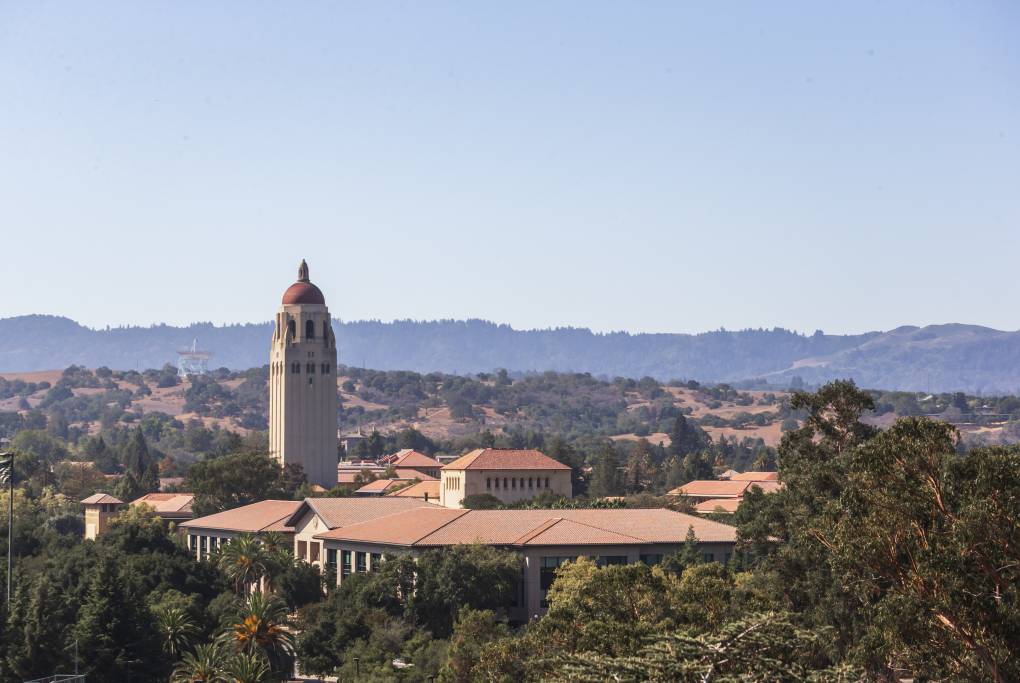
"caption": "A general view of the campus of Stanford University, including Hoover Tower, as seen from Stanford Stadium before a college football game on October 2, 2021, in Palo Alto, California. (Photo by David Madison/Getty Images)",
"description": null,
"title": "Stanford University",
"credit": null,
"status": "inherit",
"altTag": "A pillar stands in the middle of a college campus with terra cotta roofs. Dark green trees surround the buildings. A hazy blue sky above.",
"isLoading": false,
"fetchFailed": false
},
"science_1994143": {
"type": "attachments",
"id": "science_1994143",
"meta": {
"index": "attachments_1716263798",
"site": "science",
"id": "1994143",
"found": true
},
"title": "DL1013_Watch-Ladybugs-Go-From-Goth-to-Glam_KQED",
"publishDate": 1725491151,
"status": "inherit",
"parent": 1984438,
"modified": 1725491151,
"caption": null,
"credit": null,
"altTag": null,
"description": null,
"imgSizes": {
"medium": {
"file": "https://cdn.kqed.org/wp-content/uploads/sites/35/2023/10/DL1013_Watch-Ladybugs-Go-From-Goth-to-Glam_KQED-800x450.jpg",
"width": 800,
"height": 450,
"mimeType": "image/jpeg"
},
"large": {
"file": "https://cdn.kqed.org/wp-content/uploads/sites/35/2023/10/DL1013_Watch-Ladybugs-Go-From-Goth-to-Glam_KQED-1020x574.jpg",
"width": 1020,
"height": 574,
"mimeType": "image/jpeg"
},
"thumbnail": {
"file": "https://cdn.kqed.org/wp-content/uploads/sites/35/2023/10/DL1013_Watch-Ladybugs-Go-From-Goth-to-Glam_KQED-160x90.jpg",
"width": 160,
"height": 90,
"mimeType": "image/jpeg"
},
"medium_large": {
"file": "https://cdn.kqed.org/wp-content/uploads/sites/35/2023/10/DL1013_Watch-Ladybugs-Go-From-Goth-to-Glam_KQED-768x432.jpg",
"width": 768,
"height": 432,
"mimeType": "image/jpeg"
},
"1536x1536": {
"file": "https://cdn.kqed.org/wp-content/uploads/sites/35/2023/10/DL1013_Watch-Ladybugs-Go-From-Goth-to-Glam_KQED-1536x864.jpg",
"width": 1536,
"height": 864,
"mimeType": "image/jpeg"
},
"post-thumbnail": {
"file": "https://cdn.kqed.org/wp-content/uploads/sites/35/2023/10/DL1013_Watch-Ladybugs-Go-From-Goth-to-Glam_KQED-672x372.jpg",
"width": 672,
"height": 372,
"mimeType": "image/jpeg"
},
"twentyfourteen-full-width": {
"file": "https://cdn.kqed.org/wp-content/uploads/sites/35/2023/10/DL1013_Watch-Ladybugs-Go-From-Goth-to-Glam_KQED-1038x576.jpg",
"width": 1038,
"height": 576,
"mimeType": "image/jpeg"
},
"kqedFullSize": {
"file": "https://cdn.kqed.org/wp-content/uploads/sites/35/2023/10/DL1013_Watch-Ladybugs-Go-From-Goth-to-Glam_KQED.jpg",
"width": 1920,
"height": 1080
}
},
"isLoading": false,
"fetchFailed": false
},
"science_1994144": {
"type": "attachments",
"id": "science_1994144",
"meta": {
"index": "attachments_1716263798",
"site": "science",
"id": "1994144",
"found": true
},
"title": "DEEP_1012_Cockroach_Vs_Hydraulic_Press_Who_Wins_YW_V2_shield",
"publishDate": 1725491239,
"status": "inherit",
"parent": 1984261,
"modified": 1725491239,
"caption": null,
"credit": null,
"altTag": null,
"description": null,
"imgSizes": {
"medium": {
"file": "https://cdn.kqed.org/wp-content/uploads/sites/35/2023/09/DEEP_1012_Cockroach_Vs_Hydraulic_Press_Who_Wins_YW_V2_shield-800x450.jpg",
"width": 800,
"height": 450,
"mimeType": "image/jpeg"
},
"large": {
"file": "https://cdn.kqed.org/wp-content/uploads/sites/35/2023/09/DEEP_1012_Cockroach_Vs_Hydraulic_Press_Who_Wins_YW_V2_shield-1020x574.jpg",
"width": 1020,
"height": 574,
"mimeType": "image/jpeg"
},
"thumbnail": {
"file": "https://cdn.kqed.org/wp-content/uploads/sites/35/2023/09/DEEP_1012_Cockroach_Vs_Hydraulic_Press_Who_Wins_YW_V2_shield-160x90.jpg",
"width": 160,
"height": 90,
"mimeType": "image/jpeg"
},
"medium_large": {
"file": "https://cdn.kqed.org/wp-content/uploads/sites/35/2023/09/DEEP_1012_Cockroach_Vs_Hydraulic_Press_Who_Wins_YW_V2_shield-768x432.jpg",
"width": 768,
"height": 432,
"mimeType": "image/jpeg"
},
"1536x1536": {
"file": "https://cdn.kqed.org/wp-content/uploads/sites/35/2023/09/DEEP_1012_Cockroach_Vs_Hydraulic_Press_Who_Wins_YW_V2_shield-1536x864.jpg",
"width": 1536,
"height": 864,
"mimeType": "image/jpeg"
},
"2048x2048": {
"file": "https://cdn.kqed.org/wp-content/uploads/sites/35/2023/09/DEEP_1012_Cockroach_Vs_Hydraulic_Press_Who_Wins_YW_V2_shield-2048x1152.jpg",
"width": 2048,
"height": 1152,
"mimeType": "image/jpeg"
},
"post-thumbnail": {
"file": "https://cdn.kqed.org/wp-content/uploads/sites/35/2023/09/DEEP_1012_Cockroach_Vs_Hydraulic_Press_Who_Wins_YW_V2_shield-672x372.jpg",
"width": 672,
"height": 372,
"mimeType": "image/jpeg"
},
"twentyfourteen-full-width": {
"file": "https://cdn.kqed.org/wp-content/uploads/sites/35/2023/09/DEEP_1012_Cockroach_Vs_Hydraulic_Press_Who_Wins_YW_V2_shield-1038x576.jpg",
"width": 1038,
"height": 576,
"mimeType": "image/jpeg"
},
"full-width": {
"file": "https://cdn.kqed.org/wp-content/uploads/sites/35/2023/09/DEEP_1012_Cockroach_Vs_Hydraulic_Press_Who_Wins_YW_V2_shield-1920x1080.jpg",
"width": 1920,
"height": 1080,
"mimeType": "image/jpeg"
},
"kqedFullSize": {
"file": "https://cdn.kqed.org/wp-content/uploads/sites/35/2023/09/DEEP_1012_Cockroach_Vs_Hydraulic_Press_Who_Wins_YW_V2_shield-scaled.jpg",
"width": 2560,
"height": 1440
}
},
"isLoading": false,
"fetchFailed": false
},
"science_1983810": {
"type": "attachments",
"id": "science_1983810",
"meta": {
"index": "attachments_1716263798",
"site": "science",
"id": "1983810",
"found": true
},
"parent": 1983796,
"imgSizes": {
"twentyfourteen-full-width": {
"file": "https://ww2.kqed.org/app/uploads/sites/35/2023/08/DEEP_1011_This_Daring_Fly_Swims_in_a_Shimmering_Bubble_Shield_KQED-1038x576.jpg",
"width": 1038,
"mimeType": "image/jpeg",
"height": 576
},
"thumbnail": {
"file": "https://ww2.kqed.org/app/uploads/sites/35/2023/08/DEEP_1011_This_Daring_Fly_Swims_in_a_Shimmering_Bubble_Shield_KQED-160x90.jpg",
"width": 160,
"mimeType": "image/jpeg",
"height": 90
},
"post-thumbnail": {
"file": "https://ww2.kqed.org/app/uploads/sites/35/2023/08/DEEP_1011_This_Daring_Fly_Swims_in_a_Shimmering_Bubble_Shield_KQED-672x372.jpg",
"width": 672,
"mimeType": "image/jpeg",
"height": 372
},
"kqedFullSize": {
"file": "https://ww2.kqed.org/app/uploads/sites/35/2023/08/DEEP_1011_This_Daring_Fly_Swims_in_a_Shimmering_Bubble_Shield_KQED.jpg",
"width": 1920,
"height": 1080
},
"large": {
"file": "https://ww2.kqed.org/app/uploads/sites/35/2023/08/DEEP_1011_This_Daring_Fly_Swims_in_a_Shimmering_Bubble_Shield_KQED-1020x574.jpg",
"width": 1020,
"mimeType": "image/jpeg",
"height": 574
},
"1536x1536": {
"file": "https://ww2.kqed.org/app/uploads/sites/35/2023/08/DEEP_1011_This_Daring_Fly_Swims_in_a_Shimmering_Bubble_Shield_KQED-1536x864.jpg",
"width": 1536,
"mimeType": "image/jpeg",
"height": 864
},
"medium": {
"file": "https://ww2.kqed.org/app/uploads/sites/35/2023/08/DEEP_1011_This_Daring_Fly_Swims_in_a_Shimmering_Bubble_Shield_KQED-800x450.jpg",
"width": 800,
"mimeType": "image/jpeg",
"height": 450
},
"medium_large": {
"file": "https://ww2.kqed.org/app/uploads/sites/35/2023/08/DEEP_1011_This_Daring_Fly_Swims_in_a_Shimmering_Bubble_Shield_KQED-768x432.jpg",
"width": 768,
"mimeType": "image/jpeg",
"height": 432
}
},
"publishDate": 1691195216,
"modified": 1691195312,
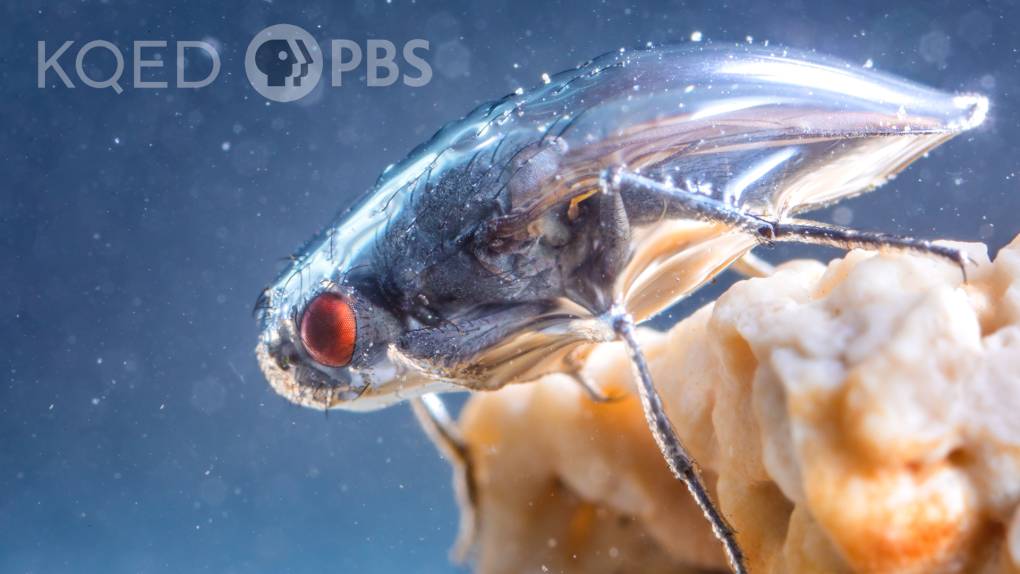
"caption": "When the alkali fly dives underwater, an air bubble forms around it thanks to an impressive amount of hairs and a waxy substance covering its body.",
"description": null,
"title": "DEEP_1011_This_Daring_Fly_Swims_in_a_Shimmering_Bubble_Shield_KQED",
"credit": "Floris van Breugel",
"status": "inherit",
"altTag": null,
"isLoading": false,
"fetchFailed": false
},
"science_1983619": {
"type": "attachments",
"id": "science_1983619",
"meta": {
"index": "attachments_1716263798",
"site": "science",
"id": "1983619",
"found": true
},
"parent": 1983618,
"imgSizes": {
"twentyfourteen-full-width": {
"file": "https://ww2.kqed.org/app/uploads/sites/35/2023/07/DL1010_These_Flies_Torpedo_a_Bindweed_Bees_Nest_KQED-1038x576.jpg",
"width": 1038,
"mimeType": "image/jpeg",
"height": 576
},
"thumbnail": {
"file": "https://ww2.kqed.org/app/uploads/sites/35/2023/07/DL1010_These_Flies_Torpedo_a_Bindweed_Bees_Nest_KQED-160x90.jpg",
"width": 160,
"mimeType": "image/jpeg",
"height": 90
},
"post-thumbnail": {
"file": "https://ww2.kqed.org/app/uploads/sites/35/2023/07/DL1010_These_Flies_Torpedo_a_Bindweed_Bees_Nest_KQED-672x372.jpg",
"width": 672,
"mimeType": "image/jpeg",
"height": 372
},
"kqedFullSize": {
"file": "https://ww2.kqed.org/app/uploads/sites/35/2023/07/DL1010_These_Flies_Torpedo_a_Bindweed_Bees_Nest_KQED.jpg",
"width": 1920,
"height": 1080
},
"large": {
"file": "https://ww2.kqed.org/app/uploads/sites/35/2023/07/DL1010_These_Flies_Torpedo_a_Bindweed_Bees_Nest_KQED-1020x574.jpg",
"width": 1020,
"mimeType": "image/jpeg",
"height": 574
},
"1536x1536": {
"file": "https://ww2.kqed.org/app/uploads/sites/35/2023/07/DL1010_These_Flies_Torpedo_a_Bindweed_Bees_Nest_KQED-1536x864.jpg",
"width": 1536,
"mimeType": "image/jpeg",
"height": 864
},
"medium": {
"file": "https://ww2.kqed.org/app/uploads/sites/35/2023/07/DL1010_These_Flies_Torpedo_a_Bindweed_Bees_Nest_KQED-800x450.jpg",
"width": 800,
"mimeType": "image/jpeg",
"height": 450
},
"medium_large": {
"file": "https://ww2.kqed.org/app/uploads/sites/35/2023/07/DL1010_These_Flies_Torpedo_a_Bindweed_Bees_Nest_KQED-768x432.jpg",
"width": 768,
"mimeType": "image/jpeg",
"height": 432
}
},
"publishDate": 1690416137,
"modified": 1690416432,
"caption": "This \"bee fly\" reproduces by dropping her eggs from the air into the nests of ground-dwelling bees.",
"description": null,
"title": "DL1010_These_Flies_Torpedo_a_Bindweed_Bees_Nest_KQED",
"credit": "Josh Cassidy/KQED",
"status": "inherit",
"altTag": null,
"isLoading": false,
"fetchFailed": false
},
"science_1994145": {
"type": "attachments",
"id": "science_1994145",
"meta": {
"index": "attachments_1716263798",
"site": "science",
"id": "1994145",
"found": true
},
"title": "DL1009_This_Snail_Goes_Fishing_with_a_Net_Made_of_Slime_KQEDV2",
"publishDate": 1725492639,
"status": "inherit",
"parent": 1983180,
"modified": 1725492639,
"caption": null,
"credit": null,
"altTag": null,
"description": null,
"imgSizes": {
"medium": {
"file": "https://cdn.kqed.org/wp-content/uploads/sites/35/2023/07/DL1009_This_Snail_Goes_Fishing_with_a_Net_Made_of_Slime_KQEDV2-800x450.jpg",
"width": 800,
"height": 450,
"mimeType": "image/jpeg"
},
"large": {
"file": "https://cdn.kqed.org/wp-content/uploads/sites/35/2023/07/DL1009_This_Snail_Goes_Fishing_with_a_Net_Made_of_Slime_KQEDV2-1020x574.jpg",
"width": 1020,
"height": 574,
"mimeType": "image/jpeg"
},
"thumbnail": {
"file": "https://cdn.kqed.org/wp-content/uploads/sites/35/2023/07/DL1009_This_Snail_Goes_Fishing_with_a_Net_Made_of_Slime_KQEDV2-160x90.jpg",
"width": 160,
"height": 90,
"mimeType": "image/jpeg"
},
"medium_large": {
"file": "https://cdn.kqed.org/wp-content/uploads/sites/35/2023/07/DL1009_This_Snail_Goes_Fishing_with_a_Net_Made_of_Slime_KQEDV2-768x432.jpg",
"width": 768,
"height": 432,
"mimeType": "image/jpeg"
},
"1536x1536": {
"file": "https://cdn.kqed.org/wp-content/uploads/sites/35/2023/07/DL1009_This_Snail_Goes_Fishing_with_a_Net_Made_of_Slime_KQEDV2-1536x864.jpg",
"width": 1536,
"height": 864,
"mimeType": "image/jpeg"
},
"post-thumbnail": {
"file": "https://cdn.kqed.org/wp-content/uploads/sites/35/2023/07/DL1009_This_Snail_Goes_Fishing_with_a_Net_Made_of_Slime_KQEDV2-672x372.jpg",
"width": 672,
"height": 372,
"mimeType": "image/jpeg"
},
"twentyfourteen-full-width": {
"file": "https://cdn.kqed.org/wp-content/uploads/sites/35/2023/07/DL1009_This_Snail_Goes_Fishing_with_a_Net_Made_of_Slime_KQEDV2-1038x576.jpg",
"width": 1038,
"height": 576,
"mimeType": "image/jpeg"
},
"kqedFullSize": {
"file": "https://cdn.kqed.org/wp-content/uploads/sites/35/2023/07/DL1009_This_Snail_Goes_Fishing_with_a_Net_Made_of_Slime_KQEDV2.jpg",
"width": 1920,
"height": 1080
}
},
"isLoading": false,
"fetchFailed": false
},
"science_1983081": {
"type": "attachments",
"id": "science_1983081",
"meta": {
"index": "attachments_1716263798",
"site": "science",
"id": "1983081",
"found": true
},
"parent": 1983076,
"imgSizes": {
"twentyfourteen-full-width": {
"file": "https://ww2.kqed.org/app/uploads/sites/35/2023/06/DEEP_1008_Springtails_Do_Their_Own_Stunts_KQED-1038x576.jpg",
"width": 1038,
"mimeType": "image/jpeg",
"height": 576
},
"thumbnail": {
"file": "https://ww2.kqed.org/app/uploads/sites/35/2023/06/DEEP_1008_Springtails_Do_Their_Own_Stunts_KQED-160x90.jpg",
"width": 160,
"mimeType": "image/jpeg",
"height": 90
},
"post-thumbnail": {
"file": "https://ww2.kqed.org/app/uploads/sites/35/2023/06/DEEP_1008_Springtails_Do_Their_Own_Stunts_KQED-672x372.jpg",
"width": 672,
"mimeType": "image/jpeg",
"height": 372
},
"kqedFullSize": {
"file": "https://ww2.kqed.org/app/uploads/sites/35/2023/06/DEEP_1008_Springtails_Do_Their_Own_Stunts_KQED.jpg",
"width": 1920,
"height": 1080
},
"large": {
"file": "https://ww2.kqed.org/app/uploads/sites/35/2023/06/DEEP_1008_Springtails_Do_Their_Own_Stunts_KQED-1020x574.jpg",
"width": 1020,
"mimeType": "image/jpeg",
"height": 574
},
"1536x1536": {
"file": "https://ww2.kqed.org/app/uploads/sites/35/2023/06/DEEP_1008_Springtails_Do_Their_Own_Stunts_KQED-1536x864.jpg",
"width": 1536,
"mimeType": "image/jpeg",
"height": 864
},
"medium": {
"file": "https://ww2.kqed.org/app/uploads/sites/35/2023/06/DEEP_1008_Springtails_Do_Their_Own_Stunts_KQED-800x450.jpg",
"width": 800,
"mimeType": "image/jpeg",
"height": 450
},
"medium_large": {
"file": "https://ww2.kqed.org/app/uploads/sites/35/2023/06/DEEP_1008_Springtails_Do_Their_Own_Stunts_KQED-768x432.jpg",
"width": 768,
"mimeType": "image/jpeg",
"height": 432
}
},
"publishDate": 1687200191,
"modified": 1687200811,
"caption": "Semiaquatic springtails, tiny animals that live in ponds and streams, control their fast jumps and landings with the aid of unique body parts.",
"description": null,
"title": "DEEP_1008_Springtails_Do_Their_Own_Stunts_KQED",
"credit": "Víctor Ortega-Jiménez/Georgia Tech, University of Maine",
"status": "inherit",
"altTag": null,
"isLoading": false,
"fetchFailed": false
},
"science_1994146": {
"type": "attachments",
"id": "science_1994146",
"meta": {
"index": "attachments_1716263798",
"site": "science",
"id": "1994146",
"found": true
},
"title": "DL1007_Gecko_Grip_Its_Atomic_Really_KQEDV2-test",
"publishDate": 1725492734,
"status": "inherit",
"parent": 1982729,
"modified": 1725492734,
"caption": null,
"credit": null,
"altTag": null,
"description": null,
"imgSizes": {
"medium": {
"file": "https://cdn.kqed.org/wp-content/uploads/sites/35/2023/05/DL1007_Gecko_Grip_Its_Atomic_Really_KQEDV2-test-800x450.jpg",
"width": 800,
"height": 450,
"mimeType": "image/jpeg"
},
"large": {
"file": "https://cdn.kqed.org/wp-content/uploads/sites/35/2023/05/DL1007_Gecko_Grip_Its_Atomic_Really_KQEDV2-test-1020x574.jpg",
"width": 1020,
"height": 574,
"mimeType": "image/jpeg"
},
"thumbnail": {
"file": "https://cdn.kqed.org/wp-content/uploads/sites/35/2023/05/DL1007_Gecko_Grip_Its_Atomic_Really_KQEDV2-test-160x90.jpg",
"width": 160,
"height": 90,
"mimeType": "image/jpeg"
},
"medium_large": {
"file": "https://cdn.kqed.org/wp-content/uploads/sites/35/2023/05/DL1007_Gecko_Grip_Its_Atomic_Really_KQEDV2-test-768x432.jpg",
"width": 768,
"height": 432,
"mimeType": "image/jpeg"
},
"1536x1536": {
"file": "https://cdn.kqed.org/wp-content/uploads/sites/35/2023/05/DL1007_Gecko_Grip_Its_Atomic_Really_KQEDV2-test-1536x864.jpg",
"width": 1536,
"height": 864,
"mimeType": "image/jpeg"
},
"post-thumbnail": {
"file": "https://cdn.kqed.org/wp-content/uploads/sites/35/2023/05/DL1007_Gecko_Grip_Its_Atomic_Really_KQEDV2-test-672x372.jpg",
"width": 672,
"height": 372,
"mimeType": "image/jpeg"
},
"twentyfourteen-full-width": {
"file": "https://cdn.kqed.org/wp-content/uploads/sites/35/2023/05/DL1007_Gecko_Grip_Its_Atomic_Really_KQEDV2-test-1038x576.jpg",
"width": 1038,
"height": 576,
"mimeType": "image/jpeg"
},
"kqedFullSize": {
"file": "https://cdn.kqed.org/wp-content/uploads/sites/35/2023/05/DL1007_Gecko_Grip_Its_Atomic_Really_KQEDV2-test.jpg",
"width": 1920,
"height": 1080
}
},
"isLoading": false,
"fetchFailed": false
},
"science_1994147": {
"type": "attachments",
"id": "science_1994147",
"meta": {
"index": "attachments_1716263798",
"site": "science",
"id": "1994147",
"found": true
},
"title": "DL1006_Why_Do_Snakes_Have_Forked_Tongues_KQED_V2",
"publishDate": 1725492816,
"status": "inherit",
"parent": 1982590,
"modified": 1725492816,
"caption": null,
"credit": null,
"altTag": null,
"description": null,
"imgSizes": {
"medium": {
"file": "https://cdn.kqed.org/wp-content/uploads/sites/35/2023/05/DL1006_Why_Do_Snakes_Have_Forked_Tongues_KQED_V2-800x450.jpg",
"width": 800,
"height": 450,
"mimeType": "image/jpeg"
},
"large": {
"file": "https://cdn.kqed.org/wp-content/uploads/sites/35/2023/05/DL1006_Why_Do_Snakes_Have_Forked_Tongues_KQED_V2-1020x574.jpg",
"width": 1020,
"height": 574,
"mimeType": "image/jpeg"
},
"thumbnail": {
"file": "https://cdn.kqed.org/wp-content/uploads/sites/35/2023/05/DL1006_Why_Do_Snakes_Have_Forked_Tongues_KQED_V2-160x90.jpg",
"width": 160,
"height": 90,
"mimeType": "image/jpeg"
},
"medium_large": {
"file": "https://cdn.kqed.org/wp-content/uploads/sites/35/2023/05/DL1006_Why_Do_Snakes_Have_Forked_Tongues_KQED_V2-768x432.jpg",
"width": 768,
"height": 432,
"mimeType": "image/jpeg"
},
"1536x1536": {
"file": "https://cdn.kqed.org/wp-content/uploads/sites/35/2023/05/DL1006_Why_Do_Snakes_Have_Forked_Tongues_KQED_V2-1536x864.jpg",
"width": 1536,
"height": 864,
"mimeType": "image/jpeg"
},
"post-thumbnail": {
"file": "https://cdn.kqed.org/wp-content/uploads/sites/35/2023/05/DL1006_Why_Do_Snakes_Have_Forked_Tongues_KQED_V2-672x372.jpg",
"width": 672,
"height": 372,
"mimeType": "image/jpeg"
},
"twentyfourteen-full-width": {
"file": "https://cdn.kqed.org/wp-content/uploads/sites/35/2023/05/DL1006_Why_Do_Snakes_Have_Forked_Tongues_KQED_V2-1038x576.jpg",
"width": 1038,
"height": 576,
"mimeType": "image/jpeg"
},
"kqedFullSize": {
"file": "https://cdn.kqed.org/wp-content/uploads/sites/35/2023/05/DL1006_Why_Do_Snakes_Have_Forked_Tongues_KQED_V2.jpg",
"width": 1920,
"height": 1080
}
},
"isLoading": false,
"fetchFailed": false
},
"science_1982303": {
"type": "attachments",
"id": "science_1982303",
"meta": {
"index": "attachments_1716263798",
"site": "science",
"id": "1982303",
"found": true
},
"parent": 1981958,
"imgSizes": {
"twentyfourteen-full-width": {
"file": "https://ww2.kqed.org/app/uploads/sites/35/2023/04/DL1005_This_Mushroom_Can_Fly_KQED-1038x576.jpg",
"width": 1038,
"mimeType": "image/jpeg",
"height": 576
},
"thumbnail": {
"file": "https://ww2.kqed.org/app/uploads/sites/35/2023/04/DL1005_This_Mushroom_Can_Fly_KQED-160x90.jpg",
"width": 160,
"mimeType": "image/jpeg",
"height": 90
},
"post-thumbnail": {
"file": "https://ww2.kqed.org/app/uploads/sites/35/2023/04/DL1005_This_Mushroom_Can_Fly_KQED-672x372.jpg",
"width": 672,
"mimeType": "image/jpeg",
"height": 372
},
"kqedFullSize": {
"file": "https://ww2.kqed.org/app/uploads/sites/35/2023/04/DL1005_This_Mushroom_Can_Fly_KQED.jpg",
"width": 1920,
"height": 1080
},
"large": {
"file": "https://ww2.kqed.org/app/uploads/sites/35/2023/04/DL1005_This_Mushroom_Can_Fly_KQED-1020x574.jpg",
"width": 1020,
"mimeType": "image/jpeg",
"height": 574
},
"1536x1536": {
"file": "https://ww2.kqed.org/app/uploads/sites/35/2023/04/DL1005_This_Mushroom_Can_Fly_KQED-1536x864.jpg",
"width": 1536,
"mimeType": "image/jpeg",
"height": 864
},
"medium": {
"file": "https://ww2.kqed.org/app/uploads/sites/35/2023/04/DL1005_This_Mushroom_Can_Fly_KQED-800x450.jpg",
"width": 800,
"mimeType": "image/jpeg",
"height": 450
},
"medium_large": {
"file": "https://ww2.kqed.org/app/uploads/sites/35/2023/04/DL1005_This_Mushroom_Can_Fly_KQED-768x432.jpg",
"width": 768,
"mimeType": "image/jpeg",
"height": 432
}
},
"publishDate": 1681514468,
"modified": 1681514556,
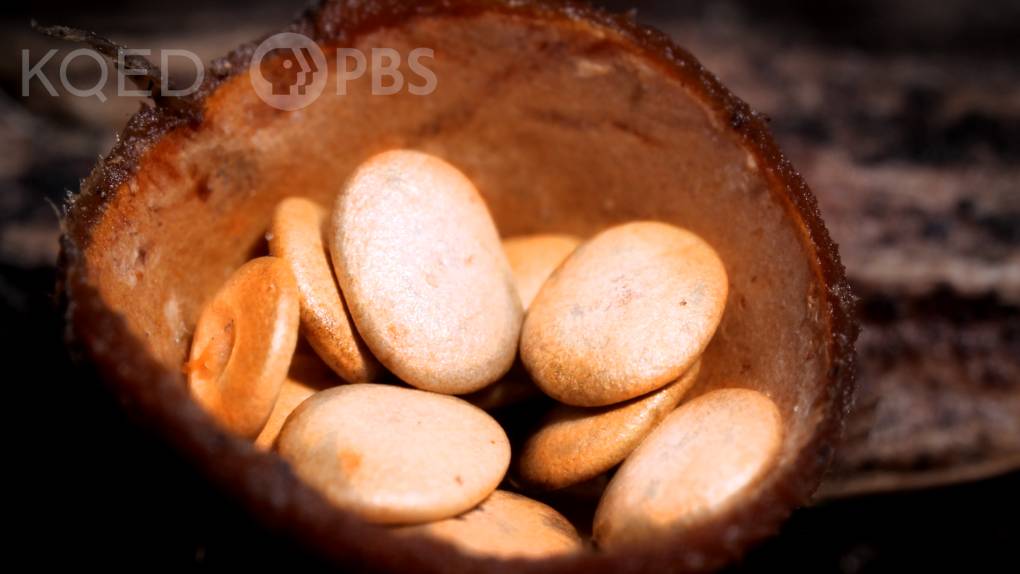
"caption": "This tiny mushroom gets its name from the bird's nest it resembles. ",
"description": null,
"title": "DL1005_This_Mushroom_Can_Fly_KQED",
"credit": "Josh Cassidy/KQED",
"status": "inherit",
"altTag": null,
"isLoading": false,
"fetchFailed": false
},
"science_1982873": {
"type": "attachments",
"id": "science_1982873",
"meta": {
"index": "attachments_1716263798",
"site": "science",
"id": "1982873",
"found": true
},
"parent": 1981963,
"imgSizes": {
"twentyfourteen-full-width": {
"file": "https://ww2.kqed.org/app/uploads/sites/35/2023/03/DL1004-Toad_Tongues-OG-pushedin-HDtest-1038x576.jpg",
"width": 1038,
"mimeType": "image/jpeg",
"height": 576
},
"thumbnail": {
"file": "https://ww2.kqed.org/app/uploads/sites/35/2023/03/DL1004-Toad_Tongues-OG-pushedin-HDtest-160x90.jpg",
"width": 160,
"mimeType": "image/jpeg",
"height": 90
},
"post-thumbnail": {
"file": "https://ww2.kqed.org/app/uploads/sites/35/2023/03/DL1004-Toad_Tongues-OG-pushedin-HDtest-672x372.jpg",
"width": 672,
"mimeType": "image/jpeg",
"height": 372
},
"kqedFullSize": {
"file": "https://ww2.kqed.org/app/uploads/sites/35/2023/03/DL1004-Toad_Tongues-OG-pushedin-HDtest.jpg",
"width": 1920,
"height": 1080
},
"large": {
"file": "https://ww2.kqed.org/app/uploads/sites/35/2023/03/DL1004-Toad_Tongues-OG-pushedin-HDtest-1020x574.jpg",
"width": 1020,
"mimeType": "image/jpeg",
"height": 574
},
"1536x1536": {
"file": "https://ww2.kqed.org/app/uploads/sites/35/2023/03/DL1004-Toad_Tongues-OG-pushedin-HDtest-1536x864.jpg",
"width": 1536,
"mimeType": "image/jpeg",
"height": 864
},
"medium": {
"file": "https://ww2.kqed.org/app/uploads/sites/35/2023/03/DL1004-Toad_Tongues-OG-pushedin-HDtest-800x450.jpg",
"width": 800,
"mimeType": "image/jpeg",
"height": 450
},
"medium_large": {
"file": "https://ww2.kqed.org/app/uploads/sites/35/2023/03/DL1004-Toad_Tongues-OG-pushedin-HDtest-768x432.jpg",
"width": 768,
"mimeType": "image/jpeg",
"height": 432
}
},
"publishDate": 1685665576,
"modified": 1685665576,
"caption": null,
"description": null,
"title": "DL1004-Toad_Tongues-OG-pushedin-HDtest",
"credit": null,
"status": "inherit",
"altTag": null,
"isLoading": false,
"fetchFailed": false
},
"science_1981865": {
"type": "attachments",
"id": "science_1981865",
"meta": {
"index": "attachments_1716263798",
"site": "science",
"id": "1981865",
"found": true
},
"parent": 1981819,
"imgSizes": {
"twentyfourteen-full-width": {
"file": "https://ww2.kqed.org/app/uploads/sites/35/2023/03/DEEP_1003_Yep_Mussels_Grow_Beards_With_Their_Feet_KQEDv4-1038x576.jpg",
"width": 1038,
"mimeType": "image/jpeg",
"height": 576
},
"thumbnail": {
"file": "https://ww2.kqed.org/app/uploads/sites/35/2023/03/DEEP_1003_Yep_Mussels_Grow_Beards_With_Their_Feet_KQEDv4-160x90.jpg",
"width": 160,
"mimeType": "image/jpeg",
"height": 90
},
"post-thumbnail": {
"file": "https://ww2.kqed.org/app/uploads/sites/35/2023/03/DEEP_1003_Yep_Mussels_Grow_Beards_With_Their_Feet_KQEDv4-672x372.jpg",
"width": 672,
"mimeType": "image/jpeg",
"height": 372
},
"kqedFullSize": {
"file": "https://ww2.kqed.org/app/uploads/sites/35/2023/03/DEEP_1003_Yep_Mussels_Grow_Beards_With_Their_Feet_KQEDv4.jpg",
"width": 1920,
"height": 1080
},
"large": {
"file": "https://ww2.kqed.org/app/uploads/sites/35/2023/03/DEEP_1003_Yep_Mussels_Grow_Beards_With_Their_Feet_KQEDv4-1020x574.jpg",
"width": 1020,
"mimeType": "image/jpeg",
"height": 574
},
"1536x1536": {
"file": "https://ww2.kqed.org/app/uploads/sites/35/2023/03/DEEP_1003_Yep_Mussels_Grow_Beards_With_Their_Feet_KQEDv4-1536x864.jpg",
"width": 1536,
"mimeType": "image/jpeg",
"height": 864
},
"medium": {
"file": "https://ww2.kqed.org/app/uploads/sites/35/2023/03/DEEP_1003_Yep_Mussels_Grow_Beards_With_Their_Feet_KQEDv4-800x450.jpg",
"width": 800,
"mimeType": "image/jpeg",
"height": 450
},
"medium_large": {
"file": "https://ww2.kqed.org/app/uploads/sites/35/2023/03/DEEP_1003_Yep_Mussels_Grow_Beards_With_Their_Feet_KQEDv4-768x432.jpg",
"width": 768,
"mimeType": "image/jpeg",
"height": 432
}
},
"publishDate": 1678291476,
"modified": 1678291595,
"caption": null,
"description": null,
"title": "DEEP_1003_Yep_Mussels_Grow_Beards_With_Their_Feet_KQEDv4",
"credit": null,
"status": "inherit",
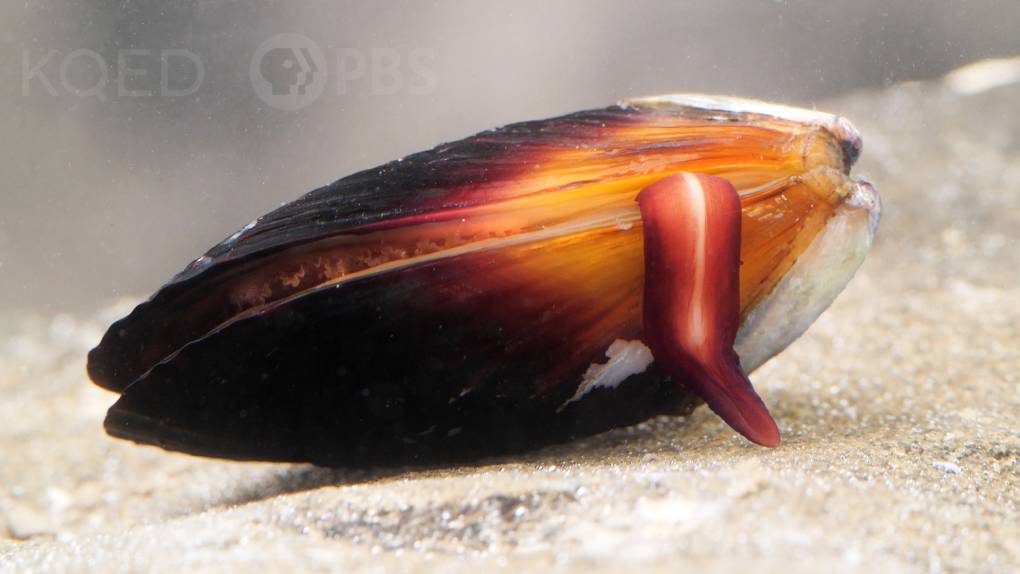
"altTag": "A dark bivalve with orange blush rests underwater, on a bed of light colored sand. From between its shell pokes a reddish-purple tongue-like appendage.",
"isLoading": false,
"fetchFailed": false
}
},
"audioPlayerReducer": {
"postId": "stream_live",
"isPaused": true,
"isPlaying": false,
"pfsActive": false,
"pledgeModalIsOpen": true,
"playerDrawerIsOpen": false,
"liveAudioPlayStartedAt": 0,
"liveAudioPlayContext": ""
},
"authorsReducer": {
"gabriela-quiros": {
"type": "authors",
"id": "6186",
"meta": {
"index": "authors_1716337520",
"id": "6186",
"found": true
},
"name": "Gabriela Quirós",
"firstName": "Gabriela",
"lastName": "Quirós",
"slug": "gabriela-quiros",
"email": "gquiros@kqed.org",
"display_author_email": false,
"staff_mastheads": [],
"title": "Supervising Producer",
"bio": "Gabriela Quirós is the \u003cstrong>supervising producer for KQED's web science video series \u003ca href=\"https://www.kqed.org/deeplook\">Deep Look\u003c/a>\u003c/strong>. She joined KQED as a TV producer when its science series QUEST started in 2006 and has covered everything from Alzheimer’s to bee die-offs to dark energy.\r\n\r\nShe won a 2022 AAAS Kavli Science Journalism Award with a team of her Deep Look colleagues. She has won six regional Emmys as a video producer and has shared eight more as the coordinating producer of Deep Look. The episode she produced about \u003ca href=\"https://www.kqed.org/science/728086/how-mosquitoes-use-six-needles-to-suck-your-blood\">How Mosquitoes Use Six Needles to Suck Your Blood\u003c/a> won a Webby \"People's Voice\" award. She has also earned awards from the Jackson Hole Wildlife Film Festival, the Society of Professional Journalists and the Society of Environmental Journalists.\r\n\r\nHer videos for KQED have also aired on NOVA scienceNOW and the PBS NewsHour, and appeared on NPR.org.\r\n\r\nAs an independent filmmaker, she produced and directed the hour-long documentary \u003ca href=\"http://lpbp.org/beautiful-sin-qa-with-producer-gabriela-quiros/\">\u003cem>Beautiful Sin\u003c/em>\u003c/a>, about the surprising story of how Costa Rica became the only country in the world to outlaw in vitro fertilization. The film aired in 2015 on public television stations throughout the U.S., and in Costa Rica.\r\n\r\nShe started her journalism career as a newspaper reporter in Costa Rica, where she grew up. She won the National Science Journalism Award there for a series of articles about organic agriculture, and developed a life-long interest in health reporting. She moved to the Bay Area in 1996 to study documentary filmmaking at the University of California, Berkeley, where she received master’s degrees in journalism and Latin American studies.",
"avatar": "https://secure.gravatar.com/avatar/6d82c20152affd1b434c31a904c40809?s=600&d=blank&r=g",
"twitter": "gabrielaquirosr",
"facebook": null,
"instagram": null,
"linkedin": null,
"sites": [
{
"site": "science",
"roles": []
},
{
"site": "quest",
"roles": [
"ef_view_calendar",
"ef_view_story_budget"
]
}
],
"headData": {
"title": "Gabriela Quirós | KQED",
"description": "Supervising Producer",
"ogImgSrc": "https://secure.gravatar.com/avatar/6d82c20152affd1b434c31a904c40809?s=600&d=blank&r=g",
"twImgSrc": "https://secure.gravatar.com/avatar/6d82c20152affd1b434c31a904c40809?s=600&d=blank&r=g"
},
"isLoading": false,
"link": "/author/gabriela-quiros"
},
"joshua-cassidy": {
"type": "authors",
"id": "6219",
"meta": {
"index": "authors_1716337520",
"id": "6219",
"found": true
},
"name": "Josh Cassidy",
"firstName": "Josh",
"lastName": "Cassidy",
"slug": "joshua-cassidy",
"email": "jcassidy@kqed.org",
"display_author_email": false,
"staff_mastheads": [
"science"
],
"title": "Digital Video Producer",
"bio": "Josh is a Senior Video Producer for KQED Science, and the Lead Producer and Cinematographer for Deep Look. After receiving his BS in Wildlife Biology from Ohio University, he went on to participate in marine mammal research for NOAA, USGS and the Intersea Foundation. He also served as the president of The Pacific Cetacean Group, a nonprofit organization dedicated to teaching students K-6 about whales. Josh studied science and natural history filmmaking at San Francisco State University and Montana State University.",
"avatar": "https://secure.gravatar.com/avatar/f2582a0801a35af53b734d56bcac2bbe?s=600&d=blank&r=g",
"twitter": null,
"facebook": null,
"instagram": null,
"linkedin": null,
"sites": [
{
"site": "science",
"roles": [
"editor"
]
},
{
"site": "quest",
"roles": [
"author",
"edit_others_posts"
]
}
],
"headData": {
"title": "Josh Cassidy | KQED",
"description": "Digital Video Producer",
"ogImgSrc": "https://secure.gravatar.com/avatar/f2582a0801a35af53b734d56bcac2bbe?s=600&d=blank&r=g",
"twImgSrc": "https://secure.gravatar.com/avatar/f2582a0801a35af53b734d56bcac2bbe?s=600&d=blank&r=g"
},
"isLoading": false,
"link": "/author/joshua-cassidy"
},
"eromero": {
"type": "authors",
"id": "11746",
"meta": {
"index": "authors_1716337520",
"id": "11746",
"found": true
},
"name": "Ezra David Romero",
"firstName": "Ezra David",
"lastName": "Romero",
"slug": "eromero",
"email": "eromero@kqed.org",
"display_author_email": true,
"staff_mastheads": [
"news",
"science"
],
"title": "Climate Reporter",
"bio": "Ezra David Romero is a climate reporter for KQED News. He covers the absence and excess of water in the Bay Area — think sea level rise, flooding and drought. For nearly a decade he’s covered how warming temperatures are altering the lives of Californians. He’s reported on farmers worried their pistachio trees aren’t getting enough sleep, families desperate for water, scientists studying dying giant sequoias, and alongside firefighters containing wildfires. His work has appeared on local stations across California and nationally on public radio shows like Morning Edition, Here and Now, All Things Considered and Science Friday. ",
"avatar": "https://secure.gravatar.com/avatar/c76404d287c10ed40224227551ac36e24352c7306f106632caf6fead76f8801f?s=600&d=blank&r=g",
"twitter": "ezraromero",
"bluesky": null,
"facebook": null,
"instagram": null,
"linkedin": null,
"sites": [
{
"site": "arts",
"roles": [
"editor"
]
},
{
"site": "news",
"roles": [
"editor"
]
},
{
"site": "science",
"roles": [
"editor"
]
},
{
"site": "liveblog",
"roles": [
"author"
]
}
],
"headData": {
"title": "Ezra David Romero | KQED",
"description": "Climate Reporter",
"ogImgSrc": "https://secure.gravatar.com/avatar/c76404d287c10ed40224227551ac36e24352c7306f106632caf6fead76f8801f?s=600&d=blank&r=g",
"twImgSrc": "https://secure.gravatar.com/avatar/c76404d287c10ed40224227551ac36e24352c7306f106632caf6fead76f8801f?s=600&d=blank&r=g"
},
"isLoading": false,
"link": "/author/eromero"
},
"mschiffman": {
"type": "authors",
"id": "11833",
"meta": {
"index": "authors_1716337520",
"id": "11833",
"found": true
},
"name": "Mimi Schiffman",
"firstName": "Mimi",
"lastName": "Schiffman",
"slug": "mschiffman",
"email": "mschiffman@kqed.org",
"display_author_email": false,
"staff_mastheads": [],
"title": "KQED Contributor",
"bio": "Mimi Schiffman is a producer for Deep Look.\r\n\r\nPrior to joining the Deep Look team she made hundreds of stories over more than a decade as a producer, director of photography and/or editor. \r\n\r\nShe's filmed lemurs finger painting (a favorite pastime of the amazing Duke Lemur Center inhabitants), stayed awake for 36 hours while trailing the first person with dwarfism to complete an Ironman (shout out to John Young, aka \"The Hammer\") and got to interview the late, great Anthony Bourdain.\r\n \r\nFun facts: Mimi's first job was weighing foraminifera - single cell organisms - in tiny foil cups, and she once got a river designated as “Wild and scenic.” She’s passionate about animals in general but very specifically her rescue dog, Henry. And her kid, Sierra and husband, Peter.",
"avatar": "https://secure.gravatar.com/avatar/e8b898539bc6a47f47f94992f0f17948?s=600&d=blank&r=g",
"twitter": null,
"facebook": null,
"instagram": null,
"linkedin": null,
"sites": [
{
"site": "science",
"roles": [
"editor"
]
}
],
"headData": {
"title": "Mimi Schiffman | KQED",
"description": "KQED Contributor",
"ogImgSrc": "https://secure.gravatar.com/avatar/e8b898539bc6a47f47f94992f0f17948?s=600&d=blank&r=g",
"twImgSrc": "https://secure.gravatar.com/avatar/e8b898539bc6a47f47f94992f0f17948?s=600&d=blank&r=g"
},
"isLoading": false,
"link": "/author/mschiffman"
},
"rtuiran": {
"type": "authors",
"id": "11858",
"meta": {
"index": "authors_1716337520",
"id": "11858",
"found": true
},
"name": "Rosa Tuirán",
"firstName": "Rosa",
"lastName": "Tuirán",
"slug": "rtuiran",
"email": "rtuiran@kqed.org",
"display_author_email": false,
"staff_mastheads": [
"science"
],
"title": "Digital Video Producer ",
"bio": "Rosa Tuirán is a PBS Accelerator Fellow for Diverse Voices and a video producer for KQED's web science video series, Deep Look. Originally from Mexico City, she studied International Relations for her B.A. After graduating, she pursued her passion for underwater photography in South Africa and later worked as a video journalist for BuzzFeed News in New York City.\r\n\r\nIn 2020, she received her Master of Journalism from the University of California, Berkeley with a focus on documentary filmmaking. During the pandemic's early stages, she was a part of the COVID-19 California reporting initiative with The New York Times and the Investigative Reporting Program. \r\n\r\nHer work has been featured on PBS Frontline, PBS NOVA, CBS News, National Geographic, The Guardian and The New York Times.",
"avatar": "https://secure.gravatar.com/avatar/192c377dfd982c86993f2351bc0d6fb2?s=600&d=blank&r=g",
"twitter": null,
"facebook": null,
"instagram": null,
"linkedin": null,
"sites": [
{
"site": "science",
"roles": [
"editor"
]
}
],
"headData": {
"title": "Rosa Tuirán | KQED",
"description": "Digital Video Producer ",
"ogImgSrc": "https://secure.gravatar.com/avatar/192c377dfd982c86993f2351bc0d6fb2?s=600&d=blank&r=g",
"twImgSrc": "https://secure.gravatar.com/avatar/192c377dfd982c86993f2351bc0d6fb2?s=600&d=blank&r=g"
},
"isLoading": false,
"link": "/author/rtuiran"
},
"scummings": {
"type": "authors",
"id": "11868",
"meta": {
"index": "authors_1716337520",
"id": "11868",
"found": true
},
"name": "Sean Cummings",
"firstName": "Sean",
"lastName": "Cummings",
"slug": "scummings",
"email": "scummings@kqed.org",
"display_author_email": false,
"staff_mastheads": [],
"title": "Intern, Deep Look",
"bio": "Sean Cummings is a former intern with KQED's Deep Look series. He grew up exploring the oak woodlands of Santa Barbara county and studied environmental humanities before earning an M.Sc. in Science Communication from the University of California, Santa Cruz.",
"avatar": "https://secure.gravatar.com/avatar/33b08823c188284bb9085ffd52b7d0ab?s=600&d=blank&r=g",
"twitter": null,
"facebook": null,
"instagram": null,
"linkedin": null,
"sites": [
{
"site": "science",
"roles": [
"author"
]
}
],
"headData": {
"title": "Sean Cummings | KQED",
"description": "Intern, Deep Look",
"ogImgSrc": "https://secure.gravatar.com/avatar/33b08823c188284bb9085ffd52b7d0ab?s=600&d=blank&r=g",
"twImgSrc": "https://secure.gravatar.com/avatar/33b08823c188284bb9085ffd52b7d0ab?s=600&d=blank&r=g"
},
"isLoading": false,
"link": "/author/scummings"
}
},
"pagesReducer": {
"science_category_video": {
"type": "terms",
"id": "science_86",
"meta": {
"index": "terms_1716263798",
"site": "science",
"id": "86",
"score": 12.138525
},
"featImg": null,
"name": "Video",
"description": null,
"taxonomy": "category",
"headData": {
"twImgId": null,
"twTitle": null,
"ogTitle": null,
"ogImgId": null,
"twDescription": null,
"description": null,
"title": "Video Archives | KQED Science",
"ogDescription": null
},
"ttid": 89,
"slug": "video",
"isLoading": false,
"title": "Video",
"pageMeta": {
"site": "science",
"WpPageTemplate": "page-topic-editorial",
"currentPage": 5
},
"blocks": [
{
"blockName": "kqed/post-list",
"attrs": {
"layout": "cardArticle2",
"query": "posts/science?category=video",
"seeMore": false,
"paginated": true,
"page": 5
}
},
{
"blockName": "kqed/ad"
}
]
}
},
"pfsSessionReducer": {},
"postsReducer": {
"stream_live": {
"type": "live",
"id": "stream_live",
"audioUrl": "https://streams.kqed.org/kqedradio",
"title": "Live Stream",
"excerpt": "Live Stream information currently unavailable.",
"link": "/radio",
"featImg": "",
"label": {
"name": "KQED Live",
"link": "/"
}
},
"stream_kqedNewscast": {
"type": "posts",
"id": "stream_kqedNewscast",
"audioUrl": "https://www.kqed.org/.stream/anon/radio/RDnews/newscast.mp3?_=1",
"title": "KQED Newscast",
"featImg": "",
"label": {
"name": "88.5 FM",
"link": "/"
}
},
"science_1984864": {
"type": "posts",
"id": "science_1984864",
"meta": {
"index": "posts_1716263798",
"site": "science",
"id": "1984864",
"score": null,
"sort": [
1698145240000
]
},
"parent": 0,
"labelTerm": {},
"blocks": [],
"publishDate": 1698145240,
"format": "standard",
"title": "'Don't Look Up' Director’s Nonprofit Roasts Stanford for Fossil Fuel Funding",
"headTitle": "‘Don’t Look Up’ Director’s Nonprofit Roasts Stanford for Fossil Fuel Funding | KQED",
"content": "\u003cp>The nonprofit founded by Adam McKay — writer and director of the popular climate film “Don’t Look Up” — has released a video lambasting Stanford University’s new climate school for its stance on accepting money from the fossil fuel industry.\u003c/p>\n\u003cp>In the tongue-in-cheek short film, \u003ca href=\"https://yellowdotstudios.com/\" target=\"_blank\" rel=\"noopener\">Yellow Dot Studio\u003c/a> videographers, alongside students and staff, call out \u003ca href=\"https://twitter.com/weareyellowdot/status/1709607101646180592\">what they say is a point of hypocrisy\u003c/a> — officials with the Stanford Doerr School of Sustainability saying it would take funds from oil and gas companies like Chevron or Exxon to pay for research.\u003c/p>\n\u003cp>The video, which has been viewed more than 200,000 times online, starts with school back in session and a recognition that the new college was founded two summers ago with a promise to come up with ways to combat climate change. But then comes the irony.\u003c/p>\n\u003cp>“So, we’re calling on the help of all our friends at Big Oil,” the narrator said.\u003c/p>\n\u003cp>https://twitter.com/weareyellowdot/status/1709607101646180592\u003c/p>\n\u003cp>[ad fullwidth]\u003c/p>\n\u003cp>Since its inception in the summer of 2022, the sustainability school — launched with a $1.1 billion gift from John and Ann Doerr, the largest gift in university history — hasn’t been able to shake this kind of criticism.\u003c/p>\n\u003cp>The school’s then-incoming inaugural dean, Arun Majumdar,\u003ca href=\"https://www.nytimes.com/2022/05/04/climate/john-doerr-stanford-climate.html\"> told the New York Times that the school would accept funding and work with fossil fuel companies\u003c/a>. Later in the year, he clarified that the dollars would not be used for general operations.\u003c/p>\n\u003cp>“If there are companies that are making measurably meaningful efforts to be part of the solution, I feel it would be prudent to be open to engaging such companies while remaining vigilant that their values align with ours,” Majumdar \u003ca href=\"https://sustainability.stanford.edu/news/message-arun-majumdar-looking-forward\">said in a statement from 2022\u003c/a>.\u003c/p>\n\u003cp>The goal of the new college is \u003ca href=\"https://news.stanford.edu/2022/05/04/stanford-doerr-school-sustainability-universitys-first-new-school-70-years-will-accelerate-solutions-global-climate-crisis/\">to aid in coming up with climate solutions\u003c/a>.\u003c/p>\n\u003cp>Over the past year, Stanford researchers have \u003ca href=\"https://sustainability.stanford.edu/news/research\">released studies on everything from water vulnerability to solar power to wildfire prevention.\u003c/a>\u003c/p>\n\u003cp>However, some students and staff think accepting money from fossil fuel companies is a slippery slope that could shape research agendas. And argue that burning fossil fuels directly creates human-caused climate change.\u003c/p>\n\u003cp>On their website, the Coalition for a True School of Sustainability lists Stanford programs with past or current \u003ca href=\"https://www.truesustainabilityschool.com/big-oil-entanglements\">‘\u003c/a>\u003ca href=\"https://www.truesustainabilityschool.com/big-oil-entanglements\">Big Oil Entanglements.\u003c/a>’ The group represents a coalition of Stanford scientists who believe fossil fuel money invested for research undercuts swift climate action.\u003c/p>\n\u003cp>“The fossil fuel industry for decades has misled the public on the reality of climate change,” said Mallory Harris, a graduate student in biology at the university and a member of the coalition. “When they’re talking about bringing them into this research space, it undermines the quality and integrity of the research that we’re doing\u003cem>.”\u003c/em>\u003c/p>\n\u003cp>The advocates have pressed Stanford to be more transparent in disclosing the origins of their funding and to ensure that every corporate donor has a credible energy transition pathway. They also want to know if these companies are lobbying for or against climate legislation.\u003c/p>\n\u003cp>The group would like a third-party enforcement board to analyze funding from fossil fuel companies, especially for those who plan to continue expanding extraction.\u003c/p>\n\u003cp>“If by those criteria they find those companies are not trustworthy partners, then the university should dissociate from partnering with them,” said \u003ca href=\"https://stanforddaily.com/2022/06/02/from-the-community-should-any-fossil-fuel-company-qualify-for-funding-stanfords-school-of-sustainability-a-response-to-dean-majumdars-letter/\">Thom Hersbach\u003c/a>, a researcher at Stanford and member of the coalition.\u003c/p>\n\u003cp>The \u003ca href=\"https://news.stanford.edu/report/2023/02/24/members-named-committee-reviewing-fossil-fuel-funding-research/\">university created a working group in late 2022\u003c/a> \u003ca href=\"https://news.stanford.edu/report/2023/02/24/members-named-committee-reviewing-fossil-fuel-funding-research/\"> \u003c/a>to assess Stanford’s approach to funding research with money from fossil fuel companies. The committee’s job is to evaluate current funding, review the process of other universities and provide pros and cons of continuing accepting funds or different paths.\u003c/p>\n\u003cp>“We recognize this is an impassioned topic for members in our community, and the university is approaching this matter with the seriousness and rigor it deserves,” Amy Adams, associate dean of marketing and communications, told KQED in a statement.\u003c/p>\n\u003cp>“We look forward to the results from the thoughtful process being carried out by the committee,” she said.\u003c/p>\n\u003cp>Students and staff said they plan to continue to make a fuss over the issue because they want the college to succeed at reducing carbon emissions.\u003c/p>\n\u003cp>\u003c/p>\n\u003cp>“I’m doing this because this school can do so much good, and I want to ensure it does,” Hersbach said.\u003c/p>\n\n",
"stats": {
"hasVideo": false,
"hasChartOrMap": false,
"hasAudio": false,
"hasPolis": false,
"wordCount": 747,
"hasGoogleForm": false,
"hasGallery": false,
"hasHearkenModule": false,
"iframeSrcs": [],
"paragraphCount": 22
},
"modified": 1704845857,
"excerpt": "Since its inception, Stanford's sustainability school hasn’t been able to shake criticism for its willingness to accept industry gifts.",
"headData": {
"twImgId": "",
"twTitle": "",
"ogTitle": "",
"ogImgId": "",
"twDescription": "",
"description": "Since its inception, Stanford's sustainability school hasn’t been able to shake criticism for its willingness to accept industry gifts.",
"title": "'Don't Look Up' Director’s Nonprofit Roasts Stanford for Fossil Fuel Funding | KQED",
"ogDescription": "",
"schema": {
"@context": "https://schema.org",
"@type": "Article",
"headline": "'Don't Look Up' Director’s Nonprofit Roasts Stanford for Fossil Fuel Funding",
"datePublished": "2023-10-24T04:00:40-07:00",
"dateModified": "2024-01-09T16:17:37-08:00",
"image": "https://cdn.kqed.org/wp-content/uploads/2020/02/KQED-OG-Image@1x.png"
}
},
"guestAuthors": [],
"slug": "dont-look-up-writers-nonprofit-roasts-stanford-for-fossil-fuel-funding",
"status": "publish",
"excludeFromSiteSearch": "Include",
"sticky": false,
"subhead": "In the tongue-in-cheek short film, videographers, alongside students and staff, call out what they say is a point of hypocrisy — the university accepting funds from oil and gas companies.",
"source": "Climate Change",
"articleAge": "0",
"path": "/science/1984864/dont-look-up-writers-nonprofit-roasts-stanford-for-fossil-fuel-funding",
"audioTrackLength": null,
"parsedContent": [
{
"type": "contentString",
"content": "\u003cdiv class=\"post-body\">\u003cp>\u003cp>The nonprofit founded by Adam McKay — writer and director of the popular climate film “Don’t Look Up” — has released a video lambasting Stanford University’s new climate school for its stance on accepting money from the fossil fuel industry.\u003c/p>\n\u003cp>In the tongue-in-cheek short film, \u003ca href=\"https://yellowdotstudios.com/\" target=\"_blank\" rel=\"noopener\">Yellow Dot Studio\u003c/a> videographers, alongside students and staff, call out \u003ca href=\"https://twitter.com/weareyellowdot/status/1709607101646180592\">what they say is a point of hypocrisy\u003c/a> — officials with the Stanford Doerr School of Sustainability saying it would take funds from oil and gas companies like Chevron or Exxon to pay for research.\u003c/p>\n\u003cp>The video, which has been viewed more than 200,000 times online, starts with school back in session and a recognition that the new college was founded two summers ago with a promise to come up with ways to combat climate change. But then comes the irony.\u003c/p>\n\u003cp>“So, we’re calling on the help of all our friends at Big Oil,” the narrator said.\u003c/p>\u003c/p>\u003c/div>",
"attributes": {
"named": {},
"numeric": []
}
},
{
"type": "component",
"content": "",
"name": "singleTwitterStatus",
"attributes": {
"named": {
"id": "1709607101646180592"
},
"numeric": []
}
},
{
"type": "contentString",
"content": "\u003cdiv class=\"post-body\">\u003cp>\n\u003cp>\u003c/p>\u003c/div>",
"attributes": {
"named": {},
"numeric": []
}
},
{
"type": "component",
"content": "",
"name": "ad",
"attributes": {
"named": {
"label": "fullwidth"
},
"numeric": [
"fullwidth"
]
}
},
{
"type": "contentString",
"content": "\u003cdiv class=\"post-body\">\u003cp>\u003c/p>\n\u003cp>Since its inception in the summer of 2022, the sustainability school — launched with a $1.1 billion gift from John and Ann Doerr, the largest gift in university history — hasn’t been able to shake this kind of criticism.\u003c/p>\n\u003cp>The school’s then-incoming inaugural dean, Arun Majumdar,\u003ca href=\"https://www.nytimes.com/2022/05/04/climate/john-doerr-stanford-climate.html\"> told the New York Times that the school would accept funding and work with fossil fuel companies\u003c/a>. Later in the year, he clarified that the dollars would not be used for general operations.\u003c/p>\n\u003cp>“If there are companies that are making measurably meaningful efforts to be part of the solution, I feel it would be prudent to be open to engaging such companies while remaining vigilant that their values align with ours,” Majumdar \u003ca href=\"https://sustainability.stanford.edu/news/message-arun-majumdar-looking-forward\">said in a statement from 2022\u003c/a>.\u003c/p>\n\u003cp>The goal of the new college is \u003ca href=\"https://news.stanford.edu/2022/05/04/stanford-doerr-school-sustainability-universitys-first-new-school-70-years-will-accelerate-solutions-global-climate-crisis/\">to aid in coming up with climate solutions\u003c/a>.\u003c/p>\n\u003cp>Over the past year, Stanford researchers have \u003ca href=\"https://sustainability.stanford.edu/news/research\">released studies on everything from water vulnerability to solar power to wildfire prevention.\u003c/a>\u003c/p>\n\u003cp>However, some students and staff think accepting money from fossil fuel companies is a slippery slope that could shape research agendas. And argue that burning fossil fuels directly creates human-caused climate change.\u003c/p>\n\u003cp>On their website, the Coalition for a True School of Sustainability lists Stanford programs with past or current \u003ca href=\"https://www.truesustainabilityschool.com/big-oil-entanglements\">‘\u003c/a>\u003ca href=\"https://www.truesustainabilityschool.com/big-oil-entanglements\">Big Oil Entanglements.\u003c/a>’ The group represents a coalition of Stanford scientists who believe fossil fuel money invested for research undercuts swift climate action.\u003c/p>\n\u003cp>“The fossil fuel industry for decades has misled the public on the reality of climate change,” said Mallory Harris, a graduate student in biology at the university and a member of the coalition. “When they’re talking about bringing them into this research space, it undermines the quality and integrity of the research that we’re doing\u003cem>.”\u003c/em>\u003c/p>\n\u003cp>The advocates have pressed Stanford to be more transparent in disclosing the origins of their funding and to ensure that every corporate donor has a credible energy transition pathway. They also want to know if these companies are lobbying for or against climate legislation.\u003c/p>\n\u003cp>The group would like a third-party enforcement board to analyze funding from fossil fuel companies, especially for those who plan to continue expanding extraction.\u003c/p>\n\u003cp>“If by those criteria they find those companies are not trustworthy partners, then the university should dissociate from partnering with them,” said \u003ca href=\"https://stanforddaily.com/2022/06/02/from-the-community-should-any-fossil-fuel-company-qualify-for-funding-stanfords-school-of-sustainability-a-response-to-dean-majumdars-letter/\">Thom Hersbach\u003c/a>, a researcher at Stanford and member of the coalition.\u003c/p>\n\u003cp>The \u003ca href=\"https://news.stanford.edu/report/2023/02/24/members-named-committee-reviewing-fossil-fuel-funding-research/\">university created a working group in late 2022\u003c/a> \u003ca href=\"https://news.stanford.edu/report/2023/02/24/members-named-committee-reviewing-fossil-fuel-funding-research/\"> \u003c/a>to assess Stanford’s approach to funding research with money from fossil fuel companies. The committee’s job is to evaluate current funding, review the process of other universities and provide pros and cons of continuing accepting funds or different paths.\u003c/p>\n\u003cp>“We recognize this is an impassioned topic for members in our community, and the university is approaching this matter with the seriousness and rigor it deserves,” Amy Adams, associate dean of marketing and communications, told KQED in a statement.\u003c/p>\n\u003cp>“We look forward to the results from the thoughtful process being carried out by the committee,” she said.\u003c/p>\n\u003cp>Students and staff said they plan to continue to make a fuss over the issue because they want the college to succeed at reducing carbon emissions.\u003c/p>\n\u003cp>\u003c/p>\n\u003cp>“I’m doing this because this school can do so much good, and I want to ensure it does,” Hersbach said.\u003c/p>\n\n\u003c/div>\u003c/p>",
"attributes": {
"named": {},
"numeric": []
}
}
],
"link": "/science/1984864/dont-look-up-writers-nonprofit-roasts-stanford-for-fossil-fuel-funding",
"authors": [
"11746"
],
"categories": [
"science_31",
"science_32",
"science_35",
"science_4550",
"science_40",
"science_4450",
"science_86"
],
"tags": [
"science_182",
"science_194",
"science_3301",
"science_3543",
"science_2003",
"science_309",
"science_5187"
],
"featImg": "science_1984865",
"label": "source_science_1984864"
},
"science_1984438": {
"type": "posts",
"id": "science_1984438",
"meta": {
"index": "posts_1716263798",
"site": "science",
"id": "1984438",
"score": null,
"sort": [
1696348845000
]
},
"guestAuthors": [],
"slug": "watch-ladybugs-go-from-goth-to-glam",
"title": "Watch Ladybugs Go From Goth to Glam",
"publishDate": 1696348845,
"format": "video",
"headTitle": "Watch Ladybugs Go From Goth to Glam | KQED",
"labelTerm": {
"term": 1935,
"site": "science"
},
"content": "\u003cp>[dl_subscribe]\u003cbr>\n\u003cem>Ladybugs may be the cutest insects around, but they don’t start off that way. Also called lady beetles or ladybirds, they pop out of their eggs as prickly mini-monsters with an insatiable hunger for aphids. Once they’ve bulked up, they transform, shedding their terrifying looks, but keeping their killer vibes.\u003c/em>\u003c/p>\n\u003ch3>TRANSCRIPT\u003c/h3>\n\u003cp>What is prickly … ferocious … and also one of the most beloved insects around? \u003c/p>\n\u003cp>A ladybug. \u003c/p>\n\u003cp>Well, a teenage one.\u003c/p>\n\u003cp>And this ladybug larva has something to teach us about appearances.\u003c/p>\n\u003cp>[ad fullwidth]\u003c/p>\n\u003cp>Menacing or cute, the ladybug is a stone cold killer.\u003c/p>\n\u003cp>There are about 6,000 species of ladybugs.\u003c/p>\n\u003cp>Also called lady beetles or ladybirds, they come in varying shades and with different numbers of spots. \u003c/p>\n\u003cp>Sometimes even no spots.\u003c/p>\n\u003cp>It’s a myth that ladybugs gain a spot every year, but those markings are a useful way to tell different species apart.\u003c/p>\n\u003cp>Whatever they are, they all start out here. \u003c/p>\n\u003cp>As eggs laid in neat clusters by their mom.\u003c/p>\n\u003cp>About a week later these mini-alligators crawl free. \u003c/p>\n\u003cp>These larvae have an insatiable hunger for aphid insides.\u003c/p>\n\u003cp>The larvae stalk their unsuspecting prey, feeling around with their sensitive legs.\u003c/p>\n\u003cp>Though to be honest, the plump little aphids aren’t exactly a challenge to bring down.\u003c/p>\n\u003cp>Their main defense is to make lots of aphids.\u003c/p>\n\u003cp>And I mean a lot.\u003c/p>\n\u003cp>Sometimes, the ladybug larva starts on one end of the aphid and eats it alive. \u003c/p>\n\u003cp>Other times, it’ll just treat the aphid like a juice box – ditch what’s left and bail.\u003c/p>\n\u003cp>In the roughly three weeks it takes the larva to grow up, it’ll eat hundreds of these scrumptious treats. \u003c/p>\n\u003cp>It needs to bulk up for what comes next\u003c/p>\n\u003cp>The larva finds a cozy spot close to its favorite snacks.\u003c/p>\n\u003cp>It exudes a sticky liquid from its backside and cements itself in place.\u003c/p>\n\u003cp>Then, it hunches over and squirms in rhythmic convulsions.\u003c/p>\n\u003cp>The larva’s about to say goodbye to its old goth look and reinvent itself. \u003c/p>\n\u003cp>It sheds its outer layer, legs and all, to reveal a ladybug pupa. \u003c/p>\n\u003cp>An in-between stage where it can spend some time alone figuring out who it really wants to be.\u003c/p>\n\u003cp>It spends the next week going through a major metamorphosis. \u003c/p>\n\u003cp>When it’s ready to do some adulting, the full-grown ladybug emerges.\u003c/p>\n\u003cp>Take that, butterflies! \u003c/p>\n\u003cp>You’re not the only ones that create an all new persona for yourselves.\u003c/p>\n\u003cp>Once it’s free, the ladybug’s armored forewings, called elytra, harden and develop their color and spots.\u003c/p>\n\u003cp>Not that spots are required.\u003c/p>\n\u003cp>The elytra protect the ladybug’s delicate hindwings, which it now stretches out for the very first time. \u003c/p>\n\u003cp>Those wings open whole new worlds to a grown ladybug. \u003c/p>\n\u003cp>Not only can the adults fly from plant to plant looking for food and mates,\u003c/p>\n\u003cp>but the wings also allow the ladybug to migrate huge distances. \u003c/p>\n\u003cp>It’ll eat up to 5,000 aphids in its adventurous life.\u003c/p>\n\u003cp>That makes them a true ally to us, protecting our farms and gardens from harmful pests.\u003c/p>\n\u003cp>So don’t be fooled by that candy-apple coating. \u003c/p>\n\u003cp>\u003c/p>\n\u003cp>Under the hood, the ladybug is still the same wild, relentless hunter it’s always been.\u003c/p>\n\n",
"blocks": [],
"excerpt": "Ladybugs may be the cutest insects around, but they don't start off that way. Also called ladybird beetles or ladybirds, they pop out of their eggs as prickly mini-monsters with an insatiable hunger for aphids. Once they've bulked up, they transform, shedding their terrifying looks ... but keeping their killer vibes.",
"status": "publish",
"parent": 0,
"modified": 1738871589,
"stats": {
"hasAudio": false,
"hasVideo": false,
"hasChartOrMap": false,
"iframeSrcs": [],
"hasGoogleForm": false,
"hasGallery": false,
"hasHearkenModule": false,
"hasPolis": false,
"paragraphCount": 44,
"wordCount": 558
},
"headData": {
"title": "Watch Ladybugs Go From Goth to Glam | KQED",
"description": "Ladybugs may be the cutest insects around, but they don't start off that way. Also called ladybird beetles or ladybirds, they pop out of their eggs as prickly mini-monsters with an insatiable hunger for aphids. Once they've bulked up, they transform, shedding their terrifying looks ... but keeping their killer vibes.",
"ogTitle": "",
"ogDescription": "",
"ogImgId": "",
"twTitle": "",
"twDescription": "",
"twImgId": "",
"schema": {
"@context": "https://schema.org",
"@type": "Article",
"headline": "Watch Ladybugs Go From Goth to Glam",
"datePublished": "2023-10-03T09:00:45-07:00",
"dateModified": "2025-02-06T11:53:09-08:00",
"image": "https://cdn.kqed.org/wp-content/uploads/2020/02/KQED-OG-Image@1x.png"
}
},
"videoEmbed": "https://youtu.be/FCFUk4f3zXw",
"pbsMediaId": "3084965303",
"sticky": false,
"excludeFromSiteSearch": "Include",
"articleAge": "0",
"path": "/science/1984438/watch-ladybugs-go-from-goth-to-glam",
"audioTrackLength": null,
"parsedContent": [
{
"type": "contentString",
"content": "\u003cdiv class=\"post-body\">\u003cp>\u003cp>\u003c/p>\u003c/div>",
"attributes": {
"named": {},
"numeric": []
}
},
{
"type": "component",
"content": "",
"name": "dl_subscribe",
"attributes": {
"named": {
"label": ""
},
"numeric": []
}
},
{
"type": "contentString",
"content": "\u003cdiv class=\"post-body\">\u003cp>\u003cbr>\n\u003cem>Ladybugs may be the cutest insects around, but they don’t start off that way. Also called lady beetles or ladybirds, they pop out of their eggs as prickly mini-monsters with an insatiable hunger for aphids. Once they’ve bulked up, they transform, shedding their terrifying looks, but keeping their killer vibes.\u003c/em>\u003c/p>\n\u003ch3>TRANSCRIPT\u003c/h3>\n\u003cp>What is prickly … ferocious … and also one of the most beloved insects around? \u003c/p>\n\u003cp>A ladybug. \u003c/p>\n\u003cp>Well, a teenage one.\u003c/p>\n\u003cp>And this ladybug larva has something to teach us about appearances.\u003c/p>\n\u003cp>\u003c/p>\u003c/div>",
"attributes": {
"named": {},
"numeric": []
}
},
{
"type": "component",
"content": "",
"name": "ad",
"attributes": {
"named": {
"label": "fullwidth"
},
"numeric": [
"fullwidth"
]
}
},
{
"type": "contentString",
"content": "\u003cdiv class=\"post-body\">\u003cp>\u003c/p>\n\u003cp>Menacing or cute, the ladybug is a stone cold killer.\u003c/p>\n\u003cp>There are about 6,000 species of ladybugs.\u003c/p>\n\u003cp>Also called lady beetles or ladybirds, they come in varying shades and with different numbers of spots. \u003c/p>\n\u003cp>Sometimes even no spots.\u003c/p>\n\u003cp>It’s a myth that ladybugs gain a spot every year, but those markings are a useful way to tell different species apart.\u003c/p>\n\u003cp>Whatever they are, they all start out here. \u003c/p>\n\u003cp>As eggs laid in neat clusters by their mom.\u003c/p>\n\u003cp>About a week later these mini-alligators crawl free. \u003c/p>\n\u003cp>These larvae have an insatiable hunger for aphid insides.\u003c/p>\n\u003cp>The larvae stalk their unsuspecting prey, feeling around with their sensitive legs.\u003c/p>\n\u003cp>Though to be honest, the plump little aphids aren’t exactly a challenge to bring down.\u003c/p>\n\u003cp>Their main defense is to make lots of aphids.\u003c/p>\n\u003cp>And I mean a lot.\u003c/p>\n\u003cp>Sometimes, the ladybug larva starts on one end of the aphid and eats it alive. \u003c/p>\n\u003cp>Other times, it’ll just treat the aphid like a juice box – ditch what’s left and bail.\u003c/p>\n\u003cp>In the roughly three weeks it takes the larva to grow up, it’ll eat hundreds of these scrumptious treats. \u003c/p>\n\u003cp>It needs to bulk up for what comes next\u003c/p>\n\u003cp>The larva finds a cozy spot close to its favorite snacks.\u003c/p>\n\u003cp>It exudes a sticky liquid from its backside and cements itself in place.\u003c/p>\n\u003cp>Then, it hunches over and squirms in rhythmic convulsions.\u003c/p>\n\u003cp>The larva’s about to say goodbye to its old goth look and reinvent itself. \u003c/p>\n\u003cp>It sheds its outer layer, legs and all, to reveal a ladybug pupa. \u003c/p>\n\u003cp>An in-between stage where it can spend some time alone figuring out who it really wants to be.\u003c/p>\n\u003cp>It spends the next week going through a major metamorphosis. \u003c/p>\n\u003cp>When it’s ready to do some adulting, the full-grown ladybug emerges.\u003c/p>\n\u003cp>Take that, butterflies! \u003c/p>\n\u003cp>You’re not the only ones that create an all new persona for yourselves.\u003c/p>\n\u003cp>Once it’s free, the ladybug’s armored forewings, called elytra, harden and develop their color and spots.\u003c/p>\n\u003cp>Not that spots are required.\u003c/p>\n\u003cp>The elytra protect the ladybug’s delicate hindwings, which it now stretches out for the very first time. \u003c/p>\n\u003cp>Those wings open whole new worlds to a grown ladybug. \u003c/p>\n\u003cp>Not only can the adults fly from plant to plant looking for food and mates,\u003c/p>\n\u003cp>but the wings also allow the ladybug to migrate huge distances. \u003c/p>\n\u003cp>It’ll eat up to 5,000 aphids in its adventurous life.\u003c/p>\n\u003cp>That makes them a true ally to us, protecting our farms and gardens from harmful pests.\u003c/p>\n\u003cp>So don’t be fooled by that candy-apple coating. \u003c/p>\n\u003cp>\u003c/p>\n\u003cp>Under the hood, the ladybug is still the same wild, relentless hunter it’s always been.\u003c/p>\n\n\u003c/div>\u003c/p>",
"attributes": {
"named": {},
"numeric": []
}
}
],
"link": "/science/1984438/watch-ladybugs-go-from-goth-to-glam",
"authors": [
"6219"
],
"series": [
"science_1935"
],
"categories": [
"science_2874",
"science_30",
"science_40",
"science_4450",
"science_86"
],
"featImg": "science_1994143",
"label": "science_1935"
},
"science_1984261": {
"type": "posts",
"id": "science_1984261",
"meta": {
"index": "posts_1716263798",
"site": "science",
"id": "1984261",
"score": null,
"sort": [
1694705152000
]
},
"guestAuthors": [],
"slug": "cockroach-vs-hydraulic-press-who-wins",
"title": "Cockroach vs. Hydraulic Press: Who Wins?",
"publishDate": 1694705152,
"format": "video",
"headTitle": "Cockroach vs. Hydraulic Press: Who Wins? | KQED",
"labelTerm": {
"term": 1935,
"site": "science"
},
"content": "\u003cp>[dl_subscribe]\u003c/p>\n\u003cp>\u003cem>Do cockroaches — those daring, disgusting disease vectors — have anything at all to offer us? Scientists think so. They compressed American roaches with a hydraulic press, subjecting them to the force of 900 times their body weight. Don’t worry (or do): They survived! How exactly do they do it?\u003c/em>\u003c/p>\n\u003ch3>TRANSCRIPT\u003c/h3>\n\u003cp>The cockroach.\u003c/p>\n\u003cp>You know ‘em, you hate ‘em.\u003c/p>\n\u003cp>And with good reason. \u003c/p>\n\u003cp>[ad fullwidth]\u003c/p>\n\u003cp>They carry bacteria like salmonella on their legs. \u003c/p>\n\u003cp>[pullquote]\u003cbr>\nADDITIONAL RESOURCES\u003c/p>\n\u003cp>\u003ca href=\"https://onlinelibrary.wiley.com/doi/10.1002/aisy.202300181\">Biomechanist and roboticist Kaushik Jayaram (@JayaramKaushik), who worked with us on our cockroach episode, also finds inspiration in the creepy, crawly spider! Specifically spider joints! Check out his work with spiders and robots in this paper!\u003c/a>\u003c/p>\n\u003cp>\u003ca href=\"https://academic.oup.com/jee/article/115/1/259/6469283\">Professor of Urban Entomology Chow-Yang Lee (@chowyanglee), of the University of California, Riverside, studies many critters who cohabitate with humans. He’s been looking into how certain populations of German roaches (Blattella germanica) consistently evade our pesticides. Read more here\u003c/a>\u003c/p>\n\u003cp>[/pullquote]\u003c/p>\n\u003cp>Roaches can cause asthma and allergies as they spread their saliva and poop around your home. \u003c/p>\n\u003cp>And when you try to take one out …\u003c/p>\n\u003cp>… it always seems to get away.\u003c/p>\n\u003cp>What makes the roach so indestructible?\u003c/p>\n\u003cp>The American cockroach is one of the fastest insects on the planet.\u003c/p>\n\u003cp>It can run up to 3.4 miles per hour.\u003c/p>\n\u003cp>That’d be like a human knocking out eight marathons over their lunch break.\u003c/p>\n\u003cp>It uses hooks, called tarsal claws, to flip over ledges. \u003c/p>\n\u003cp>And not even a wall can stop it. \u003c/p>\n\u003cp>Better to keep up the momentum and figure it out as you go.\u003c/p>\n\u003cp>The roach is both tough and flexible. \u003c/p>\n\u003cp>Its exoskeleton isn’t one large piece of armor, but many shield-like plates made of a tough material called chitin. \u003c/p>\n\u003cp>They’re held together by lots of pliable joints.\u003c/p>\n\u003cp>And they use all those bendy joints to fold up, origami-style, and push through impossibly small cracks … \u003c/p>\n\u003cp>…like that gap you never knew existed in your kitchen cupboard. \u003c/p>\n\u003cp>The cockroach can army-crawl through a space a quarter of its normal standing height. \u003c/p>\n\u003cp>That’s one reason it’s so good at surviving your thwack.\u003c/p>\n\u003cp>So how much pressure can the cockroach take?\u003c/p>\n\u003cp>Scientists at UC Berkeley found it can withstand a thwack equivalent to 900 times its body weight …\u003c/p>\n\u003cp>… and walk away unscathed.\u003c/p>\n\u003cp>Why are researchers so interested in all this?\u003c/p>\n\u003cp>They think the roach, despite its ability to make us sick, can teach us to save lives.\u003c/p>\n\u003cp>One of those researchers is now building robots the size of insects to squeeze into places you and I cannot. \u003c/p>\n\u003cp>Like piles of rubble left by major earthquakes or hurricanes. \u003c/p>\n\u003cp>And maybe down the line, much smaller versions of these robots could even enter our bodies to perform life-saving tasks! \u003c/p>\n\u003cp>So, on the one hand, we want to keep these creatures out – by sealing cracks, caulking windows and storing food in airtight containers …\u003c/p>\n\u003cp>… but we also want to learn from them. \u003c/p>\n\u003cp>\u003c/p>\n\u003cp>The cockroach teaches us that the key to overcoming adversity isn’t just toughness, it’s also flexibility.\u003c/p>\n\n",
"blocks": [],
"excerpt": "Do cockroaches — those daring, disgusting disease vectors — have anything at all to offer us? Scientists think so. They compressed American roaches with a hydraulic press, subjecting them to the force of 900 times their body weight. Don't worry (or do): They survived! How exactly do they do it?",
"status": "publish",
"parent": 0,
"modified": 1738871539,
"stats": {
"hasAudio": false,
"hasVideo": false,
"hasChartOrMap": false,
"iframeSrcs": [],
"hasGoogleForm": false,
"hasGallery": false,
"hasHearkenModule": false,
"hasPolis": false,
"paragraphCount": 40,
"wordCount": 526
},
"headData": {
"title": "Cockroach vs. Hydraulic Press: Who Wins? | KQED",
"description": "Do cockroaches — those daring, disgusting disease vectors — have anything at all to offer us? Scientists think so. They compressed American roaches with a hydraulic press, subjecting them to the force of 900 times their body weight. Don't worry (or do): They survived! How exactly do they do it?",
"ogTitle": "",
"ogDescription": "",
"ogImgId": "",
"twTitle": "",
"twDescription": "",
"twImgId": "",
"schema": {
"@context": "https://schema.org",
"@type": "Article",
"headline": "Cockroach vs. Hydraulic Press: Who Wins?",
"datePublished": "2023-09-14T08:25:52-07:00",
"dateModified": "2025-02-06T11:52:19-08:00",
"image": "https://cdn.kqed.org/wp-content/uploads/2020/02/KQED-OG-Image@1x.png"
}
},
"videoEmbed": "https://youtu.be/MMeh_G0iEfs",
"pbsMediaId": "3084315671",
"sticky": false,
"excludeFromSiteSearch": "Include",
"articleAge": "0",
"path": "/science/1984261/cockroach-vs-hydraulic-press-who-wins",
"audioTrackLength": null,
"parsedContent": [
{
"type": "contentString",
"content": "\u003cdiv class=\"post-body\">\u003cp>\u003cp>\u003c/p>\u003c/div>",
"attributes": {
"named": {},
"numeric": []
}
},
{
"type": "component",
"content": "",
"name": "dl_subscribe",
"attributes": {
"named": {
"label": ""
},
"numeric": []
}
},
{
"type": "contentString",
"content": "\u003cdiv class=\"post-body\">\u003cp>\u003c/p>\n\u003cp>\u003cem>Do cockroaches — those daring, disgusting disease vectors — have anything at all to offer us? Scientists think so. They compressed American roaches with a hydraulic press, subjecting them to the force of 900 times their body weight. Don’t worry (or do): They survived! How exactly do they do it?\u003c/em>\u003c/p>\n\u003ch3>TRANSCRIPT\u003c/h3>\n\u003cp>The cockroach.\u003c/p>\n\u003cp>You know ‘em, you hate ‘em.\u003c/p>\n\u003cp>And with good reason. \u003c/p>\n\u003cp>\u003c/p>\u003c/div>",
"attributes": {
"named": {},
"numeric": []
}
},
{
"type": "component",
"content": "",
"name": "ad",
"attributes": {
"named": {
"label": "fullwidth"
},
"numeric": [
"fullwidth"
]
}
},
{
"type": "contentString",
"content": "\u003cdiv class=\"post-body\">\u003cp>\u003c/p>\n\u003cp>They carry bacteria like salmonella on their legs. \u003c/p>\n\u003cp>\u003c/p>\u003c/div>",
"attributes": {
"named": {},
"numeric": []
}
},
{
"type": "component",
"content": "\u003cbr>\nADDITIONAL RESOURCES\u003c/p>\n\u003cp>\u003ca href=\"https://onlinelibrary.wiley.com/doi/10.1002/aisy.202300181\">Biomechanist and roboticist Kaushik Jayaram (@JayaramKaushik), who worked with us on our cockroach episode, also finds inspiration in the creepy, crawly spider! Specifically spider joints! Check out his work with spiders and robots in this paper!\u003c/a>\u003c/p>\n\u003cp>\u003ca href=\"https://academic.oup.com/jee/article/115/1/259/6469283\">Professor of Urban Entomology Chow-Yang Lee (@chowyanglee), of the University of California, Riverside, studies many critters who cohabitate with humans. He’s been looking into how certain populations of German roaches (Blattella germanica) consistently evade our pesticides. Read more here\u003c/a>\u003c/p>\n\u003cp>",
"name": "pullquote",
"attributes": {
"named": {
"label": ""
},
"numeric": []
}
},
{
"type": "contentString",
"content": "\u003cdiv class=\"post-body\">\u003cp>\u003c/p>\n\u003cp>Roaches can cause asthma and allergies as they spread their saliva and poop around your home. \u003c/p>\n\u003cp>And when you try to take one out …\u003c/p>\n\u003cp>… it always seems to get away.\u003c/p>\n\u003cp>What makes the roach so indestructible?\u003c/p>\n\u003cp>The American cockroach is one of the fastest insects on the planet.\u003c/p>\n\u003cp>It can run up to 3.4 miles per hour.\u003c/p>\n\u003cp>That’d be like a human knocking out eight marathons over their lunch break.\u003c/p>\n\u003cp>It uses hooks, called tarsal claws, to flip over ledges. \u003c/p>\n\u003cp>And not even a wall can stop it. \u003c/p>\n\u003cp>Better to keep up the momentum and figure it out as you go.\u003c/p>\n\u003cp>The roach is both tough and flexible. \u003c/p>\n\u003cp>Its exoskeleton isn’t one large piece of armor, but many shield-like plates made of a tough material called chitin. \u003c/p>\n\u003cp>They’re held together by lots of pliable joints.\u003c/p>\n\u003cp>And they use all those bendy joints to fold up, origami-style, and push through impossibly small cracks … \u003c/p>\n\u003cp>…like that gap you never knew existed in your kitchen cupboard. \u003c/p>\n\u003cp>The cockroach can army-crawl through a space a quarter of its normal standing height. \u003c/p>\n\u003cp>That’s one reason it’s so good at surviving your thwack.\u003c/p>\n\u003cp>So how much pressure can the cockroach take?\u003c/p>\n\u003cp>Scientists at UC Berkeley found it can withstand a thwack equivalent to 900 times its body weight …\u003c/p>\n\u003cp>… and walk away unscathed.\u003c/p>\n\u003cp>Why are researchers so interested in all this?\u003c/p>\n\u003cp>They think the roach, despite its ability to make us sick, can teach us to save lives.\u003c/p>\n\u003cp>One of those researchers is now building robots the size of insects to squeeze into places you and I cannot. \u003c/p>\n\u003cp>Like piles of rubble left by major earthquakes or hurricanes. \u003c/p>\n\u003cp>And maybe down the line, much smaller versions of these robots could even enter our bodies to perform life-saving tasks! \u003c/p>\n\u003cp>So, on the one hand, we want to keep these creatures out – by sealing cracks, caulking windows and storing food in airtight containers …\u003c/p>\n\u003cp>… but we also want to learn from them. \u003c/p>\n\u003cp>\u003c/p>\n\u003cp>The cockroach teaches us that the key to overcoming adversity isn’t just toughness, it’s also flexibility.\u003c/p>\n\n\u003c/div>\u003c/p>",
"attributes": {
"named": {},
"numeric": []
}
}
],
"link": "/science/1984261/cockroach-vs-hydraulic-press-who-wins",
"authors": [
"11833"
],
"series": [
"science_1935"
],
"categories": [
"science_2874",
"science_30",
"science_35",
"science_40",
"science_4450",
"science_86"
],
"tags": [
"science_4414"
],
"featImg": "science_1994144",
"label": "science_1935"
},
"science_1983796": {
"type": "posts",
"id": "science_1983796",
"meta": {
"index": "posts_1716263798",
"site": "science",
"id": "1983796",
"score": null,
"sort": [
1692889246000
]
},
"guestAuthors": [],
"slug": "this-daring-fly-swims-in-a-shimmering-bubble-shield",
"title": "This Daring Fly Swims in a Shimmering Bubble Shield",
"publishDate": 1692889246,
"format": "video",
"headTitle": "This Daring Fly Swims in a Shimmering Bubble Shield | KQED",
"labelTerm": {
"term": 1935,
"site": "science"
},
"content": "\u003cp>[dl_subscribe]\u003c/p>\n\u003cp>\u003cem> Covered in a shiny bubble, the alkali fly scuba dives into the harsh waters of California’s Mono Lake. Thanks to an abundance of hair and water-repellent wax, this remarkable insect remains dry while embarking on a quest for tasty algae and a place to lay its eggs.\u003c/em>\u003c/p>\n\u003ch3>TRANSCRIPT\u003c/h3>\n\u003cp>This fly is the Jacques Cousteau of flies. It dives where no other insect dares, in its very own scuba gear.\u003c/p>\n\u003cp>It risks it all for food and a place to lay its eggs.\u003c/p>\n\u003cp>The alkali fly thrives in waters three times saltier than the ocean, here in California’s Mono Lake. \u003c/p>\n\u003cp>[ad fullwidth]\u003c/p>\n\u003cp>[pullquote]\u003cbr>\nADDITIONAL RESOURCES\u003c/p>\n\u003cp>Discover more about Mono Lake and the efforts of the \u003ca href=\"https://www.monolake.org/\">Mono Lake Committee\u003c/a> to protect the lake, restore its tributary streams and educate the next generation about wise water use.\u003c/p>\n\u003cp>[/pullquote] \u003c/p>\n\u003cp>It lives among these otherworldly towers of limestone deposits called tufas. \u003c/p>\n\u003cp>Those same minerals make the water inhospitable for almost every other form of life. Like if someone made a soup of table salt, baking soda, and soda ash, an abrasive stain remover. \u003c/p>\n\u003cp>But the alkali fly? It loves it. Scientists call this kind of creature an extremophile. It survives in an extreme environment.\u003c/p>\n\u003cp>As a larva, it spends all its time underwater. It gets oxygen through its skin.\u003c/p>\n\u003cp>These special kidneys, called lime glands, pump excess salts out of its body. It’s a process called osmoregulation.\u003c/p>\n\u003cp>When it grows up, it gets its wings, but it loses those lime glands and can’t breathe under the surface.\u003c/p>\n\u003cp>So this extremophile employs an extreme solution: a shimmering bubble shield enclosing its entire body. \u003c/p>\n\u003cp>The only things sticking out are its eyes … and its claws.\u003c/p>\n\u003cp>As it dives from the surface, it captures air between its body and hairs, like its very own oxygen tank. And the fly isn’t actually getting wet.\u003c/p>\n\u003cp>It can do this thanks to its charming looks. It’s far hairier than your average fly. \u003c/p>\n\u003cp>Check out its shaggy wings, fluffy legs, and bristly abdomen. \u003c/p>\n\u003cp>These hairs, and the fly’s body, are covered in water-repellent wax. It’s a lot of product, but these waxy hairs are crucial to the fly’s survival. \u003c/p>\n\u003cp>Here’s an animal that doesn’t have as many hairs: This red ant wandered too close to the lake’s edge. Now, it can handle some amount of freshwater, but the mineral-rich Mono Lake water bogs it down.\u003c/p>\n\u003cp>Mono Lake’s water is some of the \u003cem>wettest \u003c/em>water in the world. Yeah, you heard me right.\u003c/p>\n\u003cp>You see, all water sticks to itself; that’s why rain comes down in neat droplets. But the minerals in Mono Lake water make it even stickier. It feels slippery and soapy.\u003c/p>\n\u003cp>Check out the wing of this house fly when it touches a droplet of pure water. The wing pulls away from the drop easily. But when it touches water with the same compounds as Mono Lake? It sticks.\u003c/p>\n\u003cp>So your standard fly, frog, even fish avoids the lake at all costs.\u003c/p>\n\u003cp>The only other life down here is brine shrimp and one type of microscopic worm. That leaves nearly all the delicious algae for the alkali fly. \u003c/p>\n\u003cp>The fly sticks out its proboscis and slurps it up where the algae collects on tufas. \u003c/p>\n\u003cp>But this diving fly is not invincible. The water levels of Mono Lake are getting lower. We divert water from the streams that feed the lake, and rising temperatures mean it’s drying up faster than before. \u003c/p>\n\u003cp>This makes the lake more salty, and those larvae that spend their days underwater can only handle so much. Fewer of them are growing into adults.\u003c/p>\n\u003cp>Maybe you’re thinking, “So what, it’s just a few flies!” But these swarms help feed millions of birds as they migrate across the Americas.\u003c/p>\n\u003cp>\u003c/p>\n\u003cp>While the alkali fly may seem audacious, even indestructible, it still relies on a delicate balance to survive.\u003c/p>\n\n",
"blocks": [],
"excerpt": "Covered in a shiny bubble, the alkali fly scuba dives into the harsh waters of Mono Lake. Thanks to an abundance of hair and water-repellent wax, this remarkable insect remains dry while embarking on a quest for tasty algae and a place to lay its eggs.",
"status": "publish",
"parent": 0,
"modified": 1738871488,
"stats": {
"hasAudio": false,
"hasVideo": false,
"hasChartOrMap": false,
"iframeSrcs": [],
"hasGoogleForm": false,
"hasGallery": false,
"hasHearkenModule": false,
"hasPolis": false,
"paragraphCount": 33,
"wordCount": 690
},
"headData": {
"title": "This Daring Fly Swims in a Shimmering Bubble Shield | KQED",
"description": "Covered in a shiny bubble, the alkali fly scuba dives into the harsh waters of Mono Lake. Thanks to an abundance of hair and water-repellent wax, this remarkable insect remains dry while embarking on a quest for tasty algae and a place to lay its eggs.",
"ogTitle": "",
"ogDescription": "",
"ogImgId": "",
"twTitle": "",
"twDescription": "",
"twImgId": "",
"schema": {
"@context": "https://schema.org",
"@type": "Article",
"headline": "This Daring Fly Swims in a Shimmering Bubble Shield",
"datePublished": "2023-08-24T08:00:46-07:00",
"dateModified": "2025-02-06T11:51:28-08:00",
"image": "https://cdn.kqed.org/wp-content/uploads/2020/02/KQED-OG-Image@1x.png"
}
},
"videoEmbed": "https://www.youtube.com/watch?v=T88hBWlxuMQ",
"pbsMediaId": "3083808774",
"sticky": false,
"excludeFromSiteSearch": "Include",
"articleAge": "0",
"path": "/science/1983796/this-daring-fly-swims-in-a-shimmering-bubble-shield",
"audioTrackLength": null,
"parsedContent": [
{
"type": "contentString",
"content": "\u003cdiv class=\"post-body\">\u003cp>\u003cp>\u003c/p>\u003c/div>",
"attributes": {
"named": {},
"numeric": []
}
},
{
"type": "component",
"content": "",
"name": "dl_subscribe",
"attributes": {
"named": {
"label": ""
},
"numeric": []
}
},
{
"type": "contentString",
"content": "\u003cdiv class=\"post-body\">\u003cp>\u003c/p>\n\u003cp>\u003cem> Covered in a shiny bubble, the alkali fly scuba dives into the harsh waters of California’s Mono Lake. Thanks to an abundance of hair and water-repellent wax, this remarkable insect remains dry while embarking on a quest for tasty algae and a place to lay its eggs.\u003c/em>\u003c/p>\n\u003ch3>TRANSCRIPT\u003c/h3>\n\u003cp>This fly is the Jacques Cousteau of flies. It dives where no other insect dares, in its very own scuba gear.\u003c/p>\n\u003cp>It risks it all for food and a place to lay its eggs.\u003c/p>\n\u003cp>The alkali fly thrives in waters three times saltier than the ocean, here in California’s Mono Lake. \u003c/p>\n\u003cp>\u003c/p>\u003c/div>",
"attributes": {
"named": {},
"numeric": []
}
},
{
"type": "component",
"content": "",
"name": "ad",
"attributes": {
"named": {
"label": "fullwidth"
},
"numeric": [
"fullwidth"
]
}
},
{
"type": "contentString",
"content": "\u003cdiv class=\"post-body\">\u003cp>\u003c/p>\n\u003cp>\u003c/p>\u003c/div>",
"attributes": {
"named": {},
"numeric": []
}
},
{
"type": "component",
"content": "\u003cbr>\nADDITIONAL RESOURCES\u003c/p>\n\u003cp>Discover more about Mono Lake and the efforts of the \u003ca href=\"https://www.monolake.org/\">Mono Lake Committee\u003c/a> to protect the lake, restore its tributary streams and educate the next generation about wise water use.\u003c/p>\n\u003cp>",
"name": "pullquote",
"attributes": {
"named": {
"label": ""
},
"numeric": []
}
},
{
"type": "contentString",
"content": "\u003cdiv class=\"post-body\">\u003cp> \u003c/p>\n\u003cp>It lives among these otherworldly towers of limestone deposits called tufas. \u003c/p>\n\u003cp>Those same minerals make the water inhospitable for almost every other form of life. Like if someone made a soup of table salt, baking soda, and soda ash, an abrasive stain remover. \u003c/p>\n\u003cp>But the alkali fly? It loves it. Scientists call this kind of creature an extremophile. It survives in an extreme environment.\u003c/p>\n\u003cp>As a larva, it spends all its time underwater. It gets oxygen through its skin.\u003c/p>\n\u003cp>These special kidneys, called lime glands, pump excess salts out of its body. It’s a process called osmoregulation.\u003c/p>\n\u003cp>When it grows up, it gets its wings, but it loses those lime glands and can’t breathe under the surface.\u003c/p>\n\u003cp>So this extremophile employs an extreme solution: a shimmering bubble shield enclosing its entire body. \u003c/p>\n\u003cp>The only things sticking out are its eyes … and its claws.\u003c/p>\n\u003cp>As it dives from the surface, it captures air between its body and hairs, like its very own oxygen tank. And the fly isn’t actually getting wet.\u003c/p>\n\u003cp>It can do this thanks to its charming looks. It’s far hairier than your average fly. \u003c/p>\n\u003cp>Check out its shaggy wings, fluffy legs, and bristly abdomen. \u003c/p>\n\u003cp>These hairs, and the fly’s body, are covered in water-repellent wax. It’s a lot of product, but these waxy hairs are crucial to the fly’s survival. \u003c/p>\n\u003cp>Here’s an animal that doesn’t have as many hairs: This red ant wandered too close to the lake’s edge. Now, it can handle some amount of freshwater, but the mineral-rich Mono Lake water bogs it down.\u003c/p>\n\u003cp>Mono Lake’s water is some of the \u003cem>wettest \u003c/em>water in the world. Yeah, you heard me right.\u003c/p>\n\u003cp>You see, all water sticks to itself; that’s why rain comes down in neat droplets. But the minerals in Mono Lake water make it even stickier. It feels slippery and soapy.\u003c/p>\n\u003cp>Check out the wing of this house fly when it touches a droplet of pure water. The wing pulls away from the drop easily. But when it touches water with the same compounds as Mono Lake? It sticks.\u003c/p>\n\u003cp>So your standard fly, frog, even fish avoids the lake at all costs.\u003c/p>\n\u003cp>The only other life down here is brine shrimp and one type of microscopic worm. That leaves nearly all the delicious algae for the alkali fly. \u003c/p>\n\u003cp>The fly sticks out its proboscis and slurps it up where the algae collects on tufas. \u003c/p>\n\u003cp>But this diving fly is not invincible. The water levels of Mono Lake are getting lower. We divert water from the streams that feed the lake, and rising temperatures mean it’s drying up faster than before. \u003c/p>\n\u003cp>This makes the lake more salty, and those larvae that spend their days underwater can only handle so much. Fewer of them are growing into adults.\u003c/p>\n\u003cp>Maybe you’re thinking, “So what, it’s just a few flies!” But these swarms help feed millions of birds as they migrate across the Americas.\u003c/p>\n\u003cp>\u003c/p>\n\u003cp>While the alkali fly may seem audacious, even indestructible, it still relies on a delicate balance to survive.\u003c/p>\n\n\u003c/div>\u003c/p>",
"attributes": {
"named": {},
"numeric": []
}
}
],
"link": "/science/1983796/this-daring-fly-swims-in-a-shimmering-bubble-shield",
"authors": [
"11858"
],
"series": [
"science_1935"
],
"categories": [
"science_30",
"science_35",
"science_40",
"science_4450",
"science_86"
],
"tags": [
"science_1970"
],
"featImg": "science_1983810",
"label": "science_1935"
},
"science_1983618": {
"type": "posts",
"id": "science_1983618",
"meta": {
"index": "posts_1716263798",
"site": "science",
"id": "1983618",
"score": null,
"sort": [
1690902022000
]
},
"guestAuthors": [],
"slug": "this-fly-torpedoes-a-bindweed-bees-nest",
"title": "This Fly Torpedoes a Bindweed Bee’s Nest",
"publishDate": 1690902022,
"format": "video",
"headTitle": "This Fly Torpedoes a Bindweed Bee’s Nest | KQED",
"labelTerm": {
"term": 1935,
"site": "science"
},
"content": "\u003cp>[dl_subscribe]\u003cbr>\n\u003cem>A “bee fly” looks a bit like a bee, but it’s a freeloader that takes advantage of a bindweed turret bee’s hard work. The bees dig underground nests and fill them with pollen they collect in the form of stylish “pollen pants.” As the bees are toiling on their nests, the flies drop their *own* eggs into them from the air. But the bees employ a tricky defense against the flies.\u003c/em>\u003c/p>\n\u003ch3>TRANSCRIPT\u003c/h3>\n\u003cp>Life for bindweed turret bees is violent and unfair.\u003c/p>\n\u003cp>It’s spring in California, and these male bees are in an all-out brawl, desperate to mate with the female trapped at the bottom of this pile.\u003c/p>\n\u003cp>Sometimes the fight is so intense that the female they’re going after gets crushed to death.\u003c/p>\n\u003cp>But if she survives, she and the winner steal away and mate … until another male wants in. Buzz kill!\u003c/p>\n\u003cp>[ad fullwidth]\u003c/p>\n\u003cp>Now she starts an epic dig, prepping a place to lay her eggs underground.\u003c/p>\n\u003cp>She tirelessly scoops earth with her mandibles, dousing it with nectar she collected earlier to soften it.\u003c/p>\n\u003cp>The majority of the world’s bee species – 70% – nest in the ground. These ones chose a dirt parking lot. Some nice folks cordoned it off to protect the bees.\u003c/p>\n\u003cp>Females work side by side. Each is “queen” of her own funky little castle.\u003c/p>\n\u003cp>They build turrets, but only some of them are vertical.\u003c/p>\n\u003cp>Many are tunnel-like, with a sideways entrance.\u003c/p>\n\u003cp>Others curve down.\u003c/p>\n\u003cp>You’ll see why that’s important in a bit.\u003c/p>\n\u003cp>Once the bees are done digging, they head off on another mission. They gather pollen from one plant only: morning glories, also known as bindweeds.\u003c/p>\n\u003cp>She rubs her shaggy legs all over that pollen.\u003c/p>\n\u003cp>And down she goes with her haul.\u003c/p>\n\u003cp>Pollen pants!\u003c/p>\n\u003cp>Inside her nest, she packs the pollen into neat balls – each one in its own chamber – and lays an egg on top.\u003c/p>\n\u003cp>When the egg hatches into a larva, it will live off the pollen.\u003c/p>\n\u003cp>As she toils, freeloaders show up.\u003c/p>\n\u003cp>They look like a bee, but their huge eyes give them away.\u003c/p>\n\u003cp>They’re called … wait for it … bee flies.\u003c/p>\n\u003cp>The fly doesn’t dig or gather pollen for her young. She just hovers over a bee’s nest and … yup, she’s dropping her own eggs in there.\u003c/p>\n\u003cp>She’ll drop 200 eggs over her lifetime.\u003c/p>\n\u003cp>This is where those tunnels and curved turrets are useful. They make it harder for the flies to drop their eggs in from the air.\u003c/p>\n\u003cp>But when the fly does succeed, the fly’s egg hatches into a larva that digs tiny hooks into the bee larva.\u003c/p>\n\u003cp>As the bee eats the pollen and grows, the fly larva sucks it dry.\u003c/p>\n\u003cp>Sometimes the flies are so successful, they can nearly wipe out a population of bees.\u003c/p>\n\u003cp>But these bees don’t give up. Two or three months of mating, foraging and warding off parasites come to an end when they seal up their nests with dirt.\u003c/p>\n\u003cp>Below ground, babies will grow.\u003c/p>\n\u003cp>\u003c/p>\n\u003cp>The following spring, if the bees are lucky, a new tiny city will burst to life, full of bees persevering just as their mothers did before them.\u003c/p>\n\n",
"blocks": [],
"excerpt": "A “bee fly” looks a bit like a bee, but it’s a freeloader that takes advantage of a bindweed turret bee’s hard work. The bees dig underground nests and fill them with pollen they collect in the form of stylish “pollen pants.” As the bees are toiling on their nests, the flies drop their *own* eggs into them from the air. But the bees employ a tricky defense against the flies.",
"status": "publish",
"parent": 0,
"modified": 1738871440,
"stats": {
"hasAudio": false,
"hasVideo": false,
"hasChartOrMap": false,
"iframeSrcs": [],
"hasGoogleForm": false,
"hasGallery": false,
"hasHearkenModule": false,
"hasPolis": false,
"paragraphCount": 33,
"wordCount": 563
},
"headData": {
"title": "This Fly Torpedoes a Bindweed Bee’s Nest | KQED",
"description": "A “bee fly” looks a bit like a bee, but it’s a freeloader that takes advantage of a bindweed turret bee’s hard work. The bees dig underground nests and fill them with pollen they collect in the form of stylish “pollen pants.” As the bees are toiling on their nests, the flies drop their *own* eggs into them from the air. But the bees employ a tricky defense against the flies.",
"ogTitle": "",
"ogDescription": "",
"ogImgId": "",
"twTitle": "",
"twDescription": "",
"twImgId": "",
"schema": {
"@context": "https://schema.org",
"@type": "Article",
"headline": "This Fly Torpedoes a Bindweed Bee’s Nest",
"datePublished": "2023-08-01T08:00:22-07:00",
"dateModified": "2025-02-06T11:50:40-08:00",
"image": "https://cdn.kqed.org/wp-content/uploads/2020/02/KQED-OG-Image@1x.png"
}
},
"videoEmbed": "https://www.youtube.com/watch?v=gJHCoP4WqMc",
"pbsMediaId": "3083279263",
"sticky": false,
"excludeFromSiteSearch": "Include",
"articleAge": "0",
"path": "/science/1983618/this-fly-torpedoes-a-bindweed-bees-nest",
"audioTrackLength": null,
"parsedContent": [
{
"type": "contentString",
"content": "\u003cdiv class=\"post-body\">\u003cp>\u003cp>\u003c/p>\u003c/div>",
"attributes": {
"named": {},
"numeric": []
}
},
{
"type": "component",
"content": "",
"name": "dl_subscribe",
"attributes": {
"named": {
"label": ""
},
"numeric": []
}
},
{
"type": "contentString",
"content": "\u003cdiv class=\"post-body\">\u003cp>\u003cbr>\n\u003cem>A “bee fly” looks a bit like a bee, but it’s a freeloader that takes advantage of a bindweed turret bee’s hard work. The bees dig underground nests and fill them with pollen they collect in the form of stylish “pollen pants.” As the bees are toiling on their nests, the flies drop their *own* eggs into them from the air. But the bees employ a tricky defense against the flies.\u003c/em>\u003c/p>\n\u003ch3>TRANSCRIPT\u003c/h3>\n\u003cp>Life for bindweed turret bees is violent and unfair.\u003c/p>\n\u003cp>It’s spring in California, and these male bees are in an all-out brawl, desperate to mate with the female trapped at the bottom of this pile.\u003c/p>\n\u003cp>Sometimes the fight is so intense that the female they’re going after gets crushed to death.\u003c/p>\n\u003cp>But if she survives, she and the winner steal away and mate … until another male wants in. Buzz kill!\u003c/p>\n\u003cp>\u003c/p>\u003c/div>",
"attributes": {
"named": {},
"numeric": []
}
},
{
"type": "component",
"content": "",
"name": "ad",
"attributes": {
"named": {
"label": "fullwidth"
},
"numeric": [
"fullwidth"
]
}
},
{
"type": "contentString",
"content": "\u003cdiv class=\"post-body\">\u003cp>\u003c/p>\n\u003cp>Now she starts an epic dig, prepping a place to lay her eggs underground.\u003c/p>\n\u003cp>She tirelessly scoops earth with her mandibles, dousing it with nectar she collected earlier to soften it.\u003c/p>\n\u003cp>The majority of the world’s bee species – 70% – nest in the ground. These ones chose a dirt parking lot. Some nice folks cordoned it off to protect the bees.\u003c/p>\n\u003cp>Females work side by side. Each is “queen” of her own funky little castle.\u003c/p>\n\u003cp>They build turrets, but only some of them are vertical.\u003c/p>\n\u003cp>Many are tunnel-like, with a sideways entrance.\u003c/p>\n\u003cp>Others curve down.\u003c/p>\n\u003cp>You’ll see why that’s important in a bit.\u003c/p>\n\u003cp>Once the bees are done digging, they head off on another mission. They gather pollen from one plant only: morning glories, also known as bindweeds.\u003c/p>\n\u003cp>She rubs her shaggy legs all over that pollen.\u003c/p>\n\u003cp>And down she goes with her haul.\u003c/p>\n\u003cp>Pollen pants!\u003c/p>\n\u003cp>Inside her nest, she packs the pollen into neat balls – each one in its own chamber – and lays an egg on top.\u003c/p>\n\u003cp>When the egg hatches into a larva, it will live off the pollen.\u003c/p>\n\u003cp>As she toils, freeloaders show up.\u003c/p>\n\u003cp>They look like a bee, but their huge eyes give them away.\u003c/p>\n\u003cp>They’re called … wait for it … bee flies.\u003c/p>\n\u003cp>The fly doesn’t dig or gather pollen for her young. She just hovers over a bee’s nest and … yup, she’s dropping her own eggs in there.\u003c/p>\n\u003cp>She’ll drop 200 eggs over her lifetime.\u003c/p>\n\u003cp>This is where those tunnels and curved turrets are useful. They make it harder for the flies to drop their eggs in from the air.\u003c/p>\n\u003cp>But when the fly does succeed, the fly’s egg hatches into a larva that digs tiny hooks into the bee larva.\u003c/p>\n\u003cp>As the bee eats the pollen and grows, the fly larva sucks it dry.\u003c/p>\n\u003cp>Sometimes the flies are so successful, they can nearly wipe out a population of bees.\u003c/p>\n\u003cp>But these bees don’t give up. Two or three months of mating, foraging and warding off parasites come to an end when they seal up their nests with dirt.\u003c/p>\n\u003cp>Below ground, babies will grow.\u003c/p>\n\u003cp>\u003c/p>\n\u003cp>The following spring, if the bees are lucky, a new tiny city will burst to life, full of bees persevering just as their mothers did before them.\u003c/p>\n\n\u003c/div>\u003c/p>",
"attributes": {
"named": {},
"numeric": []
}
}
],
"link": "/science/1983618/this-fly-torpedoes-a-bindweed-bees-nest",
"authors": [
"6186"
],
"series": [
"science_1935"
],
"categories": [
"science_2874",
"science_30",
"science_35",
"science_40",
"science_4450",
"science_86"
],
"tags": [
"science_896"
],
"featImg": "science_1983619",
"label": "science_1935"
},
"science_1983180": {
"type": "posts",
"id": "science_1983180",
"meta": {
"index": "posts_1716263798",
"site": "science",
"id": "1983180",
"score": null,
"sort": [
1689087937000
]
},
"guestAuthors": [],
"slug": "this-snail-goes-fishing-with-a-net-made-of-slime",
"title": "This Snail Goes Fishing With a Net Made of Slime",
"publishDate": 1689087937,
"format": "video",
"headTitle": "This Snail Goes Fishing With a Net Made of Slime | KQED",
"labelTerm": {
"term": 1935,
"site": "science"
},
"content": "\u003cp>[dl_subscribe]\u003c/p>\n\u003cp>Go clamber around the tide pools at Asilomar State Beach this summer and you might notice something odd: Some of the rocks look like someone haphazardly glued twisty scraps of old macaroni to them. \u003cem>Nature enrolled in a kindergarten art class\u003c/em>, you might think.\u003c/p>\n\u003cfigure id=\"attachment_1983395\" class=\"wp-caption aligncenter\" style=\"max-width: 500px\">\u003ca href=\"https://ww2.kqed.org/app/uploads/sites/35/2023/07/DL1009_wormsnail_shell_tower.gif\">\u003cimg loading=\"lazy\" decoding=\"async\" src=\"https://ww2.kqed.org/app/uploads/sites/35/2023/07/DL1009_wormsnail_shell_tower.gif\" alt=\"\" width=\"500\" height=\"281\" class=\"size-full wp-image-1983395\">\u003c/a>\u003cfigcaption class=\"wp-caption-text\">A scaled wormsnail retracts into its tower-like shell to avoid drying out when exposed to the air during low tide. \u003ccite>(Josh Cassidy/KQED)\u003c/cite>\u003c/figcaption>\u003c/figure>\n\u003cp>But if you watch one of those noodle-like tubes closely, after a few seconds a squishy, speckled, black-and-orange creature may peep out from the opening. You’ve just found a scaled wormsnail — a curious marine animal that built this tube out of calcium carbonate secreted from its body.\u003c/p>\n\u003cp>It might look tiny and fragile, but looks can deceive: As climate change fuels marine heat waves that threaten countless ocean species, this odd little mollusk could prove to be a survivor. Its strength may stem, at least in part, from an adaptable diet of marine detritus, which it plucks from the current with a net made of its own mucus.\u003cbr>\n\u003cbr>\n\u003cstrong>A Fishing Net ‘Like Snot in Seawater’\u003c/strong>\u003c/p>\n\u003cp>The scaled wormsnail is a snail, not a worm. It gets its confounding name because it resembles marine worms that also live in tubes. But while other snails carry their houses around on their backs, this one doesn’t move at all. It anchors itself to a rock and never leaves, its tube home protecting it from the crashing surf.\u003c/p>\n\u003cp>[ad fullwidth]\u003c/p>\n\u003cp>The wormsnail’s cloistered lifestyle brings with it a major drawback, though.\u003c/p>\n\u003cp>“It can’t do the normal thing other gastropods would do, which is crawl around and search for food,” says Peter Macht, aquarium curator at the Seymour Marine Discovery Center at UC Santa Cruz.\u003c/p>\n\u003cp>So how can it find anything to eat?\u003c/p>\n\u003cp>In a process that Macht sees every day at the Seymour Center’s aquarium, wormsnails fish for their dinner by casting a net. But instead of fashioning it from rope or thread like human fishers, they use something all snails have plenty of: mucus. \u003c/p>\n\u003cp>“It’s going to look like snot in seawater,” Macht says.\u003c/p>\n\u003cfigure id=\"attachment_1983393\" class=\"wp-caption aligncenter\" style=\"max-width: 500px\">\u003ca href=\"https://ww2.kqed.org/app/uploads/sites/35/2023/07/DL1009_wormsnail_hauling_in.gif\">\u003cimg loading=\"lazy\" decoding=\"async\" src=\"https://ww2.kqed.org/app/uploads/sites/35/2023/07/DL1009_wormsnail_hauling_in.gif\" alt=\"\" width=\"500\" height=\"281\" class=\"size-full wp-image-1983393\">\u003c/a>\u003cfigcaption class=\"wp-caption-text\">One big pull at a time, a scaled wormsnail hauls in its mucus net, which has bits of food attached to it. In the wild, the snail’s diet typically includes tiny plankton, little bits of seaweed, and detritus churned up by the waves. \u003ccite>(Josh Cassidy/KQED)\u003c/cite>\u003c/figcaption>\u003c/figure>\n\u003cp>The snail releases mucus from a gland just below its mouth. But, unlike its more mobile relatives, which leave a trail of the slimy substance, the wormsnail sends mucus down the tentacles on either side of its head, forming it into strings like some invertebrate Spiderman slinging a web. The mucus strands ride the tides, spreading out into the water to create a miniature fishing net. It can cover more than 7 square inches in a matter of minutes, an impressive feat for a snail living in a tube the width of a pencil. \u003c/p>\n\u003cp>\u003cstrong>Reeling in the Catch With a Monstrous Mouth\u003c/strong>\u003c/p>\n\u003cp>Once it casts its net, the snail simply sits and waits for goodies to drift by and get caught — a tiny crustacean here, a savory mote of algae there. As it gathers particles, the net gradually becomes visible to the human eye, like a fresh spiderweb gathering dust. And by snatching random organic detritus from the water, the snail acts as a recycler, similar to a hungry earthworm breaking down meal scraps.\u003c/p>\n\u003cp>When it’s time to eat, the wormsnail uses its radula — an undulating conveyor belt of jagged teeth — to snag and pull the mucus net down the hatch. Seen up close, a feeding wormsnail looks a bit like the Sarlacc, the tentacled desert monster from “Return of the Jedi,” as it drags struggling prey down its gaping maw.\u003c/p>\n\u003cfigure id=\"attachment_1983390\" class=\"wp-caption aligncenter\" style=\"max-width: 500px\">\u003ca href=\"https://ww2.kqed.org/app/uploads/sites/35/2023/07/DL1009_wormsnail_radula.gif\">\u003cimg loading=\"lazy\" decoding=\"async\" src=\"https://ww2.kqed.org/app/uploads/sites/35/2023/07/DL1009_wormsnail_radula.gif\" alt=\"\" width=\"500\" height=\"281\" class=\"size-full wp-image-1983390\">\u003c/a>\u003cfigcaption class=\"wp-caption-text\">A wormsnail hauls in its mucus net using a belt of hooked teeth called the radula. \u003ccite>(Josh Cassidy/KQED)\u003c/cite>\u003c/figcaption>\u003c/figure>\n\u003cp>With no way of disentangling its catch from the net, the wormsnail swallows the entire bundle, mucus and all. This way, it recoups the calories it spent to make the net in the first place.\u003c/p>\n\u003cp>But a wormsnail has to stay alert if it wants to keep all that phlegmy goodness for itself.\u003c/p>\n\u003cp>“Often, their mucus nets fuse,” says biologist Michael Hadfield, who has studied wormsnails extensively at the University of Hawai’i at Manoa. “When one of them starts to pull it in, the others sense it, and they all pull in to make sure they get their share.”\u003c/p>\n\u003cp>\u003cstrong>Scourge of the Aquarium\u003c/strong>\u003c/p>\n\u003cp>In the Indian and Pacific oceans, the scaled wormsnail’s cousins antagonize other creatures, too. Tropical species of wormsnail sometimes coat corals with their mucus nets, making it harder for those corals to \u003ca href=\"https://royalsocietypublishing.org/doi/10.1098/rsbl.2010.0291\">grow and survive\u003c/a>. Researchers aren’t sure why, but some suggest wormsnails’ nets hog food particles or alter the balance of \u003ca href=\"https://www.researchgate.net/publication/258391779_Detection_of_Bioactive_Compounds_in_the_Mucus_Nets_of_Dendropoma_maxima_Sowerby_1825_Prosobranch_Gastropod_Vermetidae_Mollusca\">chemicals \u003c/a>around the surfaces of corals.\u003c/p>\n\u003cp>“There’s always this death zone around the vermetids,” says Rüdiger Bieler of Chicago’s Field Museum, referring to the name given to the family of wormsnail species around the world. This can make them a pest to saltwater aquarium keepers.\u003c/p>\n\u003cfigure id=\"attachment_1983403\" class=\"wp-caption aligncenter\" style=\"max-width: 500px\">\u003ca href=\"https://ww2.kqed.org/app/uploads/sites/35/2023/07/DL1009_Wormsnail_in_private_aquarium_Brock_Leonard.gif\">\u003cimg loading=\"lazy\" decoding=\"async\" src=\"https://ww2.kqed.org/app/uploads/sites/35/2023/07/DL1009_Wormsnail_in_private_aquarium_Brock_Leonard.gif\" alt=\"\" width=\"500\" height=\"281\" class=\"size-full wp-image-1983403\">\u003c/a>\u003cfigcaption class=\"wp-caption-text\">A wormsnail has cast a long net inside a private aquarium tank in Shreveport, Louisiana. \u003ccite>(Brock Leonard)\u003c/cite>\u003c/figcaption>\u003c/figure>\n\u003cp>“I’ve talked to a lot of aquarium folks,” Bieler says, “and it took me a while to realize how much they hate these things.”\u003c/p>\n\u003cp>\u003cstrong>In Warming Waters, a Varied Menu Goes a Long Way\u003c/strong>\u003c/p>\n\u003cp>Along the California coast, the scaled wormsnail may be gaining a competitive advantage over its neighbors, as climate change heats up ocean habitats. \u003c/p>\n\u003cp>Biologists at UC Santa Barbara found that the 2014-15 marine heat wave known as the “Blob” gave a boost to scaled wormsnails living along the coast near the university’s campus. By contrast, invertebrates like sea stars, which eat wormsnails, perished during the event. \u003c/p>\n\u003cp>“That freed up a lot of space that the wormsnail could colonize,” says marine ecologist Bob Miller, senior author on the 2022 study. \u003c/p>\n\u003cp>As a result, wormsnails spread to occupy over 80 times more space than before the Blob — from less than one-fifth of a square foot at each study site to over 16 square feet per site, on average.\u003c/p>\n\u003cp>Miller believes the scaled wormsnail may be able to withstand heat waves along the California coast because it has evolved within a range that extends south to Baja California, Mexico, where waters are already warmer to begin with.\u003c/p>\n\u003cp>Not being a picky eater may help, too, the researchers noted. When a heat wave makes nutritious plankton hard to come by, for instance, shreds of kelp and other floating food bits can fill the snails’ phlegmy nets instead. \u003c/p>\n\u003cfigure id=\"attachment_1983401\" class=\"wp-caption aligncenter\" style=\"max-width: 500px\">\u003ca href=\"https://ww2.kqed.org/app/uploads/sites/35/2023/07/DL1009_wormsnail_tangled_nets.gif\">\u003cimg loading=\"lazy\" decoding=\"async\" src=\"https://ww2.kqed.org/app/uploads/sites/35/2023/07/DL1009_wormsnail_tangled_nets.gif\" alt=\"\" width=\"500\" height=\"281\" class=\"size-full wp-image-1983401\">\u003c/a>\u003cfigcaption class=\"wp-caption-text\">A wormsnail’s net can cover over 7 square inches in a few minutes. When multiple snails cluster together, their combined nets can span an even broader area. \u003ccite>(Josh Cassidy/KQED)\u003c/cite>\u003c/figcaption>\u003c/figure>\n\u003cp>Whatever may end up in their nets, wormsnails will continue to perform an important job: As their nets filter the water, they keep coastal habitats clean for everyone.\u003c/p>\n\u003cp>“They’re doing their part in recycling dead plant material,” biologist Hadfield says. “If there were no recyclers except bacteria and fungi in the sea, there would be huge piles of decaying detritus.” Those piles would suck oxygen from the environment as they decomposed, potentially harming other marine animals. \u003c/p>\n\u003cp>[ad floatright]\u003c/p>\n\u003cp>So next time you’re exploring the tide pools, peering through clean, clear water at anemones, crabs and nudibranchs, just remember — among many other creatures, you’ve got a sedentary little snail and its mucus to thank.\u003c/p>\n\n",
"blocks": [],
"excerpt": "Most of the sea snails in a tide pool cruise around searching for food. But not the scaled wormsnail. It cements its shell to a rock and snags its meals using the one thing a snail has plenty of: mucus. Researchers have found that warming ocean waters might actually give these sea snails a boost.",
"status": "publish",
"parent": 0,
"modified": 1738718887,
"stats": {
"hasAudio": false,
"hasVideo": false,
"hasChartOrMap": false,
"iframeSrcs": [],
"hasGoogleForm": false,
"hasGallery": false,
"hasHearkenModule": false,
"hasPolis": false,
"paragraphCount": 33,
"wordCount": 1322
},
"headData": {
"title": "This Snail Goes Fishing With a Net Made of Slime | KQED",
"description": "Most of the sea snails in a tide pool cruise around searching for food. But not the scaled wormsnail. It cements its shell to a rock and snags its meals using the one thing a snail has plenty of: mucus. Researchers have found that warming ocean waters might actually give these sea snails a boost.",
"ogTitle": "",
"ogDescription": "",
"ogImgId": "",
"twTitle": "",
"twDescription": "",
"twImgId": "",
"schema": {
"@context": "https://schema.org",
"@type": "Article",
"headline": "This Snail Goes Fishing With a Net Made of Slime",
"datePublished": "2023-07-11T08:05:37-07:00",
"dateModified": "2025-02-04T17:28:07-08:00",
"image": "https://cdn.kqed.org/wp-content/uploads/2020/02/KQED-OG-Image@1x.png"
}
},
"videoEmbed": "https://youtu.be/YNcs7W3Q-k4",
"pbsMediaId": "3082667769",
"sticky": false,
"excludeFromSiteSearch": "Include",
"showOnAuthorArchivePages": "Yes",
"articleAge": "0",
"path": "/science/1983180/this-snail-goes-fishing-with-a-net-made-of-slime",
"audioTrackLength": null,
"parsedContent": [
{
"type": "contentString",
"content": "\u003cdiv class=\"post-body\">\u003cp>\u003cp>\u003c/p>\u003c/div>",
"attributes": {
"named": {},
"numeric": []
}
},
{
"type": "component",
"content": "",
"name": "dl_subscribe",
"attributes": {
"named": {
"label": ""
},
"numeric": []
}
},
{
"type": "contentString",
"content": "\u003cdiv class=\"post-body\">\u003cp>\u003c/p>\n\u003cp>Go clamber around the tide pools at Asilomar State Beach this summer and you might notice something odd: Some of the rocks look like someone haphazardly glued twisty scraps of old macaroni to them. \u003cem>Nature enrolled in a kindergarten art class\u003c/em>, you might think.\u003c/p>\n\u003cfigure id=\"attachment_1983395\" class=\"wp-caption aligncenter\" style=\"max-width: 500px\">\u003ca href=\"https://ww2.kqed.org/app/uploads/sites/35/2023/07/DL1009_wormsnail_shell_tower.gif\">\u003cimg loading=\"lazy\" decoding=\"async\" src=\"https://ww2.kqed.org/app/uploads/sites/35/2023/07/DL1009_wormsnail_shell_tower.gif\" alt=\"\" width=\"500\" height=\"281\" class=\"size-full wp-image-1983395\">\u003c/a>\u003cfigcaption class=\"wp-caption-text\">A scaled wormsnail retracts into its tower-like shell to avoid drying out when exposed to the air during low tide. \u003ccite>(Josh Cassidy/KQED)\u003c/cite>\u003c/figcaption>\u003c/figure>\n\u003cp>But if you watch one of those noodle-like tubes closely, after a few seconds a squishy, speckled, black-and-orange creature may peep out from the opening. You’ve just found a scaled wormsnail — a curious marine animal that built this tube out of calcium carbonate secreted from its body.\u003c/p>\n\u003cp>It might look tiny and fragile, but looks can deceive: As climate change fuels marine heat waves that threaten countless ocean species, this odd little mollusk could prove to be a survivor. Its strength may stem, at least in part, from an adaptable diet of marine detritus, which it plucks from the current with a net made of its own mucus.\u003cbr>\n\u003cbr>\n\u003cstrong>A Fishing Net ‘Like Snot in Seawater’\u003c/strong>\u003c/p>\n\u003cp>The scaled wormsnail is a snail, not a worm. It gets its confounding name because it resembles marine worms that also live in tubes. But while other snails carry their houses around on their backs, this one doesn’t move at all. It anchors itself to a rock and never leaves, its tube home protecting it from the crashing surf.\u003c/p>\n\u003cp>\u003c/p>\u003c/div>",
"attributes": {
"named": {},
"numeric": []
}
},
{
"type": "component",
"content": "",
"name": "ad",
"attributes": {
"named": {
"label": "fullwidth"
},
"numeric": [
"fullwidth"
]
}
},
{
"type": "contentString",
"content": "\u003cdiv class=\"post-body\">\u003cp>\u003c/p>\n\u003cp>The wormsnail’s cloistered lifestyle brings with it a major drawback, though.\u003c/p>\n\u003cp>“It can’t do the normal thing other gastropods would do, which is crawl around and search for food,” says Peter Macht, aquarium curator at the Seymour Marine Discovery Center at UC Santa Cruz.\u003c/p>\n\u003cp>So how can it find anything to eat?\u003c/p>\n\u003cp>In a process that Macht sees every day at the Seymour Center’s aquarium, wormsnails fish for their dinner by casting a net. But instead of fashioning it from rope or thread like human fishers, they use something all snails have plenty of: mucus. \u003c/p>\n\u003cp>“It’s going to look like snot in seawater,” Macht says.\u003c/p>\n\u003cfigure id=\"attachment_1983393\" class=\"wp-caption aligncenter\" style=\"max-width: 500px\">\u003ca href=\"https://ww2.kqed.org/app/uploads/sites/35/2023/07/DL1009_wormsnail_hauling_in.gif\">\u003cimg loading=\"lazy\" decoding=\"async\" src=\"https://ww2.kqed.org/app/uploads/sites/35/2023/07/DL1009_wormsnail_hauling_in.gif\" alt=\"\" width=\"500\" height=\"281\" class=\"size-full wp-image-1983393\">\u003c/a>\u003cfigcaption class=\"wp-caption-text\">One big pull at a time, a scaled wormsnail hauls in its mucus net, which has bits of food attached to it. In the wild, the snail’s diet typically includes tiny plankton, little bits of seaweed, and detritus churned up by the waves. \u003ccite>(Josh Cassidy/KQED)\u003c/cite>\u003c/figcaption>\u003c/figure>\n\u003cp>The snail releases mucus from a gland just below its mouth. But, unlike its more mobile relatives, which leave a trail of the slimy substance, the wormsnail sends mucus down the tentacles on either side of its head, forming it into strings like some invertebrate Spiderman slinging a web. The mucus strands ride the tides, spreading out into the water to create a miniature fishing net. It can cover more than 7 square inches in a matter of minutes, an impressive feat for a snail living in a tube the width of a pencil. \u003c/p>\n\u003cp>\u003cstrong>Reeling in the Catch With a Monstrous Mouth\u003c/strong>\u003c/p>\n\u003cp>Once it casts its net, the snail simply sits and waits for goodies to drift by and get caught — a tiny crustacean here, a savory mote of algae there. As it gathers particles, the net gradually becomes visible to the human eye, like a fresh spiderweb gathering dust. And by snatching random organic detritus from the water, the snail acts as a recycler, similar to a hungry earthworm breaking down meal scraps.\u003c/p>\n\u003cp>When it’s time to eat, the wormsnail uses its radula — an undulating conveyor belt of jagged teeth — to snag and pull the mucus net down the hatch. Seen up close, a feeding wormsnail looks a bit like the Sarlacc, the tentacled desert monster from “Return of the Jedi,” as it drags struggling prey down its gaping maw.\u003c/p>\n\u003cfigure id=\"attachment_1983390\" class=\"wp-caption aligncenter\" style=\"max-width: 500px\">\u003ca href=\"https://ww2.kqed.org/app/uploads/sites/35/2023/07/DL1009_wormsnail_radula.gif\">\u003cimg loading=\"lazy\" decoding=\"async\" src=\"https://ww2.kqed.org/app/uploads/sites/35/2023/07/DL1009_wormsnail_radula.gif\" alt=\"\" width=\"500\" height=\"281\" class=\"size-full wp-image-1983390\">\u003c/a>\u003cfigcaption class=\"wp-caption-text\">A wormsnail hauls in its mucus net using a belt of hooked teeth called the radula. \u003ccite>(Josh Cassidy/KQED)\u003c/cite>\u003c/figcaption>\u003c/figure>\n\u003cp>With no way of disentangling its catch from the net, the wormsnail swallows the entire bundle, mucus and all. This way, it recoups the calories it spent to make the net in the first place.\u003c/p>\n\u003cp>But a wormsnail has to stay alert if it wants to keep all that phlegmy goodness for itself.\u003c/p>\n\u003cp>“Often, their mucus nets fuse,” says biologist Michael Hadfield, who has studied wormsnails extensively at the University of Hawai’i at Manoa. “When one of them starts to pull it in, the others sense it, and they all pull in to make sure they get their share.”\u003c/p>\n\u003cp>\u003cstrong>Scourge of the Aquarium\u003c/strong>\u003c/p>\n\u003cp>In the Indian and Pacific oceans, the scaled wormsnail’s cousins antagonize other creatures, too. Tropical species of wormsnail sometimes coat corals with their mucus nets, making it harder for those corals to \u003ca href=\"https://royalsocietypublishing.org/doi/10.1098/rsbl.2010.0291\">grow and survive\u003c/a>. Researchers aren’t sure why, but some suggest wormsnails’ nets hog food particles or alter the balance of \u003ca href=\"https://www.researchgate.net/publication/258391779_Detection_of_Bioactive_Compounds_in_the_Mucus_Nets_of_Dendropoma_maxima_Sowerby_1825_Prosobranch_Gastropod_Vermetidae_Mollusca\">chemicals \u003c/a>around the surfaces of corals.\u003c/p>\n\u003cp>“There’s always this death zone around the vermetids,” says Rüdiger Bieler of Chicago’s Field Museum, referring to the name given to the family of wormsnail species around the world. This can make them a pest to saltwater aquarium keepers.\u003c/p>\n\u003cfigure id=\"attachment_1983403\" class=\"wp-caption aligncenter\" style=\"max-width: 500px\">\u003ca href=\"https://ww2.kqed.org/app/uploads/sites/35/2023/07/DL1009_Wormsnail_in_private_aquarium_Brock_Leonard.gif\">\u003cimg loading=\"lazy\" decoding=\"async\" src=\"https://ww2.kqed.org/app/uploads/sites/35/2023/07/DL1009_Wormsnail_in_private_aquarium_Brock_Leonard.gif\" alt=\"\" width=\"500\" height=\"281\" class=\"size-full wp-image-1983403\">\u003c/a>\u003cfigcaption class=\"wp-caption-text\">A wormsnail has cast a long net inside a private aquarium tank in Shreveport, Louisiana. \u003ccite>(Brock Leonard)\u003c/cite>\u003c/figcaption>\u003c/figure>\n\u003cp>“I’ve talked to a lot of aquarium folks,” Bieler says, “and it took me a while to realize how much they hate these things.”\u003c/p>\n\u003cp>\u003cstrong>In Warming Waters, a Varied Menu Goes a Long Way\u003c/strong>\u003c/p>\n\u003cp>Along the California coast, the scaled wormsnail may be gaining a competitive advantage over its neighbors, as climate change heats up ocean habitats. \u003c/p>\n\u003cp>Biologists at UC Santa Barbara found that the 2014-15 marine heat wave known as the “Blob” gave a boost to scaled wormsnails living along the coast near the university’s campus. By contrast, invertebrates like sea stars, which eat wormsnails, perished during the event. \u003c/p>\n\u003cp>“That freed up a lot of space that the wormsnail could colonize,” says marine ecologist Bob Miller, senior author on the 2022 study. \u003c/p>\n\u003cp>As a result, wormsnails spread to occupy over 80 times more space than before the Blob — from less than one-fifth of a square foot at each study site to over 16 square feet per site, on average.\u003c/p>\n\u003cp>Miller believes the scaled wormsnail may be able to withstand heat waves along the California coast because it has evolved within a range that extends south to Baja California, Mexico, where waters are already warmer to begin with.\u003c/p>\n\u003cp>Not being a picky eater may help, too, the researchers noted. When a heat wave makes nutritious plankton hard to come by, for instance, shreds of kelp and other floating food bits can fill the snails’ phlegmy nets instead. \u003c/p>\n\u003cfigure id=\"attachment_1983401\" class=\"wp-caption aligncenter\" style=\"max-width: 500px\">\u003ca href=\"https://ww2.kqed.org/app/uploads/sites/35/2023/07/DL1009_wormsnail_tangled_nets.gif\">\u003cimg loading=\"lazy\" decoding=\"async\" src=\"https://ww2.kqed.org/app/uploads/sites/35/2023/07/DL1009_wormsnail_tangled_nets.gif\" alt=\"\" width=\"500\" height=\"281\" class=\"size-full wp-image-1983401\">\u003c/a>\u003cfigcaption class=\"wp-caption-text\">A wormsnail’s net can cover over 7 square inches in a few minutes. When multiple snails cluster together, their combined nets can span an even broader area. \u003ccite>(Josh Cassidy/KQED)\u003c/cite>\u003c/figcaption>\u003c/figure>\n\u003cp>Whatever may end up in their nets, wormsnails will continue to perform an important job: As their nets filter the water, they keep coastal habitats clean for everyone.\u003c/p>\n\u003cp>“They’re doing their part in recycling dead plant material,” biologist Hadfield says. “If there were no recyclers except bacteria and fungi in the sea, there would be huge piles of decaying detritus.” Those piles would suck oxygen from the environment as they decomposed, potentially harming other marine animals. \u003c/p>\n\u003cp>\u003c/p>\u003c/div>",
"attributes": {
"named": {},
"numeric": []
}
},
{
"type": "component",
"content": "",
"name": "ad",
"attributes": {
"named": {
"label": "floatright"
},
"numeric": [
"floatright"
]
}
},
{
"type": "contentString",
"content": "\u003cdiv class=\"post-body\">\u003cp>\u003c/p>\n\u003cp>So next time you’re exploring the tide pools, peering through clean, clear water at anemones, crabs and nudibranchs, just remember — among many other creatures, you’ve got a sedentary little snail and its mucus to thank.\u003c/p>\n\n\u003c/div>\u003c/p>",
"attributes": {
"named": {},
"numeric": []
}
}
],
"link": "/science/1983180/this-snail-goes-fishing-with-a-net-made-of-slime",
"authors": [
"11868"
],
"series": [
"science_1935"
],
"categories": [
"science_2874",
"science_30",
"science_31",
"science_40",
"science_2873",
"science_4450",
"science_86"
],
"tags": [
"science_324"
],
"featImg": "science_1994145",
"label": "science_1935"
},
"science_1983076": {
"type": "posts",
"id": "science_1983076",
"meta": {
"index": "posts_1716263798",
"site": "science",
"id": "1983076",
"score": null,
"sort": [
1687273241000
]
},
"guestAuthors": [],
"slug": "springtails-do-their-own-stunts",
"title": "Springtails Do Their Own Stunts",
"publishDate": 1687273241,
"format": "video",
"headTitle": "Springtails Do Their Own Stunts | KQED",
"labelTerm": {
"term": 1935,
"site": "science"
},
"content": "\u003cp>[dl_subscribe]\u003c/p>\n\u003cp>\u003cem>Step right up to see tiny springtails spin through the air with the greatest of ease! In ponds and streams, they skyrocket out of the reach of hungry insects like water striders by slapping a tail-like appendage against the water. And you won’t believe how they stick the landing.\u003c/em>\u003c/p>\n\u003ch3>TRANSCRIPT\u003c/h3>\n\u003ch3>\u003c/h3>\n\u003cp>Now presenting: the springtail!\u003c/p>\n\u003cp>It jumps … right off the water! \u003c/p>\n\u003cp>Explosive! 150 times faster than a blink!\u003c/p>\n\u003cp>[ad fullwidth]\u003c/p>\n\u003cp>Here at the water’s edge, where these springtails live, it’s a tiny circus that never stops.\u003c/p>\n\u003cp>Sure, they can also walk … and glide.\u003c/p>\n\u003cp>But the spring in springtail is for escaping.\u003c/p>\n\u003cp>When you’re the size of a poppy seed, lots of things want to eat you. Like this young water strider.\u003c/p>\n\u003cp>Nope!\u003c/p>\n\u003cp>Not today, kid!\u003c/p>\n\u003cp>Hey, hold my beer!\u003c/p>\n\u003cp>To power these lifesaving leaps, a springtail deploys … the furcula! \u003c/p>\n\u003cp>It just pushes down this lever and in two milliseconds it’s defying gravity.\u003c/p>\n\u003cp>It vaults up to what would be a sixth floor for you and me.\u003c/p>\n\u003cp>But what goes up must come down, and hopefully you land right side up … so you’re ready to dart off again when the water strider catches up. Yeah, water striders jump too. \u003c/p>\n\u003cp>So, how does the springtail stick that landing?\u003c/p>\n\u003cp>It all starts up in the air. \u003c/p>\n\u003cp>Scientists at Georgia Tech put springtails in a wind tunnel, blowing air up from below. \u003c/p>\n\u003cp>As they hover, they spin like wild trapeze artists.\u003c/p>\n\u003cp>By curving its body into a U shape, a springtail stops spinning and rights itself midair.\u003c/p>\n\u003cp>And see that little circle on its belly? That’s a teeny tiny drop of water clinging to a tube called the collophore.\u003c/p>\n\u003cp>That droplet makes all the difference. \u003c/p>\n\u003cp>It lowers the springtail’s center of gravity and stabilizes it. When it lands, the drop glues the springtail in place. \u003c/p>\n\u003cp>It’s really helpful during a bumpy landing.\u003c/p>\n\u003cp>It even works on dry land. \u003c/p>\n\u003cp>Without that drop, oh … ooh.\u003c/p>\n\u003cp>\u003c/p>\n\u003cp>But most of the time they fly through the air with the greatest of ease, the daring young springtails on the flying trapeze.\u003c/p>\n\n",
"blocks": [],
"excerpt": "Step right up to see tiny springtails spin through the air with the greatest of ease! In ponds and streams, they skyrocket out of the reach of hungry insects like water striders by slapping a tail-like appendage against the water. And you won’t believe how they stick the landing.",
"status": "publish",
"parent": 0,
"modified": 1738871370,
"stats": {
"hasAudio": false,
"hasVideo": false,
"hasChartOrMap": false,
"iframeSrcs": [],
"hasGoogleForm": false,
"hasGallery": false,
"hasHearkenModule": false,
"hasPolis": false,
"paragraphCount": 30,
"wordCount": 366
},
"headData": {
"title": "Springtails Do Their Own Stunts | KQED",
"description": "Step right up to see tiny springtails spin through the air with the greatest of ease! In ponds and streams, they skyrocket out of the reach of hungry insects like water striders by slapping a tail-like appendage against the water. And you won’t believe how they stick the landing.",
"ogTitle": "",
"ogDescription": "",
"ogImgId": "",
"twTitle": "",
"twDescription": "",
"twImgId": "",
"schema": {
"@context": "https://schema.org",
"@type": "Article",
"headline": "Springtails Do Their Own Stunts",
"datePublished": "2023-06-20T08:00:41-07:00",
"dateModified": "2025-02-06T11:49:30-08:00",
"image": "https://cdn.kqed.org/wp-content/uploads/2020/02/KQED-OG-Image@1x.png"
}
},
"videoEmbed": "https://www.youtube.com/watch?v=H94mzOt6nKc",
"pbsMediaId": "3081654353",
"sticky": false,
"excludeFromSiteSearch": "Include",
"articleAge": "0",
"path": "/science/1983076/springtails-do-their-own-stunts",
"audioTrackLength": null,
"parsedContent": [
{
"type": "contentString",
"content": "\u003cdiv class=\"post-body\">\u003cp>\u003cp>\u003c/p>\u003c/div>",
"attributes": {
"named": {},
"numeric": []
}
},
{
"type": "component",
"content": "",
"name": "dl_subscribe",
"attributes": {
"named": {
"label": ""
},
"numeric": []
}
},
{
"type": "contentString",
"content": "\u003cdiv class=\"post-body\">\u003cp>\u003c/p>\n\u003cp>\u003cem>Step right up to see tiny springtails spin through the air with the greatest of ease! In ponds and streams, they skyrocket out of the reach of hungry insects like water striders by slapping a tail-like appendage against the water. And you won’t believe how they stick the landing.\u003c/em>\u003c/p>\n\u003ch3>TRANSCRIPT\u003c/h3>\n\u003ch3>\u003c/h3>\n\u003cp>Now presenting: the springtail!\u003c/p>\n\u003cp>It jumps … right off the water! \u003c/p>\n\u003cp>Explosive! 150 times faster than a blink!\u003c/p>\n\u003cp>\u003c/p>\u003c/div>",
"attributes": {
"named": {},
"numeric": []
}
},
{
"type": "component",
"content": "",
"name": "ad",
"attributes": {
"named": {
"label": "fullwidth"
},
"numeric": [
"fullwidth"
]
}
},
{
"type": "contentString",
"content": "\u003cdiv class=\"post-body\">\u003cp>\u003c/p>\n\u003cp>Here at the water’s edge, where these springtails live, it’s a tiny circus that never stops.\u003c/p>\n\u003cp>Sure, they can also walk … and glide.\u003c/p>\n\u003cp>But the spring in springtail is for escaping.\u003c/p>\n\u003cp>When you’re the size of a poppy seed, lots of things want to eat you. Like this young water strider.\u003c/p>\n\u003cp>Nope!\u003c/p>\n\u003cp>Not today, kid!\u003c/p>\n\u003cp>Hey, hold my beer!\u003c/p>\n\u003cp>To power these lifesaving leaps, a springtail deploys … the furcula! \u003c/p>\n\u003cp>It just pushes down this lever and in two milliseconds it’s defying gravity.\u003c/p>\n\u003cp>It vaults up to what would be a sixth floor for you and me.\u003c/p>\n\u003cp>But what goes up must come down, and hopefully you land right side up … so you’re ready to dart off again when the water strider catches up. Yeah, water striders jump too. \u003c/p>\n\u003cp>So, how does the springtail stick that landing?\u003c/p>\n\u003cp>It all starts up in the air. \u003c/p>\n\u003cp>Scientists at Georgia Tech put springtails in a wind tunnel, blowing air up from below. \u003c/p>\n\u003cp>As they hover, they spin like wild trapeze artists.\u003c/p>\n\u003cp>By curving its body into a U shape, a springtail stops spinning and rights itself midair.\u003c/p>\n\u003cp>And see that little circle on its belly? That’s a teeny tiny drop of water clinging to a tube called the collophore.\u003c/p>\n\u003cp>That droplet makes all the difference. \u003c/p>\n\u003cp>It lowers the springtail’s center of gravity and stabilizes it. When it lands, the drop glues the springtail in place. \u003c/p>\n\u003cp>It’s really helpful during a bumpy landing.\u003c/p>\n\u003cp>It even works on dry land. \u003c/p>\n\u003cp>Without that drop, oh … ooh.\u003c/p>\n\u003cp>\u003c/p>\n\u003cp>But most of the time they fly through the air with the greatest of ease, the daring young springtails on the flying trapeze.\u003c/p>\n\n\u003c/div>\u003c/p>",
"attributes": {
"named": {},
"numeric": []
}
}
],
"link": "/science/1983076/springtails-do-their-own-stunts",
"authors": [
"6186"
],
"series": [
"science_1935"
],
"categories": [
"science_2874",
"science_30",
"science_35",
"science_40",
"science_4450",
"science_86"
],
"tags": [
"science_1970"
],
"featImg": "science_1983081",
"label": "science_1935"
},
"science_1982729": {
"type": "posts",
"id": "science_1982729",
"meta": {
"index": "posts_1716263798",
"site": "science",
"id": "1982729",
"score": null,
"sort": [
1685458844000
]
},
"guestAuthors": [],
"slug": "gecko-grip-its-atomic-really",
"title": "Gecko Grip: It’s Atomic (Really)",
"publishDate": 1685458844,
"format": "video",
"headTitle": "Gecko Grip: It’s Atomic (Really) | KQED",
"labelTerm": {
"term": 1935,
"site": "science"
},
"content": "\u003cp>[dl_subscribe]\u003c/p>\n\u003cp>\u003cem>No suction cups, no Velcro, no glue. Geckos navigate nearly any surface with something far cooler: an electron dance at the atomic scale.\u003c/em>\u003c/p>\n\u003ch3>TRANSCRIPT\u003c/h3>\n\u003ch3>\u003c/h3>\n\u003cp>You know you’ve dreamed of it – scaling walls with your bare hands and feet.\u003c/p>\n\u003cp>For most geckos, that dream is reality.\u003c/p>\n\u003cp>Geckos can navigate nearly any surface.\u003c/p>\n\u003cp>[ad fullwidth]\u003c/p>\n\u003cp>Speeding along to score a meal, flee an enemy, or just take in the scene.\u003c/p>\n\u003cp>So what’s the trick to its stick?\u003c/p>\n\u003cp>Gecko feet aren’t covered in suction cups or velcro. They don’t squirt glue, or leave any footprints for that matter.\u003c/p>\n\u003cp>The gecko’s secret is a herculean amount of grip – at the atomic scale.\u003c/p>\n\u003cp>[pullquote]\u003cbr>\nADDITIONAL RESOURCES\u003cbr>\n\u003ca href=\"https://www.calacademy.org/about-us/major-initiatives/islands-2030\">Learn more about the California Academy of Sciences’ research on geckos, frogs and more as part of their Islands 2030 initiative here\u003c/a>\u003c/p>\n\u003cp>\u003ca href=\"https://www.calacademy.org/exhibits/steinhart-aquarium\">\u003cbr>\nSee these geckos up close and personal at California Academy of Sciences, and celebrate 100 years of the Steinhart Aquarium and its sticky, slimy, wonderful creatures\u003c/a>\u003c/p>\n\u003cp>\u003ca href=\"https://www.annualreviews.org/doi/full/10.1146/annurev-ecolsys-120213-091839\">Lewis & Clark College Professor Kellar Autumn has been taking a very close look at gecko feet for decades. Learn more about his work in this paper\u003c/a>\u003cbr>\n[/pullquote]\u003c/p>\n\u003cp>Check out its fabulous toes.\u003c/p>\n\u003cp>These ridges – called lamellae – are blanketed in hairs called setae.\u003c/p>\n\u003cp>And the setae branch out further – into millions of spatula-shaped pads.\u003c/p>\n\u003cp>Spatulae, if you will.\u003c/p>\n\u003cp>But the stick happens even closer in – check out these spatulae atoms.\u003c/p>\n\u003cp>They don’t have an electric charge, and neither do the atoms of the surfaces the gecko moves on. \u003c/p>\n\u003cp>As the gecko pulls its foot at just the right angle – those spatulae get so close to the surfaces’ atoms that the electrons start to sync up.\u003c/p>\n\u003cp>That shimmy is called Van der Waals force, and it’s what keeps the gecko attached to the surface.\u003c/p>\n\u003cp>If a gecko used all of its millions of setae at once, that force could hold you up – and a friend.\u003c/p>\n\u003cp>Humans have been trying to mimic gecko adhesion for years, and they’re finally getting close.\u003c/p>\n\u003cp>Scientists at Stanford University created a sort of gecko-inspired tape.\u003c/p>\n\u003cp>Under a microscope, you can see it has tiny wedges, much like the gecko’s spatulae.\u003c/p>\n\u003cp>If you pull the tape parallel to a surface, like an apple, the wedges flatten and connect to a larger area.\u003c/p>\n\u003cp>That close contact creates – you guessed it – Van der Waals force.\u003c/p>\n\u003cp>To release it, simply reverse the pull.\u003c/p>\n\u003cp>So, how does the gecko do it?\u003c/p>\n\u003cp>Well, it curls up its toes, changing the angle of its spatulae.\u003c/p>\n\u003cp>\u003c/p>\n\u003cp>Which keeps them light on their feet, and ready to set out on more snack-robatic adventures.\u003c/p>\n\n",
"blocks": [],
"excerpt": "No suction cups, no Velcro, no glue. Geckos navigate nearly any surface with something far cooler: an electron dance at the atomic scale.",
"status": "publish",
"parent": 0,
"modified": 1738871329,
"stats": {
"hasAudio": false,
"hasVideo": false,
"hasChartOrMap": false,
"iframeSrcs": [],
"hasGoogleForm": false,
"hasGallery": false,
"hasHearkenModule": false,
"hasPolis": false,
"paragraphCount": 32,
"wordCount": 461
},
"headData": {
"title": "Gecko Grip: It’s Atomic (Really) | KQED",
"description": "No suction cups, no Velcro, no glue. Geckos navigate nearly any surface with something far cooler: an electron dance at the atomic scale.",
"ogTitle": "",
"ogDescription": "",
"ogImgId": "",
"twTitle": "",
"twDescription": "",
"twImgId": "",
"schema": {
"@context": "https://schema.org",
"@type": "Article",
"headline": "Gecko Grip: It’s Atomic (Really)",
"datePublished": "2023-05-30T08:00:44-07:00",
"dateModified": "2025-02-06T11:48:49-08:00",
"image": "https://cdn.kqed.org/wp-content/uploads/2020/02/KQED-OG-Image@1x.png"
}
},
"videoEmbed": "https://youtu.be/r5cqJTU5D5I ",
"pbsMediaId": "3081653908",
"sticky": false,
"excludeFromSiteSearch": "Include",
"articleAge": "0",
"path": "/science/1982729/gecko-grip-its-atomic-really",
"audioTrackLength": null,
"parsedContent": [
{
"type": "contentString",
"content": "\u003cdiv class=\"post-body\">\u003cp>\u003cp>\u003c/p>\u003c/div>",
"attributes": {
"named": {},
"numeric": []
}
},
{
"type": "component",
"content": "",
"name": "dl_subscribe",
"attributes": {
"named": {
"label": ""
},
"numeric": []
}
},
{
"type": "contentString",
"content": "\u003cdiv class=\"post-body\">\u003cp>\u003c/p>\n\u003cp>\u003cem>No suction cups, no Velcro, no glue. Geckos navigate nearly any surface with something far cooler: an electron dance at the atomic scale.\u003c/em>\u003c/p>\n\u003ch3>TRANSCRIPT\u003c/h3>\n\u003ch3>\u003c/h3>\n\u003cp>You know you’ve dreamed of it – scaling walls with your bare hands and feet.\u003c/p>\n\u003cp>For most geckos, that dream is reality.\u003c/p>\n\u003cp>Geckos can navigate nearly any surface.\u003c/p>\n\u003cp>\u003c/p>\u003c/div>",
"attributes": {
"named": {},
"numeric": []
}
},
{
"type": "component",
"content": "",
"name": "ad",
"attributes": {
"named": {
"label": "fullwidth"
},
"numeric": [
"fullwidth"
]
}
},
{
"type": "contentString",
"content": "\u003cdiv class=\"post-body\">\u003cp>\u003c/p>\n\u003cp>Speeding along to score a meal, flee an enemy, or just take in the scene.\u003c/p>\n\u003cp>So what’s the trick to its stick?\u003c/p>\n\u003cp>Gecko feet aren’t covered in suction cups or velcro. They don’t squirt glue, or leave any footprints for that matter.\u003c/p>\n\u003cp>The gecko’s secret is a herculean amount of grip – at the atomic scale.\u003c/p>\n\u003cp>\u003c/p>\u003c/div>",
"attributes": {
"named": {},
"numeric": []
}
},
{
"type": "component",
"content": "\u003cbr>\nADDITIONAL RESOURCES\u003cbr>\n\u003ca href=\"https://www.calacademy.org/about-us/major-initiatives/islands-2030\">Learn more about the California Academy of Sciences’ research on geckos, frogs and more as part of their Islands 2030 initiative here\u003c/a>\u003c/p>\n\u003cp>\u003ca href=\"https://www.calacademy.org/exhibits/steinhart-aquarium\">\u003cbr>\nSee these geckos up close and personal at California Academy of Sciences, and celebrate 100 years of the Steinhart Aquarium and its sticky, slimy, wonderful creatures\u003c/a>\u003c/p>\n\u003cp>\u003ca href=\"https://www.annualreviews.org/doi/full/10.1146/annurev-ecolsys-120213-091839\">Lewis & Clark College Professor Kellar Autumn has been taking a very close look at gecko feet for decades. Learn more about his work in this paper\u003c/a>\u003cbr>\n",
"name": "pullquote",
"attributes": {
"named": {
"label": ""
},
"numeric": []
}
},
{
"type": "contentString",
"content": "\u003cdiv class=\"post-body\">\u003cp>\u003c/p>\n\u003cp>Check out its fabulous toes.\u003c/p>\n\u003cp>These ridges – called lamellae – are blanketed in hairs called setae.\u003c/p>\n\u003cp>And the setae branch out further – into millions of spatula-shaped pads.\u003c/p>\n\u003cp>Spatulae, if you will.\u003c/p>\n\u003cp>But the stick happens even closer in – check out these spatulae atoms.\u003c/p>\n\u003cp>They don’t have an electric charge, and neither do the atoms of the surfaces the gecko moves on. \u003c/p>\n\u003cp>As the gecko pulls its foot at just the right angle – those spatulae get so close to the surfaces’ atoms that the electrons start to sync up.\u003c/p>\n\u003cp>That shimmy is called Van der Waals force, and it’s what keeps the gecko attached to the surface.\u003c/p>\n\u003cp>If a gecko used all of its millions of setae at once, that force could hold you up – and a friend.\u003c/p>\n\u003cp>Humans have been trying to mimic gecko adhesion for years, and they’re finally getting close.\u003c/p>\n\u003cp>Scientists at Stanford University created a sort of gecko-inspired tape.\u003c/p>\n\u003cp>Under a microscope, you can see it has tiny wedges, much like the gecko’s spatulae.\u003c/p>\n\u003cp>If you pull the tape parallel to a surface, like an apple, the wedges flatten and connect to a larger area.\u003c/p>\n\u003cp>That close contact creates – you guessed it – Van der Waals force.\u003c/p>\n\u003cp>To release it, simply reverse the pull.\u003c/p>\n\u003cp>So, how does the gecko do it?\u003c/p>\n\u003cp>Well, it curls up its toes, changing the angle of its spatulae.\u003c/p>\n\u003cp>\u003c/p>\n\u003cp>Which keeps them light on their feet, and ready to set out on more snack-robatic adventures.\u003c/p>\n\n\u003c/div>\u003c/p>",
"attributes": {
"named": {},
"numeric": []
}
}
],
"link": "/science/1982729/gecko-grip-its-atomic-really",
"authors": [
"11833"
],
"series": [
"science_1935"
],
"categories": [
"science_2874",
"science_30",
"science_32",
"science_35",
"science_40",
"science_4450",
"science_86"
],
"featImg": "science_1994146",
"label": "science_1935"
},
"science_1982590": {
"type": "posts",
"id": "science_1982590",
"meta": {
"index": "posts_1716263798",
"site": "science",
"id": "1982590",
"score": null,
"sort": [
1683643401000
]
},
"guestAuthors": [],
"slug": "why-do-snakes-have-forked-tongues",
"title": "The Twisted Truth About Snake Tongues",
"publishDate": 1683643401,
"format": "video",
"headTitle": "The Twisted Truth About Snake Tongues | KQED",
"labelTerm": {
"term": 1935,
"site": "science"
},
"content": "\u003cp>[dl_subscribe]\u003c/p>\n\u003cp>\u003cem>To us, a snake’s forked tongue evokes danger and deceit. But the tongue’s two sensitive tips, called tines, actually help the snake smell in stereo. That’s bad news if you’re a mouse … \u003c/em>\u003c/p>\n\u003ch3>TRANSCRIPT\u003c/h3>\n\u003ch3>\u003c/h3>\n\u003cp>It’s the most infamous tongue in the world.\u003c/p>\n\u003cp>To us, the snake’s forked tongue means danger and deceit. \u003c/p>\n\u003cp>But to a snake, all that flicking lets it paint a picture of the world around it. \u003c/p>\n\u003cp>[ad fullwidth]\u003c/p>\n\u003cp>We mostly rely on sight and sound, but snakes live in a world of smell. \u003c/p>\n\u003cp>Like us, they use their nose for some basic sniffing. \u003c/p>\n\u003cp>See its nostrils there?\u003c/p>\n\u003cp>But it’s their tongue that takes their senses to the next level — helping them skirt danger, find a mate and hunt for prey.\u003c/p>\n\u003cp>This mouse might be quick and quiet, but it can’t help leaving a trail of clues behind … perfect for a hungry snake to follow.\u003c/p>\n\u003cp>The snake flicks its tongue in a blur of up and down motion, collecting scents from the air and ground. \u003c/p>\n\u003cp>You might’ve heard that snakes taste the air with their tongue, but that’s not quite right. \u003c/p>\n\u003cp>Snakes don’t actually have taste buds on their tongues at all\u003c/p>\n\u003cp>The tongue’s whole job is to collect samples in the saliva and bring them back into the snake’s mouth.\u003c/p>\n\u003cp>Its forked tongue ends in two delicate tips called tines. \u003c/p>\n\u003cp>They allow the snake to sweep a wider area and pick up odor molecules from two different spots at the same time. \u003c/p>\n\u003cp>When it retracts, the forked tongue fits perfectly into this tongue-shaped groove in the roof of the mouth.\u003c/p>\n\u003cp>Saliva from the tines flows through these two tiny holes, one on each side — up into the vomeronasal organs.\u003c/p>\n\u003cp>They’re full of sensory cells, ready to pick up the tiniest trace of that appetizing mouse.\u003c/p>\n\u003cp>The snake’s brain compares cues from the left and right to instantly figure out which side is stronger. \u003c/p>\n\u003cp>Yup, snakes smell in stereo.\u003c/p>\n\u003cp>And that’s bad news for the mouse.\u003c/p>\n\u003cp>Researchers at the University of Connecticut set up high-speed cameras to take a closer look at that forked tongue.\u003c/p>\n\u003cp>In a single, one-second flick, they captured how a snake waves its tongue up and down, up to 15 times. \u003c/p>\n\u003cp>Compare that to their lizard cousins that usually just pop their tongues out and down to the ground. \u003c/p>\n\u003cp>That means the lizards are mostly picking up odors from surfaces.\u003c/p>\n\u003cp>The researchers set up lasers and found that the snake’s lightning-fast tongue rips through the air, creating vortexes …\u003c/p>\n\u003cp>… which suck in air and concentrate odor molecules in the saliva. \u003c/p>\n\u003cp>When a mammal tries to find the source of a scent, it points its nose in the air and sniffs.\u003c/p>\n\u003cp>That also works to concentrate scents, but the snake can still smell circles around the mouse.\u003c/p>\n\u003cp>With such a finely tuned sensory system, it isn’t long before that tongue leads the snake right to its prey.\u003c/p>\n\u003cp>\u003c/p>\n\u003cp>A tongue that tastes dinner is good, but a tongue that finds it for you is even better.\u003c/p>\n\n",
"blocks": [],
"excerpt": "To us, a snake's forked tongue evokes danger and deceit. But the tongue's two sensitive tips, called tines, actually help the snake smell in stereo. That's bad news if you're a mouse ...",
"status": "publish",
"parent": 0,
"modified": 1738871276,
"stats": {
"hasAudio": false,
"hasVideo": false,
"hasChartOrMap": false,
"iframeSrcs": [],
"hasGoogleForm": false,
"hasGallery": false,
"hasHearkenModule": false,
"hasPolis": false,
"paragraphCount": 34,
"wordCount": 545
},
"headData": {
"title": "The Twisted Truth About Snake Tongues | KQED",
"description": "To us, a snake's forked tongue evokes danger and deceit. But the tongue's two sensitive tips, called tines, actually help the snake smell in stereo. That's bad news if you're a mouse ...",
"ogTitle": "",
"ogDescription": "",
"ogImgId": "",
"twTitle": "",
"twDescription": "",
"twImgId": "",
"schema": {
"@context": "https://schema.org",
"@type": "Article",
"headline": "The Twisted Truth About Snake Tongues",
"datePublished": "2023-05-09T07:43:21-07:00",
"dateModified": "2025-02-06T11:47:56-08:00",
"image": "https://cdn.kqed.org/wp-content/uploads/2020/02/KQED-OG-Image@1x.png"
}
},
"videoEmbed": "https://youtu.be/s6jDsPXmo2I",
"pbsMediaId": "3080493120",
"sticky": false,
"excludeFromSiteSearch": "Include",
"articleAge": "0",
"path": "/science/1982590/why-do-snakes-have-forked-tongues",
"audioTrackLength": null,
"parsedContent": [
{
"type": "contentString",
"content": "\u003cdiv class=\"post-body\">\u003cp>\u003cp>\u003c/p>\u003c/div>",
"attributes": {
"named": {},
"numeric": []
}
},
{
"type": "component",
"content": "",
"name": "dl_subscribe",
"attributes": {
"named": {
"label": ""
},
"numeric": []
}
},
{
"type": "contentString",
"content": "\u003cdiv class=\"post-body\">\u003cp>\u003c/p>\n\u003cp>\u003cem>To us, a snake’s forked tongue evokes danger and deceit. But the tongue’s two sensitive tips, called tines, actually help the snake smell in stereo. That’s bad news if you’re a mouse … \u003c/em>\u003c/p>\n\u003ch3>TRANSCRIPT\u003c/h3>\n\u003ch3>\u003c/h3>\n\u003cp>It’s the most infamous tongue in the world.\u003c/p>\n\u003cp>To us, the snake’s forked tongue means danger and deceit. \u003c/p>\n\u003cp>But to a snake, all that flicking lets it paint a picture of the world around it. \u003c/p>\n\u003cp>\u003c/p>\u003c/div>",
"attributes": {
"named": {},
"numeric": []
}
},
{
"type": "component",
"content": "",
"name": "ad",
"attributes": {
"named": {
"label": "fullwidth"
},
"numeric": [
"fullwidth"
]
}
},
{
"type": "contentString",
"content": "\u003cdiv class=\"post-body\">\u003cp>\u003c/p>\n\u003cp>We mostly rely on sight and sound, but snakes live in a world of smell. \u003c/p>\n\u003cp>Like us, they use their nose for some basic sniffing. \u003c/p>\n\u003cp>See its nostrils there?\u003c/p>\n\u003cp>But it’s their tongue that takes their senses to the next level — helping them skirt danger, find a mate and hunt for prey.\u003c/p>\n\u003cp>This mouse might be quick and quiet, but it can’t help leaving a trail of clues behind … perfect for a hungry snake to follow.\u003c/p>\n\u003cp>The snake flicks its tongue in a blur of up and down motion, collecting scents from the air and ground. \u003c/p>\n\u003cp>You might’ve heard that snakes taste the air with their tongue, but that’s not quite right. \u003c/p>\n\u003cp>Snakes don’t actually have taste buds on their tongues at all\u003c/p>\n\u003cp>The tongue’s whole job is to collect samples in the saliva and bring them back into the snake’s mouth.\u003c/p>\n\u003cp>Its forked tongue ends in two delicate tips called tines. \u003c/p>\n\u003cp>They allow the snake to sweep a wider area and pick up odor molecules from two different spots at the same time. \u003c/p>\n\u003cp>When it retracts, the forked tongue fits perfectly into this tongue-shaped groove in the roof of the mouth.\u003c/p>\n\u003cp>Saliva from the tines flows through these two tiny holes, one on each side — up into the vomeronasal organs.\u003c/p>\n\u003cp>They’re full of sensory cells, ready to pick up the tiniest trace of that appetizing mouse.\u003c/p>\n\u003cp>The snake’s brain compares cues from the left and right to instantly figure out which side is stronger. \u003c/p>\n\u003cp>Yup, snakes smell in stereo.\u003c/p>\n\u003cp>And that’s bad news for the mouse.\u003c/p>\n\u003cp>Researchers at the University of Connecticut set up high-speed cameras to take a closer look at that forked tongue.\u003c/p>\n\u003cp>In a single, one-second flick, they captured how a snake waves its tongue up and down, up to 15 times. \u003c/p>\n\u003cp>Compare that to their lizard cousins that usually just pop their tongues out and down to the ground. \u003c/p>\n\u003cp>That means the lizards are mostly picking up odors from surfaces.\u003c/p>\n\u003cp>The researchers set up lasers and found that the snake’s lightning-fast tongue rips through the air, creating vortexes …\u003c/p>\n\u003cp>… which suck in air and concentrate odor molecules in the saliva. \u003c/p>\n\u003cp>When a mammal tries to find the source of a scent, it points its nose in the air and sniffs.\u003c/p>\n\u003cp>That also works to concentrate scents, but the snake can still smell circles around the mouse.\u003c/p>\n\u003cp>With such a finely tuned sensory system, it isn’t long before that tongue leads the snake right to its prey.\u003c/p>\n\u003cp>\u003c/p>\n\u003cp>A tongue that tastes dinner is good, but a tongue that finds it for you is even better.\u003c/p>\n\n\u003c/div>\u003c/p>",
"attributes": {
"named": {},
"numeric": []
}
}
],
"link": "/science/1982590/why-do-snakes-have-forked-tongues",
"authors": [
"6219"
],
"series": [
"science_1935"
],
"categories": [
"science_2874",
"science_30",
"science_40",
"science_4450",
"science_86"
],
"featImg": "science_1994147",
"label": "science_1935"
},
"science_1981958": {
"type": "posts",
"id": "science_1981958",
"meta": {
"index": "posts_1716263798",
"site": "science",
"id": "1981958",
"score": null,
"sort": [
1681829103000
]
},
"guestAuthors": [],
"slug": "this-mushroom-can-fly",
"title": "This Mushroom Can Fly",
"publishDate": 1681829103,
"format": "video",
"headTitle": "This Mushroom Can Fly | KQED",
"labelTerm": {
"term": 1935,
"site": "science"
},
"content": "\u003cp>[dl_subscribe]\u003c/p>\n\u003cp>\u003cem>Bird’s nest fungi look just like a tiny bird’s nest. But those little eggs have no yolks. Each one is a spore sac waiting for a single raindrop to catapult it on a journey with a layover inside the bowels of an herbivore.\u003c/em>\u003c/p>\n\u003ch3>TRANSCRIPT\u003c/h3>\n\u003ch3>\u003c/h3>\n\u003cp>What can a single raindrop do?\u003c/p>\n\u003cp>Send these mysterious eggs on a journey, for one thing.\u003c/p>\n\u003cp>But these eggs have no yolk inside. Instead, they hold millions of spores that will spread this curious little mushroom called a bird’s nest fungus.\u003c/p>\n\u003cp>[ad fullwidth]\u003c/p>\n\u003cp>Two of them would barely cover your thumbnail.\u003c/p>\n\u003cp>They grow up on logs or twigs on the forest floor or mulch in your backyard.\u003c/p>\n\u003cp>The spore sacs, known as peridioles, sit patiently in their splash cup, biding their time.\u003c/p>\n\u003cp>When a raindrop hits the cup, the peridiole hurtles off in milliseconds and lands on the ground or a leaf.\u003c/p>\n\u003cp>Bam! Pow! Zap!\u003c/p>\n\u003cp>As it flies, this peridiole unfurls a cord and with some luck gloms onto a blade of grass.\u003c/p>\n\u003cp>From the back, you can see how the cord wrapped around. A sticky bit at the end, called the hapteron, anchors it.\u003c/p>\n\u003cp>The peridiole doesn’t end up that far from home.\u003c/p>\n\u003cp>It waits dangling from this thin but surprisingly strong cord. It’s made of thousands of entwined threads called hyphae – that same webby material a fungus grows underground.\u003c/p>\n\u003cp>Yoo-hoo! Over here! A hungry deer nibbles the grass and takes the peridiole with it.\u003c/p>\n\u003cp>As it wanders, it scatters the spores in its droppings and spreads the fungus to new frontiers.\u003c/p>\n\u003cp>\u003c/p>\n\u003cp>It’s a slightly undignified journey, propelled by a plop … and a drop.\u003c/p>\n\n",
"blocks": [],
"excerpt": "Bird’s nest fungi look just like a tiny bird's nest. But those little eggs have no yolks. Each one is a spore sac waiting for a single raindrop to catapult it on a journey with a layover inside the bowels of an herbivore.",
"status": "publish",
"parent": 0,
"modified": 1738871238,
"stats": {
"hasAudio": false,
"hasVideo": false,
"hasChartOrMap": false,
"iframeSrcs": [],
"hasGoogleForm": false,
"hasGallery": false,
"hasHearkenModule": false,
"hasPolis": false,
"paragraphCount": 19,
"wordCount": 285
},
"headData": {
"title": "This Mushroom Can Fly | KQED",
"description": "Bird’s nest fungi look just like a tiny bird's nest. But those little eggs have no yolks. Each one is a spore sac waiting for a single raindrop to catapult it on a journey with a layover inside the bowels of an herbivore.",
"ogTitle": "",
"ogDescription": "",
"ogImgId": "",
"twTitle": "",
"twDescription": "",
"twImgId": "",
"schema": {
"@context": "https://schema.org",
"@type": "Article",
"headline": "This Mushroom Can Fly",
"datePublished": "2023-04-18T07:45:03-07:00",
"dateModified": "2025-02-06T11:47:18-08:00",
"image": "https://cdn.kqed.org/wp-content/uploads/2020/02/KQED-OG-Image@1x.png"
}
},
"videoEmbed": "https://www.youtube.com/watch?v=_EBipTLgPUw",
"pbsMediaId": "3079854523",
"sticky": false,
"excludeFromSiteSearch": "Include",
"articleAge": "0",
"path": "/science/1981958/this-mushroom-can-fly",
"audioTrackLength": null,
"parsedContent": [
{
"type": "contentString",
"content": "\u003cdiv class=\"post-body\">\u003cp>\u003cp>\u003c/p>\u003c/div>",
"attributes": {
"named": {},
"numeric": []
}
},
{
"type": "component",
"content": "",
"name": "dl_subscribe",
"attributes": {
"named": {
"label": ""
},
"numeric": []
}
},
{
"type": "contentString",
"content": "\u003cdiv class=\"post-body\">\u003cp>\u003c/p>\n\u003cp>\u003cem>Bird’s nest fungi look just like a tiny bird’s nest. But those little eggs have no yolks. Each one is a spore sac waiting for a single raindrop to catapult it on a journey with a layover inside the bowels of an herbivore.\u003c/em>\u003c/p>\n\u003ch3>TRANSCRIPT\u003c/h3>\n\u003ch3>\u003c/h3>\n\u003cp>What can a single raindrop do?\u003c/p>\n\u003cp>Send these mysterious eggs on a journey, for one thing.\u003c/p>\n\u003cp>But these eggs have no yolk inside. Instead, they hold millions of spores that will spread this curious little mushroom called a bird’s nest fungus.\u003c/p>\n\u003cp>\u003c/p>\u003c/div>",
"attributes": {
"named": {},
"numeric": []
}
},
{
"type": "component",
"content": "",
"name": "ad",
"attributes": {
"named": {
"label": "fullwidth"
},
"numeric": [
"fullwidth"
]
}
},
{
"type": "contentString",
"content": "\u003cdiv class=\"post-body\">\u003cp>\u003c/p>\n\u003cp>Two of them would barely cover your thumbnail.\u003c/p>\n\u003cp>They grow up on logs or twigs on the forest floor or mulch in your backyard.\u003c/p>\n\u003cp>The spore sacs, known as peridioles, sit patiently in their splash cup, biding their time.\u003c/p>\n\u003cp>When a raindrop hits the cup, the peridiole hurtles off in milliseconds and lands on the ground or a leaf.\u003c/p>\n\u003cp>Bam! Pow! Zap!\u003c/p>\n\u003cp>As it flies, this peridiole unfurls a cord and with some luck gloms onto a blade of grass.\u003c/p>\n\u003cp>From the back, you can see how the cord wrapped around. A sticky bit at the end, called the hapteron, anchors it.\u003c/p>\n\u003cp>The peridiole doesn’t end up that far from home.\u003c/p>\n\u003cp>It waits dangling from this thin but surprisingly strong cord. It’s made of thousands of entwined threads called hyphae – that same webby material a fungus grows underground.\u003c/p>\n\u003cp>Yoo-hoo! Over here! A hungry deer nibbles the grass and takes the peridiole with it.\u003c/p>\n\u003cp>As it wanders, it scatters the spores in its droppings and spreads the fungus to new frontiers.\u003c/p>\n\u003cp>\u003c/p>\n\u003cp>It’s a slightly undignified journey, propelled by a plop … and a drop.\u003c/p>\n\n\u003c/div>\u003c/p>",
"attributes": {
"named": {},
"numeric": []
}
}
],
"link": "/science/1981958/this-mushroom-can-fly",
"authors": [
"6186"
],
"series": [
"science_1935"
],
"categories": [
"science_30",
"science_35",
"science_40",
"science_4450",
"science_86"
],
"tags": [
"science_4414",
"science_762"
],
"featImg": "science_1982303",
"label": "science_1935"
},
"science_1981963": {
"type": "posts",
"id": "science_1981963",
"meta": {
"index": "posts_1716263798",
"site": "science",
"id": "1981963",
"score": null,
"sort": [
1680015342000
]
},
"guestAuthors": [],
"slug": "toad-tongues-slay-with-seriously-sticky-spit",
"title": "What Makes This Frog's Tongue So Fast AND Sticky?",
"publishDate": 1680015342,
"format": "video",
"headTitle": "What Makes This Frog’s Tongue So Fast AND Sticky? | KQED",
"labelTerm": {
"term": 1935,
"site": "science"
},
"content": "\u003cp>[dl_subscribe]\u003cem> How are frogs and toads so amazing at catching bugs? They smack ’em with a supersoft tongue covered in special spit, which flows into every nook and cranny of their target. Then, in less than a second, that spit transforms into a tacky glue, yanking the meal back into the toad’s maw.\u003c/em>\u003c/p>\n\u003ch3>TRANSCRIPT\u003c/h3>\n\u003cp>This is a toad…\u003c/p>\n\u003cp>… and that was a cricket. \u003c/p>\n\u003cp>Let’s see that again.\u003c/p>\n\u003cp> The toad nabs the cricket in the blink of an eye.\u003c/p>\n\u003cp>[ad fullwidth]\u003c/p>\n\u003cp>Actually about 5 times faster than you can blink.\u003c/p>\n\u003cp>Toads are a type of frog, and frogs have some of the softest tongues of any animal.\u003c/p>\n\u003cp>Doesn’t that gooey pink noodle make you want to turn this guy into a prince?\u003c/p>\n\u003cp>The toad pops its lower jaw open, and launches its tongue at its prey.\u003c/p>\n\u003cp> With all this speed and force, how does the toad avoid catapulting its target right off the map?\u003c/p>\n\u003cp> It’s a combo of that super-soft tongue which helps envelop prey … and some very special spit.\u003c/p>\n\u003cp>A toad’s saliva starts off thick and sticky. But when the saliva hits prey at a high speed, it thins out dramatically, pouring into every nook and cranny the tongue touches.\u003c/p>\n\u003cp> And then, it becomes sticky again, drawing that meal down the hatch.\u003c/p>\n\u003cp>[pullquote]\u003cbr>\nADDITIONAL RESOURCES\u003cbr>\n\u003ca href=\"https://academic.oup.com/iob/article/4/1/obac045/6769806?login=false\">Read more about what happens after a toad swallows its prey here\u003c/a>\u003c/p>\n\u003cp>\u003ca href=\"https://www.calacademy.org/scientists/herpetology\">\u003cbr>\nLearn more about amphibians at the California Academy of Sciences\u003c/a>\u003c/p>\n\u003cp>\u003ca href=\"https://royalsocietypublishing.org/doi/10.1098/rsif.2016.0764\">Learn about the non-Newtonian properties of frog saliva in this paper\u003c/a>\u003cbr>\n[/pullquote]\u003c/p>\n\u003cp> In their lab, researchers at Georgia Tech gathered and stretched frog saliva.\u003c/p>\n\u003cp>Good times.\u003c/p>\n\u003cp>They found the saliva morphs from the consistency of honey to water, and back again … in under a second. \u003c/p>\n\u003cp>So…honey! Water! Honey again!\u003c/p>\n\u003cp> Once inside the mouth, the toad has a new problem: ungluing its lunch.\u003c/p>\n\u003cp>To figure out how they do it, scientists at the University of Florida put tiny metal markers on cane toads’ tongues and filmed X-ray footage of them eating.\u003c/p>\n\u003cp>Keep an eye on the gold marker, right here. That’s the toad’s tongue.\u003c/p>\n\u003cp>Out, in, and down.\u003c/p>\n\u003cp>They found the toad basically swallows its own tongue deep into its body, right next to its toady heart.\u003c/p>\n\u003cp>It scrapes off its prey with a rigid piece of cartilage called a hyoid.\u003c/p>\n\u003cp>Right on into that tummy!\u003c/p>\n\u003cp>\u003c/p>\n\u003cp>It’s a meal fit for a prince – a prince with a terrifically tacky tongue.\u003c/p>\n\n",
"blocks": [],
"excerpt": "How are frogs and toads so amazing at catching bugs? They smack ’em with a supersoft tongue covered in special spit.",
"status": "publish",
"parent": 0,
"modified": 1738871053,
"stats": {
"hasAudio": false,
"hasVideo": false,
"hasChartOrMap": false,
"iframeSrcs": [],
"hasGoogleForm": false,
"hasGallery": false,
"hasHearkenModule": false,
"hasPolis": false,
"paragraphCount": 30,
"wordCount": 424
},
"headData": {
"title": "What Makes This Frog's Tongue So Fast AND Sticky? | KQED",
"description": "How are frogs and toads so amazing at catching bugs? They smack ’em with a supersoft tongue covered in special spit.",
"ogTitle": "",
"ogDescription": "",
"ogImgId": "",
"twTitle": "",
"twDescription": "",
"twImgId": "",
"schema": {
"@context": "https://schema.org",
"@type": "Article",
"headline": "What Makes This Frog's Tongue So Fast AND Sticky?",
"datePublished": "2023-03-28T07:55:42-07:00",
"dateModified": "2025-02-06T11:44:13-08:00",
"image": "https://cdn.kqed.org/wp-content/uploads/2020/02/KQED-OG-Image@1x.png"
}
},
"videoEmbed": "https://youtu.be/USxQgEp1GN8",
"pbsMediaId": "3079032567",
"sourceUrl": "https://youtu.be/USxQgEp1GN8",
"sticky": false,
"excludeFromSiteSearch": "Include",
"articleAge": "0",
"path": "/science/1981963/toad-tongues-slay-with-seriously-sticky-spit",
"audioTrackLength": null,
"parsedContent": [
{
"type": "contentString",
"content": "\u003cdiv class=\"post-body\">\u003cp>\u003cp>\u003c/p>\u003c/div>",
"attributes": {
"named": {},
"numeric": []
}
},
{
"type": "component",
"content": "",
"name": "dl_subscribe",
"attributes": {
"named": {
"label": ""
},
"numeric": []
}
},
{
"type": "contentString",
"content": "\u003cdiv class=\"post-body\">\u003cp>\u003cem> How are frogs and toads so amazing at catching bugs? They smack ’em with a supersoft tongue covered in special spit, which flows into every nook and cranny of their target. Then, in less than a second, that spit transforms into a tacky glue, yanking the meal back into the toad’s maw.\u003c/em>\u003c/p>\n\u003ch3>TRANSCRIPT\u003c/h3>\n\u003cp>This is a toad…\u003c/p>\n\u003cp>… and that was a cricket. \u003c/p>\n\u003cp>Let’s see that again.\u003c/p>\n\u003cp> The toad nabs the cricket in the blink of an eye.\u003c/p>\n\u003cp>\u003c/p>\u003c/div>",
"attributes": {
"named": {},
"numeric": []
}
},
{
"type": "component",
"content": "",
"name": "ad",
"attributes": {
"named": {
"label": "fullwidth"
},
"numeric": [
"fullwidth"
]
}
},
{
"type": "contentString",
"content": "\u003cdiv class=\"post-body\">\u003cp>\u003c/p>\n\u003cp>Actually about 5 times faster than you can blink.\u003c/p>\n\u003cp>Toads are a type of frog, and frogs have some of the softest tongues of any animal.\u003c/p>\n\u003cp>Doesn’t that gooey pink noodle make you want to turn this guy into a prince?\u003c/p>\n\u003cp>The toad pops its lower jaw open, and launches its tongue at its prey.\u003c/p>\n\u003cp> With all this speed and force, how does the toad avoid catapulting its target right off the map?\u003c/p>\n\u003cp> It’s a combo of that super-soft tongue which helps envelop prey … and some very special spit.\u003c/p>\n\u003cp>A toad’s saliva starts off thick and sticky. But when the saliva hits prey at a high speed, it thins out dramatically, pouring into every nook and cranny the tongue touches.\u003c/p>\n\u003cp> And then, it becomes sticky again, drawing that meal down the hatch.\u003c/p>\n\u003cp>\u003c/p>\u003c/div>",
"attributes": {
"named": {},
"numeric": []
}
},
{
"type": "component",
"content": "\u003cbr>\nADDITIONAL RESOURCES\u003cbr>\n\u003ca href=\"https://academic.oup.com/iob/article/4/1/obac045/6769806?login=false\">Read more about what happens after a toad swallows its prey here\u003c/a>\u003c/p>\n\u003cp>\u003ca href=\"https://www.calacademy.org/scientists/herpetology\">\u003cbr>\nLearn more about amphibians at the California Academy of Sciences\u003c/a>\u003c/p>\n\u003cp>\u003ca href=\"https://royalsocietypublishing.org/doi/10.1098/rsif.2016.0764\">Learn about the non-Newtonian properties of frog saliva in this paper\u003c/a>\u003cbr>\n",
"name": "pullquote",
"attributes": {
"named": {
"label": ""
},
"numeric": []
}
},
{
"type": "contentString",
"content": "\u003cdiv class=\"post-body\">\u003cp>\u003c/p>\n\u003cp> In their lab, researchers at Georgia Tech gathered and stretched frog saliva.\u003c/p>\n\u003cp>Good times.\u003c/p>\n\u003cp>They found the saliva morphs from the consistency of honey to water, and back again … in under a second. \u003c/p>\n\u003cp>So…honey! Water! Honey again!\u003c/p>\n\u003cp> Once inside the mouth, the toad has a new problem: ungluing its lunch.\u003c/p>\n\u003cp>To figure out how they do it, scientists at the University of Florida put tiny metal markers on cane toads’ tongues and filmed X-ray footage of them eating.\u003c/p>\n\u003cp>Keep an eye on the gold marker, right here. That’s the toad’s tongue.\u003c/p>\n\u003cp>Out, in, and down.\u003c/p>\n\u003cp>They found the toad basically swallows its own tongue deep into its body, right next to its toady heart.\u003c/p>\n\u003cp>It scrapes off its prey with a rigid piece of cartilage called a hyoid.\u003c/p>\n\u003cp>Right on into that tummy!\u003c/p>\n\u003cp>\u003c/p>\n\u003cp>It’s a meal fit for a prince – a prince with a terrifically tacky tongue.\u003c/p>\n\n\u003c/div>\u003c/p>",
"attributes": {
"named": {},
"numeric": []
}
}
],
"link": "/science/1981963/toad-tongues-slay-with-seriously-sticky-spit",
"authors": [
"11833"
],
"series": [
"science_1935"
],
"categories": [
"science_2874",
"science_30",
"science_35",
"science_40",
"science_4450",
"science_86"
],
"tags": [
"science_4414"
],
"featImg": "science_1982873",
"label": "science_1935"
},
"science_1981819": {
"type": "posts",
"id": "science_1981819",
"meta": {
"index": "posts_1716263798",
"site": "science",
"id": "1981819",
"score": null,
"sort": [
1678204807000
]
},
"guestAuthors": [],
"slug": "yep-mussels-grow-beards-with-their-feet",
"title": "How Does the Mussel Grow its Beard?",
"publishDate": 1678204807,
"format": "video",
"headTitle": "How Does the Mussel Grow its Beard? | KQED",
"labelTerm": {
"term": 1935,
"site": "science"
},
"content": "\u003cp>[dl_subscribe]\u003cem> Mussels create byssal threads, known as the mussel’s “beard,” to attach themselves to rocks and each other. They use their sensitive foot to mold the threads from scratch and apply a waterproof adhesive that makes superglue jealous. \u003c/em>\u003c/p>\n\u003ch3>TRANSCRIPT\u003c/h3>\n\u003cp>These California mussels huddle together, hanging on to this rock for dear life.\u003c/p>\n\u003cp>But if the tumultuous waves should knock one loose, it’s in trouble. \u003c/p>\n\u003cp>Disconnected and all alone is a very dangerous place to be.\u003c/p>\n\u003cp>So, it timidly pokes its foot out from between two armored shells …\u003c/p>\n\u003cp>[ad fullwidth]\u003c/p>\n\u003cp>and makes this.\u003c/p>\n\u003cp>A byssal thread: a springy lifeline.\u003c/p>\n\u003cp>It only takes a few minutes to make a single strand.\u003c/p>\n\u003cp>But now the mussel is literally hanging on by a thread.\u003c/p>\n\u003cp>It’ll keep going until it’s made 50-100 of these connections – what some call the mussel’s ‘beard.’\u003c/p>\n\u003cp>It uses it to fasten securely to a rock … preferably next to other mussels. \u003c/p>\n\u003cp>It’ll even use its foot to drag itself closer to friends.\u003c/p>\n\u003cp>And why not?\u003c/p>\n\u003cp>They make great neighbors. \u003c/p>\n\u003cp>Sticking together makes it harder for hungry predators and crashing waves to pry them loose. \u003c/p>\n\u003cp>Mussels thrive near the shore where waves churn up food for them to filter out of the water.\u003c/p>\n\u003cp>If they find a good community … they can stay glued in place for decades. \u003c/p>\n\u003cp>Long enough for these barnacles to start using them as furniture.\u003c/p>\n\u003cp>So how exactly does a mussel make a byssal thread?\u003c/p>\n\u003cp>Turns out it has a miniature thread-making factory in its foot.\u003c/p>\n\u003cp>It all happens inside this long groove that works like a mold.\u003c/p>\n\u003cp>Microscopic glands pour in special proteins, which fuse together to form the core of the thread.\u003c/p>\n\u003cp>Different proteins surround the core, making a tough, protective coating.\u003c/p>\n\u003cp>To anchor the thread to the rock, the mussel secretes a foamy glue, cementing it in place.\u003c/p>\n\u003cp>The threads are made of similar stuff as the tendons in our bodies that connect muscles to bone – super strong but also pliable.\u003c/p>\n\u003cp>The glue it uses to hold on is more than just waterproof. \u003c/p>\n\u003cp>It hardens in water. \u003c/p>\n\u003cp>If we could figure out how to make a glue like that, it’d be a game-changer for medicine.\u003c/p>\n\u003cp>Especially for uses like mending broken bones and closing wounds in delicate surgeries.\u003c/p>\n\u003cp>Like the ones doctors do on fetuses still in the womb.\u003c/p>\n\u003cp>Now, with their threads all sorted out, the mussels can finally relax … well, mostly.\u003c/p>\n\u003cp>I mean, you can’t blame them for being clingy.\u003c/p>\n\u003cp>\u003c/p>\n\u003cp>They’re just a little … shellfish.\u003c/p>\n\n",
"blocks": [],
"excerpt": "Mussels create byssal threads, known as the mussel's \"beard,\" to attach themselves to rocks and each other. They use their sensitive foot to mold the threads from scratch and apply a waterproof adhesive that makes superglue jealous",
"status": "publish",
"parent": 0,
"modified": 1738870999,
"stats": {
"hasAudio": false,
"hasVideo": false,
"hasChartOrMap": false,
"iframeSrcs": [],
"hasGoogleForm": false,
"hasGallery": false,
"hasHearkenModule": false,
"hasPolis": false,
"paragraphCount": 35,
"wordCount": 443
},
"headData": {
"title": "How Does the Mussel Grow its Beard? | KQED",
"description": "Mussels create byssal threads, known as the mussel's "beard," to attach themselves to rocks and each other. They use their sensitive foot to mold the threads from scratch and apply a waterproof adhesive that makes superglue jealous",
"ogTitle": "",
"ogDescription": "",
"ogImgId": "",
"twTitle": "",
"twDescription": "",
"twImgId": "",
"schema": {
"@context": "https://schema.org",
"@type": "Article",
"headline": "How Does the Mussel Grow its Beard?",
"datePublished": "2023-03-07T08:00:07-08:00",
"dateModified": "2025-02-06T11:43:19-08:00",
"image": "https://cdn.kqed.org/wp-content/uploads/2020/02/KQED-OG-Image@1x.png"
}
},
"videoEmbed": "https://youtu.be/4vWtkzwFnS0",
"pbsMediaId": "3078198131",
"sticky": false,
"excludeFromSiteSearch": "Include",
"articleAge": "0",
"path": "/science/1981819/yep-mussels-grow-beards-with-their-feet",
"audioTrackLength": null,
"parsedContent": [
{
"type": "contentString",
"content": "\u003cdiv class=\"post-body\">\u003cp>\u003cp>\u003c/p>\u003c/div>",
"attributes": {
"named": {},
"numeric": []
}
},
{
"type": "component",
"content": "",
"name": "dl_subscribe",
"attributes": {
"named": {
"label": ""
},
"numeric": []
}
},
{
"type": "contentString",
"content": "\u003cdiv class=\"post-body\">\u003cp>\u003cem> Mussels create byssal threads, known as the mussel’s “beard,” to attach themselves to rocks and each other. They use their sensitive foot to mold the threads from scratch and apply a waterproof adhesive that makes superglue jealous. \u003c/em>\u003c/p>\n\u003ch3>TRANSCRIPT\u003c/h3>\n\u003cp>These California mussels huddle together, hanging on to this rock for dear life.\u003c/p>\n\u003cp>But if the tumultuous waves should knock one loose, it’s in trouble. \u003c/p>\n\u003cp>Disconnected and all alone is a very dangerous place to be.\u003c/p>\n\u003cp>So, it timidly pokes its foot out from between two armored shells …\u003c/p>\n\u003cp>\u003c/p>\u003c/div>",
"attributes": {
"named": {},
"numeric": []
}
},
{
"type": "component",
"content": "",
"name": "ad",
"attributes": {
"named": {
"label": "fullwidth"
},
"numeric": [
"fullwidth"
]
}
},
{
"type": "contentString",
"content": "\u003cdiv class=\"post-body\">\u003cp>\u003c/p>\n\u003cp>and makes this.\u003c/p>\n\u003cp>A byssal thread: a springy lifeline.\u003c/p>\n\u003cp>It only takes a few minutes to make a single strand.\u003c/p>\n\u003cp>But now the mussel is literally hanging on by a thread.\u003c/p>\n\u003cp>It’ll keep going until it’s made 50-100 of these connections – what some call the mussel’s ‘beard.’\u003c/p>\n\u003cp>It uses it to fasten securely to a rock … preferably next to other mussels. \u003c/p>\n\u003cp>It’ll even use its foot to drag itself closer to friends.\u003c/p>\n\u003cp>And why not?\u003c/p>\n\u003cp>They make great neighbors. \u003c/p>\n\u003cp>Sticking together makes it harder for hungry predators and crashing waves to pry them loose. \u003c/p>\n\u003cp>Mussels thrive near the shore where waves churn up food for them to filter out of the water.\u003c/p>\n\u003cp>If they find a good community … they can stay glued in place for decades. \u003c/p>\n\u003cp>Long enough for these barnacles to start using them as furniture.\u003c/p>\n\u003cp>So how exactly does a mussel make a byssal thread?\u003c/p>\n\u003cp>Turns out it has a miniature thread-making factory in its foot.\u003c/p>\n\u003cp>It all happens inside this long groove that works like a mold.\u003c/p>\n\u003cp>Microscopic glands pour in special proteins, which fuse together to form the core of the thread.\u003c/p>\n\u003cp>Different proteins surround the core, making a tough, protective coating.\u003c/p>\n\u003cp>To anchor the thread to the rock, the mussel secretes a foamy glue, cementing it in place.\u003c/p>\n\u003cp>The threads are made of similar stuff as the tendons in our bodies that connect muscles to bone – super strong but also pliable.\u003c/p>\n\u003cp>The glue it uses to hold on is more than just waterproof. \u003c/p>\n\u003cp>It hardens in water. \u003c/p>\n\u003cp>If we could figure out how to make a glue like that, it’d be a game-changer for medicine.\u003c/p>\n\u003cp>Especially for uses like mending broken bones and closing wounds in delicate surgeries.\u003c/p>\n\u003cp>Like the ones doctors do on fetuses still in the womb.\u003c/p>\n\u003cp>Now, with their threads all sorted out, the mussels can finally relax … well, mostly.\u003c/p>\n\u003cp>I mean, you can’t blame them for being clingy.\u003c/p>\n\u003cp>\u003c/p>\n\u003cp>They’re just a little … shellfish.\u003c/p>\n\n\u003c/div>\u003c/p>",
"attributes": {
"named": {},
"numeric": []
}
}
],
"link": "/science/1981819/yep-mussels-grow-beards-with-their-feet",
"authors": [
"6219"
],
"series": [
"science_1935"
],
"categories": [
"science_2874",
"science_30",
"science_40",
"science_2873",
"science_4450",
"science_86"
],
"featImg": "science_1981865",
"label": "science_1935"
}
},
"podcastsReducer": {
"isFetching": false,
"fetchFailed": false,
"hasFetched": false,
"podcasts": {}
},
"radioProgramsReducer": {
"isFetching": false,
"fetchFailed": false,
"hasFetched": false,
"radioPrograms": {}
},
"radioSearchSegmentsReducer": {},
"programsReducer": {
"all-things-considered": {
"id": "all-things-considered",
"title": "All Things Considered",
"info": "Every weekday, \u003cem>All Things Considered\u003c/em> hosts Robert Siegel, Audie Cornish, Ari Shapiro, and Kelly McEvers present the program's trademark mix of news, interviews, commentaries, reviews, and offbeat features. Michel Martin hosts on the weekends.",
"airtime": "MON-FRI 1pm-2pm, 4:30pm-6:30pm\u003cbr />SAT-SUN 5pm-6pm",
"imageSrc": "https://cdn.kqed.org/wp-content/uploads/2024/04/All-Things-Considered-Podcast-Tile-360x360-1.jpg",
"officialWebsiteLink": "https://www.npr.org/programs/all-things-considered/",
"meta": {
"site": "news",
"source": "npr"
},
"link": "/radio/program/all-things-considered"
},
"american-suburb-podcast": {
"id": "american-suburb-podcast",
"title": "American Suburb: The Podcast",
"tagline": "The flip side of gentrification, told through one town",
"info": "Gentrification is changing cities across America, forcing people from neighborhoods they have long called home. Call them the displaced. Now those priced out of the Bay Area are looking for a better life in an unlikely place. American Suburb follows this migration to one California town along the Delta, 45 miles from San Francisco. But is this once sleepy suburb ready for them?",
"imageSrc": "https://cdn.kqed.org/wp-content/uploads/2024/04/American-Suburb-Podcast-Tile-703x703-1.jpg",
"officialWebsiteLink": "/news/series/american-suburb-podcast",
"meta": {
"site": "news",
"source": "kqed",
"order": 19
},
"link": "/news/series/american-suburb-podcast/",
"subscribe": {
"npr": "https://rpb3r.app.goo.gl/RBrW",
"apple": "https://itunes.apple.com/WebObjects/MZStore.woa/wa/viewPodcast?mt=2&id=1287748328",
"tuneIn": "https://tunein.com/radio/American-Suburb-p1086805/",
"rss": "https://ww2.kqed.org/news/series/american-suburb-podcast/feed/podcast",
"google": "https://podcasts.google.com/feed/aHR0cHM6Ly9mZWVkcy5tZWdhcGhvbmUuZm0vS1FJTkMzMDExODgxNjA5"
}
},
"baycurious": {
"id": "baycurious",
"title": "Bay Curious",
"tagline": "Exploring the Bay Area, one question at a time",
"info": "KQED’s new podcast, Bay Curious, gets to the bottom of the mysteries — both profound and peculiar — that give the Bay Area its unique identity. And we’ll do it with your help! You ask the questions. You decide what Bay Curious investigates. And you join us on the journey to find the answers.",
"imageSrc": "https://cdn.kqed.org/wp-content/uploads/2024/04/Bay-Curious-Podcast-Tile-703x703-1.jpg",
"imageAlt": "KQED Bay Curious",
"officialWebsiteLink": "/news/series/baycurious",
"meta": {
"site": "news",
"source": "kqed",
"order": 3
},
"link": "/podcasts/baycurious",
"subscribe": {
"apple": "https://podcasts.apple.com/us/podcast/bay-curious/id1172473406",
"npr": "https://www.npr.org/podcasts/500557090/bay-curious",
"rss": "https://ww2.kqed.org/news/category/bay-curious-podcast/feed/podcast",
"amazon": "https://music.amazon.com/podcasts/9a90d476-aa04-455d-9a4c-0871ed6216d4/bay-curious",
"stitcher": "https://www.stitcher.com/podcast/kqed/bay-curious",
"spotify": "https://open.spotify.com/show/6O76IdmhixfijmhTZLIJ8k"
}
},
"bbc-world-service": {
"id": "bbc-world-service",
"title": "BBC World Service",
"info": "The day's top stories from BBC News compiled twice daily in the week, once at weekends.",
"airtime": "MON-FRI 9pm-10pm, TUE-FRI 1am-2am",
"imageSrc": "https://cdn.kqed.org/wp-content/uploads/2024/04/BBC-World-Service-Podcast-Tile-360x360-1.jpg",
"officialWebsiteLink": "https://www.bbc.co.uk/sounds/play/live:bbc_world_service",
"meta": {
"site": "news",
"source": "BBC World Service"
},
"link": "/radio/program/bbc-world-service",
"subscribe": {
"apple": "https://itunes.apple.com/us/podcast/global-news-podcast/id135067274?mt=2",
"tuneIn": "https://tunein.com/radio/BBC-World-Service-p455581/",
"rss": "https://podcasts.files.bbci.co.uk/p02nq0gn.rss"
}
},
"californiareport": {
"id": "californiareport",
"title": "The California Report",
"tagline": "California, day by day",
"info": "KQED’s statewide radio news program providing daily coverage of issues, trends and public policy decisions.",
"imageSrc": "https://cdn.kqed.org/wp-content/uploads/2024/04/The-California-Report-Podcast-Tile-703x703-1.jpg",
"imageAlt": "KQED The California Report",
"officialWebsiteLink": "/californiareport",
"meta": {
"site": "news",
"source": "kqed",
"order": 8
},
"link": "/californiareport",
"subscribe": {
"apple": "https://podcasts.apple.com/us/podcast/kqeds-the-california-report/id79681292",
"amazon": "https://music.amazon.com/podcasts/26099305-72af-4542-9dde-ac1807fe36d5/kqed-s-the-california-report",
"npr": "https://www.npr.org/podcasts/432285393/the-california-report",
"stitcher": "https://www.stitcher.com/podcast/kqedfm-kqeds-the-california-report-podcast-8838",
"rss": "https://ww2.kqed.org/news/tag/tcram/feed/podcast"
}
},
"californiareportmagazine": {
"id": "californiareportmagazine",
"title": "The California Report Magazine",
"tagline": "Your state, your stories",
"info": "Every week, The California Report Magazine takes you on a road trip for the ears: to visit the places and meet the people who make California unique. The in-depth storytelling podcast from the California Report.",
"airtime": "FRI 4:30pm-5pm, 6:30pm-7pm, 11pm-11:30pm",
"imageSrc": "https://cdn.kqed.org/wp-content/uploads/2024/04/The-California-Report-Magazine-Podcast-Tile-703x703-1.jpg",
"imageAlt": "KQED The California Report Magazine",
"officialWebsiteLink": "/californiareportmagazine",
"meta": {
"site": "news",
"source": "kqed",
"order": 10
},
"link": "/californiareportmagazine",
"subscribe": {
"apple": "https://podcasts.apple.com/us/podcast/the-california-report-magazine/id1314750545",
"google": "https://podcasts.google.com/feed/aHR0cHM6Ly9mZWVkcy5tZWdhcGhvbmUuZm0vS1FJTkM3NjkwNjk1OTAz",
"npr": "https://www.npr.org/podcasts/564733126/the-california-report-magazine",
"stitcher": "https://www.stitcher.com/podcast/kqed/the-california-report-magazine",
"rss": "https://ww2.kqed.org/news/tag/tcrmag/feed/podcast"
}
},
"city-arts": {
"id": "city-arts",
"title": "City Arts & Lectures",
"info": "A one-hour radio program to hear celebrated writers, artists and thinkers address contemporary ideas and values, often discussing the creative process. Please note: tapes or transcripts are not available",
"imageSrc": "https://ww2.kqed.org/radio/wp-content/uploads/sites/50/2018/05/cityartsandlecture-300x300.jpg",
"officialWebsiteLink": "https://www.cityarts.net/",
"airtime": "SUN 1pm-2pm, TUE 10pm, WED 1am",
"meta": {
"site": "news",
"source": "City Arts & Lectures"
},
"link": "https://www.cityarts.net",
"subscribe": {
"tuneIn": "https://tunein.com/radio/City-Arts-and-Lectures-p692/",
"rss": "https://www.cityarts.net/feed/"
}
},
"closealltabs": {
"id": "closealltabs",
"title": "Close All Tabs",
"tagline": "Your irreverent guide to the trends redefining our world",
"info": "Close All Tabs breaks down how digital culture shapes our world through thoughtful insights and irreverent humor.",
"imageSrc": "https://cdn.kqed.org/wp-content/uploads/2025/02/CAT_2_Tile-scaled.jpg",
"imageAlt": "KQED Close All Tabs",
"officialWebsiteLink": "/podcasts/closealltabs",
"meta": {
"site": "news",
"source": "kqed",
"order": 1
},
"link": "/podcasts/closealltabs",
"subscribe": {
"apple": "https://podcasts.apple.com/us/podcast/close-all-tabs/id214663465",
"rss": "https://feeds.megaphone.fm/KQINC6993880386",
"amazon": "https://music.amazon.com/podcasts/92d9d4ac-67a3-4eed-b10a-fb45d45b1ef2/close-all-tabs",
"spotify": "https://open.spotify.com/show/6LAJFHnGK1pYXYzv6SIol6?si=deb0cae19813417c"
}
},
"code-switch-life-kit": {
"id": "code-switch-life-kit",
"title": "Code Switch / Life Kit",
"info": "\u003cem>Code Switch\u003c/em>, which listeners will hear in the first part of the hour, has fearless and much-needed conversations about race. Hosted by journalists of color, the show tackles the subject of race head-on, exploring how it impacts every part of society — from politics and pop culture to history, sports and more.\u003cbr />\u003cbr />\u003cem>Life Kit\u003c/em>, which will be in the second part of the hour, guides you through spaces and feelings no one prepares you for — from finances to mental health, from workplace microaggressions to imposter syndrome, from relationships to parenting. The show features experts with real world experience and shares their knowledge. Because everyone needs a little help being human.\u003cbr />\u003cbr />\u003ca href=\"https://www.npr.org/podcasts/510312/codeswitch\">\u003cem>Code Switch\u003c/em> offical site and podcast\u003c/a>\u003cbr />\u003ca href=\"https://www.npr.org/lifekit\">\u003cem>Life Kit\u003c/em> offical site and podcast\u003c/a>\u003cbr />",
"airtime": "SUN 9pm-10pm",
"imageSrc": "https://cdn.kqed.org/wp-content/uploads/2024/04/Code-Switch-Life-Kit-Podcast-Tile-360x360-1.jpg",
"meta": {
"site": "radio",
"source": "npr"
},
"link": "/radio/program/code-switch-life-kit",
"subscribe": {
"apple": "https://podcasts.apple.com/podcast/1112190608?mt=2&at=11l79Y&ct=nprdirectory",
"google": "https://podcasts.google.com/feed/aHR0cHM6Ly93d3cubnByLm9yZy9yc3MvcG9kY2FzdC5waHA_aWQ9NTEwMzEy",
"spotify": "https://open.spotify.com/show/3bExJ9JQpkwNhoHvaIIuyV",
"rss": "https://feeds.npr.org/510312/podcast.xml"
}
},
"commonwealth-club": {
"id": "commonwealth-club",
"title": "Commonwealth Club of California Podcast",
"info": "The Commonwealth Club of California is the nation's oldest and largest public affairs forum. As a non-partisan forum, The Club brings to the public airwaves diverse viewpoints on important topics. The Club's weekly radio broadcast - the oldest in the U.S., dating back to 1924 - is carried across the nation on public radio stations and is now podcasting. Our website archive features audio of our recent programs, as well as selected speeches from our long and distinguished history. This podcast feed is usually updated twice a week and is always un-edited.",
"airtime": "THU 10pm, FRI 1am",
"imageSrc": "https://cdn.kqed.org/wp-content/uploads/2024/04/Commonwealth-Club-Podcast-Tile-360x360-1.jpg",
"officialWebsiteLink": "https://www.commonwealthclub.org/podcasts",
"meta": {
"site": "news",
"source": "Commonwealth Club of California"
},
"link": "/radio/program/commonwealth-club",
"subscribe": {
"apple": "https://itunes.apple.com/us/podcast/commonwealth-club-of-california-podcast/id976334034?mt=2",
"google": "https://podcasts.google.com/feed/aHR0cDovL3d3dy5jb21tb253ZWFsdGhjbHViLm9yZy9hdWRpby9wb2RjYXN0L3dlZWtseS54bWw",
"tuneIn": "https://tunein.com/radio/Commonwealth-Club-of-California-p1060/"
}
},
"forum": {
"id": "forum",
"title": "Forum",
"tagline": "The conversation starts here",
"info": "KQED’s live call-in program discussing local, state, national and international issues, as well as in-depth interviews.",
"airtime": "MON-FRI 9am-11am, 10pm-11pm",
"imageSrc": "https://cdn.kqed.org/wp-content/uploads/2024/04/Forum-Podcast-Tile-703x703-1.jpg",
"imageAlt": "KQED Forum with Mina Kim and Alexis Madrigal",
"officialWebsiteLink": "/forum",
"meta": {
"site": "news",
"source": "kqed",
"order": 9
},
"link": "/forum",
"subscribe": {
"apple": "https://podcasts.apple.com/us/podcast/kqeds-forum/id73329719",
"google": "https://podcasts.google.com/feed/aHR0cHM6Ly9mZWVkcy5tZWdhcGhvbmUuZm0vS1FJTkM5NTU3MzgxNjMz",
"npr": "https://www.npr.org/podcasts/432307980/forum",
"stitcher": "https://www.stitcher.com/podcast/kqedfm-kqeds-forum-podcast",
"rss": "https://feeds.megaphone.fm/KQINC9557381633"
}
},
"freakonomics-radio": {
"id": "freakonomics-radio",
"title": "Freakonomics Radio",
"info": "Freakonomics Radio is a one-hour award-winning podcast and public-radio project hosted by Stephen Dubner, with co-author Steve Levitt as a regular guest. It is produced in partnership with WNYC.",
"imageSrc": "https://ww2.kqed.org/news/wp-content/uploads/sites/10/2018/05/freakonomicsRadio.png",
"officialWebsiteLink": "http://freakonomics.com/",
"airtime": "SUN 1am-2am, SAT 3pm-4pm",
"meta": {
"site": "radio",
"source": "WNYC"
},
"link": "/radio/program/freakonomics-radio",
"subscribe": {
"npr": "https://rpb3r.app.goo.gl/4s8b",
"apple": "https://itunes.apple.com/us/podcast/freakonomics-radio/id354668519",
"tuneIn": "https://tunein.com/podcasts/WNYC-Podcasts/Freakonomics-Radio-p272293/",
"rss": "https://feeds.feedburner.com/freakonomicsradio"
}
},
"fresh-air": {
"id": "fresh-air",
"title": "Fresh Air",
"info": "Hosted by Terry Gross, \u003cem>Fresh Air from WHYY\u003c/em> is the Peabody Award-winning weekday magazine of contemporary arts and issues. One of public radio's most popular programs, Fresh Air features intimate conversations with today's biggest luminaries.",
"airtime": "MON-FRI 7pm-8pm",
"imageSrc": "https://cdn.kqed.org/wp-content/uploads/2024/04/Fresh-Air-Podcast-Tile-360x360-1.jpg",
"officialWebsiteLink": "https://www.npr.org/programs/fresh-air/",
"meta": {
"site": "radio",
"source": "npr"
},
"link": "/radio/program/fresh-air",
"subscribe": {
"npr": "https://rpb3r.app.goo.gl/4s8b",
"apple": "https://itunes.apple.com/WebObjects/MZStore.woa/wa/viewPodcast?s=143441&mt=2&id=214089682&at=11l79Y&ct=nprdirectory",
"tuneIn": "https://tunein.com/radio/Fresh-Air-p17/",
"rss": "https://feeds.npr.org/381444908/podcast.xml"
}
},
"here-and-now": {
"id": "here-and-now",
"title": "Here & Now",
"info": "A live production of NPR and WBUR Boston, in collaboration with stations across the country, Here & Now reflects the fluid world of news as it's happening in the middle of the day, with timely, in-depth news, interviews and conversation. Hosted by Robin Young, Jeremy Hobson and Tonya Mosley.",
"airtime": "MON-THU 11am-12pm",
"imageSrc": "https://cdn.kqed.org/wp-content/uploads/2024/04/Here-And-Now-Podcast-Tile-360x360-1.jpg",
"officialWebsiteLink": "http://www.wbur.org/hereandnow",
"meta": {
"site": "news",
"source": "npr"
},
"link": "/radio/program/here-and-now",
"subsdcribe": {
"apple": "https://itunes.apple.com/WebObjects/MZStore.woa/wa/viewPodcast?mt=2&id=426698661",
"tuneIn": "https://tunein.com/radio/Here--Now-p211/",
"rss": "https://feeds.npr.org/510051/podcast.xml"
}
},
"hidden-brain": {
"id": "hidden-brain",
"title": "Hidden Brain",
"info": "Shankar Vedantam uses science and storytelling to reveal the unconscious patterns that drive human behavior, shape our choices and direct our relationships.",
"imageSrc": "https://ww2.kqed.org/radio/wp-content/uploads/sites/50/2018/05/hiddenbrain.jpg",
"officialWebsiteLink": "https://www.npr.org/series/423302056/hidden-brain",
"airtime": "SUN 7pm-8pm",
"meta": {
"site": "news",
"source": "NPR"
},
"link": "/radio/program/hidden-brain",
"subscribe": {
"apple": "https://itunes.apple.com/us/podcast/hidden-brain/id1028908750?mt=2",
"tuneIn": "https://tunein.com/podcasts/Science-Podcasts/Hidden-Brain-p787503/",
"rss": "https://feeds.npr.org/510308/podcast.xml"
}
},
"how-i-built-this": {
"id": "how-i-built-this",
"title": "How I Built This with Guy Raz",
"info": "Guy Raz dives into the stories behind some of the world's best known companies. How I Built This weaves a narrative journey about innovators, entrepreneurs and idealists—and the movements they built.",
"imageSrc": "https://ww2.kqed.org/news/wp-content/uploads/sites/10/2018/05/howIBuiltThis.png",
"officialWebsiteLink": "https://www.npr.org/podcasts/510313/how-i-built-this",
"airtime": "SUN 7:30pm-8pm",
"meta": {
"site": "news",
"source": "npr"
},
"link": "/radio/program/how-i-built-this",
"subscribe": {
"npr": "https://rpb3r.app.goo.gl/3zxy",
"apple": "https://itunes.apple.com/us/podcast/how-i-built-this-with-guy-raz/id1150510297?mt=2",
"tuneIn": "https://tunein.com/podcasts/Arts--Culture-Podcasts/How-I-Built-This-p910896/",
"rss": "https://feeds.npr.org/510313/podcast.xml"
}
},
"hyphenacion": {
"id": "hyphenacion",
"title": "Hyphenación",
"tagline": "Where conversation and cultura meet",
"info": "What kind of no sabo word is Hyphenación? For us, it’s about living within a hyphenation. Like being a third-gen Mexican-American from the Texas border now living that Bay Area Chicano life. Like Xorje! Each week we bring together a couple of hyphenated Latinos to talk all about personal life choices: family, careers, relationships, belonging … everything is on the table. ",
"imageSrc": "https://cdn.kqed.org/wp-content/uploads/2025/03/Hyphenacion_FinalAssets_PodcastTile.png",
"imageAlt": "KQED Hyphenación",
"officialWebsiteLink": "/podcasts/hyphenacion",
"meta": {
"site": "news",
"source": "kqed",
"order": 15
},
"link": "/podcasts/hyphenacion",
"subscribe": {
"apple": "https://podcasts.apple.com/us/podcast/hyphenaci%C3%B3n/id1191591838",
"spotify": "https://open.spotify.com/show/2p3Fifq96nw9BPcmFdIq0o?si=39209f7b25774f38",
"youtube": "https://www.youtube.com/c/kqedarts",
"amazon": "https://music.amazon.com/podcasts/6c3dd23c-93fb-4aab-97ba-1725fa6315f1/hyphenaci%C3%B3n",
"rss": "https://feeds.megaphone.fm/KQINC2275451163"
}
},
"jerrybrown": {
"id": "jerrybrown",
"title": "The Political Mind of Jerry Brown",
"tagline": "Lessons from a lifetime in politics",
"info": "The Political Mind of Jerry Brown brings listeners the wisdom of the former Governor, Mayor, and presidential candidate. Scott Shafer interviewed Brown for more than 40 hours, covering the former governor's life and half-century in the political game – and Brown has some lessons he'd like to share. ",
"imageSrc": "https://cdn.kqed.org/wp-content/uploads/2024/04/The-Political-Mind-of-Jerry-Brown-Podcast-Tile-703x703-1.jpg",
"imageAlt": "KQED The Political Mind of Jerry Brown",
"officialWebsiteLink": "/podcasts/jerrybrown",
"meta": {
"site": "news",
"source": "kqed",
"order": 18
},
"link": "/podcasts/jerrybrown",
"subscribe": {
"npr": "https://www.npr.org/podcasts/790253322/the-political-mind-of-jerry-brown",
"apple": "https://itunes.apple.com/us/podcast/id1492194549",
"rss": "https://ww2.kqed.org/news/series/jerrybrown/feed/podcast/",
"tuneIn": "http://tun.in/pjGcK",
"stitcher": "https://www.stitcher.com/podcast/kqed/the-political-mind-of-jerry-brown",
"spotify": "https://open.spotify.com/show/54C1dmuyFyKMFttY6X2j6r?si=K8SgRCoISNK6ZbjpXrX5-w",
"amazon": "https://music.amazon.com/podcasts/44420f75-3b0e-4301-ab3b-16da6b09e543/the-political-mind-of-jerry-brown"
}
},
"latino-usa": {
"id": "latino-usa",
"title": "Latino USA",
"airtime": "MON 1am-2am, SUN 6pm-7pm",
"info": "Latino USA, the radio journal of news and culture, is the only national, English-language radio program produced from a Latino perspective.",
"imageSrc": "https://ww2.kqed.org/radio/wp-content/uploads/sites/50/2018/04/latinoUsa.jpg",
"officialWebsiteLink": "http://latinousa.org/",
"meta": {
"site": "news",
"source": "npr"
},
"link": "/radio/program/latino-usa",
"subscribe": {
"npr": "https://rpb3r.app.goo.gl/xtTd",
"apple": "https://itunes.apple.com/WebObjects/MZStore.woa/wa/viewPodcast?s=143441&mt=2&id=79681317&at=11l79Y&ct=nprdirectory",
"tuneIn": "https://tunein.com/radio/Latino-USA-p621/",
"rss": "https://feeds.npr.org/510016/podcast.xml"
}
},
"marketplace": {
"id": "marketplace",
"title": "Marketplace",
"info": "Our flagship program, helmed by Kai Ryssdal, examines what the day in money delivered, through stories, conversations, newsworthy numbers and more. Updated Monday through Friday at about 3:30 p.m. PT.",
"airtime": "MON-FRI 4pm-4:30pm, MON-WED 6:30pm-7pm",
"imageSrc": "https://cdn.kqed.org/wp-content/uploads/2024/04/Marketplace-Podcast-Tile-360x360-1.jpg",
"officialWebsiteLink": "https://www.marketplace.org/",
"meta": {
"site": "news",
"source": "American Public Media"
},
"link": "/radio/program/marketplace",
"subscribe": {
"apple": "https://itunes.apple.com/WebObjects/MZStore.woa/wa/viewPodcast?s=143441&mt=2&id=201853034&at=11l79Y&ct=nprdirectory",
"tuneIn": "https://tunein.com/radio/APM-Marketplace-p88/",
"rss": "https://feeds.publicradio.org/public_feeds/marketplace-pm/rss/rss"
}
},
"masters-of-scale": {
"id": "masters-of-scale",
"title": "Masters of Scale",
"info": "Masters of Scale is an original podcast in which LinkedIn co-founder and Greylock Partner Reid Hoffman sets out to describe and prove theories that explain how great entrepreneurs take their companies from zero to a gazillion in ingenious fashion.",
"airtime": "Every other Wednesday June 12 through October 16 at 8pm (repeats Thursdays at 2am)",
"imageSrc": "https://cdn.kqed.org/wp-content/uploads/2024/04/Masters-of-Scale-Podcast-Tile-360x360-1.jpg",
"officialWebsiteLink": "https://mastersofscale.com/",
"meta": {
"site": "radio",
"source": "WaitWhat"
},
"link": "/radio/program/masters-of-scale",
"subscribe": {
"apple": "http://mastersofscale.app.link/",
"rss": "https://rss.art19.com/masters-of-scale"
}
},
"mindshift": {
"id": "mindshift",
"title": "MindShift",
"tagline": "A podcast about the future of learning and how we raise our kids",
"info": "The MindShift podcast explores the innovations in education that are shaping how kids learn. Hosts Ki Sung and Katrina Schwartz introduce listeners to educators, researchers, parents and students who are developing effective ways to improve how kids learn. We cover topics like how fed-up administrators are developing surprising tactics to deal with classroom disruptions; how listening to podcasts are helping kids develop reading skills; the consequences of overparenting; and why interdisciplinary learning can engage students on all ends of the traditional achievement spectrum. This podcast is part of the MindShift education site, a division of KQED News. KQED is an NPR/PBS member station based in San Francisco. You can also visit the MindShift website for episodes and supplemental blog posts or tweet us \u003ca href=\"https://twitter.com/MindShiftKQED\">@MindShiftKQED\u003c/a> or visit us at \u003ca href=\"/mindshift\">MindShift.KQED.org\u003c/a>",
"imageSrc": "https://cdn.kqed.org/wp-content/uploads/2024/04/Mindshift-Podcast-Tile-703x703-1.jpg",
"imageAlt": "KQED MindShift: How We Will Learn",
"officialWebsiteLink": "/mindshift/",
"meta": {
"site": "news",
"source": "kqed",
"order": 12
},
"link": "/podcasts/mindshift",
"subscribe": {
"apple": "https://podcasts.apple.com/us/podcast/mindshift-podcast/id1078765985",
"google": "https://podcasts.google.com/feed/aHR0cHM6Ly9mZWVkcy5tZWdhcGhvbmUuZm0vS1FJTkM1NzY0NjAwNDI5",
"npr": "https://www.npr.org/podcasts/464615685/mind-shift-podcast",
"stitcher": "https://www.stitcher.com/podcast/kqed/stories-teachers-share",
"spotify": "https://open.spotify.com/show/0MxSpNYZKNprFLCl7eEtyx"
}
},
"morning-edition": {
"id": "morning-edition",
"title": "Morning Edition",
"info": "\u003cem>Morning Edition\u003c/em> takes listeners around the country and the world with multi-faceted stories and commentaries every weekday. Hosts Steve Inskeep, David Greene and Rachel Martin bring you the latest breaking news and features to prepare you for the day.",
"airtime": "MON-FRI 3am-9am",
"imageSrc": "https://cdn.kqed.org/wp-content/uploads/2024/04/Morning-Edition-Podcast-Tile-360x360-1.jpg",
"officialWebsiteLink": "https://www.npr.org/programs/morning-edition/",
"meta": {
"site": "news",
"source": "npr"
},
"link": "/radio/program/morning-edition"
},
"onourwatch": {
"id": "onourwatch",
"title": "On Our Watch",
"tagline": "Deeply-reported investigative journalism",
"info": "For decades, the process for how police police themselves has been inconsistent – if not opaque. In some states, like California, these proceedings were completely hidden. After a new police transparency law unsealed scores of internal affairs files, our reporters set out to examine these cases and the shadow world of police discipline. On Our Watch brings listeners into the rooms where officers are questioned and witnesses are interrogated to find out who this system is really protecting. Is it the officers, or the public they've sworn to serve?",
"imageSrc": "https://cdn.kqed.org/wp-content/uploads/2024/04/On-Our-Watch-Podcast-Tile-703x703-1.jpg",
"imageAlt": "On Our Watch from NPR and KQED",
"officialWebsiteLink": "/podcasts/onourwatch",
"meta": {
"site": "news",
"source": "kqed",
"order": 11
},
"link": "/podcasts/onourwatch",
"subscribe": {
"apple": "https://podcasts.apple.com/podcast/id1567098962",
"google": "https://podcasts.google.com/feed/aHR0cHM6Ly9mZWVkcy5ucHIub3JnLzUxMDM2MC9wb2RjYXN0LnhtbD9zYz1nb29nbGVwb2RjYXN0cw",
"npr": "https://rpb3r.app.goo.gl/onourwatch",
"spotify": "https://open.spotify.com/show/0OLWoyizopu6tY1XiuX70x",
"tuneIn": "https://tunein.com/radio/On-Our-Watch-p1436229/",
"stitcher": "https://www.stitcher.com/show/on-our-watch",
"rss": "https://feeds.npr.org/510360/podcast.xml"
}
},
"on-the-media": {
"id": "on-the-media",
"title": "On The Media",
"info": "Our weekly podcast explores how the media 'sausage' is made, casts an incisive eye on fluctuations in the marketplace of ideas, and examines threats to the freedom of information and expression in America and abroad. For one hour a week, the show tries to lift the veil from the process of \"making media,\" especially news media, because it's through that lens that we see the world and the world sees us",
"airtime": "SUN 2pm-3pm, MON 12am-1am",
"imageSrc": "https://ww2.kqed.org/radio/wp-content/uploads/sites/50/2018/04/onTheMedia.png",
"officialWebsiteLink": "https://www.wnycstudios.org/shows/otm",
"meta": {
"site": "news",
"source": "wnyc"
},
"link": "/radio/program/on-the-media",
"subscribe": {
"apple": "https://itunes.apple.com/us/podcast/on-the-media/id73330715?mt=2",
"tuneIn": "https://tunein.com/radio/On-the-Media-p69/",
"rss": "http://feeds.wnyc.org/onthemedia"
}
},
"pbs-newshour": {
"id": "pbs-newshour",
"title": "PBS NewsHour",
"info": "Analysis, background reports and updates from the PBS NewsHour putting today's news in context.",
"airtime": "MON-FRI 3pm-4pm",
"imageSrc": "https://cdn.kqed.org/wp-content/uploads/2024/04/PBS-News-Hour-Podcast-Tile-360x360-1.jpg",
"officialWebsiteLink": "https://www.pbs.org/newshour/",
"meta": {
"site": "news",
"source": "pbs"
},
"link": "/radio/program/pbs-newshour",
"subscribe": {
"apple": "https://itunes.apple.com/us/podcast/pbs-newshour-full-show/id394432287?mt=2",
"tuneIn": "https://tunein.com/radio/PBS-NewsHour---Full-Show-p425698/",
"rss": "https://www.pbs.org/newshour/feeds/rss/podcasts/show"
}
},
"perspectives": {
"id": "perspectives",
"title": "Perspectives",
"tagline": "KQED's series of daily listener commentaries since 1991",
"info": "KQED's series of daily listener commentaries since 1991.",
"imageSrc": "https://cdn.kqed.org/wp-content/uploads/2025/01/Perspectives_Tile_Final.jpg",
"imageAlt": "KQED Perspectives",
"officialWebsiteLink": "/perspectives/",
"meta": {
"site": "radio",
"source": "kqed",
"order": 14
},
"link": "/perspectives",
"subscribe": {
"apple": "https://podcasts.apple.com/us/podcast/id73801135",
"npr": "https://www.npr.org/podcasts/432309616/perspectives",
"rss": "https://ww2.kqed.org/perspectives/category/perspectives/feed/",
"google": "https://podcasts.google.com/feed/aHR0cHM6Ly93dzIua3FlZC5vcmcvcGVyc3BlY3RpdmVzL2NhdGVnb3J5L3BlcnNwZWN0aXZlcy9mZWVkLw"
}
},
"planet-money": {
"id": "planet-money",
"title": "Planet Money",
"info": "The economy explained. Imagine you could call up a friend and say, Meet me at the bar and tell me what's going on with the economy. Now imagine that's actually a fun evening.",
"airtime": "SUN 3pm-4pm",
"imageSrc": "https://ww2.kqed.org/radio/wp-content/uploads/sites/50/2018/04/planetmoney.jpg",
"officialWebsiteLink": "https://www.npr.org/sections/money/",
"meta": {
"site": "news",
"source": "npr"
},
"link": "/radio/program/planet-money",
"subscribe": {
"npr": "https://rpb3r.app.goo.gl/M4f5",
"apple": "https://itunes.apple.com/us/podcast/planet-money/id290783428?mt=2",
"tuneIn": "https://tunein.com/podcasts/Business--Economics-Podcasts/Planet-Money-p164680/",
"rss": "https://feeds.npr.org/510289/podcast.xml"
}
},
"politicalbreakdown": {
"id": "politicalbreakdown",
"title": "Political Breakdown",
"tagline": "Politics from a personal perspective",
"info": "Political Breakdown is a new series that explores the political intersection of California and the nation. Each week hosts Scott Shafer and Marisa Lagos are joined with a new special guest to unpack politics -- with personality — and offer an insider’s glimpse at how politics happens.",
"airtime": "THU 6:30pm-7pm",
"imageSrc": "https://cdn.kqed.org/wp-content/uploads/2024/04/Political-Breakdown-2024-Podcast-Tile-703x703-1.jpg",
"imageAlt": "KQED Political Breakdown",
"officialWebsiteLink": "/podcasts/politicalbreakdown",
"meta": {
"site": "radio",
"source": "kqed",
"order": 5
},
"link": "/podcasts/politicalbreakdown",
"subscribe": {
"apple": "https://podcasts.apple.com/us/podcast/political-breakdown/id1327641087",
"amazon": "https://music.amazon.com/podcasts/e0c2d153-ad36-4c8d-901d-f1da6a724824/political-breakdown",
"npr": "https://www.npr.org/podcasts/572155894/political-breakdown",
"stitcher": "https://www.stitcher.com/podcast/kqed/political-breakdown",
"spotify": "https://open.spotify.com/show/07RVyIjIdk2WDuVehvBMoN",
"rss": "https://ww2.kqed.org/news/tag/political-breakdown/feed/podcast"
}
},
"possible": {
"id": "possible",
"title": "Possible",
"info": "Possible is hosted by entrepreneur Reid Hoffman and writer Aria Finger. Together in Possible, Hoffman and Finger lead enlightening discussions about building a brighter collective future. The show features interviews with visionary guests like Trevor Noah, Sam Altman and Janette Sadik-Khan. Possible paints an optimistic portrait of the world we can create through science, policy, business, art and our shared humanity. It asks: What if everything goes right for once? How can we get there? Each episode also includes a short fiction story generated by advanced AI GPT-4, serving as a thought-provoking springboard to speculate how humanity could leverage technology for good.",
"airtime": "SUN 2pm",
"imageSrc": "https://cdn.kqed.org/wp-content/uploads/2024/04/Possible-Podcast-Tile-360x360-1.jpg",
"officialWebsiteLink": "https://www.possible.fm/",
"meta": {
"site": "news",
"source": "Possible"
},
"link": "/radio/program/possible",
"subscribe": {
"apple": "https://podcasts.apple.com/us/podcast/possible/id1677184070",
"spotify": "https://open.spotify.com/show/730YpdUSNlMyPQwNnyjp4k"
}
},
"pri-the-world": {
"id": "pri-the-world",
"title": "PRI's The World: Latest Edition",
"info": "Each weekday, host Marco Werman and his team of producers bring you the world's most interesting stories in an hour of radio that reminds us just how small our planet really is.",
"airtime": "MON-FRI 2pm-3pm",
"imageSrc": "https://cdn.kqed.org/wp-content/uploads/2024/04/The-World-Podcast-Tile-360x360-1.jpg",
"officialWebsiteLink": "https://www.pri.org/programs/the-world",
"meta": {
"site": "news",
"source": "PRI"
},
"link": "/radio/program/pri-the-world",
"subscribe": {
"apple": "https://itunes.apple.com/us/podcast/pris-the-world-latest-edition/id278196007?mt=2",
"tuneIn": "https://tunein.com/podcasts/News--Politics-Podcasts/PRIs-The-World-p24/",
"rss": "http://feeds.feedburner.com/pri/theworld"
}
},
"radiolab": {
"id": "radiolab",
"title": "Radiolab",
"info": "A two-time Peabody Award-winner, Radiolab is an investigation told through sounds and stories, and centered around one big idea. In the Radiolab world, information sounds like music and science and culture collide. Hosted by Jad Abumrad and Robert Krulwich, the show is designed for listeners who demand skepticism, but appreciate wonder. WNYC Studios is the producer of other leading podcasts including Freakonomics Radio, Death, Sex & Money, On the Media and many more.",
"airtime": "SUN 12am-1am, SAT 2pm-3pm",
"imageSrc": "https://ww2.kqed.org/radio/wp-content/uploads/sites/50/2018/04/radiolab1400.png",
"officialWebsiteLink": "https://www.wnycstudios.org/shows/radiolab/",
"meta": {
"site": "science",
"source": "WNYC"
},
"link": "/radio/program/radiolab",
"subscribe": {
"apple": "https://itunes.apple.com/us/podcast/radiolab/id152249110?mt=2",
"tuneIn": "https://tunein.com/radio/RadioLab-p68032/",
"rss": "https://feeds.wnyc.org/radiolab"
}
},
"reveal": {
"id": "reveal",
"title": "Reveal",
"info": "Created by The Center for Investigative Reporting and PRX, Reveal is public radios first one-hour weekly radio show and podcast dedicated to investigative reporting. Credible, fact based and without a partisan agenda, Reveal combines the power and artistry of driveway moment storytelling with data-rich reporting on critically important issues. The result is stories that inform and inspire, arming our listeners with information to right injustices, hold the powerful accountable and improve lives.Reveal is hosted by Al Letson and showcases the award-winning work of CIR and newsrooms large and small across the nation. In a radio and podcast market crowded with choices, Reveal focuses on important and often surprising stories that illuminate the world for our listeners.",
"airtime": "SAT 4pm-5pm",
"imageSrc": "https://ww2.kqed.org/radio/wp-content/uploads/sites/50/2018/04/reveal300px.png",
"officialWebsiteLink": "https://www.revealnews.org/episodes/",
"meta": {
"site": "news",
"source": "npr"
},
"link": "/radio/program/reveal",
"subscribe": {
"apple": "https://itunes.apple.com/us/podcast/reveal/id886009669",
"tuneIn": "https://tunein.com/radio/Reveal-p679597/",
"rss": "http://feeds.revealradio.org/revealpodcast"
}
},
"rightnowish": {
"id": "rightnowish",
"title": "Rightnowish",
"tagline": "Art is where you find it",
"info": "Rightnowish digs into life in the Bay Area right now… ish. Journalist Pendarvis Harshaw takes us to galleries painted on the sides of liquor stores in West Oakland. We'll dance in warehouses in the Bayview, make smoothies with kids in South Berkeley, and listen to classical music in a 1984 Cutlass Supreme in Richmond. Every week, Pen talks to movers and shakers about how the Bay Area shapes what they create, and how they shape the place we call home.",
"imageSrc": "https://cdn.kqed.org/wp-content/uploads/2024/04/Rightnowish-Podcast-Tile-500x500-1.jpg",
"imageAlt": "KQED Rightnowish with Pendarvis Harshaw",
"officialWebsiteLink": "/podcasts/rightnowish",
"meta": {
"site": "arts",
"source": "kqed",
"order": 16
},
"link": "/podcasts/rightnowish",
"subscribe": {
"npr": "https://www.npr.org/podcasts/721590300/rightnowish",
"rss": "https://ww2.kqed.org/arts/programs/rightnowish/feed/podcast",
"apple": "https://podcasts.apple.com/us/podcast/rightnowish/id1482187648",
"stitcher": "https://www.stitcher.com/podcast/kqed/rightnowish",
"google": "https://podcasts.google.com/feed/aHR0cHM6Ly9mZWVkcy5tZWdhcGhvbmUuZm0vS1FJTkMxMjU5MTY3NDc4",
"spotify": "https://open.spotify.com/show/7kEJuafTzTVan7B78ttz1I"
}
},
"science-friday": {
"id": "science-friday",
"title": "Science Friday",
"info": "Science Friday is a weekly science talk show, broadcast live over public radio stations nationwide. Each week, the show focuses on science topics that are in the news and tries to bring an educated, balanced discussion to bear on the scientific issues at hand. Panels of expert guests join host Ira Flatow, a veteran science journalist, to discuss science and to take questions from listeners during the call-in portion of the program.",
"airtime": "FRI 11am-1pm",
"imageSrc": "https://cdn.kqed.org/wp-content/uploads/2024/04/Science-Friday-Podcast-Tile-360x360-1.jpg",
"officialWebsiteLink": "https://www.wnycstudios.org/shows/science-friday",
"meta": {
"site": "news",
"source": "npr"
},
"link": "/radio/program/science-friday",
"subscribe": {
"apple": "https://itunes.apple.com/WebObjects/MZStore.woa/wa/viewPodcast?s=143441&mt=2&id=73329284&at=11l79Y&ct=nprdirectory",
"tuneIn": "https://tunein.com/radio/Science-Friday-p394/",
"rss": "http://feeds.wnyc.org/science-friday"
}
},
"snap-judgment": {
"id": "snap-judgment",
"title": "Snap Judgment",
"tagline": "Real stories with killer beats",
"info": "The Snap Judgment radio show and podcast mixes real stories with killer beats to produce cinematic, dramatic radio. Snap's musical brand of storytelling dares listeners to see the world through the eyes of another. This is storytelling... with a BEAT!! Snap first aired on public radio stations nationwide in July 2010. Today, Snap Judgment airs on over 450 public radio stations and is brought to the airwaves by KQED & PRX.",
"airtime": "SAT 1pm-2pm, 9pm-10pm",
"imageSrc": "https://cdn.kqed.org/wp-content/uploads/2024/05/Snap-Judgment-Podcast-Tile-703x703-1.jpg",
"imageAlt": "KQED Snap Judgment",
"officialWebsiteLink": "https://snapjudgment.org",
"meta": {
"site": "arts",
"source": "kqed",
"order": 4
},
"link": "https://snapjudgment.org",
"subscribe": {
"apple": "https://podcasts.apple.com/us/podcast/snap-judgment/id283657561",
"npr": "https://www.npr.org/podcasts/449018144/snap-judgment",
"stitcher": "https://www.pandora.com/podcast/snap-judgment/PC:241?source=stitcher-sunset",
"spotify": "https://open.spotify.com/show/3Cct7ZWmxHNAtLgBTqjC5v",
"rss": "https://snap.feed.snapjudgment.org/"
}
},
"soldout": {
"id": "soldout",
"title": "SOLD OUT: Rethinking Housing in America",
"tagline": "A new future for housing",
"info": "Sold Out: Rethinking Housing in America",
"imageSrc": "https://cdn.kqed.org/wp-content/uploads/2024/04/Sold-Out-Podcast-Tile-703x703-1.jpg",
"imageAlt": "KQED Sold Out: Rethinking Housing in America",
"officialWebsiteLink": "/podcasts/soldout",
"meta": {
"site": "news",
"source": "kqed",
"order": 13
},
"link": "/podcasts/soldout",
"subscribe": {
"npr": "https://www.npr.org/podcasts/911586047/s-o-l-d-o-u-t-a-new-future-for-housing",
"apple": "https://podcasts.apple.com/us/podcast/introducing-sold-out-rethinking-housing-in-america/id1531354937",
"rss": "https://feeds.megaphone.fm/soldout",
"spotify": "https://open.spotify.com/show/38dTBSk2ISFoPiyYNoKn1X",
"stitcher": "https://www.stitcher.com/podcast/kqed/sold-out-rethinking-housing-in-america",
"tunein": "https://tunein.com/radio/SOLD-OUT-Rethinking-Housing-in-America-p1365871/"
}
},
"spooked": {
"id": "spooked",
"title": "Spooked",
"tagline": "True-life supernatural stories",
"info": "",
"imageSrc": "https://cdn.kqed.org/wp-content/uploads/2024/10/Spooked-Podcast-Tile-703x703-1.jpg",
"imageAlt": "KQED Spooked",
"officialWebsiteLink": "https://spookedpodcast.org/",
"meta": {
"site": "news",
"source": "kqed",
"order": 7
},
"link": "https://spookedpodcast.org/",
"subscribe": {
"apple": "https://podcasts.apple.com/us/podcast/spooked/id1279361017",
"npr": "https://www.npr.org/podcasts/549547848/snap-judgment-presents-spooked",
"spotify": "https://open.spotify.com/show/76571Rfl3m7PLJQZKQIGCT",
"rss": "https://feeds.simplecast.com/TBotaapn"
}
},
"tech-nation": {
"id": "tech-nation",
"title": "Tech Nation Radio Podcast",
"info": "Tech Nation is a weekly public radio program, hosted by Dr. Moira Gunn. Founded in 1993, it has grown from a simple interview show to a multi-faceted production, featuring conversations with noted technology and science leaders, and a weekly science and technology-related commentary.",
"airtime": "FRI 10pm",
"imageSrc": "https://cdn.kqed.org/wp-content/uploads/2024/04/Tech-Nation-Radio-Podcast-Tile-360x360-1.jpg",
"officialWebsiteLink": "http://technation.podomatic.com/",
"meta": {
"site": "science",
"source": "Tech Nation Media"
},
"link": "/radio/program/tech-nation",
"subscribe": {
"rss": "https://technation.podomatic.com/rss2.xml"
}
},
"ted-radio-hour": {
"id": "ted-radio-hour",
"title": "TED Radio Hour",
"info": "The TED Radio Hour is a journey through fascinating ideas, astonishing inventions, fresh approaches to old problems, and new ways to think and create.",
"airtime": "SUN 3pm-4pm, SAT 10pm-11pm",
"imageSrc": "https://ww2.kqed.org/radio/wp-content/uploads/sites/50/2018/04/tedRadioHour.jpg",
"officialWebsiteLink": "https://www.npr.org/programs/ted-radio-hour/?showDate=2018-06-22",
"meta": {
"site": "news",
"source": "npr"
},
"link": "/radio/program/ted-radio-hour",
"subscribe": {
"npr": "https://rpb3r.app.goo.gl/8vsS",
"apple": "https://itunes.apple.com/WebObjects/MZStore.woa/wa/viewPodcast?s=143441&mt=2&id=523121474&at=11l79Y&ct=nprdirectory",
"tuneIn": "https://tunein.com/radio/TED-Radio-Hour-p418021/",
"rss": "https://feeds.npr.org/510298/podcast.xml"
}
},
"thebay": {
"id": "thebay",
"title": "The Bay",
"tagline": "Local news to keep you rooted",
"info": "Host Devin Katayama walks you through the biggest story of the day with reporters and newsmakers.",
"imageSrc": "https://cdn.kqed.org/wp-content/uploads/2024/04/The-Bay-Podcast-Tile-703x703-1.jpg",
"imageAlt": "KQED The Bay",
"officialWebsiteLink": "/podcasts/thebay",
"meta": {
"site": "radio",
"source": "kqed",
"order": 2
},
"link": "/podcasts/thebay",
"subscribe": {
"apple": "https://podcasts.apple.com/us/podcast/the-bay/id1350043452",
"amazon": "https://music.amazon.com/podcasts/d800ea4c-7a2c-42f2-b861-edaf78a5db0b/the-bay",
"npr": "https://www.npr.org/podcasts/586725995/the-bay",
"stitcher": "https://www.stitcher.com/podcast/kqed/the-bay",
"spotify": "https://open.spotify.com/show/4BIKBKIujizLHlIlBNaAqQ",
"rss": "https://feeds.megaphone.fm/KQINC8259786327"
}
},
"thelatest": {
"id": "thelatest",
"title": "The Latest",
"tagline": "Trusted local news in real time",
"info": "",
"imageSrc": "https://cdn.kqed.org/wp-content/uploads/2025/05/The-Latest-2025-Podcast-Tile-703x703-1.jpg",
"imageAlt": "KQED The Latest",
"officialWebsiteLink": "/thelatest",
"meta": {
"site": "news",
"source": "kqed",
"order": 6
},
"link": "/thelatest",
"subscribe": {
"apple": "https://podcasts.apple.com/us/podcast/the-latest-from-kqed/id1197721799",
"npr": "https://www.npr.org/podcasts/1257949365/the-latest-from-k-q-e-d",
"spotify": "https://open.spotify.com/show/5KIIXMgM9GTi5AepwOYvIZ?si=bd3053fec7244dba",
"rss": "https://feeds.megaphone.fm/KQINC9137121918"
}
},
"theleap": {
"id": "theleap",
"title": "The Leap",
"tagline": "What if you closed your eyes, and jumped?",
"info": "Stories about people making dramatic, risky changes, told by award-winning public radio reporter Judy Campbell.",
"imageSrc": "https://cdn.kqed.org/wp-content/uploads/2024/04/The-Leap-Podcast-Tile-703x703-1.jpg",
"imageAlt": "KQED The Leap",
"officialWebsiteLink": "/podcasts/theleap",
"meta": {
"site": "news",
"source": "kqed",
"order": 17
},
"link": "/podcasts/theleap",
"subscribe": {
"apple": "https://podcasts.apple.com/us/podcast/the-leap/id1046668171",
"npr": "https://www.npr.org/podcasts/447248267/the-leap",
"stitcher": "https://www.stitcher.com/podcast/kqed/the-leap",
"spotify": "https://open.spotify.com/show/3sSlVHHzU0ytLwuGs1SD1U",
"rss": "https://ww2.kqed.org/news/programs/the-leap/feed/podcast"
}
},
"the-moth-radio-hour": {
"id": "the-moth-radio-hour",
"title": "The Moth Radio Hour",
"info": "Since its launch in 1997, The Moth has presented thousands of true stories, told live and without notes, to standing-room-only crowds worldwide. Moth storytellers stand alone, under a spotlight, with only a microphone and a roomful of strangers. The storyteller and the audience embark on a high-wire act of shared experience which is both terrifying and exhilarating. Since 2008, The Moth podcast has featured many of our favorite stories told live on Moth stages around the country. For information on all of our programs and live events, visit themoth.org.",
"airtime": "SAT 8pm-9pm and SUN 11am-12pm",
"imageSrc": "https://ww2.kqed.org/radio/wp-content/uploads/sites/50/2018/04/theMoth.jpg",
"officialWebsiteLink": "https://themoth.org/",
"meta": {
"site": "arts",
"source": "prx"
},
"link": "/radio/program/the-moth-radio-hour",
"subscribe": {
"apple": "https://itunes.apple.com/us/podcast/the-moth-podcast/id275699983?mt=2",
"tuneIn": "https://tunein.com/radio/The-Moth-p273888/",
"rss": "http://feeds.themoth.org/themothpodcast"
}
},
"the-new-yorker-radio-hour": {
"id": "the-new-yorker-radio-hour",
"title": "The New Yorker Radio Hour",
"info": "The New Yorker Radio Hour is a weekly program presented by the magazine's editor, David Remnick, and produced by WNYC Studios and The New Yorker. Each episode features a diverse mix of interviews, profiles, storytelling, and an occasional burst of humor inspired by the magazine, and shaped by its writers, artists, and editors. This isn't a radio version of a magazine, but something all its own, reflecting the rich possibilities of audio storytelling and conversation. Theme music for the show was composed and performed by Merrill Garbus of tUnE-YArDs.",
"airtime": "SAT 10am-11am",
"imageSrc": "https://cdn.kqed.org/wp-content/uploads/2024/04/The-New-Yorker-Podcast-Tile-360x360-1.jpg",
"officialWebsiteLink": "https://www.wnycstudios.org/shows/tnyradiohour",
"meta": {
"site": "arts",
"source": "WNYC"
},
"link": "/radio/program/the-new-yorker-radio-hour",
"subscribe": {
"apple": "https://itunes.apple.com/us/podcast/id1050430296",
"tuneIn": "https://tunein.com/podcasts/WNYC-Podcasts/New-Yorker-Radio-Hour-p803804/",
"rss": "https://feeds.feedburner.com/newyorkerradiohour"
}
},
"the-sam-sanders-show": {
"id": "the-sam-sanders-show",
"title": "The Sam Sanders Show",
"info": "One of public radio's most dynamic voices, Sam Sanders helped launch The NPR Politics Podcast and hosted NPR's hit show It's Been A Minute. Now, the award-winning host returns with something brand new, The Sam Sanders Show. Every week, Sam Sanders and friends dig into the culture that shapes our lives: what's driving the biggest trends, how artists really think, and even the memes you can't stop scrolling past. Sam is beloved for his way of unpacking the world and bringing you up close to fresh currents and engaging conversations. The Sam Sanders Show is smart, funny and always a good time.",
"airtime": "FRI 12-1pm AND SAT 11am-12pm",
"imageSrc": "https://cdn.kqed.org/wp-content/uploads/2025/11/The-Sam-Sanders-Show-Podcast-Tile-400x400-1.jpg",
"officialWebsiteLink": "https://www.kcrw.com/shows/the-sam-sanders-show/latest",
"meta": {
"site": "arts",
"source": "KCRW"
},
"link": "https://www.kcrw.com/shows/the-sam-sanders-show/latest",
"subscribe": {
"rss": "https://feed.cdnstream1.com/zjb/feed/download/ac/28/59/ac28594c-e1d0-4231-8728-61865cdc80e8.xml"
}
},
"the-splendid-table": {
"id": "the-splendid-table",
"title": "The Splendid Table",
"info": "\u003cem>The Splendid Table\u003c/em> hosts our nation's conversations about cooking, sustainability and food culture.",
"imageSrc": "https://cdn.kqed.org/wp-content/uploads/2024/04/The-Splendid-Table-Podcast-Tile-360x360-1.jpg",
"officialWebsiteLink": "https://www.splendidtable.org/",
"airtime": "SUN 10-11 pm",
"meta": {
"site": "radio",
"source": "npr"
},
"link": "/radio/program/the-splendid-table"
},
"this-american-life": {
"id": "this-american-life",
"title": "This American Life",
"info": "This American Life is a weekly public radio show, heard by 2.2 million people on more than 500 stations. Another 2.5 million people download the weekly podcast. It is hosted by Ira Glass, produced in collaboration with Chicago Public Media, delivered to stations by PRX The Public Radio Exchange, and has won all of the major broadcasting awards.",
"airtime": "SAT 12pm-1pm, 7pm-8pm",
"imageSrc": "https://ww2.kqed.org/radio/wp-content/uploads/sites/50/2018/04/thisAmericanLife.png",
"officialWebsiteLink": "https://www.thisamericanlife.org/",
"meta": {
"site": "news",
"source": "wbez"
},
"link": "/radio/program/this-american-life",
"subscribe": {
"apple": "https://itunes.apple.com/WebObjects/MZStore.woa/wa/viewPodcast?s=143441&mt=2&id=201671138&at=11l79Y&ct=nprdirectory",
"rss": "https://www.thisamericanlife.org/podcast/rss.xml"
}
},
"tinydeskradio": {
"id": "tinydeskradio",
"title": "Tiny Desk Radio",
"info": "We're bringing the best of Tiny Desk to the airwaves, only on public radio.",
"airtime": "SUN 8pm and SAT 9pm",
"imageSrc": "https://cdn.kqed.org/wp-content/uploads/2025/04/300x300-For-Member-Station-Logo-Tiny-Desk-Radio-@2x.png",
"officialWebsiteLink": "https://www.npr.org/series/g-s1-52030/tiny-desk-radio",
"meta": {
"site": "news",
"source": "npr"
},
"link": "/radio/program/tinydeskradio",
"subscribe": {
"rss": "https://feeds.npr.org/g-s1-52030/rss.xml"
}
},
"wait-wait-dont-tell-me": {
"id": "wait-wait-dont-tell-me",
"title": "Wait Wait... Don't Tell Me!",
"info": "Peter Sagal and Bill Kurtis host the weekly NPR News quiz show alongside some of the best and brightest news and entertainment personalities.",
"airtime": "SUN 10am-11am, SAT 11am-12pm, SAT 6pm-7pm",
"imageSrc": "https://cdn.kqed.org/wp-content/uploads/2024/04/Wait-Wait-Podcast-Tile-300x300-1.jpg",
"officialWebsiteLink": "https://www.npr.org/programs/wait-wait-dont-tell-me/",
"meta": {
"site": "news",
"source": "npr"
},
"link": "/radio/program/wait-wait-dont-tell-me",
"subscribe": {
"npr": "https://rpb3r.app.goo.gl/Xogv",
"apple": "https://itunes.apple.com/WebObjects/MZStore.woa/wa/viewPodcast?s=143441&mt=2&id=121493804&at=11l79Y&ct=nprdirectory",
"tuneIn": "https://tunein.com/radio/Wait-Wait-Dont-Tell-Me-p46/",
"rss": "https://feeds.npr.org/344098539/podcast.xml"
}
},
"weekend-edition-saturday": {
"id": "weekend-edition-saturday",
"title": "Weekend Edition Saturday",
"info": "Weekend Edition Saturday wraps up the week's news and offers a mix of analysis and features on a wide range of topics, including arts, sports, entertainment, and human interest stories. The two-hour program is hosted by NPR's Peabody Award-winning Scott Simon.",
"airtime": "SAT 5am-10am",
"imageSrc": "https://cdn.kqed.org/wp-content/uploads/2024/04/Weekend-Edition-Podcast-Tile-360x360-1.jpg",
"officialWebsiteLink": "https://www.npr.org/programs/weekend-edition-saturday/",
"meta": {
"site": "news",
"source": "npr"
},
"link": "/radio/program/weekend-edition-saturday"
},
"weekend-edition-sunday": {
"id": "weekend-edition-sunday",
"title": "Weekend Edition Sunday",
"info": "Weekend Edition Sunday features interviews with newsmakers, artists, scientists, politicians, musicians, writers, theologians and historians. The program has covered news events from Nelson Mandela's 1990 release from a South African prison to the capture of Saddam Hussein.",
"airtime": "SUN 5am-10am",
"imageSrc": "https://cdn.kqed.org/wp-content/uploads/2024/04/Weekend-Edition-Podcast-Tile-360x360-1.jpg",
"officialWebsiteLink": "https://www.npr.org/programs/weekend-edition-sunday/",
"meta": {
"site": "news",
"source": "npr"
},
"link": "/radio/program/weekend-edition-sunday"
}
},
"racesReducer": {},
"racesGenElectionReducer": {},
"racesGenElection2026Reducer": {},
"racesGenElection2026PresidentialReducer": {},
"radioSchedulesReducer": {},
"listsReducer": {
"posts/science?category=video": {
"isFetching": false,
"latestQuery": {
"from": 48,
"size": 12
},
"vitalsOnly": false,
"totalRequested": 12,
"isLoading": false,
"isLoadingMore": true,
"total": {
"value": 293,
"relation": "eq"
},
"items": [
"science_1984864",
"science_1984438",
"science_1984261",
"science_1983796",
"science_1983618",
"science_1983180",
"science_1983076",
"science_1982729",
"science_1982590",
"science_1981958",
"science_1981963",
"science_1981819"
],
"complete": true
}
},
"recallGuideReducer": {
"intros": {},
"policy": {},
"candidates": {}
},
"savedArticleReducer": {
"articles": [],
"status": {}
},
"newslettersReducer": {
"isFetching": false,
"fetchFailed": false,
"hasFetched": false,
"newsletters": {},
"isSubscribing": false,
"isUnsubscribing": false,
"subscribedNewsletters": {}
},
"termsReducer": {
"about": {
"name": "About",
"type": "terms",
"id": "about",
"slug": "about",
"link": "/about",
"taxonomy": "site"
},
"arts": {
"name": "Arts & Culture",
"grouping": [
"arts",
"pop",
"trulyca"
],
"description": "KQED Arts provides daily in-depth coverage of the Bay Area's music, art, film, performing arts, literature and arts news, as well as cultural commentary and criticism.",
"type": "terms",
"id": "arts",
"slug": "arts",
"link": "/arts",
"taxonomy": "site"
},
"artschool": {
"name": "Art School",
"parent": "arts",
"type": "terms",
"id": "artschool",
"slug": "artschool",
"link": "/artschool",
"taxonomy": "site"
},
"bayareabites": {
"name": "KQED food",
"grouping": [
"food",
"bayareabites",
"checkplease"
],
"parent": "food",
"type": "terms",
"id": "bayareabites",
"slug": "bayareabites",
"link": "/food",
"taxonomy": "site"
},
"bayareahiphop": {
"name": "Bay Area Hiphop",
"type": "terms",
"id": "bayareahiphop",
"slug": "bayareahiphop",
"link": "/bayareahiphop",
"taxonomy": "site"
},
"campaign21": {
"name": "Campaign 21",
"type": "terms",
"id": "campaign21",
"slug": "campaign21",
"link": "/campaign21",
"taxonomy": "site"
},
"careers": {
"name": "Careers",
"type": "terms",
"id": "careers",
"slug": "careers",
"link": "/careers",
"taxonomy": "site"
},
"checkplease": {
"name": "KQED food",
"grouping": [
"food",
"bayareabites",
"checkplease"
],
"parent": "food",
"type": "terms",
"id": "checkplease",
"slug": "checkplease",
"link": "/food",
"taxonomy": "site"
},
"education": {
"name": "Education",
"grouping": [
"education"
],
"type": "terms",
"id": "education",
"slug": "education",
"link": "/education",
"taxonomy": "site"
},
"elections": {
"name": "Elections",
"type": "terms",
"id": "elections",
"slug": "elections",
"link": "/elections",
"taxonomy": "site"
},
"events": {
"name": "Events",
"type": "terms",
"id": "events",
"slug": "events",
"link": "/events",
"taxonomy": "site"
},
"event": {
"name": "Event",
"alias": "events",
"type": "terms",
"id": "event",
"slug": "event",
"link": "/event",
"taxonomy": "site"
},
"filmschoolshorts": {
"name": "Film School Shorts",
"type": "terms",
"id": "filmschoolshorts",
"slug": "filmschoolshorts",
"link": "/filmschoolshorts",
"taxonomy": "site"
},
"food": {
"name": "KQED food",
"grouping": [
"food",
"bayareabites",
"checkplease"
],
"type": "terms",
"id": "food",
"slug": "food",
"link": "/food",
"taxonomy": "site"
},
"forum": {
"name": "Forum",
"relatedContentQuery": "posts/forum?",
"parent": "news",
"type": "terms",
"id": "forum",
"slug": "forum",
"link": "/forum",
"taxonomy": "site"
},
"futureofyou": {
"name": "Future of You",
"grouping": [
"science",
"futureofyou"
],
"parent": "science",
"type": "terms",
"id": "futureofyou",
"slug": "futureofyou",
"link": "/futureofyou",
"taxonomy": "site"
},
"jpepinheart": {
"name": "KQED food",
"relatedContentQuery": "posts/food,bayareabites,checkplease",
"parent": "food",
"type": "terms",
"id": "jpepinheart",
"slug": "jpepinheart",
"link": "/food",
"taxonomy": "site"
},
"liveblog": {
"name": "Live Blog",
"type": "terms",
"id": "liveblog",
"slug": "liveblog",
"link": "/liveblog",
"taxonomy": "site"
},
"livetv": {
"name": "Live TV",
"parent": "tv",
"type": "terms",
"id": "livetv",
"slug": "livetv",
"link": "/livetv",
"taxonomy": "site"
},
"lowdown": {
"name": "The Lowdown",
"relatedContentQuery": "posts/lowdown?",
"parent": "news",
"type": "terms",
"id": "lowdown",
"slug": "lowdown",
"link": "/lowdown",
"taxonomy": "site"
},
"mindshift": {
"name": "Mindshift",
"parent": "news",
"description": "MindShift explores the future of education by highlighting the innovative – and sometimes counterintuitive – ways educators and parents are helping all children succeed.",
"type": "terms",
"id": "mindshift",
"slug": "mindshift",
"link": "/mindshift",
"taxonomy": "site"
},
"news": {
"name": "News",
"grouping": [
"news",
"forum"
],
"type": "terms",
"id": "news",
"slug": "news",
"link": "/news",
"taxonomy": "site"
},
"newsletters": {
"name": "newsletters",
"type": "terms",
"id": "newsletters",
"slug": "newsletters",
"link": "/newsletters",
"taxonomy": "site"
},
"perspectives": {
"name": "Perspectives",
"parent": "radio",
"type": "terms",
"id": "perspectives",
"slug": "perspectives",
"link": "/perspectives",
"taxonomy": "site"
},
"podcasts": {
"name": "Podcasts",
"type": "terms",
"id": "podcasts",
"slug": "podcasts",
"link": "/podcasts",
"taxonomy": "site"
},
"pop": {
"name": "Pop",
"parent": "arts",
"type": "terms",
"id": "pop",
"slug": "pop",
"link": "/pop",
"taxonomy": "site"
},
"pressroom": {
"name": "Pressroom",
"type": "terms",
"id": "pressroom",
"slug": "pressroom",
"link": "/pressroom",
"taxonomy": "site"
},
"quest": {
"name": "Quest",
"parent": "science",
"type": "terms",
"id": "quest",
"slug": "quest",
"link": "/quest",
"taxonomy": "site"
},
"radio": {
"name": "Radio",
"grouping": [
"forum",
"perspectives"
],
"description": "Listen to KQED Public Radio – home of Forum and The California Report – on 88.5 FM in San Francisco, 89.3 FM in Sacramento, 88.3 FM in Santa Rosa and 88.1 FM in Martinez.",
"type": "terms",
"id": "radio",
"slug": "radio",
"link": "/radio",
"taxonomy": "site"
},
"root": {
"name": "KQED",
"image": "https://ww2.kqed.org/app/uploads/2020/02/KQED-OG-Image@1x.png",
"imageWidth": 1200,
"imageHeight": 630,
"headData": {
"title": "KQED | News, Radio, Podcasts, TV | Public Media for Northern California",
"description": "KQED provides public radio, television, and independent reporting on issues that matter to the Bay Area. We’re the NPR and PBS member station for Northern California."
},
"type": "terms",
"id": "root",
"slug": "root",
"link": "/root",
"taxonomy": "site"
},
"science": {
"name": "Science",
"grouping": [
"science",
"futureofyou"
],
"description": "KQED Science brings you award-winning science and environment coverage from the Bay Area and beyond.",
"type": "terms",
"id": "science",
"slug": "science",
"link": "/science",
"taxonomy": "site"
},
"stateofhealth": {
"name": "State of Health",
"parent": "science",
"type": "terms",
"id": "stateofhealth",
"slug": "stateofhealth",
"link": "/stateofhealth",
"taxonomy": "site"
},
"support": {
"name": "Support",
"type": "terms",
"id": "support",
"slug": "support",
"link": "/support",
"taxonomy": "site"
},
"thedolist": {
"name": "The Do List",
"parent": "arts",
"type": "terms",
"id": "thedolist",
"slug": "thedolist",
"link": "/thedolist",
"taxonomy": "site"
},
"trulyca": {
"name": "Truly CA",
"grouping": [
"arts",
"pop",
"trulyca"
],
"parent": "arts",
"type": "terms",
"id": "trulyca",
"slug": "trulyca",
"link": "/trulyca",
"taxonomy": "site"
},
"tv": {
"name": "TV",
"type": "terms",
"id": "tv",
"slug": "tv",
"link": "/tv",
"taxonomy": "site"
},
"voterguide": {
"name": "Voter Guide",
"parent": "elections",
"alias": "elections",
"type": "terms",
"id": "voterguide",
"slug": "voterguide",
"link": "/voterguide",
"taxonomy": "site"
},
"guiaelectoral": {
"name": "Guia Electoral",
"parent": "elections",
"alias": "elections",
"type": "terms",
"id": "guiaelectoral",
"slug": "guiaelectoral",
"link": "/guiaelectoral",
"taxonomy": "site"
},
"science_category_video": {
"isLoading": true
},
"science_86": {
"type": "terms",
"id": "science_86",
"meta": {
"index": "terms_1716263798",
"site": "science",
"id": "86",
"found": true
},
"relationships": {},
"featImg": null,
"name": "Video",
"description": null,
"taxonomy": "category",
"headData": {
"twImgId": null,
"twTitle": null,
"ogTitle": null,
"ogImgId": null,
"twDescription": null,
"description": null,
"title": "Video Archives | KQED Science",
"ogDescription": null
},
"ttid": 89,
"slug": "video",
"isLoading": false,
"link": "/science/category/video"
},
"source_science_1984864": {
"type": "terms",
"id": "source_science_1984864",
"meta": {
"override": true
},
"name": "Climate Change",
"isLoading": false
},
"science_31": {
"type": "terms",
"id": "science_31",
"meta": {
"index": "terms_1716263798",
"site": "science",
"id": "31",
"found": true
},
"relationships": {},
"featImg": null,
"name": "Climate",
"description": null,
"taxonomy": "category",
"headData": {
"twImgId": null,
"twTitle": null,
"ogTitle": null,
"ogImgId": null,
"twDescription": null,
"description": null,
"title": "Climate Archives | KQED Science",
"ogDescription": null
},
"ttid": 33,
"slug": "climate",
"isLoading": false,
"link": "/science/category/climate"
},
"science_32": {
"type": "terms",
"id": "science_32",
"meta": {
"index": "terms_1716263798",
"site": "science",
"id": "32",
"found": true
},
"relationships": {},
"featImg": null,
"name": "Education",
"description": null,
"taxonomy": "category",
"headData": {
"twImgId": null,
"twTitle": null,
"ogTitle": null,
"ogImgId": null,
"twDescription": null,
"description": null,
"title": "Education Archives | KQED Science",
"ogDescription": null
},
"ttid": 34,
"slug": "education",
"isLoading": false,
"link": "/science/category/education"
},
"science_35": {
"type": "terms",
"id": "science_35",
"meta": {
"index": "terms_1716263798",
"site": "science",
"id": "35",
"found": true
},
"relationships": {},
"featImg": null,
"name": "Environment",
"description": null,
"taxonomy": "category",
"headData": {
"twImgId": null,
"twTitle": null,
"ogTitle": null,
"ogImgId": null,
"twDescription": null,
"description": null,
"title": "Environment Archives | KQED Science",
"ogDescription": null
},
"ttid": 37,
"slug": "environment",
"isLoading": false,
"link": "/science/category/environment"
},
"science_4550": {
"type": "terms",
"id": "science_4550",
"meta": {
"index": "terms_1716263798",
"site": "science",
"id": "4550",
"found": true
},
"relationships": {},
"featImg": null,
"name": "Local",
"description": null,
"taxonomy": "category",
"headData": {
"twImgId": null,
"twTitle": null,
"ogTitle": null,
"ogImgId": null,
"twDescription": null,
"description": null,
"title": "Local Archives | KQED Science",
"ogDescription": null
},
"ttid": 4550,
"slug": "local",
"isLoading": false,
"link": "/science/category/local"
},
"science_40": {
"type": "terms",
"id": "science_40",
"meta": {
"index": "terms_1716263798",
"site": "science",
"id": "40",
"found": true
},
"relationships": {},
"featImg": null,
"name": "News",
"description": null,
"taxonomy": "category",
"headData": {
"twImgId": null,
"twTitle": null,
"ogTitle": null,
"ogImgId": null,
"twDescription": null,
"description": null,
"title": "News Archives | KQED Science",
"ogDescription": null
},
"ttid": 42,
"slug": "news",
"isLoading": false,
"link": "/science/category/news"
},
"science_4450": {
"type": "terms",
"id": "science_4450",
"meta": {
"index": "terms_1716263798",
"site": "science",
"id": "4450",
"found": true
},
"relationships": {},
"featImg": null,
"name": "Science",
"description": null,
"taxonomy": "category",
"headData": {
"twImgId": null,
"twTitle": null,
"ogTitle": null,
"ogImgId": null,
"twDescription": null,
"description": null,
"title": "Science Archives | KQED Science",
"ogDescription": null
},
"ttid": 4450,
"slug": "science",
"isLoading": false,
"link": "/science/category/science"
},
"science_182": {
"type": "terms",
"id": "science_182",
"meta": {
"index": "terms_1716263798",
"site": "science",
"id": "182",
"found": true
},
"relationships": {},
"featImg": null,
"name": "climate",
"description": null,
"taxonomy": "tag",
"headData": {
"twImgId": null,
"twTitle": null,
"ogTitle": null,
"ogImgId": null,
"twDescription": null,
"description": null,
"title": "climate Archives | KQED Science",
"ogDescription": null
},
"ttid": 186,
"slug": "climate-2",
"isLoading": false,
"link": "/science/tag/climate-2"
},
"science_194": {
"type": "terms",
"id": "science_194",
"meta": {
"index": "terms_1716263798",
"site": "science",
"id": "194",
"found": true
},
"relationships": {},
"featImg": null,
"name": "climate change",
"description": null,
"taxonomy": "tag",
"headData": {
"twImgId": null,
"twTitle": null,
"ogTitle": null,
"ogImgId": null,
"twDescription": null,
"description": null,
"title": "climate change Archives | KQED Science",
"ogDescription": null
},
"ttid": 198,
"slug": "climate-change",
"isLoading": false,
"link": "/science/tag/climate-change"
},
"science_3301": {
"type": "terms",
"id": "science_3301",
"meta": {
"index": "terms_1716263798",
"site": "science",
"id": "3301",
"found": true
},
"relationships": {},
"featImg": null,
"name": "fossil fuels",
"description": null,
"taxonomy": "tag",
"headData": {
"twImgId": null,
"twTitle": null,
"ogTitle": null,
"ogImgId": null,
"twDescription": null,
"description": null,
"title": "fossil fuels Archives | KQED Science",
"ogDescription": null
},
"ttid": 3301,
"slug": "fossil-fuels",
"isLoading": false,
"link": "/science/tag/fossil-fuels"
},
"science_3543": {
"type": "terms",
"id": "science_3543",
"meta": {
"index": "terms_1716263798",
"site": "science",
"id": "3543",
"found": true
},
"relationships": {},
"featImg": null,
"name": "research",
"description": null,
"taxonomy": "tag",
"headData": {
"twImgId": null,
"twTitle": null,
"ogTitle": null,
"ogImgId": null,
"twDescription": null,
"description": null,
"title": "research Archives | KQED Science",
"ogDescription": null
},
"ttid": 3543,
"slug": "research",
"isLoading": false,
"link": "/science/tag/research"
},
"science_2003": {
"type": "terms",
"id": "science_2003",
"meta": {
"index": "terms_1716263798",
"site": "science",
"id": "2003",
"found": true
},
"relationships": {},
"featImg": null,
"name": "Santa Clara County",
"description": null,
"taxonomy": "tag",
"headData": {
"twImgId": null,
"twTitle": null,
"ogTitle": null,
"ogImgId": null,
"twDescription": null,
"description": null,
"title": "Santa Clara County Archives | KQED Science",
"ogDescription": null
},
"ttid": 2014,
"slug": "santa-clara-county",
"isLoading": false,
"link": "/science/tag/santa-clara-county"
},
"science_309": {
"type": "terms",
"id": "science_309",
"meta": {
"index": "terms_1716263798",
"site": "science",
"id": "309",
"found": true
},
"relationships": {},
"featImg": null,
"name": "science",
"description": null,
"taxonomy": "tag",
"headData": {
"twImgId": null,
"twTitle": null,
"ogTitle": null,
"ogImgId": null,
"twDescription": null,
"description": null,
"title": "science Archives | KQED Science",
"ogDescription": null
},
"ttid": 314,
"slug": "science",
"isLoading": false,
"link": "/science/tag/science"
},
"science_5187": {
"type": "terms",
"id": "science_5187",
"meta": {
"index": "terms_1716263798",
"site": "science",
"id": "5187",
"found": true
},
"relationships": {},
"featImg": null,
"name": "Stanford University",
"description": null,
"taxonomy": "tag",
"headData": {
"twImgId": null,
"twTitle": null,
"ogTitle": null,
"ogImgId": null,
"twDescription": null,
"description": null,
"title": "Stanford University Archives | KQED Science",
"ogDescription": null
},
"ttid": 5187,
"slug": "stanford-university",
"isLoading": false,
"link": "/science/tag/stanford-university"
},
"science_1935": {
"type": "terms",
"id": "science_1935",
"meta": {
"index": "terms_1716263798",
"site": "science",
"id": "1935",
"found": true
},
"relationships": {},
"featImg": null,
"name": "Deep Look",
"description": "[youtube https://www.youtube.com/watch?v=mpAc7SyETD4?rel=0&w=640&h=360]\r\n\r\n\u003cbr/>\r\n\r\n\u003ch2>About Deep Look\u003c/h2>\r\n\r\n[dl_subscribe]\r\n\r\n\u003cp>See the unseen at the very edge of our visible world. Get a new perspective on our place in the universe and meet extraordinary new friends. Explore big scientific mysteries by going incredibly small with Deep Look, a new ultra-HD (4K) short video series created by KQED San Francisco and presented by PBS Digital Studios.\u003c/p>\r\n\r\n\u003cp>Don't miss an episode! \u003ca href=\"http://goo.gl/8NwXqt\">SUBSCRIBE to Deep Look on YouTube.\u003c/a>\u003c/p>\r\n",
"taxonomy": "series",
"headData": {
"twImgId": null,
"twTitle": null,
"ogTitle": null,
"ogImgId": null,
"twDescription": null,
"description": "[youtube https://www.youtube.com/watch?v=mpAc7SyETD4?rel=0&w=640&h=360] About Deep Look [dl_subscribe] See the unseen at the very edge of our visible world. Get a new perspective on our place in the universe and meet extraordinary new friends. Explore big scientific mysteries by going incredibly small with Deep Look, a new ultra-HD (4K) short video series created by KQED San Francisco and presented by PBS Digital Studios. Don't miss an episode! SUBSCRIBE to Deep Look on YouTube.",
"title": "Deep Look Archives | KQED Science",
"ogDescription": null
},
"ttid": 1946,
"slug": "deep-look",
"isLoading": false,
"link": "/science/series/deep-look"
},
"science_2874": {
"type": "terms",
"id": "science_2874",
"meta": {
"index": "terms_1716263798",
"site": "science",
"id": "2874",
"found": true
},
"relationships": {},
"featImg": null,
"name": "Animals",
"description": null,
"taxonomy": "category",
"headData": {
"twImgId": null,
"twTitle": null,
"ogTitle": null,
"ogImgId": null,
"twDescription": null,
"description": null,
"title": "Animals Archives | KQED Science",
"ogDescription": null
},
"ttid": 2874,
"slug": "animals",
"isLoading": false,
"link": "/science/category/animals"
},
"science_30": {
"type": "terms",
"id": "science_30",
"meta": {
"index": "terms_1716263798",
"site": "science",
"id": "30",
"found": true
},
"relationships": {},
"featImg": null,
"name": "Biology",
"description": null,
"taxonomy": "category",
"headData": {
"twImgId": null,
"twTitle": null,
"ogTitle": null,
"ogImgId": null,
"twDescription": null,
"description": null,
"title": "Biology Archives | KQED Science",
"ogDescription": null
},
"ttid": 32,
"slug": "biology",
"isLoading": false,
"link": "/science/category/biology"
},
"science_4414": {
"type": "terms",
"id": "science_4414",
"meta": {
"index": "terms_1716263798",
"site": "science",
"id": "4414",
"found": true
},
"relationships": {},
"featImg": null,
"name": "featured-science",
"description": null,
"taxonomy": "tag",
"headData": {
"twImgId": null,
"twTitle": null,
"ogTitle": null,
"ogImgId": null,
"twDescription": null,
"description": null,
"title": "featured-science Archives | KQED Science",
"ogDescription": null
},
"ttid": 4414,
"slug": "featured-science",
"isLoading": false,
"link": "/science/tag/featured-science"
},
"science_1970": {
"type": "terms",
"id": "science_1970",
"meta": {
"index": "terms_1716263798",
"site": "science",
"id": "1970",
"found": true
},
"relationships": {},
"featImg": null,
"name": "deep look",
"description": null,
"taxonomy": "tag",
"headData": {
"twImgId": null,
"twTitle": null,
"ogTitle": null,
"ogImgId": null,
"twDescription": null,
"description": null,
"title": "deep look Archives | KQED Science",
"ogDescription": null
},
"ttid": 1981,
"slug": "deep-look-2",
"isLoading": false,
"link": "/science/tag/deep-look-2"
},
"science_896": {
"type": "terms",
"id": "science_896",
"meta": {
"index": "terms_1716263798",
"site": "science",
"id": "896",
"found": true
},
"relationships": {},
"featImg": null,
"name": "Bees",
"description": null,
"taxonomy": "tag",
"headData": {
"twImgId": null,
"twTitle": null,
"ogTitle": null,
"ogImgId": null,
"twDescription": null,
"description": null,
"title": "Bees Archives | KQED Science",
"ogDescription": null
},
"ttid": 903,
"slug": "bees",
"isLoading": false,
"link": "/science/tag/bees"
},
"science_2873": {
"type": "terms",
"id": "science_2873",
"meta": {
"index": "terms_1716263798",
"site": "science",
"id": "2873",
"found": true
},
"relationships": {},
"featImg": null,
"name": "Oceans",
"description": null,
"taxonomy": "category",
"headData": {
"twImgId": null,
"twTitle": null,
"ogTitle": null,
"ogImgId": null,
"twDescription": null,
"description": null,
"title": "Oceans Archives | KQED Science",
"ogDescription": null
},
"ttid": 2873,
"slug": "oceans",
"isLoading": false,
"link": "/science/category/oceans"
},
"science_324": {
"type": "terms",
"id": "science_324",
"meta": {
"index": "terms_1716263798",
"site": "science",
"id": "324",
"found": true
},
"relationships": {},
"featImg": null,
"name": "oceans",
"description": null,
"taxonomy": "tag",
"headData": {
"twImgId": null,
"twTitle": null,
"ogTitle": null,
"ogImgId": null,
"twDescription": null,
"description": null,
"title": "oceans Archives | KQED Science",
"ogDescription": null
},
"ttid": 330,
"slug": "oceans",
"isLoading": false,
"link": "/science/tag/oceans"
},
"science_762": {
"type": "terms",
"id": "science_762",
"meta": {
"index": "terms_1716263798",
"site": "science",
"id": "762",
"found": true
},
"relationships": {},
"featImg": null,
"name": "forest",
"description": null,
"taxonomy": "tag",
"headData": {
"twImgId": null,
"twTitle": null,
"ogTitle": null,
"ogImgId": null,
"twDescription": null,
"description": null,
"title": "forest Archives | KQED Science",
"ogDescription": null
},
"ttid": 769,
"slug": "forest",
"isLoading": false,
"link": "/science/tag/forest"
}
},
"userPermissionsReducer": {
"wpLoggedIn": false
},
"eventsReducer": {},
"fssReducer": {},
"tvDailyScheduleReducer": {},
"tvWeeklyScheduleReducer": {},
"tvPrimetimeScheduleReducer": {},
"tvMonthlyScheduleReducer": {},
"userAccountReducer": {
"user": {
"email": null,
"emailStatus": "EMAIL_UNVALIDATED",
"loggedStatus": "LOGGED_OUT",
"loggingChecked": false,
"articles": [],
"firstName": null,
"lastName": null,
"phoneNumber": null,
"fetchingMembership": false,
"membershipError": false,
"memberships": [
{
"id": null,
"startDate": null,
"firstName": null,
"lastName": null,
"familyNumber": null,
"memberNumber": null,
"memberSince": null,
"expirationDate": null,
"pfsEligible": false,
"isSustaining": false,
"membershipLevel": "Prospect",
"membershipStatus": "Non Member",
"lastGiftDate": null,
"renewalDate": null,
"lastDonationAmount": null
}
]
},
"authModal": {
"isOpen": false,
"view": "LANDING_VIEW"
},
"error": null
},
"youthMediaReducer": {},
"checkPleaseReducer": {
"filterData": {
"region": {
"key": "Restaurant Region",
"filters": [
"Any Region"
]
},
"cuisine": {
"key": "Restaurant Cuisine",
"filters": [
"Any Cuisine"
]
}
},
"restaurantDataById": {},
"restaurantIdsSorted": [],
"error": null
},
"userAgentReducer": {
"userAgent": "Mozilla/5.0 AppleWebKit/537.36 (KHTML, like Gecko; compatible; ClaudeBot/1.0; +claudebot@anthropic.com)",
"isBot": true
},
"requestOutcomesReducer": {
"notFound": []
}
}