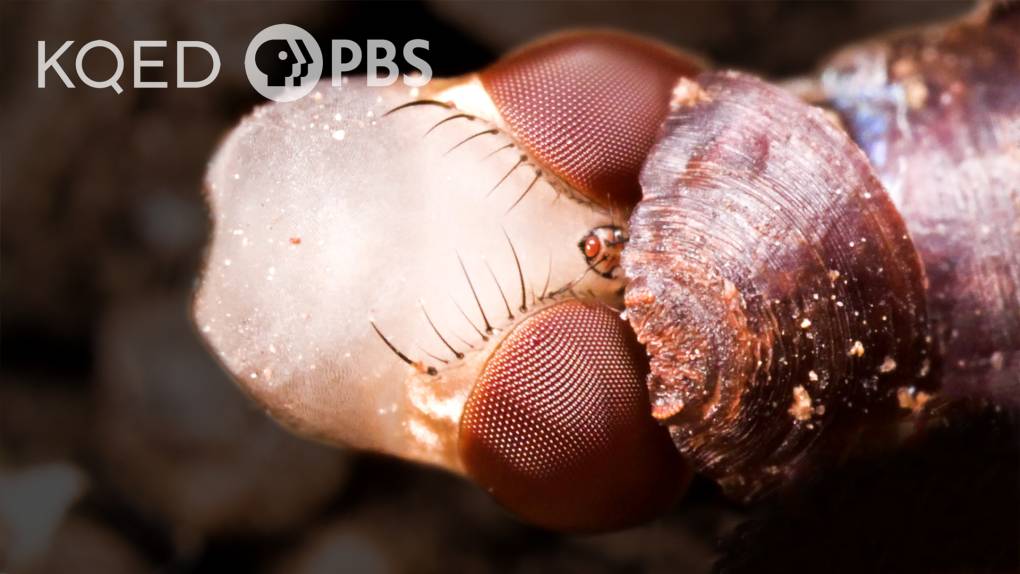
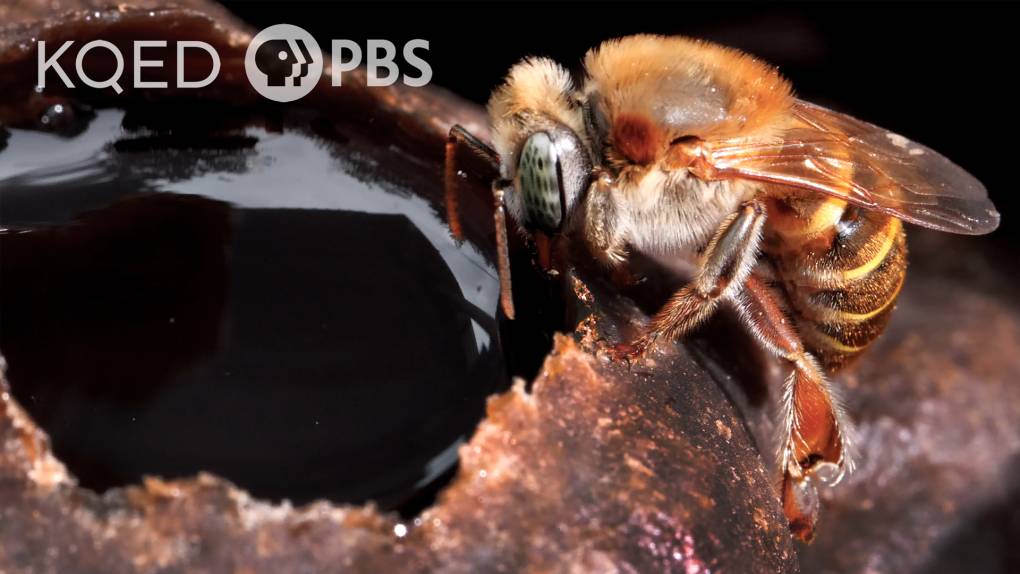
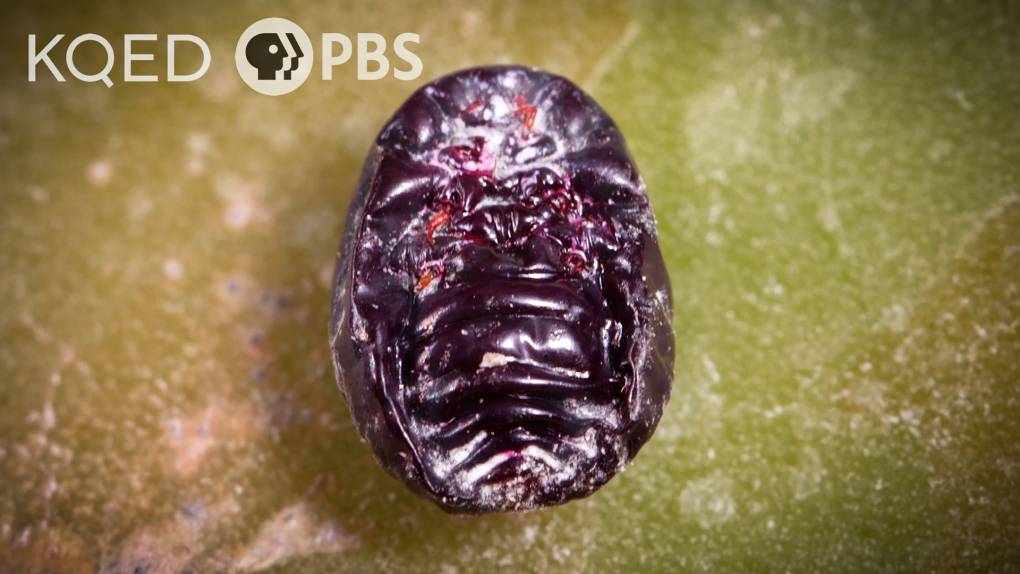
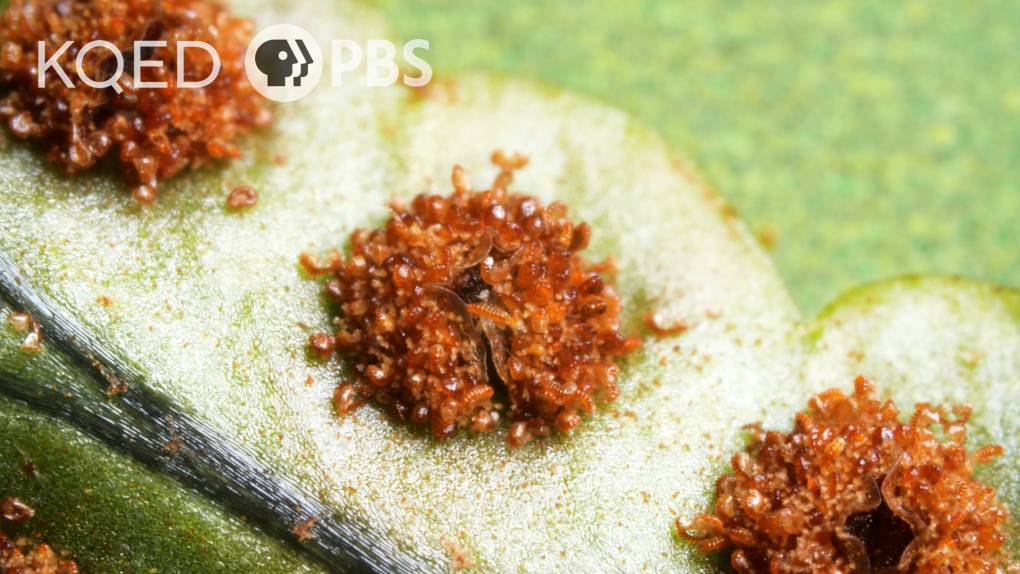
window.__IS_SSR__=true
window.__INITIAL_STATE__={
"attachmentsReducer": {
"audio_0": {
"type": "attachments",
"id": "audio_0",
"imgSizes": {
"kqedFullSize": {
"file": "https://ww2.kqed.org/news/wp-content/themes/KQED-unified/img/audio_bgs/background0.jpg"
}
}
},
"audio_1": {
"type": "attachments",
"id": "audio_1",
"imgSizes": {
"kqedFullSize": {
"file": "https://ww2.kqed.org/news/wp-content/themes/KQED-unified/img/audio_bgs/background1.jpg"
}
}
},
"audio_2": {
"type": "attachments",
"id": "audio_2",
"imgSizes": {
"kqedFullSize": {
"file": "https://ww2.kqed.org/news/wp-content/themes/KQED-unified/img/audio_bgs/background2.jpg"
}
}
},
"audio_3": {
"type": "attachments",
"id": "audio_3",
"imgSizes": {
"kqedFullSize": {
"file": "https://ww2.kqed.org/news/wp-content/themes/KQED-unified/img/audio_bgs/background3.jpg"
}
}
},
"audio_4": {
"type": "attachments",
"id": "audio_4",
"imgSizes": {
"kqedFullSize": {
"file": "https://ww2.kqed.org/news/wp-content/themes/KQED-unified/img/audio_bgs/background4.jpg"
}
}
},
"placeholder": {
"type": "attachments",
"id": "placeholder",
"imgSizes": {
"thumbnail": {
"file": "https://cdn.kqed.org/wp-content/uploads/2024/12/KQED-Default-Image-816638274-2000x1333-1-160x107.jpg",
"width": 160,
"height": 107,
"mimeType": "image/jpeg"
},
"medium": {
"file": "https://cdn.kqed.org/wp-content/uploads/2024/12/KQED-Default-Image-816638274-2000x1333-1-800x533.jpg",
"width": 800,
"height": 533,
"mimeType": "image/jpeg"
},
"medium_large": {
"file": "https://cdn.kqed.org/wp-content/uploads/2024/12/KQED-Default-Image-816638274-2000x1333-1-768x512.jpg",
"width": 768,
"height": 512,
"mimeType": "image/jpeg"
},
"large": {
"file": "https://cdn.kqed.org/wp-content/uploads/2024/12/KQED-Default-Image-816638274-2000x1333-1-1020x680.jpg",
"width": 1020,
"height": 680,
"mimeType": "image/jpeg"
},
"1536x1536": {
"file": "https://cdn.kqed.org/wp-content/uploads/2024/12/KQED-Default-Image-816638274-2000x1333-1-1536x1024.jpg",
"width": 1536,
"height": 1024,
"mimeType": "image/jpeg"
},
"fd-lrg": {
"file": "https://cdn.kqed.org/wp-content/uploads/2024/12/KQED-Default-Image-816638274-2000x1333-1-1536x1024.jpg",
"width": 1536,
"height": 1024,
"mimeType": "image/jpeg"
},
"fd-med": {
"file": "https://cdn.kqed.org/wp-content/uploads/2024/12/KQED-Default-Image-816638274-2000x1333-1-1020x680.jpg",
"width": 1020,
"height": 680,
"mimeType": "image/jpeg"
},
"fd-sm": {
"file": "https://cdn.kqed.org/wp-content/uploads/2024/12/KQED-Default-Image-816638274-2000x1333-1-800x533.jpg",
"width": 800,
"height": 533,
"mimeType": "image/jpeg"
},
"post-thumbnail": {
"file": "https://cdn.kqed.org/wp-content/uploads/2024/12/KQED-Default-Image-816638274-2000x1333-1-672x372.jpg",
"width": 672,
"height": 372,
"mimeType": "image/jpeg"
},
"twentyfourteen-full-width": {
"file": "https://cdn.kqed.org/wp-content/uploads/2024/12/KQED-Default-Image-816638274-2000x1333-1-1038x576.jpg",
"width": 1038,
"height": 576,
"mimeType": "image/jpeg"
},
"xxsmall": {
"file": "https://cdn.kqed.org/wp-content/uploads/2024/12/KQED-Default-Image-816638274-2000x1333-1-160x107.jpg",
"width": 160,
"height": 107,
"mimeType": "image/jpeg"
},
"xsmall": {
"file": "https://cdn.kqed.org/wp-content/uploads/2024/12/KQED-Default-Image-816638274-2000x1333-1-672x372.jpg",
"width": 672,
"height": 372,
"mimeType": "image/jpeg"
},
"small": {
"file": "https://cdn.kqed.org/wp-content/uploads/2024/12/KQED-Default-Image-816638274-2000x1333-1-672x372.jpg",
"width": 672,
"height": 372,
"mimeType": "image/jpeg"
},
"xlarge": {
"file": "https://cdn.kqed.org/wp-content/uploads/2024/12/KQED-Default-Image-816638274-2000x1333-1-1020x680.jpg",
"width": 1020,
"height": 680,
"mimeType": "image/jpeg"
},
"full-width": {
"file": "https://cdn.kqed.org/wp-content/uploads/2024/12/KQED-Default-Image-816638274-2000x1333-1-1920x1280.jpg",
"width": 1920,
"height": 1280,
"mimeType": "image/jpeg"
},
"guest-author-32": {
"file": "https://cdn.kqed.org/wp-content/uploads/2025/01/KQED-Default-Image-816638274-1333x1333-1-160x160.jpg",
"width": 32,
"height": 32,
"mimeType": "image/jpeg"
},
"guest-author-50": {
"file": "https://cdn.kqed.org/wp-content/uploads/2025/01/KQED-Default-Image-816638274-1333x1333-1-160x160.jpg",
"width": 50,
"height": 50,
"mimeType": "image/jpeg"
},
"guest-author-64": {
"file": "https://cdn.kqed.org/wp-content/uploads/2025/01/KQED-Default-Image-816638274-1333x1333-1-160x160.jpg",
"width": 64,
"height": 64,
"mimeType": "image/jpeg"
},
"guest-author-96": {
"file": "https://cdn.kqed.org/wp-content/uploads/2025/01/KQED-Default-Image-816638274-1333x1333-1-160x160.jpg",
"width": 96,
"height": 96,
"mimeType": "image/jpeg"
},
"guest-author-128": {
"file": "https://cdn.kqed.org/wp-content/uploads/2025/01/KQED-Default-Image-816638274-1333x1333-1-160x160.jpg",
"width": 128,
"height": 128,
"mimeType": "image/jpeg"
},
"detail": {
"file": "https://cdn.kqed.org/wp-content/uploads/2025/01/KQED-Default-Image-816638274-1333x1333-1-160x160.jpg",
"width": 160,
"height": 160,
"mimeType": "image/jpeg"
},
"kqedFullSize": {
"file": "https://cdn.kqed.org/wp-content/uploads/2024/12/KQED-Default-Image-816638274-2000x1333-1.jpg",
"width": 2000,
"height": 1333
}
}
},
"science_1995504": {
"type": "attachments",
"id": "science_1995504",
"meta": {
"index": "attachments_1716263798",
"site": "science",
"id": "1995504",
"found": true
},
"title": "DL1108_Fly_Metamorphosis_is_a_Beautiful_Nightmare_KQED_A",
"publishDate": 1738178302,
"status": "inherit",
"parent": 1993228,
"modified": 1738178302,
"caption": null,
"credit": null,
"altTag": null,
"description": null,
"imgSizes": {
"medium": {
"file": "https://cdn.kqed.org/wp-content/uploads/sites/35/2024/06/DL1108_Fly_Metamorphosis_is_a_Beautiful_Nightmare_KQED_A-800x450.jpg",
"width": 800,
"height": 450,
"mimeType": "image/jpeg"
},
"large": {
"file": "https://cdn.kqed.org/wp-content/uploads/sites/35/2024/06/DL1108_Fly_Metamorphosis_is_a_Beautiful_Nightmare_KQED_A-1020x574.jpg",
"width": 1020,
"height": 574,
"mimeType": "image/jpeg"
},
"thumbnail": {
"file": "https://cdn.kqed.org/wp-content/uploads/sites/35/2024/06/DL1108_Fly_Metamorphosis_is_a_Beautiful_Nightmare_KQED_A-160x90.jpg",
"width": 160,
"height": 90,
"mimeType": "image/jpeg"
},
"medium_large": {
"file": "https://cdn.kqed.org/wp-content/uploads/sites/35/2024/06/DL1108_Fly_Metamorphosis_is_a_Beautiful_Nightmare_KQED_A-768x432.jpg",
"width": 768,
"height": 432,
"mimeType": "image/jpeg"
},
"1536x1536": {
"file": "https://cdn.kqed.org/wp-content/uploads/sites/35/2024/06/DL1108_Fly_Metamorphosis_is_a_Beautiful_Nightmare_KQED_A-1536x864.jpg",
"width": 1536,
"height": 864,
"mimeType": "image/jpeg"
},
"post-thumbnail": {
"file": "https://cdn.kqed.org/wp-content/uploads/sites/35/2024/06/DL1108_Fly_Metamorphosis_is_a_Beautiful_Nightmare_KQED_A-672x372.jpg",
"width": 672,
"height": 372,
"mimeType": "image/jpeg"
},
"twentyfourteen-full-width": {
"file": "https://cdn.kqed.org/wp-content/uploads/sites/35/2024/06/DL1108_Fly_Metamorphosis_is_a_Beautiful_Nightmare_KQED_A-1038x576.jpg",
"width": 1038,
"height": 576,
"mimeType": "image/jpeg"
},
"kqedFullSize": {
"file": "https://cdn.kqed.org/wp-content/uploads/sites/35/2024/06/DL1108_Fly_Metamorphosis_is_a_Beautiful_Nightmare_KQED_A.jpg",
"width": 1920,
"height": 1080
}
},
"isLoading": false,
"fetchFailed": false
},
"science_1992959": {
"type": "attachments",
"id": "science_1992959",
"meta": {
"index": "attachments_1716263798",
"site": "science",
"id": "1992959",
"found": true
},
"title": "DL1107-Stingless-Bees-Guard-Tasty-Honey-With-Barricades-Bouncers-and-Bites-KQED-B",
"publishDate": 1716484082,
"status": "inherit",
"parent": 1992956,
"modified": 1716484205,
"caption": "A stingless bee of the species Melipona beecheii feeds on honey in its nest in Oaxaca, Mexico.",
"credit": "Josh Cassidy/KQED",
"altTag": null,
"description": null,
"imgSizes": {
"medium": {
"file": "https://cdn.kqed.org/wp-content/uploads/sites/35/2024/05/DL1107-Stingless-Bees-Guard-Tasty-Honey-With-Barricades-Bouncers-and-Bites-KQED-B-800x450.jpg",
"width": 800,
"height": 450,
"mimeType": "image/jpeg"
},
"large": {
"file": "https://cdn.kqed.org/wp-content/uploads/sites/35/2024/05/DL1107-Stingless-Bees-Guard-Tasty-Honey-With-Barricades-Bouncers-and-Bites-KQED-B-1020x574.jpg",
"width": 1020,
"height": 574,
"mimeType": "image/jpeg"
},
"thumbnail": {
"file": "https://cdn.kqed.org/wp-content/uploads/sites/35/2024/05/DL1107-Stingless-Bees-Guard-Tasty-Honey-With-Barricades-Bouncers-and-Bites-KQED-B-160x90.jpg",
"width": 160,
"height": 90,
"mimeType": "image/jpeg"
},
"medium_large": {
"file": "https://cdn.kqed.org/wp-content/uploads/sites/35/2024/05/DL1107-Stingless-Bees-Guard-Tasty-Honey-With-Barricades-Bouncers-and-Bites-KQED-B-768x432.jpg",
"width": 768,
"height": 432,
"mimeType": "image/jpeg"
},
"1536x1536": {
"file": "https://cdn.kqed.org/wp-content/uploads/sites/35/2024/05/DL1107-Stingless-Bees-Guard-Tasty-Honey-With-Barricades-Bouncers-and-Bites-KQED-B-1536x864.jpg",
"width": 1536,
"height": 864,
"mimeType": "image/jpeg"
},
"post-thumbnail": {
"file": "https://cdn.kqed.org/wp-content/uploads/sites/35/2024/05/DL1107-Stingless-Bees-Guard-Tasty-Honey-With-Barricades-Bouncers-and-Bites-KQED-B-672x372.jpg",
"width": 672,
"height": 372,
"mimeType": "image/jpeg"
},
"twentyfourteen-full-width": {
"file": "https://cdn.kqed.org/wp-content/uploads/sites/35/2024/05/DL1107-Stingless-Bees-Guard-Tasty-Honey-With-Barricades-Bouncers-and-Bites-KQED-B-1038x576.jpg",
"width": 1038,
"height": 576,
"mimeType": "image/jpeg"
},
"kqedFullSize": {
"file": "https://cdn.kqed.org/wp-content/uploads/sites/35/2024/05/DL1107-Stingless-Bees-Guard-Tasty-Honey-With-Barricades-Bouncers-and-Bites-KQED-B.jpg",
"width": 1920,
"height": 1080
}
},
"isLoading": false,
"fetchFailed": false
},
"science_1992704": {
"type": "attachments",
"id": "science_1992704",
"meta": {
"index": "attachments_1716263798",
"site": "science",
"id": "1992704",
"found": true
},
"parent": 1992430,
"imgSizes": {
"twentyfourteen-full-width": {
"file": "https://cdn.kqed.org/wp-content/uploads/sites/35/2024/05/DL1106_Meet_the_Bug_You_Didnt_Know_You_Were_Eating_KQED-B-1038x576.jpg",
"width": 1038,
"mimeType": "image/jpeg",
"height": 576
},
"thumbnail": {
"file": "https://cdn.kqed.org/wp-content/uploads/sites/35/2024/05/DL1106_Meet_the_Bug_You_Didnt_Know_You_Were_Eating_KQED-B-160x90.jpg",
"width": 160,
"mimeType": "image/jpeg",
"height": 90
},
"post-thumbnail": {
"file": "https://cdn.kqed.org/wp-content/uploads/sites/35/2024/05/DL1106_Meet_the_Bug_You_Didnt_Know_You_Were_Eating_KQED-B-672x372.jpg",
"width": 672,
"mimeType": "image/jpeg",
"height": 372
},
"kqedFullSize": {
"file": "https://cdn.kqed.org/wp-content/uploads/sites/35/2024/05/DL1106_Meet_the_Bug_You_Didnt_Know_You_Were_Eating_KQED-B.jpg",
"width": 1920,
"height": 1080
},
"large": {
"file": "https://cdn.kqed.org/wp-content/uploads/sites/35/2024/05/DL1106_Meet_the_Bug_You_Didnt_Know_You_Were_Eating_KQED-B-1020x574.jpg",
"width": 1020,
"mimeType": "image/jpeg",
"height": 574
},
"1536x1536": {
"file": "https://cdn.kqed.org/wp-content/uploads/sites/35/2024/05/DL1106_Meet_the_Bug_You_Didnt_Know_You_Were_Eating_KQED-B-1536x864.jpg",
"width": 1536,
"mimeType": "image/jpeg",
"height": 864
},
"medium": {
"file": "https://cdn.kqed.org/wp-content/uploads/sites/35/2024/05/DL1106_Meet_the_Bug_You_Didnt_Know_You_Were_Eating_KQED-B-800x450.jpg",
"width": 800,
"mimeType": "image/jpeg",
"height": 450
},
"medium_large": {
"file": "https://cdn.kqed.org/wp-content/uploads/sites/35/2024/05/DL1106_Meet_the_Bug_You_Didnt_Know_You_Were_Eating_KQED-B-768x432.jpg",
"width": 768,
"mimeType": "image/jpeg",
"height": 432
}
},
"publishDate": 1715395596,
"modified": 1715395596,
"caption": null,
"description": null,
"title": "DL1106_Meet_the_Bug_You_Didnt_Know_You_Were_Eating_KQED-B",
"credit": null,
"status": "inherit",
"altTag": null,
"isLoading": false,
"fetchFailed": false
},
"science_1992383": {
"type": "attachments",
"id": "science_1992383",
"meta": {
"index": "attachments_1716263798",
"site": "science",
"id": "1992383",
"found": true
},
"parent": 1992380,
"imgSizes": {
"twentyfourteen-full-width": {
"file": "https://cdn.kqed.org/wp-content/uploads/sites/35/2024/04/DL1105-Watch-Ferns-Get-Freaky-KQED-1038x576.jpg",
"width": 1038,
"mimeType": "image/jpeg",
"height": 576
},
"thumbnail": {
"file": "https://cdn.kqed.org/wp-content/uploads/sites/35/2024/04/DL1105-Watch-Ferns-Get-Freaky-KQED-160x90.jpg",
"width": 160,
"mimeType": "image/jpeg",
"height": 90
},
"post-thumbnail": {
"file": "https://cdn.kqed.org/wp-content/uploads/sites/35/2024/04/DL1105-Watch-Ferns-Get-Freaky-KQED-672x372.jpg",
"width": 672,
"mimeType": "image/jpeg",
"height": 372
},
"kqedFullSize": {
"file": "https://cdn.kqed.org/wp-content/uploads/sites/35/2024/04/DL1105-Watch-Ferns-Get-Freaky-KQED.jpg",
"width": 1920,
"height": 1080
},
"large": {
"file": "https://cdn.kqed.org/wp-content/uploads/sites/35/2024/04/DL1105-Watch-Ferns-Get-Freaky-KQED-1020x574.jpg",
"width": 1020,
"mimeType": "image/jpeg",
"height": 574
},
"1536x1536": {
"file": "https://cdn.kqed.org/wp-content/uploads/sites/35/2024/04/DL1105-Watch-Ferns-Get-Freaky-KQED-1536x864.jpg",
"width": 1536,
"mimeType": "image/jpeg",
"height": 864
},
"medium": {
"file": "https://cdn.kqed.org/wp-content/uploads/sites/35/2024/04/DL1105-Watch-Ferns-Get-Freaky-KQED-800x450.jpg",
"width": 800,
"mimeType": "image/jpeg",
"height": 450
},
"medium_large": {
"file": "https://cdn.kqed.org/wp-content/uploads/sites/35/2024/04/DL1105-Watch-Ferns-Get-Freaky-KQED-768x432.jpg",
"width": 768,
"mimeType": "image/jpeg",
"height": 432
}
},
"publishDate": 1712955022,
"modified": 1712955291,
"caption": null,
"description": "These clusters on the underside of a fern leaf are called sori and they contain the plant's spores. ",
"title": "DL1105-Watch-Ferns-Get-Freaky-KQED",
"credit": null,
"status": "inherit",
"altTag": null,
"isLoading": false,
"fetchFailed": false
},
"science_1994137": {
"type": "attachments",
"id": "science_1994137",
"meta": {
"index": "attachments_1716263798",
"site": "science",
"id": "1994137",
"found": true
},
"title": "DL1104-These-Solar-Powered-Carnivorous-Flatworms-Divide-and-Conquer-KQED-C",
"publishDate": 1725490208,
"status": "inherit",
"parent": 1991736,
"modified": 1725490208,
"caption": null,
"credit": null,
"altTag": null,
"description": null,
"imgSizes": {
"medium": {
"file": "https://cdn.kqed.org/wp-content/uploads/sites/35/2024/03/DL1104-These-Solar-Powered-Carnivorous-Flatworms-Divide-and-Conquer-KQED-C-1-800x450.jpg",
"width": 800,
"height": 450,
"mimeType": "image/jpeg"
},
"large": {
"file": "https://cdn.kqed.org/wp-content/uploads/sites/35/2024/03/DL1104-These-Solar-Powered-Carnivorous-Flatworms-Divide-and-Conquer-KQED-C-1-1020x574.jpg",
"width": 1020,
"height": 574,
"mimeType": "image/jpeg"
},
"thumbnail": {
"file": "https://cdn.kqed.org/wp-content/uploads/sites/35/2024/03/DL1104-These-Solar-Powered-Carnivorous-Flatworms-Divide-and-Conquer-KQED-C-1-160x90.jpg",
"width": 160,
"height": 90,
"mimeType": "image/jpeg"
},
"medium_large": {
"file": "https://cdn.kqed.org/wp-content/uploads/sites/35/2024/03/DL1104-These-Solar-Powered-Carnivorous-Flatworms-Divide-and-Conquer-KQED-C-1-768x432.jpg",
"width": 768,
"height": 432,
"mimeType": "image/jpeg"
},
"1536x1536": {
"file": "https://cdn.kqed.org/wp-content/uploads/sites/35/2024/03/DL1104-These-Solar-Powered-Carnivorous-Flatworms-Divide-and-Conquer-KQED-C-1-1536x864.jpg",
"width": 1536,
"height": 864,
"mimeType": "image/jpeg"
},
"post-thumbnail": {
"file": "https://cdn.kqed.org/wp-content/uploads/sites/35/2024/03/DL1104-These-Solar-Powered-Carnivorous-Flatworms-Divide-and-Conquer-KQED-C-1-672x372.jpg",
"width": 672,
"height": 372,
"mimeType": "image/jpeg"
},
"twentyfourteen-full-width": {
"file": "https://cdn.kqed.org/wp-content/uploads/sites/35/2024/03/DL1104-These-Solar-Powered-Carnivorous-Flatworms-Divide-and-Conquer-KQED-C-1-1038x576.jpg",
"width": 1038,
"height": 576,
"mimeType": "image/jpeg"
},
"kqedFullSize": {
"file": "https://cdn.kqed.org/wp-content/uploads/sites/35/2024/03/DL1104-These-Solar-Powered-Carnivorous-Flatworms-Divide-and-Conquer-KQED-C-1.jpg",
"width": 1920,
"height": 1080
}
},
"isLoading": false,
"fetchFailed": false
},
"science_1994138": {
"type": "attachments",
"id": "science_1994138",
"meta": {
"index": "attachments_1716263798",
"site": "science",
"id": "1994138",
"found": true
},
"title": "YoutTube Thumbnail2",
"publishDate": 1725490577,
"status": "inherit",
"parent": 1991514,
"modified": 1725490577,
"caption": null,
"credit": null,
"altTag": null,
"description": null,
"imgSizes": {
"medium": {
"file": "https://cdn.kqed.org/wp-content/uploads/sites/35/2024/02/DEEP_1103_Thats_Not_Rain_Thats_Super_powered_Pee_shield_D-800x450.jpg",
"width": 800,
"height": 450,
"mimeType": "image/jpeg"
},
"large": {
"file": "https://cdn.kqed.org/wp-content/uploads/sites/35/2024/02/DEEP_1103_Thats_Not_Rain_Thats_Super_powered_Pee_shield_D-1020x574.jpg",
"width": 1020,
"height": 574,
"mimeType": "image/jpeg"
},
"thumbnail": {
"file": "https://cdn.kqed.org/wp-content/uploads/sites/35/2024/02/DEEP_1103_Thats_Not_Rain_Thats_Super_powered_Pee_shield_D-160x90.jpg",
"width": 160,
"height": 90,
"mimeType": "image/jpeg"
},
"medium_large": {
"file": "https://cdn.kqed.org/wp-content/uploads/sites/35/2024/02/DEEP_1103_Thats_Not_Rain_Thats_Super_powered_Pee_shield_D-768x432.jpg",
"width": 768,
"height": 432,
"mimeType": "image/jpeg"
},
"1536x1536": {
"file": "https://cdn.kqed.org/wp-content/uploads/sites/35/2024/02/DEEP_1103_Thats_Not_Rain_Thats_Super_powered_Pee_shield_D-1536x864.jpg",
"width": 1536,
"height": 864,
"mimeType": "image/jpeg"
},
"2048x2048": {
"file": "https://cdn.kqed.org/wp-content/uploads/sites/35/2024/02/DEEP_1103_Thats_Not_Rain_Thats_Super_powered_Pee_shield_D-2048x1152.jpg",
"width": 2048,
"height": 1152,
"mimeType": "image/jpeg"
},
"post-thumbnail": {
"file": "https://cdn.kqed.org/wp-content/uploads/sites/35/2024/02/DEEP_1103_Thats_Not_Rain_Thats_Super_powered_Pee_shield_D-672x372.jpg",
"width": 672,
"height": 372,
"mimeType": "image/jpeg"
},
"twentyfourteen-full-width": {
"file": "https://cdn.kqed.org/wp-content/uploads/sites/35/2024/02/DEEP_1103_Thats_Not_Rain_Thats_Super_powered_Pee_shield_D-1038x576.jpg",
"width": 1038,
"height": 576,
"mimeType": "image/jpeg"
},
"full-width": {
"file": "https://cdn.kqed.org/wp-content/uploads/sites/35/2024/02/DEEP_1103_Thats_Not_Rain_Thats_Super_powered_Pee_shield_D-1920x1080.jpg",
"width": 1920,
"height": 1080,
"mimeType": "image/jpeg"
},
"kqedFullSize": {
"file": "https://cdn.kqed.org/wp-content/uploads/sites/35/2024/02/DEEP_1103_Thats_Not_Rain_Thats_Super_powered_Pee_shield_D-scaled.jpg",
"width": 2560,
"height": 1440
}
},
"isLoading": false,
"fetchFailed": false
},
"science_1994139": {
"type": "attachments",
"id": "science_1994139",
"meta": {
"index": "attachments_1716263798",
"site": "science",
"id": "1994139",
"found": true
},
"title": "DL1102-To-Survive-Corals-Turn-the-Ocean-into-a-Giant-Snow-Globe-KQED-C",
"publishDate": 1725490713,
"status": "inherit",
"parent": 1991266,
"modified": 1725490713,
"caption": null,
"credit": null,
"altTag": null,
"description": null,
"imgSizes": {
"medium": {
"file": "https://cdn.kqed.org/wp-content/uploads/sites/35/2024/02/DL1102-To-Survive-Corals-Turn-the-Ocean-into-a-Giant-Snow-Globe-KQED-C-800x450.jpg",
"width": 800,
"height": 450,
"mimeType": "image/jpeg"
},
"large": {
"file": "https://cdn.kqed.org/wp-content/uploads/sites/35/2024/02/DL1102-To-Survive-Corals-Turn-the-Ocean-into-a-Giant-Snow-Globe-KQED-C-1020x574.jpg",
"width": 1020,
"height": 574,
"mimeType": "image/jpeg"
},
"thumbnail": {
"file": "https://cdn.kqed.org/wp-content/uploads/sites/35/2024/02/DL1102-To-Survive-Corals-Turn-the-Ocean-into-a-Giant-Snow-Globe-KQED-C-160x90.jpg",
"width": 160,
"height": 90,
"mimeType": "image/jpeg"
},
"medium_large": {
"file": "https://cdn.kqed.org/wp-content/uploads/sites/35/2024/02/DL1102-To-Survive-Corals-Turn-the-Ocean-into-a-Giant-Snow-Globe-KQED-C-768x432.jpg",
"width": 768,
"height": 432,
"mimeType": "image/jpeg"
},
"1536x1536": {
"file": "https://cdn.kqed.org/wp-content/uploads/sites/35/2024/02/DL1102-To-Survive-Corals-Turn-the-Ocean-into-a-Giant-Snow-Globe-KQED-C-1536x864.jpg",
"width": 1536,
"height": 864,
"mimeType": "image/jpeg"
},
"post-thumbnail": {
"file": "https://cdn.kqed.org/wp-content/uploads/sites/35/2024/02/DL1102-To-Survive-Corals-Turn-the-Ocean-into-a-Giant-Snow-Globe-KQED-C-672x372.jpg",
"width": 672,
"height": 372,
"mimeType": "image/jpeg"
},
"twentyfourteen-full-width": {
"file": "https://cdn.kqed.org/wp-content/uploads/sites/35/2024/02/DL1102-To-Survive-Corals-Turn-the-Ocean-into-a-Giant-Snow-Globe-KQED-C-1038x576.jpg",
"width": 1038,
"height": 576,
"mimeType": "image/jpeg"
},
"kqedFullSize": {
"file": "https://cdn.kqed.org/wp-content/uploads/sites/35/2024/02/DL1102-To-Survive-Corals-Turn-the-Ocean-into-a-Giant-Snow-Globe-KQED-C.jpg",
"width": 1920,
"height": 1080
}
},
"isLoading": false,
"fetchFailed": false
},
"science_1995506": {
"type": "attachments",
"id": "science_1995506",
"meta": {
"index": "attachments_1716263798",
"site": "science",
"id": "1995506",
"found": true
},
"title": "DL1101_Why-Does-This-Fly-Live-in-Your-Bathroom_KQED",
"publishDate": 1738178557,
"status": "inherit",
"parent": 1991071,
"modified": 1738178557,
"caption": null,
"credit": null,
"altTag": null,
"description": null,
"imgSizes": {
"medium": {
"file": "https://cdn.kqed.org/wp-content/uploads/sites/35/2024/01/DL1101_Why-Does-This-Fly-Live-in-Your-Bathroom_KQED-800x450.jpg",
"width": 800,
"height": 450,
"mimeType": "image/jpeg"
},
"large": {
"file": "https://cdn.kqed.org/wp-content/uploads/sites/35/2024/01/DL1101_Why-Does-This-Fly-Live-in-Your-Bathroom_KQED-1020x574.jpg",
"width": 1020,
"height": 574,
"mimeType": "image/jpeg"
},
"thumbnail": {
"file": "https://cdn.kqed.org/wp-content/uploads/sites/35/2024/01/DL1101_Why-Does-This-Fly-Live-in-Your-Bathroom_KQED-160x90.jpg",
"width": 160,
"height": 90,
"mimeType": "image/jpeg"
},
"medium_large": {
"file": "https://cdn.kqed.org/wp-content/uploads/sites/35/2024/01/DL1101_Why-Does-This-Fly-Live-in-Your-Bathroom_KQED-768x432.jpg",
"width": 768,
"height": 432,
"mimeType": "image/jpeg"
},
"1536x1536": {
"file": "https://cdn.kqed.org/wp-content/uploads/sites/35/2024/01/DL1101_Why-Does-This-Fly-Live-in-Your-Bathroom_KQED-1536x864.jpg",
"width": 1536,
"height": 864,
"mimeType": "image/jpeg"
},
"post-thumbnail": {
"file": "https://cdn.kqed.org/wp-content/uploads/sites/35/2024/01/DL1101_Why-Does-This-Fly-Live-in-Your-Bathroom_KQED-672x372.jpg",
"width": 672,
"height": 372,
"mimeType": "image/jpeg"
},
"twentyfourteen-full-width": {
"file": "https://cdn.kqed.org/wp-content/uploads/sites/35/2024/01/DL1101_Why-Does-This-Fly-Live-in-Your-Bathroom_KQED-1038x576.jpg",
"width": 1038,
"height": 576,
"mimeType": "image/jpeg"
},
"kqedFullSize": {
"file": "https://cdn.kqed.org/wp-content/uploads/sites/35/2024/01/DL1101_Why-Does-This-Fly-Live-in-Your-Bathroom_KQED.jpg",
"width": 1920,
"height": 1080
}
},
"isLoading": false,
"fetchFailed": false
},
"science_1994140": {
"type": "attachments",
"id": "science_1994140",
"meta": {
"index": "attachments_1716263798",
"site": "science",
"id": "1994140",
"found": true
},
"title": "DL1017-Mommy-Where-Do-Baby-Jellyfish-Come-From-KQED-B",
"publishDate": 1725490915,
"status": "inherit",
"parent": 1985825,
"modified": 1725490915,
"caption": null,
"credit": null,
"altTag": null,
"description": null,
"imgSizes": {
"medium": {
"file": "https://cdn.kqed.org/wp-content/uploads/sites/35/2023/12/DL1017-Mommy-Where-Do-Baby-Jellyfish-Come-From-KQED-B-800x450.jpg",
"width": 800,
"height": 450,
"mimeType": "image/jpeg"
},
"large": {
"file": "https://cdn.kqed.org/wp-content/uploads/sites/35/2023/12/DL1017-Mommy-Where-Do-Baby-Jellyfish-Come-From-KQED-B-1020x574.jpg",
"width": 1020,
"height": 574,
"mimeType": "image/jpeg"
},
"thumbnail": {
"file": "https://cdn.kqed.org/wp-content/uploads/sites/35/2023/12/DL1017-Mommy-Where-Do-Baby-Jellyfish-Come-From-KQED-B-160x90.jpg",
"width": 160,
"height": 90,
"mimeType": "image/jpeg"
},
"medium_large": {
"file": "https://cdn.kqed.org/wp-content/uploads/sites/35/2023/12/DL1017-Mommy-Where-Do-Baby-Jellyfish-Come-From-KQED-B-768x432.jpg",
"width": 768,
"height": 432,
"mimeType": "image/jpeg"
},
"1536x1536": {
"file": "https://cdn.kqed.org/wp-content/uploads/sites/35/2023/12/DL1017-Mommy-Where-Do-Baby-Jellyfish-Come-From-KQED-B-1536x864.jpg",
"width": 1536,
"height": 864,
"mimeType": "image/jpeg"
},
"post-thumbnail": {
"file": "https://cdn.kqed.org/wp-content/uploads/sites/35/2023/12/DL1017-Mommy-Where-Do-Baby-Jellyfish-Come-From-KQED-B-672x372.jpg",
"width": 672,
"height": 372,
"mimeType": "image/jpeg"
},
"twentyfourteen-full-width": {
"file": "https://cdn.kqed.org/wp-content/uploads/sites/35/2023/12/DL1017-Mommy-Where-Do-Baby-Jellyfish-Come-From-KQED-B-1038x576.jpg",
"width": 1038,
"height": 576,
"mimeType": "image/jpeg"
},
"kqedFullSize": {
"file": "https://cdn.kqed.org/wp-content/uploads/sites/35/2023/12/DL1017-Mommy-Where-Do-Baby-Jellyfish-Come-From-KQED-B.jpg",
"width": 1920,
"height": 1080
}
},
"isLoading": false,
"fetchFailed": false
},
"science_1994141": {
"type": "attachments",
"id": "science_1994141",
"meta": {
"index": "attachments_1716263798",
"site": "science",
"id": "1994141",
"found": true
},
"title": "DL1016_Dog-Ticks-Are-Changing-Their-Diet-Youre-On-The-Menu-KQED-C",
"publishDate": 1725490991,
"status": "inherit",
"parent": 1985541,
"modified": 1725490991,
"caption": null,
"credit": null,
"altTag": null,
"description": null,
"imgSizes": {
"medium": {
"file": "https://cdn.kqed.org/wp-content/uploads/sites/35/2023/11/DL1016_Dog-Ticks-Are-Changing-Their-Diet-Youre-On-The-Menu-KQED-C-800x450.jpg",
"width": 800,
"height": 450,
"mimeType": "image/jpeg"
},
"large": {
"file": "https://cdn.kqed.org/wp-content/uploads/sites/35/2023/11/DL1016_Dog-Ticks-Are-Changing-Their-Diet-Youre-On-The-Menu-KQED-C-1020x574.jpg",
"width": 1020,
"height": 574,
"mimeType": "image/jpeg"
},
"thumbnail": {
"file": "https://cdn.kqed.org/wp-content/uploads/sites/35/2023/11/DL1016_Dog-Ticks-Are-Changing-Their-Diet-Youre-On-The-Menu-KQED-C-160x90.jpg",
"width": 160,
"height": 90,
"mimeType": "image/jpeg"
},
"medium_large": {
"file": "https://cdn.kqed.org/wp-content/uploads/sites/35/2023/11/DL1016_Dog-Ticks-Are-Changing-Their-Diet-Youre-On-The-Menu-KQED-C-768x432.jpg",
"width": 768,
"height": 432,
"mimeType": "image/jpeg"
},
"1536x1536": {
"file": "https://cdn.kqed.org/wp-content/uploads/sites/35/2023/11/DL1016_Dog-Ticks-Are-Changing-Their-Diet-Youre-On-The-Menu-KQED-C-1536x864.jpg",
"width": 1536,
"height": 864,
"mimeType": "image/jpeg"
},
"post-thumbnail": {
"file": "https://cdn.kqed.org/wp-content/uploads/sites/35/2023/11/DL1016_Dog-Ticks-Are-Changing-Their-Diet-Youre-On-The-Menu-KQED-C-672x372.jpg",
"width": 672,
"height": 372,
"mimeType": "image/jpeg"
},
"twentyfourteen-full-width": {
"file": "https://cdn.kqed.org/wp-content/uploads/sites/35/2023/11/DL1016_Dog-Ticks-Are-Changing-Their-Diet-Youre-On-The-Menu-KQED-C-1038x576.jpg",
"width": 1038,
"height": 576,
"mimeType": "image/jpeg"
},
"kqedFullSize": {
"file": "https://cdn.kqed.org/wp-content/uploads/sites/35/2023/11/DL1016_Dog-Ticks-Are-Changing-Their-Diet-Youre-On-The-Menu-KQED-C.jpg",
"width": 1920,
"height": 1080
}
},
"isLoading": false,
"fetchFailed": false
},
"science_1994142": {
"type": "attachments",
"id": "science_1994142",
"meta": {
"index": "attachments_1716263798",
"site": "science",
"id": "1994142",
"found": true
},
"title": "DL1015_This-Weevil-Has-Puppet-Vibes-But-Drills-Like-a-Power-Tool-B",
"publishDate": 1725491055,
"status": "inherit",
"parent": 1985068,
"modified": 1725491055,
"caption": null,
"credit": null,
"altTag": null,
"description": null,
"imgSizes": {
"medium": {
"file": "https://cdn.kqed.org/wp-content/uploads/sites/35/2023/11/DL1015_This-Weevil-Has-Puppet-Vibes-But-Drills-Like-a-Power-Tool-B-800x450.jpg",
"width": 800,
"height": 450,
"mimeType": "image/jpeg"
},
"large": {
"file": "https://cdn.kqed.org/wp-content/uploads/sites/35/2023/11/DL1015_This-Weevil-Has-Puppet-Vibes-But-Drills-Like-a-Power-Tool-B-1020x574.jpg",
"width": 1020,
"height": 574,
"mimeType": "image/jpeg"
},
"thumbnail": {
"file": "https://cdn.kqed.org/wp-content/uploads/sites/35/2023/11/DL1015_This-Weevil-Has-Puppet-Vibes-But-Drills-Like-a-Power-Tool-B-160x90.jpg",
"width": 160,
"height": 90,
"mimeType": "image/jpeg"
},
"medium_large": {
"file": "https://cdn.kqed.org/wp-content/uploads/sites/35/2023/11/DL1015_This-Weevil-Has-Puppet-Vibes-But-Drills-Like-a-Power-Tool-B-768x432.jpg",
"width": 768,
"height": 432,
"mimeType": "image/jpeg"
},
"1536x1536": {
"file": "https://cdn.kqed.org/wp-content/uploads/sites/35/2023/11/DL1015_This-Weevil-Has-Puppet-Vibes-But-Drills-Like-a-Power-Tool-B-1536x864.jpg",
"width": 1536,
"height": 864,
"mimeType": "image/jpeg"
},
"2048x2048": {
"file": "https://cdn.kqed.org/wp-content/uploads/sites/35/2023/11/DL1015_This-Weevil-Has-Puppet-Vibes-But-Drills-Like-a-Power-Tool-B-2048x1152.jpg",
"width": 2048,
"height": 1152,
"mimeType": "image/jpeg"
},
"post-thumbnail": {
"file": "https://cdn.kqed.org/wp-content/uploads/sites/35/2023/11/DL1015_This-Weevil-Has-Puppet-Vibes-But-Drills-Like-a-Power-Tool-B-672x372.jpg",
"width": 672,
"height": 372,
"mimeType": "image/jpeg"
},
"twentyfourteen-full-width": {
"file": "https://cdn.kqed.org/wp-content/uploads/sites/35/2023/11/DL1015_This-Weevil-Has-Puppet-Vibes-But-Drills-Like-a-Power-Tool-B-1038x576.jpg",
"width": 1038,
"height": 576,
"mimeType": "image/jpeg"
},
"full-width": {
"file": "https://cdn.kqed.org/wp-content/uploads/sites/35/2023/11/DL1015_This-Weevil-Has-Puppet-Vibes-But-Drills-Like-a-Power-Tool-B-1920x1080.jpg",
"width": 1920,
"height": 1080,
"mimeType": "image/jpeg"
},
"kqedFullSize": {
"file": "https://cdn.kqed.org/wp-content/uploads/sites/35/2023/11/DL1015_This-Weevil-Has-Puppet-Vibes-But-Drills-Like-a-Power-Tool-B-scaled.jpg",
"width": 2560,
"height": 1440
}
},
"isLoading": false,
"fetchFailed": false
},
"science_1984881": {
"type": "attachments",
"id": "science_1984881",
"meta": {
"index": "attachments_1716263798",
"site": "science",
"id": "1984881",
"found": true
},
"parent": 1984850,
"imgSizes": {
"twentyfourteen-full-width": {
"file": "https://ww2.kqed.org/app/uploads/sites/35/2023/10/DEEP_1014_Varroa_Mites_Are_a_Honeybees_8-Legged_Nightmare_KQED-1038x576.jpg",
"width": 1038,
"mimeType": "image/jpeg",
"height": 576
},
"thumbnail": {
"file": "https://ww2.kqed.org/app/uploads/sites/35/2023/10/DEEP_1014_Varroa_Mites_Are_a_Honeybees_8-Legged_Nightmare_KQED-160x90.jpg",
"width": 160,
"mimeType": "image/jpeg",
"height": 90
},
"post-thumbnail": {
"file": "https://ww2.kqed.org/app/uploads/sites/35/2023/10/DEEP_1014_Varroa_Mites_Are_a_Honeybees_8-Legged_Nightmare_KQED-672x372.jpg",
"width": 672,
"mimeType": "image/jpeg",
"height": 372
},
"kqedFullSize": {
"file": "https://ww2.kqed.org/app/uploads/sites/35/2023/10/DEEP_1014_Varroa_Mites_Are_a_Honeybees_8-Legged_Nightmare_KQED.jpg",
"width": 1920,
"height": 1080
},
"large": {
"file": "https://ww2.kqed.org/app/uploads/sites/35/2023/10/DEEP_1014_Varroa_Mites_Are_a_Honeybees_8-Legged_Nightmare_KQED-1020x574.jpg",
"width": 1020,
"mimeType": "image/jpeg",
"height": 574
},
"1536x1536": {
"file": "https://ww2.kqed.org/app/uploads/sites/35/2023/10/DEEP_1014_Varroa_Mites_Are_a_Honeybees_8-Legged_Nightmare_KQED-1536x864.jpg",
"width": 1536,
"mimeType": "image/jpeg",
"height": 864
},
"medium": {
"file": "https://ww2.kqed.org/app/uploads/sites/35/2023/10/DEEP_1014_Varroa_Mites_Are_a_Honeybees_8-Legged_Nightmare_KQED-800x450.jpg",
"width": 800,
"mimeType": "image/jpeg",
"height": 450
},
"medium_large": {
"file": "https://ww2.kqed.org/app/uploads/sites/35/2023/10/DEEP_1014_Varroa_Mites_Are_a_Honeybees_8-Legged_Nightmare_KQED-768x432.jpg",
"width": 768,
"mimeType": "image/jpeg",
"height": 432
}
},
"publishDate": 1697847752,
"modified": 1698092201,
"caption": null,
"description": null,
"title": "DEEP_1014_Varroa_Mites_Are_a_Honeybees_8-Legged_Nightmare_KQED",
"credit": "D. Kucharski K. Kucharska/Shutterstock.com",
"status": "inherit",
"altTag": null,
"isLoading": false,
"fetchFailed": false
}
},
"audioPlayerReducer": {
"postId": "stream_live",
"isPaused": true,
"isPlaying": false,
"pfsActive": false,
"pledgeModalIsOpen": true,
"playerDrawerIsOpen": false,
"liveAudioPlayStartedAt": 0,
"liveAudioPlayContext": ""
},
"authorsReducer": {
"gabriela-quiros": {
"type": "authors",
"id": "6186",
"meta": {
"index": "authors_1716337520",
"id": "6186",
"found": true
},
"name": "Gabriela Quirós",
"firstName": "Gabriela",
"lastName": "Quirós",
"slug": "gabriela-quiros",
"email": "gquiros@kqed.org",
"display_author_email": false,
"staff_mastheads": [],
"title": "Supervising Producer",
"bio": "Gabriela Quirós is the \u003cstrong>supervising producer for KQED's web science video series \u003ca href=\"https://www.kqed.org/deeplook\">Deep Look\u003c/a>\u003c/strong>. She joined KQED as a TV producer when its science series QUEST started in 2006 and has covered everything from Alzheimer’s to bee die-offs to dark energy.\r\n\r\nShe won a 2022 AAAS Kavli Science Journalism Award with a team of her Deep Look colleagues. She has won six regional Emmys as a video producer and has shared eight more as the coordinating producer of Deep Look. The episode she produced about \u003ca href=\"https://www.kqed.org/science/728086/how-mosquitoes-use-six-needles-to-suck-your-blood\">How Mosquitoes Use Six Needles to Suck Your Blood\u003c/a> won a Webby \"People's Voice\" award. She has also earned awards from the Jackson Hole Wildlife Film Festival, the Society of Professional Journalists and the Society of Environmental Journalists.\r\n\r\nHer videos for KQED have also aired on NOVA scienceNOW and the PBS NewsHour, and appeared on NPR.org.\r\n\r\nAs an independent filmmaker, she produced and directed the hour-long documentary \u003ca href=\"http://lpbp.org/beautiful-sin-qa-with-producer-gabriela-quiros/\">\u003cem>Beautiful Sin\u003c/em>\u003c/a>, about the surprising story of how Costa Rica became the only country in the world to outlaw in vitro fertilization. The film aired in 2015 on public television stations throughout the U.S., and in Costa Rica.\r\n\r\nShe started her journalism career as a newspaper reporter in Costa Rica, where she grew up. She won the National Science Journalism Award there for a series of articles about organic agriculture, and developed a life-long interest in health reporting. She moved to the Bay Area in 1996 to study documentary filmmaking at the University of California, Berkeley, where she received master’s degrees in journalism and Latin American studies.",
"avatar": "https://secure.gravatar.com/avatar/6d82c20152affd1b434c31a904c40809?s=600&d=blank&r=g",
"twitter": "gabrielaquirosr",
"facebook": null,
"instagram": null,
"linkedin": null,
"sites": [
{
"site": "science",
"roles": []
},
{
"site": "quest",
"roles": [
"ef_view_calendar",
"ef_view_story_budget"
]
}
],
"headData": {
"title": "Gabriela Quirós | KQED",
"description": "Supervising Producer",
"ogImgSrc": "https://secure.gravatar.com/avatar/6d82c20152affd1b434c31a904c40809?s=600&d=blank&r=g",
"twImgSrc": "https://secure.gravatar.com/avatar/6d82c20152affd1b434c31a904c40809?s=600&d=blank&r=g"
},
"isLoading": false,
"link": "/author/gabriela-quiros"
},
"joshua-cassidy": {
"type": "authors",
"id": "6219",
"meta": {
"index": "authors_1716337520",
"id": "6219",
"found": true
},
"name": "Josh Cassidy",
"firstName": "Josh",
"lastName": "Cassidy",
"slug": "joshua-cassidy",
"email": "jcassidy@kqed.org",
"display_author_email": false,
"staff_mastheads": [
"science"
],
"title": "Digital Video Producer",
"bio": "Josh is a Senior Video Producer for KQED Science, and the Lead Producer and Cinematographer for Deep Look. After receiving his BS in Wildlife Biology from Ohio University, he went on to participate in marine mammal research for NOAA, USGS and the Intersea Foundation. He also served as the president of The Pacific Cetacean Group, a nonprofit organization dedicated to teaching students K-6 about whales. Josh studied science and natural history filmmaking at San Francisco State University and Montana State University.",
"avatar": "https://secure.gravatar.com/avatar/f2582a0801a35af53b734d56bcac2bbe?s=600&d=blank&r=g",
"twitter": null,
"facebook": null,
"instagram": null,
"linkedin": null,
"sites": [
{
"site": "science",
"roles": [
"editor"
]
},
{
"site": "quest",
"roles": [
"author",
"edit_others_posts"
]
}
],
"headData": {
"title": "Josh Cassidy | KQED",
"description": "Digital Video Producer",
"ogImgSrc": "https://secure.gravatar.com/avatar/f2582a0801a35af53b734d56bcac2bbe?s=600&d=blank&r=g",
"twImgSrc": "https://secure.gravatar.com/avatar/f2582a0801a35af53b734d56bcac2bbe?s=600&d=blank&r=g"
},
"isLoading": false,
"link": "/author/joshua-cassidy"
},
"mschiffman": {
"type": "authors",
"id": "11833",
"meta": {
"index": "authors_1716337520",
"id": "11833",
"found": true
},
"name": "Mimi Schiffman",
"firstName": "Mimi",
"lastName": "Schiffman",
"slug": "mschiffman",
"email": "mschiffman@kqed.org",
"display_author_email": false,
"staff_mastheads": [],
"title": "KQED Contributor",
"bio": "Mimi Schiffman is a producer for Deep Look.\r\n\r\nPrior to joining the Deep Look team she made hundreds of stories over more than a decade as a producer, director of photography and/or editor. \r\n\r\nShe's filmed lemurs finger painting (a favorite pastime of the amazing Duke Lemur Center inhabitants), stayed awake for 36 hours while trailing the first person with dwarfism to complete an Ironman (shout out to John Young, aka \"The Hammer\") and got to interview the late, great Anthony Bourdain.\r\n \r\nFun facts: Mimi's first job was weighing foraminifera - single cell organisms - in tiny foil cups, and she once got a river designated as “Wild and scenic.” She’s passionate about animals in general but very specifically her rescue dog, Henry. And her kid, Sierra and husband, Peter.",
"avatar": "https://secure.gravatar.com/avatar/e8b898539bc6a47f47f94992f0f17948?s=600&d=blank&r=g",
"twitter": null,
"facebook": null,
"instagram": null,
"linkedin": null,
"sites": [
{
"site": "science",
"roles": [
"editor"
]
}
],
"headData": {
"title": "Mimi Schiffman | KQED",
"description": "KQED Contributor",
"ogImgSrc": "https://secure.gravatar.com/avatar/e8b898539bc6a47f47f94992f0f17948?s=600&d=blank&r=g",
"twImgSrc": "https://secure.gravatar.com/avatar/e8b898539bc6a47f47f94992f0f17948?s=600&d=blank&r=g"
},
"isLoading": false,
"link": "/author/mschiffman"
},
"rtuiran": {
"type": "authors",
"id": "11858",
"meta": {
"index": "authors_1716337520",
"id": "11858",
"found": true
},
"name": "Rosa Tuirán",
"firstName": "Rosa",
"lastName": "Tuirán",
"slug": "rtuiran",
"email": "rtuiran@kqed.org",
"display_author_email": false,
"staff_mastheads": [
"science"
],
"title": "Digital Video Producer ",
"bio": "Rosa Tuirán is a PBS Accelerator Fellow for Diverse Voices and a video producer for KQED's web science video series, Deep Look. Originally from Mexico City, she studied International Relations for her B.A. After graduating, she pursued her passion for underwater photography in South Africa and later worked as a video journalist for BuzzFeed News in New York City.\r\n\r\nIn 2020, she received her Master of Journalism from the University of California, Berkeley with a focus on documentary filmmaking. During the pandemic's early stages, she was a part of the COVID-19 California reporting initiative with The New York Times and the Investigative Reporting Program. \r\n\r\nHer work has been featured on PBS Frontline, PBS NOVA, CBS News, National Geographic, The Guardian and The New York Times.",
"avatar": "https://secure.gravatar.com/avatar/192c377dfd982c86993f2351bc0d6fb2?s=600&d=blank&r=g",
"twitter": null,
"facebook": null,
"instagram": null,
"linkedin": null,
"sites": [
{
"site": "science",
"roles": [
"editor"
]
}
],
"headData": {
"title": "Rosa Tuirán | KQED",
"description": "Digital Video Producer ",
"ogImgSrc": "https://secure.gravatar.com/avatar/192c377dfd982c86993f2351bc0d6fb2?s=600&d=blank&r=g",
"twImgSrc": "https://secure.gravatar.com/avatar/192c377dfd982c86993f2351bc0d6fb2?s=600&d=blank&r=g"
},
"isLoading": false,
"link": "/author/rtuiran"
}
},
"pagesReducer": {
"science_category_video": {
"type": "terms",
"id": "science_86",
"meta": {
"index": "terms_1716263798",
"site": "science",
"id": "86",
"score": 12.138525
},
"featImg": null,
"name": "Video",
"description": null,
"taxonomy": "category",
"headData": {
"twImgId": null,
"twTitle": null,
"ogTitle": null,
"ogImgId": null,
"twDescription": null,
"description": null,
"title": "Video Archives | KQED Science",
"ogDescription": null
},
"ttid": 89,
"slug": "video",
"isLoading": false,
"title": "Video",
"pageMeta": {
"site": "science",
"WpPageTemplate": "page-topic-editorial",
"currentPage": 4
},
"blocks": [
{
"blockName": "kqed/post-list",
"attrs": {
"layout": "cardArticle2",
"query": "posts/science?category=video",
"seeMore": false,
"paginated": true,
"page": 4
}
},
{
"blockName": "kqed/ad"
}
]
}
},
"pfsSessionReducer": {},
"postsReducer": {
"stream_live": {
"type": "live",
"id": "stream_live",
"audioUrl": "https://streams.kqed.org/kqedradio",
"title": "Live Stream",
"excerpt": "Live Stream information currently unavailable.",
"link": "/radio",
"featImg": "",
"label": {
"name": "KQED Live",
"link": "/"
}
},
"stream_kqedNewscast": {
"type": "posts",
"id": "stream_kqedNewscast",
"audioUrl": "https://www.kqed.org/.stream/anon/radio/RDnews/newscast.mp3?_=1",
"title": "KQED Newscast",
"featImg": "",
"label": {
"name": "88.5 FM",
"link": "/"
}
},
"science_1993228": {
"type": "posts",
"id": "science_1993228",
"meta": {
"index": "posts_1716263798",
"site": "science",
"id": "1993228",
"score": null,
"sort": [
1718722819000
]
},
"guestAuthors": [],
"slug": "house-fly-metamorphosis-is-a-beautiful-nightmare",
"title": "Fly Metamorphosis is a Beautiful Nightmare",
"publishDate": 1718722819,
"format": "video",
"headTitle": "Fly Metamorphosis is a Beautiful Nightmare | KQED",
"labelTerm": {
"term": 1935,
"site": "science"
},
"content": "\u003cp>[dl_subscribe]\u003cbr>\n\u003cem> Like the beloved butterfly, a house fly goes through an incredible metamorphosis. To make its grand entry into the world, it deploys a specialized, fluid-filled balloon on its head called the ptilinum (till-EYE-num) to break open its pupal casing—and free itself to buzz around your kitchen.\u003c/em>\u003c/p>\n\u003ch3>TRANSCRIPT\u003c/h3>\n\u003cp>Coming of age is awkward, messy, challenging. Even for a house fly.\u003c/p>\n\u003cp>See this pulsing sac on the fly’s head?\u003c/p>\n\u003cp>It’s a specialized organ that the fly uses just once … to break free from its pupal casing.\u003c/p>\n\u003cp>Whew. What a headache!\u003c/p>\n\u003cp>[ad fullwidth]\u003c/p>\n\u003cp>It all started a few weeks back, when mom and dad had a brief but spirited courtship.\u003c/p>\n\u003cp>Which resulted in these delicate, oblong eggs. And from the eggs: maggots.\u003c/p>\n\u003cp>Hi!\u003c/p>\n\u003cp>The little squirmers dig right in wherever mom laid them!\u003c/p>\n\u003cp>After chowing down for a few days, this chonker is now five times its original size.\u003c/p>\n\u003cp>What it wants now is privacy.\u003c/p>\n\u003cp>Over the next four days or so, the maggot’s ivory exoskeleton hardens …\u003c/p>\n\u003cp>“Ughhh, I’m going to my room.”\u003c/p>\n\u003cp>… and darkens to a deep mahogany.\u003c/p>\n\u003cp> The fly is now a pupa.\u003c/p>\n\u003cp>See these holes? This is how it gets oxygen … and that air just happens to flow through its butt.\u003c/p>\n\u003cp>While things may look quiet on the outside, there’s a lot happening beneath the surface.\u003c/p>\n\u003cp>This is a blowfly – a house fly’s cousin.\u003c/p>\n\u003cp>Scientists at the Natural History Museum in London X-rayed the pupa to reveal the transformation behind its opaque shell.\u003c/p>\n\u003cp>See them go from chubby tube to a complex creature with legs and wings and big eyes?\u003c/p>\n\u003cp>The once blobby maggot has totally transformed.\u003c/p>\n\u003cp>But the cozy casing that protected it now holds it captive.\u003c/p>\n\u003cp>That’s why this inflatable organ, called the ptilinum, is essential.\u003c/p>\n\u003cp>The fly pumps it full of clear-colored insect blood called hemolymph – and pops the lid off its casing.\u003c/p>\n\u003cp>Once the head’s out, the struggle continues.\u003c/p>\n\u003cp>Next come the front legs, abdomen and back legs.\u003c/p>\n\u003cp>The process of freeing itself is called eclosion.\u003c/p>\n\u003cp>But not everyone makes it: Some get stuck right in the middle. Forever.\u003c/p>\n\u003cp>The ones that do survive pull the ptilinum into their head.\u003c/p>\n\u003cp>All that remains is the ptilinal suture. It’s a scar the adult fly will carry around as a reminder of the heroic effort it made to start its life on the outside.\u003c/p>\n\u003cp>Now what to do with all these new body parts?\u003c/p>\n\u003cp>Its wings extend from crumpled to elegant as they fill with hemolymph.\u003c/p>\n\u003cp>\u003c/p>\n\u003cp>This insect has now realized its full potential – to fly off into your house and drive you mad.\u003c/p>\n\n",
"blocks": [],
"excerpt": "Like the beloved butterfly, a house fly goes through an incredible metamorphosis. To make its grand entry into the world, it deploys a specialized, fluid-filled balloon on its head called the ptilinum (till-EYE-num) to break open its pupal casing, freeing itself to buzz around your kitchen.",
"status": "publish",
"parent": 0,
"modified": 1738872810,
"stats": {
"hasAudio": false,
"hasVideo": false,
"hasChartOrMap": false,
"iframeSrcs": [],
"hasGoogleForm": false,
"hasGallery": false,
"hasHearkenModule": false,
"hasPolis": false,
"paragraphCount": 35,
"wordCount": 461
},
"headData": {
"title": "Fly Metamorphosis is a Beautiful Nightmare | KQED",
"description": "Like the beloved butterfly, a house fly goes through an incredible metamorphosis. To make its grand entry into the world, it deploys a specialized, fluid-filled balloon on its head called the ptilinum (till-EYE-num) to break open its pupal casing, freeing itself to buzz around your kitchen.",
"ogTitle": "",
"ogDescription": "",
"ogImgId": "",
"twTitle": "",
"twDescription": "",
"twImgId": "",
"schema": {
"@context": "https://schema.org",
"@type": "Article",
"headline": "Fly Metamorphosis is a Beautiful Nightmare",
"datePublished": "2024-06-18T08:00:19-07:00",
"dateModified": "2025-02-06T12:13:30-08:00",
"image": "https://cdn.kqed.org/wp-content/uploads/2020/02/KQED-OG-Image@1x.png"
}
},
"videoEmbed": "https://youtu.be/uDkw0txlWgg",
"pbsMediaId": "3092393925",
"sticky": false,
"nprStoryId": "kqed-1993228",
"excludeFromSiteSearch": "Include",
"articleAge": "0",
"path": "/science/1993228/house-fly-metamorphosis-is-a-beautiful-nightmare",
"audioTrackLength": null,
"parsedContent": [
{
"type": "contentString",
"content": "\u003cdiv class=\"post-body\">\u003cp>\u003cp>\u003c/p>\u003c/div>",
"attributes": {
"named": {},
"numeric": []
}
},
{
"type": "component",
"content": "",
"name": "dl_subscribe",
"attributes": {
"named": {
"label": ""
},
"numeric": []
}
},
{
"type": "contentString",
"content": "\u003cdiv class=\"post-body\">\u003cp>\u003cbr>\n\u003cem> Like the beloved butterfly, a house fly goes through an incredible metamorphosis. To make its grand entry into the world, it deploys a specialized, fluid-filled balloon on its head called the ptilinum (till-EYE-num) to break open its pupal casing—and free itself to buzz around your kitchen.\u003c/em>\u003c/p>\n\u003ch3>TRANSCRIPT\u003c/h3>\n\u003cp>Coming of age is awkward, messy, challenging. Even for a house fly.\u003c/p>\n\u003cp>See this pulsing sac on the fly’s head?\u003c/p>\n\u003cp>It’s a specialized organ that the fly uses just once … to break free from its pupal casing.\u003c/p>\n\u003cp>Whew. What a headache!\u003c/p>\n\u003cp>\u003c/p>\u003c/div>",
"attributes": {
"named": {},
"numeric": []
}
},
{
"type": "component",
"content": "",
"name": "ad",
"attributes": {
"named": {
"label": "fullwidth"
},
"numeric": [
"fullwidth"
]
}
},
{
"type": "contentString",
"content": "\u003cdiv class=\"post-body\">\u003cp>\u003c/p>\n\u003cp>It all started a few weeks back, when mom and dad had a brief but spirited courtship.\u003c/p>\n\u003cp>Which resulted in these delicate, oblong eggs. And from the eggs: maggots.\u003c/p>\n\u003cp>Hi!\u003c/p>\n\u003cp>The little squirmers dig right in wherever mom laid them!\u003c/p>\n\u003cp>After chowing down for a few days, this chonker is now five times its original size.\u003c/p>\n\u003cp>What it wants now is privacy.\u003c/p>\n\u003cp>Over the next four days or so, the maggot’s ivory exoskeleton hardens …\u003c/p>\n\u003cp>“Ughhh, I’m going to my room.”\u003c/p>\n\u003cp>… and darkens to a deep mahogany.\u003c/p>\n\u003cp> The fly is now a pupa.\u003c/p>\n\u003cp>See these holes? This is how it gets oxygen … and that air just happens to flow through its butt.\u003c/p>\n\u003cp>While things may look quiet on the outside, there’s a lot happening beneath the surface.\u003c/p>\n\u003cp>This is a blowfly – a house fly’s cousin.\u003c/p>\n\u003cp>Scientists at the Natural History Museum in London X-rayed the pupa to reveal the transformation behind its opaque shell.\u003c/p>\n\u003cp>See them go from chubby tube to a complex creature with legs and wings and big eyes?\u003c/p>\n\u003cp>The once blobby maggot has totally transformed.\u003c/p>\n\u003cp>But the cozy casing that protected it now holds it captive.\u003c/p>\n\u003cp>That’s why this inflatable organ, called the ptilinum, is essential.\u003c/p>\n\u003cp>The fly pumps it full of clear-colored insect blood called hemolymph – and pops the lid off its casing.\u003c/p>\n\u003cp>Once the head’s out, the struggle continues.\u003c/p>\n\u003cp>Next come the front legs, abdomen and back legs.\u003c/p>\n\u003cp>The process of freeing itself is called eclosion.\u003c/p>\n\u003cp>But not everyone makes it: Some get stuck right in the middle. Forever.\u003c/p>\n\u003cp>The ones that do survive pull the ptilinum into their head.\u003c/p>\n\u003cp>All that remains is the ptilinal suture. It’s a scar the adult fly will carry around as a reminder of the heroic effort it made to start its life on the outside.\u003c/p>\n\u003cp>Now what to do with all these new body parts?\u003c/p>\n\u003cp>Its wings extend from crumpled to elegant as they fill with hemolymph.\u003c/p>\n\u003cp>\u003c/p>\n\u003cp>This insect has now realized its full potential – to fly off into your house and drive you mad.\u003c/p>\n\n\u003c/div>\u003c/p>",
"attributes": {
"named": {},
"numeric": []
}
}
],
"link": "/science/1993228/house-fly-metamorphosis-is-a-beautiful-nightmare",
"authors": [
"11833"
],
"series": [
"science_1935"
],
"categories": [
"science_2874",
"science_32",
"science_4450",
"science_86"
],
"tags": [
"science_4414",
"science_5332"
],
"featImg": "science_1995504",
"label": "science_1935"
},
"science_1992956": {
"type": "posts",
"id": "science_1992956",
"meta": {
"index": "posts_1716263798",
"site": "science",
"id": "1992956",
"score": null,
"sort": [
1716908425000
]
},
"guestAuthors": [],
"slug": "stingless-bees-guard-tasty-honey-with-barricades-bouncers-and-bites",
"title": "Stingless Bees Guard Tasty Honey With Barricades, Bouncers and Bites",
"publishDate": 1716908425,
"format": "video",
"headTitle": "Stingless Bees Guard Tasty Honey With Barricades, Bouncers and Bites | KQED",
"labelTerm": {},
"content": "\u003cp>[dl_subscribe]\u003cbr>\n\u003cem> The honeybee that sweetened your tea isn’t the only kind of bee that makes the sweet stuff. More than 600 bee species across Mexico, Central and South America and tropical regions worldwide do too. But they don’t have stingers to defend their precious product. So, how do they keep thieves away? And what does their honey taste like?\u003c/em>\u003c/p>\n\u003ch3>TRANSCRIPT\u003c/h3>\n\u003cp>At the break of dawn, in Oaxaca, Mexico, bees are tearing down the barrier they built last night to cover their nest entrance.\u003c/p>\n\u003cp>Another successful night protecting their honey and babies from thieving ants.\u003c/p>\n\u003cp>They make this lattice out of a blend of wax and a potent ant repellent. More on that later.\u003c/p>\n\u003cp>They’re not eating the waxy material – they’re stashing it to reuse tonight.\u003c/p>\n\u003cp>[ad fullwidth]\u003c/p>\n\u003cp>Just like the honeybees that sweeten your tea, these honeymakers live in a colony.\u003c/p>\n\u003cp>But they’re smaller and don’t have stingers to protect the sweet stuff.\u003c/p>\n\u003cp>That’s why they’re known as stingless bees.\u003c/p>\n\u003cp>There are more than 600 species of them in the tropics around the world, mostly in the Americas. And they’ve been around twice as long as honeybees.\u003c/p>\n\u003cp>No bee stingers? No bee suits needed!\u003c/p>\n\u003cp>Emilio Pérez is a stingless beekeeper in the highlands of Oaxaca, land inhabited by the Chinantec people.\u003c/p>\n\u003cp>This is \u003cem>Melipona beecheii\u003c/em>, one of the four bee species he keeps. He only raises native bees. Scientists say moving species around can spread diseases that harm them.\u003c/p>\n\u003cp>So, how do these teensy bees without stingers protect their honey?\u003c/p>\n\u003cp>By annoying you. Some tangle in your hair … or eyebrow … and give you a bite.\u003c/p>\n\u003cp>It only feels like a pinprick. But they could summon a whole swarm of their sisters by releasing pheromones.\u003c/p>\n\u003cp>In any case, for these bees, the best offense is a good defense.\u003c/p>\n\u003cp>Guard bees stand watch at the nest entrance. \u003cem>Melipona beecheii\u003c/em> has just one imposing guard, stationed on this ledge shaped like a flower.\u003c/p>\n\u003cp>Other species employ as many as 15 guards. They cover the perimeter of trumpet-shaped entrances.\u003c/p>\n\u003cp>If an outsider tries to come in – like this bee from another colony – the guards sniff it out and kill it.\u003c/p>\n\u003cp>These peculiar structures also make great runways, as bees go off to work in the flowers.\u003c/p>\n\u003cp>They’re not picky. They collect nectar and pollen from dozens of plants, which they pollinate in the process.\u003c/p>\n\u003cp>Stingless bees also collect resin.\u003c/p>\n\u003cp>It’s the sticky stuff that plants like this cedar make to keep out burrowing insects. \u003c/p>\n\u003cp>See how she stows the drops on her back legs?\u003c/p>\n\u003cp>Different plants have different hues of resin: yellow, white, red.\u003c/p>\n\u003cp>They mix the resin with wax to make a pliable building material called cerumen. Your average honeybee just uses wax.\u003c/p>\n\u003cp>Stingless bees shape cerumen into little capsules for their offspring, and stack them like a tiered cake.\u003c/p>\n\u003cp>They also use the material to make their honey pots … these orbs. Yum!\u003c/p>\n\u003cp>It’s a freewheeling architectural style, compared to honeybees’ hexagonal cells.\u003c/p>\n\u003cp>Now, remember this protective barrier? It’s made of cerumen. The resin mixed in with the wax is what keeps the ants away. They hate the resin’s smell and stickiness.\u003c/p>\n\u003cp>Once a year, Emilio and his daughter Salustia collect honey from their nests.\u003c/p>\n\u003cp>Stingless bee colonies are smaller and usually make less honey than honeybees.\u003c/p>\n\u003cp>Each of their \u003cem>Melipona beecheii\u003c/em> colonies makes about 9 pounds a year, just one seventh of what a honeybee hive produces.\u003c/p>\n\u003cp>Salustia: We’re having a honey tasting.\u003c/p>\n\u003cp>The Deep Look team got to sample it.\u003c/p>\n\u003cp>Gabriela: A strong fermented flavor.\u003c/p>\n\u003cp>Josh: It tastes like SweeTarts.\u003c/p>\n\u003cp>Stingless bee honey is sold as a health product to treat things like sore throats.\u003c/p>\n\u003cp>All honeys contain hydrogen peroxide, which is antimicrobial.\u003c/p>\n\u003cp>Stingless bees visit a variety of plants, many in the rainforest. So, scientists are studying their honey and resins for chemicals that might have medicinal properties.\u003c/p>\n\u003cp>As the sun goes down, bees head in for the night and cover their nest entrance once again.\u003c/p>\n\u003cp>\u003c/p>\n\u003cp>No effort is too great to protect the riches everyone is after.\u003c/p>\n\n",
"blocks": [],
"excerpt": "The honeybee that sweetened your tea isn’t the only kind of bee that makes the sweet stuff. More than 600 bee species across Mexico, Central and South America and tropical regions worldwide do too. But they don’t have stingers to defend their precious product. So, how do they keep thieves away? And what does their honey taste like?",
"status": "publish",
"parent": 0,
"modified": 1738872761,
"stats": {
"hasAudio": false,
"hasVideo": false,
"hasChartOrMap": false,
"iframeSrcs": [],
"hasGoogleForm": false,
"hasGallery": false,
"hasHearkenModule": false,
"hasPolis": false,
"paragraphCount": 44,
"wordCount": 708
},
"headData": {
"title": "Stingless Bees Guard Tasty Honey With Barricades, Bouncers and Bites | KQED",
"description": "The honeybee that sweetens your tea isn’t the only kind of bee that makes honey. More than 600 bee species across Mexico, Central and South America, and other tropical regions worldwide, also make the sweet stuff. But they don’t have stingers to defend their precious product. So, how do they keep thieves away? And what does their honey taste like?",
"ogTitle": "",
"ogDescription": "",
"ogImgId": "",
"twTitle": "",
"twDescription": "",
"twImgId": "",
"socialDescription": "The honeybee that sweetens your tea isn’t the only kind of bee that makes honey. More than 600 bee species across Mexico, Central and South America, and other tropical regions worldwide, also make the sweet stuff. But they don’t have stingers to defend their precious product. So, how do they keep thieves away? And what does their honey taste like?",
"schema": {
"@context": "https://schema.org",
"@type": "Article",
"headline": "Stingless Bees Guard Tasty Honey With Barricades, Bouncers and Bites",
"datePublished": "2024-05-28T08:00:25-07:00",
"dateModified": "2025-02-06T12:12:41-08:00",
"image": "https://cdn.kqed.org/wp-content/uploads/2020/02/KQED-OG-Image@1x.png"
}
},
"videoEmbed": "https://youtu.be/Sln3LiPvuVA",
"pbsMediaId": "3091786571",
"source": "Food",
"sourceUrl": "https://www.kqed.org/food",
"sticky": false,
"excludeFromSiteSearch": "Include",
"articleAge": "0",
"path": "/science/1992956/stingless-bees-guard-tasty-honey-with-barricades-bouncers-and-bites",
"audioTrackLength": null,
"parsedContent": [
{
"type": "contentString",
"content": "\u003cdiv class=\"post-body\">\u003cp>\u003cp>\u003c/p>\u003c/div>",
"attributes": {
"named": {},
"numeric": []
}
},
{
"type": "component",
"content": "",
"name": "dl_subscribe",
"attributes": {
"named": {
"label": ""
},
"numeric": []
}
},
{
"type": "contentString",
"content": "\u003cdiv class=\"post-body\">\u003cp>\u003cbr>\n\u003cem> The honeybee that sweetened your tea isn’t the only kind of bee that makes the sweet stuff. More than 600 bee species across Mexico, Central and South America and tropical regions worldwide do too. But they don’t have stingers to defend their precious product. So, how do they keep thieves away? And what does their honey taste like?\u003c/em>\u003c/p>\n\u003ch3>TRANSCRIPT\u003c/h3>\n\u003cp>At the break of dawn, in Oaxaca, Mexico, bees are tearing down the barrier they built last night to cover their nest entrance.\u003c/p>\n\u003cp>Another successful night protecting their honey and babies from thieving ants.\u003c/p>\n\u003cp>They make this lattice out of a blend of wax and a potent ant repellent. More on that later.\u003c/p>\n\u003cp>They’re not eating the waxy material – they’re stashing it to reuse tonight.\u003c/p>\n\u003cp>\u003c/p>\u003c/div>",
"attributes": {
"named": {},
"numeric": []
}
},
{
"type": "component",
"content": "",
"name": "ad",
"attributes": {
"named": {
"label": "fullwidth"
},
"numeric": [
"fullwidth"
]
}
},
{
"type": "contentString",
"content": "\u003cdiv class=\"post-body\">\u003cp>\u003c/p>\n\u003cp>Just like the honeybees that sweeten your tea, these honeymakers live in a colony.\u003c/p>\n\u003cp>But they’re smaller and don’t have stingers to protect the sweet stuff.\u003c/p>\n\u003cp>That’s why they’re known as stingless bees.\u003c/p>\n\u003cp>There are more than 600 species of them in the tropics around the world, mostly in the Americas. And they’ve been around twice as long as honeybees.\u003c/p>\n\u003cp>No bee stingers? No bee suits needed!\u003c/p>\n\u003cp>Emilio Pérez is a stingless beekeeper in the highlands of Oaxaca, land inhabited by the Chinantec people.\u003c/p>\n\u003cp>This is \u003cem>Melipona beecheii\u003c/em>, one of the four bee species he keeps. He only raises native bees. Scientists say moving species around can spread diseases that harm them.\u003c/p>\n\u003cp>So, how do these teensy bees without stingers protect their honey?\u003c/p>\n\u003cp>By annoying you. Some tangle in your hair … or eyebrow … and give you a bite.\u003c/p>\n\u003cp>It only feels like a pinprick. But they could summon a whole swarm of their sisters by releasing pheromones.\u003c/p>\n\u003cp>In any case, for these bees, the best offense is a good defense.\u003c/p>\n\u003cp>Guard bees stand watch at the nest entrance. \u003cem>Melipona beecheii\u003c/em> has just one imposing guard, stationed on this ledge shaped like a flower.\u003c/p>\n\u003cp>Other species employ as many as 15 guards. They cover the perimeter of trumpet-shaped entrances.\u003c/p>\n\u003cp>If an outsider tries to come in – like this bee from another colony – the guards sniff it out and kill it.\u003c/p>\n\u003cp>These peculiar structures also make great runways, as bees go off to work in the flowers.\u003c/p>\n\u003cp>They’re not picky. They collect nectar and pollen from dozens of plants, which they pollinate in the process.\u003c/p>\n\u003cp>Stingless bees also collect resin.\u003c/p>\n\u003cp>It’s the sticky stuff that plants like this cedar make to keep out burrowing insects. \u003c/p>\n\u003cp>See how she stows the drops on her back legs?\u003c/p>\n\u003cp>Different plants have different hues of resin: yellow, white, red.\u003c/p>\n\u003cp>They mix the resin with wax to make a pliable building material called cerumen. Your average honeybee just uses wax.\u003c/p>\n\u003cp>Stingless bees shape cerumen into little capsules for their offspring, and stack them like a tiered cake.\u003c/p>\n\u003cp>They also use the material to make their honey pots … these orbs. Yum!\u003c/p>\n\u003cp>It’s a freewheeling architectural style, compared to honeybees’ hexagonal cells.\u003c/p>\n\u003cp>Now, remember this protective barrier? It’s made of cerumen. The resin mixed in with the wax is what keeps the ants away. They hate the resin’s smell and stickiness.\u003c/p>\n\u003cp>Once a year, Emilio and his daughter Salustia collect honey from their nests.\u003c/p>\n\u003cp>Stingless bee colonies are smaller and usually make less honey than honeybees.\u003c/p>\n\u003cp>Each of their \u003cem>Melipona beecheii\u003c/em> colonies makes about 9 pounds a year, just one seventh of what a honeybee hive produces.\u003c/p>\n\u003cp>Salustia: We’re having a honey tasting.\u003c/p>\n\u003cp>The Deep Look team got to sample it.\u003c/p>\n\u003cp>Gabriela: A strong fermented flavor.\u003c/p>\n\u003cp>Josh: It tastes like SweeTarts.\u003c/p>\n\u003cp>Stingless bee honey is sold as a health product to treat things like sore throats.\u003c/p>\n\u003cp>All honeys contain hydrogen peroxide, which is antimicrobial.\u003c/p>\n\u003cp>Stingless bees visit a variety of plants, many in the rainforest. So, scientists are studying their honey and resins for chemicals that might have medicinal properties.\u003c/p>\n\u003cp>As the sun goes down, bees head in for the night and cover their nest entrance once again.\u003c/p>\n\u003cp>\u003c/p>\n\u003cp>No effort is too great to protect the riches everyone is after.\u003c/p>\n\n\u003c/div>\u003c/p>",
"attributes": {
"named": {},
"numeric": []
}
}
],
"link": "/science/1992956/stingless-bees-guard-tasty-honey-with-barricades-bouncers-and-bites",
"authors": [
"6186"
],
"series": [
"science_1935"
],
"categories": [
"science_30",
"science_35",
"science_36",
"science_40",
"science_4450",
"science_86"
],
"tags": [
"science_896",
"science_4414"
],
"featImg": "science_1992959",
"label": "source_science_1992956"
},
"science_1992430": {
"type": "posts",
"id": "science_1992430",
"meta": {
"index": "posts_1716263798",
"site": "science",
"id": "1992430",
"score": null,
"sort": [
1715090758000
]
},
"guestAuthors": [],
"slug": "meet-the-bug-you-didnt-know-you-were-eating",
"title": "Meet the Bug You Didn't Know You Were Eating",
"publishDate": 1715090758,
"format": "video",
"headTitle": "Meet the Bug You Didn’t Know You Were Eating | KQED",
"labelTerm": {
"term": 1935,
"site": "science"
},
"content": "\u003cp>[dl_subscribe]\u003c/p>\n\u003cp>\u003cem>The cochineal is a tiny insect deeply rooted in the history of Oaxaca, Mexico. Female cochineals spend most of their lives with their heads buried in juicy cactus pads, eating and growing. After cochineals die, their legacy lives on in the brilliant red hue produced by their hemolymph. Dyes made from cochineal have been used in textiles, paintings, and even in your food!\u003c/em>\u003c/p>\n\u003ch3>TRANSCRIPT\u003c/h3>\n\u003cp>You’ve seen this brilliant red before. In textiles, world-renowned paintings, even in the red coats once worn by the British army. In fact, you’ve probably even tasted this color. And it all comes from an insect deeply rooted in the history of Oaxaca, Mexico: cochineal.\u003c/p>\n\u003cp>Instead of blood, most insects and arachnids have hemolymph, which is clear. But the cochineal’s hemolymph is a rich crimson.\u003c/p>\n\u003cp>Despite the vibrant color they produce, their life isn’t exactly adventurous. They begin as a pinhead-sized nymph, also called a crawler, for obvious reasons.\u003c/p>\n\u003cp>[ad fullwidth]\u003c/p>\n\u003cp>It wanders around juicy cactus pads looking for a place to dig in. The nymph starts bright red, but within hours of hatching, it’s coated in fluffy white wax.\u003c/p>\n\u003cp>Filaments of wax ooze out of these pores and grow longer than the nymph’s own body. This coating prevents the insects from drying out in the hot sun.\u003c/p>\n\u003cp>When a female finds the perfect place to dine, she uses her mouth to hook in and hold on. She’ll stay here for the rest of her life, eating, ballooning in size and making even more wax.\u003c/p>\n\u003cp>Males, when they’re a few weeks old, encase themselves in cocoons. When they emerge, butt first, they’ve grown wings.\u003c/p>\n\u003cp>These can help them glide to other nearby cactus pads in search of a mate. But usually a female is just steps away. They get busy.\u003c/p>\n\u003cp>A few weeks after mating, female cochineals lay their eggs. Within minutes, bright red nymphs hatch, often before the eggs have even dropped!\u003c/p>\n\u003cp>So what’s responsible for the cochineal’s deep, dark red? Carminic acid, a bitter substance that deters nearly all predators. But not this hungry beetle larva. It gulps down so many cochineals it turns red itself.\u003c/p>\n\u003cp>No hiding what you had for lunch!\u003c/p>\n\u003cp>Carminic acid is most concentrated in female cochineals, which live three to four months. To harvest female cochineals, people gently brush them off cacti and dry them in the sun. Indigenous people in Mexico cultivated cochineal long before Spain made it a global commodity. In the 1700s, the insect was as valuable as silver. Not only was its pigment beautiful, it was also fade-resistant.\u003c/p>\n\u003cp>In Teotitlán del Valle, a Zapotec town outside Oaxaca city, weaver Marina González grinds dried cochineal on a metate. She dissolves the powder into large tubs of boiling water to dye wool. Next, her son Juan Carlos removes the wool, cleans it and dries it. Juan Carlos’ brother Alejandro uses a loom to transform the colored wool into stunning designs. It takes about 5,000 dried cochineals to dye this medium-sized tapestry.\u003c/p>\n\u003cp>Cochineal shows up in other places too, like your food. Manufacturers often use it as an alternative to artificial dyes. But it may cause allergies, and it is definitely not vegetarian.\u003c/p>\n\u003cp>\u003c/p>\n\u003cp>The cochineal’s lasting, vibrant color may be the closest the natural world has come to making a perfect red. This insect may only live a few months. But its legacy will live on for generations.\u003c/p>\n\n",
"blocks": [],
"excerpt": "The cochineal is a tiny insect deeply rooted in the history of Oaxaca, Mexico. Female cochineals spend most of their lives with their heads buried in juicy cactus pads, eating and growing. After cochineals die, their legacy lives on in the brilliant red hue produced by their hemolymph. Dyes made from cochineal have been used in textiles, paintings, and even in your food!",
"status": "publish",
"parent": 0,
"modified": 1738872721,
"stats": {
"hasAudio": false,
"hasVideo": false,
"hasChartOrMap": false,
"iframeSrcs": [],
"hasGoogleForm": false,
"hasGallery": false,
"hasHearkenModule": false,
"hasPolis": false,
"paragraphCount": 19,
"wordCount": 595
},
"headData": {
"title": "Meet the Bug You Didn't Know You Were Eating | KQED",
"description": "The cochineal is a tiny insect deeply rooted in the history of Oaxaca, Mexico. Female cochineals spend most of their lives with their heads buried in juicy cactus pads, eating and growing. After cochineals die, their legacy lives on in the brilliant red hue produced by their hemolymph. Dyes made from cochineal have been used in textiles, paintings, and even in your food!",
"ogTitle": "",
"ogDescription": "",
"ogImgId": "",
"twTitle": "",
"twDescription": "",
"twImgId": "",
"schema": {
"@context": "https://schema.org",
"@type": "Article",
"headline": "Meet the Bug You Didn't Know You Were Eating",
"datePublished": "2024-05-07T07:05:58-07:00",
"dateModified": "2025-02-06T12:12:01-08:00",
"image": "https://cdn.kqed.org/wp-content/uploads/2020/02/KQED-OG-Image@1x.png"
}
},
"videoEmbed": "https://www.youtube.com/watch?v=JuGfWVBjOxU",
"pbsMediaId": "3091241686",
"sticky": false,
"nprStoryId": "kqed-1992430",
"excludeFromSiteSearch": "Include",
"articleAge": "0",
"path": "/science/1992430/meet-the-bug-you-didnt-know-you-were-eating",
"audioTrackLength": null,
"parsedContent": [
{
"type": "contentString",
"content": "\u003cdiv class=\"post-body\">\u003cp>\u003cp>\u003c/p>\u003c/div>",
"attributes": {
"named": {},
"numeric": []
}
},
{
"type": "component",
"content": "",
"name": "dl_subscribe",
"attributes": {
"named": {
"label": ""
},
"numeric": []
}
},
{
"type": "contentString",
"content": "\u003cdiv class=\"post-body\">\u003cp>\u003c/p>\n\u003cp>\u003cem>The cochineal is a tiny insect deeply rooted in the history of Oaxaca, Mexico. Female cochineals spend most of their lives with their heads buried in juicy cactus pads, eating and growing. After cochineals die, their legacy lives on in the brilliant red hue produced by their hemolymph. Dyes made from cochineal have been used in textiles, paintings, and even in your food!\u003c/em>\u003c/p>\n\u003ch3>TRANSCRIPT\u003c/h3>\n\u003cp>You’ve seen this brilliant red before. In textiles, world-renowned paintings, even in the red coats once worn by the British army. In fact, you’ve probably even tasted this color. And it all comes from an insect deeply rooted in the history of Oaxaca, Mexico: cochineal.\u003c/p>\n\u003cp>Instead of blood, most insects and arachnids have hemolymph, which is clear. But the cochineal’s hemolymph is a rich crimson.\u003c/p>\n\u003cp>Despite the vibrant color they produce, their life isn’t exactly adventurous. They begin as a pinhead-sized nymph, also called a crawler, for obvious reasons.\u003c/p>\n\u003cp>\u003c/p>\u003c/div>",
"attributes": {
"named": {},
"numeric": []
}
},
{
"type": "component",
"content": "",
"name": "ad",
"attributes": {
"named": {
"label": "fullwidth"
},
"numeric": [
"fullwidth"
]
}
},
{
"type": "contentString",
"content": "\u003cdiv class=\"post-body\">\u003cp>\u003c/p>\n\u003cp>It wanders around juicy cactus pads looking for a place to dig in. The nymph starts bright red, but within hours of hatching, it’s coated in fluffy white wax.\u003c/p>\n\u003cp>Filaments of wax ooze out of these pores and grow longer than the nymph’s own body. This coating prevents the insects from drying out in the hot sun.\u003c/p>\n\u003cp>When a female finds the perfect place to dine, she uses her mouth to hook in and hold on. She’ll stay here for the rest of her life, eating, ballooning in size and making even more wax.\u003c/p>\n\u003cp>Males, when they’re a few weeks old, encase themselves in cocoons. When they emerge, butt first, they’ve grown wings.\u003c/p>\n\u003cp>These can help them glide to other nearby cactus pads in search of a mate. But usually a female is just steps away. They get busy.\u003c/p>\n\u003cp>A few weeks after mating, female cochineals lay their eggs. Within minutes, bright red nymphs hatch, often before the eggs have even dropped!\u003c/p>\n\u003cp>So what’s responsible for the cochineal’s deep, dark red? Carminic acid, a bitter substance that deters nearly all predators. But not this hungry beetle larva. It gulps down so many cochineals it turns red itself.\u003c/p>\n\u003cp>No hiding what you had for lunch!\u003c/p>\n\u003cp>Carminic acid is most concentrated in female cochineals, which live three to four months. To harvest female cochineals, people gently brush them off cacti and dry them in the sun. Indigenous people in Mexico cultivated cochineal long before Spain made it a global commodity. In the 1700s, the insect was as valuable as silver. Not only was its pigment beautiful, it was also fade-resistant.\u003c/p>\n\u003cp>In Teotitlán del Valle, a Zapotec town outside Oaxaca city, weaver Marina González grinds dried cochineal on a metate. She dissolves the powder into large tubs of boiling water to dye wool. Next, her son Juan Carlos removes the wool, cleans it and dries it. Juan Carlos’ brother Alejandro uses a loom to transform the colored wool into stunning designs. It takes about 5,000 dried cochineals to dye this medium-sized tapestry.\u003c/p>\n\u003cp>Cochineal shows up in other places too, like your food. Manufacturers often use it as an alternative to artificial dyes. But it may cause allergies, and it is definitely not vegetarian.\u003c/p>\n\u003cp>\u003c/p>\n\u003cp>The cochineal’s lasting, vibrant color may be the closest the natural world has come to making a perfect red. This insect may only live a few months. But its legacy will live on for generations.\u003c/p>\n\n\u003c/div>\u003c/p>",
"attributes": {
"named": {},
"numeric": []
}
}
],
"link": "/science/1992430/meet-the-bug-you-didnt-know-you-were-eating",
"authors": [
"11858"
],
"series": [
"science_1935"
],
"categories": [
"science_2874",
"science_30",
"science_35",
"science_40",
"science_4450",
"science_86"
],
"tags": [
"science_5279",
"science_5276",
"science_5280",
"science_5278",
"science_5277"
],
"featImg": "science_1992704",
"label": "science_1935"
},
"science_1992380": {
"type": "posts",
"id": "science_1992380",
"meta": {
"index": "posts_1716263798",
"site": "science",
"id": "1992380",
"score": null,
"sort": [
1713278865000
]
},
"guestAuthors": [],
"slug": "watch-ferns-get-freaky",
"title": "Watch Ferns Get Freaky",
"publishDate": 1713278865,
"format": "video",
"headTitle": "Watch Ferns Get Freaky | KQED",
"labelTerm": {
"term": 1935,
"site": "science"
},
"content": "\u003cp>[dl_subscribe]\u003c/p>\n\u003cp>\u003cem>Look at the underside of a fern leaf. Those rows of orange clusters aren’t tiny insects; they’re spores waiting to be catapulted away. Once a spore lands, it grows into a tiny plant, from which fern sperm swim away, searching for an egg to fertilize. Think of \u003cem>that \u003c/em>next time you’re hiking in the forest.\u003c/em>\u003c/p>\n\u003ch3>TRANSCRIPT\u003c/h3>\n\u003cp>The undersides of ferns have many looks.\u003c/p>\n\u003cp>But all these intricate structures do the same thing. They hold – and then launch – the fern’s spores.\u003c/p>\n\u003cp>Spores are the main way ferns make more ferns, but they’re not the eggs or sperm. Those come later.\u003c/p>\n\u003cp>[ad fullwidth]\u003c/p>\n\u003cp>Since before the dinosaurs roamed … and plants grew sex organs called flowers … ferns have been “doing it” through flying spores and swimming sperm.\u003c/p>\n\u003cp>When the spores mature, a fern leaf comes alive.\u003c/p>\n\u003cp>Look how things are moving under there.\u003c/p>\n\u003cp>Each of these clusters is called a sorus. And every worm-like thingy is a sporangium full of spores.\u003c/p>\n\u003cp>The sporangium has an outer ring filled with water. When it’s warm outside, that water starts to evaporate. The ring shrinks, making the sporangium crack open. The ring bends farther and farther back. The sporangium jerks forward … and catapults the spores out.\u003c/p>\n\u003cp>A single fern launches millions of spores.\u003c/p>\n\u003cp>Each one grows into a gametophyte. But these pea-sized plants aren’t baby ferns. Where their fern parent was asexual, the gametophytes make eggs and sperm in specialized organs.\u003c/p>\n\u003cp>Yep, fern sperm. It’s a thing. Look at these little curlicues.\u003c/p>\n\u003cp>When the rains come, sperm swim away from the gametophyte that made them – a tiny puddle will do. They follow a trail of pheromones to find eggs stored in nearby gametophytes.\u003c/p>\n\u003cp>When sperm meets egg, ta-da! A fern sprouts right out of its gametophyte mother, which it feeds on. Now, this is a baby fern. Finally. Awww.\u003c/p>\n\u003cp>Ferns don’t need to wait around for some insect to help them with pollination.\u003c/p>\n\u003cp>They can go it alone, as long as there’s water.\u003c/p>\n\u003cp>\u003c/p>\n\u003cp>So, next time you go on a walk through a damp forest, think of the ferns getting busy all around you.\u003c/p>\n\n",
"blocks": [],
"excerpt": "Look at the underside of a fern leaf. Those rows of orange clusters aren’t tiny insects; they’re spores waiting to be catapulted away. Once a spore lands, it grows into a tiny plant, from which fern sperm swim away, searching for an egg to fertilize. Think of that next time you’re hiking in the forest.",
"status": "publish",
"parent": 0,
"modified": 1738872674,
"stats": {
"hasAudio": false,
"hasVideo": false,
"hasChartOrMap": false,
"iframeSrcs": [],
"hasGoogleForm": false,
"hasGallery": false,
"hasHearkenModule": false,
"hasPolis": false,
"paragraphCount": 20,
"wordCount": 380
},
"headData": {
"title": "Watch Ferns Get Freaky | KQED",
"description": "Look at the underside of a fern leaf. Those rows of orange clusters aren’t tiny insects; they’re spores waiting to be catapulted away. Once a spore lands, it grows into a tiny plant, from which fern sperm swim away, searching for an egg to fertilize. Think of that next time you’re hiking in the forest.",
"ogTitle": "",
"ogDescription": "",
"ogImgId": "",
"twTitle": "",
"twDescription": "",
"twImgId": "",
"schema": {
"@context": "https://schema.org",
"@type": "Article",
"headline": "Watch Ferns Get Freaky",
"datePublished": "2024-04-16T07:47:45-07:00",
"dateModified": "2025-02-06T12:11:14-08:00",
"image": "https://cdn.kqed.org/wp-content/uploads/2020/02/KQED-OG-Image@1x.png"
}
},
"videoEmbed": "https://youtu.be/waMtqP1U6-8?si=8yWsnVaJGVmm6hPy",
"pbsMediaId": "3090544276",
"sticky": false,
"excludeFromSiteSearch": "Include",
"articleAge": "0",
"path": "/science/1992380/watch-ferns-get-freaky",
"audioTrackLength": null,
"parsedContent": [
{
"type": "contentString",
"content": "\u003cdiv class=\"post-body\">\u003cp>\u003cp>\u003c/p>\u003c/div>",
"attributes": {
"named": {},
"numeric": []
}
},
{
"type": "component",
"content": "",
"name": "dl_subscribe",
"attributes": {
"named": {
"label": ""
},
"numeric": []
}
},
{
"type": "contentString",
"content": "\u003cdiv class=\"post-body\">\u003cp>\u003c/p>\n\u003cp>\u003cem>Look at the underside of a fern leaf. Those rows of orange clusters aren’t tiny insects; they’re spores waiting to be catapulted away. Once a spore lands, it grows into a tiny plant, from which fern sperm swim away, searching for an egg to fertilize. Think of \u003cem>that \u003c/em>next time you’re hiking in the forest.\u003c/em>\u003c/p>\n\u003ch3>TRANSCRIPT\u003c/h3>\n\u003cp>The undersides of ferns have many looks.\u003c/p>\n\u003cp>But all these intricate structures do the same thing. They hold – and then launch – the fern’s spores.\u003c/p>\n\u003cp>Spores are the main way ferns make more ferns, but they’re not the eggs or sperm. Those come later.\u003c/p>\n\u003cp>\u003c/p>\u003c/div>",
"attributes": {
"named": {},
"numeric": []
}
},
{
"type": "component",
"content": "",
"name": "ad",
"attributes": {
"named": {
"label": "fullwidth"
},
"numeric": [
"fullwidth"
]
}
},
{
"type": "contentString",
"content": "\u003cdiv class=\"post-body\">\u003cp>\u003c/p>\n\u003cp>Since before the dinosaurs roamed … and plants grew sex organs called flowers … ferns have been “doing it” through flying spores and swimming sperm.\u003c/p>\n\u003cp>When the spores mature, a fern leaf comes alive.\u003c/p>\n\u003cp>Look how things are moving under there.\u003c/p>\n\u003cp>Each of these clusters is called a sorus. And every worm-like thingy is a sporangium full of spores.\u003c/p>\n\u003cp>The sporangium has an outer ring filled with water. When it’s warm outside, that water starts to evaporate. The ring shrinks, making the sporangium crack open. The ring bends farther and farther back. The sporangium jerks forward … and catapults the spores out.\u003c/p>\n\u003cp>A single fern launches millions of spores.\u003c/p>\n\u003cp>Each one grows into a gametophyte. But these pea-sized plants aren’t baby ferns. Where their fern parent was asexual, the gametophytes make eggs and sperm in specialized organs.\u003c/p>\n\u003cp>Yep, fern sperm. It’s a thing. Look at these little curlicues.\u003c/p>\n\u003cp>When the rains come, sperm swim away from the gametophyte that made them – a tiny puddle will do. They follow a trail of pheromones to find eggs stored in nearby gametophytes.\u003c/p>\n\u003cp>When sperm meets egg, ta-da! A fern sprouts right out of its gametophyte mother, which it feeds on. Now, this is a baby fern. Finally. Awww.\u003c/p>\n\u003cp>Ferns don’t need to wait around for some insect to help them with pollination.\u003c/p>\n\u003cp>They can go it alone, as long as there’s water.\u003c/p>\n\u003cp>\u003c/p>\n\u003cp>So, next time you go on a walk through a damp forest, think of the ferns getting busy all around you.\u003c/p>\n\n\u003c/div>\u003c/p>",
"attributes": {
"named": {},
"numeric": []
}
}
],
"link": "/science/1992380/watch-ferns-get-freaky",
"authors": [
"6186"
],
"series": [
"science_1935"
],
"categories": [
"science_30",
"science_40",
"science_4450",
"science_86"
],
"tags": [
"science_4414",
"science_1097"
],
"featImg": "science_1992383",
"label": "science_1935"
},
"science_1991736": {
"type": "posts",
"id": "science_1991736",
"meta": {
"index": "posts_1716263798",
"site": "science",
"id": "1991736",
"score": null,
"sort": [
1711468825000
]
},
"guestAuthors": [],
"slug": "these-solar-powered-carnivorous-flatworms-divide-and-conquer",
"title": "These Solar-Powered Carnivorous Flatworms Divide and Conquer",
"publishDate": 1711468825,
"format": "video",
"headTitle": "These Solar-Powered Carnivorous Flatworms Divide and Conquer | KQED",
"labelTerm": {
"term": 1935,
"site": "science"
},
"content": "\u003cp>[dl_subscribe]\u003c/p>\n\u003cp>\u003cem>Tiny marine flatworms called acoels hunt for prey in coral reefs. They’re referred to as “plant-animals” because they’ve got a partnership with photosynthetic algae that live inside of them. But this acoel’s real superpower is its ability to regenerate any part of their body!\u003c/em>\u003c/p>\n\u003ch3>TRANSCRIPT\u003c/h3>\n\u003cp>Those aren’t cornflakes. \u003c/p>\n\u003cp>This rock is absolutely covered with tiny marine flatworms, called acoels. \u003c/p>\n\u003cp>They’re not just an animal. \u003c/p>\n\u003cp>[ad fullwidth]\u003c/p>\n\u003cp>They’re also kind of a plant. \u003c/p>\n\u003cp>And they’re practically immortal.\u003c/p>\n\u003cp>They use simple eyes called ocelli to seek out the sunniest spots on tropical coral reefs.\u003c/p>\n\u003cp>Where they spread themselves out like beach blankets.\u003c/p>\n\u003cp>But they don’t just lay around sunbathing all day.\u003c/p>\n\u003cp>Acoels are also skilled hunters. \u003c/p>\n\u003cp>They catch prey by engulfing them with their body and jamming them into their mouth. \u003c/p>\n\u003cp>You can see their meal trying in vain to escape.\u003c/p>\n\u003cp>Also, they don’t have a butt.\u003c/p>\n\u003cp>Their poop just goes right back out through their mouth.\u003c/p>\n\u003cp>So you wouldn’t want to kiss one.\u003c/p>\n\u003cp>They aren’t just hunters. \u003c/p>\n\u003cp>These acoels are gardeners, too.\u003c/p>\n\u003cp>See those green dots? \u003c/p>\n\u003cp>Those are algae. \u003c/p>\n\u003cp>And those reddish cells belong to the acoel itself.\u003c/p>\n\u003cp>When the sun hits our flatworm friend, the algae inside produce sugars through photosynthesis.\u003c/p>\n\u003cp>Researchers think they share those sugars with their host. \u003c/p>\n\u003cp>In return, the acoel provides its, um, waste, which is kind of like fertilizer for the algae.\u003c/p>\n\u003cp>And the acoel protects its house guests.\u003c/p>\n\u003cp>Researchers think the acoels pack toxic chemicals in those reddish cells.\u003c/p>\n\u003cp>So predators tend to leave them alone.\u003c/p>\n\u003cp>Without its algae, the acoel would eventually die, even if it had plenty of prey to eat. \u003c/p>\n\u003cp>Scientists call a creature like this a holobiont, a single being made up of two or more completely different species. \u003c/p>\n\u003cp>In this case, a solar-powered predator. \u003c/p>\n\u003cp>But that’s not even the weirdest thing about them.\u003c/p>\n\u003cp>Researchers at Stanford University and the University of San Francisco are studying acoels, because of how they regenerate. \u003c/p>\n\u003cp>And to do that …\u003c/p>\n\u003cp>It’ll be OK, I promise. \u003c/p>\n\u003cp>You’d think getting cut in half would be a bad thing, but within minutes, the wounded front half seals up.\u003c/p>\n\u003cp>In a couple days, it’ll have a whole new tail.\u003c/p>\n\u003cp>And the back side?\u003c/p>\n\u003cp>It doesn’t just make a new head. \u003c/p>\n\u003cp>It makes two!\u003c/p>\n\u003cp>But it’s hard to share one body with two heads. \u003c/p>\n\u003cp>So each half eventually pulls away from the other.\u003c/p>\n\u003cp>Where there was once one acoel, now there are three!\u003c/p>\n\u003cp>What seemed like a moment of doom was actually one of rebirth.\u003c/p>\n\u003cp>But they don’t need the researcher’s scalpel; acoels can drop their tail and clone themselves on their own. \u003c/p>\n\u003cp>The acoel and their algae can multiply themselves like this over and over indefinitely, making them functionally immortal.\u003c/p>\n\u003cp>Acoels can do this because they’re packed with stem cells which morph into any body part the acoel needs to regrow.\u003c/p>\n\u003cp>And since they can’t hunt until they grow new heads, they’re extra reliant on the energy they get from their algae.\u003c/p>\n\u003cp>In these desperate times, the acoels even eat some of their algae.\u003c/p>\n\u003cp>Sorry!\u003c/p>\n\u003cp>Every relationship has its challenges. \u003c/p>\n\u003cp>But the acoel and its algae have a deal: \u003c/p>\n\u003cp>\u003c/p>\n\u003cp>By taking advantage of each one’s abilities, they’re greater than the sum of their parts.\u003c/p>\n\n",
"blocks": [],
"excerpt": "Tiny marine flatworms called acoels hunt for prey in coral reefs. They're referred to as “plant-animals'' because they've got a partnership with photosynthetic algae that live inside of them. But this acoel's real superpower is their ability to regenerate any part of their body!",
"status": "publish",
"parent": 0,
"modified": 1738872623,
"stats": {
"hasAudio": false,
"hasVideo": false,
"hasChartOrMap": false,
"iframeSrcs": [],
"hasGoogleForm": false,
"hasGallery": false,
"hasHearkenModule": false,
"hasPolis": false,
"paragraphCount": 54,
"wordCount": 590
},
"headData": {
"title": "These Solar-Powered Carnivorous Flatworms Divide and Conquer | KQED",
"description": "Tiny marine flatworms called acoels hunt for prey in coral reefs. They're referred to as “plant-animals'' because they've got a partnership with photosynthetic algae that live inside of them. But this acoel's real superpower is their ability to regenerate any part of their body!",
"ogTitle": "",
"ogDescription": "",
"ogImgId": "",
"twTitle": "",
"twDescription": "",
"twImgId": "",
"schema": {
"@context": "https://schema.org",
"@type": "Article",
"headline": "These Solar-Powered Carnivorous Flatworms Divide and Conquer",
"datePublished": "2024-03-26T09:00:25-07:00",
"dateModified": "2025-02-06T12:10:23-08:00",
"image": "https://cdn.kqed.org/wp-content/uploads/2020/02/KQED-OG-Image@1x.png"
}
},
"videoEmbed": "https://youtu.be/Tc49xi1ZjTc",
"pbsMediaId": "3089856977",
"sticky": false,
"excludeFromSiteSearch": "Include",
"articleAge": "0",
"path": "/science/1991736/these-solar-powered-carnivorous-flatworms-divide-and-conquer",
"audioTrackLength": null,
"parsedContent": [
{
"type": "contentString",
"content": "\u003cdiv class=\"post-body\">\u003cp>\u003cp>\u003c/p>\u003c/div>",
"attributes": {
"named": {},
"numeric": []
}
},
{
"type": "component",
"content": "",
"name": "dl_subscribe",
"attributes": {
"named": {
"label": ""
},
"numeric": []
}
},
{
"type": "contentString",
"content": "\u003cdiv class=\"post-body\">\u003cp>\u003c/p>\n\u003cp>\u003cem>Tiny marine flatworms called acoels hunt for prey in coral reefs. They’re referred to as “plant-animals” because they’ve got a partnership with photosynthetic algae that live inside of them. But this acoel’s real superpower is its ability to regenerate any part of their body!\u003c/em>\u003c/p>\n\u003ch3>TRANSCRIPT\u003c/h3>\n\u003cp>Those aren’t cornflakes. \u003c/p>\n\u003cp>This rock is absolutely covered with tiny marine flatworms, called acoels. \u003c/p>\n\u003cp>They’re not just an animal. \u003c/p>\n\u003cp>\u003c/p>\u003c/div>",
"attributes": {
"named": {},
"numeric": []
}
},
{
"type": "component",
"content": "",
"name": "ad",
"attributes": {
"named": {
"label": "fullwidth"
},
"numeric": [
"fullwidth"
]
}
},
{
"type": "contentString",
"content": "\u003cdiv class=\"post-body\">\u003cp>\u003c/p>\n\u003cp>They’re also kind of a plant. \u003c/p>\n\u003cp>And they’re practically immortal.\u003c/p>\n\u003cp>They use simple eyes called ocelli to seek out the sunniest spots on tropical coral reefs.\u003c/p>\n\u003cp>Where they spread themselves out like beach blankets.\u003c/p>\n\u003cp>But they don’t just lay around sunbathing all day.\u003c/p>\n\u003cp>Acoels are also skilled hunters. \u003c/p>\n\u003cp>They catch prey by engulfing them with their body and jamming them into their mouth. \u003c/p>\n\u003cp>You can see their meal trying in vain to escape.\u003c/p>\n\u003cp>Also, they don’t have a butt.\u003c/p>\n\u003cp>Their poop just goes right back out through their mouth.\u003c/p>\n\u003cp>So you wouldn’t want to kiss one.\u003c/p>\n\u003cp>They aren’t just hunters. \u003c/p>\n\u003cp>These acoels are gardeners, too.\u003c/p>\n\u003cp>See those green dots? \u003c/p>\n\u003cp>Those are algae. \u003c/p>\n\u003cp>And those reddish cells belong to the acoel itself.\u003c/p>\n\u003cp>When the sun hits our flatworm friend, the algae inside produce sugars through photosynthesis.\u003c/p>\n\u003cp>Researchers think they share those sugars with their host. \u003c/p>\n\u003cp>In return, the acoel provides its, um, waste, which is kind of like fertilizer for the algae.\u003c/p>\n\u003cp>And the acoel protects its house guests.\u003c/p>\n\u003cp>Researchers think the acoels pack toxic chemicals in those reddish cells.\u003c/p>\n\u003cp>So predators tend to leave them alone.\u003c/p>\n\u003cp>Without its algae, the acoel would eventually die, even if it had plenty of prey to eat. \u003c/p>\n\u003cp>Scientists call a creature like this a holobiont, a single being made up of two or more completely different species. \u003c/p>\n\u003cp>In this case, a solar-powered predator. \u003c/p>\n\u003cp>But that’s not even the weirdest thing about them.\u003c/p>\n\u003cp>Researchers at Stanford University and the University of San Francisco are studying acoels, because of how they regenerate. \u003c/p>\n\u003cp>And to do that …\u003c/p>\n\u003cp>It’ll be OK, I promise. \u003c/p>\n\u003cp>You’d think getting cut in half would be a bad thing, but within minutes, the wounded front half seals up.\u003c/p>\n\u003cp>In a couple days, it’ll have a whole new tail.\u003c/p>\n\u003cp>And the back side?\u003c/p>\n\u003cp>It doesn’t just make a new head. \u003c/p>\n\u003cp>It makes two!\u003c/p>\n\u003cp>But it’s hard to share one body with two heads. \u003c/p>\n\u003cp>So each half eventually pulls away from the other.\u003c/p>\n\u003cp>Where there was once one acoel, now there are three!\u003c/p>\n\u003cp>What seemed like a moment of doom was actually one of rebirth.\u003c/p>\n\u003cp>But they don’t need the researcher’s scalpel; acoels can drop their tail and clone themselves on their own. \u003c/p>\n\u003cp>The acoel and their algae can multiply themselves like this over and over indefinitely, making them functionally immortal.\u003c/p>\n\u003cp>Acoels can do this because they’re packed with stem cells which morph into any body part the acoel needs to regrow.\u003c/p>\n\u003cp>And since they can’t hunt until they grow new heads, they’re extra reliant on the energy they get from their algae.\u003c/p>\n\u003cp>In these desperate times, the acoels even eat some of their algae.\u003c/p>\n\u003cp>Sorry!\u003c/p>\n\u003cp>Every relationship has its challenges. \u003c/p>\n\u003cp>But the acoel and its algae have a deal: \u003c/p>\n\u003cp>\u003c/p>\n\u003cp>By taking advantage of each one’s abilities, they’re greater than the sum of their parts.\u003c/p>\n\n\u003c/div>\u003c/p>",
"attributes": {
"named": {},
"numeric": []
}
}
],
"link": "/science/1991736/these-solar-powered-carnivorous-flatworms-divide-and-conquer",
"authors": [
"6219"
],
"series": [
"science_1935"
],
"categories": [
"science_2874",
"science_30",
"science_40",
"science_2873",
"science_4450",
"science_86"
],
"featImg": "science_1994137",
"label": "science_1935"
},
"science_1991514": {
"type": "posts",
"id": "science_1991514",
"meta": {
"index": "posts_1716263798",
"site": "science",
"id": "1991514",
"score": null,
"sort": [
1709049555000
]
},
"guestAuthors": [],
"slug": "sharpshooter-insects-are-real-wizzes-at-whizzing",
"title": "That's Not Rain, That's Super-powered Pee!",
"publishDate": 1709049555,
"format": "video",
"headTitle": "That’s Not Rain, That’s Super-powered Pee! | KQED",
"labelTerm": {
"term": 1935,
"site": "science"
},
"content": "\u003cp>[dl_subscribe]\u003c/p>\n\u003cp>\u003cem>Sharpshooters survive by guzzling a lot of plant sap. But drinking all of that liquid nutrition presents a problem for these tiny insects: how do you move it all out? They’ve perfected a super-propulsive urination technique using a special catapult in their butt.\u003c/em>\u003c/p>\n\u003ch3>TRANSCRIPT\u003c/h3>\n\u003cp>Not a cloud in the sky. So how is it raining under this grapevine?\u003c/p>\n\u003cp>That’s not rain … that’s pee!\u003c/p>\n\u003cp>It comes from this insect, a sharpshooter.\u003c/p>\n\u003cp>[ad fullwidth]\u003c/p>\n\u003cp>And flinging pee rapid-fire like this is crucial to its survival.\u003c/p>\n\u003cp>The sharpshooter gets all its nutrition from the thin, watery liquid inside a plant, called xylem sap, which it sucks out with this tube-shaped stylet.\u003c/p>\n\u003cp>Both the brilliant blue adults and their translucent nymphs feed on the sap in grapevines and other plants.\u003c/p>\n\u003cp>The sap has so little nutrition that sharpshooters need to guzzle nonstop.\u003c/p>\n\u003cp>They consume more than 300 times their body weight a day.\u003c/p>\n\u003cp>That’d be like you downing over 80 bathtubs of cucumber water.\u003c/p>\n\u003cp>Yummmmmm.\u003c/p>\n\u003cp>The sharpshooter uses massive muscles in its head to suck out the liquid.\u003c/p>\n\u003cp>Taking all that liquid in presents a problem – how to move it out.\u003c/p>\n\u003cp>When you’re this small, gravity won’t just roll this effluent away.\u003c/p>\n\u003cp>Instead, surface tension makes the drops stick to the sharpshooter.\u003c/p>\n\u003cp>Gah!\u003c/p>\n\u003cp>And if it can’t remove those drops, the sharpshooter could get sick … or rot.\u003c/p>\n\u003cp>So, best to send that pee flying away as fast as possible.\u003c/p>\n\u003cp>And the sharpshooter has evolved the perfect tool for the job: an anal stylus – or butt flicker, if you will.\u003c/p>\n\u003cp>As the pee flows out of the sharpshooter, it accumulates. When enough of it collects, kapow! The flicker catapults the drop away with tremendous power.\u003c/p>\n\u003cp>They even do it while doing it.\u003c/p>\n\u003cp>Here’s something incredible: Each drop of pee actually travels faster than the speed at which the butt flicker launched it.\u003c/p>\n\u003cp>It’s called superpropulsion.\u003c/p>\n\u003cp>Scientists at Georgia Tech filmed sharpshooters peeing in slo-mo.\u003c/p>\n\u003cp>The researchers noticed that after the sharpshooter forms a pee droplet, it gets compressed.\u003c/p>\n\u003cp>Like what happens to a water balloon that hits the ground and flattens.\u003c/p>\n\u003cp>A force builds in that compression, which then springs the balloon back into shape and away from the surface.\u003c/p>\n\u003cp>The same goes for the drop of pee!\u003c/p>\n\u003cp>It picks up speed as it returns to its orb shape.\u003c/p>\n\u003cp>So, why would researchers want to study insect urination?\u003c/p>\n\u003cp>Learning how sharpshooters eject liquid could help our own tiny devices do the same and be more reliable. Things like hearing aids or phones.\u003c/p>\n\u003cp>Everyone has something they’re good at, right?\u003c/p>\n\u003cp>\u003c/p>\n\u003cp>The sharpshooter, it’s a whiz at whizzing.\u003c/p>\n\n",
"blocks": [],
"excerpt": "Sharpshooters survive by guzzling a lot of plant sap. But drinking all of that liquid nutrition presents a problem for these tiny insects: How do they move it all out? Easy. They've perfected a super-propulsive urination technique using a special catapult in their butt.",
"status": "publish",
"parent": 0,
"modified": 1738872556,
"stats": {
"hasAudio": false,
"hasVideo": false,
"hasChartOrMap": false,
"iframeSrcs": [],
"hasGoogleForm": false,
"hasGallery": false,
"hasHearkenModule": false,
"hasPolis": false,
"paragraphCount": 36,
"wordCount": 462
},
"headData": {
"title": "That's Not Rain, That's Super-powered Pee! | KQED",
"description": "Sharpshooters survive by guzzling a lot of plant sap. But drinking all of that liquid nutrition presents a problem for these tiny insects: How do they move it all out? Easy. They've perfected a super-propulsive urination technique using a special catapult in their butt.",
"ogTitle": "",
"ogDescription": "",
"ogImgId": "",
"twTitle": "",
"twDescription": "",
"twImgId": "",
"schema": {
"@context": "https://schema.org",
"@type": "Article",
"headline": "That's Not Rain, That's Super-powered Pee!",
"datePublished": "2024-02-27T07:59:15-08:00",
"dateModified": "2025-02-06T12:09:16-08:00",
"image": "https://cdn.kqed.org/wp-content/uploads/2020/02/KQED-OG-Image@1x.png"
}
},
"videoEmbed": "https://youtu.be/AWLIlc-IRK4?si=JTrc9OUP7U2wahBD",
"pbsMediaId": "3088976851",
"sticky": false,
"excludeFromSiteSearch": "Include",
"articleAge": "0",
"path": "/science/1991514/sharpshooter-insects-are-real-wizzes-at-whizzing",
"audioTrackLength": null,
"parsedContent": [
{
"type": "contentString",
"content": "\u003cdiv class=\"post-body\">\u003cp>\u003cp>\u003c/p>\u003c/div>",
"attributes": {
"named": {},
"numeric": []
}
},
{
"type": "component",
"content": "",
"name": "dl_subscribe",
"attributes": {
"named": {
"label": ""
},
"numeric": []
}
},
{
"type": "contentString",
"content": "\u003cdiv class=\"post-body\">\u003cp>\u003c/p>\n\u003cp>\u003cem>Sharpshooters survive by guzzling a lot of plant sap. But drinking all of that liquid nutrition presents a problem for these tiny insects: how do you move it all out? They’ve perfected a super-propulsive urination technique using a special catapult in their butt.\u003c/em>\u003c/p>\n\u003ch3>TRANSCRIPT\u003c/h3>\n\u003cp>Not a cloud in the sky. So how is it raining under this grapevine?\u003c/p>\n\u003cp>That’s not rain … that’s pee!\u003c/p>\n\u003cp>It comes from this insect, a sharpshooter.\u003c/p>\n\u003cp>\u003c/p>\u003c/div>",
"attributes": {
"named": {},
"numeric": []
}
},
{
"type": "component",
"content": "",
"name": "ad",
"attributes": {
"named": {
"label": "fullwidth"
},
"numeric": [
"fullwidth"
]
}
},
{
"type": "contentString",
"content": "\u003cdiv class=\"post-body\">\u003cp>\u003c/p>\n\u003cp>And flinging pee rapid-fire like this is crucial to its survival.\u003c/p>\n\u003cp>The sharpshooter gets all its nutrition from the thin, watery liquid inside a plant, called xylem sap, which it sucks out with this tube-shaped stylet.\u003c/p>\n\u003cp>Both the brilliant blue adults and their translucent nymphs feed on the sap in grapevines and other plants.\u003c/p>\n\u003cp>The sap has so little nutrition that sharpshooters need to guzzle nonstop.\u003c/p>\n\u003cp>They consume more than 300 times their body weight a day.\u003c/p>\n\u003cp>That’d be like you downing over 80 bathtubs of cucumber water.\u003c/p>\n\u003cp>Yummmmmm.\u003c/p>\n\u003cp>The sharpshooter uses massive muscles in its head to suck out the liquid.\u003c/p>\n\u003cp>Taking all that liquid in presents a problem – how to move it out.\u003c/p>\n\u003cp>When you’re this small, gravity won’t just roll this effluent away.\u003c/p>\n\u003cp>Instead, surface tension makes the drops stick to the sharpshooter.\u003c/p>\n\u003cp>Gah!\u003c/p>\n\u003cp>And if it can’t remove those drops, the sharpshooter could get sick … or rot.\u003c/p>\n\u003cp>So, best to send that pee flying away as fast as possible.\u003c/p>\n\u003cp>And the sharpshooter has evolved the perfect tool for the job: an anal stylus – or butt flicker, if you will.\u003c/p>\n\u003cp>As the pee flows out of the sharpshooter, it accumulates. When enough of it collects, kapow! The flicker catapults the drop away with tremendous power.\u003c/p>\n\u003cp>They even do it while doing it.\u003c/p>\n\u003cp>Here’s something incredible: Each drop of pee actually travels faster than the speed at which the butt flicker launched it.\u003c/p>\n\u003cp>It’s called superpropulsion.\u003c/p>\n\u003cp>Scientists at Georgia Tech filmed sharpshooters peeing in slo-mo.\u003c/p>\n\u003cp>The researchers noticed that after the sharpshooter forms a pee droplet, it gets compressed.\u003c/p>\n\u003cp>Like what happens to a water balloon that hits the ground and flattens.\u003c/p>\n\u003cp>A force builds in that compression, which then springs the balloon back into shape and away from the surface.\u003c/p>\n\u003cp>The same goes for the drop of pee!\u003c/p>\n\u003cp>It picks up speed as it returns to its orb shape.\u003c/p>\n\u003cp>So, why would researchers want to study insect urination?\u003c/p>\n\u003cp>Learning how sharpshooters eject liquid could help our own tiny devices do the same and be more reliable. Things like hearing aids or phones.\u003c/p>\n\u003cp>Everyone has something they’re good at, right?\u003c/p>\n\u003cp>\u003c/p>\n\u003cp>The sharpshooter, it’s a whiz at whizzing.\u003c/p>\n\n\u003c/div>\u003c/p>",
"attributes": {
"named": {},
"numeric": []
}
}
],
"link": "/science/1991514/sharpshooter-insects-are-real-wizzes-at-whizzing",
"authors": [
"11833"
],
"series": [
"science_1935"
],
"categories": [
"science_2874",
"science_30",
"science_40",
"science_4450",
"science_86"
],
"tags": [
"science_1970"
],
"featImg": "science_1994138",
"label": "science_1935"
},
"science_1991266": {
"type": "posts",
"id": "science_1991266",
"meta": {
"index": "posts_1716263798",
"site": "science",
"id": "1991266",
"score": null,
"sort": [
1707233746000
]
},
"guestAuthors": [],
"slug": "to-survive-corals-turn-the-ocean-into-a-giant-snow-globe",
"title": "A Coral Is Born",
"publishDate": 1707233746,
"format": "video",
"headTitle": "A Coral Is Born | KQED",
"labelTerm": {
"term": 1935,
"site": "science"
},
"content": "\u003cp>[dl_subscribe]\u003c/p>\n\u003cp>\u003cem>When the moon, sun and ocean temperatures all align, an underwater “snowstorm” occurs. Corals put on a massive spawning spectacle by sending tiny white spheres floating up the water column all at once.\u003cem>\u003c/em>\u003c/em>\u003c/p>\n\u003ch3>TRANSCRIPT\u003c/h3>\n\u003cp>Once a year, something astounding happens at Australia’s Great Barrier Reef. It lasts barely half an hour. \u003c/p>\n\u003cp>If you jumped into the water at this very moment, it’d be like swimming through a snow globe, hundreds of kilometers across.\u003c/p>\n\u003cp>But these “snowflakes” are actually packets of eggs and sperm of coral. Corals might look like colorful rocks or undersea gardens, but they’re actually animals. A coral is a colony of hundreds of thousands of tiny individual animals called polyps.\u003c/p>\n\u003cp>[ad fullwidth]\u003c/p>\n\u003cp>[pullquote]\u003cbr>\nADDITIONAL RESOURCES\u003c/p>\n\u003cp>Discover more about coral and the work of the \u003ca href=\"https://www.calacademy.org/about-us/major-initiatives/hope-for-reefs-phase-ii/coral-regeneration-lab-corl/\">Coral Regeneration Lab\u003c/a> at the California Academy of Sciences, where researchers are successfully breeding coral with the hope of regenerating reefs around the world.\u003c/p>\n\u003cp>[/pullquote] \u003c/p>\n\u003cp>Each of these flower-shaped polyps has a mouth and tentacles. Polyps secrete calcium carbonate that creates their skeleton. It gives them structure and anchors them to a rock or the seafloor. \u003c/p>\n\u003cp>Since they can’t move to find a partner and mix up the gene pool, most warm-water corals practice “broadcast spawning.” \u003c/p>\n\u003cp>But with such a short window to meet up, they have to sync it just right. The warming summer waters cue the right month. The light from a waning moon cues the right day, and the setting sun cues the exact minute. Good luck out there!\u003c/p>\n\u003cp>These bundles contain the coral’s gametes — its sperm and eggs. But the gametes don’t mix in there. The bundles float to the surface and burst open.\u003c/p>\n\u003cp>Sperm search out a new egg. Only one of these guys will get in. Look familiar? \u003c/p>\n\u003cp>Once fertilized, it starts dividing and transforms into this adventurous larva called a planula. The planula swims through the sea, searching for a place to settle down. \u003c/p>\n\u003cp>Chemical and light sensors on its backside guide the planula to the perfect spot. It wants what we want: a stable foundation, plenty of sunlight, and room to grow. The planula cements itself into place and morphs into a polyp. \u003c/p>\n\u003cp>As it grows, it absorbs algae called zooxanthellae from the surrounding water. See these green dots? They live inside the polyps.\u003c/p>\n\u003cp>The algae give the coral nutrition and its brilliant colors. Then something curious happens: The polyp clones itself. It grows copies right out of its side, that then bud their own clones. Through broadcast spawning and cloning, corals create the massive reefs we’re familiar with. \u003c/p>\n\u003cp>But reefs are in danger, and that’s not just a problem for the corals.They’re vital ecosystems that provide food and shelter for a quarter of marine life, like fish, crustaceans and sea turtles. Climate change is the main culprit. \u003c/p>\n\u003cp>When ocean waters warm up too much, stressed polyps expel their colorful and nutritious algae. This is coral bleaching. \u003c/p>\n\u003cp>When reefs die and spawning season comes, it’s harder and harder for the eggs and sperm to find each other. \u003c/p>\n\u003cp>So, researchers at the California Academy of Sciences in San Francisco have replicated the delicate spawning conditions in a lab.\u003c/p>\n\u003cp>Lights mimic moon cycles, and heaters simulate the change of seasons. Their goal is to discover the best ways to grow corals, so more scientists can help restore them to the oceans.\u003c/p>\n\u003cp>\u003c/p>\n\u003cp>An underwater blizzard is a thing of beauty, even more so when you consider how this snowstorm can replenish a delicate and threatened ecosystem.\u003c/p>\n\n",
"blocks": [],
"excerpt": "When the moon, sun and ocean temperatures all align, an underwater \"snowstorm\" occurs. Corals put on a massive spawning spectacle, by sending tiny white spheres floating up the water column all at once. \r\n",
"status": "publish",
"parent": 0,
"modified": 1738872499,
"stats": {
"hasAudio": false,
"hasVideo": false,
"hasChartOrMap": false,
"iframeSrcs": [],
"hasGoogleForm": false,
"hasGallery": false,
"hasHearkenModule": false,
"hasPolis": false,
"paragraphCount": 25,
"wordCount": 609
},
"headData": {
"title": "A Coral Is Born | KQED",
"description": "When the moon, sun and ocean temperatures all align, an underwater "snowstorm" occurs. Corals put on a massive spawning spectacle, by sending tiny white spheres floating up the water column all at once. \r\n",
"ogTitle": "",
"ogDescription": "",
"ogImgId": "",
"twTitle": "",
"twDescription": "",
"twImgId": "",
"schema": {
"@context": "https://schema.org",
"@type": "Article",
"headline": "A Coral Is Born",
"datePublished": "2024-02-06T07:35:46-08:00",
"dateModified": "2025-02-06T12:08:19-08:00",
"image": "https://cdn.kqed.org/wp-content/uploads/2020/02/KQED-OG-Image@1x.png"
}
},
"videoEmbed": "https://www.youtube.com/watch?v=SP3nKAqLy4E",
"pbsMediaId": "3088351885",
"sticky": false,
"excludeFromSiteSearch": "Include",
"articleAge": "0",
"path": "/science/1991266/to-survive-corals-turn-the-ocean-into-a-giant-snow-globe",
"audioTrackLength": null,
"parsedContent": [
{
"type": "contentString",
"content": "\u003cdiv class=\"post-body\">\u003cp>\u003cp>\u003c/p>\u003c/div>",
"attributes": {
"named": {},
"numeric": []
}
},
{
"type": "component",
"content": "",
"name": "dl_subscribe",
"attributes": {
"named": {
"label": ""
},
"numeric": []
}
},
{
"type": "contentString",
"content": "\u003cdiv class=\"post-body\">\u003cp>\u003c/p>\n\u003cp>\u003cem>When the moon, sun and ocean temperatures all align, an underwater “snowstorm” occurs. Corals put on a massive spawning spectacle by sending tiny white spheres floating up the water column all at once.\u003cem>\u003c/em>\u003c/em>\u003c/p>\n\u003ch3>TRANSCRIPT\u003c/h3>\n\u003cp>Once a year, something astounding happens at Australia’s Great Barrier Reef. It lasts barely half an hour. \u003c/p>\n\u003cp>If you jumped into the water at this very moment, it’d be like swimming through a snow globe, hundreds of kilometers across.\u003c/p>\n\u003cp>But these “snowflakes” are actually packets of eggs and sperm of coral. Corals might look like colorful rocks or undersea gardens, but they’re actually animals. A coral is a colony of hundreds of thousands of tiny individual animals called polyps.\u003c/p>\n\u003cp>\u003c/p>\u003c/div>",
"attributes": {
"named": {},
"numeric": []
}
},
{
"type": "component",
"content": "",
"name": "ad",
"attributes": {
"named": {
"label": "fullwidth"
},
"numeric": [
"fullwidth"
]
}
},
{
"type": "contentString",
"content": "\u003cdiv class=\"post-body\">\u003cp>\u003c/p>\n\u003cp>\u003c/p>\u003c/div>",
"attributes": {
"named": {},
"numeric": []
}
},
{
"type": "component",
"content": "\u003cbr>\nADDITIONAL RESOURCES\u003c/p>\n\u003cp>Discover more about coral and the work of the \u003ca href=\"https://www.calacademy.org/about-us/major-initiatives/hope-for-reefs-phase-ii/coral-regeneration-lab-corl/\">Coral Regeneration Lab\u003c/a> at the California Academy of Sciences, where researchers are successfully breeding coral with the hope of regenerating reefs around the world.\u003c/p>\n\u003cp>",
"name": "pullquote",
"attributes": {
"named": {
"label": ""
},
"numeric": []
}
},
{
"type": "contentString",
"content": "\u003cdiv class=\"post-body\">\u003cp> \u003c/p>\n\u003cp>Each of these flower-shaped polyps has a mouth and tentacles. Polyps secrete calcium carbonate that creates their skeleton. It gives them structure and anchors them to a rock or the seafloor. \u003c/p>\n\u003cp>Since they can’t move to find a partner and mix up the gene pool, most warm-water corals practice “broadcast spawning.” \u003c/p>\n\u003cp>But with such a short window to meet up, they have to sync it just right. The warming summer waters cue the right month. The light from a waning moon cues the right day, and the setting sun cues the exact minute. Good luck out there!\u003c/p>\n\u003cp>These bundles contain the coral’s gametes — its sperm and eggs. But the gametes don’t mix in there. The bundles float to the surface and burst open.\u003c/p>\n\u003cp>Sperm search out a new egg. Only one of these guys will get in. Look familiar? \u003c/p>\n\u003cp>Once fertilized, it starts dividing and transforms into this adventurous larva called a planula. The planula swims through the sea, searching for a place to settle down. \u003c/p>\n\u003cp>Chemical and light sensors on its backside guide the planula to the perfect spot. It wants what we want: a stable foundation, plenty of sunlight, and room to grow. The planula cements itself into place and morphs into a polyp. \u003c/p>\n\u003cp>As it grows, it absorbs algae called zooxanthellae from the surrounding water. See these green dots? They live inside the polyps.\u003c/p>\n\u003cp>The algae give the coral nutrition and its brilliant colors. Then something curious happens: The polyp clones itself. It grows copies right out of its side, that then bud their own clones. Through broadcast spawning and cloning, corals create the massive reefs we’re familiar with. \u003c/p>\n\u003cp>But reefs are in danger, and that’s not just a problem for the corals.They’re vital ecosystems that provide food and shelter for a quarter of marine life, like fish, crustaceans and sea turtles. Climate change is the main culprit. \u003c/p>\n\u003cp>When ocean waters warm up too much, stressed polyps expel their colorful and nutritious algae. This is coral bleaching. \u003c/p>\n\u003cp>When reefs die and spawning season comes, it’s harder and harder for the eggs and sperm to find each other. \u003c/p>\n\u003cp>So, researchers at the California Academy of Sciences in San Francisco have replicated the delicate spawning conditions in a lab.\u003c/p>\n\u003cp>Lights mimic moon cycles, and heaters simulate the change of seasons. Their goal is to discover the best ways to grow corals, so more scientists can help restore them to the oceans.\u003c/p>\n\u003cp>\u003c/p>\n\u003cp>An underwater blizzard is a thing of beauty, even more so when you consider how this snowstorm can replenish a delicate and threatened ecosystem.\u003c/p>\n\n\u003c/div>\u003c/p>",
"attributes": {
"named": {},
"numeric": []
}
}
],
"link": "/science/1991266/to-survive-corals-turn-the-ocean-into-a-giant-snow-globe",
"authors": [
"11858"
],
"series": [
"science_1935"
],
"categories": [
"science_2874",
"science_30",
"science_31",
"science_32",
"science_35",
"science_2873",
"science_4450",
"science_86",
"science_98"
],
"tags": [
"science_1003",
"science_5232",
"science_4414",
"science_843"
],
"featImg": "science_1994139",
"label": "science_1935"
},
"science_1991071": {
"type": "posts",
"id": "science_1991071",
"meta": {
"index": "posts_1716263798",
"site": "science",
"id": "1991071",
"score": null,
"sort": [
1705421401000
]
},
"guestAuthors": [],
"slug": "a-drain-flys-happy-place-is-down-your-pipes",
"title": "Why Does This Fly Live in Your Bathroom?",
"publishDate": 1705421401,
"format": "video",
"headTitle": "Why Does This Fly Live in Your Bathroom? | KQED",
"labelTerm": {
"term": 1935,
"site": "science"
},
"content": "\u003cp>[dl_subscribe]\u003c/p>\n\u003cp>\u003cem>Ever wonder how those tiny, jumpy flies got onto your bathroom wall? Well, they came out of your sink drain after growing up down in the pipes. A goofy, long “mustache,” fuzzy wings and some aquabatics help them survive in that soggy environment.\u003c/em>\u003c/p>\n\u003ch3>TRANSCRIPT\u003c/h3>\n\u003cp>Ever wonder where those little insects crawling around your bathroom came from? Bad news: your drain.\u003c/p>\n\u003cp>With all that fluffy hair, it looks like a tiny moth. And some do call it a moth fly. But a fly it is … a drain fly.\u003c/p>\n\u003cp>It’s called \u003cem>Clogmia \u003c/em>– how appropriate.\u003c/p>\n\u003cp>[ad fullwidth]\u003c/p>\n\u003cp>It grew up over several weeks, out of sight, among things you thought you’d washed away.\u003c/p>\n\u003cp>Drain flies sneak in from the outside, through a crack in an old pipe, for example, to sip some water they sensed with this long mustache – their maxillary palps.\u003c/p>\n\u003cp>And here, on the plentiful gunk in your pipes, they’ll grow a family.\u003c/p>\n\u003cp>Welcome, little one! The larva is the length of an eyelash.\u003c/p>\n\u003cp>That gunk it lives in? Those are bits of you: hair, saliva and food. They make a nice meal for bacteria and fungi, which form this dark, living slime called a biofilm. This is what the larvae feed on. It also keeps them well moisturized.\u003c/p>\n\u003cp>If the larva ends up submerged, it can still chow down. It sweeps slime particles out of the water with a hairy mouthpart called the labrum and rakes them in with its mandibles.\u003c/p>\n\u003cp>Underwater, it breathes with a bubble on its backside that it collected at the surface.\u003c/p>\n\u003cp>This allows it to venture through deep pools in your pipes.\u003c/p>\n\u003cp>When larvae, or the more grown-up pupae, like this guy here, end up in a toilet bowl, it can be a shock. You might think the squigglers came out of you. Ew! Don’t worry – they can’t live inside us.\u003c/p>\n\u003cp>And even though the drain flies in your bathroom muck around in bacteria, they don’t really spread it to humans. They’re not interested in landing on us. Or even leaving the bathroom.\u003c/p>\n\u003cp>They’re in their happy place. When you wash your hands? They protect themselves from the water with their hairy wings. Each hair has ridges that trap air so the drops roll right off.\u003c/p>\n\u003cp>And if they’re caught off-guard by a sudden surge, the flies skate across.\u003c/p>\n\u003cp>But they’re not invincible: When they get trapped underwater long enough, they can drown.\u003c/p>\n\u003cp>\u003c/p>\n\u003cp>If you find you really need to get rid of them, drain cleaner helps, but it won’t keep them away forever. There’ll always be some slime left behind, deep in your pipes, that could attract the flies again. So, if they want it, why not let ‘em have it?\u003c/p>\n\n",
"blocks": [],
"excerpt": "Ever wonder how those tiny, jumpy flies got onto your bathroom wall? Well, they came out of your sink drain after growing up down in the pipes. A goofy, long 'mustache,' fuzzy wings and some aquabatics help them survive in that soggy environment.",
"status": "publish",
"parent": 0,
"modified": 1738872437,
"stats": {
"hasAudio": false,
"hasVideo": false,
"hasChartOrMap": false,
"iframeSrcs": [],
"hasGoogleForm": false,
"hasGallery": false,
"hasHearkenModule": false,
"hasPolis": false,
"paragraphCount": 21,
"wordCount": 481
},
"headData": {
"title": "Why Does This Fly Live in Your Bathroom? | KQED",
"description": "Ever wonder how those tiny, jumpy flies got onto your bathroom wall? Well, they came out of your sink drain after growing up down in the pipes. A goofy, long 'mustache,' fuzzy wings and some aquabatics help them survive in that soggy environment.",
"ogTitle": "",
"ogDescription": "",
"ogImgId": "",
"twTitle": "",
"twDescription": "",
"twImgId": "",
"schema": {
"@context": "https://schema.org",
"@type": "Article",
"headline": "Why Does This Fly Live in Your Bathroom?",
"datePublished": "2024-01-16T08:10:01-08:00",
"dateModified": "2025-02-06T12:07:17-08:00",
"image": "https://cdn.kqed.org/wp-content/uploads/2020/02/KQED-OG-Image@1x.png"
}
},
"videoEmbed": "https://www.youtube.com/watch?v=i16o8iXaDac",
"pbsMediaId": "3087676963",
"sticky": false,
"excludeFromSiteSearch": "Include",
"articleAge": "0",
"path": "/science/1991071/a-drain-flys-happy-place-is-down-your-pipes",
"audioTrackLength": null,
"parsedContent": [
{
"type": "contentString",
"content": "\u003cdiv class=\"post-body\">\u003cp>\u003cp>\u003c/p>\u003c/div>",
"attributes": {
"named": {},
"numeric": []
}
},
{
"type": "component",
"content": "",
"name": "dl_subscribe",
"attributes": {
"named": {
"label": ""
},
"numeric": []
}
},
{
"type": "contentString",
"content": "\u003cdiv class=\"post-body\">\u003cp>\u003c/p>\n\u003cp>\u003cem>Ever wonder how those tiny, jumpy flies got onto your bathroom wall? Well, they came out of your sink drain after growing up down in the pipes. A goofy, long “mustache,” fuzzy wings and some aquabatics help them survive in that soggy environment.\u003c/em>\u003c/p>\n\u003ch3>TRANSCRIPT\u003c/h3>\n\u003cp>Ever wonder where those little insects crawling around your bathroom came from? Bad news: your drain.\u003c/p>\n\u003cp>With all that fluffy hair, it looks like a tiny moth. And some do call it a moth fly. But a fly it is … a drain fly.\u003c/p>\n\u003cp>It’s called \u003cem>Clogmia \u003c/em>– how appropriate.\u003c/p>\n\u003cp>\u003c/p>\u003c/div>",
"attributes": {
"named": {},
"numeric": []
}
},
{
"type": "component",
"content": "",
"name": "ad",
"attributes": {
"named": {
"label": "fullwidth"
},
"numeric": [
"fullwidth"
]
}
},
{
"type": "contentString",
"content": "\u003cdiv class=\"post-body\">\u003cp>\u003c/p>\n\u003cp>It grew up over several weeks, out of sight, among things you thought you’d washed away.\u003c/p>\n\u003cp>Drain flies sneak in from the outside, through a crack in an old pipe, for example, to sip some water they sensed with this long mustache – their maxillary palps.\u003c/p>\n\u003cp>And here, on the plentiful gunk in your pipes, they’ll grow a family.\u003c/p>\n\u003cp>Welcome, little one! The larva is the length of an eyelash.\u003c/p>\n\u003cp>That gunk it lives in? Those are bits of you: hair, saliva and food. They make a nice meal for bacteria and fungi, which form this dark, living slime called a biofilm. This is what the larvae feed on. It also keeps them well moisturized.\u003c/p>\n\u003cp>If the larva ends up submerged, it can still chow down. It sweeps slime particles out of the water with a hairy mouthpart called the labrum and rakes them in with its mandibles.\u003c/p>\n\u003cp>Underwater, it breathes with a bubble on its backside that it collected at the surface.\u003c/p>\n\u003cp>This allows it to venture through deep pools in your pipes.\u003c/p>\n\u003cp>When larvae, or the more grown-up pupae, like this guy here, end up in a toilet bowl, it can be a shock. You might think the squigglers came out of you. Ew! Don’t worry – they can’t live inside us.\u003c/p>\n\u003cp>And even though the drain flies in your bathroom muck around in bacteria, they don’t really spread it to humans. They’re not interested in landing on us. Or even leaving the bathroom.\u003c/p>\n\u003cp>They’re in their happy place. When you wash your hands? They protect themselves from the water with their hairy wings. Each hair has ridges that trap air so the drops roll right off.\u003c/p>\n\u003cp>And if they’re caught off-guard by a sudden surge, the flies skate across.\u003c/p>\n\u003cp>But they’re not invincible: When they get trapped underwater long enough, they can drown.\u003c/p>\n\u003cp>\u003c/p>\n\u003cp>If you find you really need to get rid of them, drain cleaner helps, but it won’t keep them away forever. There’ll always be some slime left behind, deep in your pipes, that could attract the flies again. So, if they want it, why not let ‘em have it?\u003c/p>\n\n\u003c/div>\u003c/p>",
"attributes": {
"named": {},
"numeric": []
}
}
],
"link": "/science/1991071/a-drain-flys-happy-place-is-down-your-pipes",
"authors": [
"6186"
],
"series": [
"science_1935"
],
"categories": [
"science_2874",
"science_30",
"science_40",
"science_4450",
"science_86"
],
"tags": [
"science_1970"
],
"featImg": "science_1995506",
"label": "science_1935"
},
"science_1985825": {
"type": "posts",
"id": "science_1985825",
"meta": {
"index": "posts_1716263798",
"site": "science",
"id": "1985825",
"score": null,
"sort": [
1703001637000
]
},
"guestAuthors": [],
"slug": "mom-where-do-baby-jellyfish-come-from",
"title": "Watch Jellyfish Go Through Their “Stack of Pancakes” Phase",
"publishDate": 1703001637,
"format": "video",
"headTitle": "Watch Jellyfish Go Through Their “Stack of Pancakes” Phase | KQED",
"labelTerm": {
"term": 1935,
"site": "science"
},
"content": "\u003cp>[dl_subscribe]\u003c/p>\n\u003cp>\u003cem>When grown-up jellyfish love each other very much, they make huge numbers of teeny-tiny potato-shaped larvae. Those larvae grow into little polyps that cling to rocks and catch prey with their stinging tentacles. But their best trick is when they clone themselves by morphing into a stack of squirming jellyfish pancakes.\u003c/em>\u003c/p>\n\u003ch3>TRANSCRIPT\u003c/h3>\n\u003cp>There’s a reason the ocean is full of jellyfish.\u003c/p>\n\u003cp>These creatures have mastered the ability to multiply themselves again and again.\u003c/p>\n\u003cp>Adult moon jellies grow to the size of dinner plates.\u003c/p>\n\u003cp>[ad fullwidth]\u003c/p>\n\u003cp>A mature jellyfish like this is called a medusa for its resemblance to the ancient Greek monster with snakes for hair. \u003c/p>\n\u003cp>But instead of snakes, this medusa has stinging tentacles that paralyze its prey. \u003c/p>\n\u003cp>It’s hard to tell by looking at them but there are male and female moon jellies. \u003c/p>\n\u003cp>The males release sperm into the water.\u003c/p>\n\u003cp>And the females collect it to fertilize their eggs.\u003c/p>\n\u003cp>Those eggs turn into larvae called planulae that mom sends out into the world.\u003c/p>\n\u003cp>They look like fuzzy little potatoes. \u003c/p>\n\u003cp>Each planula does its best to settle on something solid — like rock – and develops into this, a polyp the size of a pea.\u003c/p>\n\u003cp>The polyp clings to the rock with a sticky foot, like a miniature version of its colorful cousin, the sea anemone.\u003c/p>\n\u003cp>Its stinging tentacles catch prey that float by, like these tiny crustaceans. \u003c/p>\n\u003cp>With each mouthful it grows.\u003c/p>\n\u003cp>See that budding out of its side? \u003c/p>\n\u003cp>It’s a little clone!\u003c/p>\n\u003cp>After a few days the clone pops off, and settles in right next door.\u003c/p>\n\u003cp>The polyps make more polyps. \u003c/p>\n\u003cp>And more …\u003c/p>\n\u003cp>Until they form a whole neighborhood of clones …\u003c/p>\n\u003cp>So how do they go from tiny polyp stuck on a rock to giant medusa gliding through the open ocean?\u003c/p>\n\u003cp>When the water begins to cool at the end of summer, they go through yet another change.\u003c/p>\n\u003cp>They slow down, stop hunting and develop these ridges along their sides.\u003c/p>\n\u003cp>Over a few weeks, the ridges get more and more pronounced, until the polyp looks like a stack of pancakes.\u003c/p>\n\u003cp>Each individual pancake, called an ephyra, is a clone with the potential to grow into an adult. \u003c/p>\n\u003cp>That’s right, it’s a whole extra round of cloning called strobilation.\u003c/p>\n\u003cp>It begins with a twitch.\u003c/p>\n\u003cp>The ephyrae flex and convulse.\u003c/p>\n\u003cp>They impatiently work to free themselves … from themselves.\u003c/p>\n\u003cp>The next ones in line can’t wait for their turn either. \u003c/p>\n\u003cp>So they help push things along.\u003c/p>\n\u003cp>After all that effort, the ephyra on the very end finally breaks free.\u003c/p>\n\u003cp>Sometimes jellyfish are so successful that they explode in number, creating a jellyfish bloom. \u003c/p>\n\u003cp>That’s great for predators like barnacles that snatch them up when they’re young … and for sea turtles that scarf down the grown-ups.\u003c/p>\n\u003cp>That’s why moon jellies play the odds. \u003c/p>\n\u003cp>\u003c/p>\n\u003cp>By making babies that clone themselves, and clone themselves again, jellies multiply their chances that some will make it all the way.\u003c/p>\n\n",
"blocks": [],
"excerpt": "When grown-up jellyfish love each other very much, they make huge numbers of teeny-tiny potato-shaped larvae. Those larvae grow into little polyps that cling to rocks and catch prey with their stinging tentacles. But their best trick is when they clone themselves by morphing into a stack of squirming jellyfish pancakes.",
"status": "publish",
"parent": 0,
"modified": 1738872006,
"stats": {
"hasAudio": false,
"hasVideo": false,
"hasChartOrMap": false,
"iframeSrcs": [],
"hasGoogleForm": false,
"hasGallery": false,
"hasHearkenModule": false,
"hasPolis": false,
"paragraphCount": 40,
"wordCount": 511
},
"headData": {
"title": "Watch Jellyfish Go Through Their “Stack of Pancakes” Phase | KQED",
"description": "When grown-up jellyfish love each other very much, they make huge numbers of teeny-tiny potato-shaped larvae. Those larvae grow into little polyps that cling to rocks and catch prey with their stinging tentacles. But their best trick is when they clone themselves by morphing into a stack of squirming jellyfish pancakes.",
"ogTitle": "",
"ogDescription": "",
"ogImgId": "",
"twTitle": "",
"twDescription": "",
"twImgId": "",
"schema": {
"@context": "https://schema.org",
"@type": "Article",
"headline": "Watch Jellyfish Go Through Their “Stack of Pancakes” Phase",
"datePublished": "2023-12-19T08:00:37-08:00",
"dateModified": "2025-02-06T12:00:06-08:00",
"image": "https://cdn.kqed.org/wp-content/uploads/2020/02/KQED-OG-Image@1x.png"
}
},
"videoEmbed": "https://youtu.be/y2BYatmFJaI",
"pbsMediaId": "3087117684",
"sticky": false,
"excludeFromSiteSearch": "Include",
"articleAge": "0",
"path": "/science/1985825/mom-where-do-baby-jellyfish-come-from",
"audioTrackLength": null,
"parsedContent": [
{
"type": "contentString",
"content": "\u003cdiv class=\"post-body\">\u003cp>\u003cp>\u003c/p>\u003c/div>",
"attributes": {
"named": {},
"numeric": []
}
},
{
"type": "component",
"content": "",
"name": "dl_subscribe",
"attributes": {
"named": {
"label": ""
},
"numeric": []
}
},
{
"type": "contentString",
"content": "\u003cdiv class=\"post-body\">\u003cp>\u003c/p>\n\u003cp>\u003cem>When grown-up jellyfish love each other very much, they make huge numbers of teeny-tiny potato-shaped larvae. Those larvae grow into little polyps that cling to rocks and catch prey with their stinging tentacles. But their best trick is when they clone themselves by morphing into a stack of squirming jellyfish pancakes.\u003c/em>\u003c/p>\n\u003ch3>TRANSCRIPT\u003c/h3>\n\u003cp>There’s a reason the ocean is full of jellyfish.\u003c/p>\n\u003cp>These creatures have mastered the ability to multiply themselves again and again.\u003c/p>\n\u003cp>Adult moon jellies grow to the size of dinner plates.\u003c/p>\n\u003cp>\u003c/p>\u003c/div>",
"attributes": {
"named": {},
"numeric": []
}
},
{
"type": "component",
"content": "",
"name": "ad",
"attributes": {
"named": {
"label": "fullwidth"
},
"numeric": [
"fullwidth"
]
}
},
{
"type": "contentString",
"content": "\u003cdiv class=\"post-body\">\u003cp>\u003c/p>\n\u003cp>A mature jellyfish like this is called a medusa for its resemblance to the ancient Greek monster with snakes for hair. \u003c/p>\n\u003cp>But instead of snakes, this medusa has stinging tentacles that paralyze its prey. \u003c/p>\n\u003cp>It’s hard to tell by looking at them but there are male and female moon jellies. \u003c/p>\n\u003cp>The males release sperm into the water.\u003c/p>\n\u003cp>And the females collect it to fertilize their eggs.\u003c/p>\n\u003cp>Those eggs turn into larvae called planulae that mom sends out into the world.\u003c/p>\n\u003cp>They look like fuzzy little potatoes. \u003c/p>\n\u003cp>Each planula does its best to settle on something solid — like rock – and develops into this, a polyp the size of a pea.\u003c/p>\n\u003cp>The polyp clings to the rock with a sticky foot, like a miniature version of its colorful cousin, the sea anemone.\u003c/p>\n\u003cp>Its stinging tentacles catch prey that float by, like these tiny crustaceans. \u003c/p>\n\u003cp>With each mouthful it grows.\u003c/p>\n\u003cp>See that budding out of its side? \u003c/p>\n\u003cp>It’s a little clone!\u003c/p>\n\u003cp>After a few days the clone pops off, and settles in right next door.\u003c/p>\n\u003cp>The polyps make more polyps. \u003c/p>\n\u003cp>And more …\u003c/p>\n\u003cp>Until they form a whole neighborhood of clones …\u003c/p>\n\u003cp>So how do they go from tiny polyp stuck on a rock to giant medusa gliding through the open ocean?\u003c/p>\n\u003cp>When the water begins to cool at the end of summer, they go through yet another change.\u003c/p>\n\u003cp>They slow down, stop hunting and develop these ridges along their sides.\u003c/p>\n\u003cp>Over a few weeks, the ridges get more and more pronounced, until the polyp looks like a stack of pancakes.\u003c/p>\n\u003cp>Each individual pancake, called an ephyra, is a clone with the potential to grow into an adult. \u003c/p>\n\u003cp>That’s right, it’s a whole extra round of cloning called strobilation.\u003c/p>\n\u003cp>It begins with a twitch.\u003c/p>\n\u003cp>The ephyrae flex and convulse.\u003c/p>\n\u003cp>They impatiently work to free themselves … from themselves.\u003c/p>\n\u003cp>The next ones in line can’t wait for their turn either. \u003c/p>\n\u003cp>So they help push things along.\u003c/p>\n\u003cp>After all that effort, the ephyra on the very end finally breaks free.\u003c/p>\n\u003cp>Sometimes jellyfish are so successful that they explode in number, creating a jellyfish bloom. \u003c/p>\n\u003cp>That’s great for predators like barnacles that snatch them up when they’re young … and for sea turtles that scarf down the grown-ups.\u003c/p>\n\u003cp>That’s why moon jellies play the odds. \u003c/p>\n\u003cp>\u003c/p>\n\u003cp>By making babies that clone themselves, and clone themselves again, jellies multiply their chances that some will make it all the way.\u003c/p>\n\n\u003c/div>\u003c/p>",
"attributes": {
"named": {},
"numeric": []
}
}
],
"link": "/science/1985825/mom-where-do-baby-jellyfish-come-from",
"authors": [
"6219"
],
"series": [
"science_1935"
],
"categories": [
"science_2874",
"science_30",
"science_40",
"science_2873",
"science_4450",
"science_86"
],
"featImg": "science_1994140",
"label": "science_1935"
},
"science_1985541": {
"type": "posts",
"id": "science_1985541",
"meta": {
"index": "posts_1716263798",
"site": "science",
"id": "1985541",
"score": null,
"sort": [
1701184594000
]
},
"guestAuthors": [],
"slug": "dog-ticks-are-changing-their-diet-youre-on-the-menu",
"title": "Dog Ticks Are Changing Their Diet. You’re on the Menu",
"publishDate": 1701184594,
"format": "video",
"headTitle": "Dog Ticks Are Changing Their Diet. You’re on the Menu | KQED",
"labelTerm": {
"term": 1935,
"site": "science"
},
"content": "\u003cp>[dl_subscribe]\u003c/p>\n\u003cp>\u003cem>Like its name suggests, the brown dog tick dines on dog blood. But as temperatures rise, they’re more likely to feast on you, too. That’s a problem, because the brown dog tick is a vector for Rocky Mountain spotted fever, a disease that’s deadly to both dogs and humans.\u003c/em>\u003c/p>\n\u003ch3>TRANSCRIPT\u003c/h3>\n\u003cp>To pet a dog is to know peace.\u003c/p>\n\u003cp>But who’s this interloper? \u003c/p>\n\u003cp>That’s a brown dog tick.\u003c/p>\n\u003cp>[ad fullwidth]\u003c/p>\n\u003cp>They’re the most widespread tick in the world, and the most adapted to living among us.\u003c/p>\n\u003cp>Brown dog ticks are thought to have evolved alongside burrowing carnivores like foxes and weasels – and came indoors when we domesticated dogs.\u003c/p>\n\u003cp>They can be found in and around homes.\u003c/p>\n\u003cp>And what’s worse, they spread bacteria that can be deadly.\u003c/p>\n\u003cp>They aren’t the ticks known for carrying Lyme disease. Those are blacklegged ticks.\u003c/p>\n\u003cp>The brown dog tick has grooves along its back, and they’re a solid, reddish brown. See the difference?\u003c/p>\n\u003cp>[pullquote]\u003cbr>\nADDITIONAL RESOURCES\u003cbr>\n\u003ca href=\"https://doi.org/10.1093/jme/tjad085\">Assistant professor of animal science at Cal Poly San Luis Obispo Laura Backus, whose research on the brown dog tick we explored in this episode, has spent a lot of time looking into tick populations in California and Mexico during her Ph.D. and postdoc at the University of California, Davis. Check out her team’s work exploring the role of wildlife in tick-borne diseases in this paper!\u003c/a>\u003c/p>\n\u003cp>\u003ca href=\"https://bugscope.beckman.illinois.edu/\">Microscopist T Josek took the incredible pictures of the brown dog tick’s Haller’s organ you saw in this episode. Learn more about their organization, Bugscope at the University of Illinois’s Beckman Institute here.\u003cbr>\n[/pullquote]\u003c/a>\u003c/p>\n\u003cp>No matter what kind of tick they are, they want one thing: blood.\u003c/p>\n\u003cp>And to find that blood, they use what’s called the Haller’s organ, one near the tip of each foreleg.\u003c/p>\n\u003cp>Ticks use them to pick up chemical signals from the air: carbon dioxide, pheromones and humidity.\u003c/p>\n\u003cp>Scientists believe the Haller’s organ even lets ticks detect the body heat of their prey.\u003c/p>\n\u003cp>All ticks have them, but they use them differently.\u003c/p>\n\u003cp>The blacklegged tick “quests” – it stays put, waving its forelegs to sense when it can hop aboard a host.\u003c/p>\n\u003cp>The brown dog tick hunts, using that Haller’s organ to home in on a potential target.\u003c/p>\n\u003cp>As its name suggests, a brown dog tick is happy to take all its meals from dogs.\u003c/p>\n\u003cp>But in the right conditions, the brown dog tick will dine on you, too.\u003c/p>\n\u003cp>That’s a problem, because they can transmit bacteria that cause Rocky Mountain spotted fever, a terrible disease that can kill both dogs and humans.\u003c/p>\n\u003cp>Rocky Mountain spotted fever usually occurs in small clusters in the United States and is relatively rare. But outbreaks in northern Mexico have killed hundreds of people.\u003c/p>\n\u003cp>And rising temperatures due to climate change are sparking some troubling tick behavior.\u003c/p>\n\u003cp>When it’s particularly hot out, brown dog ticks start craving human blood.\u003c/p>\n\u003cp>To investigate this, University of California, Davis researchers put a very good dog in a box and a very good human in another, connected by a plastic tube with hungry brown dog ticks inside.\u003c/p>\n\u003cp>Don’t worry – there’s a screen here and here. The ticks can’t actually get them.\u003c/p>\n\u003cp>At room temperature, the ticks preferred dogs. But when researchers heated up the tube, to 100 degrees Fahrenheit, brown dog ticks preferred – you guessed it – us.\u003c/p>\n\u003cp>Scientists are still trying to determine why. In the meantime, researchers are developing vaccines to protect us from the disease.\u003c/p>\n\u003cp>Tick treatments can keep the pests off of dogs. But they’re expensive.\u003c/p>\n\u003cp>In the Sonoran Desert, in Southern California, volunteers remove ticks by putting their tweezers right up against a dog’s skin and pulling straight up.\u003c/p>\n\u003cp>This one is full of dog blood.\u003c/p>\n\u003cp>And they give the dogs oral medicine for free.\u003c/p>\n\u003cp>Look at these happy pals!\u003c/p>\n\u003cp>\u003c/p>\n\u003cp>And then it’s back to the petting frenzy you both deserve.\u003c/p>\n\n",
"blocks": [],
"excerpt": "Like its name suggests, the brown dog tick dines on dog blood. But as temperatures rise, they're more likely to feast on you, too. That's a problem, because the brown dog tick is a vector for Rocky Mountain spotted fever, a disease that's deadly to both dogs and humans.",
"status": "publish",
"parent": 0,
"modified": 1738871956,
"stats": {
"hasAudio": false,
"hasVideo": false,
"hasChartOrMap": false,
"iframeSrcs": [],
"hasGoogleForm": false,
"hasGallery": false,
"hasHearkenModule": false,
"hasPolis": false,
"paragraphCount": 38,
"wordCount": 695
},
"headData": {
"title": "Dog Ticks Are Changing Their Diet. You’re on the Menu | KQED",
"description": "Like its name suggests, the brown dog tick dines on dog blood. But as temperatures rise, they're more likely to feast on you, too. That's a problem, because the brown dog tick is a vector for Rocky Mountain spotted fever, a disease that's deadly to both dogs and humans.",
"ogTitle": "",
"ogDescription": "",
"ogImgId": "",
"twTitle": "",
"twDescription": "",
"twImgId": "",
"schema": {
"@context": "https://schema.org",
"@type": "Article",
"headline": "Dog Ticks Are Changing Their Diet. You’re on the Menu",
"datePublished": "2023-11-28T07:16:34-08:00",
"dateModified": "2025-02-06T11:59:16-08:00",
"image": "https://cdn.kqed.org/wp-content/uploads/2020/02/KQED-OG-Image@1x.png"
}
},
"videoEmbed": "https://youtu.be/ZAcVQQWa9Pw",
"pbsMediaId": "3086483902",
"sticky": false,
"excludeFromSiteSearch": "Include",
"articleAge": "0",
"path": "/science/1985541/dog-ticks-are-changing-their-diet-youre-on-the-menu",
"audioTrackLength": null,
"parsedContent": [
{
"type": "contentString",
"content": "\u003cdiv class=\"post-body\">\u003cp>\u003cp>\u003c/p>\u003c/div>",
"attributes": {
"named": {},
"numeric": []
}
},
{
"type": "component",
"content": "",
"name": "dl_subscribe",
"attributes": {
"named": {
"label": ""
},
"numeric": []
}
},
{
"type": "contentString",
"content": "\u003cdiv class=\"post-body\">\u003cp>\u003c/p>\n\u003cp>\u003cem>Like its name suggests, the brown dog tick dines on dog blood. But as temperatures rise, they’re more likely to feast on you, too. That’s a problem, because the brown dog tick is a vector for Rocky Mountain spotted fever, a disease that’s deadly to both dogs and humans.\u003c/em>\u003c/p>\n\u003ch3>TRANSCRIPT\u003c/h3>\n\u003cp>To pet a dog is to know peace.\u003c/p>\n\u003cp>But who’s this interloper? \u003c/p>\n\u003cp>That’s a brown dog tick.\u003c/p>\n\u003cp>\u003c/p>\u003c/div>",
"attributes": {
"named": {},
"numeric": []
}
},
{
"type": "component",
"content": "",
"name": "ad",
"attributes": {
"named": {
"label": "fullwidth"
},
"numeric": [
"fullwidth"
]
}
},
{
"type": "contentString",
"content": "\u003cdiv class=\"post-body\">\u003cp>\u003c/p>\n\u003cp>They’re the most widespread tick in the world, and the most adapted to living among us.\u003c/p>\n\u003cp>Brown dog ticks are thought to have evolved alongside burrowing carnivores like foxes and weasels – and came indoors when we domesticated dogs.\u003c/p>\n\u003cp>They can be found in and around homes.\u003c/p>\n\u003cp>And what’s worse, they spread bacteria that can be deadly.\u003c/p>\n\u003cp>They aren’t the ticks known for carrying Lyme disease. Those are blacklegged ticks.\u003c/p>\n\u003cp>The brown dog tick has grooves along its back, and they’re a solid, reddish brown. See the difference?\u003c/p>\n\u003cp>\u003c/p>\u003c/div>",
"attributes": {
"named": {},
"numeric": []
}
},
{
"type": "component",
"content": "\u003cbr>\nADDITIONAL RESOURCES\u003cbr>\n\u003ca href=\"https://doi.org/10.1093/jme/tjad085\">Assistant professor of animal science at Cal Poly San Luis Obispo Laura Backus, whose research on the brown dog tick we explored in this episode, has spent a lot of time looking into tick populations in California and Mexico during her Ph.D. and postdoc at the University of California, Davis. Check out her team’s work exploring the role of wildlife in tick-borne diseases in this paper!\u003c/a>\u003c/p>\n\u003cp>\u003ca href=\"https://bugscope.beckman.illinois.edu/\">Microscopist T Josek took the incredible pictures of the brown dog tick’s Haller’s organ you saw in this episode. Learn more about their organization, Bugscope at the University of Illinois’s Beckman Institute here.\u003cbr>\n",
"name": "pullquote",
"attributes": {
"named": {
"label": ""
},
"numeric": []
}
},
{
"type": "contentString",
"content": "\u003cdiv class=\"post-body\">\u003cp>\u003c/a>\u003c/p>\n\u003cp>No matter what kind of tick they are, they want one thing: blood.\u003c/p>\n\u003cp>And to find that blood, they use what’s called the Haller’s organ, one near the tip of each foreleg.\u003c/p>\n\u003cp>Ticks use them to pick up chemical signals from the air: carbon dioxide, pheromones and humidity.\u003c/p>\n\u003cp>Scientists believe the Haller’s organ even lets ticks detect the body heat of their prey.\u003c/p>\n\u003cp>All ticks have them, but they use them differently.\u003c/p>\n\u003cp>The blacklegged tick “quests” – it stays put, waving its forelegs to sense when it can hop aboard a host.\u003c/p>\n\u003cp>The brown dog tick hunts, using that Haller’s organ to home in on a potential target.\u003c/p>\n\u003cp>As its name suggests, a brown dog tick is happy to take all its meals from dogs.\u003c/p>\n\u003cp>But in the right conditions, the brown dog tick will dine on you, too.\u003c/p>\n\u003cp>That’s a problem, because they can transmit bacteria that cause Rocky Mountain spotted fever, a terrible disease that can kill both dogs and humans.\u003c/p>\n\u003cp>Rocky Mountain spotted fever usually occurs in small clusters in the United States and is relatively rare. But outbreaks in northern Mexico have killed hundreds of people.\u003c/p>\n\u003cp>And rising temperatures due to climate change are sparking some troubling tick behavior.\u003c/p>\n\u003cp>When it’s particularly hot out, brown dog ticks start craving human blood.\u003c/p>\n\u003cp>To investigate this, University of California, Davis researchers put a very good dog in a box and a very good human in another, connected by a plastic tube with hungry brown dog ticks inside.\u003c/p>\n\u003cp>Don’t worry – there’s a screen here and here. The ticks can’t actually get them.\u003c/p>\n\u003cp>At room temperature, the ticks preferred dogs. But when researchers heated up the tube, to 100 degrees Fahrenheit, brown dog ticks preferred – you guessed it – us.\u003c/p>\n\u003cp>Scientists are still trying to determine why. In the meantime, researchers are developing vaccines to protect us from the disease.\u003c/p>\n\u003cp>Tick treatments can keep the pests off of dogs. But they’re expensive.\u003c/p>\n\u003cp>In the Sonoran Desert, in Southern California, volunteers remove ticks by putting their tweezers right up against a dog’s skin and pulling straight up.\u003c/p>\n\u003cp>This one is full of dog blood.\u003c/p>\n\u003cp>And they give the dogs oral medicine for free.\u003c/p>\n\u003cp>Look at these happy pals!\u003c/p>\n\u003cp>\u003c/p>\n\u003cp>And then it’s back to the petting frenzy you both deserve.\u003c/p>\n\n\u003c/div>\u003c/p>",
"attributes": {
"named": {},
"numeric": []
}
}
],
"link": "/science/1985541/dog-ticks-are-changing-their-diet-youre-on-the-menu",
"authors": [
"11833"
],
"series": [
"science_1935"
],
"categories": [
"science_2874",
"science_30",
"science_31",
"science_32",
"science_35",
"science_40",
"science_4450",
"science_86"
],
"tags": [
"science_2266",
"science_4414",
"science_83",
"science_157"
],
"featImg": "science_1994141",
"label": "science_1935"
},
"science_1985068": {
"type": "posts",
"id": "science_1985068",
"meta": {
"index": "posts_1716263798",
"site": "science",
"id": "1985068",
"score": null,
"sort": [
1699977606000
]
},
"guestAuthors": [],
"slug": "this-weevil-has-puppet-vibes-but-drills-like-a-power-tool",
"title": "This Weevil Has Puppet Vibes But Drills Like a Power Tool",
"publishDate": 1699977606,
"format": "video",
"headTitle": "This Weevil Has Puppet Vibes But Drills Like a Power Tool | KQED",
"labelTerm": {
"term": 1935,
"site": "science"
},
"content": "\u003cp>[dl_subscribe]\u003c/p>\n\u003cp>\u003cem>This fuzzy acorn weevil can’t crack open acorns like a woodpecker or chomp through them like a squirrel. Instead, she uses her incredibly long snout, called a rostrum, to power-drill through an acorn’s tough and resilient shell. And it’s not just lunch on her mind – she’s also making a nursery for her babies.\u003c/em>\u003c/p>\n\u003ch3>TRANSCRIPT\u003c/h3>\n\u003cp>The acorn weevil is fuzzy, tenacious and hungry. But what stands out the most is its supersized, skillful snout.\u003c/p>\n\u003cp>It’s called a rostrum, and it’s perfect for digging into the acorns brimming from these California oak trees. \u003c/p>\n\u003cp>See the acorn weevil right there? It blends right in. \u003c/p>\n\u003cp>[ad fullwidth]\u003c/p>\n\u003cp>She uses her sensitive antennae to sniff and taste her way to the perfect acorn. \u003c/p>\n\u003cp>She goes for the soft green ones. This one is too hard. This one’s too bitter! This one’s just right. \u003c/p>\n\u003cp>Her antennae don’t stick out right from her head; they would never reach the acorn. Instead they’re down here.\u003c/p>\n\u003cp>Her razor-sharp mouth sits at the very tip. She makes tiny cuts in the acorn’s surface to break through the hardest part of the nut. Once it’s weakened, she punches through.\u003c/p>\n\u003cp>The rostrum’s downward curve lets her bite into the acorn directly beneath her. She often digs in under the cap. Maybe it’s easier to grab on there, or softer underneath it. \u003c/p>\n\u003cp>Then, she bores in. Rotating her head and using her snout as a drill. She chows down as she goes.\u003c/p>\n\u003cp>When her antennae start to get in the way, no problem. She just tucks half of each one into these side channels called scrobes.\u003c/p>\n\u003cp>Inside, she creates an arrow-straight tunnel. The naturally arched rostrum straightens as it drills.\u003c/p>\n\u003cp>It can do this because the rostrum has two layers: a hard and thin outer cover, called the exocuticle, and a flexible and thick inside, the endocuticle. \u003c/p>\n\u003cp>You might be wondering: Where are the males? They’re here too. You’ll know them by their short rostrum. But that’s OK. They’re only tunneling into acorns for food. A female sports a rostrum as long as her body. Because she isn’t just eating. She’s building a nursery. \u003c/p>\n\u003cp>The deeper she digs, the safer her babies will be. After she’s done carving, she turns around and extends an egg-laying organ, her ovipositor. But it doesn’t just drop eggs. Its tip can smell and taste to make sure the environment will be suitable for her growing babies. Once she’s convinced, she deposits her eggs one by one. \u003c/p>\n\u003cp>But she still has more eggs to lay. And she can’t put them all in one basket. She lays her eggs all over the oak to increase the chance they’ll survive, drilling into dozens of acorns. But that’s exhausting. So sometimes, she tries to nab another weevil’s tunnel for her own babies. \u003c/p>\n\u003cp>This is mom vs. mom! Not this time! Go find your own acorn!\u003c/p>\n\u003cp>Over the next few weeks, the larva eats and grows. Once the acorns have darkened and matured, they fall to the ground. Using its powerful mandibles, the larva chews its way out of its safe home. That’s a tight squeeze!\u003c/p>\n\u003cp>Immediately, it burrows into the soil for protection. It will emerge in a coming season, waking up just as the new green acorns grow in the canopy above.\u003c/p>\n\u003cp>\u003c/p>\n\u003cp>And then, the weevil will travel up the tree in search of its own perfect acorn, one that’s just right for its growing family.\u003c/p>\n\n",
"blocks": [],
"excerpt": "This fuzzy acorn weevil can’t crack open acorns like a woodpecker or chomp through them like a squirrel. Instead, she uses her incredibly long snout, called a rostrum, to power-drill through an acorn's tough and resilient shell. And it's not just lunch on her mind – she's also making a nursery for her babies.",
"status": "publish",
"parent": 0,
"modified": 1738871914,
"stats": {
"hasAudio": false,
"hasVideo": false,
"hasChartOrMap": false,
"iframeSrcs": [],
"hasGoogleForm": false,
"hasGallery": false,
"hasHearkenModule": false,
"hasPolis": false,
"paragraphCount": 23,
"wordCount": 630
},
"headData": {
"title": "This Weevil Has Puppet Vibes But Drills Like a Power Tool | KQED",
"description": "This fuzzy acorn weevil can’t crack open acorns like a woodpecker or chomp through them like a squirrel. Instead, she uses her incredibly long snout, called a rostrum, to power-drill through an acorn's tough and resilient shell. And it's not just lunch on her mind – she's also making a nursery for her babies.",
"ogTitle": "",
"ogDescription": "",
"ogImgId": "",
"twTitle": "",
"twDescription": "",
"twImgId": "",
"schema": {
"@context": "https://schema.org",
"@type": "Article",
"headline": "This Weevil Has Puppet Vibes But Drills Like a Power Tool",
"datePublished": "2023-11-14T08:00:06-08:00",
"dateModified": "2025-02-06T11:58:34-08:00",
"image": "https://cdn.kqed.org/wp-content/uploads/2020/02/KQED-OG-Image@1x.png"
}
},
"videoEmbed": "https://www.youtube.com/watch?v=rVYlWiFKXEg",
"pbsMediaId": "3086187156",
"sticky": false,
"excludeFromSiteSearch": "Include",
"articleAge": "0",
"path": "/science/1985068/this-weevil-has-puppet-vibes-but-drills-like-a-power-tool",
"audioTrackLength": null,
"parsedContent": [
{
"type": "contentString",
"content": "\u003cdiv class=\"post-body\">\u003cp>\u003cp>\u003c/p>\u003c/div>",
"attributes": {
"named": {},
"numeric": []
}
},
{
"type": "component",
"content": "",
"name": "dl_subscribe",
"attributes": {
"named": {
"label": ""
},
"numeric": []
}
},
{
"type": "contentString",
"content": "\u003cdiv class=\"post-body\">\u003cp>\u003c/p>\n\u003cp>\u003cem>This fuzzy acorn weevil can’t crack open acorns like a woodpecker or chomp through them like a squirrel. Instead, she uses her incredibly long snout, called a rostrum, to power-drill through an acorn’s tough and resilient shell. And it’s not just lunch on her mind – she’s also making a nursery for her babies.\u003c/em>\u003c/p>\n\u003ch3>TRANSCRIPT\u003c/h3>\n\u003cp>The acorn weevil is fuzzy, tenacious and hungry. But what stands out the most is its supersized, skillful snout.\u003c/p>\n\u003cp>It’s called a rostrum, and it’s perfect for digging into the acorns brimming from these California oak trees. \u003c/p>\n\u003cp>See the acorn weevil right there? It blends right in. \u003c/p>\n\u003cp>\u003c/p>\u003c/div>",
"attributes": {
"named": {},
"numeric": []
}
},
{
"type": "component",
"content": "",
"name": "ad",
"attributes": {
"named": {
"label": "fullwidth"
},
"numeric": [
"fullwidth"
]
}
},
{
"type": "contentString",
"content": "\u003cdiv class=\"post-body\">\u003cp>\u003c/p>\n\u003cp>She uses her sensitive antennae to sniff and taste her way to the perfect acorn. \u003c/p>\n\u003cp>She goes for the soft green ones. This one is too hard. This one’s too bitter! This one’s just right. \u003c/p>\n\u003cp>Her antennae don’t stick out right from her head; they would never reach the acorn. Instead they’re down here.\u003c/p>\n\u003cp>Her razor-sharp mouth sits at the very tip. She makes tiny cuts in the acorn’s surface to break through the hardest part of the nut. Once it’s weakened, she punches through.\u003c/p>\n\u003cp>The rostrum’s downward curve lets her bite into the acorn directly beneath her. She often digs in under the cap. Maybe it’s easier to grab on there, or softer underneath it. \u003c/p>\n\u003cp>Then, she bores in. Rotating her head and using her snout as a drill. She chows down as she goes.\u003c/p>\n\u003cp>When her antennae start to get in the way, no problem. She just tucks half of each one into these side channels called scrobes.\u003c/p>\n\u003cp>Inside, she creates an arrow-straight tunnel. The naturally arched rostrum straightens as it drills.\u003c/p>\n\u003cp>It can do this because the rostrum has two layers: a hard and thin outer cover, called the exocuticle, and a flexible and thick inside, the endocuticle. \u003c/p>\n\u003cp>You might be wondering: Where are the males? They’re here too. You’ll know them by their short rostrum. But that’s OK. They’re only tunneling into acorns for food. A female sports a rostrum as long as her body. Because she isn’t just eating. She’s building a nursery. \u003c/p>\n\u003cp>The deeper she digs, the safer her babies will be. After she’s done carving, she turns around and extends an egg-laying organ, her ovipositor. But it doesn’t just drop eggs. Its tip can smell and taste to make sure the environment will be suitable for her growing babies. Once she’s convinced, she deposits her eggs one by one. \u003c/p>\n\u003cp>But she still has more eggs to lay. And she can’t put them all in one basket. She lays her eggs all over the oak to increase the chance they’ll survive, drilling into dozens of acorns. But that’s exhausting. So sometimes, she tries to nab another weevil’s tunnel for her own babies. \u003c/p>\n\u003cp>This is mom vs. mom! Not this time! Go find your own acorn!\u003c/p>\n\u003cp>Over the next few weeks, the larva eats and grows. Once the acorns have darkened and matured, they fall to the ground. Using its powerful mandibles, the larva chews its way out of its safe home. That’s a tight squeeze!\u003c/p>\n\u003cp>Immediately, it burrows into the soil for protection. It will emerge in a coming season, waking up just as the new green acorns grow in the canopy above.\u003c/p>\n\u003cp>\u003c/p>\n\u003cp>And then, the weevil will travel up the tree in search of its own perfect acorn, one that’s just right for its growing family.\u003c/p>\n\n\u003c/div>\u003c/p>",
"attributes": {
"named": {},
"numeric": []
}
}
],
"link": "/science/1985068/this-weevil-has-puppet-vibes-but-drills-like-a-power-tool",
"authors": [
"11858"
],
"series": [
"science_1935"
],
"categories": [
"science_2874",
"science_30",
"science_35",
"science_40",
"science_4450",
"science_86"
],
"tags": [
"science_312"
],
"featImg": "science_1994142",
"label": "science_1935"
},
"science_1984850": {
"type": "posts",
"id": "science_1984850",
"meta": {
"index": "posts_1716263798",
"site": "science",
"id": "1984850",
"score": null,
"sort": [
1698159640000
]
},
"guestAuthors": [],
"slug": "varroa-mites-are-a-honeybees-8-legged-nightmare",
"title": "Varroa Mites Are a Honeybee’s 8-Legged Nightmare",
"publishDate": 1698159640,
"format": "video",
"headTitle": "Varroa Mites Are a Honeybee’s 8-Legged Nightmare | KQED",
"labelTerm": {},
"content": "\u003cp>[dl_subscribe]\u003c/p>\n\u003cp>\u003cem>Every year, up to half the honeybee colonies in the U.S. die. Varroa mites, the bees’ ghastly parasites, are one of the main culprits. After hitching a ride into a hive, a mite mom hides in a honeycomb cell, where she and her offspring feed on a growing bee. But beekeepers and scientists are helping honeybees fight back.\u003c/em>\u003c/p>\n\u003ch3>TRANSCRIPT\u003c/h3>\n\u003cp>Here’s a go-to recipe for beekeepers. It’s called a “sugar shake.”\u003c/p>\n\u003cp>Take a half-cup of bees. That’s about 300.\u003c/p>\n\u003cp>Put them in a jar and cover them with a mesh lid.\u003c/p>\n\u003cp>[ad fullwidth]\u003c/p>\n\u003cp>Add two tablespoons confectioners’ sugar.\u003c/p>\n\u003cp>Shake for 30 seconds. We’re going for a nice, even coat.\u003c/p>\n\u003cp>Empty the sugar onto a tray. And there you have it: frosted varroa mites, aka \u003cem>Varroa destructor\u003c/em>. They’re a honeybee’s worst enemy.\u003c/p>\n\u003cp>The fine-powdered sugar made them lose the grip they had on their hosts.\u003c/p>\n\u003cp>A minute ago, the mites were on the bees in the hive.\u003c/p>\n\u003cp>It’s as if you were carrying around a tick the size of a dinner plate.\u003c/p>\n\u003cp>Every year, up to half the managed honeybee hives in the United States die from hazards like pesticide exposure, lack of flowers to forage on year-round, and varroa mites.\u003c/p>\n\u003cp>To feed, a varroa mite nestles between the bees’ protective plates.\u003c/p>\n\u003cp>It digs in with its gnarly mouth, the gnathosoma. The mite sinks it into a crucial organ called the fat body. It’s a layer of tissue that lines the abdomen.\u003c/p>\n\u003cp>[pullquote]\u003cbr>\nADDITIONAL RESOURCES\u003cbr>\nElina L. Niño, associate professor of cooperative extension in apiculture at UC Davis, has answered \u003ca href=\"https://elninobeelab.sf.ucdavis.edu/resources-community\">common questions about honeybees\u003c/a> from beekeepers, homeowners and gardeners, including where to send pests to be identified. \u003c/p>\n\u003cp>This 2019 paper by Samuel Ramsey and colleagues details how they discovered that \u003ca href=\"https://www.pnas.org/doi/10.1073/pnas.1818371116\">varroa mites feed on the fat body of honeybees\u003c/a>. For a long time, it was thought that the mites fed on honeybees’ blood, known as hemolymph.\u003cbr>\n[/pullquote]\u003c/p>\n\u003cp>Sort of like the human liver, the fat body helps the bee break down harmful stuff, including pesticides. And it maintains the bee’s immune system. So, when varroa mites attack the fat body, they seriously weaken the bee.\u003c/p>\n\u003cp>The mites can also transmit a virus that causes a bee to be born with deformed wings, no good for flying.\u003c/p>\n\u003cp>Let’s go back to the “sugar shake.” Beekeepers use them to monitor the varroa mites in their hives.\u003c/p>\n\u003cp>As few as three mites per half-cup of bees could kill a hive within the year. That’s because varroa mites are great at sneaking into hives, hiding, and reproducing like mad.\u003c/p>\n\u003cp>The first mite gets into a hive by hitching a ride on a bee from another colony. Maybe the bee’s own colony wasn’t doing well and it was looking for a new home.\u003c/p>\n\u003cp>The mite sniffs around for a bee larva and sneaks in right before the bees cover the cell with wax.\u003c/p>\n\u003cp>The defenseless larva is now trapped with its enemy, which begins to feed.\u003c/p>\n\u003cp>As the larva grows into a pupa, the mite, called a foundress, starts her family. Take a look underneath this bee pupa.\u003c/p>\n\u003cp>The mite’s firstborn is always a son. The rest are daughters. They’re hard to tell apart when they’re young.\u003c/p>\n\u003cp>When the siblings come of age inside the cell, they’ll meet up on this pile of mite poop – maybe they’re guided by the scent. And they’ll mate … with each other.\u003c/p>\n\u003cp>Sometimes two foundresses make it into a cell. Then their offspring get to mate with someone they’re not related to.\u003c/p>\n\u003cp>The mites live off the bee pupa, but they don’t kill it.\u003c/p>\n\u003cp>When the bee is all grown up, it chews its way out of the cell.\u003c/p>\n\u003cp>The mite slips onto its next victim. \u003c/p>\n\u003cp>So, why don’t the bees just pick those mites off themselves?\u003c/p>\n\u003cp>Well, we didn’t start seeing varroa mites in the U.S. until the 1980s. They evolved on eastern honeybees, in Asia. That’s why the western honeybees in the Americas and Europe aren’t yet good at defending against them.\u003c/p>\n\u003cp>When beekeepers find mites in a sugar shake, they treat a hive with pesticide strips that kill the mites. But mites are becoming resistant.\u003c/p>\n\u003cp>So, researchers are selectively breeding honeybees to fight back.\u003c/p>\n\u003cp>The U.S. Department of Agriculture and private companies are breeding bees that can sniff out varroa mites. When the bees find some, they uncap the cells and interrupt reproduction. The bees then, um, “recycle” the unlucky pupa. Yep, they’re eating it.\u003c/p>\n\u003cp>At Purdue and Central State universities, scientists breed honeybees known as “mite-biters.”\u003c/p>\n\u003cp>After collecting sperm from a male bee, they inseminate a queen.\u003c/p>\n\u003cp>Both the queen and the male come from colonies that are particularly good at killing mites by chewing off their legs.\u003c/p>\n\u003cp>It’s a grisly end for these tormentors and – just maybe – a fair shake for the honeybees.\u003c/p>\n\u003cp>Hey sugar, what’s shakin’? We’ve got more bee stories for you. Bindweed turret bees fill their underground nests with pollen. See those “pollen pants”? But freeloading flies drop their own eggs into the nests … from the air!\u003c/p>\n\u003cp>\u003c/p>\n\u003cp>Also, PBS Digital Studios wants to know what you enjoy on YouTube and what you want more of. Follow the link in the description to take their annual survey. You even get to vote on new show ideas. Thanks for representing, and please tell them Deep Look sent you.\u003c/p>\n\n",
"blocks": [],
"excerpt": "Every year, up to half the honeybee colonies in the U.S. die. Varroa mites, the bees’ ghastly parasites, are one of the main culprits. After hitching a ride into a hive, a mite mom hides in a honeycomb cell, where she and her offspring feed on a growing bee. But beekeepers and scientists are helping honeybees fight back.",
"status": "publish",
"parent": 0,
"modified": 1738882491,
"stats": {
"hasAudio": false,
"hasVideo": false,
"hasChartOrMap": false,
"iframeSrcs": [],
"hasGoogleForm": false,
"hasGallery": false,
"hasHearkenModule": false,
"hasPolis": false,
"paragraphCount": 43,
"wordCount": 972
},
"headData": {
"title": "Varroa Mites Are a Honeybee’s 8-Legged Nightmare | KQED",
"description": "Every year, up to half the honeybee colonies in the U.S. die. Varroa mites, the bees’ ghastly parasites, are one of the main culprits. After hitching a ride into a hive, a mite mom hides in a honeycomb cell, where she and her offspring feed on a growing bee. But beekeepers and scientists are helping honeybees fight back.",
"ogTitle": "",
"ogDescription": "",
"ogImgId": "",
"twTitle": "",
"twDescription": "",
"twImgId": "",
"schema": {
"@context": "https://schema.org",
"@type": "Article",
"headline": "Varroa Mites Are a Honeybee’s 8-Legged Nightmare",
"datePublished": "2023-10-24T08:00:40-07:00",
"dateModified": "2025-02-06T14:54:51-08:00",
"image": "https://cdn.kqed.org/wp-content/uploads/2020/02/KQED-OG-Image@1x.png"
}
},
"videoEmbed": "https://youtu.be/69Do8tw_xy0",
"pbsMediaId": "3085538143",
"source": "Food",
"sourceUrl": "https://www.kqed.org/food",
"sticky": false,
"excludeFromSiteSearch": "Include",
"articleAge": "0",
"path": "/science/1984850/varroa-mites-are-a-honeybees-8-legged-nightmare",
"audioTrackLength": null,
"parsedContent": [
{
"type": "contentString",
"content": "\u003cdiv class=\"post-body\">\u003cp>\u003cp>\u003c/p>\u003c/div>",
"attributes": {
"named": {},
"numeric": []
}
},
{
"type": "component",
"content": "",
"name": "dl_subscribe",
"attributes": {
"named": {
"label": ""
},
"numeric": []
}
},
{
"type": "contentString",
"content": "\u003cdiv class=\"post-body\">\u003cp>\u003c/p>\n\u003cp>\u003cem>Every year, up to half the honeybee colonies in the U.S. die. Varroa mites, the bees’ ghastly parasites, are one of the main culprits. After hitching a ride into a hive, a mite mom hides in a honeycomb cell, where she and her offspring feed on a growing bee. But beekeepers and scientists are helping honeybees fight back.\u003c/em>\u003c/p>\n\u003ch3>TRANSCRIPT\u003c/h3>\n\u003cp>Here’s a go-to recipe for beekeepers. It’s called a “sugar shake.”\u003c/p>\n\u003cp>Take a half-cup of bees. That’s about 300.\u003c/p>\n\u003cp>Put them in a jar and cover them with a mesh lid.\u003c/p>\n\u003cp>\u003c/p>\u003c/div>",
"attributes": {
"named": {},
"numeric": []
}
},
{
"type": "component",
"content": "",
"name": "ad",
"attributes": {
"named": {
"label": "fullwidth"
},
"numeric": [
"fullwidth"
]
}
},
{
"type": "contentString",
"content": "\u003cdiv class=\"post-body\">\u003cp>\u003c/p>\n\u003cp>Add two tablespoons confectioners’ sugar.\u003c/p>\n\u003cp>Shake for 30 seconds. We’re going for a nice, even coat.\u003c/p>\n\u003cp>Empty the sugar onto a tray. And there you have it: frosted varroa mites, aka \u003cem>Varroa destructor\u003c/em>. They’re a honeybee’s worst enemy.\u003c/p>\n\u003cp>The fine-powdered sugar made them lose the grip they had on their hosts.\u003c/p>\n\u003cp>A minute ago, the mites were on the bees in the hive.\u003c/p>\n\u003cp>It’s as if you were carrying around a tick the size of a dinner plate.\u003c/p>\n\u003cp>Every year, up to half the managed honeybee hives in the United States die from hazards like pesticide exposure, lack of flowers to forage on year-round, and varroa mites.\u003c/p>\n\u003cp>To feed, a varroa mite nestles between the bees’ protective plates.\u003c/p>\n\u003cp>It digs in with its gnarly mouth, the gnathosoma. The mite sinks it into a crucial organ called the fat body. It’s a layer of tissue that lines the abdomen.\u003c/p>\n\u003cp>\u003c/p>\u003c/div>",
"attributes": {
"named": {},
"numeric": []
}
},
{
"type": "component",
"content": "\u003cbr>\nADDITIONAL RESOURCES\u003cbr>\nElina L. Niño, associate professor of cooperative extension in apiculture at UC Davis, has answered \u003ca href=\"https://elninobeelab.sf.ucdavis.edu/resources-community\">common questions about honeybees\u003c/a> from beekeepers, homeowners and gardeners, including where to send pests to be identified. \u003c/p>\n\u003cp>This 2019 paper by Samuel Ramsey and colleagues details how they discovered that \u003ca href=\"https://www.pnas.org/doi/10.1073/pnas.1818371116\">varroa mites feed on the fat body of honeybees\u003c/a>. For a long time, it was thought that the mites fed on honeybees’ blood, known as hemolymph.\u003cbr>\n",
"name": "pullquote",
"attributes": {
"named": {
"label": ""
},
"numeric": []
}
},
{
"type": "contentString",
"content": "\u003cdiv class=\"post-body\">\u003cp>\u003c/p>\n\u003cp>Sort of like the human liver, the fat body helps the bee break down harmful stuff, including pesticides. And it maintains the bee’s immune system. So, when varroa mites attack the fat body, they seriously weaken the bee.\u003c/p>\n\u003cp>The mites can also transmit a virus that causes a bee to be born with deformed wings, no good for flying.\u003c/p>\n\u003cp>Let’s go back to the “sugar shake.” Beekeepers use them to monitor the varroa mites in their hives.\u003c/p>\n\u003cp>As few as three mites per half-cup of bees could kill a hive within the year. That’s because varroa mites are great at sneaking into hives, hiding, and reproducing like mad.\u003c/p>\n\u003cp>The first mite gets into a hive by hitching a ride on a bee from another colony. Maybe the bee’s own colony wasn’t doing well and it was looking for a new home.\u003c/p>\n\u003cp>The mite sniffs around for a bee larva and sneaks in right before the bees cover the cell with wax.\u003c/p>\n\u003cp>The defenseless larva is now trapped with its enemy, which begins to feed.\u003c/p>\n\u003cp>As the larva grows into a pupa, the mite, called a foundress, starts her family. Take a look underneath this bee pupa.\u003c/p>\n\u003cp>The mite’s firstborn is always a son. The rest are daughters. They’re hard to tell apart when they’re young.\u003c/p>\n\u003cp>When the siblings come of age inside the cell, they’ll meet up on this pile of mite poop – maybe they’re guided by the scent. And they’ll mate … with each other.\u003c/p>\n\u003cp>Sometimes two foundresses make it into a cell. Then their offspring get to mate with someone they’re not related to.\u003c/p>\n\u003cp>The mites live off the bee pupa, but they don’t kill it.\u003c/p>\n\u003cp>When the bee is all grown up, it chews its way out of the cell.\u003c/p>\n\u003cp>The mite slips onto its next victim. \u003c/p>\n\u003cp>So, why don’t the bees just pick those mites off themselves?\u003c/p>\n\u003cp>Well, we didn’t start seeing varroa mites in the U.S. until the 1980s. They evolved on eastern honeybees, in Asia. That’s why the western honeybees in the Americas and Europe aren’t yet good at defending against them.\u003c/p>\n\u003cp>When beekeepers find mites in a sugar shake, they treat a hive with pesticide strips that kill the mites. But mites are becoming resistant.\u003c/p>\n\u003cp>So, researchers are selectively breeding honeybees to fight back.\u003c/p>\n\u003cp>The U.S. Department of Agriculture and private companies are breeding bees that can sniff out varroa mites. When the bees find some, they uncap the cells and interrupt reproduction. The bees then, um, “recycle” the unlucky pupa. Yep, they’re eating it.\u003c/p>\n\u003cp>At Purdue and Central State universities, scientists breed honeybees known as “mite-biters.”\u003c/p>\n\u003cp>After collecting sperm from a male bee, they inseminate a queen.\u003c/p>\n\u003cp>Both the queen and the male come from colonies that are particularly good at killing mites by chewing off their legs.\u003c/p>\n\u003cp>It’s a grisly end for these tormentors and – just maybe – a fair shake for the honeybees.\u003c/p>\n\u003cp>Hey sugar, what’s shakin’? We’ve got more bee stories for you. Bindweed turret bees fill their underground nests with pollen. See those “pollen pants”? But freeloading flies drop their own eggs into the nests … from the air!\u003c/p>\n\u003cp>\u003c/p>\n\u003cp>Also, PBS Digital Studios wants to know what you enjoy on YouTube and what you want more of. Follow the link in the description to take their annual survey. You even get to vote on new show ideas. Thanks for representing, and please tell them Deep Look sent you.\u003c/p>\n\n\u003c/div>\u003c/p>",
"attributes": {
"named": {},
"numeric": []
}
}
],
"link": "/science/1984850/varroa-mites-are-a-honeybees-8-legged-nightmare",
"authors": [
"6186"
],
"series": [
"science_1935"
],
"categories": [
"science_2874",
"science_30",
"science_36",
"science_40",
"science_4450",
"science_86"
],
"tags": [
"science_392",
"science_1120",
"science_5178",
"science_309"
],
"featImg": "science_1984881",
"label": "source_science_1984850"
}
},
"podcastsReducer": {
"isFetching": false,
"fetchFailed": false,
"hasFetched": false,
"podcasts": {}
},
"radioProgramsReducer": {
"isFetching": false,
"fetchFailed": false,
"hasFetched": false,
"radioPrograms": {}
},
"radioSearchSegmentsReducer": {},
"programsReducer": {
"all-things-considered": {
"id": "all-things-considered",
"title": "All Things Considered",
"info": "Every weekday, \u003cem>All Things Considered\u003c/em> hosts Robert Siegel, Audie Cornish, Ari Shapiro, and Kelly McEvers present the program's trademark mix of news, interviews, commentaries, reviews, and offbeat features. Michel Martin hosts on the weekends.",
"airtime": "MON-FRI 1pm-2pm, 4:30pm-6:30pm\u003cbr />SAT-SUN 5pm-6pm",
"imageSrc": "https://cdn.kqed.org/wp-content/uploads/2024/04/All-Things-Considered-Podcast-Tile-360x360-1.jpg",
"officialWebsiteLink": "https://www.npr.org/programs/all-things-considered/",
"meta": {
"site": "news",
"source": "npr"
},
"link": "/radio/program/all-things-considered"
},
"american-suburb-podcast": {
"id": "american-suburb-podcast",
"title": "American Suburb: The Podcast",
"tagline": "The flip side of gentrification, told through one town",
"info": "Gentrification is changing cities across America, forcing people from neighborhoods they have long called home. Call them the displaced. Now those priced out of the Bay Area are looking for a better life in an unlikely place. American Suburb follows this migration to one California town along the Delta, 45 miles from San Francisco. But is this once sleepy suburb ready for them?",
"imageSrc": "https://cdn.kqed.org/wp-content/uploads/2024/04/American-Suburb-Podcast-Tile-703x703-1.jpg",
"officialWebsiteLink": "/news/series/american-suburb-podcast",
"meta": {
"site": "news",
"source": "kqed",
"order": 19
},
"link": "/news/series/american-suburb-podcast/",
"subscribe": {
"npr": "https://rpb3r.app.goo.gl/RBrW",
"apple": "https://itunes.apple.com/WebObjects/MZStore.woa/wa/viewPodcast?mt=2&id=1287748328",
"tuneIn": "https://tunein.com/radio/American-Suburb-p1086805/",
"rss": "https://ww2.kqed.org/news/series/american-suburb-podcast/feed/podcast",
"google": "https://podcasts.google.com/feed/aHR0cHM6Ly9mZWVkcy5tZWdhcGhvbmUuZm0vS1FJTkMzMDExODgxNjA5"
}
},
"baycurious": {
"id": "baycurious",
"title": "Bay Curious",
"tagline": "Exploring the Bay Area, one question at a time",
"info": "KQED’s new podcast, Bay Curious, gets to the bottom of the mysteries — both profound and peculiar — that give the Bay Area its unique identity. And we’ll do it with your help! You ask the questions. You decide what Bay Curious investigates. And you join us on the journey to find the answers.",
"imageSrc": "https://cdn.kqed.org/wp-content/uploads/2024/04/Bay-Curious-Podcast-Tile-703x703-1.jpg",
"imageAlt": "KQED Bay Curious",
"officialWebsiteLink": "/news/series/baycurious",
"meta": {
"site": "news",
"source": "kqed",
"order": 3
},
"link": "/podcasts/baycurious",
"subscribe": {
"apple": "https://podcasts.apple.com/us/podcast/bay-curious/id1172473406",
"npr": "https://www.npr.org/podcasts/500557090/bay-curious",
"rss": "https://ww2.kqed.org/news/category/bay-curious-podcast/feed/podcast",
"amazon": "https://music.amazon.com/podcasts/9a90d476-aa04-455d-9a4c-0871ed6216d4/bay-curious",
"stitcher": "https://www.stitcher.com/podcast/kqed/bay-curious",
"spotify": "https://open.spotify.com/show/6O76IdmhixfijmhTZLIJ8k"
}
},
"bbc-world-service": {
"id": "bbc-world-service",
"title": "BBC World Service",
"info": "The day's top stories from BBC News compiled twice daily in the week, once at weekends.",
"airtime": "MON-FRI 9pm-10pm, TUE-FRI 1am-2am",
"imageSrc": "https://cdn.kqed.org/wp-content/uploads/2024/04/BBC-World-Service-Podcast-Tile-360x360-1.jpg",
"officialWebsiteLink": "https://www.bbc.co.uk/sounds/play/live:bbc_world_service",
"meta": {
"site": "news",
"source": "BBC World Service"
},
"link": "/radio/program/bbc-world-service",
"subscribe": {
"apple": "https://itunes.apple.com/us/podcast/global-news-podcast/id135067274?mt=2",
"tuneIn": "https://tunein.com/radio/BBC-World-Service-p455581/",
"rss": "https://podcasts.files.bbci.co.uk/p02nq0gn.rss"
}
},
"californiareport": {
"id": "californiareport",
"title": "The California Report",
"tagline": "California, day by day",
"info": "KQED’s statewide radio news program providing daily coverage of issues, trends and public policy decisions.",
"imageSrc": "https://cdn.kqed.org/wp-content/uploads/2024/04/The-California-Report-Podcast-Tile-703x703-1.jpg",
"imageAlt": "KQED The California Report",
"officialWebsiteLink": "/californiareport",
"meta": {
"site": "news",
"source": "kqed",
"order": 8
},
"link": "/californiareport",
"subscribe": {
"apple": "https://podcasts.apple.com/us/podcast/kqeds-the-california-report/id79681292",
"amazon": "https://music.amazon.com/podcasts/26099305-72af-4542-9dde-ac1807fe36d5/kqed-s-the-california-report",
"npr": "https://www.npr.org/podcasts/432285393/the-california-report",
"stitcher": "https://www.stitcher.com/podcast/kqedfm-kqeds-the-california-report-podcast-8838",
"rss": "https://ww2.kqed.org/news/tag/tcram/feed/podcast"
}
},
"californiareportmagazine": {
"id": "californiareportmagazine",
"title": "The California Report Magazine",
"tagline": "Your state, your stories",
"info": "Every week, The California Report Magazine takes you on a road trip for the ears: to visit the places and meet the people who make California unique. The in-depth storytelling podcast from the California Report.",
"airtime": "FRI 4:30pm-5pm, 6:30pm-7pm, 11pm-11:30pm",
"imageSrc": "https://cdn.kqed.org/wp-content/uploads/2024/04/The-California-Report-Magazine-Podcast-Tile-703x703-1.jpg",
"imageAlt": "KQED The California Report Magazine",
"officialWebsiteLink": "/californiareportmagazine",
"meta": {
"site": "news",
"source": "kqed",
"order": 10
},
"link": "/californiareportmagazine",
"subscribe": {
"apple": "https://podcasts.apple.com/us/podcast/the-california-report-magazine/id1314750545",
"google": "https://podcasts.google.com/feed/aHR0cHM6Ly9mZWVkcy5tZWdhcGhvbmUuZm0vS1FJTkM3NjkwNjk1OTAz",
"npr": "https://www.npr.org/podcasts/564733126/the-california-report-magazine",
"stitcher": "https://www.stitcher.com/podcast/kqed/the-california-report-magazine",
"rss": "https://ww2.kqed.org/news/tag/tcrmag/feed/podcast"
}
},
"city-arts": {
"id": "city-arts",
"title": "City Arts & Lectures",
"info": "A one-hour radio program to hear celebrated writers, artists and thinkers address contemporary ideas and values, often discussing the creative process. Please note: tapes or transcripts are not available",
"imageSrc": "https://ww2.kqed.org/radio/wp-content/uploads/sites/50/2018/05/cityartsandlecture-300x300.jpg",
"officialWebsiteLink": "https://www.cityarts.net/",
"airtime": "SUN 1pm-2pm, TUE 10pm, WED 1am",
"meta": {
"site": "news",
"source": "City Arts & Lectures"
},
"link": "https://www.cityarts.net",
"subscribe": {
"tuneIn": "https://tunein.com/radio/City-Arts-and-Lectures-p692/",
"rss": "https://www.cityarts.net/feed/"
}
},
"closealltabs": {
"id": "closealltabs",
"title": "Close All Tabs",
"tagline": "Your irreverent guide to the trends redefining our world",
"info": "Close All Tabs breaks down how digital culture shapes our world through thoughtful insights and irreverent humor.",
"imageSrc": "https://cdn.kqed.org/wp-content/uploads/2025/02/CAT_2_Tile-scaled.jpg",
"imageAlt": "KQED Close All Tabs",
"officialWebsiteLink": "/podcasts/closealltabs",
"meta": {
"site": "news",
"source": "kqed",
"order": 1
},
"link": "/podcasts/closealltabs",
"subscribe": {
"apple": "https://podcasts.apple.com/us/podcast/close-all-tabs/id214663465",
"rss": "https://feeds.megaphone.fm/KQINC6993880386",
"amazon": "https://music.amazon.com/podcasts/92d9d4ac-67a3-4eed-b10a-fb45d45b1ef2/close-all-tabs",
"spotify": "https://open.spotify.com/show/6LAJFHnGK1pYXYzv6SIol6?si=deb0cae19813417c"
}
},
"code-switch-life-kit": {
"id": "code-switch-life-kit",
"title": "Code Switch / Life Kit",
"info": "\u003cem>Code Switch\u003c/em>, which listeners will hear in the first part of the hour, has fearless and much-needed conversations about race. Hosted by journalists of color, the show tackles the subject of race head-on, exploring how it impacts every part of society — from politics and pop culture to history, sports and more.\u003cbr />\u003cbr />\u003cem>Life Kit\u003c/em>, which will be in the second part of the hour, guides you through spaces and feelings no one prepares you for — from finances to mental health, from workplace microaggressions to imposter syndrome, from relationships to parenting. The show features experts with real world experience and shares their knowledge. Because everyone needs a little help being human.\u003cbr />\u003cbr />\u003ca href=\"https://www.npr.org/podcasts/510312/codeswitch\">\u003cem>Code Switch\u003c/em> offical site and podcast\u003c/a>\u003cbr />\u003ca href=\"https://www.npr.org/lifekit\">\u003cem>Life Kit\u003c/em> offical site and podcast\u003c/a>\u003cbr />",
"airtime": "SUN 9pm-10pm",
"imageSrc": "https://cdn.kqed.org/wp-content/uploads/2024/04/Code-Switch-Life-Kit-Podcast-Tile-360x360-1.jpg",
"meta": {
"site": "radio",
"source": "npr"
},
"link": "/radio/program/code-switch-life-kit",
"subscribe": {
"apple": "https://podcasts.apple.com/podcast/1112190608?mt=2&at=11l79Y&ct=nprdirectory",
"google": "https://podcasts.google.com/feed/aHR0cHM6Ly93d3cubnByLm9yZy9yc3MvcG9kY2FzdC5waHA_aWQ9NTEwMzEy",
"spotify": "https://open.spotify.com/show/3bExJ9JQpkwNhoHvaIIuyV",
"rss": "https://feeds.npr.org/510312/podcast.xml"
}
},
"commonwealth-club": {
"id": "commonwealth-club",
"title": "Commonwealth Club of California Podcast",
"info": "The Commonwealth Club of California is the nation's oldest and largest public affairs forum. As a non-partisan forum, The Club brings to the public airwaves diverse viewpoints on important topics. The Club's weekly radio broadcast - the oldest in the U.S., dating back to 1924 - is carried across the nation on public radio stations and is now podcasting. Our website archive features audio of our recent programs, as well as selected speeches from our long and distinguished history. This podcast feed is usually updated twice a week and is always un-edited.",
"airtime": "THU 10pm, FRI 1am",
"imageSrc": "https://cdn.kqed.org/wp-content/uploads/2024/04/Commonwealth-Club-Podcast-Tile-360x360-1.jpg",
"officialWebsiteLink": "https://www.commonwealthclub.org/podcasts",
"meta": {
"site": "news",
"source": "Commonwealth Club of California"
},
"link": "/radio/program/commonwealth-club",
"subscribe": {
"apple": "https://itunes.apple.com/us/podcast/commonwealth-club-of-california-podcast/id976334034?mt=2",
"google": "https://podcasts.google.com/feed/aHR0cDovL3d3dy5jb21tb253ZWFsdGhjbHViLm9yZy9hdWRpby9wb2RjYXN0L3dlZWtseS54bWw",
"tuneIn": "https://tunein.com/radio/Commonwealth-Club-of-California-p1060/"
}
},
"forum": {
"id": "forum",
"title": "Forum",
"tagline": "The conversation starts here",
"info": "KQED’s live call-in program discussing local, state, national and international issues, as well as in-depth interviews.",
"airtime": "MON-FRI 9am-11am, 10pm-11pm",
"imageSrc": "https://cdn.kqed.org/wp-content/uploads/2024/04/Forum-Podcast-Tile-703x703-1.jpg",
"imageAlt": "KQED Forum with Mina Kim and Alexis Madrigal",
"officialWebsiteLink": "/forum",
"meta": {
"site": "news",
"source": "kqed",
"order": 9
},
"link": "/forum",
"subscribe": {
"apple": "https://podcasts.apple.com/us/podcast/kqeds-forum/id73329719",
"google": "https://podcasts.google.com/feed/aHR0cHM6Ly9mZWVkcy5tZWdhcGhvbmUuZm0vS1FJTkM5NTU3MzgxNjMz",
"npr": "https://www.npr.org/podcasts/432307980/forum",
"stitcher": "https://www.stitcher.com/podcast/kqedfm-kqeds-forum-podcast",
"rss": "https://feeds.megaphone.fm/KQINC9557381633"
}
},
"freakonomics-radio": {
"id": "freakonomics-radio",
"title": "Freakonomics Radio",
"info": "Freakonomics Radio is a one-hour award-winning podcast and public-radio project hosted by Stephen Dubner, with co-author Steve Levitt as a regular guest. It is produced in partnership with WNYC.",
"imageSrc": "https://ww2.kqed.org/news/wp-content/uploads/sites/10/2018/05/freakonomicsRadio.png",
"officialWebsiteLink": "http://freakonomics.com/",
"airtime": "SUN 1am-2am, SAT 3pm-4pm",
"meta": {
"site": "radio",
"source": "WNYC"
},
"link": "/radio/program/freakonomics-radio",
"subscribe": {
"npr": "https://rpb3r.app.goo.gl/4s8b",
"apple": "https://itunes.apple.com/us/podcast/freakonomics-radio/id354668519",
"tuneIn": "https://tunein.com/podcasts/WNYC-Podcasts/Freakonomics-Radio-p272293/",
"rss": "https://feeds.feedburner.com/freakonomicsradio"
}
},
"fresh-air": {
"id": "fresh-air",
"title": "Fresh Air",
"info": "Hosted by Terry Gross, \u003cem>Fresh Air from WHYY\u003c/em> is the Peabody Award-winning weekday magazine of contemporary arts and issues. One of public radio's most popular programs, Fresh Air features intimate conversations with today's biggest luminaries.",
"airtime": "MON-FRI 7pm-8pm",
"imageSrc": "https://cdn.kqed.org/wp-content/uploads/2024/04/Fresh-Air-Podcast-Tile-360x360-1.jpg",
"officialWebsiteLink": "https://www.npr.org/programs/fresh-air/",
"meta": {
"site": "radio",
"source": "npr"
},
"link": "/radio/program/fresh-air",
"subscribe": {
"npr": "https://rpb3r.app.goo.gl/4s8b",
"apple": "https://itunes.apple.com/WebObjects/MZStore.woa/wa/viewPodcast?s=143441&mt=2&id=214089682&at=11l79Y&ct=nprdirectory",
"tuneIn": "https://tunein.com/radio/Fresh-Air-p17/",
"rss": "https://feeds.npr.org/381444908/podcast.xml"
}
},
"here-and-now": {
"id": "here-and-now",
"title": "Here & Now",
"info": "A live production of NPR and WBUR Boston, in collaboration with stations across the country, Here & Now reflects the fluid world of news as it's happening in the middle of the day, with timely, in-depth news, interviews and conversation. Hosted by Robin Young, Jeremy Hobson and Tonya Mosley.",
"airtime": "MON-THU 11am-12pm",
"imageSrc": "https://cdn.kqed.org/wp-content/uploads/2024/04/Here-And-Now-Podcast-Tile-360x360-1.jpg",
"officialWebsiteLink": "http://www.wbur.org/hereandnow",
"meta": {
"site": "news",
"source": "npr"
},
"link": "/radio/program/here-and-now",
"subsdcribe": {
"apple": "https://itunes.apple.com/WebObjects/MZStore.woa/wa/viewPodcast?mt=2&id=426698661",
"tuneIn": "https://tunein.com/radio/Here--Now-p211/",
"rss": "https://feeds.npr.org/510051/podcast.xml"
}
},
"hidden-brain": {
"id": "hidden-brain",
"title": "Hidden Brain",
"info": "Shankar Vedantam uses science and storytelling to reveal the unconscious patterns that drive human behavior, shape our choices and direct our relationships.",
"imageSrc": "https://ww2.kqed.org/radio/wp-content/uploads/sites/50/2018/05/hiddenbrain.jpg",
"officialWebsiteLink": "https://www.npr.org/series/423302056/hidden-brain",
"airtime": "SUN 7pm-8pm",
"meta": {
"site": "news",
"source": "NPR"
},
"link": "/radio/program/hidden-brain",
"subscribe": {
"apple": "https://itunes.apple.com/us/podcast/hidden-brain/id1028908750?mt=2",
"tuneIn": "https://tunein.com/podcasts/Science-Podcasts/Hidden-Brain-p787503/",
"rss": "https://feeds.npr.org/510308/podcast.xml"
}
},
"how-i-built-this": {
"id": "how-i-built-this",
"title": "How I Built This with Guy Raz",
"info": "Guy Raz dives into the stories behind some of the world's best known companies. How I Built This weaves a narrative journey about innovators, entrepreneurs and idealists—and the movements they built.",
"imageSrc": "https://ww2.kqed.org/news/wp-content/uploads/sites/10/2018/05/howIBuiltThis.png",
"officialWebsiteLink": "https://www.npr.org/podcasts/510313/how-i-built-this",
"airtime": "SUN 7:30pm-8pm",
"meta": {
"site": "news",
"source": "npr"
},
"link": "/radio/program/how-i-built-this",
"subscribe": {
"npr": "https://rpb3r.app.goo.gl/3zxy",
"apple": "https://itunes.apple.com/us/podcast/how-i-built-this-with-guy-raz/id1150510297?mt=2",
"tuneIn": "https://tunein.com/podcasts/Arts--Culture-Podcasts/How-I-Built-This-p910896/",
"rss": "https://feeds.npr.org/510313/podcast.xml"
}
},
"hyphenacion": {
"id": "hyphenacion",
"title": "Hyphenación",
"tagline": "Where conversation and cultura meet",
"info": "What kind of no sabo word is Hyphenación? For us, it’s about living within a hyphenation. Like being a third-gen Mexican-American from the Texas border now living that Bay Area Chicano life. Like Xorje! Each week we bring together a couple of hyphenated Latinos to talk all about personal life choices: family, careers, relationships, belonging … everything is on the table. ",
"imageSrc": "https://cdn.kqed.org/wp-content/uploads/2025/03/Hyphenacion_FinalAssets_PodcastTile.png",
"imageAlt": "KQED Hyphenación",
"officialWebsiteLink": "/podcasts/hyphenacion",
"meta": {
"site": "news",
"source": "kqed",
"order": 15
},
"link": "/podcasts/hyphenacion",
"subscribe": {
"apple": "https://podcasts.apple.com/us/podcast/hyphenaci%C3%B3n/id1191591838",
"spotify": "https://open.spotify.com/show/2p3Fifq96nw9BPcmFdIq0o?si=39209f7b25774f38",
"youtube": "https://www.youtube.com/c/kqedarts",
"amazon": "https://music.amazon.com/podcasts/6c3dd23c-93fb-4aab-97ba-1725fa6315f1/hyphenaci%C3%B3n",
"rss": "https://feeds.megaphone.fm/KQINC2275451163"
}
},
"jerrybrown": {
"id": "jerrybrown",
"title": "The Political Mind of Jerry Brown",
"tagline": "Lessons from a lifetime in politics",
"info": "The Political Mind of Jerry Brown brings listeners the wisdom of the former Governor, Mayor, and presidential candidate. Scott Shafer interviewed Brown for more than 40 hours, covering the former governor's life and half-century in the political game – and Brown has some lessons he'd like to share. ",
"imageSrc": "https://cdn.kqed.org/wp-content/uploads/2024/04/The-Political-Mind-of-Jerry-Brown-Podcast-Tile-703x703-1.jpg",
"imageAlt": "KQED The Political Mind of Jerry Brown",
"officialWebsiteLink": "/podcasts/jerrybrown",
"meta": {
"site": "news",
"source": "kqed",
"order": 18
},
"link": "/podcasts/jerrybrown",
"subscribe": {
"npr": "https://www.npr.org/podcasts/790253322/the-political-mind-of-jerry-brown",
"apple": "https://itunes.apple.com/us/podcast/id1492194549",
"rss": "https://ww2.kqed.org/news/series/jerrybrown/feed/podcast/",
"tuneIn": "http://tun.in/pjGcK",
"stitcher": "https://www.stitcher.com/podcast/kqed/the-political-mind-of-jerry-brown",
"spotify": "https://open.spotify.com/show/54C1dmuyFyKMFttY6X2j6r?si=K8SgRCoISNK6ZbjpXrX5-w",
"amazon": "https://music.amazon.com/podcasts/44420f75-3b0e-4301-ab3b-16da6b09e543/the-political-mind-of-jerry-brown"
}
},
"latino-usa": {
"id": "latino-usa",
"title": "Latino USA",
"airtime": "MON 1am-2am, SUN 6pm-7pm",
"info": "Latino USA, the radio journal of news and culture, is the only national, English-language radio program produced from a Latino perspective.",
"imageSrc": "https://ww2.kqed.org/radio/wp-content/uploads/sites/50/2018/04/latinoUsa.jpg",
"officialWebsiteLink": "http://latinousa.org/",
"meta": {
"site": "news",
"source": "npr"
},
"link": "/radio/program/latino-usa",
"subscribe": {
"npr": "https://rpb3r.app.goo.gl/xtTd",
"apple": "https://itunes.apple.com/WebObjects/MZStore.woa/wa/viewPodcast?s=143441&mt=2&id=79681317&at=11l79Y&ct=nprdirectory",
"tuneIn": "https://tunein.com/radio/Latino-USA-p621/",
"rss": "https://feeds.npr.org/510016/podcast.xml"
}
},
"marketplace": {
"id": "marketplace",
"title": "Marketplace",
"info": "Our flagship program, helmed by Kai Ryssdal, examines what the day in money delivered, through stories, conversations, newsworthy numbers and more. Updated Monday through Friday at about 3:30 p.m. PT.",
"airtime": "MON-FRI 4pm-4:30pm, MON-WED 6:30pm-7pm",
"imageSrc": "https://cdn.kqed.org/wp-content/uploads/2024/04/Marketplace-Podcast-Tile-360x360-1.jpg",
"officialWebsiteLink": "https://www.marketplace.org/",
"meta": {
"site": "news",
"source": "American Public Media"
},
"link": "/radio/program/marketplace",
"subscribe": {
"apple": "https://itunes.apple.com/WebObjects/MZStore.woa/wa/viewPodcast?s=143441&mt=2&id=201853034&at=11l79Y&ct=nprdirectory",
"tuneIn": "https://tunein.com/radio/APM-Marketplace-p88/",
"rss": "https://feeds.publicradio.org/public_feeds/marketplace-pm/rss/rss"
}
},
"masters-of-scale": {
"id": "masters-of-scale",
"title": "Masters of Scale",
"info": "Masters of Scale is an original podcast in which LinkedIn co-founder and Greylock Partner Reid Hoffman sets out to describe and prove theories that explain how great entrepreneurs take their companies from zero to a gazillion in ingenious fashion.",
"airtime": "Every other Wednesday June 12 through October 16 at 8pm (repeats Thursdays at 2am)",
"imageSrc": "https://cdn.kqed.org/wp-content/uploads/2024/04/Masters-of-Scale-Podcast-Tile-360x360-1.jpg",
"officialWebsiteLink": "https://mastersofscale.com/",
"meta": {
"site": "radio",
"source": "WaitWhat"
},
"link": "/radio/program/masters-of-scale",
"subscribe": {
"apple": "http://mastersofscale.app.link/",
"rss": "https://rss.art19.com/masters-of-scale"
}
},
"mindshift": {
"id": "mindshift",
"title": "MindShift",
"tagline": "A podcast about the future of learning and how we raise our kids",
"info": "The MindShift podcast explores the innovations in education that are shaping how kids learn. Hosts Ki Sung and Katrina Schwartz introduce listeners to educators, researchers, parents and students who are developing effective ways to improve how kids learn. We cover topics like how fed-up administrators are developing surprising tactics to deal with classroom disruptions; how listening to podcasts are helping kids develop reading skills; the consequences of overparenting; and why interdisciplinary learning can engage students on all ends of the traditional achievement spectrum. This podcast is part of the MindShift education site, a division of KQED News. KQED is an NPR/PBS member station based in San Francisco. You can also visit the MindShift website for episodes and supplemental blog posts or tweet us \u003ca href=\"https://twitter.com/MindShiftKQED\">@MindShiftKQED\u003c/a> or visit us at \u003ca href=\"/mindshift\">MindShift.KQED.org\u003c/a>",
"imageSrc": "https://cdn.kqed.org/wp-content/uploads/2024/04/Mindshift-Podcast-Tile-703x703-1.jpg",
"imageAlt": "KQED MindShift: How We Will Learn",
"officialWebsiteLink": "/mindshift/",
"meta": {
"site": "news",
"source": "kqed",
"order": 12
},
"link": "/podcasts/mindshift",
"subscribe": {
"apple": "https://podcasts.apple.com/us/podcast/mindshift-podcast/id1078765985",
"google": "https://podcasts.google.com/feed/aHR0cHM6Ly9mZWVkcy5tZWdhcGhvbmUuZm0vS1FJTkM1NzY0NjAwNDI5",
"npr": "https://www.npr.org/podcasts/464615685/mind-shift-podcast",
"stitcher": "https://www.stitcher.com/podcast/kqed/stories-teachers-share",
"spotify": "https://open.spotify.com/show/0MxSpNYZKNprFLCl7eEtyx"
}
},
"morning-edition": {
"id": "morning-edition",
"title": "Morning Edition",
"info": "\u003cem>Morning Edition\u003c/em> takes listeners around the country and the world with multi-faceted stories and commentaries every weekday. Hosts Steve Inskeep, David Greene and Rachel Martin bring you the latest breaking news and features to prepare you for the day.",
"airtime": "MON-FRI 3am-9am",
"imageSrc": "https://cdn.kqed.org/wp-content/uploads/2024/04/Morning-Edition-Podcast-Tile-360x360-1.jpg",
"officialWebsiteLink": "https://www.npr.org/programs/morning-edition/",
"meta": {
"site": "news",
"source": "npr"
},
"link": "/radio/program/morning-edition"
},
"onourwatch": {
"id": "onourwatch",
"title": "On Our Watch",
"tagline": "Deeply-reported investigative journalism",
"info": "For decades, the process for how police police themselves has been inconsistent – if not opaque. In some states, like California, these proceedings were completely hidden. After a new police transparency law unsealed scores of internal affairs files, our reporters set out to examine these cases and the shadow world of police discipline. On Our Watch brings listeners into the rooms where officers are questioned and witnesses are interrogated to find out who this system is really protecting. Is it the officers, or the public they've sworn to serve?",
"imageSrc": "https://cdn.kqed.org/wp-content/uploads/2024/04/On-Our-Watch-Podcast-Tile-703x703-1.jpg",
"imageAlt": "On Our Watch from NPR and KQED",
"officialWebsiteLink": "/podcasts/onourwatch",
"meta": {
"site": "news",
"source": "kqed",
"order": 11
},
"link": "/podcasts/onourwatch",
"subscribe": {
"apple": "https://podcasts.apple.com/podcast/id1567098962",
"google": "https://podcasts.google.com/feed/aHR0cHM6Ly9mZWVkcy5ucHIub3JnLzUxMDM2MC9wb2RjYXN0LnhtbD9zYz1nb29nbGVwb2RjYXN0cw",
"npr": "https://rpb3r.app.goo.gl/onourwatch",
"spotify": "https://open.spotify.com/show/0OLWoyizopu6tY1XiuX70x",
"tuneIn": "https://tunein.com/radio/On-Our-Watch-p1436229/",
"stitcher": "https://www.stitcher.com/show/on-our-watch",
"rss": "https://feeds.npr.org/510360/podcast.xml"
}
},
"on-the-media": {
"id": "on-the-media",
"title": "On The Media",
"info": "Our weekly podcast explores how the media 'sausage' is made, casts an incisive eye on fluctuations in the marketplace of ideas, and examines threats to the freedom of information and expression in America and abroad. For one hour a week, the show tries to lift the veil from the process of \"making media,\" especially news media, because it's through that lens that we see the world and the world sees us",
"airtime": "SUN 2pm-3pm, MON 12am-1am",
"imageSrc": "https://ww2.kqed.org/radio/wp-content/uploads/sites/50/2018/04/onTheMedia.png",
"officialWebsiteLink": "https://www.wnycstudios.org/shows/otm",
"meta": {
"site": "news",
"source": "wnyc"
},
"link": "/radio/program/on-the-media",
"subscribe": {
"apple": "https://itunes.apple.com/us/podcast/on-the-media/id73330715?mt=2",
"tuneIn": "https://tunein.com/radio/On-the-Media-p69/",
"rss": "http://feeds.wnyc.org/onthemedia"
}
},
"pbs-newshour": {
"id": "pbs-newshour",
"title": "PBS NewsHour",
"info": "Analysis, background reports and updates from the PBS NewsHour putting today's news in context.",
"airtime": "MON-FRI 3pm-4pm",
"imageSrc": "https://cdn.kqed.org/wp-content/uploads/2024/04/PBS-News-Hour-Podcast-Tile-360x360-1.jpg",
"officialWebsiteLink": "https://www.pbs.org/newshour/",
"meta": {
"site": "news",
"source": "pbs"
},
"link": "/radio/program/pbs-newshour",
"subscribe": {
"apple": "https://itunes.apple.com/us/podcast/pbs-newshour-full-show/id394432287?mt=2",
"tuneIn": "https://tunein.com/radio/PBS-NewsHour---Full-Show-p425698/",
"rss": "https://www.pbs.org/newshour/feeds/rss/podcasts/show"
}
},
"perspectives": {
"id": "perspectives",
"title": "Perspectives",
"tagline": "KQED's series of daily listener commentaries since 1991",
"info": "KQED's series of daily listener commentaries since 1991.",
"imageSrc": "https://cdn.kqed.org/wp-content/uploads/2025/01/Perspectives_Tile_Final.jpg",
"imageAlt": "KQED Perspectives",
"officialWebsiteLink": "/perspectives/",
"meta": {
"site": "radio",
"source": "kqed",
"order": 14
},
"link": "/perspectives",
"subscribe": {
"apple": "https://podcasts.apple.com/us/podcast/id73801135",
"npr": "https://www.npr.org/podcasts/432309616/perspectives",
"rss": "https://ww2.kqed.org/perspectives/category/perspectives/feed/",
"google": "https://podcasts.google.com/feed/aHR0cHM6Ly93dzIua3FlZC5vcmcvcGVyc3BlY3RpdmVzL2NhdGVnb3J5L3BlcnNwZWN0aXZlcy9mZWVkLw"
}
},
"planet-money": {
"id": "planet-money",
"title": "Planet Money",
"info": "The economy explained. Imagine you could call up a friend and say, Meet me at the bar and tell me what's going on with the economy. Now imagine that's actually a fun evening.",
"airtime": "SUN 3pm-4pm",
"imageSrc": "https://ww2.kqed.org/radio/wp-content/uploads/sites/50/2018/04/planetmoney.jpg",
"officialWebsiteLink": "https://www.npr.org/sections/money/",
"meta": {
"site": "news",
"source": "npr"
},
"link": "/radio/program/planet-money",
"subscribe": {
"npr": "https://rpb3r.app.goo.gl/M4f5",
"apple": "https://itunes.apple.com/us/podcast/planet-money/id290783428?mt=2",
"tuneIn": "https://tunein.com/podcasts/Business--Economics-Podcasts/Planet-Money-p164680/",
"rss": "https://feeds.npr.org/510289/podcast.xml"
}
},
"politicalbreakdown": {
"id": "politicalbreakdown",
"title": "Political Breakdown",
"tagline": "Politics from a personal perspective",
"info": "Political Breakdown is a new series that explores the political intersection of California and the nation. Each week hosts Scott Shafer and Marisa Lagos are joined with a new special guest to unpack politics -- with personality — and offer an insider’s glimpse at how politics happens.",
"airtime": "THU 6:30pm-7pm",
"imageSrc": "https://cdn.kqed.org/wp-content/uploads/2024/04/Political-Breakdown-2024-Podcast-Tile-703x703-1.jpg",
"imageAlt": "KQED Political Breakdown",
"officialWebsiteLink": "/podcasts/politicalbreakdown",
"meta": {
"site": "radio",
"source": "kqed",
"order": 5
},
"link": "/podcasts/politicalbreakdown",
"subscribe": {
"apple": "https://podcasts.apple.com/us/podcast/political-breakdown/id1327641087",
"amazon": "https://music.amazon.com/podcasts/e0c2d153-ad36-4c8d-901d-f1da6a724824/political-breakdown",
"npr": "https://www.npr.org/podcasts/572155894/political-breakdown",
"stitcher": "https://www.stitcher.com/podcast/kqed/political-breakdown",
"spotify": "https://open.spotify.com/show/07RVyIjIdk2WDuVehvBMoN",
"rss": "https://ww2.kqed.org/news/tag/political-breakdown/feed/podcast"
}
},
"possible": {
"id": "possible",
"title": "Possible",
"info": "Possible is hosted by entrepreneur Reid Hoffman and writer Aria Finger. Together in Possible, Hoffman and Finger lead enlightening discussions about building a brighter collective future. The show features interviews with visionary guests like Trevor Noah, Sam Altman and Janette Sadik-Khan. Possible paints an optimistic portrait of the world we can create through science, policy, business, art and our shared humanity. It asks: What if everything goes right for once? How can we get there? Each episode also includes a short fiction story generated by advanced AI GPT-4, serving as a thought-provoking springboard to speculate how humanity could leverage technology for good.",
"airtime": "SUN 2pm",
"imageSrc": "https://cdn.kqed.org/wp-content/uploads/2024/04/Possible-Podcast-Tile-360x360-1.jpg",
"officialWebsiteLink": "https://www.possible.fm/",
"meta": {
"site": "news",
"source": "Possible"
},
"link": "/radio/program/possible",
"subscribe": {
"apple": "https://podcasts.apple.com/us/podcast/possible/id1677184070",
"spotify": "https://open.spotify.com/show/730YpdUSNlMyPQwNnyjp4k"
}
},
"pri-the-world": {
"id": "pri-the-world",
"title": "PRI's The World: Latest Edition",
"info": "Each weekday, host Marco Werman and his team of producers bring you the world's most interesting stories in an hour of radio that reminds us just how small our planet really is.",
"airtime": "MON-FRI 2pm-3pm",
"imageSrc": "https://cdn.kqed.org/wp-content/uploads/2024/04/The-World-Podcast-Tile-360x360-1.jpg",
"officialWebsiteLink": "https://www.pri.org/programs/the-world",
"meta": {
"site": "news",
"source": "PRI"
},
"link": "/radio/program/pri-the-world",
"subscribe": {
"apple": "https://itunes.apple.com/us/podcast/pris-the-world-latest-edition/id278196007?mt=2",
"tuneIn": "https://tunein.com/podcasts/News--Politics-Podcasts/PRIs-The-World-p24/",
"rss": "http://feeds.feedburner.com/pri/theworld"
}
},
"radiolab": {
"id": "radiolab",
"title": "Radiolab",
"info": "A two-time Peabody Award-winner, Radiolab is an investigation told through sounds and stories, and centered around one big idea. In the Radiolab world, information sounds like music and science and culture collide. Hosted by Jad Abumrad and Robert Krulwich, the show is designed for listeners who demand skepticism, but appreciate wonder. WNYC Studios is the producer of other leading podcasts including Freakonomics Radio, Death, Sex & Money, On the Media and many more.",
"airtime": "SUN 12am-1am, SAT 2pm-3pm",
"imageSrc": "https://ww2.kqed.org/radio/wp-content/uploads/sites/50/2018/04/radiolab1400.png",
"officialWebsiteLink": "https://www.wnycstudios.org/shows/radiolab/",
"meta": {
"site": "science",
"source": "WNYC"
},
"link": "/radio/program/radiolab",
"subscribe": {
"apple": "https://itunes.apple.com/us/podcast/radiolab/id152249110?mt=2",
"tuneIn": "https://tunein.com/radio/RadioLab-p68032/",
"rss": "https://feeds.wnyc.org/radiolab"
}
},
"reveal": {
"id": "reveal",
"title": "Reveal",
"info": "Created by The Center for Investigative Reporting and PRX, Reveal is public radios first one-hour weekly radio show and podcast dedicated to investigative reporting. Credible, fact based and without a partisan agenda, Reveal combines the power and artistry of driveway moment storytelling with data-rich reporting on critically important issues. The result is stories that inform and inspire, arming our listeners with information to right injustices, hold the powerful accountable and improve lives.Reveal is hosted by Al Letson and showcases the award-winning work of CIR and newsrooms large and small across the nation. In a radio and podcast market crowded with choices, Reveal focuses on important and often surprising stories that illuminate the world for our listeners.",
"airtime": "SAT 4pm-5pm",
"imageSrc": "https://ww2.kqed.org/radio/wp-content/uploads/sites/50/2018/04/reveal300px.png",
"officialWebsiteLink": "https://www.revealnews.org/episodes/",
"meta": {
"site": "news",
"source": "npr"
},
"link": "/radio/program/reveal",
"subscribe": {
"apple": "https://itunes.apple.com/us/podcast/reveal/id886009669",
"tuneIn": "https://tunein.com/radio/Reveal-p679597/",
"rss": "http://feeds.revealradio.org/revealpodcast"
}
},
"rightnowish": {
"id": "rightnowish",
"title": "Rightnowish",
"tagline": "Art is where you find it",
"info": "Rightnowish digs into life in the Bay Area right now… ish. Journalist Pendarvis Harshaw takes us to galleries painted on the sides of liquor stores in West Oakland. We'll dance in warehouses in the Bayview, make smoothies with kids in South Berkeley, and listen to classical music in a 1984 Cutlass Supreme in Richmond. Every week, Pen talks to movers and shakers about how the Bay Area shapes what they create, and how they shape the place we call home.",
"imageSrc": "https://cdn.kqed.org/wp-content/uploads/2024/04/Rightnowish-Podcast-Tile-500x500-1.jpg",
"imageAlt": "KQED Rightnowish with Pendarvis Harshaw",
"officialWebsiteLink": "/podcasts/rightnowish",
"meta": {
"site": "arts",
"source": "kqed",
"order": 16
},
"link": "/podcasts/rightnowish",
"subscribe": {
"npr": "https://www.npr.org/podcasts/721590300/rightnowish",
"rss": "https://ww2.kqed.org/arts/programs/rightnowish/feed/podcast",
"apple": "https://podcasts.apple.com/us/podcast/rightnowish/id1482187648",
"stitcher": "https://www.stitcher.com/podcast/kqed/rightnowish",
"google": "https://podcasts.google.com/feed/aHR0cHM6Ly9mZWVkcy5tZWdhcGhvbmUuZm0vS1FJTkMxMjU5MTY3NDc4",
"spotify": "https://open.spotify.com/show/7kEJuafTzTVan7B78ttz1I"
}
},
"science-friday": {
"id": "science-friday",
"title": "Science Friday",
"info": "Science Friday is a weekly science talk show, broadcast live over public radio stations nationwide. Each week, the show focuses on science topics that are in the news and tries to bring an educated, balanced discussion to bear on the scientific issues at hand. Panels of expert guests join host Ira Flatow, a veteran science journalist, to discuss science and to take questions from listeners during the call-in portion of the program.",
"airtime": "FRI 11am-1pm",
"imageSrc": "https://cdn.kqed.org/wp-content/uploads/2024/04/Science-Friday-Podcast-Tile-360x360-1.jpg",
"officialWebsiteLink": "https://www.wnycstudios.org/shows/science-friday",
"meta": {
"site": "news",
"source": "npr"
},
"link": "/radio/program/science-friday",
"subscribe": {
"apple": "https://itunes.apple.com/WebObjects/MZStore.woa/wa/viewPodcast?s=143441&mt=2&id=73329284&at=11l79Y&ct=nprdirectory",
"tuneIn": "https://tunein.com/radio/Science-Friday-p394/",
"rss": "http://feeds.wnyc.org/science-friday"
}
},
"snap-judgment": {
"id": "snap-judgment",
"title": "Snap Judgment",
"tagline": "Real stories with killer beats",
"info": "The Snap Judgment radio show and podcast mixes real stories with killer beats to produce cinematic, dramatic radio. Snap's musical brand of storytelling dares listeners to see the world through the eyes of another. This is storytelling... with a BEAT!! Snap first aired on public radio stations nationwide in July 2010. Today, Snap Judgment airs on over 450 public radio stations and is brought to the airwaves by KQED & PRX.",
"airtime": "SAT 1pm-2pm, 9pm-10pm",
"imageSrc": "https://cdn.kqed.org/wp-content/uploads/2024/05/Snap-Judgment-Podcast-Tile-703x703-1.jpg",
"imageAlt": "KQED Snap Judgment",
"officialWebsiteLink": "https://snapjudgment.org",
"meta": {
"site": "arts",
"source": "kqed",
"order": 4
},
"link": "https://snapjudgment.org",
"subscribe": {
"apple": "https://podcasts.apple.com/us/podcast/snap-judgment/id283657561",
"npr": "https://www.npr.org/podcasts/449018144/snap-judgment",
"stitcher": "https://www.pandora.com/podcast/snap-judgment/PC:241?source=stitcher-sunset",
"spotify": "https://open.spotify.com/show/3Cct7ZWmxHNAtLgBTqjC5v",
"rss": "https://snap.feed.snapjudgment.org/"
}
},
"soldout": {
"id": "soldout",
"title": "SOLD OUT: Rethinking Housing in America",
"tagline": "A new future for housing",
"info": "Sold Out: Rethinking Housing in America",
"imageSrc": "https://cdn.kqed.org/wp-content/uploads/2024/04/Sold-Out-Podcast-Tile-703x703-1.jpg",
"imageAlt": "KQED Sold Out: Rethinking Housing in America",
"officialWebsiteLink": "/podcasts/soldout",
"meta": {
"site": "news",
"source": "kqed",
"order": 13
},
"link": "/podcasts/soldout",
"subscribe": {
"npr": "https://www.npr.org/podcasts/911586047/s-o-l-d-o-u-t-a-new-future-for-housing",
"apple": "https://podcasts.apple.com/us/podcast/introducing-sold-out-rethinking-housing-in-america/id1531354937",
"rss": "https://feeds.megaphone.fm/soldout",
"spotify": "https://open.spotify.com/show/38dTBSk2ISFoPiyYNoKn1X",
"stitcher": "https://www.stitcher.com/podcast/kqed/sold-out-rethinking-housing-in-america",
"tunein": "https://tunein.com/radio/SOLD-OUT-Rethinking-Housing-in-America-p1365871/"
}
},
"spooked": {
"id": "spooked",
"title": "Spooked",
"tagline": "True-life supernatural stories",
"info": "",
"imageSrc": "https://cdn.kqed.org/wp-content/uploads/2024/10/Spooked-Podcast-Tile-703x703-1.jpg",
"imageAlt": "KQED Spooked",
"officialWebsiteLink": "https://spookedpodcast.org/",
"meta": {
"site": "news",
"source": "kqed",
"order": 7
},
"link": "https://spookedpodcast.org/",
"subscribe": {
"apple": "https://podcasts.apple.com/us/podcast/spooked/id1279361017",
"npr": "https://www.npr.org/podcasts/549547848/snap-judgment-presents-spooked",
"spotify": "https://open.spotify.com/show/76571Rfl3m7PLJQZKQIGCT",
"rss": "https://feeds.simplecast.com/TBotaapn"
}
},
"tech-nation": {
"id": "tech-nation",
"title": "Tech Nation Radio Podcast",
"info": "Tech Nation is a weekly public radio program, hosted by Dr. Moira Gunn. Founded in 1993, it has grown from a simple interview show to a multi-faceted production, featuring conversations with noted technology and science leaders, and a weekly science and technology-related commentary.",
"airtime": "FRI 10pm",
"imageSrc": "https://cdn.kqed.org/wp-content/uploads/2024/04/Tech-Nation-Radio-Podcast-Tile-360x360-1.jpg",
"officialWebsiteLink": "http://technation.podomatic.com/",
"meta": {
"site": "science",
"source": "Tech Nation Media"
},
"link": "/radio/program/tech-nation",
"subscribe": {
"rss": "https://technation.podomatic.com/rss2.xml"
}
},
"ted-radio-hour": {
"id": "ted-radio-hour",
"title": "TED Radio Hour",
"info": "The TED Radio Hour is a journey through fascinating ideas, astonishing inventions, fresh approaches to old problems, and new ways to think and create.",
"airtime": "SUN 3pm-4pm, SAT 10pm-11pm",
"imageSrc": "https://ww2.kqed.org/radio/wp-content/uploads/sites/50/2018/04/tedRadioHour.jpg",
"officialWebsiteLink": "https://www.npr.org/programs/ted-radio-hour/?showDate=2018-06-22",
"meta": {
"site": "news",
"source": "npr"
},
"link": "/radio/program/ted-radio-hour",
"subscribe": {
"npr": "https://rpb3r.app.goo.gl/8vsS",
"apple": "https://itunes.apple.com/WebObjects/MZStore.woa/wa/viewPodcast?s=143441&mt=2&id=523121474&at=11l79Y&ct=nprdirectory",
"tuneIn": "https://tunein.com/radio/TED-Radio-Hour-p418021/",
"rss": "https://feeds.npr.org/510298/podcast.xml"
}
},
"thebay": {
"id": "thebay",
"title": "The Bay",
"tagline": "Local news to keep you rooted",
"info": "Host Devin Katayama walks you through the biggest story of the day with reporters and newsmakers.",
"imageSrc": "https://cdn.kqed.org/wp-content/uploads/2024/04/The-Bay-Podcast-Tile-703x703-1.jpg",
"imageAlt": "KQED The Bay",
"officialWebsiteLink": "/podcasts/thebay",
"meta": {
"site": "radio",
"source": "kqed",
"order": 2
},
"link": "/podcasts/thebay",
"subscribe": {
"apple": "https://podcasts.apple.com/us/podcast/the-bay/id1350043452",
"amazon": "https://music.amazon.com/podcasts/d800ea4c-7a2c-42f2-b861-edaf78a5db0b/the-bay",
"npr": "https://www.npr.org/podcasts/586725995/the-bay",
"stitcher": "https://www.stitcher.com/podcast/kqed/the-bay",
"spotify": "https://open.spotify.com/show/4BIKBKIujizLHlIlBNaAqQ",
"rss": "https://feeds.megaphone.fm/KQINC8259786327"
}
},
"thelatest": {
"id": "thelatest",
"title": "The Latest",
"tagline": "Trusted local news in real time",
"info": "",
"imageSrc": "https://cdn.kqed.org/wp-content/uploads/2025/05/The-Latest-2025-Podcast-Tile-703x703-1.jpg",
"imageAlt": "KQED The Latest",
"officialWebsiteLink": "/thelatest",
"meta": {
"site": "news",
"source": "kqed",
"order": 6
},
"link": "/thelatest",
"subscribe": {
"apple": "https://podcasts.apple.com/us/podcast/the-latest-from-kqed/id1197721799",
"npr": "https://www.npr.org/podcasts/1257949365/the-latest-from-k-q-e-d",
"spotify": "https://open.spotify.com/show/5KIIXMgM9GTi5AepwOYvIZ?si=bd3053fec7244dba",
"rss": "https://feeds.megaphone.fm/KQINC9137121918"
}
},
"theleap": {
"id": "theleap",
"title": "The Leap",
"tagline": "What if you closed your eyes, and jumped?",
"info": "Stories about people making dramatic, risky changes, told by award-winning public radio reporter Judy Campbell.",
"imageSrc": "https://cdn.kqed.org/wp-content/uploads/2024/04/The-Leap-Podcast-Tile-703x703-1.jpg",
"imageAlt": "KQED The Leap",
"officialWebsiteLink": "/podcasts/theleap",
"meta": {
"site": "news",
"source": "kqed",
"order": 17
},
"link": "/podcasts/theleap",
"subscribe": {
"apple": "https://podcasts.apple.com/us/podcast/the-leap/id1046668171",
"npr": "https://www.npr.org/podcasts/447248267/the-leap",
"stitcher": "https://www.stitcher.com/podcast/kqed/the-leap",
"spotify": "https://open.spotify.com/show/3sSlVHHzU0ytLwuGs1SD1U",
"rss": "https://ww2.kqed.org/news/programs/the-leap/feed/podcast"
}
},
"the-moth-radio-hour": {
"id": "the-moth-radio-hour",
"title": "The Moth Radio Hour",
"info": "Since its launch in 1997, The Moth has presented thousands of true stories, told live and without notes, to standing-room-only crowds worldwide. Moth storytellers stand alone, under a spotlight, with only a microphone and a roomful of strangers. The storyteller and the audience embark on a high-wire act of shared experience which is both terrifying and exhilarating. Since 2008, The Moth podcast has featured many of our favorite stories told live on Moth stages around the country. For information on all of our programs and live events, visit themoth.org.",
"airtime": "SAT 8pm-9pm and SUN 11am-12pm",
"imageSrc": "https://ww2.kqed.org/radio/wp-content/uploads/sites/50/2018/04/theMoth.jpg",
"officialWebsiteLink": "https://themoth.org/",
"meta": {
"site": "arts",
"source": "prx"
},
"link": "/radio/program/the-moth-radio-hour",
"subscribe": {
"apple": "https://itunes.apple.com/us/podcast/the-moth-podcast/id275699983?mt=2",
"tuneIn": "https://tunein.com/radio/The-Moth-p273888/",
"rss": "http://feeds.themoth.org/themothpodcast"
}
},
"the-new-yorker-radio-hour": {
"id": "the-new-yorker-radio-hour",
"title": "The New Yorker Radio Hour",
"info": "The New Yorker Radio Hour is a weekly program presented by the magazine's editor, David Remnick, and produced by WNYC Studios and The New Yorker. Each episode features a diverse mix of interviews, profiles, storytelling, and an occasional burst of humor inspired by the magazine, and shaped by its writers, artists, and editors. This isn't a radio version of a magazine, but something all its own, reflecting the rich possibilities of audio storytelling and conversation. Theme music for the show was composed and performed by Merrill Garbus of tUnE-YArDs.",
"airtime": "SAT 10am-11am",
"imageSrc": "https://cdn.kqed.org/wp-content/uploads/2024/04/The-New-Yorker-Podcast-Tile-360x360-1.jpg",
"officialWebsiteLink": "https://www.wnycstudios.org/shows/tnyradiohour",
"meta": {
"site": "arts",
"source": "WNYC"
},
"link": "/radio/program/the-new-yorker-radio-hour",
"subscribe": {
"apple": "https://itunes.apple.com/us/podcast/id1050430296",
"tuneIn": "https://tunein.com/podcasts/WNYC-Podcasts/New-Yorker-Radio-Hour-p803804/",
"rss": "https://feeds.feedburner.com/newyorkerradiohour"
}
},
"the-sam-sanders-show": {
"id": "the-sam-sanders-show",
"title": "The Sam Sanders Show",
"info": "One of public radio's most dynamic voices, Sam Sanders helped launch The NPR Politics Podcast and hosted NPR's hit show It's Been A Minute. Now, the award-winning host returns with something brand new, The Sam Sanders Show. Every week, Sam Sanders and friends dig into the culture that shapes our lives: what's driving the biggest trends, how artists really think, and even the memes you can't stop scrolling past. Sam is beloved for his way of unpacking the world and bringing you up close to fresh currents and engaging conversations. The Sam Sanders Show is smart, funny and always a good time.",
"airtime": "FRI 12-1pm AND SAT 11am-12pm",
"imageSrc": "https://cdn.kqed.org/wp-content/uploads/2025/11/The-Sam-Sanders-Show-Podcast-Tile-400x400-1.jpg",
"officialWebsiteLink": "https://www.kcrw.com/shows/the-sam-sanders-show/latest",
"meta": {
"site": "arts",
"source": "KCRW"
},
"link": "https://www.kcrw.com/shows/the-sam-sanders-show/latest",
"subscribe": {
"rss": "https://feed.cdnstream1.com/zjb/feed/download/ac/28/59/ac28594c-e1d0-4231-8728-61865cdc80e8.xml"
}
},
"the-splendid-table": {
"id": "the-splendid-table",
"title": "The Splendid Table",
"info": "\u003cem>The Splendid Table\u003c/em> hosts our nation's conversations about cooking, sustainability and food culture.",
"imageSrc": "https://cdn.kqed.org/wp-content/uploads/2024/04/The-Splendid-Table-Podcast-Tile-360x360-1.jpg",
"officialWebsiteLink": "https://www.splendidtable.org/",
"airtime": "SUN 10-11 pm",
"meta": {
"site": "radio",
"source": "npr"
},
"link": "/radio/program/the-splendid-table"
},
"this-american-life": {
"id": "this-american-life",
"title": "This American Life",
"info": "This American Life is a weekly public radio show, heard by 2.2 million people on more than 500 stations. Another 2.5 million people download the weekly podcast. It is hosted by Ira Glass, produced in collaboration with Chicago Public Media, delivered to stations by PRX The Public Radio Exchange, and has won all of the major broadcasting awards.",
"airtime": "SAT 12pm-1pm, 7pm-8pm",
"imageSrc": "https://ww2.kqed.org/radio/wp-content/uploads/sites/50/2018/04/thisAmericanLife.png",
"officialWebsiteLink": "https://www.thisamericanlife.org/",
"meta": {
"site": "news",
"source": "wbez"
},
"link": "/radio/program/this-american-life",
"subscribe": {
"apple": "https://itunes.apple.com/WebObjects/MZStore.woa/wa/viewPodcast?s=143441&mt=2&id=201671138&at=11l79Y&ct=nprdirectory",
"rss": "https://www.thisamericanlife.org/podcast/rss.xml"
}
},
"tinydeskradio": {
"id": "tinydeskradio",
"title": "Tiny Desk Radio",
"info": "We're bringing the best of Tiny Desk to the airwaves, only on public radio.",
"airtime": "SUN 8pm and SAT 9pm",
"imageSrc": "https://cdn.kqed.org/wp-content/uploads/2025/04/300x300-For-Member-Station-Logo-Tiny-Desk-Radio-@2x.png",
"officialWebsiteLink": "https://www.npr.org/series/g-s1-52030/tiny-desk-radio",
"meta": {
"site": "news",
"source": "npr"
},
"link": "/radio/program/tinydeskradio",
"subscribe": {
"rss": "https://feeds.npr.org/g-s1-52030/rss.xml"
}
},
"wait-wait-dont-tell-me": {
"id": "wait-wait-dont-tell-me",
"title": "Wait Wait... Don't Tell Me!",
"info": "Peter Sagal and Bill Kurtis host the weekly NPR News quiz show alongside some of the best and brightest news and entertainment personalities.",
"airtime": "SUN 10am-11am, SAT 11am-12pm, SAT 6pm-7pm",
"imageSrc": "https://cdn.kqed.org/wp-content/uploads/2024/04/Wait-Wait-Podcast-Tile-300x300-1.jpg",
"officialWebsiteLink": "https://www.npr.org/programs/wait-wait-dont-tell-me/",
"meta": {
"site": "news",
"source": "npr"
},
"link": "/radio/program/wait-wait-dont-tell-me",
"subscribe": {
"npr": "https://rpb3r.app.goo.gl/Xogv",
"apple": "https://itunes.apple.com/WebObjects/MZStore.woa/wa/viewPodcast?s=143441&mt=2&id=121493804&at=11l79Y&ct=nprdirectory",
"tuneIn": "https://tunein.com/radio/Wait-Wait-Dont-Tell-Me-p46/",
"rss": "https://feeds.npr.org/344098539/podcast.xml"
}
},
"weekend-edition-saturday": {
"id": "weekend-edition-saturday",
"title": "Weekend Edition Saturday",
"info": "Weekend Edition Saturday wraps up the week's news and offers a mix of analysis and features on a wide range of topics, including arts, sports, entertainment, and human interest stories. The two-hour program is hosted by NPR's Peabody Award-winning Scott Simon.",
"airtime": "SAT 5am-10am",
"imageSrc": "https://cdn.kqed.org/wp-content/uploads/2024/04/Weekend-Edition-Podcast-Tile-360x360-1.jpg",
"officialWebsiteLink": "https://www.npr.org/programs/weekend-edition-saturday/",
"meta": {
"site": "news",
"source": "npr"
},
"link": "/radio/program/weekend-edition-saturday"
},
"weekend-edition-sunday": {
"id": "weekend-edition-sunday",
"title": "Weekend Edition Sunday",
"info": "Weekend Edition Sunday features interviews with newsmakers, artists, scientists, politicians, musicians, writers, theologians and historians. The program has covered news events from Nelson Mandela's 1990 release from a South African prison to the capture of Saddam Hussein.",
"airtime": "SUN 5am-10am",
"imageSrc": "https://cdn.kqed.org/wp-content/uploads/2024/04/Weekend-Edition-Podcast-Tile-360x360-1.jpg",
"officialWebsiteLink": "https://www.npr.org/programs/weekend-edition-sunday/",
"meta": {
"site": "news",
"source": "npr"
},
"link": "/radio/program/weekend-edition-sunday"
}
},
"racesReducer": {},
"racesGenElectionReducer": {},
"racesGenElection2026Reducer": {},
"racesGenElection2026PresidentialReducer": {},
"radioSchedulesReducer": {},
"listsReducer": {
"posts/science?category=video": {
"isFetching": false,
"latestQuery": {
"from": 36,
"size": 12
},
"vitalsOnly": false,
"totalRequested": 12,
"isLoading": false,
"isLoadingMore": true,
"total": {
"value": 293,
"relation": "eq"
},
"items": [
"science_1993228",
"science_1992956",
"science_1992430",
"science_1992380",
"science_1991736",
"science_1991514",
"science_1991266",
"science_1991071",
"science_1985825",
"science_1985541",
"science_1985068",
"science_1984850"
],
"complete": true
}
},
"recallGuideReducer": {
"intros": {},
"policy": {},
"candidates": {}
},
"savedArticleReducer": {
"articles": [],
"status": {}
},
"newslettersReducer": {
"isFetching": false,
"fetchFailed": false,
"hasFetched": false,
"newsletters": {},
"isSubscribing": false,
"isUnsubscribing": false,
"subscribedNewsletters": {}
},
"termsReducer": {
"about": {
"name": "About",
"type": "terms",
"id": "about",
"slug": "about",
"link": "/about",
"taxonomy": "site"
},
"arts": {
"name": "Arts & Culture",
"grouping": [
"arts",
"pop",
"trulyca"
],
"description": "KQED Arts provides daily in-depth coverage of the Bay Area's music, art, film, performing arts, literature and arts news, as well as cultural commentary and criticism.",
"type": "terms",
"id": "arts",
"slug": "arts",
"link": "/arts",
"taxonomy": "site"
},
"artschool": {
"name": "Art School",
"parent": "arts",
"type": "terms",
"id": "artschool",
"slug": "artschool",
"link": "/artschool",
"taxonomy": "site"
},
"bayareabites": {
"name": "KQED food",
"grouping": [
"food",
"bayareabites",
"checkplease"
],
"parent": "food",
"type": "terms",
"id": "bayareabites",
"slug": "bayareabites",
"link": "/food",
"taxonomy": "site"
},
"bayareahiphop": {
"name": "Bay Area Hiphop",
"type": "terms",
"id": "bayareahiphop",
"slug": "bayareahiphop",
"link": "/bayareahiphop",
"taxonomy": "site"
},
"campaign21": {
"name": "Campaign 21",
"type": "terms",
"id": "campaign21",
"slug": "campaign21",
"link": "/campaign21",
"taxonomy": "site"
},
"careers": {
"name": "Careers",
"type": "terms",
"id": "careers",
"slug": "careers",
"link": "/careers",
"taxonomy": "site"
},
"checkplease": {
"name": "KQED food",
"grouping": [
"food",
"bayareabites",
"checkplease"
],
"parent": "food",
"type": "terms",
"id": "checkplease",
"slug": "checkplease",
"link": "/food",
"taxonomy": "site"
},
"education": {
"name": "Education",
"grouping": [
"education"
],
"type": "terms",
"id": "education",
"slug": "education",
"link": "/education",
"taxonomy": "site"
},
"elections": {
"name": "Elections",
"type": "terms",
"id": "elections",
"slug": "elections",
"link": "/elections",
"taxonomy": "site"
},
"events": {
"name": "Events",
"type": "terms",
"id": "events",
"slug": "events",
"link": "/events",
"taxonomy": "site"
},
"event": {
"name": "Event",
"alias": "events",
"type": "terms",
"id": "event",
"slug": "event",
"link": "/event",
"taxonomy": "site"
},
"filmschoolshorts": {
"name": "Film School Shorts",
"type": "terms",
"id": "filmschoolshorts",
"slug": "filmschoolshorts",
"link": "/filmschoolshorts",
"taxonomy": "site"
},
"food": {
"name": "KQED food",
"grouping": [
"food",
"bayareabites",
"checkplease"
],
"type": "terms",
"id": "food",
"slug": "food",
"link": "/food",
"taxonomy": "site"
},
"forum": {
"name": "Forum",
"relatedContentQuery": "posts/forum?",
"parent": "news",
"type": "terms",
"id": "forum",
"slug": "forum",
"link": "/forum",
"taxonomy": "site"
},
"futureofyou": {
"name": "Future of You",
"grouping": [
"science",
"futureofyou"
],
"parent": "science",
"type": "terms",
"id": "futureofyou",
"slug": "futureofyou",
"link": "/futureofyou",
"taxonomy": "site"
},
"jpepinheart": {
"name": "KQED food",
"relatedContentQuery": "posts/food,bayareabites,checkplease",
"parent": "food",
"type": "terms",
"id": "jpepinheart",
"slug": "jpepinheart",
"link": "/food",
"taxonomy": "site"
},
"liveblog": {
"name": "Live Blog",
"type": "terms",
"id": "liveblog",
"slug": "liveblog",
"link": "/liveblog",
"taxonomy": "site"
},
"livetv": {
"name": "Live TV",
"parent": "tv",
"type": "terms",
"id": "livetv",
"slug": "livetv",
"link": "/livetv",
"taxonomy": "site"
},
"lowdown": {
"name": "The Lowdown",
"relatedContentQuery": "posts/lowdown?",
"parent": "news",
"type": "terms",
"id": "lowdown",
"slug": "lowdown",
"link": "/lowdown",
"taxonomy": "site"
},
"mindshift": {
"name": "Mindshift",
"parent": "news",
"description": "MindShift explores the future of education by highlighting the innovative – and sometimes counterintuitive – ways educators and parents are helping all children succeed.",
"type": "terms",
"id": "mindshift",
"slug": "mindshift",
"link": "/mindshift",
"taxonomy": "site"
},
"news": {
"name": "News",
"grouping": [
"news",
"forum"
],
"type": "terms",
"id": "news",
"slug": "news",
"link": "/news",
"taxonomy": "site"
},
"newsletters": {
"name": "newsletters",
"type": "terms",
"id": "newsletters",
"slug": "newsletters",
"link": "/newsletters",
"taxonomy": "site"
},
"perspectives": {
"name": "Perspectives",
"parent": "radio",
"type": "terms",
"id": "perspectives",
"slug": "perspectives",
"link": "/perspectives",
"taxonomy": "site"
},
"podcasts": {
"name": "Podcasts",
"type": "terms",
"id": "podcasts",
"slug": "podcasts",
"link": "/podcasts",
"taxonomy": "site"
},
"pop": {
"name": "Pop",
"parent": "arts",
"type": "terms",
"id": "pop",
"slug": "pop",
"link": "/pop",
"taxonomy": "site"
},
"pressroom": {
"name": "Pressroom",
"type": "terms",
"id": "pressroom",
"slug": "pressroom",
"link": "/pressroom",
"taxonomy": "site"
},
"quest": {
"name": "Quest",
"parent": "science",
"type": "terms",
"id": "quest",
"slug": "quest",
"link": "/quest",
"taxonomy": "site"
},
"radio": {
"name": "Radio",
"grouping": [
"forum",
"perspectives"
],
"description": "Listen to KQED Public Radio – home of Forum and The California Report – on 88.5 FM in San Francisco, 89.3 FM in Sacramento, 88.3 FM in Santa Rosa and 88.1 FM in Martinez.",
"type": "terms",
"id": "radio",
"slug": "radio",
"link": "/radio",
"taxonomy": "site"
},
"root": {
"name": "KQED",
"image": "https://ww2.kqed.org/app/uploads/2020/02/KQED-OG-Image@1x.png",
"imageWidth": 1200,
"imageHeight": 630,
"headData": {
"title": "KQED | News, Radio, Podcasts, TV | Public Media for Northern California",
"description": "KQED provides public radio, television, and independent reporting on issues that matter to the Bay Area. We’re the NPR and PBS member station for Northern California."
},
"type": "terms",
"id": "root",
"slug": "root",
"link": "/root",
"taxonomy": "site"
},
"science": {
"name": "Science",
"grouping": [
"science",
"futureofyou"
],
"description": "KQED Science brings you award-winning science and environment coverage from the Bay Area and beyond.",
"type": "terms",
"id": "science",
"slug": "science",
"link": "/science",
"taxonomy": "site"
},
"stateofhealth": {
"name": "State of Health",
"parent": "science",
"type": "terms",
"id": "stateofhealth",
"slug": "stateofhealth",
"link": "/stateofhealth",
"taxonomy": "site"
},
"support": {
"name": "Support",
"type": "terms",
"id": "support",
"slug": "support",
"link": "/support",
"taxonomy": "site"
},
"thedolist": {
"name": "The Do List",
"parent": "arts",
"type": "terms",
"id": "thedolist",
"slug": "thedolist",
"link": "/thedolist",
"taxonomy": "site"
},
"trulyca": {
"name": "Truly CA",
"grouping": [
"arts",
"pop",
"trulyca"
],
"parent": "arts",
"type": "terms",
"id": "trulyca",
"slug": "trulyca",
"link": "/trulyca",
"taxonomy": "site"
},
"tv": {
"name": "TV",
"type": "terms",
"id": "tv",
"slug": "tv",
"link": "/tv",
"taxonomy": "site"
},
"voterguide": {
"name": "Voter Guide",
"parent": "elections",
"alias": "elections",
"type": "terms",
"id": "voterguide",
"slug": "voterguide",
"link": "/voterguide",
"taxonomy": "site"
},
"guiaelectoral": {
"name": "Guia Electoral",
"parent": "elections",
"alias": "elections",
"type": "terms",
"id": "guiaelectoral",
"slug": "guiaelectoral",
"link": "/guiaelectoral",
"taxonomy": "site"
},
"science_category_video": {
"isLoading": true
},
"science_86": {
"type": "terms",
"id": "science_86",
"meta": {
"index": "terms_1716263798",
"site": "science",
"id": "86",
"found": true
},
"relationships": {},
"featImg": null,
"name": "Video",
"description": null,
"taxonomy": "category",
"headData": {
"twImgId": null,
"twTitle": null,
"ogTitle": null,
"ogImgId": null,
"twDescription": null,
"description": null,
"title": "Video Archives | KQED Science",
"ogDescription": null
},
"ttid": 89,
"slug": "video",
"isLoading": false,
"link": "/science/category/video"
},
"source_science_1992956": {
"type": "terms",
"id": "source_science_1992956",
"meta": {
"override": true
},
"name": "Food",
"link": "https://www.kqed.org/food",
"isLoading": false
},
"source_science_1984850": {
"type": "terms",
"id": "source_science_1984850",
"meta": {
"override": true
},
"name": "Food",
"link": "https://www.kqed.org/food",
"isLoading": false
},
"science_1935": {
"type": "terms",
"id": "science_1935",
"meta": {
"index": "terms_1716263798",
"site": "science",
"id": "1935",
"found": true
},
"relationships": {},
"featImg": null,
"name": "Deep Look",
"description": "[youtube https://www.youtube.com/watch?v=mpAc7SyETD4?rel=0&w=640&h=360]\r\n\r\n\u003cbr/>\r\n\r\n\u003ch2>About Deep Look\u003c/h2>\r\n\r\n[dl_subscribe]\r\n\r\n\u003cp>See the unseen at the very edge of our visible world. Get a new perspective on our place in the universe and meet extraordinary new friends. Explore big scientific mysteries by going incredibly small with Deep Look, a new ultra-HD (4K) short video series created by KQED San Francisco and presented by PBS Digital Studios.\u003c/p>\r\n\r\n\u003cp>Don't miss an episode! \u003ca href=\"http://goo.gl/8NwXqt\">SUBSCRIBE to Deep Look on YouTube.\u003c/a>\u003c/p>\r\n",
"taxonomy": "series",
"headData": {
"twImgId": null,
"twTitle": null,
"ogTitle": null,
"ogImgId": null,
"twDescription": null,
"description": "[youtube https://www.youtube.com/watch?v=mpAc7SyETD4?rel=0&w=640&h=360] About Deep Look [dl_subscribe] See the unseen at the very edge of our visible world. Get a new perspective on our place in the universe and meet extraordinary new friends. Explore big scientific mysteries by going incredibly small with Deep Look, a new ultra-HD (4K) short video series created by KQED San Francisco and presented by PBS Digital Studios. Don't miss an episode! SUBSCRIBE to Deep Look on YouTube.",
"title": "Deep Look Archives | KQED Science",
"ogDescription": null
},
"ttid": 1946,
"slug": "deep-look",
"isLoading": false,
"link": "/science/series/deep-look"
},
"science_2874": {
"type": "terms",
"id": "science_2874",
"meta": {
"index": "terms_1716263798",
"site": "science",
"id": "2874",
"found": true
},
"relationships": {},
"featImg": null,
"name": "Animals",
"description": null,
"taxonomy": "category",
"headData": {
"twImgId": null,
"twTitle": null,
"ogTitle": null,
"ogImgId": null,
"twDescription": null,
"description": null,
"title": "Animals Archives | KQED Science",
"ogDescription": null
},
"ttid": 2874,
"slug": "animals",
"isLoading": false,
"link": "/science/category/animals"
},
"science_32": {
"type": "terms",
"id": "science_32",
"meta": {
"index": "terms_1716263798",
"site": "science",
"id": "32",
"found": true
},
"relationships": {},
"featImg": null,
"name": "Education",
"description": null,
"taxonomy": "category",
"headData": {
"twImgId": null,
"twTitle": null,
"ogTitle": null,
"ogImgId": null,
"twDescription": null,
"description": null,
"title": "Education Archives | KQED Science",
"ogDescription": null
},
"ttid": 34,
"slug": "education",
"isLoading": false,
"link": "/science/category/education"
},
"science_4450": {
"type": "terms",
"id": "science_4450",
"meta": {
"index": "terms_1716263798",
"site": "science",
"id": "4450",
"found": true
},
"relationships": {},
"featImg": null,
"name": "Science",
"description": null,
"taxonomy": "category",
"headData": {
"twImgId": null,
"twTitle": null,
"ogTitle": null,
"ogImgId": null,
"twDescription": null,
"description": null,
"title": "Science Archives | KQED Science",
"ogDescription": null
},
"ttid": 4450,
"slug": "science",
"isLoading": false,
"link": "/science/category/science"
},
"science_4414": {
"type": "terms",
"id": "science_4414",
"meta": {
"index": "terms_1716263798",
"site": "science",
"id": "4414",
"found": true
},
"relationships": {},
"featImg": null,
"name": "featured-science",
"description": null,
"taxonomy": "tag",
"headData": {
"twImgId": null,
"twTitle": null,
"ogTitle": null,
"ogImgId": null,
"twDescription": null,
"description": null,
"title": "featured-science Archives | KQED Science",
"ogDescription": null
},
"ttid": 4414,
"slug": "featured-science",
"isLoading": false,
"link": "/science/tag/featured-science"
},
"science_5332": {
"type": "terms",
"id": "science_5332",
"meta": {
"index": "terms_1716263798",
"site": "science",
"id": "5332",
"found": true
},
"relationships": {},
"name": "flies",
"slug": "flies",
"taxonomy": "tag",
"description": null,
"featImg": null,
"headData": {
"title": "flies Archives | KQED Science",
"description": null,
"ogTitle": null,
"ogDescription": null,
"ogImgId": null,
"twTitle": null,
"twDescription": null,
"twImgId": null
},
"ttid": 5332,
"isLoading": false,
"link": "/science/tag/flies"
},
"science_30": {
"type": "terms",
"id": "science_30",
"meta": {
"index": "terms_1716263798",
"site": "science",
"id": "30",
"found": true
},
"relationships": {},
"featImg": null,
"name": "Biology",
"description": null,
"taxonomy": "category",
"headData": {
"twImgId": null,
"twTitle": null,
"ogTitle": null,
"ogImgId": null,
"twDescription": null,
"description": null,
"title": "Biology Archives | KQED Science",
"ogDescription": null
},
"ttid": 32,
"slug": "biology",
"isLoading": false,
"link": "/science/category/biology"
},
"science_35": {
"type": "terms",
"id": "science_35",
"meta": {
"index": "terms_1716263798",
"site": "science",
"id": "35",
"found": true
},
"relationships": {},
"featImg": null,
"name": "Environment",
"description": null,
"taxonomy": "category",
"headData": {
"twImgId": null,
"twTitle": null,
"ogTitle": null,
"ogImgId": null,
"twDescription": null,
"description": null,
"title": "Environment Archives | KQED Science",
"ogDescription": null
},
"ttid": 37,
"slug": "environment",
"isLoading": false,
"link": "/science/category/environment"
},
"science_36": {
"type": "terms",
"id": "science_36",
"meta": {
"index": "terms_1716263798",
"site": "science",
"id": "36",
"found": true
},
"relationships": {},
"featImg": null,
"name": "Food",
"description": null,
"taxonomy": "category",
"headData": {
"twImgId": null,
"twTitle": null,
"ogTitle": null,
"ogImgId": null,
"twDescription": null,
"description": null,
"title": "Food Archives | KQED Science",
"ogDescription": null
},
"ttid": 38,
"slug": "food",
"isLoading": false,
"link": "/science/category/food"
},
"science_40": {
"type": "terms",
"id": "science_40",
"meta": {
"index": "terms_1716263798",
"site": "science",
"id": "40",
"found": true
},
"relationships": {},
"featImg": null,
"name": "News",
"description": null,
"taxonomy": "category",
"headData": {
"twImgId": null,
"twTitle": null,
"ogTitle": null,
"ogImgId": null,
"twDescription": null,
"description": null,
"title": "News Archives | KQED Science",
"ogDescription": null
},
"ttid": 42,
"slug": "news",
"isLoading": false,
"link": "/science/category/news"
},
"science_896": {
"type": "terms",
"id": "science_896",
"meta": {
"index": "terms_1716263798",
"site": "science",
"id": "896",
"found": true
},
"relationships": {},
"featImg": null,
"name": "Bees",
"description": null,
"taxonomy": "tag",
"headData": {
"twImgId": null,
"twTitle": null,
"ogTitle": null,
"ogImgId": null,
"twDescription": null,
"description": null,
"title": "Bees Archives | KQED Science",
"ogDescription": null
},
"ttid": 903,
"slug": "bees",
"isLoading": false,
"link": "/science/tag/bees"
},
"science_5279": {
"type": "terms",
"id": "science_5279",
"meta": {
"index": "terms_1716263798",
"site": "science",
"id": "5279",
"found": true
},
"relationships": {},
"featImg": null,
"name": "carmine",
"description": null,
"taxonomy": "tag",
"headData": {
"twImgId": null,
"twTitle": null,
"ogTitle": null,
"ogImgId": null,
"twDescription": null,
"description": null,
"title": "carmine Archives | KQED Science",
"ogDescription": null
},
"ttid": 5279,
"slug": "carmine",
"isLoading": false,
"link": "/science/tag/carmine"
},
"science_5276": {
"type": "terms",
"id": "science_5276",
"meta": {
"index": "terms_1716263798",
"site": "science",
"id": "5276",
"found": true
},
"relationships": {},
"featImg": null,
"name": "cochineal",
"description": null,
"taxonomy": "tag",
"headData": {
"twImgId": null,
"twTitle": null,
"ogTitle": null,
"ogImgId": null,
"twDescription": null,
"description": null,
"title": "cochineal Archives | KQED Science",
"ogDescription": null
},
"ttid": 5276,
"slug": "cochineal",
"isLoading": false,
"link": "/science/tag/cochineal"
},
"science_5280": {
"type": "terms",
"id": "science_5280",
"meta": {
"index": "terms_1716263798",
"site": "science",
"id": "5280",
"found": true
},
"relationships": {},
"featImg": null,
"name": "cochinealdye",
"description": null,
"taxonomy": "tag",
"headData": {
"twImgId": null,
"twTitle": null,
"ogTitle": null,
"ogImgId": null,
"twDescription": null,
"description": null,
"title": "cochinealdye Archives | KQED Science",
"ogDescription": null
},
"ttid": 5280,
"slug": "cochinealdye",
"isLoading": false,
"link": "/science/tag/cochinealdye"
},
"science_5278": {
"type": "terms",
"id": "science_5278",
"meta": {
"index": "terms_1716263798",
"site": "science",
"id": "5278",
"found": true
},
"relationships": {},
"featImg": null,
"name": "Mexico",
"description": null,
"taxonomy": "tag",
"headData": {
"twImgId": null,
"twTitle": null,
"ogTitle": null,
"ogImgId": null,
"twDescription": null,
"description": null,
"title": "Mexico Archives | KQED Science",
"ogDescription": null
},
"ttid": 5278,
"slug": "mexico",
"isLoading": false,
"link": "/science/tag/mexico"
},
"science_5277": {
"type": "terms",
"id": "science_5277",
"meta": {
"index": "terms_1716263798",
"site": "science",
"id": "5277",
"found": true
},
"relationships": {},
"featImg": null,
"name": "oaxaca",
"description": null,
"taxonomy": "tag",
"headData": {
"twImgId": null,
"twTitle": null,
"ogTitle": null,
"ogImgId": null,
"twDescription": null,
"description": null,
"title": "oaxaca Archives | KQED Science",
"ogDescription": null
},
"ttid": 5277,
"slug": "oaxaca",
"isLoading": false,
"link": "/science/tag/oaxaca"
},
"science_1097": {
"type": "terms",
"id": "science_1097",
"meta": {
"index": "terms_1716263798",
"site": "science",
"id": "1097",
"found": true
},
"relationships": {},
"featImg": null,
"name": "Plants",
"description": null,
"taxonomy": "tag",
"headData": {
"twImgId": null,
"twTitle": null,
"ogTitle": null,
"ogImgId": null,
"twDescription": null,
"description": null,
"title": "Plants Archives | KQED Science",
"ogDescription": null
},
"ttid": 1105,
"slug": "plants",
"isLoading": false,
"link": "/science/tag/plants"
},
"science_5216": {
"type": "terms",
"id": "science_5216",
"meta": {
"index": "terms_1716263798",
"site": "science",
"id": "5216",
"found": true
},
"relationships": {},
"featImg": null,
"name": "Science",
"description": null,
"taxonomy": "interest",
"headData": {
"twImgId": null,
"twTitle": null,
"ogTitle": null,
"ogImgId": null,
"twDescription": null,
"description": null,
"title": "Science Archives | KQED Science",
"ogDescription": null
},
"ttid": 5216,
"slug": "science",
"isLoading": false,
"link": "/science/interest/science"
},
"science_2873": {
"type": "terms",
"id": "science_2873",
"meta": {
"index": "terms_1716263798",
"site": "science",
"id": "2873",
"found": true
},
"relationships": {},
"featImg": null,
"name": "Oceans",
"description": null,
"taxonomy": "category",
"headData": {
"twImgId": null,
"twTitle": null,
"ogTitle": null,
"ogImgId": null,
"twDescription": null,
"description": null,
"title": "Oceans Archives | KQED Science",
"ogDescription": null
},
"ttid": 2873,
"slug": "oceans",
"isLoading": false,
"link": "/science/category/oceans"
},
"science_1970": {
"type": "terms",
"id": "science_1970",
"meta": {
"index": "terms_1716263798",
"site": "science",
"id": "1970",
"found": true
},
"relationships": {},
"featImg": null,
"name": "deep look",
"description": null,
"taxonomy": "tag",
"headData": {
"twImgId": null,
"twTitle": null,
"ogTitle": null,
"ogImgId": null,
"twDescription": null,
"description": null,
"title": "deep look Archives | KQED Science",
"ogDescription": null
},
"ttid": 1981,
"slug": "deep-look-2",
"isLoading": false,
"link": "/science/tag/deep-look-2"
},
"science_31": {
"type": "terms",
"id": "science_31",
"meta": {
"index": "terms_1716263798",
"site": "science",
"id": "31",
"found": true
},
"relationships": {},
"featImg": null,
"name": "Climate",
"description": null,
"taxonomy": "category",
"headData": {
"twImgId": null,
"twTitle": null,
"ogTitle": null,
"ogImgId": null,
"twDescription": null,
"description": null,
"title": "Climate Archives | KQED Science",
"ogDescription": null
},
"ttid": 33,
"slug": "climate",
"isLoading": false,
"link": "/science/category/climate"
},
"science_98": {
"type": "terms",
"id": "science_98",
"meta": {
"index": "terms_1716263798",
"site": "science",
"id": "98",
"found": true
},
"relationships": {},
"featImg": null,
"name": "Water",
"description": null,
"taxonomy": "category",
"headData": {
"twImgId": null,
"twTitle": null,
"ogTitle": null,
"ogImgId": null,
"twDescription": null,
"description": null,
"title": "Water Archives | KQED Science",
"ogDescription": null
},
"ttid": 102,
"slug": "water",
"isLoading": false,
"link": "/science/category/water"
},
"science_1003": {
"type": "terms",
"id": "science_1003",
"meta": {
"index": "terms_1716263798",
"site": "science",
"id": "1003",
"found": true
},
"relationships": {},
"featImg": null,
"name": "coral",
"description": null,
"taxonomy": "tag",
"headData": {
"twImgId": null,
"twTitle": null,
"ogTitle": null,
"ogImgId": null,
"twDescription": null,
"description": null,
"title": "coral Archives | KQED Science",
"ogDescription": null
},
"ttid": 1011,
"slug": "coral",
"isLoading": false,
"link": "/science/tag/coral"
},
"science_5232": {
"type": "terms",
"id": "science_5232",
"meta": {
"index": "terms_1716263798",
"site": "science",
"id": "5232",
"found": true
},
"relationships": {},
"featImg": null,
"name": "corals",
"description": null,
"taxonomy": "tag",
"headData": {
"twImgId": null,
"twTitle": null,
"ogTitle": null,
"ogImgId": null,
"twDescription": null,
"description": null,
"title": "corals Archives | KQED Science",
"ogDescription": null
},
"ttid": 5232,
"slug": "corals",
"isLoading": false,
"link": "/science/tag/corals"
},
"science_843": {
"type": "terms",
"id": "science_843",
"meta": {
"index": "terms_1716263798",
"site": "science",
"id": "843",
"found": true
},
"relationships": {},
"featImg": null,
"name": "ocean",
"description": null,
"taxonomy": "tag",
"headData": {
"twImgId": null,
"twTitle": null,
"ogTitle": null,
"ogImgId": null,
"twDescription": null,
"description": null,
"title": "ocean Archives | KQED Science",
"ogDescription": null
},
"ttid": 849,
"slug": "ocean",
"isLoading": false,
"link": "/science/tag/ocean"
},
"science_5229": {
"type": "terms",
"id": "science_5229",
"meta": {
"index": "terms_1716263798",
"site": "science",
"id": "5229",
"found": true
},
"relationships": {},
"featImg": null,
"name": "Climate",
"description": null,
"taxonomy": "interest",
"headData": {
"twImgId": null,
"twTitle": null,
"ogTitle": null,
"ogImgId": null,
"twDescription": null,
"description": null,
"title": "Climate Archives | KQED Science",
"ogDescription": null
},
"ttid": 5229,
"slug": "climate",
"isLoading": false,
"link": "/science/interest/climate"
},
"science_2266": {
"type": "terms",
"id": "science_2266",
"meta": {
"index": "terms_1716263798",
"site": "science",
"id": "2266",
"found": true
},
"relationships": {},
"featImg": null,
"name": "dogs",
"description": null,
"taxonomy": "tag",
"headData": {
"twImgId": null,
"twTitle": null,
"ogTitle": null,
"ogImgId": null,
"twDescription": null,
"description": null,
"title": "dogs Archives | KQED Science",
"ogDescription": null
},
"ttid": 2278,
"slug": "dogs",
"isLoading": false,
"link": "/science/tag/dogs"
},
"science_83": {
"type": "terms",
"id": "science_83",
"meta": {
"index": "terms_1716263798",
"site": "science",
"id": "83",
"found": true
},
"relationships": {},
"featImg": null,
"name": "insect",
"description": null,
"taxonomy": "tag",
"headData": {
"twImgId": null,
"twTitle": null,
"ogTitle": null,
"ogImgId": null,
"twDescription": null,
"description": null,
"title": "insect Archives | KQED Science",
"ogDescription": null
},
"ttid": 86,
"slug": "insect",
"isLoading": false,
"link": "/science/tag/insect"
},
"science_157": {
"type": "terms",
"id": "science_157",
"meta": {
"index": "terms_1716263798",
"site": "science",
"id": "157",
"found": true
},
"relationships": {},
"featImg": null,
"name": "insects",
"description": null,
"taxonomy": "tag",
"headData": {
"twImgId": null,
"twTitle": null,
"ogTitle": null,
"ogImgId": null,
"twDescription": null,
"description": null,
"title": "insects Archives | KQED Science",
"ogDescription": null
},
"ttid": 161,
"slug": "insects",
"isLoading": false,
"link": "/science/tag/insects"
},
"science_312": {
"type": "terms",
"id": "science_312",
"meta": {
"index": "terms_1716263798",
"site": "science",
"id": "312",
"found": true
},
"relationships": {},
"featImg": null,
"name": "oak",
"description": null,
"taxonomy": "tag",
"headData": {
"twImgId": null,
"twTitle": null,
"ogTitle": null,
"ogImgId": null,
"twDescription": null,
"description": null,
"title": "oak Archives | KQED Science",
"ogDescription": null
},
"ttid": 318,
"slug": "oak",
"isLoading": false,
"link": "/science/tag/oak"
},
"science_392": {
"type": "terms",
"id": "science_392",
"meta": {
"index": "terms_1716263798",
"site": "science",
"id": "392",
"found": true
},
"relationships": {},
"featImg": null,
"name": "agriculture",
"description": null,
"taxonomy": "tag",
"headData": {
"twImgId": null,
"twTitle": null,
"ogTitle": null,
"ogImgId": null,
"twDescription": null,
"description": null,
"title": "agriculture Archives | KQED Science",
"ogDescription": null
},
"ttid": 398,
"slug": "agriculture",
"isLoading": false,
"link": "/science/tag/agriculture"
},
"science_1120": {
"type": "terms",
"id": "science_1120",
"meta": {
"index": "terms_1716263798",
"site": "science",
"id": "1120",
"found": true
},
"relationships": {},
"featImg": null,
"name": "animals",
"description": null,
"taxonomy": "tag",
"headData": {
"twImgId": null,
"twTitle": null,
"ogTitle": null,
"ogImgId": null,
"twDescription": null,
"description": null,
"title": "animals Archives | KQED Science",
"ogDescription": null
},
"ttid": 1128,
"slug": "animals",
"isLoading": false,
"link": "/science/tag/animals"
},
"science_5178": {
"type": "terms",
"id": "science_5178",
"meta": {
"index": "terms_1716263798",
"site": "science",
"id": "5178",
"found": true
},
"relationships": {},
"featImg": null,
"name": "California",
"description": null,
"taxonomy": "tag",
"headData": {
"twImgId": null,
"twTitle": null,
"ogTitle": null,
"ogImgId": null,
"twDescription": null,
"description": null,
"title": "California Archives | KQED Science",
"ogDescription": null
},
"ttid": 5178,
"slug": "california",
"isLoading": false,
"link": "/science/tag/california"
},
"science_309": {
"type": "terms",
"id": "science_309",
"meta": {
"index": "terms_1716263798",
"site": "science",
"id": "309",
"found": true
},
"relationships": {},
"featImg": null,
"name": "science",
"description": null,
"taxonomy": "tag",
"headData": {
"twImgId": null,
"twTitle": null,
"ogTitle": null,
"ogImgId": null,
"twDescription": null,
"description": null,
"title": "science Archives | KQED Science",
"ogDescription": null
},
"ttid": 314,
"slug": "science",
"isLoading": false,
"link": "/science/tag/science"
}
},
"userPermissionsReducer": {
"wpLoggedIn": false
},
"eventsReducer": {},
"fssReducer": {},
"tvDailyScheduleReducer": {},
"tvWeeklyScheduleReducer": {},
"tvPrimetimeScheduleReducer": {},
"tvMonthlyScheduleReducer": {},
"userAccountReducer": {
"user": {
"email": null,
"emailStatus": "EMAIL_UNVALIDATED",
"loggedStatus": "LOGGED_OUT",
"loggingChecked": false,
"articles": [],
"firstName": null,
"lastName": null,
"phoneNumber": null,
"fetchingMembership": false,
"membershipError": false,
"memberships": [
{
"id": null,
"startDate": null,
"firstName": null,
"lastName": null,
"familyNumber": null,
"memberNumber": null,
"memberSince": null,
"expirationDate": null,
"pfsEligible": false,
"isSustaining": false,
"membershipLevel": "Prospect",
"membershipStatus": "Non Member",
"lastGiftDate": null,
"renewalDate": null,
"lastDonationAmount": null
}
]
},
"authModal": {
"isOpen": false,
"view": "LANDING_VIEW"
},
"error": null
},
"youthMediaReducer": {},
"checkPleaseReducer": {
"filterData": {
"region": {
"key": "Restaurant Region",
"filters": [
"Any Region"
]
},
"cuisine": {
"key": "Restaurant Cuisine",
"filters": [
"Any Cuisine"
]
}
},
"restaurantDataById": {},
"restaurantIdsSorted": [],
"error": null
},
"userAgentReducer": {
"userAgent": "Mozilla/5.0 AppleWebKit/537.36 (KHTML, like Gecko; compatible; ClaudeBot/1.0; +claudebot@anthropic.com)",
"isBot": true
},
"requestOutcomesReducer": {
"notFound": []
}
}