window.__IS_SSR__=true
window.__INITIAL_STATE__={
"attachmentsReducer": {
"audio_0": {
"type": "attachments",
"id": "audio_0",
"imgSizes": {
"kqedFullSize": {
"file": "https://ww2.kqed.org/news/wp-content/themes/KQED-unified/img/audio_bgs/background0.jpg"
}
}
},
"audio_1": {
"type": "attachments",
"id": "audio_1",
"imgSizes": {
"kqedFullSize": {
"file": "https://ww2.kqed.org/news/wp-content/themes/KQED-unified/img/audio_bgs/background1.jpg"
}
}
},
"audio_2": {
"type": "attachments",
"id": "audio_2",
"imgSizes": {
"kqedFullSize": {
"file": "https://ww2.kqed.org/news/wp-content/themes/KQED-unified/img/audio_bgs/background2.jpg"
}
}
},
"audio_3": {
"type": "attachments",
"id": "audio_3",
"imgSizes": {
"kqedFullSize": {
"file": "https://ww2.kqed.org/news/wp-content/themes/KQED-unified/img/audio_bgs/background3.jpg"
}
}
},
"audio_4": {
"type": "attachments",
"id": "audio_4",
"imgSizes": {
"kqedFullSize": {
"file": "https://ww2.kqed.org/news/wp-content/themes/KQED-unified/img/audio_bgs/background4.jpg"
}
}
},
"placeholder": {
"type": "attachments",
"id": "placeholder",
"imgSizes": {
"thumbnail": {
"file": "https://cdn.kqed.org/wp-content/uploads/2024/12/KQED-Default-Image-816638274-2000x1333-1-160x107.jpg",
"width": 160,
"height": 107,
"mimeType": "image/jpeg"
},
"medium": {
"file": "https://cdn.kqed.org/wp-content/uploads/2024/12/KQED-Default-Image-816638274-2000x1333-1-800x533.jpg",
"width": 800,
"height": 533,
"mimeType": "image/jpeg"
},
"medium_large": {
"file": "https://cdn.kqed.org/wp-content/uploads/2024/12/KQED-Default-Image-816638274-2000x1333-1-768x512.jpg",
"width": 768,
"height": 512,
"mimeType": "image/jpeg"
},
"large": {
"file": "https://cdn.kqed.org/wp-content/uploads/2024/12/KQED-Default-Image-816638274-2000x1333-1-1020x680.jpg",
"width": 1020,
"height": 680,
"mimeType": "image/jpeg"
},
"1536x1536": {
"file": "https://cdn.kqed.org/wp-content/uploads/2024/12/KQED-Default-Image-816638274-2000x1333-1-1536x1024.jpg",
"width": 1536,
"height": 1024,
"mimeType": "image/jpeg"
},
"fd-lrg": {
"file": "https://cdn.kqed.org/wp-content/uploads/2024/12/KQED-Default-Image-816638274-2000x1333-1-1536x1024.jpg",
"width": 1536,
"height": 1024,
"mimeType": "image/jpeg"
},
"fd-med": {
"file": "https://cdn.kqed.org/wp-content/uploads/2024/12/KQED-Default-Image-816638274-2000x1333-1-1020x680.jpg",
"width": 1020,
"height": 680,
"mimeType": "image/jpeg"
},
"fd-sm": {
"file": "https://cdn.kqed.org/wp-content/uploads/2024/12/KQED-Default-Image-816638274-2000x1333-1-800x533.jpg",
"width": 800,
"height": 533,
"mimeType": "image/jpeg"
},
"post-thumbnail": {
"file": "https://cdn.kqed.org/wp-content/uploads/2024/12/KQED-Default-Image-816638274-2000x1333-1-672x372.jpg",
"width": 672,
"height": 372,
"mimeType": "image/jpeg"
},
"twentyfourteen-full-width": {
"file": "https://cdn.kqed.org/wp-content/uploads/2024/12/KQED-Default-Image-816638274-2000x1333-1-1038x576.jpg",
"width": 1038,
"height": 576,
"mimeType": "image/jpeg"
},
"xxsmall": {
"file": "https://cdn.kqed.org/wp-content/uploads/2024/12/KQED-Default-Image-816638274-2000x1333-1-160x107.jpg",
"width": 160,
"height": 107,
"mimeType": "image/jpeg"
},
"xsmall": {
"file": "https://cdn.kqed.org/wp-content/uploads/2024/12/KQED-Default-Image-816638274-2000x1333-1-672x372.jpg",
"width": 672,
"height": 372,
"mimeType": "image/jpeg"
},
"small": {
"file": "https://cdn.kqed.org/wp-content/uploads/2024/12/KQED-Default-Image-816638274-2000x1333-1-672x372.jpg",
"width": 672,
"height": 372,
"mimeType": "image/jpeg"
},
"xlarge": {
"file": "https://cdn.kqed.org/wp-content/uploads/2024/12/KQED-Default-Image-816638274-2000x1333-1-1020x680.jpg",
"width": 1020,
"height": 680,
"mimeType": "image/jpeg"
},
"full-width": {
"file": "https://cdn.kqed.org/wp-content/uploads/2024/12/KQED-Default-Image-816638274-2000x1333-1-1920x1280.jpg",
"width": 1920,
"height": 1280,
"mimeType": "image/jpeg"
},
"guest-author-32": {
"file": "https://cdn.kqed.org/wp-content/uploads/2025/01/KQED-Default-Image-816638274-1333x1333-1-160x160.jpg",
"width": 32,
"height": 32,
"mimeType": "image/jpeg"
},
"guest-author-50": {
"file": "https://cdn.kqed.org/wp-content/uploads/2025/01/KQED-Default-Image-816638274-1333x1333-1-160x160.jpg",
"width": 50,
"height": 50,
"mimeType": "image/jpeg"
},
"guest-author-64": {
"file": "https://cdn.kqed.org/wp-content/uploads/2025/01/KQED-Default-Image-816638274-1333x1333-1-160x160.jpg",
"width": 64,
"height": 64,
"mimeType": "image/jpeg"
},
"guest-author-96": {
"file": "https://cdn.kqed.org/wp-content/uploads/2025/01/KQED-Default-Image-816638274-1333x1333-1-160x160.jpg",
"width": 96,
"height": 96,
"mimeType": "image/jpeg"
},
"guest-author-128": {
"file": "https://cdn.kqed.org/wp-content/uploads/2025/01/KQED-Default-Image-816638274-1333x1333-1-160x160.jpg",
"width": 128,
"height": 128,
"mimeType": "image/jpeg"
},
"detail": {
"file": "https://cdn.kqed.org/wp-content/uploads/2025/01/KQED-Default-Image-816638274-1333x1333-1-160x160.jpg",
"width": 160,
"height": 160,
"mimeType": "image/jpeg"
},
"kqedFullSize": {
"file": "https://cdn.kqed.org/wp-content/uploads/2024/12/KQED-Default-Image-816638274-2000x1333-1.jpg",
"width": 2000,
"height": 1333
}
}
},
"science_1996279": {
"type": "attachments",
"id": "science_1996279",
"meta": {
"index": "attachments_1716263798",
"site": "science",
"id": "1996279",
"found": true
},
"title": "DL1118_4-Tiny-Romances-That-Are-Almost-Too-Freaky-to-Share_B_KQED",
"publishDate": 1741710590,
"status": "inherit",
"parent": 1996138,
"modified": 1741710636,
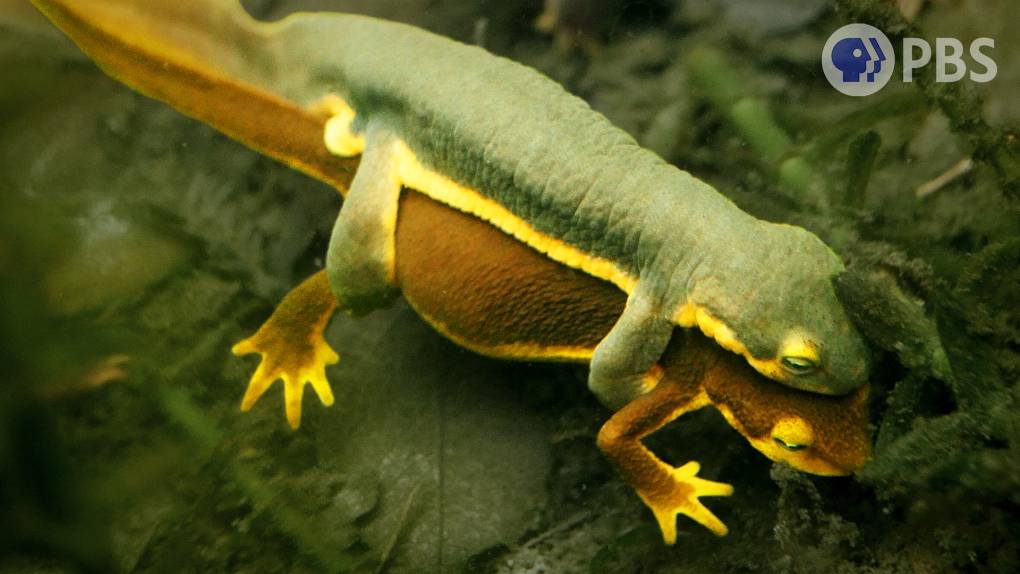
"caption": "Newts mate in the Japanese pond at the University of California Botanical Garden, in Berkeley.",
"credit": null,
"altTag": null,
"description": null,
"imgSizes": {
"medium": {
"file": "https://cdn.kqed.org/wp-content/uploads/sites/35/2025/02/DL1118_4-Tiny-Romances-That-Are-Almost-Too-Freaky-to-Share_B_KQED-800x450.jpg",
"width": 800,
"height": 450,
"mimeType": "image/jpeg"
},
"large": {
"file": "https://cdn.kqed.org/wp-content/uploads/sites/35/2025/02/DL1118_4-Tiny-Romances-That-Are-Almost-Too-Freaky-to-Share_B_KQED-1020x574.jpg",
"width": 1020,
"height": 574,
"mimeType": "image/jpeg"
},
"thumbnail": {
"file": "https://cdn.kqed.org/wp-content/uploads/sites/35/2025/02/DL1118_4-Tiny-Romances-That-Are-Almost-Too-Freaky-to-Share_B_KQED-160x90.jpg",
"width": 160,
"height": 90,
"mimeType": "image/jpeg"
},
"medium_large": {
"file": "https://cdn.kqed.org/wp-content/uploads/sites/35/2025/02/DL1118_4-Tiny-Romances-That-Are-Almost-Too-Freaky-to-Share_B_KQED-768x432.jpg",
"width": 768,
"height": 432,
"mimeType": "image/jpeg"
},
"1536x1536": {
"file": "https://cdn.kqed.org/wp-content/uploads/sites/35/2025/02/DL1118_4-Tiny-Romances-That-Are-Almost-Too-Freaky-to-Share_B_KQED-1536x864.jpg",
"width": 1536,
"height": 864,
"mimeType": "image/jpeg"
},
"post-thumbnail": {
"file": "https://cdn.kqed.org/wp-content/uploads/sites/35/2025/02/DL1118_4-Tiny-Romances-That-Are-Almost-Too-Freaky-to-Share_B_KQED-672x372.jpg",
"width": 672,
"height": 372,
"mimeType": "image/jpeg"
},
"twentyfourteen-full-width": {
"file": "https://cdn.kqed.org/wp-content/uploads/sites/35/2025/02/DL1118_4-Tiny-Romances-That-Are-Almost-Too-Freaky-to-Share_B_KQED-1038x576.jpg",
"width": 1038,
"height": 576,
"mimeType": "image/jpeg"
},
"kqedFullSize": {
"file": "https://cdn.kqed.org/wp-content/uploads/sites/35/2025/02/DL1118_4-Tiny-Romances-That-Are-Almost-Too-Freaky-to-Share_B_KQED.jpg",
"width": 1920,
"height": 1080
}
},
"isLoading": false,
"fetchFailed": false
},
"science_1995481": {
"type": "attachments",
"id": "science_1995481",
"meta": {
"index": "attachments_1716263798",
"site": "science",
"id": "1995481",
"found": true
},
"title": "DEEP_1117_The-Top-4-Deadliest-Hunters-Weve-Ever-Filmed_A_KQED",
"publishDate": 1737760850,
"status": "inherit",
"parent": 1995479,
"modified": 1737760930,
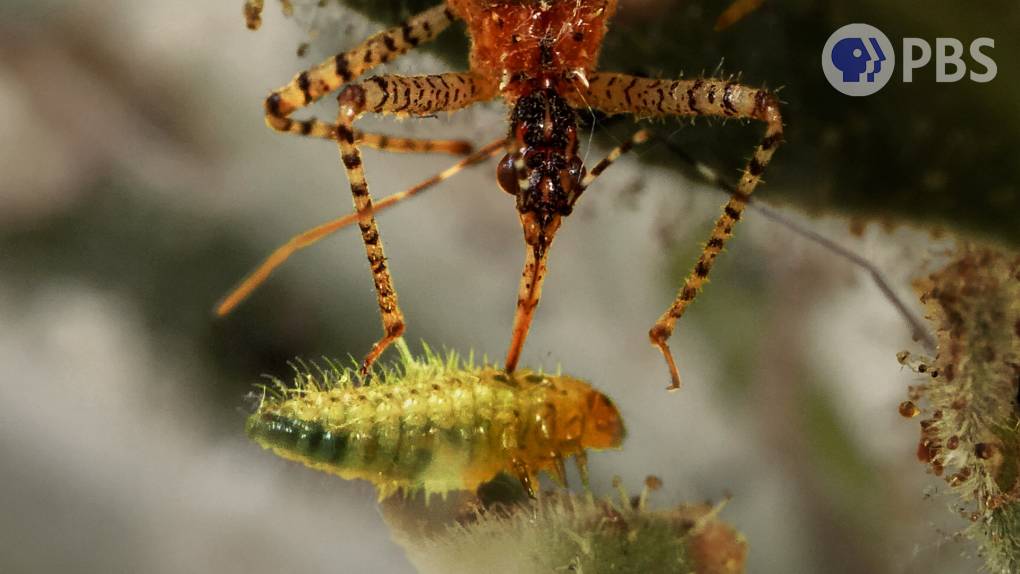
"caption": "An assassin bug stabs a larva on a tarweed flower near Sacramento.",
"credit": "Josh Cassidy/KQED",
"altTag": null,
"description": null,
"imgSizes": {
"medium": {
"file": "https://cdn.kqed.org/wp-content/uploads/sites/35/2025/01/DEEP_1117_The-Top-4-Deadliest-Hunters-Weve-Ever-Filmed_A_KQED-800x450.jpg",
"width": 800,
"height": 450,
"mimeType": "image/jpeg"
},
"large": {
"file": "https://cdn.kqed.org/wp-content/uploads/sites/35/2025/01/DEEP_1117_The-Top-4-Deadliest-Hunters-Weve-Ever-Filmed_A_KQED-1020x574.jpg",
"width": 1020,
"height": 574,
"mimeType": "image/jpeg"
},
"thumbnail": {
"file": "https://cdn.kqed.org/wp-content/uploads/sites/35/2025/01/DEEP_1117_The-Top-4-Deadliest-Hunters-Weve-Ever-Filmed_A_KQED-160x90.jpg",
"width": 160,
"height": 90,
"mimeType": "image/jpeg"
},
"medium_large": {
"file": "https://cdn.kqed.org/wp-content/uploads/sites/35/2025/01/DEEP_1117_The-Top-4-Deadliest-Hunters-Weve-Ever-Filmed_A_KQED-768x432.jpg",
"width": 768,
"height": 432,
"mimeType": "image/jpeg"
},
"1536x1536": {
"file": "https://cdn.kqed.org/wp-content/uploads/sites/35/2025/01/DEEP_1117_The-Top-4-Deadliest-Hunters-Weve-Ever-Filmed_A_KQED-1536x864.jpg",
"width": 1536,
"height": 864,
"mimeType": "image/jpeg"
},
"post-thumbnail": {
"file": "https://cdn.kqed.org/wp-content/uploads/sites/35/2025/01/DEEP_1117_The-Top-4-Deadliest-Hunters-Weve-Ever-Filmed_A_KQED-672x372.jpg",
"width": 672,
"height": 372,
"mimeType": "image/jpeg"
},
"twentyfourteen-full-width": {
"file": "https://cdn.kqed.org/wp-content/uploads/sites/35/2025/01/DEEP_1117_The-Top-4-Deadliest-Hunters-Weve-Ever-Filmed_A_KQED-1038x576.jpg",
"width": 1038,
"height": 576,
"mimeType": "image/jpeg"
},
"kqedFullSize": {
"file": "https://cdn.kqed.org/wp-content/uploads/sites/35/2025/01/DEEP_1117_The-Top-4-Deadliest-Hunters-Weve-Ever-Filmed_A_KQED.jpg",
"width": 1920,
"height": 1080
}
},
"isLoading": false,
"fetchFailed": false
},
"science_1995493": {
"type": "attachments",
"id": "science_1995493",
"meta": {
"index": "attachments_1716263798",
"site": "science",
"id": "1995493",
"found": true
},
"title": "DL1201_Want-a-Cozy-Free-Home-Ask-This-Caterpillar-How_KQED_B",
"publishDate": 1738176812,
"status": "inherit",
"parent": 1995410,
"modified": 1738176812,
"caption": null,
"credit": null,
"altTag": null,
"description": null,
"imgSizes": {
"medium": {
"file": "https://cdn.kqed.org/wp-content/uploads/sites/35/2025/01/DL1201_Want-a-Cozy-Free-Home-Ask-This-Caterpillar-How_KQED_B-800x450.jpg",
"width": 800,
"height": 450,
"mimeType": "image/jpeg"
},
"large": {
"file": "https://cdn.kqed.org/wp-content/uploads/sites/35/2025/01/DL1201_Want-a-Cozy-Free-Home-Ask-This-Caterpillar-How_KQED_B-1020x574.jpg",
"width": 1020,
"height": 574,
"mimeType": "image/jpeg"
},
"thumbnail": {
"file": "https://cdn.kqed.org/wp-content/uploads/sites/35/2025/01/DL1201_Want-a-Cozy-Free-Home-Ask-This-Caterpillar-How_KQED_B-160x90.jpg",
"width": 160,
"height": 90,
"mimeType": "image/jpeg"
},
"medium_large": {
"file": "https://cdn.kqed.org/wp-content/uploads/sites/35/2025/01/DL1201_Want-a-Cozy-Free-Home-Ask-This-Caterpillar-How_KQED_B-768x432.jpg",
"width": 768,
"height": 432,
"mimeType": "image/jpeg"
},
"1536x1536": {
"file": "https://cdn.kqed.org/wp-content/uploads/sites/35/2025/01/DL1201_Want-a-Cozy-Free-Home-Ask-This-Caterpillar-How_KQED_B-1536x864.jpg",
"width": 1536,
"height": 864,
"mimeType": "image/jpeg"
},
"post-thumbnail": {
"file": "https://cdn.kqed.org/wp-content/uploads/sites/35/2025/01/DL1201_Want-a-Cozy-Free-Home-Ask-This-Caterpillar-How_KQED_B-672x372.jpg",
"width": 672,
"height": 372,
"mimeType": "image/jpeg"
},
"twentyfourteen-full-width": {
"file": "https://cdn.kqed.org/wp-content/uploads/sites/35/2025/01/DL1201_Want-a-Cozy-Free-Home-Ask-This-Caterpillar-How_KQED_B-1038x576.jpg",
"width": 1038,
"height": 576,
"mimeType": "image/jpeg"
},
"kqedFullSize": {
"file": "https://cdn.kqed.org/wp-content/uploads/sites/35/2025/01/DL1201_Want-a-Cozy-Free-Home-Ask-This-Caterpillar-How_KQED_B.jpg",
"width": 1920,
"height": 1080
}
},
"isLoading": false,
"fetchFailed": false
},
"science_1995302": {
"type": "attachments",
"id": "science_1995302",
"meta": {
"index": "attachments_1716263798",
"site": "science",
"id": "1995302",
"found": true
},
"title": "DEEP_1115_Beware_of_Flesh-eating_Sand_Piranhas_at_the_Beach_C_KQED",
"publishDate": 1733936702,
"status": "inherit",
"parent": 1995260,
"modified": 1733936702,
"caption": null,
"credit": null,
"altTag": null,
"description": null,
"imgSizes": {
"medium": {
"file": "https://cdn.kqed.org/wp-content/uploads/sites/35/2024/12/DEEP_1115_Beware_of_Flesh-eating_Sand_Piranhas_at_the_Beach_C_KQED-800x450.jpg",
"width": 800,
"height": 450,
"mimeType": "image/jpeg"
},
"large": {
"file": "https://cdn.kqed.org/wp-content/uploads/sites/35/2024/12/DEEP_1115_Beware_of_Flesh-eating_Sand_Piranhas_at_the_Beach_C_KQED-1020x574.jpg",
"width": 1020,
"height": 574,
"mimeType": "image/jpeg"
},
"thumbnail": {
"file": "https://cdn.kqed.org/wp-content/uploads/sites/35/2024/12/DEEP_1115_Beware_of_Flesh-eating_Sand_Piranhas_at_the_Beach_C_KQED-160x90.jpg",
"width": 160,
"height": 90,
"mimeType": "image/jpeg"
},
"medium_large": {
"file": "https://cdn.kqed.org/wp-content/uploads/sites/35/2024/12/DEEP_1115_Beware_of_Flesh-eating_Sand_Piranhas_at_the_Beach_C_KQED-768x432.jpg",
"width": 768,
"height": 432,
"mimeType": "image/jpeg"
},
"post-thumbnail": {
"file": "https://cdn.kqed.org/wp-content/uploads/sites/35/2024/12/DEEP_1115_Beware_of_Flesh-eating_Sand_Piranhas_at_the_Beach_C_KQED-672x372.jpg",
"width": 672,
"height": 372,
"mimeType": "image/jpeg"
},
"twentyfourteen-full-width": {
"file": "https://cdn.kqed.org/wp-content/uploads/sites/35/2024/12/DEEP_1115_Beware_of_Flesh-eating_Sand_Piranhas_at_the_Beach_C_KQED-1038x576.jpg",
"width": 1038,
"height": 576,
"mimeType": "image/jpeg"
},
"kqedFullSize": {
"file": "https://cdn.kqed.org/wp-content/uploads/sites/35/2024/12/DEEP_1115_Beware_of_Flesh-eating_Sand_Piranhas_at_the_Beach_C_KQED.jpg",
"width": 1440,
"height": 810
}
},
"isLoading": false,
"fetchFailed": false
},
"science_1996096": {
"type": "attachments",
"id": "science_1996096",
"meta": {
"index": "attachments_1716263798",
"site": "science",
"id": "1996096",
"found": true
},
"title": "DL1114_Lacewing-Bachelors-Vibrate-to-Find-a-Valentine_A_KQED",
"publishDate": 1739315315,
"status": "inherit",
"parent": 1995157,
"modified": 1739315438,
"caption": "The larvae of green lacewings are used as pest control. Adults like this one vibrate their bodies to attract a mate.",
"credit": null,
"altTag": null,
"description": null,
"imgSizes": {
"medium": {
"file": "https://cdn.kqed.org/wp-content/uploads/sites/35/2024/11/DL1114_Lacewing-Bachelors-Vibrate-to-Find-a-Valentine_A_KQED-800x450.jpg",
"width": 800,
"height": 450,
"mimeType": "image/jpeg"
},
"large": {
"file": "https://cdn.kqed.org/wp-content/uploads/sites/35/2024/11/DL1114_Lacewing-Bachelors-Vibrate-to-Find-a-Valentine_A_KQED-1020x574.jpg",
"width": 1020,
"height": 574,
"mimeType": "image/jpeg"
},
"thumbnail": {
"file": "https://cdn.kqed.org/wp-content/uploads/sites/35/2024/11/DL1114_Lacewing-Bachelors-Vibrate-to-Find-a-Valentine_A_KQED-160x90.jpg",
"width": 160,
"height": 90,
"mimeType": "image/jpeg"
},
"medium_large": {
"file": "https://cdn.kqed.org/wp-content/uploads/sites/35/2024/11/DL1114_Lacewing-Bachelors-Vibrate-to-Find-a-Valentine_A_KQED-768x432.jpg",
"width": 768,
"height": 432,
"mimeType": "image/jpeg"
},
"1536x1536": {
"file": "https://cdn.kqed.org/wp-content/uploads/sites/35/2024/11/DL1114_Lacewing-Bachelors-Vibrate-to-Find-a-Valentine_A_KQED-1536x864.jpg",
"width": 1536,
"height": 864,
"mimeType": "image/jpeg"
},
"post-thumbnail": {
"file": "https://cdn.kqed.org/wp-content/uploads/sites/35/2024/11/DL1114_Lacewing-Bachelors-Vibrate-to-Find-a-Valentine_A_KQED-672x372.jpg",
"width": 672,
"height": 372,
"mimeType": "image/jpeg"
},
"twentyfourteen-full-width": {
"file": "https://cdn.kqed.org/wp-content/uploads/sites/35/2024/11/DL1114_Lacewing-Bachelors-Vibrate-to-Find-a-Valentine_A_KQED-1038x576.jpg",
"width": 1038,
"height": 576,
"mimeType": "image/jpeg"
},
"kqedFullSize": {
"file": "https://cdn.kqed.org/wp-content/uploads/sites/35/2024/11/DL1114_Lacewing-Bachelors-Vibrate-to-Find-a-Valentine_A_KQED.jpg",
"width": 1920,
"height": 1080
}
},
"isLoading": false,
"fetchFailed": false
},
"science_1995498": {
"type": "attachments",
"id": "science_1995498",
"meta": {
"index": "attachments_1716263798",
"site": "science",
"id": "1995498",
"found": true
},
"title": "DL1120_These-5-Bees-Are-Waaay-More-Than-Honey-and-Stingers_B",
"publishDate": 1738177297,
"status": "inherit",
"parent": 1995086,
"modified": 1738177297,
"caption": null,
"credit": null,
"altTag": null,
"description": null,
"imgSizes": {
"medium": {
"file": "https://cdn.kqed.org/wp-content/uploads/sites/35/2024/11/DL1120_These-5-Bees-Are-Waaay-More-Than-Honey-and-Stingers_B-800x450.jpg",
"width": 800,
"height": 450,
"mimeType": "image/jpeg"
},
"large": {
"file": "https://cdn.kqed.org/wp-content/uploads/sites/35/2024/11/DL1120_These-5-Bees-Are-Waaay-More-Than-Honey-and-Stingers_B-1020x574.jpg",
"width": 1020,
"height": 574,
"mimeType": "image/jpeg"
},
"thumbnail": {
"file": "https://cdn.kqed.org/wp-content/uploads/sites/35/2024/11/DL1120_These-5-Bees-Are-Waaay-More-Than-Honey-and-Stingers_B-160x90.jpg",
"width": 160,
"height": 90,
"mimeType": "image/jpeg"
},
"medium_large": {
"file": "https://cdn.kqed.org/wp-content/uploads/sites/35/2024/11/DL1120_These-5-Bees-Are-Waaay-More-Than-Honey-and-Stingers_B-768x432.jpg",
"width": 768,
"height": 432,
"mimeType": "image/jpeg"
},
"1536x1536": {
"file": "https://cdn.kqed.org/wp-content/uploads/sites/35/2024/11/DL1120_These-5-Bees-Are-Waaay-More-Than-Honey-and-Stingers_B-1536x864.jpg",
"width": 1536,
"height": 864,
"mimeType": "image/jpeg"
},
"2048x2048": {
"file": "https://cdn.kqed.org/wp-content/uploads/sites/35/2024/11/DL1120_These-5-Bees-Are-Waaay-More-Than-Honey-and-Stingers_B-2048x1152.jpg",
"width": 2048,
"height": 1152,
"mimeType": "image/jpeg"
},
"post-thumbnail": {
"file": "https://cdn.kqed.org/wp-content/uploads/sites/35/2024/11/DL1120_These-5-Bees-Are-Waaay-More-Than-Honey-and-Stingers_B-672x372.jpg",
"width": 672,
"height": 372,
"mimeType": "image/jpeg"
},
"twentyfourteen-full-width": {
"file": "https://cdn.kqed.org/wp-content/uploads/sites/35/2024/11/DL1120_These-5-Bees-Are-Waaay-More-Than-Honey-and-Stingers_B-1038x576.jpg",
"width": 1038,
"height": 576,
"mimeType": "image/jpeg"
},
"full-width": {
"file": "https://cdn.kqed.org/wp-content/uploads/sites/35/2024/11/DL1120_These-5-Bees-Are-Waaay-More-Than-Honey-and-Stingers_B-1920x1080.jpg",
"width": 1920,
"height": 1080,
"mimeType": "image/jpeg"
},
"kqedFullSize": {
"file": "https://cdn.kqed.org/wp-content/uploads/sites/35/2024/11/DL1120_These-5-Bees-Are-Waaay-More-Than-Honey-and-Stingers_B-scaled.jpg",
"width": 2560,
"height": 1440
}
},
"isLoading": false,
"fetchFailed": false
},
"science_1995500": {
"type": "attachments",
"id": "science_1995500",
"meta": {
"index": "attachments_1716263798",
"site": "science",
"id": "1995500",
"found": true
},
"title": "DL1113_How-Sunflowers-Bring-All-the-Bees-to-the-Yard_shield_B",
"publishDate": 1738177752,
"status": "inherit",
"parent": 1994840,
"modified": 1738177752,
"caption": null,
"credit": null,
"altTag": null,
"description": null,
"imgSizes": {
"medium": {
"file": "https://cdn.kqed.org/wp-content/uploads/sites/35/2024/10/DL1113_How-Sunflowers-Bring-All-the-Bees-to-the-Yard_shield_B-800x450.jpg",
"width": 800,
"height": 450,
"mimeType": "image/jpeg"
},
"large": {
"file": "https://cdn.kqed.org/wp-content/uploads/sites/35/2024/10/DL1113_How-Sunflowers-Bring-All-the-Bees-to-the-Yard_shield_B-1020x574.jpg",
"width": 1020,
"height": 574,
"mimeType": "image/jpeg"
},
"thumbnail": {
"file": "https://cdn.kqed.org/wp-content/uploads/sites/35/2024/10/DL1113_How-Sunflowers-Bring-All-the-Bees-to-the-Yard_shield_B-160x90.jpg",
"width": 160,
"height": 90,
"mimeType": "image/jpeg"
},
"medium_large": {
"file": "https://cdn.kqed.org/wp-content/uploads/sites/35/2024/10/DL1113_How-Sunflowers-Bring-All-the-Bees-to-the-Yard_shield_B-768x432.jpg",
"width": 768,
"height": 432,
"mimeType": "image/jpeg"
},
"1536x1536": {
"file": "https://cdn.kqed.org/wp-content/uploads/sites/35/2024/10/DL1113_How-Sunflowers-Bring-All-the-Bees-to-the-Yard_shield_B-1536x864.jpg",
"width": 1536,
"height": 864,
"mimeType": "image/jpeg"
},
"2048x2048": {
"file": "https://cdn.kqed.org/wp-content/uploads/sites/35/2024/10/DL1113_How-Sunflowers-Bring-All-the-Bees-to-the-Yard_shield_B-2048x1152.jpg",
"width": 2048,
"height": 1152,
"mimeType": "image/jpeg"
},
"post-thumbnail": {
"file": "https://cdn.kqed.org/wp-content/uploads/sites/35/2024/10/DL1113_How-Sunflowers-Bring-All-the-Bees-to-the-Yard_shield_B-672x372.jpg",
"width": 672,
"height": 372,
"mimeType": "image/jpeg"
},
"twentyfourteen-full-width": {
"file": "https://cdn.kqed.org/wp-content/uploads/sites/35/2024/10/DL1113_How-Sunflowers-Bring-All-the-Bees-to-the-Yard_shield_B-1038x576.jpg",
"width": 1038,
"height": 576,
"mimeType": "image/jpeg"
},
"full-width": {
"file": "https://cdn.kqed.org/wp-content/uploads/sites/35/2024/10/DL1113_How-Sunflowers-Bring-All-the-Bees-to-the-Yard_shield_B-1920x1080.jpg",
"width": 1920,
"height": 1080,
"mimeType": "image/jpeg"
},
"kqedFullSize": {
"file": "https://cdn.kqed.org/wp-content/uploads/sites/35/2024/10/DL1113_How-Sunflowers-Bring-All-the-Bees-to-the-Yard_shield_B-scaled.jpg",
"width": 2560,
"height": 1440
}
},
"isLoading": false,
"fetchFailed": false
},
"science_1995145": {
"type": "attachments",
"id": "science_1995145",
"meta": {
"index": "attachments_1716263798",
"site": "science",
"id": "1995145",
"found": true
},
"title": "DL1116_The-Bizarre-Biology-Of-5-Bloodsucking-Creatures_D_shield",
"publishDate": 1731452694,
"status": "inherit",
"parent": 1994611,
"modified": 1731452694,
"caption": null,
"credit": null,
"altTag": null,
"description": null,
"imgSizes": {
"medium": {
"file": "https://cdn.kqed.org/wp-content/uploads/sites/35/2024/10/DL1116_The-Bizarre-Biology-Of-5-Bloodsucking-Creatures_D_shield-800x450.jpg",
"width": 800,
"height": 450,
"mimeType": "image/jpeg"
},
"large": {
"file": "https://cdn.kqed.org/wp-content/uploads/sites/35/2024/10/DL1116_The-Bizarre-Biology-Of-5-Bloodsucking-Creatures_D_shield-1020x574.jpg",
"width": 1020,
"height": 574,
"mimeType": "image/jpeg"
},
"thumbnail": {
"file": "https://cdn.kqed.org/wp-content/uploads/sites/35/2024/10/DL1116_The-Bizarre-Biology-Of-5-Bloodsucking-Creatures_D_shield-160x90.jpg",
"width": 160,
"height": 90,
"mimeType": "image/jpeg"
},
"medium_large": {
"file": "https://cdn.kqed.org/wp-content/uploads/sites/35/2024/10/DL1116_The-Bizarre-Biology-Of-5-Bloodsucking-Creatures_D_shield-768x432.jpg",
"width": 768,
"height": 432,
"mimeType": "image/jpeg"
},
"1536x1536": {
"file": "https://cdn.kqed.org/wp-content/uploads/sites/35/2024/10/DL1116_The-Bizarre-Biology-Of-5-Bloodsucking-Creatures_D_shield-1536x864.jpg",
"width": 1536,
"height": 864,
"mimeType": "image/jpeg"
},
"post-thumbnail": {
"file": "https://cdn.kqed.org/wp-content/uploads/sites/35/2024/10/DL1116_The-Bizarre-Biology-Of-5-Bloodsucking-Creatures_D_shield-672x372.jpg",
"width": 672,
"height": 372,
"mimeType": "image/jpeg"
},
"twentyfourteen-full-width": {
"file": "https://cdn.kqed.org/wp-content/uploads/sites/35/2024/10/DL1116_The-Bizarre-Biology-Of-5-Bloodsucking-Creatures_D_shield-1038x576.jpg",
"width": 1038,
"height": 576,
"mimeType": "image/jpeg"
},
"kqedFullSize": {
"file": "https://cdn.kqed.org/wp-content/uploads/sites/35/2024/10/DL1116_The-Bizarre-Biology-Of-5-Bloodsucking-Creatures_D_shield.jpg",
"width": 1920,
"height": 1080
}
},
"isLoading": false,
"fetchFailed": false
},
"science_1994490": {
"type": "attachments",
"id": "science_1994490",
"meta": {
"index": "attachments_1716263798",
"site": "science",
"id": "1994490",
"found": true
},
"title": "YoutTube Thumbnail2",
"publishDate": 1727115177,
"status": "inherit",
"parent": 1994475,
"modified": 1727115310,
"caption": "An insect called a burying beetle carries tiny mites on its body.",
"credit": "Josh Cassidy/KQED",
"altTag": "An insect called a burying beetle carries tiny orange-colored mites on the top and bottom of its body.",
"description": null,
"imgSizes": {
"medium": {
"file": "https://cdn.kqed.org/wp-content/uploads/sites/35/2024/09/DL1112_This_Mite-y_Beetle_Buries_the_Dead_to_Start_a_Family_B-_KQED-800x450.jpg",
"width": 800,
"height": 450,
"mimeType": "image/jpeg"
},
"large": {
"file": "https://cdn.kqed.org/wp-content/uploads/sites/35/2024/09/DL1112_This_Mite-y_Beetle_Buries_the_Dead_to_Start_a_Family_B-_KQED-1020x574.jpg",
"width": 1020,
"height": 574,
"mimeType": "image/jpeg"
},
"thumbnail": {
"file": "https://cdn.kqed.org/wp-content/uploads/sites/35/2024/09/DL1112_This_Mite-y_Beetle_Buries_the_Dead_to_Start_a_Family_B-_KQED-160x90.jpg",
"width": 160,
"height": 90,
"mimeType": "image/jpeg"
},
"medium_large": {
"file": "https://cdn.kqed.org/wp-content/uploads/sites/35/2024/09/DL1112_This_Mite-y_Beetle_Buries_the_Dead_to_Start_a_Family_B-_KQED-768x432.jpg",
"width": 768,
"height": 432,
"mimeType": "image/jpeg"
},
"1536x1536": {
"file": "https://cdn.kqed.org/wp-content/uploads/sites/35/2024/09/DL1112_This_Mite-y_Beetle_Buries_the_Dead_to_Start_a_Family_B-_KQED-1536x864.jpg",
"width": 1536,
"height": 864,
"mimeType": "image/jpeg"
},
"post-thumbnail": {
"file": "https://cdn.kqed.org/wp-content/uploads/sites/35/2024/09/DL1112_This_Mite-y_Beetle_Buries_the_Dead_to_Start_a_Family_B-_KQED-672x372.jpg",
"width": 672,
"height": 372,
"mimeType": "image/jpeg"
},
"twentyfourteen-full-width": {
"file": "https://cdn.kqed.org/wp-content/uploads/sites/35/2024/09/DL1112_This_Mite-y_Beetle_Buries_the_Dead_to_Start_a_Family_B-_KQED-1038x576.jpg",
"width": 1038,
"height": 576,
"mimeType": "image/jpeg"
},
"kqedFullSize": {
"file": "https://cdn.kqed.org/wp-content/uploads/sites/35/2024/09/DL1112_This_Mite-y_Beetle_Buries_the_Dead_to_Start_a_Family_B-_KQED.jpg",
"width": 1920,
"height": 1080
}
},
"isLoading": false,
"fetchFailed": false
},
"science_1993919": {
"type": "attachments",
"id": "science_1993919",
"meta": {
"index": "attachments_1716263798",
"site": "science",
"id": "1993919",
"found": true
},
"title": "TN_Option_5 copy",
"publishDate": 1723225358,
"status": "inherit",
"parent": 1993917,
"modified": 1724721521,
"caption": null,
"credit": "Will Goldenberg/KQED",
"altTag": "The wandering salamander (Aneides vagrans) uses its long, flexible tail and flexible toes to grab onto branches.",
"description": "The wandering salamander (Aneides vagrans) uses its long, flexible tail and flexible toes to grab onto branches. ",
"imgSizes": {
"medium": {
"file": "https://cdn.kqed.org/wp-content/uploads/sites/35/2024/08/TN_Option_5-copy-800x450.jpg",
"width": 800,
"height": 450,
"mimeType": "image/jpeg"
},
"large": {
"file": "https://cdn.kqed.org/wp-content/uploads/sites/35/2024/08/TN_Option_5-copy-1020x574.jpg",
"width": 1020,
"height": 574,
"mimeType": "image/jpeg"
},
"thumbnail": {
"file": "https://cdn.kqed.org/wp-content/uploads/sites/35/2024/08/TN_Option_5-copy-160x90.jpg",
"width": 160,
"height": 90,
"mimeType": "image/jpeg"
},
"medium_large": {
"file": "https://cdn.kqed.org/wp-content/uploads/sites/35/2024/08/TN_Option_5-copy-768x432.jpg",
"width": 768,
"height": 432,
"mimeType": "image/jpeg"
},
"1536x1536": {
"file": "https://cdn.kqed.org/wp-content/uploads/sites/35/2024/08/TN_Option_5-copy-1536x864.jpg",
"width": 1536,
"height": 864,
"mimeType": "image/jpeg"
},
"2048x2048": {
"file": "https://cdn.kqed.org/wp-content/uploads/sites/35/2024/08/TN_Option_5-copy-2048x1152.jpg",
"width": 2048,
"height": 1152,
"mimeType": "image/jpeg"
},
"post-thumbnail": {
"file": "https://cdn.kqed.org/wp-content/uploads/sites/35/2024/08/TN_Option_5-copy-672x372.jpg",
"width": 672,
"height": 372,
"mimeType": "image/jpeg"
},
"twentyfourteen-full-width": {
"file": "https://cdn.kqed.org/wp-content/uploads/sites/35/2024/08/TN_Option_5-copy-1038x576.jpg",
"width": 1038,
"height": 576,
"mimeType": "image/jpeg"
},
"full-width": {
"file": "https://cdn.kqed.org/wp-content/uploads/sites/35/2024/08/TN_Option_5-copy-1920x1080.jpg",
"width": 1920,
"height": 1080,
"mimeType": "image/jpeg"
},
"kqedFullSize": {
"file": "https://cdn.kqed.org/wp-content/uploads/sites/35/2024/08/TN_Option_5-copy-scaled.jpg",
"width": 2560,
"height": 1440
}
},
"isLoading": false,
"fetchFailed": false
},
"science_1993670": {
"type": "attachments",
"id": "science_1993670",
"meta": {
"index": "attachments_1716263798",
"site": "science",
"id": "1993670",
"found": true
},
"title": "DL1110-Tar-Pits-are-a-Death-Trap-Except-For-This-Fly-KQED",
"publishDate": 1721417784,
"status": "inherit",
"parent": 1993662,
"modified": 1721417904,
"caption": "An adult petroleum fly walks on top of sticky tar pits without getting stuck.\n",
"credit": "Josh Cassidy/KQED",
"altTag": null,
"description": null,
"imgSizes": {
"medium": {
"file": "https://cdn.kqed.org/wp-content/uploads/sites/35/2024/07/DL1110-Tar-Pits-are-a-Death-Trap-Except-For-This-Fly-KQED-800x450.jpg",
"width": 800,
"height": 450,
"mimeType": "image/jpeg"
},
"large": {
"file": "https://cdn.kqed.org/wp-content/uploads/sites/35/2024/07/DL1110-Tar-Pits-are-a-Death-Trap-Except-For-This-Fly-KQED-1020x574.jpg",
"width": 1020,
"height": 574,
"mimeType": "image/jpeg"
},
"thumbnail": {
"file": "https://cdn.kqed.org/wp-content/uploads/sites/35/2024/07/DL1110-Tar-Pits-are-a-Death-Trap-Except-For-This-Fly-KQED-160x90.jpg",
"width": 160,
"height": 90,
"mimeType": "image/jpeg"
},
"medium_large": {
"file": "https://cdn.kqed.org/wp-content/uploads/sites/35/2024/07/DL1110-Tar-Pits-are-a-Death-Trap-Except-For-This-Fly-KQED-768x432.jpg",
"width": 768,
"height": 432,
"mimeType": "image/jpeg"
},
"1536x1536": {
"file": "https://cdn.kqed.org/wp-content/uploads/sites/35/2024/07/DL1110-Tar-Pits-are-a-Death-Trap-Except-For-This-Fly-KQED-1536x864.jpg",
"width": 1536,
"height": 864,
"mimeType": "image/jpeg"
},
"post-thumbnail": {
"file": "https://cdn.kqed.org/wp-content/uploads/sites/35/2024/07/DL1110-Tar-Pits-are-a-Death-Trap-Except-For-This-Fly-KQED-672x372.jpg",
"width": 672,
"height": 372,
"mimeType": "image/jpeg"
},
"twentyfourteen-full-width": {
"file": "https://cdn.kqed.org/wp-content/uploads/sites/35/2024/07/DL1110-Tar-Pits-are-a-Death-Trap-Except-For-This-Fly-KQED-1038x576.jpg",
"width": 1038,
"height": 576,
"mimeType": "image/jpeg"
},
"kqedFullSize": {
"file": "https://cdn.kqed.org/wp-content/uploads/sites/35/2024/07/DL1110-Tar-Pits-are-a-Death-Trap-Except-For-This-Fly-KQED.jpg",
"width": 1920,
"height": 1080
}
},
"isLoading": false,
"fetchFailed": false
},
"science_1995503": {
"type": "attachments",
"id": "science_1995503",
"meta": {
"index": "attachments_1716263798",
"site": "science",
"id": "1995503",
"found": true
},
"title": "DL1109_This_Incredible_Little_Starfish_Has_a_Secret_shield_B",
"publishDate": 1738178094,
"status": "inherit",
"parent": 1993493,
"modified": 1738178094,
"caption": null,
"credit": null,
"altTag": null,
"description": null,
"imgSizes": {
"medium": {
"file": "https://cdn.kqed.org/wp-content/uploads/sites/35/2024/07/DL1109_This_Incredible_Little_Starfish_Has_a_Secret_shield_B-800x450.jpg",
"width": 800,
"height": 450,
"mimeType": "image/jpeg"
},
"large": {
"file": "https://cdn.kqed.org/wp-content/uploads/sites/35/2024/07/DL1109_This_Incredible_Little_Starfish_Has_a_Secret_shield_B-1020x574.jpg",
"width": 1020,
"height": 574,
"mimeType": "image/jpeg"
},
"thumbnail": {
"file": "https://cdn.kqed.org/wp-content/uploads/sites/35/2024/07/DL1109_This_Incredible_Little_Starfish_Has_a_Secret_shield_B-160x90.jpg",
"width": 160,
"height": 90,
"mimeType": "image/jpeg"
},
"medium_large": {
"file": "https://cdn.kqed.org/wp-content/uploads/sites/35/2024/07/DL1109_This_Incredible_Little_Starfish_Has_a_Secret_shield_B-768x432.jpg",
"width": 768,
"height": 432,
"mimeType": "image/jpeg"
},
"1536x1536": {
"file": "https://cdn.kqed.org/wp-content/uploads/sites/35/2024/07/DL1109_This_Incredible_Little_Starfish_Has_a_Secret_shield_B-1536x864.jpg",
"width": 1536,
"height": 864,
"mimeType": "image/jpeg"
},
"2048x2048": {
"file": "https://cdn.kqed.org/wp-content/uploads/sites/35/2024/07/DL1109_This_Incredible_Little_Starfish_Has_a_Secret_shield_B-2048x1152.jpg",
"width": 2048,
"height": 1152,
"mimeType": "image/jpeg"
},
"post-thumbnail": {
"file": "https://cdn.kqed.org/wp-content/uploads/sites/35/2024/07/DL1109_This_Incredible_Little_Starfish_Has_a_Secret_shield_B-672x372.jpg",
"width": 672,
"height": 372,
"mimeType": "image/jpeg"
},
"twentyfourteen-full-width": {
"file": "https://cdn.kqed.org/wp-content/uploads/sites/35/2024/07/DL1109_This_Incredible_Little_Starfish_Has_a_Secret_shield_B-1038x576.jpg",
"width": 1038,
"height": 576,
"mimeType": "image/jpeg"
},
"full-width": {
"file": "https://cdn.kqed.org/wp-content/uploads/sites/35/2024/07/DL1109_This_Incredible_Little_Starfish_Has_a_Secret_shield_B-1920x1080.jpg",
"width": 1920,
"height": 1080,
"mimeType": "image/jpeg"
},
"kqedFullSize": {
"file": "https://cdn.kqed.org/wp-content/uploads/sites/35/2024/07/DL1109_This_Incredible_Little_Starfish_Has_a_Secret_shield_B-scaled.jpg",
"width": 2560,
"height": 1440
}
},
"isLoading": false,
"fetchFailed": false
}
},
"audioPlayerReducer": {
"postId": "stream_live",
"isPaused": true,
"isPlaying": false,
"pfsActive": false,
"pledgeModalIsOpen": true,
"playerDrawerIsOpen": false,
"liveAudioPlayStartedAt": 0,
"liveAudioPlayContext": ""
},
"authorsReducer": {
"gabriela-quiros": {
"type": "authors",
"id": "6186",
"meta": {
"index": "authors_1716337520",
"id": "6186",
"found": true
},
"name": "Gabriela Quirós",
"firstName": "Gabriela",
"lastName": "Quirós",
"slug": "gabriela-quiros",
"email": "gquiros@kqed.org",
"display_author_email": false,
"staff_mastheads": [],
"title": "Supervising Producer",
"bio": "Gabriela Quirós is the \u003cstrong>supervising producer for KQED's web science video series \u003ca href=\"https://www.kqed.org/deeplook\">Deep Look\u003c/a>\u003c/strong>. She joined KQED as a TV producer when its science series QUEST started in 2006 and has covered everything from Alzheimer’s to bee die-offs to dark energy.\r\n\r\nShe won a 2022 AAAS Kavli Science Journalism Award with a team of her Deep Look colleagues. She has won six regional Emmys as a video producer and has shared eight more as the coordinating producer of Deep Look. The episode she produced about \u003ca href=\"https://www.kqed.org/science/728086/how-mosquitoes-use-six-needles-to-suck-your-blood\">How Mosquitoes Use Six Needles to Suck Your Blood\u003c/a> won a Webby \"People's Voice\" award. She has also earned awards from the Jackson Hole Wildlife Film Festival, the Society of Professional Journalists and the Society of Environmental Journalists.\r\n\r\nHer videos for KQED have also aired on NOVA scienceNOW and the PBS NewsHour, and appeared on NPR.org.\r\n\r\nAs an independent filmmaker, she produced and directed the hour-long documentary \u003ca href=\"http://lpbp.org/beautiful-sin-qa-with-producer-gabriela-quiros/\">\u003cem>Beautiful Sin\u003c/em>\u003c/a>, about the surprising story of how Costa Rica became the only country in the world to outlaw in vitro fertilization. The film aired in 2015 on public television stations throughout the U.S., and in Costa Rica.\r\n\r\nShe started her journalism career as a newspaper reporter in Costa Rica, where she grew up. She won the National Science Journalism Award there for a series of articles about organic agriculture, and developed a life-long interest in health reporting. She moved to the Bay Area in 1996 to study documentary filmmaking at the University of California, Berkeley, where she received master’s degrees in journalism and Latin American studies.",
"avatar": "https://secure.gravatar.com/avatar/6d82c20152affd1b434c31a904c40809?s=600&d=blank&r=g",
"twitter": "gabrielaquirosr",
"facebook": null,
"instagram": null,
"linkedin": null,
"sites": [
{
"site": "science",
"roles": []
},
{
"site": "quest",
"roles": [
"ef_view_calendar",
"ef_view_story_budget"
]
}
],
"headData": {
"title": "Gabriela Quirós | KQED",
"description": "Supervising Producer",
"ogImgSrc": "https://secure.gravatar.com/avatar/6d82c20152affd1b434c31a904c40809?s=600&d=blank&r=g",
"twImgSrc": "https://secure.gravatar.com/avatar/6d82c20152affd1b434c31a904c40809?s=600&d=blank&r=g"
},
"isLoading": false,
"link": "/author/gabriela-quiros"
},
"joshua-cassidy": {
"type": "authors",
"id": "6219",
"meta": {
"index": "authors_1716337520",
"id": "6219",
"found": true
},
"name": "Josh Cassidy",
"firstName": "Josh",
"lastName": "Cassidy",
"slug": "joshua-cassidy",
"email": "jcassidy@kqed.org",
"display_author_email": false,
"staff_mastheads": [
"science"
],
"title": "Digital Video Producer",
"bio": "Josh is a Senior Video Producer for KQED Science, and the Lead Producer and Cinematographer for Deep Look. After receiving his BS in Wildlife Biology from Ohio University, he went on to participate in marine mammal research for NOAA, USGS and the Intersea Foundation. He also served as the president of The Pacific Cetacean Group, a nonprofit organization dedicated to teaching students K-6 about whales. Josh studied science and natural history filmmaking at San Francisco State University and Montana State University.",
"avatar": "https://secure.gravatar.com/avatar/f2582a0801a35af53b734d56bcac2bbe?s=600&d=blank&r=g",
"twitter": null,
"facebook": null,
"instagram": null,
"linkedin": null,
"sites": [
{
"site": "science",
"roles": [
"editor"
]
},
{
"site": "quest",
"roles": [
"author",
"edit_others_posts"
]
}
],
"headData": {
"title": "Josh Cassidy | KQED",
"description": "Digital Video Producer",
"ogImgSrc": "https://secure.gravatar.com/avatar/f2582a0801a35af53b734d56bcac2bbe?s=600&d=blank&r=g",
"twImgSrc": "https://secure.gravatar.com/avatar/f2582a0801a35af53b734d56bcac2bbe?s=600&d=blank&r=g"
},
"isLoading": false,
"link": "/author/joshua-cassidy"
},
"mschiffman": {
"type": "authors",
"id": "11833",
"meta": {
"index": "authors_1716337520",
"id": "11833",
"found": true
},
"name": "Mimi Schiffman",
"firstName": "Mimi",
"lastName": "Schiffman",
"slug": "mschiffman",
"email": "mschiffman@kqed.org",
"display_author_email": false,
"staff_mastheads": [],
"title": "KQED Contributor",
"bio": "Mimi Schiffman is a producer for Deep Look.\r\n\r\nPrior to joining the Deep Look team she made hundreds of stories over more than a decade as a producer, director of photography and/or editor. \r\n\r\nShe's filmed lemurs finger painting (a favorite pastime of the amazing Duke Lemur Center inhabitants), stayed awake for 36 hours while trailing the first person with dwarfism to complete an Ironman (shout out to John Young, aka \"The Hammer\") and got to interview the late, great Anthony Bourdain.\r\n \r\nFun facts: Mimi's first job was weighing foraminifera - single cell organisms - in tiny foil cups, and she once got a river designated as “Wild and scenic.” She’s passionate about animals in general but very specifically her rescue dog, Henry. And her kid, Sierra and husband, Peter.",
"avatar": "https://secure.gravatar.com/avatar/e8b898539bc6a47f47f94992f0f17948?s=600&d=blank&r=g",
"twitter": null,
"facebook": null,
"instagram": null,
"linkedin": null,
"sites": [
{
"site": "science",
"roles": [
"editor"
]
}
],
"headData": {
"title": "Mimi Schiffman | KQED",
"description": "KQED Contributor",
"ogImgSrc": "https://secure.gravatar.com/avatar/e8b898539bc6a47f47f94992f0f17948?s=600&d=blank&r=g",
"twImgSrc": "https://secure.gravatar.com/avatar/e8b898539bc6a47f47f94992f0f17948?s=600&d=blank&r=g"
},
"isLoading": false,
"link": "/author/mschiffman"
},
"rtuiran": {
"type": "authors",
"id": "11858",
"meta": {
"index": "authors_1716337520",
"id": "11858",
"found": true
},
"name": "Rosa Tuirán",
"firstName": "Rosa",
"lastName": "Tuirán",
"slug": "rtuiran",
"email": "rtuiran@kqed.org",
"display_author_email": false,
"staff_mastheads": [
"science"
],
"title": "Digital Video Producer ",
"bio": "Rosa Tuirán is a PBS Accelerator Fellow for Diverse Voices and a video producer for KQED's web science video series, Deep Look. Originally from Mexico City, she studied International Relations for her B.A. After graduating, she pursued her passion for underwater photography in South Africa and later worked as a video journalist for BuzzFeed News in New York City.\r\n\r\nIn 2020, she received her Master of Journalism from the University of California, Berkeley with a focus on documentary filmmaking. During the pandemic's early stages, she was a part of the COVID-19 California reporting initiative with The New York Times and the Investigative Reporting Program. \r\n\r\nHer work has been featured on PBS Frontline, PBS NOVA, CBS News, National Geographic, The Guardian and The New York Times.",
"avatar": "https://secure.gravatar.com/avatar/192c377dfd982c86993f2351bc0d6fb2?s=600&d=blank&r=g",
"twitter": null,
"facebook": null,
"instagram": null,
"linkedin": null,
"sites": [
{
"site": "science",
"roles": [
"editor"
]
}
],
"headData": {
"title": "Rosa Tuirán | KQED",
"description": "Digital Video Producer ",
"ogImgSrc": "https://secure.gravatar.com/avatar/192c377dfd982c86993f2351bc0d6fb2?s=600&d=blank&r=g",
"twImgSrc": "https://secure.gravatar.com/avatar/192c377dfd982c86993f2351bc0d6fb2?s=600&d=blank&r=g"
},
"isLoading": false,
"link": "/author/rtuiran"
},
"asaintsing": {
"type": "authors",
"id": "11911",
"meta": {
"index": "authors_1716337520",
"id": "11911",
"found": true
},
"name": "Andrew Saintsing",
"firstName": "Andrew",
"lastName": "Saintsing",
"slug": "asaintsing",
"email": "asaintsing@kqed.org",
"display_author_email": false,
"staff_mastheads": [],
"title": "Intern, Deep Look",
"bio": "Andrew Saintsing is a former intern with KQED's Deep Look series. He moved to the Bay Area to study integrative biology at the University of California, Berkeley. But after completing his PhD, he decided to pursue a career in science journalism.",
"avatar": "https://secure.gravatar.com/avatar/a8df0d118ae631210793a65a5480f040?s=600&d=blank&r=g",
"twitter": null,
"facebook": null,
"instagram": null,
"linkedin": null,
"sites": [
{
"site": "science",
"roles": []
}
],
"headData": {
"title": "Andrew Saintsing | KQED",
"description": "Intern, Deep Look",
"ogImgSrc": "https://secure.gravatar.com/avatar/a8df0d118ae631210793a65a5480f040?s=600&d=blank&r=g",
"twImgSrc": "https://secure.gravatar.com/avatar/a8df0d118ae631210793a65a5480f040?s=600&d=blank&r=g"
},
"isLoading": false,
"link": "/author/asaintsing"
}
},
"pagesReducer": {
"science_category_video": {
"type": "terms",
"id": "science_86",
"meta": {
"index": "terms_1716263798",
"site": "science",
"id": "86",
"score": 12.138525
},
"featImg": null,
"name": "Video",
"description": null,
"taxonomy": "category",
"headData": {
"twImgId": null,
"twTitle": null,
"ogTitle": null,
"ogImgId": null,
"twDescription": null,
"description": null,
"title": "Video Archives | KQED Science",
"ogDescription": null
},
"ttid": 89,
"slug": "video",
"isLoading": false,
"title": "Video",
"pageMeta": {
"site": "science",
"WpPageTemplate": "page-topic-editorial",
"currentPage": 3
},
"blocks": [
{
"blockName": "kqed/post-list",
"attrs": {
"layout": "cardArticle2",
"query": "posts/science?category=video",
"seeMore": false,
"paginated": true,
"page": 3
}
},
{
"blockName": "kqed/ad"
}
]
}
},
"pfsSessionReducer": {},
"postsReducer": {
"stream_live": {
"type": "live",
"id": "stream_live",
"audioUrl": "https://streams.kqed.org/kqedradio",
"title": "Live Stream",
"excerpt": "Live Stream information currently unavailable.",
"link": "/radio",
"featImg": "",
"label": {
"name": "KQED Live",
"link": "/"
}
},
"stream_kqedNewscast": {
"type": "posts",
"id": "stream_kqedNewscast",
"audioUrl": "https://www.kqed.org/.stream/anon/radio/RDnews/newscast.mp3?_=1",
"title": "KQED Newscast",
"featImg": "",
"label": {
"name": "88.5 FM",
"link": "/"
}
},
"science_1996138": {
"type": "posts",
"id": "science_1996138",
"meta": {
"index": "posts_1716263798",
"site": "science",
"id": "1996138",
"score": null,
"sort": [
1739549705000
]
},
"guestAuthors": [],
"slug": "4-tiny-romances-that-are-almost-too-freaky-to-share",
"title": "4 Tiny Romances That Are Almost Too Freaky to Share",
"publishDate": 1739549705,
"format": "video",
"headTitle": "4 Tiny Romances That Are Almost Too Freaky to Share | KQED",
"labelTerm": {
"term": 1935,
"site": "science"
},
"content": "\u003cp>[dl_subscribe]\u003c/p>\n\u003cp>\u003cem>Praying mantises, barnacles, newts and earthworms have some of the strangest love lives.\u003c/em>\u003c/p>\n\u003ch3>TRANSCRIPT\u003c/h3>\n\u003cp>We get it, dating is hard. \u003c/p>\n\u003cp>From meeting the right special someone, to getting to know them, to avoiding imminent death. \u003c/p>\n\u003cp>The bizarre romantic lives of these four tiny creatures sometimes end in strange and tragic ways. \u003c/p>\n\u003cp>[ad fullwidth]\u003c/p>\n\u003cp>Especially for the praying mantis. \u003c/p>\n\u003cp>When it comes to hooking up, a male mantis has good reason to fear commitment.\u003c/p>\n\u003ch2>Praying Mantis Love is Waaay Weirder Than You Think\u003c/h2>\n\u003cp>This mantis is at the top of her game.\u003c/p>\n\u003cp>All summer, she’s been bulking up on grasshoppers and flies.\u003c/p>\n\u003cp>They’re called bordered mantises. Ambush hunters, cloaked by camouflage – some green and some brown.\u003c/p>\n\u003cp>And check out those forelimbs. They’re lined with sharp spikes – almost like a couple extra sets of jaws to grab her prey.\u003c/p>\n\u003cp>They’ve served her well.\u003c/p>\n\u003cp>But summer is coming to an end here in California’s Owens Valley.\u003c/p>\n\u003cp>The one thing left for them to do is start the next generation.\u003c/p>\n\u003cp>She sends out a chemical signal – an alluring cocktail of pheromones – into the air.\u003c/p>\n\u003cp>This guy picks up the message.\u003c/p>\n\u003cp>He’s way, way smaller than she is, simply outclassed when it comes to strength and deadliness.\u003c/p>\n\u003cp>He makes his move, to pass on his genes …\u003c/p>\n\u003cp>Uh …\u003c/p>\n\u003cp>That’s one way to go.\u003c/p>\n\u003cp>And he’s not the only male to meet his end this way.\u003c/p>\n\u003cp>So why would praying mantises do this – eat their own kind at a rather intimate moment? Seems like they wouldn’t last long as a species.\u003c/p>\n\u003cp>Well, it takes a ton of energy for females to produce their eggs, about a hundred of them developing inside her. She’ll lay them in a foamy cluster like this called an ootheca.\u003c/p>\n\u003cp>So that male is fueling the survival of his species, nutritionally speaking.\u003c/p>\n\u003cp>When they hatch in the spring, there will be plenty more mantises to replace this one.\u003c/p>\n\u003cp>And these bordered mantises weren’t going to live much longer anyway. They can’t survive the cold autumn nights. So males might as well take a shot.\u003c/p>\n\u003cp>Aww … This time it worked out.\u003c/p>\n\u003cp>He delivers a packet of sperm to fertilize her eggs.\u003c/p>\n\u003cp>But each time, it’s a serious gamble.\u003c/p>\n\u003cp>Well, that didn’t go so well.\u003c/p>\n\u003cp>But wait, look.\u003c/p>\n\u003cp>He’s been decapitated, but his body is still moving, like it’s on autopilot – kind of a zombie mating machine.\u003c/p>\n\u003cp>It’s being controlled by nerves in the mantis’ abdomen and can still get the job done. \u003c/p>\n\u003cp>In fact, males who successfully mate and get eaten in the process may father more eggs than those who get away.\u003c/p>\n\u003cp>So, while it may not really seem that way, this guy may be the ultimate winner in the primal quest to pass on his genes.\u003c/p>\n\u003cp>Barnacles might look like jagged little rocks at low tide. But they’re surprisingly well-equipped when it comes to finding a date.\u003c/p>\n\u003ch2>Barnacles Go To Unbelievable Lengths To Hook Up\u003c/h2>\n\u003cp>Finding a date is hard enough in San Francisco.\u003c/p>\n\u003cp>But it’s especially tricky when you’re stuck to a rock in the middle of the bay.\u003c/p>\n\u003cp>Still, acorn barnacles don’t get discouraged.\u003c/p>\n\u003cp>These crusty little animals actually have a pretty wild sex life.\u003c/p>\n\u003cp>At low tide each one is sealed up inside its own miniature fortress. shielded by a ring of armored plates. The two central plates press together to form a water-tight seal so they don’t dry out in the open air. \u003c/p>\n\u003cp>They’re ready and waiting for the tide to rise so they can get down to business. \u003c/p>\n\u003cp>But first they need to freshen up a bit. \u003c/p>\n\u003cp>The barnacle unfurls eight pairs of delicate feathery legs called cirri, which they use to absorb oxygen from the water. The legs filter out plankton and debris churned up by the waves, bringing the catch inside to the mouth.\u003c/p>\n\u003cp>They may not look like it from the outside, but beneath their shell it’s easier to see that barnacles are crustaceans related to crabs and shrimp.\u003c/p>\n\u003cp>After a nice meal, it’s ready for some action. \u003c/p>\n\u003cp>The little barnacle lets loose the longest penis of any animal – relative to its body size of course – stretching up to eight times the length of the barnacle itself.\u003c/p>\n\u003cp>And this penis has skills. \u003c/p>\n\u003cp>It can taste and smell.\u003c/p>\n\u003cp>And the tip can feel around, probing to see which neighbors have ripe eggs inside.\u003c/p>\n\u003cp>When it finds what it’s looking for the barnacle delivers sperm to fertilize the eggs.\u003c/p>\n\u003cp>Barnacles aren’t exactly prudes.\u003c/p>\n\u003cp>Pretty much everyone is fair play. Because they’re all hermaphrodites, simultaneously male and female.\u003c/p>\n\u003cp>Sometimes it’s one-on-one, sometimes more.\u003c/p>\n\u003cp>Barnacles are nurturing parents, too. \u003c/p>\n\u003cp>They hold on to their fertilized eggs and protect them until they hatch.\u003c/p>\n\u003cp>These cuties are their baby larvae called nauplii. \u003c/p>\n\u003cp>This is the young barnacles’ chance for adventure. They roam the sea searching for food and growing.\u003c/p>\n\u003cp>If they survive long enough the barnacle larvae mature into cyprids. At this stage the barnacle doesn’t eat. The cyprid’s only mission is to find the ideal spot to glom onto before it starves. \u003c/p>\n\u003cp>Having survived the trials of youth, the barnacle settles in.\u003c/p>\n\u003cp>Now it’s time to get to know the neighbors. \u003c/p>\n\u003cp>How far would you go for love? \u003c/p>\n\u003cp>California newts make an epic journey back to the pond where they were born. Check it out. \u003c/p>\n\u003ch2>Newt Sex: Buff Males! Writhing Females! Cannibalism!\u003c/h2>\n\u003cp>Life is struggle. Sex. Death.\u003c/p>\n\u003cp>It’s true across nature. It’s especially true for a newt.\u003c/p>\n\u003cp>Most of the time, California newts live quiet, hidden lives in the forest. \u003c/p>\n\u003cp>But every winter – and newts can live for 20 years – they experience an uncontrollable urge. \u003c/p>\n\u003cp>It’s called water drive. \u003c/p>\n\u003cp>They leave the safety of their burrows to go mate. \u003c/p>\n\u003cp>They begin a treacherous odyssey, a migration back to the pond in which they were born.\u003c/p>\n\u003cp>It begins with a hormone called prolactin, the same one that helps women produce breast milk. In newts, prolactin sparks a need to become aquatic.\u003c/p>\n\u003cp>Water could be miles away, like three miles. That’s the equivalent of 36 miles for you and me.\u003c/p>\n\u003cp>Scientists don’t know for sure, but some think newts use their sense of smell to help guide them.\u003c/p>\n\u003cp>And they only have one real defense against snakes hiding in the brush: their skin. It’s covered in a poison strong enough to kill a person, if you ate one. Newts’ yellow eyes and belly tell predators to stay away. \u003c/p>\n\u003cp>But poison isn’t always enough to protect them. Many never make it.\u003c/p>\n\u003cp>As they move toward water, newts’ skin starts to lose its bumps and becomes smooth.\u003c/p>\n\u003cp>Their long tails flatten into fins. \u003c/p>\n\u003cp>Their amphibian bodies transform from terrestrial to aquatic to prepare for a mating frenzy.\u003c/p>\n\u003cp>The male newt bulks up. It grows thick pads on its feet, perfect for clamping onto a female. \u003c/p>\n\u003cp>The word is “amplexus,” Latin for “embrace,” which is one word for it.\u003c/p>\n\u003cp>Newts can stay like this for hours, or days. \u003c/p>\n\u003cp>The result: egg clusters that females lay in the pond. So many eggs that newts sometimes eat a few for extra protein.\u003c/p>\n\u003cp>The ones that survive will grow into larvae and stay in the water for several months, transforming into adults. In the fall, they’ll leave the pond.\u003c/p>\n\u003cp>And then, if they’re lucky, they’ll come back here, again, and again, and again. \u003c/p>\n\u003cp>Or at least, they’ll try.\u003c/p>\n\u003ch2>Earthworm Love Is Cuddly … and Complicated\u003c/h2>\n\u003cp>Earthworm love. \u003c/p>\n\u003cp>It’s cuddly … and complicated.\u003c/p>\n\u003cp>From the start, the earthworm is built for romance, with four or five pairs of hearts.\u003c/p>\n\u003cp>Finding a match, though, that’s a challenge for these mostly solitary animals.\u003c/p>\n\u003cp>They go out looking when they’re a few months to a year old, and they’ve grown this fleshy, saddle-shaped patch, called a clitellum. \u003c/p>\n\u003cp>They’re now mature enough to get down to business. \u003c/p>\n\u003cp>Tube-shaped invertebrate seeks mate to share loamy soil and good times.\u003c/p>\n\u003cp>The earthworm follows tastes and smells through dirt or leaf litter to find its valentine.\u003c/p>\n\u003cp>It crawls around by anchoring its body with these bristles called setae … then pushing forward with its muscles.\u003c/p>\n\u003cp>Along the way, it fuels up on bacteria and tiny fungi in the soil and leaves, sucking them in with its mouth.\u003c/p>\n\u003cp>Such a luscious … lip?\u003c/p>\n\u003cp>Every earthworm has some non-negotiables: Must breathe through iridescent skin. Must want kids. \u003c/p>\n\u003cp>But male or female is not one of them. All earthworms are both. They’re hermaphrodites, which automatically doubles their chances of finding a mate.\u003c/p>\n\u003cp>When they do, they waste no time.\u003c/p>\n\u003cp>Side by side, they surround each other with rings of slime they exude from their skin, bodies pointing in opposite directions.\u003c/p>\n\u003cp>And they embrace with these flaps on their clitella.\u003c/p>\n\u003cp>They can canoodle like this for an hour, swapping sperm. It travels outside their bodies, here, where they press up against each other, and flows between these segments into storage sacs inside.\u003c/p>\n\u003cp>But their tender act has a dark side. As they do the deed, the earthworms stab each other with their pointy setae.\u003c/p>\n\u003cp>Those wounds mean the injured lovers won’t be hooking up with others anytime soon. Jealous much?\u003c/p>\n\u003cp>After they’ve parted ways, each earthworm produces a sheath with its clitellum and shimmies it down its tubular body. The protein-rich ring moves over tiny holes where it gathers eggs and some of the collected sperm.\u003c/p>\n\u003cp>Then, it slips right off the worm and becomes a cocoon.\u003c/p>\n\u003cp>[ad floatright]\u003c/p>\n\u003cp>Baby worms flourish inside, growing beating hearts that one day they’ll give to their special someone.\u003c/p>\n\n",
"blocks": [],
"excerpt": "Praying mantises, barnacles, newts and earthworms have some of the strangest love lives.",
"status": "publish",
"parent": 0,
"modified": 1741710653,
"stats": {
"hasAudio": false,
"hasVideo": false,
"hasChartOrMap": false,
"iframeSrcs": [],
"hasGoogleForm": false,
"hasGallery": false,
"hasHearkenModule": false,
"hasPolis": false,
"paragraphCount": 109,
"wordCount": 1700
},
"headData": {
"title": "4 Tiny Romances That Are Almost Too Freaky to Share | KQED",
"description": "Praying mantises, barnacles, newts and earthworms have some of the strangest love lives.",
"ogTitle": "",
"ogDescription": "",
"ogImgId": "",
"twTitle": "",
"twDescription": "",
"twImgId": "",
"schema": {
"@context": "https://schema.org",
"@type": "Article",
"headline": "4 Tiny Romances That Are Almost Too Freaky to Share",
"datePublished": "2025-02-14T08:15:05-08:00",
"dateModified": "2025-03-11T09:30:53-07:00",
"image": "https://cdn.kqed.org/wp-content/uploads/2020/02/KQED-OG-Image@1x.png"
}
},
"pbsMediaId": "3098646524",
"sticky": false,
"nprStoryId": "kqed-1996138",
"templateType": "standard",
"featuredImageType": "standard",
"excludeFromSiteSearch": "Include",
"articleAge": "0",
"path": "/science/1996138/4-tiny-romances-that-are-almost-too-freaky-to-share",
"audioTrackLength": null,
"parsedContent": [
{
"type": "contentString",
"content": "\u003cdiv class=\"post-body\">\u003cp>\u003cp>\u003c/p>\u003c/div>",
"attributes": {
"named": {},
"numeric": []
}
},
{
"type": "component",
"content": "",
"name": "dl_subscribe",
"attributes": {
"named": {
"label": ""
},
"numeric": []
}
},
{
"type": "contentString",
"content": "\u003cdiv class=\"post-body\">\u003cp>\u003c/p>\n\u003cp>\u003cem>Praying mantises, barnacles, newts and earthworms have some of the strangest love lives.\u003c/em>\u003c/p>\n\u003ch3>TRANSCRIPT\u003c/h3>\n\u003cp>We get it, dating is hard. \u003c/p>\n\u003cp>From meeting the right special someone, to getting to know them, to avoiding imminent death. \u003c/p>\n\u003cp>The bizarre romantic lives of these four tiny creatures sometimes end in strange and tragic ways. \u003c/p>\n\u003cp>\u003c/p>\u003c/div>",
"attributes": {
"named": {},
"numeric": []
}
},
{
"type": "component",
"content": "",
"name": "ad",
"attributes": {
"named": {
"label": "fullwidth"
},
"numeric": [
"fullwidth"
]
}
},
{
"type": "contentString",
"content": "\u003cdiv class=\"post-body\">\u003cp>\u003c/p>\n\u003cp>Especially for the praying mantis. \u003c/p>\n\u003cp>When it comes to hooking up, a male mantis has good reason to fear commitment.\u003c/p>\n\u003ch2>Praying Mantis Love is Waaay Weirder Than You Think\u003c/h2>\n\u003cp>This mantis is at the top of her game.\u003c/p>\n\u003cp>All summer, she’s been bulking up on grasshoppers and flies.\u003c/p>\n\u003cp>They’re called bordered mantises. Ambush hunters, cloaked by camouflage – some green and some brown.\u003c/p>\n\u003cp>And check out those forelimbs. They’re lined with sharp spikes – almost like a couple extra sets of jaws to grab her prey.\u003c/p>\n\u003cp>They’ve served her well.\u003c/p>\n\u003cp>But summer is coming to an end here in California’s Owens Valley.\u003c/p>\n\u003cp>The one thing left for them to do is start the next generation.\u003c/p>\n\u003cp>She sends out a chemical signal – an alluring cocktail of pheromones – into the air.\u003c/p>\n\u003cp>This guy picks up the message.\u003c/p>\n\u003cp>He’s way, way smaller than she is, simply outclassed when it comes to strength and deadliness.\u003c/p>\n\u003cp>He makes his move, to pass on his genes …\u003c/p>\n\u003cp>Uh …\u003c/p>\n\u003cp>That’s one way to go.\u003c/p>\n\u003cp>And he’s not the only male to meet his end this way.\u003c/p>\n\u003cp>So why would praying mantises do this – eat their own kind at a rather intimate moment? Seems like they wouldn’t last long as a species.\u003c/p>\n\u003cp>Well, it takes a ton of energy for females to produce their eggs, about a hundred of them developing inside her. She’ll lay them in a foamy cluster like this called an ootheca.\u003c/p>\n\u003cp>So that male is fueling the survival of his species, nutritionally speaking.\u003c/p>\n\u003cp>When they hatch in the spring, there will be plenty more mantises to replace this one.\u003c/p>\n\u003cp>And these bordered mantises weren’t going to live much longer anyway. They can’t survive the cold autumn nights. So males might as well take a shot.\u003c/p>\n\u003cp>Aww … This time it worked out.\u003c/p>\n\u003cp>He delivers a packet of sperm to fertilize her eggs.\u003c/p>\n\u003cp>But each time, it’s a serious gamble.\u003c/p>\n\u003cp>Well, that didn’t go so well.\u003c/p>\n\u003cp>But wait, look.\u003c/p>\n\u003cp>He’s been decapitated, but his body is still moving, like it’s on autopilot – kind of a zombie mating machine.\u003c/p>\n\u003cp>It’s being controlled by nerves in the mantis’ abdomen and can still get the job done. \u003c/p>\n\u003cp>In fact, males who successfully mate and get eaten in the process may father more eggs than those who get away.\u003c/p>\n\u003cp>So, while it may not really seem that way, this guy may be the ultimate winner in the primal quest to pass on his genes.\u003c/p>\n\u003cp>Barnacles might look like jagged little rocks at low tide. But they’re surprisingly well-equipped when it comes to finding a date.\u003c/p>\n\u003ch2>Barnacles Go To Unbelievable Lengths To Hook Up\u003c/h2>\n\u003cp>Finding a date is hard enough in San Francisco.\u003c/p>\n\u003cp>But it’s especially tricky when you’re stuck to a rock in the middle of the bay.\u003c/p>\n\u003cp>Still, acorn barnacles don’t get discouraged.\u003c/p>\n\u003cp>These crusty little animals actually have a pretty wild sex life.\u003c/p>\n\u003cp>At low tide each one is sealed up inside its own miniature fortress. shielded by a ring of armored plates. The two central plates press together to form a water-tight seal so they don’t dry out in the open air. \u003c/p>\n\u003cp>They’re ready and waiting for the tide to rise so they can get down to business. \u003c/p>\n\u003cp>But first they need to freshen up a bit. \u003c/p>\n\u003cp>The barnacle unfurls eight pairs of delicate feathery legs called cirri, which they use to absorb oxygen from the water. The legs filter out plankton and debris churned up by the waves, bringing the catch inside to the mouth.\u003c/p>\n\u003cp>They may not look like it from the outside, but beneath their shell it’s easier to see that barnacles are crustaceans related to crabs and shrimp.\u003c/p>\n\u003cp>After a nice meal, it’s ready for some action. \u003c/p>\n\u003cp>The little barnacle lets loose the longest penis of any animal – relative to its body size of course – stretching up to eight times the length of the barnacle itself.\u003c/p>\n\u003cp>And this penis has skills. \u003c/p>\n\u003cp>It can taste and smell.\u003c/p>\n\u003cp>And the tip can feel around, probing to see which neighbors have ripe eggs inside.\u003c/p>\n\u003cp>When it finds what it’s looking for the barnacle delivers sperm to fertilize the eggs.\u003c/p>\n\u003cp>Barnacles aren’t exactly prudes.\u003c/p>\n\u003cp>Pretty much everyone is fair play. Because they’re all hermaphrodites, simultaneously male and female.\u003c/p>\n\u003cp>Sometimes it’s one-on-one, sometimes more.\u003c/p>\n\u003cp>Barnacles are nurturing parents, too. \u003c/p>\n\u003cp>They hold on to their fertilized eggs and protect them until they hatch.\u003c/p>\n\u003cp>These cuties are their baby larvae called nauplii. \u003c/p>\n\u003cp>This is the young barnacles’ chance for adventure. They roam the sea searching for food and growing.\u003c/p>\n\u003cp>If they survive long enough the barnacle larvae mature into cyprids. At this stage the barnacle doesn’t eat. The cyprid’s only mission is to find the ideal spot to glom onto before it starves. \u003c/p>\n\u003cp>Having survived the trials of youth, the barnacle settles in.\u003c/p>\n\u003cp>Now it’s time to get to know the neighbors. \u003c/p>\n\u003cp>How far would you go for love? \u003c/p>\n\u003cp>California newts make an epic journey back to the pond where they were born. Check it out. \u003c/p>\n\u003ch2>Newt Sex: Buff Males! Writhing Females! Cannibalism!\u003c/h2>\n\u003cp>Life is struggle. Sex. Death.\u003c/p>\n\u003cp>It’s true across nature. It’s especially true for a newt.\u003c/p>\n\u003cp>Most of the time, California newts live quiet, hidden lives in the forest. \u003c/p>\n\u003cp>But every winter – and newts can live for 20 years – they experience an uncontrollable urge. \u003c/p>\n\u003cp>It’s called water drive. \u003c/p>\n\u003cp>They leave the safety of their burrows to go mate. \u003c/p>\n\u003cp>They begin a treacherous odyssey, a migration back to the pond in which they were born.\u003c/p>\n\u003cp>It begins with a hormone called prolactin, the same one that helps women produce breast milk. In newts, prolactin sparks a need to become aquatic.\u003c/p>\n\u003cp>Water could be miles away, like three miles. That’s the equivalent of 36 miles for you and me.\u003c/p>\n\u003cp>Scientists don’t know for sure, but some think newts use their sense of smell to help guide them.\u003c/p>\n\u003cp>And they only have one real defense against snakes hiding in the brush: their skin. It’s covered in a poison strong enough to kill a person, if you ate one. Newts’ yellow eyes and belly tell predators to stay away. \u003c/p>\n\u003cp>But poison isn’t always enough to protect them. Many never make it.\u003c/p>\n\u003cp>As they move toward water, newts’ skin starts to lose its bumps and becomes smooth.\u003c/p>\n\u003cp>Their long tails flatten into fins. \u003c/p>\n\u003cp>Their amphibian bodies transform from terrestrial to aquatic to prepare for a mating frenzy.\u003c/p>\n\u003cp>The male newt bulks up. It grows thick pads on its feet, perfect for clamping onto a female. \u003c/p>\n\u003cp>The word is “amplexus,” Latin for “embrace,” which is one word for it.\u003c/p>\n\u003cp>Newts can stay like this for hours, or days. \u003c/p>\n\u003cp>The result: egg clusters that females lay in the pond. So many eggs that newts sometimes eat a few for extra protein.\u003c/p>\n\u003cp>The ones that survive will grow into larvae and stay in the water for several months, transforming into adults. In the fall, they’ll leave the pond.\u003c/p>\n\u003cp>And then, if they’re lucky, they’ll come back here, again, and again, and again. \u003c/p>\n\u003cp>Or at least, they’ll try.\u003c/p>\n\u003ch2>Earthworm Love Is Cuddly … and Complicated\u003c/h2>\n\u003cp>Earthworm love. \u003c/p>\n\u003cp>It’s cuddly … and complicated.\u003c/p>\n\u003cp>From the start, the earthworm is built for romance, with four or five pairs of hearts.\u003c/p>\n\u003cp>Finding a match, though, that’s a challenge for these mostly solitary animals.\u003c/p>\n\u003cp>They go out looking when they’re a few months to a year old, and they’ve grown this fleshy, saddle-shaped patch, called a clitellum. \u003c/p>\n\u003cp>They’re now mature enough to get down to business. \u003c/p>\n\u003cp>Tube-shaped invertebrate seeks mate to share loamy soil and good times.\u003c/p>\n\u003cp>The earthworm follows tastes and smells through dirt or leaf litter to find its valentine.\u003c/p>\n\u003cp>It crawls around by anchoring its body with these bristles called setae … then pushing forward with its muscles.\u003c/p>\n\u003cp>Along the way, it fuels up on bacteria and tiny fungi in the soil and leaves, sucking them in with its mouth.\u003c/p>\n\u003cp>Such a luscious … lip?\u003c/p>\n\u003cp>Every earthworm has some non-negotiables: Must breathe through iridescent skin. Must want kids. \u003c/p>\n\u003cp>But male or female is not one of them. All earthworms are both. They’re hermaphrodites, which automatically doubles their chances of finding a mate.\u003c/p>\n\u003cp>When they do, they waste no time.\u003c/p>\n\u003cp>Side by side, they surround each other with rings of slime they exude from their skin, bodies pointing in opposite directions.\u003c/p>\n\u003cp>And they embrace with these flaps on their clitella.\u003c/p>\n\u003cp>They can canoodle like this for an hour, swapping sperm. It travels outside their bodies, here, where they press up against each other, and flows between these segments into storage sacs inside.\u003c/p>\n\u003cp>But their tender act has a dark side. As they do the deed, the earthworms stab each other with their pointy setae.\u003c/p>\n\u003cp>Those wounds mean the injured lovers won’t be hooking up with others anytime soon. Jealous much?\u003c/p>\n\u003cp>After they’ve parted ways, each earthworm produces a sheath with its clitellum and shimmies it down its tubular body. The protein-rich ring moves over tiny holes where it gathers eggs and some of the collected sperm.\u003c/p>\n\u003cp>Then, it slips right off the worm and becomes a cocoon.\u003c/p>\n\u003cp>\u003c/p>\u003c/div>",
"attributes": {
"named": {},
"numeric": []
}
},
{
"type": "component",
"content": "",
"name": "ad",
"attributes": {
"named": {
"label": "floatright"
},
"numeric": [
"floatright"
]
}
},
{
"type": "contentString",
"content": "\u003cdiv class=\"post-body\">\u003cp>\u003c/p>\n\u003cp>Baby worms flourish inside, growing beating hearts that one day they’ll give to their special someone.\u003c/p>\n\n\u003c/div>\u003c/p>",
"attributes": {
"named": {},
"numeric": []
}
}
],
"link": "/science/1996138/4-tiny-romances-that-are-almost-too-freaky-to-share",
"authors": [
"6186"
],
"series": [
"science_1935"
],
"categories": [
"science_2874",
"science_30",
"science_35",
"science_40",
"science_4450",
"science_86"
],
"tags": [
"science_1970",
"science_4414"
],
"featImg": "science_1996279",
"label": "science_1935"
},
"science_1995479": {
"type": "posts",
"id": "science_1995479",
"meta": {
"index": "posts_1716263798",
"site": "science",
"id": "1995479",
"score": null,
"sort": [
1738080531000
]
},
"guestAuthors": [],
"slug": "4-of-the-deadliest-tiny-hunters-weve-ever-filmed",
"title": "4 of the Deadliest Tiny Hunters We’ve Ever Filmed",
"publishDate": 1738080531,
"format": "video",
"headTitle": "4 of the Deadliest Tiny Hunters We’ve Ever Filmed | KQED",
"labelTerm": {
"term": 1935,
"site": "science"
},
"content": "\u003cp>[dl_subscribe] \u003cem> Watch turret spiders, wormlions, assassin bugs and dragonfly babies use stealth, speed and lethal weapons to dispatch their prey. \u003c/em>\u003c/p>\n\u003ch3>TRANSCRIPT\u003c/h3>\n\u003cp>No one said life in the wild would be easy. Yikes!\u003c/p>\n\u003cp>These four miniature hunters use stealth, speed and lethal weapons to dispatch their prey in the most creative of ways. \u003c/p>\n\u003cp>First up, check out these mysterious little towers poking up from the forest floor. A cunning, patient and ruthless surprise lurks inside.\u003c/p>\n\u003ch2>Turret Spiders Launch Sneak Attacks From Tiny Towers\u003c/h2>\n\u003cp>The world is a very different place when darkness falls.\u003c/p>\n\u003cp>[ad fullwidth]\u003c/p>\n\u003cp>Most of us head for home … for cover.\u003c/p>\n\u003cp>Because as the shadows creep in, they hide things … Frightful things.\u003c/p>\n\u003cp>What is that? That little tower? Look, there’s another one. They blend in so well.\u003c/p>\n\u003cp>That was a California turret spider. Its lair is like the turret of a castle, rising above the forest floor. It’s lined the inside with pearly white silk. And coated the outside with mud, moss or leaves.\u003c/p>\n\u003cp>The turret leads down to the spider’s burrow, that can descend six inches underground. The spider spends its days down there.\u003c/p>\n\u003cp>As the last rays of the sun die out, it rises … to wait, motionless. Until some unsuspecting creature happens by, like this pill bug.\u003c/p>\n\u003cp>Every step it takes creates tiny tremors, betraying its location.\u003c/p>\n\u003cp>Whew! That was close.\u003c/p>\n\u003cp>Turret spiders actually have pretty poor vision.\u003c/p>\n\u003cp>Instead, they rely on feel, bursting out in whichever direction the vibrations seem to come from. So, sometimes they miss.\u003c/p>\n\u003cp>They belong to a group of spiders called mygalomorphs – along with their more famous cousins: tarantulas and trapdoor spiders.\u003c/p>\n\u003cp>They pack oversized fangs that swing down like a pair of pickaxes.\u003c/p>\n\u003cp>They were hunting this way long before spiders started building intricate aerial webs, like this orb weaver spider.\u003c/p>\n\u003cp>Instead, a female turret spider might live for 16 years and never stray from her turret.\u003c/p>\n\u003cp>She only ventures into the world for a split second. Just long enough to drag her next victim down to its demise.\u003c/p>\n\u003cp>Our next creature is straight out of science fiction. \u003c/p>\n\u003cp>The wormlion ambushes its prey from the bottom of its tidy – and terrifying – sand pit.\u003c/p>\n\u003ch2>Meeting a Wormlion Is the Pits\u003c/h2>\n\u003cp>You never really know where trouble is lurking.\u003c/p>\n\u003cp>When one wayward step … means disaster.\u003c/p>\n\u003cp>This small hole in the sand is really the lair of a wormlion. And it’s ferocious. \u003c/p>\n\u003cp>You find them in dry, dusty soil in the mountains of Northern California. The ground is cratered with danger.\u003c/p>\n\u003cp>Sure, it’s a tiny little wriggly thing.\u003c/p>\n\u003cp>But wormlions set a fearsome trap that’s straight out of science fiction.\u003c/p>\n\u003cp>To build it, they slink below the surface, pushing through dirt, sand and rocks.\u003c/p>\n\u003cp>They’ll fling them out of the way as they get settled into their shallow pit. \u003c/p>\n\u003cp>Oops, try again.\u003c/p>\n\u003cp>Then … it just lies in wait.\u003c/p>\n\u003cp>It’s almost invisible, camouflaged by the sand stuck to its body. \u003c/p>\n\u003cp>This ant is totally clueless.\u003c/p>\n\u003cp>The wormlion strikes like a cobra, injecting venom into its prey to paralyze it. \u003c/p>\n\u003cp>It constricts the ant, dragging it under, until … it’s all over.\u003c/p>\n\u003cp>When the wormlion is done feeding on the juicy innards, it flicks the empty carcass away.\u003c/p>\n\u003cp>And tidies up its pit for its next meal.\u003c/p>\n\u003cp>Ehhh, careful!\u003c/p>\n\u003cp>After a couple of years of the good life, this wormlion will leave this dusty ditch behind and take to the skies. \u003c/p>\n\u003cp>Because really, it’s not a worm at all. It’s a fly larva.\u003c/p>\n\u003cp>It’ll turn into this: a fly that lives for less than a week. Its only job is to mate and lay eggs.\u003c/p>\n\u003cp>But for most of its life, it’s sitting pretty in its pit, waiting for lunch to fall right in its lap.\u003c/p>\n\u003cp>The assassin bug kills its victim by stabbing it over and over. \u003c/p>\n\u003cp>But does this perpetrator have an accomplice? Sticky droplets at the scene of the crime could be a clue.\u003c/p>\n\u003ch2>You Can’t Unsee the Assassin Bug’s Dirty Work\n\u003ch2>\u003c/h2>\n\u003c/h2>\u003cp>Just beneath the petals of this flower, a brutal murder is in progress.\u003c/p>\n\u003cp>This was the victim, a few minutes earlier: a caterpillar. \u003c/p>\n\u003cp>Before it got whacked, it was on its way to becoming an owlet moth.\u003c/p>\n\u003cp>And this is the perpetrator. \u003cem>Pselliopus spinicollis\u003c/em>, aka the assassin bug.\u003c/p>\n\u003cp>It dispatches its victims with this sharp weapon. When it’s not using it, it keeps it folded up, like a switchblade.\u003c/p>\n\u003cp>Let’s review that crime footage again, shall we?\u003c/p>\n\u003cp>Yep, the assassin bug is definitely the hit man. But did it have an accomplice? \u003c/p>\n\u003cp>The scene of the crime is this tarweed. Pretty, right? But what are these glossy droplets all over the place?\u003c/p>\n\u003cp>A few nights back, this midge got trapped in them. So did this other tiny fly.\u003c/p>\n\u003cp>Turns out, the tarweed lured them with these sweet, lemony droplets. \u003c/p>\n\u003cp>This plant is an insect graveyard. Those bodies are a bribe for the assassin bugs, so they’ll take care of the plant’s caterpillar problem.\u003c/p>\n\u003cp>See, the caterpillars eat its flowers. No flowers, no pollen. No pollen, no reproduction.\u003c/p>\n\u003cp>Now that they’re on the tarweed, the assassin bugs mate and lay an egg or two right next to the cadavers, so their offspring have something to eat when they hatch.\u003c/p>\n\u003cp>Then they get to work on that job for the tarweeds.\u003c/p>\n\u003cp>The bigger caterpillars put up a fight.\u003c/p>\n\u003cp>The little ones, they’ll try to make themselves scarce, dangling down on a line of silk. \u003c/p>\n\u003cp>But plenty of them end up like our murder victim. Sucked dry.\u003c/p>\n\u003cp>With the caterpillars out of the way, the tarweed mastermind can hang onto its flowers – and spread its pollen – for one more day.\u003c/p>\n\u003cp>Dragonflies are masters of the aerial attack. But their babies grow up underwater, where they use a lightning-fast killer lip to nab their prey.\u003c/p>\n\u003ch2>A Baby Dragonfly’s Mouth Will Give You Nightmares\u003c/h2>\n\u003cp>For over 300 million years, these lethal hunters have ruled the skies. \u003c/p>\n\u003cp>They’re the order Odonata. That’s dragonflies and damselflies to most of us.\u003c/p>\n\u003cp>Before the dinosaurs even existed, they had a two-foot wingspan, like a small hawk. Today they’re more modest in scale, but no less deadly.\u003c/p>\n\u003cp>Take their eyes. Each tiny hexagonal cell picks up light from a different direction, which gives dragonflies an almost-360-degree range of vision.\u003c/p>\n\u003cp>Four wings help them hover, or turn on a dime. That means this hunter rarely misses.\u003c/p>\n\u003cp>The weird thing is Odonata spend most of their lives in a place where these killer piloting skills don’t help.\u003c/p>\n\u003cp>This is where their mothers lay their eggs.\u003c/p>\n\u003cp>When they hatch, the babies – called larvae or nymphs – spend months or years underwater.\u003c/p>\n\u003cp>Their wings are still growing, so they aren’t any help in scoring a meal … like this tasty mosquito larva.\u003c/p>\n\u003cp>It’s a larva-eat-larva world down here.\u003c/p>\n\u003cp>Did you see that?\u003c/p>\n\u003cp>Let’s slow it down. \u003c/p>\n\u003cp>The nymph has a killer lip, called a labium.\u003c/p>\n\u003cp>Remind you of this creepy thing?\u003c/p>\n\u003cp>For this skimmer nymph it’s shaped like a spork. \u003c/p>\n\u003cp>Only dragonfly and damselfly nymphs have this special lip.\u003c/p>\n\u003cp>This kind of dragonfly nymph, a darner, has an extra surprise. There’s a pair of pincers right at the end.\u003c/p>\n\u003cp>It all happens in a fraction of a second.\u003c/p>\n\u003cp>Think of the lip as a knife, fork and plate all rolled into one. When the meal is over, it folds up neatly, ready for the next occasion.\u003c/p>\n\u003cp>[ad floatright]\u003c/p>\n\u003cp>These baby skeeters don’t stand a chance. And that’s good for us. Let’s hope it stays this way for a few million more years.\u003c/p>\n\n",
"blocks": [],
"excerpt": "Watch turret spiders, wormlions, assassin bugs and dragonfly babies use stealth, speed and lethal weapons to dispatch their prey.",
"status": "publish",
"parent": 0,
"modified": 1738873716,
"stats": {
"hasAudio": false,
"hasVideo": false,
"hasChartOrMap": false,
"iframeSrcs": [],
"hasGoogleForm": false,
"hasGallery": false,
"hasHearkenModule": false,
"hasPolis": false,
"paragraphCount": 86,
"wordCount": 1332
},
"headData": {
"title": "4 of the Deadliest Tiny Hunters We’ve Ever Filmed | KQED",
"description": "Watch turret spiders, wormlions, assassin bugs and dragonfly babies use stealth, speed and lethal weapons to dispatch their prey.",
"ogTitle": "",
"ogDescription": "",
"ogImgId": "",
"twTitle": "",
"twDescription": "",
"twImgId": "",
"schema": {
"@context": "https://schema.org",
"@type": "Article",
"headline": "4 of the Deadliest Tiny Hunters We’ve Ever Filmed",
"datePublished": "2025-01-28T08:08:51-08:00",
"dateModified": "2025-02-06T12:28:36-08:00",
"image": "https://cdn.kqed.org/wp-content/uploads/2020/02/KQED-OG-Image@1x.png"
}
},
"videoEmbed": "https://youtu.be/HLr0Xleaxb8",
"pbsMediaId": "3098254602",
"sticky": false,
"nprStoryId": "kqed-1995479",
"excludeFromSiteSearch": "Include",
"articleAge": "0",
"path": "/science/1995479/4-of-the-deadliest-tiny-hunters-weve-ever-filmed",
"audioTrackLength": null,
"parsedContent": [
{
"type": "contentString",
"content": "\u003cdiv class=\"post-body\">\u003cp>\u003cp>\u003c/p>\u003c/div>",
"attributes": {
"named": {},
"numeric": []
}
},
{
"type": "component",
"content": "",
"name": "dl_subscribe",
"attributes": {
"named": {
"label": ""
},
"numeric": []
}
},
{
"type": "contentString",
"content": "\u003cdiv class=\"post-body\">\u003cp> \u003cem> Watch turret spiders, wormlions, assassin bugs and dragonfly babies use stealth, speed and lethal weapons to dispatch their prey. \u003c/em>\u003c/p>\n\u003ch3>TRANSCRIPT\u003c/h3>\n\u003cp>No one said life in the wild would be easy. Yikes!\u003c/p>\n\u003cp>These four miniature hunters use stealth, speed and lethal weapons to dispatch their prey in the most creative of ways. \u003c/p>\n\u003cp>First up, check out these mysterious little towers poking up from the forest floor. A cunning, patient and ruthless surprise lurks inside.\u003c/p>\n\u003ch2>Turret Spiders Launch Sneak Attacks From Tiny Towers\u003c/h2>\n\u003cp>The world is a very different place when darkness falls.\u003c/p>\n\u003cp>\u003c/p>\u003c/div>",
"attributes": {
"named": {},
"numeric": []
}
},
{
"type": "component",
"content": "",
"name": "ad",
"attributes": {
"named": {
"label": "fullwidth"
},
"numeric": [
"fullwidth"
]
}
},
{
"type": "contentString",
"content": "\u003cdiv class=\"post-body\">\u003cp>\u003c/p>\n\u003cp>Most of us head for home … for cover.\u003c/p>\n\u003cp>Because as the shadows creep in, they hide things … Frightful things.\u003c/p>\n\u003cp>What is that? That little tower? Look, there’s another one. They blend in so well.\u003c/p>\n\u003cp>That was a California turret spider. Its lair is like the turret of a castle, rising above the forest floor. It’s lined the inside with pearly white silk. And coated the outside with mud, moss or leaves.\u003c/p>\n\u003cp>The turret leads down to the spider’s burrow, that can descend six inches underground. The spider spends its days down there.\u003c/p>\n\u003cp>As the last rays of the sun die out, it rises … to wait, motionless. Until some unsuspecting creature happens by, like this pill bug.\u003c/p>\n\u003cp>Every step it takes creates tiny tremors, betraying its location.\u003c/p>\n\u003cp>Whew! That was close.\u003c/p>\n\u003cp>Turret spiders actually have pretty poor vision.\u003c/p>\n\u003cp>Instead, they rely on feel, bursting out in whichever direction the vibrations seem to come from. So, sometimes they miss.\u003c/p>\n\u003cp>They belong to a group of spiders called mygalomorphs – along with their more famous cousins: tarantulas and trapdoor spiders.\u003c/p>\n\u003cp>They pack oversized fangs that swing down like a pair of pickaxes.\u003c/p>\n\u003cp>They were hunting this way long before spiders started building intricate aerial webs, like this orb weaver spider.\u003c/p>\n\u003cp>Instead, a female turret spider might live for 16 years and never stray from her turret.\u003c/p>\n\u003cp>She only ventures into the world for a split second. Just long enough to drag her next victim down to its demise.\u003c/p>\n\u003cp>Our next creature is straight out of science fiction. \u003c/p>\n\u003cp>The wormlion ambushes its prey from the bottom of its tidy – and terrifying – sand pit.\u003c/p>\n\u003ch2>Meeting a Wormlion Is the Pits\u003c/h2>\n\u003cp>You never really know where trouble is lurking.\u003c/p>\n\u003cp>When one wayward step … means disaster.\u003c/p>\n\u003cp>This small hole in the sand is really the lair of a wormlion. And it’s ferocious. \u003c/p>\n\u003cp>You find them in dry, dusty soil in the mountains of Northern California. The ground is cratered with danger.\u003c/p>\n\u003cp>Sure, it’s a tiny little wriggly thing.\u003c/p>\n\u003cp>But wormlions set a fearsome trap that’s straight out of science fiction.\u003c/p>\n\u003cp>To build it, they slink below the surface, pushing through dirt, sand and rocks.\u003c/p>\n\u003cp>They’ll fling them out of the way as they get settled into their shallow pit. \u003c/p>\n\u003cp>Oops, try again.\u003c/p>\n\u003cp>Then … it just lies in wait.\u003c/p>\n\u003cp>It’s almost invisible, camouflaged by the sand stuck to its body. \u003c/p>\n\u003cp>This ant is totally clueless.\u003c/p>\n\u003cp>The wormlion strikes like a cobra, injecting venom into its prey to paralyze it. \u003c/p>\n\u003cp>It constricts the ant, dragging it under, until … it’s all over.\u003c/p>\n\u003cp>When the wormlion is done feeding on the juicy innards, it flicks the empty carcass away.\u003c/p>\n\u003cp>And tidies up its pit for its next meal.\u003c/p>\n\u003cp>Ehhh, careful!\u003c/p>\n\u003cp>After a couple of years of the good life, this wormlion will leave this dusty ditch behind and take to the skies. \u003c/p>\n\u003cp>Because really, it’s not a worm at all. It’s a fly larva.\u003c/p>\n\u003cp>It’ll turn into this: a fly that lives for less than a week. Its only job is to mate and lay eggs.\u003c/p>\n\u003cp>But for most of its life, it’s sitting pretty in its pit, waiting for lunch to fall right in its lap.\u003c/p>\n\u003cp>The assassin bug kills its victim by stabbing it over and over. \u003c/p>\n\u003cp>But does this perpetrator have an accomplice? Sticky droplets at the scene of the crime could be a clue.\u003c/p>\n\u003ch2>You Can’t Unsee the Assassin Bug’s Dirty Work\n\u003ch2>\u003c/h2>\n\u003c/h2>\u003cp>Just beneath the petals of this flower, a brutal murder is in progress.\u003c/p>\n\u003cp>This was the victim, a few minutes earlier: a caterpillar. \u003c/p>\n\u003cp>Before it got whacked, it was on its way to becoming an owlet moth.\u003c/p>\n\u003cp>And this is the perpetrator. \u003cem>Pselliopus spinicollis\u003c/em>, aka the assassin bug.\u003c/p>\n\u003cp>It dispatches its victims with this sharp weapon. When it’s not using it, it keeps it folded up, like a switchblade.\u003c/p>\n\u003cp>Let’s review that crime footage again, shall we?\u003c/p>\n\u003cp>Yep, the assassin bug is definitely the hit man. But did it have an accomplice? \u003c/p>\n\u003cp>The scene of the crime is this tarweed. Pretty, right? But what are these glossy droplets all over the place?\u003c/p>\n\u003cp>A few nights back, this midge got trapped in them. So did this other tiny fly.\u003c/p>\n\u003cp>Turns out, the tarweed lured them with these sweet, lemony droplets. \u003c/p>\n\u003cp>This plant is an insect graveyard. Those bodies are a bribe for the assassin bugs, so they’ll take care of the plant’s caterpillar problem.\u003c/p>\n\u003cp>See, the caterpillars eat its flowers. No flowers, no pollen. No pollen, no reproduction.\u003c/p>\n\u003cp>Now that they’re on the tarweed, the assassin bugs mate and lay an egg or two right next to the cadavers, so their offspring have something to eat when they hatch.\u003c/p>\n\u003cp>Then they get to work on that job for the tarweeds.\u003c/p>\n\u003cp>The bigger caterpillars put up a fight.\u003c/p>\n\u003cp>The little ones, they’ll try to make themselves scarce, dangling down on a line of silk. \u003c/p>\n\u003cp>But plenty of them end up like our murder victim. Sucked dry.\u003c/p>\n\u003cp>With the caterpillars out of the way, the tarweed mastermind can hang onto its flowers – and spread its pollen – for one more day.\u003c/p>\n\u003cp>Dragonflies are masters of the aerial attack. But their babies grow up underwater, where they use a lightning-fast killer lip to nab their prey.\u003c/p>\n\u003ch2>A Baby Dragonfly’s Mouth Will Give You Nightmares\u003c/h2>\n\u003cp>For over 300 million years, these lethal hunters have ruled the skies. \u003c/p>\n\u003cp>They’re the order Odonata. That’s dragonflies and damselflies to most of us.\u003c/p>\n\u003cp>Before the dinosaurs even existed, they had a two-foot wingspan, like a small hawk. Today they’re more modest in scale, but no less deadly.\u003c/p>\n\u003cp>Take their eyes. Each tiny hexagonal cell picks up light from a different direction, which gives dragonflies an almost-360-degree range of vision.\u003c/p>\n\u003cp>Four wings help them hover, or turn on a dime. That means this hunter rarely misses.\u003c/p>\n\u003cp>The weird thing is Odonata spend most of their lives in a place where these killer piloting skills don’t help.\u003c/p>\n\u003cp>This is where their mothers lay their eggs.\u003c/p>\n\u003cp>When they hatch, the babies – called larvae or nymphs – spend months or years underwater.\u003c/p>\n\u003cp>Their wings are still growing, so they aren’t any help in scoring a meal … like this tasty mosquito larva.\u003c/p>\n\u003cp>It’s a larva-eat-larva world down here.\u003c/p>\n\u003cp>Did you see that?\u003c/p>\n\u003cp>Let’s slow it down. \u003c/p>\n\u003cp>The nymph has a killer lip, called a labium.\u003c/p>\n\u003cp>Remind you of this creepy thing?\u003c/p>\n\u003cp>For this skimmer nymph it’s shaped like a spork. \u003c/p>\n\u003cp>Only dragonfly and damselfly nymphs have this special lip.\u003c/p>\n\u003cp>This kind of dragonfly nymph, a darner, has an extra surprise. There’s a pair of pincers right at the end.\u003c/p>\n\u003cp>It all happens in a fraction of a second.\u003c/p>\n\u003cp>Think of the lip as a knife, fork and plate all rolled into one. When the meal is over, it folds up neatly, ready for the next occasion.\u003c/p>\n\u003cp>\u003c/p>\u003c/div>",
"attributes": {
"named": {},
"numeric": []
}
},
{
"type": "component",
"content": "",
"name": "ad",
"attributes": {
"named": {
"label": "floatright"
},
"numeric": [
"floatright"
]
}
},
{
"type": "contentString",
"content": "\u003cdiv class=\"post-body\">\u003cp>\u003c/p>\n\u003cp>These baby skeeters don’t stand a chance. And that’s good for us. Let’s hope it stays this way for a few million more years.\u003c/p>\n\n\u003c/div>\u003c/p>",
"attributes": {
"named": {},
"numeric": []
}
}
],
"link": "/science/1995479/4-of-the-deadliest-tiny-hunters-weve-ever-filmed",
"authors": [
"6186"
],
"series": [
"science_1935"
],
"categories": [
"science_2874",
"science_30",
"science_35",
"science_4450",
"science_86"
],
"tags": [
"science_4414",
"science_157"
],
"featImg": "science_1995481",
"label": "science_1935"
},
"science_1995410": {
"type": "posts",
"id": "science_1995410",
"meta": {
"index": "posts_1716263798",
"site": "science",
"id": "1995410",
"score": null,
"sort": [
1736266549000
]
},
"guestAuthors": [],
"slug": "want-a-cozy-free-home-ask-this-caterpillar-how",
"title": "Want a Cozy, Free Home? Ask This Caterpillar How",
"publishDate": 1736266549,
"format": "video",
"headTitle": "Want a Cozy, Free Home? Ask This Caterpillar How | KQED",
"labelTerm": {
"term": 1935,
"site": "science"
},
"content": "\u003cp>[dl_subscribe]\u003cbr>\n\u003cem>As a caterpillar, a grass skipper butterfly is an architect. It builds its home by weaving skeins of silk, which the caterpillar uses to fold shut a blade of grass. After growing up inside this “grass taco,” it emerges as a fuzzy butterfly that woos a mate with flirty courtship dances.\u003c/em>\u003c/p>\n\u003ch3>TRANSCRIPT\u003c/h3>\n\u003cp>With each sway of its head, this caterpillar lays a strand of silk. It’s weaving to survive. \u003c/p>\n\u003cp>As the silk dries, it shrinks, pulling the edges of this blade of grass together.\u003c/p>\n\u003cp>In just a few minutes, this butterfly babe has made its very own grass taco … a safe place to call home. And now, it’s time for its first nap.\u003c/p>\n\u003cp>When it grows up, it’ll get its wings. It’s a kind of butterfly called a skipper.\u003cbr>\nLook close enough and you might find one of these caterpillar homes in your backyard.\u003c/p>\n\u003cp>[ad fullwidth]\u003c/p>\n\u003cp>Grass skipper caterpillars build with grass.\u003c/p>\n\u003cp>Other skipper species use leaves, cutting and folding them to make tiny houses.\u003cbr>\nAnd a banana skipper rolls up banana leaves into little “cigars.”\u003c/p>\n\u003cp>A grass skipper caterpillar tucks into its shelter to hide from weather, parasites and predators … like paper wasps.\u003c/p>\n\u003cp>When it’s hungry, it ventures out for some fresh grass … like a nearby blade or even the end of its own house.\u003c/p>\n\u003cp>Yum, house!\u003c/p>\n\u003cp>And don’t worry, it keeps its place clean. Time to take out the trash!\u003c/p>\n\u003cp>As the caterpillar grows, it builds itself new homes. It’s making a silk pad so it won’t slip. The silk comes out of this pointy mouthpart called the spinneret.\u003c/p>\n\u003cp>A skipper caterpillar’s skinny neck gives it plenty of room to sway its head back and forth.\u003c/p>\n\u003cp>Over a few weeks, the caterpillar fills out.\u003c/p>\n\u003cp>Ugh, this belt is tight!\u003c/p>\n\u003cp>It turns into a pupa. And within weeks, an adult.\u003c/p>\n\u003cp>Skippers look fuzzier than your average butterfly.\u003c/p>\n\u003cp>You might mistake one for a moth. But most moths fly at night, and skippers fly during the day, some at dawn or dusk.\u003c/p>\n\u003cp>Check out their wings. See how the two sets spread out at different angles?\u003c/p>\n\u003cp>It makes them look like a tiny jet plane. It’s known as the bombardier position … even though skippers always come in peace.\u003c/p>\n\u003cp>Most butterflies keep their two sets of wings on the same plane.\u003c/p>\n\u003cp>Skippers’ chonky bodies are made up of strong flying muscles. They’re some of the speediest butterflies out there, skipping away from predators like birds. Yes, that is how they got their name.\u003c/p>\n\u003cp>They also fan their wings in flirty courtship dances. By fluttering, they spread their pheromones to attract a mate.\u003c/p>\n\u003cp>Males release their pheromones from a gland on their front wings – see that big splotch? It’s called a brand.\u003c/p>\n\u003cp>She has a gland on her backside. Maybe that’s why he keeps nudging her.\u003c/p>\n\u003cp>These dances can be truly acrobatic.\u003c/p>\n\u003cp>The male is trying to lure her with his scent.\u003c/p>\n\u003cp>But her fluttering is telling him he’s not her type. Literally. He’s the wrong species of grass skipper.\u003c/p>\n\u003cp>After she does find “the one,” she lays pinhead-sized white eggs.\u003c/p>\n\u003cp>The caterpillars eat through them to break free.\u003c/p>\n\u003cp>\u003c/p>\n\u003cp>And they’ll go on to make a fresh batch of their very own grass tacos.\u003c/p>\n\n",
"blocks": [],
"excerpt": "As a caterpillar, a grass skipper butterfly is an architect. It builds its home by weaving skeins of silk, which the caterpillar uses to fold shut a blade of grass. After growing up inside this “grass taco,” it emerges as a fuzzy butterfly that woos a mate with flirty courtship dances.",
"status": "publish",
"parent": 0,
"modified": 1738873580,
"stats": {
"hasAudio": false,
"hasVideo": false,
"hasChartOrMap": false,
"iframeSrcs": [],
"hasGoogleForm": false,
"hasGallery": false,
"hasHearkenModule": false,
"hasPolis": false,
"paragraphCount": 33,
"wordCount": 578
},
"headData": {
"title": "Want a Cozy, Free Home? Ask This Caterpillar How | KQED",
"description": "As a caterpillar, a grass skipper butterfly is an architect. It builds its home by weaving skeins of silk, which the caterpillar uses to fold shut a blade of grass. After growing up inside this “grass taco,” it emerges as a fuzzy butterfly that woos a mate with flirty courtship dances.",
"ogTitle": "",
"ogDescription": "",
"ogImgId": "",
"twTitle": "",
"twDescription": "",
"twImgId": "",
"schema": {
"@context": "https://schema.org",
"@type": "Article",
"headline": "Want a Cozy, Free Home? Ask This Caterpillar How",
"datePublished": "2025-01-07T08:15:49-08:00",
"dateModified": "2025-02-06T12:26:20-08:00",
"image": "https://cdn.kqed.org/wp-content/uploads/2020/02/KQED-OG-Image@1x.png"
}
},
"videoEmbed": "https://youtu.be/7tw3ILlTCbs",
"pbsMediaId": "3097705605",
"sticky": false,
"excludeFromSiteSearch": "Include",
"articleAge": "0",
"path": "/science/1995410/want-a-cozy-free-home-ask-this-caterpillar-how",
"audioTrackLength": null,
"parsedContent": [
{
"type": "contentString",
"content": "\u003cdiv class=\"post-body\">\u003cp>\u003cp>\u003c/p>\u003c/div>",
"attributes": {
"named": {},
"numeric": []
}
},
{
"type": "component",
"content": "",
"name": "dl_subscribe",
"attributes": {
"named": {
"label": ""
},
"numeric": []
}
},
{
"type": "contentString",
"content": "\u003cdiv class=\"post-body\">\u003cp>\u003cbr>\n\u003cem>As a caterpillar, a grass skipper butterfly is an architect. It builds its home by weaving skeins of silk, which the caterpillar uses to fold shut a blade of grass. After growing up inside this “grass taco,” it emerges as a fuzzy butterfly that woos a mate with flirty courtship dances.\u003c/em>\u003c/p>\n\u003ch3>TRANSCRIPT\u003c/h3>\n\u003cp>With each sway of its head, this caterpillar lays a strand of silk. It’s weaving to survive. \u003c/p>\n\u003cp>As the silk dries, it shrinks, pulling the edges of this blade of grass together.\u003c/p>\n\u003cp>In just a few minutes, this butterfly babe has made its very own grass taco … a safe place to call home. And now, it’s time for its first nap.\u003c/p>\n\u003cp>When it grows up, it’ll get its wings. It’s a kind of butterfly called a skipper.\u003cbr>\nLook close enough and you might find one of these caterpillar homes in your backyard.\u003c/p>\n\u003cp>\u003c/p>\u003c/div>",
"attributes": {
"named": {},
"numeric": []
}
},
{
"type": "component",
"content": "",
"name": "ad",
"attributes": {
"named": {
"label": "fullwidth"
},
"numeric": [
"fullwidth"
]
}
},
{
"type": "contentString",
"content": "\u003cdiv class=\"post-body\">\u003cp>\u003c/p>\n\u003cp>Grass skipper caterpillars build with grass.\u003c/p>\n\u003cp>Other skipper species use leaves, cutting and folding them to make tiny houses.\u003cbr>\nAnd a banana skipper rolls up banana leaves into little “cigars.”\u003c/p>\n\u003cp>A grass skipper caterpillar tucks into its shelter to hide from weather, parasites and predators … like paper wasps.\u003c/p>\n\u003cp>When it’s hungry, it ventures out for some fresh grass … like a nearby blade or even the end of its own house.\u003c/p>\n\u003cp>Yum, house!\u003c/p>\n\u003cp>And don’t worry, it keeps its place clean. Time to take out the trash!\u003c/p>\n\u003cp>As the caterpillar grows, it builds itself new homes. It’s making a silk pad so it won’t slip. The silk comes out of this pointy mouthpart called the spinneret.\u003c/p>\n\u003cp>A skipper caterpillar’s skinny neck gives it plenty of room to sway its head back and forth.\u003c/p>\n\u003cp>Over a few weeks, the caterpillar fills out.\u003c/p>\n\u003cp>Ugh, this belt is tight!\u003c/p>\n\u003cp>It turns into a pupa. And within weeks, an adult.\u003c/p>\n\u003cp>Skippers look fuzzier than your average butterfly.\u003c/p>\n\u003cp>You might mistake one for a moth. But most moths fly at night, and skippers fly during the day, some at dawn or dusk.\u003c/p>\n\u003cp>Check out their wings. See how the two sets spread out at different angles?\u003c/p>\n\u003cp>It makes them look like a tiny jet plane. It’s known as the bombardier position … even though skippers always come in peace.\u003c/p>\n\u003cp>Most butterflies keep their two sets of wings on the same plane.\u003c/p>\n\u003cp>Skippers’ chonky bodies are made up of strong flying muscles. They’re some of the speediest butterflies out there, skipping away from predators like birds. Yes, that is how they got their name.\u003c/p>\n\u003cp>They also fan their wings in flirty courtship dances. By fluttering, they spread their pheromones to attract a mate.\u003c/p>\n\u003cp>Males release their pheromones from a gland on their front wings – see that big splotch? It’s called a brand.\u003c/p>\n\u003cp>She has a gland on her backside. Maybe that’s why he keeps nudging her.\u003c/p>\n\u003cp>These dances can be truly acrobatic.\u003c/p>\n\u003cp>The male is trying to lure her with his scent.\u003c/p>\n\u003cp>But her fluttering is telling him he’s not her type. Literally. He’s the wrong species of grass skipper.\u003c/p>\n\u003cp>After she does find “the one,” she lays pinhead-sized white eggs.\u003c/p>\n\u003cp>The caterpillars eat through them to break free.\u003c/p>\n\u003cp>\u003c/p>\n\u003cp>And they’ll go on to make a fresh batch of their very own grass tacos.\u003c/p>\n\n\u003c/div>\u003c/p>",
"attributes": {
"named": {},
"numeric": []
}
}
],
"link": "/science/1995410/want-a-cozy-free-home-ask-this-caterpillar-how",
"authors": [
"6186"
],
"series": [
"science_1935"
],
"categories": [
"science_2874",
"science_30",
"science_35",
"science_40",
"science_4450",
"science_86"
],
"tags": [
"science_4414"
],
"featImg": "science_1995493",
"label": "science_1935"
},
"science_1995260": {
"type": "posts",
"id": "science_1995260",
"meta": {
"index": "posts_1716263798",
"site": "science",
"id": "1995260",
"score": null,
"sort": [
1733846701000
]
},
"guestAuthors": [],
"slug": "beware-of-flesh-eating-sand-piranhas-at-the-beach",
"title": "Beware of Flesh-Eating Sand Piranhas at the Beach",
"publishDate": 1733846701,
"format": "video",
"headTitle": "Beware of Flesh-Eating Sand Piranhas at the Beach | KQED",
"labelTerm": {
"term": 1935,
"site": "science"
},
"content": "\u003cp>[dl_subscribe]\u003c/p>\n\u003cp>\u003cem>Known as sand piranhas, \u003cem>Excirolana chiltoni\u003c/em> are tiny crustaceans that nibble at your feet – and draw blood – if you hang out on the wet sand at the beach. They live on the Pacific coast of the U.S. and Canada, and the shorelines of Japan. Here’s how to keep them from ruining your vacation!\u003c/em>\u003c/p>\n\u003ch3>TRANSCRIPT\u003c/h3>\n\u003cp>Narrator:\u003cbr>\nWhat is this creature taking a bite out of your toe?\u003c/p>\n\u003cp>Beachgoer:\u003cbr>\n-Ow!\u003c/p>\n\u003cp>Narrator:\u003cbr>\nAnd ruining your day at the beach?\u003c/p>\n\u003cp>[ad fullwidth]\u003c/p>\n\u003cp>Some people call them sand piranhas. \u003c/p>\n\u003cp>Scientific name: \u003cem>Excirolana chiltoni\u003c/em>. \u003c/p>\n\u003cp>These tiny crustaceans are on the prowl for protein, and they don’t care where they get it.\u003c/p>\n\u003cp>From dead animals – like this pipefish – that washed up on the shore, to beachgoers’ flesh … in this case, your ankle.\u003c/p>\n\u003cp>One bite feels like the nick of a razor blade – sharp and then stinging. \u003c/p>\n\u003cp>But with enough time, a large group could likely clean the flesh straight off ya. \u003c/p>\n\u003cp>Here’s one, biting away at a foot, spinning in a full circle to get as much of you as it can.\u003c/p>\n\u003cp>They’re relatives of roly polies, which actually evolved from ocean animals.\u003c/p>\n\u003cp>\u003cem>Excirolana chiltoni\u003c/em> are found in shallow waters on the coasts of places like Canada, the United States, Japan, Taiwan and Hong Kong. \u003c/p>\n\u003cp>But because they’re tiny, travel in small groups and have sand-colored camouflage, they’re pretty easy to miss.\u003c/p>\n\u003cp>Sand piranhas live in the swash zone, where saturated sand is washed over by waves.\u003c/p>\n\u003cp>Out of the whole wide beach, they stay in a band about the width of a car.\u003c/p>\n\u003cp>Once in a while they get stuck in a tidepool, but mostly these crustaceans burrow in wet sand between waves, taking cover from predators like these shore birds. \u003c/p>\n\u003cp>The sand piranha digs in with some fearsome tools.\u003c/p>\n\u003cp>It holds steady with these hooks on its legs, then deploys this pair of mandibles. They scrape away at their meal.\u003c/p>\n\u003cp>And these front legs, called maxillipeds, sweep food into its piehole.\u003c/p>\n\u003cp>And right now, you’re on the menu.\u003c/p>\n\u003cp>It doesn’t even try to ease your pain with anesthetic.\u003c/p>\n\u003cp>How rude!\u003c/p>\n\u003cp>And once it’s down the hatch, there’s no hiding what it had for lunch.\u003c/p>\n\u003cp>Don’t worry! That’s not human blood.\u003c/p>\n\u003cp>This sand piranha is chowing down on something called a bloodworm, named for its bright red worm blood.\u003c/p>\n\u003cp>Sand piranhas travel up and down the beach as the tides change.\u003c/p>\n\u003cp>Few creatures can survive the rough-and-tumble life here in the swash zone.\u003c/p>\n\u003cp>So these crustaceans get priority access to whatever washes up. \u003c/p>\n\u003cp>They help clean up all kinds of wayward corpses … like this sea pickle.\u003c/p>\n\u003cp>Keeping your favorite beach a little less stinky.\u003c/p>\n\u003cp>Now, you don’t have to wait ‘til one of these tiny piranhas starts chomping on your foot to know they’re around.\u003c/p>\n\u003cp>Watch out for these distinctive scribbles in the sand.\u003c/p>\n\u003cp>If you see them, keep moving your feet through that swash zone.\u003c/p>\n\u003cp>\u003c/p>\n\u003cp>Or better yet – dive in.\u003c/p>\n\n",
"blocks": [],
"excerpt": "Known as sand piranhas, Excirolana chiltoni are tiny crustaceans that nibble at your feet – and draw blood – if you hang out on the wet sand at the beach. They live on the Pacific coast of the U.S. and Canada, and the shorelines of Japan. Here’s how to keep them from ruining your vacation!",
"status": "publish",
"parent": 0,
"modified": 1738873533,
"stats": {
"hasAudio": false,
"hasVideo": false,
"hasChartOrMap": false,
"iframeSrcs": [],
"hasGoogleForm": false,
"hasGallery": false,
"hasHearkenModule": false,
"hasPolis": false,
"paragraphCount": 38,
"wordCount": 528
},
"headData": {
"title": "Beware of Flesh-Eating Sand Piranhas at the Beach | KQED",
"description": "Known as sand piranhas, Excirolana chiltoni are tiny crustaceans that nibble at your feet – and draw blood – if you hang out on the wet sand at the beach. They live on the Pacific coast of the U.S. and Canada, and the shorelines of Japan. Here’s how to keep them from ruining your vacation!",
"ogTitle": "",
"ogDescription": "",
"ogImgId": "",
"twTitle": "",
"twDescription": "",
"twImgId": "",
"schema": {
"@context": "https://schema.org",
"@type": "Article",
"headline": "Beware of Flesh-Eating Sand Piranhas at the Beach",
"datePublished": "2024-12-10T08:05:01-08:00",
"dateModified": "2025-02-06T12:25:33-08:00",
"image": "https://cdn.kqed.org/wp-content/uploads/2020/02/KQED-OG-Image@1x.png"
}
},
"videoEmbed": "https://youtu.be/bPfl01alduc",
"pbsMediaId": "3097024700",
"sticky": false,
"excludeFromSiteSearch": "Include",
"articleAge": "0",
"path": "/science/1995260/beware-of-flesh-eating-sand-piranhas-at-the-beach",
"audioTrackLength": null,
"parsedContent": [
{
"type": "contentString",
"content": "\u003cdiv class=\"post-body\">\u003cp>\u003cp>\u003c/p>\u003c/div>",
"attributes": {
"named": {},
"numeric": []
}
},
{
"type": "component",
"content": "",
"name": "dl_subscribe",
"attributes": {
"named": {
"label": ""
},
"numeric": []
}
},
{
"type": "contentString",
"content": "\u003cdiv class=\"post-body\">\u003cp>\u003c/p>\n\u003cp>\u003cem>Known as sand piranhas, \u003cem>Excirolana chiltoni\u003c/em> are tiny crustaceans that nibble at your feet – and draw blood – if you hang out on the wet sand at the beach. They live on the Pacific coast of the U.S. and Canada, and the shorelines of Japan. Here’s how to keep them from ruining your vacation!\u003c/em>\u003c/p>\n\u003ch3>TRANSCRIPT\u003c/h3>\n\u003cp>Narrator:\u003cbr>\nWhat is this creature taking a bite out of your toe?\u003c/p>\n\u003cp>Beachgoer:\u003cbr>\n-Ow!\u003c/p>\n\u003cp>Narrator:\u003cbr>\nAnd ruining your day at the beach?\u003c/p>\n\u003cp>\u003c/p>\u003c/div>",
"attributes": {
"named": {},
"numeric": []
}
},
{
"type": "component",
"content": "",
"name": "ad",
"attributes": {
"named": {
"label": "fullwidth"
},
"numeric": [
"fullwidth"
]
}
},
{
"type": "contentString",
"content": "\u003cdiv class=\"post-body\">\u003cp>\u003c/p>\n\u003cp>Some people call them sand piranhas. \u003c/p>\n\u003cp>Scientific name: \u003cem>Excirolana chiltoni\u003c/em>. \u003c/p>\n\u003cp>These tiny crustaceans are on the prowl for protein, and they don’t care where they get it.\u003c/p>\n\u003cp>From dead animals – like this pipefish – that washed up on the shore, to beachgoers’ flesh … in this case, your ankle.\u003c/p>\n\u003cp>One bite feels like the nick of a razor blade – sharp and then stinging. \u003c/p>\n\u003cp>But with enough time, a large group could likely clean the flesh straight off ya. \u003c/p>\n\u003cp>Here’s one, biting away at a foot, spinning in a full circle to get as much of you as it can.\u003c/p>\n\u003cp>They’re relatives of roly polies, which actually evolved from ocean animals.\u003c/p>\n\u003cp>\u003cem>Excirolana chiltoni\u003c/em> are found in shallow waters on the coasts of places like Canada, the United States, Japan, Taiwan and Hong Kong. \u003c/p>\n\u003cp>But because they’re tiny, travel in small groups and have sand-colored camouflage, they’re pretty easy to miss.\u003c/p>\n\u003cp>Sand piranhas live in the swash zone, where saturated sand is washed over by waves.\u003c/p>\n\u003cp>Out of the whole wide beach, they stay in a band about the width of a car.\u003c/p>\n\u003cp>Once in a while they get stuck in a tidepool, but mostly these crustaceans burrow in wet sand between waves, taking cover from predators like these shore birds. \u003c/p>\n\u003cp>The sand piranha digs in with some fearsome tools.\u003c/p>\n\u003cp>It holds steady with these hooks on its legs, then deploys this pair of mandibles. They scrape away at their meal.\u003c/p>\n\u003cp>And these front legs, called maxillipeds, sweep food into its piehole.\u003c/p>\n\u003cp>And right now, you’re on the menu.\u003c/p>\n\u003cp>It doesn’t even try to ease your pain with anesthetic.\u003c/p>\n\u003cp>How rude!\u003c/p>\n\u003cp>And once it’s down the hatch, there’s no hiding what it had for lunch.\u003c/p>\n\u003cp>Don’t worry! That’s not human blood.\u003c/p>\n\u003cp>This sand piranha is chowing down on something called a bloodworm, named for its bright red worm blood.\u003c/p>\n\u003cp>Sand piranhas travel up and down the beach as the tides change.\u003c/p>\n\u003cp>Few creatures can survive the rough-and-tumble life here in the swash zone.\u003c/p>\n\u003cp>So these crustaceans get priority access to whatever washes up. \u003c/p>\n\u003cp>They help clean up all kinds of wayward corpses … like this sea pickle.\u003c/p>\n\u003cp>Keeping your favorite beach a little less stinky.\u003c/p>\n\u003cp>Now, you don’t have to wait ‘til one of these tiny piranhas starts chomping on your foot to know they’re around.\u003c/p>\n\u003cp>Watch out for these distinctive scribbles in the sand.\u003c/p>\n\u003cp>If you see them, keep moving your feet through that swash zone.\u003c/p>\n\u003cp>\u003c/p>\n\u003cp>Or better yet – dive in.\u003c/p>\n\n\u003c/div>\u003c/p>",
"attributes": {
"named": {},
"numeric": []
}
}
],
"link": "/science/1995260/beware-of-flesh-eating-sand-piranhas-at-the-beach",
"authors": [
"11833"
],
"series": [
"science_1935"
],
"categories": [
"science_2874",
"science_30",
"science_35",
"science_40",
"science_2873",
"science_4450",
"science_86"
],
"tags": [
"science_1120",
"science_1602",
"science_4414",
"science_843"
],
"featImg": "science_1995302",
"label": "science_1935"
},
"science_1995157": {
"type": "posts",
"id": "science_1995157",
"meta": {
"index": "posts_1716263798",
"site": "science",
"id": "1995157",
"score": null,
"sort": [
1732032024000
]
},
"guestAuthors": [],
"slug": "lacewing-love-is-noisier-than-you-think",
"title": "Lacewing Bachelors Vibrate to Find a Valentine",
"publishDate": 1732032024,
"format": "video",
"headTitle": "Lacewing Bachelors Vibrate to Find a Valentine | KQED",
"labelTerm": {
"term": 1935,
"site": "science"
},
"content": "\u003cp>[dl_subscribe]\u003cbr>\n\u003cem>Lacewings have babies that are prized as pest control. But before they can mate, they have to vibrate their bodies and sing to each other, making noises like purring cats or growling stomachs.\u003c/em>\u003c/p>\n\u003ch3>TRANSCRIPT\u003c/h3>\n\u003cp>A mating call that pulses like a heartbeat. An alfalfa field full of potential. In the search for green lacewing love, which romances will bloom and which will wither?\u003c/p>\n\u003cp>Here in California’s Central Valley, this lacewing bachelor is single and ready to mingle. Sure, he’s a looker with those glassy wings and shimmering eyes. But it’s his vibes that really matter. Which we can hear because scientists have amplified them.\u003c/p>\n\u003cp>He shakes his abdomen to announce he’s on the market. His vibration travels through the plant he’s perched on. But no one’s around to appreciate it. He tries again on a different leaf. This time, she’s feeling it.\u003c/p>\n\u003cp>“Will you accept this vibration?”\u003c/p>\n\u003cp>[ad fullwidth]\u003c/p>\n\u003cp>“I will.”\u003c/p>\n\u003cp>But even when they find each other, their songs don’t guarantee they’re a match. Is she here for the right reasons? To find out, they enter this leafy fantasy suite. They touch antennae and taste each other. They’re headed for their most intimate moment yet. That escalated quickly!\u003c/p>\n\u003cp>But sometimes more than one lacewing responds to a call, and the drama heats up. With two ladies here, one is certainly going home. Please take a moment to say your goodbyes.\u003c/p>\n\u003cp>Male and female lacewings of the same species sing each other essentially the same romantic song. It’s encoded in their DNA. One lacewing species sounds a bit like a purring cat, another one more like a growling stomach.\u003c/p>\n\u003cp>A few weeks later, we catch up with the family. Look who’s arrived, a baby! Yes, it is theirs. It’s so cute? And so hungry. Each lacewing larva devours hundreds of aphids and other orchard pests each week. It liquefies their insides and slurps them up.\u003c/p>\n\u003cp>\u003c/p>\n\u003cp>That’s why gardeners and growers love these babies born of romantic vibrations. The larva will need that energy to transform into a beautiful adult, that will put its own heart, and vibration, on the line.\u003c/p>\n\n",
"blocks": [],
"excerpt": "Lacewings have babies that are prized as pest control. But before they can mate, they have to vibrate their bodies and sing to each other, making noises like purring cats or growling stomachs. \r\n",
"status": "publish",
"parent": 0,
"modified": 1739315660,
"stats": {
"hasAudio": false,
"hasVideo": false,
"hasChartOrMap": false,
"iframeSrcs": [],
"hasGoogleForm": false,
"hasGallery": false,
"hasHearkenModule": false,
"hasPolis": false,
"paragraphCount": 13,
"wordCount": 383
},
"headData": {
"title": "Lacewing Bachelors Vibrate to Find a Valentine | KQED",
"description": "Lacewings have babies that are prized as pest control. But before they can mate, they have to vibrate their bodies and sing to each other, making noises like purring cats or growling stomachs. \r\n",
"ogTitle": "",
"ogDescription": "",
"ogImgId": "",
"twTitle": "",
"twDescription": "",
"twImgId": "",
"schema": {
"@context": "https://schema.org",
"@type": "Article",
"headline": "Lacewing Bachelors Vibrate to Find a Valentine",
"datePublished": "2024-11-19T08:00:24-08:00",
"dateModified": "2025-02-11T15:14:20-08:00",
"image": "https://cdn.kqed.org/wp-content/uploads/2020/02/KQED-OG-Image@1x.png"
}
},
"videoEmbed": "https://www.youtube.com/watch?v=0TGewDrf_EM",
"pbsMediaId": "3096605823",
"sticky": false,
"nprStoryId": "kqed-1995157",
"excludeFromSiteSearch": "Include",
"articleAge": "0",
"path": "/science/1995157/lacewing-love-is-noisier-than-you-think",
"audioTrackLength": null,
"parsedContent": [
{
"type": "contentString",
"content": "\u003cdiv class=\"post-body\">\u003cp>\u003cp>\u003c/p>\u003c/div>",
"attributes": {
"named": {},
"numeric": []
}
},
{
"type": "component",
"content": "",
"name": "dl_subscribe",
"attributes": {
"named": {
"label": ""
},
"numeric": []
}
},
{
"type": "contentString",
"content": "\u003cdiv class=\"post-body\">\u003cp>\u003cbr>\n\u003cem>Lacewings have babies that are prized as pest control. But before they can mate, they have to vibrate their bodies and sing to each other, making noises like purring cats or growling stomachs.\u003c/em>\u003c/p>\n\u003ch3>TRANSCRIPT\u003c/h3>\n\u003cp>A mating call that pulses like a heartbeat. An alfalfa field full of potential. In the search for green lacewing love, which romances will bloom and which will wither?\u003c/p>\n\u003cp>Here in California’s Central Valley, this lacewing bachelor is single and ready to mingle. Sure, he’s a looker with those glassy wings and shimmering eyes. But it’s his vibes that really matter. Which we can hear because scientists have amplified them.\u003c/p>\n\u003cp>He shakes his abdomen to announce he’s on the market. His vibration travels through the plant he’s perched on. But no one’s around to appreciate it. He tries again on a different leaf. This time, she’s feeling it.\u003c/p>\n\u003cp>“Will you accept this vibration?”\u003c/p>\n\u003cp>\u003c/p>\u003c/div>",
"attributes": {
"named": {},
"numeric": []
}
},
{
"type": "component",
"content": "",
"name": "ad",
"attributes": {
"named": {
"label": "fullwidth"
},
"numeric": [
"fullwidth"
]
}
},
{
"type": "contentString",
"content": "\u003cdiv class=\"post-body\">\u003cp>\u003c/p>\n\u003cp>“I will.”\u003c/p>\n\u003cp>But even when they find each other, their songs don’t guarantee they’re a match. Is she here for the right reasons? To find out, they enter this leafy fantasy suite. They touch antennae and taste each other. They’re headed for their most intimate moment yet. That escalated quickly!\u003c/p>\n\u003cp>But sometimes more than one lacewing responds to a call, and the drama heats up. With two ladies here, one is certainly going home. Please take a moment to say your goodbyes.\u003c/p>\n\u003cp>Male and female lacewings of the same species sing each other essentially the same romantic song. It’s encoded in their DNA. One lacewing species sounds a bit like a purring cat, another one more like a growling stomach.\u003c/p>\n\u003cp>A few weeks later, we catch up with the family. Look who’s arrived, a baby! Yes, it is theirs. It’s so cute? And so hungry. Each lacewing larva devours hundreds of aphids and other orchard pests each week. It liquefies their insides and slurps them up.\u003c/p>\n\u003cp>\u003c/p>\n\u003cp>That’s why gardeners and growers love these babies born of romantic vibrations. The larva will need that energy to transform into a beautiful adult, that will put its own heart, and vibration, on the line.\u003c/p>\n\n\u003c/div>\u003c/p>",
"attributes": {
"named": {},
"numeric": []
}
}
],
"link": "/science/1995157/lacewing-love-is-noisier-than-you-think",
"authors": [
"11858"
],
"series": [
"science_1935"
],
"categories": [
"science_2874",
"science_30",
"science_35",
"science_4450",
"science_86"
],
"tags": [
"science_392",
"science_4414"
],
"featImg": "science_1996096",
"label": "science_1935"
},
"science_1995086": {
"type": "posts",
"id": "science_1995086",
"meta": {
"index": "posts_1716263798",
"site": "science",
"id": "1995086",
"score": null,
"sort": [
1731427251000
]
},
"guestAuthors": [],
"slug": "these-bees-hustle-to-put-food-on-the-table",
"title": "These 5 Bees Are Waaay More Than Honey and Stingers",
"publishDate": 1731427251,
"format": "video",
"headTitle": "These 5 Bees Are Waaay More Than Honey and Stingers | KQED",
"labelTerm": {},
"content": "\u003cp>[dl_subscribe]\u003c/p>\n\u003cp>\u003cem>You know honeybees make honey, but did you know they make bread too? And four other types of bees are also dedicated chefs! Alfalfa leafcutting bees take a punch from a flower for your ice cream. Blue orchard bees bring you almonds and sweet cherries. Plus, stingless bees protect their tasty honey in creative ways. And bindweed bees’ way of gathering pollen deserves a fashion award.\u003c/em>\u003c/p>\n\u003ch3>TRANSCRIPT\u003c/h3>\n\u003cp>There are over 20 thousand species of bees on the planet, and each one is full of surprises. \u003c/p>\n\u003cp>These bees prove there’s more to bees than just honey and stingers … \u003c/p>\n\u003cp>Like, did you know that honeybees turn the pollen they collect into a special food called bee bread?\u003c/p>\n\u003cp>[ad fullwidth]\u003c/p>\n\u003cp>Check it out!\u003c/p>\n\u003ch2>Honeybees Make Honey … and Bread?\u003c/h2>\n\u003cp>OK, time to head to work.\u003c/p>\n\u003cp>But before this honeybee starts her commute, she’s prepping her tools.\u003c/p>\n\u003cp>Because honeybees collect pollen. You knew that.\u003c/p>\n\u003cp>But it’s not as simple as you might think.\u003c/p>\n\u003cp>Plants want the bees to carry the pollen away and spread it to other flowers. That’s pollination, how plants reproduce.\u003c/p>\n\u003cp>But bees also need to carry lots of it home – pollen is a protein-packed food for the hive.\u003c/p>\n\u003cp>Luckily, they have the right gear.\u003c/p>\n\u003cp>They’re hairy, like tiny flying teddy bears. She’s covered in 3 million hairs for trapping pollen. They’re even on her eyes.\u003c/p>\n\u003cp>Here on her legs, they’re shaped into spiky brushes and flat combs.\u003c/p>\n\u003cp>When she lands on a bloom, she really gets in there. \u003c/p>\n\u003cp>Nibbling on the flower’s anthers detaches the pollen.\u003c/p>\n\u003cp>Time to pack up her haul. \u003c/p>\n\u003cp>She cleans it off her eyes and antennae with those brushes on her front legs, like windshield wipers.\u003c/p>\n\u003cp>Here it is up close. \u003c/p>\n\u003cp>That leg wipes the pollen right off her eye.\u003c/p>\n\u003cp>Then she moves the pollen from leg to leg, like a conveyor belt – front to middle to back.\u003c/p>\n\u003cp>The bee does this super fast, while she flies from bloom to bloom, moving the pollen into special baskets on her back legs called corbiculae.\u003c/p>\n\u003cp>She bends her leg, using it to squish the pollen into a ball, packing it together with a little saliva and nectar.\u003c/p>\n\u003cp>She can get as many as 160,000 pollen grains into each ball. She’s hauling as much as one-third of her weight.\u003c/p>\n\u003cp>Back at the hive, meal prep is about to start.\u003c/p>\n\u003cp>But the pollen isn’t for making honey. \u003c/p>\n\u003cp>The honey, under this wax, is made from nectar. They eat it for its sugar.\u003c/p>\n\u003cp>Bees turn pollen into something completely different: bee bread. \u003c/p>\n\u003cp>That’s their source of protein.\u003c/p>\n\u003cp>Step one: Find an open spot.\u003c/p>\n\u003cp>Step two: Deposit your goods and pack them neatly.\u003c/p>\n\u003cp>Step three: Let the pollen “marinate” with a hint of honey.\u003c/p>\n\u003cp>And voilà! It’s ready.\u003c/p>\n\u003cp>The pantry is stocked – both for adult bees and the babies that are growing in the cells next door.\u003c/p>\n\u003cp>The adults pop in to drop off a special bee bread snack … a little home cooking for the hive’s future hardworking flyers.\u003c/p>\n\u003cp>Next time you enjoy an ice cream cone, thank an alfalfa leafcutting bee. \u003c/p>\n\u003cp>These bees are so tough, they get punched in the face by flowers.\u003c/p>\n\u003ch2>This Bee Gets Punched by Flowers For Your Ice Cream\u003c/h2>\n\u003cp>OK, this bee seems confused. \u003c/p>\n\u003cp>That leaf she’s gnawing on is no flower.\u003c/p>\n\u003cp>But this is an alfalfa leafcutting bee. \u003c/p>\n\u003cp>She needs hunks of leaves to build her nest.\u003c/p>\n\u003cp>A lot of them.\u003c/p>\n\u003cp>All this is her lacy handiwork.\u003c/p>\n\u003cp>She hauls the pieces back home. \u003c/p>\n\u003cp>Leafcutters use them to line the inside of their nest.\u003c/p>\n\u003cp>In nature, she might use a nook and cranny in a log.\u003c/p>\n\u003cp>But here, her nest is in what’s basically a bee apartment building. A high-rise made of Styrofoam.\u003c/p>\n\u003cp>These markings help the bee find her way back to her personal condo. You know, like, 7B.\u003c/p>\n\u003cp>And furnishing it takes a while, because, see that pile? These are the pieces they dropped.\u003c/p>\n\u003cp>The bees are here to work in this alfalfa field in California.\u003c/p>\n\u003cp>They’re from Europe originally, but farmers here use them because they have a real knack for pollinating alfalfa flowers, which grow tiny seeds inside these curly pods.\u003c/p>\n\u003cp>Farmers use the seeds to plant new fields of alfalfa … which is grown to make hay … to feed these gals.\u003c/p>\n\u003cp>So, really, your glass of milk comes courtesy of these bees.\u003c/p>\n\u003cp>But pollinating alfalfa flowers is a lot trickier than it looks.\u003c/p>\n\u003cp>Even honeybees can’t really hack it.\u003c/p>\n\u003cp>Here’s why.\u003c/p>\n\u003cp>Alfalfa keeps its pollen locked away inside its flowers.\u003c/p>\n\u003cp>To get it, the bees have to step on a spring-loaded petal called a keel petal.\u003c/p>\n\u003cp>Here’s how it works.\u003c/p>\n\u003cp>Pop! It releases this column that has the pollen at the end.\u003c/p>\n\u003cp>It’s called “tripping” the flower.\u003c/p>\n\u003cp>Here it is again. \u003c/p>\n\u003cp>The column has some force – the bee might get a good thwack in the face.\u003c/p>\n\u003cp>Leafcutting bees just don’t care; they can take a punch.\u003c/p>\n\u003cp>Pop. \u003c/p>\n\u003cp>Pop.\u003c/p>\n\u003cp>Honeybees don’t really like to tangle with that. They’ll usually step around gingerly, trying to sip nectar from the side without setting it off.\u003c/p>\n\u003cp>Leafcutting bees get coated in pollen and bring it back home to their nest so they can pack it in there to feed their growing babies.\u003c/p>\n\u003cp>Each one is bundled in a little leaf-wrapped bassinet.\u003c/p>\n\u003cp>Aw, there they are. The siblings all lined up together. \u003c/p>\n\u003cp>A new generation of the toughest little bees around.\u003c/p>\n\u003cp>Why would these bees be digging into the dirt? \u003c/p>\n\u003cp>Well, building your nest underground is a great way to protect it from invaders. \u003c/p>\n\u003cp>Unless, of course, freeloading flies torpedo the nest.\u003c/p>\n\u003ch2>This Fly Torpedoes a Bindweed Bee’s Nest\u003c/h2>\n\u003cp>Life for bindweed turret bees is violent and unfair.\u003c/p>\n\u003cp>It’s spring in California, and these male bees are in an all-out brawl, desperate to mate with the female trapped at the bottom of this pile.\u003c/p>\n\u003cp>Sometimes the fight is so intense that the female they’re going after gets crushed to death.\u003c/p>\n\u003cp>But if she survives … she and the winner steal away and mate.\u003c/p>\n\u003cp>Until another male wants in. Buzz kill!\u003c/p>\n\u003cp>Now she starts an epic dig, prepping a place to lay her eggs underground.\u003c/p>\n\u003cp>She tirelessly scoops earth with her mandibles, dousing it with nectar she collected earlier to soften it.\u003c/p>\n\u003cp>The majority of the world’s bee species – 70 percent – nest in the ground. These ones chose a dirt parking lot. Some nice folks cordoned it off to protect the bees.\u003c/p>\n\u003cp>Females work side by side. Each is “queen” of her own funky little castle.\u003c/p>\n\u003cp>They build turrets, but only some of them are vertical.\u003c/p>\n\u003cp>Many are tunnel-like, with a sideways entrance.\u003c/p>\n\u003cp>Others curve down.\u003c/p>\n\u003cp>You’ll see why that’s important in a bit.\u003c/p>\n\u003cp>Once the bees are done digging, they head off on another mission. They gather pollen from one plant only: morning glories, also known as bindweeds.\u003c/p>\n\u003cp>She rubs her shaggy legs all over that pollen.\u003c/p>\n\u003cp>And down she goes with her haul.\u003c/p>\n\u003cp>Pollen pants!\u003c/p>\n\u003cp>Inside her nest, she packs the pollen into neat balls – each one in its own chamber – and lays an egg on top.\u003c/p>\n\u003cp>When the egg hatches into a larva, it will live off the pollen.\u003c/p>\n\u003cp>As she toils, freeloaders show up.\u003c/p>\n\u003cp>They look like a bee, but their huge eyes give them away.\u003c/p>\n\u003cp>They’re called … wait for it … bee flies.\u003c/p>\n\u003cp>The fly doesn’t dig or gather pollen for her young. She just hovers over a bee’s nest and … yup, she’s dropping her own eggs in there. She’ll drop 200 eggs over her lifetime.\u003c/p>\n\u003cp>This is where those tunnels and curved turrets are useful. They make it harder for the flies to drop their eggs in from the air.\u003c/p>\n\u003cp>But when the fly does succeed, the fly’s egg hatches into a larva that digs tiny hooks into the bee larva.\u003c/p>\n\u003cp>As the bee eats the pollen and grows, the fly larva sucks it dry.\u003c/p>\n\u003cp>Sometimes the flies are so successful, they can nearly wipe out a population of bees.\u003c/p>\n\u003cp>But these bees don’t give up. \u003c/p>\n\u003cp>Two or three months of mating, foraging and warding off parasites come to an end when they seal up their nests with dirt.\u003c/p>\n\u003cp>Below ground, babies will grow.\u003c/p>\n\u003cp>The following spring, if the bees are lucky, a new tiny city will burst to life, full of bees persevering just as their mothers did before them.\u003c/p>\n\u003cp>Bees may be famous for their sting, but these stingless bees defend their delicious honey with barricades, bouncers and bites.\u003c/p>\n\u003cp>Take a look!\u003c/p>\n\u003ch2>Stingless Bees Guard Tasty Honey With Barricades, Bouncers and Bites\u003c/h2>\n\u003cp>At the break of dawn, in Oaxaca, Mexico, bees are tearing down the barrier they built last night to cover their nest entrance.\u003c/p>\n\u003cp>Another successful night protecting their honey and babies from thieving ants.\u003c/p>\n\u003cp>They make this lattice out of a blend of wax and a potent ant repellent. \u003c/p>\n\u003cp>More on that later.\u003c/p>\n\u003cp>They’re not eating the waxy material – they’re stashing it to reuse tonight.\u003c/p>\n\u003cp>Just like the honeybees that sweeten your tea, these honeymakers live in a colony.\u003c/p>\n\u003cp>But they’re smaller and don’t have stingers to protect the sweet stuff.\u003c/p>\n\u003cp>That’s why they’re known as stingless bees.\u003c/p>\n\u003cp>There are more than 600 species of them in the tropics around the world, mostly in the Americas. \u003c/p>\n\u003cp>And they’ve been around twice as long as honeybees.\u003c/p>\n\u003cp>No bee stingers? No bee suits needed!\u003c/p>\n\u003cp>Emilio Pérez is a stingless beekeeper in the highlands of Oaxaca, land inhabited by the Chinantec people.\u003c/p>\n\u003cp>This is \u003cem>Melipona beecheii\u003c/em>, one of the four bee species he keeps. \u003c/p>\n\u003cp>He only raises native bees. \u003c/p>\n\u003cp>Scientists say moving species around can spread diseases that harm them.\u003c/p>\n\u003cp>So, how do these teensy bees without stingers protect their honey?\u003c/p>\n\u003cp>By annoying you. \u003c/p>\n\u003cp>Some tangle in your hair … or eyebrow … and give you a bite.\u003c/p>\n\u003cp>It only feels like a pinprick. But they could summon a whole swarm of their sisters by releasing pheromones.\u003c/p>\n\u003cp>In any case, for these bees, the best offense is a good defense.\u003c/p>\n\u003cp>Guard bees stand watch at the nest entrance. \u003c/p>\n\u003cp>\u003cem>Melipona beecheii\u003c/em> has just one imposing guard, stationed on this ledge shaped like a flower.\u003c/p>\n\u003cp>Other species employ as many as 15 guards. \u003c/p>\n\u003cp>They cover the perimeter of trumpet-shaped entrances.\u003c/p>\n\u003cp>If an outsider tries to come in – like this bee from another colony – the guards sniff it out and kill it.\u003c/p>\n\u003cp>These peculiar structures also make great runways, as bees go off to work in the flowers.\u003c/p>\n\u003cp>They’re not picky. \u003c/p>\n\u003cp>They collect nectar and pollen from dozens of plants, which they pollinate in the process.\u003c/p>\n\u003cp>Stingless bees also collect resin.\u003c/p>\n\u003cp>It’s the sticky stuff that plants like this cedar make to keep out burrowing insects. \u003c/p>\n\u003cp>See how she stows the drops on her back legs?\u003c/p>\n\u003cp>Different plants have different hues of resin: yellow … white … red.\u003c/p>\n\u003cp>They mix the resin with wax to make a pliable building material called cerumen. \u003c/p>\n\u003cp>Your average honeybee just uses wax.\u003c/p>\n\u003cp>Stingless bees shape cerumen into little capsules for their offspring, and stack them like a tiered cake.\u003c/p>\n\u003cp>They also use the material to make their honey pots … these orbs. Yum!\u003c/p>\n\u003cp>It’s a freewheeling architectural style, compared to honeybees’ hexagonal cells.\u003c/p>\n\u003cp>Now, remember this protective barrier? \u003c/p>\n\u003cp>It’s made of cerumen. \u003c/p>\n\u003cp>The resin mixed in with the wax is what keeps the ants away. They hate the resin’s smell and stickiness.\u003c/p>\n\u003cp>Once a year, Emilio and his daughter Salustia collect honey from their nests.\u003c/p>\n\u003cp>Stingless bee colonies are smaller and usually make less honey than honeybees.\u003c/p>\n\u003cp>Each of their \u003cem>Melipona beecheii\u003c/em> colonies makes about nine pounds a year, just one seventh of what a honeybee hive produces.\u003c/p>\n\u003cp>Salustia: We’re having a honey tasting.\u003c/p>\n\u003cp>The \u003cem>Deep Look\u003c/em> team got to sample it.\u003c/p>\n\u003cp>Gabriela: A strong fermented flavor.\u003c/p>\n\u003cp>Josh: It tastes like SweeTarts. Yeah. Really good.\u003c/p>\n\u003cp>Stingless bee honey is sold as a health product to treat things like sore throats.\u003c/p>\n\u003cp>All honeys contain hydrogen peroxide, which is antimicrobial.\u003c/p>\n\u003cp>Stingless bees visit a variety of plants, many in the rainforest. \u003c/p>\n\u003cp>So, scientists are studying their honey and resins for chemicals that might have medicinal properties.\u003c/p>\n\u003cp>As the sun goes down, bees head in for the night and cover their nest entrance once again.\u003c/p>\n\u003cp>No effort is too great to protect the riches everyone is after.\u003c/p>\n\u003cp>These bees build nests out of mud that they pack with purple pollen for their young. \u003c/p>\n\u003cp>And in the process, they help us grow nuts and fruits.\u003c/p>\n\u003ch2>Watch This Bee Build Her Bee-jeweled Nest\u003c/h2>\n\u003cp>What’s this bee up to digging around in the mud? \u003c/p>\n\u003cp>This blue orchard bee is a mason, a builder. Her material is – you guessed it – mud. \u003c/p>\n\u003cp>And she works alone.\u003c/p>\n\u003cp>In fact, unlike those honeybee hives you might think of, most of the 4,000 types of bees in North America are solitary.\u003c/p>\n\u003cp>See how she scrapes the wet earth? She collects it with two huge pincerlike tools on her face called mandibles. \u003c/p>\n\u003cp>She’s gathering mud to make her nest.\u003c/p>\n\u003cp>The nest is long and thin. In nature, she goes into places like hollow twigs.\u003c/p>\n\u003cp>At the University of California, Davis, she uses a six-inch-long paper straw provided by researchers.\u003c/p>\n\u003cp>In this nest without a straw you can see how she builds a wall of mud.\u003c/p>\n\u003cp>Then she gathers food from spring flowers, but not only to feed herself.\u003c/p>\n\u003cp>See the pretty purple pollen on the anther of this flower?\u003c/p>\n\u003cp>She grabs the anthers with her legs and rubs the pollen onto hairs on her abdomen called scopa.\u003c/p>\n\u003cp>And while she’s at it, she sips a little nectar from the blooms.\u003c/p>\n\u003cp>When she climbs back into her nest, she turns the pollen and nectar into a sweet morsel next to the mud wall. \u003c/p>\n\u003cp>On this purple ball she lays a single egg.\u003c/p>\n\u003cp>She repeats this several times in her narrow nest. Egg. Wall. Egg. Wall. \u003c/p>\n\u003cp>When she’s done, she seals it all up with more mud.\u003c/p>\n\u003cp>A cross section of the nest shows her incredible craftsmanship: It looks like a piece of jewelry. \u003c/p>\n\u003cp>Soon, the eggs hatch. \u003c/p>\n\u003cp>The hungry larvae feed on their pollen provision, the purple lunchbox their mom packed for them.\u003c/p>\n\u003cp>Still in the safety of the nest, the well-fed larva spins a cocoon.\u003c/p>\n\u003cp>The following spring, the adult bee chews its way out.\u003c/p>\n\u003cp>Just like their name says, blue orchard bees love orchards: fields of almonds and sweet cherries. \u003c/p>\n\u003cp>And they’re really good at pollinating them.\u003c/p>\n\u003cp>A few hundred females can pollinate as many almonds as thousands of honeybees.\u003c/p>\n\u003cp>And their tube nest means they’re portable. \u003c/p>\n\u003cp>That makes it easy to distribute them to farmers.\u003c/p>\n\u003cp>So why haven’t they taken over the fields?\u003c/p>\n\u003cp>Well, they reproduce slowly. They only have 15 babies a year. \u003c/p>\n\u003cp>A queen honeybee has 500 … a day. \u003c/p>\n\u003cp>So there just aren’t that many blue orchard bees around.\u003c/p>\n\u003cp>But some farmers are enlisting them anyway, hoping they can provide some relief to their struggling honeybee cousins.\u003c/p>\n\u003cp>[ad floatright]\u003c/p>\n\u003cp>If you look carefully, you might just spot a blue orchard bee foraging out in a field, helping keep fruits and nuts on our plates.\u003c/p>\n\n",
"blocks": [],
"excerpt": "You know honeybees make honey, but did you know they make bread too? And four other types of bees are also dedicated chefs! Alfalfa leafcutting bees take a punch from a flower for your ice cream. Blue orchard bees bring you almonds and sweet cherries. Plus, stingless bees protect their tasty honey in creative ways. And bindweed bees’ way of gathering pollen deserves a fashion award.",
"status": "publish",
"parent": 0,
"modified": 1738873852,
"stats": {
"hasAudio": false,
"hasVideo": false,
"hasChartOrMap": false,
"iframeSrcs": [],
"hasGoogleForm": false,
"hasGallery": false,
"hasHearkenModule": false,
"hasPolis": false,
"paragraphCount": 198,
"wordCount": 2649
},
"headData": {
"title": "These 5 Bees Are Waaay More Than Honey and Stingers | KQED",
"description": "You know honeybees make honey, but did you know they make bread too? And four other types of bees are also dedicated chefs! Alfalfa leafcutting bees take a punch from a flower for your ice cream. Blue orchard bees bring you almonds and sweet cherries. Plus, stingless bees protect their tasty honey in creative ways. And bindweed bees’ way of gathering pollen deserves a fashion award.",
"ogTitle": "",
"ogDescription": "",
"ogImgId": "",
"twTitle": "",
"twDescription": "",
"twImgId": "",
"schema": {
"@context": "https://schema.org",
"@type": "Article",
"headline": "These 5 Bees Are Waaay More Than Honey and Stingers",
"datePublished": "2024-11-12T08:00:51-08:00",
"dateModified": "2025-02-06T12:30:52-08:00",
"image": "https://cdn.kqed.org/wp-content/uploads/2020/02/KQED-OG-Image@1x.png"
}
},
"videoEmbed": "https://youtu.be/WPT4IRrcBiw",
"pbsMediaId": "3096466017 ",
"source": "Food",
"sourceUrl": "https://www.kqed.org/food",
"sticky": false,
"nprStoryId": "kqed-1995086",
"excludeFromSiteSearch": "Include",
"articleAge": "0",
"path": "/science/1995086/these-bees-hustle-to-put-food-on-the-table",
"audioTrackLength": null,
"parsedContent": [
{
"type": "contentString",
"content": "\u003cdiv class=\"post-body\">\u003cp>\u003cp>\u003c/p>\u003c/div>",
"attributes": {
"named": {},
"numeric": []
}
},
{
"type": "component",
"content": "",
"name": "dl_subscribe",
"attributes": {
"named": {
"label": ""
},
"numeric": []
}
},
{
"type": "contentString",
"content": "\u003cdiv class=\"post-body\">\u003cp>\u003c/p>\n\u003cp>\u003cem>You know honeybees make honey, but did you know they make bread too? And four other types of bees are also dedicated chefs! Alfalfa leafcutting bees take a punch from a flower for your ice cream. Blue orchard bees bring you almonds and sweet cherries. Plus, stingless bees protect their tasty honey in creative ways. And bindweed bees’ way of gathering pollen deserves a fashion award.\u003c/em>\u003c/p>\n\u003ch3>TRANSCRIPT\u003c/h3>\n\u003cp>There are over 20 thousand species of bees on the planet, and each one is full of surprises. \u003c/p>\n\u003cp>These bees prove there’s more to bees than just honey and stingers … \u003c/p>\n\u003cp>Like, did you know that honeybees turn the pollen they collect into a special food called bee bread?\u003c/p>\n\u003cp>\u003c/p>\u003c/div>",
"attributes": {
"named": {},
"numeric": []
}
},
{
"type": "component",
"content": "",
"name": "ad",
"attributes": {
"named": {
"label": "fullwidth"
},
"numeric": [
"fullwidth"
]
}
},
{
"type": "contentString",
"content": "\u003cdiv class=\"post-body\">\u003cp>\u003c/p>\n\u003cp>Check it out!\u003c/p>\n\u003ch2>Honeybees Make Honey … and Bread?\u003c/h2>\n\u003cp>OK, time to head to work.\u003c/p>\n\u003cp>But before this honeybee starts her commute, she’s prepping her tools.\u003c/p>\n\u003cp>Because honeybees collect pollen. You knew that.\u003c/p>\n\u003cp>But it’s not as simple as you might think.\u003c/p>\n\u003cp>Plants want the bees to carry the pollen away and spread it to other flowers. That’s pollination, how plants reproduce.\u003c/p>\n\u003cp>But bees also need to carry lots of it home – pollen is a protein-packed food for the hive.\u003c/p>\n\u003cp>Luckily, they have the right gear.\u003c/p>\n\u003cp>They’re hairy, like tiny flying teddy bears. She’s covered in 3 million hairs for trapping pollen. They’re even on her eyes.\u003c/p>\n\u003cp>Here on her legs, they’re shaped into spiky brushes and flat combs.\u003c/p>\n\u003cp>When she lands on a bloom, she really gets in there. \u003c/p>\n\u003cp>Nibbling on the flower’s anthers detaches the pollen.\u003c/p>\n\u003cp>Time to pack up her haul. \u003c/p>\n\u003cp>She cleans it off her eyes and antennae with those brushes on her front legs, like windshield wipers.\u003c/p>\n\u003cp>Here it is up close. \u003c/p>\n\u003cp>That leg wipes the pollen right off her eye.\u003c/p>\n\u003cp>Then she moves the pollen from leg to leg, like a conveyor belt – front to middle to back.\u003c/p>\n\u003cp>The bee does this super fast, while she flies from bloom to bloom, moving the pollen into special baskets on her back legs called corbiculae.\u003c/p>\n\u003cp>She bends her leg, using it to squish the pollen into a ball, packing it together with a little saliva and nectar.\u003c/p>\n\u003cp>She can get as many as 160,000 pollen grains into each ball. She’s hauling as much as one-third of her weight.\u003c/p>\n\u003cp>Back at the hive, meal prep is about to start.\u003c/p>\n\u003cp>But the pollen isn’t for making honey. \u003c/p>\n\u003cp>The honey, under this wax, is made from nectar. They eat it for its sugar.\u003c/p>\n\u003cp>Bees turn pollen into something completely different: bee bread. \u003c/p>\n\u003cp>That’s their source of protein.\u003c/p>\n\u003cp>Step one: Find an open spot.\u003c/p>\n\u003cp>Step two: Deposit your goods and pack them neatly.\u003c/p>\n\u003cp>Step three: Let the pollen “marinate” with a hint of honey.\u003c/p>\n\u003cp>And voilà! It’s ready.\u003c/p>\n\u003cp>The pantry is stocked – both for adult bees and the babies that are growing in the cells next door.\u003c/p>\n\u003cp>The adults pop in to drop off a special bee bread snack … a little home cooking for the hive’s future hardworking flyers.\u003c/p>\n\u003cp>Next time you enjoy an ice cream cone, thank an alfalfa leafcutting bee. \u003c/p>\n\u003cp>These bees are so tough, they get punched in the face by flowers.\u003c/p>\n\u003ch2>This Bee Gets Punched by Flowers For Your Ice Cream\u003c/h2>\n\u003cp>OK, this bee seems confused. \u003c/p>\n\u003cp>That leaf she’s gnawing on is no flower.\u003c/p>\n\u003cp>But this is an alfalfa leafcutting bee. \u003c/p>\n\u003cp>She needs hunks of leaves to build her nest.\u003c/p>\n\u003cp>A lot of them.\u003c/p>\n\u003cp>All this is her lacy handiwork.\u003c/p>\n\u003cp>She hauls the pieces back home. \u003c/p>\n\u003cp>Leafcutters use them to line the inside of their nest.\u003c/p>\n\u003cp>In nature, she might use a nook and cranny in a log.\u003c/p>\n\u003cp>But here, her nest is in what’s basically a bee apartment building. A high-rise made of Styrofoam.\u003c/p>\n\u003cp>These markings help the bee find her way back to her personal condo. You know, like, 7B.\u003c/p>\n\u003cp>And furnishing it takes a while, because, see that pile? These are the pieces they dropped.\u003c/p>\n\u003cp>The bees are here to work in this alfalfa field in California.\u003c/p>\n\u003cp>They’re from Europe originally, but farmers here use them because they have a real knack for pollinating alfalfa flowers, which grow tiny seeds inside these curly pods.\u003c/p>\n\u003cp>Farmers use the seeds to plant new fields of alfalfa … which is grown to make hay … to feed these gals.\u003c/p>\n\u003cp>So, really, your glass of milk comes courtesy of these bees.\u003c/p>\n\u003cp>But pollinating alfalfa flowers is a lot trickier than it looks.\u003c/p>\n\u003cp>Even honeybees can’t really hack it.\u003c/p>\n\u003cp>Here’s why.\u003c/p>\n\u003cp>Alfalfa keeps its pollen locked away inside its flowers.\u003c/p>\n\u003cp>To get it, the bees have to step on a spring-loaded petal called a keel petal.\u003c/p>\n\u003cp>Here’s how it works.\u003c/p>\n\u003cp>Pop! It releases this column that has the pollen at the end.\u003c/p>\n\u003cp>It’s called “tripping” the flower.\u003c/p>\n\u003cp>Here it is again. \u003c/p>\n\u003cp>The column has some force – the bee might get a good thwack in the face.\u003c/p>\n\u003cp>Leafcutting bees just don’t care; they can take a punch.\u003c/p>\n\u003cp>Pop. \u003c/p>\n\u003cp>Pop.\u003c/p>\n\u003cp>Honeybees don’t really like to tangle with that. They’ll usually step around gingerly, trying to sip nectar from the side without setting it off.\u003c/p>\n\u003cp>Leafcutting bees get coated in pollen and bring it back home to their nest so they can pack it in there to feed their growing babies.\u003c/p>\n\u003cp>Each one is bundled in a little leaf-wrapped bassinet.\u003c/p>\n\u003cp>Aw, there they are. The siblings all lined up together. \u003c/p>\n\u003cp>A new generation of the toughest little bees around.\u003c/p>\n\u003cp>Why would these bees be digging into the dirt? \u003c/p>\n\u003cp>Well, building your nest underground is a great way to protect it from invaders. \u003c/p>\n\u003cp>Unless, of course, freeloading flies torpedo the nest.\u003c/p>\n\u003ch2>This Fly Torpedoes a Bindweed Bee’s Nest\u003c/h2>\n\u003cp>Life for bindweed turret bees is violent and unfair.\u003c/p>\n\u003cp>It’s spring in California, and these male bees are in an all-out brawl, desperate to mate with the female trapped at the bottom of this pile.\u003c/p>\n\u003cp>Sometimes the fight is so intense that the female they’re going after gets crushed to death.\u003c/p>\n\u003cp>But if she survives … she and the winner steal away and mate.\u003c/p>\n\u003cp>Until another male wants in. Buzz kill!\u003c/p>\n\u003cp>Now she starts an epic dig, prepping a place to lay her eggs underground.\u003c/p>\n\u003cp>She tirelessly scoops earth with her mandibles, dousing it with nectar she collected earlier to soften it.\u003c/p>\n\u003cp>The majority of the world’s bee species – 70 percent – nest in the ground. These ones chose a dirt parking lot. Some nice folks cordoned it off to protect the bees.\u003c/p>\n\u003cp>Females work side by side. Each is “queen” of her own funky little castle.\u003c/p>\n\u003cp>They build turrets, but only some of them are vertical.\u003c/p>\n\u003cp>Many are tunnel-like, with a sideways entrance.\u003c/p>\n\u003cp>Others curve down.\u003c/p>\n\u003cp>You’ll see why that’s important in a bit.\u003c/p>\n\u003cp>Once the bees are done digging, they head off on another mission. They gather pollen from one plant only: morning glories, also known as bindweeds.\u003c/p>\n\u003cp>She rubs her shaggy legs all over that pollen.\u003c/p>\n\u003cp>And down she goes with her haul.\u003c/p>\n\u003cp>Pollen pants!\u003c/p>\n\u003cp>Inside her nest, she packs the pollen into neat balls – each one in its own chamber – and lays an egg on top.\u003c/p>\n\u003cp>When the egg hatches into a larva, it will live off the pollen.\u003c/p>\n\u003cp>As she toils, freeloaders show up.\u003c/p>\n\u003cp>They look like a bee, but their huge eyes give them away.\u003c/p>\n\u003cp>They’re called … wait for it … bee flies.\u003c/p>\n\u003cp>The fly doesn’t dig or gather pollen for her young. She just hovers over a bee’s nest and … yup, she’s dropping her own eggs in there. She’ll drop 200 eggs over her lifetime.\u003c/p>\n\u003cp>This is where those tunnels and curved turrets are useful. They make it harder for the flies to drop their eggs in from the air.\u003c/p>\n\u003cp>But when the fly does succeed, the fly’s egg hatches into a larva that digs tiny hooks into the bee larva.\u003c/p>\n\u003cp>As the bee eats the pollen and grows, the fly larva sucks it dry.\u003c/p>\n\u003cp>Sometimes the flies are so successful, they can nearly wipe out a population of bees.\u003c/p>\n\u003cp>But these bees don’t give up. \u003c/p>\n\u003cp>Two or three months of mating, foraging and warding off parasites come to an end when they seal up their nests with dirt.\u003c/p>\n\u003cp>Below ground, babies will grow.\u003c/p>\n\u003cp>The following spring, if the bees are lucky, a new tiny city will burst to life, full of bees persevering just as their mothers did before them.\u003c/p>\n\u003cp>Bees may be famous for their sting, but these stingless bees defend their delicious honey with barricades, bouncers and bites.\u003c/p>\n\u003cp>Take a look!\u003c/p>\n\u003ch2>Stingless Bees Guard Tasty Honey With Barricades, Bouncers and Bites\u003c/h2>\n\u003cp>At the break of dawn, in Oaxaca, Mexico, bees are tearing down the barrier they built last night to cover their nest entrance.\u003c/p>\n\u003cp>Another successful night protecting their honey and babies from thieving ants.\u003c/p>\n\u003cp>They make this lattice out of a blend of wax and a potent ant repellent. \u003c/p>\n\u003cp>More on that later.\u003c/p>\n\u003cp>They’re not eating the waxy material – they’re stashing it to reuse tonight.\u003c/p>\n\u003cp>Just like the honeybees that sweeten your tea, these honeymakers live in a colony.\u003c/p>\n\u003cp>But they’re smaller and don’t have stingers to protect the sweet stuff.\u003c/p>\n\u003cp>That’s why they’re known as stingless bees.\u003c/p>\n\u003cp>There are more than 600 species of them in the tropics around the world, mostly in the Americas. \u003c/p>\n\u003cp>And they’ve been around twice as long as honeybees.\u003c/p>\n\u003cp>No bee stingers? No bee suits needed!\u003c/p>\n\u003cp>Emilio Pérez is a stingless beekeeper in the highlands of Oaxaca, land inhabited by the Chinantec people.\u003c/p>\n\u003cp>This is \u003cem>Melipona beecheii\u003c/em>, one of the four bee species he keeps. \u003c/p>\n\u003cp>He only raises native bees. \u003c/p>\n\u003cp>Scientists say moving species around can spread diseases that harm them.\u003c/p>\n\u003cp>So, how do these teensy bees without stingers protect their honey?\u003c/p>\n\u003cp>By annoying you. \u003c/p>\n\u003cp>Some tangle in your hair … or eyebrow … and give you a bite.\u003c/p>\n\u003cp>It only feels like a pinprick. But they could summon a whole swarm of their sisters by releasing pheromones.\u003c/p>\n\u003cp>In any case, for these bees, the best offense is a good defense.\u003c/p>\n\u003cp>Guard bees stand watch at the nest entrance. \u003c/p>\n\u003cp>\u003cem>Melipona beecheii\u003c/em> has just one imposing guard, stationed on this ledge shaped like a flower.\u003c/p>\n\u003cp>Other species employ as many as 15 guards. \u003c/p>\n\u003cp>They cover the perimeter of trumpet-shaped entrances.\u003c/p>\n\u003cp>If an outsider tries to come in – like this bee from another colony – the guards sniff it out and kill it.\u003c/p>\n\u003cp>These peculiar structures also make great runways, as bees go off to work in the flowers.\u003c/p>\n\u003cp>They’re not picky. \u003c/p>\n\u003cp>They collect nectar and pollen from dozens of plants, which they pollinate in the process.\u003c/p>\n\u003cp>Stingless bees also collect resin.\u003c/p>\n\u003cp>It’s the sticky stuff that plants like this cedar make to keep out burrowing insects. \u003c/p>\n\u003cp>See how she stows the drops on her back legs?\u003c/p>\n\u003cp>Different plants have different hues of resin: yellow … white … red.\u003c/p>\n\u003cp>They mix the resin with wax to make a pliable building material called cerumen. \u003c/p>\n\u003cp>Your average honeybee just uses wax.\u003c/p>\n\u003cp>Stingless bees shape cerumen into little capsules for their offspring, and stack them like a tiered cake.\u003c/p>\n\u003cp>They also use the material to make their honey pots … these orbs. Yum!\u003c/p>\n\u003cp>It’s a freewheeling architectural style, compared to honeybees’ hexagonal cells.\u003c/p>\n\u003cp>Now, remember this protective barrier? \u003c/p>\n\u003cp>It’s made of cerumen. \u003c/p>\n\u003cp>The resin mixed in with the wax is what keeps the ants away. They hate the resin’s smell and stickiness.\u003c/p>\n\u003cp>Once a year, Emilio and his daughter Salustia collect honey from their nests.\u003c/p>\n\u003cp>Stingless bee colonies are smaller and usually make less honey than honeybees.\u003c/p>\n\u003cp>Each of their \u003cem>Melipona beecheii\u003c/em> colonies makes about nine pounds a year, just one seventh of what a honeybee hive produces.\u003c/p>\n\u003cp>Salustia: We’re having a honey tasting.\u003c/p>\n\u003cp>The \u003cem>Deep Look\u003c/em> team got to sample it.\u003c/p>\n\u003cp>Gabriela: A strong fermented flavor.\u003c/p>\n\u003cp>Josh: It tastes like SweeTarts. Yeah. Really good.\u003c/p>\n\u003cp>Stingless bee honey is sold as a health product to treat things like sore throats.\u003c/p>\n\u003cp>All honeys contain hydrogen peroxide, which is antimicrobial.\u003c/p>\n\u003cp>Stingless bees visit a variety of plants, many in the rainforest. \u003c/p>\n\u003cp>So, scientists are studying their honey and resins for chemicals that might have medicinal properties.\u003c/p>\n\u003cp>As the sun goes down, bees head in for the night and cover their nest entrance once again.\u003c/p>\n\u003cp>No effort is too great to protect the riches everyone is after.\u003c/p>\n\u003cp>These bees build nests out of mud that they pack with purple pollen for their young. \u003c/p>\n\u003cp>And in the process, they help us grow nuts and fruits.\u003c/p>\n\u003ch2>Watch This Bee Build Her Bee-jeweled Nest\u003c/h2>\n\u003cp>What’s this bee up to digging around in the mud? \u003c/p>\n\u003cp>This blue orchard bee is a mason, a builder. Her material is – you guessed it – mud. \u003c/p>\n\u003cp>And she works alone.\u003c/p>\n\u003cp>In fact, unlike those honeybee hives you might think of, most of the 4,000 types of bees in North America are solitary.\u003c/p>\n\u003cp>See how she scrapes the wet earth? She collects it with two huge pincerlike tools on her face called mandibles. \u003c/p>\n\u003cp>She’s gathering mud to make her nest.\u003c/p>\n\u003cp>The nest is long and thin. In nature, she goes into places like hollow twigs.\u003c/p>\n\u003cp>At the University of California, Davis, she uses a six-inch-long paper straw provided by researchers.\u003c/p>\n\u003cp>In this nest without a straw you can see how she builds a wall of mud.\u003c/p>\n\u003cp>Then she gathers food from spring flowers, but not only to feed herself.\u003c/p>\n\u003cp>See the pretty purple pollen on the anther of this flower?\u003c/p>\n\u003cp>She grabs the anthers with her legs and rubs the pollen onto hairs on her abdomen called scopa.\u003c/p>\n\u003cp>And while she’s at it, she sips a little nectar from the blooms.\u003c/p>\n\u003cp>When she climbs back into her nest, she turns the pollen and nectar into a sweet morsel next to the mud wall. \u003c/p>\n\u003cp>On this purple ball she lays a single egg.\u003c/p>\n\u003cp>She repeats this several times in her narrow nest. Egg. Wall. Egg. Wall. \u003c/p>\n\u003cp>When she’s done, she seals it all up with more mud.\u003c/p>\n\u003cp>A cross section of the nest shows her incredible craftsmanship: It looks like a piece of jewelry. \u003c/p>\n\u003cp>Soon, the eggs hatch. \u003c/p>\n\u003cp>The hungry larvae feed on their pollen provision, the purple lunchbox their mom packed for them.\u003c/p>\n\u003cp>Still in the safety of the nest, the well-fed larva spins a cocoon.\u003c/p>\n\u003cp>The following spring, the adult bee chews its way out.\u003c/p>\n\u003cp>Just like their name says, blue orchard bees love orchards: fields of almonds and sweet cherries. \u003c/p>\n\u003cp>And they’re really good at pollinating them.\u003c/p>\n\u003cp>A few hundred females can pollinate as many almonds as thousands of honeybees.\u003c/p>\n\u003cp>And their tube nest means they’re portable. \u003c/p>\n\u003cp>That makes it easy to distribute them to farmers.\u003c/p>\n\u003cp>So why haven’t they taken over the fields?\u003c/p>\n\u003cp>Well, they reproduce slowly. They only have 15 babies a year. \u003c/p>\n\u003cp>A queen honeybee has 500 … a day. \u003c/p>\n\u003cp>So there just aren’t that many blue orchard bees around.\u003c/p>\n\u003cp>But some farmers are enlisting them anyway, hoping they can provide some relief to their struggling honeybee cousins.\u003c/p>\n\u003cp>\u003c/p>\u003c/div>",
"attributes": {
"named": {},
"numeric": []
}
},
{
"type": "component",
"content": "",
"name": "ad",
"attributes": {
"named": {
"label": "floatright"
},
"numeric": [
"floatright"
]
}
},
{
"type": "contentString",
"content": "\u003cdiv class=\"post-body\">\u003cp>\u003c/p>\n\u003cp>If you look carefully, you might just spot a blue orchard bee foraging out in a field, helping keep fruits and nuts on our plates.\u003c/p>\n\n\u003c/div>\u003c/p>",
"attributes": {
"named": {},
"numeric": []
}
}
],
"link": "/science/1995086/these-bees-hustle-to-put-food-on-the-table",
"authors": [
"6186"
],
"series": [
"science_1935"
],
"categories": [
"science_2874",
"science_30",
"science_35",
"science_36",
"science_40",
"science_4450",
"science_86"
],
"tags": [
"science_392",
"science_896",
"science_4414"
],
"featImg": "science_1995498",
"label": "source_science_1995086"
},
"science_1994840": {
"type": "posts",
"id": "science_1994840",
"meta": {
"index": "posts_1716263798",
"site": "science",
"id": "1994840",
"score": null,
"sort": [
1729609202000
]
},
"guestAuthors": [],
"slug": "why-do-sunflowers-face-the-sunrise",
"title": "How Sunflowers Bring All the Bees to the Yard",
"publishDate": 1729609202,
"format": "video",
"headTitle": "How Sunflowers Bring All the Bees to the Yard | KQED",
"labelTerm": {},
"content": "\u003cp>[dl_subscribe]\u003c/p>\n\u003cp>\u003cem>To bring all the bees to the yard! These pollinators love warm, bright blooms early in the morning. But how did these plants end up facing east? It turns out they spend their whole life getting in just the right position.\u003c/em>\u003c/p>\n\u003ch3>TRANSCRIPT\u003c/h3>\n\u003cp>See how all these sunflowers are facing the same direction?\u003c/p>\n\u003cp>They’ve been preparing for this moment their entire lives – to be pointing towards the sun just as the bee flies by.\u003c/p>\n\u003cp>Attracted by the warm, bright blossoms, the bee loads up on pollen and sugary nectar, pollinating the flowers as it goes.\u003c/p>\n\u003cp>[ad fullwidth]\u003c/p>\n\u003cp>So, how did the sunflowers position themselves so perfectly?\u003c/p>\n\u003cp>It all started way before the plants even bloomed.\u003c/p>\n\u003cp>Young sunflower plants start each morning facing east to greet the sunrise.\u003c/p>\n\u003cp>They follow the sun all day, angling themselves towards it as it travels across the sky.\u003c/p>\n\u003cp>It’s a behavior called heliotropism, after the Greek word for the sun: helios\u003c/p>\n\u003cp>More exposure to sunlight means more photosynthesis … and more growth.\u003c/p>\n\u003cp>When the sun sets, sunflower plants do something curious: They spend all night growing back towards the east, in anticipation of the sun’s return the next morning.\u003c/p>\n\u003cp>Scientists think the first rays of sun activate a morning crew of genes.\u003c/p>\n\u003cp>They signal cells on the plant’s east side to swell and elongate faster than those on the west side.\u003c/p>\n\u003cp>The afternoon genes keep them growing in the same direction.\u003c/p>\n\u003cp>But then, after sunset, the night shift takes over and signals the cells on the other side to swell, resetting the plant to face east.\u003c/p>\n\u003cp>Sunflowers follow this rhythm day after day until it becomes a habit.\u003c/p>\n\u003cp>Researchers at University of California, Berkeley and University of California, Davis took sunflowers grown outside and placed them inside under constant overhead light. \u003c/p>\n\u003cp>The sunflowers kept up their back-and-forth movement for a few days. \u003c/p>\n\u003cp>That’s because plants have an internal rhythm called a circadian clock.\u003c/p>\n\u003cp>We have one too.\u003c/p>\n\u003cp>Ours tells us when to wake up and when to go to sleep.\u003c/p>\n\u003cp>Scientists think the sunflowers’ 24-hour clock tells them when and in which direction to grow.\u003c/p>\n\u003cp>When the plant is ready to bloom, it gives up all that back and forth and fixes itself in place facing east … for the rest of its days.\u003c/p>\n\u003cp>Why east?\u003c/p>\n\u003cp>Because bees are out working first thing in the morning. And they like warm, bright flowers lit up by the sun.\u003c/p>\n\u003cp>So, the flowers need to be in place before the bees arrive.\u003c/p>\n\u003cp>Researchers found that if they rotated sunflowers to face west they got way fewer visitors.\u003c/p>\n\u003cp>The bees are after the bright pollen on these tiny things called anthers. \u003c/p>\n\u003cp>Each sunflower blossom, called an inflorescence, is actually a collection of hundreds or thousands of individual flowers … called florets. \u003c/p>\n\u003cp>Just before dawn, the plant’s internal clock signals florets at the outside edge to bloom.\u003c/p>\n\u003cp>They push pollen from deep inside, out to the tips.\u003c/p>\n\u003cp>Later in the day, another part called the style extends up and out of the floret. \u003c/p>\n\u003cp>Its end splits open, ready to receive pollen from other plants.\u003c/p>\n\u003cp>This is why the bees are so essential. \u003c/p>\n\u003cp>As they fly from flower to flower, they move pollen into those curled-back styles.\u003c/p>\n\u003cp>Each pollinated floret grows into a seed.\u003c/p>\n\u003cp>When all the florets have blossomed, the sunflower hangs its head and dries out.\u003c/p>\n\u003cp>Those seeds aren’t just a snack. They’re an important source of cooking oil grown in huge quantities. \u003c/p>\n\u003cp>And growers are always breeding new varieties to maximize their yield. But sometimes they accidentally mess with the sunflower’s biological clock, and throw it out of sync with the sunrise.\u003c/p>\n\u003cp>\u003c/p>\n\u003cp>By learning what makes sunflowers tick, researchers want to ensure new varieties show up right on time.\u003c/p>\n\n",
"blocks": [],
"excerpt": "To bring all the bees to the yard! These pollinators love warm, bright blooms early in the morning. But how did these plants end up facing east? It turns out they spend their whole life getting in just the right position.",
"status": "publish",
"parent": 0,
"modified": 1738873432,
"stats": {
"hasAudio": false,
"hasVideo": false,
"hasChartOrMap": false,
"iframeSrcs": [],
"hasGoogleForm": false,
"hasGallery": false,
"hasHearkenModule": false,
"hasPolis": false,
"paragraphCount": 43,
"wordCount": 645
},
"headData": {
"title": "How Sunflowers Bring All the Bees to the Yard | KQED",
"description": "To bring all the bees to the yard! These pollinators love warm, bright blooms early in the morning. But how did these plants end up facing east? It turns out they spend their whole life getting in just the right position.",
"ogTitle": "",
"ogDescription": "",
"ogImgId": "",
"twTitle": "",
"twDescription": "",
"twImgId": "",
"schema": {
"@context": "https://schema.org",
"@type": "Article",
"headline": "How Sunflowers Bring All the Bees to the Yard",
"datePublished": "2024-10-22T08:00:02-07:00",
"dateModified": "2025-02-06T12:23:52-08:00",
"image": "https://cdn.kqed.org/wp-content/uploads/2020/02/KQED-OG-Image@1x.png"
}
},
"videoEmbed": "https://youtu.be/sz-eYYfTQ20?si=RMcR5ReSdIJOZmFL",
"pbsMediaId": "3095730837",
"source": "Food",
"sourceUrl": "https://www.kqed.org/food",
"sticky": false,
"nprStoryId": "kqed-1994840",
"excludeFromSiteSearch": "Include",
"articleAge": "0",
"path": "/science/1994840/why-do-sunflowers-face-the-sunrise",
"audioTrackLength": null,
"parsedContent": [
{
"type": "contentString",
"content": "\u003cdiv class=\"post-body\">\u003cp>\u003cp>\u003c/p>\u003c/div>",
"attributes": {
"named": {},
"numeric": []
}
},
{
"type": "component",
"content": "",
"name": "dl_subscribe",
"attributes": {
"named": {
"label": ""
},
"numeric": []
}
},
{
"type": "contentString",
"content": "\u003cdiv class=\"post-body\">\u003cp>\u003c/p>\n\u003cp>\u003cem>To bring all the bees to the yard! These pollinators love warm, bright blooms early in the morning. But how did these plants end up facing east? It turns out they spend their whole life getting in just the right position.\u003c/em>\u003c/p>\n\u003ch3>TRANSCRIPT\u003c/h3>\n\u003cp>See how all these sunflowers are facing the same direction?\u003c/p>\n\u003cp>They’ve been preparing for this moment their entire lives – to be pointing towards the sun just as the bee flies by.\u003c/p>\n\u003cp>Attracted by the warm, bright blossoms, the bee loads up on pollen and sugary nectar, pollinating the flowers as it goes.\u003c/p>\n\u003cp>\u003c/p>\u003c/div>",
"attributes": {
"named": {},
"numeric": []
}
},
{
"type": "component",
"content": "",
"name": "ad",
"attributes": {
"named": {
"label": "fullwidth"
},
"numeric": [
"fullwidth"
]
}
},
{
"type": "contentString",
"content": "\u003cdiv class=\"post-body\">\u003cp>\u003c/p>\n\u003cp>So, how did the sunflowers position themselves so perfectly?\u003c/p>\n\u003cp>It all started way before the plants even bloomed.\u003c/p>\n\u003cp>Young sunflower plants start each morning facing east to greet the sunrise.\u003c/p>\n\u003cp>They follow the sun all day, angling themselves towards it as it travels across the sky.\u003c/p>\n\u003cp>It’s a behavior called heliotropism, after the Greek word for the sun: helios\u003c/p>\n\u003cp>More exposure to sunlight means more photosynthesis … and more growth.\u003c/p>\n\u003cp>When the sun sets, sunflower plants do something curious: They spend all night growing back towards the east, in anticipation of the sun’s return the next morning.\u003c/p>\n\u003cp>Scientists think the first rays of sun activate a morning crew of genes.\u003c/p>\n\u003cp>They signal cells on the plant’s east side to swell and elongate faster than those on the west side.\u003c/p>\n\u003cp>The afternoon genes keep them growing in the same direction.\u003c/p>\n\u003cp>But then, after sunset, the night shift takes over and signals the cells on the other side to swell, resetting the plant to face east.\u003c/p>\n\u003cp>Sunflowers follow this rhythm day after day until it becomes a habit.\u003c/p>\n\u003cp>Researchers at University of California, Berkeley and University of California, Davis took sunflowers grown outside and placed them inside under constant overhead light. \u003c/p>\n\u003cp>The sunflowers kept up their back-and-forth movement for a few days. \u003c/p>\n\u003cp>That’s because plants have an internal rhythm called a circadian clock.\u003c/p>\n\u003cp>We have one too.\u003c/p>\n\u003cp>Ours tells us when to wake up and when to go to sleep.\u003c/p>\n\u003cp>Scientists think the sunflowers’ 24-hour clock tells them when and in which direction to grow.\u003c/p>\n\u003cp>When the plant is ready to bloom, it gives up all that back and forth and fixes itself in place facing east … for the rest of its days.\u003c/p>\n\u003cp>Why east?\u003c/p>\n\u003cp>Because bees are out working first thing in the morning. And they like warm, bright flowers lit up by the sun.\u003c/p>\n\u003cp>So, the flowers need to be in place before the bees arrive.\u003c/p>\n\u003cp>Researchers found that if they rotated sunflowers to face west they got way fewer visitors.\u003c/p>\n\u003cp>The bees are after the bright pollen on these tiny things called anthers. \u003c/p>\n\u003cp>Each sunflower blossom, called an inflorescence, is actually a collection of hundreds or thousands of individual flowers … called florets. \u003c/p>\n\u003cp>Just before dawn, the plant’s internal clock signals florets at the outside edge to bloom.\u003c/p>\n\u003cp>They push pollen from deep inside, out to the tips.\u003c/p>\n\u003cp>Later in the day, another part called the style extends up and out of the floret. \u003c/p>\n\u003cp>Its end splits open, ready to receive pollen from other plants.\u003c/p>\n\u003cp>This is why the bees are so essential. \u003c/p>\n\u003cp>As they fly from flower to flower, they move pollen into those curled-back styles.\u003c/p>\n\u003cp>Each pollinated floret grows into a seed.\u003c/p>\n\u003cp>When all the florets have blossomed, the sunflower hangs its head and dries out.\u003c/p>\n\u003cp>Those seeds aren’t just a snack. They’re an important source of cooking oil grown in huge quantities. \u003c/p>\n\u003cp>And growers are always breeding new varieties to maximize their yield. But sometimes they accidentally mess with the sunflower’s biological clock, and throw it out of sync with the sunrise.\u003c/p>\n\u003cp>\u003c/p>\n\u003cp>By learning what makes sunflowers tick, researchers want to ensure new varieties show up right on time.\u003c/p>\n\n\u003c/div>\u003c/p>",
"attributes": {
"named": {},
"numeric": []
}
}
],
"link": "/science/1994840/why-do-sunflowers-face-the-sunrise",
"authors": [
"6219"
],
"series": [
"science_1935"
],
"categories": [
"science_2874",
"science_30",
"science_36",
"science_40",
"science_4450",
"science_86"
],
"tags": [
"science_4414"
],
"featImg": "science_1995500",
"label": "source_science_1994840"
},
"science_1994611": {
"type": "posts",
"id": "science_1994611",
"meta": {
"index": "posts_1716263798",
"site": "science",
"id": "1994611",
"score": null,
"sort": [
1728393631000
]
},
"guestAuthors": [],
"slug": "5-creepy-creatures-out-to-suck-your-blood",
"title": "5 of the Worst Tiny Bloodsuckers That Have Ever Bitten Us",
"publishDate": 1728393631,
"format": "video",
"headTitle": "5 of the Worst Tiny Bloodsuckers That Have Ever Bitten Us | KQED",
"labelTerm": {
"term": 1935,
"site": "science"
},
"content": "\u003cp>[dl_subscribe]\u003c/p>\n\u003cp>\u003cem>Chances are you’ve got one of these bloodsuckers lurking nearby. Mosquitoes, ticks, lice, kissing bugs and tsetse flies are all looking to grab a bite … of you. See \u003cem>exactly \u003c/em>how they do it and what you can do to stop them.\u003c/em>\u003c/p>\n\u003ch3>TRANSCRIPT\u003c/h3>\n\u003cp>Watch out … you might not always see these five tiny creatures coming for you, but chances are you’ve got one lurking nearby ready to suck your blood.\u003c/p>\n\u003cp>We show you how they do it and how you can get rid of them. Enjoy!\u003c/p>\n\u003ch2>How Mosquitoes Use Six Needles to Suck Your Blood\u003c/h2>\n\u003cp>This is the deadliest animal in the world.\u003c/p>\n\u003cp>[ad fullwidth]\u003c/p>\n\u003cp>Mosquitoes kill hundreds of thousands of people each year … the most vulnerable people: children, pregnant women.\u003c/p>\n\u003cp>No other bite kills more humans … or makes more of us sick.\u003c/p>\n\u003cp>So what makes a mosquito’s bite so effective?\u003c/p>\n\u003cp>For starters, they’re motivated. Only females bite us. They need blood to make eggs … and a pool of water for their babies to hatch in.\u003c/p>\n\u003cp>Even a piece of trash can hold enough.\u003c/p>\n\u003cp>At first glance, it looks simple — this mosquito digging her proboscis into us.\u003c/p>\n\u003cp>But the tools she’s using here are sophisticated.\u003c/p>\n\u003cp>First, a protective sheath retracts – see it bending back?\u003c/p>\n\u003cp>If you look at a mosquito’s head under a microscope, you can see what that sheath protects. \u003c/p>\n\u003cp>And inside there are six needles!\u003c/p>\n\u003cp>Two of them have tiny teeth. She uses those to saw through the skin. They’re so sharp you can barely feel her pushing.\u003c/p>\n\u003cp>These other two needles hold the tissues apart while she works.\u003c/p>\n\u003cp>From under the skin, you can see her probing, looking for a blood vessel.\u003c/p>\n\u003cp>Receptors on the tip of one of her other needles pick up on chemicals that our blood vessels exude naturally and guide her to it.\u003c/p>\n\u003cp>Then she uses this same needle like a straw.\u003c/p>\n\u003cp>As her gut fills up, she separates water from the blood and squeezes it out. See that drop? \u003c/p>\n\u003cp>That frees up space to stuff herself with more nutritious red blood cells.\u003c/p>\n\u003cp>With another needle, she spits chemicals into us. They get our blood flowing more easily and give us itchy welts afterwards.\u003c/p>\n\u003cp>And sometimes, before she pries herself away, she leaves a parting gift in her saliva: a virus or a parasite that can sicken or kill us.\u003c/p>\n\u003cp>There’s nothing in it for her. The viruses and parasites are just hitching a ride. \u003c/p>\n\u003cp>But this is what makes mortal enemies out of us and mosquitoes.\u003c/p>\n\u003cp>They take our blood. Sometimes we take theirs. But often, not soon enough.\u003c/p>\n\u003cp>On to our next miniature vampire. Let’s see how ticks dig into you with a mouth full of hooks, and the best way to pry them loose.\u003c/p>\n\u003ch2>How Ticks Dig In With a Mouth Full of Hooks\u003c/h2>\n\u003cp>The hills are alive … with silent, waiting ticks.\u003c/p>\n\u003cp>Their bites can transmit bacteria that cause Lyme disease, and other things that can make us very sick.\u003c/p>\n\u003cp>Protected by these palps is a menacing mouth covered in hooks.\u003c/p>\n\u003cp>First she has to find a host. \u003c/p>\n\u003cp>She can sense animals like us by the carbon dioxide we give off.\u003c/p>\n\u003cp>She reaches out with her front legs. Scientists call this questing. It will use that claw to latch onto something … like your sleeve. Now you see her, now you don’t.\u003c/p>\n\u003cp>Once aboard, she searches out a nice spot to bite into … for blood.\u003c/p>\n\u003cp>She lives three years, but in that time she only eats three meals. \u003c/p>\n\u003cp>A tick needs enough blood to grow from larva to nymph, nymph to adult, and then for females to lay their eggs. Gross.\u003c/p>\n\u003cp>Let’s check out a nymph, a young tick. It’s tiny, smaller than a freckle.\u003c/p>\n\u003cp>To grow into an adult, it needs one blood meal, a big one. \u003c/p>\n\u003cp>The front of its body is all mouth.\u003c/p>\n\u003cp>It digs into us using two sets of hooks. The hooks wriggle into the skin.\u003c/p>\n\u003cp>They pull our flesh out of the way and push in this mouthpart: the hypostome.\u003c/p>\n\u003cp>Those hooks anchor the tick to us for the long haul, like mini-harpoons. \u003c/p>\n\u003cp>While the speedy mosquito digs in, sucks our blood and splits, all within seconds, a tick nymph stays on for days. Three days, if we don’t find it before then.\u003c/p>\n\u003cp>Compounds in their saliva help blood pool under the surface of our skin.\u003c/p>\n\u003cp>The nymph sips it through its mouthparts, like drinking from a straw.\u003c/p>\n\u003cp>When a tick is full – and I mean completely full – it falls off wherever it may be. Maybe onto your bed.\u003c/p>\n\u003cp>That’s if you don’t nab it first. \u003c/p>\n\u003cp>You might have heard that you should twist or burn the tick. Not true. Grab the tick close to your skin and just pull straight out. That’s how you win the fight against those tenacious hooks.\u003c/p>\n\u003cp>If that didn’t make your skin crawl, this will definitely make your scalp itch. It’s time to find out how lice turn your hair into their personal jungle gym.\u003c/p>\n\u003ch2>How Lice Turn Your Hair Into Their Jungle Gym\u003c/h2>\n\u003cp>It can start as an itch. Maybe a tickle on your scalp.\u003c/p>\n\u003cp>It’s head lice. Tiny and tenacious.\u003c/p>\n\u003cp>Thanks to millions of years of evolution, these suckers are not easy to get rid of.\u003c/p>\n\u003cp>You might end up in a salon, but not the kind for haircuts.\u003c/p>\n\u003cp>Young lice are so small they’re almost impossible to see with the naked eye.\u003c/p>\n\u003cp>Our scalp is their buffet. \u003c/p>\n\u003cp>They feed on our blood. You can see it inside this adult louse. It’s that brownish stuff that’s moving.\u003c/p>\n\u003cp>The secret to their success?\u003c/p>\n\u003cp>Their claws – called tarsal claws – and this little part, called a spine. A pair on each of its six legs. They’ve evolved to fit perfectly around a human hair.\u003c/p>\n\u003cp>They make lice into speedy little acrobats, using our hair like a tightrope.\u003c/p>\n\u003cp>They can’t jump or fly, but they get around. \u003c/p>\n\u003cp>Say two kids – one blond, one brunette – touch heads. The louse just scoots right over.\u003c/p>\n\u003cp>It’s been one long game of hopscotch, from human head to human head.\u003c/p>\n\u003cp>And it has to be us. Our head lice can’t live on other animals.\u003c/p>\n\u003cp>In fact, other primates have their own species of lice, adapted to their unique hair.\u003c/p>\n\u003cp>Birds have lice that hide in their feathers. Ooh. Cozy.\u003c/p>\n\u003cp>And we all want them gone.\u003c/p>\n\u003cp>Common insecticides won’t kill our head lice anymore. They’ve become resistant to them.\u003c/p>\n\u003cp>Even their eggs have serious staying power, glued to individual strands of hair.\u003c/p>\n\u003cp>But lice do have a weakness. They can’t survive away from our moist, warm scalp. Head lice cannot even live on other hairy parts of our body.\u003c/p>\n\u003cp>So if you – or a professional – painstakingly comb them out, they’ll starve, and die within hours.\u003c/p>\n\u003cp>OK, it’s not fun. But it’s just a temporary encounter with a tiny hitchhiker that is biologically destined just for you.\u003c/p>\n\u003cp>These beauties are kissing bugs, but you wouldn’t want to kiss one – because pretty quickly they swell into a balloon full of your blood.\u003c/p>\n\u003ch2>How a Kissing Bug Becomes a Balloon Full of Your Blood\u003c/h2>\n\u003cp>This kissing bug isn’t going to give you a loving peck when it sticks you with that tucked-away proboscis.\u003c/p>\n\u003cp>It could actually make you really sick, even kill you.\u003c/p>\n\u003cp>It makes its move at night, while you’re sleeping. It likes your warm body.\u003c/p>\n\u003cp>Kissing bugs get their name because they often bite near the lips or eyes, but they’ll dig in anywhere you’ve left uncovered.\u003c/p>\n\u003cp>A little anesthetic guarantees you won’t wake up while they feed on you for 10,\u003cbr>\n20, even 30 minutes.\u003c/p>\n\u003cp>Every kissing bug needs several huge meals during the year or two it lives.\u003c/p>\n\u003cp>As it gulps, its exoskeleton stretches like a balloon, to fit up to 12 times its weight in blood.\u003c/p>\n\u003cp>This pliability is called plasticization.\u003c/p>\n\u003cp>How it started. \u003c/p>\n\u003cp>How it’s going.\u003c/p>\n\u003cp>All that hot liquid could stress an insect’s body and stunt its growth. \u003c/p>\n\u003cp>So the kissing bug cools it down – inside its head.\u003c/p>\n\u003cp>Your warm blood flows in. \u003c/p>\n\u003cp>The cool insect blood, called hemolymph, absorbs the heat and releases it through the top of the bug’s long head.\u003c/p>\n\u003cp>In this infrared video, you can see the blood cool down by more than 10 degrees Fahrenheit before it reaches the bug’s abdomen.\u003c/p>\n\u003cp>So the bug is safe. You, on the other hand, are not.\u003c/p>\n\u003cp>It injects saliva as it sucks your blood. \u003c/p>\n\u003cp>Here’s a scientist squeezing some out. The saliva has proteins that can give people a deadly allergic reaction called anaphylaxis.\u003c/p>\n\u003cp>And it gets much, much worse. OK. This is super gross.\u003c/p>\n\u003cp>After eating – sometimes while it’s eating – the bug poops.\u003c/p>\n\u003cp>And that poop – and urine – might contain the parasite that causes Chagas disease.\u003c/p>\n\u003cp>If the bug’s victim rubs these feces and urine into the bite wound or their eyes, the parasite can infect them. \u003c/p>\n\u003cp>Years later, as many as one third of the people who got the parasite develop heart disease that can kill them, sometimes suddenly. \u003c/p>\n\u003cp>Pregnant women can even pass the parasite onto their babies.\u003c/p>\n\u003cp>Few contract the parasite in the U.S., even though kissing bugs live here.\u003c/p>\n\u003cp>But in Latin America, millions of people have become infected. \u003c/p>\n\u003cp>There, kissing bugs are known by many different names: chinche besucona …\u003cbr>\nchinche … pito … vinchuca … barbeiro.\u003c/p>\n\u003cp>In rural areas, these kissing bug species live in people’s homes, in the cracks of the walls. And in animal coops.\u003c/p>\n\u003cp>Spraying has helped bring down infections.\u003c/p>\n\u003cp>But hundreds of thousands of people have left their home countries for the U.S., not knowing the bug gave them the parasite. A simple blood test can find it and medications can often kill it.\u003c/p>\n\u003cp>In the American Southwest, the bugs live in the nests of wild animals, like this pack rat den in Arizona, where biologists Anita and Chuck Kristensen collect them.\u003c/p>\n\u003cp>Chuck Kristensen (off camera): Kissing bug, kissing bug!\u003c/p>\n\u003cp>Chuck Kristensen (off camera): Genuine kissing bug.\u003c/p>\n\u003cp>For the most part, they feed on the pack rats.\u003c/p>\n\u003cp>But in late spring and summer, the bugs sometimes travel from these nests into someone’s home.\u003c/p>\n\u003cp>So sealing off your house, with screens on your windows – and even vents –, is one way to keep out these stealthy bloodsuckers.\u003c/p>\n\u003cp>When they feed on your blood, tsetse flies can spread disease. But their motherly instincts are surprisingly familiar to us.\u003c/p>\n\u003ch2>A Tsetse Fly Births One Enormous Milk-Fed Baby\u003c/h2>\n\u003cp>We mammals like to think we’re pretty special, right? We don’t lay eggs. We feed our babies milk. Well, this very pregnant fly is about to prove us wrong.\u003c/p>\n\u003cp>Yep, this tsetse fly is in labor. And that emerging bundle of joy is her larva.\u003c/p>\n\u003cp>While other insects can lay hundreds of eggs, she grows one baby at a time inside her, just like us.\u003c/p>\n\u003cp>Congratulations!\u003c/p>\n\u003cp>Scientists think tsetse flies started growing their young like this long ago to guard them from parasites.\u003c/p>\n\u003cp>For that same reason, the larva doesn’t stick around. It burrows into the dirt for protection.\u003c/p>\n\u003cp>It’s already gotten all the nutrition it needs from its mom’s milk. That’s right, this fly makes milk.\u003c/p>\n\u003cp>Here’s a drop of it under the microscope. It’s made up of protein and fat, a lot like breast milk.\u003c/p>\n\u003cp>The fly doesn’t exactly breastfeed, though. \u003c/p>\n\u003cp>Inside its mom, the larva got milk through these tubes … which it drank with this pair of straw-like mouthparts on its head.\u003c/p>\n\u003cp>A female tsetse fly needs a lot of fuel, because over her 10-day pregnancy she produces her own body weight in milk.\u003c/p>\n\u003cp>And that fuel comes from us. Tsetses feed exclusively on blood … from humans and other animals.\u003c/p>\n\u003cp>That’s bad news because where the flies live in Africa they spread a debilitating disease called sleeping sickness in humans and nagana in livestock.\u003c/p>\n\u003cp>Tsetses make cattle so sick that they can’t be raised efficiently in a region of Africa the size of the United States.\u003c/p>\n\u003cp>Geoff Attardo (off-camera): All right. Coming back to the first trap we set.\u003c/p>\n\u003cp>People are trying to control them with things like baited traps.\u003c/p>\n\u003cp>Geoff Attardo (off-camera): It looks like it has a lot of tsetse flies.\u003c/p>\n\u003cp>Man (off-camera): Tsetse.\u003c/p>\n\u003cp>Geoff Attardo (off-camera): Holy cow! That’s a lot of flies.\u003c/p>\n\u003cp>Man (off-camera): Tsetse flies.\u003c/p>\n\u003cp>They’re effective, but more defenses are needed.\u003c/p>\n\u003cp>That’s where Geoff Attardo, at the University of California, Davis, hopes to help. He’s trying to stop tsetse flies from making babies in the first place.\u003c/p>\n\u003cp>A female only mates once in her life, enough to make the 10 or so babies she’ll have. \u003c/p>\n\u003cp>The male makes sure she doesn’t mate again by delivering a substance that makes her lose interest in sex. Scientists are trying to figure out what it is. If they could bottle it and spray it, female tsetse flies may never get busy at all. No more tsetse offspring to worry about.\u003c/p>\n\u003cp>After spending about a month below ground in a hard shell, the fly emerges as an adult and unfurls its wings.\u003c/p>\n\u003cp>Like us, tsetse flies ensure the next generation by investing a lot in a few offspring, instead of investing very little in a lot of them.\u003c/p>\n\u003cp>[ad floatright]\u003c/p>\n\u003cp>They grow up so fast, don’t they?\u003c/p>\n\n",
"blocks": [],
"excerpt": "Mosquitoes, ticks, lice, kissing bugs and tsetse flies are all looking to grab a bite ... of you. See exactly how they do it, and what you can do to stop them in this special episode of Deep Look. ",
"status": "publish",
"parent": 0,
"modified": 1741710471,
"stats": {
"hasAudio": false,
"hasVideo": false,
"hasChartOrMap": false,
"iframeSrcs": [],
"hasGoogleForm": false,
"hasGallery": false,
"hasHearkenModule": false,
"hasPolis": false,
"paragraphCount": 139,
"wordCount": 2355
},
"headData": {
"title": "5 of the Worst Tiny Bloodsuckers That Have Ever Bitten Us | KQED",
"description": "Mosquitoes, ticks, lice, kissing bugs and tsetse flies are all looking to grab a bite ... of you. See exactly how they do it, and what you can do to stop them in this special episode of Deep Look. ",
"ogTitle": "",
"ogDescription": "",
"ogImgId": "",
"twTitle": "",
"twDescription": "",
"twImgId": "",
"schema": {
"@context": "https://schema.org",
"@type": "Article",
"headline": "5 of the Worst Tiny Bloodsuckers That Have Ever Bitten Us",
"datePublished": "2024-10-08T06:20:31-07:00",
"dateModified": "2025-03-11T09:27:51-07:00",
"image": "https://cdn.kqed.org/wp-content/uploads/2020/02/KQED-OG-Image@1x.png"
}
},
"videoEmbed": "https://youtu.be/RQTi1GWv_lg",
"pbsMediaId": "3095352451",
"sticky": false,
"nprStoryId": "kqed-1994611",
"templateType": "standard",
"featuredImageType": "standard",
"excludeFromSiteSearch": "Include",
"articleAge": "0",
"path": "/science/1994611/5-creepy-creatures-out-to-suck-your-blood",
"audioTrackLength": null,
"parsedContent": [
{
"type": "contentString",
"content": "\u003cdiv class=\"post-body\">\u003cp>\u003cp>\u003c/p>\u003c/div>",
"attributes": {
"named": {},
"numeric": []
}
},
{
"type": "component",
"content": "",
"name": "dl_subscribe",
"attributes": {
"named": {
"label": ""
},
"numeric": []
}
},
{
"type": "contentString",
"content": "\u003cdiv class=\"post-body\">\u003cp>\u003c/p>\n\u003cp>\u003cem>Chances are you’ve got one of these bloodsuckers lurking nearby. Mosquitoes, ticks, lice, kissing bugs and tsetse flies are all looking to grab a bite … of you. See \u003cem>exactly \u003c/em>how they do it and what you can do to stop them.\u003c/em>\u003c/p>\n\u003ch3>TRANSCRIPT\u003c/h3>\n\u003cp>Watch out … you might not always see these five tiny creatures coming for you, but chances are you’ve got one lurking nearby ready to suck your blood.\u003c/p>\n\u003cp>We show you how they do it and how you can get rid of them. Enjoy!\u003c/p>\n\u003ch2>How Mosquitoes Use Six Needles to Suck Your Blood\u003c/h2>\n\u003cp>This is the deadliest animal in the world.\u003c/p>\n\u003cp>\u003c/p>\u003c/div>",
"attributes": {
"named": {},
"numeric": []
}
},
{
"type": "component",
"content": "",
"name": "ad",
"attributes": {
"named": {
"label": "fullwidth"
},
"numeric": [
"fullwidth"
]
}
},
{
"type": "contentString",
"content": "\u003cdiv class=\"post-body\">\u003cp>\u003c/p>\n\u003cp>Mosquitoes kill hundreds of thousands of people each year … the most vulnerable people: children, pregnant women.\u003c/p>\n\u003cp>No other bite kills more humans … or makes more of us sick.\u003c/p>\n\u003cp>So what makes a mosquito’s bite so effective?\u003c/p>\n\u003cp>For starters, they’re motivated. Only females bite us. They need blood to make eggs … and a pool of water for their babies to hatch in.\u003c/p>\n\u003cp>Even a piece of trash can hold enough.\u003c/p>\n\u003cp>At first glance, it looks simple — this mosquito digging her proboscis into us.\u003c/p>\n\u003cp>But the tools she’s using here are sophisticated.\u003c/p>\n\u003cp>First, a protective sheath retracts – see it bending back?\u003c/p>\n\u003cp>If you look at a mosquito’s head under a microscope, you can see what that sheath protects. \u003c/p>\n\u003cp>And inside there are six needles!\u003c/p>\n\u003cp>Two of them have tiny teeth. She uses those to saw through the skin. They’re so sharp you can barely feel her pushing.\u003c/p>\n\u003cp>These other two needles hold the tissues apart while she works.\u003c/p>\n\u003cp>From under the skin, you can see her probing, looking for a blood vessel.\u003c/p>\n\u003cp>Receptors on the tip of one of her other needles pick up on chemicals that our blood vessels exude naturally and guide her to it.\u003c/p>\n\u003cp>Then she uses this same needle like a straw.\u003c/p>\n\u003cp>As her gut fills up, she separates water from the blood and squeezes it out. See that drop? \u003c/p>\n\u003cp>That frees up space to stuff herself with more nutritious red blood cells.\u003c/p>\n\u003cp>With another needle, she spits chemicals into us. They get our blood flowing more easily and give us itchy welts afterwards.\u003c/p>\n\u003cp>And sometimes, before she pries herself away, she leaves a parting gift in her saliva: a virus or a parasite that can sicken or kill us.\u003c/p>\n\u003cp>There’s nothing in it for her. The viruses and parasites are just hitching a ride. \u003c/p>\n\u003cp>But this is what makes mortal enemies out of us and mosquitoes.\u003c/p>\n\u003cp>They take our blood. Sometimes we take theirs. But often, not soon enough.\u003c/p>\n\u003cp>On to our next miniature vampire. Let’s see how ticks dig into you with a mouth full of hooks, and the best way to pry them loose.\u003c/p>\n\u003ch2>How Ticks Dig In With a Mouth Full of Hooks\u003c/h2>\n\u003cp>The hills are alive … with silent, waiting ticks.\u003c/p>\n\u003cp>Their bites can transmit bacteria that cause Lyme disease, and other things that can make us very sick.\u003c/p>\n\u003cp>Protected by these palps is a menacing mouth covered in hooks.\u003c/p>\n\u003cp>First she has to find a host. \u003c/p>\n\u003cp>She can sense animals like us by the carbon dioxide we give off.\u003c/p>\n\u003cp>She reaches out with her front legs. Scientists call this questing. It will use that claw to latch onto something … like your sleeve. Now you see her, now you don’t.\u003c/p>\n\u003cp>Once aboard, she searches out a nice spot to bite into … for blood.\u003c/p>\n\u003cp>She lives three years, but in that time she only eats three meals. \u003c/p>\n\u003cp>A tick needs enough blood to grow from larva to nymph, nymph to adult, and then for females to lay their eggs. Gross.\u003c/p>\n\u003cp>Let’s check out a nymph, a young tick. It’s tiny, smaller than a freckle.\u003c/p>\n\u003cp>To grow into an adult, it needs one blood meal, a big one. \u003c/p>\n\u003cp>The front of its body is all mouth.\u003c/p>\n\u003cp>It digs into us using two sets of hooks. The hooks wriggle into the skin.\u003c/p>\n\u003cp>They pull our flesh out of the way and push in this mouthpart: the hypostome.\u003c/p>\n\u003cp>Those hooks anchor the tick to us for the long haul, like mini-harpoons. \u003c/p>\n\u003cp>While the speedy mosquito digs in, sucks our blood and splits, all within seconds, a tick nymph stays on for days. Three days, if we don’t find it before then.\u003c/p>\n\u003cp>Compounds in their saliva help blood pool under the surface of our skin.\u003c/p>\n\u003cp>The nymph sips it through its mouthparts, like drinking from a straw.\u003c/p>\n\u003cp>When a tick is full – and I mean completely full – it falls off wherever it may be. Maybe onto your bed.\u003c/p>\n\u003cp>That’s if you don’t nab it first. \u003c/p>\n\u003cp>You might have heard that you should twist or burn the tick. Not true. Grab the tick close to your skin and just pull straight out. That’s how you win the fight against those tenacious hooks.\u003c/p>\n\u003cp>If that didn’t make your skin crawl, this will definitely make your scalp itch. It’s time to find out how lice turn your hair into their personal jungle gym.\u003c/p>\n\u003ch2>How Lice Turn Your Hair Into Their Jungle Gym\u003c/h2>\n\u003cp>It can start as an itch. Maybe a tickle on your scalp.\u003c/p>\n\u003cp>It’s head lice. Tiny and tenacious.\u003c/p>\n\u003cp>Thanks to millions of years of evolution, these suckers are not easy to get rid of.\u003c/p>\n\u003cp>You might end up in a salon, but not the kind for haircuts.\u003c/p>\n\u003cp>Young lice are so small they’re almost impossible to see with the naked eye.\u003c/p>\n\u003cp>Our scalp is their buffet. \u003c/p>\n\u003cp>They feed on our blood. You can see it inside this adult louse. It’s that brownish stuff that’s moving.\u003c/p>\n\u003cp>The secret to their success?\u003c/p>\n\u003cp>Their claws – called tarsal claws – and this little part, called a spine. A pair on each of its six legs. They’ve evolved to fit perfectly around a human hair.\u003c/p>\n\u003cp>They make lice into speedy little acrobats, using our hair like a tightrope.\u003c/p>\n\u003cp>They can’t jump or fly, but they get around. \u003c/p>\n\u003cp>Say two kids – one blond, one brunette – touch heads. The louse just scoots right over.\u003c/p>\n\u003cp>It’s been one long game of hopscotch, from human head to human head.\u003c/p>\n\u003cp>And it has to be us. Our head lice can’t live on other animals.\u003c/p>\n\u003cp>In fact, other primates have their own species of lice, adapted to their unique hair.\u003c/p>\n\u003cp>Birds have lice that hide in their feathers. Ooh. Cozy.\u003c/p>\n\u003cp>And we all want them gone.\u003c/p>\n\u003cp>Common insecticides won’t kill our head lice anymore. They’ve become resistant to them.\u003c/p>\n\u003cp>Even their eggs have serious staying power, glued to individual strands of hair.\u003c/p>\n\u003cp>But lice do have a weakness. They can’t survive away from our moist, warm scalp. Head lice cannot even live on other hairy parts of our body.\u003c/p>\n\u003cp>So if you – or a professional – painstakingly comb them out, they’ll starve, and die within hours.\u003c/p>\n\u003cp>OK, it’s not fun. But it’s just a temporary encounter with a tiny hitchhiker that is biologically destined just for you.\u003c/p>\n\u003cp>These beauties are kissing bugs, but you wouldn’t want to kiss one – because pretty quickly they swell into a balloon full of your blood.\u003c/p>\n\u003ch2>How a Kissing Bug Becomes a Balloon Full of Your Blood\u003c/h2>\n\u003cp>This kissing bug isn’t going to give you a loving peck when it sticks you with that tucked-away proboscis.\u003c/p>\n\u003cp>It could actually make you really sick, even kill you.\u003c/p>\n\u003cp>It makes its move at night, while you’re sleeping. It likes your warm body.\u003c/p>\n\u003cp>Kissing bugs get their name because they often bite near the lips or eyes, but they’ll dig in anywhere you’ve left uncovered.\u003c/p>\n\u003cp>A little anesthetic guarantees you won’t wake up while they feed on you for 10,\u003cbr>\n20, even 30 minutes.\u003c/p>\n\u003cp>Every kissing bug needs several huge meals during the year or two it lives.\u003c/p>\n\u003cp>As it gulps, its exoskeleton stretches like a balloon, to fit up to 12 times its weight in blood.\u003c/p>\n\u003cp>This pliability is called plasticization.\u003c/p>\n\u003cp>How it started. \u003c/p>\n\u003cp>How it’s going.\u003c/p>\n\u003cp>All that hot liquid could stress an insect’s body and stunt its growth. \u003c/p>\n\u003cp>So the kissing bug cools it down – inside its head.\u003c/p>\n\u003cp>Your warm blood flows in. \u003c/p>\n\u003cp>The cool insect blood, called hemolymph, absorbs the heat and releases it through the top of the bug’s long head.\u003c/p>\n\u003cp>In this infrared video, you can see the blood cool down by more than 10 degrees Fahrenheit before it reaches the bug’s abdomen.\u003c/p>\n\u003cp>So the bug is safe. You, on the other hand, are not.\u003c/p>\n\u003cp>It injects saliva as it sucks your blood. \u003c/p>\n\u003cp>Here’s a scientist squeezing some out. The saliva has proteins that can give people a deadly allergic reaction called anaphylaxis.\u003c/p>\n\u003cp>And it gets much, much worse. OK. This is super gross.\u003c/p>\n\u003cp>After eating – sometimes while it’s eating – the bug poops.\u003c/p>\n\u003cp>And that poop – and urine – might contain the parasite that causes Chagas disease.\u003c/p>\n\u003cp>If the bug’s victim rubs these feces and urine into the bite wound or their eyes, the parasite can infect them. \u003c/p>\n\u003cp>Years later, as many as one third of the people who got the parasite develop heart disease that can kill them, sometimes suddenly. \u003c/p>\n\u003cp>Pregnant women can even pass the parasite onto their babies.\u003c/p>\n\u003cp>Few contract the parasite in the U.S., even though kissing bugs live here.\u003c/p>\n\u003cp>But in Latin America, millions of people have become infected. \u003c/p>\n\u003cp>There, kissing bugs are known by many different names: chinche besucona …\u003cbr>\nchinche … pito … vinchuca … barbeiro.\u003c/p>\n\u003cp>In rural areas, these kissing bug species live in people’s homes, in the cracks of the walls. And in animal coops.\u003c/p>\n\u003cp>Spraying has helped bring down infections.\u003c/p>\n\u003cp>But hundreds of thousands of people have left their home countries for the U.S., not knowing the bug gave them the parasite. A simple blood test can find it and medications can often kill it.\u003c/p>\n\u003cp>In the American Southwest, the bugs live in the nests of wild animals, like this pack rat den in Arizona, where biologists Anita and Chuck Kristensen collect them.\u003c/p>\n\u003cp>Chuck Kristensen (off camera): Kissing bug, kissing bug!\u003c/p>\n\u003cp>Chuck Kristensen (off camera): Genuine kissing bug.\u003c/p>\n\u003cp>For the most part, they feed on the pack rats.\u003c/p>\n\u003cp>But in late spring and summer, the bugs sometimes travel from these nests into someone’s home.\u003c/p>\n\u003cp>So sealing off your house, with screens on your windows – and even vents –, is one way to keep out these stealthy bloodsuckers.\u003c/p>\n\u003cp>When they feed on your blood, tsetse flies can spread disease. But their motherly instincts are surprisingly familiar to us.\u003c/p>\n\u003ch2>A Tsetse Fly Births One Enormous Milk-Fed Baby\u003c/h2>\n\u003cp>We mammals like to think we’re pretty special, right? We don’t lay eggs. We feed our babies milk. Well, this very pregnant fly is about to prove us wrong.\u003c/p>\n\u003cp>Yep, this tsetse fly is in labor. And that emerging bundle of joy is her larva.\u003c/p>\n\u003cp>While other insects can lay hundreds of eggs, she grows one baby at a time inside her, just like us.\u003c/p>\n\u003cp>Congratulations!\u003c/p>\n\u003cp>Scientists think tsetse flies started growing their young like this long ago to guard them from parasites.\u003c/p>\n\u003cp>For that same reason, the larva doesn’t stick around. It burrows into the dirt for protection.\u003c/p>\n\u003cp>It’s already gotten all the nutrition it needs from its mom’s milk. That’s right, this fly makes milk.\u003c/p>\n\u003cp>Here’s a drop of it under the microscope. It’s made up of protein and fat, a lot like breast milk.\u003c/p>\n\u003cp>The fly doesn’t exactly breastfeed, though. \u003c/p>\n\u003cp>Inside its mom, the larva got milk through these tubes … which it drank with this pair of straw-like mouthparts on its head.\u003c/p>\n\u003cp>A female tsetse fly needs a lot of fuel, because over her 10-day pregnancy she produces her own body weight in milk.\u003c/p>\n\u003cp>And that fuel comes from us. Tsetses feed exclusively on blood … from humans and other animals.\u003c/p>\n\u003cp>That’s bad news because where the flies live in Africa they spread a debilitating disease called sleeping sickness in humans and nagana in livestock.\u003c/p>\n\u003cp>Tsetses make cattle so sick that they can’t be raised efficiently in a region of Africa the size of the United States.\u003c/p>\n\u003cp>Geoff Attardo (off-camera): All right. Coming back to the first trap we set.\u003c/p>\n\u003cp>People are trying to control them with things like baited traps.\u003c/p>\n\u003cp>Geoff Attardo (off-camera): It looks like it has a lot of tsetse flies.\u003c/p>\n\u003cp>Man (off-camera): Tsetse.\u003c/p>\n\u003cp>Geoff Attardo (off-camera): Holy cow! That’s a lot of flies.\u003c/p>\n\u003cp>Man (off-camera): Tsetse flies.\u003c/p>\n\u003cp>They’re effective, but more defenses are needed.\u003c/p>\n\u003cp>That’s where Geoff Attardo, at the University of California, Davis, hopes to help. He’s trying to stop tsetse flies from making babies in the first place.\u003c/p>\n\u003cp>A female only mates once in her life, enough to make the 10 or so babies she’ll have. \u003c/p>\n\u003cp>The male makes sure she doesn’t mate again by delivering a substance that makes her lose interest in sex. Scientists are trying to figure out what it is. If they could bottle it and spray it, female tsetse flies may never get busy at all. No more tsetse offspring to worry about.\u003c/p>\n\u003cp>After spending about a month below ground in a hard shell, the fly emerges as an adult and unfurls its wings.\u003c/p>\n\u003cp>Like us, tsetse flies ensure the next generation by investing a lot in a few offspring, instead of investing very little in a lot of them.\u003c/p>\n\u003cp>\u003c/p>\u003c/div>",
"attributes": {
"named": {},
"numeric": []
}
},
{
"type": "component",
"content": "",
"name": "ad",
"attributes": {
"named": {
"label": "floatright"
},
"numeric": [
"floatright"
]
}
},
{
"type": "contentString",
"content": "\u003cdiv class=\"post-body\">\u003cp>\u003c/p>\n\u003cp>They grow up so fast, don’t they?\u003c/p>\n\n\u003c/div>\u003c/p>",
"attributes": {
"named": {},
"numeric": []
}
}
],
"link": "/science/1994611/5-creepy-creatures-out-to-suck-your-blood",
"authors": [
"6219"
],
"series": [
"science_1935"
],
"categories": [
"science_2874",
"science_30",
"science_39",
"science_40",
"science_4450",
"science_86"
],
"tags": [
"science_4414"
],
"featImg": "science_1995145",
"label": "science_1935"
},
"science_1994475": {
"type": "posts",
"id": "science_1994475",
"meta": {
"index": "posts_1716263798",
"site": "science",
"id": "1994475",
"score": null,
"sort": [
1727190043000
]
},
"guestAuthors": [],
"slug": "this-mite-y-beetle-buries-the-dead-to-start-a-family",
"title": "This Mite-y Beetle Buries the Dead to Start a Family",
"publishDate": 1727190043,
"format": "video",
"headTitle": "This Mite-y Beetle Buries the Dead to Start a Family | KQED",
"labelTerm": {
"term": 1935,
"site": "science"
},
"content": "\u003cp>[dl_subscribe]\u003c/p>\n\u003cp>\u003cem>Insects called burying beetles haul mouse carcasses down into the dirt and prep them to feed their future offspring. Also known as carrion beetles, they have some stiff competition … and some help from tiny traveling mites.\u003c/em>\u003c/p>\n\u003ch3>TRANSCRIPT\u003c/h3>\n\u003cp>Why is this dead mouse moving?!\u003c/p>\n\u003cp>Well, death is a magnet for life. And there’s something down there. It’s a yellow-bellied burying beetle, hustling to hide this mouse, before, say, a raccoon gets it.\u003c/p>\n\u003cp>It also has to work faster than these ants, which are here for bits of mouse to feed their larvae.\u003c/p>\n\u003cp>[ad fullwidth]\u003c/p>\n\u003cp>And there’s this fly, too, looking for a place to lay her eggs. More on that later.\u003c/p>\n\u003cp>The beetle, also known as a carrion beetle, doesn’t do the killing. It just profits off creatures whose time has run out, here on the California coast.\u003c/p>\n\u003cp>Just as small carcasses begin to get fragrant, the beetle sniffs them out with its sensitive clubbed antennae.\u003c/p>\n\u003cp>Over the next few hours, it digs up dirt from below the mouse. It pushes and pulls.\u003c/p>\n\u003cp>Yes, that is just one beetle doing the hauling, moving that carcass safely underground.\u003c/p>\n\u003cp>This carcass is about to become a nursery and a buffet.\u003c/p>\n\u003cp>Now it’s time to get something else done. The beetle hooks up with a partner. Underground, they roll the carcass into a ball. This reduces the amount of flesh exposed to bacteria … and decay. That’s one way to bond on a date!\u003c/p>\n\u003cp>The mouse takes on the color of dirt. The beetles dab the ball with microbes, from their butts, that work like a preservative, slowing down the rotting. The meal has to keep so they can feed their offspring. See that?\u003c/p>\n\u003cp>A few days later, larvae hatch from the eggs mom laid right next to the carcass. They’re hungry and mom feeds them bits of prechewed mouse into their mouths. When they’re big enough, the larvae crawl right into that “pantry” and help themselves. It’s a party in here!\u003c/p>\n\u003cp>Meanwhile, some other creatures are also flourishing on this mouse carcass: mites that rode in on the beetles. They’re called “phoretic,” which means they’re piggybackers. They reproduce like mad and look like a huge nuisance to their carriers.\u003c/p>\n\u003cp>“What? Do I have something on my face?”\u003c/p>\n\u003cp>But the mites actually help the beetles.\u003c/p>\n\u003cp>Remember the fly that laid her eggs on the carcass? Well, the mites devour fly eggs, which would otherwise grow into maggots hungry for this delicacy.\u003c/p>\n\u003cp>The mites also eat a few beetle eggs from time to time. It’s the price the beetles pay so their larvae have the mouse to themselves.\u003c/p>\n\u003cp>But if a beetle family is large, a carcass sometimes isn’t enough to feed all the hungry mouths. So, mom gets rid of a few of her larvae … by eating them.\u003c/p>\n\u003cp>\u003c/p>\n\u003cp>She eats some so that others can thrive … continuing that strange dance between life and death.\u003c/p>\n\n",
"blocks": [],
"excerpt": "Insects called burying beetles haul mouse carcasses down into the dirt and prep them to feed their future offspring. Also known as carrion beetles, they have some stiff competition … and some help from tiny traveling mites.",
"status": "publish",
"parent": 0,
"modified": 1738873010,
"stats": {
"hasAudio": false,
"hasVideo": false,
"hasChartOrMap": false,
"iframeSrcs": [],
"hasGoogleForm": false,
"hasGallery": false,
"hasHearkenModule": false,
"hasPolis": false,
"paragraphCount": 23,
"wordCount": 517
},
"headData": {
"title": "This Mite-y Beetle Buries the Dead to Start a Family | KQED",
"description": "Insects called burying beetles haul mouse carcasses down into the dirt and prep them to feed their future offspring. Also known as carrion beetles, they have some stiff competition … and some help from tiny traveling mites.",
"ogTitle": "",
"ogDescription": "",
"ogImgId": "",
"twTitle": "",
"twDescription": "",
"twImgId": "",
"schema": {
"@context": "https://schema.org",
"@type": "Article",
"headline": "This Mite-y Beetle Buries the Dead to Start a Family",
"datePublished": "2024-09-24T08:00:43-07:00",
"dateModified": "2025-02-06T12:16:50-08:00",
"image": "https://cdn.kqed.org/wp-content/uploads/2020/02/KQED-OG-Image@1x.png"
}
},
"videoEmbed": "https://www.youtube.com/watch?v=5i_rRofGdWA",
"pbsMediaId": "3094890958",
"sticky": false,
"excludeFromSiteSearch": "Include",
"articleAge": "0",
"path": "/science/1994475/this-mite-y-beetle-buries-the-dead-to-start-a-family",
"audioTrackLength": null,
"parsedContent": [
{
"type": "contentString",
"content": "\u003cdiv class=\"post-body\">\u003cp>\u003cp>\u003c/p>\u003c/div>",
"attributes": {
"named": {},
"numeric": []
}
},
{
"type": "component",
"content": "",
"name": "dl_subscribe",
"attributes": {
"named": {
"label": ""
},
"numeric": []
}
},
{
"type": "contentString",
"content": "\u003cdiv class=\"post-body\">\u003cp>\u003c/p>\n\u003cp>\u003cem>Insects called burying beetles haul mouse carcasses down into the dirt and prep them to feed their future offspring. Also known as carrion beetles, they have some stiff competition … and some help from tiny traveling mites.\u003c/em>\u003c/p>\n\u003ch3>TRANSCRIPT\u003c/h3>\n\u003cp>Why is this dead mouse moving?!\u003c/p>\n\u003cp>Well, death is a magnet for life. And there’s something down there. It’s a yellow-bellied burying beetle, hustling to hide this mouse, before, say, a raccoon gets it.\u003c/p>\n\u003cp>It also has to work faster than these ants, which are here for bits of mouse to feed their larvae.\u003c/p>\n\u003cp>\u003c/p>\u003c/div>",
"attributes": {
"named": {},
"numeric": []
}
},
{
"type": "component",
"content": "",
"name": "ad",
"attributes": {
"named": {
"label": "fullwidth"
},
"numeric": [
"fullwidth"
]
}
},
{
"type": "contentString",
"content": "\u003cdiv class=\"post-body\">\u003cp>\u003c/p>\n\u003cp>And there’s this fly, too, looking for a place to lay her eggs. More on that later.\u003c/p>\n\u003cp>The beetle, also known as a carrion beetle, doesn’t do the killing. It just profits off creatures whose time has run out, here on the California coast.\u003c/p>\n\u003cp>Just as small carcasses begin to get fragrant, the beetle sniffs them out with its sensitive clubbed antennae.\u003c/p>\n\u003cp>Over the next few hours, it digs up dirt from below the mouse. It pushes and pulls.\u003c/p>\n\u003cp>Yes, that is just one beetle doing the hauling, moving that carcass safely underground.\u003c/p>\n\u003cp>This carcass is about to become a nursery and a buffet.\u003c/p>\n\u003cp>Now it’s time to get something else done. The beetle hooks up with a partner. Underground, they roll the carcass into a ball. This reduces the amount of flesh exposed to bacteria … and decay. That’s one way to bond on a date!\u003c/p>\n\u003cp>The mouse takes on the color of dirt. The beetles dab the ball with microbes, from their butts, that work like a preservative, slowing down the rotting. The meal has to keep so they can feed their offspring. See that?\u003c/p>\n\u003cp>A few days later, larvae hatch from the eggs mom laid right next to the carcass. They’re hungry and mom feeds them bits of prechewed mouse into their mouths. When they’re big enough, the larvae crawl right into that “pantry” and help themselves. It’s a party in here!\u003c/p>\n\u003cp>Meanwhile, some other creatures are also flourishing on this mouse carcass: mites that rode in on the beetles. They’re called “phoretic,” which means they’re piggybackers. They reproduce like mad and look like a huge nuisance to their carriers.\u003c/p>\n\u003cp>“What? Do I have something on my face?”\u003c/p>\n\u003cp>But the mites actually help the beetles.\u003c/p>\n\u003cp>Remember the fly that laid her eggs on the carcass? Well, the mites devour fly eggs, which would otherwise grow into maggots hungry for this delicacy.\u003c/p>\n\u003cp>The mites also eat a few beetle eggs from time to time. It’s the price the beetles pay so their larvae have the mouse to themselves.\u003c/p>\n\u003cp>But if a beetle family is large, a carcass sometimes isn’t enough to feed all the hungry mouths. So, mom gets rid of a few of her larvae … by eating them.\u003c/p>\n\u003cp>\u003c/p>\n\u003cp>She eats some so that others can thrive … continuing that strange dance between life and death.\u003c/p>\n\n\u003c/div>\u003c/p>",
"attributes": {
"named": {},
"numeric": []
}
}
],
"link": "/science/1994475/this-mite-y-beetle-buries-the-dead-to-start-a-family",
"authors": [
"6186"
],
"series": [
"science_1935"
],
"categories": [
"science_2874",
"science_30",
"science_40",
"science_4450",
"science_86"
],
"tags": [
"science_1120",
"science_4414"
],
"featImg": "science_1994490",
"label": "science_1935"
},
"science_1993917": {
"type": "posts",
"id": "science_1993917",
"meta": {
"index": "posts_1716263798",
"site": "science",
"id": "1993917",
"score": null,
"sort": [
1724770834000
]
},
"guestAuthors": [],
"slug": "these-salamanders-skydive-from-the-tallest-trees",
"title": "Watch Salamanders Skydive!",
"publishDate": 1724770834,
"format": "video",
"headTitle": "Watch Salamanders Skydive! | KQED",
"labelTerm": {
"term": 1935,
"site": "science"
},
"content": "\u003cp>[dl_subscribe]\u003cbr>\n\u003cem> When a hungry bird comes near them, wandering salamanders can jump off the tallest trees in the world, California’s coast redwoods, skydiving to a safe branch. Researchers decided to put them in a wind tunnel to investigate their daring moves in slow motion.\u003c/em>\u003c/p>\n\u003ch3>TRANSCRIPT\u003c/h3>\n\u003cp>This salamander is about to leap off the tallest tree in the world. But it’s gonna be OK.\u003c/p>\n\u003cp>These tiny amphibians, called wandering salamanders, live at the tops of coast redwoods in California, which can grow as tall as 30-floor skyscrapers.\u003c/p>\n\u003cp>The wandering salamander can spend the entirety of its 20-year-long life never once touching the forest floor.\u003c/p>\n\u003cp>Lush fern mats that grow high up on massive branches and burls make a perfect home.\u003c/p>\n\u003cp>[ad fullwidth]\u003c/p>\n\u003cp>But as damp and cozy as these fern mats are, they’re not without peril. Hungry neighbors like this Steller’s jay patrol the canopy. When they get too close, the wandering salamander goes skydiving. They don’t usually glide all the way to the ground, just to the next safe spot in the tree.\u003c/p>\n\u003cp>[pullquote]\u003cbr>\nADDITIONAL RESOURCES\u003c/p>\n\u003cp>Hungry for more skydiving salamander research? \u003ca href=\"http:news.berkeley.edu/2022/05/23/skydiving-salamanders-live-in-worlds-tallest-trees/\"> Read more here\u003c/a>\u003cbr>\n[/pullquote]\u003c/p>\n\u003cp>So, without wings, skin flaps, or webbed toes, how does the salamander steer itself in the air?\u003c/p>\n\u003cp>Scientists at the University of South Florida and UC Berkeley put wandering salamanders in a wind tunnel to learn more about their tricks.\u003c/p>\n\u003cp>The researchers also gave other salamanders the chance to try out that wind tunnel. They didn’t perform so well.\u003c/p>\n\u003cp>OK, who’s ready for skydiving academy?\u003c/p>\n\u003cp>The wandering salamander can control its upwards or downwards angle, or pitch, by swinging its long flexible tail up or down.\u003c/p>\n\u003cp>To turn while staying level, it swings that tail side to side, controlling its yaw.\u003c/p>\n\u003cp>To roll one way, it rotates its tail in the opposite direction. That’s called roll.\u003c/p>\n\u003cp>It can even make banked turns.\u003c/p>\n\u003cp>See how it dips its foot into the airstream – like a paddle changing the course of a canoe?\u003c/p>\n\u003cp>And this parachute posture slows them down and prepares them for landing.\u003c/p>\n\u003cp>Now how do they stick that landing?\u003c/p>\n\u003cp>The answer’s in their fabulous feet. Scientists think the forceful impact of their landing causes the feet to flex. That traps blood in their toes, swelling and stiffening them into grippy claws.\u003c/p>\n\u003cp>Those toes are a huge asset as the salamander makes its long, arduous climb.\u003c/p>\n\u003cp>\u003c/p>\n\u003cp>Once it reaches the crown of the tree, it’ll be ready to take that leap of faith again and again and again.\u003c/p>\n\n",
"blocks": [],
"excerpt": "When a hungry bird comes near them, wandering salamanders can jump off the tallest trees in the world, California’s coast redwoods, skydiving to a safe branch. Researchers decided to put them in a wind tunnel to investigate their daring moves in slow motion.",
"status": "publish",
"parent": 0,
"modified": 1738872974,
"stats": {
"hasAudio": false,
"hasVideo": false,
"hasChartOrMap": false,
"iframeSrcs": [],
"hasGoogleForm": false,
"hasGallery": false,
"hasHearkenModule": false,
"hasPolis": false,
"paragraphCount": 24,
"wordCount": 437
},
"headData": {
"title": "Watch Salamanders Skydive! | KQED",
"description": "When a hungry bird comes near them, wandering salamanders can jump off the tallest trees in the world, California’s coast redwoods, skydiving to a safe branch. Researchers decided to put them in a wind tunnel to investigate their daring moves in slow motion.",
"ogTitle": "",
"ogDescription": "",
"ogImgId": "",
"twTitle": "",
"twDescription": "",
"twImgId": "",
"schema": {
"@context": "https://schema.org",
"@type": "Article",
"headline": "Watch Salamanders Skydive!",
"datePublished": "2024-08-27T08:00:34-07:00",
"dateModified": "2025-02-06T12:16:14-08:00",
"image": "https://cdn.kqed.org/wp-content/uploads/2020/02/KQED-OG-Image@1x.png"
}
},
"videoEmbed": "https://youtu.be/Dk8r7O8KDqg",
"pbsMediaId": "3094065151",
"sticky": false,
"nprStoryId": "kqed-1993917",
"excludeFromSiteSearch": "Include",
"articleAge": "0",
"path": "/science/1993917/these-salamanders-skydive-from-the-tallest-trees",
"audioTrackLength": null,
"parsedContent": [
{
"type": "contentString",
"content": "\u003cdiv class=\"post-body\">\u003cp>\u003cp>\u003c/p>\u003c/div>",
"attributes": {
"named": {},
"numeric": []
}
},
{
"type": "component",
"content": "",
"name": "dl_subscribe",
"attributes": {
"named": {
"label": ""
},
"numeric": []
}
},
{
"type": "contentString",
"content": "\u003cdiv class=\"post-body\">\u003cp>\u003cbr>\n\u003cem> When a hungry bird comes near them, wandering salamanders can jump off the tallest trees in the world, California’s coast redwoods, skydiving to a safe branch. Researchers decided to put them in a wind tunnel to investigate their daring moves in slow motion.\u003c/em>\u003c/p>\n\u003ch3>TRANSCRIPT\u003c/h3>\n\u003cp>This salamander is about to leap off the tallest tree in the world. But it’s gonna be OK.\u003c/p>\n\u003cp>These tiny amphibians, called wandering salamanders, live at the tops of coast redwoods in California, which can grow as tall as 30-floor skyscrapers.\u003c/p>\n\u003cp>The wandering salamander can spend the entirety of its 20-year-long life never once touching the forest floor.\u003c/p>\n\u003cp>Lush fern mats that grow high up on massive branches and burls make a perfect home.\u003c/p>\n\u003cp>\u003c/p>\u003c/div>",
"attributes": {
"named": {},
"numeric": []
}
},
{
"type": "component",
"content": "",
"name": "ad",
"attributes": {
"named": {
"label": "fullwidth"
},
"numeric": [
"fullwidth"
]
}
},
{
"type": "contentString",
"content": "\u003cdiv class=\"post-body\">\u003cp>\u003c/p>\n\u003cp>But as damp and cozy as these fern mats are, they’re not without peril. Hungry neighbors like this Steller’s jay patrol the canopy. When they get too close, the wandering salamander goes skydiving. They don’t usually glide all the way to the ground, just to the next safe spot in the tree.\u003c/p>\n\u003cp>\u003c/p>\u003c/div>",
"attributes": {
"named": {},
"numeric": []
}
},
{
"type": "component",
"content": "\u003cbr>\nADDITIONAL RESOURCES\u003c/p>\n\u003cp>Hungry for more skydiving salamander research? \u003ca href=\"http:news.berkeley.edu/2022/05/23/skydiving-salamanders-live-in-worlds-tallest-trees/\"> Read more here\u003c/a>\u003cbr>\n",
"name": "pullquote",
"attributes": {
"named": {
"label": ""
},
"numeric": []
}
},
{
"type": "contentString",
"content": "\u003cdiv class=\"post-body\">\u003cp>\u003c/p>\n\u003cp>So, without wings, skin flaps, or webbed toes, how does the salamander steer itself in the air?\u003c/p>\n\u003cp>Scientists at the University of South Florida and UC Berkeley put wandering salamanders in a wind tunnel to learn more about their tricks.\u003c/p>\n\u003cp>The researchers also gave other salamanders the chance to try out that wind tunnel. They didn’t perform so well.\u003c/p>\n\u003cp>OK, who’s ready for skydiving academy?\u003c/p>\n\u003cp>The wandering salamander can control its upwards or downwards angle, or pitch, by swinging its long flexible tail up or down.\u003c/p>\n\u003cp>To turn while staying level, it swings that tail side to side, controlling its yaw.\u003c/p>\n\u003cp>To roll one way, it rotates its tail in the opposite direction. That’s called roll.\u003c/p>\n\u003cp>It can even make banked turns.\u003c/p>\n\u003cp>See how it dips its foot into the airstream – like a paddle changing the course of a canoe?\u003c/p>\n\u003cp>And this parachute posture slows them down and prepares them for landing.\u003c/p>\n\u003cp>Now how do they stick that landing?\u003c/p>\n\u003cp>The answer’s in their fabulous feet. Scientists think the forceful impact of their landing causes the feet to flex. That traps blood in their toes, swelling and stiffening them into grippy claws.\u003c/p>\n\u003cp>Those toes are a huge asset as the salamander makes its long, arduous climb.\u003c/p>\n\u003cp>\u003c/p>\n\u003cp>Once it reaches the crown of the tree, it’ll be ready to take that leap of faith again and again and again.\u003c/p>\n\n\u003c/div>\u003c/p>",
"attributes": {
"named": {},
"numeric": []
}
}
],
"link": "/science/1993917/these-salamanders-skydive-from-the-tallest-trees",
"authors": [
"11833"
],
"series": [
"science_1935"
],
"categories": [
"science_2874",
"science_40",
"science_4450",
"science_86"
],
"tags": [
"science_4414",
"science_5362",
"science_5361",
"science_309",
"science_3674"
],
"featImg": "science_1993919",
"label": "science_1935"
},
"science_1993662": {
"type": "posts",
"id": "science_1993662",
"meta": {
"index": "posts_1716263798",
"site": "science",
"id": "1993662",
"score": null,
"sort": [
1722351648000
]
},
"guestAuthors": [],
"slug": "tar-pits-are-a-death-trap-except-for-this-fly",
"title": "How Can These Flies Live in Oily Black Tar Pits?",
"publishDate": 1722351648,
"format": "video",
"headTitle": "How Can These Flies Live in Oily Black Tar Pits? | KQED",
"labelTerm": {
"term": 1935,
"site": "science"
},
"content": "\u003cp>Within the sprawling metropolis of Los Angeles, not far from West Hollywood and Beverly Hills, paleontologists are hard at work sorting through one of the richest collections of ice age fossils in the world.\u003c/p>\n\u003cp>Today, the La Brea Tar Pits, a public park and museum, lie between shopping centers and apartment buildings. But the sticky, black asphalt that fills the pits was oozing up from the ground long before people turned this land into a bustling city.\u003c/p>\n\u003cp>Across millenia, the tar pits captured over ten thousand mammals, creating a remarkably detailed record of the area’s natural history. But not every creature present in the asphalt is stuck in the past.\u003c/p>\n\u003cfigure id=\"attachment_1993664\" class=\"wp-caption alignnone\" style=\"max-width: 800px\">\u003cimg loading=\"lazy\" decoding=\"async\" class=\"size-medium wp-image-1993664\" src=\"https://cdn.kqed.org/wp-content/uploads/sites/35/2024/07/DL1110_Petroleum_Fly_18-800x450.jpg\" alt=\"\" width=\"800\" height=\"450\" srcset=\"https://cdn.kqed.org/wp-content/uploads/sites/35/2024/07/DL1110_Petroleum_Fly_18-800x450.jpg 800w, https://cdn.kqed.org/wp-content/uploads/sites/35/2024/07/DL1110_Petroleum_Fly_18-1020x574.jpg 1020w, https://cdn.kqed.org/wp-content/uploads/sites/35/2024/07/DL1110_Petroleum_Fly_18-160x90.jpg 160w, https://cdn.kqed.org/wp-content/uploads/sites/35/2024/07/DL1110_Petroleum_Fly_18-768x432.jpg 768w, https://cdn.kqed.org/wp-content/uploads/sites/35/2024/07/DL1110_Petroleum_Fly_18-1536x864.jpg 1536w, https://cdn.kqed.org/wp-content/uploads/sites/35/2024/07/DL1110_Petroleum_Fly_18-2048x1152.jpg 2048w, https://cdn.kqed.org/wp-content/uploads/sites/35/2024/07/DL1110_Petroleum_Fly_18-1920x1080.jpg 1920w\" sizes=\"auto, (max-width: 800px) 100vw, 800px\">\u003cfigcaption class=\"wp-caption-text\">Paleontologist Sean Campbell examines the asphalt of Pit 91, where he and his team are still uncovering fossils left behind by ice age plants and animals. \u003ccite>(Josh Cassidy/KQED)\u003c/cite>\u003c/figcaption>\u003c/figure>\n\u003cp>Any tourist who goes to watch scientists dig up the bones of saber-toothed cats and dire wolves should also keep an eye out for the plucky survivor whose ancestors likely watched those big mammals die: the petroleum fly.\u003c/p>\n\u003cp>There’s still a lot of mystery surrounding the petroleum fly, but one thing is clear: It has figured out how to make the most of a bad situation. Pools of asphalt are hell for most animals, but petroleum flies have turned them into a bountiful habitat.\u003c/p>\n\u003cp>[ad fullwidth]\u003c/p>\n\u003cp>“That’s their personal paradise,” says entomologist Martin Hauser, with the California Department of Food and Agriculture. “They have no competition in there because no one else can deal with it.”\u003c/p>\n\u003cp>Adult petroleum flies are fairly unassuming. They’re small and flecked like fruit flies. Though scientists don’t know exactly how, they are able to skate – and mate – on the asphalt pools. Their feet don’t get stuck, but if any other body part touches the sticky liquid, they’re out of luck.\u003c/p>\n\u003cfigure id=\"attachment_1993665\" class=\"wp-caption alignnone\" style=\"max-width: 800px\">\u003cimg loading=\"lazy\" decoding=\"async\" class=\"size-medium wp-image-1993665\" src=\"https://cdn.kqed.org/wp-content/uploads/sites/35/2024/07/DL1110_Petroleum_Fly_10-800x450.jpg\" alt=\"\" width=\"800\" height=\"450\" srcset=\"https://cdn.kqed.org/wp-content/uploads/sites/35/2024/07/DL1110_Petroleum_Fly_10-800x450.jpg 800w, https://cdn.kqed.org/wp-content/uploads/sites/35/2024/07/DL1110_Petroleum_Fly_10-1020x574.jpg 1020w, https://cdn.kqed.org/wp-content/uploads/sites/35/2024/07/DL1110_Petroleum_Fly_10-160x90.jpg 160w, https://cdn.kqed.org/wp-content/uploads/sites/35/2024/07/DL1110_Petroleum_Fly_10-768x432.jpg 768w, https://cdn.kqed.org/wp-content/uploads/sites/35/2024/07/DL1110_Petroleum_Fly_10-1536x864.jpg 1536w, https://cdn.kqed.org/wp-content/uploads/sites/35/2024/07/DL1110_Petroleum_Fly_10-2048x1152.jpg 2048w, https://cdn.kqed.org/wp-content/uploads/sites/35/2024/07/DL1110_Petroleum_Fly_10-1920x1080.jpg 1920w\" sizes=\"auto, (max-width: 800px) 100vw, 800px\">\u003cfigcaption class=\"wp-caption-text\">An adult petroleum fly walks on top of the sticky tar pits without getting stuck. \u003ccite>(Josh Cassidy/KQED)\u003c/cite>\u003c/figcaption>\u003c/figure>\n\u003cp>The translucent maggots, on the other hand, are truly in their element – they can fully submerge in the dark, viscous liquid.\u003c/p>\n\u003cp>“This is something that kills everything else,” says Kenneth Nickerson, a microbiologist at the University of Nebraska-Lincoln, who has studied petroleum flies.\u003c/p>\n\u003cp>Pools of natural asphalt form when petroleum from subterranean reservoirs seeps out of the ground. Most of the small molecules that make petroleum toxic to us quickly evaporate, but the asphalt that’s left behind is incredibly sticky.\u003c/p>\n\u003cp>Few animals that wade into a pool of asphalt manage to extricate themselves from it. In fact, the thick liquid keeps holding on even after an animal has succumbed to exhaustion or exposure, and its body has wasted away to bones. That’s why asphalt deposits around the world are particularly interesting to paleontologists.\u003c/p>\n\u003cp>“It just so happens that this extremophile organism lives in the medium that I dig fossils out of,” says Sean Campbell, a paleontologist with the Natural History Museums of Los Angeles County, which include the La Brea Tar Pits.\u003c/p>\n\u003cp>[pullquote]\u003cbr>\nADDITIONAL RESOURCES\u003c/p>\n\u003cp>Discover more about the \u003ca href=\"https://https://tarpits.org//\">La Brea Tar Pits and Museum\u003c/a>, where plants and animals from the last 50,000 years are discovered every day. The museum is located right in the heart of Los Angeles.\u003cbr>\n[/pullquote] \u003c/p>\n\u003cp>Scientists have also found petroleum flies in oil fields in Santa Paula and Ojai, south of Santa Barbara, as well as in seeps in Cuba and Trinidad, in the Caribbean.\u003c/p>\n\u003cp>By studying the flies in the La Brea Tar Pits, researchers are beginning to understand how their maggots are able to survive in this environment.\u003c/p>\n\u003cp>“They have multiple tricks,” says Hauser.\u003c/p>\n\u003cp>When Hauser examined petroleum fly maggots under a microscope, he noticed they’re a little more prickly than other fly larvae. He believes their rough skin keeps the asphalt away from their bodies.\u003c/p>\n\u003cp>Surprisingly, the maggots actually need a bit of asphalt on their backside to survive.\u003c/p>\n\u003cp>“They would dry out if they can’t get in contact with oil,” says Hauser.\u003c/p>\n\u003cp>As it turns out, the asphalt is also an essential moisturizer. While most insects are covered in a waxy layer that keeps moisture in, petroleum flies seem to lack this protection – likely because wax dissolves in asphalt.\u003c/p>\n\u003cp>As they swim in the asphalt, maggots breathe through snorkel-like tubes on their rear ends, ringed with hairs that keep them afloat.\u003c/p>\n\u003cp>“When the snorkel breaks the surface, the hairs just fold out,” says Hauser. “It’s a little bit like an umbrella.”\u003c/p>\n\u003cfigure id=\"attachment_1993667\" class=\"wp-caption alignnone\" style=\"max-width: 640px\">\u003cimg loading=\"lazy\" decoding=\"async\" class=\"size-full wp-image-1993667\" src=\"https://cdn.kqed.org/wp-content/uploads/sites/35/2024/07/DL1110_Petroleum_Fly_9.gif\" alt=\"\" width=\"640\" height=\"360\">\u003cfigcaption class=\"wp-caption-text\">A crane fly gets stuck in the tar pits. \u003ccite>(Josh Cassidy/KQED)\u003c/cite>\u003c/figcaption>\u003c/figure>\n\u003cp>Maggots feed on insects that have been caught in the asphalt. Dragonflies and other insects that spend their lives near ponds often mistake shiny pools of asphalt for water. When they try to skim the surface or land on it, the sticky substance pulls them down, into the maggots’ domain. Without snorkels like the ones petroleum fly larvae breathe through, those other insects quickly drown.\u003c/p>\n\u003cp>Petroleum fly larvae aren’t picky: They’ll turn any dying insect into a meal. When the maggots sense an insect sinking into their home, they wriggle over to it. Then, they scrape at its hard exoskeleton with their two black mouth hooks, probing for an exposed bit of soft tissue. When they find one, they make a hole and crawl inside the dying insect’s body.\u003c/p>\n\u003cfigure id=\"attachment_1993666\" class=\"wp-caption alignnone\" style=\"max-width: 640px\">\u003cimg loading=\"lazy\" decoding=\"async\" class=\"size-full wp-image-1993666\" src=\"https://cdn.kqed.org/wp-content/uploads/sites/35/2024/07/DL1110_Petroleum_Fly_4.gif\" alt=\"\" width=\"640\" height=\"360\">\u003cfigcaption class=\"wp-caption-text\">A hungry petroleum fly larva inspects and eats an adult petroleum fly that got stuck in the tar pits. \u003ccite>(Josh Cassidy/KQED)\u003c/cite>\u003c/figcaption>\u003c/figure>\n\u003cp>As they eat, petroleum fly maggots incidentally consume some asphalt. You can see it darkening their digestive tract through their translucent skin. It looks like their guts are filled with the black substance.\u003c/p>\n\u003cp>“That’s one of the big mysteries,” says Hauser. “How they can deal with this.”\u003c/p>\n\u003cp>Humans can handle eating a little bit of asphalt – medieval Persian doctors used to prescribe it for stomach ulcers. But the stuff would overwhelm our systems if we ate as much as a petroleum fly maggot. And even a little bit would expose us to carcinogens that short-lived insects don’t have to worry about.\u003c/p>\n\u003cp>Petroleum fly larvae eat asphalt regularly enough that scientists once thought they derived nourishment from it. Now, they know that’s not the case.\u003c/p>\n\u003cp>But it’s apparent that something happens to the asphalt as it passes through a maggot’s digestive tract. Between the mouth and the anus, the dark, viscous substance thins out and clears up. Whatever is responsible for that process could point to a better method for cleaning up oil spills.\u003c/p>\n\u003cp>That possibility piqued the interest of University of Nebraska-Lincoln microbiologist Nickerson. He had a hunch that bacteria inside the maggots might be breaking the asphalt down. So, he asked a paleontologist to collect some petroleum fly larvae from the La Brea Tar Pits and ship them to his lab in Lincoln.\u003c/p>\n\u003cp>First, Nickerson’s team identified the types of bacteria growing inside the maggots’ guts. Then, they tried growing the microorganisms in Petri dishes.\u003c/p>\n\u003cp>“Our goal at the time was to find microbes that would be good at degrading some of these complex hydrocarbons that you would find in the tar,” says Nickerson.\u003c/p>\n\u003cp>None of the bacteria that grew on Petri dishes proved capable of that feat. But Nickerson’s team found plenty of microbes that they couldn’t grow at the time, and he hopes more scientists will investigate them in the future.\u003c/p>\n\u003cp>[ad floatright]\u003c/p>\n\u003cp>Until then, the petroleum fly larva will continue to live in the present, swimming contentedly in its asphalt paradise.\u003c/p>\n\n",
"blocks": [],
"excerpt": "In the sticky oil seeps known as the La Brea Tar Pits, tiny petroleum flies and their larvae thrive in the natural asphalt that oozes up to the surface. The larvae hunt among the fossilized bones of dire wolves, mammoths and saber-toothed cats.",
"status": "publish",
"parent": 0,
"modified": 1738632417,
"stats": {
"hasAudio": false,
"hasVideo": false,
"hasChartOrMap": false,
"iframeSrcs": [],
"hasGoogleForm": false,
"hasGallery": false,
"hasHearkenModule": false,
"hasPolis": false,
"paragraphCount": 37,
"wordCount": 1311
},
"headData": {
"title": "How Can These Flies Live in Oily Black Tar Pits? | KQED",
"description": "In the sticky oil seeps known as the La Brea Tar Pits, tiny petroleum flies and their larvae thrive in the natural asphalt that oozes up to the surface. The larvae hunt among the fossilized bones of dire wolves, mammoths and saber-toothed cats.",
"ogTitle": "",
"ogDescription": "",
"ogImgId": "",
"twTitle": "",
"twDescription": "",
"twImgId": "",
"schema": {
"@context": "https://schema.org",
"@type": "Article",
"headline": "How Can These Flies Live in Oily Black Tar Pits?",
"datePublished": "2024-07-30T08:00:48-07:00",
"dateModified": "2025-02-03T17:26:57-08:00",
"image": "https://cdn.kqed.org/wp-content/uploads/2020/02/KQED-OG-Image@1x.png"
}
},
"videoEmbed": "https://www.youtube.com/watch?v=V0CKcK5BqQU",
"pbsMediaId": "3093392915",
"sticky": false,
"nprStoryId": "kqed-1993662",
"templateType": "standard",
"featuredImageType": "standard",
"excludeFromSiteSearch": "Include",
"articleAge": "0",
"path": "/science/1993662/tar-pits-are-a-death-trap-except-for-this-fly",
"audioTrackLength": null,
"parsedContent": [
{
"type": "contentString",
"content": "\u003cdiv class=\"post-body\">\u003cp>\u003cp>Within the sprawling metropolis of Los Angeles, not far from West Hollywood and Beverly Hills, paleontologists are hard at work sorting through one of the richest collections of ice age fossils in the world.\u003c/p>\n\u003cp>Today, the La Brea Tar Pits, a public park and museum, lie between shopping centers and apartment buildings. But the sticky, black asphalt that fills the pits was oozing up from the ground long before people turned this land into a bustling city.\u003c/p>\n\u003cp>Across millenia, the tar pits captured over ten thousand mammals, creating a remarkably detailed record of the area’s natural history. But not every creature present in the asphalt is stuck in the past.\u003c/p>\n\u003cfigure id=\"attachment_1993664\" class=\"wp-caption alignnone\" style=\"max-width: 800px\">\u003cimg loading=\"lazy\" decoding=\"async\" class=\"size-medium wp-image-1993664\" src=\"https://cdn.kqed.org/wp-content/uploads/sites/35/2024/07/DL1110_Petroleum_Fly_18-800x450.jpg\" alt=\"\" width=\"800\" height=\"450\" srcset=\"https://cdn.kqed.org/wp-content/uploads/sites/35/2024/07/DL1110_Petroleum_Fly_18-800x450.jpg 800w, https://cdn.kqed.org/wp-content/uploads/sites/35/2024/07/DL1110_Petroleum_Fly_18-1020x574.jpg 1020w, https://cdn.kqed.org/wp-content/uploads/sites/35/2024/07/DL1110_Petroleum_Fly_18-160x90.jpg 160w, https://cdn.kqed.org/wp-content/uploads/sites/35/2024/07/DL1110_Petroleum_Fly_18-768x432.jpg 768w, https://cdn.kqed.org/wp-content/uploads/sites/35/2024/07/DL1110_Petroleum_Fly_18-1536x864.jpg 1536w, https://cdn.kqed.org/wp-content/uploads/sites/35/2024/07/DL1110_Petroleum_Fly_18-2048x1152.jpg 2048w, https://cdn.kqed.org/wp-content/uploads/sites/35/2024/07/DL1110_Petroleum_Fly_18-1920x1080.jpg 1920w\" sizes=\"auto, (max-width: 800px) 100vw, 800px\">\u003cfigcaption class=\"wp-caption-text\">Paleontologist Sean Campbell examines the asphalt of Pit 91, where he and his team are still uncovering fossils left behind by ice age plants and animals. \u003ccite>(Josh Cassidy/KQED)\u003c/cite>\u003c/figcaption>\u003c/figure>\n\u003cp>Any tourist who goes to watch scientists dig up the bones of saber-toothed cats and dire wolves should also keep an eye out for the plucky survivor whose ancestors likely watched those big mammals die: the petroleum fly.\u003c/p>\n\u003cp>There’s still a lot of mystery surrounding the petroleum fly, but one thing is clear: It has figured out how to make the most of a bad situation. Pools of asphalt are hell for most animals, but petroleum flies have turned them into a bountiful habitat.\u003c/p>\n\u003cp>\u003c/p>\u003c/div>",
"attributes": {
"named": {},
"numeric": []
}
},
{
"type": "component",
"content": "",
"name": "ad",
"attributes": {
"named": {
"label": "fullwidth"
},
"numeric": [
"fullwidth"
]
}
},
{
"type": "contentString",
"content": "\u003cdiv class=\"post-body\">\u003cp>\u003c/p>\n\u003cp>“That’s their personal paradise,” says entomologist Martin Hauser, with the California Department of Food and Agriculture. “They have no competition in there because no one else can deal with it.”\u003c/p>\n\u003cp>Adult petroleum flies are fairly unassuming. They’re small and flecked like fruit flies. Though scientists don’t know exactly how, they are able to skate – and mate – on the asphalt pools. Their feet don’t get stuck, but if any other body part touches the sticky liquid, they’re out of luck.\u003c/p>\n\u003cfigure id=\"attachment_1993665\" class=\"wp-caption alignnone\" style=\"max-width: 800px\">\u003cimg loading=\"lazy\" decoding=\"async\" class=\"size-medium wp-image-1993665\" src=\"https://cdn.kqed.org/wp-content/uploads/sites/35/2024/07/DL1110_Petroleum_Fly_10-800x450.jpg\" alt=\"\" width=\"800\" height=\"450\" srcset=\"https://cdn.kqed.org/wp-content/uploads/sites/35/2024/07/DL1110_Petroleum_Fly_10-800x450.jpg 800w, https://cdn.kqed.org/wp-content/uploads/sites/35/2024/07/DL1110_Petroleum_Fly_10-1020x574.jpg 1020w, https://cdn.kqed.org/wp-content/uploads/sites/35/2024/07/DL1110_Petroleum_Fly_10-160x90.jpg 160w, https://cdn.kqed.org/wp-content/uploads/sites/35/2024/07/DL1110_Petroleum_Fly_10-768x432.jpg 768w, https://cdn.kqed.org/wp-content/uploads/sites/35/2024/07/DL1110_Petroleum_Fly_10-1536x864.jpg 1536w, https://cdn.kqed.org/wp-content/uploads/sites/35/2024/07/DL1110_Petroleum_Fly_10-2048x1152.jpg 2048w, https://cdn.kqed.org/wp-content/uploads/sites/35/2024/07/DL1110_Petroleum_Fly_10-1920x1080.jpg 1920w\" sizes=\"auto, (max-width: 800px) 100vw, 800px\">\u003cfigcaption class=\"wp-caption-text\">An adult petroleum fly walks on top of the sticky tar pits without getting stuck. \u003ccite>(Josh Cassidy/KQED)\u003c/cite>\u003c/figcaption>\u003c/figure>\n\u003cp>The translucent maggots, on the other hand, are truly in their element – they can fully submerge in the dark, viscous liquid.\u003c/p>\n\u003cp>“This is something that kills everything else,” says Kenneth Nickerson, a microbiologist at the University of Nebraska-Lincoln, who has studied petroleum flies.\u003c/p>\n\u003cp>Pools of natural asphalt form when petroleum from subterranean reservoirs seeps out of the ground. Most of the small molecules that make petroleum toxic to us quickly evaporate, but the asphalt that’s left behind is incredibly sticky.\u003c/p>\n\u003cp>Few animals that wade into a pool of asphalt manage to extricate themselves from it. In fact, the thick liquid keeps holding on even after an animal has succumbed to exhaustion or exposure, and its body has wasted away to bones. That’s why asphalt deposits around the world are particularly interesting to paleontologists.\u003c/p>\n\u003cp>“It just so happens that this extremophile organism lives in the medium that I dig fossils out of,” says Sean Campbell, a paleontologist with the Natural History Museums of Los Angeles County, which include the La Brea Tar Pits.\u003c/p>\n\u003cp>\u003c/p>\u003c/div>",
"attributes": {
"named": {},
"numeric": []
}
},
{
"type": "component",
"content": "\u003cbr>\nADDITIONAL RESOURCES\u003c/p>\n\u003cp>Discover more about the \u003ca href=\"https://https://tarpits.org//\">La Brea Tar Pits and Museum\u003c/a>, where plants and animals from the last 50,000 years are discovered every day. The museum is located right in the heart of Los Angeles.\u003cbr>\n",
"name": "pullquote",
"attributes": {
"named": {
"label": ""
},
"numeric": []
}
},
{
"type": "contentString",
"content": "\u003cdiv class=\"post-body\">\u003cp> \u003c/p>\n\u003cp>Scientists have also found petroleum flies in oil fields in Santa Paula and Ojai, south of Santa Barbara, as well as in seeps in Cuba and Trinidad, in the Caribbean.\u003c/p>\n\u003cp>By studying the flies in the La Brea Tar Pits, researchers are beginning to understand how their maggots are able to survive in this environment.\u003c/p>\n\u003cp>“They have multiple tricks,” says Hauser.\u003c/p>\n\u003cp>When Hauser examined petroleum fly maggots under a microscope, he noticed they’re a little more prickly than other fly larvae. He believes their rough skin keeps the asphalt away from their bodies.\u003c/p>\n\u003cp>Surprisingly, the maggots actually need a bit of asphalt on their backside to survive.\u003c/p>\n\u003cp>“They would dry out if they can’t get in contact with oil,” says Hauser.\u003c/p>\n\u003cp>As it turns out, the asphalt is also an essential moisturizer. While most insects are covered in a waxy layer that keeps moisture in, petroleum flies seem to lack this protection – likely because wax dissolves in asphalt.\u003c/p>\n\u003cp>As they swim in the asphalt, maggots breathe through snorkel-like tubes on their rear ends, ringed with hairs that keep them afloat.\u003c/p>\n\u003cp>“When the snorkel breaks the surface, the hairs just fold out,” says Hauser. “It’s a little bit like an umbrella.”\u003c/p>\n\u003cfigure id=\"attachment_1993667\" class=\"wp-caption alignnone\" style=\"max-width: 640px\">\u003cimg loading=\"lazy\" decoding=\"async\" class=\"size-full wp-image-1993667\" src=\"https://cdn.kqed.org/wp-content/uploads/sites/35/2024/07/DL1110_Petroleum_Fly_9.gif\" alt=\"\" width=\"640\" height=\"360\">\u003cfigcaption class=\"wp-caption-text\">A crane fly gets stuck in the tar pits. \u003ccite>(Josh Cassidy/KQED)\u003c/cite>\u003c/figcaption>\u003c/figure>\n\u003cp>Maggots feed on insects that have been caught in the asphalt. Dragonflies and other insects that spend their lives near ponds often mistake shiny pools of asphalt for water. When they try to skim the surface or land on it, the sticky substance pulls them down, into the maggots’ domain. Without snorkels like the ones petroleum fly larvae breathe through, those other insects quickly drown.\u003c/p>\n\u003cp>Petroleum fly larvae aren’t picky: They’ll turn any dying insect into a meal. When the maggots sense an insect sinking into their home, they wriggle over to it. Then, they scrape at its hard exoskeleton with their two black mouth hooks, probing for an exposed bit of soft tissue. When they find one, they make a hole and crawl inside the dying insect’s body.\u003c/p>\n\u003cfigure id=\"attachment_1993666\" class=\"wp-caption alignnone\" style=\"max-width: 640px\">\u003cimg loading=\"lazy\" decoding=\"async\" class=\"size-full wp-image-1993666\" src=\"https://cdn.kqed.org/wp-content/uploads/sites/35/2024/07/DL1110_Petroleum_Fly_4.gif\" alt=\"\" width=\"640\" height=\"360\">\u003cfigcaption class=\"wp-caption-text\">A hungry petroleum fly larva inspects and eats an adult petroleum fly that got stuck in the tar pits. \u003ccite>(Josh Cassidy/KQED)\u003c/cite>\u003c/figcaption>\u003c/figure>\n\u003cp>As they eat, petroleum fly maggots incidentally consume some asphalt. You can see it darkening their digestive tract through their translucent skin. It looks like their guts are filled with the black substance.\u003c/p>\n\u003cp>“That’s one of the big mysteries,” says Hauser. “How they can deal with this.”\u003c/p>\n\u003cp>Humans can handle eating a little bit of asphalt – medieval Persian doctors used to prescribe it for stomach ulcers. But the stuff would overwhelm our systems if we ate as much as a petroleum fly maggot. And even a little bit would expose us to carcinogens that short-lived insects don’t have to worry about.\u003c/p>\n\u003cp>Petroleum fly larvae eat asphalt regularly enough that scientists once thought they derived nourishment from it. Now, they know that’s not the case.\u003c/p>\n\u003cp>But it’s apparent that something happens to the asphalt as it passes through a maggot’s digestive tract. Between the mouth and the anus, the dark, viscous substance thins out and clears up. Whatever is responsible for that process could point to a better method for cleaning up oil spills.\u003c/p>\n\u003cp>That possibility piqued the interest of University of Nebraska-Lincoln microbiologist Nickerson. He had a hunch that bacteria inside the maggots might be breaking the asphalt down. So, he asked a paleontologist to collect some petroleum fly larvae from the La Brea Tar Pits and ship them to his lab in Lincoln.\u003c/p>\n\u003cp>First, Nickerson’s team identified the types of bacteria growing inside the maggots’ guts. Then, they tried growing the microorganisms in Petri dishes.\u003c/p>\n\u003cp>“Our goal at the time was to find microbes that would be good at degrading some of these complex hydrocarbons that you would find in the tar,” says Nickerson.\u003c/p>\n\u003cp>None of the bacteria that grew on Petri dishes proved capable of that feat. But Nickerson’s team found plenty of microbes that they couldn’t grow at the time, and he hopes more scientists will investigate them in the future.\u003c/p>\n\u003cp>\u003c/p>\u003c/div>",
"attributes": {
"named": {},
"numeric": []
}
},
{
"type": "component",
"content": "",
"name": "ad",
"attributes": {
"named": {
"label": "floatright"
},
"numeric": [
"floatright"
]
}
},
{
"type": "contentString",
"content": "\u003cdiv class=\"post-body\">\u003cp>\u003c/p>\n\u003cp>Until then, the petroleum fly larva will continue to live in the present, swimming contentedly in its asphalt paradise.\u003c/p>\n\n\u003c/div>\u003c/p>",
"attributes": {
"named": {},
"numeric": []
}
}
],
"link": "/science/1993662/tar-pits-are-a-death-trap-except-for-this-fly",
"authors": [
"11911"
],
"series": [
"science_1935"
],
"categories": [
"science_2874",
"science_30",
"science_35",
"science_38",
"science_40",
"science_4450",
"science_86"
],
"tags": [
"science_5355",
"science_4414",
"science_349",
"science_5354"
],
"featImg": "science_1993670",
"label": "science_1935"
},
"science_1993493": {
"type": "posts",
"id": "science_1993493",
"meta": {
"index": "posts_1716263798",
"site": "science",
"id": "1993493",
"score": null,
"sort": [
1720537248000
]
},
"guestAuthors": [],
"slug": "these-baby-starfish-are-carnivorous-little-snowflakes",
"title": "Watch This Starfish Protect Her Babies From Danger",
"publishDate": 1720537248,
"format": "video",
"headTitle": "Watch This Starfish Protect Her Babies From Danger | KQED",
"labelTerm": {
"term": 1935,
"site": "science"
},
"content": "\u003cp>[dl_subscribe]\u003cbr>\n\u003cem> Six-rayed sea stars make great moms! Unlike most sea stars, mama six-rayed sea stars are VERY involved in their kids’ lives, caressing and protecting their babies for months. When they’re big enough, the youngsters venture out on their own to ruthlessly hunt down their tiny prey.\u003c/em>\u003c/p>\n\u003ch3>TRANSCRIPT\u003c/h3>\n\u003cp>This little starfish has a secret.\u003c/p>\n\u003cp>She’s hiding something precious beneath her …\u003c/p>\n\u003cp>Her babies.\u003c/p>\n\u003cp>These chubby globes are her embryos, and these are her larvae that have already hatched.\u003c/p>\n\u003cp>[ad fullwidth]\u003c/p>\n\u003cp>Right now, they look nothing like her, but over the next couple of months, they’ll take after her in more ways than one.\u003c/p>\n\u003cp>She’s called a six-rayed sea star.\u003c/p>\n\u003cp>That’s one arm more than most sea stars.\u003c/p>\n\u003cp>And she’s way smaller, about the size of a bottle cap.\u003c/p>\n\u003cp>She lives in Northern California’s intertidal zone — where the land and sea collide.\u003c/p>\n\u003cp>The crashing waves and hungry predators make it a rough neighborhood to raise kids in.\u003c/p>\n\u003cp>So she protects them under that baby bump.\u003c/p>\n\u003cp>Scientists call this brooding, which is an unusual behavior for this type of sea creature.\u003c/p>\n\u003cp>Most sea stars and their cousins, like sand dollars … and sea urchins … take a sort of free-range approach to raising their kids.\u003c/p>\n\u003cp>They’re broadcast spawners.\u003c/p>\n\u003cp>Adults release enormous numbers of eggs … and sperm … right into the water.\u003c/p>\n\u003cp>They meet and develop into young.\u003c/p>\n\u003cp>They grow up all on their own.\u003c/p>\n\u003cp>Only the luckiest make it to adulthood.\u003c/p>\n\u003cp>Six-rayed sea star moms take the opposite approach.\u003c/p>\n\u003cp>They have fewer babies and are extremely involved in their kids’ lives.\u003c/p>\n\u003cp>She carefully cleans and caresses her growing brood with her delicate feet.\u003c/p>\n\u003cp>Tending to these cuties means their mom doesn’t eat for three whole months.\u003c/p>\n\u003cp>Because she cares so much … and because the babies are literally right in front of her mouth.\u003c/p>\n\u003cp>The growing kids hold onto her and their siblings with these three stubby, temporary limbs, called brachiolar arms.\u003c/p>\n\u003cp>As the larvae develop they don’t eat either.\u003c/p>\n\u003cp>They don’t even have a mouth!\u003c/p>\n\u003cp>Instead, they survive off of stored energy already inside them.\u003c/p>\n\u003cp>After about a month, six brand new arms start to pop out.\u003c/p>\n\u003cp>And, they grow their very first tube feet.\u003c/p>\n\u003cp>Awww.\u003c/p>\n\u003cp>They reabsorb those brachiolar arms.\u003c/p>\n\u003cp>And finally begin to resemble mini-versions of their mom.\u003c/p>\n\u003cp>When they’re big enough, the precious snowflakes venture out on their own.\u003c/p>\n\u003cp>You can’t stay with mom forever.\u003c/p>\n\u003cp>With their long, gangly tube feet, the baby sea stars are like puppies that haven’t grown into their oversized paws yet.\u003c/p>\n\u003cp>It’s time to track down their first meal.\u003c/p>\n\u003cp>Adult sea stars eat shellfish like barnacles and snails.\u003c/p>\n\u003cp>Baby sea stars go after the baby versions.\u003c/p>\n\u003cp>It’s a baby-eat-baby world out here!\u003c/p>\n\u003cp>The tiny sea star wraps its arms around its prey …\u003c/p>\n\u003cp>… and extends its stomach into the snail’s shell, digesting it alive.\u003c/p>\n\u003cp>\u003c/p>\n\u003cp>Some may say they’re coddled, but all that extra attention during those crucial early months gives these little six-rayed sea stars a better chance of making it big.\u003c/p>\n\n",
"blocks": [],
"excerpt": "Six-rayed sea stars make great moms! Unlike most sea stars, mama 6-rayed sea stars are VERY involved in their kids' lives, caressing and protecting their babies for months. When they're big enough, the youngsters venture out on their own to ruthlessly hunt down their tiny prey.",
"status": "publish",
"parent": 0,
"modified": 1738872872,
"stats": {
"hasAudio": false,
"hasVideo": false,
"hasChartOrMap": false,
"iframeSrcs": [],
"hasGoogleForm": false,
"hasGallery": false,
"hasHearkenModule": false,
"hasPolis": false,
"paragraphCount": 45,
"wordCount": 549
},
"headData": {
"title": "Watch This Starfish Protect Her Babies From Danger | KQED",
"description": "Six-rayed sea stars make great moms! Unlike most sea stars, mama 6-rayed sea stars are VERY involved in their kids' lives, caressing and protecting their babies for months. When they're big enough, the youngsters venture out on their own to ruthlessly hunt down their tiny prey.",
"ogTitle": "",
"ogDescription": "",
"ogImgId": "",
"twTitle": "",
"twDescription": "",
"twImgId": "",
"schema": {
"@context": "https://schema.org",
"@type": "Article",
"headline": "Watch This Starfish Protect Her Babies From Danger",
"datePublished": "2024-07-09T08:00:48-07:00",
"dateModified": "2025-02-06T12:14:32-08:00",
"image": "https://cdn.kqed.org/wp-content/uploads/2020/02/KQED-OG-Image@1x.png"
}
},
"videoEmbed": "https://youtu.be/SSTfw1wuP9s",
"pbsMediaId": "3092828609",
"sticky": false,
"nprStoryId": "kqed-1993493",
"excludeFromSiteSearch": "Include",
"articleAge": "0",
"path": "/science/1993493/these-baby-starfish-are-carnivorous-little-snowflakes",
"audioTrackLength": null,
"parsedContent": [
{
"type": "contentString",
"content": "\u003cdiv class=\"post-body\">\u003cp>\u003cp>\u003c/p>\u003c/div>",
"attributes": {
"named": {},
"numeric": []
}
},
{
"type": "component",
"content": "",
"name": "dl_subscribe",
"attributes": {
"named": {
"label": ""
},
"numeric": []
}
},
{
"type": "contentString",
"content": "\u003cdiv class=\"post-body\">\u003cp>\u003cbr>\n\u003cem> Six-rayed sea stars make great moms! Unlike most sea stars, mama six-rayed sea stars are VERY involved in their kids’ lives, caressing and protecting their babies for months. When they’re big enough, the youngsters venture out on their own to ruthlessly hunt down their tiny prey.\u003c/em>\u003c/p>\n\u003ch3>TRANSCRIPT\u003c/h3>\n\u003cp>This little starfish has a secret.\u003c/p>\n\u003cp>She’s hiding something precious beneath her …\u003c/p>\n\u003cp>Her babies.\u003c/p>\n\u003cp>These chubby globes are her embryos, and these are her larvae that have already hatched.\u003c/p>\n\u003cp>\u003c/p>\u003c/div>",
"attributes": {
"named": {},
"numeric": []
}
},
{
"type": "component",
"content": "",
"name": "ad",
"attributes": {
"named": {
"label": "fullwidth"
},
"numeric": [
"fullwidth"
]
}
},
{
"type": "contentString",
"content": "\u003cdiv class=\"post-body\">\u003cp>\u003c/p>\n\u003cp>Right now, they look nothing like her, but over the next couple of months, they’ll take after her in more ways than one.\u003c/p>\n\u003cp>She’s called a six-rayed sea star.\u003c/p>\n\u003cp>That’s one arm more than most sea stars.\u003c/p>\n\u003cp>And she’s way smaller, about the size of a bottle cap.\u003c/p>\n\u003cp>She lives in Northern California’s intertidal zone — where the land and sea collide.\u003c/p>\n\u003cp>The crashing waves and hungry predators make it a rough neighborhood to raise kids in.\u003c/p>\n\u003cp>So she protects them under that baby bump.\u003c/p>\n\u003cp>Scientists call this brooding, which is an unusual behavior for this type of sea creature.\u003c/p>\n\u003cp>Most sea stars and their cousins, like sand dollars … and sea urchins … take a sort of free-range approach to raising their kids.\u003c/p>\n\u003cp>They’re broadcast spawners.\u003c/p>\n\u003cp>Adults release enormous numbers of eggs … and sperm … right into the water.\u003c/p>\n\u003cp>They meet and develop into young.\u003c/p>\n\u003cp>They grow up all on their own.\u003c/p>\n\u003cp>Only the luckiest make it to adulthood.\u003c/p>\n\u003cp>Six-rayed sea star moms take the opposite approach.\u003c/p>\n\u003cp>They have fewer babies and are extremely involved in their kids’ lives.\u003c/p>\n\u003cp>She carefully cleans and caresses her growing brood with her delicate feet.\u003c/p>\n\u003cp>Tending to these cuties means their mom doesn’t eat for three whole months.\u003c/p>\n\u003cp>Because she cares so much … and because the babies are literally right in front of her mouth.\u003c/p>\n\u003cp>The growing kids hold onto her and their siblings with these three stubby, temporary limbs, called brachiolar arms.\u003c/p>\n\u003cp>As the larvae develop they don’t eat either.\u003c/p>\n\u003cp>They don’t even have a mouth!\u003c/p>\n\u003cp>Instead, they survive off of stored energy already inside them.\u003c/p>\n\u003cp>After about a month, six brand new arms start to pop out.\u003c/p>\n\u003cp>And, they grow their very first tube feet.\u003c/p>\n\u003cp>Awww.\u003c/p>\n\u003cp>They reabsorb those brachiolar arms.\u003c/p>\n\u003cp>And finally begin to resemble mini-versions of their mom.\u003c/p>\n\u003cp>When they’re big enough, the precious snowflakes venture out on their own.\u003c/p>\n\u003cp>You can’t stay with mom forever.\u003c/p>\n\u003cp>With their long, gangly tube feet, the baby sea stars are like puppies that haven’t grown into their oversized paws yet.\u003c/p>\n\u003cp>It’s time to track down their first meal.\u003c/p>\n\u003cp>Adult sea stars eat shellfish like barnacles and snails.\u003c/p>\n\u003cp>Baby sea stars go after the baby versions.\u003c/p>\n\u003cp>It’s a baby-eat-baby world out here!\u003c/p>\n\u003cp>The tiny sea star wraps its arms around its prey …\u003c/p>\n\u003cp>… and extends its stomach into the snail’s shell, digesting it alive.\u003c/p>\n\u003cp>\u003c/p>\n\u003cp>Some may say they’re coddled, but all that extra attention during those crucial early months gives these little six-rayed sea stars a better chance of making it big.\u003c/p>\n\n\u003c/div>\u003c/p>",
"attributes": {
"named": {},
"numeric": []
}
}
],
"link": "/science/1993493/these-baby-starfish-are-carnivorous-little-snowflakes",
"authors": [
"6219"
],
"series": [
"science_1935"
],
"categories": [
"science_2874",
"science_30",
"science_40",
"science_4450",
"science_86"
],
"featImg": "science_1995503",
"label": "science_1935"
}
},
"podcastsReducer": {
"isFetching": false,
"fetchFailed": false,
"hasFetched": false,
"podcasts": {}
},
"radioProgramsReducer": {
"isFetching": false,
"fetchFailed": false,
"hasFetched": false,
"radioPrograms": {}
},
"radioSearchSegmentsReducer": {},
"programsReducer": {
"all-things-considered": {
"id": "all-things-considered",
"title": "All Things Considered",
"info": "Every weekday, \u003cem>All Things Considered\u003c/em> hosts Robert Siegel, Audie Cornish, Ari Shapiro, and Kelly McEvers present the program's trademark mix of news, interviews, commentaries, reviews, and offbeat features. Michel Martin hosts on the weekends.",
"airtime": "MON-FRI 1pm-2pm, 4:30pm-6:30pm\u003cbr />SAT-SUN 5pm-6pm",
"imageSrc": "https://cdn.kqed.org/wp-content/uploads/2024/04/All-Things-Considered-Podcast-Tile-360x360-1.jpg",
"officialWebsiteLink": "https://www.npr.org/programs/all-things-considered/",
"meta": {
"site": "news",
"source": "npr"
},
"link": "/radio/program/all-things-considered"
},
"american-suburb-podcast": {
"id": "american-suburb-podcast",
"title": "American Suburb: The Podcast",
"tagline": "The flip side of gentrification, told through one town",
"info": "Gentrification is changing cities across America, forcing people from neighborhoods they have long called home. Call them the displaced. Now those priced out of the Bay Area are looking for a better life in an unlikely place. American Suburb follows this migration to one California town along the Delta, 45 miles from San Francisco. But is this once sleepy suburb ready for them?",
"imageSrc": "https://cdn.kqed.org/wp-content/uploads/2024/04/American-Suburb-Podcast-Tile-703x703-1.jpg",
"officialWebsiteLink": "/news/series/american-suburb-podcast",
"meta": {
"site": "news",
"source": "kqed",
"order": 19
},
"link": "/news/series/american-suburb-podcast/",
"subscribe": {
"npr": "https://rpb3r.app.goo.gl/RBrW",
"apple": "https://itunes.apple.com/WebObjects/MZStore.woa/wa/viewPodcast?mt=2&id=1287748328",
"tuneIn": "https://tunein.com/radio/American-Suburb-p1086805/",
"rss": "https://ww2.kqed.org/news/series/american-suburb-podcast/feed/podcast",
"google": "https://podcasts.google.com/feed/aHR0cHM6Ly9mZWVkcy5tZWdhcGhvbmUuZm0vS1FJTkMzMDExODgxNjA5"
}
},
"baycurious": {
"id": "baycurious",
"title": "Bay Curious",
"tagline": "Exploring the Bay Area, one question at a time",
"info": "KQED’s new podcast, Bay Curious, gets to the bottom of the mysteries — both profound and peculiar — that give the Bay Area its unique identity. And we’ll do it with your help! You ask the questions. You decide what Bay Curious investigates. And you join us on the journey to find the answers.",
"imageSrc": "https://cdn.kqed.org/wp-content/uploads/2024/04/Bay-Curious-Podcast-Tile-703x703-1.jpg",
"imageAlt": "KQED Bay Curious",
"officialWebsiteLink": "/news/series/baycurious",
"meta": {
"site": "news",
"source": "kqed",
"order": 3
},
"link": "/podcasts/baycurious",
"subscribe": {
"apple": "https://podcasts.apple.com/us/podcast/bay-curious/id1172473406",
"npr": "https://www.npr.org/podcasts/500557090/bay-curious",
"rss": "https://ww2.kqed.org/news/category/bay-curious-podcast/feed/podcast",
"amazon": "https://music.amazon.com/podcasts/9a90d476-aa04-455d-9a4c-0871ed6216d4/bay-curious",
"stitcher": "https://www.stitcher.com/podcast/kqed/bay-curious",
"spotify": "https://open.spotify.com/show/6O76IdmhixfijmhTZLIJ8k"
}
},
"bbc-world-service": {
"id": "bbc-world-service",
"title": "BBC World Service",
"info": "The day's top stories from BBC News compiled twice daily in the week, once at weekends.",
"airtime": "MON-FRI 9pm-10pm, TUE-FRI 1am-2am",
"imageSrc": "https://cdn.kqed.org/wp-content/uploads/2024/04/BBC-World-Service-Podcast-Tile-360x360-1.jpg",
"officialWebsiteLink": "https://www.bbc.co.uk/sounds/play/live:bbc_world_service",
"meta": {
"site": "news",
"source": "BBC World Service"
},
"link": "/radio/program/bbc-world-service",
"subscribe": {
"apple": "https://itunes.apple.com/us/podcast/global-news-podcast/id135067274?mt=2",
"tuneIn": "https://tunein.com/radio/BBC-World-Service-p455581/",
"rss": "https://podcasts.files.bbci.co.uk/p02nq0gn.rss"
}
},
"californiareport": {
"id": "californiareport",
"title": "The California Report",
"tagline": "California, day by day",
"info": "KQED’s statewide radio news program providing daily coverage of issues, trends and public policy decisions.",
"imageSrc": "https://cdn.kqed.org/wp-content/uploads/2024/04/The-California-Report-Podcast-Tile-703x703-1.jpg",
"imageAlt": "KQED The California Report",
"officialWebsiteLink": "/californiareport",
"meta": {
"site": "news",
"source": "kqed",
"order": 8
},
"link": "/californiareport",
"subscribe": {
"apple": "https://podcasts.apple.com/us/podcast/kqeds-the-california-report/id79681292",
"amazon": "https://music.amazon.com/podcasts/26099305-72af-4542-9dde-ac1807fe36d5/kqed-s-the-california-report",
"npr": "https://www.npr.org/podcasts/432285393/the-california-report",
"stitcher": "https://www.stitcher.com/podcast/kqedfm-kqeds-the-california-report-podcast-8838",
"rss": "https://ww2.kqed.org/news/tag/tcram/feed/podcast"
}
},
"californiareportmagazine": {
"id": "californiareportmagazine",
"title": "The California Report Magazine",
"tagline": "Your state, your stories",
"info": "Every week, The California Report Magazine takes you on a road trip for the ears: to visit the places and meet the people who make California unique. The in-depth storytelling podcast from the California Report.",
"airtime": "FRI 4:30pm-5pm, 6:30pm-7pm, 11pm-11:30pm",
"imageSrc": "https://cdn.kqed.org/wp-content/uploads/2024/04/The-California-Report-Magazine-Podcast-Tile-703x703-1.jpg",
"imageAlt": "KQED The California Report Magazine",
"officialWebsiteLink": "/californiareportmagazine",
"meta": {
"site": "news",
"source": "kqed",
"order": 10
},
"link": "/californiareportmagazine",
"subscribe": {
"apple": "https://podcasts.apple.com/us/podcast/the-california-report-magazine/id1314750545",
"google": "https://podcasts.google.com/feed/aHR0cHM6Ly9mZWVkcy5tZWdhcGhvbmUuZm0vS1FJTkM3NjkwNjk1OTAz",
"npr": "https://www.npr.org/podcasts/564733126/the-california-report-magazine",
"stitcher": "https://www.stitcher.com/podcast/kqed/the-california-report-magazine",
"rss": "https://ww2.kqed.org/news/tag/tcrmag/feed/podcast"
}
},
"city-arts": {
"id": "city-arts",
"title": "City Arts & Lectures",
"info": "A one-hour radio program to hear celebrated writers, artists and thinkers address contemporary ideas and values, often discussing the creative process. Please note: tapes or transcripts are not available",
"imageSrc": "https://ww2.kqed.org/radio/wp-content/uploads/sites/50/2018/05/cityartsandlecture-300x300.jpg",
"officialWebsiteLink": "https://www.cityarts.net/",
"airtime": "SUN 1pm-2pm, TUE 10pm, WED 1am",
"meta": {
"site": "news",
"source": "City Arts & Lectures"
},
"link": "https://www.cityarts.net",
"subscribe": {
"tuneIn": "https://tunein.com/radio/City-Arts-and-Lectures-p692/",
"rss": "https://www.cityarts.net/feed/"
}
},
"closealltabs": {
"id": "closealltabs",
"title": "Close All Tabs",
"tagline": "Your irreverent guide to the trends redefining our world",
"info": "Close All Tabs breaks down how digital culture shapes our world through thoughtful insights and irreverent humor.",
"imageSrc": "https://cdn.kqed.org/wp-content/uploads/2025/02/CAT_2_Tile-scaled.jpg",
"imageAlt": "KQED Close All Tabs",
"officialWebsiteLink": "/podcasts/closealltabs",
"meta": {
"site": "news",
"source": "kqed",
"order": 1
},
"link": "/podcasts/closealltabs",
"subscribe": {
"apple": "https://podcasts.apple.com/us/podcast/close-all-tabs/id214663465",
"rss": "https://feeds.megaphone.fm/KQINC6993880386",
"amazon": "https://music.amazon.com/podcasts/92d9d4ac-67a3-4eed-b10a-fb45d45b1ef2/close-all-tabs",
"spotify": "https://open.spotify.com/show/6LAJFHnGK1pYXYzv6SIol6?si=deb0cae19813417c"
}
},
"code-switch-life-kit": {
"id": "code-switch-life-kit",
"title": "Code Switch / Life Kit",
"info": "\u003cem>Code Switch\u003c/em>, which listeners will hear in the first part of the hour, has fearless and much-needed conversations about race. Hosted by journalists of color, the show tackles the subject of race head-on, exploring how it impacts every part of society — from politics and pop culture to history, sports and more.\u003cbr />\u003cbr />\u003cem>Life Kit\u003c/em>, which will be in the second part of the hour, guides you through spaces and feelings no one prepares you for — from finances to mental health, from workplace microaggressions to imposter syndrome, from relationships to parenting. The show features experts with real world experience and shares their knowledge. Because everyone needs a little help being human.\u003cbr />\u003cbr />\u003ca href=\"https://www.npr.org/podcasts/510312/codeswitch\">\u003cem>Code Switch\u003c/em> offical site and podcast\u003c/a>\u003cbr />\u003ca href=\"https://www.npr.org/lifekit\">\u003cem>Life Kit\u003c/em> offical site and podcast\u003c/a>\u003cbr />",
"airtime": "SUN 9pm-10pm",
"imageSrc": "https://cdn.kqed.org/wp-content/uploads/2024/04/Code-Switch-Life-Kit-Podcast-Tile-360x360-1.jpg",
"meta": {
"site": "radio",
"source": "npr"
},
"link": "/radio/program/code-switch-life-kit",
"subscribe": {
"apple": "https://podcasts.apple.com/podcast/1112190608?mt=2&at=11l79Y&ct=nprdirectory",
"google": "https://podcasts.google.com/feed/aHR0cHM6Ly93d3cubnByLm9yZy9yc3MvcG9kY2FzdC5waHA_aWQ9NTEwMzEy",
"spotify": "https://open.spotify.com/show/3bExJ9JQpkwNhoHvaIIuyV",
"rss": "https://feeds.npr.org/510312/podcast.xml"
}
},
"commonwealth-club": {
"id": "commonwealth-club",
"title": "Commonwealth Club of California Podcast",
"info": "The Commonwealth Club of California is the nation's oldest and largest public affairs forum. As a non-partisan forum, The Club brings to the public airwaves diverse viewpoints on important topics. The Club's weekly radio broadcast - the oldest in the U.S., dating back to 1924 - is carried across the nation on public radio stations and is now podcasting. Our website archive features audio of our recent programs, as well as selected speeches from our long and distinguished history. This podcast feed is usually updated twice a week and is always un-edited.",
"airtime": "THU 10pm, FRI 1am",
"imageSrc": "https://cdn.kqed.org/wp-content/uploads/2024/04/Commonwealth-Club-Podcast-Tile-360x360-1.jpg",
"officialWebsiteLink": "https://www.commonwealthclub.org/podcasts",
"meta": {
"site": "news",
"source": "Commonwealth Club of California"
},
"link": "/radio/program/commonwealth-club",
"subscribe": {
"apple": "https://itunes.apple.com/us/podcast/commonwealth-club-of-california-podcast/id976334034?mt=2",
"google": "https://podcasts.google.com/feed/aHR0cDovL3d3dy5jb21tb253ZWFsdGhjbHViLm9yZy9hdWRpby9wb2RjYXN0L3dlZWtseS54bWw",
"tuneIn": "https://tunein.com/radio/Commonwealth-Club-of-California-p1060/"
}
},
"forum": {
"id": "forum",
"title": "Forum",
"tagline": "The conversation starts here",
"info": "KQED’s live call-in program discussing local, state, national and international issues, as well as in-depth interviews.",
"airtime": "MON-FRI 9am-11am, 10pm-11pm",
"imageSrc": "https://cdn.kqed.org/wp-content/uploads/2024/04/Forum-Podcast-Tile-703x703-1.jpg",
"imageAlt": "KQED Forum with Mina Kim and Alexis Madrigal",
"officialWebsiteLink": "/forum",
"meta": {
"site": "news",
"source": "kqed",
"order": 9
},
"link": "/forum",
"subscribe": {
"apple": "https://podcasts.apple.com/us/podcast/kqeds-forum/id73329719",
"google": "https://podcasts.google.com/feed/aHR0cHM6Ly9mZWVkcy5tZWdhcGhvbmUuZm0vS1FJTkM5NTU3MzgxNjMz",
"npr": "https://www.npr.org/podcasts/432307980/forum",
"stitcher": "https://www.stitcher.com/podcast/kqedfm-kqeds-forum-podcast",
"rss": "https://feeds.megaphone.fm/KQINC9557381633"
}
},
"freakonomics-radio": {
"id": "freakonomics-radio",
"title": "Freakonomics Radio",
"info": "Freakonomics Radio is a one-hour award-winning podcast and public-radio project hosted by Stephen Dubner, with co-author Steve Levitt as a regular guest. It is produced in partnership with WNYC.",
"imageSrc": "https://ww2.kqed.org/news/wp-content/uploads/sites/10/2018/05/freakonomicsRadio.png",
"officialWebsiteLink": "http://freakonomics.com/",
"airtime": "SUN 1am-2am, SAT 3pm-4pm",
"meta": {
"site": "radio",
"source": "WNYC"
},
"link": "/radio/program/freakonomics-radio",
"subscribe": {
"npr": "https://rpb3r.app.goo.gl/4s8b",
"apple": "https://itunes.apple.com/us/podcast/freakonomics-radio/id354668519",
"tuneIn": "https://tunein.com/podcasts/WNYC-Podcasts/Freakonomics-Radio-p272293/",
"rss": "https://feeds.feedburner.com/freakonomicsradio"
}
},
"fresh-air": {
"id": "fresh-air",
"title": "Fresh Air",
"info": "Hosted by Terry Gross, \u003cem>Fresh Air from WHYY\u003c/em> is the Peabody Award-winning weekday magazine of contemporary arts and issues. One of public radio's most popular programs, Fresh Air features intimate conversations with today's biggest luminaries.",
"airtime": "MON-FRI 7pm-8pm",
"imageSrc": "https://cdn.kqed.org/wp-content/uploads/2024/04/Fresh-Air-Podcast-Tile-360x360-1.jpg",
"officialWebsiteLink": "https://www.npr.org/programs/fresh-air/",
"meta": {
"site": "radio",
"source": "npr"
},
"link": "/radio/program/fresh-air",
"subscribe": {
"npr": "https://rpb3r.app.goo.gl/4s8b",
"apple": "https://itunes.apple.com/WebObjects/MZStore.woa/wa/viewPodcast?s=143441&mt=2&id=214089682&at=11l79Y&ct=nprdirectory",
"tuneIn": "https://tunein.com/radio/Fresh-Air-p17/",
"rss": "https://feeds.npr.org/381444908/podcast.xml"
}
},
"here-and-now": {
"id": "here-and-now",
"title": "Here & Now",
"info": "A live production of NPR and WBUR Boston, in collaboration with stations across the country, Here & Now reflects the fluid world of news as it's happening in the middle of the day, with timely, in-depth news, interviews and conversation. Hosted by Robin Young, Jeremy Hobson and Tonya Mosley.",
"airtime": "MON-THU 11am-12pm",
"imageSrc": "https://cdn.kqed.org/wp-content/uploads/2024/04/Here-And-Now-Podcast-Tile-360x360-1.jpg",
"officialWebsiteLink": "http://www.wbur.org/hereandnow",
"meta": {
"site": "news",
"source": "npr"
},
"link": "/radio/program/here-and-now",
"subsdcribe": {
"apple": "https://itunes.apple.com/WebObjects/MZStore.woa/wa/viewPodcast?mt=2&id=426698661",
"tuneIn": "https://tunein.com/radio/Here--Now-p211/",
"rss": "https://feeds.npr.org/510051/podcast.xml"
}
},
"hidden-brain": {
"id": "hidden-brain",
"title": "Hidden Brain",
"info": "Shankar Vedantam uses science and storytelling to reveal the unconscious patterns that drive human behavior, shape our choices and direct our relationships.",
"imageSrc": "https://ww2.kqed.org/radio/wp-content/uploads/sites/50/2018/05/hiddenbrain.jpg",
"officialWebsiteLink": "https://www.npr.org/series/423302056/hidden-brain",
"airtime": "SUN 7pm-8pm",
"meta": {
"site": "news",
"source": "NPR"
},
"link": "/radio/program/hidden-brain",
"subscribe": {
"apple": "https://itunes.apple.com/us/podcast/hidden-brain/id1028908750?mt=2",
"tuneIn": "https://tunein.com/podcasts/Science-Podcasts/Hidden-Brain-p787503/",
"rss": "https://feeds.npr.org/510308/podcast.xml"
}
},
"how-i-built-this": {
"id": "how-i-built-this",
"title": "How I Built This with Guy Raz",
"info": "Guy Raz dives into the stories behind some of the world's best known companies. How I Built This weaves a narrative journey about innovators, entrepreneurs and idealists—and the movements they built.",
"imageSrc": "https://ww2.kqed.org/news/wp-content/uploads/sites/10/2018/05/howIBuiltThis.png",
"officialWebsiteLink": "https://www.npr.org/podcasts/510313/how-i-built-this",
"airtime": "SUN 7:30pm-8pm",
"meta": {
"site": "news",
"source": "npr"
},
"link": "/radio/program/how-i-built-this",
"subscribe": {
"npr": "https://rpb3r.app.goo.gl/3zxy",
"apple": "https://itunes.apple.com/us/podcast/how-i-built-this-with-guy-raz/id1150510297?mt=2",
"tuneIn": "https://tunein.com/podcasts/Arts--Culture-Podcasts/How-I-Built-This-p910896/",
"rss": "https://feeds.npr.org/510313/podcast.xml"
}
},
"hyphenacion": {
"id": "hyphenacion",
"title": "Hyphenación",
"tagline": "Where conversation and cultura meet",
"info": "What kind of no sabo word is Hyphenación? For us, it’s about living within a hyphenation. Like being a third-gen Mexican-American from the Texas border now living that Bay Area Chicano life. Like Xorje! Each week we bring together a couple of hyphenated Latinos to talk all about personal life choices: family, careers, relationships, belonging … everything is on the table. ",
"imageSrc": "https://cdn.kqed.org/wp-content/uploads/2025/03/Hyphenacion_FinalAssets_PodcastTile.png",
"imageAlt": "KQED Hyphenación",
"officialWebsiteLink": "/podcasts/hyphenacion",
"meta": {
"site": "news",
"source": "kqed",
"order": 15
},
"link": "/podcasts/hyphenacion",
"subscribe": {
"apple": "https://podcasts.apple.com/us/podcast/hyphenaci%C3%B3n/id1191591838",
"spotify": "https://open.spotify.com/show/2p3Fifq96nw9BPcmFdIq0o?si=39209f7b25774f38",
"youtube": "https://www.youtube.com/c/kqedarts",
"amazon": "https://music.amazon.com/podcasts/6c3dd23c-93fb-4aab-97ba-1725fa6315f1/hyphenaci%C3%B3n",
"rss": "https://feeds.megaphone.fm/KQINC2275451163"
}
},
"jerrybrown": {
"id": "jerrybrown",
"title": "The Political Mind of Jerry Brown",
"tagline": "Lessons from a lifetime in politics",
"info": "The Political Mind of Jerry Brown brings listeners the wisdom of the former Governor, Mayor, and presidential candidate. Scott Shafer interviewed Brown for more than 40 hours, covering the former governor's life and half-century in the political game – and Brown has some lessons he'd like to share. ",
"imageSrc": "https://cdn.kqed.org/wp-content/uploads/2024/04/The-Political-Mind-of-Jerry-Brown-Podcast-Tile-703x703-1.jpg",
"imageAlt": "KQED The Political Mind of Jerry Brown",
"officialWebsiteLink": "/podcasts/jerrybrown",
"meta": {
"site": "news",
"source": "kqed",
"order": 18
},
"link": "/podcasts/jerrybrown",
"subscribe": {
"npr": "https://www.npr.org/podcasts/790253322/the-political-mind-of-jerry-brown",
"apple": "https://itunes.apple.com/us/podcast/id1492194549",
"rss": "https://ww2.kqed.org/news/series/jerrybrown/feed/podcast/",
"tuneIn": "http://tun.in/pjGcK",
"stitcher": "https://www.stitcher.com/podcast/kqed/the-political-mind-of-jerry-brown",
"spotify": "https://open.spotify.com/show/54C1dmuyFyKMFttY6X2j6r?si=K8SgRCoISNK6ZbjpXrX5-w",
"amazon": "https://music.amazon.com/podcasts/44420f75-3b0e-4301-ab3b-16da6b09e543/the-political-mind-of-jerry-brown"
}
},
"latino-usa": {
"id": "latino-usa",
"title": "Latino USA",
"airtime": "MON 1am-2am, SUN 6pm-7pm",
"info": "Latino USA, the radio journal of news and culture, is the only national, English-language radio program produced from a Latino perspective.",
"imageSrc": "https://ww2.kqed.org/radio/wp-content/uploads/sites/50/2018/04/latinoUsa.jpg",
"officialWebsiteLink": "http://latinousa.org/",
"meta": {
"site": "news",
"source": "npr"
},
"link": "/radio/program/latino-usa",
"subscribe": {
"npr": "https://rpb3r.app.goo.gl/xtTd",
"apple": "https://itunes.apple.com/WebObjects/MZStore.woa/wa/viewPodcast?s=143441&mt=2&id=79681317&at=11l79Y&ct=nprdirectory",
"tuneIn": "https://tunein.com/radio/Latino-USA-p621/",
"rss": "https://feeds.npr.org/510016/podcast.xml"
}
},
"marketplace": {
"id": "marketplace",
"title": "Marketplace",
"info": "Our flagship program, helmed by Kai Ryssdal, examines what the day in money delivered, through stories, conversations, newsworthy numbers and more. Updated Monday through Friday at about 3:30 p.m. PT.",
"airtime": "MON-FRI 4pm-4:30pm, MON-WED 6:30pm-7pm",
"imageSrc": "https://cdn.kqed.org/wp-content/uploads/2024/04/Marketplace-Podcast-Tile-360x360-1.jpg",
"officialWebsiteLink": "https://www.marketplace.org/",
"meta": {
"site": "news",
"source": "American Public Media"
},
"link": "/radio/program/marketplace",
"subscribe": {
"apple": "https://itunes.apple.com/WebObjects/MZStore.woa/wa/viewPodcast?s=143441&mt=2&id=201853034&at=11l79Y&ct=nprdirectory",
"tuneIn": "https://tunein.com/radio/APM-Marketplace-p88/",
"rss": "https://feeds.publicradio.org/public_feeds/marketplace-pm/rss/rss"
}
},
"masters-of-scale": {
"id": "masters-of-scale",
"title": "Masters of Scale",
"info": "Masters of Scale is an original podcast in which LinkedIn co-founder and Greylock Partner Reid Hoffman sets out to describe and prove theories that explain how great entrepreneurs take their companies from zero to a gazillion in ingenious fashion.",
"airtime": "Every other Wednesday June 12 through October 16 at 8pm (repeats Thursdays at 2am)",
"imageSrc": "https://cdn.kqed.org/wp-content/uploads/2024/04/Masters-of-Scale-Podcast-Tile-360x360-1.jpg",
"officialWebsiteLink": "https://mastersofscale.com/",
"meta": {
"site": "radio",
"source": "WaitWhat"
},
"link": "/radio/program/masters-of-scale",
"subscribe": {
"apple": "http://mastersofscale.app.link/",
"rss": "https://rss.art19.com/masters-of-scale"
}
},
"mindshift": {
"id": "mindshift",
"title": "MindShift",
"tagline": "A podcast about the future of learning and how we raise our kids",
"info": "The MindShift podcast explores the innovations in education that are shaping how kids learn. Hosts Ki Sung and Katrina Schwartz introduce listeners to educators, researchers, parents and students who are developing effective ways to improve how kids learn. We cover topics like how fed-up administrators are developing surprising tactics to deal with classroom disruptions; how listening to podcasts are helping kids develop reading skills; the consequences of overparenting; and why interdisciplinary learning can engage students on all ends of the traditional achievement spectrum. This podcast is part of the MindShift education site, a division of KQED News. KQED is an NPR/PBS member station based in San Francisco. You can also visit the MindShift website for episodes and supplemental blog posts or tweet us \u003ca href=\"https://twitter.com/MindShiftKQED\">@MindShiftKQED\u003c/a> or visit us at \u003ca href=\"/mindshift\">MindShift.KQED.org\u003c/a>",
"imageSrc": "https://cdn.kqed.org/wp-content/uploads/2024/04/Mindshift-Podcast-Tile-703x703-1.jpg",
"imageAlt": "KQED MindShift: How We Will Learn",
"officialWebsiteLink": "/mindshift/",
"meta": {
"site": "news",
"source": "kqed",
"order": 12
},
"link": "/podcasts/mindshift",
"subscribe": {
"apple": "https://podcasts.apple.com/us/podcast/mindshift-podcast/id1078765985",
"google": "https://podcasts.google.com/feed/aHR0cHM6Ly9mZWVkcy5tZWdhcGhvbmUuZm0vS1FJTkM1NzY0NjAwNDI5",
"npr": "https://www.npr.org/podcasts/464615685/mind-shift-podcast",
"stitcher": "https://www.stitcher.com/podcast/kqed/stories-teachers-share",
"spotify": "https://open.spotify.com/show/0MxSpNYZKNprFLCl7eEtyx"
}
},
"morning-edition": {
"id": "morning-edition",
"title": "Morning Edition",
"info": "\u003cem>Morning Edition\u003c/em> takes listeners around the country and the world with multi-faceted stories and commentaries every weekday. Hosts Steve Inskeep, David Greene and Rachel Martin bring you the latest breaking news and features to prepare you for the day.",
"airtime": "MON-FRI 3am-9am",
"imageSrc": "https://cdn.kqed.org/wp-content/uploads/2024/04/Morning-Edition-Podcast-Tile-360x360-1.jpg",
"officialWebsiteLink": "https://www.npr.org/programs/morning-edition/",
"meta": {
"site": "news",
"source": "npr"
},
"link": "/radio/program/morning-edition"
},
"onourwatch": {
"id": "onourwatch",
"title": "On Our Watch",
"tagline": "Deeply-reported investigative journalism",
"info": "For decades, the process for how police police themselves has been inconsistent – if not opaque. In some states, like California, these proceedings were completely hidden. After a new police transparency law unsealed scores of internal affairs files, our reporters set out to examine these cases and the shadow world of police discipline. On Our Watch brings listeners into the rooms where officers are questioned and witnesses are interrogated to find out who this system is really protecting. Is it the officers, or the public they've sworn to serve?",
"imageSrc": "https://cdn.kqed.org/wp-content/uploads/2024/04/On-Our-Watch-Podcast-Tile-703x703-1.jpg",
"imageAlt": "On Our Watch from NPR and KQED",
"officialWebsiteLink": "/podcasts/onourwatch",
"meta": {
"site": "news",
"source": "kqed",
"order": 11
},
"link": "/podcasts/onourwatch",
"subscribe": {
"apple": "https://podcasts.apple.com/podcast/id1567098962",
"google": "https://podcasts.google.com/feed/aHR0cHM6Ly9mZWVkcy5ucHIub3JnLzUxMDM2MC9wb2RjYXN0LnhtbD9zYz1nb29nbGVwb2RjYXN0cw",
"npr": "https://rpb3r.app.goo.gl/onourwatch",
"spotify": "https://open.spotify.com/show/0OLWoyizopu6tY1XiuX70x",
"tuneIn": "https://tunein.com/radio/On-Our-Watch-p1436229/",
"stitcher": "https://www.stitcher.com/show/on-our-watch",
"rss": "https://feeds.npr.org/510360/podcast.xml"
}
},
"on-the-media": {
"id": "on-the-media",
"title": "On The Media",
"info": "Our weekly podcast explores how the media 'sausage' is made, casts an incisive eye on fluctuations in the marketplace of ideas, and examines threats to the freedom of information and expression in America and abroad. For one hour a week, the show tries to lift the veil from the process of \"making media,\" especially news media, because it's through that lens that we see the world and the world sees us",
"airtime": "SUN 2pm-3pm, MON 12am-1am",
"imageSrc": "https://ww2.kqed.org/radio/wp-content/uploads/sites/50/2018/04/onTheMedia.png",
"officialWebsiteLink": "https://www.wnycstudios.org/shows/otm",
"meta": {
"site": "news",
"source": "wnyc"
},
"link": "/radio/program/on-the-media",
"subscribe": {
"apple": "https://itunes.apple.com/us/podcast/on-the-media/id73330715?mt=2",
"tuneIn": "https://tunein.com/radio/On-the-Media-p69/",
"rss": "http://feeds.wnyc.org/onthemedia"
}
},
"pbs-newshour": {
"id": "pbs-newshour",
"title": "PBS NewsHour",
"info": "Analysis, background reports and updates from the PBS NewsHour putting today's news in context.",
"airtime": "MON-FRI 3pm-4pm",
"imageSrc": "https://cdn.kqed.org/wp-content/uploads/2024/04/PBS-News-Hour-Podcast-Tile-360x360-1.jpg",
"officialWebsiteLink": "https://www.pbs.org/newshour/",
"meta": {
"site": "news",
"source": "pbs"
},
"link": "/radio/program/pbs-newshour",
"subscribe": {
"apple": "https://itunes.apple.com/us/podcast/pbs-newshour-full-show/id394432287?mt=2",
"tuneIn": "https://tunein.com/radio/PBS-NewsHour---Full-Show-p425698/",
"rss": "https://www.pbs.org/newshour/feeds/rss/podcasts/show"
}
},
"perspectives": {
"id": "perspectives",
"title": "Perspectives",
"tagline": "KQED's series of daily listener commentaries since 1991",
"info": "KQED's series of daily listener commentaries since 1991.",
"imageSrc": "https://cdn.kqed.org/wp-content/uploads/2025/01/Perspectives_Tile_Final.jpg",
"imageAlt": "KQED Perspectives",
"officialWebsiteLink": "/perspectives/",
"meta": {
"site": "radio",
"source": "kqed",
"order": 14
},
"link": "/perspectives",
"subscribe": {
"apple": "https://podcasts.apple.com/us/podcast/id73801135",
"npr": "https://www.npr.org/podcasts/432309616/perspectives",
"rss": "https://ww2.kqed.org/perspectives/category/perspectives/feed/",
"google": "https://podcasts.google.com/feed/aHR0cHM6Ly93dzIua3FlZC5vcmcvcGVyc3BlY3RpdmVzL2NhdGVnb3J5L3BlcnNwZWN0aXZlcy9mZWVkLw"
}
},
"planet-money": {
"id": "planet-money",
"title": "Planet Money",
"info": "The economy explained. Imagine you could call up a friend and say, Meet me at the bar and tell me what's going on with the economy. Now imagine that's actually a fun evening.",
"airtime": "SUN 3pm-4pm",
"imageSrc": "https://ww2.kqed.org/radio/wp-content/uploads/sites/50/2018/04/planetmoney.jpg",
"officialWebsiteLink": "https://www.npr.org/sections/money/",
"meta": {
"site": "news",
"source": "npr"
},
"link": "/radio/program/planet-money",
"subscribe": {
"npr": "https://rpb3r.app.goo.gl/M4f5",
"apple": "https://itunes.apple.com/us/podcast/planet-money/id290783428?mt=2",
"tuneIn": "https://tunein.com/podcasts/Business--Economics-Podcasts/Planet-Money-p164680/",
"rss": "https://feeds.npr.org/510289/podcast.xml"
}
},
"politicalbreakdown": {
"id": "politicalbreakdown",
"title": "Political Breakdown",
"tagline": "Politics from a personal perspective",
"info": "Political Breakdown is a new series that explores the political intersection of California and the nation. Each week hosts Scott Shafer and Marisa Lagos are joined with a new special guest to unpack politics -- with personality — and offer an insider’s glimpse at how politics happens.",
"airtime": "THU 6:30pm-7pm",
"imageSrc": "https://cdn.kqed.org/wp-content/uploads/2024/04/Political-Breakdown-2024-Podcast-Tile-703x703-1.jpg",
"imageAlt": "KQED Political Breakdown",
"officialWebsiteLink": "/podcasts/politicalbreakdown",
"meta": {
"site": "radio",
"source": "kqed",
"order": 5
},
"link": "/podcasts/politicalbreakdown",
"subscribe": {
"apple": "https://podcasts.apple.com/us/podcast/political-breakdown/id1327641087",
"amazon": "https://music.amazon.com/podcasts/e0c2d153-ad36-4c8d-901d-f1da6a724824/political-breakdown",
"npr": "https://www.npr.org/podcasts/572155894/political-breakdown",
"stitcher": "https://www.stitcher.com/podcast/kqed/political-breakdown",
"spotify": "https://open.spotify.com/show/07RVyIjIdk2WDuVehvBMoN",
"rss": "https://ww2.kqed.org/news/tag/political-breakdown/feed/podcast"
}
},
"possible": {
"id": "possible",
"title": "Possible",
"info": "Possible is hosted by entrepreneur Reid Hoffman and writer Aria Finger. Together in Possible, Hoffman and Finger lead enlightening discussions about building a brighter collective future. The show features interviews with visionary guests like Trevor Noah, Sam Altman and Janette Sadik-Khan. Possible paints an optimistic portrait of the world we can create through science, policy, business, art and our shared humanity. It asks: What if everything goes right for once? How can we get there? Each episode also includes a short fiction story generated by advanced AI GPT-4, serving as a thought-provoking springboard to speculate how humanity could leverage technology for good.",
"airtime": "SUN 2pm",
"imageSrc": "https://cdn.kqed.org/wp-content/uploads/2024/04/Possible-Podcast-Tile-360x360-1.jpg",
"officialWebsiteLink": "https://www.possible.fm/",
"meta": {
"site": "news",
"source": "Possible"
},
"link": "/radio/program/possible",
"subscribe": {
"apple": "https://podcasts.apple.com/us/podcast/possible/id1677184070",
"spotify": "https://open.spotify.com/show/730YpdUSNlMyPQwNnyjp4k"
}
},
"pri-the-world": {
"id": "pri-the-world",
"title": "PRI's The World: Latest Edition",
"info": "Each weekday, host Marco Werman and his team of producers bring you the world's most interesting stories in an hour of radio that reminds us just how small our planet really is.",
"airtime": "MON-FRI 2pm-3pm",
"imageSrc": "https://cdn.kqed.org/wp-content/uploads/2024/04/The-World-Podcast-Tile-360x360-1.jpg",
"officialWebsiteLink": "https://www.pri.org/programs/the-world",
"meta": {
"site": "news",
"source": "PRI"
},
"link": "/radio/program/pri-the-world",
"subscribe": {
"apple": "https://itunes.apple.com/us/podcast/pris-the-world-latest-edition/id278196007?mt=2",
"tuneIn": "https://tunein.com/podcasts/News--Politics-Podcasts/PRIs-The-World-p24/",
"rss": "http://feeds.feedburner.com/pri/theworld"
}
},
"radiolab": {
"id": "radiolab",
"title": "Radiolab",
"info": "A two-time Peabody Award-winner, Radiolab is an investigation told through sounds and stories, and centered around one big idea. In the Radiolab world, information sounds like music and science and culture collide. Hosted by Jad Abumrad and Robert Krulwich, the show is designed for listeners who demand skepticism, but appreciate wonder. WNYC Studios is the producer of other leading podcasts including Freakonomics Radio, Death, Sex & Money, On the Media and many more.",
"airtime": "SUN 12am-1am, SAT 2pm-3pm",
"imageSrc": "https://ww2.kqed.org/radio/wp-content/uploads/sites/50/2018/04/radiolab1400.png",
"officialWebsiteLink": "https://www.wnycstudios.org/shows/radiolab/",
"meta": {
"site": "science",
"source": "WNYC"
},
"link": "/radio/program/radiolab",
"subscribe": {
"apple": "https://itunes.apple.com/us/podcast/radiolab/id152249110?mt=2",
"tuneIn": "https://tunein.com/radio/RadioLab-p68032/",
"rss": "https://feeds.wnyc.org/radiolab"
}
},
"reveal": {
"id": "reveal",
"title": "Reveal",
"info": "Created by The Center for Investigative Reporting and PRX, Reveal is public radios first one-hour weekly radio show and podcast dedicated to investigative reporting. Credible, fact based and without a partisan agenda, Reveal combines the power and artistry of driveway moment storytelling with data-rich reporting on critically important issues. The result is stories that inform and inspire, arming our listeners with information to right injustices, hold the powerful accountable and improve lives.Reveal is hosted by Al Letson and showcases the award-winning work of CIR and newsrooms large and small across the nation. In a radio and podcast market crowded with choices, Reveal focuses on important and often surprising stories that illuminate the world for our listeners.",
"airtime": "SAT 4pm-5pm",
"imageSrc": "https://ww2.kqed.org/radio/wp-content/uploads/sites/50/2018/04/reveal300px.png",
"officialWebsiteLink": "https://www.revealnews.org/episodes/",
"meta": {
"site": "news",
"source": "npr"
},
"link": "/radio/program/reveal",
"subscribe": {
"apple": "https://itunes.apple.com/us/podcast/reveal/id886009669",
"tuneIn": "https://tunein.com/radio/Reveal-p679597/",
"rss": "http://feeds.revealradio.org/revealpodcast"
}
},
"rightnowish": {
"id": "rightnowish",
"title": "Rightnowish",
"tagline": "Art is where you find it",
"info": "Rightnowish digs into life in the Bay Area right now… ish. Journalist Pendarvis Harshaw takes us to galleries painted on the sides of liquor stores in West Oakland. We'll dance in warehouses in the Bayview, make smoothies with kids in South Berkeley, and listen to classical music in a 1984 Cutlass Supreme in Richmond. Every week, Pen talks to movers and shakers about how the Bay Area shapes what they create, and how they shape the place we call home.",
"imageSrc": "https://cdn.kqed.org/wp-content/uploads/2024/04/Rightnowish-Podcast-Tile-500x500-1.jpg",
"imageAlt": "KQED Rightnowish with Pendarvis Harshaw",
"officialWebsiteLink": "/podcasts/rightnowish",
"meta": {
"site": "arts",
"source": "kqed",
"order": 16
},
"link": "/podcasts/rightnowish",
"subscribe": {
"npr": "https://www.npr.org/podcasts/721590300/rightnowish",
"rss": "https://ww2.kqed.org/arts/programs/rightnowish/feed/podcast",
"apple": "https://podcasts.apple.com/us/podcast/rightnowish/id1482187648",
"stitcher": "https://www.stitcher.com/podcast/kqed/rightnowish",
"google": "https://podcasts.google.com/feed/aHR0cHM6Ly9mZWVkcy5tZWdhcGhvbmUuZm0vS1FJTkMxMjU5MTY3NDc4",
"spotify": "https://open.spotify.com/show/7kEJuafTzTVan7B78ttz1I"
}
},
"science-friday": {
"id": "science-friday",
"title": "Science Friday",
"info": "Science Friday is a weekly science talk show, broadcast live over public radio stations nationwide. Each week, the show focuses on science topics that are in the news and tries to bring an educated, balanced discussion to bear on the scientific issues at hand. Panels of expert guests join host Ira Flatow, a veteran science journalist, to discuss science and to take questions from listeners during the call-in portion of the program.",
"airtime": "FRI 11am-1pm",
"imageSrc": "https://cdn.kqed.org/wp-content/uploads/2024/04/Science-Friday-Podcast-Tile-360x360-1.jpg",
"officialWebsiteLink": "https://www.wnycstudios.org/shows/science-friday",
"meta": {
"site": "news",
"source": "npr"
},
"link": "/radio/program/science-friday",
"subscribe": {
"apple": "https://itunes.apple.com/WebObjects/MZStore.woa/wa/viewPodcast?s=143441&mt=2&id=73329284&at=11l79Y&ct=nprdirectory",
"tuneIn": "https://tunein.com/radio/Science-Friday-p394/",
"rss": "http://feeds.wnyc.org/science-friday"
}
},
"snap-judgment": {
"id": "snap-judgment",
"title": "Snap Judgment",
"tagline": "Real stories with killer beats",
"info": "The Snap Judgment radio show and podcast mixes real stories with killer beats to produce cinematic, dramatic radio. Snap's musical brand of storytelling dares listeners to see the world through the eyes of another. This is storytelling... with a BEAT!! Snap first aired on public radio stations nationwide in July 2010. Today, Snap Judgment airs on over 450 public radio stations and is brought to the airwaves by KQED & PRX.",
"airtime": "SAT 1pm-2pm, 9pm-10pm",
"imageSrc": "https://cdn.kqed.org/wp-content/uploads/2024/05/Snap-Judgment-Podcast-Tile-703x703-1.jpg",
"imageAlt": "KQED Snap Judgment",
"officialWebsiteLink": "https://snapjudgment.org",
"meta": {
"site": "arts",
"source": "kqed",
"order": 4
},
"link": "https://snapjudgment.org",
"subscribe": {
"apple": "https://podcasts.apple.com/us/podcast/snap-judgment/id283657561",
"npr": "https://www.npr.org/podcasts/449018144/snap-judgment",
"stitcher": "https://www.pandora.com/podcast/snap-judgment/PC:241?source=stitcher-sunset",
"spotify": "https://open.spotify.com/show/3Cct7ZWmxHNAtLgBTqjC5v",
"rss": "https://snap.feed.snapjudgment.org/"
}
},
"soldout": {
"id": "soldout",
"title": "SOLD OUT: Rethinking Housing in America",
"tagline": "A new future for housing",
"info": "Sold Out: Rethinking Housing in America",
"imageSrc": "https://cdn.kqed.org/wp-content/uploads/2024/04/Sold-Out-Podcast-Tile-703x703-1.jpg",
"imageAlt": "KQED Sold Out: Rethinking Housing in America",
"officialWebsiteLink": "/podcasts/soldout",
"meta": {
"site": "news",
"source": "kqed",
"order": 13
},
"link": "/podcasts/soldout",
"subscribe": {
"npr": "https://www.npr.org/podcasts/911586047/s-o-l-d-o-u-t-a-new-future-for-housing",
"apple": "https://podcasts.apple.com/us/podcast/introducing-sold-out-rethinking-housing-in-america/id1531354937",
"rss": "https://feeds.megaphone.fm/soldout",
"spotify": "https://open.spotify.com/show/38dTBSk2ISFoPiyYNoKn1X",
"stitcher": "https://www.stitcher.com/podcast/kqed/sold-out-rethinking-housing-in-america",
"tunein": "https://tunein.com/radio/SOLD-OUT-Rethinking-Housing-in-America-p1365871/"
}
},
"spooked": {
"id": "spooked",
"title": "Spooked",
"tagline": "True-life supernatural stories",
"info": "",
"imageSrc": "https://cdn.kqed.org/wp-content/uploads/2024/10/Spooked-Podcast-Tile-703x703-1.jpg",
"imageAlt": "KQED Spooked",
"officialWebsiteLink": "https://spookedpodcast.org/",
"meta": {
"site": "news",
"source": "kqed",
"order": 7
},
"link": "https://spookedpodcast.org/",
"subscribe": {
"apple": "https://podcasts.apple.com/us/podcast/spooked/id1279361017",
"npr": "https://www.npr.org/podcasts/549547848/snap-judgment-presents-spooked",
"spotify": "https://open.spotify.com/show/76571Rfl3m7PLJQZKQIGCT",
"rss": "https://feeds.simplecast.com/TBotaapn"
}
},
"tech-nation": {
"id": "tech-nation",
"title": "Tech Nation Radio Podcast",
"info": "Tech Nation is a weekly public radio program, hosted by Dr. Moira Gunn. Founded in 1993, it has grown from a simple interview show to a multi-faceted production, featuring conversations with noted technology and science leaders, and a weekly science and technology-related commentary.",
"airtime": "FRI 10pm",
"imageSrc": "https://cdn.kqed.org/wp-content/uploads/2024/04/Tech-Nation-Radio-Podcast-Tile-360x360-1.jpg",
"officialWebsiteLink": "http://technation.podomatic.com/",
"meta": {
"site": "science",
"source": "Tech Nation Media"
},
"link": "/radio/program/tech-nation",
"subscribe": {
"rss": "https://technation.podomatic.com/rss2.xml"
}
},
"ted-radio-hour": {
"id": "ted-radio-hour",
"title": "TED Radio Hour",
"info": "The TED Radio Hour is a journey through fascinating ideas, astonishing inventions, fresh approaches to old problems, and new ways to think and create.",
"airtime": "SUN 3pm-4pm, SAT 10pm-11pm",
"imageSrc": "https://ww2.kqed.org/radio/wp-content/uploads/sites/50/2018/04/tedRadioHour.jpg",
"officialWebsiteLink": "https://www.npr.org/programs/ted-radio-hour/?showDate=2018-06-22",
"meta": {
"site": "news",
"source": "npr"
},
"link": "/radio/program/ted-radio-hour",
"subscribe": {
"npr": "https://rpb3r.app.goo.gl/8vsS",
"apple": "https://itunes.apple.com/WebObjects/MZStore.woa/wa/viewPodcast?s=143441&mt=2&id=523121474&at=11l79Y&ct=nprdirectory",
"tuneIn": "https://tunein.com/radio/TED-Radio-Hour-p418021/",
"rss": "https://feeds.npr.org/510298/podcast.xml"
}
},
"thebay": {
"id": "thebay",
"title": "The Bay",
"tagline": "Local news to keep you rooted",
"info": "Host Devin Katayama walks you through the biggest story of the day with reporters and newsmakers.",
"imageSrc": "https://cdn.kqed.org/wp-content/uploads/2024/04/The-Bay-Podcast-Tile-703x703-1.jpg",
"imageAlt": "KQED The Bay",
"officialWebsiteLink": "/podcasts/thebay",
"meta": {
"site": "radio",
"source": "kqed",
"order": 2
},
"link": "/podcasts/thebay",
"subscribe": {
"apple": "https://podcasts.apple.com/us/podcast/the-bay/id1350043452",
"amazon": "https://music.amazon.com/podcasts/d800ea4c-7a2c-42f2-b861-edaf78a5db0b/the-bay",
"npr": "https://www.npr.org/podcasts/586725995/the-bay",
"stitcher": "https://www.stitcher.com/podcast/kqed/the-bay",
"spotify": "https://open.spotify.com/show/4BIKBKIujizLHlIlBNaAqQ",
"rss": "https://feeds.megaphone.fm/KQINC8259786327"
}
},
"thelatest": {
"id": "thelatest",
"title": "The Latest",
"tagline": "Trusted local news in real time",
"info": "",
"imageSrc": "https://cdn.kqed.org/wp-content/uploads/2025/05/The-Latest-2025-Podcast-Tile-703x703-1.jpg",
"imageAlt": "KQED The Latest",
"officialWebsiteLink": "/thelatest",
"meta": {
"site": "news",
"source": "kqed",
"order": 6
},
"link": "/thelatest",
"subscribe": {
"apple": "https://podcasts.apple.com/us/podcast/the-latest-from-kqed/id1197721799",
"npr": "https://www.npr.org/podcasts/1257949365/the-latest-from-k-q-e-d",
"spotify": "https://open.spotify.com/show/5KIIXMgM9GTi5AepwOYvIZ?si=bd3053fec7244dba",
"rss": "https://feeds.megaphone.fm/KQINC9137121918"
}
},
"theleap": {
"id": "theleap",
"title": "The Leap",
"tagline": "What if you closed your eyes, and jumped?",
"info": "Stories about people making dramatic, risky changes, told by award-winning public radio reporter Judy Campbell.",
"imageSrc": "https://cdn.kqed.org/wp-content/uploads/2024/04/The-Leap-Podcast-Tile-703x703-1.jpg",
"imageAlt": "KQED The Leap",
"officialWebsiteLink": "/podcasts/theleap",
"meta": {
"site": "news",
"source": "kqed",
"order": 17
},
"link": "/podcasts/theleap",
"subscribe": {
"apple": "https://podcasts.apple.com/us/podcast/the-leap/id1046668171",
"npr": "https://www.npr.org/podcasts/447248267/the-leap",
"stitcher": "https://www.stitcher.com/podcast/kqed/the-leap",
"spotify": "https://open.spotify.com/show/3sSlVHHzU0ytLwuGs1SD1U",
"rss": "https://ww2.kqed.org/news/programs/the-leap/feed/podcast"
}
},
"the-moth-radio-hour": {
"id": "the-moth-radio-hour",
"title": "The Moth Radio Hour",
"info": "Since its launch in 1997, The Moth has presented thousands of true stories, told live and without notes, to standing-room-only crowds worldwide. Moth storytellers stand alone, under a spotlight, with only a microphone and a roomful of strangers. The storyteller and the audience embark on a high-wire act of shared experience which is both terrifying and exhilarating. Since 2008, The Moth podcast has featured many of our favorite stories told live on Moth stages around the country. For information on all of our programs and live events, visit themoth.org.",
"airtime": "SAT 8pm-9pm and SUN 11am-12pm",
"imageSrc": "https://ww2.kqed.org/radio/wp-content/uploads/sites/50/2018/04/theMoth.jpg",
"officialWebsiteLink": "https://themoth.org/",
"meta": {
"site": "arts",
"source": "prx"
},
"link": "/radio/program/the-moth-radio-hour",
"subscribe": {
"apple": "https://itunes.apple.com/us/podcast/the-moth-podcast/id275699983?mt=2",
"tuneIn": "https://tunein.com/radio/The-Moth-p273888/",
"rss": "http://feeds.themoth.org/themothpodcast"
}
},
"the-new-yorker-radio-hour": {
"id": "the-new-yorker-radio-hour",
"title": "The New Yorker Radio Hour",
"info": "The New Yorker Radio Hour is a weekly program presented by the magazine's editor, David Remnick, and produced by WNYC Studios and The New Yorker. Each episode features a diverse mix of interviews, profiles, storytelling, and an occasional burst of humor inspired by the magazine, and shaped by its writers, artists, and editors. This isn't a radio version of a magazine, but something all its own, reflecting the rich possibilities of audio storytelling and conversation. Theme music for the show was composed and performed by Merrill Garbus of tUnE-YArDs.",
"airtime": "SAT 10am-11am",
"imageSrc": "https://cdn.kqed.org/wp-content/uploads/2024/04/The-New-Yorker-Podcast-Tile-360x360-1.jpg",
"officialWebsiteLink": "https://www.wnycstudios.org/shows/tnyradiohour",
"meta": {
"site": "arts",
"source": "WNYC"
},
"link": "/radio/program/the-new-yorker-radio-hour",
"subscribe": {
"apple": "https://itunes.apple.com/us/podcast/id1050430296",
"tuneIn": "https://tunein.com/podcasts/WNYC-Podcasts/New-Yorker-Radio-Hour-p803804/",
"rss": "https://feeds.feedburner.com/newyorkerradiohour"
}
},
"the-sam-sanders-show": {
"id": "the-sam-sanders-show",
"title": "The Sam Sanders Show",
"info": "One of public radio's most dynamic voices, Sam Sanders helped launch The NPR Politics Podcast and hosted NPR's hit show It's Been A Minute. Now, the award-winning host returns with something brand new, The Sam Sanders Show. Every week, Sam Sanders and friends dig into the culture that shapes our lives: what's driving the biggest trends, how artists really think, and even the memes you can't stop scrolling past. Sam is beloved for his way of unpacking the world and bringing you up close to fresh currents and engaging conversations. The Sam Sanders Show is smart, funny and always a good time.",
"airtime": "FRI 12-1pm AND SAT 11am-12pm",
"imageSrc": "https://cdn.kqed.org/wp-content/uploads/2025/11/The-Sam-Sanders-Show-Podcast-Tile-400x400-1.jpg",
"officialWebsiteLink": "https://www.kcrw.com/shows/the-sam-sanders-show/latest",
"meta": {
"site": "arts",
"source": "KCRW"
},
"link": "https://www.kcrw.com/shows/the-sam-sanders-show/latest",
"subscribe": {
"rss": "https://feed.cdnstream1.com/zjb/feed/download/ac/28/59/ac28594c-e1d0-4231-8728-61865cdc80e8.xml"
}
},
"the-splendid-table": {
"id": "the-splendid-table",
"title": "The Splendid Table",
"info": "\u003cem>The Splendid Table\u003c/em> hosts our nation's conversations about cooking, sustainability and food culture.",
"imageSrc": "https://cdn.kqed.org/wp-content/uploads/2024/04/The-Splendid-Table-Podcast-Tile-360x360-1.jpg",
"officialWebsiteLink": "https://www.splendidtable.org/",
"airtime": "SUN 10-11 pm",
"meta": {
"site": "radio",
"source": "npr"
},
"link": "/radio/program/the-splendid-table"
},
"this-american-life": {
"id": "this-american-life",
"title": "This American Life",
"info": "This American Life is a weekly public radio show, heard by 2.2 million people on more than 500 stations. Another 2.5 million people download the weekly podcast. It is hosted by Ira Glass, produced in collaboration with Chicago Public Media, delivered to stations by PRX The Public Radio Exchange, and has won all of the major broadcasting awards.",
"airtime": "SAT 12pm-1pm, 7pm-8pm",
"imageSrc": "https://ww2.kqed.org/radio/wp-content/uploads/sites/50/2018/04/thisAmericanLife.png",
"officialWebsiteLink": "https://www.thisamericanlife.org/",
"meta": {
"site": "news",
"source": "wbez"
},
"link": "/radio/program/this-american-life",
"subscribe": {
"apple": "https://itunes.apple.com/WebObjects/MZStore.woa/wa/viewPodcast?s=143441&mt=2&id=201671138&at=11l79Y&ct=nprdirectory",
"rss": "https://www.thisamericanlife.org/podcast/rss.xml"
}
},
"tinydeskradio": {
"id": "tinydeskradio",
"title": "Tiny Desk Radio",
"info": "We're bringing the best of Tiny Desk to the airwaves, only on public radio.",
"airtime": "SUN 8pm and SAT 9pm",
"imageSrc": "https://cdn.kqed.org/wp-content/uploads/2025/04/300x300-For-Member-Station-Logo-Tiny-Desk-Radio-@2x.png",
"officialWebsiteLink": "https://www.npr.org/series/g-s1-52030/tiny-desk-radio",
"meta": {
"site": "news",
"source": "npr"
},
"link": "/radio/program/tinydeskradio",
"subscribe": {
"rss": "https://feeds.npr.org/g-s1-52030/rss.xml"
}
},
"wait-wait-dont-tell-me": {
"id": "wait-wait-dont-tell-me",
"title": "Wait Wait... Don't Tell Me!",
"info": "Peter Sagal and Bill Kurtis host the weekly NPR News quiz show alongside some of the best and brightest news and entertainment personalities.",
"airtime": "SUN 10am-11am, SAT 11am-12pm, SAT 6pm-7pm",
"imageSrc": "https://cdn.kqed.org/wp-content/uploads/2024/04/Wait-Wait-Podcast-Tile-300x300-1.jpg",
"officialWebsiteLink": "https://www.npr.org/programs/wait-wait-dont-tell-me/",
"meta": {
"site": "news",
"source": "npr"
},
"link": "/radio/program/wait-wait-dont-tell-me",
"subscribe": {
"npr": "https://rpb3r.app.goo.gl/Xogv",
"apple": "https://itunes.apple.com/WebObjects/MZStore.woa/wa/viewPodcast?s=143441&mt=2&id=121493804&at=11l79Y&ct=nprdirectory",
"tuneIn": "https://tunein.com/radio/Wait-Wait-Dont-Tell-Me-p46/",
"rss": "https://feeds.npr.org/344098539/podcast.xml"
}
},
"weekend-edition-saturday": {
"id": "weekend-edition-saturday",
"title": "Weekend Edition Saturday",
"info": "Weekend Edition Saturday wraps up the week's news and offers a mix of analysis and features on a wide range of topics, including arts, sports, entertainment, and human interest stories. The two-hour program is hosted by NPR's Peabody Award-winning Scott Simon.",
"airtime": "SAT 5am-10am",
"imageSrc": "https://cdn.kqed.org/wp-content/uploads/2024/04/Weekend-Edition-Podcast-Tile-360x360-1.jpg",
"officialWebsiteLink": "https://www.npr.org/programs/weekend-edition-saturday/",
"meta": {
"site": "news",
"source": "npr"
},
"link": "/radio/program/weekend-edition-saturday"
},
"weekend-edition-sunday": {
"id": "weekend-edition-sunday",
"title": "Weekend Edition Sunday",
"info": "Weekend Edition Sunday features interviews with newsmakers, artists, scientists, politicians, musicians, writers, theologians and historians. The program has covered news events from Nelson Mandela's 1990 release from a South African prison to the capture of Saddam Hussein.",
"airtime": "SUN 5am-10am",
"imageSrc": "https://cdn.kqed.org/wp-content/uploads/2024/04/Weekend-Edition-Podcast-Tile-360x360-1.jpg",
"officialWebsiteLink": "https://www.npr.org/programs/weekend-edition-sunday/",
"meta": {
"site": "news",
"source": "npr"
},
"link": "/radio/program/weekend-edition-sunday"
}
},
"racesReducer": {},
"racesGenElectionReducer": {},
"racesGenElection2026Reducer": {},
"racesGenElection2026PresidentialReducer": {},
"radioSchedulesReducer": {},
"listsReducer": {
"posts/science?category=video": {
"isFetching": false,
"latestQuery": {
"from": 24,
"size": 12
},
"vitalsOnly": false,
"totalRequested": 12,
"isLoading": false,
"isLoadingMore": true,
"total": {
"value": 293,
"relation": "eq"
},
"items": [
"science_1996138",
"science_1995479",
"science_1995410",
"science_1995260",
"science_1995157",
"science_1995086",
"science_1994840",
"science_1994611",
"science_1994475",
"science_1993917",
"science_1993662",
"science_1993493"
],
"complete": true
}
},
"recallGuideReducer": {
"intros": {},
"policy": {},
"candidates": {}
},
"savedArticleReducer": {
"articles": [],
"status": {}
},
"newslettersReducer": {
"isFetching": false,
"fetchFailed": false,
"hasFetched": false,
"newsletters": {},
"isSubscribing": false,
"isUnsubscribing": false,
"subscribedNewsletters": {}
},
"termsReducer": {
"about": {
"name": "About",
"type": "terms",
"id": "about",
"slug": "about",
"link": "/about",
"taxonomy": "site"
},
"arts": {
"name": "Arts & Culture",
"grouping": [
"arts",
"pop",
"trulyca"
],
"description": "KQED Arts provides daily in-depth coverage of the Bay Area's music, art, film, performing arts, literature and arts news, as well as cultural commentary and criticism.",
"type": "terms",
"id": "arts",
"slug": "arts",
"link": "/arts",
"taxonomy": "site"
},
"artschool": {
"name": "Art School",
"parent": "arts",
"type": "terms",
"id": "artschool",
"slug": "artschool",
"link": "/artschool",
"taxonomy": "site"
},
"bayareabites": {
"name": "KQED food",
"grouping": [
"food",
"bayareabites",
"checkplease"
],
"parent": "food",
"type": "terms",
"id": "bayareabites",
"slug": "bayareabites",
"link": "/food",
"taxonomy": "site"
},
"bayareahiphop": {
"name": "Bay Area Hiphop",
"type": "terms",
"id": "bayareahiphop",
"slug": "bayareahiphop",
"link": "/bayareahiphop",
"taxonomy": "site"
},
"campaign21": {
"name": "Campaign 21",
"type": "terms",
"id": "campaign21",
"slug": "campaign21",
"link": "/campaign21",
"taxonomy": "site"
},
"careers": {
"name": "Careers",
"type": "terms",
"id": "careers",
"slug": "careers",
"link": "/careers",
"taxonomy": "site"
},
"checkplease": {
"name": "KQED food",
"grouping": [
"food",
"bayareabites",
"checkplease"
],
"parent": "food",
"type": "terms",
"id": "checkplease",
"slug": "checkplease",
"link": "/food",
"taxonomy": "site"
},
"education": {
"name": "Education",
"grouping": [
"education"
],
"type": "terms",
"id": "education",
"slug": "education",
"link": "/education",
"taxonomy": "site"
},
"elections": {
"name": "Elections",
"type": "terms",
"id": "elections",
"slug": "elections",
"link": "/elections",
"taxonomy": "site"
},
"events": {
"name": "Events",
"type": "terms",
"id": "events",
"slug": "events",
"link": "/events",
"taxonomy": "site"
},
"event": {
"name": "Event",
"alias": "events",
"type": "terms",
"id": "event",
"slug": "event",
"link": "/event",
"taxonomy": "site"
},
"filmschoolshorts": {
"name": "Film School Shorts",
"type": "terms",
"id": "filmschoolshorts",
"slug": "filmschoolshorts",
"link": "/filmschoolshorts",
"taxonomy": "site"
},
"food": {
"name": "KQED food",
"grouping": [
"food",
"bayareabites",
"checkplease"
],
"type": "terms",
"id": "food",
"slug": "food",
"link": "/food",
"taxonomy": "site"
},
"forum": {
"name": "Forum",
"relatedContentQuery": "posts/forum?",
"parent": "news",
"type": "terms",
"id": "forum",
"slug": "forum",
"link": "/forum",
"taxonomy": "site"
},
"futureofyou": {
"name": "Future of You",
"grouping": [
"science",
"futureofyou"
],
"parent": "science",
"type": "terms",
"id": "futureofyou",
"slug": "futureofyou",
"link": "/futureofyou",
"taxonomy": "site"
},
"jpepinheart": {
"name": "KQED food",
"relatedContentQuery": "posts/food,bayareabites,checkplease",
"parent": "food",
"type": "terms",
"id": "jpepinheart",
"slug": "jpepinheart",
"link": "/food",
"taxonomy": "site"
},
"liveblog": {
"name": "Live Blog",
"type": "terms",
"id": "liveblog",
"slug": "liveblog",
"link": "/liveblog",
"taxonomy": "site"
},
"livetv": {
"name": "Live TV",
"parent": "tv",
"type": "terms",
"id": "livetv",
"slug": "livetv",
"link": "/livetv",
"taxonomy": "site"
},
"lowdown": {
"name": "The Lowdown",
"relatedContentQuery": "posts/lowdown?",
"parent": "news",
"type": "terms",
"id": "lowdown",
"slug": "lowdown",
"link": "/lowdown",
"taxonomy": "site"
},
"mindshift": {
"name": "Mindshift",
"parent": "news",
"description": "MindShift explores the future of education by highlighting the innovative – and sometimes counterintuitive – ways educators and parents are helping all children succeed.",
"type": "terms",
"id": "mindshift",
"slug": "mindshift",
"link": "/mindshift",
"taxonomy": "site"
},
"news": {
"name": "News",
"grouping": [
"news",
"forum"
],
"type": "terms",
"id": "news",
"slug": "news",
"link": "/news",
"taxonomy": "site"
},
"newsletters": {
"name": "newsletters",
"type": "terms",
"id": "newsletters",
"slug": "newsletters",
"link": "/newsletters",
"taxonomy": "site"
},
"perspectives": {
"name": "Perspectives",
"parent": "radio",
"type": "terms",
"id": "perspectives",
"slug": "perspectives",
"link": "/perspectives",
"taxonomy": "site"
},
"podcasts": {
"name": "Podcasts",
"type": "terms",
"id": "podcasts",
"slug": "podcasts",
"link": "/podcasts",
"taxonomy": "site"
},
"pop": {
"name": "Pop",
"parent": "arts",
"type": "terms",
"id": "pop",
"slug": "pop",
"link": "/pop",
"taxonomy": "site"
},
"pressroom": {
"name": "Pressroom",
"type": "terms",
"id": "pressroom",
"slug": "pressroom",
"link": "/pressroom",
"taxonomy": "site"
},
"quest": {
"name": "Quest",
"parent": "science",
"type": "terms",
"id": "quest",
"slug": "quest",
"link": "/quest",
"taxonomy": "site"
},
"radio": {
"name": "Radio",
"grouping": [
"forum",
"perspectives"
],
"description": "Listen to KQED Public Radio – home of Forum and The California Report – on 88.5 FM in San Francisco, 89.3 FM in Sacramento, 88.3 FM in Santa Rosa and 88.1 FM in Martinez.",
"type": "terms",
"id": "radio",
"slug": "radio",
"link": "/radio",
"taxonomy": "site"
},
"root": {
"name": "KQED",
"image": "https://ww2.kqed.org/app/uploads/2020/02/KQED-OG-Image@1x.png",
"imageWidth": 1200,
"imageHeight": 630,
"headData": {
"title": "KQED | News, Radio, Podcasts, TV | Public Media for Northern California",
"description": "KQED provides public radio, television, and independent reporting on issues that matter to the Bay Area. We’re the NPR and PBS member station for Northern California."
},
"type": "terms",
"id": "root",
"slug": "root",
"link": "/root",
"taxonomy": "site"
},
"science": {
"name": "Science",
"grouping": [
"science",
"futureofyou"
],
"description": "KQED Science brings you award-winning science and environment coverage from the Bay Area and beyond.",
"type": "terms",
"id": "science",
"slug": "science",
"link": "/science",
"taxonomy": "site"
},
"stateofhealth": {
"name": "State of Health",
"parent": "science",
"type": "terms",
"id": "stateofhealth",
"slug": "stateofhealth",
"link": "/stateofhealth",
"taxonomy": "site"
},
"support": {
"name": "Support",
"type": "terms",
"id": "support",
"slug": "support",
"link": "/support",
"taxonomy": "site"
},
"thedolist": {
"name": "The Do List",
"parent": "arts",
"type": "terms",
"id": "thedolist",
"slug": "thedolist",
"link": "/thedolist",
"taxonomy": "site"
},
"trulyca": {
"name": "Truly CA",
"grouping": [
"arts",
"pop",
"trulyca"
],
"parent": "arts",
"type": "terms",
"id": "trulyca",
"slug": "trulyca",
"link": "/trulyca",
"taxonomy": "site"
},
"tv": {
"name": "TV",
"type": "terms",
"id": "tv",
"slug": "tv",
"link": "/tv",
"taxonomy": "site"
},
"voterguide": {
"name": "Voter Guide",
"parent": "elections",
"alias": "elections",
"type": "terms",
"id": "voterguide",
"slug": "voterguide",
"link": "/voterguide",
"taxonomy": "site"
},
"guiaelectoral": {
"name": "Guia Electoral",
"parent": "elections",
"alias": "elections",
"type": "terms",
"id": "guiaelectoral",
"slug": "guiaelectoral",
"link": "/guiaelectoral",
"taxonomy": "site"
},
"science_category_video": {
"isLoading": true
},
"science_86": {
"type": "terms",
"id": "science_86",
"meta": {
"index": "terms_1716263798",
"site": "science",
"id": "86",
"found": true
},
"relationships": {},
"featImg": null,
"name": "Video",
"description": null,
"taxonomy": "category",
"headData": {
"twImgId": null,
"twTitle": null,
"ogTitle": null,
"ogImgId": null,
"twDescription": null,
"description": null,
"title": "Video Archives | KQED Science",
"ogDescription": null
},
"ttid": 89,
"slug": "video",
"isLoading": false,
"link": "/science/category/video"
},
"source_science_1995086": {
"type": "terms",
"id": "source_science_1995086",
"meta": {
"override": true
},
"name": "Food",
"link": "https://www.kqed.org/food",
"isLoading": false
},
"source_science_1994840": {
"type": "terms",
"id": "source_science_1994840",
"meta": {
"override": true
},
"name": "Food",
"link": "https://www.kqed.org/food",
"isLoading": false
},
"science_1935": {
"type": "terms",
"id": "science_1935",
"meta": {
"index": "terms_1716263798",
"site": "science",
"id": "1935",
"found": true
},
"relationships": {},
"featImg": null,
"name": "Deep Look",
"description": "[youtube https://www.youtube.com/watch?v=mpAc7SyETD4?rel=0&w=640&h=360]\r\n\r\n\u003cbr/>\r\n\r\n\u003ch2>About Deep Look\u003c/h2>\r\n\r\n[dl_subscribe]\r\n\r\n\u003cp>See the unseen at the very edge of our visible world. Get a new perspective on our place in the universe and meet extraordinary new friends. Explore big scientific mysteries by going incredibly small with Deep Look, a new ultra-HD (4K) short video series created by KQED San Francisco and presented by PBS Digital Studios.\u003c/p>\r\n\r\n\u003cp>Don't miss an episode! \u003ca href=\"http://goo.gl/8NwXqt\">SUBSCRIBE to Deep Look on YouTube.\u003c/a>\u003c/p>\r\n",
"taxonomy": "series",
"headData": {
"twImgId": null,
"twTitle": null,
"ogTitle": null,
"ogImgId": null,
"twDescription": null,
"description": "[youtube https://www.youtube.com/watch?v=mpAc7SyETD4?rel=0&w=640&h=360] About Deep Look [dl_subscribe] See the unseen at the very edge of our visible world. Get a new perspective on our place in the universe and meet extraordinary new friends. Explore big scientific mysteries by going incredibly small with Deep Look, a new ultra-HD (4K) short video series created by KQED San Francisco and presented by PBS Digital Studios. Don't miss an episode! SUBSCRIBE to Deep Look on YouTube.",
"title": "Deep Look Archives | KQED Science",
"ogDescription": null
},
"ttid": 1946,
"slug": "deep-look",
"isLoading": false,
"link": "/science/series/deep-look"
},
"science_2874": {
"type": "terms",
"id": "science_2874",
"meta": {
"index": "terms_1716263798",
"site": "science",
"id": "2874",
"found": true
},
"relationships": {},
"featImg": null,
"name": "Animals",
"description": null,
"taxonomy": "category",
"headData": {
"twImgId": null,
"twTitle": null,
"ogTitle": null,
"ogImgId": null,
"twDescription": null,
"description": null,
"title": "Animals Archives | KQED Science",
"ogDescription": null
},
"ttid": 2874,
"slug": "animals",
"isLoading": false,
"link": "/science/category/animals"
},
"science_30": {
"type": "terms",
"id": "science_30",
"meta": {
"index": "terms_1716263798",
"site": "science",
"id": "30",
"found": true
},
"relationships": {},
"featImg": null,
"name": "Biology",
"description": null,
"taxonomy": "category",
"headData": {
"twImgId": null,
"twTitle": null,
"ogTitle": null,
"ogImgId": null,
"twDescription": null,
"description": null,
"title": "Biology Archives | KQED Science",
"ogDescription": null
},
"ttid": 32,
"slug": "biology",
"isLoading": false,
"link": "/science/category/biology"
},
"science_35": {
"type": "terms",
"id": "science_35",
"meta": {
"index": "terms_1716263798",
"site": "science",
"id": "35",
"found": true
},
"relationships": {},
"featImg": null,
"name": "Environment",
"description": null,
"taxonomy": "category",
"headData": {
"twImgId": null,
"twTitle": null,
"ogTitle": null,
"ogImgId": null,
"twDescription": null,
"description": null,
"title": "Environment Archives | KQED Science",
"ogDescription": null
},
"ttid": 37,
"slug": "environment",
"isLoading": false,
"link": "/science/category/environment"
},
"science_40": {
"type": "terms",
"id": "science_40",
"meta": {
"index": "terms_1716263798",
"site": "science",
"id": "40",
"found": true
},
"relationships": {},
"featImg": null,
"name": "News",
"description": null,
"taxonomy": "category",
"headData": {
"twImgId": null,
"twTitle": null,
"ogTitle": null,
"ogImgId": null,
"twDescription": null,
"description": null,
"title": "News Archives | KQED Science",
"ogDescription": null
},
"ttid": 42,
"slug": "news",
"isLoading": false,
"link": "/science/category/news"
},
"science_4450": {
"type": "terms",
"id": "science_4450",
"meta": {
"index": "terms_1716263798",
"site": "science",
"id": "4450",
"found": true
},
"relationships": {},
"featImg": null,
"name": "Science",
"description": null,
"taxonomy": "category",
"headData": {
"twImgId": null,
"twTitle": null,
"ogTitle": null,
"ogImgId": null,
"twDescription": null,
"description": null,
"title": "Science Archives | KQED Science",
"ogDescription": null
},
"ttid": 4450,
"slug": "science",
"isLoading": false,
"link": "/science/category/science"
},
"science_1970": {
"type": "terms",
"id": "science_1970",
"meta": {
"index": "terms_1716263798",
"site": "science",
"id": "1970",
"found": true
},
"relationships": {},
"featImg": null,
"name": "deep look",
"description": null,
"taxonomy": "tag",
"headData": {
"twImgId": null,
"twTitle": null,
"ogTitle": null,
"ogImgId": null,
"twDescription": null,
"description": null,
"title": "deep look Archives | KQED Science",
"ogDescription": null
},
"ttid": 1981,
"slug": "deep-look-2",
"isLoading": false,
"link": "/science/tag/deep-look-2"
},
"science_4414": {
"type": "terms",
"id": "science_4414",
"meta": {
"index": "terms_1716263798",
"site": "science",
"id": "4414",
"found": true
},
"relationships": {},
"featImg": null,
"name": "featured-science",
"description": null,
"taxonomy": "tag",
"headData": {
"twImgId": null,
"twTitle": null,
"ogTitle": null,
"ogImgId": null,
"twDescription": null,
"description": null,
"title": "featured-science Archives | KQED Science",
"ogDescription": null
},
"ttid": 4414,
"slug": "featured-science",
"isLoading": false,
"link": "/science/tag/featured-science"
},
"science_5220": {
"type": "terms",
"id": "science_5220",
"meta": {
"index": "terms_1716263798",
"site": "science",
"id": "5220",
"found": true
},
"relationships": {},
"featImg": null,
"name": "East Bay",
"description": null,
"taxonomy": "interest",
"headData": {
"twImgId": null,
"twTitle": null,
"ogTitle": null,
"ogImgId": null,
"twDescription": null,
"description": null,
"title": "East Bay Archives | KQED Science",
"ogDescription": null
},
"ttid": 5220,
"slug": "east-bay",
"isLoading": false,
"link": "/science/interest/east-bay"
},
"science_5208": {
"type": "terms",
"id": "science_5208",
"meta": {
"index": "terms_1716263798",
"site": "science",
"id": "5208",
"found": true
},
"relationships": {},
"featImg": null,
"name": "San Francisco",
"description": null,
"taxonomy": "interest",
"headData": {
"twImgId": null,
"twTitle": null,
"ogTitle": null,
"ogImgId": null,
"twDescription": null,
"description": null,
"title": "San Francisco Archives | KQED Science",
"ogDescription": null
},
"ttid": 5208,
"slug": "san-francisco",
"isLoading": false,
"link": "/science/interest/san-francisco"
},
"science_5216": {
"type": "terms",
"id": "science_5216",
"meta": {
"index": "terms_1716263798",
"site": "science",
"id": "5216",
"found": true
},
"relationships": {},
"featImg": null,
"name": "Science",
"description": null,
"taxonomy": "interest",
"headData": {
"twImgId": null,
"twTitle": null,
"ogTitle": null,
"ogImgId": null,
"twDescription": null,
"description": null,
"title": "Science Archives | KQED Science",
"ogDescription": null
},
"ttid": 5216,
"slug": "science",
"isLoading": false,
"link": "/science/interest/science"
},
"science_157": {
"type": "terms",
"id": "science_157",
"meta": {
"index": "terms_1716263798",
"site": "science",
"id": "157",
"found": true
},
"relationships": {},
"featImg": null,
"name": "insects",
"description": null,
"taxonomy": "tag",
"headData": {
"twImgId": null,
"twTitle": null,
"ogTitle": null,
"ogImgId": null,
"twDescription": null,
"description": null,
"title": "insects Archives | KQED Science",
"ogDescription": null
},
"ttid": 161,
"slug": "insects",
"isLoading": false,
"link": "/science/tag/insects"
},
"science_2873": {
"type": "terms",
"id": "science_2873",
"meta": {
"index": "terms_1716263798",
"site": "science",
"id": "2873",
"found": true
},
"relationships": {},
"featImg": null,
"name": "Oceans",
"description": null,
"taxonomy": "category",
"headData": {
"twImgId": null,
"twTitle": null,
"ogTitle": null,
"ogImgId": null,
"twDescription": null,
"description": null,
"title": "Oceans Archives | KQED Science",
"ogDescription": null
},
"ttid": 2873,
"slug": "oceans",
"isLoading": false,
"link": "/science/category/oceans"
},
"science_1120": {
"type": "terms",
"id": "science_1120",
"meta": {
"index": "terms_1716263798",
"site": "science",
"id": "1120",
"found": true
},
"relationships": {},
"featImg": null,
"name": "animals",
"description": null,
"taxonomy": "tag",
"headData": {
"twImgId": null,
"twTitle": null,
"ogTitle": null,
"ogImgId": null,
"twDescription": null,
"description": null,
"title": "animals Archives | KQED Science",
"ogDescription": null
},
"ttid": 1128,
"slug": "animals",
"isLoading": false,
"link": "/science/tag/animals"
},
"science_1602": {
"type": "terms",
"id": "science_1602",
"meta": {
"index": "terms_1716263798",
"site": "science",
"id": "1602",
"found": true
},
"relationships": {},
"featImg": null,
"name": "beach",
"description": null,
"taxonomy": "tag",
"headData": {
"twImgId": null,
"twTitle": null,
"ogTitle": null,
"ogImgId": null,
"twDescription": null,
"description": null,
"title": "beach Archives | KQED Science",
"ogDescription": null
},
"ttid": 1611,
"slug": "beach",
"isLoading": false,
"link": "/science/tag/beach"
},
"science_843": {
"type": "terms",
"id": "science_843",
"meta": {
"index": "terms_1716263798",
"site": "science",
"id": "843",
"found": true
},
"relationships": {},
"featImg": null,
"name": "ocean",
"description": null,
"taxonomy": "tag",
"headData": {
"twImgId": null,
"twTitle": null,
"ogTitle": null,
"ogImgId": null,
"twDescription": null,
"description": null,
"title": "ocean Archives | KQED Science",
"ogDescription": null
},
"ttid": 849,
"slug": "ocean",
"isLoading": false,
"link": "/science/tag/ocean"
},
"science_392": {
"type": "terms",
"id": "science_392",
"meta": {
"index": "terms_1716263798",
"site": "science",
"id": "392",
"found": true
},
"relationships": {},
"featImg": null,
"name": "agriculture",
"description": null,
"taxonomy": "tag",
"headData": {
"twImgId": null,
"twTitle": null,
"ogTitle": null,
"ogImgId": null,
"twDescription": null,
"description": null,
"title": "agriculture Archives | KQED Science",
"ogDescription": null
},
"ttid": 398,
"slug": "agriculture",
"isLoading": false,
"link": "/science/tag/agriculture"
},
"science_36": {
"type": "terms",
"id": "science_36",
"meta": {
"index": "terms_1716263798",
"site": "science",
"id": "36",
"found": true
},
"relationships": {},
"featImg": null,
"name": "Food",
"description": null,
"taxonomy": "category",
"headData": {
"twImgId": null,
"twTitle": null,
"ogTitle": null,
"ogImgId": null,
"twDescription": null,
"description": null,
"title": "Food Archives | KQED Science",
"ogDescription": null
},
"ttid": 38,
"slug": "food",
"isLoading": false,
"link": "/science/category/food"
},
"science_896": {
"type": "terms",
"id": "science_896",
"meta": {
"index": "terms_1716263798",
"site": "science",
"id": "896",
"found": true
},
"relationships": {},
"featImg": null,
"name": "Bees",
"description": null,
"taxonomy": "tag",
"headData": {
"twImgId": null,
"twTitle": null,
"ogTitle": null,
"ogImgId": null,
"twDescription": null,
"description": null,
"title": "Bees Archives | KQED Science",
"ogDescription": null
},
"ttid": 903,
"slug": "bees",
"isLoading": false,
"link": "/science/tag/bees"
},
"science_39": {
"type": "terms",
"id": "science_39",
"meta": {
"index": "terms_1716263798",
"site": "science",
"id": "39",
"found": true
},
"relationships": {},
"featImg": null,
"name": "Health",
"description": null,
"taxonomy": "category",
"headData": {
"twImgId": null,
"twTitle": null,
"ogTitle": null,
"ogImgId": null,
"twDescription": null,
"description": null,
"title": "Health Archives | KQED Science",
"ogDescription": null
},
"ttid": 41,
"slug": "health",
"isLoading": false,
"link": "/science/category/health"
},
"science_5362": {
"type": "terms",
"id": "science_5362",
"meta": {
"index": "terms_1716263798",
"site": "science",
"id": "5362",
"found": true
},
"relationships": {},
"name": "redwood",
"slug": "redwood",
"taxonomy": "tag",
"description": null,
"featImg": null,
"headData": {
"title": "redwood Archives | KQED Science",
"description": null,
"ogTitle": null,
"ogDescription": null,
"ogImgId": null,
"twTitle": null,
"twDescription": null,
"twImgId": null
},
"ttid": 5362,
"isLoading": false,
"link": "/science/tag/redwood"
},
"science_5361": {
"type": "terms",
"id": "science_5361",
"meta": {
"index": "terms_1716263798",
"site": "science",
"id": "5361",
"found": true
},
"relationships": {},
"name": "salamander",
"slug": "salamander",
"taxonomy": "tag",
"description": null,
"featImg": null,
"headData": {
"title": "salamander Archives | KQED Science",
"description": null,
"ogTitle": null,
"ogDescription": null,
"ogImgId": null,
"twTitle": null,
"twDescription": null,
"twImgId": null
},
"ttid": 5361,
"isLoading": false,
"link": "/science/tag/salamander"
},
"science_309": {
"type": "terms",
"id": "science_309",
"meta": {
"index": "terms_1716263798",
"site": "science",
"id": "309",
"found": true
},
"relationships": {},
"featImg": null,
"name": "science",
"description": null,
"taxonomy": "tag",
"headData": {
"twImgId": null,
"twTitle": null,
"ogTitle": null,
"ogImgId": null,
"twDescription": null,
"description": null,
"title": "science Archives | KQED Science",
"ogDescription": null
},
"ttid": 314,
"slug": "science",
"isLoading": false,
"link": "/science/tag/science"
},
"science_3674": {
"type": "terms",
"id": "science_3674",
"meta": {
"index": "terms_1716263798",
"site": "science",
"id": "3674",
"found": true
},
"relationships": {},
"featImg": null,
"name": "video",
"description": null,
"taxonomy": "tag",
"headData": {
"twImgId": null,
"twTitle": null,
"ogTitle": null,
"ogImgId": null,
"twDescription": null,
"description": null,
"title": "video Archives | KQED Science",
"ogDescription": null
},
"ttid": 3674,
"slug": "video",
"isLoading": false,
"link": "/science/tag/video"
},
"science_38": {
"type": "terms",
"id": "science_38",
"meta": {
"index": "terms_1716263798",
"site": "science",
"id": "38",
"found": true
},
"relationships": {},
"featImg": null,
"name": "Geology",
"description": null,
"taxonomy": "category",
"headData": {
"twImgId": null,
"twTitle": null,
"ogTitle": null,
"ogImgId": null,
"twDescription": null,
"description": null,
"title": "Geology Archives | KQED Science",
"ogDescription": null
},
"ttid": 40,
"slug": "geology",
"isLoading": false,
"link": "/science/category/geology"
},
"science_5355": {
"type": "terms",
"id": "science_5355",
"meta": {
"index": "terms_1716263798",
"site": "science",
"id": "5355",
"found": true
},
"relationships": {},
"name": "asphalt",
"slug": "asphalt",
"taxonomy": "tag",
"description": null,
"featImg": null,
"headData": {
"title": "asphalt Archives | KQED Science",
"description": null,
"ogTitle": null,
"ogDescription": null,
"ogImgId": null,
"twTitle": null,
"twDescription": null,
"twImgId": null
},
"ttid": 5355,
"isLoading": false,
"link": "/science/tag/asphalt"
},
"science_349": {
"type": "terms",
"id": "science_349",
"meta": {
"index": "terms_1716263798",
"site": "science",
"id": "349",
"found": true
},
"relationships": {},
"featImg": null,
"name": "fossils",
"description": null,
"taxonomy": "tag",
"headData": {
"twImgId": null,
"twTitle": null,
"ogTitle": null,
"ogImgId": null,
"twDescription": null,
"description": null,
"title": "fossils Archives | KQED Science",
"ogDescription": null
},
"ttid": 355,
"slug": "fossils",
"isLoading": false,
"link": "/science/tag/fossils"
},
"science_5354": {
"type": "terms",
"id": "science_5354",
"meta": {
"index": "terms_1716263798",
"site": "science",
"id": "5354",
"found": true
},
"relationships": {},
"name": "mammoths",
"slug": "mammoths",
"taxonomy": "tag",
"description": null,
"featImg": null,
"headData": {
"title": "mammoths Archives | KQED Science",
"description": null,
"ogTitle": null,
"ogDescription": null,
"ogImgId": null,
"twTitle": null,
"twDescription": null,
"twImgId": null
},
"ttid": 5354,
"isLoading": false,
"link": "/science/tag/mammoths"
}
},
"userPermissionsReducer": {
"wpLoggedIn": false
},
"eventsReducer": {},
"fssReducer": {},
"tvDailyScheduleReducer": {},
"tvWeeklyScheduleReducer": {},
"tvPrimetimeScheduleReducer": {},
"tvMonthlyScheduleReducer": {},
"userAccountReducer": {
"user": {
"email": null,
"emailStatus": "EMAIL_UNVALIDATED",
"loggedStatus": "LOGGED_OUT",
"loggingChecked": false,
"articles": [],
"firstName": null,
"lastName": null,
"phoneNumber": null,
"fetchingMembership": false,
"membershipError": false,
"memberships": [
{
"id": null,
"startDate": null,
"firstName": null,
"lastName": null,
"familyNumber": null,
"memberNumber": null,
"memberSince": null,
"expirationDate": null,
"pfsEligible": false,
"isSustaining": false,
"membershipLevel": "Prospect",
"membershipStatus": "Non Member",
"lastGiftDate": null,
"renewalDate": null,
"lastDonationAmount": null
}
]
},
"authModal": {
"isOpen": false,
"view": "LANDING_VIEW"
},
"error": null
},
"youthMediaReducer": {},
"checkPleaseReducer": {
"filterData": {
"region": {
"key": "Restaurant Region",
"filters": [
"Any Region"
]
},
"cuisine": {
"key": "Restaurant Cuisine",
"filters": [
"Any Cuisine"
]
}
},
"restaurantDataById": {},
"restaurantIdsSorted": [],
"error": null
},
"userAgentReducer": {
"userAgent": "Mozilla/5.0 AppleWebKit/537.36 (KHTML, like Gecko; compatible; ClaudeBot/1.0; +claudebot@anthropic.com)",
"isBot": true
},
"requestOutcomesReducer": {
"notFound": []
}
}