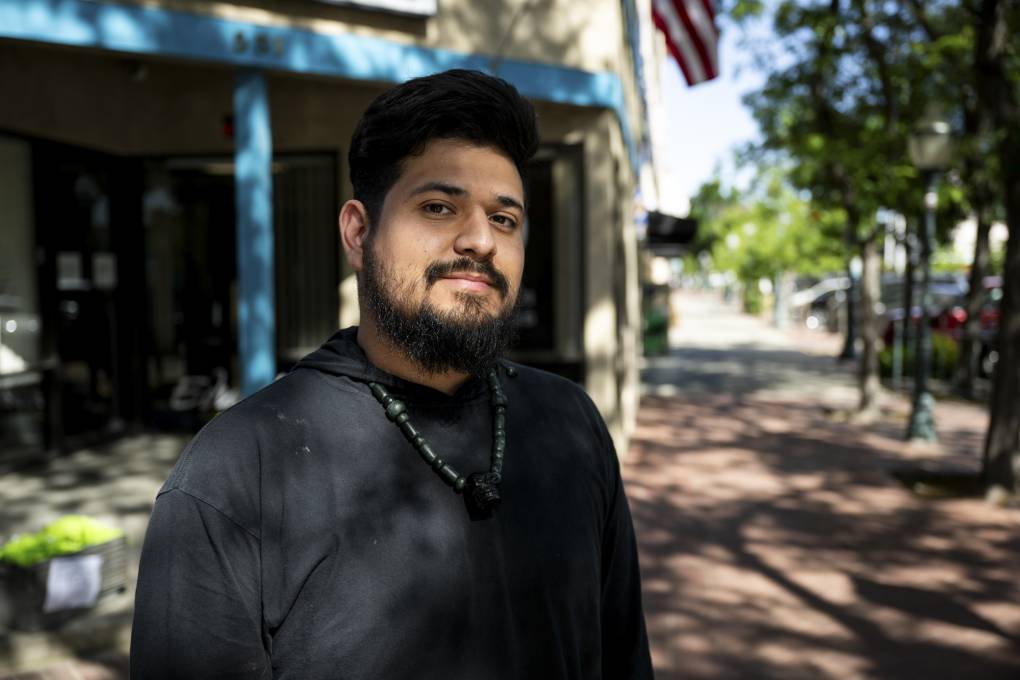
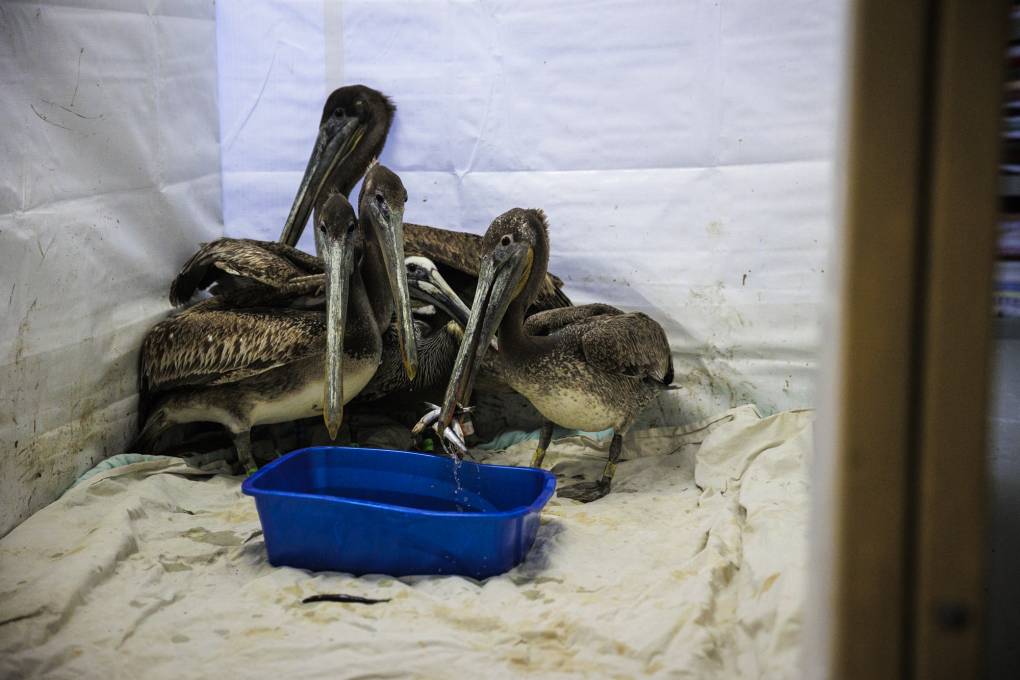
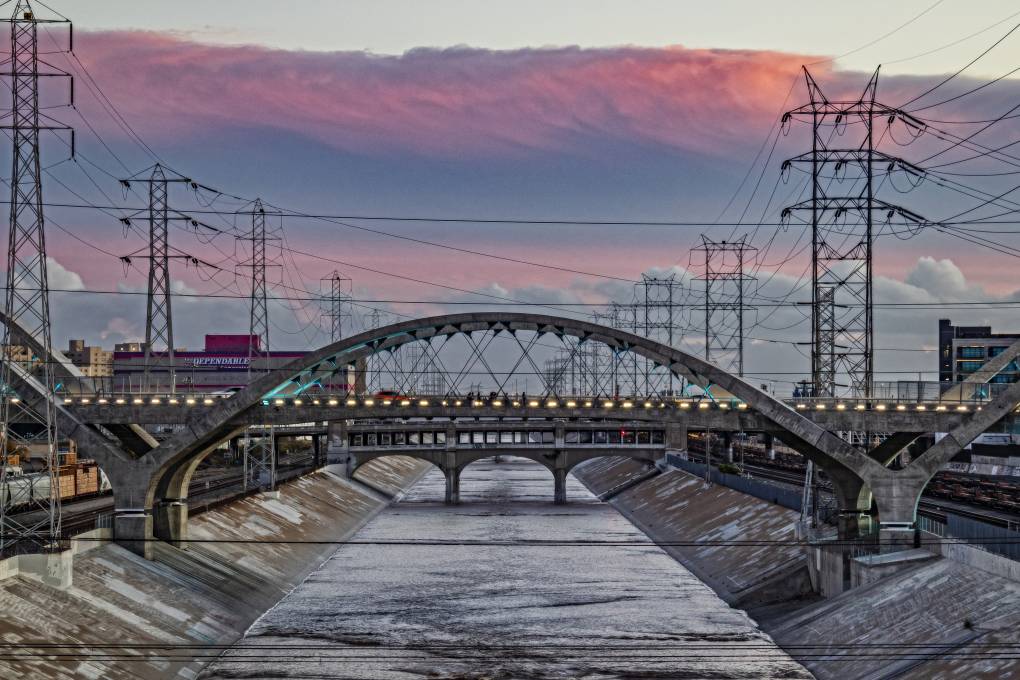
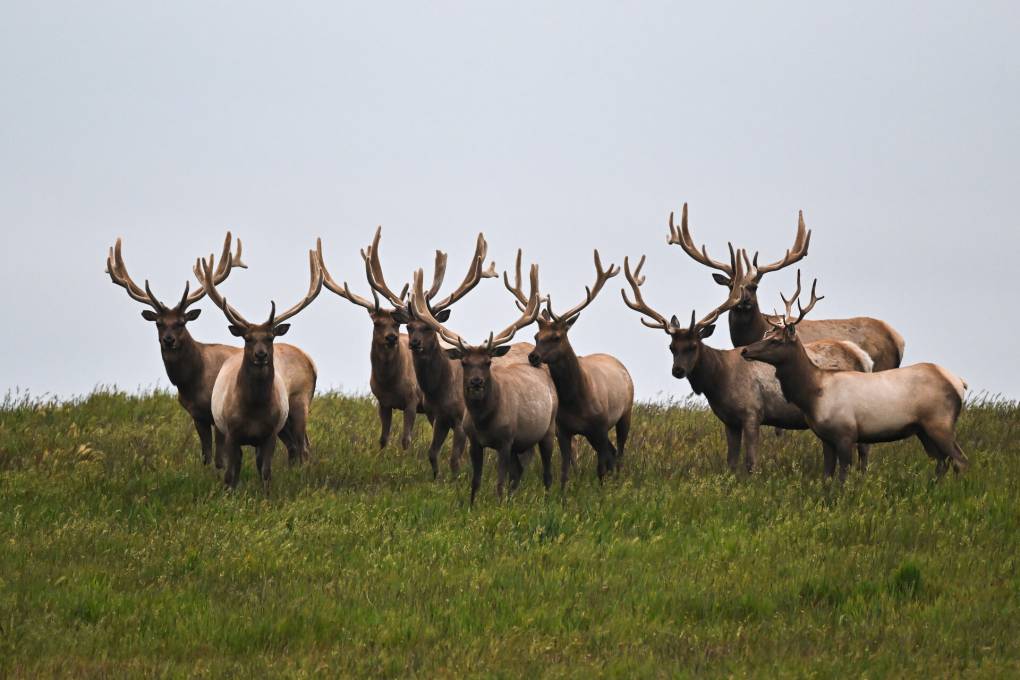
window.__IS_SSR__=true
window.__INITIAL_STATE__={
"attachmentsReducer": {
"audio_0": {
"type": "attachments",
"id": "audio_0",
"imgSizes": {
"kqedFullSize": {
"file": "https://ww2.kqed.org/news/wp-content/themes/KQED-unified/img/audio_bgs/background0.jpg"
}
}
},
"audio_1": {
"type": "attachments",
"id": "audio_1",
"imgSizes": {
"kqedFullSize": {
"file": "https://ww2.kqed.org/news/wp-content/themes/KQED-unified/img/audio_bgs/background1.jpg"
}
}
},
"audio_2": {
"type": "attachments",
"id": "audio_2",
"imgSizes": {
"kqedFullSize": {
"file": "https://ww2.kqed.org/news/wp-content/themes/KQED-unified/img/audio_bgs/background2.jpg"
}
}
},
"audio_3": {
"type": "attachments",
"id": "audio_3",
"imgSizes": {
"kqedFullSize": {
"file": "https://ww2.kqed.org/news/wp-content/themes/KQED-unified/img/audio_bgs/background3.jpg"
}
}
},
"audio_4": {
"type": "attachments",
"id": "audio_4",
"imgSizes": {
"kqedFullSize": {
"file": "https://ww2.kqed.org/news/wp-content/themes/KQED-unified/img/audio_bgs/background4.jpg"
}
}
},
"placeholder": {
"type": "attachments",
"id": "placeholder",
"imgSizes": {
"thumbnail": {
"file": "https://cdn.kqed.org/wp-content/uploads/2024/12/KQED-Default-Image-816638274-2000x1333-1-160x107.jpg",
"width": 160,
"height": 107,
"mimeType": "image/jpeg"
},
"medium": {
"file": "https://cdn.kqed.org/wp-content/uploads/2024/12/KQED-Default-Image-816638274-2000x1333-1-800x533.jpg",
"width": 800,
"height": 533,
"mimeType": "image/jpeg"
},
"medium_large": {
"file": "https://cdn.kqed.org/wp-content/uploads/2024/12/KQED-Default-Image-816638274-2000x1333-1-768x512.jpg",
"width": 768,
"height": 512,
"mimeType": "image/jpeg"
},
"large": {
"file": "https://cdn.kqed.org/wp-content/uploads/2024/12/KQED-Default-Image-816638274-2000x1333-1-1020x680.jpg",
"width": 1020,
"height": 680,
"mimeType": "image/jpeg"
},
"1536x1536": {
"file": "https://cdn.kqed.org/wp-content/uploads/2024/12/KQED-Default-Image-816638274-2000x1333-1-1536x1024.jpg",
"width": 1536,
"height": 1024,
"mimeType": "image/jpeg"
},
"fd-lrg": {
"file": "https://cdn.kqed.org/wp-content/uploads/2024/12/KQED-Default-Image-816638274-2000x1333-1-1536x1024.jpg",
"width": 1536,
"height": 1024,
"mimeType": "image/jpeg"
},
"fd-med": {
"file": "https://cdn.kqed.org/wp-content/uploads/2024/12/KQED-Default-Image-816638274-2000x1333-1-1020x680.jpg",
"width": 1020,
"height": 680,
"mimeType": "image/jpeg"
},
"fd-sm": {
"file": "https://cdn.kqed.org/wp-content/uploads/2024/12/KQED-Default-Image-816638274-2000x1333-1-800x533.jpg",
"width": 800,
"height": 533,
"mimeType": "image/jpeg"
},
"post-thumbnail": {
"file": "https://cdn.kqed.org/wp-content/uploads/2024/12/KQED-Default-Image-816638274-2000x1333-1-672x372.jpg",
"width": 672,
"height": 372,
"mimeType": "image/jpeg"
},
"twentyfourteen-full-width": {
"file": "https://cdn.kqed.org/wp-content/uploads/2024/12/KQED-Default-Image-816638274-2000x1333-1-1038x576.jpg",
"width": 1038,
"height": 576,
"mimeType": "image/jpeg"
},
"xxsmall": {
"file": "https://cdn.kqed.org/wp-content/uploads/2024/12/KQED-Default-Image-816638274-2000x1333-1-160x107.jpg",
"width": 160,
"height": 107,
"mimeType": "image/jpeg"
},
"xsmall": {
"file": "https://cdn.kqed.org/wp-content/uploads/2024/12/KQED-Default-Image-816638274-2000x1333-1-672x372.jpg",
"width": 672,
"height": 372,
"mimeType": "image/jpeg"
},
"small": {
"file": "https://cdn.kqed.org/wp-content/uploads/2024/12/KQED-Default-Image-816638274-2000x1333-1-672x372.jpg",
"width": 672,
"height": 372,
"mimeType": "image/jpeg"
},
"xlarge": {
"file": "https://cdn.kqed.org/wp-content/uploads/2024/12/KQED-Default-Image-816638274-2000x1333-1-1020x680.jpg",
"width": 1020,
"height": 680,
"mimeType": "image/jpeg"
},
"full-width": {
"file": "https://cdn.kqed.org/wp-content/uploads/2024/12/KQED-Default-Image-816638274-2000x1333-1-1920x1280.jpg",
"width": 1920,
"height": 1280,
"mimeType": "image/jpeg"
},
"guest-author-32": {
"file": "https://cdn.kqed.org/wp-content/uploads/2025/01/KQED-Default-Image-816638274-1333x1333-1-160x160.jpg",
"width": 32,
"height": 32,
"mimeType": "image/jpeg"
},
"guest-author-50": {
"file": "https://cdn.kqed.org/wp-content/uploads/2025/01/KQED-Default-Image-816638274-1333x1333-1-160x160.jpg",
"width": 50,
"height": 50,
"mimeType": "image/jpeg"
},
"guest-author-64": {
"file": "https://cdn.kqed.org/wp-content/uploads/2025/01/KQED-Default-Image-816638274-1333x1333-1-160x160.jpg",
"width": 64,
"height": 64,
"mimeType": "image/jpeg"
},
"guest-author-96": {
"file": "https://cdn.kqed.org/wp-content/uploads/2025/01/KQED-Default-Image-816638274-1333x1333-1-160x160.jpg",
"width": 96,
"height": 96,
"mimeType": "image/jpeg"
},
"guest-author-128": {
"file": "https://cdn.kqed.org/wp-content/uploads/2025/01/KQED-Default-Image-816638274-1333x1333-1-160x160.jpg",
"width": 128,
"height": 128,
"mimeType": "image/jpeg"
},
"detail": {
"file": "https://cdn.kqed.org/wp-content/uploads/2025/01/KQED-Default-Image-816638274-1333x1333-1-160x160.jpg",
"width": 160,
"height": 160,
"mimeType": "image/jpeg"
},
"kqedFullSize": {
"file": "https://cdn.kqed.org/wp-content/uploads/2024/12/KQED-Default-Image-816638274-2000x1333-1.jpg",
"width": 2000,
"height": 1333
}
}
},
"science_1992654": {
"type": "attachments",
"id": "science_1992654",
"meta": {
"index": "attachments_1716263798",
"site": "science",
"id": "1992654",
"found": true
},
"parent": 0,
"imgSizes": {
"twentyfourteen-full-width": {
"file": "https://cdn.kqed.org/wp-content/uploads/sites/35/2024/05/240508-SWINGDISTRICTCLIMATE-12-BL-KQED-1038x576.jpg",
"width": 1038,
"mimeType": "image/jpeg",
"height": 576
},
"thumbnail": {
"file": "https://cdn.kqed.org/wp-content/uploads/sites/35/2024/05/240508-SWINGDISTRICTCLIMATE-12-BL-KQED-160x107.jpg",
"width": 160,
"mimeType": "image/jpeg",
"height": 107
},
"post-thumbnail": {
"file": "https://cdn.kqed.org/wp-content/uploads/sites/35/2024/05/240508-SWINGDISTRICTCLIMATE-12-BL-KQED-672x372.jpg",
"width": 672,
"mimeType": "image/jpeg",
"height": 372
},
"kqedFullSize": {
"file": "https://cdn.kqed.org/wp-content/uploads/sites/35/2024/05/240508-SWINGDISTRICTCLIMATE-12-BL-KQED.jpg",
"width": 2000,
"height": 1333
},
"large": {
"file": "https://cdn.kqed.org/wp-content/uploads/sites/35/2024/05/240508-SWINGDISTRICTCLIMATE-12-BL-KQED-1020x680.jpg",
"width": 1020,
"mimeType": "image/jpeg",
"height": 680
},
"1536x1536": {
"file": "https://cdn.kqed.org/wp-content/uploads/sites/35/2024/05/240508-SWINGDISTRICTCLIMATE-12-BL-KQED-1536x1024.jpg",
"width": 1536,
"mimeType": "image/jpeg",
"height": 1024
},
"full-width": {
"file": "https://cdn.kqed.org/wp-content/uploads/sites/35/2024/05/240508-SWINGDISTRICTCLIMATE-12-BL-KQED-1920x1280.jpg",
"width": 1920,
"mimeType": "image/jpeg",
"height": 1280
},
"medium": {
"file": "https://cdn.kqed.org/wp-content/uploads/sites/35/2024/05/240508-SWINGDISTRICTCLIMATE-12-BL-KQED-800x533.jpg",
"width": 800,
"mimeType": "image/jpeg",
"height": 533
},
"medium_large": {
"file": "https://cdn.kqed.org/wp-content/uploads/sites/35/2024/05/240508-SWINGDISTRICTCLIMATE-12-BL-KQED-768x512.jpg",
"width": 768,
"mimeType": "image/jpeg",
"height": 512
}
},
"publishDate": 1715274590,
"modified": 1715373902,
"caption": "Sebastian Cervantes, an organizer in the Central Valley, stands in Merced, California, on May 8, 2024.",
"description": null,
"title": "240508-SWINGDISTRICTCLIMATE-12-BL-KQED",
"credit": "Beth LaBerge/KQED",
"status": "inherit",
"altTag": null,
"isLoading": false,
"fetchFailed": false
},
"science_1992725": {
"type": "attachments",
"id": "science_1992725",
"meta": {
"index": "attachments_1716263798",
"site": "science",
"id": "1992725",
"found": true
},
"parent": 1992713,
"imgSizes": {
"twentyfourteen-full-width": {
"file": "https://cdn.kqed.org/wp-content/uploads/sites/35/2024/05/240510-SICK-PELICANS-MD-10-KQED-1-1038x576.jpg",
"width": 1038,
"mimeType": "image/jpeg",
"height": 576
},
"thumbnail": {
"file": "https://cdn.kqed.org/wp-content/uploads/sites/35/2024/05/240510-SICK-PELICANS-MD-10-KQED-1-160x107.jpg",
"width": 160,
"mimeType": "image/jpeg",
"height": 107
},
"post-thumbnail": {
"file": "https://cdn.kqed.org/wp-content/uploads/sites/35/2024/05/240510-SICK-PELICANS-MD-10-KQED-1-672x372.jpg",
"width": 672,
"mimeType": "image/jpeg",
"height": 372
},
"kqedFullSize": {
"file": "https://cdn.kqed.org/wp-content/uploads/sites/35/2024/05/240510-SICK-PELICANS-MD-10-KQED-1.jpg",
"width": 2000,
"height": 1333
},
"large": {
"file": "https://cdn.kqed.org/wp-content/uploads/sites/35/2024/05/240510-SICK-PELICANS-MD-10-KQED-1-1020x680.jpg",
"width": 1020,
"mimeType": "image/jpeg",
"height": 680
},
"1536x1536": {
"file": "https://cdn.kqed.org/wp-content/uploads/sites/35/2024/05/240510-SICK-PELICANS-MD-10-KQED-1-1536x1024.jpg",
"width": 1536,
"mimeType": "image/jpeg",
"height": 1024
},
"full-width": {
"file": "https://cdn.kqed.org/wp-content/uploads/sites/35/2024/05/240510-SICK-PELICANS-MD-10-KQED-1-1920x1280.jpg",
"width": 1920,
"mimeType": "image/jpeg",
"height": 1280
},
"medium": {
"file": "https://cdn.kqed.org/wp-content/uploads/sites/35/2024/05/240510-SICK-PELICANS-MD-10-KQED-1-800x533.jpg",
"width": 800,
"mimeType": "image/jpeg",
"height": 533
},
"medium_large": {
"file": "https://cdn.kqed.org/wp-content/uploads/sites/35/2024/05/240510-SICK-PELICANS-MD-10-KQED-1-768x512.jpg",
"width": 768,
"mimeType": "image/jpeg",
"height": 512
}
},
"publishDate": 1715477285,
"modified": 1715477334,
"caption": "Rescued California Brown Pelicans are fed frozen fish at International Bird Rescue in Fairfield on May 11, 2024.",
"description": null,
"title": "240510-SICK PELICANS-MD-10-KQED-1",
"credit": "Martin do Nascimento/KQED",
"status": "inherit",
"altTag": null,
"isLoading": false,
"fetchFailed": false
},
"science_1992646": {
"type": "attachments",
"id": "science_1992646",
"meta": {
"index": "attachments_1716263798",
"site": "science",
"id": "1992646",
"found": true
},
"parent": 1992639,
"imgSizes": {
"twentyfourteen-full-width": {
"file": "https://cdn.kqed.org/wp-content/uploads/sites/35/2024/05/GettyImages-1457745918-1038x576.jpg",
"width": 1038,
"mimeType": "image/jpeg",
"height": 576
},
"thumbnail": {
"file": "https://cdn.kqed.org/wp-content/uploads/sites/35/2024/05/GettyImages-1457745918-160x107.jpg",
"width": 160,
"mimeType": "image/jpeg",
"height": 107
},
"post-thumbnail": {
"file": "https://cdn.kqed.org/wp-content/uploads/sites/35/2024/05/GettyImages-1457745918-672x372.jpg",
"width": 672,
"mimeType": "image/jpeg",
"height": 372
},
"kqedFullSize": {
"file": "https://cdn.kqed.org/wp-content/uploads/sites/35/2024/05/GettyImages-1457745918-scaled.jpg",
"width": 2560,
"height": 1707
},
"2048x2048": {
"file": "https://cdn.kqed.org/wp-content/uploads/sites/35/2024/05/GettyImages-1457745918-2048x1365.jpg",
"width": 2048,
"mimeType": "image/jpeg",
"height": 1365
},
"large": {
"file": "https://cdn.kqed.org/wp-content/uploads/sites/35/2024/05/GettyImages-1457745918-1020x680.jpg",
"width": 1020,
"mimeType": "image/jpeg",
"height": 680
},
"1536x1536": {
"file": "https://cdn.kqed.org/wp-content/uploads/sites/35/2024/05/GettyImages-1457745918-1536x1024.jpg",
"width": 1536,
"mimeType": "image/jpeg",
"height": 1024
},
"full-width": {
"file": "https://cdn.kqed.org/wp-content/uploads/sites/35/2024/05/GettyImages-1457745918-1920x1280.jpg",
"width": 1920,
"mimeType": "image/jpeg",
"height": 1280
},
"medium": {
"file": "https://cdn.kqed.org/wp-content/uploads/sites/35/2024/05/GettyImages-1457745918-800x533.jpg",
"width": 800,
"mimeType": "image/jpeg",
"height": 533
},
"medium_large": {
"file": "https://cdn.kqed.org/wp-content/uploads/sites/35/2024/05/GettyImages-1457745918-768x512.jpg",
"width": 768,
"mimeType": "image/jpeg",
"height": 512
}
},
"publishDate": 1715211503,
"modified": 1715211600,
"caption": "California’s new proposal would vary by income. Low-income households would pay $6 or $12, while middle-class and high-income households would pay $24.",
"description": null,
"title": "New Sixth Street Bridge and Los Angeles River",
"credit": "Citizen of the Planet/Universal Images Group via Getty Images",
"status": "inherit",
"altTag": null,
"isLoading": false,
"fetchFailed": false
},
"science_1992626": {
"type": "attachments",
"id": "science_1992626",
"meta": {
"index": "attachments_1716263798",
"site": "science",
"id": "1992626",
"found": true
},
"parent": 1992625,
"imgSizes": {
"twentyfourteen-full-width": {
"file": "https://cdn.kqed.org/wp-content/uploads/sites/35/2024/05/GettyImages-1258343863_qut-1038x576.jpg",
"width": 1038,
"mimeType": "image/jpeg",
"height": 576
},
"thumbnail": {
"file": "https://cdn.kqed.org/wp-content/uploads/sites/35/2024/05/GettyImages-1258343863_qut-160x107.jpg",
"width": 160,
"mimeType": "image/jpeg",
"height": 107
},
"post-thumbnail": {
"file": "https://cdn.kqed.org/wp-content/uploads/sites/35/2024/05/GettyImages-1258343863_qut-672x372.jpg",
"width": 672,
"mimeType": "image/jpeg",
"height": 372
},
"kqedFullSize": {
"file": "https://cdn.kqed.org/wp-content/uploads/sites/35/2024/05/GettyImages-1258343863_qut.jpg",
"width": 1920,
"height": 1280
},
"large": {
"file": "https://cdn.kqed.org/wp-content/uploads/sites/35/2024/05/GettyImages-1258343863_qut-1020x680.jpg",
"width": 1020,
"mimeType": "image/jpeg",
"height": 680
},
"1536x1536": {
"file": "https://cdn.kqed.org/wp-content/uploads/sites/35/2024/05/GettyImages-1258343863_qut-1536x1024.jpg",
"width": 1536,
"mimeType": "image/jpeg",
"height": 1024
},
"medium": {
"file": "https://cdn.kqed.org/wp-content/uploads/sites/35/2024/05/GettyImages-1258343863_qut-800x533.jpg",
"width": 800,
"mimeType": "image/jpeg",
"height": 533
},
"medium_large": {
"file": "https://cdn.kqed.org/wp-content/uploads/sites/35/2024/05/GettyImages-1258343863_qut-768x512.jpg",
"width": 768,
"mimeType": "image/jpeg",
"height": 512
}
},
"publishDate": 1715126085,
"modified": 1715126144,
"caption": "Tule elks are seen at Point Reyes National Seashore of Inverness in California, United States on May 31, 2023. ",
"description": null,
"title": "Tule elks in Point Reyes National Seashore of California",
"credit": "Tayfun Coskun/Anadolu Agency via Getty Images",
"status": "inherit",
"altTag": "Brown and white elk with large antlers stand on green grass against a foggy backdrop.",
"isLoading": false,
"fetchFailed": false
},
"science_1981944": {
"type": "attachments",
"id": "science_1981944",
"meta": {
"index": "attachments_1716263798",
"site": "science",
"id": "1981944",
"found": true
},
"parent": 1981943,
"imgSizes": {
"twentyfourteen-full-width": {
"file": "https://cdn.kqed.org/wp-content/uploads/sites/35/2023/03/2023_03_10_kj_0135_oroville_spillway_release_drone_custom-1c4d8c2890281e48323fb324cfa8dc4fdda4bca7-1038x576.jpg",
"width": 1038,
"mimeType": "image/jpeg",
"height": 576
},
"thumbnail": {
"file": "https://cdn.kqed.org/wp-content/uploads/sites/35/2023/03/2023_03_10_kj_0135_oroville_spillway_release_drone_custom-1c4d8c2890281e48323fb324cfa8dc4fdda4bca7-160x111.jpg",
"width": 160,
"mimeType": "image/jpeg",
"height": 111
},
"post-thumbnail": {
"file": "https://cdn.kqed.org/wp-content/uploads/sites/35/2023/03/2023_03_10_kj_0135_oroville_spillway_release_drone_custom-1c4d8c2890281e48323fb324cfa8dc4fdda4bca7-672x372.jpg",
"width": 672,
"mimeType": "image/jpeg",
"height": 372
},
"kqedFullSize": {
"file": "https://cdn.kqed.org/wp-content/uploads/sites/35/2023/03/2023_03_10_kj_0135_oroville_spillway_release_drone_custom-1c4d8c2890281e48323fb324cfa8dc4fdda4bca7.jpg",
"width": 2500,
"height": 1730
},
"2048x2048": {
"file": "https://cdn.kqed.org/wp-content/uploads/sites/35/2023/03/2023_03_10_kj_0135_oroville_spillway_release_drone_custom-1c4d8c2890281e48323fb324cfa8dc4fdda4bca7-2048x1417.jpg",
"width": 2048,
"mimeType": "image/jpeg",
"height": 1417
},
"large": {
"file": "https://cdn.kqed.org/wp-content/uploads/sites/35/2023/03/2023_03_10_kj_0135_oroville_spillway_release_drone_custom-1c4d8c2890281e48323fb324cfa8dc4fdda4bca7-1020x706.jpg",
"width": 1020,
"mimeType": "image/jpeg",
"height": 706
},
"1536x1536": {
"file": "https://cdn.kqed.org/wp-content/uploads/sites/35/2023/03/2023_03_10_kj_0135_oroville_spillway_release_drone_custom-1c4d8c2890281e48323fb324cfa8dc4fdda4bca7-1536x1063.jpg",
"width": 1536,
"mimeType": "image/jpeg",
"height": 1063
},
"full-width": {
"file": "https://cdn.kqed.org/wp-content/uploads/sites/35/2023/03/2023_03_10_kj_0135_oroville_spillway_release_drone_custom-1c4d8c2890281e48323fb324cfa8dc4fdda4bca7-1920x1329.jpg",
"width": 1920,
"mimeType": "image/jpeg",
"height": 1329
},
"medium": {
"file": "https://cdn.kqed.org/wp-content/uploads/sites/35/2023/03/2023_03_10_kj_0135_oroville_spillway_release_drone_custom-1c4d8c2890281e48323fb324cfa8dc4fdda4bca7-800x554.jpg",
"width": 800,
"mimeType": "image/jpeg",
"height": 554
},
"medium_large": {
"file": "https://cdn.kqed.org/wp-content/uploads/sites/35/2023/03/2023_03_10_kj_0135_oroville_spillway_release_drone_custom-1c4d8c2890281e48323fb324cfa8dc4fdda4bca7-768x531.jpg",
"width": 768,
"mimeType": "image/jpeg",
"height": 531
}
},
"publishDate": 1679589957,
"modified": 1715188781,
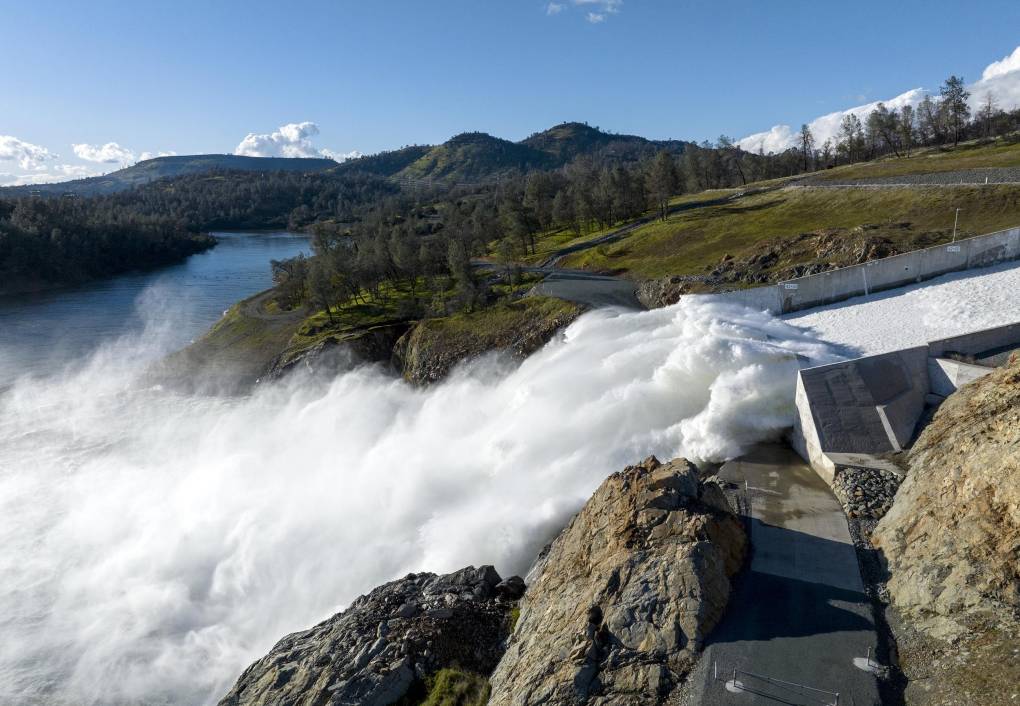
"caption": "Water pours out of Lake Oroville in Northern California in March 2023. Reservoir levels plummeted over the last three years but now have more water than they can hold.",
"description": "A drone provides an aerial view of the small cloud mist formed as water flows over the four energy dissipator blocks at the end of the Lake Oroville main spillway. The California Department of Water Resources increased the water release down the main spillway from 4,000 cubic feet per second (cfs) to 8,000 cfs. Main spillway releases will continue to manage lake levels in anticipation of rain and snowmelt. Photo taken March 10, 2023.\n\nKen James / California Department of Water Resources",
"title": "Water pours out of Lake Oroville in Northern California in March. Reservoirs levels plummeted over the last three years, but now have more water than they can hold.",
"credit": "Ken James/California Department of Water Resources",
"status": "inherit",
"altTag": "Water flowing at high speeds out of a lake.",
"isLoading": false,
"fetchFailed": false
},
"science_1992704": {
"type": "attachments",
"id": "science_1992704",
"meta": {
"index": "attachments_1716263798",
"site": "science",
"id": "1992704",
"found": true
},
"parent": 1992430,
"imgSizes": {
"twentyfourteen-full-width": {
"file": "https://cdn.kqed.org/wp-content/uploads/sites/35/2024/05/DL1106_Meet_the_Bug_You_Didnt_Know_You_Were_Eating_KQED-B-1038x576.jpg",
"width": 1038,
"mimeType": "image/jpeg",
"height": 576
},
"thumbnail": {
"file": "https://cdn.kqed.org/wp-content/uploads/sites/35/2024/05/DL1106_Meet_the_Bug_You_Didnt_Know_You_Were_Eating_KQED-B-160x90.jpg",
"width": 160,
"mimeType": "image/jpeg",
"height": 90
},
"post-thumbnail": {
"file": "https://cdn.kqed.org/wp-content/uploads/sites/35/2024/05/DL1106_Meet_the_Bug_You_Didnt_Know_You_Were_Eating_KQED-B-672x372.jpg",
"width": 672,
"mimeType": "image/jpeg",
"height": 372
},
"kqedFullSize": {
"file": "https://cdn.kqed.org/wp-content/uploads/sites/35/2024/05/DL1106_Meet_the_Bug_You_Didnt_Know_You_Were_Eating_KQED-B.jpg",
"width": 1920,
"height": 1080
},
"large": {
"file": "https://cdn.kqed.org/wp-content/uploads/sites/35/2024/05/DL1106_Meet_the_Bug_You_Didnt_Know_You_Were_Eating_KQED-B-1020x574.jpg",
"width": 1020,
"mimeType": "image/jpeg",
"height": 574
},
"1536x1536": {
"file": "https://cdn.kqed.org/wp-content/uploads/sites/35/2024/05/DL1106_Meet_the_Bug_You_Didnt_Know_You_Were_Eating_KQED-B-1536x864.jpg",
"width": 1536,
"mimeType": "image/jpeg",
"height": 864
},
"medium": {
"file": "https://cdn.kqed.org/wp-content/uploads/sites/35/2024/05/DL1106_Meet_the_Bug_You_Didnt_Know_You_Were_Eating_KQED-B-800x450.jpg",
"width": 800,
"mimeType": "image/jpeg",
"height": 450
},
"medium_large": {
"file": "https://cdn.kqed.org/wp-content/uploads/sites/35/2024/05/DL1106_Meet_the_Bug_You_Didnt_Know_You_Were_Eating_KQED-B-768x432.jpg",
"width": 768,
"mimeType": "image/jpeg",
"height": 432
}
},
"publishDate": 1715395596,
"modified": 1715395596,
"caption": null,
"description": null,
"title": "DL1106_Meet_the_Bug_You_Didnt_Know_You_Were_Eating_KQED-B",
"credit": null,
"status": "inherit",
"altTag": null,
"isLoading": false,
"fetchFailed": false
},
"science_1992604": {
"type": "attachments",
"id": "science_1992604",
"meta": {
"index": "attachments_1716263798",
"site": "science",
"id": "1992604",
"found": true
},
"parent": 1992597,
"imgSizes": {
"twentyfourteen-full-width": {
"file": "https://cdn.kqed.org/wp-content/uploads/sites/35/2024/05/GETTYIMAGES-2003732412-KQED-1038x576.jpg",
"width": 1038,
"mimeType": "image/jpeg",
"height": 576
},
"thumbnail": {
"file": "https://cdn.kqed.org/wp-content/uploads/sites/35/2024/05/GETTYIMAGES-2003732412-KQED-160x107.jpg",
"width": 160,
"mimeType": "image/jpeg",
"height": 107
},
"post-thumbnail": {
"file": "https://cdn.kqed.org/wp-content/uploads/sites/35/2024/05/GETTYIMAGES-2003732412-KQED-672x372.jpg",
"width": 672,
"mimeType": "image/jpeg",
"height": 372
},
"kqedFullSize": {
"file": "https://cdn.kqed.org/wp-content/uploads/sites/35/2024/05/GETTYIMAGES-2003732412-KQED.jpg",
"width": 2000,
"height": 1341
},
"large": {
"file": "https://cdn.kqed.org/wp-content/uploads/sites/35/2024/05/GETTYIMAGES-2003732412-KQED-1020x684.jpg",
"width": 1020,
"mimeType": "image/jpeg",
"height": 684
},
"1536x1536": {
"file": "https://cdn.kqed.org/wp-content/uploads/sites/35/2024/05/GETTYIMAGES-2003732412-KQED-1536x1030.jpg",
"width": 1536,
"mimeType": "image/jpeg",
"height": 1030
},
"full-width": {
"file": "https://cdn.kqed.org/wp-content/uploads/sites/35/2024/05/GETTYIMAGES-2003732412-KQED-1920x1287.jpg",
"width": 1920,
"mimeType": "image/jpeg",
"height": 1287
},
"medium": {
"file": "https://cdn.kqed.org/wp-content/uploads/sites/35/2024/05/GETTYIMAGES-2003732412-KQED-800x536.jpg",
"width": 800,
"mimeType": "image/jpeg",
"height": 536
},
"medium_large": {
"file": "https://cdn.kqed.org/wp-content/uploads/sites/35/2024/05/GETTYIMAGES-2003732412-KQED-768x515.jpg",
"width": 768,
"mimeType": "image/jpeg",
"height": 515
}
},
"publishDate": 1715030712,
"modified": 1715031489,
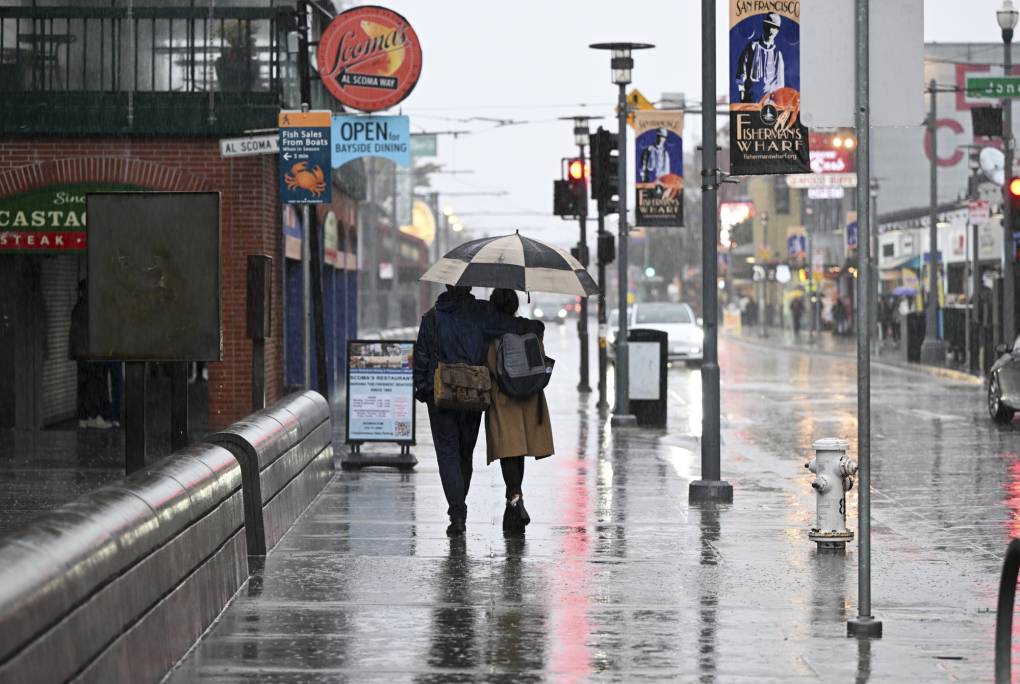
"caption": "Two people share an umbrella on a rainy day in Fisherman's Wharf, San Francisco, on Feb. 14, 2024.",
"description": null,
"title": "Rainy day in San Francisco",
"credit": "Tayfun Coskun/Anadolu via Getty Images",
"status": "inherit",
"altTag": null,
"isLoading": false,
"fetchFailed": false
},
"science_1992557": {
"type": "attachments",
"id": "science_1992557",
"meta": {
"index": "attachments_1716263798",
"site": "science",
"id": "1992557",
"found": true
},
"parent": 1992580,
"imgSizes": {
"twentyfourteen-full-width": {
"file": "https://cdn.kqed.org/wp-content/uploads/sites/35/2024/05/230814-AlvisoBay-23-BL_qut-1038x576.jpg",
"width": 1038,
"mimeType": "image/jpeg",
"height": 576
},
"thumbnail": {
"file": "https://cdn.kqed.org/wp-content/uploads/sites/35/2024/05/230814-AlvisoBay-23-BL_qut-160x107.jpg",
"width": 160,
"mimeType": "image/jpeg",
"height": 107
},
"post-thumbnail": {
"file": "https://cdn.kqed.org/wp-content/uploads/sites/35/2024/05/230814-AlvisoBay-23-BL_qut-672x372.jpg",
"width": 672,
"mimeType": "image/jpeg",
"height": 372
},
"kqedFullSize": {
"file": "https://cdn.kqed.org/wp-content/uploads/sites/35/2024/05/230814-AlvisoBay-23-BL_qut.jpg",
"width": 1920,
"height": 1280
},
"large": {
"file": "https://cdn.kqed.org/wp-content/uploads/sites/35/2024/05/230814-AlvisoBay-23-BL_qut-1020x680.jpg",
"width": 1020,
"mimeType": "image/jpeg",
"height": 680
},
"1536x1536": {
"file": "https://cdn.kqed.org/wp-content/uploads/sites/35/2024/05/230814-AlvisoBay-23-BL_qut-1536x1024.jpg",
"width": 1536,
"mimeType": "image/jpeg",
"height": 1024
},
"medium": {
"file": "https://cdn.kqed.org/wp-content/uploads/sites/35/2024/05/230814-AlvisoBay-23-BL_qut-800x533.jpg",
"width": 800,
"mimeType": "image/jpeg",
"height": 533
},
"medium_large": {
"file": "https://cdn.kqed.org/wp-content/uploads/sites/35/2024/05/230814-AlvisoBay-23-BL_qut-768x512.jpg",
"width": 768,
"mimeType": "image/jpeg",
"height": 512
}
},
"publishDate": 1714611223,
"modified": 1714829247,
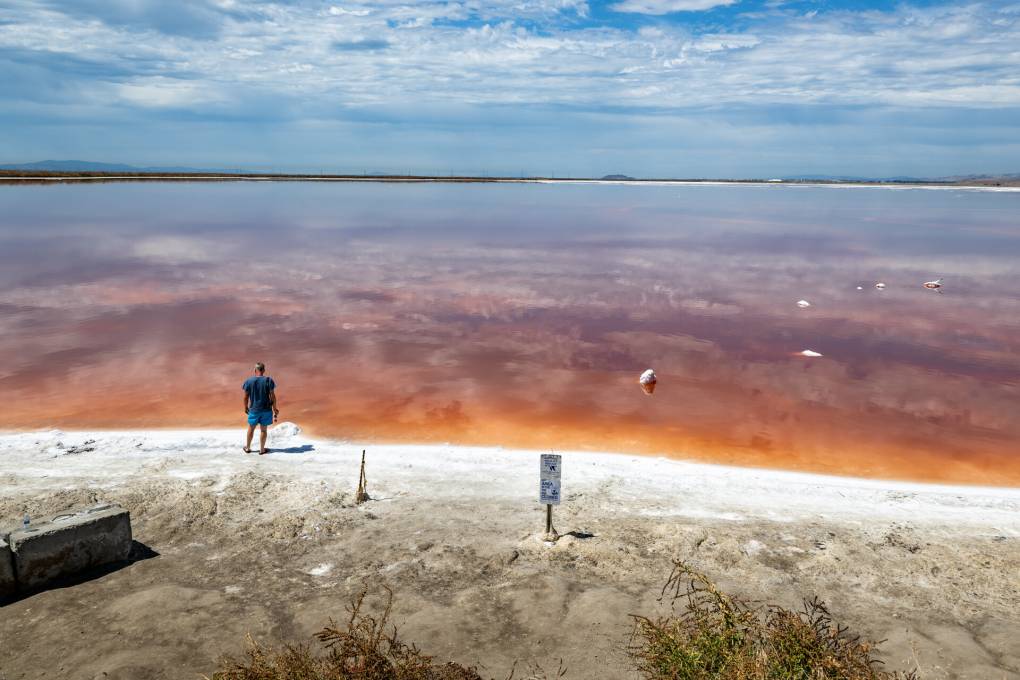
"caption": "Clumps of salt stick out of the water at a salt pond in Alviso on Aug. 15, 2023, a district of San José located on the southern shores of San Francisco Bay.",
"description": null,
"title": "230814-AlvisoBay-23-BL_qut",
"credit": "Beth LaBerge/KQED",
"status": "inherit",
"altTag": null,
"isLoading": false,
"fetchFailed": false
},
"science_1992564": {
"type": "attachments",
"id": "science_1992564",
"meta": {
"index": "attachments_1716263798",
"site": "science",
"id": "1992564",
"found": true
},
"parent": 1992558,
"imgSizes": {
"twentyfourteen-full-width": {
"file": "https://cdn.kqed.org/wp-content/uploads/sites/35/2024/05/GettyImages-93084798-1038x576.jpg",
"width": 1038,
"mimeType": "image/jpeg",
"height": 576
},
"thumbnail": {
"file": "https://cdn.kqed.org/wp-content/uploads/sites/35/2024/05/GettyImages-93084798-160x107.jpg",
"width": 160,
"mimeType": "image/jpeg",
"height": 107
},
"post-thumbnail": {
"file": "https://cdn.kqed.org/wp-content/uploads/sites/35/2024/05/GettyImages-93084798-672x372.jpg",
"width": 672,
"mimeType": "image/jpeg",
"height": 372
},
"kqedFullSize": {
"file": "https://cdn.kqed.org/wp-content/uploads/sites/35/2024/05/GettyImages-93084798-scaled.jpg",
"width": 2560,
"height": 1715
},
"2048x2048": {
"file": "https://cdn.kqed.org/wp-content/uploads/sites/35/2024/05/GettyImages-93084798-2048x1372.jpg",
"width": 2048,
"mimeType": "image/jpeg",
"height": 1372
},
"large": {
"file": "https://cdn.kqed.org/wp-content/uploads/sites/35/2024/05/GettyImages-93084798-1020x683.jpg",
"width": 1020,
"mimeType": "image/jpeg",
"height": 683
},
"1536x1536": {
"file": "https://cdn.kqed.org/wp-content/uploads/sites/35/2024/05/GettyImages-93084798-1536x1029.jpg",
"width": 1536,
"mimeType": "image/jpeg",
"height": 1029
},
"full-width": {
"file": "https://cdn.kqed.org/wp-content/uploads/sites/35/2024/05/GettyImages-93084798-1920x1286.jpg",
"width": 1920,
"mimeType": "image/jpeg",
"height": 1286
},
"medium": {
"file": "https://cdn.kqed.org/wp-content/uploads/sites/35/2024/05/GettyImages-93084798-800x536.jpg",
"width": 800,
"mimeType": "image/jpeg",
"height": 536
},
"medium_large": {
"file": "https://cdn.kqed.org/wp-content/uploads/sites/35/2024/05/GettyImages-93084798-768x515.jpg",
"width": 768,
"mimeType": "image/jpeg",
"height": 515
}
},
"publishDate": 1714667945,
"modified": 1714680033,
"caption": "FathomVerse is a free game that allows anyone with a phone or tablet to participate in ocean exploration and discovery.",
"description": null,
"title": "Jelly fishes",
"credit": "Monterey Bay Aquarium",
"status": "inherit",
"altTag": "Illuminating jellyfish are seen swimming in water that appears to be blue.",
"isLoading": false,
"fetchFailed": false
},
"science_1992539": {
"type": "attachments",
"id": "science_1992539",
"meta": {
"index": "attachments_1716263798",
"site": "science",
"id": "1992539",
"found": true
},
"parent": 1992526,
"imgSizes": {
"twentyfourteen-full-width": {
"file": "https://cdn.kqed.org/wp-content/uploads/sites/35/2024/05/2019_1126_LSST_Raft_14_Installation_Orrell-34567-1038x576.jpg",
"width": 1038,
"mimeType": "image/jpeg",
"height": 576
},
"thumbnail": {
"file": "https://cdn.kqed.org/wp-content/uploads/sites/35/2024/05/2019_1126_LSST_Raft_14_Installation_Orrell-34567-160x107.jpg",
"width": 160,
"mimeType": "image/jpeg",
"height": 107
},
"post-thumbnail": {
"file": "https://cdn.kqed.org/wp-content/uploads/sites/35/2024/05/2019_1126_LSST_Raft_14_Installation_Orrell-34567-672x372.jpg",
"width": 672,
"mimeType": "image/jpeg",
"height": 372
},
"kqedFullSize": {
"file": "https://cdn.kqed.org/wp-content/uploads/sites/35/2024/05/2019_1126_LSST_Raft_14_Installation_Orrell-34567.jpg",
"width": 1920,
"height": 1280
},
"large": {
"file": "https://cdn.kqed.org/wp-content/uploads/sites/35/2024/05/2019_1126_LSST_Raft_14_Installation_Orrell-34567-1020x680.jpg",
"width": 1020,
"mimeType": "image/jpeg",
"height": 680
},
"1536x1536": {
"file": "https://cdn.kqed.org/wp-content/uploads/sites/35/2024/05/2019_1126_LSST_Raft_14_Installation_Orrell-34567-1536x1024.jpg",
"width": 1536,
"mimeType": "image/jpeg",
"height": 1024
},
"medium": {
"file": "https://cdn.kqed.org/wp-content/uploads/sites/35/2024/05/2019_1126_LSST_Raft_14_Installation_Orrell-34567-800x533.jpg",
"width": 800,
"mimeType": "image/jpeg",
"height": 533
},
"medium_large": {
"file": "https://cdn.kqed.org/wp-content/uploads/sites/35/2024/05/2019_1126_LSST_Raft_14_Installation_Orrell-34567-768x512.jpg",
"width": 768,
"mimeType": "image/jpeg",
"height": 512
}
},
"publishDate": 1714592331,
"modified": 1714598483,
"caption": "SLAC scientists work to install sensors in the world's biggest digital camera in the winter of 2019. The camera, completed in April, was custom-built for the Vera C. Rubin Observatory under construction in Chile and will spend the next decade surveying the southern night sky.",
"description": null,
"title": "2019_1126_LSST_Raft_14_Installation_Orrell-34567",
"credit": "Courtesy Jacqueline Orrell/SLAC National Accelerator Laboratory",
"status": "inherit",
"altTag": null,
"isLoading": false,
"fetchFailed": false
},
"science_1992516": {
"type": "attachments",
"id": "science_1992516",
"meta": {
"index": "attachments_1716263798",
"site": "science",
"id": "1992516",
"found": true
},
"parent": 1992513,
"imgSizes": {
"twentyfourteen-full-width": {
"file": "https://cdn.kqed.org/wp-content/uploads/sites/35/2024/04/GettyImages-1348746232_qut-1038x576.jpg",
"width": 1038,
"mimeType": "image/jpeg",
"height": 576
},
"thumbnail": {
"file": "https://cdn.kqed.org/wp-content/uploads/sites/35/2024/04/GettyImages-1348746232_qut-160x103.jpg",
"width": 160,
"mimeType": "image/jpeg",
"height": 103
},
"post-thumbnail": {
"file": "https://cdn.kqed.org/wp-content/uploads/sites/35/2024/04/GettyImages-1348746232_qut-672x372.jpg",
"width": 672,
"mimeType": "image/jpeg",
"height": 372
},
"kqedFullSize": {
"file": "https://cdn.kqed.org/wp-content/uploads/sites/35/2024/04/GettyImages-1348746232_qut.jpg",
"width": 1920,
"height": 1238
},
"large": {
"file": "https://cdn.kqed.org/wp-content/uploads/sites/35/2024/04/GettyImages-1348746232_qut-1020x658.jpg",
"width": 1020,
"mimeType": "image/jpeg",
"height": 658
},
"1536x1536": {
"file": "https://cdn.kqed.org/wp-content/uploads/sites/35/2024/04/GettyImages-1348746232_qut-1536x990.jpg",
"width": 1536,
"mimeType": "image/jpeg",
"height": 990
},
"medium": {
"file": "https://cdn.kqed.org/wp-content/uploads/sites/35/2024/04/GettyImages-1348746232_qut-800x516.jpg",
"width": 800,
"mimeType": "image/jpeg",
"height": 516
},
"medium_large": {
"file": "https://cdn.kqed.org/wp-content/uploads/sites/35/2024/04/GettyImages-1348746232_qut-768x495.jpg",
"width": 768,
"mimeType": "image/jpeg",
"height": 495
}
},
"publishDate": 1714511665,
"modified": 1714519104,
"caption": " A car drives along a flooded street in Ross on Oct. 24, 2021. ",
"description": null,
"title": "\"Bomb Cyclone\" Brings Heavy Precipitation To Northwest United States",
"credit": "Justin Sullivan/Getty Images",
"status": "inherit",
"altTag": "A car drives through water on a road, causing a splash with a sign that says 'Flooded' to the right.",
"isLoading": false,
"fetchFailed": false
},
"science_1992476": {
"type": "attachments",
"id": "science_1992476",
"meta": {
"index": "attachments_1716263798",
"site": "science",
"id": "1992476",
"found": true
},
"parent": 0,
"imgSizes": {
"twentyfourteen-full-width": {
"file": "https://cdn.kqed.org/wp-content/uploads/sites/35/2024/04/20240423_RITGER_CLIMATE-WEEK-DAY-2_72212-KQED-1038x576.jpg",
"width": 1038,
"mimeType": "image/jpeg",
"height": 576
},
"thumbnail": {
"file": "https://cdn.kqed.org/wp-content/uploads/sites/35/2024/04/20240423_RITGER_CLIMATE-WEEK-DAY-2_72212-KQED-160x107.jpg",
"width": 160,
"mimeType": "image/jpeg",
"height": 107
},
"post-thumbnail": {
"file": "https://cdn.kqed.org/wp-content/uploads/sites/35/2024/04/20240423_RITGER_CLIMATE-WEEK-DAY-2_72212-KQED-672x372.jpg",
"width": 672,
"mimeType": "image/jpeg",
"height": 372
},
"kqedFullSize": {
"file": "https://cdn.kqed.org/wp-content/uploads/sites/35/2024/04/20240423_RITGER_CLIMATE-WEEK-DAY-2_72212-KQED.jpg",
"width": 2000,
"height": 1333
},
"large": {
"file": "https://cdn.kqed.org/wp-content/uploads/sites/35/2024/04/20240423_RITGER_CLIMATE-WEEK-DAY-2_72212-KQED-1020x680.jpg",
"width": 1020,
"mimeType": "image/jpeg",
"height": 680
},
"1536x1536": {
"file": "https://cdn.kqed.org/wp-content/uploads/sites/35/2024/04/20240423_RITGER_CLIMATE-WEEK-DAY-2_72212-KQED-1536x1024.jpg",
"width": 1536,
"mimeType": "image/jpeg",
"height": 1024
},
"full-width": {
"file": "https://cdn.kqed.org/wp-content/uploads/sites/35/2024/04/20240423_RITGER_CLIMATE-WEEK-DAY-2_72212-KQED-1920x1280.jpg",
"width": 1920,
"mimeType": "image/jpeg",
"height": 1280
},
"medium": {
"file": "https://cdn.kqed.org/wp-content/uploads/sites/35/2024/04/20240423_RITGER_CLIMATE-WEEK-DAY-2_72212-KQED-800x533.jpg",
"width": 800,
"mimeType": "image/jpeg",
"height": 533
},
"medium_large": {
"file": "https://cdn.kqed.org/wp-content/uploads/sites/35/2024/04/20240423_RITGER_CLIMATE-WEEK-DAY-2_72212-KQED-768x512.jpg",
"width": 768,
"mimeType": "image/jpeg",
"height": 512
}
},
"publishDate": 1714067040,
"modified": 1714077922,
"caption": "California Secretary of Natural Resources Wade Crowfoot is interviewed by KQED reporter Danielle Venton for Climate One at the Commonwealth Club in San Francisco on April 23, 2024",
"description": null,
"title": "20240423_RITGER_CLIMATE WEEK DAY 2_72212-KQED",
"credit": "Courtesy of Climate One/Commonwealth Club",
"status": "inherit",
"altTag": "A man wearing a dark business suit sits next to a woman with a dark jacket with white designs on a stage.",
"isLoading": false,
"fetchFailed": false
}
},
"audioPlayerReducer": {
"postId": "stream_live",
"isPaused": true,
"isPlaying": false,
"pfsActive": false,
"pledgeModalIsOpen": true,
"playerDrawerIsOpen": false,
"liveAudioPlayStartedAt": 0,
"liveAudioPlayContext": ""
},
"authorsReducer": {
"byline_science_1992713": {
"type": "authors",
"id": "byline_science_1992713",
"meta": {
"override": true
},
"slug": "byline_science_1992713",
"name": "\u003ca href=\"https://www.kqed.org/author/afinney\">Annelise Finney\u003c/a>",
"isLoading": false
},
"byline_science_1992639": {
"type": "authors",
"id": "byline_science_1992639",
"meta": {
"override": true
},
"slug": "byline_science_1992639",
"name": "Alix Soliman, Guy Marzorati and Kevin Stark",
"isLoading": false
},
"byline_science_1992580": {
"type": "authors",
"id": "byline_science_1992580",
"meta": {
"override": true
},
"slug": "byline_science_1992580",
"name": "\u003ca href=\"https://www.kqed.org/author/jgeha\">Joseph Geha\u003c/a>",
"isLoading": false
},
"dventon": {
"type": "authors",
"id": "11088",
"meta": {
"index": "authors_1716337520",
"id": "11088",
"found": true
},
"name": "Danielle Venton",
"firstName": "Danielle",
"lastName": "Venton",
"slug": "dventon",
"email": "dventon@kqed.org",
"display_author_email": true,
"staff_mastheads": [
"science"
],
"title": "Science reporter",
"bio": "Danielle Venton is a reporter for KQED Science. She covers wildfires, space and oceans (though she is prone to sea sickness).\r\n\r\nBefore joining KQED in 2015, Danielle was a staff reporter at KRCB in Sonoma County and a freelancer. She studied science communication at UC Santa Cruz and formerly worked at CERN in Geneva, Switzerland where she wrote about computing. She lives in Sonoma County and enjoys backpacking.",
"avatar": "https://secure.gravatar.com/avatar/37b292b5c40c8d93959c4f48d73b5286f41b7abd8588277e941905a3ed4c801c?s=600&d=blank&r=g",
"twitter": "DanielleVenton",
"bluesky": null,
"facebook": null,
"instagram": null,
"linkedin": null,
"sites": [
{
"site": "arts",
"roles": [
"contributor"
]
},
{
"site": "news",
"roles": [
"editor"
]
},
{
"site": "futureofyou",
"roles": [
"editor"
]
},
{
"site": "science",
"roles": [
"editor"
]
},
{
"site": "liveblog",
"roles": [
"contributor"
]
}
],
"headData": {
"title": "Danielle Venton | KQED",
"description": "Science reporter",
"ogImgSrc": "https://secure.gravatar.com/avatar/37b292b5c40c8d93959c4f48d73b5286f41b7abd8588277e941905a3ed4c801c?s=600&d=blank&r=g",
"twImgSrc": "https://secure.gravatar.com/avatar/37b292b5c40c8d93959c4f48d73b5286f41b7abd8588277e941905a3ed4c801c?s=600&d=blank&r=g"
},
"isLoading": false,
"link": "/author/dventon"
},
"smohamad": {
"type": "authors",
"id": "11631",
"meta": {
"index": "authors_1716337520",
"id": "11631",
"found": true
},
"name": "Sarah Mohamad",
"firstName": "Sarah",
"lastName": "Mohamad",
"slug": "smohamad",
"email": "smohamad@KQED.org",
"display_author_email": true,
"staff_mastheads": [],
"title": "Engagement Producer and Reporter, KQED Science",
"bio": "Sarah Mohamad is an audience engagement reporter and producer for KQED Science. She reports on audience-focused science and environment stories and manages the team's social media, newsletter, and engagement efforts. Prior to this role, she played a key role as project manager for NSF's \u003ca href=\"https://www.kqed.org/crackingthecode\">\u003cem>Cracking the Code: Influencing Millennial Science Engagement\u003c/em> \u003c/a>audience research.",
"avatar": "https://secure.gravatar.com/avatar/e6224957cd82d015183756ddde1f928013a563d7ca2e4565f8c4de1ec64886c5?s=600&d=blank&r=g",
"twitter": "sarahkmohamad",
"bluesky": null,
"facebook": null,
"instagram": null,
"linkedin": null,
"sites": [
{
"site": "",
"roles": [
"editor"
]
},
{
"site": "arts",
"roles": [
"editor"
]
},
{
"site": "news",
"roles": [
"editor"
]
},
{
"site": "about",
"roles": [
"editor"
]
},
{
"site": "science",
"roles": [
"editor"
]
}
],
"headData": {
"title": "Sarah Mohamad | KQED",
"description": "Engagement Producer and Reporter, KQED Science",
"ogImgSrc": "https://secure.gravatar.com/avatar/e6224957cd82d015183756ddde1f928013a563d7ca2e4565f8c4de1ec64886c5?s=600&d=blank&r=g",
"twImgSrc": "https://secure.gravatar.com/avatar/e6224957cd82d015183756ddde1f928013a563d7ca2e4565f8c4de1ec64886c5?s=600&d=blank&r=g"
},
"isLoading": false,
"link": "/author/smohamad"
},
"jrodriguez": {
"type": "authors",
"id": "11690",
"meta": {
"index": "authors_1716337520",
"id": "11690",
"found": true
},
"name": "Joe Fitzgerald Rodriguez",
"firstName": "Joe",
"lastName": "Fitzgerald Rodriguez",
"slug": "jrodriguez",
"email": "jrodriguez@kqed.org",
"display_author_email": true,
"staff_mastheads": [
"news"
],
"title": "Reporter and Producer",
"bio": "Joe Fitzgerald Rodriguez is a reporter and digital producer for KQED covering politics. Joe most recently wrote for the \u003cem>San Francisco Examiner\u003c/em> as a political columnist covering The City. He was raised in San Francisco and has spent his reporting career in his beloved, foggy, city by the bay. Joe was 12-years-old when he conducted his first interview in journalism, grilling former San Francisco Mayor Willie Brown for the Marina Middle School newspaper, \u003cem>The Penguin Press, \u003c/em>and he continues to report on the San Francisco Bay Area to this day.",
"avatar": "https://secure.gravatar.com/avatar/2247beb0564c1e9c62228d5649d2edac?s=600&d=blank&r=g",
"twitter": "FitztheReporter",
"facebook": null,
"instagram": "https://www.instagram.com/fitzthereporter/",
"linkedin": null,
"sites": [
{
"site": "",
"roles": [
"editor"
]
},
{
"site": "arts",
"roles": [
"editor"
]
},
{
"site": "news",
"roles": [
"editor"
]
},
{
"site": "science",
"roles": [
"editor"
]
},
{
"site": "elections",
"roles": [
"editor"
]
},
{
"site": "liveblog",
"roles": [
"editor"
]
}
],
"headData": {
"title": "Joe Fitzgerald Rodriguez | KQED",
"description": "Reporter and Producer",
"ogImgSrc": "https://secure.gravatar.com/avatar/2247beb0564c1e9c62228d5649d2edac?s=600&d=blank&r=g",
"twImgSrc": "https://secure.gravatar.com/avatar/2247beb0564c1e9c62228d5649d2edac?s=600&d=blank&r=g"
},
"isLoading": false,
"link": "/author/jrodriguez"
},
"eromero": {
"type": "authors",
"id": "11746",
"meta": {
"index": "authors_1716337520",
"id": "11746",
"found": true
},
"name": "Ezra David Romero",
"firstName": "Ezra David",
"lastName": "Romero",
"slug": "eromero",
"email": "eromero@kqed.org",
"display_author_email": true,
"staff_mastheads": [
"news",
"science"
],
"title": "Climate Reporter",
"bio": "Ezra David Romero is a climate reporter for KQED News. He covers the absence and excess of water in the Bay Area — think sea level rise, flooding and drought. For nearly a decade he’s covered how warming temperatures are altering the lives of Californians. He’s reported on farmers worried their pistachio trees aren’t getting enough sleep, families desperate for water, scientists studying dying giant sequoias, and alongside firefighters containing wildfires. His work has appeared on local stations across California and nationally on public radio shows like Morning Edition, Here and Now, All Things Considered and Science Friday. ",
"avatar": "https://secure.gravatar.com/avatar/c76404d287c10ed40224227551ac36e24352c7306f106632caf6fead76f8801f?s=600&d=blank&r=g",
"twitter": "ezraromero",
"bluesky": null,
"facebook": null,
"instagram": null,
"linkedin": null,
"sites": [
{
"site": "arts",
"roles": [
"editor"
]
},
{
"site": "news",
"roles": [
"editor"
]
},
{
"site": "science",
"roles": [
"editor"
]
},
{
"site": "liveblog",
"roles": [
"author"
]
}
],
"headData": {
"title": "Ezra David Romero | KQED",
"description": "Climate Reporter",
"ogImgSrc": "https://secure.gravatar.com/avatar/c76404d287c10ed40224227551ac36e24352c7306f106632caf6fead76f8801f?s=600&d=blank&r=g",
"twImgSrc": "https://secure.gravatar.com/avatar/c76404d287c10ed40224227551ac36e24352c7306f106632caf6fead76f8801f?s=600&d=blank&r=g"
},
"isLoading": false,
"link": "/author/eromero"
},
"rtuiran": {
"type": "authors",
"id": "11858",
"meta": {
"index": "authors_1716337520",
"id": "11858",
"found": true
},
"name": "Rosa Tuirán",
"firstName": "Rosa",
"lastName": "Tuirán",
"slug": "rtuiran",
"email": "rtuiran@kqed.org",
"display_author_email": false,
"staff_mastheads": [
"science"
],
"title": "Digital Video Producer ",
"bio": "Rosa Tuirán is a PBS Accelerator Fellow for Diverse Voices and a video producer for KQED's web science video series, Deep Look. Originally from Mexico City, she studied International Relations for her B.A. After graduating, she pursued her passion for underwater photography in South Africa and later worked as a video journalist for BuzzFeed News in New York City.\r\n\r\nIn 2020, she received her Master of Journalism from the University of California, Berkeley with a focus on documentary filmmaking. During the pandemic's early stages, she was a part of the COVID-19 California reporting initiative with The New York Times and the Investigative Reporting Program. \r\n\r\nHer work has been featured on PBS Frontline, PBS NOVA, CBS News, National Geographic, The Guardian and The New York Times.",
"avatar": "https://secure.gravatar.com/avatar/192c377dfd982c86993f2351bc0d6fb2?s=600&d=blank&r=g",
"twitter": null,
"facebook": null,
"instagram": null,
"linkedin": null,
"sites": [
{
"site": "science",
"roles": [
"editor"
]
}
],
"headData": {
"title": "Rosa Tuirán | KQED",
"description": "Digital Video Producer ",
"ogImgSrc": "https://secure.gravatar.com/avatar/192c377dfd982c86993f2351bc0d6fb2?s=600&d=blank&r=g",
"twImgSrc": "https://secure.gravatar.com/avatar/192c377dfd982c86993f2351bc0d6fb2?s=600&d=blank&r=g"
},
"isLoading": false,
"link": "/author/rtuiran"
}
},
"pagesReducer": {
"science_category_news": {
"type": "terms",
"id": "science_40",
"meta": {
"index": "terms_1716263798",
"site": "science",
"id": "40",
"score": 10.813291
},
"featImg": null,
"name": "News",
"description": null,
"taxonomy": "category",
"headData": {
"twImgId": null,
"twTitle": null,
"ogTitle": null,
"ogImgId": null,
"twDescription": null,
"description": null,
"title": "News Archives | KQED Science",
"ogDescription": null
},
"ttid": 42,
"slug": "news",
"isLoading": false,
"title": "News",
"pageMeta": {
"site": "science",
"WpPageTemplate": "page-topic-editorial",
"currentPage": 35
},
"blocks": [
{
"blockName": "kqed/post-list",
"attrs": {
"layout": "cardArticle2",
"query": "posts/science?category=news",
"seeMore": false,
"paginated": true,
"page": 35
}
},
{
"blockName": "kqed/ad"
}
]
}
},
"pfsSessionReducer": {},
"postsReducer": {
"stream_live": {
"type": "live",
"id": "stream_live",
"audioUrl": "https://streams.kqed.org/kqedradio",
"title": "Live Stream",
"excerpt": "Live Stream information currently unavailable.",
"link": "/radio",
"featImg": "",
"label": {
"name": "KQED Live",
"link": "/"
}
},
"stream_kqedNewscast": {
"type": "posts",
"id": "stream_kqedNewscast",
"audioUrl": "https://www.kqed.org/.stream/anon/radio/RDnews/newscast.mp3?_=1",
"title": "KQED Newscast",
"featImg": "",
"label": {
"name": "88.5 FM",
"link": "/"
}
},
"science_1992686": {
"type": "posts",
"id": "science_1992686",
"meta": {
"index": "posts_1716263798",
"site": "science",
"id": "1992686",
"score": null,
"sort": [
1715598034000
]
},
"guestAuthors": [],
"slug": "climate-voters-grapple-with-ethical-dilemma-in-californias-district-13-race",
"title": "Climate Voters Grapple With Ethical Dilemma in California's District 13 Race",
"publishDate": 1715598034,
"format": "standard",
"headTitle": "Climate Voters Grapple With Ethical Dilemma in California’s District 13 Race | KQED",
"labelTerm": {
"site": "science"
},
"content": "\u003cp>Central Valley resident Sebastian Cervantes is all too familiar with flooded homes, bone-dry earth and amber-tinted, smoke-filled skies.\u003c/p>\n\u003cp>“Climate is a huge issue, not just for me but for everyone in the Central Valley,” he said.\u003c/p>\n\u003cp>Cervantes typically votes for candidates with solid climate agendas because he’s “lived through and experienced” climate disasters in California.\u003c/p>\n\u003cp>But this year, he’s willing to put his climate advocacy aside. Cervantes said he can’t ethically vote for candidates this election cycle who support or aid Israel’s war in Gaza. He plans to abstain from voting.\u003c/p>\n\u003cp>[ad fullwidth]\u003c/p>\n\u003cp>“These politicians don’t care about us or the climate; they mostly care about their profit and motives,” he said. “If they want to continue the status quo, then we’ll just say we don’t want you.”\u003c/p>\n\u003cp>The 27-year-old lives in Atwater, a city in Merced County and California’s U.S. House District 13. The primarily rural district extends south of Stockton and to the edge of Fresno. Merced is one of its most populous cities, even with a population of fewer than 100,000 people.\u003c/p>\n\u003cfigure id=\"attachment_1992662\" class=\"wp-caption aligncenter\" style=\"max-width: 2000px\">\u003cimg loading=\"lazy\" decoding=\"async\" class=\"size-full wp-image-1992662\" src=\"https://cdn.kqed.org/wp-content/uploads/sites/35/2024/05/240508-SWINGDISTRICTCLIMATE-57-BL-KQED.jpg\" alt=\"\" width=\"2000\" height=\"1333\" srcset=\"https://cdn.kqed.org/wp-content/uploads/sites/35/2024/05/240508-SWINGDISTRICTCLIMATE-57-BL-KQED.jpg 2000w, https://cdn.kqed.org/wp-content/uploads/sites/35/2024/05/240508-SWINGDISTRICTCLIMATE-57-BL-KQED-800x533.jpg 800w, https://cdn.kqed.org/wp-content/uploads/sites/35/2024/05/240508-SWINGDISTRICTCLIMATE-57-BL-KQED-1020x680.jpg 1020w, https://cdn.kqed.org/wp-content/uploads/sites/35/2024/05/240508-SWINGDISTRICTCLIMATE-57-BL-KQED-160x107.jpg 160w, https://cdn.kqed.org/wp-content/uploads/sites/35/2024/05/240508-SWINGDISTRICTCLIMATE-57-BL-KQED-768x512.jpg 768w, https://cdn.kqed.org/wp-content/uploads/sites/35/2024/05/240508-SWINGDISTRICTCLIMATE-57-BL-KQED-1536x1024.jpg 1536w, https://cdn.kqed.org/wp-content/uploads/sites/35/2024/05/240508-SWINGDISTRICTCLIMATE-57-BL-KQED-1920x1280.jpg 1920w\" sizes=\"(max-width: 2000px) 100vw, 2000px\">\u003cfigcaption class=\"wp-caption-text\">A sign says, ‘Old Town Atwater’ in Atwater, Merced County, in the Central Valley on May 8, 2024. \u003ccite>(Beth LaBerge/KQED)\u003c/cite>\u003c/figcaption>\u003c/figure>\n\u003cp>The race for District 13 is one of the tightest in the country and could help decide control of the U.S. House of Representatives. In 2022, Republican John Duarte defeated Democrat Adam Gray by fewer than 600 votes, and the two candidates will face off again in November.\u003c/p>\n\u003cp>The effects of climate are among the top issues voters here care about, said \u003ca href=\"https://bse.berkeley.edu/lisa-garc%C3%ADa-bedolla\">Lisa García Bedolla\u003c/a>, UC Berkeley’s vice provost for graduate studies. Last summer, she polled over 300 District 13 registered voters about their top concerns.\u003c/p>\n\u003cp>But election experts said growing dissent over \u003ca href=\"https://www.nytimes.com/2024/04/24/world/middleeast/israel-us-aid.html\">U.S. support of Israel’s war\u003c/a> may dip congressional races toward conservative candidates.\u003c/p>\n\u003cp>Democrats will need progressives like Cervantes to win, and these voters would typically support President Joe Biden and his party because of their climate policies, which include passing the biggest climate law in U.S. history: the Inflation Reduction Act. Former President Donald Trump has pledged to reverse that and \u003ca href=\"https://www.npr.org/2020/09/14/912799501/i-don-t-think-science-knows-visiting-fires-trump-denies-climate-change\">declined to acknowledge the role climate change played in fueling California’s megafires\u003c/a> while visiting the state during the fire storms of 2020.\u003c/p>\n\u003cfigure id=\"attachment_1992661\" class=\"wp-caption aligncenter\" style=\"max-width: 2000px\">\u003cimg loading=\"lazy\" decoding=\"async\" class=\"size-full wp-image-1992661\" src=\"https://cdn.kqed.org/wp-content/uploads/sites/35/2024/05/240508-SWINGDISTRICTCLIMATE-50-BL-KQED.jpg\" alt=\"\" width=\"2000\" height=\"1333\" srcset=\"https://cdn.kqed.org/wp-content/uploads/sites/35/2024/05/240508-SWINGDISTRICTCLIMATE-50-BL-KQED.jpg 2000w, https://cdn.kqed.org/wp-content/uploads/sites/35/2024/05/240508-SWINGDISTRICTCLIMATE-50-BL-KQED-800x533.jpg 800w, https://cdn.kqed.org/wp-content/uploads/sites/35/2024/05/240508-SWINGDISTRICTCLIMATE-50-BL-KQED-1020x680.jpg 1020w, https://cdn.kqed.org/wp-content/uploads/sites/35/2024/05/240508-SWINGDISTRICTCLIMATE-50-BL-KQED-160x107.jpg 160w, https://cdn.kqed.org/wp-content/uploads/sites/35/2024/05/240508-SWINGDISTRICTCLIMATE-50-BL-KQED-768x512.jpg 768w, https://cdn.kqed.org/wp-content/uploads/sites/35/2024/05/240508-SWINGDISTRICTCLIMATE-50-BL-KQED-1536x1024.jpg 1536w, https://cdn.kqed.org/wp-content/uploads/sites/35/2024/05/240508-SWINGDISTRICTCLIMATE-50-BL-KQED-1920x1280.jpg 1920w\" sizes=\"(max-width: 2000px) 100vw, 2000px\">\u003cfigcaption class=\"wp-caption-text\">Standing water pools on a street corner in Planada, Merced County, on May 8, 2024, in an area of the town that flooded in 2023. \u003ccite>(Beth LaBerge/KQED)\u003c/cite>\u003c/figcaption>\u003c/figure>\n\u003cp>But these voters are so disillusioned with the U.S. and\u003ca href=\"https://www.kqed.org/news/tag/gaza/\"> its financial support of Israel\u003c/a>, which is in its eighth month of a siege of Gaza, that they might sit out this election altogether. “Our taxes are being spent on bombs and advanced military equipment to help Israeli soldiers continue displacing Palestinians,” Cervantes said.\u003c/p>\n\u003cp>Cervantes voted for Democrat Adam Gray in 2022 and said he might reconsider abstaining this year if Gray denounced U.S. support of Israel and called for a cease-fire. Gray did not respond to KQED for comment — and Duarte declined.\u003c/p>\n\u003cp>Voters like Cervantes are making their \u003ca href=\"https://www.kqed.org/news/11984845/pro-palestinian-protests-on-california-college-campuses-what-are-students-demanding\">voices heard on college campuses\u003c/a> across the country, pushing for a cease-fire in Gaza and asking colleges to divest from companies working with Israel’s military.\u003c/p>\n\u003cp>Since the Oct. 7 attack by Hamas, \u003ca href=\"https://www.npr.org/2024/05/07/1249550208/israel-gaza-rafah-crossing\">Israeli forces have killed over 34,000 Palestinians\u003c/a>, according to Gaza’s Health Ministry. Israel’s attacks have displaced some \u003ca href=\"https://apnews.com/article/israel-hamas-war-news-04-30-2024-f5e14fd176d69f9c4e23b48f3ab5af6a#:~:text=The%20war%20in%20Gaza%20has,to%20the%20brink%20of%20famine.\">80% of Gaza’s 2.3 million residents\u003c/a>, and the United Nations has rung the alarm about \u003ca href=\"https://www.reuters.com/world/middle-east/un-chief-says-incremental-progress-toward-averting-gaza-famine-2024-04-30/\">a possible famine in northern Gaza\u003c/a>.\u003c/p>\n\u003cp>The war in Gaza is \u003ca href=\"https://www.npr.org/series/1205445976/middle-east-crisis\">based on a decades-long conflict\u003c/a>.\u003c/p>\n\u003ch2>‘A microcosm for that broader national contest’\u003c/h2>\n\u003cp>\u003ca href=\"https://www.ppic.org/person/mark-baldassare/\">Mark Baldassare\u003c/a>, statewide survey director for the Public Policy Institute of California, said while Cervantes’ views might feel anecdotal, protests on university campuses nationwide should cause candidates to worry come November.\u003c/p>\n\u003cp>“People who say they feel their vote doesn’t count have to be taken seriously,” he said. \u003cem>“\u003c/em>There’s every reason to believe that District 13 is going to be one of the closest House races in the country.”\u003c/p>\n\u003cfigure id=\"attachment_1992657\" class=\"wp-caption aligncenter\" style=\"max-width: 2000px\">\u003cimg loading=\"lazy\" decoding=\"async\" class=\"size-full wp-image-1992657\" src=\"https://cdn.kqed.org/wp-content/uploads/sites/35/2024/05/240508-SWINGDISTRICTCLIMATE-28-BL-KQED.jpg\" alt=\"\" width=\"2000\" height=\"1333\" srcset=\"https://cdn.kqed.org/wp-content/uploads/sites/35/2024/05/240508-SWINGDISTRICTCLIMATE-28-BL-KQED.jpg 2000w, https://cdn.kqed.org/wp-content/uploads/sites/35/2024/05/240508-SWINGDISTRICTCLIMATE-28-BL-KQED-800x533.jpg 800w, https://cdn.kqed.org/wp-content/uploads/sites/35/2024/05/240508-SWINGDISTRICTCLIMATE-28-BL-KQED-1020x680.jpg 1020w, https://cdn.kqed.org/wp-content/uploads/sites/35/2024/05/240508-SWINGDISTRICTCLIMATE-28-BL-KQED-160x107.jpg 160w, https://cdn.kqed.org/wp-content/uploads/sites/35/2024/05/240508-SWINGDISTRICTCLIMATE-28-BL-KQED-768x512.jpg 768w, https://cdn.kqed.org/wp-content/uploads/sites/35/2024/05/240508-SWINGDISTRICTCLIMATE-28-BL-KQED-1536x1024.jpg 1536w, https://cdn.kqed.org/wp-content/uploads/sites/35/2024/05/240508-SWINGDISTRICTCLIMATE-28-BL-KQED-1920x1280.jpg 1920w\" sizes=\"(max-width: 2000px) 100vw, 2000px\">\u003cfigcaption class=\"wp-caption-text\">Sebastian Cervantes holds a photo on his phone from a pro-Palestinian rally he attended in Yosemite National Park on May 8, 2024, in Merced, Merced County. \u003ccite>(Beth LaBerge/KQED)\u003c/cite>\u003c/figcaption>\u003c/figure>\n\u003cp>In a February poll, \u003ca href=\"https://www.ppic.org/publication/ppic-statewide-survey-californians-and-their-government-february-2024/\">Baldassare found that more than 6 in 10\u003c/a> Californians would support Israel and Hamas agreeing to a cease-fire now. He said that global or foreign affairs usually don’t play a prominent role in people’s voting choices, but that could change this year.\u003c/p>\n\u003cp>Candidates have six months to convince Californians in critical races to vote. Baldassare said there’s still time for an issue like climate change to surface that could persuade them to vote.\u003c/p>\n\u003cp>Baldassare will release new environment and climate-centered polling in late July but said previous polling shows “there’s a core group of” voters who want elected officials “to deal with climate change.”\u003c/p>\n\u003cp>Baldassare said Democrats winning District 13 is essential for their hope of controlling the house in 2025. So, clear messaging from candidates on climate change and their stances on U.S. aid for Israel’s war is crucial this election cycle.\u003c/p>\n\u003cp>“[These issues are] what’s going to be on their minds when they’re thinking about who they’re going to vote for and whether they’re going to vote in November,” he said.\u003c/p>\n\u003cfigure id=\"attachment_1992655\" class=\"wp-caption aligncenter\" style=\"max-width: 2000px\">\u003cimg loading=\"lazy\" decoding=\"async\" class=\"size-full wp-image-1992655\" src=\"https://cdn.kqed.org/wp-content/uploads/sites/35/2024/05/240508-SWINGDISTRICTCLIMATE-18-BL-KQED.jpg\" alt=\"\" width=\"2000\" height=\"1333\" srcset=\"https://cdn.kqed.org/wp-content/uploads/sites/35/2024/05/240508-SWINGDISTRICTCLIMATE-18-BL-KQED.jpg 2000w, https://cdn.kqed.org/wp-content/uploads/sites/35/2024/05/240508-SWINGDISTRICTCLIMATE-18-BL-KQED-800x533.jpg 800w, https://cdn.kqed.org/wp-content/uploads/sites/35/2024/05/240508-SWINGDISTRICTCLIMATE-18-BL-KQED-1020x680.jpg 1020w, https://cdn.kqed.org/wp-content/uploads/sites/35/2024/05/240508-SWINGDISTRICTCLIMATE-18-BL-KQED-160x107.jpg 160w, https://cdn.kqed.org/wp-content/uploads/sites/35/2024/05/240508-SWINGDISTRICTCLIMATE-18-BL-KQED-768x512.jpg 768w, https://cdn.kqed.org/wp-content/uploads/sites/35/2024/05/240508-SWINGDISTRICTCLIMATE-18-BL-KQED-1536x1024.jpg 1536w, https://cdn.kqed.org/wp-content/uploads/sites/35/2024/05/240508-SWINGDISTRICTCLIMATE-18-BL-KQED-1920x1280.jpg 1920w\" sizes=\"(max-width: 2000px) 100vw, 2000px\">\u003cfigcaption class=\"wp-caption-text\">Sebastian Cervantes speaks with members of We’Ced Youth Media, a Youth Leadership Institute project that teaches young people journalism and advocacy skills, in Merced, on May 8, 2024. \u003ccite>(Beth LaBerge/KQED)\u003c/cite>\u003c/figcaption>\u003c/figure>\n\u003cp>\u003ca href=\"https://polisci.berkeley.edu/people/person/eric-schickler\">Eric Schickler\u003c/a>, co-director of UC Berkeley’s Institute of Governmental Studies, said that in an election year, congressional candidates often lean on messaging from presidential candidates to convince people to turn out to the polls. He said progressives would likely argue that another term of former President Trump would be detrimental to climate progress, abortion rights and immigration.\u003c/p>\n\u003cp>“The Democrats’ nightmare is having a repeat of what happened last time where low turnout in these solidly blue states allowed Republicans to capture a number of seats,” he said. “District 13 is basically a microcosm for that broader national contest.”\u003c/p>\n\u003cp>But Schickler said people’s unrest over America’s support of Israel could keep voters home in November.\u003c/p>\n\u003cp>“The contest in District 13 is, in a lot of ways, a bellwether for this larger national battle for the majority in the House of Representatives, which is going to play a key role in shaping our politics, no matter whether Trump or Biden wins in 2024,” he said.\u003c/p>\n\u003ch2>The Central Valley race\u003c/h2>\n\u003cp>Some on the left are alarmed by the potential for progressive voters to sit out. \u003ca href=\"https://www.battlegroundca.org/\">Battleground California\u003c/a>, a new super PAC, said it will invest $15 million to target races, including District 13, where Latino, AAPI and Black voters could make the “difference towards a Democratic-controlled Congress.” The group will also target young voters who care about policies to mitigate human-caused climate change.\u003c/p>\n\u003cp>“Climate change for young voters, especially Latino voters, is increasingly becoming a litmus test for them to tell the good guys from the bad guy,” said Pablo Rodriguez, founding executive director of \u003ca href=\"https://www.anewcalifornia.org/\">Communities for a New California\u003c/a>, one of the groups behind the super PAC.\u003c/p>\n\u003cfigure id=\"attachment_1992656\" class=\"wp-caption aligncenter\" style=\"max-width: 2000px\">\u003cimg loading=\"lazy\" decoding=\"async\" class=\"size-full wp-image-1992656\" src=\"https://cdn.kqed.org/wp-content/uploads/sites/35/2024/05/240508-SWINGDISTRICTCLIMATE-19-BL-KQED.jpg\" alt=\"\" width=\"2000\" height=\"1333\" srcset=\"https://cdn.kqed.org/wp-content/uploads/sites/35/2024/05/240508-SWINGDISTRICTCLIMATE-19-BL-KQED.jpg 2000w, https://cdn.kqed.org/wp-content/uploads/sites/35/2024/05/240508-SWINGDISTRICTCLIMATE-19-BL-KQED-800x533.jpg 800w, https://cdn.kqed.org/wp-content/uploads/sites/35/2024/05/240508-SWINGDISTRICTCLIMATE-19-BL-KQED-1020x680.jpg 1020w, https://cdn.kqed.org/wp-content/uploads/sites/35/2024/05/240508-SWINGDISTRICTCLIMATE-19-BL-KQED-160x107.jpg 160w, https://cdn.kqed.org/wp-content/uploads/sites/35/2024/05/240508-SWINGDISTRICTCLIMATE-19-BL-KQED-768x512.jpg 768w, https://cdn.kqed.org/wp-content/uploads/sites/35/2024/05/240508-SWINGDISTRICTCLIMATE-19-BL-KQED-1536x1024.jpg 1536w, https://cdn.kqed.org/wp-content/uploads/sites/35/2024/05/240508-SWINGDISTRICTCLIMATE-19-BL-KQED-1920x1280.jpg 1920w\" sizes=\"(max-width: 2000px) 100vw, 2000px\">\u003cfigcaption class=\"wp-caption-text\">A sticker says, ‘Voter’ on a filing cabinet at the offices for We’Ced Youth Media, a Youth Leadership Institute project that teaches young people journalism and advocacy skills, in Merced, on May 8, 2024. \u003ccite>(Beth LaBerge/KQED)\u003c/cite>\u003c/figcaption>\u003c/figure>\n\u003cp>Their big push is to get out the vote in November. According to the group’s internal data, District 13 has more than 140,000 registered Democrats and 94,000 Republicans, with nearly 90,000 Independents. But in 2022, only 32% of eligible voters cast a ballot and 275,000 people didn’t vote.\u003c/p>\n\u003cp>Rodriguez said the super PACs will flood the district with organizers who will listen to voters. He added that national candidates might want to dismiss the views of young protesters pushing for divestment from fossil fuels or against U.S. aid for Israel, “but we have to remind them again that all they’re asking for is transparency from the government.”\u003c/p>\n\u003cp>Rodriguez said that whichever party does a better job of listening to young people and those not affiliated with a party will be able to win the slim margin of voters needed in races like District 13.\u003c/p>\n\u003cfigure id=\"attachment_1992659\" class=\"wp-caption aligncenter\" style=\"max-width: 2000px\">\u003cimg loading=\"lazy\" decoding=\"async\" class=\"size-full wp-image-1992659\" src=\"https://cdn.kqed.org/wp-content/uploads/sites/35/2024/05/240508-SWINGDISTRICTCLIMATE-40-BL-KQED.jpg\" alt=\"\" width=\"2000\" height=\"1333\" srcset=\"https://cdn.kqed.org/wp-content/uploads/sites/35/2024/05/240508-SWINGDISTRICTCLIMATE-40-BL-KQED.jpg 2000w, https://cdn.kqed.org/wp-content/uploads/sites/35/2024/05/240508-SWINGDISTRICTCLIMATE-40-BL-KQED-800x533.jpg 800w, https://cdn.kqed.org/wp-content/uploads/sites/35/2024/05/240508-SWINGDISTRICTCLIMATE-40-BL-KQED-1020x680.jpg 1020w, https://cdn.kqed.org/wp-content/uploads/sites/35/2024/05/240508-SWINGDISTRICTCLIMATE-40-BL-KQED-160x107.jpg 160w, https://cdn.kqed.org/wp-content/uploads/sites/35/2024/05/240508-SWINGDISTRICTCLIMATE-40-BL-KQED-768x512.jpg 768w, https://cdn.kqed.org/wp-content/uploads/sites/35/2024/05/240508-SWINGDISTRICTCLIMATE-40-BL-KQED-1536x1024.jpg 1536w, https://cdn.kqed.org/wp-content/uploads/sites/35/2024/05/240508-SWINGDISTRICTCLIMATE-40-BL-KQED-1920x1280.jpg 1920w\" sizes=\"(max-width: 2000px) 100vw, 2000px\">\u003cfigcaption class=\"wp-caption-text\">Signs for Democratic state Assembly member and congressional candidate Adam Gray line a storefront in Merced, on May 8, 2024. Gray will face off against Republican Congressional newcomer John Duarte for California’s US House District 13, which includes Merced, Fresno, Madera, San Joaquin and Stanislaus counties. \u003ccite>(Beth LaBerge/KQED)\u003c/cite>\u003c/figcaption>\u003c/figure>\n\u003cp>The coalition plans to focus on the 3.2 million Latina voters across the state, who they think are more likely to vote than Latino men. Of Latino voters in California, \u003ca href=\"https://www.ppic.org/publication/ppic-statewide-survey-californians-and-their-government-february-2024/\">52% said they support a cease-fire\u003c/a>, the highest among the four recorded racial or ethnic groups, according to the PPIC. [aside label='Related Coverage' tag='climate']“If you want to address these issues, you should focus on the issues important to Latina women as the path toward victory,” Rodriguez said.\u003cem> \u003c/em>\u003c/p>\n\u003cp>Many people of color in District 13 don’t feel like candidates care about their daily struggles — which include the hardships brought about by the effects of climate change — and, in turn, stay home on election day, UC Berkeley’s García Bedolla said.\u003c/p>\n\u003cp>“We can’t have a healthy democracy in California or the country if you have a subset of the population that is fundamentally disengaged,” she said. “They just don’t feel like their votes will make a difference. Latino voters are not on candidates’ radar because they don’t fit the parameters that they’ve set up.”\u003c/p>\n\u003cp>Ileana Juárez, 19, said she will vote by mail for Democrat Adam Gray in District 13.\u003c/p>\n\u003cp>“I’m tired of being ignored in the Central Valley,” she said.\u003c/p>\n\u003cp>The biology student at UC Santa Barbara said she is concerned about how climate change is altering life in her hometown of Livingston and about the U.S. aiding Israel but cannot “ethically stand by and not vote.”\u003c/p>\n\u003cp>“There are more issues at play than just Gaza and climate change,” she said. “Those are very important issues that we should be focusing on, but this election is definitely multifaceted.”\u003c/p>\n\u003cp>\u003cem>KQED reporter \u003ca href=\"https://www.kqed.org/author/nkhan\">Nisa Khan\u003c/a> contributed reporting for this story.\u003c/em>\u003c/p>\n\u003cp>[ad floatright]\u003c/p>\n",
"blocks": [],
"excerpt": "Some progressive voters who usually vote on climate issues in District 13, a crucial Central Valley battleground, say they are concerned about US financial support of the Israel-Hamas war in Gaza.",
"status": "publish",
"parent": 0,
"modified": 1716309266,
"stats": {
"hasAudio": false,
"hasVideo": false,
"hasChartOrMap": false,
"iframeSrcs": [],
"hasGoogleForm": false,
"hasGallery": false,
"hasHearkenModule": false,
"hasPolis": false,
"paragraphCount": 41,
"wordCount": 1857
},
"headData": {
"title": "Climate Voters Grapple With Ethical Dilemma in California's District 13 Race | KQED",
"description": "Some progressive voters who usually vote on climate issues in District 13, a crucial Central Valley battleground, say they are concerned about US financial support of the Israel-Hamas war in Gaza.",
"ogTitle": "",
"ogDescription": "",
"ogImgId": "",
"twTitle": "",
"twDescription": "",
"twImgId": "",
"schema": {
"@context": "https://schema.org",
"@type": "Article",
"headline": "Climate Voters Grapple With Ethical Dilemma in California's District 13 Race",
"datePublished": "2024-05-13T04:00:34-07:00",
"dateModified": "2024-05-21T09:34:26-07:00",
"image": "https://cdn.kqed.org/wp-content/uploads/2020/02/KQED-OG-Image@1x.png"
}
},
"audioUrl": "https://traffic.omny.fm/d/clips/0af137ef-751e-4b19-a055-aaef00d2d578/ffca7e9f-6831-41c5-bcaf-aaef00f5a073/7d5d7f4b-8377-4c62-b671-b17701066a6d/audio.mp3",
"sticky": false,
"nprStoryId": "kqed-1992686",
"excludeFromSiteSearch": "Include",
"articleAge": "0",
"path": "/science/1992686/climate-voters-grapple-with-ethical-dilemma-in-californias-district-13-race",
"audioTrackLength": null,
"parsedContent": [
{
"type": "contentString",
"content": "\u003cdiv class=\"post-body\">\u003cp>\u003cp>Central Valley resident Sebastian Cervantes is all too familiar with flooded homes, bone-dry earth and amber-tinted, smoke-filled skies.\u003c/p>\n\u003cp>“Climate is a huge issue, not just for me but for everyone in the Central Valley,” he said.\u003c/p>\n\u003cp>Cervantes typically votes for candidates with solid climate agendas because he’s “lived through and experienced” climate disasters in California.\u003c/p>\n\u003cp>But this year, he’s willing to put his climate advocacy aside. Cervantes said he can’t ethically vote for candidates this election cycle who support or aid Israel’s war in Gaza. He plans to abstain from voting.\u003c/p>\n\u003cp>\u003c/p>\u003c/div>",
"attributes": {
"named": {},
"numeric": []
}
},
{
"type": "component",
"content": "",
"name": "ad",
"attributes": {
"named": {
"label": "fullwidth"
},
"numeric": [
"fullwidth"
]
}
},
{
"type": "contentString",
"content": "\u003cdiv class=\"post-body\">\u003cp>\u003c/p>\n\u003cp>“These politicians don’t care about us or the climate; they mostly care about their profit and motives,” he said. “If they want to continue the status quo, then we’ll just say we don’t want you.”\u003c/p>\n\u003cp>The 27-year-old lives in Atwater, a city in Merced County and California’s U.S. House District 13. The primarily rural district extends south of Stockton and to the edge of Fresno. Merced is one of its most populous cities, even with a population of fewer than 100,000 people.\u003c/p>\n\u003cfigure id=\"attachment_1992662\" class=\"wp-caption aligncenter\" style=\"max-width: 2000px\">\u003cimg loading=\"lazy\" decoding=\"async\" class=\"size-full wp-image-1992662\" src=\"https://cdn.kqed.org/wp-content/uploads/sites/35/2024/05/240508-SWINGDISTRICTCLIMATE-57-BL-KQED.jpg\" alt=\"\" width=\"2000\" height=\"1333\" srcset=\"https://cdn.kqed.org/wp-content/uploads/sites/35/2024/05/240508-SWINGDISTRICTCLIMATE-57-BL-KQED.jpg 2000w, https://cdn.kqed.org/wp-content/uploads/sites/35/2024/05/240508-SWINGDISTRICTCLIMATE-57-BL-KQED-800x533.jpg 800w, https://cdn.kqed.org/wp-content/uploads/sites/35/2024/05/240508-SWINGDISTRICTCLIMATE-57-BL-KQED-1020x680.jpg 1020w, https://cdn.kqed.org/wp-content/uploads/sites/35/2024/05/240508-SWINGDISTRICTCLIMATE-57-BL-KQED-160x107.jpg 160w, https://cdn.kqed.org/wp-content/uploads/sites/35/2024/05/240508-SWINGDISTRICTCLIMATE-57-BL-KQED-768x512.jpg 768w, https://cdn.kqed.org/wp-content/uploads/sites/35/2024/05/240508-SWINGDISTRICTCLIMATE-57-BL-KQED-1536x1024.jpg 1536w, https://cdn.kqed.org/wp-content/uploads/sites/35/2024/05/240508-SWINGDISTRICTCLIMATE-57-BL-KQED-1920x1280.jpg 1920w\" sizes=\"(max-width: 2000px) 100vw, 2000px\">\u003cfigcaption class=\"wp-caption-text\">A sign says, ‘Old Town Atwater’ in Atwater, Merced County, in the Central Valley on May 8, 2024. \u003ccite>(Beth LaBerge/KQED)\u003c/cite>\u003c/figcaption>\u003c/figure>\n\u003cp>The race for District 13 is one of the tightest in the country and could help decide control of the U.S. House of Representatives. In 2022, Republican John Duarte defeated Democrat Adam Gray by fewer than 600 votes, and the two candidates will face off again in November.\u003c/p>\n\u003cp>The effects of climate are among the top issues voters here care about, said \u003ca href=\"https://bse.berkeley.edu/lisa-garc%C3%ADa-bedolla\">Lisa García Bedolla\u003c/a>, UC Berkeley’s vice provost for graduate studies. Last summer, she polled over 300 District 13 registered voters about their top concerns.\u003c/p>\n\u003cp>But election experts said growing dissent over \u003ca href=\"https://www.nytimes.com/2024/04/24/world/middleeast/israel-us-aid.html\">U.S. support of Israel’s war\u003c/a> may dip congressional races toward conservative candidates.\u003c/p>\n\u003cp>Democrats will need progressives like Cervantes to win, and these voters would typically support President Joe Biden and his party because of their climate policies, which include passing the biggest climate law in U.S. history: the Inflation Reduction Act. Former President Donald Trump has pledged to reverse that and \u003ca href=\"https://www.npr.org/2020/09/14/912799501/i-don-t-think-science-knows-visiting-fires-trump-denies-climate-change\">declined to acknowledge the role climate change played in fueling California’s megafires\u003c/a> while visiting the state during the fire storms of 2020.\u003c/p>\n\u003cfigure id=\"attachment_1992661\" class=\"wp-caption aligncenter\" style=\"max-width: 2000px\">\u003cimg loading=\"lazy\" decoding=\"async\" class=\"size-full wp-image-1992661\" src=\"https://cdn.kqed.org/wp-content/uploads/sites/35/2024/05/240508-SWINGDISTRICTCLIMATE-50-BL-KQED.jpg\" alt=\"\" width=\"2000\" height=\"1333\" srcset=\"https://cdn.kqed.org/wp-content/uploads/sites/35/2024/05/240508-SWINGDISTRICTCLIMATE-50-BL-KQED.jpg 2000w, https://cdn.kqed.org/wp-content/uploads/sites/35/2024/05/240508-SWINGDISTRICTCLIMATE-50-BL-KQED-800x533.jpg 800w, https://cdn.kqed.org/wp-content/uploads/sites/35/2024/05/240508-SWINGDISTRICTCLIMATE-50-BL-KQED-1020x680.jpg 1020w, https://cdn.kqed.org/wp-content/uploads/sites/35/2024/05/240508-SWINGDISTRICTCLIMATE-50-BL-KQED-160x107.jpg 160w, https://cdn.kqed.org/wp-content/uploads/sites/35/2024/05/240508-SWINGDISTRICTCLIMATE-50-BL-KQED-768x512.jpg 768w, https://cdn.kqed.org/wp-content/uploads/sites/35/2024/05/240508-SWINGDISTRICTCLIMATE-50-BL-KQED-1536x1024.jpg 1536w, https://cdn.kqed.org/wp-content/uploads/sites/35/2024/05/240508-SWINGDISTRICTCLIMATE-50-BL-KQED-1920x1280.jpg 1920w\" sizes=\"(max-width: 2000px) 100vw, 2000px\">\u003cfigcaption class=\"wp-caption-text\">Standing water pools on a street corner in Planada, Merced County, on May 8, 2024, in an area of the town that flooded in 2023. \u003ccite>(Beth LaBerge/KQED)\u003c/cite>\u003c/figcaption>\u003c/figure>\n\u003cp>But these voters are so disillusioned with the U.S. and\u003ca href=\"https://www.kqed.org/news/tag/gaza/\"> its financial support of Israel\u003c/a>, which is in its eighth month of a siege of Gaza, that they might sit out this election altogether. “Our taxes are being spent on bombs and advanced military equipment to help Israeli soldiers continue displacing Palestinians,” Cervantes said.\u003c/p>\n\u003cp>Cervantes voted for Democrat Adam Gray in 2022 and said he might reconsider abstaining this year if Gray denounced U.S. support of Israel and called for a cease-fire. Gray did not respond to KQED for comment — and Duarte declined.\u003c/p>\n\u003cp>Voters like Cervantes are making their \u003ca href=\"https://www.kqed.org/news/11984845/pro-palestinian-protests-on-california-college-campuses-what-are-students-demanding\">voices heard on college campuses\u003c/a> across the country, pushing for a cease-fire in Gaza and asking colleges to divest from companies working with Israel’s military.\u003c/p>\n\u003cp>Since the Oct. 7 attack by Hamas, \u003ca href=\"https://www.npr.org/2024/05/07/1249550208/israel-gaza-rafah-crossing\">Israeli forces have killed over 34,000 Palestinians\u003c/a>, according to Gaza’s Health Ministry. Israel’s attacks have displaced some \u003ca href=\"https://apnews.com/article/israel-hamas-war-news-04-30-2024-f5e14fd176d69f9c4e23b48f3ab5af6a#:~:text=The%20war%20in%20Gaza%20has,to%20the%20brink%20of%20famine.\">80% of Gaza’s 2.3 million residents\u003c/a>, and the United Nations has rung the alarm about \u003ca href=\"https://www.reuters.com/world/middle-east/un-chief-says-incremental-progress-toward-averting-gaza-famine-2024-04-30/\">a possible famine in northern Gaza\u003c/a>.\u003c/p>\n\u003cp>The war in Gaza is \u003ca href=\"https://www.npr.org/series/1205445976/middle-east-crisis\">based on a decades-long conflict\u003c/a>.\u003c/p>\n\u003ch2>‘A microcosm for that broader national contest’\u003c/h2>\n\u003cp>\u003ca href=\"https://www.ppic.org/person/mark-baldassare/\">Mark Baldassare\u003c/a>, statewide survey director for the Public Policy Institute of California, said while Cervantes’ views might feel anecdotal, protests on university campuses nationwide should cause candidates to worry come November.\u003c/p>\n\u003cp>“People who say they feel their vote doesn’t count have to be taken seriously,” he said. \u003cem>“\u003c/em>There’s every reason to believe that District 13 is going to be one of the closest House races in the country.”\u003c/p>\n\u003cfigure id=\"attachment_1992657\" class=\"wp-caption aligncenter\" style=\"max-width: 2000px\">\u003cimg loading=\"lazy\" decoding=\"async\" class=\"size-full wp-image-1992657\" src=\"https://cdn.kqed.org/wp-content/uploads/sites/35/2024/05/240508-SWINGDISTRICTCLIMATE-28-BL-KQED.jpg\" alt=\"\" width=\"2000\" height=\"1333\" srcset=\"https://cdn.kqed.org/wp-content/uploads/sites/35/2024/05/240508-SWINGDISTRICTCLIMATE-28-BL-KQED.jpg 2000w, https://cdn.kqed.org/wp-content/uploads/sites/35/2024/05/240508-SWINGDISTRICTCLIMATE-28-BL-KQED-800x533.jpg 800w, https://cdn.kqed.org/wp-content/uploads/sites/35/2024/05/240508-SWINGDISTRICTCLIMATE-28-BL-KQED-1020x680.jpg 1020w, https://cdn.kqed.org/wp-content/uploads/sites/35/2024/05/240508-SWINGDISTRICTCLIMATE-28-BL-KQED-160x107.jpg 160w, https://cdn.kqed.org/wp-content/uploads/sites/35/2024/05/240508-SWINGDISTRICTCLIMATE-28-BL-KQED-768x512.jpg 768w, https://cdn.kqed.org/wp-content/uploads/sites/35/2024/05/240508-SWINGDISTRICTCLIMATE-28-BL-KQED-1536x1024.jpg 1536w, https://cdn.kqed.org/wp-content/uploads/sites/35/2024/05/240508-SWINGDISTRICTCLIMATE-28-BL-KQED-1920x1280.jpg 1920w\" sizes=\"(max-width: 2000px) 100vw, 2000px\">\u003cfigcaption class=\"wp-caption-text\">Sebastian Cervantes holds a photo on his phone from a pro-Palestinian rally he attended in Yosemite National Park on May 8, 2024, in Merced, Merced County. \u003ccite>(Beth LaBerge/KQED)\u003c/cite>\u003c/figcaption>\u003c/figure>\n\u003cp>In a February poll, \u003ca href=\"https://www.ppic.org/publication/ppic-statewide-survey-californians-and-their-government-february-2024/\">Baldassare found that more than 6 in 10\u003c/a> Californians would support Israel and Hamas agreeing to a cease-fire now. He said that global or foreign affairs usually don’t play a prominent role in people’s voting choices, but that could change this year.\u003c/p>\n\u003cp>Candidates have six months to convince Californians in critical races to vote. Baldassare said there’s still time for an issue like climate change to surface that could persuade them to vote.\u003c/p>\n\u003cp>Baldassare will release new environment and climate-centered polling in late July but said previous polling shows “there’s a core group of” voters who want elected officials “to deal with climate change.”\u003c/p>\n\u003cp>Baldassare said Democrats winning District 13 is essential for their hope of controlling the house in 2025. So, clear messaging from candidates on climate change and their stances on U.S. aid for Israel’s war is crucial this election cycle.\u003c/p>\n\u003cp>“[These issues are] what’s going to be on their minds when they’re thinking about who they’re going to vote for and whether they’re going to vote in November,” he said.\u003c/p>\n\u003cfigure id=\"attachment_1992655\" class=\"wp-caption aligncenter\" style=\"max-width: 2000px\">\u003cimg loading=\"lazy\" decoding=\"async\" class=\"size-full wp-image-1992655\" src=\"https://cdn.kqed.org/wp-content/uploads/sites/35/2024/05/240508-SWINGDISTRICTCLIMATE-18-BL-KQED.jpg\" alt=\"\" width=\"2000\" height=\"1333\" srcset=\"https://cdn.kqed.org/wp-content/uploads/sites/35/2024/05/240508-SWINGDISTRICTCLIMATE-18-BL-KQED.jpg 2000w, https://cdn.kqed.org/wp-content/uploads/sites/35/2024/05/240508-SWINGDISTRICTCLIMATE-18-BL-KQED-800x533.jpg 800w, https://cdn.kqed.org/wp-content/uploads/sites/35/2024/05/240508-SWINGDISTRICTCLIMATE-18-BL-KQED-1020x680.jpg 1020w, https://cdn.kqed.org/wp-content/uploads/sites/35/2024/05/240508-SWINGDISTRICTCLIMATE-18-BL-KQED-160x107.jpg 160w, https://cdn.kqed.org/wp-content/uploads/sites/35/2024/05/240508-SWINGDISTRICTCLIMATE-18-BL-KQED-768x512.jpg 768w, https://cdn.kqed.org/wp-content/uploads/sites/35/2024/05/240508-SWINGDISTRICTCLIMATE-18-BL-KQED-1536x1024.jpg 1536w, https://cdn.kqed.org/wp-content/uploads/sites/35/2024/05/240508-SWINGDISTRICTCLIMATE-18-BL-KQED-1920x1280.jpg 1920w\" sizes=\"(max-width: 2000px) 100vw, 2000px\">\u003cfigcaption class=\"wp-caption-text\">Sebastian Cervantes speaks with members of We’Ced Youth Media, a Youth Leadership Institute project that teaches young people journalism and advocacy skills, in Merced, on May 8, 2024. \u003ccite>(Beth LaBerge/KQED)\u003c/cite>\u003c/figcaption>\u003c/figure>\n\u003cp>\u003ca href=\"https://polisci.berkeley.edu/people/person/eric-schickler\">Eric Schickler\u003c/a>, co-director of UC Berkeley’s Institute of Governmental Studies, said that in an election year, congressional candidates often lean on messaging from presidential candidates to convince people to turn out to the polls. He said progressives would likely argue that another term of former President Trump would be detrimental to climate progress, abortion rights and immigration.\u003c/p>\n\u003cp>“The Democrats’ nightmare is having a repeat of what happened last time where low turnout in these solidly blue states allowed Republicans to capture a number of seats,” he said. “District 13 is basically a microcosm for that broader national contest.”\u003c/p>\n\u003cp>But Schickler said people’s unrest over America’s support of Israel could keep voters home in November.\u003c/p>\n\u003cp>“The contest in District 13 is, in a lot of ways, a bellwether for this larger national battle for the majority in the House of Representatives, which is going to play a key role in shaping our politics, no matter whether Trump or Biden wins in 2024,” he said.\u003c/p>\n\u003ch2>The Central Valley race\u003c/h2>\n\u003cp>Some on the left are alarmed by the potential for progressive voters to sit out. \u003ca href=\"https://www.battlegroundca.org/\">Battleground California\u003c/a>, a new super PAC, said it will invest $15 million to target races, including District 13, where Latino, AAPI and Black voters could make the “difference towards a Democratic-controlled Congress.” The group will also target young voters who care about policies to mitigate human-caused climate change.\u003c/p>\n\u003cp>“Climate change for young voters, especially Latino voters, is increasingly becoming a litmus test for them to tell the good guys from the bad guy,” said Pablo Rodriguez, founding executive director of \u003ca href=\"https://www.anewcalifornia.org/\">Communities for a New California\u003c/a>, one of the groups behind the super PAC.\u003c/p>\n\u003cfigure id=\"attachment_1992656\" class=\"wp-caption aligncenter\" style=\"max-width: 2000px\">\u003cimg loading=\"lazy\" decoding=\"async\" class=\"size-full wp-image-1992656\" src=\"https://cdn.kqed.org/wp-content/uploads/sites/35/2024/05/240508-SWINGDISTRICTCLIMATE-19-BL-KQED.jpg\" alt=\"\" width=\"2000\" height=\"1333\" srcset=\"https://cdn.kqed.org/wp-content/uploads/sites/35/2024/05/240508-SWINGDISTRICTCLIMATE-19-BL-KQED.jpg 2000w, https://cdn.kqed.org/wp-content/uploads/sites/35/2024/05/240508-SWINGDISTRICTCLIMATE-19-BL-KQED-800x533.jpg 800w, https://cdn.kqed.org/wp-content/uploads/sites/35/2024/05/240508-SWINGDISTRICTCLIMATE-19-BL-KQED-1020x680.jpg 1020w, https://cdn.kqed.org/wp-content/uploads/sites/35/2024/05/240508-SWINGDISTRICTCLIMATE-19-BL-KQED-160x107.jpg 160w, https://cdn.kqed.org/wp-content/uploads/sites/35/2024/05/240508-SWINGDISTRICTCLIMATE-19-BL-KQED-768x512.jpg 768w, https://cdn.kqed.org/wp-content/uploads/sites/35/2024/05/240508-SWINGDISTRICTCLIMATE-19-BL-KQED-1536x1024.jpg 1536w, https://cdn.kqed.org/wp-content/uploads/sites/35/2024/05/240508-SWINGDISTRICTCLIMATE-19-BL-KQED-1920x1280.jpg 1920w\" sizes=\"(max-width: 2000px) 100vw, 2000px\">\u003cfigcaption class=\"wp-caption-text\">A sticker says, ‘Voter’ on a filing cabinet at the offices for We’Ced Youth Media, a Youth Leadership Institute project that teaches young people journalism and advocacy skills, in Merced, on May 8, 2024. \u003ccite>(Beth LaBerge/KQED)\u003c/cite>\u003c/figcaption>\u003c/figure>\n\u003cp>Their big push is to get out the vote in November. According to the group’s internal data, District 13 has more than 140,000 registered Democrats and 94,000 Republicans, with nearly 90,000 Independents. But in 2022, only 32% of eligible voters cast a ballot and 275,000 people didn’t vote.\u003c/p>\n\u003cp>Rodriguez said the super PACs will flood the district with organizers who will listen to voters. He added that national candidates might want to dismiss the views of young protesters pushing for divestment from fossil fuels or against U.S. aid for Israel, “but we have to remind them again that all they’re asking for is transparency from the government.”\u003c/p>\n\u003cp>Rodriguez said that whichever party does a better job of listening to young people and those not affiliated with a party will be able to win the slim margin of voters needed in races like District 13.\u003c/p>\n\u003cfigure id=\"attachment_1992659\" class=\"wp-caption aligncenter\" style=\"max-width: 2000px\">\u003cimg loading=\"lazy\" decoding=\"async\" class=\"size-full wp-image-1992659\" src=\"https://cdn.kqed.org/wp-content/uploads/sites/35/2024/05/240508-SWINGDISTRICTCLIMATE-40-BL-KQED.jpg\" alt=\"\" width=\"2000\" height=\"1333\" srcset=\"https://cdn.kqed.org/wp-content/uploads/sites/35/2024/05/240508-SWINGDISTRICTCLIMATE-40-BL-KQED.jpg 2000w, https://cdn.kqed.org/wp-content/uploads/sites/35/2024/05/240508-SWINGDISTRICTCLIMATE-40-BL-KQED-800x533.jpg 800w, https://cdn.kqed.org/wp-content/uploads/sites/35/2024/05/240508-SWINGDISTRICTCLIMATE-40-BL-KQED-1020x680.jpg 1020w, https://cdn.kqed.org/wp-content/uploads/sites/35/2024/05/240508-SWINGDISTRICTCLIMATE-40-BL-KQED-160x107.jpg 160w, https://cdn.kqed.org/wp-content/uploads/sites/35/2024/05/240508-SWINGDISTRICTCLIMATE-40-BL-KQED-768x512.jpg 768w, https://cdn.kqed.org/wp-content/uploads/sites/35/2024/05/240508-SWINGDISTRICTCLIMATE-40-BL-KQED-1536x1024.jpg 1536w, https://cdn.kqed.org/wp-content/uploads/sites/35/2024/05/240508-SWINGDISTRICTCLIMATE-40-BL-KQED-1920x1280.jpg 1920w\" sizes=\"(max-width: 2000px) 100vw, 2000px\">\u003cfigcaption class=\"wp-caption-text\">Signs for Democratic state Assembly member and congressional candidate Adam Gray line a storefront in Merced, on May 8, 2024. Gray will face off against Republican Congressional newcomer John Duarte for California’s US House District 13, which includes Merced, Fresno, Madera, San Joaquin and Stanislaus counties. \u003ccite>(Beth LaBerge/KQED)\u003c/cite>\u003c/figcaption>\u003c/figure>\n\u003cp>The coalition plans to focus on the 3.2 million Latina voters across the state, who they think are more likely to vote than Latino men. Of Latino voters in California, \u003ca href=\"https://www.ppic.org/publication/ppic-statewide-survey-californians-and-their-government-february-2024/\">52% said they support a cease-fire\u003c/a>, the highest among the four recorded racial or ethnic groups, according to the PPIC. \u003c/p>\u003c/div>",
"attributes": {
"named": {},
"numeric": []
}
},
{
"type": "component",
"content": "",
"name": "aside",
"attributes": {
"named": {
"label": "Related Coverage ",
"tag": "climate"
},
"numeric": []
}
},
{
"type": "contentString",
"content": "\u003cdiv class=\"post-body\">\u003cp>“If you want to address these issues, you should focus on the issues important to Latina women as the path toward victory,” Rodriguez said.\u003cem> \u003c/em>\u003c/p>\n\u003cp>Many people of color in District 13 don’t feel like candidates care about their daily struggles — which include the hardships brought about by the effects of climate change — and, in turn, stay home on election day, UC Berkeley’s García Bedolla said.\u003c/p>\n\u003cp>“We can’t have a healthy democracy in California or the country if you have a subset of the population that is fundamentally disengaged,” she said. “They just don’t feel like their votes will make a difference. Latino voters are not on candidates’ radar because they don’t fit the parameters that they’ve set up.”\u003c/p>\n\u003cp>Ileana Juárez, 19, said she will vote by mail for Democrat Adam Gray in District 13.\u003c/p>\n\u003cp>“I’m tired of being ignored in the Central Valley,” she said.\u003c/p>\n\u003cp>The biology student at UC Santa Barbara said she is concerned about how climate change is altering life in her hometown of Livingston and about the U.S. aiding Israel but cannot “ethically stand by and not vote.”\u003c/p>\n\u003cp>“There are more issues at play than just Gaza and climate change,” she said. “Those are very important issues that we should be focusing on, but this election is definitely multifaceted.”\u003c/p>\n\u003cp>\u003cem>KQED reporter \u003ca href=\"https://www.kqed.org/author/nkhan\">Nisa Khan\u003c/a> contributed reporting for this story.\u003c/em>\u003c/p>\n\u003cp>\u003c/p>\u003c/div>",
"attributes": {
"named": {},
"numeric": []
}
},
{
"type": "component",
"content": "",
"name": "ad",
"attributes": {
"named": {
"label": "floatright"
},
"numeric": [
"floatright"
]
}
},
{
"type": "contentString",
"content": "\u003cdiv class=\"post-body\">\u003cp>\u003c/p>\n\u003c/div>\u003c/p>",
"attributes": {
"named": {},
"numeric": []
}
}
],
"link": "/science/1992686/climate-voters-grapple-with-ethical-dilemma-in-californias-district-13-race",
"authors": [
"11746"
],
"categories": [
"science_40",
"science_4450"
],
"tags": [
"science_686",
"science_182",
"science_4417",
"science_4414",
"science_5236"
],
"featImg": "science_1992654",
"label": "science"
},
"science_1992713": {
"type": "posts",
"id": "science_1992713",
"meta": {
"index": "posts_1716263798",
"site": "science",
"id": "1992713",
"score": null,
"sort": [
1715461229000
]
},
"parent": 0,
"labelTerm": {
"site": "science"
},
"blocks": [],
"publishDate": 1715461229,
"format": "standard",
"title": "Sick Brown Pelicans Are Turning Up Along the Coast — and We Don't Know Why",
"headTitle": "Sick Brown Pelicans Are Turning Up Along the Coast — and We Don’t Know Why | KQED",
"content": "\u003cp>Dozens of malnourished and injured brown pelicans are turning up along the Northern California coastline.\u003c/p>\n\u003cp>Russ Curtis, a spokesperson for the nonprofit organization International Bird Rescue, said the organization has also recovered sick pelicans in Southern California. Since April 20, the organization has cared for more than 235 pelicans at its wildlife rescue centers in Fairfield in the Bay Area and San Pedro in Los Angeles.\u003c/p>\n\u003cp>“They’re in really poor physical shape. They’re starving, and they haven’t gotten enough nutrition,” Curtis said in an interview with KQED. Some of the injuries are from fishing lines and hooks.\u003c/p>\n\u003cp>“When there’s not the fishing stock that they can find, they take chances around fishing piers and fishing boats and places where there are people with fishing tackle,” he continued.\u003c/p>\n\u003cfigure id=\"attachment_1992738\" class=\"wp-caption alignnone\" style=\"max-width: 2000px\">\u003cimg loading=\"lazy\" decoding=\"async\" class=\"wp-image-1992738 size-full\" src=\"https://cdn.kqed.org/wp-content/uploads/sites/35/2024/05/240510-SICK-PELICANS-MD-04-KQED-1.jpg\" alt=\"\" width=\"2000\" height=\"1333\" srcset=\"https://cdn.kqed.org/wp-content/uploads/sites/35/2024/05/240510-SICK-PELICANS-MD-04-KQED-1.jpg 2000w, https://cdn.kqed.org/wp-content/uploads/sites/35/2024/05/240510-SICK-PELICANS-MD-04-KQED-1-800x533.jpg 800w, https://cdn.kqed.org/wp-content/uploads/sites/35/2024/05/240510-SICK-PELICANS-MD-04-KQED-1-1020x680.jpg 1020w, https://cdn.kqed.org/wp-content/uploads/sites/35/2024/05/240510-SICK-PELICANS-MD-04-KQED-1-160x107.jpg 160w, https://cdn.kqed.org/wp-content/uploads/sites/35/2024/05/240510-SICK-PELICANS-MD-04-KQED-1-768x512.jpg 768w, https://cdn.kqed.org/wp-content/uploads/sites/35/2024/05/240510-SICK-PELICANS-MD-04-KQED-1-1536x1024.jpg 1536w, https://cdn.kqed.org/wp-content/uploads/sites/35/2024/05/240510-SICK-PELICANS-MD-04-KQED-1-1920x1280.jpg 1920w\" sizes=\"(max-width: 2000px) 100vw, 2000px\">\u003cfigcaption class=\"wp-caption-text\">Caeley Carnahan (left) and Esther Timberlake examine a California Brown Pelican and feed it vitamins in a rehabilitation pen at International Bird Rescue in Fairfield on May 11, 2024. \u003ccite>(Martin do Nascimento/KQED)\u003c/cite>\u003c/figcaption>\u003c/figure>\n\u003cp>Sick birds have been spotted off Alameda Point in the Bay Area, which is a roosting ground for brown pelicans. But many were found where people usually don’t find these stocky, large seabirds. On city streets and parking lots, for example. One bird in Santa Cruz attempted to walk into a bar, Curtis said. The majority of pelicans at the Fairfield center came from the Monterey and Santa Cruz areas.\u003c/p>\n\u003cp>It’s not clear why the birds are having trouble finding food.\u003c/p>\n\u003cp>“It’s still a mystery,” Curtis said. “We haven’t had any conclusive proof of what’s really going out in the wild right now.”\u003c/p>\n\u003cfigure id=\"attachment_1992742\" class=\"wp-caption alignnone\" style=\"max-width: 2000px\">\u003cimg loading=\"lazy\" decoding=\"async\" class=\"wp-image-1992742 size-full\" src=\"https://cdn.kqed.org/wp-content/uploads/sites/35/2024/05/240510-SICK-PELICANS-MD-06-KQED-2-1.jpg\" alt=\"\" width=\"2000\" height=\"1333\" srcset=\"https://cdn.kqed.org/wp-content/uploads/sites/35/2024/05/240510-SICK-PELICANS-MD-06-KQED-2-1.jpg 2000w, https://cdn.kqed.org/wp-content/uploads/sites/35/2024/05/240510-SICK-PELICANS-MD-06-KQED-2-1-800x533.jpg 800w, https://cdn.kqed.org/wp-content/uploads/sites/35/2024/05/240510-SICK-PELICANS-MD-06-KQED-2-1-1020x680.jpg 1020w, https://cdn.kqed.org/wp-content/uploads/sites/35/2024/05/240510-SICK-PELICANS-MD-06-KQED-2-1-160x107.jpg 160w, https://cdn.kqed.org/wp-content/uploads/sites/35/2024/05/240510-SICK-PELICANS-MD-06-KQED-2-1-768x512.jpg 768w, https://cdn.kqed.org/wp-content/uploads/sites/35/2024/05/240510-SICK-PELICANS-MD-06-KQED-2-1-1536x1024.jpg 1536w, https://cdn.kqed.org/wp-content/uploads/sites/35/2024/05/240510-SICK-PELICANS-MD-06-KQED-2-1-1920x1280.jpg 1920w\" sizes=\"(max-width: 2000px) 100vw, 2000px\">\u003cfigcaption class=\"wp-caption-text\">Russ Curtis at International Bird Rescue in Fairfield on May 11, 2024. \u003ccite>(Martin do Nascimento/KQED)\u003c/cite>\u003c/figcaption>\u003c/figure>\n\u003cp>The \u003cem>Los Angeles Times\u003c/em> reported there was a similar spike in malnourished brown pelicans along California’s coast in 2022, with no clear cause. International Bird Rescue reported other spikes in starving brown pelicans in 2010 and 2012.\u003c/p>\n\u003cp>During these prior incidents, International Bird Rescue cared for pelicans for weeks.\u003c/p>\n\u003cp>“We’re not going to release them back out to an area where there is not proper fish stock for them to feed on,” Curtis said. “They would just rebound and probably come back into care at some point.”\u003c/p>\n\u003cfigure id=\"attachment_1992728\" class=\"wp-caption alignnone\" style=\"max-width: 2000px\">\u003cimg loading=\"lazy\" decoding=\"async\" class=\"wp-image-1992728 size-full\" src=\"https://cdn.kqed.org/wp-content/uploads/sites/35/2024/05/240510-SICK-PELICANS-MD-05-KQED-1.jpg\" alt=\"\" width=\"2000\" height=\"1333\" srcset=\"https://cdn.kqed.org/wp-content/uploads/sites/35/2024/05/240510-SICK-PELICANS-MD-05-KQED-1.jpg 2000w, https://cdn.kqed.org/wp-content/uploads/sites/35/2024/05/240510-SICK-PELICANS-MD-05-KQED-1-800x533.jpg 800w, https://cdn.kqed.org/wp-content/uploads/sites/35/2024/05/240510-SICK-PELICANS-MD-05-KQED-1-1020x680.jpg 1020w, https://cdn.kqed.org/wp-content/uploads/sites/35/2024/05/240510-SICK-PELICANS-MD-05-KQED-1-160x107.jpg 160w, https://cdn.kqed.org/wp-content/uploads/sites/35/2024/05/240510-SICK-PELICANS-MD-05-KQED-1-768x512.jpg 768w, https://cdn.kqed.org/wp-content/uploads/sites/35/2024/05/240510-SICK-PELICANS-MD-05-KQED-1-1536x1024.jpg 1536w, https://cdn.kqed.org/wp-content/uploads/sites/35/2024/05/240510-SICK-PELICANS-MD-05-KQED-1-1920x1280.jpg 1920w\" sizes=\"(max-width: 2000px) 100vw, 2000px\">\u003cfigcaption class=\"wp-caption-text\">Rescued California Brown Pelicans in a rehabilitation pen at International Bird Rescue in Fairfield on May 11, 2024. \u003ccite>(Martin do Nascimento/KQED)\u003c/cite>\u003c/figcaption>\u003c/figure>\n\u003cp>While they wait for more information, Curtis said wildlife rescue centers like theirs — which rely on public donations — are feeling a financial squeeze.\u003c/p>\n\u003cp>“At this point, we’re going through about 500 pounds of fish a day just at this center, and that’s about $1,000 a day,” he said.\u003c/p>\n\u003cp>Curtis said the public can help by keeping an eye out for unwell brown pelicans.\u003c/p>\n\u003cfigure id=\"attachment_1992740\" class=\"wp-caption alignnone\" style=\"max-width: 2000px\">\u003cimg loading=\"lazy\" decoding=\"async\" class=\"wp-image-1992740 size-full\" src=\"https://cdn.kqed.org/wp-content/uploads/sites/35/2024/05/240510-SICK-PELICANS-MD-02-KQED-2.jpg\" alt=\"\" width=\"2000\" height=\"1333\" srcset=\"https://cdn.kqed.org/wp-content/uploads/sites/35/2024/05/240510-SICK-PELICANS-MD-02-KQED-2.jpg 2000w, https://cdn.kqed.org/wp-content/uploads/sites/35/2024/05/240510-SICK-PELICANS-MD-02-KQED-2-800x533.jpg 800w, https://cdn.kqed.org/wp-content/uploads/sites/35/2024/05/240510-SICK-PELICANS-MD-02-KQED-2-1020x680.jpg 1020w, https://cdn.kqed.org/wp-content/uploads/sites/35/2024/05/240510-SICK-PELICANS-MD-02-KQED-2-160x107.jpg 160w, https://cdn.kqed.org/wp-content/uploads/sites/35/2024/05/240510-SICK-PELICANS-MD-02-KQED-2-768x512.jpg 768w, https://cdn.kqed.org/wp-content/uploads/sites/35/2024/05/240510-SICK-PELICANS-MD-02-KQED-2-1536x1024.jpg 1536w, https://cdn.kqed.org/wp-content/uploads/sites/35/2024/05/240510-SICK-PELICANS-MD-02-KQED-2-1920x1280.jpg 1920w\" sizes=\"(max-width: 2000px) 100vw, 2000px\">\u003cfigcaption class=\"wp-caption-text\">Julie Skoglund (center) and Caeley Carnahan examine a California Brown Pelican in a rehabilitation pen at International Bird Rescue in Fairfield on May 11, 2024. \u003ccite>(Martin do Nascimento/KQED)\u003c/cite>\u003c/figcaption>\u003c/figure>\n\u003cp>“As you enjoy the warm weather and you’re at the beach or along the coast, if you see a pelican that’s out of place or might have a fishing line injury, if you see something, say something,” Curtis said. “Let your local animal control know that there’s a bird in distress, and let’s get it into care as soon as we can.”\u003c/p>\n\u003cp>\u003cem>If you see an injured or unwell pelican, you can reach International Bird Rescue’s Bird HelpLine at 866-SOS-BIRD or get help by calling your local animal control.\u003c/em>\u003c/p>\n\u003cp>[ad fullwidth]\u003c/p>\n\u003cp>\u003c/p>\n",
"stats": {
"hasVideo": false,
"hasChartOrMap": false,
"hasAudio": false,
"hasPolis": false,
"wordCount": 630,
"hasGoogleForm": false,
"hasGallery": false,
"hasHearkenModule": false,
"iframeSrcs": [],
"paragraphCount": 17
},
"modified": 1715627250,
"excerpt": "International Bird Rescue has recovered dozens of emaciated brown pelicans already. ",
"headData": {
"twImgId": "",
"twTitle": "",
"ogTitle": "",
"ogImgId": "",
"twDescription": "",
"description": "International Bird Rescue has recovered dozens of emaciated brown pelicans already. ",
"title": "Sick Brown Pelicans Are Turning Up Along the Coast — and We Don't Know Why | KQED",
"ogDescription": "",
"schema": {
"@context": "https://schema.org",
"@type": "Article",
"headline": "Sick Brown Pelicans Are Turning Up Along the Coast — and We Don't Know Why",
"datePublished": "2024-05-11T14:00:29-07:00",
"dateModified": "2024-05-13T12:07:30-07:00",
"image": "https://cdn.kqed.org/wp-content/uploads/2020/02/KQED-OG-Image@1x.png"
}
},
"guestAuthors": [],
"slug": "sick-brown-pelicans-are-turning-up-along-the-coast-and-we-dont-know-why",
"status": "publish",
"nprByline": "\u003ca href=\"https://www.kqed.org/author/afinney\">Annelise Finney\u003c/a>",
"excludeFromSiteSearch": "Include",
"sticky": false,
"showOnAuthorArchivePages": "No",
"articleAge": "0",
"nprStoryId": "kqed-1992713",
"path": "/science/1992713/sick-brown-pelicans-are-turning-up-along-the-coast-and-we-dont-know-why",
"audioTrackLength": null,
"parsedContent": [
{
"type": "contentString",
"content": "\u003cdiv class=\"post-body\">\u003cp>\u003cp>Dozens of malnourished and injured brown pelicans are turning up along the Northern California coastline.\u003c/p>\n\u003cp>Russ Curtis, a spokesperson for the nonprofit organization International Bird Rescue, said the organization has also recovered sick pelicans in Southern California. Since April 20, the organization has cared for more than 235 pelicans at its wildlife rescue centers in Fairfield in the Bay Area and San Pedro in Los Angeles.\u003c/p>\n\u003cp>“They’re in really poor physical shape. They’re starving, and they haven’t gotten enough nutrition,” Curtis said in an interview with KQED. Some of the injuries are from fishing lines and hooks.\u003c/p>\n\u003cp>“When there’s not the fishing stock that they can find, they take chances around fishing piers and fishing boats and places where there are people with fishing tackle,” he continued.\u003c/p>\n\u003cfigure id=\"attachment_1992738\" class=\"wp-caption alignnone\" style=\"max-width: 2000px\">\u003cimg loading=\"lazy\" decoding=\"async\" class=\"wp-image-1992738 size-full\" src=\"https://cdn.kqed.org/wp-content/uploads/sites/35/2024/05/240510-SICK-PELICANS-MD-04-KQED-1.jpg\" alt=\"\" width=\"2000\" height=\"1333\" srcset=\"https://cdn.kqed.org/wp-content/uploads/sites/35/2024/05/240510-SICK-PELICANS-MD-04-KQED-1.jpg 2000w, https://cdn.kqed.org/wp-content/uploads/sites/35/2024/05/240510-SICK-PELICANS-MD-04-KQED-1-800x533.jpg 800w, https://cdn.kqed.org/wp-content/uploads/sites/35/2024/05/240510-SICK-PELICANS-MD-04-KQED-1-1020x680.jpg 1020w, https://cdn.kqed.org/wp-content/uploads/sites/35/2024/05/240510-SICK-PELICANS-MD-04-KQED-1-160x107.jpg 160w, https://cdn.kqed.org/wp-content/uploads/sites/35/2024/05/240510-SICK-PELICANS-MD-04-KQED-1-768x512.jpg 768w, https://cdn.kqed.org/wp-content/uploads/sites/35/2024/05/240510-SICK-PELICANS-MD-04-KQED-1-1536x1024.jpg 1536w, https://cdn.kqed.org/wp-content/uploads/sites/35/2024/05/240510-SICK-PELICANS-MD-04-KQED-1-1920x1280.jpg 1920w\" sizes=\"(max-width: 2000px) 100vw, 2000px\">\u003cfigcaption class=\"wp-caption-text\">Caeley Carnahan (left) and Esther Timberlake examine a California Brown Pelican and feed it vitamins in a rehabilitation pen at International Bird Rescue in Fairfield on May 11, 2024. \u003ccite>(Martin do Nascimento/KQED)\u003c/cite>\u003c/figcaption>\u003c/figure>\n\u003cp>Sick birds have been spotted off Alameda Point in the Bay Area, which is a roosting ground for brown pelicans. But many were found where people usually don’t find these stocky, large seabirds. On city streets and parking lots, for example. One bird in Santa Cruz attempted to walk into a bar, Curtis said. The majority of pelicans at the Fairfield center came from the Monterey and Santa Cruz areas.\u003c/p>\n\u003cp>It’s not clear why the birds are having trouble finding food.\u003c/p>\n\u003cp>“It’s still a mystery,” Curtis said. “We haven’t had any conclusive proof of what’s really going out in the wild right now.”\u003c/p>\n\u003cfigure id=\"attachment_1992742\" class=\"wp-caption alignnone\" style=\"max-width: 2000px\">\u003cimg loading=\"lazy\" decoding=\"async\" class=\"wp-image-1992742 size-full\" src=\"https://cdn.kqed.org/wp-content/uploads/sites/35/2024/05/240510-SICK-PELICANS-MD-06-KQED-2-1.jpg\" alt=\"\" width=\"2000\" height=\"1333\" srcset=\"https://cdn.kqed.org/wp-content/uploads/sites/35/2024/05/240510-SICK-PELICANS-MD-06-KQED-2-1.jpg 2000w, https://cdn.kqed.org/wp-content/uploads/sites/35/2024/05/240510-SICK-PELICANS-MD-06-KQED-2-1-800x533.jpg 800w, https://cdn.kqed.org/wp-content/uploads/sites/35/2024/05/240510-SICK-PELICANS-MD-06-KQED-2-1-1020x680.jpg 1020w, https://cdn.kqed.org/wp-content/uploads/sites/35/2024/05/240510-SICK-PELICANS-MD-06-KQED-2-1-160x107.jpg 160w, https://cdn.kqed.org/wp-content/uploads/sites/35/2024/05/240510-SICK-PELICANS-MD-06-KQED-2-1-768x512.jpg 768w, https://cdn.kqed.org/wp-content/uploads/sites/35/2024/05/240510-SICK-PELICANS-MD-06-KQED-2-1-1536x1024.jpg 1536w, https://cdn.kqed.org/wp-content/uploads/sites/35/2024/05/240510-SICK-PELICANS-MD-06-KQED-2-1-1920x1280.jpg 1920w\" sizes=\"(max-width: 2000px) 100vw, 2000px\">\u003cfigcaption class=\"wp-caption-text\">Russ Curtis at International Bird Rescue in Fairfield on May 11, 2024. \u003ccite>(Martin do Nascimento/KQED)\u003c/cite>\u003c/figcaption>\u003c/figure>\n\u003cp>The \u003cem>Los Angeles Times\u003c/em> reported there was a similar spike in malnourished brown pelicans along California’s coast in 2022, with no clear cause. International Bird Rescue reported other spikes in starving brown pelicans in 2010 and 2012.\u003c/p>\n\u003cp>During these prior incidents, International Bird Rescue cared for pelicans for weeks.\u003c/p>\n\u003cp>“We’re not going to release them back out to an area where there is not proper fish stock for them to feed on,” Curtis said. “They would just rebound and probably come back into care at some point.”\u003c/p>\n\u003cfigure id=\"attachment_1992728\" class=\"wp-caption alignnone\" style=\"max-width: 2000px\">\u003cimg loading=\"lazy\" decoding=\"async\" class=\"wp-image-1992728 size-full\" src=\"https://cdn.kqed.org/wp-content/uploads/sites/35/2024/05/240510-SICK-PELICANS-MD-05-KQED-1.jpg\" alt=\"\" width=\"2000\" height=\"1333\" srcset=\"https://cdn.kqed.org/wp-content/uploads/sites/35/2024/05/240510-SICK-PELICANS-MD-05-KQED-1.jpg 2000w, https://cdn.kqed.org/wp-content/uploads/sites/35/2024/05/240510-SICK-PELICANS-MD-05-KQED-1-800x533.jpg 800w, https://cdn.kqed.org/wp-content/uploads/sites/35/2024/05/240510-SICK-PELICANS-MD-05-KQED-1-1020x680.jpg 1020w, https://cdn.kqed.org/wp-content/uploads/sites/35/2024/05/240510-SICK-PELICANS-MD-05-KQED-1-160x107.jpg 160w, https://cdn.kqed.org/wp-content/uploads/sites/35/2024/05/240510-SICK-PELICANS-MD-05-KQED-1-768x512.jpg 768w, https://cdn.kqed.org/wp-content/uploads/sites/35/2024/05/240510-SICK-PELICANS-MD-05-KQED-1-1536x1024.jpg 1536w, https://cdn.kqed.org/wp-content/uploads/sites/35/2024/05/240510-SICK-PELICANS-MD-05-KQED-1-1920x1280.jpg 1920w\" sizes=\"(max-width: 2000px) 100vw, 2000px\">\u003cfigcaption class=\"wp-caption-text\">Rescued California Brown Pelicans in a rehabilitation pen at International Bird Rescue in Fairfield on May 11, 2024. \u003ccite>(Martin do Nascimento/KQED)\u003c/cite>\u003c/figcaption>\u003c/figure>\n\u003cp>While they wait for more information, Curtis said wildlife rescue centers like theirs — which rely on public donations — are feeling a financial squeeze.\u003c/p>\n\u003cp>“At this point, we’re going through about 500 pounds of fish a day just at this center, and that’s about $1,000 a day,” he said.\u003c/p>\n\u003cp>Curtis said the public can help by keeping an eye out for unwell brown pelicans.\u003c/p>\n\u003cfigure id=\"attachment_1992740\" class=\"wp-caption alignnone\" style=\"max-width: 2000px\">\u003cimg loading=\"lazy\" decoding=\"async\" class=\"wp-image-1992740 size-full\" src=\"https://cdn.kqed.org/wp-content/uploads/sites/35/2024/05/240510-SICK-PELICANS-MD-02-KQED-2.jpg\" alt=\"\" width=\"2000\" height=\"1333\" srcset=\"https://cdn.kqed.org/wp-content/uploads/sites/35/2024/05/240510-SICK-PELICANS-MD-02-KQED-2.jpg 2000w, https://cdn.kqed.org/wp-content/uploads/sites/35/2024/05/240510-SICK-PELICANS-MD-02-KQED-2-800x533.jpg 800w, https://cdn.kqed.org/wp-content/uploads/sites/35/2024/05/240510-SICK-PELICANS-MD-02-KQED-2-1020x680.jpg 1020w, https://cdn.kqed.org/wp-content/uploads/sites/35/2024/05/240510-SICK-PELICANS-MD-02-KQED-2-160x107.jpg 160w, https://cdn.kqed.org/wp-content/uploads/sites/35/2024/05/240510-SICK-PELICANS-MD-02-KQED-2-768x512.jpg 768w, https://cdn.kqed.org/wp-content/uploads/sites/35/2024/05/240510-SICK-PELICANS-MD-02-KQED-2-1536x1024.jpg 1536w, https://cdn.kqed.org/wp-content/uploads/sites/35/2024/05/240510-SICK-PELICANS-MD-02-KQED-2-1920x1280.jpg 1920w\" sizes=\"(max-width: 2000px) 100vw, 2000px\">\u003cfigcaption class=\"wp-caption-text\">Julie Skoglund (center) and Caeley Carnahan examine a California Brown Pelican in a rehabilitation pen at International Bird Rescue in Fairfield on May 11, 2024. \u003ccite>(Martin do Nascimento/KQED)\u003c/cite>\u003c/figcaption>\u003c/figure>\n\u003cp>“As you enjoy the warm weather and you’re at the beach or along the coast, if you see a pelican that’s out of place or might have a fishing line injury, if you see something, say something,” Curtis said. “Let your local animal control know that there’s a bird in distress, and let’s get it into care as soon as we can.”\u003c/p>\n\u003cp>\u003cem>If you see an injured or unwell pelican, you can reach International Bird Rescue’s Bird HelpLine at 866-SOS-BIRD or get help by calling your local animal control.\u003c/em>\u003c/p>\n\u003cp>\u003c/p>\u003c/div>",
"attributes": {
"named": {},
"numeric": []
}
},
{
"type": "component",
"content": "",
"name": "ad",
"attributes": {
"named": {
"label": "fullwidth"
},
"numeric": [
"fullwidth"
]
}
},
{
"type": "contentString",
"content": "\u003cdiv class=\"post-body\">\u003cp>\u003c/p>\n\u003cp>\u003c/p>\n\u003c/div>\u003c/p>",
"attributes": {
"named": {},
"numeric": []
}
}
],
"link": "/science/1992713/sick-brown-pelicans-are-turning-up-along-the-coast-and-we-dont-know-why",
"authors": [
"byline_science_1992713"
],
"categories": [
"science_2874",
"science_30",
"science_40",
"science_4450"
],
"tags": [
"science_163",
"science_4417",
"science_4414",
"science_309",
"science_804"
],
"featImg": "science_1992725",
"label": "science"
},
"science_1992639": {
"type": "posts",
"id": "science_1992639",
"meta": {
"index": "posts_1716263798",
"site": "science",
"id": "1992639",
"score": null,
"sort": [
1715284832000
]
},
"parent": 0,
"labelTerm": {
"site": "science"
},
"blocks": [],
"publishDate": 1715284832,
"format": "standard",
"title": "California Regulators Approve Adding Fixed Charge of Up to $24 to Utility Bills",
"headTitle": "California Regulators Approve Adding Fixed Charge of Up to $24 to Utility Bills | KQED",
"content": "\u003cp>\u003cem>Updated 5 p.m. Thursday\u003c/em>\u003c/p>\n\u003cp>Starting late next year, most California residents will see a new fixed charge of up to $24.15 on their monthly electric bill.\u003c/p>\n\u003cp>That’s after the California Public Utilities Commission voted unanimously on Thursday in favor of \u003cspan style=\"font-weight: 400;\">a controversial proposal that will lower the amount consumers are charged per kilowatt hour while adding the fixed charge.\u003c/span>\u003c/p>\n\u003cp>The new charge will vary by income, with some lower-income households paying $6 or $12. But most middle- and high-income households will pay the full amount.\u003c/p>\n\u003cp>In exchange for the new charge, the price of electricity will drop by between 5 cents and 7 cents per kilowatt hour. One kilowatt hour is how much power it takes to use a 1,000-watt appliance — a coffee maker or vacuum cleaner, for instance — for one hour.\u003c/p>\n\u003cp>CPUC President Alice Reynolds said the new rate structure will incentivize people to use more clean energy and help pay for modernizing the grid.\u003c/p>\n\u003cp>“We’re marching towards the future we want to see; we want this load growth,” she said. “One where we can replace gas-guzzling cars on our roads with EVs that run on clean electricity and emit less pollutants.”\u003c/p>\n\u003cp>California now gets most of its energy from things like solar panels and wind turbines as opposed to burning coal and other fossil fuels that produce greenhouse gasses and contribute to climate change. As a result, California’s leaders have been asking residents to use more electricity than ever before.\u003c/p>\n\u003cp>“We’re at a time now when our climate goals are not met by necessarily using less electricity. We need to start using more electricity overall,” Reynolds said.\u003c/p>\n\u003cp>[aside label=\"more energy coverage\" tag=\"energy\"]In 2022, California accounted for 37% of the nation’s light-duty electric vehicles, according to the U.S. Energy Information Administration. The state has also pushed policies to encourage people to electrify their homes, like installing electric heat pumps and stoves.\u003c/p>\n\u003cp>For people who use a lot of energy each month, the proposal approved on Thursday will likely lower their monthly bills. People who own electric cars and have electrified their homes will save an average of between $28 and $44 per month, according to the commission. That’s because the savings they get from the price drop on electricity will be more than the amount they pay for the new fixed charge.\u003c/p>\n\u003cp>It will also benefit people who live in areas of the state that get really hot. People in Fresno — where temperatures can often exceed 100 degrees Fahrenheit — would save about $33 running their air conditioners during the summer, according to the commission.\u003c/p>\n\u003cp>However, the move to add the fixed charge, which most utilities in the U.S. already do, has been steeped in controversy, with some critics arguing it will ultimately increase monthly utility bills for middle-income families, and for households that don’t use as much energy.\u003c/p>\n\u003cp>This includes people who live in smaller apartments, have solar panels on their roofs or who live in cooler areas and don’t use air conditioning as much. For them, the decrease in the price of electricity would not be enough to offset the amount of the new monthly charge.\u003c/p>\n\u003cp>“It’s clear that there are better ways to reduce California’s extremely high utility rates and encourage electrification,” said Stephanie Doyle, California state affairs director for the Solar Energy Industries Association.\u003c/p>\n\u003cp>Environmental groups are also torn over the change, with some saying it will help more people convert to clean energy and others saying it won’t make much difference.\u003c/p>\n\u003cp>Using more electricity has strained the state’s supply. In the summer of 2020, demand for electricity was so high that the officials had to order rolling blackouts to make sure the state didn’t run out of energy.\u003c/p>\n\u003cp>State officials have urged people to \u003ca href=\"https://apnews.com/article/health-california-heat-waves-stress-10518035e8deed91b46743ed969899b1\">conserve energy during peak hours\u003c/a>, between 4 p.m. and 9 p.m., when energy from solar is less abundant. Opponents worry this proposal, by lowering the price for electricity, will discourage people from doing that.\u003c/p>\n\u003cp>“If you wanted to design a policy instrument that would send the signal that conservation doesn’t count, this would be it,” said Ken Cook, president of the Environmental Working Group.\u003c/p>\n\u003cp>Commissioner John Reynolds noted utility companies are already allowed to increase their rates during peak hours to incentivize energy conservation.\u003c/p>\n\u003cp>“The idea that this fixed charge proposal will undermine the motivation to conserve is, quite frankly, laughable,” he said. “It’s a simplistic way to view this decision, and we all know that our energy situation and rate design are anything but simple.”\u003c/p>\n\u003cp>California has the nation’s second-highest\u003ca href=\"https://www.sfchronicle.com/california/article/electricity-price-rate-pge-19429422.php\"> utilities rate after Hawaii\u003c/a>. The national average fixed rate for electric bills is about \u003ca href=\"https://haas.berkeley.edu/wp-content/uploads/WP294.pd\">$11 per month\u003c/a> — the new standard rate for California is more than double that. Currently, California operates under a pay-as-you-go model, with improvements to the power grid wrapped into the overall usage rate.\u003c/p>\n\u003cp>[ad fullwidth]\u003c/p>\n\u003cp>Loretta Lynch, former president of the CPUC, said on \u003ca href=\"https://www.kqed.org/forum/2010101905607/california-puc-considers-new-fixed-charge-for-electricity\">KQED’s Forum that\u003c/a> a fixed rate would hurt coastal dwellers in apartments and small houses who don’t use a lot of air conditioning.\u003c/p>\n\u003cp>“That means virtually all low-income customers in San Francisco and Oakland, and maybe even farther than that — those people are going to pay more,” she said.\u003c/p>\n\u003cp>However, Cynthia Martinez, spokesperson for the \u003ca href=\"https://www.predictablepower.org/#About\">Predictable Power Coalition\u003c/a>, which includes California’s three biggest utility companies, argued that a flat rate would lower costs for families struggling to pay their bills.\u003c/p>\n\u003cp>“For people who live in hotter climates, who really have no choice but to run their air conditioning more often, they’re paying higher costs that go toward grid upkeep,” Martinez said. Separating electricity usage costs from the cost to maintain the grid, she added, is more equitable and “will provide fairness.”\u003c/p>\n\u003cp>The fixed-rate plan has vexed Democrats at the state Capitol, who have been caught between wanting to promote energy conservation and help low-income customers. When a \u003ca href=\"https://leginfo.legislature.ca.gov/faces/billTextClient.xhtml?bill_id=202320240SB1326\">proposal to roll back the fixed-rate plan\u003c/a> came up in the Senate Energy, Utilities and Communications Committee last month, all 14 Democrats on the panel abstained from voting — preventing the proposal from advancing.\u003c/p>\n\u003ch2>Questions remain over incentive to electrify\u003c/h2>\n\u003cp>Right now, in California, if you use a lot of electricity, you pay more. If you live an energy-efficient lifestyle, you pay less. Sylvie Ashford, an energy analyst for \u003ca href=\"https://www.turn.org/\">The Utility Reform Network,\u003c/a> or TURN, said that won’t change.\u003c/p>\n\u003cp>The group supports the new fixed rate, which Ashford said will incentivize people to convert to clean energy.\u003c/p>\n\u003cp>“Consumers report one of the biggest barriers to buying electric vehicles and electric heat pumps to be the high and rising cost of electricity,” Ashford said. “When it becomes 8% to 10% cheaper on each kilowatt hour, your operating costs on your electric vehicle or your electric heat pump become that much more competitive with polluting gas alternatives.”\u003c/p>\n\u003cp>Ashford said that while fixed rates are a good first step, the state must do more to address California’s skyrocketing electricity fees, like keeping utility revenue requirements and shareholder profits in check.\u003c/p>\n\u003cp>Nihal Shrinath, an attorney with the Sierra Club, said policies designed to make more people go electric need to be paired with an electricity rate reduction.\u003c/p>\n\u003cp>“It’s naive to assume that customers are so attuned to rates that a 10% reduction will all of a sudden convince a bunch of folks to electrify,” Shrinath said.\u003c/p>\n\u003cp>The Sierra Club described the proposal as a \u003ca href=\"https://www.sierraclub.org/press-releases/2024/03/california-public-utilities-commission-proposes-three-tiers-income-based\">“mixed bag.\u003c/a>” They would like to see the CPUC introduce a moderate-income tier and cut rates for the lowest earners to $0. As it stands now, Shrinath said the policy would charge the same $24 rate to a family making $63,000 annually and an individual who brings in millions.\u003c/p>\n\u003cp>A \u003ca href=\"https://www.stoptheutilitytax.org/\">coalition\u003c/a> of more than 240 environmental and renter organizations have fought the proposal. They worry that since there is no proposed cap on the fixed rate, nothing would prevent utilities from hiking up the price in the future.\u003c/p>\n\u003cp>Lynch said PG&E rates have steadily risen over the past 20 years, then shot up in the last five. At the same time, the utility company has multiple pending rate increases. She said their statement that rates will go down “sounds a little like hopes and prayers.”\u003c/p>\n\u003cp>The CPUC has said that this plan \u003ca href=\"https://www.cpuc.ca.gov/-/media/cpuc-website/divisions/energy-division/documents/demand-response/demand-flexibility-oir/ab205-pd-032724.pdf\">will not increase profits for PG&E and other utilities\u003c/a> but will cover their rising costs, including \u003ca href=\"https://www.publicadvocates.cpuc.ca.gov/-/media/cal-advocates-website/files/press-room/reports-and-analyses/240118-caladvocates-fixed-charge-overview-web.pdf\">wildfire mitigation\u003c/a> and putting power lines underground.\u003c/p>\n\u003cp>A bill amended in the state Legislature on Wednesday would limit any increase in the new fixed charge to not more than the increase in inflation. It would also cap the amount of the fixed charge to a maximum of $10 beginning in 2028.\u003c/p>\n\u003cp>“We must do more to rein in the ever-growing cost of living in our state, not find new ways to add to it,” Republicans in the California Senate wrote in a letter urging the commission to reject the fixed charge.\u003c/p>\n\u003cp>The proposal is much lower than what the state’s investor-owned utility companies had asked for, which was a charge between $53 and $71 per month.\u003c/p>\n\u003cp>\u003cem>This story includes reporting from the Associated Press’ Adam Beam.\u003c/em>\u003c/p>\n\u003cp>[ad floatright]\u003c/p>\n",
"stats": {
"hasVideo": false,
"hasChartOrMap": false,
"hasAudio": false,
"hasPolis": false,
"wordCount": 1623,
"hasGoogleForm": false,
"hasGallery": false,
"hasHearkenModule": false,
"iframeSrcs": [],
"paragraphCount": 43
},
"modified": 1715300753,
"excerpt": "The California Public Utilities Commission voted unanimously on Thursday in favor of a controversial proposal that will lower the amount consumers are charged per kilowatt hour, while adding the fixed charge, based on income, by 2025.",
"headData": {
"twImgId": "",
"twTitle": "",
"ogTitle": "",
"ogImgId": "",
"twDescription": "",
"description": "The California Public Utilities Commission voted unanimously on Thursday in favor of a controversial proposal that will lower the amount consumers are charged per kilowatt hour, while adding the fixed charge, based on income, by 2025.",
"title": "California Regulators Approve Adding Fixed Charge of Up to $24 to Utility Bills | KQED",
"ogDescription": "",
"schema": {
"@context": "https://schema.org",
"@type": "Article",
"headline": "California Regulators Approve Adding Fixed Charge of Up to $24 to Utility Bills",
"datePublished": "2024-05-09T13:00:32-07:00",
"dateModified": "2024-05-09T17:25:53-07:00",
"image": "https://cdn.kqed.org/wp-content/uploads/2020/02/KQED-OG-Image@1x.png"
}
},
"guestAuthors": [],
"slug": "california-regulators-approve-adding-24-fixed-fee-to-utility-bills",
"status": "publish",
"nprByline": "Alix Soliman, Guy Marzorati and Kevin Stark",
"excludeFromSiteSearch": "Include",
"sticky": false,
"showOnAuthorArchivePages": "No",
"WpOldSlug": "california-regulators-consider-adding-24-fixed-fee-to-utility-bills",
"articleAge": "0",
"nprStoryId": "kqed-1992639",
"path": "/science/1992639/california-regulators-approve-adding-24-fixed-fee-to-utility-bills",
"audioTrackLength": null,
"parsedContent": [
{
"type": "contentString",
"content": "\u003cdiv class=\"post-body\">\u003cp>\u003cp>\u003cem>Updated 5 p.m. Thursday\u003c/em>\u003c/p>\n\u003cp>Starting late next year, most California residents will see a new fixed charge of up to $24.15 on their monthly electric bill.\u003c/p>\n\u003cp>That’s after the California Public Utilities Commission voted unanimously on Thursday in favor of \u003cspan style=\"font-weight: 400;\">a controversial proposal that will lower the amount consumers are charged per kilowatt hour while adding the fixed charge.\u003c/span>\u003c/p>\n\u003cp>The new charge will vary by income, with some lower-income households paying $6 or $12. But most middle- and high-income households will pay the full amount.\u003c/p>\n\u003cp>In exchange for the new charge, the price of electricity will drop by between 5 cents and 7 cents per kilowatt hour. One kilowatt hour is how much power it takes to use a 1,000-watt appliance — a coffee maker or vacuum cleaner, for instance — for one hour.\u003c/p>\n\u003cp>CPUC President Alice Reynolds said the new rate structure will incentivize people to use more clean energy and help pay for modernizing the grid.\u003c/p>\n\u003cp>“We’re marching towards the future we want to see; we want this load growth,” she said. “One where we can replace gas-guzzling cars on our roads with EVs that run on clean electricity and emit less pollutants.”\u003c/p>\n\u003cp>California now gets most of its energy from things like solar panels and wind turbines as opposed to burning coal and other fossil fuels that produce greenhouse gasses and contribute to climate change. As a result, California’s leaders have been asking residents to use more electricity than ever before.\u003c/p>\n\u003cp>“We’re at a time now when our climate goals are not met by necessarily using less electricity. We need to start using more electricity overall,” Reynolds said.\u003c/p>\n\u003cp>\u003c/p>\u003c/div>",
"attributes": {
"named": {},
"numeric": []
}
},
{
"type": "component",
"content": "",
"name": "aside",
"attributes": {
"named": {
"label": "more energy coverage ",
"tag": "energy"
},
"numeric": []
}
},
{
"type": "contentString",
"content": "\u003cdiv class=\"post-body\">\u003cp>In 2022, California accounted for 37% of the nation’s light-duty electric vehicles, according to the U.S. Energy Information Administration. The state has also pushed policies to encourage people to electrify their homes, like installing electric heat pumps and stoves.\u003c/p>\n\u003cp>For people who use a lot of energy each month, the proposal approved on Thursday will likely lower their monthly bills. People who own electric cars and have electrified their homes will save an average of between $28 and $44 per month, according to the commission. That’s because the savings they get from the price drop on electricity will be more than the amount they pay for the new fixed charge.\u003c/p>\n\u003cp>It will also benefit people who live in areas of the state that get really hot. People in Fresno — where temperatures can often exceed 100 degrees Fahrenheit — would save about $33 running their air conditioners during the summer, according to the commission.\u003c/p>\n\u003cp>However, the move to add the fixed charge, which most utilities in the U.S. already do, has been steeped in controversy, with some critics arguing it will ultimately increase monthly utility bills for middle-income families, and for households that don’t use as much energy.\u003c/p>\n\u003cp>This includes people who live in smaller apartments, have solar panels on their roofs or who live in cooler areas and don’t use air conditioning as much. For them, the decrease in the price of electricity would not be enough to offset the amount of the new monthly charge.\u003c/p>\n\u003cp>“It’s clear that there are better ways to reduce California’s extremely high utility rates and encourage electrification,” said Stephanie Doyle, California state affairs director for the Solar Energy Industries Association.\u003c/p>\n\u003cp>Environmental groups are also torn over the change, with some saying it will help more people convert to clean energy and others saying it won’t make much difference.\u003c/p>\n\u003cp>Using more electricity has strained the state’s supply. In the summer of 2020, demand for electricity was so high that the officials had to order rolling blackouts to make sure the state didn’t run out of energy.\u003c/p>\n\u003cp>State officials have urged people to \u003ca href=\"https://apnews.com/article/health-california-heat-waves-stress-10518035e8deed91b46743ed969899b1\">conserve energy during peak hours\u003c/a>, between 4 p.m. and 9 p.m., when energy from solar is less abundant. Opponents worry this proposal, by lowering the price for electricity, will discourage people from doing that.\u003c/p>\n\u003cp>“If you wanted to design a policy instrument that would send the signal that conservation doesn’t count, this would be it,” said Ken Cook, president of the Environmental Working Group.\u003c/p>\n\u003cp>Commissioner John Reynolds noted utility companies are already allowed to increase their rates during peak hours to incentivize energy conservation.\u003c/p>\n\u003cp>“The idea that this fixed charge proposal will undermine the motivation to conserve is, quite frankly, laughable,” he said. “It’s a simplistic way to view this decision, and we all know that our energy situation and rate design are anything but simple.”\u003c/p>\n\u003cp>California has the nation’s second-highest\u003ca href=\"https://www.sfchronicle.com/california/article/electricity-price-rate-pge-19429422.php\"> utilities rate after Hawaii\u003c/a>. The national average fixed rate for electric bills is about \u003ca href=\"https://haas.berkeley.edu/wp-content/uploads/WP294.pd\">$11 per month\u003c/a> — the new standard rate for California is more than double that. Currently, California operates under a pay-as-you-go model, with improvements to the power grid wrapped into the overall usage rate.\u003c/p>\n\u003cp>\u003c/p>\u003c/div>",
"attributes": {
"named": {},
"numeric": []
}
},
{
"type": "component",
"content": "",
"name": "ad",
"attributes": {
"named": {
"label": "fullwidth"
},
"numeric": [
"fullwidth"
]
}
},
{
"type": "contentString",
"content": "\u003cdiv class=\"post-body\">\u003cp>\u003c/p>\n\u003cp>Loretta Lynch, former president of the CPUC, said on \u003ca href=\"https://www.kqed.org/forum/2010101905607/california-puc-considers-new-fixed-charge-for-electricity\">KQED’s Forum that\u003c/a> a fixed rate would hurt coastal dwellers in apartments and small houses who don’t use a lot of air conditioning.\u003c/p>\n\u003cp>“That means virtually all low-income customers in San Francisco and Oakland, and maybe even farther than that — those people are going to pay more,” she said.\u003c/p>\n\u003cp>However, Cynthia Martinez, spokesperson for the \u003ca href=\"https://www.predictablepower.org/#About\">Predictable Power Coalition\u003c/a>, which includes California’s three biggest utility companies, argued that a flat rate would lower costs for families struggling to pay their bills.\u003c/p>\n\u003cp>“For people who live in hotter climates, who really have no choice but to run their air conditioning more often, they’re paying higher costs that go toward grid upkeep,” Martinez said. Separating electricity usage costs from the cost to maintain the grid, she added, is more equitable and “will provide fairness.”\u003c/p>\n\u003cp>The fixed-rate plan has vexed Democrats at the state Capitol, who have been caught between wanting to promote energy conservation and help low-income customers. When a \u003ca href=\"https://leginfo.legislature.ca.gov/faces/billTextClient.xhtml?bill_id=202320240SB1326\">proposal to roll back the fixed-rate plan\u003c/a> came up in the Senate Energy, Utilities and Communications Committee last month, all 14 Democrats on the panel abstained from voting — preventing the proposal from advancing.\u003c/p>\n\u003ch2>Questions remain over incentive to electrify\u003c/h2>\n\u003cp>Right now, in California, if you use a lot of electricity, you pay more. If you live an energy-efficient lifestyle, you pay less. Sylvie Ashford, an energy analyst for \u003ca href=\"https://www.turn.org/\">The Utility Reform Network,\u003c/a> or TURN, said that won’t change.\u003c/p>\n\u003cp>The group supports the new fixed rate, which Ashford said will incentivize people to convert to clean energy.\u003c/p>\n\u003cp>“Consumers report one of the biggest barriers to buying electric vehicles and electric heat pumps to be the high and rising cost of electricity,” Ashford said. “When it becomes 8% to 10% cheaper on each kilowatt hour, your operating costs on your electric vehicle or your electric heat pump become that much more competitive with polluting gas alternatives.”\u003c/p>\n\u003cp>Ashford said that while fixed rates are a good first step, the state must do more to address California’s skyrocketing electricity fees, like keeping utility revenue requirements and shareholder profits in check.\u003c/p>\n\u003cp>Nihal Shrinath, an attorney with the Sierra Club, said policies designed to make more people go electric need to be paired with an electricity rate reduction.\u003c/p>\n\u003cp>“It’s naive to assume that customers are so attuned to rates that a 10% reduction will all of a sudden convince a bunch of folks to electrify,” Shrinath said.\u003c/p>\n\u003cp>The Sierra Club described the proposal as a \u003ca href=\"https://www.sierraclub.org/press-releases/2024/03/california-public-utilities-commission-proposes-three-tiers-income-based\">“mixed bag.\u003c/a>” They would like to see the CPUC introduce a moderate-income tier and cut rates for the lowest earners to $0. As it stands now, Shrinath said the policy would charge the same $24 rate to a family making $63,000 annually and an individual who brings in millions.\u003c/p>\n\u003cp>A \u003ca href=\"https://www.stoptheutilitytax.org/\">coalition\u003c/a> of more than 240 environmental and renter organizations have fought the proposal. They worry that since there is no proposed cap on the fixed rate, nothing would prevent utilities from hiking up the price in the future.\u003c/p>\n\u003cp>Lynch said PG&E rates have steadily risen over the past 20 years, then shot up in the last five. At the same time, the utility company has multiple pending rate increases. She said their statement that rates will go down “sounds a little like hopes and prayers.”\u003c/p>\n\u003cp>The CPUC has said that this plan \u003ca href=\"https://www.cpuc.ca.gov/-/media/cpuc-website/divisions/energy-division/documents/demand-response/demand-flexibility-oir/ab205-pd-032724.pdf\">will not increase profits for PG&E and other utilities\u003c/a> but will cover their rising costs, including \u003ca href=\"https://www.publicadvocates.cpuc.ca.gov/-/media/cal-advocates-website/files/press-room/reports-and-analyses/240118-caladvocates-fixed-charge-overview-web.pdf\">wildfire mitigation\u003c/a> and putting power lines underground.\u003c/p>\n\u003cp>A bill amended in the state Legislature on Wednesday would limit any increase in the new fixed charge to not more than the increase in inflation. It would also cap the amount of the fixed charge to a maximum of $10 beginning in 2028.\u003c/p>\n\u003cp>“We must do more to rein in the ever-growing cost of living in our state, not find new ways to add to it,” Republicans in the California Senate wrote in a letter urging the commission to reject the fixed charge.\u003c/p>\n\u003cp>The proposal is much lower than what the state’s investor-owned utility companies had asked for, which was a charge between $53 and $71 per month.\u003c/p>\n\u003cp>\u003cem>This story includes reporting from the Associated Press’ Adam Beam.\u003c/em>\u003c/p>\n\u003cp>\u003c/p>\u003c/div>",
"attributes": {
"named": {},
"numeric": []
}
},
{
"type": "component",
"content": "",
"name": "ad",
"attributes": {
"named": {
"label": "floatright"
},
"numeric": [
"floatright"
]
}
},
{
"type": "contentString",
"content": "\u003cdiv class=\"post-body\">\u003cp>\u003c/p>\n\u003c/div>\u003c/p>",
"attributes": {
"named": {},
"numeric": []
}
}
],
"link": "/science/1992639/california-regulators-approve-adding-24-fixed-fee-to-utility-bills",
"authors": [
"byline_science_1992639"
],
"categories": [
"science_40",
"science_4450"
],
"tags": [
"science_5178",
"science_142",
"science_135",
"science_134",
"science_4417",
"science_4414"
],
"featImg": "science_1992646",
"label": "science"
},
"science_1992627": {
"type": "posts",
"id": "science_1992627",
"meta": {
"index": "posts_1716263798",
"site": "science",
"id": "1992627",
"score": null,
"sort": [
1715178624000
]
},
"parent": 0,
"labelTerm": {
"site": "science"
},
"blocks": [],
"publishDate": 1715178624,
"format": "standard",
"title": "Elk Would Roam Free, Campers Would Not, Under Proposed Changes at Point Reyes National Seashore",
"headTitle": "Elk Would Roam Free, Campers Would Not, Under Proposed Changes at Point Reyes National Seashore | KQED",
"content": "\u003cp>The National Park Service is considering letting an elk herd roam free and ending boat-in dispersed camping to protect the environment and the health of the elk at the Tomales Point area of Point Reyes National Seashore, according to an NPS spokesperson.\u003c/p>\n\u003cp>Currently, the tule elk herd is contained within a fence and supported by mineral licks and drinking water stations installed during the last drought. The park’s preferred course of action would be to remove the fence and allow the elk free range with no artificial support. An alternative option would leave the support and fence in place but would sometimes require culling the herd to keep the population in check.\u003c/p>\n\u003cp>In the past, the culling of elk within the National Seashore has been intensely controversial. The park, in a \u003ca href=\"https://www.marinij.com/2021/09/13/point-reyes-adopts-controversial-ranch-elk-plan/\">new management plan\u003c/a> adopted in 2021, has committed to keeping cattle ranching in place, extending ranching leases to up to 20-year terms. The agricultural community has generally opposed removing the fence.\u003c/p>\n\u003cp>Another major proposed change is the end of dispersed boat-in camping. Currently, visitors with a permit can boat or kayak into one of several beaches and camp more or less where they like, leading to trampled vegetation, spreading trash and improper disposal of human waste.\u003c/p>\n\u003cp>The park wants to develop a new system where boat-in campers would get reservations for specific locations at beaches and coves.\u003c/p>\n\u003cp>[ad fullwidth]\u003c/p>\n\u003cp>The changes to the management of the elk herd and the type of camping allowed in the area are part of the 85-page \u003ca href=\"https://parkplanning.nps.gov/document.cfm?parkID=333&projectID=108690&documentID=136861\">Tomales Point Area Plan and environmental assessment\u003c/a>. The park has consulted the Federated Indians of Graton Rancheria to incorporate tribal views and knowledge into the plan.\u003c/p>\n\u003cp>The park system released the proposed changes this week. There is now a monthlong public review and comment period, ending June 5. The public is invited to consider three options for the changes: the park’s preferred course of action, an alternative and doing nothing.\u003c/p>\n\u003cp>\u003c/p>\n\u003cp>People who want to comment can submit their thoughts through the park’s website, attend an \u003ca href=\"https://www.zoomgov.com/webinar/register/WN_mJYxRXSlTo2vdQYPsnjLBw#/registration\">online meeting\u003c/a> on May 22, or submit them by mail or hand delivery to 1 Bear Valley Road, Point Reyes Station, CA 94956.\u003c/p>\n\n",
"stats": {
"hasVideo": false,
"hasChartOrMap": false,
"hasAudio": false,
"hasPolis": false,
"wordCount": 372,
"hasGoogleForm": false,
"hasGallery": false,
"hasHearkenModule": false,
"iframeSrcs": [],
"paragraphCount": 10
},
"modified": 1715188593,
"excerpt": "The Tomales Point Area Plan includes proposed changes to elk herd management and the type of camping allowed.",
"headData": {
"twImgId": "",
"twTitle": "",
"ogTitle": "",
"ogImgId": "",
"twDescription": "",
"description": "The Tomales Point Area Plan includes proposed changes to elk herd management and the type of camping allowed.",
"title": "Elk Would Roam Free, Campers Would Not, Under Proposed Changes at Point Reyes National Seashore | KQED",
"ogDescription": "",
"schema": {
"@context": "https://schema.org",
"@type": "Article",
"headline": "Elk Would Roam Free, Campers Would Not, Under Proposed Changes at Point Reyes National Seashore",
"datePublished": "2024-05-08T07:30:24-07:00",
"dateModified": "2024-05-08T10:16:33-07:00",
"image": "https://cdn.kqed.org/wp-content/uploads/2020/02/KQED-OG-Image@1x.png"
}
},
"guestAuthors": [],
"slug": "elk-would-roam-free-campers-would-not-under-proposed-changes-at-pt-reyes-national-seashore",
"status": "publish",
"excludeFromSiteSearch": "Include",
"sticky": false,
"articleAge": "0",
"nprStoryId": "kqed-1992627",
"path": "/science/1992627/elk-would-roam-free-campers-would-not-under-proposed-changes-at-pt-reyes-national-seashore",
"audioTrackLength": null,
"parsedContent": [
{
"type": "contentString",
"content": "\u003cdiv class=\"post-body\">\u003cp>\u003cp>The National Park Service is considering letting an elk herd roam free and ending boat-in dispersed camping to protect the environment and the health of the elk at the Tomales Point area of Point Reyes National Seashore, according to an NPS spokesperson.\u003c/p>\n\u003cp>Currently, the tule elk herd is contained within a fence and supported by mineral licks and drinking water stations installed during the last drought. The park’s preferred course of action would be to remove the fence and allow the elk free range with no artificial support. An alternative option would leave the support and fence in place but would sometimes require culling the herd to keep the population in check.\u003c/p>\n\u003cp>In the past, the culling of elk within the National Seashore has been intensely controversial. The park, in a \u003ca href=\"https://www.marinij.com/2021/09/13/point-reyes-adopts-controversial-ranch-elk-plan/\">new management plan\u003c/a> adopted in 2021, has committed to keeping cattle ranching in place, extending ranching leases to up to 20-year terms. The agricultural community has generally opposed removing the fence.\u003c/p>\n\u003cp>Another major proposed change is the end of dispersed boat-in camping. Currently, visitors with a permit can boat or kayak into one of several beaches and camp more or less where they like, leading to trampled vegetation, spreading trash and improper disposal of human waste.\u003c/p>\n\u003cp>The park wants to develop a new system where boat-in campers would get reservations for specific locations at beaches and coves.\u003c/p>\n\u003cp>\u003c/p>\u003c/div>",
"attributes": {
"named": {},
"numeric": []
}
},
{
"type": "component",
"content": "",
"name": "ad",
"attributes": {
"named": {
"label": "fullwidth"
},
"numeric": [
"fullwidth"
]
}
},
{
"type": "contentString",
"content": "\u003cdiv class=\"post-body\">\u003cp>\u003c/p>\n\u003cp>The changes to the management of the elk herd and the type of camping allowed in the area are part of the 85-page \u003ca href=\"https://parkplanning.nps.gov/document.cfm?parkID=333&projectID=108690&documentID=136861\">Tomales Point Area Plan and environmental assessment\u003c/a>. The park has consulted the Federated Indians of Graton Rancheria to incorporate tribal views and knowledge into the plan.\u003c/p>\n\u003cp>The park system released the proposed changes this week. There is now a monthlong public review and comment period, ending June 5. The public is invited to consider three options for the changes: the park’s preferred course of action, an alternative and doing nothing.\u003c/p>\n\u003cp>\u003c/p>\n\u003cp>People who want to comment can submit their thoughts through the park’s website, attend an \u003ca href=\"https://www.zoomgov.com/webinar/register/WN_mJYxRXSlTo2vdQYPsnjLBw#/registration\">online meeting\u003c/a> on May 22, or submit them by mail or hand delivery to 1 Bear Valley Road, Point Reyes Station, CA 94956.\u003c/p>\n\n\u003c/div>\u003c/p>",
"attributes": {
"named": {},
"numeric": []
}
}
],
"link": "/science/1992627/elk-would-roam-free-campers-would-not-under-proposed-changes-at-pt-reyes-national-seashore",
"authors": [
"11088"
],
"categories": [
"science_31",
"science_40",
"science_4450"
],
"tags": [
"science_192",
"science_956"
],
"featImg": "science_1992626",
"label": "science"
},
"science_1992613": {
"type": "posts",
"id": "science_1992613",
"meta": {
"index": "posts_1716263798",
"site": "science",
"id": "1992613",
"score": null,
"sort": [
1715166040000
]
},
"parent": 0,
"labelTerm": {},
"blocks": [],
"publishDate": 1715166040,
"format": "standard",
"title": "California's Second-Largest Reservoir Filled to Capacity",
"headTitle": "California’s Second-Largest Reservoir Filled to Capacity | KQED",
"content": "\u003cp>Lake Oroville, California’s second-largest reservoir, is at full capacity for the second consecutive year, according to the state Department of Water Resources.\u003c/p>\n\u003cp>The lake, located on the Sierra Nevada’s western slope, provides water to several Bay Area cities. Lake Oroville’s storage is 99% of its capacity, a yearslong reversal from the severe drought that left the lake at its lowest level in 2021.\u003c/p>\n\u003cp>“This is great news for ensuring adequate water supply for millions of Californians & environmental needs,” \u003ca href=\"https://twitter.com/CA_DWR/status/1787559119894790562\">the department wrote on X\u003c/a>, formerly Twitter.\u003c/p>\n\u003cp>https://twitter.com/CA_DWR/status/1787559119894790562\u003c/p>\n\u003cp>In September 2021, Lake Oroville’s level fell to 787,578 acre-feet, the lowest since the reservoir first filled in the late 1960s. The increased levels at Lake Oroville and positive snowpack levels across the state allowed the department to increase its water supply allocation to 40%, a 10% increase from April.\u003c/p>\n\u003cp>[ad fullwidth]\u003c/p>\n\u003cp>\u003c/p>\n\u003cp>“This year highlights the challenges of moving water in wet periods with the current pumping infrastructure in the south Delta. We had both record low pumping for a wet year and high fish salvage at the pumps,” Karla Nemeth, the department’s director, said in a statement.\u003c/p>\n\n",
"stats": {
"hasVideo": false,
"hasChartOrMap": false,
"hasAudio": false,
"hasPolis": false,
"wordCount": 207,
"hasGoogleForm": false,
"hasGallery": false,
"hasHearkenModule": false,
"iframeSrcs": [],
"paragraphCount": 7
},
"modified": 1715217220,
"excerpt": "After a wet March, Lake Oroville’s storage is 99% of its capacity.",
"headData": {
"twImgId": "",
"twTitle": "",
"ogTitle": "",
"ogImgId": "",
"twDescription": "",
"description": "After a wet March, Lake Oroville’s storage is 99% of its capacity.",
"title": "California's Second-Largest Reservoir Filled to Capacity | KQED",
"ogDescription": "",
"schema": {
"@context": "https://schema.org",
"@type": "Article",
"headline": "California's Second-Largest Reservoir Filled to Capacity",
"datePublished": "2024-05-08T04:00:40-07:00",
"dateModified": "2024-05-08T18:13:40-07:00",
"image": "https://cdn.kqed.org/wp-content/uploads/2020/02/KQED-OG-Image@1x.png"
}
},
"guestAuthors": [],
"slug": "californias-second-largest-reservoir-filled-to-capacity",
"status": "publish",
"excludeFromSiteSearch": "Include",
"sticky": false,
"source": "Water ",
"articleAge": "0",
"nprStoryId": "kqed-1992613",
"path": "/science/1992613/californias-second-largest-reservoir-filled-to-capacity",
"audioTrackLength": null,
"parsedContent": [
{
"type": "contentString",
"content": "\u003cdiv class=\"post-body\">\u003cp>\u003cp>Lake Oroville, California’s second-largest reservoir, is at full capacity for the second consecutive year, according to the state Department of Water Resources.\u003c/p>\n\u003cp>The lake, located on the Sierra Nevada’s western slope, provides water to several Bay Area cities. Lake Oroville’s storage is 99% of its capacity, a yearslong reversal from the severe drought that left the lake at its lowest level in 2021.\u003c/p>\n\u003cp>“This is great news for ensuring adequate water supply for millions of Californians & environmental needs,” \u003ca href=\"https://twitter.com/CA_DWR/status/1787559119894790562\">the department wrote on X\u003c/a>, formerly Twitter.\u003c/p>\u003c/p>\u003c/div>",
"attributes": {
"named": {},
"numeric": []
}
},
{
"type": "component",
"content": "",
"name": "singleTwitterStatus",
"attributes": {
"named": {
"id": "1787559119894790562"
},
"numeric": []
}
},
{
"type": "contentString",
"content": "\u003cdiv class=\"post-body\">\u003cp>\n\u003cp>In September 2021, Lake Oroville’s level fell to 787,578 acre-feet, the lowest since the reservoir first filled in the late 1960s. The increased levels at Lake Oroville and positive snowpack levels across the state allowed the department to increase its water supply allocation to 40%, a 10% increase from April.\u003c/p>\n\u003cp>\u003c/p>\u003c/div>",
"attributes": {
"named": {},
"numeric": []
}
},
{
"type": "component",
"content": "",
"name": "ad",
"attributes": {
"named": {
"label": "fullwidth"
},
"numeric": [
"fullwidth"
]
}
},
{
"type": "contentString",
"content": "\u003cdiv class=\"post-body\">\u003cp>\u003c/p>\n\u003cp>\u003c/p>\n\u003cp>“This year highlights the challenges of moving water in wet periods with the current pumping infrastructure in the south Delta. We had both record low pumping for a wet year and high fish salvage at the pumps,” Karla Nemeth, the department’s director, said in a statement.\u003c/p>\n\n\u003c/div>\u003c/p>",
"attributes": {
"named": {},
"numeric": []
}
}
],
"link": "/science/1992613/californias-second-largest-reservoir-filled-to-capacity",
"authors": [
"11690"
],
"categories": [
"science_31",
"science_40",
"science_4450",
"science_98"
],
"tags": [
"science_201"
],
"featImg": "science_1981944",
"label": "source_science_1992613"
},
"science_1992430": {
"type": "posts",
"id": "science_1992430",
"meta": {
"index": "posts_1716263798",
"site": "science",
"id": "1992430",
"score": null,
"sort": [
1715090758000
]
},
"guestAuthors": [],
"slug": "meet-the-bug-you-didnt-know-you-were-eating",
"title": "Meet the Bug You Didn't Know You Were Eating",
"publishDate": 1715090758,
"format": "video",
"headTitle": "Meet the Bug You Didn’t Know You Were Eating | KQED",
"labelTerm": {
"term": 1935,
"site": "science"
},
"content": "\u003cp>[dl_subscribe]\u003c/p>\n\u003cp>\u003cem>The cochineal is a tiny insect deeply rooted in the history of Oaxaca, Mexico. Female cochineals spend most of their lives with their heads buried in juicy cactus pads, eating and growing. After cochineals die, their legacy lives on in the brilliant red hue produced by their hemolymph. Dyes made from cochineal have been used in textiles, paintings, and even in your food!\u003c/em>\u003c/p>\n\u003ch3>TRANSCRIPT\u003c/h3>\n\u003cp>You’ve seen this brilliant red before. In textiles, world-renowned paintings, even in the red coats once worn by the British army. In fact, you’ve probably even tasted this color. And it all comes from an insect deeply rooted in the history of Oaxaca, Mexico: cochineal.\u003c/p>\n\u003cp>Instead of blood, most insects and arachnids have hemolymph, which is clear. But the cochineal’s hemolymph is a rich crimson.\u003c/p>\n\u003cp>Despite the vibrant color they produce, their life isn’t exactly adventurous. They begin as a pinhead-sized nymph, also called a crawler, for obvious reasons.\u003c/p>\n\u003cp>[ad fullwidth]\u003c/p>\n\u003cp>It wanders around juicy cactus pads looking for a place to dig in. The nymph starts bright red, but within hours of hatching, it’s coated in fluffy white wax.\u003c/p>\n\u003cp>Filaments of wax ooze out of these pores and grow longer than the nymph’s own body. This coating prevents the insects from drying out in the hot sun.\u003c/p>\n\u003cp>When a female finds the perfect place to dine, she uses her mouth to hook in and hold on. She’ll stay here for the rest of her life, eating, ballooning in size and making even more wax.\u003c/p>\n\u003cp>Males, when they’re a few weeks old, encase themselves in cocoons. When they emerge, butt first, they’ve grown wings.\u003c/p>\n\u003cp>These can help them glide to other nearby cactus pads in search of a mate. But usually a female is just steps away. They get busy.\u003c/p>\n\u003cp>A few weeks after mating, female cochineals lay their eggs. Within minutes, bright red nymphs hatch, often before the eggs have even dropped!\u003c/p>\n\u003cp>So what’s responsible for the cochineal’s deep, dark red? Carminic acid, a bitter substance that deters nearly all predators. But not this hungry beetle larva. It gulps down so many cochineals it turns red itself.\u003c/p>\n\u003cp>No hiding what you had for lunch!\u003c/p>\n\u003cp>Carminic acid is most concentrated in female cochineals, which live three to four months. To harvest female cochineals, people gently brush them off cacti and dry them in the sun. Indigenous people in Mexico cultivated cochineal long before Spain made it a global commodity. In the 1700s, the insect was as valuable as silver. Not only was its pigment beautiful, it was also fade-resistant.\u003c/p>\n\u003cp>In Teotitlán del Valle, a Zapotec town outside Oaxaca city, weaver Marina González grinds dried cochineal on a metate. She dissolves the powder into large tubs of boiling water to dye wool. Next, her son Juan Carlos removes the wool, cleans it and dries it. Juan Carlos’ brother Alejandro uses a loom to transform the colored wool into stunning designs. It takes about 5,000 dried cochineals to dye this medium-sized tapestry.\u003c/p>\n\u003cp>Cochineal shows up in other places too, like your food. Manufacturers often use it as an alternative to artificial dyes. But it may cause allergies, and it is definitely not vegetarian.\u003c/p>\n\u003cp>\u003c/p>\n\u003cp>The cochineal’s lasting, vibrant color may be the closest the natural world has come to making a perfect red. This insect may only live a few months. But its legacy will live on for generations.\u003c/p>\n\n",
"blocks": [],
"excerpt": "The cochineal is a tiny insect deeply rooted in the history of Oaxaca, Mexico. Female cochineals spend most of their lives with their heads buried in juicy cactus pads, eating and growing. After cochineals die, their legacy lives on in the brilliant red hue produced by their hemolymph. Dyes made from cochineal have been used in textiles, paintings, and even in your food!",
"status": "publish",
"parent": 0,
"modified": 1738872721,
"stats": {
"hasAudio": false,
"hasVideo": false,
"hasChartOrMap": false,
"iframeSrcs": [],
"hasGoogleForm": false,
"hasGallery": false,
"hasHearkenModule": false,
"hasPolis": false,
"paragraphCount": 19,
"wordCount": 595
},
"headData": {
"title": "Meet the Bug You Didn't Know You Were Eating | KQED",
"description": "The cochineal is a tiny insect deeply rooted in the history of Oaxaca, Mexico. Female cochineals spend most of their lives with their heads buried in juicy cactus pads, eating and growing. After cochineals die, their legacy lives on in the brilliant red hue produced by their hemolymph. Dyes made from cochineal have been used in textiles, paintings, and even in your food!",
"ogTitle": "",
"ogDescription": "",
"ogImgId": "",
"twTitle": "",
"twDescription": "",
"twImgId": "",
"schema": {
"@context": "https://schema.org",
"@type": "Article",
"headline": "Meet the Bug You Didn't Know You Were Eating",
"datePublished": "2024-05-07T07:05:58-07:00",
"dateModified": "2025-02-06T12:12:01-08:00",
"image": "https://cdn.kqed.org/wp-content/uploads/2020/02/KQED-OG-Image@1x.png"
}
},
"videoEmbed": "https://www.youtube.com/watch?v=JuGfWVBjOxU",
"pbsMediaId": "3091241686",
"sticky": false,
"nprStoryId": "kqed-1992430",
"excludeFromSiteSearch": "Include",
"articleAge": "0",
"path": "/science/1992430/meet-the-bug-you-didnt-know-you-were-eating",
"audioTrackLength": null,
"parsedContent": [
{
"type": "contentString",
"content": "\u003cdiv class=\"post-body\">\u003cp>\u003cp>\u003c/p>\u003c/div>",
"attributes": {
"named": {},
"numeric": []
}
},
{
"type": "component",
"content": "",
"name": "dl_subscribe",
"attributes": {
"named": {
"label": ""
},
"numeric": []
}
},
{
"type": "contentString",
"content": "\u003cdiv class=\"post-body\">\u003cp>\u003c/p>\n\u003cp>\u003cem>The cochineal is a tiny insect deeply rooted in the history of Oaxaca, Mexico. Female cochineals spend most of their lives with their heads buried in juicy cactus pads, eating and growing. After cochineals die, their legacy lives on in the brilliant red hue produced by their hemolymph. Dyes made from cochineal have been used in textiles, paintings, and even in your food!\u003c/em>\u003c/p>\n\u003ch3>TRANSCRIPT\u003c/h3>\n\u003cp>You’ve seen this brilliant red before. In textiles, world-renowned paintings, even in the red coats once worn by the British army. In fact, you’ve probably even tasted this color. And it all comes from an insect deeply rooted in the history of Oaxaca, Mexico: cochineal.\u003c/p>\n\u003cp>Instead of blood, most insects and arachnids have hemolymph, which is clear. But the cochineal’s hemolymph is a rich crimson.\u003c/p>\n\u003cp>Despite the vibrant color they produce, their life isn’t exactly adventurous. They begin as a pinhead-sized nymph, also called a crawler, for obvious reasons.\u003c/p>\n\u003cp>\u003c/p>\u003c/div>",
"attributes": {
"named": {},
"numeric": []
}
},
{
"type": "component",
"content": "",
"name": "ad",
"attributes": {
"named": {
"label": "fullwidth"
},
"numeric": [
"fullwidth"
]
}
},
{
"type": "contentString",
"content": "\u003cdiv class=\"post-body\">\u003cp>\u003c/p>\n\u003cp>It wanders around juicy cactus pads looking for a place to dig in. The nymph starts bright red, but within hours of hatching, it’s coated in fluffy white wax.\u003c/p>\n\u003cp>Filaments of wax ooze out of these pores and grow longer than the nymph’s own body. This coating prevents the insects from drying out in the hot sun.\u003c/p>\n\u003cp>When a female finds the perfect place to dine, she uses her mouth to hook in and hold on. She’ll stay here for the rest of her life, eating, ballooning in size and making even more wax.\u003c/p>\n\u003cp>Males, when they’re a few weeks old, encase themselves in cocoons. When they emerge, butt first, they’ve grown wings.\u003c/p>\n\u003cp>These can help them glide to other nearby cactus pads in search of a mate. But usually a female is just steps away. They get busy.\u003c/p>\n\u003cp>A few weeks after mating, female cochineals lay their eggs. Within minutes, bright red nymphs hatch, often before the eggs have even dropped!\u003c/p>\n\u003cp>So what’s responsible for the cochineal’s deep, dark red? Carminic acid, a bitter substance that deters nearly all predators. But not this hungry beetle larva. It gulps down so many cochineals it turns red itself.\u003c/p>\n\u003cp>No hiding what you had for lunch!\u003c/p>\n\u003cp>Carminic acid is most concentrated in female cochineals, which live three to four months. To harvest female cochineals, people gently brush them off cacti and dry them in the sun. Indigenous people in Mexico cultivated cochineal long before Spain made it a global commodity. In the 1700s, the insect was as valuable as silver. Not only was its pigment beautiful, it was also fade-resistant.\u003c/p>\n\u003cp>In Teotitlán del Valle, a Zapotec town outside Oaxaca city, weaver Marina González grinds dried cochineal on a metate. She dissolves the powder into large tubs of boiling water to dye wool. Next, her son Juan Carlos removes the wool, cleans it and dries it. Juan Carlos’ brother Alejandro uses a loom to transform the colored wool into stunning designs. It takes about 5,000 dried cochineals to dye this medium-sized tapestry.\u003c/p>\n\u003cp>Cochineal shows up in other places too, like your food. Manufacturers often use it as an alternative to artificial dyes. But it may cause allergies, and it is definitely not vegetarian.\u003c/p>\n\u003cp>\u003c/p>\n\u003cp>The cochineal’s lasting, vibrant color may be the closest the natural world has come to making a perfect red. This insect may only live a few months. But its legacy will live on for generations.\u003c/p>\n\n\u003c/div>\u003c/p>",
"attributes": {
"named": {},
"numeric": []
}
}
],
"link": "/science/1992430/meet-the-bug-you-didnt-know-you-were-eating",
"authors": [
"11858"
],
"series": [
"science_1935"
],
"categories": [
"science_2874",
"science_30",
"science_35",
"science_40",
"science_4450",
"science_86"
],
"tags": [
"science_5279",
"science_5276",
"science_5280",
"science_5278",
"science_5277"
],
"featImg": "science_1992704",
"label": "science_1935"
},
"science_1992597": {
"type": "posts",
"id": "science_1992597",
"meta": {
"index": "posts_1716263798",
"site": "science",
"id": "1992597",
"score": null,
"sort": [
1715029240000
]
},
"parent": 0,
"labelTerm": {
"site": "science"
},
"blocks": [],
"publishDate": 1715029240,
"format": "standard",
"title": "From Storms to Sunscreen: Bay Area Weather Turnaround Is Here",
"headTitle": "From Storms to Sunscreen: Bay Area Weather Turnaround Is Here | KQED",
"content": "\u003cp>After a weekend of downpours across the Bay Area and snow storms in the Sierra Nevada, forecasters expect a complete weather turnaround this week.\u003c/p>\n\u003cp>“Sunscreen is going to be important,” said Dalton Behringer, a meteorologist with the National Weather Service’s Bay Area office. “We’ve had some clear days, but this is going to be the warmest period this year.”\u003c/p>\n\u003cp>Temperatures over the next week could reach 90 degrees in some areas of the Central Valley, into the upper 80s in inland parts of the Bay Area, and the 70s in the Sierra Nevada.\u003c/p>\n\u003cp>The warm weather comes just days after storms dropped up to two feet of snow across the Sierra, blanketing the mountain range in fresh powder — and delivering the heaviest single-day snowfall of the 2023–24 season, according to the UC Berkeley Central Sierra Snow Lab.\u003cbr>\n[ad fullwidth]\u003cbr>\nAlthough such weather shifts aren’t irregular for the shoulder season transitioning into summer, this week’s turnaround may be drastic in some areas. The warming bears fingerprints of climate-change-driven swings between extreme precipitation and drying out, climate experts said, but it isn’t abnormal for May.\u003c/p>\n\u003cp>“This isn’t necessarily in the realm of extremes,” Behringer said. “Whenever we talk about weather whiplash, we usually talk about more extreme levels than this.”\u003c/p>\n\u003cp>https://twitter.com/NWSBayArea/status/1787418932087046197\u003c/p>\n\u003cp>Still, the temperatures prompted NWS advisories for people sensitive to heat and the unhoused population, especially those in the South or East Bay.\u003c/p>\n\u003cp>Scott Rowe, senior service hydrologist with NWS in Sacramento, said that because night-time temperatures will drop, forecasters don’t expect the warm-up to cause too much melting of the snowpack, which statewide is at \u003ca href=\"https://cdec.water.ca.gov/snowapp/sweq.action\">99% of the average for this time of year\u003c/a>.\u003c/p>\n\u003cp>“I wouldn’t classify this as a heat wave,” he said. “Overnight temperatures are going to stay cool, and that’s going to provide ample relief.”\u003c/p>\n\u003cp>Still, Rowe expects an increase in runoff over the next week. This is vital to water managers because the snowpack fills reservoirs as it melts in the spring and summer, providing water that millions of Californians and farms rely on. However, melting that occurs too rapidly can cause problems with flooding and an early depletion of the snowpack.\u003c/p>\n\u003cp>https://twitter.com/UCB_CSSL/status/1787160675728679277\u003c/p>\n\u003cp>The snowmelt over the next week could be kept in check by the new layer of bright white that fell on top of older, dirty snow, which can slow melting, said Andrew Schwartz, lead scientist at the UC Berkeley Central Sierra Snow Lab.\u003c/p>\n\u003cp>While this past weekend’s storm represents the single snowiest day in May in recorded history in some parts of the Sierra, it’s not enough to totally prevent melting overall as temperatures heat up. Schwartz said if the warm temperatures last for weeks, major melting could occur, threatening the life of the snowpack.\u003c/p>\n\u003cp>“That could create a lot of snowmelt … but it’s not necessarily anything that’s throwing up red flags for us right now,” he said.\u003cbr>\n[aside postID=\"science_1992513,science_1991123,science_1991417\" label=\"Related Stories\"]\u003cbr>\nThe warmer conditions are expected to last more than a week before a slight chance of wetter weather as storm season gives way to a “summertime pattern,” according to Behringer, the NWS meteorologist.\u003c/p>\n\u003cp>As the cool days turn into hot days, Schwartz noted that an abnormal snowfall followed by a drying pattern is a “signature” of a warming world marked by human-caused climate change.\u003c/p>\n\u003cp>“Increased severity of events is definitely a fingerprint of climate change, but it’s not the whole story,” he said. “In these shoulder seasons, we occasionally have large snowfall events, and that’s happened for a long time. So, it’s kind of both natural variability and the climate change component.”\u003c/p>\n\u003cp>\u003c/p>\n",
"stats": {
"hasVideo": false,
"hasChartOrMap": false,
"hasAudio": false,
"hasPolis": false,
"wordCount": 669,
"hasGoogleForm": false,
"hasGallery": false,
"hasHearkenModule": false,
"iframeSrcs": [],
"paragraphCount": 15
},
"modified": 1715031493,
"excerpt": "After a weekend of stormy weather, meteorologists forecast sunny skies and warmer temperatures for the foreseeable future.",
"headData": {
"twImgId": "",
"twTitle": "",
"ogTitle": "",
"ogImgId": "",
"twDescription": "",
"description": "After a weekend of stormy weather, meteorologists forecast sunny skies and warmer temperatures for the foreseeable future.",
"title": "From Storms to Sunscreen: Bay Area Weather Turnaround Is Here | KQED",
"ogDescription": "",
"schema": {
"@context": "https://schema.org",
"@type": "Article",
"headline": "From Storms to Sunscreen: Bay Area Weather Turnaround Is Here",
"datePublished": "2024-05-06T14:00:40-07:00",
"dateModified": "2024-05-06T14:38:13-07:00",
"image": "https://cdn.kqed.org/wp-content/uploads/2020/02/KQED-OG-Image@1x.png"
}
},
"guestAuthors": [],
"slug": "from-storms-to-sunscreen-bay-area-weather-turnaround-is-here",
"status": "publish",
"excludeFromSiteSearch": "Include",
"sticky": false,
"articleAge": "0",
"nprStoryId": "kqed-1992597",
"path": "/science/1992597/from-storms-to-sunscreen-bay-area-weather-turnaround-is-here",
"audioTrackLength": null,
"parsedContent": [
{
"type": "contentString",
"content": "\u003cdiv class=\"post-body\">\u003cp>\u003cp>After a weekend of downpours across the Bay Area and snow storms in the Sierra Nevada, forecasters expect a complete weather turnaround this week.\u003c/p>\n\u003cp>“Sunscreen is going to be important,” said Dalton Behringer, a meteorologist with the National Weather Service’s Bay Area office. “We’ve had some clear days, but this is going to be the warmest period this year.”\u003c/p>\n\u003cp>Temperatures over the next week could reach 90 degrees in some areas of the Central Valley, into the upper 80s in inland parts of the Bay Area, and the 70s in the Sierra Nevada.\u003c/p>\n\u003cp>The warm weather comes just days after storms dropped up to two feet of snow across the Sierra, blanketing the mountain range in fresh powder — and delivering the heaviest single-day snowfall of the 2023–24 season, according to the UC Berkeley Central Sierra Snow Lab.\u003cbr>\n\u003c/p>\u003c/div>",
"attributes": {
"named": {},
"numeric": []
}
},
{
"type": "component",
"content": "",
"name": "ad",
"attributes": {
"named": {
"label": "fullwidth"
},
"numeric": [
"fullwidth"
]
}
},
{
"type": "contentString",
"content": "\u003cdiv class=\"post-body\">\u003cp>\u003cbr>\nAlthough such weather shifts aren’t irregular for the shoulder season transitioning into summer, this week’s turnaround may be drastic in some areas. The warming bears fingerprints of climate-change-driven swings between extreme precipitation and drying out, climate experts said, but it isn’t abnormal for May.\u003c/p>\n\u003cp>“This isn’t necessarily in the realm of extremes,” Behringer said. “Whenever we talk about weather whiplash, we usually talk about more extreme levels than this.”\u003c/p>\u003c/p>\u003c/div>",
"attributes": {
"named": {},
"numeric": []
}
},
{
"type": "component",
"content": "",
"name": "singleTwitterStatus",
"attributes": {
"named": {
"id": "1787418932087046197"
},
"numeric": []
}
},
{
"type": "contentString",
"content": "\u003cdiv class=\"post-body\">\u003cp>\n\u003cp>Still, the temperatures prompted NWS advisories for people sensitive to heat and the unhoused population, especially those in the South or East Bay.\u003c/p>\n\u003cp>Scott Rowe, senior service hydrologist with NWS in Sacramento, said that because night-time temperatures will drop, forecasters don’t expect the warm-up to cause too much melting of the snowpack, which statewide is at \u003ca href=\"https://cdec.water.ca.gov/snowapp/sweq.action\">99% of the average for this time of year\u003c/a>.\u003c/p>\n\u003cp>“I wouldn’t classify this as a heat wave,” he said. “Overnight temperatures are going to stay cool, and that’s going to provide ample relief.”\u003c/p>\n\u003cp>Still, Rowe expects an increase in runoff over the next week. This is vital to water managers because the snowpack fills reservoirs as it melts in the spring and summer, providing water that millions of Californians and farms rely on. However, melting that occurs too rapidly can cause problems with flooding and an early depletion of the snowpack.\u003c/p>\u003c/p>\u003c/div>",
"attributes": {
"named": {},
"numeric": []
}
},
{
"type": "component",
"content": "",
"name": "singleTwitterStatus",
"attributes": {
"named": {
"id": "1787160675728679277"
},
"numeric": []
}
},
{
"type": "contentString",
"content": "\u003cdiv class=\"post-body\">\u003cp>\n\u003cp>The snowmelt over the next week could be kept in check by the new layer of bright white that fell on top of older, dirty snow, which can slow melting, said Andrew Schwartz, lead scientist at the UC Berkeley Central Sierra Snow Lab.\u003c/p>\n\u003cp>While this past weekend’s storm represents the single snowiest day in May in recorded history in some parts of the Sierra, it’s not enough to totally prevent melting overall as temperatures heat up. Schwartz said if the warm temperatures last for weeks, major melting could occur, threatening the life of the snowpack.\u003c/p>\n\u003cp>“That could create a lot of snowmelt … but it’s not necessarily anything that’s throwing up red flags for us right now,” he said.\u003cbr>\n\u003c/p>\u003c/div>",
"attributes": {
"named": {},
"numeric": []
}
},
{
"type": "component",
"content": "",
"name": "aside",
"attributes": {
"named": {
"postid": "science_1992513,science_1991123,science_1991417",
"label": "Related Stories "
},
"numeric": []
}
},
{
"type": "contentString",
"content": "\u003cdiv class=\"post-body\">\u003cp>\u003cbr>\nThe warmer conditions are expected to last more than a week before a slight chance of wetter weather as storm season gives way to a “summertime pattern,” according to Behringer, the NWS meteorologist.\u003c/p>\n\u003cp>As the cool days turn into hot days, Schwartz noted that an abnormal snowfall followed by a drying pattern is a “signature” of a warming world marked by human-caused climate change.\u003c/p>\n\u003cp>“Increased severity of events is definitely a fingerprint of climate change, but it’s not the whole story,” he said. “In these shoulder seasons, we occasionally have large snowfall events, and that’s happened for a long time. So, it’s kind of both natural variability and the climate change component.”\u003c/p>\n\u003cp>\u003c/p>\n\u003c/div>\u003c/p>",
"attributes": {
"named": {},
"numeric": []
}
}
],
"link": "/science/1992597/from-storms-to-sunscreen-bay-area-weather-turnaround-is-here",
"authors": [
"11746"
],
"categories": [
"science_31",
"science_40",
"science_4450"
],
"tags": [
"science_182",
"science_4417",
"science_309",
"science_107",
"science_2878",
"science_201",
"science_365"
],
"featImg": "science_1992604",
"label": "science"
},
"science_1992580": {
"type": "posts",
"id": "science_1992580",
"meta": {
"index": "posts_1716263798",
"site": "science",
"id": "1992580",
"score": null,
"sort": [
1714993230000
]
},
"parent": 0,
"labelTerm": {
"site": "science"
},
"blocks": [],
"publishDate": 1714993230,
"format": "standard",
"title": "From Tunnel Muck to Tidal Marsh, BART Extension Could Benefit the Bay",
"headTitle": "From Tunnel Muck to Tidal Marsh, BART Extension Could Benefit the Bay | KQED",
"content": "\u003cp>The massive infrastructure project to extend BART through Downtown San José and into Santa Clara is inching closer to getting underway.\u003c/p>\n\u003cp>Valley Transportation Authority officials expect the $76 million tunnel boring machine ordered from Germany to be ready to start digging around 2026, making way for two side-by-side tracks along with three underground stations in San José’s Little Portugal neighborhood, Downtown and at Diridon Station.\u003c/p>\n\u003cp>Between the tunneling of nearly 5 miles and other excavation work, officials said the project overall will remove roughly 3.5 million cubic yards of dirt from the ground.\u003c/p>\n\u003cp>But it’s not just potential riders, politicians and transit advocates who are anxiously waiting for the major work to begin; environmentalists working for years to restore historic marshlands in the San Francisco Bay are set to receive a major portion of that dug up earth to support their efforts.\u003c/p>\n\u003cp>The goal is to take the dirt from VTA’s BART to Silicon Valley Phase II project and dump it into the bottoms of former salt production ponds in the South Bay near North San José and Sunnyvale and not far from San José’s Alviso neighborhood.\u003c/p>\n\u003cp>Experts said the material will help accelerate the conversion of those ponds back into tidal marshes — nearly all of which were destroyed by human development in the Bay Area stretching back more than a century.\u003c/p>\n\u003cp>“It’s just a terrific benefit if we can make it work with all the parties in to help us,” said Donna Ball, a senior scientist at San Francisco Estuary Institute.\u003c/p>\n\u003cp>Ball is the lead scientist on the South Bay Salt Pond Restoration Project, a multi-decade effort run by the California Coastal Conservancy and one of several active Bay restoration projects in the region.\u003c/p>\n\u003cfigure id=\"attachment_1992549\" class=\"wp-caption alignnone\" style=\"max-width: 2000px\">\u003cimg loading=\"lazy\" decoding=\"async\" class=\"size-full wp-image-1992549\" src=\"https://cdn.kqed.org/wp-content/uploads/sites/35/2024/05/240501-BART-TUNNEL-MUCK-REUSE-MD-01-KQED.jpg\" alt=\"\" width=\"2000\" height=\"1333\" srcset=\"https://cdn.kqed.org/wp-content/uploads/sites/35/2024/05/240501-BART-TUNNEL-MUCK-REUSE-MD-01-KQED.jpg 2000w, https://cdn.kqed.org/wp-content/uploads/sites/35/2024/05/240501-BART-TUNNEL-MUCK-REUSE-MD-01-KQED-800x533.jpg 800w, https://cdn.kqed.org/wp-content/uploads/sites/35/2024/05/240501-BART-TUNNEL-MUCK-REUSE-MD-01-KQED-1020x680.jpg 1020w, https://cdn.kqed.org/wp-content/uploads/sites/35/2024/05/240501-BART-TUNNEL-MUCK-REUSE-MD-01-KQED-160x107.jpg 160w, https://cdn.kqed.org/wp-content/uploads/sites/35/2024/05/240501-BART-TUNNEL-MUCK-REUSE-MD-01-KQED-768x512.jpg 768w, https://cdn.kqed.org/wp-content/uploads/sites/35/2024/05/240501-BART-TUNNEL-MUCK-REUSE-MD-01-KQED-1536x1024.jpg 1536w, https://cdn.kqed.org/wp-content/uploads/sites/35/2024/05/240501-BART-TUNNEL-MUCK-REUSE-MD-01-KQED-1920x1280.jpg 1920w\" sizes=\"(max-width: 2000px) 100vw, 2000px\">\u003cfigcaption class=\"wp-caption-text\">A walkway leading to pond A12 at Alviso Marina County Park in Alviso on May 1, 2024. \u003ccite>(Martin do Nascimento/KQED)\u003c/cite>\u003c/figcaption>\u003c/figure>\n\u003cp>The restoration project plans to convert 15,000 acres of former Cargill salt ponds — sold to federal and state wildlife agencies in 2003 — back into marshes, which provide a slew of benefits to the region.\u003c/p>\n\u003cp>“Tidal marshes do a lot of things. They do a lot of things for nature, for wildlife, they also do a lot of things for people,” said Dave Halsing, the executive manager for the restoration project.\u003c/p>\n\u003cp>“Marshes clean the waters of the Bay. They absorb greenhouse gasses,” Halsing said. “And then from the human end, they absorb the wave energy, and the tidal flows, and high tides and storm surges, and so they, on their own, provide a certain amount of flood protection benefits to human communities.”\u003c/p>\n\u003cp>And while Bay restoration projects have often made good use of dirt from other construction and infrastructure projects previously, this is the first time the region has seen the use of what’s known as “tunnel muck” specifically to raise the bottoms of a former salt pond.\u003c/p>\n\u003cfigure id=\"attachment_1992551\" class=\"wp-caption alignnone\" style=\"max-width: 2000px\">\u003cimg loading=\"lazy\" decoding=\"async\" class=\"size-full wp-image-1992551\" src=\"https://cdn.kqed.org/wp-content/uploads/sites/35/2024/05/240501-BART-TUNNEL-MUCK-REUSE-MD-05-KQED-scaled.jpg\" alt=\"\" width=\"2000\" height=\"1333\" srcset=\"https://cdn.kqed.org/wp-content/uploads/sites/35/2024/05/240501-BART-TUNNEL-MUCK-REUSE-MD-05-KQED-scaled.jpg 2000w, https://cdn.kqed.org/wp-content/uploads/sites/35/2024/05/240501-BART-TUNNEL-MUCK-REUSE-MD-05-KQED-scaled-800x533.jpg 800w, https://cdn.kqed.org/wp-content/uploads/sites/35/2024/05/240501-BART-TUNNEL-MUCK-REUSE-MD-05-KQED-scaled-1020x680.jpg 1020w, https://cdn.kqed.org/wp-content/uploads/sites/35/2024/05/240501-BART-TUNNEL-MUCK-REUSE-MD-05-KQED-scaled-160x107.jpg 160w, https://cdn.kqed.org/wp-content/uploads/sites/35/2024/05/240501-BART-TUNNEL-MUCK-REUSE-MD-05-KQED-scaled-768x512.jpg 768w, https://cdn.kqed.org/wp-content/uploads/sites/35/2024/05/240501-BART-TUNNEL-MUCK-REUSE-MD-05-KQED-scaled-1536x1024.jpg 1536w, https://cdn.kqed.org/wp-content/uploads/sites/35/2024/05/240501-BART-TUNNEL-MUCK-REUSE-MD-05-KQED-scaled-1920x1280.jpg 1920w\" sizes=\"(max-width: 2000px) 100vw, 2000px\">\u003cfigcaption class=\"wp-caption-text\">Dave Halsing, Executive Project Manager at South Bay Salt Pond Restoration Project, beside A12 pond at Alviso Marina County Park in Alviso on May 1, 2024. \u003ccite>(Martin do Nascimento/KQED)\u003c/cite>\u003c/figcaption>\u003c/figure>\n\u003cp>To make the boring machine’s job easier and ensure all the dirt can be funneled out the back end, the soils will be injected with liquifying and softening agents just ahead of each section of the tunnel being cut.\u003c/p>\n\u003cp>“So what they’re digging through, it starts off as pure, deep bay mud, but when it comes out, it’s a little wetter and a little softer because of all these things they add to it, these conditioners,” Halsing said. That’s the muck.\u003c/p>\n\u003cp>A raft of water regulatory and oversight agencies will take part in evaluating the environmental impact of the whole project, including examining the conditioners and testing the muck to ensure it’s safe to go into the Bay.\u003c/p>\n\u003cp>With the curve of sea level rise estimates expected to get steeper, experts estimate the Bay Area will need \u003ca href=\"https://www.kqed.org/science/1974464/the-next-big-business-in-a-warming-world-mud\">548 million metric tons of sediment to keep up\u003c/a> and to complete critical restoration projects, allowing marshes to form before those areas are inundated with water.\u003c/p>\n\u003cfigure id=\"attachment_1992550\" class=\"wp-caption alignnone\" style=\"max-width: 2000px\">\u003cimg loading=\"lazy\" decoding=\"async\" class=\"size-full wp-image-1992550\" src=\"https://cdn.kqed.org/wp-content/uploads/sites/35/2024/05/240501-BART-TUNNEL-MUCK-REUSE-MD-02-KQED.jpg\" alt=\"\" width=\"2000\" height=\"1333\" srcset=\"https://cdn.kqed.org/wp-content/uploads/sites/35/2024/05/240501-BART-TUNNEL-MUCK-REUSE-MD-02-KQED.jpg 2000w, https://cdn.kqed.org/wp-content/uploads/sites/35/2024/05/240501-BART-TUNNEL-MUCK-REUSE-MD-02-KQED-800x533.jpg 800w, https://cdn.kqed.org/wp-content/uploads/sites/35/2024/05/240501-BART-TUNNEL-MUCK-REUSE-MD-02-KQED-1020x680.jpg 1020w, https://cdn.kqed.org/wp-content/uploads/sites/35/2024/05/240501-BART-TUNNEL-MUCK-REUSE-MD-02-KQED-160x107.jpg 160w, https://cdn.kqed.org/wp-content/uploads/sites/35/2024/05/240501-BART-TUNNEL-MUCK-REUSE-MD-02-KQED-768x512.jpg 768w, https://cdn.kqed.org/wp-content/uploads/sites/35/2024/05/240501-BART-TUNNEL-MUCK-REUSE-MD-02-KQED-1536x1024.jpg 1536w, https://cdn.kqed.org/wp-content/uploads/sites/35/2024/05/240501-BART-TUNNEL-MUCK-REUSE-MD-02-KQED-1920x1280.jpg 1920w\" sizes=\"(max-width: 2000px) 100vw, 2000px\">\u003cfigcaption class=\"wp-caption-text\">Pinkish water at pond A12 Alviso Marina County Park in Alviso on May 1, 2024. \u003ccite>(Martin do Nascimento/KQED)\u003c/cite>\u003c/figcaption>\u003c/figure>\n\u003cp>The naturally available supply of Bay mud and dirt is expected to fall short of what’s needed, making muck, dirt and sediment a hot commodity.\u003c/p>\n\u003cp>Once the material is removed from the tunnel, it’ll need to be brought to the ponds. That might happen by rail, truck, or a pipeline that could be built for this effort, but officials said it’s a bit too soon to say what method will be chosen.\u003c/p>\n\u003cp>However it gets there, though, Halsing is hopeful it’ll be a big boon to the Bay.\u003c/p>\n\u003cp>The restoration project team has been systematically trying to build marshes back up, in part by letting Bay water back into these ponds, like a \u003ca href=\"https://www.tiktok.com/@kqednews/video/7314099619074460970?is_from_webapp=1&sender_device=pc&web_id=7348098946251965994\">levee breaching in Menlo Park in December\u003c/a>. The aim is to bring pond bottoms up to a level where marsh plants, like prolific pickleweed, can grow and spread, creating buffers between the tides and settled areas of the region.\u003c/p>\n\u003cp>The marshes, once established, behave like a sponge, soaking up energy, absorbing water, and protecting infrastructure behind them, Halsing said.\u003c/p>\n\u003cp>But without the aid of fill soil, the process of restoring marshes depends largely on the natural high and low tides that occur twice daily, which deposit only minuscule amounts of sediment with each pass, Halsing said.\u003c/p>\n\u003cfigure id=\"attachment_1992553\" class=\"wp-caption alignnone\" style=\"max-width: 2000px\">\u003cimg loading=\"lazy\" decoding=\"async\" class=\"size-full wp-image-1992553\" src=\"https://cdn.kqed.org/wp-content/uploads/sites/35/2024/05/240501-BART-TUNNEL-MUCK-REUSE-MD-07-KQED.jpg\" alt=\"\" width=\"2000\" height=\"1333\" srcset=\"https://cdn.kqed.org/wp-content/uploads/sites/35/2024/05/240501-BART-TUNNEL-MUCK-REUSE-MD-07-KQED.jpg 2000w, https://cdn.kqed.org/wp-content/uploads/sites/35/2024/05/240501-BART-TUNNEL-MUCK-REUSE-MD-07-KQED-800x533.jpg 800w, https://cdn.kqed.org/wp-content/uploads/sites/35/2024/05/240501-BART-TUNNEL-MUCK-REUSE-MD-07-KQED-1020x680.jpg 1020w, https://cdn.kqed.org/wp-content/uploads/sites/35/2024/05/240501-BART-TUNNEL-MUCK-REUSE-MD-07-KQED-160x107.jpg 160w, https://cdn.kqed.org/wp-content/uploads/sites/35/2024/05/240501-BART-TUNNEL-MUCK-REUSE-MD-07-KQED-768x512.jpg 768w, https://cdn.kqed.org/wp-content/uploads/sites/35/2024/05/240501-BART-TUNNEL-MUCK-REUSE-MD-07-KQED-1536x1024.jpg 1536w, https://cdn.kqed.org/wp-content/uploads/sites/35/2024/05/240501-BART-TUNNEL-MUCK-REUSE-MD-07-KQED-1920x1280.jpg 1920w\" sizes=\"(max-width: 2000px) 100vw, 2000px\">\u003cfigcaption class=\"wp-caption-text\">Pinkish water at pond A12 at Alviso Marina County Park in Alviso on May 1, 2024. \u003ccite>(Martin do Nascimento/KQED)\u003c/cite>\u003c/figcaption>\u003c/figure>\n\u003cp>The millions of yards of muck from the BART extension could shave decades off restoration work.\u003c/p>\n\u003cp>One of the ponds near the Alviso neighborhood where officials are contemplating putting the material, known as pond A12, is today still a deep reddish pink color from bacteria that thrive in deeply salty water. The shores are crusted with white crystallized chunks of salt.\u003c/p>\n\u003cp>“As we move further along and sea level rise is more of a risk, this goal of raising the bottom elevation of these ponds with this imported tunnel material will be a huge kick-start, a jump-start to the natural processes that we would otherwise have to wait for,” Halsing said.\u003c/p>\n\u003cp>Ann Calnan, VTA’s lead for the soil reuse project, said while the agency hopes to bring all 3.5 million cubic yards of soil to the ponds, the final amount will likely be lower. Some of the soil, especially near the surface, might not make the cleanliness cut.\u003c/p>\n\u003cfigure id=\"attachment_1992554\" class=\"wp-caption alignnone\" style=\"max-width: 2000px\">\u003cimg loading=\"lazy\" decoding=\"async\" class=\"size-full wp-image-1992554\" src=\"https://cdn.kqed.org/wp-content/uploads/sites/35/2024/05/240501-BART-TUNNEL-MUCK-REUSE-MD-09-KQED.jpg\" alt=\"\" width=\"2000\" height=\"1333\" srcset=\"https://cdn.kqed.org/wp-content/uploads/sites/35/2024/05/240501-BART-TUNNEL-MUCK-REUSE-MD-09-KQED.jpg 2000w, https://cdn.kqed.org/wp-content/uploads/sites/35/2024/05/240501-BART-TUNNEL-MUCK-REUSE-MD-09-KQED-800x533.jpg 800w, https://cdn.kqed.org/wp-content/uploads/sites/35/2024/05/240501-BART-TUNNEL-MUCK-REUSE-MD-09-KQED-1020x680.jpg 1020w, https://cdn.kqed.org/wp-content/uploads/sites/35/2024/05/240501-BART-TUNNEL-MUCK-REUSE-MD-09-KQED-160x107.jpg 160w, https://cdn.kqed.org/wp-content/uploads/sites/35/2024/05/240501-BART-TUNNEL-MUCK-REUSE-MD-09-KQED-768x512.jpg 768w, https://cdn.kqed.org/wp-content/uploads/sites/35/2024/05/240501-BART-TUNNEL-MUCK-REUSE-MD-09-KQED-1536x1024.jpg 1536w, https://cdn.kqed.org/wp-content/uploads/sites/35/2024/05/240501-BART-TUNNEL-MUCK-REUSE-MD-09-KQED-1920x1280.jpg 1920w\" sizes=\"(max-width: 2000px) 100vw, 2000px\">\u003cfigcaption class=\"wp-caption-text\">Ann Calnan, Environmental Lead at Santa Clara Valley Transportation Authority, at Alviso Marina County Park in Alviso on May 1, 2024. \u003ccite>(Martin do Nascimento/KQED)\u003c/cite>\u003c/figcaption>\u003c/figure>\n\u003cp>Other factors, like weather conditions and breaks in the work periods for nesting seasons and duck hunting, could result in some soil being hauled off to quarries or landfills.\u003c/p>\n\u003cp>Bernice Alaniz, a spokesperson for VTA’s BART project, said while the environmental benefit of the reuse project is one of the main selling points, using the soil for a climate-friendly project could have financial benefits, too.\u003c/p>\n\u003cp>[aside label=\"Related Stories\" postID=\"science_1974464,science_1979603,quest_54442\"]Every truckload of soil taken to a landfill or quarry would cost the agency a “tipping fee” to dump the load. For every truckload, railcar, or pipeline full of soil, the agency can divert it to the ponds, and it can cut those fees, she said.\u003c/p>\n\u003cp>Alaniz said the agency couldn’t provide a total cost for the soil reuse project until further decisions are made during the environmental review and design phases.\u003c/p>\n\u003cp>The transit agency has already received a $1.5 million grant from the California State Coastal Conservancy to help cover the environmental review costs for the project, and the California Wildlife Conservation Board awarded VTA with a $2.98 million grant to help cover the cost of designing the project.\u003c/p>\n\u003cp>Alaniz said the agency plans to seek more grants to cover other costs of the project, as well.\u003c/p>\n\u003cp>[ad fullwidth]\u003c/p>\n\u003cp>[ad floatright]\u003c/p>\n",
"stats": {
"hasVideo": false,
"hasChartOrMap": false,
"hasAudio": false,
"hasPolis": false,
"wordCount": 1382,
"hasGoogleForm": false,
"hasGallery": false,
"hasHearkenModule": false,
"iframeSrcs": [],
"paragraphCount": 34
},
"modified": 1715029050,
"excerpt": "Mud from the making of a massive underground BART tunnel is being eyed to help bring marshes back to life in the South Bay.",
"headData": {
"twImgId": "",
"twTitle": "",
"ogTitle": "",
"ogImgId": "",
"twDescription": "",
"description": "Mud from the making of a massive underground BART tunnel is being eyed to help bring marshes back to life in the South Bay.",
"title": "From Tunnel Muck to Tidal Marsh, BART Extension Could Benefit the Bay | KQED",
"ogDescription": "",
"schema": {
"@context": "https://schema.org",
"@type": "Article",
"headline": "From Tunnel Muck to Tidal Marsh, BART Extension Could Benefit the Bay",
"datePublished": "2024-05-06T04:00:30-07:00",
"dateModified": "2024-05-06T13:57:30-07:00",
"image": "https://cdn.kqed.org/wp-content/uploads/2020/02/KQED-OG-Image@1x.png"
}
},
"guestAuthors": [],
"slug": "from-tunnel-muck-to-tidal-marsh-bart-extension-could-benefit-the-bay",
"status": "publish",
"nprByline": "\u003ca href=\"https://www.kqed.org/author/jgeha\">Joseph Geha\u003c/a>",
"excludeFromSiteSearch": "Include",
"sticky": false,
"showOnAuthorArchivePages": "No",
"articleAge": "0",
"nprStoryId": "kqed-1992580",
"path": "/science/1992580/from-tunnel-muck-to-tidal-marsh-bart-extension-could-benefit-the-bay",
"audioTrackLength": null,
"parsedContent": [
{
"type": "contentString",
"content": "\u003cdiv class=\"post-body\">\u003cp>\u003cp>The massive infrastructure project to extend BART through Downtown San José and into Santa Clara is inching closer to getting underway.\u003c/p>\n\u003cp>Valley Transportation Authority officials expect the $76 million tunnel boring machine ordered from Germany to be ready to start digging around 2026, making way for two side-by-side tracks along with three underground stations in San José’s Little Portugal neighborhood, Downtown and at Diridon Station.\u003c/p>\n\u003cp>Between the tunneling of nearly 5 miles and other excavation work, officials said the project overall will remove roughly 3.5 million cubic yards of dirt from the ground.\u003c/p>\n\u003cp>But it’s not just potential riders, politicians and transit advocates who are anxiously waiting for the major work to begin; environmentalists working for years to restore historic marshlands in the San Francisco Bay are set to receive a major portion of that dug up earth to support their efforts.\u003c/p>\n\u003cp>The goal is to take the dirt from VTA’s BART to Silicon Valley Phase II project and dump it into the bottoms of former salt production ponds in the South Bay near North San José and Sunnyvale and not far from San José’s Alviso neighborhood.\u003c/p>\n\u003cp>Experts said the material will help accelerate the conversion of those ponds back into tidal marshes — nearly all of which were destroyed by human development in the Bay Area stretching back more than a century.\u003c/p>\n\u003cp>“It’s just a terrific benefit if we can make it work with all the parties in to help us,” said Donna Ball, a senior scientist at San Francisco Estuary Institute.\u003c/p>\n\u003cp>Ball is the lead scientist on the South Bay Salt Pond Restoration Project, a multi-decade effort run by the California Coastal Conservancy and one of several active Bay restoration projects in the region.\u003c/p>\n\u003cfigure id=\"attachment_1992549\" class=\"wp-caption alignnone\" style=\"max-width: 2000px\">\u003cimg loading=\"lazy\" decoding=\"async\" class=\"size-full wp-image-1992549\" src=\"https://cdn.kqed.org/wp-content/uploads/sites/35/2024/05/240501-BART-TUNNEL-MUCK-REUSE-MD-01-KQED.jpg\" alt=\"\" width=\"2000\" height=\"1333\" srcset=\"https://cdn.kqed.org/wp-content/uploads/sites/35/2024/05/240501-BART-TUNNEL-MUCK-REUSE-MD-01-KQED.jpg 2000w, https://cdn.kqed.org/wp-content/uploads/sites/35/2024/05/240501-BART-TUNNEL-MUCK-REUSE-MD-01-KQED-800x533.jpg 800w, https://cdn.kqed.org/wp-content/uploads/sites/35/2024/05/240501-BART-TUNNEL-MUCK-REUSE-MD-01-KQED-1020x680.jpg 1020w, https://cdn.kqed.org/wp-content/uploads/sites/35/2024/05/240501-BART-TUNNEL-MUCK-REUSE-MD-01-KQED-160x107.jpg 160w, https://cdn.kqed.org/wp-content/uploads/sites/35/2024/05/240501-BART-TUNNEL-MUCK-REUSE-MD-01-KQED-768x512.jpg 768w, https://cdn.kqed.org/wp-content/uploads/sites/35/2024/05/240501-BART-TUNNEL-MUCK-REUSE-MD-01-KQED-1536x1024.jpg 1536w, https://cdn.kqed.org/wp-content/uploads/sites/35/2024/05/240501-BART-TUNNEL-MUCK-REUSE-MD-01-KQED-1920x1280.jpg 1920w\" sizes=\"(max-width: 2000px) 100vw, 2000px\">\u003cfigcaption class=\"wp-caption-text\">A walkway leading to pond A12 at Alviso Marina County Park in Alviso on May 1, 2024. \u003ccite>(Martin do Nascimento/KQED)\u003c/cite>\u003c/figcaption>\u003c/figure>\n\u003cp>The restoration project plans to convert 15,000 acres of former Cargill salt ponds — sold to federal and state wildlife agencies in 2003 — back into marshes, which provide a slew of benefits to the region.\u003c/p>\n\u003cp>“Tidal marshes do a lot of things. They do a lot of things for nature, for wildlife, they also do a lot of things for people,” said Dave Halsing, the executive manager for the restoration project.\u003c/p>\n\u003cp>“Marshes clean the waters of the Bay. They absorb greenhouse gasses,” Halsing said. “And then from the human end, they absorb the wave energy, and the tidal flows, and high tides and storm surges, and so they, on their own, provide a certain amount of flood protection benefits to human communities.”\u003c/p>\n\u003cp>And while Bay restoration projects have often made good use of dirt from other construction and infrastructure projects previously, this is the first time the region has seen the use of what’s known as “tunnel muck” specifically to raise the bottoms of a former salt pond.\u003c/p>\n\u003cfigure id=\"attachment_1992551\" class=\"wp-caption alignnone\" style=\"max-width: 2000px\">\u003cimg loading=\"lazy\" decoding=\"async\" class=\"size-full wp-image-1992551\" src=\"https://cdn.kqed.org/wp-content/uploads/sites/35/2024/05/240501-BART-TUNNEL-MUCK-REUSE-MD-05-KQED-scaled.jpg\" alt=\"\" width=\"2000\" height=\"1333\" srcset=\"https://cdn.kqed.org/wp-content/uploads/sites/35/2024/05/240501-BART-TUNNEL-MUCK-REUSE-MD-05-KQED-scaled.jpg 2000w, https://cdn.kqed.org/wp-content/uploads/sites/35/2024/05/240501-BART-TUNNEL-MUCK-REUSE-MD-05-KQED-scaled-800x533.jpg 800w, https://cdn.kqed.org/wp-content/uploads/sites/35/2024/05/240501-BART-TUNNEL-MUCK-REUSE-MD-05-KQED-scaled-1020x680.jpg 1020w, https://cdn.kqed.org/wp-content/uploads/sites/35/2024/05/240501-BART-TUNNEL-MUCK-REUSE-MD-05-KQED-scaled-160x107.jpg 160w, https://cdn.kqed.org/wp-content/uploads/sites/35/2024/05/240501-BART-TUNNEL-MUCK-REUSE-MD-05-KQED-scaled-768x512.jpg 768w, https://cdn.kqed.org/wp-content/uploads/sites/35/2024/05/240501-BART-TUNNEL-MUCK-REUSE-MD-05-KQED-scaled-1536x1024.jpg 1536w, https://cdn.kqed.org/wp-content/uploads/sites/35/2024/05/240501-BART-TUNNEL-MUCK-REUSE-MD-05-KQED-scaled-1920x1280.jpg 1920w\" sizes=\"(max-width: 2000px) 100vw, 2000px\">\u003cfigcaption class=\"wp-caption-text\">Dave Halsing, Executive Project Manager at South Bay Salt Pond Restoration Project, beside A12 pond at Alviso Marina County Park in Alviso on May 1, 2024. \u003ccite>(Martin do Nascimento/KQED)\u003c/cite>\u003c/figcaption>\u003c/figure>\n\u003cp>To make the boring machine’s job easier and ensure all the dirt can be funneled out the back end, the soils will be injected with liquifying and softening agents just ahead of each section of the tunnel being cut.\u003c/p>\n\u003cp>“So what they’re digging through, it starts off as pure, deep bay mud, but when it comes out, it’s a little wetter and a little softer because of all these things they add to it, these conditioners,” Halsing said. That’s the muck.\u003c/p>\n\u003cp>A raft of water regulatory and oversight agencies will take part in evaluating the environmental impact of the whole project, including examining the conditioners and testing the muck to ensure it’s safe to go into the Bay.\u003c/p>\n\u003cp>With the curve of sea level rise estimates expected to get steeper, experts estimate the Bay Area will need \u003ca href=\"https://www.kqed.org/science/1974464/the-next-big-business-in-a-warming-world-mud\">548 million metric tons of sediment to keep up\u003c/a> and to complete critical restoration projects, allowing marshes to form before those areas are inundated with water.\u003c/p>\n\u003cfigure id=\"attachment_1992550\" class=\"wp-caption alignnone\" style=\"max-width: 2000px\">\u003cimg loading=\"lazy\" decoding=\"async\" class=\"size-full wp-image-1992550\" src=\"https://cdn.kqed.org/wp-content/uploads/sites/35/2024/05/240501-BART-TUNNEL-MUCK-REUSE-MD-02-KQED.jpg\" alt=\"\" width=\"2000\" height=\"1333\" srcset=\"https://cdn.kqed.org/wp-content/uploads/sites/35/2024/05/240501-BART-TUNNEL-MUCK-REUSE-MD-02-KQED.jpg 2000w, https://cdn.kqed.org/wp-content/uploads/sites/35/2024/05/240501-BART-TUNNEL-MUCK-REUSE-MD-02-KQED-800x533.jpg 800w, https://cdn.kqed.org/wp-content/uploads/sites/35/2024/05/240501-BART-TUNNEL-MUCK-REUSE-MD-02-KQED-1020x680.jpg 1020w, https://cdn.kqed.org/wp-content/uploads/sites/35/2024/05/240501-BART-TUNNEL-MUCK-REUSE-MD-02-KQED-160x107.jpg 160w, https://cdn.kqed.org/wp-content/uploads/sites/35/2024/05/240501-BART-TUNNEL-MUCK-REUSE-MD-02-KQED-768x512.jpg 768w, https://cdn.kqed.org/wp-content/uploads/sites/35/2024/05/240501-BART-TUNNEL-MUCK-REUSE-MD-02-KQED-1536x1024.jpg 1536w, https://cdn.kqed.org/wp-content/uploads/sites/35/2024/05/240501-BART-TUNNEL-MUCK-REUSE-MD-02-KQED-1920x1280.jpg 1920w\" sizes=\"(max-width: 2000px) 100vw, 2000px\">\u003cfigcaption class=\"wp-caption-text\">Pinkish water at pond A12 Alviso Marina County Park in Alviso on May 1, 2024. \u003ccite>(Martin do Nascimento/KQED)\u003c/cite>\u003c/figcaption>\u003c/figure>\n\u003cp>The naturally available supply of Bay mud and dirt is expected to fall short of what’s needed, making muck, dirt and sediment a hot commodity.\u003c/p>\n\u003cp>Once the material is removed from the tunnel, it’ll need to be brought to the ponds. That might happen by rail, truck, or a pipeline that could be built for this effort, but officials said it’s a bit too soon to say what method will be chosen.\u003c/p>\n\u003cp>However it gets there, though, Halsing is hopeful it’ll be a big boon to the Bay.\u003c/p>\n\u003cp>The restoration project team has been systematically trying to build marshes back up, in part by letting Bay water back into these ponds, like a \u003ca href=\"https://www.tiktok.com/@kqednews/video/7314099619074460970?is_from_webapp=1&sender_device=pc&web_id=7348098946251965994\">levee breaching in Menlo Park in December\u003c/a>. The aim is to bring pond bottoms up to a level where marsh plants, like prolific pickleweed, can grow and spread, creating buffers between the tides and settled areas of the region.\u003c/p>\n\u003cp>The marshes, once established, behave like a sponge, soaking up energy, absorbing water, and protecting infrastructure behind them, Halsing said.\u003c/p>\n\u003cp>But without the aid of fill soil, the process of restoring marshes depends largely on the natural high and low tides that occur twice daily, which deposit only minuscule amounts of sediment with each pass, Halsing said.\u003c/p>\n\u003cfigure id=\"attachment_1992553\" class=\"wp-caption alignnone\" style=\"max-width: 2000px\">\u003cimg loading=\"lazy\" decoding=\"async\" class=\"size-full wp-image-1992553\" src=\"https://cdn.kqed.org/wp-content/uploads/sites/35/2024/05/240501-BART-TUNNEL-MUCK-REUSE-MD-07-KQED.jpg\" alt=\"\" width=\"2000\" height=\"1333\" srcset=\"https://cdn.kqed.org/wp-content/uploads/sites/35/2024/05/240501-BART-TUNNEL-MUCK-REUSE-MD-07-KQED.jpg 2000w, https://cdn.kqed.org/wp-content/uploads/sites/35/2024/05/240501-BART-TUNNEL-MUCK-REUSE-MD-07-KQED-800x533.jpg 800w, https://cdn.kqed.org/wp-content/uploads/sites/35/2024/05/240501-BART-TUNNEL-MUCK-REUSE-MD-07-KQED-1020x680.jpg 1020w, https://cdn.kqed.org/wp-content/uploads/sites/35/2024/05/240501-BART-TUNNEL-MUCK-REUSE-MD-07-KQED-160x107.jpg 160w, https://cdn.kqed.org/wp-content/uploads/sites/35/2024/05/240501-BART-TUNNEL-MUCK-REUSE-MD-07-KQED-768x512.jpg 768w, https://cdn.kqed.org/wp-content/uploads/sites/35/2024/05/240501-BART-TUNNEL-MUCK-REUSE-MD-07-KQED-1536x1024.jpg 1536w, https://cdn.kqed.org/wp-content/uploads/sites/35/2024/05/240501-BART-TUNNEL-MUCK-REUSE-MD-07-KQED-1920x1280.jpg 1920w\" sizes=\"(max-width: 2000px) 100vw, 2000px\">\u003cfigcaption class=\"wp-caption-text\">Pinkish water at pond A12 at Alviso Marina County Park in Alviso on May 1, 2024. \u003ccite>(Martin do Nascimento/KQED)\u003c/cite>\u003c/figcaption>\u003c/figure>\n\u003cp>The millions of yards of muck from the BART extension could shave decades off restoration work.\u003c/p>\n\u003cp>One of the ponds near the Alviso neighborhood where officials are contemplating putting the material, known as pond A12, is today still a deep reddish pink color from bacteria that thrive in deeply salty water. The shores are crusted with white crystallized chunks of salt.\u003c/p>\n\u003cp>“As we move further along and sea level rise is more of a risk, this goal of raising the bottom elevation of these ponds with this imported tunnel material will be a huge kick-start, a jump-start to the natural processes that we would otherwise have to wait for,” Halsing said.\u003c/p>\n\u003cp>Ann Calnan, VTA’s lead for the soil reuse project, said while the agency hopes to bring all 3.5 million cubic yards of soil to the ponds, the final amount will likely be lower. Some of the soil, especially near the surface, might not make the cleanliness cut.\u003c/p>\n\u003cfigure id=\"attachment_1992554\" class=\"wp-caption alignnone\" style=\"max-width: 2000px\">\u003cimg loading=\"lazy\" decoding=\"async\" class=\"size-full wp-image-1992554\" src=\"https://cdn.kqed.org/wp-content/uploads/sites/35/2024/05/240501-BART-TUNNEL-MUCK-REUSE-MD-09-KQED.jpg\" alt=\"\" width=\"2000\" height=\"1333\" srcset=\"https://cdn.kqed.org/wp-content/uploads/sites/35/2024/05/240501-BART-TUNNEL-MUCK-REUSE-MD-09-KQED.jpg 2000w, https://cdn.kqed.org/wp-content/uploads/sites/35/2024/05/240501-BART-TUNNEL-MUCK-REUSE-MD-09-KQED-800x533.jpg 800w, https://cdn.kqed.org/wp-content/uploads/sites/35/2024/05/240501-BART-TUNNEL-MUCK-REUSE-MD-09-KQED-1020x680.jpg 1020w, https://cdn.kqed.org/wp-content/uploads/sites/35/2024/05/240501-BART-TUNNEL-MUCK-REUSE-MD-09-KQED-160x107.jpg 160w, https://cdn.kqed.org/wp-content/uploads/sites/35/2024/05/240501-BART-TUNNEL-MUCK-REUSE-MD-09-KQED-768x512.jpg 768w, https://cdn.kqed.org/wp-content/uploads/sites/35/2024/05/240501-BART-TUNNEL-MUCK-REUSE-MD-09-KQED-1536x1024.jpg 1536w, https://cdn.kqed.org/wp-content/uploads/sites/35/2024/05/240501-BART-TUNNEL-MUCK-REUSE-MD-09-KQED-1920x1280.jpg 1920w\" sizes=\"(max-width: 2000px) 100vw, 2000px\">\u003cfigcaption class=\"wp-caption-text\">Ann Calnan, Environmental Lead at Santa Clara Valley Transportation Authority, at Alviso Marina County Park in Alviso on May 1, 2024. \u003ccite>(Martin do Nascimento/KQED)\u003c/cite>\u003c/figcaption>\u003c/figure>\n\u003cp>Other factors, like weather conditions and breaks in the work periods for nesting seasons and duck hunting, could result in some soil being hauled off to quarries or landfills.\u003c/p>\n\u003cp>Bernice Alaniz, a spokesperson for VTA’s BART project, said while the environmental benefit of the reuse project is one of the main selling points, using the soil for a climate-friendly project could have financial benefits, too.\u003c/p>\n\u003cp>\u003c/p>\u003c/div>",
"attributes": {
"named": {},
"numeric": []
}
},
{
"type": "component",
"content": "",
"name": "aside",
"attributes": {
"named": {
"label": "Related Stories ",
"postid": "science_1974464,science_1979603,quest_54442"
},
"numeric": []
}
},
{
"type": "contentString",
"content": "\u003cdiv class=\"post-body\">\u003cp>Every truckload of soil taken to a landfill or quarry would cost the agency a “tipping fee” to dump the load. For every truckload, railcar, or pipeline full of soil, the agency can divert it to the ponds, and it can cut those fees, she said.\u003c/p>\n\u003cp>Alaniz said the agency couldn’t provide a total cost for the soil reuse project until further decisions are made during the environmental review and design phases.\u003c/p>\n\u003cp>The transit agency has already received a $1.5 million grant from the California State Coastal Conservancy to help cover the environmental review costs for the project, and the California Wildlife Conservation Board awarded VTA with a $2.98 million grant to help cover the cost of designing the project.\u003c/p>\n\u003cp>Alaniz said the agency plans to seek more grants to cover other costs of the project, as well.\u003c/p>\n\u003cp>\u003c/p>\u003c/div>",
"attributes": {
"named": {},
"numeric": []
}
},
{
"type": "component",
"content": "",
"name": "ad",
"attributes": {
"named": {
"label": "fullwidth"
},
"numeric": [
"fullwidth"
]
}
},
{
"type": "contentString",
"content": "\u003cdiv class=\"post-body\">\u003cp>\u003c/p>\n\u003cp>\u003c/p>\u003c/div>",
"attributes": {
"named": {},
"numeric": []
}
},
{
"type": "component",
"content": "",
"name": "ad",
"attributes": {
"named": {
"label": "floatright"
},
"numeric": [
"floatright"
]
}
},
{
"type": "contentString",
"content": "\u003cdiv class=\"post-body\">\u003cp>\u003c/p>\n\u003c/div>\u003c/p>",
"attributes": {
"named": {},
"numeric": []
}
}
],
"link": "/science/1992580/from-tunnel-muck-to-tidal-marsh-bart-extension-could-benefit-the-bay",
"authors": [
"byline_science_1992580"
],
"categories": [
"science_2874",
"science_31",
"science_89",
"science_35",
"science_4550",
"science_40",
"science_4450",
"science_98"
],
"tags": [
"science_5298",
"science_4417",
"science_4414",
"science_5177",
"science_5299"
],
"featImg": "science_1992557",
"label": "science"
},
"science_1992558": {
"type": "posts",
"id": "science_1992558",
"meta": {
"index": "posts_1716263798",
"site": "science",
"id": "1992558",
"score": null,
"sort": [
1714734034000
]
},
"parent": 0,
"labelTerm": {
"site": "science"
},
"blocks": [],
"publishDate": 1714734034,
"format": "image",
"title": "How an Ocean Exploration Video Game Out of Monterey Bay Contributes to Science",
"headTitle": "How an Ocean Exploration Video Game Out of Monterey Bay Contributes to Science | KQED",
"content": "\u003cp>As you drift along the currents in our underwater ocean world, you’ll find jellies, sea spiders, starfish, anemones, octopuses, isopods, and so many other species of marine life. Your mission as an ocean explorer is to collect as many species of ocean life as possible, identify them, and contribute to the field of science.\u003c/p>\n\u003cp>That’s the goal of \u003ca href=\"https://www.fathomverse.game/\">FathomVerse\u003c/a>, a new mobile game created by \u003ca href=\"https://www.oceanvisionai.org/\">Ocean Vision AI\u003c/a> at Monterey Bay Aquarium Research Institute, or MBARI. The free game allows anyone with a phone or tablet to participate in ocean exploration and discovery. It was recently launched on the \u003ca href=\"https://apps.apple.com/us/app/fathomverse/id6469854247\">App Store\u003c/a> and \u003ca href=\"https://play.google.com/store/apps/details?id=org.mbari.fathomverse&pcampaignid=web_share&pli=1\">Google Play\u003c/a>.\u003c/p>\n\u003cp>Similar to Animal Crossing and Sims, this \u003ca href=\"https://en.wikipedia.org/wiki/Cozy_game\">cozy game\u003c/a> gives off a relaxing vibe. It takes a gamer deep into the tranquil realms of the blue ocean while ambient music plays in the background as they slowly gather ocean animals as part of a mission. Depending on your mood, you can set the game to play music inspired by ocean soundscape or listen to a hydrophone — a collection of real sounds of the ocean and marine animals like whales, compiled by MBARI’s underwater microphone off California’s coast.\u003c/p>\n\u003cp>The game offers the choice between 40 different animal missions. On each mission, gamers receive a briefing that teaches them how to identify different sea creatures through diagrams that point out important characteristics. The goal of the game is to correctly identify as many marine life as possible, and collect points along the way, while unlocking more complex groups of animal missions.\u003c/p>\n\u003cfigure id=\"attachment_1992562\" class=\"wp-caption alignnone\" style=\"max-width: 1536px\">\u003cimg loading=\"lazy\" decoding=\"async\" class=\"size-full wp-image-1992562\" src=\"https://cdn.kqed.org/wp-content/uploads/sites/35/2024/05/MBARI_FathomVerse_player_commuting_02_horizontal.jpg\" alt=\"\" width=\"1536\" height=\"1024\" srcset=\"https://cdn.kqed.org/wp-content/uploads/sites/35/2024/05/MBARI_FathomVerse_player_commuting_02_horizontal.jpg 1536w, https://cdn.kqed.org/wp-content/uploads/sites/35/2024/05/MBARI_FathomVerse_player_commuting_02_horizontal-800x533.jpg 800w, https://cdn.kqed.org/wp-content/uploads/sites/35/2024/05/MBARI_FathomVerse_player_commuting_02_horizontal-1020x680.jpg 1020w, https://cdn.kqed.org/wp-content/uploads/sites/35/2024/05/MBARI_FathomVerse_player_commuting_02_horizontal-160x107.jpg 160w, https://cdn.kqed.org/wp-content/uploads/sites/35/2024/05/MBARI_FathomVerse_player_commuting_02_horizontal-768x512.jpg 768w\" sizes=\"(max-width: 1536px) 100vw, 1536px\">\u003cfigcaption class=\"wp-caption-text\">FathomVerse is a new mobile game created by Ocean Vision AI at Monterey Bay Aquarium Research Institute, or MBARI.\u003c/figcaption>\u003c/figure>\n\u003cp>“By playing the game, you’re helping to improve AI models that researchers use to understand life in our ocean,” said Lilli Wakinekona Carlsen, engagement coordinator with Ocean Vision AI at MBARI.\u003c/p>\n\u003cp>[ad fullwidth]\u003c/p>\n\u003cp>Thanks to advances in deep-sea imaging technology and remote-operated vehicles, researchers are able to collect massive amounts of visual data from the depths of our ocean — including photos and videos of marine life that’s all available on MBARI’s open-source image database, \u003ca href=\"https://fathomnet.org/fathomnet/#/\">FathomNet\u003c/a>. While AI can help researchers analyze this deluge of visual data more efficiently, we still need expert humans to ensure AI can correctly sort through and categorize underwater creatures.\u003c/p>\n\u003cp>“We need people in the loop to continuously verify and train the [AI] models. And right now, only a small number of experts can do that,” Carlsen said.\u003c/p>\n\u003cp>To solve this problem, FathomVerse seeks to engage ocean enthusiasts around the world to help review and label images so AI can correctly recognize ocean animals. “We were inspired by community science apps like iNaturalist and eBird. And we set out to gamify this process of training and verifying so that more people can join in our effort to improve the AI that we use for ocean exploration,” Carlsen added.\u003c/p>\n\u003cp>https://www.youtube.com/watch?v=KCHd54kkiRs\u003c/p>\n\u003cp>Some inspiration for it came from another game: Pokémon Go. During the height of the pandemic, Kakani Katija saw a resurgence of the game, where players walk around and use their phones to capture Pokémon — imaginary creatures with special powers. She said that there’s a cultural phenomenon in this kind of game.\u003c/p>\n\u003cp>“People are putting in this time and effort to look for animals that don’t even exist. We’ve created a generation of people who could tell you all the minutia around each Pokémon,” Katija said.\u003cbr>\n“I wanted to see the same excitement for ocean life.”\u003c/p>\n\u003cp>Katija is MBARI’s principal engineer who led the development of FathomVerse. She said that there’s a large knowledge gap when it comes to the ocean.\u003c/p>\n\u003cp>“The idea that animals have evolved over really long periods of time to do incredible things, to survive a really difficult and challenging place, there might be secrets there that we can unlock if we could adequately understand and observe them,” she said.\u003c/p>\n\u003cp>To develop FathomVerse, Katija and MBARI software engineers collaborated with game design experts \u003ca href=\"https://www.ranj.com/en/\">&ranj Serious Games\u003c/a> — a Netherlands-based game development studio focused on positive behavioral change through play — and \u003ca href=\"https://www.internetofelephants.com/\">Internet of Elephants\u003c/a>, a nature tech enterprise based in Kenya focused on rekindling relationships between people and wildlife.\u003c/p>\n\u003cp>\u003c/p>\n\u003cp>“The game is an opportunity to accelerate our capabilities of observing life in the ocean while also sharing the excitement and the wonder of the animals that we see with a much broader audience,” Katija said. It’s also an opportunity to lean on AI research and “present the use of AI in a really good light.”\u003c/p>\n\n",
"stats": {
"hasVideo": true,
"hasChartOrMap": false,
"hasAudio": false,
"hasPolis": false,
"wordCount": 806,
"hasGoogleForm": false,
"hasGallery": false,
"hasHearkenModule": false,
"iframeSrcs": [],
"paragraphCount": 16
},
"modified": 1714680036,
"excerpt": "Monterey Bay Aquarium Research Institute's FathomVerse brings you into an underwater world where you are an ocean explorer with a mission to save science. But the game is more than that: it’s helping train an AI model that could help scientists answer key questions about our oceans. ",
"headData": {
"twImgId": "",
"twTitle": "",
"ogTitle": "",
"ogImgId": "",
"twDescription": "",
"description": "Monterey Bay Aquarium Research Institute's FathomVerse brings you into an underwater world where you are an ocean explorer with a mission to save science. But the game is more than that: it’s helping train an AI model that could help scientists answer key questions about our oceans. ",
"title": "How an Ocean Exploration Video Game Out of Monterey Bay Contributes to Science | KQED",
"ogDescription": "",
"schema": {
"@context": "https://schema.org",
"@type": "Article",
"headline": "How an Ocean Exploration Video Game Out of Monterey Bay Contributes to Science",
"datePublished": "2024-05-03T04:00:34-07:00",
"dateModified": "2024-05-02T13:00:36-07:00",
"image": "https://cdn.kqed.org/wp-content/uploads/2020/02/KQED-OG-Image@1x.png"
}
},
"guestAuthors": [],
"slug": "how-an-ocean-exploration-video-game-out-of-monterey-bay-contributes-to-science",
"status": "publish",
"excludeFromSiteSearch": "Include",
"sticky": false,
"articleAge": "0",
"path": "/science/1992558/how-an-ocean-exploration-video-game-out-of-monterey-bay-contributes-to-science",
"audioTrackLength": null,
"parsedContent": [
{
"type": "contentString",
"content": "\u003cdiv class=\"post-body\">\u003cp>\u003cp>As you drift along the currents in our underwater ocean world, you’ll find jellies, sea spiders, starfish, anemones, octopuses, isopods, and so many other species of marine life. Your mission as an ocean explorer is to collect as many species of ocean life as possible, identify them, and contribute to the field of science.\u003c/p>\n\u003cp>That’s the goal of \u003ca href=\"https://www.fathomverse.game/\">FathomVerse\u003c/a>, a new mobile game created by \u003ca href=\"https://www.oceanvisionai.org/\">Ocean Vision AI\u003c/a> at Monterey Bay Aquarium Research Institute, or MBARI. The free game allows anyone with a phone or tablet to participate in ocean exploration and discovery. It was recently launched on the \u003ca href=\"https://apps.apple.com/us/app/fathomverse/id6469854247\">App Store\u003c/a> and \u003ca href=\"https://play.google.com/store/apps/details?id=org.mbari.fathomverse&pcampaignid=web_share&pli=1\">Google Play\u003c/a>.\u003c/p>\n\u003cp>Similar to Animal Crossing and Sims, this \u003ca href=\"https://en.wikipedia.org/wiki/Cozy_game\">cozy game\u003c/a> gives off a relaxing vibe. It takes a gamer deep into the tranquil realms of the blue ocean while ambient music plays in the background as they slowly gather ocean animals as part of a mission. Depending on your mood, you can set the game to play music inspired by ocean soundscape or listen to a hydrophone — a collection of real sounds of the ocean and marine animals like whales, compiled by MBARI’s underwater microphone off California’s coast.\u003c/p>\n\u003cp>The game offers the choice between 40 different animal missions. On each mission, gamers receive a briefing that teaches them how to identify different sea creatures through diagrams that point out important characteristics. The goal of the game is to correctly identify as many marine life as possible, and collect points along the way, while unlocking more complex groups of animal missions.\u003c/p>\n\u003cfigure id=\"attachment_1992562\" class=\"wp-caption alignnone\" style=\"max-width: 1536px\">\u003cimg loading=\"lazy\" decoding=\"async\" class=\"size-full wp-image-1992562\" src=\"https://cdn.kqed.org/wp-content/uploads/sites/35/2024/05/MBARI_FathomVerse_player_commuting_02_horizontal.jpg\" alt=\"\" width=\"1536\" height=\"1024\" srcset=\"https://cdn.kqed.org/wp-content/uploads/sites/35/2024/05/MBARI_FathomVerse_player_commuting_02_horizontal.jpg 1536w, https://cdn.kqed.org/wp-content/uploads/sites/35/2024/05/MBARI_FathomVerse_player_commuting_02_horizontal-800x533.jpg 800w, https://cdn.kqed.org/wp-content/uploads/sites/35/2024/05/MBARI_FathomVerse_player_commuting_02_horizontal-1020x680.jpg 1020w, https://cdn.kqed.org/wp-content/uploads/sites/35/2024/05/MBARI_FathomVerse_player_commuting_02_horizontal-160x107.jpg 160w, https://cdn.kqed.org/wp-content/uploads/sites/35/2024/05/MBARI_FathomVerse_player_commuting_02_horizontal-768x512.jpg 768w\" sizes=\"(max-width: 1536px) 100vw, 1536px\">\u003cfigcaption class=\"wp-caption-text\">FathomVerse is a new mobile game created by Ocean Vision AI at Monterey Bay Aquarium Research Institute, or MBARI.\u003c/figcaption>\u003c/figure>\n\u003cp>“By playing the game, you’re helping to improve AI models that researchers use to understand life in our ocean,” said Lilli Wakinekona Carlsen, engagement coordinator with Ocean Vision AI at MBARI.\u003c/p>\n\u003cp>\u003c/p>\u003c/div>",
"attributes": {
"named": {},
"numeric": []
}
},
{
"type": "component",
"content": "",
"name": "ad",
"attributes": {
"named": {
"label": "fullwidth"
},
"numeric": [
"fullwidth"
]
}
},
{
"type": "contentString",
"content": "\u003cdiv class=\"post-body\">\u003cp>\u003c/p>\n\u003cp>Thanks to advances in deep-sea imaging technology and remote-operated vehicles, researchers are able to collect massive amounts of visual data from the depths of our ocean — including photos and videos of marine life that’s all available on MBARI’s open-source image database, \u003ca href=\"https://fathomnet.org/fathomnet/#/\">FathomNet\u003c/a>. While AI can help researchers analyze this deluge of visual data more efficiently, we still need expert humans to ensure AI can correctly sort through and categorize underwater creatures.\u003c/p>\n\u003cp>“We need people in the loop to continuously verify and train the [AI] models. And right now, only a small number of experts can do that,” Carlsen said.\u003c/p>\n\u003cp>To solve this problem, FathomVerse seeks to engage ocean enthusiasts around the world to help review and label images so AI can correctly recognize ocean animals. “We were inspired by community science apps like iNaturalist and eBird. And we set out to gamify this process of training and verifying so that more people can join in our effort to improve the AI that we use for ocean exploration,” Carlsen added.\u003c/p>\u003c/p>\u003cp>\u003cspan class='utils-parseShortcode-shortcodes-__youtubeShortcode__embedYoutube'>\n \u003cspan class='utils-parseShortcode-shortcodes-__youtubeShortcode__embedYoutubeInside'>\n \u003ciframe\n loading='lazy'\n class='utils-parseShortcode-shortcodes-__youtubeShortcode__youtubePlayer'\n type='text/html'\n src='//www.youtube.com/embed/KCHd54kkiRs'\n title='//www.youtube.com/embed/KCHd54kkiRs'\n allowfullscreen='true'\n style='border:0;'>\u003c/iframe>\n \u003c/span>\n \u003c/span>\u003c/p>\u003cp>\u003cp>Some inspiration for it came from another game: Pokémon Go. During the height of the pandemic, Kakani Katija saw a resurgence of the game, where players walk around and use their phones to capture Pokémon — imaginary creatures with special powers. She said that there’s a cultural phenomenon in this kind of game.\u003c/p>\n\u003cp>“People are putting in this time and effort to look for animals that don’t even exist. We’ve created a generation of people who could tell you all the minutia around each Pokémon,” Katija said.\u003cbr>\n“I wanted to see the same excitement for ocean life.”\u003c/p>\n\u003cp>Katija is MBARI’s principal engineer who led the development of FathomVerse. She said that there’s a large knowledge gap when it comes to the ocean.\u003c/p>\n\u003cp>“The idea that animals have evolved over really long periods of time to do incredible things, to survive a really difficult and challenging place, there might be secrets there that we can unlock if we could adequately understand and observe them,” she said.\u003c/p>\n\u003cp>To develop FathomVerse, Katija and MBARI software engineers collaborated with game design experts \u003ca href=\"https://www.ranj.com/en/\">&ranj Serious Games\u003c/a> — a Netherlands-based game development studio focused on positive behavioral change through play — and \u003ca href=\"https://www.internetofelephants.com/\">Internet of Elephants\u003c/a>, a nature tech enterprise based in Kenya focused on rekindling relationships between people and wildlife.\u003c/p>\n\u003cp>\u003c/p>\n\u003cp>“The game is an opportunity to accelerate our capabilities of observing life in the ocean while also sharing the excitement and the wonder of the animals that we see with a much broader audience,” Katija said. It’s also an opportunity to lean on AI research and “present the use of AI in a really good light.”\u003c/p>\n\n\u003c/div>\u003c/p>",
"attributes": {
"named": {},
"numeric": []
}
}
],
"link": "/science/1992558/how-an-ocean-exploration-video-game-out-of-monterey-bay-contributes-to-science",
"authors": [
"11631"
],
"categories": [
"science_2874",
"science_40",
"science_4450"
],
"tags": [
"science_1120",
"science_843"
],
"featImg": "science_1992564",
"label": "science"
},
"science_1992526": {
"type": "posts",
"id": "science_1992526",
"meta": {
"index": "posts_1716263798",
"site": "science",
"id": "1992526",
"score": null,
"sort": [
1714647628000
]
},
"parent": 0,
"labelTerm": {
"site": "science"
},
"blocks": [],
"publishDate": 1714647628,
"format": "audio",
"title": "World's Largest Digital Camera Built in the Bay Area to Illuminate Mysteries of the Universe",
"headTitle": "World’s Largest Digital Camera Built in the Bay Area to Illuminate Mysteries of the Universe | KQED",
"content": "\u003cp>Engineers and scientists completed building a camera the size of a family mini-van, capable of capturing large swaths of the night sky in exquisite detail.\u003c/p>\n\u003cp>The camera, assembled at SLAC National Accelerator Laboratory in Menlo Park, is now on the cusp of doing what scientists and engineers have spent 20 years dreaming, designing, building and testing it to do: take a 10-year-long movie of the night sky from its perch atop a mountain in the Chilean Andes.\u003c/p>\n\u003cp>In May, the camera will be shipped to its final home, the Vera C. Rubin Observatory in Chile, named for an American astronomer and paired with a custom-built telescope designed to go with it.\u003c/p>\n\u003cp>No other survey of this caliber has been completed since the 1950s when the Palomar Observatory Sky Survey photographed the entire Southern Hemisphere. The survey will generate a vast trove of images, allowing astronomers to study dark matter, a mysterious type of mass that does not interact with light or any known particle. It will also explore dark energy, an even more mysterious force that seems to be accelerating the expansion of the universe — and a lot more.\u003c/p>\n\u003cfigure id=\"attachment_1992530\" class=\"wp-caption aligncenter\" style=\"max-width: 1920px\">\u003cimg loading=\"lazy\" decoding=\"async\" class=\"size-full wp-image-1992530\" src=\"https://cdn.kqed.org/wp-content/uploads/sites/35/2024/05/240129-SLAC-63-BL_qut.jpg\" alt=\"\" width=\"1920\" height=\"1280\" srcset=\"https://cdn.kqed.org/wp-content/uploads/sites/35/2024/05/240129-SLAC-63-BL_qut.jpg 1920w, https://cdn.kqed.org/wp-content/uploads/sites/35/2024/05/240129-SLAC-63-BL_qut-800x533.jpg 800w, https://cdn.kqed.org/wp-content/uploads/sites/35/2024/05/240129-SLAC-63-BL_qut-1020x680.jpg 1020w, https://cdn.kqed.org/wp-content/uploads/sites/35/2024/05/240129-SLAC-63-BL_qut-160x107.jpg 160w, https://cdn.kqed.org/wp-content/uploads/sites/35/2024/05/240129-SLAC-63-BL_qut-768x512.jpg 768w, https://cdn.kqed.org/wp-content/uploads/sites/35/2024/05/240129-SLAC-63-BL_qut-1536x1024.jpg 1536w\" sizes=\"(max-width: 1920px) 100vw, 1920px\">\u003cfigcaption class=\"wp-caption-text\">A sensor for the Legacy Survey of Space and Time, or LSST, camera at the SLAC National Accelerator Laboratory, operated by Stanford University for the U.S. Department of Energy, in Menlo Park on Jan. 29, 2024. \u003ccite>(Beth LaBerge/KQED)\u003c/cite>\u003c/figcaption>\u003c/figure>\n\u003cp>“To know that this stuff — is it even a stuff? We don’t know — it makes up 70% of the universe,” said Aaron Roodman, a professor of particle physics and astrophysics at SLAC, who also led the effort of putting the camera together and testing it. “It’s just a fantastic mystery that we’ll be able to study that in multiple different ways using data from Rubin.”\u003c/p>\n\u003cp>The camera will capture 3,200 megapixels per shot; its images are so detailed that it can see a golf ball from about 15 miles away. The survey should observe an estimated 20 billion galaxies — a significant fraction of the galaxies in the observable universe — providing incremental results.\u003c/p>\n\u003cp>[ad fullwidth]\u003c/p>\n\u003cp>“You can study how galaxies evolve. Many of those galaxies change in brightness. We’ll be able to detect that because we’ll observe them so many times,” almost a thousand times throughout the survey, said Roodman, who specializes in studying dark energy.\u003c/p>\n\u003cp>Our galaxy and its billions of stars will also be captured, enabling studies of how the Milky Way was formed and of dark matter — one of the other big mysteries in science today — that makes up 25% of it and everything else in the universe.\u003c/p>\n\u003cp>“And we don’t know what it is either,” Roodman said.\u003c/p>\n\u003cp>Asteroids, comets and supernovae — will all be captured by the massive camera and its telescope. Will exoplanets also be studied?\u003c/p>\n\u003cp>“I won’t be surprised at all if clever people figure out ways to use the data from the Rubin Observatory to hunt for exoplanets,” Roodman said, adding that one of the nice things about the project is the data has no proprietary period — that is, no period where a certain group of scientists will hold onto it — mining it for discoveries before sharing.\u003c/p>\n\u003cp>“We don’t have that. The data becomes public, available to the whole U.S. science community and select international partners right away,” Roodman said. “I definitely expect clever people to find ways to use it that I can’t tell you today.”\u003c/p>\n\u003cp>Much of the data will also be publicly available, allowing citizen scientists and night sky aficionados to enjoy its pictures. Some of the scientists who worked on the camera itself are excited about that aspect.\u003c/p>\n\u003cp>“I think it’s really neat,” said Andrew Rasmussen, a research scientist at SLAC and one of the camera’s instrument scientists. “I have a young daughter who I hope to get online looking at pictures from the camera.”\u003c/p>\n\u003ch2>Parking Maseratis\u003c/h2>\n\u003cp>Putting the Legacy Survey of Space and Time camera together was an unprecedented challenge, Roodman said, because no other piece of equipment like it has been built before.\u003c/p>\n\u003cp>“We really pushed the edge of what’s possible to get the most performance possible out of the camera,” he said.\u003c/p>\n\u003cfigure id=\"attachment_1992538\" class=\"wp-caption aligncenter\" style=\"max-width: 1920px\">\u003cimg loading=\"lazy\" decoding=\"async\" class=\"size-full wp-image-1992538\" src=\"https://cdn.kqed.org/wp-content/uploads/sites/35/2024/05/240129-SLAC-56-BL_qut.jpg\" alt=\"\" width=\"1920\" height=\"1280\" srcset=\"https://cdn.kqed.org/wp-content/uploads/sites/35/2024/05/240129-SLAC-56-BL_qut.jpg 1920w, https://cdn.kqed.org/wp-content/uploads/sites/35/2024/05/240129-SLAC-56-BL_qut-800x533.jpg 800w, https://cdn.kqed.org/wp-content/uploads/sites/35/2024/05/240129-SLAC-56-BL_qut-1020x680.jpg 1020w, https://cdn.kqed.org/wp-content/uploads/sites/35/2024/05/240129-SLAC-56-BL_qut-160x107.jpg 160w, https://cdn.kqed.org/wp-content/uploads/sites/35/2024/05/240129-SLAC-56-BL_qut-768x512.jpg 768w, https://cdn.kqed.org/wp-content/uploads/sites/35/2024/05/240129-SLAC-56-BL_qut-1536x1024.jpg 1536w\" sizes=\"(max-width: 1920px) 100vw, 1920px\">\u003cfigcaption class=\"wp-caption-text\">The Legacy Survey of Space and Time, or LSST, camera at the SLAC National Accelerator Laboratory, operated by Stanford University for the U.S. Department of Energy, in Menlo Park on Jan. 29, 2024. The camera is the world’s largest digital camera and will be transported to the Vera C. Rubin Observatory in the mountains of Chile, where it will be for a decade mapping the southern sky. \u003ccite>(Beth LaBerge/KQED)\u003c/cite>\u003c/figcaption>\u003c/figure>\n\u003cp>One of the most difficult aspects was the installation of the camera’s sensors. The work, Roodman said, was like parking a Maserati in between two other Maseratis, with less than an inch to spare on either side.\u003c/p>\n\u003cp>Within the camera are 201 individual image sensors, each a 16-megapixel device, 4 centimeters by 4 centimeters, and they could only be held by the back for fear of ruining them.\u003c/p>\n\u003cp>“So the sensors were pretty big. And we kept the gaps between them to half a millimeter. And that turned out to be actually very difficult mechanically to put together, to assemble,” Roodman said.\u003c/p>\n\u003cp>It took hours in a clean room for just one of the 25 total rafts to be carefully placed inside the body of the camera. Each raft was a million-dollar tower of electronics topped by an array of sensors.\u003c/p>\n\u003cp>For the work, the team constructed a robotic arm to assist with the placement of the sensors, but the robot was not precise enough to place them on its own. One person would monitor the location of the individual rafts in the X, Y and Z plane and would call out to the arm operator, “500 microns minus X” or “250 microns minus Y!”\u003c/p>\n\u003cp>Despite the challenge, the LSST — the world’s biggest digital camera, verified by the \u003ca href=\"https://www.guinnessworldrecords.com/world-records/728927-largest-digital-camera#:~:text=The%20LSST%20camera%20combines%20a,ball%20from%2024%20km%20away\">Guinness Book of World Records\u003c/a> — was completed in April. (They called it the “highest-resolution” camera.)\u003c/p>\n\u003ch2>Preparing for primetime\u003c/h2>\n\u003cp>The camera will live at an observatory named after Vera Rubin. Her work in the mid-60s provided convincing evidence for the existence of dark matter. Before her, dark matter had been a concept, but not one that was taken seriously.[aside postID=science_1984704 hero='https://ww2.kqed.org/app/uploads/sites/35/2023/10/231016-AMES-RESEARCH-CENTER-NASA-1020x680.jpg']Rubin, despite her success, encountered barriers as a woman working in science and sought to help other women enter the field.\u003c/p>\n\u003cp>Today, officials at the \u003ca href=\"https://rubinobservatory.org/about/vera-rubin\">Rubin Observatory\u003c/a> say they seek to continue that spirit and welcome all into the field of science, including people of color, nonbinary people, people with disabilities and those from differing socioeconomic backgrounds.\u003c/p>\n\u003cp>The \u003ca href=\"https://rubinobservatory.org/events/rubin-pcw-2024\">Rubin research program\u003c/a> is ramping up, with meetings and workshops this spring and summer about how to use data from the observatory, including how to teach astronomy using Rubin images and new tools for analysis.\u003c/p>\n\u003cp>“One of the exciting things about the Rubin Observatory is that the science program is so very broad,” Roodman said. “And it’s broad because we’re taking pictures of everything. The way a lot of telescopes work is, people write proposals and they are interested in looking at a particular object or at a particular kind of object. We’re not doing that. We are going to take pictures of everything, by the end we’ll have seen every part of the Southern Hemisphere sky almost a thousand times.”\u003c/p>\n\u003cp>The first images are expected to land in the spring of 2025.\u003c/p>\n\u003cp>[ad floatright]\u003c/p>\n",
"stats": {
"hasVideo": false,
"hasChartOrMap": false,
"hasAudio": false,
"hasPolis": false,
"wordCount": 1337,
"hasGoogleForm": false,
"hasGallery": false,
"hasHearkenModule": false,
"iframeSrcs": [],
"paragraphCount": 29
},
"modified": 1715116942,
"excerpt": "The 20-year project was completed by scientists and engineers at SLAC National Accelerator Laboratory in Menlo Park. It will study everything from dark matter to dark energy atop a mountain in the Chilean Andes.",
"headData": {
"twImgId": "",
"twTitle": "",
"ogTitle": "",
"ogImgId": "",
"twDescription": "",
"description": "The 20-year project was completed by scientists and engineers at SLAC National Accelerator Laboratory in Menlo Park. It will study everything from dark matter to dark energy atop a mountain in the Chilean Andes.",
"title": "World's Largest Digital Camera Built in the Bay Area to Illuminate Mysteries of the Universe | KQED",
"ogDescription": "",
"schema": {
"@context": "https://schema.org",
"@type": "Article",
"headline": "World's Largest Digital Camera Built in the Bay Area to Illuminate Mysteries of the Universe",
"datePublished": "2024-05-02T04:00:28-07:00",
"dateModified": "2024-05-07T14:22:22-07:00",
"image": "https://cdn.kqed.org/wp-content/uploads/2020/02/KQED-OG-Image@1x.png"
}
},
"guestAuthors": [],
"slug": "worlds-largest-digital-camera-built-in-the-bay-area-to-illuminate-mysteries-of-space",
"status": "publish",
"audioUrl": "https://traffic.omny.fm/d/clips/0af137ef-751e-4b19-a055-aaef00d2d578/ffca7e9f-6831-41c5-bcaf-aaef00f5a073/02ecbba8-e165-476f-a736-b1680104afe4/audio.mp3",
"excludeFromSiteSearch": "Include",
"sticky": false,
"articleAge": "0",
"nprStoryId": "kqed-1992526",
"path": "/science/1992526/worlds-largest-digital-camera-built-in-the-bay-area-to-illuminate-mysteries-of-space",
"audioTrackLength": null,
"parsedContent": [
{
"type": "contentString",
"content": "\u003cdiv class=\"post-body\">\u003cp>\u003cp>Engineers and scientists completed building a camera the size of a family mini-van, capable of capturing large swaths of the night sky in exquisite detail.\u003c/p>\n\u003cp>The camera, assembled at SLAC National Accelerator Laboratory in Menlo Park, is now on the cusp of doing what scientists and engineers have spent 20 years dreaming, designing, building and testing it to do: take a 10-year-long movie of the night sky from its perch atop a mountain in the Chilean Andes.\u003c/p>\n\u003cp>In May, the camera will be shipped to its final home, the Vera C. Rubin Observatory in Chile, named for an American astronomer and paired with a custom-built telescope designed to go with it.\u003c/p>\n\u003cp>No other survey of this caliber has been completed since the 1950s when the Palomar Observatory Sky Survey photographed the entire Southern Hemisphere. The survey will generate a vast trove of images, allowing astronomers to study dark matter, a mysterious type of mass that does not interact with light or any known particle. It will also explore dark energy, an even more mysterious force that seems to be accelerating the expansion of the universe — and a lot more.\u003c/p>\n\u003cfigure id=\"attachment_1992530\" class=\"wp-caption aligncenter\" style=\"max-width: 1920px\">\u003cimg loading=\"lazy\" decoding=\"async\" class=\"size-full wp-image-1992530\" src=\"https://cdn.kqed.org/wp-content/uploads/sites/35/2024/05/240129-SLAC-63-BL_qut.jpg\" alt=\"\" width=\"1920\" height=\"1280\" srcset=\"https://cdn.kqed.org/wp-content/uploads/sites/35/2024/05/240129-SLAC-63-BL_qut.jpg 1920w, https://cdn.kqed.org/wp-content/uploads/sites/35/2024/05/240129-SLAC-63-BL_qut-800x533.jpg 800w, https://cdn.kqed.org/wp-content/uploads/sites/35/2024/05/240129-SLAC-63-BL_qut-1020x680.jpg 1020w, https://cdn.kqed.org/wp-content/uploads/sites/35/2024/05/240129-SLAC-63-BL_qut-160x107.jpg 160w, https://cdn.kqed.org/wp-content/uploads/sites/35/2024/05/240129-SLAC-63-BL_qut-768x512.jpg 768w, https://cdn.kqed.org/wp-content/uploads/sites/35/2024/05/240129-SLAC-63-BL_qut-1536x1024.jpg 1536w\" sizes=\"(max-width: 1920px) 100vw, 1920px\">\u003cfigcaption class=\"wp-caption-text\">A sensor for the Legacy Survey of Space and Time, or LSST, camera at the SLAC National Accelerator Laboratory, operated by Stanford University for the U.S. Department of Energy, in Menlo Park on Jan. 29, 2024. \u003ccite>(Beth LaBerge/KQED)\u003c/cite>\u003c/figcaption>\u003c/figure>\n\u003cp>“To know that this stuff — is it even a stuff? We don’t know — it makes up 70% of the universe,” said Aaron Roodman, a professor of particle physics and astrophysics at SLAC, who also led the effort of putting the camera together and testing it. “It’s just a fantastic mystery that we’ll be able to study that in multiple different ways using data from Rubin.”\u003c/p>\n\u003cp>The camera will capture 3,200 megapixels per shot; its images are so detailed that it can see a golf ball from about 15 miles away. The survey should observe an estimated 20 billion galaxies — a significant fraction of the galaxies in the observable universe — providing incremental results.\u003c/p>\n\u003cp>\u003c/p>\u003c/div>",
"attributes": {
"named": {},
"numeric": []
}
},
{
"type": "component",
"content": "",
"name": "ad",
"attributes": {
"named": {
"label": "fullwidth"
},
"numeric": [
"fullwidth"
]
}
},
{
"type": "contentString",
"content": "\u003cdiv class=\"post-body\">\u003cp>\u003c/p>\n\u003cp>“You can study how galaxies evolve. Many of those galaxies change in brightness. We’ll be able to detect that because we’ll observe them so many times,” almost a thousand times throughout the survey, said Roodman, who specializes in studying dark energy.\u003c/p>\n\u003cp>Our galaxy and its billions of stars will also be captured, enabling studies of how the Milky Way was formed and of dark matter — one of the other big mysteries in science today — that makes up 25% of it and everything else in the universe.\u003c/p>\n\u003cp>“And we don’t know what it is either,” Roodman said.\u003c/p>\n\u003cp>Asteroids, comets and supernovae — will all be captured by the massive camera and its telescope. Will exoplanets also be studied?\u003c/p>\n\u003cp>“I won’t be surprised at all if clever people figure out ways to use the data from the Rubin Observatory to hunt for exoplanets,” Roodman said, adding that one of the nice things about the project is the data has no proprietary period — that is, no period where a certain group of scientists will hold onto it — mining it for discoveries before sharing.\u003c/p>\n\u003cp>“We don’t have that. The data becomes public, available to the whole U.S. science community and select international partners right away,” Roodman said. “I definitely expect clever people to find ways to use it that I can’t tell you today.”\u003c/p>\n\u003cp>Much of the data will also be publicly available, allowing citizen scientists and night sky aficionados to enjoy its pictures. Some of the scientists who worked on the camera itself are excited about that aspect.\u003c/p>\n\u003cp>“I think it’s really neat,” said Andrew Rasmussen, a research scientist at SLAC and one of the camera’s instrument scientists. “I have a young daughter who I hope to get online looking at pictures from the camera.”\u003c/p>\n\u003ch2>Parking Maseratis\u003c/h2>\n\u003cp>Putting the Legacy Survey of Space and Time camera together was an unprecedented challenge, Roodman said, because no other piece of equipment like it has been built before.\u003c/p>\n\u003cp>“We really pushed the edge of what’s possible to get the most performance possible out of the camera,” he said.\u003c/p>\n\u003cfigure id=\"attachment_1992538\" class=\"wp-caption aligncenter\" style=\"max-width: 1920px\">\u003cimg loading=\"lazy\" decoding=\"async\" class=\"size-full wp-image-1992538\" src=\"https://cdn.kqed.org/wp-content/uploads/sites/35/2024/05/240129-SLAC-56-BL_qut.jpg\" alt=\"\" width=\"1920\" height=\"1280\" srcset=\"https://cdn.kqed.org/wp-content/uploads/sites/35/2024/05/240129-SLAC-56-BL_qut.jpg 1920w, https://cdn.kqed.org/wp-content/uploads/sites/35/2024/05/240129-SLAC-56-BL_qut-800x533.jpg 800w, https://cdn.kqed.org/wp-content/uploads/sites/35/2024/05/240129-SLAC-56-BL_qut-1020x680.jpg 1020w, https://cdn.kqed.org/wp-content/uploads/sites/35/2024/05/240129-SLAC-56-BL_qut-160x107.jpg 160w, https://cdn.kqed.org/wp-content/uploads/sites/35/2024/05/240129-SLAC-56-BL_qut-768x512.jpg 768w, https://cdn.kqed.org/wp-content/uploads/sites/35/2024/05/240129-SLAC-56-BL_qut-1536x1024.jpg 1536w\" sizes=\"(max-width: 1920px) 100vw, 1920px\">\u003cfigcaption class=\"wp-caption-text\">The Legacy Survey of Space and Time, or LSST, camera at the SLAC National Accelerator Laboratory, operated by Stanford University for the U.S. Department of Energy, in Menlo Park on Jan. 29, 2024. The camera is the world’s largest digital camera and will be transported to the Vera C. Rubin Observatory in the mountains of Chile, where it will be for a decade mapping the southern sky. \u003ccite>(Beth LaBerge/KQED)\u003c/cite>\u003c/figcaption>\u003c/figure>\n\u003cp>One of the most difficult aspects was the installation of the camera’s sensors. The work, Roodman said, was like parking a Maserati in between two other Maseratis, with less than an inch to spare on either side.\u003c/p>\n\u003cp>Within the camera are 201 individual image sensors, each a 16-megapixel device, 4 centimeters by 4 centimeters, and they could only be held by the back for fear of ruining them.\u003c/p>\n\u003cp>“So the sensors were pretty big. And we kept the gaps between them to half a millimeter. And that turned out to be actually very difficult mechanically to put together, to assemble,” Roodman said.\u003c/p>\n\u003cp>It took hours in a clean room for just one of the 25 total rafts to be carefully placed inside the body of the camera. Each raft was a million-dollar tower of electronics topped by an array of sensors.\u003c/p>\n\u003cp>For the work, the team constructed a robotic arm to assist with the placement of the sensors, but the robot was not precise enough to place them on its own. One person would monitor the location of the individual rafts in the X, Y and Z plane and would call out to the arm operator, “500 microns minus X” or “250 microns minus Y!”\u003c/p>\n\u003cp>Despite the challenge, the LSST — the world’s biggest digital camera, verified by the \u003ca href=\"https://www.guinnessworldrecords.com/world-records/728927-largest-digital-camera#:~:text=The%20LSST%20camera%20combines%20a,ball%20from%2024%20km%20away\">Guinness Book of World Records\u003c/a> — was completed in April. (They called it the “highest-resolution” camera.)\u003c/p>\n\u003ch2>Preparing for primetime\u003c/h2>\n\u003cp>The camera will live at an observatory named after Vera Rubin. Her work in the mid-60s provided convincing evidence for the existence of dark matter. Before her, dark matter had been a concept, but not one that was taken seriously.\u003c/p>\u003c/div>",
"attributes": {
"named": {},
"numeric": []
}
},
{
"type": "component",
"content": "",
"name": "aside",
"attributes": {
"named": {
"postid": "science_1984704",
"hero": "https://ww2.kqed.org/app/uploads/sites/35/2023/10/231016-AMES-RESEARCH-CENTER-NASA-1020x680.jpg",
"label": ""
},
"numeric": []
}
},
{
"type": "contentString",
"content": "\u003cdiv class=\"post-body\">\u003cp>Rubin, despite her success, encountered barriers as a woman working in science and sought to help other women enter the field.\u003c/p>\n\u003cp>Today, officials at the \u003ca href=\"https://rubinobservatory.org/about/vera-rubin\">Rubin Observatory\u003c/a> say they seek to continue that spirit and welcome all into the field of science, including people of color, nonbinary people, people with disabilities and those from differing socioeconomic backgrounds.\u003c/p>\n\u003cp>The \u003ca href=\"https://rubinobservatory.org/events/rubin-pcw-2024\">Rubin research program\u003c/a> is ramping up, with meetings and workshops this spring and summer about how to use data from the observatory, including how to teach astronomy using Rubin images and new tools for analysis.\u003c/p>\n\u003cp>“One of the exciting things about the Rubin Observatory is that the science program is so very broad,” Roodman said. “And it’s broad because we’re taking pictures of everything. The way a lot of telescopes work is, people write proposals and they are interested in looking at a particular object or at a particular kind of object. We’re not doing that. We are going to take pictures of everything, by the end we’ll have seen every part of the Southern Hemisphere sky almost a thousand times.”\u003c/p>\n\u003cp>The first images are expected to land in the spring of 2025.\u003c/p>\n\u003cp>\u003c/p>\u003c/div>",
"attributes": {
"named": {},
"numeric": []
}
},
{
"type": "component",
"content": "",
"name": "ad",
"attributes": {
"named": {
"label": "floatright"
},
"numeric": [
"floatright"
]
}
},
{
"type": "contentString",
"content": "\u003cdiv class=\"post-body\">\u003cp>\u003c/p>\n\u003c/div>\u003c/p>",
"attributes": {
"named": {},
"numeric": []
}
}
],
"link": "/science/1992526/worlds-largest-digital-camera-built-in-the-bay-area-to-illuminate-mysteries-of-space",
"authors": [
"11088"
],
"categories": [
"science_40",
"science_4450"
],
"tags": [
"science_134",
"science_4417",
"science_4414",
"science_309",
"science_577",
"science_5187"
],
"featImg": "science_1992539",
"label": "science"
},
"science_1992513": {
"type": "posts",
"id": "science_1992513",
"meta": {
"index": "posts_1716263798",
"site": "science",
"id": "1992513",
"score": null,
"sort": [
1714561229000
]
},
"parent": 0,
"labelTerm": {
"site": "science"
},
"blocks": [],
"publishDate": 1714561229,
"format": "standard",
"title": "Atmospheric Rivers in California’s Ancient Past Exceeded Modern Storms",
"headTitle": "Atmospheric Rivers in California’s Ancient Past Exceeded Modern Storms | KQED",
"content": "\u003cp>Clarke Knight studies just how far back in history, \u003ca href=\"https://www.kqed.org/science/1935067/rivers-in-the-sky-what-you-need-to-know-about-atmospheric-river-storms\">massive atmospheric river storms\u003c/a> wreaked havoc on California.\u003c/p>\n\u003cp>As \u003ca href=\"https://www.nature.com/articles/s43247-024-01357-z\">she reviewed her recent findings\u003c/a> on a computer at her then-home in Menlo Park, the power went out. The cause? An atmospheric river in February of last year.\u003c/p>\n\u003cp>“It was kind of an ironic moment to be thwarted by the very thing I’m trying to understand,” said Knight, a USGS research geographer who studies paleoclimatology — the effects of weather on Earth in the past.\u003c/p>\n\u003cp>By looking 3,200 years into the past, Knight extended atmospheric river knowledge significantly: twice in three millennia, atmospheric river activity exceeded anything in modern instrumental record keeping, deluging the state with widespread rainfall beyond what current Californians have ever experienced.\u003c/p>\n\u003cp>The 32 massive storms that drenched California last year pale in comparison to some of the storms in the state’s past. Climate scientists argue Knight’s data established a new baseline for understanding intensifying storms in today’s warming world because of human-caused climate change.\u003c/p>\n\u003cp>[ad fullwidth]\u003c/p>\n\u003cp>“Understanding what happened when we didn’t have this additional layer of climate change is important to consider as a baseline for what to expect,” she said.\u003c/p>\n\u003cfigure id=\"attachment_1992499\" class=\"wp-caption aligncenter\" style=\"max-width: 1500px\">\u003ca href=\"https://cdn.kqed.org/wp-content/uploads/sites/35/2024/04/DRILLINGCORE-KQED.jpg\">\u003cimg loading=\"lazy\" decoding=\"async\" class=\"size-full wp-image-1992499\" src=\"https://cdn.kqed.org/wp-content/uploads/sites/35/2024/04/DRILLINGCORE-KQED.jpg\" alt=\"Three women wearing puffy jackets hold a clear tube full of dark soil and brownish clear water above it.\" width=\"1500\" height=\"2000\" srcset=\"https://cdn.kqed.org/wp-content/uploads/sites/35/2024/04/DRILLINGCORE-KQED.jpg 1500w, https://cdn.kqed.org/wp-content/uploads/sites/35/2024/04/DRILLINGCORE-KQED-800x1067.jpg 800w, https://cdn.kqed.org/wp-content/uploads/sites/35/2024/04/DRILLINGCORE-KQED-1020x1360.jpg 1020w, https://cdn.kqed.org/wp-content/uploads/sites/35/2024/04/DRILLINGCORE-KQED-160x213.jpg 160w, https://cdn.kqed.org/wp-content/uploads/sites/35/2024/04/DRILLINGCORE-KQED-768x1024.jpg 768w, https://cdn.kqed.org/wp-content/uploads/sites/35/2024/04/DRILLINGCORE-KQED-1152x1536.jpg 1152w\" sizes=\"(max-width: 1500px) 100vw, 1500px\">\u003c/a>\u003cfigcaption class=\"wp-caption-text\">U.S. Geological Survey Scientists Clarke Knight, Lysanna Anderson, Marie Champagne hold an extracted sediment core. They later analyzed the cores to determine past atmospheric river activity.\u003c/figcaption>\u003c/figure>\n\u003cp>Knight and her colleagues extracted around 15-foot-deep sediment samples from the bottom of Leonard Lake, an almost entirely undisturbed lake in Mendocino County. Atmospheric rivers often hit the lake, causing sediment layers to settle on the lake floor, cementing things like titanium and silica into place. Using radiocarbon dating to determine the age of those organic materials, Knight compared that signal with current records. Once unearthed, the cores provided a more precise long-term history of atmospheric rivers in California.[aside postID=\"science_1991123,science_1991417,science_1985890\" label=\"Related Stories\"]\u003c/p>\n\u003cp>“We have provided some of the first direct physical evidence of atmospheric storms in California’s history that had not been previously known,” she said. “[It is] about 20 times longer than the information we had previously.”\u003c/p>\n\u003ch2>‘It sets the baseline’\u003c/h2>\n\u003cp>Widespread meteorology records in California began in the late 1940s, and for the longest time, historians viewed the wettest and most disastrous rain event in California as the Great Flood of 1862 — which killed at least 4,000 people and cost more than $3 billion in today’s dollars.\u003c/p>\n\u003cp>\u003ca href=\"https://scripps.ucsd.edu/profiles/cpoulsen\">Cody Poulsen\u003c/a>, who studies atmospheric rivers at the Scripps Institution of Oceanography, said Knight’s findings are one missing puzzle piece in our understanding of future weather patterns in a warming climate.\u003c/p>\n\u003cp>“It sets the baseline in the sense that it provides a logical connection regarding the importance of atmospheric rivers,” he said. “This study creates a sobering result that the things that we think are extreme, amplified via global warming and climate change, could be more extreme.”\u003c/p>\n\u003cfigure id=\"attachment_1992500\" class=\"wp-caption aligncenter\" style=\"max-width: 2406px\">\u003ca href=\"https://cdn.kqed.org/wp-content/uploads/sites/35/2024/04/LeonardLake_NatureComms-KQED.jpg\">\u003cimg loading=\"lazy\" decoding=\"async\" class=\"size-full wp-image-1992500\" src=\"https://cdn.kqed.org/wp-content/uploads/sites/35/2024/04/LeonardLake_NatureComms-KQED.jpg\" alt=\"A small glassy lake with hills, fog and trees reflect upon the surface of the lake. A small square wooden dock leads into the lake connected to a small aluminum boat and kayaks.\" width=\"2406\" height=\"1604\" srcset=\"https://cdn.kqed.org/wp-content/uploads/sites/35/2024/04/LeonardLake_NatureComms-KQED.jpg 2406w, https://cdn.kqed.org/wp-content/uploads/sites/35/2024/04/LeonardLake_NatureComms-KQED-800x533.jpg 800w, https://cdn.kqed.org/wp-content/uploads/sites/35/2024/04/LeonardLake_NatureComms-KQED-1020x680.jpg 1020w, https://cdn.kqed.org/wp-content/uploads/sites/35/2024/04/LeonardLake_NatureComms-KQED-160x107.jpg 160w, https://cdn.kqed.org/wp-content/uploads/sites/35/2024/04/LeonardLake_NatureComms-KQED-768x512.jpg 768w, https://cdn.kqed.org/wp-content/uploads/sites/35/2024/04/LeonardLake_NatureComms-KQED-1536x1024.jpg 1536w, https://cdn.kqed.org/wp-content/uploads/sites/35/2024/04/LeonardLake_NatureComms-KQED-2048x1365.jpg 2048w, https://cdn.kqed.org/wp-content/uploads/sites/35/2024/04/LeonardLake_NatureComms-KQED-1920x1280.jpg 1920w\" sizes=\"(max-width: 2406px) 100vw, 2406px\">\u003c/a>\u003cfigcaption class=\"wp-caption-text\">Clarke Knight studied Leonard Lake in Mendocino County because it sits relatively untouched and because atmospheric rivers often hit the body of water.\u003c/figcaption>\u003c/figure>\n\u003cp>Knight’s study does have limitations. First, it focused only on one lake. Poulsen said that samples from lakes across the state are needed to have a more comprehensive view of atmospheric rivers’ effect on California in the past.\u003c/p>\n\u003cp>“This is just the tip of the spear,” he said.\u003c/p>\n\u003cp>Also, the study doesn’t resolve individual storms or water years. Instead, each data point holds around 10 years of information, “which in our field is extremely high resolution,” Knight said.\u003c/p>\n\u003cp>\u003ca href=\"https://geography.berkeley.edu/professor-john-chiang\">John Chiang\u003c/a>, a UC Berkeley professor who studies atmospheric science, said Knight’s new record doesn’t accurately predict future storms in California.\u003c/p>\n\u003cp>“That being said, it does set a baseline in that this is a first of its kind to reconstruct the atmospheric activity in the past,” he said. “This data doesn’t corroborate the exact physics of what we think will happen in a future climate. Those variations occurred in the past when we didn’t have humanity.”\u003c/p>\n\u003ch2>‘The findings bolster our current efforts’\u003c/h2>\n\u003cp>Knight also selected Leonard Lake because water managers operate large regional reservoirs. More \u003ca href=\"https://cw3e.ucsd.edu/wp-content/uploads/2018/09/CW3E_RussianRiverDroughtReadinessReport.pdf\">than half of the water delivered to that watershed along the Russian River comes from atmospheric rivers\u003c/a>.\u003c/p>\n\u003cp>Knight hopes to expand her work to similar lakes across the coastal range and said learning from history “sets us up for a better conversation about risks.” She also would like her study to cause the state and water managers to “reassess the ability of existing infrastructure to handle these events.”\u003c/p>\n\u003cfigure id=\"attachment_1992501\" class=\"wp-caption aligncenter\" style=\"max-width: 1500px\">\u003ca href=\"https://cdn.kqed.org/wp-content/uploads/sites/35/2024/04/WHATCLAYLAYERSLOOKLIKE-KQED.jpg\">\u003cimg loading=\"lazy\" decoding=\"async\" class=\"size-full wp-image-1992501\" src=\"https://cdn.kqed.org/wp-content/uploads/sites/35/2024/04/WHATCLAYLAYERSLOOKLIKE-KQED.jpg\" alt=\"A light wood surface with two columns of layered black and grey soil. A pink colored hand with a wrist full of beaded bracelets sits next to them for scale.\" width=\"1500\" height=\"2000\" srcset=\"https://cdn.kqed.org/wp-content/uploads/sites/35/2024/04/WHATCLAYLAYERSLOOKLIKE-KQED.jpg 1500w, https://cdn.kqed.org/wp-content/uploads/sites/35/2024/04/WHATCLAYLAYERSLOOKLIKE-KQED-800x1067.jpg 800w, https://cdn.kqed.org/wp-content/uploads/sites/35/2024/04/WHATCLAYLAYERSLOOKLIKE-KQED-1020x1360.jpg 1020w, https://cdn.kqed.org/wp-content/uploads/sites/35/2024/04/WHATCLAYLAYERSLOOKLIKE-KQED-160x213.jpg 160w, https://cdn.kqed.org/wp-content/uploads/sites/35/2024/04/WHATCLAYLAYERSLOOKLIKE-KQED-768x1024.jpg 768w, https://cdn.kqed.org/wp-content/uploads/sites/35/2024/04/WHATCLAYLAYERSLOOKLIKE-KQED-1152x1536.jpg 1152w\" sizes=\"(max-width: 1500px) 100vw, 1500px\">\u003c/a>\u003cfigcaption class=\"wp-caption-text\">USGS research geologist Lysanna Anderson compares sediment samples from Leonard Lake in Mendocino County to her hand. Each layer of soil represents years of sediment deposited onto the lake floor.\u003c/figcaption>\u003c/figure>\n\u003cp>\u003ca href=\"https://www.linkedin.com/in/michael-anderson-a24a6310/\">Michael Anderson\u003c/a>, the state’s climatologist, is excited about the study because it takes computer model projections of future weather and turns them into “tangible” observations showing what happened in the past.\u003c/p>\n\u003cp>“That creates a stronger motivation to keep up the work we’re doing,” he said. “Our system is built to manage floods up to a certain size. Beyond that, the system can be overwhelmed.”\u003c/p>\n\u003cp>Anderson said the study is helpful in understanding “what makes extreme storms happen,” but more data is needed as the state prepares its reservoirs and waterways for extreme storms.\u003c/p>\n\u003cp>Along the Russian River in Sonoma and Mendocino counties, water managers track atmospheric rivers using radar units dispersed across mountaintops, flights during storms and the release of water from reservoirs when a big storm approaches.\u003c/p>\n\u003cp>“I think the findings bolster our current efforts to plan for the extremes that we’ve already been doing,” said \u003ca href=\"https://cw3e.ucsd.edu/cw3e-welcomes-chris-delaney/\">Chris Delaney\u003c/a>, principal engineer at Sonoma Water.\u003c/p>\n\u003cp>He said the agency might use Knight’s study in future planning because the new information means extreme events could extend beyond what the agency can handle.\u003c/p>\n\u003cp>“What we think is a 100-year event or a 500-year event now is probably not accurate if you were to look at the much longer period of climate like this study has done,” Delaney said.\u003c/p>\n\u003cp>Nathan Baskett, a hydrogeologist for Sonoma Water, said that having this new historical information about atmospheric rivers allows the agency to prepare for what could happen in the coming decades as the world continues to warm.\u003c/p>\n\u003cp>[ad floatright]\u003c/p>\n\u003cp>“It’s nice to see that they have actual physical evidence of it,” he said. “From where I’m sitting, the more data, the better because I think that having that kind of data helps us project for the future.”\u003c/p>\n\n",
"stats": {
"hasVideo": false,
"hasChartOrMap": false,
"hasAudio": false,
"hasPolis": false,
"wordCount": 1152,
"hasGoogleForm": false,
"hasGallery": false,
"hasHearkenModule": false,
"iframeSrcs": [],
"paragraphCount": 29
},
"modified": 1714778622,
"excerpt": "New research sets a new baseline for the intensity of atmospheric rivers in California and provides clues into storms the state will face as the world warms. ",
"headData": {
"twImgId": "",
"twTitle": "",
"ogTitle": "",
"ogImgId": "",
"twDescription": "",
"description": "New research sets a new baseline for the intensity of atmospheric rivers in California and provides clues into storms the state will face as the world warms. ",
"title": "Atmospheric Rivers in California’s Ancient Past Exceeded Modern Storms | KQED",
"ogDescription": "",
"schema": {
"@context": "https://schema.org",
"@type": "Article",
"headline": "Atmospheric Rivers in California’s Ancient Past Exceeded Modern Storms",
"datePublished": "2024-05-01T04:00:29-07:00",
"dateModified": "2024-05-03T16:23:42-07:00",
"image": "https://cdn.kqed.org/wp-content/uploads/2020/02/KQED-OG-Image@1x.png"
}
},
"guestAuthors": [],
"slug": "atmospheric-rivers-in-californias-ancient-past-exceeded-modern-storms",
"status": "publish",
"excludeFromSiteSearch": "Include",
"sticky": false,
"articleAge": "0",
"nprStoryId": "kqed-1992513",
"path": "/science/1992513/atmospheric-rivers-in-californias-ancient-past-exceeded-modern-storms",
"audioTrackLength": null,
"parsedContent": [
{
"type": "contentString",
"content": "\u003cdiv class=\"post-body\">\u003cp>\u003cp>Clarke Knight studies just how far back in history, \u003ca href=\"https://www.kqed.org/science/1935067/rivers-in-the-sky-what-you-need-to-know-about-atmospheric-river-storms\">massive atmospheric river storms\u003c/a> wreaked havoc on California.\u003c/p>\n\u003cp>As \u003ca href=\"https://www.nature.com/articles/s43247-024-01357-z\">she reviewed her recent findings\u003c/a> on a computer at her then-home in Menlo Park, the power went out. The cause? An atmospheric river in February of last year.\u003c/p>\n\u003cp>“It was kind of an ironic moment to be thwarted by the very thing I’m trying to understand,” said Knight, a USGS research geographer who studies paleoclimatology — the effects of weather on Earth in the past.\u003c/p>\n\u003cp>By looking 3,200 years into the past, Knight extended atmospheric river knowledge significantly: twice in three millennia, atmospheric river activity exceeded anything in modern instrumental record keeping, deluging the state with widespread rainfall beyond what current Californians have ever experienced.\u003c/p>\n\u003cp>The 32 massive storms that drenched California last year pale in comparison to some of the storms in the state’s past. Climate scientists argue Knight’s data established a new baseline for understanding intensifying storms in today’s warming world because of human-caused climate change.\u003c/p>\n\u003cp>\u003c/p>\u003c/div>",
"attributes": {
"named": {},
"numeric": []
}
},
{
"type": "component",
"content": "",
"name": "ad",
"attributes": {
"named": {
"label": "fullwidth"
},
"numeric": [
"fullwidth"
]
}
},
{
"type": "contentString",
"content": "\u003cdiv class=\"post-body\">\u003cp>\u003c/p>\n\u003cp>“Understanding what happened when we didn’t have this additional layer of climate change is important to consider as a baseline for what to expect,” she said.\u003c/p>\n\u003cfigure id=\"attachment_1992499\" class=\"wp-caption aligncenter\" style=\"max-width: 1500px\">\u003ca href=\"https://cdn.kqed.org/wp-content/uploads/sites/35/2024/04/DRILLINGCORE-KQED.jpg\">\u003cimg loading=\"lazy\" decoding=\"async\" class=\"size-full wp-image-1992499\" src=\"https://cdn.kqed.org/wp-content/uploads/sites/35/2024/04/DRILLINGCORE-KQED.jpg\" alt=\"Three women wearing puffy jackets hold a clear tube full of dark soil and brownish clear water above it.\" width=\"1500\" height=\"2000\" srcset=\"https://cdn.kqed.org/wp-content/uploads/sites/35/2024/04/DRILLINGCORE-KQED.jpg 1500w, https://cdn.kqed.org/wp-content/uploads/sites/35/2024/04/DRILLINGCORE-KQED-800x1067.jpg 800w, https://cdn.kqed.org/wp-content/uploads/sites/35/2024/04/DRILLINGCORE-KQED-1020x1360.jpg 1020w, https://cdn.kqed.org/wp-content/uploads/sites/35/2024/04/DRILLINGCORE-KQED-160x213.jpg 160w, https://cdn.kqed.org/wp-content/uploads/sites/35/2024/04/DRILLINGCORE-KQED-768x1024.jpg 768w, https://cdn.kqed.org/wp-content/uploads/sites/35/2024/04/DRILLINGCORE-KQED-1152x1536.jpg 1152w\" sizes=\"(max-width: 1500px) 100vw, 1500px\">\u003c/a>\u003cfigcaption class=\"wp-caption-text\">U.S. Geological Survey Scientists Clarke Knight, Lysanna Anderson, Marie Champagne hold an extracted sediment core. They later analyzed the cores to determine past atmospheric river activity.\u003c/figcaption>\u003c/figure>\n\u003cp>Knight and her colleagues extracted around 15-foot-deep sediment samples from the bottom of Leonard Lake, an almost entirely undisturbed lake in Mendocino County. Atmospheric rivers often hit the lake, causing sediment layers to settle on the lake floor, cementing things like titanium and silica into place. Using radiocarbon dating to determine the age of those organic materials, Knight compared that signal with current records. Once unearthed, the cores provided a more precise long-term history of atmospheric rivers in California.\u003c/p>\u003c/div>",
"attributes": {
"named": {},
"numeric": []
}
},
{
"type": "component",
"content": "",
"name": "aside",
"attributes": {
"named": {
"postid": "science_1991123,science_1991417,science_1985890",
"label": "Related Stories "
},
"numeric": []
}
},
{
"type": "contentString",
"content": "\u003cdiv class=\"post-body\">\u003cp>\u003c/p>\n\u003cp>“We have provided some of the first direct physical evidence of atmospheric storms in California’s history that had not been previously known,” she said. “[It is] about 20 times longer than the information we had previously.”\u003c/p>\n\u003ch2>‘It sets the baseline’\u003c/h2>\n\u003cp>Widespread meteorology records in California began in the late 1940s, and for the longest time, historians viewed the wettest and most disastrous rain event in California as the Great Flood of 1862 — which killed at least 4,000 people and cost more than $3 billion in today’s dollars.\u003c/p>\n\u003cp>\u003ca href=\"https://scripps.ucsd.edu/profiles/cpoulsen\">Cody Poulsen\u003c/a>, who studies atmospheric rivers at the Scripps Institution of Oceanography, said Knight’s findings are one missing puzzle piece in our understanding of future weather patterns in a warming climate.\u003c/p>\n\u003cp>“It sets the baseline in the sense that it provides a logical connection regarding the importance of atmospheric rivers,” he said. “This study creates a sobering result that the things that we think are extreme, amplified via global warming and climate change, could be more extreme.”\u003c/p>\n\u003cfigure id=\"attachment_1992500\" class=\"wp-caption aligncenter\" style=\"max-width: 2406px\">\u003ca href=\"https://cdn.kqed.org/wp-content/uploads/sites/35/2024/04/LeonardLake_NatureComms-KQED.jpg\">\u003cimg loading=\"lazy\" decoding=\"async\" class=\"size-full wp-image-1992500\" src=\"https://cdn.kqed.org/wp-content/uploads/sites/35/2024/04/LeonardLake_NatureComms-KQED.jpg\" alt=\"A small glassy lake with hills, fog and trees reflect upon the surface of the lake. A small square wooden dock leads into the lake connected to a small aluminum boat and kayaks.\" width=\"2406\" height=\"1604\" srcset=\"https://cdn.kqed.org/wp-content/uploads/sites/35/2024/04/LeonardLake_NatureComms-KQED.jpg 2406w, https://cdn.kqed.org/wp-content/uploads/sites/35/2024/04/LeonardLake_NatureComms-KQED-800x533.jpg 800w, https://cdn.kqed.org/wp-content/uploads/sites/35/2024/04/LeonardLake_NatureComms-KQED-1020x680.jpg 1020w, https://cdn.kqed.org/wp-content/uploads/sites/35/2024/04/LeonardLake_NatureComms-KQED-160x107.jpg 160w, https://cdn.kqed.org/wp-content/uploads/sites/35/2024/04/LeonardLake_NatureComms-KQED-768x512.jpg 768w, https://cdn.kqed.org/wp-content/uploads/sites/35/2024/04/LeonardLake_NatureComms-KQED-1536x1024.jpg 1536w, https://cdn.kqed.org/wp-content/uploads/sites/35/2024/04/LeonardLake_NatureComms-KQED-2048x1365.jpg 2048w, https://cdn.kqed.org/wp-content/uploads/sites/35/2024/04/LeonardLake_NatureComms-KQED-1920x1280.jpg 1920w\" sizes=\"(max-width: 2406px) 100vw, 2406px\">\u003c/a>\u003cfigcaption class=\"wp-caption-text\">Clarke Knight studied Leonard Lake in Mendocino County because it sits relatively untouched and because atmospheric rivers often hit the body of water.\u003c/figcaption>\u003c/figure>\n\u003cp>Knight’s study does have limitations. First, it focused only on one lake. Poulsen said that samples from lakes across the state are needed to have a more comprehensive view of atmospheric rivers’ effect on California in the past.\u003c/p>\n\u003cp>“This is just the tip of the spear,” he said.\u003c/p>\n\u003cp>Also, the study doesn’t resolve individual storms or water years. Instead, each data point holds around 10 years of information, “which in our field is extremely high resolution,” Knight said.\u003c/p>\n\u003cp>\u003ca href=\"https://geography.berkeley.edu/professor-john-chiang\">John Chiang\u003c/a>, a UC Berkeley professor who studies atmospheric science, said Knight’s new record doesn’t accurately predict future storms in California.\u003c/p>\n\u003cp>“That being said, it does set a baseline in that this is a first of its kind to reconstruct the atmospheric activity in the past,” he said. “This data doesn’t corroborate the exact physics of what we think will happen in a future climate. Those variations occurred in the past when we didn’t have humanity.”\u003c/p>\n\u003ch2>‘The findings bolster our current efforts’\u003c/h2>\n\u003cp>Knight also selected Leonard Lake because water managers operate large regional reservoirs. More \u003ca href=\"https://cw3e.ucsd.edu/wp-content/uploads/2018/09/CW3E_RussianRiverDroughtReadinessReport.pdf\">than half of the water delivered to that watershed along the Russian River comes from atmospheric rivers\u003c/a>.\u003c/p>\n\u003cp>Knight hopes to expand her work to similar lakes across the coastal range and said learning from history “sets us up for a better conversation about risks.” She also would like her study to cause the state and water managers to “reassess the ability of existing infrastructure to handle these events.”\u003c/p>\n\u003cfigure id=\"attachment_1992501\" class=\"wp-caption aligncenter\" style=\"max-width: 1500px\">\u003ca href=\"https://cdn.kqed.org/wp-content/uploads/sites/35/2024/04/WHATCLAYLAYERSLOOKLIKE-KQED.jpg\">\u003cimg loading=\"lazy\" decoding=\"async\" class=\"size-full wp-image-1992501\" src=\"https://cdn.kqed.org/wp-content/uploads/sites/35/2024/04/WHATCLAYLAYERSLOOKLIKE-KQED.jpg\" alt=\"A light wood surface with two columns of layered black and grey soil. A pink colored hand with a wrist full of beaded bracelets sits next to them for scale.\" width=\"1500\" height=\"2000\" srcset=\"https://cdn.kqed.org/wp-content/uploads/sites/35/2024/04/WHATCLAYLAYERSLOOKLIKE-KQED.jpg 1500w, https://cdn.kqed.org/wp-content/uploads/sites/35/2024/04/WHATCLAYLAYERSLOOKLIKE-KQED-800x1067.jpg 800w, https://cdn.kqed.org/wp-content/uploads/sites/35/2024/04/WHATCLAYLAYERSLOOKLIKE-KQED-1020x1360.jpg 1020w, https://cdn.kqed.org/wp-content/uploads/sites/35/2024/04/WHATCLAYLAYERSLOOKLIKE-KQED-160x213.jpg 160w, https://cdn.kqed.org/wp-content/uploads/sites/35/2024/04/WHATCLAYLAYERSLOOKLIKE-KQED-768x1024.jpg 768w, https://cdn.kqed.org/wp-content/uploads/sites/35/2024/04/WHATCLAYLAYERSLOOKLIKE-KQED-1152x1536.jpg 1152w\" sizes=\"(max-width: 1500px) 100vw, 1500px\">\u003c/a>\u003cfigcaption class=\"wp-caption-text\">USGS research geologist Lysanna Anderson compares sediment samples from Leonard Lake in Mendocino County to her hand. Each layer of soil represents years of sediment deposited onto the lake floor.\u003c/figcaption>\u003c/figure>\n\u003cp>\u003ca href=\"https://www.linkedin.com/in/michael-anderson-a24a6310/\">Michael Anderson\u003c/a>, the state’s climatologist, is excited about the study because it takes computer model projections of future weather and turns them into “tangible” observations showing what happened in the past.\u003c/p>\n\u003cp>“That creates a stronger motivation to keep up the work we’re doing,” he said. “Our system is built to manage floods up to a certain size. Beyond that, the system can be overwhelmed.”\u003c/p>\n\u003cp>Anderson said the study is helpful in understanding “what makes extreme storms happen,” but more data is needed as the state prepares its reservoirs and waterways for extreme storms.\u003c/p>\n\u003cp>Along the Russian River in Sonoma and Mendocino counties, water managers track atmospheric rivers using radar units dispersed across mountaintops, flights during storms and the release of water from reservoirs when a big storm approaches.\u003c/p>\n\u003cp>“I think the findings bolster our current efforts to plan for the extremes that we’ve already been doing,” said \u003ca href=\"https://cw3e.ucsd.edu/cw3e-welcomes-chris-delaney/\">Chris Delaney\u003c/a>, principal engineer at Sonoma Water.\u003c/p>\n\u003cp>He said the agency might use Knight’s study in future planning because the new information means extreme events could extend beyond what the agency can handle.\u003c/p>\n\u003cp>“What we think is a 100-year event or a 500-year event now is probably not accurate if you were to look at the much longer period of climate like this study has done,” Delaney said.\u003c/p>\n\u003cp>Nathan Baskett, a hydrogeologist for Sonoma Water, said that having this new historical information about atmospheric rivers allows the agency to prepare for what could happen in the coming decades as the world continues to warm.\u003c/p>\n\u003cp>\u003c/p>\u003c/div>",
"attributes": {
"named": {},
"numeric": []
}
},
{
"type": "component",
"content": "",
"name": "ad",
"attributes": {
"named": {
"label": "floatright"
},
"numeric": [
"floatright"
]
}
},
{
"type": "contentString",
"content": "\u003cdiv class=\"post-body\">\u003cp>\u003c/p>\n\u003cp>“It’s nice to see that they have actual physical evidence of it,” he said. “From where I’m sitting, the more data, the better because I think that having that kind of data helps us project for the future.”\u003c/p>\n\n\u003c/div>\u003c/p>",
"attributes": {
"named": {},
"numeric": []
}
}
],
"link": "/science/1992513/atmospheric-rivers-in-californias-ancient-past-exceeded-modern-storms",
"authors": [
"11746"
],
"categories": [
"science_40",
"science_4450"
],
"tags": [
"science_2227",
"science_4417",
"science_4414",
"science_5295",
"science_2878"
],
"featImg": "science_1992516",
"label": "science"
},
"science_1992481": {
"type": "posts",
"id": "science_1992481",
"meta": {
"index": "posts_1716263798",
"site": "science",
"id": "1992481",
"score": null,
"sort": [
1714129240000
]
},
"parent": 0,
"labelTerm": {
"site": "science"
},
"blocks": [],
"publishDate": 1714129240,
"format": "aside",
"title": "California's Plans for Slowing Climate Change Through Nature-Based Solutions",
"headTitle": "California’s Plans for Slowing Climate Change Through Nature-Based Solutions | KQED",
"content": "\u003cp>https://www.youtube.com/watch?v=DgenXr7D950\u003c/p>\n\u003cp>As part of SF Climate Week, KQED’s Danielle Venton sat down with the California Secretary of Natural Resources, Wade Crowfoot, for Climate One at the Commonwealth Club.\u003c/p>\n\u003cp>They discussed wildfires, indigenous leadership, natural land and the State’s plans for slowing climate change.\u003c/p>\n\u003cp>“If I had one point to make,” said Crowfoot, “it’s the importance of nature in our efforts to combat climate change. We talk so much about energy, transportation, buildings, transitioning to 100% clean energy and reducing pollution. And that’s all critically important. But we can’t forget the natural carbon cycle.”\u003c/p>\n\u003cp>\u003cem>The following interview has been edited for clarity and length.\u003c/em>\u003c/p>\n\u003cp>[ad fullwidth]\u003c/p>\n\u003cp>\u003cb>Venton: Wildfires have been a huge source of carbon dioxide emissions in the state. In some years the second largest source of emissions after transportation. They threaten to wipe out some of the real progress the state has made in tamping down our greenhouse gas emissions. What are we going to do about that? \u003c/b>\u003c/p>\n\u003cp>[aside postID=\"news_11979516,mindshift_63636,science_1992415\" label=\"Related Stories\"]Crowfoot: Wildfire is a natural part of our ecology in California and across the American West. The big challenge is this unnatural, catastrophic level of wildfire that we’re experiencing in California. Before California was a state, when Native American communities were stewarding our lands, they had established a lot of low-level cultural fire on the landscape to manage this. California statehood comes on, and that practice is actually prohibited. There’s a misunderstanding of a lot of our natural resource professionals over almost a century that excluded fire from our landscapes. And then, when we add on climate change, that means hotter temperatures and less healthy forests. We have this epidemic of catastrophic wildfire risk.\u003c/p>\n\u003cp>Fundamentally, it’s about restoring health to our landscapes, whether it’s forests in northern California, the shrub chaparral in Southern California. It involves a couple of things. One is our firefighting agency, CalFire, is the most sophisticated in the world. We’re doing more to respond to fires and keep them small. And we’re doing more to take action up front, proactively. That’s where wildfire resilience comes in. Our governor and legislature have given $3 billion of funding over the last three years alone toward these projects, whether they’re fuel breaks around communities that allow wildfire firefighters to take a stand or whether they’re reducing their density of vegetation or reintroducing that prescribed fire. We have a target to hit a million acres of these projects with the federal government by 2025.\u003c/p>\n\u003cp>\u003cb>I want to ask you more about that in a bit, but this idea of forests being in largely an unhealthy state, can we change forests from being a carbon source to a carbon sink? \u003c/b>\u003c/p>\n\u003cp>We need to in California, and we need to across the world. Our landscapes, our plants, our soils, our oceans are part of our carbon cycle, and we know they are a critical solution to the climate change crisis. Ultimately, we need to shift our lands from becoming the source of emissions that they are and ultimately moving towards being the sink, removing that carbon dioxide and releasing oxygen.\u003c/p>\n\u003cp>\u003cb>Do you think we can get there once we work through the debt of unburned fire that we’ve seen in this state over the past 100 years?\u003c/b>\u003c/p>\n\u003cp>We can; it’s going to take time. The science is evolving in understanding carbon stocks in different landscapes, whether it’s a forest or a desert or a wetland. The expert in our state government called the California Air Resources Board, which sort of maintains the roadmap to achieve our climate goals, identifies that right now, our lands are a major source of emissions. For the first time in 2022, our road map was updated to achieve carbon neutrality. And our landscapes are variable, in other words, our landscapes are part of the roadmap to achieve carbon neutrality. So now we have a target at our agency that we’re working to achieve, to limit the amount of further carbon losses from our lands. And ultimately our goal is to help them be a sink.\u003c/p>\n\u003cp>\u003cb>Let’s talk about some news. California has set a goal to use more than half of its lands to help sequester carbon and fight climate change by 2045. Can you tell us more about that? And how does it fit in with the 30 by 30 goal?\u003c/b>\u003c/p>\n\u003cp>If I had one point to make here in this discussion, it’s the importance of nature in our efforts to combat climate change. We talk so much about energy, transportation, buildings, transitioning to 100% clean energy and reducing pollution. And that’s all critically important. But we can’t forget the natural carbon cycle. In fact, the Intergovernmental Panel on Climate Change, which are this collection of global scientists that advise the United Nations, identified that it’s nature-based solutions that are going to help us achieve a lot of the near-term progress we need to stabilize our climate.\u003c/p>\n\u003cp>In California, we’ve been focused on how do we set numeric goals to achieve what we want to on our lands as it relates to carbon. Gov. Newsom released over 80 specific targets, landscape by landscape. Think forests and farms, deserts and wetlands, coastal savanna, cities, with specific actions and a numeric target of the amount of acreage or the scale of these actions. Everything from the forest management that we talked about to restoring wetlands, to greening our cities, to introducing regenerative agricultural practices. These are all actions that are going to improve the health and resilience of our landscapes. And for the first time, they’re going to actually enroll our lands in California in this world-leading fight against climate change.\u003c/p>\n\u003cp>\u003cb>And how is the state going to make sure that that actually happens, that there’s policy to back up that goal? \u003c/b>\u003c/p>\n\u003cp>I was with the governor this morning with a group of leaders. And one point he made is that California sets among the most ambitious climate action goals in the world. And to date, we’ve met those targets. Think back to 2007. California was one of the first places in the world to set a state law to reduce carbon pollution; that was called Assembly Bill 32 or AB 32, and it required a certain pollution reduction by 2020. Well, California got there three years early. When I worked for Gov. Jerry Brown, we set a zero-emission vehicle target of 1.5 million vehicles by 2025, and we reached it last year, three years early.\u003c/p>\n\u003cp>So, we’re focused on setting ambitious goals and then meeting them. Now, as it relates to these nature-based solutions, a lot of work is already in place. Over $1 billion has already been spent in the last few years alone conserving our lands. I think over $100 million for a healthy soils program to incentivize farmers to put organic content into their soils. Same with urban greening, tens of millions of dollars to green schoolyards and city streets and vulnerable communities to extreme heat. There’s a lot of work that’s happening. But, like a lot of our goals in California and around the world, we have to accelerate our actions.\u003c/p>\n\u003cp>\u003cb>Let’s talk about 30 by 30. That was spurred by an executive order in 2020 establishing a goal of conserving 30% of California’s land by 2030. We’re only six years away. How are we progressing? \u003c/b>\u003c/p>\n\u003cp>I want to share the origins of 30 by 30. This is actually a global movement. And the legendary conservationist E.O. Wilson wrote a book called Half Earth. His contention is we have to conserve half the world in its natural form to maintain the life on Earth that we know. California was maybe the first one to actually adopt this as a 30 by 30 target, maybe on the way to 50%. Gov. Newsom did that in late 2020, four months later President Biden adopted 30 by 30 as the federal goal. Then, in late 2022, the UN organized the negotiations on biological diversity or biodiversity. And believe it or not, virtually every country in the world signed up to protect a third of the Earth. We were at about 23% of our lands protected or conserved before announcing the target. And over the last couple of years, we’ve added well over a thousand square miles to that. We’ll be announcing our annual update this summer with more progress.\u003c/p>\n\u003cp>\u003cb>Do we have a percentage for where we’re at right now? \u003c/b>\u003c/p>\n\u003cp>We are moving in at 25%. And I don’t want to scoop our annual report this summer and tell you.\u003c/p>\n\u003cp>\u003cb>I think many people are very excited about the idea of setting aside more lands. But how do you protect livelihoods while also protecting lands? I’m thinking of the agricultural industry. \u003c/b>\u003c/p>\n\u003cp>It’s a fair question. Historically, environmental protection has been set up against economic progress or prosperity. It’s been this false choice of economy or environment. And from our perspective, protecting our ecosystems doesn’t just make sense for the fish and wildlife. When we protect the ecosystems of the Sierra Nevada mountains, that’s a green infrastructure. Those headwaters are the beginning of our water system. We need to continue to grow in California. We need to build housing. We need to build that clean energy infrastructure. We need to modernize so much. We can do that while conserving land.\u003c/p>\n\u003cp>It needs to be planned and effectively. For example, we have a lot of focus on building housing where jobs and infrastructure already exist. Reducing sprawl that threatens some of those sensitive habitats. Lastly, I’ll say that one of the powerful aspects of 30 by 30 is that it is a voluntary, collaborative approach. So, it’s not forcibly taking, for example, farmland out of production. But within our pathways to 30 by 30 are other enhanced conservation measures. Things like putting compost on your soils or planting hedgerows for biodiversity. We actually have really strong partnerships with the agricultural community, the cattlemen, for example, because we know that productive working lands can actually deliver environmental benefits. And so we’re working to incentivize practices to do just that.\u003c/p>\n\u003cp>\u003cb>What is the state doing to bring indigenous people and native people to the table and empower them? \u003c/b>\u003c/p>\n\u003cp>That is probably among the most meaningful of the work that I get to do. Having this whole journey of reconciliation with our California tribes. You know, the first governor of California, in his inaugural address, put a financial bounty on the heads of native women and children, paying Californians to kill women and children. That is state-sanctioned genocide. And Gov. Newsom acknowledged that in the first few months of his first term, inviting tribal leaders to Sacramento and issuing a formal apology.\u003c/p>\n\u003cp>That was a powerful moment, probably the most powerful day of my career. But what we all recognized and the tribal leaders told us is, if that’s all you do, ultimately, it’s counterproductive. We have to lean in and follow through. So, in our agency, it looks like ancestral land return. It looks like binding co-management agreements for our resources. It looks like actually integrating traditional ecological knowledge into our scientific climate assessment. And we’re doing it. Our governor, our legislature, two years ago, allocated $100 million for ancestral land return. Some of California’s tribes that have been dispossessed of land are actually getting land back. So, I’ll always say I’m proud of our progress with a lot more work ahead in this area.\u003c/p>\n\u003cp>\u003cb>A lot of the people who I talk to, who really care about prescribed fire, say that prescribed fires aren’t going to get us to where we need to go in terms of the number of acres that need to be treated. And that we really need to start looking at allowing fires, when it’s safe and when it’s been prepared for, allowing fires that are doing ecological benefit on the land to continue to burn. What do you think about that? How is the state thinking about that? \u003c/b>\u003c/p>\n\u003cp>Managed fire, the idea if you have a fire in a remote area, rather than focusing your energy and putting it out, letting it burn, has been controversial in rural California because if you’re a small community and you’re worried about that fire, you’re very concerned that the firefighters are more interested in letting the fire do its thing than protecting your community. But I think we’ve made a lot of progress. We know that low-level intensity fire is healthy for landscapes, and that’s why we do prescribed fire. We know that some of the wildfires that are generated in California, many naturally occurring through lightning strikes, ultimately burn themselves out. I think that there’s a role for differentiating, low-level fire, from big catastrophic wildfire. We’ve only had one metric of fire, and that’s the acres burned. And we need different metrics.\u003c/p>\n\u003cp>If you drive up Route 50 to South Lake Tahoe and you see the burn scar of the Caldor fire. In some places, the fire burned fairly low severity. And there you see a lot of the understory cleared out. But the mature trees are still green and growing. And then, in other areas, you’ll see the whole place just looks like nuclear winter. So, we think that there is a role to get a lot more sophisticated about differentiating these fires and then ultimately getting to a point where you have low-level fire, whether that’s naturally occurring or prescribed on an annual basis.\u003c/p>\n\u003cp>\u003cb>My last question is tailored to my interests, but I think a lot of people care about it. Camping. It’s a way that many Californians enjoy this beautiful state, but it is so hard to get a reservation now. How are you thinking about this? And can we have more campgrounds? \u003c/b>\u003c/p>\n\u003cp>We have a demand supply imbalance in outdoor recreation. Part of why I came to California from the state of Michigan in my early 20s, was to be outside, to explore this incredible place. We definitely understand that to get a state park reservation; I used to set my alarm at 7 a.m. six months before and try to get that reservation. So yes, we’re working to build more, more campsites. We’re also working to improve the way that you can access those campsites. So, reduce or enable some reservations to actually stay open for longer so you don’t have to be like a professional camper, getting on the web at just the right moment.\u003c/p>\n\u003cp>[ad floatright]\u003c/p>\n\u003cp>We’re also implementing some legislation that enables more reservations that get canceled to be reused. Sometimes, you can show up in a state park, and you’re looking around, and like a third of the sites are actually unused because someone made the reservation and didn’t use it. We’re also engaging in some really interesting public-private partnerships with entities like Hipcamp, sort of the Airbnb for camping. Lastly, I’ll say we’re really focused on expanding access, particularly in those communities that don’t have outdoor access. Some communities don’t have enough parks or their parks aren’t safe. Others don’t feel welcome in our state and national parks. So, we’re working to change that through this initiative called Outdoors for All. So, you’ll see more investment in new parks, open space and, yes, campgrounds.\u003c/p>\n\n",
"stats": {
"hasVideo": true,
"hasChartOrMap": false,
"hasAudio": false,
"hasPolis": false,
"wordCount": 2721,
"hasGoogleForm": false,
"hasGallery": false,
"hasHearkenModule": false,
"iframeSrcs": [],
"paragraphCount": 35
},
"modified": 1714173704,
"excerpt": "As part of SF Climate Week, KQED’s Danielle Venton sat down with the California Secretary of Natural Resources, Wade Crowfoot, for Climate One at the Commonwealth Club. ",
"headData": {
"twImgId": "",
"twTitle": "",
"ogTitle": "",
"ogImgId": "",
"twDescription": "",
"description": "As part of SF Climate Week, KQED’s Danielle Venton sat down with the California Secretary of Natural Resources, Wade Crowfoot, for Climate One at the Commonwealth Club. ",
"title": "California's Plans for Slowing Climate Change Through Nature-Based Solutions | KQED",
"ogDescription": "",
"schema": {
"@context": "https://schema.org",
"@type": "Article",
"headline": "California's Plans for Slowing Climate Change Through Nature-Based Solutions",
"datePublished": "2024-04-26T04:00:40-07:00",
"dateModified": "2024-04-26T16:21:44-07:00",
"image": "https://cdn.kqed.org/wp-content/uploads/2020/02/KQED-OG-Image@1x.png"
}
},
"guestAuthors": [],
"slug": "californias-plans-for-slowing-climate-change-through-nature-based-solutions",
"status": "publish",
"excludeFromSiteSearch": "Include",
"sticky": false,
"articleAge": "0",
"path": "/science/1992481/californias-plans-for-slowing-climate-change-through-nature-based-solutions",
"audioTrackLength": null,
"parsedContent": [
{
"type": "contentString",
"content": "\u003cdiv class=\"post-body\">\u003cp>\u003c/p>\u003cp>\u003cspan class='utils-parseShortcode-shortcodes-__youtubeShortcode__embedYoutube'>\n \u003cspan class='utils-parseShortcode-shortcodes-__youtubeShortcode__embedYoutubeInside'>\n \u003ciframe\n loading='lazy'\n class='utils-parseShortcode-shortcodes-__youtubeShortcode__youtubePlayer'\n type='text/html'\n src='//www.youtube.com/embed/DgenXr7D950'\n title='//www.youtube.com/embed/DgenXr7D950'\n allowfullscreen='true'\n style='border:0;'>\u003c/iframe>\n \u003c/span>\n \u003c/span>\u003c/p>\u003cp>\u003cp>As part of SF Climate Week, KQED’s Danielle Venton sat down with the California Secretary of Natural Resources, Wade Crowfoot, for Climate One at the Commonwealth Club.\u003c/p>\n\u003cp>They discussed wildfires, indigenous leadership, natural land and the State’s plans for slowing climate change.\u003c/p>\n\u003cp>“If I had one point to make,” said Crowfoot, “it’s the importance of nature in our efforts to combat climate change. We talk so much about energy, transportation, buildings, transitioning to 100% clean energy and reducing pollution. And that’s all critically important. But we can’t forget the natural carbon cycle.”\u003c/p>\n\u003cp>\u003cem>The following interview has been edited for clarity and length.\u003c/em>\u003c/p>\n\u003cp>\u003c/p>\u003c/div>",
"attributes": {
"named": {},
"numeric": []
}
},
{
"type": "component",
"content": "",
"name": "ad",
"attributes": {
"named": {
"label": "fullwidth"
},
"numeric": [
"fullwidth"
]
}
},
{
"type": "contentString",
"content": "\u003cdiv class=\"post-body\">\u003cp>\u003c/p>\n\u003cp>\u003cb>Venton: Wildfires have been a huge source of carbon dioxide emissions in the state. In some years the second largest source of emissions after transportation. They threaten to wipe out some of the real progress the state has made in tamping down our greenhouse gas emissions. What are we going to do about that? \u003c/b>\u003c/p>\n\u003cp>\u003c/p>\u003c/div>",
"attributes": {
"named": {},
"numeric": []
}
},
{
"type": "component",
"content": "",
"name": "aside",
"attributes": {
"named": {
"postid": "news_11979516,mindshift_63636,science_1992415",
"label": "Related Stories "
},
"numeric": []
}
},
{
"type": "contentString",
"content": "\u003cdiv class=\"post-body\">\u003cp>Crowfoot: Wildfire is a natural part of our ecology in California and across the American West. The big challenge is this unnatural, catastrophic level of wildfire that we’re experiencing in California. Before California was a state, when Native American communities were stewarding our lands, they had established a lot of low-level cultural fire on the landscape to manage this. California statehood comes on, and that practice is actually prohibited. There’s a misunderstanding of a lot of our natural resource professionals over almost a century that excluded fire from our landscapes. And then, when we add on climate change, that means hotter temperatures and less healthy forests. We have this epidemic of catastrophic wildfire risk.\u003c/p>\n\u003cp>Fundamentally, it’s about restoring health to our landscapes, whether it’s forests in northern California, the shrub chaparral in Southern California. It involves a couple of things. One is our firefighting agency, CalFire, is the most sophisticated in the world. We’re doing more to respond to fires and keep them small. And we’re doing more to take action up front, proactively. That’s where wildfire resilience comes in. Our governor and legislature have given $3 billion of funding over the last three years alone toward these projects, whether they’re fuel breaks around communities that allow wildfire firefighters to take a stand or whether they’re reducing their density of vegetation or reintroducing that prescribed fire. We have a target to hit a million acres of these projects with the federal government by 2025.\u003c/p>\n\u003cp>\u003cb>I want to ask you more about that in a bit, but this idea of forests being in largely an unhealthy state, can we change forests from being a carbon source to a carbon sink? \u003c/b>\u003c/p>\n\u003cp>We need to in California, and we need to across the world. Our landscapes, our plants, our soils, our oceans are part of our carbon cycle, and we know they are a critical solution to the climate change crisis. Ultimately, we need to shift our lands from becoming the source of emissions that they are and ultimately moving towards being the sink, removing that carbon dioxide and releasing oxygen.\u003c/p>\n\u003cp>\u003cb>Do you think we can get there once we work through the debt of unburned fire that we’ve seen in this state over the past 100 years?\u003c/b>\u003c/p>\n\u003cp>We can; it’s going to take time. The science is evolving in understanding carbon stocks in different landscapes, whether it’s a forest or a desert or a wetland. The expert in our state government called the California Air Resources Board, which sort of maintains the roadmap to achieve our climate goals, identifies that right now, our lands are a major source of emissions. For the first time in 2022, our road map was updated to achieve carbon neutrality. And our landscapes are variable, in other words, our landscapes are part of the roadmap to achieve carbon neutrality. So now we have a target at our agency that we’re working to achieve, to limit the amount of further carbon losses from our lands. And ultimately our goal is to help them be a sink.\u003c/p>\n\u003cp>\u003cb>Let’s talk about some news. California has set a goal to use more than half of its lands to help sequester carbon and fight climate change by 2045. Can you tell us more about that? And how does it fit in with the 30 by 30 goal?\u003c/b>\u003c/p>\n\u003cp>If I had one point to make here in this discussion, it’s the importance of nature in our efforts to combat climate change. We talk so much about energy, transportation, buildings, transitioning to 100% clean energy and reducing pollution. And that’s all critically important. But we can’t forget the natural carbon cycle. In fact, the Intergovernmental Panel on Climate Change, which are this collection of global scientists that advise the United Nations, identified that it’s nature-based solutions that are going to help us achieve a lot of the near-term progress we need to stabilize our climate.\u003c/p>\n\u003cp>In California, we’ve been focused on how do we set numeric goals to achieve what we want to on our lands as it relates to carbon. Gov. Newsom released over 80 specific targets, landscape by landscape. Think forests and farms, deserts and wetlands, coastal savanna, cities, with specific actions and a numeric target of the amount of acreage or the scale of these actions. Everything from the forest management that we talked about to restoring wetlands, to greening our cities, to introducing regenerative agricultural practices. These are all actions that are going to improve the health and resilience of our landscapes. And for the first time, they’re going to actually enroll our lands in California in this world-leading fight against climate change.\u003c/p>\n\u003cp>\u003cb>And how is the state going to make sure that that actually happens, that there’s policy to back up that goal? \u003c/b>\u003c/p>\n\u003cp>I was with the governor this morning with a group of leaders. And one point he made is that California sets among the most ambitious climate action goals in the world. And to date, we’ve met those targets. Think back to 2007. California was one of the first places in the world to set a state law to reduce carbon pollution; that was called Assembly Bill 32 or AB 32, and it required a certain pollution reduction by 2020. Well, California got there three years early. When I worked for Gov. Jerry Brown, we set a zero-emission vehicle target of 1.5 million vehicles by 2025, and we reached it last year, three years early.\u003c/p>\n\u003cp>So, we’re focused on setting ambitious goals and then meeting them. Now, as it relates to these nature-based solutions, a lot of work is already in place. Over $1 billion has already been spent in the last few years alone conserving our lands. I think over $100 million for a healthy soils program to incentivize farmers to put organic content into their soils. Same with urban greening, tens of millions of dollars to green schoolyards and city streets and vulnerable communities to extreme heat. There’s a lot of work that’s happening. But, like a lot of our goals in California and around the world, we have to accelerate our actions.\u003c/p>\n\u003cp>\u003cb>Let’s talk about 30 by 30. That was spurred by an executive order in 2020 establishing a goal of conserving 30% of California’s land by 2030. We’re only six years away. How are we progressing? \u003c/b>\u003c/p>\n\u003cp>I want to share the origins of 30 by 30. This is actually a global movement. And the legendary conservationist E.O. Wilson wrote a book called Half Earth. His contention is we have to conserve half the world in its natural form to maintain the life on Earth that we know. California was maybe the first one to actually adopt this as a 30 by 30 target, maybe on the way to 50%. Gov. Newsom did that in late 2020, four months later President Biden adopted 30 by 30 as the federal goal. Then, in late 2022, the UN organized the negotiations on biological diversity or biodiversity. And believe it or not, virtually every country in the world signed up to protect a third of the Earth. We were at about 23% of our lands protected or conserved before announcing the target. And over the last couple of years, we’ve added well over a thousand square miles to that. We’ll be announcing our annual update this summer with more progress.\u003c/p>\n\u003cp>\u003cb>Do we have a percentage for where we’re at right now? \u003c/b>\u003c/p>\n\u003cp>We are moving in at 25%. And I don’t want to scoop our annual report this summer and tell you.\u003c/p>\n\u003cp>\u003cb>I think many people are very excited about the idea of setting aside more lands. But how do you protect livelihoods while also protecting lands? I’m thinking of the agricultural industry. \u003c/b>\u003c/p>\n\u003cp>It’s a fair question. Historically, environmental protection has been set up against economic progress or prosperity. It’s been this false choice of economy or environment. And from our perspective, protecting our ecosystems doesn’t just make sense for the fish and wildlife. When we protect the ecosystems of the Sierra Nevada mountains, that’s a green infrastructure. Those headwaters are the beginning of our water system. We need to continue to grow in California. We need to build housing. We need to build that clean energy infrastructure. We need to modernize so much. We can do that while conserving land.\u003c/p>\n\u003cp>It needs to be planned and effectively. For example, we have a lot of focus on building housing where jobs and infrastructure already exist. Reducing sprawl that threatens some of those sensitive habitats. Lastly, I’ll say that one of the powerful aspects of 30 by 30 is that it is a voluntary, collaborative approach. So, it’s not forcibly taking, for example, farmland out of production. But within our pathways to 30 by 30 are other enhanced conservation measures. Things like putting compost on your soils or planting hedgerows for biodiversity. We actually have really strong partnerships with the agricultural community, the cattlemen, for example, because we know that productive working lands can actually deliver environmental benefits. And so we’re working to incentivize practices to do just that.\u003c/p>\n\u003cp>\u003cb>What is the state doing to bring indigenous people and native people to the table and empower them? \u003c/b>\u003c/p>\n\u003cp>That is probably among the most meaningful of the work that I get to do. Having this whole journey of reconciliation with our California tribes. You know, the first governor of California, in his inaugural address, put a financial bounty on the heads of native women and children, paying Californians to kill women and children. That is state-sanctioned genocide. And Gov. Newsom acknowledged that in the first few months of his first term, inviting tribal leaders to Sacramento and issuing a formal apology.\u003c/p>\n\u003cp>That was a powerful moment, probably the most powerful day of my career. But what we all recognized and the tribal leaders told us is, if that’s all you do, ultimately, it’s counterproductive. We have to lean in and follow through. So, in our agency, it looks like ancestral land return. It looks like binding co-management agreements for our resources. It looks like actually integrating traditional ecological knowledge into our scientific climate assessment. And we’re doing it. Our governor, our legislature, two years ago, allocated $100 million for ancestral land return. Some of California’s tribes that have been dispossessed of land are actually getting land back. So, I’ll always say I’m proud of our progress with a lot more work ahead in this area.\u003c/p>\n\u003cp>\u003cb>A lot of the people who I talk to, who really care about prescribed fire, say that prescribed fires aren’t going to get us to where we need to go in terms of the number of acres that need to be treated. And that we really need to start looking at allowing fires, when it’s safe and when it’s been prepared for, allowing fires that are doing ecological benefit on the land to continue to burn. What do you think about that? How is the state thinking about that? \u003c/b>\u003c/p>\n\u003cp>Managed fire, the idea if you have a fire in a remote area, rather than focusing your energy and putting it out, letting it burn, has been controversial in rural California because if you’re a small community and you’re worried about that fire, you’re very concerned that the firefighters are more interested in letting the fire do its thing than protecting your community. But I think we’ve made a lot of progress. We know that low-level intensity fire is healthy for landscapes, and that’s why we do prescribed fire. We know that some of the wildfires that are generated in California, many naturally occurring through lightning strikes, ultimately burn themselves out. I think that there’s a role for differentiating, low-level fire, from big catastrophic wildfire. We’ve only had one metric of fire, and that’s the acres burned. And we need different metrics.\u003c/p>\n\u003cp>If you drive up Route 50 to South Lake Tahoe and you see the burn scar of the Caldor fire. In some places, the fire burned fairly low severity. And there you see a lot of the understory cleared out. But the mature trees are still green and growing. And then, in other areas, you’ll see the whole place just looks like nuclear winter. So, we think that there is a role to get a lot more sophisticated about differentiating these fires and then ultimately getting to a point where you have low-level fire, whether that’s naturally occurring or prescribed on an annual basis.\u003c/p>\n\u003cp>\u003cb>My last question is tailored to my interests, but I think a lot of people care about it. Camping. It’s a way that many Californians enjoy this beautiful state, but it is so hard to get a reservation now. How are you thinking about this? And can we have more campgrounds? \u003c/b>\u003c/p>\n\u003cp>We have a demand supply imbalance in outdoor recreation. Part of why I came to California from the state of Michigan in my early 20s, was to be outside, to explore this incredible place. We definitely understand that to get a state park reservation; I used to set my alarm at 7 a.m. six months before and try to get that reservation. So yes, we’re working to build more, more campsites. We’re also working to improve the way that you can access those campsites. So, reduce or enable some reservations to actually stay open for longer so you don’t have to be like a professional camper, getting on the web at just the right moment.\u003c/p>\n\u003cp>\u003c/p>\u003c/div>",
"attributes": {
"named": {},
"numeric": []
}
},
{
"type": "component",
"content": "",
"name": "ad",
"attributes": {
"named": {
"label": "floatright"
},
"numeric": [
"floatright"
]
}
},
{
"type": "contentString",
"content": "\u003cdiv class=\"post-body\">\u003cp>\u003c/p>\n\u003cp>We’re also implementing some legislation that enables more reservations that get canceled to be reused. Sometimes, you can show up in a state park, and you’re looking around, and like a third of the sites are actually unused because someone made the reservation and didn’t use it. We’re also engaging in some really interesting public-private partnerships with entities like Hipcamp, sort of the Airbnb for camping. Lastly, I’ll say we’re really focused on expanding access, particularly in those communities that don’t have outdoor access. Some communities don’t have enough parks or their parks aren’t safe. Others don’t feel welcome in our state and national parks. So, we’re working to change that through this initiative called Outdoors for All. So, you’ll see more investment in new parks, open space and, yes, campgrounds.\u003c/p>\n\n\u003c/div>\u003c/p>",
"attributes": {
"named": {},
"numeric": []
}
}
],
"link": "/science/1992481/californias-plans-for-slowing-climate-change-through-nature-based-solutions",
"authors": [
"11088"
],
"categories": [
"science_31",
"science_40"
],
"tags": [
"science_194",
"science_205",
"science_4417",
"science_4414",
"science_112"
],
"featImg": "science_1992476",
"label": "science"
}
},
"podcastsReducer": {
"isFetching": false,
"fetchFailed": false,
"hasFetched": false,
"podcasts": {}
},
"radioProgramsReducer": {
"isFetching": false,
"fetchFailed": false,
"hasFetched": false,
"radioPrograms": {}
},
"radioSearchSegmentsReducer": {},
"programsReducer": {
"all-things-considered": {
"id": "all-things-considered",
"title": "All Things Considered",
"info": "Every weekday, \u003cem>All Things Considered\u003c/em> hosts Robert Siegel, Audie Cornish, Ari Shapiro, and Kelly McEvers present the program's trademark mix of news, interviews, commentaries, reviews, and offbeat features. Michel Martin hosts on the weekends.",
"airtime": "MON-FRI 1pm-2pm, 4:30pm-6:30pm\u003cbr />SAT-SUN 5pm-6pm",
"imageSrc": "https://cdn.kqed.org/wp-content/uploads/2024/04/All-Things-Considered-Podcast-Tile-360x360-1.jpg",
"officialWebsiteLink": "https://www.npr.org/programs/all-things-considered/",
"meta": {
"site": "news",
"source": "npr"
},
"link": "/radio/program/all-things-considered"
},
"american-suburb-podcast": {
"id": "american-suburb-podcast",
"title": "American Suburb: The Podcast",
"tagline": "The flip side of gentrification, told through one town",
"info": "Gentrification is changing cities across America, forcing people from neighborhoods they have long called home. Call them the displaced. Now those priced out of the Bay Area are looking for a better life in an unlikely place. American Suburb follows this migration to one California town along the Delta, 45 miles from San Francisco. But is this once sleepy suburb ready for them?",
"imageSrc": "https://cdn.kqed.org/wp-content/uploads/2024/04/American-Suburb-Podcast-Tile-703x703-1.jpg",
"officialWebsiteLink": "/news/series/american-suburb-podcast",
"meta": {
"site": "news",
"source": "kqed",
"order": 19
},
"link": "/news/series/american-suburb-podcast/",
"subscribe": {
"npr": "https://rpb3r.app.goo.gl/RBrW",
"apple": "https://itunes.apple.com/WebObjects/MZStore.woa/wa/viewPodcast?mt=2&id=1287748328",
"tuneIn": "https://tunein.com/radio/American-Suburb-p1086805/",
"rss": "https://ww2.kqed.org/news/series/american-suburb-podcast/feed/podcast",
"google": "https://podcasts.google.com/feed/aHR0cHM6Ly9mZWVkcy5tZWdhcGhvbmUuZm0vS1FJTkMzMDExODgxNjA5"
}
},
"baycurious": {
"id": "baycurious",
"title": "Bay Curious",
"tagline": "Exploring the Bay Area, one question at a time",
"info": "KQED’s new podcast, Bay Curious, gets to the bottom of the mysteries — both profound and peculiar — that give the Bay Area its unique identity. And we’ll do it with your help! You ask the questions. You decide what Bay Curious investigates. And you join us on the journey to find the answers.",
"imageSrc": "https://cdn.kqed.org/wp-content/uploads/2024/04/Bay-Curious-Podcast-Tile-703x703-1.jpg",
"imageAlt": "KQED Bay Curious",
"officialWebsiteLink": "/news/series/baycurious",
"meta": {
"site": "news",
"source": "kqed",
"order": 3
},
"link": "/podcasts/baycurious",
"subscribe": {
"apple": "https://podcasts.apple.com/us/podcast/bay-curious/id1172473406",
"npr": "https://www.npr.org/podcasts/500557090/bay-curious",
"rss": "https://ww2.kqed.org/news/category/bay-curious-podcast/feed/podcast",
"amazon": "https://music.amazon.com/podcasts/9a90d476-aa04-455d-9a4c-0871ed6216d4/bay-curious",
"stitcher": "https://www.stitcher.com/podcast/kqed/bay-curious",
"spotify": "https://open.spotify.com/show/6O76IdmhixfijmhTZLIJ8k"
}
},
"bbc-world-service": {
"id": "bbc-world-service",
"title": "BBC World Service",
"info": "The day's top stories from BBC News compiled twice daily in the week, once at weekends.",
"airtime": "MON-FRI 9pm-10pm, TUE-FRI 1am-2am",
"imageSrc": "https://cdn.kqed.org/wp-content/uploads/2024/04/BBC-World-Service-Podcast-Tile-360x360-1.jpg",
"officialWebsiteLink": "https://www.bbc.co.uk/sounds/play/live:bbc_world_service",
"meta": {
"site": "news",
"source": "BBC World Service"
},
"link": "/radio/program/bbc-world-service",
"subscribe": {
"apple": "https://itunes.apple.com/us/podcast/global-news-podcast/id135067274?mt=2",
"tuneIn": "https://tunein.com/radio/BBC-World-Service-p455581/",
"rss": "https://podcasts.files.bbci.co.uk/p02nq0gn.rss"
}
},
"californiareport": {
"id": "californiareport",
"title": "The California Report",
"tagline": "California, day by day",
"info": "KQED’s statewide radio news program providing daily coverage of issues, trends and public policy decisions.",
"imageSrc": "https://cdn.kqed.org/wp-content/uploads/2024/04/The-California-Report-Podcast-Tile-703x703-1.jpg",
"imageAlt": "KQED The California Report",
"officialWebsiteLink": "/californiareport",
"meta": {
"site": "news",
"source": "kqed",
"order": 8
},
"link": "/californiareport",
"subscribe": {
"apple": "https://podcasts.apple.com/us/podcast/kqeds-the-california-report/id79681292",
"amazon": "https://music.amazon.com/podcasts/26099305-72af-4542-9dde-ac1807fe36d5/kqed-s-the-california-report",
"npr": "https://www.npr.org/podcasts/432285393/the-california-report",
"stitcher": "https://www.stitcher.com/podcast/kqedfm-kqeds-the-california-report-podcast-8838",
"rss": "https://ww2.kqed.org/news/tag/tcram/feed/podcast"
}
},
"californiareportmagazine": {
"id": "californiareportmagazine",
"title": "The California Report Magazine",
"tagline": "Your state, your stories",
"info": "Every week, The California Report Magazine takes you on a road trip for the ears: to visit the places and meet the people who make California unique. The in-depth storytelling podcast from the California Report.",
"airtime": "FRI 4:30pm-5pm, 6:30pm-7pm, 11pm-11:30pm",
"imageSrc": "https://cdn.kqed.org/wp-content/uploads/2024/04/The-California-Report-Magazine-Podcast-Tile-703x703-1.jpg",
"imageAlt": "KQED The California Report Magazine",
"officialWebsiteLink": "/californiareportmagazine",
"meta": {
"site": "news",
"source": "kqed",
"order": 10
},
"link": "/californiareportmagazine",
"subscribe": {
"apple": "https://podcasts.apple.com/us/podcast/the-california-report-magazine/id1314750545",
"google": "https://podcasts.google.com/feed/aHR0cHM6Ly9mZWVkcy5tZWdhcGhvbmUuZm0vS1FJTkM3NjkwNjk1OTAz",
"npr": "https://www.npr.org/podcasts/564733126/the-california-report-magazine",
"stitcher": "https://www.stitcher.com/podcast/kqed/the-california-report-magazine",
"rss": "https://ww2.kqed.org/news/tag/tcrmag/feed/podcast"
}
},
"city-arts": {
"id": "city-arts",
"title": "City Arts & Lectures",
"info": "A one-hour radio program to hear celebrated writers, artists and thinkers address contemporary ideas and values, often discussing the creative process. Please note: tapes or transcripts are not available",
"imageSrc": "https://ww2.kqed.org/radio/wp-content/uploads/sites/50/2018/05/cityartsandlecture-300x300.jpg",
"officialWebsiteLink": "https://www.cityarts.net/",
"airtime": "SUN 1pm-2pm, TUE 10pm, WED 1am",
"meta": {
"site": "news",
"source": "City Arts & Lectures"
},
"link": "https://www.cityarts.net",
"subscribe": {
"tuneIn": "https://tunein.com/radio/City-Arts-and-Lectures-p692/",
"rss": "https://www.cityarts.net/feed/"
}
},
"closealltabs": {
"id": "closealltabs",
"title": "Close All Tabs",
"tagline": "Your irreverent guide to the trends redefining our world",
"info": "Close All Tabs breaks down how digital culture shapes our world through thoughtful insights and irreverent humor.",
"imageSrc": "https://cdn.kqed.org/wp-content/uploads/2025/02/CAT_2_Tile-scaled.jpg",
"imageAlt": "KQED Close All Tabs",
"officialWebsiteLink": "/podcasts/closealltabs",
"meta": {
"site": "news",
"source": "kqed",
"order": 1
},
"link": "/podcasts/closealltabs",
"subscribe": {
"apple": "https://podcasts.apple.com/us/podcast/close-all-tabs/id214663465",
"rss": "https://feeds.megaphone.fm/KQINC6993880386",
"amazon": "https://music.amazon.com/podcasts/92d9d4ac-67a3-4eed-b10a-fb45d45b1ef2/close-all-tabs",
"spotify": "https://open.spotify.com/show/6LAJFHnGK1pYXYzv6SIol6?si=deb0cae19813417c"
}
},
"code-switch-life-kit": {
"id": "code-switch-life-kit",
"title": "Code Switch / Life Kit",
"info": "\u003cem>Code Switch\u003c/em>, which listeners will hear in the first part of the hour, has fearless and much-needed conversations about race. Hosted by journalists of color, the show tackles the subject of race head-on, exploring how it impacts every part of society — from politics and pop culture to history, sports and more.\u003cbr />\u003cbr />\u003cem>Life Kit\u003c/em>, which will be in the second part of the hour, guides you through spaces and feelings no one prepares you for — from finances to mental health, from workplace microaggressions to imposter syndrome, from relationships to parenting. The show features experts with real world experience and shares their knowledge. Because everyone needs a little help being human.\u003cbr />\u003cbr />\u003ca href=\"https://www.npr.org/podcasts/510312/codeswitch\">\u003cem>Code Switch\u003c/em> offical site and podcast\u003c/a>\u003cbr />\u003ca href=\"https://www.npr.org/lifekit\">\u003cem>Life Kit\u003c/em> offical site and podcast\u003c/a>\u003cbr />",
"airtime": "SUN 9pm-10pm",
"imageSrc": "https://cdn.kqed.org/wp-content/uploads/2024/04/Code-Switch-Life-Kit-Podcast-Tile-360x360-1.jpg",
"meta": {
"site": "radio",
"source": "npr"
},
"link": "/radio/program/code-switch-life-kit",
"subscribe": {
"apple": "https://podcasts.apple.com/podcast/1112190608?mt=2&at=11l79Y&ct=nprdirectory",
"google": "https://podcasts.google.com/feed/aHR0cHM6Ly93d3cubnByLm9yZy9yc3MvcG9kY2FzdC5waHA_aWQ9NTEwMzEy",
"spotify": "https://open.spotify.com/show/3bExJ9JQpkwNhoHvaIIuyV",
"rss": "https://feeds.npr.org/510312/podcast.xml"
}
},
"commonwealth-club": {
"id": "commonwealth-club",
"title": "Commonwealth Club of California Podcast",
"info": "The Commonwealth Club of California is the nation's oldest and largest public affairs forum. As a non-partisan forum, The Club brings to the public airwaves diverse viewpoints on important topics. The Club's weekly radio broadcast - the oldest in the U.S., dating back to 1924 - is carried across the nation on public radio stations and is now podcasting. Our website archive features audio of our recent programs, as well as selected speeches from our long and distinguished history. This podcast feed is usually updated twice a week and is always un-edited.",
"airtime": "THU 10pm, FRI 1am",
"imageSrc": "https://cdn.kqed.org/wp-content/uploads/2024/04/Commonwealth-Club-Podcast-Tile-360x360-1.jpg",
"officialWebsiteLink": "https://www.commonwealthclub.org/podcasts",
"meta": {
"site": "news",
"source": "Commonwealth Club of California"
},
"link": "/radio/program/commonwealth-club",
"subscribe": {
"apple": "https://itunes.apple.com/us/podcast/commonwealth-club-of-california-podcast/id976334034?mt=2",
"google": "https://podcasts.google.com/feed/aHR0cDovL3d3dy5jb21tb253ZWFsdGhjbHViLm9yZy9hdWRpby9wb2RjYXN0L3dlZWtseS54bWw",
"tuneIn": "https://tunein.com/radio/Commonwealth-Club-of-California-p1060/"
}
},
"forum": {
"id": "forum",
"title": "Forum",
"tagline": "The conversation starts here",
"info": "KQED’s live call-in program discussing local, state, national and international issues, as well as in-depth interviews.",
"airtime": "MON-FRI 9am-11am, 10pm-11pm",
"imageSrc": "https://cdn.kqed.org/wp-content/uploads/2024/04/Forum-Podcast-Tile-703x703-1.jpg",
"imageAlt": "KQED Forum with Mina Kim and Alexis Madrigal",
"officialWebsiteLink": "/forum",
"meta": {
"site": "news",
"source": "kqed",
"order": 9
},
"link": "/forum",
"subscribe": {
"apple": "https://podcasts.apple.com/us/podcast/kqeds-forum/id73329719",
"google": "https://podcasts.google.com/feed/aHR0cHM6Ly9mZWVkcy5tZWdhcGhvbmUuZm0vS1FJTkM5NTU3MzgxNjMz",
"npr": "https://www.npr.org/podcasts/432307980/forum",
"stitcher": "https://www.stitcher.com/podcast/kqedfm-kqeds-forum-podcast",
"rss": "https://feeds.megaphone.fm/KQINC9557381633"
}
},
"freakonomics-radio": {
"id": "freakonomics-radio",
"title": "Freakonomics Radio",
"info": "Freakonomics Radio is a one-hour award-winning podcast and public-radio project hosted by Stephen Dubner, with co-author Steve Levitt as a regular guest. It is produced in partnership with WNYC.",
"imageSrc": "https://ww2.kqed.org/news/wp-content/uploads/sites/10/2018/05/freakonomicsRadio.png",
"officialWebsiteLink": "http://freakonomics.com/",
"airtime": "SUN 1am-2am, SAT 3pm-4pm",
"meta": {
"site": "radio",
"source": "WNYC"
},
"link": "/radio/program/freakonomics-radio",
"subscribe": {
"npr": "https://rpb3r.app.goo.gl/4s8b",
"apple": "https://itunes.apple.com/us/podcast/freakonomics-radio/id354668519",
"tuneIn": "https://tunein.com/podcasts/WNYC-Podcasts/Freakonomics-Radio-p272293/",
"rss": "https://feeds.feedburner.com/freakonomicsradio"
}
},
"fresh-air": {
"id": "fresh-air",
"title": "Fresh Air",
"info": "Hosted by Terry Gross, \u003cem>Fresh Air from WHYY\u003c/em> is the Peabody Award-winning weekday magazine of contemporary arts and issues. One of public radio's most popular programs, Fresh Air features intimate conversations with today's biggest luminaries.",
"airtime": "MON-FRI 7pm-8pm",
"imageSrc": "https://cdn.kqed.org/wp-content/uploads/2024/04/Fresh-Air-Podcast-Tile-360x360-1.jpg",
"officialWebsiteLink": "https://www.npr.org/programs/fresh-air/",
"meta": {
"site": "radio",
"source": "npr"
},
"link": "/radio/program/fresh-air",
"subscribe": {
"npr": "https://rpb3r.app.goo.gl/4s8b",
"apple": "https://itunes.apple.com/WebObjects/MZStore.woa/wa/viewPodcast?s=143441&mt=2&id=214089682&at=11l79Y&ct=nprdirectory",
"tuneIn": "https://tunein.com/radio/Fresh-Air-p17/",
"rss": "https://feeds.npr.org/381444908/podcast.xml"
}
},
"here-and-now": {
"id": "here-and-now",
"title": "Here & Now",
"info": "A live production of NPR and WBUR Boston, in collaboration with stations across the country, Here & Now reflects the fluid world of news as it's happening in the middle of the day, with timely, in-depth news, interviews and conversation. Hosted by Robin Young, Jeremy Hobson and Tonya Mosley.",
"airtime": "MON-THU 11am-12pm",
"imageSrc": "https://cdn.kqed.org/wp-content/uploads/2024/04/Here-And-Now-Podcast-Tile-360x360-1.jpg",
"officialWebsiteLink": "http://www.wbur.org/hereandnow",
"meta": {
"site": "news",
"source": "npr"
},
"link": "/radio/program/here-and-now",
"subsdcribe": {
"apple": "https://itunes.apple.com/WebObjects/MZStore.woa/wa/viewPodcast?mt=2&id=426698661",
"tuneIn": "https://tunein.com/radio/Here--Now-p211/",
"rss": "https://feeds.npr.org/510051/podcast.xml"
}
},
"hidden-brain": {
"id": "hidden-brain",
"title": "Hidden Brain",
"info": "Shankar Vedantam uses science and storytelling to reveal the unconscious patterns that drive human behavior, shape our choices and direct our relationships.",
"imageSrc": "https://ww2.kqed.org/radio/wp-content/uploads/sites/50/2018/05/hiddenbrain.jpg",
"officialWebsiteLink": "https://www.npr.org/series/423302056/hidden-brain",
"airtime": "SUN 7pm-8pm",
"meta": {
"site": "news",
"source": "NPR"
},
"link": "/radio/program/hidden-brain",
"subscribe": {
"apple": "https://itunes.apple.com/us/podcast/hidden-brain/id1028908750?mt=2",
"tuneIn": "https://tunein.com/podcasts/Science-Podcasts/Hidden-Brain-p787503/",
"rss": "https://feeds.npr.org/510308/podcast.xml"
}
},
"how-i-built-this": {
"id": "how-i-built-this",
"title": "How I Built This with Guy Raz",
"info": "Guy Raz dives into the stories behind some of the world's best known companies. How I Built This weaves a narrative journey about innovators, entrepreneurs and idealists—and the movements they built.",
"imageSrc": "https://ww2.kqed.org/news/wp-content/uploads/sites/10/2018/05/howIBuiltThis.png",
"officialWebsiteLink": "https://www.npr.org/podcasts/510313/how-i-built-this",
"airtime": "SUN 7:30pm-8pm",
"meta": {
"site": "news",
"source": "npr"
},
"link": "/radio/program/how-i-built-this",
"subscribe": {
"npr": "https://rpb3r.app.goo.gl/3zxy",
"apple": "https://itunes.apple.com/us/podcast/how-i-built-this-with-guy-raz/id1150510297?mt=2",
"tuneIn": "https://tunein.com/podcasts/Arts--Culture-Podcasts/How-I-Built-This-p910896/",
"rss": "https://feeds.npr.org/510313/podcast.xml"
}
},
"hyphenacion": {
"id": "hyphenacion",
"title": "Hyphenación",
"tagline": "Where conversation and cultura meet",
"info": "What kind of no sabo word is Hyphenación? For us, it’s about living within a hyphenation. Like being a third-gen Mexican-American from the Texas border now living that Bay Area Chicano life. Like Xorje! Each week we bring together a couple of hyphenated Latinos to talk all about personal life choices: family, careers, relationships, belonging … everything is on the table. ",
"imageSrc": "https://cdn.kqed.org/wp-content/uploads/2025/03/Hyphenacion_FinalAssets_PodcastTile.png",
"imageAlt": "KQED Hyphenación",
"officialWebsiteLink": "/podcasts/hyphenacion",
"meta": {
"site": "news",
"source": "kqed",
"order": 15
},
"link": "/podcasts/hyphenacion",
"subscribe": {
"apple": "https://podcasts.apple.com/us/podcast/hyphenaci%C3%B3n/id1191591838",
"spotify": "https://open.spotify.com/show/2p3Fifq96nw9BPcmFdIq0o?si=39209f7b25774f38",
"youtube": "https://www.youtube.com/c/kqedarts",
"amazon": "https://music.amazon.com/podcasts/6c3dd23c-93fb-4aab-97ba-1725fa6315f1/hyphenaci%C3%B3n",
"rss": "https://feeds.megaphone.fm/KQINC2275451163"
}
},
"jerrybrown": {
"id": "jerrybrown",
"title": "The Political Mind of Jerry Brown",
"tagline": "Lessons from a lifetime in politics",
"info": "The Political Mind of Jerry Brown brings listeners the wisdom of the former Governor, Mayor, and presidential candidate. Scott Shafer interviewed Brown for more than 40 hours, covering the former governor's life and half-century in the political game – and Brown has some lessons he'd like to share. ",
"imageSrc": "https://cdn.kqed.org/wp-content/uploads/2024/04/The-Political-Mind-of-Jerry-Brown-Podcast-Tile-703x703-1.jpg",
"imageAlt": "KQED The Political Mind of Jerry Brown",
"officialWebsiteLink": "/podcasts/jerrybrown",
"meta": {
"site": "news",
"source": "kqed",
"order": 18
},
"link": "/podcasts/jerrybrown",
"subscribe": {
"npr": "https://www.npr.org/podcasts/790253322/the-political-mind-of-jerry-brown",
"apple": "https://itunes.apple.com/us/podcast/id1492194549",
"rss": "https://ww2.kqed.org/news/series/jerrybrown/feed/podcast/",
"tuneIn": "http://tun.in/pjGcK",
"stitcher": "https://www.stitcher.com/podcast/kqed/the-political-mind-of-jerry-brown",
"spotify": "https://open.spotify.com/show/54C1dmuyFyKMFttY6X2j6r?si=K8SgRCoISNK6ZbjpXrX5-w",
"amazon": "https://music.amazon.com/podcasts/44420f75-3b0e-4301-ab3b-16da6b09e543/the-political-mind-of-jerry-brown"
}
},
"latino-usa": {
"id": "latino-usa",
"title": "Latino USA",
"airtime": "MON 1am-2am, SUN 6pm-7pm",
"info": "Latino USA, the radio journal of news and culture, is the only national, English-language radio program produced from a Latino perspective.",
"imageSrc": "https://ww2.kqed.org/radio/wp-content/uploads/sites/50/2018/04/latinoUsa.jpg",
"officialWebsiteLink": "http://latinousa.org/",
"meta": {
"site": "news",
"source": "npr"
},
"link": "/radio/program/latino-usa",
"subscribe": {
"npr": "https://rpb3r.app.goo.gl/xtTd",
"apple": "https://itunes.apple.com/WebObjects/MZStore.woa/wa/viewPodcast?s=143441&mt=2&id=79681317&at=11l79Y&ct=nprdirectory",
"tuneIn": "https://tunein.com/radio/Latino-USA-p621/",
"rss": "https://feeds.npr.org/510016/podcast.xml"
}
},
"marketplace": {
"id": "marketplace",
"title": "Marketplace",
"info": "Our flagship program, helmed by Kai Ryssdal, examines what the day in money delivered, through stories, conversations, newsworthy numbers and more. Updated Monday through Friday at about 3:30 p.m. PT.",
"airtime": "MON-FRI 4pm-4:30pm, MON-WED 6:30pm-7pm",
"imageSrc": "https://cdn.kqed.org/wp-content/uploads/2024/04/Marketplace-Podcast-Tile-360x360-1.jpg",
"officialWebsiteLink": "https://www.marketplace.org/",
"meta": {
"site": "news",
"source": "American Public Media"
},
"link": "/radio/program/marketplace",
"subscribe": {
"apple": "https://itunes.apple.com/WebObjects/MZStore.woa/wa/viewPodcast?s=143441&mt=2&id=201853034&at=11l79Y&ct=nprdirectory",
"tuneIn": "https://tunein.com/radio/APM-Marketplace-p88/",
"rss": "https://feeds.publicradio.org/public_feeds/marketplace-pm/rss/rss"
}
},
"masters-of-scale": {
"id": "masters-of-scale",
"title": "Masters of Scale",
"info": "Masters of Scale is an original podcast in which LinkedIn co-founder and Greylock Partner Reid Hoffman sets out to describe and prove theories that explain how great entrepreneurs take their companies from zero to a gazillion in ingenious fashion.",
"airtime": "Every other Wednesday June 12 through October 16 at 8pm (repeats Thursdays at 2am)",
"imageSrc": "https://cdn.kqed.org/wp-content/uploads/2024/04/Masters-of-Scale-Podcast-Tile-360x360-1.jpg",
"officialWebsiteLink": "https://mastersofscale.com/",
"meta": {
"site": "radio",
"source": "WaitWhat"
},
"link": "/radio/program/masters-of-scale",
"subscribe": {
"apple": "http://mastersofscale.app.link/",
"rss": "https://rss.art19.com/masters-of-scale"
}
},
"mindshift": {
"id": "mindshift",
"title": "MindShift",
"tagline": "A podcast about the future of learning and how we raise our kids",
"info": "The MindShift podcast explores the innovations in education that are shaping how kids learn. Hosts Ki Sung and Katrina Schwartz introduce listeners to educators, researchers, parents and students who are developing effective ways to improve how kids learn. We cover topics like how fed-up administrators are developing surprising tactics to deal with classroom disruptions; how listening to podcasts are helping kids develop reading skills; the consequences of overparenting; and why interdisciplinary learning can engage students on all ends of the traditional achievement spectrum. This podcast is part of the MindShift education site, a division of KQED News. KQED is an NPR/PBS member station based in San Francisco. You can also visit the MindShift website for episodes and supplemental blog posts or tweet us \u003ca href=\"https://twitter.com/MindShiftKQED\">@MindShiftKQED\u003c/a> or visit us at \u003ca href=\"/mindshift\">MindShift.KQED.org\u003c/a>",
"imageSrc": "https://cdn.kqed.org/wp-content/uploads/2024/04/Mindshift-Podcast-Tile-703x703-1.jpg",
"imageAlt": "KQED MindShift: How We Will Learn",
"officialWebsiteLink": "/mindshift/",
"meta": {
"site": "news",
"source": "kqed",
"order": 12
},
"link": "/podcasts/mindshift",
"subscribe": {
"apple": "https://podcasts.apple.com/us/podcast/mindshift-podcast/id1078765985",
"google": "https://podcasts.google.com/feed/aHR0cHM6Ly9mZWVkcy5tZWdhcGhvbmUuZm0vS1FJTkM1NzY0NjAwNDI5",
"npr": "https://www.npr.org/podcasts/464615685/mind-shift-podcast",
"stitcher": "https://www.stitcher.com/podcast/kqed/stories-teachers-share",
"spotify": "https://open.spotify.com/show/0MxSpNYZKNprFLCl7eEtyx"
}
},
"morning-edition": {
"id": "morning-edition",
"title": "Morning Edition",
"info": "\u003cem>Morning Edition\u003c/em> takes listeners around the country and the world with multi-faceted stories and commentaries every weekday. Hosts Steve Inskeep, David Greene and Rachel Martin bring you the latest breaking news and features to prepare you for the day.",
"airtime": "MON-FRI 3am-9am",
"imageSrc": "https://cdn.kqed.org/wp-content/uploads/2024/04/Morning-Edition-Podcast-Tile-360x360-1.jpg",
"officialWebsiteLink": "https://www.npr.org/programs/morning-edition/",
"meta": {
"site": "news",
"source": "npr"
},
"link": "/radio/program/morning-edition"
},
"onourwatch": {
"id": "onourwatch",
"title": "On Our Watch",
"tagline": "Deeply-reported investigative journalism",
"info": "For decades, the process for how police police themselves has been inconsistent – if not opaque. In some states, like California, these proceedings were completely hidden. After a new police transparency law unsealed scores of internal affairs files, our reporters set out to examine these cases and the shadow world of police discipline. On Our Watch brings listeners into the rooms where officers are questioned and witnesses are interrogated to find out who this system is really protecting. Is it the officers, or the public they've sworn to serve?",
"imageSrc": "https://cdn.kqed.org/wp-content/uploads/2024/04/On-Our-Watch-Podcast-Tile-703x703-1.jpg",
"imageAlt": "On Our Watch from NPR and KQED",
"officialWebsiteLink": "/podcasts/onourwatch",
"meta": {
"site": "news",
"source": "kqed",
"order": 11
},
"link": "/podcasts/onourwatch",
"subscribe": {
"apple": "https://podcasts.apple.com/podcast/id1567098962",
"google": "https://podcasts.google.com/feed/aHR0cHM6Ly9mZWVkcy5ucHIub3JnLzUxMDM2MC9wb2RjYXN0LnhtbD9zYz1nb29nbGVwb2RjYXN0cw",
"npr": "https://rpb3r.app.goo.gl/onourwatch",
"spotify": "https://open.spotify.com/show/0OLWoyizopu6tY1XiuX70x",
"tuneIn": "https://tunein.com/radio/On-Our-Watch-p1436229/",
"stitcher": "https://www.stitcher.com/show/on-our-watch",
"rss": "https://feeds.npr.org/510360/podcast.xml"
}
},
"on-the-media": {
"id": "on-the-media",
"title": "On The Media",
"info": "Our weekly podcast explores how the media 'sausage' is made, casts an incisive eye on fluctuations in the marketplace of ideas, and examines threats to the freedom of information and expression in America and abroad. For one hour a week, the show tries to lift the veil from the process of \"making media,\" especially news media, because it's through that lens that we see the world and the world sees us",
"airtime": "SUN 2pm-3pm, MON 12am-1am",
"imageSrc": "https://ww2.kqed.org/radio/wp-content/uploads/sites/50/2018/04/onTheMedia.png",
"officialWebsiteLink": "https://www.wnycstudios.org/shows/otm",
"meta": {
"site": "news",
"source": "wnyc"
},
"link": "/radio/program/on-the-media",
"subscribe": {
"apple": "https://itunes.apple.com/us/podcast/on-the-media/id73330715?mt=2",
"tuneIn": "https://tunein.com/radio/On-the-Media-p69/",
"rss": "http://feeds.wnyc.org/onthemedia"
}
},
"pbs-newshour": {
"id": "pbs-newshour",
"title": "PBS NewsHour",
"info": "Analysis, background reports and updates from the PBS NewsHour putting today's news in context.",
"airtime": "MON-FRI 3pm-4pm",
"imageSrc": "https://cdn.kqed.org/wp-content/uploads/2024/04/PBS-News-Hour-Podcast-Tile-360x360-1.jpg",
"officialWebsiteLink": "https://www.pbs.org/newshour/",
"meta": {
"site": "news",
"source": "pbs"
},
"link": "/radio/program/pbs-newshour",
"subscribe": {
"apple": "https://itunes.apple.com/us/podcast/pbs-newshour-full-show/id394432287?mt=2",
"tuneIn": "https://tunein.com/radio/PBS-NewsHour---Full-Show-p425698/",
"rss": "https://www.pbs.org/newshour/feeds/rss/podcasts/show"
}
},
"perspectives": {
"id": "perspectives",
"title": "Perspectives",
"tagline": "KQED's series of daily listener commentaries since 1991",
"info": "KQED's series of daily listener commentaries since 1991.",
"imageSrc": "https://cdn.kqed.org/wp-content/uploads/2025/01/Perspectives_Tile_Final.jpg",
"imageAlt": "KQED Perspectives",
"officialWebsiteLink": "/perspectives/",
"meta": {
"site": "radio",
"source": "kqed",
"order": 14
},
"link": "/perspectives",
"subscribe": {
"apple": "https://podcasts.apple.com/us/podcast/id73801135",
"npr": "https://www.npr.org/podcasts/432309616/perspectives",
"rss": "https://ww2.kqed.org/perspectives/category/perspectives/feed/",
"google": "https://podcasts.google.com/feed/aHR0cHM6Ly93dzIua3FlZC5vcmcvcGVyc3BlY3RpdmVzL2NhdGVnb3J5L3BlcnNwZWN0aXZlcy9mZWVkLw"
}
},
"planet-money": {
"id": "planet-money",
"title": "Planet Money",
"info": "The economy explained. Imagine you could call up a friend and say, Meet me at the bar and tell me what's going on with the economy. Now imagine that's actually a fun evening.",
"airtime": "SUN 3pm-4pm",
"imageSrc": "https://ww2.kqed.org/radio/wp-content/uploads/sites/50/2018/04/planetmoney.jpg",
"officialWebsiteLink": "https://www.npr.org/sections/money/",
"meta": {
"site": "news",
"source": "npr"
},
"link": "/radio/program/planet-money",
"subscribe": {
"npr": "https://rpb3r.app.goo.gl/M4f5",
"apple": "https://itunes.apple.com/us/podcast/planet-money/id290783428?mt=2",
"tuneIn": "https://tunein.com/podcasts/Business--Economics-Podcasts/Planet-Money-p164680/",
"rss": "https://feeds.npr.org/510289/podcast.xml"
}
},
"politicalbreakdown": {
"id": "politicalbreakdown",
"title": "Political Breakdown",
"tagline": "Politics from a personal perspective",
"info": "Political Breakdown is a new series that explores the political intersection of California and the nation. Each week hosts Scott Shafer and Marisa Lagos are joined with a new special guest to unpack politics -- with personality — and offer an insider’s glimpse at how politics happens.",
"airtime": "THU 6:30pm-7pm",
"imageSrc": "https://cdn.kqed.org/wp-content/uploads/2024/04/Political-Breakdown-2024-Podcast-Tile-703x703-1.jpg",
"imageAlt": "KQED Political Breakdown",
"officialWebsiteLink": "/podcasts/politicalbreakdown",
"meta": {
"site": "radio",
"source": "kqed",
"order": 5
},
"link": "/podcasts/politicalbreakdown",
"subscribe": {
"apple": "https://podcasts.apple.com/us/podcast/political-breakdown/id1327641087",
"amazon": "https://music.amazon.com/podcasts/e0c2d153-ad36-4c8d-901d-f1da6a724824/political-breakdown",
"npr": "https://www.npr.org/podcasts/572155894/political-breakdown",
"stitcher": "https://www.stitcher.com/podcast/kqed/political-breakdown",
"spotify": "https://open.spotify.com/show/07RVyIjIdk2WDuVehvBMoN",
"rss": "https://ww2.kqed.org/news/tag/political-breakdown/feed/podcast"
}
},
"possible": {
"id": "possible",
"title": "Possible",
"info": "Possible is hosted by entrepreneur Reid Hoffman and writer Aria Finger. Together in Possible, Hoffman and Finger lead enlightening discussions about building a brighter collective future. The show features interviews with visionary guests like Trevor Noah, Sam Altman and Janette Sadik-Khan. Possible paints an optimistic portrait of the world we can create through science, policy, business, art and our shared humanity. It asks: What if everything goes right for once? How can we get there? Each episode also includes a short fiction story generated by advanced AI GPT-4, serving as a thought-provoking springboard to speculate how humanity could leverage technology for good.",
"airtime": "SUN 2pm",
"imageSrc": "https://cdn.kqed.org/wp-content/uploads/2024/04/Possible-Podcast-Tile-360x360-1.jpg",
"officialWebsiteLink": "https://www.possible.fm/",
"meta": {
"site": "news",
"source": "Possible"
},
"link": "/radio/program/possible",
"subscribe": {
"apple": "https://podcasts.apple.com/us/podcast/possible/id1677184070",
"spotify": "https://open.spotify.com/show/730YpdUSNlMyPQwNnyjp4k"
}
},
"pri-the-world": {
"id": "pri-the-world",
"title": "PRI's The World: Latest Edition",
"info": "Each weekday, host Marco Werman and his team of producers bring you the world's most interesting stories in an hour of radio that reminds us just how small our planet really is.",
"airtime": "MON-FRI 2pm-3pm",
"imageSrc": "https://cdn.kqed.org/wp-content/uploads/2024/04/The-World-Podcast-Tile-360x360-1.jpg",
"officialWebsiteLink": "https://www.pri.org/programs/the-world",
"meta": {
"site": "news",
"source": "PRI"
},
"link": "/radio/program/pri-the-world",
"subscribe": {
"apple": "https://itunes.apple.com/us/podcast/pris-the-world-latest-edition/id278196007?mt=2",
"tuneIn": "https://tunein.com/podcasts/News--Politics-Podcasts/PRIs-The-World-p24/",
"rss": "http://feeds.feedburner.com/pri/theworld"
}
},
"radiolab": {
"id": "radiolab",
"title": "Radiolab",
"info": "A two-time Peabody Award-winner, Radiolab is an investigation told through sounds and stories, and centered around one big idea. In the Radiolab world, information sounds like music and science and culture collide. Hosted by Jad Abumrad and Robert Krulwich, the show is designed for listeners who demand skepticism, but appreciate wonder. WNYC Studios is the producer of other leading podcasts including Freakonomics Radio, Death, Sex & Money, On the Media and many more.",
"airtime": "SUN 12am-1am, SAT 2pm-3pm",
"imageSrc": "https://ww2.kqed.org/radio/wp-content/uploads/sites/50/2018/04/radiolab1400.png",
"officialWebsiteLink": "https://www.wnycstudios.org/shows/radiolab/",
"meta": {
"site": "science",
"source": "WNYC"
},
"link": "/radio/program/radiolab",
"subscribe": {
"apple": "https://itunes.apple.com/us/podcast/radiolab/id152249110?mt=2",
"tuneIn": "https://tunein.com/radio/RadioLab-p68032/",
"rss": "https://feeds.wnyc.org/radiolab"
}
},
"reveal": {
"id": "reveal",
"title": "Reveal",
"info": "Created by The Center for Investigative Reporting and PRX, Reveal is public radios first one-hour weekly radio show and podcast dedicated to investigative reporting. Credible, fact based and without a partisan agenda, Reveal combines the power and artistry of driveway moment storytelling with data-rich reporting on critically important issues. The result is stories that inform and inspire, arming our listeners with information to right injustices, hold the powerful accountable and improve lives.Reveal is hosted by Al Letson and showcases the award-winning work of CIR and newsrooms large and small across the nation. In a radio and podcast market crowded with choices, Reveal focuses on important and often surprising stories that illuminate the world for our listeners.",
"airtime": "SAT 4pm-5pm",
"imageSrc": "https://ww2.kqed.org/radio/wp-content/uploads/sites/50/2018/04/reveal300px.png",
"officialWebsiteLink": "https://www.revealnews.org/episodes/",
"meta": {
"site": "news",
"source": "npr"
},
"link": "/radio/program/reveal",
"subscribe": {
"apple": "https://itunes.apple.com/us/podcast/reveal/id886009669",
"tuneIn": "https://tunein.com/radio/Reveal-p679597/",
"rss": "http://feeds.revealradio.org/revealpodcast"
}
},
"rightnowish": {
"id": "rightnowish",
"title": "Rightnowish",
"tagline": "Art is where you find it",
"info": "Rightnowish digs into life in the Bay Area right now… ish. Journalist Pendarvis Harshaw takes us to galleries painted on the sides of liquor stores in West Oakland. We'll dance in warehouses in the Bayview, make smoothies with kids in South Berkeley, and listen to classical music in a 1984 Cutlass Supreme in Richmond. Every week, Pen talks to movers and shakers about how the Bay Area shapes what they create, and how they shape the place we call home.",
"imageSrc": "https://cdn.kqed.org/wp-content/uploads/2024/04/Rightnowish-Podcast-Tile-500x500-1.jpg",
"imageAlt": "KQED Rightnowish with Pendarvis Harshaw",
"officialWebsiteLink": "/podcasts/rightnowish",
"meta": {
"site": "arts",
"source": "kqed",
"order": 16
},
"link": "/podcasts/rightnowish",
"subscribe": {
"npr": "https://www.npr.org/podcasts/721590300/rightnowish",
"rss": "https://ww2.kqed.org/arts/programs/rightnowish/feed/podcast",
"apple": "https://podcasts.apple.com/us/podcast/rightnowish/id1482187648",
"stitcher": "https://www.stitcher.com/podcast/kqed/rightnowish",
"google": "https://podcasts.google.com/feed/aHR0cHM6Ly9mZWVkcy5tZWdhcGhvbmUuZm0vS1FJTkMxMjU5MTY3NDc4",
"spotify": "https://open.spotify.com/show/7kEJuafTzTVan7B78ttz1I"
}
},
"science-friday": {
"id": "science-friday",
"title": "Science Friday",
"info": "Science Friday is a weekly science talk show, broadcast live over public radio stations nationwide. Each week, the show focuses on science topics that are in the news and tries to bring an educated, balanced discussion to bear on the scientific issues at hand. Panels of expert guests join host Ira Flatow, a veteran science journalist, to discuss science and to take questions from listeners during the call-in portion of the program.",
"airtime": "FRI 11am-1pm",
"imageSrc": "https://cdn.kqed.org/wp-content/uploads/2024/04/Science-Friday-Podcast-Tile-360x360-1.jpg",
"officialWebsiteLink": "https://www.wnycstudios.org/shows/science-friday",
"meta": {
"site": "news",
"source": "npr"
},
"link": "/radio/program/science-friday",
"subscribe": {
"apple": "https://itunes.apple.com/WebObjects/MZStore.woa/wa/viewPodcast?s=143441&mt=2&id=73329284&at=11l79Y&ct=nprdirectory",
"tuneIn": "https://tunein.com/radio/Science-Friday-p394/",
"rss": "http://feeds.wnyc.org/science-friday"
}
},
"snap-judgment": {
"id": "snap-judgment",
"title": "Snap Judgment",
"tagline": "Real stories with killer beats",
"info": "The Snap Judgment radio show and podcast mixes real stories with killer beats to produce cinematic, dramatic radio. Snap's musical brand of storytelling dares listeners to see the world through the eyes of another. This is storytelling... with a BEAT!! Snap first aired on public radio stations nationwide in July 2010. Today, Snap Judgment airs on over 450 public radio stations and is brought to the airwaves by KQED & PRX.",
"airtime": "SAT 1pm-2pm, 9pm-10pm",
"imageSrc": "https://cdn.kqed.org/wp-content/uploads/2024/05/Snap-Judgment-Podcast-Tile-703x703-1.jpg",
"imageAlt": "KQED Snap Judgment",
"officialWebsiteLink": "https://snapjudgment.org",
"meta": {
"site": "arts",
"source": "kqed",
"order": 4
},
"link": "https://snapjudgment.org",
"subscribe": {
"apple": "https://podcasts.apple.com/us/podcast/snap-judgment/id283657561",
"npr": "https://www.npr.org/podcasts/449018144/snap-judgment",
"stitcher": "https://www.pandora.com/podcast/snap-judgment/PC:241?source=stitcher-sunset",
"spotify": "https://open.spotify.com/show/3Cct7ZWmxHNAtLgBTqjC5v",
"rss": "https://snap.feed.snapjudgment.org/"
}
},
"soldout": {
"id": "soldout",
"title": "SOLD OUT: Rethinking Housing in America",
"tagline": "A new future for housing",
"info": "Sold Out: Rethinking Housing in America",
"imageSrc": "https://cdn.kqed.org/wp-content/uploads/2024/04/Sold-Out-Podcast-Tile-703x703-1.jpg",
"imageAlt": "KQED Sold Out: Rethinking Housing in America",
"officialWebsiteLink": "/podcasts/soldout",
"meta": {
"site": "news",
"source": "kqed",
"order": 13
},
"link": "/podcasts/soldout",
"subscribe": {
"npr": "https://www.npr.org/podcasts/911586047/s-o-l-d-o-u-t-a-new-future-for-housing",
"apple": "https://podcasts.apple.com/us/podcast/introducing-sold-out-rethinking-housing-in-america/id1531354937",
"rss": "https://feeds.megaphone.fm/soldout",
"spotify": "https://open.spotify.com/show/38dTBSk2ISFoPiyYNoKn1X",
"stitcher": "https://www.stitcher.com/podcast/kqed/sold-out-rethinking-housing-in-america",
"tunein": "https://tunein.com/radio/SOLD-OUT-Rethinking-Housing-in-America-p1365871/"
}
},
"spooked": {
"id": "spooked",
"title": "Spooked",
"tagline": "True-life supernatural stories",
"info": "",
"imageSrc": "https://cdn.kqed.org/wp-content/uploads/2024/10/Spooked-Podcast-Tile-703x703-1.jpg",
"imageAlt": "KQED Spooked",
"officialWebsiteLink": "https://spookedpodcast.org/",
"meta": {
"site": "news",
"source": "kqed",
"order": 7
},
"link": "https://spookedpodcast.org/",
"subscribe": {
"apple": "https://podcasts.apple.com/us/podcast/spooked/id1279361017",
"npr": "https://www.npr.org/podcasts/549547848/snap-judgment-presents-spooked",
"spotify": "https://open.spotify.com/show/76571Rfl3m7PLJQZKQIGCT",
"rss": "https://feeds.simplecast.com/TBotaapn"
}
},
"tech-nation": {
"id": "tech-nation",
"title": "Tech Nation Radio Podcast",
"info": "Tech Nation is a weekly public radio program, hosted by Dr. Moira Gunn. Founded in 1993, it has grown from a simple interview show to a multi-faceted production, featuring conversations with noted technology and science leaders, and a weekly science and technology-related commentary.",
"airtime": "FRI 10pm",
"imageSrc": "https://cdn.kqed.org/wp-content/uploads/2024/04/Tech-Nation-Radio-Podcast-Tile-360x360-1.jpg",
"officialWebsiteLink": "http://technation.podomatic.com/",
"meta": {
"site": "science",
"source": "Tech Nation Media"
},
"link": "/radio/program/tech-nation",
"subscribe": {
"rss": "https://technation.podomatic.com/rss2.xml"
}
},
"ted-radio-hour": {
"id": "ted-radio-hour",
"title": "TED Radio Hour",
"info": "The TED Radio Hour is a journey through fascinating ideas, astonishing inventions, fresh approaches to old problems, and new ways to think and create.",
"airtime": "SUN 3pm-4pm, SAT 10pm-11pm",
"imageSrc": "https://ww2.kqed.org/radio/wp-content/uploads/sites/50/2018/04/tedRadioHour.jpg",
"officialWebsiteLink": "https://www.npr.org/programs/ted-radio-hour/?showDate=2018-06-22",
"meta": {
"site": "news",
"source": "npr"
},
"link": "/radio/program/ted-radio-hour",
"subscribe": {
"npr": "https://rpb3r.app.goo.gl/8vsS",
"apple": "https://itunes.apple.com/WebObjects/MZStore.woa/wa/viewPodcast?s=143441&mt=2&id=523121474&at=11l79Y&ct=nprdirectory",
"tuneIn": "https://tunein.com/radio/TED-Radio-Hour-p418021/",
"rss": "https://feeds.npr.org/510298/podcast.xml"
}
},
"thebay": {
"id": "thebay",
"title": "The Bay",
"tagline": "Local news to keep you rooted",
"info": "Host Devin Katayama walks you through the biggest story of the day with reporters and newsmakers.",
"imageSrc": "https://cdn.kqed.org/wp-content/uploads/2024/04/The-Bay-Podcast-Tile-703x703-1.jpg",
"imageAlt": "KQED The Bay",
"officialWebsiteLink": "/podcasts/thebay",
"meta": {
"site": "radio",
"source": "kqed",
"order": 2
},
"link": "/podcasts/thebay",
"subscribe": {
"apple": "https://podcasts.apple.com/us/podcast/the-bay/id1350043452",
"amazon": "https://music.amazon.com/podcasts/d800ea4c-7a2c-42f2-b861-edaf78a5db0b/the-bay",
"npr": "https://www.npr.org/podcasts/586725995/the-bay",
"stitcher": "https://www.stitcher.com/podcast/kqed/the-bay",
"spotify": "https://open.spotify.com/show/4BIKBKIujizLHlIlBNaAqQ",
"rss": "https://feeds.megaphone.fm/KQINC8259786327"
}
},
"thelatest": {
"id": "thelatest",
"title": "The Latest",
"tagline": "Trusted local news in real time",
"info": "",
"imageSrc": "https://cdn.kqed.org/wp-content/uploads/2025/05/The-Latest-2025-Podcast-Tile-703x703-1.jpg",
"imageAlt": "KQED The Latest",
"officialWebsiteLink": "/thelatest",
"meta": {
"site": "news",
"source": "kqed",
"order": 6
},
"link": "/thelatest",
"subscribe": {
"apple": "https://podcasts.apple.com/us/podcast/the-latest-from-kqed/id1197721799",
"npr": "https://www.npr.org/podcasts/1257949365/the-latest-from-k-q-e-d",
"spotify": "https://open.spotify.com/show/5KIIXMgM9GTi5AepwOYvIZ?si=bd3053fec7244dba",
"rss": "https://feeds.megaphone.fm/KQINC9137121918"
}
},
"theleap": {
"id": "theleap",
"title": "The Leap",
"tagline": "What if you closed your eyes, and jumped?",
"info": "Stories about people making dramatic, risky changes, told by award-winning public radio reporter Judy Campbell.",
"imageSrc": "https://cdn.kqed.org/wp-content/uploads/2024/04/The-Leap-Podcast-Tile-703x703-1.jpg",
"imageAlt": "KQED The Leap",
"officialWebsiteLink": "/podcasts/theleap",
"meta": {
"site": "news",
"source": "kqed",
"order": 17
},
"link": "/podcasts/theleap",
"subscribe": {
"apple": "https://podcasts.apple.com/us/podcast/the-leap/id1046668171",
"npr": "https://www.npr.org/podcasts/447248267/the-leap",
"stitcher": "https://www.stitcher.com/podcast/kqed/the-leap",
"spotify": "https://open.spotify.com/show/3sSlVHHzU0ytLwuGs1SD1U",
"rss": "https://ww2.kqed.org/news/programs/the-leap/feed/podcast"
}
},
"the-moth-radio-hour": {
"id": "the-moth-radio-hour",
"title": "The Moth Radio Hour",
"info": "Since its launch in 1997, The Moth has presented thousands of true stories, told live and without notes, to standing-room-only crowds worldwide. Moth storytellers stand alone, under a spotlight, with only a microphone and a roomful of strangers. The storyteller and the audience embark on a high-wire act of shared experience which is both terrifying and exhilarating. Since 2008, The Moth podcast has featured many of our favorite stories told live on Moth stages around the country. For information on all of our programs and live events, visit themoth.org.",
"airtime": "SAT 8pm-9pm and SUN 11am-12pm",
"imageSrc": "https://ww2.kqed.org/radio/wp-content/uploads/sites/50/2018/04/theMoth.jpg",
"officialWebsiteLink": "https://themoth.org/",
"meta": {
"site": "arts",
"source": "prx"
},
"link": "/radio/program/the-moth-radio-hour",
"subscribe": {
"apple": "https://itunes.apple.com/us/podcast/the-moth-podcast/id275699983?mt=2",
"tuneIn": "https://tunein.com/radio/The-Moth-p273888/",
"rss": "http://feeds.themoth.org/themothpodcast"
}
},
"the-new-yorker-radio-hour": {
"id": "the-new-yorker-radio-hour",
"title": "The New Yorker Radio Hour",
"info": "The New Yorker Radio Hour is a weekly program presented by the magazine's editor, David Remnick, and produced by WNYC Studios and The New Yorker. Each episode features a diverse mix of interviews, profiles, storytelling, and an occasional burst of humor inspired by the magazine, and shaped by its writers, artists, and editors. This isn't a radio version of a magazine, but something all its own, reflecting the rich possibilities of audio storytelling and conversation. Theme music for the show was composed and performed by Merrill Garbus of tUnE-YArDs.",
"airtime": "SAT 10am-11am",
"imageSrc": "https://cdn.kqed.org/wp-content/uploads/2024/04/The-New-Yorker-Podcast-Tile-360x360-1.jpg",
"officialWebsiteLink": "https://www.wnycstudios.org/shows/tnyradiohour",
"meta": {
"site": "arts",
"source": "WNYC"
},
"link": "/radio/program/the-new-yorker-radio-hour",
"subscribe": {
"apple": "https://itunes.apple.com/us/podcast/id1050430296",
"tuneIn": "https://tunein.com/podcasts/WNYC-Podcasts/New-Yorker-Radio-Hour-p803804/",
"rss": "https://feeds.feedburner.com/newyorkerradiohour"
}
},
"the-sam-sanders-show": {
"id": "the-sam-sanders-show",
"title": "The Sam Sanders Show",
"info": "One of public radio's most dynamic voices, Sam Sanders helped launch The NPR Politics Podcast and hosted NPR's hit show It's Been A Minute. Now, the award-winning host returns with something brand new, The Sam Sanders Show. Every week, Sam Sanders and friends dig into the culture that shapes our lives: what's driving the biggest trends, how artists really think, and even the memes you can't stop scrolling past. Sam is beloved for his way of unpacking the world and bringing you up close to fresh currents and engaging conversations. The Sam Sanders Show is smart, funny and always a good time.",
"airtime": "FRI 12-1pm AND SAT 11am-12pm",
"imageSrc": "https://cdn.kqed.org/wp-content/uploads/2025/11/The-Sam-Sanders-Show-Podcast-Tile-400x400-1.jpg",
"officialWebsiteLink": "https://www.kcrw.com/shows/the-sam-sanders-show/latest",
"meta": {
"site": "arts",
"source": "KCRW"
},
"link": "https://www.kcrw.com/shows/the-sam-sanders-show/latest",
"subscribe": {
"rss": "https://feed.cdnstream1.com/zjb/feed/download/ac/28/59/ac28594c-e1d0-4231-8728-61865cdc80e8.xml"
}
},
"the-splendid-table": {
"id": "the-splendid-table",
"title": "The Splendid Table",
"info": "\u003cem>The Splendid Table\u003c/em> hosts our nation's conversations about cooking, sustainability and food culture.",
"imageSrc": "https://cdn.kqed.org/wp-content/uploads/2024/04/The-Splendid-Table-Podcast-Tile-360x360-1.jpg",
"officialWebsiteLink": "https://www.splendidtable.org/",
"airtime": "SUN 10-11 pm",
"meta": {
"site": "radio",
"source": "npr"
},
"link": "/radio/program/the-splendid-table"
},
"this-american-life": {
"id": "this-american-life",
"title": "This American Life",
"info": "This American Life is a weekly public radio show, heard by 2.2 million people on more than 500 stations. Another 2.5 million people download the weekly podcast. It is hosted by Ira Glass, produced in collaboration with Chicago Public Media, delivered to stations by PRX The Public Radio Exchange, and has won all of the major broadcasting awards.",
"airtime": "SAT 12pm-1pm, 7pm-8pm",
"imageSrc": "https://ww2.kqed.org/radio/wp-content/uploads/sites/50/2018/04/thisAmericanLife.png",
"officialWebsiteLink": "https://www.thisamericanlife.org/",
"meta": {
"site": "news",
"source": "wbez"
},
"link": "/radio/program/this-american-life",
"subscribe": {
"apple": "https://itunes.apple.com/WebObjects/MZStore.woa/wa/viewPodcast?s=143441&mt=2&id=201671138&at=11l79Y&ct=nprdirectory",
"rss": "https://www.thisamericanlife.org/podcast/rss.xml"
}
},
"tinydeskradio": {
"id": "tinydeskradio",
"title": "Tiny Desk Radio",
"info": "We're bringing the best of Tiny Desk to the airwaves, only on public radio.",
"airtime": "SUN 8pm and SAT 9pm",
"imageSrc": "https://cdn.kqed.org/wp-content/uploads/2025/04/300x300-For-Member-Station-Logo-Tiny-Desk-Radio-@2x.png",
"officialWebsiteLink": "https://www.npr.org/series/g-s1-52030/tiny-desk-radio",
"meta": {
"site": "news",
"source": "npr"
},
"link": "/radio/program/tinydeskradio",
"subscribe": {
"rss": "https://feeds.npr.org/g-s1-52030/rss.xml"
}
},
"wait-wait-dont-tell-me": {
"id": "wait-wait-dont-tell-me",
"title": "Wait Wait... Don't Tell Me!",
"info": "Peter Sagal and Bill Kurtis host the weekly NPR News quiz show alongside some of the best and brightest news and entertainment personalities.",
"airtime": "SUN 10am-11am, SAT 11am-12pm, SAT 6pm-7pm",
"imageSrc": "https://cdn.kqed.org/wp-content/uploads/2024/04/Wait-Wait-Podcast-Tile-300x300-1.jpg",
"officialWebsiteLink": "https://www.npr.org/programs/wait-wait-dont-tell-me/",
"meta": {
"site": "news",
"source": "npr"
},
"link": "/radio/program/wait-wait-dont-tell-me",
"subscribe": {
"npr": "https://rpb3r.app.goo.gl/Xogv",
"apple": "https://itunes.apple.com/WebObjects/MZStore.woa/wa/viewPodcast?s=143441&mt=2&id=121493804&at=11l79Y&ct=nprdirectory",
"tuneIn": "https://tunein.com/radio/Wait-Wait-Dont-Tell-Me-p46/",
"rss": "https://feeds.npr.org/344098539/podcast.xml"
}
},
"weekend-edition-saturday": {
"id": "weekend-edition-saturday",
"title": "Weekend Edition Saturday",
"info": "Weekend Edition Saturday wraps up the week's news and offers a mix of analysis and features on a wide range of topics, including arts, sports, entertainment, and human interest stories. The two-hour program is hosted by NPR's Peabody Award-winning Scott Simon.",
"airtime": "SAT 5am-10am",
"imageSrc": "https://cdn.kqed.org/wp-content/uploads/2024/04/Weekend-Edition-Podcast-Tile-360x360-1.jpg",
"officialWebsiteLink": "https://www.npr.org/programs/weekend-edition-saturday/",
"meta": {
"site": "news",
"source": "npr"
},
"link": "/radio/program/weekend-edition-saturday"
},
"weekend-edition-sunday": {
"id": "weekend-edition-sunday",
"title": "Weekend Edition Sunday",
"info": "Weekend Edition Sunday features interviews with newsmakers, artists, scientists, politicians, musicians, writers, theologians and historians. The program has covered news events from Nelson Mandela's 1990 release from a South African prison to the capture of Saddam Hussein.",
"airtime": "SUN 5am-10am",
"imageSrc": "https://cdn.kqed.org/wp-content/uploads/2024/04/Weekend-Edition-Podcast-Tile-360x360-1.jpg",
"officialWebsiteLink": "https://www.npr.org/programs/weekend-edition-sunday/",
"meta": {
"site": "news",
"source": "npr"
},
"link": "/radio/program/weekend-edition-sunday"
}
},
"racesReducer": {},
"racesGenElectionReducer": {},
"racesGenElection2026Reducer": {},
"radioSchedulesReducer": {},
"listsReducer": {
"posts/science?category=news": {
"isFetching": false,
"latestQuery": {
"from": 408,
"size": 12
},
"vitalsOnly": false,
"totalRequested": 12,
"isLoading": false,
"isLoadingMore": true,
"total": {
"value": 3378,
"relation": "eq"
},
"items": [
"science_1992686",
"science_1992713",
"science_1992639",
"science_1992627",
"science_1992613",
"science_1992430",
"science_1992597",
"science_1992580",
"science_1992558",
"science_1992526",
"science_1992513",
"science_1992481"
],
"complete": true
}
},
"recallGuideReducer": {
"intros": {},
"policy": {},
"candidates": {}
},
"savedArticleReducer": {
"articles": [],
"status": {}
},
"newslettersReducer": {
"isFetching": false,
"fetchFailed": false,
"hasFetched": false,
"newsletters": {},
"isSubscribing": false,
"isUnsubscribing": false,
"subscribedNewsletters": {}
},
"termsReducer": {
"about": {
"name": "About",
"type": "terms",
"id": "about",
"slug": "about",
"link": "/about",
"taxonomy": "site"
},
"arts": {
"name": "Arts & Culture",
"grouping": [
"arts",
"pop",
"trulyca"
],
"description": "KQED Arts provides daily in-depth coverage of the Bay Area's music, art, film, performing arts, literature and arts news, as well as cultural commentary and criticism.",
"type": "terms",
"id": "arts",
"slug": "arts",
"link": "/arts",
"taxonomy": "site"
},
"artschool": {
"name": "Art School",
"parent": "arts",
"type": "terms",
"id": "artschool",
"slug": "artschool",
"link": "/artschool",
"taxonomy": "site"
},
"bayareabites": {
"name": "KQED food",
"grouping": [
"food",
"bayareabites",
"checkplease"
],
"parent": "food",
"type": "terms",
"id": "bayareabites",
"slug": "bayareabites",
"link": "/food",
"taxonomy": "site"
},
"bayareahiphop": {
"name": "Bay Area Hiphop",
"type": "terms",
"id": "bayareahiphop",
"slug": "bayareahiphop",
"link": "/bayareahiphop",
"taxonomy": "site"
},
"campaign21": {
"name": "Campaign 21",
"type": "terms",
"id": "campaign21",
"slug": "campaign21",
"link": "/campaign21",
"taxonomy": "site"
},
"careers": {
"name": "Careers",
"type": "terms",
"id": "careers",
"slug": "careers",
"link": "/careers",
"taxonomy": "site"
},
"checkplease": {
"name": "KQED food",
"grouping": [
"food",
"bayareabites",
"checkplease"
],
"parent": "food",
"type": "terms",
"id": "checkplease",
"slug": "checkplease",
"link": "/food",
"taxonomy": "site"
},
"education": {
"name": "Education",
"grouping": [
"education"
],
"type": "terms",
"id": "education",
"slug": "education",
"link": "/education",
"taxonomy": "site"
},
"elections": {
"name": "Elections",
"type": "terms",
"id": "elections",
"slug": "elections",
"link": "/elections",
"taxonomy": "site"
},
"events": {
"name": "Events",
"type": "terms",
"id": "events",
"slug": "events",
"link": "/events",
"taxonomy": "site"
},
"event": {
"name": "Event",
"alias": "events",
"type": "terms",
"id": "event",
"slug": "event",
"link": "/event",
"taxonomy": "site"
},
"filmschoolshorts": {
"name": "Film School Shorts",
"type": "terms",
"id": "filmschoolshorts",
"slug": "filmschoolshorts",
"link": "/filmschoolshorts",
"taxonomy": "site"
},
"food": {
"name": "KQED food",
"grouping": [
"food",
"bayareabites",
"checkplease"
],
"type": "terms",
"id": "food",
"slug": "food",
"link": "/food",
"taxonomy": "site"
},
"forum": {
"name": "Forum",
"relatedContentQuery": "posts/forum?",
"parent": "news",
"type": "terms",
"id": "forum",
"slug": "forum",
"link": "/forum",
"taxonomy": "site"
},
"futureofyou": {
"name": "Future of You",
"grouping": [
"science",
"futureofyou"
],
"parent": "science",
"type": "terms",
"id": "futureofyou",
"slug": "futureofyou",
"link": "/futureofyou",
"taxonomy": "site"
},
"jpepinheart": {
"name": "KQED food",
"relatedContentQuery": "posts/food,bayareabites,checkplease",
"parent": "food",
"type": "terms",
"id": "jpepinheart",
"slug": "jpepinheart",
"link": "/food",
"taxonomy": "site"
},
"liveblog": {
"name": "Live Blog",
"type": "terms",
"id": "liveblog",
"slug": "liveblog",
"link": "/liveblog",
"taxonomy": "site"
},
"livetv": {
"name": "Live TV",
"parent": "tv",
"type": "terms",
"id": "livetv",
"slug": "livetv",
"link": "/livetv",
"taxonomy": "site"
},
"lowdown": {
"name": "The Lowdown",
"relatedContentQuery": "posts/lowdown?",
"parent": "news",
"type": "terms",
"id": "lowdown",
"slug": "lowdown",
"link": "/lowdown",
"taxonomy": "site"
},
"mindshift": {
"name": "Mindshift",
"parent": "news",
"description": "MindShift explores the future of education by highlighting the innovative – and sometimes counterintuitive – ways educators and parents are helping all children succeed.",
"type": "terms",
"id": "mindshift",
"slug": "mindshift",
"link": "/mindshift",
"taxonomy": "site"
},
"news": {
"name": "News",
"grouping": [
"news",
"forum"
],
"type": "terms",
"id": "news",
"slug": "news",
"link": "/news",
"taxonomy": "site"
},
"newsletters": {
"name": "newsletters",
"type": "terms",
"id": "newsletters",
"slug": "newsletters",
"link": "/newsletters",
"taxonomy": "site"
},
"perspectives": {
"name": "Perspectives",
"parent": "radio",
"type": "terms",
"id": "perspectives",
"slug": "perspectives",
"link": "/perspectives",
"taxonomy": "site"
},
"podcasts": {
"name": "Podcasts",
"type": "terms",
"id": "podcasts",
"slug": "podcasts",
"link": "/podcasts",
"taxonomy": "site"
},
"pop": {
"name": "Pop",
"parent": "arts",
"type": "terms",
"id": "pop",
"slug": "pop",
"link": "/pop",
"taxonomy": "site"
},
"pressroom": {
"name": "Pressroom",
"type": "terms",
"id": "pressroom",
"slug": "pressroom",
"link": "/pressroom",
"taxonomy": "site"
},
"quest": {
"name": "Quest",
"parent": "science",
"type": "terms",
"id": "quest",
"slug": "quest",
"link": "/quest",
"taxonomy": "site"
},
"radio": {
"name": "Radio",
"grouping": [
"forum",
"perspectives"
],
"description": "Listen to KQED Public Radio – home of Forum and The California Report – on 88.5 FM in San Francisco, 89.3 FM in Sacramento, 88.3 FM in Santa Rosa and 88.1 FM in Martinez.",
"type": "terms",
"id": "radio",
"slug": "radio",
"link": "/radio",
"taxonomy": "site"
},
"root": {
"name": "KQED",
"image": "https://ww2.kqed.org/app/uploads/2020/02/KQED-OG-Image@1x.png",
"imageWidth": 1200,
"imageHeight": 630,
"headData": {
"title": "KQED | News, Radio, Podcasts, TV | Public Media for Northern California",
"description": "KQED provides public radio, television, and independent reporting on issues that matter to the Bay Area. We’re the NPR and PBS member station for Northern California."
},
"type": "terms",
"id": "root",
"slug": "root",
"link": "/root",
"taxonomy": "site"
},
"science": {
"name": "Science",
"grouping": [
"science",
"futureofyou"
],
"description": "KQED Science brings you award-winning science and environment coverage from the Bay Area and beyond.",
"type": "terms",
"id": "science",
"slug": "science",
"link": "/science",
"taxonomy": "site"
},
"stateofhealth": {
"name": "State of Health",
"parent": "science",
"type": "terms",
"id": "stateofhealth",
"slug": "stateofhealth",
"link": "/stateofhealth",
"taxonomy": "site"
},
"support": {
"name": "Support",
"type": "terms",
"id": "support",
"slug": "support",
"link": "/support",
"taxonomy": "site"
},
"thedolist": {
"name": "The Do List",
"parent": "arts",
"type": "terms",
"id": "thedolist",
"slug": "thedolist",
"link": "/thedolist",
"taxonomy": "site"
},
"trulyca": {
"name": "Truly CA",
"grouping": [
"arts",
"pop",
"trulyca"
],
"parent": "arts",
"type": "terms",
"id": "trulyca",
"slug": "trulyca",
"link": "/trulyca",
"taxonomy": "site"
},
"tv": {
"name": "TV",
"type": "terms",
"id": "tv",
"slug": "tv",
"link": "/tv",
"taxonomy": "site"
},
"voterguide": {
"name": "Voter Guide",
"parent": "elections",
"alias": "elections",
"type": "terms",
"id": "voterguide",
"slug": "voterguide",
"link": "/voterguide",
"taxonomy": "site"
},
"guiaelectoral": {
"name": "Guia Electoral",
"parent": "elections",
"alias": "elections",
"type": "terms",
"id": "guiaelectoral",
"slug": "guiaelectoral",
"link": "/guiaelectoral",
"taxonomy": "site"
},
"science_category_news": {
"isLoading": true
},
"science_40": {
"type": "terms",
"id": "science_40",
"meta": {
"index": "terms_1716263798",
"site": "science",
"id": "40",
"found": true
},
"relationships": {},
"featImg": null,
"name": "News",
"description": null,
"taxonomy": "category",
"headData": {
"twImgId": null,
"twTitle": null,
"ogTitle": null,
"ogImgId": null,
"twDescription": null,
"description": null,
"title": "News Archives | KQED Science",
"ogDescription": null
},
"ttid": 42,
"slug": "news",
"isLoading": false,
"link": "/science/category/news"
},
"source_science_1992613": {
"type": "terms",
"id": "source_science_1992613",
"meta": {
"override": true
},
"name": "Water ",
"isLoading": false
},
"science_4450": {
"type": "terms",
"id": "science_4450",
"meta": {
"index": "terms_1716263798",
"site": "science",
"id": "4450",
"found": true
},
"relationships": {},
"featImg": null,
"name": "Science",
"description": null,
"taxonomy": "category",
"headData": {
"twImgId": null,
"twTitle": null,
"ogTitle": null,
"ogImgId": null,
"twDescription": null,
"description": null,
"title": "Science Archives | KQED Science",
"ogDescription": null
},
"ttid": 4450,
"slug": "science",
"isLoading": false,
"link": "/science/category/science"
},
"science_686": {
"type": "terms",
"id": "science_686",
"meta": {
"index": "terms_1716263798",
"site": "science",
"id": "686",
"found": true
},
"relationships": {},
"featImg": null,
"name": "central valley",
"description": null,
"taxonomy": "tag",
"headData": {
"twImgId": null,
"twTitle": null,
"ogTitle": null,
"ogImgId": null,
"twDescription": null,
"description": null,
"title": "central valley Archives | KQED Science",
"ogDescription": null
},
"ttid": 693,
"slug": "central-valley",
"isLoading": false,
"link": "/science/tag/central-valley"
},
"science_182": {
"type": "terms",
"id": "science_182",
"meta": {
"index": "terms_1716263798",
"site": "science",
"id": "182",
"found": true
},
"relationships": {},
"featImg": null,
"name": "climate",
"description": null,
"taxonomy": "tag",
"headData": {
"twImgId": null,
"twTitle": null,
"ogTitle": null,
"ogImgId": null,
"twDescription": null,
"description": null,
"title": "climate Archives | KQED Science",
"ogDescription": null
},
"ttid": 186,
"slug": "climate-2",
"isLoading": false,
"link": "/science/tag/climate-2"
},
"science_4417": {
"type": "terms",
"id": "science_4417",
"meta": {
"index": "terms_1716263798",
"site": "science",
"id": "4417",
"found": true
},
"relationships": {},
"featImg": null,
"name": "featured-news",
"description": null,
"taxonomy": "tag",
"headData": {
"twImgId": null,
"twTitle": null,
"ogTitle": null,
"ogImgId": null,
"twDescription": null,
"description": null,
"title": "featured-news Archives | KQED Science",
"ogDescription": null
},
"ttid": 4417,
"slug": "featured-news",
"isLoading": false,
"link": "/science/tag/featured-news"
},
"science_4414": {
"type": "terms",
"id": "science_4414",
"meta": {
"index": "terms_1716263798",
"site": "science",
"id": "4414",
"found": true
},
"relationships": {},
"featImg": null,
"name": "featured-science",
"description": null,
"taxonomy": "tag",
"headData": {
"twImgId": null,
"twTitle": null,
"ogTitle": null,
"ogImgId": null,
"twDescription": null,
"description": null,
"title": "featured-science Archives | KQED Science",
"ogDescription": null
},
"ttid": 4414,
"slug": "featured-science",
"isLoading": false,
"link": "/science/tag/featured-science"
},
"science_5236": {
"type": "terms",
"id": "science_5236",
"meta": {
"index": "terms_1716263798",
"site": "science",
"id": "5236",
"found": true
},
"relationships": {},
"featImg": null,
"name": "gaza",
"description": null,
"taxonomy": "tag",
"headData": {
"twImgId": null,
"twTitle": null,
"ogTitle": null,
"ogImgId": null,
"twDescription": null,
"description": null,
"title": "gaza Archives | KQED Science",
"ogDescription": null
},
"ttid": 5236,
"slug": "gaza",
"isLoading": false,
"link": "/science/tag/gaza"
},
"science_5229": {
"type": "terms",
"id": "science_5229",
"meta": {
"index": "terms_1716263798",
"site": "science",
"id": "5229",
"found": true
},
"relationships": {},
"featImg": null,
"name": "Climate",
"description": null,
"taxonomy": "interest",
"headData": {
"twImgId": null,
"twTitle": null,
"ogTitle": null,
"ogImgId": null,
"twDescription": null,
"description": null,
"title": "Climate Archives | KQED Science",
"ogDescription": null
},
"ttid": 5229,
"slug": "climate",
"isLoading": false,
"link": "/science/interest/climate"
},
"science_5212": {
"type": "terms",
"id": "science_5212",
"meta": {
"index": "terms_1716263798",
"site": "science",
"id": "5212",
"found": true
},
"relationships": {},
"featImg": null,
"name": "News",
"description": null,
"taxonomy": "interest",
"headData": {
"twImgId": null,
"twTitle": null,
"ogTitle": null,
"ogImgId": null,
"twDescription": null,
"description": null,
"title": "News Archives | KQED Science",
"ogDescription": null
},
"ttid": 5212,
"slug": "news",
"isLoading": false,
"link": "/science/interest/news"
},
"science_2874": {
"type": "terms",
"id": "science_2874",
"meta": {
"index": "terms_1716263798",
"site": "science",
"id": "2874",
"found": true
},
"relationships": {},
"featImg": null,
"name": "Animals",
"description": null,
"taxonomy": "category",
"headData": {
"twImgId": null,
"twTitle": null,
"ogTitle": null,
"ogImgId": null,
"twDescription": null,
"description": null,
"title": "Animals Archives | KQED Science",
"ogDescription": null
},
"ttid": 2874,
"slug": "animals",
"isLoading": false,
"link": "/science/category/animals"
},
"science_30": {
"type": "terms",
"id": "science_30",
"meta": {
"index": "terms_1716263798",
"site": "science",
"id": "30",
"found": true
},
"relationships": {},
"featImg": null,
"name": "Biology",
"description": null,
"taxonomy": "category",
"headData": {
"twImgId": null,
"twTitle": null,
"ogTitle": null,
"ogImgId": null,
"twDescription": null,
"description": null,
"title": "Biology Archives | KQED Science",
"ogDescription": null
},
"ttid": 32,
"slug": "biology",
"isLoading": false,
"link": "/science/category/biology"
},
"science_163": {
"type": "terms",
"id": "science_163",
"meta": {
"index": "terms_1716263798",
"site": "science",
"id": "163",
"found": true
},
"relationships": {},
"featImg": null,
"name": "birds",
"description": null,
"taxonomy": "tag",
"headData": {
"twImgId": null,
"twTitle": null,
"ogTitle": null,
"ogImgId": null,
"twDescription": null,
"description": null,
"title": "birds Archives | KQED Science",
"ogDescription": null
},
"ttid": 167,
"slug": "birds",
"isLoading": false,
"link": "/science/tag/birds"
},
"science_309": {
"type": "terms",
"id": "science_309",
"meta": {
"index": "terms_1716263798",
"site": "science",
"id": "309",
"found": true
},
"relationships": {},
"featImg": null,
"name": "science",
"description": null,
"taxonomy": "tag",
"headData": {
"twImgId": null,
"twTitle": null,
"ogTitle": null,
"ogImgId": null,
"twDescription": null,
"description": null,
"title": "science Archives | KQED Science",
"ogDescription": null
},
"ttid": 314,
"slug": "science",
"isLoading": false,
"link": "/science/tag/science"
},
"science_804": {
"type": "terms",
"id": "science_804",
"meta": {
"index": "terms_1716263798",
"site": "science",
"id": "804",
"found": true
},
"relationships": {},
"featImg": null,
"name": "wildlife",
"description": null,
"taxonomy": "tag",
"headData": {
"twImgId": null,
"twTitle": null,
"ogTitle": null,
"ogImgId": null,
"twDescription": null,
"description": null,
"title": "wildlife Archives | KQED Science",
"ogDescription": null
},
"ttid": 811,
"slug": "wildlife",
"isLoading": false,
"link": "/science/tag/wildlife"
},
"science_5217": {
"type": "terms",
"id": "science_5217",
"meta": {
"index": "terms_1716263798",
"site": "science",
"id": "5217",
"found": true
},
"relationships": {},
"featImg": null,
"name": "California",
"description": null,
"taxonomy": "interest",
"headData": {
"twImgId": null,
"twTitle": null,
"ogTitle": null,
"ogImgId": null,
"twDescription": null,
"description": null,
"title": "California Archives | KQED Science",
"ogDescription": null
},
"ttid": 5217,
"slug": "california",
"isLoading": false,
"link": "/science/interest/california"
},
"science_5216": {
"type": "terms",
"id": "science_5216",
"meta": {
"index": "terms_1716263798",
"site": "science",
"id": "5216",
"found": true
},
"relationships": {},
"featImg": null,
"name": "Science",
"description": null,
"taxonomy": "interest",
"headData": {
"twImgId": null,
"twTitle": null,
"ogTitle": null,
"ogImgId": null,
"twDescription": null,
"description": null,
"title": "Science Archives | KQED Science",
"ogDescription": null
},
"ttid": 5216,
"slug": "science",
"isLoading": false,
"link": "/science/interest/science"
},
"science_5178": {
"type": "terms",
"id": "science_5178",
"meta": {
"index": "terms_1716263798",
"site": "science",
"id": "5178",
"found": true
},
"relationships": {},
"featImg": null,
"name": "California",
"description": null,
"taxonomy": "tag",
"headData": {
"twImgId": null,
"twTitle": null,
"ogTitle": null,
"ogImgId": null,
"twDescription": null,
"description": null,
"title": "California Archives | KQED Science",
"ogDescription": null
},
"ttid": 5178,
"slug": "california",
"isLoading": false,
"link": "/science/tag/california"
},
"science_142": {
"type": "terms",
"id": "science_142",
"meta": {
"index": "terms_1716263798",
"site": "science",
"id": "142",
"found": true
},
"relationships": {},
"featImg": null,
"name": "CPUC",
"description": null,
"taxonomy": "tag",
"headData": {
"twImgId": null,
"twTitle": null,
"ogTitle": null,
"ogImgId": null,
"twDescription": null,
"description": null,
"title": "CPUC Archives | KQED Science",
"ogDescription": null
},
"ttid": 146,
"slug": "cpuc",
"isLoading": false,
"link": "/science/tag/cpuc"
},
"science_135": {
"type": "terms",
"id": "science_135",
"meta": {
"index": "terms_1716263798",
"site": "science",
"id": "135",
"found": true
},
"relationships": {},
"featImg": null,
"name": "electricity",
"description": null,
"taxonomy": "tag",
"headData": {
"twImgId": null,
"twTitle": null,
"ogTitle": null,
"ogImgId": null,
"twDescription": null,
"description": null,
"title": "electricity Archives | KQED Science",
"ogDescription": null
},
"ttid": 139,
"slug": "electricity",
"isLoading": false,
"link": "/science/tag/electricity"
},
"science_134": {
"type": "terms",
"id": "science_134",
"meta": {
"index": "terms_1716263798",
"site": "science",
"id": "134",
"found": true
},
"relationships": {},
"featImg": null,
"name": "energy",
"description": null,
"taxonomy": "tag",
"headData": {
"twImgId": null,
"twTitle": null,
"ogTitle": null,
"ogImgId": null,
"twDescription": null,
"description": null,
"title": "energy Archives | KQED Science",
"ogDescription": null
},
"ttid": 138,
"slug": "energy-2",
"isLoading": false,
"link": "/science/tag/energy-2"
},
"science_31": {
"type": "terms",
"id": "science_31",
"meta": {
"index": "terms_1716263798",
"site": "science",
"id": "31",
"found": true
},
"relationships": {},
"featImg": null,
"name": "Climate",
"description": null,
"taxonomy": "category",
"headData": {
"twImgId": null,
"twTitle": null,
"ogTitle": null,
"ogImgId": null,
"twDescription": null,
"description": null,
"title": "Climate Archives | KQED Science",
"ogDescription": null
},
"ttid": 33,
"slug": "climate",
"isLoading": false,
"link": "/science/category/climate"
},
"science_192": {
"type": "terms",
"id": "science_192",
"meta": {
"index": "terms_1716263798",
"site": "science",
"id": "192",
"found": true
},
"relationships": {},
"featImg": null,
"name": "environment",
"description": null,
"taxonomy": "tag",
"headData": {
"twImgId": null,
"twTitle": null,
"ogTitle": null,
"ogImgId": null,
"twDescription": null,
"description": null,
"title": "environment Archives | KQED Science",
"ogDescription": null
},
"ttid": 196,
"slug": "environment-2",
"isLoading": false,
"link": "/science/tag/environment-2"
},
"science_956": {
"type": "terms",
"id": "science_956",
"meta": {
"index": "terms_1716263798",
"site": "science",
"id": "956",
"found": true
},
"relationships": {},
"featImg": null,
"name": "national park service",
"description": null,
"taxonomy": "tag",
"headData": {
"twImgId": null,
"twTitle": null,
"ogTitle": null,
"ogImgId": null,
"twDescription": null,
"description": null,
"title": "national park service Archives | KQED Science",
"ogDescription": null
},
"ttid": 963,
"slug": "national-park-service",
"isLoading": false,
"link": "/science/tag/national-park-service"
},
"science_5222": {
"type": "terms",
"id": "science_5222",
"meta": {
"index": "terms_1716263798",
"site": "science",
"id": "5222",
"found": true
},
"relationships": {},
"featImg": null,
"name": "North Bay",
"description": null,
"taxonomy": "interest",
"headData": {
"twImgId": null,
"twTitle": null,
"ogTitle": null,
"ogImgId": null,
"twDescription": null,
"description": null,
"title": "North Bay Archives | KQED Science",
"ogDescription": null
},
"ttid": 5222,
"slug": "north-bay",
"isLoading": false,
"link": "/science/interest/north-bay"
},
"science_98": {
"type": "terms",
"id": "science_98",
"meta": {
"index": "terms_1716263798",
"site": "science",
"id": "98",
"found": true
},
"relationships": {},
"featImg": null,
"name": "Water",
"description": null,
"taxonomy": "category",
"headData": {
"twImgId": null,
"twTitle": null,
"ogTitle": null,
"ogImgId": null,
"twDescription": null,
"description": null,
"title": "Water Archives | KQED Science",
"ogDescription": null
},
"ttid": 102,
"slug": "water",
"isLoading": false,
"link": "/science/category/water"
},
"science_201": {
"type": "terms",
"id": "science_201",
"meta": {
"index": "terms_1716263798",
"site": "science",
"id": "201",
"found": true
},
"relationships": {},
"featImg": null,
"name": "water",
"description": null,
"taxonomy": "tag",
"headData": {
"twImgId": null,
"twTitle": null,
"ogTitle": null,
"ogImgId": null,
"twDescription": null,
"description": null,
"title": "water Archives | KQED Science",
"ogDescription": null
},
"ttid": 205,
"slug": "water-2",
"isLoading": false,
"link": "/science/tag/water-2"
},
"science_1935": {
"type": "terms",
"id": "science_1935",
"meta": {
"index": "terms_1716263798",
"site": "science",
"id": "1935",
"found": true
},
"relationships": {},
"featImg": null,
"name": "Deep Look",
"description": "[youtube https://www.youtube.com/watch?v=mpAc7SyETD4?rel=0&w=640&h=360]\r\n\r\n\u003cbr/>\r\n\r\n\u003ch2>About Deep Look\u003c/h2>\r\n\r\n[dl_subscribe]\r\n\r\n\u003cp>See the unseen at the very edge of our visible world. Get a new perspective on our place in the universe and meet extraordinary new friends. Explore big scientific mysteries by going incredibly small with Deep Look, a new ultra-HD (4K) short video series created by KQED San Francisco and presented by PBS Digital Studios.\u003c/p>\r\n\r\n\u003cp>Don't miss an episode! \u003ca href=\"http://goo.gl/8NwXqt\">SUBSCRIBE to Deep Look on YouTube.\u003c/a>\u003c/p>\r\n",
"taxonomy": "series",
"headData": {
"twImgId": null,
"twTitle": null,
"ogTitle": null,
"ogImgId": null,
"twDescription": null,
"description": "[youtube https://www.youtube.com/watch?v=mpAc7SyETD4?rel=0&w=640&h=360] About Deep Look [dl_subscribe] See the unseen at the very edge of our visible world. Get a new perspective on our place in the universe and meet extraordinary new friends. Explore big scientific mysteries by going incredibly small with Deep Look, a new ultra-HD (4K) short video series created by KQED San Francisco and presented by PBS Digital Studios. Don't miss an episode! SUBSCRIBE to Deep Look on YouTube.",
"title": "Deep Look Archives | KQED Science",
"ogDescription": null
},
"ttid": 1946,
"slug": "deep-look",
"isLoading": false,
"link": "/science/series/deep-look"
},
"science_35": {
"type": "terms",
"id": "science_35",
"meta": {
"index": "terms_1716263798",
"site": "science",
"id": "35",
"found": true
},
"relationships": {},
"featImg": null,
"name": "Environment",
"description": null,
"taxonomy": "category",
"headData": {
"twImgId": null,
"twTitle": null,
"ogTitle": null,
"ogImgId": null,
"twDescription": null,
"description": null,
"title": "Environment Archives | KQED Science",
"ogDescription": null
},
"ttid": 37,
"slug": "environment",
"isLoading": false,
"link": "/science/category/environment"
},
"science_86": {
"type": "terms",
"id": "science_86",
"meta": {
"index": "terms_1716263798",
"site": "science",
"id": "86",
"found": true
},
"relationships": {},
"featImg": null,
"name": "Video",
"description": null,
"taxonomy": "category",
"headData": {
"twImgId": null,
"twTitle": null,
"ogTitle": null,
"ogImgId": null,
"twDescription": null,
"description": null,
"title": "Video Archives | KQED Science",
"ogDescription": null
},
"ttid": 89,
"slug": "video",
"isLoading": false,
"link": "/science/category/video"
},
"science_5279": {
"type": "terms",
"id": "science_5279",
"meta": {
"index": "terms_1716263798",
"site": "science",
"id": "5279",
"found": true
},
"relationships": {},
"featImg": null,
"name": "carmine",
"description": null,
"taxonomy": "tag",
"headData": {
"twImgId": null,
"twTitle": null,
"ogTitle": null,
"ogImgId": null,
"twDescription": null,
"description": null,
"title": "carmine Archives | KQED Science",
"ogDescription": null
},
"ttid": 5279,
"slug": "carmine",
"isLoading": false,
"link": "/science/tag/carmine"
},
"science_5276": {
"type": "terms",
"id": "science_5276",
"meta": {
"index": "terms_1716263798",
"site": "science",
"id": "5276",
"found": true
},
"relationships": {},
"featImg": null,
"name": "cochineal",
"description": null,
"taxonomy": "tag",
"headData": {
"twImgId": null,
"twTitle": null,
"ogTitle": null,
"ogImgId": null,
"twDescription": null,
"description": null,
"title": "cochineal Archives | KQED Science",
"ogDescription": null
},
"ttid": 5276,
"slug": "cochineal",
"isLoading": false,
"link": "/science/tag/cochineal"
},
"science_5280": {
"type": "terms",
"id": "science_5280",
"meta": {
"index": "terms_1716263798",
"site": "science",
"id": "5280",
"found": true
},
"relationships": {},
"featImg": null,
"name": "cochinealdye",
"description": null,
"taxonomy": "tag",
"headData": {
"twImgId": null,
"twTitle": null,
"ogTitle": null,
"ogImgId": null,
"twDescription": null,
"description": null,
"title": "cochinealdye Archives | KQED Science",
"ogDescription": null
},
"ttid": 5280,
"slug": "cochinealdye",
"isLoading": false,
"link": "/science/tag/cochinealdye"
},
"science_5278": {
"type": "terms",
"id": "science_5278",
"meta": {
"index": "terms_1716263798",
"site": "science",
"id": "5278",
"found": true
},
"relationships": {},
"featImg": null,
"name": "Mexico",
"description": null,
"taxonomy": "tag",
"headData": {
"twImgId": null,
"twTitle": null,
"ogTitle": null,
"ogImgId": null,
"twDescription": null,
"description": null,
"title": "Mexico Archives | KQED Science",
"ogDescription": null
},
"ttid": 5278,
"slug": "mexico",
"isLoading": false,
"link": "/science/tag/mexico"
},
"science_5277": {
"type": "terms",
"id": "science_5277",
"meta": {
"index": "terms_1716263798",
"site": "science",
"id": "5277",
"found": true
},
"relationships": {},
"featImg": null,
"name": "oaxaca",
"description": null,
"taxonomy": "tag",
"headData": {
"twImgId": null,
"twTitle": null,
"ogTitle": null,
"ogImgId": null,
"twDescription": null,
"description": null,
"title": "oaxaca Archives | KQED Science",
"ogDescription": null
},
"ttid": 5277,
"slug": "oaxaca",
"isLoading": false,
"link": "/science/tag/oaxaca"
},
"science_107": {
"type": "terms",
"id": "science_107",
"meta": {
"index": "terms_1716263798",
"site": "science",
"id": "107",
"found": true
},
"relationships": {},
"featImg": null,
"name": "snow",
"description": null,
"taxonomy": "tag",
"headData": {
"twImgId": null,
"twTitle": null,
"ogTitle": null,
"ogImgId": null,
"twDescription": null,
"description": null,
"title": "snow Archives | KQED Science",
"ogDescription": null
},
"ttid": 111,
"slug": "snow",
"isLoading": false,
"link": "/science/tag/snow"
},
"science_2878": {
"type": "terms",
"id": "science_2878",
"meta": {
"index": "terms_1716263798",
"site": "science",
"id": "2878",
"found": true
},
"relationships": {},
"featImg": null,
"name": "storms",
"description": null,
"taxonomy": "tag",
"headData": {
"twImgId": null,
"twTitle": null,
"ogTitle": null,
"ogImgId": null,
"twDescription": null,
"description": null,
"title": "storms Archives | KQED Science",
"ogDescription": null
},
"ttid": 2878,
"slug": "storms",
"isLoading": false,
"link": "/science/tag/storms"
},
"science_365": {
"type": "terms",
"id": "science_365",
"meta": {
"index": "terms_1716263798",
"site": "science",
"id": "365",
"found": true
},
"relationships": {},
"featImg": null,
"name": "weather",
"description": null,
"taxonomy": "tag",
"headData": {
"twImgId": null,
"twTitle": null,
"ogTitle": null,
"ogImgId": null,
"twDescription": null,
"description": null,
"title": "weather Archives | KQED Science",
"ogDescription": null
},
"ttid": 371,
"slug": "weather",
"isLoading": false,
"link": "/science/tag/weather"
},
"science_5220": {
"type": "terms",
"id": "science_5220",
"meta": {
"index": "terms_1716263798",
"site": "science",
"id": "5220",
"found": true
},
"relationships": {},
"featImg": null,
"name": "East Bay",
"description": null,
"taxonomy": "interest",
"headData": {
"twImgId": null,
"twTitle": null,
"ogTitle": null,
"ogImgId": null,
"twDescription": null,
"description": null,
"title": "East Bay Archives | KQED Science",
"ogDescription": null
},
"ttid": 5220,
"slug": "east-bay",
"isLoading": false,
"link": "/science/interest/east-bay"
},
"science_5208": {
"type": "terms",
"id": "science_5208",
"meta": {
"index": "terms_1716263798",
"site": "science",
"id": "5208",
"found": true
},
"relationships": {},
"featImg": null,
"name": "San Francisco",
"description": null,
"taxonomy": "interest",
"headData": {
"twImgId": null,
"twTitle": null,
"ogTitle": null,
"ogImgId": null,
"twDescription": null,
"description": null,
"title": "San Francisco Archives | KQED Science",
"ogDescription": null
},
"ttid": 5208,
"slug": "san-francisco",
"isLoading": false,
"link": "/science/interest/san-francisco"
},
"science_89": {
"type": "terms",
"id": "science_89",
"meta": {
"index": "terms_1716263798",
"site": "science",
"id": "89",
"found": true
},
"relationships": {},
"featImg": null,
"name": "Engineering",
"description": null,
"taxonomy": "category",
"headData": {
"twImgId": null,
"twTitle": null,
"ogTitle": null,
"ogImgId": null,
"twDescription": null,
"description": null,
"title": "Engineering Archives | KQED Science",
"ogDescription": null
},
"ttid": 92,
"slug": "engineering",
"isLoading": false,
"link": "/science/category/engineering"
},
"science_4550": {
"type": "terms",
"id": "science_4550",
"meta": {
"index": "terms_1716263798",
"site": "science",
"id": "4550",
"found": true
},
"relationships": {},
"featImg": null,
"name": "Local",
"description": null,
"taxonomy": "category",
"headData": {
"twImgId": null,
"twTitle": null,
"ogTitle": null,
"ogImgId": null,
"twDescription": null,
"description": null,
"title": "Local Archives | KQED Science",
"ogDescription": null
},
"ttid": 4550,
"slug": "local",
"isLoading": false,
"link": "/science/category/local"
},
"science_5298": {
"type": "terms",
"id": "science_5298",
"meta": {
"index": "terms_1716263798",
"site": "science",
"id": "5298",
"found": true
},
"relationships": {},
"featImg": null,
"name": "BART",
"description": null,
"taxonomy": "tag",
"headData": {
"twImgId": null,
"twTitle": null,
"ogTitle": null,
"ogImgId": null,
"twDescription": null,
"description": null,
"title": "BART Archives | KQED Science",
"ogDescription": null
},
"ttid": 5298,
"slug": "bart",
"isLoading": false,
"link": "/science/tag/bart"
},
"science_5177": {
"type": "terms",
"id": "science_5177",
"meta": {
"index": "terms_1716263798",
"site": "science",
"id": "5177",
"found": true
},
"relationships": {},
"featImg": null,
"name": "San Jose",
"description": null,
"taxonomy": "tag",
"headData": {
"twImgId": null,
"twTitle": null,
"ogTitle": null,
"ogImgId": null,
"twDescription": null,
"description": null,
"title": "San Jose Archives | KQED Science",
"ogDescription": null
},
"ttid": 5177,
"slug": "san-jose",
"isLoading": false,
"link": "/science/tag/san-jose"
},
"science_5299": {
"type": "terms",
"id": "science_5299",
"meta": {
"index": "terms_1716263798",
"site": "science",
"id": "5299",
"found": true
},
"relationships": {},
"featImg": null,
"name": "VTA",
"description": null,
"taxonomy": "tag",
"headData": {
"twImgId": null,
"twTitle": null,
"ogTitle": null,
"ogImgId": null,
"twDescription": null,
"description": null,
"title": "VTA Archives | KQED Science",
"ogDescription": null
},
"ttid": 5299,
"slug": "vta",
"isLoading": false,
"link": "/science/tag/vta"
},
"science_5210": {
"type": "terms",
"id": "science_5210",
"meta": {
"index": "terms_1716263798",
"site": "science",
"id": "5210",
"found": true
},
"relationships": {},
"featImg": null,
"name": "South Bay",
"description": null,
"taxonomy": "interest",
"headData": {
"twImgId": null,
"twTitle": null,
"ogTitle": null,
"ogImgId": null,
"twDescription": null,
"description": null,
"title": "South Bay Archives | KQED Science",
"ogDescription": null
},
"ttid": 5210,
"slug": "south-bay",
"isLoading": false,
"link": "/science/interest/south-bay"
},
"science_1120": {
"type": "terms",
"id": "science_1120",
"meta": {
"index": "terms_1716263798",
"site": "science",
"id": "1120",
"found": true
},
"relationships": {},
"featImg": null,
"name": "animals",
"description": null,
"taxonomy": "tag",
"headData": {
"twImgId": null,
"twTitle": null,
"ogTitle": null,
"ogImgId": null,
"twDescription": null,
"description": null,
"title": "animals Archives | KQED Science",
"ogDescription": null
},
"ttid": 1128,
"slug": "animals",
"isLoading": false,
"link": "/science/tag/animals"
},
"science_843": {
"type": "terms",
"id": "science_843",
"meta": {
"index": "terms_1716263798",
"site": "science",
"id": "843",
"found": true
},
"relationships": {},
"featImg": null,
"name": "ocean",
"description": null,
"taxonomy": "tag",
"headData": {
"twImgId": null,
"twTitle": null,
"ogTitle": null,
"ogImgId": null,
"twDescription": null,
"description": null,
"title": "ocean Archives | KQED Science",
"ogDescription": null
},
"ttid": 849,
"slug": "ocean",
"isLoading": false,
"link": "/science/tag/ocean"
},
"science_577": {
"type": "terms",
"id": "science_577",
"meta": {
"index": "terms_1716263798",
"site": "science",
"id": "577",
"found": true
},
"relationships": {},
"featImg": null,
"name": "space",
"description": null,
"taxonomy": "tag",
"headData": {
"twImgId": null,
"twTitle": null,
"ogTitle": null,
"ogImgId": null,
"twDescription": null,
"description": null,
"title": "space Archives | KQED Science",
"ogDescription": null
},
"ttid": 583,
"slug": "space",
"isLoading": false,
"link": "/science/tag/space"
},
"science_5187": {
"type": "terms",
"id": "science_5187",
"meta": {
"index": "terms_1716263798",
"site": "science",
"id": "5187",
"found": true
},
"relationships": {},
"featImg": null,
"name": "Stanford University",
"description": null,
"taxonomy": "tag",
"headData": {
"twImgId": null,
"twTitle": null,
"ogTitle": null,
"ogImgId": null,
"twDescription": null,
"description": null,
"title": "Stanford University Archives | KQED Science",
"ogDescription": null
},
"ttid": 5187,
"slug": "stanford-university",
"isLoading": false,
"link": "/science/tag/stanford-university"
},
"science_5211": {
"type": "terms",
"id": "science_5211",
"meta": {
"index": "terms_1716263798",
"site": "science",
"id": "5211",
"found": true
},
"relationships": {},
"featImg": null,
"name": "Technology",
"description": null,
"taxonomy": "interest",
"headData": {
"twImgId": null,
"twTitle": null,
"ogTitle": null,
"ogImgId": null,
"twDescription": null,
"description": null,
"title": "Technology Archives | KQED Science",
"ogDescription": null
},
"ttid": 5211,
"slug": "technology",
"isLoading": false,
"link": "/science/interest/technology"
},
"science_2227": {
"type": "terms",
"id": "science_2227",
"meta": {
"index": "terms_1716263798",
"site": "science",
"id": "2227",
"found": true
},
"relationships": {},
"featImg": null,
"name": "atmospheric river",
"description": null,
"taxonomy": "tag",
"headData": {
"twImgId": null,
"twTitle": null,
"ogTitle": null,
"ogImgId": null,
"twDescription": null,
"description": null,
"title": "atmospheric river Archives | KQED Science",
"ogDescription": null
},
"ttid": 2239,
"slug": "atmospheric-river",
"isLoading": false,
"link": "/science/tag/atmospheric-river"
},
"science_5295": {
"type": "terms",
"id": "science_5295",
"meta": {
"index": "terms_1716263798",
"site": "science",
"id": "5295",
"found": true
},
"relationships": {},
"featImg": null,
"name": "sediment",
"description": null,
"taxonomy": "tag",
"headData": {
"twImgId": null,
"twTitle": null,
"ogTitle": null,
"ogImgId": null,
"twDescription": null,
"description": null,
"title": "sediment Archives | KQED Science",
"ogDescription": null
},
"ttid": 5295,
"slug": "sediment",
"isLoading": false,
"link": "/science/tag/sediment"
},
"science_194": {
"type": "terms",
"id": "science_194",
"meta": {
"index": "terms_1716263798",
"site": "science",
"id": "194",
"found": true
},
"relationships": {},
"featImg": null,
"name": "climate change",
"description": null,
"taxonomy": "tag",
"headData": {
"twImgId": null,
"twTitle": null,
"ogTitle": null,
"ogImgId": null,
"twDescription": null,
"description": null,
"title": "climate change Archives | KQED Science",
"ogDescription": null
},
"ttid": 198,
"slug": "climate-change",
"isLoading": false,
"link": "/science/tag/climate-change"
},
"science_205": {
"type": "terms",
"id": "science_205",
"meta": {
"index": "terms_1716263798",
"site": "science",
"id": "205",
"found": true
},
"relationships": {},
"featImg": null,
"name": "conservation",
"description": null,
"taxonomy": "tag",
"headData": {
"twImgId": null,
"twTitle": null,
"ogTitle": null,
"ogImgId": null,
"twDescription": null,
"description": null,
"title": "conservation Archives | KQED Science",
"ogDescription": null
},
"ttid": 209,
"slug": "conservation",
"isLoading": false,
"link": "/science/tag/conservation"
},
"science_112": {
"type": "terms",
"id": "science_112",
"meta": {
"index": "terms_1716263798",
"site": "science",
"id": "112",
"found": true
},
"relationships": {},
"featImg": null,
"name": "fire",
"description": null,
"taxonomy": "tag",
"headData": {
"twImgId": null,
"twTitle": null,
"ogTitle": null,
"ogImgId": null,
"twDescription": null,
"description": null,
"title": "fire Archives | KQED Science",
"ogDescription": null
},
"ttid": 116,
"slug": "fire",
"isLoading": false,
"link": "/science/tag/fire"
}
},
"userPermissionsReducer": {
"wpLoggedIn": false
},
"eventsReducer": {},
"fssReducer": {},
"tvDailyScheduleReducer": {},
"tvWeeklyScheduleReducer": {},
"tvPrimetimeScheduleReducer": {},
"tvMonthlyScheduleReducer": {},
"userAccountReducer": {
"user": {
"email": null,
"emailStatus": "EMAIL_UNVALIDATED",
"loggedStatus": "LOGGED_OUT",
"loggingChecked": false,
"articles": [],
"firstName": null,
"lastName": null,
"phoneNumber": null,
"fetchingMembership": false,
"membershipError": false,
"memberships": [
{
"id": null,
"startDate": null,
"firstName": null,
"lastName": null,
"familyNumber": null,
"memberNumber": null,
"memberSince": null,
"expirationDate": null,
"pfsEligible": false,
"isSustaining": false,
"membershipLevel": "Prospect",
"membershipStatus": "Non Member",
"lastGiftDate": null,
"renewalDate": null,
"lastDonationAmount": null
}
]
},
"authModal": {
"isOpen": false,
"view": "LANDING_VIEW"
},
"error": null
},
"youthMediaReducer": {},
"checkPleaseReducer": {
"filterData": {
"region": {
"key": "Restaurant Region",
"filters": [
"Any Region"
]
},
"cuisine": {
"key": "Restaurant Cuisine",
"filters": [
"Any Cuisine"
]
}
},
"restaurantDataById": {},
"restaurantIdsSorted": [],
"error": null
},
"userAgentReducer": {
"userAgent": "Mozilla/5.0 AppleWebKit/537.36 (KHTML, like Gecko; compatible; ClaudeBot/1.0; +claudebot@anthropic.com)",
"isBot": true
},
"requestOutcomesReducer": {
"notFound": []
}
}