window.__IS_SSR__=true
window.__INITIAL_STATE__={
"attachmentsReducer": {
"audio_0": {
"type": "attachments",
"id": "audio_0",
"imgSizes": {
"kqedFullSize": {
"file": "https://ww2.kqed.org/news/wp-content/themes/KQED-unified/img/audio_bgs/background0.jpg"
}
}
},
"audio_1": {
"type": "attachments",
"id": "audio_1",
"imgSizes": {
"kqedFullSize": {
"file": "https://ww2.kqed.org/news/wp-content/themes/KQED-unified/img/audio_bgs/background1.jpg"
}
}
},
"audio_2": {
"type": "attachments",
"id": "audio_2",
"imgSizes": {
"kqedFullSize": {
"file": "https://ww2.kqed.org/news/wp-content/themes/KQED-unified/img/audio_bgs/background2.jpg"
}
}
},
"audio_3": {
"type": "attachments",
"id": "audio_3",
"imgSizes": {
"kqedFullSize": {
"file": "https://ww2.kqed.org/news/wp-content/themes/KQED-unified/img/audio_bgs/background3.jpg"
}
}
},
"audio_4": {
"type": "attachments",
"id": "audio_4",
"imgSizes": {
"kqedFullSize": {
"file": "https://ww2.kqed.org/news/wp-content/themes/KQED-unified/img/audio_bgs/background4.jpg"
}
}
},
"placeholder": {
"type": "attachments",
"id": "placeholder",
"imgSizes": {
"thumbnail": {
"file": "https://cdn.kqed.org/wp-content/uploads/2024/12/KQED-Default-Image-816638274-2000x1333-1-160x107.jpg",
"width": 160,
"height": 107,
"mimeType": "image/jpeg"
},
"medium": {
"file": "https://cdn.kqed.org/wp-content/uploads/2024/12/KQED-Default-Image-816638274-2000x1333-1-800x533.jpg",
"width": 800,
"height": 533,
"mimeType": "image/jpeg"
},
"medium_large": {
"file": "https://cdn.kqed.org/wp-content/uploads/2024/12/KQED-Default-Image-816638274-2000x1333-1-768x512.jpg",
"width": 768,
"height": 512,
"mimeType": "image/jpeg"
},
"large": {
"file": "https://cdn.kqed.org/wp-content/uploads/2024/12/KQED-Default-Image-816638274-2000x1333-1-1020x680.jpg",
"width": 1020,
"height": 680,
"mimeType": "image/jpeg"
},
"1536x1536": {
"file": "https://cdn.kqed.org/wp-content/uploads/2024/12/KQED-Default-Image-816638274-2000x1333-1-1536x1024.jpg",
"width": 1536,
"height": 1024,
"mimeType": "image/jpeg"
},
"fd-lrg": {
"file": "https://cdn.kqed.org/wp-content/uploads/2024/12/KQED-Default-Image-816638274-2000x1333-1-1536x1024.jpg",
"width": 1536,
"height": 1024,
"mimeType": "image/jpeg"
},
"fd-med": {
"file": "https://cdn.kqed.org/wp-content/uploads/2024/12/KQED-Default-Image-816638274-2000x1333-1-1020x680.jpg",
"width": 1020,
"height": 680,
"mimeType": "image/jpeg"
},
"fd-sm": {
"file": "https://cdn.kqed.org/wp-content/uploads/2024/12/KQED-Default-Image-816638274-2000x1333-1-800x533.jpg",
"width": 800,
"height": 533,
"mimeType": "image/jpeg"
},
"post-thumbnail": {
"file": "https://cdn.kqed.org/wp-content/uploads/2024/12/KQED-Default-Image-816638274-2000x1333-1-672x372.jpg",
"width": 672,
"height": 372,
"mimeType": "image/jpeg"
},
"twentyfourteen-full-width": {
"file": "https://cdn.kqed.org/wp-content/uploads/2024/12/KQED-Default-Image-816638274-2000x1333-1-1038x576.jpg",
"width": 1038,
"height": 576,
"mimeType": "image/jpeg"
},
"xxsmall": {
"file": "https://cdn.kqed.org/wp-content/uploads/2024/12/KQED-Default-Image-816638274-2000x1333-1-160x107.jpg",
"width": 160,
"height": 107,
"mimeType": "image/jpeg"
},
"xsmall": {
"file": "https://cdn.kqed.org/wp-content/uploads/2024/12/KQED-Default-Image-816638274-2000x1333-1-672x372.jpg",
"width": 672,
"height": 372,
"mimeType": "image/jpeg"
},
"small": {
"file": "https://cdn.kqed.org/wp-content/uploads/2024/12/KQED-Default-Image-816638274-2000x1333-1-672x372.jpg",
"width": 672,
"height": 372,
"mimeType": "image/jpeg"
},
"xlarge": {
"file": "https://cdn.kqed.org/wp-content/uploads/2024/12/KQED-Default-Image-816638274-2000x1333-1-1020x680.jpg",
"width": 1020,
"height": 680,
"mimeType": "image/jpeg"
},
"full-width": {
"file": "https://cdn.kqed.org/wp-content/uploads/2024/12/KQED-Default-Image-816638274-2000x1333-1-1920x1280.jpg",
"width": 1920,
"height": 1280,
"mimeType": "image/jpeg"
},
"guest-author-32": {
"file": "https://cdn.kqed.org/wp-content/uploads/2025/01/KQED-Default-Image-816638274-1333x1333-1-160x160.jpg",
"width": 32,
"height": 32,
"mimeType": "image/jpeg"
},
"guest-author-50": {
"file": "https://cdn.kqed.org/wp-content/uploads/2025/01/KQED-Default-Image-816638274-1333x1333-1-160x160.jpg",
"width": 50,
"height": 50,
"mimeType": "image/jpeg"
},
"guest-author-64": {
"file": "https://cdn.kqed.org/wp-content/uploads/2025/01/KQED-Default-Image-816638274-1333x1333-1-160x160.jpg",
"width": 64,
"height": 64,
"mimeType": "image/jpeg"
},
"guest-author-96": {
"file": "https://cdn.kqed.org/wp-content/uploads/2025/01/KQED-Default-Image-816638274-1333x1333-1-160x160.jpg",
"width": 96,
"height": 96,
"mimeType": "image/jpeg"
},
"guest-author-128": {
"file": "https://cdn.kqed.org/wp-content/uploads/2025/01/KQED-Default-Image-816638274-1333x1333-1-160x160.jpg",
"width": 128,
"height": 128,
"mimeType": "image/jpeg"
},
"detail": {
"file": "https://cdn.kqed.org/wp-content/uploads/2025/01/KQED-Default-Image-816638274-1333x1333-1-160x160.jpg",
"width": 160,
"height": 160,
"mimeType": "image/jpeg"
},
"kqedFullSize": {
"file": "https://cdn.kqed.org/wp-content/uploads/2024/12/KQED-Default-Image-816638274-2000x1333-1.jpg",
"width": 2000,
"height": 1333
}
}
},
"science_1999047": {
"type": "attachments",
"id": "science_1999047",
"meta": {
"index": "attachments_1716263798",
"site": "science",
"id": "1999047",
"found": true
},
"title": "251103-BAY BIRDS-05-KQED",
"publishDate": 1762203117,
"status": "inherit",
"parent": 0,
"modified": 1762211778,
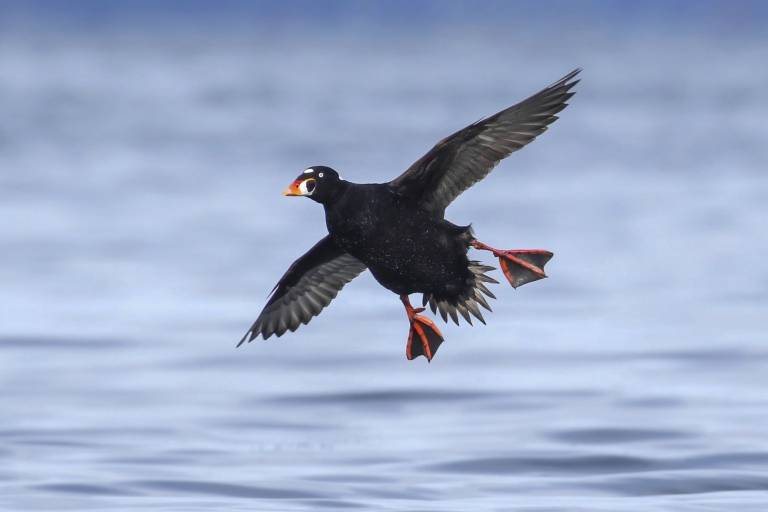
"caption": "A surf scoter. A new website from conservation scientists reveals which Bay Area bird species are thriving, and which are declining, offering insights into the health of San Francisco Bay’s wetlands and waters.",
"credit": "Courtesy of Liam Singh",
"altTag": null,
"description": null,
"imgSizes": {
"thumbnail": {
"file": "https://cdn.kqed.org/wp-content/uploads/sites/35/2025/11/251103-BAY-BIRDS-05-KQED-160x107.jpg",
"width": 160,
"height": 107,
"mimeType": "image/jpeg"
},
"medium_large": {
"file": "https://cdn.kqed.org/wp-content/uploads/sites/35/2025/11/251103-BAY-BIRDS-05-KQED-768x512.jpg",
"width": 768,
"height": 512,
"mimeType": "image/jpeg"
},
"1536x1536": {
"file": "https://cdn.kqed.org/wp-content/uploads/sites/35/2025/11/251103-BAY-BIRDS-05-KQED-1536x1025.jpg",
"width": 1536,
"height": 1025,
"mimeType": "image/jpeg"
},
"post-thumbnail": {
"file": "https://cdn.kqed.org/wp-content/uploads/sites/35/2025/11/251103-BAY-BIRDS-05-KQED-672x372.jpg",
"width": 672,
"height": 372,
"mimeType": "image/jpeg"
},
"twentyfourteen-full-width": {
"file": "https://cdn.kqed.org/wp-content/uploads/sites/35/2025/11/251103-BAY-BIRDS-05-KQED-1038x576.jpg",
"width": 1038,
"height": 576,
"mimeType": "image/jpeg"
},
"npr-cds-wide": {
"file": "https://cdn.kqed.org/wp-content/uploads/sites/35/2025/11/251103-BAY-BIRDS-05-KQED-1200x675.jpg",
"width": 1200,
"height": 675,
"mimeType": "image/jpeg"
},
"kqedFullSize": {
"file": "https://cdn.kqed.org/wp-content/uploads/sites/35/2025/11/251103-BAY-BIRDS-05-KQED.jpg",
"width": 2000,
"height": 1334
}
},
"isLoading": false,
"fetchFailed": false
},
"science_1985854": {
"type": "attachments",
"id": "science_1985854",
"meta": {
"index": "attachments_1716263798",
"site": "science",
"id": "1985854",
"found": true
},
"title": "002_KQED_AtmosphericRiver_03142023-qut",
"publishDate": 1702591654,
"status": "inherit",
"parent": 0,
"modified": 1762209865,
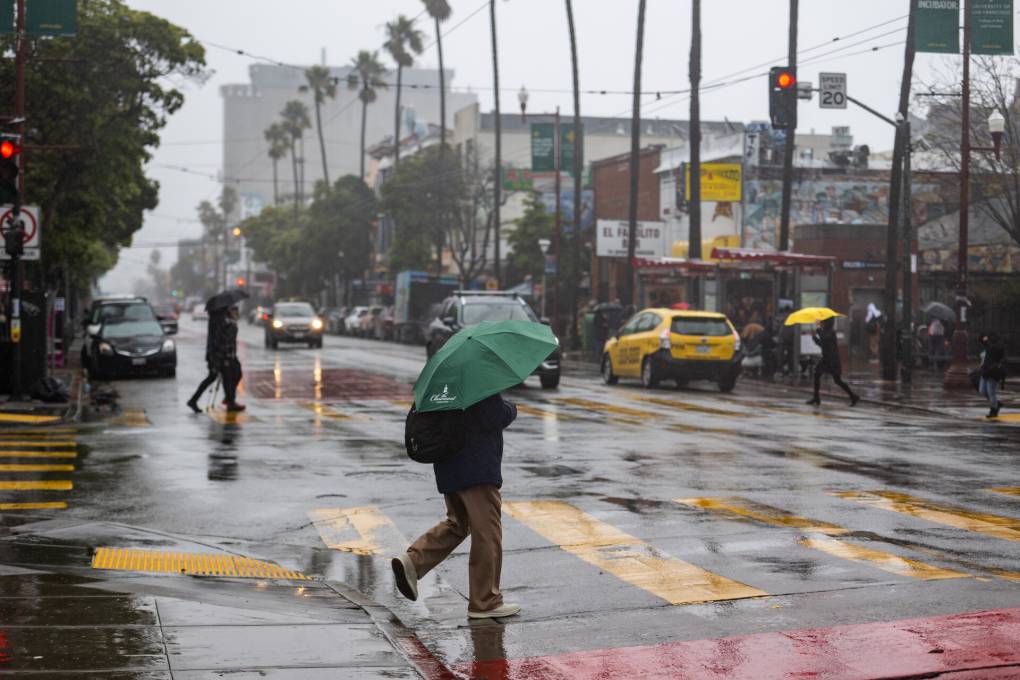
"caption": "A storm moves through San Francisco in the afternoon of March 14, 2023, bringing high winds and rain.",
"credit": "Beth LaBerge/KQED",
"altTag": "A person with a green umbrella crosses a rain-soaked street.",
"description": null,
"imgSizes": {
"medium": {
"file": "https://cdn.kqed.org/wp-content/uploads/sites/35/2023/12/002_KQED_AtmosphericRiver_03142023-qut-800x533.jpg",
"width": 800,
"height": 533,
"mimeType": "image/jpeg"
},
"large": {
"file": "https://cdn.kqed.org/wp-content/uploads/sites/35/2023/12/002_KQED_AtmosphericRiver_03142023-qut-1020x680.jpg",
"width": 1020,
"height": 680,
"mimeType": "image/jpeg"
},
"thumbnail": {
"file": "https://cdn.kqed.org/wp-content/uploads/sites/35/2023/12/002_KQED_AtmosphericRiver_03142023-qut-160x107.jpg",
"width": 160,
"height": 107,
"mimeType": "image/jpeg"
},
"medium_large": {
"file": "https://cdn.kqed.org/wp-content/uploads/sites/35/2023/12/002_KQED_AtmosphericRiver_03142023-qut-768x512.jpg",
"width": 768,
"height": 512,
"mimeType": "image/jpeg"
},
"1536x1536": {
"file": "https://cdn.kqed.org/wp-content/uploads/sites/35/2023/12/002_KQED_AtmosphericRiver_03142023-qut-1536x1024.jpg",
"width": 1536,
"height": 1024,
"mimeType": "image/jpeg"
},
"post-thumbnail": {
"file": "https://cdn.kqed.org/wp-content/uploads/sites/35/2023/12/002_KQED_AtmosphericRiver_03142023-qut-672x372.jpg",
"width": 672,
"height": 372,
"mimeType": "image/jpeg"
},
"twentyfourteen-full-width": {
"file": "https://cdn.kqed.org/wp-content/uploads/sites/35/2023/12/002_KQED_AtmosphericRiver_03142023-qut-1038x576.jpg",
"width": 1038,
"height": 576,
"mimeType": "image/jpeg"
},
"kqedFullSize": {
"file": "https://cdn.kqed.org/wp-content/uploads/sites/35/2023/12/002_KQED_AtmosphericRiver_03142023-qut.jpg",
"width": 1920,
"height": 1280
}
},
"isLoading": false,
"fetchFailed": false
},
"science_1994528": {
"type": "attachments",
"id": "science_1994528",
"meta": {
"index": "attachments_1716263798",
"site": "science",
"id": "1994528",
"found": true
},
"title": "004_KQED_BayviewBloodTesting_02252022_qed",
"publishDate": 1727370525,
"status": "inherit",
"parent": 1994526,
"modified": 1727370538,
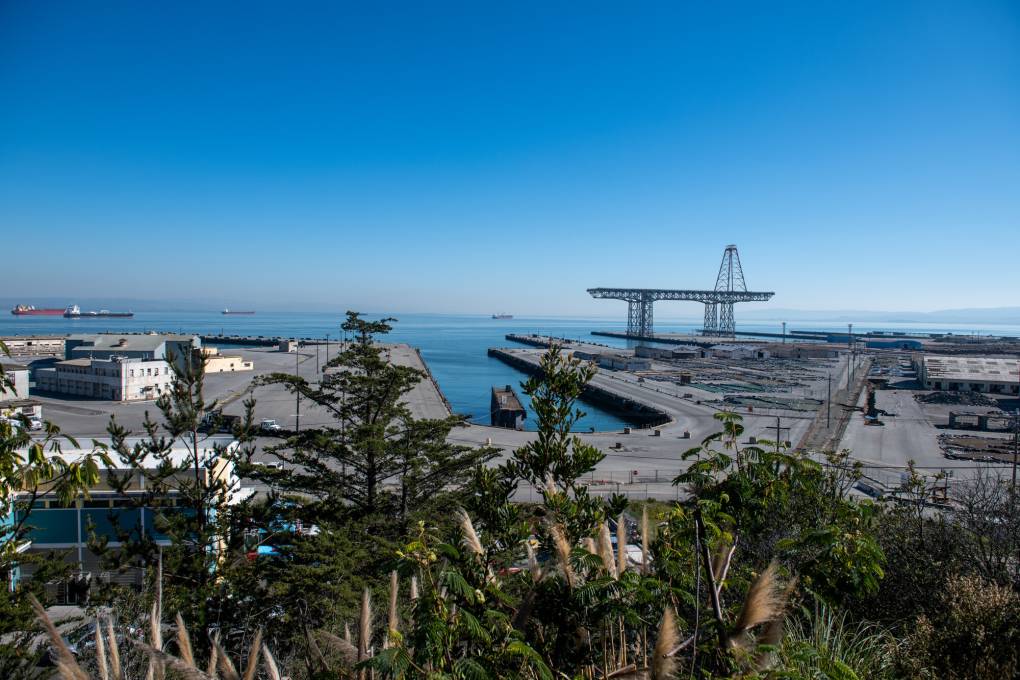
"caption": "A view of the former Hunters Point Naval Shipyard from the Lennar at the Shipyard housing development on Feb. 25, 2022.",
"credit": "Beth LaBerge/KQED",
"altTag": null,
"description": null,
"imgSizes": {
"medium": {
"file": "https://cdn.kqed.org/wp-content/uploads/sites/35/2024/09/004_KQED_BayviewBloodTesting_02252022_qed-800x533.jpg",
"width": 800,
"height": 533,
"mimeType": "image/jpeg"
},
"large": {
"file": "https://cdn.kqed.org/wp-content/uploads/sites/35/2024/09/004_KQED_BayviewBloodTesting_02252022_qed-1020x680.jpg",
"width": 1020,
"height": 680,
"mimeType": "image/jpeg"
},
"thumbnail": {
"file": "https://cdn.kqed.org/wp-content/uploads/sites/35/2024/09/004_KQED_BayviewBloodTesting_02252022_qed-160x107.jpg",
"width": 160,
"height": 107,
"mimeType": "image/jpeg"
},
"medium_large": {
"file": "https://cdn.kqed.org/wp-content/uploads/sites/35/2024/09/004_KQED_BayviewBloodTesting_02252022_qed-768x512.jpg",
"width": 768,
"height": 512,
"mimeType": "image/jpeg"
},
"1536x1536": {
"file": "https://cdn.kqed.org/wp-content/uploads/sites/35/2024/09/004_KQED_BayviewBloodTesting_02252022_qed-1536x1024.jpg",
"width": 1536,
"height": 1024,
"mimeType": "image/jpeg"
},
"post-thumbnail": {
"file": "https://cdn.kqed.org/wp-content/uploads/sites/35/2024/09/004_KQED_BayviewBloodTesting_02252022_qed-672x372.jpg",
"width": 672,
"height": 372,
"mimeType": "image/jpeg"
},
"twentyfourteen-full-width": {
"file": "https://cdn.kqed.org/wp-content/uploads/sites/35/2024/09/004_KQED_BayviewBloodTesting_02252022_qed-1038x576.jpg",
"width": 1038,
"height": 576,
"mimeType": "image/jpeg"
},
"full-width": {
"file": "https://cdn.kqed.org/wp-content/uploads/sites/35/2024/09/004_KQED_BayviewBloodTesting_02252022_qed-1920x1280.jpg",
"width": 1920,
"height": 1280,
"mimeType": "image/jpeg"
},
"kqedFullSize": {
"file": "https://cdn.kqed.org/wp-content/uploads/sites/35/2024/09/004_KQED_BayviewBloodTesting_02252022_qed.jpg",
"width": 2000,
"height": 1333
}
},
"isLoading": false,
"fetchFailed": false
},
"science_1998765": {
"type": "attachments",
"id": "science_1998765",
"meta": {
"index": "attachments_1716263798",
"site": "science",
"id": "1998765",
"found": true
},
"title": "251008-DRONEMARSH-12-BL-KQED",
"publishDate": 1760123057,
"status": "inherit",
"parent": 0,
"modified": 1760123086,
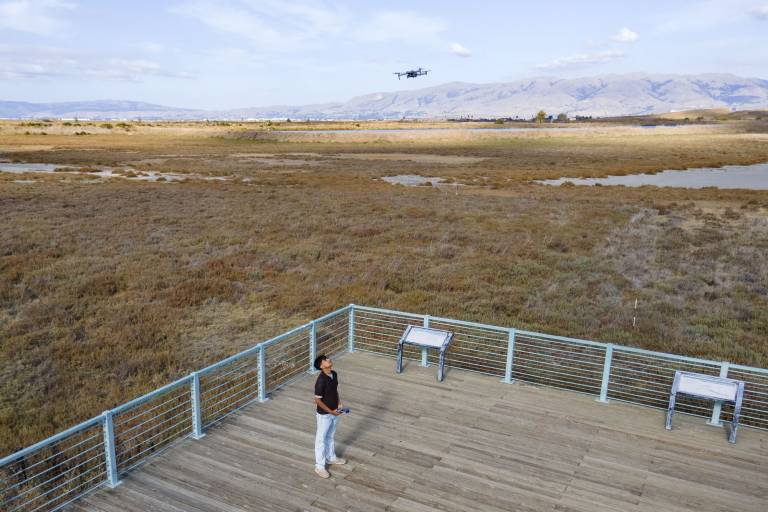
"caption": "Srivathsan Ramanujam flies his drone at Sunnyvale Baylands Park in Sunnyvale on Oct. 8, 2025. He uses a drone to create high-resolution maps of South Bay wetlands, with support from a National Oceanic and Atmospheric Administration grant, to help researchers better understand restoration needs and the impacts of sea level rise.",
"credit": "Beth LaBerge/KQED",
"altTag": null,
"description": null,
"imgSizes": {
"thumbnail": {
"file": "https://cdn.kqed.org/wp-content/uploads/sites/35/2025/10/251008-DRONEMARSH-12-BL-KQED-160x107.jpg",
"width": 160,
"height": 107,
"mimeType": "image/jpeg"
},
"medium_large": {
"file": "https://cdn.kqed.org/wp-content/uploads/sites/35/2025/10/251008-DRONEMARSH-12-BL-KQED-768x512.jpg",
"width": 768,
"height": 512,
"mimeType": "image/jpeg"
},
"1536x1536": {
"file": "https://cdn.kqed.org/wp-content/uploads/sites/35/2025/10/251008-DRONEMARSH-12-BL-KQED-1536x1024.jpg",
"width": 1536,
"height": 1024,
"mimeType": "image/jpeg"
},
"post-thumbnail": {
"file": "https://cdn.kqed.org/wp-content/uploads/sites/35/2025/10/251008-DRONEMARSH-12-BL-KQED-672x372.jpg",
"width": 672,
"height": 372,
"mimeType": "image/jpeg"
},
"twentyfourteen-full-width": {
"file": "https://cdn.kqed.org/wp-content/uploads/sites/35/2025/10/251008-DRONEMARSH-12-BL-KQED-1038x576.jpg",
"width": 1038,
"height": 576,
"mimeType": "image/jpeg"
},
"kqedFullSize": {
"file": "https://cdn.kqed.org/wp-content/uploads/sites/35/2025/10/251008-DRONEMARSH-12-BL-KQED.jpg",
"width": 2000,
"height": 1333
}
},
"isLoading": false,
"fetchFailed": false
},
"science_1998991": {
"type": "attachments",
"id": "science_1998991",
"meta": {
"index": "attachments_1716263798",
"site": "science",
"id": "1998991",
"found": true
},
"title": "Aptostichus_ramirezae",
"publishDate": 1761770581,
"status": "inherit",
"parent": 1998986,
"modified": 1761770652,
"caption": "A new species of spider is named for Martina Giselle Ramirez, a highly regarded arachnologist who pioneered early works on trapdoor spider population genetics, who has championed underrepresented students in STEM disciplines.\n",
"credit": "Courtesy of Emma Jochim/UC Davis",
"altTag": null,
"description": null,
"imgSizes": {
"medium": {
"file": "https://cdn.kqed.org/wp-content/uploads/sites/35/2025/10/Aptostichus_ramirezae-2000x1398.jpg",
"width": 2000,
"height": 1398,
"mimeType": "image/jpeg"
},
"large": {
"file": "https://cdn.kqed.org/wp-content/uploads/sites/35/2025/10/Aptostichus_ramirezae-2000x1398.jpg",
"width": 2000,
"height": 1398,
"mimeType": "image/jpeg"
},
"thumbnail": {
"file": "https://cdn.kqed.org/wp-content/uploads/sites/35/2025/10/Aptostichus_ramirezae-160x112.jpg",
"width": 160,
"height": 112,
"mimeType": "image/jpeg"
},
"medium_large": {
"file": "https://cdn.kqed.org/wp-content/uploads/sites/35/2025/10/Aptostichus_ramirezae-768x537.jpg",
"width": 768,
"height": 537,
"mimeType": "image/jpeg"
},
"1536x1536": {
"file": "https://cdn.kqed.org/wp-content/uploads/sites/35/2025/10/Aptostichus_ramirezae-1536x1073.jpg",
"width": 1536,
"height": 1073,
"mimeType": "image/jpeg"
},
"2048x2048": {
"file": "https://cdn.kqed.org/wp-content/uploads/sites/35/2025/10/Aptostichus_ramirezae-2048x1431.jpg",
"width": 2048,
"height": 1431,
"mimeType": "image/jpeg"
},
"post-thumbnail": {
"file": "https://cdn.kqed.org/wp-content/uploads/sites/35/2025/10/Aptostichus_ramirezae-672x372.jpg",
"width": 672,
"height": 372,
"mimeType": "image/jpeg"
},
"twentyfourteen-full-width": {
"file": "https://cdn.kqed.org/wp-content/uploads/sites/35/2025/10/Aptostichus_ramirezae-1038x576.jpg",
"width": 1038,
"height": 576,
"mimeType": "image/jpeg"
},
"full-width": {
"file": "https://cdn.kqed.org/wp-content/uploads/sites/35/2025/10/Aptostichus_ramirezae-2000x1398.jpg",
"width": 2000,
"height": 1398,
"mimeType": "image/jpeg"
},
"npr-cds-wide": {
"file": "https://cdn.kqed.org/wp-content/uploads/sites/35/2025/10/Aptostichus_ramirezae-1600x900.jpg",
"width": 1600,
"height": 900,
"mimeType": "image/jpeg"
},
"kqedFullSize": {
"file": "https://cdn.kqed.org/wp-content/uploads/sites/35/2025/10/Aptostichus_ramirezae-scaled.jpg",
"width": 2560,
"height": 1789
}
},
"isLoading": false,
"fetchFailed": false
},
"science_1998959": {
"type": "attachments",
"id": "science_1998959",
"meta": {
"index": "attachments_1716263798",
"site": "science",
"id": "1998959",
"found": true
},
"title": "251027-BASF-04-KQED",
"publishDate": 1761598484,
"status": "inherit",
"parent": 0,
"modified": 1761755820,
"caption": "Kids use a pipette at the Bay Area Science Festival on Oct. 25, 2025. ",
"credit": "Courtesy of Lawrence Luk/Bay Area Science Festival",
"altTag": null,
"description": null,
"imgSizes": {
"thumbnail": {
"file": "https://cdn.kqed.org/wp-content/uploads/sites/35/2025/10/251027-BASF-04-KQED-160x107.jpg",
"width": 160,
"height": 107,
"mimeType": "image/jpeg"
},
"medium_large": {
"file": "https://cdn.kqed.org/wp-content/uploads/sites/35/2025/10/251027-BASF-04-KQED-768x512.jpg",
"width": 768,
"height": 512,
"mimeType": "image/jpeg"
},
"1536x1536": {
"file": "https://cdn.kqed.org/wp-content/uploads/sites/35/2025/10/251027-BASF-04-KQED-1536x1025.jpg",
"width": 1536,
"height": 1025,
"mimeType": "image/jpeg"
},
"post-thumbnail": {
"file": "https://cdn.kqed.org/wp-content/uploads/sites/35/2025/10/251027-BASF-04-KQED-672x372.jpg",
"width": 672,
"height": 372,
"mimeType": "image/jpeg"
},
"twentyfourteen-full-width": {
"file": "https://cdn.kqed.org/wp-content/uploads/sites/35/2025/10/251027-BASF-04-KQED-1038x576.jpg",
"width": 1038,
"height": 576,
"mimeType": "image/jpeg"
},
"npr-cds-wide": {
"file": "https://cdn.kqed.org/wp-content/uploads/sites/35/2025/10/251027-BASF-04-KQED-1600x900.jpg",
"width": 1600,
"height": 900,
"mimeType": "image/jpeg"
},
"kqedFullSize": {
"file": "https://cdn.kqed.org/wp-content/uploads/sites/35/2025/10/251027-BASF-04-KQED.jpg",
"width": 2000,
"height": 1334
}
},
"isLoading": false,
"fetchFailed": false
},
"science_1998759": {
"type": "attachments",
"id": "science_1998759",
"meta": {
"index": "attachments_1716263798",
"site": "science",
"id": "1998759",
"found": true
},
"title": "251009-WETLANDWIN_00474_TV-KQED",
"publishDate": 1760122830,
"status": "inherit",
"parent": 0,
"modified": 1760122881,
"caption": "San Francisco Estuary Institute members Sarah Pearce (left) and Emma Sevier (right) conduct their CRAM assessment at a new wetland restoration site at Point Pinole Regional Park in Pinole on October 9, 2025. A new report found that restored tidal wetlands in San Francisco Bay nearly quadrupled from 2000 to 2025, going against the global trend of wetland loss.",
"credit": "Tâm Vũ/KQED",
"altTag": null,
"description": null,
"imgSizes": {
"thumbnail": {
"file": "https://cdn.kqed.org/wp-content/uploads/sites/35/2025/10/251009-WETLANDWIN_00474_TV-KQED-160x107.jpg",
"width": 160,
"height": 107,
"mimeType": "image/jpeg"
},
"medium_large": {
"file": "https://cdn.kqed.org/wp-content/uploads/sites/35/2025/10/251009-WETLANDWIN_00474_TV-KQED-768x512.jpg",
"width": 768,
"height": 512,
"mimeType": "image/jpeg"
},
"1536x1536": {
"file": "https://cdn.kqed.org/wp-content/uploads/sites/35/2025/10/251009-WETLANDWIN_00474_TV-KQED-1536x1024.jpg",
"width": 1536,
"height": 1024,
"mimeType": "image/jpeg"
},
"post-thumbnail": {
"file": "https://cdn.kqed.org/wp-content/uploads/sites/35/2025/10/251009-WETLANDWIN_00474_TV-KQED-672x372.jpg",
"width": 672,
"height": 372,
"mimeType": "image/jpeg"
},
"twentyfourteen-full-width": {
"file": "https://cdn.kqed.org/wp-content/uploads/sites/35/2025/10/251009-WETLANDWIN_00474_TV-KQED-1038x576.jpg",
"width": 1038,
"height": 576,
"mimeType": "image/jpeg"
},
"kqedFullSize": {
"file": "https://cdn.kqed.org/wp-content/uploads/sites/35/2025/10/251009-WETLANDWIN_00474_TV-KQED.jpg",
"width": 2000,
"height": 1333
}
},
"isLoading": false,
"fetchFailed": false
},
"science_1998943": {
"type": "attachments",
"id": "science_1998943",
"meta": {
"index": "attachments_1716263798",
"site": "science",
"id": "1998943",
"found": true
},
"title": "DL1213_Beach Day-These-5--Creatures-Make-a-Living-Off-of-Death-A-Halloween-Compilation_KQED",
"publishDate": 1761248114,
"status": "inherit",
"parent": 1998933,
"modified": 1761248822,
"caption": "Death might seem like the end, but for these five creatures, it’s just part of the job. \nIn this special Halloween compilation of Deep Look, take a skin-crawling look at crows that hold funerals, whispering bats, flesh-eating beetles, stealthy owls, and misunderstood black widow spiders. ",
"credit": null,
"altTag": null,
"description": null,
"imgSizes": {
"medium": {
"file": "https://cdn.kqed.org/wp-content/uploads/sites/35/2025/10/Halloween-Comp-3-1-2000x1125.jpg",
"width": 2000,
"height": 1125,
"mimeType": "image/jpeg"
},
"large": {
"file": "https://cdn.kqed.org/wp-content/uploads/sites/35/2025/10/Halloween-Comp-3-1-2000x1125.jpg",
"width": 2000,
"height": 1125,
"mimeType": "image/jpeg"
},
"thumbnail": {
"file": "https://cdn.kqed.org/wp-content/uploads/sites/35/2025/10/Halloween-Comp-3-1-160x90.jpg",
"width": 160,
"height": 90,
"mimeType": "image/jpeg"
},
"medium_large": {
"file": "https://cdn.kqed.org/wp-content/uploads/sites/35/2025/10/Halloween-Comp-3-1-768x432.jpg",
"width": 768,
"height": 432,
"mimeType": "image/jpeg"
},
"1536x1536": {
"file": "https://cdn.kqed.org/wp-content/uploads/sites/35/2025/10/Halloween-Comp-3-1-1536x864.jpg",
"width": 1536,
"height": 864,
"mimeType": "image/jpeg"
},
"2048x2048": {
"file": "https://cdn.kqed.org/wp-content/uploads/sites/35/2025/10/Halloween-Comp-3-1-2048x1152.jpg",
"width": 2048,
"height": 1152,
"mimeType": "image/jpeg"
},
"post-thumbnail": {
"file": "https://cdn.kqed.org/wp-content/uploads/sites/35/2025/10/Halloween-Comp-3-1-672x372.jpg",
"width": 672,
"height": 372,
"mimeType": "image/jpeg"
},
"twentyfourteen-full-width": {
"file": "https://cdn.kqed.org/wp-content/uploads/sites/35/2025/10/Halloween-Comp-3-1-1038x576.jpg",
"width": 1038,
"height": 576,
"mimeType": "image/jpeg"
},
"full-width": {
"file": "https://cdn.kqed.org/wp-content/uploads/sites/35/2025/10/Halloween-Comp-3-1-2000x1125.jpg",
"width": 2000,
"height": 1125,
"mimeType": "image/jpeg"
},
"npr-cds-wide": {
"file": "https://cdn.kqed.org/wp-content/uploads/sites/35/2025/10/Halloween-Comp-3-1-1600x900.jpg",
"width": 1600,
"height": 900,
"mimeType": "image/jpeg"
},
"kqedFullSize": {
"file": "https://cdn.kqed.org/wp-content/uploads/sites/35/2025/10/Halloween-Comp-3-1-scaled.jpg",
"width": 2560,
"height": 1440
}
},
"isLoading": false,
"fetchFailed": false
},
"science_1998918": {
"type": "attachments",
"id": "science_1998918",
"meta": {
"index": "attachments_1716263798",
"site": "science",
"id": "1998918",
"found": true
},
"title": "241122-StormHitsBayArea-10-BL_qed",
"publishDate": 1761076852,
"status": "inherit",
"parent": 1998915,
"modified": 1761076904,
"caption": "Visitors take photos at the Vista Point overlook near Golden Gate Bridge north of San Francisco on Nov. 22, 2024.",
"credit": "Beth LaBerge/KQED",
"altTag": null,
"description": null,
"imgSizes": {
"thumbnail": {
"file": "https://cdn.kqed.org/wp-content/uploads/sites/35/2025/10/241122-StormHitsBayArea-10-BL_qed-160x107.jpg",
"width": 160,
"height": 107,
"mimeType": "image/jpeg"
},
"medium_large": {
"file": "https://cdn.kqed.org/wp-content/uploads/sites/35/2025/10/241122-StormHitsBayArea-10-BL_qed-768x512.jpg",
"width": 768,
"height": 512,
"mimeType": "image/jpeg"
},
"1536x1536": {
"file": "https://cdn.kqed.org/wp-content/uploads/sites/35/2025/10/241122-StormHitsBayArea-10-BL_qed-1536x1024.jpg",
"width": 1536,
"height": 1024,
"mimeType": "image/jpeg"
},
"post-thumbnail": {
"file": "https://cdn.kqed.org/wp-content/uploads/sites/35/2025/10/241122-StormHitsBayArea-10-BL_qed-672x372.jpg",
"width": 672,
"height": 372,
"mimeType": "image/jpeg"
},
"twentyfourteen-full-width": {
"file": "https://cdn.kqed.org/wp-content/uploads/sites/35/2025/10/241122-StormHitsBayArea-10-BL_qed-1038x576.jpg",
"width": 1038,
"height": 576,
"mimeType": "image/jpeg"
},
"kqedFullSize": {
"file": "https://cdn.kqed.org/wp-content/uploads/sites/35/2025/10/241122-StormHitsBayArea-10-BL_qed.jpg",
"width": 2000,
"height": 1333
}
},
"isLoading": false,
"fetchFailed": false
},
"science_1998902": {
"type": "attachments",
"id": "science_1998902",
"meta": {
"index": "attachments_1716263798",
"site": "science",
"id": "1998902",
"found": true
},
"title": "4 BASF Future Scientists Credit Gamma Nine Photography",
"publishDate": 1760987494,
"status": "inherit",
"parent": 1998900,
"modified": 1760987714,
"caption": null,
"credit": "Photo courtesy of Gamma Nine Photography",
"altTag": null,
"description": null,
"imgSizes": {
"medium": {
"file": "https://cdn.kqed.org/wp-content/uploads/sites/35/2025/10/4-BASF-Future-Scientists-Credit-Gamma-Nine-Photography--2000x1335.jpg",
"width": 2000,
"height": 1335,
"mimeType": "image/jpeg"
},
"large": {
"file": "https://cdn.kqed.org/wp-content/uploads/sites/35/2025/10/4-BASF-Future-Scientists-Credit-Gamma-Nine-Photography--2000x1335.jpg",
"width": 2000,
"height": 1335,
"mimeType": "image/jpeg"
},
"thumbnail": {
"file": "https://cdn.kqed.org/wp-content/uploads/sites/35/2025/10/4-BASF-Future-Scientists-Credit-Gamma-Nine-Photography--160x107.jpg",
"width": 160,
"height": 107,
"mimeType": "image/jpeg"
},
"medium_large": {
"file": "https://cdn.kqed.org/wp-content/uploads/sites/35/2025/10/4-BASF-Future-Scientists-Credit-Gamma-Nine-Photography--768x513.jpg",
"width": 768,
"height": 513,
"mimeType": "image/jpeg"
},
"1536x1536": {
"file": "https://cdn.kqed.org/wp-content/uploads/sites/35/2025/10/4-BASF-Future-Scientists-Credit-Gamma-Nine-Photography--1536x1025.jpg",
"width": 1536,
"height": 1025,
"mimeType": "image/jpeg"
},
"post-thumbnail": {
"file": "https://cdn.kqed.org/wp-content/uploads/sites/35/2025/10/4-BASF-Future-Scientists-Credit-Gamma-Nine-Photography--672x372.jpg",
"width": 672,
"height": 372,
"mimeType": "image/jpeg"
},
"twentyfourteen-full-width": {
"file": "https://cdn.kqed.org/wp-content/uploads/sites/35/2025/10/4-BASF-Future-Scientists-Credit-Gamma-Nine-Photography--1038x576.jpg",
"width": 1038,
"height": 576,
"mimeType": "image/jpeg"
},
"full-width": {
"file": "https://cdn.kqed.org/wp-content/uploads/sites/35/2025/10/4-BASF-Future-Scientists-Credit-Gamma-Nine-Photography--2000x1335.jpg",
"width": 2000,
"height": 1335,
"mimeType": "image/jpeg"
},
"kqedFullSize": {
"file": "https://cdn.kqed.org/wp-content/uploads/sites/35/2025/10/4-BASF-Future-Scientists-Credit-Gamma-Nine-Photography-.jpg",
"width": 2048,
"height": 1367
}
},
"isLoading": false,
"fetchFailed": false
},
"science_1998827": {
"type": "attachments",
"id": "science_1998827",
"meta": {
"index": "attachments_1716263798",
"site": "science",
"id": "1998827",
"found": true
},
"title": "251015-EMBER STOMP-04-KQED",
"publishDate": 1760555685,
"status": "inherit",
"parent": 0,
"modified": 1760731453,
"caption": "Attendees at Marin's Ember Stomp Festival mix with firefighters, non-profits, businesses and local and state organizations to learn about preparing for wildfires on Sept. 6, 2025.",
"credit": "Terry Scussel/Fire Safe Marin",
"altTag": null,
"description": null,
"imgSizes": {
"thumbnail": {
"file": "https://cdn.kqed.org/wp-content/uploads/sites/35/2025/10/251015-EMBER-STOMP-04-KQED-160x107.jpg",
"width": 160,
"height": 107,
"mimeType": "image/jpeg"
},
"medium_large": {
"file": "https://cdn.kqed.org/wp-content/uploads/sites/35/2025/10/251015-EMBER-STOMP-04-KQED-768x512.jpg",
"width": 768,
"height": 512,
"mimeType": "image/jpeg"
},
"1536x1536": {
"file": "https://cdn.kqed.org/wp-content/uploads/sites/35/2025/10/251015-EMBER-STOMP-04-KQED-1536x1024.jpg",
"width": 1536,
"height": 1024,
"mimeType": "image/jpeg"
},
"post-thumbnail": {
"file": "https://cdn.kqed.org/wp-content/uploads/sites/35/2025/10/251015-EMBER-STOMP-04-KQED-672x372.jpg",
"width": 672,
"height": 372,
"mimeType": "image/jpeg"
},
"twentyfourteen-full-width": {
"file": "https://cdn.kqed.org/wp-content/uploads/sites/35/2025/10/251015-EMBER-STOMP-04-KQED-1038x576.jpg",
"width": 1038,
"height": 576,
"mimeType": "image/jpeg"
},
"kqedFullSize": {
"file": "https://cdn.kqed.org/wp-content/uploads/sites/35/2025/10/251015-EMBER-STOMP-04-KQED.jpg",
"width": 2000,
"height": 1333
}
},
"isLoading": false,
"fetchFailed": false
},
"science_1998874": {
"type": "attachments",
"id": "science_1998874",
"meta": {
"index": "attachments_1716263798",
"site": "science",
"id": "1998874",
"found": true
},
"title": "California Governor Insulin",
"publishDate": 1760652718,
"status": "inherit",
"parent": 1998855,
"modified": 1760652775,
"caption": "California Gov. Gavin Newsom announces CalRx-branded insulin glargine pens available next Jan. 1, 2026, at a suggested retail price of no more than $55 per five-pack, or $11 per pen, during a news conference at Cedar-Sinai's Mark Goodson pharmacy in Los Angeles on Thursday, Oct. 16, 2025. ",
"credit": "Damian Dovarganes/AP Photo",
"altTag": null,
"description": null,
"imgSizes": {
"thumbnail": {
"file": "https://cdn.kqed.org/wp-content/uploads/sites/35/2025/10/GavinNewsomInsulinAP-160x107.jpg",
"width": 160,
"height": 107,
"mimeType": "image/jpeg"
},
"medium_large": {
"file": "https://cdn.kqed.org/wp-content/uploads/sites/35/2025/10/GavinNewsomInsulinAP-768x512.jpg",
"width": 768,
"height": 512,
"mimeType": "image/jpeg"
},
"1536x1536": {
"file": "https://cdn.kqed.org/wp-content/uploads/sites/35/2025/10/GavinNewsomInsulinAP-1536x1024.jpg",
"width": 1536,
"height": 1024,
"mimeType": "image/jpeg"
},
"post-thumbnail": {
"file": "https://cdn.kqed.org/wp-content/uploads/sites/35/2025/10/GavinNewsomInsulinAP-672x372.jpg",
"width": 672,
"height": 372,
"mimeType": "image/jpeg"
},
"twentyfourteen-full-width": {
"file": "https://cdn.kqed.org/wp-content/uploads/sites/35/2025/10/GavinNewsomInsulinAP-1038x576.jpg",
"width": 1038,
"height": 576,
"mimeType": "image/jpeg"
},
"kqedFullSize": {
"file": "https://cdn.kqed.org/wp-content/uploads/sites/35/2025/10/GavinNewsomInsulinAP.jpg",
"width": 2000,
"height": 1333
}
},
"isLoading": false,
"fetchFailed": false
}
},
"audioPlayerReducer": {
"postId": "stream_live",
"isPaused": true,
"isPlaying": false,
"pfsActive": false,
"pledgeModalIsOpen": true,
"playerDrawerIsOpen": false,
"liveAudioPlayStartedAt": 0,
"liveAudioPlayContext": ""
},
"authorsReducer": {
"adembosky": {
"type": "authors",
"id": "3205",
"meta": {
"index": "authors_1716337520",
"id": "3205",
"found": true
},
"name": "April Dembosky",
"firstName": "April",
"lastName": "Dembosky",
"slug": "adembosky",
"email": "adembosky@kqed.org",
"display_author_email": false,
"staff_mastheads": [
"news",
"science"
],
"title": "KQED Health Correspondent",
"bio": "April Dembosky is the health correspondent for KQED News and a regular contributor to NPR. She specializes in covering altered states of mind, from postpartum depression to methamphetamine-induced psychosis to the insanity defense. Her investigative series on insurance companies sidestepping mental health laws won multiple awards, including first place in beat reporting from the national Association of Health Care Journalists. She is the recipient of numerous other prizes and fellowships, including a national Edward R. Murrow award for investigative reporting, a Society of Professional Journalists award for long-form storytelling, and a Carter Center Fellowship for Mental Health Journalism.\r\n\r\nDembosky reported and produced \u003cem>Soundtrack of Silence\u003c/em>, an audio documentary about music and memory that is currently being made into a feature film by Paramount Pictures.\r\n\r\nBefore joining KQED in 2013, Dembosky covered technology and Silicon Valley for \u003cem>The Financial Times of London,\u003c/em> and contributed business and arts stories to \u003cem>Marketplace \u003c/em>and \u003cem>The New York Times.\u003c/em> She got her undergraduate degree in philosophy from Smith College and her master's in journalism from the University of California, Berkeley. She is a classically trained violinist and proud alum of the first symphony orchestra at Burning Man.",
"avatar": "https://secure.gravatar.com/avatar/ef92999be4ceb9ea60701e7dc276f813?s=600&d=blank&r=g",
"twitter": "adembosky",
"facebook": null,
"instagram": null,
"linkedin": null,
"sites": [
{
"site": "arts",
"roles": [
"author"
]
},
{
"site": "news",
"roles": [
"editor"
]
},
{
"site": "futureofyou",
"roles": [
"author"
]
},
{
"site": "stateofhealth",
"roles": [
"editor"
]
},
{
"site": "science",
"roles": [
"editor"
]
},
{
"site": "forum",
"roles": [
"editor"
]
}
],
"headData": {
"title": "April Dembosky | KQED",
"description": "KQED Health Correspondent",
"ogImgSrc": "https://secure.gravatar.com/avatar/ef92999be4ceb9ea60701e7dc276f813?s=600&d=blank&r=g",
"twImgSrc": "https://secure.gravatar.com/avatar/ef92999be4ceb9ea60701e7dc276f813?s=600&d=blank&r=g"
},
"isLoading": false,
"link": "/author/adembosky"
},
"dventon": {
"type": "authors",
"id": "11088",
"meta": {
"index": "authors_1716337520",
"id": "11088",
"found": true
},
"name": "Danielle Venton",
"firstName": "Danielle",
"lastName": "Venton",
"slug": "dventon",
"email": "dventon@kqed.org",
"display_author_email": true,
"staff_mastheads": [
"science"
],
"title": "Science reporter",
"bio": "Danielle Venton is a reporter for KQED Science. She covers wildfires, space and oceans (though she is prone to sea sickness).\r\n\r\nBefore joining KQED in 2015, Danielle was a staff reporter at KRCB in Sonoma County and a freelancer. She studied science communication at UC Santa Cruz and formerly worked at CERN in Geneva, Switzerland where she wrote about computing. She lives in Sonoma County and enjoys backpacking.",
"avatar": "https://secure.gravatar.com/avatar/37b292b5c40c8d93959c4f48d73b5286f41b7abd8588277e941905a3ed4c801c?s=600&d=blank&r=g",
"twitter": "DanielleVenton",
"bluesky": null,
"facebook": null,
"instagram": null,
"linkedin": null,
"sites": [
{
"site": "arts",
"roles": [
"contributor"
]
},
{
"site": "news",
"roles": [
"editor"
]
},
{
"site": "futureofyou",
"roles": [
"editor"
]
},
{
"site": "science",
"roles": [
"editor"
]
},
{
"site": "liveblog",
"roles": [
"contributor"
]
}
],
"headData": {
"title": "Danielle Venton | KQED",
"description": "Science reporter",
"ogImgSrc": "https://secure.gravatar.com/avatar/37b292b5c40c8d93959c4f48d73b5286f41b7abd8588277e941905a3ed4c801c?s=600&d=blank&r=g",
"twImgSrc": "https://secure.gravatar.com/avatar/37b292b5c40c8d93959c4f48d73b5286f41b7abd8588277e941905a3ed4c801c?s=600&d=blank&r=g"
},
"isLoading": false,
"link": "/author/dventon"
},
"mseely": {
"type": "authors",
"id": "11095",
"meta": {
"index": "authors_1716337520",
"id": "11095",
"found": true
},
"name": "Mike Seely",
"firstName": "Mike",
"lastName": "Seely",
"slug": "mseely",
"email": "mseely@kqed.org",
"display_author_email": false,
"staff_mastheads": [
"science"
],
"title": "Producer",
"bio": "Mike is a Digital Media Producer for KQED Science and Post Production Coordinator for \u003ca href=\"https://www.youtube.com/user/KQEDDeepLook\" target=\"_blank\" rel=\"noopener noreferrer\">Deep Look\u003c/a>. Prior to his work at KQED, he worked independently for 15 years as a director, producer and cinematographer of documentary films about art, science, and social issues, collaborating with independent directors, corporate clients, non-profits, digital and broadcast networks. Previous to filmmaking life, he majored in biology as an undergrad at Oberlin College, and worked as a wildlife biologist on bird and seal population studies in California. He also holds an M.A. in Documentary Film Production from Stanford University.",
"avatar": "https://secure.gravatar.com/avatar/f9c5c6f7135a7c3fc0ce85114f7b05dd18e0b71af78a2d6770a1b09a921d8425?s=600&d=blank&r=g",
"twitter": null,
"bluesky": null,
"facebook": null,
"instagram": null,
"linkedin": null,
"sites": [
{
"site": "arts",
"roles": [
"subscriber"
]
},
{
"site": "science",
"roles": [
"author"
]
}
],
"headData": {
"title": "Mike Seely | KQED",
"description": "Producer",
"ogImgSrc": "https://secure.gravatar.com/avatar/f9c5c6f7135a7c3fc0ce85114f7b05dd18e0b71af78a2d6770a1b09a921d8425?s=600&d=blank&r=g",
"twImgSrc": "https://secure.gravatar.com/avatar/f9c5c6f7135a7c3fc0ce85114f7b05dd18e0b71af78a2d6770a1b09a921d8425?s=600&d=blank&r=g"
},
"isLoading": false,
"link": "/author/mseely"
},
"smohamad": {
"type": "authors",
"id": "11631",
"meta": {
"index": "authors_1716337520",
"id": "11631",
"found": true
},
"name": "Sarah Mohamad",
"firstName": "Sarah",
"lastName": "Mohamad",
"slug": "smohamad",
"email": "smohamad@KQED.org",
"display_author_email": true,
"staff_mastheads": [],
"title": "Engagement Producer and Reporter, KQED Science",
"bio": "Sarah Mohamad is an audience engagement reporter and producer for KQED Science. She reports on audience-focused science and environment stories and manages the team's social media, newsletter, and engagement efforts. Prior to this role, she played a key role as project manager for NSF's \u003ca href=\"https://www.kqed.org/crackingthecode\">\u003cem>Cracking the Code: Influencing Millennial Science Engagement\u003c/em> \u003c/a>audience research.",
"avatar": "https://secure.gravatar.com/avatar/e6224957cd82d015183756ddde1f928013a563d7ca2e4565f8c4de1ec64886c5?s=600&d=blank&r=g",
"twitter": "sarahkmohamad",
"bluesky": null,
"facebook": null,
"instagram": null,
"linkedin": null,
"sites": [
{
"site": "",
"roles": [
"editor"
]
},
{
"site": "arts",
"roles": [
"editor"
]
},
{
"site": "news",
"roles": [
"editor"
]
},
{
"site": "about",
"roles": [
"editor"
]
},
{
"site": "science",
"roles": [
"editor"
]
}
],
"headData": {
"title": "Sarah Mohamad | KQED",
"description": "Engagement Producer and Reporter, KQED Science",
"ogImgSrc": "https://secure.gravatar.com/avatar/e6224957cd82d015183756ddde1f928013a563d7ca2e4565f8c4de1ec64886c5?s=600&d=blank&r=g",
"twImgSrc": "https://secure.gravatar.com/avatar/e6224957cd82d015183756ddde1f928013a563d7ca2e4565f8c4de1ec64886c5?s=600&d=blank&r=g"
},
"isLoading": false,
"link": "/author/smohamad"
},
"eromero": {
"type": "authors",
"id": "11746",
"meta": {
"index": "authors_1716337520",
"id": "11746",
"found": true
},
"name": "Ezra David Romero",
"firstName": "Ezra David",
"lastName": "Romero",
"slug": "eromero",
"email": "eromero@kqed.org",
"display_author_email": true,
"staff_mastheads": [
"news",
"science"
],
"title": "Climate Reporter",
"bio": "Ezra David Romero is a climate reporter for KQED News. He covers the absence and excess of water in the Bay Area — think sea level rise, flooding and drought. For nearly a decade he’s covered how warming temperatures are altering the lives of Californians. He’s reported on farmers worried their pistachio trees aren’t getting enough sleep, families desperate for water, scientists studying dying giant sequoias, and alongside firefighters containing wildfires. His work has appeared on local stations across California and nationally on public radio shows like Morning Edition, Here and Now, All Things Considered and Science Friday. ",
"avatar": "https://secure.gravatar.com/avatar/c76404d287c10ed40224227551ac36e24352c7306f106632caf6fead76f8801f?s=600&d=blank&r=g",
"twitter": "ezraromero",
"bluesky": null,
"facebook": null,
"instagram": null,
"linkedin": null,
"sites": [
{
"site": "arts",
"roles": [
"editor"
]
},
{
"site": "news",
"roles": [
"editor"
]
},
{
"site": "science",
"roles": [
"editor"
]
},
{
"site": "liveblog",
"roles": [
"author"
]
}
],
"headData": {
"title": "Ezra David Romero | KQED",
"description": "Climate Reporter",
"ogImgSrc": "https://secure.gravatar.com/avatar/c76404d287c10ed40224227551ac36e24352c7306f106632caf6fead76f8801f?s=600&d=blank&r=g",
"twImgSrc": "https://secure.gravatar.com/avatar/c76404d287c10ed40224227551ac36e24352c7306f106632caf6fead76f8801f?s=600&d=blank&r=g"
},
"isLoading": false,
"link": "/author/eromero"
}
},
"pagesReducer": {
"science_category_news": {
"type": "terms",
"id": "science_40",
"meta": {
"index": "terms_1716263798",
"site": "science",
"id": "40",
"score": 10.813291
},
"featImg": null,
"name": "News",
"description": null,
"taxonomy": "category",
"headData": {
"twImgId": null,
"twTitle": null,
"ogTitle": null,
"ogImgId": null,
"twDescription": null,
"description": null,
"title": "News Archives | KQED Science",
"ogDescription": null
},
"ttid": 42,
"slug": "news",
"isLoading": false,
"title": "News",
"pageMeta": {
"site": "science",
"WpPageTemplate": "page-topic-editorial",
"currentPage": 12
},
"blocks": [
{
"blockName": "kqed/post-list",
"attrs": {
"layout": "cardArticle2",
"query": "posts/science?category=news",
"seeMore": false,
"paginated": true,
"page": 12
}
},
{
"blockName": "kqed/ad"
}
]
}
},
"pfsSessionReducer": {},
"postsReducer": {
"stream_live": {
"type": "live",
"id": "stream_live",
"audioUrl": "https://streams.kqed.org/kqedradio",
"title": "Live Stream",
"excerpt": "Live Stream information currently unavailable.",
"link": "/radio",
"featImg": "",
"label": {
"name": "KQED Live",
"link": "/"
}
},
"stream_kqedNewscast": {
"type": "posts",
"id": "stream_kqedNewscast",
"audioUrl": "https://www.kqed.org/.stream/anon/radio/RDnews/newscast.mp3?_=1",
"title": "KQED Newscast",
"featImg": "",
"label": {
"name": "88.5 FM",
"link": "/"
}
},
"science_1999037": {
"type": "posts",
"id": "science_1999037",
"meta": {
"index": "posts_1716263798",
"site": "science",
"id": "1999037",
"score": null,
"sort": [
1762275603000
]
},
"guestAuthors": [],
"slug": "what-birds-can-tell-us-about-the-health-of-san-francisco-bay",
"title": "What Birds Can Tell Us About the Health of San Francisco Bay",
"publishDate": 1762275603,
"format": "standard",
"headTitle": "What Birds Can Tell Us About the Health of San Francisco Bay | KQED",
"labelTerm": {
"site": "science"
},
"content": "\u003cp>A new website, the \u003ca href=\"https://sfbaystateofthebirds.org/\">San Francisco Bay State of the Birds\u003c/a>, created by the \u003ca href=\"https://sfbayjv.org/about-us/\">San Francisco Bay Joint Venture\u003c/a> and \u003ca href=\"https://www.pointblue.org/\">Point Blue Conservation Science\u003c/a>, provides scientists, policymakers, and the public with an up-to-date look at which Bay Area bird populations are thriving and which are declining, and what that says about the health of San Francisco Bay’s wetlands and waters.\u003c/p>\n\u003cp>The findings suggest that the populations of Bay Area marsh birds and wetland ducks are doing well, shorebirds and diving ducks are declining, indicating that some habitats are rebounding from “rapidly evolving climate change and biodiversity challenges,” according to the \u003ca href=\"https://sfbaystateofthebirds.org/about-this-report/\">project researchers\u003c/a>, while others still need conservation attention.\u003c/p>\n\u003cp>The website compiles years of bird monitoring data, restoration success stories, and recommended conservation actions, and builds on a similar report from 2011.\u003c/p>\n\u003cp>[ad fullwidth]\u003c/p>\n\u003cp>“Birds are good visual indicators that the Bay and its ecosystems are healthy,” said Julian Wood, San Francisco Bay program leader at Point Blue Conservation Science.\u003c/p>\n\u003cp>Because birds react quickly to habitat changes, shifts in their populations can reveal whether the Bay’s wetlands, tidal flats, and open waters are under stress.\u003c/p>\n\u003cp>The site focuses on “indicator species” across four habitats — tidal marshes, tidal flats, subtidal zones, and non-tidal wetlands and waters — whose population trends reflect broader environmental conditions.\u003c/p>\n\u003cfigure id=\"attachment_1999043\" class=\"wp-caption aligncenter\" style=\"max-width: 2000px\">\u003cimg loading=\"lazy\" decoding=\"async\" class=\"size-full wp-image-1999043\" src=\"https://cdn.kqed.org/wp-content/uploads/sites/35/2025/11/251103-BAY-BIRDS-01-KQED.jpg\" alt=\"\" width=\"2000\" height=\"1500\" srcset=\"https://cdn.kqed.org/wp-content/uploads/sites/35/2025/11/251103-BAY-BIRDS-01-KQED.jpg 2000w, https://cdn.kqed.org/wp-content/uploads/sites/35/2025/11/251103-BAY-BIRDS-01-KQED-160x120.jpg 160w, https://cdn.kqed.org/wp-content/uploads/sites/35/2025/11/251103-BAY-BIRDS-01-KQED-768x576.jpg 768w, https://cdn.kqed.org/wp-content/uploads/sites/35/2025/11/251103-BAY-BIRDS-01-KQED-1536x1152.jpg 1536w\" sizes=\"auto, (max-width: 2000px) 100vw, 2000px\">\u003cfigcaption class=\"wp-caption-text\">American white pelicans on SF Bay tidal flats. \u003ccite>(Courtesy of Megan Elrod)\u003c/cite>\u003c/figcaption>\u003c/figure>\n\u003cp>The launch follows a related effort by the \u003ca href=\"https://www.sfestuary.org/\">San Francisco Estuary Partnership\u003c/a>, which recently released its \u003ca href=\"https://www.ourestuary.org/\">State of Our Estuary website\u003c/a>. That project tracks estuary-wide health across \u003ca href=\"https://www.ourestuary.org/indicators/\">multiple measures\u003c/a>, from fish and freshwater flows to bird populations — some of which rely on data from the \u003ca href=\"https://sfbaystateofthebirds.org/\">State of the Birds\u003c/a> project.\u003c/p>\n\u003cp>“We hope this website helps people understand what’s happening with our bird community and promotes even more appreciation and care for birds and their habitats,” Wood said.\u003c/p>\n\u003cp>The latest monitoring results tell a mixed story. Song sparrows, common yellowthroats, and black rails — \u003ca href=\"https://sfbaystateofthebirds.org/tidal-marsh-breeding-birds/\">all residents of tidal marshes\u003c/a> — are seeing increases in their populations, as are the wintering dabbling ducks like mallards and American wigeons, which depend on \u003ca href=\"https://sfbaystateofthebirds.org/non-tidal-wetlands-and-waters-dabbling-ducks-waterbirds/\">non-tidal wetlands\u003c/a>.[aside postID=news_12051964 hero='https://cdn.kqed.org/wp-content/uploads/sites/10/2025/05/250512-SEAGULLCOUNTY-26-BL-KQED-1020x680.jpg']But other groups aren’t doing as well. Diving ducks such as surf scoters and common goldeneyes have dropped in number across \u003ca href=\"https://sfbaystateofthebirds.org/subtidal-waterfowl/\">open waters in the North Bay and Central Bay\u003c/a>.\u003c/p>\n\u003cp>At the same time, the populations of shorebirds like sandpipers and curlews have declined baywide, signaling that \u003ca href=\"https://sfbaystateofthebirds.org/tidal-flats-shorebirds/\">tidal flats and shallow-water habitats\u003c/a> need more protection and restoration.\u003c/p>\n\u003cp>“The decline definitely raises concerns about the amount and quality of our tidal flats and the other habitats that they depend on,” Wood said.\u003c/p>\n\u003cp>Local restoration projects are already showing what’s possible. The \u003ca href=\"https://sfbayjv.org/hamilton-wetlands-restoration-project/\">Hamilton Wetlands Restoration Project\u003c/a>, once an army airfield, is now a 650-acre refuge supporting 100 bird species, including endangered ridgway’s rails and threatened Western snowy plovers.\u003c/p>\n\u003cp>Other success stories featured on the website include the \u003ca href=\"https://www.southbayrestoration.org/\">South Bay Salt Pond\u003c/a>, \u003ca href=\"https://scc.ca.gov/climate-change/climate-ready-program/sears-point-restoration-project/\">Sears Point\u003c/a>, and Sonoma Baylands restorations. Since 2017, more than 7,800 acres have been restored using funds from Measure AA, approved by Bay Area voters to support wetland recovery.\u003c/p>\n\u003cp>“Birds are so tightly linked to habitat health,” Wood said. “When we invest in on-the-ground conservation that’s guided by science, we see the positive results. And that is really impactful. With our long-term monitoring, we can see these diverse bird communities coming back and thriving. So that’s pretty exciting,” he added.\u003c/p>\n\u003cfigure id=\"attachment_1999044\" class=\"wp-caption aligncenter\" style=\"max-width: 2000px\">\u003cimg loading=\"lazy\" decoding=\"async\" class=\"size-full wp-image-1999044\" src=\"https://cdn.kqed.org/wp-content/uploads/sites/35/2025/11/251103-BAY-BIRDS-02-KQED.jpg\" alt=\"\" width=\"2000\" height=\"1328\" srcset=\"https://cdn.kqed.org/wp-content/uploads/sites/35/2025/11/251103-BAY-BIRDS-02-KQED.jpg 2000w, https://cdn.kqed.org/wp-content/uploads/sites/35/2025/11/251103-BAY-BIRDS-02-KQED-160x106.jpg 160w, https://cdn.kqed.org/wp-content/uploads/sites/35/2025/11/251103-BAY-BIRDS-02-KQED-768x510.jpg 768w, https://cdn.kqed.org/wp-content/uploads/sites/35/2025/11/251103-BAY-BIRDS-02-KQED-1536x1020.jpg 1536w\" sizes=\"auto, (max-width: 2000px) 100vw, 2000px\">\u003cfigcaption class=\"wp-caption-text\">Foraging dowitchers at Tubbs restoration site. \u003ccite>(Courtesy of Beth Huning)\u003c/cite>\u003c/figcaption>\u003c/figure>\n\u003cp>Healthy wetlands don’t just benefit wildlife. They filter pollutants from water, reduce flood risks, and buffer shorelines against storms — while offering people recreation and access to nature.\u003c/p>\n\u003cp>The website lists over 30 concrete \u003ca href=\"https://sfbaystateofthebirds.org/actions/\">actions \u003c/a>— from building island nesting habitats to expanding long-term monitoring and public-private partnerships — aimed at protecting birds and improving ecosystem health.\u003c/p>\n\u003cp>“The more that people learn about these birds and have an awareness about their role in the environment, the better we will be able to protect these populations and ensure that we have thriving bird populations in the future.”\u003c/p>\n\u003cp>\u003c/p>\n",
"blocks": [],
"excerpt": "A new website from conservation scientists reveals which Bay Area bird species are thriving, and which are declining, offering insights into the health of San Francisco Bay’s wetlands and waters.",
"status": "publish",
"parent": 0,
"modified": 1762213627,
"stats": {
"hasAudio": false,
"hasVideo": false,
"hasChartOrMap": false,
"iframeSrcs": [],
"hasGoogleForm": false,
"hasGallery": false,
"hasHearkenModule": false,
"hasPolis": false,
"paragraphCount": 19,
"wordCount": 731
},
"headData": {
"title": "What Birds Can Tell Us About the Health of San Francisco Bay | KQED",
"description": "A new website from conservation scientists reveals which Bay Area bird species are thriving, and which are declining, offering insights into the health of San Francisco Bay’s wetlands and waters.",
"ogTitle": "",
"ogDescription": "",
"ogImgId": "",
"twTitle": "",
"twDescription": "",
"twImgId": "",
"schema": {
"@context": "https://schema.org",
"@type": "Article",
"headline": "What Birds Can Tell Us About the Health of San Francisco Bay",
"datePublished": "2025-11-04T09:00:03-08:00",
"dateModified": "2025-11-03T15:47:07-08:00",
"image": "https://cdn.kqed.org/wp-content/uploads/2020/02/KQED-OG-Image@1x.png"
}
},
"primaryCategory": {
"termId": 40,
"slug": "news",
"name": "News"
},
"sticky": false,
"templateType": "standard",
"featuredImageType": "standard",
"excludeFromSiteSearch": "Include",
"articleAge": "0",
"path": "/science/1999037/what-birds-can-tell-us-about-the-health-of-san-francisco-bay",
"audioTrackLength": null,
"parsedContent": [
{
"type": "contentString",
"content": "\u003cdiv class=\"post-body\">\u003cp>\u003cp>A new website, the \u003ca href=\"https://sfbaystateofthebirds.org/\">San Francisco Bay State of the Birds\u003c/a>, created by the \u003ca href=\"https://sfbayjv.org/about-us/\">San Francisco Bay Joint Venture\u003c/a> and \u003ca href=\"https://www.pointblue.org/\">Point Blue Conservation Science\u003c/a>, provides scientists, policymakers, and the public with an up-to-date look at which Bay Area bird populations are thriving and which are declining, and what that says about the health of San Francisco Bay’s wetlands and waters.\u003c/p>\n\u003cp>The findings suggest that the populations of Bay Area marsh birds and wetland ducks are doing well, shorebirds and diving ducks are declining, indicating that some habitats are rebounding from “rapidly evolving climate change and biodiversity challenges,” according to the \u003ca href=\"https://sfbaystateofthebirds.org/about-this-report/\">project researchers\u003c/a>, while others still need conservation attention.\u003c/p>\n\u003cp>The website compiles years of bird monitoring data, restoration success stories, and recommended conservation actions, and builds on a similar report from 2011.\u003c/p>\n\u003cp>\u003c/p>\u003c/div>",
"attributes": {
"named": {},
"numeric": []
}
},
{
"type": "component",
"content": "",
"name": "ad",
"attributes": {
"named": {
"label": "fullwidth"
},
"numeric": [
"fullwidth"
]
}
},
{
"type": "contentString",
"content": "\u003cdiv class=\"post-body\">\u003cp>\u003c/p>\n\u003cp>“Birds are good visual indicators that the Bay and its ecosystems are healthy,” said Julian Wood, San Francisco Bay program leader at Point Blue Conservation Science.\u003c/p>\n\u003cp>Because birds react quickly to habitat changes, shifts in their populations can reveal whether the Bay’s wetlands, tidal flats, and open waters are under stress.\u003c/p>\n\u003cp>The site focuses on “indicator species” across four habitats — tidal marshes, tidal flats, subtidal zones, and non-tidal wetlands and waters — whose population trends reflect broader environmental conditions.\u003c/p>\n\u003cfigure id=\"attachment_1999043\" class=\"wp-caption aligncenter\" style=\"max-width: 2000px\">\u003cimg loading=\"lazy\" decoding=\"async\" class=\"size-full wp-image-1999043\" src=\"https://cdn.kqed.org/wp-content/uploads/sites/35/2025/11/251103-BAY-BIRDS-01-KQED.jpg\" alt=\"\" width=\"2000\" height=\"1500\" srcset=\"https://cdn.kqed.org/wp-content/uploads/sites/35/2025/11/251103-BAY-BIRDS-01-KQED.jpg 2000w, https://cdn.kqed.org/wp-content/uploads/sites/35/2025/11/251103-BAY-BIRDS-01-KQED-160x120.jpg 160w, https://cdn.kqed.org/wp-content/uploads/sites/35/2025/11/251103-BAY-BIRDS-01-KQED-768x576.jpg 768w, https://cdn.kqed.org/wp-content/uploads/sites/35/2025/11/251103-BAY-BIRDS-01-KQED-1536x1152.jpg 1536w\" sizes=\"auto, (max-width: 2000px) 100vw, 2000px\">\u003cfigcaption class=\"wp-caption-text\">American white pelicans on SF Bay tidal flats. \u003ccite>(Courtesy of Megan Elrod)\u003c/cite>\u003c/figcaption>\u003c/figure>\n\u003cp>The launch follows a related effort by the \u003ca href=\"https://www.sfestuary.org/\">San Francisco Estuary Partnership\u003c/a>, which recently released its \u003ca href=\"https://www.ourestuary.org/\">State of Our Estuary website\u003c/a>. That project tracks estuary-wide health across \u003ca href=\"https://www.ourestuary.org/indicators/\">multiple measures\u003c/a>, from fish and freshwater flows to bird populations — some of which rely on data from the \u003ca href=\"https://sfbaystateofthebirds.org/\">State of the Birds\u003c/a> project.\u003c/p>\n\u003cp>“We hope this website helps people understand what’s happening with our bird community and promotes even more appreciation and care for birds and their habitats,” Wood said.\u003c/p>\n\u003cp>The latest monitoring results tell a mixed story. Song sparrows, common yellowthroats, and black rails — \u003ca href=\"https://sfbaystateofthebirds.org/tidal-marsh-breeding-birds/\">all residents of tidal marshes\u003c/a> — are seeing increases in their populations, as are the wintering dabbling ducks like mallards and American wigeons, which depend on \u003ca href=\"https://sfbaystateofthebirds.org/non-tidal-wetlands-and-waters-dabbling-ducks-waterbirds/\">non-tidal wetlands\u003c/a>.\u003c/p>\u003c/div>",
"attributes": {
"named": {},
"numeric": []
}
},
{
"type": "component",
"content": "",
"name": "aside",
"attributes": {
"named": {
"postid": "news_12051964",
"hero": "https://cdn.kqed.org/wp-content/uploads/sites/10/2025/05/250512-SEAGULLCOUNTY-26-BL-KQED-1020x680.jpg",
"label": ""
},
"numeric": []
}
},
{
"type": "contentString",
"content": "\u003cdiv class=\"post-body\">\u003cp>But other groups aren’t doing as well. Diving ducks such as surf scoters and common goldeneyes have dropped in number across \u003ca href=\"https://sfbaystateofthebirds.org/subtidal-waterfowl/\">open waters in the North Bay and Central Bay\u003c/a>.\u003c/p>\n\u003cp>At the same time, the populations of shorebirds like sandpipers and curlews have declined baywide, signaling that \u003ca href=\"https://sfbaystateofthebirds.org/tidal-flats-shorebirds/\">tidal flats and shallow-water habitats\u003c/a> need more protection and restoration.\u003c/p>\n\u003cp>“The decline definitely raises concerns about the amount and quality of our tidal flats and the other habitats that they depend on,” Wood said.\u003c/p>\n\u003cp>Local restoration projects are already showing what’s possible. The \u003ca href=\"https://sfbayjv.org/hamilton-wetlands-restoration-project/\">Hamilton Wetlands Restoration Project\u003c/a>, once an army airfield, is now a 650-acre refuge supporting 100 bird species, including endangered ridgway’s rails and threatened Western snowy plovers.\u003c/p>\n\u003cp>Other success stories featured on the website include the \u003ca href=\"https://www.southbayrestoration.org/\">South Bay Salt Pond\u003c/a>, \u003ca href=\"https://scc.ca.gov/climate-change/climate-ready-program/sears-point-restoration-project/\">Sears Point\u003c/a>, and Sonoma Baylands restorations. Since 2017, more than 7,800 acres have been restored using funds from Measure AA, approved by Bay Area voters to support wetland recovery.\u003c/p>\n\u003cp>“Birds are so tightly linked to habitat health,” Wood said. “When we invest in on-the-ground conservation that’s guided by science, we see the positive results. And that is really impactful. With our long-term monitoring, we can see these diverse bird communities coming back and thriving. So that’s pretty exciting,” he added.\u003c/p>\n\u003cfigure id=\"attachment_1999044\" class=\"wp-caption aligncenter\" style=\"max-width: 2000px\">\u003cimg loading=\"lazy\" decoding=\"async\" class=\"size-full wp-image-1999044\" src=\"https://cdn.kqed.org/wp-content/uploads/sites/35/2025/11/251103-BAY-BIRDS-02-KQED.jpg\" alt=\"\" width=\"2000\" height=\"1328\" srcset=\"https://cdn.kqed.org/wp-content/uploads/sites/35/2025/11/251103-BAY-BIRDS-02-KQED.jpg 2000w, https://cdn.kqed.org/wp-content/uploads/sites/35/2025/11/251103-BAY-BIRDS-02-KQED-160x106.jpg 160w, https://cdn.kqed.org/wp-content/uploads/sites/35/2025/11/251103-BAY-BIRDS-02-KQED-768x510.jpg 768w, https://cdn.kqed.org/wp-content/uploads/sites/35/2025/11/251103-BAY-BIRDS-02-KQED-1536x1020.jpg 1536w\" sizes=\"auto, (max-width: 2000px) 100vw, 2000px\">\u003cfigcaption class=\"wp-caption-text\">Foraging dowitchers at Tubbs restoration site. \u003ccite>(Courtesy of Beth Huning)\u003c/cite>\u003c/figcaption>\u003c/figure>\n\u003cp>Healthy wetlands don’t just benefit wildlife. They filter pollutants from water, reduce flood risks, and buffer shorelines against storms — while offering people recreation and access to nature.\u003c/p>\n\u003cp>The website lists over 30 concrete \u003ca href=\"https://sfbaystateofthebirds.org/actions/\">actions \u003c/a>— from building island nesting habitats to expanding long-term monitoring and public-private partnerships — aimed at protecting birds and improving ecosystem health.\u003c/p>\n\u003cp>“The more that people learn about these birds and have an awareness about their role in the environment, the better we will be able to protect these populations and ensure that we have thriving bird populations in the future.”\u003c/p>\n\u003cp>\u003c/p>\n\u003c/div>\u003c/p>",
"attributes": {
"named": {},
"numeric": []
}
}
],
"link": "/science/1999037/what-birds-can-tell-us-about-the-health-of-san-francisco-bay",
"authors": [
"11631"
],
"categories": [
"science_31",
"science_40",
"science_4450"
],
"tags": [
"science_163",
"science_5178",
"science_182",
"science_813",
"science_208",
"science_207"
],
"featImg": "science_1999047",
"label": "science"
},
"science_1999035": {
"type": "posts",
"id": "science_1999035",
"meta": {
"index": "posts_1716263798",
"site": "science",
"id": "1999035",
"score": null,
"sort": [
1762208863000
]
},
"guestAuthors": [],
"slug": "rain-on-me-bay-area-braces-for-a-wet-and-windy-atmospheric-river-storm",
"title": "Rain on Me: Bay Area Braces for a Wet and Windy Atmospheric River Storm",
"publishDate": 1762208863,
"format": "standard",
"headTitle": "Rain on Me: Bay Area Braces for a Wet and Windy Atmospheric River Storm | KQED",
"labelTerm": {
"site": "science"
},
"content": "\u003cp>The Bay Area is in for another \u003ca href=\"https://www.kqed.org/science/1935067/rivers-in-the-sky-what-you-need-to-know-about-atmospheric-river-storms\">atmospheric river\u003c/a> storm this week, and forecasters expect the North Bay to receive the bulk of the wet weather.\u003c/p>\n\u003cp>The National Weather Service forecasts that the atmospheric river, moving down the West Coast from the Gulf of Alaska, is likely to bring strong winds and a slight chance of thunderstorms across the region.\u003c/p>\n\u003cp>A wind advisory will be in effect for the entire area from 10 p.m. Tuesday to 4 p.m. Wednesday, with wind gusts expected up to 45 mph.\u003c/p>\n\u003cp>[ad fullwidth]\u003c/p>\n\u003cp>During a small window on Wednesday morning, meteorologists said, isolated gusts could reach above 55 mph at the highest peaks.\u003c/p>\n\u003cp>While the rain will mostly be beneficial, localized nuisance flooding is possible. Minor coastal flooding could also occur Tuesday through Saturday due to spring tides.\u003c/p>\n\u003cp>Forecasters expect the North Bay to receive up to 2.5 inches of rain starting Tuesday. Places including Venado and Mount Tamalpais could see higher-end rain totals.\u003c/p>\n\u003cfigure id=\"attachment_1999053\" class=\"wp-caption aligncenter\" style=\"max-width: 1968px\">\u003cimg loading=\"lazy\" decoding=\"async\" class=\"size-full wp-image-1999053\" src=\"https://cdn.kqed.org/wp-content/uploads/sites/35/2025/11/459889114_qed-1.jpg\" alt=\"\" width=\"1968\" height=\"1333\" srcset=\"https://cdn.kqed.org/wp-content/uploads/sites/35/2025/11/459889114_qed-1.jpg 1968w, https://cdn.kqed.org/wp-content/uploads/sites/35/2025/11/459889114_qed-1-160x108.jpg 160w, https://cdn.kqed.org/wp-content/uploads/sites/35/2025/11/459889114_qed-1-768x520.jpg 768w, https://cdn.kqed.org/wp-content/uploads/sites/35/2025/11/459889114_qed-1-1536x1040.jpg 1536w\" sizes=\"auto, (max-width: 1968px) 100vw, 1968px\">\u003cfigcaption class=\"wp-caption-text\">A sign is posted in a flooded section of roadway on Dec. 3, 2014, in Tiburon, California. \u003ccite>(Justin Sullivan/Getty Images)\u003c/cite>\u003c/figcaption>\u003c/figure>\n\u003cp>As the storm moves south, so do potential rain totals. The weather service forecasts the storm reaching San Francisco by early Wednesday morning, with up to an inch of rain in the city by the end of the day.\u003c/p>\n\u003cp>Places farther south, including San José, are expected to receive less than half an inch of rain.\u003c/p>\n\u003cp>“Treat this as a winter storm and make sure you clean out your gutters and make sure your drains are cleared out,” said Roger Gass, a meteorologist with the weather service’s Bay Area office.[aside postID=science_1998915 hero='https://cdn.kqed.org/wp-content/uploads/sites/35/2025/10/241122-StormHitsBayArea-10-BL_qed.jpg']The warm storm will push snow levels in the Sierra Nevada to above 7,500 feet, resulting in the bulk of the snowfall at higher elevations. Lassen National Park and the highest peaks of the Sierra could see some snowfall, and snow levels could dip below 7,000 feet on Wednesday night if temperatures fall.\u003c/p>\n\u003cp>Wet and slick roads will be the main concerns for the mountains, Sacramento-based forecasters wrote in the weather service’s daily forecast discussion for inland Northern California.\u003c/p>\n\u003cp>Weather experts measure the intensity of atmospheric rivers on a scale from 0 to 5. This week’s storm could reach as high as a 5 in the Guerneville area before decreasing to a 4 over Marin County and then to a 3 for the San Francisco area, according to the \u003ca href=\"https://cw3e.ucsd.edu/arscale/\">atmospheric river scale\u003c/a> modeling by the Center for Western Weather and Water Extremes at UC San Diego’s Scripps Institution of Oceanography.\u003c/p>\n\u003cp>When atmospheric rivers stall over an area, they can cause rivers to rise and create dangerous flooding.\u003c/p>\n\u003cfigure id=\"attachment_1999056\" class=\"wp-caption aligncenter\" style=\"max-width: 2000px\">\u003cimg loading=\"lazy\" decoding=\"async\" class=\"size-full wp-image-1999056\" src=\"https://cdn.kqed.org/wp-content/uploads/sites/35/2025/11/020_KQED_StormSanFrancisco_01102023_qed-1.jpg\" alt=\"\" width=\"2000\" height=\"1333\" srcset=\"https://cdn.kqed.org/wp-content/uploads/sites/35/2025/11/020_KQED_StormSanFrancisco_01102023_qed-1.jpg 2000w, https://cdn.kqed.org/wp-content/uploads/sites/35/2025/11/020_KQED_StormSanFrancisco_01102023_qed-1-160x107.jpg 160w, https://cdn.kqed.org/wp-content/uploads/sites/35/2025/11/020_KQED_StormSanFrancisco_01102023_qed-1-768x512.jpg 768w, https://cdn.kqed.org/wp-content/uploads/sites/35/2025/11/020_KQED_StormSanFrancisco_01102023_qed-1-1536x1024.jpg 1536w\" sizes=\"auto, (max-width: 2000px) 100vw, 2000px\">\u003cfigcaption class=\"wp-caption-text\">Two Mission District residents work to open a clogged drain on Mission and 21st Streets in San Francisco on Jan. 10, 2023. \u003ccite>(Beth LaBerge/KQED)\u003c/cite>\u003c/figcaption>\u003c/figure>\n\u003cp>In 2022, a family of atmospheric rivers dumped so much rain over California that multiple levees crumbled from the weight and intensity of the water, destroying hundreds of homes and disrupting life for thousands of people.\u003c/p>\n\u003cp>Other strong atmospheric rivers have caused flooding in parts of cities like San Francisco.\u003c/p>\n\u003cp>Gass said the good news, as of now, is that while this week’s atmospheric river “is expected to be a little bit stronger,” it does not look like it will park anywhere over the region.\u003c/p>\n\u003cp>“That’s the reason that we don’t have any flood watches out,” Gass said. “We would, if it were to show signs of stalling, but we’re not seeing any of that.”\u003c/p>\n\u003cp>\u003c/p>\n",
"blocks": [],
"excerpt": "Another atmospheric river will move over the Bay Area this week, with heavy North Bay rain and gusty winds across the region.",
"status": "publish",
"parent": 0,
"modified": 1762209867,
"stats": {
"hasAudio": false,
"hasVideo": false,
"hasChartOrMap": false,
"iframeSrcs": [],
"hasGoogleForm": false,
"hasGallery": false,
"hasHearkenModule": false,
"hasPolis": false,
"paragraphCount": 18,
"wordCount": 629
},
"headData": {
"title": "Rain on Me: Bay Area Braces for a Wet and Windy Atmospheric River Storm | KQED",
"description": "Another atmospheric river will move over the Bay Area this week, with heavy North Bay rain and gusty winds across the region.",
"ogTitle": "",
"ogDescription": "",
"ogImgId": "",
"twTitle": "",
"twDescription": "",
"twImgId": "",
"schema": {
"@context": "https://schema.org",
"@type": "Article",
"headline": "Rain on Me: Bay Area Braces for a Wet and Windy Atmospheric River Storm",
"datePublished": "2025-11-03T14:27:43-08:00",
"dateModified": "2025-11-03T14:44:27-08:00",
"image": "https://cdn.kqed.org/wp-content/uploads/2020/02/KQED-OG-Image@1x.png"
}
},
"primaryCategory": {
"termId": 4550,
"slug": "local",
"name": "Local"
},
"sticky": false,
"nprStoryId": "kqed-1999035",
"templateType": "standard",
"featuredImageType": "standard",
"excludeFromSiteSearch": "Include",
"articleAge": "0",
"path": "/science/1999035/rain-on-me-bay-area-braces-for-a-wet-and-windy-atmospheric-river-storm",
"audioTrackLength": null,
"parsedContent": [
{
"type": "contentString",
"content": "\u003cdiv class=\"post-body\">\u003cp>\u003cp>The Bay Area is in for another \u003ca href=\"https://www.kqed.org/science/1935067/rivers-in-the-sky-what-you-need-to-know-about-atmospheric-river-storms\">atmospheric river\u003c/a> storm this week, and forecasters expect the North Bay to receive the bulk of the wet weather.\u003c/p>\n\u003cp>The National Weather Service forecasts that the atmospheric river, moving down the West Coast from the Gulf of Alaska, is likely to bring strong winds and a slight chance of thunderstorms across the region.\u003c/p>\n\u003cp>A wind advisory will be in effect for the entire area from 10 p.m. Tuesday to 4 p.m. Wednesday, with wind gusts expected up to 45 mph.\u003c/p>\n\u003cp>\u003c/p>\u003c/div>",
"attributes": {
"named": {},
"numeric": []
}
},
{
"type": "component",
"content": "",
"name": "ad",
"attributes": {
"named": {
"label": "fullwidth"
},
"numeric": [
"fullwidth"
]
}
},
{
"type": "contentString",
"content": "\u003cdiv class=\"post-body\">\u003cp>\u003c/p>\n\u003cp>During a small window on Wednesday morning, meteorologists said, isolated gusts could reach above 55 mph at the highest peaks.\u003c/p>\n\u003cp>While the rain will mostly be beneficial, localized nuisance flooding is possible. Minor coastal flooding could also occur Tuesday through Saturday due to spring tides.\u003c/p>\n\u003cp>Forecasters expect the North Bay to receive up to 2.5 inches of rain starting Tuesday. Places including Venado and Mount Tamalpais could see higher-end rain totals.\u003c/p>\n\u003cfigure id=\"attachment_1999053\" class=\"wp-caption aligncenter\" style=\"max-width: 1968px\">\u003cimg loading=\"lazy\" decoding=\"async\" class=\"size-full wp-image-1999053\" src=\"https://cdn.kqed.org/wp-content/uploads/sites/35/2025/11/459889114_qed-1.jpg\" alt=\"\" width=\"1968\" height=\"1333\" srcset=\"https://cdn.kqed.org/wp-content/uploads/sites/35/2025/11/459889114_qed-1.jpg 1968w, https://cdn.kqed.org/wp-content/uploads/sites/35/2025/11/459889114_qed-1-160x108.jpg 160w, https://cdn.kqed.org/wp-content/uploads/sites/35/2025/11/459889114_qed-1-768x520.jpg 768w, https://cdn.kqed.org/wp-content/uploads/sites/35/2025/11/459889114_qed-1-1536x1040.jpg 1536w\" sizes=\"auto, (max-width: 1968px) 100vw, 1968px\">\u003cfigcaption class=\"wp-caption-text\">A sign is posted in a flooded section of roadway on Dec. 3, 2014, in Tiburon, California. \u003ccite>(Justin Sullivan/Getty Images)\u003c/cite>\u003c/figcaption>\u003c/figure>\n\u003cp>As the storm moves south, so do potential rain totals. The weather service forecasts the storm reaching San Francisco by early Wednesday morning, with up to an inch of rain in the city by the end of the day.\u003c/p>\n\u003cp>Places farther south, including San José, are expected to receive less than half an inch of rain.\u003c/p>\n\u003cp>“Treat this as a winter storm and make sure you clean out your gutters and make sure your drains are cleared out,” said Roger Gass, a meteorologist with the weather service’s Bay Area office.\u003c/p>\u003c/div>",
"attributes": {
"named": {},
"numeric": []
}
},
{
"type": "component",
"content": "",
"name": "aside",
"attributes": {
"named": {
"postid": "science_1998915",
"hero": "https://cdn.kqed.org/wp-content/uploads/sites/35/2025/10/241122-StormHitsBayArea-10-BL_qed.jpg",
"label": ""
},
"numeric": []
}
},
{
"type": "contentString",
"content": "\u003cdiv class=\"post-body\">\u003cp>The warm storm will push snow levels in the Sierra Nevada to above 7,500 feet, resulting in the bulk of the snowfall at higher elevations. Lassen National Park and the highest peaks of the Sierra could see some snowfall, and snow levels could dip below 7,000 feet on Wednesday night if temperatures fall.\u003c/p>\n\u003cp>Wet and slick roads will be the main concerns for the mountains, Sacramento-based forecasters wrote in the weather service’s daily forecast discussion for inland Northern California.\u003c/p>\n\u003cp>Weather experts measure the intensity of atmospheric rivers on a scale from 0 to 5. This week’s storm could reach as high as a 5 in the Guerneville area before decreasing to a 4 over Marin County and then to a 3 for the San Francisco area, according to the \u003ca href=\"https://cw3e.ucsd.edu/arscale/\">atmospheric river scale\u003c/a> modeling by the Center for Western Weather and Water Extremes at UC San Diego’s Scripps Institution of Oceanography.\u003c/p>\n\u003cp>When atmospheric rivers stall over an area, they can cause rivers to rise and create dangerous flooding.\u003c/p>\n\u003cfigure id=\"attachment_1999056\" class=\"wp-caption aligncenter\" style=\"max-width: 2000px\">\u003cimg loading=\"lazy\" decoding=\"async\" class=\"size-full wp-image-1999056\" src=\"https://cdn.kqed.org/wp-content/uploads/sites/35/2025/11/020_KQED_StormSanFrancisco_01102023_qed-1.jpg\" alt=\"\" width=\"2000\" height=\"1333\" srcset=\"https://cdn.kqed.org/wp-content/uploads/sites/35/2025/11/020_KQED_StormSanFrancisco_01102023_qed-1.jpg 2000w, https://cdn.kqed.org/wp-content/uploads/sites/35/2025/11/020_KQED_StormSanFrancisco_01102023_qed-1-160x107.jpg 160w, https://cdn.kqed.org/wp-content/uploads/sites/35/2025/11/020_KQED_StormSanFrancisco_01102023_qed-1-768x512.jpg 768w, https://cdn.kqed.org/wp-content/uploads/sites/35/2025/11/020_KQED_StormSanFrancisco_01102023_qed-1-1536x1024.jpg 1536w\" sizes=\"auto, (max-width: 2000px) 100vw, 2000px\">\u003cfigcaption class=\"wp-caption-text\">Two Mission District residents work to open a clogged drain on Mission and 21st Streets in San Francisco on Jan. 10, 2023. \u003ccite>(Beth LaBerge/KQED)\u003c/cite>\u003c/figcaption>\u003c/figure>\n\u003cp>In 2022, a family of atmospheric rivers dumped so much rain over California that multiple levees crumbled from the weight and intensity of the water, destroying hundreds of homes and disrupting life for thousands of people.\u003c/p>\n\u003cp>Other strong atmospheric rivers have caused flooding in parts of cities like San Francisco.\u003c/p>\n\u003cp>Gass said the good news, as of now, is that while this week’s atmospheric river “is expected to be a little bit stronger,” it does not look like it will park anywhere over the region.\u003c/p>\n\u003cp>“That’s the reason that we don’t have any flood watches out,” Gass said. “We would, if it were to show signs of stalling, but we’re not seeing any of that.”\u003c/p>\n\u003cp>\u003c/p>\n\u003c/div>\u003c/p>",
"attributes": {
"named": {},
"numeric": []
}
}
],
"link": "/science/1999035/rain-on-me-bay-area-braces-for-a-wet-and-windy-atmospheric-river-storm",
"authors": [
"11746"
],
"categories": [
"science_31",
"science_4550",
"science_40",
"science_4450"
],
"tags": [
"science_2227",
"science_856",
"science_2924",
"science_813",
"science_1213",
"science_5250",
"science_187"
],
"featImg": "science_1985854",
"label": "science"
},
"science_1999023": {
"type": "posts",
"id": "science_1999023",
"meta": {
"index": "posts_1716263798",
"site": "science",
"id": "1999023",
"score": null,
"sort": [
1761948026000
]
},
"guestAuthors": [],
"slug": "navy-took-11-months-to-alert-sf-to-airborne-plutonium-at-hunters-point-shipyard-site",
"title": "Navy Took 11 Months to Alert SF to Airborne Plutonium at Hunters Point Shipyard Site",
"publishDate": 1761948026,
"format": "standard",
"headTitle": "Navy Took 11 Months to Alert SF to Airborne Plutonium at Hunters Point Shipyard Site | KQED",
"labelTerm": {
"site": "science"
},
"content": "\u003cp>San Francisco officials and advocates are raising alarms that the U.S. Navy failed to alert the public to high levels of airborne radioactive material detected almost a year ago at the \u003ca href=\"https://www.kqed.org/news/11927434/sf-supervisors-challenge-mayor-breed-and-the-navy-to-bolster-protections-at-bayview-hunters-point\">Hunters Point Naval Shipyard\u003c/a>.\u003c/p>\n\u003cp>According to a notice warning community groups in neighborhoods around the defunct base, the Navy notified the San Francisco Department of Public Health only this month about elevated levels of plutonium-239 found last November. Community groups and at least one San Francisco supervisor called the 11-month delay “unacceptable” and are demanding answers.\u003c/p>\n\u003cp>Plutonium-239 is a highly radioactive material used to create nuclear weapons and reactors. Breathing in tiny particles is dangerous and over time can cause issues including lung cancer, cellular damage and radiation sickness.\u003c/p>\n\u003cp>[ad fullwidth]\u003c/p>\n\u003cp>The Navy found the sample in an area known as Parcel C, adjacent to a hill covered in condo buildings where hundreds of families live and a public park in view of the shipyard.\u003c/p>\n\u003cp>The Navy had previously cleared that area for redevelopment two decades ago.\u003c/p>\n\u003cp>Dr. Susan Philip, San Francisco health officer, wrote to the Navy requesting all documentation related to the incident, all actions taken by the Navy and a year’s worth of air monitoring data for independent review by the Environmental Protection Agency and the California Department of Public Health.\u003c/p>\n\u003cfigure id=\"attachment_1993509\" class=\"wp-caption aligncenter\" style=\"max-width: 1920px\">\u003cimg loading=\"lazy\" decoding=\"async\" class=\"size-full wp-image-1993509\" src=\"https://cdn.kqed.org/wp-content/uploads/sites/35/2024/06/20231207-Bayview-Presser-020-JY.jpg\" alt=\"\" width=\"1920\" height=\"1280\" srcset=\"https://cdn.kqed.org/wp-content/uploads/sites/35/2024/06/20231207-Bayview-Presser-020-JY.jpg 1920w, https://cdn.kqed.org/wp-content/uploads/sites/35/2024/06/20231207-Bayview-Presser-020-JY-800x533.jpg 800w, https://cdn.kqed.org/wp-content/uploads/sites/35/2024/06/20231207-Bayview-Presser-020-JY-1020x680.jpg 1020w, https://cdn.kqed.org/wp-content/uploads/sites/35/2024/06/20231207-Bayview-Presser-020-JY-160x107.jpg 160w, https://cdn.kqed.org/wp-content/uploads/sites/35/2024/06/20231207-Bayview-Presser-020-JY-768x512.jpg 768w, https://cdn.kqed.org/wp-content/uploads/sites/35/2024/06/20231207-Bayview-Presser-020-JY-1536x1024.jpg 1536w\" sizes=\"auto, (max-width: 1920px) 100vw, 1920px\">\u003cfigcaption class=\"wp-caption-text\">Signs are posted at the Hunters Point Shipyard in San Francisco on Thursday, Dec. 7, 2023. Greenaction for Health and Environmental Justice members and Bayview citizens held a press conference to announce their lawsuit against the U.S. Navy and the Environmental Protection Agency after the Navy said it detected a piece of radioactive metal during routine testing. \u003ccite>(Juliana Yamada/KQED)\u003c/cite>\u003c/figcaption>\u003c/figure>\n\u003cp>“We share your deep concerns regarding the 11-month delay in communication from the Navy,” Philip wrote in the notice to community members. “We demand nothing short of full transparency and prompt communication from our federal partners and regulatory agencies to ensure your safety.”\u003c/p>\n\u003cp>The 866-acre Hunters Point site was home to a shipyard from 1945 to 1974 and the Naval Radiological Defense Laboratory from 1948 to 1960.[aside postID=news_12060929 hero='https://cdn.kqed.org/wp-content/uploads/sites/10/2025/10/251022-INDIABASINSHORELINEPARK-06-BL-KQED.jpg']By decontaminating ships after atomic bomb tests and other activities, the Navy contaminated shipyard soil and groundwater — as well as surface water and sediment in the San Francisco Bay — with radioactive chemicals, heavy metals and petroleum fuels. The base was declared one of the nation’s most contaminated sites in 1989.\u003c/p>\n\u003cp>The Navy did not respond to KQED’s request for comment.\u003c/p>\n\u003cp>U.S. Environmental Protection Agency press officials, meanwhile, wrote in an email that the “one-time detection of plutonium” was analyzed twice by the Navy but was only found in one of the tests.\u003c/p>\n\u003cp>The Navy provided a summary to the EPA on Oct. 23 of this year. Officials wrote that the agency has requested all data used by the Navy so “our agency can verify the finding ourselves” and “determine what risk there is to the public.”\u003c/p>\n\u003cp>Thursday’s announcement is just the latest in a decades-long effort to clean up the contaminated site. In 2023, the Navy \u003ca href=\"https://www.kqed.org/science/1985646/radioactive-object-found-at-san-franciscos-hunters-point-naval-shipyard-raises-new-concerns\">unearthed two radioactive objects\u003c/a> there. Early last year, the Navy, for the first time, acknowledged what Bay Area climate scientists and residents had asked the agency to investigate for years: In just over a decade, potentially \u003ca href=\"https://www.kqed.org/science/1991758/u-s-navy-acknowledges-rising-toxic-groundwater-threat-at-sf-superfund-site\">toxic groundwater could surface\u003c/a> there, partly due to human-caused climate change.\u003c/p>\n\u003cp>Back in 2022, the San Francisco Civil Grand Jury issued a report\u003ca href=\"https://www.kqed.org/science/1980324/sf-supervisors-unhappy-with-citys-lack-of-action-to-protect-bayview-hunters-point-residents-from-toxic-sea-level-rise\"> alerting the public that groundwater rise\u003c/a> — a result of sea levels rising in response to global emissions melting ice caps and expanding oceans — could have significant effects on the site in the coming decades.\u003c/p>\n\u003cfigure id=\"attachment_1979637\" class=\"wp-caption aligncenter\" style=\"max-width: 1920px\">\u003cimg loading=\"lazy\" decoding=\"async\" class=\"size-full wp-image-1979637\" src=\"https://cdn.kqed.org/wp-content/uploads/sites/35/2024/06/RS54632_019_KQED_BaykeeperBayviewHuntersPoint_03082022-qut.jpg\" alt=\"\" width=\"1920\" height=\"1278\" srcset=\"https://cdn.kqed.org/wp-content/uploads/sites/35/2024/06/RS54632_019_KQED_BaykeeperBayviewHuntersPoint_03082022-qut.jpg 1920w, https://cdn.kqed.org/wp-content/uploads/sites/35/2024/06/RS54632_019_KQED_BaykeeperBayviewHuntersPoint_03082022-qut-800x533.jpg 800w, https://cdn.kqed.org/wp-content/uploads/sites/35/2024/06/RS54632_019_KQED_BaykeeperBayviewHuntersPoint_03082022-qut-1020x679.jpg 1020w, https://cdn.kqed.org/wp-content/uploads/sites/35/2024/06/RS54632_019_KQED_BaykeeperBayviewHuntersPoint_03082022-qut-160x107.jpg 160w, https://cdn.kqed.org/wp-content/uploads/sites/35/2024/06/RS54632_019_KQED_BaykeeperBayviewHuntersPoint_03082022-qut-768x511.jpg 768w, https://cdn.kqed.org/wp-content/uploads/sites/35/2024/06/RS54632_019_KQED_BaykeeperBayviewHuntersPoint_03082022-qut-1536x1022.jpg 1536w\" sizes=\"auto, (max-width: 1920px) 100vw, 1920px\">\u003cfigcaption class=\"wp-caption-text\">Apartment buildings in the Bayview sit behind the Hunters Point Naval Shipyard in San Francisco on March 8, 2022. \u003ccite>(Beth LaBerge/KQED)\u003c/cite>\u003c/figcaption>\u003c/figure>\n\u003cp>The new finding raises fresh questions about the city’s plans to build thousands of homes amid an exceedingly complex and ongoing cleanup effort. When finished, the 693-acre Candlestick Point-Hunters Point Shipyard project — which the Superfund site is part of — could have more than 10,000 housing units.\u003c/p>\n\u003cp>The development would include two new waterfront neighborhoods with housing and retail, along with over 340 acres of parks and open space.\u003c/p>\n\u003cp>Lifelong Bayview-Hunters Point residents, like Arieann Harrison, said their concerns were affirmed by the Navy’s latest findings of radioactive material. Dr. Ahimsa Porter Sumchai tested Harrison as part of a larger study through her Hunters Point Biomonitoring Foundation to determine whether the Navy exposed Bayview-Hunters Point residents to contamination.[aside postID=news_11920960 hero='https://ww2.kqed.org/app/uploads/sites/10/2022/07/028_KQED_BayviewBloodTesting_02252022-1536x1024-1-1020x680.jpeg']Harrison said \u003ca href=\"https://www.kqed.org/science/1979614/for-these-black-bayview-hunters-point-residents-reparations-include-safeguarding-against-rising-toxic-contamination\">her results included plutonium\u003c/a>.\u003c/p>\n\u003cp>“I feel very validated,” Harrison said. “Now that those naysayers know that this is really a real thing, hopefully they’ll be at the front lines of being more tuned in to what’s actually happening in the community.”\u003c/p>\n\u003cp>She would like the city and federal agencies to review the Navy’s findings independently and, if necessary, sue the Navy for failing to promptly alert the public to the contamination.\u003c/p>\n\u003cp>“We have to safeguard our children, families and friends that are trying to carve out a life for themselves,” Harrison said. “We need to know that they are actually being held accountable for the residents that are here and even the new people that have moved here under the guise of being this fabulous new section of the community that’s going to be redeveloped.”\u003c/p>\n\u003cp>Supervisor Shamann Walton, whose district encompasses the Bayview-Hunters Point neighborhood, said the “lack of transparency” on the Navy’s part is “very problematic.”\u003c/p>\n\u003cfigure id=\"attachment_1979681\" class=\"wp-caption aligncenter\" style=\"max-width: 1920px\">\u003cimg loading=\"lazy\" decoding=\"async\" class=\"size-full wp-image-1979681\" src=\"https://cdn.kqed.org/wp-content/uploads/sites/35/2022/06/RS54624_012_KQED_BaykeeperBayviewHuntersPoint_03082022-qut.jpg\" alt=\"A sliver of greenish blue baywater in the foreground. Giant silver metal cranes sit upon a rock levee. Behind the cranes is an apartment laden hill. The mostly white apartments appear to be multiple stories.\" width=\"1920\" height=\"1278\" srcset=\"https://cdn.kqed.org/wp-content/uploads/sites/35/2022/06/RS54624_012_KQED_BaykeeperBayviewHuntersPoint_03082022-qut.jpg 1920w, https://cdn.kqed.org/wp-content/uploads/sites/35/2022/06/RS54624_012_KQED_BaykeeperBayviewHuntersPoint_03082022-qut-800x533.jpg 800w, https://cdn.kqed.org/wp-content/uploads/sites/35/2022/06/RS54624_012_KQED_BaykeeperBayviewHuntersPoint_03082022-qut-1020x679.jpg 1020w, https://cdn.kqed.org/wp-content/uploads/sites/35/2022/06/RS54624_012_KQED_BaykeeperBayviewHuntersPoint_03082022-qut-160x107.jpg 160w, https://cdn.kqed.org/wp-content/uploads/sites/35/2022/06/RS54624_012_KQED_BaykeeperBayviewHuntersPoint_03082022-qut-768x511.jpg 768w, https://cdn.kqed.org/wp-content/uploads/sites/35/2022/06/RS54624_012_KQED_BaykeeperBayviewHuntersPoint_03082022-qut-1536x1022.jpg 1536w\" sizes=\"auto, (max-width: 1920px) 100vw, 1920px\">\u003cfigcaption class=\"wp-caption-text\">Apartment buildings in the Bayview District are seen through gantry cranes from San Francisco Bay on March 8, 2022. \u003ccite>(Beth LeBerge/KQED)\u003c/cite>\u003c/figcaption>\u003c/figure>\n\u003cp>“It’s definitely unacceptable that they took this long,” Walton said. “It’s not the first time that the Navy has done something that is unacceptable and demonstrates their lack of concern for the residents in the Bayview, and it’s something that cannot continue.”\u003c/p>\n\u003cp>Walton said he plans to hold a formal hearing on the new findings and that the board will move forward in the near future with an independent review of how \u003ca href=\"https://www.kqed.org/science/1980324/sf-supervisors-unhappy-with-citys-lack-of-action-to-protect-bayview-hunters-point-residents-from-toxic-sea-level-rise\">groundwater rise could affect toxic contamination\u003c/a> at the Superfund site.\u003c/p>\n\u003cp>“I want the Navy to be transparent when anything is found,” Walton said. “It is important that we are able to let the community know and inform them because that’s the only way we can figure out how to keep people safe.”\u003c/p>\n\u003cp>[ad floatright]\u003c/p>\n",
"blocks": [],
"excerpt": "San Francisco officials and advocates are demanding answers after the U.S. Navy failed to alert the public to high levels of airborne radioactive material found last November.",
"status": "publish",
"parent": 0,
"modified": 1762179448,
"stats": {
"hasAudio": false,
"hasVideo": false,
"hasChartOrMap": false,
"iframeSrcs": [],
"hasGoogleForm": false,
"hasGallery": false,
"hasHearkenModule": false,
"hasPolis": false,
"paragraphCount": 25,
"wordCount": 1162
},
"headData": {
"title": "Navy Took 11 Months to Alert SF to Airborne Plutonium at Hunters Point Shipyard Site | KQED",
"description": "San Francisco officials and advocates are demanding answers after the U.S. Navy failed to alert the public to high levels of airborne radioactive material found last November.",
"ogTitle": "",
"ogDescription": "",
"ogImgId": "",
"twTitle": "",
"twDescription": "",
"twImgId": "",
"schema": {
"@context": "https://schema.org",
"@type": "Article",
"headline": "Navy Took 11 Months to Alert SF to Airborne Plutonium at Hunters Point Shipyard Site",
"datePublished": "2025-10-31T15:00:26-07:00",
"dateModified": "2025-11-03T06:17:28-08:00",
"image": "https://cdn.kqed.org/wp-content/uploads/2020/02/KQED-OG-Image@1x.png"
}
},
"primaryCategory": {
"termId": 40,
"slug": "news",
"name": "News"
},
"sticky": false,
"nprStoryId": "kqed-1999023",
"templateType": "standard",
"featuredImageType": "standard",
"excludeFromSiteSearch": "Include",
"articleAge": "0",
"path": "/science/1999023/navy-took-11-months-to-alert-sf-to-airborne-plutonium-at-hunters-point-shipyard-site",
"audioTrackLength": null,
"parsedContent": [
{
"type": "contentString",
"content": "\u003cdiv class=\"post-body\">\u003cp>\u003cp>San Francisco officials and advocates are raising alarms that the U.S. Navy failed to alert the public to high levels of airborne radioactive material detected almost a year ago at the \u003ca href=\"https://www.kqed.org/news/11927434/sf-supervisors-challenge-mayor-breed-and-the-navy-to-bolster-protections-at-bayview-hunters-point\">Hunters Point Naval Shipyard\u003c/a>.\u003c/p>\n\u003cp>According to a notice warning community groups in neighborhoods around the defunct base, the Navy notified the San Francisco Department of Public Health only this month about elevated levels of plutonium-239 found last November. Community groups and at least one San Francisco supervisor called the 11-month delay “unacceptable” and are demanding answers.\u003c/p>\n\u003cp>Plutonium-239 is a highly radioactive material used to create nuclear weapons and reactors. Breathing in tiny particles is dangerous and over time can cause issues including lung cancer, cellular damage and radiation sickness.\u003c/p>\n\u003cp>\u003c/p>\u003c/div>",
"attributes": {
"named": {},
"numeric": []
}
},
{
"type": "component",
"content": "",
"name": "ad",
"attributes": {
"named": {
"label": "fullwidth"
},
"numeric": [
"fullwidth"
]
}
},
{
"type": "contentString",
"content": "\u003cdiv class=\"post-body\">\u003cp>\u003c/p>\n\u003cp>The Navy found the sample in an area known as Parcel C, adjacent to a hill covered in condo buildings where hundreds of families live and a public park in view of the shipyard.\u003c/p>\n\u003cp>The Navy had previously cleared that area for redevelopment two decades ago.\u003c/p>\n\u003cp>Dr. Susan Philip, San Francisco health officer, wrote to the Navy requesting all documentation related to the incident, all actions taken by the Navy and a year’s worth of air monitoring data for independent review by the Environmental Protection Agency and the California Department of Public Health.\u003c/p>\n\u003cfigure id=\"attachment_1993509\" class=\"wp-caption aligncenter\" style=\"max-width: 1920px\">\u003cimg loading=\"lazy\" decoding=\"async\" class=\"size-full wp-image-1993509\" src=\"https://cdn.kqed.org/wp-content/uploads/sites/35/2024/06/20231207-Bayview-Presser-020-JY.jpg\" alt=\"\" width=\"1920\" height=\"1280\" srcset=\"https://cdn.kqed.org/wp-content/uploads/sites/35/2024/06/20231207-Bayview-Presser-020-JY.jpg 1920w, https://cdn.kqed.org/wp-content/uploads/sites/35/2024/06/20231207-Bayview-Presser-020-JY-800x533.jpg 800w, https://cdn.kqed.org/wp-content/uploads/sites/35/2024/06/20231207-Bayview-Presser-020-JY-1020x680.jpg 1020w, https://cdn.kqed.org/wp-content/uploads/sites/35/2024/06/20231207-Bayview-Presser-020-JY-160x107.jpg 160w, https://cdn.kqed.org/wp-content/uploads/sites/35/2024/06/20231207-Bayview-Presser-020-JY-768x512.jpg 768w, https://cdn.kqed.org/wp-content/uploads/sites/35/2024/06/20231207-Bayview-Presser-020-JY-1536x1024.jpg 1536w\" sizes=\"auto, (max-width: 1920px) 100vw, 1920px\">\u003cfigcaption class=\"wp-caption-text\">Signs are posted at the Hunters Point Shipyard in San Francisco on Thursday, Dec. 7, 2023. Greenaction for Health and Environmental Justice members and Bayview citizens held a press conference to announce their lawsuit against the U.S. Navy and the Environmental Protection Agency after the Navy said it detected a piece of radioactive metal during routine testing. \u003ccite>(Juliana Yamada/KQED)\u003c/cite>\u003c/figcaption>\u003c/figure>\n\u003cp>“We share your deep concerns regarding the 11-month delay in communication from the Navy,” Philip wrote in the notice to community members. “We demand nothing short of full transparency and prompt communication from our federal partners and regulatory agencies to ensure your safety.”\u003c/p>\n\u003cp>The 866-acre Hunters Point site was home to a shipyard from 1945 to 1974 and the Naval Radiological Defense Laboratory from 1948 to 1960.\u003c/p>\u003c/div>",
"attributes": {
"named": {},
"numeric": []
}
},
{
"type": "component",
"content": "",
"name": "aside",
"attributes": {
"named": {
"postid": "news_12060929",
"hero": "https://cdn.kqed.org/wp-content/uploads/sites/10/2025/10/251022-INDIABASINSHORELINEPARK-06-BL-KQED.jpg",
"label": ""
},
"numeric": []
}
},
{
"type": "contentString",
"content": "\u003cdiv class=\"post-body\">\u003cp>By decontaminating ships after atomic bomb tests and other activities, the Navy contaminated shipyard soil and groundwater — as well as surface water and sediment in the San Francisco Bay — with radioactive chemicals, heavy metals and petroleum fuels. The base was declared one of the nation’s most contaminated sites in 1989.\u003c/p>\n\u003cp>The Navy did not respond to KQED’s request for comment.\u003c/p>\n\u003cp>U.S. Environmental Protection Agency press officials, meanwhile, wrote in an email that the “one-time detection of plutonium” was analyzed twice by the Navy but was only found in one of the tests.\u003c/p>\n\u003cp>The Navy provided a summary to the EPA on Oct. 23 of this year. Officials wrote that the agency has requested all data used by the Navy so “our agency can verify the finding ourselves” and “determine what risk there is to the public.”\u003c/p>\n\u003cp>Thursday’s announcement is just the latest in a decades-long effort to clean up the contaminated site. In 2023, the Navy \u003ca href=\"https://www.kqed.org/science/1985646/radioactive-object-found-at-san-franciscos-hunters-point-naval-shipyard-raises-new-concerns\">unearthed two radioactive objects\u003c/a> there. Early last year, the Navy, for the first time, acknowledged what Bay Area climate scientists and residents had asked the agency to investigate for years: In just over a decade, potentially \u003ca href=\"https://www.kqed.org/science/1991758/u-s-navy-acknowledges-rising-toxic-groundwater-threat-at-sf-superfund-site\">toxic groundwater could surface\u003c/a> there, partly due to human-caused climate change.\u003c/p>\n\u003cp>Back in 2022, the San Francisco Civil Grand Jury issued a report\u003ca href=\"https://www.kqed.org/science/1980324/sf-supervisors-unhappy-with-citys-lack-of-action-to-protect-bayview-hunters-point-residents-from-toxic-sea-level-rise\"> alerting the public that groundwater rise\u003c/a> — a result of sea levels rising in response to global emissions melting ice caps and expanding oceans — could have significant effects on the site in the coming decades.\u003c/p>\n\u003cfigure id=\"attachment_1979637\" class=\"wp-caption aligncenter\" style=\"max-width: 1920px\">\u003cimg loading=\"lazy\" decoding=\"async\" class=\"size-full wp-image-1979637\" src=\"https://cdn.kqed.org/wp-content/uploads/sites/35/2024/06/RS54632_019_KQED_BaykeeperBayviewHuntersPoint_03082022-qut.jpg\" alt=\"\" width=\"1920\" height=\"1278\" srcset=\"https://cdn.kqed.org/wp-content/uploads/sites/35/2024/06/RS54632_019_KQED_BaykeeperBayviewHuntersPoint_03082022-qut.jpg 1920w, https://cdn.kqed.org/wp-content/uploads/sites/35/2024/06/RS54632_019_KQED_BaykeeperBayviewHuntersPoint_03082022-qut-800x533.jpg 800w, https://cdn.kqed.org/wp-content/uploads/sites/35/2024/06/RS54632_019_KQED_BaykeeperBayviewHuntersPoint_03082022-qut-1020x679.jpg 1020w, https://cdn.kqed.org/wp-content/uploads/sites/35/2024/06/RS54632_019_KQED_BaykeeperBayviewHuntersPoint_03082022-qut-160x107.jpg 160w, https://cdn.kqed.org/wp-content/uploads/sites/35/2024/06/RS54632_019_KQED_BaykeeperBayviewHuntersPoint_03082022-qut-768x511.jpg 768w, https://cdn.kqed.org/wp-content/uploads/sites/35/2024/06/RS54632_019_KQED_BaykeeperBayviewHuntersPoint_03082022-qut-1536x1022.jpg 1536w\" sizes=\"auto, (max-width: 1920px) 100vw, 1920px\">\u003cfigcaption class=\"wp-caption-text\">Apartment buildings in the Bayview sit behind the Hunters Point Naval Shipyard in San Francisco on March 8, 2022. \u003ccite>(Beth LaBerge/KQED)\u003c/cite>\u003c/figcaption>\u003c/figure>\n\u003cp>The new finding raises fresh questions about the city’s plans to build thousands of homes amid an exceedingly complex and ongoing cleanup effort. When finished, the 693-acre Candlestick Point-Hunters Point Shipyard project — which the Superfund site is part of — could have more than 10,000 housing units.\u003c/p>\n\u003cp>The development would include two new waterfront neighborhoods with housing and retail, along with over 340 acres of parks and open space.\u003c/p>\n\u003cp>Lifelong Bayview-Hunters Point residents, like Arieann Harrison, said their concerns were affirmed by the Navy’s latest findings of radioactive material. Dr. Ahimsa Porter Sumchai tested Harrison as part of a larger study through her Hunters Point Biomonitoring Foundation to determine whether the Navy exposed Bayview-Hunters Point residents to contamination.\u003c/p>\u003c/div>",
"attributes": {
"named": {},
"numeric": []
}
},
{
"type": "component",
"content": "",
"name": "aside",
"attributes": {
"named": {
"postid": "news_11920960",
"hero": "https://ww2.kqed.org/app/uploads/sites/10/2022/07/028_KQED_BayviewBloodTesting_02252022-1536x1024-1-1020x680.jpeg",
"label": ""
},
"numeric": []
}
},
{
"type": "contentString",
"content": "\u003cdiv class=\"post-body\">\u003cp>Harrison said \u003ca href=\"https://www.kqed.org/science/1979614/for-these-black-bayview-hunters-point-residents-reparations-include-safeguarding-against-rising-toxic-contamination\">her results included plutonium\u003c/a>.\u003c/p>\n\u003cp>“I feel very validated,” Harrison said. “Now that those naysayers know that this is really a real thing, hopefully they’ll be at the front lines of being more tuned in to what’s actually happening in the community.”\u003c/p>\n\u003cp>She would like the city and federal agencies to review the Navy’s findings independently and, if necessary, sue the Navy for failing to promptly alert the public to the contamination.\u003c/p>\n\u003cp>“We have to safeguard our children, families and friends that are trying to carve out a life for themselves,” Harrison said. “We need to know that they are actually being held accountable for the residents that are here and even the new people that have moved here under the guise of being this fabulous new section of the community that’s going to be redeveloped.”\u003c/p>\n\u003cp>Supervisor Shamann Walton, whose district encompasses the Bayview-Hunters Point neighborhood, said the “lack of transparency” on the Navy’s part is “very problematic.”\u003c/p>\n\u003cfigure id=\"attachment_1979681\" class=\"wp-caption aligncenter\" style=\"max-width: 1920px\">\u003cimg loading=\"lazy\" decoding=\"async\" class=\"size-full wp-image-1979681\" src=\"https://cdn.kqed.org/wp-content/uploads/sites/35/2022/06/RS54624_012_KQED_BaykeeperBayviewHuntersPoint_03082022-qut.jpg\" alt=\"A sliver of greenish blue baywater in the foreground. Giant silver metal cranes sit upon a rock levee. Behind the cranes is an apartment laden hill. The mostly white apartments appear to be multiple stories.\" width=\"1920\" height=\"1278\" srcset=\"https://cdn.kqed.org/wp-content/uploads/sites/35/2022/06/RS54624_012_KQED_BaykeeperBayviewHuntersPoint_03082022-qut.jpg 1920w, https://cdn.kqed.org/wp-content/uploads/sites/35/2022/06/RS54624_012_KQED_BaykeeperBayviewHuntersPoint_03082022-qut-800x533.jpg 800w, https://cdn.kqed.org/wp-content/uploads/sites/35/2022/06/RS54624_012_KQED_BaykeeperBayviewHuntersPoint_03082022-qut-1020x679.jpg 1020w, https://cdn.kqed.org/wp-content/uploads/sites/35/2022/06/RS54624_012_KQED_BaykeeperBayviewHuntersPoint_03082022-qut-160x107.jpg 160w, https://cdn.kqed.org/wp-content/uploads/sites/35/2022/06/RS54624_012_KQED_BaykeeperBayviewHuntersPoint_03082022-qut-768x511.jpg 768w, https://cdn.kqed.org/wp-content/uploads/sites/35/2022/06/RS54624_012_KQED_BaykeeperBayviewHuntersPoint_03082022-qut-1536x1022.jpg 1536w\" sizes=\"auto, (max-width: 1920px) 100vw, 1920px\">\u003cfigcaption class=\"wp-caption-text\">Apartment buildings in the Bayview District are seen through gantry cranes from San Francisco Bay on March 8, 2022. \u003ccite>(Beth LeBerge/KQED)\u003c/cite>\u003c/figcaption>\u003c/figure>\n\u003cp>“It’s definitely unacceptable that they took this long,” Walton said. “It’s not the first time that the Navy has done something that is unacceptable and demonstrates their lack of concern for the residents in the Bayview, and it’s something that cannot continue.”\u003c/p>\n\u003cp>Walton said he plans to hold a formal hearing on the new findings and that the board will move forward in the near future with an independent review of how \u003ca href=\"https://www.kqed.org/science/1980324/sf-supervisors-unhappy-with-citys-lack-of-action-to-protect-bayview-hunters-point-residents-from-toxic-sea-level-rise\">groundwater rise could affect toxic contamination\u003c/a> at the Superfund site.\u003c/p>\n\u003cp>“I want the Navy to be transparent when anything is found,” Walton said. “It is important that we are able to let the community know and inform them because that’s the only way we can figure out how to keep people safe.”\u003c/p>\n\u003cp>\u003c/p>\u003c/div>",
"attributes": {
"named": {},
"numeric": []
}
},
{
"type": "component",
"content": "",
"name": "ad",
"attributes": {
"named": {
"label": "floatright"
},
"numeric": [
"floatright"
]
}
},
{
"type": "contentString",
"content": "\u003cdiv class=\"post-body\">\u003cp>\u003c/p>\n\u003c/div>\u003c/p>",
"attributes": {
"named": {},
"numeric": []
}
}
],
"link": "/science/1999023/navy-took-11-months-to-alert-sf-to-airborne-plutonium-at-hunters-point-shipyard-site",
"authors": [
"11746"
],
"categories": [
"science_31",
"science_35",
"science_39",
"science_40",
"science_4450"
],
"tags": [
"science_182",
"science_2209",
"science_2080",
"science_4859",
"science_813",
"science_4277",
"science_5183",
"science_381"
],
"featImg": "science_1994528",
"label": "science"
},
"science_1998951": {
"type": "posts",
"id": "science_1998951",
"meta": {
"index": "posts_1716263798",
"site": "science",
"id": "1998951",
"score": null,
"sort": [
1761834611000
]
},
"guestAuthors": [],
"slug": "bay-area-teen-uses-drones-to-map-the-wetlands-he-grew-up-loving",
"title": "Bay Area Teen Uses Drones to Map the Wetlands He Grew Up Loving",
"publishDate": 1761834611,
"format": "standard",
"headTitle": "Bay Area Teen Uses Drones to Map the Wetlands He Grew Up Loving | KQED",
"labelTerm": {
"site": "science"
},
"content": "\u003cp>Srivathsan Ramanujam loves looking up at the sky from \u003ca href=\"https://www.kqed.org/news/tag/sunnyvale\">Sunnyvale\u003c/a> Baylands Park and watching plane after plane soar overhead. The protected \u003ca href=\"https://www.kqed.org/science/1998966/rising-tides-drive-a-bay-area-push-to-bring-back-vanished-marshlands\">wetland\u003c/a>, which spans more than 100 acres, served as his most beloved childhood playground. As a kid, he enjoyed spotting red-tailed hawks soaring overhead and shorebirds skittering along the multicolored salt ponds.\u003c/p>\n\u003cp>“I used to come out here and even eat the local pickleweed, which I insisted tastes like French fries,” Ramanujam said.\u003c/p>\n\u003cp>Today, the 17-year-old is a self-proclaimed outdoors and aviation nerd. His passion began during the pandemic, when Ramanujam’s dad bought him his first drone with a high-definition camera to keep him occupied and to get him outside. After learning how to fly it in his backyard, he eventually purchased a second drone and began exploring the nearby marshes.\u003c/p>\n\u003cp>[ad fullwidth]\u003c/p>\n\u003cp>“It’s just so addictive,” Ramanujam said. “Wetlands are the first thing you see when you land in the Bay Area. The beautiful colors, red, pink, green.”\u003c/p>\n\u003cp>He’s worried that rising sea levels, driven by human-caused climate change, could swallow the baylands he loves so dearly. Climate scientists predict that melting ice caps and expanding ocean waters could cause the \u003ca href=\"https://www.kqed.org/science/1997729/oysters-snails-and-a-wall-that-protects-against-climate-change-one-tile-at-a-time\">seas to rise\u003c/a> anywhere between a foot by 2050 and more than six feet by the end of the century.\u003c/p>\n\u003cp>Instead of drowning in fear, Ramanujam channeled his love for the bay into mapping more than 1,000 acres of wetlands across the South Bay. More than 80% of the Bay Area’s tidal wetlands were destroyed in the 19th and 20th centuries, and he wants to help decision-makers better understand what’s left.\u003c/p>\n\u003cfigure id=\"attachment_1998766\" class=\"wp-caption aligncenter\" style=\"max-width: 2000px\">\u003cimg loading=\"lazy\" decoding=\"async\" class=\"size-full wp-image-1998766\" src=\"https://cdn.kqed.org/wp-content/uploads/sites/35/2025/10/251008-DRONEMARSH-14-BL-KQED.jpg\" alt=\"\" width=\"2000\" height=\"1333\" srcset=\"https://cdn.kqed.org/wp-content/uploads/sites/35/2025/10/251008-DRONEMARSH-14-BL-KQED.jpg 2000w, https://cdn.kqed.org/wp-content/uploads/sites/35/2025/10/251008-DRONEMARSH-14-BL-KQED-160x107.jpg 160w, https://cdn.kqed.org/wp-content/uploads/sites/35/2025/10/251008-DRONEMARSH-14-BL-KQED-768x512.jpg 768w, https://cdn.kqed.org/wp-content/uploads/sites/35/2025/10/251008-DRONEMARSH-14-BL-KQED-1536x1024.jpg 1536w\" sizes=\"auto, (max-width: 2000px) 100vw, 2000px\">\u003cfigcaption class=\"wp-caption-text\">Srivathsan Ramanujam holds his drone at Sunnyvale Baylands Park in Sunnyvale on Oct. 8, 2025. \u003ccite>(Beth LaBerge/KQED)\u003c/cite>\u003c/figcaption>\u003c/figure>\n\u003cp>On weekends and after school, Ramanujam sends his drones soaring over the marsh, allowing him to create high-definition maps, photos and videos that track elevation, erosion and plant health. He would like to show how the area has changed over time and identify the marshland areas most vulnerable to future flooding.\u003c/p>\n\u003cp>Many evenings, the Archbishop Mitty High School senior can be found at his computer, sorting through data and layering thousands of images to create maps that he publishes on his website and in videos on his YouTube channel. He convinced a few of his friends to help present his work to the City of Fremont’s Environmental Sustainability Commission back in June and to the Bay Conservation Development Commission in July.\u003c/p>\n\u003cp>He is also partnering with researchers from San Jose State to map how coastal erosion is affecting underserved communities in the Monterey Bay region.\u003c/p>\n\u003cfigure id=\"attachment_1998762\" class=\"wp-caption aligncenter\" style=\"max-width: 2000px\">\u003cimg loading=\"lazy\" decoding=\"async\" class=\"size-full wp-image-1998762\" src=\"https://cdn.kqed.org/wp-content/uploads/sites/35/2025/10/251008-DRONEMARSH-04-BL-KQED.jpg\" alt=\"\" width=\"2000\" height=\"1333\" srcset=\"https://cdn.kqed.org/wp-content/uploads/sites/35/2025/10/251008-DRONEMARSH-04-BL-KQED.jpg 2000w, https://cdn.kqed.org/wp-content/uploads/sites/35/2025/10/251008-DRONEMARSH-04-BL-KQED-160x107.jpg 160w, https://cdn.kqed.org/wp-content/uploads/sites/35/2025/10/251008-DRONEMARSH-04-BL-KQED-768x512.jpg 768w, https://cdn.kqed.org/wp-content/uploads/sites/35/2025/10/251008-DRONEMARSH-04-BL-KQED-1536x1024.jpg 1536w\" sizes=\"auto, (max-width: 2000px) 100vw, 2000px\">\u003cfigcaption class=\"wp-caption-text\">Srivathsan Ramanujam flies his drone at Sunnyvale Baylands Park in Sunnyvale on Oct. 8, 2025. \u003ccite>(Beth LaBerge/KQED)\u003c/cite>\u003c/figcaption>\u003c/figure>\n\u003cp>“I hope these maps encourage youth to come into this field and try to save their backyard,” Ramanujam said. “I want the next generation to be able to enjoy it.”\u003c/p>\n\u003cp>Ramanujam presented his latest findings at the \u003ca href=\"https://www.sfestuary.org/state-of-the-estuary-conference/\">State of the San Francisco Estuary Conference\u003c/a> this week. He wants to encourage leaders to accelerate efforts to restore the Bay Area’s historic waterfront to “its original glory.” He believes his maps will help researchers as data becomes harder to find due to recent federal cuts.\u003c/p>\n\u003cp>Liv Juvera, an environmental planner with the San Francisco Estuary Partnership, said she was excited to receive Ramanujam’s request to present a research poster at the conference.\u003c/p>\n\u003cp>“I had not heard directly from a high schooler before who was so eager to present,” Juvera said. “Him being so tenacious and eager to invest in conservation and restoration of the estuary through his work is singular.”\u003c/p>\n\u003cfigure id=\"attachment_1998763\" class=\"wp-caption aligncenter\" style=\"max-width: 2000px\">\u003cimg loading=\"lazy\" decoding=\"async\" class=\"size-full wp-image-1998763\" src=\"https://cdn.kqed.org/wp-content/uploads/sites/35/2025/10/251008-DRONEMARSH-05-BL-KQED.jpg\" alt=\"\" width=\"2000\" height=\"1333\" srcset=\"https://cdn.kqed.org/wp-content/uploads/sites/35/2025/10/251008-DRONEMARSH-05-BL-KQED.jpg 2000w, https://cdn.kqed.org/wp-content/uploads/sites/35/2025/10/251008-DRONEMARSH-05-BL-KQED-160x107.jpg 160w, https://cdn.kqed.org/wp-content/uploads/sites/35/2025/10/251008-DRONEMARSH-05-BL-KQED-768x512.jpg 768w, https://cdn.kqed.org/wp-content/uploads/sites/35/2025/10/251008-DRONEMARSH-05-BL-KQED-1536x1024.jpg 1536w\" sizes=\"auto, (max-width: 2000px) 100vw, 2000px\">\u003cfigcaption class=\"wp-caption-text\">Srivathsan Ramanujam flies his drone at Sunnyvale Baylands Park in Sunnyvale on Oct. 8, 2025. \u003ccite>(Beth LaBerge/KQED)\u003c/cite>\u003c/figcaption>\u003c/figure>\n\u003cp>Juvera said he could help planners better understand how to meet the regional goal of eventually restoring 100,000 acres of tidal marsh. Today, the Bay Area has met over half its goal. Ramanujam’s research can provide “tangential” insight into how to make communities “more resilient to sea level rise and by proxy flood risk reduction,” Juvera said.\u003c/p>\n\u003cp>While Ramanujam was the only high schooler who presented a poster at the conference, she said other young people shared ideas, panels, sessions and research.\u003c/p>\n\u003cp>She hopes more young people will work to protect and restore San Francisco Bay.\u003c/p>\n\u003cp>“The more youth that get engaged in taking care of the estuary, the better,” Juvera said. “It’s exciting to see people who still want to do good.”\u003c/p>\n\u003cp>\u003c/p>\n",
"blocks": [],
"excerpt": "A South Bay student uses drone technology to show what’s at stake as rising seas threaten the Bay Area wetlands that act as a natural barrier to flooding.",
"status": "publish",
"parent": 0,
"modified": 1764709623,
"stats": {
"hasAudio": false,
"hasVideo": false,
"hasChartOrMap": false,
"iframeSrcs": [],
"hasGoogleForm": false,
"hasGallery": false,
"hasHearkenModule": false,
"hasPolis": false,
"paragraphCount": 19,
"wordCount": 788
},
"headData": {
"title": "Bay Area Teen Uses Drones to Map the Wetlands He Grew Up Loving | KQED",
"description": "A South Bay student uses drone technology to show what’s at stake as rising seas threaten the Bay Area wetlands that act as a natural barrier to flooding.",
"ogTitle": "",
"ogDescription": "",
"ogImgId": "",
"twTitle": "",
"twDescription": "",
"twImgId": "",
"schema": {
"@context": "https://schema.org",
"@type": "Article",
"headline": "Bay Area Teen Uses Drones to Map the Wetlands He Grew Up Loving",
"datePublished": "2025-10-30T07:30:11-07:00",
"dateModified": "2025-12-02T13:07:03-08:00",
"image": "https://cdn.kqed.org/wp-content/uploads/2020/02/KQED-OG-Image@1x.png"
}
},
"primaryCategory": {
"termId": 31,
"slug": "climate",
"name": "Climate"
},
"audioUrl": "https://traffic.omny.fm/d/clips/0af137ef-751e-4b19-a055-aaef00d2d578/ffca7e9f-6831-41c5-bcaf-aaef00f5a073/a570239d-5569-433a-937e-b3a7011d3011/audio.mp3",
"sticky": false,
"nprStoryId": "kqed-1998951",
"templateType": "standard",
"featuredImageType": "standard",
"excludeFromSiteSearch": "Include",
"articleAge": "0",
"path": "/science/1998951/bay-area-teen-uses-drones-to-map-the-wetlands-he-grew-up-loving",
"audioTrackLength": null,
"parsedContent": [
{
"type": "contentString",
"content": "\u003cdiv class=\"post-body\">\u003cp>\u003cp>Srivathsan Ramanujam loves looking up at the sky from \u003ca href=\"https://www.kqed.org/news/tag/sunnyvale\">Sunnyvale\u003c/a> Baylands Park and watching plane after plane soar overhead. The protected \u003ca href=\"https://www.kqed.org/science/1998966/rising-tides-drive-a-bay-area-push-to-bring-back-vanished-marshlands\">wetland\u003c/a>, which spans more than 100 acres, served as his most beloved childhood playground. As a kid, he enjoyed spotting red-tailed hawks soaring overhead and shorebirds skittering along the multicolored salt ponds.\u003c/p>\n\u003cp>“I used to come out here and even eat the local pickleweed, which I insisted tastes like French fries,” Ramanujam said.\u003c/p>\n\u003cp>Today, the 17-year-old is a self-proclaimed outdoors and aviation nerd. His passion began during the pandemic, when Ramanujam’s dad bought him his first drone with a high-definition camera to keep him occupied and to get him outside. After learning how to fly it in his backyard, he eventually purchased a second drone and began exploring the nearby marshes.\u003c/p>\n\u003cp>\u003c/p>\u003c/div>",
"attributes": {
"named": {},
"numeric": []
}
},
{
"type": "component",
"content": "",
"name": "ad",
"attributes": {
"named": {
"label": "fullwidth"
},
"numeric": [
"fullwidth"
]
}
},
{
"type": "contentString",
"content": "\u003cdiv class=\"post-body\">\u003cp>\u003c/p>\n\u003cp>“It’s just so addictive,” Ramanujam said. “Wetlands are the first thing you see when you land in the Bay Area. The beautiful colors, red, pink, green.”\u003c/p>\n\u003cp>He’s worried that rising sea levels, driven by human-caused climate change, could swallow the baylands he loves so dearly. Climate scientists predict that melting ice caps and expanding ocean waters could cause the \u003ca href=\"https://www.kqed.org/science/1997729/oysters-snails-and-a-wall-that-protects-against-climate-change-one-tile-at-a-time\">seas to rise\u003c/a> anywhere between a foot by 2050 and more than six feet by the end of the century.\u003c/p>\n\u003cp>Instead of drowning in fear, Ramanujam channeled his love for the bay into mapping more than 1,000 acres of wetlands across the South Bay. More than 80% of the Bay Area’s tidal wetlands were destroyed in the 19th and 20th centuries, and he wants to help decision-makers better understand what’s left.\u003c/p>\n\u003cfigure id=\"attachment_1998766\" class=\"wp-caption aligncenter\" style=\"max-width: 2000px\">\u003cimg loading=\"lazy\" decoding=\"async\" class=\"size-full wp-image-1998766\" src=\"https://cdn.kqed.org/wp-content/uploads/sites/35/2025/10/251008-DRONEMARSH-14-BL-KQED.jpg\" alt=\"\" width=\"2000\" height=\"1333\" srcset=\"https://cdn.kqed.org/wp-content/uploads/sites/35/2025/10/251008-DRONEMARSH-14-BL-KQED.jpg 2000w, https://cdn.kqed.org/wp-content/uploads/sites/35/2025/10/251008-DRONEMARSH-14-BL-KQED-160x107.jpg 160w, https://cdn.kqed.org/wp-content/uploads/sites/35/2025/10/251008-DRONEMARSH-14-BL-KQED-768x512.jpg 768w, https://cdn.kqed.org/wp-content/uploads/sites/35/2025/10/251008-DRONEMARSH-14-BL-KQED-1536x1024.jpg 1536w\" sizes=\"auto, (max-width: 2000px) 100vw, 2000px\">\u003cfigcaption class=\"wp-caption-text\">Srivathsan Ramanujam holds his drone at Sunnyvale Baylands Park in Sunnyvale on Oct. 8, 2025. \u003ccite>(Beth LaBerge/KQED)\u003c/cite>\u003c/figcaption>\u003c/figure>\n\u003cp>On weekends and after school, Ramanujam sends his drones soaring over the marsh, allowing him to create high-definition maps, photos and videos that track elevation, erosion and plant health. He would like to show how the area has changed over time and identify the marshland areas most vulnerable to future flooding.\u003c/p>\n\u003cp>Many evenings, the Archbishop Mitty High School senior can be found at his computer, sorting through data and layering thousands of images to create maps that he publishes on his website and in videos on his YouTube channel. He convinced a few of his friends to help present his work to the City of Fremont’s Environmental Sustainability Commission back in June and to the Bay Conservation Development Commission in July.\u003c/p>\n\u003cp>He is also partnering with researchers from San Jose State to map how coastal erosion is affecting underserved communities in the Monterey Bay region.\u003c/p>\n\u003cfigure id=\"attachment_1998762\" class=\"wp-caption aligncenter\" style=\"max-width: 2000px\">\u003cimg loading=\"lazy\" decoding=\"async\" class=\"size-full wp-image-1998762\" src=\"https://cdn.kqed.org/wp-content/uploads/sites/35/2025/10/251008-DRONEMARSH-04-BL-KQED.jpg\" alt=\"\" width=\"2000\" height=\"1333\" srcset=\"https://cdn.kqed.org/wp-content/uploads/sites/35/2025/10/251008-DRONEMARSH-04-BL-KQED.jpg 2000w, https://cdn.kqed.org/wp-content/uploads/sites/35/2025/10/251008-DRONEMARSH-04-BL-KQED-160x107.jpg 160w, https://cdn.kqed.org/wp-content/uploads/sites/35/2025/10/251008-DRONEMARSH-04-BL-KQED-768x512.jpg 768w, https://cdn.kqed.org/wp-content/uploads/sites/35/2025/10/251008-DRONEMARSH-04-BL-KQED-1536x1024.jpg 1536w\" sizes=\"auto, (max-width: 2000px) 100vw, 2000px\">\u003cfigcaption class=\"wp-caption-text\">Srivathsan Ramanujam flies his drone at Sunnyvale Baylands Park in Sunnyvale on Oct. 8, 2025. \u003ccite>(Beth LaBerge/KQED)\u003c/cite>\u003c/figcaption>\u003c/figure>\n\u003cp>“I hope these maps encourage youth to come into this field and try to save their backyard,” Ramanujam said. “I want the next generation to be able to enjoy it.”\u003c/p>\n\u003cp>Ramanujam presented his latest findings at the \u003ca href=\"https://www.sfestuary.org/state-of-the-estuary-conference/\">State of the San Francisco Estuary Conference\u003c/a> this week. He wants to encourage leaders to accelerate efforts to restore the Bay Area’s historic waterfront to “its original glory.” He believes his maps will help researchers as data becomes harder to find due to recent federal cuts.\u003c/p>\n\u003cp>Liv Juvera, an environmental planner with the San Francisco Estuary Partnership, said she was excited to receive Ramanujam’s request to present a research poster at the conference.\u003c/p>\n\u003cp>“I had not heard directly from a high schooler before who was so eager to present,” Juvera said. “Him being so tenacious and eager to invest in conservation and restoration of the estuary through his work is singular.”\u003c/p>\n\u003cfigure id=\"attachment_1998763\" class=\"wp-caption aligncenter\" style=\"max-width: 2000px\">\u003cimg loading=\"lazy\" decoding=\"async\" class=\"size-full wp-image-1998763\" src=\"https://cdn.kqed.org/wp-content/uploads/sites/35/2025/10/251008-DRONEMARSH-05-BL-KQED.jpg\" alt=\"\" width=\"2000\" height=\"1333\" srcset=\"https://cdn.kqed.org/wp-content/uploads/sites/35/2025/10/251008-DRONEMARSH-05-BL-KQED.jpg 2000w, https://cdn.kqed.org/wp-content/uploads/sites/35/2025/10/251008-DRONEMARSH-05-BL-KQED-160x107.jpg 160w, https://cdn.kqed.org/wp-content/uploads/sites/35/2025/10/251008-DRONEMARSH-05-BL-KQED-768x512.jpg 768w, https://cdn.kqed.org/wp-content/uploads/sites/35/2025/10/251008-DRONEMARSH-05-BL-KQED-1536x1024.jpg 1536w\" sizes=\"auto, (max-width: 2000px) 100vw, 2000px\">\u003cfigcaption class=\"wp-caption-text\">Srivathsan Ramanujam flies his drone at Sunnyvale Baylands Park in Sunnyvale on Oct. 8, 2025. \u003ccite>(Beth LaBerge/KQED)\u003c/cite>\u003c/figcaption>\u003c/figure>\n\u003cp>Juvera said he could help planners better understand how to meet the regional goal of eventually restoring 100,000 acres of tidal marsh. Today, the Bay Area has met over half its goal. Ramanujam’s research can provide “tangential” insight into how to make communities “more resilient to sea level rise and by proxy flood risk reduction,” Juvera said.\u003c/p>\n\u003cp>While Ramanujam was the only high schooler who presented a poster at the conference, she said other young people shared ideas, panels, sessions and research.\u003c/p>\n\u003cp>She hopes more young people will work to protect and restore San Francisco Bay.\u003c/p>\n\u003cp>“The more youth that get engaged in taking care of the estuary, the better,” Juvera said. “It’s exciting to see people who still want to do good.”\u003c/p>\n\u003cp>\u003c/p>\n\u003c/div>\u003c/p>",
"attributes": {
"named": {},
"numeric": []
}
}
],
"link": "/science/1998951/bay-area-teen-uses-drones-to-map-the-wetlands-he-grew-up-loving",
"authors": [
"11746"
],
"categories": [
"science_31",
"science_32",
"science_35",
"science_40"
],
"tags": [
"science_856",
"science_5178",
"science_182",
"science_194",
"science_192",
"science_4414",
"science_346",
"science_206",
"science_207"
],
"featImg": "science_1998765",
"label": "science"
},
"science_1998986": {
"type": "posts",
"id": "science_1998986",
"meta": {
"index": "posts_1716263798",
"site": "science",
"id": "1998986",
"score": null,
"sort": [
1761771048000
]
},
"guestAuthors": [],
"slug": "uc-davis-researchers-discover-new-species-of-coastal-spider-just-in-time-for-halloween",
"title": "UC Davis Researchers Discover New Species of Coastal Spider, Just in Time for Halloween",
"publishDate": 1761771048,
"format": "audio",
"headTitle": "UC Davis Researchers Discover New Species of Coastal Spider, Just in Time for Halloween | KQED",
"labelTerm": {
"site": "science"
},
"content": "\u003cp>Emma Jochim knew she wanted to study how arachnids evolve as part of her Ph.D. She decided to study trapdoor spiders because they live at the beach.\u003c/p>\n\u003cp>In the course of her field work, she said, “I’ve been to every coastal dune system on the coast of California to collect … It’s a wonderful time.”\u003c/p>\n\u003cp>In the dunes between Monterey and Mexico’s Baja California, Jochim and her coauthors discovered a new species of spider that until now has been hidden in plain sight: \u003cem>Aptostichus ramirezae. \u003c/em>The new species was \u003ca href=\"https://doi.org/10.1002/ece3.72346\">announced \u003c/a>in Ecology and Evolution.\u003c/p>\n\u003cp>[ad fullwidth]\u003c/p>\n\u003cp>Previously, these spiders — brown, cute and around the size of a quarter — were thought to be \u003cem>Aptostichus simus, \u003c/em>a close relative and lookalike. Researchers suspected they might be distinct, so they analyzed genetic material to distinguish between the two species.\u003c/p>\n\u003cp>“We knew that these lineages across the coast of California were really different from each other and had been separated for a very long time,” said Jochim, a researcher in the Department of Entomology and Nematology at UC Davis.\u003c/p>\n\u003cfigure id=\"attachment_1998992\" class=\"wp-caption alignright\" style=\"max-width: 1920px\">\u003ca href=\"https://cdn.kqed.org/wp-content/uploads/sites/35/2025/10/IMG_3430-scaled.jpg\">\u003cimg loading=\"lazy\" decoding=\"async\" class=\"size-full wp-image-1998992\" src=\"https://cdn.kqed.org/wp-content/uploads/sites/35/2025/10/IMG_3430-scaled.jpg\" alt=\"\" width=\"1920\" height=\"2560\" srcset=\"https://cdn.kqed.org/wp-content/uploads/sites/35/2025/10/IMG_3430-scaled.jpg 1920w, https://cdn.kqed.org/wp-content/uploads/sites/35/2025/10/IMG_3430-2000x2667.jpg 2000w, https://cdn.kqed.org/wp-content/uploads/sites/35/2025/10/IMG_3430-160x213.jpg 160w, https://cdn.kqed.org/wp-content/uploads/sites/35/2025/10/IMG_3430-768x1024.jpg 768w, https://cdn.kqed.org/wp-content/uploads/sites/35/2025/10/IMG_3430-1152x1536.jpg 1152w, https://cdn.kqed.org/wp-content/uploads/sites/35/2025/10/IMG_3430-1536x2048.jpg 1536w\" sizes=\"auto, (max-width: 1920px) 100vw, 1920px\">\u003c/a>\u003cfigcaption class=\"wp-caption-text\">Emma Jochim does field work in the dunes at Stinson Beach \u003ccite>(Courtesy of Emma Jochim/UC Davis)\u003c/cite>\u003c/figcaption>\u003c/figure>\n\u003cp>The species share similar life histories and ecological roles — preying on arthropods like beetles in coastal dunes — but they don’t interbreed, partly because they rarely move far from their burrows.\u003c/p>\n\u003cp>“The females never leave their burrows, only the males do,” Jochim said.\u003c/p>\n\u003cp>Partially because moving from one beach to another would be almost impossibly hard.\u003c/p>\n\u003cp>“Especially because there’s a lot of rocky coastline in between the different populations,” Jochim said. The spiders can’t live on the rocks, only in sandy dunes.\u003c/p>\n\u003cp>To locate them, she looks for slopes covered in native plants. The spiders don’t care for \u003ca href=\"https://www.parks.ca.gov/?page_id=21575\">European beachgrass\u003c/a> or \u003ca href=\"https://wildlife.ca.gov/Conservation/Plants/Dont-Plant-Me/Iceplant\">iceplant\u003c/a>, originally from South Africa.\u003c/p>\n\u003cp>“We start digging at the bottom of the hill and as the sand falls down, the burrow — if it’s present — will kind of flop over,” Jochim said. “It looks like a sand-covered sock.”\u003c/p>\n\u003cp>These elusive spiders are related to tarantulas, which also make burrows. But trapdoor spiders take the engineering a step further, camouflaging the entrances to their burrows.\u003c/p>\n\u003cp>The hinge of the door, Jochim explained, is made of silk. The door helps regulate temperature and humidity in the burrow.\u003c/p>\n\u003cp>“It works opposite of what you would imagine a trap door to do,” she said. “Prey doesn’t fall into the burrow from the door, but the spider lunges out from it to capture prey and then goes back in the burrow.”[aside postID=science_1998802 hero='https://cdn.kqed.org/wp-content/uploads/sites/35/2025/09/250916_SEAOTTERS_GH-3-KQED.jpg']The spiders pose no risk to humans, Jochim said. Though our activities can pose a risk to them.\u003c/p>\n\u003cp>“These spiders are not scary,” she said. “They mind their own business and [generally] stay in their burrows … They live in a really important and fragile ecosystem — the coastal dunes of California. So, it’s really important to protect their habitat.”\u003c/p>\n\u003cp>Development, erosion and sea level rise threaten dunes. Knowing which species are in an area can help conservationists focus their efforts on preserving habitat.\u003c/p>\n\u003cp>Professor Jason Bond, who heads Jochim’s research group, chose the spider’s name. He’s named several species after celebrities, musicians and politicians, including \u003cem>Aptostichus stephencolberti\u003c/em> or \u003cem>Myrmekiaphila neilyoungi\u003c/em> and \u003cem>Aptostichus barackobamai\u003c/em>.\u003c/p>\n\u003cp>This new species is named for Martina Giselle Ramirez, dean of the College of Science at California State University, Stanislaus and formerly dean of natural sciences and biology professor at St. Norbert College.\u003c/p>\n\u003cp>“Ramirez is a highly regarded arachnologist who pioneered early works on trapdoor spider population genetics and has championed underrepresented students in STEM disciplines,” UC Davis said in a statement.\u003c/p>\n\u003cp>\u003c/p>\n",
"blocks": [],
"excerpt": "Hidden beneath California’s coastal dunes, a newly identified spider species — Aptostichus ramirezae — reveals how evolution thrives even in fragile, shifting sands.",
"status": "publish",
"parent": 0,
"modified": 1761859460,
"stats": {
"hasAudio": false,
"hasVideo": false,
"hasChartOrMap": false,
"iframeSrcs": [],
"hasGoogleForm": false,
"hasGallery": false,
"hasHearkenModule": false,
"hasPolis": false,
"paragraphCount": 21,
"wordCount": 669
},
"headData": {
"title": "UC Davis Researchers Discover New Species of Coastal Spider, Just in Time for Halloween | KQED",
"description": "Hidden beneath California’s coastal dunes, a newly identified spider species — Aptostichus ramirezae — reveals how evolution thrives even in fragile, shifting sands.",
"ogTitle": "",
"ogDescription": "",
"ogImgId": "",
"twTitle": "",
"twDescription": "",
"twImgId": "",
"schema": {
"@context": "https://schema.org",
"@type": "Article",
"headline": "UC Davis Researchers Discover New Species of Coastal Spider, Just in Time for Halloween",
"datePublished": "2025-10-29T13:50:48-07:00",
"dateModified": "2025-10-30T14:24:20-07:00",
"image": "https://cdn.kqed.org/wp-content/uploads/2020/02/KQED-OG-Image@1x.png"
}
},
"primaryCategory": {
"termId": 40,
"slug": "news",
"name": "News"
},
"audioUrl": "https://traffic.omny.fm/d/clips/0af137ef-751e-4b19-a055-aaef00d2d578/ffca7e9f-6831-41c5-bcaf-aaef00f5a073/c71f88c9-15a4-4ae8-9120-b3860115cf6e/audio.mp3",
"sticky": false,
"nprStoryId": "kqed-1998986",
"templateType": "standard",
"featuredImageType": "standard",
"excludeFromSiteSearch": "Include",
"articleAge": "0",
"path": "/science/1998986/uc-davis-researchers-discover-new-species-of-coastal-spider-just-in-time-for-halloween",
"audioTrackLength": null,
"parsedContent": [
{
"type": "contentString",
"content": "\u003cdiv class=\"post-body\">\u003cp>\u003cp>Emma Jochim knew she wanted to study how arachnids evolve as part of her Ph.D. She decided to study trapdoor spiders because they live at the beach.\u003c/p>\n\u003cp>In the course of her field work, she said, “I’ve been to every coastal dune system on the coast of California to collect … It’s a wonderful time.”\u003c/p>\n\u003cp>In the dunes between Monterey and Mexico’s Baja California, Jochim and her coauthors discovered a new species of spider that until now has been hidden in plain sight: \u003cem>Aptostichus ramirezae. \u003c/em>The new species was \u003ca href=\"https://doi.org/10.1002/ece3.72346\">announced \u003c/a>in Ecology and Evolution.\u003c/p>\n\u003cp>\u003c/p>\u003c/div>",
"attributes": {
"named": {},
"numeric": []
}
},
{
"type": "component",
"content": "",
"name": "ad",
"attributes": {
"named": {
"label": "fullwidth"
},
"numeric": [
"fullwidth"
]
}
},
{
"type": "contentString",
"content": "\u003cdiv class=\"post-body\">\u003cp>\u003c/p>\n\u003cp>Previously, these spiders — brown, cute and around the size of a quarter — were thought to be \u003cem>Aptostichus simus, \u003c/em>a close relative and lookalike. Researchers suspected they might be distinct, so they analyzed genetic material to distinguish between the two species.\u003c/p>\n\u003cp>“We knew that these lineages across the coast of California were really different from each other and had been separated for a very long time,” said Jochim, a researcher in the Department of Entomology and Nematology at UC Davis.\u003c/p>\n\u003cfigure id=\"attachment_1998992\" class=\"wp-caption alignright\" style=\"max-width: 1920px\">\u003ca href=\"https://cdn.kqed.org/wp-content/uploads/sites/35/2025/10/IMG_3430-scaled.jpg\">\u003cimg loading=\"lazy\" decoding=\"async\" class=\"size-full wp-image-1998992\" src=\"https://cdn.kqed.org/wp-content/uploads/sites/35/2025/10/IMG_3430-scaled.jpg\" alt=\"\" width=\"1920\" height=\"2560\" srcset=\"https://cdn.kqed.org/wp-content/uploads/sites/35/2025/10/IMG_3430-scaled.jpg 1920w, https://cdn.kqed.org/wp-content/uploads/sites/35/2025/10/IMG_3430-2000x2667.jpg 2000w, https://cdn.kqed.org/wp-content/uploads/sites/35/2025/10/IMG_3430-160x213.jpg 160w, https://cdn.kqed.org/wp-content/uploads/sites/35/2025/10/IMG_3430-768x1024.jpg 768w, https://cdn.kqed.org/wp-content/uploads/sites/35/2025/10/IMG_3430-1152x1536.jpg 1152w, https://cdn.kqed.org/wp-content/uploads/sites/35/2025/10/IMG_3430-1536x2048.jpg 1536w\" sizes=\"auto, (max-width: 1920px) 100vw, 1920px\">\u003c/a>\u003cfigcaption class=\"wp-caption-text\">Emma Jochim does field work in the dunes at Stinson Beach \u003ccite>(Courtesy of Emma Jochim/UC Davis)\u003c/cite>\u003c/figcaption>\u003c/figure>\n\u003cp>The species share similar life histories and ecological roles — preying on arthropods like beetles in coastal dunes — but they don’t interbreed, partly because they rarely move far from their burrows.\u003c/p>\n\u003cp>“The females never leave their burrows, only the males do,” Jochim said.\u003c/p>\n\u003cp>Partially because moving from one beach to another would be almost impossibly hard.\u003c/p>\n\u003cp>“Especially because there’s a lot of rocky coastline in between the different populations,” Jochim said. The spiders can’t live on the rocks, only in sandy dunes.\u003c/p>\n\u003cp>To locate them, she looks for slopes covered in native plants. The spiders don’t care for \u003ca href=\"https://www.parks.ca.gov/?page_id=21575\">European beachgrass\u003c/a> or \u003ca href=\"https://wildlife.ca.gov/Conservation/Plants/Dont-Plant-Me/Iceplant\">iceplant\u003c/a>, originally from South Africa.\u003c/p>\n\u003cp>“We start digging at the bottom of the hill and as the sand falls down, the burrow — if it’s present — will kind of flop over,” Jochim said. “It looks like a sand-covered sock.”\u003c/p>\n\u003cp>These elusive spiders are related to tarantulas, which also make burrows. But trapdoor spiders take the engineering a step further, camouflaging the entrances to their burrows.\u003c/p>\n\u003cp>The hinge of the door, Jochim explained, is made of silk. The door helps regulate temperature and humidity in the burrow.\u003c/p>\n\u003cp>“It works opposite of what you would imagine a trap door to do,” she said. “Prey doesn’t fall into the burrow from the door, but the spider lunges out from it to capture prey and then goes back in the burrow.”\u003c/p>\u003c/div>",
"attributes": {
"named": {},
"numeric": []
}
},
{
"type": "component",
"content": "",
"name": "aside",
"attributes": {
"named": {
"postid": "science_1998802",
"hero": "https://cdn.kqed.org/wp-content/uploads/sites/35/2025/09/250916_SEAOTTERS_GH-3-KQED.jpg",
"label": ""
},
"numeric": []
}
},
{
"type": "contentString",
"content": "\u003cdiv class=\"post-body\">\u003cp>The spiders pose no risk to humans, Jochim said. Though our activities can pose a risk to them.\u003c/p>\n\u003cp>“These spiders are not scary,” she said. “They mind their own business and [generally] stay in their burrows … They live in a really important and fragile ecosystem — the coastal dunes of California. So, it’s really important to protect their habitat.”\u003c/p>\n\u003cp>Development, erosion and sea level rise threaten dunes. Knowing which species are in an area can help conservationists focus their efforts on preserving habitat.\u003c/p>\n\u003cp>Professor Jason Bond, who heads Jochim’s research group, chose the spider’s name. He’s named several species after celebrities, musicians and politicians, including \u003cem>Aptostichus stephencolberti\u003c/em> or \u003cem>Myrmekiaphila neilyoungi\u003c/em> and \u003cem>Aptostichus barackobamai\u003c/em>.\u003c/p>\n\u003cp>This new species is named for Martina Giselle Ramirez, dean of the College of Science at California State University, Stanislaus and formerly dean of natural sciences and biology professor at St. Norbert College.\u003c/p>\n\u003cp>“Ramirez is a highly regarded arachnologist who pioneered early works on trapdoor spider population genetics and has championed underrepresented students in STEM disciplines,” UC Davis said in a statement.\u003c/p>\n\u003cp>\u003c/p>\n\u003c/div>\u003c/p>",
"attributes": {
"named": {},
"numeric": []
}
}
],
"link": "/science/1998986/uc-davis-researchers-discover-new-species-of-coastal-spider-just-in-time-for-halloween",
"authors": [
"11088"
],
"categories": [
"science_40",
"science_4450"
],
"tags": [
"science_1120",
"science_5178",
"science_192",
"science_4414",
"science_268",
"science_206",
"science_201",
"science_804"
],
"featImg": "science_1998991",
"label": "science"
},
"science_1998980": {
"type": "posts",
"id": "science_1998980",
"meta": {
"index": "posts_1716263798",
"site": "science",
"id": "1998980",
"score": null,
"sort": [
1761760828000
]
},
"guestAuthors": [],
"slug": "a-drizzly-day-of-discovery-at-the-bay-area-science-festival",
"title": "A Drizzly Day of Discovery at the Bay Area Science Festival",
"publishDate": 1761760828,
"format": "standard",
"headTitle": "A Drizzly Day of Discovery at the Bay Area Science Festival | KQED",
"labelTerm": {
"site": "science"
},
"content": "\u003cp>The air was cool and damp as a drizzle misted over the \u003ca href=\"https://www.kqed.org/science/1998900/the-bay-area-science-festival-2025-is-this-weekend-heres-what-to-expect\">Bay Area Science Festival\u003c/a> on Saturday. But the weather did little to dampen the crowd’s excitement. Families, students and science enthusiasts filled UCSF’s Mission Bay campus for a day full of science experiments, exhibitions, stage events and lab tours.\u003c/p>\n\u003cp>Outside, a \u003ca href=\"https://www.missionscienceworkshop.org/whale-on-wheels\">30-foot whale skeleton inspired by Gracie\u003c/a>, a juvenile gray whale that washed up on Pescadero State Beach in 2014, was on full display. Families gathered around an outdoor aquarium featuring a leopard shark, thanks to the \u003ca href=\"https://www.sfbaymsi.org/\">Marine Science Institute\u003c/a>, and kids made paper rockets that soared through the air.\u003c/p>\n\u003cp>The lively \u003ca href=\"http://andrewtheartist.com/climate-carnival\">Climate Carnival\u003c/a> invited visitors to play games, make recycled art, and create music with everyday instruments — all designed to spark conversations about climate change and sustainability.\u003c/p>\n\u003cp>[ad fullwidth]\u003c/p>\n\u003cp>Indoors, a chicken robot named Gary roamed the floors as kids twisted colorful DNA chains, peered through microscopes, and learned about the Bay Area’s geology, earthquakes and global warming.\u003c/p>\n\u003cp>Visitors also got a rare peek inside UCSF’s research labs — spaces usually off-limits to the public — exploring everything from neuroscience and human performance to cutting-edge robotics.\u003c/p>\n\u003cfigure id=\"attachment_1998960\" class=\"wp-caption aligncenter\" style=\"max-width: 2000px\">\u003cimg loading=\"lazy\" decoding=\"async\" class=\"size-full wp-image-1998960\" src=\"https://cdn.kqed.org/wp-content/uploads/sites/35/2025/10/251027-BASF-05-KQED.jpg\" alt=\"\" width=\"2000\" height=\"1334\" srcset=\"https://cdn.kqed.org/wp-content/uploads/sites/35/2025/10/251027-BASF-05-KQED.jpg 2000w, https://cdn.kqed.org/wp-content/uploads/sites/35/2025/10/251027-BASF-05-KQED-160x107.jpg 160w, https://cdn.kqed.org/wp-content/uploads/sites/35/2025/10/251027-BASF-05-KQED-768x512.jpg 768w, https://cdn.kqed.org/wp-content/uploads/sites/35/2025/10/251027-BASF-05-KQED-1536x1025.jpg 1536w\" sizes=\"auto, (max-width: 2000px) 100vw, 2000px\">\u003cfigcaption class=\"wp-caption-text\">A child plays with colorful DNA chains at the Bay Area Science Festival on Oct. 25, 2025. \u003ccite>(Courtesy of Lawrence Luk/Bay Area Science Festival)\u003c/cite>\u003c/figcaption>\u003c/figure>\n\u003cp>On one tour, participants learned how researchers conduct experiments with mice to study their brains. Mice are animals with brains genetically similar to those of humans.\u003c/p>\n\u003cp>“We behave differently when we’re anxious or when we’re experiencing fear, versus when we are feeling courageous. And mice do the same,” explained Alexandra Klein, postdoctoral researcher at UCSF, during a lab tour, adding that there are multiple experiments conducted in the lab to analyze a mouse’s behavior — all this to understand human brain functions better and potentially cure diseases. The tour even showcased a real mouse brain in a test tube.\u003c/p>\n\u003cp>“Here they get to learn a lot of things that might not be taught in the classroom,” said Zhang Zhe, a first-time attendee visiting with his family from the East Bay. His daughter, fascinated by engineering, was especially drawn to exhibits showing how motors and circuits bring robots to life.\u003c/p>\n\u003cfigure id=\"attachment_1998962\" class=\"wp-caption aligncenter\" style=\"max-width: 2000px\">\u003cimg loading=\"lazy\" decoding=\"async\" class=\"size-full wp-image-1998962\" src=\"https://cdn.kqed.org/wp-content/uploads/sites/35/2025/10/251027-BASF-07-KQED.jpg\" alt=\"\" width=\"2000\" height=\"1334\" srcset=\"https://cdn.kqed.org/wp-content/uploads/sites/35/2025/10/251027-BASF-07-KQED.jpg 2000w, https://cdn.kqed.org/wp-content/uploads/sites/35/2025/10/251027-BASF-07-KQED-160x107.jpg 160w, https://cdn.kqed.org/wp-content/uploads/sites/35/2025/10/251027-BASF-07-KQED-768x512.jpg 768w, https://cdn.kqed.org/wp-content/uploads/sites/35/2025/10/251027-BASF-07-KQED-1536x1025.jpg 1536w\" sizes=\"auto, (max-width: 2000px) 100vw, 2000px\">\u003cfigcaption class=\"wp-caption-text\">Exhibitors show off their robots at the Robot Zoo at the Bay Area Science Festival on Oct. 25, 2025. \u003ccite>(Courtesy of Lawrence Luk/Bay Area Science Festival)\u003c/cite>\u003c/figcaption>\u003c/figure>\n\u003cp>The Robot Zoo was another hotspot, where attendees watched one robot called “RoboForce” navigate a maze, and another called \u003ca href=\"https://www.team6418.org/dynamene---2025.html\">Dynamene\u003c/a>, designed to remove algae from reefs. Children gathered around tables to assemble their own robots guided by volunteers and researchers.\u003c/p>\n\u003cp>“There are a lot of activities that are inspiring for the kids, and super fun for adults as well,” Zhe said, adding that the science festival offers an unforgettable hands-on learning experience for future scientists and engineers.\u003c/p>\n\u003cp>For South Bay resident Rama Kariyappa, the event was a welcome break from screens and video games.\u003c/p>\n\u003cfigure id=\"attachment_1998964\" class=\"wp-caption aligncenter\" style=\"max-width: 2000px\">\u003cimg loading=\"lazy\" decoding=\"async\" class=\"size-full wp-image-1998964\" src=\"https://cdn.kqed.org/wp-content/uploads/sites/35/2025/10/251027-BASF-09-KQED.jpg\" alt=\"\" width=\"2000\" height=\"1334\" srcset=\"https://cdn.kqed.org/wp-content/uploads/sites/35/2025/10/251027-BASF-09-KQED.jpg 2000w, https://cdn.kqed.org/wp-content/uploads/sites/35/2025/10/251027-BASF-09-KQED-160x107.jpg 160w, https://cdn.kqed.org/wp-content/uploads/sites/35/2025/10/251027-BASF-09-KQED-768x512.jpg 768w, https://cdn.kqed.org/wp-content/uploads/sites/35/2025/10/251027-BASF-09-KQED-1536x1025.jpg 1536w\" sizes=\"auto, (max-width: 2000px) 100vw, 2000px\">\u003cfigcaption class=\"wp-caption-text\">Festival attendee takes a photo as a nucleus of a cell at the Bay Area Science Festival on Oct. 25, 2025. \u003ccite>(Courtesy of Lawrence Luk/Bay Area Science Festival)\u003c/cite>\u003c/figcaption>\u003c/figure>\n\u003cp>“This is a great place for kids to learn about what’s happening in the world,” he said. “The booths really help inspire kids to choose a path in science.”\u003c/p>\n\u003cp>That kind of inspiration is precisely what organizers hope for, said Katherine Nielsen, director at UCSF’s Science & Health Education Partnership.\u003c/p>\n\u003cp>“We always hear after the event from all of our exhibitors and our sponsors who are there leading activities and how rejuvenating it is for them to get to talk with the public about the work that they do and their passion for science,” Nielsen said.\u003c/p>\n\u003cp>Visitors get to engage directly with experts who guide each activity, offering a glimpse into real-world research and discovery. For Nielsen, the best part of the festival is the connection it fosters. “It really brings the community together. That’s one of the things that I love about it.”\u003c/p>\n\u003cp>\u003c/p>\n",
"blocks": [],
"excerpt": "A rainy day couldn’t stop the fun as families explored hundreds of science experiments, exhibitions and tours at the Bay Area Science Festival over the weekend. ",
"status": "publish",
"parent": 0,
"modified": 1762198976,
"stats": {
"hasAudio": false,
"hasVideo": false,
"hasChartOrMap": false,
"iframeSrcs": [],
"hasGoogleForm": false,
"hasGallery": false,
"hasHearkenModule": false,
"hasPolis": false,
"paragraphCount": 17,
"wordCount": 700
},
"headData": {
"title": "A Drizzly Day of Discovery at the Bay Area Science Festival | KQED",
"description": "A rainy day couldn’t stop the fun as families explored hundreds of science experiments, exhibitions and tours at the Bay Area Science Festival over the weekend. ",
"ogTitle": "",
"ogDescription": "",
"ogImgId": "",
"twTitle": "",
"twDescription": "",
"twImgId": "",
"schema": {
"@context": "https://schema.org",
"@type": "Article",
"headline": "A Drizzly Day of Discovery at the Bay Area Science Festival",
"datePublished": "2025-10-29T11:00:28-07:00",
"dateModified": "2025-11-03T11:42:56-08:00",
"image": "https://cdn.kqed.org/wp-content/uploads/2020/02/KQED-OG-Image@1x.png"
}
},
"primaryCategory": {
"termId": 4450,
"slug": "science",
"name": "Science"
},
"sticky": false,
"nprStoryId": "kqed-1998980",
"templateType": "standard",
"featuredImageType": "standard",
"excludeFromSiteSearch": "Include",
"articleAge": "0",
"path": "/science/1998980/a-drizzly-day-of-discovery-at-the-bay-area-science-festival",
"audioTrackLength": null,
"parsedContent": [
{
"type": "contentString",
"content": "\u003cdiv class=\"post-body\">\u003cp>\u003cp>The air was cool and damp as a drizzle misted over the \u003ca href=\"https://www.kqed.org/science/1998900/the-bay-area-science-festival-2025-is-this-weekend-heres-what-to-expect\">Bay Area Science Festival\u003c/a> on Saturday. But the weather did little to dampen the crowd’s excitement. Families, students and science enthusiasts filled UCSF’s Mission Bay campus for a day full of science experiments, exhibitions, stage events and lab tours.\u003c/p>\n\u003cp>Outside, a \u003ca href=\"https://www.missionscienceworkshop.org/whale-on-wheels\">30-foot whale skeleton inspired by Gracie\u003c/a>, a juvenile gray whale that washed up on Pescadero State Beach in 2014, was on full display. Families gathered around an outdoor aquarium featuring a leopard shark, thanks to the \u003ca href=\"https://www.sfbaymsi.org/\">Marine Science Institute\u003c/a>, and kids made paper rockets that soared through the air.\u003c/p>\n\u003cp>The lively \u003ca href=\"http://andrewtheartist.com/climate-carnival\">Climate Carnival\u003c/a> invited visitors to play games, make recycled art, and create music with everyday instruments — all designed to spark conversations about climate change and sustainability.\u003c/p>\n\u003cp>\u003c/p>\u003c/div>",
"attributes": {
"named": {},
"numeric": []
}
},
{
"type": "component",
"content": "",
"name": "ad",
"attributes": {
"named": {
"label": "fullwidth"
},
"numeric": [
"fullwidth"
]
}
},
{
"type": "contentString",
"content": "\u003cdiv class=\"post-body\">\u003cp>\u003c/p>\n\u003cp>Indoors, a chicken robot named Gary roamed the floors as kids twisted colorful DNA chains, peered through microscopes, and learned about the Bay Area’s geology, earthquakes and global warming.\u003c/p>\n\u003cp>Visitors also got a rare peek inside UCSF’s research labs — spaces usually off-limits to the public — exploring everything from neuroscience and human performance to cutting-edge robotics.\u003c/p>\n\u003cfigure id=\"attachment_1998960\" class=\"wp-caption aligncenter\" style=\"max-width: 2000px\">\u003cimg loading=\"lazy\" decoding=\"async\" class=\"size-full wp-image-1998960\" src=\"https://cdn.kqed.org/wp-content/uploads/sites/35/2025/10/251027-BASF-05-KQED.jpg\" alt=\"\" width=\"2000\" height=\"1334\" srcset=\"https://cdn.kqed.org/wp-content/uploads/sites/35/2025/10/251027-BASF-05-KQED.jpg 2000w, https://cdn.kqed.org/wp-content/uploads/sites/35/2025/10/251027-BASF-05-KQED-160x107.jpg 160w, https://cdn.kqed.org/wp-content/uploads/sites/35/2025/10/251027-BASF-05-KQED-768x512.jpg 768w, https://cdn.kqed.org/wp-content/uploads/sites/35/2025/10/251027-BASF-05-KQED-1536x1025.jpg 1536w\" sizes=\"auto, (max-width: 2000px) 100vw, 2000px\">\u003cfigcaption class=\"wp-caption-text\">A child plays with colorful DNA chains at the Bay Area Science Festival on Oct. 25, 2025. \u003ccite>(Courtesy of Lawrence Luk/Bay Area Science Festival)\u003c/cite>\u003c/figcaption>\u003c/figure>\n\u003cp>On one tour, participants learned how researchers conduct experiments with mice to study their brains. Mice are animals with brains genetically similar to those of humans.\u003c/p>\n\u003cp>“We behave differently when we’re anxious or when we’re experiencing fear, versus when we are feeling courageous. And mice do the same,” explained Alexandra Klein, postdoctoral researcher at UCSF, during a lab tour, adding that there are multiple experiments conducted in the lab to analyze a mouse’s behavior — all this to understand human brain functions better and potentially cure diseases. The tour even showcased a real mouse brain in a test tube.\u003c/p>\n\u003cp>“Here they get to learn a lot of things that might not be taught in the classroom,” said Zhang Zhe, a first-time attendee visiting with his family from the East Bay. His daughter, fascinated by engineering, was especially drawn to exhibits showing how motors and circuits bring robots to life.\u003c/p>\n\u003cfigure id=\"attachment_1998962\" class=\"wp-caption aligncenter\" style=\"max-width: 2000px\">\u003cimg loading=\"lazy\" decoding=\"async\" class=\"size-full wp-image-1998962\" src=\"https://cdn.kqed.org/wp-content/uploads/sites/35/2025/10/251027-BASF-07-KQED.jpg\" alt=\"\" width=\"2000\" height=\"1334\" srcset=\"https://cdn.kqed.org/wp-content/uploads/sites/35/2025/10/251027-BASF-07-KQED.jpg 2000w, https://cdn.kqed.org/wp-content/uploads/sites/35/2025/10/251027-BASF-07-KQED-160x107.jpg 160w, https://cdn.kqed.org/wp-content/uploads/sites/35/2025/10/251027-BASF-07-KQED-768x512.jpg 768w, https://cdn.kqed.org/wp-content/uploads/sites/35/2025/10/251027-BASF-07-KQED-1536x1025.jpg 1536w\" sizes=\"auto, (max-width: 2000px) 100vw, 2000px\">\u003cfigcaption class=\"wp-caption-text\">Exhibitors show off their robots at the Robot Zoo at the Bay Area Science Festival on Oct. 25, 2025. \u003ccite>(Courtesy of Lawrence Luk/Bay Area Science Festival)\u003c/cite>\u003c/figcaption>\u003c/figure>\n\u003cp>The Robot Zoo was another hotspot, where attendees watched one robot called “RoboForce” navigate a maze, and another called \u003ca href=\"https://www.team6418.org/dynamene---2025.html\">Dynamene\u003c/a>, designed to remove algae from reefs. Children gathered around tables to assemble their own robots guided by volunteers and researchers.\u003c/p>\n\u003cp>“There are a lot of activities that are inspiring for the kids, and super fun for adults as well,” Zhe said, adding that the science festival offers an unforgettable hands-on learning experience for future scientists and engineers.\u003c/p>\n\u003cp>For South Bay resident Rama Kariyappa, the event was a welcome break from screens and video games.\u003c/p>\n\u003cfigure id=\"attachment_1998964\" class=\"wp-caption aligncenter\" style=\"max-width: 2000px\">\u003cimg loading=\"lazy\" decoding=\"async\" class=\"size-full wp-image-1998964\" src=\"https://cdn.kqed.org/wp-content/uploads/sites/35/2025/10/251027-BASF-09-KQED.jpg\" alt=\"\" width=\"2000\" height=\"1334\" srcset=\"https://cdn.kqed.org/wp-content/uploads/sites/35/2025/10/251027-BASF-09-KQED.jpg 2000w, https://cdn.kqed.org/wp-content/uploads/sites/35/2025/10/251027-BASF-09-KQED-160x107.jpg 160w, https://cdn.kqed.org/wp-content/uploads/sites/35/2025/10/251027-BASF-09-KQED-768x512.jpg 768w, https://cdn.kqed.org/wp-content/uploads/sites/35/2025/10/251027-BASF-09-KQED-1536x1025.jpg 1536w\" sizes=\"auto, (max-width: 2000px) 100vw, 2000px\">\u003cfigcaption class=\"wp-caption-text\">Festival attendee takes a photo as a nucleus of a cell at the Bay Area Science Festival on Oct. 25, 2025. \u003ccite>(Courtesy of Lawrence Luk/Bay Area Science Festival)\u003c/cite>\u003c/figcaption>\u003c/figure>\n\u003cp>“This is a great place for kids to learn about what’s happening in the world,” he said. “The booths really help inspire kids to choose a path in science.”\u003c/p>\n\u003cp>That kind of inspiration is precisely what organizers hope for, said Katherine Nielsen, director at UCSF’s Science & Health Education Partnership.\u003c/p>\n\u003cp>“We always hear after the event from all of our exhibitors and our sponsors who are there leading activities and how rejuvenating it is for them to get to talk with the public about the work that they do and their passion for science,” Nielsen said.\u003c/p>\n\u003cp>Visitors get to engage directly with experts who guide each activity, offering a glimpse into real-world research and discovery. For Nielsen, the best part of the festival is the connection it fosters. “It really brings the community together. That’s one of the things that I love about it.”\u003c/p>\n\u003cp>\u003c/p>\n\u003c/div>\u003c/p>",
"attributes": {
"named": {},
"numeric": []
}
}
],
"link": "/science/1998980/a-drizzly-day-of-discovery-at-the-bay-area-science-festival",
"authors": [
"11631"
],
"categories": [
"science_4550",
"science_40",
"science_4450"
],
"tags": [
"science_856",
"science_5178",
"science_1947",
"science_4414",
"science_5183",
"science_346",
"science_5155"
],
"featImg": "science_1998959",
"label": "science"
},
"science_1998966": {
"type": "posts",
"id": "science_1998966",
"meta": {
"index": "posts_1716263798",
"site": "science",
"id": "1998966",
"score": null,
"sort": [
1761750040000
]
},
"guestAuthors": [],
"slug": "rising-tides-drive-a-bay-area-push-to-bring-back-vanished-marshlands",
"title": "Rising Tides Drive a Bay Area Push to Bring Back Vanished Marshlands",
"publishDate": 1761750040,
"format": "standard",
"headTitle": "Rising Tides Drive a Bay Area Push to Bring Back Vanished Marshlands | KQED",
"labelTerm": {},
"content": "\u003cp>The Bay Area is more than halfway toward its goal of restoring 100,000 acres of tidal wetlands, which are a natural buffer to floodwaters from future \u003ca href=\"https://www.kqed.org/science/1985322/bay-area-housing-project-raises-concerns-about-sea-level-rise\">sea level rise\u003c/a>.\u003c/p>\n\u003cp>The Wetlands Regional Monitoring Program published data in September showing that restored tidal marshes \u003ca href=\"https://abag.ca.gov/news/bay-area-wetland-growth-defies-global-trend\">nearly quadrupled\u003c/a> from 2000 to 2020. On Tuesday, at the State of the San Francisco Estuary Conference, scientists announced that several thousand acres would be added through 2024. The Bay Area now boasts 57,800 acres of restored tidal marsh.\u003c/p>\n\u003cp>“That’s really tremendous progress, especially compared to other areas of the country or other areas globally where we’re seeing wetland loss,” said \u003ca href=\"http://sfei.org/users/april-robinson\">April Robinson\u003c/a>, a senior scientist with the San Francisco Estuary Institute.\u003c/p>\n\u003cp>[ad fullwidth]\u003c/p>\n\u003cp>Historically, more than 190,000 acres of tidal wetlands — marshes that flood during high tides — existed across the Bay Area. But as people developed the region in the 19th and 20th centuries, more than 80% of the marshes were destroyed.\u003c/p>\n\u003cp>Bay Area voters approved \u003ca href=\"https://www.sfbayrestore.org/overview\">Measure AA\u003c/a> in 2016, establishing a $12-per-year parcel tax meant to generate around $500 million over two decades. The tax is meant to fund habitat restoration, such as rebuilding wetlands. Robinson credited that measure, in part, with the region’s success.\u003c/p>\n\u003cfigure id=\"attachment_1998752\" class=\"wp-caption aligncenter\" style=\"max-width: 2000px\">\u003cimg loading=\"lazy\" decoding=\"async\" class=\"wp-image-1998752 size-full\" src=\"https://cdn.kqed.org/wp-content/uploads/sites/35/2025/10/251009-WETLANDWIN_00025_TV-KQED.jpg\" alt=\"\" width=\"2000\" height=\"1333\" srcset=\"https://cdn.kqed.org/wp-content/uploads/sites/35/2025/10/251009-WETLANDWIN_00025_TV-KQED.jpg 2000w, https://cdn.kqed.org/wp-content/uploads/sites/35/2025/10/251009-WETLANDWIN_00025_TV-KQED-160x107.jpg 160w, https://cdn.kqed.org/wp-content/uploads/sites/35/2025/10/251009-WETLANDWIN_00025_TV-KQED-768x512.jpg 768w, https://cdn.kqed.org/wp-content/uploads/sites/35/2025/10/251009-WETLANDWIN_00025_TV-KQED-1536x1024.jpg 1536w\" sizes=\"auto, (max-width: 2000px) 100vw, 2000px\">\u003cfigcaption class=\"wp-caption-text\">A new wetland restoration site is located at Point Pinole Regional Park in Pinole on Oct. 9, 2025. \u003ccite>(Tâm Vũ/KQED)\u003c/cite>\u003c/figcaption>\u003c/figure>\n\u003cp>Bay water could rise by 1 foot by 2050 and more than 6 feet by the end of the century. The growing number of wetlands along the bay’s rim is just one factor in how well prepared the region is for rising seas as a result of human-caused climate change.\u003c/p>\n\u003cp>“There is a worry that we will start to lose marshes to sea level rise,” Robinson said. “Because marshes have that capacity to deal with sea level rise, the more that we can get those restoration projects established before sea level rise rates increase, the better shape we’ll be in to have our marshes persist.”\u003c/p>\n\u003cp>Scientists from multiple organizations are evaluating the health of the region’s remaining wetlands, like the \u003ca href=\"http://ebparks.org/about-us/whats-new/news/park-districts-dotson-family-marsh-restoration-public-access-project\">Dotson Family Marsh\u003c/a> on the edge of the city of Richmond.[aside postID=science_1998802 hero='https://cdn.kqed.org/wp-content/uploads/sites/35/2025/09/250916_SEAOTTERS_GH-3-KQED.jpg']The East Bay Regional Park District spent $14 million in public and private funds to restore the 150-acre marsh, which sits inside the Point Pinole Regional Shoreline, back in 2017.\u003c/p>\n\u003cp>Earlier this month, \u003ca href=\"http://sfei.org/users/sarah-pearce\">Sarah Pearce\u003c/a>, a geomorphologist and a wetland scientist at the San Francisco Estuary Institute, led her team tromping through the mud at the marsh on a research trip. They examined the birds flying overhead, the algae growing below, the tides and a variety of plant life.\u003c/p>\n\u003cp>Pearce’s team scored the marsh 66 out of 100, which she said is a “fair condition” and expected for a young marsh. The tide flows in and out of the area well, which boosted the score. As seas rise, tidal wetlands can migrate upland, so long as they have the space to do so. For now, the marsh can grow upland but will eventually hit a railway, homes and businesses.\u003c/p>\n\u003cp>“That’s really important when we think ahead because with sea level rise, the marshes need someplace to go,” Pearce said. “I’m convinced that as it ages, it will keep growing and increasing in complexity and get better and better.”\u003c/p>\n\u003cp>There are other worries, including whether enough \u003ca href=\"https://www.kqed.org/news/11686939/how-dredging-the-bay-is-helping-restore-delta-wetlands\">sediment\u003c/a> is left in the bay to rebuild marshes.\u003c/p>\n\u003cfigure id=\"attachment_1998758\" class=\"wp-caption aligncenter\" style=\"max-width: 2000px\">\u003cimg loading=\"lazy\" decoding=\"async\" class=\"size-full wp-image-1998758\" src=\"https://cdn.kqed.org/wp-content/uploads/sites/35/2025/10/251009-WETLANDWIN_00391_TV-KQED.jpg\" alt=\"\" width=\"2000\" height=\"1333\" srcset=\"https://cdn.kqed.org/wp-content/uploads/sites/35/2025/10/251009-WETLANDWIN_00391_TV-KQED.jpg 2000w, https://cdn.kqed.org/wp-content/uploads/sites/35/2025/10/251009-WETLANDWIN_00391_TV-KQED-160x107.jpg 160w, https://cdn.kqed.org/wp-content/uploads/sites/35/2025/10/251009-WETLANDWIN_00391_TV-KQED-768x512.jpg 768w, https://cdn.kqed.org/wp-content/uploads/sites/35/2025/10/251009-WETLANDWIN_00391_TV-KQED-1536x1024.jpg 1536w\" sizes=\"auto, (max-width: 2000px) 100vw, 2000px\">\u003cfigcaption class=\"wp-caption-text\">Christina Toms, ecological engineer with the San Francisco Bay Regional Water Quality Control Board, uses a dropper to examine the water at a new wetland restoration site at Point Pinole Regional Park in Pinole on Oct. 9, 2025. \u003ccite>(Tâm Vũ/KQED)\u003c/cite>\u003c/figcaption>\u003c/figure>\n\u003cp>Pearce said most of the Bay Area’s marshes are in fair condition, but the Whittell Marsh, located just a few miles north, is in much better condition.\u003c/p>\n\u003cp>\u003ca href=\"https://www.linkedin.com/in/christina-toms/\">Christina Toms\u003c/a>, an ecological engineer with the San Francisco Bay Regional Water Quality Control Board, considers the marsh on the north-eastern edge of Point Pinole Regional Shoreline a “benchmark” for how “wetlands historically throughout the estuary used to function.”\u003c/p>\n\u003cp>Bricks and sea glass strewn across the beach remind visitors that the park was used for dynamite manufacturing for nearly 80 years. But the marsh remains.\u003c/p>\n\u003cfigure id=\"attachment_1998755\" class=\"wp-caption aligncenter\" style=\"max-width: 2000px\">\u003cimg loading=\"lazy\" decoding=\"async\" class=\"wp-image-1998755 size-full\" src=\"https://cdn.kqed.org/wp-content/uploads/sites/35/2025/10/251009-WETLANDWIN_00311_TV-KQED.jpg\" alt=\"\" width=\"2000\" height=\"1333\" srcset=\"https://cdn.kqed.org/wp-content/uploads/sites/35/2025/10/251009-WETLANDWIN_00311_TV-KQED.jpg 2000w, https://cdn.kqed.org/wp-content/uploads/sites/35/2025/10/251009-WETLANDWIN_00311_TV-KQED-160x107.jpg 160w, https://cdn.kqed.org/wp-content/uploads/sites/35/2025/10/251009-WETLANDWIN_00311_TV-KQED-768x512.jpg 768w, https://cdn.kqed.org/wp-content/uploads/sites/35/2025/10/251009-WETLANDWIN_00311_TV-KQED-1536x1024.jpg 1536w\" sizes=\"auto, (max-width: 2000px) 100vw, 2000px\">\u003cfigcaption class=\"wp-caption-text\">Christina Toms (left), ecological engineer with the San Francisco Bay Regional Water Quality Control Board, and Aviva Rossi (right), co-lead scientist of Wetlands Regional Monitoring Program, chat at a new wetland restoration site at Point Pinole Regional Park in Pinole on Oct. 9, 2025. \u003ccite>(Tâm Vũ/KQED)\u003c/cite>\u003c/figcaption>\u003c/figure>\n\u003cp>Within a thousand feet of the water’s edge, visitors can find mudflats, beach, tidal marsh and rolling grasslands. Toms said it’s what the Bay Area’s wetlands looked like before people developed the region and destroyed many of them.\u003c/p>\n\u003cp>“Here we’re connected to uplands, we’re connected to this beach, and all the pieces work together,” Toms said. “This marsh can help inspire designers and planners to think about how they can create systems that are similar to this.”\u003c/p>\n\u003cp>Toms wants to restore as much Bay Area marsh habitat as possible for wildlife and people.\u003c/p>\n\u003cp>“I want my kid to be able to go anywhere in the San Francisco Bay Area and see a thriving tidal marsh, hear a Ridgway’s rail calling from a channel, and see shorebirds foraging along a coarse beach,” Toms said. “That’s my dream.”\u003c/p>\n\u003cp>\u003c/p>\n",
"blocks": [],
"excerpt": "The region has restored nearly 58,000 acres of tidal wetlands, bringing new life to the Bay’s edge and fresh hope for flood protection.",
"status": "publish",
"parent": 0,
"modified": 1762799917,
"stats": {
"hasAudio": false,
"hasVideo": false,
"hasChartOrMap": false,
"iframeSrcs": [],
"hasGoogleForm": false,
"hasGallery": false,
"hasHearkenModule": false,
"hasPolis": false,
"paragraphCount": 21,
"wordCount": 969
},
"headData": {
"title": "Rising Tides Drive a Bay Area Push to Bring Back Vanished Marshlands | KQED",
"description": "The region has restored nearly 58,000 acres of tidal wetlands, bringing new life to the Bay’s edge and fresh hope for flood protection.",
"ogTitle": "",
"ogDescription": "",
"ogImgId": "",
"twTitle": "",
"twDescription": "",
"twImgId": "",
"schema": {
"@context": "https://schema.org",
"@type": "Article",
"headline": "Rising Tides Drive a Bay Area Push to Bring Back Vanished Marshlands",
"datePublished": "2025-10-29T08:00:40-07:00",
"dateModified": "2025-11-10T10:38:37-08:00",
"image": "https://cdn.kqed.org/wp-content/uploads/2020/02/KQED-OG-Image@1x.png"
}
},
"primaryCategory": {
"termId": 31,
"slug": "climate",
"name": "Climate"
},
"source": "News",
"audioUrl": "https://traffic.omny.fm/d/clips/0af137ef-751e-4b19-a055-aaef00d2d578/ffca7e9f-6831-41c5-bcaf-aaef00f5a073/dcd139e9-6a15-40e6-8bb6-b391011dfb14/audio.mp3",
"sticky": false,
"nprStoryId": "kqed-1998966",
"templateType": "standard",
"featuredImageType": "standard",
"excludeFromSiteSearch": "Include",
"articleAge": "0",
"path": "/science/1998966/rising-tides-drive-a-bay-area-push-to-bring-back-vanished-marshlands",
"audioTrackLength": null,
"parsedContent": [
{
"type": "contentString",
"content": "\u003cdiv class=\"post-body\">\u003cp>\u003cp>The Bay Area is more than halfway toward its goal of restoring 100,000 acres of tidal wetlands, which are a natural buffer to floodwaters from future \u003ca href=\"https://www.kqed.org/science/1985322/bay-area-housing-project-raises-concerns-about-sea-level-rise\">sea level rise\u003c/a>.\u003c/p>\n\u003cp>The Wetlands Regional Monitoring Program published data in September showing that restored tidal marshes \u003ca href=\"https://abag.ca.gov/news/bay-area-wetland-growth-defies-global-trend\">nearly quadrupled\u003c/a> from 2000 to 2020. On Tuesday, at the State of the San Francisco Estuary Conference, scientists announced that several thousand acres would be added through 2024. The Bay Area now boasts 57,800 acres of restored tidal marsh.\u003c/p>\n\u003cp>“That’s really tremendous progress, especially compared to other areas of the country or other areas globally where we’re seeing wetland loss,” said \u003ca href=\"http://sfei.org/users/april-robinson\">April Robinson\u003c/a>, a senior scientist with the San Francisco Estuary Institute.\u003c/p>\n\u003cp>\u003c/p>\u003c/div>",
"attributes": {
"named": {},
"numeric": []
}
},
{
"type": "component",
"content": "",
"name": "ad",
"attributes": {
"named": {
"label": "fullwidth"
},
"numeric": [
"fullwidth"
]
}
},
{
"type": "contentString",
"content": "\u003cdiv class=\"post-body\">\u003cp>\u003c/p>\n\u003cp>Historically, more than 190,000 acres of tidal wetlands — marshes that flood during high tides — existed across the Bay Area. But as people developed the region in the 19th and 20th centuries, more than 80% of the marshes were destroyed.\u003c/p>\n\u003cp>Bay Area voters approved \u003ca href=\"https://www.sfbayrestore.org/overview\">Measure AA\u003c/a> in 2016, establishing a $12-per-year parcel tax meant to generate around $500 million over two decades. The tax is meant to fund habitat restoration, such as rebuilding wetlands. Robinson credited that measure, in part, with the region’s success.\u003c/p>\n\u003cfigure id=\"attachment_1998752\" class=\"wp-caption aligncenter\" style=\"max-width: 2000px\">\u003cimg loading=\"lazy\" decoding=\"async\" class=\"wp-image-1998752 size-full\" src=\"https://cdn.kqed.org/wp-content/uploads/sites/35/2025/10/251009-WETLANDWIN_00025_TV-KQED.jpg\" alt=\"\" width=\"2000\" height=\"1333\" srcset=\"https://cdn.kqed.org/wp-content/uploads/sites/35/2025/10/251009-WETLANDWIN_00025_TV-KQED.jpg 2000w, https://cdn.kqed.org/wp-content/uploads/sites/35/2025/10/251009-WETLANDWIN_00025_TV-KQED-160x107.jpg 160w, https://cdn.kqed.org/wp-content/uploads/sites/35/2025/10/251009-WETLANDWIN_00025_TV-KQED-768x512.jpg 768w, https://cdn.kqed.org/wp-content/uploads/sites/35/2025/10/251009-WETLANDWIN_00025_TV-KQED-1536x1024.jpg 1536w\" sizes=\"auto, (max-width: 2000px) 100vw, 2000px\">\u003cfigcaption class=\"wp-caption-text\">A new wetland restoration site is located at Point Pinole Regional Park in Pinole on Oct. 9, 2025. \u003ccite>(Tâm Vũ/KQED)\u003c/cite>\u003c/figcaption>\u003c/figure>\n\u003cp>Bay water could rise by 1 foot by 2050 and more than 6 feet by the end of the century. The growing number of wetlands along the bay’s rim is just one factor in how well prepared the region is for rising seas as a result of human-caused climate change.\u003c/p>\n\u003cp>“There is a worry that we will start to lose marshes to sea level rise,” Robinson said. “Because marshes have that capacity to deal with sea level rise, the more that we can get those restoration projects established before sea level rise rates increase, the better shape we’ll be in to have our marshes persist.”\u003c/p>\n\u003cp>Scientists from multiple organizations are evaluating the health of the region’s remaining wetlands, like the \u003ca href=\"http://ebparks.org/about-us/whats-new/news/park-districts-dotson-family-marsh-restoration-public-access-project\">Dotson Family Marsh\u003c/a> on the edge of the city of Richmond.\u003c/p>\u003c/div>",
"attributes": {
"named": {},
"numeric": []
}
},
{
"type": "component",
"content": "",
"name": "aside",
"attributes": {
"named": {
"postid": "science_1998802",
"hero": "https://cdn.kqed.org/wp-content/uploads/sites/35/2025/09/250916_SEAOTTERS_GH-3-KQED.jpg",
"label": ""
},
"numeric": []
}
},
{
"type": "contentString",
"content": "\u003cdiv class=\"post-body\">\u003cp>The East Bay Regional Park District spent $14 million in public and private funds to restore the 150-acre marsh, which sits inside the Point Pinole Regional Shoreline, back in 2017.\u003c/p>\n\u003cp>Earlier this month, \u003ca href=\"http://sfei.org/users/sarah-pearce\">Sarah Pearce\u003c/a>, a geomorphologist and a wetland scientist at the San Francisco Estuary Institute, led her team tromping through the mud at the marsh on a research trip. They examined the birds flying overhead, the algae growing below, the tides and a variety of plant life.\u003c/p>\n\u003cp>Pearce’s team scored the marsh 66 out of 100, which she said is a “fair condition” and expected for a young marsh. The tide flows in and out of the area well, which boosted the score. As seas rise, tidal wetlands can migrate upland, so long as they have the space to do so. For now, the marsh can grow upland but will eventually hit a railway, homes and businesses.\u003c/p>\n\u003cp>“That’s really important when we think ahead because with sea level rise, the marshes need someplace to go,” Pearce said. “I’m convinced that as it ages, it will keep growing and increasing in complexity and get better and better.”\u003c/p>\n\u003cp>There are other worries, including whether enough \u003ca href=\"https://www.kqed.org/news/11686939/how-dredging-the-bay-is-helping-restore-delta-wetlands\">sediment\u003c/a> is left in the bay to rebuild marshes.\u003c/p>\n\u003cfigure id=\"attachment_1998758\" class=\"wp-caption aligncenter\" style=\"max-width: 2000px\">\u003cimg loading=\"lazy\" decoding=\"async\" class=\"size-full wp-image-1998758\" src=\"https://cdn.kqed.org/wp-content/uploads/sites/35/2025/10/251009-WETLANDWIN_00391_TV-KQED.jpg\" alt=\"\" width=\"2000\" height=\"1333\" srcset=\"https://cdn.kqed.org/wp-content/uploads/sites/35/2025/10/251009-WETLANDWIN_00391_TV-KQED.jpg 2000w, https://cdn.kqed.org/wp-content/uploads/sites/35/2025/10/251009-WETLANDWIN_00391_TV-KQED-160x107.jpg 160w, https://cdn.kqed.org/wp-content/uploads/sites/35/2025/10/251009-WETLANDWIN_00391_TV-KQED-768x512.jpg 768w, https://cdn.kqed.org/wp-content/uploads/sites/35/2025/10/251009-WETLANDWIN_00391_TV-KQED-1536x1024.jpg 1536w\" sizes=\"auto, (max-width: 2000px) 100vw, 2000px\">\u003cfigcaption class=\"wp-caption-text\">Christina Toms, ecological engineer with the San Francisco Bay Regional Water Quality Control Board, uses a dropper to examine the water at a new wetland restoration site at Point Pinole Regional Park in Pinole on Oct. 9, 2025. \u003ccite>(Tâm Vũ/KQED)\u003c/cite>\u003c/figcaption>\u003c/figure>\n\u003cp>Pearce said most of the Bay Area’s marshes are in fair condition, but the Whittell Marsh, located just a few miles north, is in much better condition.\u003c/p>\n\u003cp>\u003ca href=\"https://www.linkedin.com/in/christina-toms/\">Christina Toms\u003c/a>, an ecological engineer with the San Francisco Bay Regional Water Quality Control Board, considers the marsh on the north-eastern edge of Point Pinole Regional Shoreline a “benchmark” for how “wetlands historically throughout the estuary used to function.”\u003c/p>\n\u003cp>Bricks and sea glass strewn across the beach remind visitors that the park was used for dynamite manufacturing for nearly 80 years. But the marsh remains.\u003c/p>\n\u003cfigure id=\"attachment_1998755\" class=\"wp-caption aligncenter\" style=\"max-width: 2000px\">\u003cimg loading=\"lazy\" decoding=\"async\" class=\"wp-image-1998755 size-full\" src=\"https://cdn.kqed.org/wp-content/uploads/sites/35/2025/10/251009-WETLANDWIN_00311_TV-KQED.jpg\" alt=\"\" width=\"2000\" height=\"1333\" srcset=\"https://cdn.kqed.org/wp-content/uploads/sites/35/2025/10/251009-WETLANDWIN_00311_TV-KQED.jpg 2000w, https://cdn.kqed.org/wp-content/uploads/sites/35/2025/10/251009-WETLANDWIN_00311_TV-KQED-160x107.jpg 160w, https://cdn.kqed.org/wp-content/uploads/sites/35/2025/10/251009-WETLANDWIN_00311_TV-KQED-768x512.jpg 768w, https://cdn.kqed.org/wp-content/uploads/sites/35/2025/10/251009-WETLANDWIN_00311_TV-KQED-1536x1024.jpg 1536w\" sizes=\"auto, (max-width: 2000px) 100vw, 2000px\">\u003cfigcaption class=\"wp-caption-text\">Christina Toms (left), ecological engineer with the San Francisco Bay Regional Water Quality Control Board, and Aviva Rossi (right), co-lead scientist of Wetlands Regional Monitoring Program, chat at a new wetland restoration site at Point Pinole Regional Park in Pinole on Oct. 9, 2025. \u003ccite>(Tâm Vũ/KQED)\u003c/cite>\u003c/figcaption>\u003c/figure>\n\u003cp>Within a thousand feet of the water’s edge, visitors can find mudflats, beach, tidal marsh and rolling grasslands. Toms said it’s what the Bay Area’s wetlands looked like before people developed the region and destroyed many of them.\u003c/p>\n\u003cp>“Here we’re connected to uplands, we’re connected to this beach, and all the pieces work together,” Toms said. “This marsh can help inspire designers and planners to think about how they can create systems that are similar to this.”\u003c/p>\n\u003cp>Toms wants to restore as much Bay Area marsh habitat as possible for wildlife and people.\u003c/p>\n\u003cp>“I want my kid to be able to go anywhere in the San Francisco Bay Area and see a thriving tidal marsh, hear a Ridgway’s rail calling from a channel, and see shorebirds foraging along a coarse beach,” Toms said. “That’s my dream.”\u003c/p>\n\u003cp>\u003c/p>\n\u003c/div>\u003c/p>",
"attributes": {
"named": {},
"numeric": []
}
}
],
"link": "/science/1998966/rising-tides-drive-a-bay-area-push-to-bring-back-vanished-marshlands",
"authors": [
"11746"
],
"categories": [
"science_31",
"science_35",
"science_40"
],
"tags": [
"science_5178",
"science_182",
"science_192",
"science_4414",
"science_207"
],
"featImg": "science_1998759",
"label": "source_science_1998966"
},
"science_1998933": {
"type": "posts",
"id": "science_1998933",
"meta": {
"index": "posts_1716263798",
"site": "science",
"id": "1998933",
"score": null,
"sort": [
1761657319000
]
},
"guestAuthors": [],
"slug": "these-5-creatures-make-a-living-off-of-death-a-halloween-compilation",
"title": "These 5 Creatures Make a Living Off of Death: A Halloween Compilation",
"publishDate": 1761657319,
"format": "video",
"headTitle": "These 5 Creatures Make a Living Off of Death: A Halloween Compilation | KQED",
"labelTerm": {
"term": 1935,
"site": "science"
},
"content": "\u003cp>[dl_subscribe]\u003c/p>\n\u003cp>\u003cem>Death might seem like the end, but for these five creatures, it’s just part of the job. In this special Halloween compilation of Deep Look, take a skin-crawling look at crows that hold funerals, whispering bats, flesh-eating beetles, stealthy owls, and misunderstood black widow spiders. \u003c/em>\u003c/p>\n\u003ch3>TRANSCRIPT\u003c/h3>\n\u003cp>Death might seem like the END , but for these five creatures, death is how they make a living.\u003c/p>\n\u003cp>Flesh eating beetles strip meat from bone\u003c/p>\n\u003cp>Whispering bats stalk their prey by listening for the faintest sounds in the dark , while owls fly so quietly that their victims never know what hit them.\u003c/p>\n\u003cp>[ad fullwidth]\u003c/p>\n\u003cp>And black widows have a deadly reputation, but there’s more to the story.\u003c/p>\n\u003cp>First, see how crows hold funerals to learn from their dead.\u003c/p>\n\u003cp>A verdant park, an idyllic day.\u003c/p>\n\u003cp>But something has gone terribly wrong.\u003c/p>\n\u003cp>A passerby discovers it first — and lets out a piercing call.\u003c/p>\n\u003cp>Within seconds, everyone in earshot rushes to the scene.\u003c/p>\n\u003cp>It’s mayhem… or so it seems.\u003c/p>\n\u003cp>Crows are intelligent, and super chatty.\u003c/p>\n\u003cp>They watch out for one another within tight-knit groups.\u003c/p>\n\u003cp>As adults it’s pretty rare for crows to be killed.\u003c/p>\n\u003cp>So when one dies the others notice.\u003c/p>\n\u003cp>Are they just scared? Or is something deeper going on.\u003c/p>\n\u003cp>Kaeli Swift, a Ph.D. candidate at the University of Washington, set up an experiment to find out.\u003c/p>\n\u003cp>She visits a park in Seattle for a few days, leaving piles of peanuts for the crows.\u003c/p>\n\u003cp>Then one day… Swift shows up looking very different.\u003c/p>\n\u003cp>Wearing a mask and a wig, she carries a dead taxidermied crow\u003c/p>\n\u003cp>The first one that sees her sounds the alarm.\u003c/p>\n\u003cp>The flock erupts in protest\u003c/p>\n\u003cp>The crows seem to wail and scold her and the dead bird.\u003c/p>\n\u003cp>Swift calls these crow funerals, though they’re not the solemn memorials we humans put on for our dead.\u003c/p>\n\u003cp>She thinks these noisy gatherings are opportunities for crows to learn about the dangers that surround them, within the safety of the group.\u003c/p>\n\u003cp>When an unmasked Swift returns to the park the next week with more tasty peanuts, the crows are quiet and wary.\u003c/p>\n\u003cp>They seem to have learned there’s something hazardous about this place.\u003c/p>\n\u003cp>Still, they eat the peanuts.\u003c/p>\n\u003cp>But they take longer to approach and seem to be much more suspicious.\u003c/p>\n\u003cp>And when Swift returns wearing the mask?\u003c/p>\n\u003cp>They lose it.\u003c/p>\n\u003cp>Even without the dead crow, they still see her as a threat.\u003c/p>\n\u003cp>Compare that to these pigeons.\u003c/p>\n\u003cp>They barely seem to register her holding their deceased comrade.\u003c/p>\n\u003cp>That’s how most creatures react.\u003c/p>\n\u003cp>Just a few, like dolphins, elephants and crows react strongly to seeing one of their own who’s died.\u003c/p>\n\u003cp>Even weeks later the crows cause a ruckus when they see the mask\u003c/p>\n\u003cp>Some never even saw her with the dead crow but they still learned to associate her with danger\u003c/p>\n\u003cp>It’s called social learning — gaining new information by observing and imitating others.\u003c/p>\n\u003cp>We’re always looking to learn from one another too… to avoid the mistakes that lead others to meet their untimely end.\u003c/p>\n\u003cp>If you like this video, please hit the like and subscribe buttons.\u003cbr>\nIt really helps us reach more people, and we truly appreciate your support.\u003c/p>\n\u003cp>Up next: Whispering bats find their prey by creeping through the dark listening for the faintest sounds.\u003c/p>\n\u003cp>Slicing through the shadows…\u003cbr>\nScanning for prey hidden under a cloak of darkness…\u003cbr>\nBats are masters of the night sky, thanks to their twin superpowers: flight and echolocation, using sound waves to find prey.\u003cbr>\nSo, what the heck is this one doing…\u003cbr>\nIt’s hunting on the ground – and not flying.\u003cbr>\nKind of an undignified way to catch a meal, isn’t it, I mean for a bat?\u003cbr>\nTurns out echolocation — that natural sonar bats use — isn’t the killer technique you’d think.\u003cbr>\nLike, it’s not actually that SNEAKY.\u003cbr>\nWe can’t hear the frequency that bats put out, but to a moth, it’s louder than a scream…more like a jet taking off.\u003cbr>\nIt’s kind of a dead giveaway.\u003cbr>\nAnd some prey have found ways to fight back.\u003cbr>\nThis tiger moth has loaded up on a diet of toxic plants that make him disgusting to eat.\u003cbr>\nA fact he broadcasts with warning clicks from an organ called a tymbal, the same one cicadas use to sing. Bats learn as pups to stay away.\u003cbr>\nAnd these hawk moths can scramble bat sonar by emitting clicks from their genitals.\u003cbr>\nIt’s a dogfight…that bats are starting to lose.\u003cbr>\nThat’s why some, like this pallid bat, are changing the game.\u003cbr>\nShe still echolocates, but only to navigate. And she keeps the volume low.\u003cbr>\nShe’s a whispering bat.\u003cbr>\nWhen it’s time to hunt, she goes into stealth mode…\u003cbr>\nHer ears point down, where scorpions and crickets are milling in the loose earth, and she listens…\u003cbr>\nLook at those ears again.\u003cbr>\nThey’re huge, relative to her tiny skull.\u003cbr>\nThey do a great job of capturing and amplifying sound, especially the low-pitched noises of scurrying prey.\u003cbr>\nAnd see that funny flap? It’s called the tragus. They provide extra information about where a sound is coming from.\u003cbr>\nWe have them too, but in a bat they’re way bigger.\u003cbr>\nAnd the bat has a final card to play here…she’s immune to scorpion venom, but the sting rattles her a little.\u003cbr>\nIt’s not as graceful as the high-flying aerobatics – but hey, it works.\u003c/p>\n\u003cp>If you can stomach more, see how scientists use this beetle’s taste for death to help them study life.\u003c/p>\n\u003cp>Death and decomposition are the parts of our biology we try hardest to forget.\u003cbr>\nBut to study life, you’ve got to look death in the face.\u003cbr>\nAnd try, if you can, to contain it…\u003cbr>\nThe Museum of Vertebrate Zoology at UC Berkeley has mastered the art of preserving dead things.\u003cbr>\nThey call this the library of life.\u003cbr>\nIt’s an enormous collection, providing future generations of researchers a window back in time.\u003cbr>\nBut specimens don’t look like this when they get here.\u003cbr>\nThey still have flesh, skin and eyes.\u003cbr>\nThese scientists receive hundreds of carcasses a year.\u003cbr>\nIt’s their job to preserve each animal for long term use in the collections upstairs.\u003cbr>\nAnd the work is not for the squeamish.\u003cbr>\nThey carefully remove skins to be stuffed, take flesh samples and record stomach contents.\u003cbr>\nThe final challenge is to clean the flesh from the bones without damaging them.\u003cbr>\nAnd to do this, preparators rely on an unlikely ally: flesh-eating beetles.\u003cbr>\nThese dermestid beetles are direct descendants from the original colony established in this museum in 1924.\u003cbr>\nThe process was pioneered here.\u003cbr>\nIn nature these charming little creatures are death homing devices.\u003cbr>\nThey find a dead body about a week after death and lay eggs in the drying flesh.\u003cbr>\nThe larvae emerge with a voracious appetite, outgrowing their skins six to eight times in just days.\u003cbr>\nWhat makes dermestids ideal for this job is that they’re fast and fastidious eaters.\u003cbr>\nThey can pick a carcass clean while leaving even the most delicate structures intact.\u003cbr>\nBut the alliance between beetles and museum is an uneasy one.\u003cbr>\nDownstairs the beetles are a critical tool.\u003cbr>\nBut if dermestids get loose upstairs, they can wreak havoc in the library stacks… munching through the specimen drawers and ruining entire collections.\u003cbr>\nThat’s what happened here.\u003cbr>\nSo museums try and keep a firewall between upstairs and downstairs… between death and decomposition.\u003cbr>\nAnd if you think about it, so do we.\u003cbr>\nConsider the modern coffin designed to ward off decay.\u003cbr>\nBut decomposition is part of life too.\u003cbr>\nAnd in the end… the bugs always win.\u003c/p>\n\u003cp>If you love learning about wildlife, subscribe to our weekly newsletter. It’s free! Link in the description.\u003c/p>\n\u003cp>Next up, see what makes owls so quiet their victims don’t hear them – until it’s too late.\u003c/p>\n\u003cp>This owl is an ambush hunter.\u003cbr>\nWhat makes her so deadly?\u003cbr>\nShe’s not the fastest, but she has a different advantage.\u003cbr>\nIt’s stealth, not speed that makes her lethal.\u003cbr>\nCompare this owl to a falcon.\u003cbr>\nBoth animals are birds of prey.\u003cbr>\nBut they have really different strategies when it comes to hunting.\u003cbr>\nThe falcon hunts when it’s light out.\u003cbr>\nHe’s incredibly fast.\u003cbr>\nSome falcons fly up to 200 miles per hour.\u003cbr>\nThey don’t need to be quiet.\u003cbr>\nBy the time their prey hears them, it’s already too late.\u003cbr>\nBut owls have another strategy.\u003cbr>\nThey hunt under the cover of darkness.\u003cbr>\nThey’re sneaky.\u003cbr>\nShe has incredibly powerful night-vision.\u003cbr>\nAnd she can zero in on the location of even the smallest noise.\u003cbr>\nAir rushes over her wings as she flies.\u003cbr>\nIn most birds, that’s noisy.\u003cbr>\nBut with owls, there’s almost no flapping sound, no rustling – it’s… quiet.\u003cbr>\nUp close, you can see how she does it.\u003cbr>\nHer feathers are velvety, soft.\u003cbr>\nThat furriness lets the feathers slip quietly past each other during flight… dampen sound like a soft blanket.\u003cbr>\nCompare that to falcon feathers.\u003cbr>\nThey’re sleek and aerodynamic, but noisy as they slice through the air.\u003cbr>\nAnd here’s another thing.\u003cbr>\nSee those projections along the leading edge of the owl’s wing… like a pointy comb?\u003cbr>\nThose break up the wind as it flows over the top of the wing.\u003cbr>\nThe feathers at the trailing edge of the wing break up the wind even more.\u003cbr>\nCompared to a falcon, these feathers look kind of jagged, right?\u003cbr>\nBut that jaggedness means almost no whooshing sound that would alert their prey.\u003cbr>\nAnd overall… owl wings are bigger, wider than a pointy falcon wing.\u003cbr>\nSo they’re slower, but they have more lift.\u003cbr>\nThe owl doesn’t need to flap them as often.\u003cbr>\nLess flapping means… less noise.\u003cbr>\nWe often fear what’s fast.\u003cbr>\nSpeed and danger seem to go hand in hand.\u003cbr>\nBut owls have given up on racing through the day to become champions of sneaking through the night.\u003c/p>\n\u003cp>The female black widow is a symbol of death. But what if I told you she doesn’t really deserve the bad rap?\u003c/p>\n\u003cp>You know what people say about her.\u003cbr>\nShe’s the black widow.\u003cbr>\nShe mates, and then she kills, right?\u003cbr>\nHere comes her victim now.\u003cbr>\nHe’s smaller, less venomous. Kinda cute. Sweet little guy.\u003cbr>\nBut before he gets eaten alive…Let’s talk about this poor sucker for a minute.\u003cbr>\nAnd how much of a “victim” he really is.\u003cbr>\nThis western black widow lives in California. She works pretty hard to make a living.\u003cbr>\nUnlike many spiders that build a new web each night, she toils continuously on the same one her whole life.\u003cbr>\nThis web may look messy, but don’t be fooled.\u003cbr>\nIt’s laid out on a grid of draglines that she attaches to the ground.\u003cbr>\nIt’s a multi-story sticky trap that stands up to some pretty tough game.\u003cbr>\nWhen she bites, the venom takes hold, bringing a slow paralysis,\u003cbr>\nAs this lethal knitter wraps, and wraps, and wraps.\u003cbr>\nBut that’s not the only thing hanging around the web…There’s this guy.\u003cbr>\nAdult male widow spiders don’t build webs of their own.\u003cbr>\nHe moves right into hers. Basically, he’s a squatter.\u003cbr>\nHe’s staking his claim to her, because he knows every sticky thread of the web is covered in her pheromones.\u003cbr>\nAnd that spreads her mating scent far and wide, potentially attracting a nice selection of other males for her to choose from.\u003cbr>\nWhich is not on his agenda.\u003cbr>\nSo, he trashes the place.\u003cbr>\nHe goes around snipping strands of her web, undoing all her hard work.\u003cbr>\nHe winds up the loose threads in his own silk, masking her scent from other males in the area.\u003cbr>\nIt’s called web reduction.\u003cbr>\nWhen he finally tries to mate with her — see that vibrating? That’s him signaling his interest —\u003cbr>\nHe wraps her limbs in his own delicate silk.\u003cbr>\nIt probably serves to surround her in HIS pheromones.\u003cbr>\nScientists call it the bridal veil. It seems to subdue her. Makes her more approachable.\u003cbr>\nWhen they mate, he leaves behind a piece of this curlicue-shaped organ, called an embolus, in her body.\u003cbr>\nIt blocks other males from fathering her offspring later.\u003cbr>\nSo let’s see… Lazy. Rude. Messy. Controlling.\u003cbr>\nOk. Now let’s watch him get eaten.\u003cbr>\nActually, in most widow spider species the males don’t get eaten. They escape scott free.\u003cbr>\nThe Australian redback is one of only two where cannibalism almost always occurs when they mate.\u003cbr>\nHe literally somersaults himself towards her mouth so she can take the first bite, which keeps her…interested.\u003cbr>\nScientists describe it as a self-sacrifice.\u003cbr>\nAnd she’ll take her time, devouring his insides later.\u003cbr>\nLeast he can do, right?\u003c/p>\n\u003cp>If you like this video, please support KQED, the public media station that creates Deep Look.\u003cbr>\nDonations from viewers like you allow us to continue making our award-winning series.\u003cbr>\nClick the link on-screen or in the description below.\u003c/p>\n\u003cp>[ad floatright]\u003c/p>\n\u003cp>Now see if you can survive these five tiny bloodsuckers, Chances are, one of them is lurking nearby ready to suck your blood.\u003c/p>\n\n",
"blocks": [],
"excerpt": "Death might seem like the end, but for these five creatures, it’s just part of the job. \r\nIn this special Halloween compilation of Deep Look, take a skin-crawling look at crows that hold funerals, whispering bats, flesh-eating beetles, stealthy owls, and misunderstood black widow spiders. ",
"status": "publish",
"parent": 0,
"modified": 1761249889,
"stats": {
"hasAudio": false,
"hasVideo": false,
"hasChartOrMap": false,
"iframeSrcs": [],
"hasGoogleForm": false,
"hasGallery": false,
"hasHearkenModule": false,
"hasPolis": false,
"paragraphCount": 55,
"wordCount": 2318
},
"headData": {
"title": "These 5 Creatures Make a Living Off of Death: A Halloween Compilation | KQED",
"description": "Death might seem like the end, but for these five creatures, it’s just part of the job. \r\nIn this special Halloween compilation of Deep Look, take a skin-crawling look at crows that hold funerals, whispering bats, flesh-eating beetles, stealthy owls, and misunderstood black widow spiders. ",
"ogTitle": "",
"ogDescription": "",
"ogImgId": "",
"twTitle": "",
"twDescription": "",
"twImgId": "",
"schema": {
"@context": "https://schema.org",
"@type": "Article",
"headline": "These 5 Creatures Make a Living Off of Death: A Halloween Compilation",
"datePublished": "2025-10-28T06:15:19-07:00",
"dateModified": "2025-10-23T13:04:49-07:00",
"image": "https://cdn.kqed.org/wp-content/uploads/2020/02/KQED-OG-Image@1x.png"
}
},
"primaryCategory": {
"termId": 4450,
"slug": "science",
"name": "Science"
},
"videoEmbed": "https://youtu.be/17BvgJkZW5o",
"sticky": false,
"templateType": "standard",
"featuredImageType": "standard",
"excludeFromSiteSearch": "Include",
"articleAge": "0",
"path": "/science/1998933/these-5-creatures-make-a-living-off-of-death-a-halloween-compilation",
"audioTrackLength": null,
"parsedContent": [
{
"type": "contentString",
"content": "\u003cdiv class=\"post-body\">\u003cp>\u003cp>\u003c/p>\u003c/div>",
"attributes": {
"named": {},
"numeric": []
}
},
{
"type": "component",
"content": "",
"name": "dl_subscribe",
"attributes": {
"named": {
"label": ""
},
"numeric": []
}
},
{
"type": "contentString",
"content": "\u003cdiv class=\"post-body\">\u003cp>\u003c/p>\n\u003cp>\u003cem>Death might seem like the end, but for these five creatures, it’s just part of the job. In this special Halloween compilation of Deep Look, take a skin-crawling look at crows that hold funerals, whispering bats, flesh-eating beetles, stealthy owls, and misunderstood black widow spiders. \u003c/em>\u003c/p>\n\u003ch3>TRANSCRIPT\u003c/h3>\n\u003cp>Death might seem like the END , but for these five creatures, death is how they make a living.\u003c/p>\n\u003cp>Flesh eating beetles strip meat from bone\u003c/p>\n\u003cp>Whispering bats stalk their prey by listening for the faintest sounds in the dark , while owls fly so quietly that their victims never know what hit them.\u003c/p>\n\u003cp>\u003c/p>\u003c/div>",
"attributes": {
"named": {},
"numeric": []
}
},
{
"type": "component",
"content": "",
"name": "ad",
"attributes": {
"named": {
"label": "fullwidth"
},
"numeric": [
"fullwidth"
]
}
},
{
"type": "contentString",
"content": "\u003cdiv class=\"post-body\">\u003cp>\u003c/p>\n\u003cp>And black widows have a deadly reputation, but there’s more to the story.\u003c/p>\n\u003cp>First, see how crows hold funerals to learn from their dead.\u003c/p>\n\u003cp>A verdant park, an idyllic day.\u003c/p>\n\u003cp>But something has gone terribly wrong.\u003c/p>\n\u003cp>A passerby discovers it first — and lets out a piercing call.\u003c/p>\n\u003cp>Within seconds, everyone in earshot rushes to the scene.\u003c/p>\n\u003cp>It’s mayhem… or so it seems.\u003c/p>\n\u003cp>Crows are intelligent, and super chatty.\u003c/p>\n\u003cp>They watch out for one another within tight-knit groups.\u003c/p>\n\u003cp>As adults it’s pretty rare for crows to be killed.\u003c/p>\n\u003cp>So when one dies the others notice.\u003c/p>\n\u003cp>Are they just scared? Or is something deeper going on.\u003c/p>\n\u003cp>Kaeli Swift, a Ph.D. candidate at the University of Washington, set up an experiment to find out.\u003c/p>\n\u003cp>She visits a park in Seattle for a few days, leaving piles of peanuts for the crows.\u003c/p>\n\u003cp>Then one day… Swift shows up looking very different.\u003c/p>\n\u003cp>Wearing a mask and a wig, she carries a dead taxidermied crow\u003c/p>\n\u003cp>The first one that sees her sounds the alarm.\u003c/p>\n\u003cp>The flock erupts in protest\u003c/p>\n\u003cp>The crows seem to wail and scold her and the dead bird.\u003c/p>\n\u003cp>Swift calls these crow funerals, though they’re not the solemn memorials we humans put on for our dead.\u003c/p>\n\u003cp>She thinks these noisy gatherings are opportunities for crows to learn about the dangers that surround them, within the safety of the group.\u003c/p>\n\u003cp>When an unmasked Swift returns to the park the next week with more tasty peanuts, the crows are quiet and wary.\u003c/p>\n\u003cp>They seem to have learned there’s something hazardous about this place.\u003c/p>\n\u003cp>Still, they eat the peanuts.\u003c/p>\n\u003cp>But they take longer to approach and seem to be much more suspicious.\u003c/p>\n\u003cp>And when Swift returns wearing the mask?\u003c/p>\n\u003cp>They lose it.\u003c/p>\n\u003cp>Even without the dead crow, they still see her as a threat.\u003c/p>\n\u003cp>Compare that to these pigeons.\u003c/p>\n\u003cp>They barely seem to register her holding their deceased comrade.\u003c/p>\n\u003cp>That’s how most creatures react.\u003c/p>\n\u003cp>Just a few, like dolphins, elephants and crows react strongly to seeing one of their own who’s died.\u003c/p>\n\u003cp>Even weeks later the crows cause a ruckus when they see the mask\u003c/p>\n\u003cp>Some never even saw her with the dead crow but they still learned to associate her with danger\u003c/p>\n\u003cp>It’s called social learning — gaining new information by observing and imitating others.\u003c/p>\n\u003cp>We’re always looking to learn from one another too… to avoid the mistakes that lead others to meet their untimely end.\u003c/p>\n\u003cp>If you like this video, please hit the like and subscribe buttons.\u003cbr>\nIt really helps us reach more people, and we truly appreciate your support.\u003c/p>\n\u003cp>Up next: Whispering bats find their prey by creeping through the dark listening for the faintest sounds.\u003c/p>\n\u003cp>Slicing through the shadows…\u003cbr>\nScanning for prey hidden under a cloak of darkness…\u003cbr>\nBats are masters of the night sky, thanks to their twin superpowers: flight and echolocation, using sound waves to find prey.\u003cbr>\nSo, what the heck is this one doing…\u003cbr>\nIt’s hunting on the ground – and not flying.\u003cbr>\nKind of an undignified way to catch a meal, isn’t it, I mean for a bat?\u003cbr>\nTurns out echolocation — that natural sonar bats use — isn’t the killer technique you’d think.\u003cbr>\nLike, it’s not actually that SNEAKY.\u003cbr>\nWe can’t hear the frequency that bats put out, but to a moth, it’s louder than a scream…more like a jet taking off.\u003cbr>\nIt’s kind of a dead giveaway.\u003cbr>\nAnd some prey have found ways to fight back.\u003cbr>\nThis tiger moth has loaded up on a diet of toxic plants that make him disgusting to eat.\u003cbr>\nA fact he broadcasts with warning clicks from an organ called a tymbal, the same one cicadas use to sing. Bats learn as pups to stay away.\u003cbr>\nAnd these hawk moths can scramble bat sonar by emitting clicks from their genitals.\u003cbr>\nIt’s a dogfight…that bats are starting to lose.\u003cbr>\nThat’s why some, like this pallid bat, are changing the game.\u003cbr>\nShe still echolocates, but only to navigate. And she keeps the volume low.\u003cbr>\nShe’s a whispering bat.\u003cbr>\nWhen it’s time to hunt, she goes into stealth mode…\u003cbr>\nHer ears point down, where scorpions and crickets are milling in the loose earth, and she listens…\u003cbr>\nLook at those ears again.\u003cbr>\nThey’re huge, relative to her tiny skull.\u003cbr>\nThey do a great job of capturing and amplifying sound, especially the low-pitched noises of scurrying prey.\u003cbr>\nAnd see that funny flap? It’s called the tragus. They provide extra information about where a sound is coming from.\u003cbr>\nWe have them too, but in a bat they’re way bigger.\u003cbr>\nAnd the bat has a final card to play here…she’s immune to scorpion venom, but the sting rattles her a little.\u003cbr>\nIt’s not as graceful as the high-flying aerobatics – but hey, it works.\u003c/p>\n\u003cp>If you can stomach more, see how scientists use this beetle’s taste for death to help them study life.\u003c/p>\n\u003cp>Death and decomposition are the parts of our biology we try hardest to forget.\u003cbr>\nBut to study life, you’ve got to look death in the face.\u003cbr>\nAnd try, if you can, to contain it…\u003cbr>\nThe Museum of Vertebrate Zoology at UC Berkeley has mastered the art of preserving dead things.\u003cbr>\nThey call this the library of life.\u003cbr>\nIt’s an enormous collection, providing future generations of researchers a window back in time.\u003cbr>\nBut specimens don’t look like this when they get here.\u003cbr>\nThey still have flesh, skin and eyes.\u003cbr>\nThese scientists receive hundreds of carcasses a year.\u003cbr>\nIt’s their job to preserve each animal for long term use in the collections upstairs.\u003cbr>\nAnd the work is not for the squeamish.\u003cbr>\nThey carefully remove skins to be stuffed, take flesh samples and record stomach contents.\u003cbr>\nThe final challenge is to clean the flesh from the bones without damaging them.\u003cbr>\nAnd to do this, preparators rely on an unlikely ally: flesh-eating beetles.\u003cbr>\nThese dermestid beetles are direct descendants from the original colony established in this museum in 1924.\u003cbr>\nThe process was pioneered here.\u003cbr>\nIn nature these charming little creatures are death homing devices.\u003cbr>\nThey find a dead body about a week after death and lay eggs in the drying flesh.\u003cbr>\nThe larvae emerge with a voracious appetite, outgrowing their skins six to eight times in just days.\u003cbr>\nWhat makes dermestids ideal for this job is that they’re fast and fastidious eaters.\u003cbr>\nThey can pick a carcass clean while leaving even the most delicate structures intact.\u003cbr>\nBut the alliance between beetles and museum is an uneasy one.\u003cbr>\nDownstairs the beetles are a critical tool.\u003cbr>\nBut if dermestids get loose upstairs, they can wreak havoc in the library stacks… munching through the specimen drawers and ruining entire collections.\u003cbr>\nThat’s what happened here.\u003cbr>\nSo museums try and keep a firewall between upstairs and downstairs… between death and decomposition.\u003cbr>\nAnd if you think about it, so do we.\u003cbr>\nConsider the modern coffin designed to ward off decay.\u003cbr>\nBut decomposition is part of life too.\u003cbr>\nAnd in the end… the bugs always win.\u003c/p>\n\u003cp>If you love learning about wildlife, subscribe to our weekly newsletter. It’s free! Link in the description.\u003c/p>\n\u003cp>Next up, see what makes owls so quiet their victims don’t hear them – until it’s too late.\u003c/p>\n\u003cp>This owl is an ambush hunter.\u003cbr>\nWhat makes her so deadly?\u003cbr>\nShe’s not the fastest, but she has a different advantage.\u003cbr>\nIt’s stealth, not speed that makes her lethal.\u003cbr>\nCompare this owl to a falcon.\u003cbr>\nBoth animals are birds of prey.\u003cbr>\nBut they have really different strategies when it comes to hunting.\u003cbr>\nThe falcon hunts when it’s light out.\u003cbr>\nHe’s incredibly fast.\u003cbr>\nSome falcons fly up to 200 miles per hour.\u003cbr>\nThey don’t need to be quiet.\u003cbr>\nBy the time their prey hears them, it’s already too late.\u003cbr>\nBut owls have another strategy.\u003cbr>\nThey hunt under the cover of darkness.\u003cbr>\nThey’re sneaky.\u003cbr>\nShe has incredibly powerful night-vision.\u003cbr>\nAnd she can zero in on the location of even the smallest noise.\u003cbr>\nAir rushes over her wings as she flies.\u003cbr>\nIn most birds, that’s noisy.\u003cbr>\nBut with owls, there’s almost no flapping sound, no rustling – it’s… quiet.\u003cbr>\nUp close, you can see how she does it.\u003cbr>\nHer feathers are velvety, soft.\u003cbr>\nThat furriness lets the feathers slip quietly past each other during flight… dampen sound like a soft blanket.\u003cbr>\nCompare that to falcon feathers.\u003cbr>\nThey’re sleek and aerodynamic, but noisy as they slice through the air.\u003cbr>\nAnd here’s another thing.\u003cbr>\nSee those projections along the leading edge of the owl’s wing… like a pointy comb?\u003cbr>\nThose break up the wind as it flows over the top of the wing.\u003cbr>\nThe feathers at the trailing edge of the wing break up the wind even more.\u003cbr>\nCompared to a falcon, these feathers look kind of jagged, right?\u003cbr>\nBut that jaggedness means almost no whooshing sound that would alert their prey.\u003cbr>\nAnd overall… owl wings are bigger, wider than a pointy falcon wing.\u003cbr>\nSo they’re slower, but they have more lift.\u003cbr>\nThe owl doesn’t need to flap them as often.\u003cbr>\nLess flapping means… less noise.\u003cbr>\nWe often fear what’s fast.\u003cbr>\nSpeed and danger seem to go hand in hand.\u003cbr>\nBut owls have given up on racing through the day to become champions of sneaking through the night.\u003c/p>\n\u003cp>The female black widow is a symbol of death. But what if I told you she doesn’t really deserve the bad rap?\u003c/p>\n\u003cp>You know what people say about her.\u003cbr>\nShe’s the black widow.\u003cbr>\nShe mates, and then she kills, right?\u003cbr>\nHere comes her victim now.\u003cbr>\nHe’s smaller, less venomous. Kinda cute. Sweet little guy.\u003cbr>\nBut before he gets eaten alive…Let’s talk about this poor sucker for a minute.\u003cbr>\nAnd how much of a “victim” he really is.\u003cbr>\nThis western black widow lives in California. She works pretty hard to make a living.\u003cbr>\nUnlike many spiders that build a new web each night, she toils continuously on the same one her whole life.\u003cbr>\nThis web may look messy, but don’t be fooled.\u003cbr>\nIt’s laid out on a grid of draglines that she attaches to the ground.\u003cbr>\nIt’s a multi-story sticky trap that stands up to some pretty tough game.\u003cbr>\nWhen she bites, the venom takes hold, bringing a slow paralysis,\u003cbr>\nAs this lethal knitter wraps, and wraps, and wraps.\u003cbr>\nBut that’s not the only thing hanging around the web…There’s this guy.\u003cbr>\nAdult male widow spiders don’t build webs of their own.\u003cbr>\nHe moves right into hers. Basically, he’s a squatter.\u003cbr>\nHe’s staking his claim to her, because he knows every sticky thread of the web is covered in her pheromones.\u003cbr>\nAnd that spreads her mating scent far and wide, potentially attracting a nice selection of other males for her to choose from.\u003cbr>\nWhich is not on his agenda.\u003cbr>\nSo, he trashes the place.\u003cbr>\nHe goes around snipping strands of her web, undoing all her hard work.\u003cbr>\nHe winds up the loose threads in his own silk, masking her scent from other males in the area.\u003cbr>\nIt’s called web reduction.\u003cbr>\nWhen he finally tries to mate with her — see that vibrating? That’s him signaling his interest —\u003cbr>\nHe wraps her limbs in his own delicate silk.\u003cbr>\nIt probably serves to surround her in HIS pheromones.\u003cbr>\nScientists call it the bridal veil. It seems to subdue her. Makes her more approachable.\u003cbr>\nWhen they mate, he leaves behind a piece of this curlicue-shaped organ, called an embolus, in her body.\u003cbr>\nIt blocks other males from fathering her offspring later.\u003cbr>\nSo let’s see… Lazy. Rude. Messy. Controlling.\u003cbr>\nOk. Now let’s watch him get eaten.\u003cbr>\nActually, in most widow spider species the males don’t get eaten. They escape scott free.\u003cbr>\nThe Australian redback is one of only two where cannibalism almost always occurs when they mate.\u003cbr>\nHe literally somersaults himself towards her mouth so she can take the first bite, which keeps her…interested.\u003cbr>\nScientists describe it as a self-sacrifice.\u003cbr>\nAnd she’ll take her time, devouring his insides later.\u003cbr>\nLeast he can do, right?\u003c/p>\n\u003cp>If you like this video, please support KQED, the public media station that creates Deep Look.\u003cbr>\nDonations from viewers like you allow us to continue making our award-winning series.\u003cbr>\nClick the link on-screen or in the description below.\u003c/p>\n\u003cp>\u003c/p>\u003c/div>",
"attributes": {
"named": {},
"numeric": []
}
},
{
"type": "component",
"content": "",
"name": "ad",
"attributes": {
"named": {
"label": "floatright"
},
"numeric": [
"floatright"
]
}
},
{
"type": "contentString",
"content": "\u003cdiv class=\"post-body\">\u003cp>\u003c/p>\n\u003cp>Now see if you can survive these five tiny bloodsuckers, Chances are, one of them is lurking nearby ready to suck your blood.\u003c/p>\n\n\u003c/div>\u003c/p>",
"attributes": {
"named": {},
"numeric": []
}
}
],
"link": "/science/1998933/these-5-creatures-make-a-living-off-of-death-a-halloween-compilation",
"authors": [
"11095"
],
"series": [
"science_1935"
],
"categories": [
"science_2874",
"science_40",
"science_4450",
"science_86"
],
"tags": [
"science_4414"
],
"featImg": "science_1998943",
"label": "science_1935"
},
"science_1998915": {
"type": "posts",
"id": "science_1998915",
"meta": {
"index": "posts_1716263798",
"site": "science",
"id": "1998915",
"score": null,
"sort": [
1761145210000
]
},
"guestAuthors": [],
"slug": "bay-areas-getting-wet-again-as-an-atmospheric-river-opens-the-door-to-winter",
"title": "Bay Area’s Getting Wet Again, as an Atmospheric River Opens the Door to Winter",
"publishDate": 1761145210,
"format": "standard",
"headTitle": "Bay Area’s Getting Wet Again, as an Atmospheric River Opens the Door to Winter | KQED",
"labelTerm": {},
"content": "\u003cp>National Weather Service forecasters said the first noteworthy \u003ca href=\"https://www.kqed.org/science/1935067/rivers-in-the-sky-what-you-need-to-know-about-atmospheric-river-storms\">atmospheric river\u003c/a> of the season will hit the Bay Area this weekend, with the most rain north of San Francisco.\u003c/p>\n\u003cp>A first storm will begin on Friday as it makes its way down the West Coast. A second storm will follow close behind before moving further south later this weekend or early next week. Forecasters said this weekend’s systems will mostly bring beneficial rain to the region and more rain than snow in the Sierra Nevada.\u003c/p>\n\u003cp>“People headed to the mountains should be aware that there might be a little snow this weekend, but overall, it’s not looking like a major snowmaker,” said Courtney Carpenter, a warning coordination meteorologist with the weather service’s Sacramento office.\u003c/p>\n\u003cp>[ad fullwidth]\u003c/p>\n\u003cp>Rainfall totals could amount to about an inch in the North Bay and less than a quarter of an inch in San Francisco and San José.\u003c/p>\n\u003cp>“Take it as a gateway to winter,” said Rachel Kennedy, a meteorologist with the weather service’s Bay Area office. “Remember to clean out your gutters, so that way when we do get bigger storms later this winter, you’re prepared for them.”\u003c/p>\n\u003cp>Strong or extreme atmospheric rivers can cause excessive downpours and major flooding. For example, in 2022, a family of atmospheric rivers dumped so much rain over California that \u003ca href=\"https://www.kqed.org/science/1984643/reluctant-retreat-one-familys-fight-against-climate-induced-flooding\">multiple levees crumbled\u003c/a> from the weight and intensity of the water, destroying hundreds of homes and disrupting life for thousands of people.\u003c/p>\n\u003cp>“Every year we get strong storms, and those are the ones that really make the headlines,” said Chad Hecht, a meteorologist based in Sacramento with the Center for Western Weather and Water Extremes at the University of California, San Diego’s Scripps Institution of Oceanography.[aside postID=science_1998802 hero='https://cdn.kqed.org/wp-content/uploads/sites/35/2025/09/250916_SEAOTTERS_GH-3-KQED.jpg']Hecht categorizes the atmospheric rivers this weekend as potentially weak or moderate if viewed together — but not the extreme storms that can cause major flooding — indicating they would bring mostly beneficial rain. However, they could also be accompanied by wind, freezing temperatures and nuisance flooding.\u003c/p>\n\u003cp>But exactly where in the region will receive the most rain is still a little up in the air.\u003c/p>\n\u003cp>\u003cem>“\u003c/em>San Francisco is kind of right in that transition period between precipitation and maybe not so much,” Hecht said.\u003c/p>\n\u003cp>But there is some extra good news that will also fall this weekend: The earlier the rainy season begins, the less likely wildfires will ignite, Hecht said.\u003c/p>\n\u003cp>“We do like to say fire season ends when you get your first atmospheric river. Unfortunately, it does not play a role in how the water year is going to play out,” Hecht said. “What happens in October does not always mean anything for the rest of the year.”\u003c/p>\n\u003cp>And for those questioning whether to stay indoors or go outside this weekend, Hecht said, “If you’re going hiking, it’s gonna be a pretty miserable day.”\u003c/p>\n\u003cp>\u003c/p>\n",
"blocks": [],
"excerpt": "The Bay Area is set for its first noteworthy atmospheric river of the season this weekend, bringing rain, cooler temperatures and a potentially soggy preview of winter.",
"status": "publish",
"parent": 0,
"modified": 1761171448,
"stats": {
"hasAudio": false,
"hasVideo": false,
"hasChartOrMap": false,
"iframeSrcs": [],
"hasGoogleForm": false,
"hasGallery": false,
"hasHearkenModule": false,
"hasPolis": false,
"paragraphCount": 14,
"wordCount": 525
},
"headData": {
"title": "Bay Area’s Getting Wet Again, as an Atmospheric River Opens the Door to Winter | KQED",
"description": "The Bay Area is set for its first noteworthy atmospheric river of the season this weekend, bringing rain, cooler temperatures and a potentially soggy preview of winter.",
"ogTitle": "",
"ogDescription": "",
"ogImgId": "",
"twTitle": "",
"twDescription": "",
"twImgId": "",
"schema": {
"@context": "https://schema.org",
"@type": "Article",
"headline": "Bay Area’s Getting Wet Again, as an Atmospheric River Opens the Door to Winter",
"datePublished": "2025-10-22T08:00:10-07:00",
"dateModified": "2025-10-22T15:17:28-07:00",
"image": "https://cdn.kqed.org/wp-content/uploads/2020/02/KQED-OG-Image@1x.png"
}
},
"primaryCategory": {
"termId": 31,
"slug": "climate",
"name": "Climate"
},
"source": "News",
"sticky": false,
"nprStoryId": "kqed-1998915",
"templateType": "standard",
"featuredImageType": "standard",
"excludeFromSiteSearch": "Include",
"articleAge": "0",
"path": "/science/1998915/bay-areas-getting-wet-again-as-an-atmospheric-river-opens-the-door-to-winter",
"audioTrackLength": null,
"parsedContent": [
{
"type": "contentString",
"content": "\u003cdiv class=\"post-body\">\u003cp>\u003cp>National Weather Service forecasters said the first noteworthy \u003ca href=\"https://www.kqed.org/science/1935067/rivers-in-the-sky-what-you-need-to-know-about-atmospheric-river-storms\">atmospheric river\u003c/a> of the season will hit the Bay Area this weekend, with the most rain north of San Francisco.\u003c/p>\n\u003cp>A first storm will begin on Friday as it makes its way down the West Coast. A second storm will follow close behind before moving further south later this weekend or early next week. Forecasters said this weekend’s systems will mostly bring beneficial rain to the region and more rain than snow in the Sierra Nevada.\u003c/p>\n\u003cp>“People headed to the mountains should be aware that there might be a little snow this weekend, but overall, it’s not looking like a major snowmaker,” said Courtney Carpenter, a warning coordination meteorologist with the weather service’s Sacramento office.\u003c/p>\n\u003cp>\u003c/p>\u003c/div>",
"attributes": {
"named": {},
"numeric": []
}
},
{
"type": "component",
"content": "",
"name": "ad",
"attributes": {
"named": {
"label": "fullwidth"
},
"numeric": [
"fullwidth"
]
}
},
{
"type": "contentString",
"content": "\u003cdiv class=\"post-body\">\u003cp>\u003c/p>\n\u003cp>Rainfall totals could amount to about an inch in the North Bay and less than a quarter of an inch in San Francisco and San José.\u003c/p>\n\u003cp>“Take it as a gateway to winter,” said Rachel Kennedy, a meteorologist with the weather service’s Bay Area office. “Remember to clean out your gutters, so that way when we do get bigger storms later this winter, you’re prepared for them.”\u003c/p>\n\u003cp>Strong or extreme atmospheric rivers can cause excessive downpours and major flooding. For example, in 2022, a family of atmospheric rivers dumped so much rain over California that \u003ca href=\"https://www.kqed.org/science/1984643/reluctant-retreat-one-familys-fight-against-climate-induced-flooding\">multiple levees crumbled\u003c/a> from the weight and intensity of the water, destroying hundreds of homes and disrupting life for thousands of people.\u003c/p>\n\u003cp>“Every year we get strong storms, and those are the ones that really make the headlines,” said Chad Hecht, a meteorologist based in Sacramento with the Center for Western Weather and Water Extremes at the University of California, San Diego’s Scripps Institution of Oceanography.\u003c/p>\u003c/div>",
"attributes": {
"named": {},
"numeric": []
}
},
{
"type": "component",
"content": "",
"name": "aside",
"attributes": {
"named": {
"postid": "science_1998802",
"hero": "https://cdn.kqed.org/wp-content/uploads/sites/35/2025/09/250916_SEAOTTERS_GH-3-KQED.jpg",
"label": ""
},
"numeric": []
}
},
{
"type": "contentString",
"content": "\u003cdiv class=\"post-body\">\u003cp>Hecht categorizes the atmospheric rivers this weekend as potentially weak or moderate if viewed together — but not the extreme storms that can cause major flooding — indicating they would bring mostly beneficial rain. However, they could also be accompanied by wind, freezing temperatures and nuisance flooding.\u003c/p>\n\u003cp>But exactly where in the region will receive the most rain is still a little up in the air.\u003c/p>\n\u003cp>\u003cem>“\u003c/em>San Francisco is kind of right in that transition period between precipitation and maybe not so much,” Hecht said.\u003c/p>\n\u003cp>But there is some extra good news that will also fall this weekend: The earlier the rainy season begins, the less likely wildfires will ignite, Hecht said.\u003c/p>\n\u003cp>“We do like to say fire season ends when you get your first atmospheric river. Unfortunately, it does not play a role in how the water year is going to play out,” Hecht said. “What happens in October does not always mean anything for the rest of the year.”\u003c/p>\n\u003cp>And for those questioning whether to stay indoors or go outside this weekend, Hecht said, “If you’re going hiking, it’s gonna be a pretty miserable day.”\u003c/p>\n\u003cp>\u003c/p>\n\u003c/div>\u003c/p>",
"attributes": {
"named": {},
"numeric": []
}
}
],
"link": "/science/1998915/bay-areas-getting-wet-again-as-an-atmospheric-river-opens-the-door-to-winter",
"authors": [
"11746"
],
"categories": [
"science_31",
"science_4550",
"science_40"
],
"tags": [
"science_856",
"science_2924",
"science_182",
"science_4414",
"science_1213",
"science_2878",
"science_365"
],
"featImg": "science_1998918",
"label": "source_science_1998915"
},
"science_1998900": {
"type": "posts",
"id": "science_1998900",
"meta": {
"index": "posts_1716263798",
"site": "science",
"id": "1998900",
"score": null,
"sort": [
1761062455000
]
},
"guestAuthors": [],
"slug": "the-bay-area-science-festival-2025-is-this-weekend-heres-what-to-expect",
"title": "The Bay Area Science Festival 2025 Is This Weekend. Here’s What to Expect",
"publishDate": 1761062455,
"format": "standard",
"headTitle": "The Bay Area Science Festival 2025 Is This Weekend. Here’s What to Expect | KQED",
"labelTerm": {
"site": "science"
},
"content": "\u003cp>Science is taking over \u003ca href=\"https://www.kqed.org/news/tag/ucsf\">UCSF’s\u003c/a> Mission Bay campus later this month, and everyone’s invited.\u003c/p>\n\u003cp>After a three-year break, the \u003ca href=\"https://www.bayareasciencefestival.org/\">Bay Area Science Festival\u003c/a>, Northern California’s largest free science celebration, returns Oct. 25, with more than 120 hands-on experiments, demonstrations, and tours for all ages.\u003c/p>\n\u003cp>The one-day event runs from 11 a.m. to 4 p.m. and promises everything from live leopard sharks to a 30-foot whale skeleton, plus plenty of chances to touch, tinker, and explore.\u003c/p>\n\u003cp>[ad fullwidth]\u003c/p>\n\u003cp>The festival, organized by UCSF’s Science & Health Education Partnership, was first launched in 2011 and quickly became a beloved fall tradition. After several years at Oracle Park, where attendance reached around 20,000, the event is making its Mission Bay debut, with organizers expecting about 10,000 visitors.\u003c/p>\n\u003cp>Organizers said the festival’s hiatus was due to staffing changes and a move to the Mission Bay campus.\u003c/p>\n\u003cfigure id=\"attachment_1998901\" class=\"wp-caption aligncenter\" style=\"max-width: 2048px\">\u003ca href=\"https://cdn.kqed.org/wp-content/uploads/sites/35/2025/10/2-BASF-Learning-About-Insects-_Credit-Gamma-Nine-Photography.jpg\">\u003cimg loading=\"lazy\" decoding=\"async\" class=\"size-full wp-image-1998901\" src=\"https://cdn.kqed.org/wp-content/uploads/sites/35/2025/10/2-BASF-Learning-About-Insects-_Credit-Gamma-Nine-Photography.jpg\" alt=\"\" width=\"2048\" height=\"1363\" srcset=\"https://cdn.kqed.org/wp-content/uploads/sites/35/2025/10/2-BASF-Learning-About-Insects-_Credit-Gamma-Nine-Photography.jpg 2048w, https://cdn.kqed.org/wp-content/uploads/sites/35/2025/10/2-BASF-Learning-About-Insects-_Credit-Gamma-Nine-Photography-2000x1331.jpg 2000w, https://cdn.kqed.org/wp-content/uploads/sites/35/2025/10/2-BASF-Learning-About-Insects-_Credit-Gamma-Nine-Photography-160x106.jpg 160w, https://cdn.kqed.org/wp-content/uploads/sites/35/2025/10/2-BASF-Learning-About-Insects-_Credit-Gamma-Nine-Photography-768x511.jpg 768w, https://cdn.kqed.org/wp-content/uploads/sites/35/2025/10/2-BASF-Learning-About-Insects-_Credit-Gamma-Nine-Photography-1536x1022.jpg 1536w\" sizes=\"auto, (max-width: 2048px) 100vw, 2048px\">\u003c/a>\u003cfigcaption class=\"wp-caption-text\">Attendees of the Bay Area Science Festival learn about insects in 2014. The Bay Area Science Festival is back at UCSF Mission Bay this year. \u003ccite>(Courtesy of Gamma Nine Photography)\u003c/cite>\u003c/figcaption>\u003c/figure>\n\u003cp>“It’s been a few years since our last festival, and we’re really excited to bring it to Mission Bay,” said Katherine Nielsen, director of the partnership. “This campus gives us new opportunities, like behind-the-scenes lab tours and stage events, that we couldn’t offer at the ballpark.”\u003c/p>\n\u003cp>Visitors can \u003ca href=\"https://www.bayareasciencefestival.org/festival-2025/tours/\">explore UCSF labs\u003c/a> usually closed to the public, from \u003ca href=\"https://www.bayareasciencefestival.org/event/emotions-motivation-and-neuroscience/\">neuroscience\u003c/a> and \u003ca href=\"https://www.bayareasciencefestival.org/event/unlocking-human-performance-and-assessing-functional-movement/\">human performance studies\u003c/a> to \u003ca href=\"https://www.bayareasciencefestival.org/event/tour-of-a-biotech-laboratory/\">cutting-edge robotics\u003c/a>. One of the lab tours will show visitors how our brain processes our feelings every day, with scientists sharing their research on human emotions.\u003c/p>\n\u003cp>The popular “robot zoo” will return, featuring local high school robotics teams, alongside a variety of outdoor experiments. Festivalgoers can even roast marshmallows using sunlight and a parabolic mirror, peek at their own brainwaves, or learn how 3D printing helps surgeons plan operations.[aside postID=science_1998136 hero='https://cdn.kqed.org/wp-content/uploads/sites/35/2025/07/250730-COMMUNITYFARM-08-KQED.jpg']There will be a \u003ca href=\"https://www.bayareasciencefestival.org/event/deep-look/\">screening of KQED’s “Deep Look” up-close wildlife videos\u003c/a> — including Halloween-themed episodes featuring spiders, beetles, and owls — followed by a behind-the-scenes discussion about how the slow-motion nature series is made.\u003c/p>\n\u003cp>Visitors can also be a part of a \u003ca href=\"https://www.bayareasciencefestival.org/event/thats-absurd-please-elaborate/\">live taping \u003c/a>of \u003ca href=\"https://thatsabsurdshow.com/\">That’s Absurd Please Elaborate\u003c/a> — a podcast that answers all things weird and science — with hosts Trace Dominguez and Julian Huguet.\u003c/p>\n\u003cp>The festival brings together more than 85 Bay Area organizations, from UC Berkeley and Chabot Space & Science Center to the U.S. Geological Survey and Mission Science Workshop. For Nielsen, that collaboration is what makes the event so meaningful.\u003c/p>\n\u003cp>“It’s just a great time to experience everything from geology, learning about volcanoes to neuroscience and how our nerve cells work, how our brains work,” Nielsen said.\u003c/p>\n\u003cp>“One of the things I love about this festival is the connection,” she said. “You’re not just doing an activity, you’re talking with the scientists and engineers who do this work every day. We hear from attendees about how inspiring that is, and from researchers about how rejuvenating it feels to share their passion with the public.”\u003c/p>\n\u003cp>The festival is free and open to everyone, with food trucks and campus restaurants on site.\u003c/p>\n\u003cp>\u003c/p>\n",
"blocks": [],
"excerpt": "Get ready to geek out. The Bay Area Science Festival is back with robots, sharks, marshmallow-roasting mirrors and live science demos — all free at UCSF Mission Bay. ",
"status": "publish",
"parent": 0,
"modified": 1761171470,
"stats": {
"hasAudio": false,
"hasVideo": false,
"hasChartOrMap": false,
"iframeSrcs": [],
"hasGoogleForm": false,
"hasGallery": false,
"hasHearkenModule": false,
"hasPolis": false,
"paragraphCount": 15,
"wordCount": 588
},
"headData": {
"title": "The Bay Area Science Festival 2025 Is This Weekend. Here’s What to Expect | KQED",
"description": "Get ready to geek out. The Bay Area Science Festival is back with robots, sharks, marshmallow-roasting mirrors and live science demos — all free at UCSF Mission Bay. ",
"ogTitle": "",
"ogDescription": "",
"ogImgId": "",
"twTitle": "",
"twDescription": "",
"twImgId": "",
"schema": {
"@context": "https://schema.org",
"@type": "Article",
"headline": "The Bay Area Science Festival 2025 Is This Weekend. Here’s What to Expect",
"datePublished": "2025-10-21T09:00:55-07:00",
"dateModified": "2025-10-22T15:17:50-07:00",
"image": "https://cdn.kqed.org/wp-content/uploads/2020/02/KQED-OG-Image@1x.png"
}
},
"primaryCategory": {
"termId": 4450,
"slug": "science",
"name": "Science"
},
"sticky": false,
"nprStoryId": "kqed-1998900",
"templateType": "standard",
"featuredImageType": "standard",
"excludeFromSiteSearch": "Include",
"articleAge": "0",
"path": "/science/1998900/the-bay-area-science-festival-2025-is-this-weekend-heres-what-to-expect",
"audioTrackLength": null,
"parsedContent": [
{
"type": "contentString",
"content": "\u003cdiv class=\"post-body\">\u003cp>\u003cp>Science is taking over \u003ca href=\"https://www.kqed.org/news/tag/ucsf\">UCSF’s\u003c/a> Mission Bay campus later this month, and everyone’s invited.\u003c/p>\n\u003cp>After a three-year break, the \u003ca href=\"https://www.bayareasciencefestival.org/\">Bay Area Science Festival\u003c/a>, Northern California’s largest free science celebration, returns Oct. 25, with more than 120 hands-on experiments, demonstrations, and tours for all ages.\u003c/p>\n\u003cp>The one-day event runs from 11 a.m. to 4 p.m. and promises everything from live leopard sharks to a 30-foot whale skeleton, plus plenty of chances to touch, tinker, and explore.\u003c/p>\n\u003cp>\u003c/p>\u003c/div>",
"attributes": {
"named": {},
"numeric": []
}
},
{
"type": "component",
"content": "",
"name": "ad",
"attributes": {
"named": {
"label": "fullwidth"
},
"numeric": [
"fullwidth"
]
}
},
{
"type": "contentString",
"content": "\u003cdiv class=\"post-body\">\u003cp>\u003c/p>\n\u003cp>The festival, organized by UCSF’s Science & Health Education Partnership, was first launched in 2011 and quickly became a beloved fall tradition. After several years at Oracle Park, where attendance reached around 20,000, the event is making its Mission Bay debut, with organizers expecting about 10,000 visitors.\u003c/p>\n\u003cp>Organizers said the festival’s hiatus was due to staffing changes and a move to the Mission Bay campus.\u003c/p>\n\u003cfigure id=\"attachment_1998901\" class=\"wp-caption aligncenter\" style=\"max-width: 2048px\">\u003ca href=\"https://cdn.kqed.org/wp-content/uploads/sites/35/2025/10/2-BASF-Learning-About-Insects-_Credit-Gamma-Nine-Photography.jpg\">\u003cimg loading=\"lazy\" decoding=\"async\" class=\"size-full wp-image-1998901\" src=\"https://cdn.kqed.org/wp-content/uploads/sites/35/2025/10/2-BASF-Learning-About-Insects-_Credit-Gamma-Nine-Photography.jpg\" alt=\"\" width=\"2048\" height=\"1363\" srcset=\"https://cdn.kqed.org/wp-content/uploads/sites/35/2025/10/2-BASF-Learning-About-Insects-_Credit-Gamma-Nine-Photography.jpg 2048w, https://cdn.kqed.org/wp-content/uploads/sites/35/2025/10/2-BASF-Learning-About-Insects-_Credit-Gamma-Nine-Photography-2000x1331.jpg 2000w, https://cdn.kqed.org/wp-content/uploads/sites/35/2025/10/2-BASF-Learning-About-Insects-_Credit-Gamma-Nine-Photography-160x106.jpg 160w, https://cdn.kqed.org/wp-content/uploads/sites/35/2025/10/2-BASF-Learning-About-Insects-_Credit-Gamma-Nine-Photography-768x511.jpg 768w, https://cdn.kqed.org/wp-content/uploads/sites/35/2025/10/2-BASF-Learning-About-Insects-_Credit-Gamma-Nine-Photography-1536x1022.jpg 1536w\" sizes=\"auto, (max-width: 2048px) 100vw, 2048px\">\u003c/a>\u003cfigcaption class=\"wp-caption-text\">Attendees of the Bay Area Science Festival learn about insects in 2014. The Bay Area Science Festival is back at UCSF Mission Bay this year. \u003ccite>(Courtesy of Gamma Nine Photography)\u003c/cite>\u003c/figcaption>\u003c/figure>\n\u003cp>“It’s been a few years since our last festival, and we’re really excited to bring it to Mission Bay,” said Katherine Nielsen, director of the partnership. “This campus gives us new opportunities, like behind-the-scenes lab tours and stage events, that we couldn’t offer at the ballpark.”\u003c/p>\n\u003cp>Visitors can \u003ca href=\"https://www.bayareasciencefestival.org/festival-2025/tours/\">explore UCSF labs\u003c/a> usually closed to the public, from \u003ca href=\"https://www.bayareasciencefestival.org/event/emotions-motivation-and-neuroscience/\">neuroscience\u003c/a> and \u003ca href=\"https://www.bayareasciencefestival.org/event/unlocking-human-performance-and-assessing-functional-movement/\">human performance studies\u003c/a> to \u003ca href=\"https://www.bayareasciencefestival.org/event/tour-of-a-biotech-laboratory/\">cutting-edge robotics\u003c/a>. One of the lab tours will show visitors how our brain processes our feelings every day, with scientists sharing their research on human emotions.\u003c/p>\n\u003cp>The popular “robot zoo” will return, featuring local high school robotics teams, alongside a variety of outdoor experiments. Festivalgoers can even roast marshmallows using sunlight and a parabolic mirror, peek at their own brainwaves, or learn how 3D printing helps surgeons plan operations.\u003c/p>\u003c/div>",
"attributes": {
"named": {},
"numeric": []
}
},
{
"type": "component",
"content": "",
"name": "aside",
"attributes": {
"named": {
"postid": "science_1998136",
"hero": "https://cdn.kqed.org/wp-content/uploads/sites/35/2025/07/250730-COMMUNITYFARM-08-KQED.jpg",
"label": ""
},
"numeric": []
}
},
{
"type": "contentString",
"content": "\u003cdiv class=\"post-body\">\u003cp>There will be a \u003ca href=\"https://www.bayareasciencefestival.org/event/deep-look/\">screening of KQED’s “Deep Look” up-close wildlife videos\u003c/a> — including Halloween-themed episodes featuring spiders, beetles, and owls — followed by a behind-the-scenes discussion about how the slow-motion nature series is made.\u003c/p>\n\u003cp>Visitors can also be a part of a \u003ca href=\"https://www.bayareasciencefestival.org/event/thats-absurd-please-elaborate/\">live taping \u003c/a>of \u003ca href=\"https://thatsabsurdshow.com/\">That’s Absurd Please Elaborate\u003c/a> — a podcast that answers all things weird and science — with hosts Trace Dominguez and Julian Huguet.\u003c/p>\n\u003cp>The festival brings together more than 85 Bay Area organizations, from UC Berkeley and Chabot Space & Science Center to the U.S. Geological Survey and Mission Science Workshop. For Nielsen, that collaboration is what makes the event so meaningful.\u003c/p>\n\u003cp>“It’s just a great time to experience everything from geology, learning about volcanoes to neuroscience and how our nerve cells work, how our brains work,” Nielsen said.\u003c/p>\n\u003cp>“One of the things I love about this festival is the connection,” she said. “You’re not just doing an activity, you’re talking with the scientists and engineers who do this work every day. We hear from attendees about how inspiring that is, and from researchers about how rejuvenating it feels to share their passion with the public.”\u003c/p>\n\u003cp>The festival is free and open to everyone, with food trucks and campus restaurants on site.\u003c/p>\n\u003cp>\u003c/p>\n\u003c/div>\u003c/p>",
"attributes": {
"named": {},
"numeric": []
}
}
],
"link": "/science/1998900/the-bay-area-science-festival-2025-is-this-weekend-heres-what-to-expect",
"authors": [
"11631"
],
"categories": [
"science_37",
"science_4550",
"science_40",
"science_4450"
],
"tags": [
"science_4992",
"science_856",
"science_5178",
"science_182",
"science_4417",
"science_4414",
"science_5183",
"science_5155"
],
"featImg": "science_1998902",
"label": "science"
},
"science_1998808": {
"type": "posts",
"id": "science_1998808",
"meta": {
"index": "posts_1716263798",
"site": "science",
"id": "1998808",
"score": null,
"sort": [
1760796043000
]
},
"guestAuthors": [],
"slug": "how-ember-stomp-is-helping-marin-get-fire-ready-one-go-bag-at-a-time",
"title": "How Ember Stomp Is Helping Marin Get Fire-Ready, 1 Go Bag at a Time",
"publishDate": 1760796043,
"format": "standard",
"headTitle": "How Ember Stomp Is Helping Marin Get Fire-Ready, 1 Go Bag at a Time | KQED",
"labelTerm": {},
"content": "\u003cp>Children climbed up fire engines, gripped hoses, and fired bursts of water to knock down wooden flames in the windows of small model houses. Local gardening experts offered tips on growing native plants.\u003c/p>\n\u003cp>I heard someone was lighting things on fire somewhere. And nearby goats lounged in the shade in a pen. Some looked around. Some serenely closed their eyes. I was hoping one of them might like to make a sound into my microphone for a radio story.\u003c/p>\n\u003cp>“They’re not very personable,” said their human, Bianca Shapiro, project manager at Star Creek Land Stewards, a targeted grazing operation.\u003c/p>\n\u003cp>[ad fullwidth]\u003c/p>\n\u003cp>Welcome to Ember Stomp, a free festival hosted by the nonprofit Fire Safe Marin, focused on wildfire safety and preparedness. Held at the Marin Civic Center last month — home to the county fair — Ember Stomp felt like a small-town music festival, complete with food trucks and kid-friendly activities. There were no beer gardens or concert stages, but a lively marching band did parade through the crowd.\u003c/p>\n\u003cp>Dozens of agencies — including all of Marin’s fire departments — joined forces with nonprofits to showcase fire prevention programs and community resources.\u003c/p>\n\u003cp>Vendors offered fire-resistant building materials, rooftop sprinklers, and landscape design for defensible space. Everyone was eager to share their piece of the wildfire protection puzzle. Organizers estimate about 6,000 people attended.\u003c/p>\n\u003cfigure id=\"attachment_1998826\" class=\"wp-caption aligncenter\" style=\"max-width: 2000px\">\u003cimg loading=\"lazy\" decoding=\"async\" class=\"wp-image-1998826 size-full\" src=\"https://cdn.kqed.org/wp-content/uploads/sites/35/2025/10/251015-EMBER-STOMP-03-KQED.jpg\" alt=\"\" width=\"2000\" height=\"1672\" srcset=\"https://cdn.kqed.org/wp-content/uploads/sites/35/2025/10/251015-EMBER-STOMP-03-KQED.jpg 2000w, https://cdn.kqed.org/wp-content/uploads/sites/35/2025/10/251015-EMBER-STOMP-03-KQED-160x134.jpg 160w, https://cdn.kqed.org/wp-content/uploads/sites/35/2025/10/251015-EMBER-STOMP-03-KQED-768x642.jpg 768w, https://cdn.kqed.org/wp-content/uploads/sites/35/2025/10/251015-EMBER-STOMP-03-KQED-1536x1284.jpg 1536w\" sizes=\"auto, (max-width: 2000px) 100vw, 2000px\">\u003cfigcaption class=\"wp-caption-text\">Steve Quarles, a pioneering researcher in how to make buildings more resistant to fire, begins a burn demonstration to illustrate the difference between fire-resistant siding and normal siding at the Ember Stomp festival in Marin on Sept. 6, 2025. \u003ccite>(Terry Scussel/Fire Safe Marin)\u003c/cite>\u003c/figcaption>\u003c/figure>\n\u003cp>I came curious: What do you see at a fire-prep festival? What did people who were willing to devote part of a precious Saturday to learning about fire-resistant siding make of it? Should Marin’s model be an example?\u003c/p>\n\u003cp>Marin’s public outreach around wildfire resilience has grown in recent years, thanks in large part to something unique in California — and possibly the West.\u003c/p>\n\u003cp>Five years ago, Marin charged a county-wide group of officials with the task of preventing wildfire destruction, organized around a joint powers authority and funded by a voter-approved parcel tax.[aside postID=science_1998746 hero='https://cdn.kqed.org/wp-content/uploads/sites/35/2025/10/240109-CAWindStorm-076_qed.jpg']This organization, the Marin Wildfire Prevention Authority, supports Fire Safe Marin and helps drive local preparedness initiatives.\u003c/p>\n\u003cp>“Marin has found a great way to create a local funding stream that has been a critical innovation, especially in a landscape where we see fluctuations in the availability of state and federal funds,” said Jacy Hyde, executive director for the California Fire Safe Council, during a recent state wildfire task force meeting.\u003c/p>\n\u003cp>She cited Marin’s group as a model for other counties looking to invest directly in their own wildfire resilience priorities.\u003c/p>\n\u003cp>While the county’s fire risk is still substantial, the way to start chipping away at that danger is through spurring people to take action. Money invested for safety ahead of time generally pays off richly down the road.\u003c/p>\n\u003ch2>Building go bags and prepping fire-ready homes\u003c/h2>\n\u003cp>Jessamyn Hise, community outreach manager for Fire Safe Marin, greeted people at a table about assembling a “go bag.” What many don’t understand, she said, is that a go bag need not be expensive and likely will not require the purchase of a lot of new stuff. I came away with a printed checklist and renewed mental resolve to check and revamp my own.\u003c/p>\n\u003cp>I followed the sound of excited squeals to an activity on the edge of the festival. Kids and firefighters aimed water hoses at a small pretend house and knocked down wooden flames in the upper window.\u003c/p>\n\u003cp>After whoops and cheers for each kid, firefighters then popped the flames back up, pulling a length of rope — the same sort of technology used in old carnival games where players might knock down a duck.\u003c/p>\n\u003cfigure id=\"attachment_1998824\" class=\"wp-caption aligncenter\" style=\"max-width: 2000px\">\u003cimg loading=\"lazy\" decoding=\"async\" class=\"wp-image-1998824 size-full\" src=\"https://cdn.kqed.org/wp-content/uploads/sites/35/2025/10/251015-EMBER-STOMP-01-KQED.jpg\" alt=\"\" width=\"2000\" height=\"1364\" srcset=\"https://cdn.kqed.org/wp-content/uploads/sites/35/2025/10/251015-EMBER-STOMP-01-KQED.jpg 2000w, https://cdn.kqed.org/wp-content/uploads/sites/35/2025/10/251015-EMBER-STOMP-01-KQED-160x109.jpg 160w, https://cdn.kqed.org/wp-content/uploads/sites/35/2025/10/251015-EMBER-STOMP-01-KQED-768x524.jpg 768w, https://cdn.kqed.org/wp-content/uploads/sites/35/2025/10/251015-EMBER-STOMP-01-KQED-1536x1048.jpg 1536w\" sizes=\"auto, (max-width: 2000px) 100vw, 2000px\">\u003cfigcaption class=\"wp-caption-text\">Different types of bark mulch display varying resistance to carrying fire, as part of the live burn demonstrations at Marin’s Ember Stomp Festival on Sept. 6, 2025. \u003ccite>(Terry Scussel/Fire Safe Marin)\u003c/cite>\u003c/figcaption>\u003c/figure>\n\u003cp>Close to the human kids, the aloof goats from Star Creek Land Stewards gave project manager Shapiro a chance to talk about the case for using adorable grazers to prepare landscapes for fire.\u003c/p>\n\u003cp>Star Creek manages about 8,000 goats and 3,000 sheep that work around the state to eat grass and brush, leaving the land safer in case a fire breaks out. Shapiro explained that grazing, like all vegetation management techniques, has advantages and drawbacks. Some of the pluses include avoiding chemical herbicides that are used by some land managers to knock back weeds, and avoiding smoke or the risk of a fire escape, as would be present during a prescribed fire.\u003c/p>\n\u003cp>Shapiro said, crews that use tools to clear plants by hand work well in many places, but noted, “There are lots of zones where goats or sheep just have a much easier time climbing the hill and munching at the same time. The other asset is that sheep and goats, rather than just cutting things and leaving them on the ground, they digest it.”\u003c/p>\n\u003cp>From there, I scouted out a few vendors. Pacific Gas and Electric offered free manzanita and California laurel plant starters the size of small basketballs, along with advice on landscaping with other utility-friendly plants, whose roots won’t puncture watermains or whose branches won’t grow so tall as to interfere with powerlines.\u003c/p>\n\u003cfigure id=\"attachment_1998825\" class=\"wp-caption aligncenter\" style=\"max-width: 2000px\">\u003cimg loading=\"lazy\" decoding=\"async\" class=\"size-full wp-image-1998825\" src=\"https://cdn.kqed.org/wp-content/uploads/sites/35/2025/10/251015-EMBER-STOMP-02-KQED.jpg\" alt=\"\" width=\"2000\" height=\"1349\" srcset=\"https://cdn.kqed.org/wp-content/uploads/sites/35/2025/10/251015-EMBER-STOMP-02-KQED.jpg 2000w, https://cdn.kqed.org/wp-content/uploads/sites/35/2025/10/251015-EMBER-STOMP-02-KQED-160x108.jpg 160w, https://cdn.kqed.org/wp-content/uploads/sites/35/2025/10/251015-EMBER-STOMP-02-KQED-768x518.jpg 768w, https://cdn.kqed.org/wp-content/uploads/sites/35/2025/10/251015-EMBER-STOMP-02-KQED-1536x1036.jpg 1536w\" sizes=\"auto, (max-width: 2000px) 100vw, 2000px\">\u003cfigcaption class=\"wp-caption-text\">Attendees observe a live burn demonstration at Marin’s fire safety festival, Ember Stomp, on Sept. 6, 2025. \u003ccite>(Terry Scussel/Fire Safe Marin)\u003c/cite>\u003c/figcaption>\u003c/figure>\n\u003cp>United Policyholders, a nonprofit helping consumers navigate fire insurance, shared advice, a listening ear and giveaway flashlights, powered by a hand crank instead of batteries.\u003c/p>\n\u003cp>Perhaps the main attraction of the day was live burn demonstrations, showing the effectiveness of fire-resistant building materials and retrofitting techniques.\u003c/p>\n\u003cp>In a penned-off area, at the end of the two charmingly named corridors “Home Hardening Way” and “Environmental Alley,” Steve Quarles was setting things on fire.\u003c/p>\n\u003cp>Quarles, an experienced researcher and expert in how to keep buildings safe from fires, showed how things like fire-resistant soffits perform when fires burn underneath them. A firefighter assisting him piled glowing embers on top of four different types of mesh vents. Depending on the size of the grain, the mesh let burning embers in or kept them out. The best performers are clearly the sixteenth-of-an-inch mesh.[aside postID=science_1998787 hero='https://cdn.kqed.org/wp-content/uploads/sites/35/2025/10/240110-CAWindStorm-007_qed.jpg']“Embers that can pass through here typically don’t have enough energy to ignite things on the other side,” Quarles said. “Not the case for the quarter-inch and not the case of the half-inch.”\u003c/p>\n\u003cp>One type of sixteenth-inch mesh is ember-resistant but could let in flames. The state fire marshal approves the other to be flame-resistant, as well.\u003c/p>\n\u003cp>Up to 90% of home ignitions during fires start from embers sneaking inside the house, not from flames. So, keeping them out was a main message for the day. Hence the name, “Ember Stomp.”\u003c/p>\n\u003cp>The event is a main focus of Fire Safe Marin’s public education efforts.\u003c/p>\n\u003cp>Leaving the festival, people carried their giveaways from exhibitors, masks to shield from smoke, buckets to hold evacuation supplies and a couple of big smiles from Peter Kacherginsky and his family.\u003c/p>\n\u003cp>They live nearby in Lucas Valley and had a fire near them last year. They attended for tips on how to make their home safer.\u003c/p>\n\u003cp>“I think it was great, very informative,” he said. “We want to do some kind of sprinkler system on the roof – that seemed to have worked in L.A. fires.”\u003c/p>\n\u003cp>And they’re looking to design their backyard to be ready for fires. He looked down at his two kids with red plastic firefighter helmets on their heads, bouncing up and down.\u003c/p>\n\u003cp>“The kids loved it also.”\u003c/p>\n\u003cp>[ad floatright]\u003c/p>\n",
"blocks": [],
"excerpt": "At Marin’s Ember Stomp festival, thousands gathered for hands-on wildfire safety demos, go-bag tips, and live burn tests — part of a growing, community-powered effort to prepare for fire season.\r\n",
"status": "publish",
"parent": 0,
"modified": 1761171496,
"stats": {
"hasAudio": false,
"hasVideo": false,
"hasChartOrMap": false,
"iframeSrcs": [],
"hasGoogleForm": false,
"hasGallery": false,
"hasHearkenModule": false,
"hasPolis": false,
"paragraphCount": 33,
"wordCount": 1395
},
"headData": {
"title": "How Ember Stomp Is Helping Marin Get Fire-Ready, 1 Go Bag at a Time | KQED",
"description": "At Marin’s Ember Stomp festival, thousands gathered for hands-on wildfire safety demos, go-bag tips, and live burn tests — part of a growing, community-powered effort to prepare for fire season.\r\n",
"ogTitle": "",
"ogDescription": "",
"ogImgId": "",
"twTitle": "",
"twDescription": "",
"twImgId": "",
"schema": {
"@context": "https://schema.org",
"@type": "Article",
"headline": "How Ember Stomp Is Helping Marin Get Fire-Ready, 1 Go Bag at a Time",
"datePublished": "2025-10-18T07:00:43-07:00",
"dateModified": "2025-10-22T15:18:16-07:00",
"image": "https://cdn.kqed.org/wp-content/uploads/2020/02/KQED-OG-Image@1x.png"
}
},
"primaryCategory": {
"termId": 3730,
"slug": "wildfires",
"name": "Wildfires"
},
"source": "News",
"audioUrl": "https://traffic.omny.fm/d/clips/0af137ef-751e-4b19-a055-aaef00d2d578/ffca7e9f-6831-4[…]f-aaef00f5a073/1538c691-463f-40e1-86ad-b36e010f312f/audio.mp3",
"sticky": false,
"nprStoryId": "kqed-1998808",
"templateType": "standard",
"featuredImageType": "standard",
"excludeFromSiteSearch": "Include",
"articleAge": "0",
"path": "/science/1998808/how-ember-stomp-is-helping-marin-get-fire-ready-one-go-bag-at-a-time",
"audioTrackLength": null,
"parsedContent": [
{
"type": "contentString",
"content": "\u003cdiv class=\"post-body\">\u003cp>\u003cp>Children climbed up fire engines, gripped hoses, and fired bursts of water to knock down wooden flames in the windows of small model houses. Local gardening experts offered tips on growing native plants.\u003c/p>\n\u003cp>I heard someone was lighting things on fire somewhere. And nearby goats lounged in the shade in a pen. Some looked around. Some serenely closed their eyes. I was hoping one of them might like to make a sound into my microphone for a radio story.\u003c/p>\n\u003cp>“They’re not very personable,” said their human, Bianca Shapiro, project manager at Star Creek Land Stewards, a targeted grazing operation.\u003c/p>\n\u003cp>\u003c/p>\u003c/div>",
"attributes": {
"named": {},
"numeric": []
}
},
{
"type": "component",
"content": "",
"name": "ad",
"attributes": {
"named": {
"label": "fullwidth"
},
"numeric": [
"fullwidth"
]
}
},
{
"type": "contentString",
"content": "\u003cdiv class=\"post-body\">\u003cp>\u003c/p>\n\u003cp>Welcome to Ember Stomp, a free festival hosted by the nonprofit Fire Safe Marin, focused on wildfire safety and preparedness. Held at the Marin Civic Center last month — home to the county fair — Ember Stomp felt like a small-town music festival, complete with food trucks and kid-friendly activities. There were no beer gardens or concert stages, but a lively marching band did parade through the crowd.\u003c/p>\n\u003cp>Dozens of agencies — including all of Marin’s fire departments — joined forces with nonprofits to showcase fire prevention programs and community resources.\u003c/p>\n\u003cp>Vendors offered fire-resistant building materials, rooftop sprinklers, and landscape design for defensible space. Everyone was eager to share their piece of the wildfire protection puzzle. Organizers estimate about 6,000 people attended.\u003c/p>\n\u003cfigure id=\"attachment_1998826\" class=\"wp-caption aligncenter\" style=\"max-width: 2000px\">\u003cimg loading=\"lazy\" decoding=\"async\" class=\"wp-image-1998826 size-full\" src=\"https://cdn.kqed.org/wp-content/uploads/sites/35/2025/10/251015-EMBER-STOMP-03-KQED.jpg\" alt=\"\" width=\"2000\" height=\"1672\" srcset=\"https://cdn.kqed.org/wp-content/uploads/sites/35/2025/10/251015-EMBER-STOMP-03-KQED.jpg 2000w, https://cdn.kqed.org/wp-content/uploads/sites/35/2025/10/251015-EMBER-STOMP-03-KQED-160x134.jpg 160w, https://cdn.kqed.org/wp-content/uploads/sites/35/2025/10/251015-EMBER-STOMP-03-KQED-768x642.jpg 768w, https://cdn.kqed.org/wp-content/uploads/sites/35/2025/10/251015-EMBER-STOMP-03-KQED-1536x1284.jpg 1536w\" sizes=\"auto, (max-width: 2000px) 100vw, 2000px\">\u003cfigcaption class=\"wp-caption-text\">Steve Quarles, a pioneering researcher in how to make buildings more resistant to fire, begins a burn demonstration to illustrate the difference between fire-resistant siding and normal siding at the Ember Stomp festival in Marin on Sept. 6, 2025. \u003ccite>(Terry Scussel/Fire Safe Marin)\u003c/cite>\u003c/figcaption>\u003c/figure>\n\u003cp>I came curious: What do you see at a fire-prep festival? What did people who were willing to devote part of a precious Saturday to learning about fire-resistant siding make of it? Should Marin’s model be an example?\u003c/p>\n\u003cp>Marin’s public outreach around wildfire resilience has grown in recent years, thanks in large part to something unique in California — and possibly the West.\u003c/p>\n\u003cp>Five years ago, Marin charged a county-wide group of officials with the task of preventing wildfire destruction, organized around a joint powers authority and funded by a voter-approved parcel tax.\u003c/p>\u003c/div>",
"attributes": {
"named": {},
"numeric": []
}
},
{
"type": "component",
"content": "",
"name": "aside",
"attributes": {
"named": {
"postid": "science_1998746",
"hero": "https://cdn.kqed.org/wp-content/uploads/sites/35/2025/10/240109-CAWindStorm-076_qed.jpg",
"label": ""
},
"numeric": []
}
},
{
"type": "contentString",
"content": "\u003cdiv class=\"post-body\">\u003cp>This organization, the Marin Wildfire Prevention Authority, supports Fire Safe Marin and helps drive local preparedness initiatives.\u003c/p>\n\u003cp>“Marin has found a great way to create a local funding stream that has been a critical innovation, especially in a landscape where we see fluctuations in the availability of state and federal funds,” said Jacy Hyde, executive director for the California Fire Safe Council, during a recent state wildfire task force meeting.\u003c/p>\n\u003cp>She cited Marin’s group as a model for other counties looking to invest directly in their own wildfire resilience priorities.\u003c/p>\n\u003cp>While the county’s fire risk is still substantial, the way to start chipping away at that danger is through spurring people to take action. Money invested for safety ahead of time generally pays off richly down the road.\u003c/p>\n\u003ch2>Building go bags and prepping fire-ready homes\u003c/h2>\n\u003cp>Jessamyn Hise, community outreach manager for Fire Safe Marin, greeted people at a table about assembling a “go bag.” What many don’t understand, she said, is that a go bag need not be expensive and likely will not require the purchase of a lot of new stuff. I came away with a printed checklist and renewed mental resolve to check and revamp my own.\u003c/p>\n\u003cp>I followed the sound of excited squeals to an activity on the edge of the festival. Kids and firefighters aimed water hoses at a small pretend house and knocked down wooden flames in the upper window.\u003c/p>\n\u003cp>After whoops and cheers for each kid, firefighters then popped the flames back up, pulling a length of rope — the same sort of technology used in old carnival games where players might knock down a duck.\u003c/p>\n\u003cfigure id=\"attachment_1998824\" class=\"wp-caption aligncenter\" style=\"max-width: 2000px\">\u003cimg loading=\"lazy\" decoding=\"async\" class=\"wp-image-1998824 size-full\" src=\"https://cdn.kqed.org/wp-content/uploads/sites/35/2025/10/251015-EMBER-STOMP-01-KQED.jpg\" alt=\"\" width=\"2000\" height=\"1364\" srcset=\"https://cdn.kqed.org/wp-content/uploads/sites/35/2025/10/251015-EMBER-STOMP-01-KQED.jpg 2000w, https://cdn.kqed.org/wp-content/uploads/sites/35/2025/10/251015-EMBER-STOMP-01-KQED-160x109.jpg 160w, https://cdn.kqed.org/wp-content/uploads/sites/35/2025/10/251015-EMBER-STOMP-01-KQED-768x524.jpg 768w, https://cdn.kqed.org/wp-content/uploads/sites/35/2025/10/251015-EMBER-STOMP-01-KQED-1536x1048.jpg 1536w\" sizes=\"auto, (max-width: 2000px) 100vw, 2000px\">\u003cfigcaption class=\"wp-caption-text\">Different types of bark mulch display varying resistance to carrying fire, as part of the live burn demonstrations at Marin’s Ember Stomp Festival on Sept. 6, 2025. \u003ccite>(Terry Scussel/Fire Safe Marin)\u003c/cite>\u003c/figcaption>\u003c/figure>\n\u003cp>Close to the human kids, the aloof goats from Star Creek Land Stewards gave project manager Shapiro a chance to talk about the case for using adorable grazers to prepare landscapes for fire.\u003c/p>\n\u003cp>Star Creek manages about 8,000 goats and 3,000 sheep that work around the state to eat grass and brush, leaving the land safer in case a fire breaks out. Shapiro explained that grazing, like all vegetation management techniques, has advantages and drawbacks. Some of the pluses include avoiding chemical herbicides that are used by some land managers to knock back weeds, and avoiding smoke or the risk of a fire escape, as would be present during a prescribed fire.\u003c/p>\n\u003cp>Shapiro said, crews that use tools to clear plants by hand work well in many places, but noted, “There are lots of zones where goats or sheep just have a much easier time climbing the hill and munching at the same time. The other asset is that sheep and goats, rather than just cutting things and leaving them on the ground, they digest it.”\u003c/p>\n\u003cp>From there, I scouted out a few vendors. Pacific Gas and Electric offered free manzanita and California laurel plant starters the size of small basketballs, along with advice on landscaping with other utility-friendly plants, whose roots won’t puncture watermains or whose branches won’t grow so tall as to interfere with powerlines.\u003c/p>\n\u003cfigure id=\"attachment_1998825\" class=\"wp-caption aligncenter\" style=\"max-width: 2000px\">\u003cimg loading=\"lazy\" decoding=\"async\" class=\"size-full wp-image-1998825\" src=\"https://cdn.kqed.org/wp-content/uploads/sites/35/2025/10/251015-EMBER-STOMP-02-KQED.jpg\" alt=\"\" width=\"2000\" height=\"1349\" srcset=\"https://cdn.kqed.org/wp-content/uploads/sites/35/2025/10/251015-EMBER-STOMP-02-KQED.jpg 2000w, https://cdn.kqed.org/wp-content/uploads/sites/35/2025/10/251015-EMBER-STOMP-02-KQED-160x108.jpg 160w, https://cdn.kqed.org/wp-content/uploads/sites/35/2025/10/251015-EMBER-STOMP-02-KQED-768x518.jpg 768w, https://cdn.kqed.org/wp-content/uploads/sites/35/2025/10/251015-EMBER-STOMP-02-KQED-1536x1036.jpg 1536w\" sizes=\"auto, (max-width: 2000px) 100vw, 2000px\">\u003cfigcaption class=\"wp-caption-text\">Attendees observe a live burn demonstration at Marin’s fire safety festival, Ember Stomp, on Sept. 6, 2025. \u003ccite>(Terry Scussel/Fire Safe Marin)\u003c/cite>\u003c/figcaption>\u003c/figure>\n\u003cp>United Policyholders, a nonprofit helping consumers navigate fire insurance, shared advice, a listening ear and giveaway flashlights, powered by a hand crank instead of batteries.\u003c/p>\n\u003cp>Perhaps the main attraction of the day was live burn demonstrations, showing the effectiveness of fire-resistant building materials and retrofitting techniques.\u003c/p>\n\u003cp>In a penned-off area, at the end of the two charmingly named corridors “Home Hardening Way” and “Environmental Alley,” Steve Quarles was setting things on fire.\u003c/p>\n\u003cp>Quarles, an experienced researcher and expert in how to keep buildings safe from fires, showed how things like fire-resistant soffits perform when fires burn underneath them. A firefighter assisting him piled glowing embers on top of four different types of mesh vents. Depending on the size of the grain, the mesh let burning embers in or kept them out. The best performers are clearly the sixteenth-of-an-inch mesh.\u003c/p>\u003c/div>",
"attributes": {
"named": {},
"numeric": []
}
},
{
"type": "component",
"content": "",
"name": "aside",
"attributes": {
"named": {
"postid": "science_1998787",
"hero": "https://cdn.kqed.org/wp-content/uploads/sites/35/2025/10/240110-CAWindStorm-007_qed.jpg",
"label": ""
},
"numeric": []
}
},
{
"type": "contentString",
"content": "\u003cdiv class=\"post-body\">\u003cp>“Embers that can pass through here typically don’t have enough energy to ignite things on the other side,” Quarles said. “Not the case for the quarter-inch and not the case of the half-inch.”\u003c/p>\n\u003cp>One type of sixteenth-inch mesh is ember-resistant but could let in flames. The state fire marshal approves the other to be flame-resistant, as well.\u003c/p>\n\u003cp>Up to 90% of home ignitions during fires start from embers sneaking inside the house, not from flames. So, keeping them out was a main message for the day. Hence the name, “Ember Stomp.”\u003c/p>\n\u003cp>The event is a main focus of Fire Safe Marin’s public education efforts.\u003c/p>\n\u003cp>Leaving the festival, people carried their giveaways from exhibitors, masks to shield from smoke, buckets to hold evacuation supplies and a couple of big smiles from Peter Kacherginsky and his family.\u003c/p>\n\u003cp>They live nearby in Lucas Valley and had a fire near them last year. They attended for tips on how to make their home safer.\u003c/p>\n\u003cp>“I think it was great, very informative,” he said. “We want to do some kind of sprinkler system on the roof – that seemed to have worked in L.A. fires.”\u003c/p>\n\u003cp>And they’re looking to design their backyard to be ready for fires. He looked down at his two kids with red plastic firefighter helmets on their heads, bouncing up and down.\u003c/p>\n\u003cp>“The kids loved it also.”\u003c/p>\n\u003cp>\u003c/p>\u003c/div>",
"attributes": {
"named": {},
"numeric": []
}
},
{
"type": "component",
"content": "",
"name": "ad",
"attributes": {
"named": {
"label": "floatright"
},
"numeric": [
"floatright"
]
}
},
{
"type": "contentString",
"content": "\u003cdiv class=\"post-body\">\u003cp>\u003c/p>\n\u003c/div>\u003c/p>",
"attributes": {
"named": {},
"numeric": []
}
}
],
"link": "/science/1998808/how-ember-stomp-is-helping-marin-get-fire-ready-one-go-bag-at-a-time",
"authors": [
"11088"
],
"categories": [
"science_32",
"science_4550",
"science_40",
"science_3730"
],
"tags": [
"science_856",
"science_5178",
"science_1888",
"science_4417",
"science_4414",
"science_5347"
],
"featImg": "science_1998827",
"label": "source_science_1998808"
},
"science_1998855": {
"type": "posts",
"id": "science_1998855",
"meta": {
"index": "posts_1716263798",
"site": "science",
"id": "1998855",
"score": null,
"sort": [
1760653009000
]
},
"guestAuthors": [],
"slug": "california-will-offer-deeply-discounted-insulin-in-january",
"title": "California Will Offer Deeply Discounted Insulin in January",
"publishDate": 1760653009,
"format": "standard",
"headTitle": "California Will Offer Deeply Discounted Insulin in January | KQED",
"labelTerm": {},
"content": "\u003cp>Californians will be able to buy deeply discounted insulin from the state starting in January, under the new \u003ca href=\"https://www.kqed.org/news/11794968/california-wants-to-create-its-own-generic-drug-label\">state-run drug label\u003c/a>, CalRx, a first-in-the-nation effort that bypasses pharmaceutical companies and intermediaries to make generic drugs more affordable.\u003c/p>\n\u003cp>The state will sell five-packs of insulin pens to pharmacies with a suggested retail price of no more than $55, or $11 per pen, a dramatic reduction from current market prices, which range from $88 to $411.\u003c/p>\n\u003cp>“California didn’t wait for the pharmaceutical industry to do the right thing – we took matters into our own hands,” Gov. Gavin Newsom \u003ca href=\"https://www.gov.ca.gov/2025/10/16/governor-newsom-announces-affordable-calrx-insulin-11-a-pen-will-soon-be-available-for-purchase/\">said in a statement\u003c/a> on Thursday, announcing the fulfillment of \u003ca href=\"https://www.kqed.org/news/11794968/california-wants-to-create-its-own-generic-drug-label\">a promise he made back in 2020.\u003c/a> “No Californian should ever have to ration insulin or go into debt to stay alive, and I won’t stop until health care costs are crushed for everyone.”\u003c/p>\n\u003cp>[ad fullwidth]\u003c/p>\n\u003cp>The move is a bold and direct challenge to the top three insulin manufacturers in the U.S. — Eli Lilly, Sanofi and Novo Nordisk — who control 90% of the market and whom Newsom accused of price gouging consumers for years. In addition to the lower cost, the CalRx-branded insulin brings an unprecedented level of transparency to an industry shrouded in secrecy and best by backroom deals with intermediaries. Each vial will have a QR code that links to the $55 maximum price, so consumers will know exactly how much their health plan or pharmacy has added on top.\u003c/p>\n\u003cp>“This is really disruptive,” said Mariana Socal, a health policy professor at Johns Hopkins University. “This is bringing real competition to the market. It’s really opening up new possibilities for patients and plans.”\u003c/p>\n\u003cfigure id=\"attachment_1991923\" class=\"wp-caption aligncenter\" style=\"max-width: 2000px\">\u003cimg loading=\"lazy\" decoding=\"async\" class=\"size-full wp-image-1991923\" src=\"https://cdn.kqed.org/wp-content/uploads/sites/35/2024/03/240318-AVOIDABLE-BED-DAYS-MD-09-KQED.jpg\" alt=\"A hallway of a medical center with people walking through.\" width=\"2000\" height=\"1333\" srcset=\"https://cdn.kqed.org/wp-content/uploads/sites/35/2024/03/240318-AVOIDABLE-BED-DAYS-MD-09-KQED.jpg 2000w, https://cdn.kqed.org/wp-content/uploads/sites/35/2024/03/240318-AVOIDABLE-BED-DAYS-MD-09-KQED-800x533.jpg 800w, https://cdn.kqed.org/wp-content/uploads/sites/35/2024/03/240318-AVOIDABLE-BED-DAYS-MD-09-KQED-1020x680.jpg 1020w, https://cdn.kqed.org/wp-content/uploads/sites/35/2024/03/240318-AVOIDABLE-BED-DAYS-MD-09-KQED-160x107.jpg 160w, https://cdn.kqed.org/wp-content/uploads/sites/35/2024/03/240318-AVOIDABLE-BED-DAYS-MD-09-KQED-768x512.jpg 768w, https://cdn.kqed.org/wp-content/uploads/sites/35/2024/03/240318-AVOIDABLE-BED-DAYS-MD-09-KQED-1536x1024.jpg 1536w, https://cdn.kqed.org/wp-content/uploads/sites/35/2024/03/240318-AVOIDABLE-BED-DAYS-MD-09-KQED-1920x1280.jpg 1920w\" sizes=\"auto, (max-width: 2000px) 100vw, 2000px\">\u003cfigcaption class=\"wp-caption-text\">The Kaiser Permanente Richmond Medical Center on March 19, 2024. \u003ccite>(Martin do Nascimento/KQED)\u003c/cite>\u003c/figcaption>\u003c/figure>\n\u003cp>\u003ca href=\"https://pubmed.ncbi.nlm.nih.gov/37155181/\">Her research shows\u003c/a> that health insurers could provide the CalRx insulin to patients for $0 in cost sharing or copays and still save money and according to Newsom, Blue Shield of California has already added CalRx insulin to its formulary. For patients with high-deductible plans or no insurance, buying state insulin directly from the pharmacy could save up to $4,000 per year.\u003c/p>\n\u003cp>For the 3.5 million Californians who have diabetes, CalRx insulin could have a material impact not just on their wallets, but their health, too. Many patients say they have had to ration insulin because of the high cost, or choose between their medication or groceries. Being without insulin for even a short time can have dire health consequences.\u003c/p>\n\u003cp>\u003cstrong>“\u003c/strong>I was once out of insulin for five hours, and that put me in the ICU for two weeks,” said Niketa Calame-Harris, who has Type 1 diabetes. She said she now has neuropathy, or nerve pain, and gastroparesis, a digestive condition that causes nausea and abdominal pain, as a result of having limited access to insulin earlier in her life. “Seeing the dollar signs drop in front of insulin costs, which is literally the vial of life for millions of children and adults living with diabetes, gives me hope in humanity.”[aside postID=news_12059890 hero='https://cdn.kqed.org/wp-content/uploads/sites/10/2025/10/251014-KAISER-STRIKE-START-MD-03-KQED-1.jpg']When Chris Noble worked as a counselor at a summer camp for kids with Type 1 diabetes in his early twenties, he relied on the insulin leftover at the end of the summer to tide him over between jobs.\u003c/p>\n\u003cp>“I just wasn’t making money to be able to shell out hundreds of dollars every two weeks for my insulin,” he said. Now that he has insurance, he’s relieved to have CalRx as a backup. “Let’s say I forget a vial at home or a vial breaks, the clock starts ticking until I start feeling symptoms. So just knowing that I can go to a retail pharmacy and purchase readily available, interchangeable insulin with a current prescription, that just makes my life so much less stressful.”\u003c/p>\n\u003cp>PhRMA, a trade group representing drug companies, did not comment directly on the CalRx insulin announcement except to say that it “simply adds to the drug manufacturers’ ongoing efforts” to help patients access and afford their insulin.\u003c/p>\n\u003cp>Insulin is the second drug to become available under the CalRx label, following the state’s release of naloxone, for reversing opioid overdoses, in a two-pack for $24, about half the market price. Albuterol inhalers for asthma are coming next, according to state officials, with Newsom also eyeing vaccines and GLP-1s for weight loss. The state also used CalRx to purchase a stockpile of the abortion medication, misoprostol, in 2023.\u003c/p>\n\u003cp>“The door is opened to the opportunity to significantly expand that portfolio,” Newsom said. “We’re open for business.”\u003c/p>\n\u003cp>\u003c/p>\n",
"blocks": [],
"excerpt": "Californians will be able to purchase an insulin pen for $11 under the state-run drug label, CalRx, bypassing pharmaceutical companies that sell it for far more. ",
"status": "publish",
"parent": 0,
"modified": 1762218939,
"stats": {
"hasAudio": false,
"hasVideo": false,
"hasChartOrMap": false,
"iframeSrcs": [],
"hasGoogleForm": false,
"hasGallery": false,
"hasHearkenModule": false,
"hasPolis": false,
"paragraphCount": 14,
"wordCount": 824
},
"headData": {
"title": "California Will Offer Deeply Discounted Insulin in January | KQED",
"description": "Californians will be able to purchase an insulin pen for $11 under the state-run drug label, CalRx, bypassing pharmaceutical companies that sell it for far more. ",
"ogTitle": "",
"ogDescription": "",
"ogImgId": "",
"twTitle": "",
"twDescription": "",
"twImgId": "",
"schema": {
"@context": "https://schema.org",
"@type": "Article",
"headline": "California Will Offer Deeply Discounted Insulin in January",
"datePublished": "2025-10-16T15:16:49-07:00",
"dateModified": "2025-11-03T17:15:39-08:00",
"image": "https://cdn.kqed.org/wp-content/uploads/2020/02/KQED-OG-Image@1x.png"
}
},
"primaryCategory": {
"termId": 39,
"slug": "health",
"name": "Health"
},
"source": "News",
"audioUrl": "https://traffic.omny.fm/d/clips/0af137ef-751e-4b19-a055-aaef00d2d578/ffca7e9f-6831-41c5-bcaf-aaef00f5a073/598ca998-d865-417d-bf9f-b379010f33d6/audio.mp3",
"sticky": false,
"nprStoryId": "kqed-1998855",
"templateType": "standard",
"featuredImageType": "standard",
"excludeFromSiteSearch": "Include",
"articleAge": "0",
"path": "/science/1998855/california-will-offer-deeply-discounted-insulin-in-january",
"audioTrackLength": null,
"parsedContent": [
{
"type": "contentString",
"content": "\u003cdiv class=\"post-body\">\u003cp>\u003cp>Californians will be able to buy deeply discounted insulin from the state starting in January, under the new \u003ca href=\"https://www.kqed.org/news/11794968/california-wants-to-create-its-own-generic-drug-label\">state-run drug label\u003c/a>, CalRx, a first-in-the-nation effort that bypasses pharmaceutical companies and intermediaries to make generic drugs more affordable.\u003c/p>\n\u003cp>The state will sell five-packs of insulin pens to pharmacies with a suggested retail price of no more than $55, or $11 per pen, a dramatic reduction from current market prices, which range from $88 to $411.\u003c/p>\n\u003cp>“California didn’t wait for the pharmaceutical industry to do the right thing – we took matters into our own hands,” Gov. Gavin Newsom \u003ca href=\"https://www.gov.ca.gov/2025/10/16/governor-newsom-announces-affordable-calrx-insulin-11-a-pen-will-soon-be-available-for-purchase/\">said in a statement\u003c/a> on Thursday, announcing the fulfillment of \u003ca href=\"https://www.kqed.org/news/11794968/california-wants-to-create-its-own-generic-drug-label\">a promise he made back in 2020.\u003c/a> “No Californian should ever have to ration insulin or go into debt to stay alive, and I won’t stop until health care costs are crushed for everyone.”\u003c/p>\n\u003cp>\u003c/p>\u003c/div>",
"attributes": {
"named": {},
"numeric": []
}
},
{
"type": "component",
"content": "",
"name": "ad",
"attributes": {
"named": {
"label": "fullwidth"
},
"numeric": [
"fullwidth"
]
}
},
{
"type": "contentString",
"content": "\u003cdiv class=\"post-body\">\u003cp>\u003c/p>\n\u003cp>The move is a bold and direct challenge to the top three insulin manufacturers in the U.S. — Eli Lilly, Sanofi and Novo Nordisk — who control 90% of the market and whom Newsom accused of price gouging consumers for years. In addition to the lower cost, the CalRx-branded insulin brings an unprecedented level of transparency to an industry shrouded in secrecy and best by backroom deals with intermediaries. Each vial will have a QR code that links to the $55 maximum price, so consumers will know exactly how much their health plan or pharmacy has added on top.\u003c/p>\n\u003cp>“This is really disruptive,” said Mariana Socal, a health policy professor at Johns Hopkins University. “This is bringing real competition to the market. It’s really opening up new possibilities for patients and plans.”\u003c/p>\n\u003cfigure id=\"attachment_1991923\" class=\"wp-caption aligncenter\" style=\"max-width: 2000px\">\u003cimg loading=\"lazy\" decoding=\"async\" class=\"size-full wp-image-1991923\" src=\"https://cdn.kqed.org/wp-content/uploads/sites/35/2024/03/240318-AVOIDABLE-BED-DAYS-MD-09-KQED.jpg\" alt=\"A hallway of a medical center with people walking through.\" width=\"2000\" height=\"1333\" srcset=\"https://cdn.kqed.org/wp-content/uploads/sites/35/2024/03/240318-AVOIDABLE-BED-DAYS-MD-09-KQED.jpg 2000w, https://cdn.kqed.org/wp-content/uploads/sites/35/2024/03/240318-AVOIDABLE-BED-DAYS-MD-09-KQED-800x533.jpg 800w, https://cdn.kqed.org/wp-content/uploads/sites/35/2024/03/240318-AVOIDABLE-BED-DAYS-MD-09-KQED-1020x680.jpg 1020w, https://cdn.kqed.org/wp-content/uploads/sites/35/2024/03/240318-AVOIDABLE-BED-DAYS-MD-09-KQED-160x107.jpg 160w, https://cdn.kqed.org/wp-content/uploads/sites/35/2024/03/240318-AVOIDABLE-BED-DAYS-MD-09-KQED-768x512.jpg 768w, https://cdn.kqed.org/wp-content/uploads/sites/35/2024/03/240318-AVOIDABLE-BED-DAYS-MD-09-KQED-1536x1024.jpg 1536w, https://cdn.kqed.org/wp-content/uploads/sites/35/2024/03/240318-AVOIDABLE-BED-DAYS-MD-09-KQED-1920x1280.jpg 1920w\" sizes=\"auto, (max-width: 2000px) 100vw, 2000px\">\u003cfigcaption class=\"wp-caption-text\">The Kaiser Permanente Richmond Medical Center on March 19, 2024. \u003ccite>(Martin do Nascimento/KQED)\u003c/cite>\u003c/figcaption>\u003c/figure>\n\u003cp>\u003ca href=\"https://pubmed.ncbi.nlm.nih.gov/37155181/\">Her research shows\u003c/a> that health insurers could provide the CalRx insulin to patients for $0 in cost sharing or copays and still save money and according to Newsom, Blue Shield of California has already added CalRx insulin to its formulary. For patients with high-deductible plans or no insurance, buying state insulin directly from the pharmacy could save up to $4,000 per year.\u003c/p>\n\u003cp>For the 3.5 million Californians who have diabetes, CalRx insulin could have a material impact not just on their wallets, but their health, too. Many patients say they have had to ration insulin because of the high cost, or choose between their medication or groceries. Being without insulin for even a short time can have dire health consequences.\u003c/p>\n\u003cp>\u003cstrong>“\u003c/strong>I was once out of insulin for five hours, and that put me in the ICU for two weeks,” said Niketa Calame-Harris, who has Type 1 diabetes. She said she now has neuropathy, or nerve pain, and gastroparesis, a digestive condition that causes nausea and abdominal pain, as a result of having limited access to insulin earlier in her life. “Seeing the dollar signs drop in front of insulin costs, which is literally the vial of life for millions of children and adults living with diabetes, gives me hope in humanity.”\u003c/p>\u003c/div>",
"attributes": {
"named": {},
"numeric": []
}
},
{
"type": "component",
"content": "",
"name": "aside",
"attributes": {
"named": {
"postid": "news_12059890",
"hero": "https://cdn.kqed.org/wp-content/uploads/sites/10/2025/10/251014-KAISER-STRIKE-START-MD-03-KQED-1.jpg",
"label": ""
},
"numeric": []
}
},
{
"type": "contentString",
"content": "\u003cdiv class=\"post-body\">\u003cp>When Chris Noble worked as a counselor at a summer camp for kids with Type 1 diabetes in his early twenties, he relied on the insulin leftover at the end of the summer to tide him over between jobs.\u003c/p>\n\u003cp>“I just wasn’t making money to be able to shell out hundreds of dollars every two weeks for my insulin,” he said. Now that he has insurance, he’s relieved to have CalRx as a backup. “Let’s say I forget a vial at home or a vial breaks, the clock starts ticking until I start feeling symptoms. So just knowing that I can go to a retail pharmacy and purchase readily available, interchangeable insulin with a current prescription, that just makes my life so much less stressful.”\u003c/p>\n\u003cp>PhRMA, a trade group representing drug companies, did not comment directly on the CalRx insulin announcement except to say that it “simply adds to the drug manufacturers’ ongoing efforts” to help patients access and afford their insulin.\u003c/p>\n\u003cp>Insulin is the second drug to become available under the CalRx label, following the state’s release of naloxone, for reversing opioid overdoses, in a two-pack for $24, about half the market price. Albuterol inhalers for asthma are coming next, according to state officials, with Newsom also eyeing vaccines and GLP-1s for weight loss. The state also used CalRx to purchase a stockpile of the abortion medication, misoprostol, in 2023.\u003c/p>\n\u003cp>“The door is opened to the opportunity to significantly expand that portfolio,” Newsom said. “We’re open for business.”\u003c/p>\n\u003cp>\u003c/p>\n\u003c/div>\u003c/p>",
"attributes": {
"named": {},
"numeric": []
}
}
],
"link": "/science/1998855/california-will-offer-deeply-discounted-insulin-in-january",
"authors": [
"3205"
],
"categories": [
"science_39",
"science_40"
],
"tags": [
"science_5178",
"science_233",
"science_5181",
"science_5375",
"science_4277"
],
"featImg": "science_1998874",
"label": "source_science_1998855"
}
},
"podcastsReducer": {
"isFetching": false,
"fetchFailed": false,
"hasFetched": false,
"podcasts": {}
},
"radioProgramsReducer": {
"isFetching": false,
"fetchFailed": false,
"hasFetched": false,
"radioPrograms": {}
},
"radioSearchSegmentsReducer": {},
"programsReducer": {
"all-things-considered": {
"id": "all-things-considered",
"title": "All Things Considered",
"info": "Every weekday, \u003cem>All Things Considered\u003c/em> hosts Robert Siegel, Audie Cornish, Ari Shapiro, and Kelly McEvers present the program's trademark mix of news, interviews, commentaries, reviews, and offbeat features. Michel Martin hosts on the weekends.",
"airtime": "MON-FRI 1pm-2pm, 4:30pm-6:30pm\u003cbr />SAT-SUN 5pm-6pm",
"imageSrc": "https://cdn.kqed.org/wp-content/uploads/2024/04/All-Things-Considered-Podcast-Tile-360x360-1.jpg",
"officialWebsiteLink": "https://www.npr.org/programs/all-things-considered/",
"meta": {
"site": "news",
"source": "npr"
},
"link": "/radio/program/all-things-considered"
},
"american-suburb-podcast": {
"id": "american-suburb-podcast",
"title": "American Suburb: The Podcast",
"tagline": "The flip side of gentrification, told through one town",
"info": "Gentrification is changing cities across America, forcing people from neighborhoods they have long called home. Call them the displaced. Now those priced out of the Bay Area are looking for a better life in an unlikely place. American Suburb follows this migration to one California town along the Delta, 45 miles from San Francisco. But is this once sleepy suburb ready for them?",
"imageSrc": "https://cdn.kqed.org/wp-content/uploads/2024/04/American-Suburb-Podcast-Tile-703x703-1.jpg",
"officialWebsiteLink": "/news/series/american-suburb-podcast",
"meta": {
"site": "news",
"source": "kqed",
"order": 19
},
"link": "/news/series/american-suburb-podcast/",
"subscribe": {
"npr": "https://rpb3r.app.goo.gl/RBrW",
"apple": "https://itunes.apple.com/WebObjects/MZStore.woa/wa/viewPodcast?mt=2&id=1287748328",
"tuneIn": "https://tunein.com/radio/American-Suburb-p1086805/",
"rss": "https://ww2.kqed.org/news/series/american-suburb-podcast/feed/podcast",
"google": "https://podcasts.google.com/feed/aHR0cHM6Ly9mZWVkcy5tZWdhcGhvbmUuZm0vS1FJTkMzMDExODgxNjA5"
}
},
"baycurious": {
"id": "baycurious",
"title": "Bay Curious",
"tagline": "Exploring the Bay Area, one question at a time",
"info": "KQED’s new podcast, Bay Curious, gets to the bottom of the mysteries — both profound and peculiar — that give the Bay Area its unique identity. And we’ll do it with your help! You ask the questions. You decide what Bay Curious investigates. And you join us on the journey to find the answers.",
"imageSrc": "https://cdn.kqed.org/wp-content/uploads/2024/04/Bay-Curious-Podcast-Tile-703x703-1.jpg",
"imageAlt": "KQED Bay Curious",
"officialWebsiteLink": "/news/series/baycurious",
"meta": {
"site": "news",
"source": "kqed",
"order": 3
},
"link": "/podcasts/baycurious",
"subscribe": {
"apple": "https://podcasts.apple.com/us/podcast/bay-curious/id1172473406",
"npr": "https://www.npr.org/podcasts/500557090/bay-curious",
"rss": "https://ww2.kqed.org/news/category/bay-curious-podcast/feed/podcast",
"amazon": "https://music.amazon.com/podcasts/9a90d476-aa04-455d-9a4c-0871ed6216d4/bay-curious",
"stitcher": "https://www.stitcher.com/podcast/kqed/bay-curious",
"spotify": "https://open.spotify.com/show/6O76IdmhixfijmhTZLIJ8k"
}
},
"bbc-world-service": {
"id": "bbc-world-service",
"title": "BBC World Service",
"info": "The day's top stories from BBC News compiled twice daily in the week, once at weekends.",
"airtime": "MON-FRI 9pm-10pm, TUE-FRI 1am-2am",
"imageSrc": "https://cdn.kqed.org/wp-content/uploads/2024/04/BBC-World-Service-Podcast-Tile-360x360-1.jpg",
"officialWebsiteLink": "https://www.bbc.co.uk/sounds/play/live:bbc_world_service",
"meta": {
"site": "news",
"source": "BBC World Service"
},
"link": "/radio/program/bbc-world-service",
"subscribe": {
"apple": "https://itunes.apple.com/us/podcast/global-news-podcast/id135067274?mt=2",
"tuneIn": "https://tunein.com/radio/BBC-World-Service-p455581/",
"rss": "https://podcasts.files.bbci.co.uk/p02nq0gn.rss"
}
},
"californiareport": {
"id": "californiareport",
"title": "The California Report",
"tagline": "California, day by day",
"info": "KQED’s statewide radio news program providing daily coverage of issues, trends and public policy decisions.",
"imageSrc": "https://cdn.kqed.org/wp-content/uploads/2024/04/The-California-Report-Podcast-Tile-703x703-1.jpg",
"imageAlt": "KQED The California Report",
"officialWebsiteLink": "/californiareport",
"meta": {
"site": "news",
"source": "kqed",
"order": 8
},
"link": "/californiareport",
"subscribe": {
"apple": "https://podcasts.apple.com/us/podcast/kqeds-the-california-report/id79681292",
"amazon": "https://music.amazon.com/podcasts/26099305-72af-4542-9dde-ac1807fe36d5/kqed-s-the-california-report",
"npr": "https://www.npr.org/podcasts/432285393/the-california-report",
"stitcher": "https://www.stitcher.com/podcast/kqedfm-kqeds-the-california-report-podcast-8838",
"rss": "https://ww2.kqed.org/news/tag/tcram/feed/podcast"
}
},
"californiareportmagazine": {
"id": "californiareportmagazine",
"title": "The California Report Magazine",
"tagline": "Your state, your stories",
"info": "Every week, The California Report Magazine takes you on a road trip for the ears: to visit the places and meet the people who make California unique. The in-depth storytelling podcast from the California Report.",
"airtime": "FRI 4:30pm-5pm, 6:30pm-7pm, 11pm-11:30pm",
"imageSrc": "https://cdn.kqed.org/wp-content/uploads/2024/04/The-California-Report-Magazine-Podcast-Tile-703x703-1.jpg",
"imageAlt": "KQED The California Report Magazine",
"officialWebsiteLink": "/californiareportmagazine",
"meta": {
"site": "news",
"source": "kqed",
"order": 10
},
"link": "/californiareportmagazine",
"subscribe": {
"apple": "https://podcasts.apple.com/us/podcast/the-california-report-magazine/id1314750545",
"google": "https://podcasts.google.com/feed/aHR0cHM6Ly9mZWVkcy5tZWdhcGhvbmUuZm0vS1FJTkM3NjkwNjk1OTAz",
"npr": "https://www.npr.org/podcasts/564733126/the-california-report-magazine",
"stitcher": "https://www.stitcher.com/podcast/kqed/the-california-report-magazine",
"rss": "https://ww2.kqed.org/news/tag/tcrmag/feed/podcast"
}
},
"city-arts": {
"id": "city-arts",
"title": "City Arts & Lectures",
"info": "A one-hour radio program to hear celebrated writers, artists and thinkers address contemporary ideas and values, often discussing the creative process. Please note: tapes or transcripts are not available",
"imageSrc": "https://ww2.kqed.org/radio/wp-content/uploads/sites/50/2018/05/cityartsandlecture-300x300.jpg",
"officialWebsiteLink": "https://www.cityarts.net/",
"airtime": "SUN 1pm-2pm, TUE 10pm, WED 1am",
"meta": {
"site": "news",
"source": "City Arts & Lectures"
},
"link": "https://www.cityarts.net",
"subscribe": {
"tuneIn": "https://tunein.com/radio/City-Arts-and-Lectures-p692/",
"rss": "https://www.cityarts.net/feed/"
}
},
"closealltabs": {
"id": "closealltabs",
"title": "Close All Tabs",
"tagline": "Your irreverent guide to the trends redefining our world",
"info": "Close All Tabs breaks down how digital culture shapes our world through thoughtful insights and irreverent humor.",
"imageSrc": "https://cdn.kqed.org/wp-content/uploads/2025/02/CAT_2_Tile-scaled.jpg",
"imageAlt": "KQED Close All Tabs",
"officialWebsiteLink": "/podcasts/closealltabs",
"meta": {
"site": "news",
"source": "kqed",
"order": 1
},
"link": "/podcasts/closealltabs",
"subscribe": {
"apple": "https://podcasts.apple.com/us/podcast/close-all-tabs/id214663465",
"rss": "https://feeds.megaphone.fm/KQINC6993880386",
"amazon": "https://music.amazon.com/podcasts/92d9d4ac-67a3-4eed-b10a-fb45d45b1ef2/close-all-tabs",
"spotify": "https://open.spotify.com/show/6LAJFHnGK1pYXYzv6SIol6?si=deb0cae19813417c"
}
},
"code-switch-life-kit": {
"id": "code-switch-life-kit",
"title": "Code Switch / Life Kit",
"info": "\u003cem>Code Switch\u003c/em>, which listeners will hear in the first part of the hour, has fearless and much-needed conversations about race. Hosted by journalists of color, the show tackles the subject of race head-on, exploring how it impacts every part of society — from politics and pop culture to history, sports and more.\u003cbr />\u003cbr />\u003cem>Life Kit\u003c/em>, which will be in the second part of the hour, guides you through spaces and feelings no one prepares you for — from finances to mental health, from workplace microaggressions to imposter syndrome, from relationships to parenting. The show features experts with real world experience and shares their knowledge. Because everyone needs a little help being human.\u003cbr />\u003cbr />\u003ca href=\"https://www.npr.org/podcasts/510312/codeswitch\">\u003cem>Code Switch\u003c/em> offical site and podcast\u003c/a>\u003cbr />\u003ca href=\"https://www.npr.org/lifekit\">\u003cem>Life Kit\u003c/em> offical site and podcast\u003c/a>\u003cbr />",
"airtime": "SUN 9pm-10pm",
"imageSrc": "https://cdn.kqed.org/wp-content/uploads/2024/04/Code-Switch-Life-Kit-Podcast-Tile-360x360-1.jpg",
"meta": {
"site": "radio",
"source": "npr"
},
"link": "/radio/program/code-switch-life-kit",
"subscribe": {
"apple": "https://podcasts.apple.com/podcast/1112190608?mt=2&at=11l79Y&ct=nprdirectory",
"google": "https://podcasts.google.com/feed/aHR0cHM6Ly93d3cubnByLm9yZy9yc3MvcG9kY2FzdC5waHA_aWQ9NTEwMzEy",
"spotify": "https://open.spotify.com/show/3bExJ9JQpkwNhoHvaIIuyV",
"rss": "https://feeds.npr.org/510312/podcast.xml"
}
},
"commonwealth-club": {
"id": "commonwealth-club",
"title": "Commonwealth Club of California Podcast",
"info": "The Commonwealth Club of California is the nation's oldest and largest public affairs forum. As a non-partisan forum, The Club brings to the public airwaves diverse viewpoints on important topics. The Club's weekly radio broadcast - the oldest in the U.S., dating back to 1924 - is carried across the nation on public radio stations and is now podcasting. Our website archive features audio of our recent programs, as well as selected speeches from our long and distinguished history. This podcast feed is usually updated twice a week and is always un-edited.",
"airtime": "THU 10pm, FRI 1am",
"imageSrc": "https://cdn.kqed.org/wp-content/uploads/2024/04/Commonwealth-Club-Podcast-Tile-360x360-1.jpg",
"officialWebsiteLink": "https://www.commonwealthclub.org/podcasts",
"meta": {
"site": "news",
"source": "Commonwealth Club of California"
},
"link": "/radio/program/commonwealth-club",
"subscribe": {
"apple": "https://itunes.apple.com/us/podcast/commonwealth-club-of-california-podcast/id976334034?mt=2",
"google": "https://podcasts.google.com/feed/aHR0cDovL3d3dy5jb21tb253ZWFsdGhjbHViLm9yZy9hdWRpby9wb2RjYXN0L3dlZWtseS54bWw",
"tuneIn": "https://tunein.com/radio/Commonwealth-Club-of-California-p1060/"
}
},
"forum": {
"id": "forum",
"title": "Forum",
"tagline": "The conversation starts here",
"info": "KQED’s live call-in program discussing local, state, national and international issues, as well as in-depth interviews.",
"airtime": "MON-FRI 9am-11am, 10pm-11pm",
"imageSrc": "https://cdn.kqed.org/wp-content/uploads/2024/04/Forum-Podcast-Tile-703x703-1.jpg",
"imageAlt": "KQED Forum with Mina Kim and Alexis Madrigal",
"officialWebsiteLink": "/forum",
"meta": {
"site": "news",
"source": "kqed",
"order": 9
},
"link": "/forum",
"subscribe": {
"apple": "https://podcasts.apple.com/us/podcast/kqeds-forum/id73329719",
"google": "https://podcasts.google.com/feed/aHR0cHM6Ly9mZWVkcy5tZWdhcGhvbmUuZm0vS1FJTkM5NTU3MzgxNjMz",
"npr": "https://www.npr.org/podcasts/432307980/forum",
"stitcher": "https://www.stitcher.com/podcast/kqedfm-kqeds-forum-podcast",
"rss": "https://feeds.megaphone.fm/KQINC9557381633"
}
},
"freakonomics-radio": {
"id": "freakonomics-radio",
"title": "Freakonomics Radio",
"info": "Freakonomics Radio is a one-hour award-winning podcast and public-radio project hosted by Stephen Dubner, with co-author Steve Levitt as a regular guest. It is produced in partnership with WNYC.",
"imageSrc": "https://ww2.kqed.org/news/wp-content/uploads/sites/10/2018/05/freakonomicsRadio.png",
"officialWebsiteLink": "http://freakonomics.com/",
"airtime": "SUN 1am-2am, SAT 3pm-4pm",
"meta": {
"site": "radio",
"source": "WNYC"
},
"link": "/radio/program/freakonomics-radio",
"subscribe": {
"npr": "https://rpb3r.app.goo.gl/4s8b",
"apple": "https://itunes.apple.com/us/podcast/freakonomics-radio/id354668519",
"tuneIn": "https://tunein.com/podcasts/WNYC-Podcasts/Freakonomics-Radio-p272293/",
"rss": "https://feeds.feedburner.com/freakonomicsradio"
}
},
"fresh-air": {
"id": "fresh-air",
"title": "Fresh Air",
"info": "Hosted by Terry Gross, \u003cem>Fresh Air from WHYY\u003c/em> is the Peabody Award-winning weekday magazine of contemporary arts and issues. One of public radio's most popular programs, Fresh Air features intimate conversations with today's biggest luminaries.",
"airtime": "MON-FRI 7pm-8pm",
"imageSrc": "https://cdn.kqed.org/wp-content/uploads/2024/04/Fresh-Air-Podcast-Tile-360x360-1.jpg",
"officialWebsiteLink": "https://www.npr.org/programs/fresh-air/",
"meta": {
"site": "radio",
"source": "npr"
},
"link": "/radio/program/fresh-air",
"subscribe": {
"npr": "https://rpb3r.app.goo.gl/4s8b",
"apple": "https://itunes.apple.com/WebObjects/MZStore.woa/wa/viewPodcast?s=143441&mt=2&id=214089682&at=11l79Y&ct=nprdirectory",
"tuneIn": "https://tunein.com/radio/Fresh-Air-p17/",
"rss": "https://feeds.npr.org/381444908/podcast.xml"
}
},
"here-and-now": {
"id": "here-and-now",
"title": "Here & Now",
"info": "A live production of NPR and WBUR Boston, in collaboration with stations across the country, Here & Now reflects the fluid world of news as it's happening in the middle of the day, with timely, in-depth news, interviews and conversation. Hosted by Robin Young, Jeremy Hobson and Tonya Mosley.",
"airtime": "MON-THU 11am-12pm",
"imageSrc": "https://cdn.kqed.org/wp-content/uploads/2024/04/Here-And-Now-Podcast-Tile-360x360-1.jpg",
"officialWebsiteLink": "http://www.wbur.org/hereandnow",
"meta": {
"site": "news",
"source": "npr"
},
"link": "/radio/program/here-and-now",
"subsdcribe": {
"apple": "https://itunes.apple.com/WebObjects/MZStore.woa/wa/viewPodcast?mt=2&id=426698661",
"tuneIn": "https://tunein.com/radio/Here--Now-p211/",
"rss": "https://feeds.npr.org/510051/podcast.xml"
}
},
"hidden-brain": {
"id": "hidden-brain",
"title": "Hidden Brain",
"info": "Shankar Vedantam uses science and storytelling to reveal the unconscious patterns that drive human behavior, shape our choices and direct our relationships.",
"imageSrc": "https://ww2.kqed.org/radio/wp-content/uploads/sites/50/2018/05/hiddenbrain.jpg",
"officialWebsiteLink": "https://www.npr.org/series/423302056/hidden-brain",
"airtime": "SUN 7pm-8pm",
"meta": {
"site": "news",
"source": "NPR"
},
"link": "/radio/program/hidden-brain",
"subscribe": {
"apple": "https://itunes.apple.com/us/podcast/hidden-brain/id1028908750?mt=2",
"tuneIn": "https://tunein.com/podcasts/Science-Podcasts/Hidden-Brain-p787503/",
"rss": "https://feeds.npr.org/510308/podcast.xml"
}
},
"how-i-built-this": {
"id": "how-i-built-this",
"title": "How I Built This with Guy Raz",
"info": "Guy Raz dives into the stories behind some of the world's best known companies. How I Built This weaves a narrative journey about innovators, entrepreneurs and idealists—and the movements they built.",
"imageSrc": "https://ww2.kqed.org/news/wp-content/uploads/sites/10/2018/05/howIBuiltThis.png",
"officialWebsiteLink": "https://www.npr.org/podcasts/510313/how-i-built-this",
"airtime": "SUN 7:30pm-8pm",
"meta": {
"site": "news",
"source": "npr"
},
"link": "/radio/program/how-i-built-this",
"subscribe": {
"npr": "https://rpb3r.app.goo.gl/3zxy",
"apple": "https://itunes.apple.com/us/podcast/how-i-built-this-with-guy-raz/id1150510297?mt=2",
"tuneIn": "https://tunein.com/podcasts/Arts--Culture-Podcasts/How-I-Built-This-p910896/",
"rss": "https://feeds.npr.org/510313/podcast.xml"
}
},
"hyphenacion": {
"id": "hyphenacion",
"title": "Hyphenación",
"tagline": "Where conversation and cultura meet",
"info": "What kind of no sabo word is Hyphenación? For us, it’s about living within a hyphenation. Like being a third-gen Mexican-American from the Texas border now living that Bay Area Chicano life. Like Xorje! Each week we bring together a couple of hyphenated Latinos to talk all about personal life choices: family, careers, relationships, belonging … everything is on the table. ",
"imageSrc": "https://cdn.kqed.org/wp-content/uploads/2025/03/Hyphenacion_FinalAssets_PodcastTile.png",
"imageAlt": "KQED Hyphenación",
"officialWebsiteLink": "/podcasts/hyphenacion",
"meta": {
"site": "news",
"source": "kqed",
"order": 15
},
"link": "/podcasts/hyphenacion",
"subscribe": {
"apple": "https://podcasts.apple.com/us/podcast/hyphenaci%C3%B3n/id1191591838",
"spotify": "https://open.spotify.com/show/2p3Fifq96nw9BPcmFdIq0o?si=39209f7b25774f38",
"youtube": "https://www.youtube.com/c/kqedarts",
"amazon": "https://music.amazon.com/podcasts/6c3dd23c-93fb-4aab-97ba-1725fa6315f1/hyphenaci%C3%B3n",
"rss": "https://feeds.megaphone.fm/KQINC2275451163"
}
},
"jerrybrown": {
"id": "jerrybrown",
"title": "The Political Mind of Jerry Brown",
"tagline": "Lessons from a lifetime in politics",
"info": "The Political Mind of Jerry Brown brings listeners the wisdom of the former Governor, Mayor, and presidential candidate. Scott Shafer interviewed Brown for more than 40 hours, covering the former governor's life and half-century in the political game – and Brown has some lessons he'd like to share. ",
"imageSrc": "https://cdn.kqed.org/wp-content/uploads/2024/04/The-Political-Mind-of-Jerry-Brown-Podcast-Tile-703x703-1.jpg",
"imageAlt": "KQED The Political Mind of Jerry Brown",
"officialWebsiteLink": "/podcasts/jerrybrown",
"meta": {
"site": "news",
"source": "kqed",
"order": 18
},
"link": "/podcasts/jerrybrown",
"subscribe": {
"npr": "https://www.npr.org/podcasts/790253322/the-political-mind-of-jerry-brown",
"apple": "https://itunes.apple.com/us/podcast/id1492194549",
"rss": "https://ww2.kqed.org/news/series/jerrybrown/feed/podcast/",
"tuneIn": "http://tun.in/pjGcK",
"stitcher": "https://www.stitcher.com/podcast/kqed/the-political-mind-of-jerry-brown",
"spotify": "https://open.spotify.com/show/54C1dmuyFyKMFttY6X2j6r?si=K8SgRCoISNK6ZbjpXrX5-w",
"amazon": "https://music.amazon.com/podcasts/44420f75-3b0e-4301-ab3b-16da6b09e543/the-political-mind-of-jerry-brown"
}
},
"latino-usa": {
"id": "latino-usa",
"title": "Latino USA",
"airtime": "MON 1am-2am, SUN 6pm-7pm",
"info": "Latino USA, the radio journal of news and culture, is the only national, English-language radio program produced from a Latino perspective.",
"imageSrc": "https://ww2.kqed.org/radio/wp-content/uploads/sites/50/2018/04/latinoUsa.jpg",
"officialWebsiteLink": "http://latinousa.org/",
"meta": {
"site": "news",
"source": "npr"
},
"link": "/radio/program/latino-usa",
"subscribe": {
"npr": "https://rpb3r.app.goo.gl/xtTd",
"apple": "https://itunes.apple.com/WebObjects/MZStore.woa/wa/viewPodcast?s=143441&mt=2&id=79681317&at=11l79Y&ct=nprdirectory",
"tuneIn": "https://tunein.com/radio/Latino-USA-p621/",
"rss": "https://feeds.npr.org/510016/podcast.xml"
}
},
"marketplace": {
"id": "marketplace",
"title": "Marketplace",
"info": "Our flagship program, helmed by Kai Ryssdal, examines what the day in money delivered, through stories, conversations, newsworthy numbers and more. Updated Monday through Friday at about 3:30 p.m. PT.",
"airtime": "MON-FRI 4pm-4:30pm, MON-WED 6:30pm-7pm",
"imageSrc": "https://cdn.kqed.org/wp-content/uploads/2024/04/Marketplace-Podcast-Tile-360x360-1.jpg",
"officialWebsiteLink": "https://www.marketplace.org/",
"meta": {
"site": "news",
"source": "American Public Media"
},
"link": "/radio/program/marketplace",
"subscribe": {
"apple": "https://itunes.apple.com/WebObjects/MZStore.woa/wa/viewPodcast?s=143441&mt=2&id=201853034&at=11l79Y&ct=nprdirectory",
"tuneIn": "https://tunein.com/radio/APM-Marketplace-p88/",
"rss": "https://feeds.publicradio.org/public_feeds/marketplace-pm/rss/rss"
}
},
"masters-of-scale": {
"id": "masters-of-scale",
"title": "Masters of Scale",
"info": "Masters of Scale is an original podcast in which LinkedIn co-founder and Greylock Partner Reid Hoffman sets out to describe and prove theories that explain how great entrepreneurs take their companies from zero to a gazillion in ingenious fashion.",
"airtime": "Every other Wednesday June 12 through October 16 at 8pm (repeats Thursdays at 2am)",
"imageSrc": "https://cdn.kqed.org/wp-content/uploads/2024/04/Masters-of-Scale-Podcast-Tile-360x360-1.jpg",
"officialWebsiteLink": "https://mastersofscale.com/",
"meta": {
"site": "radio",
"source": "WaitWhat"
},
"link": "/radio/program/masters-of-scale",
"subscribe": {
"apple": "http://mastersofscale.app.link/",
"rss": "https://rss.art19.com/masters-of-scale"
}
},
"mindshift": {
"id": "mindshift",
"title": "MindShift",
"tagline": "A podcast about the future of learning and how we raise our kids",
"info": "The MindShift podcast explores the innovations in education that are shaping how kids learn. Hosts Ki Sung and Katrina Schwartz introduce listeners to educators, researchers, parents and students who are developing effective ways to improve how kids learn. We cover topics like how fed-up administrators are developing surprising tactics to deal with classroom disruptions; how listening to podcasts are helping kids develop reading skills; the consequences of overparenting; and why interdisciplinary learning can engage students on all ends of the traditional achievement spectrum. This podcast is part of the MindShift education site, a division of KQED News. KQED is an NPR/PBS member station based in San Francisco. You can also visit the MindShift website for episodes and supplemental blog posts or tweet us \u003ca href=\"https://twitter.com/MindShiftKQED\">@MindShiftKQED\u003c/a> or visit us at \u003ca href=\"/mindshift\">MindShift.KQED.org\u003c/a>",
"imageSrc": "https://cdn.kqed.org/wp-content/uploads/2024/04/Mindshift-Podcast-Tile-703x703-1.jpg",
"imageAlt": "KQED MindShift: How We Will Learn",
"officialWebsiteLink": "/mindshift/",
"meta": {
"site": "news",
"source": "kqed",
"order": 12
},
"link": "/podcasts/mindshift",
"subscribe": {
"apple": "https://podcasts.apple.com/us/podcast/mindshift-podcast/id1078765985",
"google": "https://podcasts.google.com/feed/aHR0cHM6Ly9mZWVkcy5tZWdhcGhvbmUuZm0vS1FJTkM1NzY0NjAwNDI5",
"npr": "https://www.npr.org/podcasts/464615685/mind-shift-podcast",
"stitcher": "https://www.stitcher.com/podcast/kqed/stories-teachers-share",
"spotify": "https://open.spotify.com/show/0MxSpNYZKNprFLCl7eEtyx"
}
},
"morning-edition": {
"id": "morning-edition",
"title": "Morning Edition",
"info": "\u003cem>Morning Edition\u003c/em> takes listeners around the country and the world with multi-faceted stories and commentaries every weekday. Hosts Steve Inskeep, David Greene and Rachel Martin bring you the latest breaking news and features to prepare you for the day.",
"airtime": "MON-FRI 3am-9am",
"imageSrc": "https://cdn.kqed.org/wp-content/uploads/2024/04/Morning-Edition-Podcast-Tile-360x360-1.jpg",
"officialWebsiteLink": "https://www.npr.org/programs/morning-edition/",
"meta": {
"site": "news",
"source": "npr"
},
"link": "/radio/program/morning-edition"
},
"onourwatch": {
"id": "onourwatch",
"title": "On Our Watch",
"tagline": "Deeply-reported investigative journalism",
"info": "For decades, the process for how police police themselves has been inconsistent – if not opaque. In some states, like California, these proceedings were completely hidden. After a new police transparency law unsealed scores of internal affairs files, our reporters set out to examine these cases and the shadow world of police discipline. On Our Watch brings listeners into the rooms where officers are questioned and witnesses are interrogated to find out who this system is really protecting. Is it the officers, or the public they've sworn to serve?",
"imageSrc": "https://cdn.kqed.org/wp-content/uploads/2024/04/On-Our-Watch-Podcast-Tile-703x703-1.jpg",
"imageAlt": "On Our Watch from NPR and KQED",
"officialWebsiteLink": "/podcasts/onourwatch",
"meta": {
"site": "news",
"source": "kqed",
"order": 11
},
"link": "/podcasts/onourwatch",
"subscribe": {
"apple": "https://podcasts.apple.com/podcast/id1567098962",
"google": "https://podcasts.google.com/feed/aHR0cHM6Ly9mZWVkcy5ucHIub3JnLzUxMDM2MC9wb2RjYXN0LnhtbD9zYz1nb29nbGVwb2RjYXN0cw",
"npr": "https://rpb3r.app.goo.gl/onourwatch",
"spotify": "https://open.spotify.com/show/0OLWoyizopu6tY1XiuX70x",
"tuneIn": "https://tunein.com/radio/On-Our-Watch-p1436229/",
"stitcher": "https://www.stitcher.com/show/on-our-watch",
"rss": "https://feeds.npr.org/510360/podcast.xml"
}
},
"on-the-media": {
"id": "on-the-media",
"title": "On The Media",
"info": "Our weekly podcast explores how the media 'sausage' is made, casts an incisive eye on fluctuations in the marketplace of ideas, and examines threats to the freedom of information and expression in America and abroad. For one hour a week, the show tries to lift the veil from the process of \"making media,\" especially news media, because it's through that lens that we see the world and the world sees us",
"airtime": "SUN 2pm-3pm, MON 12am-1am",
"imageSrc": "https://ww2.kqed.org/radio/wp-content/uploads/sites/50/2018/04/onTheMedia.png",
"officialWebsiteLink": "https://www.wnycstudios.org/shows/otm",
"meta": {
"site": "news",
"source": "wnyc"
},
"link": "/radio/program/on-the-media",
"subscribe": {
"apple": "https://itunes.apple.com/us/podcast/on-the-media/id73330715?mt=2",
"tuneIn": "https://tunein.com/radio/On-the-Media-p69/",
"rss": "http://feeds.wnyc.org/onthemedia"
}
},
"pbs-newshour": {
"id": "pbs-newshour",
"title": "PBS NewsHour",
"info": "Analysis, background reports and updates from the PBS NewsHour putting today's news in context.",
"airtime": "MON-FRI 3pm-4pm",
"imageSrc": "https://cdn.kqed.org/wp-content/uploads/2024/04/PBS-News-Hour-Podcast-Tile-360x360-1.jpg",
"officialWebsiteLink": "https://www.pbs.org/newshour/",
"meta": {
"site": "news",
"source": "pbs"
},
"link": "/radio/program/pbs-newshour",
"subscribe": {
"apple": "https://itunes.apple.com/us/podcast/pbs-newshour-full-show/id394432287?mt=2",
"tuneIn": "https://tunein.com/radio/PBS-NewsHour---Full-Show-p425698/",
"rss": "https://www.pbs.org/newshour/feeds/rss/podcasts/show"
}
},
"perspectives": {
"id": "perspectives",
"title": "Perspectives",
"tagline": "KQED's series of daily listener commentaries since 1991",
"info": "KQED's series of daily listener commentaries since 1991.",
"imageSrc": "https://cdn.kqed.org/wp-content/uploads/2025/01/Perspectives_Tile_Final.jpg",
"imageAlt": "KQED Perspectives",
"officialWebsiteLink": "/perspectives/",
"meta": {
"site": "radio",
"source": "kqed",
"order": 14
},
"link": "/perspectives",
"subscribe": {
"apple": "https://podcasts.apple.com/us/podcast/id73801135",
"npr": "https://www.npr.org/podcasts/432309616/perspectives",
"rss": "https://ww2.kqed.org/perspectives/category/perspectives/feed/",
"google": "https://podcasts.google.com/feed/aHR0cHM6Ly93dzIua3FlZC5vcmcvcGVyc3BlY3RpdmVzL2NhdGVnb3J5L3BlcnNwZWN0aXZlcy9mZWVkLw"
}
},
"planet-money": {
"id": "planet-money",
"title": "Planet Money",
"info": "The economy explained. Imagine you could call up a friend and say, Meet me at the bar and tell me what's going on with the economy. Now imagine that's actually a fun evening.",
"airtime": "SUN 3pm-4pm",
"imageSrc": "https://ww2.kqed.org/radio/wp-content/uploads/sites/50/2018/04/planetmoney.jpg",
"officialWebsiteLink": "https://www.npr.org/sections/money/",
"meta": {
"site": "news",
"source": "npr"
},
"link": "/radio/program/planet-money",
"subscribe": {
"npr": "https://rpb3r.app.goo.gl/M4f5",
"apple": "https://itunes.apple.com/us/podcast/planet-money/id290783428?mt=2",
"tuneIn": "https://tunein.com/podcasts/Business--Economics-Podcasts/Planet-Money-p164680/",
"rss": "https://feeds.npr.org/510289/podcast.xml"
}
},
"politicalbreakdown": {
"id": "politicalbreakdown",
"title": "Political Breakdown",
"tagline": "Politics from a personal perspective",
"info": "Political Breakdown is a new series that explores the political intersection of California and the nation. Each week hosts Scott Shafer and Marisa Lagos are joined with a new special guest to unpack politics -- with personality — and offer an insider’s glimpse at how politics happens.",
"airtime": "THU 6:30pm-7pm",
"imageSrc": "https://cdn.kqed.org/wp-content/uploads/2024/04/Political-Breakdown-2024-Podcast-Tile-703x703-1.jpg",
"imageAlt": "KQED Political Breakdown",
"officialWebsiteLink": "/podcasts/politicalbreakdown",
"meta": {
"site": "radio",
"source": "kqed",
"order": 5
},
"link": "/podcasts/politicalbreakdown",
"subscribe": {
"apple": "https://podcasts.apple.com/us/podcast/political-breakdown/id1327641087",
"amazon": "https://music.amazon.com/podcasts/e0c2d153-ad36-4c8d-901d-f1da6a724824/political-breakdown",
"npr": "https://www.npr.org/podcasts/572155894/political-breakdown",
"stitcher": "https://www.stitcher.com/podcast/kqed/political-breakdown",
"spotify": "https://open.spotify.com/show/07RVyIjIdk2WDuVehvBMoN",
"rss": "https://ww2.kqed.org/news/tag/political-breakdown/feed/podcast"
}
},
"possible": {
"id": "possible",
"title": "Possible",
"info": "Possible is hosted by entrepreneur Reid Hoffman and writer Aria Finger. Together in Possible, Hoffman and Finger lead enlightening discussions about building a brighter collective future. The show features interviews with visionary guests like Trevor Noah, Sam Altman and Janette Sadik-Khan. Possible paints an optimistic portrait of the world we can create through science, policy, business, art and our shared humanity. It asks: What if everything goes right for once? How can we get there? Each episode also includes a short fiction story generated by advanced AI GPT-4, serving as a thought-provoking springboard to speculate how humanity could leverage technology for good.",
"airtime": "SUN 2pm",
"imageSrc": "https://cdn.kqed.org/wp-content/uploads/2024/04/Possible-Podcast-Tile-360x360-1.jpg",
"officialWebsiteLink": "https://www.possible.fm/",
"meta": {
"site": "news",
"source": "Possible"
},
"link": "/radio/program/possible",
"subscribe": {
"apple": "https://podcasts.apple.com/us/podcast/possible/id1677184070",
"spotify": "https://open.spotify.com/show/730YpdUSNlMyPQwNnyjp4k"
}
},
"pri-the-world": {
"id": "pri-the-world",
"title": "PRI's The World: Latest Edition",
"info": "Each weekday, host Marco Werman and his team of producers bring you the world's most interesting stories in an hour of radio that reminds us just how small our planet really is.",
"airtime": "MON-FRI 2pm-3pm",
"imageSrc": "https://cdn.kqed.org/wp-content/uploads/2024/04/The-World-Podcast-Tile-360x360-1.jpg",
"officialWebsiteLink": "https://www.pri.org/programs/the-world",
"meta": {
"site": "news",
"source": "PRI"
},
"link": "/radio/program/pri-the-world",
"subscribe": {
"apple": "https://itunes.apple.com/us/podcast/pris-the-world-latest-edition/id278196007?mt=2",
"tuneIn": "https://tunein.com/podcasts/News--Politics-Podcasts/PRIs-The-World-p24/",
"rss": "http://feeds.feedburner.com/pri/theworld"
}
},
"radiolab": {
"id": "radiolab",
"title": "Radiolab",
"info": "A two-time Peabody Award-winner, Radiolab is an investigation told through sounds and stories, and centered around one big idea. In the Radiolab world, information sounds like music and science and culture collide. Hosted by Jad Abumrad and Robert Krulwich, the show is designed for listeners who demand skepticism, but appreciate wonder. WNYC Studios is the producer of other leading podcasts including Freakonomics Radio, Death, Sex & Money, On the Media and many more.",
"airtime": "SUN 12am-1am, SAT 2pm-3pm",
"imageSrc": "https://ww2.kqed.org/radio/wp-content/uploads/sites/50/2018/04/radiolab1400.png",
"officialWebsiteLink": "https://www.wnycstudios.org/shows/radiolab/",
"meta": {
"site": "science",
"source": "WNYC"
},
"link": "/radio/program/radiolab",
"subscribe": {
"apple": "https://itunes.apple.com/us/podcast/radiolab/id152249110?mt=2",
"tuneIn": "https://tunein.com/radio/RadioLab-p68032/",
"rss": "https://feeds.wnyc.org/radiolab"
}
},
"reveal": {
"id": "reveal",
"title": "Reveal",
"info": "Created by The Center for Investigative Reporting and PRX, Reveal is public radios first one-hour weekly radio show and podcast dedicated to investigative reporting. Credible, fact based and without a partisan agenda, Reveal combines the power and artistry of driveway moment storytelling with data-rich reporting on critically important issues. The result is stories that inform and inspire, arming our listeners with information to right injustices, hold the powerful accountable and improve lives.Reveal is hosted by Al Letson and showcases the award-winning work of CIR and newsrooms large and small across the nation. In a radio and podcast market crowded with choices, Reveal focuses on important and often surprising stories that illuminate the world for our listeners.",
"airtime": "SAT 4pm-5pm",
"imageSrc": "https://ww2.kqed.org/radio/wp-content/uploads/sites/50/2018/04/reveal300px.png",
"officialWebsiteLink": "https://www.revealnews.org/episodes/",
"meta": {
"site": "news",
"source": "npr"
},
"link": "/radio/program/reveal",
"subscribe": {
"apple": "https://itunes.apple.com/us/podcast/reveal/id886009669",
"tuneIn": "https://tunein.com/radio/Reveal-p679597/",
"rss": "http://feeds.revealradio.org/revealpodcast"
}
},
"rightnowish": {
"id": "rightnowish",
"title": "Rightnowish",
"tagline": "Art is where you find it",
"info": "Rightnowish digs into life in the Bay Area right now… ish. Journalist Pendarvis Harshaw takes us to galleries painted on the sides of liquor stores in West Oakland. We'll dance in warehouses in the Bayview, make smoothies with kids in South Berkeley, and listen to classical music in a 1984 Cutlass Supreme in Richmond. Every week, Pen talks to movers and shakers about how the Bay Area shapes what they create, and how they shape the place we call home.",
"imageSrc": "https://cdn.kqed.org/wp-content/uploads/2024/04/Rightnowish-Podcast-Tile-500x500-1.jpg",
"imageAlt": "KQED Rightnowish with Pendarvis Harshaw",
"officialWebsiteLink": "/podcasts/rightnowish",
"meta": {
"site": "arts",
"source": "kqed",
"order": 16
},
"link": "/podcasts/rightnowish",
"subscribe": {
"npr": "https://www.npr.org/podcasts/721590300/rightnowish",
"rss": "https://ww2.kqed.org/arts/programs/rightnowish/feed/podcast",
"apple": "https://podcasts.apple.com/us/podcast/rightnowish/id1482187648",
"stitcher": "https://www.stitcher.com/podcast/kqed/rightnowish",
"google": "https://podcasts.google.com/feed/aHR0cHM6Ly9mZWVkcy5tZWdhcGhvbmUuZm0vS1FJTkMxMjU5MTY3NDc4",
"spotify": "https://open.spotify.com/show/7kEJuafTzTVan7B78ttz1I"
}
},
"science-friday": {
"id": "science-friday",
"title": "Science Friday",
"info": "Science Friday is a weekly science talk show, broadcast live over public radio stations nationwide. Each week, the show focuses on science topics that are in the news and tries to bring an educated, balanced discussion to bear on the scientific issues at hand. Panels of expert guests join host Ira Flatow, a veteran science journalist, to discuss science and to take questions from listeners during the call-in portion of the program.",
"airtime": "FRI 11am-1pm",
"imageSrc": "https://cdn.kqed.org/wp-content/uploads/2024/04/Science-Friday-Podcast-Tile-360x360-1.jpg",
"officialWebsiteLink": "https://www.wnycstudios.org/shows/science-friday",
"meta": {
"site": "news",
"source": "npr"
},
"link": "/radio/program/science-friday",
"subscribe": {
"apple": "https://itunes.apple.com/WebObjects/MZStore.woa/wa/viewPodcast?s=143441&mt=2&id=73329284&at=11l79Y&ct=nprdirectory",
"tuneIn": "https://tunein.com/radio/Science-Friday-p394/",
"rss": "http://feeds.wnyc.org/science-friday"
}
},
"snap-judgment": {
"id": "snap-judgment",
"title": "Snap Judgment",
"tagline": "Real stories with killer beats",
"info": "The Snap Judgment radio show and podcast mixes real stories with killer beats to produce cinematic, dramatic radio. Snap's musical brand of storytelling dares listeners to see the world through the eyes of another. This is storytelling... with a BEAT!! Snap first aired on public radio stations nationwide in July 2010. Today, Snap Judgment airs on over 450 public radio stations and is brought to the airwaves by KQED & PRX.",
"airtime": "SAT 1pm-2pm, 9pm-10pm",
"imageSrc": "https://cdn.kqed.org/wp-content/uploads/2024/05/Snap-Judgment-Podcast-Tile-703x703-1.jpg",
"imageAlt": "KQED Snap Judgment",
"officialWebsiteLink": "https://snapjudgment.org",
"meta": {
"site": "arts",
"source": "kqed",
"order": 4
},
"link": "https://snapjudgment.org",
"subscribe": {
"apple": "https://podcasts.apple.com/us/podcast/snap-judgment/id283657561",
"npr": "https://www.npr.org/podcasts/449018144/snap-judgment",
"stitcher": "https://www.pandora.com/podcast/snap-judgment/PC:241?source=stitcher-sunset",
"spotify": "https://open.spotify.com/show/3Cct7ZWmxHNAtLgBTqjC5v",
"rss": "https://snap.feed.snapjudgment.org/"
}
},
"soldout": {
"id": "soldout",
"title": "SOLD OUT: Rethinking Housing in America",
"tagline": "A new future for housing",
"info": "Sold Out: Rethinking Housing in America",
"imageSrc": "https://cdn.kqed.org/wp-content/uploads/2024/04/Sold-Out-Podcast-Tile-703x703-1.jpg",
"imageAlt": "KQED Sold Out: Rethinking Housing in America",
"officialWebsiteLink": "/podcasts/soldout",
"meta": {
"site": "news",
"source": "kqed",
"order": 13
},
"link": "/podcasts/soldout",
"subscribe": {
"npr": "https://www.npr.org/podcasts/911586047/s-o-l-d-o-u-t-a-new-future-for-housing",
"apple": "https://podcasts.apple.com/us/podcast/introducing-sold-out-rethinking-housing-in-america/id1531354937",
"rss": "https://feeds.megaphone.fm/soldout",
"spotify": "https://open.spotify.com/show/38dTBSk2ISFoPiyYNoKn1X",
"stitcher": "https://www.stitcher.com/podcast/kqed/sold-out-rethinking-housing-in-america",
"tunein": "https://tunein.com/radio/SOLD-OUT-Rethinking-Housing-in-America-p1365871/"
}
},
"spooked": {
"id": "spooked",
"title": "Spooked",
"tagline": "True-life supernatural stories",
"info": "",
"imageSrc": "https://cdn.kqed.org/wp-content/uploads/2024/10/Spooked-Podcast-Tile-703x703-1.jpg",
"imageAlt": "KQED Spooked",
"officialWebsiteLink": "https://spookedpodcast.org/",
"meta": {
"site": "news",
"source": "kqed",
"order": 7
},
"link": "https://spookedpodcast.org/",
"subscribe": {
"apple": "https://podcasts.apple.com/us/podcast/spooked/id1279361017",
"npr": "https://www.npr.org/podcasts/549547848/snap-judgment-presents-spooked",
"spotify": "https://open.spotify.com/show/76571Rfl3m7PLJQZKQIGCT",
"rss": "https://feeds.simplecast.com/TBotaapn"
}
},
"tech-nation": {
"id": "tech-nation",
"title": "Tech Nation Radio Podcast",
"info": "Tech Nation is a weekly public radio program, hosted by Dr. Moira Gunn. Founded in 1993, it has grown from a simple interview show to a multi-faceted production, featuring conversations with noted technology and science leaders, and a weekly science and technology-related commentary.",
"airtime": "FRI 10pm",
"imageSrc": "https://cdn.kqed.org/wp-content/uploads/2024/04/Tech-Nation-Radio-Podcast-Tile-360x360-1.jpg",
"officialWebsiteLink": "http://technation.podomatic.com/",
"meta": {
"site": "science",
"source": "Tech Nation Media"
},
"link": "/radio/program/tech-nation",
"subscribe": {
"rss": "https://technation.podomatic.com/rss2.xml"
}
},
"ted-radio-hour": {
"id": "ted-radio-hour",
"title": "TED Radio Hour",
"info": "The TED Radio Hour is a journey through fascinating ideas, astonishing inventions, fresh approaches to old problems, and new ways to think and create.",
"airtime": "SUN 3pm-4pm, SAT 10pm-11pm",
"imageSrc": "https://ww2.kqed.org/radio/wp-content/uploads/sites/50/2018/04/tedRadioHour.jpg",
"officialWebsiteLink": "https://www.npr.org/programs/ted-radio-hour/?showDate=2018-06-22",
"meta": {
"site": "news",
"source": "npr"
},
"link": "/radio/program/ted-radio-hour",
"subscribe": {
"npr": "https://rpb3r.app.goo.gl/8vsS",
"apple": "https://itunes.apple.com/WebObjects/MZStore.woa/wa/viewPodcast?s=143441&mt=2&id=523121474&at=11l79Y&ct=nprdirectory",
"tuneIn": "https://tunein.com/radio/TED-Radio-Hour-p418021/",
"rss": "https://feeds.npr.org/510298/podcast.xml"
}
},
"thebay": {
"id": "thebay",
"title": "The Bay",
"tagline": "Local news to keep you rooted",
"info": "Host Devin Katayama walks you through the biggest story of the day with reporters and newsmakers.",
"imageSrc": "https://cdn.kqed.org/wp-content/uploads/2024/04/The-Bay-Podcast-Tile-703x703-1.jpg",
"imageAlt": "KQED The Bay",
"officialWebsiteLink": "/podcasts/thebay",
"meta": {
"site": "radio",
"source": "kqed",
"order": 2
},
"link": "/podcasts/thebay",
"subscribe": {
"apple": "https://podcasts.apple.com/us/podcast/the-bay/id1350043452",
"amazon": "https://music.amazon.com/podcasts/d800ea4c-7a2c-42f2-b861-edaf78a5db0b/the-bay",
"npr": "https://www.npr.org/podcasts/586725995/the-bay",
"stitcher": "https://www.stitcher.com/podcast/kqed/the-bay",
"spotify": "https://open.spotify.com/show/4BIKBKIujizLHlIlBNaAqQ",
"rss": "https://feeds.megaphone.fm/KQINC8259786327"
}
},
"thelatest": {
"id": "thelatest",
"title": "The Latest",
"tagline": "Trusted local news in real time",
"info": "",
"imageSrc": "https://cdn.kqed.org/wp-content/uploads/2025/05/The-Latest-2025-Podcast-Tile-703x703-1.jpg",
"imageAlt": "KQED The Latest",
"officialWebsiteLink": "/thelatest",
"meta": {
"site": "news",
"source": "kqed",
"order": 6
},
"link": "/thelatest",
"subscribe": {
"apple": "https://podcasts.apple.com/us/podcast/the-latest-from-kqed/id1197721799",
"npr": "https://www.npr.org/podcasts/1257949365/the-latest-from-k-q-e-d",
"spotify": "https://open.spotify.com/show/5KIIXMgM9GTi5AepwOYvIZ?si=bd3053fec7244dba",
"rss": "https://feeds.megaphone.fm/KQINC9137121918"
}
},
"theleap": {
"id": "theleap",
"title": "The Leap",
"tagline": "What if you closed your eyes, and jumped?",
"info": "Stories about people making dramatic, risky changes, told by award-winning public radio reporter Judy Campbell.",
"imageSrc": "https://cdn.kqed.org/wp-content/uploads/2024/04/The-Leap-Podcast-Tile-703x703-1.jpg",
"imageAlt": "KQED The Leap",
"officialWebsiteLink": "/podcasts/theleap",
"meta": {
"site": "news",
"source": "kqed",
"order": 17
},
"link": "/podcasts/theleap",
"subscribe": {
"apple": "https://podcasts.apple.com/us/podcast/the-leap/id1046668171",
"npr": "https://www.npr.org/podcasts/447248267/the-leap",
"stitcher": "https://www.stitcher.com/podcast/kqed/the-leap",
"spotify": "https://open.spotify.com/show/3sSlVHHzU0ytLwuGs1SD1U",
"rss": "https://ww2.kqed.org/news/programs/the-leap/feed/podcast"
}
},
"the-moth-radio-hour": {
"id": "the-moth-radio-hour",
"title": "The Moth Radio Hour",
"info": "Since its launch in 1997, The Moth has presented thousands of true stories, told live and without notes, to standing-room-only crowds worldwide. Moth storytellers stand alone, under a spotlight, with only a microphone and a roomful of strangers. The storyteller and the audience embark on a high-wire act of shared experience which is both terrifying and exhilarating. Since 2008, The Moth podcast has featured many of our favorite stories told live on Moth stages around the country. For information on all of our programs and live events, visit themoth.org.",
"airtime": "SAT 8pm-9pm and SUN 11am-12pm",
"imageSrc": "https://ww2.kqed.org/radio/wp-content/uploads/sites/50/2018/04/theMoth.jpg",
"officialWebsiteLink": "https://themoth.org/",
"meta": {
"site": "arts",
"source": "prx"
},
"link": "/radio/program/the-moth-radio-hour",
"subscribe": {
"apple": "https://itunes.apple.com/us/podcast/the-moth-podcast/id275699983?mt=2",
"tuneIn": "https://tunein.com/radio/The-Moth-p273888/",
"rss": "http://feeds.themoth.org/themothpodcast"
}
},
"the-new-yorker-radio-hour": {
"id": "the-new-yorker-radio-hour",
"title": "The New Yorker Radio Hour",
"info": "The New Yorker Radio Hour is a weekly program presented by the magazine's editor, David Remnick, and produced by WNYC Studios and The New Yorker. Each episode features a diverse mix of interviews, profiles, storytelling, and an occasional burst of humor inspired by the magazine, and shaped by its writers, artists, and editors. This isn't a radio version of a magazine, but something all its own, reflecting the rich possibilities of audio storytelling and conversation. Theme music for the show was composed and performed by Merrill Garbus of tUnE-YArDs.",
"airtime": "SAT 10am-11am",
"imageSrc": "https://cdn.kqed.org/wp-content/uploads/2024/04/The-New-Yorker-Podcast-Tile-360x360-1.jpg",
"officialWebsiteLink": "https://www.wnycstudios.org/shows/tnyradiohour",
"meta": {
"site": "arts",
"source": "WNYC"
},
"link": "/radio/program/the-new-yorker-radio-hour",
"subscribe": {
"apple": "https://itunes.apple.com/us/podcast/id1050430296",
"tuneIn": "https://tunein.com/podcasts/WNYC-Podcasts/New-Yorker-Radio-Hour-p803804/",
"rss": "https://feeds.feedburner.com/newyorkerradiohour"
}
},
"the-sam-sanders-show": {
"id": "the-sam-sanders-show",
"title": "The Sam Sanders Show",
"info": "One of public radio's most dynamic voices, Sam Sanders helped launch The NPR Politics Podcast and hosted NPR's hit show It's Been A Minute. Now, the award-winning host returns with something brand new, The Sam Sanders Show. Every week, Sam Sanders and friends dig into the culture that shapes our lives: what's driving the biggest trends, how artists really think, and even the memes you can't stop scrolling past. Sam is beloved for his way of unpacking the world and bringing you up close to fresh currents and engaging conversations. The Sam Sanders Show is smart, funny and always a good time.",
"airtime": "FRI 12-1pm AND SAT 11am-12pm",
"imageSrc": "https://cdn.kqed.org/wp-content/uploads/2025/11/The-Sam-Sanders-Show-Podcast-Tile-400x400-1.jpg",
"officialWebsiteLink": "https://www.kcrw.com/shows/the-sam-sanders-show/latest",
"meta": {
"site": "arts",
"source": "KCRW"
},
"link": "https://www.kcrw.com/shows/the-sam-sanders-show/latest",
"subscribe": {
"rss": "https://feed.cdnstream1.com/zjb/feed/download/ac/28/59/ac28594c-e1d0-4231-8728-61865cdc80e8.xml"
}
},
"the-splendid-table": {
"id": "the-splendid-table",
"title": "The Splendid Table",
"info": "\u003cem>The Splendid Table\u003c/em> hosts our nation's conversations about cooking, sustainability and food culture.",
"imageSrc": "https://cdn.kqed.org/wp-content/uploads/2024/04/The-Splendid-Table-Podcast-Tile-360x360-1.jpg",
"officialWebsiteLink": "https://www.splendidtable.org/",
"airtime": "SUN 10-11 pm",
"meta": {
"site": "radio",
"source": "npr"
},
"link": "/radio/program/the-splendid-table"
},
"this-american-life": {
"id": "this-american-life",
"title": "This American Life",
"info": "This American Life is a weekly public radio show, heard by 2.2 million people on more than 500 stations. Another 2.5 million people download the weekly podcast. It is hosted by Ira Glass, produced in collaboration with Chicago Public Media, delivered to stations by PRX The Public Radio Exchange, and has won all of the major broadcasting awards.",
"airtime": "SAT 12pm-1pm, 7pm-8pm",
"imageSrc": "https://ww2.kqed.org/radio/wp-content/uploads/sites/50/2018/04/thisAmericanLife.png",
"officialWebsiteLink": "https://www.thisamericanlife.org/",
"meta": {
"site": "news",
"source": "wbez"
},
"link": "/radio/program/this-american-life",
"subscribe": {
"apple": "https://itunes.apple.com/WebObjects/MZStore.woa/wa/viewPodcast?s=143441&mt=2&id=201671138&at=11l79Y&ct=nprdirectory",
"rss": "https://www.thisamericanlife.org/podcast/rss.xml"
}
},
"tinydeskradio": {
"id": "tinydeskradio",
"title": "Tiny Desk Radio",
"info": "We're bringing the best of Tiny Desk to the airwaves, only on public radio.",
"airtime": "SUN 8pm and SAT 9pm",
"imageSrc": "https://cdn.kqed.org/wp-content/uploads/2025/04/300x300-For-Member-Station-Logo-Tiny-Desk-Radio-@2x.png",
"officialWebsiteLink": "https://www.npr.org/series/g-s1-52030/tiny-desk-radio",
"meta": {
"site": "news",
"source": "npr"
},
"link": "/radio/program/tinydeskradio",
"subscribe": {
"rss": "https://feeds.npr.org/g-s1-52030/rss.xml"
}
},
"wait-wait-dont-tell-me": {
"id": "wait-wait-dont-tell-me",
"title": "Wait Wait... Don't Tell Me!",
"info": "Peter Sagal and Bill Kurtis host the weekly NPR News quiz show alongside some of the best and brightest news and entertainment personalities.",
"airtime": "SUN 10am-11am, SAT 11am-12pm, SAT 6pm-7pm",
"imageSrc": "https://cdn.kqed.org/wp-content/uploads/2024/04/Wait-Wait-Podcast-Tile-300x300-1.jpg",
"officialWebsiteLink": "https://www.npr.org/programs/wait-wait-dont-tell-me/",
"meta": {
"site": "news",
"source": "npr"
},
"link": "/radio/program/wait-wait-dont-tell-me",
"subscribe": {
"npr": "https://rpb3r.app.goo.gl/Xogv",
"apple": "https://itunes.apple.com/WebObjects/MZStore.woa/wa/viewPodcast?s=143441&mt=2&id=121493804&at=11l79Y&ct=nprdirectory",
"tuneIn": "https://tunein.com/radio/Wait-Wait-Dont-Tell-Me-p46/",
"rss": "https://feeds.npr.org/344098539/podcast.xml"
}
},
"weekend-edition-saturday": {
"id": "weekend-edition-saturday",
"title": "Weekend Edition Saturday",
"info": "Weekend Edition Saturday wraps up the week's news and offers a mix of analysis and features on a wide range of topics, including arts, sports, entertainment, and human interest stories. The two-hour program is hosted by NPR's Peabody Award-winning Scott Simon.",
"airtime": "SAT 5am-10am",
"imageSrc": "https://cdn.kqed.org/wp-content/uploads/2024/04/Weekend-Edition-Podcast-Tile-360x360-1.jpg",
"officialWebsiteLink": "https://www.npr.org/programs/weekend-edition-saturday/",
"meta": {
"site": "news",
"source": "npr"
},
"link": "/radio/program/weekend-edition-saturday"
},
"weekend-edition-sunday": {
"id": "weekend-edition-sunday",
"title": "Weekend Edition Sunday",
"info": "Weekend Edition Sunday features interviews with newsmakers, artists, scientists, politicians, musicians, writers, theologians and historians. The program has covered news events from Nelson Mandela's 1990 release from a South African prison to the capture of Saddam Hussein.",
"airtime": "SUN 5am-10am",
"imageSrc": "https://cdn.kqed.org/wp-content/uploads/2024/04/Weekend-Edition-Podcast-Tile-360x360-1.jpg",
"officialWebsiteLink": "https://www.npr.org/programs/weekend-edition-sunday/",
"meta": {
"site": "news",
"source": "npr"
},
"link": "/radio/program/weekend-edition-sunday"
}
},
"racesReducer": {},
"racesGenElectionReducer": {},
"racesGenElection2026Reducer": {},
"radioSchedulesReducer": {},
"listsReducer": {
"posts/science?category=news": {
"isFetching": false,
"latestQuery": {
"from": 132,
"size": 12
},
"vitalsOnly": false,
"totalRequested": 12,
"isLoading": false,
"isLoadingMore": true,
"total": {
"value": 3378,
"relation": "eq"
},
"items": [
"science_1999037",
"science_1999035",
"science_1999023",
"science_1998951",
"science_1998986",
"science_1998980",
"science_1998966",
"science_1998933",
"science_1998915",
"science_1998900",
"science_1998808",
"science_1998855"
],
"complete": true
}
},
"recallGuideReducer": {
"intros": {},
"policy": {},
"candidates": {}
},
"savedArticleReducer": {
"articles": [],
"status": {}
},
"newslettersReducer": {
"isFetching": false,
"fetchFailed": false,
"hasFetched": false,
"newsletters": {},
"isSubscribing": false,
"isUnsubscribing": false,
"subscribedNewsletters": {}
},
"termsReducer": {
"about": {
"name": "About",
"type": "terms",
"id": "about",
"slug": "about",
"link": "/about",
"taxonomy": "site"
},
"arts": {
"name": "Arts & Culture",
"grouping": [
"arts",
"pop",
"trulyca"
],
"description": "KQED Arts provides daily in-depth coverage of the Bay Area's music, art, film, performing arts, literature and arts news, as well as cultural commentary and criticism.",
"type": "terms",
"id": "arts",
"slug": "arts",
"link": "/arts",
"taxonomy": "site"
},
"artschool": {
"name": "Art School",
"parent": "arts",
"type": "terms",
"id": "artschool",
"slug": "artschool",
"link": "/artschool",
"taxonomy": "site"
},
"bayareabites": {
"name": "KQED food",
"grouping": [
"food",
"bayareabites",
"checkplease"
],
"parent": "food",
"type": "terms",
"id": "bayareabites",
"slug": "bayareabites",
"link": "/food",
"taxonomy": "site"
},
"bayareahiphop": {
"name": "Bay Area Hiphop",
"type": "terms",
"id": "bayareahiphop",
"slug": "bayareahiphop",
"link": "/bayareahiphop",
"taxonomy": "site"
},
"campaign21": {
"name": "Campaign 21",
"type": "terms",
"id": "campaign21",
"slug": "campaign21",
"link": "/campaign21",
"taxonomy": "site"
},
"careers": {
"name": "Careers",
"type": "terms",
"id": "careers",
"slug": "careers",
"link": "/careers",
"taxonomy": "site"
},
"checkplease": {
"name": "KQED food",
"grouping": [
"food",
"bayareabites",
"checkplease"
],
"parent": "food",
"type": "terms",
"id": "checkplease",
"slug": "checkplease",
"link": "/food",
"taxonomy": "site"
},
"education": {
"name": "Education",
"grouping": [
"education"
],
"type": "terms",
"id": "education",
"slug": "education",
"link": "/education",
"taxonomy": "site"
},
"elections": {
"name": "Elections",
"type": "terms",
"id": "elections",
"slug": "elections",
"link": "/elections",
"taxonomy": "site"
},
"events": {
"name": "Events",
"type": "terms",
"id": "events",
"slug": "events",
"link": "/events",
"taxonomy": "site"
},
"event": {
"name": "Event",
"alias": "events",
"type": "terms",
"id": "event",
"slug": "event",
"link": "/event",
"taxonomy": "site"
},
"filmschoolshorts": {
"name": "Film School Shorts",
"type": "terms",
"id": "filmschoolshorts",
"slug": "filmschoolshorts",
"link": "/filmschoolshorts",
"taxonomy": "site"
},
"food": {
"name": "KQED food",
"grouping": [
"food",
"bayareabites",
"checkplease"
],
"type": "terms",
"id": "food",
"slug": "food",
"link": "/food",
"taxonomy": "site"
},
"forum": {
"name": "Forum",
"relatedContentQuery": "posts/forum?",
"parent": "news",
"type": "terms",
"id": "forum",
"slug": "forum",
"link": "/forum",
"taxonomy": "site"
},
"futureofyou": {
"name": "Future of You",
"grouping": [
"science",
"futureofyou"
],
"parent": "science",
"type": "terms",
"id": "futureofyou",
"slug": "futureofyou",
"link": "/futureofyou",
"taxonomy": "site"
},
"jpepinheart": {
"name": "KQED food",
"relatedContentQuery": "posts/food,bayareabites,checkplease",
"parent": "food",
"type": "terms",
"id": "jpepinheart",
"slug": "jpepinheart",
"link": "/food",
"taxonomy": "site"
},
"liveblog": {
"name": "Live Blog",
"type": "terms",
"id": "liveblog",
"slug": "liveblog",
"link": "/liveblog",
"taxonomy": "site"
},
"livetv": {
"name": "Live TV",
"parent": "tv",
"type": "terms",
"id": "livetv",
"slug": "livetv",
"link": "/livetv",
"taxonomy": "site"
},
"lowdown": {
"name": "The Lowdown",
"relatedContentQuery": "posts/lowdown?",
"parent": "news",
"type": "terms",
"id": "lowdown",
"slug": "lowdown",
"link": "/lowdown",
"taxonomy": "site"
},
"mindshift": {
"name": "Mindshift",
"parent": "news",
"description": "MindShift explores the future of education by highlighting the innovative – and sometimes counterintuitive – ways educators and parents are helping all children succeed.",
"type": "terms",
"id": "mindshift",
"slug": "mindshift",
"link": "/mindshift",
"taxonomy": "site"
},
"news": {
"name": "News",
"grouping": [
"news",
"forum"
],
"type": "terms",
"id": "news",
"slug": "news",
"link": "/news",
"taxonomy": "site"
},
"newsletters": {
"name": "newsletters",
"type": "terms",
"id": "newsletters",
"slug": "newsletters",
"link": "/newsletters",
"taxonomy": "site"
},
"perspectives": {
"name": "Perspectives",
"parent": "radio",
"type": "terms",
"id": "perspectives",
"slug": "perspectives",
"link": "/perspectives",
"taxonomy": "site"
},
"podcasts": {
"name": "Podcasts",
"type": "terms",
"id": "podcasts",
"slug": "podcasts",
"link": "/podcasts",
"taxonomy": "site"
},
"pop": {
"name": "Pop",
"parent": "arts",
"type": "terms",
"id": "pop",
"slug": "pop",
"link": "/pop",
"taxonomy": "site"
},
"pressroom": {
"name": "Pressroom",
"type": "terms",
"id": "pressroom",
"slug": "pressroom",
"link": "/pressroom",
"taxonomy": "site"
},
"quest": {
"name": "Quest",
"parent": "science",
"type": "terms",
"id": "quest",
"slug": "quest",
"link": "/quest",
"taxonomy": "site"
},
"radio": {
"name": "Radio",
"grouping": [
"forum",
"perspectives"
],
"description": "Listen to KQED Public Radio – home of Forum and The California Report – on 88.5 FM in San Francisco, 89.3 FM in Sacramento, 88.3 FM in Santa Rosa and 88.1 FM in Martinez.",
"type": "terms",
"id": "radio",
"slug": "radio",
"link": "/radio",
"taxonomy": "site"
},
"root": {
"name": "KQED",
"image": "https://ww2.kqed.org/app/uploads/2020/02/KQED-OG-Image@1x.png",
"imageWidth": 1200,
"imageHeight": 630,
"headData": {
"title": "KQED | News, Radio, Podcasts, TV | Public Media for Northern California",
"description": "KQED provides public radio, television, and independent reporting on issues that matter to the Bay Area. We’re the NPR and PBS member station for Northern California."
},
"type": "terms",
"id": "root",
"slug": "root",
"link": "/root",
"taxonomy": "site"
},
"science": {
"name": "Science",
"grouping": [
"science",
"futureofyou"
],
"description": "KQED Science brings you award-winning science and environment coverage from the Bay Area and beyond.",
"type": "terms",
"id": "science",
"slug": "science",
"link": "/science",
"taxonomy": "site"
},
"stateofhealth": {
"name": "State of Health",
"parent": "science",
"type": "terms",
"id": "stateofhealth",
"slug": "stateofhealth",
"link": "/stateofhealth",
"taxonomy": "site"
},
"support": {
"name": "Support",
"type": "terms",
"id": "support",
"slug": "support",
"link": "/support",
"taxonomy": "site"
},
"thedolist": {
"name": "The Do List",
"parent": "arts",
"type": "terms",
"id": "thedolist",
"slug": "thedolist",
"link": "/thedolist",
"taxonomy": "site"
},
"trulyca": {
"name": "Truly CA",
"grouping": [
"arts",
"pop",
"trulyca"
],
"parent": "arts",
"type": "terms",
"id": "trulyca",
"slug": "trulyca",
"link": "/trulyca",
"taxonomy": "site"
},
"tv": {
"name": "TV",
"type": "terms",
"id": "tv",
"slug": "tv",
"link": "/tv",
"taxonomy": "site"
},
"voterguide": {
"name": "Voter Guide",
"parent": "elections",
"alias": "elections",
"type": "terms",
"id": "voterguide",
"slug": "voterguide",
"link": "/voterguide",
"taxonomy": "site"
},
"guiaelectoral": {
"name": "Guia Electoral",
"parent": "elections",
"alias": "elections",
"type": "terms",
"id": "guiaelectoral",
"slug": "guiaelectoral",
"link": "/guiaelectoral",
"taxonomy": "site"
},
"science_category_news": {
"isLoading": true
},
"science_40": {
"type": "terms",
"id": "science_40",
"meta": {
"index": "terms_1716263798",
"site": "science",
"id": "40",
"found": true
},
"relationships": {},
"featImg": null,
"name": "News",
"description": null,
"taxonomy": "category",
"headData": {
"twImgId": null,
"twTitle": null,
"ogTitle": null,
"ogImgId": null,
"twDescription": null,
"description": null,
"title": "News Archives | KQED Science",
"ogDescription": null
},
"ttid": 42,
"slug": "news",
"isLoading": false,
"link": "/science/category/news"
},
"source_science_1998966": {
"type": "terms",
"id": "source_science_1998966",
"meta": {
"override": true
},
"name": "News",
"isLoading": false
},
"source_science_1998915": {
"type": "terms",
"id": "source_science_1998915",
"meta": {
"override": true
},
"name": "News",
"isLoading": false
},
"source_science_1998808": {
"type": "terms",
"id": "source_science_1998808",
"meta": {
"override": true
},
"name": "News",
"isLoading": false
},
"source_science_1998855": {
"type": "terms",
"id": "source_science_1998855",
"meta": {
"override": true
},
"name": "News",
"isLoading": false
},
"science_31": {
"type": "terms",
"id": "science_31",
"meta": {
"index": "terms_1716263798",
"site": "science",
"id": "31",
"found": true
},
"relationships": {},
"featImg": null,
"name": "Climate",
"description": null,
"taxonomy": "category",
"headData": {
"twImgId": null,
"twTitle": null,
"ogTitle": null,
"ogImgId": null,
"twDescription": null,
"description": null,
"title": "Climate Archives | KQED Science",
"ogDescription": null
},
"ttid": 33,
"slug": "climate",
"isLoading": false,
"link": "/science/category/climate"
},
"science_4450": {
"type": "terms",
"id": "science_4450",
"meta": {
"index": "terms_1716263798",
"site": "science",
"id": "4450",
"found": true
},
"relationships": {},
"featImg": null,
"name": "Science",
"description": null,
"taxonomy": "category",
"headData": {
"twImgId": null,
"twTitle": null,
"ogTitle": null,
"ogImgId": null,
"twDescription": null,
"description": null,
"title": "Science Archives | KQED Science",
"ogDescription": null
},
"ttid": 4450,
"slug": "science",
"isLoading": false,
"link": "/science/category/science"
},
"science_163": {
"type": "terms",
"id": "science_163",
"meta": {
"index": "terms_1716263798",
"site": "science",
"id": "163",
"found": true
},
"relationships": {},
"featImg": null,
"name": "birds",
"description": null,
"taxonomy": "tag",
"headData": {
"twImgId": null,
"twTitle": null,
"ogTitle": null,
"ogImgId": null,
"twDescription": null,
"description": null,
"title": "birds Archives | KQED Science",
"ogDescription": null
},
"ttid": 167,
"slug": "birds",
"isLoading": false,
"link": "/science/tag/birds"
},
"science_5178": {
"type": "terms",
"id": "science_5178",
"meta": {
"index": "terms_1716263798",
"site": "science",
"id": "5178",
"found": true
},
"relationships": {},
"featImg": null,
"name": "California",
"description": null,
"taxonomy": "tag",
"headData": {
"twImgId": null,
"twTitle": null,
"ogTitle": null,
"ogImgId": null,
"twDescription": null,
"description": null,
"title": "California Archives | KQED Science",
"ogDescription": null
},
"ttid": 5178,
"slug": "california",
"isLoading": false,
"link": "/science/tag/california"
},
"science_182": {
"type": "terms",
"id": "science_182",
"meta": {
"index": "terms_1716263798",
"site": "science",
"id": "182",
"found": true
},
"relationships": {},
"featImg": null,
"name": "climate",
"description": null,
"taxonomy": "tag",
"headData": {
"twImgId": null,
"twTitle": null,
"ogTitle": null,
"ogImgId": null,
"twDescription": null,
"description": null,
"title": "climate Archives | KQED Science",
"ogDescription": null
},
"ttid": 186,
"slug": "climate-2",
"isLoading": false,
"link": "/science/tag/climate-2"
},
"science_813": {
"type": "terms",
"id": "science_813",
"meta": {
"index": "terms_1716263798",
"site": "science",
"id": "813",
"found": true
},
"relationships": {},
"featImg": null,
"name": "news",
"description": null,
"taxonomy": "tag",
"headData": {
"twImgId": null,
"twTitle": null,
"ogTitle": null,
"ogImgId": null,
"twDescription": null,
"description": null,
"title": "news Archives | KQED Science",
"ogDescription": null
},
"ttid": 820,
"slug": "news-2",
"isLoading": false,
"link": "/science/tag/news-2"
},
"science_208": {
"type": "terms",
"id": "science_208",
"meta": {
"index": "terms_1716263798",
"site": "science",
"id": "208",
"found": true
},
"relationships": {},
"featImg": null,
"name": "San Francisco Bay",
"description": null,
"taxonomy": "tag",
"headData": {
"twImgId": null,
"twTitle": null,
"ogTitle": null,
"ogImgId": null,
"twDescription": null,
"description": null,
"title": "San Francisco Bay Archives | KQED Science",
"ogDescription": null
},
"ttid": 212,
"slug": "san-francisco-bay",
"isLoading": false,
"link": "/science/tag/san-francisco-bay"
},
"science_207": {
"type": "terms",
"id": "science_207",
"meta": {
"index": "terms_1716263798",
"site": "science",
"id": "207",
"found": true
},
"relationships": {},
"featImg": null,
"name": "wetlands",
"description": null,
"taxonomy": "tag",
"headData": {
"twImgId": null,
"twTitle": null,
"ogTitle": null,
"ogImgId": null,
"twDescription": null,
"description": null,
"title": "wetlands Archives | KQED Science",
"ogDescription": null
},
"ttid": 211,
"slug": "wetlands",
"isLoading": false,
"link": "/science/tag/wetlands"
},
"science_5229": {
"type": "terms",
"id": "science_5229",
"meta": {
"index": "terms_1716263798",
"site": "science",
"id": "5229",
"found": true
},
"relationships": {},
"featImg": null,
"name": "Climate",
"description": null,
"taxonomy": "interest",
"headData": {
"twImgId": null,
"twTitle": null,
"ogTitle": null,
"ogImgId": null,
"twDescription": null,
"description": null,
"title": "Climate Archives | KQED Science",
"ogDescription": null
},
"ttid": 5229,
"slug": "climate",
"isLoading": false,
"link": "/science/interest/climate"
},
"science_5212": {
"type": "terms",
"id": "science_5212",
"meta": {
"index": "terms_1716263798",
"site": "science",
"id": "5212",
"found": true
},
"relationships": {},
"featImg": null,
"name": "News",
"description": null,
"taxonomy": "interest",
"headData": {
"twImgId": null,
"twTitle": null,
"ogTitle": null,
"ogImgId": null,
"twDescription": null,
"description": null,
"title": "News Archives | KQED Science",
"ogDescription": null
},
"ttid": 5212,
"slug": "news",
"isLoading": false,
"link": "/science/interest/news"
},
"science_5222": {
"type": "terms",
"id": "science_5222",
"meta": {
"index": "terms_1716263798",
"site": "science",
"id": "5222",
"found": true
},
"relationships": {},
"featImg": null,
"name": "North Bay",
"description": null,
"taxonomy": "interest",
"headData": {
"twImgId": null,
"twTitle": null,
"ogTitle": null,
"ogImgId": null,
"twDescription": null,
"description": null,
"title": "North Bay Archives | KQED Science",
"ogDescription": null
},
"ttid": 5222,
"slug": "north-bay",
"isLoading": false,
"link": "/science/interest/north-bay"
},
"science_5209": {
"type": "terms",
"id": "science_5209",
"meta": {
"index": "terms_1716263798",
"site": "science",
"id": "5209",
"found": true
},
"relationships": {},
"featImg": null,
"name": "Oakland",
"description": null,
"taxonomy": "interest",
"headData": {
"twImgId": null,
"twTitle": null,
"ogTitle": null,
"ogImgId": null,
"twDescription": null,
"description": null,
"title": "Oakland Archives | KQED Science",
"ogDescription": null
},
"ttid": 5209,
"slug": "oakland",
"isLoading": false,
"link": "/science/interest/oakland"
},
"science_5223": {
"type": "terms",
"id": "science_5223",
"meta": {
"index": "terms_1716263798",
"site": "science",
"id": "5223",
"found": true
},
"relationships": {},
"featImg": null,
"name": "Peninsula",
"description": null,
"taxonomy": "interest",
"headData": {
"twImgId": null,
"twTitle": null,
"ogTitle": null,
"ogImgId": null,
"twDescription": null,
"description": null,
"title": "Peninsula Archives | KQED Science",
"ogDescription": null
},
"ttid": 5223,
"slug": "peninsula",
"isLoading": false,
"link": "/science/interest/peninsula"
},
"science_5208": {
"type": "terms",
"id": "science_5208",
"meta": {
"index": "terms_1716263798",
"site": "science",
"id": "5208",
"found": true
},
"relationships": {},
"featImg": null,
"name": "San Francisco",
"description": null,
"taxonomy": "interest",
"headData": {
"twImgId": null,
"twTitle": null,
"ogTitle": null,
"ogImgId": null,
"twDescription": null,
"description": null,
"title": "San Francisco Archives | KQED Science",
"ogDescription": null
},
"ttid": 5208,
"slug": "san-francisco",
"isLoading": false,
"link": "/science/interest/san-francisco"
},
"science_4550": {
"type": "terms",
"id": "science_4550",
"meta": {
"index": "terms_1716263798",
"site": "science",
"id": "4550",
"found": true
},
"relationships": {},
"featImg": null,
"name": "Local",
"description": null,
"taxonomy": "category",
"headData": {
"twImgId": null,
"twTitle": null,
"ogTitle": null,
"ogImgId": null,
"twDescription": null,
"description": null,
"title": "Local Archives | KQED Science",
"ogDescription": null
},
"ttid": 4550,
"slug": "local",
"isLoading": false,
"link": "/science/category/local"
},
"science_2227": {
"type": "terms",
"id": "science_2227",
"meta": {
"index": "terms_1716263798",
"site": "science",
"id": "2227",
"found": true
},
"relationships": {},
"featImg": null,
"name": "atmospheric river",
"description": null,
"taxonomy": "tag",
"headData": {
"twImgId": null,
"twTitle": null,
"ogTitle": null,
"ogImgId": null,
"twDescription": null,
"description": null,
"title": "atmospheric river Archives | KQED Science",
"ogDescription": null
},
"ttid": 2239,
"slug": "atmospheric-river",
"isLoading": false,
"link": "/science/tag/atmospheric-river"
},
"science_856": {
"type": "terms",
"id": "science_856",
"meta": {
"index": "terms_1716263798",
"site": "science",
"id": "856",
"found": true
},
"relationships": {},
"featImg": null,
"name": "bay area",
"description": null,
"taxonomy": "tag",
"headData": {
"twImgId": null,
"twTitle": null,
"ogTitle": null,
"ogImgId": null,
"twDescription": null,
"description": null,
"title": "bay area Archives | KQED Science",
"ogDescription": null
},
"ttid": 862,
"slug": "bay-area",
"isLoading": false,
"link": "/science/tag/bay-area"
},
"science_2924": {
"type": "terms",
"id": "science_2924",
"meta": {
"index": "terms_1716263798",
"site": "science",
"id": "2924",
"found": true
},
"relationships": {},
"featImg": null,
"name": "Bay Area weather",
"description": null,
"taxonomy": "tag",
"headData": {
"twImgId": null,
"twTitle": null,
"ogTitle": null,
"ogImgId": null,
"twDescription": null,
"description": null,
"title": "Bay Area weather Archives | KQED Science",
"ogDescription": null
},
"ttid": 2924,
"slug": "bay-area-weather",
"isLoading": false,
"link": "/science/tag/bay-area-weather"
},
"science_1213": {
"type": "terms",
"id": "science_1213",
"meta": {
"index": "terms_1716263798",
"site": "science",
"id": "1213",
"found": true
},
"relationships": {},
"featImg": null,
"name": "rain",
"description": null,
"taxonomy": "tag",
"headData": {
"twImgId": null,
"twTitle": null,
"ogTitle": null,
"ogImgId": null,
"twDescription": null,
"description": null,
"title": "rain Archives | KQED Science",
"ogDescription": null
},
"ttid": 1222,
"slug": "rain",
"isLoading": false,
"link": "/science/tag/rain"
},
"science_5250": {
"type": "terms",
"id": "science_5250",
"meta": {
"index": "terms_1716263798",
"site": "science",
"id": "5250",
"found": true
},
"relationships": {},
"featImg": null,
"name": "storm",
"description": null,
"taxonomy": "tag",
"headData": {
"twImgId": null,
"twTitle": null,
"ogTitle": null,
"ogImgId": null,
"twDescription": null,
"description": null,
"title": "storm Archives | KQED Science",
"ogDescription": null
},
"ttid": 5250,
"slug": "storm",
"isLoading": false,
"link": "/science/tag/storm"
},
"science_187": {
"type": "terms",
"id": "science_187",
"meta": {
"index": "terms_1716263798",
"site": "science",
"id": "187",
"found": true
},
"relationships": {},
"featImg": null,
"name": "wind",
"description": null,
"taxonomy": "tag",
"headData": {
"twImgId": null,
"twTitle": null,
"ogTitle": null,
"ogImgId": null,
"twDescription": null,
"description": null,
"title": "wind Archives | KQED Science",
"ogDescription": null
},
"ttid": 191,
"slug": "wind",
"isLoading": false,
"link": "/science/tag/wind"
},
"science_5220": {
"type": "terms",
"id": "science_5220",
"meta": {
"index": "terms_1716263798",
"site": "science",
"id": "5220",
"found": true
},
"relationships": {},
"featImg": null,
"name": "East Bay",
"description": null,
"taxonomy": "interest",
"headData": {
"twImgId": null,
"twTitle": null,
"ogTitle": null,
"ogImgId": null,
"twDescription": null,
"description": null,
"title": "East Bay Archives | KQED Science",
"ogDescription": null
},
"ttid": 5220,
"slug": "east-bay",
"isLoading": false,
"link": "/science/interest/east-bay"
},
"science_35": {
"type": "terms",
"id": "science_35",
"meta": {
"index": "terms_1716263798",
"site": "science",
"id": "35",
"found": true
},
"relationships": {},
"featImg": null,
"name": "Environment",
"description": null,
"taxonomy": "category",
"headData": {
"twImgId": null,
"twTitle": null,
"ogTitle": null,
"ogImgId": null,
"twDescription": null,
"description": null,
"title": "Environment Archives | KQED Science",
"ogDescription": null
},
"ttid": 37,
"slug": "environment",
"isLoading": false,
"link": "/science/category/environment"
},
"science_39": {
"type": "terms",
"id": "science_39",
"meta": {
"index": "terms_1716263798",
"site": "science",
"id": "39",
"found": true
},
"relationships": {},
"featImg": null,
"name": "Health",
"description": null,
"taxonomy": "category",
"headData": {
"twImgId": null,
"twTitle": null,
"ogTitle": null,
"ogImgId": null,
"twDescription": null,
"description": null,
"title": "Health Archives | KQED Science",
"ogDescription": null
},
"ttid": 41,
"slug": "health",
"isLoading": false,
"link": "/science/category/health"
},
"science_2209": {
"type": "terms",
"id": "science_2209",
"meta": {
"index": "terms_1716263798",
"site": "science",
"id": "2209",
"found": true
},
"relationships": {},
"featImg": null,
"name": "Environmental Protection Agency",
"description": null,
"taxonomy": "tag",
"headData": {
"twImgId": null,
"twTitle": null,
"ogTitle": null,
"ogImgId": null,
"twDescription": null,
"description": null,
"title": "Environmental Protection Agency Archives | KQED Science",
"ogDescription": null
},
"ttid": 2221,
"slug": "environmental-protection-agency",
"isLoading": false,
"link": "/science/tag/environmental-protection-agency"
},
"science_2080": {
"type": "terms",
"id": "science_2080",
"meta": {
"index": "terms_1716263798",
"site": "science",
"id": "2080",
"found": true
},
"relationships": {},
"featImg": null,
"name": "EPA",
"description": null,
"taxonomy": "tag",
"headData": {
"twImgId": null,
"twTitle": null,
"ogTitle": null,
"ogImgId": null,
"twDescription": null,
"description": null,
"title": "EPA Archives | KQED Science",
"ogDescription": null
},
"ttid": 2091,
"slug": "epa",
"isLoading": false,
"link": "/science/tag/epa"
},
"science_4859": {
"type": "terms",
"id": "science_4859",
"meta": {
"index": "terms_1716263798",
"site": "science",
"id": "4859",
"found": true
},
"relationships": {},
"featImg": null,
"name": "groundwater rise",
"description": null,
"taxonomy": "tag",
"headData": {
"twImgId": null,
"twTitle": null,
"ogTitle": null,
"ogImgId": null,
"twDescription": null,
"description": null,
"title": "groundwater rise Archives | KQED Science",
"ogDescription": null
},
"ttid": 4859,
"slug": "groundwater-rise",
"isLoading": false,
"link": "/science/tag/groundwater-rise"
},
"science_4277": {
"type": "terms",
"id": "science_4277",
"meta": {
"index": "terms_1716263798",
"site": "science",
"id": "4277",
"found": true
},
"relationships": {},
"featImg": null,
"name": "Public health",
"description": null,
"taxonomy": "tag",
"headData": {
"twImgId": null,
"twTitle": null,
"ogTitle": null,
"ogImgId": null,
"twDescription": null,
"description": null,
"title": "Public health Archives | KQED Science",
"ogDescription": null
},
"ttid": 4277,
"slug": "public-health",
"isLoading": false,
"link": "/science/tag/public-health"
},
"science_5183": {
"type": "terms",
"id": "science_5183",
"meta": {
"index": "terms_1716263798",
"site": "science",
"id": "5183",
"found": true
},
"relationships": {},
"featImg": null,
"name": "San Francisco",
"description": null,
"taxonomy": "tag",
"headData": {
"twImgId": null,
"twTitle": null,
"ogTitle": null,
"ogImgId": null,
"twDescription": null,
"description": null,
"title": "San Francisco Archives | KQED Science",
"ogDescription": null
},
"ttid": 5183,
"slug": "san-francisco",
"isLoading": false,
"link": "/science/tag/san-francisco"
},
"science_381": {
"type": "terms",
"id": "science_381",
"meta": {
"index": "terms_1716263798",
"site": "science",
"id": "381",
"found": true
},
"relationships": {},
"featImg": null,
"name": "toxics",
"description": null,
"taxonomy": "tag",
"headData": {
"twImgId": null,
"twTitle": null,
"ogTitle": null,
"ogImgId": null,
"twDescription": null,
"description": null,
"title": "toxics Archives | KQED Science",
"ogDescription": null
},
"ttid": 387,
"slug": "toxics",
"isLoading": false,
"link": "/science/tag/toxics"
},
"science_32": {
"type": "terms",
"id": "science_32",
"meta": {
"index": "terms_1716263798",
"site": "science",
"id": "32",
"found": true
},
"relationships": {},
"featImg": null,
"name": "Education",
"description": null,
"taxonomy": "category",
"headData": {
"twImgId": null,
"twTitle": null,
"ogTitle": null,
"ogImgId": null,
"twDescription": null,
"description": null,
"title": "Education Archives | KQED Science",
"ogDescription": null
},
"ttid": 34,
"slug": "education",
"isLoading": false,
"link": "/science/category/education"
},
"science_194": {
"type": "terms",
"id": "science_194",
"meta": {
"index": "terms_1716263798",
"site": "science",
"id": "194",
"found": true
},
"relationships": {},
"featImg": null,
"name": "climate change",
"description": null,
"taxonomy": "tag",
"headData": {
"twImgId": null,
"twTitle": null,
"ogTitle": null,
"ogImgId": null,
"twDescription": null,
"description": null,
"title": "climate change Archives | KQED Science",
"ogDescription": null
},
"ttid": 198,
"slug": "climate-change",
"isLoading": false,
"link": "/science/tag/climate-change"
},
"science_192": {
"type": "terms",
"id": "science_192",
"meta": {
"index": "terms_1716263798",
"site": "science",
"id": "192",
"found": true
},
"relationships": {},
"featImg": null,
"name": "environment",
"description": null,
"taxonomy": "tag",
"headData": {
"twImgId": null,
"twTitle": null,
"ogTitle": null,
"ogImgId": null,
"twDescription": null,
"description": null,
"title": "environment Archives | KQED Science",
"ogDescription": null
},
"ttid": 196,
"slug": "environment-2",
"isLoading": false,
"link": "/science/tag/environment-2"
},
"science_4414": {
"type": "terms",
"id": "science_4414",
"meta": {
"index": "terms_1716263798",
"site": "science",
"id": "4414",
"found": true
},
"relationships": {},
"featImg": null,
"name": "featured-science",
"description": null,
"taxonomy": "tag",
"headData": {
"twImgId": null,
"twTitle": null,
"ogTitle": null,
"ogImgId": null,
"twDescription": null,
"description": null,
"title": "featured-science Archives | KQED Science",
"ogDescription": null
},
"ttid": 4414,
"slug": "featured-science",
"isLoading": false,
"link": "/science/tag/featured-science"
},
"science_346": {
"type": "terms",
"id": "science_346",
"meta": {
"index": "terms_1716263798",
"site": "science",
"id": "346",
"found": true
},
"relationships": {},
"featImg": null,
"name": "science education",
"description": null,
"taxonomy": "tag",
"headData": {
"twImgId": null,
"twTitle": null,
"ogTitle": null,
"ogImgId": null,
"twDescription": null,
"description": null,
"title": "science education Archives | KQED Science",
"ogDescription": null
},
"ttid": 352,
"slug": "science-education",
"isLoading": false,
"link": "/science/tag/science-education"
},
"science_206": {
"type": "terms",
"id": "science_206",
"meta": {
"index": "terms_1716263798",
"site": "science",
"id": "206",
"found": true
},
"relationships": {},
"featImg": null,
"name": "sea level rise",
"description": null,
"taxonomy": "tag",
"headData": {
"twImgId": null,
"twTitle": null,
"ogTitle": null,
"ogImgId": null,
"twDescription": null,
"description": null,
"title": "sea level rise Archives | KQED Science",
"ogDescription": null
},
"ttid": 210,
"slug": "sea-level-rise",
"isLoading": false,
"link": "/science/tag/sea-level-rise"
},
"science_5213": {
"type": "terms",
"id": "science_5213",
"meta": {
"index": "terms_1716263798",
"site": "science",
"id": "5213",
"found": true
},
"relationships": {},
"featImg": null,
"name": "Local Politics",
"description": null,
"taxonomy": "interest",
"headData": {
"twImgId": null,
"twTitle": null,
"ogTitle": null,
"ogImgId": null,
"twDescription": null,
"description": null,
"title": "Local Politics Archives | KQED Science",
"ogDescription": null
},
"ttid": 5213,
"slug": "local-politics",
"isLoading": false,
"link": "/science/interest/local-politics"
},
"science_1120": {
"type": "terms",
"id": "science_1120",
"meta": {
"index": "terms_1716263798",
"site": "science",
"id": "1120",
"found": true
},
"relationships": {},
"featImg": null,
"name": "animals",
"description": null,
"taxonomy": "tag",
"headData": {
"twImgId": null,
"twTitle": null,
"ogTitle": null,
"ogImgId": null,
"twDescription": null,
"description": null,
"title": "animals Archives | KQED Science",
"ogDescription": null
},
"ttid": 1128,
"slug": "animals",
"isLoading": false,
"link": "/science/tag/animals"
},
"science_268": {
"type": "terms",
"id": "science_268",
"meta": {
"index": "terms_1716263798",
"site": "science",
"id": "268",
"found": true
},
"relationships": {},
"featImg": null,
"name": "Monterey Bay",
"description": null,
"taxonomy": "tag",
"headData": {
"twImgId": null,
"twTitle": null,
"ogTitle": null,
"ogImgId": null,
"twDescription": null,
"description": null,
"title": "Monterey Bay Archives | KQED Science",
"ogDescription": null
},
"ttid": 272,
"slug": "monterey-bay",
"isLoading": false,
"link": "/science/tag/monterey-bay"
},
"science_201": {
"type": "terms",
"id": "science_201",
"meta": {
"index": "terms_1716263798",
"site": "science",
"id": "201",
"found": true
},
"relationships": {},
"featImg": null,
"name": "water",
"description": null,
"taxonomy": "tag",
"headData": {
"twImgId": null,
"twTitle": null,
"ogTitle": null,
"ogImgId": null,
"twDescription": null,
"description": null,
"title": "water Archives | KQED Science",
"ogDescription": null
},
"ttid": 205,
"slug": "water-2",
"isLoading": false,
"link": "/science/tag/water-2"
},
"science_804": {
"type": "terms",
"id": "science_804",
"meta": {
"index": "terms_1716263798",
"site": "science",
"id": "804",
"found": true
},
"relationships": {},
"featImg": null,
"name": "wildlife",
"description": null,
"taxonomy": "tag",
"headData": {
"twImgId": null,
"twTitle": null,
"ogTitle": null,
"ogImgId": null,
"twDescription": null,
"description": null,
"title": "wildlife Archives | KQED Science",
"ogDescription": null
},
"ttid": 811,
"slug": "wildlife",
"isLoading": false,
"link": "/science/tag/wildlife"
},
"science_5216": {
"type": "terms",
"id": "science_5216",
"meta": {
"index": "terms_1716263798",
"site": "science",
"id": "5216",
"found": true
},
"relationships": {},
"featImg": null,
"name": "Science",
"description": null,
"taxonomy": "interest",
"headData": {
"twImgId": null,
"twTitle": null,
"ogTitle": null,
"ogImgId": null,
"twDescription": null,
"description": null,
"title": "Science Archives | KQED Science",
"ogDescription": null
},
"ttid": 5216,
"slug": "science",
"isLoading": false,
"link": "/science/interest/science"
},
"science_1947": {
"type": "terms",
"id": "science_1947",
"meta": {
"index": "terms_1716263798",
"site": "science",
"id": "1947",
"found": true
},
"relationships": {},
"featImg": null,
"name": "education",
"description": null,
"taxonomy": "tag",
"headData": {
"twImgId": null,
"twTitle": null,
"ogTitle": null,
"ogImgId": null,
"twDescription": null,
"description": null,
"title": "education Archives | KQED Science",
"ogDescription": null
},
"ttid": 1958,
"slug": "education-2",
"isLoading": false,
"link": "/science/tag/education-2"
},
"science_5155": {
"type": "terms",
"id": "science_5155",
"meta": {
"index": "terms_1716263798",
"site": "science",
"id": "5155",
"found": true
},
"relationships": {},
"featImg": null,
"name": "UCSF",
"description": null,
"taxonomy": "tag",
"headData": {
"twImgId": null,
"twTitle": null,
"ogTitle": null,
"ogImgId": null,
"twDescription": null,
"description": null,
"title": "UCSF Archives | KQED Science",
"ogDescription": null
},
"ttid": 5155,
"slug": "ucsf",
"isLoading": false,
"link": "/science/tag/ucsf"
},
"science_5219": {
"type": "terms",
"id": "science_5219",
"meta": {
"index": "terms_1716263798",
"site": "science",
"id": "5219",
"found": true
},
"relationships": {},
"featImg": null,
"name": "Events",
"description": null,
"taxonomy": "interest",
"headData": {
"twImgId": null,
"twTitle": null,
"ogTitle": null,
"ogImgId": null,
"twDescription": null,
"description": null,
"title": "Events Archives | KQED Science",
"ogDescription": null
},
"ttid": 5219,
"slug": "events",
"isLoading": false,
"link": "/science/interest/events"
},
"science_5217": {
"type": "terms",
"id": "science_5217",
"meta": {
"index": "terms_1716263798",
"site": "science",
"id": "5217",
"found": true
},
"relationships": {},
"featImg": null,
"name": "California",
"description": null,
"taxonomy": "interest",
"headData": {
"twImgId": null,
"twTitle": null,
"ogTitle": null,
"ogImgId": null,
"twDescription": null,
"description": null,
"title": "California Archives | KQED Science",
"ogDescription": null
},
"ttid": 5217,
"slug": "california",
"isLoading": false,
"link": "/science/interest/california"
},
"science_1935": {
"type": "terms",
"id": "science_1935",
"meta": {
"index": "terms_1716263798",
"site": "science",
"id": "1935",
"found": true
},
"relationships": {},
"featImg": null,
"name": "Deep Look",
"description": "[youtube https://www.youtube.com/watch?v=mpAc7SyETD4?rel=0&w=640&h=360]\r\n\r\n\u003cbr/>\r\n\r\n\u003ch2>About Deep Look\u003c/h2>\r\n\r\n[dl_subscribe]\r\n\r\n\u003cp>See the unseen at the very edge of our visible world. Get a new perspective on our place in the universe and meet extraordinary new friends. Explore big scientific mysteries by going incredibly small with Deep Look, a new ultra-HD (4K) short video series created by KQED San Francisco and presented by PBS Digital Studios.\u003c/p>\r\n\r\n\u003cp>Don't miss an episode! \u003ca href=\"http://goo.gl/8NwXqt\">SUBSCRIBE to Deep Look on YouTube.\u003c/a>\u003c/p>\r\n",
"taxonomy": "series",
"headData": {
"twImgId": null,
"twTitle": null,
"ogTitle": null,
"ogImgId": null,
"twDescription": null,
"description": "[youtube https://www.youtube.com/watch?v=mpAc7SyETD4?rel=0&w=640&h=360] About Deep Look [dl_subscribe] See the unseen at the very edge of our visible world. Get a new perspective on our place in the universe and meet extraordinary new friends. Explore big scientific mysteries by going incredibly small with Deep Look, a new ultra-HD (4K) short video series created by KQED San Francisco and presented by PBS Digital Studios. Don't miss an episode! SUBSCRIBE to Deep Look on YouTube.",
"title": "Deep Look Archives | KQED Science",
"ogDescription": null
},
"ttid": 1946,
"slug": "deep-look",
"isLoading": false,
"link": "/science/series/deep-look"
},
"science_2874": {
"type": "terms",
"id": "science_2874",
"meta": {
"index": "terms_1716263798",
"site": "science",
"id": "2874",
"found": true
},
"relationships": {},
"featImg": null,
"name": "Animals",
"description": null,
"taxonomy": "category",
"headData": {
"twImgId": null,
"twTitle": null,
"ogTitle": null,
"ogImgId": null,
"twDescription": null,
"description": null,
"title": "Animals Archives | KQED Science",
"ogDescription": null
},
"ttid": 2874,
"slug": "animals",
"isLoading": false,
"link": "/science/category/animals"
},
"science_86": {
"type": "terms",
"id": "science_86",
"meta": {
"index": "terms_1716263798",
"site": "science",
"id": "86",
"found": true
},
"relationships": {},
"featImg": null,
"name": "Video",
"description": null,
"taxonomy": "category",
"headData": {
"twImgId": null,
"twTitle": null,
"ogTitle": null,
"ogImgId": null,
"twDescription": null,
"description": null,
"title": "Video Archives | KQED Science",
"ogDescription": null
},
"ttid": 89,
"slug": "video",
"isLoading": false,
"link": "/science/category/video"
},
"science_2878": {
"type": "terms",
"id": "science_2878",
"meta": {
"index": "terms_1716263798",
"site": "science",
"id": "2878",
"found": true
},
"relationships": {},
"featImg": null,
"name": "storms",
"description": null,
"taxonomy": "tag",
"headData": {
"twImgId": null,
"twTitle": null,
"ogTitle": null,
"ogImgId": null,
"twDescription": null,
"description": null,
"title": "storms Archives | KQED Science",
"ogDescription": null
},
"ttid": 2878,
"slug": "storms",
"isLoading": false,
"link": "/science/tag/storms"
},
"science_365": {
"type": "terms",
"id": "science_365",
"meta": {
"index": "terms_1716263798",
"site": "science",
"id": "365",
"found": true
},
"relationships": {},
"featImg": null,
"name": "weather",
"description": null,
"taxonomy": "tag",
"headData": {
"twImgId": null,
"twTitle": null,
"ogTitle": null,
"ogImgId": null,
"twDescription": null,
"description": null,
"title": "weather Archives | KQED Science",
"ogDescription": null
},
"ttid": 371,
"slug": "weather",
"isLoading": false,
"link": "/science/tag/weather"
},
"science_37": {
"type": "terms",
"id": "science_37",
"meta": {
"index": "terms_1716263798",
"site": "science",
"id": "37",
"found": true
},
"relationships": {},
"featImg": null,
"name": "Events",
"description": null,
"taxonomy": "category",
"headData": {
"twImgId": null,
"twTitle": null,
"ogTitle": null,
"ogImgId": null,
"twDescription": null,
"description": null,
"title": "Events Archives | KQED Science",
"ogDescription": null
},
"ttid": 39,
"slug": "events",
"isLoading": false,
"link": "/science/category/events"
},
"science_4992": {
"type": "terms",
"id": "science_4992",
"meta": {
"index": "terms_1716263798",
"site": "science",
"id": "4992",
"found": true
},
"relationships": {},
"featImg": null,
"name": "audience-news",
"description": null,
"taxonomy": "tag",
"headData": {
"twImgId": null,
"twTitle": null,
"ogTitle": null,
"ogImgId": null,
"twDescription": null,
"description": null,
"title": "audience-news Archives | KQED Science",
"ogDescription": null
},
"ttid": 4992,
"slug": "audience-news",
"isLoading": false,
"link": "/science/tag/audience-news"
},
"science_4417": {
"type": "terms",
"id": "science_4417",
"meta": {
"index": "terms_1716263798",
"site": "science",
"id": "4417",
"found": true
},
"relationships": {},
"featImg": null,
"name": "featured-news",
"description": null,
"taxonomy": "tag",
"headData": {
"twImgId": null,
"twTitle": null,
"ogTitle": null,
"ogImgId": null,
"twDescription": null,
"description": null,
"title": "featured-news Archives | KQED Science",
"ogDescription": null
},
"ttid": 4417,
"slug": "featured-news",
"isLoading": false,
"link": "/science/tag/featured-news"
},
"science_3730": {
"type": "terms",
"id": "science_3730",
"meta": {
"index": "terms_1716263798",
"site": "science",
"id": "3730",
"found": true
},
"relationships": {},
"featImg": null,
"name": "Wildfires",
"description": null,
"taxonomy": "category",
"headData": {
"twImgId": null,
"twTitle": null,
"ogTitle": null,
"ogImgId": null,
"twDescription": null,
"description": null,
"title": "Wildfires Archives | KQED Science",
"ogDescription": null
},
"ttid": 3730,
"slug": "wildfires",
"isLoading": false,
"link": "/science/category/wildfires"
},
"science_1888": {
"type": "terms",
"id": "science_1888",
"meta": {
"index": "terms_1716263798",
"site": "science",
"id": "1888",
"found": true
},
"relationships": {},
"featImg": null,
"name": "disaster preparedness",
"description": null,
"taxonomy": "tag",
"headData": {
"twImgId": null,
"twTitle": null,
"ogTitle": null,
"ogImgId": null,
"twDescription": null,
"description": null,
"title": "disaster preparedness Archives | KQED Science",
"ogDescription": null
},
"ttid": 1899,
"slug": "disaster-preparedness",
"isLoading": false,
"link": "/science/tag/disaster-preparedness"
},
"science_5347": {
"type": "terms",
"id": "science_5347",
"meta": {
"index": "terms_1716263798",
"site": "science",
"id": "5347",
"found": true
},
"relationships": {},
"name": "wildfires",
"slug": "wildfires",
"taxonomy": "tag",
"description": null,
"featImg": null,
"headData": {
"title": "wildfires Archives | KQED Science",
"description": null,
"ogTitle": null,
"ogDescription": null,
"ogImgId": null,
"twTitle": null,
"twDescription": null,
"twImgId": null
},
"ttid": 5347,
"isLoading": false,
"link": "/science/tag/wildfires"
},
"science_233": {
"type": "terms",
"id": "science_233",
"meta": {
"index": "terms_1716263798",
"site": "science",
"id": "233",
"found": true
},
"relationships": {},
"featImg": null,
"name": "diabetes",
"description": null,
"taxonomy": "tag",
"headData": {
"twImgId": null,
"twTitle": null,
"ogTitle": null,
"ogImgId": null,
"twDescription": null,
"description": null,
"title": "diabetes Archives | KQED Science",
"ogDescription": null
},
"ttid": 237,
"slug": "diabetes",
"isLoading": false,
"link": "/science/tag/diabetes"
},
"science_5181": {
"type": "terms",
"id": "science_5181",
"meta": {
"index": "terms_1716263798",
"site": "science",
"id": "5181",
"found": true
},
"relationships": {},
"featImg": null,
"name": "health",
"description": null,
"taxonomy": "tag",
"headData": {
"twImgId": null,
"twTitle": null,
"ogTitle": null,
"ogImgId": null,
"twDescription": null,
"description": null,
"title": "health Archives | KQED Science",
"ogDescription": null
},
"ttid": 5181,
"slug": "health",
"isLoading": false,
"link": "/science/tag/health"
},
"science_5375": {
"type": "terms",
"id": "science_5375",
"meta": {
"index": "terms_1716263798",
"site": "science",
"id": "5375",
"found": true
},
"relationships": {},
"name": "politics",
"slug": "politics",
"taxonomy": "tag",
"description": null,
"featImg": null,
"headData": {
"title": "politics | KQED Science",
"description": null,
"ogTitle": null,
"ogDescription": null,
"ogImgId": null,
"twTitle": null,
"twDescription": null,
"twImgId": null
},
"ttid": 5375,
"isLoading": false,
"link": "/science/tag/politics"
},
"science_5226": {
"type": "terms",
"id": "science_5226",
"meta": {
"index": "terms_1716263798",
"site": "science",
"id": "5226",
"found": true
},
"relationships": {},
"featImg": null,
"name": "Health",
"description": null,
"taxonomy": "interest",
"headData": {
"twImgId": null,
"twTitle": null,
"ogTitle": null,
"ogImgId": null,
"twDescription": null,
"description": null,
"title": "Health Archives | KQED Science",
"ogDescription": null
},
"ttid": 5226,
"slug": "health",
"isLoading": false,
"link": "/science/interest/health"
}
},
"userPermissionsReducer": {
"wpLoggedIn": false
},
"eventsReducer": {},
"fssReducer": {},
"tvDailyScheduleReducer": {},
"tvWeeklyScheduleReducer": {},
"tvPrimetimeScheduleReducer": {},
"tvMonthlyScheduleReducer": {},
"userAccountReducer": {
"user": {
"email": null,
"emailStatus": "EMAIL_UNVALIDATED",
"loggedStatus": "LOGGED_OUT",
"loggingChecked": false,
"articles": [],
"firstName": null,
"lastName": null,
"phoneNumber": null,
"fetchingMembership": false,
"membershipError": false,
"memberships": [
{
"id": null,
"startDate": null,
"firstName": null,
"lastName": null,
"familyNumber": null,
"memberNumber": null,
"memberSince": null,
"expirationDate": null,
"pfsEligible": false,
"isSustaining": false,
"membershipLevel": "Prospect",
"membershipStatus": "Non Member",
"lastGiftDate": null,
"renewalDate": null,
"lastDonationAmount": null
}
]
},
"authModal": {
"isOpen": false,
"view": "LANDING_VIEW"
},
"error": null
},
"youthMediaReducer": {},
"checkPleaseReducer": {
"filterData": {
"region": {
"key": "Restaurant Region",
"filters": [
"Any Region"
]
},
"cuisine": {
"key": "Restaurant Cuisine",
"filters": [
"Any Cuisine"
]
}
},
"restaurantDataById": {},
"restaurantIdsSorted": [],
"error": null
},
"userAgentReducer": {
"userAgent": "Mozilla/5.0 AppleWebKit/537.36 (KHTML, like Gecko; compatible; ClaudeBot/1.0; +claudebot@anthropic.com)",
"isBot": true
},
"requestOutcomesReducer": {
"notFound": []
}
}