window.__IS_SSR__=true
window.__INITIAL_STATE__={
"attachmentsReducer": {
"audio_0": {
"type": "attachments",
"id": "audio_0",
"imgSizes": {
"kqedFullSize": {
"file": "https://ww2.kqed.org/news/wp-content/themes/KQED-unified/img/audio_bgs/background0.jpg"
}
}
},
"audio_1": {
"type": "attachments",
"id": "audio_1",
"imgSizes": {
"kqedFullSize": {
"file": "https://ww2.kqed.org/news/wp-content/themes/KQED-unified/img/audio_bgs/background1.jpg"
}
}
},
"audio_2": {
"type": "attachments",
"id": "audio_2",
"imgSizes": {
"kqedFullSize": {
"file": "https://ww2.kqed.org/news/wp-content/themes/KQED-unified/img/audio_bgs/background2.jpg"
}
}
},
"audio_3": {
"type": "attachments",
"id": "audio_3",
"imgSizes": {
"kqedFullSize": {
"file": "https://ww2.kqed.org/news/wp-content/themes/KQED-unified/img/audio_bgs/background3.jpg"
}
}
},
"audio_4": {
"type": "attachments",
"id": "audio_4",
"imgSizes": {
"kqedFullSize": {
"file": "https://ww2.kqed.org/news/wp-content/themes/KQED-unified/img/audio_bgs/background4.jpg"
}
}
},
"placeholder": {
"type": "attachments",
"id": "placeholder",
"imgSizes": {
"thumbnail": {
"file": "https://cdn.kqed.org/wp-content/uploads/2024/12/KQED-Default-Image-816638274-2000x1333-1-160x107.jpg",
"width": 160,
"height": 107,
"mimeType": "image/jpeg"
},
"medium": {
"file": "https://cdn.kqed.org/wp-content/uploads/2024/12/KQED-Default-Image-816638274-2000x1333-1-800x533.jpg",
"width": 800,
"height": 533,
"mimeType": "image/jpeg"
},
"medium_large": {
"file": "https://cdn.kqed.org/wp-content/uploads/2024/12/KQED-Default-Image-816638274-2000x1333-1-768x512.jpg",
"width": 768,
"height": 512,
"mimeType": "image/jpeg"
},
"large": {
"file": "https://cdn.kqed.org/wp-content/uploads/2024/12/KQED-Default-Image-816638274-2000x1333-1-1020x680.jpg",
"width": 1020,
"height": 680,
"mimeType": "image/jpeg"
},
"1536x1536": {
"file": "https://cdn.kqed.org/wp-content/uploads/2024/12/KQED-Default-Image-816638274-2000x1333-1-1536x1024.jpg",
"width": 1536,
"height": 1024,
"mimeType": "image/jpeg"
},
"fd-lrg": {
"file": "https://cdn.kqed.org/wp-content/uploads/2024/12/KQED-Default-Image-816638274-2000x1333-1-1536x1024.jpg",
"width": 1536,
"height": 1024,
"mimeType": "image/jpeg"
},
"fd-med": {
"file": "https://cdn.kqed.org/wp-content/uploads/2024/12/KQED-Default-Image-816638274-2000x1333-1-1020x680.jpg",
"width": 1020,
"height": 680,
"mimeType": "image/jpeg"
},
"fd-sm": {
"file": "https://cdn.kqed.org/wp-content/uploads/2024/12/KQED-Default-Image-816638274-2000x1333-1-800x533.jpg",
"width": 800,
"height": 533,
"mimeType": "image/jpeg"
},
"post-thumbnail": {
"file": "https://cdn.kqed.org/wp-content/uploads/2024/12/KQED-Default-Image-816638274-2000x1333-1-672x372.jpg",
"width": 672,
"height": 372,
"mimeType": "image/jpeg"
},
"twentyfourteen-full-width": {
"file": "https://cdn.kqed.org/wp-content/uploads/2024/12/KQED-Default-Image-816638274-2000x1333-1-1038x576.jpg",
"width": 1038,
"height": 576,
"mimeType": "image/jpeg"
},
"xxsmall": {
"file": "https://cdn.kqed.org/wp-content/uploads/2024/12/KQED-Default-Image-816638274-2000x1333-1-160x107.jpg",
"width": 160,
"height": 107,
"mimeType": "image/jpeg"
},
"xsmall": {
"file": "https://cdn.kqed.org/wp-content/uploads/2024/12/KQED-Default-Image-816638274-2000x1333-1-672x372.jpg",
"width": 672,
"height": 372,
"mimeType": "image/jpeg"
},
"small": {
"file": "https://cdn.kqed.org/wp-content/uploads/2024/12/KQED-Default-Image-816638274-2000x1333-1-672x372.jpg",
"width": 672,
"height": 372,
"mimeType": "image/jpeg"
},
"xlarge": {
"file": "https://cdn.kqed.org/wp-content/uploads/2024/12/KQED-Default-Image-816638274-2000x1333-1-1020x680.jpg",
"width": 1020,
"height": 680,
"mimeType": "image/jpeg"
},
"full-width": {
"file": "https://cdn.kqed.org/wp-content/uploads/2024/12/KQED-Default-Image-816638274-2000x1333-1-1920x1280.jpg",
"width": 1920,
"height": 1280,
"mimeType": "image/jpeg"
},
"guest-author-32": {
"file": "https://cdn.kqed.org/wp-content/uploads/2025/01/KQED-Default-Image-816638274-1333x1333-1-160x160.jpg",
"width": 32,
"height": 32,
"mimeType": "image/jpeg"
},
"guest-author-50": {
"file": "https://cdn.kqed.org/wp-content/uploads/2025/01/KQED-Default-Image-816638274-1333x1333-1-160x160.jpg",
"width": 50,
"height": 50,
"mimeType": "image/jpeg"
},
"guest-author-64": {
"file": "https://cdn.kqed.org/wp-content/uploads/2025/01/KQED-Default-Image-816638274-1333x1333-1-160x160.jpg",
"width": 64,
"height": 64,
"mimeType": "image/jpeg"
},
"guest-author-96": {
"file": "https://cdn.kqed.org/wp-content/uploads/2025/01/KQED-Default-Image-816638274-1333x1333-1-160x160.jpg",
"width": 96,
"height": 96,
"mimeType": "image/jpeg"
},
"guest-author-128": {
"file": "https://cdn.kqed.org/wp-content/uploads/2025/01/KQED-Default-Image-816638274-1333x1333-1-160x160.jpg",
"width": 128,
"height": 128,
"mimeType": "image/jpeg"
},
"detail": {
"file": "https://cdn.kqed.org/wp-content/uploads/2025/01/KQED-Default-Image-816638274-1333x1333-1-160x160.jpg",
"width": 160,
"height": 160,
"mimeType": "image/jpeg"
},
"kqedFullSize": {
"file": "https://cdn.kqed.org/wp-content/uploads/2024/12/KQED-Default-Image-816638274-2000x1333-1.jpg",
"width": 2000,
"height": 1333
}
}
},
"futureofyou_100997": {
"type": "attachments",
"id": "futureofyou_100997",
"meta": {
"index": "attachments_1716263798",
"site": "futureofyou",
"id": "100997",
"found": true
},
"parent": 100995,
"imgSizes": {
"twentyfourteen-full-width": {
"file": "https://ww2.kqed.org/app/uploads/sites/13/2017/01/Steve-Berkowitz-Headshot-1024x576.jpeg",
"width": 1024,
"mimeType": "image/jpeg",
"height": 576
},
"thumbnail": {
"file": "https://ww2.kqed.org/app/uploads/sites/13/2017/01/Steve-Berkowitz-Headshot-400x225.jpeg",
"width": 400,
"mimeType": "image/jpeg",
"height": 225
},
"fd-sm": {
"file": "https://ww2.kqed.org/app/uploads/sites/13/2017/01/Steve-Berkowitz-Headshot-960x540.jpeg",
"width": 960,
"mimeType": "image/jpeg",
"height": 540
},
"post-thumbnail": {
"file": "https://ww2.kqed.org/app/uploads/sites/13/2017/01/Steve-Berkowitz-Headshot-672x372.jpeg",
"width": 672,
"mimeType": "image/jpeg",
"height": 372
},
"kqedFullSize": {
"file": "https://ww2.kqed.org/app/uploads/sites/13/2017/01/Steve-Berkowitz-Headshot.jpeg",
"width": 1024,
"height": 576
},
"guest-author-96": {
"file": "https://ww2.kqed.org/app/uploads/sites/13/2017/01/Steve-Berkowitz-Headshot-96x96.jpeg",
"width": 96,
"mimeType": "image/jpeg",
"height": 96
},
"medium": {
"file": "https://ww2.kqed.org/app/uploads/sites/13/2017/01/Steve-Berkowitz-Headshot-800x450.jpeg",
"width": 800,
"mimeType": "image/jpeg",
"height": 450
},
"guest-author-64": {
"file": "https://ww2.kqed.org/app/uploads/sites/13/2017/01/Steve-Berkowitz-Headshot-64x64.jpeg",
"width": 64,
"mimeType": "image/jpeg",
"height": 64
},
"detail": {
"file": "https://ww2.kqed.org/app/uploads/sites/13/2017/01/Steve-Berkowitz-Headshot-75x75.jpeg",
"width": 75,
"mimeType": "image/jpeg",
"height": 75
},
"guest-author-32": {
"file": "https://ww2.kqed.org/app/uploads/sites/13/2017/01/Steve-Berkowitz-Headshot-32x32.jpeg",
"width": 32,
"mimeType": "image/jpeg",
"height": 32
},
"medium_large": {
"file": "https://ww2.kqed.org/app/uploads/sites/13/2017/01/Steve-Berkowitz-Headshot-768x432.jpeg",
"width": 768,
"mimeType": "image/jpeg",
"height": 432
},
"guest-author-128": {
"file": "https://ww2.kqed.org/app/uploads/sites/13/2017/01/Steve-Berkowitz-Headshot-128x128.jpeg",
"width": 128,
"mimeType": "image/jpeg",
"height": 128
}
},
"publishDate": 1453409059,
"modified": 1453409109,
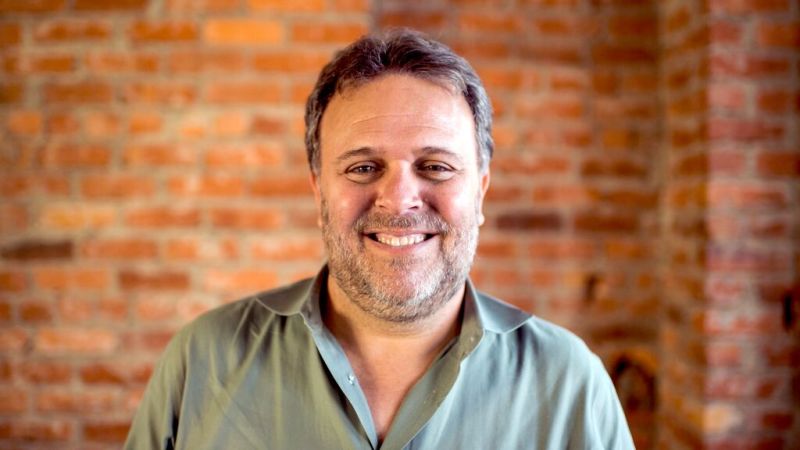
"caption": "Lumos Labs CEO Steve Berkowitz, at the helm since November.",
"description": null,
"title": "Steve Berkowitz Headshot",
"credit": "Lumos Labs",
"status": "inherit",
"isLoading": false,
"fetchFailed": false
},
"futureofyou_100908": {
"type": "attachments",
"id": "futureofyou_100908",
"meta": {
"index": "attachments_1716263798",
"site": "futureofyou",
"id": "100908",
"found": true
},
"parent": 100905,
"imgSizes": {
"twentyfourteen-full-width": {
"file": "https://ww2.kqed.org/app/uploads/sites/13/2016/01/drugs-1-1038x576.jpg",
"width": 1038,
"mimeType": "image/jpeg",
"height": 576
},
"thumbnail": {
"file": "https://ww2.kqed.org/app/uploads/sites/13/2016/01/drugs-1-400x267.jpg",
"width": 400,
"mimeType": "image/jpeg",
"height": 267
},
"fd-sm": {
"file": "https://ww2.kqed.org/app/uploads/sites/13/2016/01/drugs-1-960x640.jpg",
"width": 960,
"mimeType": "image/jpeg",
"height": 640
},
"post-thumbnail": {
"file": "https://ww2.kqed.org/app/uploads/sites/13/2016/01/drugs-1-672x372.jpg",
"width": 672,
"mimeType": "image/jpeg",
"height": 372
},
"kqedFullSize": {
"file": "https://ww2.kqed.org/app/uploads/sites/13/2016/01/drugs-1.jpg",
"width": 1920,
"height": 1280
},
"large": {
"file": "https://ww2.kqed.org/app/uploads/sites/13/2016/01/drugs-1-1180x787.jpg",
"width": 1180,
"mimeType": "image/jpeg",
"height": 787
},
"guest-author-96": {
"file": "https://ww2.kqed.org/app/uploads/sites/13/2016/01/drugs-1-96x96.jpg",
"width": 96,
"mimeType": "image/jpeg",
"height": 96
},
"medium": {
"file": "https://ww2.kqed.org/app/uploads/sites/13/2016/01/drugs-1-800x533.jpg",
"width": 800,
"mimeType": "image/jpeg",
"height": 533
},
"guest-author-64": {
"file": "https://ww2.kqed.org/app/uploads/sites/13/2016/01/drugs-1-64x64.jpg",
"width": 64,
"mimeType": "image/jpeg",
"height": 64
},
"guest-author-32": {
"file": "https://ww2.kqed.org/app/uploads/sites/13/2016/01/drugs-1-32x32.jpg",
"width": 32,
"mimeType": "image/jpeg",
"height": 32
},
"fd-lrg": {
"file": "https://ww2.kqed.org/app/uploads/sites/13/2016/01/drugs-1-1920x1280.jpg",
"width": 1920,
"mimeType": "image/jpeg",
"height": 1280
},
"fd-med": {
"file": "https://ww2.kqed.org/app/uploads/sites/13/2016/01/drugs-1-1180x787.jpg",
"width": 1180,
"mimeType": "image/jpeg",
"height": 787
},
"detail": {
"file": "https://ww2.kqed.org/app/uploads/sites/13/2016/01/drugs-1-75x75.jpg",
"width": 75,
"mimeType": "image/jpeg",
"height": 75
},
"medium_large": {
"file": "https://ww2.kqed.org/app/uploads/sites/13/2016/01/drugs-1-768x512.jpg",
"width": 768,
"mimeType": "image/jpeg",
"height": 512
},
"guest-author-128": {
"file": "https://ww2.kqed.org/app/uploads/sites/13/2016/01/drugs-1-128x128.jpg",
"width": 128,
"mimeType": "image/jpeg",
"height": 128
}
},
"publishDate": 1453395769,
"modified": 1453395794,
"caption": null,
"description": null,
"title": "drugs",
"credit": "Photo from iStock",
"status": "inherit",
"isLoading": false,
"fetchFailed": false
},
"futureofyou_100513": {
"type": "attachments",
"id": "futureofyou_100513",
"meta": {
"index": "attachments_1716263798",
"site": "futureofyou",
"id": "100513",
"found": true
},
"parent": 100492,
"imgSizes": {
"twentyfourteen-full-width": {
"file": "https://ww2.kqed.org/app/uploads/sites/13/2016/01/drugs-1038x576.jpg",
"width": 1038,
"mimeType": "image/jpeg",
"height": 576
},
"thumbnail": {
"file": "https://ww2.kqed.org/app/uploads/sites/13/2016/01/drugs-400x273.jpg",
"width": 400,
"mimeType": "image/jpeg",
"height": 273
},
"fd-sm": {
"file": "https://ww2.kqed.org/app/uploads/sites/13/2016/01/drugs-960x654.jpg",
"width": 960,
"mimeType": "image/jpeg",
"height": 654
},
"post-thumbnail": {
"file": "https://ww2.kqed.org/app/uploads/sites/13/2016/01/drugs-672x372.jpg",
"width": 672,
"mimeType": "image/jpeg",
"height": 372
},
"kqedFullSize": {
"file": "https://ww2.kqed.org/app/uploads/sites/13/2016/01/drugs-e1453321074567.jpg",
"width": 1920,
"height": 1308
},
"large": {
"file": "https://ww2.kqed.org/app/uploads/sites/13/2016/01/drugs-1180x804.jpg",
"width": 1180,
"mimeType": "image/jpeg",
"height": 804
},
"guest-author-96": {
"file": "https://ww2.kqed.org/app/uploads/sites/13/2016/01/drugs-96x96.jpg",
"width": 96,
"mimeType": "image/jpeg",
"height": 96
},
"medium": {
"file": "https://ww2.kqed.org/app/uploads/sites/13/2016/01/drugs-800x545.jpg",
"width": 800,
"mimeType": "image/jpeg",
"height": 545
},
"guest-author-64": {
"file": "https://ww2.kqed.org/app/uploads/sites/13/2016/01/drugs-64x64.jpg",
"width": 64,
"mimeType": "image/jpeg",
"height": 64
},
"guest-author-32": {
"file": "https://ww2.kqed.org/app/uploads/sites/13/2016/01/drugs-32x32.jpg",
"width": 32,
"mimeType": "image/jpeg",
"height": 32
},
"fd-lrg": {
"file": "https://ww2.kqed.org/app/uploads/sites/13/2016/01/drugs-1920x1308.jpg",
"width": 1920,
"mimeType": "image/jpeg",
"height": 1308
},
"fd-med": {
"file": "https://ww2.kqed.org/app/uploads/sites/13/2016/01/drugs-1180x804.jpg",
"width": 1180,
"mimeType": "image/jpeg",
"height": 804
},
"detail": {
"file": "https://ww2.kqed.org/app/uploads/sites/13/2016/01/drugs-75x75.jpg",
"width": 75,
"mimeType": "image/jpeg",
"height": 75
},
"medium_large": {
"file": "https://ww2.kqed.org/app/uploads/sites/13/2016/01/drugs-768x523.jpg",
"width": 768,
"mimeType": "image/jpeg",
"height": 523
},
"guest-author-128": {
"file": "https://ww2.kqed.org/app/uploads/sites/13/2016/01/drugs-128x128.jpg",
"width": 128,
"mimeType": "image/jpeg",
"height": 128
}
},
"publishDate": 1453321049,
"modified": 1494953266,
"caption": "MIAMI - JULY 11: A bottle of AIDS medication called Agenerase is shown July 11, 2002 in Miami, Florida. Centers for Disease Control and Prevention researchers have warned that HIV infection rates among women were on the rise. HIV-positive women of childbearing age between13 to 44 , soared from 80,000 to 135,000 from 1991 to 2000 in the U.S. The international conference on HIV/AIDs currently going on in Spain will discuss reducing the price of antiretroviral drugs so people in developing countries can have better access to treatment. (Photo by Joe Raedle/Getty Images)",
"description": null,
"title": "AIDS Drugs",
"credit": "Photo by Joe Raedle/Getty Images",
"status": "inherit",
"isLoading": false,
"fetchFailed": false
},
"futureofyou_99980": {
"type": "attachments",
"id": "futureofyou_99980",
"meta": {
"index": "attachments_1716263798",
"site": "futureofyou",
"id": "99980",
"found": true
},
"parent": 99937,
"imgSizes": {
"twentyfourteen-full-width": {
"file": "https://ww2.kqed.org/app/uploads/sites/13/2016/01/BidenDavos-1038x576.jpg",
"width": 1038,
"mimeType": "image/jpeg",
"height": 576
},
"thumbnail": {
"file": "https://ww2.kqed.org/app/uploads/sites/13/2016/01/BidenDavos-400x267.jpg",
"width": 400,
"mimeType": "image/jpeg",
"height": 267
},
"fd-sm": {
"file": "https://ww2.kqed.org/app/uploads/sites/13/2016/01/BidenDavos-960x640.jpg",
"width": 960,
"mimeType": "image/jpeg",
"height": 640
},
"post-thumbnail": {
"file": "https://ww2.kqed.org/app/uploads/sites/13/2016/01/BidenDavos-672x372.jpg",
"width": 672,
"mimeType": "image/jpeg",
"height": 372
},
"kqedFullSize": {
"file": "https://ww2.kqed.org/app/uploads/sites/13/2016/01/BidenDavos-e1453227243113.jpg",
"width": 1920,
"height": 1280
},
"large": {
"file": "https://ww2.kqed.org/app/uploads/sites/13/2016/01/BidenDavos-1180x787.jpg",
"width": 1180,
"mimeType": "image/jpeg",
"height": 787
},
"guest-author-96": {
"file": "https://ww2.kqed.org/app/uploads/sites/13/2016/01/BidenDavos-96x96.jpg",
"width": 96,
"mimeType": "image/jpeg",
"height": 96
},
"medium": {
"file": "https://ww2.kqed.org/app/uploads/sites/13/2016/01/BidenDavos-800x533.jpg",
"width": 800,
"mimeType": "image/jpeg",
"height": 533
},
"guest-author-64": {
"file": "https://ww2.kqed.org/app/uploads/sites/13/2016/01/BidenDavos-64x64.jpg",
"width": 64,
"mimeType": "image/jpeg",
"height": 64
},
"guest-author-32": {
"file": "https://ww2.kqed.org/app/uploads/sites/13/2016/01/BidenDavos-32x32.jpg",
"width": 32,
"mimeType": "image/jpeg",
"height": 32
},
"fd-lrg": {
"file": "https://ww2.kqed.org/app/uploads/sites/13/2016/01/BidenDavos-1920x1280.jpg",
"width": 1920,
"mimeType": "image/jpeg",
"height": 1280
},
"fd-med": {
"file": "https://ww2.kqed.org/app/uploads/sites/13/2016/01/BidenDavos-1180x787.jpg",
"width": 1180,
"mimeType": "image/jpeg",
"height": 787
},
"detail": {
"file": "https://ww2.kqed.org/app/uploads/sites/13/2016/01/BidenDavos-75x75.jpg",
"width": 75,
"mimeType": "image/jpeg",
"height": 75
},
"medium_large": {
"file": "https://ww2.kqed.org/app/uploads/sites/13/2016/01/BidenDavos-768x512.jpg",
"width": 768,
"mimeType": "image/jpeg",
"height": 512
},
"guest-author-128": {
"file": "https://ww2.kqed.org/app/uploads/sites/13/2016/01/BidenDavos-128x128.jpg",
"width": 128,
"mimeType": "image/jpeg",
"height": 128
}
},
"publishDate": 1453227233,
"modified": 1489447838,
"caption": "U.S Vice President Joe Biden during a session on the 'Cancer Mooshot' during the World Economic Forum annual meeting in Davos, Switzerland, on Jan. 19, 2016.",
"description": null,
"title": "SWITZERLAND-DAVOS-ECONOMY-POLITICS-MEET-WEF",
"credit": "FABRICE COFFRINI/AFP/Getty Images",
"status": "inherit",
"isLoading": false,
"fetchFailed": false
},
"futureofyou_93427": {
"type": "attachments",
"id": "futureofyou_93427",
"meta": {
"index": "attachments_1716263798",
"site": "futureofyou",
"id": "93427",
"found": true
},
"parent": 93348,
"imgSizes": {
"twentyfourteen-full-width": {
"file": "https://ww2.kqed.org/app/uploads/sites/13/2016/01/iStock_000060595932_Large-1038x576.jpg",
"width": 1038,
"mimeType": "image/jpeg",
"height": 576
},
"thumbnail": {
"file": "https://ww2.kqed.org/app/uploads/sites/13/2016/01/iStock_000060595932_Large-400x300.jpg",
"width": 400,
"mimeType": "image/jpeg",
"height": 300
},
"fd-sm": {
"file": "https://ww2.kqed.org/app/uploads/sites/13/2016/01/iStock_000060595932_Large-960x720.jpg",
"width": 960,
"mimeType": "image/jpeg",
"height": 720
},
"post-thumbnail": {
"file": "https://ww2.kqed.org/app/uploads/sites/13/2016/01/iStock_000060595932_Large-672x372.jpg",
"width": 672,
"mimeType": "image/jpeg",
"height": 372
},
"kqedFullSize": {
"file": "https://ww2.kqed.org/app/uploads/sites/13/2016/01/iStock_000060595932_Large.jpg",
"width": 2560,
"height": 1920
},
"large": {
"file": "https://ww2.kqed.org/app/uploads/sites/13/2016/01/iStock_000060595932_Large-1180x885.jpg",
"width": 1180,
"mimeType": "image/jpeg",
"height": 885
},
"guest-author-96": {
"file": "https://ww2.kqed.org/app/uploads/sites/13/2016/01/iStock_000060595932_Large-96x96.jpg",
"width": 96,
"mimeType": "image/jpeg",
"height": 96
},
"medium": {
"file": "https://ww2.kqed.org/app/uploads/sites/13/2016/01/iStock_000060595932_Large-800x600.jpg",
"width": 800,
"mimeType": "image/jpeg",
"height": 600
},
"guest-author-64": {
"file": "https://ww2.kqed.org/app/uploads/sites/13/2016/01/iStock_000060595932_Large-64x64.jpg",
"width": 64,
"mimeType": "image/jpeg",
"height": 64
},
"guest-author-32": {
"file": "https://ww2.kqed.org/app/uploads/sites/13/2016/01/iStock_000060595932_Large-32x32.jpg",
"width": 32,
"mimeType": "image/jpeg",
"height": 32
},
"fd-lrg": {
"file": "https://ww2.kqed.org/app/uploads/sites/13/2016/01/iStock_000060595932_Large-1920x1440.jpg",
"width": 1920,
"mimeType": "image/jpeg",
"height": 1440
},
"fd-med": {
"file": "https://ww2.kqed.org/app/uploads/sites/13/2016/01/iStock_000060595932_Large-1180x885.jpg",
"width": 1180,
"mimeType": "image/jpeg",
"height": 885
},
"detail": {
"file": "https://ww2.kqed.org/app/uploads/sites/13/2016/01/iStock_000060595932_Large-75x75.jpg",
"width": 75,
"mimeType": "image/jpeg",
"height": 75
},
"medium_large": {
"file": "https://ww2.kqed.org/app/uploads/sites/13/2016/01/iStock_000060595932_Large-768x576.jpg",
"width": 768,
"mimeType": "image/jpeg",
"height": 576
},
"guest-author-128": {
"file": "https://ww2.kqed.org/app/uploads/sites/13/2016/01/iStock_000060595932_Large-128x128.jpg",
"width": 128,
"mimeType": "image/jpeg",
"height": 128
}
},
"publishDate": 1452038812,
"modified": 1452038833,
"caption": null,
"description": null,
"title": "futuristic human brain",
"credit": "iStock",
"status": "inherit",
"isLoading": false,
"fetchFailed": false
},
"futureofyou_97441": {
"type": "attachments",
"id": "futureofyou_97441",
"meta": {
"index": "attachments_1716263798",
"site": "futureofyou",
"id": "97441",
"found": true
},
"parent": 94302,
"imgSizes": {
"thumbnail": {
"file": "https://ww2.kqed.org/app/uploads/sites/13/2016/01/Patent-filing-image-400x190.jpg",
"width": 400,
"mimeType": "image/jpeg",
"height": 190
},
"post-thumbnail": {
"file": "https://ww2.kqed.org/app/uploads/sites/13/2016/01/Patent-filing-image-672x332.jpg",
"width": 672,
"mimeType": "image/jpeg",
"height": 332
},
"kqedFullSize": {
"file": "https://ww2.kqed.org/app/uploads/sites/13/2016/01/Patent-filing-image.jpg",
"width": 700,
"height": 332
},
"guest-author-96": {
"file": "https://ww2.kqed.org/app/uploads/sites/13/2016/01/Patent-filing-image-96x96.jpg",
"width": 96,
"mimeType": "image/jpeg",
"height": 96
},
"guest-author-64": {
"file": "https://ww2.kqed.org/app/uploads/sites/13/2016/01/Patent-filing-image-64x64.jpg",
"width": 64,
"mimeType": "image/jpeg",
"height": 64
},
"detail": {
"file": "https://ww2.kqed.org/app/uploads/sites/13/2016/01/Patent-filing-image-75x75.jpg",
"width": 75,
"mimeType": "image/jpeg",
"height": 75
},
"guest-author-32": {
"file": "https://ww2.kqed.org/app/uploads/sites/13/2016/01/Patent-filing-image-32x32.jpg",
"width": 32,
"mimeType": "image/jpeg",
"height": 32
},
"guest-author-128": {
"file": "https://ww2.kqed.org/app/uploads/sites/13/2016/01/Patent-filing-image-128x128.jpg",
"width": 128,
"mimeType": "image/jpeg",
"height": 128
}
},
"publishDate": 1452751519,
"modified": 1452790455,
"caption": "Though the Broad Institute and the University of California Berkeley both filed patents for CRISPR-Cas9, the Broad's expedited application was approved while Berkeley's was still pending.",
"description": null,
"title": "Patent filing image",
"credit": "Liebrecht Fick",
"status": "inherit",
"isLoading": false,
"fetchFailed": false
},
"futureofyou_97651": {
"type": "attachments",
"id": "futureofyou_97651",
"meta": {
"index": "attachments_1716263798",
"site": "futureofyou",
"id": "97651",
"found": true
},
"parent": 97649,
"imgSizes": {
"twentyfourteen-full-width": {
"file": "https://ww2.kqed.org/app/uploads/sites/13/2016/01/EHealth-1038x576.jpg",
"width": 1038,
"mimeType": "image/jpeg",
"height": 576
},
"thumbnail": {
"file": "https://ww2.kqed.org/app/uploads/sites/13/2016/01/EHealth-400x230.jpg",
"width": 400,
"mimeType": "image/jpeg",
"height": 230
},
"fd-sm": {
"file": "https://ww2.kqed.org/app/uploads/sites/13/2016/01/EHealth-960x552.jpg",
"width": 960,
"mimeType": "image/jpeg",
"height": 552
},
"post-thumbnail": {
"file": "https://ww2.kqed.org/app/uploads/sites/13/2016/01/EHealth-672x372.jpg",
"width": 672,
"mimeType": "image/jpeg",
"height": 372
},
"kqedFullSize": {
"file": "https://ww2.kqed.org/app/uploads/sites/13/2016/01/EHealth.jpg",
"width": 1920,
"height": 1104
},
"large": {
"file": "https://ww2.kqed.org/app/uploads/sites/13/2016/01/EHealth-1180x679.jpg",
"width": 1180,
"mimeType": "image/jpeg",
"height": 679
},
"guest-author-96": {
"file": "https://ww2.kqed.org/app/uploads/sites/13/2016/01/EHealth-96x96.jpg",
"width": 96,
"mimeType": "image/jpeg",
"height": 96
},
"medium": {
"file": "https://ww2.kqed.org/app/uploads/sites/13/2016/01/EHealth-800x460.jpg",
"width": 800,
"mimeType": "image/jpeg",
"height": 460
},
"guest-author-64": {
"file": "https://ww2.kqed.org/app/uploads/sites/13/2016/01/EHealth-64x64.jpg",
"width": 64,
"mimeType": "image/jpeg",
"height": 64
},
"guest-author-32": {
"file": "https://ww2.kqed.org/app/uploads/sites/13/2016/01/EHealth-32x32.jpg",
"width": 32,
"mimeType": "image/jpeg",
"height": 32
},
"fd-lrg": {
"file": "https://ww2.kqed.org/app/uploads/sites/13/2016/01/EHealth-1920x1104.jpg",
"width": 1920,
"mimeType": "image/jpeg",
"height": 1104
},
"fd-med": {
"file": "https://ww2.kqed.org/app/uploads/sites/13/2016/01/EHealth-1180x679.jpg",
"width": 1180,
"mimeType": "image/jpeg",
"height": 679
},
"detail": {
"file": "https://ww2.kqed.org/app/uploads/sites/13/2016/01/EHealth-75x75.jpg",
"width": 75,
"mimeType": "image/jpeg",
"height": 75
},
"medium_large": {
"file": "https://ww2.kqed.org/app/uploads/sites/13/2016/01/EHealth-768x442.jpg",
"width": 768,
"mimeType": "image/jpeg",
"height": 442
},
"guest-author-128": {
"file": "https://ww2.kqed.org/app/uploads/sites/13/2016/01/EHealth-128x128.jpg",
"width": 128,
"mimeType": "image/jpeg",
"height": 128
}
},
"publishDate": 1452787272,
"modified": 1452789676,
"caption": "A new study shows how hard it is to predict the health risks of healthy people from their DNA. (NHGRI)",
"description": null,
"title": "EHealth",
"credit": null,
"status": "inherit",
"isLoading": false,
"fetchFailed": false
},
"futureofyou_97735": {
"type": "attachments",
"id": "futureofyou_97735",
"meta": {
"index": "attachments_1716263798",
"site": "futureofyou",
"id": "97735",
"found": true
},
"parent": 97704,
"imgSizes": {
"twentyfourteen-full-width": {
"file": "https://ww2.kqed.org/app/uploads/sites/13/2016/01/pills-1038x576.jpg",
"width": 1038,
"mimeType": "image/jpeg",
"height": 576
},
"thumbnail": {
"file": "https://ww2.kqed.org/app/uploads/sites/13/2016/01/pills-400x267.jpg",
"width": 400,
"mimeType": "image/jpeg",
"height": 267
},
"fd-sm": {
"file": "https://ww2.kqed.org/app/uploads/sites/13/2016/01/pills-960x640.jpg",
"width": 960,
"mimeType": "image/jpeg",
"height": 640
},
"post-thumbnail": {
"file": "https://ww2.kqed.org/app/uploads/sites/13/2016/01/pills-672x372.jpg",
"width": 672,
"mimeType": "image/jpeg",
"height": 372
},
"kqedFullSize": {
"file": "https://ww2.kqed.org/app/uploads/sites/13/2016/01/pills.jpg",
"width": 1920,
"height": 1280
},
"large": {
"file": "https://ww2.kqed.org/app/uploads/sites/13/2016/01/pills-1180x787.jpg",
"width": 1180,
"mimeType": "image/jpeg",
"height": 787
},
"guest-author-96": {
"file": "https://ww2.kqed.org/app/uploads/sites/13/2016/01/pills-96x96.jpg",
"width": 96,
"mimeType": "image/jpeg",
"height": 96
},
"medium": {
"file": "https://ww2.kqed.org/app/uploads/sites/13/2016/01/pills-800x533.jpg",
"width": 800,
"mimeType": "image/jpeg",
"height": 533
},
"guest-author-64": {
"file": "https://ww2.kqed.org/app/uploads/sites/13/2016/01/pills-64x64.jpg",
"width": 64,
"mimeType": "image/jpeg",
"height": 64
},
"guest-author-32": {
"file": "https://ww2.kqed.org/app/uploads/sites/13/2016/01/pills-32x32.jpg",
"width": 32,
"mimeType": "image/jpeg",
"height": 32
},
"fd-lrg": {
"file": "https://ww2.kqed.org/app/uploads/sites/13/2016/01/pills-1920x1280.jpg",
"width": 1920,
"mimeType": "image/jpeg",
"height": 1280
},
"fd-med": {
"file": "https://ww2.kqed.org/app/uploads/sites/13/2016/01/pills-1180x787.jpg",
"width": 1180,
"mimeType": "image/jpeg",
"height": 787
},
"detail": {
"file": "https://ww2.kqed.org/app/uploads/sites/13/2016/01/pills-75x75.jpg",
"width": 75,
"mimeType": "image/jpeg",
"height": 75
},
"medium_large": {
"file": "https://ww2.kqed.org/app/uploads/sites/13/2016/01/pills-768x512.jpg",
"width": 768,
"mimeType": "image/jpeg",
"height": 512
},
"guest-author-128": {
"file": "https://ww2.kqed.org/app/uploads/sites/13/2016/01/pills-128x128.jpg",
"width": 128,
"mimeType": "image/jpeg",
"height": 128
}
},
"publishDate": 1452798012,
"modified": 1494953319,
"caption": null,
"description": null,
"title": "pills",
"credit": "Photo from iStock",
"status": "inherit",
"isLoading": false,
"fetchFailed": false
},
"futureofyou_51081": {
"type": "attachments",
"id": "futureofyou_51081",
"meta": {
"index": "attachments_1716263798",
"site": "futureofyou",
"id": "51081",
"found": true
},
"parent": 51030,
"imgSizes": {
"twentyfourteen-full-width": {
"file": "https://ww2.kqed.org/app/uploads/sites/13/2015/10/Activitytracker1-1038x576.jpg",
"width": 1038,
"mimeType": "image/jpeg",
"height": 576
},
"thumbnail": {
"file": "https://ww2.kqed.org/app/uploads/sites/13/2015/10/Activitytracker1-400x267.jpg",
"width": 400,
"mimeType": "image/jpeg",
"height": 267
},
"fd-sm": {
"file": "https://ww2.kqed.org/app/uploads/sites/13/2015/10/Activitytracker1-960x641.jpg",
"width": 960,
"mimeType": "image/jpeg",
"height": 641
},
"post-thumbnail": {
"file": "https://ww2.kqed.org/app/uploads/sites/13/2015/10/Activitytracker1-672x372.jpg",
"width": 672,
"mimeType": "image/jpeg",
"height": 372
},
"kqedFullSize": {
"file": "https://ww2.kqed.org/app/uploads/sites/13/2015/10/Activitytracker1-e1452707416387.jpg",
"width": 1920,
"height": 1281
},
"large": {
"file": "https://ww2.kqed.org/app/uploads/sites/13/2015/10/Activitytracker1-1180x788.jpg",
"width": 1180,
"mimeType": "image/jpeg",
"height": 788
},
"guest-author-96": {
"file": "https://ww2.kqed.org/app/uploads/sites/13/2015/10/Activitytracker1-96x96.jpg",
"width": 96,
"mimeType": "image/jpeg",
"height": 96
},
"medium": {
"file": "https://ww2.kqed.org/app/uploads/sites/13/2015/10/Activitytracker1-800x534.jpg",
"width": 800,
"mimeType": "image/jpeg",
"height": 534
},
"guest-author-64": {
"file": "https://ww2.kqed.org/app/uploads/sites/13/2015/10/Activitytracker1-64x64.jpg",
"width": 64,
"mimeType": "image/jpeg",
"height": 64
},
"guest-author-32": {
"file": "https://ww2.kqed.org/app/uploads/sites/13/2015/10/Activitytracker1-32x32.jpg",
"width": 32,
"mimeType": "image/jpeg",
"height": 32
},
"fd-lrg": {
"file": "https://ww2.kqed.org/app/uploads/sites/13/2015/10/Activitytracker1-1920x1281.jpg",
"width": 1920,
"mimeType": "image/jpeg",
"height": 1281
},
"fd-med": {
"file": "https://ww2.kqed.org/app/uploads/sites/13/2015/10/Activitytracker1-1180x788.jpg",
"width": 1180,
"mimeType": "image/jpeg",
"height": 788
},
"detail": {
"file": "https://ww2.kqed.org/app/uploads/sites/13/2015/10/Activitytracker1-75x75.jpg",
"width": 75,
"mimeType": "image/jpeg",
"height": 75
},
"guest-author-128": {
"file": "https://ww2.kqed.org/app/uploads/sites/13/2015/10/Activitytracker1-128x128.jpg",
"width": 128,
"mimeType": "image/jpeg",
"height": 128
}
},
"publishDate": 1444689167,
"modified": 1452791997,
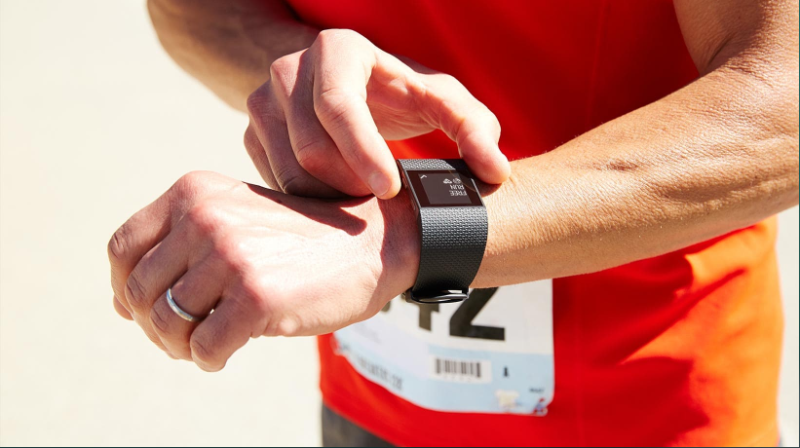
"caption": "A Fitbit device.",
"description": "Devices from Fitbit were among the most accurate, according to the study.",
"title": "Activitytracker1",
"credit": "Wikimedia Commons",
"status": "inherit",
"isLoading": false,
"fetchFailed": false
},
"futureofyou_96747": {
"type": "attachments",
"id": "futureofyou_96747",
"meta": {
"index": "attachments_1716263798",
"site": "futureofyou",
"id": "96747",
"found": true
},
"parent": 96746,
"imgSizes": {
"thumbnail": {
"file": "https://ww2.kqed.org/app/uploads/sites/13/2016/01/beef-400x266.jpg",
"width": 400,
"mimeType": "image/jpeg",
"height": 266
},
"post-thumbnail": {
"file": "https://ww2.kqed.org/app/uploads/sites/13/2016/01/beef-672x372.jpg",
"width": 672,
"mimeType": "image/jpeg",
"height": 372
},
"kqedFullSize": {
"file": "https://ww2.kqed.org/app/uploads/sites/13/2016/01/beef.jpg",
"width": 800,
"height": 532
},
"guest-author-96": {
"file": "https://ww2.kqed.org/app/uploads/sites/13/2016/01/beef-96x96.jpg",
"width": 96,
"mimeType": "image/jpeg",
"height": 96
},
"medium": {
"file": "https://ww2.kqed.org/app/uploads/sites/13/2016/01/beef-800x532.jpg",
"width": 800,
"mimeType": "image/jpeg",
"height": 532
},
"guest-author-64": {
"file": "https://ww2.kqed.org/app/uploads/sites/13/2016/01/beef-64x64.jpg",
"width": 64,
"mimeType": "image/jpeg",
"height": 64
},
"detail": {
"file": "https://ww2.kqed.org/app/uploads/sites/13/2016/01/beef-75x75.jpg",
"width": 75,
"mimeType": "image/jpeg",
"height": 75
},
"guest-author-32": {
"file": "https://ww2.kqed.org/app/uploads/sites/13/2016/01/beef-32x32.jpg",
"width": 32,
"mimeType": "image/jpeg",
"height": 32
},
"medium_large": {
"file": "https://ww2.kqed.org/app/uploads/sites/13/2016/01/beef-768x511.jpg",
"width": 768,
"mimeType": "image/jpeg",
"height": 511
},
"guest-author-128": {
"file": "https://ww2.kqed.org/app/uploads/sites/13/2016/01/beef-128x128.jpg",
"width": 128,
"mimeType": "image/jpeg",
"height": 128
}
},
"publishDate": 1452639515,
"modified": 1452639655,
"caption": "A dish featuring antibiotic-free beef from Strauss, served at Overlake Medical Center in Bellevue, Washington.",
"description": "A dish featuring antibiotic-free beef from Strauss, served at Overlake Medical Center in Bellevue, Washington.",
"title": "beef",
"credit": "Overlake Medical Center",
"status": "inherit",
"isLoading": false,
"fetchFailed": false
},
"futureofyou_94918": {
"type": "attachments",
"id": "futureofyou_94918",
"meta": {
"index": "attachments_1716263798",
"site": "futureofyou",
"id": "94918",
"found": true
},
"parent": 94913,
"imgSizes": {
"thumbnail": {
"file": "https://ww2.kqed.org/app/uploads/sites/13/2016/01/BirdFlu-400x225.jpg",
"width": 400,
"mimeType": "image/jpeg",
"height": 225
},
"post-thumbnail": {
"file": "https://ww2.kqed.org/app/uploads/sites/13/2016/01/BirdFlu-672x372.jpg",
"width": 672,
"mimeType": "image/jpeg",
"height": 372
},
"kqedFullSize": {
"file": "https://ww2.kqed.org/app/uploads/sites/13/2016/01/BirdFlu.jpg",
"width": 800,
"height": 450
},
"guest-author-96": {
"file": "https://ww2.kqed.org/app/uploads/sites/13/2016/01/BirdFlu-96x96.jpg",
"width": 96,
"mimeType": "image/jpeg",
"height": 96
},
"medium": {
"file": "https://ww2.kqed.org/app/uploads/sites/13/2016/01/BirdFlu-800x450.jpg",
"width": 800,
"mimeType": "image/jpeg",
"height": 450
},
"guest-author-64": {
"file": "https://ww2.kqed.org/app/uploads/sites/13/2016/01/BirdFlu-64x64.jpg",
"width": 64,
"mimeType": "image/jpeg",
"height": 64
},
"detail": {
"file": "https://ww2.kqed.org/app/uploads/sites/13/2016/01/BirdFlu-75x75.jpg",
"width": 75,
"mimeType": "image/jpeg",
"height": 75
},
"guest-author-32": {
"file": "https://ww2.kqed.org/app/uploads/sites/13/2016/01/BirdFlu-32x32.jpg",
"width": 32,
"mimeType": "image/jpeg",
"height": 32
},
"medium_large": {
"file": "https://ww2.kqed.org/app/uploads/sites/13/2016/01/BirdFlu-768x432.jpg",
"width": 768,
"mimeType": "image/jpeg",
"height": 432
},
"guest-author-128": {
"file": "https://ww2.kqed.org/app/uploads/sites/13/2016/01/BirdFlu-128x128.jpg",
"width": 128,
"mimeType": "image/jpeg",
"height": 128
}
},
"publishDate": 1452301169,
"modified": 1452301188,
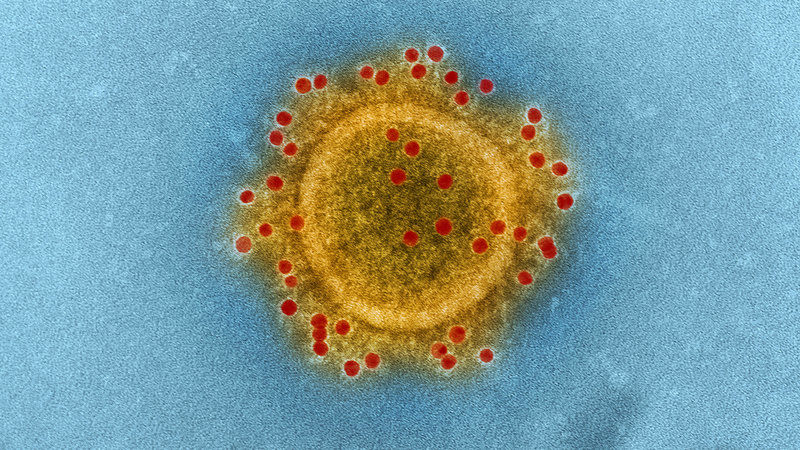
"caption": "The Middle East respiratory syndrome coronavirus, which causes MERS, is one of the microbes that has sparked research controversy.",
"description": null,
"title": "BirdFlu",
"credit": "NIAID/CDC",
"status": "inherit",
"isLoading": false,
"fetchFailed": false
},
"futureofyou_96633": {
"type": "attachments",
"id": "futureofyou_96633",
"meta": {
"index": "attachments_1716263798",
"site": "futureofyou",
"id": "96633",
"found": true
},
"parent": 94836,
"imgSizes": {
"thumbnail": {
"file": "https://ww2.kqed.org/app/uploads/sites/13/2016/01/fitbit-400x224.png",
"width": 400,
"mimeType": "image/png",
"height": 224
},
"post-thumbnail": {
"file": "https://ww2.kqed.org/app/uploads/sites/13/2016/01/fitbit-672x372.png",
"width": 672,
"mimeType": "image/png",
"height": 372
},
"kqedFullSize": {
"file": "https://ww2.kqed.org/app/uploads/sites/13/2016/01/fitbit.png",
"width": 821,
"height": 460
},
"guest-author-96": {
"file": "https://ww2.kqed.org/app/uploads/sites/13/2016/01/fitbit-96x96.png",
"width": 96,
"mimeType": "image/png",
"height": 96
},
"medium": {
"file": "https://ww2.kqed.org/app/uploads/sites/13/2016/01/fitbit-800x448.png",
"width": 800,
"mimeType": "image/png",
"height": 448
},
"guest-author-64": {
"file": "https://ww2.kqed.org/app/uploads/sites/13/2016/01/fitbit-64x64.png",
"width": 64,
"mimeType": "image/png",
"height": 64
},
"detail": {
"file": "https://ww2.kqed.org/app/uploads/sites/13/2016/01/fitbit-75x75.png",
"width": 75,
"mimeType": "image/png",
"height": 75
},
"guest-author-32": {
"file": "https://ww2.kqed.org/app/uploads/sites/13/2016/01/fitbit-32x32.png",
"width": 32,
"mimeType": "image/png",
"height": 32
},
"medium_large": {
"file": "https://ww2.kqed.org/app/uploads/sites/13/2016/01/fitbit-768x430.png",
"width": 768,
"mimeType": "image/png",
"height": 430
},
"guest-author-128": {
"file": "https://ww2.kqed.org/app/uploads/sites/13/2016/01/fitbit-128x128.png",
"width": 128,
"mimeType": "image/png",
"height": 128
}
},
"publishDate": 1452620434,
"modified": 1452620441,
"caption": null,
"description": null,
"title": "fitbit",
"credit": "Fitbit",
"status": "inherit",
"isLoading": false,
"fetchFailed": false
}
},
"audioPlayerReducer": {
"postId": "stream_live",
"isPaused": true,
"isPlaying": false,
"pfsActive": false,
"pledgeModalIsOpen": true,
"playerDrawerIsOpen": false,
"liveAudioPlayStartedAt": 0,
"liveAudioPlayContext": ""
},
"authorsReducer": {
"byline_futureofyou_100905": {
"type": "authors",
"id": "byline_futureofyou_100905",
"meta": {
"override": true
},
"slug": "byline_futureofyou_100905",
"name": "Linda A. Johnson\u003cbr />Associated Press",
"isLoading": false
},
"byline_futureofyou_100492": {
"type": "authors",
"id": "byline_futureofyou_100492",
"meta": {
"override": true
},
"slug": "byline_futureofyou_100492",
"name": "Emily Bazar\u003cbr />Kaiser Health News",
"isLoading": false
},
"byline_futureofyou_99937": {
"type": "authors",
"id": "byline_futureofyou_99937",
"meta": {
"override": true
},
"slug": "byline_futureofyou_99937",
"name": "KQED News Staff and Wires",
"isLoading": false
},
"byline_futureofyou_97704": {
"type": "authors",
"id": "byline_futureofyou_97704",
"meta": {
"override": true
},
"slug": "byline_futureofyou_97704",
"name": "KQED News Staff and Wires",
"isLoading": false
},
"byline_futureofyou_96746": {
"type": "authors",
"id": "byline_futureofyou_96746",
"meta": {
"override": true
},
"slug": "byline_futureofyou_96746",
"name": "Eliza Barclay\u003cbr>NPR",
"isLoading": false
},
"byline_futureofyou_94913": {
"type": "authors",
"id": "byline_futureofyou_94913",
"meta": {
"override": true
},
"slug": "byline_futureofyou_94913",
"name": "Nell Greenfieldboyce\u003cbr />NPR",
"isLoading": false
},
"jbrooks": {
"type": "authors",
"id": "80",
"meta": {
"index": "authors_1716337520",
"id": "80",
"found": true
},
"name": "Jon Brooks",
"firstName": "Jon",
"lastName": "Brooks",
"slug": "jbrooks",
"email": "jbrooks@kqed.org",
"display_author_email": true,
"staff_mastheads": [
"science"
],
"title": "Digital Editor",
"bio": "Jon Brooks is a former Digital Editor for KQED Science. He is the former editor of KQED’s daily news blog, News Fix. In 2014, he won a California Journalism Award for his coverage of ride services like Uber and Lyft and the taxi industry. A veteran blogger, he previously worked for Yahoo! in various news writing and editing roles. Jon is also a playwright whose work has been produced in San Francisco, New York, Italy, and around the U.S. He has written about film for his own blog and studied film at Boston University.",
"avatar": "https://secure.gravatar.com/avatar/98887f7ed1c876ed414d4c915e969584?s=600&d=blank&r=g",
"twitter": "jbrooksfoy",
"facebook": null,
"instagram": null,
"linkedin": null,
"sites": [
{
"site": "arts",
"roles": [
"Contributor",
"editor"
]
},
{
"site": "news",
"roles": [
"author"
]
},
{
"site": "futureofyou",
"roles": [
"administrator"
]
},
{
"site": "mindshift",
"roles": [
"editor"
]
},
{
"site": "stateofhealth",
"roles": [
"editor"
]
},
{
"site": "science",
"roles": [
"administrator"
]
},
{
"site": "quest",
"roles": [
"editor"
]
}
],
"headData": {
"title": "Jon Brooks | KQED",
"description": "Digital Editor",
"ogImgSrc": "https://secure.gravatar.com/avatar/98887f7ed1c876ed414d4c915e969584?s=600&d=blank&r=g",
"twImgSrc": "https://secure.gravatar.com/avatar/98887f7ed1c876ed414d4c915e969584?s=600&d=blank&r=g"
},
"isLoading": false,
"link": "/author/jbrooks"
},
"lindseyhoshaw": {
"type": "authors",
"id": "5432",
"meta": {
"index": "authors_1716337520",
"id": "5432",
"found": true
},
"name": "Lindsey Hoshaw",
"firstName": "Lindsey",
"lastName": "Hoshaw",
"slug": "lindseyhoshaw",
"email": "lhoshaw@kqed.org",
"display_author_email": false,
"staff_mastheads": [],
"title": "KQED Contributor",
"bio": "Lindsey Hoshaw is a former interactive producer for KQED Science. Before joining KQED, Lindsey was a science correspondent for The New York Times, The Boston Globe, Forbes and Scientific American. On Twitter @lindseyhoshaw",
"avatar": "https://secure.gravatar.com/avatar/274b07694c998eaa8f26cfabaa941186?s=600&d=mm&r=g",
"twitter": "lindseyhoshaw",
"facebook": "lindsey.hoshaw.9",
"instagram": null,
"linkedin": null,
"sites": [
{
"site": "arts",
"roles": [
"author"
]
},
{
"site": "news",
"roles": [
"subscriber"
]
},
{
"site": "futureofyou",
"roles": [
"editor"
]
},
{
"site": "bayareabites",
"roles": [
"contributor"
]
},
{
"site": "stateofhealth",
"roles": [
"author"
]
},
{
"site": "science",
"roles": [
"edit_theme_options",
"subscriber"
]
},
{
"site": "quest",
"roles": [
"edit_post_subscriptions",
"edit_usergroups",
"unfiltered_html",
"unfiltered_upload",
"leadcoordinator",
"editor"
]
},
{
"site": "food",
"roles": []
}
],
"headData": {
"title": "Lindsey Hoshaw | KQED",
"description": "KQED Contributor",
"ogImgSrc": "https://secure.gravatar.com/avatar/274b07694c998eaa8f26cfabaa941186?s=600&d=mm&r=g",
"twImgSrc": "https://secure.gravatar.com/avatar/274b07694c998eaa8f26cfabaa941186?s=600&d=mm&r=g"
},
"isLoading": false,
"link": "/author/lindseyhoshaw"
},
"dr-barry-starr": {
"type": "authors",
"id": "6177",
"meta": {
"index": "authors_1716337520",
"id": "6177",
"found": true
},
"name": "Dr. Barry Starr",
"firstName": "Dr. Barry",
"lastName": "Starr",
"slug": "dr-barry-starr",
"email": "bstarr@thetech.org",
"display_author_email": false,
"staff_mastheads": [],
"title": "KQED Contributor",
"bio": "Dr. Barry Starr (\u003ca href=\"https://twitter.com/geneticsboy\">@geneticsboy\u003c/a>) is a Geneticist-in-Residence at The Tech Museum of Innovation in San Jose, CA and runs their Stanford at The Tech program. The program is part of an ongoing collaboration between the \u003ca href=\"http://genetics.stanford.edu/\">Stanford Department of Genetics\u003c/a> and \u003ca href=\"http://www.thetech.org/\">The Tech Museum of Innovation\u003c/a>. Together these two partners created the \u003ca href=\"http://www.thetech.org/exhibits/permanent/index.php?sGalKey=gtwt&galKey=lt\">Genetics: Technology with a Twist\u003c/a> exhibition.\r\n\r\nYou can also see \u003ca href=\"https://ww2.kqed.org/science/author/dr-barry-starr/\">additional posts by Barry at KQED Science\u003c/a>, and read his \u003ca href=\"http://science.kqed.org/quest/author/dr-barry-starr/\">previous contributions\u003c/a> to \u003ca href=\"http://science.kqed.org/quest/\">QUEST\u003c/a>, a project dedicated to exploring the Science of Sustainability.",
"avatar": "https://secure.gravatar.com/avatar/4a5680e4c642ea0f0f3041af16018969?s=600&d=blank&r=g",
"twitter": "geneticsboy",
"facebook": null,
"instagram": null,
"linkedin": null,
"sites": [
{
"site": "futureofyou",
"roles": []
},
{
"site": "science",
"roles": [
"author"
]
},
{
"site": "quest",
"roles": [
"subscriber"
]
}
],
"headData": {
"title": "Dr. Barry Starr | KQED",
"description": "KQED Contributor",
"ogImgSrc": "https://secure.gravatar.com/avatar/4a5680e4c642ea0f0f3041af16018969?s=600&d=blank&r=g",
"twImgSrc": "https://secure.gravatar.com/avatar/4a5680e4c642ea0f0f3041af16018969?s=600&d=blank&r=g"
},
"isLoading": false,
"link": "/author/dr-barry-starr"
}
},
"pagesReducer": {
"science_category_health": {
"type": "terms",
"id": "science_39",
"meta": {
"index": "terms_1716263798",
"site": "science",
"id": "39",
"score": 10.889519
},
"featImg": null,
"name": "Health",
"description": null,
"taxonomy": "category",
"headData": {
"twImgId": null,
"twTitle": null,
"ogTitle": null,
"ogImgId": null,
"twDescription": null,
"description": null,
"title": "Health Archives | KQED Science",
"ogDescription": null
},
"ttid": 41,
"slug": "health",
"isLoading": false,
"title": "Health",
"pageMeta": {
"site": "science",
"WpPageTemplate": "page-topic-editorial",
"currentPage": 68
},
"blocks": [
{
"blockName": "kqed/post-list",
"attrs": {
"layout": "cardArticle2",
"query": "posts/science?category=health",
"seeMore": false,
"paginated": true,
"page": 68
}
},
{
"blockName": "kqed/ad"
}
]
}
},
"pfsSessionReducer": {},
"postsReducer": {
"stream_live": {
"type": "live",
"id": "stream_live",
"audioUrl": "https://streams.kqed.org/kqedradio",
"title": "Live Stream",
"excerpt": "Live Stream information currently unavailable.",
"link": "/radio",
"featImg": "",
"label": {
"name": "KQED Live",
"link": "/"
}
},
"stream_kqedNewscast": {
"type": "posts",
"id": "stream_kqedNewscast",
"audioUrl": "https://www.kqed.org/.stream/anon/radio/RDnews/newscast.mp3?_=1",
"title": "KQED Newscast",
"featImg": "",
"label": {
"name": "88.5 FM",
"link": "/"
}
},
"futureofyou_100995": {
"type": "posts",
"id": "futureofyou_100995",
"meta": {
"index": "posts_1716263798",
"site": "futureofyou",
"id": "100995",
"score": null,
"sort": [
1453424422000
]
},
"parent": 0,
"labelTerm": {
"site": "futureofyou",
"term": 54
},
"blocks": [],
"publishDate": 1453424422,
"format": "standard",
"disqusTitle": "Lumosity CEO Admits Brain-Training Games May Not Ward Off Mental Decline",
"title": "Lumosity CEO Admits Brain-Training Games May Not Ward Off Mental Decline",
"headTitle": "Future of You | KQED Future of You | KQED Science",
"content": "\u003cp>Lumos Labs CEO Steve Berkowitz says his company is no longer making claims that its suite of cognitive training games can make your brain healthier. In fact, he admits \"the jury is still out\" on the efficacy of so-called brain-training.\u003c/p>\n\u003cp>\"We're not out there saying that there are direct benefits to it. We're not out there saying anything other than, 'Hey you know, this is something, give it a try.' \"\u003c/p>\n\u003caside class=\"pullquote alignright\">\"We're not out there saying anything other than, 'Hey you know, this is something, give it a try.' \"\u003c/aside>\n\u003cp>Lumos, based in San Francisco, was recently slammed by the Federal Trade Commission for deceptive advertising. \"Lumosity preyed on consumers’ fears about age-related cognitive decline, suggesting their games could stave off memory loss, dementia, and even Alzheimer’s disease,” the FTC said. “But Lumosity simply did not have the science to back up its ads.”\u003c/p>\n\u003cp>[contextly_sidebar id=\"pkXcCDOpysj05BqIY91OSL0YKzMO6UeP\"]Berkowitz's comments came in an interview with KQED Wednesday, a couple of weeks after the FTC announced Lumos would pay a $2 million penalty that would go to partial refunds to Lumosity customers. These users pay $14.95 per month or $299.95 per year to play games intended to improve memory, attention and other cognitive abilities, as well as potentially ward off maladies of aging like dementia.\u003c/p>\n\u003cp>The CEO said the company had \"pivoted\" to becoming a research platform for the study of cognitive training and that it wanted to put together a coalition of stakeholders in industry and academia to create guidelines and standards for future studies in the field.\u003c/p>\n\u003cp>[ad fullwidth]\u003c/p>\n\u003cp>\"The foundation of all of this stuff is that it's new,\" he said. \"Any new industry is divisive and creates debate. And I think that's the good news about innovation.\"\u003c/p>\n\u003cp>\u003cstrong>Lumosity: Rapid Growth ... and Controversial\u003c/strong>\u003c/p>\n\u003cp>A little history:\u003c/p>\n\u003cp>Lumos Labs was founded in 2005 by \u003ca href=\"http://techcrunch.com/2013/04/03/founder-stories-lumositys-mike-scanlon-on-exercising-the-brain/\" target=\"_blank\">Michael Scanlon\u003c/a>, a Stanford Ph.D. student in neuroscience, David Drescher and Kunal Sarkar.\u003c/p>\n\u003cp>The idea was to create an online training program for your brain, leveraging research in \u003ca href=\"https://www.google.com/search?q=neuroplasticity\" target=\"_blank\">neuroplasticity \u003c/a>-- the mutable quality of the brain -- that showed the possibility of enhanced cognition through changing environment. In 2007, the company launched Lumosity, a website where you could exercise your brain by playing games and -- so its advertising went -- improve your memory, attention and other mental abilities.\u003c/p>\n\u003cp>By 2013, the company had \u003ca href=\"http://www.forbes.com/companies/lumosity/\" target=\"_blank\">made it onto Forbes’ list\u003c/a> of America’s Most Promising Companies, capitalizing on a brain-training \u003ca href=\"http://usatoday30.usatoday.com/tech/products/story/2011-08-24/Brain-training-games-are-new-exercise-craze/50125152/1\" target=\"_blank\">craze \u003c/a>and earning rave reviews in the \u003ca href=\"http://www.inc.com/magazine/201312/robin-schatz/from-research-lab-to-market-leader-in-no-time.html\" target=\"_blank\">business press\u003c/a>. In 2014, CNN Health \u003ca href=\"http://www.cnn.com/2014/09/09/health/brain-training-apps/\" target=\"_blank\">published a report\u003c/a> that rated Lumosity the best app to train your brain. More than 70 million people in 182 countries have played its games, Lumosity says.\u003c/p>\n\u003cp>As it grew, the company marketed itself on TV, radio and online. (In fact, the public radio audience has been one of its target audiences, as listeners can attest.) The general thrust of the ads was that Lumosity could “improve key skills and affect quality of life\" and that “healthy people have (used) brain training to sharpen their daily lives and ward off cognitive decline.” It published “success stories” on its website, including wide-eyed testimonials like this:\u003c/p>\n\u003cp>“In 2007, we learned that my mother had early onset Alzheimer’s. I joined Lumosity at first for my mother. I now use this site not only for her, but for my brain as well.”\u003c/p>\n\u003cp>Not everyone was on board. \u003ca href=\"http://www.ncbi.nlm.nih.gov/pubmed/22708717\" target=\"_blank\">Researchers \u003c/a>studying the topic found \u003ca href=\"http://www.ncbi.nlm.nih.gov/pubmed/22708717\" target=\"_blank\">little to no evidence\u003c/a> of sustained cognitive benefits from such exercises. Some studies determined they did \u003ca href=\"http://www.sciencedirect.com/science/article/pii/S0160289612000839\" target=\"_blank\">little more\u003c/a> than improve an ability to perform the narrow task a player was accessing in each game. In 2014, the Stanford Center on Longevity issued “\u003ca href=\"http://longevity3.stanford.edu/blog/2014/10/15/the-consensus-on-the-brain-training-industry-from-the-scientific-community-2/\" target=\"_blank\">A Consensus on the Brain Training Industry From the Scientific Community\u003c/a>,” signed by dozens of scientists in the field.\u003c/p>\n\u003cp>“To date, there is little evidence that playing brain games improves underlying broad cognitive abilities,” the analysis said, “or that it enables one to better navigate a complex realm of everyday life.\"\u003c/p>\n\u003cp>Currently, many researchers believe that although brain-training companies have greatly exaggerated the benefits of their products, \u003ca href=\"http://ww2.kqed.org/futureofyou/2016/01/15/lumosity-cant-prove-claims-say-scientists-but-brain-training-worth-researching/\" target=\"_blank\">further study in the field is warranted\u003c/a>.\u003c/p>\n\u003cp>But the government did not feel the need to wait for the final verdict. It wanted Lumos to pay $50 million in redress, but \u003ca href=\"http://ww2.kqed.org/futureofyou/2016/01/05/federal-court-orders-lumosity-to-stop-claiming-games-prevent-dementia/\" target=\"_blank\">settled for $2 million\u003c/a> after reviewing the company's finances. It also required Lumosity to notify customers it had settled “a deceptive advertising lawsuit” and provide a link to turn off auto-renewal of subscriptions.\u003c/p>\n\u003cp>\u003cstrong>'Passionate About the Product'\u003c/strong>\u003c/p>\n\u003cp>In the interview Wednesday, Berkowitz, who has only been on the job since November, seemed eager to distance the company from the controversial claims it has made in the past, and also renounce any notion that a product like Lumosity could be a panacea for the brain's inevitable decline.\u003c/p>\n\u003cp>\"It's never been a driver of this company, to be some health-related solution,” Berkowitz said. “As we go back and look at the kind of reasons why we're building the product, it really is to bring the idea of science back out to people.”\u003c/p>\n\u003cp>He said the type of hyperbolic language the FTC cited had been removed in 2014, before the FTC was involved, and was in any event \"a very small piece\" of the company's marketing. He likened the customer testimonials to which the FTC objected (you can \u003ca href=\"https://web.archive.org/web/20130112214959/http://www.lumosity.com/why-lumosity/success-stories\" target=\"_blank\">still see some of those here\u003c/a>, on the Internet Archive's WayBack Machine) to the user-generated reviews on Apple's App Store or Google Play.\u003c/p>\n\u003cp>\"These are things run by those companies and are independent,\" he said.\u003c/p>\n\u003cp>But didn't Lumosity choose to publish those particular testimonials?\u003c/p>\n\u003cp>\"It was on the website. So if you call it choosing to run it, yeah. Today, they're not up there.\"\u003c/p>\n\u003cp>The FTC also slammed Lumosity for soliciting users' success stories by offering prizes, without disclosing this fact on its site. Berkowitz attributed such problematic marketing decisions to growing pains.\u003c/p>\n\u003cp>\"As a young company, what you're doing, people are very passionate about the product,\" he said. Now \"we're focusing on making sure that the things that we're doing have a basis in fact.\"\u003c/p>\n\u003cp>As to the question of how many of his customers had availed themselves of the FTC-mandated option to cancel their auto-renewal, he said, \"We've had some, but I think nothing's been outside of our expectation.\"\u003c/p>\n\u003cp>Last August, market research firm MarketsandMarkets \u003ca href=\"http://www.marketsandmarkets.com/Market-Reports/cognitive-assessment-market-1039.html\" target=\"_blank\">predicted\u003c/a> that the cognitive assessment and training market will grow from $2.4 billion in 2015 to $7.5 billion by 2020.\u003c/p>\n\u003cp>[ad floatright]\u003c/p>\n\u003cp>Whether that number will have to be reassessed due to consumer doubt is anyone's guess.\u003c/p>\n\n",
"disqusIdentifier": "100995 http://ww2.kqed.org/futureofyou/?p=100995",
"disqusUrl": "https://ww2.kqed.org/futureofyou/2016/01/21/lumosity-ceo-admits-brain-training-games-may-produce-no-direct-benefits/",
"stats": {
"hasVideo": false,
"hasChartOrMap": false,
"hasAudio": false,
"hasPolis": false,
"wordCount": 1199,
"hasGoogleForm": false,
"hasGallery": false,
"hasHearkenModule": false,
"iframeSrcs": [],
"paragraphCount": 31
},
"modified": 1453504687,
"excerpt": "After company's $2 million settlement with the FTC for deceptive advertising, Steve Berkowitz says Lumosity focused on becoming research platform.",
"headData": {
"twImgId": "",
"twTitle": "",
"ogTitle": "",
"ogImgId": "",
"twDescription": "",
"description": "After company's $2 million settlement with the FTC for deceptive advertising, Steve Berkowitz says Lumosity focused on becoming research platform.",
"title": "Lumosity CEO Admits Brain-Training Games May Not Ward Off Mental Decline | KQED",
"ogDescription": "",
"schema": {
"@context": "https://schema.org",
"@type": "Article",
"headline": "Lumosity CEO Admits Brain-Training Games May Not Ward Off Mental Decline",
"datePublished": "2016-01-21T17:00:22-08:00",
"dateModified": "2016-01-22T15:18:07-08:00",
"image": "https://cdn.kqed.org/wp-content/uploads/2020/02/KQED-OG-Image@1x.png"
}
},
"guestAuthors": [],
"slug": "lumosity-ceo-admits-brain-training-games-may-produce-no-direct-benefits",
"status": "publish",
"path": "/futureofyou/100995/lumosity-ceo-admits-brain-training-games-may-produce-no-direct-benefits",
"audioTrackLength": null,
"parsedContent": [
{
"type": "contentString",
"content": "\u003cdiv class=\"post-body\">\u003cp>\u003cp>Lumos Labs CEO Steve Berkowitz says his company is no longer making claims that its suite of cognitive training games can make your brain healthier. In fact, he admits \"the jury is still out\" on the efficacy of so-called brain-training.\u003c/p>\n\u003cp>\"We're not out there saying that there are direct benefits to it. We're not out there saying anything other than, 'Hey you know, this is something, give it a try.' \"\u003c/p>\n\u003caside class=\"pullquote alignright\">\"We're not out there saying anything other than, 'Hey you know, this is something, give it a try.' \"\u003c/aside>\n\u003cp>Lumos, based in San Francisco, was recently slammed by the Federal Trade Commission for deceptive advertising. \"Lumosity preyed on consumers’ fears about age-related cognitive decline, suggesting their games could stave off memory loss, dementia, and even Alzheimer’s disease,” the FTC said. “But Lumosity simply did not have the science to back up its ads.”\u003c/p>\n\u003cp>\u003c/p>\u003cp>\u003c/p>\u003cp>Berkowitz's comments came in an interview with KQED Wednesday, a couple of weeks after the FTC announced Lumos would pay a $2 million penalty that would go to partial refunds to Lumosity customers. These users pay $14.95 per month or $299.95 per year to play games intended to improve memory, attention and other cognitive abilities, as well as potentially ward off maladies of aging like dementia.\u003c/p>\n\u003cp>The CEO said the company had \"pivoted\" to becoming a research platform for the study of cognitive training and that it wanted to put together a coalition of stakeholders in industry and academia to create guidelines and standards for future studies in the field.\u003c/p>\n\u003cp>\u003c/p>\u003c/div>",
"attributes": {
"named": {},
"numeric": []
}
},
{
"type": "component",
"content": "",
"name": "ad",
"attributes": {
"named": {
"label": "fullwidth"
},
"numeric": [
"fullwidth"
]
}
},
{
"type": "contentString",
"content": "\u003cdiv class=\"post-body\">\u003cp>\u003c/p>\n\u003cp>\"The foundation of all of this stuff is that it's new,\" he said. \"Any new industry is divisive and creates debate. And I think that's the good news about innovation.\"\u003c/p>\n\u003cp>\u003cstrong>Lumosity: Rapid Growth ... and Controversial\u003c/strong>\u003c/p>\n\u003cp>A little history:\u003c/p>\n\u003cp>Lumos Labs was founded in 2005 by \u003ca href=\"http://techcrunch.com/2013/04/03/founder-stories-lumositys-mike-scanlon-on-exercising-the-brain/\" target=\"_blank\">Michael Scanlon\u003c/a>, a Stanford Ph.D. student in neuroscience, David Drescher and Kunal Sarkar.\u003c/p>\n\u003cp>The idea was to create an online training program for your brain, leveraging research in \u003ca href=\"https://www.google.com/search?q=neuroplasticity\" target=\"_blank\">neuroplasticity \u003c/a>-- the mutable quality of the brain -- that showed the possibility of enhanced cognition through changing environment. In 2007, the company launched Lumosity, a website where you could exercise your brain by playing games and -- so its advertising went -- improve your memory, attention and other mental abilities.\u003c/p>\n\u003cp>By 2013, the company had \u003ca href=\"http://www.forbes.com/companies/lumosity/\" target=\"_blank\">made it onto Forbes’ list\u003c/a> of America’s Most Promising Companies, capitalizing on a brain-training \u003ca href=\"http://usatoday30.usatoday.com/tech/products/story/2011-08-24/Brain-training-games-are-new-exercise-craze/50125152/1\" target=\"_blank\">craze \u003c/a>and earning rave reviews in the \u003ca href=\"http://www.inc.com/magazine/201312/robin-schatz/from-research-lab-to-market-leader-in-no-time.html\" target=\"_blank\">business press\u003c/a>. In 2014, CNN Health \u003ca href=\"http://www.cnn.com/2014/09/09/health/brain-training-apps/\" target=\"_blank\">published a report\u003c/a> that rated Lumosity the best app to train your brain. More than 70 million people in 182 countries have played its games, Lumosity says.\u003c/p>\n\u003cp>As it grew, the company marketed itself on TV, radio and online. (In fact, the public radio audience has been one of its target audiences, as listeners can attest.) The general thrust of the ads was that Lumosity could “improve key skills and affect quality of life\" and that “healthy people have (used) brain training to sharpen their daily lives and ward off cognitive decline.” It published “success stories” on its website, including wide-eyed testimonials like this:\u003c/p>\n\u003cp>“In 2007, we learned that my mother had early onset Alzheimer’s. I joined Lumosity at first for my mother. I now use this site not only for her, but for my brain as well.”\u003c/p>\n\u003cp>Not everyone was on board. \u003ca href=\"http://www.ncbi.nlm.nih.gov/pubmed/22708717\" target=\"_blank\">Researchers \u003c/a>studying the topic found \u003ca href=\"http://www.ncbi.nlm.nih.gov/pubmed/22708717\" target=\"_blank\">little to no evidence\u003c/a> of sustained cognitive benefits from such exercises. Some studies determined they did \u003ca href=\"http://www.sciencedirect.com/science/article/pii/S0160289612000839\" target=\"_blank\">little more\u003c/a> than improve an ability to perform the narrow task a player was accessing in each game. In 2014, the Stanford Center on Longevity issued “\u003ca href=\"http://longevity3.stanford.edu/blog/2014/10/15/the-consensus-on-the-brain-training-industry-from-the-scientific-community-2/\" target=\"_blank\">A Consensus on the Brain Training Industry From the Scientific Community\u003c/a>,” signed by dozens of scientists in the field.\u003c/p>\n\u003cp>“To date, there is little evidence that playing brain games improves underlying broad cognitive abilities,” the analysis said, “or that it enables one to better navigate a complex realm of everyday life.\"\u003c/p>\n\u003cp>Currently, many researchers believe that although brain-training companies have greatly exaggerated the benefits of their products, \u003ca href=\"http://ww2.kqed.org/futureofyou/2016/01/15/lumosity-cant-prove-claims-say-scientists-but-brain-training-worth-researching/\" target=\"_blank\">further study in the field is warranted\u003c/a>.\u003c/p>\n\u003cp>But the government did not feel the need to wait for the final verdict. It wanted Lumos to pay $50 million in redress, but \u003ca href=\"http://ww2.kqed.org/futureofyou/2016/01/05/federal-court-orders-lumosity-to-stop-claiming-games-prevent-dementia/\" target=\"_blank\">settled for $2 million\u003c/a> after reviewing the company's finances. It also required Lumosity to notify customers it had settled “a deceptive advertising lawsuit” and provide a link to turn off auto-renewal of subscriptions.\u003c/p>\n\u003cp>\u003cstrong>'Passionate About the Product'\u003c/strong>\u003c/p>\n\u003cp>In the interview Wednesday, Berkowitz, who has only been on the job since November, seemed eager to distance the company from the controversial claims it has made in the past, and also renounce any notion that a product like Lumosity could be a panacea for the brain's inevitable decline.\u003c/p>\n\u003cp>\"It's never been a driver of this company, to be some health-related solution,” Berkowitz said. “As we go back and look at the kind of reasons why we're building the product, it really is to bring the idea of science back out to people.”\u003c/p>\n\u003cp>He said the type of hyperbolic language the FTC cited had been removed in 2014, before the FTC was involved, and was in any event \"a very small piece\" of the company's marketing. He likened the customer testimonials to which the FTC objected (you can \u003ca href=\"https://web.archive.org/web/20130112214959/http://www.lumosity.com/why-lumosity/success-stories\" target=\"_blank\">still see some of those here\u003c/a>, on the Internet Archive's WayBack Machine) to the user-generated reviews on Apple's App Store or Google Play.\u003c/p>\n\u003cp>\"These are things run by those companies and are independent,\" he said.\u003c/p>\n\u003cp>But didn't Lumosity choose to publish those particular testimonials?\u003c/p>\n\u003cp>\"It was on the website. So if you call it choosing to run it, yeah. Today, they're not up there.\"\u003c/p>\n\u003cp>The FTC also slammed Lumosity for soliciting users' success stories by offering prizes, without disclosing this fact on its site. Berkowitz attributed such problematic marketing decisions to growing pains.\u003c/p>\n\u003cp>\"As a young company, what you're doing, people are very passionate about the product,\" he said. Now \"we're focusing on making sure that the things that we're doing have a basis in fact.\"\u003c/p>\n\u003cp>As to the question of how many of his customers had availed themselves of the FTC-mandated option to cancel their auto-renewal, he said, \"We've had some, but I think nothing's been outside of our expectation.\"\u003c/p>\n\u003cp>Last August, market research firm MarketsandMarkets \u003ca href=\"http://www.marketsandmarkets.com/Market-Reports/cognitive-assessment-market-1039.html\" target=\"_blank\">predicted\u003c/a> that the cognitive assessment and training market will grow from $2.4 billion in 2015 to $7.5 billion by 2020.\u003c/p>\n\u003cp>\u003c/p>\u003c/div>",
"attributes": {
"named": {},
"numeric": []
}
},
{
"type": "component",
"content": "",
"name": "ad",
"attributes": {
"named": {
"label": "floatright"
},
"numeric": [
"floatright"
]
}
},
{
"type": "contentString",
"content": "\u003cdiv class=\"post-body\">\u003cp>\u003c/p>\n\u003cp>Whether that number will have to be reassessed due to consumer doubt is anyone's guess.\u003c/p>\n\n\u003c/div>\u003c/p>",
"attributes": {
"named": {},
"numeric": []
}
}
],
"link": "/futureofyou/100995/lumosity-ceo-admits-brain-training-games-may-produce-no-direct-benefits",
"authors": [
"80"
],
"programs": [
"futureofyou_54"
],
"categories": [
"futureofyou_452",
"futureofyou_1",
"futureofyou_73"
],
"tags": [
"futureofyou_692",
"futureofyou_596",
"futureofyou_80",
"futureofyou_691",
"futureofyou_720",
"futureofyou_721"
],
"featImg": "futureofyou_100997",
"label": "futureofyou_54"
},
"futureofyou_100905": {
"type": "posts",
"id": "futureofyou_100905",
"meta": {
"index": "posts_1716263798",
"site": "futureofyou",
"id": "100905",
"score": null,
"sort": [
1453395658000
]
},
"parent": 0,
"labelTerm": {
"site": "futureofyou",
"term": 54
},
"blocks": [],
"publishDate": 1453395658,
"format": "standard",
"disqusTitle": "With Millions of Deaths at Stake, Drug Companies Band Together to Fight Superbugs",
"title": "With Millions of Deaths at Stake, Drug Companies Band Together to Fight Superbugs",
"headTitle": "Future of You | KQED Future of You | KQED Science",
"content": "\u003cp>Dozens of makers of medicines and diagnostic tests have joined together in an unprecedented effort to tackle \"superbugs\" — infections that increasingly don't respond to drugs and threaten millions of people in countries rich and poor.\u003c/p>\n\u003cp>Altogether, 74 drugmakers, 11 makers of diagnostic tests and nine industry groups have signed a groundbreaking agreement to work with governments and each other to prevent and improve treatment of drug-resistant infections. They plan to announce the new agreement Thursday at the World Economic Forum in Davos, Switzerland.\u003c/p>\n\u003caside class=\"pullquote alignright\">By 2050, superbugs are expected to kill about 10 million people annually without major intervention.\u003c/aside>\n\u003cp>The effort is sorely needed. Many common infections no longer respond to conventional drugs, mainly due to overuse of antibiotics, few new drugs to fight bacteria, viruses, parasites and fungi, and declining industry research in the field. A key factor driving those problems is the relatively low prices infection-fighting medicines bring, compared to many drugs patients take for years for chronic conditions.\u003c/p>\n\u003cp>Bacteria and other microbes can naturally develop resistance to drugs, particularly when patients don't take all of their prescriptions and the stronger microbes survive and multiply. Taking antibiotics for viruses and other nonbacterial infections also contributes to resistance. And widespread use of antibiotics to spur faster growth of livestock raised for food exacerbates the problem. Meanwhile, in poor countries, many people can't afford these medications and die unnecessarily.\u003c/p>\n\u003cp>With more and more bugs evolving to overcome infection-fighting drugs, by 2050 superbugs are expected to kill about 10 million people annually without major intervention. That's according to a recent analysis, called \"The Review on Antimicrobial Resistance,\" commissioned in 2014 by the UK government. The analysis also forecasts global economic output will be reduced by a total of $100 trillion by 2050.\u003c/p>\n\u003cp>[ad fullwidth]\u003c/p>\n\u003cp>Against that backdrop, drug and device makers and industry groups from 16 countries have signed the \"Declaration on Combating Antimicrobial Resistance.\" It's the first statement on how government and industry should work together to prevent more antimicrobial drugs from becoming ineffective, encourage development of new drugs and provide access to them for all those needing the medicines, regardless of their income or location.\u003c/p>\n\u003cp>\"Antimicrobials are the backbone of modern medicine, and have played a key role in increasing life expectancy globally,\" Dr. Paul Stoffels, Johnson & Johnson's chief scientific officer, said in a statement. \"For the world to continue to have new antibiotics, we need investments in basic science and novel incentive models for industry R&D, and to protect our existing treatments, we need new frameworks for appropriate use.\"\u003c/p>\n\u003cp>Other companies participating in the effort include companies making antimicrobial drugs and vaccines, such as GlaxoSmithKline PLC, Novartis AG and Pfizer Inc. They're joined by companies such as the Roche Group and Alere Inc. that make tests used to diagnose the specific type of infection a patient has. Those are crucial to ensure the patient gets the best treatment, rather than an antibiotic for an infection caused by a virus or other organism.\u003c/p>\n\u003cp>The declaration calls for steps including:\u003c/p>\n\u003cp>—governments committing funding to implement the World Health Organization's Global Action Plan to create programs ensuring that health systems use antibiotics appropriately, along with increasing use of fast diagnostic tests and boosting reimbursements for them to ensure patients get the correct treatment.\u003c/p>\n\u003cp>—better education of doctors and nurses on appropriate antibiotic use.\u003c/p>\n\u003cp>—improved infection control through better hygiene, vaccination and preventive treatments.\u003c/p>\n\u003cp>—reduced used of antibiotics in livestock.\u003c/p>\n\u003cp>—higher reimbursements for antibiotics and diagnostic tests in developed markets.\u003c/p>\n\u003cp>—more collaboration between researchers at drugmakers and those at universities and government.\u003c/p>\n\u003cp>\u003c/p>\n\u003cp>—more access to antibiotics in countries around the world.\u003c/p>\n\n",
"disqusIdentifier": "100905 http://ww2.kqed.org/futureofyou/?p=100905",
"disqusUrl": "https://ww2.kqed.org/futureofyou/2016/01/21/superbugs/",
"stats": {
"hasVideo": false,
"hasChartOrMap": false,
"hasAudio": false,
"hasPolis": false,
"wordCount": 620,
"hasGoogleForm": false,
"hasGallery": false,
"hasHearkenModule": false,
"iframeSrcs": [],
"paragraphCount": 18
},
"modified": 1453400164,
"excerpt": "Makers of medicines and diagnostic tests join together in an unprecedented effort to tackle drug-resistant infections.",
"headData": {
"twImgId": "",
"twTitle": "",
"ogTitle": "",
"ogImgId": "",
"twDescription": "",
"description": "Makers of medicines and diagnostic tests join together in an unprecedented effort to tackle drug-resistant infections.",
"title": "With Millions of Deaths at Stake, Drug Companies Band Together to Fight Superbugs | KQED",
"ogDescription": "",
"schema": {
"@context": "https://schema.org",
"@type": "Article",
"headline": "With Millions of Deaths at Stake, Drug Companies Band Together to Fight Superbugs",
"datePublished": "2016-01-21T09:00:58-08:00",
"dateModified": "2016-01-21T10:16:04-08:00",
"image": "https://cdn.kqed.org/wp-content/uploads/2020/02/KQED-OG-Image@1x.png"
}
},
"guestAuthors": [],
"slug": "superbugs",
"status": "publish",
"nprByline": "Linda A. Johnson\u003cbr />Associated Press",
"path": "/futureofyou/100905/superbugs",
"audioTrackLength": null,
"parsedContent": [
{
"type": "contentString",
"content": "\u003cdiv class=\"post-body\">\u003cp>\u003cp>Dozens of makers of medicines and diagnostic tests have joined together in an unprecedented effort to tackle \"superbugs\" — infections that increasingly don't respond to drugs and threaten millions of people in countries rich and poor.\u003c/p>\n\u003cp>Altogether, 74 drugmakers, 11 makers of diagnostic tests and nine industry groups have signed a groundbreaking agreement to work with governments and each other to prevent and improve treatment of drug-resistant infections. They plan to announce the new agreement Thursday at the World Economic Forum in Davos, Switzerland.\u003c/p>\n\u003caside class=\"pullquote alignright\">By 2050, superbugs are expected to kill about 10 million people annually without major intervention.\u003c/aside>\n\u003cp>The effort is sorely needed. Many common infections no longer respond to conventional drugs, mainly due to overuse of antibiotics, few new drugs to fight bacteria, viruses, parasites and fungi, and declining industry research in the field. A key factor driving those problems is the relatively low prices infection-fighting medicines bring, compared to many drugs patients take for years for chronic conditions.\u003c/p>\n\u003cp>Bacteria and other microbes can naturally develop resistance to drugs, particularly when patients don't take all of their prescriptions and the stronger microbes survive and multiply. Taking antibiotics for viruses and other nonbacterial infections also contributes to resistance. And widespread use of antibiotics to spur faster growth of livestock raised for food exacerbates the problem. Meanwhile, in poor countries, many people can't afford these medications and die unnecessarily.\u003c/p>\n\u003cp>With more and more bugs evolving to overcome infection-fighting drugs, by 2050 superbugs are expected to kill about 10 million people annually without major intervention. That's according to a recent analysis, called \"The Review on Antimicrobial Resistance,\" commissioned in 2014 by the UK government. The analysis also forecasts global economic output will be reduced by a total of $100 trillion by 2050.\u003c/p>\n\u003cp>\u003c/p>\u003c/div>",
"attributes": {
"named": {},
"numeric": []
}
},
{
"type": "component",
"content": "",
"name": "ad",
"attributes": {
"named": {
"label": "fullwidth"
},
"numeric": [
"fullwidth"
]
}
},
{
"type": "contentString",
"content": "\u003cdiv class=\"post-body\">\u003cp>\u003c/p>\n\u003cp>Against that backdrop, drug and device makers and industry groups from 16 countries have signed the \"Declaration on Combating Antimicrobial Resistance.\" It's the first statement on how government and industry should work together to prevent more antimicrobial drugs from becoming ineffective, encourage development of new drugs and provide access to them for all those needing the medicines, regardless of their income or location.\u003c/p>\n\u003cp>\"Antimicrobials are the backbone of modern medicine, and have played a key role in increasing life expectancy globally,\" Dr. Paul Stoffels, Johnson & Johnson's chief scientific officer, said in a statement. \"For the world to continue to have new antibiotics, we need investments in basic science and novel incentive models for industry R&D, and to protect our existing treatments, we need new frameworks for appropriate use.\"\u003c/p>\n\u003cp>Other companies participating in the effort include companies making antimicrobial drugs and vaccines, such as GlaxoSmithKline PLC, Novartis AG and Pfizer Inc. They're joined by companies such as the Roche Group and Alere Inc. that make tests used to diagnose the specific type of infection a patient has. Those are crucial to ensure the patient gets the best treatment, rather than an antibiotic for an infection caused by a virus or other organism.\u003c/p>\n\u003cp>The declaration calls for steps including:\u003c/p>\n\u003cp>—governments committing funding to implement the World Health Organization's Global Action Plan to create programs ensuring that health systems use antibiotics appropriately, along with increasing use of fast diagnostic tests and boosting reimbursements for them to ensure patients get the correct treatment.\u003c/p>\n\u003cp>—better education of doctors and nurses on appropriate antibiotic use.\u003c/p>\n\u003cp>—improved infection control through better hygiene, vaccination and preventive treatments.\u003c/p>\n\u003cp>—reduced used of antibiotics in livestock.\u003c/p>\n\u003cp>—higher reimbursements for antibiotics and diagnostic tests in developed markets.\u003c/p>\n\u003cp>—more collaboration between researchers at drugmakers and those at universities and government.\u003c/p>\n\u003cp>\u003c/p>\n\u003cp>—more access to antibiotics in countries around the world.\u003c/p>\n\n\u003c/div>\u003c/p>",
"attributes": {
"named": {},
"numeric": []
}
}
],
"link": "/futureofyou/100905/superbugs",
"authors": [
"byline_futureofyou_100905"
],
"programs": [
"futureofyou_54"
],
"categories": [
"futureofyou_452"
],
"tags": [
"futureofyou_715",
"futureofyou_80",
"futureofyou_719",
"futureofyou_714"
],
"featImg": "futureofyou_100908",
"label": "futureofyou_54"
},
"futureofyou_100492": {
"type": "posts",
"id": "futureofyou_100492",
"meta": {
"index": "posts_1716263798",
"site": "futureofyou",
"id": "100492",
"score": null,
"sort": [
1453321812000
]
},
"parent": 0,
"labelTerm": {
"site": "futureofyou",
"term": 54
},
"blocks": [],
"publishDate": 1453321812,
"format": "standard",
"disqusTitle": "How to Find Clinical Trials of Experimental Drugs",
"title": "How to Find Clinical Trials of Experimental Drugs",
"headTitle": "Future of You | KQED Future of You | KQED Science",
"content": "\u003cp>Perhaps nothing triggers frustration and hope in patients like prescription drugs.\u003c/p>\n\u003cp>Consider the hepatitis C drug \u003ca href=\"http://www.nytimes.com/2015/05/20/business/high-cost-of-hepatitis-c-drug-prompts-a-call-to-void-its-patents.html?_r=0\" target=\"_blank\">Sovaldi\u003c/a>, infamous for its $84,000 retail price tag for a 12-week course.\u003c/p>\n\u003cp>Despite the price, the drug embodies significant hope. Sovaldi and other \u003ca href=\"http://www.nytimes.com/2015/09/02/opinion/costly-hepatitis-c-drugs-for-everyone.html\" target=\"_blank\">recently approved hepatitis C medications\u003c/a> have vastly improved treatment of the disease.\u003c/p>\n\u003cp>\u003ca href=\"http://www.sovaldi.com/about-sovaldi/study-results\" target=\"_blank\">Sovaldi’s\u003c/a> potential was confirmed during clinical trials when it was tested on humans as part of the drug \u003ca href=\"http://www.fda.gov/Drugs/DevelopmentApprovalProcess/\" target=\"_blank\">approval process\u003c/a>. Many hepatitis B patients probably wish they could have participated.\u003c/p>\n\u003cp>Today, I’ll explain how you can find \u003ca href=\"https://clinicaltrials.gov/ct2/about-studies/learn\" target=\"_blank\">clinical trials\u003c/a> of drugs that could treat your condition – but access isn’t a sure thing. The trial could take a year or more of your time. And more often than not, the experimental drug doesn’t work.\u003c/p>\n\u003cp>[ad fullwidth]\u003c/p>\n\u003cp>\u003ca href=\"http://catalyst.phrma.org/5-things-you-didn-t-know-about-researching-and-developing-a-new-medicine\">Less than 12 percent\u003c/a> of the medicines that enter clinical trials are approved by the U.S. Food and Drug Administration, according to the Pharmaceutical Research and Manufacturers of America, known as \u003ca href=\"http://www.phrma.org/\" target=\"_blank\">PhRMA\u003c/a>.\u003c/p>\n\u003cp>“There is hope,” says \u003ca href=\"http://www.pacific.edu/Academics/Schools-and-Colleges/Thomas-J-Long-School-of-Pharmacy-and-Health-Sciences/Faculty-and-Departments/Pharmacy-Practice/Sachin-Shah.html\" target=\"_blank\">Sachin Shah\u003c/a>, a pharmacy professor at University of the Pacific who conducts clinical trials himself. “But there is no guarantee.”\u003c/p>\n\u003cp>\u003cstrong>Q: I have a rare muscle disorder and have been looking for clinical trials for five years, but most of the stuff I find is in St. Louis or Atlanta or elsewhere. Do you have any tips on finding one I can participate in?\u003c/strong>\u003c/p>\n\u003cp>A: This question comes from Michael Urbach, 59, who has \u003ca href=\"http://www.ninds.nih.gov/disorders/inclusion_body_myositis/inclusion_body_myositis.htm\" target=\"_blank\">inclusion body myositis\u003c/a>, which has progressively weakened muscles in his arms, legs and throat. There is neither a cure nor a standard treatment for the disease.\u003c/p>\n\u003cp>Urbach, a resident of Oakley in Contra Costa County, tries to remain positive, but is “anxious to try \u003cem>something,\u003c/em>” he says.\u003c/p>\n\u003cp>So he did what experts suggest you do first: He asked his doctor about clinical trials.\u003c/p>\n\u003cp>“He told me, ‘You have to go online and find something’,” Urbach says.\u003c/p>\n\u003cp>Like Urbach, you’ll probably end up doing a lot of your own research to find a clinical trial if your doctor can’t help. But beware — the volume of information available online can be daunting, and the quality questionable.\u003c/p>\n\u003cp>So rely primarily on sites that end in .org, .edu and .gov, says Danielle Lavieri, a spokeswoman for the \u003ca href=\"https://www.ciscrp.org/\" target=\"_blank\">Center for Information and Study on Clinical Research Participation\u003c/a>(CISCRP). Those domains tend to be less commercial.\u003c/p>\n\u003cp>The most comprehensive online compilation of clinical trials is at \u003ca href=\"https://clinicaltrials.gov/\" target=\"_blank\">ClinicalTrials.gov\u003c/a>, a government-run website that allows you to search by disease and location.\u003c/p>\n\u003cp>But the language on the site can be technical and the site difficult to navigate.\u003c/p>\n\u003cp>“You’re asking people to search a non-user-friendly site and then to understand what they’re reading,” says Danielle Hicks of the \u003ca href=\"http://www.lungcancerfoundation.org/\" target=\"_blank\">Bonnie J. Addario Lung Cancer Foundation\u003c/a>, based in California.\u003c/p>\n\u003cp>Hicks suggests contacting a patient advocacy group specific to your disease. Many offer personalized searches for clinical trials, usually for free, she says.\u003c/p>\n\u003cp>CISCRP, too, performs custom searches and suggests trials that meet your criteria. Visit \u003ca href=\"https://www.ciscrp.org/programs-events/search-clinical-trials/\" target=\"_blank\">CISCRP.org\u003c/a> or call 877-MED-HERO.\u003c/p>\n\u003cp>\u003ca href=\"https://www.researchmatch.org/\" target=\"_blank\">ResearchMatch.org\u003c/a> allows researchers to contact you directly after you’ve registered if they think you’re a good match for their study.\u003c/p>\n\u003cp>You can also get in touch with a drug company directly if you know it is developing a medication that may help your condition, Shah says.\u003c/p>\n\u003cp>And don’t discount your own network. \u003ca href=\"http://www.mydetourdeforce.com/\" target=\"_blank\">Julie Soderlund\u003c/a>, who was diagnosed with stage IV melanoma in August, found leads on a Facebook support group.\u003c/p>\n\u003cp>“I’ve learned a lot from that group of people,” says the 37-year-old Santa Cruz resident.\u003c/p>\n\u003cp>She participated in one clinical trial and is now searching for another.\u003c/p>\n\u003cp>If you’ve found a trial that you think is a good fit, reach out to the researchers. The CISCRP website (CISCRP.org) offers a list of important questions to ask in its online “\u003ca href=\"https://www.ciscrp.org/education-center/\" target=\"_blank\">Education Center\u003c/a>.”\u003c/p>\n\u003cp>You can also find a “\u003ca href=\"https://www.ciscrp.org/wp-content/uploads/2014/01/Participant-Bill-of-Rights.pdf\" target=\"_blank\">Participant Bill of Rights\u003c/a>” there. Read it.\u003c/p>\n\u003cp>For instance, did you know that you can leave a trial before it’s over? Let’s say you’re having unpleasant side effects, Lavieri says. “A lot of people may think they’re stuck,” she says. “You have the right to drop out at any time.”\u003c/p>\n\u003cp>Even if you find a trial that may work for you, you still may face obstacles:\u003c/p>\n\u003cp>\u003cstrong>LOCATION:\u003c/strong> Finding a trial may be especially hard if you live in a rural area, have a rare condition, or both.\u003c/p>\n\u003cp>“Of all the clinical trials I have found, none of them are here,” Urbach says. “Everything is out of state or in a different country.”\u003c/p>\n\u003cp>If you find a trial that requires travel, ask if you will be reimbursed for travel costs, Lavieri suggests.\u003c/p>\n\u003cp>There are groups that help cover costs associated with clinical trials, such as \u003ca href=\"http://www.lazarex.org/\" target=\"_blank\">Lazarex Cancer Foundation\u003c/a> (lazarex.org).\u003c/p>\n\u003cp>Beyond travel costs, consider the support system of family and friends you’ll need nearby, Soderlund advises.\u003c/p>\n\u003cp>“You have to think about, ‘Who do I know in the city where I’m going to get treatment?’” she says. “What kind of support am I going to be able to get if I get sick after treatment?”\u003c/p>\n\u003cp>\u003cstrong>PLACEBO\u003c/strong>: In rare cases, all participants in a trial receive the experimental drug, says Jocelyn Ulrich of PhRMA.\u003c/p>\n\u003cp>More commonly, some participants receive the trial drug and others get a placebo – a substance or treatment that looks like the experimental treatment but has no therapeutic effect.\u003c/p>\n\u003cp>If a disease is life-threatening or dangerous, however, participants will never simply receive a placebo, Shah says. “You cannot \u003cem>not\u003c/em> treat someone,” he says.\u003c/p>\n\u003cp>Instead, all participants will receive at least the “standard of care,” the best treatment for a specific condition that’s already approved and available, Ulrich says.\u003c/p>\n\u003cp>In these trials, you may receive only the standard of care, or you may receive the standard of care plus the investigative drug, she says.\u003c/p>\n\u003cp>“You’re not guaranteed to be on the study drug,” Hicks says.\u003c/p>\n\u003cp>\u003cstrong>PREVIOUS TREATMENT\u003c/strong>: Your previous medical treatments, even routine chemotherapy, may disqualify you from participation.\u003c/p>\n\u003cp>“Most adults don’t look at clinical trials until they’re in desperate mode,” Hicks says. “By that time, they may have had treatment that will disqualify them.”\u003c/p>\n\u003cp>\u003cstrong>EFFECTIVENESS\u003c/strong>: Remember, the trial drug might not work, it might not work for you, or it might cause unintended side-effects that require the trial to be shut down.\u003c/p>\n\u003cp>“It may work. It may not work,” Shah says, “but you have a chance you didn’t have before.”\u003c/p>\n\u003cp>\u003cem> \u003ca href=\"http://www.khn.org/\">Kaiser Health News \u003c/a>is a national health policy news service that is part of the nonpartisan Henry J. Kaiser Family Foundation.\u003c/em>\u003c/p>\n\u003cp>[ad floatright]\u003c/p>\n\u003cp> \u003c/p>\n\n",
"disqusIdentifier": "100492 http://ww2.kqed.org/futureofyou/?p=100492",
"disqusUrl": "https://ww2.kqed.org/futureofyou/2016/01/20/how-to-find-clinical-trials-of-experimental-drugs/",
"stats": {
"hasVideo": false,
"hasChartOrMap": false,
"hasAudio": false,
"hasPolis": false,
"wordCount": 1192,
"hasGoogleForm": false,
"hasGallery": false,
"hasHearkenModule": false,
"iframeSrcs": [],
"paragraphCount": 47
},
"modified": 1477272136,
"excerpt": "Tips for finding trials of drugs that may treat your condition but have not yet been approved by the FDA.",
"headData": {
"twImgId": "",
"twTitle": "",
"ogTitle": "",
"ogImgId": "",
"twDescription": "",
"description": "Tips for finding trials of drugs that may treat your condition but have not yet been approved by the FDA.",
"title": "How to Find Clinical Trials of Experimental Drugs | KQED",
"ogDescription": "",
"schema": {
"@context": "https://schema.org",
"@type": "Article",
"headline": "How to Find Clinical Trials of Experimental Drugs",
"datePublished": "2016-01-20T12:30:12-08:00",
"dateModified": "2016-10-23T18:22:16-07:00",
"image": "https://cdn.kqed.org/wp-content/uploads/2020/02/KQED-OG-Image@1x.png"
}
},
"guestAuthors": [],
"slug": "how-to-find-clinical-trials-of-experimental-drugs",
"status": "publish",
"nprByline": "Emily Bazar\u003cbr />Kaiser Health News",
"path": "/futureofyou/100492/how-to-find-clinical-trials-of-experimental-drugs",
"audioTrackLength": null,
"parsedContent": [
{
"type": "contentString",
"content": "\u003cdiv class=\"post-body\">\u003cp>\u003cp>Perhaps nothing triggers frustration and hope in patients like prescription drugs.\u003c/p>\n\u003cp>Consider the hepatitis C drug \u003ca href=\"http://www.nytimes.com/2015/05/20/business/high-cost-of-hepatitis-c-drug-prompts-a-call-to-void-its-patents.html?_r=0\" target=\"_blank\">Sovaldi\u003c/a>, infamous for its $84,000 retail price tag for a 12-week course.\u003c/p>\n\u003cp>Despite the price, the drug embodies significant hope. Sovaldi and other \u003ca href=\"http://www.nytimes.com/2015/09/02/opinion/costly-hepatitis-c-drugs-for-everyone.html\" target=\"_blank\">recently approved hepatitis C medications\u003c/a> have vastly improved treatment of the disease.\u003c/p>\n\u003cp>\u003ca href=\"http://www.sovaldi.com/about-sovaldi/study-results\" target=\"_blank\">Sovaldi’s\u003c/a> potential was confirmed during clinical trials when it was tested on humans as part of the drug \u003ca href=\"http://www.fda.gov/Drugs/DevelopmentApprovalProcess/\" target=\"_blank\">approval process\u003c/a>. Many hepatitis B patients probably wish they could have participated.\u003c/p>\n\u003cp>Today, I’ll explain how you can find \u003ca href=\"https://clinicaltrials.gov/ct2/about-studies/learn\" target=\"_blank\">clinical trials\u003c/a> of drugs that could treat your condition – but access isn’t a sure thing. The trial could take a year or more of your time. And more often than not, the experimental drug doesn’t work.\u003c/p>\n\u003cp>\u003c/p>\u003c/div>",
"attributes": {
"named": {},
"numeric": []
}
},
{
"type": "component",
"content": "",
"name": "ad",
"attributes": {
"named": {
"label": "fullwidth"
},
"numeric": [
"fullwidth"
]
}
},
{
"type": "contentString",
"content": "\u003cdiv class=\"post-body\">\u003cp>\u003c/p>\n\u003cp>\u003ca href=\"http://catalyst.phrma.org/5-things-you-didn-t-know-about-researching-and-developing-a-new-medicine\">Less than 12 percent\u003c/a> of the medicines that enter clinical trials are approved by the U.S. Food and Drug Administration, according to the Pharmaceutical Research and Manufacturers of America, known as \u003ca href=\"http://www.phrma.org/\" target=\"_blank\">PhRMA\u003c/a>.\u003c/p>\n\u003cp>“There is hope,” says \u003ca href=\"http://www.pacific.edu/Academics/Schools-and-Colleges/Thomas-J-Long-School-of-Pharmacy-and-Health-Sciences/Faculty-and-Departments/Pharmacy-Practice/Sachin-Shah.html\" target=\"_blank\">Sachin Shah\u003c/a>, a pharmacy professor at University of the Pacific who conducts clinical trials himself. “But there is no guarantee.”\u003c/p>\n\u003cp>\u003cstrong>Q: I have a rare muscle disorder and have been looking for clinical trials for five years, but most of the stuff I find is in St. Louis or Atlanta or elsewhere. Do you have any tips on finding one I can participate in?\u003c/strong>\u003c/p>\n\u003cp>A: This question comes from Michael Urbach, 59, who has \u003ca href=\"http://www.ninds.nih.gov/disorders/inclusion_body_myositis/inclusion_body_myositis.htm\" target=\"_blank\">inclusion body myositis\u003c/a>, which has progressively weakened muscles in his arms, legs and throat. There is neither a cure nor a standard treatment for the disease.\u003c/p>\n\u003cp>Urbach, a resident of Oakley in Contra Costa County, tries to remain positive, but is “anxious to try \u003cem>something,\u003c/em>” he says.\u003c/p>\n\u003cp>So he did what experts suggest you do first: He asked his doctor about clinical trials.\u003c/p>\n\u003cp>“He told me, ‘You have to go online and find something’,” Urbach says.\u003c/p>\n\u003cp>Like Urbach, you’ll probably end up doing a lot of your own research to find a clinical trial if your doctor can’t help. But beware — the volume of information available online can be daunting, and the quality questionable.\u003c/p>\n\u003cp>So rely primarily on sites that end in .org, .edu and .gov, says Danielle Lavieri, a spokeswoman for the \u003ca href=\"https://www.ciscrp.org/\" target=\"_blank\">Center for Information and Study on Clinical Research Participation\u003c/a>(CISCRP). Those domains tend to be less commercial.\u003c/p>\n\u003cp>The most comprehensive online compilation of clinical trials is at \u003ca href=\"https://clinicaltrials.gov/\" target=\"_blank\">ClinicalTrials.gov\u003c/a>, a government-run website that allows you to search by disease and location.\u003c/p>\n\u003cp>But the language on the site can be technical and the site difficult to navigate.\u003c/p>\n\u003cp>“You’re asking people to search a non-user-friendly site and then to understand what they’re reading,” says Danielle Hicks of the \u003ca href=\"http://www.lungcancerfoundation.org/\" target=\"_blank\">Bonnie J. Addario Lung Cancer Foundation\u003c/a>, based in California.\u003c/p>\n\u003cp>Hicks suggests contacting a patient advocacy group specific to your disease. Many offer personalized searches for clinical trials, usually for free, she says.\u003c/p>\n\u003cp>CISCRP, too, performs custom searches and suggests trials that meet your criteria. Visit \u003ca href=\"https://www.ciscrp.org/programs-events/search-clinical-trials/\" target=\"_blank\">CISCRP.org\u003c/a> or call 877-MED-HERO.\u003c/p>\n\u003cp>\u003ca href=\"https://www.researchmatch.org/\" target=\"_blank\">ResearchMatch.org\u003c/a> allows researchers to contact you directly after you’ve registered if they think you’re a good match for their study.\u003c/p>\n\u003cp>You can also get in touch with a drug company directly if you know it is developing a medication that may help your condition, Shah says.\u003c/p>\n\u003cp>And don’t discount your own network. \u003ca href=\"http://www.mydetourdeforce.com/\" target=\"_blank\">Julie Soderlund\u003c/a>, who was diagnosed with stage IV melanoma in August, found leads on a Facebook support group.\u003c/p>\n\u003cp>“I’ve learned a lot from that group of people,” says the 37-year-old Santa Cruz resident.\u003c/p>\n\u003cp>She participated in one clinical trial and is now searching for another.\u003c/p>\n\u003cp>If you’ve found a trial that you think is a good fit, reach out to the researchers. The CISCRP website (CISCRP.org) offers a list of important questions to ask in its online “\u003ca href=\"https://www.ciscrp.org/education-center/\" target=\"_blank\">Education Center\u003c/a>.”\u003c/p>\n\u003cp>You can also find a “\u003ca href=\"https://www.ciscrp.org/wp-content/uploads/2014/01/Participant-Bill-of-Rights.pdf\" target=\"_blank\">Participant Bill of Rights\u003c/a>” there. Read it.\u003c/p>\n\u003cp>For instance, did you know that you can leave a trial before it’s over? Let’s say you’re having unpleasant side effects, Lavieri says. “A lot of people may think they’re stuck,” she says. “You have the right to drop out at any time.”\u003c/p>\n\u003cp>Even if you find a trial that may work for you, you still may face obstacles:\u003c/p>\n\u003cp>\u003cstrong>LOCATION:\u003c/strong> Finding a trial may be especially hard if you live in a rural area, have a rare condition, or both.\u003c/p>\n\u003cp>“Of all the clinical trials I have found, none of them are here,” Urbach says. “Everything is out of state or in a different country.”\u003c/p>\n\u003cp>If you find a trial that requires travel, ask if you will be reimbursed for travel costs, Lavieri suggests.\u003c/p>\n\u003cp>There are groups that help cover costs associated with clinical trials, such as \u003ca href=\"http://www.lazarex.org/\" target=\"_blank\">Lazarex Cancer Foundation\u003c/a> (lazarex.org).\u003c/p>\n\u003cp>Beyond travel costs, consider the support system of family and friends you’ll need nearby, Soderlund advises.\u003c/p>\n\u003cp>“You have to think about, ‘Who do I know in the city where I’m going to get treatment?’” she says. “What kind of support am I going to be able to get if I get sick after treatment?”\u003c/p>\n\u003cp>\u003cstrong>PLACEBO\u003c/strong>: In rare cases, all participants in a trial receive the experimental drug, says Jocelyn Ulrich of PhRMA.\u003c/p>\n\u003cp>More commonly, some participants receive the trial drug and others get a placebo – a substance or treatment that looks like the experimental treatment but has no therapeutic effect.\u003c/p>\n\u003cp>If a disease is life-threatening or dangerous, however, participants will never simply receive a placebo, Shah says. “You cannot \u003cem>not\u003c/em> treat someone,” he says.\u003c/p>\n\u003cp>Instead, all participants will receive at least the “standard of care,” the best treatment for a specific condition that’s already approved and available, Ulrich says.\u003c/p>\n\u003cp>In these trials, you may receive only the standard of care, or you may receive the standard of care plus the investigative drug, she says.\u003c/p>\n\u003cp>“You’re not guaranteed to be on the study drug,” Hicks says.\u003c/p>\n\u003cp>\u003cstrong>PREVIOUS TREATMENT\u003c/strong>: Your previous medical treatments, even routine chemotherapy, may disqualify you from participation.\u003c/p>\n\u003cp>“Most adults don’t look at clinical trials until they’re in desperate mode,” Hicks says. “By that time, they may have had treatment that will disqualify them.”\u003c/p>\n\u003cp>\u003cstrong>EFFECTIVENESS\u003c/strong>: Remember, the trial drug might not work, it might not work for you, or it might cause unintended side-effects that require the trial to be shut down.\u003c/p>\n\u003cp>“It may work. It may not work,” Shah says, “but you have a chance you didn’t have before.”\u003c/p>\n\u003cp>\u003cem> \u003ca href=\"http://www.khn.org/\">Kaiser Health News \u003c/a>is a national health policy news service that is part of the nonpartisan Henry J. Kaiser Family Foundation.\u003c/em>\u003c/p>\n\u003cp>\u003c/p>\u003c/div>",
"attributes": {
"named": {},
"numeric": []
}
},
{
"type": "component",
"content": "",
"name": "ad",
"attributes": {
"named": {
"label": "floatright"
},
"numeric": [
"floatright"
]
}
},
{
"type": "contentString",
"content": "\u003cdiv class=\"post-body\">\u003cp>\u003c/p>\n\u003cp> \u003c/p>\n\n\u003c/div>\u003c/p>",
"attributes": {
"named": {},
"numeric": []
}
}
],
"link": "/futureofyou/100492/how-to-find-clinical-trials-of-experimental-drugs",
"authors": [
"byline_futureofyou_100492"
],
"programs": [
"futureofyou_54"
],
"categories": [
"futureofyou_1060"
],
"tags": [
"futureofyou_717",
"futureofyou_38",
"futureofyou_80",
"futureofyou_718"
],
"featImg": "futureofyou_100513",
"label": "futureofyou_54"
},
"futureofyou_99937": {
"type": "posts",
"id": "futureofyou_99937",
"meta": {
"index": "posts_1716263798",
"site": "futureofyou",
"id": "99937",
"score": null,
"sort": [
1453236809000
]
},
"parent": 0,
"labelTerm": {
"site": "futureofyou",
"term": 54
},
"blocks": [],
"publishDate": 1453236809,
"format": "standard",
"disqusTitle": "Cancer Moonshot: Video Replay of Joe Biden's Davos Roundtable",
"title": "Cancer Moonshot: Video Replay of Joe Biden's Davos Roundtable",
"headTitle": "Future of You | KQED Future of You | KQED Science",
"content": "\u003cp>Vice President Joe Biden today convened an array of cancer research and treatment experts at the Davos World Economic Forum to \u003ca href=\"https://www.weforum.org/agenda/2016/01/joe-biden-on-the-cancer-moonshot-how-to-tackle-the-world-s-biggest-killer\" target=\"_blank\">discuss advancing the fight against cancer\u003c/a>. Watch the video replay below; after Biden's introductory comments, the panelists start weighing in at about 24 minutes:\u003c/p>\n\u003cp>\u003ciframe width=\"640\" height=\"360\" src=\"https://www.youtube.com/embed/ic5jBK-illQ?feature=oembed\" frameborder=\"0\" allow=\"autoplay; encrypted-media\" allowfullscreen>\u003c/iframe>\u003c/p>\n\u003cp>The special session was moderated by Francis S. Collins, director of the U.S. National Institutes of Health. The panelists were \u003ca href=\"http://rna.berkeley.edu/\" target=\"_blank\">Jennifer Doudna,\u003c/a> \u003ca href=\"http://www.hhs.gov/about/leadership/secretary/sylvia-mathews-burwell/index.html\" target=\"_blank\">Sylvia Matthews Burwell\u003c/a>,\u003ca href=\"https://hammondlab.mit.edu/\" target=\"_blank\"> Paula T. Hammond\u003c/a>, \u003ca href=\"http://cancer.ucsf.edu/people/profiles/blackburn_elizabeth.3729\" target=\"_blank\">Elizabeth Blackburn\u003c/a>, \u003ca href=\"http://www.keckmedicine.org/doctor/david-b-agus/\" target=\"_blank\">David B. Agus\u003c/a>, \u003ca href=\"https://www.mskcc.org/research-areas/labs/charles-sawyers\" target=\"_blank\">Charles Sawyers\u003c/a>, \u003ca href=\"https://www.mskcc.org/cancer-care/doctors/jose-baselga\" target=\"_blank\">José Baselga\u003c/a>, \u003ca href=\"http://my.clevelandclinic.org/staff_directory/staff_display?doctorid=237\" target=\"_blank\">Delos M. (Toby) Cosgrove\u003c/a>, \u003ca href=\"http://www.sap.com/corporate-en/about/our-company/our-boards/members/profiles/bill-mcdermott.html\" target=\"_blank\">Bill McDermott\u003c/a>.\u003c/p>\n\u003cp>[contextly_sidebar id=\"YPk5EjmcNuOZJy5WJ0ogSqMw3IiiRYcx\"]You can \u003ca href=\"http://www.weforum.org/events/world-economic-forum-annual-meeting-2016/sessions/cancer-moonshot-a-call-to-action?utm_content=buffer7fc44&utm_medium=social&utm_source=twitter.com&utm_campaign=buffer\" target=\"_blank\">read about today's discussion\u003c/a> at the World Economic Discussion website. Topics included: \u003ca href=\"http://ww2.kqed.org/futureofyou/category/personalized-medicine/\" target=\"_blank\">personalized medicine\u003c/a>, the role of big data, the difficulty of recruiting patients for clinical trials, and the potential of \u003ca href=\"http://ww2.kqed.org/futureofyou/tag/crispr/\" target=\"_blank\">CRISPR\u003c/a>, a gene editing technique that Science magazine called the 2015 \u003ca href=\"http://ww2.kqed.org/futureofyou/2015/12/30/a-crispr-solution-to-bubble-boy-disease/\" target=\"_blank\">breakthrough of the year\u003c/a>.\u003c/p>\n\u003cp>Biden launched the \"moonshot\" initiative last Friday to hasten a cancer cure, aiming to use his final year in office to break down barriers in the medical world he said are holding back progress on eradicating the dreaded disease.\u003c/p>\n\u003cp>[ad fullwidth]\u003c/p>\n\u003cp>Biden has described a system in which competition, territorialism and \"stove-piping\" of information leave researchers and their discoveries cloistered in their own corners. His campaign this year will work to encourage more data-sharing about patient data and treatment outcomes.\u003c/p>\n\u003cp>\"My hope is that I can be a catalyst, to oversimplify it, to get everybody on the same page,\" Biden said.\u003c/p>\n\u003cp>A key focus will be promising advances such as immunotherapy. At the cancer center Biden visited Friday, researchers are exploring what's known as chimeric antigen receptor technology, in which a patient's immune cells are engineered outside of their body to hunt for tumors, then infused back into the patient's body. The White House said 250 patients have been treated with the approach, with early promising results.\u003c/p>\n\u003cp>Another priority for the vice president is to further \"precision medicine,\" which personalizes treatments based on the genetic makeup of a patient's tumors. Cancer researchers who met with Biden recently said he was intrigued by the possibilities for improving prevention and early detection.\u003c/p>\n\u003cp>Biden will next chair a series of meetings with Cabinet secretaries about ways to boost federal funds.\u003c/p>\n\u003cp>\u003c/p>\n\u003cp>\u003cem>Associated Press contributed to this report.\u003c/em>\u003c/p>\n\n",
"disqusIdentifier": "99937 http://ww2.kqed.org/futureofyou/?p=99937",
"disqusUrl": "https://ww2.kqed.org/futureofyou/2016/01/19/cancer-moonshot-video-replay-of-davos-roundtable/",
"stats": {
"hasVideo": true,
"hasChartOrMap": false,
"hasAudio": false,
"hasPolis": false,
"wordCount": 390,
"hasGoogleForm": false,
"hasGallery": false,
"hasHearkenModule": false,
"iframeSrcs": [],
"paragraphCount": 13
},
"modified": 1482194880,
"excerpt": "Discussion by cancer research and treatment experts on Vice President Joe Biden's cancer moonshot initiative.",
"headData": {
"twImgId": "",
"twTitle": "",
"ogTitle": "",
"ogImgId": "",
"twDescription": "",
"description": "Discussion by cancer research and treatment experts on Vice President Joe Biden's cancer moonshot initiative.",
"title": "Cancer Moonshot: Video Replay of Joe Biden's Davos Roundtable | KQED",
"ogDescription": "",
"schema": {
"@context": "https://schema.org",
"@type": "Article",
"headline": "Cancer Moonshot: Video Replay of Joe Biden's Davos Roundtable",
"datePublished": "2016-01-19T12:53:29-08:00",
"dateModified": "2016-12-19T16:48:00-08:00",
"image": "https://cdn.kqed.org/wp-content/uploads/2020/02/KQED-OG-Image@1x.png"
}
},
"guestAuthors": [],
"slug": "cancer-moonshot-video-replay-of-davos-roundtable",
"status": "publish",
"nprByline": "KQED News Staff and Wires",
"path": "/futureofyou/99937/cancer-moonshot-video-replay-of-davos-roundtable",
"audioTrackLength": null,
"parsedContent": [
{
"type": "contentString",
"content": "\u003cdiv class=\"post-body\">\u003cp>\u003cp>Vice President Joe Biden today convened an array of cancer research and treatment experts at the Davos World Economic Forum to \u003ca href=\"https://www.weforum.org/agenda/2016/01/joe-biden-on-the-cancer-moonshot-how-to-tackle-the-world-s-biggest-killer\" target=\"_blank\">discuss advancing the fight against cancer\u003c/a>. Watch the video replay below; after Biden's introductory comments, the panelists start weighing in at about 24 minutes:\u003c/p>\n\u003cp>\u003ciframe width=\"640\" height=\"360\" src=\"https://www.youtube.com/embed/ic5jBK-illQ?feature=oembed\" frameborder=\"0\" allow=\"autoplay; encrypted-media\" allowfullscreen>\u003c/iframe>\u003c/p>\n\u003cp>The special session was moderated by Francis S. Collins, director of the U.S. National Institutes of Health. The panelists were \u003ca href=\"http://rna.berkeley.edu/\" target=\"_blank\">Jennifer Doudna,\u003c/a> \u003ca href=\"http://www.hhs.gov/about/leadership/secretary/sylvia-mathews-burwell/index.html\" target=\"_blank\">Sylvia Matthews Burwell\u003c/a>,\u003ca href=\"https://hammondlab.mit.edu/\" target=\"_blank\"> Paula T. Hammond\u003c/a>, \u003ca href=\"http://cancer.ucsf.edu/people/profiles/blackburn_elizabeth.3729\" target=\"_blank\">Elizabeth Blackburn\u003c/a>, \u003ca href=\"http://www.keckmedicine.org/doctor/david-b-agus/\" target=\"_blank\">David B. Agus\u003c/a>, \u003ca href=\"https://www.mskcc.org/research-areas/labs/charles-sawyers\" target=\"_blank\">Charles Sawyers\u003c/a>, \u003ca href=\"https://www.mskcc.org/cancer-care/doctors/jose-baselga\" target=\"_blank\">José Baselga\u003c/a>, \u003ca href=\"http://my.clevelandclinic.org/staff_directory/staff_display?doctorid=237\" target=\"_blank\">Delos M. (Toby) Cosgrove\u003c/a>, \u003ca href=\"http://www.sap.com/corporate-en/about/our-company/our-boards/members/profiles/bill-mcdermott.html\" target=\"_blank\">Bill McDermott\u003c/a>.\u003c/p>\n\u003cp>\u003c/p>\u003cp>\u003c/p>\u003cp>You can \u003ca href=\"http://www.weforum.org/events/world-economic-forum-annual-meeting-2016/sessions/cancer-moonshot-a-call-to-action?utm_content=buffer7fc44&utm_medium=social&utm_source=twitter.com&utm_campaign=buffer\" target=\"_blank\">read about today's discussion\u003c/a> at the World Economic Discussion website. Topics included: \u003ca href=\"http://ww2.kqed.org/futureofyou/category/personalized-medicine/\" target=\"_blank\">personalized medicine\u003c/a>, the role of big data, the difficulty of recruiting patients for clinical trials, and the potential of \u003ca href=\"http://ww2.kqed.org/futureofyou/tag/crispr/\" target=\"_blank\">CRISPR\u003c/a>, a gene editing technique that Science magazine called the 2015 \u003ca href=\"http://ww2.kqed.org/futureofyou/2015/12/30/a-crispr-solution-to-bubble-boy-disease/\" target=\"_blank\">breakthrough of the year\u003c/a>.\u003c/p>\n\u003cp>Biden launched the \"moonshot\" initiative last Friday to hasten a cancer cure, aiming to use his final year in office to break down barriers in the medical world he said are holding back progress on eradicating the dreaded disease.\u003c/p>\n\u003cp>\u003c/p>\u003c/div>",
"attributes": {
"named": {},
"numeric": []
}
},
{
"type": "component",
"content": "",
"name": "ad",
"attributes": {
"named": {
"label": "fullwidth"
},
"numeric": [
"fullwidth"
]
}
},
{
"type": "contentString",
"content": "\u003cdiv class=\"post-body\">\u003cp>\u003c/p>\n\u003cp>Biden has described a system in which competition, territorialism and \"stove-piping\" of information leave researchers and their discoveries cloistered in their own corners. His campaign this year will work to encourage more data-sharing about patient data and treatment outcomes.\u003c/p>\n\u003cp>\"My hope is that I can be a catalyst, to oversimplify it, to get everybody on the same page,\" Biden said.\u003c/p>\n\u003cp>A key focus will be promising advances such as immunotherapy. At the cancer center Biden visited Friday, researchers are exploring what's known as chimeric antigen receptor technology, in which a patient's immune cells are engineered outside of their body to hunt for tumors, then infused back into the patient's body. The White House said 250 patients have been treated with the approach, with early promising results.\u003c/p>\n\u003cp>Another priority for the vice president is to further \"precision medicine,\" which personalizes treatments based on the genetic makeup of a patient's tumors. Cancer researchers who met with Biden recently said he was intrigued by the possibilities for improving prevention and early detection.\u003c/p>\n\u003cp>Biden will next chair a series of meetings with Cabinet secretaries about ways to boost federal funds.\u003c/p>\n\u003cp>\u003c/p>\n\u003cp>\u003cem>Associated Press contributed to this report.\u003c/em>\u003c/p>\n\n\u003c/div>\u003c/p>",
"attributes": {
"named": {},
"numeric": []
}
}
],
"link": "/futureofyou/99937/cancer-moonshot-video-replay-of-davos-roundtable",
"authors": [
"byline_futureofyou_99937"
],
"programs": [
"futureofyou_54"
],
"categories": [
"futureofyou_452",
"futureofyou_1"
],
"tags": [
"futureofyou_713",
"futureofyou_715",
"futureofyou_712",
"futureofyou_80",
"futureofyou_714"
],
"featImg": "futureofyou_99980",
"label": "futureofyou_54"
},
"futureofyou_94815": {
"type": "posts",
"id": "futureofyou_94815",
"meta": {
"index": "posts_1716263798",
"site": "futureofyou",
"id": "94815",
"score": null,
"sort": [
1452924642000
]
},
"parent": 0,
"labelTerm": {
"site": "futureofyou",
"term": 54
},
"blocks": [],
"publishDate": 1452924642,
"format": "standard",
"disqusTitle": "Government Slams Lumosity 'Brain Training,' But What Does Research Say?",
"title": "Government Slams Lumosity 'Brain Training,' But What Does Research Say?",
"headTitle": "Future of You | KQED Future of You | KQED Science",
"content": "\u003cp>The company behind the \"brain-training\" program Lumosity settled a complaint by the Federal Trade Commission last week that it engaged in false advertising when it claimed its online games could delay cognitive impairments -- painful indignities of aging like dementia, memory loss and even Alzheimer's.\u003c/p>\n\u003cp>The \u003ca href=\"https://www.ftc.gov/system/files/documents/cases/160105lumoslabsstip.pdf\" target=\"_blank\">agreement\u003c/a> calls for Lumos Labs to cough up $2 million for partial refunds and \"\u003ca href=\"https://www.ftc.gov/system/files/documents/public_statements/903353/160104lumositystatement.pdf\" target=\"_blank\">prohibits deceptive conduct in the future\u003c/a>.\" Lumos also had to inform subscribers it \"decided to settle a deceptive advertising lawsuit\" and -- this one's gotta hurt -- provide customers with a link to turn off automatic subscription renewal.\u003c/p>\n\u003caside class=\"pullquote alignright\">'I think claims these companies have been making — and Lumosity is not alone — have been grossly exaggerated.'\u003ccite>Dr. Laura Carstensen, Stanford University\u003c/cite>\u003c/aside>\n\u003cp>In response to questions about the settlement, Lumos Labs said in a statement: \"We agreed to settle for $2m so we can move on and focus on our mission: Delivering engaging cognitive training products to our 70+ million members, continuing research both in-house and with our partner network of 100+ collaborators, and promoting innovation within the field of cognitive training.\"\u003c/p>\n\u003cp>The statement listed research being done by the company's \u003ca href=\"http://www.lumosity.com/hcp\" target=\"_blank\">Human Cognition Project\u003c/a>, said it is a firm believer in the peer-review process, and suggested people contact independent researchers to evaluate studies by Lumos and others.\u003c/p>\n\u003cp>\u003cstrong>So What \u003cem>Does\u003c/em> the Research Say?\u003c/strong>\u003c/p>\n\u003cp>[ad fullwidth]\u003c/p>\n\u003cp>In 2010, QUEST reporter Amy Standen\u003ca href=\"http://ww2.kqed.org/quest/2010/10/15/when-brains-hit-the-gym-2/\" target=\"_blank\"> talked to several researchers about the efficacy of games\u003c/a> like those offered by Lumosity and Posit Science, advertised as beneficial for improving cognitive ability and a defense against age-related mental decline.\u003c/p>\n\u003cp>“Can you improve your brain so that it’s faster, more adept, more vital?\" Dr. Laura Carstensen, founding director of the \u003ca href=\"http://longevity3.stanford.edu/\" target=\"_blank\">Stanford Center on Longevity\u003c/a>, asked Standen, rhetorically. \"That’s what the claims are, and I don’t think there’s really any evidence for that.\"\u003c/p>\n\u003cp>Dr. Joel Kramer, head of neuropsychology at \u003ca href=\"http://memory.ucsf.edu/\" target=\"_blank\">UCSF’s Memory and Aging Center\u003c/a>, invoked the one word scientists do agree on.\u003c/p>\n\u003cp>“I think that the research thus far demonstrates a much clearer link between exercise and brain health,” he said. (He means physical exercise, not mental strain while sitting.)\u003c/p>\n\u003cp>Okay. That was then, a week before the iPad was released, for crying out loud. What about now, in 2016? Any new developments that may have buttressed the claims of the companies selling these products?\u003c/p>\n\u003cp>Not according to Dr. Carstensen.\u003c/p>\n\u003cp>\"I think claims these companies have been making -- and Lumosity is not alone -- have been grossly exaggerated,\" she said this week. “They’re trying to argue that we’re going to take you out of that active world … and that we’re going to put you in a room alone in front of a computer screen and you’ll play a game that will make you smarter, and you’re going to pay us to do it.”\u003c/p>\n\u003cp>“There is no compelling evidence for that,” she said.\u003c/p>\n\u003cp>This assessment is pretty much in line with the 2014 Stanford Center's critique of the so-called brain-training industry. Called \"\u003ca href=\"http://longevity3.stanford.edu/blog/2014/10/15/the-consensus-on-the-brain-training-industry-from-the-scientific-community-2/\" target=\"_blank\">A Consensus on the Brain Training Industry From the Scientific Community\u003c/a>,\" it was signed by dozens of scientists in the field.\u003c/p>\n\u003cp>\"To date, there is little evidence that playing brain games improves underlying broad cognitive abilities,\" the analysis said, \"or that it enables one to better navigate a complex realm of everyday life.\"\u003c/p>\n\u003cp>\u003cstrong>Get Off the Computer and Onto Your Bike\u003c/strong>\u003c/p>\n\u003cp>Carstensen believes exercise is the only evidence-based activity that will improve cognitive fitness. But even those effects are modest, she said. And most of the studies have been relatively short-term.\u003c/p>\n\u003cp>\"You’re looking at a boost to your cognitive benefit over your baseline after six weeks,\" she said. \"But it’s not huge.”\u003c/p>\n\u003cp>Exercise, however, can help stave off the mental decline that comes with many physical diseases.\u003c/p>\n\u003cp>\"If you get cardiosvascular disease, it’s likely to effect your cognitive functioning,\" she said. \"Getting blood clots means you’re more likely to get a stroke. There’s a lot of evidence that diabetes is related to brain diseases as well.”\u003c/p>\n\u003cp>Physical exercise is \"one of the more reliable approaches,\" agreed Dr. Kramer. He said studies have shown “fairly convincingly\" that people who engage in higher levels of physical activity have less chance of developing dementia.\u003c/p>\n\u003cp>\u003cstrong>The Trouble With Cognitive Training Research\u003c/strong>\u003c/p>\n\u003cp>Many researchers in the field of cognitive science think the studies that have found a positive effect from playing brain-training games -- research often touted by the companies -- have a fundamental problem: The evaluative tests to measure improvement are too similar to the games themselves.\u003c/p>\n\u003cp>[contextly_sidebar id=\"2gnysOx73RyyKbj3eWqtryCdsCPqlRHG\"]“One of the big criticisms of the cognitive training paradigm is this issue of teaching to the test,\" said Dr. Joel Sneed, a professor of medical psychology at Columbia University who has researched the effect of computer cognitive training on depression.\u003c/p>\n\u003cp>“If I give you a test to see if you got better in something like memory, and your game looks a lot like my test,\" he said, \"then you’ve just been taking the test a lot, so you’ve gotten better at the test. But that doesn’t mean you can find your keys or stop yourself from losing your wallet.”\u003c/p>\n\u003cp>In other words, there is no evidence the skills learned through the games will transfer to the skills people use to navigate the real world.\u003c/p>\n\u003cp>Another problem, researchers say, is that the control groups have often not been engaged in any activity.\u003c/p>\n\u003cp>\"A lot of these studies say, 'Come to the lab and play games,' and they compare them to people who don’t do anything,\" said Carstensen.\u003c/p>\n\u003cp>Such inactivity will negatively affect mental performance, she said.\u003c/p>\n\u003cp>Dr. Sneed agreed.\u003c/p>\n\u003cp>“Comparing people who take the training with people who aren’t doing anything is a completely unfair comparison,\" he said.\u003c/p>\n\u003cp>The people doing brain training, Sneed continued, are getting dings and whistles and positive messages onscreen, so researchers don’t know if that’s the reason for improvement or if the training actually works.\u003c/p>\n\u003cp>\u003cstrong>Some Breakthroughs?\u003c/strong>\u003c/p>\n\u003cp>Dr. Murali Doraiswamy of the \u003ca href=\"https://dibs.duke.edu/\" target=\"_blank\">Duke Institute for Brain Sciences\u003c/a>, who was less cynical about the potential of brain fitness games in 2010 , is still hopeful today.\u003c/p>\n\u003cp>“I still believe in the potential of brain training as a therapeutic modality,\" he said in an email, \"but what we need now are long-term randomized trials to prove they can improve daily performance and delay dementia.”\u003c/p>\n\u003cp>Doraiswamy, as well as Dr. Sneed, cited a \u003ca href=\"http://www.ncbi.nlm.nih.gov/pmc/articles/PMC4557999/\" target=\"_blank\">study published in PLoS One\u003c/a> in September, which was conducted largely by scientists from Lumos Labs and used a methodology aimed at reducing some of the pitfalls of previous research.\u003c/p>\n\u003cp>The study divided 4,715 people into two groups: those who went through a Lumosity program of 49 exercises, and a non-passive control group who solved online crossword puzzles. Both groups completed their activities in one 15-minute session at least five days per week, for 10 weeks.\u003c/p>\n\u003cp>The Lumosity group showed more improvement than the crossword puzzle group on tests measuring memory, problem solving, reasoning, and speed of brain processing. They also showed greater improvement on “self-reported measures of cognitive functioning.”\u003c/p>\n\u003cp>Sneed said having participants do crossword puzzles is “the kind of equivalence you need in order to be able to say something about your games. … You’re able to make a comparison that is way more realistic\" than comparisons made with passive control groups.\u003c/p>\n\u003cp>Carstensen isn't buying it. She said having a control group do crossword puzzles is not equivalent to the game-playing of the treatment group\u003c/p>\n\u003cp>“Crossword puzzles have been shown over and over to have no effects on cognition,\" she said. \"You don’t learn something new when you do crossword puzzles, because you retrieve information you already know.”\u003c/p>\n\u003cp>Another study, commonly called the \u003ca href=\"http://www.ncbi.nlm.nih.gov/pmc/articles/PMC4055506/\" target=\"_blank\">ACTIVE trial\u003c/a>, was cited by Dr. Kramer as research that showed promise for cognitive brain training.\u003c/p>\n\u003cp>The research was led by Dr. George W. Rebok of Johns Hopkins' \u003ca href=\"http://coah.jhu.edu/about/\" target=\"_blank\">Center on Aging and Health\u003c/a> and includes scientists from 11 institutions, including several affiliated with Posit Science. The study \u003cspan style=\"line-height: 1.5\">looked at 2,832 people who were almost 74 years old on average. Three groups were given 10 training sessions for either memory, reasoning, or speed of processing, then booster sessions 11 and 35 months later. A control group received no treatment.\u003c/span>\u003c/p>\n\u003cp>The study found that 60 percent of the participants who underwent the training reported the same or greater ability to perform the so-called \u003ca href=\"http://www.healthcare.uiowa.edu/igec/tools/function/lawtonbrody.pdf\" target=\"_blank\">instrumental activities of daily living\u003c/a>, such as doing laundry and managing medication, while only 50 percent of the control group did.\u003c/p>\n\u003cp>The study also found that 10 years after the original treatment, those who received training in speed processing and reasoning did better on tests measuring those skills than the control group. The memory training showed no effect.\u003c/p>\n\u003cp>But the study found \"no effect of training or added booster training\" on actual tests, as opposed to self-reports, designed to measure daily cognitive function.\u003c/p>\n\u003cp>\u003cstrong>More Research Needed\u003c/strong>\u003c/p>\n\u003cp>All of the researchers agreed that the advertising claims of companies like Lumosity have not been borne out yet by the research. Dr. Dorasiswamy says the FTC action \"will serve as a broadshot to move the entire field away from marketing-driven claims to science-driven claims.\"\u003c/p>\n\u003cp>Dr. Sneed says more -- and better -- research is needed if the industry wants to uncover the smoking gun that will prove what they're peddling is beneficial.\u003c/p>\n\u003cp>\"Several studies are promising, but you need a large double-blind placebo trial,\" he said.\" You need more than one. And you have to be able to show the effect of doing the treatment generalizes to other cognitive skills.\"\u003c/p>\n\u003cp>Even the Stanford Center for Longevity's \u003ca href=\"http://longevity3.stanford.edu/blog/2014/10/15/the-consensus-on-the-brain-training-industry-from-the-scientific-community-2/\" target=\"_blank\">call-to-arms against the brain-training industry \u003c/a>in 2014 acknowledged that \"some intriguing isolated reports do inspire additional research.\"\u003c/p>\n\u003cp>Dr. Kramer, for his part, thinks that Lumosity and other brain-training games could one day prove beneficial.\u003c/p>\n\u003cp>\"The lack of evidence is not the same as evidence of a lack of efficacy,\" he said. \"There’s still the possibility that Lumosity or other kinds of brain training or cognitive enhancement approaches will have some efficacy.\"\u003c/p>\n\u003cp>[ad floatright]\u003c/p>\n\u003cp>\"It just hasn’t been adequately established yet,\" he said.\u003c/p>\n\n",
"disqusIdentifier": "94815 http://ww2.kqed.org/futureofyou/?p=94815",
"disqusUrl": "https://ww2.kqed.org/futureofyou/2016/01/15/lumosity-cant-prove-claims-say-scientists-but-brain-training-worth-researching/",
"stats": {
"hasVideo": false,
"hasChartOrMap": false,
"hasAudio": false,
"hasPolis": false,
"wordCount": 1827,
"hasGoogleForm": false,
"hasGallery": false,
"hasHearkenModule": false,
"iframeSrcs": [],
"paragraphCount": 56
},
"modified": 1487726017,
"excerpt": "While some research has turned up 'intriguing' results on the efficacy of brain training, the science is a long way from being established.",
"headData": {
"twImgId": "",
"twTitle": "",
"ogTitle": "",
"ogImgId": "",
"twDescription": "",
"description": "While some research has turned up 'intriguing' results on the efficacy of brain training, the science is a long way from being established.",
"title": "Government Slams Lumosity 'Brain Training,' But What Does Research Say? | KQED",
"ogDescription": "",
"schema": {
"@context": "https://schema.org",
"@type": "Article",
"headline": "Government Slams Lumosity 'Brain Training,' But What Does Research Say?",
"datePublished": "2016-01-15T22:10:42-08:00",
"dateModified": "2017-02-21T17:13:37-08:00",
"image": "https://cdn.kqed.org/wp-content/uploads/2020/02/KQED-OG-Image@1x.png"
}
},
"guestAuthors": [],
"slug": "lumosity-cant-prove-claims-say-scientists-but-brain-training-worth-researching",
"status": "publish",
"path": "/futureofyou/94815/lumosity-cant-prove-claims-say-scientists-but-brain-training-worth-researching",
"audioTrackLength": null,
"parsedContent": [
{
"type": "contentString",
"content": "\u003cdiv class=\"post-body\">\u003cp>\u003cp>The company behind the \"brain-training\" program Lumosity settled a complaint by the Federal Trade Commission last week that it engaged in false advertising when it claimed its online games could delay cognitive impairments -- painful indignities of aging like dementia, memory loss and even Alzheimer's.\u003c/p>\n\u003cp>The \u003ca href=\"https://www.ftc.gov/system/files/documents/cases/160105lumoslabsstip.pdf\" target=\"_blank\">agreement\u003c/a> calls for Lumos Labs to cough up $2 million for partial refunds and \"\u003ca href=\"https://www.ftc.gov/system/files/documents/public_statements/903353/160104lumositystatement.pdf\" target=\"_blank\">prohibits deceptive conduct in the future\u003c/a>.\" Lumos also had to inform subscribers it \"decided to settle a deceptive advertising lawsuit\" and -- this one's gotta hurt -- provide customers with a link to turn off automatic subscription renewal.\u003c/p>\n\u003caside class=\"pullquote alignright\">'I think claims these companies have been making — and Lumosity is not alone — have been grossly exaggerated.'\u003ccite>Dr. Laura Carstensen, Stanford University\u003c/cite>\u003c/aside>\n\u003cp>In response to questions about the settlement, Lumos Labs said in a statement: \"We agreed to settle for $2m so we can move on and focus on our mission: Delivering engaging cognitive training products to our 70+ million members, continuing research both in-house and with our partner network of 100+ collaborators, and promoting innovation within the field of cognitive training.\"\u003c/p>\n\u003cp>The statement listed research being done by the company's \u003ca href=\"http://www.lumosity.com/hcp\" target=\"_blank\">Human Cognition Project\u003c/a>, said it is a firm believer in the peer-review process, and suggested people contact independent researchers to evaluate studies by Lumos and others.\u003c/p>\n\u003cp>\u003cstrong>So What \u003cem>Does\u003c/em> the Research Say?\u003c/strong>\u003c/p>\n\u003cp>\u003c/p>\u003c/div>",
"attributes": {
"named": {},
"numeric": []
}
},
{
"type": "component",
"content": "",
"name": "ad",
"attributes": {
"named": {
"label": "fullwidth"
},
"numeric": [
"fullwidth"
]
}
},
{
"type": "contentString",
"content": "\u003cdiv class=\"post-body\">\u003cp>\u003c/p>\n\u003cp>In 2010, QUEST reporter Amy Standen\u003ca href=\"http://ww2.kqed.org/quest/2010/10/15/when-brains-hit-the-gym-2/\" target=\"_blank\"> talked to several researchers about the efficacy of games\u003c/a> like those offered by Lumosity and Posit Science, advertised as beneficial for improving cognitive ability and a defense against age-related mental decline.\u003c/p>\n\u003cp>“Can you improve your brain so that it’s faster, more adept, more vital?\" Dr. Laura Carstensen, founding director of the \u003ca href=\"http://longevity3.stanford.edu/\" target=\"_blank\">Stanford Center on Longevity\u003c/a>, asked Standen, rhetorically. \"That’s what the claims are, and I don’t think there’s really any evidence for that.\"\u003c/p>\n\u003cp>Dr. Joel Kramer, head of neuropsychology at \u003ca href=\"http://memory.ucsf.edu/\" target=\"_blank\">UCSF’s Memory and Aging Center\u003c/a>, invoked the one word scientists do agree on.\u003c/p>\n\u003cp>“I think that the research thus far demonstrates a much clearer link between exercise and brain health,” he said. (He means physical exercise, not mental strain while sitting.)\u003c/p>\n\u003cp>Okay. That was then, a week before the iPad was released, for crying out loud. What about now, in 2016? Any new developments that may have buttressed the claims of the companies selling these products?\u003c/p>\n\u003cp>Not according to Dr. Carstensen.\u003c/p>\n\u003cp>\"I think claims these companies have been making -- and Lumosity is not alone -- have been grossly exaggerated,\" she said this week. “They’re trying to argue that we’re going to take you out of that active world … and that we’re going to put you in a room alone in front of a computer screen and you’ll play a game that will make you smarter, and you’re going to pay us to do it.”\u003c/p>\n\u003cp>“There is no compelling evidence for that,” she said.\u003c/p>\n\u003cp>This assessment is pretty much in line with the 2014 Stanford Center's critique of the so-called brain-training industry. Called \"\u003ca href=\"http://longevity3.stanford.edu/blog/2014/10/15/the-consensus-on-the-brain-training-industry-from-the-scientific-community-2/\" target=\"_blank\">A Consensus on the Brain Training Industry From the Scientific Community\u003c/a>,\" it was signed by dozens of scientists in the field.\u003c/p>\n\u003cp>\"To date, there is little evidence that playing brain games improves underlying broad cognitive abilities,\" the analysis said, \"or that it enables one to better navigate a complex realm of everyday life.\"\u003c/p>\n\u003cp>\u003cstrong>Get Off the Computer and Onto Your Bike\u003c/strong>\u003c/p>\n\u003cp>Carstensen believes exercise is the only evidence-based activity that will improve cognitive fitness. But even those effects are modest, she said. And most of the studies have been relatively short-term.\u003c/p>\n\u003cp>\"You’re looking at a boost to your cognitive benefit over your baseline after six weeks,\" she said. \"But it’s not huge.”\u003c/p>\n\u003cp>Exercise, however, can help stave off the mental decline that comes with many physical diseases.\u003c/p>\n\u003cp>\"If you get cardiosvascular disease, it’s likely to effect your cognitive functioning,\" she said. \"Getting blood clots means you’re more likely to get a stroke. There’s a lot of evidence that diabetes is related to brain diseases as well.”\u003c/p>\n\u003cp>Physical exercise is \"one of the more reliable approaches,\" agreed Dr. Kramer. He said studies have shown “fairly convincingly\" that people who engage in higher levels of physical activity have less chance of developing dementia.\u003c/p>\n\u003cp>\u003cstrong>The Trouble With Cognitive Training Research\u003c/strong>\u003c/p>\n\u003cp>Many researchers in the field of cognitive science think the studies that have found a positive effect from playing brain-training games -- research often touted by the companies -- have a fundamental problem: The evaluative tests to measure improvement are too similar to the games themselves.\u003c/p>\n\u003cp>\u003c/p>\u003cp>\u003c/p>\u003cp>“One of the big criticisms of the cognitive training paradigm is this issue of teaching to the test,\" said Dr. Joel Sneed, a professor of medical psychology at Columbia University who has researched the effect of computer cognitive training on depression.\u003c/p>\n\u003cp>“If I give you a test to see if you got better in something like memory, and your game looks a lot like my test,\" he said, \"then you’ve just been taking the test a lot, so you’ve gotten better at the test. But that doesn’t mean you can find your keys or stop yourself from losing your wallet.”\u003c/p>\n\u003cp>In other words, there is no evidence the skills learned through the games will transfer to the skills people use to navigate the real world.\u003c/p>\n\u003cp>Another problem, researchers say, is that the control groups have often not been engaged in any activity.\u003c/p>\n\u003cp>\"A lot of these studies say, 'Come to the lab and play games,' and they compare them to people who don’t do anything,\" said Carstensen.\u003c/p>\n\u003cp>Such inactivity will negatively affect mental performance, she said.\u003c/p>\n\u003cp>Dr. Sneed agreed.\u003c/p>\n\u003cp>“Comparing people who take the training with people who aren’t doing anything is a completely unfair comparison,\" he said.\u003c/p>\n\u003cp>The people doing brain training, Sneed continued, are getting dings and whistles and positive messages onscreen, so researchers don’t know if that’s the reason for improvement or if the training actually works.\u003c/p>\n\u003cp>\u003cstrong>Some Breakthroughs?\u003c/strong>\u003c/p>\n\u003cp>Dr. Murali Doraiswamy of the \u003ca href=\"https://dibs.duke.edu/\" target=\"_blank\">Duke Institute for Brain Sciences\u003c/a>, who was less cynical about the potential of brain fitness games in 2010 , is still hopeful today.\u003c/p>\n\u003cp>“I still believe in the potential of brain training as a therapeutic modality,\" he said in an email, \"but what we need now are long-term randomized trials to prove they can improve daily performance and delay dementia.”\u003c/p>\n\u003cp>Doraiswamy, as well as Dr. Sneed, cited a \u003ca href=\"http://www.ncbi.nlm.nih.gov/pmc/articles/PMC4557999/\" target=\"_blank\">study published in PLoS One\u003c/a> in September, which was conducted largely by scientists from Lumos Labs and used a methodology aimed at reducing some of the pitfalls of previous research.\u003c/p>\n\u003cp>The study divided 4,715 people into two groups: those who went through a Lumosity program of 49 exercises, and a non-passive control group who solved online crossword puzzles. Both groups completed their activities in one 15-minute session at least five days per week, for 10 weeks.\u003c/p>\n\u003cp>The Lumosity group showed more improvement than the crossword puzzle group on tests measuring memory, problem solving, reasoning, and speed of brain processing. They also showed greater improvement on “self-reported measures of cognitive functioning.”\u003c/p>\n\u003cp>Sneed said having participants do crossword puzzles is “the kind of equivalence you need in order to be able to say something about your games. … You’re able to make a comparison that is way more realistic\" than comparisons made with passive control groups.\u003c/p>\n\u003cp>Carstensen isn't buying it. She said having a control group do crossword puzzles is not equivalent to the game-playing of the treatment group\u003c/p>\n\u003cp>“Crossword puzzles have been shown over and over to have no effects on cognition,\" she said. \"You don’t learn something new when you do crossword puzzles, because you retrieve information you already know.”\u003c/p>\n\u003cp>Another study, commonly called the \u003ca href=\"http://www.ncbi.nlm.nih.gov/pmc/articles/PMC4055506/\" target=\"_blank\">ACTIVE trial\u003c/a>, was cited by Dr. Kramer as research that showed promise for cognitive brain training.\u003c/p>\n\u003cp>The research was led by Dr. George W. Rebok of Johns Hopkins' \u003ca href=\"http://coah.jhu.edu/about/\" target=\"_blank\">Center on Aging and Health\u003c/a> and includes scientists from 11 institutions, including several affiliated with Posit Science. The study \u003cspan style=\"line-height: 1.5\">looked at 2,832 people who were almost 74 years old on average. Three groups were given 10 training sessions for either memory, reasoning, or speed of processing, then booster sessions 11 and 35 months later. A control group received no treatment.\u003c/span>\u003c/p>\n\u003cp>The study found that 60 percent of the participants who underwent the training reported the same or greater ability to perform the so-called \u003ca href=\"http://www.healthcare.uiowa.edu/igec/tools/function/lawtonbrody.pdf\" target=\"_blank\">instrumental activities of daily living\u003c/a>, such as doing laundry and managing medication, while only 50 percent of the control group did.\u003c/p>\n\u003cp>The study also found that 10 years after the original treatment, those who received training in speed processing and reasoning did better on tests measuring those skills than the control group. The memory training showed no effect.\u003c/p>\n\u003cp>But the study found \"no effect of training or added booster training\" on actual tests, as opposed to self-reports, designed to measure daily cognitive function.\u003c/p>\n\u003cp>\u003cstrong>More Research Needed\u003c/strong>\u003c/p>\n\u003cp>All of the researchers agreed that the advertising claims of companies like Lumosity have not been borne out yet by the research. Dr. Dorasiswamy says the FTC action \"will serve as a broadshot to move the entire field away from marketing-driven claims to science-driven claims.\"\u003c/p>\n\u003cp>Dr. Sneed says more -- and better -- research is needed if the industry wants to uncover the smoking gun that will prove what they're peddling is beneficial.\u003c/p>\n\u003cp>\"Several studies are promising, but you need a large double-blind placebo trial,\" he said.\" You need more than one. And you have to be able to show the effect of doing the treatment generalizes to other cognitive skills.\"\u003c/p>\n\u003cp>Even the Stanford Center for Longevity's \u003ca href=\"http://longevity3.stanford.edu/blog/2014/10/15/the-consensus-on-the-brain-training-industry-from-the-scientific-community-2/\" target=\"_blank\">call-to-arms against the brain-training industry \u003c/a>in 2014 acknowledged that \"some intriguing isolated reports do inspire additional research.\"\u003c/p>\n\u003cp>Dr. Kramer, for his part, thinks that Lumosity and other brain-training games could one day prove beneficial.\u003c/p>\n\u003cp>\"The lack of evidence is not the same as evidence of a lack of efficacy,\" he said. \"There’s still the possibility that Lumosity or other kinds of brain training or cognitive enhancement approaches will have some efficacy.\"\u003c/p>\n\u003cp>\u003c/p>\u003c/div>",
"attributes": {
"named": {},
"numeric": []
}
},
{
"type": "component",
"content": "",
"name": "ad",
"attributes": {
"named": {
"label": "floatright"
},
"numeric": [
"floatright"
]
}
},
{
"type": "contentString",
"content": "\u003cdiv class=\"post-body\">\u003cp>\u003c/p>\n\u003cp>\"It just hasn’t been adequately established yet,\" he said.\u003c/p>\n\n\u003c/div>\u003c/p>",
"attributes": {
"named": {},
"numeric": []
}
}
],
"link": "/futureofyou/94815/lumosity-cant-prove-claims-say-scientists-but-brain-training-worth-researching",
"authors": [
"80"
],
"programs": [
"futureofyou_54"
],
"categories": [
"futureofyou_1",
"futureofyou_73"
],
"tags": [
"futureofyou_692",
"futureofyou_693",
"futureofyou_596",
"futureofyou_80",
"futureofyou_691"
],
"featImg": "futureofyou_93427",
"label": "futureofyou_54"
},
"futureofyou_94302": {
"type": "posts",
"id": "futureofyou_94302",
"meta": {
"index": "posts_1716263798",
"site": "futureofyou",
"id": "94302",
"score": null,
"sort": [
1452845049000
]
},
"parent": 0,
"labelTerm": {},
"blocks": [],
"publishDate": 1452845049,
"format": "standard",
"disqusTitle": "CRISPR Patent War: Billions at Stake for UC Berkeley",
"title": "CRISPR Patent War: Billions at Stake for UC Berkeley",
"headTitle": "KQED Future of You | KQED Science",
"content": "\u003cp>This isn't an everyday patent dispute.\u003c/p>\n\u003cp>This is a battle for who invented the powerful gene-editing technique that Science magazine named the Breakthrough of the Year for 2015: CRISPR-Cas9.\u003c/p>\n\u003cp>CRISPR is like \u003ca href=\"http://ww2.kqed.org/futureofyou/2015/12/30/a-crispr-solution-to-bubble-boy-disease/\" target=\"_blank\">a molecular scalpel\u003c/a> that uses the enzyme Cas9 to locate and snip out bits of DNA. One day it could cut out and replace the tiny bit of mutant genetic material that contributes to disease.\u003c/p>\n\u003caside class=\"pullquote alignright\">'Whoever has a patent on this could charge as much in royalties as they want and can set their price because they now have a monopoly.'\u003ccite>Mildred Cho, Stanford University\u003c/cite>\u003c/aside>\n\u003cp>The process could yield new therapies for certain cancers or genetic disorders.\u003c/p>\n\u003cp>Potentially, billions of dollars are at stake that could flow either to UC Berkeley or to the \u003ca href=\"https://www.broadinstitute.org/\">Broad Institute\u003c/a> (rhymes with \"road\") in Cambridge, Mass., jointly owned by \u003ca href=\"http://www.harvard.edu/\">Harvard University\u003c/a> and the \u003ca href=\"http://web.mit.edu/\">Massachusetts Institute of Technology\u003c/a>.\u003c/p>\n\u003cp>[ad fullwidth]\u003c/p>\n\u003cp>The U.S. Patent and Trademark Office (USPTO) agreed this week to resolve the competing claims for the discovery of the revolutionary tool.\u003c/p>\n\u003cp>On Monday, the office declared an interference, recognizing a conflict between \u003ca href=\"http://www.google.com/patents/US8697359\">patent rights granted\u003c/a> to the Broad Institute and rights claimed by a pending \u003ca href=\"http://www.berkeley.edu/\">UC Berkeley\u003c/a> patent application.\u003c/p>\n\u003cp>Whoever gets the patent will be an important player in university research and the future of medicine, because that institution will set the terms for how the technology is used.\u003c/p>\n\u003cp>But the case also raises serious questions about the ethics surrounding sole ownership of a life-saving device or technique.\u003c/p>\n\u003caside class=\"alignright\">\n\u003ch2>PATENT FILING TIMELINE\u003c/h2>\n\u003cul>\n\u003cli>\u003cem>“First-to-invent” system in place\u003c/em>\u003c/li>\n\u003cli>\u003cstrong>September 16, 2011:\u003c/strong> Leahy-Smith America Invents Act signed into law\u003c/li>\n\u003cli>\u003cstrong>May 25, 2012:\u003c/strong> UC Berkeley submits a provisional patent claim\u003c/li>\n\u003cli>\u003cstrong>December 12, 2012:\u003c/strong> Broad Institute submits a provisional patent claim\u003c/li>\n\u003cli>\u003cstrong>March 15, 2013:\u003c/strong> UC Berkeley files a completed patent application\u003c/li>\n\u003cli>\u003cstrong>March 16, 2013:\u003c/strong> The Act goes into effect\u003c/li>\n\u003cli>\u003cem>“First-to-file” system in place\u003c/em>\u003c/li>\n\u003cli>\u003cstrong>October 13, 2013:\u003c/strong> Broad Institute files an expedited patent application\u003c/li>\n\u003c/ul>\n\u003c/aside>\n\u003cp>\u003cstrong>A Tricky Timeline\u003c/strong>\u003c/p>\n\u003cp>Scientists at UC Berkeley and the Broad Institute were working on CRISPR simultaneously. Biologists Jennifer Doudna and Emmanuelle Charpentier led Berkeley's research. Synthetic biologist Feng Zhang led research at Broad.\u003c/p>\n\u003cp>Each institution filed patent claims—UC Berkeley filed first—and while they were filing, the U.S. changed the terms of how it awards patents.\u003c/p>\n\u003cp>Before 2013, the U.S. operated under a \"first to invent\" rule: whomever developed the invention first was awarded the patent.\u003c/p>\n\u003cp>But when the \u003ca href=\"https://en.wikipedia.org/wiki/Leahy-Smith_America_Invents_Act\">Leahy-Smith America Invents Act\u003c/a> took effect in March 2013, a “first-to-file” system became law.\u003c/p>\n\u003cp>Zhang's team filed after the \"first-to-file\" rule was enacted and paid extra to have its application expedited. The average wait time for patent approval is three years but an expedited patent application takes around a year.\u003c/p>\n\u003cp>So while UC Berkeley's application was under review the USPTO approved Zhang's application, even though it was submitted later.\u003c/p>\n\u003cp>Now, having granted an interference, the USPTO will determine which team was the first to invent the gene-editing technique.\u003c/p>\n\u003cp>Each side will have to prove, via notes and lab records, that it was the first inventor.\u003c/p>\n\u003cp>If Doudna's team wins, all 13 of the Broad's CRISPR patents will be canceled.\u003c/p>\n\u003cp>\u003cstrong>Billions Riding on One Decision\u003c/strong>\u003c/p>\n\u003cp>Many companies are \u003ca href=\"http://www.fiercebiotech.com/story/patent-battle-brews-celgene-leads-64m-raise-crispr-therapeutics/2015-04-28\">already making money off CRISPR\u003c/a>. Startups that use the tool, like \u003ca href=\"http://crisprtx.com/\">CRISPR Therapeutics\u003c/a>, have raised millions in venture capital funding.\u003c/p>\n\u003cfigure id=\"attachment_121794\" class=\"wp-caption alignright\" style=\"max-width: 331px\">\u003cimg class=\" wp-image-121794\" src=\"http://ww2.kqed.org/futureofyou/wp-content/uploads/sites/13/2016/01/CRISPR-DNA_no-caption.jpg\" alt=\"The enzyme Cas9, shown in blue and gray, can cut DNA, in gold, at selected sites, as seen in this model from electron microscope images. \" width=\"331\" height=\"367\" srcset=\"https://ww2.kqed.org/app/uploads/sites/13/2016/01/CRISPR-DNA_no-caption.jpg 405w, https://ww2.kqed.org/app/uploads/sites/13/2016/01/CRISPR-DNA_no-caption-400x444.jpg 400w\" sizes=\"(max-width: 331px) 100vw, 331px\">\u003cfigcaption class=\"wp-caption-text\">The enzyme Cas9, shown in blue and gray, can cut DNA, in gold, at selected sites, as seen in this model from electron microscope images. \u003ccite>(David Taylor and Jennifer Doudna)\u003c/cite>\u003c/figcaption>\u003c/figure>\n\u003cp>Editas Medicine in Cambridge, which uses CRISPR to develop novel drugs, filed to go public late last year and set its initial public offering at $100 million.\u003c/p>\n\u003cp>\"This patent is potentially worth billions of dollars,\" says Stanford University bioethicist \u003ca href=\"https://med.stanford.edu/profiles/mildred-cho\">Mildred Cho\u003c/a>. \"Whoever has a patent on this could charge as much in royalties as they want and can set their price because they now have a monopoly.\"\u003c/p>\n\u003cp>Some experts caution that the patent for CRISPR-Cas9 is just one of many possible CRISPR patents. Cas9 is an enzyme used in the gene-editing technique, and there are \u003ca href=\"http://www.nature.com/nrmicro/journal/v9/n6/abs/nrmicro2577.html\" target=\"_blank\">many enzymes\u003c/a> that could be used. How lucrative any one patent is depends on how broadly or narrowly it's written.\u003c/p>\n\u003cp>After the patent is awarded, a lot rides on how the patent is enforced. Cho says the patent holder may encourage other groups to use the technology for a small fee or it could assert its monopoly ownership and charge exorbitant fees for its use.\u003c/p>\n\u003cp>Universities across the country are watching this case, says New York Law School Associate Professor \u003ca href=\"http://www.nyls.edu/faculty/faculty-profiles/faculty_profiles/jacob-s-sherkow/\">Jake Sherkow\u003c/a>, both for what it will tell them about their own abilities to pursue similar research, or file for lucrative patent claims.\u003c/p>\n\u003cp>\"Other universities may be more aggressive about pursuing patents because of this case,\" Sherkow says.\u003c/p>\n\u003cp>But even bigger than this is the ethical question, according to Cho.\u003c/p>\n\u003cp>\u003cstrong>Should Life-Saving Health Tools Be Patented?\u003c/strong>\u003c/p>\n\u003cp>[contextly_sidebar id=\"W3NFPgf5ldgwcoylE8W7c9dtbvsSZL94\"]\"If this biotech is going to cure previously incurable diseases through altering DNA, do we allow patent holders to collect royalties and if so how much?\" Cho asks.\u003c/p>\n\u003cp>\"Should they even be allowed to have those patents at all?\" she continues. \"Should we have the same considerations for patents used for health purposes as other types of patents that apply to phones and cars?\"\u003c/p>\n\u003cp>The victor won't be announced in 2016. Sherkow says the trial will take years. It could go all the way to the Supreme Court, but he says that's not likely.\u003c/p>\n\u003cp>\"The chances of it going to the Supreme Court are only slightly better than the Powerball we had [this week],” he says.\u003c/p>\n\u003cp>\u003c/p>\n\u003cp>Three members of the Patent Appeals and Interferences Board will start discussing the case on March 9.\u003c/p>\n\n",
"disqusIdentifier": "94302 http://ww2.kqed.org/futureofyou/?p=94302",
"disqusUrl": "https://ww2.kqed.org/futureofyou/2016/01/15/crispr-patent-war-billions-at-stake-for-uc-berkeley/",
"stats": {
"hasVideo": false,
"hasChartOrMap": false,
"hasAudio": false,
"hasPolis": false,
"wordCount": 993,
"hasGoogleForm": false,
"hasGallery": false,
"hasHearkenModule": false,
"iframeSrcs": [],
"paragraphCount": 36
},
"modified": 1458627617,
"excerpt": "This week, the U.S. Patent and Trademark Office said it would review conflicting claims for a revolutionary gene-editing technique, known as CRISPR–Cas9.",
"headData": {
"twImgId": "",
"twTitle": "",
"ogTitle": "",
"ogImgId": "",
"twDescription": "",
"description": "This week, the U.S. Patent and Trademark Office said it would review conflicting claims for a revolutionary gene-editing technique, known as CRISPR–Cas9.",
"title": "CRISPR Patent War: Billions at Stake for UC Berkeley | KQED",
"ogDescription": "",
"schema": {
"@context": "https://schema.org",
"@type": "Article",
"headline": "CRISPR Patent War: Billions at Stake for UC Berkeley",
"datePublished": "2016-01-15T00:04:09-08:00",
"dateModified": "2016-03-21T23:20:17-07:00",
"image": "https://cdn.kqed.org/wp-content/uploads/2020/02/KQED-OG-Image@1x.png"
}
},
"guestAuthors": [],
"slug": "crispr-patent-war-billions-at-stake-for-uc-berkeley",
"status": "publish",
"source": "Big Ideas",
"path": "/futureofyou/94302/crispr-patent-war-billions-at-stake-for-uc-berkeley",
"audioTrackLength": null,
"parsedContent": [
{
"type": "contentString",
"content": "\u003cdiv class=\"post-body\">\u003cp>\u003cp>This isn't an everyday patent dispute.\u003c/p>\n\u003cp>This is a battle for who invented the powerful gene-editing technique that Science magazine named the Breakthrough of the Year for 2015: CRISPR-Cas9.\u003c/p>\n\u003cp>CRISPR is like \u003ca href=\"http://ww2.kqed.org/futureofyou/2015/12/30/a-crispr-solution-to-bubble-boy-disease/\" target=\"_blank\">a molecular scalpel\u003c/a> that uses the enzyme Cas9 to locate and snip out bits of DNA. One day it could cut out and replace the tiny bit of mutant genetic material that contributes to disease.\u003c/p>\n\u003caside class=\"pullquote alignright\">'Whoever has a patent on this could charge as much in royalties as they want and can set their price because they now have a monopoly.'\u003ccite>Mildred Cho, Stanford University\u003c/cite>\u003c/aside>\n\u003cp>The process could yield new therapies for certain cancers or genetic disorders.\u003c/p>\n\u003cp>Potentially, billions of dollars are at stake that could flow either to UC Berkeley or to the \u003ca href=\"https://www.broadinstitute.org/\">Broad Institute\u003c/a> (rhymes with \"road\") in Cambridge, Mass., jointly owned by \u003ca href=\"http://www.harvard.edu/\">Harvard University\u003c/a> and the \u003ca href=\"http://web.mit.edu/\">Massachusetts Institute of Technology\u003c/a>.\u003c/p>\n\u003cp>\u003c/p>\u003c/div>",
"attributes": {
"named": {},
"numeric": []
}
},
{
"type": "component",
"content": "",
"name": "ad",
"attributes": {
"named": {
"label": "fullwidth"
},
"numeric": [
"fullwidth"
]
}
},
{
"type": "contentString",
"content": "\u003cdiv class=\"post-body\">\u003cp>\u003c/p>\n\u003cp>The U.S. Patent and Trademark Office (USPTO) agreed this week to resolve the competing claims for the discovery of the revolutionary tool.\u003c/p>\n\u003cp>On Monday, the office declared an interference, recognizing a conflict between \u003ca href=\"http://www.google.com/patents/US8697359\">patent rights granted\u003c/a> to the Broad Institute and rights claimed by a pending \u003ca href=\"http://www.berkeley.edu/\">UC Berkeley\u003c/a> patent application.\u003c/p>\n\u003cp>Whoever gets the patent will be an important player in university research and the future of medicine, because that institution will set the terms for how the technology is used.\u003c/p>\n\u003cp>But the case also raises serious questions about the ethics surrounding sole ownership of a life-saving device or technique.\u003c/p>\n\u003caside class=\"alignright\">\n\u003ch2>PATENT FILING TIMELINE\u003c/h2>\n\u003cul>\n\u003cli>\u003cem>“First-to-invent” system in place\u003c/em>\u003c/li>\n\u003cli>\u003cstrong>September 16, 2011:\u003c/strong> Leahy-Smith America Invents Act signed into law\u003c/li>\n\u003cli>\u003cstrong>May 25, 2012:\u003c/strong> UC Berkeley submits a provisional patent claim\u003c/li>\n\u003cli>\u003cstrong>December 12, 2012:\u003c/strong> Broad Institute submits a provisional patent claim\u003c/li>\n\u003cli>\u003cstrong>March 15, 2013:\u003c/strong> UC Berkeley files a completed patent application\u003c/li>\n\u003cli>\u003cstrong>March 16, 2013:\u003c/strong> The Act goes into effect\u003c/li>\n\u003cli>\u003cem>“First-to-file” system in place\u003c/em>\u003c/li>\n\u003cli>\u003cstrong>October 13, 2013:\u003c/strong> Broad Institute files an expedited patent application\u003c/li>\n\u003c/ul>\n\u003c/aside>\n\u003cp>\u003cstrong>A Tricky Timeline\u003c/strong>\u003c/p>\n\u003cp>Scientists at UC Berkeley and the Broad Institute were working on CRISPR simultaneously. Biologists Jennifer Doudna and Emmanuelle Charpentier led Berkeley's research. Synthetic biologist Feng Zhang led research at Broad.\u003c/p>\n\u003cp>Each institution filed patent claims—UC Berkeley filed first—and while they were filing, the U.S. changed the terms of how it awards patents.\u003c/p>\n\u003cp>Before 2013, the U.S. operated under a \"first to invent\" rule: whomever developed the invention first was awarded the patent.\u003c/p>\n\u003cp>But when the \u003ca href=\"https://en.wikipedia.org/wiki/Leahy-Smith_America_Invents_Act\">Leahy-Smith America Invents Act\u003c/a> took effect in March 2013, a “first-to-file” system became law.\u003c/p>\n\u003cp>Zhang's team filed after the \"first-to-file\" rule was enacted and paid extra to have its application expedited. The average wait time for patent approval is three years but an expedited patent application takes around a year.\u003c/p>\n\u003cp>So while UC Berkeley's application was under review the USPTO approved Zhang's application, even though it was submitted later.\u003c/p>\n\u003cp>Now, having granted an interference, the USPTO will determine which team was the first to invent the gene-editing technique.\u003c/p>\n\u003cp>Each side will have to prove, via notes and lab records, that it was the first inventor.\u003c/p>\n\u003cp>If Doudna's team wins, all 13 of the Broad's CRISPR patents will be canceled.\u003c/p>\n\u003cp>\u003cstrong>Billions Riding on One Decision\u003c/strong>\u003c/p>\n\u003cp>Many companies are \u003ca href=\"http://www.fiercebiotech.com/story/patent-battle-brews-celgene-leads-64m-raise-crispr-therapeutics/2015-04-28\">already making money off CRISPR\u003c/a>. Startups that use the tool, like \u003ca href=\"http://crisprtx.com/\">CRISPR Therapeutics\u003c/a>, have raised millions in venture capital funding.\u003c/p>\n\u003cfigure id=\"attachment_121794\" class=\"wp-caption alignright\" style=\"max-width: 331px\">\u003cimg class=\" wp-image-121794\" src=\"http://ww2.kqed.org/futureofyou/wp-content/uploads/sites/13/2016/01/CRISPR-DNA_no-caption.jpg\" alt=\"The enzyme Cas9, shown in blue and gray, can cut DNA, in gold, at selected sites, as seen in this model from electron microscope images. \" width=\"331\" height=\"367\" srcset=\"https://ww2.kqed.org/app/uploads/sites/13/2016/01/CRISPR-DNA_no-caption.jpg 405w, https://ww2.kqed.org/app/uploads/sites/13/2016/01/CRISPR-DNA_no-caption-400x444.jpg 400w\" sizes=\"(max-width: 331px) 100vw, 331px\">\u003cfigcaption class=\"wp-caption-text\">The enzyme Cas9, shown in blue and gray, can cut DNA, in gold, at selected sites, as seen in this model from electron microscope images. \u003ccite>(David Taylor and Jennifer Doudna)\u003c/cite>\u003c/figcaption>\u003c/figure>\n\u003cp>Editas Medicine in Cambridge, which uses CRISPR to develop novel drugs, filed to go public late last year and set its initial public offering at $100 million.\u003c/p>\n\u003cp>\"This patent is potentially worth billions of dollars,\" says Stanford University bioethicist \u003ca href=\"https://med.stanford.edu/profiles/mildred-cho\">Mildred Cho\u003c/a>. \"Whoever has a patent on this could charge as much in royalties as they want and can set their price because they now have a monopoly.\"\u003c/p>\n\u003cp>Some experts caution that the patent for CRISPR-Cas9 is just one of many possible CRISPR patents. Cas9 is an enzyme used in the gene-editing technique, and there are \u003ca href=\"http://www.nature.com/nrmicro/journal/v9/n6/abs/nrmicro2577.html\" target=\"_blank\">many enzymes\u003c/a> that could be used. How lucrative any one patent is depends on how broadly or narrowly it's written.\u003c/p>\n\u003cp>After the patent is awarded, a lot rides on how the patent is enforced. Cho says the patent holder may encourage other groups to use the technology for a small fee or it could assert its monopoly ownership and charge exorbitant fees for its use.\u003c/p>\n\u003cp>Universities across the country are watching this case, says New York Law School Associate Professor \u003ca href=\"http://www.nyls.edu/faculty/faculty-profiles/faculty_profiles/jacob-s-sherkow/\">Jake Sherkow\u003c/a>, both for what it will tell them about their own abilities to pursue similar research, or file for lucrative patent claims.\u003c/p>\n\u003cp>\"Other universities may be more aggressive about pursuing patents because of this case,\" Sherkow says.\u003c/p>\n\u003cp>But even bigger than this is the ethical question, according to Cho.\u003c/p>\n\u003cp>\u003cstrong>Should Life-Saving Health Tools Be Patented?\u003c/strong>\u003c/p>\n\u003cp>\u003c/p>\u003cp>\u003c/p>\u003cp>\"If this biotech is going to cure previously incurable diseases through altering DNA, do we allow patent holders to collect royalties and if so how much?\" Cho asks.\u003c/p>\n\u003cp>\"Should they even be allowed to have those patents at all?\" she continues. \"Should we have the same considerations for patents used for health purposes as other types of patents that apply to phones and cars?\"\u003c/p>\n\u003cp>The victor won't be announced in 2016. Sherkow says the trial will take years. It could go all the way to the Supreme Court, but he says that's not likely.\u003c/p>\n\u003cp>\"The chances of it going to the Supreme Court are only slightly better than the Powerball we had [this week],” he says.\u003c/p>\n\u003cp>\u003c/p>\n\u003cp>Three members of the Patent Appeals and Interferences Board will start discussing the case on March 9.\u003c/p>\n\n\u003c/div>\u003c/p>",
"attributes": {
"named": {},
"numeric": []
}
}
],
"link": "/futureofyou/94302/crispr-patent-war-billions-at-stake-for-uc-berkeley",
"authors": [
"5432"
],
"categories": [
"futureofyou_452",
"futureofyou_1",
"futureofyou_73"
],
"tags": [
"futureofyou_647",
"futureofyou_94",
"futureofyou_80",
"futureofyou_709",
"futureofyou_702"
],
"featImg": "futureofyou_97441",
"label": "source_futureofyou_94302"
},
"futureofyou_97649": {
"type": "posts",
"id": "futureofyou_97649",
"meta": {
"index": "posts_1716263798",
"site": "futureofyou",
"id": "97649",
"score": null,
"sort": [
1452802822000
]
},
"parent": 0,
"labelTerm": {
"site": "futureofyou",
"term": 54
},
"blocks": [],
"publishDate": 1452802822,
"format": "standard",
"disqusTitle": "No, Your DNA Won't Predict Your Risk for Disease Anytime Soon",
"title": "No, Your DNA Won't Predict Your Risk for Disease Anytime Soon",
"headTitle": "Future of You | KQED Future of You | KQED Science",
"content": "\u003cp>In a \u003ca href=\"http://jama.jamanetwork.com/article.aspx?articleid=2480485\">new study\u003c/a>, scientists have shown just how hard it will be to one day use your DNA to predict your risk for illnesses.\u003c/p>\n\u003cp>As expected, it wasn’t the reading of the DNA that was the tricky part -- that gets cheaper and easier all the time.\u003c/p>\n\u003cp>Instead, the difficulty was figuring out which DNA differences mattered and which didn’t. Four groups of scientists couldn’t agree on which differences predicted an increased risk for an irregular heartbeat and which didn’t. And even the differences they compared didn’t turn out to predict much of anything.\u003c/p>\n\u003cp>Until scientists work this out, the dream of truly personalized medicine will remain a distant one.\u003c/p>\n\u003cp>\u003cstrong>Harder Than We Thought\u003c/strong>\u003c/p>\n\u003cfigure id=\"attachment_97653\" class=\"wp-caption aligncenter\" style=\"max-width: 750px\">\u003cimg class=\"size-full wp-image-97653\" src=\"http://ww2.kqed.org/futureofyou/wp-content/uploads/sites/13/2016/01/DoctorPatient01142016.jpg\" alt=\"It may be awhile before you are discussing with your doctor what your DNA tells you about your health risks. (NHGRI)\" width=\"750\" height=\"569\" srcset=\"https://ww2.kqed.org/app/uploads/sites/13/2016/01/DoctorPatient01142016.jpg 750w, https://ww2.kqed.org/app/uploads/sites/13/2016/01/DoctorPatient01142016-400x303.jpg 400w\" sizes=\"(max-width: 750px) 100vw, 750px\">\u003cfigcaption class=\"wp-caption-text\">It may be awhile before you are discussing with your doctor what your DNA tells you about your health risks. (\u003ca href=\"http://www.genome.gov/dmd/img.cfm?node=Photos/Graphics&id=85342\">NHGRI\u003c/a>)\u003c/figcaption>\u003c/figure>\n\u003cp>Listening to the news, you can be forgiven for thinking that sooner rather than later doctors will be able to predict most anything about your health from a look at your DNA.\u003c/p>\n\u003cp>[ad fullwidth]\u003c/p>\n\u003cp>In fact, right now, they can’t tell you a whole lot.\u003c/p>\n\u003cp>Now this isn’t to say doctors can’t get some very important information from your DNA. There are definitely some differences (or “\u003ca href=\"https://en.wikipedia.org/wiki/Human_genetic_variation\">variants\u003c/a>”) that can be used to help \u003ca href=\"http://ghr.nlm.nih.gov/handbook/genomicresearch/pharmacogenomics\">determine just the right amount of medicine\u003c/a> you should be prescribed. And some real progress is being made in helping to find more targeted \u003ca href=\"http://cancergenome.nih.gov/cancergenomics/whatisgenomics/whatis\">treatments for a patient’s particular cancer\u003c/a>.\u003c/p>\n\u003cp>But the day when you can go to your doctor and she can correctly tell you only from your DNA which ailment you are at a higher risk for is a long way off. This becomes clear in a \u003ca href=\"http://jama.jamanetwork.com/article.aspx?articleid=2480485\">new study\u003c/a> in the Journal of the American Medical Association (JAMA).\u003c/p>\n\u003cp>In this study researchers couldn’t use DNA to reliably predict who, from a group of 2,202 patients, was at a higher risk for \u003ca href=\"http://www.heart.org/idc/groups/heart-public/@wcm/@hcm/documents/downloadable/ucm_300290.pdf\">arrhythmia\u003c/a>, an irregular heartbeat. This is surprising because the two genes they looked at are supposedly \u003ca href=\"http://www.ncbi.nlm.nih.gov/pubmed/23788249\">two out there that are better understood\u003c/a>.\u003c/p>\n\u003cp>If we can’t make good predictions on the few genes we understand really well, then odds are we will do even worse with the ones that are still more of a mystery. And these are the genes people will be most interested in, involved in heart disease, type 2 diabetes and so on.\u003c/p>\n\u003cp>This was a small study and it may be that with a larger group of patients, scientists will be able to make better predictions. But regardless it does give us an inkling of what we are up against in the upcoming genomics revolution.\u003c/p>\n\u003cp>It is going to be a hard slog. But in the end, the hope is that it will be worth it because it will make us all healthier.\u003c/p>\n\u003cp>\u003cstrong>The Pitfalls of Personalized Medicine\u003c/strong>\u003c/p>\n\u003cfigure id=\"attachment_97681\" class=\"wp-caption aligncenter\" style=\"max-width: 750px\">\u003cimg class=\"size-full wp-image-97681\" src=\"http://ww2.kqed.org/futureofyou/wp-content/uploads/sites/13/2016/01/CrowdDNA.jpg\" alt=\"Figuring out which DNA differences matter is a tricky business. (NHGRI)\" width=\"750\" height=\"664\" srcset=\"https://ww2.kqed.org/app/uploads/sites/13/2016/01/CrowdDNA.jpg 750w, https://ww2.kqed.org/app/uploads/sites/13/2016/01/CrowdDNA-400x354.jpg 400w, https://ww2.kqed.org/app/uploads/sites/13/2016/01/CrowdDNA-678x600.jpg 678w\" sizes=\"(max-width: 750px) 100vw, 750px\">\u003cfigcaption class=\"wp-caption-text\">Figuring out which DNA differences matter is a tricky business. (\u003ca href=\"https://www.genome.gov/dmd/img.cfm?node=Photos/Graphics&id=86913\">NHGRI\u003c/a>)\u003c/figcaption>\u003c/figure>\n\u003cp>The key to predicting people’s health risks based on their DNA is knowing what to look for. This is even harder to do than you might think because everyone’s genetic make up is so unique.\u003c/p>\n\u003cp>The first step in finding disease-causing DNA differences is to gather up two groups of people and compare their DNA. One group will have the disease and the second, the control group, will not.\u003c/p>\n\u003cp>Any DNA differences more common in the disease group could be implicated in that disease. Lots of follow-up work is done until scientists are left with what they think are the really important variants.\u003c/p>\n\u003cp>Surprisingly, it often isn’t the variants themselves that are important for personalized medicine. Instead, it is the genes they affect that are the real prizes.\u003c/p>\n\u003cp>This is because many of the variants they find in the original study will be rare—not many people will have them. So just looking for them would not be that useful.\u003c/p>\n\u003cp>What they will look for are DNA differences in these genes that no one has seen before. Turns out that there are a lot of these.\u003c/p>\n\u003cp>The final step is to predict which of these other variants will be important for the disease. (These are called “\u003ca href=\"https://www.invitae.com/en/vus-resolution/\">variants of uncertain significance\u003c/a>” or VUS.) This is what this study could not do very well.\u003c/p>\n\u003cp>\u003cstrong>Genes and an Irregular Heartbeat\u003c/strong>\u003c/p>\n\u003cp>A number of previous studies have shown that certain DNA differences in two genes, SCN5A and KCNH2, increase a person’s risk for having an irregular heartbeat. These are the two genes the researchers focused on.\u003c/p>\n\u003cp>Not surprisingly, the researchers didn’t find these DNA variants in any of the 2,202 patients they looked at. Remember these kinds of variants are usually pretty rare.\u003c/p>\n\u003cp>But they did find lots of other differences. They were prepared for this and had lined up four different groups to help them predict which variants might increase a patient’s risk for arrhythmia.\u003c/p>\n\u003cp>They came up with 42 DNA variants in 63 patients that looked like they fit the bill. Unfortunately, none of these DNA differences predicted anything about a patient’s risk for arrhythmia. There was no significant difference in cases of arrhythmia between the group that had these variants and the group that didn’t.\u003c/p>\n\u003cp>In some ways this wasn’t surprising. After all, 63 people is a pretty small group.\u003c/p>\n\u003cp>What is more troubling for personalized medicine is that the four groups making the predictions agreed on very few of the 42 variants. Making accurate predictions is an incredibly important step, and it failed in this study.\u003c/p>\n\u003cp>\u003c/p>\n\u003cp>To get to a future where genetics can help the maximum number of people, we are going to need to be able to use a patient’s DNA to figure out his or her health risks. We’ll get there, but it may take longer than we thought.\u003c/p>\n\n",
"disqusIdentifier": "97649 http://ww2.kqed.org/futureofyou/?p=97649",
"disqusUrl": "https://ww2.kqed.org/futureofyou/2016/01/14/predicting-health-risks-from-dna-still-a-way-off/",
"stats": {
"hasVideo": false,
"hasChartOrMap": false,
"hasAudio": false,
"hasPolis": false,
"wordCount": 1012,
"hasGoogleForm": false,
"hasGallery": false,
"hasHearkenModule": false,
"iframeSrcs": [],
"paragraphCount": 31
},
"modified": 1477272177,
"excerpt": "A new study shows just how hard it will be to predict people's health risks from their DNA.",
"headData": {
"twImgId": "",
"twTitle": "",
"ogTitle": "",
"ogImgId": "",
"twDescription": "",
"description": "A new study shows just how hard it will be to predict people's health risks from their DNA.",
"title": "No, Your DNA Won't Predict Your Risk for Disease Anytime Soon | KQED",
"ogDescription": "",
"schema": {
"@context": "https://schema.org",
"@type": "Article",
"headline": "No, Your DNA Won't Predict Your Risk for Disease Anytime Soon",
"datePublished": "2016-01-14T12:20:22-08:00",
"dateModified": "2016-10-23T18:22:57-07:00",
"image": "https://cdn.kqed.org/wp-content/uploads/2020/02/KQED-OG-Image@1x.png"
}
},
"guestAuthors": [],
"slug": "predicting-health-risks-from-dna-still-a-way-off",
"status": "publish",
"path": "/futureofyou/97649/predicting-health-risks-from-dna-still-a-way-off",
"audioTrackLength": null,
"parsedContent": [
{
"type": "contentString",
"content": "\u003cdiv class=\"post-body\">\u003cp>\u003cp>In a \u003ca href=\"http://jama.jamanetwork.com/article.aspx?articleid=2480485\">new study\u003c/a>, scientists have shown just how hard it will be to one day use your DNA to predict your risk for illnesses.\u003c/p>\n\u003cp>As expected, it wasn’t the reading of the DNA that was the tricky part -- that gets cheaper and easier all the time.\u003c/p>\n\u003cp>Instead, the difficulty was figuring out which DNA differences mattered and which didn’t. Four groups of scientists couldn’t agree on which differences predicted an increased risk for an irregular heartbeat and which didn’t. And even the differences they compared didn’t turn out to predict much of anything.\u003c/p>\n\u003cp>Until scientists work this out, the dream of truly personalized medicine will remain a distant one.\u003c/p>\n\u003cp>\u003cstrong>Harder Than We Thought\u003c/strong>\u003c/p>\n\u003cfigure id=\"attachment_97653\" class=\"wp-caption aligncenter\" style=\"max-width: 750px\">\u003cimg class=\"size-full wp-image-97653\" src=\"http://ww2.kqed.org/futureofyou/wp-content/uploads/sites/13/2016/01/DoctorPatient01142016.jpg\" alt=\"It may be awhile before you are discussing with your doctor what your DNA tells you about your health risks. (NHGRI)\" width=\"750\" height=\"569\" srcset=\"https://ww2.kqed.org/app/uploads/sites/13/2016/01/DoctorPatient01142016.jpg 750w, https://ww2.kqed.org/app/uploads/sites/13/2016/01/DoctorPatient01142016-400x303.jpg 400w\" sizes=\"(max-width: 750px) 100vw, 750px\">\u003cfigcaption class=\"wp-caption-text\">It may be awhile before you are discussing with your doctor what your DNA tells you about your health risks. (\u003ca href=\"http://www.genome.gov/dmd/img.cfm?node=Photos/Graphics&id=85342\">NHGRI\u003c/a>)\u003c/figcaption>\u003c/figure>\n\u003cp>Listening to the news, you can be forgiven for thinking that sooner rather than later doctors will be able to predict most anything about your health from a look at your DNA.\u003c/p>\n\u003cp>\u003c/p>\u003c/div>",
"attributes": {
"named": {},
"numeric": []
}
},
{
"type": "component",
"content": "",
"name": "ad",
"attributes": {
"named": {
"label": "fullwidth"
},
"numeric": [
"fullwidth"
]
}
},
{
"type": "contentString",
"content": "\u003cdiv class=\"post-body\">\u003cp>\u003c/p>\n\u003cp>In fact, right now, they can’t tell you a whole lot.\u003c/p>\n\u003cp>Now this isn’t to say doctors can’t get some very important information from your DNA. There are definitely some differences (or “\u003ca href=\"https://en.wikipedia.org/wiki/Human_genetic_variation\">variants\u003c/a>”) that can be used to help \u003ca href=\"http://ghr.nlm.nih.gov/handbook/genomicresearch/pharmacogenomics\">determine just the right amount of medicine\u003c/a> you should be prescribed. And some real progress is being made in helping to find more targeted \u003ca href=\"http://cancergenome.nih.gov/cancergenomics/whatisgenomics/whatis\">treatments for a patient’s particular cancer\u003c/a>.\u003c/p>\n\u003cp>But the day when you can go to your doctor and she can correctly tell you only from your DNA which ailment you are at a higher risk for is a long way off. This becomes clear in a \u003ca href=\"http://jama.jamanetwork.com/article.aspx?articleid=2480485\">new study\u003c/a> in the Journal of the American Medical Association (JAMA).\u003c/p>\n\u003cp>In this study researchers couldn’t use DNA to reliably predict who, from a group of 2,202 patients, was at a higher risk for \u003ca href=\"http://www.heart.org/idc/groups/heart-public/@wcm/@hcm/documents/downloadable/ucm_300290.pdf\">arrhythmia\u003c/a>, an irregular heartbeat. This is surprising because the two genes they looked at are supposedly \u003ca href=\"http://www.ncbi.nlm.nih.gov/pubmed/23788249\">two out there that are better understood\u003c/a>.\u003c/p>\n\u003cp>If we can’t make good predictions on the few genes we understand really well, then odds are we will do even worse with the ones that are still more of a mystery. And these are the genes people will be most interested in, involved in heart disease, type 2 diabetes and so on.\u003c/p>\n\u003cp>This was a small study and it may be that with a larger group of patients, scientists will be able to make better predictions. But regardless it does give us an inkling of what we are up against in the upcoming genomics revolution.\u003c/p>\n\u003cp>It is going to be a hard slog. But in the end, the hope is that it will be worth it because it will make us all healthier.\u003c/p>\n\u003cp>\u003cstrong>The Pitfalls of Personalized Medicine\u003c/strong>\u003c/p>\n\u003cfigure id=\"attachment_97681\" class=\"wp-caption aligncenter\" style=\"max-width: 750px\">\u003cimg class=\"size-full wp-image-97681\" src=\"http://ww2.kqed.org/futureofyou/wp-content/uploads/sites/13/2016/01/CrowdDNA.jpg\" alt=\"Figuring out which DNA differences matter is a tricky business. (NHGRI)\" width=\"750\" height=\"664\" srcset=\"https://ww2.kqed.org/app/uploads/sites/13/2016/01/CrowdDNA.jpg 750w, https://ww2.kqed.org/app/uploads/sites/13/2016/01/CrowdDNA-400x354.jpg 400w, https://ww2.kqed.org/app/uploads/sites/13/2016/01/CrowdDNA-678x600.jpg 678w\" sizes=\"(max-width: 750px) 100vw, 750px\">\u003cfigcaption class=\"wp-caption-text\">Figuring out which DNA differences matter is a tricky business. (\u003ca href=\"https://www.genome.gov/dmd/img.cfm?node=Photos/Graphics&id=86913\">NHGRI\u003c/a>)\u003c/figcaption>\u003c/figure>\n\u003cp>The key to predicting people’s health risks based on their DNA is knowing what to look for. This is even harder to do than you might think because everyone’s genetic make up is so unique.\u003c/p>\n\u003cp>The first step in finding disease-causing DNA differences is to gather up two groups of people and compare their DNA. One group will have the disease and the second, the control group, will not.\u003c/p>\n\u003cp>Any DNA differences more common in the disease group could be implicated in that disease. Lots of follow-up work is done until scientists are left with what they think are the really important variants.\u003c/p>\n\u003cp>Surprisingly, it often isn’t the variants themselves that are important for personalized medicine. Instead, it is the genes they affect that are the real prizes.\u003c/p>\n\u003cp>This is because many of the variants they find in the original study will be rare—not many people will have them. So just looking for them would not be that useful.\u003c/p>\n\u003cp>What they will look for are DNA differences in these genes that no one has seen before. Turns out that there are a lot of these.\u003c/p>\n\u003cp>The final step is to predict which of these other variants will be important for the disease. (These are called “\u003ca href=\"https://www.invitae.com/en/vus-resolution/\">variants of uncertain significance\u003c/a>” or VUS.) This is what this study could not do very well.\u003c/p>\n\u003cp>\u003cstrong>Genes and an Irregular Heartbeat\u003c/strong>\u003c/p>\n\u003cp>A number of previous studies have shown that certain DNA differences in two genes, SCN5A and KCNH2, increase a person’s risk for having an irregular heartbeat. These are the two genes the researchers focused on.\u003c/p>\n\u003cp>Not surprisingly, the researchers didn’t find these DNA variants in any of the 2,202 patients they looked at. Remember these kinds of variants are usually pretty rare.\u003c/p>\n\u003cp>But they did find lots of other differences. They were prepared for this and had lined up four different groups to help them predict which variants might increase a patient’s risk for arrhythmia.\u003c/p>\n\u003cp>They came up with 42 DNA variants in 63 patients that looked like they fit the bill. Unfortunately, none of these DNA differences predicted anything about a patient’s risk for arrhythmia. There was no significant difference in cases of arrhythmia between the group that had these variants and the group that didn’t.\u003c/p>\n\u003cp>In some ways this wasn’t surprising. After all, 63 people is a pretty small group.\u003c/p>\n\u003cp>What is more troubling for personalized medicine is that the four groups making the predictions agreed on very few of the 42 variants. Making accurate predictions is an incredibly important step, and it failed in this study.\u003c/p>\n\u003cp>\u003c/p>\n\u003cp>To get to a future where genetics can help the maximum number of people, we are going to need to be able to use a patient’s DNA to figure out his or her health risks. We’ll get there, but it may take longer than we thought.\u003c/p>\n\n\u003c/div>\u003c/p>",
"attributes": {
"named": {},
"numeric": []
}
}
],
"link": "/futureofyou/97649/predicting-health-risks-from-dna-still-a-way-off",
"authors": [
"6177"
],
"programs": [
"futureofyou_54"
],
"categories": [
"futureofyou_1062",
"futureofyou_1064"
],
"tags": [
"futureofyou_704",
"futureofyou_705",
"futureofyou_80",
"futureofyou_209",
"futureofyou_706"
],
"featImg": "futureofyou_97651",
"label": "futureofyou_54"
},
"futureofyou_97704": {
"type": "posts",
"id": "futureofyou_97704",
"meta": {
"index": "posts_1716263798",
"site": "futureofyou",
"id": "97704",
"score": null,
"sort": [
1452798063000
]
},
"parent": 0,
"labelTerm": {
"site": "futureofyou",
"term": 54
},
"blocks": [],
"publishDate": 1452798063,
"format": "standard",
"disqusTitle": "Implantable Device for Heroin, Painkiller Addiction Closer to Approval",
"title": "Implantable Device for Heroin, Painkiller Addiction Closer to Approval",
"headTitle": "Future of You | KQED Future of You | KQED Science",
"content": "\u003cp>An FDA panel of medical experts on Tuesday recommended the agency approve an experimental implant designed to treat patients recovering from heroin and painkiller addiction.\u003c/p>\n\u003cp>The matchstick-size implant, called Probuphine, slowly releases, over six months, a low dose of the drug buprenorphine, a common treatment for addicts that works by binding to opioid receptors in the brain but without producing the usual strong feelings of euphoria.\u003ca href=\"http://www.usatoday.com/story/news/2016/01/12/implant-aims-help-addicts-stop-using-heroin-prescription-painkillers/78677618/\" target=\"_blank\"> \u003c/a>\u003c/p>\n\u003cp>Currently buprenorphine is available as a pill or film placed daily under the tongue, where it dissolves. The problem with that approach, says \u003ca href=\"http://www.nytimes.com/2016/01/13/health/implant-for-opioid-addicts-urged-for-federal-approval.html?_r=0\" target=\"_blank\">The New York Times\u003c/a>:\u003c/p>\n\u003cblockquote>\u003cp>In controlled doses, \u003ca title=\"A Times article.\" href=\"http://www.nytimes.com/2013/11/17/health/in-demand-in-clinics-and-on-the-street-bupe-can-be-savior-or-menace.html\">buprenorphine\u003c/a> can help the body withdraw from opioid addiction, but can also itself be addictive. That risk is increased by the fact that the medicine can be taken only by mouth, requiring patients, often ill from addiction, to manage their daily dosages.\u003c/p>\u003c/blockquote>\n\u003cp>Emergency department visits involving buprenorhine numbered 30,135 in 2010, a whopping 1,000 percent increase over 2005, according to a \u003ca href=\"http://archive.samhsa.gov/data/2k13/DAWN106/sr106-buprenorphine.pdf\" target=\"_blank\">2013 report\u003c/a> from the Substance Abuse and Mental Health Services Administration, a federal agency.\u003c/p>\n\u003cp>Probuphine is intended to cut down on such incidents by providing a safer and more reliable regimen than a self-administered approach.\u003c/p>\n\u003cp>[ad fullwidth]\u003c/p>\n\u003cp>The FDA already \u003ca href=\"http://www.bloomberg.com/news/articles/2013-05-01/titan-s-probuphine-fails-to-win-approval-for-opioid-addiction\" target=\"_blank\">rejected the drug-oozing device \u003c/a>once before, after an advisory panel recommended it but raised questions about inadequate dosage levels and the company's physician training program, according to Bloomberg.\u003c/p>\n\u003cp>Braeburn Pharmaceuticals, which makes Probuphine along with Titan Pharmaceuticals, said patients who receive prescriptions will be required to see providers trained in implanting medical devices, or undergo implantation and removal training themselves, \u003ca href=\"http://www.usatoday.com/story/news/2016/01/12/implant-aims-help-addicts-stop-using-heroin-prescription-painkillers/78677618/\" target=\"_blank\">USA Today\u003c/a> reports.\u003c/p>\n\u003cp>Some panelists questioned whether Braeburn's studies accurately predict Probuphine's success in treating patients with long-term drug addiction, but the committee voted 12-5 for a positive recommendation.\u003c/p>\n\u003cp>\u003ca href=\"http://www.medpagetoday.com/Psychiatry/Addictions/55636\" target=\"_blank\">More on what the FDA panelists said about Probuphine\u003c/a> at MedPage Today.\u003c/p>\n\u003cp>\u003cem>Associated Press contributed to this report.\u003c/em>\u003c/p>\n\u003cp>\u003c/p>\n\u003cp> \u003c/p>\n\n",
"disqusIdentifier": "97704 http://ww2.kqed.org/futureofyou/?p=97704",
"disqusUrl": "https://ww2.kqed.org/futureofyou/2016/01/14/fda-panel-recommends-implantable-device-for-heroin-painkiller-addiction/",
"stats": {
"hasVideo": false,
"hasChartOrMap": false,
"hasAudio": false,
"hasPolis": false,
"wordCount": 330,
"hasGoogleForm": false,
"hasGallery": false,
"hasHearkenModule": false,
"iframeSrcs": [],
"paragraphCount": 13
},
"modified": 1477272190,
"excerpt": "Probuphine, a new way of treating opioid addicts, could help cut down on drug overdoses, manufacturer says.",
"headData": {
"twImgId": "",
"twTitle": "",
"ogTitle": "",
"ogImgId": "",
"twDescription": "",
"description": "Probuphine, a new way of treating opioid addicts, could help cut down on drug overdoses, manufacturer says.",
"title": "Implantable Device for Heroin, Painkiller Addiction Closer to Approval | KQED",
"ogDescription": "",
"schema": {
"@context": "https://schema.org",
"@type": "Article",
"headline": "Implantable Device for Heroin, Painkiller Addiction Closer to Approval",
"datePublished": "2016-01-14T11:01:03-08:00",
"dateModified": "2016-10-23T18:23:10-07:00",
"image": "https://cdn.kqed.org/wp-content/uploads/2020/02/KQED-OG-Image@1x.png"
}
},
"guestAuthors": [],
"slug": "fda-panel-recommends-implantable-device-for-heroin-painkiller-addiction",
"status": "publish",
"nprByline": "KQED News Staff and Wires",
"path": "/futureofyou/97704/fda-panel-recommends-implantable-device-for-heroin-painkiller-addiction",
"audioTrackLength": null,
"parsedContent": [
{
"type": "contentString",
"content": "\u003cdiv class=\"post-body\">\u003cp>\u003cp>An FDA panel of medical experts on Tuesday recommended the agency approve an experimental implant designed to treat patients recovering from heroin and painkiller addiction.\u003c/p>\n\u003cp>The matchstick-size implant, called Probuphine, slowly releases, over six months, a low dose of the drug buprenorphine, a common treatment for addicts that works by binding to opioid receptors in the brain but without producing the usual strong feelings of euphoria.\u003ca href=\"http://www.usatoday.com/story/news/2016/01/12/implant-aims-help-addicts-stop-using-heroin-prescription-painkillers/78677618/\" target=\"_blank\"> \u003c/a>\u003c/p>\n\u003cp>Currently buprenorphine is available as a pill or film placed daily under the tongue, where it dissolves. The problem with that approach, says \u003ca href=\"http://www.nytimes.com/2016/01/13/health/implant-for-opioid-addicts-urged-for-federal-approval.html?_r=0\" target=\"_blank\">The New York Times\u003c/a>:\u003c/p>\n\u003cblockquote>\u003cp>In controlled doses, \u003ca title=\"A Times article.\" href=\"http://www.nytimes.com/2013/11/17/health/in-demand-in-clinics-and-on-the-street-bupe-can-be-savior-or-menace.html\">buprenorphine\u003c/a> can help the body withdraw from opioid addiction, but can also itself be addictive. That risk is increased by the fact that the medicine can be taken only by mouth, requiring patients, often ill from addiction, to manage their daily dosages.\u003c/p>\u003c/blockquote>\n\u003cp>Emergency department visits involving buprenorhine numbered 30,135 in 2010, a whopping 1,000 percent increase over 2005, according to a \u003ca href=\"http://archive.samhsa.gov/data/2k13/DAWN106/sr106-buprenorphine.pdf\" target=\"_blank\">2013 report\u003c/a> from the Substance Abuse and Mental Health Services Administration, a federal agency.\u003c/p>\n\u003cp>Probuphine is intended to cut down on such incidents by providing a safer and more reliable regimen than a self-administered approach.\u003c/p>\n\u003cp>\u003c/p>\u003c/div>",
"attributes": {
"named": {},
"numeric": []
}
},
{
"type": "component",
"content": "",
"name": "ad",
"attributes": {
"named": {
"label": "fullwidth"
},
"numeric": [
"fullwidth"
]
}
},
{
"type": "contentString",
"content": "\u003cdiv class=\"post-body\">\u003cp>\u003c/p>\n\u003cp>The FDA already \u003ca href=\"http://www.bloomberg.com/news/articles/2013-05-01/titan-s-probuphine-fails-to-win-approval-for-opioid-addiction\" target=\"_blank\">rejected the drug-oozing device \u003c/a>once before, after an advisory panel recommended it but raised questions about inadequate dosage levels and the company's physician training program, according to Bloomberg.\u003c/p>\n\u003cp>Braeburn Pharmaceuticals, which makes Probuphine along with Titan Pharmaceuticals, said patients who receive prescriptions will be required to see providers trained in implanting medical devices, or undergo implantation and removal training themselves, \u003ca href=\"http://www.usatoday.com/story/news/2016/01/12/implant-aims-help-addicts-stop-using-heroin-prescription-painkillers/78677618/\" target=\"_blank\">USA Today\u003c/a> reports.\u003c/p>\n\u003cp>Some panelists questioned whether Braeburn's studies accurately predict Probuphine's success in treating patients with long-term drug addiction, but the committee voted 12-5 for a positive recommendation.\u003c/p>\n\u003cp>\u003ca href=\"http://www.medpagetoday.com/Psychiatry/Addictions/55636\" target=\"_blank\">More on what the FDA panelists said about Probuphine\u003c/a> at MedPage Today.\u003c/p>\n\u003cp>\u003cem>Associated Press contributed to this report.\u003c/em>\u003c/p>\n\u003cp>\u003c/p>\n\u003cp> \u003c/p>\n\n\u003c/div>\u003c/p>",
"attributes": {
"named": {},
"numeric": []
}
}
],
"link": "/futureofyou/97704/fda-panel-recommends-implantable-device-for-heroin-painkiller-addiction",
"authors": [
"byline_futureofyou_97704"
],
"programs": [
"futureofyou_54"
],
"categories": [
"futureofyou_1062"
],
"tags": [
"futureofyou_708",
"futureofyou_38",
"futureofyou_80",
"futureofyou_707"
],
"featImg": "futureofyou_97735",
"label": "futureofyou_54"
},
"futureofyou_97136": {
"type": "posts",
"id": "futureofyou_97136",
"meta": {
"index": "posts_1716263798",
"site": "futureofyou",
"id": "97136",
"score": null,
"sort": [
1452707716000
]
},
"parent": 0,
"labelTerm": {
"site": "futureofyou",
"term": 54
},
"blocks": [],
"publishDate": 1452707716,
"format": "standard",
"disqusTitle": "Video: Will Real-time Data for Consumers Improve Their Health?",
"title": "Video: Will Real-time Data for Consumers Improve Their Health?",
"headTitle": "Future of You | KQED Future of You | KQED Science",
"content": "\u003cp>Last week, what happened in Vegas got reported on PBS, as NewsHour's Miles O'Brien took a look at all the fitness tracking technology on display at the Consumer Electronics Show. \"Wearing your heart on your sleeve is taking on a whole new meaning,\" was O'Brien's pretty excellent lead.\u003c/p>\n\u003cp>\u003c!-- iframe plugin v.4.3 wordpress.org/plugins/iframe/ -->\u003cbr>\n\u003ciframe width=\"640\" height=\"470\" src=\"http://player.pbs.org/viralplayer/2365640859\" frameborder=\"0\" marginwidth=\"0\" marginheight=\"0\" scrolling=\"no\" class=\"iframe-class\">\u003c/iframe>\u003c/p>\n\u003cp>Some takeaways:\u003c/p>\n\u003cul>\n\u003cli>An estimated 500 million people worldwide use devices that monitor real-time health and fitness data. The sector is growing more than 200 percent per year.\u003c/li>\n\u003cli>The business is being driven by rapidly shrinking sensors, improved communication between devices, longer battery life and the ubiquity of smartphones.\u003c/li>\n\u003cli>The FDA is regulating apps it considers to be medical devices. The risk to users: incorrect or delayed diagnoses.\u003c/li>\n\u003c/ul>\n\u003cp>Here's the \u003ca href=\"http://www.pbs.org/newshour/bb/will-real-time-health-data-for-consumers-add-up-to-healthier-living/\" target=\"_blank\">transcript\u003c/a>. Video is above.\u003c/p>\n\u003cp>[ad fullwidth]\u003c/p>\u003cp>\u003c/p>\n",
"disqusIdentifier": "97136 http://ww2.kqed.org/futureofyou/?p=97136",
"disqusUrl": "https://ww2.kqed.org/futureofyou/2016/01/13/video-will-real-time-health-data-for-consumers-improve-their-health/",
"stats": {
"hasVideo": false,
"hasChartOrMap": false,
"hasAudio": false,
"hasPolis": false,
"wordCount": 133,
"hasGoogleForm": false,
"hasGallery": false,
"hasHearkenModule": false,
"iframeSrcs": [],
"paragraphCount": 6
},
"modified": 1477272234,
"excerpt": "NewsHour's Miles O'Brien reports from the Consumer Electronics Show, where health and fitness tracking companies tried to make a splash.",
"headData": {
"twImgId": "",
"twTitle": "",
"ogTitle": "",
"ogImgId": "",
"twDescription": "",
"description": "NewsHour's Miles O'Brien reports from the Consumer Electronics Show, where health and fitness tracking companies tried to make a splash.",
"title": "Video: Will Real-time Data for Consumers Improve Their Health? | KQED",
"ogDescription": "",
"schema": {
"@context": "https://schema.org",
"@type": "Article",
"headline": "Video: Will Real-time Data for Consumers Improve Their Health?",
"datePublished": "2016-01-13T09:55:16-08:00",
"dateModified": "2016-10-23T18:23:54-07:00",
"image": "https://cdn.kqed.org/wp-content/uploads/2020/02/KQED-OG-Image@1x.png"
}
},
"guestAuthors": [],
"slug": "video-will-real-time-health-data-for-consumers-improve-their-health",
"status": "publish",
"path": "/futureofyou/97136/video-will-real-time-health-data-for-consumers-improve-their-health",
"audioTrackLength": null,
"parsedContent": [
{
"type": "contentString",
"content": "\u003cdiv class=\"post-body\">\u003cp>\u003cp>Last week, what happened in Vegas got reported on PBS, as NewsHour's Miles O'Brien took a look at all the fitness tracking technology on display at the Consumer Electronics Show. \"Wearing your heart on your sleeve is taking on a whole new meaning,\" was O'Brien's pretty excellent lead.\u003c/p>\n\u003cp>\u003c!-- iframe plugin v.4.3 wordpress.org/plugins/iframe/ -->\u003cbr>\n\u003ciframe width=\"640\" height=\"470\" src=\"http://player.pbs.org/viralplayer/2365640859\" frameborder=\"0\" marginwidth=\"0\" marginheight=\"0\" scrolling=\"no\" class=\"iframe-class\">\u003c/iframe>\u003c/p>\n\u003cp>Some takeaways:\u003c/p>\n\u003cul>\n\u003cli>An estimated 500 million people worldwide use devices that monitor real-time health and fitness data. The sector is growing more than 200 percent per year.\u003c/li>\n\u003cli>The business is being driven by rapidly shrinking sensors, improved communication between devices, longer battery life and the ubiquity of smartphones.\u003c/li>\n\u003cli>The FDA is regulating apps it considers to be medical devices. The risk to users: incorrect or delayed diagnoses.\u003c/li>\n\u003c/ul>\n\u003cp>Here's the \u003ca href=\"http://www.pbs.org/newshour/bb/will-real-time-health-data-for-consumers-add-up-to-healthier-living/\" target=\"_blank\">transcript\u003c/a>. Video is above.\u003c/p>\n\u003cp>\u003c/p>\u003c/div>",
"attributes": {
"named": {},
"numeric": []
}
},
{
"type": "component",
"content": "",
"name": "ad",
"attributes": {
"named": {
"label": "fullwidth"
},
"numeric": [
"fullwidth"
]
}
},
{
"type": "contentString",
"content": "\u003cdiv class=\"post-body\">\u003cp>\u003c/p>\u003cp>\u003c/p>\n\u003c/div>\u003c/p>",
"attributes": {
"named": {},
"numeric": []
}
}
],
"link": "/futureofyou/97136/video-will-real-time-health-data-for-consumers-improve-their-health",
"authors": [
"80"
],
"programs": [
"futureofyou_54"
],
"categories": [
"futureofyou_1060"
],
"tags": [
"futureofyou_700",
"futureofyou_251",
"futureofyou_80",
"futureofyou_701"
],
"featImg": "futureofyou_51081",
"label": "futureofyou_54"
},
"futureofyou_96746": {
"type": "posts",
"id": "futureofyou_96746",
"meta": {
"index": "posts_1716263798",
"site": "futureofyou",
"id": "96746",
"score": null,
"sort": [
1452641682000
]
},
"parent": 0,
"labelTerm": {},
"blocks": [],
"publishDate": 1452641682,
"format": "standard",
"disqusTitle": "More Hospitals Are Ditching Antibiotics In The Meat They Serve",
"title": "More Hospitals Are Ditching Antibiotics In The Meat They Serve",
"headTitle": "KQED Future of You | KQED Science",
"content": "\u003cp>Every year some 2 million Americans get infections from antibiotic-resistant bacteria, and 23,000 of them die from these superbugs.\u003c/p>\n\u003cp>Superbugs are mostly a hospital problem: They're where these pathogens are often born and spread, and where the infected come for help. But hospitals are not where the majority of antibiotics sold in the U.S. are used.\u003c/p>\n\u003cp>Food and Drug Administration \u003ca href=\"http://www.fda.gov/downloads/ForIndustry/UserFees/AnimalDrugUserFeeActADUFA/UCM476258.pdf\" target=\"_blank\">data show\u003c/a> that 62 percent of antibiotics important for human health are sold to food animal producers and used on farms. And in December, the agency \u003ca href=\"http://www.npr.org/sections/thesalt/2015/12/11/459274335/antibiotic-use-on-farms-is-up-despite-promises-to-kick-the-drugs\" target=\"_blank\">noted\u003c/a> that antibiotics for use on the farm increased in 2014, including antibiotics important in human medicine.\u003c/p>\n\u003caside class=\"pullquote alignright\">Various studies ... have found resistant bacteria on samples of beef, pork, turkey and chicken from supermarkets.\u003c/aside>\n\u003cp>Concern about the livestock industry's overuse of antibiotics has led a number of health care institutions to start choosing meat from animals raised without antibiotics whenever they can. According to \u003ca href=\"https://practicegreenhealth.org/\" target=\"_blank\">Practice Greenhealth\u003c/a>, a nonprofit that's helping the health care industry on this issue, more than 400 U.S. hospitals are working toward a goal of making 20 percent of their meat purchases \"antibiotic-free.\" And around a dozen hospitals have already switched the majority of their chicken purchases to antibiotic-free.\u003c/p>\n\u003cp>\"Health care is really voicing their demand for [antibiotic-free meat] products,\" says Hillary Bisnett, a food expert for Practice Greenhealth and \u003ca href=\"https://noharm.org/\" target=\"_blank\">Health Care Without Harm\u003c/a>. \"Hospitals understand antibiotic resistance, and they're being asked to steward their own use of antibiotics. So it's very easy for them to say, 'Livestock producers need to be doing their part, too.' \"\u003c/p>\n\u003cp>[ad fullwidth]\u003c/p>\n\u003cp>Is meat from animals raised without antibiotics really better? Public health groups who follow this issue, like the Pew Charitable Trusts, say it can be safer. Of greatest concern is that when chicken, hog or cattle farmers use drugs to promote growth or prevent disease in their animals, they'll overuse the drugs and create resistant bacteria, like Salmonella and Campylobacter, that could make people sick.\u003c/p>\n\u003cp>Various studies, including \u003ca href=\"http://cid.oxfordjournals.org/content/early/2015/07/09/cid.civ428.full\" target=\"_blank\">ones\u003c/a> by George Washington University microbiologist Lance Price and advocacy groups like \u003ca href=\"http://www.consumerreports.org/cro/2012/06/antibiotics-are-widely-used-by-u-s-meat-industry/index.htm\" target=\"_blank\">Consumer Reports\u003c/a> and the \u003ca href=\"http://www.ewg.org/meateatersguide/superbugs/\" target=\"_blank\">Environmental Working Group\u003c/a>, have found resistant bacteria on samples of beef, pork, turkey and chicken from supermarkets. If meat contaminated this way isn't cooked properly, the resistant bacteria can infect humans. And if the pathogens are resistant to antibiotics designed to kill them, then doctors may have few tools to treat the infections.\u003c/p>\n\u003cp>Among the hospitals that have made antibiotic-free meat a priority for their food services is \u003ca href=\"http://www.hackensackumc.org/\" target=\"_blank\">Hackensack University Medical Center\u003c/a> in New Jersey. But according to Kyle Tafuri, senior sustainability adviser at the hospital, it wasn't easy to figure out how to switch 100 percent of their chicken purchases to antibiotic-free.\u003c/p>\n\u003cfigure id=\"attachment_96749\" class=\"wp-caption alignright\" style=\"max-width: 640px\">\u003ca href=\"http://ww2.kqed.org/futureofyou/wp-content/uploads/sites/13/2016/01/chicken.jpg\" rel=\"attachment wp-att-96749\">\u003cimg class=\"size-large wp-image-96749\" src=\"http://ww2.kqed.org/futureofyou/wp-content/uploads/sites/13/2016/01/chicken-1180x1065.jpg\" alt=\"Perdue's Harvestland brand, antibiotic-free chicken, served at Overlake Medical Center in Bellevue, Washington.\" width=\"640\" height=\"578\" srcset=\"https://ww2.kqed.org/app/uploads/sites/13/2016/01/chicken-1180x1065.jpg 1180w, https://ww2.kqed.org/app/uploads/sites/13/2016/01/chicken-400x361.jpg 400w, https://ww2.kqed.org/app/uploads/sites/13/2016/01/chicken-665x600.jpg 665w, https://ww2.kqed.org/app/uploads/sites/13/2016/01/chicken-768x693.jpg 768w, https://ww2.kqed.org/app/uploads/sites/13/2016/01/chicken-960x866.jpg 960w, https://ww2.kqed.org/app/uploads/sites/13/2016/01/chicken.jpg 1200w\" sizes=\"(max-width: 640px) 100vw, 640px\">\u003c/a>\u003cfigcaption class=\"wp-caption-text\">Perdue's Harvestland brand, antibiotic-free chicken, served at Overlake Medical Center in Bellevue, Washington. \u003ccite>(Overlake Medical Center)\u003c/cite>\u003c/figcaption>\u003c/figure>\n\u003cp>At first, the hospital's distributor said it didn't have enough antibiotic-free chicken to sell the hospital. But over the course of a few years, and after several meetings with the distributor and a group purchasing organization, they were able to find away to make it work.\u003c/p>\n\u003cp>Eventually, Tafuri says, the supplier, Perdue, agreed to specially ship the chicken up to the distributor's warehouse just for the hospital. \"It took a lot of work to make this happen and a lot of pushing, but hospitals should be inclined to push the industry to make a change,\" he says.\u003c/p>\n\u003cp>His hospital pays 30 percent more for Perdue's antibiotic-free chicken under its Harvestland brand, but Tafuri says it's worth it to his institution to be able to offer a \"higher quality and healthier product.\" He's now working on sourcing more antibiotic-free pork and beef, but he says they're dramatically more expensive, and more difficult to source.\u003c/p>\n\u003cp>\u003ca href=\"https://www.linkedin.com/in/chris-linaman-1734b946\" target=\"_blank\">Chris Linamen\u003c/a>, executive chef at \u003ca href=\"http://www.overlakehospital.org/\" target=\"_blank\">Overlake Medical Center\u003c/a> in Bellevue, Wash., says he's managed to find antibiotic-free sources for 79 percent of his total meat purchases.\u003c/p>\n\u003cp>\"The biggest challenge is budget,\" says Linamen. He's also struggled to find antibiotic-free sources for specific items, like chicken strips, sausage patties, duck and lamb.\u003c/p>\n\u003cp>Part of what explains Linamen and Tafuri's success in getting more antibiotic-free meat on the plates they serve is the fact that neither of their institutions is locked into a contract with a big food service management company, like Aramark, Sodexo or Compass, says Bisnett of Practice Greenhealth. Many other hospitals tell her they would like to source more antibiotic-free meat but can't, because their contracts do not allow them to.\u003c/p>\n\u003cp>The biggest food-service management companies have very limited supply of these items. And the hospitals \"don't have flexibility in changing vendors or supply,\" says Bisnett.\u003c/p>\n\u003cp>\"That's why it's really important that the food service sector get more involved with this issue, too, since one third of hospitals in the U.S. have food service managed by Sodexo, Compass or Aramark,\" she says.\u003c/p>\n\u003cp>\u003c/p>\n\u003cp>Hospitals are far from the only big buyers to get interested in sourcing antibiotic-free meat and apply pressure to biggest meat producers, like Perdue, Tyson, JBS and Smithfield, to make more of it available. Several restaurant and retail chains in 2015 committed to sourcing more antibiotic-free meat, including \u003ca href=\"http://www.npr.org/sections/thesalt/2015/03/04/390701295/mcdonalds-says-it-wont-be-serving-chicken-raised-on-antibiotics\" target=\"_blank\">McDonalds\u003c/a>, \u003ca href=\"http://www.npr.org/sections/thesalt/2015/10/20/450314991/subway-joins-the-fast-food-antibiotic-free-meat-club\" target=\"_blank\">Subway\u003c/a>, Panera, CostCo and Chick-fil-A. Some have committed to sourcing antibiotic-free poultry, while others have also given suppliers of beef and pork a mandatory timetable to go antibiotic-free as well.\u003c/p>\n\n",
"disqusIdentifier": "96746 http://ww2.kqed.org/futureofyou/?p=96746",
"disqusUrl": "https://ww2.kqed.org/futureofyou/2016/01/12/more-hospitals-are-ditching-antibiotics-in-the-meat-they-serve/",
"stats": {
"hasVideo": false,
"hasChartOrMap": false,
"hasAudio": false,
"hasPolis": false,
"wordCount": 923,
"hasGoogleForm": false,
"hasGallery": false,
"hasHearkenModule": false,
"iframeSrcs": [],
"paragraphCount": 19
},
"modified": 1452641843,
"excerpt": "Concern about the livestock industry’s overuse of antibiotics has led a number of institutions to seek meat from animals raised without antibiotics. ",
"headData": {
"twImgId": "",
"twTitle": "",
"ogTitle": "",
"ogImgId": "",
"twDescription": "",
"description": "Concern about the livestock industry’s overuse of antibiotics has led a number of institutions to seek meat from animals raised without antibiotics. ",
"title": "More Hospitals Are Ditching Antibiotics In The Meat They Serve | KQED",
"ogDescription": "",
"schema": {
"@context": "https://schema.org",
"@type": "Article",
"headline": "More Hospitals Are Ditching Antibiotics In The Meat They Serve",
"datePublished": "2016-01-12T15:34:42-08:00",
"dateModified": "2016-01-12T15:37:23-08:00",
"image": "https://cdn.kqed.org/wp-content/uploads/2020/02/KQED-OG-Image@1x.png"
}
},
"guestAuthors": [],
"slug": "more-hospitals-are-ditching-antibiotics-in-the-meat-they-serve",
"status": "publish",
"nprByline": "Eliza Barclay\u003cbr>NPR",
"source": "Food Technology",
"path": "/futureofyou/96746/more-hospitals-are-ditching-antibiotics-in-the-meat-they-serve",
"audioTrackLength": null,
"parsedContent": [
{
"type": "contentString",
"content": "\u003cdiv class=\"post-body\">\u003cp>\u003cp>Every year some 2 million Americans get infections from antibiotic-resistant bacteria, and 23,000 of them die from these superbugs.\u003c/p>\n\u003cp>Superbugs are mostly a hospital problem: They're where these pathogens are often born and spread, and where the infected come for help. But hospitals are not where the majority of antibiotics sold in the U.S. are used.\u003c/p>\n\u003cp>Food and Drug Administration \u003ca href=\"http://www.fda.gov/downloads/ForIndustry/UserFees/AnimalDrugUserFeeActADUFA/UCM476258.pdf\" target=\"_blank\">data show\u003c/a> that 62 percent of antibiotics important for human health are sold to food animal producers and used on farms. And in December, the agency \u003ca href=\"http://www.npr.org/sections/thesalt/2015/12/11/459274335/antibiotic-use-on-farms-is-up-despite-promises-to-kick-the-drugs\" target=\"_blank\">noted\u003c/a> that antibiotics for use on the farm increased in 2014, including antibiotics important in human medicine.\u003c/p>\n\u003caside class=\"pullquote alignright\">Various studies ... have found resistant bacteria on samples of beef, pork, turkey and chicken from supermarkets.\u003c/aside>\n\u003cp>Concern about the livestock industry's overuse of antibiotics has led a number of health care institutions to start choosing meat from animals raised without antibiotics whenever they can. According to \u003ca href=\"https://practicegreenhealth.org/\" target=\"_blank\">Practice Greenhealth\u003c/a>, a nonprofit that's helping the health care industry on this issue, more than 400 U.S. hospitals are working toward a goal of making 20 percent of their meat purchases \"antibiotic-free.\" And around a dozen hospitals have already switched the majority of their chicken purchases to antibiotic-free.\u003c/p>\n\u003cp>\"Health care is really voicing their demand for [antibiotic-free meat] products,\" says Hillary Bisnett, a food expert for Practice Greenhealth and \u003ca href=\"https://noharm.org/\" target=\"_blank\">Health Care Without Harm\u003c/a>. \"Hospitals understand antibiotic resistance, and they're being asked to steward their own use of antibiotics. So it's very easy for them to say, 'Livestock producers need to be doing their part, too.' \"\u003c/p>\n\u003cp>\u003c/p>\u003c/div>",
"attributes": {
"named": {},
"numeric": []
}
},
{
"type": "component",
"content": "",
"name": "ad",
"attributes": {
"named": {
"label": "fullwidth"
},
"numeric": [
"fullwidth"
]
}
},
{
"type": "contentString",
"content": "\u003cdiv class=\"post-body\">\u003cp>\u003c/p>\n\u003cp>Is meat from animals raised without antibiotics really better? Public health groups who follow this issue, like the Pew Charitable Trusts, say it can be safer. Of greatest concern is that when chicken, hog or cattle farmers use drugs to promote growth or prevent disease in their animals, they'll overuse the drugs and create resistant bacteria, like Salmonella and Campylobacter, that could make people sick.\u003c/p>\n\u003cp>Various studies, including \u003ca href=\"http://cid.oxfordjournals.org/content/early/2015/07/09/cid.civ428.full\" target=\"_blank\">ones\u003c/a> by George Washington University microbiologist Lance Price and advocacy groups like \u003ca href=\"http://www.consumerreports.org/cro/2012/06/antibiotics-are-widely-used-by-u-s-meat-industry/index.htm\" target=\"_blank\">Consumer Reports\u003c/a> and the \u003ca href=\"http://www.ewg.org/meateatersguide/superbugs/\" target=\"_blank\">Environmental Working Group\u003c/a>, have found resistant bacteria on samples of beef, pork, turkey and chicken from supermarkets. If meat contaminated this way isn't cooked properly, the resistant bacteria can infect humans. And if the pathogens are resistant to antibiotics designed to kill them, then doctors may have few tools to treat the infections.\u003c/p>\n\u003cp>Among the hospitals that have made antibiotic-free meat a priority for their food services is \u003ca href=\"http://www.hackensackumc.org/\" target=\"_blank\">Hackensack University Medical Center\u003c/a> in New Jersey. But according to Kyle Tafuri, senior sustainability adviser at the hospital, it wasn't easy to figure out how to switch 100 percent of their chicken purchases to antibiotic-free.\u003c/p>\n\u003cfigure id=\"attachment_96749\" class=\"wp-caption alignright\" style=\"max-width: 640px\">\u003ca href=\"http://ww2.kqed.org/futureofyou/wp-content/uploads/sites/13/2016/01/chicken.jpg\" rel=\"attachment wp-att-96749\">\u003cimg class=\"size-large wp-image-96749\" src=\"http://ww2.kqed.org/futureofyou/wp-content/uploads/sites/13/2016/01/chicken-1180x1065.jpg\" alt=\"Perdue's Harvestland brand, antibiotic-free chicken, served at Overlake Medical Center in Bellevue, Washington.\" width=\"640\" height=\"578\" srcset=\"https://ww2.kqed.org/app/uploads/sites/13/2016/01/chicken-1180x1065.jpg 1180w, https://ww2.kqed.org/app/uploads/sites/13/2016/01/chicken-400x361.jpg 400w, https://ww2.kqed.org/app/uploads/sites/13/2016/01/chicken-665x600.jpg 665w, https://ww2.kqed.org/app/uploads/sites/13/2016/01/chicken-768x693.jpg 768w, https://ww2.kqed.org/app/uploads/sites/13/2016/01/chicken-960x866.jpg 960w, https://ww2.kqed.org/app/uploads/sites/13/2016/01/chicken.jpg 1200w\" sizes=\"(max-width: 640px) 100vw, 640px\">\u003c/a>\u003cfigcaption class=\"wp-caption-text\">Perdue's Harvestland brand, antibiotic-free chicken, served at Overlake Medical Center in Bellevue, Washington. \u003ccite>(Overlake Medical Center)\u003c/cite>\u003c/figcaption>\u003c/figure>\n\u003cp>At first, the hospital's distributor said it didn't have enough antibiotic-free chicken to sell the hospital. But over the course of a few years, and after several meetings with the distributor and a group purchasing organization, they were able to find away to make it work.\u003c/p>\n\u003cp>Eventually, Tafuri says, the supplier, Perdue, agreed to specially ship the chicken up to the distributor's warehouse just for the hospital. \"It took a lot of work to make this happen and a lot of pushing, but hospitals should be inclined to push the industry to make a change,\" he says.\u003c/p>\n\u003cp>His hospital pays 30 percent more for Perdue's antibiotic-free chicken under its Harvestland brand, but Tafuri says it's worth it to his institution to be able to offer a \"higher quality and healthier product.\" He's now working on sourcing more antibiotic-free pork and beef, but he says they're dramatically more expensive, and more difficult to source.\u003c/p>\n\u003cp>\u003ca href=\"https://www.linkedin.com/in/chris-linaman-1734b946\" target=\"_blank\">Chris Linamen\u003c/a>, executive chef at \u003ca href=\"http://www.overlakehospital.org/\" target=\"_blank\">Overlake Medical Center\u003c/a> in Bellevue, Wash., says he's managed to find antibiotic-free sources for 79 percent of his total meat purchases.\u003c/p>\n\u003cp>\"The biggest challenge is budget,\" says Linamen. He's also struggled to find antibiotic-free sources for specific items, like chicken strips, sausage patties, duck and lamb.\u003c/p>\n\u003cp>Part of what explains Linamen and Tafuri's success in getting more antibiotic-free meat on the plates they serve is the fact that neither of their institutions is locked into a contract with a big food service management company, like Aramark, Sodexo or Compass, says Bisnett of Practice Greenhealth. Many other hospitals tell her they would like to source more antibiotic-free meat but can't, because their contracts do not allow them to.\u003c/p>\n\u003cp>The biggest food-service management companies have very limited supply of these items. And the hospitals \"don't have flexibility in changing vendors or supply,\" says Bisnett.\u003c/p>\n\u003cp>\"That's why it's really important that the food service sector get more involved with this issue, too, since one third of hospitals in the U.S. have food service managed by Sodexo, Compass or Aramark,\" she says.\u003c/p>\n\u003cp>\u003c/p>\n\u003cp>Hospitals are far from the only big buyers to get interested in sourcing antibiotic-free meat and apply pressure to biggest meat producers, like Perdue, Tyson, JBS and Smithfield, to make more of it available. Several restaurant and retail chains in 2015 committed to sourcing more antibiotic-free meat, including \u003ca href=\"http://www.npr.org/sections/thesalt/2015/03/04/390701295/mcdonalds-says-it-wont-be-serving-chicken-raised-on-antibiotics\" target=\"_blank\">McDonalds\u003c/a>, \u003ca href=\"http://www.npr.org/sections/thesalt/2015/10/20/450314991/subway-joins-the-fast-food-antibiotic-free-meat-club\" target=\"_blank\">Subway\u003c/a>, Panera, CostCo and Chick-fil-A. Some have committed to sourcing antibiotic-free poultry, while others have also given suppliers of beef and pork a mandatory timetable to go antibiotic-free as well.\u003c/p>\n\n\u003c/div>\u003c/p>",
"attributes": {
"named": {},
"numeric": []
}
}
],
"link": "/futureofyou/96746/more-hospitals-are-ditching-antibiotics-in-the-meat-they-serve",
"authors": [
"byline_futureofyou_96746"
],
"categories": [
"futureofyou_1"
],
"tags": [
"futureofyou_697",
"futureofyou_80",
"futureofyou_698",
"futureofyou_699"
],
"featImg": "futureofyou_96747",
"label": "source_futureofyou_96746"
},
"futureofyou_94913": {
"type": "posts",
"id": "futureofyou_94913",
"meta": {
"index": "posts_1716263798",
"site": "futureofyou",
"id": "94913",
"score": null,
"sort": [
1452409445000
]
},
"parent": 0,
"labelTerm": {
"site": "futureofyou",
"term": 54
},
"blocks": [],
"publishDate": 1452409445,
"format": "standard",
"disqusTitle": "Should We Research More Dangerous Viruses, Despite Potential for Pandemic?",
"title": "Should We Research More Dangerous Viruses, Despite Potential for Pandemic?",
"headTitle": "Future of You | KQED Future of You | KQED Science",
"content": "\u003cp>Former United Nations bioweapons inspector Rocco Casagrande has a Ph.D. in experimental biology from MIT. He's got a rational, science-loving mind, so he's not the kind of guy you'd expect to have a big picture of a tarot card over his office desk.\u003c/p>\n\u003cp>\"I like what it symbolizes,\" says Casagrande, hastening to explain he doesn't believe in tarot. He just thinks that this particular card, known as the Hanged Man, illustrates something important for solving problems.\u003c/p>\n\u003cp>\"The story is the fool, who is the hanged man, needed to solve some puzzle,\" says Casagrande. \"So he hanged himself upside down from a tree for seven days and figured it out from that change of perspective.\"\u003c/p>\n\u003cp>Getting a change in perspective is why federal officials recently hired Casagrande to help them grapple with a really tough puzzle. For more than four years, scientists have been \u003ca href=\"http://www.npr.org/sections/health-shots/2014/08/13/339854400/biologists-choose-sides-in-safety-debate-over-lab-made-pathogens\">arguing\u003c/a> over whether to do experiments that could make more dangerous forms of certain viruses — influenza, SARS or MERS — that could potentially start a pandemic in people if those creations got out of the lab.\u003c/p>\n\u003cp>Proponents of the work say that viruses out in nature are mutating all the time, and researchers have to prepare for the threat of another naturally occurring pandemic like the 1918 flu that killed millions. They say they need to understand what these viruses might do.\u003c/p>\n\u003cp>[ad fullwidth]\u003c/p>\n\u003cp>Critics say the work is too dangerous, because a lab-altered virus might escape or fall into the wrong hands and cause a global outbreak.\u003c/p>\n\u003cp>In October 2014, the White House put a \u003ca href=\"http://www.npr.org/sections/health-shots/2014/10/23/358122198/scientists-fight-for-superbug-research-as-u-s-pauses-funding\">moratorium\u003c/a> on funding these types of experiments so that officials could think it through. \"There are very few examples where the government has ceased funding of research because of safety concerns,\" Casagrande says. \"And that is an extremely momentous decision that was made.\"\u003c/p>\n\u003cp>When Casagrande saw the government wanted someone to do an independent assessment of the benefits and risks, his company \u003ca href=\"https://www.google.com/search?q=gryphon+scientific&sourceid=ie7&rls=com.microsoft:en-us:IE-Address&ie=&oe=&rlz=1I7GGHP_enUS558&gws_rd=ssl\">Gryphon Scientific\u003c/a> applied for the job.\u003c/p>\n\u003cp>\"I knew that this was one of the more important scientific policy questions in the life sciences, probably in my lifetime,\" he says.\u003c/p>\n\u003cp>He also knew what he was getting into. \"We knew it would be contentious. The debate would be passionate. We knew there'd be stark criticisms no matter what we found,\" Casagrande says. \"But we figured the analysis had to be done as rigorously as possible and that we could do it.\"\u003c/p>\n\u003cp>His team's \u003ca href=\"http://osp.od.nih.gov/sites/default/files/Risk%20and%20Benefit%20Analysis%20of%20Gain%20of%20Function%20Research%20-%20Draft%20Final%20Report.pdf\">report\u003c/a> is over 1,000 pages long and will be discussed Thursday and Friday at the National Institutes of Health, which is holding a \u003ca href=\"http://osp.od.nih.gov/office-biotechnology-activities/event/2016-01-07-130000-2016-01-08-220000/national-science-advisory-board-biosecurity-nsabb-meeting\">meeting\u003c/a> of a government advisory committee called the National Science Advisory Board for Biosecurity.\u003c/p>\n\u003cp>Proponents and critics of this research both say the independent review supports their views — and where it doesn't, they say, it's flawed.\u003c/p>\n\u003cp>Virologist \u003ca href=\"http://www.erasmusmc.nl/MScMM/faculty/CVs/fouchier_cv?lang=en\">Ron Fouchier\u003c/a>, at Erasmus Medical Center in the Netherlands, got U.S. funding to create a modified bird flu that sparked this whole debate back in 2011. He says the report overstates the risk of his \u003ca href=\"http://www.npr.org/sections/health-shots/2014/04/10/301432633/scientists-publish-recipe-for-making-bird-flu-more-contagious\">work\u003c/a>.\u003c/p>\n\u003cp>He says labs like his have enhanced safety features to contain airborne pathogens that weren't considered in this report. \"And therefore any risk that is being calculated is off by a few orders of magnitude from what it must be in my opinion,\" says Fouchier.\u003c/p>\n\u003cp>Still, he liked how the report laid out the potential benefits.\u003c/p>\n\u003cp>If you want the exact opposite opinion, talk to \u003ca href=\"http://www.hsph.harvard.edu/marc-lipsitch/\">Marc Lipsitch\u003c/a>, an epidemiologist at the Harvard School of Public health. He says the report exaggerates the benefits while downplaying the risk that a lab-modified virus might get out and start a pandemic.\u003c/p>\n\u003cp>\"Even given their very optimistic assumptions in some cases and erroneous assumptions in other cases, which all lead them to think the risk is smaller than it is, they still come out with a level of risk that is unacceptable,\" says Lipsitch.\u003c/p>\n\u003cp>He thinks these experiments shouldn't be done at all. \"Experiments to manufacture viruses in the lab that may be highly virulent and highly transmissible in humans are extremely risky, and have very little value for improving our response to these viruses, compared to safe alternatives,\" says Lipsitch.\u003c/p>\n\u003cp>These kinds of responses don't surprise Casagrande. When you try to be impartial, he says, \"you expect to be damned by both sides.\"\u003c/p>\n\u003cp>He says his job was just to gather the best available evidence into a kind of encyclopedia of risks and benefits for genetic experiments with these viruses.\u003c/p>\n\u003cp>\"If anyone's worried about any particular manipulation, they can use our report to find out exactly how risky it is, compared to an unmodified strain, and then go to the benefits section and then say, 'OK, what are the benefits of doing that type of work?' And then make their own conclusions,\" Casagrande explains.\u003c/p>\n\u003cp>It'll be months before government officials come to any conclusions on what kinds of experiments can go ahead. They're waiting to hear the final word from their advisory group, and that won't come until draft recommendations get discussed at a public\u003ca href=\"http://dels.nas.edu/Upcoming-Event/Gain-Function-Research-Second/AUTO-9-61-70-Q?bname=bls\">meeting\u003c/a> hosted by the National Academy of Sciences scheduled for March.\u003c/p>\n\u003cp>But in the end, after these years of debate, what U. S. officials decide may not matter much. Scientific research happens all around the world, after all, and not all nations will see things the same way.\u003c/p>\n\u003cp>At Fouchier's lab in the Netherlands, certain experiments that were funded by the U.S. have been halted because of the moratorium. \"There are people like me who are very much in favor of this work because we truly believe that this is the only way forward. And then there are people who are thinking the exact opposite,\" says Fouchier. \"I think it's going to be very hard to reach consensus.\"\u003c/p>\n\u003cp>\u003c/p>\n\u003cp>He says if Americans eventually decide they can't support this work, he'll just find a different source of funding and start back up again.\u003c/p>\n\n",
"disqusIdentifier": "94913 http://ww2.kqed.org/futureofyou/?p=94913",
"disqusUrl": "https://ww2.kqed.org/futureofyou/2016/01/09/bird_flu_pandemic/",
"stats": {
"hasVideo": false,
"hasChartOrMap": false,
"hasAudio": false,
"hasPolis": false,
"wordCount": 1000,
"hasGoogleForm": false,
"hasGallery": false,
"hasHearkenModule": false,
"iframeSrcs": [],
"paragraphCount": 27
},
"modified": 1452723668,
"excerpt": "For more than four years, scientists have been arguing: Would experimenting with mutations prepare them for a threat, or risk a pandemic?",
"headData": {
"twImgId": "",
"twTitle": "",
"ogTitle": "",
"ogImgId": "",
"twDescription": "",
"description": "For more than four years, scientists have been arguing: Would experimenting with mutations prepare them for a threat, or risk a pandemic?",
"title": "Should We Research More Dangerous Viruses, Despite Potential for Pandemic? | KQED",
"ogDescription": "",
"schema": {
"@context": "https://schema.org",
"@type": "Article",
"headline": "Should We Research More Dangerous Viruses, Despite Potential for Pandemic?",
"datePublished": "2016-01-09T23:04:05-08:00",
"dateModified": "2016-01-13T14:21:08-08:00",
"image": "https://cdn.kqed.org/wp-content/uploads/2020/02/KQED-OG-Image@1x.png"
}
},
"guestAuthors": [],
"slug": "bird_flu_pandemic",
"status": "publish",
"nprByline": "Nell Greenfieldboyce\u003cbr />NPR",
"path": "/futureofyou/94913/bird_flu_pandemic",
"audioTrackLength": null,
"parsedContent": [
{
"type": "contentString",
"content": "\u003cdiv class=\"post-body\">\u003cp>\u003cp>Former United Nations bioweapons inspector Rocco Casagrande has a Ph.D. in experimental biology from MIT. He's got a rational, science-loving mind, so he's not the kind of guy you'd expect to have a big picture of a tarot card over his office desk.\u003c/p>\n\u003cp>\"I like what it symbolizes,\" says Casagrande, hastening to explain he doesn't believe in tarot. He just thinks that this particular card, known as the Hanged Man, illustrates something important for solving problems.\u003c/p>\n\u003cp>\"The story is the fool, who is the hanged man, needed to solve some puzzle,\" says Casagrande. \"So he hanged himself upside down from a tree for seven days and figured it out from that change of perspective.\"\u003c/p>\n\u003cp>Getting a change in perspective is why federal officials recently hired Casagrande to help them grapple with a really tough puzzle. For more than four years, scientists have been \u003ca href=\"http://www.npr.org/sections/health-shots/2014/08/13/339854400/biologists-choose-sides-in-safety-debate-over-lab-made-pathogens\">arguing\u003c/a> over whether to do experiments that could make more dangerous forms of certain viruses — influenza, SARS or MERS — that could potentially start a pandemic in people if those creations got out of the lab.\u003c/p>\n\u003cp>Proponents of the work say that viruses out in nature are mutating all the time, and researchers have to prepare for the threat of another naturally occurring pandemic like the 1918 flu that killed millions. They say they need to understand what these viruses might do.\u003c/p>\n\u003cp>\u003c/p>\u003c/div>",
"attributes": {
"named": {},
"numeric": []
}
},
{
"type": "component",
"content": "",
"name": "ad",
"attributes": {
"named": {
"label": "fullwidth"
},
"numeric": [
"fullwidth"
]
}
},
{
"type": "contentString",
"content": "\u003cdiv class=\"post-body\">\u003cp>\u003c/p>\n\u003cp>Critics say the work is too dangerous, because a lab-altered virus might escape or fall into the wrong hands and cause a global outbreak.\u003c/p>\n\u003cp>In October 2014, the White House put a \u003ca href=\"http://www.npr.org/sections/health-shots/2014/10/23/358122198/scientists-fight-for-superbug-research-as-u-s-pauses-funding\">moratorium\u003c/a> on funding these types of experiments so that officials could think it through. \"There are very few examples where the government has ceased funding of research because of safety concerns,\" Casagrande says. \"And that is an extremely momentous decision that was made.\"\u003c/p>\n\u003cp>When Casagrande saw the government wanted someone to do an independent assessment of the benefits and risks, his company \u003ca href=\"https://www.google.com/search?q=gryphon+scientific&sourceid=ie7&rls=com.microsoft:en-us:IE-Address&ie=&oe=&rlz=1I7GGHP_enUS558&gws_rd=ssl\">Gryphon Scientific\u003c/a> applied for the job.\u003c/p>\n\u003cp>\"I knew that this was one of the more important scientific policy questions in the life sciences, probably in my lifetime,\" he says.\u003c/p>\n\u003cp>He also knew what he was getting into. \"We knew it would be contentious. The debate would be passionate. We knew there'd be stark criticisms no matter what we found,\" Casagrande says. \"But we figured the analysis had to be done as rigorously as possible and that we could do it.\"\u003c/p>\n\u003cp>His team's \u003ca href=\"http://osp.od.nih.gov/sites/default/files/Risk%20and%20Benefit%20Analysis%20of%20Gain%20of%20Function%20Research%20-%20Draft%20Final%20Report.pdf\">report\u003c/a> is over 1,000 pages long and will be discussed Thursday and Friday at the National Institutes of Health, which is holding a \u003ca href=\"http://osp.od.nih.gov/office-biotechnology-activities/event/2016-01-07-130000-2016-01-08-220000/national-science-advisory-board-biosecurity-nsabb-meeting\">meeting\u003c/a> of a government advisory committee called the National Science Advisory Board for Biosecurity.\u003c/p>\n\u003cp>Proponents and critics of this research both say the independent review supports their views — and where it doesn't, they say, it's flawed.\u003c/p>\n\u003cp>Virologist \u003ca href=\"http://www.erasmusmc.nl/MScMM/faculty/CVs/fouchier_cv?lang=en\">Ron Fouchier\u003c/a>, at Erasmus Medical Center in the Netherlands, got U.S. funding to create a modified bird flu that sparked this whole debate back in 2011. He says the report overstates the risk of his \u003ca href=\"http://www.npr.org/sections/health-shots/2014/04/10/301432633/scientists-publish-recipe-for-making-bird-flu-more-contagious\">work\u003c/a>.\u003c/p>\n\u003cp>He says labs like his have enhanced safety features to contain airborne pathogens that weren't considered in this report. \"And therefore any risk that is being calculated is off by a few orders of magnitude from what it must be in my opinion,\" says Fouchier.\u003c/p>\n\u003cp>Still, he liked how the report laid out the potential benefits.\u003c/p>\n\u003cp>If you want the exact opposite opinion, talk to \u003ca href=\"http://www.hsph.harvard.edu/marc-lipsitch/\">Marc Lipsitch\u003c/a>, an epidemiologist at the Harvard School of Public health. He says the report exaggerates the benefits while downplaying the risk that a lab-modified virus might get out and start a pandemic.\u003c/p>\n\u003cp>\"Even given their very optimistic assumptions in some cases and erroneous assumptions in other cases, which all lead them to think the risk is smaller than it is, they still come out with a level of risk that is unacceptable,\" says Lipsitch.\u003c/p>\n\u003cp>He thinks these experiments shouldn't be done at all. \"Experiments to manufacture viruses in the lab that may be highly virulent and highly transmissible in humans are extremely risky, and have very little value for improving our response to these viruses, compared to safe alternatives,\" says Lipsitch.\u003c/p>\n\u003cp>These kinds of responses don't surprise Casagrande. When you try to be impartial, he says, \"you expect to be damned by both sides.\"\u003c/p>\n\u003cp>He says his job was just to gather the best available evidence into a kind of encyclopedia of risks and benefits for genetic experiments with these viruses.\u003c/p>\n\u003cp>\"If anyone's worried about any particular manipulation, they can use our report to find out exactly how risky it is, compared to an unmodified strain, and then go to the benefits section and then say, 'OK, what are the benefits of doing that type of work?' And then make their own conclusions,\" Casagrande explains.\u003c/p>\n\u003cp>It'll be months before government officials come to any conclusions on what kinds of experiments can go ahead. They're waiting to hear the final word from their advisory group, and that won't come until draft recommendations get discussed at a public\u003ca href=\"http://dels.nas.edu/Upcoming-Event/Gain-Function-Research-Second/AUTO-9-61-70-Q?bname=bls\">meeting\u003c/a> hosted by the National Academy of Sciences scheduled for March.\u003c/p>\n\u003cp>But in the end, after these years of debate, what U. S. officials decide may not matter much. Scientific research happens all around the world, after all, and not all nations will see things the same way.\u003c/p>\n\u003cp>At Fouchier's lab in the Netherlands, certain experiments that were funded by the U.S. have been halted because of the moratorium. \"There are people like me who are very much in favor of this work because we truly believe that this is the only way forward. And then there are people who are thinking the exact opposite,\" says Fouchier. \"I think it's going to be very hard to reach consensus.\"\u003c/p>\n\u003cp>\u003c/p>\n\u003cp>He says if Americans eventually decide they can't support this work, he'll just find a different source of funding and start back up again.\u003c/p>\n\n\u003c/div>\u003c/p>",
"attributes": {
"named": {},
"numeric": []
}
}
],
"link": "/futureofyou/94913/bird_flu_pandemic",
"authors": [
"byline_futureofyou_94913"
],
"programs": [
"futureofyou_54"
],
"categories": [
"futureofyou_452",
"futureofyou_1"
],
"tags": [
"futureofyou_696",
"futureofyou_80"
],
"featImg": "futureofyou_94918",
"label": "futureofyou_54"
},
"futureofyou_94836": {
"type": "posts",
"id": "futureofyou_94836",
"meta": {
"index": "posts_1716263798",
"site": "futureofyou",
"id": "94836",
"score": null,
"sort": [
1452292251000
]
},
"parent": 0,
"labelTerm": {},
"blocks": [],
"publishDate": 1452292251,
"format": "standard",
"disqusTitle": "Fitbit Hit With Class Action Lawsuit Over Alleged Misreading of Heart Rates",
"title": "Fitbit Hit With Class Action Lawsuit Over Alleged Misreading of Heart Rates",
"headTitle": "Future of You | KQED Future of You | KQED Science",
"content": "\u003cp>Some consumers are throwing a spitfit over Fitbit.\u003c/p>\n\u003cp>The maker of\u003ca href=\"http://www.fitbit.com/home\" target=\"_blank\"> wearable activity trackers\u003c/a> was hit with a \u003ca href=\"http://lchbdocs.com/pdf/Fitbit-class-action-complaint.pdf\" target=\"_blank\">class action lawsuit\u003c/a> Tuesday claiming the device used to measure heart rates in the company's Charge HR and Surge fitness watches \"do not and cannot consistently and accurately record wearers' heart rates\" during exercise.\u003c/p>\n\u003cp>The company advertises using the slogan \"every beat counts.\"\u003c/p>\n\u003cp>The suit was filed in San Francisco federal court on behalf of three Fitbit users and all others who have used the products.\u003c/p>\n\u003cp>The lawsuit claims testing has confirmed that the San Francisco-based company's PurePulse Trackers \"consistently mis-record heart rates by a very significant margin, particularly during exercise.\"\u003c/p>\n\u003cp>[ad fullwidth]\u003c/p>\n\u003cp>According to the suit, one of the plaintiffs, Kate McLellan, of Murietta, California, compared her real-time heart rate readings from a Charge HR with those on a stationary exercise machine and noticed a discrepancy. She called Fitbit and was told to reboot the device. That didn't work, so she asked for a refund in an online chat with a company rep, but that was denied.\u003cbr>\n\u003c!-- iframe plugin v.4.3 wordpress.org/plugins/iframe/ -->\u003cbr>\n\u003ciframe src=\"http://www.today.com/offsite/fitbit-facing-class-action-lawsuit-over-heart-rate-reading-accuracy-598328899503\" scrolling=\"no\" frameborder=\"0\" width=\"100%\" height=\"500\" class=\"iframe-class\">\u003c/iframe>\u003cbr>\nFitbit issued a statement to various media, standing by the accuracy of the monitors. \"PurePulse provides better overall heart rate tracking than cardio machines at the gym, as it tracks your heart rate continuously – even while you’re not at the gym or working out,\" the statement said. \"But it’s also important to note that Fitbit trackers are designed to provide meaningful data to our users to help them reach their health and fitness goals, and are not intended to be scientific or medical devices.'\u003c/p>\n\u003cp>The lawsuit was filed the same day as Fitbit introduced, at the Consumer Electronics Show in Las Vegas, the Fitbit Blaze, which some reviewers have called an \u003ca href=\"http://www.smh.com.au/digital-life/wearables/fitbit-hits-back-at-apple-watch-with-the-blaze-20160105-gm02aq.html\" target=\"_blank\">answer\u003c/a> to the Apple Watch. \u003ca href=\"http://www.engadget.com/2016/01/07/fitbit-blaze-smartwatch-hands-on/\" target=\"_blank\"> Not everyone was impressed,\u003c/a> however, and the company's\u003ca href=\"http://www.dcrainmaker.com/2016/01/fitbits-multiple-lawsuits.html\" target=\"_blank\"> stock hit the skids\u003c/a>. (Fitbit, along with Apple, was also hit with a\u003ca href=\"http://www.patentlyapple.com/patently-apple/2016/01/valencell-a-biometrics-company-sues-apple-by-claiming-the-apple-watch-infringes-their-technology.html\" target=\"_blank\"> patent infringement lawsuit\u003c/a> on the same day.)\u003c/p>\n\u003cp>\u003cstrong>Arbitration Test Case\u003c/strong>\u003c/p>\n\u003cp>There's an interesting wrinkle to this lawsuit. You may have read, a couple of months back, \u003ca href=\"http://www.nytimes.com/2015/11/01/business/dealbook/arbitration-everywhere-stacking-the-deck-of-justice.html\" target=\"_blank\">The New York Times series on the widespread use of arbitration agreements\u003c/a>. It's long and involved, so we'll boil it down for you: You can't barely purchase a stick of gum anymore without agreeing to forego your right to sue in a court of law. That's an exaggeration, but only slightly.\u003c/p>\n\u003cp>The Times reported that \"clauses buried in tens of millions of contracts have deprived Americans of one of their most fundamental rights: their day in court.\" Meaning that any time you sign up for a service or product, like cable TV, a credit card or health insurance, part of the terms of service is a prohibition against joining other consumers in a class-action lawsuit, as well as suing on your own. Instead, you must agree to resolve any dispute by going before a \u003ca href=\"http://www.nytimes.com/2015/11/02/business/dealbook/in-arbitration-a-privatization-of-the-justice-system.html\" target=\"_blank\">private arbitrator\u003c/a>, usually the employee of a company hired by the defendant.\u003c/p>\n\u003cp>Well, as Alison Frankel\u003ca href=\"http://blogs.reuters.com/alison-frankel/2016/01/06/how-fitbit-heart-rate-class-action-intends-to-bust-arbitration-agreement/\" target=\"_blank\"> explains for Reuters\u003c/a>, Fitbit, like many companies, also employs an arbitration clause; it's included in the terms of service you sign when you register at the company's website. And you need to do that for the device to work.\u003c/p>\n\u003cp>However, the three plaintiffs named in the suit all bought their Fitbits at other retailers. Says the lawsuit, in identical language referring to all three plaintiffs:\u003c/p>\n\u003cp>\"At no point before or during the purchase of her Charge HR was [the plaintiff] provided with or required to agree to an arbitration clause or class action ban, nor was she put on notice that she would be required to agree to an arbitration clause or class action ban for her Charge HR to function as intended.\"\u003c/p>\n\u003cp>That, says the lawsuit, brought by San Francisco's Lieff, Cabraser Heimann & Bernstein and Robert H. Klonoff, constitutes an \"unconscionable post-purchase agreement, which class members were required to accept in order to render operational\" the Fitbits they purchased.\u003c/p>\n\u003cp>\u003c/p>\n\u003cp>Fitbit doesn't agree. Wrote Alison Frankel:\u003c/p>\n\u003cblockquote>\u003cp>In a response to my email about whether the class waiver applies to users who bought their devices elsewhere, a Fitbit representative said, “All end users agree to the terms of service when they set up a Fitbit account regardless of where they purchased the device.” She [the representative] also said Fitbit “stands behind our heart rate technology and strongly disagrees with the statements made in the complaint and plans to vigorously defend the lawsuit.”\u003c/p>\u003c/blockquote>\n\n",
"disqusIdentifier": "94836 http://ww2.kqed.org/futureofyou/?p=94836",
"disqusUrl": "https://ww2.kqed.org/futureofyou/2016/01/08/fitbit-hit-with-class-action-lawsuit-over-alleged-misreading-of-heart-rates/",
"stats": {
"hasVideo": false,
"hasChartOrMap": false,
"hasAudio": false,
"hasPolis": false,
"wordCount": 785,
"hasGoogleForm": false,
"hasGallery": false,
"hasHearkenModule": false,
"iframeSrcs": [],
"paragraphCount": 18
},
"modified": 1453243370,
"excerpt": "The lawsuit claims Fitbit's Charge HR and Surge products \"do not and cannot consistently and accurately\" record heart rates during exercise.",
"headData": {
"twImgId": "",
"twTitle": "",
"ogTitle": "",
"ogImgId": "",
"twDescription": "",
"description": "The lawsuit claims Fitbit's Charge HR and Surge products "do not and cannot consistently and accurately" record heart rates during exercise.",
"title": "Fitbit Hit With Class Action Lawsuit Over Alleged Misreading of Heart Rates | KQED",
"ogDescription": "",
"schema": {
"@context": "https://schema.org",
"@type": "Article",
"headline": "Fitbit Hit With Class Action Lawsuit Over Alleged Misreading of Heart Rates",
"datePublished": "2016-01-08T14:30:51-08:00",
"dateModified": "2016-01-19T14:42:50-08:00",
"image": "https://cdn.kqed.org/wp-content/uploads/2020/02/KQED-OG-Image@1x.png"
}
},
"guestAuthors": [],
"slug": "fitbit-hit-with-class-action-lawsuit-over-alleged-misreading-of-heart-rates",
"status": "publish",
"source": "Mobile Health & Wearables",
"path": "/futureofyou/94836/fitbit-hit-with-class-action-lawsuit-over-alleged-misreading-of-heart-rates",
"audioTrackLength": null,
"parsedContent": [
{
"type": "contentString",
"content": "\u003cdiv class=\"post-body\">\u003cp>\u003cp>Some consumers are throwing a spitfit over Fitbit.\u003c/p>\n\u003cp>The maker of\u003ca href=\"http://www.fitbit.com/home\" target=\"_blank\"> wearable activity trackers\u003c/a> was hit with a \u003ca href=\"http://lchbdocs.com/pdf/Fitbit-class-action-complaint.pdf\" target=\"_blank\">class action lawsuit\u003c/a> Tuesday claiming the device used to measure heart rates in the company's Charge HR and Surge fitness watches \"do not and cannot consistently and accurately record wearers' heart rates\" during exercise.\u003c/p>\n\u003cp>The company advertises using the slogan \"every beat counts.\"\u003c/p>\n\u003cp>The suit was filed in San Francisco federal court on behalf of three Fitbit users and all others who have used the products.\u003c/p>\n\u003cp>The lawsuit claims testing has confirmed that the San Francisco-based company's PurePulse Trackers \"consistently mis-record heart rates by a very significant margin, particularly during exercise.\"\u003c/p>\n\u003cp>\u003c/p>\u003c/div>",
"attributes": {
"named": {},
"numeric": []
}
},
{
"type": "component",
"content": "",
"name": "ad",
"attributes": {
"named": {
"label": "fullwidth"
},
"numeric": [
"fullwidth"
]
}
},
{
"type": "contentString",
"content": "\u003cdiv class=\"post-body\">\u003cp>\u003c/p>\n\u003cp>According to the suit, one of the plaintiffs, Kate McLellan, of Murietta, California, compared her real-time heart rate readings from a Charge HR with those on a stationary exercise machine and noticed a discrepancy. She called Fitbit and was told to reboot the device. That didn't work, so she asked for a refund in an online chat with a company rep, but that was denied.\u003cbr>\n\u003c!-- iframe plugin v.4.3 wordpress.org/plugins/iframe/ -->\u003cbr>\n\u003ciframe src=\"http://www.today.com/offsite/fitbit-facing-class-action-lawsuit-over-heart-rate-reading-accuracy-598328899503\" scrolling=\"no\" frameborder=\"0\" width=\"100%\" height=\"500\" class=\"iframe-class\">\u003c/iframe>\u003cbr>\nFitbit issued a statement to various media, standing by the accuracy of the monitors. \"PurePulse provides better overall heart rate tracking than cardio machines at the gym, as it tracks your heart rate continuously – even while you’re not at the gym or working out,\" the statement said. \"But it’s also important to note that Fitbit trackers are designed to provide meaningful data to our users to help them reach their health and fitness goals, and are not intended to be scientific or medical devices.'\u003c/p>\n\u003cp>The lawsuit was filed the same day as Fitbit introduced, at the Consumer Electronics Show in Las Vegas, the Fitbit Blaze, which some reviewers have called an \u003ca href=\"http://www.smh.com.au/digital-life/wearables/fitbit-hits-back-at-apple-watch-with-the-blaze-20160105-gm02aq.html\" target=\"_blank\">answer\u003c/a> to the Apple Watch. \u003ca href=\"http://www.engadget.com/2016/01/07/fitbit-blaze-smartwatch-hands-on/\" target=\"_blank\"> Not everyone was impressed,\u003c/a> however, and the company's\u003ca href=\"http://www.dcrainmaker.com/2016/01/fitbits-multiple-lawsuits.html\" target=\"_blank\"> stock hit the skids\u003c/a>. (Fitbit, along with Apple, was also hit with a\u003ca href=\"http://www.patentlyapple.com/patently-apple/2016/01/valencell-a-biometrics-company-sues-apple-by-claiming-the-apple-watch-infringes-their-technology.html\" target=\"_blank\"> patent infringement lawsuit\u003c/a> on the same day.)\u003c/p>\n\u003cp>\u003cstrong>Arbitration Test Case\u003c/strong>\u003c/p>\n\u003cp>There's an interesting wrinkle to this lawsuit. You may have read, a couple of months back, \u003ca href=\"http://www.nytimes.com/2015/11/01/business/dealbook/arbitration-everywhere-stacking-the-deck-of-justice.html\" target=\"_blank\">The New York Times series on the widespread use of arbitration agreements\u003c/a>. It's long and involved, so we'll boil it down for you: You can't barely purchase a stick of gum anymore without agreeing to forego your right to sue in a court of law. That's an exaggeration, but only slightly.\u003c/p>\n\u003cp>The Times reported that \"clauses buried in tens of millions of contracts have deprived Americans of one of their most fundamental rights: their day in court.\" Meaning that any time you sign up for a service or product, like cable TV, a credit card or health insurance, part of the terms of service is a prohibition against joining other consumers in a class-action lawsuit, as well as suing on your own. Instead, you must agree to resolve any dispute by going before a \u003ca href=\"http://www.nytimes.com/2015/11/02/business/dealbook/in-arbitration-a-privatization-of-the-justice-system.html\" target=\"_blank\">private arbitrator\u003c/a>, usually the employee of a company hired by the defendant.\u003c/p>\n\u003cp>Well, as Alison Frankel\u003ca href=\"http://blogs.reuters.com/alison-frankel/2016/01/06/how-fitbit-heart-rate-class-action-intends-to-bust-arbitration-agreement/\" target=\"_blank\"> explains for Reuters\u003c/a>, Fitbit, like many companies, also employs an arbitration clause; it's included in the terms of service you sign when you register at the company's website. And you need to do that for the device to work.\u003c/p>\n\u003cp>However, the three plaintiffs named in the suit all bought their Fitbits at other retailers. Says the lawsuit, in identical language referring to all three plaintiffs:\u003c/p>\n\u003cp>\"At no point before or during the purchase of her Charge HR was [the plaintiff] provided with or required to agree to an arbitration clause or class action ban, nor was she put on notice that she would be required to agree to an arbitration clause or class action ban for her Charge HR to function as intended.\"\u003c/p>\n\u003cp>That, says the lawsuit, brought by San Francisco's Lieff, Cabraser Heimann & Bernstein and Robert H. Klonoff, constitutes an \"unconscionable post-purchase agreement, which class members were required to accept in order to render operational\" the Fitbits they purchased.\u003c/p>\n\u003cp>\u003c/p>\n\u003cp>Fitbit doesn't agree. Wrote Alison Frankel:\u003c/p>\n\u003cblockquote>\u003cp>In a response to my email about whether the class waiver applies to users who bought their devices elsewhere, a Fitbit representative said, “All end users agree to the terms of service when they set up a Fitbit account regardless of where they purchased the device.” She [the representative] also said Fitbit “stands behind our heart rate technology and strongly disagrees with the statements made in the complaint and plans to vigorously defend the lawsuit.”\u003c/p>\u003c/blockquote>\n\n\u003c/div>\u003c/p>",
"attributes": {
"named": {},
"numeric": []
}
}
],
"link": "/futureofyou/94836/fitbit-hit-with-class-action-lawsuit-over-alleged-misreading-of-heart-rates",
"authors": [
"80"
],
"programs": [
"futureofyou_54"
],
"categories": [
"futureofyou_452",
"futureofyou_1",
"futureofyou_73"
],
"tags": [
"futureofyou_49",
"futureofyou_80",
"futureofyou_53"
],
"featImg": "futureofyou_96633",
"label": "source_futureofyou_94836"
}
},
"podcastsReducer": {
"isFetching": false,
"fetchFailed": false,
"hasFetched": false,
"podcasts": {}
},
"radioProgramsReducer": {
"isFetching": false,
"fetchFailed": false,
"hasFetched": false,
"radioPrograms": {}
},
"radioSearchSegmentsReducer": {},
"programsReducer": {
"all-things-considered": {
"id": "all-things-considered",
"title": "All Things Considered",
"info": "Every weekday, \u003cem>All Things Considered\u003c/em> hosts Robert Siegel, Audie Cornish, Ari Shapiro, and Kelly McEvers present the program's trademark mix of news, interviews, commentaries, reviews, and offbeat features. Michel Martin hosts on the weekends.",
"airtime": "MON-FRI 1pm-2pm, 4:30pm-6:30pm\u003cbr />SAT-SUN 5pm-6pm",
"imageSrc": "https://cdn.kqed.org/wp-content/uploads/2024/04/All-Things-Considered-Podcast-Tile-360x360-1.jpg",
"officialWebsiteLink": "https://www.npr.org/programs/all-things-considered/",
"meta": {
"site": "news",
"source": "npr"
},
"link": "/radio/program/all-things-considered"
},
"american-suburb-podcast": {
"id": "american-suburb-podcast",
"title": "American Suburb: The Podcast",
"tagline": "The flip side of gentrification, told through one town",
"info": "Gentrification is changing cities across America, forcing people from neighborhoods they have long called home. Call them the displaced. Now those priced out of the Bay Area are looking for a better life in an unlikely place. American Suburb follows this migration to one California town along the Delta, 45 miles from San Francisco. But is this once sleepy suburb ready for them?",
"imageSrc": "https://cdn.kqed.org/wp-content/uploads/2024/04/American-Suburb-Podcast-Tile-703x703-1.jpg",
"officialWebsiteLink": "/news/series/american-suburb-podcast",
"meta": {
"site": "news",
"source": "kqed",
"order": 19
},
"link": "/news/series/american-suburb-podcast/",
"subscribe": {
"npr": "https://rpb3r.app.goo.gl/RBrW",
"apple": "https://itunes.apple.com/WebObjects/MZStore.woa/wa/viewPodcast?mt=2&id=1287748328",
"tuneIn": "https://tunein.com/radio/American-Suburb-p1086805/",
"rss": "https://ww2.kqed.org/news/series/american-suburb-podcast/feed/podcast",
"google": "https://podcasts.google.com/feed/aHR0cHM6Ly9mZWVkcy5tZWdhcGhvbmUuZm0vS1FJTkMzMDExODgxNjA5"
}
},
"baycurious": {
"id": "baycurious",
"title": "Bay Curious",
"tagline": "Exploring the Bay Area, one question at a time",
"info": "KQED’s new podcast, Bay Curious, gets to the bottom of the mysteries — both profound and peculiar — that give the Bay Area its unique identity. And we’ll do it with your help! You ask the questions. You decide what Bay Curious investigates. And you join us on the journey to find the answers.",
"imageSrc": "https://cdn.kqed.org/wp-content/uploads/2024/04/Bay-Curious-Podcast-Tile-703x703-1.jpg",
"imageAlt": "KQED Bay Curious",
"officialWebsiteLink": "/news/series/baycurious",
"meta": {
"site": "news",
"source": "kqed",
"order": 3
},
"link": "/podcasts/baycurious",
"subscribe": {
"apple": "https://podcasts.apple.com/us/podcast/bay-curious/id1172473406",
"npr": "https://www.npr.org/podcasts/500557090/bay-curious",
"rss": "https://ww2.kqed.org/news/category/bay-curious-podcast/feed/podcast",
"amazon": "https://music.amazon.com/podcasts/9a90d476-aa04-455d-9a4c-0871ed6216d4/bay-curious",
"stitcher": "https://www.stitcher.com/podcast/kqed/bay-curious",
"spotify": "https://open.spotify.com/show/6O76IdmhixfijmhTZLIJ8k"
}
},
"bbc-world-service": {
"id": "bbc-world-service",
"title": "BBC World Service",
"info": "The day's top stories from BBC News compiled twice daily in the week, once at weekends.",
"airtime": "MON-FRI 9pm-10pm, TUE-FRI 1am-2am",
"imageSrc": "https://cdn.kqed.org/wp-content/uploads/2024/04/BBC-World-Service-Podcast-Tile-360x360-1.jpg",
"officialWebsiteLink": "https://www.bbc.co.uk/sounds/play/live:bbc_world_service",
"meta": {
"site": "news",
"source": "BBC World Service"
},
"link": "/radio/program/bbc-world-service",
"subscribe": {
"apple": "https://itunes.apple.com/us/podcast/global-news-podcast/id135067274?mt=2",
"tuneIn": "https://tunein.com/radio/BBC-World-Service-p455581/",
"rss": "https://podcasts.files.bbci.co.uk/p02nq0gn.rss"
}
},
"californiareport": {
"id": "californiareport",
"title": "The California Report",
"tagline": "California, day by day",
"info": "KQED’s statewide radio news program providing daily coverage of issues, trends and public policy decisions.",
"imageSrc": "https://cdn.kqed.org/wp-content/uploads/2024/04/The-California-Report-Podcast-Tile-703x703-1.jpg",
"imageAlt": "KQED The California Report",
"officialWebsiteLink": "/californiareport",
"meta": {
"site": "news",
"source": "kqed",
"order": 8
},
"link": "/californiareport",
"subscribe": {
"apple": "https://podcasts.apple.com/us/podcast/kqeds-the-california-report/id79681292",
"amazon": "https://music.amazon.com/podcasts/26099305-72af-4542-9dde-ac1807fe36d5/kqed-s-the-california-report",
"npr": "https://www.npr.org/podcasts/432285393/the-california-report",
"stitcher": "https://www.stitcher.com/podcast/kqedfm-kqeds-the-california-report-podcast-8838",
"rss": "https://ww2.kqed.org/news/tag/tcram/feed/podcast"
}
},
"californiareportmagazine": {
"id": "californiareportmagazine",
"title": "The California Report Magazine",
"tagline": "Your state, your stories",
"info": "Every week, The California Report Magazine takes you on a road trip for the ears: to visit the places and meet the people who make California unique. The in-depth storytelling podcast from the California Report.",
"airtime": "FRI 4:30pm-5pm, 6:30pm-7pm, 11pm-11:30pm",
"imageSrc": "https://cdn.kqed.org/wp-content/uploads/2024/04/The-California-Report-Magazine-Podcast-Tile-703x703-1.jpg",
"imageAlt": "KQED The California Report Magazine",
"officialWebsiteLink": "/californiareportmagazine",
"meta": {
"site": "news",
"source": "kqed",
"order": 10
},
"link": "/californiareportmagazine",
"subscribe": {
"apple": "https://podcasts.apple.com/us/podcast/the-california-report-magazine/id1314750545",
"google": "https://podcasts.google.com/feed/aHR0cHM6Ly9mZWVkcy5tZWdhcGhvbmUuZm0vS1FJTkM3NjkwNjk1OTAz",
"npr": "https://www.npr.org/podcasts/564733126/the-california-report-magazine",
"stitcher": "https://www.stitcher.com/podcast/kqed/the-california-report-magazine",
"rss": "https://ww2.kqed.org/news/tag/tcrmag/feed/podcast"
}
},
"city-arts": {
"id": "city-arts",
"title": "City Arts & Lectures",
"info": "A one-hour radio program to hear celebrated writers, artists and thinkers address contemporary ideas and values, often discussing the creative process. Please note: tapes or transcripts are not available",
"imageSrc": "https://ww2.kqed.org/radio/wp-content/uploads/sites/50/2018/05/cityartsandlecture-300x300.jpg",
"officialWebsiteLink": "https://www.cityarts.net/",
"airtime": "SUN 1pm-2pm, TUE 10pm, WED 1am",
"meta": {
"site": "news",
"source": "City Arts & Lectures"
},
"link": "https://www.cityarts.net",
"subscribe": {
"tuneIn": "https://tunein.com/radio/City-Arts-and-Lectures-p692/",
"rss": "https://www.cityarts.net/feed/"
}
},
"closealltabs": {
"id": "closealltabs",
"title": "Close All Tabs",
"tagline": "Your irreverent guide to the trends redefining our world",
"info": "Close All Tabs breaks down how digital culture shapes our world through thoughtful insights and irreverent humor.",
"imageSrc": "https://cdn.kqed.org/wp-content/uploads/2025/02/CAT_2_Tile-scaled.jpg",
"imageAlt": "KQED Close All Tabs",
"officialWebsiteLink": "/podcasts/closealltabs",
"meta": {
"site": "news",
"source": "kqed",
"order": 1
},
"link": "/podcasts/closealltabs",
"subscribe": {
"apple": "https://podcasts.apple.com/us/podcast/close-all-tabs/id214663465",
"rss": "https://feeds.megaphone.fm/KQINC6993880386",
"amazon": "https://music.amazon.com/podcasts/92d9d4ac-67a3-4eed-b10a-fb45d45b1ef2/close-all-tabs",
"spotify": "https://open.spotify.com/show/6LAJFHnGK1pYXYzv6SIol6?si=deb0cae19813417c"
}
},
"code-switch-life-kit": {
"id": "code-switch-life-kit",
"title": "Code Switch / Life Kit",
"info": "\u003cem>Code Switch\u003c/em>, which listeners will hear in the first part of the hour, has fearless and much-needed conversations about race. Hosted by journalists of color, the show tackles the subject of race head-on, exploring how it impacts every part of society — from politics and pop culture to history, sports and more.\u003cbr />\u003cbr />\u003cem>Life Kit\u003c/em>, which will be in the second part of the hour, guides you through spaces and feelings no one prepares you for — from finances to mental health, from workplace microaggressions to imposter syndrome, from relationships to parenting. The show features experts with real world experience and shares their knowledge. Because everyone needs a little help being human.\u003cbr />\u003cbr />\u003ca href=\"https://www.npr.org/podcasts/510312/codeswitch\">\u003cem>Code Switch\u003c/em> offical site and podcast\u003c/a>\u003cbr />\u003ca href=\"https://www.npr.org/lifekit\">\u003cem>Life Kit\u003c/em> offical site and podcast\u003c/a>\u003cbr />",
"airtime": "SUN 9pm-10pm",
"imageSrc": "https://cdn.kqed.org/wp-content/uploads/2024/04/Code-Switch-Life-Kit-Podcast-Tile-360x360-1.jpg",
"meta": {
"site": "radio",
"source": "npr"
},
"link": "/radio/program/code-switch-life-kit",
"subscribe": {
"apple": "https://podcasts.apple.com/podcast/1112190608?mt=2&at=11l79Y&ct=nprdirectory",
"google": "https://podcasts.google.com/feed/aHR0cHM6Ly93d3cubnByLm9yZy9yc3MvcG9kY2FzdC5waHA_aWQ9NTEwMzEy",
"spotify": "https://open.spotify.com/show/3bExJ9JQpkwNhoHvaIIuyV",
"rss": "https://feeds.npr.org/510312/podcast.xml"
}
},
"commonwealth-club": {
"id": "commonwealth-club",
"title": "Commonwealth Club of California Podcast",
"info": "The Commonwealth Club of California is the nation's oldest and largest public affairs forum. As a non-partisan forum, The Club brings to the public airwaves diverse viewpoints on important topics. The Club's weekly radio broadcast - the oldest in the U.S., dating back to 1924 - is carried across the nation on public radio stations and is now podcasting. Our website archive features audio of our recent programs, as well as selected speeches from our long and distinguished history. This podcast feed is usually updated twice a week and is always un-edited.",
"airtime": "THU 10pm, FRI 1am",
"imageSrc": "https://cdn.kqed.org/wp-content/uploads/2024/04/Commonwealth-Club-Podcast-Tile-360x360-1.jpg",
"officialWebsiteLink": "https://www.commonwealthclub.org/podcasts",
"meta": {
"site": "news",
"source": "Commonwealth Club of California"
},
"link": "/radio/program/commonwealth-club",
"subscribe": {
"apple": "https://itunes.apple.com/us/podcast/commonwealth-club-of-california-podcast/id976334034?mt=2",
"google": "https://podcasts.google.com/feed/aHR0cDovL3d3dy5jb21tb253ZWFsdGhjbHViLm9yZy9hdWRpby9wb2RjYXN0L3dlZWtseS54bWw",
"tuneIn": "https://tunein.com/radio/Commonwealth-Club-of-California-p1060/"
}
},
"forum": {
"id": "forum",
"title": "Forum",
"tagline": "The conversation starts here",
"info": "KQED’s live call-in program discussing local, state, national and international issues, as well as in-depth interviews.",
"airtime": "MON-FRI 9am-11am, 10pm-11pm",
"imageSrc": "https://cdn.kqed.org/wp-content/uploads/2024/04/Forum-Podcast-Tile-703x703-1.jpg",
"imageAlt": "KQED Forum with Mina Kim and Alexis Madrigal",
"officialWebsiteLink": "/forum",
"meta": {
"site": "news",
"source": "kqed",
"order": 9
},
"link": "/forum",
"subscribe": {
"apple": "https://podcasts.apple.com/us/podcast/kqeds-forum/id73329719",
"google": "https://podcasts.google.com/feed/aHR0cHM6Ly9mZWVkcy5tZWdhcGhvbmUuZm0vS1FJTkM5NTU3MzgxNjMz",
"npr": "https://www.npr.org/podcasts/432307980/forum",
"stitcher": "https://www.stitcher.com/podcast/kqedfm-kqeds-forum-podcast",
"rss": "https://feeds.megaphone.fm/KQINC9557381633"
}
},
"freakonomics-radio": {
"id": "freakonomics-radio",
"title": "Freakonomics Radio",
"info": "Freakonomics Radio is a one-hour award-winning podcast and public-radio project hosted by Stephen Dubner, with co-author Steve Levitt as a regular guest. It is produced in partnership with WNYC.",
"imageSrc": "https://ww2.kqed.org/news/wp-content/uploads/sites/10/2018/05/freakonomicsRadio.png",
"officialWebsiteLink": "http://freakonomics.com/",
"airtime": "SUN 1am-2am, SAT 3pm-4pm",
"meta": {
"site": "radio",
"source": "WNYC"
},
"link": "/radio/program/freakonomics-radio",
"subscribe": {
"npr": "https://rpb3r.app.goo.gl/4s8b",
"apple": "https://itunes.apple.com/us/podcast/freakonomics-radio/id354668519",
"tuneIn": "https://tunein.com/podcasts/WNYC-Podcasts/Freakonomics-Radio-p272293/",
"rss": "https://feeds.feedburner.com/freakonomicsradio"
}
},
"fresh-air": {
"id": "fresh-air",
"title": "Fresh Air",
"info": "Hosted by Terry Gross, \u003cem>Fresh Air from WHYY\u003c/em> is the Peabody Award-winning weekday magazine of contemporary arts and issues. One of public radio's most popular programs, Fresh Air features intimate conversations with today's biggest luminaries.",
"airtime": "MON-FRI 7pm-8pm",
"imageSrc": "https://cdn.kqed.org/wp-content/uploads/2024/04/Fresh-Air-Podcast-Tile-360x360-1.jpg",
"officialWebsiteLink": "https://www.npr.org/programs/fresh-air/",
"meta": {
"site": "radio",
"source": "npr"
},
"link": "/radio/program/fresh-air",
"subscribe": {
"npr": "https://rpb3r.app.goo.gl/4s8b",
"apple": "https://itunes.apple.com/WebObjects/MZStore.woa/wa/viewPodcast?s=143441&mt=2&id=214089682&at=11l79Y&ct=nprdirectory",
"tuneIn": "https://tunein.com/radio/Fresh-Air-p17/",
"rss": "https://feeds.npr.org/381444908/podcast.xml"
}
},
"here-and-now": {
"id": "here-and-now",
"title": "Here & Now",
"info": "A live production of NPR and WBUR Boston, in collaboration with stations across the country, Here & Now reflects the fluid world of news as it's happening in the middle of the day, with timely, in-depth news, interviews and conversation. Hosted by Robin Young, Jeremy Hobson and Tonya Mosley.",
"airtime": "MON-THU 11am-12pm",
"imageSrc": "https://cdn.kqed.org/wp-content/uploads/2024/04/Here-And-Now-Podcast-Tile-360x360-1.jpg",
"officialWebsiteLink": "http://www.wbur.org/hereandnow",
"meta": {
"site": "news",
"source": "npr"
},
"link": "/radio/program/here-and-now",
"subsdcribe": {
"apple": "https://itunes.apple.com/WebObjects/MZStore.woa/wa/viewPodcast?mt=2&id=426698661",
"tuneIn": "https://tunein.com/radio/Here--Now-p211/",
"rss": "https://feeds.npr.org/510051/podcast.xml"
}
},
"hidden-brain": {
"id": "hidden-brain",
"title": "Hidden Brain",
"info": "Shankar Vedantam uses science and storytelling to reveal the unconscious patterns that drive human behavior, shape our choices and direct our relationships.",
"imageSrc": "https://ww2.kqed.org/radio/wp-content/uploads/sites/50/2018/05/hiddenbrain.jpg",
"officialWebsiteLink": "https://www.npr.org/series/423302056/hidden-brain",
"airtime": "SUN 7pm-8pm",
"meta": {
"site": "news",
"source": "NPR"
},
"link": "/radio/program/hidden-brain",
"subscribe": {
"apple": "https://itunes.apple.com/us/podcast/hidden-brain/id1028908750?mt=2",
"tuneIn": "https://tunein.com/podcasts/Science-Podcasts/Hidden-Brain-p787503/",
"rss": "https://feeds.npr.org/510308/podcast.xml"
}
},
"how-i-built-this": {
"id": "how-i-built-this",
"title": "How I Built This with Guy Raz",
"info": "Guy Raz dives into the stories behind some of the world's best known companies. How I Built This weaves a narrative journey about innovators, entrepreneurs and idealists—and the movements they built.",
"imageSrc": "https://ww2.kqed.org/news/wp-content/uploads/sites/10/2018/05/howIBuiltThis.png",
"officialWebsiteLink": "https://www.npr.org/podcasts/510313/how-i-built-this",
"airtime": "SUN 7:30pm-8pm",
"meta": {
"site": "news",
"source": "npr"
},
"link": "/radio/program/how-i-built-this",
"subscribe": {
"npr": "https://rpb3r.app.goo.gl/3zxy",
"apple": "https://itunes.apple.com/us/podcast/how-i-built-this-with-guy-raz/id1150510297?mt=2",
"tuneIn": "https://tunein.com/podcasts/Arts--Culture-Podcasts/How-I-Built-This-p910896/",
"rss": "https://feeds.npr.org/510313/podcast.xml"
}
},
"hyphenacion": {
"id": "hyphenacion",
"title": "Hyphenación",
"tagline": "Where conversation and cultura meet",
"info": "What kind of no sabo word is Hyphenación? For us, it’s about living within a hyphenation. Like being a third-gen Mexican-American from the Texas border now living that Bay Area Chicano life. Like Xorje! Each week we bring together a couple of hyphenated Latinos to talk all about personal life choices: family, careers, relationships, belonging … everything is on the table. ",
"imageSrc": "https://cdn.kqed.org/wp-content/uploads/2025/03/Hyphenacion_FinalAssets_PodcastTile.png",
"imageAlt": "KQED Hyphenación",
"officialWebsiteLink": "/podcasts/hyphenacion",
"meta": {
"site": "news",
"source": "kqed",
"order": 15
},
"link": "/podcasts/hyphenacion",
"subscribe": {
"apple": "https://podcasts.apple.com/us/podcast/hyphenaci%C3%B3n/id1191591838",
"spotify": "https://open.spotify.com/show/2p3Fifq96nw9BPcmFdIq0o?si=39209f7b25774f38",
"youtube": "https://www.youtube.com/c/kqedarts",
"amazon": "https://music.amazon.com/podcasts/6c3dd23c-93fb-4aab-97ba-1725fa6315f1/hyphenaci%C3%B3n",
"rss": "https://feeds.megaphone.fm/KQINC2275451163"
}
},
"jerrybrown": {
"id": "jerrybrown",
"title": "The Political Mind of Jerry Brown",
"tagline": "Lessons from a lifetime in politics",
"info": "The Political Mind of Jerry Brown brings listeners the wisdom of the former Governor, Mayor, and presidential candidate. Scott Shafer interviewed Brown for more than 40 hours, covering the former governor's life and half-century in the political game – and Brown has some lessons he'd like to share. ",
"imageSrc": "https://cdn.kqed.org/wp-content/uploads/2024/04/The-Political-Mind-of-Jerry-Brown-Podcast-Tile-703x703-1.jpg",
"imageAlt": "KQED The Political Mind of Jerry Brown",
"officialWebsiteLink": "/podcasts/jerrybrown",
"meta": {
"site": "news",
"source": "kqed",
"order": 18
},
"link": "/podcasts/jerrybrown",
"subscribe": {
"npr": "https://www.npr.org/podcasts/790253322/the-political-mind-of-jerry-brown",
"apple": "https://itunes.apple.com/us/podcast/id1492194549",
"rss": "https://ww2.kqed.org/news/series/jerrybrown/feed/podcast/",
"tuneIn": "http://tun.in/pjGcK",
"stitcher": "https://www.stitcher.com/podcast/kqed/the-political-mind-of-jerry-brown",
"spotify": "https://open.spotify.com/show/54C1dmuyFyKMFttY6X2j6r?si=K8SgRCoISNK6ZbjpXrX5-w",
"amazon": "https://music.amazon.com/podcasts/44420f75-3b0e-4301-ab3b-16da6b09e543/the-political-mind-of-jerry-brown"
}
},
"latino-usa": {
"id": "latino-usa",
"title": "Latino USA",
"airtime": "MON 1am-2am, SUN 6pm-7pm",
"info": "Latino USA, the radio journal of news and culture, is the only national, English-language radio program produced from a Latino perspective.",
"imageSrc": "https://ww2.kqed.org/radio/wp-content/uploads/sites/50/2018/04/latinoUsa.jpg",
"officialWebsiteLink": "http://latinousa.org/",
"meta": {
"site": "news",
"source": "npr"
},
"link": "/radio/program/latino-usa",
"subscribe": {
"npr": "https://rpb3r.app.goo.gl/xtTd",
"apple": "https://itunes.apple.com/WebObjects/MZStore.woa/wa/viewPodcast?s=143441&mt=2&id=79681317&at=11l79Y&ct=nprdirectory",
"tuneIn": "https://tunein.com/radio/Latino-USA-p621/",
"rss": "https://feeds.npr.org/510016/podcast.xml"
}
},
"marketplace": {
"id": "marketplace",
"title": "Marketplace",
"info": "Our flagship program, helmed by Kai Ryssdal, examines what the day in money delivered, through stories, conversations, newsworthy numbers and more. Updated Monday through Friday at about 3:30 p.m. PT.",
"airtime": "MON-FRI 4pm-4:30pm, MON-WED 6:30pm-7pm",
"imageSrc": "https://cdn.kqed.org/wp-content/uploads/2024/04/Marketplace-Podcast-Tile-360x360-1.jpg",
"officialWebsiteLink": "https://www.marketplace.org/",
"meta": {
"site": "news",
"source": "American Public Media"
},
"link": "/radio/program/marketplace",
"subscribe": {
"apple": "https://itunes.apple.com/WebObjects/MZStore.woa/wa/viewPodcast?s=143441&mt=2&id=201853034&at=11l79Y&ct=nprdirectory",
"tuneIn": "https://tunein.com/radio/APM-Marketplace-p88/",
"rss": "https://feeds.publicradio.org/public_feeds/marketplace-pm/rss/rss"
}
},
"masters-of-scale": {
"id": "masters-of-scale",
"title": "Masters of Scale",
"info": "Masters of Scale is an original podcast in which LinkedIn co-founder and Greylock Partner Reid Hoffman sets out to describe and prove theories that explain how great entrepreneurs take their companies from zero to a gazillion in ingenious fashion.",
"airtime": "Every other Wednesday June 12 through October 16 at 8pm (repeats Thursdays at 2am)",
"imageSrc": "https://cdn.kqed.org/wp-content/uploads/2024/04/Masters-of-Scale-Podcast-Tile-360x360-1.jpg",
"officialWebsiteLink": "https://mastersofscale.com/",
"meta": {
"site": "radio",
"source": "WaitWhat"
},
"link": "/radio/program/masters-of-scale",
"subscribe": {
"apple": "http://mastersofscale.app.link/",
"rss": "https://rss.art19.com/masters-of-scale"
}
},
"mindshift": {
"id": "mindshift",
"title": "MindShift",
"tagline": "A podcast about the future of learning and how we raise our kids",
"info": "The MindShift podcast explores the innovations in education that are shaping how kids learn. Hosts Ki Sung and Katrina Schwartz introduce listeners to educators, researchers, parents and students who are developing effective ways to improve how kids learn. We cover topics like how fed-up administrators are developing surprising tactics to deal with classroom disruptions; how listening to podcasts are helping kids develop reading skills; the consequences of overparenting; and why interdisciplinary learning can engage students on all ends of the traditional achievement spectrum. This podcast is part of the MindShift education site, a division of KQED News. KQED is an NPR/PBS member station based in San Francisco. You can also visit the MindShift website for episodes and supplemental blog posts or tweet us \u003ca href=\"https://twitter.com/MindShiftKQED\">@MindShiftKQED\u003c/a> or visit us at \u003ca href=\"/mindshift\">MindShift.KQED.org\u003c/a>",
"imageSrc": "https://cdn.kqed.org/wp-content/uploads/2024/04/Mindshift-Podcast-Tile-703x703-1.jpg",
"imageAlt": "KQED MindShift: How We Will Learn",
"officialWebsiteLink": "/mindshift/",
"meta": {
"site": "news",
"source": "kqed",
"order": 12
},
"link": "/podcasts/mindshift",
"subscribe": {
"apple": "https://podcasts.apple.com/us/podcast/mindshift-podcast/id1078765985",
"google": "https://podcasts.google.com/feed/aHR0cHM6Ly9mZWVkcy5tZWdhcGhvbmUuZm0vS1FJTkM1NzY0NjAwNDI5",
"npr": "https://www.npr.org/podcasts/464615685/mind-shift-podcast",
"stitcher": "https://www.stitcher.com/podcast/kqed/stories-teachers-share",
"spotify": "https://open.spotify.com/show/0MxSpNYZKNprFLCl7eEtyx"
}
},
"morning-edition": {
"id": "morning-edition",
"title": "Morning Edition",
"info": "\u003cem>Morning Edition\u003c/em> takes listeners around the country and the world with multi-faceted stories and commentaries every weekday. Hosts Steve Inskeep, David Greene and Rachel Martin bring you the latest breaking news and features to prepare you for the day.",
"airtime": "MON-FRI 3am-9am",
"imageSrc": "https://cdn.kqed.org/wp-content/uploads/2024/04/Morning-Edition-Podcast-Tile-360x360-1.jpg",
"officialWebsiteLink": "https://www.npr.org/programs/morning-edition/",
"meta": {
"site": "news",
"source": "npr"
},
"link": "/radio/program/morning-edition"
},
"onourwatch": {
"id": "onourwatch",
"title": "On Our Watch",
"tagline": "Deeply-reported investigative journalism",
"info": "For decades, the process for how police police themselves has been inconsistent – if not opaque. In some states, like California, these proceedings were completely hidden. After a new police transparency law unsealed scores of internal affairs files, our reporters set out to examine these cases and the shadow world of police discipline. On Our Watch brings listeners into the rooms where officers are questioned and witnesses are interrogated to find out who this system is really protecting. Is it the officers, or the public they've sworn to serve?",
"imageSrc": "https://cdn.kqed.org/wp-content/uploads/2024/04/On-Our-Watch-Podcast-Tile-703x703-1.jpg",
"imageAlt": "On Our Watch from NPR and KQED",
"officialWebsiteLink": "/podcasts/onourwatch",
"meta": {
"site": "news",
"source": "kqed",
"order": 11
},
"link": "/podcasts/onourwatch",
"subscribe": {
"apple": "https://podcasts.apple.com/podcast/id1567098962",
"google": "https://podcasts.google.com/feed/aHR0cHM6Ly9mZWVkcy5ucHIub3JnLzUxMDM2MC9wb2RjYXN0LnhtbD9zYz1nb29nbGVwb2RjYXN0cw",
"npr": "https://rpb3r.app.goo.gl/onourwatch",
"spotify": "https://open.spotify.com/show/0OLWoyizopu6tY1XiuX70x",
"tuneIn": "https://tunein.com/radio/On-Our-Watch-p1436229/",
"stitcher": "https://www.stitcher.com/show/on-our-watch",
"rss": "https://feeds.npr.org/510360/podcast.xml"
}
},
"on-the-media": {
"id": "on-the-media",
"title": "On The Media",
"info": "Our weekly podcast explores how the media 'sausage' is made, casts an incisive eye on fluctuations in the marketplace of ideas, and examines threats to the freedom of information and expression in America and abroad. For one hour a week, the show tries to lift the veil from the process of \"making media,\" especially news media, because it's through that lens that we see the world and the world sees us",
"airtime": "SUN 2pm-3pm, MON 12am-1am",
"imageSrc": "https://ww2.kqed.org/radio/wp-content/uploads/sites/50/2018/04/onTheMedia.png",
"officialWebsiteLink": "https://www.wnycstudios.org/shows/otm",
"meta": {
"site": "news",
"source": "wnyc"
},
"link": "/radio/program/on-the-media",
"subscribe": {
"apple": "https://itunes.apple.com/us/podcast/on-the-media/id73330715?mt=2",
"tuneIn": "https://tunein.com/radio/On-the-Media-p69/",
"rss": "http://feeds.wnyc.org/onthemedia"
}
},
"pbs-newshour": {
"id": "pbs-newshour",
"title": "PBS NewsHour",
"info": "Analysis, background reports and updates from the PBS NewsHour putting today's news in context.",
"airtime": "MON-FRI 3pm-4pm",
"imageSrc": "https://cdn.kqed.org/wp-content/uploads/2024/04/PBS-News-Hour-Podcast-Tile-360x360-1.jpg",
"officialWebsiteLink": "https://www.pbs.org/newshour/",
"meta": {
"site": "news",
"source": "pbs"
},
"link": "/radio/program/pbs-newshour",
"subscribe": {
"apple": "https://itunes.apple.com/us/podcast/pbs-newshour-full-show/id394432287?mt=2",
"tuneIn": "https://tunein.com/radio/PBS-NewsHour---Full-Show-p425698/",
"rss": "https://www.pbs.org/newshour/feeds/rss/podcasts/show"
}
},
"perspectives": {
"id": "perspectives",
"title": "Perspectives",
"tagline": "KQED's series of daily listener commentaries since 1991",
"info": "KQED's series of daily listener commentaries since 1991.",
"imageSrc": "https://cdn.kqed.org/wp-content/uploads/2025/01/Perspectives_Tile_Final.jpg",
"imageAlt": "KQED Perspectives",
"officialWebsiteLink": "/perspectives/",
"meta": {
"site": "radio",
"source": "kqed",
"order": 14
},
"link": "/perspectives",
"subscribe": {
"apple": "https://podcasts.apple.com/us/podcast/id73801135",
"npr": "https://www.npr.org/podcasts/432309616/perspectives",
"rss": "https://ww2.kqed.org/perspectives/category/perspectives/feed/",
"google": "https://podcasts.google.com/feed/aHR0cHM6Ly93dzIua3FlZC5vcmcvcGVyc3BlY3RpdmVzL2NhdGVnb3J5L3BlcnNwZWN0aXZlcy9mZWVkLw"
}
},
"planet-money": {
"id": "planet-money",
"title": "Planet Money",
"info": "The economy explained. Imagine you could call up a friend and say, Meet me at the bar and tell me what's going on with the economy. Now imagine that's actually a fun evening.",
"airtime": "SUN 3pm-4pm",
"imageSrc": "https://ww2.kqed.org/radio/wp-content/uploads/sites/50/2018/04/planetmoney.jpg",
"officialWebsiteLink": "https://www.npr.org/sections/money/",
"meta": {
"site": "news",
"source": "npr"
},
"link": "/radio/program/planet-money",
"subscribe": {
"npr": "https://rpb3r.app.goo.gl/M4f5",
"apple": "https://itunes.apple.com/us/podcast/planet-money/id290783428?mt=2",
"tuneIn": "https://tunein.com/podcasts/Business--Economics-Podcasts/Planet-Money-p164680/",
"rss": "https://feeds.npr.org/510289/podcast.xml"
}
},
"politicalbreakdown": {
"id": "politicalbreakdown",
"title": "Political Breakdown",
"tagline": "Politics from a personal perspective",
"info": "Political Breakdown is a new series that explores the political intersection of California and the nation. Each week hosts Scott Shafer and Marisa Lagos are joined with a new special guest to unpack politics -- with personality — and offer an insider’s glimpse at how politics happens.",
"airtime": "THU 6:30pm-7pm",
"imageSrc": "https://cdn.kqed.org/wp-content/uploads/2024/04/Political-Breakdown-2024-Podcast-Tile-703x703-1.jpg",
"imageAlt": "KQED Political Breakdown",
"officialWebsiteLink": "/podcasts/politicalbreakdown",
"meta": {
"site": "radio",
"source": "kqed",
"order": 5
},
"link": "/podcasts/politicalbreakdown",
"subscribe": {
"apple": "https://podcasts.apple.com/us/podcast/political-breakdown/id1327641087",
"amazon": "https://music.amazon.com/podcasts/e0c2d153-ad36-4c8d-901d-f1da6a724824/political-breakdown",
"npr": "https://www.npr.org/podcasts/572155894/political-breakdown",
"stitcher": "https://www.stitcher.com/podcast/kqed/political-breakdown",
"spotify": "https://open.spotify.com/show/07RVyIjIdk2WDuVehvBMoN",
"rss": "https://ww2.kqed.org/news/tag/political-breakdown/feed/podcast"
}
},
"possible": {
"id": "possible",
"title": "Possible",
"info": "Possible is hosted by entrepreneur Reid Hoffman and writer Aria Finger. Together in Possible, Hoffman and Finger lead enlightening discussions about building a brighter collective future. The show features interviews with visionary guests like Trevor Noah, Sam Altman and Janette Sadik-Khan. Possible paints an optimistic portrait of the world we can create through science, policy, business, art and our shared humanity. It asks: What if everything goes right for once? How can we get there? Each episode also includes a short fiction story generated by advanced AI GPT-4, serving as a thought-provoking springboard to speculate how humanity could leverage technology for good.",
"airtime": "SUN 2pm",
"imageSrc": "https://cdn.kqed.org/wp-content/uploads/2024/04/Possible-Podcast-Tile-360x360-1.jpg",
"officialWebsiteLink": "https://www.possible.fm/",
"meta": {
"site": "news",
"source": "Possible"
},
"link": "/radio/program/possible",
"subscribe": {
"apple": "https://podcasts.apple.com/us/podcast/possible/id1677184070",
"spotify": "https://open.spotify.com/show/730YpdUSNlMyPQwNnyjp4k"
}
},
"pri-the-world": {
"id": "pri-the-world",
"title": "PRI's The World: Latest Edition",
"info": "Each weekday, host Marco Werman and his team of producers bring you the world's most interesting stories in an hour of radio that reminds us just how small our planet really is.",
"airtime": "MON-FRI 2pm-3pm",
"imageSrc": "https://cdn.kqed.org/wp-content/uploads/2024/04/The-World-Podcast-Tile-360x360-1.jpg",
"officialWebsiteLink": "https://www.pri.org/programs/the-world",
"meta": {
"site": "news",
"source": "PRI"
},
"link": "/radio/program/pri-the-world",
"subscribe": {
"apple": "https://itunes.apple.com/us/podcast/pris-the-world-latest-edition/id278196007?mt=2",
"tuneIn": "https://tunein.com/podcasts/News--Politics-Podcasts/PRIs-The-World-p24/",
"rss": "http://feeds.feedburner.com/pri/theworld"
}
},
"radiolab": {
"id": "radiolab",
"title": "Radiolab",
"info": "A two-time Peabody Award-winner, Radiolab is an investigation told through sounds and stories, and centered around one big idea. In the Radiolab world, information sounds like music and science and culture collide. Hosted by Jad Abumrad and Robert Krulwich, the show is designed for listeners who demand skepticism, but appreciate wonder. WNYC Studios is the producer of other leading podcasts including Freakonomics Radio, Death, Sex & Money, On the Media and many more.",
"airtime": "SUN 12am-1am, SAT 2pm-3pm",
"imageSrc": "https://ww2.kqed.org/radio/wp-content/uploads/sites/50/2018/04/radiolab1400.png",
"officialWebsiteLink": "https://www.wnycstudios.org/shows/radiolab/",
"meta": {
"site": "science",
"source": "WNYC"
},
"link": "/radio/program/radiolab",
"subscribe": {
"apple": "https://itunes.apple.com/us/podcast/radiolab/id152249110?mt=2",
"tuneIn": "https://tunein.com/radio/RadioLab-p68032/",
"rss": "https://feeds.wnyc.org/radiolab"
}
},
"reveal": {
"id": "reveal",
"title": "Reveal",
"info": "Created by The Center for Investigative Reporting and PRX, Reveal is public radios first one-hour weekly radio show and podcast dedicated to investigative reporting. Credible, fact based and without a partisan agenda, Reveal combines the power and artistry of driveway moment storytelling with data-rich reporting on critically important issues. The result is stories that inform and inspire, arming our listeners with information to right injustices, hold the powerful accountable and improve lives.Reveal is hosted by Al Letson and showcases the award-winning work of CIR and newsrooms large and small across the nation. In a radio and podcast market crowded with choices, Reveal focuses on important and often surprising stories that illuminate the world for our listeners.",
"airtime": "SAT 4pm-5pm",
"imageSrc": "https://ww2.kqed.org/radio/wp-content/uploads/sites/50/2018/04/reveal300px.png",
"officialWebsiteLink": "https://www.revealnews.org/episodes/",
"meta": {
"site": "news",
"source": "npr"
},
"link": "/radio/program/reveal",
"subscribe": {
"apple": "https://itunes.apple.com/us/podcast/reveal/id886009669",
"tuneIn": "https://tunein.com/radio/Reveal-p679597/",
"rss": "http://feeds.revealradio.org/revealpodcast"
}
},
"rightnowish": {
"id": "rightnowish",
"title": "Rightnowish",
"tagline": "Art is where you find it",
"info": "Rightnowish digs into life in the Bay Area right now… ish. Journalist Pendarvis Harshaw takes us to galleries painted on the sides of liquor stores in West Oakland. We'll dance in warehouses in the Bayview, make smoothies with kids in South Berkeley, and listen to classical music in a 1984 Cutlass Supreme in Richmond. Every week, Pen talks to movers and shakers about how the Bay Area shapes what they create, and how they shape the place we call home.",
"imageSrc": "https://cdn.kqed.org/wp-content/uploads/2024/04/Rightnowish-Podcast-Tile-500x500-1.jpg",
"imageAlt": "KQED Rightnowish with Pendarvis Harshaw",
"officialWebsiteLink": "/podcasts/rightnowish",
"meta": {
"site": "arts",
"source": "kqed",
"order": 16
},
"link": "/podcasts/rightnowish",
"subscribe": {
"npr": "https://www.npr.org/podcasts/721590300/rightnowish",
"rss": "https://ww2.kqed.org/arts/programs/rightnowish/feed/podcast",
"apple": "https://podcasts.apple.com/us/podcast/rightnowish/id1482187648",
"stitcher": "https://www.stitcher.com/podcast/kqed/rightnowish",
"google": "https://podcasts.google.com/feed/aHR0cHM6Ly9mZWVkcy5tZWdhcGhvbmUuZm0vS1FJTkMxMjU5MTY3NDc4",
"spotify": "https://open.spotify.com/show/7kEJuafTzTVan7B78ttz1I"
}
},
"science-friday": {
"id": "science-friday",
"title": "Science Friday",
"info": "Science Friday is a weekly science talk show, broadcast live over public radio stations nationwide. Each week, the show focuses on science topics that are in the news and tries to bring an educated, balanced discussion to bear on the scientific issues at hand. Panels of expert guests join host Ira Flatow, a veteran science journalist, to discuss science and to take questions from listeners during the call-in portion of the program.",
"airtime": "FRI 11am-1pm",
"imageSrc": "https://cdn.kqed.org/wp-content/uploads/2024/04/Science-Friday-Podcast-Tile-360x360-1.jpg",
"officialWebsiteLink": "https://www.wnycstudios.org/shows/science-friday",
"meta": {
"site": "news",
"source": "npr"
},
"link": "/radio/program/science-friday",
"subscribe": {
"apple": "https://itunes.apple.com/WebObjects/MZStore.woa/wa/viewPodcast?s=143441&mt=2&id=73329284&at=11l79Y&ct=nprdirectory",
"tuneIn": "https://tunein.com/radio/Science-Friday-p394/",
"rss": "http://feeds.wnyc.org/science-friday"
}
},
"snap-judgment": {
"id": "snap-judgment",
"title": "Snap Judgment",
"tagline": "Real stories with killer beats",
"info": "The Snap Judgment radio show and podcast mixes real stories with killer beats to produce cinematic, dramatic radio. Snap's musical brand of storytelling dares listeners to see the world through the eyes of another. This is storytelling... with a BEAT!! Snap first aired on public radio stations nationwide in July 2010. Today, Snap Judgment airs on over 450 public radio stations and is brought to the airwaves by KQED & PRX.",
"airtime": "SAT 1pm-2pm, 9pm-10pm",
"imageSrc": "https://cdn.kqed.org/wp-content/uploads/2024/05/Snap-Judgment-Podcast-Tile-703x703-1.jpg",
"imageAlt": "KQED Snap Judgment",
"officialWebsiteLink": "https://snapjudgment.org",
"meta": {
"site": "arts",
"source": "kqed",
"order": 4
},
"link": "https://snapjudgment.org",
"subscribe": {
"apple": "https://podcasts.apple.com/us/podcast/snap-judgment/id283657561",
"npr": "https://www.npr.org/podcasts/449018144/snap-judgment",
"stitcher": "https://www.pandora.com/podcast/snap-judgment/PC:241?source=stitcher-sunset",
"spotify": "https://open.spotify.com/show/3Cct7ZWmxHNAtLgBTqjC5v",
"rss": "https://snap.feed.snapjudgment.org/"
}
},
"soldout": {
"id": "soldout",
"title": "SOLD OUT: Rethinking Housing in America",
"tagline": "A new future for housing",
"info": "Sold Out: Rethinking Housing in America",
"imageSrc": "https://cdn.kqed.org/wp-content/uploads/2024/04/Sold-Out-Podcast-Tile-703x703-1.jpg",
"imageAlt": "KQED Sold Out: Rethinking Housing in America",
"officialWebsiteLink": "/podcasts/soldout",
"meta": {
"site": "news",
"source": "kqed",
"order": 13
},
"link": "/podcasts/soldout",
"subscribe": {
"npr": "https://www.npr.org/podcasts/911586047/s-o-l-d-o-u-t-a-new-future-for-housing",
"apple": "https://podcasts.apple.com/us/podcast/introducing-sold-out-rethinking-housing-in-america/id1531354937",
"rss": "https://feeds.megaphone.fm/soldout",
"spotify": "https://open.spotify.com/show/38dTBSk2ISFoPiyYNoKn1X",
"stitcher": "https://www.stitcher.com/podcast/kqed/sold-out-rethinking-housing-in-america",
"tunein": "https://tunein.com/radio/SOLD-OUT-Rethinking-Housing-in-America-p1365871/"
}
},
"spooked": {
"id": "spooked",
"title": "Spooked",
"tagline": "True-life supernatural stories",
"info": "",
"imageSrc": "https://cdn.kqed.org/wp-content/uploads/2024/10/Spooked-Podcast-Tile-703x703-1.jpg",
"imageAlt": "KQED Spooked",
"officialWebsiteLink": "https://spookedpodcast.org/",
"meta": {
"site": "news",
"source": "kqed",
"order": 7
},
"link": "https://spookedpodcast.org/",
"subscribe": {
"apple": "https://podcasts.apple.com/us/podcast/spooked/id1279361017",
"npr": "https://www.npr.org/podcasts/549547848/snap-judgment-presents-spooked",
"spotify": "https://open.spotify.com/show/76571Rfl3m7PLJQZKQIGCT",
"rss": "https://feeds.simplecast.com/TBotaapn"
}
},
"tech-nation": {
"id": "tech-nation",
"title": "Tech Nation Radio Podcast",
"info": "Tech Nation is a weekly public radio program, hosted by Dr. Moira Gunn. Founded in 1993, it has grown from a simple interview show to a multi-faceted production, featuring conversations with noted technology and science leaders, and a weekly science and technology-related commentary.",
"airtime": "FRI 10pm",
"imageSrc": "https://cdn.kqed.org/wp-content/uploads/2024/04/Tech-Nation-Radio-Podcast-Tile-360x360-1.jpg",
"officialWebsiteLink": "http://technation.podomatic.com/",
"meta": {
"site": "science",
"source": "Tech Nation Media"
},
"link": "/radio/program/tech-nation",
"subscribe": {
"rss": "https://technation.podomatic.com/rss2.xml"
}
},
"ted-radio-hour": {
"id": "ted-radio-hour",
"title": "TED Radio Hour",
"info": "The TED Radio Hour is a journey through fascinating ideas, astonishing inventions, fresh approaches to old problems, and new ways to think and create.",
"airtime": "SUN 3pm-4pm, SAT 10pm-11pm",
"imageSrc": "https://ww2.kqed.org/radio/wp-content/uploads/sites/50/2018/04/tedRadioHour.jpg",
"officialWebsiteLink": "https://www.npr.org/programs/ted-radio-hour/?showDate=2018-06-22",
"meta": {
"site": "news",
"source": "npr"
},
"link": "/radio/program/ted-radio-hour",
"subscribe": {
"npr": "https://rpb3r.app.goo.gl/8vsS",
"apple": "https://itunes.apple.com/WebObjects/MZStore.woa/wa/viewPodcast?s=143441&mt=2&id=523121474&at=11l79Y&ct=nprdirectory",
"tuneIn": "https://tunein.com/radio/TED-Radio-Hour-p418021/",
"rss": "https://feeds.npr.org/510298/podcast.xml"
}
},
"thebay": {
"id": "thebay",
"title": "The Bay",
"tagline": "Local news to keep you rooted",
"info": "Host Devin Katayama walks you through the biggest story of the day with reporters and newsmakers.",
"imageSrc": "https://cdn.kqed.org/wp-content/uploads/2024/04/The-Bay-Podcast-Tile-703x703-1.jpg",
"imageAlt": "KQED The Bay",
"officialWebsiteLink": "/podcasts/thebay",
"meta": {
"site": "radio",
"source": "kqed",
"order": 2
},
"link": "/podcasts/thebay",
"subscribe": {
"apple": "https://podcasts.apple.com/us/podcast/the-bay/id1350043452",
"amazon": "https://music.amazon.com/podcasts/d800ea4c-7a2c-42f2-b861-edaf78a5db0b/the-bay",
"npr": "https://www.npr.org/podcasts/586725995/the-bay",
"stitcher": "https://www.stitcher.com/podcast/kqed/the-bay",
"spotify": "https://open.spotify.com/show/4BIKBKIujizLHlIlBNaAqQ",
"rss": "https://feeds.megaphone.fm/KQINC8259786327"
}
},
"thelatest": {
"id": "thelatest",
"title": "The Latest",
"tagline": "Trusted local news in real time",
"info": "",
"imageSrc": "https://cdn.kqed.org/wp-content/uploads/2025/05/The-Latest-2025-Podcast-Tile-703x703-1.jpg",
"imageAlt": "KQED The Latest",
"officialWebsiteLink": "/thelatest",
"meta": {
"site": "news",
"source": "kqed",
"order": 6
},
"link": "/thelatest",
"subscribe": {
"apple": "https://podcasts.apple.com/us/podcast/the-latest-from-kqed/id1197721799",
"npr": "https://www.npr.org/podcasts/1257949365/the-latest-from-k-q-e-d",
"spotify": "https://open.spotify.com/show/5KIIXMgM9GTi5AepwOYvIZ?si=bd3053fec7244dba",
"rss": "https://feeds.megaphone.fm/KQINC9137121918"
}
},
"theleap": {
"id": "theleap",
"title": "The Leap",
"tagline": "What if you closed your eyes, and jumped?",
"info": "Stories about people making dramatic, risky changes, told by award-winning public radio reporter Judy Campbell.",
"imageSrc": "https://cdn.kqed.org/wp-content/uploads/2024/04/The-Leap-Podcast-Tile-703x703-1.jpg",
"imageAlt": "KQED The Leap",
"officialWebsiteLink": "/podcasts/theleap",
"meta": {
"site": "news",
"source": "kqed",
"order": 17
},
"link": "/podcasts/theleap",
"subscribe": {
"apple": "https://podcasts.apple.com/us/podcast/the-leap/id1046668171",
"npr": "https://www.npr.org/podcasts/447248267/the-leap",
"stitcher": "https://www.stitcher.com/podcast/kqed/the-leap",
"spotify": "https://open.spotify.com/show/3sSlVHHzU0ytLwuGs1SD1U",
"rss": "https://ww2.kqed.org/news/programs/the-leap/feed/podcast"
}
},
"the-moth-radio-hour": {
"id": "the-moth-radio-hour",
"title": "The Moth Radio Hour",
"info": "Since its launch in 1997, The Moth has presented thousands of true stories, told live and without notes, to standing-room-only crowds worldwide. Moth storytellers stand alone, under a spotlight, with only a microphone and a roomful of strangers. The storyteller and the audience embark on a high-wire act of shared experience which is both terrifying and exhilarating. Since 2008, The Moth podcast has featured many of our favorite stories told live on Moth stages around the country. For information on all of our programs and live events, visit themoth.org.",
"airtime": "SAT 8pm-9pm and SUN 11am-12pm",
"imageSrc": "https://ww2.kqed.org/radio/wp-content/uploads/sites/50/2018/04/theMoth.jpg",
"officialWebsiteLink": "https://themoth.org/",
"meta": {
"site": "arts",
"source": "prx"
},
"link": "/radio/program/the-moth-radio-hour",
"subscribe": {
"apple": "https://itunes.apple.com/us/podcast/the-moth-podcast/id275699983?mt=2",
"tuneIn": "https://tunein.com/radio/The-Moth-p273888/",
"rss": "http://feeds.themoth.org/themothpodcast"
}
},
"the-new-yorker-radio-hour": {
"id": "the-new-yorker-radio-hour",
"title": "The New Yorker Radio Hour",
"info": "The New Yorker Radio Hour is a weekly program presented by the magazine's editor, David Remnick, and produced by WNYC Studios and The New Yorker. Each episode features a diverse mix of interviews, profiles, storytelling, and an occasional burst of humor inspired by the magazine, and shaped by its writers, artists, and editors. This isn't a radio version of a magazine, but something all its own, reflecting the rich possibilities of audio storytelling and conversation. Theme music for the show was composed and performed by Merrill Garbus of tUnE-YArDs.",
"airtime": "SAT 10am-11am",
"imageSrc": "https://cdn.kqed.org/wp-content/uploads/2024/04/The-New-Yorker-Podcast-Tile-360x360-1.jpg",
"officialWebsiteLink": "https://www.wnycstudios.org/shows/tnyradiohour",
"meta": {
"site": "arts",
"source": "WNYC"
},
"link": "/radio/program/the-new-yorker-radio-hour",
"subscribe": {
"apple": "https://itunes.apple.com/us/podcast/id1050430296",
"tuneIn": "https://tunein.com/podcasts/WNYC-Podcasts/New-Yorker-Radio-Hour-p803804/",
"rss": "https://feeds.feedburner.com/newyorkerradiohour"
}
},
"the-sam-sanders-show": {
"id": "the-sam-sanders-show",
"title": "The Sam Sanders Show",
"info": "One of public radio's most dynamic voices, Sam Sanders helped launch The NPR Politics Podcast and hosted NPR's hit show It's Been A Minute. Now, the award-winning host returns with something brand new, The Sam Sanders Show. Every week, Sam Sanders and friends dig into the culture that shapes our lives: what's driving the biggest trends, how artists really think, and even the memes you can't stop scrolling past. Sam is beloved for his way of unpacking the world and bringing you up close to fresh currents and engaging conversations. The Sam Sanders Show is smart, funny and always a good time.",
"airtime": "FRI 12-1pm AND SAT 11am-12pm",
"imageSrc": "https://cdn.kqed.org/wp-content/uploads/2025/11/The-Sam-Sanders-Show-Podcast-Tile-400x400-1.jpg",
"officialWebsiteLink": "https://www.kcrw.com/shows/the-sam-sanders-show/latest",
"meta": {
"site": "arts",
"source": "KCRW"
},
"link": "https://www.kcrw.com/shows/the-sam-sanders-show/latest",
"subscribe": {
"rss": "https://feed.cdnstream1.com/zjb/feed/download/ac/28/59/ac28594c-e1d0-4231-8728-61865cdc80e8.xml"
}
},
"the-splendid-table": {
"id": "the-splendid-table",
"title": "The Splendid Table",
"info": "\u003cem>The Splendid Table\u003c/em> hosts our nation's conversations about cooking, sustainability and food culture.",
"imageSrc": "https://cdn.kqed.org/wp-content/uploads/2024/04/The-Splendid-Table-Podcast-Tile-360x360-1.jpg",
"officialWebsiteLink": "https://www.splendidtable.org/",
"airtime": "SUN 10-11 pm",
"meta": {
"site": "radio",
"source": "npr"
},
"link": "/radio/program/the-splendid-table"
},
"this-american-life": {
"id": "this-american-life",
"title": "This American Life",
"info": "This American Life is a weekly public radio show, heard by 2.2 million people on more than 500 stations. Another 2.5 million people download the weekly podcast. It is hosted by Ira Glass, produced in collaboration with Chicago Public Media, delivered to stations by PRX The Public Radio Exchange, and has won all of the major broadcasting awards.",
"airtime": "SAT 12pm-1pm, 7pm-8pm",
"imageSrc": "https://ww2.kqed.org/radio/wp-content/uploads/sites/50/2018/04/thisAmericanLife.png",
"officialWebsiteLink": "https://www.thisamericanlife.org/",
"meta": {
"site": "news",
"source": "wbez"
},
"link": "/radio/program/this-american-life",
"subscribe": {
"apple": "https://itunes.apple.com/WebObjects/MZStore.woa/wa/viewPodcast?s=143441&mt=2&id=201671138&at=11l79Y&ct=nprdirectory",
"rss": "https://www.thisamericanlife.org/podcast/rss.xml"
}
},
"tinydeskradio": {
"id": "tinydeskradio",
"title": "Tiny Desk Radio",
"info": "We're bringing the best of Tiny Desk to the airwaves, only on public radio.",
"airtime": "SUN 8pm and SAT 9pm",
"imageSrc": "https://cdn.kqed.org/wp-content/uploads/2025/04/300x300-For-Member-Station-Logo-Tiny-Desk-Radio-@2x.png",
"officialWebsiteLink": "https://www.npr.org/series/g-s1-52030/tiny-desk-radio",
"meta": {
"site": "news",
"source": "npr"
},
"link": "/radio/program/tinydeskradio",
"subscribe": {
"rss": "https://feeds.npr.org/g-s1-52030/rss.xml"
}
},
"wait-wait-dont-tell-me": {
"id": "wait-wait-dont-tell-me",
"title": "Wait Wait... Don't Tell Me!",
"info": "Peter Sagal and Bill Kurtis host the weekly NPR News quiz show alongside some of the best and brightest news and entertainment personalities.",
"airtime": "SUN 10am-11am, SAT 11am-12pm, SAT 6pm-7pm",
"imageSrc": "https://cdn.kqed.org/wp-content/uploads/2024/04/Wait-Wait-Podcast-Tile-300x300-1.jpg",
"officialWebsiteLink": "https://www.npr.org/programs/wait-wait-dont-tell-me/",
"meta": {
"site": "news",
"source": "npr"
},
"link": "/radio/program/wait-wait-dont-tell-me",
"subscribe": {
"npr": "https://rpb3r.app.goo.gl/Xogv",
"apple": "https://itunes.apple.com/WebObjects/MZStore.woa/wa/viewPodcast?s=143441&mt=2&id=121493804&at=11l79Y&ct=nprdirectory",
"tuneIn": "https://tunein.com/radio/Wait-Wait-Dont-Tell-Me-p46/",
"rss": "https://feeds.npr.org/344098539/podcast.xml"
}
},
"weekend-edition-saturday": {
"id": "weekend-edition-saturday",
"title": "Weekend Edition Saturday",
"info": "Weekend Edition Saturday wraps up the week's news and offers a mix of analysis and features on a wide range of topics, including arts, sports, entertainment, and human interest stories. The two-hour program is hosted by NPR's Peabody Award-winning Scott Simon.",
"airtime": "SAT 5am-10am",
"imageSrc": "https://cdn.kqed.org/wp-content/uploads/2024/04/Weekend-Edition-Podcast-Tile-360x360-1.jpg",
"officialWebsiteLink": "https://www.npr.org/programs/weekend-edition-saturday/",
"meta": {
"site": "news",
"source": "npr"
},
"link": "/radio/program/weekend-edition-saturday"
},
"weekend-edition-sunday": {
"id": "weekend-edition-sunday",
"title": "Weekend Edition Sunday",
"info": "Weekend Edition Sunday features interviews with newsmakers, artists, scientists, politicians, musicians, writers, theologians and historians. The program has covered news events from Nelson Mandela's 1990 release from a South African prison to the capture of Saddam Hussein.",
"airtime": "SUN 5am-10am",
"imageSrc": "https://cdn.kqed.org/wp-content/uploads/2024/04/Weekend-Edition-Podcast-Tile-360x360-1.jpg",
"officialWebsiteLink": "https://www.npr.org/programs/weekend-edition-sunday/",
"meta": {
"site": "news",
"source": "npr"
},
"link": "/radio/program/weekend-edition-sunday"
}
},
"racesReducer": {},
"racesGenElectionReducer": {},
"racesGenElection2026Reducer": {},
"radioSchedulesReducer": {},
"listsReducer": {
"posts/science?category=health": {
"isFetching": false,
"latestQuery": {
"from": 804,
"size": 12
},
"vitalsOnly": false,
"totalRequested": 12,
"isLoading": false,
"isLoadingMore": true,
"total": {
"value": 1299,
"relation": "eq"
},
"items": [
"futureofyou_100995",
"futureofyou_100905",
"futureofyou_100492",
"futureofyou_99937",
"futureofyou_94815",
"futureofyou_94302",
"futureofyou_97649",
"futureofyou_97704",
"futureofyou_97136",
"futureofyou_96746",
"futureofyou_94913",
"futureofyou_94836"
],
"complete": true
}
},
"recallGuideReducer": {
"intros": {},
"policy": {},
"candidates": {}
},
"savedArticleReducer": {
"articles": [],
"status": {}
},
"newslettersReducer": {
"isFetching": false,
"fetchFailed": false,
"hasFetched": false,
"newsletters": {},
"isSubscribing": false,
"isUnsubscribing": false,
"subscribedNewsletters": {}
},
"termsReducer": {
"about": {
"name": "About",
"type": "terms",
"id": "about",
"slug": "about",
"link": "/about",
"taxonomy": "site"
},
"arts": {
"name": "Arts & Culture",
"grouping": [
"arts",
"pop",
"trulyca"
],
"description": "KQED Arts provides daily in-depth coverage of the Bay Area's music, art, film, performing arts, literature and arts news, as well as cultural commentary and criticism.",
"type": "terms",
"id": "arts",
"slug": "arts",
"link": "/arts",
"taxonomy": "site"
},
"artschool": {
"name": "Art School",
"parent": "arts",
"type": "terms",
"id": "artschool",
"slug": "artschool",
"link": "/artschool",
"taxonomy": "site"
},
"bayareabites": {
"name": "KQED food",
"grouping": [
"food",
"bayareabites",
"checkplease"
],
"parent": "food",
"type": "terms",
"id": "bayareabites",
"slug": "bayareabites",
"link": "/food",
"taxonomy": "site"
},
"bayareahiphop": {
"name": "Bay Area Hiphop",
"type": "terms",
"id": "bayareahiphop",
"slug": "bayareahiphop",
"link": "/bayareahiphop",
"taxonomy": "site"
},
"campaign21": {
"name": "Campaign 21",
"type": "terms",
"id": "campaign21",
"slug": "campaign21",
"link": "/campaign21",
"taxonomy": "site"
},
"careers": {
"name": "Careers",
"type": "terms",
"id": "careers",
"slug": "careers",
"link": "/careers",
"taxonomy": "site"
},
"checkplease": {
"name": "KQED food",
"grouping": [
"food",
"bayareabites",
"checkplease"
],
"parent": "food",
"type": "terms",
"id": "checkplease",
"slug": "checkplease",
"link": "/food",
"taxonomy": "site"
},
"education": {
"name": "Education",
"grouping": [
"education"
],
"type": "terms",
"id": "education",
"slug": "education",
"link": "/education",
"taxonomy": "site"
},
"elections": {
"name": "Elections",
"type": "terms",
"id": "elections",
"slug": "elections",
"link": "/elections",
"taxonomy": "site"
},
"events": {
"name": "Events",
"type": "terms",
"id": "events",
"slug": "events",
"link": "/events",
"taxonomy": "site"
},
"event": {
"name": "Event",
"alias": "events",
"type": "terms",
"id": "event",
"slug": "event",
"link": "/event",
"taxonomy": "site"
},
"filmschoolshorts": {
"name": "Film School Shorts",
"type": "terms",
"id": "filmschoolshorts",
"slug": "filmschoolshorts",
"link": "/filmschoolshorts",
"taxonomy": "site"
},
"food": {
"name": "KQED food",
"grouping": [
"food",
"bayareabites",
"checkplease"
],
"type": "terms",
"id": "food",
"slug": "food",
"link": "/food",
"taxonomy": "site"
},
"forum": {
"name": "Forum",
"relatedContentQuery": "posts/forum?",
"parent": "news",
"type": "terms",
"id": "forum",
"slug": "forum",
"link": "/forum",
"taxonomy": "site"
},
"futureofyou": {
"name": "Future of You",
"grouping": [
"science",
"futureofyou"
],
"parent": "science",
"type": "terms",
"id": "futureofyou",
"slug": "futureofyou",
"link": "/futureofyou",
"taxonomy": "site"
},
"jpepinheart": {
"name": "KQED food",
"relatedContentQuery": "posts/food,bayareabites,checkplease",
"parent": "food",
"type": "terms",
"id": "jpepinheart",
"slug": "jpepinheart",
"link": "/food",
"taxonomy": "site"
},
"liveblog": {
"name": "Live Blog",
"type": "terms",
"id": "liveblog",
"slug": "liveblog",
"link": "/liveblog",
"taxonomy": "site"
},
"livetv": {
"name": "Live TV",
"parent": "tv",
"type": "terms",
"id": "livetv",
"slug": "livetv",
"link": "/livetv",
"taxonomy": "site"
},
"lowdown": {
"name": "The Lowdown",
"relatedContentQuery": "posts/lowdown?",
"parent": "news",
"type": "terms",
"id": "lowdown",
"slug": "lowdown",
"link": "/lowdown",
"taxonomy": "site"
},
"mindshift": {
"name": "Mindshift",
"parent": "news",
"description": "MindShift explores the future of education by highlighting the innovative – and sometimes counterintuitive – ways educators and parents are helping all children succeed.",
"type": "terms",
"id": "mindshift",
"slug": "mindshift",
"link": "/mindshift",
"taxonomy": "site"
},
"news": {
"name": "News",
"grouping": [
"news",
"forum"
],
"type": "terms",
"id": "news",
"slug": "news",
"link": "/news",
"taxonomy": "site"
},
"newsletters": {
"name": "newsletters",
"type": "terms",
"id": "newsletters",
"slug": "newsletters",
"link": "/newsletters",
"taxonomy": "site"
},
"perspectives": {
"name": "Perspectives",
"parent": "radio",
"type": "terms",
"id": "perspectives",
"slug": "perspectives",
"link": "/perspectives",
"taxonomy": "site"
},
"podcasts": {
"name": "Podcasts",
"type": "terms",
"id": "podcasts",
"slug": "podcasts",
"link": "/podcasts",
"taxonomy": "site"
},
"pop": {
"name": "Pop",
"parent": "arts",
"type": "terms",
"id": "pop",
"slug": "pop",
"link": "/pop",
"taxonomy": "site"
},
"pressroom": {
"name": "Pressroom",
"type": "terms",
"id": "pressroom",
"slug": "pressroom",
"link": "/pressroom",
"taxonomy": "site"
},
"quest": {
"name": "Quest",
"parent": "science",
"type": "terms",
"id": "quest",
"slug": "quest",
"link": "/quest",
"taxonomy": "site"
},
"radio": {
"name": "Radio",
"grouping": [
"forum",
"perspectives"
],
"description": "Listen to KQED Public Radio – home of Forum and The California Report – on 88.5 FM in San Francisco, 89.3 FM in Sacramento, 88.3 FM in Santa Rosa and 88.1 FM in Martinez.",
"type": "terms",
"id": "radio",
"slug": "radio",
"link": "/radio",
"taxonomy": "site"
},
"root": {
"name": "KQED",
"image": "https://ww2.kqed.org/app/uploads/2020/02/KQED-OG-Image@1x.png",
"imageWidth": 1200,
"imageHeight": 630,
"headData": {
"title": "KQED | News, Radio, Podcasts, TV | Public Media for Northern California",
"description": "KQED provides public radio, television, and independent reporting on issues that matter to the Bay Area. We’re the NPR and PBS member station for Northern California."
},
"type": "terms",
"id": "root",
"slug": "root",
"link": "/root",
"taxonomy": "site"
},
"science": {
"name": "Science",
"grouping": [
"science",
"futureofyou"
],
"description": "KQED Science brings you award-winning science and environment coverage from the Bay Area and beyond.",
"type": "terms",
"id": "science",
"slug": "science",
"link": "/science",
"taxonomy": "site"
},
"stateofhealth": {
"name": "State of Health",
"parent": "science",
"type": "terms",
"id": "stateofhealth",
"slug": "stateofhealth",
"link": "/stateofhealth",
"taxonomy": "site"
},
"support": {
"name": "Support",
"type": "terms",
"id": "support",
"slug": "support",
"link": "/support",
"taxonomy": "site"
},
"thedolist": {
"name": "The Do List",
"parent": "arts",
"type": "terms",
"id": "thedolist",
"slug": "thedolist",
"link": "/thedolist",
"taxonomy": "site"
},
"trulyca": {
"name": "Truly CA",
"grouping": [
"arts",
"pop",
"trulyca"
],
"parent": "arts",
"type": "terms",
"id": "trulyca",
"slug": "trulyca",
"link": "/trulyca",
"taxonomy": "site"
},
"tv": {
"name": "TV",
"type": "terms",
"id": "tv",
"slug": "tv",
"link": "/tv",
"taxonomy": "site"
},
"voterguide": {
"name": "Voter Guide",
"parent": "elections",
"alias": "elections",
"type": "terms",
"id": "voterguide",
"slug": "voterguide",
"link": "/voterguide",
"taxonomy": "site"
},
"guiaelectoral": {
"name": "Guia Electoral",
"parent": "elections",
"alias": "elections",
"type": "terms",
"id": "guiaelectoral",
"slug": "guiaelectoral",
"link": "/guiaelectoral",
"taxonomy": "site"
},
"science_category_health": {
"isLoading": true
},
"science_39": {
"type": "terms",
"id": "science_39",
"meta": "[Circular]",
"relationships": {},
"featImg": null,
"name": "Health",
"description": null,
"taxonomy": "category",
"headData": {
"twImgId": null,
"twTitle": null,
"ogTitle": null,
"ogImgId": null,
"twDescription": null,
"description": null,
"title": "Health Archives | KQED Science",
"ogDescription": null
},
"ttid": 41,
"slug": "health",
"isLoading": false,
"link": "/science/category/health"
},
"source_futureofyou_94302": {
"type": "terms",
"id": "source_futureofyou_94302",
"meta": {
"override": true
},
"name": "Big Ideas",
"isLoading": false
},
"source_futureofyou_96746": {
"type": "terms",
"id": "source_futureofyou_96746",
"meta": {
"override": true
},
"name": "Food Technology",
"isLoading": false
},
"source_futureofyou_94836": {
"type": "terms",
"id": "source_futureofyou_94836",
"meta": {
"override": true
},
"name": "Mobile Health & Wearables",
"isLoading": false
},
"futureofyou_54": {
"type": "terms",
"id": "futureofyou_54",
"meta": {
"index": "terms_1716263798",
"site": "futureofyou",
"id": "54",
"found": true
},
"relationships": {},
"featImg": null,
"name": "Future of You",
"description": null,
"taxonomy": "program",
"headData": {
"twImgId": null,
"twTitle": null,
"ogTitle": null,
"ogImgId": null,
"twDescription": null,
"description": null,
"title": "Future of You Archives | KQED Arts",
"ogDescription": null
},
"ttid": 54,
"slug": "future-of-you",
"isLoading": false,
"link": "/futureofyou/program/future-of-you"
},
"futureofyou_452": {
"type": "terms",
"id": "futureofyou_452",
"meta": {
"index": "terms_1716263798",
"site": "futureofyou",
"id": "452",
"found": true
},
"relationships": {},
"featImg": null,
"name": "Health Policy",
"description": null,
"taxonomy": "category",
"headData": {
"twImgId": null,
"twTitle": null,
"ogTitle": null,
"ogImgId": null,
"twDescription": null,
"description": null,
"title": "Health Policy Archives | KQED Arts",
"ogDescription": null
},
"ttid": 452,
"slug": "health-policy",
"isLoading": false,
"link": "/futureofyou/category/health-policy"
},
"futureofyou_1": {
"type": "terms",
"id": "futureofyou_1",
"meta": {
"index": "terms_1716263798",
"site": "futureofyou",
"id": "1",
"found": true
},
"relationships": {},
"featImg": null,
"name": "KQED Future Of You",
"description": null,
"taxonomy": "category",
"headData": {
"twImgId": null,
"twTitle": null,
"ogTitle": null,
"ogImgId": null,
"twDescription": null,
"description": null,
"title": "KQED Future Of You Archives | KQED Arts",
"ogDescription": null
},
"ttid": 1,
"slug": "future-of-you",
"isLoading": false,
"link": "/futureofyou/category/future-of-you"
},
"futureofyou_73": {
"type": "terms",
"id": "futureofyou_73",
"meta": {
"index": "terms_1716263798",
"site": "futureofyou",
"id": "73",
"found": true
},
"relationships": {},
"featImg": null,
"name": "KQED News",
"description": null,
"taxonomy": "category",
"headData": {
"twImgId": null,
"twTitle": null,
"ogTitle": null,
"ogImgId": null,
"twDescription": null,
"description": null,
"title": "KQED News Archives | KQED Arts",
"ogDescription": null
},
"ttid": 73,
"slug": "kqed-news",
"isLoading": false,
"link": "/futureofyou/category/kqed-news"
},
"futureofyou_692": {
"type": "terms",
"id": "futureofyou_692",
"meta": {
"index": "terms_1716263798",
"site": "futureofyou",
"id": "692",
"found": true
},
"relationships": {},
"featImg": null,
"name": "brain-training",
"description": null,
"taxonomy": "tag",
"headData": {
"twImgId": null,
"twTitle": null,
"ogTitle": null,
"ogImgId": null,
"twDescription": null,
"description": null,
"title": "brain-training Archives | KQED Arts",
"ogDescription": null
},
"ttid": 692,
"slug": "brain-training",
"isLoading": false,
"link": "/futureofyou/tag/brain-training"
},
"futureofyou_596": {
"type": "terms",
"id": "futureofyou_596",
"meta": {
"index": "terms_1716263798",
"site": "futureofyou",
"id": "596",
"found": true
},
"relationships": {},
"featImg": null,
"name": "FTC",
"description": null,
"taxonomy": "tag",
"headData": {
"twImgId": null,
"twTitle": null,
"ogTitle": null,
"ogImgId": null,
"twDescription": null,
"description": null,
"title": "FTC Archives | KQED Arts",
"ogDescription": null
},
"ttid": 596,
"slug": "ftc",
"isLoading": false,
"link": "/futureofyou/tag/ftc"
},
"futureofyou_80": {
"type": "terms",
"id": "futureofyou_80",
"meta": {
"index": "terms_1716263798",
"site": "futureofyou",
"id": "80",
"found": true
},
"relationships": {},
"featImg": null,
"name": "kqedscience",
"description": null,
"taxonomy": "tag",
"headData": {
"twImgId": null,
"twTitle": null,
"ogTitle": null,
"ogImgId": null,
"twDescription": null,
"description": null,
"title": "kqedscience Archives | KQED Arts",
"ogDescription": null
},
"ttid": 80,
"slug": "kqedscience",
"isLoading": false,
"link": "/futureofyou/tag/kqedscience"
},
"futureofyou_691": {
"type": "terms",
"id": "futureofyou_691",
"meta": {
"index": "terms_1716263798",
"site": "futureofyou",
"id": "691",
"found": true
},
"relationships": {},
"featImg": null,
"name": "Lumosity",
"description": null,
"taxonomy": "tag",
"headData": {
"twImgId": null,
"twTitle": null,
"ogTitle": null,
"ogImgId": null,
"twDescription": null,
"description": null,
"title": "Lumosity Archives | KQED Arts",
"ogDescription": null
},
"ttid": 691,
"slug": "lumosity",
"isLoading": false,
"link": "/futureofyou/tag/lumosity"
},
"futureofyou_720": {
"type": "terms",
"id": "futureofyou_720",
"meta": {
"index": "terms_1716263798",
"site": "futureofyou",
"id": "720",
"found": true
},
"relationships": {},
"featImg": null,
"name": "neuroplasticity",
"description": null,
"taxonomy": "tag",
"headData": {
"twImgId": null,
"twTitle": null,
"ogTitle": null,
"ogImgId": null,
"twDescription": null,
"description": null,
"title": "neuroplasticity Archives | KQED Arts",
"ogDescription": null
},
"ttid": 720,
"slug": "neuroplasticity",
"isLoading": false,
"link": "/futureofyou/tag/neuroplasticity"
},
"futureofyou_721": {
"type": "terms",
"id": "futureofyou_721",
"meta": {
"index": "terms_1716263798",
"site": "futureofyou",
"id": "721",
"found": true
},
"relationships": {},
"featImg": null,
"name": "Steve Berkowitz",
"description": null,
"taxonomy": "tag",
"headData": {
"twImgId": null,
"twTitle": null,
"ogTitle": null,
"ogImgId": null,
"twDescription": null,
"description": null,
"title": "Steve Berkowitz Archives | KQED Arts",
"ogDescription": null
},
"ttid": 721,
"slug": "steve-berkowitz",
"isLoading": false,
"link": "/futureofyou/tag/steve-berkowitz"
},
"futureofyou_715": {
"type": "terms",
"id": "futureofyou_715",
"meta": {
"index": "terms_1716263798",
"site": "futureofyou",
"id": "715",
"found": true
},
"relationships": {},
"featImg": null,
"name": "Davos",
"description": null,
"taxonomy": "tag",
"headData": {
"twImgId": null,
"twTitle": null,
"ogTitle": null,
"ogImgId": null,
"twDescription": null,
"description": null,
"title": "Davos Archives | KQED Arts",
"ogDescription": null
},
"ttid": 715,
"slug": "davos",
"isLoading": false,
"link": "/futureofyou/tag/davos"
},
"futureofyou_719": {
"type": "terms",
"id": "futureofyou_719",
"meta": {
"index": "terms_1716263798",
"site": "futureofyou",
"id": "719",
"found": true
},
"relationships": {},
"featImg": null,
"name": "superbugs",
"description": null,
"taxonomy": "tag",
"headData": {
"twImgId": null,
"twTitle": null,
"ogTitle": null,
"ogImgId": null,
"twDescription": null,
"description": null,
"title": "superbugs Archives | KQED Arts",
"ogDescription": null
},
"ttid": 719,
"slug": "superbugs",
"isLoading": false,
"link": "/futureofyou/tag/superbugs"
},
"futureofyou_714": {
"type": "terms",
"id": "futureofyou_714",
"meta": {
"index": "terms_1716263798",
"site": "futureofyou",
"id": "714",
"found": true
},
"relationships": {},
"featImg": null,
"name": "World Economic Forum",
"description": null,
"taxonomy": "tag",
"headData": {
"twImgId": null,
"twTitle": null,
"ogTitle": null,
"ogImgId": null,
"twDescription": null,
"description": null,
"title": "World Economic Forum Archives | KQED Arts",
"ogDescription": null
},
"ttid": 714,
"slug": "world-economic-forum",
"isLoading": false,
"link": "/futureofyou/tag/world-economic-forum"
},
"futureofyou_1060": {
"type": "terms",
"id": "futureofyou_1060",
"meta": {
"index": "terms_1716263798",
"site": "futureofyou",
"id": "1060",
"found": true
},
"relationships": {},
"featImg": null,
"name": "DIY Health",
"description": null,
"taxonomy": "category",
"headData": {
"twImgId": null,
"twTitle": null,
"ogTitle": null,
"ogImgId": null,
"twDescription": null,
"description": null,
"title": "DIY Health Archives | KQED Arts",
"ogDescription": null
},
"ttid": 1060,
"slug": "diy-health",
"isLoading": false,
"link": "/futureofyou/category/diy-health"
},
"futureofyou_717": {
"type": "terms",
"id": "futureofyou_717",
"meta": {
"index": "terms_1716263798",
"site": "futureofyou",
"id": "717",
"found": true
},
"relationships": {},
"featImg": null,
"name": "clinical trials",
"description": null,
"taxonomy": "tag",
"headData": {
"twImgId": null,
"twTitle": null,
"ogTitle": null,
"ogImgId": null,
"twDescription": null,
"description": null,
"title": "clinical trials Archives | KQED Arts",
"ogDescription": null
},
"ttid": 717,
"slug": "clinical-trials",
"isLoading": false,
"link": "/futureofyou/tag/clinical-trials"
},
"futureofyou_38": {
"type": "terms",
"id": "futureofyou_38",
"meta": {
"index": "terms_1716263798",
"site": "futureofyou",
"id": "38",
"found": true
},
"relationships": {},
"featImg": null,
"name": "FDA",
"description": null,
"taxonomy": "tag",
"headData": {
"twImgId": null,
"twTitle": null,
"ogTitle": null,
"ogImgId": null,
"twDescription": null,
"description": null,
"title": "FDA Archives | KQED Arts",
"ogDescription": null
},
"ttid": 38,
"slug": "fda",
"isLoading": false,
"link": "/futureofyou/tag/fda"
},
"futureofyou_718": {
"type": "terms",
"id": "futureofyou_718",
"meta": {
"index": "terms_1716263798",
"site": "futureofyou",
"id": "718",
"found": true
},
"relationships": {},
"featImg": null,
"name": "Sovaldi",
"description": null,
"taxonomy": "tag",
"headData": {
"twImgId": null,
"twTitle": null,
"ogTitle": null,
"ogImgId": null,
"twDescription": null,
"description": null,
"title": "Sovaldi Archives | KQED Arts",
"ogDescription": null
},
"ttid": 718,
"slug": "sovaldi",
"isLoading": false,
"link": "/futureofyou/tag/sovaldi"
},
"futureofyou_713": {
"type": "terms",
"id": "futureofyou_713",
"meta": {
"index": "terms_1716263798",
"site": "futureofyou",
"id": "713",
"found": true
},
"relationships": {},
"featImg": null,
"name": "cancer moonshot",
"description": null,
"taxonomy": "tag",
"headData": {
"twImgId": null,
"twTitle": null,
"ogTitle": null,
"ogImgId": null,
"twDescription": null,
"description": null,
"title": "cancer moonshot Archives | KQED Arts",
"ogDescription": null
},
"ttid": 713,
"slug": "cancer-moonshot",
"isLoading": false,
"link": "/futureofyou/tag/cancer-moonshot"
},
"futureofyou_712": {
"type": "terms",
"id": "futureofyou_712",
"meta": {
"index": "terms_1716263798",
"site": "futureofyou",
"id": "712",
"found": true
},
"relationships": {},
"featImg": null,
"name": "Joe Biden",
"description": null,
"taxonomy": "tag",
"headData": {
"twImgId": null,
"twTitle": null,
"ogTitle": null,
"ogImgId": null,
"twDescription": null,
"description": null,
"title": "Joe Biden Archives | KQED Arts",
"ogDescription": null
},
"ttid": 712,
"slug": "joe-biden",
"isLoading": false,
"link": "/futureofyou/tag/joe-biden"
},
"futureofyou_693": {
"type": "terms",
"id": "futureofyou_693",
"meta": {
"index": "terms_1716263798",
"site": "futureofyou",
"id": "693",
"found": true
},
"relationships": {},
"featImg": null,
"name": "false advertising",
"description": null,
"taxonomy": "tag",
"headData": {
"twImgId": null,
"twTitle": null,
"ogTitle": null,
"ogImgId": null,
"twDescription": null,
"description": null,
"title": "false advertising Archives | KQED Arts",
"ogDescription": null
},
"ttid": 693,
"slug": "false-advertising",
"isLoading": false,
"link": "/futureofyou/tag/false-advertising"
},
"futureofyou_647": {
"type": "terms",
"id": "futureofyou_647",
"meta": {
"index": "terms_1716263798",
"site": "futureofyou",
"id": "647",
"found": true
},
"relationships": {},
"featImg": null,
"name": "biotechnology",
"description": null,
"taxonomy": "tag",
"headData": {
"twImgId": null,
"twTitle": null,
"ogTitle": null,
"ogImgId": null,
"twDescription": null,
"description": null,
"title": "biotechnology Archives | KQED Arts",
"ogDescription": null
},
"ttid": 647,
"slug": "biotechnology",
"isLoading": false,
"link": "/futureofyou/tag/biotechnology"
},
"futureofyou_94": {
"type": "terms",
"id": "futureofyou_94",
"meta": {
"index": "terms_1716263798",
"site": "futureofyou",
"id": "94",
"found": true
},
"relationships": {},
"featImg": null,
"name": "CRISPR",
"description": null,
"taxonomy": "tag",
"headData": {
"twImgId": null,
"twTitle": null,
"ogTitle": null,
"ogImgId": null,
"twDescription": null,
"description": null,
"title": "CRISPR Archives | KQED Arts",
"ogDescription": null
},
"ttid": 94,
"slug": "crispr",
"isLoading": false,
"link": "/futureofyou/tag/crispr"
},
"futureofyou_709": {
"type": "terms",
"id": "futureofyou_709",
"meta": {
"index": "terms_1716263798",
"site": "futureofyou",
"id": "709",
"found": true
},
"relationships": {},
"featImg": null,
"name": "patent",
"description": null,
"taxonomy": "tag",
"headData": {
"twImgId": null,
"twTitle": null,
"ogTitle": null,
"ogImgId": null,
"twDescription": null,
"description": null,
"title": "patent Archives | KQED Arts",
"ogDescription": null
},
"ttid": 709,
"slug": "patent",
"isLoading": false,
"link": "/futureofyou/tag/patent"
},
"futureofyou_702": {
"type": "terms",
"id": "futureofyou_702",
"meta": {
"index": "terms_1716263798",
"site": "futureofyou",
"id": "702",
"found": true
},
"relationships": {},
"featImg": null,
"name": "USPTO",
"description": null,
"taxonomy": "tag",
"headData": {
"twImgId": null,
"twTitle": null,
"ogTitle": null,
"ogImgId": null,
"twDescription": null,
"description": null,
"title": "USPTO Archives | KQED Arts",
"ogDescription": null
},
"ttid": 702,
"slug": "uspto",
"isLoading": false,
"link": "/futureofyou/tag/uspto"
},
"futureofyou_1062": {
"type": "terms",
"id": "futureofyou_1062",
"meta": {
"index": "terms_1716263798",
"site": "futureofyou",
"id": "1062",
"found": true
},
"relationships": {},
"featImg": null,
"name": "Hope/Hype",
"description": null,
"taxonomy": "category",
"headData": {
"twImgId": null,
"twTitle": null,
"ogTitle": null,
"ogImgId": null,
"twDescription": null,
"description": null,
"title": "Hope/Hype Archives | KQED Arts",
"ogDescription": null
},
"ttid": 1062,
"slug": "hopehype",
"isLoading": false,
"link": "/futureofyou/category/hopehype"
},
"futureofyou_1064": {
"type": "terms",
"id": "futureofyou_1064",
"meta": {
"index": "terms_1716263798",
"site": "futureofyou",
"id": "1064",
"found": true
},
"relationships": {},
"featImg": null,
"name": "Your Genes",
"description": null,
"taxonomy": "category",
"headData": {
"twImgId": null,
"twTitle": null,
"ogTitle": null,
"ogImgId": null,
"twDescription": null,
"description": null,
"title": "Your Genes Archives | KQED Arts",
"ogDescription": null
},
"ttid": 1064,
"slug": "your-genes",
"isLoading": false,
"link": "/futureofyou/category/your-genes"
},
"futureofyou_704": {
"type": "terms",
"id": "futureofyou_704",
"meta": {
"index": "terms_1716263798",
"site": "futureofyou",
"id": "704",
"found": true
},
"relationships": {},
"featImg": null,
"name": "arrhythmia",
"description": null,
"taxonomy": "tag",
"headData": {
"twImgId": null,
"twTitle": null,
"ogTitle": null,
"ogImgId": null,
"twDescription": null,
"description": null,
"title": "arrhythmia Archives | KQED Arts",
"ogDescription": null
},
"ttid": 704,
"slug": "arrhythmia",
"isLoading": false,
"link": "/futureofyou/tag/arrhythmia"
},
"futureofyou_705": {
"type": "terms",
"id": "futureofyou_705",
"meta": {
"index": "terms_1716263798",
"site": "futureofyou",
"id": "705",
"found": true
},
"relationships": {},
"featImg": null,
"name": "health risk",
"description": null,
"taxonomy": "tag",
"headData": {
"twImgId": null,
"twTitle": null,
"ogTitle": null,
"ogImgId": null,
"twDescription": null,
"description": null,
"title": "health risk Archives | KQED Arts",
"ogDescription": null
},
"ttid": 705,
"slug": "health-risk",
"isLoading": false,
"link": "/futureofyou/tag/health-risk"
},
"futureofyou_209": {
"type": "terms",
"id": "futureofyou_209",
"meta": {
"index": "terms_1716263798",
"site": "futureofyou",
"id": "209",
"found": true
},
"relationships": {},
"featImg": null,
"name": "personalized medicine",
"description": null,
"taxonomy": "tag",
"headData": {
"twImgId": null,
"twTitle": null,
"ogTitle": null,
"ogImgId": null,
"twDescription": null,
"description": null,
"title": "personalized medicine Archives | KQED Arts",
"ogDescription": null
},
"ttid": 209,
"slug": "personalized-medicine",
"isLoading": false,
"link": "/futureofyou/tag/personalized-medicine"
},
"futureofyou_706": {
"type": "terms",
"id": "futureofyou_706",
"meta": {
"index": "terms_1716263798",
"site": "futureofyou",
"id": "706",
"found": true
},
"relationships": {},
"featImg": null,
"name": "prediction",
"description": null,
"taxonomy": "tag",
"headData": {
"twImgId": null,
"twTitle": null,
"ogTitle": null,
"ogImgId": null,
"twDescription": null,
"description": null,
"title": "prediction Archives | KQED Arts",
"ogDescription": null
},
"ttid": 706,
"slug": "prediction",
"isLoading": false,
"link": "/futureofyou/tag/prediction"
},
"futureofyou_708": {
"type": "terms",
"id": "futureofyou_708",
"meta": {
"index": "terms_1716263798",
"site": "futureofyou",
"id": "708",
"found": true
},
"relationships": {},
"featImg": null,
"name": "drug addiction",
"description": null,
"taxonomy": "tag",
"headData": {
"twImgId": null,
"twTitle": null,
"ogTitle": null,
"ogImgId": null,
"twDescription": null,
"description": null,
"title": "drug addiction Archives | KQED Arts",
"ogDescription": null
},
"ttid": 708,
"slug": "drug-addiction",
"isLoading": false,
"link": "/futureofyou/tag/drug-addiction"
},
"futureofyou_707": {
"type": "terms",
"id": "futureofyou_707",
"meta": {
"index": "terms_1716263798",
"site": "futureofyou",
"id": "707",
"found": true
},
"relationships": {},
"featImg": null,
"name": "Probuphine",
"description": null,
"taxonomy": "tag",
"headData": {
"twImgId": null,
"twTitle": null,
"ogTitle": null,
"ogImgId": null,
"twDescription": null,
"description": null,
"title": "Probuphine Archives | KQED Arts",
"ogDescription": null
},
"ttid": 707,
"slug": "probuphine",
"isLoading": false,
"link": "/futureofyou/tag/probuphine"
},
"futureofyou_700": {
"type": "terms",
"id": "futureofyou_700",
"meta": {
"index": "terms_1716263798",
"site": "futureofyou",
"id": "700",
"found": true
},
"relationships": {},
"featImg": null,
"name": "CES",
"description": null,
"taxonomy": "tag",
"headData": {
"twImgId": null,
"twTitle": null,
"ogTitle": null,
"ogImgId": null,
"twDescription": null,
"description": null,
"title": "CES Archives | KQED Arts",
"ogDescription": null
},
"ttid": 700,
"slug": "ces",
"isLoading": false,
"link": "/futureofyou/tag/ces"
},
"futureofyou_251": {
"type": "terms",
"id": "futureofyou_251",
"meta": {
"index": "terms_1716263798",
"site": "futureofyou",
"id": "251",
"found": true
},
"relationships": {},
"featImg": null,
"name": "health apps",
"description": null,
"taxonomy": "tag",
"headData": {
"twImgId": null,
"twTitle": null,
"ogTitle": null,
"ogImgId": null,
"twDescription": null,
"description": null,
"title": "health apps Archives | KQED Arts",
"ogDescription": null
},
"ttid": 251,
"slug": "health-apps",
"isLoading": false,
"link": "/futureofyou/tag/health-apps"
},
"futureofyou_701": {
"type": "terms",
"id": "futureofyou_701",
"meta": {
"index": "terms_1716263798",
"site": "futureofyou",
"id": "701",
"found": true
},
"relationships": {},
"featImg": null,
"name": "NewsHour",
"description": null,
"taxonomy": "tag",
"headData": {
"twImgId": null,
"twTitle": null,
"ogTitle": null,
"ogImgId": null,
"twDescription": null,
"description": null,
"title": "NewsHour Archives | KQED Arts",
"ogDescription": null
},
"ttid": 701,
"slug": "newshour",
"isLoading": false,
"link": "/futureofyou/tag/newshour"
},
"futureofyou_697": {
"type": "terms",
"id": "futureofyou_697",
"meta": {
"index": "terms_1716263798",
"site": "futureofyou",
"id": "697",
"found": true
},
"relationships": {},
"featImg": null,
"name": "antibiotics",
"description": null,
"taxonomy": "tag",
"headData": {
"twImgId": null,
"twTitle": null,
"ogTitle": null,
"ogImgId": null,
"twDescription": null,
"description": null,
"title": "antibiotics Archives | KQED Arts",
"ogDescription": null
},
"ttid": 697,
"slug": "antibiotics",
"isLoading": false,
"link": "/futureofyou/tag/antibiotics"
},
"futureofyou_698": {
"type": "terms",
"id": "futureofyou_698",
"meta": {
"index": "terms_1716263798",
"site": "futureofyou",
"id": "698",
"found": true
},
"relationships": {},
"featImg": null,
"name": "livestock",
"description": null,
"taxonomy": "tag",
"headData": {
"twImgId": null,
"twTitle": null,
"ogTitle": null,
"ogImgId": null,
"twDescription": null,
"description": null,
"title": "livestock Archives | KQED Arts",
"ogDescription": null
},
"ttid": 698,
"slug": "livestock",
"isLoading": false,
"link": "/futureofyou/tag/livestock"
},
"futureofyou_699": {
"type": "terms",
"id": "futureofyou_699",
"meta": {
"index": "terms_1716263798",
"site": "futureofyou",
"id": "699",
"found": true
},
"relationships": {},
"featImg": null,
"name": "meat",
"description": null,
"taxonomy": "tag",
"headData": {
"twImgId": null,
"twTitle": null,
"ogTitle": null,
"ogImgId": null,
"twDescription": null,
"description": null,
"title": "meat Archives | KQED Arts",
"ogDescription": null
},
"ttid": 699,
"slug": "meat",
"isLoading": false,
"link": "/futureofyou/tag/meat"
},
"futureofyou_696": {
"type": "terms",
"id": "futureofyou_696",
"meta": {
"index": "terms_1716263798",
"site": "futureofyou",
"id": "696",
"found": true
},
"relationships": {},
"featImg": null,
"name": "bird flu",
"description": null,
"taxonomy": "tag",
"headData": {
"twImgId": null,
"twTitle": null,
"ogTitle": null,
"ogImgId": null,
"twDescription": null,
"description": null,
"title": "bird flu Archives | KQED Arts",
"ogDescription": null
},
"ttid": 696,
"slug": "bird-flu",
"isLoading": false,
"link": "/futureofyou/tag/bird-flu"
},
"futureofyou_49": {
"type": "terms",
"id": "futureofyou_49",
"meta": {
"index": "terms_1716263798",
"site": "futureofyou",
"id": "49",
"found": true
},
"relationships": {},
"featImg": null,
"name": "Fitbit",
"description": null,
"taxonomy": "tag",
"headData": {
"twImgId": null,
"twTitle": null,
"ogTitle": null,
"ogImgId": null,
"twDescription": null,
"description": null,
"title": "Fitbit Archives | KQED Arts",
"ogDescription": null
},
"ttid": 49,
"slug": "fitbit",
"isLoading": false,
"link": "/futureofyou/tag/fitbit"
},
"futureofyou_53": {
"type": "terms",
"id": "futureofyou_53",
"meta": {
"index": "terms_1716263798",
"site": "futureofyou",
"id": "53",
"found": true
},
"relationships": {},
"featImg": null,
"name": "wearable devices",
"description": null,
"taxonomy": "tag",
"headData": {
"twImgId": null,
"twTitle": null,
"ogTitle": null,
"ogImgId": null,
"twDescription": null,
"description": null,
"title": "wearable devices Archives | KQED Arts",
"ogDescription": null
},
"ttid": 53,
"slug": "wearable-devices",
"isLoading": false,
"link": "/futureofyou/tag/wearable-devices"
}
},
"userPermissionsReducer": {
"wpLoggedIn": false
},
"eventsReducer": {},
"fssReducer": {},
"tvDailyScheduleReducer": {},
"tvWeeklyScheduleReducer": {},
"tvPrimetimeScheduleReducer": {},
"tvMonthlyScheduleReducer": {},
"userAccountReducer": {
"user": {
"email": null,
"emailStatus": "EMAIL_UNVALIDATED",
"loggedStatus": "LOGGED_OUT",
"loggingChecked": false,
"articles": [],
"firstName": null,
"lastName": null,
"phoneNumber": null,
"fetchingMembership": false,
"membershipError": false,
"memberships": [
{
"id": null,
"startDate": null,
"firstName": null,
"lastName": null,
"familyNumber": null,
"memberNumber": null,
"memberSince": null,
"expirationDate": null,
"pfsEligible": false,
"isSustaining": false,
"membershipLevel": "Prospect",
"membershipStatus": "Non Member",
"lastGiftDate": null,
"renewalDate": null,
"lastDonationAmount": null
}
]
},
"authModal": {
"isOpen": false,
"view": "LANDING_VIEW"
},
"error": null
},
"youthMediaReducer": {},
"checkPleaseReducer": {
"filterData": {
"region": {
"key": "Restaurant Region",
"filters": [
"Any Region"
]
},
"cuisine": {
"key": "Restaurant Cuisine",
"filters": [
"Any Cuisine"
]
}
},
"restaurantDataById": {},
"restaurantIdsSorted": [],
"error": null
},
"userAgentReducer": {
"userAgent": "Mozilla/5.0 AppleWebKit/537.36 (KHTML, like Gecko; compatible; ClaudeBot/1.0; +claudebot@anthropic.com)",
"isBot": true
},
"requestOutcomesReducer": {
"notFound": []
}
}