window.__IS_SSR__=true
window.__INITIAL_STATE__={
"attachmentsReducer": {
"audio_0": {
"type": "attachments",
"id": "audio_0",
"imgSizes": {
"kqedFullSize": {
"file": "https://ww2.kqed.org/news/wp-content/themes/KQED-unified/img/audio_bgs/background0.jpg"
}
}
},
"audio_1": {
"type": "attachments",
"id": "audio_1",
"imgSizes": {
"kqedFullSize": {
"file": "https://ww2.kqed.org/news/wp-content/themes/KQED-unified/img/audio_bgs/background1.jpg"
}
}
},
"audio_2": {
"type": "attachments",
"id": "audio_2",
"imgSizes": {
"kqedFullSize": {
"file": "https://ww2.kqed.org/news/wp-content/themes/KQED-unified/img/audio_bgs/background2.jpg"
}
}
},
"audio_3": {
"type": "attachments",
"id": "audio_3",
"imgSizes": {
"kqedFullSize": {
"file": "https://ww2.kqed.org/news/wp-content/themes/KQED-unified/img/audio_bgs/background3.jpg"
}
}
},
"audio_4": {
"type": "attachments",
"id": "audio_4",
"imgSizes": {
"kqedFullSize": {
"file": "https://ww2.kqed.org/news/wp-content/themes/KQED-unified/img/audio_bgs/background4.jpg"
}
}
},
"placeholder": {
"type": "attachments",
"id": "placeholder",
"imgSizes": {
"thumbnail": {
"file": "https://cdn.kqed.org/wp-content/uploads/2024/12/KQED-Default-Image-816638274-2000x1333-1-160x107.jpg",
"width": 160,
"height": 107,
"mimeType": "image/jpeg"
},
"medium": {
"file": "https://cdn.kqed.org/wp-content/uploads/2024/12/KQED-Default-Image-816638274-2000x1333-1-800x533.jpg",
"width": 800,
"height": 533,
"mimeType": "image/jpeg"
},
"medium_large": {
"file": "https://cdn.kqed.org/wp-content/uploads/2024/12/KQED-Default-Image-816638274-2000x1333-1-768x512.jpg",
"width": 768,
"height": 512,
"mimeType": "image/jpeg"
},
"large": {
"file": "https://cdn.kqed.org/wp-content/uploads/2024/12/KQED-Default-Image-816638274-2000x1333-1-1020x680.jpg",
"width": 1020,
"height": 680,
"mimeType": "image/jpeg"
},
"1536x1536": {
"file": "https://cdn.kqed.org/wp-content/uploads/2024/12/KQED-Default-Image-816638274-2000x1333-1-1536x1024.jpg",
"width": 1536,
"height": 1024,
"mimeType": "image/jpeg"
},
"fd-lrg": {
"file": "https://cdn.kqed.org/wp-content/uploads/2024/12/KQED-Default-Image-816638274-2000x1333-1-1536x1024.jpg",
"width": 1536,
"height": 1024,
"mimeType": "image/jpeg"
},
"fd-med": {
"file": "https://cdn.kqed.org/wp-content/uploads/2024/12/KQED-Default-Image-816638274-2000x1333-1-1020x680.jpg",
"width": 1020,
"height": 680,
"mimeType": "image/jpeg"
},
"fd-sm": {
"file": "https://cdn.kqed.org/wp-content/uploads/2024/12/KQED-Default-Image-816638274-2000x1333-1-800x533.jpg",
"width": 800,
"height": 533,
"mimeType": "image/jpeg"
},
"post-thumbnail": {
"file": "https://cdn.kqed.org/wp-content/uploads/2024/12/KQED-Default-Image-816638274-2000x1333-1-672x372.jpg",
"width": 672,
"height": 372,
"mimeType": "image/jpeg"
},
"twentyfourteen-full-width": {
"file": "https://cdn.kqed.org/wp-content/uploads/2024/12/KQED-Default-Image-816638274-2000x1333-1-1038x576.jpg",
"width": 1038,
"height": 576,
"mimeType": "image/jpeg"
},
"xxsmall": {
"file": "https://cdn.kqed.org/wp-content/uploads/2024/12/KQED-Default-Image-816638274-2000x1333-1-160x107.jpg",
"width": 160,
"height": 107,
"mimeType": "image/jpeg"
},
"xsmall": {
"file": "https://cdn.kqed.org/wp-content/uploads/2024/12/KQED-Default-Image-816638274-2000x1333-1-672x372.jpg",
"width": 672,
"height": 372,
"mimeType": "image/jpeg"
},
"small": {
"file": "https://cdn.kqed.org/wp-content/uploads/2024/12/KQED-Default-Image-816638274-2000x1333-1-672x372.jpg",
"width": 672,
"height": 372,
"mimeType": "image/jpeg"
},
"xlarge": {
"file": "https://cdn.kqed.org/wp-content/uploads/2024/12/KQED-Default-Image-816638274-2000x1333-1-1020x680.jpg",
"width": 1020,
"height": 680,
"mimeType": "image/jpeg"
},
"full-width": {
"file": "https://cdn.kqed.org/wp-content/uploads/2024/12/KQED-Default-Image-816638274-2000x1333-1-1920x1280.jpg",
"width": 1920,
"height": 1280,
"mimeType": "image/jpeg"
},
"guest-author-32": {
"file": "https://cdn.kqed.org/wp-content/uploads/2025/01/KQED-Default-Image-816638274-1333x1333-1-160x160.jpg",
"width": 32,
"height": 32,
"mimeType": "image/jpeg"
},
"guest-author-50": {
"file": "https://cdn.kqed.org/wp-content/uploads/2025/01/KQED-Default-Image-816638274-1333x1333-1-160x160.jpg",
"width": 50,
"height": 50,
"mimeType": "image/jpeg"
},
"guest-author-64": {
"file": "https://cdn.kqed.org/wp-content/uploads/2025/01/KQED-Default-Image-816638274-1333x1333-1-160x160.jpg",
"width": 64,
"height": 64,
"mimeType": "image/jpeg"
},
"guest-author-96": {
"file": "https://cdn.kqed.org/wp-content/uploads/2025/01/KQED-Default-Image-816638274-1333x1333-1-160x160.jpg",
"width": 96,
"height": 96,
"mimeType": "image/jpeg"
},
"guest-author-128": {
"file": "https://cdn.kqed.org/wp-content/uploads/2025/01/KQED-Default-Image-816638274-1333x1333-1-160x160.jpg",
"width": 128,
"height": 128,
"mimeType": "image/jpeg"
},
"detail": {
"file": "https://cdn.kqed.org/wp-content/uploads/2025/01/KQED-Default-Image-816638274-1333x1333-1-160x160.jpg",
"width": 160,
"height": 160,
"mimeType": "image/jpeg"
},
"kqedFullSize": {
"file": "https://cdn.kqed.org/wp-content/uploads/2024/12/KQED-Default-Image-816638274-2000x1333-1.jpg",
"width": 2000,
"height": 1333
}
}
},
"science_1984596": {
"type": "attachments",
"id": "science_1984596",
"meta": {
"index": "attachments_1716263798",
"site": "science",
"id": "1984596",
"found": true
},
"parent": 1984593,
"imgSizes": {
"twentyfourteen-full-width": {
"file": "https://ww2.kqed.org/app/uploads/sites/35/2023/10/GettyImages-1499051639-qut-1038x576.jpg",
"width": 1038,
"mimeType": "image/jpeg",
"height": 576
},
"thumbnail": {
"file": "https://ww2.kqed.org/app/uploads/sites/35/2023/10/GettyImages-1499051639-qut-160x108.jpg",
"width": 160,
"mimeType": "image/jpeg",
"height": 108
},
"post-thumbnail": {
"file": "https://ww2.kqed.org/app/uploads/sites/35/2023/10/GettyImages-1499051639-qut-672x372.jpg",
"width": 672,
"mimeType": "image/jpeg",
"height": 372
},
"kqedFullSize": {
"file": "https://ww2.kqed.org/app/uploads/sites/35/2023/10/GettyImages-1499051639-qut.jpg",
"width": 1920,
"height": 1290
},
"large": {
"file": "https://ww2.kqed.org/app/uploads/sites/35/2023/10/GettyImages-1499051639-qut-1020x685.jpg",
"width": 1020,
"mimeType": "image/jpeg",
"height": 685
},
"1536x1536": {
"file": "https://ww2.kqed.org/app/uploads/sites/35/2023/10/GettyImages-1499051639-qut-1536x1032.jpg",
"width": 1536,
"mimeType": "image/jpeg",
"height": 1032
},
"medium": {
"file": "https://ww2.kqed.org/app/uploads/sites/35/2023/10/GettyImages-1499051639-qut-800x538.jpg",
"width": 800,
"mimeType": "image/jpeg",
"height": 538
},
"medium_large": {
"file": "https://ww2.kqed.org/app/uploads/sites/35/2023/10/GettyImages-1499051639-qut-768x516.jpg",
"width": 768,
"mimeType": "image/jpeg",
"height": 516
}
},
"publishDate": 1696879875,
"modified": 1696963796,
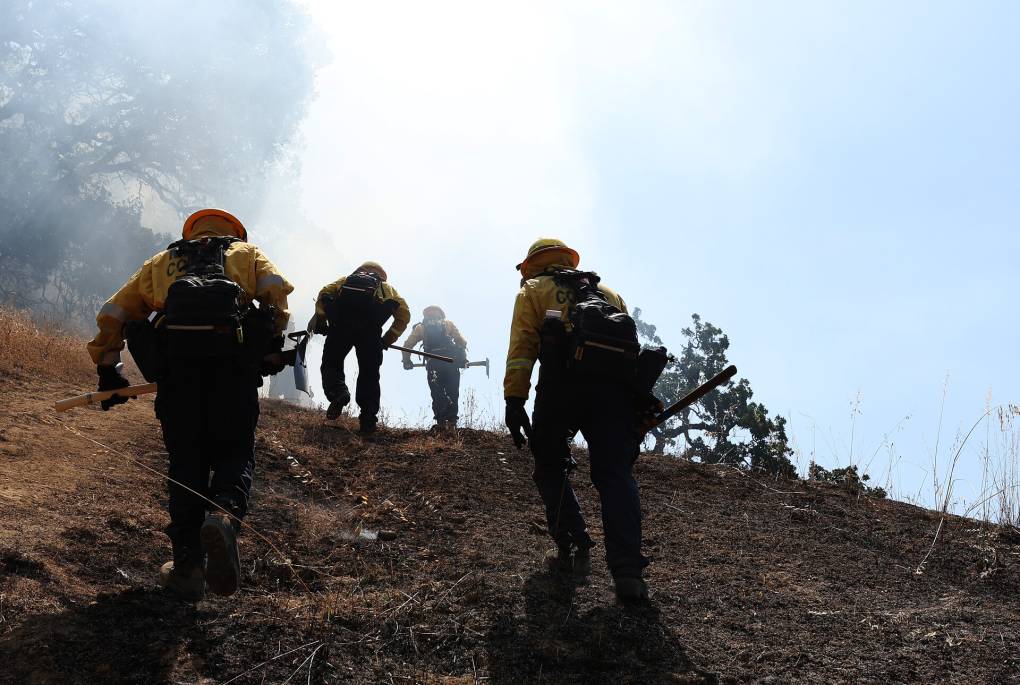
"caption": "Marin County firefighters hike up a hill during a controlled burn training on June 16, 2023 in San Rafael. ",
"description": null,
"title": "California Firefighters Set Controlled Burns As Part Of Wildfire Training",
"credit": "Justin Sullivan/Getty Images",
"status": "inherit",
"altTag": "Firefighters in yellow jackets and helmets hike up a hill into a gray mist.",
"isLoading": false,
"fetchFailed": false
},
"science_1984516": {
"type": "attachments",
"id": "science_1984516",
"meta": {
"index": "attachments_1716263798",
"site": "science",
"id": "1984516",
"found": true
},
"parent": 1984507,
"imgSizes": {
"twentyfourteen-full-width": {
"file": "https://ww2.kqed.org/app/uploads/sites/35/2023/10/GettyImages-1465073112-1038x576.jpg",
"width": 1038,
"mimeType": "image/jpeg",
"height": 576
},
"thumbnail": {
"file": "https://ww2.kqed.org/app/uploads/sites/35/2023/10/GettyImages-1465073112-160x90.jpg",
"width": 160,
"mimeType": "image/jpeg",
"height": 90
},
"post-thumbnail": {
"file": "https://ww2.kqed.org/app/uploads/sites/35/2023/10/GettyImages-1465073112-672x372.jpg",
"width": 672,
"mimeType": "image/jpeg",
"height": 372
},
"kqedFullSize": {
"file": "https://ww2.kqed.org/app/uploads/sites/35/2023/10/GettyImages-1465073112.jpg",
"width": 2309,
"height": 1299
},
"2048x2048": {
"file": "https://ww2.kqed.org/app/uploads/sites/35/2023/10/GettyImages-1465073112-2048x1152.jpg",
"width": 2048,
"mimeType": "image/jpeg",
"height": 1152
},
"large": {
"file": "https://ww2.kqed.org/app/uploads/sites/35/2023/10/GettyImages-1465073112-1020x574.jpg",
"width": 1020,
"mimeType": "image/jpeg",
"height": 574
},
"1536x1536": {
"file": "https://ww2.kqed.org/app/uploads/sites/35/2023/10/GettyImages-1465073112-1536x864.jpg",
"width": 1536,
"mimeType": "image/jpeg",
"height": 864
},
"full-width": {
"file": "https://ww2.kqed.org/app/uploads/sites/35/2023/10/GettyImages-1465073112-1920x1080.jpg",
"width": 1920,
"mimeType": "image/jpeg",
"height": 1080
},
"medium": {
"file": "https://ww2.kqed.org/app/uploads/sites/35/2023/10/GettyImages-1465073112-800x450.jpg",
"width": 800,
"mimeType": "image/jpeg",
"height": 450
},
"medium_large": {
"file": "https://ww2.kqed.org/app/uploads/sites/35/2023/10/GettyImages-1465073112-768x432.jpg",
"width": 768,
"mimeType": "image/jpeg",
"height": 432
}
},
"publishDate": 1696533614,
"modified": 1696533735,
"caption": "Close-up shot of medical drug production line.",
"description": null,
"title": "Blue and white capsules on a conveyer belt",
"credit": "SweetBunFactory/Getty Images",
"status": "inherit",
"altTag": "Blue capsules on conveyor at a modern pharmaceutical factory.",
"isLoading": false,
"fetchFailed": false
},
"science_1984452": {
"type": "attachments",
"id": "science_1984452",
"meta": {
"index": "attachments_1716263798",
"site": "science",
"id": "1984452",
"found": true
},
"parent": 1984443,
"imgSizes": {
"twentyfourteen-full-width": {
"file": "https://ww2.kqed.org/app/uploads/sites/35/2023/09/230928-EAGLE-ROCK-SETTLE-MD-02-KQED-1038x576.jpg",
"width": 1038,
"mimeType": "image/jpeg",
"height": 576
},
"thumbnail": {
"file": "https://ww2.kqed.org/app/uploads/sites/35/2023/09/230928-EAGLE-ROCK-SETTLE-MD-02-KQED-160x107.jpg",
"width": 160,
"mimeType": "image/jpeg",
"height": 107
},
"post-thumbnail": {
"file": "https://ww2.kqed.org/app/uploads/sites/35/2023/09/230928-EAGLE-ROCK-SETTLE-MD-02-KQED-672x372.jpg",
"width": 672,
"mimeType": "image/jpeg",
"height": 372
},
"kqedFullSize": {
"file": "https://ww2.kqed.org/app/uploads/sites/35/2023/09/230928-EAGLE-ROCK-SETTLE-MD-02-KQED.jpg",
"width": 2000,
"height": 1333
},
"large": {
"file": "https://ww2.kqed.org/app/uploads/sites/35/2023/09/230928-EAGLE-ROCK-SETTLE-MD-02-KQED-1020x680.jpg",
"width": 1020,
"mimeType": "image/jpeg",
"height": 680
},
"1536x1536": {
"file": "https://ww2.kqed.org/app/uploads/sites/35/2023/09/230928-EAGLE-ROCK-SETTLE-MD-02-KQED-1536x1024.jpg",
"width": 1536,
"mimeType": "image/jpeg",
"height": 1024
},
"full-width": {
"file": "https://ww2.kqed.org/app/uploads/sites/35/2023/09/230928-EAGLE-ROCK-SETTLE-MD-02-KQED-1920x1280.jpg",
"width": 1920,
"mimeType": "image/jpeg",
"height": 1280
},
"medium": {
"file": "https://ww2.kqed.org/app/uploads/sites/35/2023/09/230928-EAGLE-ROCK-SETTLE-MD-02-KQED-800x533.jpg",
"width": 800,
"mimeType": "image/jpeg",
"height": 533
},
"medium_large": {
"file": "https://ww2.kqed.org/app/uploads/sites/35/2023/09/230928-EAGLE-ROCK-SETTLE-MD-02-KQED-768x512.jpg",
"width": 768,
"mimeType": "image/jpeg",
"height": 512
}
},
"publishDate": 1695944136,
"modified": 1695946593,
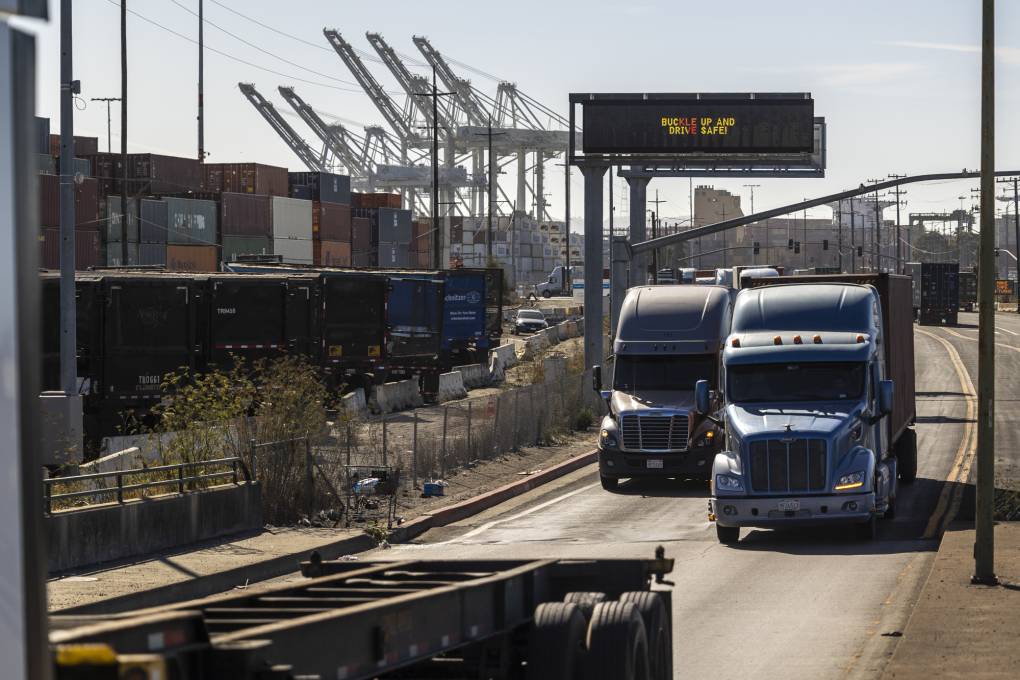
"caption": "Trucks leave the Port of Oakland on Sept. 28, 2023.",
"description": null,
"title": "230928-EAGLE ROCK SETTLE-MD-02-KQED",
"credit": "Martin do Nascimento/KQED",
"status": "inherit",
"altTag": "Several trucks drive through an industrial area with cranes in the background.",
"isLoading": false,
"fetchFailed": false
},
"science_1984323": {
"type": "attachments",
"id": "science_1984323",
"meta": {
"index": "attachments_1716263798",
"site": "science",
"id": "1984323",
"found": true
},
"parent": 1984319,
"imgSizes": {
"twentyfourteen-full-width": {
"file": "https://ww2.kqed.org/app/uploads/sites/35/2023/09/meadows-6501b99c2e264-1020x765-2-1020x576.jpeg",
"width": 1020,
"mimeType": "image/jpeg",
"height": 576
},
"thumbnail": {
"file": "https://ww2.kqed.org/app/uploads/sites/35/2023/09/meadows-6501b99c2e264-1020x765-2-160x120.jpeg",
"width": 160,
"mimeType": "image/jpeg",
"height": 120
},
"post-thumbnail": {
"file": "https://ww2.kqed.org/app/uploads/sites/35/2023/09/meadows-6501b99c2e264-1020x765-2-672x372.jpeg",
"width": 672,
"mimeType": "image/jpeg",
"height": 372
},
"kqedFullSize": {
"file": "https://ww2.kqed.org/app/uploads/sites/35/2023/09/meadows-6501b99c2e264-1020x765-2.jpeg",
"width": 1020,
"height": 765
},
"medium": {
"file": "https://ww2.kqed.org/app/uploads/sites/35/2023/09/meadows-6501b99c2e264-1020x765-2-800x600.jpeg",
"width": 800,
"mimeType": "image/jpeg",
"height": 600
},
"medium_large": {
"file": "https://ww2.kqed.org/app/uploads/sites/35/2023/09/meadows-6501b99c2e264-1020x765-2-768x576.jpeg",
"width": 768,
"mimeType": "image/jpeg",
"height": 576
}
},
"publishDate": 1695332320,
"modified": 1695334195,
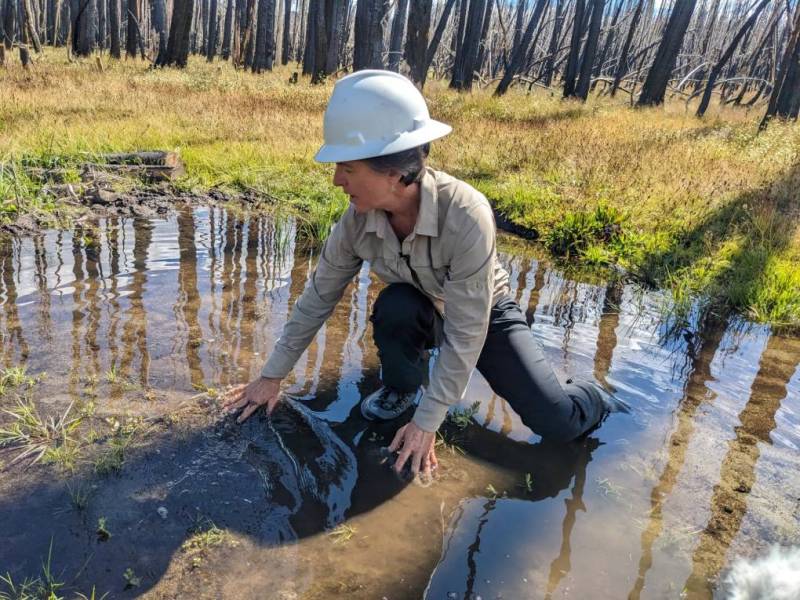
"caption": "US Forest Service research ecologist Karen Pope crouches in a stream in Lower Grouse Meadow to demonstrate how dams capture sediment. As channels fill with sediment, they become shallower, allowing water to spread through meadows and preventing buildup within reservoirs and other infrastructure further downstream.",
"description": null,
"title": "meadows-6501b99c2e264-1020x765",
"credit": "Kerry Klein/KVPR",
"status": "inherit",
"altTag": "a woman in jeans, a long sleeve shirt, and a hard hat, kneels in a puddle with trees in the background",
"isLoading": false,
"fetchFailed": false
},
"science_1994144": {
"type": "attachments",
"id": "science_1994144",
"meta": {
"index": "attachments_1716263798",
"site": "science",
"id": "1994144",
"found": true
},
"title": "DEEP_1012_Cockroach_Vs_Hydraulic_Press_Who_Wins_YW_V2_shield",
"publishDate": 1725491239,
"status": "inherit",
"parent": 1984261,
"modified": 1725491239,
"caption": null,
"credit": null,
"altTag": null,
"description": null,
"imgSizes": {
"medium": {
"file": "https://cdn.kqed.org/wp-content/uploads/sites/35/2023/09/DEEP_1012_Cockroach_Vs_Hydraulic_Press_Who_Wins_YW_V2_shield-800x450.jpg",
"width": 800,
"height": 450,
"mimeType": "image/jpeg"
},
"large": {
"file": "https://cdn.kqed.org/wp-content/uploads/sites/35/2023/09/DEEP_1012_Cockroach_Vs_Hydraulic_Press_Who_Wins_YW_V2_shield-1020x574.jpg",
"width": 1020,
"height": 574,
"mimeType": "image/jpeg"
},
"thumbnail": {
"file": "https://cdn.kqed.org/wp-content/uploads/sites/35/2023/09/DEEP_1012_Cockroach_Vs_Hydraulic_Press_Who_Wins_YW_V2_shield-160x90.jpg",
"width": 160,
"height": 90,
"mimeType": "image/jpeg"
},
"medium_large": {
"file": "https://cdn.kqed.org/wp-content/uploads/sites/35/2023/09/DEEP_1012_Cockroach_Vs_Hydraulic_Press_Who_Wins_YW_V2_shield-768x432.jpg",
"width": 768,
"height": 432,
"mimeType": "image/jpeg"
},
"1536x1536": {
"file": "https://cdn.kqed.org/wp-content/uploads/sites/35/2023/09/DEEP_1012_Cockroach_Vs_Hydraulic_Press_Who_Wins_YW_V2_shield-1536x864.jpg",
"width": 1536,
"height": 864,
"mimeType": "image/jpeg"
},
"2048x2048": {
"file": "https://cdn.kqed.org/wp-content/uploads/sites/35/2023/09/DEEP_1012_Cockroach_Vs_Hydraulic_Press_Who_Wins_YW_V2_shield-2048x1152.jpg",
"width": 2048,
"height": 1152,
"mimeType": "image/jpeg"
},
"post-thumbnail": {
"file": "https://cdn.kqed.org/wp-content/uploads/sites/35/2023/09/DEEP_1012_Cockroach_Vs_Hydraulic_Press_Who_Wins_YW_V2_shield-672x372.jpg",
"width": 672,
"height": 372,
"mimeType": "image/jpeg"
},
"twentyfourteen-full-width": {
"file": "https://cdn.kqed.org/wp-content/uploads/sites/35/2023/09/DEEP_1012_Cockroach_Vs_Hydraulic_Press_Who_Wins_YW_V2_shield-1038x576.jpg",
"width": 1038,
"height": 576,
"mimeType": "image/jpeg"
},
"full-width": {
"file": "https://cdn.kqed.org/wp-content/uploads/sites/35/2023/09/DEEP_1012_Cockroach_Vs_Hydraulic_Press_Who_Wins_YW_V2_shield-1920x1080.jpg",
"width": 1920,
"height": 1080,
"mimeType": "image/jpeg"
},
"kqedFullSize": {
"file": "https://cdn.kqed.org/wp-content/uploads/sites/35/2023/09/DEEP_1012_Cockroach_Vs_Hydraulic_Press_Who_Wins_YW_V2_shield-scaled.jpg",
"width": 2560,
"height": 1440
}
},
"isLoading": false,
"fetchFailed": false
},
"science_1984231": {
"type": "attachments",
"id": "science_1984231",
"meta": {
"index": "attachments_1716263798",
"site": "science",
"id": "1984231",
"found": true
},
"parent": 1984229,
"imgSizes": {
"twentyfourteen-full-width": {
"file": "https://ww2.kqed.org/app/uploads/sites/35/2023/09/2023-08-joshuatressjojavedesert-kramirez_31_custom-6abe04048b5975f182a9e05de2107f72d9559663-1038x576.jpg",
"width": 1038,
"mimeType": "image/jpeg",
"height": 576
},
"thumbnail": {
"file": "https://ww2.kqed.org/app/uploads/sites/35/2023/09/2023-08-joshuatressjojavedesert-kramirez_31_custom-6abe04048b5975f182a9e05de2107f72d9559663-160x107.jpg",
"width": 160,
"mimeType": "image/jpeg",
"height": 107
},
"post-thumbnail": {
"file": "https://ww2.kqed.org/app/uploads/sites/35/2023/09/2023-08-joshuatressjojavedesert-kramirez_31_custom-6abe04048b5975f182a9e05de2107f72d9559663-672x372.jpg",
"width": 672,
"mimeType": "image/jpeg",
"height": 372
},
"kqedFullSize": {
"file": "https://ww2.kqed.org/app/uploads/sites/35/2023/09/2023-08-joshuatressjojavedesert-kramirez_31_custom-6abe04048b5975f182a9e05de2107f72d9559663-scaled.jpg",
"width": 2560,
"height": 1705
},
"2048x2048": {
"file": "https://ww2.kqed.org/app/uploads/sites/35/2023/09/2023-08-joshuatressjojavedesert-kramirez_31_custom-6abe04048b5975f182a9e05de2107f72d9559663-2048x1364.jpg",
"width": 2048,
"mimeType": "image/jpeg",
"height": 1364
},
"large": {
"file": "https://ww2.kqed.org/app/uploads/sites/35/2023/09/2023-08-joshuatressjojavedesert-kramirez_31_custom-6abe04048b5975f182a9e05de2107f72d9559663-1020x679.jpg",
"width": 1020,
"mimeType": "image/jpeg",
"height": 679
},
"1536x1536": {
"file": "https://ww2.kqed.org/app/uploads/sites/35/2023/09/2023-08-joshuatressjojavedesert-kramirez_31_custom-6abe04048b5975f182a9e05de2107f72d9559663-1536x1023.jpg",
"width": 1536,
"mimeType": "image/jpeg",
"height": 1023
},
"full-width": {
"file": "https://ww2.kqed.org/app/uploads/sites/35/2023/09/2023-08-joshuatressjojavedesert-kramirez_31_custom-6abe04048b5975f182a9e05de2107f72d9559663-1920x1279.jpg",
"width": 1920,
"mimeType": "image/jpeg",
"height": 1279
},
"medium": {
"file": "https://ww2.kqed.org/app/uploads/sites/35/2023/09/2023-08-joshuatressjojavedesert-kramirez_31_custom-6abe04048b5975f182a9e05de2107f72d9559663-800x533.jpg",
"width": 800,
"mimeType": "image/jpeg",
"height": 533
},
"medium_large": {
"file": "https://ww2.kqed.org/app/uploads/sites/35/2023/09/2023-08-joshuatressjojavedesert-kramirez_31_custom-6abe04048b5975f182a9e05de2107f72d9559663-768x511.jpg",
"width": 768,
"mimeType": "image/jpeg",
"height": 511
}
},
"publishDate": 1694105137,
"modified": 1694125214,
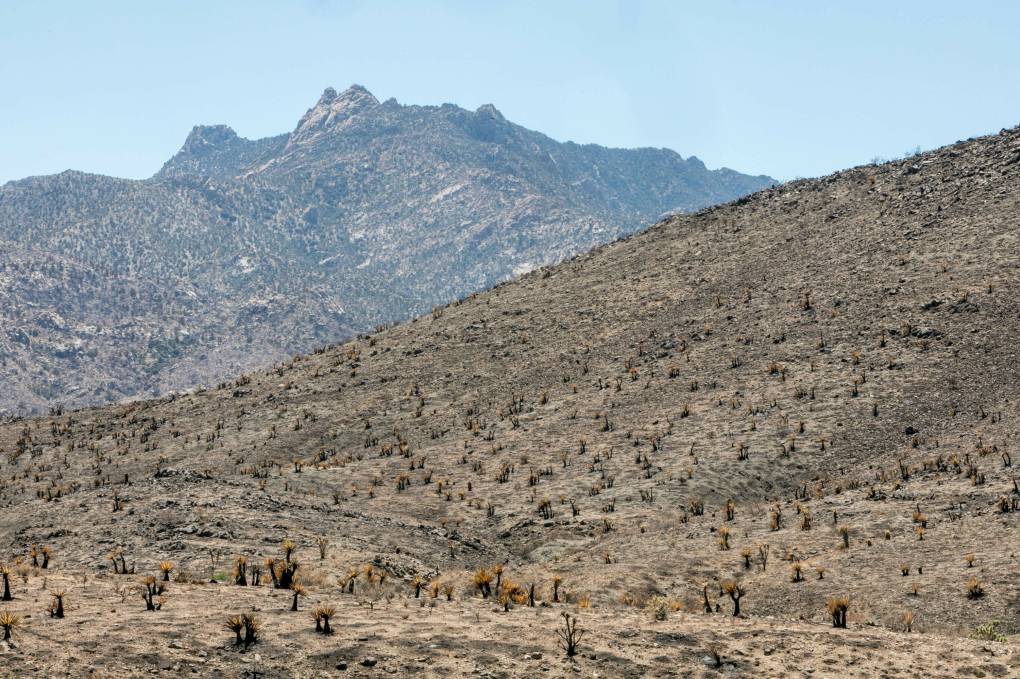
"caption": "Charred carcasses of Mojave yuccas, Joshua trees and chollas are seen at the edge of the York Fire in San Bernardino County, inside Mojave National Preserve.",
"description": null,
"title": "Charred carcasses of Mojave yuccas, Joshua trees and chollas are seen at the edge of the York Fire in San Bernardino County, California, inside Mojave National Preserve.",
"credit": "Krystal Ramirez/NPR",
"status": "inherit",
"altTag": "Dry landscape dotted with small burnt plants under a blue sky.",
"isLoading": false,
"fetchFailed": false
},
"science_1984164": {
"type": "attachments",
"id": "science_1984164",
"meta": {
"index": "attachments_1716263798",
"site": "science",
"id": "1984164",
"found": true
},
"parent": 1984149,
"imgSizes": {
"twentyfourteen-full-width": {
"file": "https://ww2.kqed.org/app/uploads/sites/35/2023/08/071823_Karuk-Fish-Tagging_SN_CM_03-1038x576.jpg",
"width": 1038,
"mimeType": "image/jpeg",
"height": 576
},
"thumbnail": {
"file": "https://ww2.kqed.org/app/uploads/sites/35/2023/08/071823_Karuk-Fish-Tagging_SN_CM_03-160x107.jpg",
"width": 160,
"mimeType": "image/jpeg",
"height": 107
},
"post-thumbnail": {
"file": "https://ww2.kqed.org/app/uploads/sites/35/2023/08/071823_Karuk-Fish-Tagging_SN_CM_03-672x372.jpg",
"width": 672,
"mimeType": "image/jpeg",
"height": 372
},
"kqedFullSize": {
"file": "https://ww2.kqed.org/app/uploads/sites/35/2023/08/071823_Karuk-Fish-Tagging_SN_CM_03.jpg",
"width": 2000,
"height": 1333
},
"large": {
"file": "https://ww2.kqed.org/app/uploads/sites/35/2023/08/071823_Karuk-Fish-Tagging_SN_CM_03-1020x680.jpg",
"width": 1020,
"mimeType": "image/jpeg",
"height": 680
},
"1536x1536": {
"file": "https://ww2.kqed.org/app/uploads/sites/35/2023/08/071823_Karuk-Fish-Tagging_SN_CM_03-1536x1024.jpg",
"width": 1536,
"mimeType": "image/jpeg",
"height": 1024
},
"full-width": {
"file": "https://ww2.kqed.org/app/uploads/sites/35/2023/08/071823_Karuk-Fish-Tagging_SN_CM_03-1920x1280.jpg",
"width": 1920,
"mimeType": "image/jpeg",
"height": 1280
},
"medium": {
"file": "https://ww2.kqed.org/app/uploads/sites/35/2023/08/071823_Karuk-Fish-Tagging_SN_CM_03-800x533.jpg",
"width": 800,
"mimeType": "image/jpeg",
"height": 533
},
"medium_large": {
"file": "https://ww2.kqed.org/app/uploads/sites/35/2023/08/071823_Karuk-Fish-Tagging_SN_CM_03-768x512.jpg",
"width": 768,
"mimeType": "image/jpeg",
"height": 512
}
},
"publishDate": 1693507819,
"modified": 1693528609,
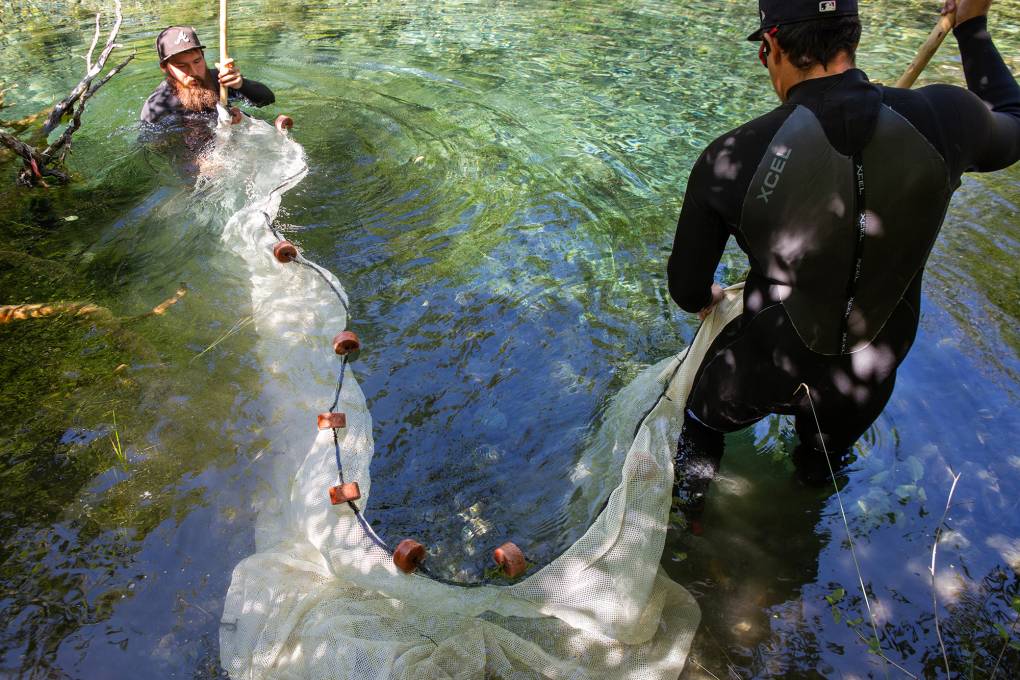
"caption": "Ben Harrison (left) and Aaron Tuttle with the Karuk Tribal Fisheries Program, collect young salmon for tagging in Horse Creek along the Klamath River on July 18, 2023. The Karuk and Yurok tribes are anxiously awaiting a renewed river as the dams come down. ",
"description": null,
"title": null,
"credit": "Semantha Norris/CalMatters",
"status": "inherit",
"altTag": null,
"isLoading": false,
"fetchFailed": false
},
"science_1983810": {
"type": "attachments",
"id": "science_1983810",
"meta": {
"index": "attachments_1716263798",
"site": "science",
"id": "1983810",
"found": true
},
"parent": 1983796,
"imgSizes": {
"twentyfourteen-full-width": {
"file": "https://ww2.kqed.org/app/uploads/sites/35/2023/08/DEEP_1011_This_Daring_Fly_Swims_in_a_Shimmering_Bubble_Shield_KQED-1038x576.jpg",
"width": 1038,
"mimeType": "image/jpeg",
"height": 576
},
"thumbnail": {
"file": "https://ww2.kqed.org/app/uploads/sites/35/2023/08/DEEP_1011_This_Daring_Fly_Swims_in_a_Shimmering_Bubble_Shield_KQED-160x90.jpg",
"width": 160,
"mimeType": "image/jpeg",
"height": 90
},
"post-thumbnail": {
"file": "https://ww2.kqed.org/app/uploads/sites/35/2023/08/DEEP_1011_This_Daring_Fly_Swims_in_a_Shimmering_Bubble_Shield_KQED-672x372.jpg",
"width": 672,
"mimeType": "image/jpeg",
"height": 372
},
"kqedFullSize": {
"file": "https://ww2.kqed.org/app/uploads/sites/35/2023/08/DEEP_1011_This_Daring_Fly_Swims_in_a_Shimmering_Bubble_Shield_KQED.jpg",
"width": 1920,
"height": 1080
},
"large": {
"file": "https://ww2.kqed.org/app/uploads/sites/35/2023/08/DEEP_1011_This_Daring_Fly_Swims_in_a_Shimmering_Bubble_Shield_KQED-1020x574.jpg",
"width": 1020,
"mimeType": "image/jpeg",
"height": 574
},
"1536x1536": {
"file": "https://ww2.kqed.org/app/uploads/sites/35/2023/08/DEEP_1011_This_Daring_Fly_Swims_in_a_Shimmering_Bubble_Shield_KQED-1536x864.jpg",
"width": 1536,
"mimeType": "image/jpeg",
"height": 864
},
"medium": {
"file": "https://ww2.kqed.org/app/uploads/sites/35/2023/08/DEEP_1011_This_Daring_Fly_Swims_in_a_Shimmering_Bubble_Shield_KQED-800x450.jpg",
"width": 800,
"mimeType": "image/jpeg",
"height": 450
},
"medium_large": {
"file": "https://ww2.kqed.org/app/uploads/sites/35/2023/08/DEEP_1011_This_Daring_Fly_Swims_in_a_Shimmering_Bubble_Shield_KQED-768x432.jpg",
"width": 768,
"mimeType": "image/jpeg",
"height": 432
}
},
"publishDate": 1691195216,
"modified": 1691195312,
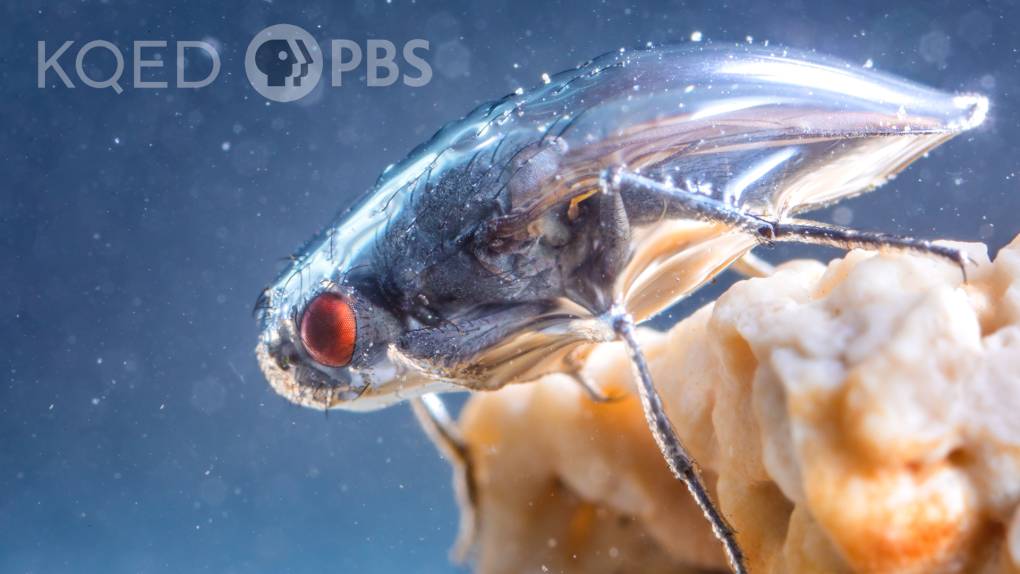
"caption": "When the alkali fly dives underwater, an air bubble forms around it thanks to an impressive amount of hairs and a waxy substance covering its body.",
"description": null,
"title": "DEEP_1011_This_Daring_Fly_Swims_in_a_Shimmering_Bubble_Shield_KQED",
"credit": "Floris van Breugel",
"status": "inherit",
"altTag": null,
"isLoading": false,
"fetchFailed": false
},
"science_1983961": {
"type": "attachments",
"id": "science_1983961",
"meta": {
"index": "attachments_1716263798",
"site": "science",
"id": "1983961",
"found": true
},
"parent": 0,
"imgSizes": {
"twentyfourteen-full-width": {
"file": "https://ww2.kqed.org/app/uploads/sites/35/2023/08/RS67921_230814-SiliconValleyWaterPurification-38-BL-KQED-1038x576.jpg",
"width": 1038,
"mimeType": "image/jpeg",
"height": 576
},
"thumbnail": {
"file": "https://ww2.kqed.org/app/uploads/sites/35/2023/08/RS67921_230814-SiliconValleyWaterPurification-38-BL-KQED-160x107.jpg",
"width": 160,
"mimeType": "image/jpeg",
"height": 107
},
"post-thumbnail": {
"file": "https://ww2.kqed.org/app/uploads/sites/35/2023/08/RS67921_230814-SiliconValleyWaterPurification-38-BL-KQED-672x372.jpg",
"width": 672,
"mimeType": "image/jpeg",
"height": 372
},
"kqedFullSize": {
"file": "https://ww2.kqed.org/app/uploads/sites/35/2023/08/RS67921_230814-SiliconValleyWaterPurification-38-BL-KQED.jpg",
"width": 2000,
"height": 1333
},
"large": {
"file": "https://ww2.kqed.org/app/uploads/sites/35/2023/08/RS67921_230814-SiliconValleyWaterPurification-38-BL-KQED-1020x680.jpg",
"width": 1020,
"mimeType": "image/jpeg",
"height": 680
},
"1536x1536": {
"file": "https://ww2.kqed.org/app/uploads/sites/35/2023/08/RS67921_230814-SiliconValleyWaterPurification-38-BL-KQED-1536x1024.jpg",
"width": 1536,
"mimeType": "image/jpeg",
"height": 1024
},
"full-width": {
"file": "https://ww2.kqed.org/app/uploads/sites/35/2023/08/RS67921_230814-SiliconValleyWaterPurification-38-BL-KQED-1920x1280.jpg",
"width": 1920,
"mimeType": "image/jpeg",
"height": 1280
},
"medium": {
"file": "https://ww2.kqed.org/app/uploads/sites/35/2023/08/RS67921_230814-SiliconValleyWaterPurification-38-BL-KQED-800x533.jpg",
"width": 800,
"mimeType": "image/jpeg",
"height": 533
},
"medium_large": {
"file": "https://ww2.kqed.org/app/uploads/sites/35/2023/08/RS67921_230814-SiliconValleyWaterPurification-38-BL-KQED-768x512.jpg",
"width": 768,
"mimeType": "image/jpeg",
"height": 512
}
},
"publishDate": 1692203419,
"modified": 1692660667,
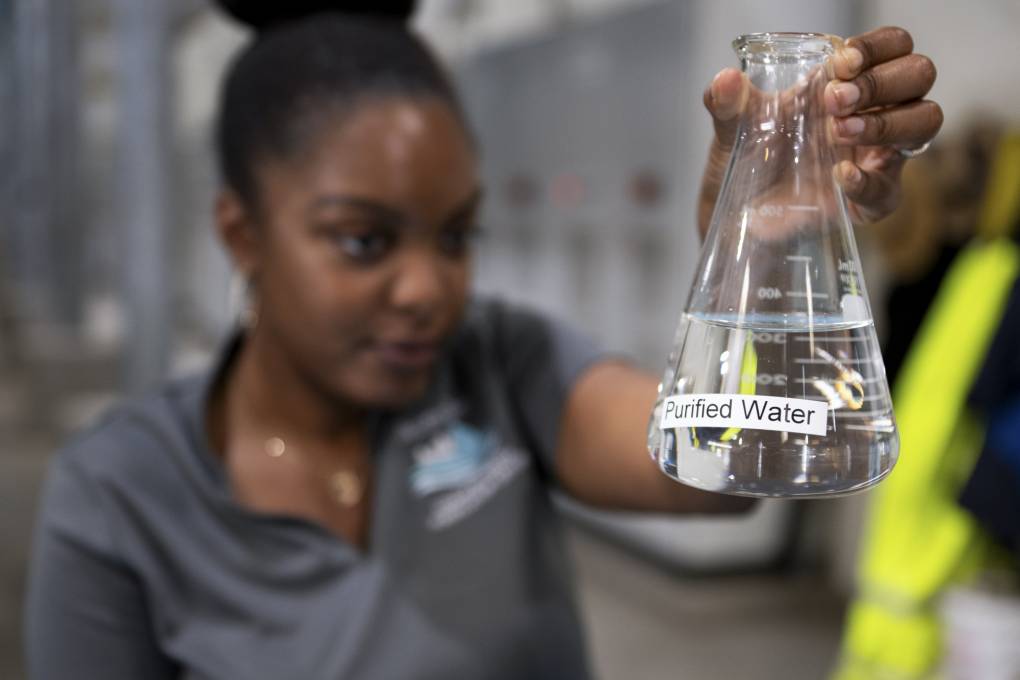
"caption": "Lakeisha Bryant, a spokesperson for Valley Water, holds a beaker filled with purified water at Silicon Valley Advanced Water Purification Center in San José on Aug. 14, 2023. The facility uses microfiltration, reverse osmosis and ultraviolet light to purify treated wastewater.",
"description": null,
"title": "RS67921_230814-SiliconValleyWaterPurification-38-BL-KQED",
"credit": "Beth LaBerge/KQED",
"status": "inherit",
"altTag": "A person holds a beaker of clear liquid with a label on it that reads \"Purified Water.\"",
"isLoading": false,
"fetchFailed": false
},
"science_1983955": {
"type": "attachments",
"id": "science_1983955",
"meta": {
"index": "attachments_1716263798",
"site": "science",
"id": "1983955",
"found": true
},
"parent": 0,
"imgSizes": {
"twentyfourteen-full-width": {
"file": "https://ww2.kqed.org/app/uploads/sites/35/2023/08/RS67945_20230814-SFBaykeeper-22-JY-KQED-1038x576.jpg",
"width": 1038,
"mimeType": "image/jpeg",
"height": 576
},
"thumbnail": {
"file": "https://ww2.kqed.org/app/uploads/sites/35/2023/08/RS67945_20230814-SFBaykeeper-22-JY-KQED-160x107.jpg",
"width": 160,
"mimeType": "image/jpeg",
"height": 107
},
"post-thumbnail": {
"file": "https://ww2.kqed.org/app/uploads/sites/35/2023/08/RS67945_20230814-SFBaykeeper-22-JY-KQED-672x372.jpg",
"width": 672,
"mimeType": "image/jpeg",
"height": 372
},
"kqedFullSize": {
"file": "https://ww2.kqed.org/app/uploads/sites/35/2023/08/RS67945_20230814-SFBaykeeper-22-JY-KQED.jpg",
"width": 2000,
"height": 1333
},
"large": {
"file": "https://ww2.kqed.org/app/uploads/sites/35/2023/08/RS67945_20230814-SFBaykeeper-22-JY-KQED-1020x680.jpg",
"width": 1020,
"mimeType": "image/jpeg",
"height": 680
},
"1536x1536": {
"file": "https://ww2.kqed.org/app/uploads/sites/35/2023/08/RS67945_20230814-SFBaykeeper-22-JY-KQED-1536x1024.jpg",
"width": 1536,
"mimeType": "image/jpeg",
"height": 1024
},
"full-width": {
"file": "https://ww2.kqed.org/app/uploads/sites/35/2023/08/RS67945_20230814-SFBaykeeper-22-JY-KQED-1920x1280.jpg",
"width": 1920,
"mimeType": "image/jpeg",
"height": 1280
},
"medium": {
"file": "https://ww2.kqed.org/app/uploads/sites/35/2023/08/RS67945_20230814-SFBaykeeper-22-JY-KQED-800x533.jpg",
"width": 800,
"mimeType": "image/jpeg",
"height": 533
},
"medium_large": {
"file": "https://ww2.kqed.org/app/uploads/sites/35/2023/08/RS67945_20230814-SFBaykeeper-22-JY-KQED-768x512.jpg",
"width": 768,
"mimeType": "image/jpeg",
"height": 512
}
},
"publishDate": 1692141621,
"modified": 1692141767,
"caption": "Staff Scientist Ian Wren on the deck of the San Francisco Baykeeper in Oakland on August 15, 2023. Wren found that the recent harmful algal blooms in the water have now diminished.",
"description": null,
"title": "RS67945_20230814-SFBaykeeper-22-JY-KQED",
"credit": "Juliana Yamada/KQED",
"status": "inherit",
"altTag": "A person wearing glasses smiles while riding in a boat near a large bridge.",
"isLoading": false,
"fetchFailed": false
},
"science_1983619": {
"type": "attachments",
"id": "science_1983619",
"meta": {
"index": "attachments_1716263798",
"site": "science",
"id": "1983619",
"found": true
},
"parent": 1983618,
"imgSizes": {
"twentyfourteen-full-width": {
"file": "https://ww2.kqed.org/app/uploads/sites/35/2023/07/DL1010_These_Flies_Torpedo_a_Bindweed_Bees_Nest_KQED-1038x576.jpg",
"width": 1038,
"mimeType": "image/jpeg",
"height": 576
},
"thumbnail": {
"file": "https://ww2.kqed.org/app/uploads/sites/35/2023/07/DL1010_These_Flies_Torpedo_a_Bindweed_Bees_Nest_KQED-160x90.jpg",
"width": 160,
"mimeType": "image/jpeg",
"height": 90
},
"post-thumbnail": {
"file": "https://ww2.kqed.org/app/uploads/sites/35/2023/07/DL1010_These_Flies_Torpedo_a_Bindweed_Bees_Nest_KQED-672x372.jpg",
"width": 672,
"mimeType": "image/jpeg",
"height": 372
},
"kqedFullSize": {
"file": "https://ww2.kqed.org/app/uploads/sites/35/2023/07/DL1010_These_Flies_Torpedo_a_Bindweed_Bees_Nest_KQED.jpg",
"width": 1920,
"height": 1080
},
"large": {
"file": "https://ww2.kqed.org/app/uploads/sites/35/2023/07/DL1010_These_Flies_Torpedo_a_Bindweed_Bees_Nest_KQED-1020x574.jpg",
"width": 1020,
"mimeType": "image/jpeg",
"height": 574
},
"1536x1536": {
"file": "https://ww2.kqed.org/app/uploads/sites/35/2023/07/DL1010_These_Flies_Torpedo_a_Bindweed_Bees_Nest_KQED-1536x864.jpg",
"width": 1536,
"mimeType": "image/jpeg",
"height": 864
},
"medium": {
"file": "https://ww2.kqed.org/app/uploads/sites/35/2023/07/DL1010_These_Flies_Torpedo_a_Bindweed_Bees_Nest_KQED-800x450.jpg",
"width": 800,
"mimeType": "image/jpeg",
"height": 450
},
"medium_large": {
"file": "https://ww2.kqed.org/app/uploads/sites/35/2023/07/DL1010_These_Flies_Torpedo_a_Bindweed_Bees_Nest_KQED-768x432.jpg",
"width": 768,
"mimeType": "image/jpeg",
"height": 432
}
},
"publishDate": 1690416137,
"modified": 1690416432,
"caption": "This \"bee fly\" reproduces by dropping her eggs from the air into the nests of ground-dwelling bees.",
"description": null,
"title": "DL1010_These_Flies_Torpedo_a_Bindweed_Bees_Nest_KQED",
"credit": "Josh Cassidy/KQED",
"status": "inherit",
"altTag": null,
"isLoading": false,
"fetchFailed": false
},
"science_1945866": {
"type": "attachments",
"id": "science_1945866",
"meta": {
"index": "attachments_1716263798",
"site": "science",
"id": "1945866",
"found": true
},
"parent": 1945864,
"imgSizes": {
"twentyfourteen-full-width": {
"file": "https://ww2.kqed.org/app/uploads/sites/35/2019/07/GettyImages-959309894-1038x576.jpg",
"width": 1038,
"mimeType": "image/jpeg",
"height": 576
},
"thumbnail": {
"file": "https://ww2.kqed.org/app/uploads/sites/35/2019/07/GettyImages-959309894-160x110.jpg",
"width": 160,
"mimeType": "image/jpeg",
"height": 110
},
"post-thumbnail": {
"file": "https://ww2.kqed.org/app/uploads/sites/35/2019/07/GettyImages-959309894-672x372.jpg",
"width": 672,
"mimeType": "image/jpeg",
"height": 372
},
"kqedFullSize": {
"file": "https://ww2.kqed.org/app/uploads/sites/35/2019/07/GettyImages-959309894.jpg",
"width": 2048,
"height": 1412
},
"large": {
"file": "https://ww2.kqed.org/app/uploads/sites/35/2019/07/GettyImages-959309894-1020x703.jpg",
"width": 1020,
"mimeType": "image/jpeg",
"height": 703
},
"complete_open_graph": {
"file": "https://ww2.kqed.org/app/uploads/sites/35/2019/07/GettyImages-959309894-1200x827.jpg",
"width": 1200,
"mimeType": "image/jpeg",
"height": 827
},
"full-width": {
"file": "https://ww2.kqed.org/app/uploads/sites/35/2019/07/GettyImages-959309894-1920x1324.jpg",
"width": 1920,
"mimeType": "image/jpeg",
"height": 1324
},
"medium": {
"file": "https://ww2.kqed.org/app/uploads/sites/35/2019/07/GettyImages-959309894-800x551.jpg",
"width": 800,
"mimeType": "image/jpeg",
"height": 551
},
"medium_large": {
"file": "https://ww2.kqed.org/app/uploads/sites/35/2019/07/GettyImages-959309894-768x529.jpg",
"width": 768,
"mimeType": "image/jpeg",
"height": 529
}
},
"publishDate": 1564504204,
"modified": 1689034972,
"caption": "A young fingerling Chinook salmon leaps out of the water after being released into a holding pen at Pillar Point Harbor on May 16, 2018, in Half Moon Bay.",
"description": null,
"title": "Thousands Of Baby Chinook Salmon Released Into Half Moon Bay",
"credit": "Justin Sullivan/Getty Images",
"status": "inherit",
"altTag": "Close up of small fish jumping a few inches out of the water. Some algae is seen below it.",
"isLoading": false,
"fetchFailed": false
}
},
"audioPlayerReducer": {
"postId": "stream_live",
"isPaused": true,
"isPlaying": false,
"pfsActive": false,
"pledgeModalIsOpen": true,
"playerDrawerIsOpen": false,
"liveAudioPlayStartedAt": 0,
"liveAudioPlayContext": ""
},
"authorsReducer": {
"byline_science_1984507": {
"type": "authors",
"id": "byline_science_1984507",
"meta": {
"override": true
},
"slug": "byline_science_1984507",
"name": "Betsy Ladyzhets",
"isLoading": false
},
"byline_science_1984229": {
"type": "authors",
"id": "byline_science_1984229",
"meta": {
"override": true
},
"slug": "byline_science_1984229",
"name": "\u003ca href=\"https://www.npr.org/people/859339295/christopher-intagliata\">Christopher Intagliata\u003c/a>",
"isLoading": false
},
"byline_science_1984149": {
"type": "authors",
"id": "byline_science_1984149",
"meta": {
"override": true
},
"slug": "byline_science_1984149",
"name": "\u003ca href=\"https://calmatters.org/author/rachel-becker/\">Rachel Becker\u003c/a>",
"isLoading": false
},
"gabriela-quiros": {
"type": "authors",
"id": "6186",
"meta": {
"index": "authors_1716337520",
"id": "6186",
"found": true
},
"name": "Gabriela Quirós",
"firstName": "Gabriela",
"lastName": "Quirós",
"slug": "gabriela-quiros",
"email": "gquiros@kqed.org",
"display_author_email": false,
"staff_mastheads": [],
"title": "Supervising Producer",
"bio": "Gabriela Quirós is the \u003cstrong>supervising producer for KQED's web science video series \u003ca href=\"https://www.kqed.org/deeplook\">Deep Look\u003c/a>\u003c/strong>. She joined KQED as a TV producer when its science series QUEST started in 2006 and has covered everything from Alzheimer’s to bee die-offs to dark energy.\r\n\r\nShe won a 2022 AAAS Kavli Science Journalism Award with a team of her Deep Look colleagues. She has won six regional Emmys as a video producer and has shared eight more as the coordinating producer of Deep Look. The episode she produced about \u003ca href=\"https://www.kqed.org/science/728086/how-mosquitoes-use-six-needles-to-suck-your-blood\">How Mosquitoes Use Six Needles to Suck Your Blood\u003c/a> won a Webby \"People's Voice\" award. She has also earned awards from the Jackson Hole Wildlife Film Festival, the Society of Professional Journalists and the Society of Environmental Journalists.\r\n\r\nHer videos for KQED have also aired on NOVA scienceNOW and the PBS NewsHour, and appeared on NPR.org.\r\n\r\nAs an independent filmmaker, she produced and directed the hour-long documentary \u003ca href=\"http://lpbp.org/beautiful-sin-qa-with-producer-gabriela-quiros/\">\u003cem>Beautiful Sin\u003c/em>\u003c/a>, about the surprising story of how Costa Rica became the only country in the world to outlaw in vitro fertilization. The film aired in 2015 on public television stations throughout the U.S., and in Costa Rica.\r\n\r\nShe started her journalism career as a newspaper reporter in Costa Rica, where she grew up. She won the National Science Journalism Award there for a series of articles about organic agriculture, and developed a life-long interest in health reporting. She moved to the Bay Area in 1996 to study documentary filmmaking at the University of California, Berkeley, where she received master’s degrees in journalism and Latin American studies.",
"avatar": "https://secure.gravatar.com/avatar/6d82c20152affd1b434c31a904c40809?s=600&d=blank&r=g",
"twitter": "gabrielaquirosr",
"facebook": null,
"instagram": null,
"linkedin": null,
"sites": [
{
"site": "science",
"roles": []
},
{
"site": "quest",
"roles": [
"ef_view_calendar",
"ef_view_story_budget"
]
}
],
"headData": {
"title": "Gabriela Quirós | KQED",
"description": "Supervising Producer",
"ogImgSrc": "https://secure.gravatar.com/avatar/6d82c20152affd1b434c31a904c40809?s=600&d=blank&r=g",
"twImgSrc": "https://secure.gravatar.com/avatar/6d82c20152affd1b434c31a904c40809?s=600&d=blank&r=g"
},
"isLoading": false,
"link": "/author/gabriela-quiros"
},
"dventon": {
"type": "authors",
"id": "11088",
"meta": {
"index": "authors_1716337520",
"id": "11088",
"found": true
},
"name": "Danielle Venton",
"firstName": "Danielle",
"lastName": "Venton",
"slug": "dventon",
"email": "dventon@kqed.org",
"display_author_email": true,
"staff_mastheads": [
"science"
],
"title": "Science reporter",
"bio": "Danielle Venton is a reporter for KQED Science. She covers wildfires, space and oceans (though she is prone to sea sickness).\r\n\r\nBefore joining KQED in 2015, Danielle was a staff reporter at KRCB in Sonoma County and a freelancer. She studied science communication at UC Santa Cruz and formerly worked at CERN in Geneva, Switzerland where she wrote about computing. She lives in Sonoma County and enjoys backpacking.",
"avatar": "https://secure.gravatar.com/avatar/37b292b5c40c8d93959c4f48d73b5286f41b7abd8588277e941905a3ed4c801c?s=600&d=blank&r=g",
"twitter": "DanielleVenton",
"bluesky": null,
"facebook": null,
"instagram": null,
"linkedin": null,
"sites": [
{
"site": "arts",
"roles": [
"contributor"
]
},
{
"site": "news",
"roles": [
"editor"
]
},
{
"site": "futureofyou",
"roles": [
"editor"
]
},
{
"site": "science",
"roles": [
"editor"
]
},
{
"site": "liveblog",
"roles": [
"contributor"
]
}
],
"headData": {
"title": "Danielle Venton | KQED",
"description": "Science reporter",
"ogImgSrc": "https://secure.gravatar.com/avatar/37b292b5c40c8d93959c4f48d73b5286f41b7abd8588277e941905a3ed4c801c?s=600&d=blank&r=g",
"twImgSrc": "https://secure.gravatar.com/avatar/37b292b5c40c8d93959c4f48d73b5286f41b7abd8588277e941905a3ed4c801c?s=600&d=blank&r=g"
},
"isLoading": false,
"link": "/author/dventon"
},
"dcronin": {
"type": "authors",
"id": "11362",
"meta": {
"index": "authors_1716337520",
"id": "11362",
"found": true
},
"name": "Dana Cronin",
"firstName": "Dana",
"lastName": "Cronin",
"slug": "dcronin",
"email": "dcronin@KQED.org",
"display_author_email": true,
"staff_mastheads": [],
"title": "KQED Contributor",
"bio": "Dana Cronin is a reporter for KQED News. She loves writing stories about climate change, environmental issues, food and agriculture. She's reported across the country, from Colorado to Washington D.C. to Illinois, and has won numerous awards for her coverage. Her work is regularly featured on national broadcasts, including NPR’s Morning Edition, All Things Considered, PBS Newshour and Science Friday. She lives in Oakland and has an avocado tree in her back yard.",
"avatar": "https://secure.gravatar.com/avatar/bcf89e3455ff7235f96ab6fa7258dd95?s=600&d=blank&r=g",
"twitter": "DanaHCronin",
"facebook": null,
"instagram": null,
"linkedin": null,
"sites": [
{
"site": "arts",
"roles": [
"author"
]
},
{
"site": "news",
"roles": [
"editor"
]
},
{
"site": "science",
"roles": [
"author"
]
},
{
"site": "liveblog",
"roles": [
"author"
]
}
],
"headData": {
"title": "Dana Cronin | KQED",
"description": "KQED Contributor",
"ogImgSrc": "https://secure.gravatar.com/avatar/bcf89e3455ff7235f96ab6fa7258dd95?s=600&d=blank&r=g",
"twImgSrc": "https://secure.gravatar.com/avatar/bcf89e3455ff7235f96ab6fa7258dd95?s=600&d=blank&r=g"
},
"isLoading": false,
"link": "/author/dcronin"
},
"smohamad": {
"type": "authors",
"id": "11631",
"meta": {
"index": "authors_1716337520",
"id": "11631",
"found": true
},
"name": "Sarah Mohamad",
"firstName": "Sarah",
"lastName": "Mohamad",
"slug": "smohamad",
"email": "smohamad@KQED.org",
"display_author_email": true,
"staff_mastheads": [],
"title": "Engagement Producer and Reporter, KQED Science",
"bio": "Sarah Mohamad is an audience engagement reporter and producer for KQED Science. She reports on audience-focused science and environment stories and manages the team's social media, newsletter, and engagement efforts. Prior to this role, she played a key role as project manager for NSF's \u003ca href=\"https://www.kqed.org/crackingthecode\">\u003cem>Cracking the Code: Influencing Millennial Science Engagement\u003c/em> \u003c/a>audience research.",
"avatar": "https://secure.gravatar.com/avatar/e6224957cd82d015183756ddde1f928013a563d7ca2e4565f8c4de1ec64886c5?s=600&d=blank&r=g",
"twitter": "sarahkmohamad",
"bluesky": null,
"facebook": null,
"instagram": null,
"linkedin": null,
"sites": [
{
"site": "",
"roles": [
"editor"
]
},
{
"site": "arts",
"roles": [
"editor"
]
},
{
"site": "news",
"roles": [
"editor"
]
},
{
"site": "about",
"roles": [
"editor"
]
},
{
"site": "science",
"roles": [
"editor"
]
}
],
"headData": {
"title": "Sarah Mohamad | KQED",
"description": "Engagement Producer and Reporter, KQED Science",
"ogImgSrc": "https://secure.gravatar.com/avatar/e6224957cd82d015183756ddde1f928013a563d7ca2e4565f8c4de1ec64886c5?s=600&d=blank&r=g",
"twImgSrc": "https://secure.gravatar.com/avatar/e6224957cd82d015183756ddde1f928013a563d7ca2e4565f8c4de1ec64886c5?s=600&d=blank&r=g"
},
"isLoading": false,
"link": "/author/smohamad"
},
"hmcdede": {
"type": "authors",
"id": "11635",
"meta": {
"index": "authors_1716337520",
"id": "11635",
"found": true
},
"name": "Holly McDede",
"firstName": "Holly",
"lastName": "McDede",
"slug": "hmcdede",
"email": "hmcdede@KQED.org",
"display_author_email": false,
"staff_mastheads": [],
"title": "KQED Contributor",
"bio": null,
"avatar": "https://secure.gravatar.com/avatar/35d1a1f5422c9d266f7ace9348d170f2136671a65fffc90a592e4d7fbf8dc3f6?s=600&d=blank&r=g",
"twitter": null,
"bluesky": null,
"facebook": null,
"instagram": null,
"linkedin": null,
"sites": [
{
"site": "arts",
"roles": [
"editor"
]
},
{
"site": "news",
"roles": [
"edit_others_posts",
"editor"
]
},
{
"site": "science",
"roles": [
"editor"
]
},
{
"site": "forum",
"roles": [
"editor"
]
},
{
"site": "perspectives",
"roles": [
"administrator"
]
}
],
"headData": {
"title": "Holly McDede | KQED",
"description": "KQED Contributor",
"ogImgSrc": "https://secure.gravatar.com/avatar/35d1a1f5422c9d266f7ace9348d170f2136671a65fffc90a592e4d7fbf8dc3f6?s=600&d=blank&r=g",
"twImgSrc": "https://secure.gravatar.com/avatar/35d1a1f5422c9d266f7ace9348d170f2136671a65fffc90a592e4d7fbf8dc3f6?s=600&d=blank&r=g"
},
"isLoading": false,
"link": "/author/hmcdede"
},
"eromero": {
"type": "authors",
"id": "11746",
"meta": {
"index": "authors_1716337520",
"id": "11746",
"found": true
},
"name": "Ezra David Romero",
"firstName": "Ezra David",
"lastName": "Romero",
"slug": "eromero",
"email": "eromero@kqed.org",
"display_author_email": true,
"staff_mastheads": [
"news",
"science"
],
"title": "Climate Reporter",
"bio": "Ezra David Romero is a climate reporter for KQED News. He covers the absence and excess of water in the Bay Area — think sea level rise, flooding and drought. For nearly a decade he’s covered how warming temperatures are altering the lives of Californians. He’s reported on farmers worried their pistachio trees aren’t getting enough sleep, families desperate for water, scientists studying dying giant sequoias, and alongside firefighters containing wildfires. His work has appeared on local stations across California and nationally on public radio shows like Morning Edition, Here and Now, All Things Considered and Science Friday. ",
"avatar": "https://secure.gravatar.com/avatar/c76404d287c10ed40224227551ac36e24352c7306f106632caf6fead76f8801f?s=600&d=blank&r=g",
"twitter": "ezraromero",
"bluesky": null,
"facebook": null,
"instagram": null,
"linkedin": null,
"sites": [
{
"site": "arts",
"roles": [
"editor"
]
},
{
"site": "news",
"roles": [
"editor"
]
},
{
"site": "science",
"roles": [
"editor"
]
},
{
"site": "liveblog",
"roles": [
"author"
]
}
],
"headData": {
"title": "Ezra David Romero | KQED",
"description": "Climate Reporter",
"ogImgSrc": "https://secure.gravatar.com/avatar/c76404d287c10ed40224227551ac36e24352c7306f106632caf6fead76f8801f?s=600&d=blank&r=g",
"twImgSrc": "https://secure.gravatar.com/avatar/c76404d287c10ed40224227551ac36e24352c7306f106632caf6fead76f8801f?s=600&d=blank&r=g"
},
"isLoading": false,
"link": "/author/eromero"
},
"mschiffman": {
"type": "authors",
"id": "11833",
"meta": {
"index": "authors_1716337520",
"id": "11833",
"found": true
},
"name": "Mimi Schiffman",
"firstName": "Mimi",
"lastName": "Schiffman",
"slug": "mschiffman",
"email": "mschiffman@kqed.org",
"display_author_email": false,
"staff_mastheads": [],
"title": "KQED Contributor",
"bio": "Mimi Schiffman is a producer for Deep Look.\r\n\r\nPrior to joining the Deep Look team she made hundreds of stories over more than a decade as a producer, director of photography and/or editor. \r\n\r\nShe's filmed lemurs finger painting (a favorite pastime of the amazing Duke Lemur Center inhabitants), stayed awake for 36 hours while trailing the first person with dwarfism to complete an Ironman (shout out to John Young, aka \"The Hammer\") and got to interview the late, great Anthony Bourdain.\r\n \r\nFun facts: Mimi's first job was weighing foraminifera - single cell organisms - in tiny foil cups, and she once got a river designated as “Wild and scenic.” She’s passionate about animals in general but very specifically her rescue dog, Henry. And her kid, Sierra and husband, Peter.",
"avatar": "https://secure.gravatar.com/avatar/e8b898539bc6a47f47f94992f0f17948?s=600&d=blank&r=g",
"twitter": null,
"facebook": null,
"instagram": null,
"linkedin": null,
"sites": [
{
"site": "science",
"roles": [
"editor"
]
}
],
"headData": {
"title": "Mimi Schiffman | KQED",
"description": "KQED Contributor",
"ogImgSrc": "https://secure.gravatar.com/avatar/e8b898539bc6a47f47f94992f0f17948?s=600&d=blank&r=g",
"twImgSrc": "https://secure.gravatar.com/avatar/e8b898539bc6a47f47f94992f0f17948?s=600&d=blank&r=g"
},
"isLoading": false,
"link": "/author/mschiffman"
},
"rtuiran": {
"type": "authors",
"id": "11858",
"meta": {
"index": "authors_1716337520",
"id": "11858",
"found": true
},
"name": "Rosa Tuirán",
"firstName": "Rosa",
"lastName": "Tuirán",
"slug": "rtuiran",
"email": "rtuiran@kqed.org",
"display_author_email": false,
"staff_mastheads": [
"science"
],
"title": "Digital Video Producer ",
"bio": "Rosa Tuirán is a PBS Accelerator Fellow for Diverse Voices and a video producer for KQED's web science video series, Deep Look. Originally from Mexico City, she studied International Relations for her B.A. After graduating, she pursued her passion for underwater photography in South Africa and later worked as a video journalist for BuzzFeed News in New York City.\r\n\r\nIn 2020, she received her Master of Journalism from the University of California, Berkeley with a focus on documentary filmmaking. During the pandemic's early stages, she was a part of the COVID-19 California reporting initiative with The New York Times and the Investigative Reporting Program. \r\n\r\nHer work has been featured on PBS Frontline, PBS NOVA, CBS News, National Geographic, The Guardian and The New York Times.",
"avatar": "https://secure.gravatar.com/avatar/192c377dfd982c86993f2351bc0d6fb2?s=600&d=blank&r=g",
"twitter": null,
"facebook": null,
"instagram": null,
"linkedin": null,
"sites": [
{
"site": "science",
"roles": [
"editor"
]
}
],
"headData": {
"title": "Rosa Tuirán | KQED",
"description": "Digital Video Producer ",
"ogImgSrc": "https://secure.gravatar.com/avatar/192c377dfd982c86993f2351bc0d6fb2?s=600&d=blank&r=g",
"twImgSrc": "https://secure.gravatar.com/avatar/192c377dfd982c86993f2351bc0d6fb2?s=600&d=blank&r=g"
},
"isLoading": false,
"link": "/author/rtuiran"
}
},
"pagesReducer": {
"science_category_environment": {
"type": "terms",
"id": "science_35",
"meta": {
"index": "terms_1716263798",
"site": "science",
"id": "35",
"score": 12.13823
},
"featImg": null,
"name": "Environment",
"description": null,
"taxonomy": "category",
"headData": {
"twImgId": null,
"twTitle": null,
"ogTitle": null,
"ogImgId": null,
"twDescription": null,
"description": null,
"title": "Environment Archives | KQED Science",
"ogDescription": null
},
"ttid": 37,
"slug": "environment",
"isLoading": false,
"title": "Environment",
"pageMeta": {
"site": "science",
"WpPageTemplate": "page-topic-editorial",
"currentPage": 14
},
"blocks": [
{
"blockName": "kqed/post-list",
"attrs": {
"layout": "cardArticle2",
"query": "posts/science?category=environment",
"seeMore": false,
"paginated": true,
"page": 14
}
},
{
"blockName": "kqed/ad"
}
]
}
},
"pfsSessionReducer": {},
"postsReducer": {
"stream_live": {
"type": "live",
"id": "stream_live",
"audioUrl": "https://streams.kqed.org/kqedradio",
"title": "Live Stream",
"excerpt": "Live Stream information currently unavailable.",
"link": "/radio",
"featImg": "",
"label": {
"name": "KQED Live",
"link": "/"
}
},
"stream_kqedNewscast": {
"type": "posts",
"id": "stream_kqedNewscast",
"audioUrl": "https://www.kqed.org/.stream/anon/radio/RDnews/newscast.mp3?_=1",
"title": "KQED Newscast",
"featImg": "",
"label": {
"name": "88.5 FM",
"link": "/"
}
},
"science_1984593": {
"type": "posts",
"id": "science_1984593",
"meta": {
"index": "posts_1716263798",
"site": "science",
"id": "1984593",
"score": null,
"sort": [
1696935641000
]
},
"parent": 0,
"labelTerm": {},
"blocks": [],
"publishDate": 1696935641,
"format": "standard",
"title": "This Was a Good Year for Prescribed Burns. Why Didn't California Do More?",
"headTitle": "This Was a Good Year for Prescribed Burns. Why Didn’t California Do More? | KQED",
"content": "\u003cp>For forest managers to conduct prescribed burns, weather conditions have to be just right: not too hot or windy.\u003c/p>\n\u003cp>“Not too damp, but also not too dry. Just right, Goldilocks, in the middle,” said UCLA climate scientist Daniel Swain.\u003c/p>\n\u003cp>Overall, experts say more prescribed burning is needed across California to prevent out-of-control megafires. That fact is even more pronounced in cool, wet years like this one.\u003c/p>\n\u003cp>[ad fullwidth]\u003c/p>\n\u003cp>Mild weather conditions provided the perfect backdrop for fire agencies to conduct large-scale controlled burns, which \u003ca href=\"https://www.kqed.org/science/1973196/the-karuk-used-fire-to-manage-the-forest-for-centuries-now-they-want-to-do-that-again\" target=\"_blank\" rel=\"noopener\">help prevent\u003c/a> extreme wildfires.\u003c/p>\n\u003cp>“Most days this year that were favorable for it, there really wasn’t much-prescribed fire activity,” Swain said.\u003c/p>\n\u003cp>Prescribed burning is expected to get harder with climate change. \u003ca href=\"https://www.nature.com/articles/s43247-023-00993-1\" target=\"_blank\" rel=\"noopener\">New research\u003c/a> shows the number of safe burn days across the West is expected to drop by 17% by the year 2060. The Bay Area could lose as many as 30 ideal burn days each year.\u003c/p>\n\u003cp>“If we’re already not doing enough, and climate change is going to come along and make it significantly harder, then what hope do we have for really scaling this up in the way that many ecologists and fire scientists think we should be doing?” said Swain, who co-authored the research.\u003c/p>\n\u003cp>[pullquote size=\"medium\" align=\"right\" citation=\"Gregg Bratcher, division chief, Cal Fire\"]‘This year was rough. By the time we were getting windows to actually get some prescribed fire done, we were walking into fire season.’[/pullquote]For a century, California has suppressed wildfires. Today, the state’s forests are overgrown and littered with fuel — primed to burn. Ecologists and Indigenous tribal groups have long criticized forest managers for not using “good fire,” as it’s sometimes called, to help keep forests in check.\u003c/p>\n\u003cp>“The floors are littered with trees and brush and invasive species that have taken over,” said Yurok tribe member Elizabeth Azzuz. “When that happens, it kills all the native and indigenous plants in the understory.”\u003c/p>\n\u003cp>Azzuz directs Indigenous and family burning for the \u003ca href=\"https://www.culturalfire.org/\" target=\"_blank\" rel=\"noopener\">Cultural Fire Management Council\u003c/a> and facilitates controlled burns on Yurok tribal land located in far Northern California along the Klamath Basin. Typically, they can only conduct two burns per year. But this year, given the weather, they managed to squeeze in one additional burn in June.\u003c/p>\n\u003cp>“It’s rare that we get a June burn window, very rare,” she said.\u003c/p>\n\u003cp>The state’s fire agency did conduct prescribed burns this year — though fewer than normal, said Gregg Bratcher, who oversees Cal Fire’s prescribed fire program in Sacramento.\u003c/p>\n\u003cp>“This year was rough,” he said. “By the time we were getting windows to actually get some prescribed fire done, we were walking into fire season.”\u003c/p>\n\u003cp>[aside postID=arts_13925067 hero='https://ww2.kqed.org/app/uploads/sites/2/2023/02/DSC04885-1020x680.jpg']While the climate models may have shown wide open windows for controlled burns, Bratcher said the rainy, wet winter and spring months made it difficult to light fires.\u003c/p>\n\u003cp>“We lost a lot of burn days because it was just too wet,” he said.\u003c/p>\n\u003cp>All that rain did tamp down California’s wildfire season this year. The state experienced far fewer and less destructive fires. Lightning touched off some of the biggest ones that burned across remote areas in Northern California.\u003c/p>\n\u003cp>Due to safe weather conditions and their remoteness, forest managers and tribes allowed them to burn.\u003c/p>\n\u003cp>“These fires have been doing really important work,” said Tony Marks-Block, ecological anthropologist at CSU East Bay, adding that these types of ecologically beneficial fire have been largely eliminated by fire suppression since last century. “In future years when lightning strikes again, or there’s an accidental fire initiated by a person, that fire will not be as extreme because there’s less fuel to burn.”\u003c/p>\n\u003cp>Smoke from those fires did drift down and dirty the air across the Bay Area for several days in September. Marks-Block said these kinds of low severity fires can produce poor air quality but “they reduce the likelihood of future catastrophic fire events and longer periods of poor air quality.”\u003c/p>\n\u003cp>Californians might need to get used to shorter periods of semi-regular, smoky conditions to avoid weeks-long stretches of choking, hazardous air like the Bay Area lived through during the firestorms of 2020.\u003c/p>\n\u003cp>Going forward, Cal Fire’s Bratcher said the agency may have to rely more on managing the forest by hand during wet years like this one, using chainsaws and wood chippers.\u003c/p>\n\u003cp>“The landscape will dictate what tools in the toolbox we can use,” he said.\u003c/p>\n\u003cp>While prescribed burning is one of the best ways to manage the forests, they can’t rely on it exclusively.\u003c/p>\n\u003cp>\u003c/p>\n",
"stats": {
"hasVideo": false,
"hasChartOrMap": false,
"hasAudio": false,
"hasPolis": false,
"wordCount": 823,
"hasGoogleForm": false,
"hasGallery": false,
"hasHearkenModule": false,
"iframeSrcs": [],
"paragraphCount": 25
},
"modified": 1704845878,
"excerpt": "California needs way more prescribed burns to prevent out-of-control megafires.",
"headData": {
"twImgId": "",
"twTitle": "",
"ogTitle": "",
"ogImgId": "",
"twDescription": "",
"description": "California needs way more prescribed burns to prevent out-of-control megafires.",
"title": "This Was a Good Year for Prescribed Burns. Why Didn't California Do More? | KQED",
"ogDescription": "",
"schema": {
"@context": "https://schema.org",
"@type": "Article",
"headline": "This Was a Good Year for Prescribed Burns. Why Didn't California Do More?",
"datePublished": "2023-10-10T04:00:41-07:00",
"dateModified": "2024-01-09T16:17:58-08:00",
"image": "https://cdn.kqed.org/wp-content/uploads/2020/02/KQED-OG-Image@1x.png"
}
},
"guestAuthors": [],
"slug": "a-good-year-for-good-fire-california-didnt-take-avantage",
"status": "publish",
"excludeFromSiteSearch": "Include",
"sticky": false,
"source": "Wildfire",
"articleAge": "0",
"path": "/science/1984593/a-good-year-for-good-fire-california-didnt-take-avantage",
"audioTrackLength": null,
"parsedContent": [
{
"type": "contentString",
"content": "\u003cdiv class=\"post-body\">\u003cp>\u003cp>For forest managers to conduct prescribed burns, weather conditions have to be just right: not too hot or windy.\u003c/p>\n\u003cp>“Not too damp, but also not too dry. Just right, Goldilocks, in the middle,” said UCLA climate scientist Daniel Swain.\u003c/p>\n\u003cp>Overall, experts say more prescribed burning is needed across California to prevent out-of-control megafires. That fact is even more pronounced in cool, wet years like this one.\u003c/p>\n\u003cp>\u003c/p>\u003c/div>",
"attributes": {
"named": {},
"numeric": []
}
},
{
"type": "component",
"content": "",
"name": "ad",
"attributes": {
"named": {
"label": "fullwidth"
},
"numeric": [
"fullwidth"
]
}
},
{
"type": "contentString",
"content": "\u003cdiv class=\"post-body\">\u003cp>\u003c/p>\n\u003cp>Mild weather conditions provided the perfect backdrop for fire agencies to conduct large-scale controlled burns, which \u003ca href=\"https://www.kqed.org/science/1973196/the-karuk-used-fire-to-manage-the-forest-for-centuries-now-they-want-to-do-that-again\" target=\"_blank\" rel=\"noopener\">help prevent\u003c/a> extreme wildfires.\u003c/p>\n\u003cp>“Most days this year that were favorable for it, there really wasn’t much-prescribed fire activity,” Swain said.\u003c/p>\n\u003cp>Prescribed burning is expected to get harder with climate change. \u003ca href=\"https://www.nature.com/articles/s43247-023-00993-1\" target=\"_blank\" rel=\"noopener\">New research\u003c/a> shows the number of safe burn days across the West is expected to drop by 17% by the year 2060. The Bay Area could lose as many as 30 ideal burn days each year.\u003c/p>\n\u003cp>“If we’re already not doing enough, and climate change is going to come along and make it significantly harder, then what hope do we have for really scaling this up in the way that many ecologists and fire scientists think we should be doing?” said Swain, who co-authored the research.\u003c/p>\n\u003cp>\u003c/p>\u003c/div>",
"attributes": {
"named": {},
"numeric": []
}
},
{
"type": "component",
"content": "‘This year was rough. By the time we were getting windows to actually get some prescribed fire done, we were walking into fire season.’",
"name": "pullquote",
"attributes": {
"named": {
"size": "medium",
"align": "right",
"citation": "Gregg Bratcher, division chief, Cal Fire",
"label": ""
},
"numeric": []
}
},
{
"type": "contentString",
"content": "\u003cdiv class=\"post-body\">\u003cp>For a century, California has suppressed wildfires. Today, the state’s forests are overgrown and littered with fuel — primed to burn. Ecologists and Indigenous tribal groups have long criticized forest managers for not using “good fire,” as it’s sometimes called, to help keep forests in check.\u003c/p>\n\u003cp>“The floors are littered with trees and brush and invasive species that have taken over,” said Yurok tribe member Elizabeth Azzuz. “When that happens, it kills all the native and indigenous plants in the understory.”\u003c/p>\n\u003cp>Azzuz directs Indigenous and family burning for the \u003ca href=\"https://www.culturalfire.org/\" target=\"_blank\" rel=\"noopener\">Cultural Fire Management Council\u003c/a> and facilitates controlled burns on Yurok tribal land located in far Northern California along the Klamath Basin. Typically, they can only conduct two burns per year. But this year, given the weather, they managed to squeeze in one additional burn in June.\u003c/p>\n\u003cp>“It’s rare that we get a June burn window, very rare,” she said.\u003c/p>\n\u003cp>The state’s fire agency did conduct prescribed burns this year — though fewer than normal, said Gregg Bratcher, who oversees Cal Fire’s prescribed fire program in Sacramento.\u003c/p>\n\u003cp>“This year was rough,” he said. “By the time we were getting windows to actually get some prescribed fire done, we were walking into fire season.”\u003c/p>\n\u003cp>\u003c/p>\u003c/div>",
"attributes": {
"named": {},
"numeric": []
}
},
{
"type": "component",
"content": "",
"name": "aside",
"attributes": {
"named": {
"postid": "arts_13925067",
"hero": "https://ww2.kqed.org/app/uploads/sites/2/2023/02/DSC04885-1020x680.jpg",
"label": ""
},
"numeric": []
}
},
{
"type": "contentString",
"content": "\u003cdiv class=\"post-body\">\u003cp>While the climate models may have shown wide open windows for controlled burns, Bratcher said the rainy, wet winter and spring months made it difficult to light fires.\u003c/p>\n\u003cp>“We lost a lot of burn days because it was just too wet,” he said.\u003c/p>\n\u003cp>All that rain did tamp down California’s wildfire season this year. The state experienced far fewer and less destructive fires. Lightning touched off some of the biggest ones that burned across remote areas in Northern California.\u003c/p>\n\u003cp>Due to safe weather conditions and their remoteness, forest managers and tribes allowed them to burn.\u003c/p>\n\u003cp>“These fires have been doing really important work,” said Tony Marks-Block, ecological anthropologist at CSU East Bay, adding that these types of ecologically beneficial fire have been largely eliminated by fire suppression since last century. “In future years when lightning strikes again, or there’s an accidental fire initiated by a person, that fire will not be as extreme because there’s less fuel to burn.”\u003c/p>\n\u003cp>Smoke from those fires did drift down and dirty the air across the Bay Area for several days in September. Marks-Block said these kinds of low severity fires can produce poor air quality but “they reduce the likelihood of future catastrophic fire events and longer periods of poor air quality.”\u003c/p>\n\u003cp>Californians might need to get used to shorter periods of semi-regular, smoky conditions to avoid weeks-long stretches of choking, hazardous air like the Bay Area lived through during the firestorms of 2020.\u003c/p>\n\u003cp>Going forward, Cal Fire’s Bratcher said the agency may have to rely more on managing the forest by hand during wet years like this one, using chainsaws and wood chippers.\u003c/p>\n\u003cp>“The landscape will dictate what tools in the toolbox we can use,” he said.\u003c/p>\n\u003cp>While prescribed burning is one of the best ways to manage the forests, they can’t rely on it exclusively.\u003c/p>\n\u003cp>\u003c/p>\n\u003c/div>\u003c/p>",
"attributes": {
"named": {},
"numeric": []
}
}
],
"link": "/science/1984593/a-good-year-for-good-fire-california-didnt-take-avantage",
"authors": [
"11362"
],
"categories": [
"science_31",
"science_35",
"science_40",
"science_4450"
],
"tags": [
"science_5194",
"science_113"
],
"featImg": "science_1984596",
"label": "source_science_1984593"
},
"science_1984507": {
"type": "posts",
"id": "science_1984507",
"meta": {
"index": "posts_1716263798",
"site": "science",
"id": "1984507",
"score": null,
"sort": [
1696539614000
]
},
"parent": 0,
"labelTerm": {},
"blocks": [],
"publishDate": 1696539614,
"format": "standard",
"title": "Can Scientists Calculate a Carbon Footprint for Drugs?",
"headTitle": "Can Scientists Calculate a Carbon Footprint for Drugs? | KQED",
"content": "\u003cp>Anyone picking up a prescription from their pharmacy is used to the reams of paper that typically accompany it: information on safety, storing, and how to use the drug. What if that information also included your medicine’s carbon footprint?\u003c/p>\n\u003cp>Some scientists are trying to calculate those footprints, as part of a growing effort to understand biotech and pharmaceutical companies’ contributions to climate change. While overall estimates suggest this industry \u003ca href=\"https://www.mygreenlab.org/2022-carbon-impact-of-biotech--pharma-report.html\">emits millions of tons of carbon dioxide\u003c/a> each year, it’s often tough to pinpoint the exact sources of those emissions, presenting a challenge as companies seek to reduce their footprints and outside organizations seek to evaluate their efforts.\u003c/p>\n\u003cp>A \u003ca href=\"https://reports.statnews.com/products/climate-rankings?variant=40219209400423\">recent STAT report\u003c/a> found that the majority of large pharmaceutical and biotech companies aren’t publicly disclosing their emissions to a global organization that sets standards for climate transparency. One key reason, experts say, is that pharma and biotech emissions can be difficult to estimate, especially for midsize and smaller companies unable to devote teams of analysts to these calculations.\u003c/p>\n\u003cp>[ad fullwidth]\u003c/p>\n\u003cp>In other industries, most greenhouse gas emissions come from companies’ direct activities and energy use, referred to as Scope 1 and Scope 2 emissions, respectively. But for pharma and biotech, about 90% of emissions come from indirect sources, falling into the Scope 3 category. These sources include emissions from the raw materials that go into drugs and devices, chemical processes that turn those raw materials into products, transporting and storing the products, their use in medical settings, and disposal, often in a landfill.\u003c/p>\n\u003cp>Drugmakers, health care organizations, and outside research groups are increasingly focused on calculating carbon footprints for individual products. The analyses help to provide more accurate estimates of overall corporate emissions and show where there’s room for improving sustainability.\u003c/p>\n\u003cp>These calculations are “a priority for everyone,” said Nazneen Rahman, founder and CEO of \u003ca href=\"https://www.yewmaker.com/\">Yewmaker\u003c/a>, a startup that is working on medical carbon-footprint research. “It’s obviously a priority for the manufacturers, because they have to reduce their … emissions. And it is a real priority for health systems” because medicines make up a significant share of their own emissions, she said.\u003c/p>\n\u003cp>[pullquote align=\"right\" size=\"medium\" citation=\"Claire Lund, vice president for sustainability at GSK\"]‘Having product-specific footprints allows us to better understand the environmental impact of our products across their entire lifecycle.’[/pullquote]Some hospitals, for instance, want to use specific emissions data to inform which medical products they purchase, said \u003ca href=\"https://mse.vt.edu/faculty-staff/Faculty/mcginnis.html\">Sean McGinnis\u003c/a>, a professor in green engineering at Virginia Tech who specializes in these assessments. By buying more sustainable medicines, a hospital can reduce its own greenhouse gas emissions — responding to requests of administrators who are increasingly interested in “having a good carbon footprint,” he said.\u003c/p>\n\u003cp>In pharma, GSK aims to reduce the environmental impact of its products and packaging 25% by 2030, and footprint calculations help show opportunities to cut those emissions, said Claire Lund, an \u003ca href=\"https://www.sciencedirect.com/science/article/abs/pii/S2452223621001206\">author of research on this topic\u003c/a> and vice president for sustainability at GSK, one of the top-ranked firms in STAT’s recent report. “Having product-specific footprints allows us to better understand the environmental impact of our products across their entire lifecycle,” she said.\u003c/p>\n\u003cp>Global health agencies are also starting to ask for these data, said Neel Lakhani, senior director of strategy and innovation at the Clinton Health Access Initiative (CHAI), which has supported research into health care sustainability. For example, health organizations in Africa might want to know if manufacturing COVID-19 vaccines locally would reduce the carbon footprint of those products, compared to shipping them from elsewhere in the world, he said.\u003c/p>\n\u003cp>While the data requests are growing, calculating the carbon footprint of an individual medical product can be complex. Researchers like McGinnis face challenges with obtaining data on a drug’s composition, accounting for inconsistencies in how companies report emissions data, and understanding what happens to products after they leave the factory.\u003c/p>\n\u003cp>While precise numbers may be hard to find, the carbon footprint information that we have suggests health products continue to be major contributors to climate change. For example, \u003ca href=\"https://onlinelibrary.wiley.com/doi/abs/10.1111/jiec.13425\">one recent paper from Adam Cimprich\u003c/a>, a postdoctoral fellow at the University of Waterloo, and colleagues, found that the annual carbon emissions from treating the occupants of a single bed at a hospital in British Columbia, Canada is about the same as for five households. The medical products used to care for patients in that bed led to a significant share of emissions, Cimprich said.\u003c/p>\n\u003cp>Researchers interested in the carbon footprint of a medicine typically arrive at an estimate through a scientific process called life cycle assessment (or LCA). \u003ca href=\"https://seesustainability.co.uk/about-us\">Matt Sawyer\u003c/a>, a consultant specializing in environmental sustainability in health care, described the process as similar to a “cake recipe”: researchers add together many different ingredients and might arrive at an unexpected end result.\u003c/p>\n\u003cp>Each component in the recipe is a smaller-scale assessment in itself, answering questions such as: How much carbon dioxide is generated in collecting the raw materials for this medicine? How much carbon dioxide is generated from transporting those raw materials to a factory where they will be processed? How much carbon dioxide from the chemical procedures used to turn the raw materials into a medical product? How much carbon dioxide from packaging the resulting medicine, transporting it to a health care facility, storing it, giving it to a patient, discarding of the final product if some is left unused?\u003c/p>\n\u003cp>The list of questions can be endless, so one key step in the life cycle assessment process is setting boundaries. In a course he teaches on these assessments, McGinnis typically tells students, “Draw a box around what you consider your product.” Some assessments might go all the way from raw materials to disposal, while others could focus on the activities in a factory setting. There’s no standard procedure in the pharmaceutical industry for which activities are left in or out of the box, so these choices can vary widely from one research project to another.\u003c/p>\n\u003cp>[pullquote align=\"right\" size=\"medium\" citation=\"Amy Booth, doctoral candidate at Oxford University \"]‘You go through that whole chemical process with the manufacturing, and then there’s the packaging and distribution.’[/pullquote]For scientists analyzing medical products, one challenge can be the number of components and steps involved, said \u003ca href=\"https://www.phc.ox.ac.uk/team/amy-booth\">Amy Booth\u003c/a>, a doctoral candidate at Oxford University who studies environmental impacts of health care. For example, she said, compare the life cycle of a drug to that of a tomato. The \u003ca href=\"https://link.springer.com/article/10.1007/s11367-019-01688-6\">tomato’s life cycle\u003c/a> may include its growth on a farm or in a greenhouse (requiring water, maybe some pesticides, maybe heating), followed by packaging and distributing it for consumption, and typically ends in a human stomach. It’s a fairly straightforward, easy-to-measure process with readily available data, she said.\u003c/p>\n\u003cp>Drugs, on the other hand, require a variety of active pharmaceutical ingredients and other materials involved in their research, development, and manufacturing. “You go through that whole chemical process with the manufacturing, and then there’s the packaging and distribution,” Booth said. Drugs also may require different considerations for transportation and storage than food products, such as if they need to be stored in a special freezer. And drugs tend to create significant waste: All the pill bottles discarded, expired or simply unused add up.\u003c/p>\n\u003cp>Overall, “the more steps you have in that production process, the bigger [environmental] impact it’s going to have,” Booth said. Emissions can also vary widely depending on where a drug is made, which adds complexity. The carbon footprint of a medicine produced in a factory powered by coal would be significantly higher than the footprint of the same medicine produced in a factory powered by solar.\u003c/p>\n\u003cp>When adding up those production steps, there’s little public data describing how pharmaceutical processing leads to emissions. For life cycle assessments in other industries, researchers can rely on open databases that provide standard values, called conversion factors, translating from common materials to the greenhouse gases emitted in their production. These databases can be used to analyze medical devices and other products made of metal or plastic, such as masks and gowns, said \u003ca href=\"https://www.cheme.cornell.edu/research/grad-students/xiang-zhao\">Xiang Zhao\u003c/a>, a doctoral student at Cornell University who has worked on these assessments.\u003c/p>\n\u003cp>But there’s no database for the active pharmaceutical ingredients used in drugs, and pharma companies tend to keep that information secret. While proprietary data is an issue for life cycle assessments across industries, McGinnis said, the medical industry tends to be “less willing” to share. Any attempt to estimate emissions from a drug that uses proprietary chemicals is “where it really gets hard,” he said.\u003c/p>\n\u003cp>Some researchers try to ask companies for their data, with mixed results. Sawyer’s attempts typically lead to no reply, or a reply simply linking to the company’s public sustainability report (which usually has limited details), or — in the best case scenario — a total carbon footprint figure that fails to share any methodology behind the number.\u003c/p>\n\u003cp>Even pharma companies themselves are limited in their ability to calculate carbon footprints, because their internal data miss a key part of the life cycle: what happens to drugs after they enter the health care system. To capture those emissions, companies would need data from health providers; and those emissions, too, can vary by location. The same medicine might have a lower footprint in a big city, where patients have a short trip to their pharmacy, compared to rural areas where more driving is required.\u003c/p>\n\u003cp>Scientists still persist in this research because the results can be incredibly informative for health organizations. For example, \u003ca href=\"https://www.sciencedirect.com/science/article/abs/pii/S0959652622047278?via%3Dihub\">a paper by Zhao and colleagues\u003c/a> found that hospital gowns marketed as biodegradable are actually less environmentally friendly than their conventional counterparts, due to carbon dioxide and methane released after the biodegradable gowns are placed in landfills. \u003ca href=\"https://pubs.acs.org/doi/10.1021/acssuschemeng.2c06518#\">Another paper by the same group at Cornell\u003c/a> and Lakhani at CHAI identified major sources of emissions — and potential options for improving sustainability — in the production of a common HIV drug.\u003c/p>\n\u003cp>These assessments show the pros and cons of choosing one medical product over another, or adjusting aspects of the production process, Zhao said. Otherwise health organizations are kept guessing about which option is the most sustainable.\u003c/p>\n\u003cp>To better understand the carbon emissions generated by medical products, the pharma and biotech industry needs to develop more transparency around sharing their existing data and standards for calculating life cycle assessments, experts say.\u003c/p>\n\u003cp>In one step towards data transparency, several Canadian health institutions have supported \u003ca href=\"https://healthcarelca.com/\">HealthcareLCA\u003c/a>, an online library of academic papers estimating the environmental impacts of different health products and processes. This project is a helpful starting point, said \u003ca href=\"https://uwaterloo.ca/scholar/afpcimpr/home\">Cimprich\u003c/a>, the University of Waterloo researcher who studies health care life cycles. But different papers in the library use “different methods, assumptions, and qualities of data,” he added — there’s no standardization in the results.\u003c/p>\n\u003cp>“Health care is playing catch-up here with other sectors” when it comes to pooling data on products’ carbon emissions, Cimprich said. Other industries like food, construction, and different manufacturing sectors have more extensive data available.\u003c/p>\n\u003cp>Experts like Cimprich and Booth, at Oxford, would like to see leaders in health, pharma, and biotech companies \u003ca href=\"https://www.basf.com/global/en/who-we-are/sustainability/whats-new/sustainability-news/2022/Chemical-industry-agrees-on-global-standard-for-calculating-product-carbon-footprint.html\">look to these other industries\u003c/a> as models for building public databases that help researchers translate from chemical building blocks to emissions and other environmental impacts. Companies shouldn’t “reinvent the wheel,” but should rather “draw on other industries that have done product footprinting already,” Booth said.\u003c/p>\n\u003cp>Researchers can look forward to one such database later this year. Rahman and colleagues at Yewmaker are working on a scientific paper and open-access database that will provide carbon footprint estimates for medicines made with small molecules, a type of drug that accounts for about 90% of pharma products. The estimates are based on data science models, incorporating different chemicals’ molecular structures and standard manufacturing processes, Rahman said.\u003c/p>\n\u003cp>Yewmaker’s database is set to offer more comprehensive information than scientists could previously access about drugs’ emissions: It will have an “internal rigor and comparability” unlike prior papers that evaluate one drug at a time, Rahman said. But these estimates will still be less accurate than information that pharma companies might provide from internal research. Rahman hopes any companies that notice inaccuracies in Yewmaker’s data will be motivated to publicly correct the record.\u003c/p>\n\u003cp>Another potential source for standardized data might be the \u003ca href=\"https://www.sustainable-markets.org/taskforces/health-systems-taskforce/\">Sustainable Markets Initiative’s Health Systems Task Force\u003c/a>, a collaboration of executives from top pharma companies including AstraZeneca, GSK, Merck, Novo Nordisk, and others. By working together, top companies could develop emissions measurement standards for the rest of the industry. Such standards may be particularly helpful for smaller companies like those that produce generic medicines, Rahman said: these companies have fewer resources for internal measurement but still make a lot of drugs.\u003c/p>\n\u003cp>However, some scientists are critical of pharma companies’ ability to develop their own standards and regulations. Sawyer, the consultant, would prefer to see regulations come from government agencies, such as the U.K.’s National Health System — which is already \u003ca href=\"https://www.england.nhs.uk/greenernhs/get-involved/suppliers/\">ahead of U.S. agencies\u003c/a> on sustainability commitments. Governments may consider incorporating environmental assessments into their standards for approving new drugs, Sawyer said, perhaps on a parallel track to existing standards for safety and effectiveness in clinical trials.\u003c/p>\n\u003cp>At the same time, large health organizations are starting to put pressure on companies to share carbon footprint data. Lakhani at CHAI sees the increased pressure as a classic “carrot or the stick” situation: health organizations could offer a “carrot,” by telling companies that they’d be more likely to buy medicines that are more environmentally friendly; government agencies could offer a “stick,” by only allowing companies that disclose emissions data to sell their products. “Sometime, hopefully in the near future, [environmental disclosure] becomes the standard,” Lakhani said.\u003c/p>\n\u003cp>\u003cem>This story is part of coverage of climate change and health, supported by a grant from \u003ca href=\"https://www.commonwealthfund.org/\">The Commonwealth Fund\u003c/a>.\u003c/em>\u003c/p>\n\u003cp>\u003cem>This story was originally published by \u003ca href=\"https://www.statnews.com/\">STAT\u003c/a>, an online publication of Boston Globe Media that covers health, medicine, and scientific discovery.\u003c/em>\u003c/p>\n\u003cp>[ad floatright]\u003c/p>\n",
"stats": {
"hasVideo": false,
"hasChartOrMap": false,
"hasAudio": false,
"hasPolis": false,
"wordCount": 2419,
"hasGoogleForm": false,
"hasGallery": false,
"hasHearkenModule": false,
"iframeSrcs": [],
"paragraphCount": 36
},
"modified": 1704845882,
"excerpt": "Pinpointing the sources of carbon emissions for drugs is tough, presenting a challenge as companies seek to reduce their footprints.",
"headData": {
"twImgId": "",
"twTitle": "",
"ogTitle": "",
"ogImgId": "",
"twDescription": "",
"description": "Pinpointing the sources of carbon emissions for drugs is tough, presenting a challenge as companies seek to reduce their footprints.",
"title": "Can Scientists Calculate a Carbon Footprint for Drugs? | KQED",
"ogDescription": "",
"schema": {
"@context": "https://schema.org",
"@type": "Article",
"headline": "Can Scientists Calculate a Carbon Footprint for Drugs?",
"datePublished": "2023-10-05T14:00:14-07:00",
"dateModified": "2024-01-09T16:18:02-08:00",
"image": "https://cdn.kqed.org/wp-content/uploads/2020/02/KQED-OG-Image@1x.png"
}
},
"guestAuthors": [],
"slug": "scientists-want-to-put-carbon-footprints-on-drugs-but-its-hard-to-get-accurate-numbers",
"status": "publish",
"sourceUrl": "https://www.statnews.com/",
"nprByline": "Betsy Ladyzhets",
"excludeFromSiteSearch": "Include",
"sticky": false,
"source": "STAT",
"showOnAuthorArchivePages": "No",
"articleAge": "0",
"path": "/science/1984507/scientists-want-to-put-carbon-footprints-on-drugs-but-its-hard-to-get-accurate-numbers",
"audioTrackLength": null,
"parsedContent": [
{
"type": "contentString",
"content": "\u003cdiv class=\"post-body\">\u003cp>\u003cp>Anyone picking up a prescription from their pharmacy is used to the reams of paper that typically accompany it: information on safety, storing, and how to use the drug. What if that information also included your medicine’s carbon footprint?\u003c/p>\n\u003cp>Some scientists are trying to calculate those footprints, as part of a growing effort to understand biotech and pharmaceutical companies’ contributions to climate change. While overall estimates suggest this industry \u003ca href=\"https://www.mygreenlab.org/2022-carbon-impact-of-biotech--pharma-report.html\">emits millions of tons of carbon dioxide\u003c/a> each year, it’s often tough to pinpoint the exact sources of those emissions, presenting a challenge as companies seek to reduce their footprints and outside organizations seek to evaluate their efforts.\u003c/p>\n\u003cp>A \u003ca href=\"https://reports.statnews.com/products/climate-rankings?variant=40219209400423\">recent STAT report\u003c/a> found that the majority of large pharmaceutical and biotech companies aren’t publicly disclosing their emissions to a global organization that sets standards for climate transparency. One key reason, experts say, is that pharma and biotech emissions can be difficult to estimate, especially for midsize and smaller companies unable to devote teams of analysts to these calculations.\u003c/p>\n\u003cp>\u003c/p>\u003c/div>",
"attributes": {
"named": {},
"numeric": []
}
},
{
"type": "component",
"content": "",
"name": "ad",
"attributes": {
"named": {
"label": "fullwidth"
},
"numeric": [
"fullwidth"
]
}
},
{
"type": "contentString",
"content": "\u003cdiv class=\"post-body\">\u003cp>\u003c/p>\n\u003cp>In other industries, most greenhouse gas emissions come from companies’ direct activities and energy use, referred to as Scope 1 and Scope 2 emissions, respectively. But for pharma and biotech, about 90% of emissions come from indirect sources, falling into the Scope 3 category. These sources include emissions from the raw materials that go into drugs and devices, chemical processes that turn those raw materials into products, transporting and storing the products, their use in medical settings, and disposal, often in a landfill.\u003c/p>\n\u003cp>Drugmakers, health care organizations, and outside research groups are increasingly focused on calculating carbon footprints for individual products. The analyses help to provide more accurate estimates of overall corporate emissions and show where there’s room for improving sustainability.\u003c/p>\n\u003cp>These calculations are “a priority for everyone,” said Nazneen Rahman, founder and CEO of \u003ca href=\"https://www.yewmaker.com/\">Yewmaker\u003c/a>, a startup that is working on medical carbon-footprint research. “It’s obviously a priority for the manufacturers, because they have to reduce their … emissions. And it is a real priority for health systems” because medicines make up a significant share of their own emissions, she said.\u003c/p>\n\u003cp>\u003c/p>\u003c/div>",
"attributes": {
"named": {},
"numeric": []
}
},
{
"type": "component",
"content": "‘Having product-specific footprints allows us to better understand the environmental impact of our products across their entire lifecycle.’",
"name": "pullquote",
"attributes": {
"named": {
"align": "right",
"size": "medium",
"citation": "Claire Lund, vice president for sustainability at GSK",
"label": ""
},
"numeric": []
}
},
{
"type": "contentString",
"content": "\u003cdiv class=\"post-body\">\u003cp>Some hospitals, for instance, want to use specific emissions data to inform which medical products they purchase, said \u003ca href=\"https://mse.vt.edu/faculty-staff/Faculty/mcginnis.html\">Sean McGinnis\u003c/a>, a professor in green engineering at Virginia Tech who specializes in these assessments. By buying more sustainable medicines, a hospital can reduce its own greenhouse gas emissions — responding to requests of administrators who are increasingly interested in “having a good carbon footprint,” he said.\u003c/p>\n\u003cp>In pharma, GSK aims to reduce the environmental impact of its products and packaging 25% by 2030, and footprint calculations help show opportunities to cut those emissions, said Claire Lund, an \u003ca href=\"https://www.sciencedirect.com/science/article/abs/pii/S2452223621001206\">author of research on this topic\u003c/a> and vice president for sustainability at GSK, one of the top-ranked firms in STAT’s recent report. “Having product-specific footprints allows us to better understand the environmental impact of our products across their entire lifecycle,” she said.\u003c/p>\n\u003cp>Global health agencies are also starting to ask for these data, said Neel Lakhani, senior director of strategy and innovation at the Clinton Health Access Initiative (CHAI), which has supported research into health care sustainability. For example, health organizations in Africa might want to know if manufacturing COVID-19 vaccines locally would reduce the carbon footprint of those products, compared to shipping them from elsewhere in the world, he said.\u003c/p>\n\u003cp>While the data requests are growing, calculating the carbon footprint of an individual medical product can be complex. Researchers like McGinnis face challenges with obtaining data on a drug’s composition, accounting for inconsistencies in how companies report emissions data, and understanding what happens to products after they leave the factory.\u003c/p>\n\u003cp>While precise numbers may be hard to find, the carbon footprint information that we have suggests health products continue to be major contributors to climate change. For example, \u003ca href=\"https://onlinelibrary.wiley.com/doi/abs/10.1111/jiec.13425\">one recent paper from Adam Cimprich\u003c/a>, a postdoctoral fellow at the University of Waterloo, and colleagues, found that the annual carbon emissions from treating the occupants of a single bed at a hospital in British Columbia, Canada is about the same as for five households. The medical products used to care for patients in that bed led to a significant share of emissions, Cimprich said.\u003c/p>\n\u003cp>Researchers interested in the carbon footprint of a medicine typically arrive at an estimate through a scientific process called life cycle assessment (or LCA). \u003ca href=\"https://seesustainability.co.uk/about-us\">Matt Sawyer\u003c/a>, a consultant specializing in environmental sustainability in health care, described the process as similar to a “cake recipe”: researchers add together many different ingredients and might arrive at an unexpected end result.\u003c/p>\n\u003cp>Each component in the recipe is a smaller-scale assessment in itself, answering questions such as: How much carbon dioxide is generated in collecting the raw materials for this medicine? How much carbon dioxide is generated from transporting those raw materials to a factory where they will be processed? How much carbon dioxide from the chemical procedures used to turn the raw materials into a medical product? How much carbon dioxide from packaging the resulting medicine, transporting it to a health care facility, storing it, giving it to a patient, discarding of the final product if some is left unused?\u003c/p>\n\u003cp>The list of questions can be endless, so one key step in the life cycle assessment process is setting boundaries. In a course he teaches on these assessments, McGinnis typically tells students, “Draw a box around what you consider your product.” Some assessments might go all the way from raw materials to disposal, while others could focus on the activities in a factory setting. There’s no standard procedure in the pharmaceutical industry for which activities are left in or out of the box, so these choices can vary widely from one research project to another.\u003c/p>\n\u003cp>\u003c/p>\u003c/div>",
"attributes": {
"named": {},
"numeric": []
}
},
{
"type": "component",
"content": "‘You go through that whole chemical process with the manufacturing, and then there’s the packaging and distribution.’",
"name": "pullquote",
"attributes": {
"named": {
"align": "right",
"size": "medium",
"citation": "Amy Booth, doctoral candidate at Oxford University ",
"label": ""
},
"numeric": []
}
},
{
"type": "contentString",
"content": "\u003cdiv class=\"post-body\">\u003cp>For scientists analyzing medical products, one challenge can be the number of components and steps involved, said \u003ca href=\"https://www.phc.ox.ac.uk/team/amy-booth\">Amy Booth\u003c/a>, a doctoral candidate at Oxford University who studies environmental impacts of health care. For example, she said, compare the life cycle of a drug to that of a tomato. The \u003ca href=\"https://link.springer.com/article/10.1007/s11367-019-01688-6\">tomato’s life cycle\u003c/a> may include its growth on a farm or in a greenhouse (requiring water, maybe some pesticides, maybe heating), followed by packaging and distributing it for consumption, and typically ends in a human stomach. It’s a fairly straightforward, easy-to-measure process with readily available data, she said.\u003c/p>\n\u003cp>Drugs, on the other hand, require a variety of active pharmaceutical ingredients and other materials involved in their research, development, and manufacturing. “You go through that whole chemical process with the manufacturing, and then there’s the packaging and distribution,” Booth said. Drugs also may require different considerations for transportation and storage than food products, such as if they need to be stored in a special freezer. And drugs tend to create significant waste: All the pill bottles discarded, expired or simply unused add up.\u003c/p>\n\u003cp>Overall, “the more steps you have in that production process, the bigger [environmental] impact it’s going to have,” Booth said. Emissions can also vary widely depending on where a drug is made, which adds complexity. The carbon footprint of a medicine produced in a factory powered by coal would be significantly higher than the footprint of the same medicine produced in a factory powered by solar.\u003c/p>\n\u003cp>When adding up those production steps, there’s little public data describing how pharmaceutical processing leads to emissions. For life cycle assessments in other industries, researchers can rely on open databases that provide standard values, called conversion factors, translating from common materials to the greenhouse gases emitted in their production. These databases can be used to analyze medical devices and other products made of metal or plastic, such as masks and gowns, said \u003ca href=\"https://www.cheme.cornell.edu/research/grad-students/xiang-zhao\">Xiang Zhao\u003c/a>, a doctoral student at Cornell University who has worked on these assessments.\u003c/p>\n\u003cp>But there’s no database for the active pharmaceutical ingredients used in drugs, and pharma companies tend to keep that information secret. While proprietary data is an issue for life cycle assessments across industries, McGinnis said, the medical industry tends to be “less willing” to share. Any attempt to estimate emissions from a drug that uses proprietary chemicals is “where it really gets hard,” he said.\u003c/p>\n\u003cp>Some researchers try to ask companies for their data, with mixed results. Sawyer’s attempts typically lead to no reply, or a reply simply linking to the company’s public sustainability report (which usually has limited details), or — in the best case scenario — a total carbon footprint figure that fails to share any methodology behind the number.\u003c/p>\n\u003cp>Even pharma companies themselves are limited in their ability to calculate carbon footprints, because their internal data miss a key part of the life cycle: what happens to drugs after they enter the health care system. To capture those emissions, companies would need data from health providers; and those emissions, too, can vary by location. The same medicine might have a lower footprint in a big city, where patients have a short trip to their pharmacy, compared to rural areas where more driving is required.\u003c/p>\n\u003cp>Scientists still persist in this research because the results can be incredibly informative for health organizations. For example, \u003ca href=\"https://www.sciencedirect.com/science/article/abs/pii/S0959652622047278?via%3Dihub\">a paper by Zhao and colleagues\u003c/a> found that hospital gowns marketed as biodegradable are actually less environmentally friendly than their conventional counterparts, due to carbon dioxide and methane released after the biodegradable gowns are placed in landfills. \u003ca href=\"https://pubs.acs.org/doi/10.1021/acssuschemeng.2c06518#\">Another paper by the same group at Cornell\u003c/a> and Lakhani at CHAI identified major sources of emissions — and potential options for improving sustainability — in the production of a common HIV drug.\u003c/p>\n\u003cp>These assessments show the pros and cons of choosing one medical product over another, or adjusting aspects of the production process, Zhao said. Otherwise health organizations are kept guessing about which option is the most sustainable.\u003c/p>\n\u003cp>To better understand the carbon emissions generated by medical products, the pharma and biotech industry needs to develop more transparency around sharing their existing data and standards for calculating life cycle assessments, experts say.\u003c/p>\n\u003cp>In one step towards data transparency, several Canadian health institutions have supported \u003ca href=\"https://healthcarelca.com/\">HealthcareLCA\u003c/a>, an online library of academic papers estimating the environmental impacts of different health products and processes. This project is a helpful starting point, said \u003ca href=\"https://uwaterloo.ca/scholar/afpcimpr/home\">Cimprich\u003c/a>, the University of Waterloo researcher who studies health care life cycles. But different papers in the library use “different methods, assumptions, and qualities of data,” he added — there’s no standardization in the results.\u003c/p>\n\u003cp>“Health care is playing catch-up here with other sectors” when it comes to pooling data on products’ carbon emissions, Cimprich said. Other industries like food, construction, and different manufacturing sectors have more extensive data available.\u003c/p>\n\u003cp>Experts like Cimprich and Booth, at Oxford, would like to see leaders in health, pharma, and biotech companies \u003ca href=\"https://www.basf.com/global/en/who-we-are/sustainability/whats-new/sustainability-news/2022/Chemical-industry-agrees-on-global-standard-for-calculating-product-carbon-footprint.html\">look to these other industries\u003c/a> as models for building public databases that help researchers translate from chemical building blocks to emissions and other environmental impacts. Companies shouldn’t “reinvent the wheel,” but should rather “draw on other industries that have done product footprinting already,” Booth said.\u003c/p>\n\u003cp>Researchers can look forward to one such database later this year. Rahman and colleagues at Yewmaker are working on a scientific paper and open-access database that will provide carbon footprint estimates for medicines made with small molecules, a type of drug that accounts for about 90% of pharma products. The estimates are based on data science models, incorporating different chemicals’ molecular structures and standard manufacturing processes, Rahman said.\u003c/p>\n\u003cp>Yewmaker’s database is set to offer more comprehensive information than scientists could previously access about drugs’ emissions: It will have an “internal rigor and comparability” unlike prior papers that evaluate one drug at a time, Rahman said. But these estimates will still be less accurate than information that pharma companies might provide from internal research. Rahman hopes any companies that notice inaccuracies in Yewmaker’s data will be motivated to publicly correct the record.\u003c/p>\n\u003cp>Another potential source for standardized data might be the \u003ca href=\"https://www.sustainable-markets.org/taskforces/health-systems-taskforce/\">Sustainable Markets Initiative’s Health Systems Task Force\u003c/a>, a collaboration of executives from top pharma companies including AstraZeneca, GSK, Merck, Novo Nordisk, and others. By working together, top companies could develop emissions measurement standards for the rest of the industry. Such standards may be particularly helpful for smaller companies like those that produce generic medicines, Rahman said: these companies have fewer resources for internal measurement but still make a lot of drugs.\u003c/p>\n\u003cp>However, some scientists are critical of pharma companies’ ability to develop their own standards and regulations. Sawyer, the consultant, would prefer to see regulations come from government agencies, such as the U.K.’s National Health System — which is already \u003ca href=\"https://www.england.nhs.uk/greenernhs/get-involved/suppliers/\">ahead of U.S. agencies\u003c/a> on sustainability commitments. Governments may consider incorporating environmental assessments into their standards for approving new drugs, Sawyer said, perhaps on a parallel track to existing standards for safety and effectiveness in clinical trials.\u003c/p>\n\u003cp>At the same time, large health organizations are starting to put pressure on companies to share carbon footprint data. Lakhani at CHAI sees the increased pressure as a classic “carrot or the stick” situation: health organizations could offer a “carrot,” by telling companies that they’d be more likely to buy medicines that are more environmentally friendly; government agencies could offer a “stick,” by only allowing companies that disclose emissions data to sell their products. “Sometime, hopefully in the near future, [environmental disclosure] becomes the standard,” Lakhani said.\u003c/p>\n\u003cp>\u003cem>This story is part of coverage of climate change and health, supported by a grant from \u003ca href=\"https://www.commonwealthfund.org/\">The Commonwealth Fund\u003c/a>.\u003c/em>\u003c/p>\n\u003cp>\u003cem>This story was originally published by \u003ca href=\"https://www.statnews.com/\">STAT\u003c/a>, an online publication of Boston Globe Media that covers health, medicine, and scientific discovery.\u003c/em>\u003c/p>\n\u003cp>\u003c/p>\u003c/div>",
"attributes": {
"named": {},
"numeric": []
}
},
{
"type": "component",
"content": "",
"name": "ad",
"attributes": {
"named": {
"label": "floatright"
},
"numeric": [
"floatright"
]
}
},
{
"type": "contentString",
"content": "\u003cdiv class=\"post-body\">\u003cp>\u003c/p>\n\u003c/div>\u003c/p>",
"attributes": {
"named": {},
"numeric": []
}
}
],
"link": "/science/1984507/scientists-want-to-put-carbon-footprints-on-drugs-but-its-hard-to-get-accurate-numbers",
"authors": [
"byline_science_1984507"
],
"categories": [
"science_31",
"science_35",
"science_40",
"science_4450"
],
"tags": [
"science_1627",
"science_3541",
"science_354",
"science_4154",
"science_2918"
],
"featImg": "science_1984516",
"label": "source_science_1984507"
},
"science_1984443": {
"type": "posts",
"id": "science_1984443",
"meta": {
"index": "posts_1716263798",
"site": "science",
"id": "1984443",
"score": null,
"sort": [
1695948335000
]
},
"parent": 0,
"labelTerm": {},
"blocks": [],
"publishDate": 1695948335,
"format": "standard",
"title": "After Final Vote, Open-Air Gravel Plant Appears Headed to Oakland's Port",
"headTitle": "After Final Vote, Open-Air Gravel Plant Appears Headed to Oakland’s Port | KQED",
"content": "\u003cp>Oakland’s Port Commission on Thursday gave the sign-off for a construction aggregate company to build an open-air sand and gravel facility at the Port of Oakland. That move marks the last step in finalizing a settlement with the Port and the West Oakland Environmental Indicators Project. The environmental group sued to stop the project in March 2022 on the grounds that it would “expose an entire new generation of West Oaklanders to increased air pollution.”\u003c/p>\n\u003cp>The settlement requires the developer to put in place watering and monitoring protocols to reduce dust from aggregate stockpiles. They also must use vessels that are powered by the grid and connected to the shore, when they are docked, instead of burning heavy diesel fuel.\u003c/p>\n\u003cp>“They were talking about electric trucks, but that was as far as they wanted to go. So now they’re going further,” said Margaret Gordon, co-director of the West Oakland Environmental Indicators Project. “We didn’t get everything, but we got enough to say there’s a change coming.”\u003c/p>\n\u003cfigure id=\"attachment_1984451\" class=\"wp-caption aligncenter\" style=\"max-width: 2000px\">\u003cimg loading=\"lazy\" decoding=\"async\" class=\"wp-image-1984451 size-full\" src=\"https://ww2.kqed.org/app/uploads/sites/35/2023/09/230928-EAGLE-ROCK-SETTLE-MD-01-KQED.jpg\" alt=\"A person leans on a railing outside a building.\" width=\"2000\" height=\"1333\" srcset=\"https://cdn.kqed.org/wp-content/uploads/sites/35/2023/09/230928-EAGLE-ROCK-SETTLE-MD-01-KQED.jpg 2000w, https://cdn.kqed.org/wp-content/uploads/sites/35/2023/09/230928-EAGLE-ROCK-SETTLE-MD-01-KQED-800x533.jpg 800w, https://cdn.kqed.org/wp-content/uploads/sites/35/2023/09/230928-EAGLE-ROCK-SETTLE-MD-01-KQED-1020x680.jpg 1020w, https://cdn.kqed.org/wp-content/uploads/sites/35/2023/09/230928-EAGLE-ROCK-SETTLE-MD-01-KQED-160x107.jpg 160w, https://cdn.kqed.org/wp-content/uploads/sites/35/2023/09/230928-EAGLE-ROCK-SETTLE-MD-01-KQED-768x512.jpg 768w, https://cdn.kqed.org/wp-content/uploads/sites/35/2023/09/230928-EAGLE-ROCK-SETTLE-MD-01-KQED-1536x1024.jpg 1536w, https://cdn.kqed.org/wp-content/uploads/sites/35/2023/09/230928-EAGLE-ROCK-SETTLE-MD-01-KQED-1920x1280.jpg 1920w\" sizes=\"(max-width: 2000px) 100vw, 2000px\">\u003cfigcaption class=\"wp-caption-text\">Margaret Gordon, co-founder of the West Oakland Environmental Indicators Project (WOEIP), outside the WOEIP offices in Oakland on Sept. 28, 2023. \u003ccite>(Martin do Nascimento/KQED)\u003c/cite>\u003c/figcaption>\u003c/figure>\n\u003cp>The lease agreement allows Eagle Rock Aggregates to build and run a Port terminal for importing, storing and distributing sand and gravel. Under the project estimates, trucks would take 70,000 trips annually to carry the material, and the facility could store as much as 2.5 million tons of sand and gravel each year.\u003c/p>\n\u003cp>\u003cspan style=\"font-weight: 400\">In a statement, Eagle Rock President Scott Dryden said he is “excited to continue serving the Bay Area and to solidify the collaborative relationship with our neighbors in West Oakland.” \u003c/span>\u003c/p>\n\u003cp>\u003cspan style=\"font-weight: 400\">Bryan Brandes, the director of maritime for the Port of Oakland, said he was pleased with the outcome and appreciates the push from the community for lower emissions and clean air. He said he understands residents’ concerns, \u003ca href=\"https://www.portofoakland.com/press-releases/port-of-oakland-achieved-86-reduction-in-diesel-emissions/\">and the Port has reduced emissions significantly over the last decade. \u003c/a>\u003c/span>\u003c/p>\n\u003cp>“The Port is a much cleaner area than it was ten, fifteen years ago,” Brandes said. “We’re going to continue to drive down to zero emissions.”\u003c/p>\n\u003cp>\u003cspan style=\"font-weight: 400\">He said construction material from the project will also help the city of Oakland meet its housing development goals while boosting revenue for the Port. \u003c/span>\u003c/p>\n\u003cp>The environmentalists argued in their lawsuit that the project put residents at risk by storing construction aggregates in stockpiles as high as 25 feet, holding as much as 329,000 tons each, “with no covering to block wind or rain, allowing dust and particulates to blow off the site or run off the piles.”\u003c/p>\n\u003cp>“They would not cover the material that would blow out the port area, but we did get them to develop a plan to water it down so the particulates will not be generated through the port area,” Gordon said.\u003c/p>\n\u003cp>[ad fullwidth]\u003c/p>\n\u003cp>The group said the lawsuit brought necessary attention to concerns about the project’s impact on the community, and forced that conversation. The lawsuit also requires the Port or Eagle Rock to hold an educational session for the community regarding the aggregate terminal operations.\u003c/p>\n\u003cp>“That’s part of the settlement. They have to come out and talk to us,” Gordon said.\u003c/p>\n\u003cp>California Attorney General Rob Bonta had also joined the lawsuit over his concerns about the Port’s environmental analysis of the project, noting that the Bay Area Air Quality Management District is required to reduce air pollution in West Oakland.\u003c/p>\n\u003cp>His office said in \u003ca href=\"https://oag.ca.gov/news/press-releases/attorney-general-bonta-announces-settlement-protect-environmental-justice\" target=\"_blank\" rel=\"noopener\">a statement that the settlement secured binding commitments\u003c/a> to mitigate the Eagle Rock project’s air quality impacts and provide other benefits for West Oakland residents.\u003c/p>\n\u003cp>“For too long, environmental concerns raised by West Oakland residents have not been heeded. The Bureau of Environmental Justice within my office exists to right those wrongs, and today is proof that our efforts are making a positive difference,” Bonta said in the statement.\u003c/p>\n\u003cp>[pullquote size=\"medium\" align=\"right\" citation=\"Attorney General Rob Bonta\"]‘For too long, environmental concerns raised by West Oakland residents have not been heeded.’[/pullquote]Residents in West Oakland, a historically Black neighborhood, are already breathing air that \u003ca href=\"https://www.kqed.org/science/1962832/west-oakland-environmental-justice-leaders-on-whats-changed-what-hasnt-in-the-neighborhood\">contains high levels of toxic diesel particulates\u003c/a>. They face higher rates of asthma, cardiovascular disease, premature death and other poor health outcomes related to air pollution than other parts of the region, \u003ca href=\"https://www.baaqmd.gov/~/media/files/ab617-community-health/west-oakland/100219-files/owning-our-air-plan-summary-pdf.pdf\">according to state air officials (PDF)\u003c/a>.\u003c/p>\n\u003cp>Oakland, meanwhile, is caught in a \u003ca href=\"https://www.mercurynews.com/2023/07/08/oaklands-long-running-coal-war-goes-to-trial-with-developers-pitted-against-the-city/\">legal fight\u003c/a> with a developer \u003ca href=\"https://oaklandside.org/2023/07/11/trial-begins-in-oakland-coal-fight/\">who has sought to build an export terminal at the old West Oakland Army Base located at the port.\u003c/a> Gordon’s group have pressed back on that project as well in an effort to prevent the transport of coal through their neighborhood.\u003c/p>\n\u003cp>Environmental groups have \u003ca href=\"https://oaklandside.org/2023/08/01/oakland-environmentalists-say-airport-expansion-bad-pollution-climate/\">also raised concern\u003c/a> about the Port’s plan to expand the airport.\u003c/p>\n\u003cp>As for the future of the Eagle Rock project, Brian Beveridge, co-director of the West Oakland Environmental Indicators Project, said the group will continue to keep an eye on whether the Port is keeping its part of the deal, and will keep residents informed.\u003c/p>\n\u003cp>“Everyone in a neighborhood [cannot] spend their life trying to keep an eye on whether a gravel terminal is doing the right thing or not,” Beveridge said. “And so we try to serve that role and help. When there’s something the community needs to think about, we make sure they know about it.”\u003c/p>\n\u003cp>\u003c/p>\n",
"stats": {
"hasVideo": false,
"hasChartOrMap": false,
"hasAudio": false,
"hasPolis": false,
"wordCount": 939,
"hasGoogleForm": false,
"hasGallery": false,
"hasHearkenModule": false,
"iframeSrcs": [],
"paragraphCount": 22
},
"modified": 1704845890,
"excerpt": "The Port of Oakland settled a lawsuit with West Oakland environmentalists who argued the project would expose residents to pollution. ",
"headData": {
"twImgId": "",
"twTitle": "",
"ogTitle": "",
"ogImgId": "",
"twDescription": "",
"description": "The Port of Oakland settled a lawsuit with West Oakland environmentalists who argued the project would expose residents to pollution. ",
"title": "After Final Vote, Open-Air Gravel Plant Appears Headed to Oakland's Port | KQED",
"ogDescription": "",
"schema": {
"@context": "https://schema.org",
"@type": "Article",
"headline": "After Final Vote, Open-Air Gravel Plant Appears Headed to Oakland's Port",
"datePublished": "2023-09-28T17:45:35-07:00",
"dateModified": "2024-01-09T16:18:10-08:00",
"image": "https://cdn.kqed.org/wp-content/uploads/2020/02/KQED-OG-Image@1x.png"
}
},
"guestAuthors": [],
"slug": "after-final-vote-open-air-gravel-plant-appears-headed-to-oaklands-port",
"status": "publish",
"excludeFromSiteSearch": "Include",
"sticky": false,
"source": "Environmental Justice",
"articleAge": "0",
"path": "/science/1984443/after-final-vote-open-air-gravel-plant-appears-headed-to-oaklands-port",
"audioTrackLength": null,
"parsedContent": [
{
"type": "contentString",
"content": "\u003cdiv class=\"post-body\">\u003cp>\u003cp>Oakland’s Port Commission on Thursday gave the sign-off for a construction aggregate company to build an open-air sand and gravel facility at the Port of Oakland. That move marks the last step in finalizing a settlement with the Port and the West Oakland Environmental Indicators Project. The environmental group sued to stop the project in March 2022 on the grounds that it would “expose an entire new generation of West Oaklanders to increased air pollution.”\u003c/p>\n\u003cp>The settlement requires the developer to put in place watering and monitoring protocols to reduce dust from aggregate stockpiles. They also must use vessels that are powered by the grid and connected to the shore, when they are docked, instead of burning heavy diesel fuel.\u003c/p>\n\u003cp>“They were talking about electric trucks, but that was as far as they wanted to go. So now they’re going further,” said Margaret Gordon, co-director of the West Oakland Environmental Indicators Project. “We didn’t get everything, but we got enough to say there’s a change coming.”\u003c/p>\n\u003cfigure id=\"attachment_1984451\" class=\"wp-caption aligncenter\" style=\"max-width: 2000px\">\u003cimg loading=\"lazy\" decoding=\"async\" class=\"wp-image-1984451 size-full\" src=\"https://ww2.kqed.org/app/uploads/sites/35/2023/09/230928-EAGLE-ROCK-SETTLE-MD-01-KQED.jpg\" alt=\"A person leans on a railing outside a building.\" width=\"2000\" height=\"1333\" srcset=\"https://cdn.kqed.org/wp-content/uploads/sites/35/2023/09/230928-EAGLE-ROCK-SETTLE-MD-01-KQED.jpg 2000w, https://cdn.kqed.org/wp-content/uploads/sites/35/2023/09/230928-EAGLE-ROCK-SETTLE-MD-01-KQED-800x533.jpg 800w, https://cdn.kqed.org/wp-content/uploads/sites/35/2023/09/230928-EAGLE-ROCK-SETTLE-MD-01-KQED-1020x680.jpg 1020w, https://cdn.kqed.org/wp-content/uploads/sites/35/2023/09/230928-EAGLE-ROCK-SETTLE-MD-01-KQED-160x107.jpg 160w, https://cdn.kqed.org/wp-content/uploads/sites/35/2023/09/230928-EAGLE-ROCK-SETTLE-MD-01-KQED-768x512.jpg 768w, https://cdn.kqed.org/wp-content/uploads/sites/35/2023/09/230928-EAGLE-ROCK-SETTLE-MD-01-KQED-1536x1024.jpg 1536w, https://cdn.kqed.org/wp-content/uploads/sites/35/2023/09/230928-EAGLE-ROCK-SETTLE-MD-01-KQED-1920x1280.jpg 1920w\" sizes=\"(max-width: 2000px) 100vw, 2000px\">\u003cfigcaption class=\"wp-caption-text\">Margaret Gordon, co-founder of the West Oakland Environmental Indicators Project (WOEIP), outside the WOEIP offices in Oakland on Sept. 28, 2023. \u003ccite>(Martin do Nascimento/KQED)\u003c/cite>\u003c/figcaption>\u003c/figure>\n\u003cp>The lease agreement allows Eagle Rock Aggregates to build and run a Port terminal for importing, storing and distributing sand and gravel. Under the project estimates, trucks would take 70,000 trips annually to carry the material, and the facility could store as much as 2.5 million tons of sand and gravel each year.\u003c/p>\n\u003cp>\u003cspan style=\"font-weight: 400\">In a statement, Eagle Rock President Scott Dryden said he is “excited to continue serving the Bay Area and to solidify the collaborative relationship with our neighbors in West Oakland.” \u003c/span>\u003c/p>\n\u003cp>\u003cspan style=\"font-weight: 400\">Bryan Brandes, the director of maritime for the Port of Oakland, said he was pleased with the outcome and appreciates the push from the community for lower emissions and clean air. He said he understands residents’ concerns, \u003ca href=\"https://www.portofoakland.com/press-releases/port-of-oakland-achieved-86-reduction-in-diesel-emissions/\">and the Port has reduced emissions significantly over the last decade. \u003c/a>\u003c/span>\u003c/p>\n\u003cp>“The Port is a much cleaner area than it was ten, fifteen years ago,” Brandes said. “We’re going to continue to drive down to zero emissions.”\u003c/p>\n\u003cp>\u003cspan style=\"font-weight: 400\">He said construction material from the project will also help the city of Oakland meet its housing development goals while boosting revenue for the Port. \u003c/span>\u003c/p>\n\u003cp>The environmentalists argued in their lawsuit that the project put residents at risk by storing construction aggregates in stockpiles as high as 25 feet, holding as much as 329,000 tons each, “with no covering to block wind or rain, allowing dust and particulates to blow off the site or run off the piles.”\u003c/p>\n\u003cp>“They would not cover the material that would blow out the port area, but we did get them to develop a plan to water it down so the particulates will not be generated through the port area,” Gordon said.\u003c/p>\n\u003cp>\u003c/p>\u003c/div>",
"attributes": {
"named": {},
"numeric": []
}
},
{
"type": "component",
"content": "",
"name": "ad",
"attributes": {
"named": {
"label": "fullwidth"
},
"numeric": [
"fullwidth"
]
}
},
{
"type": "contentString",
"content": "\u003cdiv class=\"post-body\">\u003cp>\u003c/p>\n\u003cp>The group said the lawsuit brought necessary attention to concerns about the project’s impact on the community, and forced that conversation. The lawsuit also requires the Port or Eagle Rock to hold an educational session for the community regarding the aggregate terminal operations.\u003c/p>\n\u003cp>“That’s part of the settlement. They have to come out and talk to us,” Gordon said.\u003c/p>\n\u003cp>California Attorney General Rob Bonta had also joined the lawsuit over his concerns about the Port’s environmental analysis of the project, noting that the Bay Area Air Quality Management District is required to reduce air pollution in West Oakland.\u003c/p>\n\u003cp>His office said in \u003ca href=\"https://oag.ca.gov/news/press-releases/attorney-general-bonta-announces-settlement-protect-environmental-justice\" target=\"_blank\" rel=\"noopener\">a statement that the settlement secured binding commitments\u003c/a> to mitigate the Eagle Rock project’s air quality impacts and provide other benefits for West Oakland residents.\u003c/p>\n\u003cp>“For too long, environmental concerns raised by West Oakland residents have not been heeded. The Bureau of Environmental Justice within my office exists to right those wrongs, and today is proof that our efforts are making a positive difference,” Bonta said in the statement.\u003c/p>\n\u003cp>\u003c/p>\u003c/div>",
"attributes": {
"named": {},
"numeric": []
}
},
{
"type": "component",
"content": "‘For too long, environmental concerns raised by West Oakland residents have not been heeded.’",
"name": "pullquote",
"attributes": {
"named": {
"size": "medium",
"align": "right",
"citation": "Attorney General Rob Bonta",
"label": ""
},
"numeric": []
}
},
{
"type": "contentString",
"content": "\u003cdiv class=\"post-body\">\u003cp>Residents in West Oakland, a historically Black neighborhood, are already breathing air that \u003ca href=\"https://www.kqed.org/science/1962832/west-oakland-environmental-justice-leaders-on-whats-changed-what-hasnt-in-the-neighborhood\">contains high levels of toxic diesel particulates\u003c/a>. They face higher rates of asthma, cardiovascular disease, premature death and other poor health outcomes related to air pollution than other parts of the region, \u003ca href=\"https://www.baaqmd.gov/~/media/files/ab617-community-health/west-oakland/100219-files/owning-our-air-plan-summary-pdf.pdf\">according to state air officials (PDF)\u003c/a>.\u003c/p>\n\u003cp>Oakland, meanwhile, is caught in a \u003ca href=\"https://www.mercurynews.com/2023/07/08/oaklands-long-running-coal-war-goes-to-trial-with-developers-pitted-against-the-city/\">legal fight\u003c/a> with a developer \u003ca href=\"https://oaklandside.org/2023/07/11/trial-begins-in-oakland-coal-fight/\">who has sought to build an export terminal at the old West Oakland Army Base located at the port.\u003c/a> Gordon’s group have pressed back on that project as well in an effort to prevent the transport of coal through their neighborhood.\u003c/p>\n\u003cp>Environmental groups have \u003ca href=\"https://oaklandside.org/2023/08/01/oakland-environmentalists-say-airport-expansion-bad-pollution-climate/\">also raised concern\u003c/a> about the Port’s plan to expand the airport.\u003c/p>\n\u003cp>As for the future of the Eagle Rock project, Brian Beveridge, co-director of the West Oakland Environmental Indicators Project, said the group will continue to keep an eye on whether the Port is keeping its part of the deal, and will keep residents informed.\u003c/p>\n\u003cp>“Everyone in a neighborhood [cannot] spend their life trying to keep an eye on whether a gravel terminal is doing the right thing or not,” Beveridge said. “And so we try to serve that role and help. When there’s something the community needs to think about, we make sure they know about it.”\u003c/p>\n\u003cp>\u003c/p>\n\u003c/div>\u003c/p>",
"attributes": {
"named": {},
"numeric": []
}
}
],
"link": "/science/1984443/after-final-vote-open-air-gravel-plant-appears-headed-to-oaklands-port",
"authors": [
"11635"
],
"categories": [
"science_35",
"science_39",
"science_40",
"science_4450"
],
"tags": [
"science_192",
"science_1754",
"science_4417",
"science_4414",
"science_3532"
],
"featImg": "science_1984452",
"label": "source_science_1984443"
},
"science_1984319": {
"type": "posts",
"id": "science_1984319",
"meta": {
"index": "posts_1716263798",
"site": "science",
"id": "1984319",
"score": null,
"sort": [
1695380445000
]
},
"parent": 0,
"labelTerm": {
"site": "science"
},
"blocks": [],
"publishDate": 1695380445,
"format": "standard",
"title": "Why the Forest Service Is Working to Restore Meadows in the Sierra",
"headTitle": "Why the Forest Service Is Working to Restore Meadows in the Sierra | KQED",
"content": "\u003cp>\u003cem>This story aired \u003ca href=\"https://www.kqed.org/news/11960944/restoring-meadows-in-sierra-nevada-a-key-to-healthy-ecosystems\">on The California Report \u003c/a>— and \u003ca href=\"https://www.kvpr.org/local-news/2023-08-25/in-a-burn-scar-along-californias-sierra-nevada-green-glaciers-hold-a-key-to-forest-health\">originally aired on KVPR\u003c/a>.\u003c/em>\u003c/p>\n\u003cp>When you think of a meadow, you might picture a field of flowers straight out of a postcard, no trees in sight. But meadows are also key to forest health. And in the Sierra Nevada, most of the meadows that play this role have been degraded or lost.\u003c/p>\n\u003cp>In order to restore these ecosystems, some groups say we must adopt the mindset of small creatures, like rodents.\u003c/p>\n\u003cp>Kevin Swift, owner of Swift Water Design, has dedicated his career to restoring meadows in the Sierra Nevada — specifically one a few miles above Shaver Lake called the Lower Grouse Meadow, which was severely affected by \u003ca href=\"https://www.kqed.org/news/11836958/california-sets-record-with-2m-acres-burned-so-far-this-year\">the 2020 Creek Fire\u003c/a>. As a result of the fire, that area is surrounded by barren hillsides and blackened, charred pine trees.\u003c/p>\n\u003cp>[aside postID=news_11644304,news_11933052 label='Fire Restoration in the Sierras']But here, in this meadow just above Shaver Lake, gravel and desiccated tree bark give way to tall grasses, purple wildflowers and buzzing pollinators. Like a strip of black-and-white film that’s been colorized.\u003c/p>\n\u003cp>Swift and his team managed to restore this meadow by building small dams along a stream — replicating what animals would have done.\u003c/p>\n\u003cp>To make dams, he says, think: “dirt lasagna.”\u003c/p>\n\u003cp>It’s a straightforward process involving layers of branches and mud, compacted together, mimicking what beavers have been doing for millions of years, Swift says. It’s also what indigenous people had been doing for centuries as well.\u003c/p>\n\u003cp>Water is the beating heart of a meadow, and dams, whether built by beavers or humans, create mini wetlands. These wetlands slow erosion, support wildlife and serve as natural firebreaks.\u003c/p>\n\u003cp>“So we want groundwater to rise up, we want surface water to spread out and we want the whole water to be backed up to create, we like to call them, ‘green glaciers,’” said Karen Pope, a research ecologist with the U.S. Forest Service.\u003c/p>\n\u003cp>[ad fullwidth]\u003c/p>\n\u003cp>Pope was curious to know how many meadows there are in the Sierra. So she and other ecologists taught computers how to find them from satellite images. The algorithm uncovered thousands, \u003ca href=\"https://www.fs.usda.gov/research/psw/news/releases/machine-learning-promotes-meadow-restoration\">covering three times more land than previously known\u003c/a>.\u003c/p>\n\u003cp>But most are in bad shape — overgrown, obliterated by wildfire, or damaged due to mining and other industries.\u003c/p>\n\u003cp>“About 5% are actually functioning in any proper sustainable way, productive way. So clearly we have a large task ahead of us,” said Dean Gould, Sierra National Forest Supervisor.\u003c/p>\n\u003cp>Meadows, it turns out, have significant environmental value. They can help mitigate climate change, according to Pope.\u003c/p>\n\u003cp>“Recovering meadows sequester carbon, and they can sequester up to six times more than the surrounding forest,” she said.\u003c/p>\n\u003cp>Meadows in the midsummer are also a critical habitat for endangered animals, like the Great Gray Owl and the Greater Sandhill Cranes, according to \u003ca href=\"https://www.fs.usda.gov/Internet/FSE_DOCUMENTS/fseprd591300.pdf\">the U.S. Forest Service (PDF)\u003c/a>. In the summer, healthy meadows are like natural sponges that soak up spring snowmelt.\u003c/p>\n\u003cp>Further, meadows hold cultural importance to indigenous communities and have served as gathering sites for thousands of Native Americans.\u003c/p>\n\u003cp>[pullquote size=\"medium\" align=\"right\" citation=\"Karen Pope, US Forest Service\"]‘I have to admit that this is the most exciting work I’ve ever done.’[/pullquote]Pope is optimistic about the restoration of the Sierran meadows. She recently co-founded a group called the \u003ca href=\"http://www.slobeaverbrigade.com/2022/05/16/california-process-based-restoration-network/\">California Process-Based Restoration Network\u003c/a> to promote this work, and many individuals have joined the cause. She believes that the small pilot meadow off Highway 168, where Swift has been working, exemplifies what’s achievable and how restoring meadows can benefit the entire Sierra region.\u003c/p>\n\u003cp>“I have to admit that this is the most exciting work I’ve ever done. It absolutely makes me feel like I’m not just doing research but actually doing something to help,” she said.\u003c/p>\n\u003cp>Swift’s work to restore the Lower Grouse Meadow was contracted by the U.S. Forest Service, underscoring its importance.\u003c/p>\n\u003cp>He’s passionate about the work, even though witnessing so much degraded land can be emotionally taxing. “I tell everybody, if there’s another way you can make a living, do that, because this is hard on the soul,” he said.\u003c/p>\n\u003cp>Yet, as he watches a tiny frog disappear into the stream, he adds, “Or it is until you see a meadow like this recover. Then it’s easy again.”\u003c/p>\n\u003cp>\u003c/p>\n",
"stats": {
"hasVideo": false,
"hasChartOrMap": false,
"hasAudio": false,
"hasPolis": false,
"wordCount": 761,
"hasGoogleForm": false,
"hasGallery": false,
"hasHearkenModule": false,
"iframeSrcs": [],
"paragraphCount": 24
},
"modified": 1704845896,
"excerpt": "Meadows are more than just pretty places, they also contribute to the ecosystem — but many have been destroyed over the years.",
"headData": {
"twImgId": "",
"twTitle": "",
"ogTitle": "",
"ogImgId": "",
"twDescription": "",
"description": "Meadows are more than just pretty places, they also contribute to the ecosystem — but many have been destroyed over the years.",
"title": "Why the Forest Service Is Working to Restore Meadows in the Sierra | KQED",
"ogDescription": "",
"schema": {
"@context": "https://schema.org",
"@type": "Article",
"headline": "Why the Forest Service Is Working to Restore Meadows in the Sierra",
"datePublished": "2023-09-22T04:00:45-07:00",
"dateModified": "2024-01-09T16:18:16-08:00",
"image": "https://cdn.kqed.org/wp-content/uploads/2020/02/KQED-OG-Image@1x.png"
}
},
"guestAuthors": [],
"slug": "why-the-forest-service-is-working-to-restore-meadows-in-the-sierra",
"status": "publish",
"excludeFromSiteSearch": "Include",
"sticky": false,
"articleAge": "0",
"path": "/science/1984319/why-the-forest-service-is-working-to-restore-meadows-in-the-sierra",
"audioTrackLength": null,
"parsedContent": [
{
"type": "contentString",
"content": "\u003cdiv class=\"post-body\">\u003cp>\u003cp>\u003cem>This story aired \u003ca href=\"https://www.kqed.org/news/11960944/restoring-meadows-in-sierra-nevada-a-key-to-healthy-ecosystems\">on The California Report \u003c/a>— and \u003ca href=\"https://www.kvpr.org/local-news/2023-08-25/in-a-burn-scar-along-californias-sierra-nevada-green-glaciers-hold-a-key-to-forest-health\">originally aired on KVPR\u003c/a>.\u003c/em>\u003c/p>\n\u003cp>When you think of a meadow, you might picture a field of flowers straight out of a postcard, no trees in sight. But meadows are also key to forest health. And in the Sierra Nevada, most of the meadows that play this role have been degraded or lost.\u003c/p>\n\u003cp>In order to restore these ecosystems, some groups say we must adopt the mindset of small creatures, like rodents.\u003c/p>\n\u003cp>Kevin Swift, owner of Swift Water Design, has dedicated his career to restoring meadows in the Sierra Nevada — specifically one a few miles above Shaver Lake called the Lower Grouse Meadow, which was severely affected by \u003ca href=\"https://www.kqed.org/news/11836958/california-sets-record-with-2m-acres-burned-so-far-this-year\">the 2020 Creek Fire\u003c/a>. As a result of the fire, that area is surrounded by barren hillsides and blackened, charred pine trees.\u003c/p>\n\u003cp>\u003c/p>\u003c/div>",
"attributes": {
"named": {},
"numeric": []
}
},
{
"type": "component",
"content": "",
"name": "aside",
"attributes": {
"named": {
"postid": "news_11644304,news_11933052",
"label": "Fire Restoration in the Sierras "
},
"numeric": []
}
},
{
"type": "contentString",
"content": "\u003cdiv class=\"post-body\">\u003cp>But here, in this meadow just above Shaver Lake, gravel and desiccated tree bark give way to tall grasses, purple wildflowers and buzzing pollinators. Like a strip of black-and-white film that’s been colorized.\u003c/p>\n\u003cp>Swift and his team managed to restore this meadow by building small dams along a stream — replicating what animals would have done.\u003c/p>\n\u003cp>To make dams, he says, think: “dirt lasagna.”\u003c/p>\n\u003cp>It’s a straightforward process involving layers of branches and mud, compacted together, mimicking what beavers have been doing for millions of years, Swift says. It’s also what indigenous people had been doing for centuries as well.\u003c/p>\n\u003cp>Water is the beating heart of a meadow, and dams, whether built by beavers or humans, create mini wetlands. These wetlands slow erosion, support wildlife and serve as natural firebreaks.\u003c/p>\n\u003cp>“So we want groundwater to rise up, we want surface water to spread out and we want the whole water to be backed up to create, we like to call them, ‘green glaciers,’” said Karen Pope, a research ecologist with the U.S. Forest Service.\u003c/p>\n\u003cp>\u003c/p>\u003c/div>",
"attributes": {
"named": {},
"numeric": []
}
},
{
"type": "component",
"content": "",
"name": "ad",
"attributes": {
"named": {
"label": "fullwidth"
},
"numeric": [
"fullwidth"
]
}
},
{
"type": "contentString",
"content": "\u003cdiv class=\"post-body\">\u003cp>\u003c/p>\n\u003cp>Pope was curious to know how many meadows there are in the Sierra. So she and other ecologists taught computers how to find them from satellite images. The algorithm uncovered thousands, \u003ca href=\"https://www.fs.usda.gov/research/psw/news/releases/machine-learning-promotes-meadow-restoration\">covering three times more land than previously known\u003c/a>.\u003c/p>\n\u003cp>But most are in bad shape — overgrown, obliterated by wildfire, or damaged due to mining and other industries.\u003c/p>\n\u003cp>“About 5% are actually functioning in any proper sustainable way, productive way. So clearly we have a large task ahead of us,” said Dean Gould, Sierra National Forest Supervisor.\u003c/p>\n\u003cp>Meadows, it turns out, have significant environmental value. They can help mitigate climate change, according to Pope.\u003c/p>\n\u003cp>“Recovering meadows sequester carbon, and they can sequester up to six times more than the surrounding forest,” she said.\u003c/p>\n\u003cp>Meadows in the midsummer are also a critical habitat for endangered animals, like the Great Gray Owl and the Greater Sandhill Cranes, according to \u003ca href=\"https://www.fs.usda.gov/Internet/FSE_DOCUMENTS/fseprd591300.pdf\">the U.S. Forest Service (PDF)\u003c/a>. In the summer, healthy meadows are like natural sponges that soak up spring snowmelt.\u003c/p>\n\u003cp>Further, meadows hold cultural importance to indigenous communities and have served as gathering sites for thousands of Native Americans.\u003c/p>\n\u003cp>\u003c/p>\u003c/div>",
"attributes": {
"named": {},
"numeric": []
}
},
{
"type": "component",
"content": "‘I have to admit that this is the most exciting work I’ve ever done.’",
"name": "pullquote",
"attributes": {
"named": {
"size": "medium",
"align": "right",
"citation": "Karen Pope, US Forest Service",
"label": ""
},
"numeric": []
}
},
{
"type": "contentString",
"content": "\u003cdiv class=\"post-body\">\u003cp>Pope is optimistic about the restoration of the Sierran meadows. She recently co-founded a group called the \u003ca href=\"http://www.slobeaverbrigade.com/2022/05/16/california-process-based-restoration-network/\">California Process-Based Restoration Network\u003c/a> to promote this work, and many individuals have joined the cause. She believes that the small pilot meadow off Highway 168, where Swift has been working, exemplifies what’s achievable and how restoring meadows can benefit the entire Sierra region.\u003c/p>\n\u003cp>“I have to admit that this is the most exciting work I’ve ever done. It absolutely makes me feel like I’m not just doing research but actually doing something to help,” she said.\u003c/p>\n\u003cp>Swift’s work to restore the Lower Grouse Meadow was contracted by the U.S. Forest Service, underscoring its importance.\u003c/p>\n\u003cp>He’s passionate about the work, even though witnessing so much degraded land can be emotionally taxing. “I tell everybody, if there’s another way you can make a living, do that, because this is hard on the soul,” he said.\u003c/p>\n\u003cp>Yet, as he watches a tiny frog disappear into the stream, he adds, “Or it is until you see a meadow like this recover. Then it’s easy again.”\u003c/p>\n\u003cp>\u003c/p>\n\u003c/div>\u003c/p>",
"attributes": {
"named": {},
"numeric": []
}
}
],
"link": "/science/1984319/why-the-forest-service-is-working-to-restore-meadows-in-the-sierra",
"authors": [
"11631"
],
"categories": [
"science_31",
"science_35",
"science_40",
"science_4450"
],
"tags": [
"science_670",
"science_109"
],
"featImg": "science_1984323",
"label": "science"
},
"science_1984261": {
"type": "posts",
"id": "science_1984261",
"meta": {
"index": "posts_1716263798",
"site": "science",
"id": "1984261",
"score": null,
"sort": [
1694705152000
]
},
"guestAuthors": [],
"slug": "cockroach-vs-hydraulic-press-who-wins",
"title": "Cockroach vs. Hydraulic Press: Who Wins?",
"publishDate": 1694705152,
"format": "video",
"headTitle": "Cockroach vs. Hydraulic Press: Who Wins? | KQED",
"labelTerm": {
"term": 1935,
"site": "science"
},
"content": "\u003cp>[dl_subscribe]\u003c/p>\n\u003cp>\u003cem>Do cockroaches — those daring, disgusting disease vectors — have anything at all to offer us? Scientists think so. They compressed American roaches with a hydraulic press, subjecting them to the force of 900 times their body weight. Don’t worry (or do): They survived! How exactly do they do it?\u003c/em>\u003c/p>\n\u003ch3>TRANSCRIPT\u003c/h3>\n\u003cp>The cockroach.\u003c/p>\n\u003cp>You know ‘em, you hate ‘em.\u003c/p>\n\u003cp>And with good reason. \u003c/p>\n\u003cp>[ad fullwidth]\u003c/p>\n\u003cp>They carry bacteria like salmonella on their legs. \u003c/p>\n\u003cp>[pullquote]\u003cbr>\nADDITIONAL RESOURCES\u003c/p>\n\u003cp>\u003ca href=\"https://onlinelibrary.wiley.com/doi/10.1002/aisy.202300181\">Biomechanist and roboticist Kaushik Jayaram (@JayaramKaushik), who worked with us on our cockroach episode, also finds inspiration in the creepy, crawly spider! Specifically spider joints! Check out his work with spiders and robots in this paper!\u003c/a>\u003c/p>\n\u003cp>\u003ca href=\"https://academic.oup.com/jee/article/115/1/259/6469283\">Professor of Urban Entomology Chow-Yang Lee (@chowyanglee), of the University of California, Riverside, studies many critters who cohabitate with humans. He’s been looking into how certain populations of German roaches (Blattella germanica) consistently evade our pesticides. Read more here\u003c/a>\u003c/p>\n\u003cp>[/pullquote]\u003c/p>\n\u003cp>Roaches can cause asthma and allergies as they spread their saliva and poop around your home. \u003c/p>\n\u003cp>And when you try to take one out …\u003c/p>\n\u003cp>… it always seems to get away.\u003c/p>\n\u003cp>What makes the roach so indestructible?\u003c/p>\n\u003cp>The American cockroach is one of the fastest insects on the planet.\u003c/p>\n\u003cp>It can run up to 3.4 miles per hour.\u003c/p>\n\u003cp>That’d be like a human knocking out eight marathons over their lunch break.\u003c/p>\n\u003cp>It uses hooks, called tarsal claws, to flip over ledges. \u003c/p>\n\u003cp>And not even a wall can stop it. \u003c/p>\n\u003cp>Better to keep up the momentum and figure it out as you go.\u003c/p>\n\u003cp>The roach is both tough and flexible. \u003c/p>\n\u003cp>Its exoskeleton isn’t one large piece of armor, but many shield-like plates made of a tough material called chitin. \u003c/p>\n\u003cp>They’re held together by lots of pliable joints.\u003c/p>\n\u003cp>And they use all those bendy joints to fold up, origami-style, and push through impossibly small cracks … \u003c/p>\n\u003cp>…like that gap you never knew existed in your kitchen cupboard. \u003c/p>\n\u003cp>The cockroach can army-crawl through a space a quarter of its normal standing height. \u003c/p>\n\u003cp>That’s one reason it’s so good at surviving your thwack.\u003c/p>\n\u003cp>So how much pressure can the cockroach take?\u003c/p>\n\u003cp>Scientists at UC Berkeley found it can withstand a thwack equivalent to 900 times its body weight …\u003c/p>\n\u003cp>… and walk away unscathed.\u003c/p>\n\u003cp>Why are researchers so interested in all this?\u003c/p>\n\u003cp>They think the roach, despite its ability to make us sick, can teach us to save lives.\u003c/p>\n\u003cp>One of those researchers is now building robots the size of insects to squeeze into places you and I cannot. \u003c/p>\n\u003cp>Like piles of rubble left by major earthquakes or hurricanes. \u003c/p>\n\u003cp>And maybe down the line, much smaller versions of these robots could even enter our bodies to perform life-saving tasks! \u003c/p>\n\u003cp>So, on the one hand, we want to keep these creatures out – by sealing cracks, caulking windows and storing food in airtight containers …\u003c/p>\n\u003cp>… but we also want to learn from them. \u003c/p>\n\u003cp>\u003c/p>\n\u003cp>The cockroach teaches us that the key to overcoming adversity isn’t just toughness, it’s also flexibility.\u003c/p>\n\n",
"blocks": [],
"excerpt": "Do cockroaches — those daring, disgusting disease vectors — have anything at all to offer us? Scientists think so. They compressed American roaches with a hydraulic press, subjecting them to the force of 900 times their body weight. Don't worry (or do): They survived! How exactly do they do it?",
"status": "publish",
"parent": 0,
"modified": 1738871539,
"stats": {
"hasAudio": false,
"hasVideo": false,
"hasChartOrMap": false,
"iframeSrcs": [],
"hasGoogleForm": false,
"hasGallery": false,
"hasHearkenModule": false,
"hasPolis": false,
"paragraphCount": 40,
"wordCount": 526
},
"headData": {
"title": "Cockroach vs. Hydraulic Press: Who Wins? | KQED",
"description": "Do cockroaches — those daring, disgusting disease vectors — have anything at all to offer us? Scientists think so. They compressed American roaches with a hydraulic press, subjecting them to the force of 900 times their body weight. Don't worry (or do): They survived! How exactly do they do it?",
"ogTitle": "",
"ogDescription": "",
"ogImgId": "",
"twTitle": "",
"twDescription": "",
"twImgId": "",
"schema": {
"@context": "https://schema.org",
"@type": "Article",
"headline": "Cockroach vs. Hydraulic Press: Who Wins?",
"datePublished": "2023-09-14T08:25:52-07:00",
"dateModified": "2025-02-06T11:52:19-08:00",
"image": "https://cdn.kqed.org/wp-content/uploads/2020/02/KQED-OG-Image@1x.png"
}
},
"videoEmbed": "https://youtu.be/MMeh_G0iEfs",
"pbsMediaId": "3084315671",
"sticky": false,
"excludeFromSiteSearch": "Include",
"articleAge": "0",
"path": "/science/1984261/cockroach-vs-hydraulic-press-who-wins",
"audioTrackLength": null,
"parsedContent": [
{
"type": "contentString",
"content": "\u003cdiv class=\"post-body\">\u003cp>\u003cp>\u003c/p>\u003c/div>",
"attributes": {
"named": {},
"numeric": []
}
},
{
"type": "component",
"content": "",
"name": "dl_subscribe",
"attributes": {
"named": {
"label": ""
},
"numeric": []
}
},
{
"type": "contentString",
"content": "\u003cdiv class=\"post-body\">\u003cp>\u003c/p>\n\u003cp>\u003cem>Do cockroaches — those daring, disgusting disease vectors — have anything at all to offer us? Scientists think so. They compressed American roaches with a hydraulic press, subjecting them to the force of 900 times their body weight. Don’t worry (or do): They survived! How exactly do they do it?\u003c/em>\u003c/p>\n\u003ch3>TRANSCRIPT\u003c/h3>\n\u003cp>The cockroach.\u003c/p>\n\u003cp>You know ‘em, you hate ‘em.\u003c/p>\n\u003cp>And with good reason. \u003c/p>\n\u003cp>\u003c/p>\u003c/div>",
"attributes": {
"named": {},
"numeric": []
}
},
{
"type": "component",
"content": "",
"name": "ad",
"attributes": {
"named": {
"label": "fullwidth"
},
"numeric": [
"fullwidth"
]
}
},
{
"type": "contentString",
"content": "\u003cdiv class=\"post-body\">\u003cp>\u003c/p>\n\u003cp>They carry bacteria like salmonella on their legs. \u003c/p>\n\u003cp>\u003c/p>\u003c/div>",
"attributes": {
"named": {},
"numeric": []
}
},
{
"type": "component",
"content": "\u003cbr>\nADDITIONAL RESOURCES\u003c/p>\n\u003cp>\u003ca href=\"https://onlinelibrary.wiley.com/doi/10.1002/aisy.202300181\">Biomechanist and roboticist Kaushik Jayaram (@JayaramKaushik), who worked with us on our cockroach episode, also finds inspiration in the creepy, crawly spider! Specifically spider joints! Check out his work with spiders and robots in this paper!\u003c/a>\u003c/p>\n\u003cp>\u003ca href=\"https://academic.oup.com/jee/article/115/1/259/6469283\">Professor of Urban Entomology Chow-Yang Lee (@chowyanglee), of the University of California, Riverside, studies many critters who cohabitate with humans. He’s been looking into how certain populations of German roaches (Blattella germanica) consistently evade our pesticides. Read more here\u003c/a>\u003c/p>\n\u003cp>",
"name": "pullquote",
"attributes": {
"named": {
"label": ""
},
"numeric": []
}
},
{
"type": "contentString",
"content": "\u003cdiv class=\"post-body\">\u003cp>\u003c/p>\n\u003cp>Roaches can cause asthma and allergies as they spread their saliva and poop around your home. \u003c/p>\n\u003cp>And when you try to take one out …\u003c/p>\n\u003cp>… it always seems to get away.\u003c/p>\n\u003cp>What makes the roach so indestructible?\u003c/p>\n\u003cp>The American cockroach is one of the fastest insects on the planet.\u003c/p>\n\u003cp>It can run up to 3.4 miles per hour.\u003c/p>\n\u003cp>That’d be like a human knocking out eight marathons over their lunch break.\u003c/p>\n\u003cp>It uses hooks, called tarsal claws, to flip over ledges. \u003c/p>\n\u003cp>And not even a wall can stop it. \u003c/p>\n\u003cp>Better to keep up the momentum and figure it out as you go.\u003c/p>\n\u003cp>The roach is both tough and flexible. \u003c/p>\n\u003cp>Its exoskeleton isn’t one large piece of armor, but many shield-like plates made of a tough material called chitin. \u003c/p>\n\u003cp>They’re held together by lots of pliable joints.\u003c/p>\n\u003cp>And they use all those bendy joints to fold up, origami-style, and push through impossibly small cracks … \u003c/p>\n\u003cp>…like that gap you never knew existed in your kitchen cupboard. \u003c/p>\n\u003cp>The cockroach can army-crawl through a space a quarter of its normal standing height. \u003c/p>\n\u003cp>That’s one reason it’s so good at surviving your thwack.\u003c/p>\n\u003cp>So how much pressure can the cockroach take?\u003c/p>\n\u003cp>Scientists at UC Berkeley found it can withstand a thwack equivalent to 900 times its body weight …\u003c/p>\n\u003cp>… and walk away unscathed.\u003c/p>\n\u003cp>Why are researchers so interested in all this?\u003c/p>\n\u003cp>They think the roach, despite its ability to make us sick, can teach us to save lives.\u003c/p>\n\u003cp>One of those researchers is now building robots the size of insects to squeeze into places you and I cannot. \u003c/p>\n\u003cp>Like piles of rubble left by major earthquakes or hurricanes. \u003c/p>\n\u003cp>And maybe down the line, much smaller versions of these robots could even enter our bodies to perform life-saving tasks! \u003c/p>\n\u003cp>So, on the one hand, we want to keep these creatures out – by sealing cracks, caulking windows and storing food in airtight containers …\u003c/p>\n\u003cp>… but we also want to learn from them. \u003c/p>\n\u003cp>\u003c/p>\n\u003cp>The cockroach teaches us that the key to overcoming adversity isn’t just toughness, it’s also flexibility.\u003c/p>\n\n\u003c/div>\u003c/p>",
"attributes": {
"named": {},
"numeric": []
}
}
],
"link": "/science/1984261/cockroach-vs-hydraulic-press-who-wins",
"authors": [
"11833"
],
"series": [
"science_1935"
],
"categories": [
"science_2874",
"science_30",
"science_35",
"science_40",
"science_4450",
"science_86"
],
"tags": [
"science_4414"
],
"featImg": "science_1994144",
"label": "science_1935"
},
"science_1984229": {
"type": "posts",
"id": "science_1984229",
"meta": {
"index": "posts_1716263798",
"site": "science",
"id": "1984229",
"score": null,
"sort": [
1694183413000
]
},
"parent": 0,
"labelTerm": {},
"blocks": [],
"publishDate": 1694183413,
"format": "standard",
"title": "In a Charred Moonscape, a Band of Hopeful Workers Try to Save the Joshua Tree",
"headTitle": "In a Charred Moonscape, a Band of Hopeful Workers Try to Save the Joshua Tree | KQED",
"content": "\u003cp>\u003cem>“The Country since leaving the Colorado has been a dry rocky sandy Barren desert.”\u003c/em> — Jedediah Smith, 1826.\u003c/p>\n\u003cp>Early western explorers who ventured into the Mojave Desert, like Jedediah Smith, often mischaracterized it as a barren landscape, devoid of life.\u003c/p>\n\u003cp>Yet a closer inspection of these sweeping landscapes reveals soil-hugging carpets of springtime flowers, native grasses and fragrant shrubs, alongside the more obvious cacti and succulents.\u003c/p>\n\u003cp>Where the desert lives up to its stereotype is after a wildfire.\u003c/p>\n\u003cp>In the shadow of last month’s York Fire in California’s Mojave National Preserve, almost nothing is left amid the rocks and sand, except the charred carcasses of Mojave yuccas, Joshua trees, and chollas. The soil is a mottled brown and black, and some plants have been reduced to mere silhouettes of char on the ground.\u003c/p>\n\u003cfigure id=\"attachment_1984232\" class=\"wp-caption alignnone\" style=\"max-width: 2560px\">\u003cimg loading=\"lazy\" decoding=\"async\" class=\"size-full wp-image-1984232\" src=\"https://ww2.kqed.org/app/uploads/sites/35/2023/09/mojave-fire-duo-update_custom-a3c213912e6160eaecee2d97b08fdc7b6034e2bc-scaled.jpg\" alt=\"Two photos side-by-side,burnt desert plants in an arid landscape with blue skies behind and hills on the horizon in the left photo.\" width=\"2560\" height=\"1901\" srcset=\"https://cdn.kqed.org/wp-content/uploads/sites/35/2023/09/mojave-fire-duo-update_custom-a3c213912e6160eaecee2d97b08fdc7b6034e2bc-scaled.jpg 2560w, https://cdn.kqed.org/wp-content/uploads/sites/35/2023/09/mojave-fire-duo-update_custom-a3c213912e6160eaecee2d97b08fdc7b6034e2bc-800x594.jpg 800w, https://cdn.kqed.org/wp-content/uploads/sites/35/2023/09/mojave-fire-duo-update_custom-a3c213912e6160eaecee2d97b08fdc7b6034e2bc-1020x757.jpg 1020w, https://cdn.kqed.org/wp-content/uploads/sites/35/2023/09/mojave-fire-duo-update_custom-a3c213912e6160eaecee2d97b08fdc7b6034e2bc-160x119.jpg 160w, https://cdn.kqed.org/wp-content/uploads/sites/35/2023/09/mojave-fire-duo-update_custom-a3c213912e6160eaecee2d97b08fdc7b6034e2bc-768x570.jpg 768w, https://cdn.kqed.org/wp-content/uploads/sites/35/2023/09/mojave-fire-duo-update_custom-a3c213912e6160eaecee2d97b08fdc7b6034e2bc-1536x1141.jpg 1536w, https://cdn.kqed.org/wp-content/uploads/sites/35/2023/09/mojave-fire-duo-update_custom-a3c213912e6160eaecee2d97b08fdc7b6034e2bc-2048x1521.jpg 2048w, https://cdn.kqed.org/wp-content/uploads/sites/35/2023/09/mojave-fire-duo-update_custom-a3c213912e6160eaecee2d97b08fdc7b6034e2bc-1920x1426.jpg 1920w\" sizes=\"(max-width: 2560px) 100vw, 2560px\">\u003cfigcaption class=\"wp-caption-text\">A scorched Joshua tree (left) and a burned barrel cactus are remnants of the York Fire. \u003ccite>(Krystal Ramirez/NPR)\u003c/cite>\u003c/figcaption>\u003c/figure>\n\u003cp>The moonscape is the result of a fire that burned quickly and widely, engulfing roughly 130 square miles of the preserve — including picturesque Caruthers Canyon, a boulder-strewn spot popular with campers.\u003c/p>\n\u003cp>“Caruthers Canyon is the prettiest place we had. It was a beautiful little pinyon-juniper forest up there,” says Debra Hughson, who is the preserve’s deputy superintendent. “When the pinyon-juniper burns, it doesn’t come back. Not in my lifetime. Not in your lifetime. Maybe never.”\u003c/p>\n\u003ch2>There may be no going back\u003c/h2>\n\u003cp>This latest wildfire comes as a reminder of the unpredictable future facing some of the desert’s most iconic residents. Warmer, drier temperatures are already stressing the preserve’s spindly Joshua trees. Models predict those warming trends will leave Joshua trees with fewer suitable places to live. Scroll forward in time, Hughson says, and their range shrinks: “It melts like an ice cube on a hot sidewalk.” On top of that, in recent years wide-ranging wildfires are also pushing the succulents into greater peril.\u003c/p>\n\u003cp>“They’re already living on the edge,” Hughson says. “What we’re doing here globally is we’re cranking up the temperature, and here we’re also cranking down the rainfall, the precipitation.” Joshua trees, she explains, are having a hard time keeping up with such swift climate changes. “Then you get a major stressor like this, that just erases the chalkboard.”\u003c/p>\n\u003cfigure id=\"attachment_1984233\" class=\"wp-caption alignnone\" style=\"max-width: 2560px\">\u003cimg loading=\"lazy\" decoding=\"async\" class=\"size-full wp-image-1984233\" src=\"https://ww2.kqed.org/app/uploads/sites/35/2023/09/2023-08-joshuatressjojavedesert-kramirez_06_custom-1bfcaa4dc80a136adcb22d55f96c66e6c9aa9524-scaled.jpg\" alt=\"\" width=\"2560\" height=\"1705\" srcset=\"https://cdn.kqed.org/wp-content/uploads/sites/35/2023/09/2023-08-joshuatressjojavedesert-kramirez_06_custom-1bfcaa4dc80a136adcb22d55f96c66e6c9aa9524-scaled.jpg 2560w, https://cdn.kqed.org/wp-content/uploads/sites/35/2023/09/2023-08-joshuatressjojavedesert-kramirez_06_custom-1bfcaa4dc80a136adcb22d55f96c66e6c9aa9524-800x533.jpg 800w, https://cdn.kqed.org/wp-content/uploads/sites/35/2023/09/2023-08-joshuatressjojavedesert-kramirez_06_custom-1bfcaa4dc80a136adcb22d55f96c66e6c9aa9524-1020x679.jpg 1020w, https://cdn.kqed.org/wp-content/uploads/sites/35/2023/09/2023-08-joshuatressjojavedesert-kramirez_06_custom-1bfcaa4dc80a136adcb22d55f96c66e6c9aa9524-160x107.jpg 160w, https://cdn.kqed.org/wp-content/uploads/sites/35/2023/09/2023-08-joshuatressjojavedesert-kramirez_06_custom-1bfcaa4dc80a136adcb22d55f96c66e6c9aa9524-768x511.jpg 768w, https://cdn.kqed.org/wp-content/uploads/sites/35/2023/09/2023-08-joshuatressjojavedesert-kramirez_06_custom-1bfcaa4dc80a136adcb22d55f96c66e6c9aa9524-1536x1023.jpg 1536w, https://cdn.kqed.org/wp-content/uploads/sites/35/2023/09/2023-08-joshuatressjojavedesert-kramirez_06_custom-1bfcaa4dc80a136adcb22d55f96c66e6c9aa9524-2048x1364.jpg 2048w, https://cdn.kqed.org/wp-content/uploads/sites/35/2023/09/2023-08-joshuatressjojavedesert-kramirez_06_custom-1bfcaa4dc80a136adcb22d55f96c66e6c9aa9524-1920x1279.jpg 1920w\" sizes=\"(max-width: 2560px) 100vw, 2560px\">\u003cfigcaption class=\"wp-caption-text\">Debra Hughson is the deputy superintendent at Mojave National Preserve. She says Joshua trees are struggling to keep up with such swift climate changes. \u003ccite>(Krystal Ramirez/NPR)\u003c/cite>\u003c/figcaption>\u003c/figure>\n\u003cp>What she means is the park’s dense Joshua tree forests may never come back after a fire. A grassy savannah might rise up to replace them, with a few Joshua trees scattered throughout as a reminder of what once was.\u003c/p>\n\u003cp>Nowhere is that potential future on greater display than along Morning Star Mine Road, which cuts across the northern reaches of the preserve. On one side of the road there is a Joshua tree forest so dense it looks like a green wall at a distance, with a rich understory of drab greenish-gray bushes. On the other side there’s a graveyard of blackened Joshua trees with sun-bleached buds. The ground is mostly bare, aside from patches of grass, and the color palette is black, white and shades of tan.\u003c/p>\n\u003cfigure id=\"attachment_1984234\" class=\"wp-caption alignnone\" style=\"max-width: 2560px\">\u003cimg loading=\"lazy\" decoding=\"async\" class=\"size-full wp-image-1984234\" src=\"https://ww2.kqed.org/app/uploads/sites/35/2023/09/2023-08-joshuatressjojavedesert-kramirez_09_custom-6507473b7144787a889fad9d2f2a6b59823c0e74-scaled.jpg\" alt=\"\" width=\"2560\" height=\"1705\" srcset=\"https://cdn.kqed.org/wp-content/uploads/sites/35/2023/09/2023-08-joshuatressjojavedesert-kramirez_09_custom-6507473b7144787a889fad9d2f2a6b59823c0e74-scaled.jpg 2560w, https://cdn.kqed.org/wp-content/uploads/sites/35/2023/09/2023-08-joshuatressjojavedesert-kramirez_09_custom-6507473b7144787a889fad9d2f2a6b59823c0e74-800x533.jpg 800w, https://cdn.kqed.org/wp-content/uploads/sites/35/2023/09/2023-08-joshuatressjojavedesert-kramirez_09_custom-6507473b7144787a889fad9d2f2a6b59823c0e74-1020x679.jpg 1020w, https://cdn.kqed.org/wp-content/uploads/sites/35/2023/09/2023-08-joshuatressjojavedesert-kramirez_09_custom-6507473b7144787a889fad9d2f2a6b59823c0e74-160x107.jpg 160w, https://cdn.kqed.org/wp-content/uploads/sites/35/2023/09/2023-08-joshuatressjojavedesert-kramirez_09_custom-6507473b7144787a889fad9d2f2a6b59823c0e74-768x511.jpg 768w, https://cdn.kqed.org/wp-content/uploads/sites/35/2023/09/2023-08-joshuatressjojavedesert-kramirez_09_custom-6507473b7144787a889fad9d2f2a6b59823c0e74-1536x1023.jpg 1536w, https://cdn.kqed.org/wp-content/uploads/sites/35/2023/09/2023-08-joshuatressjojavedesert-kramirez_09_custom-6507473b7144787a889fad9d2f2a6b59823c0e74-2048x1364.jpg 2048w, https://cdn.kqed.org/wp-content/uploads/sites/35/2023/09/2023-08-joshuatressjojavedesert-kramirez_09_custom-6507473b7144787a889fad9d2f2a6b59823c0e74-1920x1279.jpg 1920w\" sizes=\"(max-width: 2560px) 100vw, 2560px\">\u003cfigcaption class=\"wp-caption-text\">Plant remains hang over Valley View Ranch, one of the sites that burned in the 2020 Dome Fire at Mojave National Preserve. \u003ccite>(Krystal Ramirez/NPR)\u003c/cite>\u003c/figcaption>\u003c/figure>\n\u003cp>The road was a firebreak during the 2020 Dome Fire. Flames destroyed an estimated 1.3 million Joshua trees on Cima Dome, an area that was once the park’s grandest example of dense Joshua tree woodland. The area’s relatively high elevation was supposed to serve as a sort of sanctuary — a climate refuge where Joshua trees could continue to thrive amid hotter, drier conditions elsewhere in their range. Then, the fire came – an unexpected destabilizing force that casts that long-term trajectory into question.\u003c/p>\n\u003cp>Hughson trained as a geologist. She talks about the future of the Joshua tree and what might happen at Cima Dome as if she still assesses these seismic ecological changes at the tempo of geologic time. “In the end,” she says, “the desert is going to tell us what it’s going to be and it’s going to show us what it’s going to be.”\u003c/p>\n\u003cp>[ad fullwidth]\u003c/p>\n\u003ch2>Replanting hope in the desert\u003c/h2>\n\u003cp>Scientists are not waiting to see what the desert becomes. They’re actively intervening with an ambitious years-long project to replant some 4,000 Joshua trees at Cima Dome.\u003c/p>\n\u003cp>Biological science technician Erin Knight walks through a graveyard of dead Joshua trees, near the remains of an old cattle operation called Valley View Ranch. Some of the plants have toppled to the ground. Others still stand, but they’re falling to pieces; the branches that once stretched up to the sky now dangle and sway eerily in the desert wind.\u003c/p>\n\u003cfigure id=\"attachment_1984235\" class=\"wp-caption alignnone\" style=\"max-width: 2560px\">\u003cimg loading=\"lazy\" decoding=\"async\" class=\"size-full wp-image-1984235\" src=\"https://ww2.kqed.org/app/uploads/sites/35/2023/09/2023-08-joshuatressjojavedesert-kramirez_05_custom-ddf67a8272af1d1f6982f41a639e917fbd5b81b8-scaled.jpg\" alt=\"\" width=\"2560\" height=\"1705\" srcset=\"https://cdn.kqed.org/wp-content/uploads/sites/35/2023/09/2023-08-joshuatressjojavedesert-kramirez_05_custom-ddf67a8272af1d1f6982f41a639e917fbd5b81b8-scaled.jpg 2560w, https://cdn.kqed.org/wp-content/uploads/sites/35/2023/09/2023-08-joshuatressjojavedesert-kramirez_05_custom-ddf67a8272af1d1f6982f41a639e917fbd5b81b8-800x533.jpg 800w, https://cdn.kqed.org/wp-content/uploads/sites/35/2023/09/2023-08-joshuatressjojavedesert-kramirez_05_custom-ddf67a8272af1d1f6982f41a639e917fbd5b81b8-1020x679.jpg 1020w, https://cdn.kqed.org/wp-content/uploads/sites/35/2023/09/2023-08-joshuatressjojavedesert-kramirez_05_custom-ddf67a8272af1d1f6982f41a639e917fbd5b81b8-160x107.jpg 160w, https://cdn.kqed.org/wp-content/uploads/sites/35/2023/09/2023-08-joshuatressjojavedesert-kramirez_05_custom-ddf67a8272af1d1f6982f41a639e917fbd5b81b8-768x511.jpg 768w, https://cdn.kqed.org/wp-content/uploads/sites/35/2023/09/2023-08-joshuatressjojavedesert-kramirez_05_custom-ddf67a8272af1d1f6982f41a639e917fbd5b81b8-1536x1023.jpg 1536w, https://cdn.kqed.org/wp-content/uploads/sites/35/2023/09/2023-08-joshuatressjojavedesert-kramirez_05_custom-ddf67a8272af1d1f6982f41a639e917fbd5b81b8-2048x1364.jpg 2048w, https://cdn.kqed.org/wp-content/uploads/sites/35/2023/09/2023-08-joshuatressjojavedesert-kramirez_05_custom-ddf67a8272af1d1f6982f41a639e917fbd5b81b8-1920x1279.jpg 1920w\" sizes=\"(max-width: 2560px) 100vw, 2560px\">\u003cfigcaption class=\"wp-caption-text\">Erin Knight is a biological science technician at the Mojave National Preserve. \u003ccite>(Krystal Ramirez/NPR)\u003c/cite>\u003c/figcaption>\u003c/figure>\n\u003cp>“Kind of our own little chandelier here in the desert,” Knight jokes.\u003c/p>\n\u003cp>Small chicken wire cages are scattered throughout the grove. This is where volunteers have planted baby Joshua trees, in hopes of resurrecting the century-old giants that perished here. Knight crouches down near one of the cages, and checks a numbered tag.\u003c/p>\n\u003cp>She says this seedling was planted on Nov. 6 last year, and a volunteer named it Bratislava — the capital of Slovakia. Unfortunately, this one’s dead, as are many others at this site. In fact, in the two years this project’s been underway, 80% of the roughly 1,900 Joshua trees planted in the burn scar of the Dome Fire have died.\u003c/p>\n\u003cfigure id=\"attachment_1984230\" class=\"wp-caption alignnone\" style=\"max-width: 2560px\">\u003cimg loading=\"lazy\" decoding=\"async\" class=\"size-full wp-image-1984230\" src=\"https://ww2.kqed.org/app/uploads/sites/35/2023/09/2023-08-joshuatressjojavedesert-kramirez_17-edit_custom-bbcb6de0b000d7a4b78bf4dfdc7a988596b6668a-scaled.jpg\" alt=\"\" width=\"2560\" height=\"1705\" srcset=\"https://cdn.kqed.org/wp-content/uploads/sites/35/2023/09/2023-08-joshuatressjojavedesert-kramirez_17-edit_custom-bbcb6de0b000d7a4b78bf4dfdc7a988596b6668a-scaled.jpg 2560w, https://cdn.kqed.org/wp-content/uploads/sites/35/2023/09/2023-08-joshuatressjojavedesert-kramirez_17-edit_custom-bbcb6de0b000d7a4b78bf4dfdc7a988596b6668a-800x533.jpg 800w, https://cdn.kqed.org/wp-content/uploads/sites/35/2023/09/2023-08-joshuatressjojavedesert-kramirez_17-edit_custom-bbcb6de0b000d7a4b78bf4dfdc7a988596b6668a-1020x679.jpg 1020w, https://cdn.kqed.org/wp-content/uploads/sites/35/2023/09/2023-08-joshuatressjojavedesert-kramirez_17-edit_custom-bbcb6de0b000d7a4b78bf4dfdc7a988596b6668a-160x107.jpg 160w, https://cdn.kqed.org/wp-content/uploads/sites/35/2023/09/2023-08-joshuatressjojavedesert-kramirez_17-edit_custom-bbcb6de0b000d7a4b78bf4dfdc7a988596b6668a-768x511.jpg 768w, https://cdn.kqed.org/wp-content/uploads/sites/35/2023/09/2023-08-joshuatressjojavedesert-kramirez_17-edit_custom-bbcb6de0b000d7a4b78bf4dfdc7a988596b6668a-1536x1023.jpg 1536w, https://cdn.kqed.org/wp-content/uploads/sites/35/2023/09/2023-08-joshuatressjojavedesert-kramirez_17-edit_custom-bbcb6de0b000d7a4b78bf4dfdc7a988596b6668a-2048x1364.jpg 2048w, https://cdn.kqed.org/wp-content/uploads/sites/35/2023/09/2023-08-joshuatressjojavedesert-kramirez_17-edit_custom-bbcb6de0b000d7a4b78bf4dfdc7a988596b6668a-1920x1279.jpg 1920w\" sizes=\"(max-width: 2560px) 100vw, 2560px\">\u003cfigcaption class=\"wp-caption-text\">Charred carcasses of Mojave yuccas, Joshua trees and chollas are seen at the edge of the York Fire in San Bernardino County, California, inside Mojave National Preserve. \u003ccite>(Krystal Ramirez/NPR)\u003c/cite>\u003c/figcaption>\u003c/figure>\n\u003cp>“Unfortunately, restoring Joshua trees is more of an art than a science, and sometimes it works out really well and sometimes it doesn’t,” Hughson says. Some of the baby Joshua trees have been eaten, especially those without a cage. Others die of thirst, though volunteers and scientists at the preserve make their best efforts to water the baby seedlings.\u003c/p>\n\u003cp>“There’s been hundreds and hundreds of volunteers that have participated. We even had a camel train packing water into these,” Hughson says. Restoration work in the desert, she explains, is not for the faint of heart.\u003c/p>\n\u003cfigure id=\"attachment_1984236\" class=\"wp-caption alignnone\" style=\"max-width: 2560px\">\u003cimg loading=\"lazy\" decoding=\"async\" class=\"size-full wp-image-1984236\" src=\"https://ww2.kqed.org/app/uploads/sites/35/2023/09/2023-08-joshuatressjojavedesert-kramirez_14_custom-3ed023c31490c2b4a8b0f4afe63ddd822f9ecd46-scaled.jpg\" alt=\"\" width=\"2560\" height=\"1705\" srcset=\"https://cdn.kqed.org/wp-content/uploads/sites/35/2023/09/2023-08-joshuatressjojavedesert-kramirez_14_custom-3ed023c31490c2b4a8b0f4afe63ddd822f9ecd46-scaled.jpg 2560w, https://cdn.kqed.org/wp-content/uploads/sites/35/2023/09/2023-08-joshuatressjojavedesert-kramirez_14_custom-3ed023c31490c2b4a8b0f4afe63ddd822f9ecd46-800x533.jpg 800w, https://cdn.kqed.org/wp-content/uploads/sites/35/2023/09/2023-08-joshuatressjojavedesert-kramirez_14_custom-3ed023c31490c2b4a8b0f4afe63ddd822f9ecd46-1020x679.jpg 1020w, https://cdn.kqed.org/wp-content/uploads/sites/35/2023/09/2023-08-joshuatressjojavedesert-kramirez_14_custom-3ed023c31490c2b4a8b0f4afe63ddd822f9ecd46-160x107.jpg 160w, https://cdn.kqed.org/wp-content/uploads/sites/35/2023/09/2023-08-joshuatressjojavedesert-kramirez_14_custom-3ed023c31490c2b4a8b0f4afe63ddd822f9ecd46-768x511.jpg 768w, https://cdn.kqed.org/wp-content/uploads/sites/35/2023/09/2023-08-joshuatressjojavedesert-kramirez_14_custom-3ed023c31490c2b4a8b0f4afe63ddd822f9ecd46-1536x1023.jpg 1536w, https://cdn.kqed.org/wp-content/uploads/sites/35/2023/09/2023-08-joshuatressjojavedesert-kramirez_14_custom-3ed023c31490c2b4a8b0f4afe63ddd822f9ecd46-2048x1364.jpg 2048w, https://cdn.kqed.org/wp-content/uploads/sites/35/2023/09/2023-08-joshuatressjojavedesert-kramirez_14_custom-3ed023c31490c2b4a8b0f4afe63ddd822f9ecd46-1920x1279.jpg 1920w\" sizes=\"(max-width: 2560px) 100vw, 2560px\">\u003cfigcaption class=\"wp-caption-text\">Supervisory park ranger Sierra Willoughby waters a baby Joshua tree, named ‘Lychee,’ inside its protective cage. \u003ccite>(Krystal Ramirez/NPR)\u003c/cite>\u003c/figcaption>\u003c/figure>\n\u003cp>“It’s a tale of failed experiments,” Hughson says. “Go look at the literature on restoration in the desert, especially the Mojave Desert. And OK, ‘Well, this didn’t work.’ Another paper on, ‘Well, that didn’t work.’ ‘OK, well, we tried this, and we failed miserably.’ And the stories of success are very rare.”\u003c/p>\n\u003cp>Still, hundreds of these Joshua tree seedlings have survived. Knight’s colleague Ryan McRae found one nearby. It’s only a few inches tall, and looks like the top of a baby pineapple. Knight looks up its name, and says it’s called “Lychee.”\u003c/p>\n\u003cfigure id=\"attachment_1984237\" class=\"wp-caption alignnone\" style=\"max-width: 2560px\">\u003cimg loading=\"lazy\" decoding=\"async\" class=\"size-full wp-image-1984237\" src=\"https://ww2.kqed.org/app/uploads/sites/35/2023/09/2023-08-joshuatressjojavedesert-kramirez_59_custom-a8038b813b6ae0c89086f9158f89aaae227e6e4d-scaled.jpg\" alt=\"\" width=\"2560\" height=\"1705\" srcset=\"https://cdn.kqed.org/wp-content/uploads/sites/35/2023/09/2023-08-joshuatressjojavedesert-kramirez_59_custom-a8038b813b6ae0c89086f9158f89aaae227e6e4d-scaled.jpg 2560w, https://cdn.kqed.org/wp-content/uploads/sites/35/2023/09/2023-08-joshuatressjojavedesert-kramirez_59_custom-a8038b813b6ae0c89086f9158f89aaae227e6e4d-800x533.jpg 800w, https://cdn.kqed.org/wp-content/uploads/sites/35/2023/09/2023-08-joshuatressjojavedesert-kramirez_59_custom-a8038b813b6ae0c89086f9158f89aaae227e6e4d-1020x679.jpg 1020w, https://cdn.kqed.org/wp-content/uploads/sites/35/2023/09/2023-08-joshuatressjojavedesert-kramirez_59_custom-a8038b813b6ae0c89086f9158f89aaae227e6e4d-160x107.jpg 160w, https://cdn.kqed.org/wp-content/uploads/sites/35/2023/09/2023-08-joshuatressjojavedesert-kramirez_59_custom-a8038b813b6ae0c89086f9158f89aaae227e6e4d-768x511.jpg 768w, https://cdn.kqed.org/wp-content/uploads/sites/35/2023/09/2023-08-joshuatressjojavedesert-kramirez_59_custom-a8038b813b6ae0c89086f9158f89aaae227e6e4d-1536x1023.jpg 1536w, https://cdn.kqed.org/wp-content/uploads/sites/35/2023/09/2023-08-joshuatressjojavedesert-kramirez_59_custom-a8038b813b6ae0c89086f9158f89aaae227e6e4d-2048x1364.jpg 2048w, https://cdn.kqed.org/wp-content/uploads/sites/35/2023/09/2023-08-joshuatressjojavedesert-kramirez_59_custom-a8038b813b6ae0c89086f9158f89aaae227e6e4d-1920x1279.jpg 1920w\" sizes=\"(max-width: 2560px) 100vw, 2560px\">\u003cfigcaption class=\"wp-caption-text\">A surviving Joshua tree inside the Mojave National Preserve. \u003ccite>(Krystal Ramirez/NPR)\u003c/cite>\u003c/figcaption>\u003c/figure>\n\u003cp>It’s still tiny, and McRae points out one of the huge challenges of restoring a forest with two-inch-tall seedlings. “These Joshua trees only grow about 1.5 to 2 inches per year. So if you can imagine a 10-foot-tall tree or so, you can get an idea of how many years or decades it would take to get to that height.” At a conservative 1.5 inches per year — it would take at least 80 years to return this area back to the way it was before the fire.\u003c/p>\n\u003cp>“We probably won’t see it in any of our lives,” Knight says.\u003c/p>\n\u003ch2>Preparing for the future\u003c/h2>\n\u003cp>Kelso is an old railroad town in another corner of the park near a giant field of sand dunes. Behind a 1920s schoolhouse, there’s a small beige building with two bright teal doors reading BOYS and GIRLS. There’s no sign from the outside, but the GIRLS room is now a makeshift field lab.\u003c/p>\n\u003cfigure id=\"attachment_1984238\" class=\"wp-caption alignnone\" style=\"max-width: 2560px\">\u003cimg loading=\"lazy\" decoding=\"async\" class=\"size-full wp-image-1984238\" src=\"https://ww2.kqed.org/app/uploads/sites/35/2023/09/2023-08-joshuatressjojavedesert-kramirez_40_custom-002484d6c789abb2a9ed1eb900b6a035bd37bd13-scaled.jpg\" alt=\"\" width=\"2560\" height=\"1705\" srcset=\"https://cdn.kqed.org/wp-content/uploads/sites/35/2023/09/2023-08-joshuatressjojavedesert-kramirez_40_custom-002484d6c789abb2a9ed1eb900b6a035bd37bd13-scaled.jpg 2560w, https://cdn.kqed.org/wp-content/uploads/sites/35/2023/09/2023-08-joshuatressjojavedesert-kramirez_40_custom-002484d6c789abb2a9ed1eb900b6a035bd37bd13-800x533.jpg 800w, https://cdn.kqed.org/wp-content/uploads/sites/35/2023/09/2023-08-joshuatressjojavedesert-kramirez_40_custom-002484d6c789abb2a9ed1eb900b6a035bd37bd13-1020x679.jpg 1020w, https://cdn.kqed.org/wp-content/uploads/sites/35/2023/09/2023-08-joshuatressjojavedesert-kramirez_40_custom-002484d6c789abb2a9ed1eb900b6a035bd37bd13-160x107.jpg 160w, https://cdn.kqed.org/wp-content/uploads/sites/35/2023/09/2023-08-joshuatressjojavedesert-kramirez_40_custom-002484d6c789abb2a9ed1eb900b6a035bd37bd13-768x511.jpg 768w, https://cdn.kqed.org/wp-content/uploads/sites/35/2023/09/2023-08-joshuatressjojavedesert-kramirez_40_custom-002484d6c789abb2a9ed1eb900b6a035bd37bd13-1536x1023.jpg 1536w, https://cdn.kqed.org/wp-content/uploads/sites/35/2023/09/2023-08-joshuatressjojavedesert-kramirez_40_custom-002484d6c789abb2a9ed1eb900b6a035bd37bd13-2048x1364.jpg 2048w, https://cdn.kqed.org/wp-content/uploads/sites/35/2023/09/2023-08-joshuatressjojavedesert-kramirez_40_custom-002484d6c789abb2a9ed1eb900b6a035bd37bd13-1920x1279.jpg 1920w\" sizes=\"(max-width: 2560px) 100vw, 2560px\">\u003cfigcaption class=\"wp-caption-text\">Seed technician Christina Sanchez stands outside the old restroom that’s been converted into a seed lab, behind the historic Kelso schoolhouse. \u003ccite>(Krystal Ramirez/NPR)\u003c/cite>\u003c/figcaption>\u003c/figure>\n\u003cp>“This is our seed lab,” says Christina Sanchez, a seed technician. “This is where we’re sorting all of the Joshua tree seeds, and where we store them before they go to the nursery.” The nursery is a facility near Lake Mead, where rows of pots contain baby Joshua tree sprouts, ready to be transplanted into the wild.\u003c/p>\n\u003cp>Sanchez pulls over a big bucket, full of cream-colored Joshua tree fruits she and her team have collected. She takes one out and shakes it: “Sounds like a little rattle,” she says. The seeds are about the size of roma tomatoes, but they’re brittle and hard. She breaks one open with a crack, and reveals the black hockey-puck-like seeds inside.\u003c/p>\n\u003cp>A curious contraption that looks like a cross between an ant farm and a pinball machine hooks up to a shop vac blower. It’s a seed cleaning machine, and when Sanchez switches on the blower, the seeds flutter through the chutes inside.\u003c/p>\n\u003cfigure id=\"attachment_1984239\" class=\"wp-caption alignnone\" style=\"max-width: 2560px\">\u003cimg loading=\"lazy\" decoding=\"async\" class=\"size-full wp-image-1984239\" src=\"https://ww2.kqed.org/app/uploads/sites/35/2023/09/mojave-fire-trio_custom-0b8a68fcf7b1839732e5970ecf3b645e51c7554e-scaled.jpg\" alt=\"\" width=\"2560\" height=\"1812\" srcset=\"https://cdn.kqed.org/wp-content/uploads/sites/35/2023/09/mojave-fire-trio_custom-0b8a68fcf7b1839732e5970ecf3b645e51c7554e-scaled.jpg 2560w, https://cdn.kqed.org/wp-content/uploads/sites/35/2023/09/mojave-fire-trio_custom-0b8a68fcf7b1839732e5970ecf3b645e51c7554e-800x566.jpg 800w, https://cdn.kqed.org/wp-content/uploads/sites/35/2023/09/mojave-fire-trio_custom-0b8a68fcf7b1839732e5970ecf3b645e51c7554e-1020x722.jpg 1020w, https://cdn.kqed.org/wp-content/uploads/sites/35/2023/09/mojave-fire-trio_custom-0b8a68fcf7b1839732e5970ecf3b645e51c7554e-160x113.jpg 160w, https://cdn.kqed.org/wp-content/uploads/sites/35/2023/09/mojave-fire-trio_custom-0b8a68fcf7b1839732e5970ecf3b645e51c7554e-768x544.jpg 768w, https://cdn.kqed.org/wp-content/uploads/sites/35/2023/09/mojave-fire-trio_custom-0b8a68fcf7b1839732e5970ecf3b645e51c7554e-1536x1087.jpg 1536w, https://cdn.kqed.org/wp-content/uploads/sites/35/2023/09/mojave-fire-trio_custom-0b8a68fcf7b1839732e5970ecf3b645e51c7554e-2048x1449.jpg 2048w, https://cdn.kqed.org/wp-content/uploads/sites/35/2023/09/mojave-fire-trio_custom-0b8a68fcf7b1839732e5970ecf3b645e51c7554e-1920x1359.jpg 1920w\" sizes=\"(max-width: 2560px) 100vw, 2560px\">\u003cfigcaption class=\"wp-caption-text\">Clockwise from top left: Sanchez opens Joshua tree seed pods. Right: She then separates the seeds with a seed cleaning machine. Bottom left: Sanchez shows a handful of seeds after they have been separated. \u003ccite>(Krystal Ramirez/NPR)\u003c/cite>\u003c/figcaption>\u003c/figure>\n\u003cp>From here, she’ll dump the viable seeds into big jars, labeled with the collection site, and put them in a big chest freezer. The freezer is already half full of jars brimming with some 300,000 Joshua tree seeds.\u003c/p>\n\u003cp>“This is the future of the species,” Sanchez says. “This deep freezer here, this is holding our future.”\u003c/p>\n\u003cp>Many of the Joshua tree seedlings planted so far have died, raising the question whether collecting and storing seeds is a gesture of hope.\u003c/p>\n\u003cp>“We’re going to lose a species if we don’t try,” she says. “We just gotta keep trying.”\u003c/p>\n\u003cfigure id=\"attachment_1984240\" class=\"wp-caption alignnone\" style=\"max-width: 2560px\">\u003cimg loading=\"lazy\" decoding=\"async\" class=\"size-full wp-image-1984240\" src=\"https://ww2.kqed.org/app/uploads/sites/35/2023/09/2023-08-joshuatressjojavedesert-kramirez_52_custom-5e07e098f0aa839d06d569bafc0c04cc54a3d7ed-scaled.jpg\" alt=\"\" width=\"2560\" height=\"1705\" srcset=\"https://cdn.kqed.org/wp-content/uploads/sites/35/2023/09/2023-08-joshuatressjojavedesert-kramirez_52_custom-5e07e098f0aa839d06d569bafc0c04cc54a3d7ed-scaled.jpg 2560w, https://cdn.kqed.org/wp-content/uploads/sites/35/2023/09/2023-08-joshuatressjojavedesert-kramirez_52_custom-5e07e098f0aa839d06d569bafc0c04cc54a3d7ed-800x533.jpg 800w, https://cdn.kqed.org/wp-content/uploads/sites/35/2023/09/2023-08-joshuatressjojavedesert-kramirez_52_custom-5e07e098f0aa839d06d569bafc0c04cc54a3d7ed-1020x679.jpg 1020w, https://cdn.kqed.org/wp-content/uploads/sites/35/2023/09/2023-08-joshuatressjojavedesert-kramirez_52_custom-5e07e098f0aa839d06d569bafc0c04cc54a3d7ed-160x107.jpg 160w, https://cdn.kqed.org/wp-content/uploads/sites/35/2023/09/2023-08-joshuatressjojavedesert-kramirez_52_custom-5e07e098f0aa839d06d569bafc0c04cc54a3d7ed-768x511.jpg 768w, https://cdn.kqed.org/wp-content/uploads/sites/35/2023/09/2023-08-joshuatressjojavedesert-kramirez_52_custom-5e07e098f0aa839d06d569bafc0c04cc54a3d7ed-1536x1023.jpg 1536w, https://cdn.kqed.org/wp-content/uploads/sites/35/2023/09/2023-08-joshuatressjojavedesert-kramirez_52_custom-5e07e098f0aa839d06d569bafc0c04cc54a3d7ed-2048x1364.jpg 2048w, https://cdn.kqed.org/wp-content/uploads/sites/35/2023/09/2023-08-joshuatressjojavedesert-kramirez_52_custom-5e07e098f0aa839d06d569bafc0c04cc54a3d7ed-1920x1279.jpg 1920w\" sizes=\"(max-width: 2560px) 100vw, 2560px\">\u003cfigcaption class=\"wp-caption-text\">Sanchez stands next to a chest freezer holding a jar of Joshua tree seeds that were harvested prior to the York Fire. The freezer is already half full of jars brimming with roughly 300,000 Joshua tree seeds. \u003ccite>(Krystal Ramirez/NPR)\u003c/cite>\u003c/figcaption>\u003c/figure>\n\u003cp>Debra Hughson acknowledges that the replanting effort is just a “drop in the ocean,” given the massive losses of Joshua trees here in recent years. “That’s a few hundred we’ve managed, in a landscape that had 1.3 million,” she says. “So you can do the math.”\u003c/p>\n\u003cp>Numbers aside, Hughson expresses skepticism that people really have much of a role in “rebuilding” wilderness. “I don’t think that wilderness areas can be built. They can be designated, but nature created it,” she says. “We seem to be capable of destroying it … but we can’t create something that we don’t really even understand.”\u003c/p>\n\u003cfigure id=\"attachment_1984241\" class=\"wp-caption alignnone\" style=\"max-width: 2560px\">\u003cimg loading=\"lazy\" decoding=\"async\" class=\"size-full wp-image-1984241\" src=\"https://ww2.kqed.org/app/uploads/sites/35/2023/09/2023-08-joshuatressjojavedesert-kramirez_11_custom-02457637f193030b8433188b613f4e908e2d1e06-scaled.jpg\" alt=\"\" width=\"2560\" height=\"1705\" srcset=\"https://cdn.kqed.org/wp-content/uploads/sites/35/2023/09/2023-08-joshuatressjojavedesert-kramirez_11_custom-02457637f193030b8433188b613f4e908e2d1e06-scaled.jpg 2560w, https://cdn.kqed.org/wp-content/uploads/sites/35/2023/09/2023-08-joshuatressjojavedesert-kramirez_11_custom-02457637f193030b8433188b613f4e908e2d1e06-800x533.jpg 800w, https://cdn.kqed.org/wp-content/uploads/sites/35/2023/09/2023-08-joshuatressjojavedesert-kramirez_11_custom-02457637f193030b8433188b613f4e908e2d1e06-1020x679.jpg 1020w, https://cdn.kqed.org/wp-content/uploads/sites/35/2023/09/2023-08-joshuatressjojavedesert-kramirez_11_custom-02457637f193030b8433188b613f4e908e2d1e06-160x107.jpg 160w, https://cdn.kqed.org/wp-content/uploads/sites/35/2023/09/2023-08-joshuatressjojavedesert-kramirez_11_custom-02457637f193030b8433188b613f4e908e2d1e06-768x511.jpg 768w, https://cdn.kqed.org/wp-content/uploads/sites/35/2023/09/2023-08-joshuatressjojavedesert-kramirez_11_custom-02457637f193030b8433188b613f4e908e2d1e06-1536x1023.jpg 1536w, https://cdn.kqed.org/wp-content/uploads/sites/35/2023/09/2023-08-joshuatressjojavedesert-kramirez_11_custom-02457637f193030b8433188b613f4e908e2d1e06-2048x1364.jpg 2048w, https://cdn.kqed.org/wp-content/uploads/sites/35/2023/09/2023-08-joshuatressjojavedesert-kramirez_11_custom-02457637f193030b8433188b613f4e908e2d1e06-1920x1279.jpg 1920w\" sizes=\"(max-width: 2560px) 100vw, 2560px\">\u003cfigcaption class=\"wp-caption-text\">A Banana yucca sprouts in the burned landscape near Valley View Ranch. \u003ccite>(Krystal Ramirez/NPR)\u003c/cite>\u003c/figcaption>\u003c/figure>\n\u003cp>Even so, the replanting project continues in October. The goal is to get 2,000 more Joshua trees in the ground over the next two years, and as before, \u003ca href=\"https://www.nps.gov/moja/getinvolved/cima-dome-joshua-tree-forest-restoration.htm\">the preserve is relying on wilderness-savvy volunteers\u003c/a>. That human aspect, Hughson says, might be one of the most compelling reasons to do what seems very difficult, if not near impossible, on an ecological scale.\u003c/p>\n\u003cp>“It makes us feel better. You know, psychologically, there were a lot of people that got a lot of good feelings and satisfaction from helping with the Joshua tree planting,” she says. “And to try to help makes you feel better about yourself and more hopeful about the future. And that in itself is a valuable thing.”\u003c/p>\n\u003cdiv class=\"fullattribution\">Copyright 2023 NPR. To see more, visit https://www.npr.org.\u003cimg decoding=\"async\" src=\"https://www.google-analytics.com/__utm.gif?utmac=UA-5828686-4&utmdt=In+a+charred+moonscape%2C+a+band+of+hopeful+workers+try+to+save+the+Joshua+tree&utme=8(APIKey)9(MDAxOTAwOTE4MDEyMTkxMDAzNjczZDljZA004)\">\u003c/div>\n\u003cp>[ad floatright]\u003c/p>\n",
"stats": {
"hasVideo": false,
"hasChartOrMap": false,
"hasAudio": false,
"hasPolis": false,
"wordCount": 2126,
"hasGoogleForm": false,
"hasGallery": false,
"hasHearkenModule": false,
"iframeSrcs": [],
"paragraphCount": 38
},
"modified": 1704845905,
"excerpt": "After flames destroyed 1.3 million Joshua trees in Mojave National Preserve, biologists began replanting seedlings. But many have died, and now another fire has torched more of the iconic succulents. ",
"headData": {
"twImgId": "",
"twTitle": "",
"ogTitle": "",
"ogImgId": "",
"twDescription": "",
"description": "After flames destroyed 1.3 million Joshua trees in Mojave National Preserve, biologists began replanting seedlings. But many have died, and now another fire has torched more of the iconic succulents. ",
"title": "In a Charred Moonscape, a Band of Hopeful Workers Try to Save the Joshua Tree | KQED",
"ogDescription": "",
"schema": {
"@context": "https://schema.org",
"@type": "Article",
"headline": "In a Charred Moonscape, a Band of Hopeful Workers Try to Save the Joshua Tree",
"datePublished": "2023-09-08T07:30:13-07:00",
"dateModified": "2024-01-09T16:18:25-08:00",
"image": "https://cdn.kqed.org/wp-content/uploads/2020/02/KQED-OG-Image@1x.png"
}
},
"guestAuthors": [],
"slug": "in-a-charred-moonscape-a-band-of-hopeful-workers-try-to-save-the-joshua-tree",
"status": "publish",
"nprApiLink": "http://api.npr.org/query?id=1196581569&apiKey=MDAxOTAwOTE4MDEyMTkxMDAzNjczZDljZA004",
"nprStoryDate": "Thu, 07 Sep 2023 05:00:33 -0400",
"excludeFromSiteSearch": "Include",
"nprLastModifiedDate": "Thu, 07 Sep 2023 11:12:01 -0400",
"nprHtmlLink": "https://www.npr.org/sections/pictureshow/2023/09/07/1196581569/climate-change-wildfire-joshua-tree-mojave-national-preserve?ft=nprml&f=1196581569",
"nprAudio": "https://play.podtrac.com/npr-191676894/edge1.pod.npr.org/anon.npr-mp3/npr/atc/2023/08/20230818_atc_mojave_burning.mp3?orgId=1&topicId=1025&d=320&story=1196581569&awCollectionId=1&awEpisodeId=1196581569&ft=nprml&f=1196581569",
"nprImageAgency": "Krystal Ramirez for NPR",
"source": "NPR",
"nprAudioM3u": "http://api.npr.org/m3u/11196582233-658e70.m3u?orgId=1&topicId=1025&d=320&story=1196581569&ft=nprml&f=1196581569",
"nprStoryId": "1196581569",
"sourceUrl": "https://www.npr.org/",
"nprByline": "\u003ca href=\"https://www.npr.org/people/859339295/christopher-intagliata\">Christopher Intagliata\u003c/a>",
"sticky": false,
"showOnAuthorArchivePages": "No",
"articleAge": "0",
"nprRetrievedStory": "1",
"nprPubDate": "Thu, 07 Sep 2023 11:12:00 -0400",
"path": "/science/1984229/in-a-charred-moonscape-a-band-of-hopeful-workers-try-to-save-the-joshua-tree",
"audioUrl": "https://play.podtrac.com/npr-191676894/edge1.pod.npr.org/anon.npr-mp3/npr/atc/2023/08/20230818_atc_mojave_burning.mp3?orgId=1&topicId=1025&d=320&story=1196581569&awCollectionId=1&awEpisodeId=1196581569&ft=nprml&f=1196581569",
"audioTrackLength": null,
"parsedContent": [
{
"type": "contentString",
"content": "\u003cdiv class=\"post-body\">\u003cp>\u003cp>\u003cem>“The Country since leaving the Colorado has been a dry rocky sandy Barren desert.”\u003c/em> — Jedediah Smith, 1826.\u003c/p>\n\u003cp>Early western explorers who ventured into the Mojave Desert, like Jedediah Smith, often mischaracterized it as a barren landscape, devoid of life.\u003c/p>\n\u003cp>Yet a closer inspection of these sweeping landscapes reveals soil-hugging carpets of springtime flowers, native grasses and fragrant shrubs, alongside the more obvious cacti and succulents.\u003c/p>\n\u003cp>Where the desert lives up to its stereotype is after a wildfire.\u003c/p>\n\u003cp>In the shadow of last month’s York Fire in California’s Mojave National Preserve, almost nothing is left amid the rocks and sand, except the charred carcasses of Mojave yuccas, Joshua trees, and chollas. The soil is a mottled brown and black, and some plants have been reduced to mere silhouettes of char on the ground.\u003c/p>\n\u003cfigure id=\"attachment_1984232\" class=\"wp-caption alignnone\" style=\"max-width: 2560px\">\u003cimg loading=\"lazy\" decoding=\"async\" class=\"size-full wp-image-1984232\" src=\"https://ww2.kqed.org/app/uploads/sites/35/2023/09/mojave-fire-duo-update_custom-a3c213912e6160eaecee2d97b08fdc7b6034e2bc-scaled.jpg\" alt=\"Two photos side-by-side,burnt desert plants in an arid landscape with blue skies behind and hills on the horizon in the left photo.\" width=\"2560\" height=\"1901\" srcset=\"https://cdn.kqed.org/wp-content/uploads/sites/35/2023/09/mojave-fire-duo-update_custom-a3c213912e6160eaecee2d97b08fdc7b6034e2bc-scaled.jpg 2560w, https://cdn.kqed.org/wp-content/uploads/sites/35/2023/09/mojave-fire-duo-update_custom-a3c213912e6160eaecee2d97b08fdc7b6034e2bc-800x594.jpg 800w, https://cdn.kqed.org/wp-content/uploads/sites/35/2023/09/mojave-fire-duo-update_custom-a3c213912e6160eaecee2d97b08fdc7b6034e2bc-1020x757.jpg 1020w, https://cdn.kqed.org/wp-content/uploads/sites/35/2023/09/mojave-fire-duo-update_custom-a3c213912e6160eaecee2d97b08fdc7b6034e2bc-160x119.jpg 160w, https://cdn.kqed.org/wp-content/uploads/sites/35/2023/09/mojave-fire-duo-update_custom-a3c213912e6160eaecee2d97b08fdc7b6034e2bc-768x570.jpg 768w, https://cdn.kqed.org/wp-content/uploads/sites/35/2023/09/mojave-fire-duo-update_custom-a3c213912e6160eaecee2d97b08fdc7b6034e2bc-1536x1141.jpg 1536w, https://cdn.kqed.org/wp-content/uploads/sites/35/2023/09/mojave-fire-duo-update_custom-a3c213912e6160eaecee2d97b08fdc7b6034e2bc-2048x1521.jpg 2048w, https://cdn.kqed.org/wp-content/uploads/sites/35/2023/09/mojave-fire-duo-update_custom-a3c213912e6160eaecee2d97b08fdc7b6034e2bc-1920x1426.jpg 1920w\" sizes=\"(max-width: 2560px) 100vw, 2560px\">\u003cfigcaption class=\"wp-caption-text\">A scorched Joshua tree (left) and a burned barrel cactus are remnants of the York Fire. \u003ccite>(Krystal Ramirez/NPR)\u003c/cite>\u003c/figcaption>\u003c/figure>\n\u003cp>The moonscape is the result of a fire that burned quickly and widely, engulfing roughly 130 square miles of the preserve — including picturesque Caruthers Canyon, a boulder-strewn spot popular with campers.\u003c/p>\n\u003cp>“Caruthers Canyon is the prettiest place we had. It was a beautiful little pinyon-juniper forest up there,” says Debra Hughson, who is the preserve’s deputy superintendent. “When the pinyon-juniper burns, it doesn’t come back. Not in my lifetime. Not in your lifetime. Maybe never.”\u003c/p>\n\u003ch2>There may be no going back\u003c/h2>\n\u003cp>This latest wildfire comes as a reminder of the unpredictable future facing some of the desert’s most iconic residents. Warmer, drier temperatures are already stressing the preserve’s spindly Joshua trees. Models predict those warming trends will leave Joshua trees with fewer suitable places to live. Scroll forward in time, Hughson says, and their range shrinks: “It melts like an ice cube on a hot sidewalk.” On top of that, in recent years wide-ranging wildfires are also pushing the succulents into greater peril.\u003c/p>\n\u003cp>“They’re already living on the edge,” Hughson says. “What we’re doing here globally is we’re cranking up the temperature, and here we’re also cranking down the rainfall, the precipitation.” Joshua trees, she explains, are having a hard time keeping up with such swift climate changes. “Then you get a major stressor like this, that just erases the chalkboard.”\u003c/p>\n\u003cfigure id=\"attachment_1984233\" class=\"wp-caption alignnone\" style=\"max-width: 2560px\">\u003cimg loading=\"lazy\" decoding=\"async\" class=\"size-full wp-image-1984233\" src=\"https://ww2.kqed.org/app/uploads/sites/35/2023/09/2023-08-joshuatressjojavedesert-kramirez_06_custom-1bfcaa4dc80a136adcb22d55f96c66e6c9aa9524-scaled.jpg\" alt=\"\" width=\"2560\" height=\"1705\" srcset=\"https://cdn.kqed.org/wp-content/uploads/sites/35/2023/09/2023-08-joshuatressjojavedesert-kramirez_06_custom-1bfcaa4dc80a136adcb22d55f96c66e6c9aa9524-scaled.jpg 2560w, https://cdn.kqed.org/wp-content/uploads/sites/35/2023/09/2023-08-joshuatressjojavedesert-kramirez_06_custom-1bfcaa4dc80a136adcb22d55f96c66e6c9aa9524-800x533.jpg 800w, https://cdn.kqed.org/wp-content/uploads/sites/35/2023/09/2023-08-joshuatressjojavedesert-kramirez_06_custom-1bfcaa4dc80a136adcb22d55f96c66e6c9aa9524-1020x679.jpg 1020w, https://cdn.kqed.org/wp-content/uploads/sites/35/2023/09/2023-08-joshuatressjojavedesert-kramirez_06_custom-1bfcaa4dc80a136adcb22d55f96c66e6c9aa9524-160x107.jpg 160w, https://cdn.kqed.org/wp-content/uploads/sites/35/2023/09/2023-08-joshuatressjojavedesert-kramirez_06_custom-1bfcaa4dc80a136adcb22d55f96c66e6c9aa9524-768x511.jpg 768w, https://cdn.kqed.org/wp-content/uploads/sites/35/2023/09/2023-08-joshuatressjojavedesert-kramirez_06_custom-1bfcaa4dc80a136adcb22d55f96c66e6c9aa9524-1536x1023.jpg 1536w, https://cdn.kqed.org/wp-content/uploads/sites/35/2023/09/2023-08-joshuatressjojavedesert-kramirez_06_custom-1bfcaa4dc80a136adcb22d55f96c66e6c9aa9524-2048x1364.jpg 2048w, https://cdn.kqed.org/wp-content/uploads/sites/35/2023/09/2023-08-joshuatressjojavedesert-kramirez_06_custom-1bfcaa4dc80a136adcb22d55f96c66e6c9aa9524-1920x1279.jpg 1920w\" sizes=\"(max-width: 2560px) 100vw, 2560px\">\u003cfigcaption class=\"wp-caption-text\">Debra Hughson is the deputy superintendent at Mojave National Preserve. She says Joshua trees are struggling to keep up with such swift climate changes. \u003ccite>(Krystal Ramirez/NPR)\u003c/cite>\u003c/figcaption>\u003c/figure>\n\u003cp>What she means is the park’s dense Joshua tree forests may never come back after a fire. A grassy savannah might rise up to replace them, with a few Joshua trees scattered throughout as a reminder of what once was.\u003c/p>\n\u003cp>Nowhere is that potential future on greater display than along Morning Star Mine Road, which cuts across the northern reaches of the preserve. On one side of the road there is a Joshua tree forest so dense it looks like a green wall at a distance, with a rich understory of drab greenish-gray bushes. On the other side there’s a graveyard of blackened Joshua trees with sun-bleached buds. The ground is mostly bare, aside from patches of grass, and the color palette is black, white and shades of tan.\u003c/p>\n\u003cfigure id=\"attachment_1984234\" class=\"wp-caption alignnone\" style=\"max-width: 2560px\">\u003cimg loading=\"lazy\" decoding=\"async\" class=\"size-full wp-image-1984234\" src=\"https://ww2.kqed.org/app/uploads/sites/35/2023/09/2023-08-joshuatressjojavedesert-kramirez_09_custom-6507473b7144787a889fad9d2f2a6b59823c0e74-scaled.jpg\" alt=\"\" width=\"2560\" height=\"1705\" srcset=\"https://cdn.kqed.org/wp-content/uploads/sites/35/2023/09/2023-08-joshuatressjojavedesert-kramirez_09_custom-6507473b7144787a889fad9d2f2a6b59823c0e74-scaled.jpg 2560w, https://cdn.kqed.org/wp-content/uploads/sites/35/2023/09/2023-08-joshuatressjojavedesert-kramirez_09_custom-6507473b7144787a889fad9d2f2a6b59823c0e74-800x533.jpg 800w, https://cdn.kqed.org/wp-content/uploads/sites/35/2023/09/2023-08-joshuatressjojavedesert-kramirez_09_custom-6507473b7144787a889fad9d2f2a6b59823c0e74-1020x679.jpg 1020w, https://cdn.kqed.org/wp-content/uploads/sites/35/2023/09/2023-08-joshuatressjojavedesert-kramirez_09_custom-6507473b7144787a889fad9d2f2a6b59823c0e74-160x107.jpg 160w, https://cdn.kqed.org/wp-content/uploads/sites/35/2023/09/2023-08-joshuatressjojavedesert-kramirez_09_custom-6507473b7144787a889fad9d2f2a6b59823c0e74-768x511.jpg 768w, https://cdn.kqed.org/wp-content/uploads/sites/35/2023/09/2023-08-joshuatressjojavedesert-kramirez_09_custom-6507473b7144787a889fad9d2f2a6b59823c0e74-1536x1023.jpg 1536w, https://cdn.kqed.org/wp-content/uploads/sites/35/2023/09/2023-08-joshuatressjojavedesert-kramirez_09_custom-6507473b7144787a889fad9d2f2a6b59823c0e74-2048x1364.jpg 2048w, https://cdn.kqed.org/wp-content/uploads/sites/35/2023/09/2023-08-joshuatressjojavedesert-kramirez_09_custom-6507473b7144787a889fad9d2f2a6b59823c0e74-1920x1279.jpg 1920w\" sizes=\"(max-width: 2560px) 100vw, 2560px\">\u003cfigcaption class=\"wp-caption-text\">Plant remains hang over Valley View Ranch, one of the sites that burned in the 2020 Dome Fire at Mojave National Preserve. \u003ccite>(Krystal Ramirez/NPR)\u003c/cite>\u003c/figcaption>\u003c/figure>\n\u003cp>The road was a firebreak during the 2020 Dome Fire. Flames destroyed an estimated 1.3 million Joshua trees on Cima Dome, an area that was once the park’s grandest example of dense Joshua tree woodland. The area’s relatively high elevation was supposed to serve as a sort of sanctuary — a climate refuge where Joshua trees could continue to thrive amid hotter, drier conditions elsewhere in their range. Then, the fire came – an unexpected destabilizing force that casts that long-term trajectory into question.\u003c/p>\n\u003cp>Hughson trained as a geologist. She talks about the future of the Joshua tree and what might happen at Cima Dome as if she still assesses these seismic ecological changes at the tempo of geologic time. “In the end,” she says, “the desert is going to tell us what it’s going to be and it’s going to show us what it’s going to be.”\u003c/p>\n\u003cp>\u003c/p>\u003c/div>",
"attributes": {
"named": {},
"numeric": []
}
},
{
"type": "component",
"content": "",
"name": "ad",
"attributes": {
"named": {
"label": "fullwidth"
},
"numeric": [
"fullwidth"
]
}
},
{
"type": "contentString",
"content": "\u003cdiv class=\"post-body\">\u003cp>\u003c/p>\n\u003ch2>Replanting hope in the desert\u003c/h2>\n\u003cp>Scientists are not waiting to see what the desert becomes. They’re actively intervening with an ambitious years-long project to replant some 4,000 Joshua trees at Cima Dome.\u003c/p>\n\u003cp>Biological science technician Erin Knight walks through a graveyard of dead Joshua trees, near the remains of an old cattle operation called Valley View Ranch. Some of the plants have toppled to the ground. Others still stand, but they’re falling to pieces; the branches that once stretched up to the sky now dangle and sway eerily in the desert wind.\u003c/p>\n\u003cfigure id=\"attachment_1984235\" class=\"wp-caption alignnone\" style=\"max-width: 2560px\">\u003cimg loading=\"lazy\" decoding=\"async\" class=\"size-full wp-image-1984235\" src=\"https://ww2.kqed.org/app/uploads/sites/35/2023/09/2023-08-joshuatressjojavedesert-kramirez_05_custom-ddf67a8272af1d1f6982f41a639e917fbd5b81b8-scaled.jpg\" alt=\"\" width=\"2560\" height=\"1705\" srcset=\"https://cdn.kqed.org/wp-content/uploads/sites/35/2023/09/2023-08-joshuatressjojavedesert-kramirez_05_custom-ddf67a8272af1d1f6982f41a639e917fbd5b81b8-scaled.jpg 2560w, https://cdn.kqed.org/wp-content/uploads/sites/35/2023/09/2023-08-joshuatressjojavedesert-kramirez_05_custom-ddf67a8272af1d1f6982f41a639e917fbd5b81b8-800x533.jpg 800w, https://cdn.kqed.org/wp-content/uploads/sites/35/2023/09/2023-08-joshuatressjojavedesert-kramirez_05_custom-ddf67a8272af1d1f6982f41a639e917fbd5b81b8-1020x679.jpg 1020w, https://cdn.kqed.org/wp-content/uploads/sites/35/2023/09/2023-08-joshuatressjojavedesert-kramirez_05_custom-ddf67a8272af1d1f6982f41a639e917fbd5b81b8-160x107.jpg 160w, https://cdn.kqed.org/wp-content/uploads/sites/35/2023/09/2023-08-joshuatressjojavedesert-kramirez_05_custom-ddf67a8272af1d1f6982f41a639e917fbd5b81b8-768x511.jpg 768w, https://cdn.kqed.org/wp-content/uploads/sites/35/2023/09/2023-08-joshuatressjojavedesert-kramirez_05_custom-ddf67a8272af1d1f6982f41a639e917fbd5b81b8-1536x1023.jpg 1536w, https://cdn.kqed.org/wp-content/uploads/sites/35/2023/09/2023-08-joshuatressjojavedesert-kramirez_05_custom-ddf67a8272af1d1f6982f41a639e917fbd5b81b8-2048x1364.jpg 2048w, https://cdn.kqed.org/wp-content/uploads/sites/35/2023/09/2023-08-joshuatressjojavedesert-kramirez_05_custom-ddf67a8272af1d1f6982f41a639e917fbd5b81b8-1920x1279.jpg 1920w\" sizes=\"(max-width: 2560px) 100vw, 2560px\">\u003cfigcaption class=\"wp-caption-text\">Erin Knight is a biological science technician at the Mojave National Preserve. \u003ccite>(Krystal Ramirez/NPR)\u003c/cite>\u003c/figcaption>\u003c/figure>\n\u003cp>“Kind of our own little chandelier here in the desert,” Knight jokes.\u003c/p>\n\u003cp>Small chicken wire cages are scattered throughout the grove. This is where volunteers have planted baby Joshua trees, in hopes of resurrecting the century-old giants that perished here. Knight crouches down near one of the cages, and checks a numbered tag.\u003c/p>\n\u003cp>She says this seedling was planted on Nov. 6 last year, and a volunteer named it Bratislava — the capital of Slovakia. Unfortunately, this one’s dead, as are many others at this site. In fact, in the two years this project’s been underway, 80% of the roughly 1,900 Joshua trees planted in the burn scar of the Dome Fire have died.\u003c/p>\n\u003cfigure id=\"attachment_1984230\" class=\"wp-caption alignnone\" style=\"max-width: 2560px\">\u003cimg loading=\"lazy\" decoding=\"async\" class=\"size-full wp-image-1984230\" src=\"https://ww2.kqed.org/app/uploads/sites/35/2023/09/2023-08-joshuatressjojavedesert-kramirez_17-edit_custom-bbcb6de0b000d7a4b78bf4dfdc7a988596b6668a-scaled.jpg\" alt=\"\" width=\"2560\" height=\"1705\" srcset=\"https://cdn.kqed.org/wp-content/uploads/sites/35/2023/09/2023-08-joshuatressjojavedesert-kramirez_17-edit_custom-bbcb6de0b000d7a4b78bf4dfdc7a988596b6668a-scaled.jpg 2560w, https://cdn.kqed.org/wp-content/uploads/sites/35/2023/09/2023-08-joshuatressjojavedesert-kramirez_17-edit_custom-bbcb6de0b000d7a4b78bf4dfdc7a988596b6668a-800x533.jpg 800w, https://cdn.kqed.org/wp-content/uploads/sites/35/2023/09/2023-08-joshuatressjojavedesert-kramirez_17-edit_custom-bbcb6de0b000d7a4b78bf4dfdc7a988596b6668a-1020x679.jpg 1020w, https://cdn.kqed.org/wp-content/uploads/sites/35/2023/09/2023-08-joshuatressjojavedesert-kramirez_17-edit_custom-bbcb6de0b000d7a4b78bf4dfdc7a988596b6668a-160x107.jpg 160w, https://cdn.kqed.org/wp-content/uploads/sites/35/2023/09/2023-08-joshuatressjojavedesert-kramirez_17-edit_custom-bbcb6de0b000d7a4b78bf4dfdc7a988596b6668a-768x511.jpg 768w, https://cdn.kqed.org/wp-content/uploads/sites/35/2023/09/2023-08-joshuatressjojavedesert-kramirez_17-edit_custom-bbcb6de0b000d7a4b78bf4dfdc7a988596b6668a-1536x1023.jpg 1536w, https://cdn.kqed.org/wp-content/uploads/sites/35/2023/09/2023-08-joshuatressjojavedesert-kramirez_17-edit_custom-bbcb6de0b000d7a4b78bf4dfdc7a988596b6668a-2048x1364.jpg 2048w, https://cdn.kqed.org/wp-content/uploads/sites/35/2023/09/2023-08-joshuatressjojavedesert-kramirez_17-edit_custom-bbcb6de0b000d7a4b78bf4dfdc7a988596b6668a-1920x1279.jpg 1920w\" sizes=\"(max-width: 2560px) 100vw, 2560px\">\u003cfigcaption class=\"wp-caption-text\">Charred carcasses of Mojave yuccas, Joshua trees and chollas are seen at the edge of the York Fire in San Bernardino County, California, inside Mojave National Preserve. \u003ccite>(Krystal Ramirez/NPR)\u003c/cite>\u003c/figcaption>\u003c/figure>\n\u003cp>“Unfortunately, restoring Joshua trees is more of an art than a science, and sometimes it works out really well and sometimes it doesn’t,” Hughson says. Some of the baby Joshua trees have been eaten, especially those without a cage. Others die of thirst, though volunteers and scientists at the preserve make their best efforts to water the baby seedlings.\u003c/p>\n\u003cp>“There’s been hundreds and hundreds of volunteers that have participated. We even had a camel train packing water into these,” Hughson says. Restoration work in the desert, she explains, is not for the faint of heart.\u003c/p>\n\u003cfigure id=\"attachment_1984236\" class=\"wp-caption alignnone\" style=\"max-width: 2560px\">\u003cimg loading=\"lazy\" decoding=\"async\" class=\"size-full wp-image-1984236\" src=\"https://ww2.kqed.org/app/uploads/sites/35/2023/09/2023-08-joshuatressjojavedesert-kramirez_14_custom-3ed023c31490c2b4a8b0f4afe63ddd822f9ecd46-scaled.jpg\" alt=\"\" width=\"2560\" height=\"1705\" srcset=\"https://cdn.kqed.org/wp-content/uploads/sites/35/2023/09/2023-08-joshuatressjojavedesert-kramirez_14_custom-3ed023c31490c2b4a8b0f4afe63ddd822f9ecd46-scaled.jpg 2560w, https://cdn.kqed.org/wp-content/uploads/sites/35/2023/09/2023-08-joshuatressjojavedesert-kramirez_14_custom-3ed023c31490c2b4a8b0f4afe63ddd822f9ecd46-800x533.jpg 800w, https://cdn.kqed.org/wp-content/uploads/sites/35/2023/09/2023-08-joshuatressjojavedesert-kramirez_14_custom-3ed023c31490c2b4a8b0f4afe63ddd822f9ecd46-1020x679.jpg 1020w, https://cdn.kqed.org/wp-content/uploads/sites/35/2023/09/2023-08-joshuatressjojavedesert-kramirez_14_custom-3ed023c31490c2b4a8b0f4afe63ddd822f9ecd46-160x107.jpg 160w, https://cdn.kqed.org/wp-content/uploads/sites/35/2023/09/2023-08-joshuatressjojavedesert-kramirez_14_custom-3ed023c31490c2b4a8b0f4afe63ddd822f9ecd46-768x511.jpg 768w, https://cdn.kqed.org/wp-content/uploads/sites/35/2023/09/2023-08-joshuatressjojavedesert-kramirez_14_custom-3ed023c31490c2b4a8b0f4afe63ddd822f9ecd46-1536x1023.jpg 1536w, https://cdn.kqed.org/wp-content/uploads/sites/35/2023/09/2023-08-joshuatressjojavedesert-kramirez_14_custom-3ed023c31490c2b4a8b0f4afe63ddd822f9ecd46-2048x1364.jpg 2048w, https://cdn.kqed.org/wp-content/uploads/sites/35/2023/09/2023-08-joshuatressjojavedesert-kramirez_14_custom-3ed023c31490c2b4a8b0f4afe63ddd822f9ecd46-1920x1279.jpg 1920w\" sizes=\"(max-width: 2560px) 100vw, 2560px\">\u003cfigcaption class=\"wp-caption-text\">Supervisory park ranger Sierra Willoughby waters a baby Joshua tree, named ‘Lychee,’ inside its protective cage. \u003ccite>(Krystal Ramirez/NPR)\u003c/cite>\u003c/figcaption>\u003c/figure>\n\u003cp>“It’s a tale of failed experiments,” Hughson says. “Go look at the literature on restoration in the desert, especially the Mojave Desert. And OK, ‘Well, this didn’t work.’ Another paper on, ‘Well, that didn’t work.’ ‘OK, well, we tried this, and we failed miserably.’ And the stories of success are very rare.”\u003c/p>\n\u003cp>Still, hundreds of these Joshua tree seedlings have survived. Knight’s colleague Ryan McRae found one nearby. It’s only a few inches tall, and looks like the top of a baby pineapple. Knight looks up its name, and says it’s called “Lychee.”\u003c/p>\n\u003cfigure id=\"attachment_1984237\" class=\"wp-caption alignnone\" style=\"max-width: 2560px\">\u003cimg loading=\"lazy\" decoding=\"async\" class=\"size-full wp-image-1984237\" src=\"https://ww2.kqed.org/app/uploads/sites/35/2023/09/2023-08-joshuatressjojavedesert-kramirez_59_custom-a8038b813b6ae0c89086f9158f89aaae227e6e4d-scaled.jpg\" alt=\"\" width=\"2560\" height=\"1705\" srcset=\"https://cdn.kqed.org/wp-content/uploads/sites/35/2023/09/2023-08-joshuatressjojavedesert-kramirez_59_custom-a8038b813b6ae0c89086f9158f89aaae227e6e4d-scaled.jpg 2560w, https://cdn.kqed.org/wp-content/uploads/sites/35/2023/09/2023-08-joshuatressjojavedesert-kramirez_59_custom-a8038b813b6ae0c89086f9158f89aaae227e6e4d-800x533.jpg 800w, https://cdn.kqed.org/wp-content/uploads/sites/35/2023/09/2023-08-joshuatressjojavedesert-kramirez_59_custom-a8038b813b6ae0c89086f9158f89aaae227e6e4d-1020x679.jpg 1020w, https://cdn.kqed.org/wp-content/uploads/sites/35/2023/09/2023-08-joshuatressjojavedesert-kramirez_59_custom-a8038b813b6ae0c89086f9158f89aaae227e6e4d-160x107.jpg 160w, https://cdn.kqed.org/wp-content/uploads/sites/35/2023/09/2023-08-joshuatressjojavedesert-kramirez_59_custom-a8038b813b6ae0c89086f9158f89aaae227e6e4d-768x511.jpg 768w, https://cdn.kqed.org/wp-content/uploads/sites/35/2023/09/2023-08-joshuatressjojavedesert-kramirez_59_custom-a8038b813b6ae0c89086f9158f89aaae227e6e4d-1536x1023.jpg 1536w, https://cdn.kqed.org/wp-content/uploads/sites/35/2023/09/2023-08-joshuatressjojavedesert-kramirez_59_custom-a8038b813b6ae0c89086f9158f89aaae227e6e4d-2048x1364.jpg 2048w, https://cdn.kqed.org/wp-content/uploads/sites/35/2023/09/2023-08-joshuatressjojavedesert-kramirez_59_custom-a8038b813b6ae0c89086f9158f89aaae227e6e4d-1920x1279.jpg 1920w\" sizes=\"(max-width: 2560px) 100vw, 2560px\">\u003cfigcaption class=\"wp-caption-text\">A surviving Joshua tree inside the Mojave National Preserve. \u003ccite>(Krystal Ramirez/NPR)\u003c/cite>\u003c/figcaption>\u003c/figure>\n\u003cp>It’s still tiny, and McRae points out one of the huge challenges of restoring a forest with two-inch-tall seedlings. “These Joshua trees only grow about 1.5 to 2 inches per year. So if you can imagine a 10-foot-tall tree or so, you can get an idea of how many years or decades it would take to get to that height.” At a conservative 1.5 inches per year — it would take at least 80 years to return this area back to the way it was before the fire.\u003c/p>\n\u003cp>“We probably won’t see it in any of our lives,” Knight says.\u003c/p>\n\u003ch2>Preparing for the future\u003c/h2>\n\u003cp>Kelso is an old railroad town in another corner of the park near a giant field of sand dunes. Behind a 1920s schoolhouse, there’s a small beige building with two bright teal doors reading BOYS and GIRLS. There’s no sign from the outside, but the GIRLS room is now a makeshift field lab.\u003c/p>\n\u003cfigure id=\"attachment_1984238\" class=\"wp-caption alignnone\" style=\"max-width: 2560px\">\u003cimg loading=\"lazy\" decoding=\"async\" class=\"size-full wp-image-1984238\" src=\"https://ww2.kqed.org/app/uploads/sites/35/2023/09/2023-08-joshuatressjojavedesert-kramirez_40_custom-002484d6c789abb2a9ed1eb900b6a035bd37bd13-scaled.jpg\" alt=\"\" width=\"2560\" height=\"1705\" srcset=\"https://cdn.kqed.org/wp-content/uploads/sites/35/2023/09/2023-08-joshuatressjojavedesert-kramirez_40_custom-002484d6c789abb2a9ed1eb900b6a035bd37bd13-scaled.jpg 2560w, https://cdn.kqed.org/wp-content/uploads/sites/35/2023/09/2023-08-joshuatressjojavedesert-kramirez_40_custom-002484d6c789abb2a9ed1eb900b6a035bd37bd13-800x533.jpg 800w, https://cdn.kqed.org/wp-content/uploads/sites/35/2023/09/2023-08-joshuatressjojavedesert-kramirez_40_custom-002484d6c789abb2a9ed1eb900b6a035bd37bd13-1020x679.jpg 1020w, https://cdn.kqed.org/wp-content/uploads/sites/35/2023/09/2023-08-joshuatressjojavedesert-kramirez_40_custom-002484d6c789abb2a9ed1eb900b6a035bd37bd13-160x107.jpg 160w, https://cdn.kqed.org/wp-content/uploads/sites/35/2023/09/2023-08-joshuatressjojavedesert-kramirez_40_custom-002484d6c789abb2a9ed1eb900b6a035bd37bd13-768x511.jpg 768w, https://cdn.kqed.org/wp-content/uploads/sites/35/2023/09/2023-08-joshuatressjojavedesert-kramirez_40_custom-002484d6c789abb2a9ed1eb900b6a035bd37bd13-1536x1023.jpg 1536w, https://cdn.kqed.org/wp-content/uploads/sites/35/2023/09/2023-08-joshuatressjojavedesert-kramirez_40_custom-002484d6c789abb2a9ed1eb900b6a035bd37bd13-2048x1364.jpg 2048w, https://cdn.kqed.org/wp-content/uploads/sites/35/2023/09/2023-08-joshuatressjojavedesert-kramirez_40_custom-002484d6c789abb2a9ed1eb900b6a035bd37bd13-1920x1279.jpg 1920w\" sizes=\"(max-width: 2560px) 100vw, 2560px\">\u003cfigcaption class=\"wp-caption-text\">Seed technician Christina Sanchez stands outside the old restroom that’s been converted into a seed lab, behind the historic Kelso schoolhouse. \u003ccite>(Krystal Ramirez/NPR)\u003c/cite>\u003c/figcaption>\u003c/figure>\n\u003cp>“This is our seed lab,” says Christina Sanchez, a seed technician. “This is where we’re sorting all of the Joshua tree seeds, and where we store them before they go to the nursery.” The nursery is a facility near Lake Mead, where rows of pots contain baby Joshua tree sprouts, ready to be transplanted into the wild.\u003c/p>\n\u003cp>Sanchez pulls over a big bucket, full of cream-colored Joshua tree fruits she and her team have collected. She takes one out and shakes it: “Sounds like a little rattle,” she says. The seeds are about the size of roma tomatoes, but they’re brittle and hard. She breaks one open with a crack, and reveals the black hockey-puck-like seeds inside.\u003c/p>\n\u003cp>A curious contraption that looks like a cross between an ant farm and a pinball machine hooks up to a shop vac blower. It’s a seed cleaning machine, and when Sanchez switches on the blower, the seeds flutter through the chutes inside.\u003c/p>\n\u003cfigure id=\"attachment_1984239\" class=\"wp-caption alignnone\" style=\"max-width: 2560px\">\u003cimg loading=\"lazy\" decoding=\"async\" class=\"size-full wp-image-1984239\" src=\"https://ww2.kqed.org/app/uploads/sites/35/2023/09/mojave-fire-trio_custom-0b8a68fcf7b1839732e5970ecf3b645e51c7554e-scaled.jpg\" alt=\"\" width=\"2560\" height=\"1812\" srcset=\"https://cdn.kqed.org/wp-content/uploads/sites/35/2023/09/mojave-fire-trio_custom-0b8a68fcf7b1839732e5970ecf3b645e51c7554e-scaled.jpg 2560w, https://cdn.kqed.org/wp-content/uploads/sites/35/2023/09/mojave-fire-trio_custom-0b8a68fcf7b1839732e5970ecf3b645e51c7554e-800x566.jpg 800w, https://cdn.kqed.org/wp-content/uploads/sites/35/2023/09/mojave-fire-trio_custom-0b8a68fcf7b1839732e5970ecf3b645e51c7554e-1020x722.jpg 1020w, https://cdn.kqed.org/wp-content/uploads/sites/35/2023/09/mojave-fire-trio_custom-0b8a68fcf7b1839732e5970ecf3b645e51c7554e-160x113.jpg 160w, https://cdn.kqed.org/wp-content/uploads/sites/35/2023/09/mojave-fire-trio_custom-0b8a68fcf7b1839732e5970ecf3b645e51c7554e-768x544.jpg 768w, https://cdn.kqed.org/wp-content/uploads/sites/35/2023/09/mojave-fire-trio_custom-0b8a68fcf7b1839732e5970ecf3b645e51c7554e-1536x1087.jpg 1536w, https://cdn.kqed.org/wp-content/uploads/sites/35/2023/09/mojave-fire-trio_custom-0b8a68fcf7b1839732e5970ecf3b645e51c7554e-2048x1449.jpg 2048w, https://cdn.kqed.org/wp-content/uploads/sites/35/2023/09/mojave-fire-trio_custom-0b8a68fcf7b1839732e5970ecf3b645e51c7554e-1920x1359.jpg 1920w\" sizes=\"(max-width: 2560px) 100vw, 2560px\">\u003cfigcaption class=\"wp-caption-text\">Clockwise from top left: Sanchez opens Joshua tree seed pods. Right: She then separates the seeds with a seed cleaning machine. Bottom left: Sanchez shows a handful of seeds after they have been separated. \u003ccite>(Krystal Ramirez/NPR)\u003c/cite>\u003c/figcaption>\u003c/figure>\n\u003cp>From here, she’ll dump the viable seeds into big jars, labeled with the collection site, and put them in a big chest freezer. The freezer is already half full of jars brimming with some 300,000 Joshua tree seeds.\u003c/p>\n\u003cp>“This is the future of the species,” Sanchez says. “This deep freezer here, this is holding our future.”\u003c/p>\n\u003cp>Many of the Joshua tree seedlings planted so far have died, raising the question whether collecting and storing seeds is a gesture of hope.\u003c/p>\n\u003cp>“We’re going to lose a species if we don’t try,” she says. “We just gotta keep trying.”\u003c/p>\n\u003cfigure id=\"attachment_1984240\" class=\"wp-caption alignnone\" style=\"max-width: 2560px\">\u003cimg loading=\"lazy\" decoding=\"async\" class=\"size-full wp-image-1984240\" src=\"https://ww2.kqed.org/app/uploads/sites/35/2023/09/2023-08-joshuatressjojavedesert-kramirez_52_custom-5e07e098f0aa839d06d569bafc0c04cc54a3d7ed-scaled.jpg\" alt=\"\" width=\"2560\" height=\"1705\" srcset=\"https://cdn.kqed.org/wp-content/uploads/sites/35/2023/09/2023-08-joshuatressjojavedesert-kramirez_52_custom-5e07e098f0aa839d06d569bafc0c04cc54a3d7ed-scaled.jpg 2560w, https://cdn.kqed.org/wp-content/uploads/sites/35/2023/09/2023-08-joshuatressjojavedesert-kramirez_52_custom-5e07e098f0aa839d06d569bafc0c04cc54a3d7ed-800x533.jpg 800w, https://cdn.kqed.org/wp-content/uploads/sites/35/2023/09/2023-08-joshuatressjojavedesert-kramirez_52_custom-5e07e098f0aa839d06d569bafc0c04cc54a3d7ed-1020x679.jpg 1020w, https://cdn.kqed.org/wp-content/uploads/sites/35/2023/09/2023-08-joshuatressjojavedesert-kramirez_52_custom-5e07e098f0aa839d06d569bafc0c04cc54a3d7ed-160x107.jpg 160w, https://cdn.kqed.org/wp-content/uploads/sites/35/2023/09/2023-08-joshuatressjojavedesert-kramirez_52_custom-5e07e098f0aa839d06d569bafc0c04cc54a3d7ed-768x511.jpg 768w, https://cdn.kqed.org/wp-content/uploads/sites/35/2023/09/2023-08-joshuatressjojavedesert-kramirez_52_custom-5e07e098f0aa839d06d569bafc0c04cc54a3d7ed-1536x1023.jpg 1536w, https://cdn.kqed.org/wp-content/uploads/sites/35/2023/09/2023-08-joshuatressjojavedesert-kramirez_52_custom-5e07e098f0aa839d06d569bafc0c04cc54a3d7ed-2048x1364.jpg 2048w, https://cdn.kqed.org/wp-content/uploads/sites/35/2023/09/2023-08-joshuatressjojavedesert-kramirez_52_custom-5e07e098f0aa839d06d569bafc0c04cc54a3d7ed-1920x1279.jpg 1920w\" sizes=\"(max-width: 2560px) 100vw, 2560px\">\u003cfigcaption class=\"wp-caption-text\">Sanchez stands next to a chest freezer holding a jar of Joshua tree seeds that were harvested prior to the York Fire. The freezer is already half full of jars brimming with roughly 300,000 Joshua tree seeds. \u003ccite>(Krystal Ramirez/NPR)\u003c/cite>\u003c/figcaption>\u003c/figure>\n\u003cp>Debra Hughson acknowledges that the replanting effort is just a “drop in the ocean,” given the massive losses of Joshua trees here in recent years. “That’s a few hundred we’ve managed, in a landscape that had 1.3 million,” she says. “So you can do the math.”\u003c/p>\n\u003cp>Numbers aside, Hughson expresses skepticism that people really have much of a role in “rebuilding” wilderness. “I don’t think that wilderness areas can be built. They can be designated, but nature created it,” she says. “We seem to be capable of destroying it … but we can’t create something that we don’t really even understand.”\u003c/p>\n\u003cfigure id=\"attachment_1984241\" class=\"wp-caption alignnone\" style=\"max-width: 2560px\">\u003cimg loading=\"lazy\" decoding=\"async\" class=\"size-full wp-image-1984241\" src=\"https://ww2.kqed.org/app/uploads/sites/35/2023/09/2023-08-joshuatressjojavedesert-kramirez_11_custom-02457637f193030b8433188b613f4e908e2d1e06-scaled.jpg\" alt=\"\" width=\"2560\" height=\"1705\" srcset=\"https://cdn.kqed.org/wp-content/uploads/sites/35/2023/09/2023-08-joshuatressjojavedesert-kramirez_11_custom-02457637f193030b8433188b613f4e908e2d1e06-scaled.jpg 2560w, https://cdn.kqed.org/wp-content/uploads/sites/35/2023/09/2023-08-joshuatressjojavedesert-kramirez_11_custom-02457637f193030b8433188b613f4e908e2d1e06-800x533.jpg 800w, https://cdn.kqed.org/wp-content/uploads/sites/35/2023/09/2023-08-joshuatressjojavedesert-kramirez_11_custom-02457637f193030b8433188b613f4e908e2d1e06-1020x679.jpg 1020w, https://cdn.kqed.org/wp-content/uploads/sites/35/2023/09/2023-08-joshuatressjojavedesert-kramirez_11_custom-02457637f193030b8433188b613f4e908e2d1e06-160x107.jpg 160w, https://cdn.kqed.org/wp-content/uploads/sites/35/2023/09/2023-08-joshuatressjojavedesert-kramirez_11_custom-02457637f193030b8433188b613f4e908e2d1e06-768x511.jpg 768w, https://cdn.kqed.org/wp-content/uploads/sites/35/2023/09/2023-08-joshuatressjojavedesert-kramirez_11_custom-02457637f193030b8433188b613f4e908e2d1e06-1536x1023.jpg 1536w, https://cdn.kqed.org/wp-content/uploads/sites/35/2023/09/2023-08-joshuatressjojavedesert-kramirez_11_custom-02457637f193030b8433188b613f4e908e2d1e06-2048x1364.jpg 2048w, https://cdn.kqed.org/wp-content/uploads/sites/35/2023/09/2023-08-joshuatressjojavedesert-kramirez_11_custom-02457637f193030b8433188b613f4e908e2d1e06-1920x1279.jpg 1920w\" sizes=\"(max-width: 2560px) 100vw, 2560px\">\u003cfigcaption class=\"wp-caption-text\">A Banana yucca sprouts in the burned landscape near Valley View Ranch. \u003ccite>(Krystal Ramirez/NPR)\u003c/cite>\u003c/figcaption>\u003c/figure>\n\u003cp>Even so, the replanting project continues in October. The goal is to get 2,000 more Joshua trees in the ground over the next two years, and as before, \u003ca href=\"https://www.nps.gov/moja/getinvolved/cima-dome-joshua-tree-forest-restoration.htm\">the preserve is relying on wilderness-savvy volunteers\u003c/a>. That human aspect, Hughson says, might be one of the most compelling reasons to do what seems very difficult, if not near impossible, on an ecological scale.\u003c/p>\n\u003cp>“It makes us feel better. You know, psychologically, there were a lot of people that got a lot of good feelings and satisfaction from helping with the Joshua tree planting,” she says. “And to try to help makes you feel better about yourself and more hopeful about the future. And that in itself is a valuable thing.”\u003c/p>\n\u003cdiv class=\"fullattribution\">Copyright 2023 NPR. To see more, visit https://www.npr.org.\u003cimg decoding=\"async\" src=\"https://www.google-analytics.com/__utm.gif?utmac=UA-5828686-4&utmdt=In+a+charred+moonscape%2C+a+band+of+hopeful+workers+try+to+save+the+Joshua+tree&utme=8(APIKey)9(MDAxOTAwOTE4MDEyMTkxMDAzNjczZDljZA004)\">\u003c/div>\n\u003cp>\u003c/p>\u003c/div>",
"attributes": {
"named": {},
"numeric": []
}
},
{
"type": "component",
"content": "",
"name": "ad",
"attributes": {
"named": {
"label": "floatright"
},
"numeric": [
"floatright"
]
}
},
{
"type": "contentString",
"content": "\u003cdiv class=\"post-body\">\u003cp>\u003c/p>\n\u003c/div>\u003c/p>",
"attributes": {
"named": {},
"numeric": []
}
}
],
"link": "/science/1984229/in-a-charred-moonscape-a-band-of-hopeful-workers-try-to-save-the-joshua-tree",
"authors": [
"byline_science_1984229"
],
"categories": [
"science_31",
"science_35",
"science_40",
"science_4450"
],
"tags": [
"science_5178",
"science_182",
"science_205",
"science_112",
"science_438",
"science_113"
],
"featImg": "science_1984231",
"label": "source_science_1984229"
},
"science_1984149": {
"type": "posts",
"id": "science_1984149",
"meta": {
"index": "posts_1716263798",
"site": "science",
"id": "1984149",
"score": null,
"sort": [
1693578600000
]
},
"parent": 0,
"labelTerm": {},
"blocks": [],
"publishDate": 1693578600,
"format": "standard",
"title": "As Klamath Dams Come Down, a Once-in-a-Generation River Restoration Begins",
"headTitle": "As Klamath Dams Come Down, a Once-in-a-Generation River Restoration Begins | KQED",
"content": "\u003cp>[dropcap]O[/dropcap]shun O’Rourke waded into the dark green water, splashing toward a net that her colleagues gently closed around a cluster of finger-length fish.\u003c/p>\n\u003cp>The Klamath River is wide and still here, making its final turn north to the coast as it winds through the Yurok reservation in Humboldt County. About 150 baby chinook salmon, on their long journey to the Pacific, were resting in cool waters that poured down from the forest.\u003c/p>\n\u003cp>O’Rourke’s colleagues hoisted the net into a mesh-sided bin in the shallows to sort through their catch, in search of young chinook to test for a parasite \u003ca href=\"https://microbiology.oregonstate.edu.prod.acquia.cosine.oregonstate.edu/research/aquatic-microbiology-ecology/monitoring-studies\">that can rot fish from the inside\u003c/a>.\u003c/p>\n\u003cp>Two years ago, during a deepening drought, most \u003ca href=\"https://kbmp.net/images/stories/pdf/KFHAT/2022/Final_KR21_Report_1-31-22.pdf\">salmon captured for testing (PDF)\u003c/a> during peak migration were infected with the lethal parasite. One tribal leader called it “\u003ca href=\"https://www.yuroktribe.org/post/catastrophic-juvenile-fish-kill-unfolds-in-real-time-on-the-klamath-river#:~:text=On%20May%204%2C%202021%2C%20the,will%20be%20dead%20within%20days.\">an absolute worst-case scenario\u003c/a>” for the Yurok, who rely on salmon for their food, culture and economy.\u003c/p>\n\u003cp>[ad fullwidth]\u003c/p>\n\u003cp>O’Rourke and fisheries biologist Leanne Knutson laid out 20 small dead fish on paper towels, then wrapped them in plastic to send to a lab that will check for the parasite. The rest were released back into the river, where they will swim for days to reach the ocean.\u003c/p>\n\u003cp>A few years from now, when these fish return as adults ready to spawn, it will be to a Klamath remade.\u003c/p>\n\u003cp>“These ones will return either as 3- or 4-year-olds,” O’Rourke said, standing barefoot on the riverbank flecked with fool’s gold and crossed by an otter’s footprints. “And the dams will be gone.”\u003c/p>\n\u003cp>For \u003ca href=\"https://www.pacificorp.com/content/dam/pcorp/documents/en/pacificorp/energy/hydro/klamath-river/relicensing/klamath-final-license-application/Appendix_E_6D_Historic_Context.pdf\">more than a hundred years (PDF)\u003c/a>, dams have \u003ca href=\"https://www.fws.gov/sites/default/files/documents/Full%20SDOR%20accessible%20022216.pdf\">stilled the Klamath’s flows (PDF)\u003c/a>, jeopardizing the salmon and other fish, and creating \u003ca href=\"https://www.journals.uchicago.edu/doi/10.1086/688342\">ideal conditions for the parasite to spread\u003c/a>.\u003c/p>\n\u003cp>But now these vestiges of an early \u003ca href=\"https://energyhistory.yale.edu/the-big-dam-era/\">20th-century approach to water and power\u003c/a> are being dismantled: The \u003ca href=\"https://www.usgs.gov/centers/california-water-science-center/science/klamath-dam-removal-studies#:~:text=Klamath%20River%2C%20California&text=The%20planned%20removal%20of%20four,restoration%20efforts%20in%20US%20history.\">world’s largest dam removal project\u003c/a> is now underway on the Klamath River.\u003c/p>\n\u003cp>By \u003ca href=\"https://klamathrenewal.org/project-materials/\">the end of 2024\u003c/a>, four aging hydroelectric dams spanning the California-Oregon state line will be gone. One hundred thousand cubic yards of concrete, 1.3 million cubic yards of earth and 2,000 tons of steel will be hauled out of the river’s path.\u003c/p>\n\u003cp>Tribal members, researchers, rural residents near the dams, conservationists and the fishing industry are all anxiously waiting to see how this river, dammed for decades, will change — and with it, its fish, wildlife and human neighbors.\u003c/p>\n\u003cp>It’s an existential question for rivers, especially in a region where water left in nature is often deemed wasted: “Once a river is dammed, is it damned forever?” \u003ca href=\"https://www.ncbi.nlm.nih.gov/pmc/articles/PMC6327834/\">experts ask\u003c/a>.\u003c/p>\n\u003cp>So many uncertainties remain as the Klamath reemerges: Will sediment from the demolition harm the river and its inhabitants? Will healthy numbers of salmon finally return? Will it flood its banks more readily? What will the riverfront look like?\u003c/p>\n\u003cfigure id=\"attachment_1984165\" class=\"wp-caption alignnone\" style=\"max-width: 800px\">\u003cimg loading=\"lazy\" decoding=\"async\" class=\"size-medium wp-image-1984165\" src=\"https://ww2.kqed.org/app/uploads/sites/35/2023/08/072023_Yurok-Salmon-Counting_SN_CM_12-800x533.jpg\" alt=\"\" width=\"800\" height=\"533\" srcset=\"https://cdn.kqed.org/wp-content/uploads/sites/35/2023/08/072023_Yurok-Salmon-Counting_SN_CM_12-800x533.jpg 800w, https://cdn.kqed.org/wp-content/uploads/sites/35/2023/08/072023_Yurok-Salmon-Counting_SN_CM_12-1020x680.jpg 1020w, https://cdn.kqed.org/wp-content/uploads/sites/35/2023/08/072023_Yurok-Salmon-Counting_SN_CM_12-160x107.jpg 160w, https://cdn.kqed.org/wp-content/uploads/sites/35/2023/08/072023_Yurok-Salmon-Counting_SN_CM_12-768x512.jpg 768w, https://cdn.kqed.org/wp-content/uploads/sites/35/2023/08/072023_Yurok-Salmon-Counting_SN_CM_12-1536x1024.jpg 1536w, https://cdn.kqed.org/wp-content/uploads/sites/35/2023/08/072023_Yurok-Salmon-Counting_SN_CM_12-1920x1280.jpg 1920w, https://cdn.kqed.org/wp-content/uploads/sites/35/2023/08/072023_Yurok-Salmon-Counting_SN_CM_12.jpg 2000w\" sizes=\"(max-width: 800px) 100vw, 800px\">\u003cfigcaption class=\"wp-caption-text\">Young chinook salmon are collected for lab testing on the Klamath River near Weitchpec on July 20, 2023. \u003ccite>(Semantha Norris/CalMatters)\u003c/cite>\u003c/figcaption>\u003c/figure>\n\u003cfigure id=\"attachment_1984188\" class=\"wp-caption alignnone\" style=\"max-width: 1985px\">\u003cimg loading=\"lazy\" decoding=\"async\" class=\"wp-image-1984188 size-full\" src=\"https://ww2.kqed.org/app/uploads/sites/35/2023/08/calmatters1.png\" alt=\"On left: Gilbert Myers, Oshun O’Rourke, Keenan O’Rourke and Leanne Knutson. In middle: Keenan O’Rourke. On right: The technicians open a probe to collect tracking data. \" width=\"1985\" height=\"434\" srcset=\"https://cdn.kqed.org/wp-content/uploads/sites/35/2023/08/calmatters1.png 1985w, https://cdn.kqed.org/wp-content/uploads/sites/35/2023/08/calmatters1-800x175.png 800w, https://cdn.kqed.org/wp-content/uploads/sites/35/2023/08/calmatters1-1020x223.png 1020w, https://cdn.kqed.org/wp-content/uploads/sites/35/2023/08/calmatters1-160x35.png 160w, https://cdn.kqed.org/wp-content/uploads/sites/35/2023/08/calmatters1-768x168.png 768w, https://cdn.kqed.org/wp-content/uploads/sites/35/2023/08/calmatters1-1536x336.png 1536w, https://cdn.kqed.org/wp-content/uploads/sites/35/2023/08/calmatters1-1920x420.png 1920w\" sizes=\"(max-width: 1985px) 100vw, 1985px\">\u003cfigcaption class=\"wp-caption-text\">Fisheries biologists and technicians from the Yurok Tribe’s Klamath program are collecting salmon on the Klamath River. On left: Gilbert Myers, Oshun O’Rourke, Keenan O’Rourke and Leanne Knutson. In middle: Keenan O’Rourke. On right: The technicians open a probe to collect tracking data. \u003ccite>(Semantha Norris/CalMatters)\u003c/cite>\u003c/figcaption>\u003c/figure>\n\u003cp>For O’Rourke, 31, a Yurok tribal member, the Klamath is more than a study subject — it’s home for her and her team, and the lifeblood of their tribe, which has inhabited this region since time immemorial. From the research boat, she gestures to the stretch of river where she grew up in her ancestral village, fishing with her father.\u003c/p>\n\u003cp>O’Rourke is hopeful that tearing down the dams will mean her son will have salmon to fish, too. But, as a scientist, she plans to investigate, seeking evidence that the river will rebound for the next generation.\u003c/p>\n\u003cp>“It’s hard to say for sure,” she said, “what things will be like in the future.”\u003c/p>\n\u003ch2>‘To fix a place and right past wrongs’\u003c/h2>\n\u003cp>The Klamath is often described \u003ca href=\"https://www.fisheries.noaa.gov/west-coast/habitat-conservation/klamath-river-basin\">as an upside-down river\u003c/a>. It’s born in the high deserts of eastern Oregon \u003ca href=\"https://www.usbr.gov/watersmart/bsp/docs/klamath/fullreport.pdf\">as a trickle (PDF)\u003c/a>, and by the time it reaches the Pacific more than 250 miles later, it swells with water drained from more than 12,000 square miles of land, spanning \u003ca href=\"https://www.usbr.gov/watersmart/bsp/docs/klamath/fullreport.pdf\">five national forests and seven counties across two states (PDF)\u003c/a>.\u003c/p>\n\u003cp>There’s a stretch of river, crossing the California-Oregon state line, where feral horses pick their way up pine-studded slopes and osprey nest on power poles.\u003c/p>\n\u003cp>This is where, \u003ca href=\"https://www.pacificorp.com/content/dam/pcorp/documents/en/pacificorp/energy/hydro/klamath-river/relicensing/klamath-final-license-application/Appendix_E_6D_Historic_Context.pdf\">in 1918 (PDF)\u003c/a>, a power company began operating the first of its hydroelectric dams on the river to light the \u003ca href=\"https://www.pacificorp.com/content/dam/pcorp/documents/en/pacificorp/energy/hydro/klamath-river/relicensing/klamath-final-license-application/Appendix_E_6D_Historic_Context.pdf\">towns and power the farms, mines and mills (PDF)\u003c/a> of California’s far north and Oregon beyond.\u003c/p>\n\u003cp>This is where dam construction dispossessed \u003ca href=\"https://www.pacificorp.com/content/dam/pcorp/documents/en/pacificorp/energy/hydro/klamath-river/relicensing/klamath-final-license-application/Exhibit_E_Cultural_Resources.pdf\">the Shasta people (PDF)\u003c/a>, \u003ca href=\"https://www.usgs.gov/centers/california-water-science-center/science/klamath-dam-removal-studies#overview\">blockaded salmon runs and stewed the river’s water\u003c/a> into a warm, algal brew — drawing decades of activism from tribes and conservationists.\u003c/p>\n\u003cp>And this is where demolition has begun.\u003c/p>\n\u003cp>For more than 20 years, four hydroelectric dams on the Klamath have been \u003ca href=\"https://bringthesalmonhome.org/understanding-dam-removal/\">at the center of a fight\u003c/a> to restore the river.\u003c/p>\n\u003cfigure id=\"attachment_1984171\" class=\"wp-caption alignnone\" style=\"max-width: 800px\">\u003cimg loading=\"lazy\" decoding=\"async\" class=\"size-medium wp-image-1984171\" src=\"https://ww2.kqed.org/app/uploads/sites/35/2023/08/071723_Dam-Tour-and-Copco-Lake_SN_CM_05-2-800x533.jpg\" alt=\"\" width=\"800\" height=\"533\" srcset=\"https://cdn.kqed.org/wp-content/uploads/sites/35/2023/08/071723_Dam-Tour-and-Copco-Lake_SN_CM_05-2-800x533.jpg 800w, https://cdn.kqed.org/wp-content/uploads/sites/35/2023/08/071723_Dam-Tour-and-Copco-Lake_SN_CM_05-2-1020x680.jpg 1020w, https://cdn.kqed.org/wp-content/uploads/sites/35/2023/08/071723_Dam-Tour-and-Copco-Lake_SN_CM_05-2-160x107.jpg 160w, https://cdn.kqed.org/wp-content/uploads/sites/35/2023/08/071723_Dam-Tour-and-Copco-Lake_SN_CM_05-2-768x512.jpg 768w, https://cdn.kqed.org/wp-content/uploads/sites/35/2023/08/071723_Dam-Tour-and-Copco-Lake_SN_CM_05-2-1536x1024.jpg 1536w, https://cdn.kqed.org/wp-content/uploads/sites/35/2023/08/071723_Dam-Tour-and-Copco-Lake_SN_CM_05-2-1920x1280.jpg 1920w, https://cdn.kqed.org/wp-content/uploads/sites/35/2023/08/071723_Dam-Tour-and-Copco-Lake_SN_CM_05-2.jpg 2000w\" sizes=\"(max-width: 800px) 100vw, 800px\">\u003cfigcaption class=\"wp-caption-text\">A view of Iron Gate dam, one of 3 hydroelectric dams being removed on the Klamath River, on July 17, 2023.\u003c/figcaption>\u003c/figure>\n\u003cfigure id=\"attachment_1984190\" class=\"wp-caption alignnone\" style=\"max-width: 1990px\">\u003cimg loading=\"lazy\" decoding=\"async\" class=\"wp-image-1984190 size-full\" src=\"https://ww2.kqed.org/app/uploads/sites/35/2023/08/calmatters2.png\" alt=\"\" width=\"1990\" height=\"642\" srcset=\"https://cdn.kqed.org/wp-content/uploads/sites/35/2023/08/calmatters2.png 1990w, https://cdn.kqed.org/wp-content/uploads/sites/35/2023/08/calmatters2-800x258.png 800w, https://cdn.kqed.org/wp-content/uploads/sites/35/2023/08/calmatters2-1020x329.png 1020w, https://cdn.kqed.org/wp-content/uploads/sites/35/2023/08/calmatters2-160x52.png 160w, https://cdn.kqed.org/wp-content/uploads/sites/35/2023/08/calmatters2-768x248.png 768w, https://cdn.kqed.org/wp-content/uploads/sites/35/2023/08/calmatters2-1536x496.png 1536w, https://cdn.kqed.org/wp-content/uploads/sites/35/2023/08/calmatters2-1920x619.png 1920w\" sizes=\"(max-width: 1990px) 100vw, 1990px\">\u003cfigcaption class=\"wp-caption-text\">On left: Copco Number 1 Dam. On right: Copco Number 2 Dam. \u003ccite>(Semantha Norris/CalMatters)\u003c/cite>\u003c/figcaption>\u003c/figure>\n\u003cp>The dams weren’t built to store water for drinking, irrigation, or to stop floods. They generated electricity for PacifiCorp, a subsidiary of Warren Buffett’s Berkshire Hathaway Energy, producing less than 2% of its customers’ power supply.\u003c/p>\n\u003cp>On one side are Native tribes in California and Oregon, conservationists and the fishing industry — all fighting to restore native salmon, steelhead and Pacific lamprey that have dwindled \u003ca href=\"https://klamathrenewal.org/wp-content/uploads/2020/07/A7-Full-SDOR-accessible-022216.pdf\">under the combined threats (PDF)\u003c/a> of changing ocean conditions, farming and ranching, timber harvesting, mining, overfishing and dams.\u003c/p>\n\u003cp>On the other side are \u003ca href=\"https://lamalfa.house.gov/media-center/press-releases/rep-lamalfa-comments-on-klamath-dam-removal-announcement\">nearby residents and their politicians\u003c/a>, who see demolition as another way for state and federal agencies to impose their environmental wills on their rural way of life.\u003c/p>\n\u003cp>And in the middle is PacifiCorp. The company had planned to \u003ca href=\"https://www.fisheries.noaa.gov/west-coast/habitat-conservation/hydroelectric-management-and-dam-removal-activities\">continue operating the dams to generate electricity after its license expired in 2006\u003c/a>. But by 2010, facing growing protests and \u003ca href=\"https://crsreports.congress.gov/product/pdf/IF/IF11616\">hundreds of millions of dollars\u003c/a> in federally mandated updates to make them less dangerous to fish, PacifiCorp agreed to demolish them.\u003c/p>\n\u003cfigure id=\"attachment_1984172\" class=\"wp-caption alignleft\" style=\"max-width: 800px\">\u003cimg loading=\"lazy\" decoding=\"async\" class=\"wp-image-1984172 size-medium\" src=\"https://ww2.kqed.org/app/uploads/sites/35/2023/08/071923_Yurok-Bug-Sampling_SN_CM_28-800x1200.jpg\" alt=\"\" width=\"800\" height=\"1200\" srcset=\"https://cdn.kqed.org/wp-content/uploads/sites/35/2023/08/071923_Yurok-Bug-Sampling_SN_CM_28-800x1200.jpg 800w, https://cdn.kqed.org/wp-content/uploads/sites/35/2023/08/071923_Yurok-Bug-Sampling_SN_CM_28-1020x1530.jpg 1020w, https://cdn.kqed.org/wp-content/uploads/sites/35/2023/08/071923_Yurok-Bug-Sampling_SN_CM_28-160x240.jpg 160w, https://cdn.kqed.org/wp-content/uploads/sites/35/2023/08/071923_Yurok-Bug-Sampling_SN_CM_28-768x1152.jpg 768w, https://cdn.kqed.org/wp-content/uploads/sites/35/2023/08/071923_Yurok-Bug-Sampling_SN_CM_28-1024x1536.jpg 1024w, https://cdn.kqed.org/wp-content/uploads/sites/35/2023/08/071923_Yurok-Bug-Sampling_SN_CM_28.jpg 1333w\" sizes=\"(max-width: 800px) 100vw, 800px\">\u003cfigcaption class=\"wp-caption-text\">The Klamath River near Happy Camp on July 19, 2023. \u003ccite>(Semantha Norris/CalMatters)\u003c/cite>\u003c/figcaption>\u003c/figure>\n\u003cp>Deals between the company, California, Oregon, the Secretary of the Interior and others were struck, blocked in Congress, and remade until, last \u003ca href=\"https://resources.ca.gov/Newsroom/Page-Content/News-List/Federal-Energy-regulator-gives-final-go-ahead-for-historic-Klamath-Dam-removal-plan\">November, when federal energy regulators gave their final blessing\u003c/a> to demolish the dams.\u003c/p>\n\u003cp>“It’s about damn time we got this done,” California Gov. Gavin Newsom \u003ca href=\"https://www.youtube.com/watch?v=h7rACSwN4g4\">said in December at the fish hatchery below Iron Gate dam\u003c/a>, the most downstream of the dams slated for demolition.\u003c/p>\n\u003cp>California taxpayers will cover $250 million of the roughly $450–$500 million bill with funds from the Proposition 1 water bond approved by voters in 2014. Another $200 million comes from \u003ca href=\"https://www.pacificorp.com/content/dam/pcorp/documents/en/pacificorp/energy/hydro/klamath-river/khsa-implementation/implementation-plans/2021-10-21_2020-KHSA-Impl-Rpt.pdf\">surcharges that PacifiCorp customers (PDF)\u003c/a>, mostly in Oregon, have already paid.\u003c/p>\n\u003cp>For California officials, the cost of demolishing a private company’s infrastructure is worth the benefit of a more free-flowing river.\u003c/p>\n\u003cp>“Sometimes, the need to do something so bold — to fix a place and right past wrongs — means you have to sit down and just be pragmatic on how you’re going to get a deal done,” \u003ca href=\"https://wildlife.ca.gov/Director\">Chuck Bonham\u003c/a>, director of the California Department of Fish and Wildlife, told CalMatters.\u003c/p>\n\u003cp>Native tribes and scientists see demolition as a victory for the river’s first peoples and the fish they depend on for their food, cultures and livelihoods. Chinook populations have crashed, so much so that the 2023 \u003ca href=\"https://calmatters.org/environment/water/2023/03/california-salmon-fishery-shut-down/\">fishing season was cancelled statewide\u003c/a>. The river’s spring-run chinook are listed as threatened under California endangered species law, while coho are listed under both the state and federal laws.\u003c/p>\n\u003cfigure id=\"attachment_1984191\" class=\"wp-caption alignnone\" style=\"max-width: 2000px\">\u003cimg loading=\"lazy\" decoding=\"async\" class=\"wp-image-1984191 size-full\" src=\"https://ww2.kqed.org/app/uploads/sites/35/2023/08/071823_Karuk-Fish-Tagging_SN_CM_01-1.jpg\" alt=\"\" width=\"2000\" height=\"1333\" srcset=\"https://cdn.kqed.org/wp-content/uploads/sites/35/2023/08/071823_Karuk-Fish-Tagging_SN_CM_01-1.jpg 2000w, https://cdn.kqed.org/wp-content/uploads/sites/35/2023/08/071823_Karuk-Fish-Tagging_SN_CM_01-1-800x533.jpg 800w, https://cdn.kqed.org/wp-content/uploads/sites/35/2023/08/071823_Karuk-Fish-Tagging_SN_CM_01-1-1020x680.jpg 1020w, https://cdn.kqed.org/wp-content/uploads/sites/35/2023/08/071823_Karuk-Fish-Tagging_SN_CM_01-1-160x107.jpg 160w, https://cdn.kqed.org/wp-content/uploads/sites/35/2023/08/071823_Karuk-Fish-Tagging_SN_CM_01-1-768x512.jpg 768w, https://cdn.kqed.org/wp-content/uploads/sites/35/2023/08/071823_Karuk-Fish-Tagging_SN_CM_01-1-1536x1024.jpg 1536w, https://cdn.kqed.org/wp-content/uploads/sites/35/2023/08/071823_Karuk-Fish-Tagging_SN_CM_01-1-1920x1280.jpg 1920w\" sizes=\"(max-width: 2000px) 100vw, 2000px\">\u003cfigcaption class=\"wp-caption-text\">Mike Polmateer, a Karuk fisheries field supervisor, at Horse Creek along the Klamath River. \u003ccite>(Semantha Norris/CalMatters)\u003c/cite>\u003c/figcaption>\u003c/figure>\n\u003cp>Removing the dams is expected to reopen more than 400 miles of habitat for steelhead and other threatened and iconic fish, and restore flows that can better flush away toxic algae and disease.\u003c/p>\n\u003cp>But \u003ca href=\"https://www.siskiyoucountywaterusersassociation.org/\">residents\u003c/a> and \u003ca href=\"https://www.co.siskiyou.ca.us/sites/default/files/fileattachments/natural_resources/page/7851/nr-20190313_siskiyou_county_comments_definite_plan.pdf\">officials (PDF)\u003c/a> in Siskiyou County worry about the sediment that the project will unleash into the river and the consequences of losing a reservoir to re-feed groundwater wells, fight fires and recreate.\u003c/p>\n\u003cp>Landowners mourn lakeside property that will no longer be waterfront as reservoirs vanish and the exposed land becomes the property of the state of California or a designated third party.\u003c/p>\n\u003cfigure id=\"attachment_1984150\" class=\"wp-caption alignnone\" style=\"max-width: 800px\">\u003cimg loading=\"lazy\" decoding=\"async\" class=\"size-medium wp-image-1984150\" src=\"https://ww2.kqed.org/app/uploads/sites/35/2023/08/072023_Yurok-Salmon-Counting_SN_CM_25-800x533.jpg\" alt=\"\" width=\"800\" height=\"533\" srcset=\"https://cdn.kqed.org/wp-content/uploads/sites/35/2023/08/072023_Yurok-Salmon-Counting_SN_CM_25-800x533.jpg 800w, https://cdn.kqed.org/wp-content/uploads/sites/35/2023/08/072023_Yurok-Salmon-Counting_SN_CM_25-1020x680.jpg 1020w, https://cdn.kqed.org/wp-content/uploads/sites/35/2023/08/072023_Yurok-Salmon-Counting_SN_CM_25-160x107.jpg 160w, https://cdn.kqed.org/wp-content/uploads/sites/35/2023/08/072023_Yurok-Salmon-Counting_SN_CM_25-768x512.jpg 768w, https://cdn.kqed.org/wp-content/uploads/sites/35/2023/08/072023_Yurok-Salmon-Counting_SN_CM_25-1536x1024.jpg 1536w, https://cdn.kqed.org/wp-content/uploads/sites/35/2023/08/072023_Yurok-Salmon-Counting_SN_CM_25-1920x1280.jpg 1920w, https://cdn.kqed.org/wp-content/uploads/sites/35/2023/08/072023_Yurok-Salmon-Counting_SN_CM_25.jpg 2000w\" sizes=\"(max-width: 800px) 100vw, 800px\">\u003cfigcaption class=\"wp-caption-text\">‘It’s hard to say for sure what things will be like in the future,’ said Oshun O’Rourke, a senior fisheries biologist with the Yurok Tribe who is shown near a study site along the Klamath River near Weitchpec. \u003ccite>(Semantha Norris/CalMatters)\u003c/cite>\u003c/figcaption>\u003c/figure>\n\u003cp>What is clear is that the Klamath won’t return to the river it once was. Designated as a wild and scenic river, the Klamath has long been the nexus of some of the \u003ca href=\"https://islandpress.org/books/water-war-klamath-basin\">West’s fiercest water wars\u003c/a>, and removing PacifiCorp’s hydroelectric dams ends only some of the battles.\u003c/p>\n\u003cp>Other dams will remain upriver in Oregon, where the U.S. Bureau of Reclamation controls flows from Upper Klamath Lake — portioning out too little water to satisfy tribes, wildlife refuges, lake, river, farms and fish. The battle over water allocation will continue, as will the \u003ca href=\"https://www.waterboards.ca.gov/drought/scott_shasta_rivers/docs/2023/petition-minimum-flows.pdf\">fights over tributaries (PDF)\u003c/a> downstream of the dams.\u003c/p>\n\u003cp>“The work is not done, by any means,” O’Rourke said, the Klamath River rushing beside her. “There’s still so much to do after the dams come out.”\u003c/p>\n\u003ch2>As construction begins, ‘there is no going back’\u003c/h2>\n\u003cp>The smallest of the four dams, the \u003ca href=\"https://klamathrenewal.org/the-project/\">33-foot Copco Number 2\u003c/a>, located in Siskiyou County, is already almost gone. Water rushed past it by mid-July, and only a concrete and steel structure on the river’s bank remained visible from above.\u003c/p>\n\u003cp>“Quite a remarkable sight to see and feeling to feel,” said Mark Bransom, CEO of the Klamath River Renewal Corporation, the nonprofit formed to oversee the removal effort. “Knowing that we’ve broken ground and allowed for the river to start that healing.”\u003c/p>\n\u003cp>This time last year, Bransom said, the riverbed was dry, the water diverted to generate power. Trees now crowd the canyon floor where they sprouted from a riverbed long absent its river.\u003c/p>\n\u003cp>By October of 2024, the river will flow freely past the other three dams as well — the J.C. Boyle dam in Oregon and the Copco Number 1 and Iron Gate dams in California’s Siskiyou County.\u003c/p>\n\u003cp>At this point, Bransom said, “there is no going back.”\u003c/p>\n\u003cfigure id=\"attachment_1984151\" class=\"wp-caption alignnone\" style=\"max-width: 800px\">\u003cimg loading=\"lazy\" decoding=\"async\" class=\"size-medium wp-image-1984151\" src=\"https://ww2.kqed.org/app/uploads/sites/35/2023/08/071723_Dam-Tour-and-Copco-Lake_SN_CM_25-800x533.jpg\" alt=\"\" width=\"800\" height=\"533\" srcset=\"https://cdn.kqed.org/wp-content/uploads/sites/35/2023/08/071723_Dam-Tour-and-Copco-Lake_SN_CM_25-800x533.jpg 800w, https://cdn.kqed.org/wp-content/uploads/sites/35/2023/08/071723_Dam-Tour-and-Copco-Lake_SN_CM_25-1020x680.jpg 1020w, https://cdn.kqed.org/wp-content/uploads/sites/35/2023/08/071723_Dam-Tour-and-Copco-Lake_SN_CM_25-160x107.jpg 160w, https://cdn.kqed.org/wp-content/uploads/sites/35/2023/08/071723_Dam-Tour-and-Copco-Lake_SN_CM_25-768x512.jpg 768w, https://cdn.kqed.org/wp-content/uploads/sites/35/2023/08/071723_Dam-Tour-and-Copco-Lake_SN_CM_25-1536x1024.jpg 1536w, https://cdn.kqed.org/wp-content/uploads/sites/35/2023/08/071723_Dam-Tour-and-Copco-Lake_SN_CM_25-1920x1280.jpg 1920w, https://cdn.kqed.org/wp-content/uploads/sites/35/2023/08/071723_Dam-Tour-and-Copco-Lake_SN_CM_25.jpg 2000w\" sizes=\"(max-width: 800px) 100vw, 800px\">\u003cfigcaption class=\"wp-caption-text\">Mark Bransom, chief executive officer of the Klamath River Renewal Corporation, stands above the Copco Number 1 Dam, one of four hydroelectric dams being removed on the Klamath River. \u003ccite>(Semantha Norris/CalMatters)\u003c/cite>\u003c/figcaption>\u003c/figure>\n\u003cp>Driving around the mirror-still reservoirs reveals clusters of activity.\u003c/p>\n\u003cp>Neon-vested workers on the hillsides collect seeds to replant the bare landscape exposed by drained reservoirs. Overlooking Copco Number 1 dam, the pop-pop-pop of target practice in the distance is audible over the din of drilling for a new groundwater monitoring well.\u003c/p>\n\u003cp>From a hillside above Iron Gate dam, Bransom explains the \u003ca href=\"https://klamathrenewal.org/wp-content/uploads/2020/03/LKP-FERC-Definite-Plan.pdf\">vast undertaking (PDF)\u003c/a> that is unmaking four dams and a century of environmental interference.\u003c/p>\n\u003cp>Starting in January 2024, contractor \u003ca href=\"https://www.kiewit.com/pages/opportunities/klamath-river-renewal-project/\">Kiewit Infrastructure West\u003c/a> will use explosives to blast out concrete walls beneath the spillway at J.C. Boyle dam in Oregon and remove the last plug of concrete from a tunnel drilled into the Copco Number 1 dam downstream. Water will flow into Iron Gate reservoir.\u003c/p>\n\u003cp>A yellow front-end loader trundles to a tunnel at the base of the Iron Gate dam, next to the spillway. This tunnel is where every drop of muddy water will pour into the river starting in January, draining Iron Gate reservoir by up to about 5 feet a day.\u003c/p>\n\u003cp>About 20 million cubic yards of sediment have collected behind the dams over decades — enough to fill about 2 million dump trucks, though only about a quarter to a third of it is expected to end up in the river, Bransom said.\u003c/p>\n\u003cp>The sediment can choke salmon and other life, and cause oxygen levels in the river to drop. But the work will be timed to avoid migrations, and the ill effects are expected to diminish with time and distance. Federal officials report that ultimately the new conditions will be beneficial to the river and its fish.\u003c/p>\n\u003cp>From June through October, excavators will dig into the earthen parts of J.C. Boyle dam in Oregon and use the material to fill in an eroded riverbank and the canal diverting water to the powerhouse.\u003c/p>\n\u003cp>\u003cimg loading=\"lazy\" decoding=\"async\" class=\"alignnone size-medium wp-image-1984152\" src=\"https://ww2.kqed.org/app/uploads/sites/35/2023/08/Klamath-River_dam-removal-scaled-1-800x618.jpg\" alt=\"\" width=\"800\" height=\"618\" srcset=\"https://cdn.kqed.org/wp-content/uploads/sites/35/2023/08/Klamath-River_dam-removal-scaled-1-800x618.jpg 800w, https://cdn.kqed.org/wp-content/uploads/sites/35/2023/08/Klamath-River_dam-removal-scaled-1-1020x788.jpg 1020w, https://cdn.kqed.org/wp-content/uploads/sites/35/2023/08/Klamath-River_dam-removal-scaled-1-160x124.jpg 160w, https://cdn.kqed.org/wp-content/uploads/sites/35/2023/08/Klamath-River_dam-removal-scaled-1-768x593.jpg 768w, https://cdn.kqed.org/wp-content/uploads/sites/35/2023/08/Klamath-River_dam-removal-scaled-1-1536x1187.jpg 1536w, https://cdn.kqed.org/wp-content/uploads/sites/35/2023/08/Klamath-River_dam-removal-scaled-1-2048x1582.jpg 2048w, https://cdn.kqed.org/wp-content/uploads/sites/35/2023/08/Klamath-River_dam-removal-scaled-1-1920x1484.jpg 1920w\" sizes=\"(max-width: 800px) 100vw, 800px\">\u003c/p>\n\u003cp>Contractors will use explosives to break up the concrete of the Copco Number 1 dam into chunks and cart it away. Iron Gate will be unzipped from top to bottom by excavators that will deposit the earth in the spillway and a scar left by the dam’s construction.\u003c/p>\n\u003cp>\u003ca href=\"https://klamathrenewal.org/wp-content/uploads/2020/08/Klamath_Brochure_Restoring_Habitat_May2021.pdf\">Restoration (PDF)\u003c/a> will also start when the reservoirs are drained, replanting the newly exposed land and restoring habitat.\u003c/p>\n\u003cp>Looking down at Iron Gate dam, where water still churns from the turbines generating power, Bransom said he thinks of the river as a creature exploring new territory.\u003c/p>\n\u003cp>“I’m most curious and excited to basically watch the river emerge, and to see where the river wants to find its way back through this area where it’s been so constrained for 100 years,” Bransom said. “There’ll be some curiosities and trepidation, but it will be only forward progress.”\u003c/p>\n\u003ch2>Neighbors living in limbo\u003c/h2>\n\u003cp>In the meantime, newlyweds Francis Gill and Danny Fontaine are living in limbo in the Copco Lake community, built on the reservoir, soon to vanish, formed by the Copco Number 1 dam.\u003c/p>\n\u003cp>Gill, chief of the Copco Lake volunteer fire department, and Fontaine, a realtor, own a home, rental properties, the long-empty Copco Lake store and a workshop next door. Gill estimates that around 75 to 85 people live in the community full time — double that when those with vacation homes are there.\u003c/p>\n\u003cp>At Gill and Fontaine’s workshop, a sign on the wall lists Lake Rules. “Go barefoot,” reads one. “Jump off the dock.” But the water has already lowered enough during deconstruction that the dock now rests on the reservoir’s grassy bank, foreshadowing the future.\u003c/p>\n\u003cfigure id=\"attachment_1984192\" class=\"wp-caption alignnone\" style=\"max-width: 2000px\">\u003cimg loading=\"lazy\" decoding=\"async\" class=\"wp-image-1984192 size-full\" src=\"https://ww2.kqed.org/app/uploads/sites/35/2023/08/calmatters3.png\" alt=\"\" width=\"2000\" height=\"653\" srcset=\"https://cdn.kqed.org/wp-content/uploads/sites/35/2023/08/calmatters3.png 2000w, https://cdn.kqed.org/wp-content/uploads/sites/35/2023/08/calmatters3-800x261.png 800w, https://cdn.kqed.org/wp-content/uploads/sites/35/2023/08/calmatters3-1020x333.png 1020w, https://cdn.kqed.org/wp-content/uploads/sites/35/2023/08/calmatters3-160x52.png 160w, https://cdn.kqed.org/wp-content/uploads/sites/35/2023/08/calmatters3-768x251.png 768w, https://cdn.kqed.org/wp-content/uploads/sites/35/2023/08/calmatters3-1536x502.png 1536w, https://cdn.kqed.org/wp-content/uploads/sites/35/2023/08/calmatters3-1920x627.png 1920w\" sizes=\"(max-width: 2000px) 100vw, 2000px\">\u003cfigcaption class=\"wp-caption-text\">Francis Gill, left, and his husband Danny Fontaine, right, in front of their lakefront property on Copco Lake on July 17, 2023. Their property will no longer be lakeside when the dams come down, since the reservoir will disappear. \u003ccite>(Semantha Norris/CalMatters)\u003c/cite>\u003c/figcaption>\u003c/figure>\n\u003cp>At first, when the deal was finalized, they were angry — a feeling that \u003ca href=\"https://lamalfa.house.gov/media-center/press-releases/congressmen-lamalfa-and-bentz-klamath-dams-are-engines-of-energy-and\">reverberates across Siskiyou County\u003c/a>, which has long chafed against the reach of state and federal agencies meddling with local industries. County residents \u003ca href=\"https://ballotpedia.org/Klamath_River_Dam_Removal_Advisory_Vote,_Measure_G_(November_2010)\">overwhelmingly voted to keep the dams\u003c/a>.\u003c/p>\n\u003cp>Now, with dam removal starting in earnest, Gill and Fontaine are feeling more resigned.\u003c/p>\n\u003cp>“It’s kind of like a facelift,” Fontaine said. “What’s it going to look like? I hope it looks good!”\u003c/p>\n\u003cp>“Do I really trust this doctor?” Gill joked.\u003c/p>\n\u003cp>\u003ca href=\"https://www.waterboards.ca.gov/waterrights/water_issues/programs/water_quality_cert/lower_klamath_ferc14803_deir.html\">State\u003c/a> and \u003ca href=\"https://klamathrenewal.org/wp-content/uploads/2022/08/22_0826-3006_P-14803-Final-EIS-Lower-Klamath-Hydrpelectric-Project.pdf\">federal (PDF)\u003c/a> environmental assessments spell out the potential impacts on local residents, including the loss of lakewater for firefighting, some unstable lakeside slopes and a drop in groundwater levels.\u003c/p>\n\u003cp>Downstream of the dams, floodwaters could rise as much as 20 inches higher during extreme, 100-year floods, with levels dropping back down to normal 19 miles downstream, \u003ca href=\"https://klamathrenewal.org/wp-content/uploads/2022/08/22_0826-3006_P-14803-Final-EIS-Lower-Klamath-Hydrpelectric-Project.pdf\">according to federal projections (PDF)\u003c/a>.\u003c/p>\n\u003cp>Some of the money in the budget — the dam removal corporation won’t say how much — has been set aside for \u003ca href=\"https://klamathmitigation.org/faqs\">an independently managed mitigation fund\u003c/a> that residents can apply to, provided they agree not to sue. CalFire \u003ca href=\"https://klamathrenewal.org/fire-management-plan/\">has also signed off\u003c/a> on a plan \u003ca href=\"https://klamathrenewal.org/wp-content/uploads/2023/01/Fire-Plan-Dec-2022-FERC-14803.pdf\">to address local firefighting capacity (PDF)\u003c/a>, which includes dry hydrants and a camera network to spot fires.\u003c/p>\n\u003cp>Gill and Fontaine fear they will lose access to the water their community was built around. They are holding out hope that at least the river will be close, feeling for the bottom of the lake when they go swimming and measuring it with a depth probe, looking for the river’s original channel. Fontaine thinks he discovered it while swimming off of the store’s boat ramp.\u003c/p>\n\u003cp>“It was kind of exciting, that maybe it could be right there. But we don’t know,” he said.\u003c/p>\n\u003cfigure id=\"attachment_1984155\" class=\"wp-caption alignnone\" style=\"max-width: 800px\">\u003cimg loading=\"lazy\" decoding=\"async\" class=\"size-medium wp-image-1984155\" src=\"https://ww2.kqed.org/app/uploads/sites/35/2023/08/071723_Dam-Tour-and-Copco-Lake_SN_CM_31-800x533.jpg\" alt=\"\" width=\"800\" height=\"533\" srcset=\"https://cdn.kqed.org/wp-content/uploads/sites/35/2023/08/071723_Dam-Tour-and-Copco-Lake_SN_CM_31-800x533.jpg 800w, https://cdn.kqed.org/wp-content/uploads/sites/35/2023/08/071723_Dam-Tour-and-Copco-Lake_SN_CM_31-1020x680.jpg 1020w, https://cdn.kqed.org/wp-content/uploads/sites/35/2023/08/071723_Dam-Tour-and-Copco-Lake_SN_CM_31-160x107.jpg 160w, https://cdn.kqed.org/wp-content/uploads/sites/35/2023/08/071723_Dam-Tour-and-Copco-Lake_SN_CM_31-768x512.jpg 768w, https://cdn.kqed.org/wp-content/uploads/sites/35/2023/08/071723_Dam-Tour-and-Copco-Lake_SN_CM_31-1536x1024.jpg 1536w, https://cdn.kqed.org/wp-content/uploads/sites/35/2023/08/071723_Dam-Tour-and-Copco-Lake_SN_CM_31-1920x1280.jpg 1920w, https://cdn.kqed.org/wp-content/uploads/sites/35/2023/08/071723_Dam-Tour-and-Copco-Lake_SN_CM_31.jpg 2000w\" sizes=\"(max-width: 800px) 100vw, 800px\">\u003cfigcaption class=\"wp-caption-text\">Docks lay on the banks of a receding shoreline of Copco Lake on July 17, 2023. This land will soon be riverfront as the reservoir disappears when the dams are removed. \u003ccite>(Semantha Norris/CalMatters)\u003c/cite>\u003c/figcaption>\u003c/figure>\n\u003cp>They are clear-eyed about the algae that turns the lake green every summer. But the two aren’t convinced that removing the dams will fix it. Gill said he heard that before the dams were constructed, the river would slow to a trickle between puddles of algae in the summer.\u003c/p>\n\u003cp>The river’s flows will \u003ca href=\"https://www.waterboards.ca.gov/waterrights/water_issues/programs/water_quality_cert/docs/lower_klamath_ferc14803_deir/3_6.pdf\">continue to be controlled by the U.S. Bureau of Reclamation (PDF)\u003c/a>, which declined to answer CalMatters’ questions.\u003c/p>\n\u003cp>The original locals, the Shasta Indian Nation, also have mixed feelings about the dam removal. Though they support the river’s restoration, they’re bracing for what deconstruction and drainage will reveal. Dispossessed by the dam’s construction, the Shasta Indian Nation now faces disturbance once again of burials and other cultural sites.\u003c/p>\n\u003cp>“There are consequences with the construction of the dams,” said \u003ca href=\"https://www.shastaindiannation.org/tribal-council.html\">Sami Jo Difuntorum\u003c/a>, culture preservation officer of the Shasta Indian Nation. “And now with the dams coming out, we have consequences that are unique to our people — the disruption and disturbance to our sacred sites.”\u003c/p>\n\u003ch2>‘More than just a river to us’: Awaiting return of healthy salmon\u003c/h2>\n\u003cp>Richard Marshall, president of the \u003ca href=\"https://www.siskiyoucountywaterusersassociation.org/board\">Siskiyou County Water Users Association\u003c/a>, which opposes dam removal, doubts the disruption will be worth it. The idea that demolition is going to “automatically create salmon,” he said, “is simply not true.”\u003c/p>\n\u003cp>Marshall suspects that warm water upriver, underwater barriers to fish migration and predators have always made the upper basin inhospitable to salmon.\u003c/p>\n\u003cp>Federal scientists disagree. They \u003ca href=\"https://fisheries.org/docs/fisheries_magazine_archive/fisheries_3004.pdf\">point to historical descriptions of chinook (PDF)\u003c/a>, steelhead, coho salmon and lamprey above the dams. A photograph from the Klamath County Historical Society from 1891 shows men in suits, ties and hats displaying their salmon catch on the Link River, which flows from Upper Klamath Lake.\u003c/p>\n\u003cp>It’s a matter of timing, said Jim Simondet, Klamath branch supervisor for the National Oceanic and Atmospheric Administration’s fisheries division. Temperatures should be cold enough and flows sufficient for spring-run chinook salmon, \u003ca href=\"https://nrm.dfg.ca.gov/FileHandler.ashx?DocumentID=109405&inline\">a state-protected species\u003c/a>, to migrate above the dams in the spring, but should also support fall-run chinook migrating after the heat of the summer subsides.\u003c/p>\n\u003cp>Simondet said scientists will be keeping a close watch for any bottlenecks that might prevent fish from reaching the upper basin.\u003c/p>\n\u003cp>“There’s a lot of fish that are bumping their heads up against Iron Gate Dam currently,” he said.\u003c/p>\n\u003cp>The river’s coho salmon, listed as threatened at the \u003ca href=\"https://nrm.dfg.ca.gov/FileHandler.ashx?DocumentID=109405&inline\">state and federal level\u003c/a>, are also expected to use about 70 miles of habitat above the former dam sites after demolition, Simondet said.\u003c/p>\n\u003cfigure id=\"attachment_1984156\" class=\"wp-caption alignnone\" style=\"max-width: 800px\">\u003cimg loading=\"lazy\" decoding=\"async\" class=\"size-medium wp-image-1984156\" src=\"https://ww2.kqed.org/app/uploads/sites/35/2023/08/071823_Karuk-Fish-Tagging_SN_CM_16-800x533.jpg\" alt=\"\" width=\"800\" height=\"533\" srcset=\"https://cdn.kqed.org/wp-content/uploads/sites/35/2023/08/071823_Karuk-Fish-Tagging_SN_CM_16-800x533.jpg 800w, https://cdn.kqed.org/wp-content/uploads/sites/35/2023/08/071823_Karuk-Fish-Tagging_SN_CM_16-1020x680.jpg 1020w, https://cdn.kqed.org/wp-content/uploads/sites/35/2023/08/071823_Karuk-Fish-Tagging_SN_CM_16-160x107.jpg 160w, https://cdn.kqed.org/wp-content/uploads/sites/35/2023/08/071823_Karuk-Fish-Tagging_SN_CM_16-768x512.jpg 768w, https://cdn.kqed.org/wp-content/uploads/sites/35/2023/08/071823_Karuk-Fish-Tagging_SN_CM_16-1536x1024.jpg 1536w, https://cdn.kqed.org/wp-content/uploads/sites/35/2023/08/071823_Karuk-Fish-Tagging_SN_CM_16-1920x1280.jpg 1920w, https://cdn.kqed.org/wp-content/uploads/sites/35/2023/08/071823_Karuk-Fish-Tagging_SN_CM_16.jpg 2000w\" sizes=\"(max-width: 800px) 100vw, 800px\">\u003cfigcaption class=\"wp-caption-text\">Juvenile coho salmon collected for tagging in Horse Creek along the Klamath River. \u003ccite>(Semantha Norris/CalMatters)\u003c/cite>\u003c/figcaption>\u003c/figure>\n\u003cp>Mike Polmateer is helping the Karuk tribe track them — if and when they do return.\u003c/p>\n\u003cp>“We believe wholeheartedly that once the dams come down, the fish will return,” said Polmateer, a field supervisor with the Karuk Tribal Fisheries Program. The Karuk and the Yurok downriver are the largest tribes in California.\u003c/p>\n\u003cp>Polmateer is also a traditional fisherman and a fatawana, which he describes as a medicine man. He’s been protesting the dams for years, after a \u003ca href=\"https://www.waterboards.ca.gov/waterrights/water_issues/programs/bay_delta/california_waterfix/exhibits/docs/PCFFA&IGFR/part2/pcffa_155.pdf\">massive fish die-off on the lower Klamath in 2002 (PDF)\u003c/a> catalyzed the \u003ca href=\"https://bringthesalmonhome.org/understanding-dam-removal/\">movement to restore the river\u003c/a>.\u003c/p>\n\u003cp>“That’s still the water that runs through my veins. We only want it to be taken care of,” Polmateer said.\u003c/p>\n\u003cfigure id=\"attachment_1984157\" class=\"wp-caption alignnone\" style=\"max-width: 800px\">\u003cimg loading=\"lazy\" decoding=\"async\" class=\"size-medium wp-image-1984157\" src=\"https://ww2.kqed.org/app/uploads/sites/35/2023/08/071823_Karuk-Fish-Tagging_SN_CM_02-800x534.jpg\" alt=\"\" width=\"800\" height=\"534\" srcset=\"https://cdn.kqed.org/wp-content/uploads/sites/35/2023/08/071823_Karuk-Fish-Tagging_SN_CM_02-800x534.jpg 800w, https://cdn.kqed.org/wp-content/uploads/sites/35/2023/08/071823_Karuk-Fish-Tagging_SN_CM_02-1020x680.jpg 1020w, https://cdn.kqed.org/wp-content/uploads/sites/35/2023/08/071823_Karuk-Fish-Tagging_SN_CM_02-160x107.jpg 160w, https://cdn.kqed.org/wp-content/uploads/sites/35/2023/08/071823_Karuk-Fish-Tagging_SN_CM_02-768x512.jpg 768w, https://cdn.kqed.org/wp-content/uploads/sites/35/2023/08/071823_Karuk-Fish-Tagging_SN_CM_02-1536x1025.jpg 1536w, https://cdn.kqed.org/wp-content/uploads/sites/35/2023/08/071823_Karuk-Fish-Tagging_SN_CM_02-1920x1281.jpg 1920w, https://cdn.kqed.org/wp-content/uploads/sites/35/2023/08/071823_Karuk-Fish-Tagging_SN_CM_02.jpg 2000w\" sizes=\"(max-width: 800px) 100vw, 800px\">\u003cfigcaption class=\"wp-caption-text\">Mike Polmateer, a fisheries field supervisor and member of the Karuk tribe, at a pond built as a refuge for coho. \u003ccite>(Semantha Norris/CalMatters)\u003c/cite>\u003c/figcaption>\u003c/figure>\n\u003cfigure id=\"attachment_1984193\" class=\"wp-caption alignnone\" style=\"max-width: 2000px\">\u003cimg loading=\"lazy\" decoding=\"async\" class=\"size-full wp-image-1984193\" src=\"https://ww2.kqed.org/app/uploads/sites/35/2023/08/calmatters-4.png\" alt=\"\" width=\"2000\" height=\"635\" srcset=\"https://cdn.kqed.org/wp-content/uploads/sites/35/2023/08/calmatters-4.png 2000w, https://cdn.kqed.org/wp-content/uploads/sites/35/2023/08/calmatters-4-800x254.png 800w, https://cdn.kqed.org/wp-content/uploads/sites/35/2023/08/calmatters-4-1020x324.png 1020w, https://cdn.kqed.org/wp-content/uploads/sites/35/2023/08/calmatters-4-160x51.png 160w, https://cdn.kqed.org/wp-content/uploads/sites/35/2023/08/calmatters-4-768x244.png 768w, https://cdn.kqed.org/wp-content/uploads/sites/35/2023/08/calmatters-4-1536x488.png 1536w, https://cdn.kqed.org/wp-content/uploads/sites/35/2023/08/calmatters-4-1920x610.png 1920w\" sizes=\"(max-width: 2000px) 100vw, 2000px\">\u003cfigcaption class=\"wp-caption-text\">Left: Juvenile coho salmon are weighed and measured before tagging in Horse Creek. Right: Fisheries technician Clay Tuttle injects a tag into a coho salmon. \u003ccite>(Semantha Norris/CalMatters)\u003c/cite>\u003c/figcaption>\u003c/figure>\n\u003cp>Highway 96 unfurls along the river from the dry volcanic slopes downstream of the dams to wooded canyons downriver. And just off the highway, tucked away down a bumpy dirt road where horned cattle rest in the shade, is a clear blue pond built as a refuge for young coho salmon.\u003c/p>\n\u003cp>Polmateer meets his team there — three younger men in wetsuits who wade into the pond to capture the small silver fish for tagging.\u003c/p>\n\u003cp>The operation takes seconds: The fish, less than three inches long, are sedated in a bucket of water laced with clove oil and something more, then weighed, measured and scanned for existing tags. Then, a deft poke into the fish’s abdomen with a needle, and a tag, no bigger than a grain of rice, is slipped inside.\u003c/p>\n\u003cp>Tagged, these coho can be tracked on their way to the ocean and as they return, after the dams are gone.\u003c/p>\n\u003cp>Polmateer, now 63, will be retired by then, but he hopes that his crew, the next generation, will continue the work.\u003c/p>\n\u003cp>“It’s more than just a river to us. It’s more than just something that harbors fish,” Polmateer said. “It’s who we are as a people. We’re fix-the-world-people, Karuk people are.”\u003c/p>\n\u003ch2>Hunting bugs — a critical link in the river’s food web\u003c/h2>\n\u003cp>Green gobbets of algae raced down the Klamath about 11 miles downriver of Iron Gate dam. Big rigs roared in the opposite direction on Interstate 5 above, rumbling towards Oregon.\u003c/p>\n\u003cp>And in the middle of the river, water up to his knees, stood Yurok fisheries technician Gilbert Meyers, a net plunged into the gravel and muck. A team of researchers was there to take the river’s pulse.\u003c/p>\n\u003cp>One way to do that, said Meyers’ boss, Jamie Holt, is by capturing bugs.\u003c/p>\n\u003cp>“Fish eat bugs, so it directly equates to fish food,” said Holt, a senior fisheries technician with the Yurok Tribe’s Klamath program.\u003c/p>\n\u003cfigure id=\"attachment_1984160\" class=\"wp-caption alignnone\" style=\"max-width: 800px\">\u003cimg loading=\"lazy\" decoding=\"async\" class=\"size-medium wp-image-1984160\" src=\"https://ww2.kqed.org/app/uploads/sites/35/2023/08/071923_Yurok-Bug-Sampling_SN_CM_02-800x533.jpg\" alt=\"\" width=\"800\" height=\"533\" srcset=\"https://cdn.kqed.org/wp-content/uploads/sites/35/2023/08/071923_Yurok-Bug-Sampling_SN_CM_02-800x533.jpg 800w, https://cdn.kqed.org/wp-content/uploads/sites/35/2023/08/071923_Yurok-Bug-Sampling_SN_CM_02-1020x680.jpg 1020w, https://cdn.kqed.org/wp-content/uploads/sites/35/2023/08/071923_Yurok-Bug-Sampling_SN_CM_02-160x107.jpg 160w, https://cdn.kqed.org/wp-content/uploads/sites/35/2023/08/071923_Yurok-Bug-Sampling_SN_CM_02-768x512.jpg 768w, https://cdn.kqed.org/wp-content/uploads/sites/35/2023/08/071923_Yurok-Bug-Sampling_SN_CM_02-1536x1024.jpg 1536w, https://cdn.kqed.org/wp-content/uploads/sites/35/2023/08/071923_Yurok-Bug-Sampling_SN_CM_02-1920x1280.jpg 1920w, https://cdn.kqed.org/wp-content/uploads/sites/35/2023/08/071923_Yurok-Bug-Sampling_SN_CM_02.jpg 2000w\" sizes=\"(max-width: 800px) 100vw, 800px\">\u003cfigcaption class=\"wp-caption-text\">Gilbert Myers, a fisheries technician with the Yurok Tribe, collects mayflies and other aquatic bugs from the Klamath River near I-5 on July 19, 2023. \u003ccite>(Semantha Norris/CalMatters)\u003c/cite>\u003c/figcaption>\u003c/figure>\n\u003cfigure id=\"attachment_1984197\" class=\"wp-caption alignnone\" style=\"max-width: 2000px\">\u003cimg loading=\"lazy\" decoding=\"async\" class=\"size-full wp-image-1984197\" src=\"https://ww2.kqed.org/app/uploads/sites/35/2023/08/calmatters5.png\" alt=\"\" width=\"2000\" height=\"649\" srcset=\"https://cdn.kqed.org/wp-content/uploads/sites/35/2023/08/calmatters5.png 2000w, https://cdn.kqed.org/wp-content/uploads/sites/35/2023/08/calmatters5-800x260.png 800w, https://cdn.kqed.org/wp-content/uploads/sites/35/2023/08/calmatters5-1020x331.png 1020w, https://cdn.kqed.org/wp-content/uploads/sites/35/2023/08/calmatters5-160x52.png 160w, https://cdn.kqed.org/wp-content/uploads/sites/35/2023/08/calmatters5-768x249.png 768w, https://cdn.kqed.org/wp-content/uploads/sites/35/2023/08/calmatters5-1536x498.png 1536w, https://cdn.kqed.org/wp-content/uploads/sites/35/2023/08/calmatters5-1920x623.png 1920w\" sizes=\"(max-width: 2000px) 100vw, 2000px\">\u003cfigcaption class=\"wp-caption-text\">Left: Dragonfly larvae collected from the Klamath River. Right: A fly perched on a branch at Tree of Heaven Campground.\u003c/figcaption>\u003c/figure>\n\u003cp>Monitoring which insects like mayflies, caddisflies and salmon flies are living where, and in what numbers, offers a real-time view into the river’s health before and after the dams come down. The work, \u003ca href=\"https://sites.google.com/view/lusardi-lab/research?pli=1\">a collaboration with UC Davis and California Trout\u003c/a>, spans the basin, fingerprinting conditions on the Klamath over time.\u003c/p>\n\u003cp>The crew’s next sampling location, at a campground downriver, is more scenic than the site under I-5. But here, too, algae clogs the sampling nets.\u003c/p>\n\u003cp>A flotilla of children on rafts have scared away the fish the team tries to survey, and they break for food — salmon that Yurok fisheries technician Keenan O’Rourke caught, smoked and jarred last summer.\u003c/p>\n\u003cp>This year, salmon projections are so dismal that federal officials and the Yurok tribe canceled commercial and subsistence fisheries, a devastating decision for people with an average income of \u003ca href=\"https://censusreporter.org/profiles/25200US4760R-yurok-reservation/\">less than $21,000 a year\u003c/a>.\u003c/p>\n\u003cfigure id=\"attachment_1984163\" class=\"wp-caption alignnone\" style=\"max-width: 800px\">\u003cimg loading=\"lazy\" decoding=\"async\" class=\"size-medium wp-image-1984163\" src=\"https://ww2.kqed.org/app/uploads/sites/35/2023/08/071923_Yurok-Bug-Sampling_SN_CM_12-800x533.jpg\" alt=\"\" width=\"800\" height=\"533\" srcset=\"https://cdn.kqed.org/wp-content/uploads/sites/35/2023/08/071923_Yurok-Bug-Sampling_SN_CM_12-800x533.jpg 800w, https://cdn.kqed.org/wp-content/uploads/sites/35/2023/08/071923_Yurok-Bug-Sampling_SN_CM_12-1020x680.jpg 1020w, https://cdn.kqed.org/wp-content/uploads/sites/35/2023/08/071923_Yurok-Bug-Sampling_SN_CM_12-160x107.jpg 160w, https://cdn.kqed.org/wp-content/uploads/sites/35/2023/08/071923_Yurok-Bug-Sampling_SN_CM_12-768x512.jpg 768w, https://cdn.kqed.org/wp-content/uploads/sites/35/2023/08/071923_Yurok-Bug-Sampling_SN_CM_12-1536x1024.jpg 1536w, https://cdn.kqed.org/wp-content/uploads/sites/35/2023/08/071923_Yurok-Bug-Sampling_SN_CM_12-1920x1280.jpg 1920w, https://cdn.kqed.org/wp-content/uploads/sites/35/2023/08/071923_Yurok-Bug-Sampling_SN_CM_12.jpg 2000w\" sizes=\"(max-width: 800px) 100vw, 800px\">\u003cfigcaption class=\"wp-caption-text\">Jamie Holt, a Yurok senior fisheries technician, examines insects taken from the Klamath River on July 19, 2023. \u003ccite>(Semantha Norris/CalMatters)\u003c/cite>\u003c/figcaption>\u003c/figure>\n\u003cp>Holt warns that the dam removal won’t be a panacea as the federal government will still control flows upriver. But she’s optimistic about all the ways it will improve the river’s health. “It’s just going to harbor far more life … It’s going to hatch all kinds of bugs, which grow bigger fish,” she said.\u003c/p>\n\u003cp>Holt’s been hearing about demolition of the dams for so long that it doesn’t seem real that they’ll soon be gone.\u003c/p>\n\u003cp>“I kind of joked around for a lot of years that I’ll believe it when I’m floating over where they used to stand,” she said. “And it still kind of holds.”\u003c/p>\n\u003cp>[ad floatright]\u003c/p>\n",
"stats": {
"hasVideo": false,
"hasChartOrMap": false,
"hasAudio": false,
"hasPolis": false,
"wordCount": 4259,
"hasGoogleForm": false,
"hasGallery": false,
"hasHearkenModule": false,
"iframeSrcs": [],
"paragraphCount": 102
},
"modified": 1704845908,
"excerpt": "As four aging hydroelectric dams are demolished, tribes and communities along the Klamath River wait anxiously to see what the future holds. “Once a river is dammed, is it damned forever?” experts ask.",
"headData": {
"twImgId": "",
"twTitle": "",
"ogTitle": "",
"ogImgId": "",
"twDescription": "",
"description": "As four aging hydroelectric dams are demolished, tribes and communities along the Klamath River wait anxiously to see what the future holds. “Once a river is dammed, is it damned forever?” experts ask.",
"title": "As Klamath Dams Come Down, a Once-in-a-Generation River Restoration Begins | KQED",
"ogDescription": "",
"schema": {
"@context": "https://schema.org",
"@type": "Article",
"headline": "As Klamath Dams Come Down, a Once-in-a-Generation River Restoration Begins",
"datePublished": "2023-09-01T07:30:00-07:00",
"dateModified": "2024-01-09T16:18:28-08:00",
"image": "https://cdn.kqed.org/wp-content/uploads/2020/02/KQED-OG-Image@1x.png"
}
},
"guestAuthors": [],
"slug": "as-klamath-dams-come-down-a-once-in-a-generation-river-restoration-begins",
"status": "publish",
"sourceUrl": "https://calmatters.org/",
"nprByline": "\u003ca href=\"https://calmatters.org/author/rachel-becker/\">Rachel Becker\u003c/a>",
"excludeFromSiteSearch": "Include",
"sticky": false,
"source": "calmatters",
"showOnAuthorArchivePages": "No",
"articleAge": "0",
"path": "/science/1984149/as-klamath-dams-come-down-a-once-in-a-generation-river-restoration-begins",
"audioTrackLength": null,
"parsedContent": [
{
"type": "contentString",
"content": "\u003cdiv class=\"post-body\">\u003cp>\u003cp>\u003c/p>\u003cp>\u003cspan class=\"utils-parseShortcode-shortcodes-__dropcapShortcode__dropcap\">O\u003c/span>\u003c/p>\u003cp>shun O’Rourke waded into the dark green water, splashing toward a net that her colleagues gently closed around a cluster of finger-length fish.\u003c/p>\n\u003cp>The Klamath River is wide and still here, making its final turn north to the coast as it winds through the Yurok reservation in Humboldt County. About 150 baby chinook salmon, on their long journey to the Pacific, were resting in cool waters that poured down from the forest.\u003c/p>\n\u003cp>O’Rourke’s colleagues hoisted the net into a mesh-sided bin in the shallows to sort through their catch, in search of young chinook to test for a parasite \u003ca href=\"https://microbiology.oregonstate.edu.prod.acquia.cosine.oregonstate.edu/research/aquatic-microbiology-ecology/monitoring-studies\">that can rot fish from the inside\u003c/a>.\u003c/p>\n\u003cp>Two years ago, during a deepening drought, most \u003ca href=\"https://kbmp.net/images/stories/pdf/KFHAT/2022/Final_KR21_Report_1-31-22.pdf\">salmon captured for testing (PDF)\u003c/a> during peak migration were infected with the lethal parasite. One tribal leader called it “\u003ca href=\"https://www.yuroktribe.org/post/catastrophic-juvenile-fish-kill-unfolds-in-real-time-on-the-klamath-river#:~:text=On%20May%204%2C%202021%2C%20the,will%20be%20dead%20within%20days.\">an absolute worst-case scenario\u003c/a>” for the Yurok, who rely on salmon for their food, culture and economy.\u003c/p>\n\u003cp>\u003c/p>\u003c/div>",
"attributes": {
"named": {},
"numeric": []
}
},
{
"type": "component",
"content": "",
"name": "ad",
"attributes": {
"named": {
"label": "fullwidth"
},
"numeric": [
"fullwidth"
]
}
},
{
"type": "contentString",
"content": "\u003cdiv class=\"post-body\">\u003cp>\u003c/p>\n\u003cp>O’Rourke and fisheries biologist Leanne Knutson laid out 20 small dead fish on paper towels, then wrapped them in plastic to send to a lab that will check for the parasite. The rest were released back into the river, where they will swim for days to reach the ocean.\u003c/p>\n\u003cp>A few years from now, when these fish return as adults ready to spawn, it will be to a Klamath remade.\u003c/p>\n\u003cp>“These ones will return either as 3- or 4-year-olds,” O’Rourke said, standing barefoot on the riverbank flecked with fool’s gold and crossed by an otter’s footprints. “And the dams will be gone.”\u003c/p>\n\u003cp>For \u003ca href=\"https://www.pacificorp.com/content/dam/pcorp/documents/en/pacificorp/energy/hydro/klamath-river/relicensing/klamath-final-license-application/Appendix_E_6D_Historic_Context.pdf\">more than a hundred years (PDF)\u003c/a>, dams have \u003ca href=\"https://www.fws.gov/sites/default/files/documents/Full%20SDOR%20accessible%20022216.pdf\">stilled the Klamath’s flows (PDF)\u003c/a>, jeopardizing the salmon and other fish, and creating \u003ca href=\"https://www.journals.uchicago.edu/doi/10.1086/688342\">ideal conditions for the parasite to spread\u003c/a>.\u003c/p>\n\u003cp>But now these vestiges of an early \u003ca href=\"https://energyhistory.yale.edu/the-big-dam-era/\">20th-century approach to water and power\u003c/a> are being dismantled: The \u003ca href=\"https://www.usgs.gov/centers/california-water-science-center/science/klamath-dam-removal-studies#:~:text=Klamath%20River%2C%20California&text=The%20planned%20removal%20of%20four,restoration%20efforts%20in%20US%20history.\">world’s largest dam removal project\u003c/a> is now underway on the Klamath River.\u003c/p>\n\u003cp>By \u003ca href=\"https://klamathrenewal.org/project-materials/\">the end of 2024\u003c/a>, four aging hydroelectric dams spanning the California-Oregon state line will be gone. One hundred thousand cubic yards of concrete, 1.3 million cubic yards of earth and 2,000 tons of steel will be hauled out of the river’s path.\u003c/p>\n\u003cp>Tribal members, researchers, rural residents near the dams, conservationists and the fishing industry are all anxiously waiting to see how this river, dammed for decades, will change — and with it, its fish, wildlife and human neighbors.\u003c/p>\n\u003cp>It’s an existential question for rivers, especially in a region where water left in nature is often deemed wasted: “Once a river is dammed, is it damned forever?” \u003ca href=\"https://www.ncbi.nlm.nih.gov/pmc/articles/PMC6327834/\">experts ask\u003c/a>.\u003c/p>\n\u003cp>So many uncertainties remain as the Klamath reemerges: Will sediment from the demolition harm the river and its inhabitants? Will healthy numbers of salmon finally return? Will it flood its banks more readily? What will the riverfront look like?\u003c/p>\n\u003cfigure id=\"attachment_1984165\" class=\"wp-caption alignnone\" style=\"max-width: 800px\">\u003cimg loading=\"lazy\" decoding=\"async\" class=\"size-medium wp-image-1984165\" src=\"https://ww2.kqed.org/app/uploads/sites/35/2023/08/072023_Yurok-Salmon-Counting_SN_CM_12-800x533.jpg\" alt=\"\" width=\"800\" height=\"533\" srcset=\"https://cdn.kqed.org/wp-content/uploads/sites/35/2023/08/072023_Yurok-Salmon-Counting_SN_CM_12-800x533.jpg 800w, https://cdn.kqed.org/wp-content/uploads/sites/35/2023/08/072023_Yurok-Salmon-Counting_SN_CM_12-1020x680.jpg 1020w, https://cdn.kqed.org/wp-content/uploads/sites/35/2023/08/072023_Yurok-Salmon-Counting_SN_CM_12-160x107.jpg 160w, https://cdn.kqed.org/wp-content/uploads/sites/35/2023/08/072023_Yurok-Salmon-Counting_SN_CM_12-768x512.jpg 768w, https://cdn.kqed.org/wp-content/uploads/sites/35/2023/08/072023_Yurok-Salmon-Counting_SN_CM_12-1536x1024.jpg 1536w, https://cdn.kqed.org/wp-content/uploads/sites/35/2023/08/072023_Yurok-Salmon-Counting_SN_CM_12-1920x1280.jpg 1920w, https://cdn.kqed.org/wp-content/uploads/sites/35/2023/08/072023_Yurok-Salmon-Counting_SN_CM_12.jpg 2000w\" sizes=\"(max-width: 800px) 100vw, 800px\">\u003cfigcaption class=\"wp-caption-text\">Young chinook salmon are collected for lab testing on the Klamath River near Weitchpec on July 20, 2023. \u003ccite>(Semantha Norris/CalMatters)\u003c/cite>\u003c/figcaption>\u003c/figure>\n\u003cfigure id=\"attachment_1984188\" class=\"wp-caption alignnone\" style=\"max-width: 1985px\">\u003cimg loading=\"lazy\" decoding=\"async\" class=\"wp-image-1984188 size-full\" src=\"https://ww2.kqed.org/app/uploads/sites/35/2023/08/calmatters1.png\" alt=\"On left: Gilbert Myers, Oshun O’Rourke, Keenan O’Rourke and Leanne Knutson. In middle: Keenan O’Rourke. On right: The technicians open a probe to collect tracking data. \" width=\"1985\" height=\"434\" srcset=\"https://cdn.kqed.org/wp-content/uploads/sites/35/2023/08/calmatters1.png 1985w, https://cdn.kqed.org/wp-content/uploads/sites/35/2023/08/calmatters1-800x175.png 800w, https://cdn.kqed.org/wp-content/uploads/sites/35/2023/08/calmatters1-1020x223.png 1020w, https://cdn.kqed.org/wp-content/uploads/sites/35/2023/08/calmatters1-160x35.png 160w, https://cdn.kqed.org/wp-content/uploads/sites/35/2023/08/calmatters1-768x168.png 768w, https://cdn.kqed.org/wp-content/uploads/sites/35/2023/08/calmatters1-1536x336.png 1536w, https://cdn.kqed.org/wp-content/uploads/sites/35/2023/08/calmatters1-1920x420.png 1920w\" sizes=\"(max-width: 1985px) 100vw, 1985px\">\u003cfigcaption class=\"wp-caption-text\">Fisheries biologists and technicians from the Yurok Tribe’s Klamath program are collecting salmon on the Klamath River. On left: Gilbert Myers, Oshun O’Rourke, Keenan O’Rourke and Leanne Knutson. In middle: Keenan O’Rourke. On right: The technicians open a probe to collect tracking data. \u003ccite>(Semantha Norris/CalMatters)\u003c/cite>\u003c/figcaption>\u003c/figure>\n\u003cp>For O’Rourke, 31, a Yurok tribal member, the Klamath is more than a study subject — it’s home for her and her team, and the lifeblood of their tribe, which has inhabited this region since time immemorial. From the research boat, she gestures to the stretch of river where she grew up in her ancestral village, fishing with her father.\u003c/p>\n\u003cp>O’Rourke is hopeful that tearing down the dams will mean her son will have salmon to fish, too. But, as a scientist, she plans to investigate, seeking evidence that the river will rebound for the next generation.\u003c/p>\n\u003cp>“It’s hard to say for sure,” she said, “what things will be like in the future.”\u003c/p>\n\u003ch2>‘To fix a place and right past wrongs’\u003c/h2>\n\u003cp>The Klamath is often described \u003ca href=\"https://www.fisheries.noaa.gov/west-coast/habitat-conservation/klamath-river-basin\">as an upside-down river\u003c/a>. It’s born in the high deserts of eastern Oregon \u003ca href=\"https://www.usbr.gov/watersmart/bsp/docs/klamath/fullreport.pdf\">as a trickle (PDF)\u003c/a>, and by the time it reaches the Pacific more than 250 miles later, it swells with water drained from more than 12,000 square miles of land, spanning \u003ca href=\"https://www.usbr.gov/watersmart/bsp/docs/klamath/fullreport.pdf\">five national forests and seven counties across two states (PDF)\u003c/a>.\u003c/p>\n\u003cp>There’s a stretch of river, crossing the California-Oregon state line, where feral horses pick their way up pine-studded slopes and osprey nest on power poles.\u003c/p>\n\u003cp>This is where, \u003ca href=\"https://www.pacificorp.com/content/dam/pcorp/documents/en/pacificorp/energy/hydro/klamath-river/relicensing/klamath-final-license-application/Appendix_E_6D_Historic_Context.pdf\">in 1918 (PDF)\u003c/a>, a power company began operating the first of its hydroelectric dams on the river to light the \u003ca href=\"https://www.pacificorp.com/content/dam/pcorp/documents/en/pacificorp/energy/hydro/klamath-river/relicensing/klamath-final-license-application/Appendix_E_6D_Historic_Context.pdf\">towns and power the farms, mines and mills (PDF)\u003c/a> of California’s far north and Oregon beyond.\u003c/p>\n\u003cp>This is where dam construction dispossessed \u003ca href=\"https://www.pacificorp.com/content/dam/pcorp/documents/en/pacificorp/energy/hydro/klamath-river/relicensing/klamath-final-license-application/Exhibit_E_Cultural_Resources.pdf\">the Shasta people (PDF)\u003c/a>, \u003ca href=\"https://www.usgs.gov/centers/california-water-science-center/science/klamath-dam-removal-studies#overview\">blockaded salmon runs and stewed the river’s water\u003c/a> into a warm, algal brew — drawing decades of activism from tribes and conservationists.\u003c/p>\n\u003cp>And this is where demolition has begun.\u003c/p>\n\u003cp>For more than 20 years, four hydroelectric dams on the Klamath have been \u003ca href=\"https://bringthesalmonhome.org/understanding-dam-removal/\">at the center of a fight\u003c/a> to restore the river.\u003c/p>\n\u003cfigure id=\"attachment_1984171\" class=\"wp-caption alignnone\" style=\"max-width: 800px\">\u003cimg loading=\"lazy\" decoding=\"async\" class=\"size-medium wp-image-1984171\" src=\"https://ww2.kqed.org/app/uploads/sites/35/2023/08/071723_Dam-Tour-and-Copco-Lake_SN_CM_05-2-800x533.jpg\" alt=\"\" width=\"800\" height=\"533\" srcset=\"https://cdn.kqed.org/wp-content/uploads/sites/35/2023/08/071723_Dam-Tour-and-Copco-Lake_SN_CM_05-2-800x533.jpg 800w, https://cdn.kqed.org/wp-content/uploads/sites/35/2023/08/071723_Dam-Tour-and-Copco-Lake_SN_CM_05-2-1020x680.jpg 1020w, https://cdn.kqed.org/wp-content/uploads/sites/35/2023/08/071723_Dam-Tour-and-Copco-Lake_SN_CM_05-2-160x107.jpg 160w, https://cdn.kqed.org/wp-content/uploads/sites/35/2023/08/071723_Dam-Tour-and-Copco-Lake_SN_CM_05-2-768x512.jpg 768w, https://cdn.kqed.org/wp-content/uploads/sites/35/2023/08/071723_Dam-Tour-and-Copco-Lake_SN_CM_05-2-1536x1024.jpg 1536w, https://cdn.kqed.org/wp-content/uploads/sites/35/2023/08/071723_Dam-Tour-and-Copco-Lake_SN_CM_05-2-1920x1280.jpg 1920w, https://cdn.kqed.org/wp-content/uploads/sites/35/2023/08/071723_Dam-Tour-and-Copco-Lake_SN_CM_05-2.jpg 2000w\" sizes=\"(max-width: 800px) 100vw, 800px\">\u003cfigcaption class=\"wp-caption-text\">A view of Iron Gate dam, one of 3 hydroelectric dams being removed on the Klamath River, on July 17, 2023.\u003c/figcaption>\u003c/figure>\n\u003cfigure id=\"attachment_1984190\" class=\"wp-caption alignnone\" style=\"max-width: 1990px\">\u003cimg loading=\"lazy\" decoding=\"async\" class=\"wp-image-1984190 size-full\" src=\"https://ww2.kqed.org/app/uploads/sites/35/2023/08/calmatters2.png\" alt=\"\" width=\"1990\" height=\"642\" srcset=\"https://cdn.kqed.org/wp-content/uploads/sites/35/2023/08/calmatters2.png 1990w, https://cdn.kqed.org/wp-content/uploads/sites/35/2023/08/calmatters2-800x258.png 800w, https://cdn.kqed.org/wp-content/uploads/sites/35/2023/08/calmatters2-1020x329.png 1020w, https://cdn.kqed.org/wp-content/uploads/sites/35/2023/08/calmatters2-160x52.png 160w, https://cdn.kqed.org/wp-content/uploads/sites/35/2023/08/calmatters2-768x248.png 768w, https://cdn.kqed.org/wp-content/uploads/sites/35/2023/08/calmatters2-1536x496.png 1536w, https://cdn.kqed.org/wp-content/uploads/sites/35/2023/08/calmatters2-1920x619.png 1920w\" sizes=\"(max-width: 1990px) 100vw, 1990px\">\u003cfigcaption class=\"wp-caption-text\">On left: Copco Number 1 Dam. On right: Copco Number 2 Dam. \u003ccite>(Semantha Norris/CalMatters)\u003c/cite>\u003c/figcaption>\u003c/figure>\n\u003cp>The dams weren’t built to store water for drinking, irrigation, or to stop floods. They generated electricity for PacifiCorp, a subsidiary of Warren Buffett’s Berkshire Hathaway Energy, producing less than 2% of its customers’ power supply.\u003c/p>\n\u003cp>On one side are Native tribes in California and Oregon, conservationists and the fishing industry — all fighting to restore native salmon, steelhead and Pacific lamprey that have dwindled \u003ca href=\"https://klamathrenewal.org/wp-content/uploads/2020/07/A7-Full-SDOR-accessible-022216.pdf\">under the combined threats (PDF)\u003c/a> of changing ocean conditions, farming and ranching, timber harvesting, mining, overfishing and dams.\u003c/p>\n\u003cp>On the other side are \u003ca href=\"https://lamalfa.house.gov/media-center/press-releases/rep-lamalfa-comments-on-klamath-dam-removal-announcement\">nearby residents and their politicians\u003c/a>, who see demolition as another way for state and federal agencies to impose their environmental wills on their rural way of life.\u003c/p>\n\u003cp>And in the middle is PacifiCorp. The company had planned to \u003ca href=\"https://www.fisheries.noaa.gov/west-coast/habitat-conservation/hydroelectric-management-and-dam-removal-activities\">continue operating the dams to generate electricity after its license expired in 2006\u003c/a>. But by 2010, facing growing protests and \u003ca href=\"https://crsreports.congress.gov/product/pdf/IF/IF11616\">hundreds of millions of dollars\u003c/a> in federally mandated updates to make them less dangerous to fish, PacifiCorp agreed to demolish them.\u003c/p>\n\u003cfigure id=\"attachment_1984172\" class=\"wp-caption alignleft\" style=\"max-width: 800px\">\u003cimg loading=\"lazy\" decoding=\"async\" class=\"wp-image-1984172 size-medium\" src=\"https://ww2.kqed.org/app/uploads/sites/35/2023/08/071923_Yurok-Bug-Sampling_SN_CM_28-800x1200.jpg\" alt=\"\" width=\"800\" height=\"1200\" srcset=\"https://cdn.kqed.org/wp-content/uploads/sites/35/2023/08/071923_Yurok-Bug-Sampling_SN_CM_28-800x1200.jpg 800w, https://cdn.kqed.org/wp-content/uploads/sites/35/2023/08/071923_Yurok-Bug-Sampling_SN_CM_28-1020x1530.jpg 1020w, https://cdn.kqed.org/wp-content/uploads/sites/35/2023/08/071923_Yurok-Bug-Sampling_SN_CM_28-160x240.jpg 160w, https://cdn.kqed.org/wp-content/uploads/sites/35/2023/08/071923_Yurok-Bug-Sampling_SN_CM_28-768x1152.jpg 768w, https://cdn.kqed.org/wp-content/uploads/sites/35/2023/08/071923_Yurok-Bug-Sampling_SN_CM_28-1024x1536.jpg 1024w, https://cdn.kqed.org/wp-content/uploads/sites/35/2023/08/071923_Yurok-Bug-Sampling_SN_CM_28.jpg 1333w\" sizes=\"(max-width: 800px) 100vw, 800px\">\u003cfigcaption class=\"wp-caption-text\">The Klamath River near Happy Camp on July 19, 2023. \u003ccite>(Semantha Norris/CalMatters)\u003c/cite>\u003c/figcaption>\u003c/figure>\n\u003cp>Deals between the company, California, Oregon, the Secretary of the Interior and others were struck, blocked in Congress, and remade until, last \u003ca href=\"https://resources.ca.gov/Newsroom/Page-Content/News-List/Federal-Energy-regulator-gives-final-go-ahead-for-historic-Klamath-Dam-removal-plan\">November, when federal energy regulators gave their final blessing\u003c/a> to demolish the dams.\u003c/p>\n\u003cp>“It’s about damn time we got this done,” California Gov. Gavin Newsom \u003ca href=\"https://www.youtube.com/watch?v=h7rACSwN4g4\">said in December at the fish hatchery below Iron Gate dam\u003c/a>, the most downstream of the dams slated for demolition.\u003c/p>\n\u003cp>California taxpayers will cover $250 million of the roughly $450–$500 million bill with funds from the Proposition 1 water bond approved by voters in 2014. Another $200 million comes from \u003ca href=\"https://www.pacificorp.com/content/dam/pcorp/documents/en/pacificorp/energy/hydro/klamath-river/khsa-implementation/implementation-plans/2021-10-21_2020-KHSA-Impl-Rpt.pdf\">surcharges that PacifiCorp customers (PDF)\u003c/a>, mostly in Oregon, have already paid.\u003c/p>\n\u003cp>For California officials, the cost of demolishing a private company’s infrastructure is worth the benefit of a more free-flowing river.\u003c/p>\n\u003cp>“Sometimes, the need to do something so bold — to fix a place and right past wrongs — means you have to sit down and just be pragmatic on how you’re going to get a deal done,” \u003ca href=\"https://wildlife.ca.gov/Director\">Chuck Bonham\u003c/a>, director of the California Department of Fish and Wildlife, told CalMatters.\u003c/p>\n\u003cp>Native tribes and scientists see demolition as a victory for the river’s first peoples and the fish they depend on for their food, cultures and livelihoods. Chinook populations have crashed, so much so that the 2023 \u003ca href=\"https://calmatters.org/environment/water/2023/03/california-salmon-fishery-shut-down/\">fishing season was cancelled statewide\u003c/a>. The river’s spring-run chinook are listed as threatened under California endangered species law, while coho are listed under both the state and federal laws.\u003c/p>\n\u003cfigure id=\"attachment_1984191\" class=\"wp-caption alignnone\" style=\"max-width: 2000px\">\u003cimg loading=\"lazy\" decoding=\"async\" class=\"wp-image-1984191 size-full\" src=\"https://ww2.kqed.org/app/uploads/sites/35/2023/08/071823_Karuk-Fish-Tagging_SN_CM_01-1.jpg\" alt=\"\" width=\"2000\" height=\"1333\" srcset=\"https://cdn.kqed.org/wp-content/uploads/sites/35/2023/08/071823_Karuk-Fish-Tagging_SN_CM_01-1.jpg 2000w, https://cdn.kqed.org/wp-content/uploads/sites/35/2023/08/071823_Karuk-Fish-Tagging_SN_CM_01-1-800x533.jpg 800w, https://cdn.kqed.org/wp-content/uploads/sites/35/2023/08/071823_Karuk-Fish-Tagging_SN_CM_01-1-1020x680.jpg 1020w, https://cdn.kqed.org/wp-content/uploads/sites/35/2023/08/071823_Karuk-Fish-Tagging_SN_CM_01-1-160x107.jpg 160w, https://cdn.kqed.org/wp-content/uploads/sites/35/2023/08/071823_Karuk-Fish-Tagging_SN_CM_01-1-768x512.jpg 768w, https://cdn.kqed.org/wp-content/uploads/sites/35/2023/08/071823_Karuk-Fish-Tagging_SN_CM_01-1-1536x1024.jpg 1536w, https://cdn.kqed.org/wp-content/uploads/sites/35/2023/08/071823_Karuk-Fish-Tagging_SN_CM_01-1-1920x1280.jpg 1920w\" sizes=\"(max-width: 2000px) 100vw, 2000px\">\u003cfigcaption class=\"wp-caption-text\">Mike Polmateer, a Karuk fisheries field supervisor, at Horse Creek along the Klamath River. \u003ccite>(Semantha Norris/CalMatters)\u003c/cite>\u003c/figcaption>\u003c/figure>\n\u003cp>Removing the dams is expected to reopen more than 400 miles of habitat for steelhead and other threatened and iconic fish, and restore flows that can better flush away toxic algae and disease.\u003c/p>\n\u003cp>But \u003ca href=\"https://www.siskiyoucountywaterusersassociation.org/\">residents\u003c/a> and \u003ca href=\"https://www.co.siskiyou.ca.us/sites/default/files/fileattachments/natural_resources/page/7851/nr-20190313_siskiyou_county_comments_definite_plan.pdf\">officials (PDF)\u003c/a> in Siskiyou County worry about the sediment that the project will unleash into the river and the consequences of losing a reservoir to re-feed groundwater wells, fight fires and recreate.\u003c/p>\n\u003cp>Landowners mourn lakeside property that will no longer be waterfront as reservoirs vanish and the exposed land becomes the property of the state of California or a designated third party.\u003c/p>\n\u003cfigure id=\"attachment_1984150\" class=\"wp-caption alignnone\" style=\"max-width: 800px\">\u003cimg loading=\"lazy\" decoding=\"async\" class=\"size-medium wp-image-1984150\" src=\"https://ww2.kqed.org/app/uploads/sites/35/2023/08/072023_Yurok-Salmon-Counting_SN_CM_25-800x533.jpg\" alt=\"\" width=\"800\" height=\"533\" srcset=\"https://cdn.kqed.org/wp-content/uploads/sites/35/2023/08/072023_Yurok-Salmon-Counting_SN_CM_25-800x533.jpg 800w, https://cdn.kqed.org/wp-content/uploads/sites/35/2023/08/072023_Yurok-Salmon-Counting_SN_CM_25-1020x680.jpg 1020w, https://cdn.kqed.org/wp-content/uploads/sites/35/2023/08/072023_Yurok-Salmon-Counting_SN_CM_25-160x107.jpg 160w, https://cdn.kqed.org/wp-content/uploads/sites/35/2023/08/072023_Yurok-Salmon-Counting_SN_CM_25-768x512.jpg 768w, https://cdn.kqed.org/wp-content/uploads/sites/35/2023/08/072023_Yurok-Salmon-Counting_SN_CM_25-1536x1024.jpg 1536w, https://cdn.kqed.org/wp-content/uploads/sites/35/2023/08/072023_Yurok-Salmon-Counting_SN_CM_25-1920x1280.jpg 1920w, https://cdn.kqed.org/wp-content/uploads/sites/35/2023/08/072023_Yurok-Salmon-Counting_SN_CM_25.jpg 2000w\" sizes=\"(max-width: 800px) 100vw, 800px\">\u003cfigcaption class=\"wp-caption-text\">‘It’s hard to say for sure what things will be like in the future,’ said Oshun O’Rourke, a senior fisheries biologist with the Yurok Tribe who is shown near a study site along the Klamath River near Weitchpec. \u003ccite>(Semantha Norris/CalMatters)\u003c/cite>\u003c/figcaption>\u003c/figure>\n\u003cp>What is clear is that the Klamath won’t return to the river it once was. Designated as a wild and scenic river, the Klamath has long been the nexus of some of the \u003ca href=\"https://islandpress.org/books/water-war-klamath-basin\">West’s fiercest water wars\u003c/a>, and removing PacifiCorp’s hydroelectric dams ends only some of the battles.\u003c/p>\n\u003cp>Other dams will remain upriver in Oregon, where the U.S. Bureau of Reclamation controls flows from Upper Klamath Lake — portioning out too little water to satisfy tribes, wildlife refuges, lake, river, farms and fish. The battle over water allocation will continue, as will the \u003ca href=\"https://www.waterboards.ca.gov/drought/scott_shasta_rivers/docs/2023/petition-minimum-flows.pdf\">fights over tributaries (PDF)\u003c/a> downstream of the dams.\u003c/p>\n\u003cp>“The work is not done, by any means,” O’Rourke said, the Klamath River rushing beside her. “There’s still so much to do after the dams come out.”\u003c/p>\n\u003ch2>As construction begins, ‘there is no going back’\u003c/h2>\n\u003cp>The smallest of the four dams, the \u003ca href=\"https://klamathrenewal.org/the-project/\">33-foot Copco Number 2\u003c/a>, located in Siskiyou County, is already almost gone. Water rushed past it by mid-July, and only a concrete and steel structure on the river’s bank remained visible from above.\u003c/p>\n\u003cp>“Quite a remarkable sight to see and feeling to feel,” said Mark Bransom, CEO of the Klamath River Renewal Corporation, the nonprofit formed to oversee the removal effort. “Knowing that we’ve broken ground and allowed for the river to start that healing.”\u003c/p>\n\u003cp>This time last year, Bransom said, the riverbed was dry, the water diverted to generate power. Trees now crowd the canyon floor where they sprouted from a riverbed long absent its river.\u003c/p>\n\u003cp>By October of 2024, the river will flow freely past the other three dams as well — the J.C. Boyle dam in Oregon and the Copco Number 1 and Iron Gate dams in California’s Siskiyou County.\u003c/p>\n\u003cp>At this point, Bransom said, “there is no going back.”\u003c/p>\n\u003cfigure id=\"attachment_1984151\" class=\"wp-caption alignnone\" style=\"max-width: 800px\">\u003cimg loading=\"lazy\" decoding=\"async\" class=\"size-medium wp-image-1984151\" src=\"https://ww2.kqed.org/app/uploads/sites/35/2023/08/071723_Dam-Tour-and-Copco-Lake_SN_CM_25-800x533.jpg\" alt=\"\" width=\"800\" height=\"533\" srcset=\"https://cdn.kqed.org/wp-content/uploads/sites/35/2023/08/071723_Dam-Tour-and-Copco-Lake_SN_CM_25-800x533.jpg 800w, https://cdn.kqed.org/wp-content/uploads/sites/35/2023/08/071723_Dam-Tour-and-Copco-Lake_SN_CM_25-1020x680.jpg 1020w, https://cdn.kqed.org/wp-content/uploads/sites/35/2023/08/071723_Dam-Tour-and-Copco-Lake_SN_CM_25-160x107.jpg 160w, https://cdn.kqed.org/wp-content/uploads/sites/35/2023/08/071723_Dam-Tour-and-Copco-Lake_SN_CM_25-768x512.jpg 768w, https://cdn.kqed.org/wp-content/uploads/sites/35/2023/08/071723_Dam-Tour-and-Copco-Lake_SN_CM_25-1536x1024.jpg 1536w, https://cdn.kqed.org/wp-content/uploads/sites/35/2023/08/071723_Dam-Tour-and-Copco-Lake_SN_CM_25-1920x1280.jpg 1920w, https://cdn.kqed.org/wp-content/uploads/sites/35/2023/08/071723_Dam-Tour-and-Copco-Lake_SN_CM_25.jpg 2000w\" sizes=\"(max-width: 800px) 100vw, 800px\">\u003cfigcaption class=\"wp-caption-text\">Mark Bransom, chief executive officer of the Klamath River Renewal Corporation, stands above the Copco Number 1 Dam, one of four hydroelectric dams being removed on the Klamath River. \u003ccite>(Semantha Norris/CalMatters)\u003c/cite>\u003c/figcaption>\u003c/figure>\n\u003cp>Driving around the mirror-still reservoirs reveals clusters of activity.\u003c/p>\n\u003cp>Neon-vested workers on the hillsides collect seeds to replant the bare landscape exposed by drained reservoirs. Overlooking Copco Number 1 dam, the pop-pop-pop of target practice in the distance is audible over the din of drilling for a new groundwater monitoring well.\u003c/p>\n\u003cp>From a hillside above Iron Gate dam, Bransom explains the \u003ca href=\"https://klamathrenewal.org/wp-content/uploads/2020/03/LKP-FERC-Definite-Plan.pdf\">vast undertaking (PDF)\u003c/a> that is unmaking four dams and a century of environmental interference.\u003c/p>\n\u003cp>Starting in January 2024, contractor \u003ca href=\"https://www.kiewit.com/pages/opportunities/klamath-river-renewal-project/\">Kiewit Infrastructure West\u003c/a> will use explosives to blast out concrete walls beneath the spillway at J.C. Boyle dam in Oregon and remove the last plug of concrete from a tunnel drilled into the Copco Number 1 dam downstream. Water will flow into Iron Gate reservoir.\u003c/p>\n\u003cp>A yellow front-end loader trundles to a tunnel at the base of the Iron Gate dam, next to the spillway. This tunnel is where every drop of muddy water will pour into the river starting in January, draining Iron Gate reservoir by up to about 5 feet a day.\u003c/p>\n\u003cp>About 20 million cubic yards of sediment have collected behind the dams over decades — enough to fill about 2 million dump trucks, though only about a quarter to a third of it is expected to end up in the river, Bransom said.\u003c/p>\n\u003cp>The sediment can choke salmon and other life, and cause oxygen levels in the river to drop. But the work will be timed to avoid migrations, and the ill effects are expected to diminish with time and distance. Federal officials report that ultimately the new conditions will be beneficial to the river and its fish.\u003c/p>\n\u003cp>From June through October, excavators will dig into the earthen parts of J.C. Boyle dam in Oregon and use the material to fill in an eroded riverbank and the canal diverting water to the powerhouse.\u003c/p>\n\u003cp>\u003cimg loading=\"lazy\" decoding=\"async\" class=\"alignnone size-medium wp-image-1984152\" src=\"https://ww2.kqed.org/app/uploads/sites/35/2023/08/Klamath-River_dam-removal-scaled-1-800x618.jpg\" alt=\"\" width=\"800\" height=\"618\" srcset=\"https://cdn.kqed.org/wp-content/uploads/sites/35/2023/08/Klamath-River_dam-removal-scaled-1-800x618.jpg 800w, https://cdn.kqed.org/wp-content/uploads/sites/35/2023/08/Klamath-River_dam-removal-scaled-1-1020x788.jpg 1020w, https://cdn.kqed.org/wp-content/uploads/sites/35/2023/08/Klamath-River_dam-removal-scaled-1-160x124.jpg 160w, https://cdn.kqed.org/wp-content/uploads/sites/35/2023/08/Klamath-River_dam-removal-scaled-1-768x593.jpg 768w, https://cdn.kqed.org/wp-content/uploads/sites/35/2023/08/Klamath-River_dam-removal-scaled-1-1536x1187.jpg 1536w, https://cdn.kqed.org/wp-content/uploads/sites/35/2023/08/Klamath-River_dam-removal-scaled-1-2048x1582.jpg 2048w, https://cdn.kqed.org/wp-content/uploads/sites/35/2023/08/Klamath-River_dam-removal-scaled-1-1920x1484.jpg 1920w\" sizes=\"(max-width: 800px) 100vw, 800px\">\u003c/p>\n\u003cp>Contractors will use explosives to break up the concrete of the Copco Number 1 dam into chunks and cart it away. Iron Gate will be unzipped from top to bottom by excavators that will deposit the earth in the spillway and a scar left by the dam’s construction.\u003c/p>\n\u003cp>\u003ca href=\"https://klamathrenewal.org/wp-content/uploads/2020/08/Klamath_Brochure_Restoring_Habitat_May2021.pdf\">Restoration (PDF)\u003c/a> will also start when the reservoirs are drained, replanting the newly exposed land and restoring habitat.\u003c/p>\n\u003cp>Looking down at Iron Gate dam, where water still churns from the turbines generating power, Bransom said he thinks of the river as a creature exploring new territory.\u003c/p>\n\u003cp>“I’m most curious and excited to basically watch the river emerge, and to see where the river wants to find its way back through this area where it’s been so constrained for 100 years,” Bransom said. “There’ll be some curiosities and trepidation, but it will be only forward progress.”\u003c/p>\n\u003ch2>Neighbors living in limbo\u003c/h2>\n\u003cp>In the meantime, newlyweds Francis Gill and Danny Fontaine are living in limbo in the Copco Lake community, built on the reservoir, soon to vanish, formed by the Copco Number 1 dam.\u003c/p>\n\u003cp>Gill, chief of the Copco Lake volunteer fire department, and Fontaine, a realtor, own a home, rental properties, the long-empty Copco Lake store and a workshop next door. Gill estimates that around 75 to 85 people live in the community full time — double that when those with vacation homes are there.\u003c/p>\n\u003cp>At Gill and Fontaine’s workshop, a sign on the wall lists Lake Rules. “Go barefoot,” reads one. “Jump off the dock.” But the water has already lowered enough during deconstruction that the dock now rests on the reservoir’s grassy bank, foreshadowing the future.\u003c/p>\n\u003cfigure id=\"attachment_1984192\" class=\"wp-caption alignnone\" style=\"max-width: 2000px\">\u003cimg loading=\"lazy\" decoding=\"async\" class=\"wp-image-1984192 size-full\" src=\"https://ww2.kqed.org/app/uploads/sites/35/2023/08/calmatters3.png\" alt=\"\" width=\"2000\" height=\"653\" srcset=\"https://cdn.kqed.org/wp-content/uploads/sites/35/2023/08/calmatters3.png 2000w, https://cdn.kqed.org/wp-content/uploads/sites/35/2023/08/calmatters3-800x261.png 800w, https://cdn.kqed.org/wp-content/uploads/sites/35/2023/08/calmatters3-1020x333.png 1020w, https://cdn.kqed.org/wp-content/uploads/sites/35/2023/08/calmatters3-160x52.png 160w, https://cdn.kqed.org/wp-content/uploads/sites/35/2023/08/calmatters3-768x251.png 768w, https://cdn.kqed.org/wp-content/uploads/sites/35/2023/08/calmatters3-1536x502.png 1536w, https://cdn.kqed.org/wp-content/uploads/sites/35/2023/08/calmatters3-1920x627.png 1920w\" sizes=\"(max-width: 2000px) 100vw, 2000px\">\u003cfigcaption class=\"wp-caption-text\">Francis Gill, left, and his husband Danny Fontaine, right, in front of their lakefront property on Copco Lake on July 17, 2023. Their property will no longer be lakeside when the dams come down, since the reservoir will disappear. \u003ccite>(Semantha Norris/CalMatters)\u003c/cite>\u003c/figcaption>\u003c/figure>\n\u003cp>At first, when the deal was finalized, they were angry — a feeling that \u003ca href=\"https://lamalfa.house.gov/media-center/press-releases/congressmen-lamalfa-and-bentz-klamath-dams-are-engines-of-energy-and\">reverberates across Siskiyou County\u003c/a>, which has long chafed against the reach of state and federal agencies meddling with local industries. County residents \u003ca href=\"https://ballotpedia.org/Klamath_River_Dam_Removal_Advisory_Vote,_Measure_G_(November_2010)\">overwhelmingly voted to keep the dams\u003c/a>.\u003c/p>\n\u003cp>Now, with dam removal starting in earnest, Gill and Fontaine are feeling more resigned.\u003c/p>\n\u003cp>“It’s kind of like a facelift,” Fontaine said. “What’s it going to look like? I hope it looks good!”\u003c/p>\n\u003cp>“Do I really trust this doctor?” Gill joked.\u003c/p>\n\u003cp>\u003ca href=\"https://www.waterboards.ca.gov/waterrights/water_issues/programs/water_quality_cert/lower_klamath_ferc14803_deir.html\">State\u003c/a> and \u003ca href=\"https://klamathrenewal.org/wp-content/uploads/2022/08/22_0826-3006_P-14803-Final-EIS-Lower-Klamath-Hydrpelectric-Project.pdf\">federal (PDF)\u003c/a> environmental assessments spell out the potential impacts on local residents, including the loss of lakewater for firefighting, some unstable lakeside slopes and a drop in groundwater levels.\u003c/p>\n\u003cp>Downstream of the dams, floodwaters could rise as much as 20 inches higher during extreme, 100-year floods, with levels dropping back down to normal 19 miles downstream, \u003ca href=\"https://klamathrenewal.org/wp-content/uploads/2022/08/22_0826-3006_P-14803-Final-EIS-Lower-Klamath-Hydrpelectric-Project.pdf\">according to federal projections (PDF)\u003c/a>.\u003c/p>\n\u003cp>Some of the money in the budget — the dam removal corporation won’t say how much — has been set aside for \u003ca href=\"https://klamathmitigation.org/faqs\">an independently managed mitigation fund\u003c/a> that residents can apply to, provided they agree not to sue. CalFire \u003ca href=\"https://klamathrenewal.org/fire-management-plan/\">has also signed off\u003c/a> on a plan \u003ca href=\"https://klamathrenewal.org/wp-content/uploads/2023/01/Fire-Plan-Dec-2022-FERC-14803.pdf\">to address local firefighting capacity (PDF)\u003c/a>, which includes dry hydrants and a camera network to spot fires.\u003c/p>\n\u003cp>Gill and Fontaine fear they will lose access to the water their community was built around. They are holding out hope that at least the river will be close, feeling for the bottom of the lake when they go swimming and measuring it with a depth probe, looking for the river’s original channel. Fontaine thinks he discovered it while swimming off of the store’s boat ramp.\u003c/p>\n\u003cp>“It was kind of exciting, that maybe it could be right there. But we don’t know,” he said.\u003c/p>\n\u003cfigure id=\"attachment_1984155\" class=\"wp-caption alignnone\" style=\"max-width: 800px\">\u003cimg loading=\"lazy\" decoding=\"async\" class=\"size-medium wp-image-1984155\" src=\"https://ww2.kqed.org/app/uploads/sites/35/2023/08/071723_Dam-Tour-and-Copco-Lake_SN_CM_31-800x533.jpg\" alt=\"\" width=\"800\" height=\"533\" srcset=\"https://cdn.kqed.org/wp-content/uploads/sites/35/2023/08/071723_Dam-Tour-and-Copco-Lake_SN_CM_31-800x533.jpg 800w, https://cdn.kqed.org/wp-content/uploads/sites/35/2023/08/071723_Dam-Tour-and-Copco-Lake_SN_CM_31-1020x680.jpg 1020w, https://cdn.kqed.org/wp-content/uploads/sites/35/2023/08/071723_Dam-Tour-and-Copco-Lake_SN_CM_31-160x107.jpg 160w, https://cdn.kqed.org/wp-content/uploads/sites/35/2023/08/071723_Dam-Tour-and-Copco-Lake_SN_CM_31-768x512.jpg 768w, https://cdn.kqed.org/wp-content/uploads/sites/35/2023/08/071723_Dam-Tour-and-Copco-Lake_SN_CM_31-1536x1024.jpg 1536w, https://cdn.kqed.org/wp-content/uploads/sites/35/2023/08/071723_Dam-Tour-and-Copco-Lake_SN_CM_31-1920x1280.jpg 1920w, https://cdn.kqed.org/wp-content/uploads/sites/35/2023/08/071723_Dam-Tour-and-Copco-Lake_SN_CM_31.jpg 2000w\" sizes=\"(max-width: 800px) 100vw, 800px\">\u003cfigcaption class=\"wp-caption-text\">Docks lay on the banks of a receding shoreline of Copco Lake on July 17, 2023. This land will soon be riverfront as the reservoir disappears when the dams are removed. \u003ccite>(Semantha Norris/CalMatters)\u003c/cite>\u003c/figcaption>\u003c/figure>\n\u003cp>They are clear-eyed about the algae that turns the lake green every summer. But the two aren’t convinced that removing the dams will fix it. Gill said he heard that before the dams were constructed, the river would slow to a trickle between puddles of algae in the summer.\u003c/p>\n\u003cp>The river’s flows will \u003ca href=\"https://www.waterboards.ca.gov/waterrights/water_issues/programs/water_quality_cert/docs/lower_klamath_ferc14803_deir/3_6.pdf\">continue to be controlled by the U.S. Bureau of Reclamation (PDF)\u003c/a>, which declined to answer CalMatters’ questions.\u003c/p>\n\u003cp>The original locals, the Shasta Indian Nation, also have mixed feelings about the dam removal. Though they support the river’s restoration, they’re bracing for what deconstruction and drainage will reveal. Dispossessed by the dam’s construction, the Shasta Indian Nation now faces disturbance once again of burials and other cultural sites.\u003c/p>\n\u003cp>“There are consequences with the construction of the dams,” said \u003ca href=\"https://www.shastaindiannation.org/tribal-council.html\">Sami Jo Difuntorum\u003c/a>, culture preservation officer of the Shasta Indian Nation. “And now with the dams coming out, we have consequences that are unique to our people — the disruption and disturbance to our sacred sites.”\u003c/p>\n\u003ch2>‘More than just a river to us’: Awaiting return of healthy salmon\u003c/h2>\n\u003cp>Richard Marshall, president of the \u003ca href=\"https://www.siskiyoucountywaterusersassociation.org/board\">Siskiyou County Water Users Association\u003c/a>, which opposes dam removal, doubts the disruption will be worth it. The idea that demolition is going to “automatically create salmon,” he said, “is simply not true.”\u003c/p>\n\u003cp>Marshall suspects that warm water upriver, underwater barriers to fish migration and predators have always made the upper basin inhospitable to salmon.\u003c/p>\n\u003cp>Federal scientists disagree. They \u003ca href=\"https://fisheries.org/docs/fisheries_magazine_archive/fisheries_3004.pdf\">point to historical descriptions of chinook (PDF)\u003c/a>, steelhead, coho salmon and lamprey above the dams. A photograph from the Klamath County Historical Society from 1891 shows men in suits, ties and hats displaying their salmon catch on the Link River, which flows from Upper Klamath Lake.\u003c/p>\n\u003cp>It’s a matter of timing, said Jim Simondet, Klamath branch supervisor for the National Oceanic and Atmospheric Administration’s fisheries division. Temperatures should be cold enough and flows sufficient for spring-run chinook salmon, \u003ca href=\"https://nrm.dfg.ca.gov/FileHandler.ashx?DocumentID=109405&inline\">a state-protected species\u003c/a>, to migrate above the dams in the spring, but should also support fall-run chinook migrating after the heat of the summer subsides.\u003c/p>\n\u003cp>Simondet said scientists will be keeping a close watch for any bottlenecks that might prevent fish from reaching the upper basin.\u003c/p>\n\u003cp>“There’s a lot of fish that are bumping their heads up against Iron Gate Dam currently,” he said.\u003c/p>\n\u003cp>The river’s coho salmon, listed as threatened at the \u003ca href=\"https://nrm.dfg.ca.gov/FileHandler.ashx?DocumentID=109405&inline\">state and federal level\u003c/a>, are also expected to use about 70 miles of habitat above the former dam sites after demolition, Simondet said.\u003c/p>\n\u003cfigure id=\"attachment_1984156\" class=\"wp-caption alignnone\" style=\"max-width: 800px\">\u003cimg loading=\"lazy\" decoding=\"async\" class=\"size-medium wp-image-1984156\" src=\"https://ww2.kqed.org/app/uploads/sites/35/2023/08/071823_Karuk-Fish-Tagging_SN_CM_16-800x533.jpg\" alt=\"\" width=\"800\" height=\"533\" srcset=\"https://cdn.kqed.org/wp-content/uploads/sites/35/2023/08/071823_Karuk-Fish-Tagging_SN_CM_16-800x533.jpg 800w, https://cdn.kqed.org/wp-content/uploads/sites/35/2023/08/071823_Karuk-Fish-Tagging_SN_CM_16-1020x680.jpg 1020w, https://cdn.kqed.org/wp-content/uploads/sites/35/2023/08/071823_Karuk-Fish-Tagging_SN_CM_16-160x107.jpg 160w, https://cdn.kqed.org/wp-content/uploads/sites/35/2023/08/071823_Karuk-Fish-Tagging_SN_CM_16-768x512.jpg 768w, https://cdn.kqed.org/wp-content/uploads/sites/35/2023/08/071823_Karuk-Fish-Tagging_SN_CM_16-1536x1024.jpg 1536w, https://cdn.kqed.org/wp-content/uploads/sites/35/2023/08/071823_Karuk-Fish-Tagging_SN_CM_16-1920x1280.jpg 1920w, https://cdn.kqed.org/wp-content/uploads/sites/35/2023/08/071823_Karuk-Fish-Tagging_SN_CM_16.jpg 2000w\" sizes=\"(max-width: 800px) 100vw, 800px\">\u003cfigcaption class=\"wp-caption-text\">Juvenile coho salmon collected for tagging in Horse Creek along the Klamath River. \u003ccite>(Semantha Norris/CalMatters)\u003c/cite>\u003c/figcaption>\u003c/figure>\n\u003cp>Mike Polmateer is helping the Karuk tribe track them — if and when they do return.\u003c/p>\n\u003cp>“We believe wholeheartedly that once the dams come down, the fish will return,” said Polmateer, a field supervisor with the Karuk Tribal Fisheries Program. The Karuk and the Yurok downriver are the largest tribes in California.\u003c/p>\n\u003cp>Polmateer is also a traditional fisherman and a fatawana, which he describes as a medicine man. He’s been protesting the dams for years, after a \u003ca href=\"https://www.waterboards.ca.gov/waterrights/water_issues/programs/bay_delta/california_waterfix/exhibits/docs/PCFFA&IGFR/part2/pcffa_155.pdf\">massive fish die-off on the lower Klamath in 2002 (PDF)\u003c/a> catalyzed the \u003ca href=\"https://bringthesalmonhome.org/understanding-dam-removal/\">movement to restore the river\u003c/a>.\u003c/p>\n\u003cp>“That’s still the water that runs through my veins. We only want it to be taken care of,” Polmateer said.\u003c/p>\n\u003cfigure id=\"attachment_1984157\" class=\"wp-caption alignnone\" style=\"max-width: 800px\">\u003cimg loading=\"lazy\" decoding=\"async\" class=\"size-medium wp-image-1984157\" src=\"https://ww2.kqed.org/app/uploads/sites/35/2023/08/071823_Karuk-Fish-Tagging_SN_CM_02-800x534.jpg\" alt=\"\" width=\"800\" height=\"534\" srcset=\"https://cdn.kqed.org/wp-content/uploads/sites/35/2023/08/071823_Karuk-Fish-Tagging_SN_CM_02-800x534.jpg 800w, https://cdn.kqed.org/wp-content/uploads/sites/35/2023/08/071823_Karuk-Fish-Tagging_SN_CM_02-1020x680.jpg 1020w, https://cdn.kqed.org/wp-content/uploads/sites/35/2023/08/071823_Karuk-Fish-Tagging_SN_CM_02-160x107.jpg 160w, https://cdn.kqed.org/wp-content/uploads/sites/35/2023/08/071823_Karuk-Fish-Tagging_SN_CM_02-768x512.jpg 768w, https://cdn.kqed.org/wp-content/uploads/sites/35/2023/08/071823_Karuk-Fish-Tagging_SN_CM_02-1536x1025.jpg 1536w, https://cdn.kqed.org/wp-content/uploads/sites/35/2023/08/071823_Karuk-Fish-Tagging_SN_CM_02-1920x1281.jpg 1920w, https://cdn.kqed.org/wp-content/uploads/sites/35/2023/08/071823_Karuk-Fish-Tagging_SN_CM_02.jpg 2000w\" sizes=\"(max-width: 800px) 100vw, 800px\">\u003cfigcaption class=\"wp-caption-text\">Mike Polmateer, a fisheries field supervisor and member of the Karuk tribe, at a pond built as a refuge for coho. \u003ccite>(Semantha Norris/CalMatters)\u003c/cite>\u003c/figcaption>\u003c/figure>\n\u003cfigure id=\"attachment_1984193\" class=\"wp-caption alignnone\" style=\"max-width: 2000px\">\u003cimg loading=\"lazy\" decoding=\"async\" class=\"size-full wp-image-1984193\" src=\"https://ww2.kqed.org/app/uploads/sites/35/2023/08/calmatters-4.png\" alt=\"\" width=\"2000\" height=\"635\" srcset=\"https://cdn.kqed.org/wp-content/uploads/sites/35/2023/08/calmatters-4.png 2000w, https://cdn.kqed.org/wp-content/uploads/sites/35/2023/08/calmatters-4-800x254.png 800w, https://cdn.kqed.org/wp-content/uploads/sites/35/2023/08/calmatters-4-1020x324.png 1020w, https://cdn.kqed.org/wp-content/uploads/sites/35/2023/08/calmatters-4-160x51.png 160w, https://cdn.kqed.org/wp-content/uploads/sites/35/2023/08/calmatters-4-768x244.png 768w, https://cdn.kqed.org/wp-content/uploads/sites/35/2023/08/calmatters-4-1536x488.png 1536w, https://cdn.kqed.org/wp-content/uploads/sites/35/2023/08/calmatters-4-1920x610.png 1920w\" sizes=\"(max-width: 2000px) 100vw, 2000px\">\u003cfigcaption class=\"wp-caption-text\">Left: Juvenile coho salmon are weighed and measured before tagging in Horse Creek. Right: Fisheries technician Clay Tuttle injects a tag into a coho salmon. \u003ccite>(Semantha Norris/CalMatters)\u003c/cite>\u003c/figcaption>\u003c/figure>\n\u003cp>Highway 96 unfurls along the river from the dry volcanic slopes downstream of the dams to wooded canyons downriver. And just off the highway, tucked away down a bumpy dirt road where horned cattle rest in the shade, is a clear blue pond built as a refuge for young coho salmon.\u003c/p>\n\u003cp>Polmateer meets his team there — three younger men in wetsuits who wade into the pond to capture the small silver fish for tagging.\u003c/p>\n\u003cp>The operation takes seconds: The fish, less than three inches long, are sedated in a bucket of water laced with clove oil and something more, then weighed, measured and scanned for existing tags. Then, a deft poke into the fish’s abdomen with a needle, and a tag, no bigger than a grain of rice, is slipped inside.\u003c/p>\n\u003cp>Tagged, these coho can be tracked on their way to the ocean and as they return, after the dams are gone.\u003c/p>\n\u003cp>Polmateer, now 63, will be retired by then, but he hopes that his crew, the next generation, will continue the work.\u003c/p>\n\u003cp>“It’s more than just a river to us. It’s more than just something that harbors fish,” Polmateer said. “It’s who we are as a people. We’re fix-the-world-people, Karuk people are.”\u003c/p>\n\u003ch2>Hunting bugs — a critical link in the river’s food web\u003c/h2>\n\u003cp>Green gobbets of algae raced down the Klamath about 11 miles downriver of Iron Gate dam. Big rigs roared in the opposite direction on Interstate 5 above, rumbling towards Oregon.\u003c/p>\n\u003cp>And in the middle of the river, water up to his knees, stood Yurok fisheries technician Gilbert Meyers, a net plunged into the gravel and muck. A team of researchers was there to take the river’s pulse.\u003c/p>\n\u003cp>One way to do that, said Meyers’ boss, Jamie Holt, is by capturing bugs.\u003c/p>\n\u003cp>“Fish eat bugs, so it directly equates to fish food,” said Holt, a senior fisheries technician with the Yurok Tribe’s Klamath program.\u003c/p>\n\u003cfigure id=\"attachment_1984160\" class=\"wp-caption alignnone\" style=\"max-width: 800px\">\u003cimg loading=\"lazy\" decoding=\"async\" class=\"size-medium wp-image-1984160\" src=\"https://ww2.kqed.org/app/uploads/sites/35/2023/08/071923_Yurok-Bug-Sampling_SN_CM_02-800x533.jpg\" alt=\"\" width=\"800\" height=\"533\" srcset=\"https://cdn.kqed.org/wp-content/uploads/sites/35/2023/08/071923_Yurok-Bug-Sampling_SN_CM_02-800x533.jpg 800w, https://cdn.kqed.org/wp-content/uploads/sites/35/2023/08/071923_Yurok-Bug-Sampling_SN_CM_02-1020x680.jpg 1020w, https://cdn.kqed.org/wp-content/uploads/sites/35/2023/08/071923_Yurok-Bug-Sampling_SN_CM_02-160x107.jpg 160w, https://cdn.kqed.org/wp-content/uploads/sites/35/2023/08/071923_Yurok-Bug-Sampling_SN_CM_02-768x512.jpg 768w, https://cdn.kqed.org/wp-content/uploads/sites/35/2023/08/071923_Yurok-Bug-Sampling_SN_CM_02-1536x1024.jpg 1536w, https://cdn.kqed.org/wp-content/uploads/sites/35/2023/08/071923_Yurok-Bug-Sampling_SN_CM_02-1920x1280.jpg 1920w, https://cdn.kqed.org/wp-content/uploads/sites/35/2023/08/071923_Yurok-Bug-Sampling_SN_CM_02.jpg 2000w\" sizes=\"(max-width: 800px) 100vw, 800px\">\u003cfigcaption class=\"wp-caption-text\">Gilbert Myers, a fisheries technician with the Yurok Tribe, collects mayflies and other aquatic bugs from the Klamath River near I-5 on July 19, 2023. \u003ccite>(Semantha Norris/CalMatters)\u003c/cite>\u003c/figcaption>\u003c/figure>\n\u003cfigure id=\"attachment_1984197\" class=\"wp-caption alignnone\" style=\"max-width: 2000px\">\u003cimg loading=\"lazy\" decoding=\"async\" class=\"size-full wp-image-1984197\" src=\"https://ww2.kqed.org/app/uploads/sites/35/2023/08/calmatters5.png\" alt=\"\" width=\"2000\" height=\"649\" srcset=\"https://cdn.kqed.org/wp-content/uploads/sites/35/2023/08/calmatters5.png 2000w, https://cdn.kqed.org/wp-content/uploads/sites/35/2023/08/calmatters5-800x260.png 800w, https://cdn.kqed.org/wp-content/uploads/sites/35/2023/08/calmatters5-1020x331.png 1020w, https://cdn.kqed.org/wp-content/uploads/sites/35/2023/08/calmatters5-160x52.png 160w, https://cdn.kqed.org/wp-content/uploads/sites/35/2023/08/calmatters5-768x249.png 768w, https://cdn.kqed.org/wp-content/uploads/sites/35/2023/08/calmatters5-1536x498.png 1536w, https://cdn.kqed.org/wp-content/uploads/sites/35/2023/08/calmatters5-1920x623.png 1920w\" sizes=\"(max-width: 2000px) 100vw, 2000px\">\u003cfigcaption class=\"wp-caption-text\">Left: Dragonfly larvae collected from the Klamath River. Right: A fly perched on a branch at Tree of Heaven Campground.\u003c/figcaption>\u003c/figure>\n\u003cp>Monitoring which insects like mayflies, caddisflies and salmon flies are living where, and in what numbers, offers a real-time view into the river’s health before and after the dams come down. The work, \u003ca href=\"https://sites.google.com/view/lusardi-lab/research?pli=1\">a collaboration with UC Davis and California Trout\u003c/a>, spans the basin, fingerprinting conditions on the Klamath over time.\u003c/p>\n\u003cp>The crew’s next sampling location, at a campground downriver, is more scenic than the site under I-5. But here, too, algae clogs the sampling nets.\u003c/p>\n\u003cp>A flotilla of children on rafts have scared away the fish the team tries to survey, and they break for food — salmon that Yurok fisheries technician Keenan O’Rourke caught, smoked and jarred last summer.\u003c/p>\n\u003cp>This year, salmon projections are so dismal that federal officials and the Yurok tribe canceled commercial and subsistence fisheries, a devastating decision for people with an average income of \u003ca href=\"https://censusreporter.org/profiles/25200US4760R-yurok-reservation/\">less than $21,000 a year\u003c/a>.\u003c/p>\n\u003cfigure id=\"attachment_1984163\" class=\"wp-caption alignnone\" style=\"max-width: 800px\">\u003cimg loading=\"lazy\" decoding=\"async\" class=\"size-medium wp-image-1984163\" src=\"https://ww2.kqed.org/app/uploads/sites/35/2023/08/071923_Yurok-Bug-Sampling_SN_CM_12-800x533.jpg\" alt=\"\" width=\"800\" height=\"533\" srcset=\"https://cdn.kqed.org/wp-content/uploads/sites/35/2023/08/071923_Yurok-Bug-Sampling_SN_CM_12-800x533.jpg 800w, https://cdn.kqed.org/wp-content/uploads/sites/35/2023/08/071923_Yurok-Bug-Sampling_SN_CM_12-1020x680.jpg 1020w, https://cdn.kqed.org/wp-content/uploads/sites/35/2023/08/071923_Yurok-Bug-Sampling_SN_CM_12-160x107.jpg 160w, https://cdn.kqed.org/wp-content/uploads/sites/35/2023/08/071923_Yurok-Bug-Sampling_SN_CM_12-768x512.jpg 768w, https://cdn.kqed.org/wp-content/uploads/sites/35/2023/08/071923_Yurok-Bug-Sampling_SN_CM_12-1536x1024.jpg 1536w, https://cdn.kqed.org/wp-content/uploads/sites/35/2023/08/071923_Yurok-Bug-Sampling_SN_CM_12-1920x1280.jpg 1920w, https://cdn.kqed.org/wp-content/uploads/sites/35/2023/08/071923_Yurok-Bug-Sampling_SN_CM_12.jpg 2000w\" sizes=\"(max-width: 800px) 100vw, 800px\">\u003cfigcaption class=\"wp-caption-text\">Jamie Holt, a Yurok senior fisheries technician, examines insects taken from the Klamath River on July 19, 2023. \u003ccite>(Semantha Norris/CalMatters)\u003c/cite>\u003c/figcaption>\u003c/figure>\n\u003cp>Holt warns that the dam removal won’t be a panacea as the federal government will still control flows upriver. But she’s optimistic about all the ways it will improve the river’s health. “It’s just going to harbor far more life … It’s going to hatch all kinds of bugs, which grow bigger fish,” she said.\u003c/p>\n\u003cp>Holt’s been hearing about demolition of the dams for so long that it doesn’t seem real that they’ll soon be gone.\u003c/p>\n\u003cp>“I kind of joked around for a lot of years that I’ll believe it when I’m floating over where they used to stand,” she said. “And it still kind of holds.”\u003c/p>\n\u003cp>\u003c/p>\u003c/div>",
"attributes": {
"named": {},
"numeric": []
}
},
{
"type": "component",
"content": "",
"name": "ad",
"attributes": {
"named": {
"label": "floatright"
},
"numeric": [
"floatright"
]
}
},
{
"type": "contentString",
"content": "\u003cdiv class=\"post-body\">\u003cp>\u003c/p>\n\u003c/div>\u003c/p>",
"attributes": {
"named": {},
"numeric": []
}
}
],
"link": "/science/1984149/as-klamath-dams-come-down-a-once-in-a-generation-river-restoration-begins",
"authors": [
"byline_science_1984149"
],
"categories": [
"science_2874",
"science_31",
"science_35",
"science_40",
"science_4450"
],
"tags": [
"science_4414",
"science_247"
],
"featImg": "science_1984164",
"label": "source_science_1984149"
},
"science_1983796": {
"type": "posts",
"id": "science_1983796",
"meta": {
"index": "posts_1716263798",
"site": "science",
"id": "1983796",
"score": null,
"sort": [
1692889246000
]
},
"guestAuthors": [],
"slug": "this-daring-fly-swims-in-a-shimmering-bubble-shield",
"title": "This Daring Fly Swims in a Shimmering Bubble Shield",
"publishDate": 1692889246,
"format": "video",
"headTitle": "This Daring Fly Swims in a Shimmering Bubble Shield | KQED",
"labelTerm": {
"term": 1935,
"site": "science"
},
"content": "\u003cp>[dl_subscribe]\u003c/p>\n\u003cp>\u003cem> Covered in a shiny bubble, the alkali fly scuba dives into the harsh waters of California’s Mono Lake. Thanks to an abundance of hair and water-repellent wax, this remarkable insect remains dry while embarking on a quest for tasty algae and a place to lay its eggs.\u003c/em>\u003c/p>\n\u003ch3>TRANSCRIPT\u003c/h3>\n\u003cp>This fly is the Jacques Cousteau of flies. It dives where no other insect dares, in its very own scuba gear.\u003c/p>\n\u003cp>It risks it all for food and a place to lay its eggs.\u003c/p>\n\u003cp>The alkali fly thrives in waters three times saltier than the ocean, here in California’s Mono Lake. \u003c/p>\n\u003cp>[ad fullwidth]\u003c/p>\n\u003cp>[pullquote]\u003cbr>\nADDITIONAL RESOURCES\u003c/p>\n\u003cp>Discover more about Mono Lake and the efforts of the \u003ca href=\"https://www.monolake.org/\">Mono Lake Committee\u003c/a> to protect the lake, restore its tributary streams and educate the next generation about wise water use.\u003c/p>\n\u003cp>[/pullquote] \u003c/p>\n\u003cp>It lives among these otherworldly towers of limestone deposits called tufas. \u003c/p>\n\u003cp>Those same minerals make the water inhospitable for almost every other form of life. Like if someone made a soup of table salt, baking soda, and soda ash, an abrasive stain remover. \u003c/p>\n\u003cp>But the alkali fly? It loves it. Scientists call this kind of creature an extremophile. It survives in an extreme environment.\u003c/p>\n\u003cp>As a larva, it spends all its time underwater. It gets oxygen through its skin.\u003c/p>\n\u003cp>These special kidneys, called lime glands, pump excess salts out of its body. It’s a process called osmoregulation.\u003c/p>\n\u003cp>When it grows up, it gets its wings, but it loses those lime glands and can’t breathe under the surface.\u003c/p>\n\u003cp>So this extremophile employs an extreme solution: a shimmering bubble shield enclosing its entire body. \u003c/p>\n\u003cp>The only things sticking out are its eyes … and its claws.\u003c/p>\n\u003cp>As it dives from the surface, it captures air between its body and hairs, like its very own oxygen tank. And the fly isn’t actually getting wet.\u003c/p>\n\u003cp>It can do this thanks to its charming looks. It’s far hairier than your average fly. \u003c/p>\n\u003cp>Check out its shaggy wings, fluffy legs, and bristly abdomen. \u003c/p>\n\u003cp>These hairs, and the fly’s body, are covered in water-repellent wax. It’s a lot of product, but these waxy hairs are crucial to the fly’s survival. \u003c/p>\n\u003cp>Here’s an animal that doesn’t have as many hairs: This red ant wandered too close to the lake’s edge. Now, it can handle some amount of freshwater, but the mineral-rich Mono Lake water bogs it down.\u003c/p>\n\u003cp>Mono Lake’s water is some of the \u003cem>wettest \u003c/em>water in the world. Yeah, you heard me right.\u003c/p>\n\u003cp>You see, all water sticks to itself; that’s why rain comes down in neat droplets. But the minerals in Mono Lake water make it even stickier. It feels slippery and soapy.\u003c/p>\n\u003cp>Check out the wing of this house fly when it touches a droplet of pure water. The wing pulls away from the drop easily. But when it touches water with the same compounds as Mono Lake? It sticks.\u003c/p>\n\u003cp>So your standard fly, frog, even fish avoids the lake at all costs.\u003c/p>\n\u003cp>The only other life down here is brine shrimp and one type of microscopic worm. That leaves nearly all the delicious algae for the alkali fly. \u003c/p>\n\u003cp>The fly sticks out its proboscis and slurps it up where the algae collects on tufas. \u003c/p>\n\u003cp>But this diving fly is not invincible. The water levels of Mono Lake are getting lower. We divert water from the streams that feed the lake, and rising temperatures mean it’s drying up faster than before. \u003c/p>\n\u003cp>This makes the lake more salty, and those larvae that spend their days underwater can only handle so much. Fewer of them are growing into adults.\u003c/p>\n\u003cp>Maybe you’re thinking, “So what, it’s just a few flies!” But these swarms help feed millions of birds as they migrate across the Americas.\u003c/p>\n\u003cp>\u003c/p>\n\u003cp>While the alkali fly may seem audacious, even indestructible, it still relies on a delicate balance to survive.\u003c/p>\n\n",
"blocks": [],
"excerpt": "Covered in a shiny bubble, the alkali fly scuba dives into the harsh waters of Mono Lake. Thanks to an abundance of hair and water-repellent wax, this remarkable insect remains dry while embarking on a quest for tasty algae and a place to lay its eggs.",
"status": "publish",
"parent": 0,
"modified": 1738871488,
"stats": {
"hasAudio": false,
"hasVideo": false,
"hasChartOrMap": false,
"iframeSrcs": [],
"hasGoogleForm": false,
"hasGallery": false,
"hasHearkenModule": false,
"hasPolis": false,
"paragraphCount": 33,
"wordCount": 690
},
"headData": {
"title": "This Daring Fly Swims in a Shimmering Bubble Shield | KQED",
"description": "Covered in a shiny bubble, the alkali fly scuba dives into the harsh waters of Mono Lake. Thanks to an abundance of hair and water-repellent wax, this remarkable insect remains dry while embarking on a quest for tasty algae and a place to lay its eggs.",
"ogTitle": "",
"ogDescription": "",
"ogImgId": "",
"twTitle": "",
"twDescription": "",
"twImgId": "",
"schema": {
"@context": "https://schema.org",
"@type": "Article",
"headline": "This Daring Fly Swims in a Shimmering Bubble Shield",
"datePublished": "2023-08-24T08:00:46-07:00",
"dateModified": "2025-02-06T11:51:28-08:00",
"image": "https://cdn.kqed.org/wp-content/uploads/2020/02/KQED-OG-Image@1x.png"
}
},
"videoEmbed": "https://www.youtube.com/watch?v=T88hBWlxuMQ",
"pbsMediaId": "3083808774",
"sticky": false,
"excludeFromSiteSearch": "Include",
"articleAge": "0",
"path": "/science/1983796/this-daring-fly-swims-in-a-shimmering-bubble-shield",
"audioTrackLength": null,
"parsedContent": [
{
"type": "contentString",
"content": "\u003cdiv class=\"post-body\">\u003cp>\u003cp>\u003c/p>\u003c/div>",
"attributes": {
"named": {},
"numeric": []
}
},
{
"type": "component",
"content": "",
"name": "dl_subscribe",
"attributes": {
"named": {
"label": ""
},
"numeric": []
}
},
{
"type": "contentString",
"content": "\u003cdiv class=\"post-body\">\u003cp>\u003c/p>\n\u003cp>\u003cem> Covered in a shiny bubble, the alkali fly scuba dives into the harsh waters of California’s Mono Lake. Thanks to an abundance of hair and water-repellent wax, this remarkable insect remains dry while embarking on a quest for tasty algae and a place to lay its eggs.\u003c/em>\u003c/p>\n\u003ch3>TRANSCRIPT\u003c/h3>\n\u003cp>This fly is the Jacques Cousteau of flies. It dives where no other insect dares, in its very own scuba gear.\u003c/p>\n\u003cp>It risks it all for food and a place to lay its eggs.\u003c/p>\n\u003cp>The alkali fly thrives in waters three times saltier than the ocean, here in California’s Mono Lake. \u003c/p>\n\u003cp>\u003c/p>\u003c/div>",
"attributes": {
"named": {},
"numeric": []
}
},
{
"type": "component",
"content": "",
"name": "ad",
"attributes": {
"named": {
"label": "fullwidth"
},
"numeric": [
"fullwidth"
]
}
},
{
"type": "contentString",
"content": "\u003cdiv class=\"post-body\">\u003cp>\u003c/p>\n\u003cp>\u003c/p>\u003c/div>",
"attributes": {
"named": {},
"numeric": []
}
},
{
"type": "component",
"content": "\u003cbr>\nADDITIONAL RESOURCES\u003c/p>\n\u003cp>Discover more about Mono Lake and the efforts of the \u003ca href=\"https://www.monolake.org/\">Mono Lake Committee\u003c/a> to protect the lake, restore its tributary streams and educate the next generation about wise water use.\u003c/p>\n\u003cp>",
"name": "pullquote",
"attributes": {
"named": {
"label": ""
},
"numeric": []
}
},
{
"type": "contentString",
"content": "\u003cdiv class=\"post-body\">\u003cp> \u003c/p>\n\u003cp>It lives among these otherworldly towers of limestone deposits called tufas. \u003c/p>\n\u003cp>Those same minerals make the water inhospitable for almost every other form of life. Like if someone made a soup of table salt, baking soda, and soda ash, an abrasive stain remover. \u003c/p>\n\u003cp>But the alkali fly? It loves it. Scientists call this kind of creature an extremophile. It survives in an extreme environment.\u003c/p>\n\u003cp>As a larva, it spends all its time underwater. It gets oxygen through its skin.\u003c/p>\n\u003cp>These special kidneys, called lime glands, pump excess salts out of its body. It’s a process called osmoregulation.\u003c/p>\n\u003cp>When it grows up, it gets its wings, but it loses those lime glands and can’t breathe under the surface.\u003c/p>\n\u003cp>So this extremophile employs an extreme solution: a shimmering bubble shield enclosing its entire body. \u003c/p>\n\u003cp>The only things sticking out are its eyes … and its claws.\u003c/p>\n\u003cp>As it dives from the surface, it captures air between its body and hairs, like its very own oxygen tank. And the fly isn’t actually getting wet.\u003c/p>\n\u003cp>It can do this thanks to its charming looks. It’s far hairier than your average fly. \u003c/p>\n\u003cp>Check out its shaggy wings, fluffy legs, and bristly abdomen. \u003c/p>\n\u003cp>These hairs, and the fly’s body, are covered in water-repellent wax. It’s a lot of product, but these waxy hairs are crucial to the fly’s survival. \u003c/p>\n\u003cp>Here’s an animal that doesn’t have as many hairs: This red ant wandered too close to the lake’s edge. Now, it can handle some amount of freshwater, but the mineral-rich Mono Lake water bogs it down.\u003c/p>\n\u003cp>Mono Lake’s water is some of the \u003cem>wettest \u003c/em>water in the world. Yeah, you heard me right.\u003c/p>\n\u003cp>You see, all water sticks to itself; that’s why rain comes down in neat droplets. But the minerals in Mono Lake water make it even stickier. It feels slippery and soapy.\u003c/p>\n\u003cp>Check out the wing of this house fly when it touches a droplet of pure water. The wing pulls away from the drop easily. But when it touches water with the same compounds as Mono Lake? It sticks.\u003c/p>\n\u003cp>So your standard fly, frog, even fish avoids the lake at all costs.\u003c/p>\n\u003cp>The only other life down here is brine shrimp and one type of microscopic worm. That leaves nearly all the delicious algae for the alkali fly. \u003c/p>\n\u003cp>The fly sticks out its proboscis and slurps it up where the algae collects on tufas. \u003c/p>\n\u003cp>But this diving fly is not invincible. The water levels of Mono Lake are getting lower. We divert water from the streams that feed the lake, and rising temperatures mean it’s drying up faster than before. \u003c/p>\n\u003cp>This makes the lake more salty, and those larvae that spend their days underwater can only handle so much. Fewer of them are growing into adults.\u003c/p>\n\u003cp>Maybe you’re thinking, “So what, it’s just a few flies!” But these swarms help feed millions of birds as they migrate across the Americas.\u003c/p>\n\u003cp>\u003c/p>\n\u003cp>While the alkali fly may seem audacious, even indestructible, it still relies on a delicate balance to survive.\u003c/p>\n\n\u003c/div>\u003c/p>",
"attributes": {
"named": {},
"numeric": []
}
}
],
"link": "/science/1983796/this-daring-fly-swims-in-a-shimmering-bubble-shield",
"authors": [
"11858"
],
"series": [
"science_1935"
],
"categories": [
"science_30",
"science_35",
"science_40",
"science_4450",
"science_86"
],
"tags": [
"science_1970"
],
"featImg": "science_1983810",
"label": "science_1935"
},
"science_1983997": {
"type": "posts",
"id": "science_1983997",
"meta": {
"index": "posts_1716263798",
"site": "science",
"id": "1983997",
"score": null,
"sort": [
1692741332000
]
},
"parent": 0,
"labelTerm": {
"site": "science"
},
"blocks": [],
"publishDate": 1692741332,
"format": "standard",
"title": "Is Water Recycling the Answer to the Bay Area's Drought Woes, Algae Blooms?",
"headTitle": "Is Water Recycling the Answer to the Bay Area’s Drought Woes, Algae Blooms? | KQED",
"content": "\u003cp>When recycled for drinking, the millions of gallons of water that Bay Area residents flush down toilets and showers every day could be cleaner than the pristine \u003ca href=\"https://www.kqed.org/news/11948948/the-past-present-and-future-of-the-hetch-hetchy-reservoir\">Hetch Hetchy water that flows from many taps in the region\u003c/a>, according to a top California water official.\u003c/p>\n\u003cp>“Both are drinkable and pure,” said Darrin Polhemus, deputy director of the drinking water division of the state’s Water Resources Control Board. Recycled water for human consumption, he added, will be so clean that workers will have to add minerals to it, because the purification process strips the water of necessary minerals that make it drinkable.\u003c/p>\n\u003cp>But recycling the region’s used water for drinking, a process called “direct potable reuse,” is not happening anywhere in the Bay Area — at least not yet. Polhemus’ agency, however, is working to change that by drawing up \u003ca href=\"https://www.kqed.org/science/1983699/from-sewage-to-drinking-glass-californias-plan-to-recycle-water\">rules for how local water agencies can pump ultra-purified water straight into the pipes that connect to people’s homes\u003c/a>.\u003c/p>\n\u003cp>[ad fullwidth]\u003c/p>\n\u003cp>Water agencies that opt in early would either have to build entirely new water recycling plants, join forces with other water companies, or add water reuse capabilities to their operations. The entirely optional regulations could be official next year and, within half a decade, some agencies may be using the technique to help drought-proof their water portfolios.[pullquote size=\"medium\" align=\"right\" citation=\"Darrin Polhemus, deputy director, California’s Division of Drinking Water\"]‘It’s going to be purified water that’s going to have the highest level of treatment ever, and it will be monitored at the beginning, middle and end.’[/pullquote]“It’s going to be purified water that’s going to have the highest level of treatment ever, and it will be monitored at the beginning, middle and end of the purification process,” Polhemus said. “It is the highest treated water we’re ever going to produce in the state.”\u003c/p>\n\u003cp>Some water and climate experts believe recycling wastewater for human use is a climate adaptation strategy that, if employed wisely, could be a remedy for both future water shortages and the toxic algae blooms that have begun to perennially plague the San Francisco Bay.\u003c/p>\n\u003cp>“The impacts of climate change need solutions commensurate to the issue, and water recycling for human use is the reimagining we need,” said William Abraham Tarpeh, an assistant professor of chemical engineering at Stanford University.\u003c/p>\n\u003cfigure id=\"attachment_1983962\" class=\"wp-caption aligncenter\" style=\"max-width: 2000px\">\u003cimg loading=\"lazy\" decoding=\"async\" class=\"size-full wp-image-1983962\" src=\"https://ww2.kqed.org/app/uploads/sites/35/2023/08/RS67925_230814-SiliconValleyWaterPurification-41-BL-KQED.jpg\" alt=\"A large room full of industrial equipment and a poster of a person holding a glass of clear water.\" width=\"2000\" height=\"1333\" srcset=\"https://cdn.kqed.org/wp-content/uploads/sites/35/2023/08/RS67925_230814-SiliconValleyWaterPurification-41-BL-KQED.jpg 2000w, https://cdn.kqed.org/wp-content/uploads/sites/35/2023/08/RS67925_230814-SiliconValleyWaterPurification-41-BL-KQED-800x533.jpg 800w, https://cdn.kqed.org/wp-content/uploads/sites/35/2023/08/RS67925_230814-SiliconValleyWaterPurification-41-BL-KQED-1020x680.jpg 1020w, https://cdn.kqed.org/wp-content/uploads/sites/35/2023/08/RS67925_230814-SiliconValleyWaterPurification-41-BL-KQED-160x107.jpg 160w, https://cdn.kqed.org/wp-content/uploads/sites/35/2023/08/RS67925_230814-SiliconValleyWaterPurification-41-BL-KQED-768x512.jpg 768w, https://cdn.kqed.org/wp-content/uploads/sites/35/2023/08/RS67925_230814-SiliconValleyWaterPurification-41-BL-KQED-1536x1024.jpg 1536w, https://cdn.kqed.org/wp-content/uploads/sites/35/2023/08/RS67925_230814-SiliconValleyWaterPurification-41-BL-KQED-1920x1280.jpg 1920w\" sizes=\"(max-width: 2000px) 100vw, 2000px\">\u003cfigcaption class=\"wp-caption-text\">A photo hangs above the microfiltration systems at Silicon Valley Advanced Water Purification Center in San José on Aug. 14, 2023. \u003ccite>(Beth LaBerge/KQED)\u003c/cite>\u003c/figcaption>\u003c/figure>\n\u003cp>The purification process in a nutshell: Once soiled water swirls down the drain or toilet and reaches a wastewater plant or recycling facility, it is forced through a series of tiny tubes, pipes and filters and hit with ultraviolet light and other treatments like reverse osmosis and hydrogen peroxide, to strain and scrub out bacteria and parasites.\u003c/p>\n\u003cp>“It is beat up a lot. It’s the same technology used to desalinate ocean water,” said Lakeisha Bryant, a spokesperson for the Santa Clara Valley Water District, which operates the \u003ca href=\"https://www.valleywater.org/your-water/recycled-and-purified-water\">Silicon Valley Advanced Water Treatment Purification Center\u003c/a> in San José. Similar to most other agencies in Northern California, the water purified in the facility is currently only used for things like landscape irrigation, cleaning buildings, industrial cooling, some agriculture and toilet flushing — but not human consumption. Some agencies even sell the recycled wastewater to oil refineries to generate steam to make fuel. Others hope to pump it deep into the earth to recharge depleted aquifers.\u003c/p>\n\u003cp>Valley Water aims to use recycled wastewater for at least 10% of the county’s total water demands by 2025, \u003ca class=\"c-link\" href=\"https://www.valleywater.org/your-water/recycled-and-purified-water\" target=\"_blank\" rel=\"noopener noreferrer\" data-stringify-link=\"https://www.valleywater.org/your-water/recycled-and-purified-water\" data-sk=\"tooltip_parent\">its website states\u003c/a>.\u003c/p>\n\u003cp>And while none of that will be for human consumption, the agency is also attempting a small-scale pilot project to bottle water for human use over the next year in preparation for the new statewide rules.\u003c/p>\n\u003cfigure id=\"attachment_1984038\" class=\"wp-caption alignnone\" style=\"max-width: 1920px\">\u003ca href=\"https://ww2.kqed.org/app/uploads/sites/35/2023/08/RS68046_230814-SiliconValleyWaterPurification-58-BL-qut.jpg\">\u003cimg loading=\"lazy\" decoding=\"async\" class=\"size-full wp-image-1984038\" src=\"https://ww2.kqed.org/app/uploads/sites/35/2023/08/RS68046_230814-SiliconValleyWaterPurification-58-BL-qut.jpg\" alt=\"A young Black woman standing in a factory holds a bottle of water. \" width=\"1920\" height=\"1280\" srcset=\"https://cdn.kqed.org/wp-content/uploads/sites/35/2023/08/RS68046_230814-SiliconValleyWaterPurification-58-BL-qut.jpg 1920w, https://cdn.kqed.org/wp-content/uploads/sites/35/2023/08/RS68046_230814-SiliconValleyWaterPurification-58-BL-qut-800x533.jpg 800w, https://cdn.kqed.org/wp-content/uploads/sites/35/2023/08/RS68046_230814-SiliconValleyWaterPurification-58-BL-qut-1020x680.jpg 1020w, https://cdn.kqed.org/wp-content/uploads/sites/35/2023/08/RS68046_230814-SiliconValleyWaterPurification-58-BL-qut-160x107.jpg 160w, https://cdn.kqed.org/wp-content/uploads/sites/35/2023/08/RS68046_230814-SiliconValleyWaterPurification-58-BL-qut-768x512.jpg 768w, https://cdn.kqed.org/wp-content/uploads/sites/35/2023/08/RS68046_230814-SiliconValleyWaterPurification-58-BL-qut-1536x1024.jpg 1536w\" sizes=\"(max-width: 1920px) 100vw, 1920px\">\u003c/a>\u003cfigcaption class=\"wp-caption-text\">Lakeisha Bryant, of Valley Water, samples a bottle of recycled water at Silicon Valley Advanced Water Purification Center in San José on Aug. 14, 2023. \u003ccite>(Beth LaBerge/KQED)\u003c/cite>\u003c/figcaption>\u003c/figure>\n\u003cp>“It will be good enough for people to drink, and that will be a huge game changer when it comes to public perception,” said Lei Hong, operations manager at the South Bay plant.\u003c/p>\n\u003cp>In addition to the state’s impending water recycling guidelines, another impending regulation, set to roll out next spring, will have far-reaching effects in the Bay Area. All 37 wastewater treatment plants across the region will be required, via a permitting process, to reduce the sheer volume of treated wastewater they pump into the bay.\u003c/p>\n\u003cp>The plethora of microscopic elements — like nitrogen and phosphorus — in that water is a smorgasbord for the single-tailed algae that \u003ca href=\"https://www.kqed.org/science/1983775/as-algal-bloom-returns-to-the-bay-is-swimming-safe-for-humans-and-pets\">darkened the water rusty brown in parts of the bay the past two summers\u003c/a>, and last year killed thousands of fish.[aside label='More Stories on Algae Bloom' tag='algae-bloom']Eileen White, executive officer of the San Francisco Bay Regional Water Quality Control Board, which will issue the permits, said the new rules could force wastewater agencies to reduce their output of this algae food by as much as 50%, with the goal of eliminating the nutrient “buffet” that algae love feeding on.\u003c/p>\n\u003cp>That exact percentage, however, is still an open point of debate. White’s team is meeting with water agencies across the region and said they will use the best science to determine the exact percentage.\u003c/p>\n\u003cp>“We’re looking at very significant reductions given what occurred last summer,” she said.\u003c/p>\n\u003cp>Just 10% of all the water that flows into wastewater plants in the region today is recycled, White said, noting that while her board has encouraged local water agencies to increase their recycling capacity, there is currently no direct requirement to do so.\u003c/p>\n\u003cp>Lorien Fono, the executive director of the Bay Area Clean Water Agencies, which represents the five largest wastewater treatment agencies in the Bay Area, said there are significant barriers to turning wastewater into drinking water. The big one: price.\u003c/p>\n\u003cp>It can cost more than $1 billion to establish one water recycling project, a cost many agencies consider prohibitive, even with the help of available state and federal grants. Space for the new plants and jurisdictional issues are also major roadblocks. Only some wastewater agencies are water suppliers, so there would need to be collaboration across separate agencies and private companies.\u003c/p>\n\u003cp>“Recycled water is in its infancy in our region,” Fono said. She said the barriers, mostly cost and limited land, don’t make the Bay Area an ideal place for water recycling for human consumption.\u003c/p>\n\u003cp>For many agencies, geography is also a major limitation for expanding water recycling capacity.\u003c/p>\n\u003cfigure id=\"attachment_1984037\" class=\"wp-caption alignnone\" style=\"max-width: 1920px\">\u003ca href=\"https://ww2.kqed.org/app/uploads/sites/35/2023/08/RS67927_230814-SiliconValleyWaterPurification-51-BL-qut.jpg\">\u003cimg loading=\"lazy\" decoding=\"async\" class=\"size-full wp-image-1984037\" src=\"https://ww2.kqed.org/app/uploads/sites/35/2023/08/RS67927_230814-SiliconValleyWaterPurification-51-BL-qut.jpg\" alt='A purple sign on a metal post reads, \"Recycled Water in Use.\" Reeds and dead tan grass are behind it.' width=\"1920\" height=\"1280\" srcset=\"https://cdn.kqed.org/wp-content/uploads/sites/35/2023/08/RS67927_230814-SiliconValleyWaterPurification-51-BL-qut.jpg 1920w, https://cdn.kqed.org/wp-content/uploads/sites/35/2023/08/RS67927_230814-SiliconValleyWaterPurification-51-BL-qut-800x533.jpg 800w, https://cdn.kqed.org/wp-content/uploads/sites/35/2023/08/RS67927_230814-SiliconValleyWaterPurification-51-BL-qut-1020x680.jpg 1020w, https://cdn.kqed.org/wp-content/uploads/sites/35/2023/08/RS67927_230814-SiliconValleyWaterPurification-51-BL-qut-160x107.jpg 160w, https://cdn.kqed.org/wp-content/uploads/sites/35/2023/08/RS67927_230814-SiliconValleyWaterPurification-51-BL-qut-768x512.jpg 768w, https://cdn.kqed.org/wp-content/uploads/sites/35/2023/08/RS67927_230814-SiliconValleyWaterPurification-51-BL-qut-1536x1024.jpg 1536w\" sizes=\"(max-width: 1920px) 100vw, 1920px\">\u003c/a>\u003cfigcaption class=\"wp-caption-text\">A sign says, ‘Recycled Water in Use’ outside of the Silicon Valley Advanced Water Purification Center in San José on Aug. 14, 2023. \u003ccite>(Beth LaBerge/KQED)\u003c/cite>\u003c/figcaption>\u003c/figure>\n\u003cp>Amit Mutsuddy, director of wastewater for the East Bay Utility District, whose plant is sandwiched between three freeways, said he doesn’t think direct potable reuse is a likely option because of the hefty price tag and limited space.\u003c/p>\n\u003cp>“We are landlocked, so we cannot expand,” he said, adding the agency is experimenting with other practices to decrease nutrients.[pullquote size=\"medium\" align=\"right\" citation=\"Lei Hong, operations manager, Santa Clara Valley Water District\"]‘It will be good enough for people to drink, and that will be a huge game changer when it comes to public perception.’[/pullquote]Mutsuddy’s site continuously pumps treated wastewater into the bay, several hundred feet from the shore, via a metal pipe 30 feet under the water. Much of that could be returned to the water supply, if recycling became a feasible option.\u003c/p>\n\u003cp>“This is an incredibly important moment,” said Meagan Mauter, a Stanford University environmental engineering professor, whose lab focuses, in part, on using renewable energy to meet the extensive power demands of wastewater treatment plants.\u003c/p>\n\u003cp>“We need to move towards the mentality that this is what the region needs to be thinking about in order to ensure the resiliency and affordability of our water supplies,” she said.\u003c/p>\n\u003cp>[ad floatright]\u003c/p>\n",
"stats": {
"hasVideo": false,
"hasChartOrMap": false,
"hasAudio": false,
"hasPolis": false,
"wordCount": 1400,
"hasGoogleForm": false,
"hasGallery": false,
"hasHearkenModule": false,
"iframeSrcs": [],
"paragraphCount": 26
},
"modified": 1704845919,
"excerpt": "Water recycling could be a Bay Area climate adaptation solution that addresses increasing water shortages and harmful algae blooms.",
"headData": {
"twImgId": "",
"twTitle": "",
"ogTitle": "",
"ogImgId": "",
"twDescription": "",
"description": "Water recycling could be a Bay Area climate adaptation solution that addresses increasing water shortages and harmful algae blooms.",
"title": "Is Water Recycling the Answer to the Bay Area's Drought Woes, Algae Blooms? | KQED",
"ogDescription": "",
"schema": {
"@context": "https://schema.org",
"@type": "Article",
"headline": "Is Water Recycling the Answer to the Bay Area's Drought Woes, Algae Blooms?",
"datePublished": "2023-08-22T14:55:32-07:00",
"dateModified": "2024-01-09T16:18:39-08:00",
"image": "https://cdn.kqed.org/wp-content/uploads/2020/02/KQED-OG-Image@1x.png"
}
},
"guestAuthors": [],
"slug": "water-recycling-bay-area-answer-drought-algae-blooms",
"status": "publish",
"excludeFromSiteSearch": "Include",
"sticky": false,
"articleAge": "0",
"path": "/science/1983997/water-recycling-bay-area-answer-drought-algae-blooms",
"audioTrackLength": null,
"parsedContent": [
{
"type": "contentString",
"content": "\u003cdiv class=\"post-body\">\u003cp>\u003cp>When recycled for drinking, the millions of gallons of water that Bay Area residents flush down toilets and showers every day could be cleaner than the pristine \u003ca href=\"https://www.kqed.org/news/11948948/the-past-present-and-future-of-the-hetch-hetchy-reservoir\">Hetch Hetchy water that flows from many taps in the region\u003c/a>, according to a top California water official.\u003c/p>\n\u003cp>“Both are drinkable and pure,” said Darrin Polhemus, deputy director of the drinking water division of the state’s Water Resources Control Board. Recycled water for human consumption, he added, will be so clean that workers will have to add minerals to it, because the purification process strips the water of necessary minerals that make it drinkable.\u003c/p>\n\u003cp>But recycling the region’s used water for drinking, a process called “direct potable reuse,” is not happening anywhere in the Bay Area — at least not yet. Polhemus’ agency, however, is working to change that by drawing up \u003ca href=\"https://www.kqed.org/science/1983699/from-sewage-to-drinking-glass-californias-plan-to-recycle-water\">rules for how local water agencies can pump ultra-purified water straight into the pipes that connect to people’s homes\u003c/a>.\u003c/p>\n\u003cp>\u003c/p>\u003c/div>",
"attributes": {
"named": {},
"numeric": []
}
},
{
"type": "component",
"content": "",
"name": "ad",
"attributes": {
"named": {
"label": "fullwidth"
},
"numeric": [
"fullwidth"
]
}
},
{
"type": "contentString",
"content": "\u003cdiv class=\"post-body\">\u003cp>\u003c/p>\n\u003cp>Water agencies that opt in early would either have to build entirely new water recycling plants, join forces with other water companies, or add water reuse capabilities to their operations. The entirely optional regulations could be official next year and, within half a decade, some agencies may be using the technique to help drought-proof their water portfolios.\u003c/p>\u003c/div>",
"attributes": {
"named": {},
"numeric": []
}
},
{
"type": "component",
"content": "‘It’s going to be purified water that’s going to have the highest level of treatment ever, and it will be monitored at the beginning, middle and end.’",
"name": "pullquote",
"attributes": {
"named": {
"size": "medium",
"align": "right",
"citation": "Darrin Polhemus, deputy director, California’s Division of Drinking Water",
"label": ""
},
"numeric": []
}
},
{
"type": "contentString",
"content": "\u003cdiv class=\"post-body\">\u003cp>“It’s going to be purified water that’s going to have the highest level of treatment ever, and it will be monitored at the beginning, middle and end of the purification process,” Polhemus said. “It is the highest treated water we’re ever going to produce in the state.”\u003c/p>\n\u003cp>Some water and climate experts believe recycling wastewater for human use is a climate adaptation strategy that, if employed wisely, could be a remedy for both future water shortages and the toxic algae blooms that have begun to perennially plague the San Francisco Bay.\u003c/p>\n\u003cp>“The impacts of climate change need solutions commensurate to the issue, and water recycling for human use is the reimagining we need,” said William Abraham Tarpeh, an assistant professor of chemical engineering at Stanford University.\u003c/p>\n\u003cfigure id=\"attachment_1983962\" class=\"wp-caption aligncenter\" style=\"max-width: 2000px\">\u003cimg loading=\"lazy\" decoding=\"async\" class=\"size-full wp-image-1983962\" src=\"https://ww2.kqed.org/app/uploads/sites/35/2023/08/RS67925_230814-SiliconValleyWaterPurification-41-BL-KQED.jpg\" alt=\"A large room full of industrial equipment and a poster of a person holding a glass of clear water.\" width=\"2000\" height=\"1333\" srcset=\"https://cdn.kqed.org/wp-content/uploads/sites/35/2023/08/RS67925_230814-SiliconValleyWaterPurification-41-BL-KQED.jpg 2000w, https://cdn.kqed.org/wp-content/uploads/sites/35/2023/08/RS67925_230814-SiliconValleyWaterPurification-41-BL-KQED-800x533.jpg 800w, https://cdn.kqed.org/wp-content/uploads/sites/35/2023/08/RS67925_230814-SiliconValleyWaterPurification-41-BL-KQED-1020x680.jpg 1020w, https://cdn.kqed.org/wp-content/uploads/sites/35/2023/08/RS67925_230814-SiliconValleyWaterPurification-41-BL-KQED-160x107.jpg 160w, https://cdn.kqed.org/wp-content/uploads/sites/35/2023/08/RS67925_230814-SiliconValleyWaterPurification-41-BL-KQED-768x512.jpg 768w, https://cdn.kqed.org/wp-content/uploads/sites/35/2023/08/RS67925_230814-SiliconValleyWaterPurification-41-BL-KQED-1536x1024.jpg 1536w, https://cdn.kqed.org/wp-content/uploads/sites/35/2023/08/RS67925_230814-SiliconValleyWaterPurification-41-BL-KQED-1920x1280.jpg 1920w\" sizes=\"(max-width: 2000px) 100vw, 2000px\">\u003cfigcaption class=\"wp-caption-text\">A photo hangs above the microfiltration systems at Silicon Valley Advanced Water Purification Center in San José on Aug. 14, 2023. \u003ccite>(Beth LaBerge/KQED)\u003c/cite>\u003c/figcaption>\u003c/figure>\n\u003cp>The purification process in a nutshell: Once soiled water swirls down the drain or toilet and reaches a wastewater plant or recycling facility, it is forced through a series of tiny tubes, pipes and filters and hit with ultraviolet light and other treatments like reverse osmosis and hydrogen peroxide, to strain and scrub out bacteria and parasites.\u003c/p>\n\u003cp>“It is beat up a lot. It’s the same technology used to desalinate ocean water,” said Lakeisha Bryant, a spokesperson for the Santa Clara Valley Water District, which operates the \u003ca href=\"https://www.valleywater.org/your-water/recycled-and-purified-water\">Silicon Valley Advanced Water Treatment Purification Center\u003c/a> in San José. Similar to most other agencies in Northern California, the water purified in the facility is currently only used for things like landscape irrigation, cleaning buildings, industrial cooling, some agriculture and toilet flushing — but not human consumption. Some agencies even sell the recycled wastewater to oil refineries to generate steam to make fuel. Others hope to pump it deep into the earth to recharge depleted aquifers.\u003c/p>\n\u003cp>Valley Water aims to use recycled wastewater for at least 10% of the county’s total water demands by 2025, \u003ca class=\"c-link\" href=\"https://www.valleywater.org/your-water/recycled-and-purified-water\" target=\"_blank\" rel=\"noopener noreferrer\" data-stringify-link=\"https://www.valleywater.org/your-water/recycled-and-purified-water\" data-sk=\"tooltip_parent\">its website states\u003c/a>.\u003c/p>\n\u003cp>And while none of that will be for human consumption, the agency is also attempting a small-scale pilot project to bottle water for human use over the next year in preparation for the new statewide rules.\u003c/p>\n\u003cfigure id=\"attachment_1984038\" class=\"wp-caption alignnone\" style=\"max-width: 1920px\">\u003ca href=\"https://ww2.kqed.org/app/uploads/sites/35/2023/08/RS68046_230814-SiliconValleyWaterPurification-58-BL-qut.jpg\">\u003cimg loading=\"lazy\" decoding=\"async\" class=\"size-full wp-image-1984038\" src=\"https://ww2.kqed.org/app/uploads/sites/35/2023/08/RS68046_230814-SiliconValleyWaterPurification-58-BL-qut.jpg\" alt=\"A young Black woman standing in a factory holds a bottle of water. \" width=\"1920\" height=\"1280\" srcset=\"https://cdn.kqed.org/wp-content/uploads/sites/35/2023/08/RS68046_230814-SiliconValleyWaterPurification-58-BL-qut.jpg 1920w, https://cdn.kqed.org/wp-content/uploads/sites/35/2023/08/RS68046_230814-SiliconValleyWaterPurification-58-BL-qut-800x533.jpg 800w, https://cdn.kqed.org/wp-content/uploads/sites/35/2023/08/RS68046_230814-SiliconValleyWaterPurification-58-BL-qut-1020x680.jpg 1020w, https://cdn.kqed.org/wp-content/uploads/sites/35/2023/08/RS68046_230814-SiliconValleyWaterPurification-58-BL-qut-160x107.jpg 160w, https://cdn.kqed.org/wp-content/uploads/sites/35/2023/08/RS68046_230814-SiliconValleyWaterPurification-58-BL-qut-768x512.jpg 768w, https://cdn.kqed.org/wp-content/uploads/sites/35/2023/08/RS68046_230814-SiliconValleyWaterPurification-58-BL-qut-1536x1024.jpg 1536w\" sizes=\"(max-width: 1920px) 100vw, 1920px\">\u003c/a>\u003cfigcaption class=\"wp-caption-text\">Lakeisha Bryant, of Valley Water, samples a bottle of recycled water at Silicon Valley Advanced Water Purification Center in San José on Aug. 14, 2023. \u003ccite>(Beth LaBerge/KQED)\u003c/cite>\u003c/figcaption>\u003c/figure>\n\u003cp>“It will be good enough for people to drink, and that will be a huge game changer when it comes to public perception,” said Lei Hong, operations manager at the South Bay plant.\u003c/p>\n\u003cp>In addition to the state’s impending water recycling guidelines, another impending regulation, set to roll out next spring, will have far-reaching effects in the Bay Area. All 37 wastewater treatment plants across the region will be required, via a permitting process, to reduce the sheer volume of treated wastewater they pump into the bay.\u003c/p>\n\u003cp>The plethora of microscopic elements — like nitrogen and phosphorus — in that water is a smorgasbord for the single-tailed algae that \u003ca href=\"https://www.kqed.org/science/1983775/as-algal-bloom-returns-to-the-bay-is-swimming-safe-for-humans-and-pets\">darkened the water rusty brown in parts of the bay the past two summers\u003c/a>, and last year killed thousands of fish.\u003c/p>\u003c/div>",
"attributes": {
"named": {},
"numeric": []
}
},
{
"type": "component",
"content": "",
"name": "aside",
"attributes": {
"named": {
"label": "More Stories on Algae Bloom ",
"tag": "algae-bloom"
},
"numeric": []
}
},
{
"type": "contentString",
"content": "\u003cdiv class=\"post-body\">\u003cp>Eileen White, executive officer of the San Francisco Bay Regional Water Quality Control Board, which will issue the permits, said the new rules could force wastewater agencies to reduce their output of this algae food by as much as 50%, with the goal of eliminating the nutrient “buffet” that algae love feeding on.\u003c/p>\n\u003cp>That exact percentage, however, is still an open point of debate. White’s team is meeting with water agencies across the region and said they will use the best science to determine the exact percentage.\u003c/p>\n\u003cp>“We’re looking at very significant reductions given what occurred last summer,” she said.\u003c/p>\n\u003cp>Just 10% of all the water that flows into wastewater plants in the region today is recycled, White said, noting that while her board has encouraged local water agencies to increase their recycling capacity, there is currently no direct requirement to do so.\u003c/p>\n\u003cp>Lorien Fono, the executive director of the Bay Area Clean Water Agencies, which represents the five largest wastewater treatment agencies in the Bay Area, said there are significant barriers to turning wastewater into drinking water. The big one: price.\u003c/p>\n\u003cp>It can cost more than $1 billion to establish one water recycling project, a cost many agencies consider prohibitive, even with the help of available state and federal grants. Space for the new plants and jurisdictional issues are also major roadblocks. Only some wastewater agencies are water suppliers, so there would need to be collaboration across separate agencies and private companies.\u003c/p>\n\u003cp>“Recycled water is in its infancy in our region,” Fono said. She said the barriers, mostly cost and limited land, don’t make the Bay Area an ideal place for water recycling for human consumption.\u003c/p>\n\u003cp>For many agencies, geography is also a major limitation for expanding water recycling capacity.\u003c/p>\n\u003cfigure id=\"attachment_1984037\" class=\"wp-caption alignnone\" style=\"max-width: 1920px\">\u003ca href=\"https://ww2.kqed.org/app/uploads/sites/35/2023/08/RS67927_230814-SiliconValleyWaterPurification-51-BL-qut.jpg\">\u003cimg loading=\"lazy\" decoding=\"async\" class=\"size-full wp-image-1984037\" src=\"https://ww2.kqed.org/app/uploads/sites/35/2023/08/RS67927_230814-SiliconValleyWaterPurification-51-BL-qut.jpg\" alt='A purple sign on a metal post reads, \"Recycled Water in Use.\" Reeds and dead tan grass are behind it.' width=\"1920\" height=\"1280\" srcset=\"https://cdn.kqed.org/wp-content/uploads/sites/35/2023/08/RS67927_230814-SiliconValleyWaterPurification-51-BL-qut.jpg 1920w, https://cdn.kqed.org/wp-content/uploads/sites/35/2023/08/RS67927_230814-SiliconValleyWaterPurification-51-BL-qut-800x533.jpg 800w, https://cdn.kqed.org/wp-content/uploads/sites/35/2023/08/RS67927_230814-SiliconValleyWaterPurification-51-BL-qut-1020x680.jpg 1020w, https://cdn.kqed.org/wp-content/uploads/sites/35/2023/08/RS67927_230814-SiliconValleyWaterPurification-51-BL-qut-160x107.jpg 160w, https://cdn.kqed.org/wp-content/uploads/sites/35/2023/08/RS67927_230814-SiliconValleyWaterPurification-51-BL-qut-768x512.jpg 768w, https://cdn.kqed.org/wp-content/uploads/sites/35/2023/08/RS67927_230814-SiliconValleyWaterPurification-51-BL-qut-1536x1024.jpg 1536w\" sizes=\"(max-width: 1920px) 100vw, 1920px\">\u003c/a>\u003cfigcaption class=\"wp-caption-text\">A sign says, ‘Recycled Water in Use’ outside of the Silicon Valley Advanced Water Purification Center in San José on Aug. 14, 2023. \u003ccite>(Beth LaBerge/KQED)\u003c/cite>\u003c/figcaption>\u003c/figure>\n\u003cp>Amit Mutsuddy, director of wastewater for the East Bay Utility District, whose plant is sandwiched between three freeways, said he doesn’t think direct potable reuse is a likely option because of the hefty price tag and limited space.\u003c/p>\n\u003cp>“We are landlocked, so we cannot expand,” he said, adding the agency is experimenting with other practices to decrease nutrients.\u003c/p>\u003c/div>",
"attributes": {
"named": {},
"numeric": []
}
},
{
"type": "component",
"content": "‘It will be good enough for people to drink, and that will be a huge game changer when it comes to public perception.’",
"name": "pullquote",
"attributes": {
"named": {
"size": "medium",
"align": "right",
"citation": "Lei Hong, operations manager, Santa Clara Valley Water District",
"label": ""
},
"numeric": []
}
},
{
"type": "contentString",
"content": "\u003cdiv class=\"post-body\">\u003cp>Mutsuddy’s site continuously pumps treated wastewater into the bay, several hundred feet from the shore, via a metal pipe 30 feet under the water. Much of that could be returned to the water supply, if recycling became a feasible option.\u003c/p>\n\u003cp>“This is an incredibly important moment,” said Meagan Mauter, a Stanford University environmental engineering professor, whose lab focuses, in part, on using renewable energy to meet the extensive power demands of wastewater treatment plants.\u003c/p>\n\u003cp>“We need to move towards the mentality that this is what the region needs to be thinking about in order to ensure the resiliency and affordability of our water supplies,” she said.\u003c/p>\n\u003cp>\u003c/p>\u003c/div>",
"attributes": {
"named": {},
"numeric": []
}
},
{
"type": "component",
"content": "",
"name": "ad",
"attributes": {
"named": {
"label": "floatright"
},
"numeric": [
"floatright"
]
}
},
{
"type": "contentString",
"content": "\u003cdiv class=\"post-body\">\u003cp>\u003c/p>\n\u003c/div>\u003c/p>",
"attributes": {
"named": {},
"numeric": []
}
}
],
"link": "/science/1983997/water-recycling-bay-area-answer-drought-algae-blooms",
"authors": [
"11746"
],
"categories": [
"science_35",
"science_40",
"science_4450",
"science_98"
],
"tags": [
"science_572",
"science_4414",
"science_208",
"science_1194"
],
"featImg": "science_1983961",
"label": "science"
},
"science_1983938": {
"type": "posts",
"id": "science_1983938",
"meta": {
"index": "posts_1716263798",
"site": "science",
"id": "1983938",
"score": null,
"sort": [
1692136802000
]
},
"parent": 0,
"labelTerm": {
"site": "science"
},
"blocks": [],
"publishDate": 1692136802,
"format": "standard",
"title": "Bay Area Red Tide Crisis Ends, Watchdog Group Declares Algae Bloom Over",
"headTitle": "Bay Area Red Tide Crisis Ends, Watchdog Group Declares Algae Bloom Over | KQED",
"content": "\u003cp>The red tide that \u003ca href=\"https://www.kqed.org/science/1983631/last-summers-fish-killing-algae-bloom-is-back-in-the-bay\">gave East Bay waters a light brown sheen\u003c/a> earlier this month is likely over, declared the environmental watchdog group San Francisco Baykeeper Monday.\u003c/p>\n\u003cp>“I would say this bloom is done for now,” said the group’s staff scientist \u003ca href=\"https://twitter.com/Ian__Wren\">Ian Wren\u003c/a> on a boat under the eastern half of the Bay Bridge, where the water was olive green instead of a murky tea color brought on by the bloom.\u003c/p>\n\u003cp>“Almost overnight the bloom died and the water was crystal clear,” he added.[pullquote size=\"medium\" align=\"right\" citation=\"Eileen White, executive officer, San Francisco Bay Regional Water Quality Control Board\"]‘We don’t have enough knowledge of the species. Warmer weather could bring it back and we will continue to monitor the situation.’[/pullquote]Even though the red tide has dissipated, Eileen White, executive officer of the San Francisco Bay Regional Water Quality Control Board, is hesitant “to declare victory.”\u003c/p>\n\u003cp>“It is still summertime and at this time I am cautiously optimistic,” she said. “We don’t have enough knowledge of the species. Warmer weather could bring it back and we will continue to monitor the situation.”\u003c/p>\n\u003cp>Last year the red tide — literally billions of tiny algae called \u003ca href=\"https://coastalscience.noaa.gov/project/toxicity-toxic-alga-heterosigma-akashiwo-puget-sound/\">Heterosigma akashiwo\u003c/a> — killed an immeasurable amount of fish. This year, the algae killed fewer than 100, according to \u003ca href=\"https://www.inaturalist.org/projects/sf-bay-harmful-algae-bloom-2023\">a state-run citizen science project\u003c/a>. Sitings of important Bay Area species, including sturgeons, bat rays and crabs, were among the dead.\u003c/p>\n\u003cfigure id=\"attachment_1983935\" class=\"wp-caption alignnone\" style=\"max-width: 800px\">\u003cimg loading=\"lazy\" decoding=\"async\" class=\"size-medium wp-image-1983935\" src=\"https://ww2.kqed.org/app/uploads/sites/35/2023/08/RS67934_20230814-SFBaykeeper-04-JY-KQED-800x533.jpg\" alt=\"The wake of a boat on the water.\" width=\"800\" height=\"533\" srcset=\"https://cdn.kqed.org/wp-content/uploads/sites/35/2023/08/RS67934_20230814-SFBaykeeper-04-JY-KQED-800x533.jpg 800w, https://cdn.kqed.org/wp-content/uploads/sites/35/2023/08/RS67934_20230814-SFBaykeeper-04-JY-KQED-1020x680.jpg 1020w, https://cdn.kqed.org/wp-content/uploads/sites/35/2023/08/RS67934_20230814-SFBaykeeper-04-JY-KQED-160x107.jpg 160w, https://cdn.kqed.org/wp-content/uploads/sites/35/2023/08/RS67934_20230814-SFBaykeeper-04-JY-KQED-768x512.jpg 768w, https://cdn.kqed.org/wp-content/uploads/sites/35/2023/08/RS67934_20230814-SFBaykeeper-04-JY-KQED-1536x1024.jpg 1536w, https://cdn.kqed.org/wp-content/uploads/sites/35/2023/08/RS67934_20230814-SFBaykeeper-04-JY-KQED-1920x1280.jpg 1920w, https://cdn.kqed.org/wp-content/uploads/sites/35/2023/08/RS67934_20230814-SFBaykeeper-04-JY-KQED.jpg 2000w\" sizes=\"(max-width: 800px) 100vw, 800px\">\u003cfigcaption class=\"wp-caption-text\">Waves from the San Francisco Baykeeper splash in Oakland, on Tuesday, Aug. 15, 2023. \u003ccite>(Juliana Yamada/KQED)\u003c/cite>\u003c/figcaption>\u003c/figure>\n\u003cp>“I am so happy it’s only 85 fish and I am glad it didn’t spread to the South Bay,” White said.\u003c/p>\n\u003cp>Over the last week, Wren said citizen scientists monitoring the bloom looked at bay water “under the microscope and couldn’t find any of the problem algae.”\u003c/p>\n\u003cp>[ad fullwidth]\u003c/p>\n\u003cp>The microscopic critter looks like a swimming potato chip with a tail, said Raphael Kudela, a phytoplankton ecologist at UC Santa Cruz. He said the organism thrives in the bay because the shallow water warms up quickly.\u003c/p>\n\u003cp>“It’s just really happy when it’s in the bay,” he said. “As long as it’s happy, it’s just going to keep going, and going, and going.”\u003c/p>\n\u003cp>Wren, with SF Baykeeper, isn’t exactly sure what cut the bloom short this year. Still, he said there are a few theories as to why the algae didn’t return in force: it could have been too cloudy decreasing light, it wasn’t warm enough, the bay waters mixed causing the algae to die off or there weren’t enough concentrations of tiny particles in the water that the algae like to dine on.[pullquote size=\"medium\" align=\"right\" citation=\"Ian Wren, staff scientist, SF Baykeeper\"]‘With the bloom getting so big and widespread last year, it is highly likely a lot more cysts are present throughout the bay, ready to spark again.’[/pullquote]Wren said output from the region’s 37 regional wastewater treatments is a big part of why the algae blooms can get so bad. The wastewater includes nutrients like phosphorus and nitrogen, which the algae go to town on.\u003c/p>\n\u003cp>“There could have been a lower level of nutrients to start with and this bloom could have just fizzled out naturally, eating what it could and never having the chance to take off,” he said.\u003c/p>\n\u003cp>Scientists like Wren and Peter Roopnarine, curator of invertebrate zoology and geology at the California Academy of Sciences, said humans are the main reason why this algae bloom got so bad. He blames wastewater agencies almost continually pumping nutrient-filled water into the bay and a warming world because of the burning of fossil fuels globally.\u003c/p>\n\u003cfigure id=\"attachment_1983936\" class=\"wp-caption alignnone\" style=\"max-width: 800px\">\u003cimg loading=\"lazy\" decoding=\"async\" class=\"size-medium wp-image-1983936\" src=\"https://ww2.kqed.org/app/uploads/sites/35/2023/08/RS67935_20230814-SFBaykeeper-06-JY-KQED-800x533.jpg\" alt=\"Small boats and buildings along a waterfront.\" width=\"800\" height=\"533\" srcset=\"https://cdn.kqed.org/wp-content/uploads/sites/35/2023/08/RS67935_20230814-SFBaykeeper-06-JY-KQED-800x533.jpg 800w, https://cdn.kqed.org/wp-content/uploads/sites/35/2023/08/RS67935_20230814-SFBaykeeper-06-JY-KQED-1020x680.jpg 1020w, https://cdn.kqed.org/wp-content/uploads/sites/35/2023/08/RS67935_20230814-SFBaykeeper-06-JY-KQED-160x107.jpg 160w, https://cdn.kqed.org/wp-content/uploads/sites/35/2023/08/RS67935_20230814-SFBaykeeper-06-JY-KQED-768x512.jpg 768w, https://cdn.kqed.org/wp-content/uploads/sites/35/2023/08/RS67935_20230814-SFBaykeeper-06-JY-KQED-1536x1024.jpg 1536w, https://cdn.kqed.org/wp-content/uploads/sites/35/2023/08/RS67935_20230814-SFBaykeeper-06-JY-KQED-1920x1280.jpg 1920w, https://cdn.kqed.org/wp-content/uploads/sites/35/2023/08/RS67935_20230814-SFBaykeeper-06-JY-KQED.jpg 2000w\" sizes=\"(max-width: 800px) 100vw, 800px\">\u003cfigcaption class=\"wp-caption-text\">The San Francisco Baykeeper is seen in the Oakland Marina in Oakland on Tuesday, Aug. 15, 2023. \u003ccite>(Juliana Yamada/KQED)\u003c/cite>\u003c/figcaption>\u003c/figure>\n\u003cp>“It’s almost all about us to blame,” said Roopnarine. “The bay is kind of a gigantic laboratory flask in some ways where you can put in ingredients, can mix them and it’s not easy for those to have an outside influence from the ocean.”\u003c/p>\n\u003cp>Wren said the tide is unlikely to return this year, but just because the red tide has disappeared doesn’t mean it won’t come back next year.\u003c/p>\n\u003cp>When under stress, the algae can create little cysts, like seeds, and plant themselves at the bottom of the bay, lying dormant until the right conditions for the organisms to proliferate return. Conditions include light, warmth and calm water.[aside tag=\"algae, algal bloom\" label=\"More Related Stories\"]“With the bloom getting so big and widespread last year, it is highly likely a lot more cysts are present throughout the bay, ready to spark again,” Wren said.\u003c/p>\n\u003cp>It’s sort of like a long-term easter egg hunt with potentially deadly consequences for fish, Wren said. The idea is that when the algae are present, the water holds less oxygen, killing the fish. The algae are \u003ca href=\"https://www.kqed.org/science/1983775/as-algal-bloom-returns-to-the-bay-is-swimming-safe-for-humans-and-pets\">not known to have any direct harmful effects on humans or mammals\u003c/a>.\u003c/p>\n\u003cp>“Given that we have had two back-to-back years of blooms, this likely could be the new normal,” he said. “We might see small, medium and large blooms on an annual basis.”\u003c/p>\n\u003cp>A new normal because Wren said climate change likely means more algae blooms — and not just the lesser toxic bloom this year.\u003c/p>\n\u003cp>“There are other harmful algae in the bay that could just as easily have taken off with more lethal consequences to wildfire and humans,” he said. “These algae are just waiting to go nuts.”\u003c/p>\n\u003cp>\u003c/p>\n",
"stats": {
"hasVideo": false,
"hasChartOrMap": false,
"hasAudio": false,
"hasPolis": false,
"wordCount": 994,
"hasGoogleForm": false,
"hasGallery": false,
"hasHearkenModule": false,
"iframeSrcs": [],
"paragraphCount": 21
},
"modified": 1704845924,
"excerpt": "'I would say this bloom is done for now,' said SF Baykeeper staff scientist Ian Wren on a boat under the eastern half of the Bay Bridge.",
"headData": {
"twImgId": "",
"twTitle": "",
"ogTitle": "",
"ogImgId": "",
"twDescription": "",
"description": "'I would say this bloom is done for now,' said SF Baykeeper staff scientist Ian Wren on a boat under the eastern half of the Bay Bridge.",
"title": "Bay Area Red Tide Crisis Ends, Watchdog Group Declares Algae Bloom Over | KQED",
"ogDescription": "",
"schema": {
"@context": "https://schema.org",
"@type": "Article",
"headline": "Bay Area Red Tide Crisis Ends, Watchdog Group Declares Algae Bloom Over",
"datePublished": "2023-08-15T15:00:02-07:00",
"dateModified": "2024-01-09T16:18:44-08:00",
"image": "https://cdn.kqed.org/wp-content/uploads/2020/02/KQED-OG-Image@1x.png"
}
},
"guestAuthors": [],
"slug": "bay-area-red-tide-crisis-ends-watchdog-group-declares-algae-bloom-over",
"status": "publish",
"excludeFromSiteSearch": "Include",
"sticky": false,
"articleAge": "0",
"path": "/science/1983938/bay-area-red-tide-crisis-ends-watchdog-group-declares-algae-bloom-over",
"audioTrackLength": null,
"parsedContent": [
{
"type": "contentString",
"content": "\u003cdiv class=\"post-body\">\u003cp>\u003cp>The red tide that \u003ca href=\"https://www.kqed.org/science/1983631/last-summers-fish-killing-algae-bloom-is-back-in-the-bay\">gave East Bay waters a light brown sheen\u003c/a> earlier this month is likely over, declared the environmental watchdog group San Francisco Baykeeper Monday.\u003c/p>\n\u003cp>“I would say this bloom is done for now,” said the group’s staff scientist \u003ca href=\"https://twitter.com/Ian__Wren\">Ian Wren\u003c/a> on a boat under the eastern half of the Bay Bridge, where the water was olive green instead of a murky tea color brought on by the bloom.\u003c/p>\n\u003cp>“Almost overnight the bloom died and the water was crystal clear,” he added.\u003c/p>\u003c/div>",
"attributes": {
"named": {},
"numeric": []
}
},
{
"type": "component",
"content": "‘We don’t have enough knowledge of the species. Warmer weather could bring it back and we will continue to monitor the situation.’",
"name": "pullquote",
"attributes": {
"named": {
"size": "medium",
"align": "right",
"citation": "Eileen White, executive officer, San Francisco Bay Regional Water Quality Control Board",
"label": ""
},
"numeric": []
}
},
{
"type": "contentString",
"content": "\u003cdiv class=\"post-body\">\u003cp>Even though the red tide has dissipated, Eileen White, executive officer of the San Francisco Bay Regional Water Quality Control Board, is hesitant “to declare victory.”\u003c/p>\n\u003cp>“It is still summertime and at this time I am cautiously optimistic,” she said. “We don’t have enough knowledge of the species. Warmer weather could bring it back and we will continue to monitor the situation.”\u003c/p>\n\u003cp>Last year the red tide — literally billions of tiny algae called \u003ca href=\"https://coastalscience.noaa.gov/project/toxicity-toxic-alga-heterosigma-akashiwo-puget-sound/\">Heterosigma akashiwo\u003c/a> — killed an immeasurable amount of fish. This year, the algae killed fewer than 100, according to \u003ca href=\"https://www.inaturalist.org/projects/sf-bay-harmful-algae-bloom-2023\">a state-run citizen science project\u003c/a>. Sitings of important Bay Area species, including sturgeons, bat rays and crabs, were among the dead.\u003c/p>\n\u003cfigure id=\"attachment_1983935\" class=\"wp-caption alignnone\" style=\"max-width: 800px\">\u003cimg loading=\"lazy\" decoding=\"async\" class=\"size-medium wp-image-1983935\" src=\"https://ww2.kqed.org/app/uploads/sites/35/2023/08/RS67934_20230814-SFBaykeeper-04-JY-KQED-800x533.jpg\" alt=\"The wake of a boat on the water.\" width=\"800\" height=\"533\" srcset=\"https://cdn.kqed.org/wp-content/uploads/sites/35/2023/08/RS67934_20230814-SFBaykeeper-04-JY-KQED-800x533.jpg 800w, https://cdn.kqed.org/wp-content/uploads/sites/35/2023/08/RS67934_20230814-SFBaykeeper-04-JY-KQED-1020x680.jpg 1020w, https://cdn.kqed.org/wp-content/uploads/sites/35/2023/08/RS67934_20230814-SFBaykeeper-04-JY-KQED-160x107.jpg 160w, https://cdn.kqed.org/wp-content/uploads/sites/35/2023/08/RS67934_20230814-SFBaykeeper-04-JY-KQED-768x512.jpg 768w, https://cdn.kqed.org/wp-content/uploads/sites/35/2023/08/RS67934_20230814-SFBaykeeper-04-JY-KQED-1536x1024.jpg 1536w, https://cdn.kqed.org/wp-content/uploads/sites/35/2023/08/RS67934_20230814-SFBaykeeper-04-JY-KQED-1920x1280.jpg 1920w, https://cdn.kqed.org/wp-content/uploads/sites/35/2023/08/RS67934_20230814-SFBaykeeper-04-JY-KQED.jpg 2000w\" sizes=\"(max-width: 800px) 100vw, 800px\">\u003cfigcaption class=\"wp-caption-text\">Waves from the San Francisco Baykeeper splash in Oakland, on Tuesday, Aug. 15, 2023. \u003ccite>(Juliana Yamada/KQED)\u003c/cite>\u003c/figcaption>\u003c/figure>\n\u003cp>“I am so happy it’s only 85 fish and I am glad it didn’t spread to the South Bay,” White said.\u003c/p>\n\u003cp>Over the last week, Wren said citizen scientists monitoring the bloom looked at bay water “under the microscope and couldn’t find any of the problem algae.”\u003c/p>\n\u003cp>\u003c/p>\u003c/div>",
"attributes": {
"named": {},
"numeric": []
}
},
{
"type": "component",
"content": "",
"name": "ad",
"attributes": {
"named": {
"label": "fullwidth"
},
"numeric": [
"fullwidth"
]
}
},
{
"type": "contentString",
"content": "\u003cdiv class=\"post-body\">\u003cp>\u003c/p>\n\u003cp>The microscopic critter looks like a swimming potato chip with a tail, said Raphael Kudela, a phytoplankton ecologist at UC Santa Cruz. He said the organism thrives in the bay because the shallow water warms up quickly.\u003c/p>\n\u003cp>“It’s just really happy when it’s in the bay,” he said. “As long as it’s happy, it’s just going to keep going, and going, and going.”\u003c/p>\n\u003cp>Wren, with SF Baykeeper, isn’t exactly sure what cut the bloom short this year. Still, he said there are a few theories as to why the algae didn’t return in force: it could have been too cloudy decreasing light, it wasn’t warm enough, the bay waters mixed causing the algae to die off or there weren’t enough concentrations of tiny particles in the water that the algae like to dine on.\u003c/p>\u003c/div>",
"attributes": {
"named": {},
"numeric": []
}
},
{
"type": "component",
"content": "‘With the bloom getting so big and widespread last year, it is highly likely a lot more cysts are present throughout the bay, ready to spark again.’",
"name": "pullquote",
"attributes": {
"named": {
"size": "medium",
"align": "right",
"citation": "Ian Wren, staff scientist, SF Baykeeper",
"label": ""
},
"numeric": []
}
},
{
"type": "contentString",
"content": "\u003cdiv class=\"post-body\">\u003cp>Wren said output from the region’s 37 regional wastewater treatments is a big part of why the algae blooms can get so bad. The wastewater includes nutrients like phosphorus and nitrogen, which the algae go to town on.\u003c/p>\n\u003cp>“There could have been a lower level of nutrients to start with and this bloom could have just fizzled out naturally, eating what it could and never having the chance to take off,” he said.\u003c/p>\n\u003cp>Scientists like Wren and Peter Roopnarine, curator of invertebrate zoology and geology at the California Academy of Sciences, said humans are the main reason why this algae bloom got so bad. He blames wastewater agencies almost continually pumping nutrient-filled water into the bay and a warming world because of the burning of fossil fuels globally.\u003c/p>\n\u003cfigure id=\"attachment_1983936\" class=\"wp-caption alignnone\" style=\"max-width: 800px\">\u003cimg loading=\"lazy\" decoding=\"async\" class=\"size-medium wp-image-1983936\" src=\"https://ww2.kqed.org/app/uploads/sites/35/2023/08/RS67935_20230814-SFBaykeeper-06-JY-KQED-800x533.jpg\" alt=\"Small boats and buildings along a waterfront.\" width=\"800\" height=\"533\" srcset=\"https://cdn.kqed.org/wp-content/uploads/sites/35/2023/08/RS67935_20230814-SFBaykeeper-06-JY-KQED-800x533.jpg 800w, https://cdn.kqed.org/wp-content/uploads/sites/35/2023/08/RS67935_20230814-SFBaykeeper-06-JY-KQED-1020x680.jpg 1020w, https://cdn.kqed.org/wp-content/uploads/sites/35/2023/08/RS67935_20230814-SFBaykeeper-06-JY-KQED-160x107.jpg 160w, https://cdn.kqed.org/wp-content/uploads/sites/35/2023/08/RS67935_20230814-SFBaykeeper-06-JY-KQED-768x512.jpg 768w, https://cdn.kqed.org/wp-content/uploads/sites/35/2023/08/RS67935_20230814-SFBaykeeper-06-JY-KQED-1536x1024.jpg 1536w, https://cdn.kqed.org/wp-content/uploads/sites/35/2023/08/RS67935_20230814-SFBaykeeper-06-JY-KQED-1920x1280.jpg 1920w, https://cdn.kqed.org/wp-content/uploads/sites/35/2023/08/RS67935_20230814-SFBaykeeper-06-JY-KQED.jpg 2000w\" sizes=\"(max-width: 800px) 100vw, 800px\">\u003cfigcaption class=\"wp-caption-text\">The San Francisco Baykeeper is seen in the Oakland Marina in Oakland on Tuesday, Aug. 15, 2023. \u003ccite>(Juliana Yamada/KQED)\u003c/cite>\u003c/figcaption>\u003c/figure>\n\u003cp>“It’s almost all about us to blame,” said Roopnarine. “The bay is kind of a gigantic laboratory flask in some ways where you can put in ingredients, can mix them and it’s not easy for those to have an outside influence from the ocean.”\u003c/p>\n\u003cp>Wren said the tide is unlikely to return this year, but just because the red tide has disappeared doesn’t mean it won’t come back next year.\u003c/p>\n\u003cp>When under stress, the algae can create little cysts, like seeds, and plant themselves at the bottom of the bay, lying dormant until the right conditions for the organisms to proliferate return. Conditions include light, warmth and calm water.\u003c/p>\u003c/div>",
"attributes": {
"named": {},
"numeric": []
}
},
{
"type": "component",
"content": "",
"name": "aside",
"attributes": {
"named": {
"tag": "algae, algal bloom",
"label": "More Related Stories "
},
"numeric": []
}
},
{
"type": "contentString",
"content": "\u003cdiv class=\"post-body\">\u003cp>“With the bloom getting so big and widespread last year, it is highly likely a lot more cysts are present throughout the bay, ready to spark again,” Wren said.\u003c/p>\n\u003cp>It’s sort of like a long-term easter egg hunt with potentially deadly consequences for fish, Wren said. The idea is that when the algae are present, the water holds less oxygen, killing the fish. The algae are \u003ca href=\"https://www.kqed.org/science/1983775/as-algal-bloom-returns-to-the-bay-is-swimming-safe-for-humans-and-pets\">not known to have any direct harmful effects on humans or mammals\u003c/a>.\u003c/p>\n\u003cp>“Given that we have had two back-to-back years of blooms, this likely could be the new normal,” he said. “We might see small, medium and large blooms on an annual basis.”\u003c/p>\n\u003cp>A new normal because Wren said climate change likely means more algae blooms — and not just the lesser toxic bloom this year.\u003c/p>\n\u003cp>“There are other harmful algae in the bay that could just as easily have taken off with more lethal consequences to wildfire and humans,” he said. “These algae are just waiting to go nuts.”\u003c/p>\n\u003cp>\u003c/p>\n\u003c/div>\u003c/p>",
"attributes": {
"named": {},
"numeric": []
}
}
],
"link": "/science/1983938/bay-area-red-tide-crisis-ends-watchdog-group-declares-algae-bloom-over",
"authors": [
"11746"
],
"categories": [
"science_35",
"science_4550",
"science_40",
"science_4450",
"science_98"
],
"tags": [
"science_323",
"science_1413",
"science_4414"
],
"featImg": "science_1983955",
"label": "science"
},
"science_1983618": {
"type": "posts",
"id": "science_1983618",
"meta": {
"index": "posts_1716263798",
"site": "science",
"id": "1983618",
"score": null,
"sort": [
1690902022000
]
},
"guestAuthors": [],
"slug": "this-fly-torpedoes-a-bindweed-bees-nest",
"title": "This Fly Torpedoes a Bindweed Bee’s Nest",
"publishDate": 1690902022,
"format": "video",
"headTitle": "This Fly Torpedoes a Bindweed Bee’s Nest | KQED",
"labelTerm": {
"term": 1935,
"site": "science"
},
"content": "\u003cp>[dl_subscribe]\u003cbr>\n\u003cem>A “bee fly” looks a bit like a bee, but it’s a freeloader that takes advantage of a bindweed turret bee’s hard work. The bees dig underground nests and fill them with pollen they collect in the form of stylish “pollen pants.” As the bees are toiling on their nests, the flies drop their *own* eggs into them from the air. But the bees employ a tricky defense against the flies.\u003c/em>\u003c/p>\n\u003ch3>TRANSCRIPT\u003c/h3>\n\u003cp>Life for bindweed turret bees is violent and unfair.\u003c/p>\n\u003cp>It’s spring in California, and these male bees are in an all-out brawl, desperate to mate with the female trapped at the bottom of this pile.\u003c/p>\n\u003cp>Sometimes the fight is so intense that the female they’re going after gets crushed to death.\u003c/p>\n\u003cp>But if she survives, she and the winner steal away and mate … until another male wants in. Buzz kill!\u003c/p>\n\u003cp>[ad fullwidth]\u003c/p>\n\u003cp>Now she starts an epic dig, prepping a place to lay her eggs underground.\u003c/p>\n\u003cp>She tirelessly scoops earth with her mandibles, dousing it with nectar she collected earlier to soften it.\u003c/p>\n\u003cp>The majority of the world’s bee species – 70% – nest in the ground. These ones chose a dirt parking lot. Some nice folks cordoned it off to protect the bees.\u003c/p>\n\u003cp>Females work side by side. Each is “queen” of her own funky little castle.\u003c/p>\n\u003cp>They build turrets, but only some of them are vertical.\u003c/p>\n\u003cp>Many are tunnel-like, with a sideways entrance.\u003c/p>\n\u003cp>Others curve down.\u003c/p>\n\u003cp>You’ll see why that’s important in a bit.\u003c/p>\n\u003cp>Once the bees are done digging, they head off on another mission. They gather pollen from one plant only: morning glories, also known as bindweeds.\u003c/p>\n\u003cp>She rubs her shaggy legs all over that pollen.\u003c/p>\n\u003cp>And down she goes with her haul.\u003c/p>\n\u003cp>Pollen pants!\u003c/p>\n\u003cp>Inside her nest, she packs the pollen into neat balls – each one in its own chamber – and lays an egg on top.\u003c/p>\n\u003cp>When the egg hatches into a larva, it will live off the pollen.\u003c/p>\n\u003cp>As she toils, freeloaders show up.\u003c/p>\n\u003cp>They look like a bee, but their huge eyes give them away.\u003c/p>\n\u003cp>They’re called … wait for it … bee flies.\u003c/p>\n\u003cp>The fly doesn’t dig or gather pollen for her young. She just hovers over a bee’s nest and … yup, she’s dropping her own eggs in there.\u003c/p>\n\u003cp>She’ll drop 200 eggs over her lifetime.\u003c/p>\n\u003cp>This is where those tunnels and curved turrets are useful. They make it harder for the flies to drop their eggs in from the air.\u003c/p>\n\u003cp>But when the fly does succeed, the fly’s egg hatches into a larva that digs tiny hooks into the bee larva.\u003c/p>\n\u003cp>As the bee eats the pollen and grows, the fly larva sucks it dry.\u003c/p>\n\u003cp>Sometimes the flies are so successful, they can nearly wipe out a population of bees.\u003c/p>\n\u003cp>But these bees don’t give up. Two or three months of mating, foraging and warding off parasites come to an end when they seal up their nests with dirt.\u003c/p>\n\u003cp>Below ground, babies will grow.\u003c/p>\n\u003cp>\u003c/p>\n\u003cp>The following spring, if the bees are lucky, a new tiny city will burst to life, full of bees persevering just as their mothers did before them.\u003c/p>\n\n",
"blocks": [],
"excerpt": "A “bee fly” looks a bit like a bee, but it’s a freeloader that takes advantage of a bindweed turret bee’s hard work. The bees dig underground nests and fill them with pollen they collect in the form of stylish “pollen pants.” As the bees are toiling on their nests, the flies drop their *own* eggs into them from the air. But the bees employ a tricky defense against the flies.",
"status": "publish",
"parent": 0,
"modified": 1738871440,
"stats": {
"hasAudio": false,
"hasVideo": false,
"hasChartOrMap": false,
"iframeSrcs": [],
"hasGoogleForm": false,
"hasGallery": false,
"hasHearkenModule": false,
"hasPolis": false,
"paragraphCount": 33,
"wordCount": 563
},
"headData": {
"title": "This Fly Torpedoes a Bindweed Bee’s Nest | KQED",
"description": "A “bee fly” looks a bit like a bee, but it’s a freeloader that takes advantage of a bindweed turret bee’s hard work. The bees dig underground nests and fill them with pollen they collect in the form of stylish “pollen pants.” As the bees are toiling on their nests, the flies drop their *own* eggs into them from the air. But the bees employ a tricky defense against the flies.",
"ogTitle": "",
"ogDescription": "",
"ogImgId": "",
"twTitle": "",
"twDescription": "",
"twImgId": "",
"schema": {
"@context": "https://schema.org",
"@type": "Article",
"headline": "This Fly Torpedoes a Bindweed Bee’s Nest",
"datePublished": "2023-08-01T08:00:22-07:00",
"dateModified": "2025-02-06T11:50:40-08:00",
"image": "https://cdn.kqed.org/wp-content/uploads/2020/02/KQED-OG-Image@1x.png"
}
},
"videoEmbed": "https://www.youtube.com/watch?v=gJHCoP4WqMc",
"pbsMediaId": "3083279263",
"sticky": false,
"excludeFromSiteSearch": "Include",
"articleAge": "0",
"path": "/science/1983618/this-fly-torpedoes-a-bindweed-bees-nest",
"audioTrackLength": null,
"parsedContent": [
{
"type": "contentString",
"content": "\u003cdiv class=\"post-body\">\u003cp>\u003cp>\u003c/p>\u003c/div>",
"attributes": {
"named": {},
"numeric": []
}
},
{
"type": "component",
"content": "",
"name": "dl_subscribe",
"attributes": {
"named": {
"label": ""
},
"numeric": []
}
},
{
"type": "contentString",
"content": "\u003cdiv class=\"post-body\">\u003cp>\u003cbr>\n\u003cem>A “bee fly” looks a bit like a bee, but it’s a freeloader that takes advantage of a bindweed turret bee’s hard work. The bees dig underground nests and fill them with pollen they collect in the form of stylish “pollen pants.” As the bees are toiling on their nests, the flies drop their *own* eggs into them from the air. But the bees employ a tricky defense against the flies.\u003c/em>\u003c/p>\n\u003ch3>TRANSCRIPT\u003c/h3>\n\u003cp>Life for bindweed turret bees is violent and unfair.\u003c/p>\n\u003cp>It’s spring in California, and these male bees are in an all-out brawl, desperate to mate with the female trapped at the bottom of this pile.\u003c/p>\n\u003cp>Sometimes the fight is so intense that the female they’re going after gets crushed to death.\u003c/p>\n\u003cp>But if she survives, she and the winner steal away and mate … until another male wants in. Buzz kill!\u003c/p>\n\u003cp>\u003c/p>\u003c/div>",
"attributes": {
"named": {},
"numeric": []
}
},
{
"type": "component",
"content": "",
"name": "ad",
"attributes": {
"named": {
"label": "fullwidth"
},
"numeric": [
"fullwidth"
]
}
},
{
"type": "contentString",
"content": "\u003cdiv class=\"post-body\">\u003cp>\u003c/p>\n\u003cp>Now she starts an epic dig, prepping a place to lay her eggs underground.\u003c/p>\n\u003cp>She tirelessly scoops earth with her mandibles, dousing it with nectar she collected earlier to soften it.\u003c/p>\n\u003cp>The majority of the world’s bee species – 70% – nest in the ground. These ones chose a dirt parking lot. Some nice folks cordoned it off to protect the bees.\u003c/p>\n\u003cp>Females work side by side. Each is “queen” of her own funky little castle.\u003c/p>\n\u003cp>They build turrets, but only some of them are vertical.\u003c/p>\n\u003cp>Many are tunnel-like, with a sideways entrance.\u003c/p>\n\u003cp>Others curve down.\u003c/p>\n\u003cp>You’ll see why that’s important in a bit.\u003c/p>\n\u003cp>Once the bees are done digging, they head off on another mission. They gather pollen from one plant only: morning glories, also known as bindweeds.\u003c/p>\n\u003cp>She rubs her shaggy legs all over that pollen.\u003c/p>\n\u003cp>And down she goes with her haul.\u003c/p>\n\u003cp>Pollen pants!\u003c/p>\n\u003cp>Inside her nest, she packs the pollen into neat balls – each one in its own chamber – and lays an egg on top.\u003c/p>\n\u003cp>When the egg hatches into a larva, it will live off the pollen.\u003c/p>\n\u003cp>As she toils, freeloaders show up.\u003c/p>\n\u003cp>They look like a bee, but their huge eyes give them away.\u003c/p>\n\u003cp>They’re called … wait for it … bee flies.\u003c/p>\n\u003cp>The fly doesn’t dig or gather pollen for her young. She just hovers over a bee’s nest and … yup, she’s dropping her own eggs in there.\u003c/p>\n\u003cp>She’ll drop 200 eggs over her lifetime.\u003c/p>\n\u003cp>This is where those tunnels and curved turrets are useful. They make it harder for the flies to drop their eggs in from the air.\u003c/p>\n\u003cp>But when the fly does succeed, the fly’s egg hatches into a larva that digs tiny hooks into the bee larva.\u003c/p>\n\u003cp>As the bee eats the pollen and grows, the fly larva sucks it dry.\u003c/p>\n\u003cp>Sometimes the flies are so successful, they can nearly wipe out a population of bees.\u003c/p>\n\u003cp>But these bees don’t give up. Two or three months of mating, foraging and warding off parasites come to an end when they seal up their nests with dirt.\u003c/p>\n\u003cp>Below ground, babies will grow.\u003c/p>\n\u003cp>\u003c/p>\n\u003cp>The following spring, if the bees are lucky, a new tiny city will burst to life, full of bees persevering just as their mothers did before them.\u003c/p>\n\n\u003c/div>\u003c/p>",
"attributes": {
"named": {},
"numeric": []
}
}
],
"link": "/science/1983618/this-fly-torpedoes-a-bindweed-bees-nest",
"authors": [
"6186"
],
"series": [
"science_1935"
],
"categories": [
"science_2874",
"science_30",
"science_35",
"science_40",
"science_4450",
"science_86"
],
"tags": [
"science_896"
],
"featImg": "science_1983619",
"label": "science_1935"
},
"science_1983312": {
"type": "posts",
"id": "science_1983312",
"meta": {
"index": "posts_1716263798",
"site": "science",
"id": "1983312",
"score": null,
"sort": [
1689073200000
]
},
"parent": 0,
"labelTerm": {},
"blocks": [],
"publishDate": 1689073200,
"format": "audio",
"title": "What Happened to California's Salmon Season This Year?",
"headTitle": "What Happened to California’s Salmon Season This Year? | KQED",
"content": "\u003cp>On the steps of the state Capitol in Sacramento last week, beneath the grand white dome, \u003ca href=\"https://www.mercurynews.com/2023/04/11/opinion-californias-salmon-season-shutdown-was-avoidable/\">Sarah Bates\u003c/a> called out the absence of salmon from July 4th holiday celebrations.\u003c/p>\n\u003cp>There had been parades and fireworks, said Bates, who commercially fishes out of San Francisco. “But when I sat down for dinner with my family, what was missing? Where’s the fish?” she shouted with disdain, presumably within earshot of some lawmakers. “Where’s the salmon? Where’s my fresh, local salmon? Today’s my baby’s first birthday. She’s not eating salmon tonight.”\u003c/p>\n\u003cp>The next generation was also on the mind of Jason Jackson-Reed, a member of the Hoopa Valley Tribe. He addressed the crowd as he cradled his 1-month-old son in a carrier.\u003c/p>\n\u003cp>“Our [tribe’s] social well-being, physical, our cultural, our spiritual well-being, it all runs parallel to the salmon,” he said. “If the salmon aren’t doing good, we’re not doing good.”\u003c/p>\n\u003cp>He traced the construction of dams and demise of once abundant fishing stocks to hard times and poor health for the Hoopa people, including diabetes, high blood pressure and addiction.\u003c/p>\n\u003cp>[ad fullwidth]\u003c/p>\n\u003cp>“And it’s not going to change until the Natives start writing the narrative and we start re-Indigenizing [water] management,” Jackson-Reed said.\u003c/p>\n\u003cfigure id=\"attachment_1983349\" class=\"wp-caption aligncenter\" style=\"max-width: 640px\">\u003cimg loading=\"lazy\" decoding=\"async\" class=\"size-large wp-image-1983349\" src=\"https://ww2.kqed.org/app/uploads/sites/35/2023/07/230707-SALMON-RALLY-DV-01-KQED-1020x680.jpg\" alt=\"A group of protesters under colorful umbrellas rally in front of the white, stately Capitol building. \" width=\"640\" height=\"427\" srcset=\"https://cdn.kqed.org/wp-content/uploads/sites/35/2023/07/230707-SALMON-RALLY-DV-01-KQED-1020x680.jpg 1020w, https://cdn.kqed.org/wp-content/uploads/sites/35/2023/07/230707-SALMON-RALLY-DV-01-KQED-800x533.jpg 800w, https://cdn.kqed.org/wp-content/uploads/sites/35/2023/07/230707-SALMON-RALLY-DV-01-KQED-160x107.jpg 160w, https://cdn.kqed.org/wp-content/uploads/sites/35/2023/07/230707-SALMON-RALLY-DV-01-KQED-768x512.jpg 768w, https://cdn.kqed.org/wp-content/uploads/sites/35/2023/07/230707-SALMON-RALLY-DV-01-KQED-1536x1024.jpg 1536w, https://cdn.kqed.org/wp-content/uploads/sites/35/2023/07/230707-SALMON-RALLY-DV-01-KQED-1920x1280.jpg 1920w, https://cdn.kqed.org/wp-content/uploads/sites/35/2023/07/230707-SALMON-RALLY-DV-01-KQED.jpg 2000w\" sizes=\"(max-width: 640px) 100vw, 640px\">\u003cfigcaption class=\"wp-caption-text\">Gary Mulcahy, government liaison for the Winnemem Wintu Tribe, addresses the crowd at the Day of Action for California Water Justice and Salmon rally on July 5, 2023, at the state Capitol. \u003ccite>(Danielle Venton/KQED)\u003c/cite>\u003c/figcaption>\u003c/figure>\n\u003cp>This spring, fisheries managers closed the commercial and recreational salmon season off the coast of California, owing to cratering fish populations, for the first time since 2009. Every one of the few fish left from the generation of Chinook salmon currently swimming in the ocean are needed to return to their natal streams and spawn, managers decided.[pullquote align='right' citation='Jon Rosenfield, senior scientist, San Francisco Baykeeper']‘The state is responsible for reviewing and updating water quality standards. And for at least 14 years, the state has not acknowledged that its water quality standards are inadequate to protect fisheries and the native fish in the Bay Delta writ large: not just endangered species, not just commercial fisheries, like all of them.’[/pullquote]On the Capitol steps, Bates, Jackson-Reed and other tribal leaders and environmental activists charged that officials, and the Newsom administration in particular, are failing the people and species that benefit from the Sacramento River system by appeasing wealthy farms and other big water users.\u003c/p>\n\u003cp>The closure of the fishing season was not an inevitable result of this drought, say members of this \u003ca href=\"https://www.restorethedelta.org/wp-content/uploads/Coalition-Statement-Day-of-Action.pdf\">broad coalition\u003c/a>, which includes the Shingle Springs Band of Miwok Indians, the Winnemem Wintu Tribe and Restore the Delta. Instead, they say, it was a result of choices made by state and federal officials.\u003c/p>\n\u003cp>This view is shared even by some former state employees.[pullquote align='right' citation='Chuck Bonham, director, California Department of Fish and Wildlife']‘I just want to get something done. I’ve been watching this debate for a long time and I think what’s mostly needed is putting water back in our rivers, combined with significant habitat restoration as fast as we can do it. There’s great promise in the voluntary agreements, but I understand the criticisms.’[/pullquote]“It’s a damning reflection on the state of California water management and policy and just how degraded our aquatic ecosystems have become,” said Max Gomberg, water consultant and former climate change mitigation strategist at the State Water Resources Control Board (also known as the State Water Board), in an interview with KQED.\u003c/p>\n\u003cp>The season’s closure, he said, is due to the lack of government action on its legal and moral responsibilities to protect the state’s natural heritage, its wildlife and ecosystems, against the agricultural industry, which he characterized as “overly focused on short-term profits and too used to getting its way with respect to regulatory policy.”\u003c/p>\n\u003cp>Gomberg was so frustrated by what he saw as the Newsom administration’s commitment to a dysfunctional status quo and a desire to control regulatory agencies, that \u003ca href=\"https://onthepublicrecord.org/2022/07/16/on-your-watch/\">he quit\u003c/a> the water board last summer in protest over its direction, or lack of it — a direction he said comes from the top.\u003c/p>\n\u003cp>“It got to a point where [I was] watching on the one hand the [water] board make commitments towards racial justice and equity and environmental restoration, and then on the other hand, being impeded to honor those commitments by the governor’s office,” Gomberg said. “I realized that I could no longer tolerate that state of affairs.”\u003c/p>\n\u003cp>Storing, sharing and saving water in California is a complex cotillion among federal, state and local agencies — and has been \u003ca href=\"https://www.pbs.org/wgbh/americanexperience/features/flood-desert-california-water-wars-violent/\">a point of social tension for decades\u003c/a>. But conservation groups, and those aligned with them, say the state has failed in its role for years and the situation has gotten worse under Newsom.\u003c/p>\n\u003cp>\u003ca href=\"#fish\">\u003ci>Confused about who manages California’s water? Jump to a quick primer.\u003c/i>\u003c/a>\u003c/p>\n\u003ch2>Before Newsom took office\u003c/h2>\n\u003cp>Newsom and current state officials say they are seeking to balance the needs of the environment and a state full of thirsty people and businesses — and that climate change and a punishing drought have dealt them unprecedented challenges.\u003c/p>\n\u003cp>But there was a change in tenor regarding California water policy even before Newsom officially took office.\u003c/p>\n\u003cp>Under former Gov. Jerry Brown, the California Water Board completed the first phase of its water quality control plan review in 2018 — a scientific review process that tries to ensure fish have what they need. It dramatically increased environmental flow standards for the San Joaquin River’s three lower tributaries — the Tuolumne, Stanislaus and Merced — and was expected to greatly improve the health of the rivers, but it was unpopular among commercial farmers who stood to receive less water. (These plans are supposed to be evaluated, and updated if need be, every three years. In reality, it takes decades.)\u003c/p>\n\u003cp>“This was a major accomplishment,” said Jon Rosenfield, senior scientist with San Francisco Baykeeper. But “the Newsom administration, before it even became the Newsom administration, tried to block that update.”\u003c/p>\n\u003cp>\u003ca href=\"https://www.documentcloud.org/documents/23870314-20181106-brown-newsom-ltr-postponing-swrcb-phase-i-process\">Newsom sent a letter to Board Chair Felicia Marcus (PDF)\u003c/a>, dated Nov. 6, 2018, the day he was elected, asking the board to postpone the changes, saying the extension would allow the state and water stakeholders to keep negotiating voluntary agreements.\u003c/p>\n\u003cp>When Newsom took office in January, he did not reappoint Marcus as Water Board chair. While Marcus had attracted the \u003ca href=\"https://mcclintock.house.gov/newsroom/press-releases/letter-to-felicia-marcus-chair-california-water-resources-control-board\">ire of conservative politicians\u003c/a> such as Tom McClintock during her tenure, many in the environmental nonprofit and academic California water policy world saw her as an effective champion for fish. They were disappointed with the change in direction, which they saw as backtracking, signaled by her removal.\u003c/p>\n\u003cp>“Witnessing the agency’s ability to tackle big challenges nearly eviscerated by this Administration has been gut wrenching,” Gomberg wrote in his \u003ca href=\"https://onthepublicrecord.org/2022/07/16/on-your-watch/\">resignation letter\u003c/a>.\u003c/p>\n\u003cp>Thus it is that while state law has officially afforded greater protections and more water to the San Joaquin River and its tributaries, the fish in that system have not benefited yet. The updates have not been implemented, and the state has not made anyone responsible to provide the water.\u003c/p>\n\u003cp>The same month the Water Board released its proposal for the first phase of updates, in July 2018, it also signaled that its second phase, covering the Sacramento River and the delta, would \u003ca href=\"https://www.nrdc.org/bio/doug-obegi/state-water-board-proposes-increased-delta-outflow\">recommend that more water flow\u003c/a> out of the delta and the state divert less water to farms.\u003c/p>\n\u003cp>Newsom blocked the first phase of the update from going into effect and the second phase from proceeding, seeking instead to form “\u003ca href=\"https://www.waterboards.ca.gov/water_issues/programs/delta_watermaster/docs/frameworkofvolagreementsfnl.pdf\">voluntary agreements\u003c/a>.”\u003c/p>\n\u003cp>These are governance structures formed by the state, water users and participating conservation groups working together, instead of the rules being written by the Water Board itself. \u003ca href=\"https://voluntaryagreements.org/\">Water agencies\u003c/a> and some conservation groups, such as Ducks Unlimited, support this approach, saying it is more flexible, saves time and avoids litigation.\u003c/p>\n\u003ch2>When Newsom took charge of the state’s vast water infrastructure\u003c/h2>\n\u003cp>When asked “who is to blame” for the closure of the current salmon season, Baykeeper’s Rosenfield points squarely at the state.\u003c/p>\n\u003cp>“The state is responsible for reviewing and updating water quality standards. And for at least 14 years, the state has not acknowledged that its water quality standards are inadequate to protect fisheries and the native fish in the Bay Delta writ large — not just endangered species, not just commercial fisheries, like all of them,” he said.\u003c/p>\n\u003cp>The State Water Board last overhauled these standards in 1995. They are supposed to be reviewed every three years. The current review process began in 2008 and is now stalled.\u003c/p>\n\u003cp>In reports and memos, the State Water Board, the California Department of Fish and Wildlife, the U.S. Fish and Wildlife Service and the former Secretary of the Interior Sally Jewell have all said the current regulations for the San Francisco Bay Delta do not protect the ecosystem and are not enough to ensure the future of salmon.\u003c/p>\n\u003cp>Rosenfield points to a decrease in water quality in the delta, seen in the increasing frequency of harmful algal blooms — stagnant, green water that’s toxic to touch. What’s needed, he says, is more flowing water and fewer diversions.\u003c/p>\n\u003cp>“These are all signs that the water quality standards have been inadequate,” said Rosenfield. “And yet Gov. Newsom has actively blocked updates of those water quality standards in favor of voluntary agreement that he wants to negotiate with water districts and that still haven’t materialized.”\u003c/p>\n\u003cp>Tribes, environmental justice organizations and other conservation groups strongly oppose this non-regulatory route, saying the process excludes them when the real, important decisions are being made and still prioritizes water deliveries to grow export crops over native fish.\u003c/p>\n\u003cp>Rosenfield also faults Newsom for, early in his administration, \u003ca href=\"https://www.latimes.com/california/story/2019-09-27/gavin-newsom-vetoes-california-bill-trump-environment-rollbacks\">vetoing a bill, SB1\u003c/a>, passed by wide margins that would have allowed the state to adopt Obama-era federal endangered species regulations as state regulations.\u003c/p>\n\u003cp>“It was seen as a bulwark against the Trump administration rolling back environmental protections at the federal level,” said Rosenfield. “Gov. Newsom vetoed that legislation over his own party’s majority and said, ‘We have the tools that we need to deal with this. We can protect the fish on our fish and water quality on our own, and we will.’ And he hasn’t.”\u003c/p>\n\u003cp>Instead, six out of the last 10 years, and in all of the last three years, the \u003ca href=\"https://www.waterboards.ca.gov/drought/tucp/\">state waived\u003c/a> its basic water quality standards, which means that flows have been reduced both in critically dry years and \u003ca href=\"https://calmatters.org/environment/2023/02/water-board-waives-environmental-rules-delta-water/\">even in wetter-than-normal\u003c/a> years with an abundant snowpack.\u003c/p>\n\u003cfigure id=\"attachment_1951544\" class=\"wp-caption aligncenter\" style=\"max-width: 640px\">\u003cimg loading=\"lazy\" decoding=\"async\" class=\"wp-image-1951544 size-large\" src=\"https://ww2.kqed.org/app/uploads/sites/35/2019/12/CohoSpawning-1020x573.jpg\" alt=\"A large fish with a crooked nose and a bright pink belly. \" width=\"640\" height=\"360\" srcset=\"https://cdn.kqed.org/wp-content/uploads/sites/35/2019/12/CohoSpawning-1020x573.jpg 1020w, https://cdn.kqed.org/wp-content/uploads/sites/35/2019/12/CohoSpawning-160x90.jpg 160w, https://cdn.kqed.org/wp-content/uploads/sites/35/2019/12/CohoSpawning-800x450.jpg 800w, https://cdn.kqed.org/wp-content/uploads/sites/35/2019/12/CohoSpawning-768x432.jpg 768w, https://cdn.kqed.org/wp-content/uploads/sites/35/2019/12/CohoSpawning-1200x674.jpg 1200w, https://cdn.kqed.org/wp-content/uploads/sites/35/2019/12/CohoSpawning.jpg 1920w\" sizes=\"(max-width: 640px) 100vw, 640px\">\u003cfigcaption class=\"wp-caption-text\">This coho salmon’s red belly indicates it is spawning. \u003ccite>(U.S. Geological Survey)\u003c/cite>\u003c/figcaption>\u003c/figure>\n\u003ch2>What happened to the fish that should have been caught this year?\u003c/h2>\n\u003cp>Eggs from the fish that should have been in the ocean this winter and spring were laid in their natal streams back in the fall of 2020.\u003c/p>\n\u003cp>But so few survived the warm, shallow river and drought conditions that fisheries managers decided it could imperil species survival for any of them to be caught commercially or recreationally.\u003c/p>\n\u003cp>It was a case of climate whiplash. While 2019 was a wet year, 2020 was dry.\u003c/p>\n\u003cp>“And even though we had just come off of pretty much full reservoirs in 2019, too much water was delivered [to irrigators] in 2019,” said Rosenfield, who says water managers did not prepare for the 2020 drought.\u003c/p>\n\u003cp>“The Bureau of Reclamation and the Department of Water Resources are sort of notorious for not preparing for drought,” he added. “They treat every wet year as though next year is going to be wet.”\u003c/p>\n\u003cp>But, when dry years began again in 2020, not much backup water was in reserve. And then?\u003c/p>\n\u003cp>“They start asking to cut environmental regulations,” Rosenfield said.\u003c/p>\n\u003cp>He points to one particular example with the Bureau of Reclamation’s decision to reduce flows below Shasta Dam in the fall of 2020, under the oversight of the State Water Board. Endangered winter-run Chinook salmon were no longer in the river, having spawned the previous spring.\u003c/p>\n\u003cp>The agency was able to deliver water to “their clients downstream,” Rosenfield said. “But they did it in such a way that wound up de-watering the nests — the redds — of fall-run Chinook salmon.”\u003c/p>\n\u003cp>These fish make up the heart of the West Coast salmon fishery. The bureau prioritized one group of salmon over the other so they could still serve clients, Rosenfield said.\u003c/p>\n\u003cp>In early February through mid-April of 2021, the water temperature below Shasta Dam was too hot. Fish suffocated. The amount of water flowing was too low to meet legal requirements.\u003c/p>\n\u003cp>“And the fact that they didn’t even meet the already very low and known-to-be-inadequate river flow standard that applies in a critical dry year,” said Rosenfield, “it tells you that the survival was very bad.”\u003c/p>\n\u003cp>In an experiment, about 1,000 hatchery fish tagged with transmitters were released near Red Bluff on the Sacramento River. Of these, just three survived to swim past Sacramento, and \u003ca href=\"https://oceanview.pfeg.noaa.gov/CalFishTrack/pageCNFH_FMR_2021.html\">none survived\u003c/a> to exit the delta and make it into the ocean.\u003c/p>\n\u003cfigure id=\"attachment_1945871\" class=\"wp-caption aligncenter\" style=\"max-width: 640px\">\u003cimg loading=\"lazy\" decoding=\"async\" class=\"wp-image-1945871 size-large\" src=\"https://ww2.kqed.org/app/uploads/sites/35/2019/07/GettyImages-53033438-1020x735.jpg\" alt=\"Green and sliver fish swim through grey water. \" width=\"640\" height=\"461\">\u003cfigcaption class=\"wp-caption-text\">A Chinook salmon, along with a school of shad. \u003ccite>(Photo b Jeff T. Green/Getty Images)\u003c/cite>\u003c/figcaption>\u003c/figure>\n\u003ch2>A long, extended decline for salmon\u003c/h2>\n\u003cp>Chuck Bonham, director of the California Department of Fish and Wildlife, said that the closure of this year’s salmon season occurred against a backdrop of a century of ecological devastation.\u003c/p>\n\u003cp>“If we only focus on this year, it does a disservice to salmon and their legacy,” he told KQED. “Because the reality is since maybe the 1950s, what’s been going on for the populations of salmon is a long, extended decline.”\u003c/p>\n\u003cp>He points to roads, dams and the rest of the built environment affecting salmon, cutting them off from the bulk of their natural habitat. (Two California academics specializing in salmon also pointed to the decades-long degradation of salmon habitat as a key reason for the season’s closure.)\u003c/p>\n\u003cp>Layer on top of that, Bonham says, huge demands for water from 40 million people and the rapidly increasing climate change impacts, Western society has effectively dealt salmon a one-two-three punch.\u003c/p>\n\u003cp>Referencing the critical time period during the spring and summer of 2021, when the fish that could otherwise have been caught in the ocean this year were dying, Bonham said the collection of state and federal agencies that manage flow and temperature below Shasta Dam had to make very challenging decisions.\u003c/p>\n\u003cp>“We didn’t do well at it,” he said, speaking frankly. “And as a result, we had increased mortality.”\u003c/p>\n\u003cp>However, he said, things were different the following year; the collection of agencies learned from missteps in 2021.\u003c/p>\n\u003cp>“We — this agency dynamic — did better trying to achieve those flow and temperature objectives below Shasta Dam,” Bonham said. “And we had much lower mortality and impacts.”\u003c/p>\n\u003cp>But it came at a cost to some water users.\u003c/p>\n\u003cp>“One of the things that also occurred was, in the Sacramento Valley, agriculture fallowed about 500,000 acres, which is an unprecedented result from their perspective,” he said.\u003c/p>\n\u003cp>The state gave \u003ca href=\"https://www.mercurynews.com/2021/12/01/california-drought-state-water-project-will-deliver-no-water-next-year/\">farms and cities virtually no water\u003c/a> from the State Water Project in 2022.\u003c/p>\n\u003cp>When asked about the state’s preference for seeking voluntary agreements instead of the normal regulatory route, Bonham acknowledged that many advocates view them as insufficient. But, he said, they’re part of a sincere effort to make progress amid “seemingly unwinnable” water wars.\u003c/p>\n\u003cp>“I just want to get something done,” he said. “I’ve been watching this debate for a long time and I think what’s mostly needed is putting water back in our rivers, combined with significant habitat restoration as fast as we can do it. There’s great promise in the voluntary agreements, but I understand the criticisms.”\u003c/p>\n\u003cp>In public comments Gov. Newsom has pushed away the idea of any blame.\u003c/p>\n\u003cp>At a \u003ca href=\"https://youtu.be/ytSO6YRNW38?t=1294\">March 24 press conference\u003c/a>, at a ground recharge project in Yolo County, he announced he was easing drought restrictions, aiming to boost water storage. A reporter asked if he thought his policies may have done some harm to salmon.\u003c/p>\n\u003cp>“Absolutely not,” Newsom said. He pointed out that what went wrong with this year’s salmon occurred three years ago, implying he could not have played a role. (Newsom was sworn in as governor four years and six months ago.)\u003c/p>\n\u003cp>“So anyone who suggests otherwise is being purposely misleading or unknowingly misleading. I think it’s more the former often in terms of what I hear out there and some of the extreme statements that are made,” he said, hinting at the fish activists. He added that he listens to expert advice and takes salmon issues seriously.\u003c/p>\n\u003cp>“I’ll take a back seat to no governor in the United States of America in terms of my environmental stewardship and passion,” he said.\u003c/p>\n\u003cfigure id=\"attachment_1983366\" class=\"wp-caption aligncenter\" style=\"max-width: 640px\">\u003cimg loading=\"lazy\" decoding=\"async\" class=\"size-large wp-image-1983366\" src=\"https://ww2.kqed.org/app/uploads/sites/35/2023/07/230707-SALMON-RALLY-DV-02-KQED-1020x680.jpg\" alt=\"A group of protestors in colorful clothing stand with banners and signs in front of a white, ornate building. \" width=\"640\" height=\"427\" srcset=\"https://cdn.kqed.org/wp-content/uploads/sites/35/2023/07/230707-SALMON-RALLY-DV-02-KQED-1020x680.jpg 1020w, https://cdn.kqed.org/wp-content/uploads/sites/35/2023/07/230707-SALMON-RALLY-DV-02-KQED-800x533.jpg 800w, https://cdn.kqed.org/wp-content/uploads/sites/35/2023/07/230707-SALMON-RALLY-DV-02-KQED-160x107.jpg 160w, https://cdn.kqed.org/wp-content/uploads/sites/35/2023/07/230707-SALMON-RALLY-DV-02-KQED-768x512.jpg 768w, https://cdn.kqed.org/wp-content/uploads/sites/35/2023/07/230707-SALMON-RALLY-DV-02-KQED-1536x1024.jpg 1536w, https://cdn.kqed.org/wp-content/uploads/sites/35/2023/07/230707-SALMON-RALLY-DV-02-KQED-1920x1280.jpg 1920w, https://cdn.kqed.org/wp-content/uploads/sites/35/2023/07/230707-SALMON-RALLY-DV-02-KQED.jpg 2000w\" sizes=\"(max-width: 640px) 100vw, 640px\">\u003cfigcaption class=\"wp-caption-text\">Morning Star Gali, vice-chairperson of the Pit River Tribe, told the assembled crowd that ‘we cannot have truth and healing for California tribes and drive salmon into extinction,’ at the Day of Action for California Water Justice and Salmon rally on July 5, 2023, at the state Capitol. \u003ccite>(Danielle Venton/KQED)\u003c/cite>\u003c/figcaption>\u003c/figure>\n\u003ch2>Tribes say the state’s inaction is a violation of civil rights\u003c/h2>\n\u003cp>However, several tribal and environmental justice groups, including the Shingle Springs Band of Miwok Indians and the Winnemem Wintu Tribe, along with Little Manila Rising, a neighborhood group from South Stockton, feel so neglected by the state and the current administration, they are \u003ca href=\"https://www.restorethedelta.org/2022/12/16/civil-rights-complaint-seeks-us-epa-oversight-of-ca-state-water-board-bay-delta-ecological-crisis-harms-california-tribes-and-delta-ej-communities/\">petitioning the Environmental Protection Agency to step in to enforce the Clean Water Act\u003c/a>.\u003c/p>\n\u003cp>They say the State Water Board’s failures to update the Bay-Delta Plan is a violation of their civil rights, and the board’s mismanagement of the Bay delta has disproportionately harmed Native tribes and communities of color.\u003c/p>\n\u003cp>Addressing the assembled crowd on Wednesday, Malissa Tayaba, Vice-Chairwoman of the Shingle Springs Band of Miwok Indians, said, “The state is going against its own policies and commitment to consult with tribes on matters impacting our communities and tribal citizens.”\u003c/p>\n\u003cp>Voluntary agreements, she said, did not offer a solution as they failed to provide enough ecological protections for the delta.\u003c/p>\n\u003cp>Morning Star Gali, vice-chairperson of the Pit River Tribe, said if the health of salmon cannot be improved, Indigenous people cannot thrive.\u003c/p>\n\u003cp>“The governor’s office has promised California Native people truth and healing and has taken some positive steps,” Gali said. “But he’s made a lot of decisions that favor agriculture over all other interests. We cannot have truth and healing for California tribes and drive salmon into extinction.”\u003c/p>\n\u003ch2>\u003ca id=\"fish\">\u003c/a>A quick primer on California’s confusing water policy\u003c/h2>\n\u003cp>Two main canals come out of the delta and deliver water to the Central Valley and Southern California: the federally run Central Valley Project, federally managed by the Bureau of Reclamation, and the state-run State Water Project, managed by the California Department of Water Resources.\u003c/p>\n\u003cp>The State Water Board (also called the State Water Resources Control Board) sets regulatory standards and is supposed to enforce them. Serving underneath the main board are nine Regional Water Quality Control Boards.\u003c/p>\n\u003cp>The governor appoints all members of these boards and the state Senate confirms them. Keeping an eye on fish in the river, the California Department of Fish and Wildlife enforces the state’s endangered species laws, while NOAA Fisheries, or the National Marine Fisheries Service, is in charge of federal endangered species protections.\u003c/p>\n\u003cp>[ad floatright]\u003c/p>\n\u003cp>While the agencies must work together to keep the cogs of California’s water policy wheel spinning, each has a different objective and mission.\u003c/p>\n\n",
"stats": {
"hasVideo": false,
"hasChartOrMap": false,
"hasAudio": false,
"hasPolis": false,
"wordCount": 3441,
"hasGoogleForm": false,
"hasGallery": false,
"hasHearkenModule": false,
"iframeSrcs": [],
"paragraphCount": 78
},
"modified": 1704845963,
"excerpt": "Storing, sharing and saving water in California has been a point of social tension for decades. But some conservation groups say the state has failed in its role for years and the situation has gotten worse under Gov. Gavin Newsom.",
"headData": {
"twImgId": "",
"twTitle": "",
"ogTitle": "",
"ogImgId": "",
"twDescription": "",
"description": "Storing, sharing and saving water in California has been a point of social tension for decades. But some conservation groups say the state has failed in its role for years and the situation has gotten worse under Gov. Gavin Newsom.",
"title": "What Happened to California's Salmon Season This Year? | KQED",
"ogDescription": "",
"schema": {
"@context": "https://schema.org",
"@type": "Article",
"headline": "What Happened to California's Salmon Season This Year?",
"datePublished": "2023-07-11T04:00:00-07:00",
"dateModified": "2024-01-09T16:19:23-08:00",
"image": "https://cdn.kqed.org/wp-content/uploads/2020/02/KQED-OG-Image@1x.png"
}
},
"guestAuthors": [],
"slug": "what-happened-to-californias-salmon-season-this-year",
"status": "publish",
"audioUrl": "https://traffic.omny.fm/d/clips/0af137ef-751e-4b19-a055-aaef00d2d578/ffca7e9f-6831-4[…]f-aaef00f5a073/e512e6c4-f0fe-43bc-98f5-b04900ff7cb8/audio.mp3",
"excludeFromSiteSearch": "Include",
"sticky": false,
"source": "Fisheries",
"articleAge": "0",
"path": "/science/1983312/what-happened-to-californias-salmon-season-this-year",
"audioTrackLength": null,
"parsedContent": [
{
"type": "contentString",
"content": "\u003cdiv class=\"post-body\">\u003cp>\u003cp>On the steps of the state Capitol in Sacramento last week, beneath the grand white dome, \u003ca href=\"https://www.mercurynews.com/2023/04/11/opinion-californias-salmon-season-shutdown-was-avoidable/\">Sarah Bates\u003c/a> called out the absence of salmon from July 4th holiday celebrations.\u003c/p>\n\u003cp>There had been parades and fireworks, said Bates, who commercially fishes out of San Francisco. “But when I sat down for dinner with my family, what was missing? Where’s the fish?” she shouted with disdain, presumably within earshot of some lawmakers. “Where’s the salmon? Where’s my fresh, local salmon? Today’s my baby’s first birthday. She’s not eating salmon tonight.”\u003c/p>\n\u003cp>The next generation was also on the mind of Jason Jackson-Reed, a member of the Hoopa Valley Tribe. He addressed the crowd as he cradled his 1-month-old son in a carrier.\u003c/p>\n\u003cp>“Our [tribe’s] social well-being, physical, our cultural, our spiritual well-being, it all runs parallel to the salmon,” he said. “If the salmon aren’t doing good, we’re not doing good.”\u003c/p>\n\u003cp>He traced the construction of dams and demise of once abundant fishing stocks to hard times and poor health for the Hoopa people, including diabetes, high blood pressure and addiction.\u003c/p>\n\u003cp>\u003c/p>\u003c/div>",
"attributes": {
"named": {},
"numeric": []
}
},
{
"type": "component",
"content": "",
"name": "ad",
"attributes": {
"named": {
"label": "fullwidth"
},
"numeric": [
"fullwidth"
]
}
},
{
"type": "contentString",
"content": "\u003cdiv class=\"post-body\">\u003cp>\u003c/p>\n\u003cp>“And it’s not going to change until the Natives start writing the narrative and we start re-Indigenizing [water] management,” Jackson-Reed said.\u003c/p>\n\u003cfigure id=\"attachment_1983349\" class=\"wp-caption aligncenter\" style=\"max-width: 640px\">\u003cimg loading=\"lazy\" decoding=\"async\" class=\"size-large wp-image-1983349\" src=\"https://ww2.kqed.org/app/uploads/sites/35/2023/07/230707-SALMON-RALLY-DV-01-KQED-1020x680.jpg\" alt=\"A group of protesters under colorful umbrellas rally in front of the white, stately Capitol building. \" width=\"640\" height=\"427\" srcset=\"https://cdn.kqed.org/wp-content/uploads/sites/35/2023/07/230707-SALMON-RALLY-DV-01-KQED-1020x680.jpg 1020w, https://cdn.kqed.org/wp-content/uploads/sites/35/2023/07/230707-SALMON-RALLY-DV-01-KQED-800x533.jpg 800w, https://cdn.kqed.org/wp-content/uploads/sites/35/2023/07/230707-SALMON-RALLY-DV-01-KQED-160x107.jpg 160w, https://cdn.kqed.org/wp-content/uploads/sites/35/2023/07/230707-SALMON-RALLY-DV-01-KQED-768x512.jpg 768w, https://cdn.kqed.org/wp-content/uploads/sites/35/2023/07/230707-SALMON-RALLY-DV-01-KQED-1536x1024.jpg 1536w, https://cdn.kqed.org/wp-content/uploads/sites/35/2023/07/230707-SALMON-RALLY-DV-01-KQED-1920x1280.jpg 1920w, https://cdn.kqed.org/wp-content/uploads/sites/35/2023/07/230707-SALMON-RALLY-DV-01-KQED.jpg 2000w\" sizes=\"(max-width: 640px) 100vw, 640px\">\u003cfigcaption class=\"wp-caption-text\">Gary Mulcahy, government liaison for the Winnemem Wintu Tribe, addresses the crowd at the Day of Action for California Water Justice and Salmon rally on July 5, 2023, at the state Capitol. \u003ccite>(Danielle Venton/KQED)\u003c/cite>\u003c/figcaption>\u003c/figure>\n\u003cp>This spring, fisheries managers closed the commercial and recreational salmon season off the coast of California, owing to cratering fish populations, for the first time since 2009. Every one of the few fish left from the generation of Chinook salmon currently swimming in the ocean are needed to return to their natal streams and spawn, managers decided.\u003c/p>\u003c/div>",
"attributes": {
"named": {},
"numeric": []
}
},
{
"type": "component",
"content": "‘The state is responsible for reviewing and updating water quality standards. And for at least 14 years, the state has not acknowledged that its water quality standards are inadequate to protect fisheries and the native fish in the Bay Delta writ large: not just endangered species, not just commercial fisheries, like all of them.’",
"name": "pullquote",
"attributes": {
"named": {
"align": "right",
"citation": "Jon Rosenfield, senior scientist, San Francisco Baykeeper",
"label": ""
},
"numeric": []
}
},
{
"type": "contentString",
"content": "\u003cdiv class=\"post-body\">\u003cp>On the Capitol steps, Bates, Jackson-Reed and other tribal leaders and environmental activists charged that officials, and the Newsom administration in particular, are failing the people and species that benefit from the Sacramento River system by appeasing wealthy farms and other big water users.\u003c/p>\n\u003cp>The closure of the fishing season was not an inevitable result of this drought, say members of this \u003ca href=\"https://www.restorethedelta.org/wp-content/uploads/Coalition-Statement-Day-of-Action.pdf\">broad coalition\u003c/a>, which includes the Shingle Springs Band of Miwok Indians, the Winnemem Wintu Tribe and Restore the Delta. Instead, they say, it was a result of choices made by state and federal officials.\u003c/p>\n\u003cp>This view is shared even by some former state employees.\u003c/p>\u003c/div>",
"attributes": {
"named": {},
"numeric": []
}
},
{
"type": "component",
"content": "‘I just want to get something done. I’ve been watching this debate for a long time and I think what’s mostly needed is putting water back in our rivers, combined with significant habitat restoration as fast as we can do it. There’s great promise in the voluntary agreements, but I understand the criticisms.’",
"name": "pullquote",
"attributes": {
"named": {
"align": "right",
"citation": "Chuck Bonham, director, California Department of Fish and Wildlife",
"label": ""
},
"numeric": []
}
},
{
"type": "contentString",
"content": "\u003cdiv class=\"post-body\">\u003cp>“It’s a damning reflection on the state of California water management and policy and just how degraded our aquatic ecosystems have become,” said Max Gomberg, water consultant and former climate change mitigation strategist at the State Water Resources Control Board (also known as the State Water Board), in an interview with KQED.\u003c/p>\n\u003cp>The season’s closure, he said, is due to the lack of government action on its legal and moral responsibilities to protect the state’s natural heritage, its wildlife and ecosystems, against the agricultural industry, which he characterized as “overly focused on short-term profits and too used to getting its way with respect to regulatory policy.”\u003c/p>\n\u003cp>Gomberg was so frustrated by what he saw as the Newsom administration’s commitment to a dysfunctional status quo and a desire to control regulatory agencies, that \u003ca href=\"https://onthepublicrecord.org/2022/07/16/on-your-watch/\">he quit\u003c/a> the water board last summer in protest over its direction, or lack of it — a direction he said comes from the top.\u003c/p>\n\u003cp>“It got to a point where [I was] watching on the one hand the [water] board make commitments towards racial justice and equity and environmental restoration, and then on the other hand, being impeded to honor those commitments by the governor’s office,” Gomberg said. “I realized that I could no longer tolerate that state of affairs.”\u003c/p>\n\u003cp>Storing, sharing and saving water in California is a complex cotillion among federal, state and local agencies — and has been \u003ca href=\"https://www.pbs.org/wgbh/americanexperience/features/flood-desert-california-water-wars-violent/\">a point of social tension for decades\u003c/a>. But conservation groups, and those aligned with them, say the state has failed in its role for years and the situation has gotten worse under Newsom.\u003c/p>\n\u003cp>\u003ca href=\"#fish\">\u003ci>Confused about who manages California’s water? Jump to a quick primer.\u003c/i>\u003c/a>\u003c/p>\n\u003ch2>Before Newsom took office\u003c/h2>\n\u003cp>Newsom and current state officials say they are seeking to balance the needs of the environment and a state full of thirsty people and businesses — and that climate change and a punishing drought have dealt them unprecedented challenges.\u003c/p>\n\u003cp>But there was a change in tenor regarding California water policy even before Newsom officially took office.\u003c/p>\n\u003cp>Under former Gov. Jerry Brown, the California Water Board completed the first phase of its water quality control plan review in 2018 — a scientific review process that tries to ensure fish have what they need. It dramatically increased environmental flow standards for the San Joaquin River’s three lower tributaries — the Tuolumne, Stanislaus and Merced — and was expected to greatly improve the health of the rivers, but it was unpopular among commercial farmers who stood to receive less water. (These plans are supposed to be evaluated, and updated if need be, every three years. In reality, it takes decades.)\u003c/p>\n\u003cp>“This was a major accomplishment,” said Jon Rosenfield, senior scientist with San Francisco Baykeeper. But “the Newsom administration, before it even became the Newsom administration, tried to block that update.”\u003c/p>\n\u003cp>\u003ca href=\"https://www.documentcloud.org/documents/23870314-20181106-brown-newsom-ltr-postponing-swrcb-phase-i-process\">Newsom sent a letter to Board Chair Felicia Marcus (PDF)\u003c/a>, dated Nov. 6, 2018, the day he was elected, asking the board to postpone the changes, saying the extension would allow the state and water stakeholders to keep negotiating voluntary agreements.\u003c/p>\n\u003cp>When Newsom took office in January, he did not reappoint Marcus as Water Board chair. While Marcus had attracted the \u003ca href=\"https://mcclintock.house.gov/newsroom/press-releases/letter-to-felicia-marcus-chair-california-water-resources-control-board\">ire of conservative politicians\u003c/a> such as Tom McClintock during her tenure, many in the environmental nonprofit and academic California water policy world saw her as an effective champion for fish. They were disappointed with the change in direction, which they saw as backtracking, signaled by her removal.\u003c/p>\n\u003cp>“Witnessing the agency’s ability to tackle big challenges nearly eviscerated by this Administration has been gut wrenching,” Gomberg wrote in his \u003ca href=\"https://onthepublicrecord.org/2022/07/16/on-your-watch/\">resignation letter\u003c/a>.\u003c/p>\n\u003cp>Thus it is that while state law has officially afforded greater protections and more water to the San Joaquin River and its tributaries, the fish in that system have not benefited yet. The updates have not been implemented, and the state has not made anyone responsible to provide the water.\u003c/p>\n\u003cp>The same month the Water Board released its proposal for the first phase of updates, in July 2018, it also signaled that its second phase, covering the Sacramento River and the delta, would \u003ca href=\"https://www.nrdc.org/bio/doug-obegi/state-water-board-proposes-increased-delta-outflow\">recommend that more water flow\u003c/a> out of the delta and the state divert less water to farms.\u003c/p>\n\u003cp>Newsom blocked the first phase of the update from going into effect and the second phase from proceeding, seeking instead to form “\u003ca href=\"https://www.waterboards.ca.gov/water_issues/programs/delta_watermaster/docs/frameworkofvolagreementsfnl.pdf\">voluntary agreements\u003c/a>.”\u003c/p>\n\u003cp>These are governance structures formed by the state, water users and participating conservation groups working together, instead of the rules being written by the Water Board itself. \u003ca href=\"https://voluntaryagreements.org/\">Water agencies\u003c/a> and some conservation groups, such as Ducks Unlimited, support this approach, saying it is more flexible, saves time and avoids litigation.\u003c/p>\n\u003ch2>When Newsom took charge of the state’s vast water infrastructure\u003c/h2>\n\u003cp>When asked “who is to blame” for the closure of the current salmon season, Baykeeper’s Rosenfield points squarely at the state.\u003c/p>\n\u003cp>“The state is responsible for reviewing and updating water quality standards. And for at least 14 years, the state has not acknowledged that its water quality standards are inadequate to protect fisheries and the native fish in the Bay Delta writ large — not just endangered species, not just commercial fisheries, like all of them,” he said.\u003c/p>\n\u003cp>The State Water Board last overhauled these standards in 1995. They are supposed to be reviewed every three years. The current review process began in 2008 and is now stalled.\u003c/p>\n\u003cp>In reports and memos, the State Water Board, the California Department of Fish and Wildlife, the U.S. Fish and Wildlife Service and the former Secretary of the Interior Sally Jewell have all said the current regulations for the San Francisco Bay Delta do not protect the ecosystem and are not enough to ensure the future of salmon.\u003c/p>\n\u003cp>Rosenfield points to a decrease in water quality in the delta, seen in the increasing frequency of harmful algal blooms — stagnant, green water that’s toxic to touch. What’s needed, he says, is more flowing water and fewer diversions.\u003c/p>\n\u003cp>“These are all signs that the water quality standards have been inadequate,” said Rosenfield. “And yet Gov. Newsom has actively blocked updates of those water quality standards in favor of voluntary agreement that he wants to negotiate with water districts and that still haven’t materialized.”\u003c/p>\n\u003cp>Tribes, environmental justice organizations and other conservation groups strongly oppose this non-regulatory route, saying the process excludes them when the real, important decisions are being made and still prioritizes water deliveries to grow export crops over native fish.\u003c/p>\n\u003cp>Rosenfield also faults Newsom for, early in his administration, \u003ca href=\"https://www.latimes.com/california/story/2019-09-27/gavin-newsom-vetoes-california-bill-trump-environment-rollbacks\">vetoing a bill, SB1\u003c/a>, passed by wide margins that would have allowed the state to adopt Obama-era federal endangered species regulations as state regulations.\u003c/p>\n\u003cp>“It was seen as a bulwark against the Trump administration rolling back environmental protections at the federal level,” said Rosenfield. “Gov. Newsom vetoed that legislation over his own party’s majority and said, ‘We have the tools that we need to deal with this. We can protect the fish on our fish and water quality on our own, and we will.’ And he hasn’t.”\u003c/p>\n\u003cp>Instead, six out of the last 10 years, and in all of the last three years, the \u003ca href=\"https://www.waterboards.ca.gov/drought/tucp/\">state waived\u003c/a> its basic water quality standards, which means that flows have been reduced both in critically dry years and \u003ca href=\"https://calmatters.org/environment/2023/02/water-board-waives-environmental-rules-delta-water/\">even in wetter-than-normal\u003c/a> years with an abundant snowpack.\u003c/p>\n\u003cfigure id=\"attachment_1951544\" class=\"wp-caption aligncenter\" style=\"max-width: 640px\">\u003cimg loading=\"lazy\" decoding=\"async\" class=\"wp-image-1951544 size-large\" src=\"https://ww2.kqed.org/app/uploads/sites/35/2019/12/CohoSpawning-1020x573.jpg\" alt=\"A large fish with a crooked nose and a bright pink belly. \" width=\"640\" height=\"360\" srcset=\"https://cdn.kqed.org/wp-content/uploads/sites/35/2019/12/CohoSpawning-1020x573.jpg 1020w, https://cdn.kqed.org/wp-content/uploads/sites/35/2019/12/CohoSpawning-160x90.jpg 160w, https://cdn.kqed.org/wp-content/uploads/sites/35/2019/12/CohoSpawning-800x450.jpg 800w, https://cdn.kqed.org/wp-content/uploads/sites/35/2019/12/CohoSpawning-768x432.jpg 768w, https://cdn.kqed.org/wp-content/uploads/sites/35/2019/12/CohoSpawning-1200x674.jpg 1200w, https://cdn.kqed.org/wp-content/uploads/sites/35/2019/12/CohoSpawning.jpg 1920w\" sizes=\"(max-width: 640px) 100vw, 640px\">\u003cfigcaption class=\"wp-caption-text\">This coho salmon’s red belly indicates it is spawning. \u003ccite>(U.S. Geological Survey)\u003c/cite>\u003c/figcaption>\u003c/figure>\n\u003ch2>What happened to the fish that should have been caught this year?\u003c/h2>\n\u003cp>Eggs from the fish that should have been in the ocean this winter and spring were laid in their natal streams back in the fall of 2020.\u003c/p>\n\u003cp>But so few survived the warm, shallow river and drought conditions that fisheries managers decided it could imperil species survival for any of them to be caught commercially or recreationally.\u003c/p>\n\u003cp>It was a case of climate whiplash. While 2019 was a wet year, 2020 was dry.\u003c/p>\n\u003cp>“And even though we had just come off of pretty much full reservoirs in 2019, too much water was delivered [to irrigators] in 2019,” said Rosenfield, who says water managers did not prepare for the 2020 drought.\u003c/p>\n\u003cp>“The Bureau of Reclamation and the Department of Water Resources are sort of notorious for not preparing for drought,” he added. “They treat every wet year as though next year is going to be wet.”\u003c/p>\n\u003cp>But, when dry years began again in 2020, not much backup water was in reserve. And then?\u003c/p>\n\u003cp>“They start asking to cut environmental regulations,” Rosenfield said.\u003c/p>\n\u003cp>He points to one particular example with the Bureau of Reclamation’s decision to reduce flows below Shasta Dam in the fall of 2020, under the oversight of the State Water Board. Endangered winter-run Chinook salmon were no longer in the river, having spawned the previous spring.\u003c/p>\n\u003cp>The agency was able to deliver water to “their clients downstream,” Rosenfield said. “But they did it in such a way that wound up de-watering the nests — the redds — of fall-run Chinook salmon.”\u003c/p>\n\u003cp>These fish make up the heart of the West Coast salmon fishery. The bureau prioritized one group of salmon over the other so they could still serve clients, Rosenfield said.\u003c/p>\n\u003cp>In early February through mid-April of 2021, the water temperature below Shasta Dam was too hot. Fish suffocated. The amount of water flowing was too low to meet legal requirements.\u003c/p>\n\u003cp>“And the fact that they didn’t even meet the already very low and known-to-be-inadequate river flow standard that applies in a critical dry year,” said Rosenfield, “it tells you that the survival was very bad.”\u003c/p>\n\u003cp>In an experiment, about 1,000 hatchery fish tagged with transmitters were released near Red Bluff on the Sacramento River. Of these, just three survived to swim past Sacramento, and \u003ca href=\"https://oceanview.pfeg.noaa.gov/CalFishTrack/pageCNFH_FMR_2021.html\">none survived\u003c/a> to exit the delta and make it into the ocean.\u003c/p>\n\u003cfigure id=\"attachment_1945871\" class=\"wp-caption aligncenter\" style=\"max-width: 640px\">\u003cimg loading=\"lazy\" decoding=\"async\" class=\"wp-image-1945871 size-large\" src=\"https://ww2.kqed.org/app/uploads/sites/35/2019/07/GettyImages-53033438-1020x735.jpg\" alt=\"Green and sliver fish swim through grey water. \" width=\"640\" height=\"461\">\u003cfigcaption class=\"wp-caption-text\">A Chinook salmon, along with a school of shad. \u003ccite>(Photo b Jeff T. Green/Getty Images)\u003c/cite>\u003c/figcaption>\u003c/figure>\n\u003ch2>A long, extended decline for salmon\u003c/h2>\n\u003cp>Chuck Bonham, director of the California Department of Fish and Wildlife, said that the closure of this year’s salmon season occurred against a backdrop of a century of ecological devastation.\u003c/p>\n\u003cp>“If we only focus on this year, it does a disservice to salmon and their legacy,” he told KQED. “Because the reality is since maybe the 1950s, what’s been going on for the populations of salmon is a long, extended decline.”\u003c/p>\n\u003cp>He points to roads, dams and the rest of the built environment affecting salmon, cutting them off from the bulk of their natural habitat. (Two California academics specializing in salmon also pointed to the decades-long degradation of salmon habitat as a key reason for the season’s closure.)\u003c/p>\n\u003cp>Layer on top of that, Bonham says, huge demands for water from 40 million people and the rapidly increasing climate change impacts, Western society has effectively dealt salmon a one-two-three punch.\u003c/p>\n\u003cp>Referencing the critical time period during the spring and summer of 2021, when the fish that could otherwise have been caught in the ocean this year were dying, Bonham said the collection of state and federal agencies that manage flow and temperature below Shasta Dam had to make very challenging decisions.\u003c/p>\n\u003cp>“We didn’t do well at it,” he said, speaking frankly. “And as a result, we had increased mortality.”\u003c/p>\n\u003cp>However, he said, things were different the following year; the collection of agencies learned from missteps in 2021.\u003c/p>\n\u003cp>“We — this agency dynamic — did better trying to achieve those flow and temperature objectives below Shasta Dam,” Bonham said. “And we had much lower mortality and impacts.”\u003c/p>\n\u003cp>But it came at a cost to some water users.\u003c/p>\n\u003cp>“One of the things that also occurred was, in the Sacramento Valley, agriculture fallowed about 500,000 acres, which is an unprecedented result from their perspective,” he said.\u003c/p>\n\u003cp>The state gave \u003ca href=\"https://www.mercurynews.com/2021/12/01/california-drought-state-water-project-will-deliver-no-water-next-year/\">farms and cities virtually no water\u003c/a> from the State Water Project in 2022.\u003c/p>\n\u003cp>When asked about the state’s preference for seeking voluntary agreements instead of the normal regulatory route, Bonham acknowledged that many advocates view them as insufficient. But, he said, they’re part of a sincere effort to make progress amid “seemingly unwinnable” water wars.\u003c/p>\n\u003cp>“I just want to get something done,” he said. “I’ve been watching this debate for a long time and I think what’s mostly needed is putting water back in our rivers, combined with significant habitat restoration as fast as we can do it. There’s great promise in the voluntary agreements, but I understand the criticisms.”\u003c/p>\n\u003cp>In public comments Gov. Newsom has pushed away the idea of any blame.\u003c/p>\n\u003cp>At a \u003ca href=\"https://youtu.be/ytSO6YRNW38?t=1294\">March 24 press conference\u003c/a>, at a ground recharge project in Yolo County, he announced he was easing drought restrictions, aiming to boost water storage. A reporter asked if he thought his policies may have done some harm to salmon.\u003c/p>\n\u003cp>“Absolutely not,” Newsom said. He pointed out that what went wrong with this year’s salmon occurred three years ago, implying he could not have played a role. (Newsom was sworn in as governor four years and six months ago.)\u003c/p>\n\u003cp>“So anyone who suggests otherwise is being purposely misleading or unknowingly misleading. I think it’s more the former often in terms of what I hear out there and some of the extreme statements that are made,” he said, hinting at the fish activists. He added that he listens to expert advice and takes salmon issues seriously.\u003c/p>\n\u003cp>“I’ll take a back seat to no governor in the United States of America in terms of my environmental stewardship and passion,” he said.\u003c/p>\n\u003cfigure id=\"attachment_1983366\" class=\"wp-caption aligncenter\" style=\"max-width: 640px\">\u003cimg loading=\"lazy\" decoding=\"async\" class=\"size-large wp-image-1983366\" src=\"https://ww2.kqed.org/app/uploads/sites/35/2023/07/230707-SALMON-RALLY-DV-02-KQED-1020x680.jpg\" alt=\"A group of protestors in colorful clothing stand with banners and signs in front of a white, ornate building. \" width=\"640\" height=\"427\" srcset=\"https://cdn.kqed.org/wp-content/uploads/sites/35/2023/07/230707-SALMON-RALLY-DV-02-KQED-1020x680.jpg 1020w, https://cdn.kqed.org/wp-content/uploads/sites/35/2023/07/230707-SALMON-RALLY-DV-02-KQED-800x533.jpg 800w, https://cdn.kqed.org/wp-content/uploads/sites/35/2023/07/230707-SALMON-RALLY-DV-02-KQED-160x107.jpg 160w, https://cdn.kqed.org/wp-content/uploads/sites/35/2023/07/230707-SALMON-RALLY-DV-02-KQED-768x512.jpg 768w, https://cdn.kqed.org/wp-content/uploads/sites/35/2023/07/230707-SALMON-RALLY-DV-02-KQED-1536x1024.jpg 1536w, https://cdn.kqed.org/wp-content/uploads/sites/35/2023/07/230707-SALMON-RALLY-DV-02-KQED-1920x1280.jpg 1920w, https://cdn.kqed.org/wp-content/uploads/sites/35/2023/07/230707-SALMON-RALLY-DV-02-KQED.jpg 2000w\" sizes=\"(max-width: 640px) 100vw, 640px\">\u003cfigcaption class=\"wp-caption-text\">Morning Star Gali, vice-chairperson of the Pit River Tribe, told the assembled crowd that ‘we cannot have truth and healing for California tribes and drive salmon into extinction,’ at the Day of Action for California Water Justice and Salmon rally on July 5, 2023, at the state Capitol. \u003ccite>(Danielle Venton/KQED)\u003c/cite>\u003c/figcaption>\u003c/figure>\n\u003ch2>Tribes say the state’s inaction is a violation of civil rights\u003c/h2>\n\u003cp>However, several tribal and environmental justice groups, including the Shingle Springs Band of Miwok Indians and the Winnemem Wintu Tribe, along with Little Manila Rising, a neighborhood group from South Stockton, feel so neglected by the state and the current administration, they are \u003ca href=\"https://www.restorethedelta.org/2022/12/16/civil-rights-complaint-seeks-us-epa-oversight-of-ca-state-water-board-bay-delta-ecological-crisis-harms-california-tribes-and-delta-ej-communities/\">petitioning the Environmental Protection Agency to step in to enforce the Clean Water Act\u003c/a>.\u003c/p>\n\u003cp>They say the State Water Board’s failures to update the Bay-Delta Plan is a violation of their civil rights, and the board’s mismanagement of the Bay delta has disproportionately harmed Native tribes and communities of color.\u003c/p>\n\u003cp>Addressing the assembled crowd on Wednesday, Malissa Tayaba, Vice-Chairwoman of the Shingle Springs Band of Miwok Indians, said, “The state is going against its own policies and commitment to consult with tribes on matters impacting our communities and tribal citizens.”\u003c/p>\n\u003cp>Voluntary agreements, she said, did not offer a solution as they failed to provide enough ecological protections for the delta.\u003c/p>\n\u003cp>Morning Star Gali, vice-chairperson of the Pit River Tribe, said if the health of salmon cannot be improved, Indigenous people cannot thrive.\u003c/p>\n\u003cp>“The governor’s office has promised California Native people truth and healing and has taken some positive steps,” Gali said. “But he’s made a lot of decisions that favor agriculture over all other interests. We cannot have truth and healing for California tribes and drive salmon into extinction.”\u003c/p>\n\u003ch2>\u003ca id=\"fish\">\u003c/a>A quick primer on California’s confusing water policy\u003c/h2>\n\u003cp>Two main canals come out of the delta and deliver water to the Central Valley and Southern California: the federally run Central Valley Project, federally managed by the Bureau of Reclamation, and the state-run State Water Project, managed by the California Department of Water Resources.\u003c/p>\n\u003cp>The State Water Board (also called the State Water Resources Control Board) sets regulatory standards and is supposed to enforce them. Serving underneath the main board are nine Regional Water Quality Control Boards.\u003c/p>\n\u003cp>The governor appoints all members of these boards and the state Senate confirms them. Keeping an eye on fish in the river, the California Department of Fish and Wildlife enforces the state’s endangered species laws, while NOAA Fisheries, or the National Marine Fisheries Service, is in charge of federal endangered species protections.\u003c/p>\n\u003cp>\u003c/p>\u003c/div>",
"attributes": {
"named": {},
"numeric": []
}
},
{
"type": "component",
"content": "",
"name": "ad",
"attributes": {
"named": {
"label": "floatright"
},
"numeric": [
"floatright"
]
}
},
{
"type": "contentString",
"content": "\u003cdiv class=\"post-body\">\u003cp>\u003c/p>\n\u003cp>While the agencies must work together to keep the cogs of California’s water policy wheel spinning, each has a different objective and mission.\u003c/p>\n\n\u003c/div>\u003c/p>",
"attributes": {
"named": {},
"numeric": []
}
}
],
"link": "/science/1983312/what-happened-to-californias-salmon-season-this-year",
"authors": [
"11088"
],
"categories": [
"science_35",
"science_40",
"science_4450",
"science_98"
],
"tags": [
"science_202",
"science_4417",
"science_1275",
"science_247",
"science_201"
],
"featImg": "science_1945866",
"label": "source_science_1983312"
}
},
"podcastsReducer": {
"isFetching": false,
"fetchFailed": false,
"hasFetched": false,
"podcasts": {}
},
"radioProgramsReducer": {
"isFetching": false,
"fetchFailed": false,
"hasFetched": false,
"radioPrograms": {}
},
"radioSearchSegmentsReducer": {},
"programsReducer": {
"all-things-considered": {
"id": "all-things-considered",
"title": "All Things Considered",
"info": "Every weekday, \u003cem>All Things Considered\u003c/em> hosts Robert Siegel, Audie Cornish, Ari Shapiro, and Kelly McEvers present the program's trademark mix of news, interviews, commentaries, reviews, and offbeat features. Michel Martin hosts on the weekends.",
"airtime": "MON-FRI 1pm-2pm, 4:30pm-6:30pm\u003cbr />SAT-SUN 5pm-6pm",
"imageSrc": "https://cdn.kqed.org/wp-content/uploads/2024/04/All-Things-Considered-Podcast-Tile-360x360-1.jpg",
"officialWebsiteLink": "https://www.npr.org/programs/all-things-considered/",
"meta": {
"site": "news",
"source": "npr"
},
"link": "/radio/program/all-things-considered"
},
"american-suburb-podcast": {
"id": "american-suburb-podcast",
"title": "American Suburb: The Podcast",
"tagline": "The flip side of gentrification, told through one town",
"info": "Gentrification is changing cities across America, forcing people from neighborhoods they have long called home. Call them the displaced. Now those priced out of the Bay Area are looking for a better life in an unlikely place. American Suburb follows this migration to one California town along the Delta, 45 miles from San Francisco. But is this once sleepy suburb ready for them?",
"imageSrc": "https://cdn.kqed.org/wp-content/uploads/2024/04/American-Suburb-Podcast-Tile-703x703-1.jpg",
"officialWebsiteLink": "/news/series/american-suburb-podcast",
"meta": {
"site": "news",
"source": "kqed",
"order": 19
},
"link": "/news/series/american-suburb-podcast/",
"subscribe": {
"npr": "https://rpb3r.app.goo.gl/RBrW",
"apple": "https://itunes.apple.com/WebObjects/MZStore.woa/wa/viewPodcast?mt=2&id=1287748328",
"tuneIn": "https://tunein.com/radio/American-Suburb-p1086805/",
"rss": "https://ww2.kqed.org/news/series/american-suburb-podcast/feed/podcast",
"google": "https://podcasts.google.com/feed/aHR0cHM6Ly9mZWVkcy5tZWdhcGhvbmUuZm0vS1FJTkMzMDExODgxNjA5"
}
},
"baycurious": {
"id": "baycurious",
"title": "Bay Curious",
"tagline": "Exploring the Bay Area, one question at a time",
"info": "KQED’s new podcast, Bay Curious, gets to the bottom of the mysteries — both profound and peculiar — that give the Bay Area its unique identity. And we’ll do it with your help! You ask the questions. You decide what Bay Curious investigates. And you join us on the journey to find the answers.",
"imageSrc": "https://cdn.kqed.org/wp-content/uploads/2024/04/Bay-Curious-Podcast-Tile-703x703-1.jpg",
"imageAlt": "KQED Bay Curious",
"officialWebsiteLink": "/news/series/baycurious",
"meta": {
"site": "news",
"source": "kqed",
"order": 3
},
"link": "/podcasts/baycurious",
"subscribe": {
"apple": "https://podcasts.apple.com/us/podcast/bay-curious/id1172473406",
"npr": "https://www.npr.org/podcasts/500557090/bay-curious",
"rss": "https://ww2.kqed.org/news/category/bay-curious-podcast/feed/podcast",
"amazon": "https://music.amazon.com/podcasts/9a90d476-aa04-455d-9a4c-0871ed6216d4/bay-curious",
"stitcher": "https://www.stitcher.com/podcast/kqed/bay-curious",
"spotify": "https://open.spotify.com/show/6O76IdmhixfijmhTZLIJ8k"
}
},
"bbc-world-service": {
"id": "bbc-world-service",
"title": "BBC World Service",
"info": "The day's top stories from BBC News compiled twice daily in the week, once at weekends.",
"airtime": "MON-FRI 9pm-10pm, TUE-FRI 1am-2am",
"imageSrc": "https://cdn.kqed.org/wp-content/uploads/2024/04/BBC-World-Service-Podcast-Tile-360x360-1.jpg",
"officialWebsiteLink": "https://www.bbc.co.uk/sounds/play/live:bbc_world_service",
"meta": {
"site": "news",
"source": "BBC World Service"
},
"link": "/radio/program/bbc-world-service",
"subscribe": {
"apple": "https://itunes.apple.com/us/podcast/global-news-podcast/id135067274?mt=2",
"tuneIn": "https://tunein.com/radio/BBC-World-Service-p455581/",
"rss": "https://podcasts.files.bbci.co.uk/p02nq0gn.rss"
}
},
"californiareport": {
"id": "californiareport",
"title": "The California Report",
"tagline": "California, day by day",
"info": "KQED’s statewide radio news program providing daily coverage of issues, trends and public policy decisions.",
"imageSrc": "https://cdn.kqed.org/wp-content/uploads/2024/04/The-California-Report-Podcast-Tile-703x703-1.jpg",
"imageAlt": "KQED The California Report",
"officialWebsiteLink": "/californiareport",
"meta": {
"site": "news",
"source": "kqed",
"order": 8
},
"link": "/californiareport",
"subscribe": {
"apple": "https://podcasts.apple.com/us/podcast/kqeds-the-california-report/id79681292",
"amazon": "https://music.amazon.com/podcasts/26099305-72af-4542-9dde-ac1807fe36d5/kqed-s-the-california-report",
"npr": "https://www.npr.org/podcasts/432285393/the-california-report",
"stitcher": "https://www.stitcher.com/podcast/kqedfm-kqeds-the-california-report-podcast-8838",
"rss": "https://ww2.kqed.org/news/tag/tcram/feed/podcast"
}
},
"californiareportmagazine": {
"id": "californiareportmagazine",
"title": "The California Report Magazine",
"tagline": "Your state, your stories",
"info": "Every week, The California Report Magazine takes you on a road trip for the ears: to visit the places and meet the people who make California unique. The in-depth storytelling podcast from the California Report.",
"airtime": "FRI 4:30pm-5pm, 6:30pm-7pm, 11pm-11:30pm",
"imageSrc": "https://cdn.kqed.org/wp-content/uploads/2024/04/The-California-Report-Magazine-Podcast-Tile-703x703-1.jpg",
"imageAlt": "KQED The California Report Magazine",
"officialWebsiteLink": "/californiareportmagazine",
"meta": {
"site": "news",
"source": "kqed",
"order": 10
},
"link": "/californiareportmagazine",
"subscribe": {
"apple": "https://podcasts.apple.com/us/podcast/the-california-report-magazine/id1314750545",
"google": "https://podcasts.google.com/feed/aHR0cHM6Ly9mZWVkcy5tZWdhcGhvbmUuZm0vS1FJTkM3NjkwNjk1OTAz",
"npr": "https://www.npr.org/podcasts/564733126/the-california-report-magazine",
"stitcher": "https://www.stitcher.com/podcast/kqed/the-california-report-magazine",
"rss": "https://ww2.kqed.org/news/tag/tcrmag/feed/podcast"
}
},
"city-arts": {
"id": "city-arts",
"title": "City Arts & Lectures",
"info": "A one-hour radio program to hear celebrated writers, artists and thinkers address contemporary ideas and values, often discussing the creative process. Please note: tapes or transcripts are not available",
"imageSrc": "https://ww2.kqed.org/radio/wp-content/uploads/sites/50/2018/05/cityartsandlecture-300x300.jpg",
"officialWebsiteLink": "https://www.cityarts.net/",
"airtime": "SUN 1pm-2pm, TUE 10pm, WED 1am",
"meta": {
"site": "news",
"source": "City Arts & Lectures"
},
"link": "https://www.cityarts.net",
"subscribe": {
"tuneIn": "https://tunein.com/radio/City-Arts-and-Lectures-p692/",
"rss": "https://www.cityarts.net/feed/"
}
},
"closealltabs": {
"id": "closealltabs",
"title": "Close All Tabs",
"tagline": "Your irreverent guide to the trends redefining our world",
"info": "Close All Tabs breaks down how digital culture shapes our world through thoughtful insights and irreverent humor.",
"imageSrc": "https://cdn.kqed.org/wp-content/uploads/2025/02/CAT_2_Tile-scaled.jpg",
"imageAlt": "KQED Close All Tabs",
"officialWebsiteLink": "/podcasts/closealltabs",
"meta": {
"site": "news",
"source": "kqed",
"order": 1
},
"link": "/podcasts/closealltabs",
"subscribe": {
"apple": "https://podcasts.apple.com/us/podcast/close-all-tabs/id214663465",
"rss": "https://feeds.megaphone.fm/KQINC6993880386",
"amazon": "https://music.amazon.com/podcasts/92d9d4ac-67a3-4eed-b10a-fb45d45b1ef2/close-all-tabs",
"spotify": "https://open.spotify.com/show/6LAJFHnGK1pYXYzv6SIol6?si=deb0cae19813417c"
}
},
"code-switch-life-kit": {
"id": "code-switch-life-kit",
"title": "Code Switch / Life Kit",
"info": "\u003cem>Code Switch\u003c/em>, which listeners will hear in the first part of the hour, has fearless and much-needed conversations about race. Hosted by journalists of color, the show tackles the subject of race head-on, exploring how it impacts every part of society — from politics and pop culture to history, sports and more.\u003cbr />\u003cbr />\u003cem>Life Kit\u003c/em>, which will be in the second part of the hour, guides you through spaces and feelings no one prepares you for — from finances to mental health, from workplace microaggressions to imposter syndrome, from relationships to parenting. The show features experts with real world experience and shares their knowledge. Because everyone needs a little help being human.\u003cbr />\u003cbr />\u003ca href=\"https://www.npr.org/podcasts/510312/codeswitch\">\u003cem>Code Switch\u003c/em> offical site and podcast\u003c/a>\u003cbr />\u003ca href=\"https://www.npr.org/lifekit\">\u003cem>Life Kit\u003c/em> offical site and podcast\u003c/a>\u003cbr />",
"airtime": "SUN 9pm-10pm",
"imageSrc": "https://cdn.kqed.org/wp-content/uploads/2024/04/Code-Switch-Life-Kit-Podcast-Tile-360x360-1.jpg",
"meta": {
"site": "radio",
"source": "npr"
},
"link": "/radio/program/code-switch-life-kit",
"subscribe": {
"apple": "https://podcasts.apple.com/podcast/1112190608?mt=2&at=11l79Y&ct=nprdirectory",
"google": "https://podcasts.google.com/feed/aHR0cHM6Ly93d3cubnByLm9yZy9yc3MvcG9kY2FzdC5waHA_aWQ9NTEwMzEy",
"spotify": "https://open.spotify.com/show/3bExJ9JQpkwNhoHvaIIuyV",
"rss": "https://feeds.npr.org/510312/podcast.xml"
}
},
"commonwealth-club": {
"id": "commonwealth-club",
"title": "Commonwealth Club of California Podcast",
"info": "The Commonwealth Club of California is the nation's oldest and largest public affairs forum. As a non-partisan forum, The Club brings to the public airwaves diverse viewpoints on important topics. The Club's weekly radio broadcast - the oldest in the U.S., dating back to 1924 - is carried across the nation on public radio stations and is now podcasting. Our website archive features audio of our recent programs, as well as selected speeches from our long and distinguished history. This podcast feed is usually updated twice a week and is always un-edited.",
"airtime": "THU 10pm, FRI 1am",
"imageSrc": "https://cdn.kqed.org/wp-content/uploads/2024/04/Commonwealth-Club-Podcast-Tile-360x360-1.jpg",
"officialWebsiteLink": "https://www.commonwealthclub.org/podcasts",
"meta": {
"site": "news",
"source": "Commonwealth Club of California"
},
"link": "/radio/program/commonwealth-club",
"subscribe": {
"apple": "https://itunes.apple.com/us/podcast/commonwealth-club-of-california-podcast/id976334034?mt=2",
"google": "https://podcasts.google.com/feed/aHR0cDovL3d3dy5jb21tb253ZWFsdGhjbHViLm9yZy9hdWRpby9wb2RjYXN0L3dlZWtseS54bWw",
"tuneIn": "https://tunein.com/radio/Commonwealth-Club-of-California-p1060/"
}
},
"forum": {
"id": "forum",
"title": "Forum",
"tagline": "The conversation starts here",
"info": "KQED’s live call-in program discussing local, state, national and international issues, as well as in-depth interviews.",
"airtime": "MON-FRI 9am-11am, 10pm-11pm",
"imageSrc": "https://cdn.kqed.org/wp-content/uploads/2024/04/Forum-Podcast-Tile-703x703-1.jpg",
"imageAlt": "KQED Forum with Mina Kim and Alexis Madrigal",
"officialWebsiteLink": "/forum",
"meta": {
"site": "news",
"source": "kqed",
"order": 9
},
"link": "/forum",
"subscribe": {
"apple": "https://podcasts.apple.com/us/podcast/kqeds-forum/id73329719",
"google": "https://podcasts.google.com/feed/aHR0cHM6Ly9mZWVkcy5tZWdhcGhvbmUuZm0vS1FJTkM5NTU3MzgxNjMz",
"npr": "https://www.npr.org/podcasts/432307980/forum",
"stitcher": "https://www.stitcher.com/podcast/kqedfm-kqeds-forum-podcast",
"rss": "https://feeds.megaphone.fm/KQINC9557381633"
}
},
"freakonomics-radio": {
"id": "freakonomics-radio",
"title": "Freakonomics Radio",
"info": "Freakonomics Radio is a one-hour award-winning podcast and public-radio project hosted by Stephen Dubner, with co-author Steve Levitt as a regular guest. It is produced in partnership with WNYC.",
"imageSrc": "https://ww2.kqed.org/news/wp-content/uploads/sites/10/2018/05/freakonomicsRadio.png",
"officialWebsiteLink": "http://freakonomics.com/",
"airtime": "SUN 1am-2am, SAT 3pm-4pm",
"meta": {
"site": "radio",
"source": "WNYC"
},
"link": "/radio/program/freakonomics-radio",
"subscribe": {
"npr": "https://rpb3r.app.goo.gl/4s8b",
"apple": "https://itunes.apple.com/us/podcast/freakonomics-radio/id354668519",
"tuneIn": "https://tunein.com/podcasts/WNYC-Podcasts/Freakonomics-Radio-p272293/",
"rss": "https://feeds.feedburner.com/freakonomicsradio"
}
},
"fresh-air": {
"id": "fresh-air",
"title": "Fresh Air",
"info": "Hosted by Terry Gross, \u003cem>Fresh Air from WHYY\u003c/em> is the Peabody Award-winning weekday magazine of contemporary arts and issues. One of public radio's most popular programs, Fresh Air features intimate conversations with today's biggest luminaries.",
"airtime": "MON-FRI 7pm-8pm",
"imageSrc": "https://cdn.kqed.org/wp-content/uploads/2024/04/Fresh-Air-Podcast-Tile-360x360-1.jpg",
"officialWebsiteLink": "https://www.npr.org/programs/fresh-air/",
"meta": {
"site": "radio",
"source": "npr"
},
"link": "/radio/program/fresh-air",
"subscribe": {
"npr": "https://rpb3r.app.goo.gl/4s8b",
"apple": "https://itunes.apple.com/WebObjects/MZStore.woa/wa/viewPodcast?s=143441&mt=2&id=214089682&at=11l79Y&ct=nprdirectory",
"tuneIn": "https://tunein.com/radio/Fresh-Air-p17/",
"rss": "https://feeds.npr.org/381444908/podcast.xml"
}
},
"here-and-now": {
"id": "here-and-now",
"title": "Here & Now",
"info": "A live production of NPR and WBUR Boston, in collaboration with stations across the country, Here & Now reflects the fluid world of news as it's happening in the middle of the day, with timely, in-depth news, interviews and conversation. Hosted by Robin Young, Jeremy Hobson and Tonya Mosley.",
"airtime": "MON-THU 11am-12pm",
"imageSrc": "https://cdn.kqed.org/wp-content/uploads/2024/04/Here-And-Now-Podcast-Tile-360x360-1.jpg",
"officialWebsiteLink": "http://www.wbur.org/hereandnow",
"meta": {
"site": "news",
"source": "npr"
},
"link": "/radio/program/here-and-now",
"subsdcribe": {
"apple": "https://itunes.apple.com/WebObjects/MZStore.woa/wa/viewPodcast?mt=2&id=426698661",
"tuneIn": "https://tunein.com/radio/Here--Now-p211/",
"rss": "https://feeds.npr.org/510051/podcast.xml"
}
},
"hidden-brain": {
"id": "hidden-brain",
"title": "Hidden Brain",
"info": "Shankar Vedantam uses science and storytelling to reveal the unconscious patterns that drive human behavior, shape our choices and direct our relationships.",
"imageSrc": "https://ww2.kqed.org/radio/wp-content/uploads/sites/50/2018/05/hiddenbrain.jpg",
"officialWebsiteLink": "https://www.npr.org/series/423302056/hidden-brain",
"airtime": "SUN 7pm-8pm",
"meta": {
"site": "news",
"source": "NPR"
},
"link": "/radio/program/hidden-brain",
"subscribe": {
"apple": "https://itunes.apple.com/us/podcast/hidden-brain/id1028908750?mt=2",
"tuneIn": "https://tunein.com/podcasts/Science-Podcasts/Hidden-Brain-p787503/",
"rss": "https://feeds.npr.org/510308/podcast.xml"
}
},
"how-i-built-this": {
"id": "how-i-built-this",
"title": "How I Built This with Guy Raz",
"info": "Guy Raz dives into the stories behind some of the world's best known companies. How I Built This weaves a narrative journey about innovators, entrepreneurs and idealists—and the movements they built.",
"imageSrc": "https://ww2.kqed.org/news/wp-content/uploads/sites/10/2018/05/howIBuiltThis.png",
"officialWebsiteLink": "https://www.npr.org/podcasts/510313/how-i-built-this",
"airtime": "SUN 7:30pm-8pm",
"meta": {
"site": "news",
"source": "npr"
},
"link": "/radio/program/how-i-built-this",
"subscribe": {
"npr": "https://rpb3r.app.goo.gl/3zxy",
"apple": "https://itunes.apple.com/us/podcast/how-i-built-this-with-guy-raz/id1150510297?mt=2",
"tuneIn": "https://tunein.com/podcasts/Arts--Culture-Podcasts/How-I-Built-This-p910896/",
"rss": "https://feeds.npr.org/510313/podcast.xml"
}
},
"hyphenacion": {
"id": "hyphenacion",
"title": "Hyphenación",
"tagline": "Where conversation and cultura meet",
"info": "What kind of no sabo word is Hyphenación? For us, it’s about living within a hyphenation. Like being a third-gen Mexican-American from the Texas border now living that Bay Area Chicano life. Like Xorje! Each week we bring together a couple of hyphenated Latinos to talk all about personal life choices: family, careers, relationships, belonging … everything is on the table. ",
"imageSrc": "https://cdn.kqed.org/wp-content/uploads/2025/03/Hyphenacion_FinalAssets_PodcastTile.png",
"imageAlt": "KQED Hyphenación",
"officialWebsiteLink": "/podcasts/hyphenacion",
"meta": {
"site": "news",
"source": "kqed",
"order": 15
},
"link": "/podcasts/hyphenacion",
"subscribe": {
"apple": "https://podcasts.apple.com/us/podcast/hyphenaci%C3%B3n/id1191591838",
"spotify": "https://open.spotify.com/show/2p3Fifq96nw9BPcmFdIq0o?si=39209f7b25774f38",
"youtube": "https://www.youtube.com/c/kqedarts",
"amazon": "https://music.amazon.com/podcasts/6c3dd23c-93fb-4aab-97ba-1725fa6315f1/hyphenaci%C3%B3n",
"rss": "https://feeds.megaphone.fm/KQINC2275451163"
}
},
"jerrybrown": {
"id": "jerrybrown",
"title": "The Political Mind of Jerry Brown",
"tagline": "Lessons from a lifetime in politics",
"info": "The Political Mind of Jerry Brown brings listeners the wisdom of the former Governor, Mayor, and presidential candidate. Scott Shafer interviewed Brown for more than 40 hours, covering the former governor's life and half-century in the political game – and Brown has some lessons he'd like to share. ",
"imageSrc": "https://cdn.kqed.org/wp-content/uploads/2024/04/The-Political-Mind-of-Jerry-Brown-Podcast-Tile-703x703-1.jpg",
"imageAlt": "KQED The Political Mind of Jerry Brown",
"officialWebsiteLink": "/podcasts/jerrybrown",
"meta": {
"site": "news",
"source": "kqed",
"order": 18
},
"link": "/podcasts/jerrybrown",
"subscribe": {
"npr": "https://www.npr.org/podcasts/790253322/the-political-mind-of-jerry-brown",
"apple": "https://itunes.apple.com/us/podcast/id1492194549",
"rss": "https://ww2.kqed.org/news/series/jerrybrown/feed/podcast/",
"tuneIn": "http://tun.in/pjGcK",
"stitcher": "https://www.stitcher.com/podcast/kqed/the-political-mind-of-jerry-brown",
"spotify": "https://open.spotify.com/show/54C1dmuyFyKMFttY6X2j6r?si=K8SgRCoISNK6ZbjpXrX5-w",
"amazon": "https://music.amazon.com/podcasts/44420f75-3b0e-4301-ab3b-16da6b09e543/the-political-mind-of-jerry-brown"
}
},
"latino-usa": {
"id": "latino-usa",
"title": "Latino USA",
"airtime": "MON 1am-2am, SUN 6pm-7pm",
"info": "Latino USA, the radio journal of news and culture, is the only national, English-language radio program produced from a Latino perspective.",
"imageSrc": "https://ww2.kqed.org/radio/wp-content/uploads/sites/50/2018/04/latinoUsa.jpg",
"officialWebsiteLink": "http://latinousa.org/",
"meta": {
"site": "news",
"source": "npr"
},
"link": "/radio/program/latino-usa",
"subscribe": {
"npr": "https://rpb3r.app.goo.gl/xtTd",
"apple": "https://itunes.apple.com/WebObjects/MZStore.woa/wa/viewPodcast?s=143441&mt=2&id=79681317&at=11l79Y&ct=nprdirectory",
"tuneIn": "https://tunein.com/radio/Latino-USA-p621/",
"rss": "https://feeds.npr.org/510016/podcast.xml"
}
},
"marketplace": {
"id": "marketplace",
"title": "Marketplace",
"info": "Our flagship program, helmed by Kai Ryssdal, examines what the day in money delivered, through stories, conversations, newsworthy numbers and more. Updated Monday through Friday at about 3:30 p.m. PT.",
"airtime": "MON-FRI 4pm-4:30pm, MON-WED 6:30pm-7pm",
"imageSrc": "https://cdn.kqed.org/wp-content/uploads/2024/04/Marketplace-Podcast-Tile-360x360-1.jpg",
"officialWebsiteLink": "https://www.marketplace.org/",
"meta": {
"site": "news",
"source": "American Public Media"
},
"link": "/radio/program/marketplace",
"subscribe": {
"apple": "https://itunes.apple.com/WebObjects/MZStore.woa/wa/viewPodcast?s=143441&mt=2&id=201853034&at=11l79Y&ct=nprdirectory",
"tuneIn": "https://tunein.com/radio/APM-Marketplace-p88/",
"rss": "https://feeds.publicradio.org/public_feeds/marketplace-pm/rss/rss"
}
},
"masters-of-scale": {
"id": "masters-of-scale",
"title": "Masters of Scale",
"info": "Masters of Scale is an original podcast in which LinkedIn co-founder and Greylock Partner Reid Hoffman sets out to describe and prove theories that explain how great entrepreneurs take their companies from zero to a gazillion in ingenious fashion.",
"airtime": "Every other Wednesday June 12 through October 16 at 8pm (repeats Thursdays at 2am)",
"imageSrc": "https://cdn.kqed.org/wp-content/uploads/2024/04/Masters-of-Scale-Podcast-Tile-360x360-1.jpg",
"officialWebsiteLink": "https://mastersofscale.com/",
"meta": {
"site": "radio",
"source": "WaitWhat"
},
"link": "/radio/program/masters-of-scale",
"subscribe": {
"apple": "http://mastersofscale.app.link/",
"rss": "https://rss.art19.com/masters-of-scale"
}
},
"mindshift": {
"id": "mindshift",
"title": "MindShift",
"tagline": "A podcast about the future of learning and how we raise our kids",
"info": "The MindShift podcast explores the innovations in education that are shaping how kids learn. Hosts Ki Sung and Katrina Schwartz introduce listeners to educators, researchers, parents and students who are developing effective ways to improve how kids learn. We cover topics like how fed-up administrators are developing surprising tactics to deal with classroom disruptions; how listening to podcasts are helping kids develop reading skills; the consequences of overparenting; and why interdisciplinary learning can engage students on all ends of the traditional achievement spectrum. This podcast is part of the MindShift education site, a division of KQED News. KQED is an NPR/PBS member station based in San Francisco. You can also visit the MindShift website for episodes and supplemental blog posts or tweet us \u003ca href=\"https://twitter.com/MindShiftKQED\">@MindShiftKQED\u003c/a> or visit us at \u003ca href=\"/mindshift\">MindShift.KQED.org\u003c/a>",
"imageSrc": "https://cdn.kqed.org/wp-content/uploads/2024/04/Mindshift-Podcast-Tile-703x703-1.jpg",
"imageAlt": "KQED MindShift: How We Will Learn",
"officialWebsiteLink": "/mindshift/",
"meta": {
"site": "news",
"source": "kqed",
"order": 12
},
"link": "/podcasts/mindshift",
"subscribe": {
"apple": "https://podcasts.apple.com/us/podcast/mindshift-podcast/id1078765985",
"google": "https://podcasts.google.com/feed/aHR0cHM6Ly9mZWVkcy5tZWdhcGhvbmUuZm0vS1FJTkM1NzY0NjAwNDI5",
"npr": "https://www.npr.org/podcasts/464615685/mind-shift-podcast",
"stitcher": "https://www.stitcher.com/podcast/kqed/stories-teachers-share",
"spotify": "https://open.spotify.com/show/0MxSpNYZKNprFLCl7eEtyx"
}
},
"morning-edition": {
"id": "morning-edition",
"title": "Morning Edition",
"info": "\u003cem>Morning Edition\u003c/em> takes listeners around the country and the world with multi-faceted stories and commentaries every weekday. Hosts Steve Inskeep, David Greene and Rachel Martin bring you the latest breaking news and features to prepare you for the day.",
"airtime": "MON-FRI 3am-9am",
"imageSrc": "https://cdn.kqed.org/wp-content/uploads/2024/04/Morning-Edition-Podcast-Tile-360x360-1.jpg",
"officialWebsiteLink": "https://www.npr.org/programs/morning-edition/",
"meta": {
"site": "news",
"source": "npr"
},
"link": "/radio/program/morning-edition"
},
"onourwatch": {
"id": "onourwatch",
"title": "On Our Watch",
"tagline": "Deeply-reported investigative journalism",
"info": "For decades, the process for how police police themselves has been inconsistent – if not opaque. In some states, like California, these proceedings were completely hidden. After a new police transparency law unsealed scores of internal affairs files, our reporters set out to examine these cases and the shadow world of police discipline. On Our Watch brings listeners into the rooms where officers are questioned and witnesses are interrogated to find out who this system is really protecting. Is it the officers, or the public they've sworn to serve?",
"imageSrc": "https://cdn.kqed.org/wp-content/uploads/2024/04/On-Our-Watch-Podcast-Tile-703x703-1.jpg",
"imageAlt": "On Our Watch from NPR and KQED",
"officialWebsiteLink": "/podcasts/onourwatch",
"meta": {
"site": "news",
"source": "kqed",
"order": 11
},
"link": "/podcasts/onourwatch",
"subscribe": {
"apple": "https://podcasts.apple.com/podcast/id1567098962",
"google": "https://podcasts.google.com/feed/aHR0cHM6Ly9mZWVkcy5ucHIub3JnLzUxMDM2MC9wb2RjYXN0LnhtbD9zYz1nb29nbGVwb2RjYXN0cw",
"npr": "https://rpb3r.app.goo.gl/onourwatch",
"spotify": "https://open.spotify.com/show/0OLWoyizopu6tY1XiuX70x",
"tuneIn": "https://tunein.com/radio/On-Our-Watch-p1436229/",
"stitcher": "https://www.stitcher.com/show/on-our-watch",
"rss": "https://feeds.npr.org/510360/podcast.xml"
}
},
"on-the-media": {
"id": "on-the-media",
"title": "On The Media",
"info": "Our weekly podcast explores how the media 'sausage' is made, casts an incisive eye on fluctuations in the marketplace of ideas, and examines threats to the freedom of information and expression in America and abroad. For one hour a week, the show tries to lift the veil from the process of \"making media,\" especially news media, because it's through that lens that we see the world and the world sees us",
"airtime": "SUN 2pm-3pm, MON 12am-1am",
"imageSrc": "https://ww2.kqed.org/radio/wp-content/uploads/sites/50/2018/04/onTheMedia.png",
"officialWebsiteLink": "https://www.wnycstudios.org/shows/otm",
"meta": {
"site": "news",
"source": "wnyc"
},
"link": "/radio/program/on-the-media",
"subscribe": {
"apple": "https://itunes.apple.com/us/podcast/on-the-media/id73330715?mt=2",
"tuneIn": "https://tunein.com/radio/On-the-Media-p69/",
"rss": "http://feeds.wnyc.org/onthemedia"
}
},
"pbs-newshour": {
"id": "pbs-newshour",
"title": "PBS NewsHour",
"info": "Analysis, background reports and updates from the PBS NewsHour putting today's news in context.",
"airtime": "MON-FRI 3pm-4pm",
"imageSrc": "https://cdn.kqed.org/wp-content/uploads/2024/04/PBS-News-Hour-Podcast-Tile-360x360-1.jpg",
"officialWebsiteLink": "https://www.pbs.org/newshour/",
"meta": {
"site": "news",
"source": "pbs"
},
"link": "/radio/program/pbs-newshour",
"subscribe": {
"apple": "https://itunes.apple.com/us/podcast/pbs-newshour-full-show/id394432287?mt=2",
"tuneIn": "https://tunein.com/radio/PBS-NewsHour---Full-Show-p425698/",
"rss": "https://www.pbs.org/newshour/feeds/rss/podcasts/show"
}
},
"perspectives": {
"id": "perspectives",
"title": "Perspectives",
"tagline": "KQED's series of daily listener commentaries since 1991",
"info": "KQED's series of daily listener commentaries since 1991.",
"imageSrc": "https://cdn.kqed.org/wp-content/uploads/2025/01/Perspectives_Tile_Final.jpg",
"imageAlt": "KQED Perspectives",
"officialWebsiteLink": "/perspectives/",
"meta": {
"site": "radio",
"source": "kqed",
"order": 14
},
"link": "/perspectives",
"subscribe": {
"apple": "https://podcasts.apple.com/us/podcast/id73801135",
"npr": "https://www.npr.org/podcasts/432309616/perspectives",
"rss": "https://ww2.kqed.org/perspectives/category/perspectives/feed/",
"google": "https://podcasts.google.com/feed/aHR0cHM6Ly93dzIua3FlZC5vcmcvcGVyc3BlY3RpdmVzL2NhdGVnb3J5L3BlcnNwZWN0aXZlcy9mZWVkLw"
}
},
"planet-money": {
"id": "planet-money",
"title": "Planet Money",
"info": "The economy explained. Imagine you could call up a friend and say, Meet me at the bar and tell me what's going on with the economy. Now imagine that's actually a fun evening.",
"airtime": "SUN 3pm-4pm",
"imageSrc": "https://ww2.kqed.org/radio/wp-content/uploads/sites/50/2018/04/planetmoney.jpg",
"officialWebsiteLink": "https://www.npr.org/sections/money/",
"meta": {
"site": "news",
"source": "npr"
},
"link": "/radio/program/planet-money",
"subscribe": {
"npr": "https://rpb3r.app.goo.gl/M4f5",
"apple": "https://itunes.apple.com/us/podcast/planet-money/id290783428?mt=2",
"tuneIn": "https://tunein.com/podcasts/Business--Economics-Podcasts/Planet-Money-p164680/",
"rss": "https://feeds.npr.org/510289/podcast.xml"
}
},
"politicalbreakdown": {
"id": "politicalbreakdown",
"title": "Political Breakdown",
"tagline": "Politics from a personal perspective",
"info": "Political Breakdown is a new series that explores the political intersection of California and the nation. Each week hosts Scott Shafer and Marisa Lagos are joined with a new special guest to unpack politics -- with personality — and offer an insider’s glimpse at how politics happens.",
"airtime": "THU 6:30pm-7pm",
"imageSrc": "https://cdn.kqed.org/wp-content/uploads/2024/04/Political-Breakdown-2024-Podcast-Tile-703x703-1.jpg",
"imageAlt": "KQED Political Breakdown",
"officialWebsiteLink": "/podcasts/politicalbreakdown",
"meta": {
"site": "radio",
"source": "kqed",
"order": 5
},
"link": "/podcasts/politicalbreakdown",
"subscribe": {
"apple": "https://podcasts.apple.com/us/podcast/political-breakdown/id1327641087",
"amazon": "https://music.amazon.com/podcasts/e0c2d153-ad36-4c8d-901d-f1da6a724824/political-breakdown",
"npr": "https://www.npr.org/podcasts/572155894/political-breakdown",
"stitcher": "https://www.stitcher.com/podcast/kqed/political-breakdown",
"spotify": "https://open.spotify.com/show/07RVyIjIdk2WDuVehvBMoN",
"rss": "https://ww2.kqed.org/news/tag/political-breakdown/feed/podcast"
}
},
"possible": {
"id": "possible",
"title": "Possible",
"info": "Possible is hosted by entrepreneur Reid Hoffman and writer Aria Finger. Together in Possible, Hoffman and Finger lead enlightening discussions about building a brighter collective future. The show features interviews with visionary guests like Trevor Noah, Sam Altman and Janette Sadik-Khan. Possible paints an optimistic portrait of the world we can create through science, policy, business, art and our shared humanity. It asks: What if everything goes right for once? How can we get there? Each episode also includes a short fiction story generated by advanced AI GPT-4, serving as a thought-provoking springboard to speculate how humanity could leverage technology for good.",
"airtime": "SUN 2pm",
"imageSrc": "https://cdn.kqed.org/wp-content/uploads/2024/04/Possible-Podcast-Tile-360x360-1.jpg",
"officialWebsiteLink": "https://www.possible.fm/",
"meta": {
"site": "news",
"source": "Possible"
},
"link": "/radio/program/possible",
"subscribe": {
"apple": "https://podcasts.apple.com/us/podcast/possible/id1677184070",
"spotify": "https://open.spotify.com/show/730YpdUSNlMyPQwNnyjp4k"
}
},
"pri-the-world": {
"id": "pri-the-world",
"title": "PRI's The World: Latest Edition",
"info": "Each weekday, host Marco Werman and his team of producers bring you the world's most interesting stories in an hour of radio that reminds us just how small our planet really is.",
"airtime": "MON-FRI 2pm-3pm",
"imageSrc": "https://cdn.kqed.org/wp-content/uploads/2024/04/The-World-Podcast-Tile-360x360-1.jpg",
"officialWebsiteLink": "https://www.pri.org/programs/the-world",
"meta": {
"site": "news",
"source": "PRI"
},
"link": "/radio/program/pri-the-world",
"subscribe": {
"apple": "https://itunes.apple.com/us/podcast/pris-the-world-latest-edition/id278196007?mt=2",
"tuneIn": "https://tunein.com/podcasts/News--Politics-Podcasts/PRIs-The-World-p24/",
"rss": "http://feeds.feedburner.com/pri/theworld"
}
},
"radiolab": {
"id": "radiolab",
"title": "Radiolab",
"info": "A two-time Peabody Award-winner, Radiolab is an investigation told through sounds and stories, and centered around one big idea. In the Radiolab world, information sounds like music and science and culture collide. Hosted by Jad Abumrad and Robert Krulwich, the show is designed for listeners who demand skepticism, but appreciate wonder. WNYC Studios is the producer of other leading podcasts including Freakonomics Radio, Death, Sex & Money, On the Media and many more.",
"airtime": "SUN 12am-1am, SAT 2pm-3pm",
"imageSrc": "https://ww2.kqed.org/radio/wp-content/uploads/sites/50/2018/04/radiolab1400.png",
"officialWebsiteLink": "https://www.wnycstudios.org/shows/radiolab/",
"meta": {
"site": "science",
"source": "WNYC"
},
"link": "/radio/program/radiolab",
"subscribe": {
"apple": "https://itunes.apple.com/us/podcast/radiolab/id152249110?mt=2",
"tuneIn": "https://tunein.com/radio/RadioLab-p68032/",
"rss": "https://feeds.wnyc.org/radiolab"
}
},
"reveal": {
"id": "reveal",
"title": "Reveal",
"info": "Created by The Center for Investigative Reporting and PRX, Reveal is public radios first one-hour weekly radio show and podcast dedicated to investigative reporting. Credible, fact based and without a partisan agenda, Reveal combines the power and artistry of driveway moment storytelling with data-rich reporting on critically important issues. The result is stories that inform and inspire, arming our listeners with information to right injustices, hold the powerful accountable and improve lives.Reveal is hosted by Al Letson and showcases the award-winning work of CIR and newsrooms large and small across the nation. In a radio and podcast market crowded with choices, Reveal focuses on important and often surprising stories that illuminate the world for our listeners.",
"airtime": "SAT 4pm-5pm",
"imageSrc": "https://ww2.kqed.org/radio/wp-content/uploads/sites/50/2018/04/reveal300px.png",
"officialWebsiteLink": "https://www.revealnews.org/episodes/",
"meta": {
"site": "news",
"source": "npr"
},
"link": "/radio/program/reveal",
"subscribe": {
"apple": "https://itunes.apple.com/us/podcast/reveal/id886009669",
"tuneIn": "https://tunein.com/radio/Reveal-p679597/",
"rss": "http://feeds.revealradio.org/revealpodcast"
}
},
"rightnowish": {
"id": "rightnowish",
"title": "Rightnowish",
"tagline": "Art is where you find it",
"info": "Rightnowish digs into life in the Bay Area right now… ish. Journalist Pendarvis Harshaw takes us to galleries painted on the sides of liquor stores in West Oakland. We'll dance in warehouses in the Bayview, make smoothies with kids in South Berkeley, and listen to classical music in a 1984 Cutlass Supreme in Richmond. Every week, Pen talks to movers and shakers about how the Bay Area shapes what they create, and how they shape the place we call home.",
"imageSrc": "https://cdn.kqed.org/wp-content/uploads/2024/04/Rightnowish-Podcast-Tile-500x500-1.jpg",
"imageAlt": "KQED Rightnowish with Pendarvis Harshaw",
"officialWebsiteLink": "/podcasts/rightnowish",
"meta": {
"site": "arts",
"source": "kqed",
"order": 16
},
"link": "/podcasts/rightnowish",
"subscribe": {
"npr": "https://www.npr.org/podcasts/721590300/rightnowish",
"rss": "https://ww2.kqed.org/arts/programs/rightnowish/feed/podcast",
"apple": "https://podcasts.apple.com/us/podcast/rightnowish/id1482187648",
"stitcher": "https://www.stitcher.com/podcast/kqed/rightnowish",
"google": "https://podcasts.google.com/feed/aHR0cHM6Ly9mZWVkcy5tZWdhcGhvbmUuZm0vS1FJTkMxMjU5MTY3NDc4",
"spotify": "https://open.spotify.com/show/7kEJuafTzTVan7B78ttz1I"
}
},
"science-friday": {
"id": "science-friday",
"title": "Science Friday",
"info": "Science Friday is a weekly science talk show, broadcast live over public radio stations nationwide. Each week, the show focuses on science topics that are in the news and tries to bring an educated, balanced discussion to bear on the scientific issues at hand. Panels of expert guests join host Ira Flatow, a veteran science journalist, to discuss science and to take questions from listeners during the call-in portion of the program.",
"airtime": "FRI 11am-1pm",
"imageSrc": "https://cdn.kqed.org/wp-content/uploads/2024/04/Science-Friday-Podcast-Tile-360x360-1.jpg",
"officialWebsiteLink": "https://www.wnycstudios.org/shows/science-friday",
"meta": {
"site": "news",
"source": "npr"
},
"link": "/radio/program/science-friday",
"subscribe": {
"apple": "https://itunes.apple.com/WebObjects/MZStore.woa/wa/viewPodcast?s=143441&mt=2&id=73329284&at=11l79Y&ct=nprdirectory",
"tuneIn": "https://tunein.com/radio/Science-Friday-p394/",
"rss": "http://feeds.wnyc.org/science-friday"
}
},
"snap-judgment": {
"id": "snap-judgment",
"title": "Snap Judgment",
"tagline": "Real stories with killer beats",
"info": "The Snap Judgment radio show and podcast mixes real stories with killer beats to produce cinematic, dramatic radio. Snap's musical brand of storytelling dares listeners to see the world through the eyes of another. This is storytelling... with a BEAT!! Snap first aired on public radio stations nationwide in July 2010. Today, Snap Judgment airs on over 450 public radio stations and is brought to the airwaves by KQED & PRX.",
"airtime": "SAT 1pm-2pm, 9pm-10pm",
"imageSrc": "https://cdn.kqed.org/wp-content/uploads/2024/05/Snap-Judgment-Podcast-Tile-703x703-1.jpg",
"imageAlt": "KQED Snap Judgment",
"officialWebsiteLink": "https://snapjudgment.org",
"meta": {
"site": "arts",
"source": "kqed",
"order": 4
},
"link": "https://snapjudgment.org",
"subscribe": {
"apple": "https://podcasts.apple.com/us/podcast/snap-judgment/id283657561",
"npr": "https://www.npr.org/podcasts/449018144/snap-judgment",
"stitcher": "https://www.pandora.com/podcast/snap-judgment/PC:241?source=stitcher-sunset",
"spotify": "https://open.spotify.com/show/3Cct7ZWmxHNAtLgBTqjC5v",
"rss": "https://snap.feed.snapjudgment.org/"
}
},
"soldout": {
"id": "soldout",
"title": "SOLD OUT: Rethinking Housing in America",
"tagline": "A new future for housing",
"info": "Sold Out: Rethinking Housing in America",
"imageSrc": "https://cdn.kqed.org/wp-content/uploads/2024/04/Sold-Out-Podcast-Tile-703x703-1.jpg",
"imageAlt": "KQED Sold Out: Rethinking Housing in America",
"officialWebsiteLink": "/podcasts/soldout",
"meta": {
"site": "news",
"source": "kqed",
"order": 13
},
"link": "/podcasts/soldout",
"subscribe": {
"npr": "https://www.npr.org/podcasts/911586047/s-o-l-d-o-u-t-a-new-future-for-housing",
"apple": "https://podcasts.apple.com/us/podcast/introducing-sold-out-rethinking-housing-in-america/id1531354937",
"rss": "https://feeds.megaphone.fm/soldout",
"spotify": "https://open.spotify.com/show/38dTBSk2ISFoPiyYNoKn1X",
"stitcher": "https://www.stitcher.com/podcast/kqed/sold-out-rethinking-housing-in-america",
"tunein": "https://tunein.com/radio/SOLD-OUT-Rethinking-Housing-in-America-p1365871/"
}
},
"spooked": {
"id": "spooked",
"title": "Spooked",
"tagline": "True-life supernatural stories",
"info": "",
"imageSrc": "https://cdn.kqed.org/wp-content/uploads/2024/10/Spooked-Podcast-Tile-703x703-1.jpg",
"imageAlt": "KQED Spooked",
"officialWebsiteLink": "https://spookedpodcast.org/",
"meta": {
"site": "news",
"source": "kqed",
"order": 7
},
"link": "https://spookedpodcast.org/",
"subscribe": {
"apple": "https://podcasts.apple.com/us/podcast/spooked/id1279361017",
"npr": "https://www.npr.org/podcasts/549547848/snap-judgment-presents-spooked",
"spotify": "https://open.spotify.com/show/76571Rfl3m7PLJQZKQIGCT",
"rss": "https://feeds.simplecast.com/TBotaapn"
}
},
"tech-nation": {
"id": "tech-nation",
"title": "Tech Nation Radio Podcast",
"info": "Tech Nation is a weekly public radio program, hosted by Dr. Moira Gunn. Founded in 1993, it has grown from a simple interview show to a multi-faceted production, featuring conversations with noted technology and science leaders, and a weekly science and technology-related commentary.",
"airtime": "FRI 10pm",
"imageSrc": "https://cdn.kqed.org/wp-content/uploads/2024/04/Tech-Nation-Radio-Podcast-Tile-360x360-1.jpg",
"officialWebsiteLink": "http://technation.podomatic.com/",
"meta": {
"site": "science",
"source": "Tech Nation Media"
},
"link": "/radio/program/tech-nation",
"subscribe": {
"rss": "https://technation.podomatic.com/rss2.xml"
}
},
"ted-radio-hour": {
"id": "ted-radio-hour",
"title": "TED Radio Hour",
"info": "The TED Radio Hour is a journey through fascinating ideas, astonishing inventions, fresh approaches to old problems, and new ways to think and create.",
"airtime": "SUN 3pm-4pm, SAT 10pm-11pm",
"imageSrc": "https://ww2.kqed.org/radio/wp-content/uploads/sites/50/2018/04/tedRadioHour.jpg",
"officialWebsiteLink": "https://www.npr.org/programs/ted-radio-hour/?showDate=2018-06-22",
"meta": {
"site": "news",
"source": "npr"
},
"link": "/radio/program/ted-radio-hour",
"subscribe": {
"npr": "https://rpb3r.app.goo.gl/8vsS",
"apple": "https://itunes.apple.com/WebObjects/MZStore.woa/wa/viewPodcast?s=143441&mt=2&id=523121474&at=11l79Y&ct=nprdirectory",
"tuneIn": "https://tunein.com/radio/TED-Radio-Hour-p418021/",
"rss": "https://feeds.npr.org/510298/podcast.xml"
}
},
"thebay": {
"id": "thebay",
"title": "The Bay",
"tagline": "Local news to keep you rooted",
"info": "Host Devin Katayama walks you through the biggest story of the day with reporters and newsmakers.",
"imageSrc": "https://cdn.kqed.org/wp-content/uploads/2024/04/The-Bay-Podcast-Tile-703x703-1.jpg",
"imageAlt": "KQED The Bay",
"officialWebsiteLink": "/podcasts/thebay",
"meta": {
"site": "radio",
"source": "kqed",
"order": 2
},
"link": "/podcasts/thebay",
"subscribe": {
"apple": "https://podcasts.apple.com/us/podcast/the-bay/id1350043452",
"amazon": "https://music.amazon.com/podcasts/d800ea4c-7a2c-42f2-b861-edaf78a5db0b/the-bay",
"npr": "https://www.npr.org/podcasts/586725995/the-bay",
"stitcher": "https://www.stitcher.com/podcast/kqed/the-bay",
"spotify": "https://open.spotify.com/show/4BIKBKIujizLHlIlBNaAqQ",
"rss": "https://feeds.megaphone.fm/KQINC8259786327"
}
},
"thelatest": {
"id": "thelatest",
"title": "The Latest",
"tagline": "Trusted local news in real time",
"info": "",
"imageSrc": "https://cdn.kqed.org/wp-content/uploads/2025/05/The-Latest-2025-Podcast-Tile-703x703-1.jpg",
"imageAlt": "KQED The Latest",
"officialWebsiteLink": "/thelatest",
"meta": {
"site": "news",
"source": "kqed",
"order": 6
},
"link": "/thelatest",
"subscribe": {
"apple": "https://podcasts.apple.com/us/podcast/the-latest-from-kqed/id1197721799",
"npr": "https://www.npr.org/podcasts/1257949365/the-latest-from-k-q-e-d",
"spotify": "https://open.spotify.com/show/5KIIXMgM9GTi5AepwOYvIZ?si=bd3053fec7244dba",
"rss": "https://feeds.megaphone.fm/KQINC9137121918"
}
},
"theleap": {
"id": "theleap",
"title": "The Leap",
"tagline": "What if you closed your eyes, and jumped?",
"info": "Stories about people making dramatic, risky changes, told by award-winning public radio reporter Judy Campbell.",
"imageSrc": "https://cdn.kqed.org/wp-content/uploads/2024/04/The-Leap-Podcast-Tile-703x703-1.jpg",
"imageAlt": "KQED The Leap",
"officialWebsiteLink": "/podcasts/theleap",
"meta": {
"site": "news",
"source": "kqed",
"order": 17
},
"link": "/podcasts/theleap",
"subscribe": {
"apple": "https://podcasts.apple.com/us/podcast/the-leap/id1046668171",
"npr": "https://www.npr.org/podcasts/447248267/the-leap",
"stitcher": "https://www.stitcher.com/podcast/kqed/the-leap",
"spotify": "https://open.spotify.com/show/3sSlVHHzU0ytLwuGs1SD1U",
"rss": "https://ww2.kqed.org/news/programs/the-leap/feed/podcast"
}
},
"the-moth-radio-hour": {
"id": "the-moth-radio-hour",
"title": "The Moth Radio Hour",
"info": "Since its launch in 1997, The Moth has presented thousands of true stories, told live and without notes, to standing-room-only crowds worldwide. Moth storytellers stand alone, under a spotlight, with only a microphone and a roomful of strangers. The storyteller and the audience embark on a high-wire act of shared experience which is both terrifying and exhilarating. Since 2008, The Moth podcast has featured many of our favorite stories told live on Moth stages around the country. For information on all of our programs and live events, visit themoth.org.",
"airtime": "SAT 8pm-9pm and SUN 11am-12pm",
"imageSrc": "https://ww2.kqed.org/radio/wp-content/uploads/sites/50/2018/04/theMoth.jpg",
"officialWebsiteLink": "https://themoth.org/",
"meta": {
"site": "arts",
"source": "prx"
},
"link": "/radio/program/the-moth-radio-hour",
"subscribe": {
"apple": "https://itunes.apple.com/us/podcast/the-moth-podcast/id275699983?mt=2",
"tuneIn": "https://tunein.com/radio/The-Moth-p273888/",
"rss": "http://feeds.themoth.org/themothpodcast"
}
},
"the-new-yorker-radio-hour": {
"id": "the-new-yorker-radio-hour",
"title": "The New Yorker Radio Hour",
"info": "The New Yorker Radio Hour is a weekly program presented by the magazine's editor, David Remnick, and produced by WNYC Studios and The New Yorker. Each episode features a diverse mix of interviews, profiles, storytelling, and an occasional burst of humor inspired by the magazine, and shaped by its writers, artists, and editors. This isn't a radio version of a magazine, but something all its own, reflecting the rich possibilities of audio storytelling and conversation. Theme music for the show was composed and performed by Merrill Garbus of tUnE-YArDs.",
"airtime": "SAT 10am-11am",
"imageSrc": "https://cdn.kqed.org/wp-content/uploads/2024/04/The-New-Yorker-Podcast-Tile-360x360-1.jpg",
"officialWebsiteLink": "https://www.wnycstudios.org/shows/tnyradiohour",
"meta": {
"site": "arts",
"source": "WNYC"
},
"link": "/radio/program/the-new-yorker-radio-hour",
"subscribe": {
"apple": "https://itunes.apple.com/us/podcast/id1050430296",
"tuneIn": "https://tunein.com/podcasts/WNYC-Podcasts/New-Yorker-Radio-Hour-p803804/",
"rss": "https://feeds.feedburner.com/newyorkerradiohour"
}
},
"the-sam-sanders-show": {
"id": "the-sam-sanders-show",
"title": "The Sam Sanders Show",
"info": "One of public radio's most dynamic voices, Sam Sanders helped launch The NPR Politics Podcast and hosted NPR's hit show It's Been A Minute. Now, the award-winning host returns with something brand new, The Sam Sanders Show. Every week, Sam Sanders and friends dig into the culture that shapes our lives: what's driving the biggest trends, how artists really think, and even the memes you can't stop scrolling past. Sam is beloved for his way of unpacking the world and bringing you up close to fresh currents and engaging conversations. The Sam Sanders Show is smart, funny and always a good time.",
"airtime": "FRI 12-1pm AND SAT 11am-12pm",
"imageSrc": "https://cdn.kqed.org/wp-content/uploads/2025/11/The-Sam-Sanders-Show-Podcast-Tile-400x400-1.jpg",
"officialWebsiteLink": "https://www.kcrw.com/shows/the-sam-sanders-show/latest",
"meta": {
"site": "arts",
"source": "KCRW"
},
"link": "https://www.kcrw.com/shows/the-sam-sanders-show/latest",
"subscribe": {
"rss": "https://feed.cdnstream1.com/zjb/feed/download/ac/28/59/ac28594c-e1d0-4231-8728-61865cdc80e8.xml"
}
},
"the-splendid-table": {
"id": "the-splendid-table",
"title": "The Splendid Table",
"info": "\u003cem>The Splendid Table\u003c/em> hosts our nation's conversations about cooking, sustainability and food culture.",
"imageSrc": "https://cdn.kqed.org/wp-content/uploads/2024/04/The-Splendid-Table-Podcast-Tile-360x360-1.jpg",
"officialWebsiteLink": "https://www.splendidtable.org/",
"airtime": "SUN 10-11 pm",
"meta": {
"site": "radio",
"source": "npr"
},
"link": "/radio/program/the-splendid-table"
},
"this-american-life": {
"id": "this-american-life",
"title": "This American Life",
"info": "This American Life is a weekly public radio show, heard by 2.2 million people on more than 500 stations. Another 2.5 million people download the weekly podcast. It is hosted by Ira Glass, produced in collaboration with Chicago Public Media, delivered to stations by PRX The Public Radio Exchange, and has won all of the major broadcasting awards.",
"airtime": "SAT 12pm-1pm, 7pm-8pm",
"imageSrc": "https://ww2.kqed.org/radio/wp-content/uploads/sites/50/2018/04/thisAmericanLife.png",
"officialWebsiteLink": "https://www.thisamericanlife.org/",
"meta": {
"site": "news",
"source": "wbez"
},
"link": "/radio/program/this-american-life",
"subscribe": {
"apple": "https://itunes.apple.com/WebObjects/MZStore.woa/wa/viewPodcast?s=143441&mt=2&id=201671138&at=11l79Y&ct=nprdirectory",
"rss": "https://www.thisamericanlife.org/podcast/rss.xml"
}
},
"tinydeskradio": {
"id": "tinydeskradio",
"title": "Tiny Desk Radio",
"info": "We're bringing the best of Tiny Desk to the airwaves, only on public radio.",
"airtime": "SUN 8pm and SAT 9pm",
"imageSrc": "https://cdn.kqed.org/wp-content/uploads/2025/04/300x300-For-Member-Station-Logo-Tiny-Desk-Radio-@2x.png",
"officialWebsiteLink": "https://www.npr.org/series/g-s1-52030/tiny-desk-radio",
"meta": {
"site": "news",
"source": "npr"
},
"link": "/radio/program/tinydeskradio",
"subscribe": {
"rss": "https://feeds.npr.org/g-s1-52030/rss.xml"
}
},
"wait-wait-dont-tell-me": {
"id": "wait-wait-dont-tell-me",
"title": "Wait Wait... Don't Tell Me!",
"info": "Peter Sagal and Bill Kurtis host the weekly NPR News quiz show alongside some of the best and brightest news and entertainment personalities.",
"airtime": "SUN 10am-11am, SAT 11am-12pm, SAT 6pm-7pm",
"imageSrc": "https://cdn.kqed.org/wp-content/uploads/2024/04/Wait-Wait-Podcast-Tile-300x300-1.jpg",
"officialWebsiteLink": "https://www.npr.org/programs/wait-wait-dont-tell-me/",
"meta": {
"site": "news",
"source": "npr"
},
"link": "/radio/program/wait-wait-dont-tell-me",
"subscribe": {
"npr": "https://rpb3r.app.goo.gl/Xogv",
"apple": "https://itunes.apple.com/WebObjects/MZStore.woa/wa/viewPodcast?s=143441&mt=2&id=121493804&at=11l79Y&ct=nprdirectory",
"tuneIn": "https://tunein.com/radio/Wait-Wait-Dont-Tell-Me-p46/",
"rss": "https://feeds.npr.org/344098539/podcast.xml"
}
},
"weekend-edition-saturday": {
"id": "weekend-edition-saturday",
"title": "Weekend Edition Saturday",
"info": "Weekend Edition Saturday wraps up the week's news and offers a mix of analysis and features on a wide range of topics, including arts, sports, entertainment, and human interest stories. The two-hour program is hosted by NPR's Peabody Award-winning Scott Simon.",
"airtime": "SAT 5am-10am",
"imageSrc": "https://cdn.kqed.org/wp-content/uploads/2024/04/Weekend-Edition-Podcast-Tile-360x360-1.jpg",
"officialWebsiteLink": "https://www.npr.org/programs/weekend-edition-saturday/",
"meta": {
"site": "news",
"source": "npr"
},
"link": "/radio/program/weekend-edition-saturday"
},
"weekend-edition-sunday": {
"id": "weekend-edition-sunday",
"title": "Weekend Edition Sunday",
"info": "Weekend Edition Sunday features interviews with newsmakers, artists, scientists, politicians, musicians, writers, theologians and historians. The program has covered news events from Nelson Mandela's 1990 release from a South African prison to the capture of Saddam Hussein.",
"airtime": "SUN 5am-10am",
"imageSrc": "https://cdn.kqed.org/wp-content/uploads/2024/04/Weekend-Edition-Podcast-Tile-360x360-1.jpg",
"officialWebsiteLink": "https://www.npr.org/programs/weekend-edition-sunday/",
"meta": {
"site": "news",
"source": "npr"
},
"link": "/radio/program/weekend-edition-sunday"
}
},
"racesReducer": {},
"racesGenElectionReducer": {},
"racesGenElection2026Reducer": {},
"racesGenElection2026PresidentialReducer": {},
"radioSchedulesReducer": {},
"listsReducer": {
"posts/science?category=environment": {
"isFetching": false,
"latestQuery": {
"from": 156,
"size": 12
},
"vitalsOnly": false,
"totalRequested": 12,
"isLoading": false,
"isLoadingMore": true,
"total": {
"value": 2654,
"relation": "eq"
},
"items": [
"science_1984593",
"science_1984507",
"science_1984443",
"science_1984319",
"science_1984261",
"science_1984229",
"science_1984149",
"science_1983796",
"science_1983997",
"science_1983938",
"science_1983618",
"science_1983312"
],
"complete": true
}
},
"recallGuideReducer": {
"intros": {},
"policy": {},
"candidates": {}
},
"savedArticleReducer": {
"articles": [],
"status": {}
},
"newslettersReducer": {
"isFetching": false,
"fetchFailed": false,
"hasFetched": false,
"newsletters": {},
"isSubscribing": false,
"isUnsubscribing": false,
"subscribedNewsletters": {}
},
"termsReducer": {
"about": {
"name": "About",
"type": "terms",
"id": "about",
"slug": "about",
"link": "/about",
"taxonomy": "site"
},
"arts": {
"name": "Arts & Culture",
"grouping": [
"arts",
"pop",
"trulyca"
],
"description": "KQED Arts provides daily in-depth coverage of the Bay Area's music, art, film, performing arts, literature and arts news, as well as cultural commentary and criticism.",
"type": "terms",
"id": "arts",
"slug": "arts",
"link": "/arts",
"taxonomy": "site"
},
"artschool": {
"name": "Art School",
"parent": "arts",
"type": "terms",
"id": "artschool",
"slug": "artschool",
"link": "/artschool",
"taxonomy": "site"
},
"bayareabites": {
"name": "KQED food",
"grouping": [
"food",
"bayareabites",
"checkplease"
],
"parent": "food",
"type": "terms",
"id": "bayareabites",
"slug": "bayareabites",
"link": "/food",
"taxonomy": "site"
},
"bayareahiphop": {
"name": "Bay Area Hiphop",
"type": "terms",
"id": "bayareahiphop",
"slug": "bayareahiphop",
"link": "/bayareahiphop",
"taxonomy": "site"
},
"campaign21": {
"name": "Campaign 21",
"type": "terms",
"id": "campaign21",
"slug": "campaign21",
"link": "/campaign21",
"taxonomy": "site"
},
"careers": {
"name": "Careers",
"type": "terms",
"id": "careers",
"slug": "careers",
"link": "/careers",
"taxonomy": "site"
},
"checkplease": {
"name": "KQED food",
"grouping": [
"food",
"bayareabites",
"checkplease"
],
"parent": "food",
"type": "terms",
"id": "checkplease",
"slug": "checkplease",
"link": "/food",
"taxonomy": "site"
},
"education": {
"name": "Education",
"grouping": [
"education"
],
"type": "terms",
"id": "education",
"slug": "education",
"link": "/education",
"taxonomy": "site"
},
"elections": {
"name": "Elections",
"type": "terms",
"id": "elections",
"slug": "elections",
"link": "/elections",
"taxonomy": "site"
},
"events": {
"name": "Events",
"type": "terms",
"id": "events",
"slug": "events",
"link": "/events",
"taxonomy": "site"
},
"event": {
"name": "Event",
"alias": "events",
"type": "terms",
"id": "event",
"slug": "event",
"link": "/event",
"taxonomy": "site"
},
"filmschoolshorts": {
"name": "Film School Shorts",
"type": "terms",
"id": "filmschoolshorts",
"slug": "filmschoolshorts",
"link": "/filmschoolshorts",
"taxonomy": "site"
},
"food": {
"name": "KQED food",
"grouping": [
"food",
"bayareabites",
"checkplease"
],
"type": "terms",
"id": "food",
"slug": "food",
"link": "/food",
"taxonomy": "site"
},
"forum": {
"name": "Forum",
"relatedContentQuery": "posts/forum?",
"parent": "news",
"type": "terms",
"id": "forum",
"slug": "forum",
"link": "/forum",
"taxonomy": "site"
},
"futureofyou": {
"name": "Future of You",
"grouping": [
"science",
"futureofyou"
],
"parent": "science",
"type": "terms",
"id": "futureofyou",
"slug": "futureofyou",
"link": "/futureofyou",
"taxonomy": "site"
},
"jpepinheart": {
"name": "KQED food",
"relatedContentQuery": "posts/food,bayareabites,checkplease",
"parent": "food",
"type": "terms",
"id": "jpepinheart",
"slug": "jpepinheart",
"link": "/food",
"taxonomy": "site"
},
"liveblog": {
"name": "Live Blog",
"type": "terms",
"id": "liveblog",
"slug": "liveblog",
"link": "/liveblog",
"taxonomy": "site"
},
"livetv": {
"name": "Live TV",
"parent": "tv",
"type": "terms",
"id": "livetv",
"slug": "livetv",
"link": "/livetv",
"taxonomy": "site"
},
"lowdown": {
"name": "The Lowdown",
"relatedContentQuery": "posts/lowdown?",
"parent": "news",
"type": "terms",
"id": "lowdown",
"slug": "lowdown",
"link": "/lowdown",
"taxonomy": "site"
},
"mindshift": {
"name": "Mindshift",
"parent": "news",
"description": "MindShift explores the future of education by highlighting the innovative – and sometimes counterintuitive – ways educators and parents are helping all children succeed.",
"type": "terms",
"id": "mindshift",
"slug": "mindshift",
"link": "/mindshift",
"taxonomy": "site"
},
"news": {
"name": "News",
"grouping": [
"news",
"forum"
],
"type": "terms",
"id": "news",
"slug": "news",
"link": "/news",
"taxonomy": "site"
},
"newsletters": {
"name": "newsletters",
"type": "terms",
"id": "newsletters",
"slug": "newsletters",
"link": "/newsletters",
"taxonomy": "site"
},
"perspectives": {
"name": "Perspectives",
"parent": "radio",
"type": "terms",
"id": "perspectives",
"slug": "perspectives",
"link": "/perspectives",
"taxonomy": "site"
},
"podcasts": {
"name": "Podcasts",
"type": "terms",
"id": "podcasts",
"slug": "podcasts",
"link": "/podcasts",
"taxonomy": "site"
},
"pop": {
"name": "Pop",
"parent": "arts",
"type": "terms",
"id": "pop",
"slug": "pop",
"link": "/pop",
"taxonomy": "site"
},
"pressroom": {
"name": "Pressroom",
"type": "terms",
"id": "pressroom",
"slug": "pressroom",
"link": "/pressroom",
"taxonomy": "site"
},
"quest": {
"name": "Quest",
"parent": "science",
"type": "terms",
"id": "quest",
"slug": "quest",
"link": "/quest",
"taxonomy": "site"
},
"radio": {
"name": "Radio",
"grouping": [
"forum",
"perspectives"
],
"description": "Listen to KQED Public Radio – home of Forum and The California Report – on 88.5 FM in San Francisco, 89.3 FM in Sacramento, 88.3 FM in Santa Rosa and 88.1 FM in Martinez.",
"type": "terms",
"id": "radio",
"slug": "radio",
"link": "/radio",
"taxonomy": "site"
},
"root": {
"name": "KQED",
"image": "https://ww2.kqed.org/app/uploads/2020/02/KQED-OG-Image@1x.png",
"imageWidth": 1200,
"imageHeight": 630,
"headData": {
"title": "KQED | News, Radio, Podcasts, TV | Public Media for Northern California",
"description": "KQED provides public radio, television, and independent reporting on issues that matter to the Bay Area. We’re the NPR and PBS member station for Northern California."
},
"type": "terms",
"id": "root",
"slug": "root",
"link": "/root",
"taxonomy": "site"
},
"science": {
"name": "Science",
"grouping": [
"science",
"futureofyou"
],
"description": "KQED Science brings you award-winning science and environment coverage from the Bay Area and beyond.",
"type": "terms",
"id": "science",
"slug": "science",
"link": "/science",
"taxonomy": "site"
},
"stateofhealth": {
"name": "State of Health",
"parent": "science",
"type": "terms",
"id": "stateofhealth",
"slug": "stateofhealth",
"link": "/stateofhealth",
"taxonomy": "site"
},
"support": {
"name": "Support",
"type": "terms",
"id": "support",
"slug": "support",
"link": "/support",
"taxonomy": "site"
},
"thedolist": {
"name": "The Do List",
"parent": "arts",
"type": "terms",
"id": "thedolist",
"slug": "thedolist",
"link": "/thedolist",
"taxonomy": "site"
},
"trulyca": {
"name": "Truly CA",
"grouping": [
"arts",
"pop",
"trulyca"
],
"parent": "arts",
"type": "terms",
"id": "trulyca",
"slug": "trulyca",
"link": "/trulyca",
"taxonomy": "site"
},
"tv": {
"name": "TV",
"type": "terms",
"id": "tv",
"slug": "tv",
"link": "/tv",
"taxonomy": "site"
},
"voterguide": {
"name": "Voter Guide",
"parent": "elections",
"alias": "elections",
"type": "terms",
"id": "voterguide",
"slug": "voterguide",
"link": "/voterguide",
"taxonomy": "site"
},
"guiaelectoral": {
"name": "Guia Electoral",
"parent": "elections",
"alias": "elections",
"type": "terms",
"id": "guiaelectoral",
"slug": "guiaelectoral",
"link": "/guiaelectoral",
"taxonomy": "site"
},
"science_category_environment": {
"isLoading": true
},
"science_35": {
"type": "terms",
"id": "science_35",
"meta": {
"index": "terms_1716263798",
"site": "science",
"id": "35",
"found": true
},
"relationships": {},
"featImg": null,
"name": "Environment",
"description": null,
"taxonomy": "category",
"headData": {
"twImgId": null,
"twTitle": null,
"ogTitle": null,
"ogImgId": null,
"twDescription": null,
"description": null,
"title": "Environment Archives | KQED Science",
"ogDescription": null
},
"ttid": 37,
"slug": "environment",
"isLoading": false,
"link": "/science/category/environment"
},
"source_science_1984593": {
"type": "terms",
"id": "source_science_1984593",
"meta": {
"override": true
},
"name": "Wildfire",
"isLoading": false
},
"source_science_1984507": {
"type": "terms",
"id": "source_science_1984507",
"meta": {
"override": true
},
"name": "STAT",
"link": "https://www.statnews.com/",
"isLoading": false
},
"source_science_1984443": {
"type": "terms",
"id": "source_science_1984443",
"meta": {
"override": true
},
"name": "Environmental Justice",
"isLoading": false
},
"source_science_1984229": {
"type": "terms",
"id": "source_science_1984229",
"meta": {
"override": true
},
"name": "NPR",
"link": "https://www.npr.org/",
"isLoading": false
},
"source_science_1984149": {
"type": "terms",
"id": "source_science_1984149",
"meta": {
"override": true
},
"name": "calmatters",
"link": "https://calmatters.org/",
"isLoading": false
},
"source_science_1983312": {
"type": "terms",
"id": "source_science_1983312",
"meta": {
"override": true
},
"name": "Fisheries",
"isLoading": false
},
"science_31": {
"type": "terms",
"id": "science_31",
"meta": {
"index": "terms_1716263798",
"site": "science",
"id": "31",
"found": true
},
"relationships": {},
"featImg": null,
"name": "Climate",
"description": null,
"taxonomy": "category",
"headData": {
"twImgId": null,
"twTitle": null,
"ogTitle": null,
"ogImgId": null,
"twDescription": null,
"description": null,
"title": "Climate Archives | KQED Science",
"ogDescription": null
},
"ttid": 33,
"slug": "climate",
"isLoading": false,
"link": "/science/category/climate"
},
"science_40": {
"type": "terms",
"id": "science_40",
"meta": {
"index": "terms_1716263798",
"site": "science",
"id": "40",
"found": true
},
"relationships": {},
"featImg": null,
"name": "News",
"description": null,
"taxonomy": "category",
"headData": {
"twImgId": null,
"twTitle": null,
"ogTitle": null,
"ogImgId": null,
"twDescription": null,
"description": null,
"title": "News Archives | KQED Science",
"ogDescription": null
},
"ttid": 42,
"slug": "news",
"isLoading": false,
"link": "/science/category/news"
},
"science_4450": {
"type": "terms",
"id": "science_4450",
"meta": {
"index": "terms_1716263798",
"site": "science",
"id": "4450",
"found": true
},
"relationships": {},
"featImg": null,
"name": "Science",
"description": null,
"taxonomy": "category",
"headData": {
"twImgId": null,
"twTitle": null,
"ogTitle": null,
"ogImgId": null,
"twDescription": null,
"description": null,
"title": "Science Archives | KQED Science",
"ogDescription": null
},
"ttid": 4450,
"slug": "science",
"isLoading": false,
"link": "/science/category/science"
},
"science_5194": {
"type": "terms",
"id": "science_5194",
"meta": {
"index": "terms_1716263798",
"site": "science",
"id": "5194",
"found": true
},
"relationships": {},
"featImg": null,
"name": "CAL FIRE",
"description": null,
"taxonomy": "tag",
"headData": {
"twImgId": null,
"twTitle": null,
"ogTitle": null,
"ogImgId": null,
"twDescription": null,
"description": null,
"title": "CAL FIRE Archives | KQED Science",
"ogDescription": null
},
"ttid": 5194,
"slug": "cal-fire",
"isLoading": false,
"link": "/science/tag/cal-fire"
},
"science_113": {
"type": "terms",
"id": "science_113",
"meta": {
"index": "terms_1716263798",
"site": "science",
"id": "113",
"found": true
},
"relationships": {},
"featImg": null,
"name": "wildfire",
"description": null,
"taxonomy": "tag",
"headData": {
"twImgId": null,
"twTitle": null,
"ogTitle": null,
"ogImgId": null,
"twDescription": null,
"description": null,
"title": "wildfire Archives | KQED Science",
"ogDescription": null
},
"ttid": 117,
"slug": "wildfire",
"isLoading": false,
"link": "/science/tag/wildfire"
},
"science_1627": {
"type": "terms",
"id": "science_1627",
"meta": {
"index": "terms_1716263798",
"site": "science",
"id": "1627",
"found": true
},
"relationships": {},
"featImg": null,
"name": "carbon emissions",
"description": null,
"taxonomy": "tag",
"headData": {
"twImgId": null,
"twTitle": null,
"ogTitle": null,
"ogImgId": null,
"twDescription": null,
"description": null,
"title": "carbon emissions Archives | KQED Science",
"ogDescription": null
},
"ttid": 1636,
"slug": "carbon-emissions",
"isLoading": false,
"link": "/science/tag/carbon-emissions"
},
"science_3541": {
"type": "terms",
"id": "science_3541",
"meta": {
"index": "terms_1716263798",
"site": "science",
"id": "3541",
"found": true
},
"relationships": {},
"featImg": null,
"name": "drugs",
"description": null,
"taxonomy": "tag",
"headData": {
"twImgId": null,
"twTitle": null,
"ogTitle": null,
"ogImgId": null,
"twDescription": null,
"description": null,
"title": "drugs Archives | KQED Science",
"ogDescription": null
},
"ttid": 3541,
"slug": "drugs",
"isLoading": false,
"link": "/science/tag/drugs"
},
"science_354": {
"type": "terms",
"id": "science_354",
"meta": {
"index": "terms_1716263798",
"site": "science",
"id": "354",
"found": true
},
"relationships": {},
"featImg": null,
"name": "emissions",
"description": null,
"taxonomy": "tag",
"headData": {
"twImgId": null,
"twTitle": null,
"ogTitle": null,
"ogImgId": null,
"twDescription": null,
"description": null,
"title": "emissions Archives | KQED Science",
"ogDescription": null
},
"ttid": 360,
"slug": "emissions",
"isLoading": false,
"link": "/science/tag/emissions"
},
"science_4154": {
"type": "terms",
"id": "science_4154",
"meta": {
"index": "terms_1716263798",
"site": "science",
"id": "4154",
"found": true
},
"relationships": {},
"featImg": null,
"name": "Medical science",
"description": null,
"taxonomy": "tag",
"headData": {
"twImgId": null,
"twTitle": null,
"ogTitle": null,
"ogImgId": null,
"twDescription": null,
"description": null,
"title": "Medical science Archives | KQED Science",
"ogDescription": null
},
"ttid": 4154,
"slug": "medical-science",
"isLoading": false,
"link": "/science/tag/medical-science"
},
"science_2918": {
"type": "terms",
"id": "science_2918",
"meta": {
"index": "terms_1716263798",
"site": "science",
"id": "2918",
"found": true
},
"relationships": {},
"featImg": null,
"name": "medicine",
"description": null,
"taxonomy": "tag",
"headData": {
"twImgId": null,
"twTitle": null,
"ogTitle": null,
"ogImgId": null,
"twDescription": null,
"description": null,
"title": "medicine Archives | KQED Science",
"ogDescription": null
},
"ttid": 2918,
"slug": "medicine",
"isLoading": false,
"link": "/science/tag/medicine"
},
"science_39": {
"type": "terms",
"id": "science_39",
"meta": {
"index": "terms_1716263798",
"site": "science",
"id": "39",
"found": true
},
"relationships": {},
"featImg": null,
"name": "Health",
"description": null,
"taxonomy": "category",
"headData": {
"twImgId": null,
"twTitle": null,
"ogTitle": null,
"ogImgId": null,
"twDescription": null,
"description": null,
"title": "Health Archives | KQED Science",
"ogDescription": null
},
"ttid": 41,
"slug": "health",
"isLoading": false,
"link": "/science/category/health"
},
"science_192": {
"type": "terms",
"id": "science_192",
"meta": {
"index": "terms_1716263798",
"site": "science",
"id": "192",
"found": true
},
"relationships": {},
"featImg": null,
"name": "environment",
"description": null,
"taxonomy": "tag",
"headData": {
"twImgId": null,
"twTitle": null,
"ogTitle": null,
"ogImgId": null,
"twDescription": null,
"description": null,
"title": "environment Archives | KQED Science",
"ogDescription": null
},
"ttid": 196,
"slug": "environment-2",
"isLoading": false,
"link": "/science/tag/environment-2"
},
"science_1754": {
"type": "terms",
"id": "science_1754",
"meta": {
"index": "terms_1716263798",
"site": "science",
"id": "1754",
"found": true
},
"relationships": {},
"featImg": null,
"name": "environmental justice",
"description": null,
"taxonomy": "tag",
"headData": {
"twImgId": null,
"twTitle": null,
"ogTitle": null,
"ogImgId": null,
"twDescription": null,
"description": null,
"title": "environmental justice Archives | KQED Science",
"ogDescription": null
},
"ttid": 1764,
"slug": "environmental-justice",
"isLoading": false,
"link": "/science/tag/environmental-justice"
},
"science_4417": {
"type": "terms",
"id": "science_4417",
"meta": {
"index": "terms_1716263798",
"site": "science",
"id": "4417",
"found": true
},
"relationships": {},
"featImg": null,
"name": "featured-news",
"description": null,
"taxonomy": "tag",
"headData": {
"twImgId": null,
"twTitle": null,
"ogTitle": null,
"ogImgId": null,
"twDescription": null,
"description": null,
"title": "featured-news Archives | KQED Science",
"ogDescription": null
},
"ttid": 4417,
"slug": "featured-news",
"isLoading": false,
"link": "/science/tag/featured-news"
},
"science_4414": {
"type": "terms",
"id": "science_4414",
"meta": {
"index": "terms_1716263798",
"site": "science",
"id": "4414",
"found": true
},
"relationships": {},
"featImg": null,
"name": "featured-science",
"description": null,
"taxonomy": "tag",
"headData": {
"twImgId": null,
"twTitle": null,
"ogTitle": null,
"ogImgId": null,
"twDescription": null,
"description": null,
"title": "featured-science Archives | KQED Science",
"ogDescription": null
},
"ttid": 4414,
"slug": "featured-science",
"isLoading": false,
"link": "/science/tag/featured-science"
},
"science_3532": {
"type": "terms",
"id": "science_3532",
"meta": {
"index": "terms_1716263798",
"site": "science",
"id": "3532",
"found": true
},
"relationships": {},
"featImg": null,
"name": "West Oakland",
"description": null,
"taxonomy": "tag",
"headData": {
"twImgId": null,
"twTitle": null,
"ogTitle": null,
"ogImgId": null,
"twDescription": null,
"description": null,
"title": "West Oakland Archives | KQED Science",
"ogDescription": null
},
"ttid": 3532,
"slug": "west-oakland",
"isLoading": false,
"link": "/science/tag/west-oakland"
},
"science_670": {
"type": "terms",
"id": "science_670",
"meta": {
"index": "terms_1716263798",
"site": "science",
"id": "670",
"found": true
},
"relationships": {},
"featImg": null,
"name": "restoration",
"description": null,
"taxonomy": "tag",
"headData": {
"twImgId": null,
"twTitle": null,
"ogTitle": null,
"ogImgId": null,
"twDescription": null,
"description": null,
"title": "restoration Archives | KQED Science",
"ogDescription": null
},
"ttid": 676,
"slug": "restoration",
"isLoading": false,
"link": "/science/tag/restoration"
},
"science_109": {
"type": "terms",
"id": "science_109",
"meta": {
"index": "terms_1716263798",
"site": "science",
"id": "109",
"found": true
},
"relationships": {},
"featImg": null,
"name": "sierra nevada",
"description": null,
"taxonomy": "tag",
"headData": {
"twImgId": null,
"twTitle": null,
"ogTitle": null,
"ogImgId": null,
"twDescription": null,
"description": null,
"title": "sierra nevada Archives | KQED Science",
"ogDescription": null
},
"ttid": 113,
"slug": "sierra-nevada",
"isLoading": false,
"link": "/science/tag/sierra-nevada"
},
"science_1935": {
"type": "terms",
"id": "science_1935",
"meta": {
"index": "terms_1716263798",
"site": "science",
"id": "1935",
"found": true
},
"relationships": {},
"featImg": null,
"name": "Deep Look",
"description": "[youtube https://www.youtube.com/watch?v=mpAc7SyETD4?rel=0&w=640&h=360]\r\n\r\n\u003cbr/>\r\n\r\n\u003ch2>About Deep Look\u003c/h2>\r\n\r\n[dl_subscribe]\r\n\r\n\u003cp>See the unseen at the very edge of our visible world. Get a new perspective on our place in the universe and meet extraordinary new friends. Explore big scientific mysteries by going incredibly small with Deep Look, a new ultra-HD (4K) short video series created by KQED San Francisco and presented by PBS Digital Studios.\u003c/p>\r\n\r\n\u003cp>Don't miss an episode! \u003ca href=\"http://goo.gl/8NwXqt\">SUBSCRIBE to Deep Look on YouTube.\u003c/a>\u003c/p>\r\n",
"taxonomy": "series",
"headData": {
"twImgId": null,
"twTitle": null,
"ogTitle": null,
"ogImgId": null,
"twDescription": null,
"description": "[youtube https://www.youtube.com/watch?v=mpAc7SyETD4?rel=0&w=640&h=360] About Deep Look [dl_subscribe] See the unseen at the very edge of our visible world. Get a new perspective on our place in the universe and meet extraordinary new friends. Explore big scientific mysteries by going incredibly small with Deep Look, a new ultra-HD (4K) short video series created by KQED San Francisco and presented by PBS Digital Studios. Don't miss an episode! SUBSCRIBE to Deep Look on YouTube.",
"title": "Deep Look Archives | KQED Science",
"ogDescription": null
},
"ttid": 1946,
"slug": "deep-look",
"isLoading": false,
"link": "/science/series/deep-look"
},
"science_2874": {
"type": "terms",
"id": "science_2874",
"meta": {
"index": "terms_1716263798",
"site": "science",
"id": "2874",
"found": true
},
"relationships": {},
"featImg": null,
"name": "Animals",
"description": null,
"taxonomy": "category",
"headData": {
"twImgId": null,
"twTitle": null,
"ogTitle": null,
"ogImgId": null,
"twDescription": null,
"description": null,
"title": "Animals Archives | KQED Science",
"ogDescription": null
},
"ttid": 2874,
"slug": "animals",
"isLoading": false,
"link": "/science/category/animals"
},
"science_30": {
"type": "terms",
"id": "science_30",
"meta": {
"index": "terms_1716263798",
"site": "science",
"id": "30",
"found": true
},
"relationships": {},
"featImg": null,
"name": "Biology",
"description": null,
"taxonomy": "category",
"headData": {
"twImgId": null,
"twTitle": null,
"ogTitle": null,
"ogImgId": null,
"twDescription": null,
"description": null,
"title": "Biology Archives | KQED Science",
"ogDescription": null
},
"ttid": 32,
"slug": "biology",
"isLoading": false,
"link": "/science/category/biology"
},
"science_86": {
"type": "terms",
"id": "science_86",
"meta": {
"index": "terms_1716263798",
"site": "science",
"id": "86",
"found": true
},
"relationships": {},
"featImg": null,
"name": "Video",
"description": null,
"taxonomy": "category",
"headData": {
"twImgId": null,
"twTitle": null,
"ogTitle": null,
"ogImgId": null,
"twDescription": null,
"description": null,
"title": "Video Archives | KQED Science",
"ogDescription": null
},
"ttid": 89,
"slug": "video",
"isLoading": false,
"link": "/science/category/video"
},
"science_5178": {
"type": "terms",
"id": "science_5178",
"meta": {
"index": "terms_1716263798",
"site": "science",
"id": "5178",
"found": true
},
"relationships": {},
"featImg": null,
"name": "California",
"description": null,
"taxonomy": "tag",
"headData": {
"twImgId": null,
"twTitle": null,
"ogTitle": null,
"ogImgId": null,
"twDescription": null,
"description": null,
"title": "California Archives | KQED Science",
"ogDescription": null
},
"ttid": 5178,
"slug": "california",
"isLoading": false,
"link": "/science/tag/california"
},
"science_182": {
"type": "terms",
"id": "science_182",
"meta": {
"index": "terms_1716263798",
"site": "science",
"id": "182",
"found": true
},
"relationships": {},
"featImg": null,
"name": "climate",
"description": null,
"taxonomy": "tag",
"headData": {
"twImgId": null,
"twTitle": null,
"ogTitle": null,
"ogImgId": null,
"twDescription": null,
"description": null,
"title": "climate Archives | KQED Science",
"ogDescription": null
},
"ttid": 186,
"slug": "climate-2",
"isLoading": false,
"link": "/science/tag/climate-2"
},
"science_205": {
"type": "terms",
"id": "science_205",
"meta": {
"index": "terms_1716263798",
"site": "science",
"id": "205",
"found": true
},
"relationships": {},
"featImg": null,
"name": "conservation",
"description": null,
"taxonomy": "tag",
"headData": {
"twImgId": null,
"twTitle": null,
"ogTitle": null,
"ogImgId": null,
"twDescription": null,
"description": null,
"title": "conservation Archives | KQED Science",
"ogDescription": null
},
"ttid": 209,
"slug": "conservation",
"isLoading": false,
"link": "/science/tag/conservation"
},
"science_112": {
"type": "terms",
"id": "science_112",
"meta": {
"index": "terms_1716263798",
"site": "science",
"id": "112",
"found": true
},
"relationships": {},
"featImg": null,
"name": "fire",
"description": null,
"taxonomy": "tag",
"headData": {
"twImgId": null,
"twTitle": null,
"ogTitle": null,
"ogImgId": null,
"twDescription": null,
"description": null,
"title": "fire Archives | KQED Science",
"ogDescription": null
},
"ttid": 116,
"slug": "fire",
"isLoading": false,
"link": "/science/tag/fire"
},
"science_438": {
"type": "terms",
"id": "science_438",
"meta": {
"index": "terms_1716263798",
"site": "science",
"id": "438",
"found": true
},
"relationships": {},
"featImg": null,
"name": "Mojave",
"description": null,
"taxonomy": "tag",
"headData": {
"twImgId": null,
"twTitle": null,
"ogTitle": null,
"ogImgId": null,
"twDescription": null,
"description": null,
"title": "Mojave Archives | KQED Science",
"ogDescription": null
},
"ttid": 444,
"slug": "mojave",
"isLoading": false,
"link": "/science/tag/mojave"
},
"science_247": {
"type": "terms",
"id": "science_247",
"meta": {
"index": "terms_1716263798",
"site": "science",
"id": "247",
"found": true
},
"relationships": {},
"featImg": null,
"name": "salmon",
"description": null,
"taxonomy": "tag",
"headData": {
"twImgId": null,
"twTitle": null,
"ogTitle": null,
"ogImgId": null,
"twDescription": null,
"description": null,
"title": "salmon Archives | KQED Science",
"ogDescription": null
},
"ttid": 251,
"slug": "salmon",
"isLoading": false,
"link": "/science/tag/salmon"
},
"science_1970": {
"type": "terms",
"id": "science_1970",
"meta": {
"index": "terms_1716263798",
"site": "science",
"id": "1970",
"found": true
},
"relationships": {},
"featImg": null,
"name": "deep look",
"description": null,
"taxonomy": "tag",
"headData": {
"twImgId": null,
"twTitle": null,
"ogTitle": null,
"ogImgId": null,
"twDescription": null,
"description": null,
"title": "deep look Archives | KQED Science",
"ogDescription": null
},
"ttid": 1981,
"slug": "deep-look-2",
"isLoading": false,
"link": "/science/tag/deep-look-2"
},
"science_98": {
"type": "terms",
"id": "science_98",
"meta": {
"index": "terms_1716263798",
"site": "science",
"id": "98",
"found": true
},
"relationships": {},
"featImg": null,
"name": "Water",
"description": null,
"taxonomy": "category",
"headData": {
"twImgId": null,
"twTitle": null,
"ogTitle": null,
"ogImgId": null,
"twDescription": null,
"description": null,
"title": "Water Archives | KQED Science",
"ogDescription": null
},
"ttid": 102,
"slug": "water",
"isLoading": false,
"link": "/science/category/water"
},
"science_572": {
"type": "terms",
"id": "science_572",
"meta": {
"index": "terms_1716263798",
"site": "science",
"id": "572",
"found": true
},
"relationships": {},
"featImg": null,
"name": "drought",
"description": null,
"taxonomy": "tag",
"headData": {
"twImgId": null,
"twTitle": null,
"ogTitle": null,
"ogImgId": null,
"twDescription": null,
"description": null,
"title": "drought Archives | KQED Science",
"ogDescription": null
},
"ttid": 578,
"slug": "drought",
"isLoading": false,
"link": "/science/tag/drought"
},
"science_208": {
"type": "terms",
"id": "science_208",
"meta": {
"index": "terms_1716263798",
"site": "science",
"id": "208",
"found": true
},
"relationships": {},
"featImg": null,
"name": "San Francisco Bay",
"description": null,
"taxonomy": "tag",
"headData": {
"twImgId": null,
"twTitle": null,
"ogTitle": null,
"ogImgId": null,
"twDescription": null,
"description": null,
"title": "San Francisco Bay Archives | KQED Science",
"ogDescription": null
},
"ttid": 212,
"slug": "san-francisco-bay",
"isLoading": false,
"link": "/science/tag/san-francisco-bay"
},
"science_1194": {
"type": "terms",
"id": "science_1194",
"meta": {
"index": "terms_1716263798",
"site": "science",
"id": "1194",
"found": true
},
"relationships": {},
"featImg": null,
"name": "water recycling",
"description": null,
"taxonomy": "tag",
"headData": {
"twImgId": null,
"twTitle": null,
"ogTitle": null,
"ogImgId": null,
"twDescription": null,
"description": null,
"title": "water recycling Archives | KQED Science",
"ogDescription": null
},
"ttid": 1203,
"slug": "water-recycling",
"isLoading": false,
"link": "/science/tag/water-recycling"
},
"science_4550": {
"type": "terms",
"id": "science_4550",
"meta": {
"index": "terms_1716263798",
"site": "science",
"id": "4550",
"found": true
},
"relationships": {},
"featImg": null,
"name": "Local",
"description": null,
"taxonomy": "category",
"headData": {
"twImgId": null,
"twTitle": null,
"ogTitle": null,
"ogImgId": null,
"twDescription": null,
"description": null,
"title": "Local Archives | KQED Science",
"ogDescription": null
},
"ttid": 4550,
"slug": "local",
"isLoading": false,
"link": "/science/category/local"
},
"science_323": {
"type": "terms",
"id": "science_323",
"meta": {
"index": "terms_1716263798",
"site": "science",
"id": "323",
"found": true
},
"relationships": {},
"featImg": null,
"name": "algae",
"description": null,
"taxonomy": "tag",
"headData": {
"twImgId": null,
"twTitle": null,
"ogTitle": null,
"ogImgId": null,
"twDescription": null,
"description": null,
"title": "algae Archives | KQED Science",
"ogDescription": null
},
"ttid": 329,
"slug": "algae",
"isLoading": false,
"link": "/science/tag/algae"
},
"science_1413": {
"type": "terms",
"id": "science_1413",
"meta": {
"index": "terms_1716263798",
"site": "science",
"id": "1413",
"found": true
},
"relationships": {},
"featImg": null,
"name": "algae bloom",
"description": null,
"taxonomy": "tag",
"headData": {
"twImgId": null,
"twTitle": null,
"ogTitle": null,
"ogImgId": null,
"twDescription": null,
"description": null,
"title": "algae bloom Archives | KQED Science",
"ogDescription": null
},
"ttid": 1422,
"slug": "algae-bloom",
"isLoading": false,
"link": "/science/tag/algae-bloom"
},
"science_896": {
"type": "terms",
"id": "science_896",
"meta": {
"index": "terms_1716263798",
"site": "science",
"id": "896",
"found": true
},
"relationships": {},
"featImg": null,
"name": "Bees",
"description": null,
"taxonomy": "tag",
"headData": {
"twImgId": null,
"twTitle": null,
"ogTitle": null,
"ogImgId": null,
"twDescription": null,
"description": null,
"title": "Bees Archives | KQED Science",
"ogDescription": null
},
"ttid": 903,
"slug": "bees",
"isLoading": false,
"link": "/science/tag/bees"
},
"science_202": {
"type": "terms",
"id": "science_202",
"meta": {
"index": "terms_1716263798",
"site": "science",
"id": "202",
"found": true
},
"relationships": {},
"featImg": null,
"name": "delta",
"description": null,
"taxonomy": "tag",
"headData": {
"twImgId": null,
"twTitle": null,
"ogTitle": null,
"ogImgId": null,
"twDescription": null,
"description": null,
"title": "delta Archives | KQED Science",
"ogDescription": null
},
"ttid": 206,
"slug": "delta",
"isLoading": false,
"link": "/science/tag/delta"
},
"science_1275": {
"type": "terms",
"id": "science_1275",
"meta": {
"index": "terms_1716263798",
"site": "science",
"id": "1275",
"found": true
},
"relationships": {},
"featImg": null,
"name": "fishing",
"description": null,
"taxonomy": "tag",
"headData": {
"twImgId": null,
"twTitle": null,
"ogTitle": null,
"ogImgId": null,
"twDescription": null,
"description": null,
"title": "fishing Archives | KQED Science",
"ogDescription": null
},
"ttid": 1284,
"slug": "fishing",
"isLoading": false,
"link": "/science/tag/fishing"
},
"science_201": {
"type": "terms",
"id": "science_201",
"meta": {
"index": "terms_1716263798",
"site": "science",
"id": "201",
"found": true
},
"relationships": {},
"featImg": null,
"name": "water",
"description": null,
"taxonomy": "tag",
"headData": {
"twImgId": null,
"twTitle": null,
"ogTitle": null,
"ogImgId": null,
"twDescription": null,
"description": null,
"title": "water Archives | KQED Science",
"ogDescription": null
},
"ttid": 205,
"slug": "water-2",
"isLoading": false,
"link": "/science/tag/water-2"
}
},
"userPermissionsReducer": {
"wpLoggedIn": false
},
"eventsReducer": {},
"fssReducer": {},
"tvDailyScheduleReducer": {},
"tvWeeklyScheduleReducer": {},
"tvPrimetimeScheduleReducer": {},
"tvMonthlyScheduleReducer": {},
"userAccountReducer": {
"user": {
"email": null,
"emailStatus": "EMAIL_UNVALIDATED",
"loggedStatus": "LOGGED_OUT",
"loggingChecked": false,
"articles": [],
"firstName": null,
"lastName": null,
"phoneNumber": null,
"fetchingMembership": false,
"membershipError": false,
"memberships": [
{
"id": null,
"startDate": null,
"firstName": null,
"lastName": null,
"familyNumber": null,
"memberNumber": null,
"memberSince": null,
"expirationDate": null,
"pfsEligible": false,
"isSustaining": false,
"membershipLevel": "Prospect",
"membershipStatus": "Non Member",
"lastGiftDate": null,
"renewalDate": null,
"lastDonationAmount": null
}
]
},
"authModal": {
"isOpen": false,
"view": "LANDING_VIEW"
},
"error": null
},
"youthMediaReducer": {},
"checkPleaseReducer": {
"filterData": {
"region": {
"key": "Restaurant Region",
"filters": [
"Any Region"
]
},
"cuisine": {
"key": "Restaurant Cuisine",
"filters": [
"Any Cuisine"
]
}
},
"restaurantDataById": {},
"restaurantIdsSorted": [],
"error": null
},
"userAgentReducer": {
"userAgent": "Mozilla/5.0 AppleWebKit/537.36 (KHTML, like Gecko; compatible; ClaudeBot/1.0; +claudebot@anthropic.com)",
"isBot": true
},
"requestOutcomesReducer": {
"notFound": []
}
}