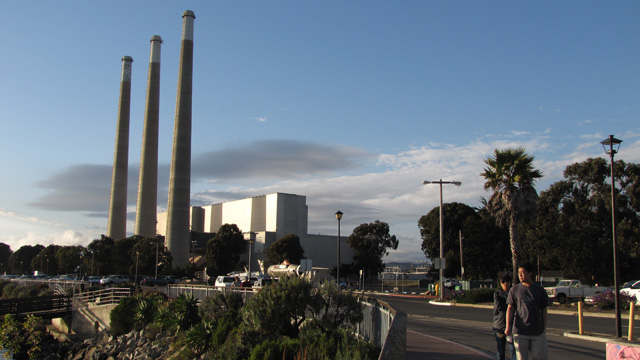
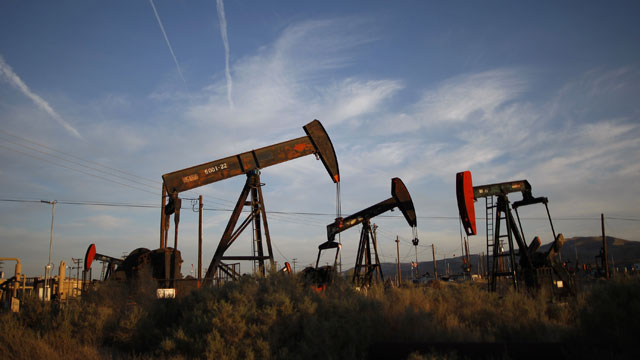
window.__IS_SSR__=true
window.__INITIAL_STATE__={
"attachmentsReducer": {
"audio_0": {
"type": "attachments",
"id": "audio_0",
"imgSizes": {
"kqedFullSize": {
"file": "https://ww2.kqed.org/news/wp-content/themes/KQED-unified/img/audio_bgs/background0.jpg"
}
}
},
"audio_1": {
"type": "attachments",
"id": "audio_1",
"imgSizes": {
"kqedFullSize": {
"file": "https://ww2.kqed.org/news/wp-content/themes/KQED-unified/img/audio_bgs/background1.jpg"
}
}
},
"audio_2": {
"type": "attachments",
"id": "audio_2",
"imgSizes": {
"kqedFullSize": {
"file": "https://ww2.kqed.org/news/wp-content/themes/KQED-unified/img/audio_bgs/background2.jpg"
}
}
},
"audio_3": {
"type": "attachments",
"id": "audio_3",
"imgSizes": {
"kqedFullSize": {
"file": "https://ww2.kqed.org/news/wp-content/themes/KQED-unified/img/audio_bgs/background3.jpg"
}
}
},
"audio_4": {
"type": "attachments",
"id": "audio_4",
"imgSizes": {
"kqedFullSize": {
"file": "https://ww2.kqed.org/news/wp-content/themes/KQED-unified/img/audio_bgs/background4.jpg"
}
}
},
"placeholder": {
"type": "attachments",
"id": "placeholder",
"imgSizes": {
"thumbnail": {
"file": "https://cdn.kqed.org/wp-content/uploads/2024/12/KQED-Default-Image-816638274-2000x1333-1-160x107.jpg",
"width": 160,
"height": 107,
"mimeType": "image/jpeg"
},
"medium": {
"file": "https://cdn.kqed.org/wp-content/uploads/2024/12/KQED-Default-Image-816638274-2000x1333-1-800x533.jpg",
"width": 800,
"height": 533,
"mimeType": "image/jpeg"
},
"medium_large": {
"file": "https://cdn.kqed.org/wp-content/uploads/2024/12/KQED-Default-Image-816638274-2000x1333-1-768x512.jpg",
"width": 768,
"height": 512,
"mimeType": "image/jpeg"
},
"large": {
"file": "https://cdn.kqed.org/wp-content/uploads/2024/12/KQED-Default-Image-816638274-2000x1333-1-1020x680.jpg",
"width": 1020,
"height": 680,
"mimeType": "image/jpeg"
},
"1536x1536": {
"file": "https://cdn.kqed.org/wp-content/uploads/2024/12/KQED-Default-Image-816638274-2000x1333-1-1536x1024.jpg",
"width": 1536,
"height": 1024,
"mimeType": "image/jpeg"
},
"fd-lrg": {
"file": "https://cdn.kqed.org/wp-content/uploads/2024/12/KQED-Default-Image-816638274-2000x1333-1-1536x1024.jpg",
"width": 1536,
"height": 1024,
"mimeType": "image/jpeg"
},
"fd-med": {
"file": "https://cdn.kqed.org/wp-content/uploads/2024/12/KQED-Default-Image-816638274-2000x1333-1-1020x680.jpg",
"width": 1020,
"height": 680,
"mimeType": "image/jpeg"
},
"fd-sm": {
"file": "https://cdn.kqed.org/wp-content/uploads/2024/12/KQED-Default-Image-816638274-2000x1333-1-800x533.jpg",
"width": 800,
"height": 533,
"mimeType": "image/jpeg"
},
"post-thumbnail": {
"file": "https://cdn.kqed.org/wp-content/uploads/2024/12/KQED-Default-Image-816638274-2000x1333-1-672x372.jpg",
"width": 672,
"height": 372,
"mimeType": "image/jpeg"
},
"twentyfourteen-full-width": {
"file": "https://cdn.kqed.org/wp-content/uploads/2024/12/KQED-Default-Image-816638274-2000x1333-1-1038x576.jpg",
"width": 1038,
"height": 576,
"mimeType": "image/jpeg"
},
"xxsmall": {
"file": "https://cdn.kqed.org/wp-content/uploads/2024/12/KQED-Default-Image-816638274-2000x1333-1-160x107.jpg",
"width": 160,
"height": 107,
"mimeType": "image/jpeg"
},
"xsmall": {
"file": "https://cdn.kqed.org/wp-content/uploads/2024/12/KQED-Default-Image-816638274-2000x1333-1-672x372.jpg",
"width": 672,
"height": 372,
"mimeType": "image/jpeg"
},
"small": {
"file": "https://cdn.kqed.org/wp-content/uploads/2024/12/KQED-Default-Image-816638274-2000x1333-1-672x372.jpg",
"width": 672,
"height": 372,
"mimeType": "image/jpeg"
},
"xlarge": {
"file": "https://cdn.kqed.org/wp-content/uploads/2024/12/KQED-Default-Image-816638274-2000x1333-1-1020x680.jpg",
"width": 1020,
"height": 680,
"mimeType": "image/jpeg"
},
"full-width": {
"file": "https://cdn.kqed.org/wp-content/uploads/2024/12/KQED-Default-Image-816638274-2000x1333-1-1920x1280.jpg",
"width": 1920,
"height": 1280,
"mimeType": "image/jpeg"
},
"guest-author-32": {
"file": "https://cdn.kqed.org/wp-content/uploads/2025/01/KQED-Default-Image-816638274-1333x1333-1-160x160.jpg",
"width": 32,
"height": 32,
"mimeType": "image/jpeg"
},
"guest-author-50": {
"file": "https://cdn.kqed.org/wp-content/uploads/2025/01/KQED-Default-Image-816638274-1333x1333-1-160x160.jpg",
"width": 50,
"height": 50,
"mimeType": "image/jpeg"
},
"guest-author-64": {
"file": "https://cdn.kqed.org/wp-content/uploads/2025/01/KQED-Default-Image-816638274-1333x1333-1-160x160.jpg",
"width": 64,
"height": 64,
"mimeType": "image/jpeg"
},
"guest-author-96": {
"file": "https://cdn.kqed.org/wp-content/uploads/2025/01/KQED-Default-Image-816638274-1333x1333-1-160x160.jpg",
"width": 96,
"height": 96,
"mimeType": "image/jpeg"
},
"guest-author-128": {
"file": "https://cdn.kqed.org/wp-content/uploads/2025/01/KQED-Default-Image-816638274-1333x1333-1-160x160.jpg",
"width": 128,
"height": 128,
"mimeType": "image/jpeg"
},
"detail": {
"file": "https://cdn.kqed.org/wp-content/uploads/2025/01/KQED-Default-Image-816638274-1333x1333-1-160x160.jpg",
"width": 160,
"height": 160,
"mimeType": "image/jpeg"
},
"kqedFullSize": {
"file": "https://cdn.kqed.org/wp-content/uploads/2024/12/KQED-Default-Image-816638274-2000x1333-1.jpg",
"width": 2000,
"height": 1333
}
}
},
"science_17919": {
"type": "attachments",
"id": "science_17919",
"meta": {
"index": "attachments_1716263798",
"site": "science",
"id": "17919",
"found": true
},
"parent": 17914,
"imgSizes": {
"kqedFullSize": {
"file": "https://ww2.kqed.org/app/uploads/sites/35/2014/05/MorroBay_3600.jpg",
"width": 640,
"height": 360
}
},
"publishDate": 1401573762,
"modified": 1401573762,
"caption": "A natural gas-fired power plant in Morro Bay, on California's Central Coast. (Craig Miller)",
"description": null,
"title": "MorroBay_3600",
"credit": null,
"status": "inherit",
"isLoading": false,
"fetchFailed": false
},
"science_17661": {
"type": "attachments",
"id": "science_17661",
"meta": {
"index": "attachments_1716263798",
"site": "science",
"id": "17661",
"found": true
},
"parent": 17659,
"imgSizes": {
"kqedFullSize": {
"file": "https://ww2.kqed.org/app/uploads/sites/35/2014/05/pumpjacks.jpg",
"width": 640,
"height": 360
}
},
"publishDate": 1400718605,
"modified": 1400718605,
"caption": "Pumpjacks draw oil out of the Monterey Shale near McKittrick, California. (David McNew/Getty Images)",
"description": null,
"title": "pumpjacks",
"credit": null,
"status": "inherit",
"isLoading": false,
"fetchFailed": false
},
"science_13657": {
"type": "attachments",
"id": "science_13657",
"meta": {
"index": "attachments_1716263798",
"site": "science",
"id": "13657",
"found": true
},
"parent": 0,
"imgSizes": {
"kqedFullSize": {
"file": "https://ww2.kqed.org/app/uploads/sites/35/2014/01/Fracking-main.jpg",
"width": 630,
"height": 473
}
},
"publishDate": 1391038158,
"modified": 1516898379,
"caption": "Just over 2,000 wells have been fracked in California, according to industry data. ",
"description": null,
"title": "Fracking-main",
"credit": "Craig Miller/KQED",
"status": "inherit",
"isLoading": false,
"fetchFailed": false
},
"science_10038": {
"type": "attachments",
"id": "science_10038",
"meta": {
"index": "attachments_1716263798",
"site": "science",
"id": "10038",
"found": true
},
"parent": 9996,
"imgSizes": {
"kqedFullSize": {
"file": "https://ww2.kqed.org/app/uploads/sites/35/2013/10/frackingprotest.jpg",
"width": 640,
"height": 360
}
},
"publishDate": 1381799651,
"modified": 1381799651,
"caption": "The group Californians Against Fracking staged a protest outside of California Gov. Jerry Brown's San Francisco offices demanding that Gov. Brown ban fracking in the state. (Justin Sullivan/Getty Images)",
"description": "SAN FRANCISCO, CA - MAY 30: Protestors stage a demonstration against fracking in California outside of the Hiram W. Johnson State Office Building on May 30, 2013 in San Francisco, California. Dozens of protesters with the group Californians Against Fracking staged a protest outside of California Gov. Jerry Brown's San Francisco offices demanding that Gov. Brown ban fracking in the state. (Photo by Justin Sullivan/Getty Images)",
"title": "169770907JS001_ACTIVISTS_PR",
"credit": null,
"status": "inherit",
"isLoading": false,
"fetchFailed": false
},
"science_17060": {
"type": "attachments",
"id": "science_17060",
"meta": {
"index": "attachments_1716263798",
"site": "science",
"id": "17060",
"found": true
},
"parent": 17039,
"imgSizes": {
"kqedFullSize": {
"file": "https://ww2.kqed.org/app/uploads/sites/35/2014/04/auburn_dam_sketch2_crop_.jpg",
"width": 640,
"height": 360
}
},
"publishDate": 1398814747,
"modified": 1398814747,
"caption": "ADD CAPTION",
"description": null,
"title": "auburn_dam_sketch2_crop_",
"credit": null,
"status": "inherit",
"isLoading": false,
"fetchFailed": false
},
"science_16593": {
"type": "attachments",
"id": "science_16593",
"meta": {
"index": "attachments_1716263798",
"site": "science",
"id": "16593",
"found": true
},
"parent": 16583,
"imgSizes": {
"kqedFullSize": {
"file": "https://ww2.kqed.org/app/uploads/sites/35/2014/04/1825scr_c09a7077bf407dd-e1397606745612.jpg",
"width": 639,
"height": 359
}
},
"publishDate": 1397606707,
"modified": 1397606707,
"caption": "Wind turbines in Solano County. (Craig Miller/KQED)",
"description": "Wind turbines in Solano County. (Craig Miller/KQED)",
"title": "1825scr_c09a7077bf407dd",
"credit": null,
"status": "inherit",
"isLoading": false,
"fetchFailed": false
},
"science_16497": {
"type": "attachments",
"id": "science_16497",
"meta": {
"index": "attachments_1716263798",
"site": "science",
"id": "16497",
"found": true
},
"parent": 16416,
"imgSizes": {
"kqedFullSize": {
"file": "https://ww2.kqed.org/app/uploads/sites/35/2014/04/5931scr_365b4619467b056.jpg",
"width": 640,
"height": 360
}
},
"publishDate": 1397264694,
"modified": 1397264694,
"caption": "Chevron's Richmond refinery. (Deborah Svoboda/KQED)",
"description": null,
"title": "5931scr_365b4619467b056",
"credit": null,
"status": "inherit",
"isLoading": false,
"fetchFailed": false
},
"science_16174": {
"type": "attachments",
"id": "science_16174",
"meta": {
"index": "attachments_1716263798",
"site": "science",
"id": "16174",
"found": true
},
"parent": 16170,
"imgSizes": {
"kqedFullSize": {
"file": "https://ww2.kqed.org/app/uploads/sites/35/2014/04/Chevron1.jpg",
"width": 1280,
"height": 720
}
},
"publishDate": 1396646777,
"modified": 1396646777,
"caption": "Water from Chevron's Kern River oil field supplies orchards near Bakersfield. (Lauren Sommer/KQED)",
"description": null,
"title": "Chevron1",
"credit": null,
"status": "inherit",
"isLoading": false,
"fetchFailed": false
},
"science_15914": {
"type": "attachments",
"id": "science_15914",
"meta": {
"index": "attachments_1716263798",
"site": "science",
"id": "15914",
"found": true
},
"parent": 15910,
"imgSizes": {
"kqedFullSize": {
"file": "https://ww2.kqed.org/app/uploads/sites/35/2014/03/KQED-Fraq-panel1-blank2.jpg",
"width": 640,
"height": 360
}
},
"publishDate": 1396042796,
"modified": 1396042796,
"caption": null,
"description": null,
"title": "KQED-Fraq-panel1-blank2",
"credit": null,
"status": "inherit",
"isLoading": false,
"fetchFailed": false
},
"science_15986": {
"type": "attachments",
"id": "science_15986",
"meta": {
"index": "attachments_1716263798",
"site": "science",
"id": "15986",
"found": true
},
"parent": 15930,
"imgSizes": {
"kqedFullSize": {
"file": "https://ww2.kqed.org/app/uploads/sites/35/2014/03/tankcarsrichmond-e1396052578404.jpg",
"width": 640,
"height": 360
}
},
"publishDate": 1396052565,
"modified": 1396052565,
"caption": "Tank cars parked in Richmond. BNSF Railway has been bringing crude oil to this railyard. (Molly Samuel/KQED)",
"description": "Tank cars parked in Richmond. (Molly Samuel/KQED)",
"title": "tankcarsrichmond",
"credit": null,
"status": "inherit",
"isLoading": false,
"fetchFailed": false
},
"science_4339": {
"type": "attachments",
"id": "science_4339",
"meta": {
"index": "attachments_1716263798",
"site": "science",
"id": "4339",
"found": true
},
"parent": 4338,
"imgSizes": {
"kqedFullSize": {
"file": "https://ww2.kqed.org/app/uploads/sites/35/2013/06/4338-thumb.jpg",
"width": 640,
"height": 360
}
},
"publishDate": 1371148279,
"modified": 1371148279,
"caption": "The San Onofre nuclear power plant has been shut down since 2012. (Photo by David McNew/Getty Images)",
"description": "The San Onofre nuclear power plant has been shut down since 2012. (Photo by David McNew/Getty Images)",
"title": "Thumbnail for 4338",
"credit": null,
"status": "inherit",
"isLoading": false,
"fetchFailed": false
},
"quest_67733": {
"type": "attachments",
"id": "quest_67733",
"meta": {
"index": "attachments_1716263798",
"site": "quest",
"id": "67733",
"found": true
},
"parent": 67636,
"imgSizes": {
"thumbnail": {
"file": "https://ww2.kqed.org/app/uploads/sites/39/2014/02/QBL_Hydrogen_SS_11.23.13_JV0A1431_2-400x225.jpg",
"width": 400,
"mimeType": "image/jpeg",
"height": 225
},
"kqedFullSize": {
"file": "https://ww2.kqed.org/app/uploads/sites/39/2014/02/QBL_Hydrogen_SS_11.23.13_JV0A1431_2.jpg",
"width": 640,
"height": 360
},
"guest-author-96": {
"file": "https://ww2.kqed.org/app/uploads/sites/39/2014/02/QBL_Hydrogen_SS_11.23.13_JV0A1431_2-96x96.jpg",
"width": 96,
"mimeType": "image/jpeg",
"height": 96
},
"guest-author-64": {
"file": "https://ww2.kqed.org/app/uploads/sites/39/2014/02/QBL_Hydrogen_SS_11.23.13_JV0A1431_2-64x64.jpg",
"width": 64,
"mimeType": "image/jpeg",
"height": 64
},
"detail": {
"file": "https://ww2.kqed.org/app/uploads/sites/39/2014/02/QBL_Hydrogen_SS_11.23.13_JV0A1431_2-75x75.jpg",
"width": 75,
"mimeType": "image/jpeg",
"height": 75
},
"guest-author-32": {
"file": "https://ww2.kqed.org/app/uploads/sites/39/2014/02/QBL_Hydrogen_SS_11.23.13_JV0A1431_2-32x32.jpg",
"width": 32,
"mimeType": "image/jpeg",
"height": 32
},
"guest-author-128": {
"file": "https://ww2.kqed.org/app/uploads/sites/39/2014/02/QBL_Hydrogen_SS_11.23.13_JV0A1431_2-128x128.jpg",
"width": 128,
"mimeType": "image/jpeg",
"height": 128
}
},
"publishDate": 1393006479,
"modified": 1393006479,
"caption": "Bill Holloway behind the wheel of his Mercedes F-Cell hydrogen fuel cell vehicle. Photo by Sheraz Sadiq / KQED Science",
"description": null,
"title": "QBL_Hydrogen_SS_11.23.13_JV0A1431_2",
"credit": null,
"status": "inherit",
"isLoading": false,
"fetchFailed": false
}
},
"audioPlayerReducer": {
"postId": "stream_live",
"isPaused": true,
"isPlaying": false,
"pfsActive": false,
"pledgeModalIsOpen": true,
"playerDrawerIsOpen": false,
"liveAudioPlayStartedAt": 0,
"liveAudioPlayContext": ""
},
"authorsReducer": {
"mollysamuel": {
"type": "authors",
"id": "200",
"meta": {
"index": "authors_1716337520",
"id": "200",
"found": true
},
"name": "Molly Samuel",
"firstName": "Molly",
"lastName": "Samuel",
"slug": "mollysamuel",
"email": "msamuel@kqed.org",
"display_author_email": false,
"staff_mastheads": [],
"title": null,
"bio": "Molly Samuel joined KQED as an intern in 2007, and since then has worked here as a reporter, producer, director and blogger. Before becoming KQED Science’s Multimedia Producer, she was a producer for Climate Watch. Molly has also reported for NPR, KALW and High Country News, and has produced audio stories for The Encyclopedia of Life and the Oakland Museum of California. She was a fellow with the Middlebury Fellowships in Environmental Journalism and a journalist-in-residence at the National Evolutionary Synthesis Center. Molly has a degree in Ancient Greek from Oberlin College and is a co-founder of the record label True Panther Sounds.",
"avatar": "https://secure.gravatar.com/avatar/a6abd3b949a89fe5109fa9917631d0b6?s=600&d=blank&r=g",
"twitter": null,
"facebook": null,
"instagram": null,
"linkedin": null,
"sites": [
{
"site": "news",
"roles": [
"subscriber"
]
},
{
"site": "stateofhealth",
"roles": [
"subscriber"
]
},
{
"site": "science",
"roles": [
"subscriber"
]
},
{
"site": "quest",
"roles": [
"edit_users",
"subscriber"
]
}
],
"headData": {
"title": "Molly Samuel | KQED",
"description": null,
"ogImgSrc": "https://secure.gravatar.com/avatar/a6abd3b949a89fe5109fa9917631d0b6?s=600&d=blank&r=g",
"twImgSrc": "https://secure.gravatar.com/avatar/a6abd3b949a89fe5109fa9917631d0b6?s=600&d=blank&r=g"
},
"isLoading": false,
"link": "/author/mollysamuel"
},
"amystanden": {
"type": "authors",
"id": "210",
"meta": {
"index": "authors_1716337520",
"id": "210",
"found": true
},
"name": "Amy Standen",
"firstName": "Amy",
"lastName": "Standen",
"slug": "amystanden",
"email": "astanden@kqed.org",
"display_author_email": false,
"staff_mastheads": [],
"title": "KQED Contributor",
"bio": "Amy Standen (@amystanden) is co-host of #\u003ca href=\"https://ww2.kqed.org/news/programs/the-leap\">TheLeapPodcast\u003c/a> (subscribe on iTunes or Stitcher!) and host of KQED and PBSDigital Studios' science video series, \u003ca href=\"https://www.youtube.com/user/KQEDDeepLook\">Deep Look\u003c/a>. Her science radio stories appear on KQED and NPR.\r\n\r\nEmail her at astanden@kqed.org",
"avatar": "https://secure.gravatar.com/avatar/3d021b72de685a788b0487b059d0a6a1?s=600&d=blank&r=g",
"twitter": null,
"facebook": null,
"instagram": null,
"linkedin": null,
"sites": [
{
"site": "news",
"roles": [
"subscriber"
]
},
{
"site": "futureofyou",
"roles": [
"subscriber"
]
},
{
"site": "stateofhealth",
"roles": [
"subscriber"
]
},
{
"site": "science",
"roles": []
},
{
"site": "quest",
"roles": [
"subscriber"
]
}
],
"headData": {
"title": "Amy Standen | KQED",
"description": "KQED Contributor",
"ogImgSrc": "https://secure.gravatar.com/avatar/3d021b72de685a788b0487b059d0a6a1?s=600&d=blank&r=g",
"twImgSrc": "https://secure.gravatar.com/avatar/3d021b72de685a788b0487b059d0a6a1?s=600&d=blank&r=g"
},
"isLoading": false,
"link": "/author/amystanden"
},
"cmiller": {
"type": "authors",
"id": "221",
"meta": {
"index": "authors_1716337520",
"id": "221",
"found": true
},
"name": "Craig Miller",
"firstName": "Craig",
"lastName": "Miller",
"slug": "cmiller",
"email": "craig@voxterra.net",
"display_author_email": false,
"staff_mastheads": [
"science"
],
"title": "Editor Emeritus, Science",
"bio": "Craig is a former KQED Science editor, specializing in weather, climate, water & energy issues, with a little seismology thrown in just to shake things up. Prior to that, he launched and led the station's award-winning multimedia project, Climate Watch. Craig is also an accomplished writer/producer of television documentaries, with a focus on natural resource issues.",
"avatar": "https://secure.gravatar.com/avatar/b91661df645e001a9cafe0861fa685f9?s=600&d=blank&r=g",
"twitter": "voxterra",
"facebook": null,
"instagram": null,
"linkedin": null,
"sites": [
{
"site": "news",
"roles": [
"author"
]
},
{
"site": "futureofyou",
"roles": [
"editor"
]
},
{
"site": "stateofhealth",
"roles": [
"author"
]
},
{
"site": "science",
"roles": [
"editor"
]
},
{
"site": "quest",
"roles": [
"editor"
]
}
],
"headData": {
"title": "Craig Miller | KQED",
"description": "Editor Emeritus, Science",
"ogImgSrc": "https://secure.gravatar.com/avatar/b91661df645e001a9cafe0861fa685f9?s=600&d=blank&r=g",
"twImgSrc": "https://secure.gravatar.com/avatar/b91661df645e001a9cafe0861fa685f9?s=600&d=blank&r=g"
},
"isLoading": false,
"link": "/author/cmiller"
},
"danbrekke": {
"type": "authors",
"id": "222",
"meta": {
"index": "authors_1716337520",
"id": "222",
"found": true
},
"name": "Dan Brekke",
"firstName": "Dan",
"lastName": "Brekke",
"slug": "danbrekke",
"email": "dbrekke@kqed.org",
"display_author_email": true,
"staff_mastheads": [
"news",
"science"
],
"title": "KQED Editor and Reporter",
"bio": "Dan Brekke is a reporter and editor for KQED News, responsible for coverage of topics ranging from California water issues to the Bay Area's transportation challenges. In a newsroom career that began in Chicago in 1972, Dan has worked for \u003cem>The San Francisco Examiner,\u003c/em> Wired and TechTV and has been published in The New York Times, The New York Times Magazine, Business 2.0, Salon and elsewhere.\r\n\r\nSince joining KQED in 2007, Dan has reported, edited and produced both radio and online features and breaking news pieces. He has shared as both editor and reporter in four Society of Professional Journalists Norcal Excellence in Journalism awards and one Edward R. Murrow regional award. He was chosen for a spring 2017 residency at the Mesa Refuge to advance his research on California salmon.\r\n\r\nEmail Dan at: \u003ca href=\"mailto:dbrekke@kqed.org\">dbrekke@kqed.org\u003c/a>\r\n\r\n\u003cstrong>Twitter:\u003c/strong> \u003ca href=\"https://twitter.com/danbrekke\" rel=\"noopener noreferrer\">twitter.com/danbrekke\u003c/a>\r\n\u003cstrong>Facebook:\u003c/strong> \u003ca href=\"https://www.facebook.com/danbrekke\" rel=\"noopener noreferrer\">www.facebook.com/danbrekke\u003c/a>\r\n\u003cstrong>LinkedIn:\u003c/strong> \u003ca href=\"https://www.linkedin.com/in/danbrekke\" rel=\"noopener noreferrer\">www.linkedin.com/in/danbrekke\u003c/a>",
"avatar": "https://secure.gravatar.com/avatar/8f1f0d2a978fb3b23426c922c7e2af558fa36905b49c4ce76a97dc3c72d27226?s=600&d=mm&r=g",
"twitter": "danbrekke",
"bluesky": null,
"facebook": null,
"instagram": "https://www.instagram.com/dan.brekke/",
"linkedin": "https://www.linkedin.com/in/danbrekke/",
"sites": [
{
"site": "news",
"roles": [
"administrator",
"create_posts"
]
},
{
"site": "stateofhealth",
"roles": [
"editor"
]
},
{
"site": "science",
"roles": [
"editor"
]
},
{
"site": "quest",
"roles": [
"contributor"
]
},
{
"site": "food",
"roles": [
"contributor"
]
},
{
"site": "forum",
"roles": [
"contributor"
]
},
{
"site": "elections",
"roles": [
"editor"
]
},
{
"site": "liveblog",
"roles": [
"editor"
]
}
],
"headData": {
"title": "Dan Brekke | KQED",
"description": "KQED Editor and Reporter",
"ogImgSrc": "https://secure.gravatar.com/avatar/8f1f0d2a978fb3b23426c922c7e2af558fa36905b49c4ce76a97dc3c72d27226?s=600&d=mm&r=g",
"twImgSrc": "https://secure.gravatar.com/avatar/8f1f0d2a978fb3b23426c922c7e2af558fa36905b49c4ce76a97dc3c72d27226?s=600&d=mm&r=g"
},
"isLoading": false,
"link": "/author/danbrekke"
},
"laurensommer": {
"type": "authors",
"id": "239",
"meta": {
"index": "authors_1716337520",
"id": "239",
"found": true
},
"name": "Lauren Sommer",
"firstName": "Lauren",
"lastName": "Sommer",
"slug": "laurensommer",
"email": "lsommer@kqed.org",
"display_author_email": false,
"staff_mastheads": [],
"title": "KQED Contributor",
"bio": "Lauren is a radio reporter formerly covering environment, water, and energy for KQED Science. As part of her day job, she has scaled Sierra Nevada peaks, run from charging elephant seals, and desperately tried to get her sea legs - all in pursuit of good radio. Her work has appeared on Marketplace, Living on Earth, Science Friday and NPR's Morning Edition and All Things Considered. You can find her on Twitter at \u003ca href=\"https://twitter.com/lesommer\">@lesommer\u003c/a>.",
"avatar": "https://secure.gravatar.com/avatar/33aa3772bb86c6ad45b8aca6a238bbdf?s=600&d=blank&r=g",
"twitter": null,
"facebook": null,
"instagram": null,
"linkedin": null,
"sites": [
{
"site": "news",
"roles": [
"author"
]
},
{
"site": "science",
"roles": [
"editor",
"manage_content_types",
"manage_taxonomies"
]
},
{
"site": "quest",
"roles": [
"editor"
]
}
],
"headData": {
"title": "Lauren Sommer | KQED",
"description": "KQED Contributor",
"ogImgSrc": "https://secure.gravatar.com/avatar/33aa3772bb86c6ad45b8aca6a238bbdf?s=600&d=blank&r=g",
"twImgSrc": "https://secure.gravatar.com/avatar/33aa3772bb86c6ad45b8aca6a238bbdf?s=600&d=blank&r=g"
},
"isLoading": false,
"link": "/author/laurensommer"
},
"sheraz-sadiq": {
"type": "authors",
"id": "6176",
"meta": {
"index": "authors_1716337520",
"id": "6176",
"found": true
},
"name": "Sheraz Sadiq",
"firstName": "Sheraz",
"lastName": "Sadiq",
"slug": "sheraz-sadiq",
"email": "ssadiq@kqed.org",
"display_author_email": false,
"staff_mastheads": [],
"title": "KQED Contributor",
"bio": "Sheraz Sadiq is an Emmy Award-winning producer at San Francisco PBS affiliate KQED. In 2012, he received the AAAS Kavli Science Journalism award for a story he produced about the seismic retrofit of the Hetch Hetchy water delivery system which serves the San Francisco Bay Area. In addition to producing television content for KQED Science, he has also created online features and written news articles on scientific subjects ranging from astronomy to synthetic biology.",
"avatar": "https://secure.gravatar.com/avatar/d88c61c214e477c4c6f0ebaed4f581bf7c9b1dafd94cd4361285d427107adb8d?s=600&d=blank&r=g",
"twitter": null,
"bluesky": null,
"facebook": null,
"instagram": null,
"linkedin": null,
"sites": [
{
"site": "arts",
"roles": [
"subscriber"
]
},
{
"site": "news",
"roles": [
"subscriber"
]
},
{
"site": "futureofyou",
"roles": [
"subscriber"
]
},
{
"site": "science",
"roles": [
"subscriber"
]
},
{
"site": "quest",
"roles": [
"leadcoordinator",
"subscriber"
]
}
],
"headData": {
"title": "Sheraz Sadiq | KQED",
"description": "KQED Contributor",
"ogImgSrc": "https://secure.gravatar.com/avatar/d88c61c214e477c4c6f0ebaed4f581bf7c9b1dafd94cd4361285d427107adb8d?s=600&d=blank&r=g",
"twImgSrc": "https://secure.gravatar.com/avatar/d88c61c214e477c4c6f0ebaed4f581bf7c9b1dafd94cd4361285d427107adb8d?s=600&d=blank&r=g"
},
"isLoading": false,
"link": "/author/sheraz-sadiq"
},
"kqedscience": {
"type": "authors",
"id": "6387",
"meta": {
"index": "authors_1716337520",
"id": "6387",
"found": true
},
"name": "KQED Science",
"firstName": "KQED",
"lastName": "Science",
"slug": "kqedscience",
"email": "kqedscience@gmail.com",
"display_author_email": false,
"staff_mastheads": [],
"title": null,
"bio": "KQED Science brings you award-winning science and environment coverage from the Bay Area and beyond by the flagship Northern California PBS and NPR affiliate.",
"avatar": "https://secure.gravatar.com/avatar/5a295ff49cf82a8c0f30937d3f788b2f?s=600&d=blank&r=g",
"twitter": null,
"facebook": null,
"instagram": null,
"linkedin": null,
"sites": [
{
"site": "science",
"roles": [
"contributor"
]
},
{
"site": "quest",
"roles": [
"editor"
]
},
{
"site": "food",
"roles": [
"contributor"
]
}
],
"headData": {
"title": "KQED Science | KQED",
"description": null,
"ogImgSrc": "https://secure.gravatar.com/avatar/5a295ff49cf82a8c0f30937d3f788b2f?s=600&d=blank&r=g",
"twImgSrc": "https://secure.gravatar.com/avatar/5a295ff49cf82a8c0f30937d3f788b2f?s=600&d=blank&r=g"
},
"isLoading": false,
"link": "/author/kqedscience"
}
},
"pagesReducer": {
"science_category_energy": {
"type": "terms",
"id": "science_33",
"meta": {
"index": "terms_1716263798",
"site": "science",
"id": "33",
"score": 12.797476
},
"featImg": null,
"name": "Energy",
"description": null,
"taxonomy": "category",
"headData": {
"twImgId": null,
"twTitle": null,
"ogTitle": null,
"ogImgId": null,
"twDescription": null,
"description": null,
"title": "Energy Archives | KQED Science",
"ogDescription": null
},
"ttid": 35,
"slug": "energy",
"isLoading": false,
"title": "Energy",
"pageMeta": {
"site": "science",
"WpPageTemplate": "page-topic-editorial",
"currentPage": 29
},
"blocks": [
{
"blockName": "kqed/post-list",
"attrs": {
"layout": "cardArticle2",
"query": "posts/science?category=energy",
"seeMore": false,
"paginated": true,
"page": 29
}
},
{
"blockName": "kqed/ad"
}
]
}
},
"pfsSessionReducer": {},
"postsReducer": {
"stream_live": {
"type": "live",
"id": "stream_live",
"audioUrl": "https://streams.kqed.org/kqedradio",
"title": "Live Stream",
"excerpt": "Live Stream information currently unavailable.",
"link": "/radio",
"featImg": "",
"label": {
"name": "KQED Live",
"link": "/"
}
},
"stream_kqedNewscast": {
"type": "posts",
"id": "stream_kqedNewscast",
"audioUrl": "https://www.kqed.org/.stream/anon/radio/RDnews/newscast.mp3?_=1",
"title": "KQED Newscast",
"featImg": "",
"label": {
"name": "88.5 FM",
"link": "/"
}
},
"science_17914": {
"type": "posts",
"id": "science_17914",
"meta": {
"index": "posts_1716263798",
"site": "science",
"id": "17914",
"score": null,
"sort": [
1401660038000
]
},
"parent": 0,
"labelTerm": {
"site": "science"
},
"blocks": [],
"publishDate": 1401660038,
"format": "aside",
"title": "New Rules for Power Plants: What They Mean for California",
"headTitle": "New Rules for Power Plants: What They Mean for California | KQED",
"content": "\u003cfigure id=\"attachment_17919\" class=\"wp-caption aligncenter\" style=\"max-width: 640px\">\u003ca href=\"http://ww2.kqed.org/science/wp-content/uploads/sites/35/2014/05/MorroBay_3600.jpg\" rel=\"attachment wp-att-17919\">\u003cimg loading=\"lazy\" decoding=\"async\" class=\"size-full wp-image-17919\" src=\"http://ww2.kqed.org/science/wp-content/uploads/sites/35/2014/05/MorroBay_3600.jpg\" alt=\"A natural gas-fired power plant in Morro Bay, on California's Central Coast. (Craig Miller)\" width=\"640\" height=\"360\">\u003c/a>\u003cfigcaption class=\"wp-caption-text\">A natural gas-fired power plant looms over Morro Bay, on California’s Central Coast. (Craig Miller)\u003c/figcaption>\u003c/figure>\n\u003cp>\u003cem>UPDATED with post-announcement reaction and details\u003c/em>\u003c/p>\n\u003cp>Following Monday’s roll-out from the federal Environmental Protection Agency, there was optimism — if not clarity — over what \u003ca title=\"EPA - release\" href=\"http://yosemite.epa.gov/opa/admpress.nsf/bd4379a92ceceeac8525735900400c27/5bb6d20668b9a18485257ceb00490c98!OpenDocument\">proposed new regulation\u003c/a> of power plant carbon emissions would mean for California.\u003c/p>\n\u003cp>“The idea of setting higher standards to cut pollution at our power plants is not new,” President Barack Obama said in his weekly address, “It’s just time for Washington to catch up with the rest of the country.”\u003c/p>\n\u003cp>When the president refers to “the rest of the country,” California looms large, given the state’s aggressive moves to cut carbon emissions. Those include a power mix with 33 percent renewable energy by 2020, and the nation’s most ambitious cap-and-trade program to throttle industrial emissions of greenhouse gases. California put specific limits on global warming emissions from power plants back in 2006, with a law that Derek Walker of the Environmental Defense Fund calls, “a forerunner” of the new federal standard.\u003c/p>\n\u003cp>But the two use different measuring sticks. California’s broader climate strategy, also passed in 2006, aims to cut emissions back to 1990 levels by 2020. The new \u003ca title=\"EPA - Clean Power Plan\" href=\"http://www2.epa.gov/carbon-pollution-standards\">federal Clean Power Plan\u003c/a> would require a 30 percent cut from 2005 levels by 2030. Nonetheless, Derek Furstenwerth, senior director for environmental services at Calpine, a major power producer in California, told reporters that while Calpine is still sifting details of the plan, California’s program is “sufficiently stringent” so that it should meet the federal goal.\u003c/p>\n\u003cp>[ad fullwidth]\u003c/p>\n\u003cp>Hit hardest by the new rules will be the nation’s 600-or-so coal-fired power plants. States that depend heavily on coal power will have to find ways to reduce carbon emissions — but how they do it will likely be left largely to them. In her announcement, EPA Administrator Gina McCarthy said the proposed rule, “is not a one-size-fits-all solution.” Less coal-dependent states might comply simply by tightening energy efficiency standards. States could also develop more clean energy sources or put a price on carbon with programs similar to California’s cap-and-trade program. That, in turn, could lead to more cap-and-trade partners for the Golden State. Currently Quebec has the only carbon market directly linked to California’s.\u003c/p>\n\u003cfigure id=\"attachment_17925\" class=\"wp-caption aligncenter\" style=\"max-width: 640px\">\u003ca href=\"http://ww2.kqed.org/science/wp-content/uploads/sites/35/2014/06/epa-nsps-co2-sector-copy.jpg\" rel=\"attachment wp-att-17925\">\u003cimg loading=\"lazy\" decoding=\"async\" class=\"size-full wp-image-17925\" src=\"http://ww2.kqed.org/science/wp-content/uploads/sites/35/2014/06/epa-nsps-co2-sector-copy.jpg\" alt=\"A snapshot of U.S. carbon emissions in 2012. (EIA/C2ES)\" width=\"640\" height=\"372\">\u003c/a>\u003cfigcaption class=\"wp-caption-text\">A snapshot of U.S. carbon emissions in 2012. (EIA/C2ES)\u003c/figcaption>\u003c/figure>\n\u003cp>While California utilities have no coal-fired plants inside the state, they do import coal power from plants in neighboring states. As recently as 2005, those imported megawatts accounted for about 33 million metric tons of carbon emissions, a number that’s been dropping dramatically in recent years as utilities in the state have begun weaning themselves from coal power, replacing some of it with renewable energy sources such as wind and solar. (Total \u003ca title=\"CARB - CO2 emissions inventory\" href=\"http://www.arb.ca.gov/cc/inventory/data/data.htm\">carbon emissions in California\u003c/a> were about 459 million in 2012, the latest year tallied.)\u003c/p>\n\u003cp>On the other hand, the proportion of electricity that Californians get from natural gas has been rising. The \u003ca title=\"LAT - post\" href=\"http://www.latimes.com/business/la-fi-san-onofre-cost-20140510-story.html\">shutdown of a major nuclear power plant\u003c/a> in Southern California combined with reduced hydroelectricity from \u003ca title=\"Q-Sci - Drought Watch\" href=\"http://ww2.kqed.org/science/series/california-drought-watch/?=science_widget\">the ongoing drought\u003c/a> have forced power producers to replace that missing power with natural gas, pushing its proportion in the state’s power mix to about 70 percent. Though far less carbon-polluting than coal, natural gas is a fossil fuel and produces substantial warming emissions.\u003c/p>\n\u003cp>The Natural Resources Defense Council has done its own \u003ca title=\"NRDC - report\" href=\"http://www.nrdc.org/air/pollution-standards/state-benefits.asp\">tally of prospective benefits\u003c/a>, most of which would accrue to 13 “key states,” where energy is currently more carbon-intensive than in California. Of course, NRDC did its math before the actual rules were unveiled. Conversely (and in similarly speculative fashion), voices from the fossil fuel industry and some utilities have \u003ca title=\"SFBT - post\" href=\"http://www.bizjournals.com/bizjournals/washingtonbureau/2014/05/will-epa-limits-on-power-plant-emissions-kill-jobs.html?page=all\">decried the new regulation\u003c/a> as a job killer.\u003c/p>\n\u003cp>States have until at least 2016 to submit their plans to meet the new standard.\u003c/p>\n\u003cp>\u003c/p>\n\u003cp> \u003c/p>\n\n",
"stats": {
"hasVideo": false,
"hasChartOrMap": false,
"hasAudio": false,
"hasPolis": false,
"wordCount": 685,
"hasGoogleForm": false,
"hasGallery": false,
"hasHearkenModule": false,
"iframeSrcs": [],
"paragraphCount": 12
},
"modified": 1704933562,
"excerpt": "New rules for existing power plants could mean more partners for California's carbon market.",
"headData": {
"twImgId": "",
"twTitle": "",
"ogTitle": "",
"ogImgId": "",
"twDescription": "",
"description": "New rules for existing power plants could mean more partners for California's carbon market.",
"title": "New Rules for Power Plants: What They Mean for California | KQED",
"ogDescription": "",
"schema": {
"@context": "https://schema.org",
"@type": "Article",
"headline": "New Rules for Power Plants: What They Mean for California",
"datePublished": "2014-06-01T15:00:38-07:00",
"dateModified": "2024-01-10T16:39:22-08:00",
"image": "https://cdn.kqed.org/wp-content/uploads/2020/02/KQED-OG-Image@1x.png"
}
},
"guestAuthors": [],
"slug": "new-rules-for-power-plants-what-they-mean-for-california",
"status": "publish",
"sticky": false,
"path": "/science/17914/new-rules-for-power-plants-what-they-mean-for-california",
"audioTrackLength": null,
"parsedContent": [
{
"type": "contentString",
"content": "\u003cdiv class=\"post-body\">\u003cp>\u003cfigure id=\"attachment_17919\" class=\"wp-caption aligncenter\" style=\"max-width: 640px\">\u003ca href=\"http://ww2.kqed.org/science/wp-content/uploads/sites/35/2014/05/MorroBay_3600.jpg\" rel=\"attachment wp-att-17919\">\u003cimg loading=\"lazy\" decoding=\"async\" class=\"size-full wp-image-17919\" src=\"http://ww2.kqed.org/science/wp-content/uploads/sites/35/2014/05/MorroBay_3600.jpg\" alt=\"A natural gas-fired power plant in Morro Bay, on California's Central Coast. (Craig Miller)\" width=\"640\" height=\"360\">\u003c/a>\u003cfigcaption class=\"wp-caption-text\">A natural gas-fired power plant looms over Morro Bay, on California’s Central Coast. (Craig Miller)\u003c/figcaption>\u003c/figure>\n\u003cp>\u003cem>UPDATED with post-announcement reaction and details\u003c/em>\u003c/p>\n\u003cp>Following Monday’s roll-out from the federal Environmental Protection Agency, there was optimism — if not clarity — over what \u003ca title=\"EPA - release\" href=\"http://yosemite.epa.gov/opa/admpress.nsf/bd4379a92ceceeac8525735900400c27/5bb6d20668b9a18485257ceb00490c98!OpenDocument\">proposed new regulation\u003c/a> of power plant carbon emissions would mean for California.\u003c/p>\n\u003cp>“The idea of setting higher standards to cut pollution at our power plants is not new,” President Barack Obama said in his weekly address, “It’s just time for Washington to catch up with the rest of the country.”\u003c/p>\n\u003cp>When the president refers to “the rest of the country,” California looms large, given the state’s aggressive moves to cut carbon emissions. Those include a power mix with 33 percent renewable energy by 2020, and the nation’s most ambitious cap-and-trade program to throttle industrial emissions of greenhouse gases. California put specific limits on global warming emissions from power plants back in 2006, with a law that Derek Walker of the Environmental Defense Fund calls, “a forerunner” of the new federal standard.\u003c/p>\n\u003cp>But the two use different measuring sticks. California’s broader climate strategy, also passed in 2006, aims to cut emissions back to 1990 levels by 2020. The new \u003ca title=\"EPA - Clean Power Plan\" href=\"http://www2.epa.gov/carbon-pollution-standards\">federal Clean Power Plan\u003c/a> would require a 30 percent cut from 2005 levels by 2030. Nonetheless, Derek Furstenwerth, senior director for environmental services at Calpine, a major power producer in California, told reporters that while Calpine is still sifting details of the plan, California’s program is “sufficiently stringent” so that it should meet the federal goal.\u003c/p>\n\u003cp>\u003c/p>\u003c/div>",
"attributes": {
"named": {},
"numeric": []
}
},
{
"type": "component",
"content": "",
"name": "ad",
"attributes": {
"named": {
"label": "fullwidth"
},
"numeric": [
"fullwidth"
]
}
},
{
"type": "contentString",
"content": "\u003cdiv class=\"post-body\">\u003cp>\u003c/p>\n\u003cp>Hit hardest by the new rules will be the nation’s 600-or-so coal-fired power plants. States that depend heavily on coal power will have to find ways to reduce carbon emissions — but how they do it will likely be left largely to them. In her announcement, EPA Administrator Gina McCarthy said the proposed rule, “is not a one-size-fits-all solution.” Less coal-dependent states might comply simply by tightening energy efficiency standards. States could also develop more clean energy sources or put a price on carbon with programs similar to California’s cap-and-trade program. That, in turn, could lead to more cap-and-trade partners for the Golden State. Currently Quebec has the only carbon market directly linked to California’s.\u003c/p>\n\u003cfigure id=\"attachment_17925\" class=\"wp-caption aligncenter\" style=\"max-width: 640px\">\u003ca href=\"http://ww2.kqed.org/science/wp-content/uploads/sites/35/2014/06/epa-nsps-co2-sector-copy.jpg\" rel=\"attachment wp-att-17925\">\u003cimg loading=\"lazy\" decoding=\"async\" class=\"size-full wp-image-17925\" src=\"http://ww2.kqed.org/science/wp-content/uploads/sites/35/2014/06/epa-nsps-co2-sector-copy.jpg\" alt=\"A snapshot of U.S. carbon emissions in 2012. (EIA/C2ES)\" width=\"640\" height=\"372\">\u003c/a>\u003cfigcaption class=\"wp-caption-text\">A snapshot of U.S. carbon emissions in 2012. (EIA/C2ES)\u003c/figcaption>\u003c/figure>\n\u003cp>While California utilities have no coal-fired plants inside the state, they do import coal power from plants in neighboring states. As recently as 2005, those imported megawatts accounted for about 33 million metric tons of carbon emissions, a number that’s been dropping dramatically in recent years as utilities in the state have begun weaning themselves from coal power, replacing some of it with renewable energy sources such as wind and solar. (Total \u003ca title=\"CARB - CO2 emissions inventory\" href=\"http://www.arb.ca.gov/cc/inventory/data/data.htm\">carbon emissions in California\u003c/a> were about 459 million in 2012, the latest year tallied.)\u003c/p>\n\u003cp>On the other hand, the proportion of electricity that Californians get from natural gas has been rising. The \u003ca title=\"LAT - post\" href=\"http://www.latimes.com/business/la-fi-san-onofre-cost-20140510-story.html\">shutdown of a major nuclear power plant\u003c/a> in Southern California combined with reduced hydroelectricity from \u003ca title=\"Q-Sci - Drought Watch\" href=\"http://ww2.kqed.org/science/series/california-drought-watch/?=science_widget\">the ongoing drought\u003c/a> have forced power producers to replace that missing power with natural gas, pushing its proportion in the state’s power mix to about 70 percent. Though far less carbon-polluting than coal, natural gas is a fossil fuel and produces substantial warming emissions.\u003c/p>\n\u003cp>The Natural Resources Defense Council has done its own \u003ca title=\"NRDC - report\" href=\"http://www.nrdc.org/air/pollution-standards/state-benefits.asp\">tally of prospective benefits\u003c/a>, most of which would accrue to 13 “key states,” where energy is currently more carbon-intensive than in California. Of course, NRDC did its math before the actual rules were unveiled. Conversely (and in similarly speculative fashion), voices from the fossil fuel industry and some utilities have \u003ca title=\"SFBT - post\" href=\"http://www.bizjournals.com/bizjournals/washingtonbureau/2014/05/will-epa-limits-on-power-plant-emissions-kill-jobs.html?page=all\">decried the new regulation\u003c/a> as a job killer.\u003c/p>\n\u003cp>States have until at least 2016 to submit their plans to meet the new standard.\u003c/p>\n\u003cp>\u003c/p>\n\u003cp> \u003c/p>\n\n\u003c/div>\u003c/p>",
"attributes": {
"named": {},
"numeric": []
}
}
],
"link": "/science/17914/new-rules-for-power-plants-what-they-mean-for-california",
"authors": [
"221"
],
"categories": [
"science_31",
"science_33",
"science_35",
"science_40",
"science_98"
],
"tags": [
"science_121",
"science_1627",
"science_135",
"science_64",
"science_306"
],
"featImg": "science_17919",
"label": "science"
},
"science_17659": {
"type": "posts",
"id": "science_17659",
"meta": {
"index": "posts_1716263798",
"site": "science",
"id": "17659",
"score": null,
"sort": [
1400724418000
]
},
"guestAuthors": [],
"slug": "californias-monterey-shale-bonanza-or-bust-nobody-really-knows",
"title": "California's Monterey Shale: Bonanza or Bust? Nobody Really Knows",
"publishDate": 1400724418,
"format": "aside",
"headTitle": "California’s Monterey Shale: Bonanza or Bust? Nobody Really Knows | KQED",
"labelTerm": {
"term": 1022,
"site": "science"
},
"content": "\u003cfigure id=\"attachment_17661\" class=\"wp-caption alignleft\" style=\"max-width: 640px\">\u003ca href=\"http://ww2.kqed.org/science/wp-content/uploads/sites/35/2014/05/pumpjacks.jpg\">\u003cimg loading=\"lazy\" decoding=\"async\" class=\"size-full wp-image-17661\" src=\"http://ww2.kqed.org/science/wp-content/uploads/sites/35/2014/05/pumpjacks.jpg\" alt=\"Pumpjacks draw oil out of the Monterey Shale near McKittrick, California. (Photo by David McNew/Getty Images)\" width=\"640\" height=\"360\">\u003c/a>\u003cfigcaption class=\"wp-caption-text\">Pumpjacks draw oil out of the Monterey Shale near McKittrick, California. (Photo by David McNew/Getty Images)\u003c/figcaption>\u003c/figure>\n\u003cp>The controversy over hydraulic fracturing in California has been largely centered around the Monterey Formation, the rock layer that was said to be the largest oil resource in the country and almost a sure bet for a drilling boom.\u003c/p>\n\u003cp>At least, until this week. Federal officials with the Energy Information Administration are \u003ca href=\"http://www.latimes.com/business/la-fi-oil-20140521-story.html\">reportedly downgrading their estimate\u003c/a> of how much oil could be pumped out of the formation. Just a few years ago, the agency projected that oil companies could retrieve 15 billion barrels of oil. Now, it’s down to 600 million.\u003c/p>\n\u003cp>Just to clarify: these numbers don’t reflect how much oil is underground in California. Most geologists agree that there’s still plenty down there. The EIA is attempting to estimate how much could be pumped out with current technology. As with other oil and gas reserves around the country, this number fluctuates quite a bit based on assumptions about the geology and what oil companies can accomplish.\u003c/p>\n\u003cp>“The total resource can be huge – just ridiculously large,” says Don Gautier, geologist emeritus with the U.S. Geological Survey. “What fraction of it can actually be recovered? That can be very uncertain.”\u003c/p>\n\u003cp>\u003cstrong>What’s Unknown About the Monterey Formation\u003c/strong>\u003c/p>\n\u003cp>[ad fullwidth]\u003c/p>\n\u003cp>So why the uncertainty around the Monterey Shale? It has to do with the lack of information about the rock formation.\u003c/p>\n\u003cp>The Monterey has already been incredibly productive in California. It’s been the source of most oil production in the state over the last century. The rock layer covers 1,700 square miles and can be several thousand feet thick in places. It was created millions of years ago, when dead microorganisms piled up on the bottom of an ancient sea.\u003c/p>\n\u003cfigure id=\"attachment_17668\" class=\"wp-caption alignright\" style=\"max-width: 311px\">\u003ca href=\"http://ww2.kqed.org/science/wp-content/uploads/sites/35/2014/05/NatGasSchematic2.jpg\">\u003cimg loading=\"lazy\" decoding=\"async\" class=\" wp-image-17668\" src=\"http://ww2.kqed.org/science/wp-content/uploads/sites/35/2014/05/NatGasSchematic2.jpg\" alt=\"Conventional drilling taps into reservoirs where oil and gas has pooled underground. Unconventional drilling goes deeper into the rock layers that generate oil.\" width=\"311\" height=\"376\">\u003c/a>\u003cfigcaption class=\"wp-caption-text\">Conventional drilling taps into reservoirs where oil and gas has pooled underground. Unconventional drilling goes deeper into the rock layers that generate oil.\u003c/figcaption>\u003c/figure>\n\u003cp>That organic material created oil-bearing rock and over the millennia, oil has seeped out and pooled in underground reservoirs. Finding and tapping these reservoirs, what’s known as “conventional” oil development, has made California the third-largest oil producer in the country.\u003c/p>\n\u003cp>The buzz these days, however, is over “unconventional” development. That’s where oil and gas companies drill down into the rock layers that produce the oil – known as “source rock.”\u003c/p>\n\u003cp>These rocks are dense and historically, haven’t been very productive – until hydraulic fracturing came along. When water and sand are injected underground at high pressure, they create tiny fractures in the rock that help release the oil.\u003c/p>\n\u003cp>Historically, oil companies in California haven’t had to tap into the source rock. There were plenty of conventional reservoirs to develop. But as the technology has improved and production in older reservoirs has declined, oil producers have started looking deeper, down to the Monterey Shale source rock.\u003c/p>\n\u003cp>\u003cstrong>Is the Oil Still There?\u003c/strong>\u003c/p>\n\u003cp>North Dakota has seen a massive oil boom in the source rock of its Bakken formation, due in large part to hydraulic fracturing. Fracking opened up source rock that was considered beyond reach just a few decades ago.\u003c/p>\n\u003cp>The question in the Monterey Shale is whether the source rock still holds lots of oil. California’s abundant seismic activity could have forced much of the oil to migrate out.\u003c/p>\n\u003cp>“These are very effective mechanisms that allow oil to be expelled from the source rock,” says Gautier. “Whereas up in the Bakken, the oil was generated 100 million years ago and has been sitting like a dead lump since.”\u003c/p>\n\u003cp>[contextly_sidebar id=”087bded8a228f2ed2d9be0d52ba4272a”]\u003c/p>\n\u003cp>Because of these unknowns, many believe there’s huge uncertainty about the amount of oil that can be recovered in the Monterey.\u003c/p>\n\u003cp>“We just don’t know,” says Gautier. “One of the possibilities is that most of the recoverable oil has already been expelled and migrated. So what’s left behind is residual oil that won’t really yield significant production. That isn’t to say there isn’t a whole lot of oil in the Monterey or even that there isn’t a lot of oil remaining in California.”\u003c/p>\n\u003cp>USGS is working on its own estimate of recoverable oil in the Monterey, expected early next year.\u003c/p>\n\u003cp>The seismically warped rock layers in California could also make it challenging to use the same fracking techniques that have been so effective in North Dakota. Oil wells are drilled horizontally for miles sometimes along a layer of rock. California’s roller-coaster rock layers could make horizontal drilling a challenge.\u003c/p>\n\u003cp>Oil companies are still in the early stages of drilling exploratory wells in the source rock. Until more of that data are available, the jury is still out on the Monterey Shale.\u003c/p>\n\u003cp>“The fact of the matter is there’ve only been a handful of wells that even intended to test the idea,” says Gautier.\u003c/p>\n\u003cp>\u003cstrong>What the Industry Is Saying\u003c/strong>\u003c/p>\n\u003cp>Despite the lackluster new estimate, the oil industry says the number has little effect on their efforts.\u003c/p>\n\u003caside class=\"pullquote alignleft\">‘Whether there are 15 billion barrels or 600 million barrels… it’s still a lot of oil.’\u003ccite>— Susan Hersberger, Aera Energy\u003c/cite>\u003c/aside>\n\u003cp>“The oil is still there,” says Catherine Reheis-Boyd of the Western States Petroleum Association, an industry group.\u003c/p>\n\u003cp>“It’s just a matter of technology and it’s a matter of the skill and experience and innovative spirit that we really believe the men and women of the petroleum industry possess,” she says. “And they will solve the puzzle and they will improve production rates from the Monterey Shale.”\u003c/p>\n\u003cp>Several oil companies say their exploratory wells are getting them closer to the answer.\u003c/p>\n\u003cp>“Preliminary data from our first exploration wells tells us the oil is there,” says Susan Hersberger of \u003ca href=\"http://aeraenergy.com/\">Aera Energy\u003c/a>, one of the largest oil production companies in California. “But this data has also confirmed that the Monterey Shale has some characteristics that warrant further study and testing, so that we might unlock its potential.”\u003c/p>\n\u003cp>“Similar to the decades-long exploration of the Bakken, the Monterey exploration process will also be a long and complex journey,” she says. “Whether there are 15 billion barrels or 600 million barrels or something in between, it’s still a lot of oil. We see potential and are in it for the long-term.”\u003c/p>\n\u003cp>\u003cstrong>Calls for a Fracking Moratorium\u003c/strong>\u003c/p>\n\u003cp>A collation of environmental and community groups called \u003ca href=\"http://www.californiansagainstfracking.org/\">Californians Against Fracking\u003c/a> is using the new estimate to raise concerns over groundwater contamination and environmental damage.\u003c/p>\n\u003cp>“This bombshell from the EIA gives you a new opportunity to make the right call and halt fracking,” they wrote in a letter to Governor Jerry Brown.\u003c/p>\n\u003cp>The group, which is calling for a moratorium on fracking, says the lower estimate of the Monterey’s potential means that economic benefits touted by the industry are inflated.\u003c/p>\n\u003cp>Governor Brown has resisted a moratorium, citing the state’s efforts to \u003ca href=\"http://ww2.kqed.org/science/2013/11/15/what-californias-new-fracking-rules-would-do-and-not-do/\">develop regulations for fracking this year\u003c/a> that require groundwater monitoring, new permitting requirements and notification of neighbors in the area.\u003c/p>\n\u003cp>[ad floatright]\u003c/p>\n\u003cp>\u003c!-- iframe plugin v.4.3 wordpress.org/plugins/iframe/ -->\u003cbr>\n\u003ciframe loading=\"lazy\" width=\"100%\" height=\"166\" scrolling=\"no\" frameborder=\"no\" src=\"https://w.soundcloud.com/player/?url=https%3A//api.soundcloud.com/tracks/150669396&color=ff5500&auto_play=false&hide_related=false&show_artwork=true\" class=\"iframe-class\">\u003c/iframe>\u003c/p>\n\n",
"blocks": [],
"excerpt": "There's more than meets the eye to the reported reassessment of the state's next big oil play.",
"status": "publish",
"parent": 0,
"modified": 1721106806,
"stats": {
"hasAudio": true,
"hasVideo": false,
"hasChartOrMap": false,
"iframeSrcs": [],
"hasGoogleForm": false,
"hasGallery": false,
"hasHearkenModule": false,
"hasPolis": false,
"paragraphCount": 37,
"wordCount": 1237
},
"headData": {
"title": "California's Monterey Shale: Bonanza or Bust? Nobody Really Knows | KQED",
"description": "There's more than meets the eye to the reported reassessment of the state's next big oil play.",
"ogTitle": "",
"ogDescription": "",
"ogImgId": "",
"twTitle": "",
"twDescription": "",
"twImgId": "",
"schema": {
"@context": "https://schema.org",
"@type": "Article",
"headline": "California's Monterey Shale: Bonanza or Bust? Nobody Really Knows",
"datePublished": "2014-05-21T19:06:58-07:00",
"dateModified": "2024-07-15T22:13:26-07:00",
"image": "https://cdn.kqed.org/wp-content/uploads/2020/02/KQED-OG-Image@1x.png"
}
},
"sticky": false,
"path": "/science/17659/californias-monterey-shale-bonanza-or-bust-nobody-really-knows",
"audioTrackLength": null,
"parsedContent": [
{
"type": "contentString",
"content": "\u003cdiv class=\"post-body\">\u003cp>\u003cfigure id=\"attachment_17661\" class=\"wp-caption alignleft\" style=\"max-width: 640px\">\u003ca href=\"http://ww2.kqed.org/science/wp-content/uploads/sites/35/2014/05/pumpjacks.jpg\">\u003cimg loading=\"lazy\" decoding=\"async\" class=\"size-full wp-image-17661\" src=\"http://ww2.kqed.org/science/wp-content/uploads/sites/35/2014/05/pumpjacks.jpg\" alt=\"Pumpjacks draw oil out of the Monterey Shale near McKittrick, California. (Photo by David McNew/Getty Images)\" width=\"640\" height=\"360\">\u003c/a>\u003cfigcaption class=\"wp-caption-text\">Pumpjacks draw oil out of the Monterey Shale near McKittrick, California. (Photo by David McNew/Getty Images)\u003c/figcaption>\u003c/figure>\n\u003cp>The controversy over hydraulic fracturing in California has been largely centered around the Monterey Formation, the rock layer that was said to be the largest oil resource in the country and almost a sure bet for a drilling boom.\u003c/p>\n\u003cp>At least, until this week. Federal officials with the Energy Information Administration are \u003ca href=\"http://www.latimes.com/business/la-fi-oil-20140521-story.html\">reportedly downgrading their estimate\u003c/a> of how much oil could be pumped out of the formation. Just a few years ago, the agency projected that oil companies could retrieve 15 billion barrels of oil. Now, it’s down to 600 million.\u003c/p>\n\u003cp>Just to clarify: these numbers don’t reflect how much oil is underground in California. Most geologists agree that there’s still plenty down there. The EIA is attempting to estimate how much could be pumped out with current technology. As with other oil and gas reserves around the country, this number fluctuates quite a bit based on assumptions about the geology and what oil companies can accomplish.\u003c/p>\n\u003cp>“The total resource can be huge – just ridiculously large,” says Don Gautier, geologist emeritus with the U.S. Geological Survey. “What fraction of it can actually be recovered? That can be very uncertain.”\u003c/p>\n\u003cp>\u003cstrong>What’s Unknown About the Monterey Formation\u003c/strong>\u003c/p>\n\u003cp>\u003c/p>\u003c/div>",
"attributes": {
"named": {},
"numeric": []
}
},
{
"type": "component",
"content": "",
"name": "ad",
"attributes": {
"named": {
"label": "fullwidth"
},
"numeric": [
"fullwidth"
]
}
},
{
"type": "contentString",
"content": "\u003cdiv class=\"post-body\">\u003cp>\u003c/p>\n\u003cp>So why the uncertainty around the Monterey Shale? It has to do with the lack of information about the rock formation.\u003c/p>\n\u003cp>The Monterey has already been incredibly productive in California. It’s been the source of most oil production in the state over the last century. The rock layer covers 1,700 square miles and can be several thousand feet thick in places. It was created millions of years ago, when dead microorganisms piled up on the bottom of an ancient sea.\u003c/p>\n\u003cfigure id=\"attachment_17668\" class=\"wp-caption alignright\" style=\"max-width: 311px\">\u003ca href=\"http://ww2.kqed.org/science/wp-content/uploads/sites/35/2014/05/NatGasSchematic2.jpg\">\u003cimg loading=\"lazy\" decoding=\"async\" class=\" wp-image-17668\" src=\"http://ww2.kqed.org/science/wp-content/uploads/sites/35/2014/05/NatGasSchematic2.jpg\" alt=\"Conventional drilling taps into reservoirs where oil and gas has pooled underground. Unconventional drilling goes deeper into the rock layers that generate oil.\" width=\"311\" height=\"376\">\u003c/a>\u003cfigcaption class=\"wp-caption-text\">Conventional drilling taps into reservoirs where oil and gas has pooled underground. Unconventional drilling goes deeper into the rock layers that generate oil.\u003c/figcaption>\u003c/figure>\n\u003cp>That organic material created oil-bearing rock and over the millennia, oil has seeped out and pooled in underground reservoirs. Finding and tapping these reservoirs, what’s known as “conventional” oil development, has made California the third-largest oil producer in the country.\u003c/p>\n\u003cp>The buzz these days, however, is over “unconventional” development. That’s where oil and gas companies drill down into the rock layers that produce the oil – known as “source rock.”\u003c/p>\n\u003cp>These rocks are dense and historically, haven’t been very productive – until hydraulic fracturing came along. When water and sand are injected underground at high pressure, they create tiny fractures in the rock that help release the oil.\u003c/p>\n\u003cp>Historically, oil companies in California haven’t had to tap into the source rock. There were plenty of conventional reservoirs to develop. But as the technology has improved and production in older reservoirs has declined, oil producers have started looking deeper, down to the Monterey Shale source rock.\u003c/p>\n\u003cp>\u003cstrong>Is the Oil Still There?\u003c/strong>\u003c/p>\n\u003cp>North Dakota has seen a massive oil boom in the source rock of its Bakken formation, due in large part to hydraulic fracturing. Fracking opened up source rock that was considered beyond reach just a few decades ago.\u003c/p>\n\u003cp>The question in the Monterey Shale is whether the source rock still holds lots of oil. California’s abundant seismic activity could have forced much of the oil to migrate out.\u003c/p>\n\u003cp>“These are very effective mechanisms that allow oil to be expelled from the source rock,” says Gautier. “Whereas up in the Bakken, the oil was generated 100 million years ago and has been sitting like a dead lump since.”\u003c/p>\n\u003cp>\u003c/p>\u003cp>\u003c/p>\u003cp>\u003c/p>\n\u003cp>Because of these unknowns, many believe there’s huge uncertainty about the amount of oil that can be recovered in the Monterey.\u003c/p>\n\u003cp>“We just don’t know,” says Gautier. “One of the possibilities is that most of the recoverable oil has already been expelled and migrated. So what’s left behind is residual oil that won’t really yield significant production. That isn’t to say there isn’t a whole lot of oil in the Monterey or even that there isn’t a lot of oil remaining in California.”\u003c/p>\n\u003cp>USGS is working on its own estimate of recoverable oil in the Monterey, expected early next year.\u003c/p>\n\u003cp>The seismically warped rock layers in California could also make it challenging to use the same fracking techniques that have been so effective in North Dakota. Oil wells are drilled horizontally for miles sometimes along a layer of rock. California’s roller-coaster rock layers could make horizontal drilling a challenge.\u003c/p>\n\u003cp>Oil companies are still in the early stages of drilling exploratory wells in the source rock. Until more of that data are available, the jury is still out on the Monterey Shale.\u003c/p>\n\u003cp>“The fact of the matter is there’ve only been a handful of wells that even intended to test the idea,” says Gautier.\u003c/p>\n\u003cp>\u003cstrong>What the Industry Is Saying\u003c/strong>\u003c/p>\n\u003cp>Despite the lackluster new estimate, the oil industry says the number has little effect on their efforts.\u003c/p>\n\u003caside class=\"pullquote alignleft\">‘Whether there are 15 billion barrels or 600 million barrels… it’s still a lot of oil.’\u003ccite>— Susan Hersberger, Aera Energy\u003c/cite>\u003c/aside>\n\u003cp>“The oil is still there,” says Catherine Reheis-Boyd of the Western States Petroleum Association, an industry group.\u003c/p>\n\u003cp>“It’s just a matter of technology and it’s a matter of the skill and experience and innovative spirit that we really believe the men and women of the petroleum industry possess,” she says. “And they will solve the puzzle and they will improve production rates from the Monterey Shale.”\u003c/p>\n\u003cp>Several oil companies say their exploratory wells are getting them closer to the answer.\u003c/p>\n\u003cp>“Preliminary data from our first exploration wells tells us the oil is there,” says Susan Hersberger of \u003ca href=\"http://aeraenergy.com/\">Aera Energy\u003c/a>, one of the largest oil production companies in California. “But this data has also confirmed that the Monterey Shale has some characteristics that warrant further study and testing, so that we might unlock its potential.”\u003c/p>\n\u003cp>“Similar to the decades-long exploration of the Bakken, the Monterey exploration process will also be a long and complex journey,” she says. “Whether there are 15 billion barrels or 600 million barrels or something in between, it’s still a lot of oil. We see potential and are in it for the long-term.”\u003c/p>\n\u003cp>\u003cstrong>Calls for a Fracking Moratorium\u003c/strong>\u003c/p>\n\u003cp>A collation of environmental and community groups called \u003ca href=\"http://www.californiansagainstfracking.org/\">Californians Against Fracking\u003c/a> is using the new estimate to raise concerns over groundwater contamination and environmental damage.\u003c/p>\n\u003cp>“This bombshell from the EIA gives you a new opportunity to make the right call and halt fracking,” they wrote in a letter to Governor Jerry Brown.\u003c/p>\n\u003cp>The group, which is calling for a moratorium on fracking, says the lower estimate of the Monterey’s potential means that economic benefits touted by the industry are inflated.\u003c/p>\n\u003cp>Governor Brown has resisted a moratorium, citing the state’s efforts to \u003ca href=\"http://ww2.kqed.org/science/2013/11/15/what-californias-new-fracking-rules-would-do-and-not-do/\">develop regulations for fracking this year\u003c/a> that require groundwater monitoring, new permitting requirements and notification of neighbors in the area.\u003c/p>\n\u003cp>\u003c/p>\u003c/div>",
"attributes": {
"named": {},
"numeric": []
}
},
{
"type": "component",
"content": "",
"name": "ad",
"attributes": {
"named": {
"label": "floatright"
},
"numeric": [
"floatright"
]
}
},
{
"type": "contentString",
"content": "\u003cdiv class=\"post-body\">\u003cp>\u003c/p>\n\u003cp>\u003c!-- iframe plugin v.4.3 wordpress.org/plugins/iframe/ -->\u003cbr>\n\u003ciframe loading=\"lazy\" width=\"100%\" height=\"166\" scrolling=\"no\" frameborder=\"no\" src=\"https://w.soundcloud.com/player/?url=https%3A//api.soundcloud.com/tracks/150669396&color=ff5500&auto_play=false&hide_related=false&show_artwork=true\" class=\"iframe-class\">\u003c/iframe>\u003c/p>\n\n\u003c/div>\u003c/p>",
"attributes": {
"named": {},
"numeric": []
}
}
],
"link": "/science/17659/californias-monterey-shale-bonanza-or-bust-nobody-really-knows",
"authors": [
"239"
],
"series": [
"science_1022"
],
"categories": [
"science_33",
"science_89",
"science_35",
"science_40"
],
"tags": [
"science_429",
"science_952"
],
"featImg": "science_17661",
"label": "science_1022"
},
"science_17648": {
"type": "posts",
"id": "science_17648",
"meta": {
"index": "posts_1716263798",
"site": "science",
"id": "17648",
"score": null,
"sort": [
1400697236000
]
},
"guestAuthors": [],
"slug": "estimate-of-recoverable-monterey-shale-oil-slashed-by-officials",
"title": "Estimate of Recoverable Monterey Shale Oil Slashed by Officials",
"publishDate": 1400697236,
"format": "aside",
"headTitle": "Estimate of Recoverable Monterey Shale Oil Slashed by Officials | KQED",
"labelTerm": {
"term": 1022,
"site": "science"
},
"content": "\u003cp>\u003cstrong>By Associated Press\u003c/strong>\u003c/p>\n\u003cp>The amount of oil that can be recovered from California’s vast Monterey Shale formation using existing technology is far less than thought.\u003c/p>\n\u003cp>That’s according to a new federal estimate that found just 600 million barrels of oil can be drawn from the Monterey Shale, a 1,750-square-mile area extending from the agricultural Central Valley to the Pacific Ocean. That’s less than the previous estimate of 13.7 billion barrels of recoverable oil.\u003c/p>\n\u003cp>[contextly_sidebar id=”cd9476f757d42595c4f78880fa4dd247″]\u003c/p>\n\u003cp>The \u003ca href=\"http://lat.ms/1ndwsx9\">Los Angeles Times\u003c/a> reports the new estimate by the U.S. Energy Information Administration is expected to be publicly released next month.\u003c/p>\n\u003cp>[ad fullwidth]\u003c/p>\n\u003cp>Oil companies have used hydraulic fracturing, or fracking, to unlock oil from the Monterey Shale with mixed success.\u003c/p>\n\u003cp>\u003c/p>\n\u003cp>The oil industry says it is hopeful new techniques will open up the formation.\u003c/p>\n\n",
"blocks": [],
"excerpt": "The amount of oil that can be recovered from California's vast Monterey Shale formation using existing technology is far less than thought.",
"status": "publish",
"parent": 0,
"modified": 1721106810,
"stats": {
"hasAudio": false,
"hasVideo": false,
"hasChartOrMap": false,
"iframeSrcs": [],
"hasGoogleForm": false,
"hasGallery": false,
"hasHearkenModule": false,
"hasPolis": false,
"paragraphCount": 9,
"wordCount": 145
},
"headData": {
"title": "Estimate of Recoverable Monterey Shale Oil Slashed by Officials | KQED",
"description": "The amount of oil that can be recovered from California's vast Monterey Shale formation using existing technology is far less than thought.",
"ogTitle": "",
"ogDescription": "",
"ogImgId": "",
"twTitle": "",
"twDescription": "",
"twImgId": "",
"schema": {
"@context": "https://schema.org",
"@type": "Article",
"headline": "Estimate of Recoverable Monterey Shale Oil Slashed by Officials",
"datePublished": "2014-05-21T11:33:56-07:00",
"dateModified": "2024-07-15T22:13:30-07:00",
"image": "https://cdn.kqed.org/wp-content/uploads/2020/02/KQED-OG-Image@1x.png"
}
},
"sticky": false,
"path": "/science/17648/estimate-of-recoverable-monterey-shale-oil-slashed-by-officials",
"audioTrackLength": null,
"parsedContent": [
{
"type": "contentString",
"content": "\u003cdiv class=\"post-body\">\u003cp>\u003cp>\u003cstrong>By Associated Press\u003c/strong>\u003c/p>\n\u003cp>The amount of oil that can be recovered from California’s vast Monterey Shale formation using existing technology is far less than thought.\u003c/p>\n\u003cp>That’s according to a new federal estimate that found just 600 million barrels of oil can be drawn from the Monterey Shale, a 1,750-square-mile area extending from the agricultural Central Valley to the Pacific Ocean. That’s less than the previous estimate of 13.7 billion barrels of recoverable oil.\u003c/p>\n\u003cp>\u003c/p>\u003cp>\u003c/p>\u003cp>\u003c/p>\n\u003cp>The \u003ca href=\"http://lat.ms/1ndwsx9\">Los Angeles Times\u003c/a> reports the new estimate by the U.S. Energy Information Administration is expected to be publicly released next month.\u003c/p>\n\u003cp>\u003c/p>\u003c/div>",
"attributes": {
"named": {},
"numeric": []
}
},
{
"type": "component",
"content": "",
"name": "ad",
"attributes": {
"named": {
"label": "fullwidth"
},
"numeric": [
"fullwidth"
]
}
},
{
"type": "contentString",
"content": "\u003cdiv class=\"post-body\">\u003cp>\u003c/p>\n\u003cp>Oil companies have used hydraulic fracturing, or fracking, to unlock oil from the Monterey Shale with mixed success.\u003c/p>\n\u003cp>\u003c/p>\n\u003cp>The oil industry says it is hopeful new techniques will open up the formation.\u003c/p>\n\n\u003c/div>\u003c/p>",
"attributes": {
"named": {},
"numeric": []
}
}
],
"link": "/science/17648/estimate-of-recoverable-monterey-shale-oil-slashed-by-officials",
"authors": [
"6387"
],
"series": [
"science_1022"
],
"categories": [
"science_33",
"science_40"
],
"tags": [
"science_429",
"science_64"
],
"featImg": "science_13657",
"label": "science_1022"
},
"science_17616": {
"type": "posts",
"id": "science_17616",
"meta": {
"index": "posts_1716263798",
"site": "science",
"id": "17616",
"score": null,
"sort": [
1400616404000
]
},
"parent": 0,
"labelTerm": {
"site": "science",
"term": 1022
},
"blocks": [],
"publishDate": 1400616404,
"format": "aside",
"title": "Santa Cruz Is First California County to Ban Fracking",
"headTitle": "Santa Cruz Is First California County to Ban Fracking | KQED",
"content": "\u003cp>\u003cstrong>By Peter Jon Shuler and Molly Samuel\u003c/strong>\u003c/p>\n\u003cfigure id=\"attachment_10038\" class=\"wp-caption aligncenter\" style=\"max-width: 640px\">\u003cimg loading=\"lazy\" decoding=\"async\" class=\"size-full wp-image-10038\" src=\"http://ww2.kqed.org/science/wp-content/uploads/sites/35/2013/10/frackingprotest.jpg\" alt=\"The group Californians Against Fracking protested outside the San Francisco office of Gov. Jerry Brown, demanding that he support a ban on hydraulic fracturing in oil and gas exploration. (Justin Sullivan/Getty Images)\" width=\"640\" height=\"360\">\u003cfigcaption class=\"wp-caption-text\">The group Californians Against Fracking protested outside the San Francisco office of Gov. Jerry Brown, demanding that he support a ban on hydraulic fracturing in oil and gas exploration. (Justin Sullivan/Getty Images)\u003c/figcaption>\u003c/figure>\n\u003cp>Santa Cruz County has become the first county in California to impose a “permanent” ban on fracking, as well as all other on-shore oil and gas development. Tuesday morning the Board of Supervisors unanimously approved the pre-emptive move against hydraulic fracturing, a technology that uses water and chemicals to unlock oil and gas underground.\u003c/p>\n\u003cp>“Some would say this is a symbolic gesture,” said Supervisor Bruce McPherson. “But I think it’s a message that needs to be sent out and listened to, especially on our quality of life and particularly about the impact it might have on our water supply, whether it occurs inside this county or in adjacent counties.”\u003c/p>\n\u003cp>[contextly_sidebar id=”76bba43104b6094f9b4efd10a78caeee”]\u003c/p>\n\u003cp>Butte and \u003ca href=\"http://www.mendocinobeacon.com/latest-local/ci_25722116/supervisors-working-fracking-ban\">Mendocino counties\u003c/a> are considering similar moves. And \u003ca href=\"http://ballotpedia.org/Butte_County_Fracking_Ban_Initiative_%28November_2014%29\">Butte\u003c/a>, \u003ca href=\"http://ballotpedia.org/San_Benito_County_Fracking_Ban_Initiative_%28November_2014%29\">San Benito\u003c/a> and \u003ca href=\"http://ballotpedia.org/Santa_Barbara_County_Fracking_Ban_Initiative_%28November_2014%29\">Santa Barbara\u003c/a> counties may all have fracking restrictions on the November ballot. A state bill that would \u003ca href=\"http://leginfo.legislature.ca.gov/faces/billNavClient.xhtml?bill_id=201320140SB1132\">ban fracking\u003c/a> until there is more scientific study is in limbo, having been relegated to the Appropriations Committee suspense file on Monday.\u003c/p>\n\u003cp>[ad fullwidth]\u003c/p>\n\u003cp>The oil industry insists that fracking is safe and has made the United States less dependent on foreign energy.\u003c/p>\n\u003cp style=\"margin: 12px auto 6px auto;font-family: Helvetica,Arial,Sans-serif;font-style: normal;font-variant: normal;font-weight: normal;font-size: 14px;line-height: normal\">\u003ca style=\"text-decoration: underline\" title=\"View Santa Cruz County Fracking Ban on Scribd\" href=\"http://www.scribd.com/doc/225318322/Santa-Cruz-County-Fracking-Ban\">Santa Cruz County Fracking Ban\u003c/a>\u003c/p>\n\u003cp>\u003c/p>\n\u003cp>\u003c!-- iframe plugin v.4.3 wordpress.org/plugins/iframe/ -->\u003cbr>\n\u003ciframe loading=\"lazy\" id=\"doc_18804\" class=\"scribd_iframe_embed\" src=\"//www.scribd.com/embeds/225318322/content?start_page=1&view_mode=scroll&show_recommendations=true\" width=\"100%\" height=\"600\" frameborder=\"0\" scrolling=\"no\">\u003c/iframe>\u003c/p>\n\n",
"stats": {
"hasVideo": false,
"hasChartOrMap": true,
"hasAudio": false,
"hasPolis": false,
"wordCount": 242,
"hasGoogleForm": false,
"hasGallery": false,
"hasHearkenModule": false,
"iframeSrcs": [
"//www.scribd.com/embeds/225318322/content"
],
"paragraphCount": 9
},
"modified": 1704933625,
"excerpt": "Tuesday morning the Board of Supervisors unanimously approved the pre-emptive move against hydraulic fracturing. A state bill that would ban fracking until there is more scientific study is in limbo.",
"headData": {
"twImgId": "",
"twTitle": "",
"ogTitle": "",
"ogImgId": "",
"twDescription": "",
"description": "Tuesday morning the Board of Supervisors unanimously approved the pre-emptive move against hydraulic fracturing. A state bill that would ban fracking until there is more scientific study is in limbo.",
"title": "Santa Cruz Is First California County to Ban Fracking | KQED",
"ogDescription": "",
"schema": {
"@context": "https://schema.org",
"@type": "Article",
"headline": "Santa Cruz Is First California County to Ban Fracking",
"datePublished": "2014-05-20T13:06:44-07:00",
"dateModified": "2024-01-10T16:40:25-08:00",
"image": "https://cdn.kqed.org/wp-content/uploads/2020/02/KQED-OG-Image@1x.png"
}
},
"guestAuthors": [],
"slug": "santa-cruz-is-first-california-county-to-ban-fracking",
"status": "publish",
"sticky": false,
"path": "/science/17616/santa-cruz-is-first-california-county-to-ban-fracking",
"audioTrackLength": null,
"parsedContent": [
{
"type": "contentString",
"content": "\u003cdiv class=\"post-body\">\u003cp>\u003cp>\u003cstrong>By Peter Jon Shuler and Molly Samuel\u003c/strong>\u003c/p>\n\u003cfigure id=\"attachment_10038\" class=\"wp-caption aligncenter\" style=\"max-width: 640px\">\u003cimg loading=\"lazy\" decoding=\"async\" class=\"size-full wp-image-10038\" src=\"http://ww2.kqed.org/science/wp-content/uploads/sites/35/2013/10/frackingprotest.jpg\" alt=\"The group Californians Against Fracking protested outside the San Francisco office of Gov. Jerry Brown, demanding that he support a ban on hydraulic fracturing in oil and gas exploration. (Justin Sullivan/Getty Images)\" width=\"640\" height=\"360\">\u003cfigcaption class=\"wp-caption-text\">The group Californians Against Fracking protested outside the San Francisco office of Gov. Jerry Brown, demanding that he support a ban on hydraulic fracturing in oil and gas exploration. (Justin Sullivan/Getty Images)\u003c/figcaption>\u003c/figure>\n\u003cp>Santa Cruz County has become the first county in California to impose a “permanent” ban on fracking, as well as all other on-shore oil and gas development. Tuesday morning the Board of Supervisors unanimously approved the pre-emptive move against hydraulic fracturing, a technology that uses water and chemicals to unlock oil and gas underground.\u003c/p>\n\u003cp>“Some would say this is a symbolic gesture,” said Supervisor Bruce McPherson. “But I think it’s a message that needs to be sent out and listened to, especially on our quality of life and particularly about the impact it might have on our water supply, whether it occurs inside this county or in adjacent counties.”\u003c/p>\n\u003cp>\u003c/p>\u003cp>\u003c/p>\u003cp>\u003c/p>\n\u003cp>Butte and \u003ca href=\"http://www.mendocinobeacon.com/latest-local/ci_25722116/supervisors-working-fracking-ban\">Mendocino counties\u003c/a> are considering similar moves. And \u003ca href=\"http://ballotpedia.org/Butte_County_Fracking_Ban_Initiative_%28November_2014%29\">Butte\u003c/a>, \u003ca href=\"http://ballotpedia.org/San_Benito_County_Fracking_Ban_Initiative_%28November_2014%29\">San Benito\u003c/a> and \u003ca href=\"http://ballotpedia.org/Santa_Barbara_County_Fracking_Ban_Initiative_%28November_2014%29\">Santa Barbara\u003c/a> counties may all have fracking restrictions on the November ballot. A state bill that would \u003ca href=\"http://leginfo.legislature.ca.gov/faces/billNavClient.xhtml?bill_id=201320140SB1132\">ban fracking\u003c/a> until there is more scientific study is in limbo, having been relegated to the Appropriations Committee suspense file on Monday.\u003c/p>\n\u003cp>\u003c/p>\u003c/div>",
"attributes": {
"named": {},
"numeric": []
}
},
{
"type": "component",
"content": "",
"name": "ad",
"attributes": {
"named": {
"label": "fullwidth"
},
"numeric": [
"fullwidth"
]
}
},
{
"type": "contentString",
"content": "\u003cdiv class=\"post-body\">\u003cp>\u003c/p>\n\u003cp>The oil industry insists that fracking is safe and has made the United States less dependent on foreign energy.\u003c/p>\n\u003cp style=\"margin: 12px auto 6px auto;font-family: Helvetica,Arial,Sans-serif;font-style: normal;font-variant: normal;font-weight: normal;font-size: 14px;line-height: normal\">\u003ca style=\"text-decoration: underline\" title=\"View Santa Cruz County Fracking Ban on Scribd\" href=\"http://www.scribd.com/doc/225318322/Santa-Cruz-County-Fracking-Ban\">Santa Cruz County Fracking Ban\u003c/a>\u003c/p>\n\u003cp>\u003c/p>\n\u003cp>\u003c!-- iframe plugin v.4.3 wordpress.org/plugins/iframe/ -->\u003cbr>\n\u003ciframe loading=\"lazy\" id=\"doc_18804\" class=\"scribd_iframe_embed\" src=\"//www.scribd.com/embeds/225318322/content?start_page=1&view_mode=scroll&show_recommendations=true\" width=\"100%\" height=\"600\" frameborder=\"0\" scrolling=\"no\">\u003c/iframe>\u003c/p>\n\n\u003c/div>\u003c/p>",
"attributes": {
"named": {},
"numeric": []
}
}
],
"link": "/science/17616/santa-cruz-is-first-california-county-to-ban-fracking",
"authors": [
"6387"
],
"series": [
"science_1022"
],
"categories": [
"science_33",
"science_35",
"science_40"
],
"tags": [
"science_429",
"science_64"
],
"featImg": "science_10038",
"label": "science_1022"
},
"science_17039": {
"type": "posts",
"id": "science_17039",
"meta": {
"index": "posts_1716263798",
"site": "science",
"id": "17039",
"score": null,
"sort": [
1398871207000
]
},
"parent": 0,
"labelTerm": {
"site": "science",
"term": 1151
},
"blocks": [],
"publishDate": 1398871207,
"format": "aside",
"title": "Auburn Dam: The Water Project That Won't Die",
"headTitle": "Auburn Dam: The Water Project That Won’t Die | KQED",
"content": "\u003cp>In California, it’s as dependable as the rainy season. Okay, more so. Whenever there’s too much water or not enough, \u003ca title=\"SacBee - post\" href=\"http://www.sacbee.com/2014/03/14/6235822/why-dont-we-build-the-auburn-dam.html\">people start talking\u003c/a> about \u003ca title=\"Wiki - Auburn Dam\" href=\"http://en.wikipedia.org/wiki/Auburn_Dam\">Auburn Dam\u003c/a>. It’s California’s biggest dam that has never been built — and probably never will be.\u003c/p>\n\u003cfigure id=\"attachment_17060\" class=\"wp-caption aligncenter\" style=\"max-width: 640px\">\u003cimg loading=\"lazy\" decoding=\"async\" class=\"size-full wp-image-17060\" src=\"http://ww2.kqed.org/science/wp-content/uploads/sites/35/2014/04/auburn_dam_sketch2_crop_.jpg\" alt=\"Auburn Dam\" width=\"640\" height=\"360\">\u003cfigcaption class=\"wp-caption-text\">An artist’s rendering of how the completed Auburn Dam would appear on the North Fork of the American River. (U.S. Army Corps of Engineers)\u003c/figcaption>\u003c/figure>\n\u003cp>The latest revival occurred at a recent show-and-tell for the \u003ca title=\"YouTube - Folsom Spillway\" href=\"https://www.youtube.com/watch?v=gn3eIlLNpr8\">new spillway under construction\u003c/a> at Folsom Dam. Congressman Tom McClintock, R-Auburn, seized the occasion — not so much for congratulations — but to decry recent releases of water from dams on the American River.\u003c/p>\n\u003cp>“It infuriates me that for the past three days, we have seen releases of water out of dams on the American River triple in order to meet environmental regulations that place the interests of fish above those of human beings.”\u003c/p>\n\u003cp>The congressman then pivoted and called for completion of Auburn Dam, a long-stagnant project on the North Fork of the American River originally green-lighted by Congress in 1965, near the end of what the late writer Marc Reisner called the “go-go years” of American dam building. McClintock’s colleague from across the aisle, Sacramento Democrat Doris Matsui, sat nearby, literally shaking her head.\u003c/p>\n\u003cp>McClintock told the assembled dignitaries that a brimming Auburn Lake reservoir upstream, “could fill and refill Folsom Lake nearly 2 1/2 times.” The current drought has left Folsom Lake at alarmingly low levels this spring.\u003c/p>\n\u003cp>[ad fullwidth]\u003c/p>\n\u003cp>Indeed, the project, designed by the U.S. Bureau of Reclamation, would create one of the state’s biggest reservoirs, with a capacity of more than 2 million acre-feet of water, about half the volume of Shasta Lake.\u003c/p>\n\u003cp>Then McClintock took aim at Governor Jerry Brown’s plan to construct \u003ca title=\"Q-Sci - post\" href=\"http://ww2.kqed.org/news/2013/03/14/california-to-release-chapters-of-plan-to-restore-delta/\">bypass tunnels\u003c/a> to carry water through the Sacramento-San Joaquin Delta.\u003c/p>\n\u003cp>“Even with the inflated costs we’re seeing today,” said McClintock, “[the dam project] could be done for much less than the current proposal to build a cross-Delta facility that produces zero additional water storage.” (According to Reclamation, there hasn’t been a reliable cost update on the project since 2006.)\u003c/p>\n\u003cp>He went on to extoll other potential advantages, such as, “power for a million homes” and “a major new recreational resource for our region.”\u003c/p>\n\u003cfigure id=\"attachment_17064\" class=\"wp-caption alignright\" style=\"max-width: 300px\">\u003cimg loading=\"lazy\" decoding=\"async\" class=\"size-full wp-image-17064\" src=\"http://ww2.kqed.org/science/wp-content/uploads/sites/35/2014/04/3405918292_99db0a4b41_b.jpg\" alt=\"ADD CAPTION (Alisha Vargas/Flickr)\" width=\"300\" height=\"400\">\u003cfigcaption class=\"wp-caption-text\">Excavations remain from where engineers began laying the foundations for Auburn Dam in the 1970s. (\u003ca href=\"https://www.flickr.com/photos/alishav/3405918292\">Alisha Vargas/Flickr\u003c/a>)\u003c/figcaption>\u003c/figure>\n\u003cp>Of course, those who enjoy (or profit from) rafting and paddling the scenic, frothy reaches of the North Fork have long taken a different view of the recreational potential, as those reaches would disappear under hundreds of feet of flat water.\u003c/p>\n\u003cp>Auburn Dam was never completed but it was started. Reminders are still there, the most obvious being the \u003ca title=\"SacBee - post\" href=\"http://www.sacbee.com/2014/04/16/6330719/foresthill-bridge-undergoes-a.html\">Forresthill Bridge\u003c/a>, a green metal and concrete ribbon that soars more than 700 feet above the American River, built to span a reservoir that never was. If you’re more ambitious and \u003ca title=\"EveryTrail - Auburn Dam\" href=\"http://www.everytrail.com/guide/base-of-auburn-dam\">hike down into the river canyon\u003c/a>, you can still see where it was carved out on both sides to anchor the concrete arch.\u003c/p>\n\u003cp>By 1975, taxpayers had already shelled out about $137 million for the project. But the following year, when a magnitude 5.7 quake occurred a little too close for comfort, Reclamation took a time-out to revisit the dam’s design and work has never resumed.\u003c/p>\n\u003cp>“The dam was redesigned to meet those seismic considerations,” McClintock told me in an interview after his remarks at the spillway. “So yes, that’s already been engineered around.”\u003c/p>\n\u003cp>“We did not go back and do a full engineering analysis,” said Drew Lessard, Reclamation’s area manager for central California, referring to an updated study by the Bureau in 2006. He says that in the late 1970s, Reclamation did “move the location slightly,” to minimize seismic impacts. Lessard says that moving forward now would require a full “reformulation study,” reassessing the project’s costs and priorities, and that such a study by itself would take years and cost millions of dollars.\u003c/p>\n\u003cp>“You know, that thing’s been studied over and over and over again,” said Matsui, in a separate interview. “And you know what? There’s no support for it.”\u003c/p>\n\u003cp>In 2008, the California State Water Resources Board revoked the water rights that had been set aside for the Bureau of Reclamation. Most water rights are a use-it-or-lose-it proposition in California, to prevent what the Board calls “cold storage,” which is to say sitting on water rights without actually using the water. Many believed that was the final nail in the project’s coffin.\u003c/p>\n\u003cp>\u003c/p>\n\u003cp>Well, apparently not everybody.\u003c/p>\n\u003cfigure id=\"attachment_18177\" class=\"wp-caption aligncenter\" style=\"max-width: 640px\">\u003ca href=\"http://ww2.kqed.org/science/wp-content/uploads/sites/35/2014/04/Auburn_1733.jpg\">\u003cimg loading=\"lazy\" decoding=\"async\" class=\"size-full wp-image-18177\" src=\"http://ww2.kqed.org/science/wp-content/uploads/sites/35/2014/04/Auburn_1733.jpg\" alt=\"An illustration from a USBR report shows the prospective size and location of Auburn Dam, compared to Folsom and Nimbus Dams, which were built. (USBR)\" width=\"640\" height=\"640\">\u003c/a>\u003cfigcaption class=\"wp-caption-text\">An illustration from a USBR report shows the prospective size and location of Auburn Dam and reservoir, compared to Folsom and Nimbus Dams, which were built. (USBR)\u003c/figcaption>\u003c/figure>\n\n",
"stats": {
"hasVideo": false,
"hasChartOrMap": false,
"hasAudio": false,
"hasPolis": false,
"wordCount": 866,
"hasGoogleForm": false,
"hasGallery": false,
"hasHearkenModule": false,
"iframeSrcs": [],
"paragraphCount": 19
},
"modified": 1704933748,
"excerpt": "The giant dam and reservoir remains on the radar, whether or not it has a future.",
"headData": {
"twImgId": "",
"twTitle": "",
"ogTitle": "",
"ogImgId": "",
"twDescription": "",
"description": "The giant dam and reservoir remains on the radar, whether or not it has a future.",
"title": "Auburn Dam: The Water Project That Won't Die | KQED",
"ogDescription": "",
"schema": {
"@context": "https://schema.org",
"@type": "Article",
"headline": "Auburn Dam: The Water Project That Won't Die",
"datePublished": "2014-04-30T08:20:07-07:00",
"dateModified": "2024-01-10T16:42:28-08:00",
"image": "https://cdn.kqed.org/wp-content/uploads/2020/02/KQED-OG-Image@1x.png"
}
},
"guestAuthors": [],
"slug": "auburn-dam-the-water-project-that-wont-die",
"status": "publish",
"sticky": false,
"path": "/science/17039/auburn-dam-the-water-project-that-wont-die",
"audioTrackLength": null,
"parsedContent": [
{
"type": "contentString",
"content": "\u003cdiv class=\"post-body\">\u003cp>\u003cp>In California, it’s as dependable as the rainy season. Okay, more so. Whenever there’s too much water or not enough, \u003ca title=\"SacBee - post\" href=\"http://www.sacbee.com/2014/03/14/6235822/why-dont-we-build-the-auburn-dam.html\">people start talking\u003c/a> about \u003ca title=\"Wiki - Auburn Dam\" href=\"http://en.wikipedia.org/wiki/Auburn_Dam\">Auburn Dam\u003c/a>. It’s California’s biggest dam that has never been built — and probably never will be.\u003c/p>\n\u003cfigure id=\"attachment_17060\" class=\"wp-caption aligncenter\" style=\"max-width: 640px\">\u003cimg loading=\"lazy\" decoding=\"async\" class=\"size-full wp-image-17060\" src=\"http://ww2.kqed.org/science/wp-content/uploads/sites/35/2014/04/auburn_dam_sketch2_crop_.jpg\" alt=\"Auburn Dam\" width=\"640\" height=\"360\">\u003cfigcaption class=\"wp-caption-text\">An artist’s rendering of how the completed Auburn Dam would appear on the North Fork of the American River. (U.S. Army Corps of Engineers)\u003c/figcaption>\u003c/figure>\n\u003cp>The latest revival occurred at a recent show-and-tell for the \u003ca title=\"YouTube - Folsom Spillway\" href=\"https://www.youtube.com/watch?v=gn3eIlLNpr8\">new spillway under construction\u003c/a> at Folsom Dam. Congressman Tom McClintock, R-Auburn, seized the occasion — not so much for congratulations — but to decry recent releases of water from dams on the American River.\u003c/p>\n\u003cp>“It infuriates me that for the past three days, we have seen releases of water out of dams on the American River triple in order to meet environmental regulations that place the interests of fish above those of human beings.”\u003c/p>\n\u003cp>The congressman then pivoted and called for completion of Auburn Dam, a long-stagnant project on the North Fork of the American River originally green-lighted by Congress in 1965, near the end of what the late writer Marc Reisner called the “go-go years” of American dam building. McClintock’s colleague from across the aisle, Sacramento Democrat Doris Matsui, sat nearby, literally shaking her head.\u003c/p>\n\u003cp>McClintock told the assembled dignitaries that a brimming Auburn Lake reservoir upstream, “could fill and refill Folsom Lake nearly 2 1/2 times.” The current drought has left Folsom Lake at alarmingly low levels this spring.\u003c/p>\n\u003cp>\u003c/p>\u003c/div>",
"attributes": {
"named": {},
"numeric": []
}
},
{
"type": "component",
"content": "",
"name": "ad",
"attributes": {
"named": {
"label": "fullwidth"
},
"numeric": [
"fullwidth"
]
}
},
{
"type": "contentString",
"content": "\u003cdiv class=\"post-body\">\u003cp>\u003c/p>\n\u003cp>Indeed, the project, designed by the U.S. Bureau of Reclamation, would create one of the state’s biggest reservoirs, with a capacity of more than 2 million acre-feet of water, about half the volume of Shasta Lake.\u003c/p>\n\u003cp>Then McClintock took aim at Governor Jerry Brown’s plan to construct \u003ca title=\"Q-Sci - post\" href=\"http://ww2.kqed.org/news/2013/03/14/california-to-release-chapters-of-plan-to-restore-delta/\">bypass tunnels\u003c/a> to carry water through the Sacramento-San Joaquin Delta.\u003c/p>\n\u003cp>“Even with the inflated costs we’re seeing today,” said McClintock, “[the dam project] could be done for much less than the current proposal to build a cross-Delta facility that produces zero additional water storage.” (According to Reclamation, there hasn’t been a reliable cost update on the project since 2006.)\u003c/p>\n\u003cp>He went on to extoll other potential advantages, such as, “power for a million homes” and “a major new recreational resource for our region.”\u003c/p>\n\u003cfigure id=\"attachment_17064\" class=\"wp-caption alignright\" style=\"max-width: 300px\">\u003cimg loading=\"lazy\" decoding=\"async\" class=\"size-full wp-image-17064\" src=\"http://ww2.kqed.org/science/wp-content/uploads/sites/35/2014/04/3405918292_99db0a4b41_b.jpg\" alt=\"ADD CAPTION (Alisha Vargas/Flickr)\" width=\"300\" height=\"400\">\u003cfigcaption class=\"wp-caption-text\">Excavations remain from where engineers began laying the foundations for Auburn Dam in the 1970s. (\u003ca href=\"https://www.flickr.com/photos/alishav/3405918292\">Alisha Vargas/Flickr\u003c/a>)\u003c/figcaption>\u003c/figure>\n\u003cp>Of course, those who enjoy (or profit from) rafting and paddling the scenic, frothy reaches of the North Fork have long taken a different view of the recreational potential, as those reaches would disappear under hundreds of feet of flat water.\u003c/p>\n\u003cp>Auburn Dam was never completed but it was started. Reminders are still there, the most obvious being the \u003ca title=\"SacBee - post\" href=\"http://www.sacbee.com/2014/04/16/6330719/foresthill-bridge-undergoes-a.html\">Forresthill Bridge\u003c/a>, a green metal and concrete ribbon that soars more than 700 feet above the American River, built to span a reservoir that never was. If you’re more ambitious and \u003ca title=\"EveryTrail - Auburn Dam\" href=\"http://www.everytrail.com/guide/base-of-auburn-dam\">hike down into the river canyon\u003c/a>, you can still see where it was carved out on both sides to anchor the concrete arch.\u003c/p>\n\u003cp>By 1975, taxpayers had already shelled out about $137 million for the project. But the following year, when a magnitude 5.7 quake occurred a little too close for comfort, Reclamation took a time-out to revisit the dam’s design and work has never resumed.\u003c/p>\n\u003cp>“The dam was redesigned to meet those seismic considerations,” McClintock told me in an interview after his remarks at the spillway. “So yes, that’s already been engineered around.”\u003c/p>\n\u003cp>“We did not go back and do a full engineering analysis,” said Drew Lessard, Reclamation’s area manager for central California, referring to an updated study by the Bureau in 2006. He says that in the late 1970s, Reclamation did “move the location slightly,” to minimize seismic impacts. Lessard says that moving forward now would require a full “reformulation study,” reassessing the project’s costs and priorities, and that such a study by itself would take years and cost millions of dollars.\u003c/p>\n\u003cp>“You know, that thing’s been studied over and over and over again,” said Matsui, in a separate interview. “And you know what? There’s no support for it.”\u003c/p>\n\u003cp>In 2008, the California State Water Resources Board revoked the water rights that had been set aside for the Bureau of Reclamation. Most water rights are a use-it-or-lose-it proposition in California, to prevent what the Board calls “cold storage,” which is to say sitting on water rights without actually using the water. Many believed that was the final nail in the project’s coffin.\u003c/p>\n\u003cp>\u003c/p>\n\u003cp>Well, apparently not everybody.\u003c/p>\n\u003cfigure id=\"attachment_18177\" class=\"wp-caption aligncenter\" style=\"max-width: 640px\">\u003ca href=\"http://ww2.kqed.org/science/wp-content/uploads/sites/35/2014/04/Auburn_1733.jpg\">\u003cimg loading=\"lazy\" decoding=\"async\" class=\"size-full wp-image-18177\" src=\"http://ww2.kqed.org/science/wp-content/uploads/sites/35/2014/04/Auburn_1733.jpg\" alt=\"An illustration from a USBR report shows the prospective size and location of Auburn Dam, compared to Folsom and Nimbus Dams, which were built. (USBR)\" width=\"640\" height=\"640\">\u003c/a>\u003cfigcaption class=\"wp-caption-text\">An illustration from a USBR report shows the prospective size and location of Auburn Dam and reservoir, compared to Folsom and Nimbus Dams, which were built. (USBR)\u003c/figcaption>\u003c/figure>\n\n\u003c/div>\u003c/p>",
"attributes": {
"named": {},
"numeric": []
}
}
],
"link": "/science/17039/auburn-dam-the-water-project-that-wont-die",
"authors": [
"221"
],
"series": [
"science_87",
"science_1151"
],
"categories": [
"science_31",
"science_33",
"science_89",
"science_38",
"science_40",
"science_98"
],
"tags": [
"science_1548"
],
"featImg": "science_17060",
"label": "science_1151"
},
"science_16583": {
"type": "posts",
"id": "science_16583",
"meta": {
"index": "posts_1716263798",
"site": "science",
"id": "16583",
"score": null,
"sort": [
1397607028000
]
},
"parent": 0,
"labelTerm": {
"site": "science"
},
"blocks": [],
"publishDate": 1397607028,
"format": "aside",
"title": "California Trails Texas in Wind Power, Says New Report",
"headTitle": "California Trails Texas in Wind Power, Says New Report | KQED",
"content": "\u003cfigure id=\"attachment_16593\" class=\"wp-caption aligncenter\" style=\"max-width: 639px\">\u003cimg loading=\"lazy\" decoding=\"async\" class=\"size-full wp-image-16593\" src=\"http://ww2.kqed.org/science/wp-content/uploads/sites/35/2014/04/1825scr_c09a7077bf407dd-e1397606745612.jpg\" alt=\"Wind turbines in Solano County. (Craig Miller/KQED)\" width=\"639\" height=\"359\">\u003cfigcaption class=\"wp-caption-text\">Wind turbines in Solano County. (Craig Miller/KQED)\u003c/figcaption>\u003c/figure>\n\u003cp>The commercial wind industry was born in California, and the state has one of the strongest renewable energy incentive programs in the country. Still, when it comes to wind, Texas has us beat by a long shot, according to \u003ca href=\"http://awea.files.cms-plus.com/images/figure15AMR13.png\">a new report\u003c/a> from the Washington, D.C.-based American Wind Energy Association.\u003c/p>\n\u003cp>California generates 5,829 megawatts of wind energy, compared with 12,354 megawatts in the Lone Star State. Iowa is a close third at 5,177 megawatts.\u003c/p>\n\u003cp>At least one explanation is simple: Texas is a bigger and windier place.\u003c/p>\n\u003cp>“California was first out of the gate to promote wind, so we got a reputation for being the biggest and best wind state,” says Nancy Rader, Executive Director of the \u003ca href=\"http://www.calwea.org/about.html\">California Wind Energy Association\u003c/a>. “But our resources pale in comparison to Texas and other states in that Great Plains region.”\u003c/p>\n\u003cp>While California has pursued both wind and solar energy, Texas has focused on wind.\u003c/p>\n\u003cp>[ad fullwidth]\u003c/p>\n\u003cp>California currently gets seven percent of its electricity from wind, through turbines in Altamont Pass and the Tehachapis, among other places. But our remaining windy spots are harder to access.\u003c/p>\n\u003cp>“Transmission is a key enabler of wind,” says Ryan Wiser, a staff scientist at Lawrence Berkeley National Laboratory. “We need to expand our transmission system to be able to access the higher quality wind resource sites.”\u003c/p>\n\u003cp>California’s wind industry has gotten a big boost from one of the most aggressive renewable energy policies in the country. Wind energy in the state has tripled since 2002, when the state \u003ca href=\"http://www.cpuc.ca.gov/PUC/energy/Renewables/\">set a goal\u003c/a> to get a third of its electricity from renewable sources by 2020.\u003c/p>\n\u003cp>But that goal, says Wiser, has “largely been met.”\u003c/p>\n\u003cp>Wind is still more expensive than non-renewable energy, says Wiser, so bringing more wind power online will require new government incentives.\u003c/p>\n\u003cp>The state’s renewable energy goals “will need to be re-upped in order to stimulate additional demand for not only wind, but other renewable resources as well,” says Wiser.\u003c/p>\n\u003cp>Rader says another hurdle has been convincing federal managers to open up land to wind development, particularly in the desert.\u003c/p>\n\u003cp>\u003c/p>\n\u003cp>“The Bureau of Land Management is going to have to make itself a little more friendly to wind energy development,” says Rader. “Almost all of the developments are on private land, and frankly, those resources are tapped out now.”\u003c/p>\n\u003cul>\n\u003cli>Read the report \u003ca href=\"http://www.awea.org/AnnualMarketReport.aspx?ItemNumber=6308&RDtoken=61755&userID=\">here\u003c/a>.\u003c/li>\n\u003cli>And our own award-winning series on California’s renewable power goals is \u003ca href=\"http://www.kqed.org/news/science/climatewatch/33by20/index.jsp\">here\u003c/a>.\u003c/li>\n\u003c/ul>\n\n",
"stats": {
"hasVideo": false,
"hasChartOrMap": false,
"hasAudio": false,
"hasPolis": false,
"wordCount": 438,
"hasGoogleForm": false,
"hasGallery": false,
"hasHearkenModule": false,
"iframeSrcs": [],
"paragraphCount": 15
},
"modified": 1704933827,
"excerpt": "Despite some of the strongest renewable energy incentives in the country, California produces less than half the wind energy generated in the Lone Star State. ",
"headData": {
"twImgId": "",
"twTitle": "",
"ogTitle": "",
"ogImgId": "",
"twDescription": "",
"description": "Despite some of the strongest renewable energy incentives in the country, California produces less than half the wind energy generated in the Lone Star State. ",
"title": "California Trails Texas in Wind Power, Says New Report | KQED",
"ogDescription": "",
"schema": {
"@context": "https://schema.org",
"@type": "Article",
"headline": "California Trails Texas in Wind Power, Says New Report",
"datePublished": "2014-04-15T17:10:28-07:00",
"dateModified": "2024-01-10T16:43:47-08:00",
"image": "https://cdn.kqed.org/wp-content/uploads/2020/02/KQED-OG-Image@1x.png"
}
},
"guestAuthors": [],
"slug": "california-trails-texas-in-wind-power-says-new-report",
"status": "publish",
"sticky": false,
"path": "/science/16583/california-trails-texas-in-wind-power-says-new-report",
"audioTrackLength": null,
"parsedContent": [
{
"type": "contentString",
"content": "\u003cdiv class=\"post-body\">\u003cp>\u003cfigure id=\"attachment_16593\" class=\"wp-caption aligncenter\" style=\"max-width: 639px\">\u003cimg loading=\"lazy\" decoding=\"async\" class=\"size-full wp-image-16593\" src=\"http://ww2.kqed.org/science/wp-content/uploads/sites/35/2014/04/1825scr_c09a7077bf407dd-e1397606745612.jpg\" alt=\"Wind turbines in Solano County. (Craig Miller/KQED)\" width=\"639\" height=\"359\">\u003cfigcaption class=\"wp-caption-text\">Wind turbines in Solano County. (Craig Miller/KQED)\u003c/figcaption>\u003c/figure>\n\u003cp>The commercial wind industry was born in California, and the state has one of the strongest renewable energy incentive programs in the country. Still, when it comes to wind, Texas has us beat by a long shot, according to \u003ca href=\"http://awea.files.cms-plus.com/images/figure15AMR13.png\">a new report\u003c/a> from the Washington, D.C.-based American Wind Energy Association.\u003c/p>\n\u003cp>California generates 5,829 megawatts of wind energy, compared with 12,354 megawatts in the Lone Star State. Iowa is a close third at 5,177 megawatts.\u003c/p>\n\u003cp>At least one explanation is simple: Texas is a bigger and windier place.\u003c/p>\n\u003cp>“California was first out of the gate to promote wind, so we got a reputation for being the biggest and best wind state,” says Nancy Rader, Executive Director of the \u003ca href=\"http://www.calwea.org/about.html\">California Wind Energy Association\u003c/a>. “But our resources pale in comparison to Texas and other states in that Great Plains region.”\u003c/p>\n\u003cp>While California has pursued both wind and solar energy, Texas has focused on wind.\u003c/p>\n\u003cp>\u003c/p>\u003c/div>",
"attributes": {
"named": {},
"numeric": []
}
},
{
"type": "component",
"content": "",
"name": "ad",
"attributes": {
"named": {
"label": "fullwidth"
},
"numeric": [
"fullwidth"
]
}
},
{
"type": "contentString",
"content": "\u003cdiv class=\"post-body\">\u003cp>\u003c/p>\n\u003cp>California currently gets seven percent of its electricity from wind, through turbines in Altamont Pass and the Tehachapis, among other places. But our remaining windy spots are harder to access.\u003c/p>\n\u003cp>“Transmission is a key enabler of wind,” says Ryan Wiser, a staff scientist at Lawrence Berkeley National Laboratory. “We need to expand our transmission system to be able to access the higher quality wind resource sites.”\u003c/p>\n\u003cp>California’s wind industry has gotten a big boost from one of the most aggressive renewable energy policies in the country. Wind energy in the state has tripled since 2002, when the state \u003ca href=\"http://www.cpuc.ca.gov/PUC/energy/Renewables/\">set a goal\u003c/a> to get a third of its electricity from renewable sources by 2020.\u003c/p>\n\u003cp>But that goal, says Wiser, has “largely been met.”\u003c/p>\n\u003cp>Wind is still more expensive than non-renewable energy, says Wiser, so bringing more wind power online will require new government incentives.\u003c/p>\n\u003cp>The state’s renewable energy goals “will need to be re-upped in order to stimulate additional demand for not only wind, but other renewable resources as well,” says Wiser.\u003c/p>\n\u003cp>Rader says another hurdle has been convincing federal managers to open up land to wind development, particularly in the desert.\u003c/p>\n\u003cp>\u003c/p>\n\u003cp>“The Bureau of Land Management is going to have to make itself a little more friendly to wind energy development,” says Rader. “Almost all of the developments are on private land, and frankly, those resources are tapped out now.”\u003c/p>\n\u003cul>\n\u003cli>Read the report \u003ca href=\"http://www.awea.org/AnnualMarketReport.aspx?ItemNumber=6308&RDtoken=61755&userID=\">here\u003c/a>.\u003c/li>\n\u003cli>And our own award-winning series on California’s renewable power goals is \u003ca href=\"http://www.kqed.org/news/science/climatewatch/33by20/index.jsp\">here\u003c/a>.\u003c/li>\n\u003c/ul>\n\n\u003c/div>\u003c/p>",
"attributes": {
"named": {},
"numeric": []
}
}
],
"link": "/science/16583/california-trails-texas-in-wind-power-says-new-report",
"authors": [
"210"
],
"categories": [
"science_31",
"science_33",
"science_40"
],
"tags": [
"science_64",
"science_1066"
],
"featImg": "science_16593",
"label": "science"
},
"science_16416": {
"type": "posts",
"id": "science_16416",
"meta": {
"index": "posts_1716263798",
"site": "science",
"id": "16416",
"score": null,
"sort": [
1397482258000
]
},
"parent": 0,
"labelTerm": {
"site": "science"
},
"blocks": [],
"publishDate": 1397482258,
"format": "aside",
"title": "Chevron Tries Again With Richmond Refinery Revamp",
"headTitle": "Chevron Tries Again With Richmond Refinery Revamp | KQED",
"content": "\u003cdiv class=\"audio-wrap\">\n\u003ch2>Listen:\u003c/h2>\n\u003cp>http://www.kqed.org/.stream/anon/radio/science/2014/04/20140414science.mp3\u003c/p>\n\u003c/div>\n\u003cp>The rust-red painted tanks of Chevron’s Richmond refinery are a familiar sight for drivers in the East Bay. The facility, sprawling across about four and a half miles at the foot of the Richmond-San Rafael Bridge, is the biggest refinery in Northern California.\u003c/p>\n\u003cp>It was built in 1902. Picture those \u003ca href=\"http://libraryphoto.cr.usgs.gov/cgi-bin/show_picture.cgi?ID=ID.%20Degenkolb,%20H.%2013\">black and white photos\u003c/a> of Victorian ladies after the 1906 earthquake. The refinery was already here, chugging along.\u003c/p>\n\u003cp>“There was pretty much nothing else here. It just looked like an open plain,” said Chevron’s Brian Hubinger.\u003c/p>\n\u003cp>\u003c!-- iframe plugin v.4.3 wordpress.org/plugins/iframe/ -->\u003cbr>\n\u003ciframe loading=\"lazy\" src=\"http://projects1.kqed.org/imageslider/chevronsliders.html\" frameborder=\"0\" scrolling=\"no\" width=\"640\" height=\"530\" class=\"iframe-class\">\u003c/iframe>\u003c/p>\n\u003cp>Today, according to the company, one out of every five cars on the road in the Bay Area is driving with gas from here, and two-thirds of the jet fuel used at Bay Area airports starts here.\u003c/p>\n\u003cp>[ad fullwidth]\u003c/p>\n\u003cp>Now Chevron is looking to launch a \u003ca href=\"http://chevronmodernization.com/\">billion-dollar construction project\u003c/a> at the refinery. It’s a slimmed down version of a project that environmentalists stopped with a lawsuit a few years ago.\u003c/p>\n\u003cp>After that legal battle and a \u003ca href=\"http://ww2.kqed.org/news/2013/04/21/how-the-chevron-richmond-fire-happened-feds-release-blow-by-blow-animation-of-accident/\">fire at the refinery\u003c/a> in 2012, Chevron is trying to win back the community’s trust not only with a new environmental impact report on the project, but also with a \u003ca href=\"http://richmondstandard.com/\">company-published local news website\u003c/a> and billboards celebrating the city of Richmond, and TV ads supporting the proposed project.\u003c/p>\n\u003cfigure id=\"attachment_16467\" class=\"wp-caption aligncenter\" style=\"max-width: 640px\">\u003cimg loading=\"lazy\" decoding=\"async\" class=\"size-full wp-image-16467\" src=\"http://ww2.kqed.org/science/wp-content/uploads/sites/35/2014/04/chevrontanks.jpg\" alt=\"A view of the Chevron refinery from its wharf, where ships deliver crude oil. (Josh Cassidy/KQED)\" width=\"640\" height=\"360\">\u003cfigcaption class=\"wp-caption-text\">A view of the refinery from its wharf, where ships deliver crude oil. (Josh Cassidy/KQED)\u003c/figcaption>\u003c/figure>\n\u003cp>Hubinger, the technical advisor for what Chevron’s calling its modernization project took me on a tour of the facility. (Critics of the project are more apt to call it an “expansion.”) We drove to the end of the wharf where tankers full of oil from the Middle East and Alaska unload, and then back into the heart of the refinery, past right-angled tangles of pipeline.\u003c/p>\n\u003cp>We parked near what looked like a brown barn on stilts: Chevron’s half-built hydrogen plant. That’s how much the company was able to construct before a state court judge \u003ca href=\"http://www.mercurynews.com/breaking-news/ci_14963441\">stopped the project\u003c/a> in 2010. This plant would produce more hydrogen, more efficiently, than the existing one does.\u003c/p>\n\u003cp>Chevron wants the upgrade — and other changes it’s proposing — because hydrogen helps clean the sulfur out of crude oil. And the company wants to refine crude that has more sulfur in it.\u003c/p>\n\u003cfigure id=\"attachment_16478\" class=\"wp-caption alignright\" style=\"max-width: 346px\">\u003cimg loading=\"lazy\" decoding=\"async\" class=\" wp-image-16478 \" src=\"http://ww2.kqed.org/science/wp-content/uploads/sites/35/2014/04/RS9520_Chevron032714-JoshC-5195-scr-e1397259831604.jpg\" alt=\"The partially-built hydrogen plant. (Josh Cassidy/KQED)\" width=\"346\" height=\"230\">\u003cfigcaption class=\"wp-caption-text\">The partially-built hydrogen plant, the “barn on stilts.” (Josh Cassidy/KQED)\u003c/figcaption>\u003c/figure>\n\u003cp>“It provides flexibility to the refinery to remain competitive in the future,” Hubinger said.\u003c/p>\n\u003cp>Chevron won’t say exactly where that oil would be coming from, but the refinery can only receive crude via ship. So this is not about using trains to bring in oil from \u003ca href=\"http://ww2.kqed.org/science/audio/valero-rail-project-fuels-tar-sands-speculation-in-bay-area/\">Canada’s tar sands\u003c/a> or \u003ca href=\"http://ww2.kqed.org/science/audio/bay-area-residents-resist-crude-by-rail-as-accidents-rise/\">North Dakota’s Bakken formation\u003c/a>, the company says. Instead, the project would allow Chevron to process crude from declining oil fields, which are often higher in sulfur.\u003c/p>\n\u003cp>Here’s another case where, like “modernization” versus “expansion,” the language drives a point of view: Opponents call the crude that’s higher in sulfur “dirty.” In the oil industry, they call it “sour.”\u003c/p>\n\u003cp>There’s no debating, though, that sulfur is an impurity in crude oil, and that processing higher sulfur crude will affect emissions at the refinery.\u003c/p>\n\u003cp>“Whatever Chevron says, we have to look at the truth and not accept their word for it,” said Andrés Soto, an organizer with \u003ca href=\"http://www.cbecal.org/\">Communities for a Better Environment\u003c/a> (CBE).\u003c/p>\n\u003cp>CBE, with other partner organizations, was the group that won the lawsuit to stop the earlier project. CBE argued, and a state judge agreed, that Chevron hadn’t provided enough information about how the project would affect air pollution.\u003c/p>\n\u003cfigure id=\"attachment_16483\" class=\"wp-caption alignright\" style=\"max-width: 342px\">\u003cimg loading=\"lazy\" decoding=\"async\" class=\" wp-image-16483 \" src=\"http://ww2.kqed.org/science/wp-content/uploads/sites/35/2014/04/RS9531_Chevron032714-JoshC-5225-scr-e1397261318631.jpg\" alt=\"Andrés Soto is the Richmond organizer with Communities for a Better Environment. (Josh Cassidy/KQED)\" width=\"342\" height=\"229\">\u003cfigcaption class=\"wp-caption-text\">Andrés Soto in Atchison Village, a neighborhood near Chevron’s Richmond refinery. (Josh Cassidy/KQED)\u003c/figcaption>\u003c/figure>\n\u003cp>“Chevron refused to disclose the crude slate quality that they would process as a result of this project,” Soto said. “If they were going to expand their hydrogen production, that was because they were going to be processing dirtier crude.”\u003c/p>\n\u003cp>Unlike Chevron’s last attempt at the project, this time its environmental impact report does provide details on the amount of air pollution that will be created. And it describes how Chevron will try to offset that pollution.\u003c/p>\n\u003cp>“Our commitments for no net increase are: no net increase in criteria air pollutants, no net increase in health risk and no net increase in greenhouse gas,” said Nicole Barber, a spokeswoman for Chevron. (Criteria air pollutants are particulates that the Environmental Protection Agency regulates for human and environmental health, such as lead, carbon monoxide and nitrogen oxides.)\u003c/p>\n\u003cp>Greenhouse gas emissions could go up by 15 percent or more if this project happens, but, Barber said, Chevron would offset that by buying carbon credits, giving money to greenhouse gas reduction programs in Richmond and making changes on-site like using LED lighting and reusing water. That’s on the climate change side.\u003c/p>\n\u003caside class=\"left\">The \u003ca href=\"http://chevronmodernization.com/project-documents/\">draft environmental impact report\u003c/a>, including appendices, is thousands of pages long. If you want to learn more about the emissions from the project, here are some places to start.\n\u003cul>\n\u003cli>\u003ca href=\"http://chevronmodernization.com/wp-content/uploads/2014/03/4.8_Greenhouse-Gases.pdf\">Greenhouse gases\u003c/a>: Page 36 shows a table with baseline emissions and potential changes.\u003c/li>\n\u003cli>\u003ca href=\"http://chevronmodernization.com/wp-content/uploads/2014/03/4.3_Air-Quality.pdf\">Air quality\u003c/a>: Page 85 shows a table listing baseline criteria air pollutant emissions and potential changes. Page 96 shows the same for toxic air contaminants.\u003c/li>\n\u003c/ul>\n\u003c/aside>\n\u003cp>In terms of emissions that could make people sick — toxic air contaminants and criteria air pollutants – Barber said Chevron will offset those, too. The company’s proposals include installing new burners that lower nitrogen oxide emissions and replacing three tanker ships with newer ships that have more efficient engines.\u003c/p>\n\u003cp>That’s all according to the environmental impact report. The Bay Area Air Quality Management District, which regulates emissions, and CBE have both said they’re still examining the report, and have no comment yet on whether the details Chevron provides are thorough and sufficient.\u003c/p>\n\u003cp>“We know they are claiming there will be no net increase in emissions,” said Soto. “And that sounds great. Except that the current level of emissions are already killing us. We have disproportionately high rates of cancers, asthma, other autoimmune diseases.”\u003c/p>\n\u003cp>Richmond is \u003ca href=\"http://www.environmentalhealthnews.org/ehs/news/2012/pollution-poverty-and-people-of-color-richmond-day-1\">an industrial area\u003c/a>. There are other refineries, shipping, trucking and factories. And year in and year out, Chevron’s refinery is one of the biggest polluters in the Bay Area.\u003c/p>\n\u003cfigure id=\"attachment_16496\" class=\"wp-caption aligncenter\" style=\"max-width: 640px\">\u003cimg loading=\"lazy\" decoding=\"async\" class=\"size-full wp-image-16496\" src=\"http://ww2.kqed.org/science/wp-content/uploads/sites/35/2014/04/9516scr_be7b8f9f55a4074-e1397264375694.jpg\" alt=\"Pipes inside the refinery. (Josh Cassidy/KQED)\" width=\"640\" height=\"427\">\u003cfigcaption class=\"wp-caption-text\">Pipes inside the refinery. (Josh Cassidy/KQED)\u003c/figcaption>\u003c/figure>\n\u003cp>Soto said the 2012 fire at the refinery is an extreme example of the health risks a refinery poses. The fire released a dark plume of smoke into the sky and sent more than 10,000 people to the hospital complaining of breathing problems\u003c/p>\n\u003cp>“That was an episodic exposure,” he said. “But then there’s the persistent and prolonged every day exposure that also happens.”\u003c/p>\n\u003cp>Richmond mayor Gayle McLaughlin said she wants the project and the 1,000 construction jobs it’s expected to create, but she also wants to make sure it’s safe. And she sees it as a chance to push Chevron for lower emissions.\u003c/p>\n\u003cp>“How often do we have an opportunity to determine whether or not to permit a $1 billion expansion project from a large refinery?” she said.\u003c/p>\n\u003cp>[ad floatright]\u003c/p>\n\u003cp>The draft environmental impact report is open for public comment until May second. The planning commission could vote on it as soon as this summer. There’s a public hearing on the project this week on \u003ca href=\"http://chevronmodernization.com/meetings/\">Thursday night\u003c/a>.\u003c/p>\n\n",
"stats": {
"hasVideo": false,
"hasChartOrMap": true,
"hasAudio": true,
"hasPolis": false,
"wordCount": 1306,
"hasGoogleForm": false,
"hasGallery": false,
"hasHearkenModule": false,
"iframeSrcs": [
"http://projects1.kqed.org/imageslider/chevronsliders.html"
],
"paragraphCount": 31
},
"modified": 1704933841,
"excerpt": "Chevron is looking to launch a billion-dollar construction project at its Richmond refinery. It’s a slimmed down version of a project that environmentalists stopped with a lawsuit a few years ago. ",
"headData": {
"twImgId": "",
"twTitle": "",
"ogTitle": "",
"ogImgId": "",
"twDescription": "",
"description": "Chevron is looking to launch a billion-dollar construction project at its Richmond refinery. It’s a slimmed down version of a project that environmentalists stopped with a lawsuit a few years ago. ",
"title": "Chevron Tries Again With Richmond Refinery Revamp | KQED",
"ogDescription": "",
"schema": {
"@context": "https://schema.org",
"@type": "Article",
"headline": "Chevron Tries Again With Richmond Refinery Revamp",
"datePublished": "2014-04-14T06:30:58-07:00",
"dateModified": "2024-01-10T16:44:01-08:00",
"image": "https://cdn.kqed.org/wp-content/uploads/2020/02/KQED-OG-Image@1x.png"
}
},
"guestAuthors": [],
"slug": "chevron-tries-again-with-richmond-refinery-revamp",
"status": "publish",
"audioUrl": "http://www.kqed.org/.stream/anon/radio/science/2014/04/20140414science.mp3",
"sticky": false,
"path": "/science/16416/chevron-tries-again-with-richmond-refinery-revamp",
"audioTrackLength": null,
"parsedContent": [
{
"type": "contentString",
"content": "\u003cdiv class=\"post-body\">\u003cp>\u003cdiv class=\"audio-wrap\">\n\u003ch2>Listen:\u003c/h2>\u003c/p>\u003c/div>",
"attributes": {
"named": {},
"numeric": []
}
},
{
"type": "component",
"content": "",
"name": "audioLink",
"attributes": {
"named": {
"src": "http://www.kqed.org/.stream/anon/radio/science/2014/04/20140414science.mp3"
},
"numeric": []
}
},
{
"type": "contentString",
"content": "\u003cdiv class=\"post-body\">\u003cp>\u003c/div>\n\u003cp>The rust-red painted tanks of Chevron’s Richmond refinery are a familiar sight for drivers in the East Bay. The facility, sprawling across about four and a half miles at the foot of the Richmond-San Rafael Bridge, is the biggest refinery in Northern California.\u003c/p>\n\u003cp>It was built in 1902. Picture those \u003ca href=\"http://libraryphoto.cr.usgs.gov/cgi-bin/show_picture.cgi?ID=ID.%20Degenkolb,%20H.%2013\">black and white photos\u003c/a> of Victorian ladies after the 1906 earthquake. The refinery was already here, chugging along.\u003c/p>\n\u003cp>“There was pretty much nothing else here. It just looked like an open plain,” said Chevron’s Brian Hubinger.\u003c/p>\n\u003cp>\u003c!-- iframe plugin v.4.3 wordpress.org/plugins/iframe/ -->\u003cbr>\n\u003ciframe loading=\"lazy\" src=\"http://projects1.kqed.org/imageslider/chevronsliders.html\" frameborder=\"0\" scrolling=\"no\" width=\"640\" height=\"530\" class=\"iframe-class\">\u003c/iframe>\u003c/p>\n\u003cp>Today, according to the company, one out of every five cars on the road in the Bay Area is driving with gas from here, and two-thirds of the jet fuel used at Bay Area airports starts here.\u003c/p>\n\u003cp>\u003c/p>\u003c/div>",
"attributes": {
"named": {},
"numeric": []
}
},
{
"type": "component",
"content": "",
"name": "ad",
"attributes": {
"named": {
"label": "fullwidth"
},
"numeric": [
"fullwidth"
]
}
},
{
"type": "contentString",
"content": "\u003cdiv class=\"post-body\">\u003cp>\u003c/p>\n\u003cp>Now Chevron is looking to launch a \u003ca href=\"http://chevronmodernization.com/\">billion-dollar construction project\u003c/a> at the refinery. It’s a slimmed down version of a project that environmentalists stopped with a lawsuit a few years ago.\u003c/p>\n\u003cp>After that legal battle and a \u003ca href=\"http://ww2.kqed.org/news/2013/04/21/how-the-chevron-richmond-fire-happened-feds-release-blow-by-blow-animation-of-accident/\">fire at the refinery\u003c/a> in 2012, Chevron is trying to win back the community’s trust not only with a new environmental impact report on the project, but also with a \u003ca href=\"http://richmondstandard.com/\">company-published local news website\u003c/a> and billboards celebrating the city of Richmond, and TV ads supporting the proposed project.\u003c/p>\n\u003cfigure id=\"attachment_16467\" class=\"wp-caption aligncenter\" style=\"max-width: 640px\">\u003cimg loading=\"lazy\" decoding=\"async\" class=\"size-full wp-image-16467\" src=\"http://ww2.kqed.org/science/wp-content/uploads/sites/35/2014/04/chevrontanks.jpg\" alt=\"A view of the Chevron refinery from its wharf, where ships deliver crude oil. (Josh Cassidy/KQED)\" width=\"640\" height=\"360\">\u003cfigcaption class=\"wp-caption-text\">A view of the refinery from its wharf, where ships deliver crude oil. (Josh Cassidy/KQED)\u003c/figcaption>\u003c/figure>\n\u003cp>Hubinger, the technical advisor for what Chevron’s calling its modernization project took me on a tour of the facility. (Critics of the project are more apt to call it an “expansion.”) We drove to the end of the wharf where tankers full of oil from the Middle East and Alaska unload, and then back into the heart of the refinery, past right-angled tangles of pipeline.\u003c/p>\n\u003cp>We parked near what looked like a brown barn on stilts: Chevron’s half-built hydrogen plant. That’s how much the company was able to construct before a state court judge \u003ca href=\"http://www.mercurynews.com/breaking-news/ci_14963441\">stopped the project\u003c/a> in 2010. This plant would produce more hydrogen, more efficiently, than the existing one does.\u003c/p>\n\u003cp>Chevron wants the upgrade — and other changes it’s proposing — because hydrogen helps clean the sulfur out of crude oil. And the company wants to refine crude that has more sulfur in it.\u003c/p>\n\u003cfigure id=\"attachment_16478\" class=\"wp-caption alignright\" style=\"max-width: 346px\">\u003cimg loading=\"lazy\" decoding=\"async\" class=\" wp-image-16478 \" src=\"http://ww2.kqed.org/science/wp-content/uploads/sites/35/2014/04/RS9520_Chevron032714-JoshC-5195-scr-e1397259831604.jpg\" alt=\"The partially-built hydrogen plant. (Josh Cassidy/KQED)\" width=\"346\" height=\"230\">\u003cfigcaption class=\"wp-caption-text\">The partially-built hydrogen plant, the “barn on stilts.” (Josh Cassidy/KQED)\u003c/figcaption>\u003c/figure>\n\u003cp>“It provides flexibility to the refinery to remain competitive in the future,” Hubinger said.\u003c/p>\n\u003cp>Chevron won’t say exactly where that oil would be coming from, but the refinery can only receive crude via ship. So this is not about using trains to bring in oil from \u003ca href=\"http://ww2.kqed.org/science/audio/valero-rail-project-fuels-tar-sands-speculation-in-bay-area/\">Canada’s tar sands\u003c/a> or \u003ca href=\"http://ww2.kqed.org/science/audio/bay-area-residents-resist-crude-by-rail-as-accidents-rise/\">North Dakota’s Bakken formation\u003c/a>, the company says. Instead, the project would allow Chevron to process crude from declining oil fields, which are often higher in sulfur.\u003c/p>\n\u003cp>Here’s another case where, like “modernization” versus “expansion,” the language drives a point of view: Opponents call the crude that’s higher in sulfur “dirty.” In the oil industry, they call it “sour.”\u003c/p>\n\u003cp>There’s no debating, though, that sulfur is an impurity in crude oil, and that processing higher sulfur crude will affect emissions at the refinery.\u003c/p>\n\u003cp>“Whatever Chevron says, we have to look at the truth and not accept their word for it,” said Andrés Soto, an organizer with \u003ca href=\"http://www.cbecal.org/\">Communities for a Better Environment\u003c/a> (CBE).\u003c/p>\n\u003cp>CBE, with other partner organizations, was the group that won the lawsuit to stop the earlier project. CBE argued, and a state judge agreed, that Chevron hadn’t provided enough information about how the project would affect air pollution.\u003c/p>\n\u003cfigure id=\"attachment_16483\" class=\"wp-caption alignright\" style=\"max-width: 342px\">\u003cimg loading=\"lazy\" decoding=\"async\" class=\" wp-image-16483 \" src=\"http://ww2.kqed.org/science/wp-content/uploads/sites/35/2014/04/RS9531_Chevron032714-JoshC-5225-scr-e1397261318631.jpg\" alt=\"Andrés Soto is the Richmond organizer with Communities for a Better Environment. (Josh Cassidy/KQED)\" width=\"342\" height=\"229\">\u003cfigcaption class=\"wp-caption-text\">Andrés Soto in Atchison Village, a neighborhood near Chevron’s Richmond refinery. (Josh Cassidy/KQED)\u003c/figcaption>\u003c/figure>\n\u003cp>“Chevron refused to disclose the crude slate quality that they would process as a result of this project,” Soto said. “If they were going to expand their hydrogen production, that was because they were going to be processing dirtier crude.”\u003c/p>\n\u003cp>Unlike Chevron’s last attempt at the project, this time its environmental impact report does provide details on the amount of air pollution that will be created. And it describes how Chevron will try to offset that pollution.\u003c/p>\n\u003cp>“Our commitments for no net increase are: no net increase in criteria air pollutants, no net increase in health risk and no net increase in greenhouse gas,” said Nicole Barber, a spokeswoman for Chevron. (Criteria air pollutants are particulates that the Environmental Protection Agency regulates for human and environmental health, such as lead, carbon monoxide and nitrogen oxides.)\u003c/p>\n\u003cp>Greenhouse gas emissions could go up by 15 percent or more if this project happens, but, Barber said, Chevron would offset that by buying carbon credits, giving money to greenhouse gas reduction programs in Richmond and making changes on-site like using LED lighting and reusing water. That’s on the climate change side.\u003c/p>\n\u003caside class=\"left\">The \u003ca href=\"http://chevronmodernization.com/project-documents/\">draft environmental impact report\u003c/a>, including appendices, is thousands of pages long. If you want to learn more about the emissions from the project, here are some places to start.\n\u003cul>\n\u003cli>\u003ca href=\"http://chevronmodernization.com/wp-content/uploads/2014/03/4.8_Greenhouse-Gases.pdf\">Greenhouse gases\u003c/a>: Page 36 shows a table with baseline emissions and potential changes.\u003c/li>\n\u003cli>\u003ca href=\"http://chevronmodernization.com/wp-content/uploads/2014/03/4.3_Air-Quality.pdf\">Air quality\u003c/a>: Page 85 shows a table listing baseline criteria air pollutant emissions and potential changes. Page 96 shows the same for toxic air contaminants.\u003c/li>\n\u003c/ul>\n\u003c/aside>\n\u003cp>In terms of emissions that could make people sick — toxic air contaminants and criteria air pollutants – Barber said Chevron will offset those, too. The company’s proposals include installing new burners that lower nitrogen oxide emissions and replacing three tanker ships with newer ships that have more efficient engines.\u003c/p>\n\u003cp>That’s all according to the environmental impact report. The Bay Area Air Quality Management District, which regulates emissions, and CBE have both said they’re still examining the report, and have no comment yet on whether the details Chevron provides are thorough and sufficient.\u003c/p>\n\u003cp>“We know they are claiming there will be no net increase in emissions,” said Soto. “And that sounds great. Except that the current level of emissions are already killing us. We have disproportionately high rates of cancers, asthma, other autoimmune diseases.”\u003c/p>\n\u003cp>Richmond is \u003ca href=\"http://www.environmentalhealthnews.org/ehs/news/2012/pollution-poverty-and-people-of-color-richmond-day-1\">an industrial area\u003c/a>. There are other refineries, shipping, trucking and factories. And year in and year out, Chevron’s refinery is one of the biggest polluters in the Bay Area.\u003c/p>\n\u003cfigure id=\"attachment_16496\" class=\"wp-caption aligncenter\" style=\"max-width: 640px\">\u003cimg loading=\"lazy\" decoding=\"async\" class=\"size-full wp-image-16496\" src=\"http://ww2.kqed.org/science/wp-content/uploads/sites/35/2014/04/9516scr_be7b8f9f55a4074-e1397264375694.jpg\" alt=\"Pipes inside the refinery. (Josh Cassidy/KQED)\" width=\"640\" height=\"427\">\u003cfigcaption class=\"wp-caption-text\">Pipes inside the refinery. (Josh Cassidy/KQED)\u003c/figcaption>\u003c/figure>\n\u003cp>Soto said the 2012 fire at the refinery is an extreme example of the health risks a refinery poses. The fire released a dark plume of smoke into the sky and sent more than 10,000 people to the hospital complaining of breathing problems\u003c/p>\n\u003cp>“That was an episodic exposure,” he said. “But then there’s the persistent and prolonged every day exposure that also happens.”\u003c/p>\n\u003cp>Richmond mayor Gayle McLaughlin said she wants the project and the 1,000 construction jobs it’s expected to create, but she also wants to make sure it’s safe. And she sees it as a chance to push Chevron for lower emissions.\u003c/p>\n\u003cp>“How often do we have an opportunity to determine whether or not to permit a $1 billion expansion project from a large refinery?” she said.\u003c/p>\n\u003cp>\u003c/p>\u003c/div>",
"attributes": {
"named": {},
"numeric": []
}
},
{
"type": "component",
"content": "",
"name": "ad",
"attributes": {
"named": {
"label": "floatright"
},
"numeric": [
"floatright"
]
}
},
{
"type": "contentString",
"content": "\u003cdiv class=\"post-body\">\u003cp>\u003c/p>\n\u003cp>The draft environmental impact report is open for public comment until May second. The planning commission could vote on it as soon as this summer. There’s a public hearing on the project this week on \u003ca href=\"http://chevronmodernization.com/meetings/\">Thursday night\u003c/a>.\u003c/p>\n\n\u003c/div>\u003c/p>",
"attributes": {
"named": {},
"numeric": []
}
}
],
"link": "/science/16416/chevron-tries-again-with-richmond-refinery-revamp",
"authors": [
"200"
],
"categories": [
"science_46",
"science_31",
"science_33",
"science_39",
"science_40",
"science_43"
],
"tags": [
"science_5193",
"science_552",
"science_354",
"science_553",
"science_1455"
],
"featImg": "science_16497",
"label": "science"
},
"science_16170": {
"type": "posts",
"id": "science_16170",
"meta": {
"index": "posts_1716263798",
"site": "science",
"id": "16170",
"score": null,
"sort": [
1396877436000
]
},
"parent": 0,
"labelTerm": {
"site": "science",
"term": 1022
},
"blocks": [],
"publishDate": 1396877436,
"format": "aside",
"title": "California Farmers Look to Oil Industry for Water",
"headTitle": "California Farmers Look to Oil Industry for Water | KQED",
"content": "\u003cdiv class=\"audio-wrap\">\n\u003ch2>Listen:\u003c/h2>\n\u003cp>http://www.kqed.org/.stream/anon/radio/science/2014/04/20140407science.mp3\u003c/p>\n\u003c/div>\n\u003cfigure id=\"attachment_16174\" class=\"wp-caption alignleft\" style=\"max-width: 640px\">\u003ca href=\"http://ww2.kqed.org/science/wp-content/uploads/sites/35/2014/04/Chevron1-1024x576.jpg\">\u003cimg loading=\"lazy\" decoding=\"async\" class=\"size-large wp-image-16174\" src=\"http://ww2.kqed.org/science/wp-content/uploads/sites/35/2014/04/Chevron1-1024x576.jpg\" alt=\"Water from Chevron's Kern River oil field supplies orchards near Bakersfield. (Lauren Sommer/KQED)\" width=\"640\" height=\"360\">\u003c/a>\u003cfigcaption class=\"wp-caption-text\">Water from Chevron’s Kern River oil field supplies almond orchards near Bakersfield. (Lauren Sommer/KQED)\u003c/figcaption>\u003c/figure>\n\u003cp>With California’s reservoirs running low, many Central Valley farmers are struggling to keep their trees and crops alive this year.\u003c/p>\n\u003cp>In the southern San Joaquin Valley, some are getting extra water from an unlikely source: the oil industry.\u003c/p>\n\u003cp>California is the third largest oil-producing state in the country, extracting roughly 200 million barrels a year. But in the process of getting oil, companies also produce massive volumes of water, found naturally in the same underground formations.\u003c/p>\n\u003cp>“To produce one barrel of oil, we produce about nine barrels of water,” says Chevron’s Thep Smith, walking around the company’s \u003ca href=\"https://www.youtube.com/watch?v=209G4bJ7A9Y\">Kern River oil field\u003c/a>, east of Bakersfield. Almost 10,000 pump jacks cover the hills. The field is more than a century old, but is still the second-most productive in the state.\u003c/p>\n\u003cp>The rock formations that bear oil in California are also full of briny, brackish water, leading to an old saying about oil companies in California: they’re actually water companies that get oil as a byproduct. “This is really a water plant that skims oil,” Smith says.\u003c/p>\n\u003caside class=\"alignright\">\n\u003cstrong>How Water and Oil Mix in California\u003c/strong>\u003cbr>\n\u003ca href=\"http://ww2.kqed.org/science/2014/03/31/how-water-and-oil-mix-in-california/\" target=\"_blank\" rel=\"noopener\">See how water\u003c/a> is part of fracking and oil production in California.\n\u003cp>\u003ca href=\"http://ww2.kqed.org/science/2014/03/31/how-water-and-oil-mix-in-california/\">\u003cimg loading=\"lazy\" decoding=\"async\" class=\"aligncenter size-full wp-image-15920\" src=\"http://ww2.kqed.org/science/wp-content/uploads/sites/35/2014/03/KQED-Fraq-panel1-blank.jpg\" alt=\"KQED-Fraq-panel1-blank\" width=\"276\" height=\"276\">\u003c/a>\u003c/p>\u003c/aside>\n\u003cp>After the oil is separated, Chevron handles millions of gallons of water a day. The company uses about a quarter of it to enhance oil production, turning the water into steam and injecting it back into the rock formation to boost oil flow.\u003c/p>\n\u003cp>[ad fullwidth]\u003c/p>\n\u003cp>“The stuff here is really heavy oil,” Smith says, “kind of like molasses. At room temperature, it actually is almost solid.”\u003c/p>\n\u003cp>After using some for steam, there’s still plenty of water to get rid of. Many companies dispose of it long-term by pumping it back underground, where it’s trapped in rock layers.\u003c/p>\n\u003cp>\u003cstrong>From Pump Jacks to Produce\u003c/strong>\u003c/p>\n\u003cp>In the only project of its kind in the state, Chevron’s water travels several miles through a 40-inch pipe, until it arrives in a reservoir used by the Cawelo Water District. Chevron provides up to a quarter of the water district’s supply each year, around 26,000 acre-feet.\u003c/p>\n\u003cp>“The fact that we have this water coming in, it’s a tremendous bonus,” says David Ansolabehere, general manager of the irrigation district, near Bakersfield. “We deliver water to about 45,000 acres, about 95 percent permanent crops which are nut trees, citrus and vineyards,” he says.\u003c/p>\n\u003cp>The district mixes Chevron’s water with an equal amount of freshwater, until it reaches a quality that works for local orchards.\u003c/p>\n\u003cp>“We can’t deliver it straight,” Ansolabehere says. “It has too much salt, but we blend it down and then it’s irrigation quality.”\u003c/p>\n\u003cfigure id=\"attachment_16177\" class=\"wp-caption alignleft\" style=\"max-width: 640px\">\u003ca href=\"http://ww2.kqed.org/science/wp-content/uploads/sites/35/2014/04/Chevron2-1024x576.jpg\">\u003cimg loading=\"lazy\" decoding=\"async\" class=\"size-large wp-image-16177\" src=\"http://ww2.kqed.org/science/wp-content/uploads/sites/35/2014/04/Chevron2-1024x576.jpg\" alt=\"Water from Chevron arrives in a reservoir that serves the Cawelo Water District. (Lauren Sommer/KQED)\" width=\"640\" height=\"360\">\u003c/a>\u003cfigcaption class=\"wp-caption-text\">Water from Chevron gushes out of a pipeline in a reservoir that serves the Cawelo Water District. (Lauren Sommer/KQED)\u003c/figcaption>\u003c/figure>\n\u003cp>During this year’s drought, it’s the district’s only reliable supply, since water deliveries from state and federal water projects have been cut completely.\u003c/p>\n\u003cp>“It’s going to be very tough,” Ansolabehere says. “We’re looking at just making sure the landowners can keep their trees alive this year.”\u003c/p>\n\u003cp>Other Central Valley water districts are in the same boat right now, which is why Ansolabehere says there’s been a lot of interest in this recycling project.\u003c/p>\n\u003cp>“Lately, I’ve been getting a lot of phone calls,” he says, “meeting with people that want to do the same type of thing.”\u003c/p>\n\u003cp>\u003cstrong>Oil Industry as Water Source, Not Sink\u003c/strong>\u003c/p>\n\u003cp>Oil and agriculture have long been neighbors in Kern County. And it hasn’t been lost on farmers that while their water supplies are going dry this year, the industry next door is \u003ca href=\"http://ww2.kqed.org/science/2014/03/31/how-water-and-oil-mix-in-california/\">swimming in billions of gallons\u003c/a>. \u003c/p>\n\u003cp>It’s especially true on the west side of the San Joaquin Valley, where many water districts rely almost entirely on tenuous supplies imported from elsewhere in the state.\u003c/p>\n\u003cp>[contextly_sidebar id=”54626724379a9606d2f66d79412499c5″]\u003c/p>\n\u003cp>“You have tremendous water resources that are a byproduct of oil production,” says Tupper Hull of the Western States Petroleum Association, an oil industry group.\u003c/p>\n\u003cp>“It’s very conceivable that in the very near future,” Hull says, “oil production could be a net provider of water for California ag and other purposes, as opposed to a consumer.”\u003c/p>\n\u003cp>Opponents have criticized the \u003ca href=\"http://ww2.kqed.org/science/audio/with-drought-new-scrutiny-over-frackings-water-use/\">oil industry’s use of water\u003c/a>, largely because the controversial oil extraction technique known as hydraulic fracturing, or fracking, consumes freshwater. Recycling water would offset that use, but to duplicate Chevron’s project in other parts of the state, the industry would face significant hurdles.\u003c/p>\n\u003cp>\u003cstrong>High Water Treatment Costs\u003c/strong>\u003c/p>\n\u003cp>“One of the problems they’ve seen at that project is very high arsenic levels in the water,” says Kassie Siegel of the \u003ca href=\"http://www.biologicaldiversity.org/\">Center for Biological Diversity\u003c/a>, an environmental advocacy group.\u003c/p>\n\u003cp>Until a few years ago, Chevron released water from the Kern River field into a local creek during the winter, when demand from farmers was low. The water wasn’t diluted and the company was fined by the regional water quality control board for violating limits on arsenic.\u003c/p>\n\u003cp>“It just shows again that there’s no safe way to deal with the oil and gas wastewater,” Siegel says. “Every single method that has been proposed and used has real risks and health harms associated with it.”\u003c/p>\n\u003cfigure id=\"attachment_16179\" class=\"wp-caption alignleft\" style=\"max-width: 640px\">\u003ca href=\"http://ww2.kqed.org/science/wp-content/uploads/sites/35/2014/04/Chevron3-1024x576.jpg\">\u003cimg loading=\"lazy\" decoding=\"async\" class=\"size-large wp-image-16179\" src=\"http://ww2.kqed.org/science/wp-content/uploads/sites/35/2014/04/Chevron3-1024x576.jpg\" alt=\"Chevron's Kern River oil field produces millions of gallons of water a day. (Lauren Sommer/KQED)\" width=\"640\" height=\"360\">\u003c/a>\u003cfigcaption class=\"wp-caption-text\">Chevron’s Kern River field produces millions of gallons of brackish water a day as a byproduct of oil extraction. (Lauren Sommer/KQED)\u003c/figcaption>\u003c/figure>\n\u003cp>Dealing with contaminants could be even tougher in other oil fields. “The water that’s here at Kern River field is at an almost near freshwater quality,” says Chevron’s Abby Auffant, “and that is different from water elsewhere.”\u003c/p>\n\u003cp>Water produced in the company’s other fields is significantly saltier and would need to go through a treatment process like reverse osmosis, which adds cost.\u003c/p>\n\u003cp>“If we were able to identify a cost-effective manner in which to treat the water,” Auffant says, “it’s certainly something that we would be interested in.”\u003c/p>\n\u003caside class=\"pullquote alignleft\">“It’s very conceivable that in the very near future, oil production could be a net provider of water.”\u003c/aside>\n\u003cp>The economic case improves in drought years when water prices are sky-high, but drought economics only last so long.\u003c/p>\n\u003cp>“Normally the water’s going for $30-40 an acre-foot,” says Ansolabehere. “When it costs you $500 to treat it, there’s not really a market except for years like this and then you can’t get the treatment in place in time to really make any effect. So you have to think a couple years ahead.”\u003c/p>\n\u003cp>As technology advances and reduces those costs, he adds, it becomes more likely that water recycling projects would come together.\u003c/p>\n\u003cp>For many, the drought has added new urgency, as a reminder of the state’s limited water resources. “I think as the resource becomes more strained, people look to these other sources as a solution,” says Harry Starkey, general manager of the West Kern Water District, west of Bakersfield.\u003c/p>\n\u003cp>“That conversation is happening on the west side,” Starkey says. “It’ll be interesting to see if you can get oil companies, that tend to be very private, to engage. Getting those two to partner up in those regards – they’re different classmates. It’s a matter of building trust.”\u003c/p>\n\u003cp>[ad floatright]\u003c/p>\n\u003cp>It’s something many farmers are watching closely, as they face the long, dry summer ahead.\u003c/p>\n\n",
"stats": {
"hasVideo": false,
"hasChartOrMap": false,
"hasAudio": true,
"hasPolis": false,
"wordCount": 1357,
"hasGoogleForm": false,
"hasGallery": false,
"hasHearkenModule": false,
"iframeSrcs": [],
"paragraphCount": 40
},
"modified": 1704933884,
"excerpt": "As water supplies tighten for California farmers, some are looking to an unlikely new source: a water recycling project in one of the state's oldest oil fields.",
"headData": {
"twImgId": "",
"twTitle": "",
"ogTitle": "",
"ogImgId": "",
"twDescription": "",
"description": "As water supplies tighten for California farmers, some are looking to an unlikely new source: a water recycling project in one of the state's oldest oil fields.",
"title": "California Farmers Look to Oil Industry for Water | KQED",
"ogDescription": "",
"schema": {
"@context": "https://schema.org",
"@type": "Article",
"headline": "California Farmers Look to Oil Industry for Water",
"datePublished": "2014-04-07T06:30:36-07:00",
"dateModified": "2024-01-10T16:44:44-08:00",
"image": "https://cdn.kqed.org/wp-content/uploads/2020/02/KQED-OG-Image@1x.png"
}
},
"guestAuthors": [],
"slug": "california-farmers-look-to-oil-industry-for-water",
"status": "publish",
"audioUrl": "http://www.kqed.org/.stream/anon/radio/science/2014/04/20140407science.mp3",
"sticky": false,
"path": "/science/16170/california-farmers-look-to-oil-industry-for-water",
"audioTrackLength": null,
"parsedContent": [
{
"type": "contentString",
"content": "\u003cdiv class=\"post-body\">\u003cp>\u003cdiv class=\"audio-wrap\">\n\u003ch2>Listen:\u003c/h2>\u003c/p>\u003c/div>",
"attributes": {
"named": {},
"numeric": []
}
},
{
"type": "component",
"content": "",
"name": "audioLink",
"attributes": {
"named": {
"src": "http://www.kqed.org/.stream/anon/radio/science/2014/04/20140407science.mp3"
},
"numeric": []
}
},
{
"type": "contentString",
"content": "\u003cdiv class=\"post-body\">\u003cp>\u003c/div>\n\u003cfigure id=\"attachment_16174\" class=\"wp-caption alignleft\" style=\"max-width: 640px\">\u003ca href=\"http://ww2.kqed.org/science/wp-content/uploads/sites/35/2014/04/Chevron1-1024x576.jpg\">\u003cimg loading=\"lazy\" decoding=\"async\" class=\"size-large wp-image-16174\" src=\"http://ww2.kqed.org/science/wp-content/uploads/sites/35/2014/04/Chevron1-1024x576.jpg\" alt=\"Water from Chevron's Kern River oil field supplies orchards near Bakersfield. (Lauren Sommer/KQED)\" width=\"640\" height=\"360\">\u003c/a>\u003cfigcaption class=\"wp-caption-text\">Water from Chevron’s Kern River oil field supplies almond orchards near Bakersfield. (Lauren Sommer/KQED)\u003c/figcaption>\u003c/figure>\n\u003cp>With California’s reservoirs running low, many Central Valley farmers are struggling to keep their trees and crops alive this year.\u003c/p>\n\u003cp>In the southern San Joaquin Valley, some are getting extra water from an unlikely source: the oil industry.\u003c/p>\n\u003cp>California is the third largest oil-producing state in the country, extracting roughly 200 million barrels a year. But in the process of getting oil, companies also produce massive volumes of water, found naturally in the same underground formations.\u003c/p>\n\u003cp>“To produce one barrel of oil, we produce about nine barrels of water,” says Chevron’s Thep Smith, walking around the company’s \u003ca href=\"https://www.youtube.com/watch?v=209G4bJ7A9Y\">Kern River oil field\u003c/a>, east of Bakersfield. Almost 10,000 pump jacks cover the hills. The field is more than a century old, but is still the second-most productive in the state.\u003c/p>\n\u003cp>The rock formations that bear oil in California are also full of briny, brackish water, leading to an old saying about oil companies in California: they’re actually water companies that get oil as a byproduct. “This is really a water plant that skims oil,” Smith says.\u003c/p>\n\u003caside class=\"alignright\">\n\u003cstrong>How Water and Oil Mix in California\u003c/strong>\u003cbr>\n\u003ca href=\"http://ww2.kqed.org/science/2014/03/31/how-water-and-oil-mix-in-california/\" target=\"_blank\" rel=\"noopener\">See how water\u003c/a> is part of fracking and oil production in California.\n\u003cp>\u003ca href=\"http://ww2.kqed.org/science/2014/03/31/how-water-and-oil-mix-in-california/\">\u003cimg loading=\"lazy\" decoding=\"async\" class=\"aligncenter size-full wp-image-15920\" src=\"http://ww2.kqed.org/science/wp-content/uploads/sites/35/2014/03/KQED-Fraq-panel1-blank.jpg\" alt=\"KQED-Fraq-panel1-blank\" width=\"276\" height=\"276\">\u003c/a>\u003c/p>\u003c/aside>\n\u003cp>After the oil is separated, Chevron handles millions of gallons of water a day. The company uses about a quarter of it to enhance oil production, turning the water into steam and injecting it back into the rock formation to boost oil flow.\u003c/p>\n\u003cp>\u003c/p>\u003c/div>",
"attributes": {
"named": {},
"numeric": []
}
},
{
"type": "component",
"content": "",
"name": "ad",
"attributes": {
"named": {
"label": "fullwidth"
},
"numeric": [
"fullwidth"
]
}
},
{
"type": "contentString",
"content": "\u003cdiv class=\"post-body\">\u003cp>\u003c/p>\n\u003cp>“The stuff here is really heavy oil,” Smith says, “kind of like molasses. At room temperature, it actually is almost solid.”\u003c/p>\n\u003cp>After using some for steam, there’s still plenty of water to get rid of. Many companies dispose of it long-term by pumping it back underground, where it’s trapped in rock layers.\u003c/p>\n\u003cp>\u003cstrong>From Pump Jacks to Produce\u003c/strong>\u003c/p>\n\u003cp>In the only project of its kind in the state, Chevron’s water travels several miles through a 40-inch pipe, until it arrives in a reservoir used by the Cawelo Water District. Chevron provides up to a quarter of the water district’s supply each year, around 26,000 acre-feet.\u003c/p>\n\u003cp>“The fact that we have this water coming in, it’s a tremendous bonus,” says David Ansolabehere, general manager of the irrigation district, near Bakersfield. “We deliver water to about 45,000 acres, about 95 percent permanent crops which are nut trees, citrus and vineyards,” he says.\u003c/p>\n\u003cp>The district mixes Chevron’s water with an equal amount of freshwater, until it reaches a quality that works for local orchards.\u003c/p>\n\u003cp>“We can’t deliver it straight,” Ansolabehere says. “It has too much salt, but we blend it down and then it’s irrigation quality.”\u003c/p>\n\u003cfigure id=\"attachment_16177\" class=\"wp-caption alignleft\" style=\"max-width: 640px\">\u003ca href=\"http://ww2.kqed.org/science/wp-content/uploads/sites/35/2014/04/Chevron2-1024x576.jpg\">\u003cimg loading=\"lazy\" decoding=\"async\" class=\"size-large wp-image-16177\" src=\"http://ww2.kqed.org/science/wp-content/uploads/sites/35/2014/04/Chevron2-1024x576.jpg\" alt=\"Water from Chevron arrives in a reservoir that serves the Cawelo Water District. (Lauren Sommer/KQED)\" width=\"640\" height=\"360\">\u003c/a>\u003cfigcaption class=\"wp-caption-text\">Water from Chevron gushes out of a pipeline in a reservoir that serves the Cawelo Water District. (Lauren Sommer/KQED)\u003c/figcaption>\u003c/figure>\n\u003cp>During this year’s drought, it’s the district’s only reliable supply, since water deliveries from state and federal water projects have been cut completely.\u003c/p>\n\u003cp>“It’s going to be very tough,” Ansolabehere says. “We’re looking at just making sure the landowners can keep their trees alive this year.”\u003c/p>\n\u003cp>Other Central Valley water districts are in the same boat right now, which is why Ansolabehere says there’s been a lot of interest in this recycling project.\u003c/p>\n\u003cp>“Lately, I’ve been getting a lot of phone calls,” he says, “meeting with people that want to do the same type of thing.”\u003c/p>\n\u003cp>\u003cstrong>Oil Industry as Water Source, Not Sink\u003c/strong>\u003c/p>\n\u003cp>Oil and agriculture have long been neighbors in Kern County. And it hasn’t been lost on farmers that while their water supplies are going dry this year, the industry next door is \u003ca href=\"http://ww2.kqed.org/science/2014/03/31/how-water-and-oil-mix-in-california/\">swimming in billions of gallons\u003c/a>. \u003c/p>\n\u003cp>It’s especially true on the west side of the San Joaquin Valley, where many water districts rely almost entirely on tenuous supplies imported from elsewhere in the state.\u003c/p>\n\u003cp>\u003c/p>\u003cp>\u003c/p>\u003cp>\u003c/p>\n\u003cp>“You have tremendous water resources that are a byproduct of oil production,” says Tupper Hull of the Western States Petroleum Association, an oil industry group.\u003c/p>\n\u003cp>“It’s very conceivable that in the very near future,” Hull says, “oil production could be a net provider of water for California ag and other purposes, as opposed to a consumer.”\u003c/p>\n\u003cp>Opponents have criticized the \u003ca href=\"http://ww2.kqed.org/science/audio/with-drought-new-scrutiny-over-frackings-water-use/\">oil industry’s use of water\u003c/a>, largely because the controversial oil extraction technique known as hydraulic fracturing, or fracking, consumes freshwater. Recycling water would offset that use, but to duplicate Chevron’s project in other parts of the state, the industry would face significant hurdles.\u003c/p>\n\u003cp>\u003cstrong>High Water Treatment Costs\u003c/strong>\u003c/p>\n\u003cp>“One of the problems they’ve seen at that project is very high arsenic levels in the water,” says Kassie Siegel of the \u003ca href=\"http://www.biologicaldiversity.org/\">Center for Biological Diversity\u003c/a>, an environmental advocacy group.\u003c/p>\n\u003cp>Until a few years ago, Chevron released water from the Kern River field into a local creek during the winter, when demand from farmers was low. The water wasn’t diluted and the company was fined by the regional water quality control board for violating limits on arsenic.\u003c/p>\n\u003cp>“It just shows again that there’s no safe way to deal with the oil and gas wastewater,” Siegel says. “Every single method that has been proposed and used has real risks and health harms associated with it.”\u003c/p>\n\u003cfigure id=\"attachment_16179\" class=\"wp-caption alignleft\" style=\"max-width: 640px\">\u003ca href=\"http://ww2.kqed.org/science/wp-content/uploads/sites/35/2014/04/Chevron3-1024x576.jpg\">\u003cimg loading=\"lazy\" decoding=\"async\" class=\"size-large wp-image-16179\" src=\"http://ww2.kqed.org/science/wp-content/uploads/sites/35/2014/04/Chevron3-1024x576.jpg\" alt=\"Chevron's Kern River oil field produces millions of gallons of water a day. (Lauren Sommer/KQED)\" width=\"640\" height=\"360\">\u003c/a>\u003cfigcaption class=\"wp-caption-text\">Chevron’s Kern River field produces millions of gallons of brackish water a day as a byproduct of oil extraction. (Lauren Sommer/KQED)\u003c/figcaption>\u003c/figure>\n\u003cp>Dealing with contaminants could be even tougher in other oil fields. “The water that’s here at Kern River field is at an almost near freshwater quality,” says Chevron’s Abby Auffant, “and that is different from water elsewhere.”\u003c/p>\n\u003cp>Water produced in the company’s other fields is significantly saltier and would need to go through a treatment process like reverse osmosis, which adds cost.\u003c/p>\n\u003cp>“If we were able to identify a cost-effective manner in which to treat the water,” Auffant says, “it’s certainly something that we would be interested in.”\u003c/p>\n\u003caside class=\"pullquote alignleft\">“It’s very conceivable that in the very near future, oil production could be a net provider of water.”\u003c/aside>\n\u003cp>The economic case improves in drought years when water prices are sky-high, but drought economics only last so long.\u003c/p>\n\u003cp>“Normally the water’s going for $30-40 an acre-foot,” says Ansolabehere. “When it costs you $500 to treat it, there’s not really a market except for years like this and then you can’t get the treatment in place in time to really make any effect. So you have to think a couple years ahead.”\u003c/p>\n\u003cp>As technology advances and reduces those costs, he adds, it becomes more likely that water recycling projects would come together.\u003c/p>\n\u003cp>For many, the drought has added new urgency, as a reminder of the state’s limited water resources. “I think as the resource becomes more strained, people look to these other sources as a solution,” says Harry Starkey, general manager of the West Kern Water District, west of Bakersfield.\u003c/p>\n\u003cp>“That conversation is happening on the west side,” Starkey says. “It’ll be interesting to see if you can get oil companies, that tend to be very private, to engage. Getting those two to partner up in those regards – they’re different classmates. It’s a matter of building trust.”\u003c/p>\n\u003cp>\u003c/p>\u003c/div>",
"attributes": {
"named": {},
"numeric": []
}
},
{
"type": "component",
"content": "",
"name": "ad",
"attributes": {
"named": {
"label": "floatright"
},
"numeric": [
"floatright"
]
}
},
{
"type": "contentString",
"content": "\u003cdiv class=\"post-body\">\u003cp>\u003c/p>\n\u003cp>It’s something many farmers are watching closely, as they face the long, dry summer ahead.\u003c/p>\n\n\u003c/div>\u003c/p>",
"attributes": {
"named": {},
"numeric": []
}
}
],
"link": "/science/16170/california-farmers-look-to-oil-industry-for-water",
"authors": [
"239"
],
"series": [
"science_1151",
"science_1022"
],
"categories": [
"science_46",
"science_29",
"science_33",
"science_89",
"science_35",
"science_40",
"science_43",
"science_98"
],
"tags": [
"science_392",
"science_686",
"science_205",
"science_572",
"science_134",
"science_1452",
"science_429",
"science_64",
"science_952",
"science_201",
"science_1194"
],
"featImg": "science_16174",
"label": "science_1022"
},
"science_15910": {
"type": "posts",
"id": "science_15910",
"meta": {
"index": "posts_1716263798",
"site": "science",
"id": "15910",
"score": null,
"sort": [
1396272656000
]
},
"parent": 0,
"labelTerm": {
"site": "science",
"term": 1022
},
"blocks": [],
"publishDate": 1396272656,
"format": "aside",
"title": "How Water and Oil Mix in California",
"headTitle": "How Water and Oil Mix in California | KQED",
"content": "\u003cp>[http_redir]\u003cbr>\nCalifornia is the third-largest oil producing state in the country. To produce oil, companies deal with massive amounts of water. They need it for hydraulic fracturing, and they produce a lot from underground. (\u003ca href=\"http://ww2.kqed.org/science/audio/with-drought-new-scrutiny-over-frackings-water-use/\">More in our related story\u003c/a>)\u003c/p>\n\u003cp>\u003c!-- iframe plugin v.4.3 wordpress.org/plugins/iframe/ -->\u003cbr>\n\u003ciframe loading=\"lazy\" title=\"Water Usage in the Fracking Process\" src=\"http://publicmedia.psu.edu/kqed/indexV2.html\" frameborder=\"0\" width=\"640\" height=\"800\" scrolling=\"yes\" class=\"iframe-class\">\u003c/iframe>\u003c/p>\n\u003cfigure id=\"attachment_16193\" class=\"wp-caption alignleft\" style=\"max-width: 626px\">\u003ca href=\"http://ww2.kqed.org/science/wp-content/uploads/sites/35/2014/03/water-oil-ratio-CA.jpg\">\u003cimg loading=\"lazy\" decoding=\"async\" class=\"size-full wp-image-16193\" src=\"http://ww2.kqed.org/science/wp-content/uploads/sites/35/2014/03/water-oil-ratio-CA.jpg\" alt=\"Graphics designed by Penn State Public Media/WPSU\" width=\"626\" height=\"563\">\u003c/a>\u003cfigcaption class=\"wp-caption-text\">Graphics designed by \u003ca href=\"http://exploreshale.org/\">Penn State Public Media/WPSU\u003c/a>\u003c/figcaption>\u003c/figure>\n\u003cp>[ad fullwidth]\u003c/p>\u003cp>\u003c/p>\n",
"stats": {
"hasVideo": false,
"hasChartOrMap": true,
"hasAudio": false,
"hasPolis": false,
"wordCount": 50,
"hasGoogleForm": false,
"hasGallery": false,
"hasHearkenModule": false,
"iframeSrcs": [
"http://publicmedia.psu.edu/kqed/indexV2.html"
],
"paragraphCount": 4
},
"modified": 1704933919,
"excerpt": "California is the third-largest oil producing state in the country. To produce oil, companies deal with massive amounts of water. They need it for hydraulic fracturing, and they produce a lot from underground.",
"headData": {
"twImgId": "",
"twTitle": "",
"ogTitle": "",
"ogImgId": "",
"twDescription": "",
"description": "California is the third-largest oil producing state in the country. To produce oil, companies deal with massive amounts of water. They need it for hydraulic fracturing, and they produce a lot from underground.",
"title": "How Water and Oil Mix in California | KQED",
"ogDescription": "",
"schema": {
"@context": "https://schema.org",
"@type": "Article",
"headline": "How Water and Oil Mix in California",
"datePublished": "2014-03-31T06:30:56-07:00",
"dateModified": "2024-01-10T16:45:19-08:00",
"image": "https://cdn.kqed.org/wp-content/uploads/2020/02/KQED-OG-Image@1x.png"
}
},
"guestAuthors": [],
"slug": "how-water-and-oil-mix-in-california",
"status": "publish",
"sticky": false,
"path": "/science/15910/how-water-and-oil-mix-in-california",
"audioTrackLength": null,
"parsedContent": [
{
"type": "contentString",
"content": "\u003cdiv class=\"post-body\">\u003cp>\u003cp>[http_redir]\u003cbr>\nCalifornia is the third-largest oil producing state in the country. To produce oil, companies deal with massive amounts of water. They need it for hydraulic fracturing, and they produce a lot from underground. (\u003ca href=\"http://ww2.kqed.org/science/audio/with-drought-new-scrutiny-over-frackings-water-use/\">More in our related story\u003c/a>)\u003c/p>\n\u003cp>\u003c!-- iframe plugin v.4.3 wordpress.org/plugins/iframe/ -->\u003cbr>\n\u003ciframe loading=\"lazy\" title=\"Water Usage in the Fracking Process\" src=\"http://publicmedia.psu.edu/kqed/indexV2.html\" frameborder=\"0\" width=\"640\" height=\"800\" scrolling=\"yes\" class=\"iframe-class\">\u003c/iframe>\u003c/p>\n\u003cfigure id=\"attachment_16193\" class=\"wp-caption alignleft\" style=\"max-width: 626px\">\u003ca href=\"http://ww2.kqed.org/science/wp-content/uploads/sites/35/2014/03/water-oil-ratio-CA.jpg\">\u003cimg loading=\"lazy\" decoding=\"async\" class=\"size-full wp-image-16193\" src=\"http://ww2.kqed.org/science/wp-content/uploads/sites/35/2014/03/water-oil-ratio-CA.jpg\" alt=\"Graphics designed by Penn State Public Media/WPSU\" width=\"626\" height=\"563\">\u003c/a>\u003cfigcaption class=\"wp-caption-text\">Graphics designed by \u003ca href=\"http://exploreshale.org/\">Penn State Public Media/WPSU\u003c/a>\u003c/figcaption>\u003c/figure>\n\u003cp>\u003c/p>\u003c/div>",
"attributes": {
"named": {},
"numeric": []
}
},
{
"type": "component",
"content": "",
"name": "ad",
"attributes": {
"named": {
"label": "fullwidth"
},
"numeric": [
"fullwidth"
]
}
},
{
"type": "contentString",
"content": "\u003cdiv class=\"post-body\">\u003cp>\u003c/p>\u003cp>\u003c/p>\n\u003c/div>\u003c/p>",
"attributes": {
"named": {},
"numeric": []
}
}
],
"link": "/science/15910/how-water-and-oil-mix-in-california",
"authors": [
"239"
],
"series": [
"science_1151",
"science_1022"
],
"categories": [
"science_33",
"science_89",
"science_35",
"science_40",
"science_98"
],
"tags": [
"science_572",
"science_134",
"science_429",
"science_955",
"science_952",
"science_201"
],
"featImg": "science_15914",
"label": "science_1022"
},
"science_15930": {
"type": "posts",
"id": "science_15930",
"meta": {
"index": "posts_1716263798",
"site": "science",
"id": "15930",
"score": null,
"sort": [
1396052856000
]
},
"guestAuthors": [],
"slug": "bay-area-cities-and-environmentalists-respond-to-crude-by-rail-boom",
"title": "Bay Area Cities and Environmentalists Respond to Crude-By-Rail Boom",
"publishDate": 1396052856,
"format": "aside",
"headTitle": "Bay Area Cities and Environmentalists Respond to Crude-By-Rail Boom | KQED",
"labelTerm": {
"term": 1753,
"site": "science"
},
"content": "\u003cfigure id=\"attachment_15986\" class=\"wp-caption aligncenter\" style=\"max-width: 1024px\">\u003cimg loading=\"lazy\" decoding=\"async\" class=\"size-large wp-image-15986\" src=\"http://ww2.kqed.org/science/wp-content/uploads/sites/35/2014/03/tankcarsrichmond-1024x575.jpg\" alt=\"Tank cars parked in Richmond. (Molly Samuel/KQED)\" width=\"1024\" height=\"575\">\u003cfigcaption class=\"wp-caption-text\">Tank cars parked in Richmond. (Molly Samuel/KQED)\u003c/figcaption>\u003c/figure>\n\u003cp>More and more crude oil is being transported into California by rail lines, and questions about safety are prompting local governments and environmentalists to take action.\u003c/p>\n\u003cp>Environmental groups filed suit yesterday against the Bay Area Air Quality Management District and energy company \u003ca href=\"http://www.kindermorgan.com/\">Kinder Morgan\u003c/a>. A \u003ca href=\"http://sanfrancisco.cbslocal.com/2014/03/14/trains-carrying-fracked-oil-spotted-in-bay-area/\">KPIX investigation\u003c/a> found Kinder Morgan has been unloading trains full of crude in Richmond.\u003c/p>\n\u003cp>Earlier this week, the Richmond and Berkeley city councils both passed resolutions opposing crude-by-rail projects. \u003ca href=\"http://www.ci.richmond.ca.us/ArchiveCenter/ViewFile/Item/5723\">Richmond’s\u003c/a> was against the Kinder Morgan operations; \u003ca href=\"http://www.ci.berkeley.ca.us/Clerk/City_Council/2014/03_Mar/Documents/2014-03-25_Item_29_Opposition_to_Rail_Transport_of_Hazardous.aspx\">Berkeley’s\u003c/a> against a \u003ca href=\"http://www.phillips66.com/EN/about/our-businesses/refining-marketing/refining/santamaria/Pages/rail-project-information.aspx\">Phillips 66\u003c/a> plan to build a rail terminal at its San Luis Obispo County refinery.\u003c/p>\n\u003cp>Here’s a quick review of what’s going on with crude-by-rail in the Bay Area, and why.\u003c/p>\n\u003cp>\u003cstrong>Oil companies want to transport crude oil by train because it’s cheap and (relatively) local.\u003c/strong>\u003c/p>\n\u003cp>[ad fullwidth]\u003c/p>\n\u003cp>Bay Area refineries mostly get their oil from pipelines and ships, from \u003ca href=\"http://energyalmanac.ca.gov/petroleum/statistics/crude_oil_receipts.html\">Southern California, Alaska and the Middle East\u003c/a>. But there’s an oil boom right now in the middle part of North America. In North Dakota it’s oil coming from the Bakken formation, and in Alberta it’s from the tar sands. Oil companies want to get all that oil to the coasts, where the refineries and most of their customers are.\u003c/p>\n\u003cp>In defense of the projects, oil companies point out that this oil is either from right here in the U.S. or from our friendly neighbor Canada, rather than from overseas.\u003c/p>\n\u003cp>Crude oil imports by rail into California have \u003ca href=\"http://energyalmanac.ca.gov/petroleum/statistics/2013_crude_by_rail.html\">shot up in recent years\u003c/a>, from zero in early 2009, to more than a million barrels in December 2013.\u003c/p>\n\u003cp>\u003cstrong>Opponents of crude-by-rail are concerned about public safety and environmental impacts.\u003c/strong>\u003c/p>\n\u003cp>[contextly_sidebar id=”e32339a5417a6ad21b6a745149deb72f”]\u003c/p>\n\u003cp>Crude oil from Alberta’s tar sands is heavy and high in sulfur. Environmentalists say it’s “dirty,” that it pollutes more to get it out of the ground and to refine it. So that’s the climate change and air pollution side.\u003c/p>\n\u003cp>On the other hand, the safety concerns are mostly about the oil from the Bakken formation. It’s light and sweet, that is, lower in sulfur. But it’s also volatile. The oil trains that have derailed and exploded recently, including the one in Lac-Mégantic, Quebec, that killed 47 people, were carrying Bakken crude.\u003c/p>\n\u003cp>\u003cstrong>It turns out crude-by-rail was already coming into Richmond.\u003c/strong>\u003c/p>\n\u003cp>Kinder Morgan has been bringing in 100-car trains of crude oil to its \u003ca href=\"http://www.kindermorgan.com/business/products_pipelines/terminals_W_richmond.cfm\">terminal in Richmond\u003c/a>, which is on the BNSF rail line. \u003ca href=\"http://sanfrancisco.cbslocal.com/2014/03/14/trains-carrying-fracked-oil-spotted-in-bay-area/\">KPIX followed the oil\u003c/a> as it was loaded into a truck and brought to the \u003ca href=\"http://tsocorp.com/refining/martinez-calif/\">Tesoro refinery in Martinez\u003c/a>.\u003c/p>\n\u003cp>A team of \u003ca href=\"http://earthjustice.org/news/press/2014/groups-challenge-crude-by-rail-shipments-to-bay-area-city\">environmental and community groups is suing\u003c/a> the Air District and Kinder Morgan to stop the operation. They say there should have been a full environmental review before bringing in trains full of crude oil. Kinder Morgan was already using the facility to bring in chemicals like ethanol. (The lawsuit is embedded at the bottom of this article.)\u003c/p>\n\u003cfigure id=\"attachment_13016\" class=\"wp-caption aligncenter\" style=\"max-width: 640px\">\u003cimg loading=\"lazy\" decoding=\"async\" class=\"size-full wp-image-13016\" src=\"http://ww2.kqed.org/science/wp-content/uploads/sites/35/2014/01/pittsburgoilprotest.jpg\" alt=\"About 150 people marched to Pittsburg city hall on January 11, protesting a proposed oil terminal. (Molly Samuel/KQED)\" width=\"640\" height=\"360\">\u003cfigcaption class=\"wp-caption-text\">About 150 people marched to Pittsburg city hall on January 11, protesting a proposed oil terminal. (Molly Samuel/KQED)\u003c/figcaption>\u003c/figure>\n\u003cp>\u003cstrong>There are more crude-by-rail projects on the table in the Bay Area and Central Coast. \u003c/strong>\u003c/p>\n\u003cp>Valero wants to build a crude-by-rail terminal at its \u003ca href=\"http://ww2.kqed.org/science/audio/valero-rail-project-fuels-tar-sands-speculation-in-bay-area/\">refinery in Benicia\u003c/a>. The city is working on an \u003ca href=\"http://www.ci.benicia.ca.us/index.asp?SEC=%7BC45EA667-8D39-4B30-87EB-9110A2F9CE13%7D\">environmental impact report\u003c/a> on the project.\u003c/p>\n\u003cp>In Pittsburg, an energy company called WesPac is trying to open an \u003ca href=\"http://ww2.kqed.org/science/audio/bay-area-residents-resist-crude-by-rail-as-accidents-rise/\">oil terminal\u003c/a> that would bring crude in by rail, pipeline and ship. The city recently reopened that \u003ca href=\"http://www.ci.pittsburg.ca.us/index.aspx?page=700\">environmental impact report\u003c/a>, to do more research on the project.\u003c/p>\n\u003cp>And on the Central Coast, the Phillips 66 refinery in San Luis Obispo County has applied to build a rail terminal. The \u003ca href=\"http://www.slocounty.ca.gov/planning/environmental/EnvironmentalNotices/railproject.htm\">comment period\u003c/a> on that project has also just been reopened.\u003c/p>\n\u003cp>\u003cstrong>There has been some progress on making transporting crude oil by train safer.\u003c/strong>\u003c/p>\n\u003cp>The National Transportation Safety Board \u003ca href=\"https://www.ntsb.gov/news/2014/140123.html\">has been asking for safety upgrades\u003c/a> to the tank cars used to transport oil. Those would need to go through the U.S. Department of Transportation; the NTSB can make recommendations, but not regulations. That’s been a slow process.\u003c/p>\n\u003cp>Meanwhile, the Association of American Railroads has announced \u003ca href=\"https://www.aar.org/newsandevents/Press-Releases/Pages/Freight-Railroads-Join-U-S-Transportation-Secretary-Foxx-in-Announcing-Industry-Crude-By-Rail-Safety-Initiative.aspx#.UzYLfYUXJfQ\">voluntary safety improvements\u003c/a> for crude-by-rail, including more inspections on rail lines, decreased speeds in urban areas and updated brake systems.\u003c/p>\n\u003cp style=\"margin: 12px auto 6px auto;font-family: Helvetica,Arial,Sans-serif;font-style: normal;font-variant: normal;font-weight: normal;font-size: 14px;line-height: normal\">\u003ca style=\"text-decoration: underline\" title=\"View Crude-By-Rail Lawsuit on Scribd\" href=\"http://www.scribd.com/doc/215141448/Crude-By-Rail-Lawsuit\">Crude-By-Rail Lawsuit\u003c/a>\u003c/p>\n\u003cp>\u003c!-- iframe plugin v.4.3 wordpress.org/plugins/iframe/ -->\u003cbr>\n\u003ciframe loading=\"lazy\" id=\"doc_75730\" src=\"//www.scribd.com/embeds/215141448/content?start_page=1&view_mode=scroll&show_recommendations=true\" width=\"100%\" height=\"600\" frameborder=\"0\" scrolling=\"no\" class=\"iframe-class\">\u003c/iframe>\u003c/p>\n\u003cp>\u003c/p>\n\u003cp>\u003c!-- iframe plugin v.4.3 wordpress.org/plugins/iframe/ -->\u003cbr>\n\u003ciframe loading=\"lazy\" src=\"https://w.soundcloud.com/player/?url=https%3A//api.soundcloud.com/tracks/141950402&color=ff5500&auto_play=false&hide_related=false&show_artwork=true\" width=\"100%\" height=\"166\" frameborder=\"no\" scrolling=\"no\" class=\"iframe-class\">\u003c/iframe>\u003c/p>\n\n",
"blocks": [],
"excerpt": "More and more crude oil is being transported into California by rail lines, and questions about safety are prompting local governments and environmentalists to take action.",
"status": "publish",
"parent": 0,
"modified": 1721106813,
"stats": {
"hasAudio": true,
"hasVideo": false,
"hasChartOrMap": true,
"iframeSrcs": [
"//www.scribd.com/embeds/215141448/content"
],
"hasGoogleForm": false,
"hasGallery": false,
"hasHearkenModule": false,
"hasPolis": false,
"paragraphCount": 26,
"wordCount": 755
},
"headData": {
"title": "Bay Area Cities and Environmentalists Respond to Crude-By-Rail Boom | KQED",
"description": "More and more crude oil is being transported into California by rail lines, and questions about safety are prompting local governments and environmentalists to take action.",
"ogTitle": "",
"ogDescription": "",
"ogImgId": "",
"twTitle": "",
"twDescription": "",
"twImgId": "",
"schema": {
"@context": "https://schema.org",
"@type": "Article",
"headline": "Bay Area Cities and Environmentalists Respond to Crude-By-Rail Boom",
"datePublished": "2014-03-28T17:27:36-07:00",
"dateModified": "2024-07-15T22:13:33-07:00",
"image": "https://cdn.kqed.org/wp-content/uploads/2020/02/KQED-OG-Image@1x.png"
}
},
"sticky": false,
"path": "/science/15930/bay-area-cities-and-environmentalists-respond-to-crude-by-rail-boom",
"audioTrackLength": null,
"parsedContent": [
{
"type": "contentString",
"content": "\u003cdiv class=\"post-body\">\u003cp>\u003cfigure id=\"attachment_15986\" class=\"wp-caption aligncenter\" style=\"max-width: 1024px\">\u003cimg loading=\"lazy\" decoding=\"async\" class=\"size-large wp-image-15986\" src=\"http://ww2.kqed.org/science/wp-content/uploads/sites/35/2014/03/tankcarsrichmond-1024x575.jpg\" alt=\"Tank cars parked in Richmond. (Molly Samuel/KQED)\" width=\"1024\" height=\"575\">\u003cfigcaption class=\"wp-caption-text\">Tank cars parked in Richmond. (Molly Samuel/KQED)\u003c/figcaption>\u003c/figure>\n\u003cp>More and more crude oil is being transported into California by rail lines, and questions about safety are prompting local governments and environmentalists to take action.\u003c/p>\n\u003cp>Environmental groups filed suit yesterday against the Bay Area Air Quality Management District and energy company \u003ca href=\"http://www.kindermorgan.com/\">Kinder Morgan\u003c/a>. A \u003ca href=\"http://sanfrancisco.cbslocal.com/2014/03/14/trains-carrying-fracked-oil-spotted-in-bay-area/\">KPIX investigation\u003c/a> found Kinder Morgan has been unloading trains full of crude in Richmond.\u003c/p>\n\u003cp>Earlier this week, the Richmond and Berkeley city councils both passed resolutions opposing crude-by-rail projects. \u003ca href=\"http://www.ci.richmond.ca.us/ArchiveCenter/ViewFile/Item/5723\">Richmond’s\u003c/a> was against the Kinder Morgan operations; \u003ca href=\"http://www.ci.berkeley.ca.us/Clerk/City_Council/2014/03_Mar/Documents/2014-03-25_Item_29_Opposition_to_Rail_Transport_of_Hazardous.aspx\">Berkeley’s\u003c/a> against a \u003ca href=\"http://www.phillips66.com/EN/about/our-businesses/refining-marketing/refining/santamaria/Pages/rail-project-information.aspx\">Phillips 66\u003c/a> plan to build a rail terminal at its San Luis Obispo County refinery.\u003c/p>\n\u003cp>Here’s a quick review of what’s going on with crude-by-rail in the Bay Area, and why.\u003c/p>\n\u003cp>\u003cstrong>Oil companies want to transport crude oil by train because it’s cheap and (relatively) local.\u003c/strong>\u003c/p>\n\u003cp>\u003c/p>\u003c/div>",
"attributes": {
"named": {},
"numeric": []
}
},
{
"type": "component",
"content": "",
"name": "ad",
"attributes": {
"named": {
"label": "fullwidth"
},
"numeric": [
"fullwidth"
]
}
},
{
"type": "contentString",
"content": "\u003cdiv class=\"post-body\">\u003cp>\u003c/p>\n\u003cp>Bay Area refineries mostly get their oil from pipelines and ships, from \u003ca href=\"http://energyalmanac.ca.gov/petroleum/statistics/crude_oil_receipts.html\">Southern California, Alaska and the Middle East\u003c/a>. But there’s an oil boom right now in the middle part of North America. In North Dakota it’s oil coming from the Bakken formation, and in Alberta it’s from the tar sands. Oil companies want to get all that oil to the coasts, where the refineries and most of their customers are.\u003c/p>\n\u003cp>In defense of the projects, oil companies point out that this oil is either from right here in the U.S. or from our friendly neighbor Canada, rather than from overseas.\u003c/p>\n\u003cp>Crude oil imports by rail into California have \u003ca href=\"http://energyalmanac.ca.gov/petroleum/statistics/2013_crude_by_rail.html\">shot up in recent years\u003c/a>, from zero in early 2009, to more than a million barrels in December 2013.\u003c/p>\n\u003cp>\u003cstrong>Opponents of crude-by-rail are concerned about public safety and environmental impacts.\u003c/strong>\u003c/p>\n\u003cp>\u003c/p>\u003cp>\u003c/p>\u003cp>\u003c/p>\n\u003cp>Crude oil from Alberta’s tar sands is heavy and high in sulfur. Environmentalists say it’s “dirty,” that it pollutes more to get it out of the ground and to refine it. So that’s the climate change and air pollution side.\u003c/p>\n\u003cp>On the other hand, the safety concerns are mostly about the oil from the Bakken formation. It’s light and sweet, that is, lower in sulfur. But it’s also volatile. The oil trains that have derailed and exploded recently, including the one in Lac-Mégantic, Quebec, that killed 47 people, were carrying Bakken crude.\u003c/p>\n\u003cp>\u003cstrong>It turns out crude-by-rail was already coming into Richmond.\u003c/strong>\u003c/p>\n\u003cp>Kinder Morgan has been bringing in 100-car trains of crude oil to its \u003ca href=\"http://www.kindermorgan.com/business/products_pipelines/terminals_W_richmond.cfm\">terminal in Richmond\u003c/a>, which is on the BNSF rail line. \u003ca href=\"http://sanfrancisco.cbslocal.com/2014/03/14/trains-carrying-fracked-oil-spotted-in-bay-area/\">KPIX followed the oil\u003c/a> as it was loaded into a truck and brought to the \u003ca href=\"http://tsocorp.com/refining/martinez-calif/\">Tesoro refinery in Martinez\u003c/a>.\u003c/p>\n\u003cp>A team of \u003ca href=\"http://earthjustice.org/news/press/2014/groups-challenge-crude-by-rail-shipments-to-bay-area-city\">environmental and community groups is suing\u003c/a> the Air District and Kinder Morgan to stop the operation. They say there should have been a full environmental review before bringing in trains full of crude oil. Kinder Morgan was already using the facility to bring in chemicals like ethanol. (The lawsuit is embedded at the bottom of this article.)\u003c/p>\n\u003cfigure id=\"attachment_13016\" class=\"wp-caption aligncenter\" style=\"max-width: 640px\">\u003cimg loading=\"lazy\" decoding=\"async\" class=\"size-full wp-image-13016\" src=\"http://ww2.kqed.org/science/wp-content/uploads/sites/35/2014/01/pittsburgoilprotest.jpg\" alt=\"About 150 people marched to Pittsburg city hall on January 11, protesting a proposed oil terminal. (Molly Samuel/KQED)\" width=\"640\" height=\"360\">\u003cfigcaption class=\"wp-caption-text\">About 150 people marched to Pittsburg city hall on January 11, protesting a proposed oil terminal. (Molly Samuel/KQED)\u003c/figcaption>\u003c/figure>\n\u003cp>\u003cstrong>There are more crude-by-rail projects on the table in the Bay Area and Central Coast. \u003c/strong>\u003c/p>\n\u003cp>Valero wants to build a crude-by-rail terminal at its \u003ca href=\"http://ww2.kqed.org/science/audio/valero-rail-project-fuels-tar-sands-speculation-in-bay-area/\">refinery in Benicia\u003c/a>. The city is working on an \u003ca href=\"http://www.ci.benicia.ca.us/index.asp?SEC=%7BC45EA667-8D39-4B30-87EB-9110A2F9CE13%7D\">environmental impact report\u003c/a> on the project.\u003c/p>\n\u003cp>In Pittsburg, an energy company called WesPac is trying to open an \u003ca href=\"http://ww2.kqed.org/science/audio/bay-area-residents-resist-crude-by-rail-as-accidents-rise/\">oil terminal\u003c/a> that would bring crude in by rail, pipeline and ship. The city recently reopened that \u003ca href=\"http://www.ci.pittsburg.ca.us/index.aspx?page=700\">environmental impact report\u003c/a>, to do more research on the project.\u003c/p>\n\u003cp>And on the Central Coast, the Phillips 66 refinery in San Luis Obispo County has applied to build a rail terminal. The \u003ca href=\"http://www.slocounty.ca.gov/planning/environmental/EnvironmentalNotices/railproject.htm\">comment period\u003c/a> on that project has also just been reopened.\u003c/p>\n\u003cp>\u003cstrong>There has been some progress on making transporting crude oil by train safer.\u003c/strong>\u003c/p>\n\u003cp>The National Transportation Safety Board \u003ca href=\"https://www.ntsb.gov/news/2014/140123.html\">has been asking for safety upgrades\u003c/a> to the tank cars used to transport oil. Those would need to go through the U.S. Department of Transportation; the NTSB can make recommendations, but not regulations. That’s been a slow process.\u003c/p>\n\u003cp>Meanwhile, the Association of American Railroads has announced \u003ca href=\"https://www.aar.org/newsandevents/Press-Releases/Pages/Freight-Railroads-Join-U-S-Transportation-Secretary-Foxx-in-Announcing-Industry-Crude-By-Rail-Safety-Initiative.aspx#.UzYLfYUXJfQ\">voluntary safety improvements\u003c/a> for crude-by-rail, including more inspections on rail lines, decreased speeds in urban areas and updated brake systems.\u003c/p>\n\u003cp style=\"margin: 12px auto 6px auto;font-family: Helvetica,Arial,Sans-serif;font-style: normal;font-variant: normal;font-weight: normal;font-size: 14px;line-height: normal\">\u003ca style=\"text-decoration: underline\" title=\"View Crude-By-Rail Lawsuit on Scribd\" href=\"http://www.scribd.com/doc/215141448/Crude-By-Rail-Lawsuit\">Crude-By-Rail Lawsuit\u003c/a>\u003c/p>\n\u003cp>\u003c!-- iframe plugin v.4.3 wordpress.org/plugins/iframe/ -->\u003cbr>\n\u003ciframe loading=\"lazy\" id=\"doc_75730\" src=\"//www.scribd.com/embeds/215141448/content?start_page=1&view_mode=scroll&show_recommendations=true\" width=\"100%\" height=\"600\" frameborder=\"0\" scrolling=\"no\" class=\"iframe-class\">\u003c/iframe>\u003c/p>\n\u003cp>\u003c/p>\n\u003cp>\u003c!-- iframe plugin v.4.3 wordpress.org/plugins/iframe/ -->\u003cbr>\n\u003ciframe loading=\"lazy\" src=\"https://w.soundcloud.com/player/?url=https%3A//api.soundcloud.com/tracks/141950402&color=ff5500&auto_play=false&hide_related=false&show_artwork=true\" width=\"100%\" height=\"166\" frameborder=\"no\" scrolling=\"no\" class=\"iframe-class\">\u003c/iframe>\u003c/p>\n\n\u003c/div>\u003c/p>",
"attributes": {
"named": {},
"numeric": []
}
}
],
"link": "/science/15930/bay-area-cities-and-environmentalists-respond-to-crude-by-rail-boom",
"authors": [
"200"
],
"series": [
"science_1753"
],
"categories": [
"science_31",
"science_33",
"science_35",
"science_40"
],
"tags": [
"science_552",
"science_1043",
"science_1455"
],
"featImg": "science_15986",
"label": "science_1753"
},
"science_15291": {
"type": "posts",
"id": "science_15291",
"meta": {
"index": "posts_1716263798",
"site": "science",
"id": "15291",
"score": null,
"sort": [
1394726782000
]
},
"parent": 0,
"labelTerm": {
"site": "science"
},
"blocks": [],
"publishDate": 1394726782,
"format": "aside",
"title": "Utility Regulators Approve Plan to Replace San Onofre Power",
"headTitle": "Utility Regulators Approve Plan to Replace San Onofre Power | KQED",
"content": "\u003cfigure id=\"attachment_4339\" class=\"wp-caption aligncenter\" style=\"max-width: 640px\">\u003cimg loading=\"lazy\" decoding=\"async\" class=\"size-full wp-image-4339\" src=\"http://ww2.kqed.org/science/wp-content/uploads/sites/35/2013/06/4338-thumb.jpg\" alt=\"The San Onofre nuclear power plant has been shut down since 2012. (Photo by David McNew/Getty Images)\" width=\"640\" height=\"360\">\u003cfigcaption class=\"wp-caption-text\">The San Onofre nuclear power plant has been shut down since 2012. (Photo by David McNew/Getty Images)\u003c/figcaption>\u003c/figure>\n\u003cp>In a decision that’s stirring new debate about the future of California’s power supply, utility regulators on Thursday approved a plan that clears the way for Southern California utilities to replace electricity lost to the state’s energy grid when the San Onofre Nuclear Power Station shut down more than two years ago.\u003c/p>\n\u003cp>The California Public Utilities Commission voted unanimously to allow Southern California Edison and San Diego Gas and Electric to develop new sources of electricity. The \u003ca href=\"http://docs.cpuc.ca.gov/PublishedDocs/Published/G000/M088/K979/88979084.PDF\" target=\"_blank\" rel=\"noopener\">agency’s order\u003c/a> requires the companies to get at least part of the new power from renewable sources like wind and solar as well as through conservation and other measures.\u003c/p>\n\u003cp>Specifically, the plan authorizes Edison to obtain between 500 megawatts and 700 megawatts of new capacity, with at least 400 megawatts coming from “preferred sources” like renewables. SDG&E won approval to procure between 500 megawatts and 800 megawatts of new power, with at least 200 megawatts coming from preferred sources. Any power that doesn’t come from renewables is likely to come from gas-fired power plants.\u003c/p>\n\u003cp>Some environmentalists say the CPUC’s decision increases the odds of seeing more polluting energy as California seeks to address climate change, but Commissioner Mike Florio said no one in the world has managed to run a complex electricity grid without some fossil-fuel energy to handle unexpected shortages.\u003c/p>\n\u003cp>Solar production, for example, surges during the day when the sun is shining, then ebbs.\u003c/p>\n\u003cp>[ad fullwidth]\u003c/p>\n\u003cp>A statement from environmental groups said the decision raises the risk of “new, gas-fired power plants that are often built in low-income communities of color.” They said existing gas plants are contributing to ozone pollution that leaves the Los Angeles basin with some of the dirtiest air in the country.\u003c/p>\n\u003cp>While the decision “does require that a portion of the energy come from renewable sources, the utilities will ultimately get to choose where the bulk of the energy comes from, which could include natural gas,” said the statement from the Sierra Club of California, the California Environmental Justice Alliance and Earthjustice.\u003c/p>\n\u003cp>Another influential environmental group, the Natural Resources Defense Council, offered a more positive spin on the CPUC order.\u003c/p>\n\u003cp>Sierra Martinez, the NRDC’s legal director for the group’s California energy initiatives, \u003ca href=\"http://switchboard.nrdc.org/blogs/smartinez/its_official_efficiency_clean_energy.html\" target=\"_blank\" rel=\"noopener\">said in a blog post\u003c/a> that the group is disappointed that the commission’s decision authorized new gas-fired generation without taking full account of expected improvements in energy efficiency throughout the state.\u003c/p>\n\u003cp>But Martinez applauded the order as a “major and symbolic” and “groundbreaking” step that has the potential of replacing all the lost San Onofre power with clean energy:\u003c/p>\n\u003cblockquote>\u003cp>The final plan uses efficiency and other “preferred resources”—those resources with lower environmental impacts—like demand response (ways customers can consume less energy at key times during the day) and renewable energy such as wind and solar, as well as some upgrades to the electric system, to replace the vast majority of the lost SONGS generation.\u003c/p>\u003c/blockquote>\n\u003cp>Today’s order did not contain any specific blueprint for power generation. The utilities are developing plans to generate or buy the power, which must be submitted to the commission for review.\u003c/p>\n\u003cp>Mark Nelson, Edison’s director of integrated planning and strategy, said the company was planning to buy the power from the market, if needed. The company was earlier permitted to make major power purchases to compensate for older gas plants that are being phased out.\u003c/p>\n\u003cp>“Some gas is required to keep the system reliable,” he said. He said newer, cleaner-burning gas plants are not “inconsistent with cleaning up the environment.”\u003c/p>\n\u003cp>Production at San Onofre, on the coast in San Diego County, stopped in January 2012, after a small radiation leak led to the discovery of damage to hundreds of virtually new tubes that carry radioactive water. It was closed permanently last year amid a long and costly dispute over whether it was safe to restart.\u003c/p>\n\u003cp>The plant had provided enough power for about 1.4 million homes.\u003c/p>\n\u003cp>\u003cstrong>Original post:\u003c/strong> The California Public Utilities Commission is making a final decision today on how to replace the San Onofre nuclear power plant.\u003c/p>\n\u003cp>The Southern California plant stopped generating power in 2012 after a radiation leak was discovered. It turned out there was more extensive damage to the plant, and in June 2013, Southern California Edison decided to \u003ca href=\"http://ww2.kqed.org/news/2013/06/07/99105/San-Onofre-Close-San-Diego-Nuclear-Plant\">close it permanently\u003c/a>.\u003c/p>\n\u003cp>The CPUC is expected to issue its decision on how to fill the 2,200 megawatt gap left by closing San Onofre in a \u003ca href=\"www.cpuc.ca.gov/PUC/aboutus/commmtgs.htm\">meeting Thursday morning\u003c/a>.\u003c/p>\n\u003cp>A preliminary proposal issued last month would include renewable sources, to be constructed by Southern California Edison and San Diego Gas & Electric, as the \u003ca href=\"http://www.dailynews.com/environment-and-nature/20140313/california-vies-to-fill-energy-gap-left-by-closed-san-onofre-nuclear-power-plant\">AP describes\u003c/a>:\u003c/p>\n\u003cblockquote>\u003cp>The plan calls primarily for the use of clean energy, but one environmental group says it could leave too much leeway for dirtier energy to leak in.\u003c/p>\n\u003cp>Under the proposal to the California Public Utilities Commission, the two utilities combined would be allowed to generate 1,500 megawatts of additional energy, so long as 60 percent of it came from sources like solar or wind, added efficiency, or voluntary conservation.\u003c/p>\u003c/blockquote>\n\u003cp>\u003c/p>\n\u003cp>\u003cem>This post contains reporting from the Associated Press and KQED’s Molly Samuel and Dan Brekke. \u003c/em>\u003c/p>\n\n",
"stats": {
"hasVideo": false,
"hasChartOrMap": false,
"hasAudio": false,
"hasPolis": false,
"wordCount": 917,
"hasGoogleForm": false,
"hasGallery": false,
"hasHearkenModule": false,
"iframeSrcs": [],
"paragraphCount": 25
},
"modified": 1704934026,
"excerpt": "Plan relies on renewables -- and fossil fuels -- to fill gap created by shutdown of nuclear power plant. ",
"headData": {
"twImgId": "",
"twTitle": "",
"ogTitle": "",
"ogImgId": "",
"twDescription": "",
"description": "Plan relies on renewables -- and fossil fuels -- to fill gap created by shutdown of nuclear power plant. ",
"title": "Utility Regulators Approve Plan to Replace San Onofre Power | KQED",
"ogDescription": "",
"schema": {
"@context": "https://schema.org",
"@type": "Article",
"headline": "Utility Regulators Approve Plan to Replace San Onofre Power",
"datePublished": "2014-03-13T09:06:22-07:00",
"dateModified": "2024-01-10T16:47:06-08:00",
"image": "https://cdn.kqed.org/wp-content/uploads/2020/02/KQED-OG-Image@1x.png"
}
},
"guestAuthors": [],
"slug": "replacing-san-onofre-nuclear-power-cpuc",
"status": "publish",
"sticky": false,
"path": "/science/15291/replacing-san-onofre-nuclear-power-cpuc",
"audioTrackLength": null,
"parsedContent": [
{
"type": "contentString",
"content": "\u003cdiv class=\"post-body\">\u003cp>\u003cfigure id=\"attachment_4339\" class=\"wp-caption aligncenter\" style=\"max-width: 640px\">\u003cimg loading=\"lazy\" decoding=\"async\" class=\"size-full wp-image-4339\" src=\"http://ww2.kqed.org/science/wp-content/uploads/sites/35/2013/06/4338-thumb.jpg\" alt=\"The San Onofre nuclear power plant has been shut down since 2012. (Photo by David McNew/Getty Images)\" width=\"640\" height=\"360\">\u003cfigcaption class=\"wp-caption-text\">The San Onofre nuclear power plant has been shut down since 2012. (Photo by David McNew/Getty Images)\u003c/figcaption>\u003c/figure>\n\u003cp>In a decision that’s stirring new debate about the future of California’s power supply, utility regulators on Thursday approved a plan that clears the way for Southern California utilities to replace electricity lost to the state’s energy grid when the San Onofre Nuclear Power Station shut down more than two years ago.\u003c/p>\n\u003cp>The California Public Utilities Commission voted unanimously to allow Southern California Edison and San Diego Gas and Electric to develop new sources of electricity. The \u003ca href=\"http://docs.cpuc.ca.gov/PublishedDocs/Published/G000/M088/K979/88979084.PDF\" target=\"_blank\" rel=\"noopener\">agency’s order\u003c/a> requires the companies to get at least part of the new power from renewable sources like wind and solar as well as through conservation and other measures.\u003c/p>\n\u003cp>Specifically, the plan authorizes Edison to obtain between 500 megawatts and 700 megawatts of new capacity, with at least 400 megawatts coming from “preferred sources” like renewables. SDG&E won approval to procure between 500 megawatts and 800 megawatts of new power, with at least 200 megawatts coming from preferred sources. Any power that doesn’t come from renewables is likely to come from gas-fired power plants.\u003c/p>\n\u003cp>Some environmentalists say the CPUC’s decision increases the odds of seeing more polluting energy as California seeks to address climate change, but Commissioner Mike Florio said no one in the world has managed to run a complex electricity grid without some fossil-fuel energy to handle unexpected shortages.\u003c/p>\n\u003cp>Solar production, for example, surges during the day when the sun is shining, then ebbs.\u003c/p>\n\u003cp>\u003c/p>\u003c/div>",
"attributes": {
"named": {},
"numeric": []
}
},
{
"type": "component",
"content": "",
"name": "ad",
"attributes": {
"named": {
"label": "fullwidth"
},
"numeric": [
"fullwidth"
]
}
},
{
"type": "contentString",
"content": "\u003cdiv class=\"post-body\">\u003cp>\u003c/p>\n\u003cp>A statement from environmental groups said the decision raises the risk of “new, gas-fired power plants that are often built in low-income communities of color.” They said existing gas plants are contributing to ozone pollution that leaves the Los Angeles basin with some of the dirtiest air in the country.\u003c/p>\n\u003cp>While the decision “does require that a portion of the energy come from renewable sources, the utilities will ultimately get to choose where the bulk of the energy comes from, which could include natural gas,” said the statement from the Sierra Club of California, the California Environmental Justice Alliance and Earthjustice.\u003c/p>\n\u003cp>Another influential environmental group, the Natural Resources Defense Council, offered a more positive spin on the CPUC order.\u003c/p>\n\u003cp>Sierra Martinez, the NRDC’s legal director for the group’s California energy initiatives, \u003ca href=\"http://switchboard.nrdc.org/blogs/smartinez/its_official_efficiency_clean_energy.html\" target=\"_blank\" rel=\"noopener\">said in a blog post\u003c/a> that the group is disappointed that the commission’s decision authorized new gas-fired generation without taking full account of expected improvements in energy efficiency throughout the state.\u003c/p>\n\u003cp>But Martinez applauded the order as a “major and symbolic” and “groundbreaking” step that has the potential of replacing all the lost San Onofre power with clean energy:\u003c/p>\n\u003cblockquote>\u003cp>The final plan uses efficiency and other “preferred resources”—those resources with lower environmental impacts—like demand response (ways customers can consume less energy at key times during the day) and renewable energy such as wind and solar, as well as some upgrades to the electric system, to replace the vast majority of the lost SONGS generation.\u003c/p>\u003c/blockquote>\n\u003cp>Today’s order did not contain any specific blueprint for power generation. The utilities are developing plans to generate or buy the power, which must be submitted to the commission for review.\u003c/p>\n\u003cp>Mark Nelson, Edison’s director of integrated planning and strategy, said the company was planning to buy the power from the market, if needed. The company was earlier permitted to make major power purchases to compensate for older gas plants that are being phased out.\u003c/p>\n\u003cp>“Some gas is required to keep the system reliable,” he said. He said newer, cleaner-burning gas plants are not “inconsistent with cleaning up the environment.”\u003c/p>\n\u003cp>Production at San Onofre, on the coast in San Diego County, stopped in January 2012, after a small radiation leak led to the discovery of damage to hundreds of virtually new tubes that carry radioactive water. It was closed permanently last year amid a long and costly dispute over whether it was safe to restart.\u003c/p>\n\u003cp>The plant had provided enough power for about 1.4 million homes.\u003c/p>\n\u003cp>\u003cstrong>Original post:\u003c/strong> The California Public Utilities Commission is making a final decision today on how to replace the San Onofre nuclear power plant.\u003c/p>\n\u003cp>The Southern California plant stopped generating power in 2012 after a radiation leak was discovered. It turned out there was more extensive damage to the plant, and in June 2013, Southern California Edison decided to \u003ca href=\"http://ww2.kqed.org/news/2013/06/07/99105/San-Onofre-Close-San-Diego-Nuclear-Plant\">close it permanently\u003c/a>.\u003c/p>\n\u003cp>The CPUC is expected to issue its decision on how to fill the 2,200 megawatt gap left by closing San Onofre in a \u003ca href=\"www.cpuc.ca.gov/PUC/aboutus/commmtgs.htm\">meeting Thursday morning\u003c/a>.\u003c/p>\n\u003cp>A preliminary proposal issued last month would include renewable sources, to be constructed by Southern California Edison and San Diego Gas & Electric, as the \u003ca href=\"http://www.dailynews.com/environment-and-nature/20140313/california-vies-to-fill-energy-gap-left-by-closed-san-onofre-nuclear-power-plant\">AP describes\u003c/a>:\u003c/p>\n\u003cblockquote>\u003cp>The plan calls primarily for the use of clean energy, but one environmental group says it could leave too much leeway for dirtier energy to leak in.\u003c/p>\n\u003cp>Under the proposal to the California Public Utilities Commission, the two utilities combined would be allowed to generate 1,500 megawatts of additional energy, so long as 60 percent of it came from sources like solar or wind, added efficiency, or voluntary conservation.\u003c/p>\u003c/blockquote>\n\u003cp>\u003c/p>\n\u003cp>\u003cem>This post contains reporting from the Associated Press and KQED’s Molly Samuel and Dan Brekke. \u003c/em>\u003c/p>\n\n\u003c/div>\u003c/p>",
"attributes": {
"named": {},
"numeric": []
}
}
],
"link": "/science/15291/replacing-san-onofre-nuclear-power-cpuc",
"authors": [
"222"
],
"categories": [
"science_33",
"science_40"
],
"tags": [
"science_140"
],
"featImg": "science_4339",
"label": "science"
},
"quest_67636": {
"type": "posts",
"id": "quest_67636",
"meta": {
"index": "posts_1716263798",
"site": "quest",
"id": "67636",
"score": null,
"sort": [
1394546410000
]
},
"parent": 0,
"labelTerm": {},
"blocks": [],
"publishDate": 1394546410,
"format": "video",
"disqusTitle": "QUEST TV: Highway to Hydrogen",
"title": "QUEST TV: Highway to Hydrogen",
"headTitle": "QUEST | KQED Science",
"content": "\u003cp>Bill Holloway loves showing off the sporty metallic sedan he uses to brave a150-mile commute to his job or while running errands around town. The 62-year-old resident of Alameda, California, will even hand over his keys -- as he did with me -- to individuals curious about the car and how it handles on neighborhood roads and busy highways. But what really makes his Mercedes a conversation starter is the fuel it uses: compressed hydrogen gas that gets converted into electricity to power the car’s electric motor and travel roughly 200 miles per fill-up, with water vapor as the only tailpipe emission.\u003c/p>\n\u003cfigure id=\"attachment_67735\" class=\"wp-caption alignleft\" style=\"max-width: 640px\">\u003ca href=\"http://ww2.kqed.org/quest/wp-content/uploads/sites/39/2014/02/QBL_Hydrogen_SS_11.23.13_JV0A1417_2.jpg\">\u003cimg class=\"size-full wp-image-67735\" src=\"http://ww2.kqed.org/quest/wp-content/uploads/sites/39/2014/02/QBL_Hydrogen_SS_11.23.13_JV0A1417_2.jpg\" alt=\"Bill Holloway, a 62 year-old resident of Alameda, California, thinks his Mercedes hydrogen fuel cell car is the best city car he has ever owned. Photo by Sheraz Sadiq / KQED Science\" width=\"640\" height=\"360\" srcset=\"https://ww2.kqed.org/app/uploads/sites/39/2014/02/QBL_Hydrogen_SS_11.23.13_JV0A1417_2.jpg 640w, https://ww2.kqed.org/app/uploads/sites/39/2014/02/QBL_Hydrogen_SS_11.23.13_JV0A1417_2-400x225.jpg 400w\" sizes=\"(max-width: 640px) 100vw, 640px\">\u003c/a>\u003cfigcaption class=\"wp-caption-text\">Bill Holloway, a 62 year-old resident of Alameda, California, thinks his Mercedes hydrogen fuel cell car is the best city car he has ever owned. Photo by Sheraz Sadiq / KQED Science\u003c/figcaption>\u003c/figure>\n\u003cp>When I took his hydrogen fuel cell vehicle for a spin, I had to agree that it was fun to drive and had that Ninja-quiet, electric car feel to it, much like a Toyota Prius. The comparison is apt, considering that in 2015, Toyota will release a new hydrogen car that can travel roughly 300 miles per fill-up, a range that is on par with conventional gasoline-powered cars. In spring 2014, Hyundai will release the \u003ca title=\"2015 Hyundai Tucson Fuel Cell | Hydrogen-Powered Vehicle | Hyundai\" href=\"https://www.hyundaiusa.com/tucsonfuelcell/\">Tucson Fuel Cell\u003c/a>, an SUV that runs on hydrogen, for Southern California motorists willing to put down $2999 and pay $499 a month for a three-year lease, fuel and maintenance included.\u003c/p>\n\u003cp>If the commercial roll-out of new hydrogen cars is successful in California, the nation’s largest car market, the cars may then expand to other markets where concerns about CO\u003csub>2\u003c/sub> emissions and climate change resonate among voters and consumers. In October 2013, for example, seven other states joined California on an ambitious initiative to place more than three million zero-emission vehicles on the road by 2025, presenting both a challenge and an opportunity for hydrogen fuel cell vehicles.\u003c/p>\n\u003cp>Even the federal government is showing renewed interest in fuel cell technology and the infrastructure the cars desperately need to take off. In May 2013, the Department of Energy launched H2USA, a public-private partnership that includes the American Gas Association, automakers and other industries working together to make the production and delivery of hydrogen fuel cheaper and more efficient.\u003c/p>\n\u003cfigure id=\"attachment_67734\" class=\"wp-caption alignright\" style=\"max-width: 640px\">\u003ca href=\"http://ww2.kqed.org/quest/wp-content/uploads/sites/39/2014/02/QBL_Hydrogen_SS_11.20.13_JV0A1347_2.jpg\">\u003cimg class=\"size-full wp-image-67734\" src=\"http://ww2.kqed.org/quest/wp-content/uploads/sites/39/2014/02/QBL_Hydrogen_SS_11.20.13_JV0A1347_2.jpg\" alt=\"Filling up a hydrogen fuel cell vehicle is similar to filling up a conventional gasoline-powered car. Photo by Sheraz Sadiq / KQED Science\" width=\"640\" height=\"360\" srcset=\"https://ww2.kqed.org/app/uploads/sites/39/2014/02/QBL_Hydrogen_SS_11.20.13_JV0A1347_2.jpg 640w, https://ww2.kqed.org/app/uploads/sites/39/2014/02/QBL_Hydrogen_SS_11.20.13_JV0A1347_2-400x225.jpg 400w\" sizes=\"(max-width: 640px) 100vw, 640px\">\u003c/a>\u003cfigcaption class=\"wp-caption-text\">Filling up a hydrogen fuel cell vehicle takes a few minutes, much like refueling a conventional car with gasoline. Photo by Sheraz Sadiq / KQED Science\u003c/figcaption>\u003c/figure>\n\u003cp>But as Holloway told me, “If someone wants a fuel cell car, I would give them a rousing thumbs up for their decision as long as they can find somewhere to fill it.” Currently, there is only one public hydrogen refueling station in Northern California where he can fill up his \u003ca title=\"B-Class F-CELL Electric Car - Fuel Cell Technology | Mercedes-Benz\" href=\"http://www.mbusa.com/mercedes/benz/green/electric_car\">Mercedes B-Class F-Cell\u003c/a>, which he leases from Mercedes for $950 a month, hydrogen included. At the time of our filming, only a handful of other drivers were leasing a Mercedes F-Cell in the San Francisco Bay Area, and only one other auto maker -- Honda -- was also leasing its fuel cell sedan, the \u003ca title=\"Honda FCX Clarity Overview - Fuel Cell Electric Vehicle - Site\" href=\"http://fcx.honda.com/\">FCX Clarity\u003c/a>, to motorists based in Southern California.\u003c/p>\n\u003cp>[ad fullwidth]\u003c/p>\n\u003cp>With only 300 to 400 hydrogen fuel cell vehicles on the nation’s roads, according to the \u003ca href=\"http://cafcp.org/\">California Fuel Cell Partnership\u003c/a>, the lack of hydrogen refueling stations has been a major stumbling block. A decade after former governor Arnold Schwarzenegger’s failed plan to build hundreds of hydrogen refueling stations up and down the state, the California Fuel Cell Partnership is today promoting a “\u003ca href=\"http://m.cafcp.org/sites/files/20120814_Roadmapv(Overview).pdf\">road map\u003c/a>” to prioritize the construction of 68 new hydrogen refueling stations in five geographic regions, such as Silicon Valley and Santa Monica/West L.A.\u003c/p>\n\u003cp>Even with 19 new hydrogen refueling stations already in development, which are being built with the help of public dollars, thanks to recent legislation signed by Governor Jerry Brown, it’s far from certain that drivers will enthusiastically get behind the wheel of hydrogen cars that already have some catching up to do with Nissan Leafs, Chevy Volts, and other zero-emission vehicles.\u003c/p>\n\u003cfigure id=\"attachment_67747\" class=\"wp-caption alignleft\" style=\"max-width: 640px\">\u003ca href=\"http://ww2.kqed.org/quest/wp-content/uploads/sites/39/2014/02/JV0A1465_2.jpg\">\u003cimg class=\"size-full wp-image-67747\" src=\"http://ww2.kqed.org/quest/wp-content/uploads/sites/39/2014/02/JV0A1465_2.jpg\" alt='A glimpse under the hood of the Mercedes F-Cell hydrogen fuel cell car. It looks like a conventional vehicle, except for the green \"H2\" gas sticker. Photo by Sheraz Sadiq / KQED Science' width=\"640\" height=\"360\" srcset=\"https://ww2.kqed.org/app/uploads/sites/39/2014/02/JV0A1465_2.jpg 640w, https://ww2.kqed.org/app/uploads/sites/39/2014/02/JV0A1465_2-400x225.jpg 400w\" sizes=\"(max-width: 640px) 100vw, 640px\">\u003c/a>\u003cfigcaption class=\"wp-caption-text\">A glimpse under the hood of the Mercedes F-Cell which uses hydrogen instead of gasoline for fuel. Photo by Sheraz Sadiq / KQED Science\u003c/figcaption>\u003c/figure>\n\u003cp>But in a state where the Toyota Prius was the best-selling car in 2012 and 2013, hydrogen cars may still have a chance among drivers concerned about the environment and tech-savvy motorists like Bill Holloway, who leased his fuel cell car because it appealed to his inner geek.\u003c/p>\n\u003cp>Back at his house, with his car parked in his driveway, Holloway lifted the hood to reveal a pretty conventional-looking array of car parts, such as a battery and an air compressor. “You open the hood and it’s a normal car,” he said. “You put the key in, you put it in drive, and away you go.”\u003c/p>\n\u003cp>Just don’t make a road trip out of it or you may hit a dead end trying to find a place to fill up - for now, at least.\u003c/p>\n\u003cp>\u003c/p>\n\u003cp>\u003cem>Additional footage and imagery used in “Highway to Hydrogen” QUEST video courtesy of: \u003c/em>\u003cem>American Honda Motor Co., Inc.; California Fuel Cell Partnership; Hyundai Motor America; KQED Newsroom; Lun So; Marc Marshall, Schatz Energy Research Center, Humboldt State University; Mercedes-Benz USA; Toyota Motor Corporation; University of California- Davis News Service\u003c/em>\u003c/p>\n\n",
"disqusIdentifier": "67636 http://science.kqed.org/quest/?p=67636",
"disqusUrl": "https://ww2.kqed.org/quest/2014/03/11/highway-to-hydrogen-fuel-cell-vehicles/",
"stats": {
"hasVideo": false,
"hasChartOrMap": false,
"hasAudio": false,
"hasPolis": false,
"wordCount": 923,
"hasGoogleForm": false,
"hasGallery": false,
"hasHearkenModule": false,
"iframeSrcs": [],
"paragraphCount": 13
},
"modified": 1457555671,
"excerpt": "Although auto makers have spent decades and billions of dollars to develop hydrogen fuel cell cars, only a few hundred of them are on the nation's roads. With new refueling stations in development and new models recently unveiled, are these zero-emission vehicles finally ready to roll? ",
"headData": {
"twImgId": "",
"twTitle": "",
"ogTitle": "",
"ogImgId": "",
"twDescription": "",
"description": "Although auto makers have spent decades and billions of dollars to develop hydrogen fuel cell cars, only a few hundred of them are on the nation's roads. With new refueling stations in development and new models recently unveiled, are these zero-emission vehicles finally ready to roll? ",
"title": "QUEST TV: Highway to Hydrogen | KQED",
"ogDescription": "",
"schema": {
"@context": "https://schema.org",
"@type": "Article",
"headline": "QUEST TV: Highway to Hydrogen",
"datePublished": "2014-03-11T07:00:10-07:00",
"dateModified": "2016-03-09T12:34:31-08:00",
"image": "https://cdn.kqed.org/wp-content/uploads/2020/02/KQED-OG-Image@1x.png"
}
},
"guestAuthors": [],
"slug": "highway-to-hydrogen-fuel-cell-vehicles",
"status": "publish",
"sourceUrl": "https://ww2.kqed.org/quest/category/energy/",
"videoEmbed": "https://www.youtube.com/watch?v=g9m3542Qyws",
"source": "Energy",
"path": "/quest/67636/highway-to-hydrogen-fuel-cell-vehicles",
"audioTrackLength": null,
"parsedContent": [
{
"type": "contentString",
"content": "\u003cdiv class=\"post-body\">\u003cp>\u003cp>Bill Holloway loves showing off the sporty metallic sedan he uses to brave a150-mile commute to his job or while running errands around town. The 62-year-old resident of Alameda, California, will even hand over his keys -- as he did with me -- to individuals curious about the car and how it handles on neighborhood roads and busy highways. But what really makes his Mercedes a conversation starter is the fuel it uses: compressed hydrogen gas that gets converted into electricity to power the car’s electric motor and travel roughly 200 miles per fill-up, with water vapor as the only tailpipe emission.\u003c/p>\n\u003cfigure id=\"attachment_67735\" class=\"wp-caption alignleft\" style=\"max-width: 640px\">\u003ca href=\"http://ww2.kqed.org/quest/wp-content/uploads/sites/39/2014/02/QBL_Hydrogen_SS_11.23.13_JV0A1417_2.jpg\">\u003cimg class=\"size-full wp-image-67735\" src=\"http://ww2.kqed.org/quest/wp-content/uploads/sites/39/2014/02/QBL_Hydrogen_SS_11.23.13_JV0A1417_2.jpg\" alt=\"Bill Holloway, a 62 year-old resident of Alameda, California, thinks his Mercedes hydrogen fuel cell car is the best city car he has ever owned. Photo by Sheraz Sadiq / KQED Science\" width=\"640\" height=\"360\" srcset=\"https://ww2.kqed.org/app/uploads/sites/39/2014/02/QBL_Hydrogen_SS_11.23.13_JV0A1417_2.jpg 640w, https://ww2.kqed.org/app/uploads/sites/39/2014/02/QBL_Hydrogen_SS_11.23.13_JV0A1417_2-400x225.jpg 400w\" sizes=\"(max-width: 640px) 100vw, 640px\">\u003c/a>\u003cfigcaption class=\"wp-caption-text\">Bill Holloway, a 62 year-old resident of Alameda, California, thinks his Mercedes hydrogen fuel cell car is the best city car he has ever owned. Photo by Sheraz Sadiq / KQED Science\u003c/figcaption>\u003c/figure>\n\u003cp>When I took his hydrogen fuel cell vehicle for a spin, I had to agree that it was fun to drive and had that Ninja-quiet, electric car feel to it, much like a Toyota Prius. The comparison is apt, considering that in 2015, Toyota will release a new hydrogen car that can travel roughly 300 miles per fill-up, a range that is on par with conventional gasoline-powered cars. In spring 2014, Hyundai will release the \u003ca title=\"2015 Hyundai Tucson Fuel Cell | Hydrogen-Powered Vehicle | Hyundai\" href=\"https://www.hyundaiusa.com/tucsonfuelcell/\">Tucson Fuel Cell\u003c/a>, an SUV that runs on hydrogen, for Southern California motorists willing to put down $2999 and pay $499 a month for a three-year lease, fuel and maintenance included.\u003c/p>\n\u003cp>If the commercial roll-out of new hydrogen cars is successful in California, the nation’s largest car market, the cars may then expand to other markets where concerns about CO\u003csub>2\u003c/sub> emissions and climate change resonate among voters and consumers. In October 2013, for example, seven other states joined California on an ambitious initiative to place more than three million zero-emission vehicles on the road by 2025, presenting both a challenge and an opportunity for hydrogen fuel cell vehicles.\u003c/p>\n\u003cp>Even the federal government is showing renewed interest in fuel cell technology and the infrastructure the cars desperately need to take off. In May 2013, the Department of Energy launched H2USA, a public-private partnership that includes the American Gas Association, automakers and other industries working together to make the production and delivery of hydrogen fuel cheaper and more efficient.\u003c/p>\n\u003cfigure id=\"attachment_67734\" class=\"wp-caption alignright\" style=\"max-width: 640px\">\u003ca href=\"http://ww2.kqed.org/quest/wp-content/uploads/sites/39/2014/02/QBL_Hydrogen_SS_11.20.13_JV0A1347_2.jpg\">\u003cimg class=\"size-full wp-image-67734\" src=\"http://ww2.kqed.org/quest/wp-content/uploads/sites/39/2014/02/QBL_Hydrogen_SS_11.20.13_JV0A1347_2.jpg\" alt=\"Filling up a hydrogen fuel cell vehicle is similar to filling up a conventional gasoline-powered car. Photo by Sheraz Sadiq / KQED Science\" width=\"640\" height=\"360\" srcset=\"https://ww2.kqed.org/app/uploads/sites/39/2014/02/QBL_Hydrogen_SS_11.20.13_JV0A1347_2.jpg 640w, https://ww2.kqed.org/app/uploads/sites/39/2014/02/QBL_Hydrogen_SS_11.20.13_JV0A1347_2-400x225.jpg 400w\" sizes=\"(max-width: 640px) 100vw, 640px\">\u003c/a>\u003cfigcaption class=\"wp-caption-text\">Filling up a hydrogen fuel cell vehicle takes a few minutes, much like refueling a conventional car with gasoline. Photo by Sheraz Sadiq / KQED Science\u003c/figcaption>\u003c/figure>\n\u003cp>But as Holloway told me, “If someone wants a fuel cell car, I would give them a rousing thumbs up for their decision as long as they can find somewhere to fill it.” Currently, there is only one public hydrogen refueling station in Northern California where he can fill up his \u003ca title=\"B-Class F-CELL Electric Car - Fuel Cell Technology | Mercedes-Benz\" href=\"http://www.mbusa.com/mercedes/benz/green/electric_car\">Mercedes B-Class F-Cell\u003c/a>, which he leases from Mercedes for $950 a month, hydrogen included. At the time of our filming, only a handful of other drivers were leasing a Mercedes F-Cell in the San Francisco Bay Area, and only one other auto maker -- Honda -- was also leasing its fuel cell sedan, the \u003ca title=\"Honda FCX Clarity Overview - Fuel Cell Electric Vehicle - Site\" href=\"http://fcx.honda.com/\">FCX Clarity\u003c/a>, to motorists based in Southern California.\u003c/p>\n\u003cp>\u003c/p>\u003c/div>",
"attributes": {
"named": {},
"numeric": []
}
},
{
"type": "component",
"content": "",
"name": "ad",
"attributes": {
"named": {
"label": "fullwidth"
},
"numeric": [
"fullwidth"
]
}
},
{
"type": "contentString",
"content": "\u003cdiv class=\"post-body\">\u003cp>\u003c/p>\n\u003cp>With only 300 to 400 hydrogen fuel cell vehicles on the nation’s roads, according to the \u003ca href=\"http://cafcp.org/\">California Fuel Cell Partnership\u003c/a>, the lack of hydrogen refueling stations has been a major stumbling block. A decade after former governor Arnold Schwarzenegger’s failed plan to build hundreds of hydrogen refueling stations up and down the state, the California Fuel Cell Partnership is today promoting a “\u003ca href=\"http://m.cafcp.org/sites/files/20120814_Roadmapv(Overview).pdf\">road map\u003c/a>” to prioritize the construction of 68 new hydrogen refueling stations in five geographic regions, such as Silicon Valley and Santa Monica/West L.A.\u003c/p>\n\u003cp>Even with 19 new hydrogen refueling stations already in development, which are being built with the help of public dollars, thanks to recent legislation signed by Governor Jerry Brown, it’s far from certain that drivers will enthusiastically get behind the wheel of hydrogen cars that already have some catching up to do with Nissan Leafs, Chevy Volts, and other zero-emission vehicles.\u003c/p>\n\u003cfigure id=\"attachment_67747\" class=\"wp-caption alignleft\" style=\"max-width: 640px\">\u003ca href=\"http://ww2.kqed.org/quest/wp-content/uploads/sites/39/2014/02/JV0A1465_2.jpg\">\u003cimg class=\"size-full wp-image-67747\" src=\"http://ww2.kqed.org/quest/wp-content/uploads/sites/39/2014/02/JV0A1465_2.jpg\" alt='A glimpse under the hood of the Mercedes F-Cell hydrogen fuel cell car. It looks like a conventional vehicle, except for the green \"H2\" gas sticker. Photo by Sheraz Sadiq / KQED Science' width=\"640\" height=\"360\" srcset=\"https://ww2.kqed.org/app/uploads/sites/39/2014/02/JV0A1465_2.jpg 640w, https://ww2.kqed.org/app/uploads/sites/39/2014/02/JV0A1465_2-400x225.jpg 400w\" sizes=\"(max-width: 640px) 100vw, 640px\">\u003c/a>\u003cfigcaption class=\"wp-caption-text\">A glimpse under the hood of the Mercedes F-Cell which uses hydrogen instead of gasoline for fuel. Photo by Sheraz Sadiq / KQED Science\u003c/figcaption>\u003c/figure>\n\u003cp>But in a state where the Toyota Prius was the best-selling car in 2012 and 2013, hydrogen cars may still have a chance among drivers concerned about the environment and tech-savvy motorists like Bill Holloway, who leased his fuel cell car because it appealed to his inner geek.\u003c/p>\n\u003cp>Back at his house, with his car parked in his driveway, Holloway lifted the hood to reveal a pretty conventional-looking array of car parts, such as a battery and an air compressor. “You open the hood and it’s a normal car,” he said. “You put the key in, you put it in drive, and away you go.”\u003c/p>\n\u003cp>Just don’t make a road trip out of it or you may hit a dead end trying to find a place to fill up - for now, at least.\u003c/p>\n\u003cp>\u003c/p>\n\u003cp>\u003cem>Additional footage and imagery used in “Highway to Hydrogen” QUEST video courtesy of: \u003c/em>\u003cem>American Honda Motor Co., Inc.; California Fuel Cell Partnership; Hyundai Motor America; KQED Newsroom; Lun So; Marc Marshall, Schatz Energy Research Center, Humboldt State University; Mercedes-Benz USA; Toyota Motor Corporation; University of California- Davis News Service\u003c/em>\u003c/p>\n\n\u003c/div>\u003c/p>",
"attributes": {
"named": {},
"numeric": []
}
}
],
"link": "/quest/67636/highway-to-hydrogen-fuel-cell-vehicles",
"authors": [
"6176"
],
"categories": [
"quest_11765",
"quest_9",
"quest_3422",
"quest_3233"
],
"tags": [
"quest_12658",
"quest_12269",
"quest_12653",
"quest_1425",
"quest_12650",
"quest_12654",
"quest_12655",
"quest_12657",
"quest_13",
"quest_2893",
"quest_2967",
"quest_3071"
],
"featImg": "quest_67733",
"label": "source_quest_67636"
}
},
"podcastsReducer": {
"isFetching": false,
"fetchFailed": false,
"hasFetched": false,
"podcasts": {}
},
"radioProgramsReducer": {
"isFetching": false,
"fetchFailed": false,
"hasFetched": false,
"radioPrograms": {}
},
"radioSearchSegmentsReducer": {},
"programsReducer": {
"all-things-considered": {
"id": "all-things-considered",
"title": "All Things Considered",
"info": "Every weekday, \u003cem>All Things Considered\u003c/em> hosts Robert Siegel, Audie Cornish, Ari Shapiro, and Kelly McEvers present the program's trademark mix of news, interviews, commentaries, reviews, and offbeat features. Michel Martin hosts on the weekends.",
"airtime": "MON-FRI 1pm-2pm, 4:30pm-6:30pm\u003cbr />SAT-SUN 5pm-6pm",
"imageSrc": "https://cdn.kqed.org/wp-content/uploads/2024/04/All-Things-Considered-Podcast-Tile-360x360-1.jpg",
"officialWebsiteLink": "https://www.npr.org/programs/all-things-considered/",
"meta": {
"site": "news",
"source": "npr"
},
"link": "/radio/program/all-things-considered"
},
"american-suburb-podcast": {
"id": "american-suburb-podcast",
"title": "American Suburb: The Podcast",
"tagline": "The flip side of gentrification, told through one town",
"info": "Gentrification is changing cities across America, forcing people from neighborhoods they have long called home. Call them the displaced. Now those priced out of the Bay Area are looking for a better life in an unlikely place. American Suburb follows this migration to one California town along the Delta, 45 miles from San Francisco. But is this once sleepy suburb ready for them?",
"imageSrc": "https://cdn.kqed.org/wp-content/uploads/2024/04/American-Suburb-Podcast-Tile-703x703-1.jpg",
"officialWebsiteLink": "/news/series/american-suburb-podcast",
"meta": {
"site": "news",
"source": "kqed",
"order": 19
},
"link": "/news/series/american-suburb-podcast/",
"subscribe": {
"npr": "https://rpb3r.app.goo.gl/RBrW",
"apple": "https://itunes.apple.com/WebObjects/MZStore.woa/wa/viewPodcast?mt=2&id=1287748328",
"tuneIn": "https://tunein.com/radio/American-Suburb-p1086805/",
"rss": "https://ww2.kqed.org/news/series/american-suburb-podcast/feed/podcast",
"google": "https://podcasts.google.com/feed/aHR0cHM6Ly9mZWVkcy5tZWdhcGhvbmUuZm0vS1FJTkMzMDExODgxNjA5"
}
},
"baycurious": {
"id": "baycurious",
"title": "Bay Curious",
"tagline": "Exploring the Bay Area, one question at a time",
"info": "KQED’s new podcast, Bay Curious, gets to the bottom of the mysteries — both profound and peculiar — that give the Bay Area its unique identity. And we’ll do it with your help! You ask the questions. You decide what Bay Curious investigates. And you join us on the journey to find the answers.",
"imageSrc": "https://cdn.kqed.org/wp-content/uploads/2024/04/Bay-Curious-Podcast-Tile-703x703-1.jpg",
"imageAlt": "KQED Bay Curious",
"officialWebsiteLink": "/news/series/baycurious",
"meta": {
"site": "news",
"source": "kqed",
"order": 3
},
"link": "/podcasts/baycurious",
"subscribe": {
"apple": "https://podcasts.apple.com/us/podcast/bay-curious/id1172473406",
"npr": "https://www.npr.org/podcasts/500557090/bay-curious",
"rss": "https://ww2.kqed.org/news/category/bay-curious-podcast/feed/podcast",
"amazon": "https://music.amazon.com/podcasts/9a90d476-aa04-455d-9a4c-0871ed6216d4/bay-curious",
"stitcher": "https://www.stitcher.com/podcast/kqed/bay-curious",
"spotify": "https://open.spotify.com/show/6O76IdmhixfijmhTZLIJ8k"
}
},
"bbc-world-service": {
"id": "bbc-world-service",
"title": "BBC World Service",
"info": "The day's top stories from BBC News compiled twice daily in the week, once at weekends.",
"airtime": "MON-FRI 9pm-10pm, TUE-FRI 1am-2am",
"imageSrc": "https://cdn.kqed.org/wp-content/uploads/2024/04/BBC-World-Service-Podcast-Tile-360x360-1.jpg",
"officialWebsiteLink": "https://www.bbc.co.uk/sounds/play/live:bbc_world_service",
"meta": {
"site": "news",
"source": "BBC World Service"
},
"link": "/radio/program/bbc-world-service",
"subscribe": {
"apple": "https://itunes.apple.com/us/podcast/global-news-podcast/id135067274?mt=2",
"tuneIn": "https://tunein.com/radio/BBC-World-Service-p455581/",
"rss": "https://podcasts.files.bbci.co.uk/p02nq0gn.rss"
}
},
"californiareport": {
"id": "californiareport",
"title": "The California Report",
"tagline": "California, day by day",
"info": "KQED’s statewide radio news program providing daily coverage of issues, trends and public policy decisions.",
"imageSrc": "https://cdn.kqed.org/wp-content/uploads/2024/04/The-California-Report-Podcast-Tile-703x703-1.jpg",
"imageAlt": "KQED The California Report",
"officialWebsiteLink": "/californiareport",
"meta": {
"site": "news",
"source": "kqed",
"order": 8
},
"link": "/californiareport",
"subscribe": {
"apple": "https://podcasts.apple.com/us/podcast/kqeds-the-california-report/id79681292",
"amazon": "https://music.amazon.com/podcasts/26099305-72af-4542-9dde-ac1807fe36d5/kqed-s-the-california-report",
"npr": "https://www.npr.org/podcasts/432285393/the-california-report",
"stitcher": "https://www.stitcher.com/podcast/kqedfm-kqeds-the-california-report-podcast-8838",
"rss": "https://ww2.kqed.org/news/tag/tcram/feed/podcast"
}
},
"californiareportmagazine": {
"id": "californiareportmagazine",
"title": "The California Report Magazine",
"tagline": "Your state, your stories",
"info": "Every week, The California Report Magazine takes you on a road trip for the ears: to visit the places and meet the people who make California unique. The in-depth storytelling podcast from the California Report.",
"airtime": "FRI 4:30pm-5pm, 6:30pm-7pm, 11pm-11:30pm",
"imageSrc": "https://cdn.kqed.org/wp-content/uploads/2024/04/The-California-Report-Magazine-Podcast-Tile-703x703-1.jpg",
"imageAlt": "KQED The California Report Magazine",
"officialWebsiteLink": "/californiareportmagazine",
"meta": {
"site": "news",
"source": "kqed",
"order": 10
},
"link": "/californiareportmagazine",
"subscribe": {
"apple": "https://podcasts.apple.com/us/podcast/the-california-report-magazine/id1314750545",
"google": "https://podcasts.google.com/feed/aHR0cHM6Ly9mZWVkcy5tZWdhcGhvbmUuZm0vS1FJTkM3NjkwNjk1OTAz",
"npr": "https://www.npr.org/podcasts/564733126/the-california-report-magazine",
"stitcher": "https://www.stitcher.com/podcast/kqed/the-california-report-magazine",
"rss": "https://ww2.kqed.org/news/tag/tcrmag/feed/podcast"
}
},
"city-arts": {
"id": "city-arts",
"title": "City Arts & Lectures",
"info": "A one-hour radio program to hear celebrated writers, artists and thinkers address contemporary ideas and values, often discussing the creative process. Please note: tapes or transcripts are not available",
"imageSrc": "https://ww2.kqed.org/radio/wp-content/uploads/sites/50/2018/05/cityartsandlecture-300x300.jpg",
"officialWebsiteLink": "https://www.cityarts.net/",
"airtime": "SUN 1pm-2pm, TUE 10pm, WED 1am",
"meta": {
"site": "news",
"source": "City Arts & Lectures"
},
"link": "https://www.cityarts.net",
"subscribe": {
"tuneIn": "https://tunein.com/radio/City-Arts-and-Lectures-p692/",
"rss": "https://www.cityarts.net/feed/"
}
},
"closealltabs": {
"id": "closealltabs",
"title": "Close All Tabs",
"tagline": "Your irreverent guide to the trends redefining our world",
"info": "Close All Tabs breaks down how digital culture shapes our world through thoughtful insights and irreverent humor.",
"imageSrc": "https://cdn.kqed.org/wp-content/uploads/2025/02/CAT_2_Tile-scaled.jpg",
"imageAlt": "KQED Close All Tabs",
"officialWebsiteLink": "/podcasts/closealltabs",
"meta": {
"site": "news",
"source": "kqed",
"order": 1
},
"link": "/podcasts/closealltabs",
"subscribe": {
"apple": "https://podcasts.apple.com/us/podcast/close-all-tabs/id214663465",
"rss": "https://feeds.megaphone.fm/KQINC6993880386",
"amazon": "https://music.amazon.com/podcasts/92d9d4ac-67a3-4eed-b10a-fb45d45b1ef2/close-all-tabs",
"spotify": "https://open.spotify.com/show/6LAJFHnGK1pYXYzv6SIol6?si=deb0cae19813417c"
}
},
"code-switch-life-kit": {
"id": "code-switch-life-kit",
"title": "Code Switch / Life Kit",
"info": "\u003cem>Code Switch\u003c/em>, which listeners will hear in the first part of the hour, has fearless and much-needed conversations about race. Hosted by journalists of color, the show tackles the subject of race head-on, exploring how it impacts every part of society — from politics and pop culture to history, sports and more.\u003cbr />\u003cbr />\u003cem>Life Kit\u003c/em>, which will be in the second part of the hour, guides you through spaces and feelings no one prepares you for — from finances to mental health, from workplace microaggressions to imposter syndrome, from relationships to parenting. The show features experts with real world experience and shares their knowledge. Because everyone needs a little help being human.\u003cbr />\u003cbr />\u003ca href=\"https://www.npr.org/podcasts/510312/codeswitch\">\u003cem>Code Switch\u003c/em> offical site and podcast\u003c/a>\u003cbr />\u003ca href=\"https://www.npr.org/lifekit\">\u003cem>Life Kit\u003c/em> offical site and podcast\u003c/a>\u003cbr />",
"airtime": "SUN 9pm-10pm",
"imageSrc": "https://cdn.kqed.org/wp-content/uploads/2024/04/Code-Switch-Life-Kit-Podcast-Tile-360x360-1.jpg",
"meta": {
"site": "radio",
"source": "npr"
},
"link": "/radio/program/code-switch-life-kit",
"subscribe": {
"apple": "https://podcasts.apple.com/podcast/1112190608?mt=2&at=11l79Y&ct=nprdirectory",
"google": "https://podcasts.google.com/feed/aHR0cHM6Ly93d3cubnByLm9yZy9yc3MvcG9kY2FzdC5waHA_aWQ9NTEwMzEy",
"spotify": "https://open.spotify.com/show/3bExJ9JQpkwNhoHvaIIuyV",
"rss": "https://feeds.npr.org/510312/podcast.xml"
}
},
"commonwealth-club": {
"id": "commonwealth-club",
"title": "Commonwealth Club of California Podcast",
"info": "The Commonwealth Club of California is the nation's oldest and largest public affairs forum. As a non-partisan forum, The Club brings to the public airwaves diverse viewpoints on important topics. The Club's weekly radio broadcast - the oldest in the U.S., dating back to 1924 - is carried across the nation on public radio stations and is now podcasting. Our website archive features audio of our recent programs, as well as selected speeches from our long and distinguished history. This podcast feed is usually updated twice a week and is always un-edited.",
"airtime": "THU 10pm, FRI 1am",
"imageSrc": "https://cdn.kqed.org/wp-content/uploads/2024/04/Commonwealth-Club-Podcast-Tile-360x360-1.jpg",
"officialWebsiteLink": "https://www.commonwealthclub.org/podcasts",
"meta": {
"site": "news",
"source": "Commonwealth Club of California"
},
"link": "/radio/program/commonwealth-club",
"subscribe": {
"apple": "https://itunes.apple.com/us/podcast/commonwealth-club-of-california-podcast/id976334034?mt=2",
"google": "https://podcasts.google.com/feed/aHR0cDovL3d3dy5jb21tb253ZWFsdGhjbHViLm9yZy9hdWRpby9wb2RjYXN0L3dlZWtseS54bWw",
"tuneIn": "https://tunein.com/radio/Commonwealth-Club-of-California-p1060/"
}
},
"forum": {
"id": "forum",
"title": "Forum",
"tagline": "The conversation starts here",
"info": "KQED’s live call-in program discussing local, state, national and international issues, as well as in-depth interviews.",
"airtime": "MON-FRI 9am-11am, 10pm-11pm",
"imageSrc": "https://cdn.kqed.org/wp-content/uploads/2024/04/Forum-Podcast-Tile-703x703-1.jpg",
"imageAlt": "KQED Forum with Mina Kim and Alexis Madrigal",
"officialWebsiteLink": "/forum",
"meta": {
"site": "news",
"source": "kqed",
"order": 9
},
"link": "/forum",
"subscribe": {
"apple": "https://podcasts.apple.com/us/podcast/kqeds-forum/id73329719",
"google": "https://podcasts.google.com/feed/aHR0cHM6Ly9mZWVkcy5tZWdhcGhvbmUuZm0vS1FJTkM5NTU3MzgxNjMz",
"npr": "https://www.npr.org/podcasts/432307980/forum",
"stitcher": "https://www.stitcher.com/podcast/kqedfm-kqeds-forum-podcast",
"rss": "https://feeds.megaphone.fm/KQINC9557381633"
}
},
"freakonomics-radio": {
"id": "freakonomics-radio",
"title": "Freakonomics Radio",
"info": "Freakonomics Radio is a one-hour award-winning podcast and public-radio project hosted by Stephen Dubner, with co-author Steve Levitt as a regular guest. It is produced in partnership with WNYC.",
"imageSrc": "https://ww2.kqed.org/news/wp-content/uploads/sites/10/2018/05/freakonomicsRadio.png",
"officialWebsiteLink": "http://freakonomics.com/",
"airtime": "SUN 1am-2am, SAT 3pm-4pm",
"meta": {
"site": "radio",
"source": "WNYC"
},
"link": "/radio/program/freakonomics-radio",
"subscribe": {
"npr": "https://rpb3r.app.goo.gl/4s8b",
"apple": "https://itunes.apple.com/us/podcast/freakonomics-radio/id354668519",
"tuneIn": "https://tunein.com/podcasts/WNYC-Podcasts/Freakonomics-Radio-p272293/",
"rss": "https://feeds.feedburner.com/freakonomicsradio"
}
},
"fresh-air": {
"id": "fresh-air",
"title": "Fresh Air",
"info": "Hosted by Terry Gross, \u003cem>Fresh Air from WHYY\u003c/em> is the Peabody Award-winning weekday magazine of contemporary arts and issues. One of public radio's most popular programs, Fresh Air features intimate conversations with today's biggest luminaries.",
"airtime": "MON-FRI 7pm-8pm",
"imageSrc": "https://cdn.kqed.org/wp-content/uploads/2024/04/Fresh-Air-Podcast-Tile-360x360-1.jpg",
"officialWebsiteLink": "https://www.npr.org/programs/fresh-air/",
"meta": {
"site": "radio",
"source": "npr"
},
"link": "/radio/program/fresh-air",
"subscribe": {
"npr": "https://rpb3r.app.goo.gl/4s8b",
"apple": "https://itunes.apple.com/WebObjects/MZStore.woa/wa/viewPodcast?s=143441&mt=2&id=214089682&at=11l79Y&ct=nprdirectory",
"tuneIn": "https://tunein.com/radio/Fresh-Air-p17/",
"rss": "https://feeds.npr.org/381444908/podcast.xml"
}
},
"here-and-now": {
"id": "here-and-now",
"title": "Here & Now",
"info": "A live production of NPR and WBUR Boston, in collaboration with stations across the country, Here & Now reflects the fluid world of news as it's happening in the middle of the day, with timely, in-depth news, interviews and conversation. Hosted by Robin Young, Jeremy Hobson and Tonya Mosley.",
"airtime": "MON-THU 11am-12pm",
"imageSrc": "https://cdn.kqed.org/wp-content/uploads/2024/04/Here-And-Now-Podcast-Tile-360x360-1.jpg",
"officialWebsiteLink": "http://www.wbur.org/hereandnow",
"meta": {
"site": "news",
"source": "npr"
},
"link": "/radio/program/here-and-now",
"subsdcribe": {
"apple": "https://itunes.apple.com/WebObjects/MZStore.woa/wa/viewPodcast?mt=2&id=426698661",
"tuneIn": "https://tunein.com/radio/Here--Now-p211/",
"rss": "https://feeds.npr.org/510051/podcast.xml"
}
},
"hidden-brain": {
"id": "hidden-brain",
"title": "Hidden Brain",
"info": "Shankar Vedantam uses science and storytelling to reveal the unconscious patterns that drive human behavior, shape our choices and direct our relationships.",
"imageSrc": "https://ww2.kqed.org/radio/wp-content/uploads/sites/50/2018/05/hiddenbrain.jpg",
"officialWebsiteLink": "https://www.npr.org/series/423302056/hidden-brain",
"airtime": "SUN 7pm-8pm",
"meta": {
"site": "news",
"source": "NPR"
},
"link": "/radio/program/hidden-brain",
"subscribe": {
"apple": "https://itunes.apple.com/us/podcast/hidden-brain/id1028908750?mt=2",
"tuneIn": "https://tunein.com/podcasts/Science-Podcasts/Hidden-Brain-p787503/",
"rss": "https://feeds.npr.org/510308/podcast.xml"
}
},
"how-i-built-this": {
"id": "how-i-built-this",
"title": "How I Built This with Guy Raz",
"info": "Guy Raz dives into the stories behind some of the world's best known companies. How I Built This weaves a narrative journey about innovators, entrepreneurs and idealists—and the movements they built.",
"imageSrc": "https://ww2.kqed.org/news/wp-content/uploads/sites/10/2018/05/howIBuiltThis.png",
"officialWebsiteLink": "https://www.npr.org/podcasts/510313/how-i-built-this",
"airtime": "SUN 7:30pm-8pm",
"meta": {
"site": "news",
"source": "npr"
},
"link": "/radio/program/how-i-built-this",
"subscribe": {
"npr": "https://rpb3r.app.goo.gl/3zxy",
"apple": "https://itunes.apple.com/us/podcast/how-i-built-this-with-guy-raz/id1150510297?mt=2",
"tuneIn": "https://tunein.com/podcasts/Arts--Culture-Podcasts/How-I-Built-This-p910896/",
"rss": "https://feeds.npr.org/510313/podcast.xml"
}
},
"hyphenacion": {
"id": "hyphenacion",
"title": "Hyphenación",
"tagline": "Where conversation and cultura meet",
"info": "What kind of no sabo word is Hyphenación? For us, it’s about living within a hyphenation. Like being a third-gen Mexican-American from the Texas border now living that Bay Area Chicano life. Like Xorje! Each week we bring together a couple of hyphenated Latinos to talk all about personal life choices: family, careers, relationships, belonging … everything is on the table. ",
"imageSrc": "https://cdn.kqed.org/wp-content/uploads/2025/03/Hyphenacion_FinalAssets_PodcastTile.png",
"imageAlt": "KQED Hyphenación",
"officialWebsiteLink": "/podcasts/hyphenacion",
"meta": {
"site": "news",
"source": "kqed",
"order": 15
},
"link": "/podcasts/hyphenacion",
"subscribe": {
"apple": "https://podcasts.apple.com/us/podcast/hyphenaci%C3%B3n/id1191591838",
"spotify": "https://open.spotify.com/show/2p3Fifq96nw9BPcmFdIq0o?si=39209f7b25774f38",
"youtube": "https://www.youtube.com/c/kqedarts",
"amazon": "https://music.amazon.com/podcasts/6c3dd23c-93fb-4aab-97ba-1725fa6315f1/hyphenaci%C3%B3n",
"rss": "https://feeds.megaphone.fm/KQINC2275451163"
}
},
"jerrybrown": {
"id": "jerrybrown",
"title": "The Political Mind of Jerry Brown",
"tagline": "Lessons from a lifetime in politics",
"info": "The Political Mind of Jerry Brown brings listeners the wisdom of the former Governor, Mayor, and presidential candidate. Scott Shafer interviewed Brown for more than 40 hours, covering the former governor's life and half-century in the political game – and Brown has some lessons he'd like to share. ",
"imageSrc": "https://cdn.kqed.org/wp-content/uploads/2024/04/The-Political-Mind-of-Jerry-Brown-Podcast-Tile-703x703-1.jpg",
"imageAlt": "KQED The Political Mind of Jerry Brown",
"officialWebsiteLink": "/podcasts/jerrybrown",
"meta": {
"site": "news",
"source": "kqed",
"order": 18
},
"link": "/podcasts/jerrybrown",
"subscribe": {
"npr": "https://www.npr.org/podcasts/790253322/the-political-mind-of-jerry-brown",
"apple": "https://itunes.apple.com/us/podcast/id1492194549",
"rss": "https://ww2.kqed.org/news/series/jerrybrown/feed/podcast/",
"tuneIn": "http://tun.in/pjGcK",
"stitcher": "https://www.stitcher.com/podcast/kqed/the-political-mind-of-jerry-brown",
"spotify": "https://open.spotify.com/show/54C1dmuyFyKMFttY6X2j6r?si=K8SgRCoISNK6ZbjpXrX5-w",
"amazon": "https://music.amazon.com/podcasts/44420f75-3b0e-4301-ab3b-16da6b09e543/the-political-mind-of-jerry-brown"
}
},
"latino-usa": {
"id": "latino-usa",
"title": "Latino USA",
"airtime": "MON 1am-2am, SUN 6pm-7pm",
"info": "Latino USA, the radio journal of news and culture, is the only national, English-language radio program produced from a Latino perspective.",
"imageSrc": "https://ww2.kqed.org/radio/wp-content/uploads/sites/50/2018/04/latinoUsa.jpg",
"officialWebsiteLink": "http://latinousa.org/",
"meta": {
"site": "news",
"source": "npr"
},
"link": "/radio/program/latino-usa",
"subscribe": {
"npr": "https://rpb3r.app.goo.gl/xtTd",
"apple": "https://itunes.apple.com/WebObjects/MZStore.woa/wa/viewPodcast?s=143441&mt=2&id=79681317&at=11l79Y&ct=nprdirectory",
"tuneIn": "https://tunein.com/radio/Latino-USA-p621/",
"rss": "https://feeds.npr.org/510016/podcast.xml"
}
},
"marketplace": {
"id": "marketplace",
"title": "Marketplace",
"info": "Our flagship program, helmed by Kai Ryssdal, examines what the day in money delivered, through stories, conversations, newsworthy numbers and more. Updated Monday through Friday at about 3:30 p.m. PT.",
"airtime": "MON-FRI 4pm-4:30pm, MON-WED 6:30pm-7pm",
"imageSrc": "https://cdn.kqed.org/wp-content/uploads/2024/04/Marketplace-Podcast-Tile-360x360-1.jpg",
"officialWebsiteLink": "https://www.marketplace.org/",
"meta": {
"site": "news",
"source": "American Public Media"
},
"link": "/radio/program/marketplace",
"subscribe": {
"apple": "https://itunes.apple.com/WebObjects/MZStore.woa/wa/viewPodcast?s=143441&mt=2&id=201853034&at=11l79Y&ct=nprdirectory",
"tuneIn": "https://tunein.com/radio/APM-Marketplace-p88/",
"rss": "https://feeds.publicradio.org/public_feeds/marketplace-pm/rss/rss"
}
},
"masters-of-scale": {
"id": "masters-of-scale",
"title": "Masters of Scale",
"info": "Masters of Scale is an original podcast in which LinkedIn co-founder and Greylock Partner Reid Hoffman sets out to describe and prove theories that explain how great entrepreneurs take their companies from zero to a gazillion in ingenious fashion.",
"airtime": "Every other Wednesday June 12 through October 16 at 8pm (repeats Thursdays at 2am)",
"imageSrc": "https://cdn.kqed.org/wp-content/uploads/2024/04/Masters-of-Scale-Podcast-Tile-360x360-1.jpg",
"officialWebsiteLink": "https://mastersofscale.com/",
"meta": {
"site": "radio",
"source": "WaitWhat"
},
"link": "/radio/program/masters-of-scale",
"subscribe": {
"apple": "http://mastersofscale.app.link/",
"rss": "https://rss.art19.com/masters-of-scale"
}
},
"mindshift": {
"id": "mindshift",
"title": "MindShift",
"tagline": "A podcast about the future of learning and how we raise our kids",
"info": "The MindShift podcast explores the innovations in education that are shaping how kids learn. Hosts Ki Sung and Katrina Schwartz introduce listeners to educators, researchers, parents and students who are developing effective ways to improve how kids learn. We cover topics like how fed-up administrators are developing surprising tactics to deal with classroom disruptions; how listening to podcasts are helping kids develop reading skills; the consequences of overparenting; and why interdisciplinary learning can engage students on all ends of the traditional achievement spectrum. This podcast is part of the MindShift education site, a division of KQED News. KQED is an NPR/PBS member station based in San Francisco. You can also visit the MindShift website for episodes and supplemental blog posts or tweet us \u003ca href=\"https://twitter.com/MindShiftKQED\">@MindShiftKQED\u003c/a> or visit us at \u003ca href=\"/mindshift\">MindShift.KQED.org\u003c/a>",
"imageSrc": "https://cdn.kqed.org/wp-content/uploads/2024/04/Mindshift-Podcast-Tile-703x703-1.jpg",
"imageAlt": "KQED MindShift: How We Will Learn",
"officialWebsiteLink": "/mindshift/",
"meta": {
"site": "news",
"source": "kqed",
"order": 12
},
"link": "/podcasts/mindshift",
"subscribe": {
"apple": "https://podcasts.apple.com/us/podcast/mindshift-podcast/id1078765985",
"google": "https://podcasts.google.com/feed/aHR0cHM6Ly9mZWVkcy5tZWdhcGhvbmUuZm0vS1FJTkM1NzY0NjAwNDI5",
"npr": "https://www.npr.org/podcasts/464615685/mind-shift-podcast",
"stitcher": "https://www.stitcher.com/podcast/kqed/stories-teachers-share",
"spotify": "https://open.spotify.com/show/0MxSpNYZKNprFLCl7eEtyx"
}
},
"morning-edition": {
"id": "morning-edition",
"title": "Morning Edition",
"info": "\u003cem>Morning Edition\u003c/em> takes listeners around the country and the world with multi-faceted stories and commentaries every weekday. Hosts Steve Inskeep, David Greene and Rachel Martin bring you the latest breaking news and features to prepare you for the day.",
"airtime": "MON-FRI 3am-9am",
"imageSrc": "https://cdn.kqed.org/wp-content/uploads/2024/04/Morning-Edition-Podcast-Tile-360x360-1.jpg",
"officialWebsiteLink": "https://www.npr.org/programs/morning-edition/",
"meta": {
"site": "news",
"source": "npr"
},
"link": "/radio/program/morning-edition"
},
"onourwatch": {
"id": "onourwatch",
"title": "On Our Watch",
"tagline": "Deeply-reported investigative journalism",
"info": "For decades, the process for how police police themselves has been inconsistent – if not opaque. In some states, like California, these proceedings were completely hidden. After a new police transparency law unsealed scores of internal affairs files, our reporters set out to examine these cases and the shadow world of police discipline. On Our Watch brings listeners into the rooms where officers are questioned and witnesses are interrogated to find out who this system is really protecting. Is it the officers, or the public they've sworn to serve?",
"imageSrc": "https://cdn.kqed.org/wp-content/uploads/2024/04/On-Our-Watch-Podcast-Tile-703x703-1.jpg",
"imageAlt": "On Our Watch from NPR and KQED",
"officialWebsiteLink": "/podcasts/onourwatch",
"meta": {
"site": "news",
"source": "kqed",
"order": 11
},
"link": "/podcasts/onourwatch",
"subscribe": {
"apple": "https://podcasts.apple.com/podcast/id1567098962",
"google": "https://podcasts.google.com/feed/aHR0cHM6Ly9mZWVkcy5ucHIub3JnLzUxMDM2MC9wb2RjYXN0LnhtbD9zYz1nb29nbGVwb2RjYXN0cw",
"npr": "https://rpb3r.app.goo.gl/onourwatch",
"spotify": "https://open.spotify.com/show/0OLWoyizopu6tY1XiuX70x",
"tuneIn": "https://tunein.com/radio/On-Our-Watch-p1436229/",
"stitcher": "https://www.stitcher.com/show/on-our-watch",
"rss": "https://feeds.npr.org/510360/podcast.xml"
}
},
"on-the-media": {
"id": "on-the-media",
"title": "On The Media",
"info": "Our weekly podcast explores how the media 'sausage' is made, casts an incisive eye on fluctuations in the marketplace of ideas, and examines threats to the freedom of information and expression in America and abroad. For one hour a week, the show tries to lift the veil from the process of \"making media,\" especially news media, because it's through that lens that we see the world and the world sees us",
"airtime": "SUN 2pm-3pm, MON 12am-1am",
"imageSrc": "https://ww2.kqed.org/radio/wp-content/uploads/sites/50/2018/04/onTheMedia.png",
"officialWebsiteLink": "https://www.wnycstudios.org/shows/otm",
"meta": {
"site": "news",
"source": "wnyc"
},
"link": "/radio/program/on-the-media",
"subscribe": {
"apple": "https://itunes.apple.com/us/podcast/on-the-media/id73330715?mt=2",
"tuneIn": "https://tunein.com/radio/On-the-Media-p69/",
"rss": "http://feeds.wnyc.org/onthemedia"
}
},
"pbs-newshour": {
"id": "pbs-newshour",
"title": "PBS NewsHour",
"info": "Analysis, background reports and updates from the PBS NewsHour putting today's news in context.",
"airtime": "MON-FRI 3pm-4pm",
"imageSrc": "https://cdn.kqed.org/wp-content/uploads/2024/04/PBS-News-Hour-Podcast-Tile-360x360-1.jpg",
"officialWebsiteLink": "https://www.pbs.org/newshour/",
"meta": {
"site": "news",
"source": "pbs"
},
"link": "/radio/program/pbs-newshour",
"subscribe": {
"apple": "https://itunes.apple.com/us/podcast/pbs-newshour-full-show/id394432287?mt=2",
"tuneIn": "https://tunein.com/radio/PBS-NewsHour---Full-Show-p425698/",
"rss": "https://www.pbs.org/newshour/feeds/rss/podcasts/show"
}
},
"perspectives": {
"id": "perspectives",
"title": "Perspectives",
"tagline": "KQED's series of daily listener commentaries since 1991",
"info": "KQED's series of daily listener commentaries since 1991.",
"imageSrc": "https://cdn.kqed.org/wp-content/uploads/2025/01/Perspectives_Tile_Final.jpg",
"imageAlt": "KQED Perspectives",
"officialWebsiteLink": "/perspectives/",
"meta": {
"site": "radio",
"source": "kqed",
"order": 14
},
"link": "/perspectives",
"subscribe": {
"apple": "https://podcasts.apple.com/us/podcast/id73801135",
"npr": "https://www.npr.org/podcasts/432309616/perspectives",
"rss": "https://ww2.kqed.org/perspectives/category/perspectives/feed/",
"google": "https://podcasts.google.com/feed/aHR0cHM6Ly93dzIua3FlZC5vcmcvcGVyc3BlY3RpdmVzL2NhdGVnb3J5L3BlcnNwZWN0aXZlcy9mZWVkLw"
}
},
"planet-money": {
"id": "planet-money",
"title": "Planet Money",
"info": "The economy explained. Imagine you could call up a friend and say, Meet me at the bar and tell me what's going on with the economy. Now imagine that's actually a fun evening.",
"airtime": "SUN 3pm-4pm",
"imageSrc": "https://ww2.kqed.org/radio/wp-content/uploads/sites/50/2018/04/planetmoney.jpg",
"officialWebsiteLink": "https://www.npr.org/sections/money/",
"meta": {
"site": "news",
"source": "npr"
},
"link": "/radio/program/planet-money",
"subscribe": {
"npr": "https://rpb3r.app.goo.gl/M4f5",
"apple": "https://itunes.apple.com/us/podcast/planet-money/id290783428?mt=2",
"tuneIn": "https://tunein.com/podcasts/Business--Economics-Podcasts/Planet-Money-p164680/",
"rss": "https://feeds.npr.org/510289/podcast.xml"
}
},
"politicalbreakdown": {
"id": "politicalbreakdown",
"title": "Political Breakdown",
"tagline": "Politics from a personal perspective",
"info": "Political Breakdown is a new series that explores the political intersection of California and the nation. Each week hosts Scott Shafer and Marisa Lagos are joined with a new special guest to unpack politics -- with personality — and offer an insider’s glimpse at how politics happens.",
"airtime": "THU 6:30pm-7pm",
"imageSrc": "https://cdn.kqed.org/wp-content/uploads/2024/04/Political-Breakdown-2024-Podcast-Tile-703x703-1.jpg",
"imageAlt": "KQED Political Breakdown",
"officialWebsiteLink": "/podcasts/politicalbreakdown",
"meta": {
"site": "radio",
"source": "kqed",
"order": 5
},
"link": "/podcasts/politicalbreakdown",
"subscribe": {
"apple": "https://podcasts.apple.com/us/podcast/political-breakdown/id1327641087",
"amazon": "https://music.amazon.com/podcasts/e0c2d153-ad36-4c8d-901d-f1da6a724824/political-breakdown",
"npr": "https://www.npr.org/podcasts/572155894/political-breakdown",
"stitcher": "https://www.stitcher.com/podcast/kqed/political-breakdown",
"spotify": "https://open.spotify.com/show/07RVyIjIdk2WDuVehvBMoN",
"rss": "https://ww2.kqed.org/news/tag/political-breakdown/feed/podcast"
}
},
"possible": {
"id": "possible",
"title": "Possible",
"info": "Possible is hosted by entrepreneur Reid Hoffman and writer Aria Finger. Together in Possible, Hoffman and Finger lead enlightening discussions about building a brighter collective future. The show features interviews with visionary guests like Trevor Noah, Sam Altman and Janette Sadik-Khan. Possible paints an optimistic portrait of the world we can create through science, policy, business, art and our shared humanity. It asks: What if everything goes right for once? How can we get there? Each episode also includes a short fiction story generated by advanced AI GPT-4, serving as a thought-provoking springboard to speculate how humanity could leverage technology for good.",
"airtime": "SUN 2pm",
"imageSrc": "https://cdn.kqed.org/wp-content/uploads/2024/04/Possible-Podcast-Tile-360x360-1.jpg",
"officialWebsiteLink": "https://www.possible.fm/",
"meta": {
"site": "news",
"source": "Possible"
},
"link": "/radio/program/possible",
"subscribe": {
"apple": "https://podcasts.apple.com/us/podcast/possible/id1677184070",
"spotify": "https://open.spotify.com/show/730YpdUSNlMyPQwNnyjp4k"
}
},
"pri-the-world": {
"id": "pri-the-world",
"title": "PRI's The World: Latest Edition",
"info": "Each weekday, host Marco Werman and his team of producers bring you the world's most interesting stories in an hour of radio that reminds us just how small our planet really is.",
"airtime": "MON-FRI 2pm-3pm",
"imageSrc": "https://cdn.kqed.org/wp-content/uploads/2024/04/The-World-Podcast-Tile-360x360-1.jpg",
"officialWebsiteLink": "https://www.pri.org/programs/the-world",
"meta": {
"site": "news",
"source": "PRI"
},
"link": "/radio/program/pri-the-world",
"subscribe": {
"apple": "https://itunes.apple.com/us/podcast/pris-the-world-latest-edition/id278196007?mt=2",
"tuneIn": "https://tunein.com/podcasts/News--Politics-Podcasts/PRIs-The-World-p24/",
"rss": "http://feeds.feedburner.com/pri/theworld"
}
},
"radiolab": {
"id": "radiolab",
"title": "Radiolab",
"info": "A two-time Peabody Award-winner, Radiolab is an investigation told through sounds and stories, and centered around one big idea. In the Radiolab world, information sounds like music and science and culture collide. Hosted by Jad Abumrad and Robert Krulwich, the show is designed for listeners who demand skepticism, but appreciate wonder. WNYC Studios is the producer of other leading podcasts including Freakonomics Radio, Death, Sex & Money, On the Media and many more.",
"airtime": "SUN 12am-1am, SAT 2pm-3pm",
"imageSrc": "https://ww2.kqed.org/radio/wp-content/uploads/sites/50/2018/04/radiolab1400.png",
"officialWebsiteLink": "https://www.wnycstudios.org/shows/radiolab/",
"meta": {
"site": "science",
"source": "WNYC"
},
"link": "/radio/program/radiolab",
"subscribe": {
"apple": "https://itunes.apple.com/us/podcast/radiolab/id152249110?mt=2",
"tuneIn": "https://tunein.com/radio/RadioLab-p68032/",
"rss": "https://feeds.wnyc.org/radiolab"
}
},
"reveal": {
"id": "reveal",
"title": "Reveal",
"info": "Created by The Center for Investigative Reporting and PRX, Reveal is public radios first one-hour weekly radio show and podcast dedicated to investigative reporting. Credible, fact based and without a partisan agenda, Reveal combines the power and artistry of driveway moment storytelling with data-rich reporting on critically important issues. The result is stories that inform and inspire, arming our listeners with information to right injustices, hold the powerful accountable and improve lives.Reveal is hosted by Al Letson and showcases the award-winning work of CIR and newsrooms large and small across the nation. In a radio and podcast market crowded with choices, Reveal focuses on important and often surprising stories that illuminate the world for our listeners.",
"airtime": "SAT 4pm-5pm",
"imageSrc": "https://ww2.kqed.org/radio/wp-content/uploads/sites/50/2018/04/reveal300px.png",
"officialWebsiteLink": "https://www.revealnews.org/episodes/",
"meta": {
"site": "news",
"source": "npr"
},
"link": "/radio/program/reveal",
"subscribe": {
"apple": "https://itunes.apple.com/us/podcast/reveal/id886009669",
"tuneIn": "https://tunein.com/radio/Reveal-p679597/",
"rss": "http://feeds.revealradio.org/revealpodcast"
}
},
"rightnowish": {
"id": "rightnowish",
"title": "Rightnowish",
"tagline": "Art is where you find it",
"info": "Rightnowish digs into life in the Bay Area right now… ish. Journalist Pendarvis Harshaw takes us to galleries painted on the sides of liquor stores in West Oakland. We'll dance in warehouses in the Bayview, make smoothies with kids in South Berkeley, and listen to classical music in a 1984 Cutlass Supreme in Richmond. Every week, Pen talks to movers and shakers about how the Bay Area shapes what they create, and how they shape the place we call home.",
"imageSrc": "https://cdn.kqed.org/wp-content/uploads/2024/04/Rightnowish-Podcast-Tile-500x500-1.jpg",
"imageAlt": "KQED Rightnowish with Pendarvis Harshaw",
"officialWebsiteLink": "/podcasts/rightnowish",
"meta": {
"site": "arts",
"source": "kqed",
"order": 16
},
"link": "/podcasts/rightnowish",
"subscribe": {
"npr": "https://www.npr.org/podcasts/721590300/rightnowish",
"rss": "https://ww2.kqed.org/arts/programs/rightnowish/feed/podcast",
"apple": "https://podcasts.apple.com/us/podcast/rightnowish/id1482187648",
"stitcher": "https://www.stitcher.com/podcast/kqed/rightnowish",
"google": "https://podcasts.google.com/feed/aHR0cHM6Ly9mZWVkcy5tZWdhcGhvbmUuZm0vS1FJTkMxMjU5MTY3NDc4",
"spotify": "https://open.spotify.com/show/7kEJuafTzTVan7B78ttz1I"
}
},
"science-friday": {
"id": "science-friday",
"title": "Science Friday",
"info": "Science Friday is a weekly science talk show, broadcast live over public radio stations nationwide. Each week, the show focuses on science topics that are in the news and tries to bring an educated, balanced discussion to bear on the scientific issues at hand. Panels of expert guests join host Ira Flatow, a veteran science journalist, to discuss science and to take questions from listeners during the call-in portion of the program.",
"airtime": "FRI 11am-1pm",
"imageSrc": "https://cdn.kqed.org/wp-content/uploads/2024/04/Science-Friday-Podcast-Tile-360x360-1.jpg",
"officialWebsiteLink": "https://www.wnycstudios.org/shows/science-friday",
"meta": {
"site": "news",
"source": "npr"
},
"link": "/radio/program/science-friday",
"subscribe": {
"apple": "https://itunes.apple.com/WebObjects/MZStore.woa/wa/viewPodcast?s=143441&mt=2&id=73329284&at=11l79Y&ct=nprdirectory",
"tuneIn": "https://tunein.com/radio/Science-Friday-p394/",
"rss": "http://feeds.wnyc.org/science-friday"
}
},
"snap-judgment": {
"id": "snap-judgment",
"title": "Snap Judgment",
"tagline": "Real stories with killer beats",
"info": "The Snap Judgment radio show and podcast mixes real stories with killer beats to produce cinematic, dramatic radio. Snap's musical brand of storytelling dares listeners to see the world through the eyes of another. This is storytelling... with a BEAT!! Snap first aired on public radio stations nationwide in July 2010. Today, Snap Judgment airs on over 450 public radio stations and is brought to the airwaves by KQED & PRX.",
"airtime": "SAT 1pm-2pm, 9pm-10pm",
"imageSrc": "https://cdn.kqed.org/wp-content/uploads/2024/05/Snap-Judgment-Podcast-Tile-703x703-1.jpg",
"imageAlt": "KQED Snap Judgment",
"officialWebsiteLink": "https://snapjudgment.org",
"meta": {
"site": "arts",
"source": "kqed",
"order": 4
},
"link": "https://snapjudgment.org",
"subscribe": {
"apple": "https://podcasts.apple.com/us/podcast/snap-judgment/id283657561",
"npr": "https://www.npr.org/podcasts/449018144/snap-judgment",
"stitcher": "https://www.pandora.com/podcast/snap-judgment/PC:241?source=stitcher-sunset",
"spotify": "https://open.spotify.com/show/3Cct7ZWmxHNAtLgBTqjC5v",
"rss": "https://snap.feed.snapjudgment.org/"
}
},
"soldout": {
"id": "soldout",
"title": "SOLD OUT: Rethinking Housing in America",
"tagline": "A new future for housing",
"info": "Sold Out: Rethinking Housing in America",
"imageSrc": "https://cdn.kqed.org/wp-content/uploads/2024/04/Sold-Out-Podcast-Tile-703x703-1.jpg",
"imageAlt": "KQED Sold Out: Rethinking Housing in America",
"officialWebsiteLink": "/podcasts/soldout",
"meta": {
"site": "news",
"source": "kqed",
"order": 13
},
"link": "/podcasts/soldout",
"subscribe": {
"npr": "https://www.npr.org/podcasts/911586047/s-o-l-d-o-u-t-a-new-future-for-housing",
"apple": "https://podcasts.apple.com/us/podcast/introducing-sold-out-rethinking-housing-in-america/id1531354937",
"rss": "https://feeds.megaphone.fm/soldout",
"spotify": "https://open.spotify.com/show/38dTBSk2ISFoPiyYNoKn1X",
"stitcher": "https://www.stitcher.com/podcast/kqed/sold-out-rethinking-housing-in-america",
"tunein": "https://tunein.com/radio/SOLD-OUT-Rethinking-Housing-in-America-p1365871/"
}
},
"spooked": {
"id": "spooked",
"title": "Spooked",
"tagline": "True-life supernatural stories",
"info": "",
"imageSrc": "https://cdn.kqed.org/wp-content/uploads/2024/10/Spooked-Podcast-Tile-703x703-1.jpg",
"imageAlt": "KQED Spooked",
"officialWebsiteLink": "https://spookedpodcast.org/",
"meta": {
"site": "news",
"source": "kqed",
"order": 7
},
"link": "https://spookedpodcast.org/",
"subscribe": {
"apple": "https://podcasts.apple.com/us/podcast/spooked/id1279361017",
"npr": "https://www.npr.org/podcasts/549547848/snap-judgment-presents-spooked",
"spotify": "https://open.spotify.com/show/76571Rfl3m7PLJQZKQIGCT",
"rss": "https://feeds.simplecast.com/TBotaapn"
}
},
"tech-nation": {
"id": "tech-nation",
"title": "Tech Nation Radio Podcast",
"info": "Tech Nation is a weekly public radio program, hosted by Dr. Moira Gunn. Founded in 1993, it has grown from a simple interview show to a multi-faceted production, featuring conversations with noted technology and science leaders, and a weekly science and technology-related commentary.",
"airtime": "FRI 10pm",
"imageSrc": "https://cdn.kqed.org/wp-content/uploads/2024/04/Tech-Nation-Radio-Podcast-Tile-360x360-1.jpg",
"officialWebsiteLink": "http://technation.podomatic.com/",
"meta": {
"site": "science",
"source": "Tech Nation Media"
},
"link": "/radio/program/tech-nation",
"subscribe": {
"rss": "https://technation.podomatic.com/rss2.xml"
}
},
"ted-radio-hour": {
"id": "ted-radio-hour",
"title": "TED Radio Hour",
"info": "The TED Radio Hour is a journey through fascinating ideas, astonishing inventions, fresh approaches to old problems, and new ways to think and create.",
"airtime": "SUN 3pm-4pm, SAT 10pm-11pm",
"imageSrc": "https://ww2.kqed.org/radio/wp-content/uploads/sites/50/2018/04/tedRadioHour.jpg",
"officialWebsiteLink": "https://www.npr.org/programs/ted-radio-hour/?showDate=2018-06-22",
"meta": {
"site": "news",
"source": "npr"
},
"link": "/radio/program/ted-radio-hour",
"subscribe": {
"npr": "https://rpb3r.app.goo.gl/8vsS",
"apple": "https://itunes.apple.com/WebObjects/MZStore.woa/wa/viewPodcast?s=143441&mt=2&id=523121474&at=11l79Y&ct=nprdirectory",
"tuneIn": "https://tunein.com/radio/TED-Radio-Hour-p418021/",
"rss": "https://feeds.npr.org/510298/podcast.xml"
}
},
"thebay": {
"id": "thebay",
"title": "The Bay",
"tagline": "Local news to keep you rooted",
"info": "Host Devin Katayama walks you through the biggest story of the day with reporters and newsmakers.",
"imageSrc": "https://cdn.kqed.org/wp-content/uploads/2024/04/The-Bay-Podcast-Tile-703x703-1.jpg",
"imageAlt": "KQED The Bay",
"officialWebsiteLink": "/podcasts/thebay",
"meta": {
"site": "radio",
"source": "kqed",
"order": 2
},
"link": "/podcasts/thebay",
"subscribe": {
"apple": "https://podcasts.apple.com/us/podcast/the-bay/id1350043452",
"amazon": "https://music.amazon.com/podcasts/d800ea4c-7a2c-42f2-b861-edaf78a5db0b/the-bay",
"npr": "https://www.npr.org/podcasts/586725995/the-bay",
"stitcher": "https://www.stitcher.com/podcast/kqed/the-bay",
"spotify": "https://open.spotify.com/show/4BIKBKIujizLHlIlBNaAqQ",
"rss": "https://feeds.megaphone.fm/KQINC8259786327"
}
},
"thelatest": {
"id": "thelatest",
"title": "The Latest",
"tagline": "Trusted local news in real time",
"info": "",
"imageSrc": "https://cdn.kqed.org/wp-content/uploads/2025/05/The-Latest-2025-Podcast-Tile-703x703-1.jpg",
"imageAlt": "KQED The Latest",
"officialWebsiteLink": "/thelatest",
"meta": {
"site": "news",
"source": "kqed",
"order": 6
},
"link": "/thelatest",
"subscribe": {
"apple": "https://podcasts.apple.com/us/podcast/the-latest-from-kqed/id1197721799",
"npr": "https://www.npr.org/podcasts/1257949365/the-latest-from-k-q-e-d",
"spotify": "https://open.spotify.com/show/5KIIXMgM9GTi5AepwOYvIZ?si=bd3053fec7244dba",
"rss": "https://feeds.megaphone.fm/KQINC9137121918"
}
},
"theleap": {
"id": "theleap",
"title": "The Leap",
"tagline": "What if you closed your eyes, and jumped?",
"info": "Stories about people making dramatic, risky changes, told by award-winning public radio reporter Judy Campbell.",
"imageSrc": "https://cdn.kqed.org/wp-content/uploads/2024/04/The-Leap-Podcast-Tile-703x703-1.jpg",
"imageAlt": "KQED The Leap",
"officialWebsiteLink": "/podcasts/theleap",
"meta": {
"site": "news",
"source": "kqed",
"order": 17
},
"link": "/podcasts/theleap",
"subscribe": {
"apple": "https://podcasts.apple.com/us/podcast/the-leap/id1046668171",
"npr": "https://www.npr.org/podcasts/447248267/the-leap",
"stitcher": "https://www.stitcher.com/podcast/kqed/the-leap",
"spotify": "https://open.spotify.com/show/3sSlVHHzU0ytLwuGs1SD1U",
"rss": "https://ww2.kqed.org/news/programs/the-leap/feed/podcast"
}
},
"the-moth-radio-hour": {
"id": "the-moth-radio-hour",
"title": "The Moth Radio Hour",
"info": "Since its launch in 1997, The Moth has presented thousands of true stories, told live and without notes, to standing-room-only crowds worldwide. Moth storytellers stand alone, under a spotlight, with only a microphone and a roomful of strangers. The storyteller and the audience embark on a high-wire act of shared experience which is both terrifying and exhilarating. Since 2008, The Moth podcast has featured many of our favorite stories told live on Moth stages around the country. For information on all of our programs and live events, visit themoth.org.",
"airtime": "SAT 8pm-9pm and SUN 11am-12pm",
"imageSrc": "https://ww2.kqed.org/radio/wp-content/uploads/sites/50/2018/04/theMoth.jpg",
"officialWebsiteLink": "https://themoth.org/",
"meta": {
"site": "arts",
"source": "prx"
},
"link": "/radio/program/the-moth-radio-hour",
"subscribe": {
"apple": "https://itunes.apple.com/us/podcast/the-moth-podcast/id275699983?mt=2",
"tuneIn": "https://tunein.com/radio/The-Moth-p273888/",
"rss": "http://feeds.themoth.org/themothpodcast"
}
},
"the-new-yorker-radio-hour": {
"id": "the-new-yorker-radio-hour",
"title": "The New Yorker Radio Hour",
"info": "The New Yorker Radio Hour is a weekly program presented by the magazine's editor, David Remnick, and produced by WNYC Studios and The New Yorker. Each episode features a diverse mix of interviews, profiles, storytelling, and an occasional burst of humor inspired by the magazine, and shaped by its writers, artists, and editors. This isn't a radio version of a magazine, but something all its own, reflecting the rich possibilities of audio storytelling and conversation. Theme music for the show was composed and performed by Merrill Garbus of tUnE-YArDs.",
"airtime": "SAT 10am-11am",
"imageSrc": "https://cdn.kqed.org/wp-content/uploads/2024/04/The-New-Yorker-Podcast-Tile-360x360-1.jpg",
"officialWebsiteLink": "https://www.wnycstudios.org/shows/tnyradiohour",
"meta": {
"site": "arts",
"source": "WNYC"
},
"link": "/radio/program/the-new-yorker-radio-hour",
"subscribe": {
"apple": "https://itunes.apple.com/us/podcast/id1050430296",
"tuneIn": "https://tunein.com/podcasts/WNYC-Podcasts/New-Yorker-Radio-Hour-p803804/",
"rss": "https://feeds.feedburner.com/newyorkerradiohour"
}
},
"the-sam-sanders-show": {
"id": "the-sam-sanders-show",
"title": "The Sam Sanders Show",
"info": "One of public radio's most dynamic voices, Sam Sanders helped launch The NPR Politics Podcast and hosted NPR's hit show It's Been A Minute. Now, the award-winning host returns with something brand new, The Sam Sanders Show. Every week, Sam Sanders and friends dig into the culture that shapes our lives: what's driving the biggest trends, how artists really think, and even the memes you can't stop scrolling past. Sam is beloved for his way of unpacking the world and bringing you up close to fresh currents and engaging conversations. The Sam Sanders Show is smart, funny and always a good time.",
"airtime": "FRI 12-1pm AND SAT 11am-12pm",
"imageSrc": "https://cdn.kqed.org/wp-content/uploads/2025/11/The-Sam-Sanders-Show-Podcast-Tile-400x400-1.jpg",
"officialWebsiteLink": "https://www.kcrw.com/shows/the-sam-sanders-show/latest",
"meta": {
"site": "arts",
"source": "KCRW"
},
"link": "https://www.kcrw.com/shows/the-sam-sanders-show/latest",
"subscribe": {
"rss": "https://feed.cdnstream1.com/zjb/feed/download/ac/28/59/ac28594c-e1d0-4231-8728-61865cdc80e8.xml"
}
},
"the-splendid-table": {
"id": "the-splendid-table",
"title": "The Splendid Table",
"info": "\u003cem>The Splendid Table\u003c/em> hosts our nation's conversations about cooking, sustainability and food culture.",
"imageSrc": "https://cdn.kqed.org/wp-content/uploads/2024/04/The-Splendid-Table-Podcast-Tile-360x360-1.jpg",
"officialWebsiteLink": "https://www.splendidtable.org/",
"airtime": "SUN 10-11 pm",
"meta": {
"site": "radio",
"source": "npr"
},
"link": "/radio/program/the-splendid-table"
},
"this-american-life": {
"id": "this-american-life",
"title": "This American Life",
"info": "This American Life is a weekly public radio show, heard by 2.2 million people on more than 500 stations. Another 2.5 million people download the weekly podcast. It is hosted by Ira Glass, produced in collaboration with Chicago Public Media, delivered to stations by PRX The Public Radio Exchange, and has won all of the major broadcasting awards.",
"airtime": "SAT 12pm-1pm, 7pm-8pm",
"imageSrc": "https://ww2.kqed.org/radio/wp-content/uploads/sites/50/2018/04/thisAmericanLife.png",
"officialWebsiteLink": "https://www.thisamericanlife.org/",
"meta": {
"site": "news",
"source": "wbez"
},
"link": "/radio/program/this-american-life",
"subscribe": {
"apple": "https://itunes.apple.com/WebObjects/MZStore.woa/wa/viewPodcast?s=143441&mt=2&id=201671138&at=11l79Y&ct=nprdirectory",
"rss": "https://www.thisamericanlife.org/podcast/rss.xml"
}
},
"tinydeskradio": {
"id": "tinydeskradio",
"title": "Tiny Desk Radio",
"info": "We're bringing the best of Tiny Desk to the airwaves, only on public radio.",
"airtime": "SUN 8pm and SAT 9pm",
"imageSrc": "https://cdn.kqed.org/wp-content/uploads/2025/04/300x300-For-Member-Station-Logo-Tiny-Desk-Radio-@2x.png",
"officialWebsiteLink": "https://www.npr.org/series/g-s1-52030/tiny-desk-radio",
"meta": {
"site": "news",
"source": "npr"
},
"link": "/radio/program/tinydeskradio",
"subscribe": {
"rss": "https://feeds.npr.org/g-s1-52030/rss.xml"
}
},
"wait-wait-dont-tell-me": {
"id": "wait-wait-dont-tell-me",
"title": "Wait Wait... Don't Tell Me!",
"info": "Peter Sagal and Bill Kurtis host the weekly NPR News quiz show alongside some of the best and brightest news and entertainment personalities.",
"airtime": "SUN 10am-11am, SAT 11am-12pm, SAT 6pm-7pm",
"imageSrc": "https://cdn.kqed.org/wp-content/uploads/2024/04/Wait-Wait-Podcast-Tile-300x300-1.jpg",
"officialWebsiteLink": "https://www.npr.org/programs/wait-wait-dont-tell-me/",
"meta": {
"site": "news",
"source": "npr"
},
"link": "/radio/program/wait-wait-dont-tell-me",
"subscribe": {
"npr": "https://rpb3r.app.goo.gl/Xogv",
"apple": "https://itunes.apple.com/WebObjects/MZStore.woa/wa/viewPodcast?s=143441&mt=2&id=121493804&at=11l79Y&ct=nprdirectory",
"tuneIn": "https://tunein.com/radio/Wait-Wait-Dont-Tell-Me-p46/",
"rss": "https://feeds.npr.org/344098539/podcast.xml"
}
},
"weekend-edition-saturday": {
"id": "weekend-edition-saturday",
"title": "Weekend Edition Saturday",
"info": "Weekend Edition Saturday wraps up the week's news and offers a mix of analysis and features on a wide range of topics, including arts, sports, entertainment, and human interest stories. The two-hour program is hosted by NPR's Peabody Award-winning Scott Simon.",
"airtime": "SAT 5am-10am",
"imageSrc": "https://cdn.kqed.org/wp-content/uploads/2024/04/Weekend-Edition-Podcast-Tile-360x360-1.jpg",
"officialWebsiteLink": "https://www.npr.org/programs/weekend-edition-saturday/",
"meta": {
"site": "news",
"source": "npr"
},
"link": "/radio/program/weekend-edition-saturday"
},
"weekend-edition-sunday": {
"id": "weekend-edition-sunday",
"title": "Weekend Edition Sunday",
"info": "Weekend Edition Sunday features interviews with newsmakers, artists, scientists, politicians, musicians, writers, theologians and historians. The program has covered news events from Nelson Mandela's 1990 release from a South African prison to the capture of Saddam Hussein.",
"airtime": "SUN 5am-10am",
"imageSrc": "https://cdn.kqed.org/wp-content/uploads/2024/04/Weekend-Edition-Podcast-Tile-360x360-1.jpg",
"officialWebsiteLink": "https://www.npr.org/programs/weekend-edition-sunday/",
"meta": {
"site": "news",
"source": "npr"
},
"link": "/radio/program/weekend-edition-sunday"
}
},
"racesReducer": {},
"racesGenElectionReducer": {},
"racesGenElection2026Reducer": {},
"racesGenElection2026PresidentialReducer": {},
"radioSchedulesReducer": {},
"listsReducer": {
"posts/science?category=energy": {
"isFetching": false,
"latestQuery": {
"from": 336,
"size": 12
},
"vitalsOnly": false,
"totalRequested": 12,
"isLoading": false,
"isLoadingMore": true,
"total": {
"value": 409,
"relation": "eq"
},
"items": [
"science_17914",
"science_17659",
"science_17648",
"science_17616",
"science_17039",
"science_16583",
"science_16416",
"science_16170",
"science_15910",
"science_15930",
"science_15291",
"quest_67636"
],
"complete": true
}
},
"recallGuideReducer": {
"intros": {},
"policy": {},
"candidates": {}
},
"savedArticleReducer": {
"articles": [],
"status": {}
},
"newslettersReducer": {
"isFetching": false,
"fetchFailed": false,
"hasFetched": false,
"newsletters": {},
"isSubscribing": false,
"isUnsubscribing": false,
"subscribedNewsletters": {}
},
"termsReducer": {
"about": {
"name": "About",
"type": "terms",
"id": "about",
"slug": "about",
"link": "/about",
"taxonomy": "site"
},
"arts": {
"name": "Arts & Culture",
"grouping": [
"arts",
"pop",
"trulyca"
],
"description": "KQED Arts provides daily in-depth coverage of the Bay Area's music, art, film, performing arts, literature and arts news, as well as cultural commentary and criticism.",
"type": "terms",
"id": "arts",
"slug": "arts",
"link": "/arts",
"taxonomy": "site"
},
"artschool": {
"name": "Art School",
"parent": "arts",
"type": "terms",
"id": "artschool",
"slug": "artschool",
"link": "/artschool",
"taxonomy": "site"
},
"bayareabites": {
"name": "KQED food",
"grouping": [
"food",
"bayareabites",
"checkplease"
],
"parent": "food",
"type": "terms",
"id": "bayareabites",
"slug": "bayareabites",
"link": "/food",
"taxonomy": "site"
},
"bayareahiphop": {
"name": "Bay Area Hiphop",
"type": "terms",
"id": "bayareahiphop",
"slug": "bayareahiphop",
"link": "/bayareahiphop",
"taxonomy": "site"
},
"campaign21": {
"name": "Campaign 21",
"type": "terms",
"id": "campaign21",
"slug": "campaign21",
"link": "/campaign21",
"taxonomy": "site"
},
"careers": {
"name": "Careers",
"type": "terms",
"id": "careers",
"slug": "careers",
"link": "/careers",
"taxonomy": "site"
},
"checkplease": {
"name": "KQED food",
"grouping": [
"food",
"bayareabites",
"checkplease"
],
"parent": "food",
"type": "terms",
"id": "checkplease",
"slug": "checkplease",
"link": "/food",
"taxonomy": "site"
},
"education": {
"name": "Education",
"grouping": [
"education"
],
"type": "terms",
"id": "education",
"slug": "education",
"link": "/education",
"taxonomy": "site"
},
"elections": {
"name": "Elections",
"type": "terms",
"id": "elections",
"slug": "elections",
"link": "/elections",
"taxonomy": "site"
},
"events": {
"name": "Events",
"type": "terms",
"id": "events",
"slug": "events",
"link": "/events",
"taxonomy": "site"
},
"event": {
"name": "Event",
"alias": "events",
"type": "terms",
"id": "event",
"slug": "event",
"link": "/event",
"taxonomy": "site"
},
"filmschoolshorts": {
"name": "Film School Shorts",
"type": "terms",
"id": "filmschoolshorts",
"slug": "filmschoolshorts",
"link": "/filmschoolshorts",
"taxonomy": "site"
},
"food": {
"name": "KQED food",
"grouping": [
"food",
"bayareabites",
"checkplease"
],
"type": "terms",
"id": "food",
"slug": "food",
"link": "/food",
"taxonomy": "site"
},
"forum": {
"name": "Forum",
"relatedContentQuery": "posts/forum?",
"parent": "news",
"type": "terms",
"id": "forum",
"slug": "forum",
"link": "/forum",
"taxonomy": "site"
},
"futureofyou": {
"name": "Future of You",
"grouping": [
"science",
"futureofyou"
],
"parent": "science",
"type": "terms",
"id": "futureofyou",
"slug": "futureofyou",
"link": "/futureofyou",
"taxonomy": "site"
},
"jpepinheart": {
"name": "KQED food",
"relatedContentQuery": "posts/food,bayareabites,checkplease",
"parent": "food",
"type": "terms",
"id": "jpepinheart",
"slug": "jpepinheart",
"link": "/food",
"taxonomy": "site"
},
"liveblog": {
"name": "Live Blog",
"type": "terms",
"id": "liveblog",
"slug": "liveblog",
"link": "/liveblog",
"taxonomy": "site"
},
"livetv": {
"name": "Live TV",
"parent": "tv",
"type": "terms",
"id": "livetv",
"slug": "livetv",
"link": "/livetv",
"taxonomy": "site"
},
"lowdown": {
"name": "The Lowdown",
"relatedContentQuery": "posts/lowdown?",
"parent": "news",
"type": "terms",
"id": "lowdown",
"slug": "lowdown",
"link": "/lowdown",
"taxonomy": "site"
},
"mindshift": {
"name": "Mindshift",
"parent": "news",
"description": "MindShift explores the future of education by highlighting the innovative – and sometimes counterintuitive – ways educators and parents are helping all children succeed.",
"type": "terms",
"id": "mindshift",
"slug": "mindshift",
"link": "/mindshift",
"taxonomy": "site"
},
"news": {
"name": "News",
"grouping": [
"news",
"forum"
],
"type": "terms",
"id": "news",
"slug": "news",
"link": "/news",
"taxonomy": "site"
},
"newsletters": {
"name": "newsletters",
"type": "terms",
"id": "newsletters",
"slug": "newsletters",
"link": "/newsletters",
"taxonomy": "site"
},
"perspectives": {
"name": "Perspectives",
"parent": "radio",
"type": "terms",
"id": "perspectives",
"slug": "perspectives",
"link": "/perspectives",
"taxonomy": "site"
},
"podcasts": {
"name": "Podcasts",
"type": "terms",
"id": "podcasts",
"slug": "podcasts",
"link": "/podcasts",
"taxonomy": "site"
},
"pop": {
"name": "Pop",
"parent": "arts",
"type": "terms",
"id": "pop",
"slug": "pop",
"link": "/pop",
"taxonomy": "site"
},
"pressroom": {
"name": "Pressroom",
"type": "terms",
"id": "pressroom",
"slug": "pressroom",
"link": "/pressroom",
"taxonomy": "site"
},
"quest": {
"name": "Quest",
"parent": "science",
"type": "terms",
"id": "quest",
"slug": "quest",
"link": "/quest",
"taxonomy": "site"
},
"radio": {
"name": "Radio",
"grouping": [
"forum",
"perspectives"
],
"description": "Listen to KQED Public Radio – home of Forum and The California Report – on 88.5 FM in San Francisco, 89.3 FM in Sacramento, 88.3 FM in Santa Rosa and 88.1 FM in Martinez.",
"type": "terms",
"id": "radio",
"slug": "radio",
"link": "/radio",
"taxonomy": "site"
},
"root": {
"name": "KQED",
"image": "https://ww2.kqed.org/app/uploads/2020/02/KQED-OG-Image@1x.png",
"imageWidth": 1200,
"imageHeight": 630,
"headData": {
"title": "KQED | News, Radio, Podcasts, TV | Public Media for Northern California",
"description": "KQED provides public radio, television, and independent reporting on issues that matter to the Bay Area. We’re the NPR and PBS member station for Northern California."
},
"type": "terms",
"id": "root",
"slug": "root",
"link": "/root",
"taxonomy": "site"
},
"science": {
"name": "Science",
"grouping": [
"science",
"futureofyou"
],
"description": "KQED Science brings you award-winning science and environment coverage from the Bay Area and beyond.",
"type": "terms",
"id": "science",
"slug": "science",
"link": "/science",
"taxonomy": "site"
},
"stateofhealth": {
"name": "State of Health",
"parent": "science",
"type": "terms",
"id": "stateofhealth",
"slug": "stateofhealth",
"link": "/stateofhealth",
"taxonomy": "site"
},
"support": {
"name": "Support",
"type": "terms",
"id": "support",
"slug": "support",
"link": "/support",
"taxonomy": "site"
},
"thedolist": {
"name": "The Do List",
"parent": "arts",
"type": "terms",
"id": "thedolist",
"slug": "thedolist",
"link": "/thedolist",
"taxonomy": "site"
},
"trulyca": {
"name": "Truly CA",
"grouping": [
"arts",
"pop",
"trulyca"
],
"parent": "arts",
"type": "terms",
"id": "trulyca",
"slug": "trulyca",
"link": "/trulyca",
"taxonomy": "site"
},
"tv": {
"name": "TV",
"type": "terms",
"id": "tv",
"slug": "tv",
"link": "/tv",
"taxonomy": "site"
},
"voterguide": {
"name": "Voter Guide",
"parent": "elections",
"alias": "elections",
"type": "terms",
"id": "voterguide",
"slug": "voterguide",
"link": "/voterguide",
"taxonomy": "site"
},
"guiaelectoral": {
"name": "Guia Electoral",
"parent": "elections",
"alias": "elections",
"type": "terms",
"id": "guiaelectoral",
"slug": "guiaelectoral",
"link": "/guiaelectoral",
"taxonomy": "site"
},
"science_category_energy": {
"isLoading": true
},
"science_33": {
"type": "terms",
"id": "science_33",
"meta": {
"index": "terms_1716263798",
"site": "science",
"id": "33",
"found": true
},
"relationships": {},
"featImg": null,
"name": "Energy",
"description": null,
"taxonomy": "category",
"headData": {
"twImgId": null,
"twTitle": null,
"ogTitle": null,
"ogImgId": null,
"twDescription": null,
"description": null,
"title": "Energy Archives | KQED Science",
"ogDescription": null
},
"ttid": 35,
"slug": "energy",
"isLoading": false,
"link": "/science/category/energy"
},
"source_quest_67636": {
"type": "terms",
"id": "source_quest_67636",
"meta": {
"override": true
},
"name": "Energy",
"link": "https://ww2.kqed.org/quest/category/energy/",
"isLoading": false
},
"science_31": {
"type": "terms",
"id": "science_31",
"meta": {
"index": "terms_1716263798",
"site": "science",
"id": "31",
"found": true
},
"relationships": {},
"featImg": null,
"name": "Climate",
"description": null,
"taxonomy": "category",
"headData": {
"twImgId": null,
"twTitle": null,
"ogTitle": null,
"ogImgId": null,
"twDescription": null,
"description": null,
"title": "Climate Archives | KQED Science",
"ogDescription": null
},
"ttid": 33,
"slug": "climate",
"isLoading": false,
"link": "/science/category/climate"
},
"science_35": {
"type": "terms",
"id": "science_35",
"meta": {
"index": "terms_1716263798",
"site": "science",
"id": "35",
"found": true
},
"relationships": {},
"featImg": null,
"name": "Environment",
"description": null,
"taxonomy": "category",
"headData": {
"twImgId": null,
"twTitle": null,
"ogTitle": null,
"ogImgId": null,
"twDescription": null,
"description": null,
"title": "Environment Archives | KQED Science",
"ogDescription": null
},
"ttid": 37,
"slug": "environment",
"isLoading": false,
"link": "/science/category/environment"
},
"science_40": {
"type": "terms",
"id": "science_40",
"meta": {
"index": "terms_1716263798",
"site": "science",
"id": "40",
"found": true
},
"relationships": {},
"featImg": null,
"name": "News",
"description": null,
"taxonomy": "category",
"headData": {
"twImgId": null,
"twTitle": null,
"ogTitle": null,
"ogImgId": null,
"twDescription": null,
"description": null,
"title": "News Archives | KQED Science",
"ogDescription": null
},
"ttid": 42,
"slug": "news",
"isLoading": false,
"link": "/science/category/news"
},
"science_98": {
"type": "terms",
"id": "science_98",
"meta": {
"index": "terms_1716263798",
"site": "science",
"id": "98",
"found": true
},
"relationships": {},
"featImg": null,
"name": "Water",
"description": null,
"taxonomy": "category",
"headData": {
"twImgId": null,
"twTitle": null,
"ogTitle": null,
"ogImgId": null,
"twDescription": null,
"description": null,
"title": "Water Archives | KQED Science",
"ogDescription": null
},
"ttid": 102,
"slug": "water",
"isLoading": false,
"link": "/science/category/water"
},
"science_121": {
"type": "terms",
"id": "science_121",
"meta": {
"index": "terms_1716263798",
"site": "science",
"id": "121",
"found": true
},
"relationships": {},
"featImg": null,
"name": "cap and trade",
"description": null,
"taxonomy": "tag",
"headData": {
"twImgId": null,
"twTitle": null,
"ogTitle": null,
"ogImgId": null,
"twDescription": null,
"description": null,
"title": "cap and trade Archives | KQED Science",
"ogDescription": null
},
"ttid": 125,
"slug": "cap-and-trade",
"isLoading": false,
"link": "/science/tag/cap-and-trade"
},
"science_1627": {
"type": "terms",
"id": "science_1627",
"meta": {
"index": "terms_1716263798",
"site": "science",
"id": "1627",
"found": true
},
"relationships": {},
"featImg": null,
"name": "carbon emissions",
"description": null,
"taxonomy": "tag",
"headData": {
"twImgId": null,
"twTitle": null,
"ogTitle": null,
"ogImgId": null,
"twDescription": null,
"description": null,
"title": "carbon emissions Archives | KQED Science",
"ogDescription": null
},
"ttid": 1636,
"slug": "carbon-emissions",
"isLoading": false,
"link": "/science/tag/carbon-emissions"
},
"science_135": {
"type": "terms",
"id": "science_135",
"meta": {
"index": "terms_1716263798",
"site": "science",
"id": "135",
"found": true
},
"relationships": {},
"featImg": null,
"name": "electricity",
"description": null,
"taxonomy": "tag",
"headData": {
"twImgId": null,
"twTitle": null,
"ogTitle": null,
"ogImgId": null,
"twDescription": null,
"description": null,
"title": "electricity Archives | KQED Science",
"ogDescription": null
},
"ttid": 139,
"slug": "electricity",
"isLoading": false,
"link": "/science/tag/electricity"
},
"science_64": {
"type": "terms",
"id": "science_64",
"meta": {
"index": "terms_1716263798",
"site": "science",
"id": "64",
"found": true
},
"relationships": {},
"featImg": null,
"name": "full-image",
"description": null,
"taxonomy": "tag",
"headData": {
"twImgId": null,
"twTitle": null,
"ogTitle": null,
"ogImgId": null,
"twDescription": null,
"description": null,
"title": "full-image Archives | KQED Science",
"ogDescription": null
},
"ttid": 67,
"slug": "full-image",
"isLoading": false,
"link": "/science/tag/full-image"
},
"science_306": {
"type": "terms",
"id": "science_306",
"meta": {
"index": "terms_1716263798",
"site": "science",
"id": "306",
"found": true
},
"relationships": {},
"featImg": null,
"name": "greenhouse gases",
"description": null,
"taxonomy": "tag",
"headData": {
"twImgId": null,
"twTitle": null,
"ogTitle": null,
"ogImgId": null,
"twDescription": null,
"description": null,
"title": "greenhouse gases Archives | KQED Science",
"ogDescription": null
},
"ttid": 311,
"slug": "greenhouse-gases",
"isLoading": false,
"link": "/science/tag/greenhouse-gases"
},
"science_1022": {
"type": "terms",
"id": "science_1022",
"meta": {
"index": "terms_1716263798",
"site": "science",
"id": "1022",
"found": true
},
"relationships": {},
"featImg": null,
"name": "Fracking in California",
"description": "[caption id=\"attachment_13657\" align=\"alignright\" width=\"351\"]\u003ca href=\"http://blogs.kqed.org/science/files/2014/01/Fracking-main.jpg\">\u003cimg class=\"size-full wp-image-13657\" src=\"https://ww2.kqed.org/science/files/2014/01/Fracking-main.jpg\" alt=\"Just over 2,000 wells have been fracked in California, according to industry data. (Craig Miller/KQED)\" width=\"351\" height=\"263\" />\u003c/a> Just over 2,000 wells have been fracked in California, according to industry data. (Craig Miller/KQED)[/caption]\r\n\r\nHydraulic fracturing, or fracking, has been used for more than 30 years in California, but it’s attracting attention and scrutiny because of renewed interest in the state’s large oil reserve, known as the \u003ca href=\"https://ww2.kqed.org/science/2014/05/21/californias-monterey-shale-bonanza-or-bust-nobody-really-knows/\">Monterey Shale\u003c/a>.\r\n\r\nIn California, fracking is done mainly for oil, while in other states with recent fracking booms, like Pennsylvania and Texas, it’s used largely for natural gas.\r\n\r\n\u003cstrong>What is it?\u003c/strong>\r\n\r\nFracking is just one phase of the process used to bring an oil or gas well into production. The technique is used to release oil from rocks deep underground. Water, mixed with sand and chemicals, is injected down the well bore at high pressure to create tiny fractures in the rock. \u003ca href=\"http://fracfocus.org/\">According to the oil industry\u003c/a>, more than 2,000 wells have been fracked in the state.\r\n\r\n\u003cstrong>Concerns\u003c/strong>\r\n\r\nEnvironmental groups have called for a moratorium on fracking until the state does a comprehensive review of potential impacts on both water and air quality. A chief concern is the chemicals used, some of which are carcinogens, and potential contamination of groundwater. Fracking also \u003ca href=\"http://blogs.kqed.org/science/audio/with-drought-new-scrutiny-over-frackings-water-use/\">uses large volumes of freshwater\u003c/a>. Industry sources say it uses less freshwater in California than is used in other states and no cases of groundwater contamination have been found.\r\n\r\n\u003cstrong>Where it Stands\r\n\u003c/strong>\r\n\r\nIn November 2013, state regulators \u003ca href=\"http://blogs.kqed.org/science/2013/11/15/what-californias-new-fracking-rules-would-do-and-not-do/\">released draft rules for fracking\u003c/a> that are now \u003ca href=\"http://blogs.kqed.org/science/2014/07/11/californias-new-fracking-regulations-delayed-half-a-year/\">expected to go into effect in July 2015\u003c/a>. They followed passage of \u003ca href=\"http://ww2.kqed.org/news/2013/09/11/110875/fracking-bill-caifornia-senate-vote\">SB 4\u003c/a>, a bill signed by Governor Jerry Brown, that spelled out what the regulations should cover.\r\n\r\nUnder the rules, oil and gas operators would be required to apply for a permit prior to fracking a well, and to provide written notice to nearby landowners. Operators would have to disclose what chemicals they use, but not the specific concentrations if they consider those a trade secret. State water regulators are also developing a groundwater monitoring program. The regulations are expected to be finalized by the end of 2014.",
"taxonomy": "series",
"headData": {
"twImgId": null,
"twTitle": null,
"ogTitle": null,
"ogImgId": null,
"twDescription": null,
"description": "[caption id=\"attachment_13657\" align=\"alignright\" width=\"351\"] Just over 2,000 wells have been fracked in California, according to industry data. (Craig Miller/KQED)[/caption] Hydraulic fracturing, or fracking, has been used for more than 30 years in California, but it’s attracting attention and scrutiny because of renewed interest in the state’s large oil reserve, known as the Monterey Shale. In California, fracking is done mainly for oil, while in other states with recent fracking booms, like Pennsylvania and Texas, it’s used largely for natural gas. What is it? Fracking is just one phase of the process used to bring an oil or gas well into production. The technique is used to release oil from rocks deep underground. Water, mixed with sand and chemicals, is injected down the well bore at high pressure to create tiny fractures in the rock. According to the oil industry, more than 2,000 wells have been fracked in the state. Concerns Environmental groups have called for a moratorium on fracking until the state does a comprehensive review of potential impacts on both water and air quality. A chief concern is the chemicals used, some of which are carcinogens, and potential contamination of groundwater. Fracking also uses large volumes of freshwater. Industry sources say it uses less freshwater in California than is used in other states and no cases of groundwater contamination have been found. Where it Stands In November 2013, state regulators released draft rules for fracking that are now expected to go into effect in July 2015. They followed passage of SB 4, a bill signed by Governor Jerry Brown, that spelled out what the regulations should cover. Under the rules, oil and gas operators would be required to apply for a permit prior to fracking a well, and to provide written notice to nearby landowners. Operators would have to disclose what chemicals they use, but not the specific concentrations if they consider those a trade secret. State water regulators are also developing a groundwater monitoring program. The regulations are expected to be finalized by the end of 2014.",
"title": "Fracking in California Archives | KQED Science",
"ogDescription": null
},
"ttid": 1030,
"slug": "fracking-california",
"isLoading": false,
"link": "/science/series/fracking-california"
},
"science_89": {
"type": "terms",
"id": "science_89",
"meta": {
"index": "terms_1716263798",
"site": "science",
"id": "89",
"found": true
},
"relationships": {},
"featImg": null,
"name": "Engineering",
"description": null,
"taxonomy": "category",
"headData": {
"twImgId": null,
"twTitle": null,
"ogTitle": null,
"ogImgId": null,
"twDescription": null,
"description": null,
"title": "Engineering Archives | KQED Science",
"ogDescription": null
},
"ttid": 92,
"slug": "engineering",
"isLoading": false,
"link": "/science/category/engineering"
},
"science_429": {
"type": "terms",
"id": "science_429",
"meta": {
"index": "terms_1716263798",
"site": "science",
"id": "429",
"found": true
},
"relationships": {},
"featImg": null,
"name": "fracking",
"description": null,
"taxonomy": "tag",
"headData": {
"twImgId": null,
"twTitle": null,
"ogTitle": null,
"ogImgId": null,
"twDescription": null,
"description": null,
"title": "fracking Archives | KQED Science",
"ogDescription": null
},
"ttid": 435,
"slug": "fracking",
"isLoading": false,
"link": "/science/tag/fracking"
},
"science_952": {
"type": "terms",
"id": "science_952",
"meta": {
"index": "terms_1716263798",
"site": "science",
"id": "952",
"found": true
},
"relationships": {},
"featImg": null,
"name": "oil",
"description": null,
"taxonomy": "tag",
"headData": {
"twImgId": null,
"twTitle": null,
"ogTitle": null,
"ogImgId": null,
"twDescription": null,
"description": null,
"title": "oil Archives | KQED Science",
"ogDescription": null
},
"ttid": 959,
"slug": "oil",
"isLoading": false,
"link": "/science/tag/oil"
},
"science_87": {
"type": "terms",
"id": "science_87",
"meta": {
"index": "terms_1716263798",
"site": "science",
"id": "87",
"found": true
},
"relationships": {},
"featImg": null,
"name": "California's Sacramento-San Joaquin Delta",
"description": "\u003cp>[caption id=\"attachment_11894\" width=\"1180px\"]\u003cimg src=\"https://ww2.kqed.org/science/wp-content/uploads/sites/35/2013/12/deltadiablo.jpg\" alt=\"The Delta at sunset.\" align=\"none\" width=\"1180px\"/> The Delta at sunset. (\u003ca href=\"http://www.flickr.com/photos/artolog/315963076/\">Art Siegel/Flickr\u003c/a>)[/caption]\u003c/p>\r\n\r\n\r\n\u003cp>If you live in California, chances are that the Sacramento-San Joaquin Delta matters to you. It’s the hub for California’s water supply. Two-thirds of Californians get their water from the vast inland Delta, which lies east of San Francisco Bay, at the confluence of California's two largest rivers, the Sacramento and San Joaquin. The water reaches cities from Silicon Valley to San Diego, and supplies millions of acres of Central Valley farmland through sprawling infrastructure projects built over the past century.But the Delta’s natural ecosystem has declined and it's become ground zero for the state’s most contentious battles over water and endangered species.\u003c/p>\u003cstrong>The Problem\u003c/strong>\u003cp>The Delta is home to a number of threatened or endangered species, including Delta smelt and Chinook salmon. Biologists point to a number of reasons for their decline. After the gold rush, farms replaced what was once a rich network of tidal wetlands. About \u003ca href=\"http://science.kqed.org/quest/delta-map/\">95 percent of the Delta’s historic habitat\u003c/a> has been lost. Upstream dams have altered the rivers’ flow, and fish die when they’re drawn toward the large pumps that divert water to the Bay Area and Southern California.\u003c/p>\u003cstrong>The Latest\u003c/strong>\u003cp>To protect fish species, limits were placed on how much water could be pumped out of the Delta. Now, Governor Jerry Brown is proposing a $24.5 billion fix, known as the Bay Delta Conservation Plan. Two 35-mile water tunnels would cross the Delta, bypassing the ecosystem from below. More than 100,000 acres of habitat would be restored. The majority of the costs would be covered by the water users.Concerns remain about whether the plan would help the Delta’s ecosystem recover. Farmers and other residents in the Delta region fear permanent changes to their way of life. And water consumers south of the Delta are reluctant to pay for the project if it doesn’t include assurances that adequate volumes of water are delivered.\u003c/p> \r\n",
"taxonomy": "series",
"headData": {
"twImgId": null,
"twTitle": null,
"ogTitle": null,
"ogImgId": null,
"twDescription": null,
"description": "[caption id=\"attachment_11894\" width=\"1180px\"] The Delta at sunset. (Art Siegel/Flickr)[/caption] If you live in California, chances are that the Sacramento-San Joaquin Delta matters to you. It’s the hub for California’s water supply. Two-thirds of Californians get their water from the vast inland Delta, which lies east of San Francisco Bay, at the confluence of California's two largest rivers, the Sacramento and San Joaquin. The water reaches cities from Silicon Valley to San Diego, and supplies millions of acres of Central Valley farmland through sprawling infrastructure projects built over the past century.But the Delta’s natural ecosystem has declined and it's become ground zero for the state’s most contentious battles over water and endangered species.The ProblemThe Delta is home to a number of threatened or endangered species, including Delta smelt and Chinook salmon. Biologists point to a number of reasons for their decline. After the gold rush, farms replaced what was once a rich network of tidal wetlands. About 95 percent of the Delta’s historic habitat has been lost. Upstream dams have altered the rivers’ flow, and fish die when they’re drawn toward the large pumps that divert water to the Bay Area and Southern California.The LatestTo protect fish species, limits were placed on how much water could be pumped out of the Delta. Now, Governor Jerry Brown is proposing a $24.5 billion fix, known as the Bay Delta Conservation Plan. Two 35-mile water tunnels would cross the Delta, bypassing the ecosystem from below. More than 100,000 acres of habitat would be restored. The majority of the costs would be covered by the water users.Concerns remain about whether the plan would help the Delta’s ecosystem recover. Farmers and other residents in the Delta region fear permanent changes to their way of life. And water consumers south of the Delta are reluctant to pay for the project if it doesn’t include assurances that adequate volumes of water are delivered.",
"title": "California's Sacramento-San Joaquin Delta Archives | KQED Science",
"ogDescription": null
},
"ttid": 90,
"slug": "ca-delta",
"isLoading": false,
"link": "/science/series/ca-delta"
},
"science_1151": {
"type": "terms",
"id": "science_1151",
"meta": {
"index": "terms_1716263798",
"site": "science",
"id": "1151",
"found": true
},
"relationships": {},
"featImg": null,
"name": "Drought Watch",
"description": "\u003cem>What California's reservoirs look like right now (From KQED's \u003ca href=\"http://ww2.kqed.org/lowdown/\">The Lowdown\u003c/a>)\u003c/em>\r\n\r\n[iframe src=\"http://kroodsma.com/KQED/water-supply-master/public/map.html\" width=\"640\" height=\"720\" frameborder=\"0\" scrolling=\"no\"]\r\n\r\n\u003cem>We’re collecting all of our California drought coverage here, starting with the current state of the drought, then providing the \u003ca href=\"#background\">background\u003c/a> and rounding up \u003ca href=\"#river\">all the stories\u003c/a> we’ve produced.\u003c/em>\r\n\r\n\u003cstrong>Relief at Last\r\n\u003c/strong>\r\n\r\nIn early April, after more than five years of the most withering drought on record, California Governor Jerry Brown finally lifted the emergency drought order he issued in January of 2014. By that time, the record-setting winter of 2016-17 had removed all doubt that the drought was over, though concerns over depleted groundwater levels still remain. According to the \u003ca href=\"http://droughtmonitor.unl.edu/\" target=\"_blank\">U.S. Drought Monitor\u003c/a>, less than 10 percent of California remains in “moderate drought” — compared to nearly 100 percent of the state a year ago.\r\n\r\n[http_redir]",
"taxonomy": "series",
"headData": {
"twImgId": null,
"twTitle": null,
"ogTitle": null,
"ogImgId": null,
"twDescription": null,
"description": "What California's reservoirs look like right now (From KQED's The Lowdown) [iframe src=\"http://kroodsma.com/KQED/water-supply-master/public/map.html\" width=\"640\" height=\"720\" frameborder=\"0\" scrolling=\"no\"] We’re collecting all of our California drought coverage here, starting with the current state of the drought, then providing the background and rounding up all the stories we’ve produced. Relief at Last In early April, after more than five years of the most withering drought on record, California Governor Jerry Brown finally lifted the emergency drought order he issued in January of 2014. By that time, the record-setting winter of 2016-17 had removed all doubt that the drought was over, though concerns over depleted groundwater levels still remain. According to the U.S. Drought Monitor, less than 10 percent of California remains in “moderate drought” — compared to nearly 100 percent of the state a year ago. [http_redir]",
"title": "Drought Watch Archives | KQED Science",
"ogDescription": null
},
"ttid": 1160,
"slug": "california-drought-watch",
"isLoading": false,
"link": "/science/series/california-drought-watch"
},
"science_38": {
"type": "terms",
"id": "science_38",
"meta": {
"index": "terms_1716263798",
"site": "science",
"id": "38",
"found": true
},
"relationships": {},
"featImg": null,
"name": "Geology",
"description": null,
"taxonomy": "category",
"headData": {
"twImgId": null,
"twTitle": null,
"ogTitle": null,
"ogImgId": null,
"twDescription": null,
"description": null,
"title": "Geology Archives | KQED Science",
"ogDescription": null
},
"ttid": 40,
"slug": "geology",
"isLoading": false,
"link": "/science/category/geology"
},
"science_1548": {
"type": "terms",
"id": "science_1548",
"meta": {
"index": "terms_1716263798",
"site": "science",
"id": "1548",
"found": true
},
"relationships": {},
"featImg": null,
"name": "flood control",
"description": null,
"taxonomy": "tag",
"headData": {
"twImgId": null,
"twTitle": null,
"ogTitle": null,
"ogImgId": null,
"twDescription": null,
"description": null,
"title": "flood control Archives | KQED Science",
"ogDescription": null
},
"ttid": 1557,
"slug": "flood-control",
"isLoading": false,
"link": "/science/tag/flood-control"
},
"science_1066": {
"type": "terms",
"id": "science_1066",
"meta": {
"index": "terms_1716263798",
"site": "science",
"id": "1066",
"found": true
},
"relationships": {},
"featImg": null,
"name": "solar energy",
"description": null,
"taxonomy": "tag",
"headData": {
"twImgId": null,
"twTitle": null,
"ogTitle": null,
"ogImgId": null,
"twDescription": null,
"description": null,
"title": "solar energy Archives | KQED Science",
"ogDescription": null
},
"ttid": 1074,
"slug": "solar-energy",
"isLoading": false,
"link": "/science/tag/solar-energy"
},
"science_46": {
"type": "terms",
"id": "science_46",
"meta": {
"index": "terms_1716263798",
"site": "science",
"id": "46",
"found": true
},
"relationships": {},
"featImg": null,
"name": "Audio",
"description": null,
"taxonomy": "category",
"headData": {
"twImgId": null,
"twTitle": null,
"ogTitle": null,
"ogImgId": null,
"twDescription": null,
"description": null,
"title": "Audio Archives | KQED Science",
"ogDescription": null
},
"ttid": 48,
"slug": "audio",
"isLoading": false,
"link": "/science/category/audio"
},
"science_39": {
"type": "terms",
"id": "science_39",
"meta": {
"index": "terms_1716263798",
"site": "science",
"id": "39",
"found": true
},
"relationships": {},
"featImg": null,
"name": "Health",
"description": null,
"taxonomy": "category",
"headData": {
"twImgId": null,
"twTitle": null,
"ogTitle": null,
"ogImgId": null,
"twDescription": null,
"description": null,
"title": "Health Archives | KQED Science",
"ogDescription": null
},
"ttid": 41,
"slug": "health",
"isLoading": false,
"link": "/science/category/health"
},
"science_43": {
"type": "terms",
"id": "science_43",
"meta": {
"index": "terms_1716263798",
"site": "science",
"id": "43",
"found": true
},
"relationships": {},
"featImg": null,
"name": "Radio",
"description": null,
"taxonomy": "category",
"headData": {
"twImgId": null,
"twTitle": null,
"ogTitle": null,
"ogImgId": null,
"twDescription": null,
"description": null,
"title": "Radio Archives | KQED Science",
"ogDescription": null
},
"ttid": 45,
"slug": "radio",
"isLoading": false,
"link": "/science/category/radio"
},
"science_5193": {
"type": "terms",
"id": "science_5193",
"meta": {
"index": "terms_1716263798",
"site": "science",
"id": "5193",
"found": true
},
"relationships": {},
"featImg": null,
"name": "Chevron",
"description": null,
"taxonomy": "tag",
"headData": {
"twImgId": null,
"twTitle": null,
"ogTitle": null,
"ogImgId": null,
"twDescription": null,
"description": null,
"title": "Chevron Archives | KQED Science",
"ogDescription": null
},
"ttid": 5193,
"slug": "chevron",
"isLoading": false,
"link": "/science/tag/chevron"
},
"science_552": {
"type": "terms",
"id": "science_552",
"meta": {
"index": "terms_1716263798",
"site": "science",
"id": "552",
"found": true
},
"relationships": {},
"featImg": null,
"name": "crude oil",
"description": null,
"taxonomy": "tag",
"headData": {
"twImgId": null,
"twTitle": null,
"ogTitle": null,
"ogImgId": null,
"twDescription": null,
"description": null,
"title": "crude oil Archives | KQED Science",
"ogDescription": null
},
"ttid": 558,
"slug": "crude-oil",
"isLoading": false,
"link": "/science/tag/crude-oil"
},
"science_354": {
"type": "terms",
"id": "science_354",
"meta": {
"index": "terms_1716263798",
"site": "science",
"id": "354",
"found": true
},
"relationships": {},
"featImg": null,
"name": "emissions",
"description": null,
"taxonomy": "tag",
"headData": {
"twImgId": null,
"twTitle": null,
"ogTitle": null,
"ogImgId": null,
"twDescription": null,
"description": null,
"title": "emissions Archives | KQED Science",
"ogDescription": null
},
"ttid": 360,
"slug": "emissions",
"isLoading": false,
"link": "/science/tag/emissions"
},
"science_553": {
"type": "terms",
"id": "science_553",
"meta": {
"index": "terms_1716263798",
"site": "science",
"id": "553",
"found": true
},
"relationships": {},
"featImg": null,
"name": "refinery",
"description": null,
"taxonomy": "tag",
"headData": {
"twImgId": null,
"twTitle": null,
"ogTitle": null,
"ogImgId": null,
"twDescription": null,
"description": null,
"title": "refinery Archives | KQED Science",
"ogDescription": null
},
"ttid": 559,
"slug": "refinery",
"isLoading": false,
"link": "/science/tag/refinery"
},
"science_1455": {
"type": "terms",
"id": "science_1455",
"meta": {
"index": "terms_1716263798",
"site": "science",
"id": "1455",
"found": true
},
"relationships": {},
"featImg": null,
"name": "richmond",
"description": null,
"taxonomy": "tag",
"headData": {
"twImgId": null,
"twTitle": null,
"ogTitle": null,
"ogImgId": null,
"twDescription": null,
"description": null,
"title": "richmond Archives | KQED Science",
"ogDescription": null
},
"ttid": 1464,
"slug": "richmond",
"isLoading": false,
"link": "/science/tag/richmond"
},
"science_29": {
"type": "terms",
"id": "science_29",
"meta": {
"index": "terms_1716263798",
"site": "science",
"id": "29",
"found": true
},
"relationships": {},
"featImg": null,
"name": "Chemistry",
"description": null,
"taxonomy": "category",
"headData": {
"twImgId": null,
"twTitle": null,
"ogTitle": null,
"ogImgId": null,
"twDescription": null,
"description": null,
"title": "Chemistry Archives | KQED Science",
"ogDescription": null
},
"ttid": 31,
"slug": "chemistry",
"isLoading": false,
"link": "/science/category/chemistry"
},
"science_392": {
"type": "terms",
"id": "science_392",
"meta": {
"index": "terms_1716263798",
"site": "science",
"id": "392",
"found": true
},
"relationships": {},
"featImg": null,
"name": "agriculture",
"description": null,
"taxonomy": "tag",
"headData": {
"twImgId": null,
"twTitle": null,
"ogTitle": null,
"ogImgId": null,
"twDescription": null,
"description": null,
"title": "agriculture Archives | KQED Science",
"ogDescription": null
},
"ttid": 398,
"slug": "agriculture",
"isLoading": false,
"link": "/science/tag/agriculture"
},
"science_686": {
"type": "terms",
"id": "science_686",
"meta": {
"index": "terms_1716263798",
"site": "science",
"id": "686",
"found": true
},
"relationships": {},
"featImg": null,
"name": "central valley",
"description": null,
"taxonomy": "tag",
"headData": {
"twImgId": null,
"twTitle": null,
"ogTitle": null,
"ogImgId": null,
"twDescription": null,
"description": null,
"title": "central valley Archives | KQED Science",
"ogDescription": null
},
"ttid": 693,
"slug": "central-valley",
"isLoading": false,
"link": "/science/tag/central-valley"
},
"science_205": {
"type": "terms",
"id": "science_205",
"meta": {
"index": "terms_1716263798",
"site": "science",
"id": "205",
"found": true
},
"relationships": {},
"featImg": null,
"name": "conservation",
"description": null,
"taxonomy": "tag",
"headData": {
"twImgId": null,
"twTitle": null,
"ogTitle": null,
"ogImgId": null,
"twDescription": null,
"description": null,
"title": "conservation Archives | KQED Science",
"ogDescription": null
},
"ttid": 209,
"slug": "conservation",
"isLoading": false,
"link": "/science/tag/conservation"
},
"science_572": {
"type": "terms",
"id": "science_572",
"meta": {
"index": "terms_1716263798",
"site": "science",
"id": "572",
"found": true
},
"relationships": {},
"featImg": null,
"name": "drought",
"description": null,
"taxonomy": "tag",
"headData": {
"twImgId": null,
"twTitle": null,
"ogTitle": null,
"ogImgId": null,
"twDescription": null,
"description": null,
"title": "drought Archives | KQED Science",
"ogDescription": null
},
"ttid": 578,
"slug": "drought",
"isLoading": false,
"link": "/science/tag/drought"
},
"science_134": {
"type": "terms",
"id": "science_134",
"meta": {
"index": "terms_1716263798",
"site": "science",
"id": "134",
"found": true
},
"relationships": {},
"featImg": null,
"name": "energy",
"description": null,
"taxonomy": "tag",
"headData": {
"twImgId": null,
"twTitle": null,
"ogTitle": null,
"ogImgId": null,
"twDescription": null,
"description": null,
"title": "energy Archives | KQED Science",
"ogDescription": null
},
"ttid": 138,
"slug": "energy-2",
"isLoading": false,
"link": "/science/tag/energy-2"
},
"science_1452": {
"type": "terms",
"id": "science_1452",
"meta": {
"index": "terms_1716263798",
"site": "science",
"id": "1452",
"found": true
},
"relationships": {},
"featImg": null,
"name": "farming",
"description": null,
"taxonomy": "tag",
"headData": {
"twImgId": null,
"twTitle": null,
"ogTitle": null,
"ogImgId": null,
"twDescription": null,
"description": null,
"title": "farming Archives | KQED Science",
"ogDescription": null
},
"ttid": 1461,
"slug": "farming",
"isLoading": false,
"link": "/science/tag/farming"
},
"science_201": {
"type": "terms",
"id": "science_201",
"meta": {
"index": "terms_1716263798",
"site": "science",
"id": "201",
"found": true
},
"relationships": {},
"featImg": null,
"name": "water",
"description": null,
"taxonomy": "tag",
"headData": {
"twImgId": null,
"twTitle": null,
"ogTitle": null,
"ogImgId": null,
"twDescription": null,
"description": null,
"title": "water Archives | KQED Science",
"ogDescription": null
},
"ttid": 205,
"slug": "water-2",
"isLoading": false,
"link": "/science/tag/water-2"
},
"science_1194": {
"type": "terms",
"id": "science_1194",
"meta": {
"index": "terms_1716263798",
"site": "science",
"id": "1194",
"found": true
},
"relationships": {},
"featImg": null,
"name": "water recycling",
"description": null,
"taxonomy": "tag",
"headData": {
"twImgId": null,
"twTitle": null,
"ogTitle": null,
"ogImgId": null,
"twDescription": null,
"description": null,
"title": "water recycling Archives | KQED Science",
"ogDescription": null
},
"ttid": 1203,
"slug": "water-recycling",
"isLoading": false,
"link": "/science/tag/water-recycling"
},
"science_955": {
"type": "terms",
"id": "science_955",
"meta": {
"index": "terms_1716263798",
"site": "science",
"id": "955",
"found": true
},
"relationships": {},
"featImg": null,
"name": "hydraulic fracturing",
"description": null,
"taxonomy": "tag",
"headData": {
"twImgId": null,
"twTitle": null,
"ogTitle": null,
"ogImgId": null,
"twDescription": null,
"description": null,
"title": "hydraulic fracturing Archives | KQED Science",
"ogDescription": null
},
"ttid": 962,
"slug": "hydraulic-fracturing",
"isLoading": false,
"link": "/science/tag/hydraulic-fracturing"
},
"science_1753": {
"type": "terms",
"id": "science_1753",
"meta": {
"index": "terms_1716263798",
"site": "science",
"id": "1753",
"found": true
},
"relationships": {},
"featImg": null,
"name": "Crude by Rail in California",
"description": null,
"taxonomy": "series",
"headData": {
"twImgId": null,
"twTitle": null,
"ogTitle": null,
"ogImgId": null,
"twDescription": null,
"description": null,
"title": "Crude by Rail in California Archives | KQED Science",
"ogDescription": null
},
"ttid": 1763,
"slug": "crude-by-rail-california",
"isLoading": false,
"link": "/science/series/crude-by-rail-california"
},
"science_1043": {
"type": "terms",
"id": "science_1043",
"meta": {
"index": "terms_1716263798",
"site": "science",
"id": "1043",
"found": true
},
"relationships": {},
"featImg": null,
"name": "crude-by-rail",
"description": null,
"taxonomy": "tag",
"headData": {
"twImgId": null,
"twTitle": null,
"ogTitle": null,
"ogImgId": null,
"twDescription": null,
"description": null,
"title": "crude-by-rail Archives | KQED Science",
"ogDescription": null
},
"ttid": 1051,
"slug": "crude-by-rail",
"isLoading": false,
"link": "/science/tag/crude-by-rail"
},
"science_140": {
"type": "terms",
"id": "science_140",
"meta": {
"index": "terms_1716263798",
"site": "science",
"id": "140",
"found": true
},
"relationships": {},
"featImg": null,
"name": "renewable energy",
"description": null,
"taxonomy": "tag",
"headData": {
"twImgId": null,
"twTitle": null,
"ogTitle": null,
"ogImgId": null,
"twDescription": null,
"description": null,
"title": "renewable energy Archives | KQED Science",
"ogDescription": null
},
"ttid": 144,
"slug": "renewable-energy",
"isLoading": false,
"link": "/science/tag/renewable-energy"
},
"quest_11765": {
"type": "terms",
"id": "quest_11765",
"meta": {
"index": "terms_1716263798",
"site": "quest",
"id": "11765",
"found": true
},
"relationships": {},
"featImg": null,
"name": "Energy",
"description": null,
"taxonomy": "category",
"headData": {
"twImgId": null,
"twTitle": null,
"ogTitle": null,
"ogImgId": null,
"twDescription": null,
"description": null,
"title": "Energy Archives | KQED Arts",
"ogDescription": null
},
"ttid": 11799,
"slug": "energy",
"isLoading": false,
"link": "/quest/category/energy"
},
"quest_9": {
"type": "terms",
"id": "quest_9",
"meta": {
"index": "terms_1716263798",
"site": "quest",
"id": "9",
"found": true
},
"relationships": {},
"featImg": null,
"name": "Environment",
"description": null,
"taxonomy": "category",
"headData": {
"twImgId": null,
"twTitle": null,
"ogTitle": null,
"ogImgId": null,
"twDescription": null,
"description": null,
"title": "Environment Archives | KQED Arts",
"ogDescription": null
},
"ttid": 10,
"slug": "environment",
"isLoading": false,
"link": "/quest/category/environment"
},
"quest_3422": {
"type": "terms",
"id": "quest_3422",
"meta": {
"index": "terms_1716263798",
"site": "quest",
"id": "3422",
"found": true
},
"relationships": {},
"featImg": null,
"name": "Television",
"description": null,
"taxonomy": "category",
"headData": {
"twImgId": null,
"twTitle": null,
"ogTitle": null,
"ogImgId": null,
"twDescription": null,
"description": null,
"title": "Television Archives | KQED Arts",
"ogDescription": null
},
"ttid": 3448,
"slug": "television",
"isLoading": false,
"link": "/quest/category/television"
},
"quest_3233": {
"type": "terms",
"id": "quest_3233",
"meta": {
"index": "terms_1716263798",
"site": "quest",
"id": "3233",
"found": true
},
"relationships": {},
"featImg": null,
"name": "Video",
"description": null,
"taxonomy": "category",
"headData": {
"twImgId": null,
"twTitle": null,
"ogTitle": null,
"ogImgId": null,
"twDescription": null,
"description": null,
"title": "Video Archives | KQED Arts",
"ogDescription": null
},
"ttid": 3252,
"slug": "video",
"isLoading": false,
"link": "/quest/category/video"
},
"quest_12658": {
"type": "terms",
"id": "quest_12658",
"meta": {
"index": "terms_1716263798",
"site": "quest",
"id": "12658",
"found": true
},
"relationships": {},
"featImg": null,
"name": "FCX Clarity",
"description": null,
"taxonomy": "tag",
"headData": {
"twImgId": null,
"twTitle": null,
"ogTitle": null,
"ogImgId": null,
"twDescription": null,
"description": null,
"title": "FCX Clarity Archives | KQED Arts",
"ogDescription": null
},
"ttid": 12819,
"slug": "fcx-clarity",
"isLoading": false,
"link": "/quest/tag/fcx-clarity"
},
"quest_12269": {
"type": "terms",
"id": "quest_12269",
"meta": {
"index": "terms_1716263798",
"site": "quest",
"id": "12269",
"found": true
},
"relationships": {},
"featImg": null,
"name": "full-image",
"description": null,
"taxonomy": "tag",
"headData": {
"twImgId": null,
"twTitle": null,
"ogTitle": null,
"ogImgId": null,
"twDescription": null,
"description": null,
"title": "full-image Archives | KQED Arts",
"ogDescription": null
},
"ttid": 12407,
"slug": "full-image",
"isLoading": false,
"link": "/quest/tag/full-image"
},
"quest_12653": {
"type": "terms",
"id": "quest_12653",
"meta": {
"index": "terms_1716263798",
"site": "quest",
"id": "12653",
"found": true
},
"relationships": {},
"featImg": null,
"name": "Honda",
"description": null,
"taxonomy": "tag",
"headData": {
"twImgId": null,
"twTitle": null,
"ogTitle": null,
"ogImgId": null,
"twDescription": null,
"description": null,
"title": "Honda Archives | KQED Arts",
"ogDescription": null
},
"ttid": 12814,
"slug": "honda",
"isLoading": false,
"link": "/quest/tag/honda"
},
"quest_1425": {
"type": "terms",
"id": "quest_1425",
"meta": {
"index": "terms_1716263798",
"site": "quest",
"id": "1425",
"found": true
},
"relationships": {},
"featImg": null,
"name": "hydrogen",
"description": null,
"taxonomy": "tag",
"headData": {
"twImgId": null,
"twTitle": null,
"ogTitle": null,
"ogImgId": null,
"twDescription": null,
"description": null,
"title": "hydrogen Archives | KQED Arts",
"ogDescription": null
},
"ttid": 1436,
"slug": "hydrogen",
"isLoading": false,
"link": "/quest/tag/hydrogen"
},
"quest_12650": {
"type": "terms",
"id": "quest_12650",
"meta": {
"index": "terms_1716263798",
"site": "quest",
"id": "12650",
"found": true
},
"relationships": {},
"featImg": null,
"name": "hydrogen fuel cell vehicle",
"description": null,
"taxonomy": "tag",
"headData": {
"twImgId": null,
"twTitle": null,
"ogTitle": null,
"ogImgId": null,
"twDescription": null,
"description": null,
"title": "hydrogen fuel cell vehicle Archives | KQED Arts",
"ogDescription": null
},
"ttid": 12811,
"slug": "hydrogen-fuel-cell-vehicle",
"isLoading": false,
"link": "/quest/tag/hydrogen-fuel-cell-vehicle"
},
"quest_12654": {
"type": "terms",
"id": "quest_12654",
"meta": {
"index": "terms_1716263798",
"site": "quest",
"id": "12654",
"found": true
},
"relationships": {},
"featImg": null,
"name": "Hyundai",
"description": null,
"taxonomy": "tag",
"headData": {
"twImgId": null,
"twTitle": null,
"ogTitle": null,
"ogImgId": null,
"twDescription": null,
"description": null,
"title": "Hyundai Archives | KQED Arts",
"ogDescription": null
},
"ttid": 12815,
"slug": "hyundai",
"isLoading": false,
"link": "/quest/tag/hyundai"
},
"quest_12655": {
"type": "terms",
"id": "quest_12655",
"meta": {
"index": "terms_1716263798",
"site": "quest",
"id": "12655",
"found": true
},
"relationships": {},
"featImg": null,
"name": "Mercedes",
"description": null,
"taxonomy": "tag",
"headData": {
"twImgId": null,
"twTitle": null,
"ogTitle": null,
"ogImgId": null,
"twDescription": null,
"description": null,
"title": "Mercedes Archives | KQED Arts",
"ogDescription": null
},
"ttid": 12816,
"slug": "mercedes",
"isLoading": false,
"link": "/quest/tag/mercedes"
},
"quest_12657": {
"type": "terms",
"id": "quest_12657",
"meta": {
"index": "terms_1716263798",
"site": "quest",
"id": "12657",
"found": true
},
"relationships": {},
"featImg": null,
"name": "Mercedes F-Cell",
"description": null,
"taxonomy": "tag",
"headData": {
"twImgId": null,
"twTitle": null,
"ogTitle": null,
"ogImgId": null,
"twDescription": null,
"description": null,
"title": "Mercedes F-Cell Archives | KQED Arts",
"ogDescription": null
},
"ttid": 12818,
"slug": "mercedes-f-cell",
"isLoading": false,
"link": "/quest/tag/mercedes-f-cell"
},
"quest_13": {
"type": "terms",
"id": "quest_13",
"meta": {
"index": "terms_1716263798",
"site": "quest",
"id": "13",
"found": true
},
"relationships": {},
"featImg": null,
"name": "QUEST Northern California",
"description": null,
"taxonomy": "tag",
"headData": {
"twImgId": null,
"twTitle": null,
"ogTitle": null,
"ogImgId": null,
"twDescription": null,
"description": null,
"title": "QUEST Northern California Archives | KQED Arts",
"ogDescription": null
},
"ttid": 1594,
"slug": "northern-california",
"isLoading": false,
"link": "/quest/tag/northern-california"
},
"quest_2893": {
"type": "terms",
"id": "quest_2893",
"meta": {
"index": "terms_1716263798",
"site": "quest",
"id": "2893",
"found": true
},
"relationships": {},
"featImg": null,
"name": "television",
"description": null,
"taxonomy": "tag",
"headData": {
"twImgId": null,
"twTitle": null,
"ogTitle": null,
"ogImgId": null,
"twDescription": null,
"description": null,
"title": "television Archives | KQED Arts",
"ogDescription": null
},
"ttid": 2909,
"slug": "quest-television",
"isLoading": false,
"link": "/quest/tag/quest-television"
},
"quest_2967": {
"type": "terms",
"id": "quest_2967",
"meta": {
"index": "terms_1716263798",
"site": "quest",
"id": "2967",
"found": true
},
"relationships": {},
"featImg": null,
"name": "toyota",
"description": null,
"taxonomy": "tag",
"headData": {
"twImgId": null,
"twTitle": null,
"ogTitle": null,
"ogImgId": null,
"twDescription": null,
"description": null,
"title": "toyota Archives | KQED Arts",
"ogDescription": null
},
"ttid": 2983,
"slug": "toyota",
"isLoading": false,
"link": "/quest/tag/toyota"
},
"quest_3071": {
"type": "terms",
"id": "quest_3071",
"meta": {
"index": "terms_1716263798",
"site": "quest",
"id": "3071",
"found": true
},
"relationships": {},
"featImg": null,
"name": "video",
"description": null,
"taxonomy": "tag",
"headData": {
"twImgId": null,
"twTitle": null,
"ogTitle": null,
"ogImgId": null,
"twDescription": null,
"description": null,
"title": "video Archives | KQED Arts",
"ogDescription": null
},
"ttid": 3088,
"slug": "tag-video",
"isLoading": false,
"link": "/quest/tag/tag-video"
}
},
"userPermissionsReducer": {
"wpLoggedIn": false
},
"eventsReducer": {},
"fssReducer": {},
"tvDailyScheduleReducer": {},
"tvWeeklyScheduleReducer": {},
"tvPrimetimeScheduleReducer": {},
"tvMonthlyScheduleReducer": {},
"userAccountReducer": {
"user": {
"email": null,
"emailStatus": "EMAIL_UNVALIDATED",
"loggedStatus": "LOGGED_OUT",
"loggingChecked": false,
"articles": [],
"firstName": null,
"lastName": null,
"phoneNumber": null,
"fetchingMembership": false,
"membershipError": false,
"memberships": [
{
"id": null,
"startDate": null,
"firstName": null,
"lastName": null,
"familyNumber": null,
"memberNumber": null,
"memberSince": null,
"expirationDate": null,
"pfsEligible": false,
"isSustaining": false,
"membershipLevel": "Prospect",
"membershipStatus": "Non Member",
"lastGiftDate": null,
"renewalDate": null,
"lastDonationAmount": null
}
]
},
"authModal": {
"isOpen": false,
"view": "LANDING_VIEW"
},
"error": null
},
"youthMediaReducer": {},
"checkPleaseReducer": {
"filterData": {
"region": {
"key": "Restaurant Region",
"filters": [
"Any Region"
]
},
"cuisine": {
"key": "Restaurant Cuisine",
"filters": [
"Any Cuisine"
]
}
},
"restaurantDataById": {},
"restaurantIdsSorted": [],
"error": null
},
"userAgentReducer": {
"userAgent": "Mozilla/5.0 AppleWebKit/537.36 (KHTML, like Gecko; compatible; ClaudeBot/1.0; +claudebot@anthropic.com)",
"isBot": true
},
"requestOutcomesReducer": {
"notFound": []
}
}