window.__IS_SSR__=true
window.__INITIAL_STATE__={
"attachmentsReducer": {
"audio_0": {
"type": "attachments",
"id": "audio_0",
"imgSizes": {
"kqedFullSize": {
"file": "https://ww2.kqed.org/news/wp-content/themes/KQED-unified/img/audio_bgs/background0.jpg"
}
}
},
"audio_1": {
"type": "attachments",
"id": "audio_1",
"imgSizes": {
"kqedFullSize": {
"file": "https://ww2.kqed.org/news/wp-content/themes/KQED-unified/img/audio_bgs/background1.jpg"
}
}
},
"audio_2": {
"type": "attachments",
"id": "audio_2",
"imgSizes": {
"kqedFullSize": {
"file": "https://ww2.kqed.org/news/wp-content/themes/KQED-unified/img/audio_bgs/background2.jpg"
}
}
},
"audio_3": {
"type": "attachments",
"id": "audio_3",
"imgSizes": {
"kqedFullSize": {
"file": "https://ww2.kqed.org/news/wp-content/themes/KQED-unified/img/audio_bgs/background3.jpg"
}
}
},
"audio_4": {
"type": "attachments",
"id": "audio_4",
"imgSizes": {
"kqedFullSize": {
"file": "https://ww2.kqed.org/news/wp-content/themes/KQED-unified/img/audio_bgs/background4.jpg"
}
}
},
"placeholder": {
"type": "attachments",
"id": "placeholder",
"imgSizes": {
"thumbnail": {
"file": "https://cdn.kqed.org/wp-content/uploads/2024/12/KQED-Default-Image-816638274-2000x1333-1-160x107.jpg",
"width": 160,
"height": 107,
"mimeType": "image/jpeg"
},
"medium": {
"file": "https://cdn.kqed.org/wp-content/uploads/2024/12/KQED-Default-Image-816638274-2000x1333-1-800x533.jpg",
"width": 800,
"height": 533,
"mimeType": "image/jpeg"
},
"medium_large": {
"file": "https://cdn.kqed.org/wp-content/uploads/2024/12/KQED-Default-Image-816638274-2000x1333-1-768x512.jpg",
"width": 768,
"height": 512,
"mimeType": "image/jpeg"
},
"large": {
"file": "https://cdn.kqed.org/wp-content/uploads/2024/12/KQED-Default-Image-816638274-2000x1333-1-1020x680.jpg",
"width": 1020,
"height": 680,
"mimeType": "image/jpeg"
},
"1536x1536": {
"file": "https://cdn.kqed.org/wp-content/uploads/2024/12/KQED-Default-Image-816638274-2000x1333-1-1536x1024.jpg",
"width": 1536,
"height": 1024,
"mimeType": "image/jpeg"
},
"fd-lrg": {
"file": "https://cdn.kqed.org/wp-content/uploads/2024/12/KQED-Default-Image-816638274-2000x1333-1-1536x1024.jpg",
"width": 1536,
"height": 1024,
"mimeType": "image/jpeg"
},
"fd-med": {
"file": "https://cdn.kqed.org/wp-content/uploads/2024/12/KQED-Default-Image-816638274-2000x1333-1-1020x680.jpg",
"width": 1020,
"height": 680,
"mimeType": "image/jpeg"
},
"fd-sm": {
"file": "https://cdn.kqed.org/wp-content/uploads/2024/12/KQED-Default-Image-816638274-2000x1333-1-800x533.jpg",
"width": 800,
"height": 533,
"mimeType": "image/jpeg"
},
"post-thumbnail": {
"file": "https://cdn.kqed.org/wp-content/uploads/2024/12/KQED-Default-Image-816638274-2000x1333-1-672x372.jpg",
"width": 672,
"height": 372,
"mimeType": "image/jpeg"
},
"twentyfourteen-full-width": {
"file": "https://cdn.kqed.org/wp-content/uploads/2024/12/KQED-Default-Image-816638274-2000x1333-1-1038x576.jpg",
"width": 1038,
"height": 576,
"mimeType": "image/jpeg"
},
"xxsmall": {
"file": "https://cdn.kqed.org/wp-content/uploads/2024/12/KQED-Default-Image-816638274-2000x1333-1-160x107.jpg",
"width": 160,
"height": 107,
"mimeType": "image/jpeg"
},
"xsmall": {
"file": "https://cdn.kqed.org/wp-content/uploads/2024/12/KQED-Default-Image-816638274-2000x1333-1-672x372.jpg",
"width": 672,
"height": 372,
"mimeType": "image/jpeg"
},
"small": {
"file": "https://cdn.kqed.org/wp-content/uploads/2024/12/KQED-Default-Image-816638274-2000x1333-1-672x372.jpg",
"width": 672,
"height": 372,
"mimeType": "image/jpeg"
},
"xlarge": {
"file": "https://cdn.kqed.org/wp-content/uploads/2024/12/KQED-Default-Image-816638274-2000x1333-1-1020x680.jpg",
"width": 1020,
"height": 680,
"mimeType": "image/jpeg"
},
"full-width": {
"file": "https://cdn.kqed.org/wp-content/uploads/2024/12/KQED-Default-Image-816638274-2000x1333-1-1920x1280.jpg",
"width": 1920,
"height": 1280,
"mimeType": "image/jpeg"
},
"guest-author-32": {
"file": "https://cdn.kqed.org/wp-content/uploads/2025/01/KQED-Default-Image-816638274-1333x1333-1-160x160.jpg",
"width": 32,
"height": 32,
"mimeType": "image/jpeg"
},
"guest-author-50": {
"file": "https://cdn.kqed.org/wp-content/uploads/2025/01/KQED-Default-Image-816638274-1333x1333-1-160x160.jpg",
"width": 50,
"height": 50,
"mimeType": "image/jpeg"
},
"guest-author-64": {
"file": "https://cdn.kqed.org/wp-content/uploads/2025/01/KQED-Default-Image-816638274-1333x1333-1-160x160.jpg",
"width": 64,
"height": 64,
"mimeType": "image/jpeg"
},
"guest-author-96": {
"file": "https://cdn.kqed.org/wp-content/uploads/2025/01/KQED-Default-Image-816638274-1333x1333-1-160x160.jpg",
"width": 96,
"height": 96,
"mimeType": "image/jpeg"
},
"guest-author-128": {
"file": "https://cdn.kqed.org/wp-content/uploads/2025/01/KQED-Default-Image-816638274-1333x1333-1-160x160.jpg",
"width": 128,
"height": 128,
"mimeType": "image/jpeg"
},
"detail": {
"file": "https://cdn.kqed.org/wp-content/uploads/2025/01/KQED-Default-Image-816638274-1333x1333-1-160x160.jpg",
"width": 160,
"height": 160,
"mimeType": "image/jpeg"
},
"kqedFullSize": {
"file": "https://cdn.kqed.org/wp-content/uploads/2024/12/KQED-Default-Image-816638274-2000x1333-1.jpg",
"width": 2000,
"height": 1333
}
}
},
"science_1254768": {
"type": "attachments",
"id": "science_1254768",
"meta": {
"index": "attachments_1716263798",
"site": "science",
"id": "1254768",
"found": true
},
"parent": 1228567,
"imgSizes": {
"small": {
"file": "https://ww2.kqed.org/app/uploads/sites/35/2016/12/GettyImages-473996206-520x346.jpg",
"width": 520,
"mimeType": "image/jpeg",
"height": 346
},
"twentyfourteen-full-width": {
"file": "https://ww2.kqed.org/app/uploads/sites/35/2016/12/GettyImages-473996206-1038x576.jpg",
"width": 1038,
"mimeType": "image/jpeg",
"height": 576
},
"thumbnail": {
"file": "https://ww2.kqed.org/app/uploads/sites/35/2016/12/GettyImages-473996206-160x106.jpg",
"width": 160,
"mimeType": "image/jpeg",
"height": 106
},
"fd-sm": {
"file": "https://ww2.kqed.org/app/uploads/sites/35/2016/12/GettyImages-473996206-960x639.jpg",
"width": 960,
"mimeType": "image/jpeg",
"height": 639
},
"post-thumbnail": {
"file": "https://ww2.kqed.org/app/uploads/sites/35/2016/12/GettyImages-473996206-672x372.jpg",
"width": 672,
"mimeType": "image/jpeg",
"height": 372
},
"xsmall": {
"file": "https://ww2.kqed.org/app/uploads/sites/35/2016/12/GettyImages-473996206-375x250.jpg",
"width": 375,
"mimeType": "image/jpeg",
"height": 250
},
"kqedFullSize": {
"file": "https://ww2.kqed.org/app/uploads/sites/35/2016/12/GettyImages-473996206-e1482193060512.jpg",
"width": 1920,
"height": 1277
},
"large": {
"file": "https://ww2.kqed.org/app/uploads/sites/35/2016/12/GettyImages-473996206-1020x679.jpg",
"width": 1020,
"mimeType": "image/jpeg",
"height": 679
},
"xlarge": {
"file": "https://ww2.kqed.org/app/uploads/sites/35/2016/12/GettyImages-473996206-1180x785.jpg",
"width": 1180,
"mimeType": "image/jpeg",
"height": 785
},
"guest-author-50": {
"file": "https://ww2.kqed.org/app/uploads/sites/35/2016/12/GettyImages-473996206-50x50.jpg",
"width": 50,
"mimeType": "image/jpeg",
"height": 50
},
"guest-author-96": {
"file": "https://ww2.kqed.org/app/uploads/sites/35/2016/12/GettyImages-473996206-96x96.jpg",
"width": 96,
"mimeType": "image/jpeg",
"height": 96
},
"medium": {
"file": "https://ww2.kqed.org/app/uploads/sites/35/2016/12/GettyImages-473996206-800x532.jpg",
"width": 800,
"mimeType": "image/jpeg",
"height": 532
},
"guest-author-64": {
"file": "https://ww2.kqed.org/app/uploads/sites/35/2016/12/GettyImages-473996206-64x64.jpg",
"width": 64,
"mimeType": "image/jpeg",
"height": 64
},
"guest-author-32": {
"file": "https://ww2.kqed.org/app/uploads/sites/35/2016/12/GettyImages-473996206-32x32.jpg",
"width": 32,
"mimeType": "image/jpeg",
"height": 32
},
"fd-lrg": {
"file": "https://ww2.kqed.org/app/uploads/sites/35/2016/12/GettyImages-473996206-1920x1277.jpg",
"width": 1920,
"mimeType": "image/jpeg",
"height": 1277
},
"fd-med": {
"file": "https://ww2.kqed.org/app/uploads/sites/35/2016/12/GettyImages-473996206-1180x785.jpg",
"width": 1180,
"mimeType": "image/jpeg",
"height": 785
},
"full-width": {
"file": "https://ww2.kqed.org/app/uploads/sites/35/2016/12/GettyImages-473996206-1920x1277.jpg",
"width": 1920,
"mimeType": "image/jpeg",
"height": 1277
},
"detail": {
"file": "https://ww2.kqed.org/app/uploads/sites/35/2016/12/GettyImages-473996206-150x150.jpg",
"width": 150,
"mimeType": "image/jpeg",
"height": 150
},
"medium_large": {
"file": "https://ww2.kqed.org/app/uploads/sites/35/2016/12/GettyImages-473996206-768x511.jpg",
"width": 768,
"mimeType": "image/jpeg",
"height": 511
},
"guest-author-128": {
"file": "https://ww2.kqed.org/app/uploads/sites/35/2016/12/GettyImages-473996206-128x128.jpg",
"width": 128,
"mimeType": "image/jpeg",
"height": 128
},
"xxsmall": {
"file": "https://ww2.kqed.org/app/uploads/sites/35/2016/12/GettyImages-473996206-240x160.jpg",
"width": 240,
"mimeType": "image/jpeg",
"height": 160
}
},
"publishDate": 1482192956,
"modified": 1482194324,
"caption": "Gov. Jerry Brown signs a first-of-its-kind agreement to hold back global warming with leaders from 11 states and international provinces on May 19, 2015 in Sacramento.",
"description": null,
"title": "Jerry Brown",
"credit": "Justin Sullivan/Getty Images",
"status": "inherit",
"isLoading": false,
"fetchFailed": false
},
"science_1225736": {
"type": "attachments",
"id": "science_1225736",
"meta": {
"index": "attachments_1716263798",
"site": "science",
"id": "1225736",
"found": true
},
"parent": 1225624,
"imgSizes": {
"small": {
"file": "https://ww2.kqed.org/app/uploads/sites/35/2016/12/upton_chevron_rich_CC-520x293.jpg",
"width": 520,
"mimeType": "image/jpeg",
"height": 293
},
"thumbnail": {
"file": "https://ww2.kqed.org/app/uploads/sites/35/2016/12/upton_chevron_rich_CC-160x90.jpg",
"width": 160,
"mimeType": "image/jpeg",
"height": 90
},
"post-thumbnail": {
"file": "https://ww2.kqed.org/app/uploads/sites/35/2016/12/upton_chevron_rich_CC-672x372.jpg",
"width": 672,
"mimeType": "image/jpeg",
"height": 372
},
"xsmall": {
"file": "https://ww2.kqed.org/app/uploads/sites/35/2016/12/upton_chevron_rich_CC-375x211.jpg",
"width": 375,
"mimeType": "image/jpeg",
"height": 211
},
"kqedFullSize": {
"file": "https://ww2.kqed.org/app/uploads/sites/35/2016/12/upton_chevron_rich_CC.jpg",
"width": 720,
"height": 405
},
"guest-author-50": {
"file": "https://ww2.kqed.org/app/uploads/sites/35/2016/12/upton_chevron_rich_CC-50x50.jpg",
"width": 50,
"mimeType": "image/jpeg",
"height": 50
},
"guest-author-96": {
"file": "https://ww2.kqed.org/app/uploads/sites/35/2016/12/upton_chevron_rich_CC-96x96.jpg",
"width": 96,
"mimeType": "image/jpeg",
"height": 96
},
"guest-author-64": {
"file": "https://ww2.kqed.org/app/uploads/sites/35/2016/12/upton_chevron_rich_CC-64x64.jpg",
"width": 64,
"mimeType": "image/jpeg",
"height": 64
},
"detail": {
"file": "https://ww2.kqed.org/app/uploads/sites/35/2016/12/upton_chevron_rich_CC-150x150.jpg",
"width": 150,
"mimeType": "image/jpeg",
"height": 150
},
"guest-author-32": {
"file": "https://ww2.kqed.org/app/uploads/sites/35/2016/12/upton_chevron_rich_CC-32x32.jpg",
"width": 32,
"mimeType": "image/jpeg",
"height": 32
},
"guest-author-128": {
"file": "https://ww2.kqed.org/app/uploads/sites/35/2016/12/upton_chevron_rich_CC-128x128.jpg",
"width": 128,
"mimeType": "image/jpeg",
"height": 128
},
"xxsmall": {
"file": "https://ww2.kqed.org/app/uploads/sites/35/2016/12/upton_chevron_rich_CC-240x135.jpg",
"width": 240,
"mimeType": "image/jpeg",
"height": 135
}
},
"publishDate": 1481224623,
"modified": 1481224647,
"caption": "Chevron wants to expand its refinery operations in Richmond, Calif., which are affected by the cap-and-trade program. Residents of the low-income city oppose the expansion because of its air pollution and history of accidents.\n",
"description": null,
"title": "upton_chevron_rich_cc",
"credit": "YT Blue/flickr",
"status": "inherit",
"isLoading": false,
"fetchFailed": false
},
"science_1217793": {
"type": "attachments",
"id": "science_1217793",
"meta": {
"index": "attachments_1716263798",
"site": "science",
"id": "1217793",
"found": true
},
"parent": 1217792,
"imgSizes": {
"small": {
"file": "https://ww2.kqed.org/app/uploads/sites/35/2016/12/14213141670_df90994b1e_k-520x294.jpg",
"width": 520,
"mimeType": "image/jpeg",
"height": 294
},
"twentyfourteen-full-width": {
"file": "https://ww2.kqed.org/app/uploads/sites/35/2016/12/14213141670_df90994b1e_k-1038x576.jpg",
"width": 1038,
"mimeType": "image/jpeg",
"height": 576
},
"thumbnail": {
"file": "https://ww2.kqed.org/app/uploads/sites/35/2016/12/14213141670_df90994b1e_k-160x90.jpg",
"width": 160,
"mimeType": "image/jpeg",
"height": 90
},
"fd-sm": {
"file": "https://ww2.kqed.org/app/uploads/sites/35/2016/12/14213141670_df90994b1e_k-960x542.jpg",
"width": 960,
"mimeType": "image/jpeg",
"height": 542
},
"post-thumbnail": {
"file": "https://ww2.kqed.org/app/uploads/sites/35/2016/12/14213141670_df90994b1e_k-672x372.jpg",
"width": 672,
"mimeType": "image/jpeg",
"height": 372
},
"xsmall": {
"file": "https://ww2.kqed.org/app/uploads/sites/35/2016/12/14213141670_df90994b1e_k-375x212.jpg",
"width": 375,
"mimeType": "image/jpeg",
"height": 212
},
"kqedFullSize": {
"file": "https://ww2.kqed.org/app/uploads/sites/35/2016/12/14213141670_df90994b1e_k.jpg",
"width": 2048,
"height": 1157
},
"large": {
"file": "https://ww2.kqed.org/app/uploads/sites/35/2016/12/14213141670_df90994b1e_k-1020x576.jpg",
"width": 1020,
"mimeType": "image/jpeg",
"height": 576
},
"xlarge": {
"file": "https://ww2.kqed.org/app/uploads/sites/35/2016/12/14213141670_df90994b1e_k-1180x667.jpg",
"width": 1180,
"mimeType": "image/jpeg",
"height": 667
},
"guest-author-50": {
"file": "https://ww2.kqed.org/app/uploads/sites/35/2016/12/14213141670_df90994b1e_k-50x50.jpg",
"width": 50,
"mimeType": "image/jpeg",
"height": 50
},
"guest-author-96": {
"file": "https://ww2.kqed.org/app/uploads/sites/35/2016/12/14213141670_df90994b1e_k-96x96.jpg",
"width": 96,
"mimeType": "image/jpeg",
"height": 96
},
"medium": {
"file": "https://ww2.kqed.org/app/uploads/sites/35/2016/12/14213141670_df90994b1e_k-800x452.jpg",
"width": 800,
"mimeType": "image/jpeg",
"height": 452
},
"guest-author-64": {
"file": "https://ww2.kqed.org/app/uploads/sites/35/2016/12/14213141670_df90994b1e_k-64x64.jpg",
"width": 64,
"mimeType": "image/jpeg",
"height": 64
},
"guest-author-32": {
"file": "https://ww2.kqed.org/app/uploads/sites/35/2016/12/14213141670_df90994b1e_k-32x32.jpg",
"width": 32,
"mimeType": "image/jpeg",
"height": 32
},
"fd-lrg": {
"file": "https://ww2.kqed.org/app/uploads/sites/35/2016/12/14213141670_df90994b1e_k-1920x1085.jpg",
"width": 1920,
"mimeType": "image/jpeg",
"height": 1085
},
"fd-med": {
"file": "https://ww2.kqed.org/app/uploads/sites/35/2016/12/14213141670_df90994b1e_k-1180x667.jpg",
"width": 1180,
"mimeType": "image/jpeg",
"height": 667
},
"full-width": {
"file": "https://ww2.kqed.org/app/uploads/sites/35/2016/12/14213141670_df90994b1e_k-1920x1085.jpg",
"width": 1920,
"mimeType": "image/jpeg",
"height": 1085
},
"detail": {
"file": "https://ww2.kqed.org/app/uploads/sites/35/2016/12/14213141670_df90994b1e_k-150x150.jpg",
"width": 150,
"mimeType": "image/jpeg",
"height": 150
},
"medium_large": {
"file": "https://ww2.kqed.org/app/uploads/sites/35/2016/12/14213141670_df90994b1e_k-768x434.jpg",
"width": 768,
"mimeType": "image/jpeg",
"height": 434
},
"guest-author-128": {
"file": "https://ww2.kqed.org/app/uploads/sites/35/2016/12/14213141670_df90994b1e_k-128x128.jpg",
"width": 128,
"mimeType": "image/jpeg",
"height": 128
},
"xxsmall": {
"file": "https://ww2.kqed.org/app/uploads/sites/35/2016/12/14213141670_df90994b1e_k-240x136.jpg",
"width": 240,
"mimeType": "image/jpeg",
"height": 136
}
},
"publishDate": 1480964810,
"modified": 1480964836,
"caption": "Artist’s conception of the GOES-R spacecraft.\n \n",
"description": null,
"title": "14213141670_df90994b1e_k",
"credit": "Lockheed Martin",
"status": "inherit",
"isLoading": false,
"fetchFailed": false
},
"science_1210278": {
"type": "attachments",
"id": "science_1210278",
"meta": {
"index": "attachments_1716263798",
"site": "science",
"id": "1210278",
"found": true
},
"parent": 1210275,
"imgSizes": {
"small": {
"file": "https://ww2.kqed.org/app/uploads/sites/35/2016/12/Windturbines-520x309.jpg",
"width": 520,
"mimeType": "image/jpeg",
"height": 309
},
"twentyfourteen-full-width": {
"file": "https://ww2.kqed.org/app/uploads/sites/35/2016/12/Windturbines-1038x576.jpg",
"width": 1038,
"mimeType": "image/jpeg",
"height": 576
},
"thumbnail": {
"file": "https://ww2.kqed.org/app/uploads/sites/35/2016/12/Windturbines-160x95.jpg",
"width": 160,
"mimeType": "image/jpeg",
"height": 95
},
"fd-sm": {
"file": "https://ww2.kqed.org/app/uploads/sites/35/2016/12/Windturbines-960x571.jpg",
"width": 960,
"mimeType": "image/jpeg",
"height": 571
},
"post-thumbnail": {
"file": "https://ww2.kqed.org/app/uploads/sites/35/2016/12/Windturbines-672x372.jpg",
"width": 672,
"mimeType": "image/jpeg",
"height": 372
},
"xsmall": {
"file": "https://ww2.kqed.org/app/uploads/sites/35/2016/12/Windturbines-375x223.jpg",
"width": 375,
"mimeType": "image/jpeg",
"height": 223
},
"kqedFullSize": {
"file": "https://ww2.kqed.org/app/uploads/sites/35/2016/12/Windturbines-e1482189479667.jpg",
"width": 1689,
"height": 1005
},
"large": {
"file": "https://ww2.kqed.org/app/uploads/sites/35/2016/12/Windturbines-1020x607.jpg",
"width": 1020,
"mimeType": "image/jpeg",
"height": 607
},
"xlarge": {
"file": "https://ww2.kqed.org/app/uploads/sites/35/2016/12/Windturbines-1180x702.jpg",
"width": 1180,
"mimeType": "image/jpeg",
"height": 702
},
"guest-author-50": {
"file": "https://ww2.kqed.org/app/uploads/sites/35/2016/12/Windturbines-50x50.jpg",
"width": 50,
"mimeType": "image/jpeg",
"height": 50
},
"guest-author-96": {
"file": "https://ww2.kqed.org/app/uploads/sites/35/2016/12/Windturbines-96x96.jpg",
"width": 96,
"mimeType": "image/jpeg",
"height": 96
},
"medium": {
"file": "https://ww2.kqed.org/app/uploads/sites/35/2016/12/Windturbines-800x476.jpg",
"width": 800,
"mimeType": "image/jpeg",
"height": 476
},
"guest-author-64": {
"file": "https://ww2.kqed.org/app/uploads/sites/35/2016/12/Windturbines-64x64.jpg",
"width": 64,
"mimeType": "image/jpeg",
"height": 64
},
"guest-author-32": {
"file": "https://ww2.kqed.org/app/uploads/sites/35/2016/12/Windturbines-32x32.jpg",
"width": 32,
"mimeType": "image/jpeg",
"height": 32
},
"fd-med": {
"file": "https://ww2.kqed.org/app/uploads/sites/35/2016/12/Windturbines-1180x702.jpg",
"width": 1180,
"mimeType": "image/jpeg",
"height": 702
},
"detail": {
"file": "https://ww2.kqed.org/app/uploads/sites/35/2016/12/Windturbines-150x150.jpg",
"width": 150,
"mimeType": "image/jpeg",
"height": 150
},
"medium_large": {
"file": "https://ww2.kqed.org/app/uploads/sites/35/2016/12/Windturbines-768x457.jpg",
"width": 768,
"mimeType": "image/jpeg",
"height": 457
},
"guest-author-128": {
"file": "https://ww2.kqed.org/app/uploads/sites/35/2016/12/Windturbines-128x128.jpg",
"width": 128,
"mimeType": "image/jpeg",
"height": 128
},
"xxsmall": {
"file": "https://ww2.kqed.org/app/uploads/sites/35/2016/12/Windturbines-240x143.jpg",
"width": 240,
"mimeType": "image/jpeg",
"height": 143
}
},
"publishDate": 1480710584,
"modified": 1482189483,
"caption": "Wind turbines outside of San Diego, California.",
"description": null,
"title": "windturbines",
"credit": "Lauren Sommer/KQED",
"status": "inherit",
"isLoading": false,
"fetchFailed": false
},
"science_1209736": {
"type": "attachments",
"id": "science_1209736",
"meta": {
"index": "attachments_1716263798",
"site": "science",
"id": "1209736",
"found": true
},
"parent": 1209626,
"imgSizes": {
"small": {
"file": "https://ww2.kqed.org/app/uploads/sites/35/2016/12/San-Luis-Reservoir-520x347.jpg",
"width": 520,
"mimeType": "image/jpeg",
"height": 347
},
"thumbnail": {
"file": "https://ww2.kqed.org/app/uploads/sites/35/2016/12/San-Luis-Reservoir-160x107.jpg",
"width": 160,
"mimeType": "image/jpeg",
"height": 107
},
"post-thumbnail": {
"file": "https://ww2.kqed.org/app/uploads/sites/35/2016/12/San-Luis-Reservoir-672x372.jpg",
"width": 672,
"mimeType": "image/jpeg",
"height": 372
},
"xsmall": {
"file": "https://ww2.kqed.org/app/uploads/sites/35/2016/12/San-Luis-Reservoir-375x250.jpg",
"width": 375,
"mimeType": "image/jpeg",
"height": 250
},
"kqedFullSize": {
"file": "https://ww2.kqed.org/app/uploads/sites/35/2016/12/San-Luis-Reservoir.jpg",
"width": 768,
"height": 512
},
"guest-author-50": {
"file": "https://ww2.kqed.org/app/uploads/sites/35/2016/12/San-Luis-Reservoir-50x50.jpg",
"width": 50,
"mimeType": "image/jpeg",
"height": 50
},
"guest-author-96": {
"file": "https://ww2.kqed.org/app/uploads/sites/35/2016/12/San-Luis-Reservoir-96x96.jpg",
"width": 96,
"mimeType": "image/jpeg",
"height": 96
},
"guest-author-64": {
"file": "https://ww2.kqed.org/app/uploads/sites/35/2016/12/San-Luis-Reservoir-64x64.jpg",
"width": 64,
"mimeType": "image/jpeg",
"height": 64
},
"guest-author-32": {
"file": "https://ww2.kqed.org/app/uploads/sites/35/2016/12/San-Luis-Reservoir-32x32.jpg",
"width": 32,
"mimeType": "image/jpeg",
"height": 32
},
"detail": {
"file": "https://ww2.kqed.org/app/uploads/sites/35/2016/12/San-Luis-Reservoir-150x150.jpg",
"width": 150,
"mimeType": "image/jpeg",
"height": 150
},
"medium_large": {
"file": "https://ww2.kqed.org/app/uploads/sites/35/2016/12/San-Luis-Reservoir-768x512.jpg",
"width": 768,
"mimeType": "image/jpeg",
"height": 512
},
"guest-author-128": {
"file": "https://ww2.kqed.org/app/uploads/sites/35/2016/12/San-Luis-Reservoir-128x128.jpg",
"width": 128,
"mimeType": "image/jpeg",
"height": 128
},
"xxsmall": {
"file": "https://ww2.kqed.org/app/uploads/sites/35/2016/12/San-Luis-Reservoir-240x160.jpg",
"width": 240,
"mimeType": "image/jpeg",
"height": 160
}
},
"publishDate": 1480691905,
"modified": 1480691921,
"caption": "Water levels remained extremely low in July 2016 in the San Luis Reservoir, Merced County, California, after a prolonged drought. It is an artificial lake and the fifth largest reservoir in California.",
"description": null,
"title": "san-luis-reservoir",
"credit": "Melanie Stetson Freeman/The Christian Science Monitor",
"status": "inherit",
"isLoading": false,
"fetchFailed": false
},
"science_1201865": {
"type": "attachments",
"id": "science_1201865",
"meta": {
"index": "attachments_1716263798",
"site": "science",
"id": "1201865",
"found": true
},
"parent": 1201862,
"imgSizes": {
"small": {
"file": "https://ww2.kqed.org/app/uploads/sites/35/2016/11/ScottBauerUSDA-520x339.jpg",
"width": 520,
"mimeType": "image/jpeg",
"height": 339
},
"thumbnail": {
"file": "https://ww2.kqed.org/app/uploads/sites/35/2016/11/ScottBauerUSDA-160x104.jpg",
"width": 160,
"mimeType": "image/jpeg",
"height": 104
},
"post-thumbnail": {
"file": "https://ww2.kqed.org/app/uploads/sites/35/2016/11/ScottBauerUSDA-660x372.jpg",
"width": 660,
"mimeType": "image/jpeg",
"height": 372
},
"xsmall": {
"file": "https://ww2.kqed.org/app/uploads/sites/35/2016/11/ScottBauerUSDA-375x244.jpg",
"width": 375,
"mimeType": "image/jpeg",
"height": 244
},
"kqedFullSize": {
"file": "https://ww2.kqed.org/app/uploads/sites/35/2016/11/ScottBauerUSDA.jpg",
"width": 660,
"height": 430
},
"guest-author-50": {
"file": "https://ww2.kqed.org/app/uploads/sites/35/2016/11/ScottBauerUSDA-50x50.jpg",
"width": 50,
"mimeType": "image/jpeg",
"height": 50
},
"guest-author-96": {
"file": "https://ww2.kqed.org/app/uploads/sites/35/2016/11/ScottBauerUSDA-96x96.jpg",
"width": 96,
"mimeType": "image/jpeg",
"height": 96
},
"guest-author-64": {
"file": "https://ww2.kqed.org/app/uploads/sites/35/2016/11/ScottBauerUSDA-64x64.jpg",
"width": 64,
"mimeType": "image/jpeg",
"height": 64
},
"detail": {
"file": "https://ww2.kqed.org/app/uploads/sites/35/2016/11/ScottBauerUSDA-150x150.jpg",
"width": 150,
"mimeType": "image/jpeg",
"height": 150
},
"guest-author-32": {
"file": "https://ww2.kqed.org/app/uploads/sites/35/2016/11/ScottBauerUSDA-32x32.jpg",
"width": 32,
"mimeType": "image/jpeg",
"height": 32
},
"guest-author-128": {
"file": "https://ww2.kqed.org/app/uploads/sites/35/2016/11/ScottBauerUSDA-128x128.jpg",
"width": 128,
"mimeType": "image/jpeg",
"height": 128
},
"xxsmall": {
"file": "https://ww2.kqed.org/app/uploads/sites/35/2016/11/ScottBauerUSDA-240x156.jpg",
"width": 240,
"mimeType": "image/jpeg",
"height": 156
}
},
"publishDate": 1480435318,
"modified": 1480435566,
"caption": "Dairy cows feeding on finger millet, a grain used to make breads, porridge, and baby food. When cows belch, pass gas and make manure they release methane, a greenhouse gas.",
"description": null,
"title": "scottbauerusda",
"credit": "Scott Bauer/USDA",
"status": "inherit",
"isLoading": false,
"fetchFailed": false
},
"science_1199983": {
"type": "attachments",
"id": "science_1199983",
"meta": {
"index": "attachments_1716263798",
"site": "science",
"id": "1199983",
"found": true
},
"parent": 1199975,
"imgSizes": {
"small": {
"file": "https://ww2.kqed.org/app/uploads/sites/35/2016/11/Bobby_Magill_CC_Bighorns-520x347.jpg",
"width": 520,
"mimeType": "image/jpeg",
"height": 347
},
"thumbnail": {
"file": "https://ww2.kqed.org/app/uploads/sites/35/2016/11/Bobby_Magill_CC_Bighorns-160x107.jpg",
"width": 160,
"mimeType": "image/jpeg",
"height": 107
},
"post-thumbnail": {
"file": "https://ww2.kqed.org/app/uploads/sites/35/2016/11/Bobby_Magill_CC_Bighorns-672x372.jpg",
"width": 672,
"mimeType": "image/jpeg",
"height": 372
},
"xsmall": {
"file": "https://ww2.kqed.org/app/uploads/sites/35/2016/11/Bobby_Magill_CC_Bighorns-375x250.jpg",
"width": 375,
"mimeType": "image/jpeg",
"height": 250
},
"kqedFullSize": {
"file": "https://ww2.kqed.org/app/uploads/sites/35/2016/11/Bobby_Magill_CC_Bighorns.jpg",
"width": 720,
"height": 480
},
"guest-author-50": {
"file": "https://ww2.kqed.org/app/uploads/sites/35/2016/11/Bobby_Magill_CC_Bighorns-50x50.jpg",
"width": 50,
"mimeType": "image/jpeg",
"height": 50
},
"guest-author-96": {
"file": "https://ww2.kqed.org/app/uploads/sites/35/2016/11/Bobby_Magill_CC_Bighorns-96x96.jpg",
"width": 96,
"mimeType": "image/jpeg",
"height": 96
},
"guest-author-64": {
"file": "https://ww2.kqed.org/app/uploads/sites/35/2016/11/Bobby_Magill_CC_Bighorns-64x64.jpg",
"width": 64,
"mimeType": "image/jpeg",
"height": 64
},
"detail": {
"file": "https://ww2.kqed.org/app/uploads/sites/35/2016/11/Bobby_Magill_CC_Bighorns-150x150.jpg",
"width": 150,
"mimeType": "image/jpeg",
"height": 150
},
"guest-author-32": {
"file": "https://ww2.kqed.org/app/uploads/sites/35/2016/11/Bobby_Magill_CC_Bighorns-32x32.jpg",
"width": 32,
"mimeType": "image/jpeg",
"height": 32
},
"guest-author-128": {
"file": "https://ww2.kqed.org/app/uploads/sites/35/2016/11/Bobby_Magill_CC_Bighorns-128x128.jpg",
"width": 128,
"mimeType": "image/jpeg",
"height": 128
},
"xxsmall": {
"file": "https://ww2.kqed.org/app/uploads/sites/35/2016/11/Bobby_Magill_CC_Bighorns-240x160.jpg",
"width": 240,
"mimeType": "image/jpeg",
"height": 160
}
},
"publishDate": 1480373715,
"modified": 1480373741,
"caption": "The Bighorn Mountains are federally owned as part of Bighorn National Forest in northern Wyoming.",
"description": null,
"title": "bobby_magill_cc_bighorns",
"credit": "Bobby Magill/Climate Central",
"status": "inherit",
"isLoading": false,
"fetchFailed": false
},
"science_1199409": {
"type": "attachments",
"id": "science_1199409",
"meta": {
"index": "attachments_1716263798",
"site": "science",
"id": "1199409",
"found": true
},
"parent": 1199408,
"imgSizes": {
"small": {
"file": "https://ww2.kqed.org/app/uploads/sites/35/2016/11/Water-Deeply_featured-image_fire-520x346.jpg",
"width": 520,
"mimeType": "image/jpeg",
"height": 346
},
"thumbnail": {
"file": "https://ww2.kqed.org/app/uploads/sites/35/2016/11/Water-Deeply_featured-image_fire-160x107.jpg",
"width": 160,
"mimeType": "image/jpeg",
"height": 107
},
"post-thumbnail": {
"file": "https://ww2.kqed.org/app/uploads/sites/35/2016/11/Water-Deeply_featured-image_fire-640x372.jpg",
"width": 640,
"mimeType": "image/jpeg",
"height": 372
},
"xsmall": {
"file": "https://ww2.kqed.org/app/uploads/sites/35/2016/11/Water-Deeply_featured-image_fire-375x250.jpg",
"width": 375,
"mimeType": "image/jpeg",
"height": 250
},
"kqedFullSize": {
"file": "https://ww2.kqed.org/app/uploads/sites/35/2016/11/Water-Deeply_featured-image_fire.jpg",
"width": 640,
"height": 426
},
"guest-author-50": {
"file": "https://ww2.kqed.org/app/uploads/sites/35/2016/11/Water-Deeply_featured-image_fire-50x50.jpg",
"width": 50,
"mimeType": "image/jpeg",
"height": 50
},
"guest-author-96": {
"file": "https://ww2.kqed.org/app/uploads/sites/35/2016/11/Water-Deeply_featured-image_fire-96x96.jpg",
"width": 96,
"mimeType": "image/jpeg",
"height": 96
},
"guest-author-64": {
"file": "https://ww2.kqed.org/app/uploads/sites/35/2016/11/Water-Deeply_featured-image_fire-64x64.jpg",
"width": 64,
"mimeType": "image/jpeg",
"height": 64
},
"detail": {
"file": "https://ww2.kqed.org/app/uploads/sites/35/2016/11/Water-Deeply_featured-image_fire-150x150.jpg",
"width": 150,
"mimeType": "image/jpeg",
"height": 150
},
"guest-author-32": {
"file": "https://ww2.kqed.org/app/uploads/sites/35/2016/11/Water-Deeply_featured-image_fire-32x32.jpg",
"width": 32,
"mimeType": "image/jpeg",
"height": 32
},
"guest-author-128": {
"file": "https://ww2.kqed.org/app/uploads/sites/35/2016/11/Water-Deeply_featured-image_fire-128x128.jpg",
"width": 128,
"mimeType": "image/jpeg",
"height": 128
},
"xxsmall": {
"file": "https://ww2.kqed.org/app/uploads/sites/35/2016/11/Water-Deeply_featured-image_fire-240x160.jpg",
"width": 240,
"mimeType": "image/jpeg",
"height": 160
}
},
"publishDate": 1480355260,
"modified": 1480355278,
"caption": "The low-to-moderate intensity surface fire in this prescribed burn will lower the fuel load in this forest in the Lake Tahoe Basin. ",
"description": null,
"title": "water-deeply_featured-image_fire",
"credit": "Alan H. Taylor",
"status": "inherit",
"isLoading": false,
"fetchFailed": false
},
"science_1172522": {
"type": "attachments",
"id": "science_1172522",
"meta": {
"index": "attachments_1716263798",
"site": "science",
"id": "1172522",
"found": true
},
"parent": 1171992,
"imgSizes": {
"small": {
"file": "https://ww2.kqed.org/app/uploads/sites/35/2016/11/RS16432_IMG_3572-520x390.jpg",
"width": 520,
"mimeType": "image/jpeg",
"height": 390
},
"twentyfourteen-full-width": {
"file": "https://ww2.kqed.org/app/uploads/sites/35/2016/11/RS16432_IMG_3572-1038x576.jpg",
"width": 1038,
"mimeType": "image/jpeg",
"height": 576
},
"thumbnail": {
"file": "https://ww2.kqed.org/app/uploads/sites/35/2016/11/RS16432_IMG_3572-160x120.jpg",
"width": 160,
"mimeType": "image/jpeg",
"height": 120
},
"fd-sm": {
"file": "https://ww2.kqed.org/app/uploads/sites/35/2016/11/RS16432_IMG_3572-960x720.jpg",
"width": 960,
"mimeType": "image/jpeg",
"height": 720
},
"post-thumbnail": {
"file": "https://ww2.kqed.org/app/uploads/sites/35/2016/11/RS16432_IMG_3572-672x372.jpg",
"width": 672,
"mimeType": "image/jpeg",
"height": 372
},
"xsmall": {
"file": "https://ww2.kqed.org/app/uploads/sites/35/2016/11/RS16432_IMG_3572-375x281.jpg",
"width": 375,
"mimeType": "image/jpeg",
"height": 281
},
"kqedFullSize": {
"file": "https://ww2.kqed.org/app/uploads/sites/35/2016/11/RS16432_IMG_3572.jpg",
"width": 1280,
"height": 960
},
"large": {
"file": "https://ww2.kqed.org/app/uploads/sites/35/2016/11/RS16432_IMG_3572-1020x765.jpg",
"width": 1020,
"mimeType": "image/jpeg",
"height": 765
},
"xlarge": {
"file": "https://ww2.kqed.org/app/uploads/sites/35/2016/11/RS16432_IMG_3572-1180x885.jpg",
"width": 1180,
"mimeType": "image/jpeg",
"height": 885
},
"guest-author-50": {
"file": "https://ww2.kqed.org/app/uploads/sites/35/2016/11/RS16432_IMG_3572-50x50.jpg",
"width": 50,
"mimeType": "image/jpeg",
"height": 50
},
"guest-author-96": {
"file": "https://ww2.kqed.org/app/uploads/sites/35/2016/11/RS16432_IMG_3572-96x96.jpg",
"width": 96,
"mimeType": "image/jpeg",
"height": 96
},
"medium": {
"file": "https://ww2.kqed.org/app/uploads/sites/35/2016/11/RS16432_IMG_3572-800x600.jpg",
"width": 800,
"mimeType": "image/jpeg",
"height": 600
},
"guest-author-64": {
"file": "https://ww2.kqed.org/app/uploads/sites/35/2016/11/RS16432_IMG_3572-64x64.jpg",
"width": 64,
"mimeType": "image/jpeg",
"height": 64
},
"guest-author-32": {
"file": "https://ww2.kqed.org/app/uploads/sites/35/2016/11/RS16432_IMG_3572-32x32.jpg",
"width": 32,
"mimeType": "image/jpeg",
"height": 32
},
"fd-med": {
"file": "https://ww2.kqed.org/app/uploads/sites/35/2016/11/RS16432_IMG_3572-1180x885.jpg",
"width": 1180,
"mimeType": "image/jpeg",
"height": 885
},
"detail": {
"file": "https://ww2.kqed.org/app/uploads/sites/35/2016/11/RS16432_IMG_3572-150x150.jpg",
"width": 150,
"mimeType": "image/jpeg",
"height": 150
},
"medium_large": {
"file": "https://ww2.kqed.org/app/uploads/sites/35/2016/11/RS16432_IMG_3572-768x576.jpg",
"width": 768,
"mimeType": "image/jpeg",
"height": 576
},
"guest-author-128": {
"file": "https://ww2.kqed.org/app/uploads/sites/35/2016/11/RS16432_IMG_3572-128x128.jpg",
"width": 128,
"mimeType": "image/jpeg",
"height": 128
},
"xxsmall": {
"file": "https://ww2.kqed.org/app/uploads/sites/35/2016/11/RS16432_IMG_3572-240x180.jpg",
"width": 240,
"mimeType": "image/jpeg",
"height": 180
}
},
"publishDate": 1479506295,
"modified": 1479506377,
"caption": "While campaigning in the San Joaquin Valley, Donald Trump told farmers and ranchers that he would \"open up the water\" for them.",
"description": "While campaigning in the San Joaquin Valley, Donald Trump told farmers and ranchers that he would \"open up the water\" for them.",
"title": "rs16432_img_3572",
"credit": "Craig Miller/KQED",
"status": "inherit",
"isLoading": false,
"fetchFailed": false
},
"science_1172249": {
"type": "attachments",
"id": "science_1172249",
"meta": {
"index": "attachments_1716263798",
"site": "science",
"id": "1172249",
"found": true
},
"parent": 0,
"imgSizes": {
"small": {
"file": "https://ww2.kqed.org/app/uploads/sites/35/2016/11/GettyImages-89161079-520x347.jpg",
"width": 520,
"mimeType": "image/jpeg",
"height": 347
},
"twentyfourteen-full-width": {
"file": "https://ww2.kqed.org/app/uploads/sites/35/2016/11/GettyImages-89161079-1024x576.jpg",
"width": 1024,
"mimeType": "image/jpeg",
"height": 576
},
"thumbnail": {
"file": "https://ww2.kqed.org/app/uploads/sites/35/2016/11/GettyImages-89161079-160x107.jpg",
"width": 160,
"mimeType": "image/jpeg",
"height": 107
},
"fd-sm": {
"file": "https://ww2.kqed.org/app/uploads/sites/35/2016/11/GettyImages-89161079-960x640.jpg",
"width": 960,
"mimeType": "image/jpeg",
"height": 640
},
"post-thumbnail": {
"file": "https://ww2.kqed.org/app/uploads/sites/35/2016/11/GettyImages-89161079-672x372.jpg",
"width": 672,
"mimeType": "image/jpeg",
"height": 372
},
"xsmall": {
"file": "https://ww2.kqed.org/app/uploads/sites/35/2016/11/GettyImages-89161079-375x250.jpg",
"width": 375,
"mimeType": "image/jpeg",
"height": 250
},
"kqedFullSize": {
"file": "https://ww2.kqed.org/app/uploads/sites/35/2016/11/GettyImages-89161079.jpg",
"width": 1024,
"height": 683
},
"large": {
"file": "https://ww2.kqed.org/app/uploads/sites/35/2016/11/GettyImages-89161079-1020x680.jpg",
"width": 1020,
"mimeType": "image/jpeg",
"height": 680
},
"guest-author-50": {
"file": "https://ww2.kqed.org/app/uploads/sites/35/2016/11/GettyImages-89161079-50x50.jpg",
"width": 50,
"mimeType": "image/jpeg",
"height": 50
},
"guest-author-96": {
"file": "https://ww2.kqed.org/app/uploads/sites/35/2016/11/GettyImages-89161079-96x96.jpg",
"width": 96,
"mimeType": "image/jpeg",
"height": 96
},
"medium": {
"file": "https://ww2.kqed.org/app/uploads/sites/35/2016/11/GettyImages-89161079-800x534.jpg",
"width": 800,
"mimeType": "image/jpeg",
"height": 534
},
"guest-author-64": {
"file": "https://ww2.kqed.org/app/uploads/sites/35/2016/11/GettyImages-89161079-64x64.jpg",
"width": 64,
"mimeType": "image/jpeg",
"height": 64
},
"guest-author-32": {
"file": "https://ww2.kqed.org/app/uploads/sites/35/2016/11/GettyImages-89161079-32x32.jpg",
"width": 32,
"mimeType": "image/jpeg",
"height": 32
},
"detail": {
"file": "https://ww2.kqed.org/app/uploads/sites/35/2016/11/GettyImages-89161079-150x150.jpg",
"width": 150,
"mimeType": "image/jpeg",
"height": 150
},
"medium_large": {
"file": "https://ww2.kqed.org/app/uploads/sites/35/2016/11/GettyImages-89161079-768x512.jpg",
"width": 768,
"mimeType": "image/jpeg",
"height": 512
},
"guest-author-128": {
"file": "https://ww2.kqed.org/app/uploads/sites/35/2016/11/GettyImages-89161079-128x128.jpg",
"width": 128,
"mimeType": "image/jpeg",
"height": 128
},
"xxsmall": {
"file": "https://ww2.kqed.org/app/uploads/sites/35/2016/11/GettyImages-89161079-240x160.jpg",
"width": 240,
"mimeType": "image/jpeg",
"height": 160
}
},
"publishDate": 1479497700,
"modified": 1515112958,
"caption": "California brown pelicans fly near offshore oil rigs after sunset on July 21, 2009, near Santa Barbara, California. ",
"description": null,
"title": "Offshore Drilling Could Return To California If Lawmakers Approve Budget",
"credit": "David McNew/Getty Images",
"status": "inherit",
"isLoading": false,
"fetchFailed": false
},
"science_1169163": {
"type": "attachments",
"id": "science_1169163",
"meta": {
"index": "attachments_1716263798",
"site": "science",
"id": "1169163",
"found": true
},
"parent": 1169162,
"imgSizes": {
"small": {
"file": "https://ww2.kqed.org/app/uploads/sites/35/2016/11/gettyimages-621954074-47451f96542aa620ad83e33c644cd19132675c28-520x390.jpg",
"width": 520,
"mimeType": "image/jpeg",
"height": 390
},
"twentyfourteen-full-width": {
"file": "https://ww2.kqed.org/app/uploads/sites/35/2016/11/gettyimages-621954074-47451f96542aa620ad83e33c644cd19132675c28-942x576.jpg",
"width": 942,
"mimeType": "image/jpeg",
"height": 576
},
"thumbnail": {
"file": "https://ww2.kqed.org/app/uploads/sites/35/2016/11/gettyimages-621954074-47451f96542aa620ad83e33c644cd19132675c28-160x120.jpg",
"width": 160,
"mimeType": "image/jpeg",
"height": 120
},
"post-thumbnail": {
"file": "https://ww2.kqed.org/app/uploads/sites/35/2016/11/gettyimages-621954074-47451f96542aa620ad83e33c644cd19132675c28-672x372.jpg",
"width": 672,
"mimeType": "image/jpeg",
"height": 372
},
"xsmall": {
"file": "https://ww2.kqed.org/app/uploads/sites/35/2016/11/gettyimages-621954074-47451f96542aa620ad83e33c644cd19132675c28-375x281.jpg",
"width": 375,
"mimeType": "image/jpeg",
"height": 281
},
"kqedFullSize": {
"file": "https://ww2.kqed.org/app/uploads/sites/35/2016/11/gettyimages-621954074-47451f96542aa620ad83e33c644cd19132675c28.jpg",
"width": 942,
"height": 707
},
"guest-author-50": {
"file": "https://ww2.kqed.org/app/uploads/sites/35/2016/11/gettyimages-621954074-47451f96542aa620ad83e33c644cd19132675c28-50x50.jpg",
"width": 50,
"mimeType": "image/jpeg",
"height": 50
},
"guest-author-96": {
"file": "https://ww2.kqed.org/app/uploads/sites/35/2016/11/gettyimages-621954074-47451f96542aa620ad83e33c644cd19132675c28-96x96.jpg",
"width": 96,
"mimeType": "image/jpeg",
"height": 96
},
"medium": {
"file": "https://ww2.kqed.org/app/uploads/sites/35/2016/11/gettyimages-621954074-47451f96542aa620ad83e33c644cd19132675c28-800x600.jpg",
"width": 800,
"mimeType": "image/jpeg",
"height": 600
},
"guest-author-64": {
"file": "https://ww2.kqed.org/app/uploads/sites/35/2016/11/gettyimages-621954074-47451f96542aa620ad83e33c644cd19132675c28-64x64.jpg",
"width": 64,
"mimeType": "image/jpeg",
"height": 64
},
"guest-author-32": {
"file": "https://ww2.kqed.org/app/uploads/sites/35/2016/11/gettyimages-621954074-47451f96542aa620ad83e33c644cd19132675c28-32x32.jpg",
"width": 32,
"mimeType": "image/jpeg",
"height": 32
},
"detail": {
"file": "https://ww2.kqed.org/app/uploads/sites/35/2016/11/gettyimages-621954074-47451f96542aa620ad83e33c644cd19132675c28-150x150.jpg",
"width": 150,
"mimeType": "image/jpeg",
"height": 150
},
"medium_large": {
"file": "https://ww2.kqed.org/app/uploads/sites/35/2016/11/gettyimages-621954074-47451f96542aa620ad83e33c644cd19132675c28-768x576.jpg",
"width": 768,
"mimeType": "image/jpeg",
"height": 576
},
"guest-author-128": {
"file": "https://ww2.kqed.org/app/uploads/sites/35/2016/11/gettyimages-621954074-47451f96542aa620ad83e33c644cd19132675c28-128x128.jpg",
"width": 128,
"mimeType": "image/jpeg",
"height": 128
},
"xxsmall": {
"file": "https://ww2.kqed.org/app/uploads/sites/35/2016/11/gettyimages-621954074-47451f96542aa620ad83e33c644cd19132675c28-240x180.jpg",
"width": 240,
"mimeType": "image/jpeg",
"height": 180
}
},
"publishDate": 1479403733,
"modified": 1479403845,
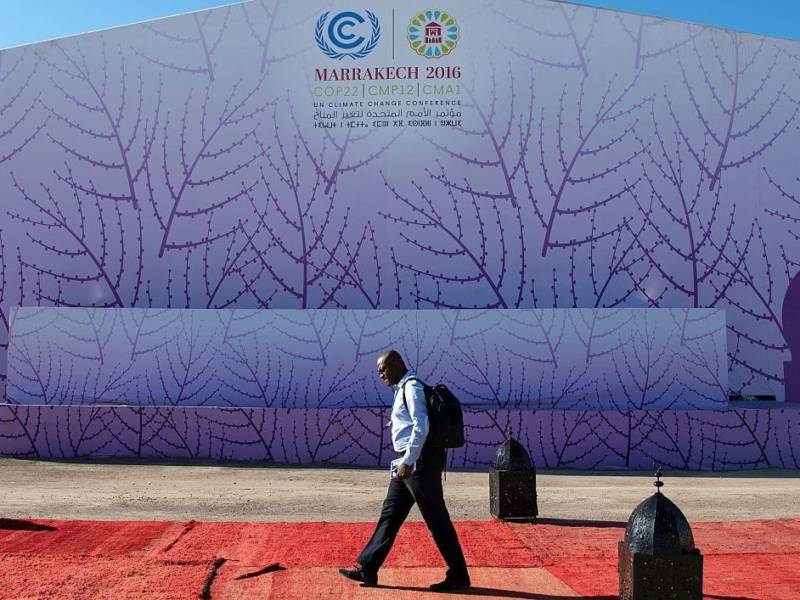
"caption": "A man walks past the logo of the COP22 international climate conference on Nov. 9 in Marrakech, Morocco.",
"description": null,
"title": "A man walks past the logo of the COP22 international climate conference on Nov. 9 in Marrakech, Morocco.",
"credit": "Fadel Senna /AFP/Getty Images",
"status": "inherit",
"isLoading": false,
"fetchFailed": false
},
"science_1164295": {
"type": "attachments",
"id": "science_1164295",
"meta": {
"index": "attachments_1716263798",
"site": "science",
"id": "1164295",
"found": true
},
"parent": 1164175,
"imgSizes": {
"small": {
"file": "https://ww2.kqed.org/app/uploads/sites/35/2016/11/Lake-Mead-web2-520x234.jpg",
"width": 520,
"mimeType": "image/jpeg",
"height": 234
},
"twentyfourteen-full-width": {
"file": "https://ww2.kqed.org/app/uploads/sites/35/2016/11/Lake-Mead-web2-1038x576.jpg",
"width": 1038,
"mimeType": "image/jpeg",
"height": 576
},
"thumbnail": {
"file": "https://ww2.kqed.org/app/uploads/sites/35/2016/11/Lake-Mead-web2-160x72.jpg",
"width": 160,
"mimeType": "image/jpeg",
"height": 72
},
"fd-sm": {
"file": "https://ww2.kqed.org/app/uploads/sites/35/2016/11/Lake-Mead-web2-960x432.jpg",
"width": 960,
"mimeType": "image/jpeg",
"height": 432
},
"post-thumbnail": {
"file": "https://ww2.kqed.org/app/uploads/sites/35/2016/11/Lake-Mead-web2-672x372.jpg",
"width": 672,
"mimeType": "image/jpeg",
"height": 372
},
"xsmall": {
"file": "https://ww2.kqed.org/app/uploads/sites/35/2016/11/Lake-Mead-web2-375x169.jpg",
"width": 375,
"mimeType": "image/jpeg",
"height": 169
},
"kqedFullSize": {
"file": "https://ww2.kqed.org/app/uploads/sites/35/2016/11/Lake-Mead-web2.jpg",
"width": 1920,
"height": 864
},
"large": {
"file": "https://ww2.kqed.org/app/uploads/sites/35/2016/11/Lake-Mead-web2-1020x459.jpg",
"width": 1020,
"mimeType": "image/jpeg",
"height": 459
},
"xlarge": {
"file": "https://ww2.kqed.org/app/uploads/sites/35/2016/11/Lake-Mead-web2-1180x531.jpg",
"width": 1180,
"mimeType": "image/jpeg",
"height": 531
},
"guest-author-50": {
"file": "https://ww2.kqed.org/app/uploads/sites/35/2016/11/Lake-Mead-web2-50x50.jpg",
"width": 50,
"mimeType": "image/jpeg",
"height": 50
},
"guest-author-96": {
"file": "https://ww2.kqed.org/app/uploads/sites/35/2016/11/Lake-Mead-web2-96x96.jpg",
"width": 96,
"mimeType": "image/jpeg",
"height": 96
},
"medium": {
"file": "https://ww2.kqed.org/app/uploads/sites/35/2016/11/Lake-Mead-web2-800x360.jpg",
"width": 800,
"mimeType": "image/jpeg",
"height": 360
},
"guest-author-64": {
"file": "https://ww2.kqed.org/app/uploads/sites/35/2016/11/Lake-Mead-web2-64x64.jpg",
"width": 64,
"mimeType": "image/jpeg",
"height": 64
},
"guest-author-32": {
"file": "https://ww2.kqed.org/app/uploads/sites/35/2016/11/Lake-Mead-web2-32x32.jpg",
"width": 32,
"mimeType": "image/jpeg",
"height": 32
},
"fd-lrg": {
"file": "https://ww2.kqed.org/app/uploads/sites/35/2016/11/Lake-Mead-web2-1920x864.jpg",
"width": 1920,
"mimeType": "image/jpeg",
"height": 864
},
"fd-med": {
"file": "https://ww2.kqed.org/app/uploads/sites/35/2016/11/Lake-Mead-web2-1180x531.jpg",
"width": 1180,
"mimeType": "image/jpeg",
"height": 531
},
"full-width": {
"file": "https://ww2.kqed.org/app/uploads/sites/35/2016/11/Lake-Mead-web2-1920x864.jpg",
"width": 1920,
"mimeType": "image/jpeg",
"height": 864
},
"detail": {
"file": "https://ww2.kqed.org/app/uploads/sites/35/2016/11/Lake-Mead-web2-150x150.jpg",
"width": 150,
"mimeType": "image/jpeg",
"height": 150
},
"medium_large": {
"file": "https://ww2.kqed.org/app/uploads/sites/35/2016/11/Lake-Mead-web2-768x346.jpg",
"width": 768,
"mimeType": "image/jpeg",
"height": 346
},
"guest-author-128": {
"file": "https://ww2.kqed.org/app/uploads/sites/35/2016/11/Lake-Mead-web2-128x128.jpg",
"width": 128,
"mimeType": "image/jpeg",
"height": 128
},
"xxsmall": {
"file": "https://ww2.kqed.org/app/uploads/sites/35/2016/11/Lake-Mead-web2-240x108.jpg",
"width": 240,
"mimeType": "image/jpeg",
"height": 108
}
},
"publishDate": 1479251943,
"modified": 1479251972,
"caption": "Lake Mead, the largest reservoir on the Colorado River, has hit record lows.",
"description": null,
"title": "lake-mead-web2",
"credit": "Justin Sullivan/Getty Images",
"status": "inherit",
"isLoading": false,
"fetchFailed": false
}
},
"audioPlayerReducer": {
"postId": "stream_live",
"isPaused": true,
"isPlaying": false,
"pfsActive": false,
"pledgeModalIsOpen": true,
"playerDrawerIsOpen": false,
"liveAudioPlayStartedAt": 0,
"liveAudioPlayContext": ""
},
"authorsReducer": {
"byline_science_1225624": {
"type": "authors",
"id": "byline_science_1225624",
"meta": {
"override": true
},
"slug": "byline_science_1225624",
"name": "John Upton\u003c/br>Climate Central",
"isLoading": false
},
"byline_science_1217792": {
"type": "authors",
"id": "byline_science_1217792",
"meta": {
"override": true
},
"slug": "byline_science_1217792",
"name": "Matt Weiser\u003c/br>Water Deeply",
"isLoading": false
},
"byline_science_1209626": {
"type": "authors",
"id": "byline_science_1209626",
"meta": {
"override": true
},
"slug": "byline_science_1209626",
"name": "Jay Lund\u003c/br>Water Deeply",
"isLoading": false
},
"byline_science_1201862": {
"type": "authors",
"id": "byline_science_1201862",
"meta": {
"override": true
},
"slug": "byline_science_1201862",
"name": "Terence Chea\u003c/br>Associated Press",
"isLoading": false
},
"byline_science_1199975": {
"type": "authors",
"id": "byline_science_1199975",
"meta": {
"override": true
},
"slug": "byline_science_1199975",
"name": "Bobby Magill\u003c/br>Climate Central",
"isLoading": false
},
"byline_science_1199408": {
"type": "authors",
"id": "byline_science_1199408",
"meta": {
"override": true
},
"slug": "byline_science_1199408",
"name": "Jane Braxton Little\u003c/br>Water Deeply",
"isLoading": false
},
"byline_science_1172127": {
"type": "authors",
"id": "byline_science_1172127",
"meta": {
"override": true
},
"slug": "byline_science_1172127",
"name": "KQED staff and wires",
"isLoading": false
},
"byline_science_1169162": {
"type": "authors",
"id": "byline_science_1169162",
"meta": {
"override": true
},
"slug": "byline_science_1169162",
"name": "Merrit Kennedy\u003c/br>NPR",
"isLoading": false
},
"byline_science_1164175": {
"type": "authors",
"id": "byline_science_1164175",
"meta": {
"override": true
},
"slug": "byline_science_1164175",
"name": "\u003ca href=\"https://ww2.kqed.org/science/author/laurensommer/\" target=\"_blank\">Lauren Sommer\u003c/a>, KQED and \u003ca href=\"http://www.cpr.org/news/profile/grace-hood\" target=\"_blank\">Grace Hood\u003c/a>, CPR",
"isLoading": false
},
"cmiller": {
"type": "authors",
"id": "221",
"meta": {
"index": "authors_1716337520",
"id": "221",
"found": true
},
"name": "Craig Miller",
"firstName": "Craig",
"lastName": "Miller",
"slug": "cmiller",
"email": "craig@voxterra.net",
"display_author_email": false,
"staff_mastheads": [
"science"
],
"title": "Editor Emeritus, Science",
"bio": "Craig is a former KQED Science editor, specializing in weather, climate, water & energy issues, with a little seismology thrown in just to shake things up. Prior to that, he launched and led the station's award-winning multimedia project, Climate Watch. Craig is also an accomplished writer/producer of television documentaries, with a focus on natural resource issues.",
"avatar": "https://secure.gravatar.com/avatar/b91661df645e001a9cafe0861fa685f9?s=600&d=blank&r=g",
"twitter": "voxterra",
"facebook": null,
"instagram": null,
"linkedin": null,
"sites": [
{
"site": "news",
"roles": [
"author"
]
},
{
"site": "futureofyou",
"roles": [
"editor"
]
},
{
"site": "stateofhealth",
"roles": [
"author"
]
},
{
"site": "science",
"roles": [
"editor"
]
},
{
"site": "quest",
"roles": [
"editor"
]
}
],
"headData": {
"title": "Craig Miller | KQED",
"description": "Editor Emeritus, Science",
"ogImgSrc": "https://secure.gravatar.com/avatar/b91661df645e001a9cafe0861fa685f9?s=600&d=blank&r=g",
"twImgSrc": "https://secure.gravatar.com/avatar/b91661df645e001a9cafe0861fa685f9?s=600&d=blank&r=g"
},
"isLoading": false,
"link": "/author/cmiller"
},
"laurensommer": {
"type": "authors",
"id": "239",
"meta": {
"index": "authors_1716337520",
"id": "239",
"found": true
},
"name": "Lauren Sommer",
"firstName": "Lauren",
"lastName": "Sommer",
"slug": "laurensommer",
"email": "lsommer@kqed.org",
"display_author_email": false,
"staff_mastheads": [],
"title": "KQED Contributor",
"bio": "Lauren is a radio reporter formerly covering environment, water, and energy for KQED Science. As part of her day job, she has scaled Sierra Nevada peaks, run from charging elephant seals, and desperately tried to get her sea legs - all in pursuit of good radio. Her work has appeared on Marketplace, Living on Earth, Science Friday and NPR's Morning Edition and All Things Considered. You can find her on Twitter at \u003ca href=\"https://twitter.com/lesommer\">@lesommer\u003c/a>.",
"avatar": "https://secure.gravatar.com/avatar/33aa3772bb86c6ad45b8aca6a238bbdf?s=600&d=blank&r=g",
"twitter": null,
"facebook": null,
"instagram": null,
"linkedin": null,
"sites": [
{
"site": "news",
"roles": [
"author"
]
},
{
"site": "science",
"roles": [
"editor",
"manage_content_types",
"manage_taxonomies"
]
},
{
"site": "quest",
"roles": [
"editor"
]
}
],
"headData": {
"title": "Lauren Sommer | KQED",
"description": "KQED Contributor",
"ogImgSrc": "https://secure.gravatar.com/avatar/33aa3772bb86c6ad45b8aca6a238bbdf?s=600&d=blank&r=g",
"twImgSrc": "https://secure.gravatar.com/avatar/33aa3772bb86c6ad45b8aca6a238bbdf?s=600&d=blank&r=g"
},
"isLoading": false,
"link": "/author/laurensommer"
}
},
"pagesReducer": {
"science_category_climate": {
"type": "terms",
"id": "science_31",
"meta": {
"index": "terms_1716263798",
"site": "science",
"id": "31",
"score": 11.061988
},
"featImg": null,
"name": "Climate",
"description": null,
"taxonomy": "category",
"headData": {
"twImgId": null,
"twTitle": null,
"ogTitle": null,
"ogImgId": null,
"twDescription": null,
"description": null,
"title": "Climate Archives | KQED Science",
"ogDescription": null
},
"ttid": 33,
"slug": "climate",
"isLoading": false,
"title": "Climate",
"pageMeta": {
"site": "science",
"WpPageTemplate": "page-topic-editorial",
"currentPage": 94
},
"blocks": [
{
"blockName": "kqed/post-list",
"attrs": {
"layout": "cardArticle2",
"query": "posts/science?category=climate",
"seeMore": false,
"paginated": true,
"page": 94
}
},
{
"blockName": "kqed/ad"
}
]
}
},
"pfsSessionReducer": {},
"postsReducer": {
"stream_live": {
"type": "live",
"id": "stream_live",
"audioUrl": "https://streams.kqed.org/kqedradio",
"title": "Live Stream",
"excerpt": "Live Stream information currently unavailable.",
"link": "/radio",
"featImg": "",
"label": {
"name": "KQED Live",
"link": "/"
}
},
"stream_kqedNewscast": {
"type": "posts",
"id": "stream_kqedNewscast",
"audioUrl": "https://www.kqed.org/.stream/anon/radio/RDnews/newscast.mp3?_=1",
"title": "KQED Newscast",
"featImg": "",
"label": {
"name": "88.5 FM",
"link": "/"
}
},
"science_1228567": {
"type": "posts",
"id": "science_1228567",
"meta": {
"index": "posts_1716263798",
"site": "science",
"id": "1228567",
"score": null,
"sort": [
1481531446000
]
},
"parent": 0,
"labelTerm": {
"site": "science"
},
"blocks": [],
"publishDate": 1481531446,
"format": "standard",
"title": "If Trump Rejects Paris Climate Treaty, Could California Sign On?",
"headTitle": "If Trump Rejects Paris Climate Treaty, Could California Sign On? | KQED",
"content": "\u003cp>With President-elect Trump’s pro-fossil fuel rhetoric and the future of the international climate treaty looking cloudy, some are hoping California will \u003ca href=\"https://ww2.kqed.org/science/2015/11/16/governor-brown-takes-climate-message-to-world-stage/\">take over leadership\u003c/a> on climate change.\u003c/p>\n\u003cp>And it appears the state’s leaders are ready to do so. On Wednesday, California Gov. Jerry Brown \u003ca href=\"https://ww2.kqed.org/news/2016/12/14/gov-brown-to-embattled-climate-scientists-we-will-persevere/\">told embattled climate scientists\u003c/a> at the American Geophysical Union conference in San Francisco that the state stands ready to lead the charge against climate change if Washington won’t.\u003c/p>\n\u003cp>“We will set the stage,” he said. “We will set the example. And whatever Washington thinks they’re doing, California is the future.”\u003c/p>\n\u003cp>Some are hoping the Governor will take it a step farther and are asking an unprecedented question: if the U.S. pulls out of the international climate treaty, as Trump has said he wants to, could California sign on to it?\u003c/p>\n\u003cp>[soundcloud url=”https://api.soundcloud.com/tracks/297756271″ params=”color=ff5500&auto_play=false&hide_related=false&show_comments=true&show_user=true&show_reposts=false” width=”100%” height=”166″ iframe=”true” /]\u003c/p>\n\u003cp>The idea came up when international leaders held their annual climate change meeting in Marrakesh just after Election Day in November. The goal was to put some teeth in the international treaty to cut carbon emissions, signed last year in Paris.\u003c/p>\n\u003caside class=\"pullquote alignright\">‘Lots of informal cooperation can actually be more important and more meaningful than the formal arrangements.’\u003cbr>\n\u003ccite>Michael Wara, Stanford Law School\u003c/cite>\u003c/aside>\n\u003cp>With Trump’s win, suddenly the US delegation didn’t have much to say. But California’s delegation did.\u003c/p>\n\u003cp>[ad fullwidth]\u003c/p>\n\u003cp>“California will not retreat,” said \u003ca href=\"http://sd24.senate.ca.gov/\" target=\"_blank\" rel=\"noopener\">Kevin de León\u003c/a>, president pro tempore of the California State Senate, speaking at the meeting. “California will continue to be a beacon of hope and opportunity for the entire world.”\u003c/p>\n\u003cp>As anxiety over the future of the climate treaty grew, de León said many countries sought meetings with California.\u003c/p>\n\u003cp>“There were a lot of nations and subnationals that were seeking a real sense of assurance that California will continue to move forward with its progressive climate change policy and leadership,” he said.\u003c/p>\n\u003cp>At which point, the international Paris treaty came up.\u003c/p>\n\u003cp>“It was a discussion point,” de León said. “The question was: Could the state of California be a direct party to the Paris accords through the United Nations? There are folks out there who are trying to see if this is legally possible. “\u003c/p>\n\u003cp>At the meeting, de León said “we’re not there yet but that’s always an option I want to keep open.”\u003c/p>\n\u003cp>So, would it work?\u003c/p>\n\u003cp>“The short answer is no,” said Michael Wara of Stanford Law School.\u003c/p>\n\u003cp>[contextly_sidebar id=”R0r5L01NGCGTa58nmK47E7nioSoowDRF”]The central reason is that the authors of the Constitution didn’t leave a lot of wiggle room.\u003c/p>\n\u003cp>“They were very careful to ensure that the federal government and the president in particular would have sole authority to conduct foreign affairs,” he said.\u003c/p>\n\u003cp>California has tested this before. In 1999, the state passed a law requiring European insurance companies disclose the names of people who signed up for policies before World War II. Families of Holocaust survivors were having trouble collecting insurance because the paperwork had been lost or destroyed in the war.\u003c/p>\n\u003cp>The California law revoked the licenses of foreign insurance companies that didn’t comply. At the same time, the federal government was holding its own negotiations on the matter.\u003c/p>\n\u003cp>In the end, the Supreme Court struck down California’s law, finding that “there shouldn’t be two foreign policies,” Wara said.\u003c/p>\n\u003cp>“That hasn’t mattered until now when it comes to climate,” he said. “The Obama Administration has loved the fact that California is out as leader, trying to advance its own agenda, sort of acting like a nation state. But we don’t live in that world anymore.”\u003c/p>\n\u003cp>The other reason California probably couldn’t sign on to the treaty comes from international law, according to Wara.\u003c/p>\n\u003cp>“Only nation-states can be parties to international agreements and only members to the UN Framework Convention on Climate Change can be members of the Paris agreement,” he says. “And California is not a member.”\u003c/p>\n\u003cp>Still, Wara says signing the treaty may not matter, because California has adopted it in practice.\u003c/p>\n\u003cp>“California has set objectives for itself that are far more aggressive than the U.S. commitments under the Paris agreement,” he said.\u003c/p>\n\u003cp>The state has an ambitious climate goal to slash emissions by 2030 through cleaner cars, renewable energy and its \u003ca href=\"https://ww2.kqed.org/quest/2012/11/09/cap-and-trade-101-how-californias-carbon-market-works/\" target=\"_blank\" rel=\"noopener\">cap-and-trade program\u003c/a>, which regulates power plants and manufacturers.\u003c/p>\n\u003cp>Governor Brown has also launched his own climate movement, known as the \u003ca href=\"http://under2mou.org/\" target=\"_blank\" rel=\"noopener\">Under2 MOU\u003c/a>, where the state has signed agreements to cut carbon emissions with more than 100 city and regional governments worldwide.\u003c/p>\n\u003cp>\u003c/p>\n\u003cp>“Lots of informal cooperation can actually be more important and more meaningful than the formal arrangements,” Wara said.\u003c/p>\n\n",
"stats": {
"hasVideo": false,
"hasChartOrMap": false,
"hasAudio": false,
"hasPolis": false,
"wordCount": 873,
"hasGoogleForm": false,
"hasGallery": false,
"hasHearkenModule": false,
"iframeSrcs": [],
"paragraphCount": 30
},
"modified": 1704929313,
"excerpt": "Some want to see California take the lead on climate change, stepping in for the Trump Administration on the international stage.",
"headData": {
"twImgId": "",
"twTitle": "",
"ogTitle": "",
"ogImgId": "",
"twDescription": "",
"description": "Some want to see California take the lead on climate change, stepping in for the Trump Administration on the international stage.",
"title": "If Trump Rejects Paris Climate Treaty, Could California Sign On? | KQED",
"ogDescription": "",
"schema": {
"@context": "https://schema.org",
"@type": "Article",
"headline": "If Trump Rejects Paris Climate Treaty, Could California Sign On?",
"datePublished": "2016-12-12T00:30:46-08:00",
"dateModified": "2024-01-10T15:28:33-08:00",
"image": "https://cdn.kqed.org/wp-content/uploads/2020/02/KQED-OG-Image@1x.png"
}
},
"guestAuthors": [],
"slug": "if-trump-wont-can-california-sign-the-international-climate-treaty",
"status": "publish",
"sticky": false,
"path": "/science/1228567/if-trump-wont-can-california-sign-the-international-climate-treaty",
"audioTrackLength": null,
"parsedContent": [
{
"type": "contentString",
"content": "\u003cdiv class=\"post-body\">\u003cp>\u003cp>With President-elect Trump’s pro-fossil fuel rhetoric and the future of the international climate treaty looking cloudy, some are hoping California will \u003ca href=\"https://ww2.kqed.org/science/2015/11/16/governor-brown-takes-climate-message-to-world-stage/\">take over leadership\u003c/a> on climate change.\u003c/p>\n\u003cp>And it appears the state’s leaders are ready to do so. On Wednesday, California Gov. Jerry Brown \u003ca href=\"https://ww2.kqed.org/news/2016/12/14/gov-brown-to-embattled-climate-scientists-we-will-persevere/\">told embattled climate scientists\u003c/a> at the American Geophysical Union conference in San Francisco that the state stands ready to lead the charge against climate change if Washington won’t.\u003c/p>\n\u003cp>“We will set the stage,” he said. “We will set the example. And whatever Washington thinks they’re doing, California is the future.”\u003c/p>\n\u003cp>Some are hoping the Governor will take it a step farther and are asking an unprecedented question: if the U.S. pulls out of the international climate treaty, as Trump has said he wants to, could California sign on to it?\u003c/p>\n\u003cp>\u003c/p>\u003cp>\u003cdiv class='utils-parseShortcode-shortcodes-__shortcodes__shortcodeWrapper'>\n \u003ciframe width='”100%”' height='”166″'\n scrolling='no' frameborder='no'\n src='https://w.soundcloud.com/player/?url=”https://api.soundcloud.com/tracks/297756271″&visual=true&”color=ff5500&auto_play=false&hide_related=false&show_comments=true&show_user=true&show_reposts=false”'\n title='”https://api.soundcloud.com/tracks/297756271″'>\n \u003c/iframe>\n \u003c/div>\u003c/p>\u003cp>\u003c/p>\n\u003cp>The idea came up when international leaders held their annual climate change meeting in Marrakesh just after Election Day in November. The goal was to put some teeth in the international treaty to cut carbon emissions, signed last year in Paris.\u003c/p>\n\u003caside class=\"pullquote alignright\">‘Lots of informal cooperation can actually be more important and more meaningful than the formal arrangements.’\u003cbr>\n\u003ccite>Michael Wara, Stanford Law School\u003c/cite>\u003c/aside>\n\u003cp>With Trump’s win, suddenly the US delegation didn’t have much to say. But California’s delegation did.\u003c/p>\n\u003cp>\u003c/p>\u003c/div>",
"attributes": {
"named": {},
"numeric": []
}
},
{
"type": "component",
"content": "",
"name": "ad",
"attributes": {
"named": {
"label": "fullwidth"
},
"numeric": [
"fullwidth"
]
}
},
{
"type": "contentString",
"content": "\u003cdiv class=\"post-body\">\u003cp>\u003c/p>\n\u003cp>“California will not retreat,” said \u003ca href=\"http://sd24.senate.ca.gov/\" target=\"_blank\" rel=\"noopener\">Kevin de León\u003c/a>, president pro tempore of the California State Senate, speaking at the meeting. “California will continue to be a beacon of hope and opportunity for the entire world.”\u003c/p>\n\u003cp>As anxiety over the future of the climate treaty grew, de León said many countries sought meetings with California.\u003c/p>\n\u003cp>“There were a lot of nations and subnationals that were seeking a real sense of assurance that California will continue to move forward with its progressive climate change policy and leadership,” he said.\u003c/p>\n\u003cp>At which point, the international Paris treaty came up.\u003c/p>\n\u003cp>“It was a discussion point,” de León said. “The question was: Could the state of California be a direct party to the Paris accords through the United Nations? There are folks out there who are trying to see if this is legally possible. “\u003c/p>\n\u003cp>At the meeting, de León said “we’re not there yet but that’s always an option I want to keep open.”\u003c/p>\n\u003cp>So, would it work?\u003c/p>\n\u003cp>“The short answer is no,” said Michael Wara of Stanford Law School.\u003c/p>\n\u003cp>\u003c/p>\u003cp>\u003c/p>\u003cp>The central reason is that the authors of the Constitution didn’t leave a lot of wiggle room.\u003c/p>\n\u003cp>“They were very careful to ensure that the federal government and the president in particular would have sole authority to conduct foreign affairs,” he said.\u003c/p>\n\u003cp>California has tested this before. In 1999, the state passed a law requiring European insurance companies disclose the names of people who signed up for policies before World War II. Families of Holocaust survivors were having trouble collecting insurance because the paperwork had been lost or destroyed in the war.\u003c/p>\n\u003cp>The California law revoked the licenses of foreign insurance companies that didn’t comply. At the same time, the federal government was holding its own negotiations on the matter.\u003c/p>\n\u003cp>In the end, the Supreme Court struck down California’s law, finding that “there shouldn’t be two foreign policies,” Wara said.\u003c/p>\n\u003cp>“That hasn’t mattered until now when it comes to climate,” he said. “The Obama Administration has loved the fact that California is out as leader, trying to advance its own agenda, sort of acting like a nation state. But we don’t live in that world anymore.”\u003c/p>\n\u003cp>The other reason California probably couldn’t sign on to the treaty comes from international law, according to Wara.\u003c/p>\n\u003cp>“Only nation-states can be parties to international agreements and only members to the UN Framework Convention on Climate Change can be members of the Paris agreement,” he says. “And California is not a member.”\u003c/p>\n\u003cp>Still, Wara says signing the treaty may not matter, because California has adopted it in practice.\u003c/p>\n\u003cp>“California has set objectives for itself that are far more aggressive than the U.S. commitments under the Paris agreement,” he said.\u003c/p>\n\u003cp>The state has an ambitious climate goal to slash emissions by 2030 through cleaner cars, renewable energy and its \u003ca href=\"https://ww2.kqed.org/quest/2012/11/09/cap-and-trade-101-how-californias-carbon-market-works/\" target=\"_blank\" rel=\"noopener\">cap-and-trade program\u003c/a>, which regulates power plants and manufacturers.\u003c/p>\n\u003cp>Governor Brown has also launched his own climate movement, known as the \u003ca href=\"http://under2mou.org/\" target=\"_blank\" rel=\"noopener\">Under2 MOU\u003c/a>, where the state has signed agreements to cut carbon emissions with more than 100 city and regional governments worldwide.\u003c/p>\n\u003cp>\u003c/p>\n\u003cp>“Lots of informal cooperation can actually be more important and more meaningful than the formal arrangements,” Wara said.\u003c/p>\n\n\u003c/div>\u003c/p>",
"attributes": {
"named": {},
"numeric": []
}
}
],
"link": "/science/1228567/if-trump-wont-can-california-sign-the-international-climate-treaty",
"authors": [
"239"
],
"categories": [
"science_31",
"science_35",
"science_40"
],
"tags": [
"science_182",
"science_101"
],
"featImg": "science_1254768",
"label": "science"
},
"science_1225624": {
"type": "posts",
"id": "science_1225624",
"meta": {
"index": "posts_1716263798",
"site": "science",
"id": "1225624",
"score": null,
"sort": [
1481225258000
]
},
"parent": 0,
"labelTerm": {},
"blocks": [],
"publishDate": 1481225258,
"format": "standard",
"title": "Democrats’ Domination May Save California Climate Program",
"headTitle": "Democrats’ Domination May Save California Climate Program | KQED",
"content": "\u003cp>As Democrats in Congress confront the specter of watching as the country’s climate policies are dismantled by President-elect Trump, key gains by the party in California could help Sacramento take over as the nation’s leader in the fight against global warming.\u003c/p>\n\u003cp>With a Democrat last week \u003ca href=\"http://www.latimes.com/politics/essential/la-pol-ca-essential-politics-updates-democrats-nab-a-supermajority-after-1480383488-htmlstory.html\">securing the final seat\u003c/a> in the state senate, the party held onto its supermajority there. It also expanded its majority in the Assembly beyond the two-thirds supermajority threshold.\u003c/p>\n\u003caside class=\"pullquote alignright\">California Democrats will try to use their supermajorities to extend cap-and-trade beyond 2020.\u003c/aside>\n\u003cp>Those supermajorities may prove pivotal for climate policy in a high-profile state — one with the nation’s largest population, which releases more greenhouse gas pollution overall every year than any other. California is home to one of the world’s biggest economies, it’s an influential leader globally on climate policy, and it recently adopted some of the most ambitious goals for slowing warming.\u003c/p>\n\u003cp>Trump’s cabinet nominees, his anti-climate campaign rhetoric and Republican opposition to environmental rules suggest federal climate legislation and regulations could be eviscerated by the new White House and Congress. Meanwhile, Golden State Democrats will be trying to use their supermajorities to extend an imperilled landmark climate program — called cap-and-trade — beyond 2020.\u003c/p>\n\u003cp>Such an extension would almost certainly require two-thirds lawmaker approval in the state assembly and senate. That’s because lawmaking rules in California are different for taxes and fees than for other kinds of bills, which can be passed with simple majority votes.\u003c/p>\n\u003cp>[ad fullwidth]\u003c/p>\n\u003cp>“California is headed in a very different direction than the rest of the country,” said \u003ca href=\"http://www.spur.org/about/staff/gabriel-metcalf\">Gabriel Metcalf\u003c/a>, president of San Francisco-based think tank SPUR. “The importance of California’s climate strategy is not just that it’s a big state with a big population. It’s also that it will be something that the rest of the country is paying attention to.”\u003c/p>\n\u003cp>\u003cimg loading=\"lazy\" decoding=\"async\" class=\"aligncenter size-full wp-image-1225742\" src=\"http://ww2.kqed.org/science/wp-content/uploads/sites/35/2016/12/markets_chart_update_CC.jpg\" alt=\"markets_chart_update_cc\" width=\"720\" height=\"492\" srcset=\"https://cdn.kqed.org/wp-content/uploads/sites/35/2016/12/markets_chart_update_CC.jpg 720w, https://cdn.kqed.org/wp-content/uploads/sites/35/2016/12/markets_chart_update_CC-160x109.jpg 160w, https://cdn.kqed.org/wp-content/uploads/sites/35/2016/12/markets_chart_update_CC-240x164.jpg 240w, https://cdn.kqed.org/wp-content/uploads/sites/35/2016/12/markets_chart_update_CC-375x256.jpg 375w, https://cdn.kqed.org/wp-content/uploads/sites/35/2016/12/markets_chart_update_CC-520x355.jpg 520w\" sizes=\"(max-width: 720px) 100vw, 720px\">Although it’s just a few years old, California operates the world’s second biggest cap-and-trade program (the European Union’s is bigger). Permits that are needed to pollute the atmosphere with greenhouse gases are called allowances. They’re purchased by Californian power plants, oil refineries and factories and traded by financial speculators, \u003ca href=\"http://www.climatecentral.org/news/carbon-pricing-pays-way-for-cleaner-energy-18691\">raising hundreds of millions of dollars\u003c/a> yearly for green projects while capping pollution.\u003c/p>\n\u003cp>Similar \u003ca href=\"http://www.climatecentral.org/news/paris-pact-promotes-but-complicates-carbon-trading-20058\">cap-and-trade programs\u003c/a> are operated by China, South Korea, New Zealand, a coalition of East Coast states and elsewhere. Instead of operating cap-and-trade programs, British Columbia and some other governments \u003ca href=\"http://www.nytimes.com/2016/03/02/business/does-a-carbon-tax-work-ask-british-columbia.html?_r=0\">impose taxes\u003c/a> on greenhouse gas pollution.\u003c/p>\n\u003cp>Pollution from fossil fuels, farms and deforestation has increased temperatures nearly 2°F (about 1°C) and raised sea levels more than half a foot in the past two centuries. Americans overall have caused \u003ca href=\"http://www.wri.org/blog/2014/11/6-graphs-explain-world%E2%80%99s-top-10-emitters\">about one sixth\u003c/a> of that pollution — about the same as China.\u003c/p>\n\u003cp>Global warming has \u003ca href=\"http://www.climatecentral.org/news/heat-turbocharged-californias-epic-drought-18404\">worsened California’s drought\u003c/a> and it’s \u003ca href=\"http://www.climatecentral.org/news/climate-change-behind-surge-western-wildfires-20775\">fueling wildfires\u003c/a> throughout the West. Climate change made deadly \u003ca href=\"http://www.climatecentral.org/news/louisiana-floods-directly-linked-to-climate-change-20671\">late summer flooding\u003c/a> in Louisiana more intense and it routinely \u003ca href=\"http://www.climatecentral.org/news/the-human-fingerprints-on-coastal-floods-20050\">triggers coastal floods\u003c/a> during high tides along the East Coast.\u003c/p>\n\u003cp>States have less influence in the fight against global warming than the federal government, but California’s cap-and-trade program is pioneering and could continue to serve as a model for other governments. Other states can join the program — Quebec joined in 2014, saving it the time and expense of creating and running a new program.\u003c/p>\n\u003cp>And legal experts say the only way California lawmakers could extend cap-and-trade after 2020 would be with \u003ca href=\"http://www.climatecentral.org/news/legal-doubts-over-californias-cap-and-trade-20607\">supermajority votes\u003c/a>. Although state officials and some environmentalists have argued that’s not necessary, they acknowledge that supermajority votes would protect the program from lawsuits. Those votes proved unattainable this year, leading to speculation the program will perish. A ballot measure may be introduced if lawmaker approval remains elusive.\u003c/p>\n\u003cp>As elsewhere, prices paid for pollution allowances in California have been so low as to be nearly negligible. Prices in California may quickly spike, however, if the program gets extended beyond 2020. That would put California’s cap-and-trade program to a globally unprecedented test.\u003c/p>\n\u003cp>With Democrats in Sacramento generally supporting aggressive climate action and their opponents generally opposing it, the November boost to the party’s legislative domination made it more likely that cap-and-trade will continue operating beyond 2020. But it’s not guaranteed.\u003c/p>\n\u003cp>Gov. Jerry Brown this week told reporters that it can be “very challenging” to take advantage of supermajorities. That could be particularly true in California, which is a diverse and deeply blue state in which Democrats representing some regions are far more conservative or liberal than others.\u003c/p>\n\u003cp>And not all Democrats in California support cap-and trade. Some have opposed it, skeptical of its economic impacts. Other Democratic lawmakers represent low-income neighborhoods where industrial air pollution could get worse if the current program isn’t substantially tweaked.\u003c/p>\n\u003cp>“There are many difficult policy tradeoffs that we face, and lots of disagreements within the Democratic party,” Metcalf said. “At least we all agree that climate change is an urgent problem that needs solving.”\u003c/p>\n\u003cp>Rising temperatures and seas and falling prices for clean solar and wind energy have spurred a global consensus on the urgency of climate action, \u003ca href=\"http://www.climatecentral.org/news/world-unites-delivers-hopeful-climate-deal-19808\">culminating in Paris in December\u003c/a> with finalization of a United Nations climate treaty. Global carbon dioxide emissions may have leveled off in recent years, but they must fall sharply in the years ahead if the treaty’s goals of limiting warming to well below 3.6°F (2°C) can be achieved.\u003c/p>\n\u003cp>President Obama championed the Paris climate agreement, pledging that America would reduce its climate impacts by about a quarter by 2025 compared with 2005. He joined with China in urging other countries to ambitiously tackle their own emissions.\u003c/p>\n\u003cp>The global consensus on climate that Obama helped to build was shattered last month by the election of Trump, a businessman who campaigned on his opposition to climate action and the Paris agreement. Trump is moving quickly to assemble a cabinet and a White House dominated by climate science deniers and opponents of environmental regulations.\u003c/p>\n\u003cp>America’s looming U-turn on climate policy has experts looking hopefully to states and other national governments for leadership.\u003c/p>\n\u003cp>“California is in a good position, in that a large majority of the public is very supportive of climate action,” said \u003ca href=\"https://www.edf.org/people/erica-morehouse\">Erica Morehouse\u003c/a>, a senior attorney at the nonprofit Environmental Defense Fund. “We’re going to be looking to all of the members of the legislature to meet that need.”\u003c/p>\n\u003cp>The challenges for cap-and-trade in California aren’t just political. A lawsuit against the program was filed by the California Chamber of Commerce, which argues that the program imposes illegal taxes. Oral arguments have been \u003ca href=\"http://www.evomarkets.com/pdf_documents/evo/ca_chamber_lawsuit_hearings_set.pdf\">scheduled by an appeals court\u003c/a> for late January.\u003c/p>\n\u003cp>Large corporations, Republicans and conservative-leaning Democrats haven’t been the only groups in California speaking out against the cap-and-trade program. Groups representing low-income communities of color who live near power plants and other industrial facilities are also worried by some of the utility-friendly rules of the program.\u003c/p>\n\u003cp>“There are a lot of shortcomings with the current system,” said \u003ca href=\"http://greenlining.org/about-greenlining/our-team/\">Alvaro Sanchez\u003c/a>, environmental equity director at the nonprofit Greenlining Institute.\u003c/p>\n\u003cp>Sanchez said he hopes Democrats take advantage of their supermajorities to extend cap-and-trade, but that concerns about the program must be addressed before his group could support legislation.\u003c/p>\n\u003cp>The current cap-and-trade program has allowed air pollution to worsen in some poor neighborhoods, sickening residents. It’s also difficult for those communities to navigate the paperwork needed to secure funding for local clean energy, workforce development and transportation projects using cap-and-trade funds.\u003c/p>\n\u003cp>“I’m excited, I feel like we have the tools at our disposal to be able to advance something that would take advantage of that supermajority,” Sanchez said. “If an extension is proposed that does nothing to address those concerns, it would be really difficult to support.”\u003c/p>\n\u003cp>California’s cap-and-trade program has had little impact on the state’s greenhouse gas emissions so far. That’s because other state programs and rules, such as rules requiring utilities to sell certain amounts of green energy, have done most of the work in helping the state achieve its goals of reducing climate pollution.\u003c/p>\n\u003cp>Despite the cap-and-trade program, some Californian power plants have actually been \u003ca href=\"http://dornsife.usc.edu/PERE/enviro-equity-CA-cap-trade\">increasing the amount of pollution\u003c/a> they release in recent years, partly because utilities have been importing clean energy from other states to meet targets.\u003c/p>\n\u003cp>That may change after 2020, when California begins pursuing more aggressive pollution reduction goals than nearly any other state or nation worldwide. Lawmakers in August \u003ca href=\"http://www.climatecentral.org/news/californias-new-climate-rules-explained-20639\">approved a law\u003c/a> requiring the state to pursue a 40 percent reduction in greenhouse gas emissions by 2030, compared with 1990 levels. Emissions in 2020 are required to return to 1990 levels.\u003c/p>\n\u003cp>“An effective cap-and-trade program in California is more important than ever,” said Harvard economics professor \u003ca href=\"http://scholar.harvard.edu/stavins/home\">Robert Stavins\u003c/a>, who directs the Harvard Project on Climate Agreements. “It’s crucial that California increases its reliance on its cap-and-trade system, rather than relying on conventional regulatory approaches, which are much more costly.”\u003c/p>\n\u003cp>The new rules will make it more difficult for utilities and other polluters to stay under the state’s carbon cap, which could cause demand for dwindling supplies of pollution allowances available each year to spike. That may push Californian cap-and-trade prices to levels never seen anywhere in the world. If that risks causing an economic shock, the governor has the power to suspend cap-and-trade.\u003c/p>\n\u003cp>“It’s reasonable to expect very high carbon prices in the near term once there is legal certainty about what’s going to happen in California,” said Stanford energy and environmental law expert \u003ca href=\"https://law.stanford.edu/directory/michael-wara/\">Michael Wara\u003c/a>.\u003c/p>\n\u003cp>Wara said such high carbon prices would be felt by consumers, such as through higher electricity bills and more expensive gas prices. That could reduce lawmaker and public support for cap-and-trade.\u003c/p>\n\u003cp>Easing those financial impacts may require finding new ways of reimbursing consumers. Revenues from cap-and-trade are currently used to reduce electricity bills and to fund high-speed rail and other green projects.\u003c/p>\n\u003cp>“There’s a general belief that’s about to be tested in California that people won’t tolerate high carbon prices,” Wara said. “You’d better have some way of putting money in people’s hands to offset that change — and it has to be a way that people feel and notice.”\u003c/p>\n\u003cp>[ad floatright]\u003c/p>\n\u003cp>\u003ca href=\"http://www.climatecentral.org/\">\u003cspan style=\"font-weight: 400\">Climate Central\u003c/span>\u003c/a> \u003ci>\u003cspan style=\"font-weight: 400\">is an independent organization that researches and reports on climate change.\u003c/span>\u003c/i>\u003c/p>\n\n",
"stats": {
"hasVideo": false,
"hasChartOrMap": false,
"hasAudio": false,
"hasPolis": false,
"wordCount": 1855,
"hasGoogleForm": false,
"hasGallery": false,
"hasHearkenModule": false,
"iframeSrcs": [],
"paragraphCount": 40
},
"modified": 1704929322,
"excerpt": "Gains by California Democrats may see Sacramento take over from Washington as the climate leader in the U.S.",
"headData": {
"twImgId": "",
"twTitle": "",
"ogTitle": "",
"ogImgId": "",
"twDescription": "",
"description": "Gains by California Democrats may see Sacramento take over from Washington as the climate leader in the U.S.",
"title": "Democrats’ Domination May Save California Climate Program | KQED",
"ogDescription": "",
"schema": {
"@context": "https://schema.org",
"@type": "Article",
"headline": "Democrats’ Domination May Save California Climate Program",
"datePublished": "2016-12-08T11:27:38-08:00",
"dateModified": "2024-01-10T15:28:42-08:00",
"image": "https://cdn.kqed.org/wp-content/uploads/2020/02/KQED-OG-Image@1x.png"
}
},
"guestAuthors": [],
"slug": "democrats-domination-may-save-california-climate-program",
"status": "publish",
"sourceUrl": "http://www.climatecentral.org/",
"nprByline": "John Upton\u003c/br>Climate Central",
"sticky": false,
"source": "Climate Central",
"path": "/science/1225624/democrats-domination-may-save-california-climate-program",
"audioTrackLength": null,
"parsedContent": [
{
"type": "contentString",
"content": "\u003cdiv class=\"post-body\">\u003cp>\u003cp>As Democrats in Congress confront the specter of watching as the country’s climate policies are dismantled by President-elect Trump, key gains by the party in California could help Sacramento take over as the nation’s leader in the fight against global warming.\u003c/p>\n\u003cp>With a Democrat last week \u003ca href=\"http://www.latimes.com/politics/essential/la-pol-ca-essential-politics-updates-democrats-nab-a-supermajority-after-1480383488-htmlstory.html\">securing the final seat\u003c/a> in the state senate, the party held onto its supermajority there. It also expanded its majority in the Assembly beyond the two-thirds supermajority threshold.\u003c/p>\n\u003caside class=\"pullquote alignright\">California Democrats will try to use their supermajorities to extend cap-and-trade beyond 2020.\u003c/aside>\n\u003cp>Those supermajorities may prove pivotal for climate policy in a high-profile state — one with the nation’s largest population, which releases more greenhouse gas pollution overall every year than any other. California is home to one of the world’s biggest economies, it’s an influential leader globally on climate policy, and it recently adopted some of the most ambitious goals for slowing warming.\u003c/p>\n\u003cp>Trump’s cabinet nominees, his anti-climate campaign rhetoric and Republican opposition to environmental rules suggest federal climate legislation and regulations could be eviscerated by the new White House and Congress. Meanwhile, Golden State Democrats will be trying to use their supermajorities to extend an imperilled landmark climate program — called cap-and-trade — beyond 2020.\u003c/p>\n\u003cp>Such an extension would almost certainly require two-thirds lawmaker approval in the state assembly and senate. That’s because lawmaking rules in California are different for taxes and fees than for other kinds of bills, which can be passed with simple majority votes.\u003c/p>\n\u003cp>\u003c/p>\u003c/div>",
"attributes": {
"named": {},
"numeric": []
}
},
{
"type": "component",
"content": "",
"name": "ad",
"attributes": {
"named": {
"label": "fullwidth"
},
"numeric": [
"fullwidth"
]
}
},
{
"type": "contentString",
"content": "\u003cdiv class=\"post-body\">\u003cp>\u003c/p>\n\u003cp>“California is headed in a very different direction than the rest of the country,” said \u003ca href=\"http://www.spur.org/about/staff/gabriel-metcalf\">Gabriel Metcalf\u003c/a>, president of San Francisco-based think tank SPUR. “The importance of California’s climate strategy is not just that it’s a big state with a big population. It’s also that it will be something that the rest of the country is paying attention to.”\u003c/p>\n\u003cp>\u003cimg loading=\"lazy\" decoding=\"async\" class=\"aligncenter size-full wp-image-1225742\" src=\"http://ww2.kqed.org/science/wp-content/uploads/sites/35/2016/12/markets_chart_update_CC.jpg\" alt=\"markets_chart_update_cc\" width=\"720\" height=\"492\" srcset=\"https://cdn.kqed.org/wp-content/uploads/sites/35/2016/12/markets_chart_update_CC.jpg 720w, https://cdn.kqed.org/wp-content/uploads/sites/35/2016/12/markets_chart_update_CC-160x109.jpg 160w, https://cdn.kqed.org/wp-content/uploads/sites/35/2016/12/markets_chart_update_CC-240x164.jpg 240w, https://cdn.kqed.org/wp-content/uploads/sites/35/2016/12/markets_chart_update_CC-375x256.jpg 375w, https://cdn.kqed.org/wp-content/uploads/sites/35/2016/12/markets_chart_update_CC-520x355.jpg 520w\" sizes=\"(max-width: 720px) 100vw, 720px\">Although it’s just a few years old, California operates the world’s second biggest cap-and-trade program (the European Union’s is bigger). Permits that are needed to pollute the atmosphere with greenhouse gases are called allowances. They’re purchased by Californian power plants, oil refineries and factories and traded by financial speculators, \u003ca href=\"http://www.climatecentral.org/news/carbon-pricing-pays-way-for-cleaner-energy-18691\">raising hundreds of millions of dollars\u003c/a> yearly for green projects while capping pollution.\u003c/p>\n\u003cp>Similar \u003ca href=\"http://www.climatecentral.org/news/paris-pact-promotes-but-complicates-carbon-trading-20058\">cap-and-trade programs\u003c/a> are operated by China, South Korea, New Zealand, a coalition of East Coast states and elsewhere. Instead of operating cap-and-trade programs, British Columbia and some other governments \u003ca href=\"http://www.nytimes.com/2016/03/02/business/does-a-carbon-tax-work-ask-british-columbia.html?_r=0\">impose taxes\u003c/a> on greenhouse gas pollution.\u003c/p>\n\u003cp>Pollution from fossil fuels, farms and deforestation has increased temperatures nearly 2°F (about 1°C) and raised sea levels more than half a foot in the past two centuries. Americans overall have caused \u003ca href=\"http://www.wri.org/blog/2014/11/6-graphs-explain-world%E2%80%99s-top-10-emitters\">about one sixth\u003c/a> of that pollution — about the same as China.\u003c/p>\n\u003cp>Global warming has \u003ca href=\"http://www.climatecentral.org/news/heat-turbocharged-californias-epic-drought-18404\">worsened California’s drought\u003c/a> and it’s \u003ca href=\"http://www.climatecentral.org/news/climate-change-behind-surge-western-wildfires-20775\">fueling wildfires\u003c/a> throughout the West. Climate change made deadly \u003ca href=\"http://www.climatecentral.org/news/louisiana-floods-directly-linked-to-climate-change-20671\">late summer flooding\u003c/a> in Louisiana more intense and it routinely \u003ca href=\"http://www.climatecentral.org/news/the-human-fingerprints-on-coastal-floods-20050\">triggers coastal floods\u003c/a> during high tides along the East Coast.\u003c/p>\n\u003cp>States have less influence in the fight against global warming than the federal government, but California’s cap-and-trade program is pioneering and could continue to serve as a model for other governments. Other states can join the program — Quebec joined in 2014, saving it the time and expense of creating and running a new program.\u003c/p>\n\u003cp>And legal experts say the only way California lawmakers could extend cap-and-trade after 2020 would be with \u003ca href=\"http://www.climatecentral.org/news/legal-doubts-over-californias-cap-and-trade-20607\">supermajority votes\u003c/a>. Although state officials and some environmentalists have argued that’s not necessary, they acknowledge that supermajority votes would protect the program from lawsuits. Those votes proved unattainable this year, leading to speculation the program will perish. A ballot measure may be introduced if lawmaker approval remains elusive.\u003c/p>\n\u003cp>As elsewhere, prices paid for pollution allowances in California have been so low as to be nearly negligible. Prices in California may quickly spike, however, if the program gets extended beyond 2020. That would put California’s cap-and-trade program to a globally unprecedented test.\u003c/p>\n\u003cp>With Democrats in Sacramento generally supporting aggressive climate action and their opponents generally opposing it, the November boost to the party’s legislative domination made it more likely that cap-and-trade will continue operating beyond 2020. But it’s not guaranteed.\u003c/p>\n\u003cp>Gov. Jerry Brown this week told reporters that it can be “very challenging” to take advantage of supermajorities. That could be particularly true in California, which is a diverse and deeply blue state in which Democrats representing some regions are far more conservative or liberal than others.\u003c/p>\n\u003cp>And not all Democrats in California support cap-and trade. Some have opposed it, skeptical of its economic impacts. Other Democratic lawmakers represent low-income neighborhoods where industrial air pollution could get worse if the current program isn’t substantially tweaked.\u003c/p>\n\u003cp>“There are many difficult policy tradeoffs that we face, and lots of disagreements within the Democratic party,” Metcalf said. “At least we all agree that climate change is an urgent problem that needs solving.”\u003c/p>\n\u003cp>Rising temperatures and seas and falling prices for clean solar and wind energy have spurred a global consensus on the urgency of climate action, \u003ca href=\"http://www.climatecentral.org/news/world-unites-delivers-hopeful-climate-deal-19808\">culminating in Paris in December\u003c/a> with finalization of a United Nations climate treaty. Global carbon dioxide emissions may have leveled off in recent years, but they must fall sharply in the years ahead if the treaty’s goals of limiting warming to well below 3.6°F (2°C) can be achieved.\u003c/p>\n\u003cp>President Obama championed the Paris climate agreement, pledging that America would reduce its climate impacts by about a quarter by 2025 compared with 2005. He joined with China in urging other countries to ambitiously tackle their own emissions.\u003c/p>\n\u003cp>The global consensus on climate that Obama helped to build was shattered last month by the election of Trump, a businessman who campaigned on his opposition to climate action and the Paris agreement. Trump is moving quickly to assemble a cabinet and a White House dominated by climate science deniers and opponents of environmental regulations.\u003c/p>\n\u003cp>America’s looming U-turn on climate policy has experts looking hopefully to states and other national governments for leadership.\u003c/p>\n\u003cp>“California is in a good position, in that a large majority of the public is very supportive of climate action,” said \u003ca href=\"https://www.edf.org/people/erica-morehouse\">Erica Morehouse\u003c/a>, a senior attorney at the nonprofit Environmental Defense Fund. “We’re going to be looking to all of the members of the legislature to meet that need.”\u003c/p>\n\u003cp>The challenges for cap-and-trade in California aren’t just political. A lawsuit against the program was filed by the California Chamber of Commerce, which argues that the program imposes illegal taxes. Oral arguments have been \u003ca href=\"http://www.evomarkets.com/pdf_documents/evo/ca_chamber_lawsuit_hearings_set.pdf\">scheduled by an appeals court\u003c/a> for late January.\u003c/p>\n\u003cp>Large corporations, Republicans and conservative-leaning Democrats haven’t been the only groups in California speaking out against the cap-and-trade program. Groups representing low-income communities of color who live near power plants and other industrial facilities are also worried by some of the utility-friendly rules of the program.\u003c/p>\n\u003cp>“There are a lot of shortcomings with the current system,” said \u003ca href=\"http://greenlining.org/about-greenlining/our-team/\">Alvaro Sanchez\u003c/a>, environmental equity director at the nonprofit Greenlining Institute.\u003c/p>\n\u003cp>Sanchez said he hopes Democrats take advantage of their supermajorities to extend cap-and-trade, but that concerns about the program must be addressed before his group could support legislation.\u003c/p>\n\u003cp>The current cap-and-trade program has allowed air pollution to worsen in some poor neighborhoods, sickening residents. It’s also difficult for those communities to navigate the paperwork needed to secure funding for local clean energy, workforce development and transportation projects using cap-and-trade funds.\u003c/p>\n\u003cp>“I’m excited, I feel like we have the tools at our disposal to be able to advance something that would take advantage of that supermajority,” Sanchez said. “If an extension is proposed that does nothing to address those concerns, it would be really difficult to support.”\u003c/p>\n\u003cp>California’s cap-and-trade program has had little impact on the state’s greenhouse gas emissions so far. That’s because other state programs and rules, such as rules requiring utilities to sell certain amounts of green energy, have done most of the work in helping the state achieve its goals of reducing climate pollution.\u003c/p>\n\u003cp>Despite the cap-and-trade program, some Californian power plants have actually been \u003ca href=\"http://dornsife.usc.edu/PERE/enviro-equity-CA-cap-trade\">increasing the amount of pollution\u003c/a> they release in recent years, partly because utilities have been importing clean energy from other states to meet targets.\u003c/p>\n\u003cp>That may change after 2020, when California begins pursuing more aggressive pollution reduction goals than nearly any other state or nation worldwide. Lawmakers in August \u003ca href=\"http://www.climatecentral.org/news/californias-new-climate-rules-explained-20639\">approved a law\u003c/a> requiring the state to pursue a 40 percent reduction in greenhouse gas emissions by 2030, compared with 1990 levels. Emissions in 2020 are required to return to 1990 levels.\u003c/p>\n\u003cp>“An effective cap-and-trade program in California is more important than ever,” said Harvard economics professor \u003ca href=\"http://scholar.harvard.edu/stavins/home\">Robert Stavins\u003c/a>, who directs the Harvard Project on Climate Agreements. “It’s crucial that California increases its reliance on its cap-and-trade system, rather than relying on conventional regulatory approaches, which are much more costly.”\u003c/p>\n\u003cp>The new rules will make it more difficult for utilities and other polluters to stay under the state’s carbon cap, which could cause demand for dwindling supplies of pollution allowances available each year to spike. That may push Californian cap-and-trade prices to levels never seen anywhere in the world. If that risks causing an economic shock, the governor has the power to suspend cap-and-trade.\u003c/p>\n\u003cp>“It’s reasonable to expect very high carbon prices in the near term once there is legal certainty about what’s going to happen in California,” said Stanford energy and environmental law expert \u003ca href=\"https://law.stanford.edu/directory/michael-wara/\">Michael Wara\u003c/a>.\u003c/p>\n\u003cp>Wara said such high carbon prices would be felt by consumers, such as through higher electricity bills and more expensive gas prices. That could reduce lawmaker and public support for cap-and-trade.\u003c/p>\n\u003cp>Easing those financial impacts may require finding new ways of reimbursing consumers. Revenues from cap-and-trade are currently used to reduce electricity bills and to fund high-speed rail and other green projects.\u003c/p>\n\u003cp>“There’s a general belief that’s about to be tested in California that people won’t tolerate high carbon prices,” Wara said. “You’d better have some way of putting money in people’s hands to offset that change — and it has to be a way that people feel and notice.”\u003c/p>\n\u003cp>\u003c/p>\u003c/div>",
"attributes": {
"named": {},
"numeric": []
}
},
{
"type": "component",
"content": "",
"name": "ad",
"attributes": {
"named": {
"label": "floatright"
},
"numeric": [
"floatright"
]
}
},
{
"type": "contentString",
"content": "\u003cdiv class=\"post-body\">\u003cp>\u003c/p>\n\u003cp>\u003ca href=\"http://www.climatecentral.org/\">\u003cspan style=\"font-weight: 400\">Climate Central\u003c/span>\u003c/a> \u003ci>\u003cspan style=\"font-weight: 400\">is an independent organization that researches and reports on climate change.\u003c/span>\u003c/i>\u003c/p>\n\n\u003c/div>\u003c/p>",
"attributes": {
"named": {},
"numeric": []
}
}
],
"link": "/science/1225624/democrats-domination-may-save-california-climate-program",
"authors": [
"byline_science_1225624"
],
"categories": [
"science_31",
"science_35",
"science_40"
],
"featImg": "science_1225736",
"label": "source_science_1225624"
},
"science_1217792": {
"type": "posts",
"id": "science_1217792",
"meta": {
"index": "posts_1716263798",
"site": "science",
"id": "1217792",
"score": null,
"sort": [
1480965508000
]
},
"parent": 0,
"labelTerm": {},
"blocks": [],
"publishDate": 1480965508,
"format": "standard",
"title": "Better Forecasts Ahead for Western Weather and Natural Disasters",
"headTitle": "Better Forecasts Ahead for Western Weather and Natural Disasters | KQED",
"content": "\u003cp>A new satellite parked 22,000 miles (35,000km) over the United States promises to deliver better storm forecasting for California and other Western states plagued by drought, floods and other weather extremes.\u003c/p>\n\u003cp>\u003cspan class=\"s1\">The \u003ca href=\"http://www.goes-r.gov/\" target=\"_blank\" rel=\"noopener\">\u003cspan class=\"s2\">\u003cspan class=\"caps\">GOES\u003c/span>-R\u003c/span>\u003c/a> satellite was \u003ca title=\"Link: http://www.noaa.gov/media-release/goes-r-heads-to-orbit-will-improve-weather-forecasting\" href=\"http://www.noaa.gov/media-release/goes-r-heads-to-orbit-will-improve-weather-forecasting\" target=\"_blank\" rel=\"noopener\">\u003cspan class=\"s2\">successfully launched\u003c/span>\u003c/a> from Cape Canaveral on Nov. 19. It is the first in a new generation of weather satellites that will be able to scan the planet five times faster and offer four times better imaging resolution than the current technology.\u003c/span>\u003c/p>\n\u003cp>\u003cspan class=\"s1\">The new imagery offered by \u003cspan class=\"caps\">GOES\u003c/span>-R (\u003c/span>Geostationary Operational Environmental Satellite-R Series) will be like switching from black-and-white \u003cspan class=\"caps\">TV\u003c/span> to high definition, according to the National Oceanic and Atmospheric Administration.\u003c/p>\n\u003cp>\u003cspan class=\"s1\">“That means if I’m looking at a thunderstorm, before I wouldn’t get a picture of a storm but every 10 to 15 minutes,” said William Rasch, science and operations officer at the National Weather Service office in Sacramento. “But now, I’ll get a picture every 30 seconds. We’re going to see a lot more data than we were before.”\u003c/span>\u003c/p>\n\u003cfigure id=\"attachment_1217909\" class=\"wp-caption aligncenter\" style=\"max-width: 2048px\">\u003cimg loading=\"lazy\" decoding=\"async\" class=\"size-full wp-image-1217909\" src=\"http://ww2.kqed.org/science/wp-content/uploads/sites/35/2016/12/31062100791_be2cdcdb4f_k.jpg\" alt=\"GOES-R lifted off on November 19, 2016 from Cape Canaveral Air Force Station's Space Launch Complex 41, aboard a United Launch Alliance Atlas V 541 rocket. GOES-R is the first of four satellites to be launched for NOAA in a new and advanced series of spacecraft. Once in geostationary orbit, it will be known as GOES-16. \" width=\"2048\" height=\"1367\" srcset=\"https://cdn.kqed.org/wp-content/uploads/sites/35/2016/12/31062100791_be2cdcdb4f_k.jpg 2048w, https://cdn.kqed.org/wp-content/uploads/sites/35/2016/12/31062100791_be2cdcdb4f_k-160x107.jpg 160w, https://cdn.kqed.org/wp-content/uploads/sites/35/2016/12/31062100791_be2cdcdb4f_k-800x534.jpg 800w, https://cdn.kqed.org/wp-content/uploads/sites/35/2016/12/31062100791_be2cdcdb4f_k-768x513.jpg 768w, https://cdn.kqed.org/wp-content/uploads/sites/35/2016/12/31062100791_be2cdcdb4f_k-1020x681.jpg 1020w, https://cdn.kqed.org/wp-content/uploads/sites/35/2016/12/31062100791_be2cdcdb4f_k-1920x1282.jpg 1920w, https://cdn.kqed.org/wp-content/uploads/sites/35/2016/12/31062100791_be2cdcdb4f_k-1180x788.jpg 1180w, https://cdn.kqed.org/wp-content/uploads/sites/35/2016/12/31062100791_be2cdcdb4f_k-960x641.jpg 960w, https://cdn.kqed.org/wp-content/uploads/sites/35/2016/12/31062100791_be2cdcdb4f_k-240x160.jpg 240w, https://cdn.kqed.org/wp-content/uploads/sites/35/2016/12/31062100791_be2cdcdb4f_k-375x250.jpg 375w, https://cdn.kqed.org/wp-content/uploads/sites/35/2016/12/31062100791_be2cdcdb4f_k-520x347.jpg 520w\" sizes=\"(max-width: 2048px) 100vw, 2048px\">\u003cfigcaption class=\"wp-caption-text\">GOES-R lifted off on November 19, 2016 from Cape Canaveral Air Force Station’s Space Launch Complex 41, aboard a United Launch Alliance Atlas V 541 rocket. GOES-R is the first of four satellites to be launched for NOAA in a new and advanced series of spacecraft. Once in geostationary orbit, it will be known as GOES-16. \u003ccite>(ULA)\u003c/cite>\u003c/figcaption>\u003c/figure>\n\u003cp>\u003cspan class=\"s1\">\u003cspan class=\"caps\">GOES\u003c/span>-R is also bristling with new sensors. For instance, it carries the first operational lightning mapper in geostationary orbit. This will allow scientists to observe lightning as it evolves – an important indicator of storm intensity and direction.\u003c/span>\u003c/p>\n\u003cp>[ad fullwidth]\u003c/p>\n\u003cp>It also includes sensors to monitor space weather such as solar flares, which may help predict the timing and intensity of potentially damaging electromagnetic storms on Earth.\u003c/p>\n\u003cp>\u003cspan class=\"s1\">More importantly for drought-plagued states like California, \u003cspan class=\"caps\">GOES\u003c/span>-R will be parked in geostationary orbit over the West, allowing meteorologists to better predict precipitation, run-off amounts and flood risk.\u003c/span>\u003c/p>\n\u003cp>\u003cspan class=\"s1\">Rasch said meteorologists now rely on weather balloons to obtain some of the fine detail they need on what’s happening in the atmosphere and in approaching storms. But these are launched only twice daily, and are as far as 100 miles apart. The new satellite will fill in those gaps with an almost real-time stream of data and imagery.\u003c/span>\u003c/p>\n\u003cfigure id=\"attachment_1217910\" class=\"wp-caption aligncenter\" style=\"max-width: 760px\">\u003cimg loading=\"lazy\" decoding=\"async\" class=\"size-full wp-image-1217910\" src=\"http://ww2.kqed.org/science/wp-content/uploads/sites/35/2016/12/14400595575_991a1c5be4_o.jpg\" alt=\"Artist’s conception of the GOES-R spacecraft with the location of each instrument identified. \" width=\"760\" height=\"590\" srcset=\"https://cdn.kqed.org/wp-content/uploads/sites/35/2016/12/14400595575_991a1c5be4_o.jpg 760w, https://cdn.kqed.org/wp-content/uploads/sites/35/2016/12/14400595575_991a1c5be4_o-160x124.jpg 160w, https://cdn.kqed.org/wp-content/uploads/sites/35/2016/12/14400595575_991a1c5be4_o-240x186.jpg 240w, https://cdn.kqed.org/wp-content/uploads/sites/35/2016/12/14400595575_991a1c5be4_o-375x291.jpg 375w, https://cdn.kqed.org/wp-content/uploads/sites/35/2016/12/14400595575_991a1c5be4_o-520x404.jpg 520w\" sizes=\"(max-width: 760px) 100vw, 760px\">\u003cfigcaption class=\"wp-caption-text\">Artist’s conception of the GOES-R spacecraft with the location of each instrument identified. \u003ccite>(Lockheed Martin)\u003c/cite>\u003c/figcaption>\u003c/figure>\n\u003cp>\u003cspan class=\"s1\">“The information is going to lead to some really good lead time for things like severe weather,” he said. “It’s probably one of the biggest advances we’ve had in the weather world for a long time.”\u003c/span>\u003c/p>\n\u003cp>\u003cspan class=\"s1\">\u003cspan class=\"caps\">GOES\u003c/span>-R is part of a series of four new geostationary weather satellites to be launched up to 2036, providing significantly improved coverage of the planet. Eventually, all the new data they churn out will also improve the computer models forecasters use to predict the weather.\u003c/span>\u003c/p>\n\u003cp>\u003cspan class=\"s1\">This will help inform better decision-making about approaching storms, in turn improving, for example, \u003ca href=\"https://www.newsdeeply.com/water/community/2016/04/11/rob-hartman-time-to-manage-reservoirs-differently\" target=\"_blank\" rel=\"noopener\">\u003cspan class=\"s3\">reservoir management\u003c/span>\u003c/a> to conserve water and prevent floods.\u003c/span>\u003c/p>\n\u003cp>\u003cspan class=\"s1\">Those improvements, however, could take years as the stream of new data is slowly integrated into forecasting models.\u003c/span>\u003c/p>\n\u003cp>\u003cspan class=\"s4\">“\u003c/span>\u003cspan class=\"s1\">I think the biggest advantage from this will be data from over the Pacific Ocean going into the computer models we use for forecasting weather,” said Jan Null, an independent meteorologist at Golden Gate Weather Services in Saratoga, Calif. \u003c/span>\u003cspan class=\"s4\">“\u003c/span>\u003cspan class=\"s1\">People studying atmospheric rivers and things like that, they’re going to have better data to analyze.”\u003c/span>\u003c/p>\n\u003cp>\u003cspan class=\"s1\">The National Weather Service is also in the early stages of rolling out a new computer \u003ca href=\"https://www.washingtonpost.com/news/capital-weather-gang/wp/2016/07/27/the-weather-service-just-took-a-critical-first-step-in-creating-a-new-u-s-forecasting-model/\" target=\"_blank\" rel=\"noopener\">\u003cspan class=\"s2\">weather model\u003c/span>\u003c/a> to take advantage of all the data from the new satellites, potentially offering a significant increase in forecast accuracy.\u003c/span>\u003c/p>\n\u003cp>\u003cspan class=\"s1\">But Null cautions that all this is happening as the weather service is about to begin a major \u003ca href=\"http://www.mypalmbeachpost.com/news/weather/weather-service-says-increase-in-severe-events-is-/nswCF/\" target=\"_blank\" rel=\"noopener\">\u003cspan class=\"s2\">reorganization\u003c/span>\u003c/a>, which may see staffing slashed at some forecasting offices.\u003c/span>\u003c/p>\n\u003cp>\u003cspan class=\"s1\">“So you might have more data, but there are fewer people to look at it,” he said. “\u003c/span>It has the meteorological community very concerned. Just because we get a picture every 30 seconds doesn’t mean we can \u003ci>use\u003c/i> it every 30 seconds.”\u003c/p>\n\u003cp>\u003cspan class=\"s1\">Even so, the new satellite weather images are expected to be dazzling. And they will be seen wherever the public has access to weather information – from the nightly \u003cspan class=\"caps\">TV\u003c/span> forecast to smartphone apps.\u003c/span>\u003c/p>\n\u003cp>\u003cspan class=\"s1\">Bill Patzert, a climatologist at \u003cspan class=\"caps\">NASA\u003c/span>’s Jet Propulsion Laboratory in Pasadena, said the better imagery would also help manage the response to fast-moving natural disasters such as forest fires. Emergency managers will have better images arriving more often to help them track a fire’s size and direction.\u003c/span>\u003c/p>\n\u003cp>\u003cspan class=\"s1\">“I think of a good weather forecaster as a lifesaver,” Patzert said. “Now you’re getting down to the point where you can create, literally, a more rapid response on the ground to more severe events.”\u003c/span>\u003c/p>\n\u003cp>\u003cspan class=\"s1\">Benefits are also expected in the realm of aviation forecasts and flight route planning, helping aircraft avoid hazards such as turbulence. The satellite will provide clearer views of clouds at different elevations, better estimates of wind speed and direction and better detection of fog and ice.\u003c/span>\u003c/p>\n\u003cp>\u003cspan class=\"s1\">It also carries a transponder to receive and transmit emergency beacons, helping to more accurately pinpoint distress signals for search-and-rescue teams on the ground.\u003c/span>\u003c/p>\n\u003cp>\u003cspan class=\"s1\">\u003cspan class=\"caps\">GOES\u003c/span>-R is expected to require as much as a year of testing and diagnostic work before it becomes fully operational. During that time, Rasch said, forecasters at regional weather service offices, like the one in Sacramento, will be given training to help them make the most of the new satellite’s capabilities.\u003c/span>\u003c/p>\n\u003cp class=\"fin\">\u003cspan class=\"s5\">“\u003c/span>\u003cspan class=\"s1\">Some of the benefits we’re going to get from it, we just don’t know yet,” Rasch added. “We’re going to learn that as we go along.”\u003c/span>\u003c/p>\n\u003cp>\u003c/p>\n\u003cp class=\"fin\">\u003ci>\u003cspan style=\"font-weight: 400\">This article originally appeared on \u003c/span>\u003c/i>\u003ca href=\"https://mail.kqed.org/owa/redir.aspx?C=9e4bb0e1a7d74f24ba4684ef2533053d&URL=https%3a%2f%2fwww.newsdeeply.com%2fwater\">\u003ci>\u003cspan style=\"font-weight: 400\">Water Deeply\u003c/span>\u003c/i>\u003c/a>\u003ci>\u003cspan style=\"font-weight: 400\">, and you can find it \u003c/span>\u003c/i>\u003ca href=\"https://www.newsdeeply.com/water/articles/2016/12/05/better-forecasts-ahead-for-western-weather-and-natural-disasters\" target=\"_blank\" rel=\"noopener\">\u003ci>\u003cspan style=\"font-weight: 400\">here\u003c/span>\u003c/i>\u003c/a>\u003ci>\u003cspan style=\"font-weight: 400\">. For important news about the California drought, you can \u003c/span>\u003c/i>\u003ca href=\"http://waterdeeply.us5.list-manage.com/subscribe?u=8b78e9a34ff7443ec1e8c62c6&id=2947becb78\">\u003ci>\u003cspan style=\"font-weight: 400\">sign up\u003c/span>\u003c/i>\u003c/a>\u003ci>\u003cspan style=\"font-weight: 400\"> to the Water Deeply email list.\u003c/span>\u003c/i>\u003c/p>\n\n",
"stats": {
"hasVideo": false,
"hasChartOrMap": false,
"hasAudio": false,
"hasPolis": false,
"wordCount": 1071,
"hasGoogleForm": false,
"hasGallery": false,
"hasHearkenModule": false,
"iframeSrcs": [],
"paragraphCount": 24
},
"modified": 1704929334,
"excerpt": "The launch of a new generation of weather satellites is expected to bring dramatic improvements in imagery and, eventually, more accurate prediction of storms and natural disasters.",
"headData": {
"twImgId": "",
"twTitle": "",
"ogTitle": "",
"ogImgId": "",
"twDescription": "",
"description": "The launch of a new generation of weather satellites is expected to bring dramatic improvements in imagery and, eventually, more accurate prediction of storms and natural disasters.",
"title": "Better Forecasts Ahead for Western Weather and Natural Disasters | KQED",
"ogDescription": "",
"schema": {
"@context": "https://schema.org",
"@type": "Article",
"headline": "Better Forecasts Ahead for Western Weather and Natural Disasters",
"datePublished": "2016-12-05T11:18:28-08:00",
"dateModified": "2024-01-10T15:28:54-08:00",
"image": "https://cdn.kqed.org/wp-content/uploads/2020/02/KQED-OG-Image@1x.png"
}
},
"guestAuthors": [],
"slug": "better-forecasts-ahead-for-western-weather-and-natural-disasters",
"status": "publish",
"sourceUrl": "https://www.newsdeeply.com/water/articles",
"nprByline": "Matt Weiser\u003c/br>Water Deeply",
"sticky": false,
"source": "Water Deeply",
"path": "/science/1217792/better-forecasts-ahead-for-western-weather-and-natural-disasters",
"audioTrackLength": null,
"parsedContent": [
{
"type": "contentString",
"content": "\u003cdiv class=\"post-body\">\u003cp>\u003cp>A new satellite parked 22,000 miles (35,000km) over the United States promises to deliver better storm forecasting for California and other Western states plagued by drought, floods and other weather extremes.\u003c/p>\n\u003cp>\u003cspan class=\"s1\">The \u003ca href=\"http://www.goes-r.gov/\" target=\"_blank\" rel=\"noopener\">\u003cspan class=\"s2\">\u003cspan class=\"caps\">GOES\u003c/span>-R\u003c/span>\u003c/a> satellite was \u003ca title=\"Link: http://www.noaa.gov/media-release/goes-r-heads-to-orbit-will-improve-weather-forecasting\" href=\"http://www.noaa.gov/media-release/goes-r-heads-to-orbit-will-improve-weather-forecasting\" target=\"_blank\" rel=\"noopener\">\u003cspan class=\"s2\">successfully launched\u003c/span>\u003c/a> from Cape Canaveral on Nov. 19. It is the first in a new generation of weather satellites that will be able to scan the planet five times faster and offer four times better imaging resolution than the current technology.\u003c/span>\u003c/p>\n\u003cp>\u003cspan class=\"s1\">The new imagery offered by \u003cspan class=\"caps\">GOES\u003c/span>-R (\u003c/span>Geostationary Operational Environmental Satellite-R Series) will be like switching from black-and-white \u003cspan class=\"caps\">TV\u003c/span> to high definition, according to the National Oceanic and Atmospheric Administration.\u003c/p>\n\u003cp>\u003cspan class=\"s1\">“That means if I’m looking at a thunderstorm, before I wouldn’t get a picture of a storm but every 10 to 15 minutes,” said William Rasch, science and operations officer at the National Weather Service office in Sacramento. “But now, I’ll get a picture every 30 seconds. We’re going to see a lot more data than we were before.”\u003c/span>\u003c/p>\n\u003cfigure id=\"attachment_1217909\" class=\"wp-caption aligncenter\" style=\"max-width: 2048px\">\u003cimg loading=\"lazy\" decoding=\"async\" class=\"size-full wp-image-1217909\" src=\"http://ww2.kqed.org/science/wp-content/uploads/sites/35/2016/12/31062100791_be2cdcdb4f_k.jpg\" alt=\"GOES-R lifted off on November 19, 2016 from Cape Canaveral Air Force Station's Space Launch Complex 41, aboard a United Launch Alliance Atlas V 541 rocket. GOES-R is the first of four satellites to be launched for NOAA in a new and advanced series of spacecraft. Once in geostationary orbit, it will be known as GOES-16. \" width=\"2048\" height=\"1367\" srcset=\"https://cdn.kqed.org/wp-content/uploads/sites/35/2016/12/31062100791_be2cdcdb4f_k.jpg 2048w, https://cdn.kqed.org/wp-content/uploads/sites/35/2016/12/31062100791_be2cdcdb4f_k-160x107.jpg 160w, https://cdn.kqed.org/wp-content/uploads/sites/35/2016/12/31062100791_be2cdcdb4f_k-800x534.jpg 800w, https://cdn.kqed.org/wp-content/uploads/sites/35/2016/12/31062100791_be2cdcdb4f_k-768x513.jpg 768w, https://cdn.kqed.org/wp-content/uploads/sites/35/2016/12/31062100791_be2cdcdb4f_k-1020x681.jpg 1020w, https://cdn.kqed.org/wp-content/uploads/sites/35/2016/12/31062100791_be2cdcdb4f_k-1920x1282.jpg 1920w, https://cdn.kqed.org/wp-content/uploads/sites/35/2016/12/31062100791_be2cdcdb4f_k-1180x788.jpg 1180w, https://cdn.kqed.org/wp-content/uploads/sites/35/2016/12/31062100791_be2cdcdb4f_k-960x641.jpg 960w, https://cdn.kqed.org/wp-content/uploads/sites/35/2016/12/31062100791_be2cdcdb4f_k-240x160.jpg 240w, https://cdn.kqed.org/wp-content/uploads/sites/35/2016/12/31062100791_be2cdcdb4f_k-375x250.jpg 375w, https://cdn.kqed.org/wp-content/uploads/sites/35/2016/12/31062100791_be2cdcdb4f_k-520x347.jpg 520w\" sizes=\"(max-width: 2048px) 100vw, 2048px\">\u003cfigcaption class=\"wp-caption-text\">GOES-R lifted off on November 19, 2016 from Cape Canaveral Air Force Station’s Space Launch Complex 41, aboard a United Launch Alliance Atlas V 541 rocket. GOES-R is the first of four satellites to be launched for NOAA in a new and advanced series of spacecraft. Once in geostationary orbit, it will be known as GOES-16. \u003ccite>(ULA)\u003c/cite>\u003c/figcaption>\u003c/figure>\n\u003cp>\u003cspan class=\"s1\">\u003cspan class=\"caps\">GOES\u003c/span>-R is also bristling with new sensors. For instance, it carries the first operational lightning mapper in geostationary orbit. This will allow scientists to observe lightning as it evolves – an important indicator of storm intensity and direction.\u003c/span>\u003c/p>\n\u003cp>\u003c/p>\u003c/div>",
"attributes": {
"named": {},
"numeric": []
}
},
{
"type": "component",
"content": "",
"name": "ad",
"attributes": {
"named": {
"label": "fullwidth"
},
"numeric": [
"fullwidth"
]
}
},
{
"type": "contentString",
"content": "\u003cdiv class=\"post-body\">\u003cp>\u003c/p>\n\u003cp>It also includes sensors to monitor space weather such as solar flares, which may help predict the timing and intensity of potentially damaging electromagnetic storms on Earth.\u003c/p>\n\u003cp>\u003cspan class=\"s1\">More importantly for drought-plagued states like California, \u003cspan class=\"caps\">GOES\u003c/span>-R will be parked in geostationary orbit over the West, allowing meteorologists to better predict precipitation, run-off amounts and flood risk.\u003c/span>\u003c/p>\n\u003cp>\u003cspan class=\"s1\">Rasch said meteorologists now rely on weather balloons to obtain some of the fine detail they need on what’s happening in the atmosphere and in approaching storms. But these are launched only twice daily, and are as far as 100 miles apart. The new satellite will fill in those gaps with an almost real-time stream of data and imagery.\u003c/span>\u003c/p>\n\u003cfigure id=\"attachment_1217910\" class=\"wp-caption aligncenter\" style=\"max-width: 760px\">\u003cimg loading=\"lazy\" decoding=\"async\" class=\"size-full wp-image-1217910\" src=\"http://ww2.kqed.org/science/wp-content/uploads/sites/35/2016/12/14400595575_991a1c5be4_o.jpg\" alt=\"Artist’s conception of the GOES-R spacecraft with the location of each instrument identified. \" width=\"760\" height=\"590\" srcset=\"https://cdn.kqed.org/wp-content/uploads/sites/35/2016/12/14400595575_991a1c5be4_o.jpg 760w, https://cdn.kqed.org/wp-content/uploads/sites/35/2016/12/14400595575_991a1c5be4_o-160x124.jpg 160w, https://cdn.kqed.org/wp-content/uploads/sites/35/2016/12/14400595575_991a1c5be4_o-240x186.jpg 240w, https://cdn.kqed.org/wp-content/uploads/sites/35/2016/12/14400595575_991a1c5be4_o-375x291.jpg 375w, https://cdn.kqed.org/wp-content/uploads/sites/35/2016/12/14400595575_991a1c5be4_o-520x404.jpg 520w\" sizes=\"(max-width: 760px) 100vw, 760px\">\u003cfigcaption class=\"wp-caption-text\">Artist’s conception of the GOES-R spacecraft with the location of each instrument identified. \u003ccite>(Lockheed Martin)\u003c/cite>\u003c/figcaption>\u003c/figure>\n\u003cp>\u003cspan class=\"s1\">“The information is going to lead to some really good lead time for things like severe weather,” he said. “It’s probably one of the biggest advances we’ve had in the weather world for a long time.”\u003c/span>\u003c/p>\n\u003cp>\u003cspan class=\"s1\">\u003cspan class=\"caps\">GOES\u003c/span>-R is part of a series of four new geostationary weather satellites to be launched up to 2036, providing significantly improved coverage of the planet. Eventually, all the new data they churn out will also improve the computer models forecasters use to predict the weather.\u003c/span>\u003c/p>\n\u003cp>\u003cspan class=\"s1\">This will help inform better decision-making about approaching storms, in turn improving, for example, \u003ca href=\"https://www.newsdeeply.com/water/community/2016/04/11/rob-hartman-time-to-manage-reservoirs-differently\" target=\"_blank\" rel=\"noopener\">\u003cspan class=\"s3\">reservoir management\u003c/span>\u003c/a> to conserve water and prevent floods.\u003c/span>\u003c/p>\n\u003cp>\u003cspan class=\"s1\">Those improvements, however, could take years as the stream of new data is slowly integrated into forecasting models.\u003c/span>\u003c/p>\n\u003cp>\u003cspan class=\"s4\">“\u003c/span>\u003cspan class=\"s1\">I think the biggest advantage from this will be data from over the Pacific Ocean going into the computer models we use for forecasting weather,” said Jan Null, an independent meteorologist at Golden Gate Weather Services in Saratoga, Calif. \u003c/span>\u003cspan class=\"s4\">“\u003c/span>\u003cspan class=\"s1\">People studying atmospheric rivers and things like that, they’re going to have better data to analyze.”\u003c/span>\u003c/p>\n\u003cp>\u003cspan class=\"s1\">The National Weather Service is also in the early stages of rolling out a new computer \u003ca href=\"https://www.washingtonpost.com/news/capital-weather-gang/wp/2016/07/27/the-weather-service-just-took-a-critical-first-step-in-creating-a-new-u-s-forecasting-model/\" target=\"_blank\" rel=\"noopener\">\u003cspan class=\"s2\">weather model\u003c/span>\u003c/a> to take advantage of all the data from the new satellites, potentially offering a significant increase in forecast accuracy.\u003c/span>\u003c/p>\n\u003cp>\u003cspan class=\"s1\">But Null cautions that all this is happening as the weather service is about to begin a major \u003ca href=\"http://www.mypalmbeachpost.com/news/weather/weather-service-says-increase-in-severe-events-is-/nswCF/\" target=\"_blank\" rel=\"noopener\">\u003cspan class=\"s2\">reorganization\u003c/span>\u003c/a>, which may see staffing slashed at some forecasting offices.\u003c/span>\u003c/p>\n\u003cp>\u003cspan class=\"s1\">“So you might have more data, but there are fewer people to look at it,” he said. “\u003c/span>It has the meteorological community very concerned. Just because we get a picture every 30 seconds doesn’t mean we can \u003ci>use\u003c/i> it every 30 seconds.”\u003c/p>\n\u003cp>\u003cspan class=\"s1\">Even so, the new satellite weather images are expected to be dazzling. And they will be seen wherever the public has access to weather information – from the nightly \u003cspan class=\"caps\">TV\u003c/span> forecast to smartphone apps.\u003c/span>\u003c/p>\n\u003cp>\u003cspan class=\"s1\">Bill Patzert, a climatologist at \u003cspan class=\"caps\">NASA\u003c/span>’s Jet Propulsion Laboratory in Pasadena, said the better imagery would also help manage the response to fast-moving natural disasters such as forest fires. Emergency managers will have better images arriving more often to help them track a fire’s size and direction.\u003c/span>\u003c/p>\n\u003cp>\u003cspan class=\"s1\">“I think of a good weather forecaster as a lifesaver,” Patzert said. “Now you’re getting down to the point where you can create, literally, a more rapid response on the ground to more severe events.”\u003c/span>\u003c/p>\n\u003cp>\u003cspan class=\"s1\">Benefits are also expected in the realm of aviation forecasts and flight route planning, helping aircraft avoid hazards such as turbulence. The satellite will provide clearer views of clouds at different elevations, better estimates of wind speed and direction and better detection of fog and ice.\u003c/span>\u003c/p>\n\u003cp>\u003cspan class=\"s1\">It also carries a transponder to receive and transmit emergency beacons, helping to more accurately pinpoint distress signals for search-and-rescue teams on the ground.\u003c/span>\u003c/p>\n\u003cp>\u003cspan class=\"s1\">\u003cspan class=\"caps\">GOES\u003c/span>-R is expected to require as much as a year of testing and diagnostic work before it becomes fully operational. During that time, Rasch said, forecasters at regional weather service offices, like the one in Sacramento, will be given training to help them make the most of the new satellite’s capabilities.\u003c/span>\u003c/p>\n\u003cp class=\"fin\">\u003cspan class=\"s5\">“\u003c/span>\u003cspan class=\"s1\">Some of the benefits we’re going to get from it, we just don’t know yet,” Rasch added. “We’re going to learn that as we go along.”\u003c/span>\u003c/p>\n\u003cp>\u003c/p>\n\u003cp class=\"fin\">\u003ci>\u003cspan style=\"font-weight: 400\">This article originally appeared on \u003c/span>\u003c/i>\u003ca href=\"https://mail.kqed.org/owa/redir.aspx?C=9e4bb0e1a7d74f24ba4684ef2533053d&URL=https%3a%2f%2fwww.newsdeeply.com%2fwater\">\u003ci>\u003cspan style=\"font-weight: 400\">Water Deeply\u003c/span>\u003c/i>\u003c/a>\u003ci>\u003cspan style=\"font-weight: 400\">, and you can find it \u003c/span>\u003c/i>\u003ca href=\"https://www.newsdeeply.com/water/articles/2016/12/05/better-forecasts-ahead-for-western-weather-and-natural-disasters\" target=\"_blank\" rel=\"noopener\">\u003ci>\u003cspan style=\"font-weight: 400\">here\u003c/span>\u003c/i>\u003c/a>\u003ci>\u003cspan style=\"font-weight: 400\">. For important news about the California drought, you can \u003c/span>\u003c/i>\u003ca href=\"http://waterdeeply.us5.list-manage.com/subscribe?u=8b78e9a34ff7443ec1e8c62c6&id=2947becb78\">\u003ci>\u003cspan style=\"font-weight: 400\">sign up\u003c/span>\u003c/i>\u003c/a>\u003ci>\u003cspan style=\"font-weight: 400\"> to the Water Deeply email list.\u003c/span>\u003c/i>\u003c/p>\n\n\u003c/div>\u003c/p>",
"attributes": {
"named": {},
"numeric": []
}
}
],
"link": "/science/1217792/better-forecasts-ahead-for-western-weather-and-natural-disasters",
"authors": [
"byline_science_1217792"
],
"categories": [
"science_31",
"science_35",
"science_40"
],
"featImg": "science_1217793",
"label": "source_science_1217792"
},
"science_1210275": {
"type": "posts",
"id": "science_1210275",
"meta": {
"index": "posts_1716263798",
"site": "science",
"id": "1210275",
"score": null,
"sort": [
1480951842000
]
},
"guestAuthors": [],
"slug": "why-renewable-energy-companies-arent-so-scared-of-trump",
"title": "Renewable Energy Can Flourish Despite Trump",
"publishDate": 1480951842,
"format": "audio",
"headTitle": "Renewable Energy Can Flourish Despite Trump | KQED",
"labelTerm": {
"site": "science"
},
"content": "\u003cp>President-Elect Donald Trump has made clear his support for fossil fuels, which scientists have determined are a leading contributor to climate change.\u003c/p>\n\u003cp>On the campaign trail, Trump went as far as promising a triumphant comeback for coal, which produces the most greenhouse gases of all. Meanwhile renewable energy sources got mixed reviews from the candidate.\u003c/p>\n\u003cp>“I know a lot about solar,” Trump said at a Fresno campaign rally over the summer. “I love solar, except there’s a problem with it. It’s got a lot of problems with it. One problem is it’s so expensive.”\u003c/p>\n\u003cp>Sounds like enough to make any solar company executive break out in a sweat, but the mood in some executive suites is surprisingly buoyant.\u003c/p>\n\u003caside class=\"pullquote alignright\">‘I think there’s no question that states are going to be critical.’\u003cbr>\n\u003ccite>Dan Kammen, UC Berkeley\u003c/cite>\u003c/aside>\n\u003cp>“I’m cautiously optimistic,” says Michael Wheeler of Recurrent Energy, a San Francisco-based solar company. “We’re feeling as though we’re going to be okay.”\u003c/p>\n\u003cp>[ad fullwidth]\u003c/p>\n\u003cp>One reason: Wheeler says Trump’s perception of the cost is hopelessly out of date.\u003c/p>\n\u003cp>“Anybody who thinks that solar is expensive at the utility scale right now hasn’t seen the latest,” he says. “Solar’s price, because it’s a technology, will continue to go lower and lower.”\u003c/p>\n\u003cp>\u003cstrong>The Upside\u003c/strong>\u003c/p>\n\u003cp>Power from big solar projects is \u003ca href=\"http://newscenter.lbl.gov/2015/09/30/price-of-solar-energy-in-the-united-states-has-fallen-to-5%C2%A2kwh-on-average/\" target=\"_blank\" rel=\"noopener\">about 70 percent cheaper\u003c/a> today than it was a decade ago. The cost of wind power has also come down.\u003c/p>\n\u003cp>That means, in some places, the price of the power they produce is competitive with fossil fuels like natural gas. Some electric utilities are choosing renewables based on cost alone, even in red states like Texas and Georgia.\u003c/p>\n\u003cp>“Clean energy is not a niche product anymore,” Wheeler says.”\u003c/p>\n\u003cfigure id=\"attachment_1210283\" class=\"wp-caption aligncenter\" style=\"max-width: 1059px\">\u003cimg loading=\"lazy\" decoding=\"async\" class=\"wp-image-1210283 size-full\" src=\"http://ww2.kqed.org/science/wp-content/uploads/sites/35/2016/12/recurrent4.jpg\" alt=\"The Barren Ridge solar project in Kern County, California.\" width=\"1059\" height=\"624\" srcset=\"https://cdn.kqed.org/wp-content/uploads/sites/35/2016/12/recurrent4.jpg 1059w, https://cdn.kqed.org/wp-content/uploads/sites/35/2016/12/recurrent4-160x94.jpg 160w, https://cdn.kqed.org/wp-content/uploads/sites/35/2016/12/recurrent4-800x471.jpg 800w, https://cdn.kqed.org/wp-content/uploads/sites/35/2016/12/recurrent4-768x453.jpg 768w, https://cdn.kqed.org/wp-content/uploads/sites/35/2016/12/recurrent4-1020x601.jpg 1020w, https://cdn.kqed.org/wp-content/uploads/sites/35/2016/12/recurrent4-960x566.jpg 960w, https://cdn.kqed.org/wp-content/uploads/sites/35/2016/12/recurrent4-240x141.jpg 240w, https://cdn.kqed.org/wp-content/uploads/sites/35/2016/12/recurrent4-375x221.jpg 375w, https://cdn.kqed.org/wp-content/uploads/sites/35/2016/12/recurrent4-520x306.jpg 520w\" sizes=\"(max-width: 1059px) 100vw, 1059px\">\u003cfigcaption class=\"wp-caption-text\">The Barren Ridge solar project in Kern County, California. \u003ccite>(Recurrent Energy)\u003c/cite>\u003c/figcaption>\u003c/figure>\n\u003cp>The Trump Administration could also open more public land for development, something cheered by oil and gas companies and opposed by many environmentalists. But renewable energy companies also stand to gain.\u003c/p>\n\u003cp>“This is a place where we think we could do even better under a Trump administration,” Wheeler says. “We’ve had a very difficult time building solar on public lands under the Obama Administration.”\u003c/p>\n\u003cp>When state and federal agencies \u003ca href=\"http://largely%20end%20wind%20energy%20development%20in%20California\">unveiled a recent plan\u003c/a> prioritizing federal lands for renewables in California, the wind energy industry’s trade association said restrictions in the plan would “largely end wind energy development in California.”\u003c/p>\n\u003cp>\u003cstrong>The Downside\u003c/strong>\u003c/p>\n\u003cp>There are some other clouds in the forecast.\u003c/p>\n\u003cp>Solar and wind companies rely on longstanding tax credits, which were extended in Congress last December, after a lengthy struggle. The 30 percent Solar Investment Tax Credit (ITC) will expire at the end of 2019, when it starts ramping down eventually to 10 percent.\u003c/p>\n\u003cp>[contextly_sidebar id=”nBhyhpsAqwZDFdglnpNrbMhgjZCX8FOc”]“The legislation is one of the greatest investments in renewable energy in American history,” said Senator Harry Reid upon passing the credit extension.\u003c/p>\n\u003cp>If the Trump Administration allows those credits to dry up, which could take several years, demand for solar and wind could drop.\u003c/p>\n\u003cp>“Certainly there would be a different forecast for price projection, but it’s not so significant that the market would crater,” Wheeler says.\u003c/p>\n\u003cp>The second potential downer for renewable energy: Trump has \u003ca href=\"https://www.washingtonpost.com/news/energy-environment/wp/2016/11/11/trump-has-vowed-to-kill-the-clean-power-plan-heres-how-he-might-and-might-not-succeed/?utm_term=.97d4f9822d22\">vowed to shelve\u003c/a> one of the keystones in Obama’s climate change policy, known as the \u003ca href=\"https://www.epa.gov/cleanpowerplan/fact-sheet-overview-clean-power-plan\">Clean Power Plan\u003c/a>, under which states would have to move away from coal power. Wheeler says that would have quadrupled the market for renewables.\u003cbr>\n\u003c!-- iframe plugin v.4.3 wordpress.org/plugins/iframe/ -->\u003cbr>\n\u003ciframe loading=\"lazy\" id=\"datawrapper-chart-9OlGJ\" src=\"//datawrapper.dwcdn.net/9OlGJ/8/\" frameborder=\"0\" allowtransparency=\"true\" allowfullscreen=\"allowfullscreen\" webkitallowfullscreen=\"webkitallowfullscreen\" mozallowfullscreen=\"mozallowfullscreen\" oallowfullscreen=\"oallowfullscreen\" msallowfullscreen=\"msallowfullscreen\" width=\"400\" height=\"500\" align=\"right\" scrolling=\"yes\" class=\"iframe-class\">\u003c/iframe>\u003c/p>\n\u003cp>“We’re not depending upon it but to have that be messaged as being dead was pretty heart-wrenching,” he says.\u003c/p>\n\u003cp>\u003cstrong>States Drive the Market\u003c/strong>\u003c/p>\n\u003cp>“I think there’s no question that states are going to be critical,” said Dan Kammen, professor of energy at UC Berkeley. He says, sometimes, a hostile White House can actually energize regional efforts.\u003c/p>\n\u003cp>“Just like under President George Bush, we saw tremendous action at the state level.”\u003c/p>\n\u003cp>California is all in on renewables. State law requires \u003ca href=\"http://www.cpuc.ca.gov/rps_homepage/\" target=\"_blank\" rel=\"noopener\">50 percent renewable energy\u003c/a> by 2030 and \u003ca href=\"http://www.ncsl.org/research/energy/renewable-portfolio-standards.aspx\">twenty-eight other states\u003c/a> have their own targets, known as Renewable Portfolio Standards. That means the renewable energy market has momentum.\u003c/p>\n\u003cp>“An administration can dramatically put its finger on the scale and accelerate that or they can hold it back,” Kammen says.\u003c/p>\n\u003cp>In the meantime, worldwide demand is growing. Kammen just returned from Dubai, where a new solar farm is expected to break the record for lowest cost, a sign to him the solar industry can stand on its own.\u003c/p>\n\u003cp>\u003c/p>\n\u003cp>“That is the MC Hammer of energy projects,” Kammen says. “Can’t touch this.”\u003c/p>\n\n",
"blocks": [],
"excerpt": "Trump's campaign rhetoric cast a dark cloud over solar and wind development -- but market forces and state commitments could maintain momentum for renewable energy.",
"status": "publish",
"parent": 0,
"modified": 1725578305,
"stats": {
"hasAudio": false,
"hasVideo": false,
"hasChartOrMap": true,
"iframeSrcs": [
"//datawrapper.dwcdn.net/9OlGJ/8/"
],
"hasGoogleForm": false,
"hasGallery": false,
"hasHearkenModule": false,
"hasPolis": false,
"paragraphCount": 31,
"wordCount": 822
},
"headData": {
"title": "Renewable Energy Can Flourish Despite Trump | KQED",
"description": "Trump's campaign rhetoric cast a dark cloud over solar and wind development -- but market forces and state commitments could maintain momentum for renewable energy.",
"ogTitle": "",
"ogDescription": "",
"ogImgId": "",
"twTitle": "",
"twDescription": "",
"twImgId": "",
"schema": {
"@context": "https://schema.org",
"@type": "Article",
"headline": "Renewable Energy Can Flourish Despite Trump",
"datePublished": "2016-12-05T07:30:42-08:00",
"dateModified": "2024-09-05T16:18:25-07:00",
"image": "https://cdn.kqed.org/wp-content/uploads/2020/02/KQED-OG-Image@1x.png"
}
},
"audioUrl": "http://www.kqed.org/.stream/anon/radio/science/2016/12/SommersRenewableEnergy161205.mp3",
"sticky": false,
"path": "/science/1210275/why-renewable-energy-companies-arent-so-scared-of-trump",
"audioTrackLength": null,
"parsedContent": [
{
"type": "contentString",
"content": "\u003cdiv class=\"post-body\">\u003cp>\u003cp>President-Elect Donald Trump has made clear his support for fossil fuels, which scientists have determined are a leading contributor to climate change.\u003c/p>\n\u003cp>On the campaign trail, Trump went as far as promising a triumphant comeback for coal, which produces the most greenhouse gases of all. Meanwhile renewable energy sources got mixed reviews from the candidate.\u003c/p>\n\u003cp>“I know a lot about solar,” Trump said at a Fresno campaign rally over the summer. “I love solar, except there’s a problem with it. It’s got a lot of problems with it. One problem is it’s so expensive.”\u003c/p>\n\u003cp>Sounds like enough to make any solar company executive break out in a sweat, but the mood in some executive suites is surprisingly buoyant.\u003c/p>\n\u003caside class=\"pullquote alignright\">‘I think there’s no question that states are going to be critical.’\u003cbr>\n\u003ccite>Dan Kammen, UC Berkeley\u003c/cite>\u003c/aside>\n\u003cp>“I’m cautiously optimistic,” says Michael Wheeler of Recurrent Energy, a San Francisco-based solar company. “We’re feeling as though we’re going to be okay.”\u003c/p>\n\u003cp>\u003c/p>\u003c/div>",
"attributes": {
"named": {},
"numeric": []
}
},
{
"type": "component",
"content": "",
"name": "ad",
"attributes": {
"named": {
"label": "fullwidth"
},
"numeric": [
"fullwidth"
]
}
},
{
"type": "contentString",
"content": "\u003cdiv class=\"post-body\">\u003cp>\u003c/p>\n\u003cp>One reason: Wheeler says Trump’s perception of the cost is hopelessly out of date.\u003c/p>\n\u003cp>“Anybody who thinks that solar is expensive at the utility scale right now hasn’t seen the latest,” he says. “Solar’s price, because it’s a technology, will continue to go lower and lower.”\u003c/p>\n\u003cp>\u003cstrong>The Upside\u003c/strong>\u003c/p>\n\u003cp>Power from big solar projects is \u003ca href=\"http://newscenter.lbl.gov/2015/09/30/price-of-solar-energy-in-the-united-states-has-fallen-to-5%C2%A2kwh-on-average/\" target=\"_blank\" rel=\"noopener\">about 70 percent cheaper\u003c/a> today than it was a decade ago. The cost of wind power has also come down.\u003c/p>\n\u003cp>That means, in some places, the price of the power they produce is competitive with fossil fuels like natural gas. Some electric utilities are choosing renewables based on cost alone, even in red states like Texas and Georgia.\u003c/p>\n\u003cp>“Clean energy is not a niche product anymore,” Wheeler says.”\u003c/p>\n\u003cfigure id=\"attachment_1210283\" class=\"wp-caption aligncenter\" style=\"max-width: 1059px\">\u003cimg loading=\"lazy\" decoding=\"async\" class=\"wp-image-1210283 size-full\" src=\"http://ww2.kqed.org/science/wp-content/uploads/sites/35/2016/12/recurrent4.jpg\" alt=\"The Barren Ridge solar project in Kern County, California.\" width=\"1059\" height=\"624\" srcset=\"https://cdn.kqed.org/wp-content/uploads/sites/35/2016/12/recurrent4.jpg 1059w, https://cdn.kqed.org/wp-content/uploads/sites/35/2016/12/recurrent4-160x94.jpg 160w, https://cdn.kqed.org/wp-content/uploads/sites/35/2016/12/recurrent4-800x471.jpg 800w, https://cdn.kqed.org/wp-content/uploads/sites/35/2016/12/recurrent4-768x453.jpg 768w, https://cdn.kqed.org/wp-content/uploads/sites/35/2016/12/recurrent4-1020x601.jpg 1020w, https://cdn.kqed.org/wp-content/uploads/sites/35/2016/12/recurrent4-960x566.jpg 960w, https://cdn.kqed.org/wp-content/uploads/sites/35/2016/12/recurrent4-240x141.jpg 240w, https://cdn.kqed.org/wp-content/uploads/sites/35/2016/12/recurrent4-375x221.jpg 375w, https://cdn.kqed.org/wp-content/uploads/sites/35/2016/12/recurrent4-520x306.jpg 520w\" sizes=\"(max-width: 1059px) 100vw, 1059px\">\u003cfigcaption class=\"wp-caption-text\">The Barren Ridge solar project in Kern County, California. \u003ccite>(Recurrent Energy)\u003c/cite>\u003c/figcaption>\u003c/figure>\n\u003cp>The Trump Administration could also open more public land for development, something cheered by oil and gas companies and opposed by many environmentalists. But renewable energy companies also stand to gain.\u003c/p>\n\u003cp>“This is a place where we think we could do even better under a Trump administration,” Wheeler says. “We’ve had a very difficult time building solar on public lands under the Obama Administration.”\u003c/p>\n\u003cp>When state and federal agencies \u003ca href=\"http://largely%20end%20wind%20energy%20development%20in%20California\">unveiled a recent plan\u003c/a> prioritizing federal lands for renewables in California, the wind energy industry’s trade association said restrictions in the plan would “largely end wind energy development in California.”\u003c/p>\n\u003cp>\u003cstrong>The Downside\u003c/strong>\u003c/p>\n\u003cp>There are some other clouds in the forecast.\u003c/p>\n\u003cp>Solar and wind companies rely on longstanding tax credits, which were extended in Congress last December, after a lengthy struggle. The 30 percent Solar Investment Tax Credit (ITC) will expire at the end of 2019, when it starts ramping down eventually to 10 percent.\u003c/p>\n\u003cp>\u003c/p>\u003cp>\u003c/p>\u003cp>“The legislation is one of the greatest investments in renewable energy in American history,” said Senator Harry Reid upon passing the credit extension.\u003c/p>\n\u003cp>If the Trump Administration allows those credits to dry up, which could take several years, demand for solar and wind could drop.\u003c/p>\n\u003cp>“Certainly there would be a different forecast for price projection, but it’s not so significant that the market would crater,” Wheeler says.\u003c/p>\n\u003cp>The second potential downer for renewable energy: Trump has \u003ca href=\"https://www.washingtonpost.com/news/energy-environment/wp/2016/11/11/trump-has-vowed-to-kill-the-clean-power-plan-heres-how-he-might-and-might-not-succeed/?utm_term=.97d4f9822d22\">vowed to shelve\u003c/a> one of the keystones in Obama’s climate change policy, known as the \u003ca href=\"https://www.epa.gov/cleanpowerplan/fact-sheet-overview-clean-power-plan\">Clean Power Plan\u003c/a>, under which states would have to move away from coal power. Wheeler says that would have quadrupled the market for renewables.\u003cbr>\n\u003c!-- iframe plugin v.4.3 wordpress.org/plugins/iframe/ -->\u003cbr>\n\u003ciframe loading=\"lazy\" id=\"datawrapper-chart-9OlGJ\" src=\"//datawrapper.dwcdn.net/9OlGJ/8/\" frameborder=\"0\" allowtransparency=\"true\" allowfullscreen=\"allowfullscreen\" webkitallowfullscreen=\"webkitallowfullscreen\" mozallowfullscreen=\"mozallowfullscreen\" oallowfullscreen=\"oallowfullscreen\" msallowfullscreen=\"msallowfullscreen\" width=\"400\" height=\"500\" align=\"right\" scrolling=\"yes\" class=\"iframe-class\">\u003c/iframe>\u003c/p>\n\u003cp>“We’re not depending upon it but to have that be messaged as being dead was pretty heart-wrenching,” he says.\u003c/p>\n\u003cp>\u003cstrong>States Drive the Market\u003c/strong>\u003c/p>\n\u003cp>“I think there’s no question that states are going to be critical,” said Dan Kammen, professor of energy at UC Berkeley. He says, sometimes, a hostile White House can actually energize regional efforts.\u003c/p>\n\u003cp>“Just like under President George Bush, we saw tremendous action at the state level.”\u003c/p>\n\u003cp>California is all in on renewables. State law requires \u003ca href=\"http://www.cpuc.ca.gov/rps_homepage/\" target=\"_blank\" rel=\"noopener\">50 percent renewable energy\u003c/a> by 2030 and \u003ca href=\"http://www.ncsl.org/research/energy/renewable-portfolio-standards.aspx\">twenty-eight other states\u003c/a> have their own targets, known as Renewable Portfolio Standards. That means the renewable energy market has momentum.\u003c/p>\n\u003cp>“An administration can dramatically put its finger on the scale and accelerate that or they can hold it back,” Kammen says.\u003c/p>\n\u003cp>In the meantime, worldwide demand is growing. Kammen just returned from Dubai, where a new solar farm is expected to break the record for lowest cost, a sign to him the solar industry can stand on its own.\u003c/p>\n\u003cp>\u003c/p>\n\u003cp>“That is the MC Hammer of energy projects,” Kammen says. “Can’t touch this.”\u003c/p>\n\n\u003c/div>\u003c/p>",
"attributes": {
"named": {},
"numeric": []
}
}
],
"link": "/science/1210275/why-renewable-energy-companies-arent-so-scared-of-trump",
"authors": [
"239"
],
"categories": [
"science_46",
"science_31",
"science_33",
"science_89",
"science_35",
"science_40",
"science_43"
],
"tags": [
"science_194",
"science_3221",
"science_134",
"science_140",
"science_138",
"science_187"
],
"featImg": "science_1210278",
"label": "science"
},
"science_1209626": {
"type": "posts",
"id": "science_1209626",
"meta": {
"index": "posts_1716263798",
"site": "science",
"id": "1209626",
"score": null,
"sort": [
1480692356000
]
},
"parent": 0,
"labelTerm": {},
"blocks": [],
"publishDate": 1480692356,
"format": "standard",
"title": "The Coming California Drought in 2017",
"headTitle": "The Coming California Drought in 2017 | KQED",
"content": "\u003cp>\u003cspan class=\"start\">California is a \u003c/span>big, diverse place.\u003c/p>\n\u003cp>California probably will experience droughts this year of different types in different places, and no drought at all in some places, simultaneously. Even if conditions this year are very wet, with flooding, parts of California will have drought issues. (This is what makes California a great place to work on water problems.)\u003c/p>\n\u003cp>The first two months of this new water year have been wetter than average in the north and much drier than average in the south. But it is still early days.\u003c/p>\n\u003cp>\u003cstrong>Reservoir and Groundwater Storage Conditions\u003c/strong>\u003c/p>\n\u003cp>Reservoir storage in California is now about \u003cspan class=\"caps\">2.5\u003c/span> million acre-feet (\u003cspan class=\"caps\">3.08\u003c/span>billion cubic meters) below historical averages for this time of year. (This is \u003cspan class=\"caps\">0.8\u003c/span> million acre-feet – 987 million cubic meters – better than two months ago.) Some \u003ca href=\"http://cdec.water.ca.gov/cgi-progs/reservoirs/RES\" target=\"_blank\" rel=\"noopener\">major reservoirs\u003c/a> are below average, particularly Oroville, Trinity, San Luis, New Melones and the Tulare Basin. Cachuma Reservoir near Santa Barbara is in the worst shape at 7 percent of capacity or 10 percent of average storage for this time of year.\u003c/p>\n\u003cp>[ad fullwidth]\u003c/p>\n\u003cp>Groundwater will be recovering in northern parts of California, with less recovery in large parts of the southern Central Valley. (Can anyone suggest a set of online well elevation records in different parts of the Central Valley to create a groundwater storage index?)\u003c/p>\n\u003cp>October was a nice wet month, so soil moisture in much of the Sierras and Central California is improving, but remains in drought conditions (worsened by unusually high temperatures). Conditions for forests and native fishes remain depressed and will see drought impacts for years after hydrologic conditions improve.\u003c/p>\n\u003cp>This seemingly bad situation is substantially better than in this time a year ago. Something to be thankful for.\u003c/p>\n\u003cfigure id=\"attachment_1209738\" class=\"wp-caption alignright\" style=\"max-width: 381px\">\u003cimg loading=\"lazy\" decoding=\"async\" class=\"wp-image-1209738 \" src=\"http://ww2.kqed.org/science/wp-content/uploads/sites/35/2016/12/Screen-Shot-2016-11-30-at-9.56.36-AM.png\" alt=\"Major reservoir storage in California on November 25, 2016. \" width=\"381\" height=\"442\" srcset=\"https://cdn.kqed.org/wp-content/uploads/sites/35/2016/12/Screen-Shot-2016-11-30-at-9.56.36-AM.png 459w, https://cdn.kqed.org/wp-content/uploads/sites/35/2016/12/Screen-Shot-2016-11-30-at-9.56.36-AM-160x186.png 160w, https://cdn.kqed.org/wp-content/uploads/sites/35/2016/12/Screen-Shot-2016-11-30-at-9.56.36-AM-240x279.png 240w, https://cdn.kqed.org/wp-content/uploads/sites/35/2016/12/Screen-Shot-2016-11-30-at-9.56.36-AM-375x435.png 375w\" sizes=\"(max-width: 381px) 100vw, 381px\">\u003cfigcaption class=\"wp-caption-text\">Major reservoir storage in California on November 25, 2016. \u003ccite>(Calif. Dept. of Water Resources)\u003c/cite>\u003c/figcaption>\u003c/figure>\n\u003cp>\u003cstrong>Precipitation Conditions\u003c/strong>\u003c/p>\n\u003cp>North of the Delta, so far we have above-average precipitation and improving storage in most Sacramento Valley reservoirs. In the San Joaquin Valley, this water year’s precipitation is about average so far. But further south, the Tulare Basin has less than 50 percent of average precipitation so far this water year. And temperatures remain higher than average. So far, no snowpack – it is still a bit early.\u003c/p>\n\u003cp>\u003cstrong>Thoughts for the Coming Drought Year\u003c/strong>\u003c/p>\n\u003cp>So far, overall drought conditions are mostly improving, but unevenly. We won’t really know how wet this year will be until late March. In October, \u003ca href=\"https://californiawaterblog.com/2016/10/03/drought-prospects-in-california-for-the-new-2017-water-year-october-1-2016/\" target=\"_blank\" rel=\"noopener\">this blog\u003c/a> looked at overall drought conditions from several perspectives and statistical projections for the new water year. (This month’s election reminded us of the reliability and unreliability of statistical projections.)\u003c/p>\n\u003cp>Even if this year is wet, parts of California will experience drought or residual effects from five years of drought. The California Drought of 2017 will likely take several forms:\u003c/p>\n\u003col>\n\u003cli>Dry residential and community wells drought, affecting rural areas with lowered groundwater tables. Many of these household wells and small systems are in a precarious state even in wet years.\u003c/li>\n\u003cli>Drought of surface irrigation water. Here surface water is unavailable and farmers mostly increase groundwater pumping, often at a higher cost and increasing regional groundwater depletion. This drought is more likely south of the Delta. Less surface being less available than irrigation demands south of the Delta is now a normal condition, due to a host of hydrologic, infrastructure, groundwater sustainability, economic and environmental factors, worsened by drought.\u003c/li>\n\u003cli>Higher groundwater pumping cost drought. Even if this year is wet, many areas that pump groundwater will still face higher pumping costs for some years or longer from the drought’s cumulative groundwater depletions.\u003c/li>\n\u003cli>Forest drought (including snow drought). Here, lack of soil moisture or its more rapid depletion with higher temperatures affects forest ecosystems.\u003c/li>\n\u003cli>Ecosystem drought. Problems for some fish are likely to continue even if the year is wet, due to drought-depletion of some native fish populations. Dry conditions could also affect waterfowl. A drought of cold water in some reservoirs might affect both fish and farmers disrupted by reoperation of reservoirs.\u003c/li>\n\u003cli>Urban drought. So far, most urban areas have pretty healthy water supplies. The big exception is Lake Cachuma in the Santa Barbara area, now at 10 percent of its long-term storage for this time of year.\u003c/li>\n\u003cli>We could easily see some drought surprises. The wet season is still young. Welcome to California water, where anything can happen.\u003c/li>\n\u003c/ol>\n\u003cp>It is best to prepare for another drought year (and prepare for floods as well).\u003c/p>\n\u003cp>Here are some websites to watch, mostly from the California Department of Water Resources’ fine California Data Exchange Center (\u003cspan class=\"caps\">CDEC\u003c/span>) at \u003ca href=\"http://cdec.water.ca.gov/\" target=\"_blank\" rel=\"noopener\">http://cdec.water.ca.gov\u003c/a>.\u003c/p>\n\u003cp>\u003cstrong>RESERVOIR LEVELS:\u003c/strong>\u003c/p>\n\u003cul>\n\u003cli>\u003ca href=\"http://cdec.water.ca.gov/cgi-progs/products/rescond.pdf\" target=\"_blank\" rel=\"noopener\">http://cdec.water.ca.gov/cgi-progs/products/rescond.pdf\u003c/a>\u003c/li>\n\u003cli>\u003ca href=\"http://cdec.water.ca.gov/cgi-progs/reservoirs/RES\" target=\"_blank\" rel=\"noopener\">http://cdec.water.ca.gov/cgi-progs/reservoirs/\u003cspan class=\"caps\">RES\u003c/span>\u003c/a>\u003c/li>\n\u003c/ul>\n\u003cp>\u003cstrong>SNOWPACK (NONE YET):\u003cbr>\n\u003c/strong>\u003c/p>\n\u003cul>\n\u003cli>\u003ca href=\"http://cdec.water.ca.gov/cdecapp/snowapp/sweq.action\" target=\"_blank\" rel=\"noopener\">http://cdec.water.ca.gov/cdecapp/snowapp/sweq.action\u003c/a>\u003c/li>\n\u003cli>\u003ca href=\"http://cdec.water.ca.gov/cgi-progs/snow/PLOT_SWC\" target=\"_blank\" rel=\"noopener\">http://cdec.water.ca.gov/cgi-progs/snow/PLOT_\u003cspan class=\"caps\">SWC\u003c/span>\u003c/a>\u003c/li>\n\u003cli>\u003ca href=\"http://cdec.water.ca.gov/cgi-progs/products/swccond.pdf\" target=\"_blank\" rel=\"noopener\">http://cdec.water.ca.gov/cgi-progs/products/swccond.pdf\u003c/a>\u003c/li>\n\u003c/ul>\n\u003cp>\u003cstrong>PRECIPITATION:\u003c/strong>\u003c/p>\n\u003cul>\n\u003cli>\u003ca href=\"http://cdec.water.ca.gov/cgi-progs/products/PLOT_ESI.pdf\" target=\"_blank\" rel=\"noopener\">http://cdec.water.ca.gov/cgi-progs/products/PLOT_\u003cspan class=\"caps\">ESI\u003c/span>.pdf\u003c/a> – Sacramento Valley\u003c/li>\n\u003cli>\u003ca href=\"http://cdec.water.ca.gov/cgi-progs/products/PLOT_FSI.pdf\" target=\"_blank\" rel=\"noopener\">http://cdec.water.ca.gov/cgi-progs/products/PLOT_\u003cspan class=\"caps\">FSI\u003c/span>.pdf\u003c/a> – San Joaquin Valley\u003c/li>\n\u003cli>\u003ca href=\"http://cdec.water.ca.gov/cgi-progs/products/PLOT_TSI.pdf\" target=\"_blank\" rel=\"noopener\">http://cdec.water.ca.gov/cgi-progs/products/PLOT_\u003cspan class=\"caps\">TSI\u003c/span>.pdf\u003c/a> – Tulare Basin\u003c/li>\n\u003c/ul>\n\u003cp>\u003cstrong>WEATHER:\u003c/strong>\u003c/p>\n\u003cul>\n\u003cli>\u003ca href=\"http://weatherwest.com/\" target=\"_blank\" rel=\"noopener\">http://weatherwest.com/\u003c/a>\u003c/li>\n\u003c/ul>\n\u003cp class=\"fin\">\u003cem>This story first appeared on \u003ca href=\"https://californiawaterblog.com/\" target=\"_blank\" rel=\"nofollow noopener\">California Water Blog\u003c/a>, a publication of the \u003c/em>\u003cem>\u003cspan class=\"caps\">UC\u003c/span>Davis Center for Watershed Sciences. \u003c/em>\u003cem>Jay Lund is Director of the \u003cspan class=\"caps\">UC\u003c/span> Davis Center for Watershed Sciences and Professor of Civil and Environmental Engineering at \u003cspan class=\"caps\">UC\u003c/span> Davis.\u003c/em>\u003c/p>\n\u003cp>\u003c/p>\n\u003cp class=\"fin\">\u003ci>\u003cspan style=\"font-weight: 400\">This article was republished on \u003c/span>\u003c/i>\u003ca href=\"https://mail.kqed.org/owa/redir.aspx?C=9e4bb0e1a7d74f24ba4684ef2533053d&URL=https%3a%2f%2fwww.newsdeeply.com%2fwater\">\u003ci>\u003cspan style=\"font-weight: 400\">Water Deeply\u003c/span>\u003c/i>\u003c/a>\u003ci>\u003cspan style=\"font-weight: 400\">, and you can find it \u003c/span>\u003c/i>\u003ca href=\"https://www.newsdeeply.com/water/articles/2016/12/01/the-coming-droughts-of-california-in-2017\" target=\"_blank\" rel=\"noopener\">\u003ci>\u003cspan style=\"font-weight: 400\">here\u003c/span>\u003c/i>\u003c/a>\u003ci>\u003cspan style=\"font-weight: 400\">. For important news about the California drought, you can \u003c/span>\u003c/i>\u003ca href=\"http://waterdeeply.us5.list-manage.com/subscribe?u=8b78e9a34ff7443ec1e8c62c6&id=2947becb78\">\u003ci>\u003cspan style=\"font-weight: 400\">sign up\u003c/span>\u003c/i>\u003c/a>\u003ci>\u003cspan style=\"font-weight: 400\"> to the Water Deeply email list.\u003c/span>\u003c/i>\u003c/p>\n\n",
"stats": {
"hasVideo": false,
"hasChartOrMap": false,
"hasAudio": false,
"hasPolis": false,
"wordCount": 974,
"hasGoogleForm": false,
"hasGallery": false,
"hasHearkenModule": false,
"iframeSrcs": [],
"paragraphCount": 21
},
"modified": 1704929346,
"excerpt": "Even if California has a productive rainy season, parts of the state will still remain in drought. Here’s a look at the current water picture and how that could change in coming months.",
"headData": {
"twImgId": "",
"twTitle": "",
"ogTitle": "",
"ogImgId": "",
"twDescription": "",
"description": "Even if California has a productive rainy season, parts of the state will still remain in drought. Here’s a look at the current water picture and how that could change in coming months.",
"title": "The Coming California Drought in 2017 | KQED",
"ogDescription": "",
"schema": {
"@context": "https://schema.org",
"@type": "Article",
"headline": "The Coming California Drought in 2017",
"datePublished": "2016-12-02T07:25:56-08:00",
"dateModified": "2024-01-10T15:29:06-08:00",
"image": "https://cdn.kqed.org/wp-content/uploads/2020/02/KQED-OG-Image@1x.png"
}
},
"guestAuthors": [],
"slug": "the-coming-california-drought-in-2017",
"status": "publish",
"sourceUrl": "https://www.newsdeeply.com/",
"nprByline": "Jay Lund\u003c/br>Water Deeply",
"sticky": false,
"source": "Water Deeply",
"path": "/science/1209626/the-coming-california-drought-in-2017",
"audioTrackLength": null,
"parsedContent": [
{
"type": "contentString",
"content": "\u003cdiv class=\"post-body\">\u003cp>\u003cp>\u003cspan class=\"start\">California is a \u003c/span>big, diverse place.\u003c/p>\n\u003cp>California probably will experience droughts this year of different types in different places, and no drought at all in some places, simultaneously. Even if conditions this year are very wet, with flooding, parts of California will have drought issues. (This is what makes California a great place to work on water problems.)\u003c/p>\n\u003cp>The first two months of this new water year have been wetter than average in the north and much drier than average in the south. But it is still early days.\u003c/p>\n\u003cp>\u003cstrong>Reservoir and Groundwater Storage Conditions\u003c/strong>\u003c/p>\n\u003cp>Reservoir storage in California is now about \u003cspan class=\"caps\">2.5\u003c/span> million acre-feet (\u003cspan class=\"caps\">3.08\u003c/span>billion cubic meters) below historical averages for this time of year. (This is \u003cspan class=\"caps\">0.8\u003c/span> million acre-feet – 987 million cubic meters – better than two months ago.) Some \u003ca href=\"http://cdec.water.ca.gov/cgi-progs/reservoirs/RES\" target=\"_blank\" rel=\"noopener\">major reservoirs\u003c/a> are below average, particularly Oroville, Trinity, San Luis, New Melones and the Tulare Basin. Cachuma Reservoir near Santa Barbara is in the worst shape at 7 percent of capacity or 10 percent of average storage for this time of year.\u003c/p>\n\u003cp>\u003c/p>\u003c/div>",
"attributes": {
"named": {},
"numeric": []
}
},
{
"type": "component",
"content": "",
"name": "ad",
"attributes": {
"named": {
"label": "fullwidth"
},
"numeric": [
"fullwidth"
]
}
},
{
"type": "contentString",
"content": "\u003cdiv class=\"post-body\">\u003cp>\u003c/p>\n\u003cp>Groundwater will be recovering in northern parts of California, with less recovery in large parts of the southern Central Valley. (Can anyone suggest a set of online well elevation records in different parts of the Central Valley to create a groundwater storage index?)\u003c/p>\n\u003cp>October was a nice wet month, so soil moisture in much of the Sierras and Central California is improving, but remains in drought conditions (worsened by unusually high temperatures). Conditions for forests and native fishes remain depressed and will see drought impacts for years after hydrologic conditions improve.\u003c/p>\n\u003cp>This seemingly bad situation is substantially better than in this time a year ago. Something to be thankful for.\u003c/p>\n\u003cfigure id=\"attachment_1209738\" class=\"wp-caption alignright\" style=\"max-width: 381px\">\u003cimg loading=\"lazy\" decoding=\"async\" class=\"wp-image-1209738 \" src=\"http://ww2.kqed.org/science/wp-content/uploads/sites/35/2016/12/Screen-Shot-2016-11-30-at-9.56.36-AM.png\" alt=\"Major reservoir storage in California on November 25, 2016. \" width=\"381\" height=\"442\" srcset=\"https://cdn.kqed.org/wp-content/uploads/sites/35/2016/12/Screen-Shot-2016-11-30-at-9.56.36-AM.png 459w, https://cdn.kqed.org/wp-content/uploads/sites/35/2016/12/Screen-Shot-2016-11-30-at-9.56.36-AM-160x186.png 160w, https://cdn.kqed.org/wp-content/uploads/sites/35/2016/12/Screen-Shot-2016-11-30-at-9.56.36-AM-240x279.png 240w, https://cdn.kqed.org/wp-content/uploads/sites/35/2016/12/Screen-Shot-2016-11-30-at-9.56.36-AM-375x435.png 375w\" sizes=\"(max-width: 381px) 100vw, 381px\">\u003cfigcaption class=\"wp-caption-text\">Major reservoir storage in California on November 25, 2016. \u003ccite>(Calif. Dept. of Water Resources)\u003c/cite>\u003c/figcaption>\u003c/figure>\n\u003cp>\u003cstrong>Precipitation Conditions\u003c/strong>\u003c/p>\n\u003cp>North of the Delta, so far we have above-average precipitation and improving storage in most Sacramento Valley reservoirs. In the San Joaquin Valley, this water year’s precipitation is about average so far. But further south, the Tulare Basin has less than 50 percent of average precipitation so far this water year. And temperatures remain higher than average. So far, no snowpack – it is still a bit early.\u003c/p>\n\u003cp>\u003cstrong>Thoughts for the Coming Drought Year\u003c/strong>\u003c/p>\n\u003cp>So far, overall drought conditions are mostly improving, but unevenly. We won’t really know how wet this year will be until late March. In October, \u003ca href=\"https://californiawaterblog.com/2016/10/03/drought-prospects-in-california-for-the-new-2017-water-year-october-1-2016/\" target=\"_blank\" rel=\"noopener\">this blog\u003c/a> looked at overall drought conditions from several perspectives and statistical projections for the new water year. (This month’s election reminded us of the reliability and unreliability of statistical projections.)\u003c/p>\n\u003cp>Even if this year is wet, parts of California will experience drought or residual effects from five years of drought. The California Drought of 2017 will likely take several forms:\u003c/p>\n\u003col>\n\u003cli>Dry residential and community wells drought, affecting rural areas with lowered groundwater tables. Many of these household wells and small systems are in a precarious state even in wet years.\u003c/li>\n\u003cli>Drought of surface irrigation water. Here surface water is unavailable and farmers mostly increase groundwater pumping, often at a higher cost and increasing regional groundwater depletion. This drought is more likely south of the Delta. Less surface being less available than irrigation demands south of the Delta is now a normal condition, due to a host of hydrologic, infrastructure, groundwater sustainability, economic and environmental factors, worsened by drought.\u003c/li>\n\u003cli>Higher groundwater pumping cost drought. Even if this year is wet, many areas that pump groundwater will still face higher pumping costs for some years or longer from the drought’s cumulative groundwater depletions.\u003c/li>\n\u003cli>Forest drought (including snow drought). Here, lack of soil moisture or its more rapid depletion with higher temperatures affects forest ecosystems.\u003c/li>\n\u003cli>Ecosystem drought. Problems for some fish are likely to continue even if the year is wet, due to drought-depletion of some native fish populations. Dry conditions could also affect waterfowl. A drought of cold water in some reservoirs might affect both fish and farmers disrupted by reoperation of reservoirs.\u003c/li>\n\u003cli>Urban drought. So far, most urban areas have pretty healthy water supplies. The big exception is Lake Cachuma in the Santa Barbara area, now at 10 percent of its long-term storage for this time of year.\u003c/li>\n\u003cli>We could easily see some drought surprises. The wet season is still young. Welcome to California water, where anything can happen.\u003c/li>\n\u003c/ol>\n\u003cp>It is best to prepare for another drought year (and prepare for floods as well).\u003c/p>\n\u003cp>Here are some websites to watch, mostly from the California Department of Water Resources’ fine California Data Exchange Center (\u003cspan class=\"caps\">CDEC\u003c/span>) at \u003ca href=\"http://cdec.water.ca.gov/\" target=\"_blank\" rel=\"noopener\">http://cdec.water.ca.gov\u003c/a>.\u003c/p>\n\u003cp>\u003cstrong>RESERVOIR LEVELS:\u003c/strong>\u003c/p>\n\u003cul>\n\u003cli>\u003ca href=\"http://cdec.water.ca.gov/cgi-progs/products/rescond.pdf\" target=\"_blank\" rel=\"noopener\">http://cdec.water.ca.gov/cgi-progs/products/rescond.pdf\u003c/a>\u003c/li>\n\u003cli>\u003ca href=\"http://cdec.water.ca.gov/cgi-progs/reservoirs/RES\" target=\"_blank\" rel=\"noopener\">http://cdec.water.ca.gov/cgi-progs/reservoirs/\u003cspan class=\"caps\">RES\u003c/span>\u003c/a>\u003c/li>\n\u003c/ul>\n\u003cp>\u003cstrong>SNOWPACK (NONE YET):\u003cbr>\n\u003c/strong>\u003c/p>\n\u003cul>\n\u003cli>\u003ca href=\"http://cdec.water.ca.gov/cdecapp/snowapp/sweq.action\" target=\"_blank\" rel=\"noopener\">http://cdec.water.ca.gov/cdecapp/snowapp/sweq.action\u003c/a>\u003c/li>\n\u003cli>\u003ca href=\"http://cdec.water.ca.gov/cgi-progs/snow/PLOT_SWC\" target=\"_blank\" rel=\"noopener\">http://cdec.water.ca.gov/cgi-progs/snow/PLOT_\u003cspan class=\"caps\">SWC\u003c/span>\u003c/a>\u003c/li>\n\u003cli>\u003ca href=\"http://cdec.water.ca.gov/cgi-progs/products/swccond.pdf\" target=\"_blank\" rel=\"noopener\">http://cdec.water.ca.gov/cgi-progs/products/swccond.pdf\u003c/a>\u003c/li>\n\u003c/ul>\n\u003cp>\u003cstrong>PRECIPITATION:\u003c/strong>\u003c/p>\n\u003cul>\n\u003cli>\u003ca href=\"http://cdec.water.ca.gov/cgi-progs/products/PLOT_ESI.pdf\" target=\"_blank\" rel=\"noopener\">http://cdec.water.ca.gov/cgi-progs/products/PLOT_\u003cspan class=\"caps\">ESI\u003c/span>.pdf\u003c/a> – Sacramento Valley\u003c/li>\n\u003cli>\u003ca href=\"http://cdec.water.ca.gov/cgi-progs/products/PLOT_FSI.pdf\" target=\"_blank\" rel=\"noopener\">http://cdec.water.ca.gov/cgi-progs/products/PLOT_\u003cspan class=\"caps\">FSI\u003c/span>.pdf\u003c/a> – San Joaquin Valley\u003c/li>\n\u003cli>\u003ca href=\"http://cdec.water.ca.gov/cgi-progs/products/PLOT_TSI.pdf\" target=\"_blank\" rel=\"noopener\">http://cdec.water.ca.gov/cgi-progs/products/PLOT_\u003cspan class=\"caps\">TSI\u003c/span>.pdf\u003c/a> – Tulare Basin\u003c/li>\n\u003c/ul>\n\u003cp>\u003cstrong>WEATHER:\u003c/strong>\u003c/p>\n\u003cul>\n\u003cli>\u003ca href=\"http://weatherwest.com/\" target=\"_blank\" rel=\"noopener\">http://weatherwest.com/\u003c/a>\u003c/li>\n\u003c/ul>\n\u003cp class=\"fin\">\u003cem>This story first appeared on \u003ca href=\"https://californiawaterblog.com/\" target=\"_blank\" rel=\"nofollow noopener\">California Water Blog\u003c/a>, a publication of the \u003c/em>\u003cem>\u003cspan class=\"caps\">UC\u003c/span>Davis Center for Watershed Sciences. \u003c/em>\u003cem>Jay Lund is Director of the \u003cspan class=\"caps\">UC\u003c/span> Davis Center for Watershed Sciences and Professor of Civil and Environmental Engineering at \u003cspan class=\"caps\">UC\u003c/span> Davis.\u003c/em>\u003c/p>\n\u003cp>\u003c/p>\n\u003cp class=\"fin\">\u003ci>\u003cspan style=\"font-weight: 400\">This article was republished on \u003c/span>\u003c/i>\u003ca href=\"https://mail.kqed.org/owa/redir.aspx?C=9e4bb0e1a7d74f24ba4684ef2533053d&URL=https%3a%2f%2fwww.newsdeeply.com%2fwater\">\u003ci>\u003cspan style=\"font-weight: 400\">Water Deeply\u003c/span>\u003c/i>\u003c/a>\u003ci>\u003cspan style=\"font-weight: 400\">, and you can find it \u003c/span>\u003c/i>\u003ca href=\"https://www.newsdeeply.com/water/articles/2016/12/01/the-coming-droughts-of-california-in-2017\" target=\"_blank\" rel=\"noopener\">\u003ci>\u003cspan style=\"font-weight: 400\">here\u003c/span>\u003c/i>\u003c/a>\u003ci>\u003cspan style=\"font-weight: 400\">. For important news about the California drought, you can \u003c/span>\u003c/i>\u003ca href=\"http://waterdeeply.us5.list-manage.com/subscribe?u=8b78e9a34ff7443ec1e8c62c6&id=2947becb78\">\u003ci>\u003cspan style=\"font-weight: 400\">sign up\u003c/span>\u003c/i>\u003c/a>\u003ci>\u003cspan style=\"font-weight: 400\"> to the Water Deeply email list.\u003c/span>\u003c/i>\u003c/p>\n\n\u003c/div>\u003c/p>",
"attributes": {
"named": {},
"numeric": []
}
}
],
"link": "/science/1209626/the-coming-california-drought-in-2017",
"authors": [
"byline_science_1209626"
],
"categories": [
"science_31",
"science_35",
"science_40",
"science_98"
],
"featImg": "science_1209736",
"label": "source_science_1209626"
},
"science_1201862": {
"type": "posts",
"id": "science_1201862",
"meta": {
"index": "posts_1716263798",
"site": "science",
"id": "1201862",
"score": null,
"sort": [
1480435631000
]
},
"parent": 0,
"labelTerm": {},
"blocks": [],
"publishDate": 1480435631,
"format": "standard",
"title": "California Targets Dairy Cows to Combat Global Warming",
"headTitle": "California Targets Dairy Cows to Combat Global Warming | KQED",
"content": "\u003cp>California is taking its fight against global warming to the farm. The nation’s leading agricultural state is now targeting greenhouse gases produced by dairy cows and other livestock.\u003c/p>\n\u003cp>Despite strong opposition from farmers, Gov. Jerry Brown signed legislation in September that for the first time regulates heat-trapping gases from livestock operations and landfills.\u003c/p>\n\u003caside class=\"pullquote alignright\">When cows belch, pass gas and make manure they release methane, a greenhouse gas.\u003c/aside>\n\u003cp>Cattle and other farm animals are major sources of methane, a greenhouse gas many times more potent than carbon dioxide as a heat-trapping gas. Methane is released when they belch, pass gas and make manure.\u003c/p>\n\u003cp>“If we can reduce emissions of methane, we can really help to slow global warming,” said Ryan McCarthy, a science advisor for the California Air Resources Board, which is drawing up rules to implement the new law.\u003c/p>\n\u003cp>Livestock are responsible for 14.5 percent of human-induced greenhouse gas emissions, with beef and dairy production accounting for the bulk of it, according to a 2013 United Nations report.\u003c/p>\n\u003cp>[ad fullwidth]\u003c/p>\n\u003cp>Since the passage of its landmark global warming law in 2006, California has been reducing carbon emissions from cars, trucks, homes and factories, while boosting production of renewable energy.\u003c/p>\n\u003cp>In the nation’s largest milk-producing state, the new law requires dairies and other livestock operations to reduce methane emissions 40 percent below 2013 levels by 2030. State officials are developing the regulations, which take effect in 2024.\u003c/p>\n\u003cp>“We expect that this package … and everything we’re doing on climate, does show an effective model forward for others,” McCarthy said.\u003c/p>\n\u003cp>But dairy farmers say the new regulations will drive up costs when they’re already struggling with five years of drought, low milk prices and rising labor costs. They’re also concerned about a newly signed law that will boost overtime pay for farmworkers.\u003c/p>\n\u003cp>“It just makes it more challenging. We’re continuing to lose dairies. Dairies are moving out of state to places where these costs don’t exist,” said Paul Sousa, director of environmental services for Western United Dairymen.\u003c/p>\n\u003cp>The dairy industry could be forced to move production to states and countries with fewer regulations, leading to higher emissions globally, Sousa said.\u003c/p>\n\u003cp>“We think it’s very foolish for the state of California to be taking this position,” said Rob Vandenheuvel, general manager for the Milk Producers Council. “A single state like California is not going to make a meaningful impact on the climate.”\u003c/p>\n\u003cp>Regulators are looking for ways to reduce so-called enteric emissions — methane from the bodily functions of cows. That could eventually require changes to what cattle eat.\u003c/p>\n\u003cp>But the biggest target is dairy manure, which accounts for about a quarter of the state’s methane emissions.\u003c/p>\n\u003cp>State regulators want more farmers to reduce emissions with methane digesters, which capture methane from manure in large storage tanks and convert the gas into electricity.\u003c/p>\n\u003cp>The state has set aside $50 million to help dairies set up digesters, but farmers say that’s not nearly enough to equip the state’s roughly 1,500 dairies.\u003c/p>\n\u003cp>New Hope Dairy, which has 1,500 cows in Sacramento County, installed a $4 million methane digester in 2013, thanks to state grants and a partnership with the local utility, which operates the system to generate renewable power for the grid.\u003c/p>\n\u003cp>But co-owner Arlin Van Groningen, a third-generation farmer, says he couldn’t afford one if he had to buy and run it himself.\u003c/p>\n\u003cp>“The bottom line is it’s going to negatively impact the economics of the California dairy industry,” Van Groningen said of the new law. “In the dairy business, the margins are so slim that something like this will force us out of state.”\u003c/p>\n\u003cp>State officials say they’re committed to making sure the new regulations work for farmers and the environment.\u003c/p>\n\u003cp>\u003c/p>\n\u003cp>“There’s a real opportunity here to get very significant emissions reductions at fairly low cost, and actually in a way that can bring economic benefits to farmers,” Ryan said.\u003c/p>\n\n",
"stats": {
"hasVideo": false,
"hasChartOrMap": false,
"hasAudio": false,
"hasPolis": false,
"wordCount": 703,
"hasGoogleForm": false,
"hasGallery": false,
"hasHearkenModule": false,
"iframeSrcs": [],
"paragraphCount": 23
},
"modified": 1704929368,
"excerpt": "The nation's leading agricultural state targets greenhouse gases produced by dairy cows and other livestock.",
"headData": {
"twImgId": "",
"twTitle": "",
"ogTitle": "",
"ogImgId": "",
"twDescription": "",
"description": "The nation's leading agricultural state targets greenhouse gases produced by dairy cows and other livestock.",
"title": "California Targets Dairy Cows to Combat Global Warming | KQED",
"ogDescription": "",
"schema": {
"@context": "https://schema.org",
"@type": "Article",
"headline": "California Targets Dairy Cows to Combat Global Warming",
"datePublished": "2016-11-29T08:07:11-08:00",
"dateModified": "2024-01-10T15:29:28-08:00",
"image": "https://cdn.kqed.org/wp-content/uploads/2020/02/KQED-OG-Image@1x.png"
}
},
"guestAuthors": [],
"slug": "california-targets-dairy-cows-to-combat-global-warming",
"status": "publish",
"nprByline": "Terence Chea\u003c/br>Associated Press",
"sticky": false,
"source": "Associated Press",
"path": "/science/1201862/california-targets-dairy-cows-to-combat-global-warming",
"audioTrackLength": null,
"parsedContent": [
{
"type": "contentString",
"content": "\u003cdiv class=\"post-body\">\u003cp>\u003cp>California is taking its fight against global warming to the farm. The nation’s leading agricultural state is now targeting greenhouse gases produced by dairy cows and other livestock.\u003c/p>\n\u003cp>Despite strong opposition from farmers, Gov. Jerry Brown signed legislation in September that for the first time regulates heat-trapping gases from livestock operations and landfills.\u003c/p>\n\u003caside class=\"pullquote alignright\">When cows belch, pass gas and make manure they release methane, a greenhouse gas.\u003c/aside>\n\u003cp>Cattle and other farm animals are major sources of methane, a greenhouse gas many times more potent than carbon dioxide as a heat-trapping gas. Methane is released when they belch, pass gas and make manure.\u003c/p>\n\u003cp>“If we can reduce emissions of methane, we can really help to slow global warming,” said Ryan McCarthy, a science advisor for the California Air Resources Board, which is drawing up rules to implement the new law.\u003c/p>\n\u003cp>Livestock are responsible for 14.5 percent of human-induced greenhouse gas emissions, with beef and dairy production accounting for the bulk of it, according to a 2013 United Nations report.\u003c/p>\n\u003cp>\u003c/p>\u003c/div>",
"attributes": {
"named": {},
"numeric": []
}
},
{
"type": "component",
"content": "",
"name": "ad",
"attributes": {
"named": {
"label": "fullwidth"
},
"numeric": [
"fullwidth"
]
}
},
{
"type": "contentString",
"content": "\u003cdiv class=\"post-body\">\u003cp>\u003c/p>\n\u003cp>Since the passage of its landmark global warming law in 2006, California has been reducing carbon emissions from cars, trucks, homes and factories, while boosting production of renewable energy.\u003c/p>\n\u003cp>In the nation’s largest milk-producing state, the new law requires dairies and other livestock operations to reduce methane emissions 40 percent below 2013 levels by 2030. State officials are developing the regulations, which take effect in 2024.\u003c/p>\n\u003cp>“We expect that this package … and everything we’re doing on climate, does show an effective model forward for others,” McCarthy said.\u003c/p>\n\u003cp>But dairy farmers say the new regulations will drive up costs when they’re already struggling with five years of drought, low milk prices and rising labor costs. They’re also concerned about a newly signed law that will boost overtime pay for farmworkers.\u003c/p>\n\u003cp>“It just makes it more challenging. We’re continuing to lose dairies. Dairies are moving out of state to places where these costs don’t exist,” said Paul Sousa, director of environmental services for Western United Dairymen.\u003c/p>\n\u003cp>The dairy industry could be forced to move production to states and countries with fewer regulations, leading to higher emissions globally, Sousa said.\u003c/p>\n\u003cp>“We think it’s very foolish for the state of California to be taking this position,” said Rob Vandenheuvel, general manager for the Milk Producers Council. “A single state like California is not going to make a meaningful impact on the climate.”\u003c/p>\n\u003cp>Regulators are looking for ways to reduce so-called enteric emissions — methane from the bodily functions of cows. That could eventually require changes to what cattle eat.\u003c/p>\n\u003cp>But the biggest target is dairy manure, which accounts for about a quarter of the state’s methane emissions.\u003c/p>\n\u003cp>State regulators want more farmers to reduce emissions with methane digesters, which capture methane from manure in large storage tanks and convert the gas into electricity.\u003c/p>\n\u003cp>The state has set aside $50 million to help dairies set up digesters, but farmers say that’s not nearly enough to equip the state’s roughly 1,500 dairies.\u003c/p>\n\u003cp>New Hope Dairy, which has 1,500 cows in Sacramento County, installed a $4 million methane digester in 2013, thanks to state grants and a partnership with the local utility, which operates the system to generate renewable power for the grid.\u003c/p>\n\u003cp>But co-owner Arlin Van Groningen, a third-generation farmer, says he couldn’t afford one if he had to buy and run it himself.\u003c/p>\n\u003cp>“The bottom line is it’s going to negatively impact the economics of the California dairy industry,” Van Groningen said of the new law. “In the dairy business, the margins are so slim that something like this will force us out of state.”\u003c/p>\n\u003cp>State officials say they’re committed to making sure the new regulations work for farmers and the environment.\u003c/p>\n\u003cp>\u003c/p>\n\u003cp>“There’s a real opportunity here to get very significant emissions reductions at fairly low cost, and actually in a way that can bring economic benefits to farmers,” Ryan said.\u003c/p>\n\n\u003c/div>\u003c/p>",
"attributes": {
"named": {},
"numeric": []
}
}
],
"link": "/science/1201862/california-targets-dairy-cows-to-combat-global-warming",
"authors": [
"byline_science_1201862"
],
"categories": [
"science_2874",
"science_31",
"science_40"
],
"featImg": "science_1201865",
"label": "source_science_1201862"
},
"science_1199975": {
"type": "posts",
"id": "science_1199975",
"meta": {
"index": "posts_1716263798",
"site": "science",
"id": "1199975",
"score": null,
"sort": [
1480424428000
]
},
"parent": 0,
"labelTerm": {},
"blocks": [],
"publishDate": 1480424428,
"format": "standard",
"title": "U.S. Public Lands Open for Oil Development?",
"headTitle": "U.S. Public Lands Open for Oil Development? | KQED",
"content": "\u003cp>Donald Trump’s election portends a major shift in how one of America’s greatest bulwarks against the impacts of climate change will be protected and used for fossil fuel development.\u003c/p>\n\u003cp>Scientists and conservationists are just beginning to grasp what may lay ahead for more than 600 million acres of national forests, monuments, parks, conservation areas and other federal public lands. But, they say Trump’s statements promoting fossil fuels development on public lands make it clear that the days of managing these lands with renewable energy, conservation and climate change in mind may soon be over.\u003c/p>\n\u003cp>Federal lands make up roughly \u003ca href=\"https://fas.org/sgp/crs/misc/R42346.pdf\">27 percent\u003c/a> of the land area of the U.S. — equivalent to the landmass of California, Texas and Alaska combined. The forests they preserve store carbon dioxide from the atmosphere, and federal lands act as a living laboratory for scientists to study the impacts of climate change on ecosystems. Public lands protect biological diversity and vast ecosystems that act as a major defense against the effects of climate change.\u003c/p>\n\u003cp>Public lands also account for about 24 percent of all fossil fuels produced in the U.S. They’re the source of 21 percent of the oil, 14 percent of the natural gas and 40 percent of the coal produced in the country, \u003ca href=\"http://www.eia.gov/analysis/requests/federallands/pdf/eia-federallandsales.pdf\">according to\u003c/a> the U.S. Energy Information Administration.\u003c/p>\n\u003cp>Though Trump has detailed few specifics about how he’d like to see public lands management change in the coming years, two policy proposals provide clues:\u003c/p>\n\u003cp>[ad fullwidth]\u003c/p>\n\u003cp>First, his energy plan calls for vigorously promoting fossil fuels development. Canceling restrictions on energy production — including oil, natural gas and coal on federal land — is among the first directives Trump says he will make in his initial days in office.\u003c/p>\n\u003cp>Second, the GOP in its \u003ca href=\"//localhost/about/blank\">2016 platform\u003c/a> called on Congress to reduce the amount of land the federal government manages by creating a way to transfer land to individual states. The party believes states know how to manage land within their borders better than the federal government.\u003c/p>\n\u003cp>Enacting those changes won’t be easy because they’ll face both the headwinds of the energy market, which has favored natural gas production over coal in recent years, and the federal government’s bureaucracy, which can easily bog down sweeping policy shifts in red tape.\u003c/p>\n\u003cp>But once Trump is inaugurated, the GOP will control both Congress and the White House for the first time since the Republican Party announced support for the government to shrink its land holdings.\u003c/p>\n\u003cp>The federal role in managing public land was front-and-center earlier this year during the armed takeover of an Oregon national wildlife refuge by a group calling for states to take control of federal land. The land transfer movement is led by local government officials across the West who are sympathetic to anti-government groups’ demands for public lands to be given to the states. \u003ca href=\"http://www.hcn.org/articles/trump-met-with-a-leader-of-the-land-transfer-movement\">Trump met with\u003c/a> one of the movement’s leaders in October, suggesting that federal ownership of public land is inefficient.\u003c/p>\n\u003cp>Over the past eight years, the Obama administration has done little to slow oil and gas development on public lands. As part of its climate strategy, however, the administration has created renewable energy development zones in Southwestern states and placed a moratorium on future coal leasing while it assesses the impact federal coal development has on climate change. Just this week, it announced a \u003ca href=\"https://www.doi.gov/pressreleases/secretary-jewell-announces-offshore-oil-and-gas-leasing-plan-2017-2022\">plan to halt\u003c/a> oil and gas leasing in waters off the coast of Alaska.\u003c/p>\n\u003cfigure id=\"attachment_1199987\" class=\"wp-caption aligncenter\" style=\"max-width: 720px\">\u003cimg loading=\"lazy\" decoding=\"async\" class=\"size-full wp-image-1199987\" src=\"http://ww2.kqed.org/science/wp-content/uploads/sites/35/2016/11/Bobby_Magill_CC_Mayflower_Gulch.jpg\" alt=\"Mayflower Gulch is a popular hiking and cross-country skiing area within Arapaho National Forest in Colorado.\" width=\"720\" height=\"540\" srcset=\"https://cdn.kqed.org/wp-content/uploads/sites/35/2016/11/Bobby_Magill_CC_Mayflower_Gulch.jpg 720w, https://cdn.kqed.org/wp-content/uploads/sites/35/2016/11/Bobby_Magill_CC_Mayflower_Gulch-160x120.jpg 160w, https://cdn.kqed.org/wp-content/uploads/sites/35/2016/11/Bobby_Magill_CC_Mayflower_Gulch-240x180.jpg 240w, https://cdn.kqed.org/wp-content/uploads/sites/35/2016/11/Bobby_Magill_CC_Mayflower_Gulch-375x281.jpg 375w, https://cdn.kqed.org/wp-content/uploads/sites/35/2016/11/Bobby_Magill_CC_Mayflower_Gulch-520x390.jpg 520w\" sizes=\"(max-width: 720px) 100vw, 720px\">\u003cfigcaption class=\"wp-caption-text\">Mayflower Gulch is a popular hiking and cross-country skiing area within Arapaho National Forest in Colorado. \u003ccite>(Bobby Magill/Climate Central)\u003c/cite>\u003c/figcaption>\u003c/figure>\n\u003cp>Land use plans adopted by local districts of federal agencies have also restricted some fossil fuels leasing and development in some areas, including around national parks in eastern Utah and elsewhere.\u003c/p>\n\u003cp>\u003ca href=\"https://headwaterseconomics.org/staff/ray-rasker/\">Ray Rasker\u003c/a>, executive director of Headwaters Economics, an independent research group focusing on the economic implications of land management decisions in the West, said Trump’s vision for unfettered fossil fuels development on public lands will run up against market forces.\u003c/p>\n\u003cp>“It is a myth fossil fuel development is subject to roadblocks,” Rasker said. “Energy development is driven by price, technology (e.g. fracking) and geology.”\u003c/p>\n\u003cp>Trump could lift Obama’s moratorium on future coal leasing, but that won’t bring the coal industry back from its decades-long decline or herald the opening of new coal mines across the West.\u003c/p>\n\u003cp>“The reason coal prices have dropped is due to reduced international demand and the rise of cheaper natural gas in the production of electricity,” Rasker said. “It has nothing to do with regulatory restrictions.”\u003c/p>\n\u003cp>Rolling back any land use plans that restrict fossil fuels development would take a long time as Trump administration proposals work through the bureaucratic process, said \u003ca href=\"http://lawweb.colorado.edu/profiles/profile.jsp?id=189\">Mark Squillace\u003c/a>, a natural resources law professor at the University of Colorado-Boulder.\u003c/p>\n\u003cp>“If Trump wants to develop some of the lands where leasing has been disallowed, he will first need to amend the plans,” Squillace said. “That’s a public process that takes time. The next step is leasing. This, too, is a public process that will eat up a fair amount of time.”\u003c/p>\n\u003cfigure id=\"attachment_1199989\" class=\"wp-caption aligncenter\" style=\"max-width: 720px\">\u003cimg loading=\"lazy\" decoding=\"async\" class=\"size-full wp-image-1199989\" src=\"http://ww2.kqed.org/science/wp-content/uploads/sites/35/2016/11/Bobby_Magill_CC_Petrified_Forest.jpg\" alt=\"Petrified Forest National Park in Arizona has been expanded in recent years, and is one of the few national parks in the West surrounded mostly by private, state and tribal lands.\" width=\"720\" height=\"480\" srcset=\"https://cdn.kqed.org/wp-content/uploads/sites/35/2016/11/Bobby_Magill_CC_Petrified_Forest.jpg 720w, https://cdn.kqed.org/wp-content/uploads/sites/35/2016/11/Bobby_Magill_CC_Petrified_Forest-160x107.jpg 160w, https://cdn.kqed.org/wp-content/uploads/sites/35/2016/11/Bobby_Magill_CC_Petrified_Forest-240x160.jpg 240w, https://cdn.kqed.org/wp-content/uploads/sites/35/2016/11/Bobby_Magill_CC_Petrified_Forest-375x250.jpg 375w, https://cdn.kqed.org/wp-content/uploads/sites/35/2016/11/Bobby_Magill_CC_Petrified_Forest-520x347.jpg 520w\" sizes=\"(max-width: 720px) 100vw, 720px\">\u003cfigcaption class=\"wp-caption-text\">Petrified Forest National Park in Arizona has been expanded in recent years, and is one of the few national parks in the West surrounded mostly by private, state and tribal lands. \u003ccite>(Bobby Magill/Climate Central)\u003c/cite>\u003c/figcaption>\u003c/figure>\n\u003cp>Trump’s desire to expedite oil, gas and coal development on federal lands conflicts with the GOP’s goal to get the federal government out of the land management business, he said.\u003c/p>\n\u003cp>“At a time when Trump has talked about increasing public lands energy development, in part, at least to increase federal revenues, transferring the lands and minerals would mean that he would have to forego those revenues at least down the road,” Squillace said.\u003c/p>\n\u003cp>\u003ca href=\"http://faculty.publicpolicy.umd.edu/nelson/home\">Robert H. Nelson\u003c/a>, a professor of public policy at the University of Maryland specializing in public lands management, who supports the transfer of federal public lands to the states, said state control of land currently owned by the federal government would promote more innovative land management practices. That would be especially true in drought-stricken areas of California and other parts of the West, where forest management has increased the risk of catastrophic wildfire.\u003c/p>\n\u003cp>“What it would do is open things up for a tremendous amount of change and experimentation,” Nelson said.\u003c/p>\n\u003cp>But research shows that such a patchwork of land management strategies across states can serve to undermine the intact ecosystems necessary to withstand climatic changes.\u003c/p>\n\u003cp>“You need large connected wild landscapes to protect the air, water, and wildlife that is affected by climate change,” said \u003ca href=\"http://wilderness.org/bios/staff/alan-rowsome\">Alan Rowsome\u003c/a>, government relations director at the Wilderness Society. “If you don’t have those large protected landscapes, you’re going to start to see species and ecosystems that aren’t able to adapt.”\u003c/p>\n\u003cp>Managing public lands so they encompass broad landscapes is a philosophy several federal agencies underscored when they signed a \u003ca href=\"http://nawpanet.wpengine.com/wp-content/uploads/2012/05/6-MOU-Wilderness-WILD9-eng.pdf\">memorandum of understanding\u003c/a> with Canada in 2009. The memo says that vast swathes of public wild lands across political boundaries \u003ca href=\"http://nawpanet.wpengine.com/wp-content/uploads/2012/08/NAWPA-CCWG-Brochure.pdf\">are critical\u003c/a> to human and wildlife adaptation to climate change.\u003c/p>\n\u003cfigure id=\"attachment_1199990\" class=\"wp-caption aligncenter\" style=\"max-width: 720px\">\u003cimg loading=\"lazy\" decoding=\"async\" class=\"size-full wp-image-1199990\" src=\"http://ww2.kqed.org/science/wp-content/uploads/sites/35/2016/11/Bobby_Magill_CC_Rawah.jpg\" alt=\"The federal Wilderness Act was passed in 1964 and today protects more than 109 million acres of federal public land nationwide. The Rawah Wilderness in northern Colorado was one of America's very first wilderness areas.\" width=\"720\" height=\"480\" srcset=\"https://cdn.kqed.org/wp-content/uploads/sites/35/2016/11/Bobby_Magill_CC_Rawah.jpg 720w, https://cdn.kqed.org/wp-content/uploads/sites/35/2016/11/Bobby_Magill_CC_Rawah-160x107.jpg 160w, https://cdn.kqed.org/wp-content/uploads/sites/35/2016/11/Bobby_Magill_CC_Rawah-240x160.jpg 240w, https://cdn.kqed.org/wp-content/uploads/sites/35/2016/11/Bobby_Magill_CC_Rawah-375x250.jpg 375w, https://cdn.kqed.org/wp-content/uploads/sites/35/2016/11/Bobby_Magill_CC_Rawah-520x347.jpg 520w\" sizes=\"(max-width: 720px) 100vw, 720px\">\u003cfigcaption class=\"wp-caption-text\">The federal Wilderness Act was passed in 1964 and today protects more than 109 million acres of federal public land nationwide. The Rawah Wilderness in northern Colorado was one of America’s very first wilderness areas. \u003ccite>(Bobby Magill/Climate Central)\u003c/cite>\u003c/figcaption>\u003c/figure>\n\u003cp>Scientists from the U.S. Forest Service, Bureau of Land Management, National Park Service and other agencies echoed that view in \u003ca href=\"http://bioscience.oxfordjournals.org/content/66/9/774.abstract\">a study\u003c/a> they published in September in the journal BioScience. The study shows that America’s patchwork of public lands needs to be more cohesive and broad to allow ecosystems to withstand the ravages of climate change.\u003c/p>\n\u003cp>The scientists are calling for a national habitat conservation system that would use a broad strategy across vast regions of public and private lands to help America’s wildlife survive climate change.\u003c/p>\n\u003cp>Transferring lands to states would make such a strategy more difficult, and environmental groups are gearing up to fight any changes to public lands policy that would that would allow them to be privatized or drop protections for the ecosystems they protect.\u003c/p>\n\u003cp>The platform of the GOP is for the first time aligned with efforts to seize public lands that have been led by industry front groups and fringe militia groups, said Mark Allison, executive director of the New Mexico Wilderness Alliance, an Albuquerque-based \u003ca href=\"http://www.nmwild.org/\">conservation group\u003c/a>.\u003c/p>\n\u003cp>“We are absolutely preparing for the worst and fully expect efforts to fundamentally dismantle the last 100 years of commitment to our nation’s public lands,” Allison said.\u003c/p>\n\u003cp>\u003ca href=\"http://www.geosinstitute.org/contact/2-dominick-dellasala\">Dominick DellaSala\u003c/a>, chief scientist at the Oregon-based climate change think tank Geos Institute, said opposition to the deregulation or disposal of public lands will be fierce from both environmental groups and the public.\u003c/p>\n\u003cp>“The majority of Americans love their public lands and will not stand for giving them to the states or private sector as that would be catastrophic ecologically and economically,” DellaSala said.\u003c/p>\n\u003cp>[ad floatright]\u003c/p>\n\u003cp>\u003ca href=\"http://www.climatecentral.org/\">\u003cspan style=\"font-weight: 400\">Climate Central\u003c/span>\u003c/a> \u003ci>\u003cspan style=\"font-weight: 400\">is an independent organization that researches and reports on climate change.\u003c/span>\u003c/i>\u003c/p>\n\n",
"stats": {
"hasVideo": false,
"hasChartOrMap": false,
"hasAudio": false,
"hasPolis": false,
"wordCount": 1565,
"hasGoogleForm": false,
"hasGallery": false,
"hasHearkenModule": false,
"iframeSrcs": [],
"paragraphCount": 35
},
"modified": 1704929370,
"excerpt": "Donald Trump’s election portends a shift in how one of America’s bulwarks against climate change will be protected.",
"headData": {
"twImgId": "",
"twTitle": "",
"ogTitle": "",
"ogImgId": "",
"twDescription": "",
"description": "Donald Trump’s election portends a shift in how one of America’s bulwarks against climate change will be protected.",
"title": "U.S. Public Lands Open for Oil Development? | KQED",
"ogDescription": "",
"schema": {
"@context": "https://schema.org",
"@type": "Article",
"headline": "U.S. Public Lands Open for Oil Development?",
"datePublished": "2016-11-29T05:00:28-08:00",
"dateModified": "2024-01-10T15:29:30-08:00",
"image": "https://cdn.kqed.org/wp-content/uploads/2020/02/KQED-OG-Image@1x.png"
}
},
"guestAuthors": [],
"slug": "u-s-public-lands-open-for-oil-development",
"status": "publish",
"sourceUrl": "http://www.climatecentral.org/",
"nprByline": "Bobby Magill\u003c/br>Climate Central",
"sticky": false,
"source": "Climate Central",
"path": "/science/1199975/u-s-public-lands-open-for-oil-development",
"audioTrackLength": null,
"parsedContent": [
{
"type": "contentString",
"content": "\u003cdiv class=\"post-body\">\u003cp>\u003cp>Donald Trump’s election portends a major shift in how one of America’s greatest bulwarks against the impacts of climate change will be protected and used for fossil fuel development.\u003c/p>\n\u003cp>Scientists and conservationists are just beginning to grasp what may lay ahead for more than 600 million acres of national forests, monuments, parks, conservation areas and other federal public lands. But, they say Trump’s statements promoting fossil fuels development on public lands make it clear that the days of managing these lands with renewable energy, conservation and climate change in mind may soon be over.\u003c/p>\n\u003cp>Federal lands make up roughly \u003ca href=\"https://fas.org/sgp/crs/misc/R42346.pdf\">27 percent\u003c/a> of the land area of the U.S. — equivalent to the landmass of California, Texas and Alaska combined. The forests they preserve store carbon dioxide from the atmosphere, and federal lands act as a living laboratory for scientists to study the impacts of climate change on ecosystems. Public lands protect biological diversity and vast ecosystems that act as a major defense against the effects of climate change.\u003c/p>\n\u003cp>Public lands also account for about 24 percent of all fossil fuels produced in the U.S. They’re the source of 21 percent of the oil, 14 percent of the natural gas and 40 percent of the coal produced in the country, \u003ca href=\"http://www.eia.gov/analysis/requests/federallands/pdf/eia-federallandsales.pdf\">according to\u003c/a> the U.S. Energy Information Administration.\u003c/p>\n\u003cp>Though Trump has detailed few specifics about how he’d like to see public lands management change in the coming years, two policy proposals provide clues:\u003c/p>\n\u003cp>\u003c/p>\u003c/div>",
"attributes": {
"named": {},
"numeric": []
}
},
{
"type": "component",
"content": "",
"name": "ad",
"attributes": {
"named": {
"label": "fullwidth"
},
"numeric": [
"fullwidth"
]
}
},
{
"type": "contentString",
"content": "\u003cdiv class=\"post-body\">\u003cp>\u003c/p>\n\u003cp>First, his energy plan calls for vigorously promoting fossil fuels development. Canceling restrictions on energy production — including oil, natural gas and coal on federal land — is among the first directives Trump says he will make in his initial days in office.\u003c/p>\n\u003cp>Second, the GOP in its \u003ca href=\"//localhost/about/blank\">2016 platform\u003c/a> called on Congress to reduce the amount of land the federal government manages by creating a way to transfer land to individual states. The party believes states know how to manage land within their borders better than the federal government.\u003c/p>\n\u003cp>Enacting those changes won’t be easy because they’ll face both the headwinds of the energy market, which has favored natural gas production over coal in recent years, and the federal government’s bureaucracy, which can easily bog down sweeping policy shifts in red tape.\u003c/p>\n\u003cp>But once Trump is inaugurated, the GOP will control both Congress and the White House for the first time since the Republican Party announced support for the government to shrink its land holdings.\u003c/p>\n\u003cp>The federal role in managing public land was front-and-center earlier this year during the armed takeover of an Oregon national wildlife refuge by a group calling for states to take control of federal land. The land transfer movement is led by local government officials across the West who are sympathetic to anti-government groups’ demands for public lands to be given to the states. \u003ca href=\"http://www.hcn.org/articles/trump-met-with-a-leader-of-the-land-transfer-movement\">Trump met with\u003c/a> one of the movement’s leaders in October, suggesting that federal ownership of public land is inefficient.\u003c/p>\n\u003cp>Over the past eight years, the Obama administration has done little to slow oil and gas development on public lands. As part of its climate strategy, however, the administration has created renewable energy development zones in Southwestern states and placed a moratorium on future coal leasing while it assesses the impact federal coal development has on climate change. Just this week, it announced a \u003ca href=\"https://www.doi.gov/pressreleases/secretary-jewell-announces-offshore-oil-and-gas-leasing-plan-2017-2022\">plan to halt\u003c/a> oil and gas leasing in waters off the coast of Alaska.\u003c/p>\n\u003cfigure id=\"attachment_1199987\" class=\"wp-caption aligncenter\" style=\"max-width: 720px\">\u003cimg loading=\"lazy\" decoding=\"async\" class=\"size-full wp-image-1199987\" src=\"http://ww2.kqed.org/science/wp-content/uploads/sites/35/2016/11/Bobby_Magill_CC_Mayflower_Gulch.jpg\" alt=\"Mayflower Gulch is a popular hiking and cross-country skiing area within Arapaho National Forest in Colorado.\" width=\"720\" height=\"540\" srcset=\"https://cdn.kqed.org/wp-content/uploads/sites/35/2016/11/Bobby_Magill_CC_Mayflower_Gulch.jpg 720w, https://cdn.kqed.org/wp-content/uploads/sites/35/2016/11/Bobby_Magill_CC_Mayflower_Gulch-160x120.jpg 160w, https://cdn.kqed.org/wp-content/uploads/sites/35/2016/11/Bobby_Magill_CC_Mayflower_Gulch-240x180.jpg 240w, https://cdn.kqed.org/wp-content/uploads/sites/35/2016/11/Bobby_Magill_CC_Mayflower_Gulch-375x281.jpg 375w, https://cdn.kqed.org/wp-content/uploads/sites/35/2016/11/Bobby_Magill_CC_Mayflower_Gulch-520x390.jpg 520w\" sizes=\"(max-width: 720px) 100vw, 720px\">\u003cfigcaption class=\"wp-caption-text\">Mayflower Gulch is a popular hiking and cross-country skiing area within Arapaho National Forest in Colorado. \u003ccite>(Bobby Magill/Climate Central)\u003c/cite>\u003c/figcaption>\u003c/figure>\n\u003cp>Land use plans adopted by local districts of federal agencies have also restricted some fossil fuels leasing and development in some areas, including around national parks in eastern Utah and elsewhere.\u003c/p>\n\u003cp>\u003ca href=\"https://headwaterseconomics.org/staff/ray-rasker/\">Ray Rasker\u003c/a>, executive director of Headwaters Economics, an independent research group focusing on the economic implications of land management decisions in the West, said Trump’s vision for unfettered fossil fuels development on public lands will run up against market forces.\u003c/p>\n\u003cp>“It is a myth fossil fuel development is subject to roadblocks,” Rasker said. “Energy development is driven by price, technology (e.g. fracking) and geology.”\u003c/p>\n\u003cp>Trump could lift Obama’s moratorium on future coal leasing, but that won’t bring the coal industry back from its decades-long decline or herald the opening of new coal mines across the West.\u003c/p>\n\u003cp>“The reason coal prices have dropped is due to reduced international demand and the rise of cheaper natural gas in the production of electricity,” Rasker said. “It has nothing to do with regulatory restrictions.”\u003c/p>\n\u003cp>Rolling back any land use plans that restrict fossil fuels development would take a long time as Trump administration proposals work through the bureaucratic process, said \u003ca href=\"http://lawweb.colorado.edu/profiles/profile.jsp?id=189\">Mark Squillace\u003c/a>, a natural resources law professor at the University of Colorado-Boulder.\u003c/p>\n\u003cp>“If Trump wants to develop some of the lands where leasing has been disallowed, he will first need to amend the plans,” Squillace said. “That’s a public process that takes time. The next step is leasing. This, too, is a public process that will eat up a fair amount of time.”\u003c/p>\n\u003cfigure id=\"attachment_1199989\" class=\"wp-caption aligncenter\" style=\"max-width: 720px\">\u003cimg loading=\"lazy\" decoding=\"async\" class=\"size-full wp-image-1199989\" src=\"http://ww2.kqed.org/science/wp-content/uploads/sites/35/2016/11/Bobby_Magill_CC_Petrified_Forest.jpg\" alt=\"Petrified Forest National Park in Arizona has been expanded in recent years, and is one of the few national parks in the West surrounded mostly by private, state and tribal lands.\" width=\"720\" height=\"480\" srcset=\"https://cdn.kqed.org/wp-content/uploads/sites/35/2016/11/Bobby_Magill_CC_Petrified_Forest.jpg 720w, https://cdn.kqed.org/wp-content/uploads/sites/35/2016/11/Bobby_Magill_CC_Petrified_Forest-160x107.jpg 160w, https://cdn.kqed.org/wp-content/uploads/sites/35/2016/11/Bobby_Magill_CC_Petrified_Forest-240x160.jpg 240w, https://cdn.kqed.org/wp-content/uploads/sites/35/2016/11/Bobby_Magill_CC_Petrified_Forest-375x250.jpg 375w, https://cdn.kqed.org/wp-content/uploads/sites/35/2016/11/Bobby_Magill_CC_Petrified_Forest-520x347.jpg 520w\" sizes=\"(max-width: 720px) 100vw, 720px\">\u003cfigcaption class=\"wp-caption-text\">Petrified Forest National Park in Arizona has been expanded in recent years, and is one of the few national parks in the West surrounded mostly by private, state and tribal lands. \u003ccite>(Bobby Magill/Climate Central)\u003c/cite>\u003c/figcaption>\u003c/figure>\n\u003cp>Trump’s desire to expedite oil, gas and coal development on federal lands conflicts with the GOP’s goal to get the federal government out of the land management business, he said.\u003c/p>\n\u003cp>“At a time when Trump has talked about increasing public lands energy development, in part, at least to increase federal revenues, transferring the lands and minerals would mean that he would have to forego those revenues at least down the road,” Squillace said.\u003c/p>\n\u003cp>\u003ca href=\"http://faculty.publicpolicy.umd.edu/nelson/home\">Robert H. Nelson\u003c/a>, a professor of public policy at the University of Maryland specializing in public lands management, who supports the transfer of federal public lands to the states, said state control of land currently owned by the federal government would promote more innovative land management practices. That would be especially true in drought-stricken areas of California and other parts of the West, where forest management has increased the risk of catastrophic wildfire.\u003c/p>\n\u003cp>“What it would do is open things up for a tremendous amount of change and experimentation,” Nelson said.\u003c/p>\n\u003cp>But research shows that such a patchwork of land management strategies across states can serve to undermine the intact ecosystems necessary to withstand climatic changes.\u003c/p>\n\u003cp>“You need large connected wild landscapes to protect the air, water, and wildlife that is affected by climate change,” said \u003ca href=\"http://wilderness.org/bios/staff/alan-rowsome\">Alan Rowsome\u003c/a>, government relations director at the Wilderness Society. “If you don’t have those large protected landscapes, you’re going to start to see species and ecosystems that aren’t able to adapt.”\u003c/p>\n\u003cp>Managing public lands so they encompass broad landscapes is a philosophy several federal agencies underscored when they signed a \u003ca href=\"http://nawpanet.wpengine.com/wp-content/uploads/2012/05/6-MOU-Wilderness-WILD9-eng.pdf\">memorandum of understanding\u003c/a> with Canada in 2009. The memo says that vast swathes of public wild lands across political boundaries \u003ca href=\"http://nawpanet.wpengine.com/wp-content/uploads/2012/08/NAWPA-CCWG-Brochure.pdf\">are critical\u003c/a> to human and wildlife adaptation to climate change.\u003c/p>\n\u003cfigure id=\"attachment_1199990\" class=\"wp-caption aligncenter\" style=\"max-width: 720px\">\u003cimg loading=\"lazy\" decoding=\"async\" class=\"size-full wp-image-1199990\" src=\"http://ww2.kqed.org/science/wp-content/uploads/sites/35/2016/11/Bobby_Magill_CC_Rawah.jpg\" alt=\"The federal Wilderness Act was passed in 1964 and today protects more than 109 million acres of federal public land nationwide. The Rawah Wilderness in northern Colorado was one of America's very first wilderness areas.\" width=\"720\" height=\"480\" srcset=\"https://cdn.kqed.org/wp-content/uploads/sites/35/2016/11/Bobby_Magill_CC_Rawah.jpg 720w, https://cdn.kqed.org/wp-content/uploads/sites/35/2016/11/Bobby_Magill_CC_Rawah-160x107.jpg 160w, https://cdn.kqed.org/wp-content/uploads/sites/35/2016/11/Bobby_Magill_CC_Rawah-240x160.jpg 240w, https://cdn.kqed.org/wp-content/uploads/sites/35/2016/11/Bobby_Magill_CC_Rawah-375x250.jpg 375w, https://cdn.kqed.org/wp-content/uploads/sites/35/2016/11/Bobby_Magill_CC_Rawah-520x347.jpg 520w\" sizes=\"(max-width: 720px) 100vw, 720px\">\u003cfigcaption class=\"wp-caption-text\">The federal Wilderness Act was passed in 1964 and today protects more than 109 million acres of federal public land nationwide. The Rawah Wilderness in northern Colorado was one of America’s very first wilderness areas. \u003ccite>(Bobby Magill/Climate Central)\u003c/cite>\u003c/figcaption>\u003c/figure>\n\u003cp>Scientists from the U.S. Forest Service, Bureau of Land Management, National Park Service and other agencies echoed that view in \u003ca href=\"http://bioscience.oxfordjournals.org/content/66/9/774.abstract\">a study\u003c/a> they published in September in the journal BioScience. The study shows that America’s patchwork of public lands needs to be more cohesive and broad to allow ecosystems to withstand the ravages of climate change.\u003c/p>\n\u003cp>The scientists are calling for a national habitat conservation system that would use a broad strategy across vast regions of public and private lands to help America’s wildlife survive climate change.\u003c/p>\n\u003cp>Transferring lands to states would make such a strategy more difficult, and environmental groups are gearing up to fight any changes to public lands policy that would that would allow them to be privatized or drop protections for the ecosystems they protect.\u003c/p>\n\u003cp>The platform of the GOP is for the first time aligned with efforts to seize public lands that have been led by industry front groups and fringe militia groups, said Mark Allison, executive director of the New Mexico Wilderness Alliance, an Albuquerque-based \u003ca href=\"http://www.nmwild.org/\">conservation group\u003c/a>.\u003c/p>\n\u003cp>“We are absolutely preparing for the worst and fully expect efforts to fundamentally dismantle the last 100 years of commitment to our nation’s public lands,” Allison said.\u003c/p>\n\u003cp>\u003ca href=\"http://www.geosinstitute.org/contact/2-dominick-dellasala\">Dominick DellaSala\u003c/a>, chief scientist at the Oregon-based climate change think tank Geos Institute, said opposition to the deregulation or disposal of public lands will be fierce from both environmental groups and the public.\u003c/p>\n\u003cp>“The majority of Americans love their public lands and will not stand for giving them to the states or private sector as that would be catastrophic ecologically and economically,” DellaSala said.\u003c/p>\n\u003cp>\u003c/p>\u003c/div>",
"attributes": {
"named": {},
"numeric": []
}
},
{
"type": "component",
"content": "",
"name": "ad",
"attributes": {
"named": {
"label": "floatright"
},
"numeric": [
"floatright"
]
}
},
{
"type": "contentString",
"content": "\u003cdiv class=\"post-body\">\u003cp>\u003c/p>\n\u003cp>\u003ca href=\"http://www.climatecentral.org/\">\u003cspan style=\"font-weight: 400\">Climate Central\u003c/span>\u003c/a> \u003ci>\u003cspan style=\"font-weight: 400\">is an independent organization that researches and reports on climate change.\u003c/span>\u003c/i>\u003c/p>\n\n\u003c/div>\u003c/p>",
"attributes": {
"named": {},
"numeric": []
}
}
],
"link": "/science/1199975/u-s-public-lands-open-for-oil-development",
"authors": [
"byline_science_1199975"
],
"categories": [
"science_31",
"science_35",
"science_40"
],
"featImg": "science_1199983",
"label": "source_science_1199975"
},
"science_1199408": {
"type": "posts",
"id": "science_1199408",
"meta": {
"index": "posts_1716263798",
"site": "science",
"id": "1199408",
"score": null,
"sort": [
1480355808000
]
},
"parent": 0,
"labelTerm": {},
"blocks": [],
"publishDate": 1480355808,
"format": "standard",
"title": "Study Finds Surprising Culprit Drives Forest Fire Behavior",
"headTitle": "Study Finds Surprising Culprit Drives Forest Fire Behavior | KQED",
"content": "\u003cp>\u003cspan class=\"start\">Temperatures are rising \u003c/span>and forest fires, already larger and more frequent than the historical norm, are projected to increase dramatically with anthropogenic warming.\u003c/p>\n\u003caside class=\"pullquote alignright\">The way humans have used land in the Sierra has had more effect on fire behavior than climate change.\u003c/aside>\n\u003cp>That’s the general consensus among scientists studying the relationship between fire activity and climate change in the Sierra Nevada. But a \u003ca href=\"http://www.pnas.org/content/early/2016/11/08/1609775113.abstract\" target=\"_blank\" rel=\"noopener\">study\u003c/a> released last week found an influence on past fire activity even greater than climate: human beings.\u003c/p>\n\u003cp>Since 1600, the way humans have used land in the Sierra has had more effect on fire behavior than climate change, said Valerie Trouet, associate professor of dendrochronology at the University of Arizona and lead coauthor of the study, published November 14 by the Proceedings of the National Academy of Sciences.\u003c/p>\n\u003cp>This conclusion has profound implications for the future, when higher temperatures are predicted to intensify fire activity in California. Average annual temperatures in the western United States have already risen by \u003cspan class=\"caps\">1.9F\u003c/span> (\u003cspan class=\"caps\">1.1C\u003c/span>) since 1970. With every increase of \u003cspan class=\"caps\">1.8F\u003c/span> (\u003cspan class=\"caps\">1C\u003c/span>), the area burned annually in the Sierra Nevada is projected to increase by as much as 300 percent, according to \u003ca href=\"http://www.ucsusa.org/global_warming/science_and_impacts/impacts/infographic-wildfires-climate-change.html#.WDNGj9UrLcs\" target=\"_blank\" rel=\"noopener\">research\u003c/a> by the Union of Concerned Scientists.\u003c/p>\n\u003cp>The study about humans and fire, coauthored by Alan H. Taylor of Penn State, suggests that land managers and owners can affect fire behavior through activities that make forests more resilient.\u003c/p>\n\u003cp>[ad fullwidth]\u003c/p>\n\u003cp>“By changing land use, we can at least buffer some of the effects of climate change,” Trouet said.\u003c/p>\n\u003cp>The most useful tool to do that is fire itself, said Craig Thomas, conservation director for \u003ca href=\"http://www.sierraforestlegacy.org/\" target=\"_blank\" rel=\"noopener\">Sierra Forest Legacy\u003c/a>, a coalition focused on Sierra Nevada national forest issues. Using controlled fires to burn ground litter and small trees breaks the fuel continuity from the surface to the crowns of trees, where fire is more difficult to control.\u003c/p>\n\u003cp>“If we take the advice of this paper, we are going to build a real fire program with crews dedicated to lighting managed fires across many different land ownerships,” said Thomas, cochair of a statewide multiparty \u003ca href=\"http://www.sierraforestlegacy.org/Resources/Community/PrescribedFire/FireMOUSigned.pdf\" target=\"_blank\" rel=\"noopener\">partnership\u003c/a> dedicated to increasing the use of fire to benefit natural resources.\u003c/p>\n\u003cp>The importance of human-fire interactions in the Sierra surprised Trouet, Taylor and their coauthors: Carl N. Skinner of the \u003cspan class=\"caps\">U.S.\u003c/span> Forest Service in Redding and Scott L. Stephens of the University of California, Berkeley. They set out to determine which climatic cycles – the El Niño/La Niña cycle or the longer Pacific Decadal Oscillation – have governed the fire regime in California’s Sierra Nevada.\u003c/p>\n\u003cp>The team used the fire history recorded in tree rings from 29 sites in the Sierra Nevada. They combined these with 20th-century records of annual areas burned, resulting in a fire index that spans from 1600 to last year. The scientists plotted this 415-year history against past environmental records of temperature and moisture.\u003c/p>\n\u003cp>They expected the fire index to roughly follow the pattern of summer temperatures: a gradual rise with a sharp increase starting around 1980.\u003c/p>\n\u003cp>Instead, they found four periods, each around 55 years long, when the frequency and extent of forest fires clearly differed from the time interlude before or after. That led them to take a closer look at human activity over the entire era since 1600, focusing on whether human land use affected the amount of fuel available for fires.\u003c/p>\n\u003cp>The earliest period in their study was a time when Native Americans used sophisticated burning techniques to improve hunting and prepare ground for agriculture. The result was a patchy network of burned areas that reduced the ground fuels, hindering the spread of fire, said Trouet.\u003c/p>\n\u003cp>The fire index nearly doubled with the transition to the Spanish-Mexican period (1769–1847). Once Spanish missionaries arrived, Native American populations declined precipitously. Half the native population in California estimated in 1769 had disappeared by 1845, the study states. Disease and death brought an end to the mosaic of burned and unburned areas Native Americans had created.\u003c/p>\n\u003cp>During the mission era fuels built up, exacerbated by the Spanish government’s ban on the use of fire. Fires grew larger and more frequent. This is the period where the study finds the closest correlation between fire activity and climate.\u003c/p>\n\u003cp>The California Gold Rush introduced another dramatic change in Sierra Nevada fires. It wasn’t the miners themselves but the enormous influx of people, beginning in 1848, that reduced fire activity. The new settlers brought sheep and cattle, which grazed on the grasses and other plants that would normally have been fuel for forest fires.\u003c/p>\n\u003cp>These changes in human land use triggered a shift to lower fire activity that continued to 1904, when the \u003cspan class=\"caps\">U.S.\u003c/span> government established a fire suppression policy on federal lands. Under the regime of “\u003ca href=\"http://www.foresthistory.org/ASPNET/Policy/Fire/Suppression/Suppression.aspx\" target=\"_blank\" rel=\"noopener\">Smokey Bear\u003c/a>,” fire activity dropped to its lowest level since 1600. Aided by sparse fuels and, after World War \u003cspan class=\"caps\">II\u003c/span>, more sophisticated fire detection and suppression techniques, fire activity remained well below what the study’s scientists predicted into the late 1970s.\u003c/p>\n\u003cp>That began to change in 1980. As the climate continued to warm, fire frequency increased once again. A century of accumulated forest fuels contributed to fire seasons that are now 78 days longer than in the 1970s, and an acreage of burned area that is expected to double by 2050. This trend is not expected to abate, said Trouet.\u003c/p>\n\u003cp>“We know the climate is changing. It already has a strong influence on fire activity and will continue to,” she said.\u003c/p>\n\u003cp>The fires of the future will not necessarily be like the fires of the past, said Taylor, the co-lead author of the study, which has the unwieldy title “Socioecological Transitions Trigger Fire Regime Shifts and Modulate Fire-Climate Interactions in the Sierra Nevada, \u003cspan class=\"caps\">USA\u003c/span>, 1600–2015 \u003cspan class=\"caps\">CE.\u003c/span>”\u003c/p>\n\u003cp>Fires of the past were mostly surface fires. “Today we see more canopy-killing fires,” he said.\u003c/p>\n\u003cp>Despite the near-certain future of rising temperatures and increased fire activity, the study’s strong evidence of humans’ effects on fire behavior offers opportunities to change the type and intensity of future burns, said Trouet.\u003c/p>\n\u003cfigure id=\"attachment_1199414\" class=\"wp-caption aligncenter\" style=\"max-width: 1280px\">\u003cimg loading=\"lazy\" decoding=\"async\" class=\"size-full wp-image-1199414\" src=\"http://ww2.kqed.org/science/wp-content/uploads/sites/35/2016/11/WD_FirefighterWithDripTorchSkinner.jpg\" alt=\"A U.S. Forest Service fire professional uses a drip torch to light a low-severity prescribed burn to reduce the fuel load in a mixed-conifer forest in the Goosenest Adaptive Management Area in northern California. \" width=\"1280\" height=\"960\" srcset=\"https://cdn.kqed.org/wp-content/uploads/sites/35/2016/11/WD_FirefighterWithDripTorchSkinner.jpg 1280w, https://cdn.kqed.org/wp-content/uploads/sites/35/2016/11/WD_FirefighterWithDripTorchSkinner-160x120.jpg 160w, https://cdn.kqed.org/wp-content/uploads/sites/35/2016/11/WD_FirefighterWithDripTorchSkinner-800x600.jpg 800w, https://cdn.kqed.org/wp-content/uploads/sites/35/2016/11/WD_FirefighterWithDripTorchSkinner-768x576.jpg 768w, https://cdn.kqed.org/wp-content/uploads/sites/35/2016/11/WD_FirefighterWithDripTorchSkinner-1020x765.jpg 1020w, https://cdn.kqed.org/wp-content/uploads/sites/35/2016/11/WD_FirefighterWithDripTorchSkinner-1180x885.jpg 1180w, https://cdn.kqed.org/wp-content/uploads/sites/35/2016/11/WD_FirefighterWithDripTorchSkinner-960x720.jpg 960w, https://cdn.kqed.org/wp-content/uploads/sites/35/2016/11/WD_FirefighterWithDripTorchSkinner-240x180.jpg 240w, https://cdn.kqed.org/wp-content/uploads/sites/35/2016/11/WD_FirefighterWithDripTorchSkinner-375x281.jpg 375w, https://cdn.kqed.org/wp-content/uploads/sites/35/2016/11/WD_FirefighterWithDripTorchSkinner-520x390.jpg 520w\" sizes=\"(max-width: 1280px) 100vw, 1280px\">\u003cfigcaption class=\"wp-caption-text\">A U.S. Forest Service fire professional uses a drip torch to light a low-severity prescribed burn to reduce the fuel load in a mixed-conifer forest in the Goosenest Adaptive Management Area in northern California. \u003ccite>(C.N. Skinner/USFS)\u003c/cite>\u003c/figcaption>\u003c/figure>\n\u003cp>Prescribed burning is one way to do that and needs to be emphasized, she said, adding, “Now we know that burning not only helps with fuel loads; it also helps to reduce the effects of climate on fire.”\u003c/p>\n\u003cp>Land managers are increasing their use of prescribed burns as agency officials and the general public understand their importance. But 150 years of low activity and suppression have left an enormous fire deficit, said Thomas. To maintain healthy forests, where flames char trees without widespread destruction, Sierra Nevada land managers need to burn 500,000 acres (200,000 hectares) every year, he said. Current managed ignitions total less than 40,000 acres (16,000 hectares) through California, Thomas said.\u003c/p>\n\u003cp>“We desperately need to burn tens of thousands of acres on every forest in the Sierra Nevada – every year,” he said.\u003c/p>\n\u003cp>Rising temperatures are already “locked in,” said Trouet, and there is not much we can do about that for a number of decades. But by deepening our understanding of how humans affect fire regimes we can reach beyond suppression toward a sustainable system of fire management.\u003c/p>\n\u003cp class=\"fin\">“That is the foundation for the development of effective strategies to address the amplified fire effects expected with a warming climate,” she said.\u003c/p>\n\u003cp>[ad floatright]\u003c/p>\n\u003cp>\u003ci>\u003cspan style=\"font-weight: 400\">This article originally appeared on \u003c/span>\u003c/i>\u003ca href=\"https://mail.kqed.org/owa/redir.aspx?C=9e4bb0e1a7d74f24ba4684ef2533053d&URL=https%3a%2f%2fwww.newsdeeply.com%2fwater\">\u003ci>\u003cspan style=\"font-weight: 400\">Water Deeply\u003c/span>\u003c/i>\u003c/a>\u003ci>\u003cspan style=\"font-weight: 400\">, and you can find it \u003c/span>\u003c/i>\u003ca href=\"https://www.newsdeeply.com/water/articles/2016/11/28/new-study-finds-surprising-culprit-drives-forest-fire-behavior\" target=\"_blank\" rel=\"noopener\">\u003ci>\u003cspan style=\"font-weight: 400\">here\u003c/span>\u003c/i>\u003c/a>\u003ci>\u003cspan style=\"font-weight: 400\">. For important news about the California drought, you can \u003c/span>\u003c/i>\u003ca href=\"http://waterdeeply.us5.list-manage.com/subscribe?u=8b78e9a34ff7443ec1e8c62c6&id=2947becb78\">\u003ci>\u003cspan style=\"font-weight: 400\">sign up\u003c/span>\u003c/i>\u003c/a>\u003ci>\u003cspan style=\"font-weight: 400\"> to the Water Deeply email list.\u003c/span>\u003c/i>\u003c/p>\n\n",
"stats": {
"hasVideo": false,
"hasChartOrMap": false,
"hasAudio": false,
"hasPolis": false,
"wordCount": 1362,
"hasGoogleForm": false,
"hasGallery": false,
"hasHearkenModule": false,
"iframeSrcs": [],
"paragraphCount": 29
},
"modified": 1704929371,
"excerpt": "A newly published study examined more than 400 years’ worth of information on wildfire behavior in the Sierra Nevada and compared it with temperature and moisture data. But it turned out that climate was not the biggest influencer of fire behavior.",
"headData": {
"twImgId": "",
"twTitle": "",
"ogTitle": "",
"ogImgId": "",
"twDescription": "",
"description": "A newly published study examined more than 400 years’ worth of information on wildfire behavior in the Sierra Nevada and compared it with temperature and moisture data. But it turned out that climate was not the biggest influencer of fire behavior.",
"title": "Study Finds Surprising Culprit Drives Forest Fire Behavior | KQED",
"ogDescription": "",
"schema": {
"@context": "https://schema.org",
"@type": "Article",
"headline": "Study Finds Surprising Culprit Drives Forest Fire Behavior",
"datePublished": "2016-11-28T09:56:48-08:00",
"dateModified": "2024-01-10T15:29:31-08:00",
"image": "https://cdn.kqed.org/wp-content/uploads/2020/02/KQED-OG-Image@1x.png"
}
},
"guestAuthors": [],
"slug": "study-finds-surprising-culprit-drives-forest-fire-behavior",
"status": "publish",
"sourceUrl": "https://www.newsdeeply.com/",
"nprByline": "Jane Braxton Little\u003c/br>Water Deeply",
"sticky": false,
"source": "Water Deeply",
"path": "/science/1199408/study-finds-surprising-culprit-drives-forest-fire-behavior",
"audioTrackLength": null,
"parsedContent": [
{
"type": "contentString",
"content": "\u003cdiv class=\"post-body\">\u003cp>\u003cp>\u003cspan class=\"start\">Temperatures are rising \u003c/span>and forest fires, already larger and more frequent than the historical norm, are projected to increase dramatically with anthropogenic warming.\u003c/p>\n\u003caside class=\"pullquote alignright\">The way humans have used land in the Sierra has had more effect on fire behavior than climate change.\u003c/aside>\n\u003cp>That’s the general consensus among scientists studying the relationship between fire activity and climate change in the Sierra Nevada. But a \u003ca href=\"http://www.pnas.org/content/early/2016/11/08/1609775113.abstract\" target=\"_blank\" rel=\"noopener\">study\u003c/a> released last week found an influence on past fire activity even greater than climate: human beings.\u003c/p>\n\u003cp>Since 1600, the way humans have used land in the Sierra has had more effect on fire behavior than climate change, said Valerie Trouet, associate professor of dendrochronology at the University of Arizona and lead coauthor of the study, published November 14 by the Proceedings of the National Academy of Sciences.\u003c/p>\n\u003cp>This conclusion has profound implications for the future, when higher temperatures are predicted to intensify fire activity in California. Average annual temperatures in the western United States have already risen by \u003cspan class=\"caps\">1.9F\u003c/span> (\u003cspan class=\"caps\">1.1C\u003c/span>) since 1970. With every increase of \u003cspan class=\"caps\">1.8F\u003c/span> (\u003cspan class=\"caps\">1C\u003c/span>), the area burned annually in the Sierra Nevada is projected to increase by as much as 300 percent, according to \u003ca href=\"http://www.ucsusa.org/global_warming/science_and_impacts/impacts/infographic-wildfires-climate-change.html#.WDNGj9UrLcs\" target=\"_blank\" rel=\"noopener\">research\u003c/a> by the Union of Concerned Scientists.\u003c/p>\n\u003cp>The study about humans and fire, coauthored by Alan H. Taylor of Penn State, suggests that land managers and owners can affect fire behavior through activities that make forests more resilient.\u003c/p>\n\u003cp>\u003c/p>\u003c/div>",
"attributes": {
"named": {},
"numeric": []
}
},
{
"type": "component",
"content": "",
"name": "ad",
"attributes": {
"named": {
"label": "fullwidth"
},
"numeric": [
"fullwidth"
]
}
},
{
"type": "contentString",
"content": "\u003cdiv class=\"post-body\">\u003cp>\u003c/p>\n\u003cp>“By changing land use, we can at least buffer some of the effects of climate change,” Trouet said.\u003c/p>\n\u003cp>The most useful tool to do that is fire itself, said Craig Thomas, conservation director for \u003ca href=\"http://www.sierraforestlegacy.org/\" target=\"_blank\" rel=\"noopener\">Sierra Forest Legacy\u003c/a>, a coalition focused on Sierra Nevada national forest issues. Using controlled fires to burn ground litter and small trees breaks the fuel continuity from the surface to the crowns of trees, where fire is more difficult to control.\u003c/p>\n\u003cp>“If we take the advice of this paper, we are going to build a real fire program with crews dedicated to lighting managed fires across many different land ownerships,” said Thomas, cochair of a statewide multiparty \u003ca href=\"http://www.sierraforestlegacy.org/Resources/Community/PrescribedFire/FireMOUSigned.pdf\" target=\"_blank\" rel=\"noopener\">partnership\u003c/a> dedicated to increasing the use of fire to benefit natural resources.\u003c/p>\n\u003cp>The importance of human-fire interactions in the Sierra surprised Trouet, Taylor and their coauthors: Carl N. Skinner of the \u003cspan class=\"caps\">U.S.\u003c/span> Forest Service in Redding and Scott L. Stephens of the University of California, Berkeley. They set out to determine which climatic cycles – the El Niño/La Niña cycle or the longer Pacific Decadal Oscillation – have governed the fire regime in California’s Sierra Nevada.\u003c/p>\n\u003cp>The team used the fire history recorded in tree rings from 29 sites in the Sierra Nevada. They combined these with 20th-century records of annual areas burned, resulting in a fire index that spans from 1600 to last year. The scientists plotted this 415-year history against past environmental records of temperature and moisture.\u003c/p>\n\u003cp>They expected the fire index to roughly follow the pattern of summer temperatures: a gradual rise with a sharp increase starting around 1980.\u003c/p>\n\u003cp>Instead, they found four periods, each around 55 years long, when the frequency and extent of forest fires clearly differed from the time interlude before or after. That led them to take a closer look at human activity over the entire era since 1600, focusing on whether human land use affected the amount of fuel available for fires.\u003c/p>\n\u003cp>The earliest period in their study was a time when Native Americans used sophisticated burning techniques to improve hunting and prepare ground for agriculture. The result was a patchy network of burned areas that reduced the ground fuels, hindering the spread of fire, said Trouet.\u003c/p>\n\u003cp>The fire index nearly doubled with the transition to the Spanish-Mexican period (1769–1847). Once Spanish missionaries arrived, Native American populations declined precipitously. Half the native population in California estimated in 1769 had disappeared by 1845, the study states. Disease and death brought an end to the mosaic of burned and unburned areas Native Americans had created.\u003c/p>\n\u003cp>During the mission era fuels built up, exacerbated by the Spanish government’s ban on the use of fire. Fires grew larger and more frequent. This is the period where the study finds the closest correlation between fire activity and climate.\u003c/p>\n\u003cp>The California Gold Rush introduced another dramatic change in Sierra Nevada fires. It wasn’t the miners themselves but the enormous influx of people, beginning in 1848, that reduced fire activity. The new settlers brought sheep and cattle, which grazed on the grasses and other plants that would normally have been fuel for forest fires.\u003c/p>\n\u003cp>These changes in human land use triggered a shift to lower fire activity that continued to 1904, when the \u003cspan class=\"caps\">U.S.\u003c/span> government established a fire suppression policy on federal lands. Under the regime of “\u003ca href=\"http://www.foresthistory.org/ASPNET/Policy/Fire/Suppression/Suppression.aspx\" target=\"_blank\" rel=\"noopener\">Smokey Bear\u003c/a>,” fire activity dropped to its lowest level since 1600. Aided by sparse fuels and, after World War \u003cspan class=\"caps\">II\u003c/span>, more sophisticated fire detection and suppression techniques, fire activity remained well below what the study’s scientists predicted into the late 1970s.\u003c/p>\n\u003cp>That began to change in 1980. As the climate continued to warm, fire frequency increased once again. A century of accumulated forest fuels contributed to fire seasons that are now 78 days longer than in the 1970s, and an acreage of burned area that is expected to double by 2050. This trend is not expected to abate, said Trouet.\u003c/p>\n\u003cp>“We know the climate is changing. It already has a strong influence on fire activity and will continue to,” she said.\u003c/p>\n\u003cp>The fires of the future will not necessarily be like the fires of the past, said Taylor, the co-lead author of the study, which has the unwieldy title “Socioecological Transitions Trigger Fire Regime Shifts and Modulate Fire-Climate Interactions in the Sierra Nevada, \u003cspan class=\"caps\">USA\u003c/span>, 1600–2015 \u003cspan class=\"caps\">CE.\u003c/span>”\u003c/p>\n\u003cp>Fires of the past were mostly surface fires. “Today we see more canopy-killing fires,” he said.\u003c/p>\n\u003cp>Despite the near-certain future of rising temperatures and increased fire activity, the study’s strong evidence of humans’ effects on fire behavior offers opportunities to change the type and intensity of future burns, said Trouet.\u003c/p>\n\u003cfigure id=\"attachment_1199414\" class=\"wp-caption aligncenter\" style=\"max-width: 1280px\">\u003cimg loading=\"lazy\" decoding=\"async\" class=\"size-full wp-image-1199414\" src=\"http://ww2.kqed.org/science/wp-content/uploads/sites/35/2016/11/WD_FirefighterWithDripTorchSkinner.jpg\" alt=\"A U.S. Forest Service fire professional uses a drip torch to light a low-severity prescribed burn to reduce the fuel load in a mixed-conifer forest in the Goosenest Adaptive Management Area in northern California. \" width=\"1280\" height=\"960\" srcset=\"https://cdn.kqed.org/wp-content/uploads/sites/35/2016/11/WD_FirefighterWithDripTorchSkinner.jpg 1280w, https://cdn.kqed.org/wp-content/uploads/sites/35/2016/11/WD_FirefighterWithDripTorchSkinner-160x120.jpg 160w, https://cdn.kqed.org/wp-content/uploads/sites/35/2016/11/WD_FirefighterWithDripTorchSkinner-800x600.jpg 800w, https://cdn.kqed.org/wp-content/uploads/sites/35/2016/11/WD_FirefighterWithDripTorchSkinner-768x576.jpg 768w, https://cdn.kqed.org/wp-content/uploads/sites/35/2016/11/WD_FirefighterWithDripTorchSkinner-1020x765.jpg 1020w, https://cdn.kqed.org/wp-content/uploads/sites/35/2016/11/WD_FirefighterWithDripTorchSkinner-1180x885.jpg 1180w, https://cdn.kqed.org/wp-content/uploads/sites/35/2016/11/WD_FirefighterWithDripTorchSkinner-960x720.jpg 960w, https://cdn.kqed.org/wp-content/uploads/sites/35/2016/11/WD_FirefighterWithDripTorchSkinner-240x180.jpg 240w, https://cdn.kqed.org/wp-content/uploads/sites/35/2016/11/WD_FirefighterWithDripTorchSkinner-375x281.jpg 375w, https://cdn.kqed.org/wp-content/uploads/sites/35/2016/11/WD_FirefighterWithDripTorchSkinner-520x390.jpg 520w\" sizes=\"(max-width: 1280px) 100vw, 1280px\">\u003cfigcaption class=\"wp-caption-text\">A U.S. Forest Service fire professional uses a drip torch to light a low-severity prescribed burn to reduce the fuel load in a mixed-conifer forest in the Goosenest Adaptive Management Area in northern California. \u003ccite>(C.N. Skinner/USFS)\u003c/cite>\u003c/figcaption>\u003c/figure>\n\u003cp>Prescribed burning is one way to do that and needs to be emphasized, she said, adding, “Now we know that burning not only helps with fuel loads; it also helps to reduce the effects of climate on fire.”\u003c/p>\n\u003cp>Land managers are increasing their use of prescribed burns as agency officials and the general public understand their importance. But 150 years of low activity and suppression have left an enormous fire deficit, said Thomas. To maintain healthy forests, where flames char trees without widespread destruction, Sierra Nevada land managers need to burn 500,000 acres (200,000 hectares) every year, he said. Current managed ignitions total less than 40,000 acres (16,000 hectares) through California, Thomas said.\u003c/p>\n\u003cp>“We desperately need to burn tens of thousands of acres on every forest in the Sierra Nevada – every year,” he said.\u003c/p>\n\u003cp>Rising temperatures are already “locked in,” said Trouet, and there is not much we can do about that for a number of decades. But by deepening our understanding of how humans affect fire regimes we can reach beyond suppression toward a sustainable system of fire management.\u003c/p>\n\u003cp class=\"fin\">“That is the foundation for the development of effective strategies to address the amplified fire effects expected with a warming climate,” she said.\u003c/p>\n\u003cp>\u003c/p>\u003c/div>",
"attributes": {
"named": {},
"numeric": []
}
},
{
"type": "component",
"content": "",
"name": "ad",
"attributes": {
"named": {
"label": "floatright"
},
"numeric": [
"floatright"
]
}
},
{
"type": "contentString",
"content": "\u003cdiv class=\"post-body\">\u003cp>\u003c/p>\n\u003cp>\u003ci>\u003cspan style=\"font-weight: 400\">This article originally appeared on \u003c/span>\u003c/i>\u003ca href=\"https://mail.kqed.org/owa/redir.aspx?C=9e4bb0e1a7d74f24ba4684ef2533053d&URL=https%3a%2f%2fwww.newsdeeply.com%2fwater\">\u003ci>\u003cspan style=\"font-weight: 400\">Water Deeply\u003c/span>\u003c/i>\u003c/a>\u003ci>\u003cspan style=\"font-weight: 400\">, and you can find it \u003c/span>\u003c/i>\u003ca href=\"https://www.newsdeeply.com/water/articles/2016/11/28/new-study-finds-surprising-culprit-drives-forest-fire-behavior\" target=\"_blank\" rel=\"noopener\">\u003ci>\u003cspan style=\"font-weight: 400\">here\u003c/span>\u003c/i>\u003c/a>\u003ci>\u003cspan style=\"font-weight: 400\">. For important news about the California drought, you can \u003c/span>\u003c/i>\u003ca href=\"http://waterdeeply.us5.list-manage.com/subscribe?u=8b78e9a34ff7443ec1e8c62c6&id=2947becb78\">\u003ci>\u003cspan style=\"font-weight: 400\">sign up\u003c/span>\u003c/i>\u003c/a>\u003ci>\u003cspan style=\"font-weight: 400\"> to the Water Deeply email list.\u003c/span>\u003c/i>\u003c/p>\n\n\u003c/div>\u003c/p>",
"attributes": {
"named": {},
"numeric": []
}
}
],
"link": "/science/1199408/study-finds-surprising-culprit-drives-forest-fire-behavior",
"authors": [
"byline_science_1199408"
],
"categories": [
"science_31",
"science_35",
"science_40"
],
"featImg": "science_1199409",
"label": "source_science_1199408"
},
"science_1171992": {
"type": "posts",
"id": "science_1171992",
"meta": {
"index": "posts_1716263798",
"site": "science",
"id": "1171992",
"score": null,
"sort": [
1479515438000
]
},
"parent": 0,
"labelTerm": {
"site": "science",
"term": 1151
},
"blocks": [],
"publishDate": 1479515438,
"format": "standard",
"title": "Trump’s Pledge to ‘Open Up the Water’ for Valley Farms: Easier Said Than Done",
"headTitle": "Trump’s Pledge to ‘Open Up the Water’ for Valley Farms: Easier Said Than Done | KQED",
"content": "\u003cp>President-elect Donald Trump might have trouble living up to one of his more sweeping campaign promises in California.\u003c/p>\n\u003cp>On the stump in Fresno last May, he \u003ca href=\"https://www.youtube.com/watch?v=Z7wVjKgfd18\">made headlines\u003c/a> for declaring, “There is no drought” here.\u003c/p>\n\u003cp>It’s a bit unclear from his remarks whether he was voicing an opinion or simply reporting what some farmers told him at a pre-rally gathering. Either way, he was badly mistaken.\u003c/p>\n\u003caside class=\"pullquote alignright\">‘We’re gonna solve your water problem.’\u003ccite>Donald Trump\u003c/cite>\u003c/aside>\n\u003cp>Though conditions have improved over much of the state since then, about 73 percent of California remains in some level drought, according to the \u003ca href=\"http://droughtmonitor.unl.edu/Home/StateDroughtMonitor.aspx?CA\">U.S. Drought Monitor\u003c/a>, and nearly 43 percent is still classified in “extreme” or “exceptional” drought, including much of the San Joaquin Valley.\u003c/p>\n\u003cp>\u003cstrong>‘Don’t Even Think About It’\u003cbr>\n\u003c/strong>\u003c/p>\n\u003cp>[ad fullwidth]\u003c/p>\n\u003cp>But Trump also made a pledge to the assembled crowd in Fresno.\u003c/p>\n\u003cp>“We’re gonna solve your water problem,” he told the audience. “We’re gonna get it done and we’re gonna get it done quick. That one’s an easy one. Don’t even think about it.”\u003c/p>\n\u003cp>It’s unclear how much the candidate had thought about it as his comments displayed a blend of confidence and confusion. He expressed bewilderment at the current water allocation policies, which require that a certain volume of water remain in the rivers to protect the environment.\u003c/p>\n\u003cp>“You have a water problem that is so insane. And it’s so ridiculous, where they’re taking the water and shoving it out to sea,” he said.\u003c/p>\n\u003cp>“And I’m asking everybody, why, why, why, and nobody can explain why they do this.”\u003c/p>\n\u003cp>Actually, a lot of people could’ve explained that. About a thousand of them were gathered in Sacramento this week for the \u003ca href=\"http://scienceconf2016.deltacouncil.ca.gov/\">Bay-Delta Science Conference\u003c/a>, where scientists and policy makers meet every other year to review the latest research supporting the environmentally fragile Sacramento-San Joaquin Delta.\u003c/p>\n\u003cp>“This was more sloganeering than fact, in the middle of the drought,” observed Jeff Mount, a senior fellow at the Public Policy Institute of California. He says a certain amount of California’s river water must flow to the sea, to keep salt water from creeping in and contaminating both drinking water and farm land — especially during droughts.\u003c/p>\n\u003cp>“The share that went to the environment during the worst of the drought—2014 and 2015—was vanishingly small,” he recalls.\u003c/p>\n\u003cp>\u003cstrong>Uphill Battle\u003c/strong>\u003c/p>\n\u003cp>It’s unclear how high California’s water issues will actually rank on the Trump administration’s agenda, though anxiety rose in conservation circles last week when Trump gave a spot on his transition team to Devin Nunes, a San Joaquin Valley Republican congressman and vocal proponent of pumping more Delta water to farms. (Nunes \u003ca href=\"http://nunes.house.gov/news/documentsingle.aspx?DocumentID=238316\">floated a “Turn on the Pumps” bill\u003c/a> in 2009 that failed in congress.)\u003c/p>\n\u003cp>“It will be uphill for [Trump] to make big changes here,” suggests Jay Lund, who heads the Center for Watershed Sciences at UC Davis. Like Mount, he’s a grizzled veteran of California water debates.\u003c/p>\n\u003cp>“There’s a lot of state law, state regulations that would have to be overcome,” says Lund. “I think pretty much anything that anyone wants to do is gonna get petty thoroughly vetted.”\u003c/p>\n\u003cp>Mount says an executive order from the White House to suddenly crank up the pumps would violate both state and federal law, beginning with the federal Endangered Species Act, which relies on formal studies known as “biological opinions” to set protections for sensitive habitat.\u003c/p>\n\u003cp>“He could write it, but it would be illegal,” wrote Mount in an email to KQED. “It would be inconsistent with the biological opinions, and the President cannot unilaterally alter the BOs. The project operators would run the risk of civil (and in a different world) criminal penalties.”\u003c/p>\n\u003cp>Mount says such an order would also run afoul of the Clean Water Act and California law, though in times of drought, even more fundamental laws apply to the distribution of water.\u003c/p>\n\u003cp>\u003c/p>\n\u003cp>Campaign promises are one thing, says Mount, but, “Now they have to govern, and the laws of physics apply to everyone equally.”\u003c/p>\n\n",
"stats": {
"hasVideo": false,
"hasChartOrMap": false,
"hasAudio": false,
"hasPolis": false,
"wordCount": 743,
"hasGoogleForm": false,
"hasGallery": false,
"hasHearkenModule": false,
"iframeSrcs": [],
"paragraphCount": 23
},
"modified": 1704929394,
"excerpt": "'I'm gonna fix your water problem,' then-candidate Trump told farmers in the San Joaquin Valley. But can he?",
"headData": {
"twImgId": "",
"twTitle": "",
"ogTitle": "",
"ogImgId": "",
"twDescription": "",
"description": "'I'm gonna fix your water problem,' then-candidate Trump told farmers in the San Joaquin Valley. But can he?",
"title": "Trump’s Pledge to ‘Open Up the Water’ for Valley Farms: Easier Said Than Done | KQED",
"ogDescription": "",
"schema": {
"@context": "https://schema.org",
"@type": "Article",
"headline": "Trump’s Pledge to ‘Open Up the Water’ for Valley Farms: Easier Said Than Done",
"datePublished": "2016-11-18T16:30:38-08:00",
"dateModified": "2024-01-10T15:29:54-08:00",
"image": "https://cdn.kqed.org/wp-content/uploads/2020/02/KQED-OG-Image@1x.png"
}
},
"guestAuthors": [],
"slug": "trumps-pledge-to-open-up-the-water-for-valley-farms-easier-said-than-done",
"status": "publish",
"sticky": false,
"path": "/science/1171992/trumps-pledge-to-open-up-the-water-for-valley-farms-easier-said-than-done",
"audioTrackLength": null,
"parsedContent": [
{
"type": "contentString",
"content": "\u003cdiv class=\"post-body\">\u003cp>\u003cp>President-elect Donald Trump might have trouble living up to one of his more sweeping campaign promises in California.\u003c/p>\n\u003cp>On the stump in Fresno last May, he \u003ca href=\"https://www.youtube.com/watch?v=Z7wVjKgfd18\">made headlines\u003c/a> for declaring, “There is no drought” here.\u003c/p>\n\u003cp>It’s a bit unclear from his remarks whether he was voicing an opinion or simply reporting what some farmers told him at a pre-rally gathering. Either way, he was badly mistaken.\u003c/p>\n\u003caside class=\"pullquote alignright\">‘We’re gonna solve your water problem.’\u003ccite>Donald Trump\u003c/cite>\u003c/aside>\n\u003cp>Though conditions have improved over much of the state since then, about 73 percent of California remains in some level drought, according to the \u003ca href=\"http://droughtmonitor.unl.edu/Home/StateDroughtMonitor.aspx?CA\">U.S. Drought Monitor\u003c/a>, and nearly 43 percent is still classified in “extreme” or “exceptional” drought, including much of the San Joaquin Valley.\u003c/p>\n\u003cp>\u003cstrong>‘Don’t Even Think About It’\u003cbr>\n\u003c/strong>\u003c/p>\n\u003cp>\u003c/p>\u003c/div>",
"attributes": {
"named": {},
"numeric": []
}
},
{
"type": "component",
"content": "",
"name": "ad",
"attributes": {
"named": {
"label": "fullwidth"
},
"numeric": [
"fullwidth"
]
}
},
{
"type": "contentString",
"content": "\u003cdiv class=\"post-body\">\u003cp>\u003c/p>\n\u003cp>But Trump also made a pledge to the assembled crowd in Fresno.\u003c/p>\n\u003cp>“We’re gonna solve your water problem,” he told the audience. “We’re gonna get it done and we’re gonna get it done quick. That one’s an easy one. Don’t even think about it.”\u003c/p>\n\u003cp>It’s unclear how much the candidate had thought about it as his comments displayed a blend of confidence and confusion. He expressed bewilderment at the current water allocation policies, which require that a certain volume of water remain in the rivers to protect the environment.\u003c/p>\n\u003cp>“You have a water problem that is so insane. And it’s so ridiculous, where they’re taking the water and shoving it out to sea,” he said.\u003c/p>\n\u003cp>“And I’m asking everybody, why, why, why, and nobody can explain why they do this.”\u003c/p>\n\u003cp>Actually, a lot of people could’ve explained that. About a thousand of them were gathered in Sacramento this week for the \u003ca href=\"http://scienceconf2016.deltacouncil.ca.gov/\">Bay-Delta Science Conference\u003c/a>, where scientists and policy makers meet every other year to review the latest research supporting the environmentally fragile Sacramento-San Joaquin Delta.\u003c/p>\n\u003cp>“This was more sloganeering than fact, in the middle of the drought,” observed Jeff Mount, a senior fellow at the Public Policy Institute of California. He says a certain amount of California’s river water must flow to the sea, to keep salt water from creeping in and contaminating both drinking water and farm land — especially during droughts.\u003c/p>\n\u003cp>“The share that went to the environment during the worst of the drought—2014 and 2015—was vanishingly small,” he recalls.\u003c/p>\n\u003cp>\u003cstrong>Uphill Battle\u003c/strong>\u003c/p>\n\u003cp>It’s unclear how high California’s water issues will actually rank on the Trump administration’s agenda, though anxiety rose in conservation circles last week when Trump gave a spot on his transition team to Devin Nunes, a San Joaquin Valley Republican congressman and vocal proponent of pumping more Delta water to farms. (Nunes \u003ca href=\"http://nunes.house.gov/news/documentsingle.aspx?DocumentID=238316\">floated a “Turn on the Pumps” bill\u003c/a> in 2009 that failed in congress.)\u003c/p>\n\u003cp>“It will be uphill for [Trump] to make big changes here,” suggests Jay Lund, who heads the Center for Watershed Sciences at UC Davis. Like Mount, he’s a grizzled veteran of California water debates.\u003c/p>\n\u003cp>“There’s a lot of state law, state regulations that would have to be overcome,” says Lund. “I think pretty much anything that anyone wants to do is gonna get petty thoroughly vetted.”\u003c/p>\n\u003cp>Mount says an executive order from the White House to suddenly crank up the pumps would violate both state and federal law, beginning with the federal Endangered Species Act, which relies on formal studies known as “biological opinions” to set protections for sensitive habitat.\u003c/p>\n\u003cp>“He could write it, but it would be illegal,” wrote Mount in an email to KQED. “It would be inconsistent with the biological opinions, and the President cannot unilaterally alter the BOs. The project operators would run the risk of civil (and in a different world) criminal penalties.”\u003c/p>\n\u003cp>Mount says such an order would also run afoul of the Clean Water Act and California law, though in times of drought, even more fundamental laws apply to the distribution of water.\u003c/p>\n\u003cp>\u003c/p>\n\u003cp>Campaign promises are one thing, says Mount, but, “Now they have to govern, and the laws of physics apply to everyone equally.”\u003c/p>\n\n\u003c/div>\u003c/p>",
"attributes": {
"named": {},
"numeric": []
}
}
],
"link": "/science/1171992/trumps-pledge-to-open-up-the-water-for-valley-farms-easier-said-than-done",
"authors": [
"221"
],
"series": [
"science_1151"
],
"categories": [
"science_31",
"science_40",
"science_98"
],
"tags": [
"science_392",
"science_3221",
"science_1487"
],
"featImg": "science_1172522",
"label": "science_1151"
},
"science_1172127": {
"type": "posts",
"id": "science_1172127",
"meta": {
"index": "posts_1716263798",
"site": "science",
"id": "1172127",
"score": null,
"sort": [
1479500495000
]
},
"parent": 0,
"labelTerm": {},
"blocks": [],
"publishDate": 1479500495,
"format": "standard",
"title": "Obama Blocks New Oil, Gas Drilling Off California",
"headTitle": "Obama Blocks New Oil, Gas Drilling Off California | KQED",
"content": "\u003cp>The Obama administration is blocking any new oil and gas drilling in the waters off the West Coast and in the Arctic Ocean. No new drilling rights will be offered for sale over the next five years.\u003c/p>\n\u003cp>Environmental groups and some California lawmakers applauded the announcement, but urged the administration to take the protections a step further by implementing a permanent moratorium.\u003c/p>\n\u003cp>The \u003ca href=\"https://www.boem.gov/Five-Year-Program-2017-2022/\">blueprint for drilling\u003c/a> from 2017 to 2022 can be rewritten by President-elect Donald Trump, in a process that could take months or years. A moratorium would be more challenging for a Trump administration to undo.\u003c/p>\n\u003cp>“While today’s announcement is a helpful step forward to help keep fossil fuels in the ground for the next five years, President Obama should take the necessary next step, while he still has the power to do so, to permanently withdraw regions of the Pacific and Atlantic Oceans from future drilling, and to take the same permanent actions on the Arctic,” said California congressman Jared Huffman (D-San Rafael).\u003c/p>\n\u003cp>It’s been decades since new oil rigs have been drilled off the California coast. Today, more than two dozen rigs are located offshore. California has banned new oil drilling in state waters, which extend three-miles from shore. Oil drilling is also banned in \u003ca href=\"http://sanctuaries.noaa.gov/\">national marine sanctuaries\u003c/a> in federal waters.\u003c/p>\n\u003cp>[ad fullwidth]\u003c/p>\n\u003cp>A five-year offshore drilling plan announced on Friday blocks the planned sale of new oil and gas drilling rights in the Chukchi and Beaufort seas north of Alaska. The plan allows drilling to go forward in Alaska’s Cook Inlet southwest of Anchorage.\u003c/p>\n\u003cp>The blueprint for drilling from 2017 to 2022 can be rewritten by President-elect Donald Trump, in a process that could take months or years.\u003c/p>\n\u003cp>Besides Cook Inlet, the plan also allows drilling in the Gulf of Mexico, long the center of U.S. offshore oil production. Ten of the 11 lease sales proposed in the five-year plan are in the Gulf, mostly off the coasts of Mississippi, Louisiana, Texas and Alabama.\u003c/p>\n\u003cp>Confirming a decision announced this spring, the five-year plan also bars drilling in the Atlantic Ocean.\u003c/p>\n\u003cp>“The plan focuses lease sales in the best places – those with the highest resource potential, lowest conflict and established infrastructure – and removes regions that are simply not right to lease,” said Interior Secretary Sally Jewell.\u003c/p>\n\u003cp>“Given the unique and challenging Arctic environment and industry’s declining interest in the area, forgoing lease sales in the Arctic is the right path forward,” Jewell said.\u003c/p>\n\u003cp>Industry representatives reacted bitterly, calling the decision political and not supported by the facts.\u003c/p>\n\u003cp>“The arrogance of the decision is unfathomable, but unfortunately not surprising,” said Randall Luthi, president of the National Ocean Industries Association, an industry group.\u003c/p>\n\u003cp>“Once again, we see the attitude that Washington knows best — an attitude that contributed to last week’s election results,” Luthi said, referring to Trump’s victory over Democrat Hillary Clinton.\u003c/p>\n\u003cp>More than 70 percent of Alaskans, including a majority of Alaska Natives, support offshore drilling, Luthi said.\u003c/p>\n\u003cp>The state’s three Republican members of Congress also blasted the decision.\u003c/p>\n\u003cp>Sen. Lisa Murkowski, R-Alaska, said she was “infuriated” that Obama “has once again ignored our voices to side with the factions who oppose” offshore drilling in Alaska.\u003c/p>\n\u003cp>“Arctic development is one of the best ways to create jobs, generate revenues and refill the Trans-Alaska Pipeline,” said Murkowski, who chairs the Senate Energy and Natural Resources Committee. “Why the president is willing to send all of those benefits overseas is beyond explanation.”\u003c/p>\n\u003cp>Fellow Republican Sen. Dan Sullivan said the Obama administration was “once again capitulating to the demands of extreme environmental groups over Alaskans and their fellow Americans who want good-paying jobs, energy independence and a strong economy.”\u003c/p>\n\u003cp>“For nearly eight years this administration has given lip service to an ‘all of the above energy strategy,’ when their actions say the opposite,” Sullivan said.\u003c/p>\n\u003cp>Jacqueline Savitz, senior vice president of Oceana, an environmental group, hailed the announcement and praised Obama and Jewell for “protecting our coasts from dirty and dangerous offshore drilling.”\u003c/p>\n\u003cp>The announcement “demonstrates a commitment to prioritizing common sense, economics and science ahead of industry favoritism and politics as usual,” Savitz said.\u003c/p>\n\u003cp>Nearly 400 scientists signed a letter this summer urging Obama to eliminate the possibility of Arctic offshore drilling.\u003c/p>\n\u003cp>\u003c/p>\n\u003cp>\u003cem>KQED Science reporter \u003ca href=\"http://ww2.kqed.org/science/author/laurensommer/\" target=\"_blank\" rel=\"noopener\">Lauren Sommer\u003c/a> contributed to this story.\u003c/em>\u003c/p>\n\n",
"stats": {
"hasVideo": false,
"hasChartOrMap": false,
"hasAudio": false,
"hasPolis": false,
"wordCount": 768,
"hasGoogleForm": false,
"hasGallery": false,
"hasHearkenModule": false,
"iframeSrcs": [],
"paragraphCount": 26
},
"modified": 1704929398,
"excerpt": "Environmentalists say the plan is encouraging, but could be undone by the incoming administration.",
"headData": {
"twImgId": "",
"twTitle": "",
"ogTitle": "",
"ogImgId": "",
"twDescription": "",
"description": "Environmentalists say the plan is encouraging, but could be undone by the incoming administration.",
"title": "Obama Blocks New Oil, Gas Drilling Off California | KQED",
"ogDescription": "",
"schema": {
"@context": "https://schema.org",
"@type": "Article",
"headline": "Obama Blocks New Oil, Gas Drilling Off California",
"datePublished": "2016-11-18T12:21:35-08:00",
"dateModified": "2024-01-10T15:29:58-08:00",
"image": "https://cdn.kqed.org/wp-content/uploads/2020/02/KQED-OG-Image@1x.png"
}
},
"guestAuthors": [],
"slug": "obama-blocks-new-oil-gas-drilling-off-california",
"status": "publish",
"nprByline": "KQED staff and wires",
"sticky": false,
"source": "Associated Press",
"path": "/science/1172127/obama-blocks-new-oil-gas-drilling-off-california",
"audioTrackLength": null,
"parsedContent": [
{
"type": "contentString",
"content": "\u003cdiv class=\"post-body\">\u003cp>\u003cp>The Obama administration is blocking any new oil and gas drilling in the waters off the West Coast and in the Arctic Ocean. No new drilling rights will be offered for sale over the next five years.\u003c/p>\n\u003cp>Environmental groups and some California lawmakers applauded the announcement, but urged the administration to take the protections a step further by implementing a permanent moratorium.\u003c/p>\n\u003cp>The \u003ca href=\"https://www.boem.gov/Five-Year-Program-2017-2022/\">blueprint for drilling\u003c/a> from 2017 to 2022 can be rewritten by President-elect Donald Trump, in a process that could take months or years. A moratorium would be more challenging for a Trump administration to undo.\u003c/p>\n\u003cp>“While today’s announcement is a helpful step forward to help keep fossil fuels in the ground for the next five years, President Obama should take the necessary next step, while he still has the power to do so, to permanently withdraw regions of the Pacific and Atlantic Oceans from future drilling, and to take the same permanent actions on the Arctic,” said California congressman Jared Huffman (D-San Rafael).\u003c/p>\n\u003cp>It’s been decades since new oil rigs have been drilled off the California coast. Today, more than two dozen rigs are located offshore. California has banned new oil drilling in state waters, which extend three-miles from shore. Oil drilling is also banned in \u003ca href=\"http://sanctuaries.noaa.gov/\">national marine sanctuaries\u003c/a> in federal waters.\u003c/p>\n\u003cp>\u003c/p>\u003c/div>",
"attributes": {
"named": {},
"numeric": []
}
},
{
"type": "component",
"content": "",
"name": "ad",
"attributes": {
"named": {
"label": "fullwidth"
},
"numeric": [
"fullwidth"
]
}
},
{
"type": "contentString",
"content": "\u003cdiv class=\"post-body\">\u003cp>\u003c/p>\n\u003cp>A five-year offshore drilling plan announced on Friday blocks the planned sale of new oil and gas drilling rights in the Chukchi and Beaufort seas north of Alaska. The plan allows drilling to go forward in Alaska’s Cook Inlet southwest of Anchorage.\u003c/p>\n\u003cp>The blueprint for drilling from 2017 to 2022 can be rewritten by President-elect Donald Trump, in a process that could take months or years.\u003c/p>\n\u003cp>Besides Cook Inlet, the plan also allows drilling in the Gulf of Mexico, long the center of U.S. offshore oil production. Ten of the 11 lease sales proposed in the five-year plan are in the Gulf, mostly off the coasts of Mississippi, Louisiana, Texas and Alabama.\u003c/p>\n\u003cp>Confirming a decision announced this spring, the five-year plan also bars drilling in the Atlantic Ocean.\u003c/p>\n\u003cp>“The plan focuses lease sales in the best places – those with the highest resource potential, lowest conflict and established infrastructure – and removes regions that are simply not right to lease,” said Interior Secretary Sally Jewell.\u003c/p>\n\u003cp>“Given the unique and challenging Arctic environment and industry’s declining interest in the area, forgoing lease sales in the Arctic is the right path forward,” Jewell said.\u003c/p>\n\u003cp>Industry representatives reacted bitterly, calling the decision political and not supported by the facts.\u003c/p>\n\u003cp>“The arrogance of the decision is unfathomable, but unfortunately not surprising,” said Randall Luthi, president of the National Ocean Industries Association, an industry group.\u003c/p>\n\u003cp>“Once again, we see the attitude that Washington knows best — an attitude that contributed to last week’s election results,” Luthi said, referring to Trump’s victory over Democrat Hillary Clinton.\u003c/p>\n\u003cp>More than 70 percent of Alaskans, including a majority of Alaska Natives, support offshore drilling, Luthi said.\u003c/p>\n\u003cp>The state’s three Republican members of Congress also blasted the decision.\u003c/p>\n\u003cp>Sen. Lisa Murkowski, R-Alaska, said she was “infuriated” that Obama “has once again ignored our voices to side with the factions who oppose” offshore drilling in Alaska.\u003c/p>\n\u003cp>“Arctic development is one of the best ways to create jobs, generate revenues and refill the Trans-Alaska Pipeline,” said Murkowski, who chairs the Senate Energy and Natural Resources Committee. “Why the president is willing to send all of those benefits overseas is beyond explanation.”\u003c/p>\n\u003cp>Fellow Republican Sen. Dan Sullivan said the Obama administration was “once again capitulating to the demands of extreme environmental groups over Alaskans and their fellow Americans who want good-paying jobs, energy independence and a strong economy.”\u003c/p>\n\u003cp>“For nearly eight years this administration has given lip service to an ‘all of the above energy strategy,’ when their actions say the opposite,” Sullivan said.\u003c/p>\n\u003cp>Jacqueline Savitz, senior vice president of Oceana, an environmental group, hailed the announcement and praised Obama and Jewell for “protecting our coasts from dirty and dangerous offshore drilling.”\u003c/p>\n\u003cp>The announcement “demonstrates a commitment to prioritizing common sense, economics and science ahead of industry favoritism and politics as usual,” Savitz said.\u003c/p>\n\u003cp>Nearly 400 scientists signed a letter this summer urging Obama to eliminate the possibility of Arctic offshore drilling.\u003c/p>\n\u003cp>\u003c/p>\n\u003cp>\u003cem>KQED Science reporter \u003ca href=\"http://ww2.kqed.org/science/author/laurensommer/\" target=\"_blank\" rel=\"noopener\">Lauren Sommer\u003c/a> contributed to this story.\u003c/em>\u003c/p>\n\n\u003c/div>\u003c/p>",
"attributes": {
"named": {},
"numeric": []
}
}
],
"link": "/science/1172127/obama-blocks-new-oil-gas-drilling-off-california",
"authors": [
"byline_science_1172127"
],
"categories": [
"science_31",
"science_33",
"science_89",
"science_35",
"science_40",
"science_2873"
],
"featImg": "science_1172249",
"label": "source_science_1172127"
},
"science_1169162": {
"type": "posts",
"id": "science_1169162",
"meta": {
"index": "posts_1716263798",
"site": "science",
"id": "1169162",
"score": null,
"sort": [
1479404041000
]
},
"parent": 0,
"labelTerm": {},
"blocks": [],
"publishDate": 1479404041,
"format": "standard",
"title": "Hundreds of U.S. Businesses Urge Trump to Uphold Paris Climate Deal",
"headTitle": "Hundreds of U.S. Businesses Urge Trump to Uphold Paris Climate Deal | KQED",
"content": "\u003cp>Hundreds of businesses such as Starbucks, General Mills and Hewlett Packard are asking President-elect Donald Trump to follow through on U.S. commitments to combat climate change. They argue it’s good for business.\u003c/p>\n\u003caside class=\"pullquote alignright\">Trump has threatened to scrap the Paris agreement and invest in the “low carbon economy at home and abroad.”\u003c/aside>\n\u003cp>The group of more than 360 companies and investors made their plea \u003ca href=\"http://www.lowcarbonusa.org/\">in an open letter\u003c/a> to Trump, President Obama and members of Congress. They called on Trump to “continue U.S. participation in the Paris agreement,” which he has threatened to scrap, and invest in the “low carbon economy at home and abroad.”\u003c/p>\n\u003cp>The signatories also include DuPont, eBay, Nike, Unilever, Levi Strauss & Co., and Hilton. They issued the letter Wednesday during a \u003ca href=\"http://www.npr.org/sections/thetwo-way/2016/11/08/501194848/climate-conference-aims-to-put-paris-agreement-into-action\">major U.N. climate conference\u003c/a> in Marrakech, Morocco, where representatives of nearly 200 countries were gathered to hash out the details of the Paris climate deal.\u003c/p>\n\u003cp>As members of the U.S. business and investor community, they emphasized their “deep commitment to addressing climate change” and pledged to their part, “in our operations and beyond,” to meet the goals of the agreement to reduce emissions of greenhouse gases.\u003c/p>\n\u003cp>“Failure to build a low-carbon economy puts American prosperity at risk. But the right action now will create jobs and boost US competitiveness,” the letter states. “Implementing the Paris Agreement will enable and encourage businesses and investors to turn the billions of dollars in existing low-carbon investments into the trillions of dollars the world needs to bring clean energy and prosperity to all.”\u003c/p>\n\u003cp>[ad fullwidth]\u003c/p>\n\u003cp>The U.S. commitments to the Paris accord are voluntary, \u003ca href=\"http://www.npr.org/sections/thetwo-way/2016/11/10/501481492/trump-has-a-chance-to-pull-u-s-out-of-climate-accord\">as NPR’s Christopher Joyce has reported\u003c/a>. He added that experts are concerned that the U.S. could walk away from the deal and gut Obama’s domestic climate change strategy. This could also discourage other countries from working to lower their own emissions.\u003c/p>\n\u003cp>“The new administration has created a huge amount of uncertainty, and that’s bad for business,” MIT management professor \u003ca href=\"https://www.marketplace.org/2016/11/17/sustainability/climate-change\">John Sterman told Marketplace\u003c/a>. “So staying the course on the U.S. commitments to reduce emissions, to follow through on our Paris commitment is essential to lower that uncertainty, give businesses the confidence to develop and implement strategies that are going to build advantage, lower risk, and lower their costs.”\u003c/p>\n\u003cp>Trump has previously labeled climate change a hoax. In 2012, \u003ca href=\"https://twitter.com/realdonaldtrump/status/265895292191248385?lang=en\">he tweeted that it was\u003c/a> a concept “created by and for the Chinese in order to make U.S. manufacturing non-competitive.”\u003c/p>\n\u003cp>https://twitter.com/realDonaldTrump/status/265895292191248385\u003c/p>\n\u003cp>\u003ca href=\"http://www.npr.org/2016/11/16/502175860/from-lobbyists-to-loyalists-see-whos-on-donald-trumps-transition-team\">As NPR has reported\u003c/a>, Trump has appointed Myron Ebell to lead the Environmental Protection Agency transition team. Ebell “directs environmental and energy policy at the Competitive Enterprise Institute and is a leading climate change skeptic. He opposes the Clean Power Plan, which is aimed at reducing carbon emissions, calling it illegal. He heads a group called the ‘Cooler Heads Coalition’ that questions ‘global warming alarmism.’ ”\u003c/p>\n\u003cp>The letter’s overall message suggests that in the business community, environmental groups might have what would seem to be an unlikely ally.\u003c/p>\n\u003cp>\u003c/p>\n\u003cp>“Environmental groups have been left with the daunting prospect that, with a climate skeptic in the White House, they will need to look directly to corporations to assume the mantle of leading the country’s response to climate change,” \u003ca href=\"http://www.nytimes.com/2016/11/17/business/energy-environment/us-companies-to-trump-dont-abandon-global-climate-deal.html?_r=0\">as The New York Times reported\u003c/a>. “But without strict regulatory standards or oversight, companies will be left freer to pick and choose which climate-friendly policies to pursue, and which they will choose to ignore or abandon.”\u003c/p>\n\u003cdiv class=\"fullattribution\">Copyright 2016 NPR. To see more, visit http://www.npr.org/.\u003cimg decoding=\"async\" src=\"http://www.google-analytics.com/__utm.gif?utmac=UA-5828686-4&utmdt=Hundreds+Of+U.S.+Businesses+Urge+Trump+To+Uphold+Paris+Climate+Deal&utme=8(APIKey)9(MDAxOTAwOTE4MDEyMTkxMDAzNjczZDljZA004)\">\u003c/div>\n\n",
"stats": {
"hasVideo": false,
"hasChartOrMap": false,
"hasAudio": false,
"hasPolis": false,
"wordCount": 636,
"hasGoogleForm": false,
"hasGallery": false,
"hasHearkenModule": false,
"iframeSrcs": [],
"paragraphCount": 13
},
"modified": 1704929408,
"excerpt": "Starbucks, General Mills and Nike were among more than 360 companies and investors urging Trump and elected officials in an open letter to \"continue U.S. participation\" in the Paris climate accord.",
"headData": {
"twImgId": "",
"twTitle": "",
"ogTitle": "",
"ogImgId": "",
"twDescription": "",
"description": "Starbucks, General Mills and Nike were among more than 360 companies and investors urging Trump and elected officials in an open letter to "continue U.S. participation" in the Paris climate accord.",
"title": "Hundreds of U.S. Businesses Urge Trump to Uphold Paris Climate Deal | KQED",
"ogDescription": "",
"schema": {
"@context": "https://schema.org",
"@type": "Article",
"headline": "Hundreds of U.S. Businesses Urge Trump to Uphold Paris Climate Deal",
"datePublished": "2016-11-17T09:34:01-08:00",
"dateModified": "2024-01-10T15:30:08-08:00",
"image": "https://cdn.kqed.org/wp-content/uploads/2020/02/KQED-OG-Image@1x.png"
}
},
"guestAuthors": [],
"slug": "hundreds-of-u-s-businesses-urge-trump-to-uphold-paris-climate-deal",
"status": "publish",
"nprApiLink": "http://api.npr.org/query?id=502425711&apiKey=MDAxOTAwOTE4MDEyMTkxMDAzNjczZDljZA004",
"nprStoryDate": "Thu, 17 Nov 2016 11:54:00 -0500",
"nprLastModifiedDate": "Thu, 17 Nov 2016 11:58:37 -0500",
"nprHtmlLink": "http://www.npr.org/sections/thetwo-way/2016/11/17/502425711/hundreds-of-u-s-businesses-urge-trump-to-uphold-paris-climate-deal?ft=nprml&f=502425711",
"nprImageAgency": "AFP/Getty Images",
"source": "NPR",
"nprStoryId": "502425711",
"sourceUrl": "http://www.npr.org/",
"nprByline": "Merrit Kennedy\u003c/br>NPR",
"sticky": false,
"nprImageCredit": "Fadel Senna ",
"nprRetrievedStory": "1",
"nprPubDate": "Thu, 17 Nov 2016 11:58:00 -0500",
"path": "/science/1169162/hundreds-of-u-s-businesses-urge-trump-to-uphold-paris-climate-deal",
"audioTrackLength": null,
"parsedContent": [
{
"type": "contentString",
"content": "\u003cdiv class=\"post-body\">\u003cp>\u003cp>Hundreds of businesses such as Starbucks, General Mills and Hewlett Packard are asking President-elect Donald Trump to follow through on U.S. commitments to combat climate change. They argue it’s good for business.\u003c/p>\n\u003caside class=\"pullquote alignright\">Trump has threatened to scrap the Paris agreement and invest in the “low carbon economy at home and abroad.”\u003c/aside>\n\u003cp>The group of more than 360 companies and investors made their plea \u003ca href=\"http://www.lowcarbonusa.org/\">in an open letter\u003c/a> to Trump, President Obama and members of Congress. They called on Trump to “continue U.S. participation in the Paris agreement,” which he has threatened to scrap, and invest in the “low carbon economy at home and abroad.”\u003c/p>\n\u003cp>The signatories also include DuPont, eBay, Nike, Unilever, Levi Strauss & Co., and Hilton. They issued the letter Wednesday during a \u003ca href=\"http://www.npr.org/sections/thetwo-way/2016/11/08/501194848/climate-conference-aims-to-put-paris-agreement-into-action\">major U.N. climate conference\u003c/a> in Marrakech, Morocco, where representatives of nearly 200 countries were gathered to hash out the details of the Paris climate deal.\u003c/p>\n\u003cp>As members of the U.S. business and investor community, they emphasized their “deep commitment to addressing climate change” and pledged to their part, “in our operations and beyond,” to meet the goals of the agreement to reduce emissions of greenhouse gases.\u003c/p>\n\u003cp>“Failure to build a low-carbon economy puts American prosperity at risk. But the right action now will create jobs and boost US competitiveness,” the letter states. “Implementing the Paris Agreement will enable and encourage businesses and investors to turn the billions of dollars in existing low-carbon investments into the trillions of dollars the world needs to bring clean energy and prosperity to all.”\u003c/p>\n\u003cp>\u003c/p>\u003c/div>",
"attributes": {
"named": {},
"numeric": []
}
},
{
"type": "component",
"content": "",
"name": "ad",
"attributes": {
"named": {
"label": "fullwidth"
},
"numeric": [
"fullwidth"
]
}
},
{
"type": "contentString",
"content": "\u003cdiv class=\"post-body\">\u003cp>\u003c/p>\n\u003cp>The U.S. commitments to the Paris accord are voluntary, \u003ca href=\"http://www.npr.org/sections/thetwo-way/2016/11/10/501481492/trump-has-a-chance-to-pull-u-s-out-of-climate-accord\">as NPR’s Christopher Joyce has reported\u003c/a>. He added that experts are concerned that the U.S. could walk away from the deal and gut Obama’s domestic climate change strategy. This could also discourage other countries from working to lower their own emissions.\u003c/p>\n\u003cp>“The new administration has created a huge amount of uncertainty, and that’s bad for business,” MIT management professor \u003ca href=\"https://www.marketplace.org/2016/11/17/sustainability/climate-change\">John Sterman told Marketplace\u003c/a>. “So staying the course on the U.S. commitments to reduce emissions, to follow through on our Paris commitment is essential to lower that uncertainty, give businesses the confidence to develop and implement strategies that are going to build advantage, lower risk, and lower their costs.”\u003c/p>\n\u003cp>Trump has previously labeled climate change a hoax. In 2012, \u003ca href=\"https://twitter.com/realdonaldtrump/status/265895292191248385?lang=en\">he tweeted that it was\u003c/a> a concept “created by and for the Chinese in order to make U.S. manufacturing non-competitive.”\u003c/p>\u003c/p>\u003c/div>",
"attributes": {
"named": {},
"numeric": []
}
},
{
"type": "component",
"content": "",
"name": "singleTwitterStatus",
"attributes": {
"named": {
"id": "265895292191248385"
},
"numeric": []
}
},
{
"type": "contentString",
"content": "\u003cdiv class=\"post-body\">\u003cp>\n\u003cp>\u003ca href=\"http://www.npr.org/2016/11/16/502175860/from-lobbyists-to-loyalists-see-whos-on-donald-trumps-transition-team\">As NPR has reported\u003c/a>, Trump has appointed Myron Ebell to lead the Environmental Protection Agency transition team. Ebell “directs environmental and energy policy at the Competitive Enterprise Institute and is a leading climate change skeptic. He opposes the Clean Power Plan, which is aimed at reducing carbon emissions, calling it illegal. He heads a group called the ‘Cooler Heads Coalition’ that questions ‘global warming alarmism.’ ”\u003c/p>\n\u003cp>The letter’s overall message suggests that in the business community, environmental groups might have what would seem to be an unlikely ally.\u003c/p>\n\u003cp>\u003c/p>\n\u003cp>“Environmental groups have been left with the daunting prospect that, with a climate skeptic in the White House, they will need to look directly to corporations to assume the mantle of leading the country’s response to climate change,” \u003ca href=\"http://www.nytimes.com/2016/11/17/business/energy-environment/us-companies-to-trump-dont-abandon-global-climate-deal.html?_r=0\">as The New York Times reported\u003c/a>. “But without strict regulatory standards or oversight, companies will be left freer to pick and choose which climate-friendly policies to pursue, and which they will choose to ignore or abandon.”\u003c/p>\n\u003cdiv class=\"fullattribution\">Copyright 2016 NPR. To see more, visit http://www.npr.org/.\u003cimg decoding=\"async\" src=\"http://www.google-analytics.com/__utm.gif?utmac=UA-5828686-4&utmdt=Hundreds+Of+U.S.+Businesses+Urge+Trump+To+Uphold+Paris+Climate+Deal&utme=8(APIKey)9(MDAxOTAwOTE4MDEyMTkxMDAzNjczZDljZA004)\">\u003c/div>\n\n\u003c/div>\u003c/p>",
"attributes": {
"named": {},
"numeric": []
}
}
],
"link": "/science/1169162/hundreds-of-u-s-businesses-urge-trump-to-uphold-paris-climate-deal",
"authors": [
"byline_science_1169162"
],
"categories": [
"science_31",
"science_40"
],
"featImg": "science_1169163",
"label": "source_science_1169162"
},
"science_1164175": {
"type": "posts",
"id": "science_1164175",
"meta": {
"index": "posts_1716263798",
"site": "science",
"id": "1164175",
"score": null,
"sort": [
1479304851000
]
},
"parent": 0,
"labelTerm": {
"site": "science"
},
"blocks": [],
"publishDate": 1479304851,
"format": "image",
"title": "Drought on Colorado River Sparks Revolutionary Idea: Sharing Water",
"headTitle": "Drought on Colorado River Sparks Revolutionary Idea: Sharing Water | KQED",
"content": "\u003cp>Business as usual on the Colorado River may be about to come to a screeching halt.\u003c/p>\n\u003cp>One of the worst recorded droughts in human history has stretched water supplies thin across the far-reaching river basin, which serves 40 million people.\u003c/p>\n\u003cp>Nowhere is this more obvious than Lake Mead, which straddles the border of Arizona and Nevada. The water level in the country’s largest manmade reservoir has been plummeting; it’s now only 38 percent full.\u003c/p>\n\u003cp>With an official water shortage imminent, Arizona, Nevada and California are taking matters into their own hands.\u003c/p>\n\u003cp>The states are hammering out a voluntary agreement to cut their water use — an approach some consider revolutionary after so many decades of fighting and lawsuits.\u003c/p>\n\u003cp>[ad fullwidth]\u003c/p>\n\u003cp>The cooperation springs from self-preservation. If Lake Mead drops too low, the federal government could step in and reallocate the water.\u003c/p>\n\u003caside class=\"pullquote alignright\">‘Can we get through? Yes, but not the same way we got through the last 100 years.’\u003ccite>Pat Mulroy, University of Nevada, Las Vegas\u003c/cite>\u003c/aside>\n\u003cp>At the same time, upper basin states like Colorado and Wyoming want to use more Colorado River water — something they’re legally entitled to.\u003c/p>\n\u003cp>In Colorado, Denver Water is in the final stages of seeking approval on a water storage project that would take more water out of the Colorado River. Wyoming is researching whether to store more water from the Green River, a Colorado tributary.\u003c/p>\n\u003cp>Utah is discussing whether to build a pipeline to transport water from Lake Powell, the reservoir found up river from Lake Mead along the Utah-Arizona border.\u003c/p>\n\u003cp>Add in the likely impacts of climate change and how it’s affecting the Colorado River basin and you have an increasingly complex and challenging picture developing for the 21st century.\u003c/p>\n\u003cp>Pat Mulroy, a senior fellow at the William S. Boyd School of Law at the University of Nevada Las Vegas and a leading Western water expert, says the time for a new toolbox and ideas to approach water management has arrived.\u003c/p>\n\u003cp>“There won’t be any winners and losers,” Mulroy says, unless Colorado River states move beyond the fighting and lawsuits of the last century as they try to adapt to the next century. “There will only be losers.”\u003c/p>\n\u003cp>\u003cstrong>Upper Basin States Want More Storage\u003c/strong>\u003c/p>\n\u003cp>There’s a silent miracle that delivers water every day to Denver Water’s 1.4 million customers. For decades, the Fraser River, a tributary of the Colorado River, has flowed through a manmade system of dams, diversions and tunnels beneath the Continental Divide.\u003c/p>\n\u003cp>A critical linchpin sits just outside Boulder. Gross Reservoir is a man-made lake that provides reliable storage for Denver Water. Retired IBM workers Beverly Kurtz and Tim Guenthner live just out of eyesight from the reservoir. For Kurtz, that’s on purpose.\u003c/p>\n\u003cp>“It’s choking off a wild river which in my opinion is never a good thing,” Kurtz says.\u003c/p>\n\u003cfigure id=\"attachment_1164303\" class=\"wp-caption aligncenter\" style=\"max-width: 1920px\">\u003cimg loading=\"lazy\" decoding=\"async\" class=\"size-full wp-image-1164303\" src=\"http://ww2.kqed.org/science/wp-content/uploads/sites/35/2016/11/Gross-Reservoir.jpg\" alt=\"Beverly Kurtz and Tim Guenthner live near Gross Reservoir outside Boulder and oppose a reservoir expansion project. Denver Water is seeking to raise the dam behind them 131 feet.\" width=\"1920\" height=\"1313\" srcset=\"https://cdn.kqed.org/wp-content/uploads/sites/35/2016/11/Gross-Reservoir.jpg 1920w, https://cdn.kqed.org/wp-content/uploads/sites/35/2016/11/Gross-Reservoir-160x109.jpg 160w, https://cdn.kqed.org/wp-content/uploads/sites/35/2016/11/Gross-Reservoir-800x547.jpg 800w, https://cdn.kqed.org/wp-content/uploads/sites/35/2016/11/Gross-Reservoir-768x525.jpg 768w, https://cdn.kqed.org/wp-content/uploads/sites/35/2016/11/Gross-Reservoir-1020x698.jpg 1020w, https://cdn.kqed.org/wp-content/uploads/sites/35/2016/11/Gross-Reservoir-1180x807.jpg 1180w, https://cdn.kqed.org/wp-content/uploads/sites/35/2016/11/Gross-Reservoir-960x657.jpg 960w, https://cdn.kqed.org/wp-content/uploads/sites/35/2016/11/Gross-Reservoir-240x164.jpg 240w, https://cdn.kqed.org/wp-content/uploads/sites/35/2016/11/Gross-Reservoir-375x256.jpg 375w, https://cdn.kqed.org/wp-content/uploads/sites/35/2016/11/Gross-Reservoir-520x356.jpg 520w\" sizes=\"(max-width: 1920px) 100vw, 1920px\">\u003cfigcaption class=\"wp-caption-text\">Beverly Kurtz and Tim Guenthner live near Gross Reservoir outside Boulder and oppose a reservoir expansion project. Denver Water is seeking to raise the dam behind them 131 feet. \u003ccite>(Grace Hood/CPR)\u003c/cite>\u003c/figcaption>\u003c/figure>\n\u003cp>The couple have a new-found job in retirement. It’s fighting a proposed expansion to Gross Reservoir’s dam. Denver Water wants to raise the dam by 131 feet.\u003c/p>\n\u003cp>“It doesn’t make sense to build a multi-million dollar dam and disrupt the environment here, when down the line,” Kurtz says. “That’s not going to solve the problem.”\u003c/p>\n\u003cp>The problem is that Colorado’s population is expected to nearly double by 2050. A carefully crafted water plan by Colorado’s top chiefs calls for 400,000 more acre feet of storage, and 400,000 additional acre feet of conservation.\u003c/p>\n\u003cp>Denver Water CEO Jim Lochhead says more storage is an important part of the solution. It’s also an insurance policy against future drought.\u003c/p>\n\u003cp>“From Denver Water’s perspective, if we can’t provide clean, reliable, sustainable water 100 years from now to our customers, we’re not doing our jobs,” says Lochhead.\u003c/p>\n\u003cp>With the proposed expansion of Gross Reservoir, Denver Water took a new approach. The agency worked with environmental groups and Western Slope water interests on the Colorado River Cooperative Agreement.\u003c/p>\n\u003cp>Part of the effort involves Denver Water actively working on the Fraser River to narrow the stream channel and restore the river. If the agency gets the green light to expand Gross, it would be required to keep a formal relationship with environmental groups and local governments through the life of the project.\u003c/p>\n\u003cp>[soundcloud url=”https://api.soundcloud.com/tracks/293230158″ params=”auto_play=false&hide_related=true&show_comments=false&show_user=true&show_reposts=false&visual=true” width=”100%” height=”300″ iframe=”true” /]But that expansion is still expected to decrease stream flows by about one half of what they are now.\u003c/p>\n\u003cp>In Wyoming, state engineer Pat Tyrrell says the state is studying whether to store more water from the Green River, another Colorado River tributary.\u003c/p>\n\u003cp>“We feel we have some room to grow. But we understand that growth comes with risk,” he says.\u003c/p>\n\u003cp>There’s risk because Wyoming could expand reservoirs with proper permits. In 10 or 20 years there may not be enough water to fill that storage — or deliver enough water to existing reservoirs like Lake Powell. Upper basin states have developed a contingency plan to make sure that happens in the future.\u003c/p>\n\u003cp>\u003cstrong>Imbalance Between Supply and Demand\u003c/strong>\u003c/p>\n\u003cp>What unites all water planners from Colorado down to California is the need for certainty. They need confidence there will be enough water to fuel population and agricultural growth. And there’s a huge new wildcard in the deck.\u003c/p>\n\u003cp>“Climate change upsets all aspects of the water cycle,” says Brad Udall, Senior Water and Climate Scientist at the Colorado Water Institute at Colorado State University. He says hotter temperatures and drought make certainty a thing of the past.\u003c/p>\n\u003cp>[contextly_sidebar id=”Lh4Bea3bDk0rRmssEqlXBdk5irZlMba8″]Udall says a 16-year drought has dramatically decreased water supply. This recent past could be indicative of what the future holds. He worries that flows across the basin could be reduced by as much as 20 percent by 2050.\u003c/p>\n\u003cp>“We know that temperatures are going to go up,” Udall says. “We know the temperature increases will influence the river flows, and that influence is likely to be strongly downward.”\u003c/p>\n\u003cp>Right now users along the Colorado River face a critical juncture. Deputy Secretary of the Interior Michael Connor recognizes the stress that climate change could have on future water supply. He also understands how overallocated the river is now.\u003c/p>\n\u003cp>“The imbalance between supply and demand, is just going to increase over the next 50 years if we don’t have some very strategic plans that we put in place,” Connor says.\u003c/p>\n\u003cp>\u003cstrong>Lower Basin States Turn to Cooperation\u003c/strong>\u003c/p>\n\u003cp>Downstream, the imbalance between supply and demand is already a reality. With an historic water shortage on the horizon, California, Arizona and Nevada are working on a voluntary agreement to cut back water use.\u003c/p>\n\u003cp>The stakes are especially high in California, where Colorado River water has played a critical role in the state’s five year drought.\u003c/p>\n\u003cp>“It’s been the reliable source of water for us,” says Jeffrey Kightlinger, manager of the Metropolitan Water District, a water wholesaler that serves 19 million people in Southern California, and major power player in California water policy. “We’ve been getting hardly anything from Northern California.”\u003c/p>\n\u003cp>[soundcloud url=”https://api.soundcloud.com/tracks/293229143″ params=”auto_play=false&hide_related=true&show_comments=false&show_user=true&show_reposts=false&visual=true” width=”100%” height=”300″ iframe=”true” /]At least a quarter of Metropolitan’s water supply comes from the Colorado River, which is delivered through a 240-mile aqueduct that stretches to the Arizona border.\u003c/p>\n\u003cp>That supply is reaching a crisis point. Lake Mead could drop so low in 2017, an unprecedented shortage could be declared.\u003c/p>\n\u003cp>“That’ll be a historic moment,” Kightlinger says.\u003c/p>\n\u003cp>Arizona and Nevada would be forced to cut back on how much water they draw from the river. California wouldn’t be required to, because it has senior water rights. But if levels in Lake Mead keep dropping, the federal government could step in and reallocate the water, including California’s share.\u003c/p>\n\u003cp>In a last-ditch effort to avoid that, the three states are hashing out a voluntary agreement. Arizona and Nevada are considering deeper water cuts, if California agrees to cuts amounting to somewhere between five and eight percent of its supply.\u003c/p>\n\u003cp>“We all realize if we model the future and we build in climate change, we could be in a world of hurt if we do nothing,” says Kightlinger.\u003c/p>\n\u003cp>These negotiations would have been unthinkable just a decade ago, Kightlinger says. The three states have years of bad blood among them over the river. Most disagreements have been settled with lawsuits.\u003c/p>\n\u003cp>For some, that’s not easy to forget.\u003c/p>\n\u003cp>“We know there’s a target on our back in Imperial Valley for the amount of water we use,” says farmer Steve Benson, checking on one of his alfalfa fields near the Mexican border.\u003c/p>\n\u003cp>The valley produces two-thirds of the country’s vegetables in the winter. Its sole source of water is the Colorado River. Benson sees little reason to share it because the district has senior water rights that trump the rights of Metropolitan Water District.\u003c/p>\n\u003cp>“Other districts need to understand their place and their rights,” he says.\u003c/p>\n\u003cfigure id=\"attachment_1164305\" class=\"wp-caption aligncenter\" style=\"max-width: 2000px\">\u003cimg loading=\"lazy\" decoding=\"async\" class=\"size-full wp-image-1164305\" src=\"http://ww2.kqed.org/science/wp-content/uploads/sites/35/2016/11/Sommer-IID.jpg\" alt=\"The Imperial Valley produces around two-thirds of the country’s vegetables in the winter, solely with Colorado River water.\" width=\"2000\" height=\"1165\" srcset=\"https://cdn.kqed.org/wp-content/uploads/sites/35/2016/11/Sommer-IID.jpg 2000w, https://cdn.kqed.org/wp-content/uploads/sites/35/2016/11/Sommer-IID-160x93.jpg 160w, https://cdn.kqed.org/wp-content/uploads/sites/35/2016/11/Sommer-IID-800x466.jpg 800w, https://cdn.kqed.org/wp-content/uploads/sites/35/2016/11/Sommer-IID-768x447.jpg 768w, https://cdn.kqed.org/wp-content/uploads/sites/35/2016/11/Sommer-IID-1020x594.jpg 1020w, https://cdn.kqed.org/wp-content/uploads/sites/35/2016/11/Sommer-IID-1920x1118.jpg 1920w, https://cdn.kqed.org/wp-content/uploads/sites/35/2016/11/Sommer-IID-1180x687.jpg 1180w, https://cdn.kqed.org/wp-content/uploads/sites/35/2016/11/Sommer-IID-960x559.jpg 960w, https://cdn.kqed.org/wp-content/uploads/sites/35/2016/11/Sommer-IID-240x140.jpg 240w, https://cdn.kqed.org/wp-content/uploads/sites/35/2016/11/Sommer-IID-375x218.jpg 375w, https://cdn.kqed.org/wp-content/uploads/sites/35/2016/11/Sommer-IID-520x303.jpg 520w\" sizes=\"(max-width: 2000px) 100vw, 2000px\">\u003cfigcaption class=\"wp-caption-text\">The Imperial Valley produces around two-thirds of the country’s vegetables in the winter, solely with Colorado River water. \u003ccite>(Lauren Sommer/KQED)\u003c/cite>\u003c/figcaption>\u003c/figure>\n\u003cp>Many farmers also say they’ve compromised enough already.\u003c/p>\n\u003cp>For decades, California used more than its legal share of the Colorado River and finally agreed to cut back in 2003. The Imperial Irrigation District was under pressure to transfer water to cities like San Diego to make the cutbacks possible.\u003c/p>\n\u003cp>“It was the single, hardest decision I have ever made in my life,” says Bruce Kuhn, who voted on the water transfer as a board member of the district. He cast the deciding vote to share the water, but it came at a personal price.\u003c/p>\n\u003cp>“It cost me some friends,” he reflects, still sighing at the memory. “I mean, we still talk but it isn’t the same.”\u003c/p>\n\u003cp>Kuhn may have to make that same call again, and soon. California’s plan to voluntarily give up water to avoid an emergency shortage will likely come up for a vote. The Imperial Irrigation District is considering the deal, but is looking for incentives like the ability to bank water in Lake Mead.\u003c/p>\n\u003cp>Jeffrey Kightlinger of the Metropolitan Water District says it’s a tough conversation. “But if the Colorado River dries up, Imperial goes out of business. It’s in all our interest to solve this.”\u003c/p>\n\u003cp>To some, the negotiations are sign of what’s to come on an increasingly-stressed river.\u003c/p>\n\u003cp>“Can we get through?” asks UNLV’s Pat Mulroy. “Yes, but not the same way we got through the last 100 years. There’s a different set of interconnections and relationships that have to be forged. So it’s how we tackle the problem that has to change.”\u003c/p>\n\u003cp>[ad floatright]\u003c/p>\n\u003cp>\u003cem>Arizona Public Media and \u003ca href=\"http://beyondthemirage.org/\" target=\"_blank\" rel=\"noopener\">Beyond the Mirage\u003c/a> contributed audio to this story. \u003c/em>\u003c/p>\n\n",
"stats": {
"hasVideo": false,
"hasChartOrMap": false,
"hasAudio": false,
"hasPolis": false,
"wordCount": 1995,
"hasGoogleForm": false,
"hasGallery": false,
"hasHearkenModule": false,
"iframeSrcs": [],
"paragraphCount": 60
},
"modified": 1704929410,
"excerpt": "A shrinking water supply on the Colorado River has some states grabbing more water, but California is considering giving some back.",
"headData": {
"twImgId": "",
"twTitle": "",
"ogTitle": "",
"ogImgId": "",
"twDescription": "",
"description": "A shrinking water supply on the Colorado River has some states grabbing more water, but California is considering giving some back.",
"title": "Drought on Colorado River Sparks Revolutionary Idea: Sharing Water | KQED",
"ogDescription": "",
"schema": {
"@context": "https://schema.org",
"@type": "Article",
"headline": "Drought on Colorado River Sparks Revolutionary Idea: Sharing Water",
"datePublished": "2016-11-16T06:00:51-08:00",
"dateModified": "2024-01-10T15:30:10-08:00",
"image": "https://cdn.kqed.org/wp-content/uploads/2020/02/KQED-OG-Image@1x.png"
}
},
"guestAuthors": [],
"slug": "drought-on-colorado-river-sparks-revolutionary-idea-sharing-water",
"status": "publish",
"nprByline": "\u003ca href=\"https://ww2.kqed.org/science/author/laurensommer/\" target=\"_blank\">Lauren Sommer\u003c/a>, KQED and \u003ca href=\"http://www.cpr.org/news/profile/grace-hood\" target=\"_blank\">Grace Hood\u003c/a>, CPR",
"sticky": false,
"path": "/science/1164175/drought-on-colorado-river-sparks-revolutionary-idea-sharing-water",
"audioTrackLength": null,
"parsedContent": [
{
"type": "contentString",
"content": "\u003cdiv class=\"post-body\">\u003cp>\u003cp>Business as usual on the Colorado River may be about to come to a screeching halt.\u003c/p>\n\u003cp>One of the worst recorded droughts in human history has stretched water supplies thin across the far-reaching river basin, which serves 40 million people.\u003c/p>\n\u003cp>Nowhere is this more obvious than Lake Mead, which straddles the border of Arizona and Nevada. The water level in the country’s largest manmade reservoir has been plummeting; it’s now only 38 percent full.\u003c/p>\n\u003cp>With an official water shortage imminent, Arizona, Nevada and California are taking matters into their own hands.\u003c/p>\n\u003cp>The states are hammering out a voluntary agreement to cut their water use — an approach some consider revolutionary after so many decades of fighting and lawsuits.\u003c/p>\n\u003cp>\u003c/p>\u003c/div>",
"attributes": {
"named": {},
"numeric": []
}
},
{
"type": "component",
"content": "",
"name": "ad",
"attributes": {
"named": {
"label": "fullwidth"
},
"numeric": [
"fullwidth"
]
}
},
{
"type": "contentString",
"content": "\u003cdiv class=\"post-body\">\u003cp>\u003c/p>\n\u003cp>The cooperation springs from self-preservation. If Lake Mead drops too low, the federal government could step in and reallocate the water.\u003c/p>\n\u003caside class=\"pullquote alignright\">‘Can we get through? Yes, but not the same way we got through the last 100 years.’\u003ccite>Pat Mulroy, University of Nevada, Las Vegas\u003c/cite>\u003c/aside>\n\u003cp>At the same time, upper basin states like Colorado and Wyoming want to use more Colorado River water — something they’re legally entitled to.\u003c/p>\n\u003cp>In Colorado, Denver Water is in the final stages of seeking approval on a water storage project that would take more water out of the Colorado River. Wyoming is researching whether to store more water from the Green River, a Colorado tributary.\u003c/p>\n\u003cp>Utah is discussing whether to build a pipeline to transport water from Lake Powell, the reservoir found up river from Lake Mead along the Utah-Arizona border.\u003c/p>\n\u003cp>Add in the likely impacts of climate change and how it’s affecting the Colorado River basin and you have an increasingly complex and challenging picture developing for the 21st century.\u003c/p>\n\u003cp>Pat Mulroy, a senior fellow at the William S. Boyd School of Law at the University of Nevada Las Vegas and a leading Western water expert, says the time for a new toolbox and ideas to approach water management has arrived.\u003c/p>\n\u003cp>“There won’t be any winners and losers,” Mulroy says, unless Colorado River states move beyond the fighting and lawsuits of the last century as they try to adapt to the next century. “There will only be losers.”\u003c/p>\n\u003cp>\u003cstrong>Upper Basin States Want More Storage\u003c/strong>\u003c/p>\n\u003cp>There’s a silent miracle that delivers water every day to Denver Water’s 1.4 million customers. For decades, the Fraser River, a tributary of the Colorado River, has flowed through a manmade system of dams, diversions and tunnels beneath the Continental Divide.\u003c/p>\n\u003cp>A critical linchpin sits just outside Boulder. Gross Reservoir is a man-made lake that provides reliable storage for Denver Water. Retired IBM workers Beverly Kurtz and Tim Guenthner live just out of eyesight from the reservoir. For Kurtz, that’s on purpose.\u003c/p>\n\u003cp>“It’s choking off a wild river which in my opinion is never a good thing,” Kurtz says.\u003c/p>\n\u003cfigure id=\"attachment_1164303\" class=\"wp-caption aligncenter\" style=\"max-width: 1920px\">\u003cimg loading=\"lazy\" decoding=\"async\" class=\"size-full wp-image-1164303\" src=\"http://ww2.kqed.org/science/wp-content/uploads/sites/35/2016/11/Gross-Reservoir.jpg\" alt=\"Beverly Kurtz and Tim Guenthner live near Gross Reservoir outside Boulder and oppose a reservoir expansion project. Denver Water is seeking to raise the dam behind them 131 feet.\" width=\"1920\" height=\"1313\" srcset=\"https://cdn.kqed.org/wp-content/uploads/sites/35/2016/11/Gross-Reservoir.jpg 1920w, https://cdn.kqed.org/wp-content/uploads/sites/35/2016/11/Gross-Reservoir-160x109.jpg 160w, https://cdn.kqed.org/wp-content/uploads/sites/35/2016/11/Gross-Reservoir-800x547.jpg 800w, https://cdn.kqed.org/wp-content/uploads/sites/35/2016/11/Gross-Reservoir-768x525.jpg 768w, https://cdn.kqed.org/wp-content/uploads/sites/35/2016/11/Gross-Reservoir-1020x698.jpg 1020w, https://cdn.kqed.org/wp-content/uploads/sites/35/2016/11/Gross-Reservoir-1180x807.jpg 1180w, https://cdn.kqed.org/wp-content/uploads/sites/35/2016/11/Gross-Reservoir-960x657.jpg 960w, https://cdn.kqed.org/wp-content/uploads/sites/35/2016/11/Gross-Reservoir-240x164.jpg 240w, https://cdn.kqed.org/wp-content/uploads/sites/35/2016/11/Gross-Reservoir-375x256.jpg 375w, https://cdn.kqed.org/wp-content/uploads/sites/35/2016/11/Gross-Reservoir-520x356.jpg 520w\" sizes=\"(max-width: 1920px) 100vw, 1920px\">\u003cfigcaption class=\"wp-caption-text\">Beverly Kurtz and Tim Guenthner live near Gross Reservoir outside Boulder and oppose a reservoir expansion project. Denver Water is seeking to raise the dam behind them 131 feet. \u003ccite>(Grace Hood/CPR)\u003c/cite>\u003c/figcaption>\u003c/figure>\n\u003cp>The couple have a new-found job in retirement. It’s fighting a proposed expansion to Gross Reservoir’s dam. Denver Water wants to raise the dam by 131 feet.\u003c/p>\n\u003cp>“It doesn’t make sense to build a multi-million dollar dam and disrupt the environment here, when down the line,” Kurtz says. “That’s not going to solve the problem.”\u003c/p>\n\u003cp>The problem is that Colorado’s population is expected to nearly double by 2050. A carefully crafted water plan by Colorado’s top chiefs calls for 400,000 more acre feet of storage, and 400,000 additional acre feet of conservation.\u003c/p>\n\u003cp>Denver Water CEO Jim Lochhead says more storage is an important part of the solution. It’s also an insurance policy against future drought.\u003c/p>\n\u003cp>“From Denver Water’s perspective, if we can’t provide clean, reliable, sustainable water 100 years from now to our customers, we’re not doing our jobs,” says Lochhead.\u003c/p>\n\u003cp>With the proposed expansion of Gross Reservoir, Denver Water took a new approach. The agency worked with environmental groups and Western Slope water interests on the Colorado River Cooperative Agreement.\u003c/p>\n\u003cp>Part of the effort involves Denver Water actively working on the Fraser River to narrow the stream channel and restore the river. If the agency gets the green light to expand Gross, it would be required to keep a formal relationship with environmental groups and local governments through the life of the project.\u003c/p>\n\u003cp>\u003c/p>\u003cp>\u003cdiv class='utils-parseShortcode-shortcodes-__shortcodes__shortcodeWrapper'>\n \u003ciframe width='”100%”' height='”300″'\n scrolling='no' frameborder='no'\n src='https://w.soundcloud.com/player/?url=”https://api.soundcloud.com/tracks/293230158″&visual=true&”auto_play=false&hide_related=true&show_comments=false&show_user=true&show_reposts=false&visual=true”'\n title='”https://api.soundcloud.com/tracks/293230158″'>\n \u003c/iframe>\n \u003c/div>\u003c/p>\u003cp>But that expansion is still expected to decrease stream flows by about one half of what they are now.\u003c/p>\n\u003cp>In Wyoming, state engineer Pat Tyrrell says the state is studying whether to store more water from the Green River, another Colorado River tributary.\u003c/p>\n\u003cp>“We feel we have some room to grow. But we understand that growth comes with risk,” he says.\u003c/p>\n\u003cp>There’s risk because Wyoming could expand reservoirs with proper permits. In 10 or 20 years there may not be enough water to fill that storage — or deliver enough water to existing reservoirs like Lake Powell. Upper basin states have developed a contingency plan to make sure that happens in the future.\u003c/p>\n\u003cp>\u003cstrong>Imbalance Between Supply and Demand\u003c/strong>\u003c/p>\n\u003cp>What unites all water planners from Colorado down to California is the need for certainty. They need confidence there will be enough water to fuel population and agricultural growth. And there’s a huge new wildcard in the deck.\u003c/p>\n\u003cp>“Climate change upsets all aspects of the water cycle,” says Brad Udall, Senior Water and Climate Scientist at the Colorado Water Institute at Colorado State University. He says hotter temperatures and drought make certainty a thing of the past.\u003c/p>\n\u003cp>\u003c/p>\u003cp>\u003c/p>\u003cp>Udall says a 16-year drought has dramatically decreased water supply. This recent past could be indicative of what the future holds. He worries that flows across the basin could be reduced by as much as 20 percent by 2050.\u003c/p>\n\u003cp>“We know that temperatures are going to go up,” Udall says. “We know the temperature increases will influence the river flows, and that influence is likely to be strongly downward.”\u003c/p>\n\u003cp>Right now users along the Colorado River face a critical juncture. Deputy Secretary of the Interior Michael Connor recognizes the stress that climate change could have on future water supply. He also understands how overallocated the river is now.\u003c/p>\n\u003cp>“The imbalance between supply and demand, is just going to increase over the next 50 years if we don’t have some very strategic plans that we put in place,” Connor says.\u003c/p>\n\u003cp>\u003cstrong>Lower Basin States Turn to Cooperation\u003c/strong>\u003c/p>\n\u003cp>Downstream, the imbalance between supply and demand is already a reality. With an historic water shortage on the horizon, California, Arizona and Nevada are working on a voluntary agreement to cut back water use.\u003c/p>\n\u003cp>The stakes are especially high in California, where Colorado River water has played a critical role in the state’s five year drought.\u003c/p>\n\u003cp>“It’s been the reliable source of water for us,” says Jeffrey Kightlinger, manager of the Metropolitan Water District, a water wholesaler that serves 19 million people in Southern California, and major power player in California water policy. “We’ve been getting hardly anything from Northern California.”\u003c/p>\n\u003cp>\u003c/p>\u003cp>\u003cdiv class='utils-parseShortcode-shortcodes-__shortcodes__shortcodeWrapper'>\n \u003ciframe width='”100%”' height='”300″'\n scrolling='no' frameborder='no'\n src='https://w.soundcloud.com/player/?url=”https://api.soundcloud.com/tracks/293229143″&visual=true&”auto_play=false&hide_related=true&show_comments=false&show_user=true&show_reposts=false&visual=true”'\n title='”https://api.soundcloud.com/tracks/293229143″'>\n \u003c/iframe>\n \u003c/div>\u003c/p>\u003cp>At least a quarter of Metropolitan’s water supply comes from the Colorado River, which is delivered through a 240-mile aqueduct that stretches to the Arizona border.\u003c/p>\n\u003cp>That supply is reaching a crisis point. Lake Mead could drop so low in 2017, an unprecedented shortage could be declared.\u003c/p>\n\u003cp>“That’ll be a historic moment,” Kightlinger says.\u003c/p>\n\u003cp>Arizona and Nevada would be forced to cut back on how much water they draw from the river. California wouldn’t be required to, because it has senior water rights. But if levels in Lake Mead keep dropping, the federal government could step in and reallocate the water, including California’s share.\u003c/p>\n\u003cp>In a last-ditch effort to avoid that, the three states are hashing out a voluntary agreement. Arizona and Nevada are considering deeper water cuts, if California agrees to cuts amounting to somewhere between five and eight percent of its supply.\u003c/p>\n\u003cp>“We all realize if we model the future and we build in climate change, we could be in a world of hurt if we do nothing,” says Kightlinger.\u003c/p>\n\u003cp>These negotiations would have been unthinkable just a decade ago, Kightlinger says. The three states have years of bad blood among them over the river. Most disagreements have been settled with lawsuits.\u003c/p>\n\u003cp>For some, that’s not easy to forget.\u003c/p>\n\u003cp>“We know there’s a target on our back in Imperial Valley for the amount of water we use,” says farmer Steve Benson, checking on one of his alfalfa fields near the Mexican border.\u003c/p>\n\u003cp>The valley produces two-thirds of the country’s vegetables in the winter. Its sole source of water is the Colorado River. Benson sees little reason to share it because the district has senior water rights that trump the rights of Metropolitan Water District.\u003c/p>\n\u003cp>“Other districts need to understand their place and their rights,” he says.\u003c/p>\n\u003cfigure id=\"attachment_1164305\" class=\"wp-caption aligncenter\" style=\"max-width: 2000px\">\u003cimg loading=\"lazy\" decoding=\"async\" class=\"size-full wp-image-1164305\" src=\"http://ww2.kqed.org/science/wp-content/uploads/sites/35/2016/11/Sommer-IID.jpg\" alt=\"The Imperial Valley produces around two-thirds of the country’s vegetables in the winter, solely with Colorado River water.\" width=\"2000\" height=\"1165\" srcset=\"https://cdn.kqed.org/wp-content/uploads/sites/35/2016/11/Sommer-IID.jpg 2000w, https://cdn.kqed.org/wp-content/uploads/sites/35/2016/11/Sommer-IID-160x93.jpg 160w, https://cdn.kqed.org/wp-content/uploads/sites/35/2016/11/Sommer-IID-800x466.jpg 800w, https://cdn.kqed.org/wp-content/uploads/sites/35/2016/11/Sommer-IID-768x447.jpg 768w, https://cdn.kqed.org/wp-content/uploads/sites/35/2016/11/Sommer-IID-1020x594.jpg 1020w, https://cdn.kqed.org/wp-content/uploads/sites/35/2016/11/Sommer-IID-1920x1118.jpg 1920w, https://cdn.kqed.org/wp-content/uploads/sites/35/2016/11/Sommer-IID-1180x687.jpg 1180w, https://cdn.kqed.org/wp-content/uploads/sites/35/2016/11/Sommer-IID-960x559.jpg 960w, https://cdn.kqed.org/wp-content/uploads/sites/35/2016/11/Sommer-IID-240x140.jpg 240w, https://cdn.kqed.org/wp-content/uploads/sites/35/2016/11/Sommer-IID-375x218.jpg 375w, https://cdn.kqed.org/wp-content/uploads/sites/35/2016/11/Sommer-IID-520x303.jpg 520w\" sizes=\"(max-width: 2000px) 100vw, 2000px\">\u003cfigcaption class=\"wp-caption-text\">The Imperial Valley produces around two-thirds of the country’s vegetables in the winter, solely with Colorado River water. \u003ccite>(Lauren Sommer/KQED)\u003c/cite>\u003c/figcaption>\u003c/figure>\n\u003cp>Many farmers also say they’ve compromised enough already.\u003c/p>\n\u003cp>For decades, California used more than its legal share of the Colorado River and finally agreed to cut back in 2003. The Imperial Irrigation District was under pressure to transfer water to cities like San Diego to make the cutbacks possible.\u003c/p>\n\u003cp>“It was the single, hardest decision I have ever made in my life,” says Bruce Kuhn, who voted on the water transfer as a board member of the district. He cast the deciding vote to share the water, but it came at a personal price.\u003c/p>\n\u003cp>“It cost me some friends,” he reflects, still sighing at the memory. “I mean, we still talk but it isn’t the same.”\u003c/p>\n\u003cp>Kuhn may have to make that same call again, and soon. California’s plan to voluntarily give up water to avoid an emergency shortage will likely come up for a vote. The Imperial Irrigation District is considering the deal, but is looking for incentives like the ability to bank water in Lake Mead.\u003c/p>\n\u003cp>Jeffrey Kightlinger of the Metropolitan Water District says it’s a tough conversation. “But if the Colorado River dries up, Imperial goes out of business. It’s in all our interest to solve this.”\u003c/p>\n\u003cp>To some, the negotiations are sign of what’s to come on an increasingly-stressed river.\u003c/p>\n\u003cp>“Can we get through?” asks UNLV’s Pat Mulroy. “Yes, but not the same way we got through the last 100 years. There’s a different set of interconnections and relationships that have to be forged. So it’s how we tackle the problem that has to change.”\u003c/p>\n\u003cp>\u003c/p>\u003c/div>",
"attributes": {
"named": {},
"numeric": []
}
},
{
"type": "component",
"content": "",
"name": "ad",
"attributes": {
"named": {
"label": "floatright"
},
"numeric": [
"floatright"
]
}
},
{
"type": "contentString",
"content": "\u003cdiv class=\"post-body\">\u003cp>\u003c/p>\n\u003cp>\u003cem>Arizona Public Media and \u003ca href=\"http://beyondthemirage.org/\" target=\"_blank\" rel=\"noopener\">Beyond the Mirage\u003c/a> contributed audio to this story. \u003c/em>\u003c/p>\n\n\u003c/div>\u003c/p>",
"attributes": {
"named": {},
"numeric": []
}
}
],
"link": "/science/1164175/drought-on-colorado-river-sparks-revolutionary-idea-sharing-water",
"authors": [
"byline_science_1164175"
],
"categories": [
"science_46",
"science_31",
"science_35",
"science_40",
"science_43",
"science_98"
],
"tags": [
"science_194",
"science_3197",
"science_572",
"science_201"
],
"featImg": "science_1164295",
"label": "science"
}
},
"podcastsReducer": {
"isFetching": false,
"fetchFailed": false,
"hasFetched": false,
"podcasts": {}
},
"radioProgramsReducer": {
"isFetching": false,
"fetchFailed": false,
"hasFetched": false,
"radioPrograms": {}
},
"radioSearchSegmentsReducer": {},
"programsReducer": {
"all-things-considered": {
"id": "all-things-considered",
"title": "All Things Considered",
"info": "Every weekday, \u003cem>All Things Considered\u003c/em> hosts Robert Siegel, Audie Cornish, Ari Shapiro, and Kelly McEvers present the program's trademark mix of news, interviews, commentaries, reviews, and offbeat features. Michel Martin hosts on the weekends.",
"airtime": "MON-FRI 1pm-2pm, 4:30pm-6:30pm\u003cbr />SAT-SUN 5pm-6pm",
"imageSrc": "https://cdn.kqed.org/wp-content/uploads/2024/04/All-Things-Considered-Podcast-Tile-360x360-1.jpg",
"officialWebsiteLink": "https://www.npr.org/programs/all-things-considered/",
"meta": {
"site": "news",
"source": "npr"
},
"link": "/radio/program/all-things-considered"
},
"american-suburb-podcast": {
"id": "american-suburb-podcast",
"title": "American Suburb: The Podcast",
"tagline": "The flip side of gentrification, told through one town",
"info": "Gentrification is changing cities across America, forcing people from neighborhoods they have long called home. Call them the displaced. Now those priced out of the Bay Area are looking for a better life in an unlikely place. American Suburb follows this migration to one California town along the Delta, 45 miles from San Francisco. But is this once sleepy suburb ready for them?",
"imageSrc": "https://cdn.kqed.org/wp-content/uploads/2024/04/American-Suburb-Podcast-Tile-703x703-1.jpg",
"officialWebsiteLink": "/news/series/american-suburb-podcast",
"meta": {
"site": "news",
"source": "kqed",
"order": 19
},
"link": "/news/series/american-suburb-podcast/",
"subscribe": {
"npr": "https://rpb3r.app.goo.gl/RBrW",
"apple": "https://itunes.apple.com/WebObjects/MZStore.woa/wa/viewPodcast?mt=2&id=1287748328",
"tuneIn": "https://tunein.com/radio/American-Suburb-p1086805/",
"rss": "https://ww2.kqed.org/news/series/american-suburb-podcast/feed/podcast",
"google": "https://podcasts.google.com/feed/aHR0cHM6Ly9mZWVkcy5tZWdhcGhvbmUuZm0vS1FJTkMzMDExODgxNjA5"
}
},
"baycurious": {
"id": "baycurious",
"title": "Bay Curious",
"tagline": "Exploring the Bay Area, one question at a time",
"info": "KQED’s new podcast, Bay Curious, gets to the bottom of the mysteries — both profound and peculiar — that give the Bay Area its unique identity. And we’ll do it with your help! You ask the questions. You decide what Bay Curious investigates. And you join us on the journey to find the answers.",
"imageSrc": "https://cdn.kqed.org/wp-content/uploads/2024/04/Bay-Curious-Podcast-Tile-703x703-1.jpg",
"imageAlt": "KQED Bay Curious",
"officialWebsiteLink": "/news/series/baycurious",
"meta": {
"site": "news",
"source": "kqed",
"order": 3
},
"link": "/podcasts/baycurious",
"subscribe": {
"apple": "https://podcasts.apple.com/us/podcast/bay-curious/id1172473406",
"npr": "https://www.npr.org/podcasts/500557090/bay-curious",
"rss": "https://ww2.kqed.org/news/category/bay-curious-podcast/feed/podcast",
"amazon": "https://music.amazon.com/podcasts/9a90d476-aa04-455d-9a4c-0871ed6216d4/bay-curious",
"stitcher": "https://www.stitcher.com/podcast/kqed/bay-curious",
"spotify": "https://open.spotify.com/show/6O76IdmhixfijmhTZLIJ8k"
}
},
"bbc-world-service": {
"id": "bbc-world-service",
"title": "BBC World Service",
"info": "The day's top stories from BBC News compiled twice daily in the week, once at weekends.",
"airtime": "MON-FRI 9pm-10pm, TUE-FRI 1am-2am",
"imageSrc": "https://cdn.kqed.org/wp-content/uploads/2024/04/BBC-World-Service-Podcast-Tile-360x360-1.jpg",
"officialWebsiteLink": "https://www.bbc.co.uk/sounds/play/live:bbc_world_service",
"meta": {
"site": "news",
"source": "BBC World Service"
},
"link": "/radio/program/bbc-world-service",
"subscribe": {
"apple": "https://itunes.apple.com/us/podcast/global-news-podcast/id135067274?mt=2",
"tuneIn": "https://tunein.com/radio/BBC-World-Service-p455581/",
"rss": "https://podcasts.files.bbci.co.uk/p02nq0gn.rss"
}
},
"californiareport": {
"id": "californiareport",
"title": "The California Report",
"tagline": "California, day by day",
"info": "KQED’s statewide radio news program providing daily coverage of issues, trends and public policy decisions.",
"imageSrc": "https://cdn.kqed.org/wp-content/uploads/2024/04/The-California-Report-Podcast-Tile-703x703-1.jpg",
"imageAlt": "KQED The California Report",
"officialWebsiteLink": "/californiareport",
"meta": {
"site": "news",
"source": "kqed",
"order": 8
},
"link": "/californiareport",
"subscribe": {
"apple": "https://podcasts.apple.com/us/podcast/kqeds-the-california-report/id79681292",
"amazon": "https://music.amazon.com/podcasts/26099305-72af-4542-9dde-ac1807fe36d5/kqed-s-the-california-report",
"npr": "https://www.npr.org/podcasts/432285393/the-california-report",
"stitcher": "https://www.stitcher.com/podcast/kqedfm-kqeds-the-california-report-podcast-8838",
"rss": "https://ww2.kqed.org/news/tag/tcram/feed/podcast"
}
},
"californiareportmagazine": {
"id": "californiareportmagazine",
"title": "The California Report Magazine",
"tagline": "Your state, your stories",
"info": "Every week, The California Report Magazine takes you on a road trip for the ears: to visit the places and meet the people who make California unique. The in-depth storytelling podcast from the California Report.",
"airtime": "FRI 4:30pm-5pm, 6:30pm-7pm, 11pm-11:30pm",
"imageSrc": "https://cdn.kqed.org/wp-content/uploads/2024/04/The-California-Report-Magazine-Podcast-Tile-703x703-1.jpg",
"imageAlt": "KQED The California Report Magazine",
"officialWebsiteLink": "/californiareportmagazine",
"meta": {
"site": "news",
"source": "kqed",
"order": 10
},
"link": "/californiareportmagazine",
"subscribe": {
"apple": "https://podcasts.apple.com/us/podcast/the-california-report-magazine/id1314750545",
"google": "https://podcasts.google.com/feed/aHR0cHM6Ly9mZWVkcy5tZWdhcGhvbmUuZm0vS1FJTkM3NjkwNjk1OTAz",
"npr": "https://www.npr.org/podcasts/564733126/the-california-report-magazine",
"stitcher": "https://www.stitcher.com/podcast/kqed/the-california-report-magazine",
"rss": "https://ww2.kqed.org/news/tag/tcrmag/feed/podcast"
}
},
"city-arts": {
"id": "city-arts",
"title": "City Arts & Lectures",
"info": "A one-hour radio program to hear celebrated writers, artists and thinkers address contemporary ideas and values, often discussing the creative process. Please note: tapes or transcripts are not available",
"imageSrc": "https://ww2.kqed.org/radio/wp-content/uploads/sites/50/2018/05/cityartsandlecture-300x300.jpg",
"officialWebsiteLink": "https://www.cityarts.net/",
"airtime": "SUN 1pm-2pm, TUE 10pm, WED 1am",
"meta": {
"site": "news",
"source": "City Arts & Lectures"
},
"link": "https://www.cityarts.net",
"subscribe": {
"tuneIn": "https://tunein.com/radio/City-Arts-and-Lectures-p692/",
"rss": "https://www.cityarts.net/feed/"
}
},
"closealltabs": {
"id": "closealltabs",
"title": "Close All Tabs",
"tagline": "Your irreverent guide to the trends redefining our world",
"info": "Close All Tabs breaks down how digital culture shapes our world through thoughtful insights and irreverent humor.",
"imageSrc": "https://cdn.kqed.org/wp-content/uploads/2025/02/CAT_2_Tile-scaled.jpg",
"imageAlt": "KQED Close All Tabs",
"officialWebsiteLink": "/podcasts/closealltabs",
"meta": {
"site": "news",
"source": "kqed",
"order": 1
},
"link": "/podcasts/closealltabs",
"subscribe": {
"apple": "https://podcasts.apple.com/us/podcast/close-all-tabs/id214663465",
"rss": "https://feeds.megaphone.fm/KQINC6993880386",
"amazon": "https://music.amazon.com/podcasts/92d9d4ac-67a3-4eed-b10a-fb45d45b1ef2/close-all-tabs",
"spotify": "https://open.spotify.com/show/6LAJFHnGK1pYXYzv6SIol6?si=deb0cae19813417c"
}
},
"code-switch-life-kit": {
"id": "code-switch-life-kit",
"title": "Code Switch / Life Kit",
"info": "\u003cem>Code Switch\u003c/em>, which listeners will hear in the first part of the hour, has fearless and much-needed conversations about race. Hosted by journalists of color, the show tackles the subject of race head-on, exploring how it impacts every part of society — from politics and pop culture to history, sports and more.\u003cbr />\u003cbr />\u003cem>Life Kit\u003c/em>, which will be in the second part of the hour, guides you through spaces and feelings no one prepares you for — from finances to mental health, from workplace microaggressions to imposter syndrome, from relationships to parenting. The show features experts with real world experience and shares their knowledge. Because everyone needs a little help being human.\u003cbr />\u003cbr />\u003ca href=\"https://www.npr.org/podcasts/510312/codeswitch\">\u003cem>Code Switch\u003c/em> offical site and podcast\u003c/a>\u003cbr />\u003ca href=\"https://www.npr.org/lifekit\">\u003cem>Life Kit\u003c/em> offical site and podcast\u003c/a>\u003cbr />",
"airtime": "SUN 9pm-10pm",
"imageSrc": "https://cdn.kqed.org/wp-content/uploads/2024/04/Code-Switch-Life-Kit-Podcast-Tile-360x360-1.jpg",
"meta": {
"site": "radio",
"source": "npr"
},
"link": "/radio/program/code-switch-life-kit",
"subscribe": {
"apple": "https://podcasts.apple.com/podcast/1112190608?mt=2&at=11l79Y&ct=nprdirectory",
"google": "https://podcasts.google.com/feed/aHR0cHM6Ly93d3cubnByLm9yZy9yc3MvcG9kY2FzdC5waHA_aWQ9NTEwMzEy",
"spotify": "https://open.spotify.com/show/3bExJ9JQpkwNhoHvaIIuyV",
"rss": "https://feeds.npr.org/510312/podcast.xml"
}
},
"commonwealth-club": {
"id": "commonwealth-club",
"title": "Commonwealth Club of California Podcast",
"info": "The Commonwealth Club of California is the nation's oldest and largest public affairs forum. As a non-partisan forum, The Club brings to the public airwaves diverse viewpoints on important topics. The Club's weekly radio broadcast - the oldest in the U.S., dating back to 1924 - is carried across the nation on public radio stations and is now podcasting. Our website archive features audio of our recent programs, as well as selected speeches from our long and distinguished history. This podcast feed is usually updated twice a week and is always un-edited.",
"airtime": "THU 10pm, FRI 1am",
"imageSrc": "https://cdn.kqed.org/wp-content/uploads/2024/04/Commonwealth-Club-Podcast-Tile-360x360-1.jpg",
"officialWebsiteLink": "https://www.commonwealthclub.org/podcasts",
"meta": {
"site": "news",
"source": "Commonwealth Club of California"
},
"link": "/radio/program/commonwealth-club",
"subscribe": {
"apple": "https://itunes.apple.com/us/podcast/commonwealth-club-of-california-podcast/id976334034?mt=2",
"google": "https://podcasts.google.com/feed/aHR0cDovL3d3dy5jb21tb253ZWFsdGhjbHViLm9yZy9hdWRpby9wb2RjYXN0L3dlZWtseS54bWw",
"tuneIn": "https://tunein.com/radio/Commonwealth-Club-of-California-p1060/"
}
},
"forum": {
"id": "forum",
"title": "Forum",
"tagline": "The conversation starts here",
"info": "KQED’s live call-in program discussing local, state, national and international issues, as well as in-depth interviews.",
"airtime": "MON-FRI 9am-11am, 10pm-11pm",
"imageSrc": "https://cdn.kqed.org/wp-content/uploads/2024/04/Forum-Podcast-Tile-703x703-1.jpg",
"imageAlt": "KQED Forum with Mina Kim and Alexis Madrigal",
"officialWebsiteLink": "/forum",
"meta": {
"site": "news",
"source": "kqed",
"order": 9
},
"link": "/forum",
"subscribe": {
"apple": "https://podcasts.apple.com/us/podcast/kqeds-forum/id73329719",
"google": "https://podcasts.google.com/feed/aHR0cHM6Ly9mZWVkcy5tZWdhcGhvbmUuZm0vS1FJTkM5NTU3MzgxNjMz",
"npr": "https://www.npr.org/podcasts/432307980/forum",
"stitcher": "https://www.stitcher.com/podcast/kqedfm-kqeds-forum-podcast",
"rss": "https://feeds.megaphone.fm/KQINC9557381633"
}
},
"freakonomics-radio": {
"id": "freakonomics-radio",
"title": "Freakonomics Radio",
"info": "Freakonomics Radio is a one-hour award-winning podcast and public-radio project hosted by Stephen Dubner, with co-author Steve Levitt as a regular guest. It is produced in partnership with WNYC.",
"imageSrc": "https://ww2.kqed.org/news/wp-content/uploads/sites/10/2018/05/freakonomicsRadio.png",
"officialWebsiteLink": "http://freakonomics.com/",
"airtime": "SUN 1am-2am, SAT 3pm-4pm",
"meta": {
"site": "radio",
"source": "WNYC"
},
"link": "/radio/program/freakonomics-radio",
"subscribe": {
"npr": "https://rpb3r.app.goo.gl/4s8b",
"apple": "https://itunes.apple.com/us/podcast/freakonomics-radio/id354668519",
"tuneIn": "https://tunein.com/podcasts/WNYC-Podcasts/Freakonomics-Radio-p272293/",
"rss": "https://feeds.feedburner.com/freakonomicsradio"
}
},
"fresh-air": {
"id": "fresh-air",
"title": "Fresh Air",
"info": "Hosted by Terry Gross, \u003cem>Fresh Air from WHYY\u003c/em> is the Peabody Award-winning weekday magazine of contemporary arts and issues. One of public radio's most popular programs, Fresh Air features intimate conversations with today's biggest luminaries.",
"airtime": "MON-FRI 7pm-8pm",
"imageSrc": "https://cdn.kqed.org/wp-content/uploads/2024/04/Fresh-Air-Podcast-Tile-360x360-1.jpg",
"officialWebsiteLink": "https://www.npr.org/programs/fresh-air/",
"meta": {
"site": "radio",
"source": "npr"
},
"link": "/radio/program/fresh-air",
"subscribe": {
"npr": "https://rpb3r.app.goo.gl/4s8b",
"apple": "https://itunes.apple.com/WebObjects/MZStore.woa/wa/viewPodcast?s=143441&mt=2&id=214089682&at=11l79Y&ct=nprdirectory",
"tuneIn": "https://tunein.com/radio/Fresh-Air-p17/",
"rss": "https://feeds.npr.org/381444908/podcast.xml"
}
},
"here-and-now": {
"id": "here-and-now",
"title": "Here & Now",
"info": "A live production of NPR and WBUR Boston, in collaboration with stations across the country, Here & Now reflects the fluid world of news as it's happening in the middle of the day, with timely, in-depth news, interviews and conversation. Hosted by Robin Young, Jeremy Hobson and Tonya Mosley.",
"airtime": "MON-THU 11am-12pm",
"imageSrc": "https://cdn.kqed.org/wp-content/uploads/2024/04/Here-And-Now-Podcast-Tile-360x360-1.jpg",
"officialWebsiteLink": "http://www.wbur.org/hereandnow",
"meta": {
"site": "news",
"source": "npr"
},
"link": "/radio/program/here-and-now",
"subsdcribe": {
"apple": "https://itunes.apple.com/WebObjects/MZStore.woa/wa/viewPodcast?mt=2&id=426698661",
"tuneIn": "https://tunein.com/radio/Here--Now-p211/",
"rss": "https://feeds.npr.org/510051/podcast.xml"
}
},
"hidden-brain": {
"id": "hidden-brain",
"title": "Hidden Brain",
"info": "Shankar Vedantam uses science and storytelling to reveal the unconscious patterns that drive human behavior, shape our choices and direct our relationships.",
"imageSrc": "https://ww2.kqed.org/radio/wp-content/uploads/sites/50/2018/05/hiddenbrain.jpg",
"officialWebsiteLink": "https://www.npr.org/series/423302056/hidden-brain",
"airtime": "SUN 7pm-8pm",
"meta": {
"site": "news",
"source": "NPR"
},
"link": "/radio/program/hidden-brain",
"subscribe": {
"apple": "https://itunes.apple.com/us/podcast/hidden-brain/id1028908750?mt=2",
"tuneIn": "https://tunein.com/podcasts/Science-Podcasts/Hidden-Brain-p787503/",
"rss": "https://feeds.npr.org/510308/podcast.xml"
}
},
"how-i-built-this": {
"id": "how-i-built-this",
"title": "How I Built This with Guy Raz",
"info": "Guy Raz dives into the stories behind some of the world's best known companies. How I Built This weaves a narrative journey about innovators, entrepreneurs and idealists—and the movements they built.",
"imageSrc": "https://ww2.kqed.org/news/wp-content/uploads/sites/10/2018/05/howIBuiltThis.png",
"officialWebsiteLink": "https://www.npr.org/podcasts/510313/how-i-built-this",
"airtime": "SUN 7:30pm-8pm",
"meta": {
"site": "news",
"source": "npr"
},
"link": "/radio/program/how-i-built-this",
"subscribe": {
"npr": "https://rpb3r.app.goo.gl/3zxy",
"apple": "https://itunes.apple.com/us/podcast/how-i-built-this-with-guy-raz/id1150510297?mt=2",
"tuneIn": "https://tunein.com/podcasts/Arts--Culture-Podcasts/How-I-Built-This-p910896/",
"rss": "https://feeds.npr.org/510313/podcast.xml"
}
},
"hyphenacion": {
"id": "hyphenacion",
"title": "Hyphenación",
"tagline": "Where conversation and cultura meet",
"info": "What kind of no sabo word is Hyphenación? For us, it’s about living within a hyphenation. Like being a third-gen Mexican-American from the Texas border now living that Bay Area Chicano life. Like Xorje! Each week we bring together a couple of hyphenated Latinos to talk all about personal life choices: family, careers, relationships, belonging … everything is on the table. ",
"imageSrc": "https://cdn.kqed.org/wp-content/uploads/2025/03/Hyphenacion_FinalAssets_PodcastTile.png",
"imageAlt": "KQED Hyphenación",
"officialWebsiteLink": "/podcasts/hyphenacion",
"meta": {
"site": "news",
"source": "kqed",
"order": 15
},
"link": "/podcasts/hyphenacion",
"subscribe": {
"apple": "https://podcasts.apple.com/us/podcast/hyphenaci%C3%B3n/id1191591838",
"spotify": "https://open.spotify.com/show/2p3Fifq96nw9BPcmFdIq0o?si=39209f7b25774f38",
"youtube": "https://www.youtube.com/c/kqedarts",
"amazon": "https://music.amazon.com/podcasts/6c3dd23c-93fb-4aab-97ba-1725fa6315f1/hyphenaci%C3%B3n",
"rss": "https://feeds.megaphone.fm/KQINC2275451163"
}
},
"jerrybrown": {
"id": "jerrybrown",
"title": "The Political Mind of Jerry Brown",
"tagline": "Lessons from a lifetime in politics",
"info": "The Political Mind of Jerry Brown brings listeners the wisdom of the former Governor, Mayor, and presidential candidate. Scott Shafer interviewed Brown for more than 40 hours, covering the former governor's life and half-century in the political game – and Brown has some lessons he'd like to share. ",
"imageSrc": "https://cdn.kqed.org/wp-content/uploads/2024/04/The-Political-Mind-of-Jerry-Brown-Podcast-Tile-703x703-1.jpg",
"imageAlt": "KQED The Political Mind of Jerry Brown",
"officialWebsiteLink": "/podcasts/jerrybrown",
"meta": {
"site": "news",
"source": "kqed",
"order": 18
},
"link": "/podcasts/jerrybrown",
"subscribe": {
"npr": "https://www.npr.org/podcasts/790253322/the-political-mind-of-jerry-brown",
"apple": "https://itunes.apple.com/us/podcast/id1492194549",
"rss": "https://ww2.kqed.org/news/series/jerrybrown/feed/podcast/",
"tuneIn": "http://tun.in/pjGcK",
"stitcher": "https://www.stitcher.com/podcast/kqed/the-political-mind-of-jerry-brown",
"spotify": "https://open.spotify.com/show/54C1dmuyFyKMFttY6X2j6r?si=K8SgRCoISNK6ZbjpXrX5-w",
"amazon": "https://music.amazon.com/podcasts/44420f75-3b0e-4301-ab3b-16da6b09e543/the-political-mind-of-jerry-brown"
}
},
"latino-usa": {
"id": "latino-usa",
"title": "Latino USA",
"airtime": "MON 1am-2am, SUN 6pm-7pm",
"info": "Latino USA, the radio journal of news and culture, is the only national, English-language radio program produced from a Latino perspective.",
"imageSrc": "https://ww2.kqed.org/radio/wp-content/uploads/sites/50/2018/04/latinoUsa.jpg",
"officialWebsiteLink": "http://latinousa.org/",
"meta": {
"site": "news",
"source": "npr"
},
"link": "/radio/program/latino-usa",
"subscribe": {
"npr": "https://rpb3r.app.goo.gl/xtTd",
"apple": "https://itunes.apple.com/WebObjects/MZStore.woa/wa/viewPodcast?s=143441&mt=2&id=79681317&at=11l79Y&ct=nprdirectory",
"tuneIn": "https://tunein.com/radio/Latino-USA-p621/",
"rss": "https://feeds.npr.org/510016/podcast.xml"
}
},
"marketplace": {
"id": "marketplace",
"title": "Marketplace",
"info": "Our flagship program, helmed by Kai Ryssdal, examines what the day in money delivered, through stories, conversations, newsworthy numbers and more. Updated Monday through Friday at about 3:30 p.m. PT.",
"airtime": "MON-FRI 4pm-4:30pm, MON-WED 6:30pm-7pm",
"imageSrc": "https://cdn.kqed.org/wp-content/uploads/2024/04/Marketplace-Podcast-Tile-360x360-1.jpg",
"officialWebsiteLink": "https://www.marketplace.org/",
"meta": {
"site": "news",
"source": "American Public Media"
},
"link": "/radio/program/marketplace",
"subscribe": {
"apple": "https://itunes.apple.com/WebObjects/MZStore.woa/wa/viewPodcast?s=143441&mt=2&id=201853034&at=11l79Y&ct=nprdirectory",
"tuneIn": "https://tunein.com/radio/APM-Marketplace-p88/",
"rss": "https://feeds.publicradio.org/public_feeds/marketplace-pm/rss/rss"
}
},
"masters-of-scale": {
"id": "masters-of-scale",
"title": "Masters of Scale",
"info": "Masters of Scale is an original podcast in which LinkedIn co-founder and Greylock Partner Reid Hoffman sets out to describe and prove theories that explain how great entrepreneurs take their companies from zero to a gazillion in ingenious fashion.",
"airtime": "Every other Wednesday June 12 through October 16 at 8pm (repeats Thursdays at 2am)",
"imageSrc": "https://cdn.kqed.org/wp-content/uploads/2024/04/Masters-of-Scale-Podcast-Tile-360x360-1.jpg",
"officialWebsiteLink": "https://mastersofscale.com/",
"meta": {
"site": "radio",
"source": "WaitWhat"
},
"link": "/radio/program/masters-of-scale",
"subscribe": {
"apple": "http://mastersofscale.app.link/",
"rss": "https://rss.art19.com/masters-of-scale"
}
},
"mindshift": {
"id": "mindshift",
"title": "MindShift",
"tagline": "A podcast about the future of learning and how we raise our kids",
"info": "The MindShift podcast explores the innovations in education that are shaping how kids learn. Hosts Ki Sung and Katrina Schwartz introduce listeners to educators, researchers, parents and students who are developing effective ways to improve how kids learn. We cover topics like how fed-up administrators are developing surprising tactics to deal with classroom disruptions; how listening to podcasts are helping kids develop reading skills; the consequences of overparenting; and why interdisciplinary learning can engage students on all ends of the traditional achievement spectrum. This podcast is part of the MindShift education site, a division of KQED News. KQED is an NPR/PBS member station based in San Francisco. You can also visit the MindShift website for episodes and supplemental blog posts or tweet us \u003ca href=\"https://twitter.com/MindShiftKQED\">@MindShiftKQED\u003c/a> or visit us at \u003ca href=\"/mindshift\">MindShift.KQED.org\u003c/a>",
"imageSrc": "https://cdn.kqed.org/wp-content/uploads/2024/04/Mindshift-Podcast-Tile-703x703-1.jpg",
"imageAlt": "KQED MindShift: How We Will Learn",
"officialWebsiteLink": "/mindshift/",
"meta": {
"site": "news",
"source": "kqed",
"order": 12
},
"link": "/podcasts/mindshift",
"subscribe": {
"apple": "https://podcasts.apple.com/us/podcast/mindshift-podcast/id1078765985",
"google": "https://podcasts.google.com/feed/aHR0cHM6Ly9mZWVkcy5tZWdhcGhvbmUuZm0vS1FJTkM1NzY0NjAwNDI5",
"npr": "https://www.npr.org/podcasts/464615685/mind-shift-podcast",
"stitcher": "https://www.stitcher.com/podcast/kqed/stories-teachers-share",
"spotify": "https://open.spotify.com/show/0MxSpNYZKNprFLCl7eEtyx"
}
},
"morning-edition": {
"id": "morning-edition",
"title": "Morning Edition",
"info": "\u003cem>Morning Edition\u003c/em> takes listeners around the country and the world with multi-faceted stories and commentaries every weekday. Hosts Steve Inskeep, David Greene and Rachel Martin bring you the latest breaking news and features to prepare you for the day.",
"airtime": "MON-FRI 3am-9am",
"imageSrc": "https://cdn.kqed.org/wp-content/uploads/2024/04/Morning-Edition-Podcast-Tile-360x360-1.jpg",
"officialWebsiteLink": "https://www.npr.org/programs/morning-edition/",
"meta": {
"site": "news",
"source": "npr"
},
"link": "/radio/program/morning-edition"
},
"onourwatch": {
"id": "onourwatch",
"title": "On Our Watch",
"tagline": "Deeply-reported investigative journalism",
"info": "For decades, the process for how police police themselves has been inconsistent – if not opaque. In some states, like California, these proceedings were completely hidden. After a new police transparency law unsealed scores of internal affairs files, our reporters set out to examine these cases and the shadow world of police discipline. On Our Watch brings listeners into the rooms where officers are questioned and witnesses are interrogated to find out who this system is really protecting. Is it the officers, or the public they've sworn to serve?",
"imageSrc": "https://cdn.kqed.org/wp-content/uploads/2024/04/On-Our-Watch-Podcast-Tile-703x703-1.jpg",
"imageAlt": "On Our Watch from NPR and KQED",
"officialWebsiteLink": "/podcasts/onourwatch",
"meta": {
"site": "news",
"source": "kqed",
"order": 11
},
"link": "/podcasts/onourwatch",
"subscribe": {
"apple": "https://podcasts.apple.com/podcast/id1567098962",
"google": "https://podcasts.google.com/feed/aHR0cHM6Ly9mZWVkcy5ucHIub3JnLzUxMDM2MC9wb2RjYXN0LnhtbD9zYz1nb29nbGVwb2RjYXN0cw",
"npr": "https://rpb3r.app.goo.gl/onourwatch",
"spotify": "https://open.spotify.com/show/0OLWoyizopu6tY1XiuX70x",
"tuneIn": "https://tunein.com/radio/On-Our-Watch-p1436229/",
"stitcher": "https://www.stitcher.com/show/on-our-watch",
"rss": "https://feeds.npr.org/510360/podcast.xml"
}
},
"on-the-media": {
"id": "on-the-media",
"title": "On The Media",
"info": "Our weekly podcast explores how the media 'sausage' is made, casts an incisive eye on fluctuations in the marketplace of ideas, and examines threats to the freedom of information and expression in America and abroad. For one hour a week, the show tries to lift the veil from the process of \"making media,\" especially news media, because it's through that lens that we see the world and the world sees us",
"airtime": "SUN 2pm-3pm, MON 12am-1am",
"imageSrc": "https://ww2.kqed.org/radio/wp-content/uploads/sites/50/2018/04/onTheMedia.png",
"officialWebsiteLink": "https://www.wnycstudios.org/shows/otm",
"meta": {
"site": "news",
"source": "wnyc"
},
"link": "/radio/program/on-the-media",
"subscribe": {
"apple": "https://itunes.apple.com/us/podcast/on-the-media/id73330715?mt=2",
"tuneIn": "https://tunein.com/radio/On-the-Media-p69/",
"rss": "http://feeds.wnyc.org/onthemedia"
}
},
"pbs-newshour": {
"id": "pbs-newshour",
"title": "PBS NewsHour",
"info": "Analysis, background reports and updates from the PBS NewsHour putting today's news in context.",
"airtime": "MON-FRI 3pm-4pm",
"imageSrc": "https://cdn.kqed.org/wp-content/uploads/2024/04/PBS-News-Hour-Podcast-Tile-360x360-1.jpg",
"officialWebsiteLink": "https://www.pbs.org/newshour/",
"meta": {
"site": "news",
"source": "pbs"
},
"link": "/radio/program/pbs-newshour",
"subscribe": {
"apple": "https://itunes.apple.com/us/podcast/pbs-newshour-full-show/id394432287?mt=2",
"tuneIn": "https://tunein.com/radio/PBS-NewsHour---Full-Show-p425698/",
"rss": "https://www.pbs.org/newshour/feeds/rss/podcasts/show"
}
},
"perspectives": {
"id": "perspectives",
"title": "Perspectives",
"tagline": "KQED's series of daily listener commentaries since 1991",
"info": "KQED's series of daily listener commentaries since 1991.",
"imageSrc": "https://cdn.kqed.org/wp-content/uploads/2025/01/Perspectives_Tile_Final.jpg",
"imageAlt": "KQED Perspectives",
"officialWebsiteLink": "/perspectives/",
"meta": {
"site": "radio",
"source": "kqed",
"order": 14
},
"link": "/perspectives",
"subscribe": {
"apple": "https://podcasts.apple.com/us/podcast/id73801135",
"npr": "https://www.npr.org/podcasts/432309616/perspectives",
"rss": "https://ww2.kqed.org/perspectives/category/perspectives/feed/",
"google": "https://podcasts.google.com/feed/aHR0cHM6Ly93dzIua3FlZC5vcmcvcGVyc3BlY3RpdmVzL2NhdGVnb3J5L3BlcnNwZWN0aXZlcy9mZWVkLw"
}
},
"planet-money": {
"id": "planet-money",
"title": "Planet Money",
"info": "The economy explained. Imagine you could call up a friend and say, Meet me at the bar and tell me what's going on with the economy. Now imagine that's actually a fun evening.",
"airtime": "SUN 3pm-4pm",
"imageSrc": "https://ww2.kqed.org/radio/wp-content/uploads/sites/50/2018/04/planetmoney.jpg",
"officialWebsiteLink": "https://www.npr.org/sections/money/",
"meta": {
"site": "news",
"source": "npr"
},
"link": "/radio/program/planet-money",
"subscribe": {
"npr": "https://rpb3r.app.goo.gl/M4f5",
"apple": "https://itunes.apple.com/us/podcast/planet-money/id290783428?mt=2",
"tuneIn": "https://tunein.com/podcasts/Business--Economics-Podcasts/Planet-Money-p164680/",
"rss": "https://feeds.npr.org/510289/podcast.xml"
}
},
"politicalbreakdown": {
"id": "politicalbreakdown",
"title": "Political Breakdown",
"tagline": "Politics from a personal perspective",
"info": "Political Breakdown is a new series that explores the political intersection of California and the nation. Each week hosts Scott Shafer and Marisa Lagos are joined with a new special guest to unpack politics -- with personality — and offer an insider’s glimpse at how politics happens.",
"airtime": "THU 6:30pm-7pm",
"imageSrc": "https://cdn.kqed.org/wp-content/uploads/2024/04/Political-Breakdown-2024-Podcast-Tile-703x703-1.jpg",
"imageAlt": "KQED Political Breakdown",
"officialWebsiteLink": "/podcasts/politicalbreakdown",
"meta": {
"site": "radio",
"source": "kqed",
"order": 5
},
"link": "/podcasts/politicalbreakdown",
"subscribe": {
"apple": "https://podcasts.apple.com/us/podcast/political-breakdown/id1327641087",
"amazon": "https://music.amazon.com/podcasts/e0c2d153-ad36-4c8d-901d-f1da6a724824/political-breakdown",
"npr": "https://www.npr.org/podcasts/572155894/political-breakdown",
"stitcher": "https://www.stitcher.com/podcast/kqed/political-breakdown",
"spotify": "https://open.spotify.com/show/07RVyIjIdk2WDuVehvBMoN",
"rss": "https://ww2.kqed.org/news/tag/political-breakdown/feed/podcast"
}
},
"possible": {
"id": "possible",
"title": "Possible",
"info": "Possible is hosted by entrepreneur Reid Hoffman and writer Aria Finger. Together in Possible, Hoffman and Finger lead enlightening discussions about building a brighter collective future. The show features interviews with visionary guests like Trevor Noah, Sam Altman and Janette Sadik-Khan. Possible paints an optimistic portrait of the world we can create through science, policy, business, art and our shared humanity. It asks: What if everything goes right for once? How can we get there? Each episode also includes a short fiction story generated by advanced AI GPT-4, serving as a thought-provoking springboard to speculate how humanity could leverage technology for good.",
"airtime": "SUN 2pm",
"imageSrc": "https://cdn.kqed.org/wp-content/uploads/2024/04/Possible-Podcast-Tile-360x360-1.jpg",
"officialWebsiteLink": "https://www.possible.fm/",
"meta": {
"site": "news",
"source": "Possible"
},
"link": "/radio/program/possible",
"subscribe": {
"apple": "https://podcasts.apple.com/us/podcast/possible/id1677184070",
"spotify": "https://open.spotify.com/show/730YpdUSNlMyPQwNnyjp4k"
}
},
"pri-the-world": {
"id": "pri-the-world",
"title": "PRI's The World: Latest Edition",
"info": "Each weekday, host Marco Werman and his team of producers bring you the world's most interesting stories in an hour of radio that reminds us just how small our planet really is.",
"airtime": "MON-FRI 2pm-3pm",
"imageSrc": "https://cdn.kqed.org/wp-content/uploads/2024/04/The-World-Podcast-Tile-360x360-1.jpg",
"officialWebsiteLink": "https://www.pri.org/programs/the-world",
"meta": {
"site": "news",
"source": "PRI"
},
"link": "/radio/program/pri-the-world",
"subscribe": {
"apple": "https://itunes.apple.com/us/podcast/pris-the-world-latest-edition/id278196007?mt=2",
"tuneIn": "https://tunein.com/podcasts/News--Politics-Podcasts/PRIs-The-World-p24/",
"rss": "http://feeds.feedburner.com/pri/theworld"
}
},
"radiolab": {
"id": "radiolab",
"title": "Radiolab",
"info": "A two-time Peabody Award-winner, Radiolab is an investigation told through sounds and stories, and centered around one big idea. In the Radiolab world, information sounds like music and science and culture collide. Hosted by Jad Abumrad and Robert Krulwich, the show is designed for listeners who demand skepticism, but appreciate wonder. WNYC Studios is the producer of other leading podcasts including Freakonomics Radio, Death, Sex & Money, On the Media and many more.",
"airtime": "SUN 12am-1am, SAT 2pm-3pm",
"imageSrc": "https://ww2.kqed.org/radio/wp-content/uploads/sites/50/2018/04/radiolab1400.png",
"officialWebsiteLink": "https://www.wnycstudios.org/shows/radiolab/",
"meta": {
"site": "science",
"source": "WNYC"
},
"link": "/radio/program/radiolab",
"subscribe": {
"apple": "https://itunes.apple.com/us/podcast/radiolab/id152249110?mt=2",
"tuneIn": "https://tunein.com/radio/RadioLab-p68032/",
"rss": "https://feeds.wnyc.org/radiolab"
}
},
"reveal": {
"id": "reveal",
"title": "Reveal",
"info": "Created by The Center for Investigative Reporting and PRX, Reveal is public radios first one-hour weekly radio show and podcast dedicated to investigative reporting. Credible, fact based and without a partisan agenda, Reveal combines the power and artistry of driveway moment storytelling with data-rich reporting on critically important issues. The result is stories that inform and inspire, arming our listeners with information to right injustices, hold the powerful accountable and improve lives.Reveal is hosted by Al Letson and showcases the award-winning work of CIR and newsrooms large and small across the nation. In a radio and podcast market crowded with choices, Reveal focuses on important and often surprising stories that illuminate the world for our listeners.",
"airtime": "SAT 4pm-5pm",
"imageSrc": "https://ww2.kqed.org/radio/wp-content/uploads/sites/50/2018/04/reveal300px.png",
"officialWebsiteLink": "https://www.revealnews.org/episodes/",
"meta": {
"site": "news",
"source": "npr"
},
"link": "/radio/program/reveal",
"subscribe": {
"apple": "https://itunes.apple.com/us/podcast/reveal/id886009669",
"tuneIn": "https://tunein.com/radio/Reveal-p679597/",
"rss": "http://feeds.revealradio.org/revealpodcast"
}
},
"rightnowish": {
"id": "rightnowish",
"title": "Rightnowish",
"tagline": "Art is where you find it",
"info": "Rightnowish digs into life in the Bay Area right now… ish. Journalist Pendarvis Harshaw takes us to galleries painted on the sides of liquor stores in West Oakland. We'll dance in warehouses in the Bayview, make smoothies with kids in South Berkeley, and listen to classical music in a 1984 Cutlass Supreme in Richmond. Every week, Pen talks to movers and shakers about how the Bay Area shapes what they create, and how they shape the place we call home.",
"imageSrc": "https://cdn.kqed.org/wp-content/uploads/2024/04/Rightnowish-Podcast-Tile-500x500-1.jpg",
"imageAlt": "KQED Rightnowish with Pendarvis Harshaw",
"officialWebsiteLink": "/podcasts/rightnowish",
"meta": {
"site": "arts",
"source": "kqed",
"order": 16
},
"link": "/podcasts/rightnowish",
"subscribe": {
"npr": "https://www.npr.org/podcasts/721590300/rightnowish",
"rss": "https://ww2.kqed.org/arts/programs/rightnowish/feed/podcast",
"apple": "https://podcasts.apple.com/us/podcast/rightnowish/id1482187648",
"stitcher": "https://www.stitcher.com/podcast/kqed/rightnowish",
"google": "https://podcasts.google.com/feed/aHR0cHM6Ly9mZWVkcy5tZWdhcGhvbmUuZm0vS1FJTkMxMjU5MTY3NDc4",
"spotify": "https://open.spotify.com/show/7kEJuafTzTVan7B78ttz1I"
}
},
"science-friday": {
"id": "science-friday",
"title": "Science Friday",
"info": "Science Friday is a weekly science talk show, broadcast live over public radio stations nationwide. Each week, the show focuses on science topics that are in the news and tries to bring an educated, balanced discussion to bear on the scientific issues at hand. Panels of expert guests join host Ira Flatow, a veteran science journalist, to discuss science and to take questions from listeners during the call-in portion of the program.",
"airtime": "FRI 11am-1pm",
"imageSrc": "https://cdn.kqed.org/wp-content/uploads/2024/04/Science-Friday-Podcast-Tile-360x360-1.jpg",
"officialWebsiteLink": "https://www.wnycstudios.org/shows/science-friday",
"meta": {
"site": "news",
"source": "npr"
},
"link": "/radio/program/science-friday",
"subscribe": {
"apple": "https://itunes.apple.com/WebObjects/MZStore.woa/wa/viewPodcast?s=143441&mt=2&id=73329284&at=11l79Y&ct=nprdirectory",
"tuneIn": "https://tunein.com/radio/Science-Friday-p394/",
"rss": "http://feeds.wnyc.org/science-friday"
}
},
"snap-judgment": {
"id": "snap-judgment",
"title": "Snap Judgment",
"tagline": "Real stories with killer beats",
"info": "The Snap Judgment radio show and podcast mixes real stories with killer beats to produce cinematic, dramatic radio. Snap's musical brand of storytelling dares listeners to see the world through the eyes of another. This is storytelling... with a BEAT!! Snap first aired on public radio stations nationwide in July 2010. Today, Snap Judgment airs on over 450 public radio stations and is brought to the airwaves by KQED & PRX.",
"airtime": "SAT 1pm-2pm, 9pm-10pm",
"imageSrc": "https://cdn.kqed.org/wp-content/uploads/2024/05/Snap-Judgment-Podcast-Tile-703x703-1.jpg",
"imageAlt": "KQED Snap Judgment",
"officialWebsiteLink": "https://snapjudgment.org",
"meta": {
"site": "arts",
"source": "kqed",
"order": 4
},
"link": "https://snapjudgment.org",
"subscribe": {
"apple": "https://podcasts.apple.com/us/podcast/snap-judgment/id283657561",
"npr": "https://www.npr.org/podcasts/449018144/snap-judgment",
"stitcher": "https://www.pandora.com/podcast/snap-judgment/PC:241?source=stitcher-sunset",
"spotify": "https://open.spotify.com/show/3Cct7ZWmxHNAtLgBTqjC5v",
"rss": "https://snap.feed.snapjudgment.org/"
}
},
"soldout": {
"id": "soldout",
"title": "SOLD OUT: Rethinking Housing in America",
"tagline": "A new future for housing",
"info": "Sold Out: Rethinking Housing in America",
"imageSrc": "https://cdn.kqed.org/wp-content/uploads/2024/04/Sold-Out-Podcast-Tile-703x703-1.jpg",
"imageAlt": "KQED Sold Out: Rethinking Housing in America",
"officialWebsiteLink": "/podcasts/soldout",
"meta": {
"site": "news",
"source": "kqed",
"order": 13
},
"link": "/podcasts/soldout",
"subscribe": {
"npr": "https://www.npr.org/podcasts/911586047/s-o-l-d-o-u-t-a-new-future-for-housing",
"apple": "https://podcasts.apple.com/us/podcast/introducing-sold-out-rethinking-housing-in-america/id1531354937",
"rss": "https://feeds.megaphone.fm/soldout",
"spotify": "https://open.spotify.com/show/38dTBSk2ISFoPiyYNoKn1X",
"stitcher": "https://www.stitcher.com/podcast/kqed/sold-out-rethinking-housing-in-america",
"tunein": "https://tunein.com/radio/SOLD-OUT-Rethinking-Housing-in-America-p1365871/"
}
},
"spooked": {
"id": "spooked",
"title": "Spooked",
"tagline": "True-life supernatural stories",
"info": "",
"imageSrc": "https://cdn.kqed.org/wp-content/uploads/2024/10/Spooked-Podcast-Tile-703x703-1.jpg",
"imageAlt": "KQED Spooked",
"officialWebsiteLink": "https://spookedpodcast.org/",
"meta": {
"site": "news",
"source": "kqed",
"order": 7
},
"link": "https://spookedpodcast.org/",
"subscribe": {
"apple": "https://podcasts.apple.com/us/podcast/spooked/id1279361017",
"npr": "https://www.npr.org/podcasts/549547848/snap-judgment-presents-spooked",
"spotify": "https://open.spotify.com/show/76571Rfl3m7PLJQZKQIGCT",
"rss": "https://feeds.simplecast.com/TBotaapn"
}
},
"tech-nation": {
"id": "tech-nation",
"title": "Tech Nation Radio Podcast",
"info": "Tech Nation is a weekly public radio program, hosted by Dr. Moira Gunn. Founded in 1993, it has grown from a simple interview show to a multi-faceted production, featuring conversations with noted technology and science leaders, and a weekly science and technology-related commentary.",
"airtime": "FRI 10pm",
"imageSrc": "https://cdn.kqed.org/wp-content/uploads/2024/04/Tech-Nation-Radio-Podcast-Tile-360x360-1.jpg",
"officialWebsiteLink": "http://technation.podomatic.com/",
"meta": {
"site": "science",
"source": "Tech Nation Media"
},
"link": "/radio/program/tech-nation",
"subscribe": {
"rss": "https://technation.podomatic.com/rss2.xml"
}
},
"ted-radio-hour": {
"id": "ted-radio-hour",
"title": "TED Radio Hour",
"info": "The TED Radio Hour is a journey through fascinating ideas, astonishing inventions, fresh approaches to old problems, and new ways to think and create.",
"airtime": "SUN 3pm-4pm, SAT 10pm-11pm",
"imageSrc": "https://ww2.kqed.org/radio/wp-content/uploads/sites/50/2018/04/tedRadioHour.jpg",
"officialWebsiteLink": "https://www.npr.org/programs/ted-radio-hour/?showDate=2018-06-22",
"meta": {
"site": "news",
"source": "npr"
},
"link": "/radio/program/ted-radio-hour",
"subscribe": {
"npr": "https://rpb3r.app.goo.gl/8vsS",
"apple": "https://itunes.apple.com/WebObjects/MZStore.woa/wa/viewPodcast?s=143441&mt=2&id=523121474&at=11l79Y&ct=nprdirectory",
"tuneIn": "https://tunein.com/radio/TED-Radio-Hour-p418021/",
"rss": "https://feeds.npr.org/510298/podcast.xml"
}
},
"thebay": {
"id": "thebay",
"title": "The Bay",
"tagline": "Local news to keep you rooted",
"info": "Host Devin Katayama walks you through the biggest story of the day with reporters and newsmakers.",
"imageSrc": "https://cdn.kqed.org/wp-content/uploads/2024/04/The-Bay-Podcast-Tile-703x703-1.jpg",
"imageAlt": "KQED The Bay",
"officialWebsiteLink": "/podcasts/thebay",
"meta": {
"site": "radio",
"source": "kqed",
"order": 2
},
"link": "/podcasts/thebay",
"subscribe": {
"apple": "https://podcasts.apple.com/us/podcast/the-bay/id1350043452",
"amazon": "https://music.amazon.com/podcasts/d800ea4c-7a2c-42f2-b861-edaf78a5db0b/the-bay",
"npr": "https://www.npr.org/podcasts/586725995/the-bay",
"stitcher": "https://www.stitcher.com/podcast/kqed/the-bay",
"spotify": "https://open.spotify.com/show/4BIKBKIujizLHlIlBNaAqQ",
"rss": "https://feeds.megaphone.fm/KQINC8259786327"
}
},
"thelatest": {
"id": "thelatest",
"title": "The Latest",
"tagline": "Trusted local news in real time",
"info": "",
"imageSrc": "https://cdn.kqed.org/wp-content/uploads/2025/05/The-Latest-2025-Podcast-Tile-703x703-1.jpg",
"imageAlt": "KQED The Latest",
"officialWebsiteLink": "/thelatest",
"meta": {
"site": "news",
"source": "kqed",
"order": 6
},
"link": "/thelatest",
"subscribe": {
"apple": "https://podcasts.apple.com/us/podcast/the-latest-from-kqed/id1197721799",
"npr": "https://www.npr.org/podcasts/1257949365/the-latest-from-k-q-e-d",
"spotify": "https://open.spotify.com/show/5KIIXMgM9GTi5AepwOYvIZ?si=bd3053fec7244dba",
"rss": "https://feeds.megaphone.fm/KQINC9137121918"
}
},
"theleap": {
"id": "theleap",
"title": "The Leap",
"tagline": "What if you closed your eyes, and jumped?",
"info": "Stories about people making dramatic, risky changes, told by award-winning public radio reporter Judy Campbell.",
"imageSrc": "https://cdn.kqed.org/wp-content/uploads/2024/04/The-Leap-Podcast-Tile-703x703-1.jpg",
"imageAlt": "KQED The Leap",
"officialWebsiteLink": "/podcasts/theleap",
"meta": {
"site": "news",
"source": "kqed",
"order": 17
},
"link": "/podcasts/theleap",
"subscribe": {
"apple": "https://podcasts.apple.com/us/podcast/the-leap/id1046668171",
"npr": "https://www.npr.org/podcasts/447248267/the-leap",
"stitcher": "https://www.stitcher.com/podcast/kqed/the-leap",
"spotify": "https://open.spotify.com/show/3sSlVHHzU0ytLwuGs1SD1U",
"rss": "https://ww2.kqed.org/news/programs/the-leap/feed/podcast"
}
},
"the-moth-radio-hour": {
"id": "the-moth-radio-hour",
"title": "The Moth Radio Hour",
"info": "Since its launch in 1997, The Moth has presented thousands of true stories, told live and without notes, to standing-room-only crowds worldwide. Moth storytellers stand alone, under a spotlight, with only a microphone and a roomful of strangers. The storyteller and the audience embark on a high-wire act of shared experience which is both terrifying and exhilarating. Since 2008, The Moth podcast has featured many of our favorite stories told live on Moth stages around the country. For information on all of our programs and live events, visit themoth.org.",
"airtime": "SAT 8pm-9pm and SUN 11am-12pm",
"imageSrc": "https://ww2.kqed.org/radio/wp-content/uploads/sites/50/2018/04/theMoth.jpg",
"officialWebsiteLink": "https://themoth.org/",
"meta": {
"site": "arts",
"source": "prx"
},
"link": "/radio/program/the-moth-radio-hour",
"subscribe": {
"apple": "https://itunes.apple.com/us/podcast/the-moth-podcast/id275699983?mt=2",
"tuneIn": "https://tunein.com/radio/The-Moth-p273888/",
"rss": "http://feeds.themoth.org/themothpodcast"
}
},
"the-new-yorker-radio-hour": {
"id": "the-new-yorker-radio-hour",
"title": "The New Yorker Radio Hour",
"info": "The New Yorker Radio Hour is a weekly program presented by the magazine's editor, David Remnick, and produced by WNYC Studios and The New Yorker. Each episode features a diverse mix of interviews, profiles, storytelling, and an occasional burst of humor inspired by the magazine, and shaped by its writers, artists, and editors. This isn't a radio version of a magazine, but something all its own, reflecting the rich possibilities of audio storytelling and conversation. Theme music for the show was composed and performed by Merrill Garbus of tUnE-YArDs.",
"airtime": "SAT 10am-11am",
"imageSrc": "https://cdn.kqed.org/wp-content/uploads/2024/04/The-New-Yorker-Podcast-Tile-360x360-1.jpg",
"officialWebsiteLink": "https://www.wnycstudios.org/shows/tnyradiohour",
"meta": {
"site": "arts",
"source": "WNYC"
},
"link": "/radio/program/the-new-yorker-radio-hour",
"subscribe": {
"apple": "https://itunes.apple.com/us/podcast/id1050430296",
"tuneIn": "https://tunein.com/podcasts/WNYC-Podcasts/New-Yorker-Radio-Hour-p803804/",
"rss": "https://feeds.feedburner.com/newyorkerradiohour"
}
},
"the-sam-sanders-show": {
"id": "the-sam-sanders-show",
"title": "The Sam Sanders Show",
"info": "One of public radio's most dynamic voices, Sam Sanders helped launch The NPR Politics Podcast and hosted NPR's hit show It's Been A Minute. Now, the award-winning host returns with something brand new, The Sam Sanders Show. Every week, Sam Sanders and friends dig into the culture that shapes our lives: what's driving the biggest trends, how artists really think, and even the memes you can't stop scrolling past. Sam is beloved for his way of unpacking the world and bringing you up close to fresh currents and engaging conversations. The Sam Sanders Show is smart, funny and always a good time.",
"airtime": "FRI 12-1pm AND SAT 11am-12pm",
"imageSrc": "https://cdn.kqed.org/wp-content/uploads/2025/11/The-Sam-Sanders-Show-Podcast-Tile-400x400-1.jpg",
"officialWebsiteLink": "https://www.kcrw.com/shows/the-sam-sanders-show/latest",
"meta": {
"site": "arts",
"source": "KCRW"
},
"link": "https://www.kcrw.com/shows/the-sam-sanders-show/latest",
"subscribe": {
"rss": "https://feed.cdnstream1.com/zjb/feed/download/ac/28/59/ac28594c-e1d0-4231-8728-61865cdc80e8.xml"
}
},
"the-splendid-table": {
"id": "the-splendid-table",
"title": "The Splendid Table",
"info": "\u003cem>The Splendid Table\u003c/em> hosts our nation's conversations about cooking, sustainability and food culture.",
"imageSrc": "https://cdn.kqed.org/wp-content/uploads/2024/04/The-Splendid-Table-Podcast-Tile-360x360-1.jpg",
"officialWebsiteLink": "https://www.splendidtable.org/",
"airtime": "SUN 10-11 pm",
"meta": {
"site": "radio",
"source": "npr"
},
"link": "/radio/program/the-splendid-table"
},
"this-american-life": {
"id": "this-american-life",
"title": "This American Life",
"info": "This American Life is a weekly public radio show, heard by 2.2 million people on more than 500 stations. Another 2.5 million people download the weekly podcast. It is hosted by Ira Glass, produced in collaboration with Chicago Public Media, delivered to stations by PRX The Public Radio Exchange, and has won all of the major broadcasting awards.",
"airtime": "SAT 12pm-1pm, 7pm-8pm",
"imageSrc": "https://ww2.kqed.org/radio/wp-content/uploads/sites/50/2018/04/thisAmericanLife.png",
"officialWebsiteLink": "https://www.thisamericanlife.org/",
"meta": {
"site": "news",
"source": "wbez"
},
"link": "/radio/program/this-american-life",
"subscribe": {
"apple": "https://itunes.apple.com/WebObjects/MZStore.woa/wa/viewPodcast?s=143441&mt=2&id=201671138&at=11l79Y&ct=nprdirectory",
"rss": "https://www.thisamericanlife.org/podcast/rss.xml"
}
},
"tinydeskradio": {
"id": "tinydeskradio",
"title": "Tiny Desk Radio",
"info": "We're bringing the best of Tiny Desk to the airwaves, only on public radio.",
"airtime": "SUN 8pm and SAT 9pm",
"imageSrc": "https://cdn.kqed.org/wp-content/uploads/2025/04/300x300-For-Member-Station-Logo-Tiny-Desk-Radio-@2x.png",
"officialWebsiteLink": "https://www.npr.org/series/g-s1-52030/tiny-desk-radio",
"meta": {
"site": "news",
"source": "npr"
},
"link": "/radio/program/tinydeskradio",
"subscribe": {
"rss": "https://feeds.npr.org/g-s1-52030/rss.xml"
}
},
"wait-wait-dont-tell-me": {
"id": "wait-wait-dont-tell-me",
"title": "Wait Wait... Don't Tell Me!",
"info": "Peter Sagal and Bill Kurtis host the weekly NPR News quiz show alongside some of the best and brightest news and entertainment personalities.",
"airtime": "SUN 10am-11am, SAT 11am-12pm, SAT 6pm-7pm",
"imageSrc": "https://cdn.kqed.org/wp-content/uploads/2024/04/Wait-Wait-Podcast-Tile-300x300-1.jpg",
"officialWebsiteLink": "https://www.npr.org/programs/wait-wait-dont-tell-me/",
"meta": {
"site": "news",
"source": "npr"
},
"link": "/radio/program/wait-wait-dont-tell-me",
"subscribe": {
"npr": "https://rpb3r.app.goo.gl/Xogv",
"apple": "https://itunes.apple.com/WebObjects/MZStore.woa/wa/viewPodcast?s=143441&mt=2&id=121493804&at=11l79Y&ct=nprdirectory",
"tuneIn": "https://tunein.com/radio/Wait-Wait-Dont-Tell-Me-p46/",
"rss": "https://feeds.npr.org/344098539/podcast.xml"
}
},
"weekend-edition-saturday": {
"id": "weekend-edition-saturday",
"title": "Weekend Edition Saturday",
"info": "Weekend Edition Saturday wraps up the week's news and offers a mix of analysis and features on a wide range of topics, including arts, sports, entertainment, and human interest stories. The two-hour program is hosted by NPR's Peabody Award-winning Scott Simon.",
"airtime": "SAT 5am-10am",
"imageSrc": "https://cdn.kqed.org/wp-content/uploads/2024/04/Weekend-Edition-Podcast-Tile-360x360-1.jpg",
"officialWebsiteLink": "https://www.npr.org/programs/weekend-edition-saturday/",
"meta": {
"site": "news",
"source": "npr"
},
"link": "/radio/program/weekend-edition-saturday"
},
"weekend-edition-sunday": {
"id": "weekend-edition-sunday",
"title": "Weekend Edition Sunday",
"info": "Weekend Edition Sunday features interviews with newsmakers, artists, scientists, politicians, musicians, writers, theologians and historians. The program has covered news events from Nelson Mandela's 1990 release from a South African prison to the capture of Saddam Hussein.",
"airtime": "SUN 5am-10am",
"imageSrc": "https://cdn.kqed.org/wp-content/uploads/2024/04/Weekend-Edition-Podcast-Tile-360x360-1.jpg",
"officialWebsiteLink": "https://www.npr.org/programs/weekend-edition-sunday/",
"meta": {
"site": "news",
"source": "npr"
},
"link": "/radio/program/weekend-edition-sunday"
}
},
"racesReducer": {},
"racesGenElectionReducer": {},
"racesGenElection2026Reducer": {},
"radioSchedulesReducer": {},
"listsReducer": {
"posts/science?category=climate": {
"isFetching": false,
"latestQuery": {
"from": 1116,
"size": 12
},
"vitalsOnly": false,
"totalRequested": 12,
"isLoading": false,
"isLoadingMore": true,
"total": {
"value": 1586,
"relation": "eq"
},
"items": [
"science_1228567",
"science_1225624",
"science_1217792",
"science_1210275",
"science_1209626",
"science_1201862",
"science_1199975",
"science_1199408",
"science_1171992",
"science_1172127",
"science_1169162",
"science_1164175"
],
"complete": true
}
},
"recallGuideReducer": {
"intros": {},
"policy": {},
"candidates": {}
},
"savedArticleReducer": {
"articles": [],
"status": {}
},
"newslettersReducer": {
"isFetching": false,
"fetchFailed": false,
"hasFetched": false,
"newsletters": {},
"isSubscribing": false,
"isUnsubscribing": false,
"subscribedNewsletters": {}
},
"termsReducer": {
"about": {
"name": "About",
"type": "terms",
"id": "about",
"slug": "about",
"link": "/about",
"taxonomy": "site"
},
"arts": {
"name": "Arts & Culture",
"grouping": [
"arts",
"pop",
"trulyca"
],
"description": "KQED Arts provides daily in-depth coverage of the Bay Area's music, art, film, performing arts, literature and arts news, as well as cultural commentary and criticism.",
"type": "terms",
"id": "arts",
"slug": "arts",
"link": "/arts",
"taxonomy": "site"
},
"artschool": {
"name": "Art School",
"parent": "arts",
"type": "terms",
"id": "artschool",
"slug": "artschool",
"link": "/artschool",
"taxonomy": "site"
},
"bayareabites": {
"name": "KQED food",
"grouping": [
"food",
"bayareabites",
"checkplease"
],
"parent": "food",
"type": "terms",
"id": "bayareabites",
"slug": "bayareabites",
"link": "/food",
"taxonomy": "site"
},
"bayareahiphop": {
"name": "Bay Area Hiphop",
"type": "terms",
"id": "bayareahiphop",
"slug": "bayareahiphop",
"link": "/bayareahiphop",
"taxonomy": "site"
},
"campaign21": {
"name": "Campaign 21",
"type": "terms",
"id": "campaign21",
"slug": "campaign21",
"link": "/campaign21",
"taxonomy": "site"
},
"careers": {
"name": "Careers",
"type": "terms",
"id": "careers",
"slug": "careers",
"link": "/careers",
"taxonomy": "site"
},
"checkplease": {
"name": "KQED food",
"grouping": [
"food",
"bayareabites",
"checkplease"
],
"parent": "food",
"type": "terms",
"id": "checkplease",
"slug": "checkplease",
"link": "/food",
"taxonomy": "site"
},
"education": {
"name": "Education",
"grouping": [
"education"
],
"type": "terms",
"id": "education",
"slug": "education",
"link": "/education",
"taxonomy": "site"
},
"elections": {
"name": "Elections",
"type": "terms",
"id": "elections",
"slug": "elections",
"link": "/elections",
"taxonomy": "site"
},
"events": {
"name": "Events",
"type": "terms",
"id": "events",
"slug": "events",
"link": "/events",
"taxonomy": "site"
},
"event": {
"name": "Event",
"alias": "events",
"type": "terms",
"id": "event",
"slug": "event",
"link": "/event",
"taxonomy": "site"
},
"filmschoolshorts": {
"name": "Film School Shorts",
"type": "terms",
"id": "filmschoolshorts",
"slug": "filmschoolshorts",
"link": "/filmschoolshorts",
"taxonomy": "site"
},
"food": {
"name": "KQED food",
"grouping": [
"food",
"bayareabites",
"checkplease"
],
"type": "terms",
"id": "food",
"slug": "food",
"link": "/food",
"taxonomy": "site"
},
"forum": {
"name": "Forum",
"relatedContentQuery": "posts/forum?",
"parent": "news",
"type": "terms",
"id": "forum",
"slug": "forum",
"link": "/forum",
"taxonomy": "site"
},
"futureofyou": {
"name": "Future of You",
"grouping": [
"science",
"futureofyou"
],
"parent": "science",
"type": "terms",
"id": "futureofyou",
"slug": "futureofyou",
"link": "/futureofyou",
"taxonomy": "site"
},
"jpepinheart": {
"name": "KQED food",
"relatedContentQuery": "posts/food,bayareabites,checkplease",
"parent": "food",
"type": "terms",
"id": "jpepinheart",
"slug": "jpepinheart",
"link": "/food",
"taxonomy": "site"
},
"liveblog": {
"name": "Live Blog",
"type": "terms",
"id": "liveblog",
"slug": "liveblog",
"link": "/liveblog",
"taxonomy": "site"
},
"livetv": {
"name": "Live TV",
"parent": "tv",
"type": "terms",
"id": "livetv",
"slug": "livetv",
"link": "/livetv",
"taxonomy": "site"
},
"lowdown": {
"name": "The Lowdown",
"relatedContentQuery": "posts/lowdown?",
"parent": "news",
"type": "terms",
"id": "lowdown",
"slug": "lowdown",
"link": "/lowdown",
"taxonomy": "site"
},
"mindshift": {
"name": "Mindshift",
"parent": "news",
"description": "MindShift explores the future of education by highlighting the innovative – and sometimes counterintuitive – ways educators and parents are helping all children succeed.",
"type": "terms",
"id": "mindshift",
"slug": "mindshift",
"link": "/mindshift",
"taxonomy": "site"
},
"news": {
"name": "News",
"grouping": [
"news",
"forum"
],
"type": "terms",
"id": "news",
"slug": "news",
"link": "/news",
"taxonomy": "site"
},
"newsletters": {
"name": "newsletters",
"type": "terms",
"id": "newsletters",
"slug": "newsletters",
"link": "/newsletters",
"taxonomy": "site"
},
"perspectives": {
"name": "Perspectives",
"parent": "radio",
"type": "terms",
"id": "perspectives",
"slug": "perspectives",
"link": "/perspectives",
"taxonomy": "site"
},
"podcasts": {
"name": "Podcasts",
"type": "terms",
"id": "podcasts",
"slug": "podcasts",
"link": "/podcasts",
"taxonomy": "site"
},
"pop": {
"name": "Pop",
"parent": "arts",
"type": "terms",
"id": "pop",
"slug": "pop",
"link": "/pop",
"taxonomy": "site"
},
"pressroom": {
"name": "Pressroom",
"type": "terms",
"id": "pressroom",
"slug": "pressroom",
"link": "/pressroom",
"taxonomy": "site"
},
"quest": {
"name": "Quest",
"parent": "science",
"type": "terms",
"id": "quest",
"slug": "quest",
"link": "/quest",
"taxonomy": "site"
},
"radio": {
"name": "Radio",
"grouping": [
"forum",
"perspectives"
],
"description": "Listen to KQED Public Radio – home of Forum and The California Report – on 88.5 FM in San Francisco, 89.3 FM in Sacramento, 88.3 FM in Santa Rosa and 88.1 FM in Martinez.",
"type": "terms",
"id": "radio",
"slug": "radio",
"link": "/radio",
"taxonomy": "site"
},
"root": {
"name": "KQED",
"image": "https://ww2.kqed.org/app/uploads/2020/02/KQED-OG-Image@1x.png",
"imageWidth": 1200,
"imageHeight": 630,
"headData": {
"title": "KQED | News, Radio, Podcasts, TV | Public Media for Northern California",
"description": "KQED provides public radio, television, and independent reporting on issues that matter to the Bay Area. We’re the NPR and PBS member station for Northern California."
},
"type": "terms",
"id": "root",
"slug": "root",
"link": "/root",
"taxonomy": "site"
},
"science": {
"name": "Science",
"grouping": [
"science",
"futureofyou"
],
"description": "KQED Science brings you award-winning science and environment coverage from the Bay Area and beyond.",
"type": "terms",
"id": "science",
"slug": "science",
"link": "/science",
"taxonomy": "site"
},
"stateofhealth": {
"name": "State of Health",
"parent": "science",
"type": "terms",
"id": "stateofhealth",
"slug": "stateofhealth",
"link": "/stateofhealth",
"taxonomy": "site"
},
"support": {
"name": "Support",
"type": "terms",
"id": "support",
"slug": "support",
"link": "/support",
"taxonomy": "site"
},
"thedolist": {
"name": "The Do List",
"parent": "arts",
"type": "terms",
"id": "thedolist",
"slug": "thedolist",
"link": "/thedolist",
"taxonomy": "site"
},
"trulyca": {
"name": "Truly CA",
"grouping": [
"arts",
"pop",
"trulyca"
],
"parent": "arts",
"type": "terms",
"id": "trulyca",
"slug": "trulyca",
"link": "/trulyca",
"taxonomy": "site"
},
"tv": {
"name": "TV",
"type": "terms",
"id": "tv",
"slug": "tv",
"link": "/tv",
"taxonomy": "site"
},
"voterguide": {
"name": "Voter Guide",
"parent": "elections",
"alias": "elections",
"type": "terms",
"id": "voterguide",
"slug": "voterguide",
"link": "/voterguide",
"taxonomy": "site"
},
"guiaelectoral": {
"name": "Guia Electoral",
"parent": "elections",
"alias": "elections",
"type": "terms",
"id": "guiaelectoral",
"slug": "guiaelectoral",
"link": "/guiaelectoral",
"taxonomy": "site"
},
"science_category_climate": {
"isLoading": true
},
"science_31": {
"type": "terms",
"id": "science_31",
"meta": {
"index": "terms_1716263798",
"site": "science",
"id": "31",
"found": true
},
"relationships": {},
"featImg": null,
"name": "Climate",
"description": null,
"taxonomy": "category",
"headData": {
"twImgId": null,
"twTitle": null,
"ogTitle": null,
"ogImgId": null,
"twDescription": null,
"description": null,
"title": "Climate Archives | KQED Science",
"ogDescription": null
},
"ttid": 33,
"slug": "climate",
"isLoading": false,
"link": "/science/category/climate"
},
"source_science_1225624": {
"type": "terms",
"id": "source_science_1225624",
"meta": {
"override": true
},
"name": "Climate Central",
"link": "http://www.climatecentral.org/",
"isLoading": false
},
"source_science_1217792": {
"type": "terms",
"id": "source_science_1217792",
"meta": {
"override": true
},
"name": "Water Deeply",
"link": "https://www.newsdeeply.com/water/articles",
"isLoading": false
},
"source_science_1209626": {
"type": "terms",
"id": "source_science_1209626",
"meta": {
"override": true
},
"name": "Water Deeply",
"link": "https://www.newsdeeply.com/",
"isLoading": false
},
"source_science_1201862": {
"type": "terms",
"id": "source_science_1201862",
"meta": {
"override": true
},
"name": "Associated Press",
"isLoading": false
},
"source_science_1199975": {
"type": "terms",
"id": "source_science_1199975",
"meta": {
"override": true
},
"name": "Climate Central",
"link": "http://www.climatecentral.org/",
"isLoading": false
},
"source_science_1199408": {
"type": "terms",
"id": "source_science_1199408",
"meta": {
"override": true
},
"name": "Water Deeply",
"link": "https://www.newsdeeply.com/",
"isLoading": false
},
"source_science_1172127": {
"type": "terms",
"id": "source_science_1172127",
"meta": {
"override": true
},
"name": "Associated Press",
"isLoading": false
},
"source_science_1169162": {
"type": "terms",
"id": "source_science_1169162",
"meta": {
"override": true
},
"name": "NPR",
"link": "http://www.npr.org/",
"isLoading": false
},
"science_35": {
"type": "terms",
"id": "science_35",
"meta": {
"index": "terms_1716263798",
"site": "science",
"id": "35",
"found": true
},
"relationships": {},
"featImg": null,
"name": "Environment",
"description": null,
"taxonomy": "category",
"headData": {
"twImgId": null,
"twTitle": null,
"ogTitle": null,
"ogImgId": null,
"twDescription": null,
"description": null,
"title": "Environment Archives | KQED Science",
"ogDescription": null
},
"ttid": 37,
"slug": "environment",
"isLoading": false,
"link": "/science/category/environment"
},
"science_40": {
"type": "terms",
"id": "science_40",
"meta": {
"index": "terms_1716263798",
"site": "science",
"id": "40",
"found": true
},
"relationships": {},
"featImg": null,
"name": "News",
"description": null,
"taxonomy": "category",
"headData": {
"twImgId": null,
"twTitle": null,
"ogTitle": null,
"ogImgId": null,
"twDescription": null,
"description": null,
"title": "News Archives | KQED Science",
"ogDescription": null
},
"ttid": 42,
"slug": "news",
"isLoading": false,
"link": "/science/category/news"
},
"science_182": {
"type": "terms",
"id": "science_182",
"meta": {
"index": "terms_1716263798",
"site": "science",
"id": "182",
"found": true
},
"relationships": {},
"featImg": null,
"name": "climate",
"description": null,
"taxonomy": "tag",
"headData": {
"twImgId": null,
"twTitle": null,
"ogTitle": null,
"ogImgId": null,
"twDescription": null,
"description": null,
"title": "climate Archives | KQED Science",
"ogDescription": null
},
"ttid": 186,
"slug": "climate-2",
"isLoading": false,
"link": "/science/tag/climate-2"
},
"science_101": {
"type": "terms",
"id": "science_101",
"meta": {
"index": "terms_1716263798",
"site": "science",
"id": "101",
"found": true
},
"relationships": {},
"featImg": null,
"name": "Jerry Brown",
"description": null,
"taxonomy": "tag",
"headData": {
"twImgId": null,
"twTitle": null,
"ogTitle": null,
"ogImgId": null,
"twDescription": null,
"description": null,
"title": "Jerry Brown Archives | KQED Science",
"ogDescription": null
},
"ttid": 105,
"slug": "jerry-brown",
"isLoading": false,
"link": "/science/tag/jerry-brown"
},
"science_46": {
"type": "terms",
"id": "science_46",
"meta": {
"index": "terms_1716263798",
"site": "science",
"id": "46",
"found": true
},
"relationships": {},
"featImg": null,
"name": "Audio",
"description": null,
"taxonomy": "category",
"headData": {
"twImgId": null,
"twTitle": null,
"ogTitle": null,
"ogImgId": null,
"twDescription": null,
"description": null,
"title": "Audio Archives | KQED Science",
"ogDescription": null
},
"ttid": 48,
"slug": "audio",
"isLoading": false,
"link": "/science/category/audio"
},
"science_33": {
"type": "terms",
"id": "science_33",
"meta": {
"index": "terms_1716263798",
"site": "science",
"id": "33",
"found": true
},
"relationships": {},
"featImg": null,
"name": "Energy",
"description": null,
"taxonomy": "category",
"headData": {
"twImgId": null,
"twTitle": null,
"ogTitle": null,
"ogImgId": null,
"twDescription": null,
"description": null,
"title": "Energy Archives | KQED Science",
"ogDescription": null
},
"ttid": 35,
"slug": "energy",
"isLoading": false,
"link": "/science/category/energy"
},
"science_89": {
"type": "terms",
"id": "science_89",
"meta": {
"index": "terms_1716263798",
"site": "science",
"id": "89",
"found": true
},
"relationships": {},
"featImg": null,
"name": "Engineering",
"description": null,
"taxonomy": "category",
"headData": {
"twImgId": null,
"twTitle": null,
"ogTitle": null,
"ogImgId": null,
"twDescription": null,
"description": null,
"title": "Engineering Archives | KQED Science",
"ogDescription": null
},
"ttid": 92,
"slug": "engineering",
"isLoading": false,
"link": "/science/category/engineering"
},
"science_43": {
"type": "terms",
"id": "science_43",
"meta": {
"index": "terms_1716263798",
"site": "science",
"id": "43",
"found": true
},
"relationships": {},
"featImg": null,
"name": "Radio",
"description": null,
"taxonomy": "category",
"headData": {
"twImgId": null,
"twTitle": null,
"ogTitle": null,
"ogImgId": null,
"twDescription": null,
"description": null,
"title": "Radio Archives | KQED Science",
"ogDescription": null
},
"ttid": 45,
"slug": "radio",
"isLoading": false,
"link": "/science/category/radio"
},
"science_194": {
"type": "terms",
"id": "science_194",
"meta": {
"index": "terms_1716263798",
"site": "science",
"id": "194",
"found": true
},
"relationships": {},
"featImg": null,
"name": "climate change",
"description": null,
"taxonomy": "tag",
"headData": {
"twImgId": null,
"twTitle": null,
"ogTitle": null,
"ogImgId": null,
"twDescription": null,
"description": null,
"title": "climate change Archives | KQED Science",
"ogDescription": null
},
"ttid": 198,
"slug": "climate-change",
"isLoading": false,
"link": "/science/tag/climate-change"
},
"science_3221": {
"type": "terms",
"id": "science_3221",
"meta": {
"index": "terms_1716263798",
"site": "science",
"id": "3221",
"found": true
},
"relationships": {},
"featImg": null,
"name": "Donald Trump",
"description": null,
"taxonomy": "tag",
"headData": {
"twImgId": null,
"twTitle": null,
"ogTitle": null,
"ogImgId": null,
"twDescription": null,
"description": null,
"title": "Donald Trump Archives | KQED Science",
"ogDescription": null
},
"ttid": 3221,
"slug": "donald-trump",
"isLoading": false,
"link": "/science/tag/donald-trump"
},
"science_134": {
"type": "terms",
"id": "science_134",
"meta": {
"index": "terms_1716263798",
"site": "science",
"id": "134",
"found": true
},
"relationships": {},
"featImg": null,
"name": "energy",
"description": null,
"taxonomy": "tag",
"headData": {
"twImgId": null,
"twTitle": null,
"ogTitle": null,
"ogImgId": null,
"twDescription": null,
"description": null,
"title": "energy Archives | KQED Science",
"ogDescription": null
},
"ttid": 138,
"slug": "energy-2",
"isLoading": false,
"link": "/science/tag/energy-2"
},
"science_140": {
"type": "terms",
"id": "science_140",
"meta": {
"index": "terms_1716263798",
"site": "science",
"id": "140",
"found": true
},
"relationships": {},
"featImg": null,
"name": "renewable energy",
"description": null,
"taxonomy": "tag",
"headData": {
"twImgId": null,
"twTitle": null,
"ogTitle": null,
"ogImgId": null,
"twDescription": null,
"description": null,
"title": "renewable energy Archives | KQED Science",
"ogDescription": null
},
"ttid": 144,
"slug": "renewable-energy",
"isLoading": false,
"link": "/science/tag/renewable-energy"
},
"science_138": {
"type": "terms",
"id": "science_138",
"meta": {
"index": "terms_1716263798",
"site": "science",
"id": "138",
"found": true
},
"relationships": {},
"featImg": null,
"name": "solar",
"description": null,
"taxonomy": "tag",
"headData": {
"twImgId": null,
"twTitle": null,
"ogTitle": null,
"ogImgId": null,
"twDescription": null,
"description": null,
"title": "solar Archives | KQED Science",
"ogDescription": null
},
"ttid": 142,
"slug": "solar",
"isLoading": false,
"link": "/science/tag/solar"
},
"science_187": {
"type": "terms",
"id": "science_187",
"meta": {
"index": "terms_1716263798",
"site": "science",
"id": "187",
"found": true
},
"relationships": {},
"featImg": null,
"name": "wind",
"description": null,
"taxonomy": "tag",
"headData": {
"twImgId": null,
"twTitle": null,
"ogTitle": null,
"ogImgId": null,
"twDescription": null,
"description": null,
"title": "wind Archives | KQED Science",
"ogDescription": null
},
"ttid": 191,
"slug": "wind",
"isLoading": false,
"link": "/science/tag/wind"
},
"science_98": {
"type": "terms",
"id": "science_98",
"meta": {
"index": "terms_1716263798",
"site": "science",
"id": "98",
"found": true
},
"relationships": {},
"featImg": null,
"name": "Water",
"description": null,
"taxonomy": "category",
"headData": {
"twImgId": null,
"twTitle": null,
"ogTitle": null,
"ogImgId": null,
"twDescription": null,
"description": null,
"title": "Water Archives | KQED Science",
"ogDescription": null
},
"ttid": 102,
"slug": "water",
"isLoading": false,
"link": "/science/category/water"
},
"science_2874": {
"type": "terms",
"id": "science_2874",
"meta": {
"index": "terms_1716263798",
"site": "science",
"id": "2874",
"found": true
},
"relationships": {},
"featImg": null,
"name": "Animals",
"description": null,
"taxonomy": "category",
"headData": {
"twImgId": null,
"twTitle": null,
"ogTitle": null,
"ogImgId": null,
"twDescription": null,
"description": null,
"title": "Animals Archives | KQED Science",
"ogDescription": null
},
"ttid": 2874,
"slug": "animals",
"isLoading": false,
"link": "/science/category/animals"
},
"science_1151": {
"type": "terms",
"id": "science_1151",
"meta": {
"index": "terms_1716263798",
"site": "science",
"id": "1151",
"found": true
},
"relationships": {},
"featImg": null,
"name": "Drought Watch",
"description": "\u003cem>What California's reservoirs look like right now (From KQED's \u003ca href=\"http://ww2.kqed.org/lowdown/\">The Lowdown\u003c/a>)\u003c/em>\r\n\r\n[iframe src=\"http://kroodsma.com/KQED/water-supply-master/public/map.html\" width=\"640\" height=\"720\" frameborder=\"0\" scrolling=\"no\"]\r\n\r\n\u003cem>We’re collecting all of our California drought coverage here, starting with the current state of the drought, then providing the \u003ca href=\"#background\">background\u003c/a> and rounding up \u003ca href=\"#river\">all the stories\u003c/a> we’ve produced.\u003c/em>\r\n\r\n\u003cstrong>Relief at Last\r\n\u003c/strong>\r\n\r\nIn early April, after more than five years of the most withering drought on record, California Governor Jerry Brown finally lifted the emergency drought order he issued in January of 2014. By that time, the record-setting winter of 2016-17 had removed all doubt that the drought was over, though concerns over depleted groundwater levels still remain. According to the \u003ca href=\"http://droughtmonitor.unl.edu/\" target=\"_blank\">U.S. Drought Monitor\u003c/a>, less than 10 percent of California remains in “moderate drought” — compared to nearly 100 percent of the state a year ago.\r\n\r\n[http_redir]",
"taxonomy": "series",
"headData": {
"twImgId": null,
"twTitle": null,
"ogTitle": null,
"ogImgId": null,
"twDescription": null,
"description": "What California's reservoirs look like right now (From KQED's The Lowdown) [iframe src=\"http://kroodsma.com/KQED/water-supply-master/public/map.html\" width=\"640\" height=\"720\" frameborder=\"0\" scrolling=\"no\"] We’re collecting all of our California drought coverage here, starting with the current state of the drought, then providing the background and rounding up all the stories we’ve produced. Relief at Last In early April, after more than five years of the most withering drought on record, California Governor Jerry Brown finally lifted the emergency drought order he issued in January of 2014. By that time, the record-setting winter of 2016-17 had removed all doubt that the drought was over, though concerns over depleted groundwater levels still remain. According to the U.S. Drought Monitor, less than 10 percent of California remains in “moderate drought” — compared to nearly 100 percent of the state a year ago. [http_redir]",
"title": "Drought Watch Archives | KQED Science",
"ogDescription": null
},
"ttid": 1160,
"slug": "california-drought-watch",
"isLoading": false,
"link": "/science/series/california-drought-watch"
},
"science_392": {
"type": "terms",
"id": "science_392",
"meta": {
"index": "terms_1716263798",
"site": "science",
"id": "392",
"found": true
},
"relationships": {},
"featImg": null,
"name": "agriculture",
"description": null,
"taxonomy": "tag",
"headData": {
"twImgId": null,
"twTitle": null,
"ogTitle": null,
"ogImgId": null,
"twDescription": null,
"description": null,
"title": "agriculture Archives | KQED Science",
"ogDescription": null
},
"ttid": 398,
"slug": "agriculture",
"isLoading": false,
"link": "/science/tag/agriculture"
},
"science_1487": {
"type": "terms",
"id": "science_1487",
"meta": {
"index": "terms_1716263798",
"site": "science",
"id": "1487",
"found": true
},
"relationships": {},
"featImg": null,
"name": "San Joaquin Valley",
"description": null,
"taxonomy": "tag",
"headData": {
"twImgId": null,
"twTitle": null,
"ogTitle": null,
"ogImgId": null,
"twDescription": null,
"description": null,
"title": "San Joaquin Valley Archives | KQED Science",
"ogDescription": null
},
"ttid": 1496,
"slug": "san-joaquin-valley",
"isLoading": false,
"link": "/science/tag/san-joaquin-valley"
},
"science_2873": {
"type": "terms",
"id": "science_2873",
"meta": {
"index": "terms_1716263798",
"site": "science",
"id": "2873",
"found": true
},
"relationships": {},
"featImg": null,
"name": "Oceans",
"description": null,
"taxonomy": "category",
"headData": {
"twImgId": null,
"twTitle": null,
"ogTitle": null,
"ogImgId": null,
"twDescription": null,
"description": null,
"title": "Oceans Archives | KQED Science",
"ogDescription": null
},
"ttid": 2873,
"slug": "oceans",
"isLoading": false,
"link": "/science/category/oceans"
},
"science_3197": {
"type": "terms",
"id": "science_3197",
"meta": {
"index": "terms_1716263798",
"site": "science",
"id": "3197",
"found": true
},
"relationships": {},
"featImg": null,
"name": "Colorado River",
"description": null,
"taxonomy": "tag",
"headData": {
"twImgId": null,
"twTitle": null,
"ogTitle": null,
"ogImgId": null,
"twDescription": null,
"description": null,
"title": "Colorado River Archives | KQED Science",
"ogDescription": null
},
"ttid": 3197,
"slug": "colorado-river",
"isLoading": false,
"link": "/science/tag/colorado-river"
},
"science_572": {
"type": "terms",
"id": "science_572",
"meta": {
"index": "terms_1716263798",
"site": "science",
"id": "572",
"found": true
},
"relationships": {},
"featImg": null,
"name": "drought",
"description": null,
"taxonomy": "tag",
"headData": {
"twImgId": null,
"twTitle": null,
"ogTitle": null,
"ogImgId": null,
"twDescription": null,
"description": null,
"title": "drought Archives | KQED Science",
"ogDescription": null
},
"ttid": 578,
"slug": "drought",
"isLoading": false,
"link": "/science/tag/drought"
},
"science_201": {
"type": "terms",
"id": "science_201",
"meta": {
"index": "terms_1716263798",
"site": "science",
"id": "201",
"found": true
},
"relationships": {},
"featImg": null,
"name": "water",
"description": null,
"taxonomy": "tag",
"headData": {
"twImgId": null,
"twTitle": null,
"ogTitle": null,
"ogImgId": null,
"twDescription": null,
"description": null,
"title": "water Archives | KQED Science",
"ogDescription": null
},
"ttid": 205,
"slug": "water-2",
"isLoading": false,
"link": "/science/tag/water-2"
}
},
"userPermissionsReducer": {
"wpLoggedIn": false
},
"eventsReducer": {},
"fssReducer": {},
"tvDailyScheduleReducer": {},
"tvWeeklyScheduleReducer": {},
"tvPrimetimeScheduleReducer": {},
"tvMonthlyScheduleReducer": {},
"userAccountReducer": {
"user": {
"email": null,
"emailStatus": "EMAIL_UNVALIDATED",
"loggedStatus": "LOGGED_OUT",
"loggingChecked": false,
"articles": [],
"firstName": null,
"lastName": null,
"phoneNumber": null,
"fetchingMembership": false,
"membershipError": false,
"memberships": [
{
"id": null,
"startDate": null,
"firstName": null,
"lastName": null,
"familyNumber": null,
"memberNumber": null,
"memberSince": null,
"expirationDate": null,
"pfsEligible": false,
"isSustaining": false,
"membershipLevel": "Prospect",
"membershipStatus": "Non Member",
"lastGiftDate": null,
"renewalDate": null,
"lastDonationAmount": null
}
]
},
"authModal": {
"isOpen": false,
"view": "LANDING_VIEW"
},
"error": null
},
"youthMediaReducer": {},
"checkPleaseReducer": {
"filterData": {
"region": {
"key": "Restaurant Region",
"filters": [
"Any Region"
]
},
"cuisine": {
"key": "Restaurant Cuisine",
"filters": [
"Any Cuisine"
]
}
},
"restaurantDataById": {},
"restaurantIdsSorted": [],
"error": null
},
"userAgentReducer": {
"userAgent": "Mozilla/5.0 AppleWebKit/537.36 (KHTML, like Gecko; compatible; ClaudeBot/1.0; +claudebot@anthropic.com)",
"isBot": true
},
"requestOutcomesReducer": {
"notFound": []
}
}