window.__IS_SSR__=true
window.__INITIAL_STATE__={
"attachmentsReducer": {
"audio_0": {
"type": "attachments",
"id": "audio_0",
"imgSizes": {
"kqedFullSize": {
"file": "https://ww2.kqed.org/news/wp-content/themes/KQED-unified/img/audio_bgs/background0.jpg"
}
}
},
"audio_1": {
"type": "attachments",
"id": "audio_1",
"imgSizes": {
"kqedFullSize": {
"file": "https://ww2.kqed.org/news/wp-content/themes/KQED-unified/img/audio_bgs/background1.jpg"
}
}
},
"audio_2": {
"type": "attachments",
"id": "audio_2",
"imgSizes": {
"kqedFullSize": {
"file": "https://ww2.kqed.org/news/wp-content/themes/KQED-unified/img/audio_bgs/background2.jpg"
}
}
},
"audio_3": {
"type": "attachments",
"id": "audio_3",
"imgSizes": {
"kqedFullSize": {
"file": "https://ww2.kqed.org/news/wp-content/themes/KQED-unified/img/audio_bgs/background3.jpg"
}
}
},
"audio_4": {
"type": "attachments",
"id": "audio_4",
"imgSizes": {
"kqedFullSize": {
"file": "https://ww2.kqed.org/news/wp-content/themes/KQED-unified/img/audio_bgs/background4.jpg"
}
}
},
"placeholder": {
"type": "attachments",
"id": "placeholder",
"imgSizes": {
"thumbnail": {
"file": "https://cdn.kqed.org/wp-content/uploads/2024/12/KQED-Default-Image-816638274-2000x1333-1-160x107.jpg",
"width": 160,
"height": 107,
"mimeType": "image/jpeg"
},
"medium": {
"file": "https://cdn.kqed.org/wp-content/uploads/2024/12/KQED-Default-Image-816638274-2000x1333-1-800x533.jpg",
"width": 800,
"height": 533,
"mimeType": "image/jpeg"
},
"medium_large": {
"file": "https://cdn.kqed.org/wp-content/uploads/2024/12/KQED-Default-Image-816638274-2000x1333-1-768x512.jpg",
"width": 768,
"height": 512,
"mimeType": "image/jpeg"
},
"large": {
"file": "https://cdn.kqed.org/wp-content/uploads/2024/12/KQED-Default-Image-816638274-2000x1333-1-1020x680.jpg",
"width": 1020,
"height": 680,
"mimeType": "image/jpeg"
},
"1536x1536": {
"file": "https://cdn.kqed.org/wp-content/uploads/2024/12/KQED-Default-Image-816638274-2000x1333-1-1536x1024.jpg",
"width": 1536,
"height": 1024,
"mimeType": "image/jpeg"
},
"fd-lrg": {
"file": "https://cdn.kqed.org/wp-content/uploads/2024/12/KQED-Default-Image-816638274-2000x1333-1-1536x1024.jpg",
"width": 1536,
"height": 1024,
"mimeType": "image/jpeg"
},
"fd-med": {
"file": "https://cdn.kqed.org/wp-content/uploads/2024/12/KQED-Default-Image-816638274-2000x1333-1-1020x680.jpg",
"width": 1020,
"height": 680,
"mimeType": "image/jpeg"
},
"fd-sm": {
"file": "https://cdn.kqed.org/wp-content/uploads/2024/12/KQED-Default-Image-816638274-2000x1333-1-800x533.jpg",
"width": 800,
"height": 533,
"mimeType": "image/jpeg"
},
"post-thumbnail": {
"file": "https://cdn.kqed.org/wp-content/uploads/2024/12/KQED-Default-Image-816638274-2000x1333-1-672x372.jpg",
"width": 672,
"height": 372,
"mimeType": "image/jpeg"
},
"twentyfourteen-full-width": {
"file": "https://cdn.kqed.org/wp-content/uploads/2024/12/KQED-Default-Image-816638274-2000x1333-1-1038x576.jpg",
"width": 1038,
"height": 576,
"mimeType": "image/jpeg"
},
"xxsmall": {
"file": "https://cdn.kqed.org/wp-content/uploads/2024/12/KQED-Default-Image-816638274-2000x1333-1-160x107.jpg",
"width": 160,
"height": 107,
"mimeType": "image/jpeg"
},
"xsmall": {
"file": "https://cdn.kqed.org/wp-content/uploads/2024/12/KQED-Default-Image-816638274-2000x1333-1-672x372.jpg",
"width": 672,
"height": 372,
"mimeType": "image/jpeg"
},
"small": {
"file": "https://cdn.kqed.org/wp-content/uploads/2024/12/KQED-Default-Image-816638274-2000x1333-1-672x372.jpg",
"width": 672,
"height": 372,
"mimeType": "image/jpeg"
},
"xlarge": {
"file": "https://cdn.kqed.org/wp-content/uploads/2024/12/KQED-Default-Image-816638274-2000x1333-1-1020x680.jpg",
"width": 1020,
"height": 680,
"mimeType": "image/jpeg"
},
"full-width": {
"file": "https://cdn.kqed.org/wp-content/uploads/2024/12/KQED-Default-Image-816638274-2000x1333-1-1920x1280.jpg",
"width": 1920,
"height": 1280,
"mimeType": "image/jpeg"
},
"guest-author-32": {
"file": "https://cdn.kqed.org/wp-content/uploads/2025/01/KQED-Default-Image-816638274-1333x1333-1-160x160.jpg",
"width": 32,
"height": 32,
"mimeType": "image/jpeg"
},
"guest-author-50": {
"file": "https://cdn.kqed.org/wp-content/uploads/2025/01/KQED-Default-Image-816638274-1333x1333-1-160x160.jpg",
"width": 50,
"height": 50,
"mimeType": "image/jpeg"
},
"guest-author-64": {
"file": "https://cdn.kqed.org/wp-content/uploads/2025/01/KQED-Default-Image-816638274-1333x1333-1-160x160.jpg",
"width": 64,
"height": 64,
"mimeType": "image/jpeg"
},
"guest-author-96": {
"file": "https://cdn.kqed.org/wp-content/uploads/2025/01/KQED-Default-Image-816638274-1333x1333-1-160x160.jpg",
"width": 96,
"height": 96,
"mimeType": "image/jpeg"
},
"guest-author-128": {
"file": "https://cdn.kqed.org/wp-content/uploads/2025/01/KQED-Default-Image-816638274-1333x1333-1-160x160.jpg",
"width": 128,
"height": 128,
"mimeType": "image/jpeg"
},
"detail": {
"file": "https://cdn.kqed.org/wp-content/uploads/2025/01/KQED-Default-Image-816638274-1333x1333-1-160x160.jpg",
"width": 160,
"height": 160,
"mimeType": "image/jpeg"
},
"kqedFullSize": {
"file": "https://cdn.kqed.org/wp-content/uploads/2024/12/KQED-Default-Image-816638274-2000x1333-1.jpg",
"width": 2000,
"height": 1333
}
}
},
"science_10766": {
"type": "attachments",
"id": "science_10766",
"meta": {
"index": "attachments_1716263798",
"site": "science",
"id": "10766",
"found": true
},
"parent": 10765,
"imgSizes": {
"kqedFullSize": {
"file": "https://ww2.kqed.org/app/uploads/sites/35/2013/11/anticecore.jpg",
"width": 640,
"height": 360
}
},
"publishDate": 1383850742,
"modified": 1383850742,
"caption": "Michelle Koutnik of the University of Copenhagen's Center for Ice and Climate prepares an Antarctic ice core for transport to the lab. NASA photo by Lora Koenig",
"description": null,
"title": "anticecore",
"credit": null,
"status": "inherit",
"isLoading": false,
"fetchFailed": false
},
"science_10732": {
"type": "attachments",
"id": "science_10732",
"meta": {
"index": "attachments_1716263798",
"site": "science",
"id": "10732",
"found": true
},
"parent": 10727,
"imgSizes": {
"kqedFullSize": {
"file": "https://ww2.kqed.org/app/uploads/sites/35/2013/11/RS696_Download090427-061-scr.jpg",
"width": 850,
"height": 638
}
},
"publishDate": 1383701736,
"modified": 1443633742,
"caption": "Calif. lawmakers halted a bill that would have mandated deep greenhouse gas emissions cuts by the year 2050.",
"description": "California's climate change policies are cutting emissions, but not enough, according to a report from Berkeley Lab. (Craig Miller/KQED)",
"title": "RS696_Download090427 061-scr",
"credit": "Craig Miller/KQED",
"status": "inherit",
"isLoading": false,
"fetchFailed": false
},
"science_10385": {
"type": "attachments",
"id": "science_10385",
"meta": {
"index": "attachments_1716263798",
"site": "science",
"id": "10385",
"found": true
},
"parent": 10377,
"imgSizes": {
"kqedFullSize": {
"file": "https://ww2.kqed.org/app/uploads/sites/35/2013/10/IMG_3146.jpg",
"width": 640,
"height": 360
}
},
"publishDate": 1383004788,
"modified": 1383004788,
"caption": "Late-summer sunset over San Francisco Bay. (Craig Miller)",
"description": null,
"title": "IMG_3146",
"credit": null,
"status": "inherit",
"isLoading": false,
"fetchFailed": false
},
"science_10229": {
"type": "attachments",
"id": "science_10229",
"meta": {
"index": "attachments_1716263798",
"site": "science",
"id": "10229",
"found": true
},
"parent": 10224,
"imgSizes": {
"kqedFullSize": {
"file": "https://ww2.kqed.org/app/uploads/sites/35/2013/10/IMG_0012_crop.jpg",
"width": 640,
"height": 360
}
},
"publishDate": 1382578620,
"modified": 1382578620,
"caption": "An electric car \"fuels up\" at a public charger in Sacramento. (Craig Miller/KQED)",
"description": null,
"title": "IMG_0012_crop",
"credit": null,
"status": "inherit",
"isLoading": false,
"fetchFailed": false
},
"science_10038": {
"type": "attachments",
"id": "science_10038",
"meta": {
"index": "attachments_1716263798",
"site": "science",
"id": "10038",
"found": true
},
"parent": 9996,
"imgSizes": {
"kqedFullSize": {
"file": "https://ww2.kqed.org/app/uploads/sites/35/2013/10/frackingprotest.jpg",
"width": 640,
"height": 360
}
},
"publishDate": 1381799651,
"modified": 1381799651,
"caption": "The group Californians Against Fracking staged a protest outside of California Gov. Jerry Brown's San Francisco offices demanding that Gov. Brown ban fracking in the state. (Justin Sullivan/Getty Images)",
"description": "SAN FRANCISCO, CA - MAY 30: Protestors stage a demonstration against fracking in California outside of the Hiram W. Johnson State Office Building on May 30, 2013 in San Francisco, California. Dozens of protesters with the group Californians Against Fracking staged a protest outside of California Gov. Jerry Brown's San Francisco offices demanding that Gov. Brown ban fracking in the state. (Photo by Justin Sullivan/Getty Images)",
"title": "169770907JS001_ACTIVISTS_PR",
"credit": null,
"status": "inherit",
"isLoading": false,
"fetchFailed": false
},
"science_9305": {
"type": "attachments",
"id": "science_9305",
"meta": {
"index": "attachments_1716263798",
"site": "science",
"id": "9305",
"found": true
},
"parent": 9303,
"imgSizes": {
"kqedFullSize": {
"file": "https://ww2.kqed.org/app/uploads/sites/35/2013/09/sea-otter-USGS-Tania-Larson-e1380924981778.jpg",
"width": 640,
"height": 360
}
},
"publishDate": 1380169352,
"modified": 1380169352,
"caption": "A sea otter swims in Monterey Bay, California. \n(Tania Larson/USGS)\n",
"description": null,
"title": "sea otter - USGS Tania Larson",
"credit": null,
"status": "inherit",
"isLoading": false,
"fetchFailed": false
},
"science_9628": {
"type": "attachments",
"id": "science_9628",
"meta": {
"index": "attachments_1716263798",
"site": "science",
"id": "9628",
"found": true
},
"parent": 9626,
"imgSizes": {
"kqedFullSize": {
"file": "https://ww2.kqed.org/app/uploads/sites/35/2013/10/Rim-fire2.jpg",
"width": 640,
"height": 360
}
},
"publishDate": 1380849453,
"modified": 1380849453,
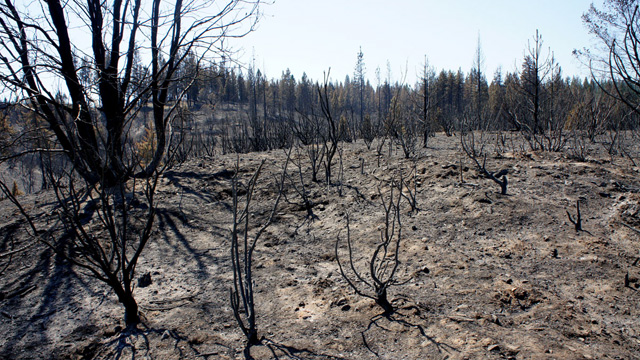
"caption": "California's dry weather could make it tough for young trees to get established after the Rim Fire. (Photo: Lauren Sommer/KQED)",
"description": null,
"title": "Rim-fire2",
"credit": null,
"status": "inherit",
"isLoading": false,
"fetchFailed": false
},
"science_8760": {
"type": "attachments",
"id": "science_8760",
"meta": {
"index": "attachments_1716263798",
"site": "science",
"id": "8760",
"found": true
},
"parent": 8535,
"imgSizes": {
"kqedFullSize": {
"file": "https://ww2.kqed.org/app/uploads/sites/35/2013/09/rimfire-featured.jpg",
"width": 640,
"height": 360
}
},
"publishDate": 1379108778,
"modified": 1379108778,
"caption": "Flames from the Rim Fire consume trees on August 25, 2013 near Groveland, California. (Justin Sullivan/Getty Images)",
"description": "Flames from the Rim Fire consume trees on August 25, 2013 near Groveland, California. (Justin Sullivan/Getty Images)",
"title": "rimfire-featured",
"credit": null,
"status": "inherit",
"isLoading": false,
"fetchFailed": false
},
"science_8656": {
"type": "attachments",
"id": "science_8656",
"meta": {
"index": "attachments_1716263798",
"site": "science",
"id": "8656",
"found": true
},
"parent": 8650,
"imgSizes": {
"kqedFullSize": {
"file": "https://ww2.kqed.org/app/uploads/sites/35/2013/09/blueoaktop.jpg",
"width": 640,
"height": 360
}
},
"publishDate": 1379011189,
"modified": 1379011189,
"caption": "Blue oaks in Quail Glen, Roseville. Photo courtesy \u003ca href=\"http://www.flickr.com/people/laurabell/\">Laura Bell\u003c/a> of Flickr via Creative Commons license",
"description": null,
"title": "blueoaktop",
"credit": null,
"status": "inherit",
"isLoading": false,
"fetchFailed": false
},
"science_8184": {
"type": "attachments",
"id": "science_8184",
"meta": {
"index": "attachments_1716263798",
"site": "science",
"id": "8184",
"found": true
},
"parent": 7757,
"imgSizes": {
"kqedFullSize": {
"file": "https://ww2.kqed.org/app/uploads/sites/35/2013/09/Oak-main.jpg",
"width": 640,
"height": 360
}
},
"publishDate": 1378512262,
"modified": 1378512262,
"caption": null,
"description": null,
"title": "Oak-main",
"credit": null,
"status": "inherit",
"isLoading": false,
"fetchFailed": false
},
"science_8004": {
"type": "attachments",
"id": "science_8004",
"meta": {
"index": "attachments_1716263798",
"site": "science",
"id": "8004",
"found": true
},
"parent": 8000,
"imgSizes": {
"kqedFullSize": {
"file": "https://ww2.kqed.org/app/uploads/sites/35/2013/09/Derek-Ouyang-project-leader-e1378340842137.jpg",
"width": 640,
"height": 359
}
},
"publishDate": 1378340773,
"modified": 1378340773,
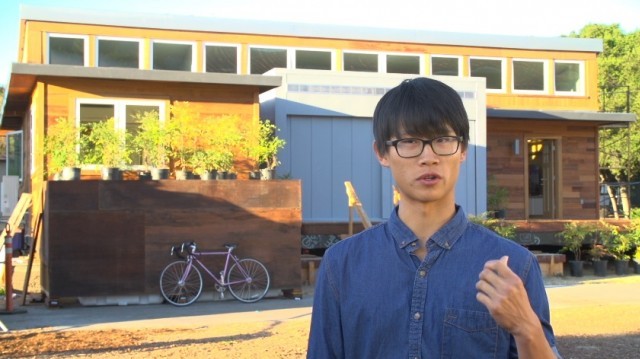
"caption": "Stanford student Derek Ouyang stands in front of his team's solar house. (Joshua Cassidy/KQED)",
"description": "Stanford student Derek Ouyang stands in front of his team's solar house. (Joshua Cassidy/KQED)",
"title": "Derek Ouyang Solar Decathlon",
"credit": null,
"status": "inherit",
"isLoading": false,
"fetchFailed": false
},
"science_7652": {
"type": "attachments",
"id": "science_7652",
"meta": {
"index": "attachments_1716263798",
"site": "science",
"id": "7652",
"found": true
},
"parent": 7634,
"imgSizes": {
"kqedFullSize": {
"file": "https://ww2.kqed.org/app/uploads/sites/35/2013/08/Tuolumne_Pinecrest_orig-e1377643149813.jpg",
"width": 640,
"height": 360
}
},
"publishDate": 1377643077,
"modified": 1377643077,
"caption": null,
"description": null,
"title": "Tuolumne_Pinecrest_orig",
"credit": null,
"status": "inherit",
"isLoading": false,
"fetchFailed": false
}
},
"audioPlayerReducer": {
"postId": "stream_live",
"isPaused": true,
"isPlaying": false,
"pfsActive": false,
"pledgeModalIsOpen": true,
"playerDrawerIsOpen": false,
"liveAudioPlayStartedAt": 0,
"liveAudioPlayContext": ""
},
"authorsReducer": {
"mollysamuel": {
"type": "authors",
"id": "200",
"meta": {
"index": "authors_1716337520",
"id": "200",
"found": true
},
"name": "Molly Samuel",
"firstName": "Molly",
"lastName": "Samuel",
"slug": "mollysamuel",
"email": "msamuel@kqed.org",
"display_author_email": false,
"staff_mastheads": [],
"title": null,
"bio": "Molly Samuel joined KQED as an intern in 2007, and since then has worked here as a reporter, producer, director and blogger. Before becoming KQED Science’s Multimedia Producer, she was a producer for Climate Watch. Molly has also reported for NPR, KALW and High Country News, and has produced audio stories for The Encyclopedia of Life and the Oakland Museum of California. She was a fellow with the Middlebury Fellowships in Environmental Journalism and a journalist-in-residence at the National Evolutionary Synthesis Center. Molly has a degree in Ancient Greek from Oberlin College and is a co-founder of the record label True Panther Sounds.",
"avatar": "https://secure.gravatar.com/avatar/a6abd3b949a89fe5109fa9917631d0b6?s=600&d=blank&r=g",
"twitter": null,
"facebook": null,
"instagram": null,
"linkedin": null,
"sites": [
{
"site": "news",
"roles": [
"subscriber"
]
},
{
"site": "stateofhealth",
"roles": [
"subscriber"
]
},
{
"site": "science",
"roles": [
"subscriber"
]
},
{
"site": "quest",
"roles": [
"edit_users",
"subscriber"
]
}
],
"headData": {
"title": "Molly Samuel | KQED",
"description": null,
"ogImgSrc": "https://secure.gravatar.com/avatar/a6abd3b949a89fe5109fa9917631d0b6?s=600&d=blank&r=g",
"twImgSrc": "https://secure.gravatar.com/avatar/a6abd3b949a89fe5109fa9917631d0b6?s=600&d=blank&r=g"
},
"isLoading": false,
"link": "/author/mollysamuel"
},
"cmiller": {
"type": "authors",
"id": "221",
"meta": {
"index": "authors_1716337520",
"id": "221",
"found": true
},
"name": "Craig Miller",
"firstName": "Craig",
"lastName": "Miller",
"slug": "cmiller",
"email": "craig@voxterra.net",
"display_author_email": false,
"staff_mastheads": [
"science"
],
"title": "Editor Emeritus, Science",
"bio": "Craig is a former KQED Science editor, specializing in weather, climate, water & energy issues, with a little seismology thrown in just to shake things up. Prior to that, he launched and led the station's award-winning multimedia project, Climate Watch. Craig is also an accomplished writer/producer of television documentaries, with a focus on natural resource issues.",
"avatar": "https://secure.gravatar.com/avatar/b91661df645e001a9cafe0861fa685f9?s=600&d=blank&r=g",
"twitter": "voxterra",
"facebook": null,
"instagram": null,
"linkedin": null,
"sites": [
{
"site": "news",
"roles": [
"author"
]
},
{
"site": "futureofyou",
"roles": [
"editor"
]
},
{
"site": "stateofhealth",
"roles": [
"author"
]
},
{
"site": "science",
"roles": [
"editor"
]
},
{
"site": "quest",
"roles": [
"editor"
]
}
],
"headData": {
"title": "Craig Miller | KQED",
"description": "Editor Emeritus, Science",
"ogImgSrc": "https://secure.gravatar.com/avatar/b91661df645e001a9cafe0861fa685f9?s=600&d=blank&r=g",
"twImgSrc": "https://secure.gravatar.com/avatar/b91661df645e001a9cafe0861fa685f9?s=600&d=blank&r=g"
},
"isLoading": false,
"link": "/author/cmiller"
},
"laurensommer": {
"type": "authors",
"id": "239",
"meta": {
"index": "authors_1716337520",
"id": "239",
"found": true
},
"name": "Lauren Sommer",
"firstName": "Lauren",
"lastName": "Sommer",
"slug": "laurensommer",
"email": "lsommer@kqed.org",
"display_author_email": false,
"staff_mastheads": [],
"title": "KQED Contributor",
"bio": "Lauren is a radio reporter formerly covering environment, water, and energy for KQED Science. As part of her day job, she has scaled Sierra Nevada peaks, run from charging elephant seals, and desperately tried to get her sea legs - all in pursuit of good radio. Her work has appeared on Marketplace, Living on Earth, Science Friday and NPR's Morning Edition and All Things Considered. You can find her on Twitter at \u003ca href=\"https://twitter.com/lesommer\">@lesommer\u003c/a>.",
"avatar": "https://secure.gravatar.com/avatar/33aa3772bb86c6ad45b8aca6a238bbdf?s=600&d=blank&r=g",
"twitter": null,
"facebook": null,
"instagram": null,
"linkedin": null,
"sites": [
{
"site": "news",
"roles": [
"author"
]
},
{
"site": "science",
"roles": [
"editor",
"manage_content_types",
"manage_taxonomies"
]
},
{
"site": "quest",
"roles": [
"editor"
]
}
],
"headData": {
"title": "Lauren Sommer | KQED",
"description": "KQED Contributor",
"ogImgSrc": "https://secure.gravatar.com/avatar/33aa3772bb86c6ad45b8aca6a238bbdf?s=600&d=blank&r=g",
"twImgSrc": "https://secure.gravatar.com/avatar/33aa3772bb86c6ad45b8aca6a238bbdf?s=600&d=blank&r=g"
},
"isLoading": false,
"link": "/author/laurensommer"
},
"lindseyhoshaw": {
"type": "authors",
"id": "5432",
"meta": {
"index": "authors_1716337520",
"id": "5432",
"found": true
},
"name": "Lindsey Hoshaw",
"firstName": "Lindsey",
"lastName": "Hoshaw",
"slug": "lindseyhoshaw",
"email": "lhoshaw@kqed.org",
"display_author_email": false,
"staff_mastheads": [],
"title": "KQED Contributor",
"bio": "Lindsey Hoshaw is a former interactive producer for KQED Science. Before joining KQED, Lindsey was a science correspondent for The New York Times, The Boston Globe, Forbes and Scientific American. On Twitter @lindseyhoshaw",
"avatar": "https://secure.gravatar.com/avatar/274b07694c998eaa8f26cfabaa941186?s=600&d=mm&r=g",
"twitter": "lindseyhoshaw",
"facebook": "lindsey.hoshaw.9",
"instagram": null,
"linkedin": null,
"sites": [
{
"site": "arts",
"roles": [
"author"
]
},
{
"site": "news",
"roles": [
"subscriber"
]
},
{
"site": "futureofyou",
"roles": [
"editor"
]
},
{
"site": "bayareabites",
"roles": [
"contributor"
]
},
{
"site": "stateofhealth",
"roles": [
"author"
]
},
{
"site": "science",
"roles": [
"edit_theme_options",
"subscriber"
]
},
{
"site": "quest",
"roles": [
"edit_post_subscriptions",
"edit_usergroups",
"unfiltered_html",
"unfiltered_upload",
"leadcoordinator",
"editor"
]
},
{
"site": "food",
"roles": []
}
],
"headData": {
"title": "Lindsey Hoshaw | KQED",
"description": "KQED Contributor",
"ogImgSrc": "https://secure.gravatar.com/avatar/274b07694c998eaa8f26cfabaa941186?s=600&d=mm&r=g",
"twImgSrc": "https://secure.gravatar.com/avatar/274b07694c998eaa8f26cfabaa941186?s=600&d=mm&r=g"
},
"isLoading": false,
"link": "/author/lindseyhoshaw"
},
"andrew-alden": {
"type": "authors",
"id": "6228",
"meta": {
"index": "authors_1716337520",
"id": "6228",
"found": true
},
"name": "Andrew Alden",
"firstName": "Andrew",
"lastName": "Alden",
"slug": "andrew-alden",
"email": "alden@andrew-alden.com",
"display_author_email": false,
"staff_mastheads": [],
"title": null,
"bio": "Andrew Alden earned his geology degree at the University of New Hampshire and moved back to the Bay Area to work at the U.S. Geological Survey for six years. He has \u003ca href=\"http://geology.about.com/\">written on geology for About.com\u003c/a> since its founding in 1997. In 2007, he started the Oakland Geology blog, which won recognition as \"Best of the East Bay\" from the \u003ci>East Bay Express\u003c/i> in 2010. In writing about geology in the Bay Area and surroundings, he hopes to share some of the useful and pleasurable insights that geologists give us—not just facts about the deep past, but an attitude that might be called the \u003ci>deep present\u003c/i>.\r\n\r\nRead his \u003ca href=\"http://science.kqed.org/quest/author/andrew-alden/\">previous contributions\u003c/a> to \u003ca href=\"http://http://science.kqed.org/quest/\">QUEST\u003c/a>, a project dedicated to exploring the Science of Sustainability.",
"avatar": "https://secure.gravatar.com/avatar/9eaa0afc32f98c5fc7ce634437334a64?s=600&d=blank&r=g",
"twitter": null,
"facebook": null,
"instagram": null,
"linkedin": null,
"sites": [
{
"site": "science",
"roles": [
"author"
]
},
{
"site": "quest",
"roles": [
"subscriber"
]
}
],
"headData": {
"title": "Andrew Alden | KQED",
"description": null,
"ogImgSrc": "https://secure.gravatar.com/avatar/9eaa0afc32f98c5fc7ce634437334a64?s=600&d=blank&r=g",
"twImgSrc": "https://secure.gravatar.com/avatar/9eaa0afc32f98c5fc7ce634437334a64?s=600&d=blank&r=g"
},
"isLoading": false,
"link": "/author/andrew-alden"
},
"kqedscience": {
"type": "authors",
"id": "6387",
"meta": {
"index": "authors_1716337520",
"id": "6387",
"found": true
},
"name": "KQED Science",
"firstName": "KQED",
"lastName": "Science",
"slug": "kqedscience",
"email": "kqedscience@gmail.com",
"display_author_email": false,
"staff_mastheads": [],
"title": null,
"bio": "KQED Science brings you award-winning science and environment coverage from the Bay Area and beyond by the flagship Northern California PBS and NPR affiliate.",
"avatar": "https://secure.gravatar.com/avatar/5a295ff49cf82a8c0f30937d3f788b2f?s=600&d=blank&r=g",
"twitter": null,
"facebook": null,
"instagram": null,
"linkedin": null,
"sites": [
{
"site": "science",
"roles": [
"contributor"
]
},
{
"site": "quest",
"roles": [
"editor"
]
},
{
"site": "food",
"roles": [
"contributor"
]
}
],
"headData": {
"title": "KQED Science | KQED",
"description": null,
"ogImgSrc": "https://secure.gravatar.com/avatar/5a295ff49cf82a8c0f30937d3f788b2f?s=600&d=blank&r=g",
"twImgSrc": "https://secure.gravatar.com/avatar/5a295ff49cf82a8c0f30937d3f788b2f?s=600&d=blank&r=g"
},
"isLoading": false,
"link": "/author/kqedscience"
}
},
"pagesReducer": {
"science_category_climate": {
"type": "terms",
"id": "science_31",
"meta": {
"index": "terms_1716263798",
"site": "science",
"id": "31",
"score": 11.06203
},
"featImg": null,
"name": "Climate",
"description": null,
"taxonomy": "category",
"headData": {
"twImgId": null,
"twTitle": null,
"ogTitle": null,
"ogImgId": null,
"twDescription": null,
"description": null,
"title": "Climate Archives | KQED Science",
"ogDescription": null
},
"ttid": 33,
"slug": "climate",
"isLoading": false,
"title": "Climate",
"pageMeta": {
"site": "science",
"WpPageTemplate": "page-topic-editorial",
"currentPage": 123
},
"blocks": [
{
"blockName": "kqed/post-list",
"attrs": {
"layout": "cardArticle2",
"query": "posts/science?category=climate",
"seeMore": false,
"paginated": true,
"page": 123
}
},
{
"blockName": "kqed/ad"
}
]
}
},
"pfsSessionReducer": {},
"postsReducer": {
"stream_live": {
"type": "live",
"id": "stream_live",
"audioUrl": "https://streams.kqed.org/kqedradio",
"title": "Live Stream",
"excerpt": "Live Stream information currently unavailable.",
"link": "/radio",
"featImg": "",
"label": {
"name": "KQED Live",
"link": "/"
}
},
"stream_kqedNewscast": {
"type": "posts",
"id": "stream_kqedNewscast",
"audioUrl": "https://www.kqed.org/.stream/anon/radio/RDnews/newscast.mp3?_=1",
"title": "KQED Newscast",
"featImg": "",
"label": {
"name": "88.5 FM",
"link": "/"
}
},
"science_10765": {
"type": "posts",
"id": "science_10765",
"meta": {
"index": "posts_1716263798",
"site": "science",
"id": "10765",
"score": null,
"sort": [
1383856324000
]
},
"guestAuthors": [],
"slug": "where-should-we-look-for-the-worlds-oldest-ice",
"title": "Where Should We Look for the World's Oldest Ice?",
"publishDate": 1383856324,
"format": "aside",
"headTitle": "Where Should We Look for the World’s Oldest Ice? | KQED",
"labelTerm": {
"site": "science"
},
"content": "\u003cfigure id=\"attachment_10766\" class=\"wp-caption aligncenter\" style=\"max-width: 640px\">\u003ca href=\"http://ww2.kqed.org/science/wp-content/uploads/sites/35/2013/11/anticecore.jpg\" rel=\"attachment wp-att-10766\">\u003cimg loading=\"lazy\" decoding=\"async\" class=\"size-full wp-image-10766\" src=\"http://ww2.kqed.org/science/wp-content/uploads/sites/35/2013/11/anticecore.jpg\" alt=\"scientist checks an ice core\" width=\"640\" height=\"360\">\u003c/a>\u003cfigcaption class=\"wp-caption-text\">Michelle Koutnik of the University of Copenhagen’s Center for Ice and Climate prepares an Antarctic ice core for transport to the lab. NASA photo by Lora Koenig\u003c/figcaption>\u003c/figure>\n\u003cp>A large team of Antarctic researchers has published instructions for locating the oldest available samples of the ancient atmosphere. If their thinking is correct, we ought to be able to retrieve air from Antarctica’s ice sheets that’s almost twice as old as what we have today.\u003c/p>\n\u003cp>Ancient ice is a crucially important source of information about global climates of the past. Although the ice itself is a valuable record of regional conditions, the real prize is the air bubbles preserved in it. Because the gases in the atmosphere are so well mixed by winds and weather, even a tiny sample is a faithful record of the whole world. Ice is the gold standard for researching ancient atmospheres. Today’s longest ice cores have given us a record that goes back about 800,000 years. The new paper, \u003ca href=\"http://www.clim-past.net/9/2489/2013/cp-9-2489-2013.html\">published this month in the open-access journal \u003cem>Climate of the Past\u003c/em>\u003c/a>, raises the possibility of ice as old as 1.5 million years and outlines how to locate it.\u003c/p>\n\u003cp>We have evidence of ancient climates from other sources: sediment layers on the seafloor preserve microscopic fossils, for instance. These can tell us something about ocean temperatures at different depths in the sea. Those sediment layers pile up essentially forever, too, much longer than ice lasts. But that evidence is always indirect.\u003c/p>\n\u003cp>Ice is best, but it is geologically perishable. Ice begins to flow as it reaches a thickness of a hundred meters or so. Even on a dead level, it spreads sideways, stretching its annual layers thinner and thinner. At greater thicknesses, ice sheets start to melt at the bottom because of geothermal heat from the Earth’s crust beneath. The oldest possible ice must lie in places with a delicate balance between accumulation and destruction, and that’s what the paper’s authors, led by Hubertus Fischer of the University of Bern, set out to calculate.\u003c/p>\n\u003cp>Fischer’s team already knew that sites where Antarctic ice is piled on a high bedrock plateau are best for minimizing flow of all kinds. These are known as domes. The 800,000-year ice core was drilled on Antarctica’s Dome C. But the team showed that Dome C’s very thick ice makes the bottom melt faster than a dome with thinner ice would, limiting the age of its ice. A dome with thinner ice might actually have a longer record. To help their search for older ice the scientists used the latest “hugely improved data set” showing Antarctica’s ice thickness, made using high-powered radar, which easily penetrates ice. Subtracting the ice thickness from the ice surface yielded the best map yet of Antarctica’s hidden bedrock surface.\u003c/p>\n\u003cfigure id=\"attachment_10767\" class=\"wp-caption aligncenter\" style=\"max-width: 600px\">\u003ca href=\"http://ww2.kqed.org/science/wp-content/uploads/sites/35/2013/11/antarctic-ice.png\" rel=\"attachment wp-att-10767\">\u003cimg loading=\"lazy\" decoding=\"async\" class=\"size-full wp-image-10767\" src=\"http://ww2.kqed.org/science/wp-content/uploads/sites/35/2013/11/antarctic-ice.png\" alt=\"Antarctic ice thickness and surface topography\" width=\"600\" height=\"322\">\u003c/a>\u003cfigcaption class=\"wp-caption-text\">Antarctic ice thickness (left) and derived surface topography (right), from Figure 8 of Fischer et al. (2013)\u003c/figcaption>\u003c/figure>\n\u003cp>The sweet spot would be a dome site where the ice is no more than 2.5 kilometers thick. The oldest decent ice would lie about 100 meters above bedrock, because ice flow smears and disrupts the bottom layers. The best sites should also not be windy, to avoid scouring of the ice and “wind glazing” (whereas such “blue ice” regions are superb for hunting meteorites in Antarctica). Fischer’s team ran their maps through their model to yield a map of likely prospects.\u003c/p>\n\u003cfigure id=\"attachment_10768\" class=\"wp-caption aligncenter\" style=\"max-width: 600px\">\u003ca href=\"http://ww2.kqed.org/science/wp-content/uploads/sites/35/2013/11/old-icemap.gif\" rel=\"attachment wp-att-10768\">\u003cimg loading=\"lazy\" decoding=\"async\" class=\"size-full wp-image-10768\" src=\"http://ww2.kqed.org/science/wp-content/uploads/sites/35/2013/11/old-icemap.gif\" alt=\"Targets for the oldest ice\" width=\"600\" height=\"488\">\u003c/a>\u003cfigcaption class=\"wp-caption-text\">From Figure 11 of Fischer et al. (2013). The dark outline between Domes A and C is subglacial Lake Vostok\u003c/figcaption>\u003c/figure>\n\u003cp>Domes A, C, and F look the most promising, but the details matter—there are buried mountain ranges and deep valleys, where the lowest ice would be roiled to uselessness. There is also the unknown degree of geothermal heating underneath different sites. When the search gets serious, detailed radar studies would pick out internal details of the ice. Fischer’s team recommends a strategy of drilling a lot of rapid, shallow holes before launching an expensive coring mission.\u003c/p>\n\u003cp>[ad fullwidth]\u003c/p>\n\u003cp>The paper is not an academic exercise, but part of efforts to plan a drilling campaign that would capture the oldest possible samples of Earth’s atmosphere. With the right international support—and that assumes no more government shutdowns like last month’s, which disrupted a whole year of American research in Antarctica—the goal could be reached in a decade.\u003c/p>\n\u003cp>\u003c/p>\n\u003cp>This news is not just cool; it’s important. In looking at the future, all we have to go on is the past and the present. Climate scientists use past and present data to build computer models of the global climate. These promise to give us useful pictures of how the world will respond to the atmospheric changes that humans are causing today. The better these models work, the more meaningful it will be when we use them to explore alternative futures.\u003c/p>\n\n",
"blocks": [],
"excerpt": "Ancient ice is an important source of information about global climates of the past. Although the ice itself is a valuable record, the real prize is the air bubbles preserved in it, some that could be as much as 1.5 million years old.",
"status": "publish",
"parent": 0,
"modified": 1725578312,
"stats": {
"hasAudio": false,
"hasVideo": false,
"hasChartOrMap": false,
"iframeSrcs": [],
"hasGoogleForm": false,
"hasGallery": false,
"hasHearkenModule": false,
"hasPolis": false,
"paragraphCount": 11,
"wordCount": 847
},
"headData": {
"title": "Where Should We Look for the World's Oldest Ice? | KQED",
"description": "Ancient ice is an important source of information about global climates of the past. Although the ice itself is a valuable record, the real prize is the air bubbles preserved in it, some that could be as much as 1.5 million years old.",
"ogTitle": "",
"ogDescription": "",
"ogImgId": "",
"twTitle": "",
"twDescription": "",
"twImgId": "",
"schema": {
"@context": "https://schema.org",
"@type": "Article",
"headline": "Where Should We Look for the World's Oldest Ice?",
"datePublished": "2013-11-07T12:32:04-08:00",
"dateModified": "2024-09-05T16:18:32-07:00",
"image": "https://cdn.kqed.org/wp-content/uploads/2020/02/KQED-OG-Image@1x.png"
}
},
"sticky": false,
"path": "/science/10765/where-should-we-look-for-the-worlds-oldest-ice",
"audioTrackLength": null,
"parsedContent": [
{
"type": "contentString",
"content": "\u003cdiv class=\"post-body\">\u003cp>\u003cfigure id=\"attachment_10766\" class=\"wp-caption aligncenter\" style=\"max-width: 640px\">\u003ca href=\"http://ww2.kqed.org/science/wp-content/uploads/sites/35/2013/11/anticecore.jpg\" rel=\"attachment wp-att-10766\">\u003cimg loading=\"lazy\" decoding=\"async\" class=\"size-full wp-image-10766\" src=\"http://ww2.kqed.org/science/wp-content/uploads/sites/35/2013/11/anticecore.jpg\" alt=\"scientist checks an ice core\" width=\"640\" height=\"360\">\u003c/a>\u003cfigcaption class=\"wp-caption-text\">Michelle Koutnik of the University of Copenhagen’s Center for Ice and Climate prepares an Antarctic ice core for transport to the lab. NASA photo by Lora Koenig\u003c/figcaption>\u003c/figure>\n\u003cp>A large team of Antarctic researchers has published instructions for locating the oldest available samples of the ancient atmosphere. If their thinking is correct, we ought to be able to retrieve air from Antarctica’s ice sheets that’s almost twice as old as what we have today.\u003c/p>\n\u003cp>Ancient ice is a crucially important source of information about global climates of the past. Although the ice itself is a valuable record of regional conditions, the real prize is the air bubbles preserved in it. Because the gases in the atmosphere are so well mixed by winds and weather, even a tiny sample is a faithful record of the whole world. Ice is the gold standard for researching ancient atmospheres. Today’s longest ice cores have given us a record that goes back about 800,000 years. The new paper, \u003ca href=\"http://www.clim-past.net/9/2489/2013/cp-9-2489-2013.html\">published this month in the open-access journal \u003cem>Climate of the Past\u003c/em>\u003c/a>, raises the possibility of ice as old as 1.5 million years and outlines how to locate it.\u003c/p>\n\u003cp>We have evidence of ancient climates from other sources: sediment layers on the seafloor preserve microscopic fossils, for instance. These can tell us something about ocean temperatures at different depths in the sea. Those sediment layers pile up essentially forever, too, much longer than ice lasts. But that evidence is always indirect.\u003c/p>\n\u003cp>Ice is best, but it is geologically perishable. Ice begins to flow as it reaches a thickness of a hundred meters or so. Even on a dead level, it spreads sideways, stretching its annual layers thinner and thinner. At greater thicknesses, ice sheets start to melt at the bottom because of geothermal heat from the Earth’s crust beneath. The oldest possible ice must lie in places with a delicate balance between accumulation and destruction, and that’s what the paper’s authors, led by Hubertus Fischer of the University of Bern, set out to calculate.\u003c/p>\n\u003cp>Fischer’s team already knew that sites where Antarctic ice is piled on a high bedrock plateau are best for minimizing flow of all kinds. These are known as domes. The 800,000-year ice core was drilled on Antarctica’s Dome C. But the team showed that Dome C’s very thick ice makes the bottom melt faster than a dome with thinner ice would, limiting the age of its ice. A dome with thinner ice might actually have a longer record. To help their search for older ice the scientists used the latest “hugely improved data set” showing Antarctica’s ice thickness, made using high-powered radar, which easily penetrates ice. Subtracting the ice thickness from the ice surface yielded the best map yet of Antarctica’s hidden bedrock surface.\u003c/p>\n\u003cfigure id=\"attachment_10767\" class=\"wp-caption aligncenter\" style=\"max-width: 600px\">\u003ca href=\"http://ww2.kqed.org/science/wp-content/uploads/sites/35/2013/11/antarctic-ice.png\" rel=\"attachment wp-att-10767\">\u003cimg loading=\"lazy\" decoding=\"async\" class=\"size-full wp-image-10767\" src=\"http://ww2.kqed.org/science/wp-content/uploads/sites/35/2013/11/antarctic-ice.png\" alt=\"Antarctic ice thickness and surface topography\" width=\"600\" height=\"322\">\u003c/a>\u003cfigcaption class=\"wp-caption-text\">Antarctic ice thickness (left) and derived surface topography (right), from Figure 8 of Fischer et al. (2013)\u003c/figcaption>\u003c/figure>\n\u003cp>The sweet spot would be a dome site where the ice is no more than 2.5 kilometers thick. The oldest decent ice would lie about 100 meters above bedrock, because ice flow smears and disrupts the bottom layers. The best sites should also not be windy, to avoid scouring of the ice and “wind glazing” (whereas such “blue ice” regions are superb for hunting meteorites in Antarctica). Fischer’s team ran their maps through their model to yield a map of likely prospects.\u003c/p>\n\u003cfigure id=\"attachment_10768\" class=\"wp-caption aligncenter\" style=\"max-width: 600px\">\u003ca href=\"http://ww2.kqed.org/science/wp-content/uploads/sites/35/2013/11/old-icemap.gif\" rel=\"attachment wp-att-10768\">\u003cimg loading=\"lazy\" decoding=\"async\" class=\"size-full wp-image-10768\" src=\"http://ww2.kqed.org/science/wp-content/uploads/sites/35/2013/11/old-icemap.gif\" alt=\"Targets for the oldest ice\" width=\"600\" height=\"488\">\u003c/a>\u003cfigcaption class=\"wp-caption-text\">From Figure 11 of Fischer et al. (2013). The dark outline between Domes A and C is subglacial Lake Vostok\u003c/figcaption>\u003c/figure>\n\u003cp>Domes A, C, and F look the most promising, but the details matter—there are buried mountain ranges and deep valleys, where the lowest ice would be roiled to uselessness. There is also the unknown degree of geothermal heating underneath different sites. When the search gets serious, detailed radar studies would pick out internal details of the ice. Fischer’s team recommends a strategy of drilling a lot of rapid, shallow holes before launching an expensive coring mission.\u003c/p>\n\u003cp>\u003c/p>\u003c/div>",
"attributes": {
"named": {},
"numeric": []
}
},
{
"type": "component",
"content": "",
"name": "ad",
"attributes": {
"named": {
"label": "fullwidth"
},
"numeric": [
"fullwidth"
]
}
},
{
"type": "contentString",
"content": "\u003cdiv class=\"post-body\">\u003cp>\u003c/p>\n\u003cp>The paper is not an academic exercise, but part of efforts to plan a drilling campaign that would capture the oldest possible samples of Earth’s atmosphere. With the right international support—and that assumes no more government shutdowns like last month’s, which disrupted a whole year of American research in Antarctica—the goal could be reached in a decade.\u003c/p>\n\u003cp>\u003c/p>\n\u003cp>This news is not just cool; it’s important. In looking at the future, all we have to go on is the past and the present. Climate scientists use past and present data to build computer models of the global climate. These promise to give us useful pictures of how the world will respond to the atmospheric changes that humans are causing today. The better these models work, the more meaningful it will be when we use them to explore alternative futures.\u003c/p>\n\n\u003c/div>\u003c/p>",
"attributes": {
"named": {},
"numeric": []
}
}
],
"link": "/science/10765/where-should-we-look-for-the-worlds-oldest-ice",
"authors": [
"6228"
],
"categories": [
"science_31",
"science_38"
],
"tags": [
"science_182",
"science_194",
"science_64"
],
"featImg": "science_10766",
"label": "science"
},
"science_10727": {
"type": "posts",
"id": "science_10727",
"meta": {
"index": "posts_1716263798",
"site": "science",
"id": "10727",
"score": null,
"sort": [
1383701888000
]
},
"parent": 0,
"labelTerm": {
"site": "science"
},
"blocks": [],
"publishDate": 1383701888,
"format": "aside",
"title": "Report: California Will Fall Short of its Carbon Emissions Reduction Goals",
"headTitle": "Report: California Will Fall Short of its Carbon Emissions Reduction Goals | KQED",
"content": "\u003cp>\u003cstrong>By Peter Lollo / KQED News\u003c/strong>\u003c/p>\n\u003cfigure id=\"attachment_10732\" class=\"wp-caption alignleft\" style=\"max-width: 215px\">\u003ca href=\"http://ww2.kqed.org/science/wp-content/uploads/sites/35/2013/11/RS696_Download090427-061-scr-215x162.jpg\">\u003cimg loading=\"lazy\" decoding=\"async\" class=\"size-medium wp-image-10732\" src=\"http://ww2.kqed.org/science/wp-content/uploads/sites/35/2013/11/RS696_Download090427-061-scr-215x162.jpg\" alt=\"California's climate change policies are cutting emissions, but not enough, according to a report from Berkeley Lab. (Craig Miller/KQED)\" width=\"215\" height=\"162\">\u003c/a>\u003cfigcaption class=\"wp-caption-text\">California’s climate change policies are cutting emissions, but not enough, according to a report from Berkeley Lab. (Craig Miller/KQED) \u003ccite>(Craig Miller/KQED)\u003c/cite>\u003c/figcaption>\u003c/figure>\n\u003cp>California is not on track to meet its ambitious greenhouse gas reduction goals, according to a \u003ca href=\"http://eetd.lbl.gov/publications/estimating-policy-driven-greenhouse-g\">study from Lawrence Berkeley National Laboratory\u003c/a>. The report, released on Monday, found that California’s current energy policies have put the state on track to meet its \u003ca href=\"http://www.arb.ca.gov/cc/ab32/ab32.htm\">2020 target\u003c/a>, which is to bring greenhouse gas emissions down to 1990 levels. But without adopting more aggressive tactics, the state will not meet its \u003ca href=\"http://www.dot.ca.gov/hq/energy/ExecOrderS-3-05.htm\">2050 goal\u003c/a> to reduce emissions by 80 percent from 1990 levels.\u003c/p>\n\u003cp>“The set of policies that we have — the renewable portfolio standard, the low-carbon fuel standard, vehicle efficiencies, zero net energy buildings, more efficient appliance standard, et cetera et cetera — are all very helpful,” said Berkeley Lab scientist Jeffery Greenblatt, who led the study. But, he said, taken by themselves, these policies will not get the state to its long-term emissions goals.\u003c/p>\n\u003cp>“We’re going to have to develop some additional policies to get us all the way to the 2050 target and we’re going to have to invest in more technology R&D in order to have those lower-carbon technologies available.”\u003c/p>\n\u003cp>Greenblatt recommended that the state invest in biofuels, derive 100 percent of its energy from renewable sources and develop more energy storage. Storage will become especially important as more and more power is acquired from fluctuating, intermittent sources like wind and solar.\u003c/p>\n\u003cp>[ad fullwidth]\u003c/p>\n\u003cp>The California Air Resources Board, the agency charged with implementing California’s emissions goals, acknowledged the gap between current policy and long-term targets.\u003c/p>\n\u003cp>“We agree that there’s more that needs to be done,” said Dave Clegern of the Air Board. He said that the state has been focused on meeting the 2020 goals, but now officials are drafting a new plan to help guide future energy policy. “It’s the first one to really look beyond 2020,” he said.\u003c/p>\n\u003cp>\u003c/p>\n\u003cp>That plan is expected to be completed by March of next year.\u003c/p>\n\n",
"stats": {
"hasVideo": false,
"hasChartOrMap": false,
"hasAudio": false,
"hasPolis": false,
"wordCount": 368,
"hasGoogleForm": false,
"hasGallery": false,
"hasHearkenModule": false,
"iframeSrcs": [],
"paragraphCount": 10
},
"modified": 1704934746,
"excerpt": "Without adopting more aggressive tactics, the state will not meet its 2050 goal to reduce emissions by 80 percent from 1990 levels.",
"headData": {
"twImgId": "",
"twTitle": "",
"ogTitle": "",
"ogImgId": "",
"twDescription": "",
"description": "Without adopting more aggressive tactics, the state will not meet its 2050 goal to reduce emissions by 80 percent from 1990 levels.",
"title": "Report: California Will Fall Short of its Carbon Emissions Reduction Goals | KQED",
"ogDescription": "",
"schema": {
"@context": "https://schema.org",
"@type": "Article",
"headline": "Report: California Will Fall Short of its Carbon Emissions Reduction Goals",
"datePublished": "2013-11-05T17:38:08-08:00",
"dateModified": "2024-01-10T16:59:06-08:00",
"image": "https://cdn.kqed.org/wp-content/uploads/2020/02/KQED-OG-Image@1x.png"
}
},
"guestAuthors": [],
"slug": "report-california-will-fall-short-of-its-carbon-emissions-reduction-goals",
"status": "publish",
"sticky": false,
"path": "/science/10727/report-california-will-fall-short-of-its-carbon-emissions-reduction-goals",
"audioTrackLength": null,
"parsedContent": [
{
"type": "contentString",
"content": "\u003cdiv class=\"post-body\">\u003cp>\u003cp>\u003cstrong>By Peter Lollo / KQED News\u003c/strong>\u003c/p>\n\u003cfigure id=\"attachment_10732\" class=\"wp-caption alignleft\" style=\"max-width: 215px\">\u003ca href=\"http://ww2.kqed.org/science/wp-content/uploads/sites/35/2013/11/RS696_Download090427-061-scr-215x162.jpg\">\u003cimg loading=\"lazy\" decoding=\"async\" class=\"size-medium wp-image-10732\" src=\"http://ww2.kqed.org/science/wp-content/uploads/sites/35/2013/11/RS696_Download090427-061-scr-215x162.jpg\" alt=\"California's climate change policies are cutting emissions, but not enough, according to a report from Berkeley Lab. (Craig Miller/KQED)\" width=\"215\" height=\"162\">\u003c/a>\u003cfigcaption class=\"wp-caption-text\">California’s climate change policies are cutting emissions, but not enough, according to a report from Berkeley Lab. (Craig Miller/KQED) \u003ccite>(Craig Miller/KQED)\u003c/cite>\u003c/figcaption>\u003c/figure>\n\u003cp>California is not on track to meet its ambitious greenhouse gas reduction goals, according to a \u003ca href=\"http://eetd.lbl.gov/publications/estimating-policy-driven-greenhouse-g\">study from Lawrence Berkeley National Laboratory\u003c/a>. The report, released on Monday, found that California’s current energy policies have put the state on track to meet its \u003ca href=\"http://www.arb.ca.gov/cc/ab32/ab32.htm\">2020 target\u003c/a>, which is to bring greenhouse gas emissions down to 1990 levels. But without adopting more aggressive tactics, the state will not meet its \u003ca href=\"http://www.dot.ca.gov/hq/energy/ExecOrderS-3-05.htm\">2050 goal\u003c/a> to reduce emissions by 80 percent from 1990 levels.\u003c/p>\n\u003cp>“The set of policies that we have — the renewable portfolio standard, the low-carbon fuel standard, vehicle efficiencies, zero net energy buildings, more efficient appliance standard, et cetera et cetera — are all very helpful,” said Berkeley Lab scientist Jeffery Greenblatt, who led the study. But, he said, taken by themselves, these policies will not get the state to its long-term emissions goals.\u003c/p>\n\u003cp>“We’re going to have to develop some additional policies to get us all the way to the 2050 target and we’re going to have to invest in more technology R&D in order to have those lower-carbon technologies available.”\u003c/p>\n\u003cp>Greenblatt recommended that the state invest in biofuels, derive 100 percent of its energy from renewable sources and develop more energy storage. Storage will become especially important as more and more power is acquired from fluctuating, intermittent sources like wind and solar.\u003c/p>\n\u003cp>\u003c/p>\u003c/div>",
"attributes": {
"named": {},
"numeric": []
}
},
{
"type": "component",
"content": "",
"name": "ad",
"attributes": {
"named": {
"label": "fullwidth"
},
"numeric": [
"fullwidth"
]
}
},
{
"type": "contentString",
"content": "\u003cdiv class=\"post-body\">\u003cp>\u003c/p>\n\u003cp>The California Air Resources Board, the agency charged with implementing California’s emissions goals, acknowledged the gap between current policy and long-term targets.\u003c/p>\n\u003cp>“We agree that there’s more that needs to be done,” said Dave Clegern of the Air Board. He said that the state has been focused on meeting the 2020 goals, but now officials are drafting a new plan to help guide future energy policy. “It’s the first one to really look beyond 2020,” he said.\u003c/p>\n\u003cp>\u003c/p>\n\u003cp>That plan is expected to be completed by March of next year.\u003c/p>\n\n\u003c/div>\u003c/p>",
"attributes": {
"named": {},
"numeric": []
}
}
],
"link": "/science/10727/report-california-will-fall-short-of-its-carbon-emissions-reduction-goals",
"authors": [
"6387"
],
"categories": [
"science_31",
"science_35",
"science_40"
],
"tags": [
"science_122",
"science_5178",
"science_354",
"science_452"
],
"featImg": "science_10732",
"label": "science"
},
"science_10377": {
"type": "posts",
"id": "science_10377",
"meta": {
"index": "posts_1716263798",
"site": "science",
"id": "10377",
"score": null,
"sort": [
1383005247000
]
},
"parent": 0,
"labelTerm": {
"site": "science"
},
"blocks": [],
"publishDate": 1383005247,
"format": "aside",
"title": "Climate Pact: West Coast States, BC Vow to Step up Attack on Warming",
"headTitle": "Climate Pact: West Coast States, BC Vow to Step up Attack on Warming | KQED",
"content": "\u003cfigure id=\"attachment_10385\" class=\"wp-caption aligncenter\" style=\"max-width: 640px\">\u003ca href=\"http://ww2.kqed.org/science/wp-content/uploads/sites/35/2013/10/IMG_3146.jpg\" rel=\"attachment wp-att-10385\">\u003cimg loading=\"lazy\" decoding=\"async\" class=\"size-full wp-image-10385\" src=\"http://ww2.kqed.org/science/wp-content/uploads/sites/35/2013/10/IMG_3146.jpg\" alt=\"Late-summer sunset over San Francisco Bay. (Craig Miller)\" width=\"640\" height=\"360\">\u003c/a>\u003cfigcaption class=\"wp-caption-text\">Late-summer sunset over San Francisco Bay. (Craig Miller)\u003c/figcaption>\u003c/figure>\n\u003cp>California has joined with Oregon, Washington and British Columbia in a \u003ca title=\"Gov Brown - release\" href=\"http://cert1.mail-west.com/jnX/rmaKy/mc7/1aKgtmyuzjan/avdg1/vnqaKrmp1rm819/teg11aKq/5pm2qq73alijo?_c=d%7Cze7pzanwmhlzgt%7C11trgyn37dd2zc5&_ce=1383006344.02379dfd281eefbdcb79ccc9e24c445a\">new multi-pronged attack\u003c/a> on climate change and its impacts. Describing it as a “small-but-powerful first step,” California Governor Jerry Brown conceded that the newly-minted Pacific Coast Action Plan on Climate and Energy won’t by itself reverse the current long-term warming trend. But, he promised, “this will spread.”\u003c/p>\n\u003cp>And while the pact has no binding legal authority on any of the parties, leaders of all four governments have agreed, in part, to:\u003c/p>\n\u003cp>– \u003cstrong>Put a price on carbon.\u003c/strong> California and BC have already done this, using a combination of carbon markets and taxes. California’s year-old \u003ca title=\"Q-Sci - post\" href=\"http://science.kqed.org/quest/audio/cap-and-trade-101-how-californias-carbon-market-works/\">cap-and-trade program\u003c/a> is part of a comprehensive plan set in motion by the state’s landmark \u003ca title=\"Wiki - AB 32\" href=\"http://en.wikipedia.org/wiki/Global_Warming_Solutions_Act_of_2006\">2006 climate law\u003c/a>.\u003c/p>\n\u003cp>– \u003cstrong>Synchronize their watches.\u003c/strong> The four will “harmonize 2050 targets for greenhouse gas reductions” and also seek a more definitive “mid-range” target for emissions cuts by 2030 or thereabout. California’s current 2050 target is backed only by an executive order issued during the Schwarzenegger administration, not by legislation.\u003c/p>\n\u003cp>– \u003cstrong>Attack ocean acidification.\u003c/strong> The states and province say they’ll “urge” their respective federal governments to “take action on ocean acidification,” which scientists say is a threat to the marine food web.\u003c/p>\n\u003cp>[ad fullwidth]\u003c/p>\n\u003cp>– \u003cstrong>Green up transportation.\u003c/strong> Among the more specific goals is one to “work together toward” \u003ca title=\"Q-Sci - post\" href=\"http://ww2.kqed.org/science/2013/10/24/california-joins-eight-state-roadmap-toward-more-electric-cars/\">juicing the market for electric cars\u003c/a> and other zero-emissions vehicles. In one of the few specific goals outlined by the basic agreement, the region is pledged to “take action” to transform the car market, so that by 2016, 10 percent of new car purchases are ZEVs (California’s current goal is 15% by 2025). All have committed to some form of low-carbon standard for transportation fuels. California has one, though it is being challenged in the courts. The parties also pledge to “continue deployment of high-speed rail across the region.”\u003c/p>\n\u003cp>The agreement also contains a five-point plan to boost renewable energy and modernize the electrical grid, along with the usual assertions to base policy on sound climate science and to continue the push toward a global climate agreement, something that the UN Framework has yet to achieve after two decades of talks.\u003c/p>\n\u003cp>Washington Governor Jay Inslee summed up the call to action succinctly, saying that, “While progress in Washington, DC is strangled by climate deniers, there is no denying the fact that the West Coast is rip-roarin’ and ready to go.” But that hasn’t always been the case. Take the case of the ill-fated Western Climate Initiative, in which several states and provinces were to launch a unified carbon market. So far, \u003ca title=\"CARB - release\" href=\"http://www.arb.ca.gov/newsrel/newsrelease.php?id=508\">only Quebec has committed\u003c/a> (starting next year). British Columbia forged ahead with a carbon tax of its own while Oregon and Washington adopted a wait-and-see stance.\u003c/p>\n\u003cp>\u003c/p>\n\u003cp> \u003c/p>\n\n",
"stats": {
"hasVideo": false,
"hasChartOrMap": false,
"hasAudio": false,
"hasPolis": false,
"wordCount": 519,
"hasGoogleForm": false,
"hasGallery": false,
"hasHearkenModule": false,
"iframeSrcs": [],
"paragraphCount": 10
},
"modified": 1704934798,
"excerpt": "California Governor Jerry Brown promises, \"this will spread,\" as three states and one province agree on climate goals -- but no mechanism to enforce them.",
"headData": {
"twImgId": "",
"twTitle": "",
"ogTitle": "",
"ogImgId": "",
"twDescription": "",
"description": "California Governor Jerry Brown promises, "this will spread," as three states and one province agree on climate goals -- but no mechanism to enforce them.",
"title": "Climate Pact: West Coast States, BC Vow to Step up Attack on Warming | KQED",
"ogDescription": "",
"schema": {
"@context": "https://schema.org",
"@type": "Article",
"headline": "Climate Pact: West Coast States, BC Vow to Step up Attack on Warming",
"datePublished": "2013-10-28T17:07:27-07:00",
"dateModified": "2024-01-10T16:59:58-08:00",
"image": "https://cdn.kqed.org/wp-content/uploads/2020/02/KQED-OG-Image@1x.png"
}
},
"guestAuthors": [],
"slug": "climate-pact-west-coast-states-bc-vow-to-step-up-attack-on-warming",
"status": "publish",
"sticky": false,
"path": "/science/10377/climate-pact-west-coast-states-bc-vow-to-step-up-attack-on-warming",
"audioTrackLength": null,
"parsedContent": [
{
"type": "contentString",
"content": "\u003cdiv class=\"post-body\">\u003cp>\u003cfigure id=\"attachment_10385\" class=\"wp-caption aligncenter\" style=\"max-width: 640px\">\u003ca href=\"http://ww2.kqed.org/science/wp-content/uploads/sites/35/2013/10/IMG_3146.jpg\" rel=\"attachment wp-att-10385\">\u003cimg loading=\"lazy\" decoding=\"async\" class=\"size-full wp-image-10385\" src=\"http://ww2.kqed.org/science/wp-content/uploads/sites/35/2013/10/IMG_3146.jpg\" alt=\"Late-summer sunset over San Francisco Bay. (Craig Miller)\" width=\"640\" height=\"360\">\u003c/a>\u003cfigcaption class=\"wp-caption-text\">Late-summer sunset over San Francisco Bay. (Craig Miller)\u003c/figcaption>\u003c/figure>\n\u003cp>California has joined with Oregon, Washington and British Columbia in a \u003ca title=\"Gov Brown - release\" href=\"http://cert1.mail-west.com/jnX/rmaKy/mc7/1aKgtmyuzjan/avdg1/vnqaKrmp1rm819/teg11aKq/5pm2qq73alijo?_c=d%7Cze7pzanwmhlzgt%7C11trgyn37dd2zc5&_ce=1383006344.02379dfd281eefbdcb79ccc9e24c445a\">new multi-pronged attack\u003c/a> on climate change and its impacts. Describing it as a “small-but-powerful first step,” California Governor Jerry Brown conceded that the newly-minted Pacific Coast Action Plan on Climate and Energy won’t by itself reverse the current long-term warming trend. But, he promised, “this will spread.”\u003c/p>\n\u003cp>And while the pact has no binding legal authority on any of the parties, leaders of all four governments have agreed, in part, to:\u003c/p>\n\u003cp>– \u003cstrong>Put a price on carbon.\u003c/strong> California and BC have already done this, using a combination of carbon markets and taxes. California’s year-old \u003ca title=\"Q-Sci - post\" href=\"http://science.kqed.org/quest/audio/cap-and-trade-101-how-californias-carbon-market-works/\">cap-and-trade program\u003c/a> is part of a comprehensive plan set in motion by the state’s landmark \u003ca title=\"Wiki - AB 32\" href=\"http://en.wikipedia.org/wiki/Global_Warming_Solutions_Act_of_2006\">2006 climate law\u003c/a>.\u003c/p>\n\u003cp>– \u003cstrong>Synchronize their watches.\u003c/strong> The four will “harmonize 2050 targets for greenhouse gas reductions” and also seek a more definitive “mid-range” target for emissions cuts by 2030 or thereabout. California’s current 2050 target is backed only by an executive order issued during the Schwarzenegger administration, not by legislation.\u003c/p>\n\u003cp>– \u003cstrong>Attack ocean acidification.\u003c/strong> The states and province say they’ll “urge” their respective federal governments to “take action on ocean acidification,” which scientists say is a threat to the marine food web.\u003c/p>\n\u003cp>\u003c/p>\u003c/div>",
"attributes": {
"named": {},
"numeric": []
}
},
{
"type": "component",
"content": "",
"name": "ad",
"attributes": {
"named": {
"label": "fullwidth"
},
"numeric": [
"fullwidth"
]
}
},
{
"type": "contentString",
"content": "\u003cdiv class=\"post-body\">\u003cp>\u003c/p>\n\u003cp>– \u003cstrong>Green up transportation.\u003c/strong> Among the more specific goals is one to “work together toward” \u003ca title=\"Q-Sci - post\" href=\"http://ww2.kqed.org/science/2013/10/24/california-joins-eight-state-roadmap-toward-more-electric-cars/\">juicing the market for electric cars\u003c/a> and other zero-emissions vehicles. In one of the few specific goals outlined by the basic agreement, the region is pledged to “take action” to transform the car market, so that by 2016, 10 percent of new car purchases are ZEVs (California’s current goal is 15% by 2025). All have committed to some form of low-carbon standard for transportation fuels. California has one, though it is being challenged in the courts. The parties also pledge to “continue deployment of high-speed rail across the region.”\u003c/p>\n\u003cp>The agreement also contains a five-point plan to boost renewable energy and modernize the electrical grid, along with the usual assertions to base policy on sound climate science and to continue the push toward a global climate agreement, something that the UN Framework has yet to achieve after two decades of talks.\u003c/p>\n\u003cp>Washington Governor Jay Inslee summed up the call to action succinctly, saying that, “While progress in Washington, DC is strangled by climate deniers, there is no denying the fact that the West Coast is rip-roarin’ and ready to go.” But that hasn’t always been the case. Take the case of the ill-fated Western Climate Initiative, in which several states and provinces were to launch a unified carbon market. So far, \u003ca title=\"CARB - release\" href=\"http://www.arb.ca.gov/newsrel/newsrelease.php?id=508\">only Quebec has committed\u003c/a> (starting next year). British Columbia forged ahead with a carbon tax of its own while Oregon and Washington adopted a wait-and-see stance.\u003c/p>\n\u003cp>\u003c/p>\n\u003cp> \u003c/p>\n\n\u003c/div>\u003c/p>",
"attributes": {
"named": {},
"numeric": []
}
}
],
"link": "/science/10377/climate-pact-west-coast-states-bc-vow-to-step-up-attack-on-warming",
"authors": [
"221"
],
"categories": [
"science_31",
"science_33",
"science_35",
"science_40"
],
"tags": [
"science_523",
"science_556"
],
"featImg": "science_10385",
"label": "science"
},
"science_10224": {
"type": "posts",
"id": "science_10224",
"meta": {
"index": "posts_1716263798",
"site": "science",
"id": "10224",
"score": null,
"sort": [
1382626803000
]
},
"parent": 0,
"labelTerm": {
"site": "science"
},
"blocks": [],
"publishDate": 1382626803,
"format": "aside",
"title": "California Joins Eight-State Roadmap To More Electric Cars",
"headTitle": "California Joins Eight-State Roadmap To More Electric Cars | KQED",
"content": "\u003cfigure id=\"attachment_10229\" class=\"wp-caption aligncenter\" style=\"max-width: 640px\">\u003ca href=\"http://ww2.kqed.org/science/wp-content/uploads/sites/35/2013/10/IMG_0012_crop.jpg\" rel=\"attachment wp-att-10229\">\u003cimg loading=\"lazy\" decoding=\"async\" class=\"size-full wp-image-10229\" src=\"http://ww2.kqed.org/science/wp-content/uploads/sites/35/2013/10/IMG_0012_crop.jpg\" alt='An electric car \"fuels up\" at a public charger in Sacramento. (Craig Miller/KQED)' width=\"640\" height=\"360\">\u003c/a>\u003cfigcaption class=\"wp-caption-text\">An electric car “fuels up” at a public charger in Sacramento. (Craig Miller/KQED)\u003c/figcaption>\u003c/figure>\n\u003cp>Transportation wonks prefer to call them ZEVs, or \u003ca title=\"OPR - ZEVs\" href=\"http://www.opr.ca.gov/s_zero-emissionvehicles.php\">zero-emission-vehicles\u003c/a>. Eight governors, including California Governor Jerry Brown want more of them on the road. So the group has signed a “memorandum” in which they pledge to “join forces to revolutionize the automobile market by promoting zero-emission vehicles.” In a joint statement, Brown called the move, “a serious and profoundly important commitment.”\u003c/p>\n\u003cdiv title=\"Page 1\">\n\u003cdiv>\n\u003cdiv>\n\u003cp>The goal is to get 3.3 million of them on the road by 2025 and along the way, “to help build a \u003ca title=\"Autoblog - post\" href=\"http://green.autoblog.com/2013/10/11/global-electric-vehicle-sales-will-jump-48-each-year-through-20/\">robust national market\u003c/a> for electric and hydrogen-powered cars,” according to the multi-state news release. Exactly how they’ll go about that will be mapped out over the next six months. Specific actions are likely to include revamping building codes to standardize vehicle charging stations, and “developing streamlined metering options for homes equipped with electric vehicle chargers.”\u003c/p>\n\u003cp>It could also mean more rebates or other perks for those who buy ZEVs, though it’s up to each state to:\u003c/p>\n\u003cblockquote>\u003cp>“…evaluate the need for, and effectiveness of, monetary incentives to reduce the upfront purchase price of ZEVs and non-monetary incentives, such as HOV lane access, reduced tolls and preferential parking, and to pursue such incentives as appropriate.”\u003c/p>\u003c/blockquote>\n\u003cp>California already has a rebate program in place, freshly re-funded by lawmakers. California also has the majority of ZEVs already on the road — about 50,000, compared to 15,000 for all of the other states in the pact combined. Most of the other states are back east — Connecticut, Maryland, Massachusetts, New York, Oregon, Rhode Island and Vermont. But combined, the eight states represent about a quarter of the US car market. All of them have adopted targets for 15% of new car sales to be ZEVs by 2025.\u003c/p>\n\u003cdiv title=\"Page 1\">\n\u003cdiv>\n\u003cdiv>\n\u003cp>Broadly defined, zero-emission vehicles can be battery-electric vehicles, plug-in hybrid-electrics, or hydrogen fuel-cell-electric vehicles. But hydrogen models and infrastructure are \u003ca title=\"Wired - post\" href=\"http://www.wired.com/autopia/2013/10/elon-musk-hydrogen/\">running far behind\u003c/a> electrics in ramping up.\u003c/p>\n\u003cp>The states argue that they’re not rushing the technology, citing the 16 zero-emission vehicle models currently available from eight manufacturers. They also point to recent sales figures showing that “U.S. electric car sales in 2012 more than tripled to about 52,000 from 17,000 in 2011,” and that 40,000 plug-ins were sold in the first half of this year.\u003c/p>\n\u003cp>“I know that electric cars are being sold at about three times the rate of where I understand the Prius was at this point in its rollout,” says Dave Clegern of the California Air Resources Board. “The market is definitely taking off. It’s just a question of getting it in place in a way that makes it easier for expansion.”\u003c/p>\n\u003c/div>\n\u003c/div>\n\u003c/div>\n\u003c/div>\n\u003c/div>\n\u003c/div>\n\u003cp>[ad fullwidth]\u003c/p>\u003cp>\u003c/p>\n",
"stats": {
"hasVideo": false,
"hasChartOrMap": false,
"hasAudio": false,
"hasPolis": false,
"wordCount": 496,
"hasGoogleForm": false,
"hasGallery": false,
"hasHearkenModule": false,
"iframeSrcs": [],
"paragraphCount": 10
},
"modified": 1704934828,
"excerpt": "The eight states that account for about a quarter of the U.S. car market band together to get more electric cars and other \"ZEVs\" on the road.",
"headData": {
"twImgId": "",
"twTitle": "",
"ogTitle": "",
"ogImgId": "",
"twDescription": "",
"description": "The eight states that account for about a quarter of the U.S. car market band together to get more electric cars and other "ZEVs" on the road.",
"title": "California Joins Eight-State Roadmap To More Electric Cars | KQED",
"ogDescription": "",
"schema": {
"@context": "https://schema.org",
"@type": "Article",
"headline": "California Joins Eight-State Roadmap To More Electric Cars",
"datePublished": "2013-10-24T08:00:03-07:00",
"dateModified": "2024-01-10T17:00:28-08:00",
"image": "https://cdn.kqed.org/wp-content/uploads/2020/02/KQED-OG-Image@1x.png"
}
},
"guestAuthors": [],
"slug": "california-joins-eight-state-roadmap-toward-more-electric-cars",
"status": "publish",
"sticky": false,
"path": "/science/10224/california-joins-eight-state-roadmap-toward-more-electric-cars",
"audioTrackLength": null,
"parsedContent": [
{
"type": "contentString",
"content": "\u003cdiv class=\"post-body\">\u003cp>\u003cfigure id=\"attachment_10229\" class=\"wp-caption aligncenter\" style=\"max-width: 640px\">\u003ca href=\"http://ww2.kqed.org/science/wp-content/uploads/sites/35/2013/10/IMG_0012_crop.jpg\" rel=\"attachment wp-att-10229\">\u003cimg loading=\"lazy\" decoding=\"async\" class=\"size-full wp-image-10229\" src=\"http://ww2.kqed.org/science/wp-content/uploads/sites/35/2013/10/IMG_0012_crop.jpg\" alt='An electric car \"fuels up\" at a public charger in Sacramento. (Craig Miller/KQED)' width=\"640\" height=\"360\">\u003c/a>\u003cfigcaption class=\"wp-caption-text\">An electric car “fuels up” at a public charger in Sacramento. (Craig Miller/KQED)\u003c/figcaption>\u003c/figure>\n\u003cp>Transportation wonks prefer to call them ZEVs, or \u003ca title=\"OPR - ZEVs\" href=\"http://www.opr.ca.gov/s_zero-emissionvehicles.php\">zero-emission-vehicles\u003c/a>. Eight governors, including California Governor Jerry Brown want more of them on the road. So the group has signed a “memorandum” in which they pledge to “join forces to revolutionize the automobile market by promoting zero-emission vehicles.” In a joint statement, Brown called the move, “a serious and profoundly important commitment.”\u003c/p>\n\u003cdiv title=\"Page 1\">\n\u003cdiv>\n\u003cdiv>\n\u003cp>The goal is to get 3.3 million of them on the road by 2025 and along the way, “to help build a \u003ca title=\"Autoblog - post\" href=\"http://green.autoblog.com/2013/10/11/global-electric-vehicle-sales-will-jump-48-each-year-through-20/\">robust national market\u003c/a> for electric and hydrogen-powered cars,” according to the multi-state news release. Exactly how they’ll go about that will be mapped out over the next six months. Specific actions are likely to include revamping building codes to standardize vehicle charging stations, and “developing streamlined metering options for homes equipped with electric vehicle chargers.”\u003c/p>\n\u003cp>It could also mean more rebates or other perks for those who buy ZEVs, though it’s up to each state to:\u003c/p>\n\u003cblockquote>\u003cp>“…evaluate the need for, and effectiveness of, monetary incentives to reduce the upfront purchase price of ZEVs and non-monetary incentives, such as HOV lane access, reduced tolls and preferential parking, and to pursue such incentives as appropriate.”\u003c/p>\u003c/blockquote>\n\u003cp>California already has a rebate program in place, freshly re-funded by lawmakers. California also has the majority of ZEVs already on the road — about 50,000, compared to 15,000 for all of the other states in the pact combined. Most of the other states are back east — Connecticut, Maryland, Massachusetts, New York, Oregon, Rhode Island and Vermont. But combined, the eight states represent about a quarter of the US car market. All of them have adopted targets for 15% of new car sales to be ZEVs by 2025.\u003c/p>\n\u003cdiv title=\"Page 1\">\n\u003cdiv>\n\u003cdiv>\n\u003cp>Broadly defined, zero-emission vehicles can be battery-electric vehicles, plug-in hybrid-electrics, or hydrogen fuel-cell-electric vehicles. But hydrogen models and infrastructure are \u003ca title=\"Wired - post\" href=\"http://www.wired.com/autopia/2013/10/elon-musk-hydrogen/\">running far behind\u003c/a> electrics in ramping up.\u003c/p>\n\u003cp>The states argue that they’re not rushing the technology, citing the 16 zero-emission vehicle models currently available from eight manufacturers. They also point to recent sales figures showing that “U.S. electric car sales in 2012 more than tripled to about 52,000 from 17,000 in 2011,” and that 40,000 plug-ins were sold in the first half of this year.\u003c/p>\n\u003cp>“I know that electric cars are being sold at about three times the rate of where I understand the Prius was at this point in its rollout,” says Dave Clegern of the California Air Resources Board. “The market is definitely taking off. It’s just a question of getting it in place in a way that makes it easier for expansion.”\u003c/p>\n\u003c/div>\n\u003c/div>\n\u003c/div>\n\u003c/div>\n\u003c/div>\n\u003c/div>\n\u003cp>\u003c/p>\u003c/div>",
"attributes": {
"named": {},
"numeric": []
}
},
{
"type": "component",
"content": "",
"name": "ad",
"attributes": {
"named": {
"label": "fullwidth"
},
"numeric": [
"fullwidth"
]
}
},
{
"type": "contentString",
"content": "\u003cdiv class=\"post-body\">\u003cp>\u003c/p>\u003cp>\u003c/p>\n\u003c/div>\u003c/p>",
"attributes": {
"named": {},
"numeric": []
}
}
],
"link": "/science/10224/california-joins-eight-state-roadmap-toward-more-electric-cars",
"authors": [
"221"
],
"categories": [
"science_31",
"science_33",
"science_89",
"science_35",
"science_40"
],
"tags": [
"science_845"
],
"featImg": "science_10229",
"label": "science"
},
"science_9996": {
"type": "posts",
"id": "science_9996",
"meta": {
"index": "posts_1716263798",
"site": "science",
"id": "9996",
"score": null,
"sort": [
1381799908000
]
},
"parent": 0,
"labelTerm": {
"site": "science",
"term": 1022
},
"blocks": [],
"publishDate": 1381799908,
"format": "aside",
"title": "New State Laws on Fracking and Toxics: A Mixed Bag for Environmentalists",
"headTitle": "New State Laws on Fracking and Toxics: A Mixed Bag for Environmentalists | KQED",
"content": "\u003cp>\u003cem>By Amy Standen and Molly Samuel\u003c/em>\u003c/p>\n\u003cfigure id=\"attachment_10027\" class=\"wp-caption alignleft\" style=\"max-width: 216px\">\u003ca href=\"http://ww2.kqed.org/science/wp-content/uploads/sites/35/2013/10/Brown-signature-216x162.jpg\">\u003cimg loading=\"lazy\" decoding=\"async\" class=\"size-medium wp-image-10027\" src=\"http://ww2.kqed.org/science/wp-content/uploads/sites/35/2013/10/Brown-signature-216x162.jpg\" alt=\"(Photo: Office of California Governor Jerry Brown)\" width=\"216\" height=\"162\">\u003c/a>\u003cfigcaption class=\"wp-caption-text\">(Photo: Office of California Governor Jerry Brown)\u003c/figcaption>\u003c/figure>\n\u003cp>Here at KQED, like a lot of news outfits, we tend to cover bills before they pass, during the often fiery debates over whether they deserve the Governor’s signature. On Sunday, those debates (at least some of them) came to an end with the winding down of the legislative season.\u003c/p>\n\u003cp>Much of the press went to the \u003ca href=\"http://ww2.kqed.org/news/2013/09/12/californias-minimum-wage/\">minimum wage boost\u003c/a> (raising workers’ hourly minimum from $8 to $10 an hour by January 2016) and a law granting \u003ca href=\"http://topics.sacbee.com/driver%27s+licenses/\">driver’s licenses\u003c/a> to undocumented immigrants. But there were a number of science and environment bills in the mix. Among California’s new environmental laws:\u003c/p>\n\u003cul>\n\u003cul>\n\u003cli>\u003cstrong>Hunters will be banned from using lead bullets. \u003c/strong>\u003ca href=\"http://ww2.kqed.org/science/2013/10/11/to-protect-wildlife-california-bans-hunting-with-lead-bullets/\">This law\u003c/a>, the first of its kind in the country, was inspired largely by efforts to protect the \u003ca href=\"http://science.kqed.org/quest/audio/with-condors-on-the-brink-california-considers-a-lead-bullet-ban-for-hunters/\">endangered California condor\u003c/a>. Scientists say condors suffer from lead poisoning when they eat carcasses left behind by hunters.\u003c/li>\n\u003c/ul>\n\u003c/ul>\n\u003cfigure id=\"attachment_9941\" class=\"wp-caption aligncenter\" style=\"max-width: 532px\">\u003ca href=\"http://ww2.kqed.org/science/wp-content/uploads/sites/35/2013/10/Condor-VWS.jpg\">\u003cimg loading=\"lazy\" decoding=\"async\" class=\" wp-image-9941 \" src=\"http://ww2.kqed.org/science/wp-content/uploads/sites/35/2013/10/Condor-VWS.jpg\" alt=\"Endangered California condors are among the wildlife at risk from eating lead bullets in carrion. (Tim Huntington, courtesy of the Ventana Wildlife Society)\" width=\"532\" height=\"297\">\u003c/a>\u003cfigcaption class=\"wp-caption-text\">Endangered California condors are among the wildlife at risk from eating lead bullets in carrion. (Tim Huntington, courtesy of the Ventana Wildlife Society) \u003ccite>(Tim Huntington, courtesy of the Ventana Wildlife Society)\u003c/cite>\u003c/figcaption>\u003c/figure>\n\u003cul>\n\u003cul>\n\u003cul>\n\u003cli>\u003cstrong>Renters will be able to choose to buy more renewable energy.\u003c/strong> \u003ca href=\"http://www.dailydemocrat.com/breakingnews/ci_24094654/wolks-community-green-energy-legislation-sent-governor\">The bill\u003c/a> makes it possible for customers of PG&E and the other big investor-owned utilities in California to buy up to 100% of their electricity from renewable sources. So if you’re a renter — or maybe your roof is just too shady for solar panels — you’ll have more access to solar and wind power.\u003c/li>\n\u003cli>\u003cstrong>Electricity rates will be overhauled. \u003c/strong>The law requires utilities to continue buying electricity generated by rooftop solar panels on people’s homes, an incentive known as \u003ca href=\"http://ww2.kqed.org/science/audio/could-rooftop-solar-kill-utilities-california-grapples-with-solars-success-2/\">net metering\u003c/a>. It also allows a fixed charge on some people’s bills to help maintain the grid, creates a\u003ca href=\"http://www.latimes.com/business/la-fi-brown-energy-bills-20131008,0,6466305.story\"> new formula\u003c/a> which is intended to lower rates for people in hotter parts of the state and allows regulators to require that utilities \u003ca href=\"http://www.sfgate.com/business/article/Law-to-change-energy-rates-aid-renewable-power-4876504.php\">generate more power from renewable sources\u003c/a>.\u003c/li>\n\u003cli>\u003cstrong>California and Nevada bury the hatchet over Tahoe. \u003c/strong>The bi-state Tahoe Regional Planning Agency was created by Congress in 1969 to end the rampant development that reduced the lake’s fabled clarity. Nevada threatened to leave the agency, but now \u003ca href=\"http://ww2.kqed.org/science/2013/10/14/new-rules-for-lake-tahoe-development-give-locals-more-leverage/\">both Brown\u003c/a> and \u003ca href=\"http://gov.nv.gov/News-and-Media/Press/2013/Sandoval-Signs-TRPA-Bill/\">Nevada Governor Brian Sandoval\u003c/a> have signed on to continue working together.\u003c/li>\n\u003c/ul>\n\u003c/ul>\n\u003c/ul>\n\u003cfigure id=\"attachment_10014\" class=\"wp-caption aligncenter\" style=\"max-width: 518px\">\u003ca href=\"http://ww2.kqed.org/science/wp-content/uploads/sites/35/2013/10/Tahoe_SandHarbor_7-11-13_0816_resized.jpg\">\u003cimg loading=\"lazy\" decoding=\"async\" class=\" wp-image-10014 \" src=\"http://ww2.kqed.org/science/wp-content/uploads/sites/35/2013/10/Tahoe_SandHarbor_7-11-13_0816_resized.jpg\" alt=\"Visitors like these in Sand Harbor, Nevada, are some of the 3 million yearly tourists that fuel Lake Tahoe’s economy. (Arwen Curry/KQED)\" width=\"518\" height=\"292\">\u003c/a>\u003cfigcaption class=\"wp-caption-text\">Visitors like these in Sand Harbor, Nevada, are some of the 3 million yearly tourists that fuel Lake Tahoe’s economy. (Arwen Curry/KQED)\u003c/figcaption>\u003c/figure>\n\u003cul>\n\u003cul>\n\u003cul>\n\u003cli>\u003cstrong>Pregnant women will be warned about toxic chemicals. \u003c/strong>Medical providers already give pregnant women a pamphlet on prenatal testing. Now they’ll also provide information about the dangers of chemical exposures.\u003c/li>\n\u003cli>\u003cstrong>Fire safety officials will weigh whether to use flame retardants in buildings. \u003c/strong>Previous laws required the use of chemical flame retardants in buildings but studies have shown that the \u003ca href=\"http://www.kqed.org/news/story/2013/03/28/118491/epa_asks_are_flame_retardants_safe?category=bay+area\">chemicals themselves could be dangerous\u003c/a>. This \u003ca href=\"http://www.sfgate.com/science/article/Law-may-cut-use-of-flame-retardants-in-buildings-4879854.php\">new law doesn’t ban their use\u003c/a>, but it does ask regulators to consider their options.\u003c/li>\n\u003c/ul>\n\u003c/ul>\n\u003c/ul>\n\u003cp>Environmentalists \u003ca href=\"http://ww2.kqed.org/news/2013/09/16/111444/environmental-bills-failing-california\">suffered some setbacks\u003c/a>, too:\u003c/p>\n\u003cul>\n\u003cul>\n\u003cul>\n\u003cul>\n\u003cli>\u003cstrong>A bill that regulates fracking in California passed, \u003c/strong>but \u003ca href=\"http://ww2.kqed.org/news/2013/09/11/110875/fracking-bill-caifornia-senate-vote\">environmentalists aren’t happy\u003c/a> about it — they say it’s a “half measure.” The law requires drillers to report what chemicals they’re using and how much water they withdraw, but it does not introduce a moratorium on fracking, which some environmental groups wanted to see until more research is done on the impacts.\u003c/li>\n\u003c/ul>\n\u003c/ul>\n\u003c/ul>\n\u003c/ul>\n\u003cfigure id=\"attachment_10038\" class=\"wp-caption aligncenter\" style=\"max-width: 512px\">\u003ca href=\"http://ww2.kqed.org/science/wp-content/uploads/sites/35/2013/10/frackingprotest.jpg\">\u003cimg loading=\"lazy\" decoding=\"async\" class=\" wp-image-10038 \" src=\"http://ww2.kqed.org/science/wp-content/uploads/sites/35/2013/10/frackingprotest.jpg\" alt=\"The group Californians Against Fracking staged a protest outside of California Gov. Jerry Brown's San Francisco offices demanding that Gov. Brown ban fracking in the state. (Justin Sullivan/Getty Images)\" width=\"512\" height=\"288\">\u003c/a>\u003cfigcaption class=\"wp-caption-text\">The group Californians Against Fracking staged a protest outside of California Gov. Jerry Brown’s San Francisco offices demanding that Gov. Brown ban fracking in the state. (Justin Sullivan/Getty Images)\u003c/figcaption>\u003c/figure>\n\u003cul>\n\u003cul>\n\u003cul>\n\u003cli>\u003cstrong>The California Coastal Commission will not be given the ability to issue fines.\u003c/strong> A bill would have \u003ca href=\"http://www.mercurynews.com/ci_23653226/california-coastal-commission-bill-could-give-commission-teeth\">allowed the Coastal Commission to issue fines\u003c/a> for building illegal structures, blocking beach access or damaging habitat (as it is now, the Commission can’t fine people for violating the law), but it \u003ca href=\"http://articles.latimes.com/2013/sep/10/local/la-me-coastal-bill-20130911\">didn’t make it past the State Assembly\u003c/a>.\u003c/li>\n\u003cli>\u003cstrong>A probe into whether California refineries are manipulating gas production and prices won’t happen. \u003c/strong>Gas prices in California are some of the highest in the country. That’s due at least in part to California’s strict \u003ca href=\"http://www.arb.ca.gov/fuels/lcfs/lcfs.htm\">air quality laws\u003c/a>. This bill would have assigned the California Energy Commission the task of tracking oil prices to find out if there is any price manipulation happening. Brown \u003ca href=\"http://gov.ca.gov/docs/SB_448_2013_Veto_Message.pdf\">vetoed the bill\u003c/a>.\u003c/li>\n\u003cli>\u003cstrong>Plastic bags won’t be banned statewide. \u003c/strong>California cities from \u003ca href=\"http://www.cawrecycles.org/issues/plastic_campaign/plastic_bags/local\">Ukiah to West Hollywood\u003c/a> have banned plastic bags, but an effort to introduce a statewide ban \u003ca href=\"http://articles.latimes.com/2013/may/30/local/la-me-pc-plastic-bag-ban-20130530\">died in the State Senate\u003c/a>.\u003c/li>\n\u003c/ul>\n\u003c/ul>\n\u003c/ul>\n\u003cp>And one new law that we don’t see landing squarely either in the environmentalists’ “wins” or “losses” list:\u003c/p>\n\u003cul>\n\u003cul>\n\u003cli>\u003cstrong>Prop. 65 will be slightly revised.\u003c/strong> The source of all those warning signs in businesses, Prop. 65 was passed by voters to reduce exposure to toxic chemicals, and it’s lead to a host of lawsuits — but \u003ca href=\"http://ww2.kqed.org/science/audio/who-profits-from-proposition-65-part-one/\">some say many of them are frivolous\u003c/a>. The \u003ca href=\"http://www.sfgate.com/business/networth/article/Prop-65-lawsuit-bill-helps-businesses-4876499.php\">new law\u003c/a> allows small businesses that are in violation of Prop. 65 to avoid an expensive lawsuit by putting up a sign and paying a fine.\u003c/li>\n\u003c/ul>\n\u003c/ul>\n\u003cp>[ad fullwidth]\u003c/p>\u003cp>\u003c/p>\n",
"stats": {
"hasVideo": false,
"hasChartOrMap": false,
"hasAudio": false,
"hasPolis": false,
"wordCount": 891,
"hasGoogleForm": false,
"hasGallery": false,
"hasHearkenModule": false,
"iframeSrcs": [],
"paragraphCount": 7
},
"modified": 1704934885,
"excerpt": "Now that California's legislative session is now over, here's a roundup of the environmental bills that passed -- and a review of some big ones that didn't.",
"headData": {
"twImgId": "",
"twTitle": "",
"ogTitle": "",
"ogImgId": "",
"twDescription": "",
"description": "Now that California's legislative session is now over, here's a roundup of the environmental bills that passed -- and a review of some big ones that didn't.",
"title": "New State Laws on Fracking and Toxics: A Mixed Bag for Environmentalists | KQED",
"ogDescription": "",
"schema": {
"@context": "https://schema.org",
"@type": "Article",
"headline": "New State Laws on Fracking and Toxics: A Mixed Bag for Environmentalists",
"datePublished": "2013-10-14T18:18:28-07:00",
"dateModified": "2024-01-10T17:01:25-08:00",
"image": "https://cdn.kqed.org/wp-content/uploads/2020/02/KQED-OG-Image@1x.png"
}
},
"guestAuthors": [],
"slug": "new-state-laws-on-fracking-and-toxics-a-mixed-bag-for-environmentalists",
"status": "publish",
"sticky": false,
"path": "/science/9996/new-state-laws-on-fracking-and-toxics-a-mixed-bag-for-environmentalists",
"audioTrackLength": null,
"parsedContent": [
{
"type": "contentString",
"content": "\u003cdiv class=\"post-body\">\u003cp>\u003cp>\u003cem>By Amy Standen and Molly Samuel\u003c/em>\u003c/p>\n\u003cfigure id=\"attachment_10027\" class=\"wp-caption alignleft\" style=\"max-width: 216px\">\u003ca href=\"http://ww2.kqed.org/science/wp-content/uploads/sites/35/2013/10/Brown-signature-216x162.jpg\">\u003cimg loading=\"lazy\" decoding=\"async\" class=\"size-medium wp-image-10027\" src=\"http://ww2.kqed.org/science/wp-content/uploads/sites/35/2013/10/Brown-signature-216x162.jpg\" alt=\"(Photo: Office of California Governor Jerry Brown)\" width=\"216\" height=\"162\">\u003c/a>\u003cfigcaption class=\"wp-caption-text\">(Photo: Office of California Governor Jerry Brown)\u003c/figcaption>\u003c/figure>\n\u003cp>Here at KQED, like a lot of news outfits, we tend to cover bills before they pass, during the often fiery debates over whether they deserve the Governor’s signature. On Sunday, those debates (at least some of them) came to an end with the winding down of the legislative season.\u003c/p>\n\u003cp>Much of the press went to the \u003ca href=\"http://ww2.kqed.org/news/2013/09/12/californias-minimum-wage/\">minimum wage boost\u003c/a> (raising workers’ hourly minimum from $8 to $10 an hour by January 2016) and a law granting \u003ca href=\"http://topics.sacbee.com/driver%27s+licenses/\">driver’s licenses\u003c/a> to undocumented immigrants. But there were a number of science and environment bills in the mix. Among California’s new environmental laws:\u003c/p>\n\u003cul>\n\u003cul>\n\u003cli>\u003cstrong>Hunters will be banned from using lead bullets. \u003c/strong>\u003ca href=\"http://ww2.kqed.org/science/2013/10/11/to-protect-wildlife-california-bans-hunting-with-lead-bullets/\">This law\u003c/a>, the first of its kind in the country, was inspired largely by efforts to protect the \u003ca href=\"http://science.kqed.org/quest/audio/with-condors-on-the-brink-california-considers-a-lead-bullet-ban-for-hunters/\">endangered California condor\u003c/a>. Scientists say condors suffer from lead poisoning when they eat carcasses left behind by hunters.\u003c/li>\n\u003c/ul>\n\u003c/ul>\n\u003cfigure id=\"attachment_9941\" class=\"wp-caption aligncenter\" style=\"max-width: 532px\">\u003ca href=\"http://ww2.kqed.org/science/wp-content/uploads/sites/35/2013/10/Condor-VWS.jpg\">\u003cimg loading=\"lazy\" decoding=\"async\" class=\" wp-image-9941 \" src=\"http://ww2.kqed.org/science/wp-content/uploads/sites/35/2013/10/Condor-VWS.jpg\" alt=\"Endangered California condors are among the wildlife at risk from eating lead bullets in carrion. (Tim Huntington, courtesy of the Ventana Wildlife Society)\" width=\"532\" height=\"297\">\u003c/a>\u003cfigcaption class=\"wp-caption-text\">Endangered California condors are among the wildlife at risk from eating lead bullets in carrion. (Tim Huntington, courtesy of the Ventana Wildlife Society) \u003ccite>(Tim Huntington, courtesy of the Ventana Wildlife Society)\u003c/cite>\u003c/figcaption>\u003c/figure>\n\u003cul>\n\u003cul>\n\u003cul>\n\u003cli>\u003cstrong>Renters will be able to choose to buy more renewable energy.\u003c/strong> \u003ca href=\"http://www.dailydemocrat.com/breakingnews/ci_24094654/wolks-community-green-energy-legislation-sent-governor\">The bill\u003c/a> makes it possible for customers of PG&E and the other big investor-owned utilities in California to buy up to 100% of their electricity from renewable sources. So if you’re a renter — or maybe your roof is just too shady for solar panels — you’ll have more access to solar and wind power.\u003c/li>\n\u003cli>\u003cstrong>Electricity rates will be overhauled. \u003c/strong>The law requires utilities to continue buying electricity generated by rooftop solar panels on people’s homes, an incentive known as \u003ca href=\"http://ww2.kqed.org/science/audio/could-rooftop-solar-kill-utilities-california-grapples-with-solars-success-2/\">net metering\u003c/a>. It also allows a fixed charge on some people’s bills to help maintain the grid, creates a\u003ca href=\"http://www.latimes.com/business/la-fi-brown-energy-bills-20131008,0,6466305.story\"> new formula\u003c/a> which is intended to lower rates for people in hotter parts of the state and allows regulators to require that utilities \u003ca href=\"http://www.sfgate.com/business/article/Law-to-change-energy-rates-aid-renewable-power-4876504.php\">generate more power from renewable sources\u003c/a>.\u003c/li>\n\u003cli>\u003cstrong>California and Nevada bury the hatchet over Tahoe. \u003c/strong>The bi-state Tahoe Regional Planning Agency was created by Congress in 1969 to end the rampant development that reduced the lake’s fabled clarity. Nevada threatened to leave the agency, but now \u003ca href=\"http://ww2.kqed.org/science/2013/10/14/new-rules-for-lake-tahoe-development-give-locals-more-leverage/\">both Brown\u003c/a> and \u003ca href=\"http://gov.nv.gov/News-and-Media/Press/2013/Sandoval-Signs-TRPA-Bill/\">Nevada Governor Brian Sandoval\u003c/a> have signed on to continue working together.\u003c/li>\n\u003c/ul>\n\u003c/ul>\n\u003c/ul>\n\u003cfigure id=\"attachment_10014\" class=\"wp-caption aligncenter\" style=\"max-width: 518px\">\u003ca href=\"http://ww2.kqed.org/science/wp-content/uploads/sites/35/2013/10/Tahoe_SandHarbor_7-11-13_0816_resized.jpg\">\u003cimg loading=\"lazy\" decoding=\"async\" class=\" wp-image-10014 \" src=\"http://ww2.kqed.org/science/wp-content/uploads/sites/35/2013/10/Tahoe_SandHarbor_7-11-13_0816_resized.jpg\" alt=\"Visitors like these in Sand Harbor, Nevada, are some of the 3 million yearly tourists that fuel Lake Tahoe’s economy. (Arwen Curry/KQED)\" width=\"518\" height=\"292\">\u003c/a>\u003cfigcaption class=\"wp-caption-text\">Visitors like these in Sand Harbor, Nevada, are some of the 3 million yearly tourists that fuel Lake Tahoe’s economy. (Arwen Curry/KQED)\u003c/figcaption>\u003c/figure>\n\u003cul>\n\u003cul>\n\u003cul>\n\u003cli>\u003cstrong>Pregnant women will be warned about toxic chemicals. \u003c/strong>Medical providers already give pregnant women a pamphlet on prenatal testing. Now they’ll also provide information about the dangers of chemical exposures.\u003c/li>\n\u003cli>\u003cstrong>Fire safety officials will weigh whether to use flame retardants in buildings. \u003c/strong>Previous laws required the use of chemical flame retardants in buildings but studies have shown that the \u003ca href=\"http://www.kqed.org/news/story/2013/03/28/118491/epa_asks_are_flame_retardants_safe?category=bay+area\">chemicals themselves could be dangerous\u003c/a>. This \u003ca href=\"http://www.sfgate.com/science/article/Law-may-cut-use-of-flame-retardants-in-buildings-4879854.php\">new law doesn’t ban their use\u003c/a>, but it does ask regulators to consider their options.\u003c/li>\n\u003c/ul>\n\u003c/ul>\n\u003c/ul>\n\u003cp>Environmentalists \u003ca href=\"http://ww2.kqed.org/news/2013/09/16/111444/environmental-bills-failing-california\">suffered some setbacks\u003c/a>, too:\u003c/p>\n\u003cul>\n\u003cul>\n\u003cul>\n\u003cul>\n\u003cli>\u003cstrong>A bill that regulates fracking in California passed, \u003c/strong>but \u003ca href=\"http://ww2.kqed.org/news/2013/09/11/110875/fracking-bill-caifornia-senate-vote\">environmentalists aren’t happy\u003c/a> about it — they say it’s a “half measure.” The law requires drillers to report what chemicals they’re using and how much water they withdraw, but it does not introduce a moratorium on fracking, which some environmental groups wanted to see until more research is done on the impacts.\u003c/li>\n\u003c/ul>\n\u003c/ul>\n\u003c/ul>\n\u003c/ul>\n\u003cfigure id=\"attachment_10038\" class=\"wp-caption aligncenter\" style=\"max-width: 512px\">\u003ca href=\"http://ww2.kqed.org/science/wp-content/uploads/sites/35/2013/10/frackingprotest.jpg\">\u003cimg loading=\"lazy\" decoding=\"async\" class=\" wp-image-10038 \" src=\"http://ww2.kqed.org/science/wp-content/uploads/sites/35/2013/10/frackingprotest.jpg\" alt=\"The group Californians Against Fracking staged a protest outside of California Gov. Jerry Brown's San Francisco offices demanding that Gov. Brown ban fracking in the state. (Justin Sullivan/Getty Images)\" width=\"512\" height=\"288\">\u003c/a>\u003cfigcaption class=\"wp-caption-text\">The group Californians Against Fracking staged a protest outside of California Gov. Jerry Brown’s San Francisco offices demanding that Gov. Brown ban fracking in the state. (Justin Sullivan/Getty Images)\u003c/figcaption>\u003c/figure>\n\u003cul>\n\u003cul>\n\u003cul>\n\u003cli>\u003cstrong>The California Coastal Commission will not be given the ability to issue fines.\u003c/strong> A bill would have \u003ca href=\"http://www.mercurynews.com/ci_23653226/california-coastal-commission-bill-could-give-commission-teeth\">allowed the Coastal Commission to issue fines\u003c/a> for building illegal structures, blocking beach access or damaging habitat (as it is now, the Commission can’t fine people for violating the law), but it \u003ca href=\"http://articles.latimes.com/2013/sep/10/local/la-me-coastal-bill-20130911\">didn’t make it past the State Assembly\u003c/a>.\u003c/li>\n\u003cli>\u003cstrong>A probe into whether California refineries are manipulating gas production and prices won’t happen. \u003c/strong>Gas prices in California are some of the highest in the country. That’s due at least in part to California’s strict \u003ca href=\"http://www.arb.ca.gov/fuels/lcfs/lcfs.htm\">air quality laws\u003c/a>. This bill would have assigned the California Energy Commission the task of tracking oil prices to find out if there is any price manipulation happening. Brown \u003ca href=\"http://gov.ca.gov/docs/SB_448_2013_Veto_Message.pdf\">vetoed the bill\u003c/a>.\u003c/li>\n\u003cli>\u003cstrong>Plastic bags won’t be banned statewide. \u003c/strong>California cities from \u003ca href=\"http://www.cawrecycles.org/issues/plastic_campaign/plastic_bags/local\">Ukiah to West Hollywood\u003c/a> have banned plastic bags, but an effort to introduce a statewide ban \u003ca href=\"http://articles.latimes.com/2013/may/30/local/la-me-pc-plastic-bag-ban-20130530\">died in the State Senate\u003c/a>.\u003c/li>\n\u003c/ul>\n\u003c/ul>\n\u003c/ul>\n\u003cp>And one new law that we don’t see landing squarely either in the environmentalists’ “wins” or “losses” list:\u003c/p>\n\u003cul>\n\u003cul>\n\u003cli>\u003cstrong>Prop. 65 will be slightly revised.\u003c/strong> The source of all those warning signs in businesses, Prop. 65 was passed by voters to reduce exposure to toxic chemicals, and it’s lead to a host of lawsuits — but \u003ca href=\"http://ww2.kqed.org/science/audio/who-profits-from-proposition-65-part-one/\">some say many of them are frivolous\u003c/a>. The \u003ca href=\"http://www.sfgate.com/business/networth/article/Prop-65-lawsuit-bill-helps-businesses-4876499.php\">new law\u003c/a> allows small businesses that are in violation of Prop. 65 to avoid an expensive lawsuit by putting up a sign and paying a fine.\u003c/li>\n\u003c/ul>\n\u003c/ul>\n\u003cp>\u003c/p>\u003c/div>",
"attributes": {
"named": {},
"numeric": []
}
},
{
"type": "component",
"content": "",
"name": "ad",
"attributes": {
"named": {
"label": "fullwidth"
},
"numeric": [
"fullwidth"
]
}
},
{
"type": "contentString",
"content": "\u003cdiv class=\"post-body\">\u003cp>\u003c/p>\u003cp>\u003c/p>\n\u003c/div>\u003c/p>",
"attributes": {
"named": {},
"numeric": []
}
}
],
"link": "/science/9996/new-state-laws-on-fracking-and-toxics-a-mixed-bag-for-environmentalists",
"authors": [
"200"
],
"series": [
"science_1022"
],
"categories": [
"science_29",
"science_31",
"science_33",
"science_35",
"science_40"
],
"tags": [
"science_101"
],
"featImg": "science_10038",
"label": "science_1022"
},
"science_9614": {
"type": "posts",
"id": "science_9614",
"meta": {
"index": "posts_1716263798",
"site": "science",
"id": "9614",
"score": null,
"sort": [
1380927016000
]
},
"parent": 0,
"labelTerm": {
"site": "science"
},
"blocks": [],
"publishDate": 1380927016,
"format": "aside",
"title": "Watsonville Lacks Funds to Control Toxic Algae, Threatening Wildlife",
"headTitle": "Watsonville Lacks Funds to Control Toxic Algae, Threatening Wildlife | KQED",
"content": "\u003cdiv class=\"audio-wrap\">\n\u003ch2>Listen:\u003c/h2>\n\u003cp>http://www.kqed.org/.stream/anon/radio/science/2013/10/2013-10-07-science.mp3\u003c/p>\n\u003c/div>\n\u003cp>By Krista Almanzan\u003c/p>\n\u003cfigure id=\"attachment_9661\" class=\"wp-caption aligncenter\" style=\"max-width: 640px\">\u003ca href=\"http://ww2.kqed.org/science/wp-content/uploads/sites/35/2013/10/PINTO1_KA_crop.jpg\" rel=\"attachment wp-att-9661\">\u003cimg loading=\"lazy\" decoding=\"async\" class=\"size-full wp-image-9661\" src=\"http://ww2.kqed.org/science/wp-content/uploads/sites/35/2013/10/PINTO1_KA_crop.jpg\" alt=\"The menace lurking in Pinto Lake isn't always obvious. (Krista Almanzan)\" width=\"640\" height=\"360\">\u003c/a>\u003cfigcaption class=\"wp-caption-text\">The menace lurking in Pinto Lake isn’t always obvious. (Krista Almanzan/KAZU)\u003c/figcaption>\u003c/figure>\n\u003cp>In the Central Coast town of Watsonville, \u003ca href=\"http://www.pintolakepark.com/\" target=\"_blank\" rel=\"noopener\">Pinto Lake City Park\u003c/a> is a fixture in the life of many locals, including 20-year-old Juan Perez. He’s been fishing off the jetty at the southern end of the lake since he was 8 years old. “I come out here whenever I can,” Perez said. He usually fishes for sport–catch and release–except late this summer when he caught more than 100 pounds of carp, winning Watsonville’s “Carpageddon” competition. The monthly $50 prize to the angler who removes the most carp from the lake is about all Watsonville can afford, to address the lake’s big problem.\u003c/p>\n\u003cp>\u003cstrong>Nasty stuff\u003c/strong>\u003c/p>\n\u003cp>Pinto Lake is \u003ca href=\"http://ww2.kqed.org/science/2013/09/24/california-lakes-toxic-algae-among-worst-in-u-s/\" target=\"_blank\" rel=\"noopener\">plagued with chronic blooms\u003c/a> of a toxic blue-green algae called cyanobacteria. The algae feed on phosphorus from decades-old deposits of sediment in the lake. Farm fertilizers and leaky septic systems are also contributors, and the bottom-feeding carp stir that phosphorus up into the lake waters.\u003c/p>\n\u003cfigure id=\"attachment_9662\" class=\"wp-caption alignright\" style=\"max-width: 350px\">\u003ca href=\"http://ww2.kqed.org/science/wp-content/uploads/sites/35/2013/10/PINTO-3-e1380900507238.jpg\" rel=\"attachment wp-att-9662\">\u003cimg loading=\"lazy\" decoding=\"async\" class=\"size-full wp-image-9662\" src=\"http://ww2.kqed.org/science/wp-content/uploads/sites/35/2013/10/PINTO-3-e1380900507238.jpg\" alt=\"Blue green algae near the shore of Pinto Lake in Watsonville. (Krista Almanzan)\" width=\"350\" height=\"263\">\u003c/a>\u003cfigcaption class=\"wp-caption-text\">Blue green algae near the shore of Pinto Lake in Watsonville. (Krista Almanzan/KAZU)\u003c/figcaption>\u003c/figure>\n\u003cp>“So if we can reduce the amount of carp in the lake we can reduce the amount of phosphorus in the water column,” said Robert Ketley, a senior utilities engineer with the city of Watsonville. The algae stay green while they’re floating on the surface of the water and then turn blue where they’ve dried on shore. “The problem really manifests in the fall months, and that’s when you come down here and the lake will look luminescent green and will have an odor that you will either distinguish as ‘gym bag’ or ‘manure,’” Ketley said.\u003c/p>\n\u003cp>[ad fullwidth]\u003c/p>\n\u003cp>Visitors may not always notice the small patches of algae floating on the lake but it’s hard to miss the signs along the shore warning people to avoid direct contact with the water. When it gets really bad, the lake has to be roped off. Patricia McQuade, who manages Pinto Lake City Park, including its RV campground and boat rentals, says she’s had to make changes to keep people from getting sick. For example, she no longer rents boats to families with kids. “Can’t do that,” McQuade told me on a recent visit. “We can’t let them on the water because a kid \u003cem>has\u003c/em> to put their hands over the side of the boat, right? Then they’re going to have to put their hands in their mouth.”\u003c/p>\n\u003cp>\u003cstrong>Spiking the meter\u003c/strong>\u003c/p>\n\u003cfigure id=\"attachment_9665\" class=\"wp-caption alignleft\" style=\"max-width: 350px\">\u003ca href=\"http://ww2.kqed.org/science/wp-content/uploads/sites/35/2013/10/PINTO-4.jpg\" rel=\"attachment wp-att-9665\">\u003cimg loading=\"lazy\" decoding=\"async\" class=\"size-full wp-image-9665\" src=\"http://ww2.kqed.org/science/wp-content/uploads/sites/35/2013/10/PINTO-4.jpg\" alt=\"Signs warn of the blue green algae at Watsonville's Pinto Lake. (Krista Almanzan)\" width=\"350\" height=\"263\">\u003c/a>\u003cfigcaption class=\"wp-caption-text\">Signs warn of the blue green algae at Watsonville’s Pinto Lake. (Krista Almanzan/KAZU)\u003c/figcaption>\u003c/figure>\n\u003cp>The algae produce a toxin called \u003ca href=\"http://www.health.state.mn.us/divs/eh/hazardous/topics/bluegreenalgae.html\" target=\"_blank\" rel=\"noopener\">microcystin\u003c/a> that when touched or ingested can cause effects ranging from nausea to liver damage. The California health limit for the toxin is 0.8 parts-per-billion. Between 2009 and 2012, Pinto Lake averaged 84 ppb: 100 times the health limit. And one sample back in 2007 showed nearly 2.9 million ppb of microcystin. That’s the highest level of that toxin ever recorded in California: more than 3 million times the health limit. A \u003ca href=\"http://www.toxicalgaenews.com/toxic-algae-report-2013.php\" target=\"_blank\" rel=\"noopener\">new study\u003c/a> sponsored by the \u003ca href=\"http://www.nwf.org/\" target=\"_blank\" rel=\"noopener\">National Wildlife Federation\u003c/a> ranks Pinto Lake’s algae among the worst in the nation. The blooms have been linked to the deaths of birds, fish and even sea otters in nearby Monterey Bay. That’s because the lake’s waters eventually flow into the Pajaro River, which empties into the bay. Once Ketley and a researcher showed symptoms of exposure themselves. Otherwise there are no documented cases of people getting sick from the slime.\u003c/p>\n\u003cp>Ketley says the algae will get worse when the rainy season kicks in. That’s when runoff from nearby agricultural fields and neighborhoods gives the biggest boost to phosphorus levels in the lake. The city plans to educate homeowners and businesses in the watershed about the effects of runoff, but that will only go so far. It’s also considering treating the lake with a chemical compound called \u003ca href=\"http://en.wikipedia.org/wiki/Alum\" target=\"_blank\" rel=\"noopener\">alum\u003c/a>. “You put alum into the lake,” Ketley said, “it binds up the phosphorus in the water column, and you create a barrier on the bottom of the lake, over the sediment, so that the phosphorus from the sediments can’t get up in the water column.”\u003c/p>\n\u003cfigure id=\"attachment_9671\" class=\"wp-caption alignleft\" style=\"max-width: 450px\">\u003ca href=\"http://ww2.kqed.org/science/wp-content/uploads/sites/35/2013/10/PINTO-2.jpg\" rel=\"attachment wp-att-9671\">\u003cimg loading=\"lazy\" decoding=\"async\" class=\"size-full wp-image-9671\" src=\"http://ww2.kqed.org/science/wp-content/uploads/sites/35/2013/10/PINTO-2.jpg\" alt=\"Watsonville engineer Robert Ketley wants Pinto Lake to be a successful laboratory for countering algae. (Krista Almanzan) \" width=\"450\" height=\"338\">\u003c/a>\u003cfigcaption class=\"wp-caption-text\">Watsonville engineer Robert Ketley wants Pinto Lake to be a successful laboratory for countering algae. (Krista Almanzan/KAZU)\u003c/figcaption>\u003c/figure>\n\u003cp>He says the alum treatment will cost several hundred thousand dollars. It’s money Watsonville does not have. The city hasn’t recovered from the economic downturn, when it had to cut staff and services. So Ketley applied for a grant from the State Water Resources Control Board. He says Pinto is the perfect-sized laboratory lake for other California communities. “One of the things I really feel strongly about,” Ketley said, “is I want to make sure people see this as an opportunity to have a success story rather than doom and gloom–‘Oh no, toxic lake, bad situation.’ We can fix this.”\u003c/p>\n\u003cp>McQuade and other community members say it must be fixed. They recently formed a group called \u003ca href=\"http://friendsofpintolake.org/\" target=\"_blank\" rel=\"noopener\">Friends of Pinto Lake\u003c/a>. “When you think of how hard we work to save a redwood, maybe 300 years old,” McQuade offers for perspective, “this is 8,000 years old, so we have to do it.”\u003c/p>\n\u003cp>It could be months before Watsonville knows if it will get any state money to help clean up the algae and preserve this treasured lake.\u003c/p>\n\u003cp>\u003c/p>\n\u003cp>\u003cem>\u003c/em>\u003cem>Krista Almanzan reports for public radio station KAZU in the Monterey Bay Area. She has also produced stories for NPR and KQED.\u003c/em>\u003c/p>\n\n",
"stats": {
"hasVideo": false,
"hasChartOrMap": false,
"hasAudio": true,
"hasPolis": false,
"wordCount": 1018,
"hasGoogleForm": false,
"hasGallery": false,
"hasHearkenModule": false,
"iframeSrcs": [],
"paragraphCount": 15
},
"modified": 1704934931,
"excerpt": "The city of Watsonville has an expensive problem on its hands: toxic algae stirred up from the bottom of Pinto Lake makes the lake poisonous to humans and deadly to birds, fish, and even the otters in Monterey Bay, where the lake water eventually empties into the sea. Knowing how to clean it is one thing; paying for it is another.\r\n",
"headData": {
"twImgId": "",
"twTitle": "",
"ogTitle": "",
"ogImgId": "",
"twDescription": "",
"description": "The city of Watsonville has an expensive problem on its hands: toxic algae stirred up from the bottom of Pinto Lake makes the lake poisonous to humans and deadly to birds, fish, and even the otters in Monterey Bay, where the lake water eventually empties into the sea. Knowing how to clean it is one thing; paying for it is another.\r\n",
"title": "Watsonville Lacks Funds to Control Toxic Algae, Threatening Wildlife | KQED",
"ogDescription": "",
"schema": {
"@context": "https://schema.org",
"@type": "Article",
"headline": "Watsonville Lacks Funds to Control Toxic Algae, Threatening Wildlife",
"datePublished": "2013-10-04T15:50:16-07:00",
"dateModified": "2024-01-10T17:02:11-08:00",
"image": "https://cdn.kqed.org/wp-content/uploads/2020/02/KQED-OG-Image@1x.png"
}
},
"guestAuthors": [],
"slug": "watsonville-lacks-funds-to-control-toxic-algae-threatening-wildlife",
"status": "publish",
"audioUrl": "http://www.kqed.org/.stream/anon/radio/science/2013/10/2013-10-07-science.mp3",
"sticky": false,
"path": "/science/9614/watsonville-lacks-funds-to-control-toxic-algae-threatening-wildlife",
"audioTrackLength": null,
"parsedContent": [
{
"type": "contentString",
"content": "\u003cdiv class=\"post-body\">\u003cp>\u003cdiv class=\"audio-wrap\">\n\u003ch2>Listen:\u003c/h2>\n\u003cp>http://www.kqed.org/.stream/anon/radio/science/2013/10/2013-10-07-science.mp3\u003c/p>\n\u003c/div>\n\u003cp>By Krista Almanzan\u003c/p>\n\u003cfigure id=\"attachment_9661\" class=\"wp-caption aligncenter\" style=\"max-width: 640px\">\u003ca href=\"http://ww2.kqed.org/science/wp-content/uploads/sites/35/2013/10/PINTO1_KA_crop.jpg\" rel=\"attachment wp-att-9661\">\u003cimg loading=\"lazy\" decoding=\"async\" class=\"size-full wp-image-9661\" src=\"http://ww2.kqed.org/science/wp-content/uploads/sites/35/2013/10/PINTO1_KA_crop.jpg\" alt=\"The menace lurking in Pinto Lake isn't always obvious. (Krista Almanzan)\" width=\"640\" height=\"360\">\u003c/a>\u003cfigcaption class=\"wp-caption-text\">The menace lurking in Pinto Lake isn’t always obvious. (Krista Almanzan/KAZU)\u003c/figcaption>\u003c/figure>\n\u003cp>In the Central Coast town of Watsonville, \u003ca href=\"http://www.pintolakepark.com/\" target=\"_blank\" rel=\"noopener\">Pinto Lake City Park\u003c/a> is a fixture in the life of many locals, including 20-year-old Juan Perez. He’s been fishing off the jetty at the southern end of the lake since he was 8 years old. “I come out here whenever I can,” Perez said. He usually fishes for sport–catch and release–except late this summer when he caught more than 100 pounds of carp, winning Watsonville’s “Carpageddon” competition. The monthly $50 prize to the angler who removes the most carp from the lake is about all Watsonville can afford, to address the lake’s big problem.\u003c/p>\n\u003cp>\u003cstrong>Nasty stuff\u003c/strong>\u003c/p>\n\u003cp>Pinto Lake is \u003ca href=\"http://ww2.kqed.org/science/2013/09/24/california-lakes-toxic-algae-among-worst-in-u-s/\" target=\"_blank\" rel=\"noopener\">plagued with chronic blooms\u003c/a> of a toxic blue-green algae called cyanobacteria. The algae feed on phosphorus from decades-old deposits of sediment in the lake. Farm fertilizers and leaky septic systems are also contributors, and the bottom-feeding carp stir that phosphorus up into the lake waters.\u003c/p>\n\u003cfigure id=\"attachment_9662\" class=\"wp-caption alignright\" style=\"max-width: 350px\">\u003ca href=\"http://ww2.kqed.org/science/wp-content/uploads/sites/35/2013/10/PINTO-3-e1380900507238.jpg\" rel=\"attachment wp-att-9662\">\u003cimg loading=\"lazy\" decoding=\"async\" class=\"size-full wp-image-9662\" src=\"http://ww2.kqed.org/science/wp-content/uploads/sites/35/2013/10/PINTO-3-e1380900507238.jpg\" alt=\"Blue green algae near the shore of Pinto Lake in Watsonville. (Krista Almanzan)\" width=\"350\" height=\"263\">\u003c/a>\u003cfigcaption class=\"wp-caption-text\">Blue green algae near the shore of Pinto Lake in Watsonville. (Krista Almanzan/KAZU)\u003c/figcaption>\u003c/figure>\n\u003cp>“So if we can reduce the amount of carp in the lake we can reduce the amount of phosphorus in the water column,” said Robert Ketley, a senior utilities engineer with the city of Watsonville. The algae stay green while they’re floating on the surface of the water and then turn blue where they’ve dried on shore. “The problem really manifests in the fall months, and that’s when you come down here and the lake will look luminescent green and will have an odor that you will either distinguish as ‘gym bag’ or ‘manure,’” Ketley said.\u003c/p>\n\u003cp>\u003c/p>\u003c/div>",
"attributes": {
"named": {},
"numeric": []
}
},
{
"type": "component",
"content": "",
"name": "ad",
"attributes": {
"named": {
"label": "fullwidth"
},
"numeric": [
"fullwidth"
]
}
},
{
"type": "contentString",
"content": "\u003cdiv class=\"post-body\">\u003cp>\u003c/p>\n\u003cp>Visitors may not always notice the small patches of algae floating on the lake but it’s hard to miss the signs along the shore warning people to avoid direct contact with the water. When it gets really bad, the lake has to be roped off. Patricia McQuade, who manages Pinto Lake City Park, including its RV campground and boat rentals, says she’s had to make changes to keep people from getting sick. For example, she no longer rents boats to families with kids. “Can’t do that,” McQuade told me on a recent visit. “We can’t let them on the water because a kid \u003cem>has\u003c/em> to put their hands over the side of the boat, right? Then they’re going to have to put their hands in their mouth.”\u003c/p>\n\u003cp>\u003cstrong>Spiking the meter\u003c/strong>\u003c/p>\n\u003cfigure id=\"attachment_9665\" class=\"wp-caption alignleft\" style=\"max-width: 350px\">\u003ca href=\"http://ww2.kqed.org/science/wp-content/uploads/sites/35/2013/10/PINTO-4.jpg\" rel=\"attachment wp-att-9665\">\u003cimg loading=\"lazy\" decoding=\"async\" class=\"size-full wp-image-9665\" src=\"http://ww2.kqed.org/science/wp-content/uploads/sites/35/2013/10/PINTO-4.jpg\" alt=\"Signs warn of the blue green algae at Watsonville's Pinto Lake. (Krista Almanzan)\" width=\"350\" height=\"263\">\u003c/a>\u003cfigcaption class=\"wp-caption-text\">Signs warn of the blue green algae at Watsonville’s Pinto Lake. (Krista Almanzan/KAZU)\u003c/figcaption>\u003c/figure>\n\u003cp>The algae produce a toxin called \u003ca href=\"http://www.health.state.mn.us/divs/eh/hazardous/topics/bluegreenalgae.html\" target=\"_blank\" rel=\"noopener\">microcystin\u003c/a> that when touched or ingested can cause effects ranging from nausea to liver damage. The California health limit for the toxin is 0.8 parts-per-billion. Between 2009 and 2012, Pinto Lake averaged 84 ppb: 100 times the health limit. And one sample back in 2007 showed nearly 2.9 million ppb of microcystin. That’s the highest level of that toxin ever recorded in California: more than 3 million times the health limit. A \u003ca href=\"http://www.toxicalgaenews.com/toxic-algae-report-2013.php\" target=\"_blank\" rel=\"noopener\">new study\u003c/a> sponsored by the \u003ca href=\"http://www.nwf.org/\" target=\"_blank\" rel=\"noopener\">National Wildlife Federation\u003c/a> ranks Pinto Lake’s algae among the worst in the nation. The blooms have been linked to the deaths of birds, fish and even sea otters in nearby Monterey Bay. That’s because the lake’s waters eventually flow into the Pajaro River, which empties into the bay. Once Ketley and a researcher showed symptoms of exposure themselves. Otherwise there are no documented cases of people getting sick from the slime.\u003c/p>\n\u003cp>Ketley says the algae will get worse when the rainy season kicks in. That’s when runoff from nearby agricultural fields and neighborhoods gives the biggest boost to phosphorus levels in the lake. The city plans to educate homeowners and businesses in the watershed about the effects of runoff, but that will only go so far. It’s also considering treating the lake with a chemical compound called \u003ca href=\"http://en.wikipedia.org/wiki/Alum\" target=\"_blank\" rel=\"noopener\">alum\u003c/a>. “You put alum into the lake,” Ketley said, “it binds up the phosphorus in the water column, and you create a barrier on the bottom of the lake, over the sediment, so that the phosphorus from the sediments can’t get up in the water column.”\u003c/p>\n\u003cfigure id=\"attachment_9671\" class=\"wp-caption alignleft\" style=\"max-width: 450px\">\u003ca href=\"http://ww2.kqed.org/science/wp-content/uploads/sites/35/2013/10/PINTO-2.jpg\" rel=\"attachment wp-att-9671\">\u003cimg loading=\"lazy\" decoding=\"async\" class=\"size-full wp-image-9671\" src=\"http://ww2.kqed.org/science/wp-content/uploads/sites/35/2013/10/PINTO-2.jpg\" alt=\"Watsonville engineer Robert Ketley wants Pinto Lake to be a successful laboratory for countering algae. (Krista Almanzan) \" width=\"450\" height=\"338\">\u003c/a>\u003cfigcaption class=\"wp-caption-text\">Watsonville engineer Robert Ketley wants Pinto Lake to be a successful laboratory for countering algae. (Krista Almanzan/KAZU)\u003c/figcaption>\u003c/figure>\n\u003cp>He says the alum treatment will cost several hundred thousand dollars. It’s money Watsonville does not have. The city hasn’t recovered from the economic downturn, when it had to cut staff and services. So Ketley applied for a grant from the State Water Resources Control Board. He says Pinto is the perfect-sized laboratory lake for other California communities. “One of the things I really feel strongly about,” Ketley said, “is I want to make sure people see this as an opportunity to have a success story rather than doom and gloom–‘Oh no, toxic lake, bad situation.’ We can fix this.”\u003c/p>\n\u003cp>McQuade and other community members say it must be fixed. They recently formed a group called \u003ca href=\"http://friendsofpintolake.org/\" target=\"_blank\" rel=\"noopener\">Friends of Pinto Lake\u003c/a>. “When you think of how hard we work to save a redwood, maybe 300 years old,” McQuade offers for perspective, “this is 8,000 years old, so we have to do it.”\u003c/p>\n\u003cp>It could be months before Watsonville knows if it will get any state money to help clean up the algae and preserve this treasured lake.\u003c/p>\n\u003cp>\u003c/p>\n\u003cp>\u003cem>\u003c/em>\u003cem>Krista Almanzan reports for public radio station KAZU in the Monterey Bay Area. She has also produced stories for NPR and KQED.\u003c/em>\u003c/p>\n\n\u003c/div>\u003c/p>",
"attributes": {
"named": {},
"numeric": []
}
}
],
"link": "/science/9614/watsonville-lacks-funds-to-control-toxic-algae-threatening-wildlife",
"authors": [
"6387"
],
"categories": [
"science_46",
"science_30",
"science_29",
"science_31",
"science_35",
"science_39",
"science_40",
"science_43",
"science_98"
],
"tags": [
"science_323",
"science_747",
"science_381"
],
"featImg": "science_9305",
"label": "science"
},
"science_9626": {
"type": "posts",
"id": "science_9626",
"meta": {
"index": "posts_1716263798",
"site": "science",
"id": "9626",
"score": null,
"sort": [
1380852360000
]
},
"parent": 0,
"labelTerm": {
"site": "science",
"term": 1151
},
"blocks": [],
"publishDate": 1380852360,
"format": "aside",
"title": "Drought Could Hamper Forest Recovery After Rim Fire",
"headTitle": "Drought Could Hamper Forest Recovery After Rim Fire | KQED",
"content": "\u003cfigure id=\"attachment_9628\" class=\"wp-caption alignleft\" style=\"max-width: 640px\">\u003ca href=\"http://ww2.kqed.org/science/wp-content/uploads/sites/35/2013/10/Rim-fire2.jpg\">\u003cimg loading=\"lazy\" decoding=\"async\" class=\"size-full wp-image-9628\" src=\"http://ww2.kqed.org/science/wp-content/uploads/sites/35/2013/10/Rim-fire2.jpg\" alt=\"California's dry weather could make it tough for young trees to get established after the Rim Fire. (Photo: Lauren Sommer/KQED)\" width=\"640\" height=\"360\">\u003c/a>\u003cfigcaption class=\"wp-caption-text\">California’s dry soil could make it tough for young trees to get established after the Rim Fire. (Photo: Lauren Sommer/KQED)\u003c/figcaption>\u003c/figure>\n\u003cp>Fire ecologists say it will take decades for forests to recover from the Rim Fire in Yosemite National Park, given the \u003ca href=\"http://ww2.kqed.org/news/2013/09/19/rim-fire-draft/\">extent of the high-severity burn\u003c/a>. Now they’re adding another concern to that list: California’s dry weather.\u003c/p>\n\u003cp>The sprawling stands of dead trees, an estimated 40 percent of the burned area, are reminiscent of another major national park fire: \u003ca href=\"http://www.npr.org/templates/story/story.php?storyId=94126845\">Yellowstone in 1998\u003c/a>.\u003c/p>\n\u003cp>[contextly_sidebar id=”3112b44fa131a811d44c7bbb13b64918″]\u003c/p>\n\u003cp>“Initial response was that Yellowstone had been destroyed and it was a disaster,” says Malcolm North, a Forest Service ecologist. “We’ve come to understand that fire was actually very characteristic for Yellowstone and did a lot of ecological benefit.”\u003c/p>\n\u003cp>But here, not so much. Forests in Yellowstone adapted to high-intensity fires, as seen in the lodgepole pines commonly found there. “The cones on the tree are actually sealed with pitch and only open up and release new seeds under high-intensity fire,” says North. “We have lodgepole pine in California but in almost all of it, the cones do not open and release seeds the same way.”\u003c/p>\n\u003cfigure id=\"attachment_9700\" class=\"wp-caption alignright\" style=\"max-width: 350px\">\u003ca href=\"http://ww2.kqed.org/science/wp-content/uploads/sites/35/2013/10/Yellowstone.jpg\">\u003cimg loading=\"lazy\" decoding=\"async\" class=\"size-full wp-image-9700\" src=\"http://ww2.kqed.org/science/wp-content/uploads/sites/35/2013/10/Yellowstone.jpg\" alt=\"Lodgepole pines regrowing 15 years after the Yellowstone fire. (Photo: Monica Turner)\" width=\"350\" height=\"232\">\u003c/a>\u003cfigcaption class=\"wp-caption-text\">Lodgepole pines regrowing 15 years after the Yellowstone fire. (Photo: Monica Turner)\u003c/figcaption>\u003c/figure>\n\u003cfigure id=\"attachment_9630\" class=\"wp-caption alignright\" style=\"max-width: 351px\">\u003ca href=\"http://ww2.kqed.org/science/wp-content/uploads/sites/35/2013/10/North-fire.jpg\">\u003cimg loading=\"lazy\" decoding=\"async\" class=\"size-full wp-image-9630\" src=\"http://ww2.kqed.org/science/wp-content/uploads/sites/35/2013/10/North-fire.jpg\" alt=\"A California forest burned 10 years ago in the Cone Fire is replaced with shrubland. (Photo; Malcolm North/USFS)\" width=\"351\" height=\"231\">\u003c/a>\u003cfigcaption class=\"wp-caption-text\">A California forest burned 10 years ago in the Cone Fire is now shrub land. (Photo: Malcolm North/USFS)\u003c/figcaption>\u003c/figure>\n\u003cp>Mid-elevation forests, like the area of the Rim Fire, have historically seen frequent, low-intensity fires where most of the large trees survive and seed the next generation. “You need to have live trees nearby an area for the seed to be blown in on the wind,” North says.\u003c/p>\n\u003cp>[ad fullwidth]\u003c/p>\n\u003cp>That could be a challenge in the Rim Fire’s largest swath of dead trees, estimated to be 63,000 acres. “It’s very unlikely that seed is going to be able to get into the interior of that high-severity patch,” says North.\u003c/p>\n\u003cp>Even when young trees get established, drought could hamper the recovery, as North and other fire ecologists \u003ca href=\"http://www.sciencemag.org/content/342/6154/41.summary\">published in the journal Science\u003c/a> on Thursday.\u003c/p>\n\u003cp>“The most susceptible stage of forests throughout their 400-year life is really the first 10 years,” he says. “There’s a much higher likelihood that they’re going to die within that period until they get large enough that they get deep enough root systems.”\u003c/p>\n\u003cp>It’s been a record-dry year in California so far, something that could aid shrubs and bushes – the quick-colonizers that could potentially take over historically forested areas.\u003c/p>\n\u003cp>“The shrubs are really strong competitors for soil moisture,” North says. “Not only do you have the influence of the climate drying and making the overall soil moisture lower, the shrubs are much better at picking up and using the soil moisture.”\u003c/p>\n\u003cp>\u003c/p>\n\u003cp>The Forest Service is currently considering whether to plant trees in badly-burned areas to give shrubs some competition and the forest a head start.\u003c/p>\n\n",
"stats": {
"hasVideo": false,
"hasChartOrMap": false,
"hasAudio": false,
"hasPolis": false,
"wordCount": 524,
"hasGoogleForm": false,
"hasGallery": false,
"hasHearkenModule": false,
"iframeSrcs": [],
"paragraphCount": 14
},
"modified": 1704934936,
"excerpt": "Ferns and new shoots from oak trees are already appearing in the ashes of the Rim Fire in Yosemite National Park. But fire ecologists say the long-term recovery of the forest could be hampered if California’s dry weather continues",
"headData": {
"twImgId": "",
"twTitle": "",
"ogTitle": "",
"ogImgId": "",
"twDescription": "",
"description": "Ferns and new shoots from oak trees are already appearing in the ashes of the Rim Fire in Yosemite National Park. But fire ecologists say the long-term recovery of the forest could be hampered if California’s dry weather continues",
"title": "Drought Could Hamper Forest Recovery After Rim Fire | KQED",
"ogDescription": "",
"schema": {
"@context": "https://schema.org",
"@type": "Article",
"headline": "Drought Could Hamper Forest Recovery After Rim Fire",
"datePublished": "2013-10-03T19:06:00-07:00",
"dateModified": "2024-01-10T17:02:16-08:00",
"image": "https://cdn.kqed.org/wp-content/uploads/2020/02/KQED-OG-Image@1x.png"
}
},
"guestAuthors": [],
"slug": "drought-could-hamper-forest-recovery-after-rim-fire",
"status": "publish",
"sticky": false,
"path": "/science/9626/drought-could-hamper-forest-recovery-after-rim-fire",
"audioTrackLength": null,
"parsedContent": [
{
"type": "contentString",
"content": "\u003cdiv class=\"post-body\">\u003cp>\u003cfigure id=\"attachment_9628\" class=\"wp-caption alignleft\" style=\"max-width: 640px\">\u003ca href=\"http://ww2.kqed.org/science/wp-content/uploads/sites/35/2013/10/Rim-fire2.jpg\">\u003cimg loading=\"lazy\" decoding=\"async\" class=\"size-full wp-image-9628\" src=\"http://ww2.kqed.org/science/wp-content/uploads/sites/35/2013/10/Rim-fire2.jpg\" alt=\"California's dry weather could make it tough for young trees to get established after the Rim Fire. (Photo: Lauren Sommer/KQED)\" width=\"640\" height=\"360\">\u003c/a>\u003cfigcaption class=\"wp-caption-text\">California’s dry soil could make it tough for young trees to get established after the Rim Fire. (Photo: Lauren Sommer/KQED)\u003c/figcaption>\u003c/figure>\n\u003cp>Fire ecologists say it will take decades for forests to recover from the Rim Fire in Yosemite National Park, given the \u003ca href=\"http://ww2.kqed.org/news/2013/09/19/rim-fire-draft/\">extent of the high-severity burn\u003c/a>. Now they’re adding another concern to that list: California’s dry weather.\u003c/p>\n\u003cp>The sprawling stands of dead trees, an estimated 40 percent of the burned area, are reminiscent of another major national park fire: \u003ca href=\"http://www.npr.org/templates/story/story.php?storyId=94126845\">Yellowstone in 1998\u003c/a>.\u003c/p>\n\u003cp>\u003c/p>\u003cp>\u003c/p>\u003cp>\u003c/p>\n\u003cp>“Initial response was that Yellowstone had been destroyed and it was a disaster,” says Malcolm North, a Forest Service ecologist. “We’ve come to understand that fire was actually very characteristic for Yellowstone and did a lot of ecological benefit.”\u003c/p>\n\u003cp>But here, not so much. Forests in Yellowstone adapted to high-intensity fires, as seen in the lodgepole pines commonly found there. “The cones on the tree are actually sealed with pitch and only open up and release new seeds under high-intensity fire,” says North. “We have lodgepole pine in California but in almost all of it, the cones do not open and release seeds the same way.”\u003c/p>\n\u003cfigure id=\"attachment_9700\" class=\"wp-caption alignright\" style=\"max-width: 350px\">\u003ca href=\"http://ww2.kqed.org/science/wp-content/uploads/sites/35/2013/10/Yellowstone.jpg\">\u003cimg loading=\"lazy\" decoding=\"async\" class=\"size-full wp-image-9700\" src=\"http://ww2.kqed.org/science/wp-content/uploads/sites/35/2013/10/Yellowstone.jpg\" alt=\"Lodgepole pines regrowing 15 years after the Yellowstone fire. (Photo: Monica Turner)\" width=\"350\" height=\"232\">\u003c/a>\u003cfigcaption class=\"wp-caption-text\">Lodgepole pines regrowing 15 years after the Yellowstone fire. (Photo: Monica Turner)\u003c/figcaption>\u003c/figure>\n\u003cfigure id=\"attachment_9630\" class=\"wp-caption alignright\" style=\"max-width: 351px\">\u003ca href=\"http://ww2.kqed.org/science/wp-content/uploads/sites/35/2013/10/North-fire.jpg\">\u003cimg loading=\"lazy\" decoding=\"async\" class=\"size-full wp-image-9630\" src=\"http://ww2.kqed.org/science/wp-content/uploads/sites/35/2013/10/North-fire.jpg\" alt=\"A California forest burned 10 years ago in the Cone Fire is replaced with shrubland. (Photo; Malcolm North/USFS)\" width=\"351\" height=\"231\">\u003c/a>\u003cfigcaption class=\"wp-caption-text\">A California forest burned 10 years ago in the Cone Fire is now shrub land. (Photo: Malcolm North/USFS)\u003c/figcaption>\u003c/figure>\n\u003cp>Mid-elevation forests, like the area of the Rim Fire, have historically seen frequent, low-intensity fires where most of the large trees survive and seed the next generation. “You need to have live trees nearby an area for the seed to be blown in on the wind,” North says.\u003c/p>\n\u003cp>\u003c/p>\u003c/div>",
"attributes": {
"named": {},
"numeric": []
}
},
{
"type": "component",
"content": "",
"name": "ad",
"attributes": {
"named": {
"label": "fullwidth"
},
"numeric": [
"fullwidth"
]
}
},
{
"type": "contentString",
"content": "\u003cdiv class=\"post-body\">\u003cp>\u003c/p>\n\u003cp>That could be a challenge in the Rim Fire’s largest swath of dead trees, estimated to be 63,000 acres. “It’s very unlikely that seed is going to be able to get into the interior of that high-severity patch,” says North.\u003c/p>\n\u003cp>Even when young trees get established, drought could hamper the recovery, as North and other fire ecologists \u003ca href=\"http://www.sciencemag.org/content/342/6154/41.summary\">published in the journal Science\u003c/a> on Thursday.\u003c/p>\n\u003cp>“The most susceptible stage of forests throughout their 400-year life is really the first 10 years,” he says. “There’s a much higher likelihood that they’re going to die within that period until they get large enough that they get deep enough root systems.”\u003c/p>\n\u003cp>It’s been a record-dry year in California so far, something that could aid shrubs and bushes – the quick-colonizers that could potentially take over historically forested areas.\u003c/p>\n\u003cp>“The shrubs are really strong competitors for soil moisture,” North says. “Not only do you have the influence of the climate drying and making the overall soil moisture lower, the shrubs are much better at picking up and using the soil moisture.”\u003c/p>\n\u003cp>\u003c/p>\n\u003cp>The Forest Service is currently considering whether to plant trees in badly-burned areas to give shrubs some competition and the forest a head start.\u003c/p>\n\n\u003c/div>\u003c/p>",
"attributes": {
"named": {},
"numeric": []
}
}
],
"link": "/science/9626/drought-could-hamper-forest-recovery-after-rim-fire",
"authors": [
"239"
],
"series": [
"science_1151"
],
"categories": [
"science_31",
"science_35",
"science_40"
],
"tags": [
"science_112",
"science_762",
"science_607",
"science_787",
"science_159"
],
"featImg": "science_9628",
"label": "science_1151"
},
"science_8535": {
"type": "posts",
"id": "science_8535",
"meta": {
"index": "posts_1716263798",
"site": "science",
"id": "8535",
"score": null,
"sort": [
1379108985000
]
},
"parent": 0,
"labelTerm": {
"site": "science"
},
"blocks": [],
"publishDate": 1379108985,
"format": "aside",
"title": "California's Fire History Written in the Trees",
"headTitle": "California’s Fire History Written in the Trees | KQED",
"content": "\u003cdiv class=\"audio-wrap\">\n\u003ch2>Listen:\u003c/h2>\n\u003cp>http://kqed02.streamguys.us/anon.kqed/radio/science/2013/09/2013-09-16-science.mp3\u003c/p>\n\u003c/div>\n\u003cp>Much has been made of the Rim Fire being one of California’s largest “on record,” and the biggest burn yet seen in the Sierra Nevada. But it depends on what record you’re looking at.\u003c/p>\n\u003cfigure id=\"attachment_8760\" class=\"wp-caption aligncenter\" style=\"max-width: 640px\">\u003ca href=\"http://ww2.kqed.org/science/wp-content/uploads/sites/35/2013/09/rimfire-featured.jpg\">\u003cimg loading=\"lazy\" decoding=\"async\" class=\"size-full wp-image-8760\" src=\"http://ww2.kqed.org/science/wp-content/uploads/sites/35/2013/09/rimfire-featured.jpg\" alt=\"Flames from the Rim Fire consume trees on August 25, 2013 near Groveland, California. (Justin Sullivan/Getty Images)\" width=\"640\" height=\"360\">\u003c/a>\u003cfigcaption class=\"wp-caption-text\">Flames from the Rim Fire consume trees on August 25, 2013 near Groveland, California. (Justin Sullivan/Getty Images)\u003c/figcaption>\u003c/figure>\n\u003cp>Scientists are finding that in the not-too-distant past — we’re \u003cem>not\u003c/em> talking Jurassic here — forest fires burned far more real estate than they typically do today, and more often. The difference is that the forests bounced back much more readily.\u003c/p>\n\u003cp>A century of forest management practices, combined with hotter and longer summers brought on by climate change, have set the stage for more catastrophic fires. But “big” didn’t always mean catastrophic.\u003c/p>\n\u003cfigure id=\"attachment_8681\" class=\"wp-caption alignleft\" style=\"max-width: 216px\">\u003ca href=\"http://ww2.kqed.org/science/wp-content/uploads/sites/35/2013/09/IMG_4113-216x162.jpg\">\u003cimg loading=\"lazy\" decoding=\"async\" class=\"size-medium wp-image-8681 \" src=\"http://ww2.kqed.org/science/wp-content/uploads/sites/35/2013/09/IMG_4113-216x162.jpg\" alt=\"USFS geographer Carl Skinner is piecing together a fire history of California by studying tree rings. (Craig Miller/KQED)\" width=\"216\" height=\"162\">\u003c/a>\u003cfigcaption class=\"wp-caption-text\">USFS geographer Carl Skinner is piecing together a fire history of California by studying tree rings. (Craig Miller/KQED)\u003c/figcaption>\u003c/figure>\n\u003cp>For 25 years, Carl Skinner and his colleagues at the U.S. Forest Service have been building a kind of “pre-history” of fire in California by scrutinizing tree rings. The shelves of his lab near Redding are piled high with crosscut slabs of big sugar pines and other trees from northern California forests.\u003c/p>\n\u003cp>“We find 1822 fires all over the place,” Skinner told me while sorting through wooden slabs. “It was a very dry year. 1729 is another one. There’s a number of these very pronounced drought years that give us an idea of what to expect in a year like this.”\u003c/p>\n\u003cp>[ad fullwidth]\u003c/p>\n\u003cp>\u003cstrong>Trees tell the story\u003c/strong>\u003c/p>\n\u003cp>Skinner pointed to intermittent black marks within the tree rings.\u003c/p>\n\u003cp>“The areas here are scars, where the fire came along and killed a very small section of the tree right here, and then this is the healing where the tree tries to heal over,” he observed. “And then a few years later another fire came and then it heals, and then a few years later another fire.”\u003c/p>\n\u003cp>Tracking backward in time, from the outside in, something surprising emerges. Fire was an integral part of the landscape — and there was a lot of it, caused primarily by lightning strikes.\u003c/p>\n\u003cfigure id=\"attachment_8690\" class=\"wp-caption aligncenter\" style=\"max-width: 640px\">\u003ca href=\"http://ww2.kqed.org/science/wp-content/uploads/sites/35/2013/09/FireScars_4110-featured.jpeg\">\u003cimg loading=\"lazy\" decoding=\"async\" class=\"size-full wp-image-8690\" src=\"http://ww2.kqed.org/science/wp-content/uploads/sites/35/2013/09/FireScars_4110-featured.jpeg\" alt='Black \"scars\" in the annual growth rings in this cedar tree reveal when fires occurred though the years. (Craig Miller/KQED)' width=\"640\" height=\"360\">\u003c/a>\u003cfigcaption class=\"wp-caption-text\">Black “scars” in the annual growth rings in this cedar tree reveal when fires occurred though the years. (Craig Miller/KQED)\u003c/figcaption>\u003c/figure>\n\u003cp>“Every 8-to-12 years, they were putting scars on the trees and some places even much more frequently than that,” he explained. “What this did was to clean out a lot of the understory, keep it low and have the forest, instead of being pretty dense like it is today, it’d be much more open in general, but kind of patchy.”\u003c/p>\n\u003cp>What that meant was that fires could roar through a forest and stay low to the ground, without “crowning,” that is climbing and burning the big trees, as we just saw with the Rim Fire. And so a couple of hundred years ago, before there were people bent on putting out fires, forest fires were both bigger and more frequent.\u003c/p>\n\u003cp>“Typical years would have had somewhere between 5 million acres to 12 million acres burn before we began fire suppression,” said Skinner. “Since fire suppression, it’s far below that.” The Rim Fire has already consumed more than a quarter-million acres by itself, but nowadays a million acres total is a very nasty fire season. “So that means we’re storing up a lot of vegetation, which is there to burn.”\u003c/p>\n\u003cp>\u003cstrong>The Climate Factor\u003c/strong>\u003c/p>\n\u003cp>Fuel isn’t the only thing feeding bigger fires. Most scientists agree that the warming climate is, too, and may already be setting the stage for more intense events.\u003c/p>\n\u003caside class=\"pullquote alignleft\">“Fire seasons are lengthening.”\u003c/aside>\n\u003cp>“Fire seasons are lengthening,” says Skinner, who cites research that shows them starting earlier in the spring and lasting longer. “Basically what that does is creates a longer period for drying in the summer, makes more fuel available and much more period of time in the year that you can have a fire, so your probability of having a fire just goes up with that.”\u003c/p>\n\u003cp>\u003cstrong>Fire “management”\u003c/strong>\u003c/p>\n\u003cp>Skinner says that throughout the West, the fire season is running about a month longer than even 30 or 40 years ago. That means not just more potential for catastrophic fires, but also a narrower window to do “prescribed burns” in the off-season, when foresters light fires intentionally to clear out some of the fuel languishing in the forest understory.\u003c/p>\n\u003cp>This process can’t start until the arrival of enough rain to keep things from getting out of control. But there’s a narrow window, because fire managers have to conduct the burns before winter sets in. Skinner has seen that window shrinking since the 1970s, when those first rains might have arrived as soon as September in the northern forests of California. Now, he said, the prescribed fire season might not start until late-October.\u003c/p>\n\u003cp>“(Climate change) is actually, we think, playing havoc with a lot of the prescribed fire program,” he said. “Because of the lengthening fire season, it’s squashing down the prescribed fire period before it becomes too wet in the winter.”\u003c/p>\n\u003cp>The Forest Service and Cal Fire got lucky last year, with an unexpectedly light fire season. But Skinner has learned that luck is a kind of two-edged sword. It means that more fuel is accumulating, waiting for the next big burn.\u003c/p>\n\u003cp>\u003c/p>\n\u003cp>Meanwhile Cal Fire has floated a new plan that would reduce fuels on an additional 216,000 acres per year on average, using a combination of burning, logging, targeted grazing and herbicides. The use of herbicides has invited controversy but prescribed burns have been controversial, too. And according to research by the U.S. Geological Survey, outlined in this video, how well it works depends on where it’s done.\u003cbr>\nhttp://www.youtube.com/watch?v=g-SNFf0xM5g\u003c/p>\n\n",
"stats": {
"hasVideo": false,
"hasChartOrMap": false,
"hasAudio": false,
"hasPolis": false,
"wordCount": 1046,
"hasGoogleForm": false,
"hasGallery": false,
"hasHearkenModule": false,
"iframeSrcs": [],
"paragraphCount": 23
},
"modified": 1704935054,
"excerpt": "Scientists are finding that in the not-too-distant past, forest fires were much larger than they are today, and forests burned more often. The difference is that the forests bounced back much more readily.",
"headData": {
"twImgId": "",
"twTitle": "",
"ogTitle": "",
"ogImgId": "",
"twDescription": "",
"description": "Scientists are finding that in the not-too-distant past, forest fires were much larger than they are today, and forests burned more often. The difference is that the forests bounced back much more readily.",
"title": "California's Fire History Written in the Trees | KQED",
"ogDescription": "",
"schema": {
"@context": "https://schema.org",
"@type": "Article",
"headline": "California's Fire History Written in the Trees",
"datePublished": "2013-09-13T14:49:45-07:00",
"dateModified": "2024-01-10T17:04:14-08:00",
"image": "https://cdn.kqed.org/wp-content/uploads/2020/02/KQED-OG-Image@1x.png"
}
},
"guestAuthors": [],
"slug": "californias-fire-history-written-in-the-trees",
"status": "publish",
"audioUrl": "http://kqed02.streamguys.us/anon.kqed/radio/science/2013/09/2013-09-16-science.mp3",
"sticky": false,
"path": "/science/8535/californias-fire-history-written-in-the-trees",
"audioTrackLength": null,
"parsedContent": [
{
"type": "contentString",
"content": "\u003cdiv class=\"post-body\">\u003cp>\u003cdiv class=\"audio-wrap\">\n\u003ch2>Listen:\u003c/h2>\n\u003cp>http://kqed02.streamguys.us/anon.kqed/radio/science/2013/09/2013-09-16-science.mp3\u003c/p>\n\u003c/div>\n\u003cp>Much has been made of the Rim Fire being one of California’s largest “on record,” and the biggest burn yet seen in the Sierra Nevada. But it depends on what record you’re looking at.\u003c/p>\n\u003cfigure id=\"attachment_8760\" class=\"wp-caption aligncenter\" style=\"max-width: 640px\">\u003ca href=\"http://ww2.kqed.org/science/wp-content/uploads/sites/35/2013/09/rimfire-featured.jpg\">\u003cimg loading=\"lazy\" decoding=\"async\" class=\"size-full wp-image-8760\" src=\"http://ww2.kqed.org/science/wp-content/uploads/sites/35/2013/09/rimfire-featured.jpg\" alt=\"Flames from the Rim Fire consume trees on August 25, 2013 near Groveland, California. (Justin Sullivan/Getty Images)\" width=\"640\" height=\"360\">\u003c/a>\u003cfigcaption class=\"wp-caption-text\">Flames from the Rim Fire consume trees on August 25, 2013 near Groveland, California. (Justin Sullivan/Getty Images)\u003c/figcaption>\u003c/figure>\n\u003cp>Scientists are finding that in the not-too-distant past — we’re \u003cem>not\u003c/em> talking Jurassic here — forest fires burned far more real estate than they typically do today, and more often. The difference is that the forests bounced back much more readily.\u003c/p>\n\u003cp>A century of forest management practices, combined with hotter and longer summers brought on by climate change, have set the stage for more catastrophic fires. But “big” didn’t always mean catastrophic.\u003c/p>\n\u003cfigure id=\"attachment_8681\" class=\"wp-caption alignleft\" style=\"max-width: 216px\">\u003ca href=\"http://ww2.kqed.org/science/wp-content/uploads/sites/35/2013/09/IMG_4113-216x162.jpg\">\u003cimg loading=\"lazy\" decoding=\"async\" class=\"size-medium wp-image-8681 \" src=\"http://ww2.kqed.org/science/wp-content/uploads/sites/35/2013/09/IMG_4113-216x162.jpg\" alt=\"USFS geographer Carl Skinner is piecing together a fire history of California by studying tree rings. (Craig Miller/KQED)\" width=\"216\" height=\"162\">\u003c/a>\u003cfigcaption class=\"wp-caption-text\">USFS geographer Carl Skinner is piecing together a fire history of California by studying tree rings. (Craig Miller/KQED)\u003c/figcaption>\u003c/figure>\n\u003cp>For 25 years, Carl Skinner and his colleagues at the U.S. Forest Service have been building a kind of “pre-history” of fire in California by scrutinizing tree rings. The shelves of his lab near Redding are piled high with crosscut slabs of big sugar pines and other trees from northern California forests.\u003c/p>\n\u003cp>“We find 1822 fires all over the place,” Skinner told me while sorting through wooden slabs. “It was a very dry year. 1729 is another one. There’s a number of these very pronounced drought years that give us an idea of what to expect in a year like this.”\u003c/p>\n\u003cp>\u003c/p>\u003c/div>",
"attributes": {
"named": {},
"numeric": []
}
},
{
"type": "component",
"content": "",
"name": "ad",
"attributes": {
"named": {
"label": "fullwidth"
},
"numeric": [
"fullwidth"
]
}
},
{
"type": "contentString",
"content": "\u003cdiv class=\"post-body\">\u003cp>\u003c/p>\n\u003cp>\u003cstrong>Trees tell the story\u003c/strong>\u003c/p>\n\u003cp>Skinner pointed to intermittent black marks within the tree rings.\u003c/p>\n\u003cp>“The areas here are scars, where the fire came along and killed a very small section of the tree right here, and then this is the healing where the tree tries to heal over,” he observed. “And then a few years later another fire came and then it heals, and then a few years later another fire.”\u003c/p>\n\u003cp>Tracking backward in time, from the outside in, something surprising emerges. Fire was an integral part of the landscape — and there was a lot of it, caused primarily by lightning strikes.\u003c/p>\n\u003cfigure id=\"attachment_8690\" class=\"wp-caption aligncenter\" style=\"max-width: 640px\">\u003ca href=\"http://ww2.kqed.org/science/wp-content/uploads/sites/35/2013/09/FireScars_4110-featured.jpeg\">\u003cimg loading=\"lazy\" decoding=\"async\" class=\"size-full wp-image-8690\" src=\"http://ww2.kqed.org/science/wp-content/uploads/sites/35/2013/09/FireScars_4110-featured.jpeg\" alt='Black \"scars\" in the annual growth rings in this cedar tree reveal when fires occurred though the years. (Craig Miller/KQED)' width=\"640\" height=\"360\">\u003c/a>\u003cfigcaption class=\"wp-caption-text\">Black “scars” in the annual growth rings in this cedar tree reveal when fires occurred though the years. (Craig Miller/KQED)\u003c/figcaption>\u003c/figure>\n\u003cp>“Every 8-to-12 years, they were putting scars on the trees and some places even much more frequently than that,” he explained. “What this did was to clean out a lot of the understory, keep it low and have the forest, instead of being pretty dense like it is today, it’d be much more open in general, but kind of patchy.”\u003c/p>\n\u003cp>What that meant was that fires could roar through a forest and stay low to the ground, without “crowning,” that is climbing and burning the big trees, as we just saw with the Rim Fire. And so a couple of hundred years ago, before there were people bent on putting out fires, forest fires were both bigger and more frequent.\u003c/p>\n\u003cp>“Typical years would have had somewhere between 5 million acres to 12 million acres burn before we began fire suppression,” said Skinner. “Since fire suppression, it’s far below that.” The Rim Fire has already consumed more than a quarter-million acres by itself, but nowadays a million acres total is a very nasty fire season. “So that means we’re storing up a lot of vegetation, which is there to burn.”\u003c/p>\n\u003cp>\u003cstrong>The Climate Factor\u003c/strong>\u003c/p>\n\u003cp>Fuel isn’t the only thing feeding bigger fires. Most scientists agree that the warming climate is, too, and may already be setting the stage for more intense events.\u003c/p>\n\u003caside class=\"pullquote alignleft\">“Fire seasons are lengthening.”\u003c/aside>\n\u003cp>“Fire seasons are lengthening,” says Skinner, who cites research that shows them starting earlier in the spring and lasting longer. “Basically what that does is creates a longer period for drying in the summer, makes more fuel available and much more period of time in the year that you can have a fire, so your probability of having a fire just goes up with that.”\u003c/p>\n\u003cp>\u003cstrong>Fire “management”\u003c/strong>\u003c/p>\n\u003cp>Skinner says that throughout the West, the fire season is running about a month longer than even 30 or 40 years ago. That means not just more potential for catastrophic fires, but also a narrower window to do “prescribed burns” in the off-season, when foresters light fires intentionally to clear out some of the fuel languishing in the forest understory.\u003c/p>\n\u003cp>This process can’t start until the arrival of enough rain to keep things from getting out of control. But there’s a narrow window, because fire managers have to conduct the burns before winter sets in. Skinner has seen that window shrinking since the 1970s, when those first rains might have arrived as soon as September in the northern forests of California. Now, he said, the prescribed fire season might not start until late-October.\u003c/p>\n\u003cp>“(Climate change) is actually, we think, playing havoc with a lot of the prescribed fire program,” he said. “Because of the lengthening fire season, it’s squashing down the prescribed fire period before it becomes too wet in the winter.”\u003c/p>\n\u003cp>The Forest Service and Cal Fire got lucky last year, with an unexpectedly light fire season. But Skinner has learned that luck is a kind of two-edged sword. It means that more fuel is accumulating, waiting for the next big burn.\u003c/p>\n\u003cp>\u003c/p>\n\u003cp>Meanwhile Cal Fire has floated a new plan that would reduce fuels on an additional 216,000 acres per year on average, using a combination of burning, logging, targeted grazing and herbicides. The use of herbicides has invited controversy but prescribed burns have been controversial, too. And according to research by the U.S. Geological Survey, outlined in this video, how well it works depends on where it’s done.\u003cbr>\u003c/p>\u003cp>\u003cspan class='utils-parseShortcode-shortcodes-__youtubeShortcode__embedYoutube'>\n \u003cspan class='utils-parseShortcode-shortcodes-__youtubeShortcode__embedYoutubeInside'>\n \u003ciframe\n loading='lazy'\n class='utils-parseShortcode-shortcodes-__youtubeShortcode__youtubePlayer'\n type='text/html'\n src='//www.youtube.com/embed/g-SNFf0xM5g'\n title='//www.youtube.com/embed/g-SNFf0xM5g'\n allowfullscreen='true'\n style='border:0;'>\u003c/iframe>\n \u003c/span>\n \u003c/span>\u003c/p>\u003cp>\n\u003c/div>\u003c/p>",
"attributes": {
"named": {},
"numeric": []
}
}
],
"link": "/science/8535/californias-fire-history-written-in-the-trees",
"authors": [
"221"
],
"categories": [
"science_46",
"science_31",
"science_35",
"science_40",
"science_43"
],
"tags": [
"science_64",
"science_113"
],
"featImg": "science_8760",
"label": "science"
},
"science_8650": {
"type": "posts",
"id": "science_8650",
"meta": {
"index": "posts_1716263798",
"site": "science",
"id": "8650",
"score": null,
"sort": [
1379031898000
]
},
"parent": 0,
"labelTerm": {
"site": "science"
},
"blocks": [],
"publishDate": 1379031898,
"format": "aside",
"title": "Blue Oaks Shine New Light on California's Past Climate",
"headTitle": "Blue Oaks Shine New Light on California’s Past Climate | KQED",
"content": "\u003cp>Everyone knows about the giant sequoia, California’s best-known endemic species—one that occurs nowhere outside the state. Not so many know about the blue oak (\u003ci>Quercus douglasii\u003c/i>), but you see it whenever you leave the Central Valley in any direction. Blue oaks populate the dry hills all around the valley’s edge, starting as scattered specimens in the savanna and thickening with altitude into a proper forest. Higher up, they tend to give way to conifer forests. Their name comes from the bluish green of their leaves.\u003c/p>\n\u003cfigure id=\"attachment_8651\" class=\"wp-caption aligncenter\" style=\"max-width: 600px\">\u003ca href=\"http://ww2.kqed.org/science/wp-content/uploads/sites/35/2013/09/blueoakleaves.jpg\" rel=\"attachment wp-att-8651\">\u003cimg loading=\"lazy\" decoding=\"async\" src=\"http://ww2.kqed.org/science/wp-content/uploads/sites/35/2013/09/blueoakleaves.jpg\" alt=\"blue oak leaves\" width=\"600\" height=\"412\" class=\"size-full wp-image-8651\">\u003c/a>\u003cfigcaption class=\"wp-caption-text\">KQED Quest image\u003c/figcaption>\u003c/figure>\n\u003cp>Blue oaks don’t make good timber and they don’t interfere with cattle, so the blue oak habitats have been surprisingly little touched by Western civilization. And the trees can live much longer than we’ve given them credit for. \u003c/p>\n\u003cp>“In fact,” says David Stahle, a tree-ring specialist at the University of Arkansas in a new paper on the blue oaks, “the remnant old-growth blue oak ecosystem may be one of the most extensive presettlement woodland cover types left in California.” \u003ca href=\"http://journals.ametsoc.org/doi/abs/10.1175/2013EI000518.1\">Stahle’s paper in the journal \u003ci>Earth Interactions\u003c/i>\u003c/a> describes a large set of tree-ring records from blue oak populations that document California climate back to the mid-1300s.\u003c/p>\n\u003cfigure id=\"attachment_8652\" class=\"wp-caption aligncenter\" style=\"max-width: 600px\">\u003ca href=\"http://ww2.kqed.org/science/wp-content/uploads/sites/35/2013/09/blueoakmap.png\" rel=\"attachment wp-att-8652\">\u003cimg loading=\"lazy\" decoding=\"async\" src=\"http://ww2.kqed.org/science/wp-content/uploads/sites/35/2013/09/blueoakmap.png\" alt=\"blue oak map\" width=\"600\" height=\"361\" class=\"size-full wp-image-8652\">\u003c/a>\u003cfigcaption class=\"wp-caption-text\">From Stahle et al., “\u003ca href=\"http://journals.ametsoc.org/doi/abs/10.1175/2013EI000518.1\">The Ancient Blue Oak Woodlands of California: Longevity and Hydroclimatic History\u003c/a>,” \u003ci>Earth Interactions\u003c/i>, August 2013\u003c/figcaption>\u003c/figure>\n\u003cp>Blue oak is a tough, drought-resistant tree that can shed its leaves when necessary. It also grows very slowly and doesn’t reach much more than 50 feet in height. A waist-high seedling can be 40 years old; a modest, scraggly specimen may have taken centuries to mature. Stahle’s team found a tree growing near Coalinga with 459 annual rings—and heart rot that had erased its earliest years. (Living trees are studied by extracting pencil-sized cores from their trunks.) They found another one, dead since 1884, with 553 rings. While that’s far short of the millennium-scale lifespans of the redwood, sequoia and bristlecone pine, it puts blue oaks among the longest-lived hardwood trees (angiosperms).\u003c/p>\n\u003cfigure id=\"attachment_8653\" class=\"wp-caption aligncenter\" style=\"max-width: 600px\">\u003ca href=\"http://ww2.kqed.org/science/wp-content/uploads/sites/35/2013/09/blueoak350.jpg\" rel=\"attachment wp-att-8653\">\u003cimg loading=\"lazy\" decoding=\"async\" src=\"http://ww2.kqed.org/science/wp-content/uploads/sites/35/2013/09/blueoak350.jpg\" alt=\"old blue oak\" width=\"600\" height=\"400\" class=\"size-full wp-image-8653\">\u003c/a>\u003cfigcaption class=\"wp-caption-text\">This blue oak in Sequoia National Park is 350 years old. From Stahle et al.\u003c/figcaption>\u003c/figure>\n\u003cp>Blue oaks are sensitive to rainfall, putting on thick rings of wood in good years and thin ones, fractions of a millimeter thick, during droughts. Stahle’s team sampled over a thousand trees in 36 different blue oak populations (including one on Mount Diablo) to outline almost 700 years of rainfall in the Central Valley and Coast Range. The southernmost groves correlate well with Southern California rainfall. Analyzing separate rainfall records for northern and southern regions, the team documented periods when the large-scale weather patterns were shifted northward or southward. These in turn affect where \u003ca href=\"http://science.kqed.org/quest/2012/11/01/watching-the-atmospheric-rivers-flow/\">atmospheric rivers\u003c/a>, which dominate the winter rain totals, may strike coastal California. The north-south weather movements also affect water storage in Northern California, which supplies three-fourths of the water in the state’s aqueducts.\u003c/p>\n\u003cp>[ad fullwidth]\u003c/p>\n\u003cp>Knowing rainfall, the researchers could also model streamflow in California’s major rivers, which in turn governs the amount of freshwater entering San Francisco Bay. By matching the blue oak record to almost 90 years of salinity measurements at Fort Point, in the Golden Gate, Stahle’s team modeled the Bay’s water back to the 1300s. They were able to show that human diversion of freshwater during the last century has made the Bay much saltier, such that its salinity levels during the drought years of 1976, 1977, 1988 and 1990 were the highest since 1332. Conversely, the El Niño floods of 1998 would have set a century-scale low in Bay salinity in the absence of human influences.\u003c/p>\n\u003cfigure id=\"attachment_8654\" class=\"wp-caption aligncenter\" style=\"max-width: 600px\">\u003ca href=\"http://ww2.kqed.org/science/wp-content/uploads/sites/35/2013/09/blueoaksalinity.png\" rel=\"attachment wp-att-8654\">\u003cimg loading=\"lazy\" decoding=\"async\" src=\"http://ww2.kqed.org/science/wp-content/uploads/sites/35/2013/09/blueoaksalinity.png\" alt=\"SF Bay salinity\" width=\"600\" height=\"225\" class=\"size-full wp-image-8654\">\u003c/a>\u003cfigcaption class=\"wp-caption-text\">San Francisco Bay salinity, modeled from the blue oak precipitation record. The red curve is the actual record in recent years, affected by water withdrawals. From Stahle et al.\u003c/figcaption>\u003c/figure>\n\u003cp>Stahle’s team thinks there should be some living blue oaks older than 600 years, “and a very few select individuals might be over 700 years old.” If we can find those trees, we’ll have a lot more to learn from this remarkable species. Seven centuries of environmental change are a good baseline from which to assess our range of probable futures—our deep present—and give them some thought as we make long-term plans.\u003c/p>\n\u003cfigure id=\"attachment_8655\" class=\"wp-caption aligncenter\" style=\"max-width: 585px\">\u003ca href=\"http://ww2.kqed.org/science/wp-content/uploads/sites/35/2013/09/blueoakcolor.jpg\" rel=\"attachment wp-att-8655\">\u003cimg loading=\"lazy\" decoding=\"async\" src=\"http://ww2.kqed.org/science/wp-content/uploads/sites/35/2013/09/blueoakcolor.jpg\" alt=\"Blue oak fall color\" width=\"585\" height=\"360\" class=\"size-full wp-image-8655\">\u003c/a>\u003cfigcaption class=\"wp-caption-text\">Fall colors of blue oak in Briones Park. Photo courtesy \u003ca href=\"http://www.flickr.com/photos/miguelvieira/\">Miguel Vieira\u003c/a> of Flickr via Creative Commons license\u003c/figcaption>\u003c/figure>\n\u003cp>\u003c/p>\n\u003cp>Although state and national parks preserve excellent stands of blue oak forest (as does the Wildlands Conservancy’s \u003ca href=\"http://www.wildlandsconservancy.org/preserve_windwolves.html\">Wind Wolves Preserve\u003c/a> near Bakersfield), most of the ecosystem is on privately owned land. Preservation and good management of these lands may yield a continuing harvest of scientific data as well as the acorns that once sustained the native tribes.\u003c/p>\n\n",
"stats": {
"hasVideo": false,
"hasChartOrMap": false,
"hasAudio": false,
"hasPolis": false,
"wordCount": 828,
"hasGoogleForm": false,
"hasGallery": false,
"hasHearkenModule": false,
"iframeSrcs": [],
"paragraphCount": 10
},
"modified": 1704935068,
"excerpt": "A new climate chronology for California has come from one of our quintessential trees, the blue oak. ",
"headData": {
"twImgId": "",
"twTitle": "",
"ogTitle": "",
"ogImgId": "",
"twDescription": "",
"description": "A new climate chronology for California has come from one of our quintessential trees, the blue oak. ",
"title": "Blue Oaks Shine New Light on California's Past Climate | KQED",
"ogDescription": "",
"schema": {
"@context": "https://schema.org",
"@type": "Article",
"headline": "Blue Oaks Shine New Light on California's Past Climate",
"datePublished": "2013-09-12T17:24:58-07:00",
"dateModified": "2024-01-10T17:04:28-08:00",
"image": "https://cdn.kqed.org/wp-content/uploads/2020/02/KQED-OG-Image@1x.png"
}
},
"guestAuthors": [],
"slug": "blue-oaks-shine-new-light-on-californias-past-climate",
"status": "publish",
"sticky": false,
"path": "/science/8650/blue-oaks-shine-new-light-on-californias-past-climate",
"audioTrackLength": null,
"parsedContent": [
{
"type": "contentString",
"content": "\u003cdiv class=\"post-body\">\u003cp>\u003cp>Everyone knows about the giant sequoia, California’s best-known endemic species—one that occurs nowhere outside the state. Not so many know about the blue oak (\u003ci>Quercus douglasii\u003c/i>), but you see it whenever you leave the Central Valley in any direction. Blue oaks populate the dry hills all around the valley’s edge, starting as scattered specimens in the savanna and thickening with altitude into a proper forest. Higher up, they tend to give way to conifer forests. Their name comes from the bluish green of their leaves.\u003c/p>\n\u003cfigure id=\"attachment_8651\" class=\"wp-caption aligncenter\" style=\"max-width: 600px\">\u003ca href=\"http://ww2.kqed.org/science/wp-content/uploads/sites/35/2013/09/blueoakleaves.jpg\" rel=\"attachment wp-att-8651\">\u003cimg loading=\"lazy\" decoding=\"async\" src=\"http://ww2.kqed.org/science/wp-content/uploads/sites/35/2013/09/blueoakleaves.jpg\" alt=\"blue oak leaves\" width=\"600\" height=\"412\" class=\"size-full wp-image-8651\">\u003c/a>\u003cfigcaption class=\"wp-caption-text\">KQED Quest image\u003c/figcaption>\u003c/figure>\n\u003cp>Blue oaks don’t make good timber and they don’t interfere with cattle, so the blue oak habitats have been surprisingly little touched by Western civilization. And the trees can live much longer than we’ve given them credit for. \u003c/p>\n\u003cp>“In fact,” says David Stahle, a tree-ring specialist at the University of Arkansas in a new paper on the blue oaks, “the remnant old-growth blue oak ecosystem may be one of the most extensive presettlement woodland cover types left in California.” \u003ca href=\"http://journals.ametsoc.org/doi/abs/10.1175/2013EI000518.1\">Stahle’s paper in the journal \u003ci>Earth Interactions\u003c/i>\u003c/a> describes a large set of tree-ring records from blue oak populations that document California climate back to the mid-1300s.\u003c/p>\n\u003cfigure id=\"attachment_8652\" class=\"wp-caption aligncenter\" style=\"max-width: 600px\">\u003ca href=\"http://ww2.kqed.org/science/wp-content/uploads/sites/35/2013/09/blueoakmap.png\" rel=\"attachment wp-att-8652\">\u003cimg loading=\"lazy\" decoding=\"async\" src=\"http://ww2.kqed.org/science/wp-content/uploads/sites/35/2013/09/blueoakmap.png\" alt=\"blue oak map\" width=\"600\" height=\"361\" class=\"size-full wp-image-8652\">\u003c/a>\u003cfigcaption class=\"wp-caption-text\">From Stahle et al., “\u003ca href=\"http://journals.ametsoc.org/doi/abs/10.1175/2013EI000518.1\">The Ancient Blue Oak Woodlands of California: Longevity and Hydroclimatic History\u003c/a>,” \u003ci>Earth Interactions\u003c/i>, August 2013\u003c/figcaption>\u003c/figure>\n\u003cp>Blue oak is a tough, drought-resistant tree that can shed its leaves when necessary. It also grows very slowly and doesn’t reach much more than 50 feet in height. A waist-high seedling can be 40 years old; a modest, scraggly specimen may have taken centuries to mature. Stahle’s team found a tree growing near Coalinga with 459 annual rings—and heart rot that had erased its earliest years. (Living trees are studied by extracting pencil-sized cores from their trunks.) They found another one, dead since 1884, with 553 rings. While that’s far short of the millennium-scale lifespans of the redwood, sequoia and bristlecone pine, it puts blue oaks among the longest-lived hardwood trees (angiosperms).\u003c/p>\n\u003cfigure id=\"attachment_8653\" class=\"wp-caption aligncenter\" style=\"max-width: 600px\">\u003ca href=\"http://ww2.kqed.org/science/wp-content/uploads/sites/35/2013/09/blueoak350.jpg\" rel=\"attachment wp-att-8653\">\u003cimg loading=\"lazy\" decoding=\"async\" src=\"http://ww2.kqed.org/science/wp-content/uploads/sites/35/2013/09/blueoak350.jpg\" alt=\"old blue oak\" width=\"600\" height=\"400\" class=\"size-full wp-image-8653\">\u003c/a>\u003cfigcaption class=\"wp-caption-text\">This blue oak in Sequoia National Park is 350 years old. From Stahle et al.\u003c/figcaption>\u003c/figure>\n\u003cp>Blue oaks are sensitive to rainfall, putting on thick rings of wood in good years and thin ones, fractions of a millimeter thick, during droughts. Stahle’s team sampled over a thousand trees in 36 different blue oak populations (including one on Mount Diablo) to outline almost 700 years of rainfall in the Central Valley and Coast Range. The southernmost groves correlate well with Southern California rainfall. Analyzing separate rainfall records for northern and southern regions, the team documented periods when the large-scale weather patterns were shifted northward or southward. These in turn affect where \u003ca href=\"http://science.kqed.org/quest/2012/11/01/watching-the-atmospheric-rivers-flow/\">atmospheric rivers\u003c/a>, which dominate the winter rain totals, may strike coastal California. The north-south weather movements also affect water storage in Northern California, which supplies three-fourths of the water in the state’s aqueducts.\u003c/p>\n\u003cp>\u003c/p>\u003c/div>",
"attributes": {
"named": {},
"numeric": []
}
},
{
"type": "component",
"content": "",
"name": "ad",
"attributes": {
"named": {
"label": "fullwidth"
},
"numeric": [
"fullwidth"
]
}
},
{
"type": "contentString",
"content": "\u003cdiv class=\"post-body\">\u003cp>\u003c/p>\n\u003cp>Knowing rainfall, the researchers could also model streamflow in California’s major rivers, which in turn governs the amount of freshwater entering San Francisco Bay. By matching the blue oak record to almost 90 years of salinity measurements at Fort Point, in the Golden Gate, Stahle’s team modeled the Bay’s water back to the 1300s. They were able to show that human diversion of freshwater during the last century has made the Bay much saltier, such that its salinity levels during the drought years of 1976, 1977, 1988 and 1990 were the highest since 1332. Conversely, the El Niño floods of 1998 would have set a century-scale low in Bay salinity in the absence of human influences.\u003c/p>\n\u003cfigure id=\"attachment_8654\" class=\"wp-caption aligncenter\" style=\"max-width: 600px\">\u003ca href=\"http://ww2.kqed.org/science/wp-content/uploads/sites/35/2013/09/blueoaksalinity.png\" rel=\"attachment wp-att-8654\">\u003cimg loading=\"lazy\" decoding=\"async\" src=\"http://ww2.kqed.org/science/wp-content/uploads/sites/35/2013/09/blueoaksalinity.png\" alt=\"SF Bay salinity\" width=\"600\" height=\"225\" class=\"size-full wp-image-8654\">\u003c/a>\u003cfigcaption class=\"wp-caption-text\">San Francisco Bay salinity, modeled from the blue oak precipitation record. The red curve is the actual record in recent years, affected by water withdrawals. From Stahle et al.\u003c/figcaption>\u003c/figure>\n\u003cp>Stahle’s team thinks there should be some living blue oaks older than 600 years, “and a very few select individuals might be over 700 years old.” If we can find those trees, we’ll have a lot more to learn from this remarkable species. Seven centuries of environmental change are a good baseline from which to assess our range of probable futures—our deep present—and give them some thought as we make long-term plans.\u003c/p>\n\u003cfigure id=\"attachment_8655\" class=\"wp-caption aligncenter\" style=\"max-width: 585px\">\u003ca href=\"http://ww2.kqed.org/science/wp-content/uploads/sites/35/2013/09/blueoakcolor.jpg\" rel=\"attachment wp-att-8655\">\u003cimg loading=\"lazy\" decoding=\"async\" src=\"http://ww2.kqed.org/science/wp-content/uploads/sites/35/2013/09/blueoakcolor.jpg\" alt=\"Blue oak fall color\" width=\"585\" height=\"360\" class=\"size-full wp-image-8655\">\u003c/a>\u003cfigcaption class=\"wp-caption-text\">Fall colors of blue oak in Briones Park. Photo courtesy \u003ca href=\"http://www.flickr.com/photos/miguelvieira/\">Miguel Vieira\u003c/a> of Flickr via Creative Commons license\u003c/figcaption>\u003c/figure>\n\u003cp>\u003c/p>\n\u003cp>Although state and national parks preserve excellent stands of blue oak forest (as does the Wildlands Conservancy’s \u003ca href=\"http://www.wildlandsconservancy.org/preserve_windwolves.html\">Wind Wolves Preserve\u003c/a> near Bakersfield), most of the ecosystem is on privately owned land. Preservation and good management of these lands may yield a continuing harvest of scientific data as well as the acorns that once sustained the native tribes.\u003c/p>\n\n\u003c/div>\u003c/p>",
"attributes": {
"named": {},
"numeric": []
}
}
],
"link": "/science/8650/blue-oaks-shine-new-light-on-californias-past-climate",
"authors": [
"6228"
],
"categories": [
"science_31",
"science_38"
],
"tags": [
"science_686",
"science_201"
],
"featImg": "science_8656",
"label": "science"
},
"science_7757": {
"type": "posts",
"id": "science_7757",
"meta": {
"index": "posts_1716263798",
"site": "science",
"id": "7757",
"score": null,
"sort": [
1378710144000
]
},
"parent": 0,
"labelTerm": {
"site": "science"
},
"blocks": [],
"publishDate": 1378710144,
"format": "aside",
"title": "Warming Climate Could Transform Bay Area Parks and Open Space",
"headTitle": "Warming Climate Could Transform Bay Area Parks and Open Space | KQED",
"content": "\u003cp>[jwplayer config=”ScienceAudioPlayer” mediaid=”8165″]\u003c/p>\n\u003cp>\u003cem>\u003cstrong>By the end of the century, the Bay Area’s landscape could look more like Southern California’s, raising tough questions for land managers trying to preserve the region’s protected lands. \u003c/strong>\u003c/em>\u003c/p>\n\u003cfigure id=\"attachment_8203\" class=\"wp-caption alignleft\" style=\"max-width: 350px\">\u003ca href=\"http://ww2.kqed.org/science/wp-content/uploads/sites/35/2013/09/blueoak.jpg\" rel=\"attachment wp-att-8203\">\u003cimg loading=\"lazy\" decoding=\"async\" class=\"size-full wp-image-8203\" src=\"http://ww2.kqed.org/science/wp-content/uploads/sites/35/2013/09/blueoak.jpg\" alt=\"A dead blue oak tree at the Blue Oak Ranch Reserve near San Jose. (Photo: Lauren Sommer/KQED)\" width=\"350\" height=\"328\">\u003c/a>\u003cfigcaption class=\"wp-caption-text\">A dead blue oak tree at the Blue Oak Ranch Reserve near San Jose. (Photo: Lauren Sommer/KQED)\u003c/figcaption>\u003c/figure>\n\u003cp>It may not be an official record, but by some accounts, more open space has been preserved in the San Francisco Bay Area than in any other major U.S. metropolitan area. More than a million acres are permanently protected from development – that’s almost one-third of the 4.5 million acres that make up the 10-county region.\u003c/p>\n\u003cp>Now, with temperatures on the rise, land managers and scientists are beginning to ask how the Bay Area’s landscape will withstand climate change. As plants and animals are forced to shift, some of the Bay Area’s iconic parks and vistas could look dramatically different.\u003c/p>\n\u003cp>Scientists say signs of those changes may already be appearing in places such as the hills east of downtown San Jose.\u003c/p>\n\u003cp>[ad fullwidth]\u003c/p>\n\u003cp>“This is a blue oak,” says \u003ca href=\"http://www.nature.org/\">Nature Conservancy\u003c/a> ecologist Sasha Gennet, examining the small, dark leaves of a towering tree on the \u003ca href=\"http://www.blueoakranchreserve.org/BORR/Welcome.html\">Blue Oak Ranch Reserve\u003c/a>, part of the University of California Natural Reserve System.\u003c/p>\n\u003cp>She pulls the branch down to eye level. “You can tell because they’re a little bit bluish or grayish,” she says. “They’re probably the hardiest of the oak species in the California. These are the ones that you see in those hottest, driest places, hanging on through the summer.”\u003c/p>\n\u003cp>“But even these have their limits,” she adds, “and we’re starting to see what those limits are.”\u003c/p>\n\u003cp>“Here’s another dead one that’s also pretty young,” says field researcher Corinne Morozumi, pointing to the dried-out trunk of dead blue oak. She and UC Berkeley researcher Blair McLaughlin recently catalogued blue oaks across 20 square miles in the area, looking for dead trees.\u003c/p>\n\u003cp>\u003ca href=\"http://www.kqed.org/news/openspaces/\" rel=\"attachment wp-att-8748\">\u003cimg loading=\"lazy\" decoding=\"async\" class=\"alignleft size-full wp-image-8748\" src=\"http://ww2.kqed.org/science/wp-content/uploads/sites/35/2013/06/hdpublicplaces-mod.jpg\" alt=\"hdpublicplaces-mod\" width=\"200\" height=\"46\">\u003c/a>“The computer models tell us that there’s going to be climate stress here,” says Kirk Klausmeyer of the Nature Conservancy, looking across the hilltops. “We know that the climate has already changed somewhat in the Bay Area. We’ve already seen some warming trends. So we wanted to see if there are any early indications.”\u003c/p>\n\u003cp>The results were surprising. Across the study area, there were three times more dead oak trees in drier, climate-stressed areas than were found in cooler, higher elevations. “We are seeing what our models are predicting,” says Morozumi.\u003c/p>\n\u003cp>Exactly what’s causing the trees to die is still unknown, though it doesn’t appear to be a disease like Sudden Oak Death. In the Bay Area’s dry Mediterranean climate, Gennet says, the oaks may already be living at their limit. “Some hot, hot summers,” she says. “Maybe a couple of stretches where they just can’t access water at all. It could just push them over the edge.”\u003c/p>\n\u003cdiv class=\"science-wide\">\n\u003c!-- iframe plugin v.4.3 wordpress.org/plugins/iframe/ -->\u003cbr>\n\u003ciframe loading=\"lazy\" src=\"http://www.stanford.edu/group/west/cgi-bin/projects/openspace-climate/index.html\" frameborder=\"0\" scrolling=\"no\" width=\"960\" height=\"860\" class=\"iframe-class\">\u003c/iframe>\n\u003c/div>\n\u003cp>\u003cstrong>Southern California Shift\u003c/strong>\u003c/p>\n\u003cp>About a hundred miles north, UC Berkeley ecologist David Ackerly walks across a wooded hillside, pulling small orange and yellow flags out of the ground. Each marks a young tree.\u003c/p>\n\u003cp>“One Doug fir juvenile,” he calls out. “Oak seedling.”\u003c/p>\n\u003cp>Ackerly and his field team are counting trees and gathering data inside a 60-by-60 foot research plot, one of 50 on the 3,000-acre \u003ca href=\"http://www.pepperwoodpreserve.org/\">Pepperwood Preserve\u003c/a> in Sonoma County. “If you want to see the forest of the future, you look at the small plants,” he says.\u003c/p>\n\u003cfigure id=\"attachment_8205\" class=\"wp-caption alignright\" style=\"max-width: 332px\">\u003ca href=\"http://ww2.kqed.org/science/wp-content/uploads/sites/35/2013/09/ackerly.jpg\" rel=\"attachment wp-att-8205\">\u003cimg loading=\"lazy\" decoding=\"async\" class=\"size-full wp-image-8205\" src=\"http://ww2.kqed.org/science/wp-content/uploads/sites/35/2013/09/ackerly.jpg\" alt=\"UC Berkeley researcher David Ackerly measures a tree's diameter at the Pepperwood Preserve near Santa Rosa. (Photo: Lauren Sommer/KQED)\" width=\"332\" height=\"335\">\u003c/a>\u003cfigcaption class=\"wp-caption-text\">UC Berkeley researcher David Ackerly measures a tree’s diameter at the Pepperwood Preserve near Santa Rosa. (Photo: Lauren Sommer/KQED)\u003c/figcaption>\u003c/figure>\n\u003cp>The plots will become a baseline for studying climate change, as the study team returns in five and ten years to document changes in the plant community and water availability. Change is what Ackerly expects to see, in the form of warmer temperatures, heat waves and \u003ca href=\"http://blogs.kqed.org/climatewatch/2012/07/18/bay-area-landscape-likely-to-come-up-short-on-water/\">more intense drought\u003c/a>.\u003c/p>\n\u003cp>“We know the direction things are moving and what we can expect is that our climate will be more like climates in Southern California,” he says. “So in 30 or 40 years, it might be like San Luis Obispo and in 60 or 70 or 100 years, it may become like Los Angeles.”\u003c/p>\n\u003cp>That could lead to an expansion of plants more commonly found in Southern California, like chaparral, the dense shrubs and bushes that thrive in drier conditions. Ackerly says under some climate scenarios in the Bay Area, there could be twice as much land with conditions that favor chaparral.\u003c/p>\n\u003cp>As for what’s here today, “one way to think about it is we have plants living in the wrong place,” he says. “We have an oak tree that’s living here because of past conditions, but now it’s living under these future conditions that are very different.”\u003c/p>\n\u003cp>Oak trees and other plants may need to move, either to higher elevations or closer to the coast where it’s cooler.\u003c/p>\n\u003cp>“But oaks don’t pick up and move to the coast,” Ackerly says. “These oaks are never going to move that we’re looking at today. Their seeds will be picked up by a jay or a squirrel and moved half a kilometer or maybe some jay flies over to the next hillside, occasionally.”\u003c/p>\n\u003cp>For some oak trees, it could become an “acorn-by-acorn” race with climate change. Human management and fire also play a major role in how fast plants can move.\u003c/p>\n\u003cp>“The biggest concern right now is not that things are changing,” Ackerly says. “It’s how fast.”\u003c/p>\n\u003cp>“You can have huge areas where a tree species might suddenly hit a drought it can’t survive,” he says. “Imagining large areas of the Bay Area with dead trees across the landscape – it’s not an image we’re used to, but it really can happen if conditions are changing very fast.”\u003c/p>\n\u003cp>If chaparral shrublands expand, the Bay Area could also be facing a fire regime that’s closer to Southern California’s. “That’s a very different picture than what we’ve lived with,” Ackerly says. “We haven’t settled this landscape under the idea that we would have wildfires of that frequency or magnitude.”\u003c/p>\n\u003cp>\u003cstrong>Managing Change on the Ground\u003c/strong>\u003c/p>\n\u003cp>For land agencies, applying global climate change projections on a local level is no simple task. Parks and open spaces are often managed to maintain the historical landscape.\u003c/p>\n\u003cp>“Until now, our management objectives have been to keep the preserve essentially the same: have the same amount of grassland, the same amount of woodland,” says Lisa Micheli, executive director of the Pepperwood Preserve.\u003c/p>\n\u003cp>“The really big take-home message for managers is that history can no longer be the basis for long-term planning,” she says. “We may need to let the systems adjust to the climate as it’s changing and stay out of the way. There may also be some places where we need to help native trees adapt.”\u003c/p>\n\u003cp>Planning for climate change may also require taking a longer view. “When do land managers start that process?” says Ryan Branciforte of the \u003ca href=\"http://www.openspacecouncil.org/\">Bay Area Open Space Council\u003c/a>. “Their horizon for planning for land management may be days, weeks, months, maybe years, but it’s surely not 50 and 100 years.”\u003c/p>\n\u003cp>The Bay Area Open Space Council is working with the scientific community to develop localized climate change planning information for Bay Area land agencies, something many are eager to use.\u003c/p>\n\u003cp>“The changes are going to happen,” says Mike Anderson, Assistant General Manager at the \u003ca href=\"http://www.ebparks.org/\">East Bay Regional Park District\u003c/a>, which manages 113,000 acres in Alameda and Contra Costa counties. “We can’t change that. It’s a matter of giving things room to adapt.”\u003c/p>\n\u003cp>Anderson says the park district is planning for sea level rise at their shoreline parks with wetland restoration, currently underway at Breuner Marsh in Richmond, part of the \u003ca href=\"http://www.ebparks.org/parks/pt_pinole\">Point Pinole Regional Shoreline\u003c/a>. Wetlands act as natural buffers against rising seas.\u003c/p>\n\u003cp>“Sea level rise is easier to see,” he says. “Inland changes will be much more subtle.”\u003c/p>\n\u003cdiv>\n\u003c!-- iframe plugin v.4.3 wordpress.org/plugins/iframe/ -->\u003cbr>\n\u003ciframe loading=\"lazy\" src=\"http://www.stanford.edu/group/west/cgi-bin/projects/openspace-bayarea/index.html\" frameborder=\"0\" scrolling=\"no\" width=\"960\" height=\"800\" class=\"iframe-class\">\u003c/iframe>\n\u003c/div>\n\u003cp>\u003cstrong>A New Look at Conservation Goals\u003c/strong>\u003c/p>\n\u003cp>With dynamic changes on the horizon, the Bay Area’s conservation community is grappling with a tough question: are today’s open spaces the places that should be protected tomorrow?\u003c/p>\n\u003cp>“The conservation work that has been done in the Bay Area is actually really effective at protecting a very wide range of habitat types,” says Sasha Gennet of the Nature Conservancy. “So good conservation is going to stand the test of time.”\u003c/p>\n\u003cp>Preserving what’s on the ground today will depend on connecting up the Bay Area’s existing open spaces with corridors, Gennet says. “As things need to move, they can get across. They can get through wildlife corridors or have permeable lands to move through.”\u003c/p>\n\u003cp>The Nature Conservancy recently purchased a \u003ca href=\"http://www.nature.org/about-us/private-lands-conservation/conservation-buyer/properties/gonzalez-farm.xml\">100-acre property\u003c/a> in Santa Clara County with climate change in mind. They plan to restore habitat on the Upper Pajaro River, potentially improving the corridor between the Santa Cruz Mountains and open spaces near San Jose.\u003c/p>\n\u003cp>With the Bay Area’s growing population, connecting the region’s entire open space network may not be possible. Gennet says it’s not just about buying land. “It’s a range of options,” she says. “Some of it is keeping private rangelands open. Some of it means working on riparian corridors that animals can move through.”\u003c/p>\n\u003cp>Ultimately, adapting to climate change could mean doing more of they do already, says Kirk Klausmeyer. “Good conservation helps plants and animals persist in the face of threats, whether it’s invasive species or disease or a really dry year,” he says. “Planning for climate change is just doing good conservation.”\u003c/p>\n\u003cp>[ad floatright]\u003c/p>\n\u003cp>It does lend more urgency to the work, says Branciforte of the Bay Area Open Space Council. “If we don’t connect these final pieces and build out the rest of the network, then we run the risk of losing the things that we originally intended on protecting.”\u003c/p>\n\n",
"stats": {
"hasVideo": false,
"hasChartOrMap": true,
"hasAudio": false,
"hasPolis": false,
"wordCount": 1814,
"hasGoogleForm": false,
"hasGallery": false,
"hasHearkenModule": false,
"iframeSrcs": [
"http://www.stanford.edu/group/west/cgi-bin/projects/openspace-climate/index.html",
"http://www.stanford.edu/group/west/cgi-bin/projects/openspace-bayarea/index.html"
],
"paragraphCount": 45
},
"modified": 1704935100,
"excerpt": "By the end of the century, the Bay Area's landscape could look more like Southern California's, raising tough questions for land managers trying to preserve parks and open space. ",
"headData": {
"twImgId": "",
"twTitle": "",
"ogTitle": "",
"ogImgId": "",
"twDescription": "",
"description": "By the end of the century, the Bay Area's landscape could look more like Southern California's, raising tough questions for land managers trying to preserve parks and open space. ",
"title": "Warming Climate Could Transform Bay Area Parks and Open Space | KQED",
"ogDescription": "",
"schema": {
"@context": "https://schema.org",
"@type": "Article",
"headline": "Warming Climate Could Transform Bay Area Parks and Open Space",
"datePublished": "2013-09-09T00:02:24-07:00",
"dateModified": "2024-01-10T17:05:00-08:00",
"image": "https://cdn.kqed.org/wp-content/uploads/2020/02/KQED-OG-Image@1x.png"
}
},
"guestAuthors": [],
"slug": "warming-climate-could-transform-bay-area-parks-and-open-space",
"status": "publish",
"sticky": false,
"path": "/science/7757/warming-climate-could-transform-bay-area-parks-and-open-space",
"audioTrackLength": null,
"parsedContent": [
{
"type": "contentString",
"content": "\u003cdiv class=\"post-body\">\u003cp>\u003cp>[jwplayer config=”ScienceAudioPlayer” mediaid=”8165″]\u003c/p>\n\u003cp>\u003cem>\u003cstrong>By the end of the century, the Bay Area’s landscape could look more like Southern California’s, raising tough questions for land managers trying to preserve the region’s protected lands. \u003c/strong>\u003c/em>\u003c/p>\n\u003cfigure id=\"attachment_8203\" class=\"wp-caption alignleft\" style=\"max-width: 350px\">\u003ca href=\"http://ww2.kqed.org/science/wp-content/uploads/sites/35/2013/09/blueoak.jpg\" rel=\"attachment wp-att-8203\">\u003cimg loading=\"lazy\" decoding=\"async\" class=\"size-full wp-image-8203\" src=\"http://ww2.kqed.org/science/wp-content/uploads/sites/35/2013/09/blueoak.jpg\" alt=\"A dead blue oak tree at the Blue Oak Ranch Reserve near San Jose. (Photo: Lauren Sommer/KQED)\" width=\"350\" height=\"328\">\u003c/a>\u003cfigcaption class=\"wp-caption-text\">A dead blue oak tree at the Blue Oak Ranch Reserve near San Jose. (Photo: Lauren Sommer/KQED)\u003c/figcaption>\u003c/figure>\n\u003cp>It may not be an official record, but by some accounts, more open space has been preserved in the San Francisco Bay Area than in any other major U.S. metropolitan area. More than a million acres are permanently protected from development – that’s almost one-third of the 4.5 million acres that make up the 10-county region.\u003c/p>\n\u003cp>Now, with temperatures on the rise, land managers and scientists are beginning to ask how the Bay Area’s landscape will withstand climate change. As plants and animals are forced to shift, some of the Bay Area’s iconic parks and vistas could look dramatically different.\u003c/p>\n\u003cp>Scientists say signs of those changes may already be appearing in places such as the hills east of downtown San Jose.\u003c/p>\n\u003cp>\u003c/p>\u003c/div>",
"attributes": {
"named": {},
"numeric": []
}
},
{
"type": "component",
"content": "",
"name": "ad",
"attributes": {
"named": {
"label": "fullwidth"
},
"numeric": [
"fullwidth"
]
}
},
{
"type": "contentString",
"content": "\u003cdiv class=\"post-body\">\u003cp>\u003c/p>\n\u003cp>“This is a blue oak,” says \u003ca href=\"http://www.nature.org/\">Nature Conservancy\u003c/a> ecologist Sasha Gennet, examining the small, dark leaves of a towering tree on the \u003ca href=\"http://www.blueoakranchreserve.org/BORR/Welcome.html\">Blue Oak Ranch Reserve\u003c/a>, part of the University of California Natural Reserve System.\u003c/p>\n\u003cp>She pulls the branch down to eye level. “You can tell because they’re a little bit bluish or grayish,” she says. “They’re probably the hardiest of the oak species in the California. These are the ones that you see in those hottest, driest places, hanging on through the summer.”\u003c/p>\n\u003cp>“But even these have their limits,” she adds, “and we’re starting to see what those limits are.”\u003c/p>\n\u003cp>“Here’s another dead one that’s also pretty young,” says field researcher Corinne Morozumi, pointing to the dried-out trunk of dead blue oak. She and UC Berkeley researcher Blair McLaughlin recently catalogued blue oaks across 20 square miles in the area, looking for dead trees.\u003c/p>\n\u003cp>\u003ca href=\"http://www.kqed.org/news/openspaces/\" rel=\"attachment wp-att-8748\">\u003cimg loading=\"lazy\" decoding=\"async\" class=\"alignleft size-full wp-image-8748\" src=\"http://ww2.kqed.org/science/wp-content/uploads/sites/35/2013/06/hdpublicplaces-mod.jpg\" alt=\"hdpublicplaces-mod\" width=\"200\" height=\"46\">\u003c/a>“The computer models tell us that there’s going to be climate stress here,” says Kirk Klausmeyer of the Nature Conservancy, looking across the hilltops. “We know that the climate has already changed somewhat in the Bay Area. We’ve already seen some warming trends. So we wanted to see if there are any early indications.”\u003c/p>\n\u003cp>The results were surprising. Across the study area, there were three times more dead oak trees in drier, climate-stressed areas than were found in cooler, higher elevations. “We are seeing what our models are predicting,” says Morozumi.\u003c/p>\n\u003cp>Exactly what’s causing the trees to die is still unknown, though it doesn’t appear to be a disease like Sudden Oak Death. In the Bay Area’s dry Mediterranean climate, Gennet says, the oaks may already be living at their limit. “Some hot, hot summers,” she says. “Maybe a couple of stretches where they just can’t access water at all. It could just push them over the edge.”\u003c/p>\n\u003cdiv class=\"science-wide\">\n\u003c!-- iframe plugin v.4.3 wordpress.org/plugins/iframe/ -->\u003cbr>\n\u003ciframe loading=\"lazy\" src=\"http://www.stanford.edu/group/west/cgi-bin/projects/openspace-climate/index.html\" frameborder=\"0\" scrolling=\"no\" width=\"960\" height=\"860\" class=\"iframe-class\">\u003c/iframe>\n\u003c/div>\n\u003cp>\u003cstrong>Southern California Shift\u003c/strong>\u003c/p>\n\u003cp>About a hundred miles north, UC Berkeley ecologist David Ackerly walks across a wooded hillside, pulling small orange and yellow flags out of the ground. Each marks a young tree.\u003c/p>\n\u003cp>“One Doug fir juvenile,” he calls out. “Oak seedling.”\u003c/p>\n\u003cp>Ackerly and his field team are counting trees and gathering data inside a 60-by-60 foot research plot, one of 50 on the 3,000-acre \u003ca href=\"http://www.pepperwoodpreserve.org/\">Pepperwood Preserve\u003c/a> in Sonoma County. “If you want to see the forest of the future, you look at the small plants,” he says.\u003c/p>\n\u003cfigure id=\"attachment_8205\" class=\"wp-caption alignright\" style=\"max-width: 332px\">\u003ca href=\"http://ww2.kqed.org/science/wp-content/uploads/sites/35/2013/09/ackerly.jpg\" rel=\"attachment wp-att-8205\">\u003cimg loading=\"lazy\" decoding=\"async\" class=\"size-full wp-image-8205\" src=\"http://ww2.kqed.org/science/wp-content/uploads/sites/35/2013/09/ackerly.jpg\" alt=\"UC Berkeley researcher David Ackerly measures a tree's diameter at the Pepperwood Preserve near Santa Rosa. (Photo: Lauren Sommer/KQED)\" width=\"332\" height=\"335\">\u003c/a>\u003cfigcaption class=\"wp-caption-text\">UC Berkeley researcher David Ackerly measures a tree’s diameter at the Pepperwood Preserve near Santa Rosa. (Photo: Lauren Sommer/KQED)\u003c/figcaption>\u003c/figure>\n\u003cp>The plots will become a baseline for studying climate change, as the study team returns in five and ten years to document changes in the plant community and water availability. Change is what Ackerly expects to see, in the form of warmer temperatures, heat waves and \u003ca href=\"http://blogs.kqed.org/climatewatch/2012/07/18/bay-area-landscape-likely-to-come-up-short-on-water/\">more intense drought\u003c/a>.\u003c/p>\n\u003cp>“We know the direction things are moving and what we can expect is that our climate will be more like climates in Southern California,” he says. “So in 30 or 40 years, it might be like San Luis Obispo and in 60 or 70 or 100 years, it may become like Los Angeles.”\u003c/p>\n\u003cp>That could lead to an expansion of plants more commonly found in Southern California, like chaparral, the dense shrubs and bushes that thrive in drier conditions. Ackerly says under some climate scenarios in the Bay Area, there could be twice as much land with conditions that favor chaparral.\u003c/p>\n\u003cp>As for what’s here today, “one way to think about it is we have plants living in the wrong place,” he says. “We have an oak tree that’s living here because of past conditions, but now it’s living under these future conditions that are very different.”\u003c/p>\n\u003cp>Oak trees and other plants may need to move, either to higher elevations or closer to the coast where it’s cooler.\u003c/p>\n\u003cp>“But oaks don’t pick up and move to the coast,” Ackerly says. “These oaks are never going to move that we’re looking at today. Their seeds will be picked up by a jay or a squirrel and moved half a kilometer or maybe some jay flies over to the next hillside, occasionally.”\u003c/p>\n\u003cp>For some oak trees, it could become an “acorn-by-acorn” race with climate change. Human management and fire also play a major role in how fast plants can move.\u003c/p>\n\u003cp>“The biggest concern right now is not that things are changing,” Ackerly says. “It’s how fast.”\u003c/p>\n\u003cp>“You can have huge areas where a tree species might suddenly hit a drought it can’t survive,” he says. “Imagining large areas of the Bay Area with dead trees across the landscape – it’s not an image we’re used to, but it really can happen if conditions are changing very fast.”\u003c/p>\n\u003cp>If chaparral shrublands expand, the Bay Area could also be facing a fire regime that’s closer to Southern California’s. “That’s a very different picture than what we’ve lived with,” Ackerly says. “We haven’t settled this landscape under the idea that we would have wildfires of that frequency or magnitude.”\u003c/p>\n\u003cp>\u003cstrong>Managing Change on the Ground\u003c/strong>\u003c/p>\n\u003cp>For land agencies, applying global climate change projections on a local level is no simple task. Parks and open spaces are often managed to maintain the historical landscape.\u003c/p>\n\u003cp>“Until now, our management objectives have been to keep the preserve essentially the same: have the same amount of grassland, the same amount of woodland,” says Lisa Micheli, executive director of the Pepperwood Preserve.\u003c/p>\n\u003cp>“The really big take-home message for managers is that history can no longer be the basis for long-term planning,” she says. “We may need to let the systems adjust to the climate as it’s changing and stay out of the way. There may also be some places where we need to help native trees adapt.”\u003c/p>\n\u003cp>Planning for climate change may also require taking a longer view. “When do land managers start that process?” says Ryan Branciforte of the \u003ca href=\"http://www.openspacecouncil.org/\">Bay Area Open Space Council\u003c/a>. “Their horizon for planning for land management may be days, weeks, months, maybe years, but it’s surely not 50 and 100 years.”\u003c/p>\n\u003cp>The Bay Area Open Space Council is working with the scientific community to develop localized climate change planning information for Bay Area land agencies, something many are eager to use.\u003c/p>\n\u003cp>“The changes are going to happen,” says Mike Anderson, Assistant General Manager at the \u003ca href=\"http://www.ebparks.org/\">East Bay Regional Park District\u003c/a>, which manages 113,000 acres in Alameda and Contra Costa counties. “We can’t change that. It’s a matter of giving things room to adapt.”\u003c/p>\n\u003cp>Anderson says the park district is planning for sea level rise at their shoreline parks with wetland restoration, currently underway at Breuner Marsh in Richmond, part of the \u003ca href=\"http://www.ebparks.org/parks/pt_pinole\">Point Pinole Regional Shoreline\u003c/a>. Wetlands act as natural buffers against rising seas.\u003c/p>\n\u003cp>“Sea level rise is easier to see,” he says. “Inland changes will be much more subtle.”\u003c/p>\n\u003cdiv>\n\u003c!-- iframe plugin v.4.3 wordpress.org/plugins/iframe/ -->\u003cbr>\n\u003ciframe loading=\"lazy\" src=\"http://www.stanford.edu/group/west/cgi-bin/projects/openspace-bayarea/index.html\" frameborder=\"0\" scrolling=\"no\" width=\"960\" height=\"800\" class=\"iframe-class\">\u003c/iframe>\n\u003c/div>\n\u003cp>\u003cstrong>A New Look at Conservation Goals\u003c/strong>\u003c/p>\n\u003cp>With dynamic changes on the horizon, the Bay Area’s conservation community is grappling with a tough question: are today’s open spaces the places that should be protected tomorrow?\u003c/p>\n\u003cp>“The conservation work that has been done in the Bay Area is actually really effective at protecting a very wide range of habitat types,” says Sasha Gennet of the Nature Conservancy. “So good conservation is going to stand the test of time.”\u003c/p>\n\u003cp>Preserving what’s on the ground today will depend on connecting up the Bay Area’s existing open spaces with corridors, Gennet says. “As things need to move, they can get across. They can get through wildlife corridors or have permeable lands to move through.”\u003c/p>\n\u003cp>The Nature Conservancy recently purchased a \u003ca href=\"http://www.nature.org/about-us/private-lands-conservation/conservation-buyer/properties/gonzalez-farm.xml\">100-acre property\u003c/a> in Santa Clara County with climate change in mind. They plan to restore habitat on the Upper Pajaro River, potentially improving the corridor between the Santa Cruz Mountains and open spaces near San Jose.\u003c/p>\n\u003cp>With the Bay Area’s growing population, connecting the region’s entire open space network may not be possible. Gennet says it’s not just about buying land. “It’s a range of options,” she says. “Some of it is keeping private rangelands open. Some of it means working on riparian corridors that animals can move through.”\u003c/p>\n\u003cp>Ultimately, adapting to climate change could mean doing more of they do already, says Kirk Klausmeyer. “Good conservation helps plants and animals persist in the face of threats, whether it’s invasive species or disease or a really dry year,” he says. “Planning for climate change is just doing good conservation.”\u003c/p>\n\u003cp>\u003c/p>\u003c/div>",
"attributes": {
"named": {},
"numeric": []
}
},
{
"type": "component",
"content": "",
"name": "ad",
"attributes": {
"named": {
"label": "floatright"
},
"numeric": [
"floatright"
]
}
},
{
"type": "contentString",
"content": "\u003cdiv class=\"post-body\">\u003cp>\u003c/p>\n\u003cp>It does lend more urgency to the work, says Branciforte of the Bay Area Open Space Council. “If we don’t connect these final pieces and build out the rest of the network, then we run the risk of losing the things that we originally intended on protecting.”\u003c/p>\n\n\u003c/div>\u003c/p>",
"attributes": {
"named": {},
"numeric": []
}
}
],
"link": "/science/7757/warming-climate-could-transform-bay-area-parks-and-open-space",
"authors": [
"239"
],
"categories": [
"science_46",
"science_31",
"science_35",
"science_40",
"science_43"
],
"tags": [
"science_182",
"science_194",
"science_205",
"science_312",
"science_448"
],
"featImg": "science_8184",
"label": "science"
},
"science_8000": {
"type": "posts",
"id": "science_8000",
"meta": {
"index": "posts_1716263798",
"site": "science",
"id": "8000",
"score": null,
"sort": [
1378341186000
]
},
"parent": 0,
"labelTerm": {
"site": "science"
},
"blocks": [],
"publishDate": 1378341186,
"format": "aside",
"title": "Stanford Students Unveil a Model Affordable Green Home",
"headTitle": "Stanford Students Unveil a Model Affordable Green Home | KQED",
"content": "\u003cp>On Wednesday, students at Stanford University showed off their vision for the home of the future. The one-bedroom, one-bath cottage is their entry in the Department of Energy’s biennial \u003ca href=\"http://www.solardecathlon.gov/\">Solar Decathlon\u003c/a>, in which students from around the world compete to design the most affordable green dwelling.\u003c/p>\n\u003cp>“Part of why we love doing this is it’s not just a homework assignment or a grade at the end,” said Stanford student Derek Ouyang, team leader for the \u003ca href=\"http://solardecathlon.stanford.edu/\">project\u003c/a>. “It’s a real project with real problems and a real end result.”\u003c/p>\n\u003cfigure id=\"attachment_8004\" class=\"wp-caption alignright\" style=\"max-width: 640px\">\u003ca href=\"http://ww2.kqed.org/science/wp-content/uploads/sites/35/2013/09/Derek-Ouyang-project-leader-e1378340842137.jpg\">\u003cimg loading=\"lazy\" decoding=\"async\" src=\"http://ww2.kqed.org/science/wp-content/uploads/sites/35/2013/09/Derek-Ouyang-project-leader-e1378340842137.jpg\" alt=\"Stanford student Derek Ouyang gets ready to lead a tour of his team's solar house. (Joshua Cassidy/KQED)\" width=\"640\" height=\"359\" class=\"size-full wp-image-8004\">\u003c/a>\u003cfigcaption class=\"wp-caption-text\">Stanford student Derek Ouyang gets ready to lead a tour of his team’s solar house. (Joshua Cassidy/KQED)\u003c/figcaption>\u003c/figure>\n\u003cp>The so-called “net-zero” home supplies all its own energy from rooftop solar, recycles water from sinks and showers and helps reduce smog with a paint that breaks down nitrous oxide in the air.\u003c/p>\n\u003cp>The Stanford team’s main innovation is what they call the “core.” It contains all the utilities and plumbing for the house in a large central box. The house can be built around it. Ouyang said it allows a house to grow with its residents.\u003c/p>\n\u003cp>“A home is something that is important to anybody, and most people want to be energy efficient but they don’t really know how to,” said Ouyang. “So that’s a big part of why the core really enters that market. Because it gives people an easy way to design and build an energy efficient home.”\u003c/p>\n\u003cp>[ad fullwidth]\u003c/p>\n\u003cp>\u003c/p>\n\u003cp>Later this month, the house will be dismantled and shipped to Southern California for the week-long competition. \u003ca href=\"http://scuradianthouse.org/\">Santa Clara University\u003c/a> is also fielding an entry.\u003c/p>\n\n",
"stats": {
"hasVideo": false,
"hasChartOrMap": false,
"hasAudio": false,
"hasPolis": false,
"wordCount": 295,
"hasGoogleForm": false,
"hasGallery": false,
"hasHearkenModule": false,
"iframeSrcs": [],
"paragraphCount": 8
},
"modified": 1704935130,
"excerpt": "The one-bedroom, one-bath cottage is their entry in the Department of Energy’s biennial Solar Decathlon, in which students from around the world compete to design the most affordable green dwelling.",
"headData": {
"twImgId": "",
"twTitle": "",
"ogTitle": "",
"ogImgId": "",
"twDescription": "",
"description": "The one-bedroom, one-bath cottage is their entry in the Department of Energy’s biennial Solar Decathlon, in which students from around the world compete to design the most affordable green dwelling.",
"title": "Stanford Students Unveil a Model Affordable Green Home | KQED",
"ogDescription": "",
"schema": {
"@context": "https://schema.org",
"@type": "Article",
"headline": "Stanford Students Unveil a Model Affordable Green Home",
"datePublished": "2013-09-04T17:33:06-07:00",
"dateModified": "2024-01-10T17:05:30-08:00",
"image": "https://cdn.kqed.org/wp-content/uploads/2020/02/KQED-OG-Image@1x.png"
}
},
"guestAuthors": [],
"slug": "stanford-students-unveil-a-model-affordable-green-home",
"status": "publish",
"sticky": false,
"path": "/science/8000/stanford-students-unveil-a-model-affordable-green-home",
"audioTrackLength": null,
"parsedContent": [
{
"type": "contentString",
"content": "\u003cdiv class=\"post-body\">\u003cp>\u003cp>On Wednesday, students at Stanford University showed off their vision for the home of the future. The one-bedroom, one-bath cottage is their entry in the Department of Energy’s biennial \u003ca href=\"http://www.solardecathlon.gov/\">Solar Decathlon\u003c/a>, in which students from around the world compete to design the most affordable green dwelling.\u003c/p>\n\u003cp>“Part of why we love doing this is it’s not just a homework assignment or a grade at the end,” said Stanford student Derek Ouyang, team leader for the \u003ca href=\"http://solardecathlon.stanford.edu/\">project\u003c/a>. “It’s a real project with real problems and a real end result.”\u003c/p>\n\u003cfigure id=\"attachment_8004\" class=\"wp-caption alignright\" style=\"max-width: 640px\">\u003ca href=\"http://ww2.kqed.org/science/wp-content/uploads/sites/35/2013/09/Derek-Ouyang-project-leader-e1378340842137.jpg\">\u003cimg loading=\"lazy\" decoding=\"async\" src=\"http://ww2.kqed.org/science/wp-content/uploads/sites/35/2013/09/Derek-Ouyang-project-leader-e1378340842137.jpg\" alt=\"Stanford student Derek Ouyang gets ready to lead a tour of his team's solar house. (Joshua Cassidy/KQED)\" width=\"640\" height=\"359\" class=\"size-full wp-image-8004\">\u003c/a>\u003cfigcaption class=\"wp-caption-text\">Stanford student Derek Ouyang gets ready to lead a tour of his team’s solar house. (Joshua Cassidy/KQED)\u003c/figcaption>\u003c/figure>\n\u003cp>The so-called “net-zero” home supplies all its own energy from rooftop solar, recycles water from sinks and showers and helps reduce smog with a paint that breaks down nitrous oxide in the air.\u003c/p>\n\u003cp>The Stanford team’s main innovation is what they call the “core.” It contains all the utilities and plumbing for the house in a large central box. The house can be built around it. Ouyang said it allows a house to grow with its residents.\u003c/p>\n\u003cp>“A home is something that is important to anybody, and most people want to be energy efficient but they don’t really know how to,” said Ouyang. “So that’s a big part of why the core really enters that market. Because it gives people an easy way to design and build an energy efficient home.”\u003c/p>\n\u003cp>\u003c/p>\u003c/div>",
"attributes": {
"named": {},
"numeric": []
}
},
{
"type": "component",
"content": "",
"name": "ad",
"attributes": {
"named": {
"label": "fullwidth"
},
"numeric": [
"fullwidth"
]
}
},
{
"type": "contentString",
"content": "\u003cdiv class=\"post-body\">\u003cp>\u003c/p>\n\u003cp>\u003c/p>\n\u003cp>Later this month, the house will be dismantled and shipped to Southern California for the week-long competition. \u003ca href=\"http://scuradianthouse.org/\">Santa Clara University\u003c/a> is also fielding an entry.\u003c/p>\n\n\u003c/div>\u003c/p>",
"attributes": {
"named": {},
"numeric": []
}
}
],
"link": "/science/8000/stanford-students-unveil-a-model-affordable-green-home",
"authors": [
"5432"
],
"categories": [
"science_31",
"science_89",
"science_40"
],
"tags": [
"science_64",
"science_652"
],
"featImg": "science_8004",
"label": "science"
},
"science_7634": {
"type": "posts",
"id": "science_7634",
"meta": {
"index": "posts_1716263798",
"site": "science",
"id": "7634",
"score": null,
"sort": [
1377643259000
]
},
"parent": 0,
"labelTerm": {
"site": "science"
},
"blocks": [],
"publishDate": 1377643259,
"format": "aside",
"title": "Yosemite Fire Threatens Key Forest Research Site",
"headTitle": "Yosemite Fire Threatens Key Forest Research Site | KQED",
"content": "\u003cfigure id=\"attachment_7639\" class=\"wp-caption aligncenter\" style=\"max-width: 640px\">\u003ca href=\"http://ww2.kqed.org/science/wp-content/uploads/sites/35/2013/08/Tuolumne_Pinecrest_shorter.jpg\" rel=\"attachment wp-att-7639\">\u003cimg loading=\"lazy\" decoding=\"async\" class=\"size-full wp-image-7639\" src=\"http://ww2.kqed.org/science/wp-content/uploads/sites/35/2013/08/Tuolumne_Pinecrest_shorter.jpg\" alt=\"A federal experimental forest lies perilously close to one of California's biggest, most voracious wildland fires ever.\" width=\"640\" height=\"343\">\u003c/a>\u003cfigcaption class=\"wp-caption-text\">A federal experimental forest lies perilously close to one of California’s biggest, most voracious wildland fires ever. (Photo: USFS)\u003c/figcaption>\u003c/figure>\n\u003cp>The 250-square-mile \u003ca title=\"Inciweb - Rim\" href=\"http://inciweb.nwcg.gov/incident/3660/\">Rim Fire\u003c/a> has been burning perilously close to a longstanding experimental forest near Sonora. Losing it would be a setback for forestry and as fate would have it, fire management.\u003c/p>\n\u003cp>For 80 years, the \u003ca title=\"USFS - STEF\" href=\"http://www.fs.fed.us/psw/ef/stanislaus_tuolumne/\">Stanislaus-Tuolumne Experimental Forest\u003c/a> has been a trove of data for foresters.\u003c/p>\n\u003cp>“A lot of what we’re doing is trying to understand how forests have changed over time,” Eric Knapp told me in an interview at his lab in Redding. Knapp is a research ecologist with the U.S. Forest Service and the “STEF” is sort of “his baby.” He says research there has shed light on why forests are burning with more intensity now than before the modern era of logging and fire suppression. These forests looked a lot different then, Knapp told me. Trees were fewer and bigger, and even though they burned more often, they tended to survive fires better than today’s woods.\u003c/p>\n\u003cp>“These forests used to have kind of a group-and-gap arrangement, so in a sense they had little mini-fuel breaks within the stands,” he explained. The same areas today have about three times as many trees and more fuel on the ground. “A lot of those gaps have filled in with trees, so that when fires burn today, they just burn more intensely. The fuels are more continuous and it really can get a head of steam.”\u003c/p>\n\u003cp>http://www.youtube.com/watch?v=CH3BBYZsK5A\u003c/p>\n\u003cp>[ad fullwidth]\u003c/p>\n\u003cp>Knapp and other foresters are hoping that this fire — already approaching California’s all-time top-10 list in size — will spare the research site, so the data can keep coming out of it. The work could help foresters fine-tune their management of the land for fire as well as biodiversity.\u003c/p>\n\u003cp>\u003cstrong>UPDATE:\u003c/strong> Last word from the Forest Service (8/27) was that the leading edge of the Rim Fire was moving away from STEF, though the American Fire burning to the north appears to have claimed at least part of a UC Berkeley forestry research site, known as the \u003ca title=\"UCB - SNAMP\" href=\"http://snamp.cnr.berkeley.edu/news/2013/aug/27/update-american-fire-and-snamp/\">Sierra Nevada Adaptive Management Project\u003c/a> (SNAMP).\u003c/p>\n\u003cp>The goal of the research is not to try to recreate what was there, according to Knapp — not exactly anyway. “Climate has changed, and we don’t necessarily want to go back to what it was in a different climate,” he explained, but “the structure gives us an idea for a type of structure that was more resilient to fire.” By studying the record in tree rings from old conifers, Knapp and his colleagues have concluded that the same stands would burn about every six years, on average, and survive.\u003c/p>\n\u003cp>\u003c/p>\n\u003cp>Knapp says one goal of the experimental forest is to learn how to better manage forests for fire control — if, that is, this fire doesn’t claim it. And if it does, Knapp is philosophical about that. “You learn things from that, too.”\u003c/p>\n\n",
"stats": {
"hasVideo": false,
"hasChartOrMap": false,
"hasAudio": false,
"hasPolis": false,
"wordCount": 529,
"hasGoogleForm": false,
"hasGallery": false,
"hasHearkenModule": false,
"iframeSrcs": [],
"paragraphCount": 10
},
"modified": 1704935177,
"excerpt": "A longstanding experimental forest lies perilously close to the wildfire raging near Yosemite. Scientists are holding their breath, hoping the voracious Rim Fire doesn't set back years of research into...fire management, among other things.",
"headData": {
"twImgId": "",
"twTitle": "",
"ogTitle": "",
"ogImgId": "",
"twDescription": "",
"description": "A longstanding experimental forest lies perilously close to the wildfire raging near Yosemite. Scientists are holding their breath, hoping the voracious Rim Fire doesn't set back years of research into...fire management, among other things.",
"title": "Yosemite Fire Threatens Key Forest Research Site | KQED",
"ogDescription": "",
"schema": {
"@context": "https://schema.org",
"@type": "Article",
"headline": "Yosemite Fire Threatens Key Forest Research Site",
"datePublished": "2013-08-27T15:40:59-07:00",
"dateModified": "2024-01-10T17:06:17-08:00",
"image": "https://cdn.kqed.org/wp-content/uploads/2020/02/KQED-OG-Image@1x.png"
}
},
"guestAuthors": [],
"slug": "yosemite-fire-threatens-key-forest-research-site",
"status": "publish",
"sticky": false,
"path": "/science/7634/yosemite-fire-threatens-key-forest-research-site",
"audioTrackLength": null,
"parsedContent": [
{
"type": "contentString",
"content": "\u003cdiv class=\"post-body\">\u003cp>\u003cfigure id=\"attachment_7639\" class=\"wp-caption aligncenter\" style=\"max-width: 640px\">\u003ca href=\"http://ww2.kqed.org/science/wp-content/uploads/sites/35/2013/08/Tuolumne_Pinecrest_shorter.jpg\" rel=\"attachment wp-att-7639\">\u003cimg loading=\"lazy\" decoding=\"async\" class=\"size-full wp-image-7639\" src=\"http://ww2.kqed.org/science/wp-content/uploads/sites/35/2013/08/Tuolumne_Pinecrest_shorter.jpg\" alt=\"A federal experimental forest lies perilously close to one of California's biggest, most voracious wildland fires ever.\" width=\"640\" height=\"343\">\u003c/a>\u003cfigcaption class=\"wp-caption-text\">A federal experimental forest lies perilously close to one of California’s biggest, most voracious wildland fires ever. (Photo: USFS)\u003c/figcaption>\u003c/figure>\n\u003cp>The 250-square-mile \u003ca title=\"Inciweb - Rim\" href=\"http://inciweb.nwcg.gov/incident/3660/\">Rim Fire\u003c/a> has been burning perilously close to a longstanding experimental forest near Sonora. Losing it would be a setback for forestry and as fate would have it, fire management.\u003c/p>\n\u003cp>For 80 years, the \u003ca title=\"USFS - STEF\" href=\"http://www.fs.fed.us/psw/ef/stanislaus_tuolumne/\">Stanislaus-Tuolumne Experimental Forest\u003c/a> has been a trove of data for foresters.\u003c/p>\n\u003cp>“A lot of what we’re doing is trying to understand how forests have changed over time,” Eric Knapp told me in an interview at his lab in Redding. Knapp is a research ecologist with the U.S. Forest Service and the “STEF” is sort of “his baby.” He says research there has shed light on why forests are burning with more intensity now than before the modern era of logging and fire suppression. These forests looked a lot different then, Knapp told me. Trees were fewer and bigger, and even though they burned more often, they tended to survive fires better than today’s woods.\u003c/p>\n\u003cp>“These forests used to have kind of a group-and-gap arrangement, so in a sense they had little mini-fuel breaks within the stands,” he explained. The same areas today have about three times as many trees and more fuel on the ground. “A lot of those gaps have filled in with trees, so that when fires burn today, they just burn more intensely. The fuels are more continuous and it really can get a head of steam.”\u003c/p>\u003c/p>\u003cp>\u003cspan class='utils-parseShortcode-shortcodes-__youtubeShortcode__embedYoutube'>\n \u003cspan class='utils-parseShortcode-shortcodes-__youtubeShortcode__embedYoutubeInside'>\n \u003ciframe\n loading='lazy'\n class='utils-parseShortcode-shortcodes-__youtubeShortcode__youtubePlayer'\n type='text/html'\n src='//www.youtube.com/embed/CH3BBYZsK5A'\n title='//www.youtube.com/embed/CH3BBYZsK5A'\n allowfullscreen='true'\n style='border:0;'>\u003c/iframe>\n \u003c/span>\n \u003c/span>\u003c/p>\u003cp>\u003cp>\u003c/p>\u003c/div>",
"attributes": {
"named": {},
"numeric": []
}
},
{
"type": "component",
"content": "",
"name": "ad",
"attributes": {
"named": {
"label": "fullwidth"
},
"numeric": [
"fullwidth"
]
}
},
{
"type": "contentString",
"content": "\u003cdiv class=\"post-body\">\u003cp>\u003c/p>\n\u003cp>Knapp and other foresters are hoping that this fire — already approaching California’s all-time top-10 list in size — will spare the research site, so the data can keep coming out of it. The work could help foresters fine-tune their management of the land for fire as well as biodiversity.\u003c/p>\n\u003cp>\u003cstrong>UPDATE:\u003c/strong> Last word from the Forest Service (8/27) was that the leading edge of the Rim Fire was moving away from STEF, though the American Fire burning to the north appears to have claimed at least part of a UC Berkeley forestry research site, known as the \u003ca title=\"UCB - SNAMP\" href=\"http://snamp.cnr.berkeley.edu/news/2013/aug/27/update-american-fire-and-snamp/\">Sierra Nevada Adaptive Management Project\u003c/a> (SNAMP).\u003c/p>\n\u003cp>The goal of the research is not to try to recreate what was there, according to Knapp — not exactly anyway. “Climate has changed, and we don’t necessarily want to go back to what it was in a different climate,” he explained, but “the structure gives us an idea for a type of structure that was more resilient to fire.” By studying the record in tree rings from old conifers, Knapp and his colleagues have concluded that the same stands would burn about every six years, on average, and survive.\u003c/p>\n\u003cp>\u003c/p>\n\u003cp>Knapp says one goal of the experimental forest is to learn how to better manage forests for fire control — if, that is, this fire doesn’t claim it. And if it does, Knapp is philosophical about that. “You learn things from that, too.”\u003c/p>\n\n\u003c/div>\u003c/p>",
"attributes": {
"named": {},
"numeric": []
}
}
],
"link": "/science/7634/yosemite-fire-threatens-key-forest-research-site",
"authors": [
"221"
],
"categories": [
"science_31",
"science_35"
],
"tags": [
"science_64",
"science_607",
"science_113"
],
"featImg": "science_7652",
"label": "science"
}
},
"podcastsReducer": {
"isFetching": false,
"fetchFailed": false,
"hasFetched": false,
"podcasts": {}
},
"radioProgramsReducer": {
"isFetching": false,
"fetchFailed": false,
"hasFetched": false,
"radioPrograms": {}
},
"radioSearchSegmentsReducer": {},
"programsReducer": {
"all-things-considered": {
"id": "all-things-considered",
"title": "All Things Considered",
"info": "Every weekday, \u003cem>All Things Considered\u003c/em> hosts Robert Siegel, Audie Cornish, Ari Shapiro, and Kelly McEvers present the program's trademark mix of news, interviews, commentaries, reviews, and offbeat features. Michel Martin hosts on the weekends.",
"airtime": "MON-FRI 1pm-2pm, 4:30pm-6:30pm\u003cbr />SAT-SUN 5pm-6pm",
"imageSrc": "https://cdn.kqed.org/wp-content/uploads/2024/04/All-Things-Considered-Podcast-Tile-360x360-1.jpg",
"officialWebsiteLink": "https://www.npr.org/programs/all-things-considered/",
"meta": {
"site": "news",
"source": "npr"
},
"link": "/radio/program/all-things-considered"
},
"american-suburb-podcast": {
"id": "american-suburb-podcast",
"title": "American Suburb: The Podcast",
"tagline": "The flip side of gentrification, told through one town",
"info": "Gentrification is changing cities across America, forcing people from neighborhoods they have long called home. Call them the displaced. Now those priced out of the Bay Area are looking for a better life in an unlikely place. American Suburb follows this migration to one California town along the Delta, 45 miles from San Francisco. But is this once sleepy suburb ready for them?",
"imageSrc": "https://cdn.kqed.org/wp-content/uploads/2024/04/American-Suburb-Podcast-Tile-703x703-1.jpg",
"officialWebsiteLink": "/news/series/american-suburb-podcast",
"meta": {
"site": "news",
"source": "kqed",
"order": 19
},
"link": "/news/series/american-suburb-podcast/",
"subscribe": {
"npr": "https://rpb3r.app.goo.gl/RBrW",
"apple": "https://itunes.apple.com/WebObjects/MZStore.woa/wa/viewPodcast?mt=2&id=1287748328",
"tuneIn": "https://tunein.com/radio/American-Suburb-p1086805/",
"rss": "https://ww2.kqed.org/news/series/american-suburb-podcast/feed/podcast",
"google": "https://podcasts.google.com/feed/aHR0cHM6Ly9mZWVkcy5tZWdhcGhvbmUuZm0vS1FJTkMzMDExODgxNjA5"
}
},
"baycurious": {
"id": "baycurious",
"title": "Bay Curious",
"tagline": "Exploring the Bay Area, one question at a time",
"info": "KQED’s new podcast, Bay Curious, gets to the bottom of the mysteries — both profound and peculiar — that give the Bay Area its unique identity. And we’ll do it with your help! You ask the questions. You decide what Bay Curious investigates. And you join us on the journey to find the answers.",
"imageSrc": "https://cdn.kqed.org/wp-content/uploads/2024/04/Bay-Curious-Podcast-Tile-703x703-1.jpg",
"imageAlt": "KQED Bay Curious",
"officialWebsiteLink": "/news/series/baycurious",
"meta": {
"site": "news",
"source": "kqed",
"order": 3
},
"link": "/podcasts/baycurious",
"subscribe": {
"apple": "https://podcasts.apple.com/us/podcast/bay-curious/id1172473406",
"npr": "https://www.npr.org/podcasts/500557090/bay-curious",
"rss": "https://ww2.kqed.org/news/category/bay-curious-podcast/feed/podcast",
"amazon": "https://music.amazon.com/podcasts/9a90d476-aa04-455d-9a4c-0871ed6216d4/bay-curious",
"stitcher": "https://www.stitcher.com/podcast/kqed/bay-curious",
"spotify": "https://open.spotify.com/show/6O76IdmhixfijmhTZLIJ8k"
}
},
"bbc-world-service": {
"id": "bbc-world-service",
"title": "BBC World Service",
"info": "The day's top stories from BBC News compiled twice daily in the week, once at weekends.",
"airtime": "MON-FRI 9pm-10pm, TUE-FRI 1am-2am",
"imageSrc": "https://cdn.kqed.org/wp-content/uploads/2024/04/BBC-World-Service-Podcast-Tile-360x360-1.jpg",
"officialWebsiteLink": "https://www.bbc.co.uk/sounds/play/live:bbc_world_service",
"meta": {
"site": "news",
"source": "BBC World Service"
},
"link": "/radio/program/bbc-world-service",
"subscribe": {
"apple": "https://itunes.apple.com/us/podcast/global-news-podcast/id135067274?mt=2",
"tuneIn": "https://tunein.com/radio/BBC-World-Service-p455581/",
"rss": "https://podcasts.files.bbci.co.uk/p02nq0gn.rss"
}
},
"californiareport": {
"id": "californiareport",
"title": "The California Report",
"tagline": "California, day by day",
"info": "KQED’s statewide radio news program providing daily coverage of issues, trends and public policy decisions.",
"imageSrc": "https://cdn.kqed.org/wp-content/uploads/2024/04/The-California-Report-Podcast-Tile-703x703-1.jpg",
"imageAlt": "KQED The California Report",
"officialWebsiteLink": "/californiareport",
"meta": {
"site": "news",
"source": "kqed",
"order": 8
},
"link": "/californiareport",
"subscribe": {
"apple": "https://podcasts.apple.com/us/podcast/kqeds-the-california-report/id79681292",
"amazon": "https://music.amazon.com/podcasts/26099305-72af-4542-9dde-ac1807fe36d5/kqed-s-the-california-report",
"npr": "https://www.npr.org/podcasts/432285393/the-california-report",
"stitcher": "https://www.stitcher.com/podcast/kqedfm-kqeds-the-california-report-podcast-8838",
"rss": "https://ww2.kqed.org/news/tag/tcram/feed/podcast"
}
},
"californiareportmagazine": {
"id": "californiareportmagazine",
"title": "The California Report Magazine",
"tagline": "Your state, your stories",
"info": "Every week, The California Report Magazine takes you on a road trip for the ears: to visit the places and meet the people who make California unique. The in-depth storytelling podcast from the California Report.",
"airtime": "FRI 4:30pm-5pm, 6:30pm-7pm, 11pm-11:30pm",
"imageSrc": "https://cdn.kqed.org/wp-content/uploads/2024/04/The-California-Report-Magazine-Podcast-Tile-703x703-1.jpg",
"imageAlt": "KQED The California Report Magazine",
"officialWebsiteLink": "/californiareportmagazine",
"meta": {
"site": "news",
"source": "kqed",
"order": 10
},
"link": "/californiareportmagazine",
"subscribe": {
"apple": "https://podcasts.apple.com/us/podcast/the-california-report-magazine/id1314750545",
"google": "https://podcasts.google.com/feed/aHR0cHM6Ly9mZWVkcy5tZWdhcGhvbmUuZm0vS1FJTkM3NjkwNjk1OTAz",
"npr": "https://www.npr.org/podcasts/564733126/the-california-report-magazine",
"stitcher": "https://www.stitcher.com/podcast/kqed/the-california-report-magazine",
"rss": "https://ww2.kqed.org/news/tag/tcrmag/feed/podcast"
}
},
"city-arts": {
"id": "city-arts",
"title": "City Arts & Lectures",
"info": "A one-hour radio program to hear celebrated writers, artists and thinkers address contemporary ideas and values, often discussing the creative process. Please note: tapes or transcripts are not available",
"imageSrc": "https://ww2.kqed.org/radio/wp-content/uploads/sites/50/2018/05/cityartsandlecture-300x300.jpg",
"officialWebsiteLink": "https://www.cityarts.net/",
"airtime": "SUN 1pm-2pm, TUE 10pm, WED 1am",
"meta": {
"site": "news",
"source": "City Arts & Lectures"
},
"link": "https://www.cityarts.net",
"subscribe": {
"tuneIn": "https://tunein.com/radio/City-Arts-and-Lectures-p692/",
"rss": "https://www.cityarts.net/feed/"
}
},
"closealltabs": {
"id": "closealltabs",
"title": "Close All Tabs",
"tagline": "Your irreverent guide to the trends redefining our world",
"info": "Close All Tabs breaks down how digital culture shapes our world through thoughtful insights and irreverent humor.",
"imageSrc": "https://cdn.kqed.org/wp-content/uploads/2025/02/CAT_2_Tile-scaled.jpg",
"imageAlt": "KQED Close All Tabs",
"officialWebsiteLink": "/podcasts/closealltabs",
"meta": {
"site": "news",
"source": "kqed",
"order": 1
},
"link": "/podcasts/closealltabs",
"subscribe": {
"apple": "https://podcasts.apple.com/us/podcast/close-all-tabs/id214663465",
"rss": "https://feeds.megaphone.fm/KQINC6993880386",
"amazon": "https://music.amazon.com/podcasts/92d9d4ac-67a3-4eed-b10a-fb45d45b1ef2/close-all-tabs",
"spotify": "https://open.spotify.com/show/6LAJFHnGK1pYXYzv6SIol6?si=deb0cae19813417c"
}
},
"code-switch-life-kit": {
"id": "code-switch-life-kit",
"title": "Code Switch / Life Kit",
"info": "\u003cem>Code Switch\u003c/em>, which listeners will hear in the first part of the hour, has fearless and much-needed conversations about race. Hosted by journalists of color, the show tackles the subject of race head-on, exploring how it impacts every part of society — from politics and pop culture to history, sports and more.\u003cbr />\u003cbr />\u003cem>Life Kit\u003c/em>, which will be in the second part of the hour, guides you through spaces and feelings no one prepares you for — from finances to mental health, from workplace microaggressions to imposter syndrome, from relationships to parenting. The show features experts with real world experience and shares their knowledge. Because everyone needs a little help being human.\u003cbr />\u003cbr />\u003ca href=\"https://www.npr.org/podcasts/510312/codeswitch\">\u003cem>Code Switch\u003c/em> offical site and podcast\u003c/a>\u003cbr />\u003ca href=\"https://www.npr.org/lifekit\">\u003cem>Life Kit\u003c/em> offical site and podcast\u003c/a>\u003cbr />",
"airtime": "SUN 9pm-10pm",
"imageSrc": "https://cdn.kqed.org/wp-content/uploads/2024/04/Code-Switch-Life-Kit-Podcast-Tile-360x360-1.jpg",
"meta": {
"site": "radio",
"source": "npr"
},
"link": "/radio/program/code-switch-life-kit",
"subscribe": {
"apple": "https://podcasts.apple.com/podcast/1112190608?mt=2&at=11l79Y&ct=nprdirectory",
"google": "https://podcasts.google.com/feed/aHR0cHM6Ly93d3cubnByLm9yZy9yc3MvcG9kY2FzdC5waHA_aWQ9NTEwMzEy",
"spotify": "https://open.spotify.com/show/3bExJ9JQpkwNhoHvaIIuyV",
"rss": "https://feeds.npr.org/510312/podcast.xml"
}
},
"commonwealth-club": {
"id": "commonwealth-club",
"title": "Commonwealth Club of California Podcast",
"info": "The Commonwealth Club of California is the nation's oldest and largest public affairs forum. As a non-partisan forum, The Club brings to the public airwaves diverse viewpoints on important topics. The Club's weekly radio broadcast - the oldest in the U.S., dating back to 1924 - is carried across the nation on public radio stations and is now podcasting. Our website archive features audio of our recent programs, as well as selected speeches from our long and distinguished history. This podcast feed is usually updated twice a week and is always un-edited.",
"airtime": "THU 10pm, FRI 1am",
"imageSrc": "https://cdn.kqed.org/wp-content/uploads/2024/04/Commonwealth-Club-Podcast-Tile-360x360-1.jpg",
"officialWebsiteLink": "https://www.commonwealthclub.org/podcasts",
"meta": {
"site": "news",
"source": "Commonwealth Club of California"
},
"link": "/radio/program/commonwealth-club",
"subscribe": {
"apple": "https://itunes.apple.com/us/podcast/commonwealth-club-of-california-podcast/id976334034?mt=2",
"google": "https://podcasts.google.com/feed/aHR0cDovL3d3dy5jb21tb253ZWFsdGhjbHViLm9yZy9hdWRpby9wb2RjYXN0L3dlZWtseS54bWw",
"tuneIn": "https://tunein.com/radio/Commonwealth-Club-of-California-p1060/"
}
},
"forum": {
"id": "forum",
"title": "Forum",
"tagline": "The conversation starts here",
"info": "KQED’s live call-in program discussing local, state, national and international issues, as well as in-depth interviews.",
"airtime": "MON-FRI 9am-11am, 10pm-11pm",
"imageSrc": "https://cdn.kqed.org/wp-content/uploads/2024/04/Forum-Podcast-Tile-703x703-1.jpg",
"imageAlt": "KQED Forum with Mina Kim and Alexis Madrigal",
"officialWebsiteLink": "/forum",
"meta": {
"site": "news",
"source": "kqed",
"order": 9
},
"link": "/forum",
"subscribe": {
"apple": "https://podcasts.apple.com/us/podcast/kqeds-forum/id73329719",
"google": "https://podcasts.google.com/feed/aHR0cHM6Ly9mZWVkcy5tZWdhcGhvbmUuZm0vS1FJTkM5NTU3MzgxNjMz",
"npr": "https://www.npr.org/podcasts/432307980/forum",
"stitcher": "https://www.stitcher.com/podcast/kqedfm-kqeds-forum-podcast",
"rss": "https://feeds.megaphone.fm/KQINC9557381633"
}
},
"freakonomics-radio": {
"id": "freakonomics-radio",
"title": "Freakonomics Radio",
"info": "Freakonomics Radio is a one-hour award-winning podcast and public-radio project hosted by Stephen Dubner, with co-author Steve Levitt as a regular guest. It is produced in partnership with WNYC.",
"imageSrc": "https://ww2.kqed.org/news/wp-content/uploads/sites/10/2018/05/freakonomicsRadio.png",
"officialWebsiteLink": "http://freakonomics.com/",
"airtime": "SUN 1am-2am, SAT 3pm-4pm",
"meta": {
"site": "radio",
"source": "WNYC"
},
"link": "/radio/program/freakonomics-radio",
"subscribe": {
"npr": "https://rpb3r.app.goo.gl/4s8b",
"apple": "https://itunes.apple.com/us/podcast/freakonomics-radio/id354668519",
"tuneIn": "https://tunein.com/podcasts/WNYC-Podcasts/Freakonomics-Radio-p272293/",
"rss": "https://feeds.feedburner.com/freakonomicsradio"
}
},
"fresh-air": {
"id": "fresh-air",
"title": "Fresh Air",
"info": "Hosted by Terry Gross, \u003cem>Fresh Air from WHYY\u003c/em> is the Peabody Award-winning weekday magazine of contemporary arts and issues. One of public radio's most popular programs, Fresh Air features intimate conversations with today's biggest luminaries.",
"airtime": "MON-FRI 7pm-8pm",
"imageSrc": "https://cdn.kqed.org/wp-content/uploads/2024/04/Fresh-Air-Podcast-Tile-360x360-1.jpg",
"officialWebsiteLink": "https://www.npr.org/programs/fresh-air/",
"meta": {
"site": "radio",
"source": "npr"
},
"link": "/radio/program/fresh-air",
"subscribe": {
"npr": "https://rpb3r.app.goo.gl/4s8b",
"apple": "https://itunes.apple.com/WebObjects/MZStore.woa/wa/viewPodcast?s=143441&mt=2&id=214089682&at=11l79Y&ct=nprdirectory",
"tuneIn": "https://tunein.com/radio/Fresh-Air-p17/",
"rss": "https://feeds.npr.org/381444908/podcast.xml"
}
},
"here-and-now": {
"id": "here-and-now",
"title": "Here & Now",
"info": "A live production of NPR and WBUR Boston, in collaboration with stations across the country, Here & Now reflects the fluid world of news as it's happening in the middle of the day, with timely, in-depth news, interviews and conversation. Hosted by Robin Young, Jeremy Hobson and Tonya Mosley.",
"airtime": "MON-THU 11am-12pm",
"imageSrc": "https://cdn.kqed.org/wp-content/uploads/2024/04/Here-And-Now-Podcast-Tile-360x360-1.jpg",
"officialWebsiteLink": "http://www.wbur.org/hereandnow",
"meta": {
"site": "news",
"source": "npr"
},
"link": "/radio/program/here-and-now",
"subsdcribe": {
"apple": "https://itunes.apple.com/WebObjects/MZStore.woa/wa/viewPodcast?mt=2&id=426698661",
"tuneIn": "https://tunein.com/radio/Here--Now-p211/",
"rss": "https://feeds.npr.org/510051/podcast.xml"
}
},
"hidden-brain": {
"id": "hidden-brain",
"title": "Hidden Brain",
"info": "Shankar Vedantam uses science and storytelling to reveal the unconscious patterns that drive human behavior, shape our choices and direct our relationships.",
"imageSrc": "https://ww2.kqed.org/radio/wp-content/uploads/sites/50/2018/05/hiddenbrain.jpg",
"officialWebsiteLink": "https://www.npr.org/series/423302056/hidden-brain",
"airtime": "SUN 7pm-8pm",
"meta": {
"site": "news",
"source": "NPR"
},
"link": "/radio/program/hidden-brain",
"subscribe": {
"apple": "https://itunes.apple.com/us/podcast/hidden-brain/id1028908750?mt=2",
"tuneIn": "https://tunein.com/podcasts/Science-Podcasts/Hidden-Brain-p787503/",
"rss": "https://feeds.npr.org/510308/podcast.xml"
}
},
"how-i-built-this": {
"id": "how-i-built-this",
"title": "How I Built This with Guy Raz",
"info": "Guy Raz dives into the stories behind some of the world's best known companies. How I Built This weaves a narrative journey about innovators, entrepreneurs and idealists—and the movements they built.",
"imageSrc": "https://ww2.kqed.org/news/wp-content/uploads/sites/10/2018/05/howIBuiltThis.png",
"officialWebsiteLink": "https://www.npr.org/podcasts/510313/how-i-built-this",
"airtime": "SUN 7:30pm-8pm",
"meta": {
"site": "news",
"source": "npr"
},
"link": "/radio/program/how-i-built-this",
"subscribe": {
"npr": "https://rpb3r.app.goo.gl/3zxy",
"apple": "https://itunes.apple.com/us/podcast/how-i-built-this-with-guy-raz/id1150510297?mt=2",
"tuneIn": "https://tunein.com/podcasts/Arts--Culture-Podcasts/How-I-Built-This-p910896/",
"rss": "https://feeds.npr.org/510313/podcast.xml"
}
},
"hyphenacion": {
"id": "hyphenacion",
"title": "Hyphenación",
"tagline": "Where conversation and cultura meet",
"info": "What kind of no sabo word is Hyphenación? For us, it’s about living within a hyphenation. Like being a third-gen Mexican-American from the Texas border now living that Bay Area Chicano life. Like Xorje! Each week we bring together a couple of hyphenated Latinos to talk all about personal life choices: family, careers, relationships, belonging … everything is on the table. ",
"imageSrc": "https://cdn.kqed.org/wp-content/uploads/2025/03/Hyphenacion_FinalAssets_PodcastTile.png",
"imageAlt": "KQED Hyphenación",
"officialWebsiteLink": "/podcasts/hyphenacion",
"meta": {
"site": "news",
"source": "kqed",
"order": 15
},
"link": "/podcasts/hyphenacion",
"subscribe": {
"apple": "https://podcasts.apple.com/us/podcast/hyphenaci%C3%B3n/id1191591838",
"spotify": "https://open.spotify.com/show/2p3Fifq96nw9BPcmFdIq0o?si=39209f7b25774f38",
"youtube": "https://www.youtube.com/c/kqedarts",
"amazon": "https://music.amazon.com/podcasts/6c3dd23c-93fb-4aab-97ba-1725fa6315f1/hyphenaci%C3%B3n",
"rss": "https://feeds.megaphone.fm/KQINC2275451163"
}
},
"jerrybrown": {
"id": "jerrybrown",
"title": "The Political Mind of Jerry Brown",
"tagline": "Lessons from a lifetime in politics",
"info": "The Political Mind of Jerry Brown brings listeners the wisdom of the former Governor, Mayor, and presidential candidate. Scott Shafer interviewed Brown for more than 40 hours, covering the former governor's life and half-century in the political game – and Brown has some lessons he'd like to share. ",
"imageSrc": "https://cdn.kqed.org/wp-content/uploads/2024/04/The-Political-Mind-of-Jerry-Brown-Podcast-Tile-703x703-1.jpg",
"imageAlt": "KQED The Political Mind of Jerry Brown",
"officialWebsiteLink": "/podcasts/jerrybrown",
"meta": {
"site": "news",
"source": "kqed",
"order": 18
},
"link": "/podcasts/jerrybrown",
"subscribe": {
"npr": "https://www.npr.org/podcasts/790253322/the-political-mind-of-jerry-brown",
"apple": "https://itunes.apple.com/us/podcast/id1492194549",
"rss": "https://ww2.kqed.org/news/series/jerrybrown/feed/podcast/",
"tuneIn": "http://tun.in/pjGcK",
"stitcher": "https://www.stitcher.com/podcast/kqed/the-political-mind-of-jerry-brown",
"spotify": "https://open.spotify.com/show/54C1dmuyFyKMFttY6X2j6r?si=K8SgRCoISNK6ZbjpXrX5-w",
"amazon": "https://music.amazon.com/podcasts/44420f75-3b0e-4301-ab3b-16da6b09e543/the-political-mind-of-jerry-brown"
}
},
"latino-usa": {
"id": "latino-usa",
"title": "Latino USA",
"airtime": "MON 1am-2am, SUN 6pm-7pm",
"info": "Latino USA, the radio journal of news and culture, is the only national, English-language radio program produced from a Latino perspective.",
"imageSrc": "https://ww2.kqed.org/radio/wp-content/uploads/sites/50/2018/04/latinoUsa.jpg",
"officialWebsiteLink": "http://latinousa.org/",
"meta": {
"site": "news",
"source": "npr"
},
"link": "/radio/program/latino-usa",
"subscribe": {
"npr": "https://rpb3r.app.goo.gl/xtTd",
"apple": "https://itunes.apple.com/WebObjects/MZStore.woa/wa/viewPodcast?s=143441&mt=2&id=79681317&at=11l79Y&ct=nprdirectory",
"tuneIn": "https://tunein.com/radio/Latino-USA-p621/",
"rss": "https://feeds.npr.org/510016/podcast.xml"
}
},
"marketplace": {
"id": "marketplace",
"title": "Marketplace",
"info": "Our flagship program, helmed by Kai Ryssdal, examines what the day in money delivered, through stories, conversations, newsworthy numbers and more. Updated Monday through Friday at about 3:30 p.m. PT.",
"airtime": "MON-FRI 4pm-4:30pm, MON-WED 6:30pm-7pm",
"imageSrc": "https://cdn.kqed.org/wp-content/uploads/2024/04/Marketplace-Podcast-Tile-360x360-1.jpg",
"officialWebsiteLink": "https://www.marketplace.org/",
"meta": {
"site": "news",
"source": "American Public Media"
},
"link": "/radio/program/marketplace",
"subscribe": {
"apple": "https://itunes.apple.com/WebObjects/MZStore.woa/wa/viewPodcast?s=143441&mt=2&id=201853034&at=11l79Y&ct=nprdirectory",
"tuneIn": "https://tunein.com/radio/APM-Marketplace-p88/",
"rss": "https://feeds.publicradio.org/public_feeds/marketplace-pm/rss/rss"
}
},
"masters-of-scale": {
"id": "masters-of-scale",
"title": "Masters of Scale",
"info": "Masters of Scale is an original podcast in which LinkedIn co-founder and Greylock Partner Reid Hoffman sets out to describe and prove theories that explain how great entrepreneurs take their companies from zero to a gazillion in ingenious fashion.",
"airtime": "Every other Wednesday June 12 through October 16 at 8pm (repeats Thursdays at 2am)",
"imageSrc": "https://cdn.kqed.org/wp-content/uploads/2024/04/Masters-of-Scale-Podcast-Tile-360x360-1.jpg",
"officialWebsiteLink": "https://mastersofscale.com/",
"meta": {
"site": "radio",
"source": "WaitWhat"
},
"link": "/radio/program/masters-of-scale",
"subscribe": {
"apple": "http://mastersofscale.app.link/",
"rss": "https://rss.art19.com/masters-of-scale"
}
},
"mindshift": {
"id": "mindshift",
"title": "MindShift",
"tagline": "A podcast about the future of learning and how we raise our kids",
"info": "The MindShift podcast explores the innovations in education that are shaping how kids learn. Hosts Ki Sung and Katrina Schwartz introduce listeners to educators, researchers, parents and students who are developing effective ways to improve how kids learn. We cover topics like how fed-up administrators are developing surprising tactics to deal with classroom disruptions; how listening to podcasts are helping kids develop reading skills; the consequences of overparenting; and why interdisciplinary learning can engage students on all ends of the traditional achievement spectrum. This podcast is part of the MindShift education site, a division of KQED News. KQED is an NPR/PBS member station based in San Francisco. You can also visit the MindShift website for episodes and supplemental blog posts or tweet us \u003ca href=\"https://twitter.com/MindShiftKQED\">@MindShiftKQED\u003c/a> or visit us at \u003ca href=\"/mindshift\">MindShift.KQED.org\u003c/a>",
"imageSrc": "https://cdn.kqed.org/wp-content/uploads/2024/04/Mindshift-Podcast-Tile-703x703-1.jpg",
"imageAlt": "KQED MindShift: How We Will Learn",
"officialWebsiteLink": "/mindshift/",
"meta": {
"site": "news",
"source": "kqed",
"order": 12
},
"link": "/podcasts/mindshift",
"subscribe": {
"apple": "https://podcasts.apple.com/us/podcast/mindshift-podcast/id1078765985",
"google": "https://podcasts.google.com/feed/aHR0cHM6Ly9mZWVkcy5tZWdhcGhvbmUuZm0vS1FJTkM1NzY0NjAwNDI5",
"npr": "https://www.npr.org/podcasts/464615685/mind-shift-podcast",
"stitcher": "https://www.stitcher.com/podcast/kqed/stories-teachers-share",
"spotify": "https://open.spotify.com/show/0MxSpNYZKNprFLCl7eEtyx"
}
},
"morning-edition": {
"id": "morning-edition",
"title": "Morning Edition",
"info": "\u003cem>Morning Edition\u003c/em> takes listeners around the country and the world with multi-faceted stories and commentaries every weekday. Hosts Steve Inskeep, David Greene and Rachel Martin bring you the latest breaking news and features to prepare you for the day.",
"airtime": "MON-FRI 3am-9am",
"imageSrc": "https://cdn.kqed.org/wp-content/uploads/2024/04/Morning-Edition-Podcast-Tile-360x360-1.jpg",
"officialWebsiteLink": "https://www.npr.org/programs/morning-edition/",
"meta": {
"site": "news",
"source": "npr"
},
"link": "/radio/program/morning-edition"
},
"onourwatch": {
"id": "onourwatch",
"title": "On Our Watch",
"tagline": "Deeply-reported investigative journalism",
"info": "For decades, the process for how police police themselves has been inconsistent – if not opaque. In some states, like California, these proceedings were completely hidden. After a new police transparency law unsealed scores of internal affairs files, our reporters set out to examine these cases and the shadow world of police discipline. On Our Watch brings listeners into the rooms where officers are questioned and witnesses are interrogated to find out who this system is really protecting. Is it the officers, or the public they've sworn to serve?",
"imageSrc": "https://cdn.kqed.org/wp-content/uploads/2024/04/On-Our-Watch-Podcast-Tile-703x703-1.jpg",
"imageAlt": "On Our Watch from NPR and KQED",
"officialWebsiteLink": "/podcasts/onourwatch",
"meta": {
"site": "news",
"source": "kqed",
"order": 11
},
"link": "/podcasts/onourwatch",
"subscribe": {
"apple": "https://podcasts.apple.com/podcast/id1567098962",
"google": "https://podcasts.google.com/feed/aHR0cHM6Ly9mZWVkcy5ucHIub3JnLzUxMDM2MC9wb2RjYXN0LnhtbD9zYz1nb29nbGVwb2RjYXN0cw",
"npr": "https://rpb3r.app.goo.gl/onourwatch",
"spotify": "https://open.spotify.com/show/0OLWoyizopu6tY1XiuX70x",
"tuneIn": "https://tunein.com/radio/On-Our-Watch-p1436229/",
"stitcher": "https://www.stitcher.com/show/on-our-watch",
"rss": "https://feeds.npr.org/510360/podcast.xml"
}
},
"on-the-media": {
"id": "on-the-media",
"title": "On The Media",
"info": "Our weekly podcast explores how the media 'sausage' is made, casts an incisive eye on fluctuations in the marketplace of ideas, and examines threats to the freedom of information and expression in America and abroad. For one hour a week, the show tries to lift the veil from the process of \"making media,\" especially news media, because it's through that lens that we see the world and the world sees us",
"airtime": "SUN 2pm-3pm, MON 12am-1am",
"imageSrc": "https://ww2.kqed.org/radio/wp-content/uploads/sites/50/2018/04/onTheMedia.png",
"officialWebsiteLink": "https://www.wnycstudios.org/shows/otm",
"meta": {
"site": "news",
"source": "wnyc"
},
"link": "/radio/program/on-the-media",
"subscribe": {
"apple": "https://itunes.apple.com/us/podcast/on-the-media/id73330715?mt=2",
"tuneIn": "https://tunein.com/radio/On-the-Media-p69/",
"rss": "http://feeds.wnyc.org/onthemedia"
}
},
"pbs-newshour": {
"id": "pbs-newshour",
"title": "PBS NewsHour",
"info": "Analysis, background reports and updates from the PBS NewsHour putting today's news in context.",
"airtime": "MON-FRI 3pm-4pm",
"imageSrc": "https://cdn.kqed.org/wp-content/uploads/2024/04/PBS-News-Hour-Podcast-Tile-360x360-1.jpg",
"officialWebsiteLink": "https://www.pbs.org/newshour/",
"meta": {
"site": "news",
"source": "pbs"
},
"link": "/radio/program/pbs-newshour",
"subscribe": {
"apple": "https://itunes.apple.com/us/podcast/pbs-newshour-full-show/id394432287?mt=2",
"tuneIn": "https://tunein.com/radio/PBS-NewsHour---Full-Show-p425698/",
"rss": "https://www.pbs.org/newshour/feeds/rss/podcasts/show"
}
},
"perspectives": {
"id": "perspectives",
"title": "Perspectives",
"tagline": "KQED's series of daily listener commentaries since 1991",
"info": "KQED's series of daily listener commentaries since 1991.",
"imageSrc": "https://cdn.kqed.org/wp-content/uploads/2025/01/Perspectives_Tile_Final.jpg",
"imageAlt": "KQED Perspectives",
"officialWebsiteLink": "/perspectives/",
"meta": {
"site": "radio",
"source": "kqed",
"order": 14
},
"link": "/perspectives",
"subscribe": {
"apple": "https://podcasts.apple.com/us/podcast/id73801135",
"npr": "https://www.npr.org/podcasts/432309616/perspectives",
"rss": "https://ww2.kqed.org/perspectives/category/perspectives/feed/",
"google": "https://podcasts.google.com/feed/aHR0cHM6Ly93dzIua3FlZC5vcmcvcGVyc3BlY3RpdmVzL2NhdGVnb3J5L3BlcnNwZWN0aXZlcy9mZWVkLw"
}
},
"planet-money": {
"id": "planet-money",
"title": "Planet Money",
"info": "The economy explained. Imagine you could call up a friend and say, Meet me at the bar and tell me what's going on with the economy. Now imagine that's actually a fun evening.",
"airtime": "SUN 3pm-4pm",
"imageSrc": "https://ww2.kqed.org/radio/wp-content/uploads/sites/50/2018/04/planetmoney.jpg",
"officialWebsiteLink": "https://www.npr.org/sections/money/",
"meta": {
"site": "news",
"source": "npr"
},
"link": "/radio/program/planet-money",
"subscribe": {
"npr": "https://rpb3r.app.goo.gl/M4f5",
"apple": "https://itunes.apple.com/us/podcast/planet-money/id290783428?mt=2",
"tuneIn": "https://tunein.com/podcasts/Business--Economics-Podcasts/Planet-Money-p164680/",
"rss": "https://feeds.npr.org/510289/podcast.xml"
}
},
"politicalbreakdown": {
"id": "politicalbreakdown",
"title": "Political Breakdown",
"tagline": "Politics from a personal perspective",
"info": "Political Breakdown is a new series that explores the political intersection of California and the nation. Each week hosts Scott Shafer and Marisa Lagos are joined with a new special guest to unpack politics -- with personality — and offer an insider’s glimpse at how politics happens.",
"airtime": "THU 6:30pm-7pm",
"imageSrc": "https://cdn.kqed.org/wp-content/uploads/2024/04/Political-Breakdown-2024-Podcast-Tile-703x703-1.jpg",
"imageAlt": "KQED Political Breakdown",
"officialWebsiteLink": "/podcasts/politicalbreakdown",
"meta": {
"site": "radio",
"source": "kqed",
"order": 5
},
"link": "/podcasts/politicalbreakdown",
"subscribe": {
"apple": "https://podcasts.apple.com/us/podcast/political-breakdown/id1327641087",
"amazon": "https://music.amazon.com/podcasts/e0c2d153-ad36-4c8d-901d-f1da6a724824/political-breakdown",
"npr": "https://www.npr.org/podcasts/572155894/political-breakdown",
"stitcher": "https://www.stitcher.com/podcast/kqed/political-breakdown",
"spotify": "https://open.spotify.com/show/07RVyIjIdk2WDuVehvBMoN",
"rss": "https://ww2.kqed.org/news/tag/political-breakdown/feed/podcast"
}
},
"possible": {
"id": "possible",
"title": "Possible",
"info": "Possible is hosted by entrepreneur Reid Hoffman and writer Aria Finger. Together in Possible, Hoffman and Finger lead enlightening discussions about building a brighter collective future. The show features interviews with visionary guests like Trevor Noah, Sam Altman and Janette Sadik-Khan. Possible paints an optimistic portrait of the world we can create through science, policy, business, art and our shared humanity. It asks: What if everything goes right for once? How can we get there? Each episode also includes a short fiction story generated by advanced AI GPT-4, serving as a thought-provoking springboard to speculate how humanity could leverage technology for good.",
"airtime": "SUN 2pm",
"imageSrc": "https://cdn.kqed.org/wp-content/uploads/2024/04/Possible-Podcast-Tile-360x360-1.jpg",
"officialWebsiteLink": "https://www.possible.fm/",
"meta": {
"site": "news",
"source": "Possible"
},
"link": "/radio/program/possible",
"subscribe": {
"apple": "https://podcasts.apple.com/us/podcast/possible/id1677184070",
"spotify": "https://open.spotify.com/show/730YpdUSNlMyPQwNnyjp4k"
}
},
"pri-the-world": {
"id": "pri-the-world",
"title": "PRI's The World: Latest Edition",
"info": "Each weekday, host Marco Werman and his team of producers bring you the world's most interesting stories in an hour of radio that reminds us just how small our planet really is.",
"airtime": "MON-FRI 2pm-3pm",
"imageSrc": "https://cdn.kqed.org/wp-content/uploads/2024/04/The-World-Podcast-Tile-360x360-1.jpg",
"officialWebsiteLink": "https://www.pri.org/programs/the-world",
"meta": {
"site": "news",
"source": "PRI"
},
"link": "/radio/program/pri-the-world",
"subscribe": {
"apple": "https://itunes.apple.com/us/podcast/pris-the-world-latest-edition/id278196007?mt=2",
"tuneIn": "https://tunein.com/podcasts/News--Politics-Podcasts/PRIs-The-World-p24/",
"rss": "http://feeds.feedburner.com/pri/theworld"
}
},
"radiolab": {
"id": "radiolab",
"title": "Radiolab",
"info": "A two-time Peabody Award-winner, Radiolab is an investigation told through sounds and stories, and centered around one big idea. In the Radiolab world, information sounds like music and science and culture collide. Hosted by Jad Abumrad and Robert Krulwich, the show is designed for listeners who demand skepticism, but appreciate wonder. WNYC Studios is the producer of other leading podcasts including Freakonomics Radio, Death, Sex & Money, On the Media and many more.",
"airtime": "SUN 12am-1am, SAT 2pm-3pm",
"imageSrc": "https://ww2.kqed.org/radio/wp-content/uploads/sites/50/2018/04/radiolab1400.png",
"officialWebsiteLink": "https://www.wnycstudios.org/shows/radiolab/",
"meta": {
"site": "science",
"source": "WNYC"
},
"link": "/radio/program/radiolab",
"subscribe": {
"apple": "https://itunes.apple.com/us/podcast/radiolab/id152249110?mt=2",
"tuneIn": "https://tunein.com/radio/RadioLab-p68032/",
"rss": "https://feeds.wnyc.org/radiolab"
}
},
"reveal": {
"id": "reveal",
"title": "Reveal",
"info": "Created by The Center for Investigative Reporting and PRX, Reveal is public radios first one-hour weekly radio show and podcast dedicated to investigative reporting. Credible, fact based and without a partisan agenda, Reveal combines the power and artistry of driveway moment storytelling with data-rich reporting on critically important issues. The result is stories that inform and inspire, arming our listeners with information to right injustices, hold the powerful accountable and improve lives.Reveal is hosted by Al Letson and showcases the award-winning work of CIR and newsrooms large and small across the nation. In a radio and podcast market crowded with choices, Reveal focuses on important and often surprising stories that illuminate the world for our listeners.",
"airtime": "SAT 4pm-5pm",
"imageSrc": "https://ww2.kqed.org/radio/wp-content/uploads/sites/50/2018/04/reveal300px.png",
"officialWebsiteLink": "https://www.revealnews.org/episodes/",
"meta": {
"site": "news",
"source": "npr"
},
"link": "/radio/program/reveal",
"subscribe": {
"apple": "https://itunes.apple.com/us/podcast/reveal/id886009669",
"tuneIn": "https://tunein.com/radio/Reveal-p679597/",
"rss": "http://feeds.revealradio.org/revealpodcast"
}
},
"rightnowish": {
"id": "rightnowish",
"title": "Rightnowish",
"tagline": "Art is where you find it",
"info": "Rightnowish digs into life in the Bay Area right now… ish. Journalist Pendarvis Harshaw takes us to galleries painted on the sides of liquor stores in West Oakland. We'll dance in warehouses in the Bayview, make smoothies with kids in South Berkeley, and listen to classical music in a 1984 Cutlass Supreme in Richmond. Every week, Pen talks to movers and shakers about how the Bay Area shapes what they create, and how they shape the place we call home.",
"imageSrc": "https://cdn.kqed.org/wp-content/uploads/2024/04/Rightnowish-Podcast-Tile-500x500-1.jpg",
"imageAlt": "KQED Rightnowish with Pendarvis Harshaw",
"officialWebsiteLink": "/podcasts/rightnowish",
"meta": {
"site": "arts",
"source": "kqed",
"order": 16
},
"link": "/podcasts/rightnowish",
"subscribe": {
"npr": "https://www.npr.org/podcasts/721590300/rightnowish",
"rss": "https://ww2.kqed.org/arts/programs/rightnowish/feed/podcast",
"apple": "https://podcasts.apple.com/us/podcast/rightnowish/id1482187648",
"stitcher": "https://www.stitcher.com/podcast/kqed/rightnowish",
"google": "https://podcasts.google.com/feed/aHR0cHM6Ly9mZWVkcy5tZWdhcGhvbmUuZm0vS1FJTkMxMjU5MTY3NDc4",
"spotify": "https://open.spotify.com/show/7kEJuafTzTVan7B78ttz1I"
}
},
"science-friday": {
"id": "science-friday",
"title": "Science Friday",
"info": "Science Friday is a weekly science talk show, broadcast live over public radio stations nationwide. Each week, the show focuses on science topics that are in the news and tries to bring an educated, balanced discussion to bear on the scientific issues at hand. Panels of expert guests join host Ira Flatow, a veteran science journalist, to discuss science and to take questions from listeners during the call-in portion of the program.",
"airtime": "FRI 11am-1pm",
"imageSrc": "https://cdn.kqed.org/wp-content/uploads/2024/04/Science-Friday-Podcast-Tile-360x360-1.jpg",
"officialWebsiteLink": "https://www.wnycstudios.org/shows/science-friday",
"meta": {
"site": "news",
"source": "npr"
},
"link": "/radio/program/science-friday",
"subscribe": {
"apple": "https://itunes.apple.com/WebObjects/MZStore.woa/wa/viewPodcast?s=143441&mt=2&id=73329284&at=11l79Y&ct=nprdirectory",
"tuneIn": "https://tunein.com/radio/Science-Friday-p394/",
"rss": "http://feeds.wnyc.org/science-friday"
}
},
"snap-judgment": {
"id": "snap-judgment",
"title": "Snap Judgment",
"tagline": "Real stories with killer beats",
"info": "The Snap Judgment radio show and podcast mixes real stories with killer beats to produce cinematic, dramatic radio. Snap's musical brand of storytelling dares listeners to see the world through the eyes of another. This is storytelling... with a BEAT!! Snap first aired on public radio stations nationwide in July 2010. Today, Snap Judgment airs on over 450 public radio stations and is brought to the airwaves by KQED & PRX.",
"airtime": "SAT 1pm-2pm, 9pm-10pm",
"imageSrc": "https://cdn.kqed.org/wp-content/uploads/2024/05/Snap-Judgment-Podcast-Tile-703x703-1.jpg",
"imageAlt": "KQED Snap Judgment",
"officialWebsiteLink": "https://snapjudgment.org",
"meta": {
"site": "arts",
"source": "kqed",
"order": 4
},
"link": "https://snapjudgment.org",
"subscribe": {
"apple": "https://podcasts.apple.com/us/podcast/snap-judgment/id283657561",
"npr": "https://www.npr.org/podcasts/449018144/snap-judgment",
"stitcher": "https://www.pandora.com/podcast/snap-judgment/PC:241?source=stitcher-sunset",
"spotify": "https://open.spotify.com/show/3Cct7ZWmxHNAtLgBTqjC5v",
"rss": "https://snap.feed.snapjudgment.org/"
}
},
"soldout": {
"id": "soldout",
"title": "SOLD OUT: Rethinking Housing in America",
"tagline": "A new future for housing",
"info": "Sold Out: Rethinking Housing in America",
"imageSrc": "https://cdn.kqed.org/wp-content/uploads/2024/04/Sold-Out-Podcast-Tile-703x703-1.jpg",
"imageAlt": "KQED Sold Out: Rethinking Housing in America",
"officialWebsiteLink": "/podcasts/soldout",
"meta": {
"site": "news",
"source": "kqed",
"order": 13
},
"link": "/podcasts/soldout",
"subscribe": {
"npr": "https://www.npr.org/podcasts/911586047/s-o-l-d-o-u-t-a-new-future-for-housing",
"apple": "https://podcasts.apple.com/us/podcast/introducing-sold-out-rethinking-housing-in-america/id1531354937",
"rss": "https://feeds.megaphone.fm/soldout",
"spotify": "https://open.spotify.com/show/38dTBSk2ISFoPiyYNoKn1X",
"stitcher": "https://www.stitcher.com/podcast/kqed/sold-out-rethinking-housing-in-america",
"tunein": "https://tunein.com/radio/SOLD-OUT-Rethinking-Housing-in-America-p1365871/"
}
},
"spooked": {
"id": "spooked",
"title": "Spooked",
"tagline": "True-life supernatural stories",
"info": "",
"imageSrc": "https://cdn.kqed.org/wp-content/uploads/2024/10/Spooked-Podcast-Tile-703x703-1.jpg",
"imageAlt": "KQED Spooked",
"officialWebsiteLink": "https://spookedpodcast.org/",
"meta": {
"site": "news",
"source": "kqed",
"order": 7
},
"link": "https://spookedpodcast.org/",
"subscribe": {
"apple": "https://podcasts.apple.com/us/podcast/spooked/id1279361017",
"npr": "https://www.npr.org/podcasts/549547848/snap-judgment-presents-spooked",
"spotify": "https://open.spotify.com/show/76571Rfl3m7PLJQZKQIGCT",
"rss": "https://feeds.simplecast.com/TBotaapn"
}
},
"tech-nation": {
"id": "tech-nation",
"title": "Tech Nation Radio Podcast",
"info": "Tech Nation is a weekly public radio program, hosted by Dr. Moira Gunn. Founded in 1993, it has grown from a simple interview show to a multi-faceted production, featuring conversations with noted technology and science leaders, and a weekly science and technology-related commentary.",
"airtime": "FRI 10pm",
"imageSrc": "https://cdn.kqed.org/wp-content/uploads/2024/04/Tech-Nation-Radio-Podcast-Tile-360x360-1.jpg",
"officialWebsiteLink": "http://technation.podomatic.com/",
"meta": {
"site": "science",
"source": "Tech Nation Media"
},
"link": "/radio/program/tech-nation",
"subscribe": {
"rss": "https://technation.podomatic.com/rss2.xml"
}
},
"ted-radio-hour": {
"id": "ted-radio-hour",
"title": "TED Radio Hour",
"info": "The TED Radio Hour is a journey through fascinating ideas, astonishing inventions, fresh approaches to old problems, and new ways to think and create.",
"airtime": "SUN 3pm-4pm, SAT 10pm-11pm",
"imageSrc": "https://ww2.kqed.org/radio/wp-content/uploads/sites/50/2018/04/tedRadioHour.jpg",
"officialWebsiteLink": "https://www.npr.org/programs/ted-radio-hour/?showDate=2018-06-22",
"meta": {
"site": "news",
"source": "npr"
},
"link": "/radio/program/ted-radio-hour",
"subscribe": {
"npr": "https://rpb3r.app.goo.gl/8vsS",
"apple": "https://itunes.apple.com/WebObjects/MZStore.woa/wa/viewPodcast?s=143441&mt=2&id=523121474&at=11l79Y&ct=nprdirectory",
"tuneIn": "https://tunein.com/radio/TED-Radio-Hour-p418021/",
"rss": "https://feeds.npr.org/510298/podcast.xml"
}
},
"thebay": {
"id": "thebay",
"title": "The Bay",
"tagline": "Local news to keep you rooted",
"info": "Host Devin Katayama walks you through the biggest story of the day with reporters and newsmakers.",
"imageSrc": "https://cdn.kqed.org/wp-content/uploads/2024/04/The-Bay-Podcast-Tile-703x703-1.jpg",
"imageAlt": "KQED The Bay",
"officialWebsiteLink": "/podcasts/thebay",
"meta": {
"site": "radio",
"source": "kqed",
"order": 2
},
"link": "/podcasts/thebay",
"subscribe": {
"apple": "https://podcasts.apple.com/us/podcast/the-bay/id1350043452",
"amazon": "https://music.amazon.com/podcasts/d800ea4c-7a2c-42f2-b861-edaf78a5db0b/the-bay",
"npr": "https://www.npr.org/podcasts/586725995/the-bay",
"stitcher": "https://www.stitcher.com/podcast/kqed/the-bay",
"spotify": "https://open.spotify.com/show/4BIKBKIujizLHlIlBNaAqQ",
"rss": "https://feeds.megaphone.fm/KQINC8259786327"
}
},
"thelatest": {
"id": "thelatest",
"title": "The Latest",
"tagline": "Trusted local news in real time",
"info": "",
"imageSrc": "https://cdn.kqed.org/wp-content/uploads/2025/05/The-Latest-2025-Podcast-Tile-703x703-1.jpg",
"imageAlt": "KQED The Latest",
"officialWebsiteLink": "/thelatest",
"meta": {
"site": "news",
"source": "kqed",
"order": 6
},
"link": "/thelatest",
"subscribe": {
"apple": "https://podcasts.apple.com/us/podcast/the-latest-from-kqed/id1197721799",
"npr": "https://www.npr.org/podcasts/1257949365/the-latest-from-k-q-e-d",
"spotify": "https://open.spotify.com/show/5KIIXMgM9GTi5AepwOYvIZ?si=bd3053fec7244dba",
"rss": "https://feeds.megaphone.fm/KQINC9137121918"
}
},
"theleap": {
"id": "theleap",
"title": "The Leap",
"tagline": "What if you closed your eyes, and jumped?",
"info": "Stories about people making dramatic, risky changes, told by award-winning public radio reporter Judy Campbell.",
"imageSrc": "https://cdn.kqed.org/wp-content/uploads/2024/04/The-Leap-Podcast-Tile-703x703-1.jpg",
"imageAlt": "KQED The Leap",
"officialWebsiteLink": "/podcasts/theleap",
"meta": {
"site": "news",
"source": "kqed",
"order": 17
},
"link": "/podcasts/theleap",
"subscribe": {
"apple": "https://podcasts.apple.com/us/podcast/the-leap/id1046668171",
"npr": "https://www.npr.org/podcasts/447248267/the-leap",
"stitcher": "https://www.stitcher.com/podcast/kqed/the-leap",
"spotify": "https://open.spotify.com/show/3sSlVHHzU0ytLwuGs1SD1U",
"rss": "https://ww2.kqed.org/news/programs/the-leap/feed/podcast"
}
},
"the-moth-radio-hour": {
"id": "the-moth-radio-hour",
"title": "The Moth Radio Hour",
"info": "Since its launch in 1997, The Moth has presented thousands of true stories, told live and without notes, to standing-room-only crowds worldwide. Moth storytellers stand alone, under a spotlight, with only a microphone and a roomful of strangers. The storyteller and the audience embark on a high-wire act of shared experience which is both terrifying and exhilarating. Since 2008, The Moth podcast has featured many of our favorite stories told live on Moth stages around the country. For information on all of our programs and live events, visit themoth.org.",
"airtime": "SAT 8pm-9pm and SUN 11am-12pm",
"imageSrc": "https://ww2.kqed.org/radio/wp-content/uploads/sites/50/2018/04/theMoth.jpg",
"officialWebsiteLink": "https://themoth.org/",
"meta": {
"site": "arts",
"source": "prx"
},
"link": "/radio/program/the-moth-radio-hour",
"subscribe": {
"apple": "https://itunes.apple.com/us/podcast/the-moth-podcast/id275699983?mt=2",
"tuneIn": "https://tunein.com/radio/The-Moth-p273888/",
"rss": "http://feeds.themoth.org/themothpodcast"
}
},
"the-new-yorker-radio-hour": {
"id": "the-new-yorker-radio-hour",
"title": "The New Yorker Radio Hour",
"info": "The New Yorker Radio Hour is a weekly program presented by the magazine's editor, David Remnick, and produced by WNYC Studios and The New Yorker. Each episode features a diverse mix of interviews, profiles, storytelling, and an occasional burst of humor inspired by the magazine, and shaped by its writers, artists, and editors. This isn't a radio version of a magazine, but something all its own, reflecting the rich possibilities of audio storytelling and conversation. Theme music for the show was composed and performed by Merrill Garbus of tUnE-YArDs.",
"airtime": "SAT 10am-11am",
"imageSrc": "https://cdn.kqed.org/wp-content/uploads/2024/04/The-New-Yorker-Podcast-Tile-360x360-1.jpg",
"officialWebsiteLink": "https://www.wnycstudios.org/shows/tnyradiohour",
"meta": {
"site": "arts",
"source": "WNYC"
},
"link": "/radio/program/the-new-yorker-radio-hour",
"subscribe": {
"apple": "https://itunes.apple.com/us/podcast/id1050430296",
"tuneIn": "https://tunein.com/podcasts/WNYC-Podcasts/New-Yorker-Radio-Hour-p803804/",
"rss": "https://feeds.feedburner.com/newyorkerradiohour"
}
},
"the-sam-sanders-show": {
"id": "the-sam-sanders-show",
"title": "The Sam Sanders Show",
"info": "One of public radio's most dynamic voices, Sam Sanders helped launch The NPR Politics Podcast and hosted NPR's hit show It's Been A Minute. Now, the award-winning host returns with something brand new, The Sam Sanders Show. Every week, Sam Sanders and friends dig into the culture that shapes our lives: what's driving the biggest trends, how artists really think, and even the memes you can't stop scrolling past. Sam is beloved for his way of unpacking the world and bringing you up close to fresh currents and engaging conversations. The Sam Sanders Show is smart, funny and always a good time.",
"airtime": "FRI 12-1pm AND SAT 11am-12pm",
"imageSrc": "https://cdn.kqed.org/wp-content/uploads/2025/11/The-Sam-Sanders-Show-Podcast-Tile-400x400-1.jpg",
"officialWebsiteLink": "https://www.kcrw.com/shows/the-sam-sanders-show/latest",
"meta": {
"site": "arts",
"source": "KCRW"
},
"link": "https://www.kcrw.com/shows/the-sam-sanders-show/latest",
"subscribe": {
"rss": "https://feed.cdnstream1.com/zjb/feed/download/ac/28/59/ac28594c-e1d0-4231-8728-61865cdc80e8.xml"
}
},
"the-splendid-table": {
"id": "the-splendid-table",
"title": "The Splendid Table",
"info": "\u003cem>The Splendid Table\u003c/em> hosts our nation's conversations about cooking, sustainability and food culture.",
"imageSrc": "https://cdn.kqed.org/wp-content/uploads/2024/04/The-Splendid-Table-Podcast-Tile-360x360-1.jpg",
"officialWebsiteLink": "https://www.splendidtable.org/",
"airtime": "SUN 10-11 pm",
"meta": {
"site": "radio",
"source": "npr"
},
"link": "/radio/program/the-splendid-table"
},
"this-american-life": {
"id": "this-american-life",
"title": "This American Life",
"info": "This American Life is a weekly public radio show, heard by 2.2 million people on more than 500 stations. Another 2.5 million people download the weekly podcast. It is hosted by Ira Glass, produced in collaboration with Chicago Public Media, delivered to stations by PRX The Public Radio Exchange, and has won all of the major broadcasting awards.",
"airtime": "SAT 12pm-1pm, 7pm-8pm",
"imageSrc": "https://ww2.kqed.org/radio/wp-content/uploads/sites/50/2018/04/thisAmericanLife.png",
"officialWebsiteLink": "https://www.thisamericanlife.org/",
"meta": {
"site": "news",
"source": "wbez"
},
"link": "/radio/program/this-american-life",
"subscribe": {
"apple": "https://itunes.apple.com/WebObjects/MZStore.woa/wa/viewPodcast?s=143441&mt=2&id=201671138&at=11l79Y&ct=nprdirectory",
"rss": "https://www.thisamericanlife.org/podcast/rss.xml"
}
},
"tinydeskradio": {
"id": "tinydeskradio",
"title": "Tiny Desk Radio",
"info": "We're bringing the best of Tiny Desk to the airwaves, only on public radio.",
"airtime": "SUN 8pm and SAT 9pm",
"imageSrc": "https://cdn.kqed.org/wp-content/uploads/2025/04/300x300-For-Member-Station-Logo-Tiny-Desk-Radio-@2x.png",
"officialWebsiteLink": "https://www.npr.org/series/g-s1-52030/tiny-desk-radio",
"meta": {
"site": "news",
"source": "npr"
},
"link": "/radio/program/tinydeskradio",
"subscribe": {
"rss": "https://feeds.npr.org/g-s1-52030/rss.xml"
}
},
"wait-wait-dont-tell-me": {
"id": "wait-wait-dont-tell-me",
"title": "Wait Wait... Don't Tell Me!",
"info": "Peter Sagal and Bill Kurtis host the weekly NPR News quiz show alongside some of the best and brightest news and entertainment personalities.",
"airtime": "SUN 10am-11am, SAT 11am-12pm, SAT 6pm-7pm",
"imageSrc": "https://cdn.kqed.org/wp-content/uploads/2024/04/Wait-Wait-Podcast-Tile-300x300-1.jpg",
"officialWebsiteLink": "https://www.npr.org/programs/wait-wait-dont-tell-me/",
"meta": {
"site": "news",
"source": "npr"
},
"link": "/radio/program/wait-wait-dont-tell-me",
"subscribe": {
"npr": "https://rpb3r.app.goo.gl/Xogv",
"apple": "https://itunes.apple.com/WebObjects/MZStore.woa/wa/viewPodcast?s=143441&mt=2&id=121493804&at=11l79Y&ct=nprdirectory",
"tuneIn": "https://tunein.com/radio/Wait-Wait-Dont-Tell-Me-p46/",
"rss": "https://feeds.npr.org/344098539/podcast.xml"
}
},
"weekend-edition-saturday": {
"id": "weekend-edition-saturday",
"title": "Weekend Edition Saturday",
"info": "Weekend Edition Saturday wraps up the week's news and offers a mix of analysis and features on a wide range of topics, including arts, sports, entertainment, and human interest stories. The two-hour program is hosted by NPR's Peabody Award-winning Scott Simon.",
"airtime": "SAT 5am-10am",
"imageSrc": "https://cdn.kqed.org/wp-content/uploads/2024/04/Weekend-Edition-Podcast-Tile-360x360-1.jpg",
"officialWebsiteLink": "https://www.npr.org/programs/weekend-edition-saturday/",
"meta": {
"site": "news",
"source": "npr"
},
"link": "/radio/program/weekend-edition-saturday"
},
"weekend-edition-sunday": {
"id": "weekend-edition-sunday",
"title": "Weekend Edition Sunday",
"info": "Weekend Edition Sunday features interviews with newsmakers, artists, scientists, politicians, musicians, writers, theologians and historians. The program has covered news events from Nelson Mandela's 1990 release from a South African prison to the capture of Saddam Hussein.",
"airtime": "SUN 5am-10am",
"imageSrc": "https://cdn.kqed.org/wp-content/uploads/2024/04/Weekend-Edition-Podcast-Tile-360x360-1.jpg",
"officialWebsiteLink": "https://www.npr.org/programs/weekend-edition-sunday/",
"meta": {
"site": "news",
"source": "npr"
},
"link": "/radio/program/weekend-edition-sunday"
}
},
"racesReducer": {},
"racesGenElectionReducer": {},
"racesGenElection2026Reducer": {},
"radioSchedulesReducer": {},
"listsReducer": {
"posts/science?category=climate": {
"isFetching": false,
"latestQuery": {
"from": 1464,
"size": 12
},
"vitalsOnly": false,
"totalRequested": 12,
"isLoading": false,
"isLoadingMore": true,
"total": {
"value": 1586,
"relation": "eq"
},
"items": [
"science_10765",
"science_10727",
"science_10377",
"science_10224",
"science_9996",
"science_9614",
"science_9626",
"science_8535",
"science_8650",
"science_7757",
"science_8000",
"science_7634"
],
"complete": true
}
},
"recallGuideReducer": {
"intros": {},
"policy": {},
"candidates": {}
},
"savedArticleReducer": {
"articles": [],
"status": {}
},
"newslettersReducer": {
"isFetching": false,
"fetchFailed": false,
"hasFetched": false,
"newsletters": {},
"isSubscribing": false,
"isUnsubscribing": false,
"subscribedNewsletters": {}
},
"termsReducer": {
"about": {
"name": "About",
"type": "terms",
"id": "about",
"slug": "about",
"link": "/about",
"taxonomy": "site"
},
"arts": {
"name": "Arts & Culture",
"grouping": [
"arts",
"pop",
"trulyca"
],
"description": "KQED Arts provides daily in-depth coverage of the Bay Area's music, art, film, performing arts, literature and arts news, as well as cultural commentary and criticism.",
"type": "terms",
"id": "arts",
"slug": "arts",
"link": "/arts",
"taxonomy": "site"
},
"artschool": {
"name": "Art School",
"parent": "arts",
"type": "terms",
"id": "artschool",
"slug": "artschool",
"link": "/artschool",
"taxonomy": "site"
},
"bayareabites": {
"name": "KQED food",
"grouping": [
"food",
"bayareabites",
"checkplease"
],
"parent": "food",
"type": "terms",
"id": "bayareabites",
"slug": "bayareabites",
"link": "/food",
"taxonomy": "site"
},
"bayareahiphop": {
"name": "Bay Area Hiphop",
"type": "terms",
"id": "bayareahiphop",
"slug": "bayareahiphop",
"link": "/bayareahiphop",
"taxonomy": "site"
},
"campaign21": {
"name": "Campaign 21",
"type": "terms",
"id": "campaign21",
"slug": "campaign21",
"link": "/campaign21",
"taxonomy": "site"
},
"careers": {
"name": "Careers",
"type": "terms",
"id": "careers",
"slug": "careers",
"link": "/careers",
"taxonomy": "site"
},
"checkplease": {
"name": "KQED food",
"grouping": [
"food",
"bayareabites",
"checkplease"
],
"parent": "food",
"type": "terms",
"id": "checkplease",
"slug": "checkplease",
"link": "/food",
"taxonomy": "site"
},
"education": {
"name": "Education",
"grouping": [
"education"
],
"type": "terms",
"id": "education",
"slug": "education",
"link": "/education",
"taxonomy": "site"
},
"elections": {
"name": "Elections",
"type": "terms",
"id": "elections",
"slug": "elections",
"link": "/elections",
"taxonomy": "site"
},
"events": {
"name": "Events",
"type": "terms",
"id": "events",
"slug": "events",
"link": "/events",
"taxonomy": "site"
},
"event": {
"name": "Event",
"alias": "events",
"type": "terms",
"id": "event",
"slug": "event",
"link": "/event",
"taxonomy": "site"
},
"filmschoolshorts": {
"name": "Film School Shorts",
"type": "terms",
"id": "filmschoolshorts",
"slug": "filmschoolshorts",
"link": "/filmschoolshorts",
"taxonomy": "site"
},
"food": {
"name": "KQED food",
"grouping": [
"food",
"bayareabites",
"checkplease"
],
"type": "terms",
"id": "food",
"slug": "food",
"link": "/food",
"taxonomy": "site"
},
"forum": {
"name": "Forum",
"relatedContentQuery": "posts/forum?",
"parent": "news",
"type": "terms",
"id": "forum",
"slug": "forum",
"link": "/forum",
"taxonomy": "site"
},
"futureofyou": {
"name": "Future of You",
"grouping": [
"science",
"futureofyou"
],
"parent": "science",
"type": "terms",
"id": "futureofyou",
"slug": "futureofyou",
"link": "/futureofyou",
"taxonomy": "site"
},
"jpepinheart": {
"name": "KQED food",
"relatedContentQuery": "posts/food,bayareabites,checkplease",
"parent": "food",
"type": "terms",
"id": "jpepinheart",
"slug": "jpepinheart",
"link": "/food",
"taxonomy": "site"
},
"liveblog": {
"name": "Live Blog",
"type": "terms",
"id": "liveblog",
"slug": "liveblog",
"link": "/liveblog",
"taxonomy": "site"
},
"livetv": {
"name": "Live TV",
"parent": "tv",
"type": "terms",
"id": "livetv",
"slug": "livetv",
"link": "/livetv",
"taxonomy": "site"
},
"lowdown": {
"name": "The Lowdown",
"relatedContentQuery": "posts/lowdown?",
"parent": "news",
"type": "terms",
"id": "lowdown",
"slug": "lowdown",
"link": "/lowdown",
"taxonomy": "site"
},
"mindshift": {
"name": "Mindshift",
"parent": "news",
"description": "MindShift explores the future of education by highlighting the innovative – and sometimes counterintuitive – ways educators and parents are helping all children succeed.",
"type": "terms",
"id": "mindshift",
"slug": "mindshift",
"link": "/mindshift",
"taxonomy": "site"
},
"news": {
"name": "News",
"grouping": [
"news",
"forum"
],
"type": "terms",
"id": "news",
"slug": "news",
"link": "/news",
"taxonomy": "site"
},
"newsletters": {
"name": "newsletters",
"type": "terms",
"id": "newsletters",
"slug": "newsletters",
"link": "/newsletters",
"taxonomy": "site"
},
"perspectives": {
"name": "Perspectives",
"parent": "radio",
"type": "terms",
"id": "perspectives",
"slug": "perspectives",
"link": "/perspectives",
"taxonomy": "site"
},
"podcasts": {
"name": "Podcasts",
"type": "terms",
"id": "podcasts",
"slug": "podcasts",
"link": "/podcasts",
"taxonomy": "site"
},
"pop": {
"name": "Pop",
"parent": "arts",
"type": "terms",
"id": "pop",
"slug": "pop",
"link": "/pop",
"taxonomy": "site"
},
"pressroom": {
"name": "Pressroom",
"type": "terms",
"id": "pressroom",
"slug": "pressroom",
"link": "/pressroom",
"taxonomy": "site"
},
"quest": {
"name": "Quest",
"parent": "science",
"type": "terms",
"id": "quest",
"slug": "quest",
"link": "/quest",
"taxonomy": "site"
},
"radio": {
"name": "Radio",
"grouping": [
"forum",
"perspectives"
],
"description": "Listen to KQED Public Radio – home of Forum and The California Report – on 88.5 FM in San Francisco, 89.3 FM in Sacramento, 88.3 FM in Santa Rosa and 88.1 FM in Martinez.",
"type": "terms",
"id": "radio",
"slug": "radio",
"link": "/radio",
"taxonomy": "site"
},
"root": {
"name": "KQED",
"image": "https://ww2.kqed.org/app/uploads/2020/02/KQED-OG-Image@1x.png",
"imageWidth": 1200,
"imageHeight": 630,
"headData": {
"title": "KQED | News, Radio, Podcasts, TV | Public Media for Northern California",
"description": "KQED provides public radio, television, and independent reporting on issues that matter to the Bay Area. We’re the NPR and PBS member station for Northern California."
},
"type": "terms",
"id": "root",
"slug": "root",
"link": "/root",
"taxonomy": "site"
},
"science": {
"name": "Science",
"grouping": [
"science",
"futureofyou"
],
"description": "KQED Science brings you award-winning science and environment coverage from the Bay Area and beyond.",
"type": "terms",
"id": "science",
"slug": "science",
"link": "/science",
"taxonomy": "site"
},
"stateofhealth": {
"name": "State of Health",
"parent": "science",
"type": "terms",
"id": "stateofhealth",
"slug": "stateofhealth",
"link": "/stateofhealth",
"taxonomy": "site"
},
"support": {
"name": "Support",
"type": "terms",
"id": "support",
"slug": "support",
"link": "/support",
"taxonomy": "site"
},
"thedolist": {
"name": "The Do List",
"parent": "arts",
"type": "terms",
"id": "thedolist",
"slug": "thedolist",
"link": "/thedolist",
"taxonomy": "site"
},
"trulyca": {
"name": "Truly CA",
"grouping": [
"arts",
"pop",
"trulyca"
],
"parent": "arts",
"type": "terms",
"id": "trulyca",
"slug": "trulyca",
"link": "/trulyca",
"taxonomy": "site"
},
"tv": {
"name": "TV",
"type": "terms",
"id": "tv",
"slug": "tv",
"link": "/tv",
"taxonomy": "site"
},
"voterguide": {
"name": "Voter Guide",
"parent": "elections",
"alias": "elections",
"type": "terms",
"id": "voterguide",
"slug": "voterguide",
"link": "/voterguide",
"taxonomy": "site"
},
"guiaelectoral": {
"name": "Guia Electoral",
"parent": "elections",
"alias": "elections",
"type": "terms",
"id": "guiaelectoral",
"slug": "guiaelectoral",
"link": "/guiaelectoral",
"taxonomy": "site"
},
"science_category_climate": {
"isLoading": true
},
"science_31": {
"type": "terms",
"id": "science_31",
"meta": {
"index": "terms_1716263798",
"site": "science",
"id": "31",
"found": true
},
"relationships": {},
"featImg": null,
"name": "Climate",
"description": null,
"taxonomy": "category",
"headData": {
"twImgId": null,
"twTitle": null,
"ogTitle": null,
"ogImgId": null,
"twDescription": null,
"description": null,
"title": "Climate Archives | KQED Science",
"ogDescription": null
},
"ttid": 33,
"slug": "climate",
"isLoading": false,
"link": "/science/category/climate"
},
"science_38": {
"type": "terms",
"id": "science_38",
"meta": {
"index": "terms_1716263798",
"site": "science",
"id": "38",
"found": true
},
"relationships": {},
"featImg": null,
"name": "Geology",
"description": null,
"taxonomy": "category",
"headData": {
"twImgId": null,
"twTitle": null,
"ogTitle": null,
"ogImgId": null,
"twDescription": null,
"description": null,
"title": "Geology Archives | KQED Science",
"ogDescription": null
},
"ttid": 40,
"slug": "geology",
"isLoading": false,
"link": "/science/category/geology"
},
"science_182": {
"type": "terms",
"id": "science_182",
"meta": {
"index": "terms_1716263798",
"site": "science",
"id": "182",
"found": true
},
"relationships": {},
"featImg": null,
"name": "climate",
"description": null,
"taxonomy": "tag",
"headData": {
"twImgId": null,
"twTitle": null,
"ogTitle": null,
"ogImgId": null,
"twDescription": null,
"description": null,
"title": "climate Archives | KQED Science",
"ogDescription": null
},
"ttid": 186,
"slug": "climate-2",
"isLoading": false,
"link": "/science/tag/climate-2"
},
"science_194": {
"type": "terms",
"id": "science_194",
"meta": {
"index": "terms_1716263798",
"site": "science",
"id": "194",
"found": true
},
"relationships": {},
"featImg": null,
"name": "climate change",
"description": null,
"taxonomy": "tag",
"headData": {
"twImgId": null,
"twTitle": null,
"ogTitle": null,
"ogImgId": null,
"twDescription": null,
"description": null,
"title": "climate change Archives | KQED Science",
"ogDescription": null
},
"ttid": 198,
"slug": "climate-change",
"isLoading": false,
"link": "/science/tag/climate-change"
},
"science_64": {
"type": "terms",
"id": "science_64",
"meta": {
"index": "terms_1716263798",
"site": "science",
"id": "64",
"found": true
},
"relationships": {},
"featImg": null,
"name": "full-image",
"description": null,
"taxonomy": "tag",
"headData": {
"twImgId": null,
"twTitle": null,
"ogTitle": null,
"ogImgId": null,
"twDescription": null,
"description": null,
"title": "full-image Archives | KQED Science",
"ogDescription": null
},
"ttid": 67,
"slug": "full-image",
"isLoading": false,
"link": "/science/tag/full-image"
},
"science_35": {
"type": "terms",
"id": "science_35",
"meta": {
"index": "terms_1716263798",
"site": "science",
"id": "35",
"found": true
},
"relationships": {},
"featImg": null,
"name": "Environment",
"description": null,
"taxonomy": "category",
"headData": {
"twImgId": null,
"twTitle": null,
"ogTitle": null,
"ogImgId": null,
"twDescription": null,
"description": null,
"title": "Environment Archives | KQED Science",
"ogDescription": null
},
"ttid": 37,
"slug": "environment",
"isLoading": false,
"link": "/science/category/environment"
},
"science_40": {
"type": "terms",
"id": "science_40",
"meta": {
"index": "terms_1716263798",
"site": "science",
"id": "40",
"found": true
},
"relationships": {},
"featImg": null,
"name": "News",
"description": null,
"taxonomy": "category",
"headData": {
"twImgId": null,
"twTitle": null,
"ogTitle": null,
"ogImgId": null,
"twDescription": null,
"description": null,
"title": "News Archives | KQED Science",
"ogDescription": null
},
"ttid": 42,
"slug": "news",
"isLoading": false,
"link": "/science/category/news"
},
"science_122": {
"type": "terms",
"id": "science_122",
"meta": {
"index": "terms_1716263798",
"site": "science",
"id": "122",
"found": true
},
"relationships": {},
"featImg": null,
"name": "ab 32",
"description": null,
"taxonomy": "tag",
"headData": {
"twImgId": null,
"twTitle": null,
"ogTitle": null,
"ogImgId": null,
"twDescription": null,
"description": null,
"title": "ab 32 Archives | KQED Science",
"ogDescription": null
},
"ttid": 126,
"slug": "ab-32",
"isLoading": false,
"link": "/science/tag/ab-32"
},
"science_5178": {
"type": "terms",
"id": "science_5178",
"meta": {
"index": "terms_1716263798",
"site": "science",
"id": "5178",
"found": true
},
"relationships": {},
"featImg": null,
"name": "California",
"description": null,
"taxonomy": "tag",
"headData": {
"twImgId": null,
"twTitle": null,
"ogTitle": null,
"ogImgId": null,
"twDescription": null,
"description": null,
"title": "California Archives | KQED Science",
"ogDescription": null
},
"ttid": 5178,
"slug": "california",
"isLoading": false,
"link": "/science/tag/california"
},
"science_354": {
"type": "terms",
"id": "science_354",
"meta": {
"index": "terms_1716263798",
"site": "science",
"id": "354",
"found": true
},
"relationships": {},
"featImg": null,
"name": "emissions",
"description": null,
"taxonomy": "tag",
"headData": {
"twImgId": null,
"twTitle": null,
"ogTitle": null,
"ogImgId": null,
"twDescription": null,
"description": null,
"title": "emissions Archives | KQED Science",
"ogDescription": null
},
"ttid": 360,
"slug": "emissions",
"isLoading": false,
"link": "/science/tag/emissions"
},
"science_452": {
"type": "terms",
"id": "science_452",
"meta": {
"index": "terms_1716263798",
"site": "science",
"id": "452",
"found": true
},
"relationships": {},
"featImg": null,
"name": "greenhouse gas",
"description": null,
"taxonomy": "tag",
"headData": {
"twImgId": null,
"twTitle": null,
"ogTitle": null,
"ogImgId": null,
"twDescription": null,
"description": null,
"title": "greenhouse gas Archives | KQED Science",
"ogDescription": null
},
"ttid": 458,
"slug": "greenhouse-gas",
"isLoading": false,
"link": "/science/tag/greenhouse-gas"
},
"science_33": {
"type": "terms",
"id": "science_33",
"meta": {
"index": "terms_1716263798",
"site": "science",
"id": "33",
"found": true
},
"relationships": {},
"featImg": null,
"name": "Energy",
"description": null,
"taxonomy": "category",
"headData": {
"twImgId": null,
"twTitle": null,
"ogTitle": null,
"ogImgId": null,
"twDescription": null,
"description": null,
"title": "Energy Archives | KQED Science",
"ogDescription": null
},
"ttid": 35,
"slug": "energy",
"isLoading": false,
"link": "/science/category/energy"
},
"science_523": {
"type": "terms",
"id": "science_523",
"meta": {
"index": "terms_1716263798",
"site": "science",
"id": "523",
"found": true
},
"relationships": {},
"featImg": null,
"name": "climate policy",
"description": null,
"taxonomy": "tag",
"headData": {
"twImgId": null,
"twTitle": null,
"ogTitle": null,
"ogImgId": null,
"twDescription": null,
"description": null,
"title": "climate policy Archives | KQED Science",
"ogDescription": null
},
"ttid": 529,
"slug": "climate-policy",
"isLoading": false,
"link": "/science/tag/climate-policy"
},
"science_556": {
"type": "terms",
"id": "science_556",
"meta": {
"index": "terms_1716263798",
"site": "science",
"id": "556",
"found": true
},
"relationships": {},
"featImg": null,
"name": "global warming",
"description": null,
"taxonomy": "tag",
"headData": {
"twImgId": null,
"twTitle": null,
"ogTitle": null,
"ogImgId": null,
"twDescription": null,
"description": null,
"title": "global warming Archives | KQED Science",
"ogDescription": null
},
"ttid": 562,
"slug": "global-warming",
"isLoading": false,
"link": "/science/tag/global-warming"
},
"science_89": {
"type": "terms",
"id": "science_89",
"meta": {
"index": "terms_1716263798",
"site": "science",
"id": "89",
"found": true
},
"relationships": {},
"featImg": null,
"name": "Engineering",
"description": null,
"taxonomy": "category",
"headData": {
"twImgId": null,
"twTitle": null,
"ogTitle": null,
"ogImgId": null,
"twDescription": null,
"description": null,
"title": "Engineering Archives | KQED Science",
"ogDescription": null
},
"ttid": 92,
"slug": "engineering",
"isLoading": false,
"link": "/science/category/engineering"
},
"science_845": {
"type": "terms",
"id": "science_845",
"meta": {
"index": "terms_1716263798",
"site": "science",
"id": "845",
"found": true
},
"relationships": {},
"featImg": null,
"name": "electric cars",
"description": null,
"taxonomy": "tag",
"headData": {
"twImgId": null,
"twTitle": null,
"ogTitle": null,
"ogImgId": null,
"twDescription": null,
"description": null,
"title": "electric cars Archives | KQED Science",
"ogDescription": null
},
"ttid": 851,
"slug": "electric-cars",
"isLoading": false,
"link": "/science/tag/electric-cars"
},
"science_1022": {
"type": "terms",
"id": "science_1022",
"meta": {
"index": "terms_1716263798",
"site": "science",
"id": "1022",
"found": true
},
"relationships": {},
"featImg": null,
"name": "Fracking in California",
"description": "[caption id=\"attachment_13657\" align=\"alignright\" width=\"351\"]\u003ca href=\"http://blogs.kqed.org/science/files/2014/01/Fracking-main.jpg\">\u003cimg class=\"size-full wp-image-13657\" src=\"https://ww2.kqed.org/science/files/2014/01/Fracking-main.jpg\" alt=\"Just over 2,000 wells have been fracked in California, according to industry data. (Craig Miller/KQED)\" width=\"351\" height=\"263\" />\u003c/a> Just over 2,000 wells have been fracked in California, according to industry data. (Craig Miller/KQED)[/caption]\r\n\r\nHydraulic fracturing, or fracking, has been used for more than 30 years in California, but it’s attracting attention and scrutiny because of renewed interest in the state’s large oil reserve, known as the \u003ca href=\"https://ww2.kqed.org/science/2014/05/21/californias-monterey-shale-bonanza-or-bust-nobody-really-knows/\">Monterey Shale\u003c/a>.\r\n\r\nIn California, fracking is done mainly for oil, while in other states with recent fracking booms, like Pennsylvania and Texas, it’s used largely for natural gas.\r\n\r\n\u003cstrong>What is it?\u003c/strong>\r\n\r\nFracking is just one phase of the process used to bring an oil or gas well into production. The technique is used to release oil from rocks deep underground. Water, mixed with sand and chemicals, is injected down the well bore at high pressure to create tiny fractures in the rock. \u003ca href=\"http://fracfocus.org/\">According to the oil industry\u003c/a>, more than 2,000 wells have been fracked in the state.\r\n\r\n\u003cstrong>Concerns\u003c/strong>\r\n\r\nEnvironmental groups have called for a moratorium on fracking until the state does a comprehensive review of potential impacts on both water and air quality. A chief concern is the chemicals used, some of which are carcinogens, and potential contamination of groundwater. Fracking also \u003ca href=\"http://blogs.kqed.org/science/audio/with-drought-new-scrutiny-over-frackings-water-use/\">uses large volumes of freshwater\u003c/a>. Industry sources say it uses less freshwater in California than is used in other states and no cases of groundwater contamination have been found.\r\n\r\n\u003cstrong>Where it Stands\r\n\u003c/strong>\r\n\r\nIn November 2013, state regulators \u003ca href=\"http://blogs.kqed.org/science/2013/11/15/what-californias-new-fracking-rules-would-do-and-not-do/\">released draft rules for fracking\u003c/a> that are now \u003ca href=\"http://blogs.kqed.org/science/2014/07/11/californias-new-fracking-regulations-delayed-half-a-year/\">expected to go into effect in July 2015\u003c/a>. They followed passage of \u003ca href=\"http://ww2.kqed.org/news/2013/09/11/110875/fracking-bill-caifornia-senate-vote\">SB 4\u003c/a>, a bill signed by Governor Jerry Brown, that spelled out what the regulations should cover.\r\n\r\nUnder the rules, oil and gas operators would be required to apply for a permit prior to fracking a well, and to provide written notice to nearby landowners. Operators would have to disclose what chemicals they use, but not the specific concentrations if they consider those a trade secret. State water regulators are also developing a groundwater monitoring program. The regulations are expected to be finalized by the end of 2014.",
"taxonomy": "series",
"headData": {
"twImgId": null,
"twTitle": null,
"ogTitle": null,
"ogImgId": null,
"twDescription": null,
"description": "[caption id=\"attachment_13657\" align=\"alignright\" width=\"351\"] Just over 2,000 wells have been fracked in California, according to industry data. (Craig Miller/KQED)[/caption] Hydraulic fracturing, or fracking, has been used for more than 30 years in California, but it’s attracting attention and scrutiny because of renewed interest in the state’s large oil reserve, known as the Monterey Shale. In California, fracking is done mainly for oil, while in other states with recent fracking booms, like Pennsylvania and Texas, it’s used largely for natural gas. What is it? Fracking is just one phase of the process used to bring an oil or gas well into production. The technique is used to release oil from rocks deep underground. Water, mixed with sand and chemicals, is injected down the well bore at high pressure to create tiny fractures in the rock. According to the oil industry, more than 2,000 wells have been fracked in the state. Concerns Environmental groups have called for a moratorium on fracking until the state does a comprehensive review of potential impacts on both water and air quality. A chief concern is the chemicals used, some of which are carcinogens, and potential contamination of groundwater. Fracking also uses large volumes of freshwater. Industry sources say it uses less freshwater in California than is used in other states and no cases of groundwater contamination have been found. Where it Stands In November 2013, state regulators released draft rules for fracking that are now expected to go into effect in July 2015. They followed passage of SB 4, a bill signed by Governor Jerry Brown, that spelled out what the regulations should cover. Under the rules, oil and gas operators would be required to apply for a permit prior to fracking a well, and to provide written notice to nearby landowners. Operators would have to disclose what chemicals they use, but not the specific concentrations if they consider those a trade secret. State water regulators are also developing a groundwater monitoring program. The regulations are expected to be finalized by the end of 2014.",
"title": "Fracking in California Archives | KQED Science",
"ogDescription": null
},
"ttid": 1030,
"slug": "fracking-california",
"isLoading": false,
"link": "/science/series/fracking-california"
},
"science_29": {
"type": "terms",
"id": "science_29",
"meta": {
"index": "terms_1716263798",
"site": "science",
"id": "29",
"found": true
},
"relationships": {},
"featImg": null,
"name": "Chemistry",
"description": null,
"taxonomy": "category",
"headData": {
"twImgId": null,
"twTitle": null,
"ogTitle": null,
"ogImgId": null,
"twDescription": null,
"description": null,
"title": "Chemistry Archives | KQED Science",
"ogDescription": null
},
"ttid": 31,
"slug": "chemistry",
"isLoading": false,
"link": "/science/category/chemistry"
},
"science_101": {
"type": "terms",
"id": "science_101",
"meta": {
"index": "terms_1716263798",
"site": "science",
"id": "101",
"found": true
},
"relationships": {},
"featImg": null,
"name": "Jerry Brown",
"description": null,
"taxonomy": "tag",
"headData": {
"twImgId": null,
"twTitle": null,
"ogTitle": null,
"ogImgId": null,
"twDescription": null,
"description": null,
"title": "Jerry Brown Archives | KQED Science",
"ogDescription": null
},
"ttid": 105,
"slug": "jerry-brown",
"isLoading": false,
"link": "/science/tag/jerry-brown"
},
"science_46": {
"type": "terms",
"id": "science_46",
"meta": {
"index": "terms_1716263798",
"site": "science",
"id": "46",
"found": true
},
"relationships": {},
"featImg": null,
"name": "Audio",
"description": null,
"taxonomy": "category",
"headData": {
"twImgId": null,
"twTitle": null,
"ogTitle": null,
"ogImgId": null,
"twDescription": null,
"description": null,
"title": "Audio Archives | KQED Science",
"ogDescription": null
},
"ttid": 48,
"slug": "audio",
"isLoading": false,
"link": "/science/category/audio"
},
"science_30": {
"type": "terms",
"id": "science_30",
"meta": {
"index": "terms_1716263798",
"site": "science",
"id": "30",
"found": true
},
"relationships": {},
"featImg": null,
"name": "Biology",
"description": null,
"taxonomy": "category",
"headData": {
"twImgId": null,
"twTitle": null,
"ogTitle": null,
"ogImgId": null,
"twDescription": null,
"description": null,
"title": "Biology Archives | KQED Science",
"ogDescription": null
},
"ttid": 32,
"slug": "biology",
"isLoading": false,
"link": "/science/category/biology"
},
"science_39": {
"type": "terms",
"id": "science_39",
"meta": {
"index": "terms_1716263798",
"site": "science",
"id": "39",
"found": true
},
"relationships": {},
"featImg": null,
"name": "Health",
"description": null,
"taxonomy": "category",
"headData": {
"twImgId": null,
"twTitle": null,
"ogTitle": null,
"ogImgId": null,
"twDescription": null,
"description": null,
"title": "Health Archives | KQED Science",
"ogDescription": null
},
"ttid": 41,
"slug": "health",
"isLoading": false,
"link": "/science/category/health"
},
"science_43": {
"type": "terms",
"id": "science_43",
"meta": {
"index": "terms_1716263798",
"site": "science",
"id": "43",
"found": true
},
"relationships": {},
"featImg": null,
"name": "Radio",
"description": null,
"taxonomy": "category",
"headData": {
"twImgId": null,
"twTitle": null,
"ogTitle": null,
"ogImgId": null,
"twDescription": null,
"description": null,
"title": "Radio Archives | KQED Science",
"ogDescription": null
},
"ttid": 45,
"slug": "radio",
"isLoading": false,
"link": "/science/category/radio"
},
"science_98": {
"type": "terms",
"id": "science_98",
"meta": {
"index": "terms_1716263798",
"site": "science",
"id": "98",
"found": true
},
"relationships": {},
"featImg": null,
"name": "Water",
"description": null,
"taxonomy": "category",
"headData": {
"twImgId": null,
"twTitle": null,
"ogTitle": null,
"ogImgId": null,
"twDescription": null,
"description": null,
"title": "Water Archives | KQED Science",
"ogDescription": null
},
"ttid": 102,
"slug": "water",
"isLoading": false,
"link": "/science/category/water"
},
"science_323": {
"type": "terms",
"id": "science_323",
"meta": {
"index": "terms_1716263798",
"site": "science",
"id": "323",
"found": true
},
"relationships": {},
"featImg": null,
"name": "algae",
"description": null,
"taxonomy": "tag",
"headData": {
"twImgId": null,
"twTitle": null,
"ogTitle": null,
"ogImgId": null,
"twDescription": null,
"description": null,
"title": "algae Archives | KQED Science",
"ogDescription": null
},
"ttid": 329,
"slug": "algae",
"isLoading": false,
"link": "/science/tag/algae"
},
"science_747": {
"type": "terms",
"id": "science_747",
"meta": {
"index": "terms_1716263798",
"site": "science",
"id": "747",
"found": true
},
"relationships": {},
"featImg": null,
"name": "algal blooms",
"description": null,
"taxonomy": "tag",
"headData": {
"twImgId": null,
"twTitle": null,
"ogTitle": null,
"ogImgId": null,
"twDescription": null,
"description": null,
"title": "algal blooms Archives | KQED Science",
"ogDescription": null
},
"ttid": 754,
"slug": "algal-blooms",
"isLoading": false,
"link": "/science/tag/algal-blooms"
},
"science_381": {
"type": "terms",
"id": "science_381",
"meta": {
"index": "terms_1716263798",
"site": "science",
"id": "381",
"found": true
},
"relationships": {},
"featImg": null,
"name": "toxics",
"description": null,
"taxonomy": "tag",
"headData": {
"twImgId": null,
"twTitle": null,
"ogTitle": null,
"ogImgId": null,
"twDescription": null,
"description": null,
"title": "toxics Archives | KQED Science",
"ogDescription": null
},
"ttid": 387,
"slug": "toxics",
"isLoading": false,
"link": "/science/tag/toxics"
},
"science_1151": {
"type": "terms",
"id": "science_1151",
"meta": {
"index": "terms_1716263798",
"site": "science",
"id": "1151",
"found": true
},
"relationships": {},
"featImg": null,
"name": "Drought Watch",
"description": "\u003cem>What California's reservoirs look like right now (From KQED's \u003ca href=\"http://ww2.kqed.org/lowdown/\">The Lowdown\u003c/a>)\u003c/em>\r\n\r\n[iframe src=\"http://kroodsma.com/KQED/water-supply-master/public/map.html\" width=\"640\" height=\"720\" frameborder=\"0\" scrolling=\"no\"]\r\n\r\n\u003cem>We’re collecting all of our California drought coverage here, starting with the current state of the drought, then providing the \u003ca href=\"#background\">background\u003c/a> and rounding up \u003ca href=\"#river\">all the stories\u003c/a> we’ve produced.\u003c/em>\r\n\r\n\u003cstrong>Relief at Last\r\n\u003c/strong>\r\n\r\nIn early April, after more than five years of the most withering drought on record, California Governor Jerry Brown finally lifted the emergency drought order he issued in January of 2014. By that time, the record-setting winter of 2016-17 had removed all doubt that the drought was over, though concerns over depleted groundwater levels still remain. According to the \u003ca href=\"http://droughtmonitor.unl.edu/\" target=\"_blank\">U.S. Drought Monitor\u003c/a>, less than 10 percent of California remains in “moderate drought” — compared to nearly 100 percent of the state a year ago.\r\n\r\n[http_redir]",
"taxonomy": "series",
"headData": {
"twImgId": null,
"twTitle": null,
"ogTitle": null,
"ogImgId": null,
"twDescription": null,
"description": "What California's reservoirs look like right now (From KQED's The Lowdown) [iframe src=\"http://kroodsma.com/KQED/water-supply-master/public/map.html\" width=\"640\" height=\"720\" frameborder=\"0\" scrolling=\"no\"] We’re collecting all of our California drought coverage here, starting with the current state of the drought, then providing the background and rounding up all the stories we’ve produced. Relief at Last In early April, after more than five years of the most withering drought on record, California Governor Jerry Brown finally lifted the emergency drought order he issued in January of 2014. By that time, the record-setting winter of 2016-17 had removed all doubt that the drought was over, though concerns over depleted groundwater levels still remain. According to the U.S. Drought Monitor, less than 10 percent of California remains in “moderate drought” — compared to nearly 100 percent of the state a year ago. [http_redir]",
"title": "Drought Watch Archives | KQED Science",
"ogDescription": null
},
"ttid": 1160,
"slug": "california-drought-watch",
"isLoading": false,
"link": "/science/series/california-drought-watch"
},
"science_112": {
"type": "terms",
"id": "science_112",
"meta": {
"index": "terms_1716263798",
"site": "science",
"id": "112",
"found": true
},
"relationships": {},
"featImg": null,
"name": "fire",
"description": null,
"taxonomy": "tag",
"headData": {
"twImgId": null,
"twTitle": null,
"ogTitle": null,
"ogImgId": null,
"twDescription": null,
"description": null,
"title": "fire Archives | KQED Science",
"ogDescription": null
},
"ttid": 116,
"slug": "fire",
"isLoading": false,
"link": "/science/tag/fire"
},
"science_762": {
"type": "terms",
"id": "science_762",
"meta": {
"index": "terms_1716263798",
"site": "science",
"id": "762",
"found": true
},
"relationships": {},
"featImg": null,
"name": "forest",
"description": null,
"taxonomy": "tag",
"headData": {
"twImgId": null,
"twTitle": null,
"ogTitle": null,
"ogImgId": null,
"twDescription": null,
"description": null,
"title": "forest Archives | KQED Science",
"ogDescription": null
},
"ttid": 769,
"slug": "forest",
"isLoading": false,
"link": "/science/tag/forest"
},
"science_607": {
"type": "terms",
"id": "science_607",
"meta": {
"index": "terms_1716263798",
"site": "science",
"id": "607",
"found": true
},
"relationships": {},
"featImg": null,
"name": "Rim Fire",
"description": null,
"taxonomy": "tag",
"headData": {
"twImgId": null,
"twTitle": null,
"ogTitle": null,
"ogImgId": null,
"twDescription": null,
"description": null,
"title": "Rim Fire Archives | KQED Science",
"ogDescription": null
},
"ttid": 613,
"slug": "rim-fire",
"isLoading": false,
"link": "/science/tag/rim-fire"
},
"science_787": {
"type": "terms",
"id": "science_787",
"meta": {
"index": "terms_1716263798",
"site": "science",
"id": "787",
"found": true
},
"relationships": {},
"featImg": null,
"name": "trees",
"description": null,
"taxonomy": "tag",
"headData": {
"twImgId": null,
"twTitle": null,
"ogTitle": null,
"ogImgId": null,
"twDescription": null,
"description": null,
"title": "trees Archives | KQED Science",
"ogDescription": null
},
"ttid": 794,
"slug": "trees",
"isLoading": false,
"link": "/science/tag/trees"
},
"science_159": {
"type": "terms",
"id": "science_159",
"meta": {
"index": "terms_1716263798",
"site": "science",
"id": "159",
"found": true
},
"relationships": {},
"featImg": null,
"name": "Yosemite",
"description": null,
"taxonomy": "tag",
"headData": {
"twImgId": null,
"twTitle": null,
"ogTitle": null,
"ogImgId": null,
"twDescription": null,
"description": null,
"title": "Yosemite Archives | KQED Science",
"ogDescription": null
},
"ttid": 163,
"slug": "yosemite",
"isLoading": false,
"link": "/science/tag/yosemite"
},
"science_113": {
"type": "terms",
"id": "science_113",
"meta": {
"index": "terms_1716263798",
"site": "science",
"id": "113",
"found": true
},
"relationships": {},
"featImg": null,
"name": "wildfire",
"description": null,
"taxonomy": "tag",
"headData": {
"twImgId": null,
"twTitle": null,
"ogTitle": null,
"ogImgId": null,
"twDescription": null,
"description": null,
"title": "wildfire Archives | KQED Science",
"ogDescription": null
},
"ttid": 117,
"slug": "wildfire",
"isLoading": false,
"link": "/science/tag/wildfire"
},
"science_686": {
"type": "terms",
"id": "science_686",
"meta": {
"index": "terms_1716263798",
"site": "science",
"id": "686",
"found": true
},
"relationships": {},
"featImg": null,
"name": "central valley",
"description": null,
"taxonomy": "tag",
"headData": {
"twImgId": null,
"twTitle": null,
"ogTitle": null,
"ogImgId": null,
"twDescription": null,
"description": null,
"title": "central valley Archives | KQED Science",
"ogDescription": null
},
"ttid": 693,
"slug": "central-valley",
"isLoading": false,
"link": "/science/tag/central-valley"
},
"science_201": {
"type": "terms",
"id": "science_201",
"meta": {
"index": "terms_1716263798",
"site": "science",
"id": "201",
"found": true
},
"relationships": {},
"featImg": null,
"name": "water",
"description": null,
"taxonomy": "tag",
"headData": {
"twImgId": null,
"twTitle": null,
"ogTitle": null,
"ogImgId": null,
"twDescription": null,
"description": null,
"title": "water Archives | KQED Science",
"ogDescription": null
},
"ttid": 205,
"slug": "water-2",
"isLoading": false,
"link": "/science/tag/water-2"
},
"science_205": {
"type": "terms",
"id": "science_205",
"meta": {
"index": "terms_1716263798",
"site": "science",
"id": "205",
"found": true
},
"relationships": {},
"featImg": null,
"name": "conservation",
"description": null,
"taxonomy": "tag",
"headData": {
"twImgId": null,
"twTitle": null,
"ogTitle": null,
"ogImgId": null,
"twDescription": null,
"description": null,
"title": "conservation Archives | KQED Science",
"ogDescription": null
},
"ttid": 209,
"slug": "conservation",
"isLoading": false,
"link": "/science/tag/conservation"
},
"science_312": {
"type": "terms",
"id": "science_312",
"meta": {
"index": "terms_1716263798",
"site": "science",
"id": "312",
"found": true
},
"relationships": {},
"featImg": null,
"name": "oak",
"description": null,
"taxonomy": "tag",
"headData": {
"twImgId": null,
"twTitle": null,
"ogTitle": null,
"ogImgId": null,
"twDescription": null,
"description": null,
"title": "oak Archives | KQED Science",
"ogDescription": null
},
"ttid": 318,
"slug": "oak",
"isLoading": false,
"link": "/science/tag/oak"
},
"science_448": {
"type": "terms",
"id": "science_448",
"meta": {
"index": "terms_1716263798",
"site": "science",
"id": "448",
"found": true
},
"relationships": {},
"featImg": null,
"name": "parks",
"description": null,
"taxonomy": "tag",
"headData": {
"twImgId": null,
"twTitle": null,
"ogTitle": null,
"ogImgId": null,
"twDescription": null,
"description": null,
"title": "parks Archives | KQED Science",
"ogDescription": null
},
"ttid": 454,
"slug": "parks",
"isLoading": false,
"link": "/science/tag/parks"
},
"science_652": {
"type": "terms",
"id": "science_652",
"meta": {
"index": "terms_1716263798",
"site": "science",
"id": "652",
"found": true
},
"relationships": {},
"featImg": null,
"name": "green building",
"description": null,
"taxonomy": "tag",
"headData": {
"twImgId": null,
"twTitle": null,
"ogTitle": null,
"ogImgId": null,
"twDescription": null,
"description": null,
"title": "green building Archives | KQED Science",
"ogDescription": null
},
"ttid": 658,
"slug": "green-building",
"isLoading": false,
"link": "/science/tag/green-building"
}
},
"userPermissionsReducer": {
"wpLoggedIn": false
},
"eventsReducer": {},
"fssReducer": {},
"tvDailyScheduleReducer": {},
"tvWeeklyScheduleReducer": {},
"tvPrimetimeScheduleReducer": {},
"tvMonthlyScheduleReducer": {},
"userAccountReducer": {
"user": {
"email": null,
"emailStatus": "EMAIL_UNVALIDATED",
"loggedStatus": "LOGGED_OUT",
"loggingChecked": false,
"articles": [],
"firstName": null,
"lastName": null,
"phoneNumber": null,
"fetchingMembership": false,
"membershipError": false,
"memberships": [
{
"id": null,
"startDate": null,
"firstName": null,
"lastName": null,
"familyNumber": null,
"memberNumber": null,
"memberSince": null,
"expirationDate": null,
"pfsEligible": false,
"isSustaining": false,
"membershipLevel": "Prospect",
"membershipStatus": "Non Member",
"lastGiftDate": null,
"renewalDate": null,
"lastDonationAmount": null
}
]
},
"authModal": {
"isOpen": false,
"view": "LANDING_VIEW"
},
"error": null
},
"youthMediaReducer": {},
"checkPleaseReducer": {
"filterData": {
"region": {
"key": "Restaurant Region",
"filters": [
"Any Region"
]
},
"cuisine": {
"key": "Restaurant Cuisine",
"filters": [
"Any Cuisine"
]
}
},
"restaurantDataById": {},
"restaurantIdsSorted": [],
"error": null
},
"userAgentReducer": {
"userAgent": "Mozilla/5.0 AppleWebKit/537.36 (KHTML, like Gecko; compatible; ClaudeBot/1.0; +claudebot@anthropic.com)",
"isBot": true
},
"requestOutcomesReducer": {
"notFound": []
}
}