window.__IS_SSR__=true
window.__INITIAL_STATE__={
"attachmentsReducer": {
"audio_0": {
"type": "attachments",
"id": "audio_0",
"imgSizes": {
"kqedFullSize": {
"file": "https://ww2.kqed.org/news/wp-content/themes/KQED-unified/img/audio_bgs/background0.jpg"
}
}
},
"audio_1": {
"type": "attachments",
"id": "audio_1",
"imgSizes": {
"kqedFullSize": {
"file": "https://ww2.kqed.org/news/wp-content/themes/KQED-unified/img/audio_bgs/background1.jpg"
}
}
},
"audio_2": {
"type": "attachments",
"id": "audio_2",
"imgSizes": {
"kqedFullSize": {
"file": "https://ww2.kqed.org/news/wp-content/themes/KQED-unified/img/audio_bgs/background2.jpg"
}
}
},
"audio_3": {
"type": "attachments",
"id": "audio_3",
"imgSizes": {
"kqedFullSize": {
"file": "https://ww2.kqed.org/news/wp-content/themes/KQED-unified/img/audio_bgs/background3.jpg"
}
}
},
"audio_4": {
"type": "attachments",
"id": "audio_4",
"imgSizes": {
"kqedFullSize": {
"file": "https://ww2.kqed.org/news/wp-content/themes/KQED-unified/img/audio_bgs/background4.jpg"
}
}
},
"placeholder": {
"type": "attachments",
"id": "placeholder",
"imgSizes": {
"thumbnail": {
"file": "https://cdn.kqed.org/wp-content/uploads/2024/12/KQED-Default-Image-816638274-2000x1333-1-160x107.jpg",
"width": 160,
"height": 107,
"mimeType": "image/jpeg"
},
"medium": {
"file": "https://cdn.kqed.org/wp-content/uploads/2024/12/KQED-Default-Image-816638274-2000x1333-1-800x533.jpg",
"width": 800,
"height": 533,
"mimeType": "image/jpeg"
},
"medium_large": {
"file": "https://cdn.kqed.org/wp-content/uploads/2024/12/KQED-Default-Image-816638274-2000x1333-1-768x512.jpg",
"width": 768,
"height": 512,
"mimeType": "image/jpeg"
},
"large": {
"file": "https://cdn.kqed.org/wp-content/uploads/2024/12/KQED-Default-Image-816638274-2000x1333-1-1020x680.jpg",
"width": 1020,
"height": 680,
"mimeType": "image/jpeg"
},
"1536x1536": {
"file": "https://cdn.kqed.org/wp-content/uploads/2024/12/KQED-Default-Image-816638274-2000x1333-1-1536x1024.jpg",
"width": 1536,
"height": 1024,
"mimeType": "image/jpeg"
},
"fd-lrg": {
"file": "https://cdn.kqed.org/wp-content/uploads/2024/12/KQED-Default-Image-816638274-2000x1333-1-1536x1024.jpg",
"width": 1536,
"height": 1024,
"mimeType": "image/jpeg"
},
"fd-med": {
"file": "https://cdn.kqed.org/wp-content/uploads/2024/12/KQED-Default-Image-816638274-2000x1333-1-1020x680.jpg",
"width": 1020,
"height": 680,
"mimeType": "image/jpeg"
},
"fd-sm": {
"file": "https://cdn.kqed.org/wp-content/uploads/2024/12/KQED-Default-Image-816638274-2000x1333-1-800x533.jpg",
"width": 800,
"height": 533,
"mimeType": "image/jpeg"
},
"post-thumbnail": {
"file": "https://cdn.kqed.org/wp-content/uploads/2024/12/KQED-Default-Image-816638274-2000x1333-1-672x372.jpg",
"width": 672,
"height": 372,
"mimeType": "image/jpeg"
},
"twentyfourteen-full-width": {
"file": "https://cdn.kqed.org/wp-content/uploads/2024/12/KQED-Default-Image-816638274-2000x1333-1-1038x576.jpg",
"width": 1038,
"height": 576,
"mimeType": "image/jpeg"
},
"xxsmall": {
"file": "https://cdn.kqed.org/wp-content/uploads/2024/12/KQED-Default-Image-816638274-2000x1333-1-160x107.jpg",
"width": 160,
"height": 107,
"mimeType": "image/jpeg"
},
"xsmall": {
"file": "https://cdn.kqed.org/wp-content/uploads/2024/12/KQED-Default-Image-816638274-2000x1333-1-672x372.jpg",
"width": 672,
"height": 372,
"mimeType": "image/jpeg"
},
"small": {
"file": "https://cdn.kqed.org/wp-content/uploads/2024/12/KQED-Default-Image-816638274-2000x1333-1-672x372.jpg",
"width": 672,
"height": 372,
"mimeType": "image/jpeg"
},
"xlarge": {
"file": "https://cdn.kqed.org/wp-content/uploads/2024/12/KQED-Default-Image-816638274-2000x1333-1-1020x680.jpg",
"width": 1020,
"height": 680,
"mimeType": "image/jpeg"
},
"full-width": {
"file": "https://cdn.kqed.org/wp-content/uploads/2024/12/KQED-Default-Image-816638274-2000x1333-1-1920x1280.jpg",
"width": 1920,
"height": 1280,
"mimeType": "image/jpeg"
},
"guest-author-32": {
"file": "https://cdn.kqed.org/wp-content/uploads/2025/01/KQED-Default-Image-816638274-1333x1333-1-160x160.jpg",
"width": 32,
"height": 32,
"mimeType": "image/jpeg"
},
"guest-author-50": {
"file": "https://cdn.kqed.org/wp-content/uploads/2025/01/KQED-Default-Image-816638274-1333x1333-1-160x160.jpg",
"width": 50,
"height": 50,
"mimeType": "image/jpeg"
},
"guest-author-64": {
"file": "https://cdn.kqed.org/wp-content/uploads/2025/01/KQED-Default-Image-816638274-1333x1333-1-160x160.jpg",
"width": 64,
"height": 64,
"mimeType": "image/jpeg"
},
"guest-author-96": {
"file": "https://cdn.kqed.org/wp-content/uploads/2025/01/KQED-Default-Image-816638274-1333x1333-1-160x160.jpg",
"width": 96,
"height": 96,
"mimeType": "image/jpeg"
},
"guest-author-128": {
"file": "https://cdn.kqed.org/wp-content/uploads/2025/01/KQED-Default-Image-816638274-1333x1333-1-160x160.jpg",
"width": 128,
"height": 128,
"mimeType": "image/jpeg"
},
"detail": {
"file": "https://cdn.kqed.org/wp-content/uploads/2025/01/KQED-Default-Image-816638274-1333x1333-1-160x160.jpg",
"width": 160,
"height": 160,
"mimeType": "image/jpeg"
},
"kqedFullSize": {
"file": "https://cdn.kqed.org/wp-content/uploads/2024/12/KQED-Default-Image-816638274-2000x1333-1.jpg",
"width": 2000,
"height": 1333
}
}
},
"science_1892352": {
"type": "attachments",
"id": "science_1892352",
"meta": {
"index": "attachments_1716263798",
"site": "science",
"id": "1892352",
"found": true
},
"parent": 1871155,
"imgSizes": {
"thumbnail": {
"file": "https://ww2.kqed.org/app/uploads/sites/35/2017/08/DL414-Striders-row-slow-160x90.gif",
"width": 160,
"mimeType": "image/gif",
"height": 90
},
"xsmall": {
"file": "https://ww2.kqed.org/app/uploads/sites/35/2017/08/DL414-Striders-row-slow-375x211.gif",
"width": 375,
"mimeType": "image/gif",
"height": 211
},
"kqedFullSize": {
"file": "https://ww2.kqed.org/app/uploads/sites/35/2017/08/DL414-Striders-row-slow.gif",
"width": 500,
"height": 281
},
"guest-author-50": {
"file": "https://ww2.kqed.org/app/uploads/sites/35/2017/08/DL414-Striders-row-slow-50x50.gif",
"width": 50,
"mimeType": "image/gif",
"height": 50
},
"guest-author-96": {
"file": "https://ww2.kqed.org/app/uploads/sites/35/2017/08/DL414-Striders-row-slow-96x96.gif",
"width": 96,
"mimeType": "image/gif",
"height": 96
},
"guest-author-64": {
"file": "https://ww2.kqed.org/app/uploads/sites/35/2017/08/DL414-Striders-row-slow-64x64.gif",
"width": 64,
"mimeType": "image/gif",
"height": 64
},
"detail": {
"file": "https://ww2.kqed.org/app/uploads/sites/35/2017/08/DL414-Striders-row-slow-150x150.gif",
"width": 150,
"mimeType": "image/gif",
"height": 150
},
"guest-author-32": {
"file": "https://ww2.kqed.org/app/uploads/sites/35/2017/08/DL414-Striders-row-slow-32x32.gif",
"width": 32,
"mimeType": "image/gif",
"height": 32
},
"guest-author-128": {
"file": "https://ww2.kqed.org/app/uploads/sites/35/2017/08/DL414-Striders-row-slow-128x128.gif",
"width": 128,
"mimeType": "image/gif",
"height": 128
},
"xxsmall": {
"file": "https://ww2.kqed.org/app/uploads/sites/35/2017/08/DL414-Striders-row-slow-240x135.gif",
"width": 240,
"mimeType": "image/gif",
"height": 135
}
},
"publishDate": 1501180614,
"modified": 1501180657,
"caption": "Water striders use their center pair of legs to push against dimples in the water.",
"description": null,
"title": "DL414 Striders row slow",
"credit": "Josh Cassidy/KQED",
"status": "inherit",
"isLoading": false,
"fetchFailed": false
},
"science_1866428": {
"type": "attachments",
"id": "science_1866428",
"meta": {
"index": "attachments_1716263798",
"site": "science",
"id": "1866428",
"found": true
},
"parent": 1866137,
"imgSizes": {
"small": {
"file": "https://ww2.kqed.org/app/uploads/sites/35/2017/07/IMG_5131-e1500584883367-520x416.jpg",
"width": 520,
"mimeType": "image/jpeg",
"height": 416
},
"twentyfourteen-full-width": {
"file": "https://ww2.kqed.org/app/uploads/sites/35/2017/07/IMG_5131-e1500584883367-1038x576.jpg",
"width": 1038,
"mimeType": "image/jpeg",
"height": 576
},
"thumbnail": {
"file": "https://ww2.kqed.org/app/uploads/sites/35/2017/07/IMG_5131-e1500584883367-160x128.jpg",
"width": 160,
"mimeType": "image/jpeg",
"height": 128
},
"fd-sm": {
"file": "https://ww2.kqed.org/app/uploads/sites/35/2017/07/IMG_5131-e1500584883367-960x768.jpg",
"width": 960,
"mimeType": "image/jpeg",
"height": 768
},
"post-thumbnail": {
"file": "https://ww2.kqed.org/app/uploads/sites/35/2017/07/IMG_5131-e1500584883367-672x372.jpg",
"width": 672,
"mimeType": "image/jpeg",
"height": 372
},
"xsmall": {
"file": "https://ww2.kqed.org/app/uploads/sites/35/2017/07/IMG_5131-e1500584883367-375x300.jpg",
"width": 375,
"mimeType": "image/jpeg",
"height": 300
},
"kqedFullSize": {
"file": "https://ww2.kqed.org/app/uploads/sites/35/2017/07/IMG_5131-e1500584883367.jpg",
"width": 2626,
"height": 2100
},
"large": {
"file": "https://ww2.kqed.org/app/uploads/sites/35/2017/07/IMG_5131-e1500584883367-1020x816.jpg",
"width": 1020,
"mimeType": "image/jpeg",
"height": 816
},
"xlarge": {
"file": "https://ww2.kqed.org/app/uploads/sites/35/2017/07/IMG_5131-e1500584883367-1180x944.jpg",
"width": 1180,
"mimeType": "image/jpeg",
"height": 944
},
"guest-author-50": {
"file": "https://ww2.kqed.org/app/uploads/sites/35/2017/07/IMG_5131-e1500584883367-50x50.jpg",
"width": 50,
"mimeType": "image/jpeg",
"height": 50
},
"guest-author-96": {
"file": "https://ww2.kqed.org/app/uploads/sites/35/2017/07/IMG_5131-e1500584883367-96x96.jpg",
"width": 96,
"mimeType": "image/jpeg",
"height": 96
},
"medium": {
"file": "https://ww2.kqed.org/app/uploads/sites/35/2017/07/IMG_5131-e1500584883367-800x640.jpg",
"width": 800,
"mimeType": "image/jpeg",
"height": 640
},
"guest-author-64": {
"file": "https://ww2.kqed.org/app/uploads/sites/35/2017/07/IMG_5131-e1500584883367-64x64.jpg",
"width": 64,
"mimeType": "image/jpeg",
"height": 64
},
"guest-author-32": {
"file": "https://ww2.kqed.org/app/uploads/sites/35/2017/07/IMG_5131-e1500584883367-32x32.jpg",
"width": 32,
"mimeType": "image/jpeg",
"height": 32
},
"fd-lrg": {
"file": "https://ww2.kqed.org/app/uploads/sites/35/2017/07/IMG_5131-e1500584883367-1920x1535.jpg",
"width": 1920,
"mimeType": "image/jpeg",
"height": 1535
},
"fd-med": {
"file": "https://ww2.kqed.org/app/uploads/sites/35/2017/07/IMG_5131-e1500584883367-1180x944.jpg",
"width": 1180,
"mimeType": "image/jpeg",
"height": 944
},
"full-width": {
"file": "https://ww2.kqed.org/app/uploads/sites/35/2017/07/IMG_5131-e1500584883367-1920x1535.jpg",
"width": 1920,
"mimeType": "image/jpeg",
"height": 1535
},
"detail": {
"file": "https://ww2.kqed.org/app/uploads/sites/35/2017/07/IMG_5131-e1500584883367-150x150.jpg",
"width": 150,
"mimeType": "image/jpeg",
"height": 150
},
"medium_large": {
"file": "https://ww2.kqed.org/app/uploads/sites/35/2017/07/IMG_5131-e1500584883367-768x614.jpg",
"width": 768,
"mimeType": "image/jpeg",
"height": 614
},
"guest-author-128": {
"file": "https://ww2.kqed.org/app/uploads/sites/35/2017/07/IMG_5131-e1500584883367-128x128.jpg",
"width": 128,
"mimeType": "image/jpeg",
"height": 128
},
"xxsmall": {
"file": "https://ww2.kqed.org/app/uploads/sites/35/2017/07/IMG_5131-e1500584883367-240x192.jpg",
"width": 240,
"mimeType": "image/jpeg",
"height": 192
}
},
"publishDate": 1500584383,
"modified": 1500584948,
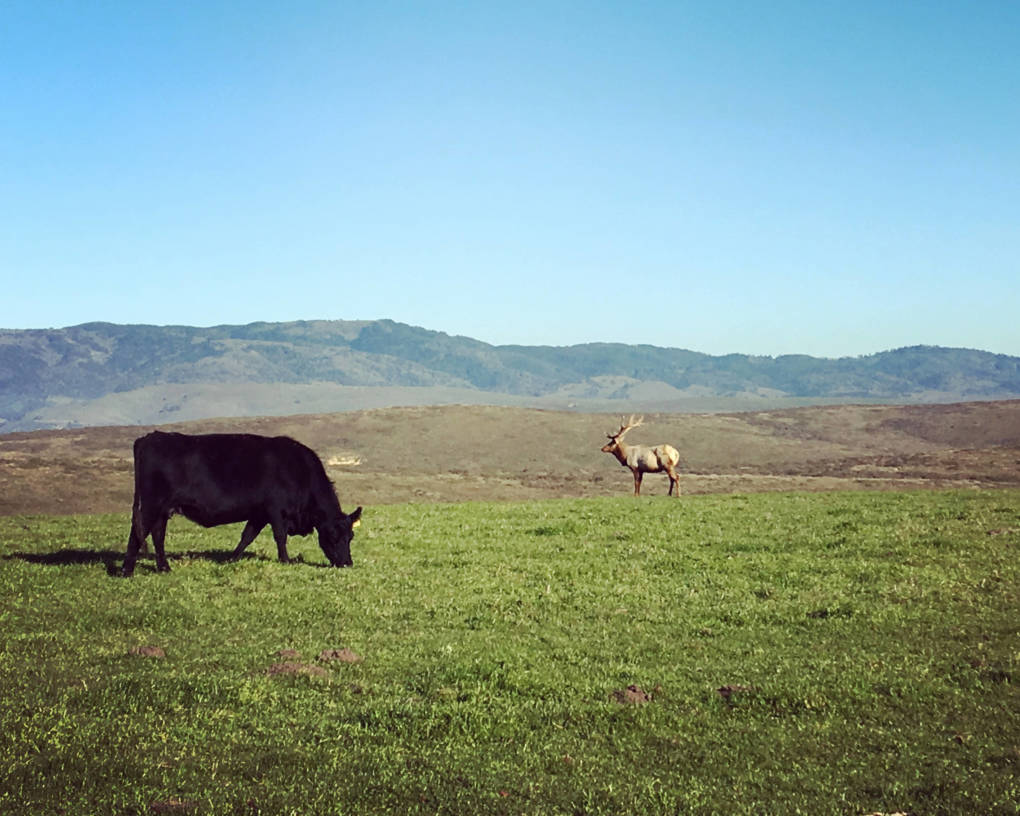
"caption": "Cattle and the Tule elk make unlikely and often problematic neighbors at Pt. Reyes National Seashore.",
"description": null,
"title": "Tule Elk and Cow",
"credit": "Laura Watt / Sonoma State University",
"status": "inherit",
"isLoading": false,
"fetchFailed": false
},
"science_1860169": {
"type": "attachments",
"id": "science_1860169",
"meta": {
"index": "attachments_1716263798",
"site": "science",
"id": "1860169",
"found": true
},
"parent": 1860164,
"imgSizes": {
"small": {
"file": "https://ww2.kqed.org/app/uploads/sites/35/2017/07/NOAA_Whale-520x283.jpeg",
"width": 520,
"mimeType": "image/jpeg",
"height": 283
},
"twentyfourteen-full-width": {
"file": "https://ww2.kqed.org/app/uploads/sites/35/2017/07/NOAA_Whale-1038x576.jpeg",
"width": 1038,
"mimeType": "image/jpeg",
"height": 576
},
"thumbnail": {
"file": "https://ww2.kqed.org/app/uploads/sites/35/2017/07/NOAA_Whale-160x87.jpeg",
"width": 160,
"mimeType": "image/jpeg",
"height": 87
},
"fd-sm": {
"file": "https://ww2.kqed.org/app/uploads/sites/35/2017/07/NOAA_Whale-960x522.jpeg",
"width": 960,
"mimeType": "image/jpeg",
"height": 522
},
"post-thumbnail": {
"file": "https://ww2.kqed.org/app/uploads/sites/35/2017/07/NOAA_Whale-672x372.jpeg",
"width": 672,
"mimeType": "image/jpeg",
"height": 372
},
"xsmall": {
"file": "https://ww2.kqed.org/app/uploads/sites/35/2017/07/NOAA_Whale-375x204.jpeg",
"width": 375,
"mimeType": "image/jpeg",
"height": 204
},
"kqedFullSize": {
"file": "https://ww2.kqed.org/app/uploads/sites/35/2017/07/NOAA_Whale.jpeg",
"width": 1856,
"height": 1010
},
"large": {
"file": "https://ww2.kqed.org/app/uploads/sites/35/2017/07/NOAA_Whale-1020x555.jpeg",
"width": 1020,
"mimeType": "image/jpeg",
"height": 555
},
"xlarge": {
"file": "https://ww2.kqed.org/app/uploads/sites/35/2017/07/NOAA_Whale-1180x642.jpeg",
"width": 1180,
"mimeType": "image/jpeg",
"height": 642
},
"guest-author-50": {
"file": "https://ww2.kqed.org/app/uploads/sites/35/2017/07/NOAA_Whale-50x50.jpeg",
"width": 50,
"mimeType": "image/jpeg",
"height": 50
},
"guest-author-96": {
"file": "https://ww2.kqed.org/app/uploads/sites/35/2017/07/NOAA_Whale-96x96.jpeg",
"width": 96,
"mimeType": "image/jpeg",
"height": 96
},
"medium": {
"file": "https://ww2.kqed.org/app/uploads/sites/35/2017/07/NOAA_Whale-800x435.jpeg",
"width": 800,
"mimeType": "image/jpeg",
"height": 435
},
"guest-author-64": {
"file": "https://ww2.kqed.org/app/uploads/sites/35/2017/07/NOAA_Whale-64x64.jpeg",
"width": 64,
"mimeType": "image/jpeg",
"height": 64
},
"guest-author-32": {
"file": "https://ww2.kqed.org/app/uploads/sites/35/2017/07/NOAA_Whale-32x32.jpeg",
"width": 32,
"mimeType": "image/jpeg",
"height": 32
},
"fd-med": {
"file": "https://ww2.kqed.org/app/uploads/sites/35/2017/07/NOAA_Whale-1180x642.jpeg",
"width": 1180,
"mimeType": "image/jpeg",
"height": 642
},
"detail": {
"file": "https://ww2.kqed.org/app/uploads/sites/35/2017/07/NOAA_Whale-150x150.jpeg",
"width": 150,
"mimeType": "image/jpeg",
"height": 150
},
"medium_large": {
"file": "https://ww2.kqed.org/app/uploads/sites/35/2017/07/NOAA_Whale-768x418.jpeg",
"width": 768,
"mimeType": "image/jpeg",
"height": 418
},
"guest-author-128": {
"file": "https://ww2.kqed.org/app/uploads/sites/35/2017/07/NOAA_Whale-128x128.jpeg",
"width": 128,
"mimeType": "image/jpeg",
"height": 128
},
"xxsmall": {
"file": "https://ww2.kqed.org/app/uploads/sites/35/2017/07/NOAA_Whale-240x131.jpeg",
"width": 240,
"mimeType": "image/jpeg",
"height": 131
}
},
"publishDate": 1500442273,
"modified": 1605217745,
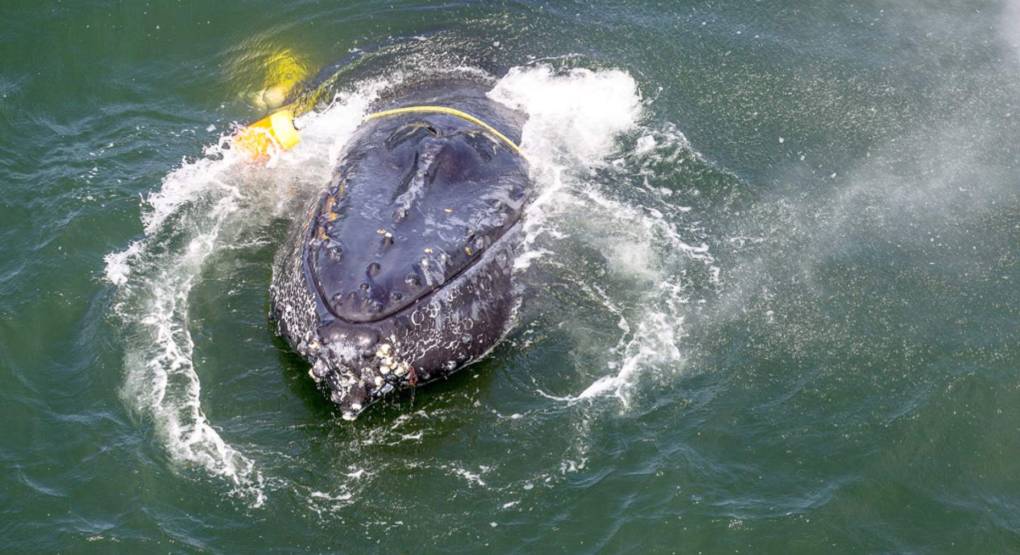
"caption": "A humpback whale entangled in fishing gear near Crescent City, seen from a Coast Guard helicopter in 2017. A new regulation, which took effect this month, allows California wildlife officials to close the Dungeness crab fishery in regions where whales are spotted.",
"description": null,
"title": "NOAA_Whale",
"credit": "Bryant Anderson/NOAA",
"status": "inherit",
"isLoading": false,
"fetchFailed": false
},
"science_1858482": {
"type": "attachments",
"id": "science_1858482",
"meta": {
"index": "attachments_1716263798",
"site": "science",
"id": "1858482",
"found": true
},
"parent": 1858279,
"imgSizes": {
"small": {
"file": "https://ww2.kqed.org/app/uploads/sites/35/2017/07/Juvenile_chinook_salmon-520x292.jpg",
"width": 520,
"mimeType": "image/jpeg",
"height": 292
},
"twentyfourteen-full-width": {
"file": "https://ww2.kqed.org/app/uploads/sites/35/2017/07/Juvenile_chinook_salmon-1038x576.jpg",
"width": 1038,
"mimeType": "image/jpeg",
"height": 576
},
"thumbnail": {
"file": "https://ww2.kqed.org/app/uploads/sites/35/2017/07/Juvenile_chinook_salmon-160x90.jpg",
"width": 160,
"mimeType": "image/jpeg",
"height": 90
},
"fd-sm": {
"file": "https://ww2.kqed.org/app/uploads/sites/35/2017/07/Juvenile_chinook_salmon-960x540.jpg",
"width": 960,
"mimeType": "image/jpeg",
"height": 540
},
"post-thumbnail": {
"file": "https://ww2.kqed.org/app/uploads/sites/35/2017/07/Juvenile_chinook_salmon-672x372.jpg",
"width": 672,
"mimeType": "image/jpeg",
"height": 372
},
"xsmall": {
"file": "https://ww2.kqed.org/app/uploads/sites/35/2017/07/Juvenile_chinook_salmon-375x211.jpg",
"width": 375,
"mimeType": "image/jpeg",
"height": 211
},
"kqedFullSize": {
"file": "https://ww2.kqed.org/app/uploads/sites/35/2017/07/Juvenile_chinook_salmon.jpg",
"width": 1800,
"height": 1012
},
"large": {
"file": "https://ww2.kqed.org/app/uploads/sites/35/2017/07/Juvenile_chinook_salmon-1020x573.jpg",
"width": 1020,
"mimeType": "image/jpeg",
"height": 573
},
"xlarge": {
"file": "https://ww2.kqed.org/app/uploads/sites/35/2017/07/Juvenile_chinook_salmon-1180x663.jpg",
"width": 1180,
"mimeType": "image/jpeg",
"height": 663
},
"guest-author-50": {
"file": "https://ww2.kqed.org/app/uploads/sites/35/2017/07/Juvenile_chinook_salmon-50x50.jpg",
"width": 50,
"mimeType": "image/jpeg",
"height": 50
},
"guest-author-96": {
"file": "https://ww2.kqed.org/app/uploads/sites/35/2017/07/Juvenile_chinook_salmon-96x96.jpg",
"width": 96,
"mimeType": "image/jpeg",
"height": 96
},
"medium": {
"file": "https://ww2.kqed.org/app/uploads/sites/35/2017/07/Juvenile_chinook_salmon-800x450.jpg",
"width": 800,
"mimeType": "image/jpeg",
"height": 450
},
"guest-author-64": {
"file": "https://ww2.kqed.org/app/uploads/sites/35/2017/07/Juvenile_chinook_salmon-64x64.jpg",
"width": 64,
"mimeType": "image/jpeg",
"height": 64
},
"guest-author-32": {
"file": "https://ww2.kqed.org/app/uploads/sites/35/2017/07/Juvenile_chinook_salmon-32x32.jpg",
"width": 32,
"mimeType": "image/jpeg",
"height": 32
},
"fd-med": {
"file": "https://ww2.kqed.org/app/uploads/sites/35/2017/07/Juvenile_chinook_salmon-1180x663.jpg",
"width": 1180,
"mimeType": "image/jpeg",
"height": 663
},
"detail": {
"file": "https://ww2.kqed.org/app/uploads/sites/35/2017/07/Juvenile_chinook_salmon-150x150.jpg",
"width": 150,
"mimeType": "image/jpeg",
"height": 150
},
"medium_large": {
"file": "https://ww2.kqed.org/app/uploads/sites/35/2017/07/Juvenile_chinook_salmon-768x432.jpg",
"width": 768,
"mimeType": "image/jpeg",
"height": 432
},
"guest-author-128": {
"file": "https://ww2.kqed.org/app/uploads/sites/35/2017/07/Juvenile_chinook_salmon-128x128.jpg",
"width": 128,
"mimeType": "image/jpeg",
"height": 128
},
"xxsmall": {
"file": "https://ww2.kqed.org/app/uploads/sites/35/2017/07/Juvenile_chinook_salmon-240x135.jpg",
"width": 240,
"mimeType": "image/jpeg",
"height": 135
}
},
"publishDate": 1500405968,
"modified": 1500406145,
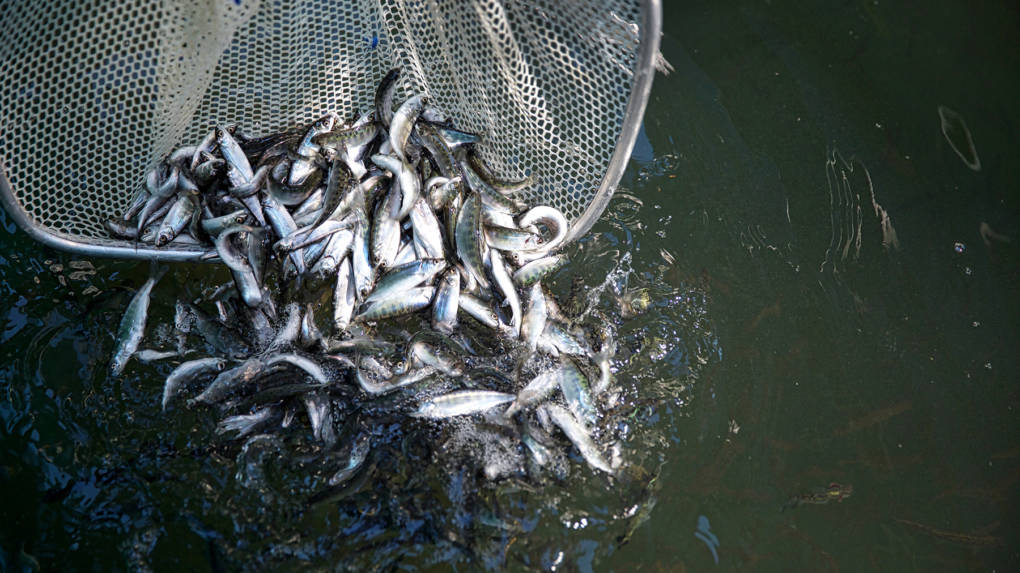
"caption": "Members of the San Joaquin River Restoration Program release almost 90,000 spring-run Chinook salmon into the Eastside Bypass on the San Joaquin River on March 6, 2017. \nThe release marked only the second year juveniles produced solely on the San \nJoaquin River have been released into it. \n\n",
"description": null,
"title": "Juvenile_chinook_salmon",
"credit": "Steve Martarano/USFWS",
"status": "inherit",
"isLoading": false,
"fetchFailed": false
},
"science_1854804": {
"type": "attachments",
"id": "science_1854804",
"meta": {
"index": "attachments_1716263798",
"site": "science",
"id": "1854804",
"found": true
},
"parent": 1854219,
"imgSizes": {
"small": {
"file": "https://ww2.kqed.org/app/uploads/sites/35/2017/07/Right_Whale_boats-520x365.jpg",
"width": 520,
"mimeType": "image/jpeg",
"height": 365
},
"thumbnail": {
"file": "https://ww2.kqed.org/app/uploads/sites/35/2017/07/Right_Whale_boats-160x112.jpg",
"width": 160,
"mimeType": "image/jpeg",
"height": 112
},
"post-thumbnail": {
"file": "https://ww2.kqed.org/app/uploads/sites/35/2017/07/Right_Whale_boats-672x372.jpg",
"width": 672,
"mimeType": "image/jpeg",
"height": 372
},
"xsmall": {
"file": "https://ww2.kqed.org/app/uploads/sites/35/2017/07/Right_Whale_boats-375x263.jpg",
"width": 375,
"mimeType": "image/jpeg",
"height": 263
},
"kqedFullSize": {
"file": "https://ww2.kqed.org/app/uploads/sites/35/2017/07/Right_Whale_boats.jpg",
"width": 750,
"height": 526
},
"guest-author-50": {
"file": "https://ww2.kqed.org/app/uploads/sites/35/2017/07/Right_Whale_boats-50x50.jpg",
"width": 50,
"mimeType": "image/jpeg",
"height": 50
},
"guest-author-96": {
"file": "https://ww2.kqed.org/app/uploads/sites/35/2017/07/Right_Whale_boats-96x96.jpg",
"width": 96,
"mimeType": "image/jpeg",
"height": 96
},
"guest-author-64": {
"file": "https://ww2.kqed.org/app/uploads/sites/35/2017/07/Right_Whale_boats-64x64.jpg",
"width": 64,
"mimeType": "image/jpeg",
"height": 64
},
"detail": {
"file": "https://ww2.kqed.org/app/uploads/sites/35/2017/07/Right_Whale_boats-150x150.jpg",
"width": 150,
"mimeType": "image/jpeg",
"height": 150
},
"guest-author-32": {
"file": "https://ww2.kqed.org/app/uploads/sites/35/2017/07/Right_Whale_boats-32x32.jpg",
"width": 32,
"mimeType": "image/jpeg",
"height": 32
},
"guest-author-128": {
"file": "https://ww2.kqed.org/app/uploads/sites/35/2017/07/Right_Whale_boats-128x128.jpg",
"width": 128,
"mimeType": "image/jpeg",
"height": 128
},
"xxsmall": {
"file": "https://ww2.kqed.org/app/uploads/sites/35/2017/07/Right_Whale_boats-240x168.jpg",
"width": 240,
"mimeType": "image/jpeg",
"height": 168
}
},
"publishDate": 1500320414,
"modified": 1500320823,
"caption": "Rescuers try to disentangle a right whale in 2011--a dangerous endeavor that only trained NOAA officials are legally allowed to attempt. ",
"description": null,
"title": "Right_Whale_boats",
"credit": "Photo courtesy of EcoHealth Alliance, under permit number 594-1759",
"status": "inherit",
"isLoading": false,
"fetchFailed": false
},
"science_1842644": {
"type": "attachments",
"id": "science_1842644",
"meta": {
"index": "attachments_1716263798",
"site": "science",
"id": "1842644",
"found": true
},
"parent": 1842643,
"imgSizes": {
"small": {
"file": "https://ww2.kqed.org/app/uploads/sites/35/2017/07/21870743818_4d3ba53afe_o_custom-1833750eb62db859e1cd66d619737aee72ce044e-520x380.jpg",
"width": 520,
"mimeType": "image/jpeg",
"height": 380
},
"twentyfourteen-full-width": {
"file": "https://ww2.kqed.org/app/uploads/sites/35/2017/07/21870743818_4d3ba53afe_o_custom-1833750eb62db859e1cd66d619737aee72ce044e-1038x576.jpg",
"width": 1038,
"mimeType": "image/jpeg",
"height": 576
},
"thumbnail": {
"file": "https://ww2.kqed.org/app/uploads/sites/35/2017/07/21870743818_4d3ba53afe_o_custom-1833750eb62db859e1cd66d619737aee72ce044e-160x117.jpg",
"width": 160,
"mimeType": "image/jpeg",
"height": 117
},
"fd-sm": {
"file": "https://ww2.kqed.org/app/uploads/sites/35/2017/07/21870743818_4d3ba53afe_o_custom-1833750eb62db859e1cd66d619737aee72ce044e-960x701.jpg",
"width": 960,
"mimeType": "image/jpeg",
"height": 701
},
"post-thumbnail": {
"file": "https://ww2.kqed.org/app/uploads/sites/35/2017/07/21870743818_4d3ba53afe_o_custom-1833750eb62db859e1cd66d619737aee72ce044e-672x372.jpg",
"width": 672,
"mimeType": "image/jpeg",
"height": 372
},
"xsmall": {
"file": "https://ww2.kqed.org/app/uploads/sites/35/2017/07/21870743818_4d3ba53afe_o_custom-1833750eb62db859e1cd66d619737aee72ce044e-375x274.jpg",
"width": 375,
"mimeType": "image/jpeg",
"height": 274
},
"kqedFullSize": {
"file": "https://ww2.kqed.org/app/uploads/sites/35/2017/07/21870743818_4d3ba53afe_o_custom-1833750eb62db859e1cd66d619737aee72ce044e.jpg",
"width": 2924,
"height": 2135
},
"large": {
"file": "https://ww2.kqed.org/app/uploads/sites/35/2017/07/21870743818_4d3ba53afe_o_custom-1833750eb62db859e1cd66d619737aee72ce044e-1020x745.jpg",
"width": 1020,
"mimeType": "image/jpeg",
"height": 745
},
"xlarge": {
"file": "https://ww2.kqed.org/app/uploads/sites/35/2017/07/21870743818_4d3ba53afe_o_custom-1833750eb62db859e1cd66d619737aee72ce044e-1180x862.jpg",
"width": 1180,
"mimeType": "image/jpeg",
"height": 862
},
"guest-author-50": {
"file": "https://ww2.kqed.org/app/uploads/sites/35/2017/07/21870743818_4d3ba53afe_o_custom-1833750eb62db859e1cd66d619737aee72ce044e-50x50.jpg",
"width": 50,
"mimeType": "image/jpeg",
"height": 50
},
"guest-author-96": {
"file": "https://ww2.kqed.org/app/uploads/sites/35/2017/07/21870743818_4d3ba53afe_o_custom-1833750eb62db859e1cd66d619737aee72ce044e-96x96.jpg",
"width": 96,
"mimeType": "image/jpeg",
"height": 96
},
"medium": {
"file": "https://ww2.kqed.org/app/uploads/sites/35/2017/07/21870743818_4d3ba53afe_o_custom-1833750eb62db859e1cd66d619737aee72ce044e-800x584.jpg",
"width": 800,
"mimeType": "image/jpeg",
"height": 584
},
"guest-author-64": {
"file": "https://ww2.kqed.org/app/uploads/sites/35/2017/07/21870743818_4d3ba53afe_o_custom-1833750eb62db859e1cd66d619737aee72ce044e-64x64.jpg",
"width": 64,
"mimeType": "image/jpeg",
"height": 64
},
"guest-author-32": {
"file": "https://ww2.kqed.org/app/uploads/sites/35/2017/07/21870743818_4d3ba53afe_o_custom-1833750eb62db859e1cd66d619737aee72ce044e-32x32.jpg",
"width": 32,
"mimeType": "image/jpeg",
"height": 32
},
"fd-lrg": {
"file": "https://ww2.kqed.org/app/uploads/sites/35/2017/07/21870743818_4d3ba53afe_o_custom-1833750eb62db859e1cd66d619737aee72ce044e-1920x1402.jpg",
"width": 1920,
"mimeType": "image/jpeg",
"height": 1402
},
"fd-med": {
"file": "https://ww2.kqed.org/app/uploads/sites/35/2017/07/21870743818_4d3ba53afe_o_custom-1833750eb62db859e1cd66d619737aee72ce044e-1180x862.jpg",
"width": 1180,
"mimeType": "image/jpeg",
"height": 862
},
"full-width": {
"file": "https://ww2.kqed.org/app/uploads/sites/35/2017/07/21870743818_4d3ba53afe_o_custom-1833750eb62db859e1cd66d619737aee72ce044e-1920x1402.jpg",
"width": 1920,
"mimeType": "image/jpeg",
"height": 1402
},
"detail": {
"file": "https://ww2.kqed.org/app/uploads/sites/35/2017/07/21870743818_4d3ba53afe_o_custom-1833750eb62db859e1cd66d619737aee72ce044e-150x150.jpg",
"width": 150,
"mimeType": "image/jpeg",
"height": 150
},
"medium_large": {
"file": "https://ww2.kqed.org/app/uploads/sites/35/2017/07/21870743818_4d3ba53afe_o_custom-1833750eb62db859e1cd66d619737aee72ce044e-768x561.jpg",
"width": 768,
"mimeType": "image/jpeg",
"height": 561
},
"guest-author-128": {
"file": "https://ww2.kqed.org/app/uploads/sites/35/2017/07/21870743818_4d3ba53afe_o_custom-1833750eb62db859e1cd66d619737aee72ce044e-128x128.jpg",
"width": 128,
"mimeType": "image/jpeg",
"height": 128
},
"xxsmall": {
"file": "https://ww2.kqed.org/app/uploads/sites/35/2017/07/21870743818_4d3ba53afe_o_custom-1833750eb62db859e1cd66d619737aee72ce044e-240x175.jpg",
"width": 240,
"mimeType": "image/jpeg",
"height": 175
}
},
"publishDate": 1500050969,
"modified": 1500051083,
"caption": "A raven flies in the Seedskadee National Wildlife Refuge in Wyoming.",
"description": "A raven flies in the Seedskadee National Wildlife Refuge in Wyoming.",
"title": "21870743818_4d3ba53afe_o_custom-1833750eb62db859e1cd66d619737aee72ce044e",
"credit": "Tom Koerner/U.S. Fish and Wildlife Service",
"status": "inherit",
"isLoading": false,
"fetchFailed": false
},
"science_1838830": {
"type": "attachments",
"id": "science_1838830",
"meta": {
"index": "attachments_1716263798",
"site": "science",
"id": "1838830",
"found": true
},
"parent": 1838829,
"imgSizes": {
"small": {
"file": "https://ww2.kqed.org/app/uploads/sites/35/2017/07/3u4a7727_custom-1fbf0ccbab767b48cfd5637abb511e858c5e7d62-520x371.jpg",
"width": 520,
"mimeType": "image/jpeg",
"height": 371
},
"twentyfourteen-full-width": {
"file": "https://ww2.kqed.org/app/uploads/sites/35/2017/07/3u4a7727_custom-1fbf0ccbab767b48cfd5637abb511e858c5e7d62-1038x576.jpg",
"width": 1038,
"mimeType": "image/jpeg",
"height": 576
},
"thumbnail": {
"file": "https://ww2.kqed.org/app/uploads/sites/35/2017/07/3u4a7727_custom-1fbf0ccbab767b48cfd5637abb511e858c5e7d62-160x114.jpg",
"width": 160,
"mimeType": "image/jpeg",
"height": 114
},
"fd-sm": {
"file": "https://ww2.kqed.org/app/uploads/sites/35/2017/07/3u4a7727_custom-1fbf0ccbab767b48cfd5637abb511e858c5e7d62-960x685.jpg",
"width": 960,
"mimeType": "image/jpeg",
"height": 685
},
"post-thumbnail": {
"file": "https://ww2.kqed.org/app/uploads/sites/35/2017/07/3u4a7727_custom-1fbf0ccbab767b48cfd5637abb511e858c5e7d62-672x372.jpg",
"width": 672,
"mimeType": "image/jpeg",
"height": 372
},
"xsmall": {
"file": "https://ww2.kqed.org/app/uploads/sites/35/2017/07/3u4a7727_custom-1fbf0ccbab767b48cfd5637abb511e858c5e7d62-375x268.jpg",
"width": 375,
"mimeType": "image/jpeg",
"height": 268
},
"kqedFullSize": {
"file": "https://ww2.kqed.org/app/uploads/sites/35/2017/07/3u4a7727_custom-1fbf0ccbab767b48cfd5637abb511e858c5e7d62.jpg",
"width": 1334,
"height": 952
},
"large": {
"file": "https://ww2.kqed.org/app/uploads/sites/35/2017/07/3u4a7727_custom-1fbf0ccbab767b48cfd5637abb511e858c5e7d62-1020x728.jpg",
"width": 1020,
"mimeType": "image/jpeg",
"height": 728
},
"xlarge": {
"file": "https://ww2.kqed.org/app/uploads/sites/35/2017/07/3u4a7727_custom-1fbf0ccbab767b48cfd5637abb511e858c5e7d62-1180x842.jpg",
"width": 1180,
"mimeType": "image/jpeg",
"height": 842
},
"guest-author-50": {
"file": "https://ww2.kqed.org/app/uploads/sites/35/2017/07/3u4a7727_custom-1fbf0ccbab767b48cfd5637abb511e858c5e7d62-50x50.jpg",
"width": 50,
"mimeType": "image/jpeg",
"height": 50
},
"guest-author-96": {
"file": "https://ww2.kqed.org/app/uploads/sites/35/2017/07/3u4a7727_custom-1fbf0ccbab767b48cfd5637abb511e858c5e7d62-96x96.jpg",
"width": 96,
"mimeType": "image/jpeg",
"height": 96
},
"medium": {
"file": "https://ww2.kqed.org/app/uploads/sites/35/2017/07/3u4a7727_custom-1fbf0ccbab767b48cfd5637abb511e858c5e7d62-800x571.jpg",
"width": 800,
"mimeType": "image/jpeg",
"height": 571
},
"guest-author-64": {
"file": "https://ww2.kqed.org/app/uploads/sites/35/2017/07/3u4a7727_custom-1fbf0ccbab767b48cfd5637abb511e858c5e7d62-64x64.jpg",
"width": 64,
"mimeType": "image/jpeg",
"height": 64
},
"guest-author-32": {
"file": "https://ww2.kqed.org/app/uploads/sites/35/2017/07/3u4a7727_custom-1fbf0ccbab767b48cfd5637abb511e858c5e7d62-32x32.jpg",
"width": 32,
"mimeType": "image/jpeg",
"height": 32
},
"fd-med": {
"file": "https://ww2.kqed.org/app/uploads/sites/35/2017/07/3u4a7727_custom-1fbf0ccbab767b48cfd5637abb511e858c5e7d62-1180x842.jpg",
"width": 1180,
"mimeType": "image/jpeg",
"height": 842
},
"detail": {
"file": "https://ww2.kqed.org/app/uploads/sites/35/2017/07/3u4a7727_custom-1fbf0ccbab767b48cfd5637abb511e858c5e7d62-150x150.jpg",
"width": 150,
"mimeType": "image/jpeg",
"height": 150
},
"medium_large": {
"file": "https://ww2.kqed.org/app/uploads/sites/35/2017/07/3u4a7727_custom-1fbf0ccbab767b48cfd5637abb511e858c5e7d62-768x548.jpg",
"width": 768,
"mimeType": "image/jpeg",
"height": 548
},
"guest-author-128": {
"file": "https://ww2.kqed.org/app/uploads/sites/35/2017/07/3u4a7727_custom-1fbf0ccbab767b48cfd5637abb511e858c5e7d62-128x128.jpg",
"width": 128,
"mimeType": "image/jpeg",
"height": 128
},
"xxsmall": {
"file": "https://ww2.kqed.org/app/uploads/sites/35/2017/07/3u4a7727_custom-1fbf0ccbab767b48cfd5637abb511e858c5e7d62-240x171.jpg",
"width": 240,
"mimeType": "image/jpeg",
"height": 171
}
},
"publishDate": 1499966961,
"modified": 1499967023,
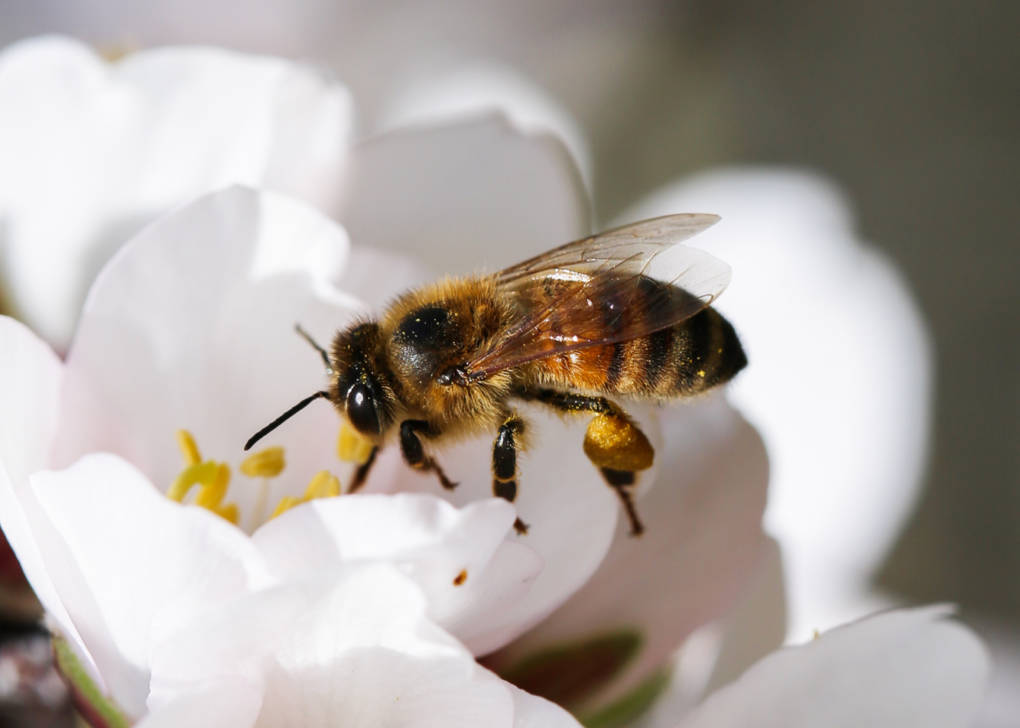
"caption": "With an American honeybee queen for a mother and a European honeybee drone for a father, this worker bee has a level of genetic diversity unseen in the U.S. for decades. Researchers at Washington State University hope a deeper gene pool will give a new generation of honeybees much-needed genetic traits, like resistance to varroa mites. The parasite kills a third of American honeybees each year",
"description": null,
"title": "With an American honeybee queen for a mother and a European honeybee drone for a father, this worker bee has a level of genetic diversity unseen in the U.S. for decades. Researchers at Washington State University hope a deeper gene pool will give a new generation of honeybees much-needed genetic traits, like resistance to varroa mites. The parasite kills a third of American honeybees each year.",
"credit": "Megan Asche/Courtesy of Washington State University",
"status": "inherit",
"isLoading": false,
"fetchFailed": false
},
"science_1812008": {
"type": "attachments",
"id": "science_1812008",
"meta": {
"index": "attachments_1716263798",
"site": "science",
"id": "1812008",
"found": true
},
"parent": 1811984,
"imgSizes": {
"small": {
"file": "https://ww2.kqed.org/app/uploads/sites/35/2017/07/DL413-caterpillars-phead-marquee-final-520x293.jpg",
"width": 520,
"mimeType": "image/jpeg",
"height": 293
},
"twentyfourteen-full-width": {
"file": "https://ww2.kqed.org/app/uploads/sites/35/2017/07/DL413-caterpillars-phead-marquee-final-1038x576.jpg",
"width": 1038,
"mimeType": "image/jpeg",
"height": 576
},
"thumbnail": {
"file": "https://ww2.kqed.org/app/uploads/sites/35/2017/07/DL413-caterpillars-phead-marquee-final-160x90.jpg",
"width": 160,
"mimeType": "image/jpeg",
"height": 90
},
"fd-sm": {
"file": "https://ww2.kqed.org/app/uploads/sites/35/2017/07/DL413-caterpillars-phead-marquee-final-960x540.jpg",
"width": 960,
"mimeType": "image/jpeg",
"height": 540
},
"post-thumbnail": {
"file": "https://ww2.kqed.org/app/uploads/sites/35/2017/07/DL413-caterpillars-phead-marquee-final-672x372.jpg",
"width": 672,
"mimeType": "image/jpeg",
"height": 372
},
"xsmall": {
"file": "https://ww2.kqed.org/app/uploads/sites/35/2017/07/DL413-caterpillars-phead-marquee-final-375x211.jpg",
"width": 375,
"mimeType": "image/jpeg",
"height": 211
},
"kqedFullSize": {
"file": "https://ww2.kqed.org/app/uploads/sites/35/2017/07/DL413-caterpillars-phead-marquee-final.jpg",
"width": 1920,
"height": 1080
},
"large": {
"file": "https://ww2.kqed.org/app/uploads/sites/35/2017/07/DL413-caterpillars-phead-marquee-final-1020x574.jpg",
"width": 1020,
"mimeType": "image/jpeg",
"height": 574
},
"xlarge": {
"file": "https://ww2.kqed.org/app/uploads/sites/35/2017/07/DL413-caterpillars-phead-marquee-final-1180x664.jpg",
"width": 1180,
"mimeType": "image/jpeg",
"height": 664
},
"guest-author-50": {
"file": "https://ww2.kqed.org/app/uploads/sites/35/2017/07/DL413-caterpillars-phead-marquee-final-50x50.jpg",
"width": 50,
"mimeType": "image/jpeg",
"height": 50
},
"guest-author-96": {
"file": "https://ww2.kqed.org/app/uploads/sites/35/2017/07/DL413-caterpillars-phead-marquee-final-96x96.jpg",
"width": 96,
"mimeType": "image/jpeg",
"height": 96
},
"medium": {
"file": "https://ww2.kqed.org/app/uploads/sites/35/2017/07/DL413-caterpillars-phead-marquee-final-800x450.jpg",
"width": 800,
"mimeType": "image/jpeg",
"height": 450
},
"guest-author-64": {
"file": "https://ww2.kqed.org/app/uploads/sites/35/2017/07/DL413-caterpillars-phead-marquee-final-64x64.jpg",
"width": 64,
"mimeType": "image/jpeg",
"height": 64
},
"guest-author-32": {
"file": "https://ww2.kqed.org/app/uploads/sites/35/2017/07/DL413-caterpillars-phead-marquee-final-32x32.jpg",
"width": 32,
"mimeType": "image/jpeg",
"height": 32
},
"fd-lrg": {
"file": "https://ww2.kqed.org/app/uploads/sites/35/2017/07/DL413-caterpillars-phead-marquee-final-1920x1080.jpg",
"width": 1920,
"mimeType": "image/jpeg",
"height": 1080
},
"fd-med": {
"file": "https://ww2.kqed.org/app/uploads/sites/35/2017/07/DL413-caterpillars-phead-marquee-final-1180x664.jpg",
"width": 1180,
"mimeType": "image/jpeg",
"height": 664
},
"full-width": {
"file": "https://ww2.kqed.org/app/uploads/sites/35/2017/07/DL413-caterpillars-phead-marquee-final-1920x1080.jpg",
"width": 1920,
"mimeType": "image/jpeg",
"height": 1080
},
"detail": {
"file": "https://ww2.kqed.org/app/uploads/sites/35/2017/07/DL413-caterpillars-phead-marquee-final-150x150.jpg",
"width": 150,
"mimeType": "image/jpeg",
"height": 150
},
"medium_large": {
"file": "https://ww2.kqed.org/app/uploads/sites/35/2017/07/DL413-caterpillars-phead-marquee-final-768x432.jpg",
"width": 768,
"mimeType": "image/jpeg",
"height": 432
},
"guest-author-128": {
"file": "https://ww2.kqed.org/app/uploads/sites/35/2017/07/DL413-caterpillars-phead-marquee-final-128x128.jpg",
"width": 128,
"mimeType": "image/jpeg",
"height": 128
},
"xxsmall": {
"file": "https://ww2.kqed.org/app/uploads/sites/35/2017/07/DL413-caterpillars-phead-marquee-final-240x135.jpg",
"width": 240,
"mimeType": "image/jpeg",
"height": 135
}
},
"publishDate": 1499390117,
"modified": 1499390161,
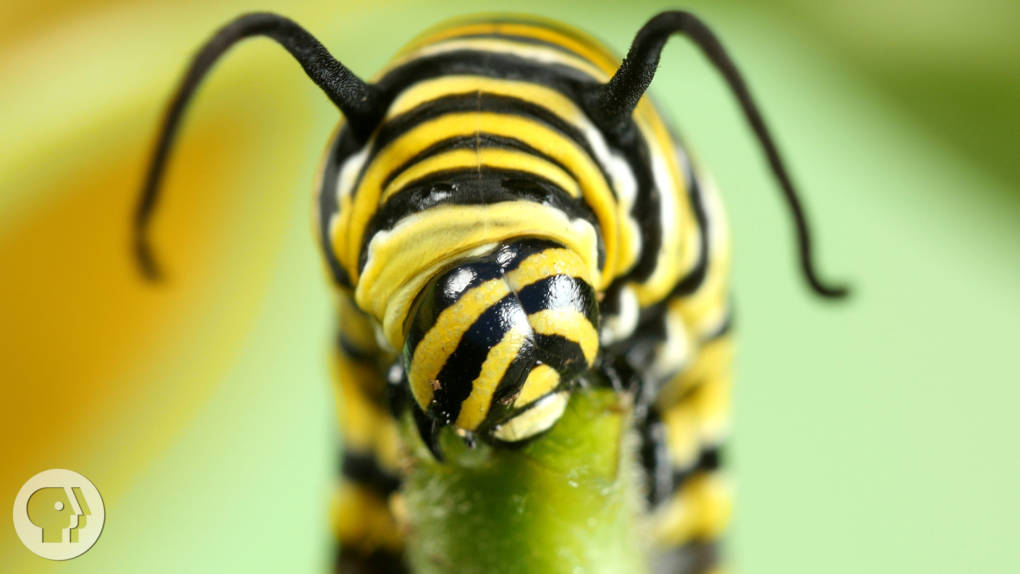
"caption": "A monarch caterpillar eats milkweed, its only food source.",
"description": null,
"title": "DL413-caterpillars-phead-marquee-final",
"credit": "Josh Cassidy/KQED",
"status": "inherit",
"isLoading": false,
"fetchFailed": false
},
"science_1680330": {
"type": "attachments",
"id": "science_1680330",
"meta": {
"index": "attachments_1716263798",
"site": "science",
"id": "1680330",
"found": true
},
"parent": 1664694,
"imgSizes": {
"small": {
"file": "https://ww2.kqed.org/app/uploads/sites/35/2017/06/DL412-phead.1-520x293.png",
"width": 520,
"mimeType": "image/png",
"height": 293
},
"twentyfourteen-full-width": {
"file": "https://ww2.kqed.org/app/uploads/sites/35/2017/06/DL412-phead.1-1038x576.png",
"width": 1038,
"mimeType": "image/png",
"height": 576
},
"thumbnail": {
"file": "https://ww2.kqed.org/app/uploads/sites/35/2017/06/DL412-phead.1-160x90.png",
"width": 160,
"mimeType": "image/png",
"height": 90
},
"fd-sm": {
"file": "https://ww2.kqed.org/app/uploads/sites/35/2017/06/DL412-phead.1-960x540.png",
"width": 960,
"mimeType": "image/png",
"height": 540
},
"post-thumbnail": {
"file": "https://ww2.kqed.org/app/uploads/sites/35/2017/06/DL412-phead.1-672x372.png",
"width": 672,
"mimeType": "image/png",
"height": 372
},
"xsmall": {
"file": "https://ww2.kqed.org/app/uploads/sites/35/2017/06/DL412-phead.1-375x211.png",
"width": 375,
"mimeType": "image/png",
"height": 211
},
"kqedFullSize": {
"file": "https://ww2.kqed.org/app/uploads/sites/35/2017/06/DL412-phead.1.png",
"width": 1920,
"height": 1080
},
"large": {
"file": "https://ww2.kqed.org/app/uploads/sites/35/2017/06/DL412-phead.1-1020x574.png",
"width": 1020,
"mimeType": "image/png",
"height": 574
},
"xlarge": {
"file": "https://ww2.kqed.org/app/uploads/sites/35/2017/06/DL412-phead.1-1180x664.png",
"width": 1180,
"mimeType": "image/png",
"height": 664
},
"guest-author-50": {
"file": "https://ww2.kqed.org/app/uploads/sites/35/2017/06/DL412-phead.1-50x50.png",
"width": 50,
"mimeType": "image/png",
"height": 50
},
"guest-author-96": {
"file": "https://ww2.kqed.org/app/uploads/sites/35/2017/06/DL412-phead.1-96x96.png",
"width": 96,
"mimeType": "image/png",
"height": 96
},
"medium": {
"file": "https://ww2.kqed.org/app/uploads/sites/35/2017/06/DL412-phead.1-800x450.png",
"width": 800,
"mimeType": "image/png",
"height": 450
},
"guest-author-64": {
"file": "https://ww2.kqed.org/app/uploads/sites/35/2017/06/DL412-phead.1-64x64.png",
"width": 64,
"mimeType": "image/png",
"height": 64
},
"guest-author-32": {
"file": "https://ww2.kqed.org/app/uploads/sites/35/2017/06/DL412-phead.1-32x32.png",
"width": 32,
"mimeType": "image/png",
"height": 32
},
"fd-lrg": {
"file": "https://ww2.kqed.org/app/uploads/sites/35/2017/06/DL412-phead.1-1920x1080.png",
"width": 1920,
"mimeType": "image/png",
"height": 1080
},
"fd-med": {
"file": "https://ww2.kqed.org/app/uploads/sites/35/2017/06/DL412-phead.1-1180x664.png",
"width": 1180,
"mimeType": "image/png",
"height": 664
},
"full-width": {
"file": "https://ww2.kqed.org/app/uploads/sites/35/2017/06/DL412-phead.1-1920x1080.png",
"width": 1920,
"mimeType": "image/png",
"height": 1080
},
"detail": {
"file": "https://ww2.kqed.org/app/uploads/sites/35/2017/06/DL412-phead.1-150x150.png",
"width": 150,
"mimeType": "image/png",
"height": 150
},
"medium_large": {
"file": "https://ww2.kqed.org/app/uploads/sites/35/2017/06/DL412-phead.1-768x432.png",
"width": 768,
"mimeType": "image/png",
"height": 432
},
"guest-author-128": {
"file": "https://ww2.kqed.org/app/uploads/sites/35/2017/06/DL412-phead.1-128x128.png",
"width": 128,
"mimeType": "image/png",
"height": 128
},
"xxsmall": {
"file": "https://ww2.kqed.org/app/uploads/sites/35/2017/06/DL412-phead.1-240x135.png",
"width": 240,
"mimeType": "image/png",
"height": 135
}
},
"publishDate": 1496179503,
"modified": 1496179503,
"caption": null,
"description": null,
"title": "DL412 phead.1",
"credit": null,
"status": "inherit",
"isLoading": false,
"fetchFailed": false
},
"science_1715198": {
"type": "attachments",
"id": "science_1715198",
"meta": {
"index": "attachments_1716263798",
"site": "science",
"id": "1715198",
"found": true
},
"parent": 1715197,
"imgSizes": {
"small": {
"file": "https://ww2.kqed.org/app/uploads/sites/35/2017/06/Whale_entengle_twitter-520x312.jpg",
"width": 520,
"mimeType": "image/jpeg",
"height": 312
},
"twentyfourteen-full-width": {
"file": "https://ww2.kqed.org/app/uploads/sites/35/2017/06/Whale_entengle_twitter-1038x576.jpg",
"width": 1038,
"mimeType": "image/jpeg",
"height": 576
},
"thumbnail": {
"file": "https://ww2.kqed.org/app/uploads/sites/35/2017/06/Whale_entengle_twitter-160x96.jpg",
"width": 160,
"mimeType": "image/jpeg",
"height": 96
},
"fd-sm": {
"file": "https://ww2.kqed.org/app/uploads/sites/35/2017/06/Whale_entengle_twitter-960x575.jpg",
"width": 960,
"mimeType": "image/jpeg",
"height": 575
},
"post-thumbnail": {
"file": "https://ww2.kqed.org/app/uploads/sites/35/2017/06/Whale_entengle_twitter-672x372.jpg",
"width": 672,
"mimeType": "image/jpeg",
"height": 372
},
"xsmall": {
"file": "https://ww2.kqed.org/app/uploads/sites/35/2017/06/Whale_entengle_twitter-375x225.jpg",
"width": 375,
"mimeType": "image/jpeg",
"height": 225
},
"kqedFullSize": {
"file": "https://ww2.kqed.org/app/uploads/sites/35/2017/06/Whale_entengle_twitter.jpg",
"width": 1200,
"height": 719
},
"large": {
"file": "https://ww2.kqed.org/app/uploads/sites/35/2017/06/Whale_entengle_twitter-1020x611.jpg",
"width": 1020,
"mimeType": "image/jpeg",
"height": 611
},
"xlarge": {
"file": "https://ww2.kqed.org/app/uploads/sites/35/2017/06/Whale_entengle_twitter-1180x707.jpg",
"width": 1180,
"mimeType": "image/jpeg",
"height": 707
},
"guest-author-50": {
"file": "https://ww2.kqed.org/app/uploads/sites/35/2017/06/Whale_entengle_twitter-50x50.jpg",
"width": 50,
"mimeType": "image/jpeg",
"height": 50
},
"guest-author-96": {
"file": "https://ww2.kqed.org/app/uploads/sites/35/2017/06/Whale_entengle_twitter-96x96.jpg",
"width": 96,
"mimeType": "image/jpeg",
"height": 96
},
"medium": {
"file": "https://ww2.kqed.org/app/uploads/sites/35/2017/06/Whale_entengle_twitter-800x479.jpg",
"width": 800,
"mimeType": "image/jpeg",
"height": 479
},
"guest-author-64": {
"file": "https://ww2.kqed.org/app/uploads/sites/35/2017/06/Whale_entengle_twitter-64x64.jpg",
"width": 64,
"mimeType": "image/jpeg",
"height": 64
},
"guest-author-32": {
"file": "https://ww2.kqed.org/app/uploads/sites/35/2017/06/Whale_entengle_twitter-32x32.jpg",
"width": 32,
"mimeType": "image/jpeg",
"height": 32
},
"fd-med": {
"file": "https://ww2.kqed.org/app/uploads/sites/35/2017/06/Whale_entengle_twitter-1180x707.jpg",
"width": 1180,
"mimeType": "image/jpeg",
"height": 707
},
"detail": {
"file": "https://ww2.kqed.org/app/uploads/sites/35/2017/06/Whale_entengle_twitter-150x150.jpg",
"width": 150,
"mimeType": "image/jpeg",
"height": 150
},
"medium_large": {
"file": "https://ww2.kqed.org/app/uploads/sites/35/2017/06/Whale_entengle_twitter-768x460.jpg",
"width": 768,
"mimeType": "image/jpeg",
"height": 460
},
"guest-author-128": {
"file": "https://ww2.kqed.org/app/uploads/sites/35/2017/06/Whale_entengle_twitter-128x128.jpg",
"width": 128,
"mimeType": "image/jpeg",
"height": 128
},
"xxsmall": {
"file": "https://ww2.kqed.org/app/uploads/sites/35/2017/06/Whale_entengle_twitter-240x144.jpg",
"width": 240,
"mimeType": "image/jpeg",
"height": 144
}
},
"publishDate": 1497297751,
"modified": 1497297836,
"caption": "A humpback whale entangled in fishing line was spotted off Newport Beach in 2016. \n\n",
"description": null,
"title": "Whale_entengle_twitter",
"credit": "Mark Girardeau/Newport Coastal Adventure",
"status": "inherit",
"isLoading": false,
"fetchFailed": false
},
"science_1701496": {
"type": "attachments",
"id": "science_1701496",
"meta": {
"index": "attachments_1716263798",
"site": "science",
"id": "1701496",
"found": true
},
"parent": 1701495,
"imgSizes": {
"small": {
"file": "https://ww2.kqed.org/app/uploads/sites/35/2017/06/big-whale-jaw_wide-66843890abfd3d1777c898e23e1ef8dc65804f5b-520x292.png",
"width": 520,
"mimeType": "image/png",
"height": 292
},
"twentyfourteen-full-width": {
"file": "https://ww2.kqed.org/app/uploads/sites/35/2017/06/big-whale-jaw_wide-66843890abfd3d1777c898e23e1ef8dc65804f5b-1038x576.png",
"width": 1038,
"mimeType": "image/png",
"height": 576
},
"thumbnail": {
"file": "https://ww2.kqed.org/app/uploads/sites/35/2017/06/big-whale-jaw_wide-66843890abfd3d1777c898e23e1ef8dc65804f5b-160x90.png",
"width": 160,
"mimeType": "image/png",
"height": 90
},
"fd-sm": {
"file": "https://ww2.kqed.org/app/uploads/sites/35/2017/06/big-whale-jaw_wide-66843890abfd3d1777c898e23e1ef8dc65804f5b-960x540.png",
"width": 960,
"mimeType": "image/png",
"height": 540
},
"post-thumbnail": {
"file": "https://ww2.kqed.org/app/uploads/sites/35/2017/06/big-whale-jaw_wide-66843890abfd3d1777c898e23e1ef8dc65804f5b-672x372.png",
"width": 672,
"mimeType": "image/png",
"height": 372
},
"xsmall": {
"file": "https://ww2.kqed.org/app/uploads/sites/35/2017/06/big-whale-jaw_wide-66843890abfd3d1777c898e23e1ef8dc65804f5b-375x211.png",
"width": 375,
"mimeType": "image/png",
"height": 211
},
"kqedFullSize": {
"file": "https://ww2.kqed.org/app/uploads/sites/35/2017/06/big-whale-jaw_wide-66843890abfd3d1777c898e23e1ef8dc65804f5b.png",
"width": 1044,
"height": 587
},
"large": {
"file": "https://ww2.kqed.org/app/uploads/sites/35/2017/06/big-whale-jaw_wide-66843890abfd3d1777c898e23e1ef8dc65804f5b-1020x574.png",
"width": 1020,
"mimeType": "image/png",
"height": 574
},
"guest-author-50": {
"file": "https://ww2.kqed.org/app/uploads/sites/35/2017/06/big-whale-jaw_wide-66843890abfd3d1777c898e23e1ef8dc65804f5b-50x50.png",
"width": 50,
"mimeType": "image/png",
"height": 50
},
"guest-author-96": {
"file": "https://ww2.kqed.org/app/uploads/sites/35/2017/06/big-whale-jaw_wide-66843890abfd3d1777c898e23e1ef8dc65804f5b-96x96.png",
"width": 96,
"mimeType": "image/png",
"height": 96
},
"medium": {
"file": "https://ww2.kqed.org/app/uploads/sites/35/2017/06/big-whale-jaw_wide-66843890abfd3d1777c898e23e1ef8dc65804f5b-800x450.png",
"width": 800,
"mimeType": "image/png",
"height": 450
},
"guest-author-64": {
"file": "https://ww2.kqed.org/app/uploads/sites/35/2017/06/big-whale-jaw_wide-66843890abfd3d1777c898e23e1ef8dc65804f5b-64x64.png",
"width": 64,
"mimeType": "image/png",
"height": 64
},
"guest-author-32": {
"file": "https://ww2.kqed.org/app/uploads/sites/35/2017/06/big-whale-jaw_wide-66843890abfd3d1777c898e23e1ef8dc65804f5b-32x32.png",
"width": 32,
"mimeType": "image/png",
"height": 32
},
"detail": {
"file": "https://ww2.kqed.org/app/uploads/sites/35/2017/06/big-whale-jaw_wide-66843890abfd3d1777c898e23e1ef8dc65804f5b-150x150.png",
"width": 150,
"mimeType": "image/png",
"height": 150
},
"medium_large": {
"file": "https://ww2.kqed.org/app/uploads/sites/35/2017/06/big-whale-jaw_wide-66843890abfd3d1777c898e23e1ef8dc65804f5b-768x432.png",
"width": 768,
"mimeType": "image/png",
"height": 432
},
"guest-author-128": {
"file": "https://ww2.kqed.org/app/uploads/sites/35/2017/06/big-whale-jaw_wide-66843890abfd3d1777c898e23e1ef8dc65804f5b-128x128.png",
"width": 128,
"mimeType": "image/png",
"height": 128
},
"xxsmall": {
"file": "https://ww2.kqed.org/app/uploads/sites/35/2017/06/big-whale-jaw_wide-66843890abfd3d1777c898e23e1ef8dc65804f5b-240x135.png",
"width": 240,
"mimeType": "image/png",
"height": 135
}
},
"publishDate": 1496857972,
"modified": 1496858834,
"caption": "A behind-the-scenes look at Smithsonian specimens that aren't on display in museums.",
"description": null,
"title": "Whale Bone",
"credit": "NPR",
"status": "inherit",
"isLoading": false,
"fetchFailed": false
},
"science_1696241": {
"type": "attachments",
"id": "science_1696241",
"meta": {
"index": "attachments_1716263798",
"site": "science",
"id": "1696241",
"found": true
},
"parent": 1680332,
"imgSizes": {
"small": {
"file": "https://ww2.kqed.org/app/uploads/sites/35/2017/06/DL411-GRUNION-Egg-Eye-FI-FinalPHead-520x293.jpg",
"width": 520,
"mimeType": "image/jpeg",
"height": 293
},
"twentyfourteen-full-width": {
"file": "https://ww2.kqed.org/app/uploads/sites/35/2017/06/DL411-GRUNION-Egg-Eye-FI-FinalPHead-1038x576.jpg",
"width": 1038,
"mimeType": "image/jpeg",
"height": 576
},
"thumbnail": {
"file": "https://ww2.kqed.org/app/uploads/sites/35/2017/06/DL411-GRUNION-Egg-Eye-FI-FinalPHead-160x90.jpg",
"width": 160,
"mimeType": "image/jpeg",
"height": 90
},
"fd-sm": {
"file": "https://ww2.kqed.org/app/uploads/sites/35/2017/06/DL411-GRUNION-Egg-Eye-FI-FinalPHead-960x540.jpg",
"width": 960,
"mimeType": "image/jpeg",
"height": 540
},
"post-thumbnail": {
"file": "https://ww2.kqed.org/app/uploads/sites/35/2017/06/DL411-GRUNION-Egg-Eye-FI-FinalPHead-672x372.jpg",
"width": 672,
"mimeType": "image/jpeg",
"height": 372
},
"xsmall": {
"file": "https://ww2.kqed.org/app/uploads/sites/35/2017/06/DL411-GRUNION-Egg-Eye-FI-FinalPHead-375x211.jpg",
"width": 375,
"mimeType": "image/jpeg",
"height": 211
},
"kqedFullSize": {
"file": "https://ww2.kqed.org/app/uploads/sites/35/2017/06/DL411-GRUNION-Egg-Eye-FI-FinalPHead.jpg",
"width": 1920,
"height": 1080
},
"large": {
"file": "https://ww2.kqed.org/app/uploads/sites/35/2017/06/DL411-GRUNION-Egg-Eye-FI-FinalPHead-1020x574.jpg",
"width": 1020,
"mimeType": "image/jpeg",
"height": 574
},
"xlarge": {
"file": "https://ww2.kqed.org/app/uploads/sites/35/2017/06/DL411-GRUNION-Egg-Eye-FI-FinalPHead-1180x664.jpg",
"width": 1180,
"mimeType": "image/jpeg",
"height": 664
},
"guest-author-50": {
"file": "https://ww2.kqed.org/app/uploads/sites/35/2017/06/DL411-GRUNION-Egg-Eye-FI-FinalPHead-50x50.jpg",
"width": 50,
"mimeType": "image/jpeg",
"height": 50
},
"guest-author-96": {
"file": "https://ww2.kqed.org/app/uploads/sites/35/2017/06/DL411-GRUNION-Egg-Eye-FI-FinalPHead-96x96.jpg",
"width": 96,
"mimeType": "image/jpeg",
"height": 96
},
"medium": {
"file": "https://ww2.kqed.org/app/uploads/sites/35/2017/06/DL411-GRUNION-Egg-Eye-FI-FinalPHead-800x450.jpg",
"width": 800,
"mimeType": "image/jpeg",
"height": 450
},
"guest-author-64": {
"file": "https://ww2.kqed.org/app/uploads/sites/35/2017/06/DL411-GRUNION-Egg-Eye-FI-FinalPHead-64x64.jpg",
"width": 64,
"mimeType": "image/jpeg",
"height": 64
},
"guest-author-32": {
"file": "https://ww2.kqed.org/app/uploads/sites/35/2017/06/DL411-GRUNION-Egg-Eye-FI-FinalPHead-32x32.jpg",
"width": 32,
"mimeType": "image/jpeg",
"height": 32
},
"fd-lrg": {
"file": "https://ww2.kqed.org/app/uploads/sites/35/2017/06/DL411-GRUNION-Egg-Eye-FI-FinalPHead-1920x1080.jpg",
"width": 1920,
"mimeType": "image/jpeg",
"height": 1080
},
"fd-med": {
"file": "https://ww2.kqed.org/app/uploads/sites/35/2017/06/DL411-GRUNION-Egg-Eye-FI-FinalPHead-1180x664.jpg",
"width": 1180,
"mimeType": "image/jpeg",
"height": 664
},
"full-width": {
"file": "https://ww2.kqed.org/app/uploads/sites/35/2017/06/DL411-GRUNION-Egg-Eye-FI-FinalPHead-1920x1080.jpg",
"width": 1920,
"mimeType": "image/jpeg",
"height": 1080
},
"detail": {
"file": "https://ww2.kqed.org/app/uploads/sites/35/2017/06/DL411-GRUNION-Egg-Eye-FI-FinalPHead-150x150.jpg",
"width": 150,
"mimeType": "image/jpeg",
"height": 150
},
"medium_large": {
"file": "https://ww2.kqed.org/app/uploads/sites/35/2017/06/DL411-GRUNION-Egg-Eye-FI-FinalPHead-768x432.jpg",
"width": 768,
"mimeType": "image/jpeg",
"height": 432
},
"guest-author-128": {
"file": "https://ww2.kqed.org/app/uploads/sites/35/2017/06/DL411-GRUNION-Egg-Eye-FI-FinalPHead-128x128.jpg",
"width": 128,
"mimeType": "image/jpeg",
"height": 128
},
"xxsmall": {
"file": "https://ww2.kqed.org/app/uploads/sites/35/2017/06/DL411-GRUNION-Egg-Eye-FI-FinalPHead-240x135.jpg",
"width": 240,
"mimeType": "image/jpeg",
"height": 135
}
},
"publishDate": 1496689594,
"modified": 1496715274,
"caption": "A fully mature California grunion egg about to hatch",
"description": null,
"title": "DL411-GRUNION-Egg-Eye-FI-FinalPHead",
"credit": "Josh Cassidy/KQED",
"status": "inherit",
"isLoading": false,
"fetchFailed": false
}
},
"audioPlayerReducer": {
"postId": "stream_live",
"isPaused": true,
"isPlaying": false,
"pfsActive": false,
"pledgeModalIsOpen": true,
"playerDrawerIsOpen": false,
"liveAudioPlayStartedAt": 0,
"liveAudioPlayContext": ""
},
"authorsReducer": {
"byline_science_1860164": {
"type": "authors",
"id": "byline_science_1860164",
"meta": {
"override": true
},
"slug": "byline_science_1860164",
"name": "Associated Press",
"isLoading": false
},
"byline_science_1858279": {
"type": "authors",
"id": "byline_science_1858279",
"meta": {
"override": true
},
"slug": "byline_science_1858279",
"name": "\u003ca href=\"https://www.newsdeeply.com/water/contributor/matt-weiser\" target=\"_blank\" rel=\"noopener noreferrer\">Matt Weiser\u003c/a>\u003c/br>Water Deeply",
"isLoading": false
},
"byline_science_1854219": {
"type": "authors",
"id": "byline_science_1854219",
"meta": {
"override": true
},
"slug": "byline_science_1854219",
"name": "Bill Chappell\u003c/br>NPR",
"isLoading": false
},
"byline_science_1842643": {
"type": "authors",
"id": "byline_science_1842643",
"meta": {
"override": true
},
"slug": "byline_science_1842643",
"name": "Merrit Kennedy\u003c/br>",
"isLoading": false
},
"byline_science_1838829": {
"type": "authors",
"id": "byline_science_1838829",
"meta": {
"override": true
},
"slug": "byline_science_1838829",
"name": "Ryan Bell\u003c/br>NPR",
"isLoading": false
},
"byline_science_1715197": {
"type": "authors",
"id": "byline_science_1715197",
"meta": {
"override": true
},
"slug": "byline_science_1715197",
"name": "Ellen Knickmeyer\u003c/br>Associated Press",
"isLoading": false
},
"byline_science_1701495": {
"type": "authors",
"id": "byline_science_1701495",
"meta": {
"override": true
},
"slug": "byline_science_1701495",
"name": "Madeline K. Sofia\u003c/br>NPR",
"isLoading": false
},
"gabriela-quiros": {
"type": "authors",
"id": "6186",
"meta": {
"index": "authors_1716337520",
"id": "6186",
"found": true
},
"name": "Gabriela Quirós",
"firstName": "Gabriela",
"lastName": "Quirós",
"slug": "gabriela-quiros",
"email": "gquiros@kqed.org",
"display_author_email": false,
"staff_mastheads": [],
"title": "Supervising Producer",
"bio": "Gabriela Quirós is the \u003cstrong>supervising producer for KQED's web science video series \u003ca href=\"https://www.kqed.org/deeplook\">Deep Look\u003c/a>\u003c/strong>. She joined KQED as a TV producer when its science series QUEST started in 2006 and has covered everything from Alzheimer’s to bee die-offs to dark energy.\r\n\r\nShe won a 2022 AAAS Kavli Science Journalism Award with a team of her Deep Look colleagues. She has won six regional Emmys as a video producer and has shared eight more as the coordinating producer of Deep Look. The episode she produced about \u003ca href=\"https://www.kqed.org/science/728086/how-mosquitoes-use-six-needles-to-suck-your-blood\">How Mosquitoes Use Six Needles to Suck Your Blood\u003c/a> won a Webby \"People's Voice\" award. She has also earned awards from the Jackson Hole Wildlife Film Festival, the Society of Professional Journalists and the Society of Environmental Journalists.\r\n\r\nHer videos for KQED have also aired on NOVA scienceNOW and the PBS NewsHour, and appeared on NPR.org.\r\n\r\nAs an independent filmmaker, she produced and directed the hour-long documentary \u003ca href=\"http://lpbp.org/beautiful-sin-qa-with-producer-gabriela-quiros/\">\u003cem>Beautiful Sin\u003c/em>\u003c/a>, about the surprising story of how Costa Rica became the only country in the world to outlaw in vitro fertilization. The film aired in 2015 on public television stations throughout the U.S., and in Costa Rica.\r\n\r\nShe started her journalism career as a newspaper reporter in Costa Rica, where she grew up. She won the National Science Journalism Award there for a series of articles about organic agriculture, and developed a life-long interest in health reporting. She moved to the Bay Area in 1996 to study documentary filmmaking at the University of California, Berkeley, where she received master’s degrees in journalism and Latin American studies.",
"avatar": "https://secure.gravatar.com/avatar/6d82c20152affd1b434c31a904c40809?s=600&d=blank&r=g",
"twitter": "gabrielaquirosr",
"facebook": null,
"instagram": null,
"linkedin": null,
"sites": [
{
"site": "science",
"roles": []
},
{
"site": "quest",
"roles": [
"ef_view_calendar",
"ef_view_story_budget"
]
}
],
"headData": {
"title": "Gabriela Quirós | KQED",
"description": "Supervising Producer",
"ogImgSrc": "https://secure.gravatar.com/avatar/6d82c20152affd1b434c31a904c40809?s=600&d=blank&r=g",
"twImgSrc": "https://secure.gravatar.com/avatar/6d82c20152affd1b434c31a904c40809?s=600&d=blank&r=g"
},
"isLoading": false,
"link": "/author/gabriela-quiros"
},
"joshua-cassidy": {
"type": "authors",
"id": "6219",
"meta": {
"index": "authors_1716337520",
"id": "6219",
"found": true
},
"name": "Josh Cassidy",
"firstName": "Josh",
"lastName": "Cassidy",
"slug": "joshua-cassidy",
"email": "jcassidy@kqed.org",
"display_author_email": false,
"staff_mastheads": [
"science"
],
"title": "Digital Video Producer",
"bio": "Josh is a Senior Video Producer for KQED Science, and the Lead Producer and Cinematographer for Deep Look. After receiving his BS in Wildlife Biology from Ohio University, he went on to participate in marine mammal research for NOAA, USGS and the Intersea Foundation. He also served as the president of The Pacific Cetacean Group, a nonprofit organization dedicated to teaching students K-6 about whales. Josh studied science and natural history filmmaking at San Francisco State University and Montana State University.",
"avatar": "https://secure.gravatar.com/avatar/f2582a0801a35af53b734d56bcac2bbe?s=600&d=blank&r=g",
"twitter": null,
"facebook": null,
"instagram": null,
"linkedin": null,
"sites": [
{
"site": "science",
"roles": [
"editor"
]
},
{
"site": "quest",
"roles": [
"author",
"edit_others_posts"
]
}
],
"headData": {
"title": "Josh Cassidy | KQED",
"description": "Digital Video Producer",
"ogImgSrc": "https://secure.gravatar.com/avatar/f2582a0801a35af53b734d56bcac2bbe?s=600&d=blank&r=g",
"twImgSrc": "https://secure.gravatar.com/avatar/f2582a0801a35af53b734d56bcac2bbe?s=600&d=blank&r=g"
},
"isLoading": false,
"link": "/author/joshua-cassidy"
},
"ekennerson": {
"type": "authors",
"id": "11090",
"meta": {
"index": "authors_1716337520",
"id": "11090",
"found": true
},
"name": "Elliott Kennerson",
"firstName": "Elliott",
"lastName": "Kennerson",
"slug": "ekennerson",
"email": "ekennerson@kqed.org",
"display_author_email": false,
"staff_mastheads": [],
"title": null,
"bio": "Elliott Kennerson joined KQED Science as a Digital Media Producer in 2015. Before joining KQED, he produced the Kickstarter-funded series “Animal R&R” for KPBS in San Diego. Elliott received his M.F.A. training in wildlife documentary at Montana State in Bozeman and holds a B.A. from Yale in archaeology. In his former life as an actor, he was an associate artist with LightBox Theater Company in New York. Elliott is the recipient of a 2017 Regional Emmy for his work as a producer on “Deep Look.\"",
"avatar": "https://secure.gravatar.com/avatar/90ebfa58055409e54c8f8a4c120ecf91?s=600&d=blank&r=g",
"twitter": "edorank",
"facebook": null,
"instagram": null,
"linkedin": null,
"sites": [
{
"site": "science",
"roles": [
"editor"
]
}
],
"headData": {
"title": "Elliott Kennerson | KQED",
"description": null,
"ogImgSrc": "https://secure.gravatar.com/avatar/90ebfa58055409e54c8f8a4c120ecf91?s=600&d=blank&r=g",
"twImgSrc": "https://secure.gravatar.com/avatar/90ebfa58055409e54c8f8a4c120ecf91?s=600&d=blank&r=g"
},
"isLoading": false,
"link": "/author/ekennerson"
},
"akusmer": {
"type": "authors",
"id": "11361",
"meta": {
"index": "authors_1716337520",
"id": "11361",
"found": true
},
"name": "Anna Kusmer",
"firstName": "Anna",
"lastName": "Kusmer",
"slug": "akusmer",
"email": "akusmer@kqed.org",
"display_author_email": false,
"staff_mastheads": [],
"title": "News Intern",
"bio": "Anna Kusmer was a 2018 KQED News intern. She has worked as an ecologist and a hamburger flipper. She is also a freelance writer with stories appearing in NPR and PBS.",
"avatar": "https://secure.gravatar.com/avatar/307ee2fc39d2a9dffeaad0482e616c80?s=600&d=blank&r=g",
"twitter": "askusmer",
"facebook": null,
"instagram": null,
"linkedin": null,
"sites": [
{
"site": "news",
"roles": [
"subscriber"
]
},
{
"site": "futureofyou",
"roles": [
"editor"
]
},
{
"site": "science",
"roles": []
}
],
"headData": {
"title": "Anna Kusmer | KQED",
"description": "News Intern",
"ogImgSrc": "https://secure.gravatar.com/avatar/307ee2fc39d2a9dffeaad0482e616c80?s=600&d=blank&r=g",
"twImgSrc": "https://secure.gravatar.com/avatar/307ee2fc39d2a9dffeaad0482e616c80?s=600&d=blank&r=g"
},
"isLoading": false,
"link": "/author/akusmer"
}
},
"pagesReducer": {
"science_category_animals": {
"type": "terms",
"id": "science_2874",
"meta": {
"index": "terms_1716263798",
"site": "science",
"id": "2874",
"score": 12.286819
},
"featImg": null,
"name": "Animals",
"description": null,
"taxonomy": "category",
"headData": {
"twImgId": null,
"twTitle": null,
"ogTitle": null,
"ogImgId": null,
"twDescription": null,
"description": null,
"title": "Animals Archives | KQED Science",
"ogDescription": null
},
"ttid": 2874,
"slug": "animals",
"isLoading": false,
"title": "Animals",
"pageMeta": {
"site": "science",
"WpPageTemplate": "page-topic-editorial",
"currentPage": 33
},
"blocks": [
{
"blockName": "kqed/post-list",
"attrs": {
"layout": "cardArticle2",
"query": "posts/science?category=animals",
"seeMore": false,
"paginated": true,
"page": 33
}
},
{
"blockName": "kqed/ad"
}
]
}
},
"pfsSessionReducer": {},
"postsReducer": {
"stream_live": {
"type": "live",
"id": "stream_live",
"audioUrl": "https://streams.kqed.org/kqedradio",
"title": "Live Stream",
"excerpt": "Live Stream information currently unavailable.",
"link": "/radio",
"featImg": "",
"label": {
"name": "KQED Live",
"link": "/"
}
},
"stream_kqedNewscast": {
"type": "posts",
"id": "stream_kqedNewscast",
"audioUrl": "https://www.kqed.org/.stream/anon/radio/RDnews/newscast.mp3?_=1",
"title": "KQED Newscast",
"featImg": "",
"label": {
"name": "88.5 FM",
"link": "/"
}
},
"science_1871155": {
"type": "posts",
"id": "science_1871155",
"meta": {
"index": "posts_1716263798",
"site": "science",
"id": "1871155",
"score": null,
"sort": [
1501592406000
]
},
"guestAuthors": [],
"slug": "this-is-why-water-striders-make-terrible-lifeguards",
"title": "This Is Why Water Striders Make Terrible Lifeguards",
"publishDate": 1501592406,
"format": "video",
"headTitle": "This Is Why Water Striders Make Terrible Lifeguards | KQED",
"labelTerm": {
"term": 1935,
"site": "science"
},
"content": "\u003cp>[dl_subscribe]With the drought officially over and the summer heat upon us, people all across California are heading outdoors. For many, that means a day on the river or relaxing by the lake. The wet winter means there’s plenty of habitat for one of nature’s most curious creatures.\u003c/p>\n\u003cp>Water striders, also called pond skaters, seem to defy gravity. You’ve probably seen them flittering across the water’s surface, dodging ripples as they patrol streams and quiet backwater eddies.\u003c/p>\n\u003cp>Scientists like David \u003ca href=\"http://www.hu.gatech.edu/\">Hu\u003c/a> at Georgia Institute of Technology study how water striders move and how they make their living as predators lurking on the water’s surface. It’s an amazing combination of biology and physics best understood by looking up close. Very close.\u003c/p>\n\u003cfigure id=\"attachment_1892350\" class=\"wp-caption aligncenter\" style=\"max-width: 500px\">\u003ca href=\"https://ww2.kqed.org/science/wp-content/uploads/sites/35/2017/08/DL414-Striders-wide.gif\">\u003cimg loading=\"lazy\" decoding=\"async\" class=\"size-full wp-image-1892350\" src=\"https://ww2.kqed.org/science/wp-content/uploads/sites/35/2017/08/DL414-Striders-wide.gif\" alt=\"\" width=\"500\" height=\"281\">\u003c/a>\u003cfigcaption class=\"wp-caption-text\">Water striders create circular waves when they move. The waves announce the water strider’s presences to their peers. \u003ccite>(Josh Cassidy/KQED)\u003c/cite>\u003c/figcaption>\u003c/figure>\n\u003cp>Water striders are insects with six legs. They use the front and back legs to hold themselves up and the middle pair to row.\u003c/p>\n\u003cp>“They’re basically like little rowboats,” said Hu.\u003c/p>\n\u003cp>[ad fullwidth]\u003c/p>\n\u003cp>But unlike the oars of a rowboat, water striders’ legs don’t penetrate the surface of the water.\u003c/p>\n\u003cfigure id=\"attachment_1892352\" class=\"wp-caption aligncenter\" style=\"max-width: 500px\">\u003ca href=\"https://ww2.kqed.org/science/wp-content/uploads/sites/35/2017/08/DL414-Striders-row-slow.gif\">\u003cimg loading=\"lazy\" decoding=\"async\" class=\"size-full wp-image-1892352\" src=\"https://ww2.kqed.org/science/wp-content/uploads/sites/35/2017/08/DL414-Striders-row-slow.gif\" alt=\"\" width=\"500\" height=\"281\">\u003c/a>\u003cfigcaption class=\"wp-caption-text\">Water striders use their center pair of legs to push against dimples in the water. \u003ccite>(Josh Cassidy/KQED)\u003c/cite>\u003c/figcaption>\u003c/figure>\n\u003cp>That’s because water striders are covered with tiny hairs that repel water, trapping a layer of air next to the strider’s legs and body.\u003c/p>\n\u003cp>That buoyant air keeps the legs from breaking the water’s surface and makes the striders bob back up if they get swamped by a tiny wave.\u003c/p>\n\u003cp>The weight of the strider pushing down on the water causes the surface to deform—but not so much that it breaks. Instead, the water dimples.\u003c/p>\n\u003cp>“It like standing on a trampoline for them,” said Hu. “Their legs are actually under the water line but surrounded by air.”\u003c/p>\n\u003cp>Hu has studied the way striders move by filming them in dishes of water in his lab at Georgia Tech. The researchers dyed water with food coloring to reveal how striders disturb the water as they row.\u003c/p>\n\u003cp>Hu found that striders move by pushing against the walls of the dimples of water. “They use the water to push on more water,” he said.\u003c/p>\n\u003cp>That’s how striders scramble across the nearly frictionless surface of the water. They can even leap off the water in order to dodge attacks from below.\u003c/p>\n\u003cfigure id=\"attachment_1892354\" class=\"wp-caption aligncenter\" style=\"max-width: 640px\">\u003ca href=\"https://ww2.kqed.org/science/wp-content/uploads/sites/35/2017/08/DL414-WaterStriders-furry-leg.jpg\">\u003cimg loading=\"lazy\" decoding=\"async\" class=\"size-large wp-image-1892354\" src=\"https://ww2.kqed.org/science/wp-content/uploads/sites/35/2017/08/DL414-WaterStriders-furry-leg-1020x574.jpg\" alt=\"\" width=\"640\" height=\"360\" srcset=\"https://cdn.kqed.org/wp-content/uploads/sites/35/2017/08/DL414-WaterStriders-furry-leg-1020x574.jpg 1020w, https://cdn.kqed.org/wp-content/uploads/sites/35/2017/08/DL414-WaterStriders-furry-leg-160x90.jpg 160w, https://cdn.kqed.org/wp-content/uploads/sites/35/2017/08/DL414-WaterStriders-furry-leg-800x450.jpg 800w, https://cdn.kqed.org/wp-content/uploads/sites/35/2017/08/DL414-WaterStriders-furry-leg-768x432.jpg 768w, https://cdn.kqed.org/wp-content/uploads/sites/35/2017/08/DL414-WaterStriders-furry-leg.jpg 1920w, https://cdn.kqed.org/wp-content/uploads/sites/35/2017/08/DL414-WaterStriders-furry-leg-1180x664.jpg 1180w, https://cdn.kqed.org/wp-content/uploads/sites/35/2017/08/DL414-WaterStriders-furry-leg-960x540.jpg 960w, https://cdn.kqed.org/wp-content/uploads/sites/35/2017/08/DL414-WaterStriders-furry-leg-240x135.jpg 240w, https://cdn.kqed.org/wp-content/uploads/sites/35/2017/08/DL414-WaterStriders-furry-leg-375x211.jpg 375w, https://cdn.kqed.org/wp-content/uploads/sites/35/2017/08/DL414-WaterStriders-furry-leg-520x293.jpg 520w\" sizes=\"auto, (max-width: 640px) 100vw, 640px\">\u003c/a>\u003cfigcaption class=\"wp-caption-text\">Water strider legs are covered in a layer of tiny hairs that repel water. \u003ccite>(Josh Cassidy/KQED)\u003c/cite>\u003c/figcaption>\u003c/figure>\n\u003cp>The hairs create so much buoyancy that it’s very difficult for water striders to dive. That’s important because the females protect their eggs by laying them under submerged rocks or tree branches.\u003c/p>\n\u003cfigure id=\"attachment_1907156\" class=\"wp-caption aligncenter\" style=\"max-width: 500px\">\u003ca href=\"https://ww2.kqed.org/science/wp-content/uploads/sites/35/2017/08/DL414-Striders-leaf-floating-.gif\">\u003cimg loading=\"lazy\" decoding=\"async\" class=\"size-full wp-image-1907156\" src=\"https://ww2.kqed.org/science/wp-content/uploads/sites/35/2017/08/DL414-Striders-leaf-floating-.gif\" alt=\"\" width=\"500\" height=\"281\">\u003c/a>\u003cfigcaption class=\"wp-caption-text\">The weight of a leaf deforms the surface of the water but not enough to break it. \u003ccite>(Josh Cassidy/KQED)\u003c/cite>\u003c/figcaption>\u003c/figure>\n\u003cp>This ability to “walk” on water gives striders an incredible advantage over creatures that can’t.\u003c/p>\n\u003cp>What looks like a gently babbling brook to us is a deathtrap to most insects. For something the size of a fly, water is very sticky. Those that can’t free themselves from the grip of the surface tension quickly become exhausted by the struggle.\u003c/p>\n\u003cp>That’s exactly what what water striders look for.\u003c/p>\n\u003cp>“They live in a world of waves,” said Hu. “Water striders hear by feeling vibrations in the water’s surface.”\u003c/p>\n\u003cp>And to them, the vibrations caused by a cricket or moth struggling to swim sound like a dinner bell.\u003c/p>\n\u003cp>The striders wait for their prey to float by and then bolt out from the stream’s edge to collect their prize.\u003c/p>\n\u003cp>They grab hold with their front legs and use their piercing needle-like mouth to stab into their victim and squirt in digestive enzymes that pre-digest the meal.\u003c/p>\n\u003cfigure id=\"attachment_1892356\" class=\"wp-caption aligncenter\" style=\"max-width: 500px\">\u003ca href=\"https://ww2.kqed.org/science/wp-content/uploads/sites/35/2017/08/DL414-Striders-eat-cricket2.gif\">\u003cimg loading=\"lazy\" decoding=\"async\" class=\"size-full wp-image-1892356\" src=\"https://ww2.kqed.org/science/wp-content/uploads/sites/35/2017/08/DL414-Striders-eat-cricket2.gif\" alt=\"\" width=\"500\" height=\"281\">\u003c/a>\u003cfigcaption class=\"wp-caption-text\">A water strider feeds on a young cricket. \u003ccite>(Josh Cassidy/KQED)\u003c/cite>\u003c/figcaption>\u003c/figure>\n\u003cp>Moving across the stream requires agility and effort, so striders typically hang onto the side of the riverbank to rest between meals or when they feel threatened.\u003c/p>\n\u003cp>\u003c/p>\n\u003cp>For water striders, keeping their feet dry certainly gives them the upper hand.\u003c/p>\n\n",
"blocks": [],
"excerpt": "Water striders take advantage of water's physical properties to prey upon those that can't.",
"status": "publish",
"parent": 0,
"modified": 1738875275,
"stats": {
"hasAudio": false,
"hasVideo": false,
"hasChartOrMap": false,
"iframeSrcs": [],
"hasGoogleForm": false,
"hasGallery": false,
"hasHearkenModule": false,
"hasPolis": false,
"paragraphCount": 25,
"wordCount": 727
},
"headData": {
"title": "This Is Why Water Striders Make Terrible Lifeguards | KQED",
"description": "Water striders take advantage of water's physical properties to prey upon those that can't.",
"ogTitle": "",
"ogDescription": "",
"ogImgId": "",
"twTitle": "",
"twDescription": "",
"twImgId": "",
"schema": {
"@context": "https://schema.org",
"@type": "Article",
"headline": "This Is Why Water Striders Make Terrible Lifeguards",
"datePublished": "2017-08-01T06:00:06-07:00",
"dateModified": "2025-02-06T12:54:35-08:00",
"image": "https://cdn.kqed.org/wp-content/uploads/2020/02/KQED-OG-Image@1x.png"
}
},
"videoEmbed": "https://youtu.be/E2unnSK7WTE",
"pbsMediaId": "3004004739",
"sticky": false,
"excludeFromSiteSearch": "Include",
"articleAge": "0",
"path": "/science/1871155/this-is-why-water-striders-make-terrible-lifeguards",
"audioTrackLength": null,
"parsedContent": [
{
"type": "contentString",
"content": "\u003cdiv class=\"post-body\">\u003cp>\u003cp>\u003c/p>\u003c/div>",
"attributes": {
"named": {},
"numeric": []
}
},
{
"type": "component",
"content": "",
"name": "dl_subscribe",
"attributes": {
"named": {
"label": ""
},
"numeric": []
}
},
{
"type": "contentString",
"content": "\u003cdiv class=\"post-body\">\u003cp>With the drought officially over and the summer heat upon us, people all across California are heading outdoors. For many, that means a day on the river or relaxing by the lake. The wet winter means there’s plenty of habitat for one of nature’s most curious creatures.\u003c/p>\n\u003cp>Water striders, also called pond skaters, seem to defy gravity. You’ve probably seen them flittering across the water’s surface, dodging ripples as they patrol streams and quiet backwater eddies.\u003c/p>\n\u003cp>Scientists like David \u003ca href=\"http://www.hu.gatech.edu/\">Hu\u003c/a> at Georgia Institute of Technology study how water striders move and how they make their living as predators lurking on the water’s surface. It’s an amazing combination of biology and physics best understood by looking up close. Very close.\u003c/p>\n\u003cfigure id=\"attachment_1892350\" class=\"wp-caption aligncenter\" style=\"max-width: 500px\">\u003ca href=\"https://ww2.kqed.org/science/wp-content/uploads/sites/35/2017/08/DL414-Striders-wide.gif\">\u003cimg loading=\"lazy\" decoding=\"async\" class=\"size-full wp-image-1892350\" src=\"https://ww2.kqed.org/science/wp-content/uploads/sites/35/2017/08/DL414-Striders-wide.gif\" alt=\"\" width=\"500\" height=\"281\">\u003c/a>\u003cfigcaption class=\"wp-caption-text\">Water striders create circular waves when they move. The waves announce the water strider’s presences to their peers. \u003ccite>(Josh Cassidy/KQED)\u003c/cite>\u003c/figcaption>\u003c/figure>\n\u003cp>Water striders are insects with six legs. They use the front and back legs to hold themselves up and the middle pair to row.\u003c/p>\n\u003cp>“They’re basically like little rowboats,” said Hu.\u003c/p>\n\u003cp>\u003c/p>\u003c/div>",
"attributes": {
"named": {},
"numeric": []
}
},
{
"type": "component",
"content": "",
"name": "ad",
"attributes": {
"named": {
"label": "fullwidth"
},
"numeric": [
"fullwidth"
]
}
},
{
"type": "contentString",
"content": "\u003cdiv class=\"post-body\">\u003cp>\u003c/p>\n\u003cp>But unlike the oars of a rowboat, water striders’ legs don’t penetrate the surface of the water.\u003c/p>\n\u003cfigure id=\"attachment_1892352\" class=\"wp-caption aligncenter\" style=\"max-width: 500px\">\u003ca href=\"https://ww2.kqed.org/science/wp-content/uploads/sites/35/2017/08/DL414-Striders-row-slow.gif\">\u003cimg loading=\"lazy\" decoding=\"async\" class=\"size-full wp-image-1892352\" src=\"https://ww2.kqed.org/science/wp-content/uploads/sites/35/2017/08/DL414-Striders-row-slow.gif\" alt=\"\" width=\"500\" height=\"281\">\u003c/a>\u003cfigcaption class=\"wp-caption-text\">Water striders use their center pair of legs to push against dimples in the water. \u003ccite>(Josh Cassidy/KQED)\u003c/cite>\u003c/figcaption>\u003c/figure>\n\u003cp>That’s because water striders are covered with tiny hairs that repel water, trapping a layer of air next to the strider’s legs and body.\u003c/p>\n\u003cp>That buoyant air keeps the legs from breaking the water’s surface and makes the striders bob back up if they get swamped by a tiny wave.\u003c/p>\n\u003cp>The weight of the strider pushing down on the water causes the surface to deform—but not so much that it breaks. Instead, the water dimples.\u003c/p>\n\u003cp>“It like standing on a trampoline for them,” said Hu. “Their legs are actually under the water line but surrounded by air.”\u003c/p>\n\u003cp>Hu has studied the way striders move by filming them in dishes of water in his lab at Georgia Tech. The researchers dyed water with food coloring to reveal how striders disturb the water as they row.\u003c/p>\n\u003cp>Hu found that striders move by pushing against the walls of the dimples of water. “They use the water to push on more water,” he said.\u003c/p>\n\u003cp>That’s how striders scramble across the nearly frictionless surface of the water. They can even leap off the water in order to dodge attacks from below.\u003c/p>\n\u003cfigure id=\"attachment_1892354\" class=\"wp-caption aligncenter\" style=\"max-width: 640px\">\u003ca href=\"https://ww2.kqed.org/science/wp-content/uploads/sites/35/2017/08/DL414-WaterStriders-furry-leg.jpg\">\u003cimg loading=\"lazy\" decoding=\"async\" class=\"size-large wp-image-1892354\" src=\"https://ww2.kqed.org/science/wp-content/uploads/sites/35/2017/08/DL414-WaterStriders-furry-leg-1020x574.jpg\" alt=\"\" width=\"640\" height=\"360\" srcset=\"https://cdn.kqed.org/wp-content/uploads/sites/35/2017/08/DL414-WaterStriders-furry-leg-1020x574.jpg 1020w, https://cdn.kqed.org/wp-content/uploads/sites/35/2017/08/DL414-WaterStriders-furry-leg-160x90.jpg 160w, https://cdn.kqed.org/wp-content/uploads/sites/35/2017/08/DL414-WaterStriders-furry-leg-800x450.jpg 800w, https://cdn.kqed.org/wp-content/uploads/sites/35/2017/08/DL414-WaterStriders-furry-leg-768x432.jpg 768w, https://cdn.kqed.org/wp-content/uploads/sites/35/2017/08/DL414-WaterStriders-furry-leg.jpg 1920w, https://cdn.kqed.org/wp-content/uploads/sites/35/2017/08/DL414-WaterStriders-furry-leg-1180x664.jpg 1180w, https://cdn.kqed.org/wp-content/uploads/sites/35/2017/08/DL414-WaterStriders-furry-leg-960x540.jpg 960w, https://cdn.kqed.org/wp-content/uploads/sites/35/2017/08/DL414-WaterStriders-furry-leg-240x135.jpg 240w, https://cdn.kqed.org/wp-content/uploads/sites/35/2017/08/DL414-WaterStriders-furry-leg-375x211.jpg 375w, https://cdn.kqed.org/wp-content/uploads/sites/35/2017/08/DL414-WaterStriders-furry-leg-520x293.jpg 520w\" sizes=\"auto, (max-width: 640px) 100vw, 640px\">\u003c/a>\u003cfigcaption class=\"wp-caption-text\">Water strider legs are covered in a layer of tiny hairs that repel water. \u003ccite>(Josh Cassidy/KQED)\u003c/cite>\u003c/figcaption>\u003c/figure>\n\u003cp>The hairs create so much buoyancy that it’s very difficult for water striders to dive. That’s important because the females protect their eggs by laying them under submerged rocks or tree branches.\u003c/p>\n\u003cfigure id=\"attachment_1907156\" class=\"wp-caption aligncenter\" style=\"max-width: 500px\">\u003ca href=\"https://ww2.kqed.org/science/wp-content/uploads/sites/35/2017/08/DL414-Striders-leaf-floating-.gif\">\u003cimg loading=\"lazy\" decoding=\"async\" class=\"size-full wp-image-1907156\" src=\"https://ww2.kqed.org/science/wp-content/uploads/sites/35/2017/08/DL414-Striders-leaf-floating-.gif\" alt=\"\" width=\"500\" height=\"281\">\u003c/a>\u003cfigcaption class=\"wp-caption-text\">The weight of a leaf deforms the surface of the water but not enough to break it. \u003ccite>(Josh Cassidy/KQED)\u003c/cite>\u003c/figcaption>\u003c/figure>\n\u003cp>This ability to “walk” on water gives striders an incredible advantage over creatures that can’t.\u003c/p>\n\u003cp>What looks like a gently babbling brook to us is a deathtrap to most insects. For something the size of a fly, water is very sticky. Those that can’t free themselves from the grip of the surface tension quickly become exhausted by the struggle.\u003c/p>\n\u003cp>That’s exactly what what water striders look for.\u003c/p>\n\u003cp>“They live in a world of waves,” said Hu. “Water striders hear by feeling vibrations in the water’s surface.”\u003c/p>\n\u003cp>And to them, the vibrations caused by a cricket or moth struggling to swim sound like a dinner bell.\u003c/p>\n\u003cp>The striders wait for their prey to float by and then bolt out from the stream’s edge to collect their prize.\u003c/p>\n\u003cp>They grab hold with their front legs and use their piercing needle-like mouth to stab into their victim and squirt in digestive enzymes that pre-digest the meal.\u003c/p>\n\u003cfigure id=\"attachment_1892356\" class=\"wp-caption aligncenter\" style=\"max-width: 500px\">\u003ca href=\"https://ww2.kqed.org/science/wp-content/uploads/sites/35/2017/08/DL414-Striders-eat-cricket2.gif\">\u003cimg loading=\"lazy\" decoding=\"async\" class=\"size-full wp-image-1892356\" src=\"https://ww2.kqed.org/science/wp-content/uploads/sites/35/2017/08/DL414-Striders-eat-cricket2.gif\" alt=\"\" width=\"500\" height=\"281\">\u003c/a>\u003cfigcaption class=\"wp-caption-text\">A water strider feeds on a young cricket. \u003ccite>(Josh Cassidy/KQED)\u003c/cite>\u003c/figcaption>\u003c/figure>\n\u003cp>Moving across the stream requires agility and effort, so striders typically hang onto the side of the riverbank to rest between meals or when they feel threatened.\u003c/p>\n\u003cp>\u003c/p>\n\u003cp>For water striders, keeping their feet dry certainly gives them the upper hand.\u003c/p>\n\n\u003c/div>\u003c/p>",
"attributes": {
"named": {},
"numeric": []
}
}
],
"link": "/science/1871155/this-is-why-water-striders-make-terrible-lifeguards",
"authors": [
"6219"
],
"series": [
"science_1935"
],
"categories": [
"science_2874",
"science_30",
"science_35",
"science_40",
"science_86"
],
"tags": [
"science_3370"
],
"featImg": "science_1892352",
"label": "science_1935"
},
"science_1866137": {
"type": "posts",
"id": "science_1866137",
"meta": {
"index": "posts_1716263798",
"site": "science",
"id": "1866137",
"score": null,
"sort": [
1500656442000
]
},
"parent": 0,
"labelTerm": {
"site": "science"
},
"blocks": [],
"publishDate": 1500656442,
"format": "standard",
"title": "A Fight for the Future of Point Reyes",
"headTitle": "A Fight for the Future of Point Reyes | KQED",
"content": "\u003cp>An uncertain future faces the beloved landscape of the Point Reyes National Seashore. Here, amid rolling hills, a quarter of the seashore’s land is used for ranching and some environmental groups want cattle erased from the picture.\u003c/p>\n\u003cp>A \u003ca href=\"https://www.westernwatersheds.org/wp-content/uploads/2017/07/Pt-Reyes-settlement-FILED.pdf\">settlement\u003c/a> reached July 12, between the National Park Service and environmental groups, requires the park to assess the impact of cattle grazing on the park’s ecosystems and halt the process of issuing long-term leases to the ranchers. Some worry it may set the gears in motion for a complete phase-out of ranching in the park.\u003c/p>\n\u003cp>The conflict highlights fundamentally opposing views over the question of the purpose of protected land: native wildlife and recreation, or should it also preserve iconic human landscapes?\u003c/p>\n\u003cfigure id=\"attachment_1866426\" class=\"wp-caption alignright\" style=\"max-width: 800px\">\u003cimg loading=\"lazy\" decoding=\"async\" class=\"size-medium wp-image-1866426\" src=\"https://ww2.kqed.org/science/wp-content/uploads/sites/35/2017/07/cowsgoinghome-Kranch-800x529.jpg\" alt=\"\" width=\"800\" height=\"529\" srcset=\"https://cdn.kqed.org/wp-content/uploads/sites/35/2017/07/cowsgoinghome-Kranch-800x529.jpg 800w, https://cdn.kqed.org/wp-content/uploads/sites/35/2017/07/cowsgoinghome-Kranch-160x106.jpg 160w, https://cdn.kqed.org/wp-content/uploads/sites/35/2017/07/cowsgoinghome-Kranch-768x508.jpg 768w, https://cdn.kqed.org/wp-content/uploads/sites/35/2017/07/cowsgoinghome-Kranch-1020x674.jpg 1020w, https://cdn.kqed.org/wp-content/uploads/sites/35/2017/07/cowsgoinghome-Kranch-1180x780.jpg 1180w, https://cdn.kqed.org/wp-content/uploads/sites/35/2017/07/cowsgoinghome-Kranch-960x634.jpg 960w, https://cdn.kqed.org/wp-content/uploads/sites/35/2017/07/cowsgoinghome-Kranch-240x159.jpg 240w, https://cdn.kqed.org/wp-content/uploads/sites/35/2017/07/cowsgoinghome-Kranch-375x248.jpg 375w, https://cdn.kqed.org/wp-content/uploads/sites/35/2017/07/cowsgoinghome-Kranch-520x344.jpg 520w, https://cdn.kqed.org/wp-content/uploads/sites/35/2017/07/cowsgoinghome-Kranch.jpg 1604w\" sizes=\"(max-width: 800px) 100vw, 800px\">\u003cfigcaption class=\"wp-caption-text\">Cows going home to J Ranch \u003ccite>(Laura Watt / Sonoma State University)\u003c/cite>\u003c/figcaption>\u003c/figure>\n\u003cp>\u003cstrong>What\u003c/strong>\u003cstrong>’s Worth Saving? \u003c/strong>\u003c/p>\n\u003cp>Erik Molvar, the Executive Director of the Western Watersheds Project, thinks the natural elements of the park should be the priority.\u003c/p>\n\u003cp>[ad fullwidth]\u003c/p>\n\u003cp>“We’d like to see the Pt. Reyes National Seashore return to the point where you have native plants and wildflowers,” he says. “Where you have the rare Tule elk thriving across the entire length and breadth of the national seashore.”\u003c/p>\n\u003cp>Others believe that the historic character of the park should also have a role and the mix of ranches and wild land is what makes Pt. Reyes so special.\u003c/p>\n\u003cp>“This is land that was being used for agricultural purposes for a long time at the time of the creation of this park,” says Nicolette Hahn Niman of BN Ranch, who raises cattle in Pt. Reyes and was a co-defendant with the National Park Service in the lawsuit, along with other ranchers. “It’s very much part of the human history of this area.”\u003c/p>\n\u003cfigure id=\"attachment_1866425\" class=\"wp-caption aligncenter\" style=\"max-width: 800px\">\u003cimg loading=\"lazy\" decoding=\"async\" class=\"size-medium wp-image-1866425\" src=\"https://ww2.kqed.org/science/wp-content/uploads/sites/35/2017/07/IMG_9818-800x800.jpg\" alt=\"\" width=\"800\" height=\"800\" srcset=\"https://cdn.kqed.org/wp-content/uploads/sites/35/2017/07/IMG_9818-800x800.jpg 800w, https://cdn.kqed.org/wp-content/uploads/sites/35/2017/07/IMG_9818-160x160.jpg 160w, https://cdn.kqed.org/wp-content/uploads/sites/35/2017/07/IMG_9818-768x768.jpg 768w, https://cdn.kqed.org/wp-content/uploads/sites/35/2017/07/IMG_9818-1020x1020.jpg 1020w, https://cdn.kqed.org/wp-content/uploads/sites/35/2017/07/IMG_9818-1920x1920.jpg 1920w, https://cdn.kqed.org/wp-content/uploads/sites/35/2017/07/IMG_9818-1180x1180.jpg 1180w, https://cdn.kqed.org/wp-content/uploads/sites/35/2017/07/IMG_9818-960x960.jpg 960w, https://cdn.kqed.org/wp-content/uploads/sites/35/2017/07/IMG_9818-240x240.jpg 240w, https://cdn.kqed.org/wp-content/uploads/sites/35/2017/07/IMG_9818-375x375.jpg 375w, https://cdn.kqed.org/wp-content/uploads/sites/35/2017/07/IMG_9818-520x520.jpg 520w, https://cdn.kqed.org/wp-content/uploads/sites/35/2017/07/IMG_9818-32x32.jpg 32w, https://cdn.kqed.org/wp-content/uploads/sites/35/2017/07/IMG_9818-50x50.jpg 50w, https://cdn.kqed.org/wp-content/uploads/sites/35/2017/07/IMG_9818-64x64.jpg 64w, https://cdn.kqed.org/wp-content/uploads/sites/35/2017/07/IMG_9818-96x96.jpg 96w, https://cdn.kqed.org/wp-content/uploads/sites/35/2017/07/IMG_9818-128x128.jpg 128w, https://cdn.kqed.org/wp-content/uploads/sites/35/2017/07/IMG_9818-150x150.jpg 150w\" sizes=\"(max-width: 800px) 100vw, 800px\">\u003cfigcaption class=\"wp-caption-text\">Looking down at Home Bay \u003ccite>(Laura Watt / Sonoma State University)\u003c/cite>\u003c/figcaption>\u003c/figure>\n\u003cp>\u003cstrong>Conflict Over the Future\u003c/strong>\u003c/p>\n\u003cp>Ranchers have grazed cattle in the area since the mid-1800s. Early European settlers found prime grazing land abundant with grasses and forbs. These coastal grasslands were most likely maintained by indigenous people, such as the Coast Miwok and their ancestors, who managed the land for thousands of years by burning, pruning and harvesting.\u003c/p>\n\u003cp>By the 1960s, a combination of unfavorable economics, competition, labor costs, environmental regulation, taxes and land values threatened to put ranchers out of business. The NPS petitioned Congress for the creation of a federally protected area, after arrangements were made to keep existing ranches in place.\u003c/p>\n\u003caside class=\"“pullquote alignright\">‘If done right, it’s going to be a huge public service — it’s going to resolve controversies.‘ \u003ccite>Jeff Miller, Center for Biological Diversity\u003c/cite>\u003c/aside>\n\u003cp>“Farming in the park takes a lot of water during drought years, which means less for wildlife, which are then producing polluted water which gets into estuaries, wetlands, and streams” says Jeff Miller, Conservation Advocate at the Center for Biological Diversity, one of the plaintiffs for the case. “There are too many animals out there and it’s having an impact.”\u003c/p>\n\u003cp>Molvar would like to see the removal of cattle from the landscape; he refers to them as an ‘invasive species.’\u003c/p>\n\u003cp>“If we take the grazing pressure down a notch, the native grasses, forbs and wildflowers have some time to recover,” he says.\u003c/p>\n\u003cp>However, it is not universally accepted that removing the cattle would be better for the land.\u003c/p>\n\u003cp>“Sometimes farming can be helpful to an ecosystem and sometimes it can be harmful,” says Laura Watt, professor of environmental history and planning at Sonoma State University and author of \u003cem>The Paradox of Preservation: Wilderness and Working Landscapes at Point Reyes National Seashore\u003c/em>. She cites ecological benefits such as keeping down tall grasses that pose a fire hazard. “To say blanketly that is it good or bad is always going to be wrong.”\u003c/p>\n\u003cfigure id=\"attachment_1866424\" class=\"wp-caption aligncenter\" style=\"max-width: 800px\">\u003cimg loading=\"lazy\" decoding=\"async\" class=\"size-medium wp-image-1866424\" src=\"https://ww2.kqed.org/science/wp-content/uploads/sites/35/2017/07/IMG_9795-e1500585369180-800x630.jpg\" alt=\"\" width=\"800\" height=\"630\" srcset=\"https://cdn.kqed.org/wp-content/uploads/sites/35/2017/07/IMG_9795-e1500585369180-800x630.jpg 800w, https://cdn.kqed.org/wp-content/uploads/sites/35/2017/07/IMG_9795-e1500585369180-160x126.jpg 160w, https://cdn.kqed.org/wp-content/uploads/sites/35/2017/07/IMG_9795-e1500585369180-768x605.jpg 768w, https://cdn.kqed.org/wp-content/uploads/sites/35/2017/07/IMG_9795-e1500585369180-1020x803.jpg 1020w, https://cdn.kqed.org/wp-content/uploads/sites/35/2017/07/IMG_9795-e1500585369180-1180x929.jpg 1180w, https://cdn.kqed.org/wp-content/uploads/sites/35/2017/07/IMG_9795-e1500585369180-960x756.jpg 960w, https://cdn.kqed.org/wp-content/uploads/sites/35/2017/07/IMG_9795-e1500585369180-240x189.jpg 240w, https://cdn.kqed.org/wp-content/uploads/sites/35/2017/07/IMG_9795-e1500585369180-375x295.jpg 375w, https://cdn.kqed.org/wp-content/uploads/sites/35/2017/07/IMG_9795-e1500585369180-520x410.jpg 520w, https://cdn.kqed.org/wp-content/uploads/sites/35/2017/07/IMG_9795-e1500585369180.jpg 1450w\" sizes=\"(max-width: 800px) 100vw, 800px\">\u003cfigcaption class=\"wp-caption-text\">Tule elk wander into a cattle pasture on the Home Ranch \u003ccite>(Laura Watt / Sonoma State University)\u003c/cite>\u003c/figcaption>\u003c/figure>\n\u003cp>There is also an aesthetic value to ranching as a hallmark aspect of the Pt. Reyes landscape, Watt says.\u003c/p>\n\u003cp>If cattle grazing were to stop all-together, the primary grazer left on the land would be the \u003ca href=\"https://www.google.com/url?sa=t&rct=j&q=&esrc=s&source=web&cd=1&cad=rja&uact=8&ved=0ahUKEwj2sMXwm5TVAhUCwFQKHfIhBrAQFggoMAA&url=https%253A%252F%252Fwww.nps.gov%252Fpore%252Flearn%252Fnature%252Ftule_elk.htm&usg=AFQjCNHpkFi0ynggHEJOlpvs9NZm37Dcpw\">Tule elk\u003c/a>. This native species went extinct from the area in the 1850s (largely because of uncontrolled hunting) and were reintroduced to the park multiple times in the past decades, once in 1978 and again in 1998. However, Tule elk compete with cattle for forage and are susceptible to the same diseases.\u003c/p>\n\u003cp>Since the latest reintroduction, the elk have made a remarkable recovery, even becoming a victim of their own success. The park’s management of the elk has been a \u003ca href=\"https://ww2.kqed.org/forum/2015/06/16/tule-elk-breed-problems-for-national-park-management/\">flashpoint\u003c/a> for controversy in recent years, sprouting much debate about how to control population size and disease.\u003c/p>\n\u003cp>\u003cstrong>Everybody Wins?\u003c/strong>\u003c/p>\n\u003cp>Both sides are hesitantly declaring the settlement a victory.\u003c/p>\n\u003cp>“Settlements by their nature are compromises, which means nobody gets what they really want,” says Molvar, “but I think that it is certainly a step forward…from an openness and public process perspective. Now everyone will get a chance to provide their input.”\u003c/p>\n\u003cp>The park has five years to conduct impact statements and create a general management plan to articulate their plan, and how ranching either fits or conflicts with those goals. The \u003ca href=\"http://www.sfnps.org/files/pdf/Mgmt_Docs/Park_Specific_Pages/PORE/PORE_1980_GMP.pdf\">previous\u003c/a> plan was created in 1980 and, according to all parties, is in desperate need of an update.\u003c/p>\n\u003cfigure id=\"attachment_1866427\" class=\"wp-caption alignright\" style=\"max-width: 800px\">\u003cimg loading=\"lazy\" decoding=\"async\" class=\"size-medium wp-image-1866427\" src=\"https://ww2.kqed.org/science/wp-content/uploads/sites/35/2017/07/drakesbeach-800x538.jpg\" alt=\"\" width=\"800\" height=\"538\" srcset=\"https://cdn.kqed.org/wp-content/uploads/sites/35/2017/07/drakesbeach-800x538.jpg 800w, https://cdn.kqed.org/wp-content/uploads/sites/35/2017/07/drakesbeach-160x108.jpg 160w, https://cdn.kqed.org/wp-content/uploads/sites/35/2017/07/drakesbeach-768x516.jpg 768w, https://cdn.kqed.org/wp-content/uploads/sites/35/2017/07/drakesbeach-1020x686.jpg 1020w, https://cdn.kqed.org/wp-content/uploads/sites/35/2017/07/drakesbeach-1180x794.jpg 1180w, https://cdn.kqed.org/wp-content/uploads/sites/35/2017/07/drakesbeach-960x646.jpg 960w, https://cdn.kqed.org/wp-content/uploads/sites/35/2017/07/drakesbeach-240x161.jpg 240w, https://cdn.kqed.org/wp-content/uploads/sites/35/2017/07/drakesbeach-375x252.jpg 375w, https://cdn.kqed.org/wp-content/uploads/sites/35/2017/07/drakesbeach-520x350.jpg 520w, https://cdn.kqed.org/wp-content/uploads/sites/35/2017/07/drakesbeach.jpg 1597w\" sizes=\"(max-width: 800px) 100vw, 800px\">\u003cfigcaption class=\"wp-caption-text\">Drake’s Beach. The National Seashore was originally founded in part to provide public beach access to urban people in the Bay Area \u003ccite>(Laura Watt / Sonoma State University)\u003c/cite>\u003c/figcaption>\u003c/figure>\n\u003cp>“It’s a good deal all around,” says Miller. “It focuses on the issues that are most contentious right now, everyone can weigh in, and the park service can decide appropriate uses under what conditions moving forward.\u003c/p>\n\u003cp>“The end goal is certainly not to maximize commercial endeavors for private parties. That’s not the highest use of National Park public land. Our end goal is to have a plan amendment that looks at these issues that is based on good science and information.”\u003c/p>\n\u003cp>Niman agrees that there are upsides to the settlement. “These are the conversations about management that are taking place more now because of this legal action,” she says. “To me that’s the silver lining of this whole process.”\u003c/p>\n\u003cp>An unusual aspect of the settlement is that it requires the NPS to assess the impact of different ranching scenarios in the park, including ending ranching completely. Some worry this could be the first steps towards phasing it out. This would follow a trend of commercial operations being booted from the seashore, such as Drakes Bay Oyster Co., which was required to \u003ca href=\"https://ww2.kqed.org/science/2014/07/31/commercial-operations-close-at-drakes-bay-oyster-company/\">end its operations\u003c/a> after legal action in 2014.\u003c/p>\n\u003cp>\u003cstrong>Looking forward\u003c/strong>\u003c/p>\n\u003cp>In the meantime, everything is going to stay the same. \u003cstrong> \u003c/strong>That was one of the things that everyone could agree to in the settlement. During this time, ranches can receive short-term five-year leases. In the next four years the park will hold numerous public hearings, in addition to a public comment period.\u003c/p>\n\u003cp>[ad floatright]\u003c/p>\n\u003cp>“If done right, it’s going to be a huge public service,” says Miller, “it’s going to resolve controversies.”\u003c/p>\n\n",
"stats": {
"hasVideo": false,
"hasChartOrMap": false,
"hasAudio": false,
"hasPolis": false,
"wordCount": 1248,
"hasGoogleForm": false,
"hasGallery": false,
"hasHearkenModule": false,
"iframeSrcs": [],
"paragraphCount": 32
},
"modified": 1704928503,
"excerpt": "Ranching has existed in Point Reyes since its creation in 1963, but a new court settlement may threaten its future.",
"headData": {
"twImgId": "",
"twTitle": "",
"ogTitle": "",
"ogImgId": "",
"twDescription": "",
"description": "Ranching has existed in Point Reyes since its creation in 1963, but a new court settlement may threaten its future.",
"title": "A Fight for the Future of Point Reyes | KQED",
"ogDescription": "",
"schema": {
"@context": "https://schema.org",
"@type": "Article",
"headline": "A Fight for the Future of Point Reyes",
"datePublished": "2017-07-21T10:00:42-07:00",
"dateModified": "2024-01-10T15:15:03-08:00",
"image": "https://cdn.kqed.org/wp-content/uploads/2020/02/KQED-OG-Image@1x.png"
}
},
"guestAuthors": [],
"slug": "a-fight-for-the-future-of-point-reyes",
"status": "publish",
"sticky": false,
"path": "/science/1866137/a-fight-for-the-future-of-point-reyes",
"audioTrackLength": null,
"parsedContent": [
{
"type": "contentString",
"content": "\u003cdiv class=\"post-body\">\u003cp>\u003cp>An uncertain future faces the beloved landscape of the Point Reyes National Seashore. Here, amid rolling hills, a quarter of the seashore’s land is used for ranching and some environmental groups want cattle erased from the picture.\u003c/p>\n\u003cp>A \u003ca href=\"https://www.westernwatersheds.org/wp-content/uploads/2017/07/Pt-Reyes-settlement-FILED.pdf\">settlement\u003c/a> reached July 12, between the National Park Service and environmental groups, requires the park to assess the impact of cattle grazing on the park’s ecosystems and halt the process of issuing long-term leases to the ranchers. Some worry it may set the gears in motion for a complete phase-out of ranching in the park.\u003c/p>\n\u003cp>The conflict highlights fundamentally opposing views over the question of the purpose of protected land: native wildlife and recreation, or should it also preserve iconic human landscapes?\u003c/p>\n\u003cfigure id=\"attachment_1866426\" class=\"wp-caption alignright\" style=\"max-width: 800px\">\u003cimg loading=\"lazy\" decoding=\"async\" class=\"size-medium wp-image-1866426\" src=\"https://ww2.kqed.org/science/wp-content/uploads/sites/35/2017/07/cowsgoinghome-Kranch-800x529.jpg\" alt=\"\" width=\"800\" height=\"529\" srcset=\"https://cdn.kqed.org/wp-content/uploads/sites/35/2017/07/cowsgoinghome-Kranch-800x529.jpg 800w, https://cdn.kqed.org/wp-content/uploads/sites/35/2017/07/cowsgoinghome-Kranch-160x106.jpg 160w, https://cdn.kqed.org/wp-content/uploads/sites/35/2017/07/cowsgoinghome-Kranch-768x508.jpg 768w, https://cdn.kqed.org/wp-content/uploads/sites/35/2017/07/cowsgoinghome-Kranch-1020x674.jpg 1020w, https://cdn.kqed.org/wp-content/uploads/sites/35/2017/07/cowsgoinghome-Kranch-1180x780.jpg 1180w, https://cdn.kqed.org/wp-content/uploads/sites/35/2017/07/cowsgoinghome-Kranch-960x634.jpg 960w, https://cdn.kqed.org/wp-content/uploads/sites/35/2017/07/cowsgoinghome-Kranch-240x159.jpg 240w, https://cdn.kqed.org/wp-content/uploads/sites/35/2017/07/cowsgoinghome-Kranch-375x248.jpg 375w, https://cdn.kqed.org/wp-content/uploads/sites/35/2017/07/cowsgoinghome-Kranch-520x344.jpg 520w, https://cdn.kqed.org/wp-content/uploads/sites/35/2017/07/cowsgoinghome-Kranch.jpg 1604w\" sizes=\"(max-width: 800px) 100vw, 800px\">\u003cfigcaption class=\"wp-caption-text\">Cows going home to J Ranch \u003ccite>(Laura Watt / Sonoma State University)\u003c/cite>\u003c/figcaption>\u003c/figure>\n\u003cp>\u003cstrong>What\u003c/strong>\u003cstrong>’s Worth Saving? \u003c/strong>\u003c/p>\n\u003cp>Erik Molvar, the Executive Director of the Western Watersheds Project, thinks the natural elements of the park should be the priority.\u003c/p>\n\u003cp>\u003c/p>\u003c/div>",
"attributes": {
"named": {},
"numeric": []
}
},
{
"type": "component",
"content": "",
"name": "ad",
"attributes": {
"named": {
"label": "fullwidth"
},
"numeric": [
"fullwidth"
]
}
},
{
"type": "contentString",
"content": "\u003cdiv class=\"post-body\">\u003cp>\u003c/p>\n\u003cp>“We’d like to see the Pt. Reyes National Seashore return to the point where you have native plants and wildflowers,” he says. “Where you have the rare Tule elk thriving across the entire length and breadth of the national seashore.”\u003c/p>\n\u003cp>Others believe that the historic character of the park should also have a role and the mix of ranches and wild land is what makes Pt. Reyes so special.\u003c/p>\n\u003cp>“This is land that was being used for agricultural purposes for a long time at the time of the creation of this park,” says Nicolette Hahn Niman of BN Ranch, who raises cattle in Pt. Reyes and was a co-defendant with the National Park Service in the lawsuit, along with other ranchers. “It’s very much part of the human history of this area.”\u003c/p>\n\u003cfigure id=\"attachment_1866425\" class=\"wp-caption aligncenter\" style=\"max-width: 800px\">\u003cimg loading=\"lazy\" decoding=\"async\" class=\"size-medium wp-image-1866425\" src=\"https://ww2.kqed.org/science/wp-content/uploads/sites/35/2017/07/IMG_9818-800x800.jpg\" alt=\"\" width=\"800\" height=\"800\" srcset=\"https://cdn.kqed.org/wp-content/uploads/sites/35/2017/07/IMG_9818-800x800.jpg 800w, https://cdn.kqed.org/wp-content/uploads/sites/35/2017/07/IMG_9818-160x160.jpg 160w, https://cdn.kqed.org/wp-content/uploads/sites/35/2017/07/IMG_9818-768x768.jpg 768w, https://cdn.kqed.org/wp-content/uploads/sites/35/2017/07/IMG_9818-1020x1020.jpg 1020w, https://cdn.kqed.org/wp-content/uploads/sites/35/2017/07/IMG_9818-1920x1920.jpg 1920w, https://cdn.kqed.org/wp-content/uploads/sites/35/2017/07/IMG_9818-1180x1180.jpg 1180w, https://cdn.kqed.org/wp-content/uploads/sites/35/2017/07/IMG_9818-960x960.jpg 960w, https://cdn.kqed.org/wp-content/uploads/sites/35/2017/07/IMG_9818-240x240.jpg 240w, https://cdn.kqed.org/wp-content/uploads/sites/35/2017/07/IMG_9818-375x375.jpg 375w, https://cdn.kqed.org/wp-content/uploads/sites/35/2017/07/IMG_9818-520x520.jpg 520w, https://cdn.kqed.org/wp-content/uploads/sites/35/2017/07/IMG_9818-32x32.jpg 32w, https://cdn.kqed.org/wp-content/uploads/sites/35/2017/07/IMG_9818-50x50.jpg 50w, https://cdn.kqed.org/wp-content/uploads/sites/35/2017/07/IMG_9818-64x64.jpg 64w, https://cdn.kqed.org/wp-content/uploads/sites/35/2017/07/IMG_9818-96x96.jpg 96w, https://cdn.kqed.org/wp-content/uploads/sites/35/2017/07/IMG_9818-128x128.jpg 128w, https://cdn.kqed.org/wp-content/uploads/sites/35/2017/07/IMG_9818-150x150.jpg 150w\" sizes=\"(max-width: 800px) 100vw, 800px\">\u003cfigcaption class=\"wp-caption-text\">Looking down at Home Bay \u003ccite>(Laura Watt / Sonoma State University)\u003c/cite>\u003c/figcaption>\u003c/figure>\n\u003cp>\u003cstrong>Conflict Over the Future\u003c/strong>\u003c/p>\n\u003cp>Ranchers have grazed cattle in the area since the mid-1800s. Early European settlers found prime grazing land abundant with grasses and forbs. These coastal grasslands were most likely maintained by indigenous people, such as the Coast Miwok and their ancestors, who managed the land for thousands of years by burning, pruning and harvesting.\u003c/p>\n\u003cp>By the 1960s, a combination of unfavorable economics, competition, labor costs, environmental regulation, taxes and land values threatened to put ranchers out of business. The NPS petitioned Congress for the creation of a federally protected area, after arrangements were made to keep existing ranches in place.\u003c/p>\n\u003caside class=\"“pullquote alignright\">‘If done right, it’s going to be a huge public service — it’s going to resolve controversies.‘ \u003ccite>Jeff Miller, Center for Biological Diversity\u003c/cite>\u003c/aside>\n\u003cp>“Farming in the park takes a lot of water during drought years, which means less for wildlife, which are then producing polluted water which gets into estuaries, wetlands, and streams” says Jeff Miller, Conservation Advocate at the Center for Biological Diversity, one of the plaintiffs for the case. “There are too many animals out there and it’s having an impact.”\u003c/p>\n\u003cp>Molvar would like to see the removal of cattle from the landscape; he refers to them as an ‘invasive species.’\u003c/p>\n\u003cp>“If we take the grazing pressure down a notch, the native grasses, forbs and wildflowers have some time to recover,” he says.\u003c/p>\n\u003cp>However, it is not universally accepted that removing the cattle would be better for the land.\u003c/p>\n\u003cp>“Sometimes farming can be helpful to an ecosystem and sometimes it can be harmful,” says Laura Watt, professor of environmental history and planning at Sonoma State University and author of \u003cem>The Paradox of Preservation: Wilderness and Working Landscapes at Point Reyes National Seashore\u003c/em>. She cites ecological benefits such as keeping down tall grasses that pose a fire hazard. “To say blanketly that is it good or bad is always going to be wrong.”\u003c/p>\n\u003cfigure id=\"attachment_1866424\" class=\"wp-caption aligncenter\" style=\"max-width: 800px\">\u003cimg loading=\"lazy\" decoding=\"async\" class=\"size-medium wp-image-1866424\" src=\"https://ww2.kqed.org/science/wp-content/uploads/sites/35/2017/07/IMG_9795-e1500585369180-800x630.jpg\" alt=\"\" width=\"800\" height=\"630\" srcset=\"https://cdn.kqed.org/wp-content/uploads/sites/35/2017/07/IMG_9795-e1500585369180-800x630.jpg 800w, https://cdn.kqed.org/wp-content/uploads/sites/35/2017/07/IMG_9795-e1500585369180-160x126.jpg 160w, https://cdn.kqed.org/wp-content/uploads/sites/35/2017/07/IMG_9795-e1500585369180-768x605.jpg 768w, https://cdn.kqed.org/wp-content/uploads/sites/35/2017/07/IMG_9795-e1500585369180-1020x803.jpg 1020w, https://cdn.kqed.org/wp-content/uploads/sites/35/2017/07/IMG_9795-e1500585369180-1180x929.jpg 1180w, https://cdn.kqed.org/wp-content/uploads/sites/35/2017/07/IMG_9795-e1500585369180-960x756.jpg 960w, https://cdn.kqed.org/wp-content/uploads/sites/35/2017/07/IMG_9795-e1500585369180-240x189.jpg 240w, https://cdn.kqed.org/wp-content/uploads/sites/35/2017/07/IMG_9795-e1500585369180-375x295.jpg 375w, https://cdn.kqed.org/wp-content/uploads/sites/35/2017/07/IMG_9795-e1500585369180-520x410.jpg 520w, https://cdn.kqed.org/wp-content/uploads/sites/35/2017/07/IMG_9795-e1500585369180.jpg 1450w\" sizes=\"(max-width: 800px) 100vw, 800px\">\u003cfigcaption class=\"wp-caption-text\">Tule elk wander into a cattle pasture on the Home Ranch \u003ccite>(Laura Watt / Sonoma State University)\u003c/cite>\u003c/figcaption>\u003c/figure>\n\u003cp>There is also an aesthetic value to ranching as a hallmark aspect of the Pt. Reyes landscape, Watt says.\u003c/p>\n\u003cp>If cattle grazing were to stop all-together, the primary grazer left on the land would be the \u003ca href=\"https://www.google.com/url?sa=t&rct=j&q=&esrc=s&source=web&cd=1&cad=rja&uact=8&ved=0ahUKEwj2sMXwm5TVAhUCwFQKHfIhBrAQFggoMAA&url=https%253A%252F%252Fwww.nps.gov%252Fpore%252Flearn%252Fnature%252Ftule_elk.htm&usg=AFQjCNHpkFi0ynggHEJOlpvs9NZm37Dcpw\">Tule elk\u003c/a>. This native species went extinct from the area in the 1850s (largely because of uncontrolled hunting) and were reintroduced to the park multiple times in the past decades, once in 1978 and again in 1998. However, Tule elk compete with cattle for forage and are susceptible to the same diseases.\u003c/p>\n\u003cp>Since the latest reintroduction, the elk have made a remarkable recovery, even becoming a victim of their own success. The park’s management of the elk has been a \u003ca href=\"https://ww2.kqed.org/forum/2015/06/16/tule-elk-breed-problems-for-national-park-management/\">flashpoint\u003c/a> for controversy in recent years, sprouting much debate about how to control population size and disease.\u003c/p>\n\u003cp>\u003cstrong>Everybody Wins?\u003c/strong>\u003c/p>\n\u003cp>Both sides are hesitantly declaring the settlement a victory.\u003c/p>\n\u003cp>“Settlements by their nature are compromises, which means nobody gets what they really want,” says Molvar, “but I think that it is certainly a step forward…from an openness and public process perspective. Now everyone will get a chance to provide their input.”\u003c/p>\n\u003cp>The park has five years to conduct impact statements and create a general management plan to articulate their plan, and how ranching either fits or conflicts with those goals. The \u003ca href=\"http://www.sfnps.org/files/pdf/Mgmt_Docs/Park_Specific_Pages/PORE/PORE_1980_GMP.pdf\">previous\u003c/a> plan was created in 1980 and, according to all parties, is in desperate need of an update.\u003c/p>\n\u003cfigure id=\"attachment_1866427\" class=\"wp-caption alignright\" style=\"max-width: 800px\">\u003cimg loading=\"lazy\" decoding=\"async\" class=\"size-medium wp-image-1866427\" src=\"https://ww2.kqed.org/science/wp-content/uploads/sites/35/2017/07/drakesbeach-800x538.jpg\" alt=\"\" width=\"800\" height=\"538\" srcset=\"https://cdn.kqed.org/wp-content/uploads/sites/35/2017/07/drakesbeach-800x538.jpg 800w, https://cdn.kqed.org/wp-content/uploads/sites/35/2017/07/drakesbeach-160x108.jpg 160w, https://cdn.kqed.org/wp-content/uploads/sites/35/2017/07/drakesbeach-768x516.jpg 768w, https://cdn.kqed.org/wp-content/uploads/sites/35/2017/07/drakesbeach-1020x686.jpg 1020w, https://cdn.kqed.org/wp-content/uploads/sites/35/2017/07/drakesbeach-1180x794.jpg 1180w, https://cdn.kqed.org/wp-content/uploads/sites/35/2017/07/drakesbeach-960x646.jpg 960w, https://cdn.kqed.org/wp-content/uploads/sites/35/2017/07/drakesbeach-240x161.jpg 240w, https://cdn.kqed.org/wp-content/uploads/sites/35/2017/07/drakesbeach-375x252.jpg 375w, https://cdn.kqed.org/wp-content/uploads/sites/35/2017/07/drakesbeach-520x350.jpg 520w, https://cdn.kqed.org/wp-content/uploads/sites/35/2017/07/drakesbeach.jpg 1597w\" sizes=\"(max-width: 800px) 100vw, 800px\">\u003cfigcaption class=\"wp-caption-text\">Drake’s Beach. The National Seashore was originally founded in part to provide public beach access to urban people in the Bay Area \u003ccite>(Laura Watt / Sonoma State University)\u003c/cite>\u003c/figcaption>\u003c/figure>\n\u003cp>“It’s a good deal all around,” says Miller. “It focuses on the issues that are most contentious right now, everyone can weigh in, and the park service can decide appropriate uses under what conditions moving forward.\u003c/p>\n\u003cp>“The end goal is certainly not to maximize commercial endeavors for private parties. That’s not the highest use of National Park public land. Our end goal is to have a plan amendment that looks at these issues that is based on good science and information.”\u003c/p>\n\u003cp>Niman agrees that there are upsides to the settlement. “These are the conversations about management that are taking place more now because of this legal action,” she says. “To me that’s the silver lining of this whole process.”\u003c/p>\n\u003cp>An unusual aspect of the settlement is that it requires the NPS to assess the impact of different ranching scenarios in the park, including ending ranching completely. Some worry this could be the first steps towards phasing it out. This would follow a trend of commercial operations being booted from the seashore, such as Drakes Bay Oyster Co., which was required to \u003ca href=\"https://ww2.kqed.org/science/2014/07/31/commercial-operations-close-at-drakes-bay-oyster-company/\">end its operations\u003c/a> after legal action in 2014.\u003c/p>\n\u003cp>\u003cstrong>Looking forward\u003c/strong>\u003c/p>\n\u003cp>In the meantime, everything is going to stay the same. \u003cstrong> \u003c/strong>That was one of the things that everyone could agree to in the settlement. During this time, ranches can receive short-term five-year leases. In the next four years the park will hold numerous public hearings, in addition to a public comment period.\u003c/p>\n\u003cp>\u003c/p>\u003c/div>",
"attributes": {
"named": {},
"numeric": []
}
},
{
"type": "component",
"content": "",
"name": "ad",
"attributes": {
"named": {
"label": "floatright"
},
"numeric": [
"floatright"
]
}
},
{
"type": "contentString",
"content": "\u003cdiv class=\"post-body\">\u003cp>\u003c/p>\n\u003cp>“If done right, it’s going to be a huge public service,” says Miller, “it’s going to resolve controversies.”\u003c/p>\n\n\u003c/div>\u003c/p>",
"attributes": {
"named": {},
"numeric": []
}
}
],
"link": "/science/1866137/a-fight-for-the-future-of-point-reyes",
"authors": [
"11361"
],
"categories": [
"science_2874",
"science_35",
"science_40"
],
"tags": [
"science_205",
"science_3370",
"science_956"
],
"featImg": "science_1866428",
"label": "science"
},
"science_1860164": {
"type": "posts",
"id": "science_1860164",
"meta": {
"index": "posts_1716263798",
"site": "science",
"id": "1860164",
"score": null,
"sort": [
1500442391000
]
},
"parent": 0,
"labelTerm": {},
"blocks": [],
"publishDate": 1500442391,
"format": "standard",
"title": "Rescuers Free Whale Tangled in Fishing Gear Off California Coast",
"headTitle": "Rescuers Free Whale Tangled in Fishing Gear Off California Coast | KQED",
"content": "\u003cp>Rescuers off California on Tuesday freed a badly tangled humpback whale caught by fishing anchors that were dragging it to the ocean floor.\u003c/p>\n\u003cp>A rescue team that included members of the state’s whale-entanglement teams, fishermen, academics, marine veterinarians and the U.S. Coast Guard unsnagged the whale Tuesday, after nearly eight hours of cutting off fishing lines, buoys and anchor lines wrapped around the animal, team leader Pieter Folkens said by phone, from near the rescue site.\u003c/p>\n\u003cp>[contextly_sidebar id=”gaNxNLsTSsxIPuOMOsLRO8Qp73C58kZr”]The trapped whale was spotted two miles off Northern California on Thursday, and by Tuesday it was struggling to breathe, Folkens said.\u003c/p>\n\u003cp>The animal had two fishing lines running through its mouth, at least six fishing buoys wrapped around a fin and fishing anchors pulling its tail straight down, Folkens said.\u003c/p>\n\u003cp>Once freed, the whale circled the rescuers’ boat before swimming away.\u003c/p>\n\u003cp>[ad fullwidth]\u003c/p>\n\u003cp>Folkens, who said he expects the whale to survive, called that a typical response of inspecting predators. Fishermen in the rescue took it as the animal thanking them, he said.\u003c/p>\n\u003cp>Spokesman Michael Milstein of the National Oceanic and Atmospheric Administration said the agency will try to identify the shrimping vessels believed responsible for the lines.\u003c/p>\n\u003cp>It was the seventh instance this year of humpbacks caught in fishing gear off the West Coast.\u003c/p>\n\u003cp>\u003c/p>\n\u003cp>Conservation groups have pushed regulators to do more to compel fishing crews to reduce the number of whale entanglements, including 54 humpbacks caught in crabbing gear last year.\u003c/p>\n\n",
"stats": {
"hasVideo": false,
"hasChartOrMap": false,
"hasAudio": false,
"hasPolis": false,
"wordCount": 250,
"hasGoogleForm": false,
"hasGallery": false,
"hasHearkenModule": false,
"iframeSrcs": [],
"paragraphCount": 11
},
"modified": 1704928519,
"excerpt": "After nearly eight hours, responders were able to free the struggling humpback whale.",
"headData": {
"twImgId": "",
"twTitle": "",
"ogTitle": "",
"ogImgId": "",
"twDescription": "",
"description": "After nearly eight hours, responders were able to free the struggling humpback whale.",
"title": "Rescuers Free Whale Tangled in Fishing Gear Off California Coast | KQED",
"ogDescription": "",
"schema": {
"@context": "https://schema.org",
"@type": "Article",
"headline": "Rescuers Free Whale Tangled in Fishing Gear Off California Coast",
"datePublished": "2017-07-18T22:33:11-07:00",
"dateModified": "2024-01-10T15:15:19-08:00",
"image": "https://cdn.kqed.org/wp-content/uploads/2020/02/KQED-OG-Image@1x.png"
}
},
"guestAuthors": [],
"slug": "rescuers-free-whale-tangled-in-fishing-gear-off-california-coast",
"status": "publish",
"nprByline": "Associated Press",
"sticky": false,
"source": "Associated Press",
"path": "/science/1860164/rescuers-free-whale-tangled-in-fishing-gear-off-california-coast",
"audioTrackLength": null,
"parsedContent": [
{
"type": "contentString",
"content": "\u003cdiv class=\"post-body\">\u003cp>\u003cp>Rescuers off California on Tuesday freed a badly tangled humpback whale caught by fishing anchors that were dragging it to the ocean floor.\u003c/p>\n\u003cp>A rescue team that included members of the state’s whale-entanglement teams, fishermen, academics, marine veterinarians and the U.S. Coast Guard unsnagged the whale Tuesday, after nearly eight hours of cutting off fishing lines, buoys and anchor lines wrapped around the animal, team leader Pieter Folkens said by phone, from near the rescue site.\u003c/p>\n\u003cp>\u003c/p>\u003cp>\u003c/p>\u003cp>The trapped whale was spotted two miles off Northern California on Thursday, and by Tuesday it was struggling to breathe, Folkens said.\u003c/p>\n\u003cp>The animal had two fishing lines running through its mouth, at least six fishing buoys wrapped around a fin and fishing anchors pulling its tail straight down, Folkens said.\u003c/p>\n\u003cp>Once freed, the whale circled the rescuers’ boat before swimming away.\u003c/p>\n\u003cp>\u003c/p>\u003c/div>",
"attributes": {
"named": {},
"numeric": []
}
},
{
"type": "component",
"content": "",
"name": "ad",
"attributes": {
"named": {
"label": "fullwidth"
},
"numeric": [
"fullwidth"
]
}
},
{
"type": "contentString",
"content": "\u003cdiv class=\"post-body\">\u003cp>\u003c/p>\n\u003cp>Folkens, who said he expects the whale to survive, called that a typical response of inspecting predators. Fishermen in the rescue took it as the animal thanking them, he said.\u003c/p>\n\u003cp>Spokesman Michael Milstein of the National Oceanic and Atmospheric Administration said the agency will try to identify the shrimping vessels believed responsible for the lines.\u003c/p>\n\u003cp>It was the seventh instance this year of humpbacks caught in fishing gear off the West Coast.\u003c/p>\n\u003cp>\u003c/p>\n\u003cp>Conservation groups have pushed regulators to do more to compel fishing crews to reduce the number of whale entanglements, including 54 humpbacks caught in crabbing gear last year.\u003c/p>\n\n\u003c/div>\u003c/p>",
"attributes": {
"named": {},
"numeric": []
}
}
],
"link": "/science/1860164/rescuers-free-whale-tangled-in-fishing-gear-off-california-coast",
"authors": [
"byline_science_1860164"
],
"categories": [
"science_2874",
"science_40",
"science_2873"
],
"featImg": "science_1860169",
"label": "source_science_1860164"
},
"science_1858279": {
"type": "posts",
"id": "science_1858279",
"meta": {
"index": "posts_1716263798",
"site": "science",
"id": "1858279",
"score": null,
"sort": [
1500407800000
]
},
"parent": 0,
"labelTerm": {},
"blocks": [],
"publishDate": 1500407800,
"format": "standard",
"title": "Water Wars Loom As State Plans to Boost Streamflow for Imperiled Fish",
"headTitle": "Water Wars Loom As State Plans to Boost Streamflow for Imperiled Fish | KQED",
"content": "\u003cp>On the heels of of the worst drought in California history, state officials are telling water users in the San Joaquin River basin to give up a major share of their water supplies—permanently.\u003c/p>\n\u003cp>The timing, in some ways, couldn’t be worse for farmers who struggled through the drought. On the other hand, the time is right for imperiled salmon that live in the river and its tributaries. This iconic species may not survive the next drought without more water.\u003c/p>\n\u003cp>[contextly_sidebar id=”fBbypJgmO04AhEpifVrr0OHDv3Wdi73W”]The \u003ca href=\"https://www.waterboards.ca.gov/\" target=\"_blank\" rel=\"noopener noreferrer\">State Water Resources Control Board \u003c/a>announced in September that it plans to return the San Joaquin River to 40 percent of its “unimpaired flow.” This means the amount of water that would naturally flow through the river without existing dams and diversions.\u003c/p>\n\u003cp>The goal, according to the water board, is to rebalance water demand on the state’s second-largest river. Policy and practice have long favored human water consumption over water quality and wildlife like Chinook salmon, a species in a steep decline for decades.\u003c/p>\n\u003cp>The board plans a similar process for the Sacramento River, the state’s largest river.\u003c/p>\n\u003cp>[ad fullwidth]\u003c/p>\n\u003cp>“We recognize this is very hard to do,” said Les Grober, the water board’s deputy director for water rights. “We just have to be smarter about how water is used overall.”\u003c/p>\n\u003cp>To reach the 40 percent goal on the San Joaquin River, hundreds of companies and individuals will have to give up a portion of their right to divert water from the river and three of its tributaries: the Tuolumne, Stanislaus and Merced rivers. The biggest water users are farms and irrigation districts, who use the water to grow crops like almonds, cherries, peaches, apples and tomatoes.\u003c/p>\n\u003cfigure id=\"attachment_1858489\" class=\"wp-caption aligncenter\" style=\"max-width: 1632px\">\u003ca href=\"https://ww2.kqed.org/science/wp-content/uploads/sites/35/2017/07/IMG_6493.jpg\">\u003cimg loading=\"lazy\" decoding=\"async\" class=\"size-full wp-image-1858489\" src=\"https://ww2.kqed.org/science/wp-content/uploads/sites/35/2017/07/IMG_6493.jpg\" alt=\"\" width=\"1632\" height=\"1224\" srcset=\"https://cdn.kqed.org/wp-content/uploads/sites/35/2017/07/IMG_6493.jpg 1632w, https://cdn.kqed.org/wp-content/uploads/sites/35/2017/07/IMG_6493-160x120.jpg 160w, https://cdn.kqed.org/wp-content/uploads/sites/35/2017/07/IMG_6493-800x600.jpg 800w, https://cdn.kqed.org/wp-content/uploads/sites/35/2017/07/IMG_6493-768x576.jpg 768w, https://cdn.kqed.org/wp-content/uploads/sites/35/2017/07/IMG_6493-1020x765.jpg 1020w, https://cdn.kqed.org/wp-content/uploads/sites/35/2017/07/IMG_6493-1180x885.jpg 1180w, https://cdn.kqed.org/wp-content/uploads/sites/35/2017/07/IMG_6493-960x720.jpg 960w, https://cdn.kqed.org/wp-content/uploads/sites/35/2017/07/IMG_6493-240x180.jpg 240w, https://cdn.kqed.org/wp-content/uploads/sites/35/2017/07/IMG_6493-375x281.jpg 375w, https://cdn.kqed.org/wp-content/uploads/sites/35/2017/07/IMG_6493-520x390.jpg 520w\" sizes=\"(max-width: 1632px) 100vw, 1632px\">\u003c/a>\u003cfigcaption class=\"wp-caption-text\">The San Joaquin River in January 2017 after persistent winter storms. \u003ccite>(Craig Miller)\u003c/cite>\u003c/figcaption>\u003c/figure>\n\u003cp>\u003cspan class=\"s1\">Major municipalities will also be affected, including San Francisco, which diverts water from the Tuolumne River.\u003c/span>\u003c/p>\n\u003cp>\u003cspan class=\"s1\">The water board has the legal authority to take back water rights when public trust resources, like Chinook salmon populations, are threatened. But it has rarely exercised that authority, partly because to do so requires long and painful deliberations that are likely to result in litigation.\u003c/span>\u003c/p>\n\u003cp>\u003cspan class=\"s1\">The \u003ca class=\"preview-link\" href=\"http://www.waterboards.ca.gov/waterrights/water_issues/programs/bay_delta/\" target=\"_blank\" rel=\"noopener noreferrer\">\u003cspan class=\"s2\">board’s process\u003c/span>\u003c/a> is effectively a water-quality action: The board is proclaiming that streamflows aren’t sufficient to keep water temperatures cold enough for salmon survival.\u003c/span>\u003c/p>\n\u003cp>\u003cspan class=\"s1\">In fact, the federal Clean Water Act requires the water board to review streamflows every three years to maintain healthy water quality. The state water board holds this responsibility under a custodial arrangement with the United States Environmental Protection Agency.\u003c/span>\u003c/p>\n\u003cfigure id=\"attachment_1858487\" class=\"wp-caption alignright\" style=\"max-width: 640px\">\u003ca href=\"https://ww2.kqed.org/science/wp-content/uploads/sites/35/2017/07/IMG_6498.jpg\">\u003cimg loading=\"lazy\" decoding=\"async\" class=\"size-large wp-image-1858487\" src=\"https://ww2.kqed.org/science/wp-content/uploads/sites/35/2017/07/IMG_6498-1020x765.jpg\" alt=\"\" width=\"640\" height=\"480\" srcset=\"https://cdn.kqed.org/wp-content/uploads/sites/35/2017/07/IMG_6498-1020x765.jpg 1020w, https://cdn.kqed.org/wp-content/uploads/sites/35/2017/07/IMG_6498-160x120.jpg 160w, https://cdn.kqed.org/wp-content/uploads/sites/35/2017/07/IMG_6498-800x600.jpg 800w, https://cdn.kqed.org/wp-content/uploads/sites/35/2017/07/IMG_6498-768x576.jpg 768w, https://cdn.kqed.org/wp-content/uploads/sites/35/2017/07/IMG_6498-1180x885.jpg 1180w, https://cdn.kqed.org/wp-content/uploads/sites/35/2017/07/IMG_6498-960x720.jpg 960w, https://cdn.kqed.org/wp-content/uploads/sites/35/2017/07/IMG_6498-240x180.jpg 240w, https://cdn.kqed.org/wp-content/uploads/sites/35/2017/07/IMG_6498-375x281.jpg 375w, https://cdn.kqed.org/wp-content/uploads/sites/35/2017/07/IMG_6498-520x390.jpg 520w, https://cdn.kqed.org/wp-content/uploads/sites/35/2017/07/IMG_6498.jpg 1632w\" sizes=\"(max-width: 640px) 100vw, 640px\">\u003c/a>\u003cfigcaption class=\"wp-caption-text\">Muddy water in the river after high flows in January 2017. \u003ccite>(Craig Miller)\u003c/cite>\u003c/figcaption>\u003c/figure>\n\u003cp>\u003cspan class=\"s1\">In the case of the San Joaquin River, the board is 20 years late reviewing streamflows: They have not been comprehensively updated since 1995. As part of the water quality plan it adopted that year, the water board also set a goal to double salmon populations, a target that has never been achieved.\u003c/span>\u003c/p>\n\u003cp>\u003cspan class=\"s1\">Supporters of flow increases note that the San Joaquin River today is routinely far below the 40 percent target – sometimes near zero. In many of its reaches, the river becomes a series of stagnant pools for weeks or months at a time.\u003c/span>\u003c/p>\n\u003cp>\u003cspan class=\"s1\">“The board’s ability to revise water rights in order to rebalance the system and protect public interests is very powerful,” said Doug Obegi, an attorney with the Natural Resources Defense Council. “Significantly more water is going to be required to achieve the salmon doubling goal.”\u003c/span>\u003c/p>\n\u003cp>\u003cspan class=\"s1\">The water board acknowledges that the 40 percent goal is a compromise. Recent studies have shown salmon actually need 60 percent, including a 2013 \u003cspan class=\"s2\">“\u003c/span>\u003ca class=\"preview-link\" href=\"http://www.waterboards.ca.gov/waterrights/water_issues/programs/bay_delta/deltaflow/final_rpt.shtml\" target=\"_blank\" rel=\"noopener noreferrer\">\u003cspan class=\"s2\">flow criteria” report\u003c/span>\u003c/a> by the board itself, and analysis that same year by the California Department of Fish and Wildlife.\u003c/span>\u003c/p>\n\u003cp>\u003cspan class=\"s1\">But Grober said 40 percent acknowledges that river flows must continue serving multiple purposes in the 21st century. So it has called for a range of 30–50 percent of unimpaired flow, with 40 percent as an interim target.\u003c/span>\u003c/p>\n\u003cp>\u003cspan class=\"s1\">“If you were only considering protection of fish, you’d of course be at the upper end of that range,” Grober said. “The measure isn’t adopting an objective that provides absolute protection, but what is the number that reasonably protects fish and wildlife.”\u003c/span>\u003c/p>\n\u003cp>\u003cspan class=\"s1\">To those who have to give up water, however, the number isn’t reasonable at all.\u003c/span>\u003c/p>\n\u003cp>\u003cspan class=\"s1\">“It will have enormous economic consequences,” said Jake Wenger, general manager of Modesto Irrigation District. “During a dry year, we would essentially have no water.”\u003c/span>\u003c/p>\n\u003cp>\u003cspan class=\"s1\">Wenger’s district serves about 100,000 acres of farmland with water diverted from the Tuolumne River. It stores much of that water in Don Pedro Reservoir, which it owns jointly with Turlock Irrigation District and the San Francisco Public Utilities Commission.\u003c/span>\u003c/p>\n\u003cp>\u003cspan class=\"s1\">The water board has received more than 20,000 comment letters from supporters and opponents of the flow increase measure. While many of these are form letters generated by interest groups, Grober said “thousands” are unique letters sent by individuals.\u003c/span>\u003c/p>\n\u003cp>\u003cspan class=\"s1\">The water board staff is in the process of reviewing all these comments, and will then prepare a revised proposal for the board to vote on by the end of this year.\u003c/span>\u003c/p>\n\u003cp>\u003cspan class=\"s1\">Modesto and Turlock irrigation districts estimate the streamflow revisions could cost their region $\u003cspan class=\"caps\">1.6\u003c/span> billion in economic output. They launched a website, \u003ca class=\"preview-link\" href=\"https://worthyourfight.org/\" target=\"_blank\" rel=\"noopener noreferrer\">\u003cspan class=\"s2\">WorthYourFight.org\u003c/span>\u003c/a>, to rally support for their cause.\u003c/span>\u003c/p>\n\u003cp>\u003cspan class=\"s1\">Wenger is critical of the state’s proposal, he said, because it requires the 40 percent unimpaired flow target to be met continuously between February and June of every year.\u003c/span>\u003c/p>\n\u003cp>\u003cspan class=\"s1\">“That means you’re putting a lot of water downstream when fish are not present,” he said. “Whereas the state’s plan is sort of a shotgun approach, we’re proposing a sniper approach.”\u003c/span>\u003c/p>\n\u003cp>\u003cspan class=\"s1\">Wenger says his district is willing to give up some water for what he calls “functional flows.” This means releasing water for instream habitat when monitoring shows salmon are actually present in the river. This ensures the water will be there when fish need it for migrating and spawning, and won’t require farmers and others to give up so much water.\u003c/span>\u003c/p>\n\u003cp>\u003cspan class=\"s1\">The San Francisco Public Utilities Commission supports this approach, as well. The agency delivers water not just to San Franciscans, but also as a wholesaler to several other Bay Area cities. This water comes from Sierra snowmelt in the Tuolumne River that is stored in Hetch Hetchy and Don Pedro reservoirs.\u003c/span>\u003c/p>\n\u003cp>\u003cspan class=\"s1\">Steve Ritchie, the commission’s assistant general manager for water, said the hit to his agency could be even worse than the water board has estimated because of contract language between San Francisco and the Turlock and Modesto Irrigation districts. The contract, which involves their partnership to operate Don Pedro Reservoir, may require San Francisco to absorb 52 percent of any required streamflow increases.\u003c/span>\u003c/p>\n\u003cp>\u003cspan class=\"s1\">As a result, Ritchie said San Francisco could be required to build 900,000 acre-feet of new water storage to make up for the proposed streamflow losses. To put that in perspective, 900,000 acre-feet is nearly triple the capacity of its existing Hetch Hetchy Reservoir.\u003c/span>\u003c/p>\n\u003cp>\u003cspan class=\"s1\">It could also require the city to impose conservation measures “that we just wouldn’t be able to achieve,” Ritchie said. That’s because San Franciscans are already the state’s water conservation leaders. Their daily water consumption during the drought fell to just 41 gallons per person, the lowest in the state.\u003c/span>\u003c/p>\n\u003cp>\u003cspan class=\"s1\">“How low can you go when you are the lowest? It’s a real issue when you are already that efficient,” Ritchie said. “We would have to generate some new water.”\u003c/span>\u003c/p>\n\u003cp>\u003cspan class=\"s1\">San Francisco says “functional flows” would ease the pain by ordering more water only when and where needed, not all the time.\u003c/span>\u003c/p>\n\u003cp>\u003cspan class=\"s1\">“We know we have to give up some water,” Ritchie said. “But the state board proposal really doesn’t work for us.”\u003c/span>\u003c/p>\n\u003cp>\u003cspan class=\"s1\">Grober counters that the state’s proposal accomplishes something similar. By phrasing the flow increases as a percentage of unimpaired flow, it is naturally flexible. Water users would be required to give up a percentage that varies according to the season and according to the presence or absence of drought.\u003c/span>\u003c/p>\n\u003cp>\u003cspan class=\"s1\">Obegi, the environmental attorney, notes that continuous flow increases over a period of months is important because more than salmon need that water. More flow boosts the food chain, helping to breed aquatic insects that salmon and other species depend on, and it sustains plants that create vital riparian shade in the scorching San Joaquin Valley.\u003c/span>\u003c/p>\n\u003cp>\u003cspan class=\"s1\">“Rather than prescribing specific flows for all different times and places, it’s really providing a budget of water – an account of water that can be used to best provide the benefits to fish and wildlife,” Grober said. “We’re not locked into a set flow objective.”\u003c/span>\u003c/p>\n\u003cp>\u003cspan class=\"s1\">Adjusting water rights in the traditional manner requires the board to start a complicated adjudication process. This is similar to a court proceeding in which the board functions like a panel of judges, hearing testimony as water users summon witnesses.\u003c/span>\u003c/p>\n\u003cp>\u003cspan class=\"s1\">It is tedious and time consuming: Resolving all the water rights to increase streamflow could take years.\u003c/span>\u003c/p>\n\u003cp>\u003cspan class=\"s1\">In hopes of a faster result, Grober said the state is “vigorously” encouraging water users to offer settlements as an alternative to simply taking back water rights.\u003c/span>\u003c/p>\n\u003cp>\u003cspan class=\"s1\">A settlement would make streamflow improvements happen much faster. Water users would voluntarily enter into a binding agreement to give up some lesser amount of water in addition to making other habitat improvements, such as controlling invasive species and restoring streambed spawning gravels.\u003c/span>\u003c/p>\n\u003cp>\u003cspan class=\"s1\">To push the process along, the state brought in a high-powered mediator: Bruce Babbitt, the former \u003cspan class=\"caps\">U.S.\u003c/span> Interior Department secretary under President Clinton. Babbitt has been holding a series of closed-door meetings among the parties in hopes of reaching settlements between water users, environmental groups and state officials.\u003c/span>\u003c/p>\n\u003cp>\u003cspan class=\"s1\">Participants were required to sign a confidentiality agreement, so little information is available about how the talks are proceeding. But word is that the parties remain far apart.\u003c/span>\u003c/p>\n\u003cp>\u003cspan class=\"s1\">Some environmental groups, for example, view the state’s 40 percent unimpaired flow target as a starting point, and they want to see an even higher number in any negotiated settlement. Water users, of course, want less than 40 percent – a lot less, in some cases.\u003c/span>\u003c/p>\n\u003cp>\u003cspan class=\"s1\">If they can’t reach a settlement, the water board is expected to adopt a new flow requirement by the end of this year. Then it would move into an adjudication process to actually begin amending water rights to make the flow increases happen.\u003c/span>\u003c/p>\n\u003cp>\u003cspan class=\"s1\">This is likely to bring separate lawsuits from water users, which would further delay any streamflow improvements.\u003c/span>\u003c/p>\n\u003cp class=\"fin\">\u003cspan class=\"s1\">“Essentially, you have this piano hanging over your head with someone waiting to cut the string,” said Wenger. “We have a lot of hope that we can move these settlement talks along.”\u003c/span>\u003c/p>\n\u003cp>[ad floatright]\u003c/p>\n\u003cp class=\"fin\">\u003ci>\u003cspan style=\"font-weight: 400\">This article originally appeared on \u003c/span>\u003c/i>\u003ca href=\"https://mail.kqed.org/owa/redir.aspx?C=9e4bb0e1a7d74f24ba4684ef2533053d&URL=https%3a%2f%2fwww.newsdeeply.com%2fwater\">\u003ci>\u003cspan style=\"font-weight: 400\">Water Deeply\u003c/span>\u003c/i>\u003c/a>\u003ci>\u003cspan style=\"font-weight: 400\">, and you can find it \u003c/span>\u003c/i>\u003ca href=\"https://www.newsdeeply.com/water/articles/2017/07/17/battle-looms-as-california-moves-to-dedicate-more-water-to-fish\" target=\"_blank\" rel=\"noopener noreferrer\">\u003ci>\u003cspan style=\"font-weight: 400\">here\u003c/span>\u003c/i>\u003c/a>\u003ci>\u003cspan style=\"font-weight: 400\">. For important news about water in California, you can \u003c/span>\u003c/i>\u003ca href=\"http://waterdeeply.us5.list-manage.com/subscribe?u=8b78e9a34ff7443ec1e8c62c6&id=2947becb78\">\u003ci>\u003cspan style=\"font-weight: 400\">sign up\u003c/span>\u003c/i>\u003c/a>\u003ci>\u003cspan style=\"font-weight: 400\"> to the Water Deeply email list.\u003c/span>\u003c/i>\u003c/p>\n\n",
"stats": {
"hasVideo": false,
"hasChartOrMap": false,
"hasAudio": false,
"hasPolis": false,
"wordCount": 1974,
"hasGoogleForm": false,
"hasGallery": false,
"hasHearkenModule": false,
"iframeSrcs": [],
"paragraphCount": 47
},
"modified": 1704928524,
"excerpt": "The state plans to boost streamflows in the troubled San Joaquin River by amending hundreds of water rights. It hopes settlement deals will avoid a showdown, but will they produce enough water to help imperiled salmon?",
"headData": {
"twImgId": "",
"twTitle": "",
"ogTitle": "",
"ogImgId": "",
"twDescription": "",
"description": "The state plans to boost streamflows in the troubled San Joaquin River by amending hundreds of water rights. It hopes settlement deals will avoid a showdown, but will they produce enough water to help imperiled salmon?",
"title": "Water Wars Loom As State Plans to Boost Streamflow for Imperiled Fish | KQED",
"ogDescription": "",
"schema": {
"@context": "https://schema.org",
"@type": "Article",
"headline": "Water Wars Loom As State Plans to Boost Streamflow for Imperiled Fish",
"datePublished": "2017-07-18T12:56:40-07:00",
"dateModified": "2024-01-10T15:15:24-08:00",
"image": "https://cdn.kqed.org/wp-content/uploads/2020/02/KQED-OG-Image@1x.png"
}
},
"guestAuthors": [],
"slug": "water-wars-loom-as-state-plans-to-boost-streamflow-for-imperiled-fish",
"status": "publish",
"sourceUrl": "https://www.newsdeeply.com/water/articles/",
"nprByline": "\u003ca href=\"https://www.newsdeeply.com/water/contributor/matt-weiser\" target=\"_blank\" rel=\"noopener noreferrer\">Matt Weiser\u003c/a>\u003c/br>Water Deeply",
"sticky": false,
"source": "Water Deeply",
"path": "/science/1858279/water-wars-loom-as-state-plans-to-boost-streamflow-for-imperiled-fish",
"audioTrackLength": null,
"parsedContent": [
{
"type": "contentString",
"content": "\u003cdiv class=\"post-body\">\u003cp>\u003cp>On the heels of of the worst drought in California history, state officials are telling water users in the San Joaquin River basin to give up a major share of their water supplies—permanently.\u003c/p>\n\u003cp>The timing, in some ways, couldn’t be worse for farmers who struggled through the drought. On the other hand, the time is right for imperiled salmon that live in the river and its tributaries. This iconic species may not survive the next drought without more water.\u003c/p>\n\u003cp>\u003c/p>\u003cp>\u003c/p>\u003cp>The \u003ca href=\"https://www.waterboards.ca.gov/\" target=\"_blank\" rel=\"noopener noreferrer\">State Water Resources Control Board \u003c/a>announced in September that it plans to return the San Joaquin River to 40 percent of its “unimpaired flow.” This means the amount of water that would naturally flow through the river without existing dams and diversions.\u003c/p>\n\u003cp>The goal, according to the water board, is to rebalance water demand on the state’s second-largest river. Policy and practice have long favored human water consumption over water quality and wildlife like Chinook salmon, a species in a steep decline for decades.\u003c/p>\n\u003cp>The board plans a similar process for the Sacramento River, the state’s largest river.\u003c/p>\n\u003cp>\u003c/p>\u003c/div>",
"attributes": {
"named": {},
"numeric": []
}
},
{
"type": "component",
"content": "",
"name": "ad",
"attributes": {
"named": {
"label": "fullwidth"
},
"numeric": [
"fullwidth"
]
}
},
{
"type": "contentString",
"content": "\u003cdiv class=\"post-body\">\u003cp>\u003c/p>\n\u003cp>“We recognize this is very hard to do,” said Les Grober, the water board’s deputy director for water rights. “We just have to be smarter about how water is used overall.”\u003c/p>\n\u003cp>To reach the 40 percent goal on the San Joaquin River, hundreds of companies and individuals will have to give up a portion of their right to divert water from the river and three of its tributaries: the Tuolumne, Stanislaus and Merced rivers. The biggest water users are farms and irrigation districts, who use the water to grow crops like almonds, cherries, peaches, apples and tomatoes.\u003c/p>\n\u003cfigure id=\"attachment_1858489\" class=\"wp-caption aligncenter\" style=\"max-width: 1632px\">\u003ca href=\"https://ww2.kqed.org/science/wp-content/uploads/sites/35/2017/07/IMG_6493.jpg\">\u003cimg loading=\"lazy\" decoding=\"async\" class=\"size-full wp-image-1858489\" src=\"https://ww2.kqed.org/science/wp-content/uploads/sites/35/2017/07/IMG_6493.jpg\" alt=\"\" width=\"1632\" height=\"1224\" srcset=\"https://cdn.kqed.org/wp-content/uploads/sites/35/2017/07/IMG_6493.jpg 1632w, https://cdn.kqed.org/wp-content/uploads/sites/35/2017/07/IMG_6493-160x120.jpg 160w, https://cdn.kqed.org/wp-content/uploads/sites/35/2017/07/IMG_6493-800x600.jpg 800w, https://cdn.kqed.org/wp-content/uploads/sites/35/2017/07/IMG_6493-768x576.jpg 768w, https://cdn.kqed.org/wp-content/uploads/sites/35/2017/07/IMG_6493-1020x765.jpg 1020w, https://cdn.kqed.org/wp-content/uploads/sites/35/2017/07/IMG_6493-1180x885.jpg 1180w, https://cdn.kqed.org/wp-content/uploads/sites/35/2017/07/IMG_6493-960x720.jpg 960w, https://cdn.kqed.org/wp-content/uploads/sites/35/2017/07/IMG_6493-240x180.jpg 240w, https://cdn.kqed.org/wp-content/uploads/sites/35/2017/07/IMG_6493-375x281.jpg 375w, https://cdn.kqed.org/wp-content/uploads/sites/35/2017/07/IMG_6493-520x390.jpg 520w\" sizes=\"(max-width: 1632px) 100vw, 1632px\">\u003c/a>\u003cfigcaption class=\"wp-caption-text\">The San Joaquin River in January 2017 after persistent winter storms. \u003ccite>(Craig Miller)\u003c/cite>\u003c/figcaption>\u003c/figure>\n\u003cp>\u003cspan class=\"s1\">Major municipalities will also be affected, including San Francisco, which diverts water from the Tuolumne River.\u003c/span>\u003c/p>\n\u003cp>\u003cspan class=\"s1\">The water board has the legal authority to take back water rights when public trust resources, like Chinook salmon populations, are threatened. But it has rarely exercised that authority, partly because to do so requires long and painful deliberations that are likely to result in litigation.\u003c/span>\u003c/p>\n\u003cp>\u003cspan class=\"s1\">The \u003ca class=\"preview-link\" href=\"http://www.waterboards.ca.gov/waterrights/water_issues/programs/bay_delta/\" target=\"_blank\" rel=\"noopener noreferrer\">\u003cspan class=\"s2\">board’s process\u003c/span>\u003c/a> is effectively a water-quality action: The board is proclaiming that streamflows aren’t sufficient to keep water temperatures cold enough for salmon survival.\u003c/span>\u003c/p>\n\u003cp>\u003cspan class=\"s1\">In fact, the federal Clean Water Act requires the water board to review streamflows every three years to maintain healthy water quality. The state water board holds this responsibility under a custodial arrangement with the United States Environmental Protection Agency.\u003c/span>\u003c/p>\n\u003cfigure id=\"attachment_1858487\" class=\"wp-caption alignright\" style=\"max-width: 640px\">\u003ca href=\"https://ww2.kqed.org/science/wp-content/uploads/sites/35/2017/07/IMG_6498.jpg\">\u003cimg loading=\"lazy\" decoding=\"async\" class=\"size-large wp-image-1858487\" src=\"https://ww2.kqed.org/science/wp-content/uploads/sites/35/2017/07/IMG_6498-1020x765.jpg\" alt=\"\" width=\"640\" height=\"480\" srcset=\"https://cdn.kqed.org/wp-content/uploads/sites/35/2017/07/IMG_6498-1020x765.jpg 1020w, https://cdn.kqed.org/wp-content/uploads/sites/35/2017/07/IMG_6498-160x120.jpg 160w, https://cdn.kqed.org/wp-content/uploads/sites/35/2017/07/IMG_6498-800x600.jpg 800w, https://cdn.kqed.org/wp-content/uploads/sites/35/2017/07/IMG_6498-768x576.jpg 768w, https://cdn.kqed.org/wp-content/uploads/sites/35/2017/07/IMG_6498-1180x885.jpg 1180w, https://cdn.kqed.org/wp-content/uploads/sites/35/2017/07/IMG_6498-960x720.jpg 960w, https://cdn.kqed.org/wp-content/uploads/sites/35/2017/07/IMG_6498-240x180.jpg 240w, https://cdn.kqed.org/wp-content/uploads/sites/35/2017/07/IMG_6498-375x281.jpg 375w, https://cdn.kqed.org/wp-content/uploads/sites/35/2017/07/IMG_6498-520x390.jpg 520w, https://cdn.kqed.org/wp-content/uploads/sites/35/2017/07/IMG_6498.jpg 1632w\" sizes=\"(max-width: 640px) 100vw, 640px\">\u003c/a>\u003cfigcaption class=\"wp-caption-text\">Muddy water in the river after high flows in January 2017. \u003ccite>(Craig Miller)\u003c/cite>\u003c/figcaption>\u003c/figure>\n\u003cp>\u003cspan class=\"s1\">In the case of the San Joaquin River, the board is 20 years late reviewing streamflows: They have not been comprehensively updated since 1995. As part of the water quality plan it adopted that year, the water board also set a goal to double salmon populations, a target that has never been achieved.\u003c/span>\u003c/p>\n\u003cp>\u003cspan class=\"s1\">Supporters of flow increases note that the San Joaquin River today is routinely far below the 40 percent target – sometimes near zero. In many of its reaches, the river becomes a series of stagnant pools for weeks or months at a time.\u003c/span>\u003c/p>\n\u003cp>\u003cspan class=\"s1\">“The board’s ability to revise water rights in order to rebalance the system and protect public interests is very powerful,” said Doug Obegi, an attorney with the Natural Resources Defense Council. “Significantly more water is going to be required to achieve the salmon doubling goal.”\u003c/span>\u003c/p>\n\u003cp>\u003cspan class=\"s1\">The water board acknowledges that the 40 percent goal is a compromise. Recent studies have shown salmon actually need 60 percent, including a 2013 \u003cspan class=\"s2\">“\u003c/span>\u003ca class=\"preview-link\" href=\"http://www.waterboards.ca.gov/waterrights/water_issues/programs/bay_delta/deltaflow/final_rpt.shtml\" target=\"_blank\" rel=\"noopener noreferrer\">\u003cspan class=\"s2\">flow criteria” report\u003c/span>\u003c/a> by the board itself, and analysis that same year by the California Department of Fish and Wildlife.\u003c/span>\u003c/p>\n\u003cp>\u003cspan class=\"s1\">But Grober said 40 percent acknowledges that river flows must continue serving multiple purposes in the 21st century. So it has called for a range of 30–50 percent of unimpaired flow, with 40 percent as an interim target.\u003c/span>\u003c/p>\n\u003cp>\u003cspan class=\"s1\">“If you were only considering protection of fish, you’d of course be at the upper end of that range,” Grober said. “The measure isn’t adopting an objective that provides absolute protection, but what is the number that reasonably protects fish and wildlife.”\u003c/span>\u003c/p>\n\u003cp>\u003cspan class=\"s1\">To those who have to give up water, however, the number isn’t reasonable at all.\u003c/span>\u003c/p>\n\u003cp>\u003cspan class=\"s1\">“It will have enormous economic consequences,” said Jake Wenger, general manager of Modesto Irrigation District. “During a dry year, we would essentially have no water.”\u003c/span>\u003c/p>\n\u003cp>\u003cspan class=\"s1\">Wenger’s district serves about 100,000 acres of farmland with water diverted from the Tuolumne River. It stores much of that water in Don Pedro Reservoir, which it owns jointly with Turlock Irrigation District and the San Francisco Public Utilities Commission.\u003c/span>\u003c/p>\n\u003cp>\u003cspan class=\"s1\">The water board has received more than 20,000 comment letters from supporters and opponents of the flow increase measure. While many of these are form letters generated by interest groups, Grober said “thousands” are unique letters sent by individuals.\u003c/span>\u003c/p>\n\u003cp>\u003cspan class=\"s1\">The water board staff is in the process of reviewing all these comments, and will then prepare a revised proposal for the board to vote on by the end of this year.\u003c/span>\u003c/p>\n\u003cp>\u003cspan class=\"s1\">Modesto and Turlock irrigation districts estimate the streamflow revisions could cost their region $\u003cspan class=\"caps\">1.6\u003c/span> billion in economic output. They launched a website, \u003ca class=\"preview-link\" href=\"https://worthyourfight.org/\" target=\"_blank\" rel=\"noopener noreferrer\">\u003cspan class=\"s2\">WorthYourFight.org\u003c/span>\u003c/a>, to rally support for their cause.\u003c/span>\u003c/p>\n\u003cp>\u003cspan class=\"s1\">Wenger is critical of the state’s proposal, he said, because it requires the 40 percent unimpaired flow target to be met continuously between February and June of every year.\u003c/span>\u003c/p>\n\u003cp>\u003cspan class=\"s1\">“That means you’re putting a lot of water downstream when fish are not present,” he said. “Whereas the state’s plan is sort of a shotgun approach, we’re proposing a sniper approach.”\u003c/span>\u003c/p>\n\u003cp>\u003cspan class=\"s1\">Wenger says his district is willing to give up some water for what he calls “functional flows.” This means releasing water for instream habitat when monitoring shows salmon are actually present in the river. This ensures the water will be there when fish need it for migrating and spawning, and won’t require farmers and others to give up so much water.\u003c/span>\u003c/p>\n\u003cp>\u003cspan class=\"s1\">The San Francisco Public Utilities Commission supports this approach, as well. The agency delivers water not just to San Franciscans, but also as a wholesaler to several other Bay Area cities. This water comes from Sierra snowmelt in the Tuolumne River that is stored in Hetch Hetchy and Don Pedro reservoirs.\u003c/span>\u003c/p>\n\u003cp>\u003cspan class=\"s1\">Steve Ritchie, the commission’s assistant general manager for water, said the hit to his agency could be even worse than the water board has estimated because of contract language between San Francisco and the Turlock and Modesto Irrigation districts. The contract, which involves their partnership to operate Don Pedro Reservoir, may require San Francisco to absorb 52 percent of any required streamflow increases.\u003c/span>\u003c/p>\n\u003cp>\u003cspan class=\"s1\">As a result, Ritchie said San Francisco could be required to build 900,000 acre-feet of new water storage to make up for the proposed streamflow losses. To put that in perspective, 900,000 acre-feet is nearly triple the capacity of its existing Hetch Hetchy Reservoir.\u003c/span>\u003c/p>\n\u003cp>\u003cspan class=\"s1\">It could also require the city to impose conservation measures “that we just wouldn’t be able to achieve,” Ritchie said. That’s because San Franciscans are already the state’s water conservation leaders. Their daily water consumption during the drought fell to just 41 gallons per person, the lowest in the state.\u003c/span>\u003c/p>\n\u003cp>\u003cspan class=\"s1\">“How low can you go when you are the lowest? It’s a real issue when you are already that efficient,” Ritchie said. “We would have to generate some new water.”\u003c/span>\u003c/p>\n\u003cp>\u003cspan class=\"s1\">San Francisco says “functional flows” would ease the pain by ordering more water only when and where needed, not all the time.\u003c/span>\u003c/p>\n\u003cp>\u003cspan class=\"s1\">“We know we have to give up some water,” Ritchie said. “But the state board proposal really doesn’t work for us.”\u003c/span>\u003c/p>\n\u003cp>\u003cspan class=\"s1\">Grober counters that the state’s proposal accomplishes something similar. By phrasing the flow increases as a percentage of unimpaired flow, it is naturally flexible. Water users would be required to give up a percentage that varies according to the season and according to the presence or absence of drought.\u003c/span>\u003c/p>\n\u003cp>\u003cspan class=\"s1\">Obegi, the environmental attorney, notes that continuous flow increases over a period of months is important because more than salmon need that water. More flow boosts the food chain, helping to breed aquatic insects that salmon and other species depend on, and it sustains plants that create vital riparian shade in the scorching San Joaquin Valley.\u003c/span>\u003c/p>\n\u003cp>\u003cspan class=\"s1\">“Rather than prescribing specific flows for all different times and places, it’s really providing a budget of water – an account of water that can be used to best provide the benefits to fish and wildlife,” Grober said. “We’re not locked into a set flow objective.”\u003c/span>\u003c/p>\n\u003cp>\u003cspan class=\"s1\">Adjusting water rights in the traditional manner requires the board to start a complicated adjudication process. This is similar to a court proceeding in which the board functions like a panel of judges, hearing testimony as water users summon witnesses.\u003c/span>\u003c/p>\n\u003cp>\u003cspan class=\"s1\">It is tedious and time consuming: Resolving all the water rights to increase streamflow could take years.\u003c/span>\u003c/p>\n\u003cp>\u003cspan class=\"s1\">In hopes of a faster result, Grober said the state is “vigorously” encouraging water users to offer settlements as an alternative to simply taking back water rights.\u003c/span>\u003c/p>\n\u003cp>\u003cspan class=\"s1\">A settlement would make streamflow improvements happen much faster. Water users would voluntarily enter into a binding agreement to give up some lesser amount of water in addition to making other habitat improvements, such as controlling invasive species and restoring streambed spawning gravels.\u003c/span>\u003c/p>\n\u003cp>\u003cspan class=\"s1\">To push the process along, the state brought in a high-powered mediator: Bruce Babbitt, the former \u003cspan class=\"caps\">U.S.\u003c/span> Interior Department secretary under President Clinton. Babbitt has been holding a series of closed-door meetings among the parties in hopes of reaching settlements between water users, environmental groups and state officials.\u003c/span>\u003c/p>\n\u003cp>\u003cspan class=\"s1\">Participants were required to sign a confidentiality agreement, so little information is available about how the talks are proceeding. But word is that the parties remain far apart.\u003c/span>\u003c/p>\n\u003cp>\u003cspan class=\"s1\">Some environmental groups, for example, view the state’s 40 percent unimpaired flow target as a starting point, and they want to see an even higher number in any negotiated settlement. Water users, of course, want less than 40 percent – a lot less, in some cases.\u003c/span>\u003c/p>\n\u003cp>\u003cspan class=\"s1\">If they can’t reach a settlement, the water board is expected to adopt a new flow requirement by the end of this year. Then it would move into an adjudication process to actually begin amending water rights to make the flow increases happen.\u003c/span>\u003c/p>\n\u003cp>\u003cspan class=\"s1\">This is likely to bring separate lawsuits from water users, which would further delay any streamflow improvements.\u003c/span>\u003c/p>\n\u003cp class=\"fin\">\u003cspan class=\"s1\">“Essentially, you have this piano hanging over your head with someone waiting to cut the string,” said Wenger. “We have a lot of hope that we can move these settlement talks along.”\u003c/span>\u003c/p>\n\u003cp>\u003c/p>\u003c/div>",
"attributes": {
"named": {},
"numeric": []
}
},
{
"type": "component",
"content": "",
"name": "ad",
"attributes": {
"named": {
"label": "floatright"
},
"numeric": [
"floatright"
]
}
},
{
"type": "contentString",
"content": "\u003cdiv class=\"post-body\">\u003cp>\u003c/p>\n\u003cp class=\"fin\">\u003ci>\u003cspan style=\"font-weight: 400\">This article originally appeared on \u003c/span>\u003c/i>\u003ca href=\"https://mail.kqed.org/owa/redir.aspx?C=9e4bb0e1a7d74f24ba4684ef2533053d&URL=https%3a%2f%2fwww.newsdeeply.com%2fwater\">\u003ci>\u003cspan style=\"font-weight: 400\">Water Deeply\u003c/span>\u003c/i>\u003c/a>\u003ci>\u003cspan style=\"font-weight: 400\">, and you can find it \u003c/span>\u003c/i>\u003ca href=\"https://www.newsdeeply.com/water/articles/2017/07/17/battle-looms-as-california-moves-to-dedicate-more-water-to-fish\" target=\"_blank\" rel=\"noopener noreferrer\">\u003ci>\u003cspan style=\"font-weight: 400\">here\u003c/span>\u003c/i>\u003c/a>\u003ci>\u003cspan style=\"font-weight: 400\">. For important news about water in California, you can \u003c/span>\u003c/i>\u003ca href=\"http://waterdeeply.us5.list-manage.com/subscribe?u=8b78e9a34ff7443ec1e8c62c6&id=2947becb78\">\u003ci>\u003cspan style=\"font-weight: 400\">sign up\u003c/span>\u003c/i>\u003c/a>\u003ci>\u003cspan style=\"font-weight: 400\"> to the Water Deeply email list.\u003c/span>\u003c/i>\u003c/p>\n\n\u003c/div>\u003c/p>",
"attributes": {
"named": {},
"numeric": []
}
}
],
"link": "/science/1858279/water-wars-loom-as-state-plans-to-boost-streamflow-for-imperiled-fish",
"authors": [
"byline_science_1858279"
],
"categories": [
"science_2874",
"science_35",
"science_40",
"science_98"
],
"featImg": "science_1858482",
"label": "source_science_1858279"
},
"science_1854219": {
"type": "posts",
"id": "science_1854219",
"meta": {
"index": "posts_1716263798",
"site": "science",
"id": "1854219",
"score": null,
"sort": [
1500320878000
]
},
"parent": 0,
"labelTerm": {},
"blocks": [],
"publishDate": 1500320878,
"format": "standard",
"title": "NOAA Halts Whale Disentanglement Efforts After Rescuer Dies",
"headTitle": "NOAA Halts Whale Disentanglement Efforts After Rescuer Dies | KQED",
"content": "\u003cp>After a noted emergency responder died in rescuing an endangered right whale, the National Oceanic and Atmospheric Administration says it’s suspending efforts to free whales that are similarly trapped by fishing lines and gear.\u003c/p>\n\u003cp>News of the suspension comes as the whale rescue community mourns Joe Howlett, a Canadian who died during a rescue operation July 10. Howlett, a former fisherman and boat captain, had founded a whale rescue team and was based in Campobello Island, just across the border from Lubec, Maine.\u003c/p>\n\u003cp>Howlett died after freeing a right whale in Canada’s Gulf of St. Lawrence. At the time, he was aboard a fast response vessel and had just cut the whale loose—an operation that often involves using long poles with blades on the end to sever crab floats and fishing lines that have become wrapped around the large mammals.\u003c/p>\n\u003cp>“His colleagues reported that he was struck by the animal as it sped away,” \u003ca href=\"http://mainepublic.org/post/us-suspends-efforts-free-tangled-whales-after-death-lobsterman-canada\">Maine Public Radio reports\u003c/a>.\u003c/p>\n\u003cp>https://www.youtube.com/watch?v=QcHY3-3qkTw\u003c/p>\n\u003cp>[ad fullwidth]\u003c/p>\n\u003cp>Howlett was considered an expert in his field. His death is believed to be the first ever in the community that seeks to disentangle North Atlantic right whales, which migrate between Canada and the southeastern U.S.\u003c/p>\n\u003cp>“His death is a devastating tragedy, and those that knew him are in a state of shock. His loss will be felt in many ways,” says a statement from the Anderson Cabot Center for Ocean Life at the New England Aquarium, which tracks and rescues right whales.\u003c/p>\n\u003cp>While offering condolences to Howlett’s family and community, NOAA Fisheries’ public affairs officer Kate Brogan says the agency “is suspending all large whale entanglement response activities nationally until further notice,” to allow NOAA to review its emergency response protocols.\u003c/p>\n\u003cfigure id=\"attachment_1854803\" class=\"wp-caption alignright\" style=\"max-width: 750px\">\u003ca href=\"https://ww2.kqed.org/science/wp-content/uploads/sites/35/2017/07/Rightwhale.jpg\">\u003cimg loading=\"lazy\" decoding=\"async\" class=\"size-full wp-image-1854803\" src=\"https://ww2.kqed.org/science/wp-content/uploads/sites/35/2017/07/Rightwhale.jpg\" alt=\"\" width=\"750\" height=\"502\" srcset=\"https://cdn.kqed.org/wp-content/uploads/sites/35/2017/07/Rightwhale.jpg 750w, https://cdn.kqed.org/wp-content/uploads/sites/35/2017/07/Rightwhale-160x107.jpg 160w, https://cdn.kqed.org/wp-content/uploads/sites/35/2017/07/Rightwhale-240x161.jpg 240w, https://cdn.kqed.org/wp-content/uploads/sites/35/2017/07/Rightwhale-375x251.jpg 375w, https://cdn.kqed.org/wp-content/uploads/sites/35/2017/07/Rightwhale-520x348.jpg 520w\" sizes=\"(max-width: 750px) 100vw, 750px\">\u003c/a>\u003cfigcaption class=\"wp-caption-text\">Illustration of how North Atlantic right whales get entangled in fishing gear. The gear hinders whales’ ability to eat and migrate, depletes their energy as they drag gear for months or years, and can result in a slow death. \u003ccite>(Illustration by Graphic Services, Woods Hole Oceanographic Institution)\u003c/cite>\u003c/figcaption>\u003c/figure>\n\u003cp>Brogan adds, “NOAA Fisheries and partners will continue to provide all other stranding response services to marine mammals in distress.”\u003c/p>\n\u003cp>As A.J. Higgins of Maine Public Radio reports for our Newscast unit from Bangor, “Whale rescuers and researchers at Allied Whale in Bar Harbor say they hope that NOAA will at least consider some whale rescue efforts on a case-by-case basis.”\u003c/p>\n\u003cp>\u003c/p>\n\u003cp>On Thursday, Canada’s Department of Fisheries and Oceans said it’s immediately closing part of the snow crab fishing area where whales have been spotted. It also asked fishermen and commercial sailors to reduce speeds and share any whale sightings.\u003c/p>\n\u003cdiv class=\"fullattribution\">Copyright 2017 NPR. To see more, visit http://www.npr.org/.\u003cimg decoding=\"async\" src=\"https://www.google-analytics.com/__utm.gif?utmac=UA-5828686-4&utmdt=NOAA+Halts+Whale+Disentanglement+Efforts+After+Rescuer+Dies&utme=8(APIKey)9(MDAxOTAwOTE4MDEyMTkxMDAzNjczZDljZA004)\">\u003c/div>\n\n",
"stats": {
"hasVideo": true,
"hasChartOrMap": false,
"hasAudio": false,
"hasPolis": false,
"wordCount": 476,
"hasGoogleForm": false,
"hasGallery": false,
"hasHearkenModule": false,
"iframeSrcs": [],
"paragraphCount": 12
},
"modified": 1704928529,
"excerpt": "Boat captain Joe Howlett died July 10 after freeing a right whale that was tangled in fishing gear in Canada's Gulf of St. Lawrence.",
"headData": {
"twImgId": "",
"twTitle": "",
"ogTitle": "",
"ogImgId": "",
"twDescription": "",
"description": "Boat captain Joe Howlett died July 10 after freeing a right whale that was tangled in fishing gear in Canada's Gulf of St. Lawrence.",
"title": "NOAA Halts Whale Disentanglement Efforts After Rescuer Dies | KQED",
"ogDescription": "",
"schema": {
"@context": "https://schema.org",
"@type": "Article",
"headline": "NOAA Halts Whale Disentanglement Efforts After Rescuer Dies",
"datePublished": "2017-07-17T12:47:58-07:00",
"dateModified": "2024-01-10T15:15:29-08:00",
"image": "https://cdn.kqed.org/wp-content/uploads/2020/02/KQED-OG-Image@1x.png"
}
},
"guestAuthors": [],
"slug": "noaa-halts-whale-disentanglement-efforts-after-rescuer-dies",
"status": "publish",
"nprApiLink": "http://api.npr.org/query?id=537271940&apiKey=MDAxOTAwOTE4MDEyMTkxMDAzNjczZDljZA004",
"nprStoryDate": "Fri, 14 Jul 2017 14:39:00 -0400",
"nprLastModifiedDate": "Fri, 14 Jul 2017 15:17:53 -0400",
"nprHtmlLink": "http://www.npr.org/sections/thetwo-way/2017/07/14/537271940/noaa-halts-whale-disentanglement-efforts-after-rescuer-dies?ft=nprml&f=537271940",
"nprImageAgency": "AP",
"source": "NPR",
"nprStoryId": "537271940",
"sourceUrl": "http://www.npr.org/",
"nprByline": "Bill Chappell\u003c/br>NPR",
"sticky": false,
"nprImageCredit": "International Fund for Animal Welfare",
"nprRetrievedStory": "1",
"nprPubDate": "Fri, 14 Jul 2017 15:17:00 -0400",
"path": "/science/1854219/noaa-halts-whale-disentanglement-efforts-after-rescuer-dies",
"audioTrackLength": null,
"parsedContent": [
{
"type": "contentString",
"content": "\u003cdiv class=\"post-body\">\u003cp>\u003cp>After a noted emergency responder died in rescuing an endangered right whale, the National Oceanic and Atmospheric Administration says it’s suspending efforts to free whales that are similarly trapped by fishing lines and gear.\u003c/p>\n\u003cp>News of the suspension comes as the whale rescue community mourns Joe Howlett, a Canadian who died during a rescue operation July 10. Howlett, a former fisherman and boat captain, had founded a whale rescue team and was based in Campobello Island, just across the border from Lubec, Maine.\u003c/p>\n\u003cp>Howlett died after freeing a right whale in Canada’s Gulf of St. Lawrence. At the time, he was aboard a fast response vessel and had just cut the whale loose—an operation that often involves using long poles with blades on the end to sever crab floats and fishing lines that have become wrapped around the large mammals.\u003c/p>\n\u003cp>“His colleagues reported that he was struck by the animal as it sped away,” \u003ca href=\"http://mainepublic.org/post/us-suspends-efforts-free-tangled-whales-after-death-lobsterman-canada\">Maine Public Radio reports\u003c/a>.\u003c/p>\u003c/p>\u003cp>\u003cspan class='utils-parseShortcode-shortcodes-__youtubeShortcode__embedYoutube'>\n \u003cspan class='utils-parseShortcode-shortcodes-__youtubeShortcode__embedYoutubeInside'>\n \u003ciframe\n loading='lazy'\n class='utils-parseShortcode-shortcodes-__youtubeShortcode__youtubePlayer'\n type='text/html'\n src='//www.youtube.com/embed/QcHY3-3qkTw'\n title='//www.youtube.com/embed/QcHY3-3qkTw'\n allowfullscreen='true'\n style='border:0;'>\u003c/iframe>\n \u003c/span>\n \u003c/span>\u003c/p>\u003cp>\u003cp>\u003c/p>\u003c/div>",
"attributes": {
"named": {},
"numeric": []
}
},
{
"type": "component",
"content": "",
"name": "ad",
"attributes": {
"named": {
"label": "fullwidth"
},
"numeric": [
"fullwidth"
]
}
},
{
"type": "contentString",
"content": "\u003cdiv class=\"post-body\">\u003cp>\u003c/p>\n\u003cp>Howlett was considered an expert in his field. His death is believed to be the first ever in the community that seeks to disentangle North Atlantic right whales, which migrate between Canada and the southeastern U.S.\u003c/p>\n\u003cp>“His death is a devastating tragedy, and those that knew him are in a state of shock. His loss will be felt in many ways,” says a statement from the Anderson Cabot Center for Ocean Life at the New England Aquarium, which tracks and rescues right whales.\u003c/p>\n\u003cp>While offering condolences to Howlett’s family and community, NOAA Fisheries’ public affairs officer Kate Brogan says the agency “is suspending all large whale entanglement response activities nationally until further notice,” to allow NOAA to review its emergency response protocols.\u003c/p>\n\u003cfigure id=\"attachment_1854803\" class=\"wp-caption alignright\" style=\"max-width: 750px\">\u003ca href=\"https://ww2.kqed.org/science/wp-content/uploads/sites/35/2017/07/Rightwhale.jpg\">\u003cimg loading=\"lazy\" decoding=\"async\" class=\"size-full wp-image-1854803\" src=\"https://ww2.kqed.org/science/wp-content/uploads/sites/35/2017/07/Rightwhale.jpg\" alt=\"\" width=\"750\" height=\"502\" srcset=\"https://cdn.kqed.org/wp-content/uploads/sites/35/2017/07/Rightwhale.jpg 750w, https://cdn.kqed.org/wp-content/uploads/sites/35/2017/07/Rightwhale-160x107.jpg 160w, https://cdn.kqed.org/wp-content/uploads/sites/35/2017/07/Rightwhale-240x161.jpg 240w, https://cdn.kqed.org/wp-content/uploads/sites/35/2017/07/Rightwhale-375x251.jpg 375w, https://cdn.kqed.org/wp-content/uploads/sites/35/2017/07/Rightwhale-520x348.jpg 520w\" sizes=\"(max-width: 750px) 100vw, 750px\">\u003c/a>\u003cfigcaption class=\"wp-caption-text\">Illustration of how North Atlantic right whales get entangled in fishing gear. The gear hinders whales’ ability to eat and migrate, depletes their energy as they drag gear for months or years, and can result in a slow death. \u003ccite>(Illustration by Graphic Services, Woods Hole Oceanographic Institution)\u003c/cite>\u003c/figcaption>\u003c/figure>\n\u003cp>Brogan adds, “NOAA Fisheries and partners will continue to provide all other stranding response services to marine mammals in distress.”\u003c/p>\n\u003cp>As A.J. Higgins of Maine Public Radio reports for our Newscast unit from Bangor, “Whale rescuers and researchers at Allied Whale in Bar Harbor say they hope that NOAA will at least consider some whale rescue efforts on a case-by-case basis.”\u003c/p>\n\u003cp>\u003c/p>\n\u003cp>On Thursday, Canada’s Department of Fisheries and Oceans said it’s immediately closing part of the snow crab fishing area where whales have been spotted. It also asked fishermen and commercial sailors to reduce speeds and share any whale sightings.\u003c/p>\n\u003cdiv class=\"fullattribution\">Copyright 2017 NPR. To see more, visit http://www.npr.org/.\u003cimg decoding=\"async\" src=\"https://www.google-analytics.com/__utm.gif?utmac=UA-5828686-4&utmdt=NOAA+Halts+Whale+Disentanglement+Efforts+After+Rescuer+Dies&utme=8(APIKey)9(MDAxOTAwOTE4MDEyMTkxMDAzNjczZDljZA004)\">\u003c/div>\n\n\u003c/div>\u003c/p>",
"attributes": {
"named": {},
"numeric": []
}
}
],
"link": "/science/1854219/noaa-halts-whale-disentanglement-efforts-after-rescuer-dies",
"authors": [
"byline_science_1854219"
],
"categories": [
"science_2874",
"science_40",
"science_2873"
],
"featImg": "science_1854804",
"label": "source_science_1854219"
},
"science_1842643": {
"type": "posts",
"id": "science_1842643",
"meta": {
"index": "posts_1716263798",
"site": "science",
"id": "1842643",
"score": null,
"sort": [
1500051441000
]
},
"parent": 0,
"labelTerm": {},
"blocks": [],
"publishDate": 1500051441,
"format": "standard",
"title": "Ravens Surprise Scientists by Showing They Can Plan",
"headTitle": "Ravens Surprise Scientists by Showing They Can Plan | KQED",
"content": "\u003cp>As recently as 10 years ago, humans were thought to be the only species with the ability to plan.\u003c/p>\n\u003cp>Recent studies on great apes showed the ability is not uniquely human. Now, scientists in Sweden have come to the surprising conclusion that ravens can also deliberately prepare for future events.\u003c/p>\n\u003caside class=\"pullquote alignright\">Ravens’ ability to plan ahead may have developed in reaction to their complex social hierarchy.\u003c/aside>\n\u003cp>“It is conservative to conclude that ravens perform similarly to great apes and young children,” the \u003ca href=\"http://science.sciencemag.org/content/sci/suppl/2017/07/12/357.6347.202.DC1/aam8138-Kabadayi-SM.pdf\">researchers write\u003c/a>. However, monkeys have failed similar experiments.\u003c/p>\n\u003cp>We’ve known that ravens, and other members of the corvid family, are smart. Previously, they were shown to think ahead by caching food to eat later.\u003c/p>\n\u003cp>But some scientists argued that food caching was not proof of an ability to plan because the birds could simply be biologically wired to do so, \u003ca href=\"http://www.lunduniversity.lu.se/lucat/user/a31714f93191502f261ac513e14b797d\">cognitive zoologist Can Kabadayi\u003c/a> from Lund University tells The Two-Way.\u003c/p>\n\u003cp>[ad fullwidth]\u003c/p>\n\u003cp>So, Kabadayi and co-author Mathias Osvath set up a series of experiments to see if five ravens could flexibly plan during tasks that they don’t do in the wild: using tools and bartering. These are similar to studies done on great apes. Their findings were published Thursday \u003ca href=\"http://science.sciencemag.org/content/357/6347/202\">in the journal Science\u003c/a>.\u003c/p>\n\u003cp>The researchers trained the birds how to use a simple tool, a rock, that could be used to open a box containing a treat (a piece of dog food) if the birds dropped it through a small tube.\u003c/p>\n\u003cp>They then tested whether the birds could pick the right tool from a series of “distracter” objects — such as a wheel, a ball, a metal pipe and a toy car — then save it and use it later to open the box.\u003c/p>\n\u003cp>One version of the experiment had a delay of 15 minutes between selecting an object and being presented with the reward box, and the ravens succeeded 86 percent of the time. The second extended that period to 17 hours, and the success rate was even higher, at 88 percent.\u003c/p>\n\u003cp>The birds were also trained to use a specific token to barter with a human for a food reward. Then, a different experimenter offered them a tray with the token on it along with other distracter objects. “When the ravens knew that trading would only happen on the next day, they chose and stored these tokens as soon as they were offered to them,” scientists Markus Boeckle and Nicola S. Clayton wrote in a separate \u003ca href=\"http://science.sciencemag.org/content/357/6347/126\">Science paper\u003c/a> on the Lund University research.\u003c/p>\n\u003cp>The researchers found that the birds would tend to opt out of immediate food rewards because of the promise of larger, tastier treats later.\u003c/p>\n\u003cp>They were more likely to be willing to endure delayed gratification when they had to wait only a few seconds, rather than minutes for the larger treat, which is also a key component of human decision-making. “We basically found that the further ahead in the future a reward for ravens, the less value it gets,” says Kabadayi.\u003c/p>\n\u003cp>It’s safe to say that ravens and mammals have not inherited planning skills through a common ancestor, says Kabadayi. They last shared an ancestor about 320 million years ago.\u003c/p>\n\u003cp>To plan, “you need a lot of different skill sets to work together and that’s interesting, because how can that be similar between corvids and great apes given they are so different to each other evolutionarily?” says Kabadayi. The skills likely evolved independently, through convergent evolution, he says.\u003c/p>\n\u003cp>Why would ravens develop the ability to plan? Kabadayi says there are many different theories.\u003c/p>\n\u003cp>He says this kind of complex cognition may have developed in reaction to ravens’ complex social hierarchy. For example, they would need to remember previous interactions with other birds, which could contribute to memory and planning skills. However, he says there are many other hierarchical species that don’t have planning abilities.\u003c/p>\n\u003cp>Factors like environmental pressures or the fact that they are scavengers competing with each other could also contribute, he says. The sheer density of neurons in a bird’s brain, even though it is small compared to apes, might also play a role.\u003c/p>\n\u003cp>Kabadayi says that scientists would need to test a large number of species for their abilities to plan, and see how this correlates with the possible explanations.\u003c/p>\n\u003cp>\u003c/p>\n\u003cp>Parrots would be interesting to test next, he says, because they have a “huge number of neurons in their brains” and have been shown to have good memories.\u003c/p>\n\u003cdiv class=\"fullattribution\">Copyright 2017 NPR. To see more, visit http://www.npr.org/.\u003cimg decoding=\"async\" src=\"https://www.google-analytics.com/__utm.gif?utmac=UA-5828686-4&utmdt=Ravens+Surprise+Scientists+By+Showing+They+Can+Plan&utme=8(APIKey)9(MDAxOTAwOTE4MDEyMTkxMDAzNjczZDljZA004)\">\u003c/div>\n\n",
"stats": {
"hasVideo": false,
"hasChartOrMap": false,
"hasAudio": false,
"hasPolis": false,
"wordCount": 777,
"hasGoogleForm": false,
"hasGallery": false,
"hasHearkenModule": false,
"iframeSrcs": [],
"paragraphCount": 21
},
"modified": 1704928541,
"excerpt": "As recently as 10 years ago, humans were thought to be the only species with the ability to plan. Turns out ravens can, too, on a par with great apes.",
"headData": {
"twImgId": "",
"twTitle": "",
"ogTitle": "",
"ogImgId": "",
"twDescription": "",
"description": "As recently as 10 years ago, humans were thought to be the only species with the ability to plan. Turns out ravens can, too, on a par with great apes.",
"title": "Ravens Surprise Scientists by Showing They Can Plan | KQED",
"ogDescription": "",
"schema": {
"@context": "https://schema.org",
"@type": "Article",
"headline": "Ravens Surprise Scientists by Showing They Can Plan",
"datePublished": "2017-07-14T09:57:21-07:00",
"dateModified": "2024-01-10T15:15:41-08:00",
"image": "https://cdn.kqed.org/wp-content/uploads/2020/02/KQED-OG-Image@1x.png"
}
},
"guestAuthors": [],
"slug": "ravens-surprise-scientists-by-showing-they-can-plan",
"status": "publish",
"nprApiLink": "http://api.npr.org/query?id=537040868&apiKey=MDAxOTAwOTE4MDEyMTkxMDAzNjczZDljZA004",
"nprStoryDate": "Thu, 13 Jul 2017 17:54:00 -0400",
"nprLastModifiedDate": "Fri, 14 Jul 2017 08:58:49 -0400",
"nprHtmlLink": "http://www.npr.org/sections/thetwo-way/2017/07/13/537040868/ravens-surprise-scientists-by-showing-they-can-plan?ft=nprml&f=537040868",
"nprImageAgency": "U.S. Fish and Wildlife Service",
"source": "NPR",
"nprStoryId": "537040868",
"sourceUrl": "http://www.npr.org/",
"nprByline": "Merrit Kennedy\u003c/br>",
"sticky": false,
"nprImageCredit": "Tom Koerner",
"nprRetrievedStory": "1",
"nprPubDate": "Fri, 14 Jul 2017 08:58:00 -0400",
"path": "/science/1842643/ravens-surprise-scientists-by-showing-they-can-plan",
"audioTrackLength": null,
"parsedContent": [
{
"type": "contentString",
"content": "\u003cdiv class=\"post-body\">\u003cp>\u003cp>As recently as 10 years ago, humans were thought to be the only species with the ability to plan.\u003c/p>\n\u003cp>Recent studies on great apes showed the ability is not uniquely human. Now, scientists in Sweden have come to the surprising conclusion that ravens can also deliberately prepare for future events.\u003c/p>\n\u003caside class=\"pullquote alignright\">Ravens’ ability to plan ahead may have developed in reaction to their complex social hierarchy.\u003c/aside>\n\u003cp>“It is conservative to conclude that ravens perform similarly to great apes and young children,” the \u003ca href=\"http://science.sciencemag.org/content/sci/suppl/2017/07/12/357.6347.202.DC1/aam8138-Kabadayi-SM.pdf\">researchers write\u003c/a>. However, monkeys have failed similar experiments.\u003c/p>\n\u003cp>We’ve known that ravens, and other members of the corvid family, are smart. Previously, they were shown to think ahead by caching food to eat later.\u003c/p>\n\u003cp>But some scientists argued that food caching was not proof of an ability to plan because the birds could simply be biologically wired to do so, \u003ca href=\"http://www.lunduniversity.lu.se/lucat/user/a31714f93191502f261ac513e14b797d\">cognitive zoologist Can Kabadayi\u003c/a> from Lund University tells The Two-Way.\u003c/p>\n\u003cp>\u003c/p>\u003c/div>",
"attributes": {
"named": {},
"numeric": []
}
},
{
"type": "component",
"content": "",
"name": "ad",
"attributes": {
"named": {
"label": "fullwidth"
},
"numeric": [
"fullwidth"
]
}
},
{
"type": "contentString",
"content": "\u003cdiv class=\"post-body\">\u003cp>\u003c/p>\n\u003cp>So, Kabadayi and co-author Mathias Osvath set up a series of experiments to see if five ravens could flexibly plan during tasks that they don’t do in the wild: using tools and bartering. These are similar to studies done on great apes. Their findings were published Thursday \u003ca href=\"http://science.sciencemag.org/content/357/6347/202\">in the journal Science\u003c/a>.\u003c/p>\n\u003cp>The researchers trained the birds how to use a simple tool, a rock, that could be used to open a box containing a treat (a piece of dog food) if the birds dropped it through a small tube.\u003c/p>\n\u003cp>They then tested whether the birds could pick the right tool from a series of “distracter” objects — such as a wheel, a ball, a metal pipe and a toy car — then save it and use it later to open the box.\u003c/p>\n\u003cp>One version of the experiment had a delay of 15 minutes between selecting an object and being presented with the reward box, and the ravens succeeded 86 percent of the time. The second extended that period to 17 hours, and the success rate was even higher, at 88 percent.\u003c/p>\n\u003cp>The birds were also trained to use a specific token to barter with a human for a food reward. Then, a different experimenter offered them a tray with the token on it along with other distracter objects. “When the ravens knew that trading would only happen on the next day, they chose and stored these tokens as soon as they were offered to them,” scientists Markus Boeckle and Nicola S. Clayton wrote in a separate \u003ca href=\"http://science.sciencemag.org/content/357/6347/126\">Science paper\u003c/a> on the Lund University research.\u003c/p>\n\u003cp>The researchers found that the birds would tend to opt out of immediate food rewards because of the promise of larger, tastier treats later.\u003c/p>\n\u003cp>They were more likely to be willing to endure delayed gratification when they had to wait only a few seconds, rather than minutes for the larger treat, which is also a key component of human decision-making. “We basically found that the further ahead in the future a reward for ravens, the less value it gets,” says Kabadayi.\u003c/p>\n\u003cp>It’s safe to say that ravens and mammals have not inherited planning skills through a common ancestor, says Kabadayi. They last shared an ancestor about 320 million years ago.\u003c/p>\n\u003cp>To plan, “you need a lot of different skill sets to work together and that’s interesting, because how can that be similar between corvids and great apes given they are so different to each other evolutionarily?” says Kabadayi. The skills likely evolved independently, through convergent evolution, he says.\u003c/p>\n\u003cp>Why would ravens develop the ability to plan? Kabadayi says there are many different theories.\u003c/p>\n\u003cp>He says this kind of complex cognition may have developed in reaction to ravens’ complex social hierarchy. For example, they would need to remember previous interactions with other birds, which could contribute to memory and planning skills. However, he says there are many other hierarchical species that don’t have planning abilities.\u003c/p>\n\u003cp>Factors like environmental pressures or the fact that they are scavengers competing with each other could also contribute, he says. The sheer density of neurons in a bird’s brain, even though it is small compared to apes, might also play a role.\u003c/p>\n\u003cp>Kabadayi says that scientists would need to test a large number of species for their abilities to plan, and see how this correlates with the possible explanations.\u003c/p>\n\u003cp>\u003c/p>\n\u003cp>Parrots would be interesting to test next, he says, because they have a “huge number of neurons in their brains” and have been shown to have good memories.\u003c/p>\n\u003cdiv class=\"fullattribution\">Copyright 2017 NPR. To see more, visit http://www.npr.org/.\u003cimg decoding=\"async\" src=\"https://www.google-analytics.com/__utm.gif?utmac=UA-5828686-4&utmdt=Ravens+Surprise+Scientists+By+Showing+They+Can+Plan&utme=8(APIKey)9(MDAxOTAwOTE4MDEyMTkxMDAzNjczZDljZA004)\">\u003c/div>\n\n\u003c/div>\u003c/p>",
"attributes": {
"named": {},
"numeric": []
}
}
],
"link": "/science/1842643/ravens-surprise-scientists-by-showing-they-can-plan",
"authors": [
"byline_science_1842643"
],
"categories": [
"science_2874",
"science_40"
],
"featImg": "science_1842644",
"label": "source_science_1842643"
},
"science_1838829": {
"type": "posts",
"id": "science_1838829",
"meta": {
"index": "posts_1716263798",
"site": "science",
"id": "1838829",
"score": null,
"sort": [
1499967430000
]
},
"parent": 0,
"labelTerm": {},
"blocks": [],
"publishDate": 1499967430,
"format": "standard",
"title": "No Offense, American Bees, But Your Sperm Isn't Cutting It",
"headTitle": "No Offense, American Bees, But Your Sperm Isn’t Cutting It | KQED",
"content": "\u003cp>\u003cem>Editor’s note: This story is for mature bees only.\u003c/em>\u003c/p>\n\u003cp>Seducing a honeybee drone—one of the males in a colony whose only job is to mate with the queen—is not too difficult. They don’t have stingers, so you just pick one up. Apply a little pressure to the abdomen and the drone gets randy, blood rushing to his endophallus, bringing him to climax.\u003c/p>\n\u003cp>“They’re really accommodating,” says Susan Cobey, a honeybee breeder on Whidbey Island, Wash. “One ejaculate is about 1 microliter, and it takes 10 microliters to artificially inseminate a queen.”\u003c/p>\n\u003cp>[contextly_sidebar id=”Y7TXOzoCrWtiybZGX436TyHD5Ty0BWPR”]Since 2008, Cobey has done her share of bee abdomen rubbing as part of a research team from Washington State University traveling through Europe and Asia. They’ve collected sperm from native honeybees in Italy, Slovenia, Germany, Kazakhstan and the Republic of Georgia – countries where honeybees have favorable genetic traits, like resistance to the \u003ca href=\"http://articles.extension.org/pages/71172/honey-bee-viruses-the-deadly-varroa-mite-associates\">varroa mite\u003c/a>. The deadly parasite has been cited as a major factor in bee deaths, along with genetics, poor nutrition and pesticide exposure, according to a major \u003ca href=\"https://www.usda.gov/media/press-releases/2013/05/02/usda-and-epa-release-new-report-honey-bee-health\">report from the USDA and EPA\u003c/a> in 2013.\u003c/p>\n\u003cp>Varroa mites are an invasive parasite from Asia that sucks hemolymph (bee blood) from adult and larval honeybees, weakening their immune systems and transmitting \u003ca href=\"http://articles.extension.org/pages/71172/honey-bee-viruses-the-deadly-varroa-mite-associates\">deadly pathogens\u003c/a>, like bent wing virus. If left untreated, a varroa infestation can kill a colony in one year. First detected on U.S. soil in 1987, varroa has spread quickly, infesting upwards of 50 percent of American hives. Last year, 33 percent of U.S. honeybee hives died. That’s troubling for the plight of honeybees and U.S. agriculture, which relies on pollinators to produce\u003ca href=\"https://www.nrdc.org/sites/default/files/bees.pdf\"> one-third of the food we eat\u003c/a>.\u003c/p>\n\u003ch3>\u003cstrong>The buzz on American bees: too much inbreeding\u003c/strong>\u003c/h3>\n\u003cp>According to the WSU research team, the root cause of the U.S. honeybees’ vulnerability to varroa is a dwindling gene pool that has left them short on genetic traits that help honeybees resist varroa elsewhere in the world.\u003c/p>\n\u003cp>[ad fullwidth]\u003c/p>\n\u003cp>“Honeybees aren’t native to America,” Cobey says. “We brought them here. But the U.S. closed its borders to live honeybee imports in 1922, and our honeybee population has been interbreeding ever since.”\u003c/p>\n\u003cp>WSU has monitored the genetic diversity of honeybee queens in Washington and California since 1994, showing a steady decline. Dr. Brandon Hopkins, the team’s expert in freezing and thawing bee sperm, likens honeybee breeding to a poker game played with an incomplete deck of cards. “There’s no way to get a four-of-a-kind if there aren’t four aces in the deck,” Hopkins says.\u003c/p>\n\u003cfigure id=\"attachment_1838831\" class=\"wp-caption alignright\" style=\"max-width: 800px\">\u003ca href=\"https://ww2.kqed.org/science/wp-content/uploads/sites/35/2017/07/02_bees_hopkins_custom-5e2379eb06d3debd2668aabc5a5def3a1fac5490.jpg\">\u003cimg loading=\"lazy\" decoding=\"async\" class=\"size-medium wp-image-1838831\" src=\"https://ww2.kqed.org/science/wp-content/uploads/sites/35/2017/07/02_bees_hopkins_custom-5e2379eb06d3debd2668aabc5a5def3a1fac5490-800x522.jpg\" alt=\"\" width=\"800\" height=\"522\" srcset=\"https://cdn.kqed.org/wp-content/uploads/sites/35/2017/07/02_bees_hopkins_custom-5e2379eb06d3debd2668aabc5a5def3a1fac5490-800x522.jpg 800w, https://cdn.kqed.org/wp-content/uploads/sites/35/2017/07/02_bees_hopkins_custom-5e2379eb06d3debd2668aabc5a5def3a1fac5490-160x104.jpg 160w, https://cdn.kqed.org/wp-content/uploads/sites/35/2017/07/02_bees_hopkins_custom-5e2379eb06d3debd2668aabc5a5def3a1fac5490-768x501.jpg 768w, https://cdn.kqed.org/wp-content/uploads/sites/35/2017/07/02_bees_hopkins_custom-5e2379eb06d3debd2668aabc5a5def3a1fac5490-1020x665.jpg 1020w, https://cdn.kqed.org/wp-content/uploads/sites/35/2017/07/02_bees_hopkins_custom-5e2379eb06d3debd2668aabc5a5def3a1fac5490-1920x1252.jpg 1920w, https://cdn.kqed.org/wp-content/uploads/sites/35/2017/07/02_bees_hopkins_custom-5e2379eb06d3debd2668aabc5a5def3a1fac5490-1180x769.jpg 1180w, https://cdn.kqed.org/wp-content/uploads/sites/35/2017/07/02_bees_hopkins_custom-5e2379eb06d3debd2668aabc5a5def3a1fac5490-960x626.jpg 960w, https://cdn.kqed.org/wp-content/uploads/sites/35/2017/07/02_bees_hopkins_custom-5e2379eb06d3debd2668aabc5a5def3a1fac5490-240x156.jpg 240w, https://cdn.kqed.org/wp-content/uploads/sites/35/2017/07/02_bees_hopkins_custom-5e2379eb06d3debd2668aabc5a5def3a1fac5490-375x245.jpg 375w, https://cdn.kqed.org/wp-content/uploads/sites/35/2017/07/02_bees_hopkins_custom-5e2379eb06d3debd2668aabc5a5def3a1fac5490-520x339.jpg 520w, https://cdn.kqed.org/wp-content/uploads/sites/35/2017/07/02_bees_hopkins_custom-5e2379eb06d3debd2668aabc5a5def3a1fac5490.jpg 2000w\" sizes=\"(max-width: 800px) 100vw, 800px\">\u003c/a>\u003cfigcaption class=\"wp-caption-text\">Brandon Hopkins, a cryopreservation specialist, works in Washington State University’s fruit tree orchard in Pullman, Wash. As a doctoral student at WSU, Hopkins perfected a system of freezing and thawing bee semen for use in artificial insemination. \u003ccite>(Shelly Hanks/Courtesy of Washington State University)\u003c/cite>\u003c/figcaption>\u003c/figure>\n\u003cp>The imported semen has restacked the deck. WSU’s crossbred honeybees already test positive at a higher level of genetic diversity than the first queens tested in 1994. “This doesn’t mean they are superior in performance to the other bees,” Hopkins says. “It means we have a better chance of finding rare and unique traits.”\u003c/p>\n\u003cp>It used to be that honeybee breeders selected for bees that produced more honey, grew more populous hives, and were gentler to handle. Now, they want honeybees that can resist varroa. Without it, beekeepers must rely on costly “miticide” treatments to control varroa\u003cstrong>. \u003c/strong>\u003c/p>\n\u003cp>However, studies suggest the mites are developing resistance to pesticides and the chemicals may be harming honeybees, compounding the problem of widespread bee deaths known as Colony Collapse Disorder.\u003c/p>\n\u003cp>“I lost 40 percent of my colonies to varroa last fall,” says Matthew Shakespear, whose company, Olson’s Honeybees, raises 16,000 hives in central Washington. “I’m not taking any more chances. We’ve already done five treatments, compared with the two treatments we applied this time last year.”\u003c/p>\n\u003ch3>\u003cstrong>A problem that blooms in almond orchards\u003c/strong>\u003c/h3>\n\u003cp>Pollination services like Olson’s Honeybees are the cornerstone of a $15 billion segment of U.S. agriculture. A hefty share of that is the almond industry, whose trees are completely reliant on honeybees for pollination. It’s also the industry most susceptible to fallout from the varroa epidemic in bees: California’s almond groves serve as an incubator for the growth and spread of varroa mites across the United States.\u003c/p>\n\u003cp>“There are 800,000 acres of almonds in California,” says Patrick Heitkam, owner of Heitkam’s Honey Bees in Orland, Calif. “It takes two hives to pollinate one acre, so that’s a need for 1.6 million hives. There are only 500,000 hives in the state, so the rest are trucked in from around the country.”\u003c/p>\n\u003cp>Almond trees bloom in January, a time of the year when most honeybee varieties are dormant in their hives. But an Italian species of honeybee, \u003cem>Apis mellifera linguistica\u003c/em>, which evolved in the warm Mediterranean climate, is active when the first almond blossom pops in late-January, making them the most popular variety in the U.S.\u003c/p>\n\u003cp>The trouble is, Italian honeybees are extremely susceptible to varroa mites, because their hives grow so big, so fast and so early.\u003c/p>\n\u003cp>“Italian honeybees rear their babies and varroa mites nearly one-for-one,” says Dr. Robert Danka, a research entomologist at the USDA’s Honey Bee Breeding, Genetics and Physiology Research Unit in Baton Rouge, La.\u003c/p>\n\u003ch3>\u003cstrong>Lessons from mighty Russian stingers\u003c/strong>\u003c/h3>\n\u003cp>Like the WSU team, Danka has also looked to the Old World for an answer to varroa mites. Between 1994 and 2000, he traveled to the Russian far east, where a local honeybee, \u003cem>Apis mellifera\u003c/em>, has developed resistance to varroa. They are descended from European honeybees brought by Russian settlers traveling the Trans-Siberian Railway at the turn of the 20th century. The journey inadvertently transplanted the honeybees into the native range of varroa mites in east Asia, where they evolved resistance to the pest.\u003c/p>\n\u003cp>These Russian bees groom themselves, biting and crushing the mites. They also have a prevalent genetic trait called \u003ca href=\"http://www.beeculture.com/breeding-mite-biting-bees-to-control-varroa/\">varroa sensitive hygiene\u003c/a> (VSH), aborting larval honeybees infested with mites and removing them from the hive before the parasite can spread.\u003c/p>\n\u003cp>Danka brought back 360 queens, the basis for what is now a robust Russian honeybee population in the United States. While their prowess as mite biters continues, Russian honeybees haven’t proven up to task as commercial pollinators. The queens are used to long Russian winters, so they are slow at building up their hives, meaning only a small number are ready to fly in the almond groves come January.\u003c/p>\n\u003ch3>\u003cstrong>Survival of the fittest bees\u003c/strong>\u003c/h3>\n\u003cp>Still, Danka says the Russian honeybee offers proof that a European subspecies can develop varroa mite resistance through natural selection. That evolutionary process is interrupted in commercial beehives, because of the “prophylactic use of miticides,” Danka says. “We’re maintaining varroa-susceptible bees through chemistry. If we took away all those pesticide treatments – and to be clear, I’m not advocating for this – the results would be horrific. But in a rather short period of time, only varroa-resistant bees would be left.” And those bees could be the basis of a new population.\u003c/p>\n\u003cp>Matthew Shakespear, the commercial honeybee keeper in Yakima, Wash., would rather not spend money treating his hives for varroa mites. Starting last year, he diversified his business to include hives of Carniolan honeybees, \u003cem>Apis mellifera carnica\u003c/em>, a subspecies native to Eastern Europe.\u003c/p>\n\u003cp>The queens he bought were the great-great-great granddaughters of a honeybee drone that Susan Cobey found in the mountains of Slovenia.\u003c/p>\n\u003cp>“Maybe these new genetics can deal with the varroa mites naturally, rather than having to rely on chemicals,” Shakespear says. “It’s time to start widening our gene pool.”\u003c/p>\n\u003chr>\n\u003cp>[ad floatright]\u003c/p>\n\u003cp>\u003ca href=\"http://www.ryantbell.com\">\u003cem>Ryan Bell\u003c/em>\u003c/a>\u003cem> is a journalist based in Washington State. Find him on Twitter \u003c/em>\u003ca href=\"https://twitter.com/ryanbellwriter\">\u003cem>@ryanbellwriter\u003c/em>\u003c/a>\u003cem>. \u003c/em>\u003cem>This story was produced in collaboration with the \u003c/em>\u003ca href=\"http://www.thefern.org/\">\u003cem>Food & Environment Reporting Network\u003c/em>\u003c/a>\u003cem>, an independent, nonprofit news organization.\u003c/em>\u003c/p>\n\u003cdiv class=\"fullattribution\">Copyright 2017 NPR. To see more, visit http://www.npr.org/.\u003cimg decoding=\"async\" src=\"https://www.google-analytics.com/__utm.gif?utmac=UA-5828686-4&utmdt=No+Offense%2C+American+Bees%2C+But+Your+Sperm+Isn%27t+Cutting+It&utme=8(APIKey)9(MDAxOTAwOTE4MDEyMTkxMDAzNjczZDljZA004)\">\u003c/div>\n\n",
"stats": {
"hasVideo": false,
"hasChartOrMap": false,
"hasAudio": false,
"hasPolis": false,
"wordCount": 1413,
"hasGoogleForm": false,
"hasGallery": false,
"hasHearkenModule": false,
"iframeSrcs": [],
"paragraphCount": 27
},
"modified": 1704928546,
"excerpt": "U.S. bees are in trouble, and one of the major threats is a deadly parasite called varroa mite. So researchers are importing sperm from European bees resistant to mites to toughen up America's stock.",
"headData": {
"twImgId": "",
"twTitle": "",
"ogTitle": "",
"ogImgId": "",
"twDescription": "",
"description": "U.S. bees are in trouble, and one of the major threats is a deadly parasite called varroa mite. So researchers are importing sperm from European bees resistant to mites to toughen up America's stock.",
"title": "No Offense, American Bees, But Your Sperm Isn't Cutting It | KQED",
"ogDescription": "",
"schema": {
"@context": "https://schema.org",
"@type": "Article",
"headline": "No Offense, American Bees, But Your Sperm Isn't Cutting It",
"datePublished": "2017-07-13T10:37:10-07:00",
"dateModified": "2024-01-10T15:15:46-08:00",
"image": "https://cdn.kqed.org/wp-content/uploads/2020/02/KQED-OG-Image@1x.png"
}
},
"guestAuthors": [],
"slug": "no-offense-american-bees-but-your-sperm-isnt-cutting-it",
"status": "publish",
"sourceUrl": "http://www.npr.org/",
"nprApiLink": "http://api.npr.org/query?id=536884827&apiKey=MDAxOTAwOTE4MDEyMTkxMDAzNjczZDljZA004",
"nprByline": "Ryan Bell\u003c/br>NPR",
"nprStoryDate": "Thu, 13 Jul 2017 09:00:23 -0400",
"nprLastModifiedDate": "Thu, 13 Jul 2017 09:00:23 -0400",
"sticky": false,
"nprHtmlLink": "http://www.npr.org/sections/thesalt/2017/07/13/536884827/no-offense-american-bees-but-your-sperm-isnt-cutting-it?ft=nprml&f=536884827",
"nprImageAgency": "Megan Asche/Courtesy of Washington State University",
"source": "NPR",
"nprStoryId": "536884827",
"nprRetrievedStory": "1",
"nprPubDate": "Thu, 13 Jul 2017 09:00:00 -0400",
"path": "/science/1838829/no-offense-american-bees-but-your-sperm-isnt-cutting-it",
"audioTrackLength": null,
"parsedContent": [
{
"type": "contentString",
"content": "\u003cdiv class=\"post-body\">\u003cp>\u003cp>\u003cem>Editor’s note: This story is for mature bees only.\u003c/em>\u003c/p>\n\u003cp>Seducing a honeybee drone—one of the males in a colony whose only job is to mate with the queen—is not too difficult. They don’t have stingers, so you just pick one up. Apply a little pressure to the abdomen and the drone gets randy, blood rushing to his endophallus, bringing him to climax.\u003c/p>\n\u003cp>“They’re really accommodating,” says Susan Cobey, a honeybee breeder on Whidbey Island, Wash. “One ejaculate is about 1 microliter, and it takes 10 microliters to artificially inseminate a queen.”\u003c/p>\n\u003cp>\u003c/p>\u003cp>\u003c/p>\u003cp>Since 2008, Cobey has done her share of bee abdomen rubbing as part of a research team from Washington State University traveling through Europe and Asia. They’ve collected sperm from native honeybees in Italy, Slovenia, Germany, Kazakhstan and the Republic of Georgia – countries where honeybees have favorable genetic traits, like resistance to the \u003ca href=\"http://articles.extension.org/pages/71172/honey-bee-viruses-the-deadly-varroa-mite-associates\">varroa mite\u003c/a>. The deadly parasite has been cited as a major factor in bee deaths, along with genetics, poor nutrition and pesticide exposure, according to a major \u003ca href=\"https://www.usda.gov/media/press-releases/2013/05/02/usda-and-epa-release-new-report-honey-bee-health\">report from the USDA and EPA\u003c/a> in 2013.\u003c/p>\n\u003cp>Varroa mites are an invasive parasite from Asia that sucks hemolymph (bee blood) from adult and larval honeybees, weakening their immune systems and transmitting \u003ca href=\"http://articles.extension.org/pages/71172/honey-bee-viruses-the-deadly-varroa-mite-associates\">deadly pathogens\u003c/a>, like bent wing virus. If left untreated, a varroa infestation can kill a colony in one year. First detected on U.S. soil in 1987, varroa has spread quickly, infesting upwards of 50 percent of American hives. Last year, 33 percent of U.S. honeybee hives died. That’s troubling for the plight of honeybees and U.S. agriculture, which relies on pollinators to produce\u003ca href=\"https://www.nrdc.org/sites/default/files/bees.pdf\"> one-third of the food we eat\u003c/a>.\u003c/p>\n\u003ch3>\u003cstrong>The buzz on American bees: too much inbreeding\u003c/strong>\u003c/h3>\n\u003cp>According to the WSU research team, the root cause of the U.S. honeybees’ vulnerability to varroa is a dwindling gene pool that has left them short on genetic traits that help honeybees resist varroa elsewhere in the world.\u003c/p>\n\u003cp>\u003c/p>\u003c/div>",
"attributes": {
"named": {},
"numeric": []
}
},
{
"type": "component",
"content": "",
"name": "ad",
"attributes": {
"named": {
"label": "fullwidth"
},
"numeric": [
"fullwidth"
]
}
},
{
"type": "contentString",
"content": "\u003cdiv class=\"post-body\">\u003cp>\u003c/p>\n\u003cp>“Honeybees aren’t native to America,” Cobey says. “We brought them here. But the U.S. closed its borders to live honeybee imports in 1922, and our honeybee population has been interbreeding ever since.”\u003c/p>\n\u003cp>WSU has monitored the genetic diversity of honeybee queens in Washington and California since 1994, showing a steady decline. Dr. Brandon Hopkins, the team’s expert in freezing and thawing bee sperm, likens honeybee breeding to a poker game played with an incomplete deck of cards. “There’s no way to get a four-of-a-kind if there aren’t four aces in the deck,” Hopkins says.\u003c/p>\n\u003cfigure id=\"attachment_1838831\" class=\"wp-caption alignright\" style=\"max-width: 800px\">\u003ca href=\"https://ww2.kqed.org/science/wp-content/uploads/sites/35/2017/07/02_bees_hopkins_custom-5e2379eb06d3debd2668aabc5a5def3a1fac5490.jpg\">\u003cimg loading=\"lazy\" decoding=\"async\" class=\"size-medium wp-image-1838831\" src=\"https://ww2.kqed.org/science/wp-content/uploads/sites/35/2017/07/02_bees_hopkins_custom-5e2379eb06d3debd2668aabc5a5def3a1fac5490-800x522.jpg\" alt=\"\" width=\"800\" height=\"522\" srcset=\"https://cdn.kqed.org/wp-content/uploads/sites/35/2017/07/02_bees_hopkins_custom-5e2379eb06d3debd2668aabc5a5def3a1fac5490-800x522.jpg 800w, https://cdn.kqed.org/wp-content/uploads/sites/35/2017/07/02_bees_hopkins_custom-5e2379eb06d3debd2668aabc5a5def3a1fac5490-160x104.jpg 160w, https://cdn.kqed.org/wp-content/uploads/sites/35/2017/07/02_bees_hopkins_custom-5e2379eb06d3debd2668aabc5a5def3a1fac5490-768x501.jpg 768w, https://cdn.kqed.org/wp-content/uploads/sites/35/2017/07/02_bees_hopkins_custom-5e2379eb06d3debd2668aabc5a5def3a1fac5490-1020x665.jpg 1020w, https://cdn.kqed.org/wp-content/uploads/sites/35/2017/07/02_bees_hopkins_custom-5e2379eb06d3debd2668aabc5a5def3a1fac5490-1920x1252.jpg 1920w, https://cdn.kqed.org/wp-content/uploads/sites/35/2017/07/02_bees_hopkins_custom-5e2379eb06d3debd2668aabc5a5def3a1fac5490-1180x769.jpg 1180w, https://cdn.kqed.org/wp-content/uploads/sites/35/2017/07/02_bees_hopkins_custom-5e2379eb06d3debd2668aabc5a5def3a1fac5490-960x626.jpg 960w, https://cdn.kqed.org/wp-content/uploads/sites/35/2017/07/02_bees_hopkins_custom-5e2379eb06d3debd2668aabc5a5def3a1fac5490-240x156.jpg 240w, https://cdn.kqed.org/wp-content/uploads/sites/35/2017/07/02_bees_hopkins_custom-5e2379eb06d3debd2668aabc5a5def3a1fac5490-375x245.jpg 375w, https://cdn.kqed.org/wp-content/uploads/sites/35/2017/07/02_bees_hopkins_custom-5e2379eb06d3debd2668aabc5a5def3a1fac5490-520x339.jpg 520w, https://cdn.kqed.org/wp-content/uploads/sites/35/2017/07/02_bees_hopkins_custom-5e2379eb06d3debd2668aabc5a5def3a1fac5490.jpg 2000w\" sizes=\"(max-width: 800px) 100vw, 800px\">\u003c/a>\u003cfigcaption class=\"wp-caption-text\">Brandon Hopkins, a cryopreservation specialist, works in Washington State University’s fruit tree orchard in Pullman, Wash. As a doctoral student at WSU, Hopkins perfected a system of freezing and thawing bee semen for use in artificial insemination. \u003ccite>(Shelly Hanks/Courtesy of Washington State University)\u003c/cite>\u003c/figcaption>\u003c/figure>\n\u003cp>The imported semen has restacked the deck. WSU’s crossbred honeybees already test positive at a higher level of genetic diversity than the first queens tested in 1994. “This doesn’t mean they are superior in performance to the other bees,” Hopkins says. “It means we have a better chance of finding rare and unique traits.”\u003c/p>\n\u003cp>It used to be that honeybee breeders selected for bees that produced more honey, grew more populous hives, and were gentler to handle. Now, they want honeybees that can resist varroa. Without it, beekeepers must rely on costly “miticide” treatments to control varroa\u003cstrong>. \u003c/strong>\u003c/p>\n\u003cp>However, studies suggest the mites are developing resistance to pesticides and the chemicals may be harming honeybees, compounding the problem of widespread bee deaths known as Colony Collapse Disorder.\u003c/p>\n\u003cp>“I lost 40 percent of my colonies to varroa last fall,” says Matthew Shakespear, whose company, Olson’s Honeybees, raises 16,000 hives in central Washington. “I’m not taking any more chances. We’ve already done five treatments, compared with the two treatments we applied this time last year.”\u003c/p>\n\u003ch3>\u003cstrong>A problem that blooms in almond orchards\u003c/strong>\u003c/h3>\n\u003cp>Pollination services like Olson’s Honeybees are the cornerstone of a $15 billion segment of U.S. agriculture. A hefty share of that is the almond industry, whose trees are completely reliant on honeybees for pollination. It’s also the industry most susceptible to fallout from the varroa epidemic in bees: California’s almond groves serve as an incubator for the growth and spread of varroa mites across the United States.\u003c/p>\n\u003cp>“There are 800,000 acres of almonds in California,” says Patrick Heitkam, owner of Heitkam’s Honey Bees in Orland, Calif. “It takes two hives to pollinate one acre, so that’s a need for 1.6 million hives. There are only 500,000 hives in the state, so the rest are trucked in from around the country.”\u003c/p>\n\u003cp>Almond trees bloom in January, a time of the year when most honeybee varieties are dormant in their hives. But an Italian species of honeybee, \u003cem>Apis mellifera linguistica\u003c/em>, which evolved in the warm Mediterranean climate, is active when the first almond blossom pops in late-January, making them the most popular variety in the U.S.\u003c/p>\n\u003cp>The trouble is, Italian honeybees are extremely susceptible to varroa mites, because their hives grow so big, so fast and so early.\u003c/p>\n\u003cp>“Italian honeybees rear their babies and varroa mites nearly one-for-one,” says Dr. Robert Danka, a research entomologist at the USDA’s Honey Bee Breeding, Genetics and Physiology Research Unit in Baton Rouge, La.\u003c/p>\n\u003ch3>\u003cstrong>Lessons from mighty Russian stingers\u003c/strong>\u003c/h3>\n\u003cp>Like the WSU team, Danka has also looked to the Old World for an answer to varroa mites. Between 1994 and 2000, he traveled to the Russian far east, where a local honeybee, \u003cem>Apis mellifera\u003c/em>, has developed resistance to varroa. They are descended from European honeybees brought by Russian settlers traveling the Trans-Siberian Railway at the turn of the 20th century. The journey inadvertently transplanted the honeybees into the native range of varroa mites in east Asia, where they evolved resistance to the pest.\u003c/p>\n\u003cp>These Russian bees groom themselves, biting and crushing the mites. They also have a prevalent genetic trait called \u003ca href=\"http://www.beeculture.com/breeding-mite-biting-bees-to-control-varroa/\">varroa sensitive hygiene\u003c/a> (VSH), aborting larval honeybees infested with mites and removing them from the hive before the parasite can spread.\u003c/p>\n\u003cp>Danka brought back 360 queens, the basis for what is now a robust Russian honeybee population in the United States. While their prowess as mite biters continues, Russian honeybees haven’t proven up to task as commercial pollinators. The queens are used to long Russian winters, so they are slow at building up their hives, meaning only a small number are ready to fly in the almond groves come January.\u003c/p>\n\u003ch3>\u003cstrong>Survival of the fittest bees\u003c/strong>\u003c/h3>\n\u003cp>Still, Danka says the Russian honeybee offers proof that a European subspecies can develop varroa mite resistance through natural selection. That evolutionary process is interrupted in commercial beehives, because of the “prophylactic use of miticides,” Danka says. “We’re maintaining varroa-susceptible bees through chemistry. If we took away all those pesticide treatments – and to be clear, I’m not advocating for this – the results would be horrific. But in a rather short period of time, only varroa-resistant bees would be left.” And those bees could be the basis of a new population.\u003c/p>\n\u003cp>Matthew Shakespear, the commercial honeybee keeper in Yakima, Wash., would rather not spend money treating his hives for varroa mites. Starting last year, he diversified his business to include hives of Carniolan honeybees, \u003cem>Apis mellifera carnica\u003c/em>, a subspecies native to Eastern Europe.\u003c/p>\n\u003cp>The queens he bought were the great-great-great granddaughters of a honeybee drone that Susan Cobey found in the mountains of Slovenia.\u003c/p>\n\u003cp>“Maybe these new genetics can deal with the varroa mites naturally, rather than having to rely on chemicals,” Shakespear says. “It’s time to start widening our gene pool.”\u003c/p>\n\u003chr>\n\u003cp>\u003c/p>\u003c/div>",
"attributes": {
"named": {},
"numeric": []
}
},
{
"type": "component",
"content": "",
"name": "ad",
"attributes": {
"named": {
"label": "floatright"
},
"numeric": [
"floatright"
]
}
},
{
"type": "contentString",
"content": "\u003cdiv class=\"post-body\">\u003cp>\u003c/p>\n\u003cp>\u003ca href=\"http://www.ryantbell.com\">\u003cem>Ryan Bell\u003c/em>\u003c/a>\u003cem> is a journalist based in Washington State. Find him on Twitter \u003c/em>\u003ca href=\"https://twitter.com/ryanbellwriter\">\u003cem>@ryanbellwriter\u003c/em>\u003c/a>\u003cem>. \u003c/em>\u003cem>This story was produced in collaboration with the \u003c/em>\u003ca href=\"http://www.thefern.org/\">\u003cem>Food & Environment Reporting Network\u003c/em>\u003c/a>\u003cem>, an independent, nonprofit news organization.\u003c/em>\u003c/p>\n\u003cdiv class=\"fullattribution\">Copyright 2017 NPR. To see more, visit http://www.npr.org/.\u003cimg decoding=\"async\" src=\"https://www.google-analytics.com/__utm.gif?utmac=UA-5828686-4&utmdt=No+Offense%2C+American+Bees%2C+But+Your+Sperm+Isn%27t+Cutting+It&utme=8(APIKey)9(MDAxOTAwOTE4MDEyMTkxMDAzNjczZDljZA004)\">\u003c/div>\n\n\u003c/div>\u003c/p>",
"attributes": {
"named": {},
"numeric": []
}
}
],
"link": "/science/1838829/no-offense-american-bees-but-your-sperm-isnt-cutting-it",
"authors": [
"byline_science_1838829"
],
"categories": [
"science_2874",
"science_31",
"science_35",
"science_40"
],
"tags": [
"science_3370",
"science_507"
],
"featImg": "science_1838830",
"label": "source_science_1838829"
},
"science_1811984": {
"type": "posts",
"id": "science_1811984",
"meta": {
"index": "posts_1716263798",
"site": "science",
"id": "1811984",
"score": null,
"sort": [
1499778041000
]
},
"guestAuthors": [],
"slug": "why-is-the-very-hungry-caterpillar-so-dang-hungry",
"title": "Why Is the Very Hungry Caterpillar So Dang Hungry?",
"publishDate": 1499778041,
"format": "video",
"headTitle": "Why Is the Very Hungry Caterpillar So Dang Hungry? | KQED",
"labelTerm": {
"term": 1935,
"site": "science"
},
"content": "\u003cp>[dl_subscribe]It’s summer and butterflies are everywhere, fluttering around with their flashy looks. But the truth must come out: Behind every beautiful butterfly is a funny-looking, very determined, caterpillar.\u003c/p>\n\u003cp>In San Francisco there are a few places where you can get a behind-the-scenes look at caterpillars hard at work or chrysalises splitting open to reveal the butterflies inside.\u003c/p>\n\u003cp>That caterpillar in your backyard is more than just an awkward adolescent. It’s chewing through your best leaves for a good reason: It’s eating for itself, for the butterfly it will become, and for every egg that butterfly will lay.\u003c/p>\n\u003cp>No wonder it’s so hungry.\u003c/p>\n\u003cp>“Caterpillars have to store up incredible reserves of proteins,” said \u003ca href=\"http://www.biol.sc.edu/faculty/boggs\">Carol Boggs\u003c/a>, an ecologist at the University of South Carolina who studies butterflies. “Nectar doesn’t have much protein. Most of the protein that goes to making eggs has to come from larval feeding.”\u003c/p>\n\u003cfigure id=\"attachment_1811993\" class=\"wp-caption aligncenter\" style=\"max-width: 500px\">\u003ca href=\"https://ww2.kqed.org/science/wp-content/uploads/sites/35/2017/07/DL_413Caterpillars_FOUR_CATERPILLARS_EAT_500.gif\">\u003cimg loading=\"lazy\" decoding=\"async\" class=\"size-full wp-image-1811993\" src=\"https://ww2.kqed.org/science/wp-content/uploads/sites/35/2017/07/DL_413Caterpillars_FOUR_CATERPILLARS_EAT_500.gif\" alt=\"\" width=\"500\" height=\"280\">\u003c/a>\u003cfigcaption class=\"wp-caption-text\">Four caterpillars stuff themselves with leaves to build up protein stores that they’ll use to lay eggs once they turn into butterflies. Clockwise: monarch, Gulf fritillary, California pipevine swallowtail and painted lady caterpillars. \u003ccite>(Josh Cassidy/KQED)\u003c/cite>\u003c/figcaption>\u003c/figure>\n\u003cp>Caterpillars are the larval stage of a butterfly. Their complete transformation to pupa and then to butterfly is a strategy called holometaboly. Humans are in the minority among animals in that we don’t go through these very distinct, almost separate, lives. We start out as a smaller version of ourselves and grow bigger.\u003c/p>\n\u003cp>[ad fullwidth]\u003c/p>\n\u003cp>But from an evolutionary point of view, the way butterflies transform makes sense.\u003c/p>\n\u003cp>“You have a larva that is an eating machine,” said Boggs. “It’s very well-suited to that. Then you’re turning it into a reproduction machine, the butterfly.”\u003c/p>\n\u003cfigure id=\"attachment_1811991\" class=\"wp-caption aligncenter\" style=\"max-width: 500px\">\u003ca href=\"https://ww2.kqed.org/science/wp-content/uploads/sites/35/2017/07/DL_413Caterpillars_MONARCH_BUTTERFLY_DRINKS_NECTAR_500.gif\">\u003cimg loading=\"lazy\" decoding=\"async\" class=\"size-full wp-image-1811991\" src=\"https://ww2.kqed.org/science/wp-content/uploads/sites/35/2017/07/DL_413Caterpillars_MONARCH_BUTTERFLY_DRINKS_NECTAR_500.gif\" alt=\"\" width=\"500\" height=\"280\">\u003c/a>\u003cfigcaption class=\"wp-caption-text\">A monarch butterfly sips nectar at the Conservatory of Flowers. \u003ccite>(Josh Cassidy/KQED)\u003c/cite>\u003c/figcaption>\u003c/figure>\n\u003cp>Once it becomes a butterfly it will lose its mouth, grow a straw in its place and go on a liquid diet of sugary nectar and rotten fruit juices. Its main job will be to mate and lay eggs. Those eggs started to develop while it was a pupa, using protein that the caterpillar stored by gorging on leaves. We think of leaves as carbohydrates, but the nitrogen they contain makes them more than one quarter protein, said Boggs.\u003c/p>\n\u003cp>If you want to see caterpillars in action, the \u003ca href=\"http://www.sfbotanicalgarden.org\">San Francisco Botanical Garden\u003c/a> in Golden Gate Park is the place to go. Nearby, the \u003ca href=\"http://conservatoryofflowers.org\">Conservatory of Flowers\u003c/a> and the \u003ca href=\"http://www.calacademy.org\">California Academy of Sciences\u003c/a> both have exhibits where you can watch butterflies emerging from their chrysalises.\u003c/p>\n\u003cp>The botanical garden has cultivated a third of an acre in its native plants garden with California pipevine to provide habitat for a striking blue and orange butterfly with a hairy black and blue body dotted with white. The California pipevine swallowtail butterfly is native to the state, but rare in San Francisco because there isn’t much pipevine, the only plant its caterpillars can eat.\u003c/p>\n\u003cfigure id=\"attachment_1811987\" class=\"wp-caption aligncenter\" style=\"max-width: 1920px\">\u003ca href=\"https://ww2.kqed.org/science/wp-content/uploads/sites/35/2017/07/DL_413Caterpillars_CALIFORNIA_PIPEVINE_SWALLOWTAIL_BUTTERFLY.jpg\">\u003cimg loading=\"lazy\" decoding=\"async\" class=\"size-full wp-image-1811987\" src=\"https://ww2.kqed.org/science/wp-content/uploads/sites/35/2017/07/DL_413Caterpillars_CALIFORNIA_PIPEVINE_SWALLOWTAIL_BUTTERFLY.jpg\" alt=\"\" width=\"1920\" height=\"1080\" srcset=\"https://cdn.kqed.org/wp-content/uploads/sites/35/2017/07/DL_413Caterpillars_CALIFORNIA_PIPEVINE_SWALLOWTAIL_BUTTERFLY.jpg 1920w, https://cdn.kqed.org/wp-content/uploads/sites/35/2017/07/DL_413Caterpillars_CALIFORNIA_PIPEVINE_SWALLOWTAIL_BUTTERFLY-160x90.jpg 160w, https://cdn.kqed.org/wp-content/uploads/sites/35/2017/07/DL_413Caterpillars_CALIFORNIA_PIPEVINE_SWALLOWTAIL_BUTTERFLY-800x450.jpg 800w, https://cdn.kqed.org/wp-content/uploads/sites/35/2017/07/DL_413Caterpillars_CALIFORNIA_PIPEVINE_SWALLOWTAIL_BUTTERFLY-768x432.jpg 768w, https://cdn.kqed.org/wp-content/uploads/sites/35/2017/07/DL_413Caterpillars_CALIFORNIA_PIPEVINE_SWALLOWTAIL_BUTTERFLY-1020x574.jpg 1020w, https://cdn.kqed.org/wp-content/uploads/sites/35/2017/07/DL_413Caterpillars_CALIFORNIA_PIPEVINE_SWALLOWTAIL_BUTTERFLY-1180x664.jpg 1180w, https://cdn.kqed.org/wp-content/uploads/sites/35/2017/07/DL_413Caterpillars_CALIFORNIA_PIPEVINE_SWALLOWTAIL_BUTTERFLY-960x540.jpg 960w, https://cdn.kqed.org/wp-content/uploads/sites/35/2017/07/DL_413Caterpillars_CALIFORNIA_PIPEVINE_SWALLOWTAIL_BUTTERFLY-240x135.jpg 240w, https://cdn.kqed.org/wp-content/uploads/sites/35/2017/07/DL_413Caterpillars_CALIFORNIA_PIPEVINE_SWALLOWTAIL_BUTTERFLY-375x211.jpg 375w, https://cdn.kqed.org/wp-content/uploads/sites/35/2017/07/DL_413Caterpillars_CALIFORNIA_PIPEVINE_SWALLOWTAIL_BUTTERFLY-520x293.jpg 520w\" sizes=\"auto, (max-width: 1920px) 100vw, 1920px\">\u003c/a>\u003cfigcaption class=\"wp-caption-text\">A California pipevine swallowtail butterfly (Battus philenor hirsuta) at the San Francisco Botanical Garden. \u003ccite>(Josh Cassidy/KQED)\u003c/cite>\u003c/figcaption>\u003c/figure>\n\u003cfigure id=\"attachment_1811989\" class=\"wp-caption aligncenter\" style=\"max-width: 500px\">\u003ca href=\"https://ww2.kqed.org/science/wp-content/uploads/sites/35/2017/07/DL_413Caterpillars_CALIFORNIA_PIPEVINE_SWALLOWTAIL_CATERPILLAR_EXITS_EGG_500.gif\">\u003cimg loading=\"lazy\" decoding=\"async\" class=\"size-full wp-image-1811989\" src=\"https://ww2.kqed.org/science/wp-content/uploads/sites/35/2017/07/DL_413Caterpillars_CALIFORNIA_PIPEVINE_SWALLOWTAIL_CATERPILLAR_EXITS_EGG_500.gif\" alt=\"\" width=\"500\" height=\"280\">\u003c/a>\u003cfigcaption class=\"wp-caption-text\">A California pipevine swallowtail caterpillar emerges from its egg at the San Francisco Botanical Garden. \u003ccite>(Josh Cassidy/KQED)\u003c/cite>\u003c/figcaption>\u003c/figure>\n\u003cfigure id=\"attachment_1811990\" class=\"wp-caption aligncenter\" style=\"max-width: 1920px\">\u003ca href=\"https://ww2.kqed.org/science/wp-content/uploads/sites/35/2017/07/DL_413Caterpillars_California_pipevine_swallowtail_caterpillar.jpg\">\u003cimg loading=\"lazy\" decoding=\"async\" class=\"size-full wp-image-1811990\" src=\"https://ww2.kqed.org/science/wp-content/uploads/sites/35/2017/07/DL_413Caterpillars_California_pipevine_swallowtail_caterpillar.jpg\" alt=\"\" width=\"1920\" height=\"1080\" srcset=\"https://cdn.kqed.org/wp-content/uploads/sites/35/2017/07/DL_413Caterpillars_California_pipevine_swallowtail_caterpillar.jpg 1920w, https://cdn.kqed.org/wp-content/uploads/sites/35/2017/07/DL_413Caterpillars_California_pipevine_swallowtail_caterpillar-160x90.jpg 160w, https://cdn.kqed.org/wp-content/uploads/sites/35/2017/07/DL_413Caterpillars_California_pipevine_swallowtail_caterpillar-800x450.jpg 800w, https://cdn.kqed.org/wp-content/uploads/sites/35/2017/07/DL_413Caterpillars_California_pipevine_swallowtail_caterpillar-768x432.jpg 768w, https://cdn.kqed.org/wp-content/uploads/sites/35/2017/07/DL_413Caterpillars_California_pipevine_swallowtail_caterpillar-1020x574.jpg 1020w, https://cdn.kqed.org/wp-content/uploads/sites/35/2017/07/DL_413Caterpillars_California_pipevine_swallowtail_caterpillar-1180x664.jpg 1180w, https://cdn.kqed.org/wp-content/uploads/sites/35/2017/07/DL_413Caterpillars_California_pipevine_swallowtail_caterpillar-960x540.jpg 960w, https://cdn.kqed.org/wp-content/uploads/sites/35/2017/07/DL_413Caterpillars_California_pipevine_swallowtail_caterpillar-240x135.jpg 240w, https://cdn.kqed.org/wp-content/uploads/sites/35/2017/07/DL_413Caterpillars_California_pipevine_swallowtail_caterpillar-375x211.jpg 375w, https://cdn.kqed.org/wp-content/uploads/sites/35/2017/07/DL_413Caterpillars_California_pipevine_swallowtail_caterpillar-520x293.jpg 520w\" sizes=\"auto, (max-width: 1920px) 100vw, 1920px\">\u003c/a>\u003cfigcaption class=\"wp-caption-text\">A California pipevine swallowtail caterpillar at the San Francisco Botanical Garden after several weeks of eating pipevine leaves. \u003ccite>(Gabriela Quiros/KQED)\u003c/cite>\u003c/figcaption>\u003c/figure>\n\u003cp>Pipevine caterpillars are what’s called gregarious – they’re born in groups, eating their way out of tiny round orange egg shells. Then they munch on leaves en masse. Species like monarch caterpillars forage by themselves.\u003c/p>\n\u003cp>Pipevine caterpillars are almost as spectacular as the butterflies they become. Young ones are reddish and spiky. The oldest ones – three to six weeks old – are black with rows of bright red spikes that make them look like devils ready to go trick-or-treating. The red tells predators that the caterpillar is poisonous, a useful trick.\u003c/p>\n\u003cp>“The larval stage is the most vulnerable,” said Tim Wong, who volunteers at the botanical garden and keeps \u003ca href=\"https://www.facebook.com/CaliforniaPipevineSwallowtail/\">a Facebook page\u003c/a> about the species and its host plant. “They can be parasitized, or eaten. So they try to make it quick.”\u003c/p>\n\u003cp>When they’ve had their fill, they weave a sling out of silk and hang diagonally from a branch. Their skin splits open. As they shimmy, folds of skin bunch up at one end.\u003c/p>\n\u003cp>“It’s like wriggling out of a too-tight dress,” said Boggs.\u003c/p>\n\u003cp>When this happens, the caterpillar has turned itself into a pupa, also known as a chrysalis. They’re difficult to spot in the garden because pipevine chrysalises look like brown or green leaves to protect from predators while they continue to develop inside their hard casing.\u003c/p>\n\u003cp>Pipevine butterflies and caterpillars are out and about at the botanical garden into the fall, though they’re more abundant in April and May.\u003c/p>\n\u003cfigure id=\"attachment_1811986\" class=\"wp-caption aligncenter\" style=\"max-width: 1920px\">\u003ca href=\"https://ww2.kqed.org/science/wp-content/uploads/sites/35/2017/07/DL_413Caterpillars_Anartia-jatrophae-butterfly-emerged.jpg\">\u003cimg loading=\"lazy\" decoding=\"async\" class=\"size-full wp-image-1811986\" src=\"https://ww2.kqed.org/science/wp-content/uploads/sites/35/2017/07/DL_413Caterpillars_Anartia-jatrophae-butterfly-emerged.jpg\" alt=\"\" width=\"1920\" height=\"1080\" srcset=\"https://cdn.kqed.org/wp-content/uploads/sites/35/2017/07/DL_413Caterpillars_Anartia-jatrophae-butterfly-emerged.jpg 1920w, https://cdn.kqed.org/wp-content/uploads/sites/35/2017/07/DL_413Caterpillars_Anartia-jatrophae-butterfly-emerged-160x90.jpg 160w, https://cdn.kqed.org/wp-content/uploads/sites/35/2017/07/DL_413Caterpillars_Anartia-jatrophae-butterfly-emerged-800x450.jpg 800w, https://cdn.kqed.org/wp-content/uploads/sites/35/2017/07/DL_413Caterpillars_Anartia-jatrophae-butterfly-emerged-768x432.jpg 768w, https://cdn.kqed.org/wp-content/uploads/sites/35/2017/07/DL_413Caterpillars_Anartia-jatrophae-butterfly-emerged-1020x574.jpg 1020w, https://cdn.kqed.org/wp-content/uploads/sites/35/2017/07/DL_413Caterpillars_Anartia-jatrophae-butterfly-emerged-1180x664.jpg 1180w, https://cdn.kqed.org/wp-content/uploads/sites/35/2017/07/DL_413Caterpillars_Anartia-jatrophae-butterfly-emerged-960x540.jpg 960w, https://cdn.kqed.org/wp-content/uploads/sites/35/2017/07/DL_413Caterpillars_Anartia-jatrophae-butterfly-emerged-240x135.jpg 240w, https://cdn.kqed.org/wp-content/uploads/sites/35/2017/07/DL_413Caterpillars_Anartia-jatrophae-butterfly-emerged-375x211.jpg 375w, https://cdn.kqed.org/wp-content/uploads/sites/35/2017/07/DL_413Caterpillars_Anartia-jatrophae-butterfly-emerged-520x293.jpg 520w\" sizes=\"auto, (max-width: 1920px) 100vw, 1920px\">\u003c/a>\u003cfigcaption class=\"wp-caption-text\">A white peacock butterfly emerges from its chrysalis at the Conservatory of Flowers. \u003ccite>(Josh Cassidy/KQED)\u003c/cite>\u003c/figcaption>\u003c/figure>\n\u003cfigure id=\"attachment_1811992\" class=\"wp-caption aligncenter\" style=\"max-width: 1920px\">\u003ca href=\"https://ww2.kqed.org/science/wp-content/uploads/sites/35/2017/07/DL_413Caterpillars_WHITE_PEACOCK_BUTTERFLY_DRINKS_NECTAR.jpg\">\u003cimg loading=\"lazy\" decoding=\"async\" class=\"size-full wp-image-1811992\" src=\"https://ww2.kqed.org/science/wp-content/uploads/sites/35/2017/07/DL_413Caterpillars_WHITE_PEACOCK_BUTTERFLY_DRINKS_NECTAR.jpg\" alt=\"\" width=\"1920\" height=\"1080\" srcset=\"https://cdn.kqed.org/wp-content/uploads/sites/35/2017/07/DL_413Caterpillars_WHITE_PEACOCK_BUTTERFLY_DRINKS_NECTAR.jpg 1920w, https://cdn.kqed.org/wp-content/uploads/sites/35/2017/07/DL_413Caterpillars_WHITE_PEACOCK_BUTTERFLY_DRINKS_NECTAR-160x90.jpg 160w, https://cdn.kqed.org/wp-content/uploads/sites/35/2017/07/DL_413Caterpillars_WHITE_PEACOCK_BUTTERFLY_DRINKS_NECTAR-800x450.jpg 800w, https://cdn.kqed.org/wp-content/uploads/sites/35/2017/07/DL_413Caterpillars_WHITE_PEACOCK_BUTTERFLY_DRINKS_NECTAR-768x432.jpg 768w, https://cdn.kqed.org/wp-content/uploads/sites/35/2017/07/DL_413Caterpillars_WHITE_PEACOCK_BUTTERFLY_DRINKS_NECTAR-1020x574.jpg 1020w, https://cdn.kqed.org/wp-content/uploads/sites/35/2017/07/DL_413Caterpillars_WHITE_PEACOCK_BUTTERFLY_DRINKS_NECTAR-1180x664.jpg 1180w, https://cdn.kqed.org/wp-content/uploads/sites/35/2017/07/DL_413Caterpillars_WHITE_PEACOCK_BUTTERFLY_DRINKS_NECTAR-960x540.jpg 960w, https://cdn.kqed.org/wp-content/uploads/sites/35/2017/07/DL_413Caterpillars_WHITE_PEACOCK_BUTTERFLY_DRINKS_NECTAR-240x135.jpg 240w, https://cdn.kqed.org/wp-content/uploads/sites/35/2017/07/DL_413Caterpillars_WHITE_PEACOCK_BUTTERFLY_DRINKS_NECTAR-375x211.jpg 375w, https://cdn.kqed.org/wp-content/uploads/sites/35/2017/07/DL_413Caterpillars_WHITE_PEACOCK_BUTTERFLY_DRINKS_NECTAR-520x293.jpg 520w\" sizes=\"auto, (max-width: 1920px) 100vw, 1920px\">\u003c/a>\u003cfigcaption class=\"wp-caption-text\">Once its wings have dried off, a white peacock butterfly is ready to sip nectar with its straw-like proboscis. \u003ccite>(Josh Cassidy/KQED)\u003c/cite>\u003c/figcaption>\u003c/figure>\n\u003cp>Seeing one emerge from its chrysalis is difficult, said Wong. If you want to watch butterflies emerging, it’s a better bet to visit the Conservatory of Flowers’ “Butterflies and Blooms” exhibit, where rows of chrysalises of half-a-dozen species are displayed for visitors in a white wooden case. At least a handful of them are likely to emerge each morning when it gets warm. Midday is a good time to watch.\u003c/p>\n\u003cp>“On a high-emergence day it might be several in an hour,” said Kristen Natoli, chief nursery specialist at the Conservatory of Flowers.\u003c/p>\n\u003cp>Emergence takes less than a minute and is mesmerizing. A triangular monarch chrysalis, for example, is transparent by the time the butterfly is ready to emerge, making the orange and black wings visible inside.\u003c/p>\n\u003cp>The butterfly starts to pump its wings and cracks the cuticle.\u003c/p>\n\u003cp>“Then this perfect choreography has to happen,” said Natoli.\u003c/p>\n\u003cfigure id=\"attachment_1815214\" class=\"wp-caption aligncenter\" style=\"max-width: 500px\">\u003ca href=\"https://ww2.kqed.org/science/wp-content/uploads/sites/35/2017/07/DL_413Caterpillars_MONARCH_BUTTERFLY_EMERGES_500_.gif\">\u003cimg loading=\"lazy\" decoding=\"async\" class=\"size-full wp-image-1815214\" src=\"https://ww2.kqed.org/science/wp-content/uploads/sites/35/2017/07/DL_413Caterpillars_MONARCH_BUTTERFLY_EMERGES_500_.gif\" alt=\"\" width=\"500\" height=\"280\">\u003c/a>\u003cfigcaption class=\"wp-caption-text\">A monarch butterfly emerges at the Conservatory of Flowers. \u003ccite>(Josh Cassidy/KQED)\u003c/cite>\u003c/figcaption>\u003c/figure>\n\u003cp>The butterfly falls backward out of the sac, all while holding onto it with its legs. It moves its wings to dry them. And it curls and uncurls the two long parts of its proboscis until they zip into a straw – ready to drink nectar.\u003c/p>\n\u003cp>In an adjacent garden, butterflies flit about from flower to flower, sticking their proboscis deep into red salvias and pink Princess flowers. Among them is the spicebush swallowtail, which mimics the California pipevine swallowtail butterfly with blue and orange on its wings in order to make predators think it’s poisonous too. The conservatory’s temporary exhibit is open through early January.\u003c/p>\n\u003cp>Down the road, the California Academy of Sciences has a permanent exhibit at the top of its rainforest, where visitors can watch the emergence of the blue Morpho and other tropical butterflies brought in as chrysalises from Costa Rica.\u003c/p>\n\u003cp>“They’re moving color,” said Natoli. “They’re so delicate and fragile.”\u003c/p>\n\u003cp>[ad floatright]\u003c/p>\n\u003cp>Both exhibits are a reminder that the importance of butterflies transcends their beauty. As they move from flower to flower, they carry pollen with them, helping to fertilize plants. Think of that the next time you find a caterpillar – or a horde of them – munching on your favorite plant.\u003c/p>\n\n",
"blocks": [],
"excerpt": "Behind every beautiful butterfly is a funny-looking, yet determined caterpillar. Watch it hard at work.",
"status": "publish",
"parent": 0,
"modified": 1738875225,
"stats": {
"hasAudio": false,
"hasVideo": false,
"hasChartOrMap": false,
"iframeSrcs": [],
"hasGoogleForm": false,
"hasGallery": false,
"hasHearkenModule": false,
"hasPolis": false,
"paragraphCount": 30,
"wordCount": 1260
},
"headData": {
"title": "Why Is the Very Hungry Caterpillar So Dang Hungry? | KQED",
"description": "Behind every beautiful butterfly is a funny-looking, yet determined caterpillar. Watch it hard at work.",
"ogTitle": "",
"ogDescription": "",
"ogImgId": "",
"twTitle": "",
"twDescription": "",
"twImgId": "",
"schema": {
"@context": "https://schema.org",
"@type": "Article",
"headline": "Why Is the Very Hungry Caterpillar So Dang Hungry?",
"datePublished": "2017-07-11T06:00:41-07:00",
"dateModified": "2025-02-06T12:53:45-08:00",
"image": "https://cdn.kqed.org/wp-content/uploads/2020/02/KQED-OG-Image@1x.png"
}
},
"videoEmbed": "https://youtu.be/el_lPd2oFV4",
"pbsMediaId": "3004004437",
"sticky": false,
"excludeFromSiteSearch": "Include",
"articleAge": "0",
"path": "/science/1811984/why-is-the-very-hungry-caterpillar-so-dang-hungry",
"audioTrackLength": null,
"parsedContent": [
{
"type": "contentString",
"content": "\u003cdiv class=\"post-body\">\u003cp>\u003cp>\u003c/p>\u003c/div>",
"attributes": {
"named": {},
"numeric": []
}
},
{
"type": "component",
"content": "",
"name": "dl_subscribe",
"attributes": {
"named": {
"label": ""
},
"numeric": []
}
},
{
"type": "contentString",
"content": "\u003cdiv class=\"post-body\">\u003cp>It’s summer and butterflies are everywhere, fluttering around with their flashy looks. But the truth must come out: Behind every beautiful butterfly is a funny-looking, very determined, caterpillar.\u003c/p>\n\u003cp>In San Francisco there are a few places where you can get a behind-the-scenes look at caterpillars hard at work or chrysalises splitting open to reveal the butterflies inside.\u003c/p>\n\u003cp>That caterpillar in your backyard is more than just an awkward adolescent. It’s chewing through your best leaves for a good reason: It’s eating for itself, for the butterfly it will become, and for every egg that butterfly will lay.\u003c/p>\n\u003cp>No wonder it’s so hungry.\u003c/p>\n\u003cp>“Caterpillars have to store up incredible reserves of proteins,” said \u003ca href=\"http://www.biol.sc.edu/faculty/boggs\">Carol Boggs\u003c/a>, an ecologist at the University of South Carolina who studies butterflies. “Nectar doesn’t have much protein. Most of the protein that goes to making eggs has to come from larval feeding.”\u003c/p>\n\u003cfigure id=\"attachment_1811993\" class=\"wp-caption aligncenter\" style=\"max-width: 500px\">\u003ca href=\"https://ww2.kqed.org/science/wp-content/uploads/sites/35/2017/07/DL_413Caterpillars_FOUR_CATERPILLARS_EAT_500.gif\">\u003cimg loading=\"lazy\" decoding=\"async\" class=\"size-full wp-image-1811993\" src=\"https://ww2.kqed.org/science/wp-content/uploads/sites/35/2017/07/DL_413Caterpillars_FOUR_CATERPILLARS_EAT_500.gif\" alt=\"\" width=\"500\" height=\"280\">\u003c/a>\u003cfigcaption class=\"wp-caption-text\">Four caterpillars stuff themselves with leaves to build up protein stores that they’ll use to lay eggs once they turn into butterflies. Clockwise: monarch, Gulf fritillary, California pipevine swallowtail and painted lady caterpillars. \u003ccite>(Josh Cassidy/KQED)\u003c/cite>\u003c/figcaption>\u003c/figure>\n\u003cp>Caterpillars are the larval stage of a butterfly. Their complete transformation to pupa and then to butterfly is a strategy called holometaboly. Humans are in the minority among animals in that we don’t go through these very distinct, almost separate, lives. We start out as a smaller version of ourselves and grow bigger.\u003c/p>\n\u003cp>\u003c/p>\u003c/div>",
"attributes": {
"named": {},
"numeric": []
}
},
{
"type": "component",
"content": "",
"name": "ad",
"attributes": {
"named": {
"label": "fullwidth"
},
"numeric": [
"fullwidth"
]
}
},
{
"type": "contentString",
"content": "\u003cdiv class=\"post-body\">\u003cp>\u003c/p>\n\u003cp>But from an evolutionary point of view, the way butterflies transform makes sense.\u003c/p>\n\u003cp>“You have a larva that is an eating machine,” said Boggs. “It’s very well-suited to that. Then you’re turning it into a reproduction machine, the butterfly.”\u003c/p>\n\u003cfigure id=\"attachment_1811991\" class=\"wp-caption aligncenter\" style=\"max-width: 500px\">\u003ca href=\"https://ww2.kqed.org/science/wp-content/uploads/sites/35/2017/07/DL_413Caterpillars_MONARCH_BUTTERFLY_DRINKS_NECTAR_500.gif\">\u003cimg loading=\"lazy\" decoding=\"async\" class=\"size-full wp-image-1811991\" src=\"https://ww2.kqed.org/science/wp-content/uploads/sites/35/2017/07/DL_413Caterpillars_MONARCH_BUTTERFLY_DRINKS_NECTAR_500.gif\" alt=\"\" width=\"500\" height=\"280\">\u003c/a>\u003cfigcaption class=\"wp-caption-text\">A monarch butterfly sips nectar at the Conservatory of Flowers. \u003ccite>(Josh Cassidy/KQED)\u003c/cite>\u003c/figcaption>\u003c/figure>\n\u003cp>Once it becomes a butterfly it will lose its mouth, grow a straw in its place and go on a liquid diet of sugary nectar and rotten fruit juices. Its main job will be to mate and lay eggs. Those eggs started to develop while it was a pupa, using protein that the caterpillar stored by gorging on leaves. We think of leaves as carbohydrates, but the nitrogen they contain makes them more than one quarter protein, said Boggs.\u003c/p>\n\u003cp>If you want to see caterpillars in action, the \u003ca href=\"http://www.sfbotanicalgarden.org\">San Francisco Botanical Garden\u003c/a> in Golden Gate Park is the place to go. Nearby, the \u003ca href=\"http://conservatoryofflowers.org\">Conservatory of Flowers\u003c/a> and the \u003ca href=\"http://www.calacademy.org\">California Academy of Sciences\u003c/a> both have exhibits where you can watch butterflies emerging from their chrysalises.\u003c/p>\n\u003cp>The botanical garden has cultivated a third of an acre in its native plants garden with California pipevine to provide habitat for a striking blue and orange butterfly with a hairy black and blue body dotted with white. The California pipevine swallowtail butterfly is native to the state, but rare in San Francisco because there isn’t much pipevine, the only plant its caterpillars can eat.\u003c/p>\n\u003cfigure id=\"attachment_1811987\" class=\"wp-caption aligncenter\" style=\"max-width: 1920px\">\u003ca href=\"https://ww2.kqed.org/science/wp-content/uploads/sites/35/2017/07/DL_413Caterpillars_CALIFORNIA_PIPEVINE_SWALLOWTAIL_BUTTERFLY.jpg\">\u003cimg loading=\"lazy\" decoding=\"async\" class=\"size-full wp-image-1811987\" src=\"https://ww2.kqed.org/science/wp-content/uploads/sites/35/2017/07/DL_413Caterpillars_CALIFORNIA_PIPEVINE_SWALLOWTAIL_BUTTERFLY.jpg\" alt=\"\" width=\"1920\" height=\"1080\" srcset=\"https://cdn.kqed.org/wp-content/uploads/sites/35/2017/07/DL_413Caterpillars_CALIFORNIA_PIPEVINE_SWALLOWTAIL_BUTTERFLY.jpg 1920w, https://cdn.kqed.org/wp-content/uploads/sites/35/2017/07/DL_413Caterpillars_CALIFORNIA_PIPEVINE_SWALLOWTAIL_BUTTERFLY-160x90.jpg 160w, https://cdn.kqed.org/wp-content/uploads/sites/35/2017/07/DL_413Caterpillars_CALIFORNIA_PIPEVINE_SWALLOWTAIL_BUTTERFLY-800x450.jpg 800w, https://cdn.kqed.org/wp-content/uploads/sites/35/2017/07/DL_413Caterpillars_CALIFORNIA_PIPEVINE_SWALLOWTAIL_BUTTERFLY-768x432.jpg 768w, https://cdn.kqed.org/wp-content/uploads/sites/35/2017/07/DL_413Caterpillars_CALIFORNIA_PIPEVINE_SWALLOWTAIL_BUTTERFLY-1020x574.jpg 1020w, https://cdn.kqed.org/wp-content/uploads/sites/35/2017/07/DL_413Caterpillars_CALIFORNIA_PIPEVINE_SWALLOWTAIL_BUTTERFLY-1180x664.jpg 1180w, https://cdn.kqed.org/wp-content/uploads/sites/35/2017/07/DL_413Caterpillars_CALIFORNIA_PIPEVINE_SWALLOWTAIL_BUTTERFLY-960x540.jpg 960w, https://cdn.kqed.org/wp-content/uploads/sites/35/2017/07/DL_413Caterpillars_CALIFORNIA_PIPEVINE_SWALLOWTAIL_BUTTERFLY-240x135.jpg 240w, https://cdn.kqed.org/wp-content/uploads/sites/35/2017/07/DL_413Caterpillars_CALIFORNIA_PIPEVINE_SWALLOWTAIL_BUTTERFLY-375x211.jpg 375w, https://cdn.kqed.org/wp-content/uploads/sites/35/2017/07/DL_413Caterpillars_CALIFORNIA_PIPEVINE_SWALLOWTAIL_BUTTERFLY-520x293.jpg 520w\" sizes=\"auto, (max-width: 1920px) 100vw, 1920px\">\u003c/a>\u003cfigcaption class=\"wp-caption-text\">A California pipevine swallowtail butterfly (Battus philenor hirsuta) at the San Francisco Botanical Garden. \u003ccite>(Josh Cassidy/KQED)\u003c/cite>\u003c/figcaption>\u003c/figure>\n\u003cfigure id=\"attachment_1811989\" class=\"wp-caption aligncenter\" style=\"max-width: 500px\">\u003ca href=\"https://ww2.kqed.org/science/wp-content/uploads/sites/35/2017/07/DL_413Caterpillars_CALIFORNIA_PIPEVINE_SWALLOWTAIL_CATERPILLAR_EXITS_EGG_500.gif\">\u003cimg loading=\"lazy\" decoding=\"async\" class=\"size-full wp-image-1811989\" src=\"https://ww2.kqed.org/science/wp-content/uploads/sites/35/2017/07/DL_413Caterpillars_CALIFORNIA_PIPEVINE_SWALLOWTAIL_CATERPILLAR_EXITS_EGG_500.gif\" alt=\"\" width=\"500\" height=\"280\">\u003c/a>\u003cfigcaption class=\"wp-caption-text\">A California pipevine swallowtail caterpillar emerges from its egg at the San Francisco Botanical Garden. \u003ccite>(Josh Cassidy/KQED)\u003c/cite>\u003c/figcaption>\u003c/figure>\n\u003cfigure id=\"attachment_1811990\" class=\"wp-caption aligncenter\" style=\"max-width: 1920px\">\u003ca href=\"https://ww2.kqed.org/science/wp-content/uploads/sites/35/2017/07/DL_413Caterpillars_California_pipevine_swallowtail_caterpillar.jpg\">\u003cimg loading=\"lazy\" decoding=\"async\" class=\"size-full wp-image-1811990\" src=\"https://ww2.kqed.org/science/wp-content/uploads/sites/35/2017/07/DL_413Caterpillars_California_pipevine_swallowtail_caterpillar.jpg\" alt=\"\" width=\"1920\" height=\"1080\" srcset=\"https://cdn.kqed.org/wp-content/uploads/sites/35/2017/07/DL_413Caterpillars_California_pipevine_swallowtail_caterpillar.jpg 1920w, https://cdn.kqed.org/wp-content/uploads/sites/35/2017/07/DL_413Caterpillars_California_pipevine_swallowtail_caterpillar-160x90.jpg 160w, https://cdn.kqed.org/wp-content/uploads/sites/35/2017/07/DL_413Caterpillars_California_pipevine_swallowtail_caterpillar-800x450.jpg 800w, https://cdn.kqed.org/wp-content/uploads/sites/35/2017/07/DL_413Caterpillars_California_pipevine_swallowtail_caterpillar-768x432.jpg 768w, https://cdn.kqed.org/wp-content/uploads/sites/35/2017/07/DL_413Caterpillars_California_pipevine_swallowtail_caterpillar-1020x574.jpg 1020w, https://cdn.kqed.org/wp-content/uploads/sites/35/2017/07/DL_413Caterpillars_California_pipevine_swallowtail_caterpillar-1180x664.jpg 1180w, https://cdn.kqed.org/wp-content/uploads/sites/35/2017/07/DL_413Caterpillars_California_pipevine_swallowtail_caterpillar-960x540.jpg 960w, https://cdn.kqed.org/wp-content/uploads/sites/35/2017/07/DL_413Caterpillars_California_pipevine_swallowtail_caterpillar-240x135.jpg 240w, https://cdn.kqed.org/wp-content/uploads/sites/35/2017/07/DL_413Caterpillars_California_pipevine_swallowtail_caterpillar-375x211.jpg 375w, https://cdn.kqed.org/wp-content/uploads/sites/35/2017/07/DL_413Caterpillars_California_pipevine_swallowtail_caterpillar-520x293.jpg 520w\" sizes=\"auto, (max-width: 1920px) 100vw, 1920px\">\u003c/a>\u003cfigcaption class=\"wp-caption-text\">A California pipevine swallowtail caterpillar at the San Francisco Botanical Garden after several weeks of eating pipevine leaves. \u003ccite>(Gabriela Quiros/KQED)\u003c/cite>\u003c/figcaption>\u003c/figure>\n\u003cp>Pipevine caterpillars are what’s called gregarious – they’re born in groups, eating their way out of tiny round orange egg shells. Then they munch on leaves en masse. Species like monarch caterpillars forage by themselves.\u003c/p>\n\u003cp>Pipevine caterpillars are almost as spectacular as the butterflies they become. Young ones are reddish and spiky. The oldest ones – three to six weeks old – are black with rows of bright red spikes that make them look like devils ready to go trick-or-treating. The red tells predators that the caterpillar is poisonous, a useful trick.\u003c/p>\n\u003cp>“The larval stage is the most vulnerable,” said Tim Wong, who volunteers at the botanical garden and keeps \u003ca href=\"https://www.facebook.com/CaliforniaPipevineSwallowtail/\">a Facebook page\u003c/a> about the species and its host plant. “They can be parasitized, or eaten. So they try to make it quick.”\u003c/p>\n\u003cp>When they’ve had their fill, they weave a sling out of silk and hang diagonally from a branch. Their skin splits open. As they shimmy, folds of skin bunch up at one end.\u003c/p>\n\u003cp>“It’s like wriggling out of a too-tight dress,” said Boggs.\u003c/p>\n\u003cp>When this happens, the caterpillar has turned itself into a pupa, also known as a chrysalis. They’re difficult to spot in the garden because pipevine chrysalises look like brown or green leaves to protect from predators while they continue to develop inside their hard casing.\u003c/p>\n\u003cp>Pipevine butterflies and caterpillars are out and about at the botanical garden into the fall, though they’re more abundant in April and May.\u003c/p>\n\u003cfigure id=\"attachment_1811986\" class=\"wp-caption aligncenter\" style=\"max-width: 1920px\">\u003ca href=\"https://ww2.kqed.org/science/wp-content/uploads/sites/35/2017/07/DL_413Caterpillars_Anartia-jatrophae-butterfly-emerged.jpg\">\u003cimg loading=\"lazy\" decoding=\"async\" class=\"size-full wp-image-1811986\" src=\"https://ww2.kqed.org/science/wp-content/uploads/sites/35/2017/07/DL_413Caterpillars_Anartia-jatrophae-butterfly-emerged.jpg\" alt=\"\" width=\"1920\" height=\"1080\" srcset=\"https://cdn.kqed.org/wp-content/uploads/sites/35/2017/07/DL_413Caterpillars_Anartia-jatrophae-butterfly-emerged.jpg 1920w, https://cdn.kqed.org/wp-content/uploads/sites/35/2017/07/DL_413Caterpillars_Anartia-jatrophae-butterfly-emerged-160x90.jpg 160w, https://cdn.kqed.org/wp-content/uploads/sites/35/2017/07/DL_413Caterpillars_Anartia-jatrophae-butterfly-emerged-800x450.jpg 800w, https://cdn.kqed.org/wp-content/uploads/sites/35/2017/07/DL_413Caterpillars_Anartia-jatrophae-butterfly-emerged-768x432.jpg 768w, https://cdn.kqed.org/wp-content/uploads/sites/35/2017/07/DL_413Caterpillars_Anartia-jatrophae-butterfly-emerged-1020x574.jpg 1020w, https://cdn.kqed.org/wp-content/uploads/sites/35/2017/07/DL_413Caterpillars_Anartia-jatrophae-butterfly-emerged-1180x664.jpg 1180w, https://cdn.kqed.org/wp-content/uploads/sites/35/2017/07/DL_413Caterpillars_Anartia-jatrophae-butterfly-emerged-960x540.jpg 960w, https://cdn.kqed.org/wp-content/uploads/sites/35/2017/07/DL_413Caterpillars_Anartia-jatrophae-butterfly-emerged-240x135.jpg 240w, https://cdn.kqed.org/wp-content/uploads/sites/35/2017/07/DL_413Caterpillars_Anartia-jatrophae-butterfly-emerged-375x211.jpg 375w, https://cdn.kqed.org/wp-content/uploads/sites/35/2017/07/DL_413Caterpillars_Anartia-jatrophae-butterfly-emerged-520x293.jpg 520w\" sizes=\"auto, (max-width: 1920px) 100vw, 1920px\">\u003c/a>\u003cfigcaption class=\"wp-caption-text\">A white peacock butterfly emerges from its chrysalis at the Conservatory of Flowers. \u003ccite>(Josh Cassidy/KQED)\u003c/cite>\u003c/figcaption>\u003c/figure>\n\u003cfigure id=\"attachment_1811992\" class=\"wp-caption aligncenter\" style=\"max-width: 1920px\">\u003ca href=\"https://ww2.kqed.org/science/wp-content/uploads/sites/35/2017/07/DL_413Caterpillars_WHITE_PEACOCK_BUTTERFLY_DRINKS_NECTAR.jpg\">\u003cimg loading=\"lazy\" decoding=\"async\" class=\"size-full wp-image-1811992\" src=\"https://ww2.kqed.org/science/wp-content/uploads/sites/35/2017/07/DL_413Caterpillars_WHITE_PEACOCK_BUTTERFLY_DRINKS_NECTAR.jpg\" alt=\"\" width=\"1920\" height=\"1080\" srcset=\"https://cdn.kqed.org/wp-content/uploads/sites/35/2017/07/DL_413Caterpillars_WHITE_PEACOCK_BUTTERFLY_DRINKS_NECTAR.jpg 1920w, https://cdn.kqed.org/wp-content/uploads/sites/35/2017/07/DL_413Caterpillars_WHITE_PEACOCK_BUTTERFLY_DRINKS_NECTAR-160x90.jpg 160w, https://cdn.kqed.org/wp-content/uploads/sites/35/2017/07/DL_413Caterpillars_WHITE_PEACOCK_BUTTERFLY_DRINKS_NECTAR-800x450.jpg 800w, https://cdn.kqed.org/wp-content/uploads/sites/35/2017/07/DL_413Caterpillars_WHITE_PEACOCK_BUTTERFLY_DRINKS_NECTAR-768x432.jpg 768w, https://cdn.kqed.org/wp-content/uploads/sites/35/2017/07/DL_413Caterpillars_WHITE_PEACOCK_BUTTERFLY_DRINKS_NECTAR-1020x574.jpg 1020w, https://cdn.kqed.org/wp-content/uploads/sites/35/2017/07/DL_413Caterpillars_WHITE_PEACOCK_BUTTERFLY_DRINKS_NECTAR-1180x664.jpg 1180w, https://cdn.kqed.org/wp-content/uploads/sites/35/2017/07/DL_413Caterpillars_WHITE_PEACOCK_BUTTERFLY_DRINKS_NECTAR-960x540.jpg 960w, https://cdn.kqed.org/wp-content/uploads/sites/35/2017/07/DL_413Caterpillars_WHITE_PEACOCK_BUTTERFLY_DRINKS_NECTAR-240x135.jpg 240w, https://cdn.kqed.org/wp-content/uploads/sites/35/2017/07/DL_413Caterpillars_WHITE_PEACOCK_BUTTERFLY_DRINKS_NECTAR-375x211.jpg 375w, https://cdn.kqed.org/wp-content/uploads/sites/35/2017/07/DL_413Caterpillars_WHITE_PEACOCK_BUTTERFLY_DRINKS_NECTAR-520x293.jpg 520w\" sizes=\"auto, (max-width: 1920px) 100vw, 1920px\">\u003c/a>\u003cfigcaption class=\"wp-caption-text\">Once its wings have dried off, a white peacock butterfly is ready to sip nectar with its straw-like proboscis. \u003ccite>(Josh Cassidy/KQED)\u003c/cite>\u003c/figcaption>\u003c/figure>\n\u003cp>Seeing one emerge from its chrysalis is difficult, said Wong. If you want to watch butterflies emerging, it’s a better bet to visit the Conservatory of Flowers’ “Butterflies and Blooms” exhibit, where rows of chrysalises of half-a-dozen species are displayed for visitors in a white wooden case. At least a handful of them are likely to emerge each morning when it gets warm. Midday is a good time to watch.\u003c/p>\n\u003cp>“On a high-emergence day it might be several in an hour,” said Kristen Natoli, chief nursery specialist at the Conservatory of Flowers.\u003c/p>\n\u003cp>Emergence takes less than a minute and is mesmerizing. A triangular monarch chrysalis, for example, is transparent by the time the butterfly is ready to emerge, making the orange and black wings visible inside.\u003c/p>\n\u003cp>The butterfly starts to pump its wings and cracks the cuticle.\u003c/p>\n\u003cp>“Then this perfect choreography has to happen,” said Natoli.\u003c/p>\n\u003cfigure id=\"attachment_1815214\" class=\"wp-caption aligncenter\" style=\"max-width: 500px\">\u003ca href=\"https://ww2.kqed.org/science/wp-content/uploads/sites/35/2017/07/DL_413Caterpillars_MONARCH_BUTTERFLY_EMERGES_500_.gif\">\u003cimg loading=\"lazy\" decoding=\"async\" class=\"size-full wp-image-1815214\" src=\"https://ww2.kqed.org/science/wp-content/uploads/sites/35/2017/07/DL_413Caterpillars_MONARCH_BUTTERFLY_EMERGES_500_.gif\" alt=\"\" width=\"500\" height=\"280\">\u003c/a>\u003cfigcaption class=\"wp-caption-text\">A monarch butterfly emerges at the Conservatory of Flowers. \u003ccite>(Josh Cassidy/KQED)\u003c/cite>\u003c/figcaption>\u003c/figure>\n\u003cp>The butterfly falls backward out of the sac, all while holding onto it with its legs. It moves its wings to dry them. And it curls and uncurls the two long parts of its proboscis until they zip into a straw – ready to drink nectar.\u003c/p>\n\u003cp>In an adjacent garden, butterflies flit about from flower to flower, sticking their proboscis deep into red salvias and pink Princess flowers. Among them is the spicebush swallowtail, which mimics the California pipevine swallowtail butterfly with blue and orange on its wings in order to make predators think it’s poisonous too. The conservatory’s temporary exhibit is open through early January.\u003c/p>\n\u003cp>Down the road, the California Academy of Sciences has a permanent exhibit at the top of its rainforest, where visitors can watch the emergence of the blue Morpho and other tropical butterflies brought in as chrysalises from Costa Rica.\u003c/p>\n\u003cp>“They’re moving color,” said Natoli. “They’re so delicate and fragile.”\u003c/p>\n\u003cp>\u003c/p>\u003c/div>",
"attributes": {
"named": {},
"numeric": []
}
},
{
"type": "component",
"content": "",
"name": "ad",
"attributes": {
"named": {
"label": "floatright"
},
"numeric": [
"floatright"
]
}
},
{
"type": "contentString",
"content": "\u003cdiv class=\"post-body\">\u003cp>\u003c/p>\n\u003cp>Both exhibits are a reminder that the importance of butterflies transcends their beauty. As they move from flower to flower, they carry pollen with them, helping to fertilize plants. Think of that the next time you find a caterpillar – or a horde of them – munching on your favorite plant.\u003c/p>\n\n\u003c/div>\u003c/p>",
"attributes": {
"named": {},
"numeric": []
}
}
],
"link": "/science/1811984/why-is-the-very-hungry-caterpillar-so-dang-hungry",
"authors": [
"6186"
],
"series": [
"science_1935"
],
"categories": [
"science_2874",
"science_30",
"science_86"
],
"tags": [
"science_3370"
],
"featImg": "science_1812008",
"label": "science_1935"
},
"science_1664694": {
"type": "posts",
"id": "science_1664694",
"meta": {
"index": "posts_1716263798",
"site": "science",
"id": "1664694",
"score": null,
"sort": [
1497963608000
]
},
"guestAuthors": [],
"slug": "a-real-alien-invasion-is-coming-to-a-palm-tree-near-you",
"title": "A Real Alien Invasion Is Coming to a Palm Tree Near You",
"publishDate": 1497963608,
"format": "video",
"headTitle": "A Real Alien Invasion Is Coming to a Palm Tree Near You | KQED",
"labelTerm": {
"term": 1935,
"site": "science"
},
"content": "\u003cp>[dl_subscribe]Summer means vacation time, and nothing says, “Welcome to paradise!” quite like a palm tree. From Waikiki to Mar-a-Lago, the trees’ iconic fronds instantly signal luxury, glamor and the good life.\u003c/p>\n\u003cp>Though it’s home to only one native species, California has nonetheless adopted the palm as one of its quintessential icons. Just turn on “La La Land” and start counting how many you see on screen.\u003c/p>\n\u003cfigure id=\"attachment_1680204\" class=\"wp-caption aligncenter\" style=\"max-width: 800px\">\u003ca href=\"https://ww2.kqed.org/science/wp-content/uploads/sites/35/2017/06/DL412-canary-top-CC.jpg\">\u003cimg loading=\"lazy\" decoding=\"async\" class=\"size-medium wp-image-1680204\" src=\"https://ww2.kqed.org/science/wp-content/uploads/sites/35/2017/06/DL412-canary-top-CC-800x450.jpg\" alt=\"\" width=\"800\" height=\"450\" srcset=\"https://cdn.kqed.org/wp-content/uploads/sites/35/2017/06/DL412-canary-top-CC-800x450.jpg 800w, https://cdn.kqed.org/wp-content/uploads/sites/35/2017/06/DL412-canary-top-CC-160x90.jpg 160w, https://cdn.kqed.org/wp-content/uploads/sites/35/2017/06/DL412-canary-top-CC-768x432.jpg 768w, https://cdn.kqed.org/wp-content/uploads/sites/35/2017/06/DL412-canary-top-CC-1020x574.jpg 1020w, https://cdn.kqed.org/wp-content/uploads/sites/35/2017/06/DL412-canary-top-CC-1920x1080.jpg 1920w, https://cdn.kqed.org/wp-content/uploads/sites/35/2017/06/DL412-canary-top-CC-1180x664.jpg 1180w, https://cdn.kqed.org/wp-content/uploads/sites/35/2017/06/DL412-canary-top-CC-960x540.jpg 960w, https://cdn.kqed.org/wp-content/uploads/sites/35/2017/06/DL412-canary-top-CC-240x135.jpg 240w, https://cdn.kqed.org/wp-content/uploads/sites/35/2017/06/DL412-canary-top-CC-375x211.jpg 375w, https://cdn.kqed.org/wp-content/uploads/sites/35/2017/06/DL412-canary-top-CC-520x293.jpg 520w\" sizes=\"auto, (max-width: 800px) 100vw, 800px\">\u003c/a>\u003cfigcaption class=\"wp-caption-text\">The Canary Island date palm is one of the more iconic features of the California landscape. \u003ccite>(Mark Hoddle/UC Riverside)\u003c/cite>\u003c/figcaption>\u003c/figure>\n\u003cp>But a new snake in California’s palm tree-lined garden may soon put all that myth-making to the test. Dozens of palms in San Diego’s Sweetwater Summit Regional Park, about 10 miles from the U.S.- Mexico border, are looking more like sad, upside-down umbrellas than the usual bursts of botanical joy.\u003c/p>\n\u003cp>“They just look like brown starfish,” said Mark Hoddle, a biologist at the University of California, Riverside’s Center for Invasive Species Research.\u003c/p>\n\u003cp>The offender is the South American palm weevil, a recent arrival to the U.S. that’s long been widespread in the tropics. Large, black, shiny and possessed of an impressive proboscis (nose), the weevil prefers the king of palms, the Canary Island date palm, also known as the “pineapple palm” for the distinctive way it’s often pruned.\u003c/p>\n\u003cfigure id=\"attachment_1680207\" class=\"wp-caption aligncenter\" style=\"max-width: 800px\">\u003ca href=\"https://ww2.kqed.org/science/wp-content/uploads/sites/35/2017/06/DL412-weevil-snout-CC.jpg\">\u003cimg loading=\"lazy\" decoding=\"async\" class=\"size-medium wp-image-1680207\" src=\"https://ww2.kqed.org/science/wp-content/uploads/sites/35/2017/06/DL412-weevil-snout-CC-800x450.jpg\" alt=\"\" width=\"800\" height=\"450\" srcset=\"https://cdn.kqed.org/wp-content/uploads/sites/35/2017/06/DL412-weevil-snout-CC-800x450.jpg 800w, https://cdn.kqed.org/wp-content/uploads/sites/35/2017/06/DL412-weevil-snout-CC-160x90.jpg 160w, https://cdn.kqed.org/wp-content/uploads/sites/35/2017/06/DL412-weevil-snout-CC-768x432.jpg 768w, https://cdn.kqed.org/wp-content/uploads/sites/35/2017/06/DL412-weevil-snout-CC-1020x574.jpg 1020w, https://cdn.kqed.org/wp-content/uploads/sites/35/2017/06/DL412-weevil-snout-CC-1920x1080.jpg 1920w, https://cdn.kqed.org/wp-content/uploads/sites/35/2017/06/DL412-weevil-snout-CC-1180x664.jpg 1180w, https://cdn.kqed.org/wp-content/uploads/sites/35/2017/06/DL412-weevil-snout-CC-960x540.jpg 960w, https://cdn.kqed.org/wp-content/uploads/sites/35/2017/06/DL412-weevil-snout-CC-240x135.jpg 240w, https://cdn.kqed.org/wp-content/uploads/sites/35/2017/06/DL412-weevil-snout-CC-375x211.jpg 375w, https://cdn.kqed.org/wp-content/uploads/sites/35/2017/06/DL412-weevil-snout-CC-520x293.jpg 520w\" sizes=\"auto, (max-width: 800px) 100vw, 800px\">\u003c/a>\u003cfigcaption class=\"wp-caption-text\">The South American palm weevil has recently appeared in San Diego. \u003ccite>(Josh Cassidy/KQED)\u003c/cite>\u003c/figcaption>\u003c/figure>\n\u003cp>A palm tree is basically a gigantic cake-pop, an enormous ball of veggie goodness on a stick. The adult female palm weevil uses her long snout to drill tunnels into that goodness—known to science as the “apical meristem” and to your grocer as the “heart” of palm—where she lays her eggs.\u003c/p>\n\u003cp>[ad fullwidth]\u003c/p>\n\u003cp>When her larvae hatch, their food surrounds them. And they start to eat.\u003c/p>\n\u003cp>“They turn the inside of the tree to mush, and the mush ferments, and it stinks,” Hoddle said, adding colorfully, “It smells like baby diarrhea.”\u003c/p>\n\u003cp>As its leaf-sprouting heart shrivels, the ailing tree takes on the characteristic wilt that Hoddle has observed in the Sweetwater palms. Inside, the weevil larvae grow into pupae, mature inside cocoons and depart on the wing to a fresh host.\u003c/p>\n\u003cp>Left half alive, the palm can never regain its splendorous form.\u003c/p>\n\u003cfigure id=\"attachment_1680208\" class=\"wp-caption aligncenter\" style=\"max-width: 800px\">\u003ca href=\"https://ww2.kqed.org/science/wp-content/uploads/sites/35/2017/06/DL412-larva-fingertips-CC.jpg\">\u003cimg loading=\"lazy\" decoding=\"async\" class=\"size-medium wp-image-1680208\" src=\"https://ww2.kqed.org/science/wp-content/uploads/sites/35/2017/06/DL412-larva-fingertips-CC-800x450.jpg\" alt=\"\" width=\"800\" height=\"450\" srcset=\"https://cdn.kqed.org/wp-content/uploads/sites/35/2017/06/DL412-larva-fingertips-CC-800x450.jpg 800w, https://cdn.kqed.org/wp-content/uploads/sites/35/2017/06/DL412-larva-fingertips-CC-160x90.jpg 160w, https://cdn.kqed.org/wp-content/uploads/sites/35/2017/06/DL412-larva-fingertips-CC-768x432.jpg 768w, https://cdn.kqed.org/wp-content/uploads/sites/35/2017/06/DL412-larva-fingertips-CC-1020x574.jpg 1020w, https://cdn.kqed.org/wp-content/uploads/sites/35/2017/06/DL412-larva-fingertips-CC-1920x1080.jpg 1920w, https://cdn.kqed.org/wp-content/uploads/sites/35/2017/06/DL412-larva-fingertips-CC-1180x664.jpg 1180w, https://cdn.kqed.org/wp-content/uploads/sites/35/2017/06/DL412-larva-fingertips-CC-960x540.jpg 960w, https://cdn.kqed.org/wp-content/uploads/sites/35/2017/06/DL412-larva-fingertips-CC-240x135.jpg 240w, https://cdn.kqed.org/wp-content/uploads/sites/35/2017/06/DL412-larva-fingertips-CC-375x211.jpg 375w, https://cdn.kqed.org/wp-content/uploads/sites/35/2017/06/DL412-larva-fingertips-CC-520x293.jpg 520w\" sizes=\"auto, (max-width: 800px) 100vw, 800px\">\u003c/a>\u003cfigcaption class=\"wp-caption-text\">The red-headed larvae of the South American palm weevil eat the trees from the inside out. \u003ccite>(Josh Cassidy/KQED)\u003c/cite>\u003c/figcaption>\u003c/figure>\n\u003cp>From aerial surveys conducted by drone, Hoddle estimates that more than 50 trees have been hit in Sweetwater Summit Regional Park. Other suspected infestation zones in San Diego, including the extensive Otay Valley Regional Park seven miles south, and the county’s innumerable streets, parks and golf courses, remain unsurveyed. The total number may be closer to 150.\u003c/p>\n\u003cp>South American palm weevils are vulnerable to pesticides, but once the eggs and larvae are inside the tree, they’re just about impossible to find. Pesticides work better as a preventative measure sprayed on neighboring trees to keep the adults away.\u003c/p>\n\u003cp>Mark and his research partner (and spouse) Christina Hoddle have seen it happen before. In 2010, an arborist removing an unsightly palm in Laguna Beach, California, discovered beetles and larvae in the tree litter. The adults were distinctive, even beautiful, for their red markings. Three months later, a beetle was found on another sickly tree less than a tenth of a mile away.\u003c/p>\n\u003cp>The beetles in Laguna turned out to be the red palm weevil, a separate species related to the current San Diego invader.\u003c/p>\n\u003cp>“It’s the world’s most devastating pest to palm trees,” said Hoddle.\u003c/p>\n\u003cfigure id=\"attachment_1680209\" class=\"wp-caption aligncenter\" style=\"max-width: 800px\">\u003ca href=\"https://ww2.kqed.org/science/wp-content/uploads/sites/35/2017/06/DL412-drone-dead-palms-CC.jpg\">\u003cimg loading=\"lazy\" decoding=\"async\" class=\"size-medium wp-image-1680209\" src=\"https://ww2.kqed.org/science/wp-content/uploads/sites/35/2017/06/DL412-drone-dead-palms-CC-800x450.jpg\" alt=\"\" width=\"800\" height=\"450\" srcset=\"https://cdn.kqed.org/wp-content/uploads/sites/35/2017/06/DL412-drone-dead-palms-CC-800x450.jpg 800w, https://cdn.kqed.org/wp-content/uploads/sites/35/2017/06/DL412-drone-dead-palms-CC-160x90.jpg 160w, https://cdn.kqed.org/wp-content/uploads/sites/35/2017/06/DL412-drone-dead-palms-CC-768x432.jpg 768w, https://cdn.kqed.org/wp-content/uploads/sites/35/2017/06/DL412-drone-dead-palms-CC-1020x574.jpg 1020w, https://cdn.kqed.org/wp-content/uploads/sites/35/2017/06/DL412-drone-dead-palms-CC-1920x1080.jpg 1920w, https://cdn.kqed.org/wp-content/uploads/sites/35/2017/06/DL412-drone-dead-palms-CC-1180x664.jpg 1180w, https://cdn.kqed.org/wp-content/uploads/sites/35/2017/06/DL412-drone-dead-palms-CC-960x540.jpg 960w, https://cdn.kqed.org/wp-content/uploads/sites/35/2017/06/DL412-drone-dead-palms-CC-240x135.jpg 240w, https://cdn.kqed.org/wp-content/uploads/sites/35/2017/06/DL412-drone-dead-palms-CC-375x211.jpg 375w, https://cdn.kqed.org/wp-content/uploads/sites/35/2017/06/DL412-drone-dead-palms-CC-520x293.jpg 520w\" sizes=\"auto, (max-width: 800px) 100vw, 800px\">\u003c/a>\u003cfigcaption class=\"wp-caption-text\">Footage taken by drone shows numerous weevil-infested trees in one San Diego park. \u003ccite>(Mark Hoddle/UC Riverside)\u003c/cite>\u003c/figcaption>\u003c/figure>\n\u003cp>How that weevil got to Laguna remains a mystery. The nearest population is in Bali, an impossible distance for a weevil to travel on its own. So it had help getting here—possibly onboard an imported palm, though the FDA has had a ban on such imports in recent years.\u003c/p>\n\u003cp>The Hoddles suspect that Laguna’s red palm weevil may have been brought in deliberately by other means—such as in a suitcase, possibly as a food source. Around the world, the yellow-bodied, red-headed larvae of many weevil species are a culinary delicacy harvested from afflicted wild palms.\u003c/p>\n\u003cp>Laguna was lucky. As an isolated outbreak, the infestation was containable. The city’s $1 million eradication program included two tree removals, and preemptive chemical spraying on thirteen more. The plan took three years to be declared a success, when no new weevils turned up in that time.\u003c/p>\n\u003cp>Also lucky in the Laguna infestation was California’s $34 million date industry, centered in Indio, not to mention the much larger ornamental trade, valued at $70 million.\u003c/p>\n\u003cp>With this new weevil threat in San Diego however, that luck may be running out. Rather than an isolated appearance, this outbreak marks the leading edge of a probably irreversible expansion by the weevil. The Hoddles believe that it’s hopscotching north, from tree to transplanted tree, on its own wings.\u003c/p>\n\u003cp>“Human activity has basically provided corridors of food though habitat that would have acted as a natural barrier,” Mark Hoddle said. “And that’s allowed it to creep its way all the way up to San Diego from its native range.”\u003c/p>\n\u003cfigure id=\"attachment_1680210\" class=\"wp-caption aligncenter\" style=\"max-width: 800px\">\u003ca href=\"https://ww2.kqed.org/science/wp-content/uploads/sites/35/2017/06/DL412-pupa-xcu-CC.jpg\">\u003cimg loading=\"lazy\" decoding=\"async\" class=\"size-medium wp-image-1680210\" src=\"https://ww2.kqed.org/science/wp-content/uploads/sites/35/2017/06/DL412-pupa-xcu-CC-800x450.jpg\" alt=\"\" width=\"800\" height=\"450\" srcset=\"https://cdn.kqed.org/wp-content/uploads/sites/35/2017/06/DL412-pupa-xcu-CC-800x450.jpg 800w, https://cdn.kqed.org/wp-content/uploads/sites/35/2017/06/DL412-pupa-xcu-CC-160x90.jpg 160w, https://cdn.kqed.org/wp-content/uploads/sites/35/2017/06/DL412-pupa-xcu-CC-768x432.jpg 768w, https://cdn.kqed.org/wp-content/uploads/sites/35/2017/06/DL412-pupa-xcu-CC-1020x574.jpg 1020w, https://cdn.kqed.org/wp-content/uploads/sites/35/2017/06/DL412-pupa-xcu-CC-1920x1080.jpg 1920w, https://cdn.kqed.org/wp-content/uploads/sites/35/2017/06/DL412-pupa-xcu-CC-1180x664.jpg 1180w, https://cdn.kqed.org/wp-content/uploads/sites/35/2017/06/DL412-pupa-xcu-CC-960x540.jpg 960w, https://cdn.kqed.org/wp-content/uploads/sites/35/2017/06/DL412-pupa-xcu-CC-240x135.jpg 240w, https://cdn.kqed.org/wp-content/uploads/sites/35/2017/06/DL412-pupa-xcu-CC-375x211.jpg 375w, https://cdn.kqed.org/wp-content/uploads/sites/35/2017/06/DL412-pupa-xcu-CC-520x293.jpg 520w\" sizes=\"auto, (max-width: 800px) 100vw, 800px\">\u003c/a>\u003cfigcaption class=\"wp-caption-text\">The South American palm weevil pupa gestates in a cocoon. \u003ccite>(Josh Cassidy/KQED)\u003c/cite>\u003c/figcaption>\u003c/figure>\n\u003cp>If the South American palm weevil consolidates its foothold in California, then the worst might still be to come. While these weevils generally stick to the Canary Island palms, they can harbor a parasitic worm that causes red ring disease—a fatal infection that can strike almost any palm, including the state’s precious native, the California fan, as well as more commercially valuable trees. So far, no red ring disease has shown up in California.\u003c/p>\n\u003cp>Just across the border, Tijuana is already in the shadow of the South American palm weevil’s spread. Last year Mark Hoddle took an informal survey of Tijuana’s streets by car and found a chilling view of the future. In eight hours he counted 140 dead trees, some with only a scant few grey fronds, others so long dead and dry that they’d caught fire.\u003c/p>\n\u003cp>At the moment, no eradication efforts are underway in San Diego, though the Hoddles continue to monitor the situation while conducting research on how far and fast the weevils spread. Their preliminary data suggests that the adult weevils can fly between two and 15 miles a day.\u003c/p>\n\u003cp>[ad floatright]\u003c/p>\n\u003cp>That means, from the current infestation sites, most of San Diego is an easy leap for them. “It may only occur when they have killed everything locally and need to disperse to new pastures,” Hoddle said.\u003c/p>\n\n",
"blocks": [],
"excerpt": "The South American palm weevil has made it to California, which could mean the end of a cherished icon.",
"status": "publish",
"parent": 0,
"modified": 1738875177,
"stats": {
"hasAudio": false,
"hasVideo": false,
"hasChartOrMap": false,
"iframeSrcs": [],
"hasGoogleForm": false,
"hasGallery": false,
"hasHearkenModule": false,
"hasPolis": false,
"paragraphCount": 27,
"wordCount": 1183
},
"headData": {
"title": "A Real Alien Invasion Is Coming to a Palm Tree Near You | KQED",
"description": "The South American palm weevil has made it to California, which could mean the end of a cherished icon.",
"ogTitle": "",
"ogDescription": "",
"ogImgId": "",
"twTitle": "",
"twDescription": "",
"twImgId": "",
"schema": {
"@context": "https://schema.org",
"@type": "Article",
"headline": "A Real Alien Invasion Is Coming to a Palm Tree Near You",
"datePublished": "2017-06-20T06:00:08-07:00",
"dateModified": "2025-02-06T12:52:57-08:00",
"image": "https://cdn.kqed.org/wp-content/uploads/2020/02/KQED-OG-Image@1x.png"
}
},
"videoEmbed": "https://youtu.be/S6a3Q5DzeBM",
"pbsMediaId": "3004004221",
"sticky": false,
"excludeFromSiteSearch": "Include",
"articleAge": "0",
"path": "/science/1664694/a-real-alien-invasion-is-coming-to-a-palm-tree-near-you",
"audioTrackLength": null,
"parsedContent": [
{
"type": "contentString",
"content": "\u003cdiv class=\"post-body\">\u003cp>\u003cp>\u003c/p>\u003c/div>",
"attributes": {
"named": {},
"numeric": []
}
},
{
"type": "component",
"content": "",
"name": "dl_subscribe",
"attributes": {
"named": {
"label": ""
},
"numeric": []
}
},
{
"type": "contentString",
"content": "\u003cdiv class=\"post-body\">\u003cp>Summer means vacation time, and nothing says, “Welcome to paradise!” quite like a palm tree. From Waikiki to Mar-a-Lago, the trees’ iconic fronds instantly signal luxury, glamor and the good life.\u003c/p>\n\u003cp>Though it’s home to only one native species, California has nonetheless adopted the palm as one of its quintessential icons. Just turn on “La La Land” and start counting how many you see on screen.\u003c/p>\n\u003cfigure id=\"attachment_1680204\" class=\"wp-caption aligncenter\" style=\"max-width: 800px\">\u003ca href=\"https://ww2.kqed.org/science/wp-content/uploads/sites/35/2017/06/DL412-canary-top-CC.jpg\">\u003cimg loading=\"lazy\" decoding=\"async\" class=\"size-medium wp-image-1680204\" src=\"https://ww2.kqed.org/science/wp-content/uploads/sites/35/2017/06/DL412-canary-top-CC-800x450.jpg\" alt=\"\" width=\"800\" height=\"450\" srcset=\"https://cdn.kqed.org/wp-content/uploads/sites/35/2017/06/DL412-canary-top-CC-800x450.jpg 800w, https://cdn.kqed.org/wp-content/uploads/sites/35/2017/06/DL412-canary-top-CC-160x90.jpg 160w, https://cdn.kqed.org/wp-content/uploads/sites/35/2017/06/DL412-canary-top-CC-768x432.jpg 768w, https://cdn.kqed.org/wp-content/uploads/sites/35/2017/06/DL412-canary-top-CC-1020x574.jpg 1020w, https://cdn.kqed.org/wp-content/uploads/sites/35/2017/06/DL412-canary-top-CC-1920x1080.jpg 1920w, https://cdn.kqed.org/wp-content/uploads/sites/35/2017/06/DL412-canary-top-CC-1180x664.jpg 1180w, https://cdn.kqed.org/wp-content/uploads/sites/35/2017/06/DL412-canary-top-CC-960x540.jpg 960w, https://cdn.kqed.org/wp-content/uploads/sites/35/2017/06/DL412-canary-top-CC-240x135.jpg 240w, https://cdn.kqed.org/wp-content/uploads/sites/35/2017/06/DL412-canary-top-CC-375x211.jpg 375w, https://cdn.kqed.org/wp-content/uploads/sites/35/2017/06/DL412-canary-top-CC-520x293.jpg 520w\" sizes=\"auto, (max-width: 800px) 100vw, 800px\">\u003c/a>\u003cfigcaption class=\"wp-caption-text\">The Canary Island date palm is one of the more iconic features of the California landscape. \u003ccite>(Mark Hoddle/UC Riverside)\u003c/cite>\u003c/figcaption>\u003c/figure>\n\u003cp>But a new snake in California’s palm tree-lined garden may soon put all that myth-making to the test. Dozens of palms in San Diego’s Sweetwater Summit Regional Park, about 10 miles from the U.S.- Mexico border, are looking more like sad, upside-down umbrellas than the usual bursts of botanical joy.\u003c/p>\n\u003cp>“They just look like brown starfish,” said Mark Hoddle, a biologist at the University of California, Riverside’s Center for Invasive Species Research.\u003c/p>\n\u003cp>The offender is the South American palm weevil, a recent arrival to the U.S. that’s long been widespread in the tropics. Large, black, shiny and possessed of an impressive proboscis (nose), the weevil prefers the king of palms, the Canary Island date palm, also known as the “pineapple palm” for the distinctive way it’s often pruned.\u003c/p>\n\u003cfigure id=\"attachment_1680207\" class=\"wp-caption aligncenter\" style=\"max-width: 800px\">\u003ca href=\"https://ww2.kqed.org/science/wp-content/uploads/sites/35/2017/06/DL412-weevil-snout-CC.jpg\">\u003cimg loading=\"lazy\" decoding=\"async\" class=\"size-medium wp-image-1680207\" src=\"https://ww2.kqed.org/science/wp-content/uploads/sites/35/2017/06/DL412-weevil-snout-CC-800x450.jpg\" alt=\"\" width=\"800\" height=\"450\" srcset=\"https://cdn.kqed.org/wp-content/uploads/sites/35/2017/06/DL412-weevil-snout-CC-800x450.jpg 800w, https://cdn.kqed.org/wp-content/uploads/sites/35/2017/06/DL412-weevil-snout-CC-160x90.jpg 160w, https://cdn.kqed.org/wp-content/uploads/sites/35/2017/06/DL412-weevil-snout-CC-768x432.jpg 768w, https://cdn.kqed.org/wp-content/uploads/sites/35/2017/06/DL412-weevil-snout-CC-1020x574.jpg 1020w, https://cdn.kqed.org/wp-content/uploads/sites/35/2017/06/DL412-weevil-snout-CC-1920x1080.jpg 1920w, https://cdn.kqed.org/wp-content/uploads/sites/35/2017/06/DL412-weevil-snout-CC-1180x664.jpg 1180w, https://cdn.kqed.org/wp-content/uploads/sites/35/2017/06/DL412-weevil-snout-CC-960x540.jpg 960w, https://cdn.kqed.org/wp-content/uploads/sites/35/2017/06/DL412-weevil-snout-CC-240x135.jpg 240w, https://cdn.kqed.org/wp-content/uploads/sites/35/2017/06/DL412-weevil-snout-CC-375x211.jpg 375w, https://cdn.kqed.org/wp-content/uploads/sites/35/2017/06/DL412-weevil-snout-CC-520x293.jpg 520w\" sizes=\"auto, (max-width: 800px) 100vw, 800px\">\u003c/a>\u003cfigcaption class=\"wp-caption-text\">The South American palm weevil has recently appeared in San Diego. \u003ccite>(Josh Cassidy/KQED)\u003c/cite>\u003c/figcaption>\u003c/figure>\n\u003cp>A palm tree is basically a gigantic cake-pop, an enormous ball of veggie goodness on a stick. The adult female palm weevil uses her long snout to drill tunnels into that goodness—known to science as the “apical meristem” and to your grocer as the “heart” of palm—where she lays her eggs.\u003c/p>\n\u003cp>\u003c/p>\u003c/div>",
"attributes": {
"named": {},
"numeric": []
}
},
{
"type": "component",
"content": "",
"name": "ad",
"attributes": {
"named": {
"label": "fullwidth"
},
"numeric": [
"fullwidth"
]
}
},
{
"type": "contentString",
"content": "\u003cdiv class=\"post-body\">\u003cp>\u003c/p>\n\u003cp>When her larvae hatch, their food surrounds them. And they start to eat.\u003c/p>\n\u003cp>“They turn the inside of the tree to mush, and the mush ferments, and it stinks,” Hoddle said, adding colorfully, “It smells like baby diarrhea.”\u003c/p>\n\u003cp>As its leaf-sprouting heart shrivels, the ailing tree takes on the characteristic wilt that Hoddle has observed in the Sweetwater palms. Inside, the weevil larvae grow into pupae, mature inside cocoons and depart on the wing to a fresh host.\u003c/p>\n\u003cp>Left half alive, the palm can never regain its splendorous form.\u003c/p>\n\u003cfigure id=\"attachment_1680208\" class=\"wp-caption aligncenter\" style=\"max-width: 800px\">\u003ca href=\"https://ww2.kqed.org/science/wp-content/uploads/sites/35/2017/06/DL412-larva-fingertips-CC.jpg\">\u003cimg loading=\"lazy\" decoding=\"async\" class=\"size-medium wp-image-1680208\" src=\"https://ww2.kqed.org/science/wp-content/uploads/sites/35/2017/06/DL412-larva-fingertips-CC-800x450.jpg\" alt=\"\" width=\"800\" height=\"450\" srcset=\"https://cdn.kqed.org/wp-content/uploads/sites/35/2017/06/DL412-larva-fingertips-CC-800x450.jpg 800w, https://cdn.kqed.org/wp-content/uploads/sites/35/2017/06/DL412-larva-fingertips-CC-160x90.jpg 160w, https://cdn.kqed.org/wp-content/uploads/sites/35/2017/06/DL412-larva-fingertips-CC-768x432.jpg 768w, https://cdn.kqed.org/wp-content/uploads/sites/35/2017/06/DL412-larva-fingertips-CC-1020x574.jpg 1020w, https://cdn.kqed.org/wp-content/uploads/sites/35/2017/06/DL412-larva-fingertips-CC-1920x1080.jpg 1920w, https://cdn.kqed.org/wp-content/uploads/sites/35/2017/06/DL412-larva-fingertips-CC-1180x664.jpg 1180w, https://cdn.kqed.org/wp-content/uploads/sites/35/2017/06/DL412-larva-fingertips-CC-960x540.jpg 960w, https://cdn.kqed.org/wp-content/uploads/sites/35/2017/06/DL412-larva-fingertips-CC-240x135.jpg 240w, https://cdn.kqed.org/wp-content/uploads/sites/35/2017/06/DL412-larva-fingertips-CC-375x211.jpg 375w, https://cdn.kqed.org/wp-content/uploads/sites/35/2017/06/DL412-larva-fingertips-CC-520x293.jpg 520w\" sizes=\"auto, (max-width: 800px) 100vw, 800px\">\u003c/a>\u003cfigcaption class=\"wp-caption-text\">The red-headed larvae of the South American palm weevil eat the trees from the inside out. \u003ccite>(Josh Cassidy/KQED)\u003c/cite>\u003c/figcaption>\u003c/figure>\n\u003cp>From aerial surveys conducted by drone, Hoddle estimates that more than 50 trees have been hit in Sweetwater Summit Regional Park. Other suspected infestation zones in San Diego, including the extensive Otay Valley Regional Park seven miles south, and the county’s innumerable streets, parks and golf courses, remain unsurveyed. The total number may be closer to 150.\u003c/p>\n\u003cp>South American palm weevils are vulnerable to pesticides, but once the eggs and larvae are inside the tree, they’re just about impossible to find. Pesticides work better as a preventative measure sprayed on neighboring trees to keep the adults away.\u003c/p>\n\u003cp>Mark and his research partner (and spouse) Christina Hoddle have seen it happen before. In 2010, an arborist removing an unsightly palm in Laguna Beach, California, discovered beetles and larvae in the tree litter. The adults were distinctive, even beautiful, for their red markings. Three months later, a beetle was found on another sickly tree less than a tenth of a mile away.\u003c/p>\n\u003cp>The beetles in Laguna turned out to be the red palm weevil, a separate species related to the current San Diego invader.\u003c/p>\n\u003cp>“It’s the world’s most devastating pest to palm trees,” said Hoddle.\u003c/p>\n\u003cfigure id=\"attachment_1680209\" class=\"wp-caption aligncenter\" style=\"max-width: 800px\">\u003ca href=\"https://ww2.kqed.org/science/wp-content/uploads/sites/35/2017/06/DL412-drone-dead-palms-CC.jpg\">\u003cimg loading=\"lazy\" decoding=\"async\" class=\"size-medium wp-image-1680209\" src=\"https://ww2.kqed.org/science/wp-content/uploads/sites/35/2017/06/DL412-drone-dead-palms-CC-800x450.jpg\" alt=\"\" width=\"800\" height=\"450\" srcset=\"https://cdn.kqed.org/wp-content/uploads/sites/35/2017/06/DL412-drone-dead-palms-CC-800x450.jpg 800w, https://cdn.kqed.org/wp-content/uploads/sites/35/2017/06/DL412-drone-dead-palms-CC-160x90.jpg 160w, https://cdn.kqed.org/wp-content/uploads/sites/35/2017/06/DL412-drone-dead-palms-CC-768x432.jpg 768w, https://cdn.kqed.org/wp-content/uploads/sites/35/2017/06/DL412-drone-dead-palms-CC-1020x574.jpg 1020w, https://cdn.kqed.org/wp-content/uploads/sites/35/2017/06/DL412-drone-dead-palms-CC-1920x1080.jpg 1920w, https://cdn.kqed.org/wp-content/uploads/sites/35/2017/06/DL412-drone-dead-palms-CC-1180x664.jpg 1180w, https://cdn.kqed.org/wp-content/uploads/sites/35/2017/06/DL412-drone-dead-palms-CC-960x540.jpg 960w, https://cdn.kqed.org/wp-content/uploads/sites/35/2017/06/DL412-drone-dead-palms-CC-240x135.jpg 240w, https://cdn.kqed.org/wp-content/uploads/sites/35/2017/06/DL412-drone-dead-palms-CC-375x211.jpg 375w, https://cdn.kqed.org/wp-content/uploads/sites/35/2017/06/DL412-drone-dead-palms-CC-520x293.jpg 520w\" sizes=\"auto, (max-width: 800px) 100vw, 800px\">\u003c/a>\u003cfigcaption class=\"wp-caption-text\">Footage taken by drone shows numerous weevil-infested trees in one San Diego park. \u003ccite>(Mark Hoddle/UC Riverside)\u003c/cite>\u003c/figcaption>\u003c/figure>\n\u003cp>How that weevil got to Laguna remains a mystery. The nearest population is in Bali, an impossible distance for a weevil to travel on its own. So it had help getting here—possibly onboard an imported palm, though the FDA has had a ban on such imports in recent years.\u003c/p>\n\u003cp>The Hoddles suspect that Laguna’s red palm weevil may have been brought in deliberately by other means—such as in a suitcase, possibly as a food source. Around the world, the yellow-bodied, red-headed larvae of many weevil species are a culinary delicacy harvested from afflicted wild palms.\u003c/p>\n\u003cp>Laguna was lucky. As an isolated outbreak, the infestation was containable. The city’s $1 million eradication program included two tree removals, and preemptive chemical spraying on thirteen more. The plan took three years to be declared a success, when no new weevils turned up in that time.\u003c/p>\n\u003cp>Also lucky in the Laguna infestation was California’s $34 million date industry, centered in Indio, not to mention the much larger ornamental trade, valued at $70 million.\u003c/p>\n\u003cp>With this new weevil threat in San Diego however, that luck may be running out. Rather than an isolated appearance, this outbreak marks the leading edge of a probably irreversible expansion by the weevil. The Hoddles believe that it’s hopscotching north, from tree to transplanted tree, on its own wings.\u003c/p>\n\u003cp>“Human activity has basically provided corridors of food though habitat that would have acted as a natural barrier,” Mark Hoddle said. “And that’s allowed it to creep its way all the way up to San Diego from its native range.”\u003c/p>\n\u003cfigure id=\"attachment_1680210\" class=\"wp-caption aligncenter\" style=\"max-width: 800px\">\u003ca href=\"https://ww2.kqed.org/science/wp-content/uploads/sites/35/2017/06/DL412-pupa-xcu-CC.jpg\">\u003cimg loading=\"lazy\" decoding=\"async\" class=\"size-medium wp-image-1680210\" src=\"https://ww2.kqed.org/science/wp-content/uploads/sites/35/2017/06/DL412-pupa-xcu-CC-800x450.jpg\" alt=\"\" width=\"800\" height=\"450\" srcset=\"https://cdn.kqed.org/wp-content/uploads/sites/35/2017/06/DL412-pupa-xcu-CC-800x450.jpg 800w, https://cdn.kqed.org/wp-content/uploads/sites/35/2017/06/DL412-pupa-xcu-CC-160x90.jpg 160w, https://cdn.kqed.org/wp-content/uploads/sites/35/2017/06/DL412-pupa-xcu-CC-768x432.jpg 768w, https://cdn.kqed.org/wp-content/uploads/sites/35/2017/06/DL412-pupa-xcu-CC-1020x574.jpg 1020w, https://cdn.kqed.org/wp-content/uploads/sites/35/2017/06/DL412-pupa-xcu-CC-1920x1080.jpg 1920w, https://cdn.kqed.org/wp-content/uploads/sites/35/2017/06/DL412-pupa-xcu-CC-1180x664.jpg 1180w, https://cdn.kqed.org/wp-content/uploads/sites/35/2017/06/DL412-pupa-xcu-CC-960x540.jpg 960w, https://cdn.kqed.org/wp-content/uploads/sites/35/2017/06/DL412-pupa-xcu-CC-240x135.jpg 240w, https://cdn.kqed.org/wp-content/uploads/sites/35/2017/06/DL412-pupa-xcu-CC-375x211.jpg 375w, https://cdn.kqed.org/wp-content/uploads/sites/35/2017/06/DL412-pupa-xcu-CC-520x293.jpg 520w\" sizes=\"auto, (max-width: 800px) 100vw, 800px\">\u003c/a>\u003cfigcaption class=\"wp-caption-text\">The South American palm weevil pupa gestates in a cocoon. \u003ccite>(Josh Cassidy/KQED)\u003c/cite>\u003c/figcaption>\u003c/figure>\n\u003cp>If the South American palm weevil consolidates its foothold in California, then the worst might still be to come. While these weevils generally stick to the Canary Island palms, they can harbor a parasitic worm that causes red ring disease—a fatal infection that can strike almost any palm, including the state’s precious native, the California fan, as well as more commercially valuable trees. So far, no red ring disease has shown up in California.\u003c/p>\n\u003cp>Just across the border, Tijuana is already in the shadow of the South American palm weevil’s spread. Last year Mark Hoddle took an informal survey of Tijuana’s streets by car and found a chilling view of the future. In eight hours he counted 140 dead trees, some with only a scant few grey fronds, others so long dead and dry that they’d caught fire.\u003c/p>\n\u003cp>At the moment, no eradication efforts are underway in San Diego, though the Hoddles continue to monitor the situation while conducting research on how far and fast the weevils spread. Their preliminary data suggests that the adult weevils can fly between two and 15 miles a day.\u003c/p>\n\u003cp>\u003c/p>\u003c/div>",
"attributes": {
"named": {},
"numeric": []
}
},
{
"type": "component",
"content": "",
"name": "ad",
"attributes": {
"named": {
"label": "floatright"
},
"numeric": [
"floatright"
]
}
},
{
"type": "contentString",
"content": "\u003cdiv class=\"post-body\">\u003cp>\u003c/p>\n\u003cp>That means, from the current infestation sites, most of San Diego is an easy leap for them. “It may only occur when they have killed everything locally and need to disperse to new pastures,” Hoddle said.\u003c/p>\n\n\u003c/div>\u003c/p>",
"attributes": {
"named": {},
"numeric": []
}
}
],
"link": "/science/1664694/a-real-alien-invasion-is-coming-to-a-palm-tree-near-you",
"authors": [
"11090"
],
"series": [
"science_1935"
],
"categories": [
"science_2874",
"science_30",
"science_35",
"science_40",
"science_86"
],
"featImg": "science_1680330",
"label": "science_1935"
},
"science_1715197": {
"type": "posts",
"id": "science_1715197",
"meta": {
"index": "posts_1716263798",
"site": "science",
"id": "1715197",
"score": null,
"sort": [
1497298042000
]
},
"parent": 0,
"labelTerm": {},
"blocks": [],
"publishDate": 1497298042,
"format": "standard",
"title": "U.S. Cancels New Protection for Endangered West Coast Whales",
"headTitle": "U.S. Cancels New Protection for Endangered West Coast Whales | KQED",
"content": "\u003cp>The Trump administration on Monday threw out a new rule intended to limit the numbers of endangered whales and sea turtles getting caught in fishing nets off the West Coast, even though the fishing industry had proposed the measure.\u003c/p>\n\u003cp>[contextly_sidebar id=”EC7Y8TV9yUyqvyzFXVv3dwHYmEphrgAC”]The \u003ca href=\"http://www.nmfs.noaa.gov/\" target=\"_blank\" rel=\"noopener noreferrer\">National Marine Fisheries Service\u003c/a> said it decided the new protection was not warranted.\u003c/p>\n\u003cp>The action is one of the first by the Trump administration targeting protections for threatened species off the Pacific coast, said Catherine Kilduff, an attorney for the Center for Biological Diversity conservation group.\u003c/p>\n\u003cp>The regulation was designed to reduce the numbers of humpback whales, leatherback sea turtles and other large creatures that accidentally become tangled in mile-long nets set adrift by commercial fishermen overnight to catch swordfish off California and Oregon.\u003c/p>\n\u003cp>The regulation allowed for shutting down swordfish fishing with the drift nets for up to two fishing seasons if too many of the endangered animals were getting caught in the nets.\u003c/p>\n\u003cp>[ad fullwidth]\u003c/p>\n\u003cp>The rule applied to endangered fin, humpback, and sperm whales, short-fin pilot whales and common bottlenose dolphins, as well as endangered leatherback sea turtles, loggerhead sea turtles, olive-ridley sea turtles and green sea turtles.\u003c/p>\n\u003cp>\u003c/p>\n\u003cp>Some of the communities of whales that would have been protected under the rule have dwindled to the low hundreds, Kilduff said.\u003cbr>\nThe fishing industry’s Pacific Fishery Management Council had proposed the new regulation in 2015. Federal officials began implementing it the next year.\u003c/p>\n\n",
"stats": {
"hasVideo": false,
"hasChartOrMap": false,
"hasAudio": false,
"hasPolis": false,
"wordCount": 245,
"hasGoogleForm": false,
"hasGallery": false,
"hasHearkenModule": false,
"iframeSrcs": [],
"paragraphCount": 9
},
"modified": 1704928646,
"excerpt": "On Monday, the Trump administration got rid of a rule intended to protect whales and sea turtles that get caught in fishing nets.",
"headData": {
"twImgId": "",
"twTitle": "",
"ogTitle": "",
"ogImgId": "",
"twDescription": "",
"description": "On Monday, the Trump administration got rid of a rule intended to protect whales and sea turtles that get caught in fishing nets.",
"title": "U.S. Cancels New Protection for Endangered West Coast Whales | KQED",
"ogDescription": "",
"schema": {
"@context": "https://schema.org",
"@type": "Article",
"headline": "U.S. Cancels New Protection for Endangered West Coast Whales",
"datePublished": "2017-06-12T13:07:22-07:00",
"dateModified": "2024-01-10T15:17:26-08:00",
"image": "https://cdn.kqed.org/wp-content/uploads/2020/02/KQED-OG-Image@1x.png"
}
},
"guestAuthors": [],
"slug": "u-s-cancels-new-protection-for-endangered-west-coast-whales",
"status": "publish",
"sourceUrl": "https://www.ap.org/en-us/",
"nprByline": "Ellen Knickmeyer\u003c/br>Associated Press",
"sticky": false,
"source": "Associated Press",
"path": "/science/1715197/u-s-cancels-new-protection-for-endangered-west-coast-whales",
"audioTrackLength": null,
"parsedContent": [
{
"type": "contentString",
"content": "\u003cdiv class=\"post-body\">\u003cp>\u003cp>The Trump administration on Monday threw out a new rule intended to limit the numbers of endangered whales and sea turtles getting caught in fishing nets off the West Coast, even though the fishing industry had proposed the measure.\u003c/p>\n\u003cp>\u003c/p>\u003cp>\u003c/p>\u003cp>The \u003ca href=\"http://www.nmfs.noaa.gov/\" target=\"_blank\" rel=\"noopener noreferrer\">National Marine Fisheries Service\u003c/a> said it decided the new protection was not warranted.\u003c/p>\n\u003cp>The action is one of the first by the Trump administration targeting protections for threatened species off the Pacific coast, said Catherine Kilduff, an attorney for the Center for Biological Diversity conservation group.\u003c/p>\n\u003cp>The regulation was designed to reduce the numbers of humpback whales, leatherback sea turtles and other large creatures that accidentally become tangled in mile-long nets set adrift by commercial fishermen overnight to catch swordfish off California and Oregon.\u003c/p>\n\u003cp>The regulation allowed for shutting down swordfish fishing with the drift nets for up to two fishing seasons if too many of the endangered animals were getting caught in the nets.\u003c/p>\n\u003cp>\u003c/p>\u003c/div>",
"attributes": {
"named": {},
"numeric": []
}
},
{
"type": "component",
"content": "",
"name": "ad",
"attributes": {
"named": {
"label": "fullwidth"
},
"numeric": [
"fullwidth"
]
}
},
{
"type": "contentString",
"content": "\u003cdiv class=\"post-body\">\u003cp>\u003c/p>\n\u003cp>The rule applied to endangered fin, humpback, and sperm whales, short-fin pilot whales and common bottlenose dolphins, as well as endangered leatherback sea turtles, loggerhead sea turtles, olive-ridley sea turtles and green sea turtles.\u003c/p>\n\u003cp>\u003c/p>\n\u003cp>Some of the communities of whales that would have been protected under the rule have dwindled to the low hundreds, Kilduff said.\u003cbr>\nThe fishing industry’s Pacific Fishery Management Council had proposed the new regulation in 2015. Federal officials began implementing it the next year.\u003c/p>\n\n\u003c/div>\u003c/p>",
"attributes": {
"named": {},
"numeric": []
}
}
],
"link": "/science/1715197/u-s-cancels-new-protection-for-endangered-west-coast-whales",
"authors": [
"byline_science_1715197"
],
"categories": [
"science_2874",
"science_35",
"science_40",
"science_2873"
],
"tags": [
"science_3370"
],
"featImg": "science_1715198",
"label": "source_science_1715197"
},
"science_1701495": {
"type": "posts",
"id": "science_1701495",
"meta": {
"index": "posts_1716263798",
"site": "science",
"id": "1701495",
"score": null,
"sort": [
1496858941000
]
},
"parent": 0,
"labelTerm": {},
"blocks": [],
"publishDate": 1496858941,
"format": "video",
"title": "Travel Through Time With a Whale Detective",
"headTitle": "Travel Through Time With a Whale Detective | KQED",
"content": "\u003cp>In Suitland, Maryland a giant warehouse holds the largest collection of whale bones in the world.\u003c/p>\n\u003cp>Stacked from floor to ceiling are bones of sperm whales, gray whales, and the largest whales on Earth—blue whales, which can reach 380,000 pounds. Ancient whale fossils, tens of millions of years old, are also packed into the collection.\u003c/p>\n\u003cp>[contextly_sidebar id=”TqYufiBNkGbvMLB7mlLCiPiWDpK8r6qt”]It’s the job of \u003ca href=\"http://paleobiology.si.edu/staff/individuals/pyenson.html\">Nick Pyenson\u003c/a> to try to figure out how these whales developed to what they are now. He sees himself as kind of a paleontologist detective. His more formal title is Curator of Fossil Marine Mammals for the Smithsonian National Museum of Natural History.\u003c/p>\n\u003cp>I sat down with him to find out what it’s like to be a scientist at the top of their field. Like all scientists, Pyenson is a focused on making sense of the world around him.\u003c/p>\n\u003cp>Here are some snippets from our conversation:\u003c/p>\n\u003cp>[ad fullwidth]\u003c/p>\n\u003cp>\u003cstrong>Why study whales?\u003c/strong>\u003c/p>\n\u003cp>For me, I got interested in whales because I thought they were fantastic vehicles to understand evolution. I think that’s the job of any paleontologist, is trying to understand what happened in the history of life that we didn’t see. It’s a big detective story. With whales, we know how amazing they are in the modern world. How did that ever come to be? If you want to be able to answer that question, that is when you turn to the fossil record. So that’s what got me broadly interested in where whales came from.\u003c/p>\n\u003cp>\u003cstrong>What’s the most frustrating part of your job?\u003c/strong>\u003c/p>\n\u003cp>The most frustrating thing about my job is that there are not enough hours in the day. I have way too many questions and not enough time for me to do what I want to do. Science takes time. So I have to be choosey. And also being a steward of the legacies. That’s something that really weighs heavily on me. I want to make sure the collection is as good, if not better, than when I received it, as it would be for somebody maybe 200 years from now. I want to make sure someone I will never meet will look at the fossils that I brought in to the museum and say, “Yeah, Nick didn’t screw it up too badly, he did an okay job.”\u003c/p>\n\u003cp>\u003cstrong>What motivates you? When you wake up in the morning are you thinking whales?\u003c/strong>\u003c/p>\n\u003cp>First I need a coffee before I do anything else. I get up in the morning because I love what I do. It’s tremendously exhilarating and exciting to me, to be able to walk through museum collections. It’s basically like walking through time. You get to encounter the remains of past worlds that would seem so strange that you would think you’re on a different planet – but you’re not. You’re on planet earth, but at a different time in the geologic past. With different organisms—some of which are extinct, some of which are around today. And you’re charged with that detective story, trying to figure things out.\u003c/p>\n\u003cp>\u003cstrong>How would you describe yourself?\u003c/strong>\u003c/p>\n\u003cp>You can think of me as a marine mammal detective through geologic time. I look to the past to track down whale bones to understand how whales came to be and where they’re going.\u003c/p>\n\u003cp>\u003c/p>\n\u003cp> \u003c/p>\n\u003cdiv class=\"fullattribution\">Copyright 2017 NPR. To see more, visit http://www.npr.org/.\u003cimg decoding=\"async\" src=\"https://www.google-analytics.com/__utm.gif?utmac=UA-5828686-4&utmdt=Travel+Through+Time+With+A+Whale+Detective+&utme=8(APIKey)9(MDAxOTAwOTE4MDEyMTkxMDAzNjczZDljZA004)\">\u003c/div>\n\n",
"stats": {
"hasVideo": false,
"hasChartOrMap": false,
"hasAudio": false,
"hasPolis": false,
"wordCount": 597,
"hasGoogleForm": false,
"hasGallery": false,
"hasHearkenModule": false,
"iframeSrcs": [],
"paragraphCount": 15
},
"modified": 1704928656,
"excerpt": "Join NPR's Madeline Sofia on a tour of the largest collection of whale bones in the world. Curator Nick Pyenson takes us backstage to see Smithsonian specimens that aren't on display in museums.",
"headData": {
"twImgId": "",
"twTitle": "",
"ogTitle": "",
"ogImgId": "",
"twDescription": "",
"description": "Join NPR's Madeline Sofia on a tour of the largest collection of whale bones in the world. Curator Nick Pyenson takes us backstage to see Smithsonian specimens that aren't on display in museums.",
"title": "Travel Through Time With a Whale Detective | KQED",
"ogDescription": "",
"schema": {
"@context": "https://schema.org",
"@type": "Article",
"headline": "Travel Through Time With a Whale Detective",
"datePublished": "2017-06-07T11:09:01-07:00",
"dateModified": "2024-01-10T15:17:36-08:00",
"image": "https://cdn.kqed.org/wp-content/uploads/2020/02/KQED-OG-Image@1x.png"
}
},
"guestAuthors": [],
"slug": "travel-through-time-with-a-whale-detective",
"status": "publish",
"nprApiLink": "http://api.npr.org/query?id=531112519&apiKey=MDAxOTAwOTE4MDEyMTkxMDAzNjczZDljZA004",
"videoEmbed": "https://www.youtube.com/watch?v=Ft2g30vpsH8",
"nprStoryDate": "Wed, 07 Jun 2017 10:03:00 -0400",
"nprLastModifiedDate": "Wed, 07 Jun 2017 12:55:36 -0400",
"nprHtmlLink": "http://www.npr.org/2017/06/07/531112519/travel-through-time-with-a-whale-detective?ft=nprml&f=531112519",
"nprImageAgency": "Maia Stern/NPR",
"source": "NPR",
"nprStoryId": "531112519",
"sourceUrl": "http://www.npr.org/",
"nprByline": "Madeline K. Sofia\u003c/br>NPR",
"sticky": false,
"nprRetrievedStory": "1",
"nprPubDate": "Wed, 07 Jun 2017 12:55:00 -0400",
"path": "/science/1701495/travel-through-time-with-a-whale-detective",
"audioTrackLength": null,
"parsedContent": [
{
"type": "contentString",
"content": "\u003cdiv class=\"post-body\">\u003cp>\u003cp>In Suitland, Maryland a giant warehouse holds the largest collection of whale bones in the world.\u003c/p>\n\u003cp>Stacked from floor to ceiling are bones of sperm whales, gray whales, and the largest whales on Earth—blue whales, which can reach 380,000 pounds. Ancient whale fossils, tens of millions of years old, are also packed into the collection.\u003c/p>\n\u003cp>\u003c/p>\u003cp>\u003c/p>\u003cp>It’s the job of \u003ca href=\"http://paleobiology.si.edu/staff/individuals/pyenson.html\">Nick Pyenson\u003c/a> to try to figure out how these whales developed to what they are now. He sees himself as kind of a paleontologist detective. His more formal title is Curator of Fossil Marine Mammals for the Smithsonian National Museum of Natural History.\u003c/p>\n\u003cp>I sat down with him to find out what it’s like to be a scientist at the top of their field. Like all scientists, Pyenson is a focused on making sense of the world around him.\u003c/p>\n\u003cp>Here are some snippets from our conversation:\u003c/p>\n\u003cp>\u003c/p>\u003c/div>",
"attributes": {
"named": {},
"numeric": []
}
},
{
"type": "component",
"content": "",
"name": "ad",
"attributes": {
"named": {
"label": "fullwidth"
},
"numeric": [
"fullwidth"
]
}
},
{
"type": "contentString",
"content": "\u003cdiv class=\"post-body\">\u003cp>\u003c/p>\n\u003cp>\u003cstrong>Why study whales?\u003c/strong>\u003c/p>\n\u003cp>For me, I got interested in whales because I thought they were fantastic vehicles to understand evolution. I think that’s the job of any paleontologist, is trying to understand what happened in the history of life that we didn’t see. It’s a big detective story. With whales, we know how amazing they are in the modern world. How did that ever come to be? If you want to be able to answer that question, that is when you turn to the fossil record. So that’s what got me broadly interested in where whales came from.\u003c/p>\n\u003cp>\u003cstrong>What’s the most frustrating part of your job?\u003c/strong>\u003c/p>\n\u003cp>The most frustrating thing about my job is that there are not enough hours in the day. I have way too many questions and not enough time for me to do what I want to do. Science takes time. So I have to be choosey. And also being a steward of the legacies. That’s something that really weighs heavily on me. I want to make sure the collection is as good, if not better, than when I received it, as it would be for somebody maybe 200 years from now. I want to make sure someone I will never meet will look at the fossils that I brought in to the museum and say, “Yeah, Nick didn’t screw it up too badly, he did an okay job.”\u003c/p>\n\u003cp>\u003cstrong>What motivates you? When you wake up in the morning are you thinking whales?\u003c/strong>\u003c/p>\n\u003cp>First I need a coffee before I do anything else. I get up in the morning because I love what I do. It’s tremendously exhilarating and exciting to me, to be able to walk through museum collections. It’s basically like walking through time. You get to encounter the remains of past worlds that would seem so strange that you would think you’re on a different planet – but you’re not. You’re on planet earth, but at a different time in the geologic past. With different organisms—some of which are extinct, some of which are around today. And you’re charged with that detective story, trying to figure things out.\u003c/p>\n\u003cp>\u003cstrong>How would you describe yourself?\u003c/strong>\u003c/p>\n\u003cp>You can think of me as a marine mammal detective through geologic time. I look to the past to track down whale bones to understand how whales came to be and where they’re going.\u003c/p>\n\u003cp>\u003c/p>\n\u003cp> \u003c/p>\n\u003cdiv class=\"fullattribution\">Copyright 2017 NPR. To see more, visit http://www.npr.org/.\u003cimg decoding=\"async\" src=\"https://www.google-analytics.com/__utm.gif?utmac=UA-5828686-4&utmdt=Travel+Through+Time+With+A+Whale+Detective+&utme=8(APIKey)9(MDAxOTAwOTE4MDEyMTkxMDAzNjczZDljZA004)\">\u003c/div>\n\n\u003c/div>\u003c/p>",
"attributes": {
"named": {},
"numeric": []
}
}
],
"link": "/science/1701495/travel-through-time-with-a-whale-detective",
"authors": [
"byline_science_1701495"
],
"categories": [
"science_2874",
"science_40",
"science_2873"
],
"featImg": "science_1701496",
"label": "source_science_1701495"
},
"science_1680332": {
"type": "posts",
"id": "science_1680332",
"meta": {
"index": "posts_1716263798",
"site": "science",
"id": "1680332",
"score": null,
"sort": [
1496754023000
]
},
"guestAuthors": [],
"slug": "these-fish-are-all-about-sex-on-the-beach-deep-look",
"title": "These Fish Are All About Sex on the Beach | Deep Look",
"publishDate": 1496754023,
"format": "video",
"headTitle": "These Fish Are All About Sex on the Beach | Deep Look | KQED",
"labelTerm": {
"term": 1935,
"site": "science"
},
"content": "\u003cp>[dl_subscribe]With summer just around the corner, Southern California beaches are ready to welcome the yearly arrival of some very unique and amorous guests. That’s right, the grunion are running!\u003c/p>\n\u003cp>California grunion are fish that spend their lives in the ocean. But when the tides are at their highest during spring and summer, grunion make a trip up onto beaches to mate and lay eggs.\u003c/p>\n\u003cp>Grunion mate on beaches throughout Southern California and down into Mexico. The grunion runs are especially popular in coastal communities like Santa Barbara and San Diego.\u003c/p>\n\u003cp>During warm summer nights, crowds emerge to witness the grunion run. Some are there just to watch. Others scramble in the darkness to catch the fish and bring them home for a date with the grill or frying pan.\u003c/p>\n\u003cp>Grunion ride in on the biggest waves, wiggling and flopping to get as far up onto the sand as possible.\u003c/p>\n\u003cfigure id=\"attachment_1689035\" class=\"wp-caption aligncenter\" style=\"max-width: 500px\">\u003ca href=\"https://ww2.kqed.org/science/wp-content/uploads/sites/35/2017/06/DL411-Grunion-run-500.gif\">\u003cimg loading=\"lazy\" decoding=\"async\" class=\"size-full wp-image-1689035\" src=\"https://ww2.kqed.org/science/wp-content/uploads/sites/35/2017/06/DL411-Grunion-run-500.gif\" alt=\"\" width=\"500\" height=\"277\">\u003c/a>\u003cfigcaption class=\"wp-caption-text\">California grunion spawning events can completely cover a section of beach. \u003ccite>(Michael Murrie/Pepperdine University)\u003c/cite>\u003c/figcaption>\u003c/figure>\n\u003cp>“They’re not particularly agile on land but they’re able to do what they need to do,” said Karen Martin, a biology professor at Pepperdine University.\u003c/p>\n\u003cp>[ad fullwidth]\u003c/p>\n\u003cp>Martin said she doesn’t get much sleep this time of year because California grunion typically run at night. Instead she can be found leading groups of students and researchers out to the coast where they use night-vision scopes and headlamps to search for the fish.\u003c/p>\n\u003cp>By tracking the tides, Martin is able to estimate the time \u003ca href=\"http://www.grunion.org/\">when grunion are most likely to run\u003c/a>. But the exact timing and locations are anyone’s guess.\u003c/p>\n\u003cp>“You have to know where to look,” she said.\u003c/p>\n\u003cp>“It’s not like they run across the entire beach, usually it’s just one little area where you might be able to find them.”\u003c/p>\n\u003cp>Female grunion use their tails to burrow down into the loose wet sand until they are buried up to their gills. That’s when they lay their translucent orange-yolked eggs. The eggs are tiny— each one a little smaller than a pea.\u003c/p>\n\u003cp>The male grunion do their best to join up with the females and that’s no easy feat.\u003c/p>\n\u003cfigure id=\"attachment_1689039\" class=\"wp-caption aligncenter\" style=\"max-width: 500px\">\u003ca href=\"https://ww2.kqed.org/science/wp-content/uploads/sites/35/2017/06/DL411-Grunion-flop-500.gif\">\u003cimg loading=\"lazy\" decoding=\"async\" class=\"size-full wp-image-1689039\" src=\"https://ww2.kqed.org/science/wp-content/uploads/sites/35/2017/06/DL411-Grunion-flop-500.gif\" alt=\"\" width=\"500\" height=\"278\">\u003c/a>\u003cfigcaption class=\"wp-caption-text\">A grunion searches for a mate by flopping on the damp sand. \u003ccite>(Josh Cassidy/KQED)\u003c/cite>\u003c/figcaption>\u003c/figure>\n\u003cp>Grunion don’t appear particularly well adapted to getting around on the damp sand. Instead they bend their bodies and hurl themselves into the dark in search of mates.\u003c/p>\n\u003cp>When they do meet up, the males curl their bodies around the females and fertilize the eggs.\u003c/p>\n\u003cfigure id=\"attachment_1689041\" class=\"wp-caption aligncenter\" style=\"max-width: 500px\">\u003ca href=\"https://ww2.kqed.org/science/wp-content/uploads/sites/35/2017/06/DL411-Grunion-laying-eggs-500.gif\">\u003cimg loading=\"lazy\" decoding=\"async\" class=\"size-full wp-image-1689041\" src=\"https://ww2.kqed.org/science/wp-content/uploads/sites/35/2017/06/DL411-Grunion-laying-eggs-500.gif\" alt=\"\" width=\"500\" height=\"277\">\u003c/a>\u003cfigcaption class=\"wp-caption-text\">Female grunion burrow into the semi-liquid sand to deposit their eggs. \u003ccite>(Michael Murrie/ Pepperdine University)\u003c/cite>\u003c/figcaption>\u003c/figure>\n\u003cp>“They’re not out very long,” Martin said. “But they’re not breathing air. They won’t survive very long like that, but when they’re out they don’t appear to be stressed out and panicking.”\u003c/p>\n\u003cp>When the deed is done, the grunion wiggle back out and catch the next big wave home.\u003c/p>\n\u003cp>The whole undertaking is a sight to behold and prompts the question of why a fish would want to risk coming out on land just to leave their next generation stranded in the dry sand.\u003c/p>\n\u003cp>“I guess they just do it for the kids’ sake,” Martin said. “They get to develop in a protected area.”\u003c/p>\n\u003cp>The ocean is full of predators who would like to gobble up a tasty fish egg. The grunion eggs tend to be safer up on the beach if they can make it there without raising the attention of predators like birds and raccoons.\u003c/p>\n\u003cp>Each egg is encased in a thick clear layer called a chorion that serves to protect them from damage while allowing oxygen through to the developing fish.\u003c/p>\n\u003cp>“If you touch them they almost feel like they’re made of plastic,” Martin said.\u003c/p>\n\u003cfigure id=\"attachment_1689042\" class=\"wp-caption aligncenter\" style=\"max-width: 500px\">\u003ca href=\"https://ww2.kqed.org/science/wp-content/uploads/sites/35/2017/06/DL411-Grunion-egg-eye-500.gif\">\u003cimg loading=\"lazy\" decoding=\"async\" class=\"size-full wp-image-1689042\" src=\"https://ww2.kqed.org/science/wp-content/uploads/sites/35/2017/06/DL411-Grunion-egg-eye-500.gif\" alt=\"\" width=\"500\" height=\"280\">\u003c/a>\u003cfigcaption class=\"wp-caption-text\">The eyes of a developing grunion are clearly visible through the translucent chorion layer. \u003ccite>(Josh Cassidy/KQED)\u003c/cite>\u003c/figcaption>\u003c/figure>\n\u003cp>The chorion makes the eggs tough enough to survive being buried under the sand and keeps them from drying out while they develop.\u003c/p>\n\u003cp>And that sand may not be as dry as it seems.\u003c/p>\n\u003cp>“The surface might be totally dry but if you dig down a few inches where the eggs are then it’s still damp,” Martin said.\u003c/p>\n\u003cp>The baby grunion wait for the next cycle of high tides to take them back out to sea. That typically means a two-week wait. But if that set of high tides turns out to be a dud, the grunion eggs can stay put for an extra two weeks to catch the following cycle.\u003c/p>\n\u003cp>When the high tides do return, the grunion get swept out by the waves.\u003c/p>\n\u003cp>The cold seawater is the signal to hatch.\u003c/p>\n\u003cfigure id=\"attachment_1689044\" class=\"wp-caption aligncenter\" style=\"max-width: 500px\">\u003ca href=\"https://ww2.kqed.org/science/wp-content/uploads/sites/35/2017/06/DL411-Grunion-hatch01-500.gif\">\u003cimg loading=\"lazy\" decoding=\"async\" class=\"size-full wp-image-1689044\" src=\"https://ww2.kqed.org/science/wp-content/uploads/sites/35/2017/06/DL411-Grunion-hatch01-500.gif\" alt=\"\" width=\"500\" height=\"276\">\u003c/a>\u003cfigcaption class=\"wp-caption-text\">When exposed to seawater, grunion secrete enzymes from glands in their tails that eat through the chorion allowing them to break free from the protective layer. \u003ccite>(Josh Cassidy/KQED)\u003c/cite>\u003c/figcaption>\u003c/figure>\n\u003cp>Spurred on by the agitation of getting bounced around in the waves, the grunion come bursting out of their chorions and swim off to live their lives in the sea.\u003c/p>\n\u003cp>The mating runs were first described in the early part of the 20th century, but the timing wasn’t linked to the tides until the 1940s. By then it was also becoming clear that people were catching grunion faster than they could be replaced.\u003c/p>\n\u003cp>To protect the grunion, the fishing season closes every year during the peak of the expected spawning period. During the open season there is no take limit but grunion can only be caught with hands without the use of nets or traps.\u003c/p>\n\u003cp>In addition to their dangerous mating strategy, grunion populations also contend with loss of sandy beach habitats and coastal pollution.\u003c/p>\n\u003cp>“These animals depend on their beaches,” said Martin. “The experience of watching them come surfing in on the waves… it goes along with our whole California thing.”\u003c/p>\n\u003cp>\u003c/p>\n\u003cp>For more info about grunion head over to http://www.grunion.org/\u003c/p>\n\n",
"blocks": [],
"excerpt": "During the highest tides, California grunion leave their watery home to mate and lay their eggs on sandy beaches. How will their young make it back to the ocean?",
"status": "publish",
"parent": 0,
"modified": 1738875120,
"stats": {
"hasAudio": false,
"hasVideo": false,
"hasChartOrMap": false,
"iframeSrcs": [],
"hasGoogleForm": false,
"hasGallery": false,
"hasHearkenModule": false,
"hasPolis": false,
"paragraphCount": 35,
"wordCount": 1036
},
"headData": {
"title": "These Fish Are All About Sex on the Beach | Deep Look | KQED",
"description": "During the highest tides, California grunion leave their watery home to mate and lay their eggs on sandy beaches. How will their young make it back to the ocean?",
"ogTitle": "",
"ogDescription": "",
"ogImgId": "",
"twTitle": "",
"twDescription": "",
"twImgId": "",
"schema": {
"@context": "https://schema.org",
"@type": "Article",
"headline": "These Fish Are All About Sex on the Beach | Deep Look",
"datePublished": "2017-06-06T06:00:23-07:00",
"dateModified": "2025-02-06T12:52:00-08:00",
"image": "https://cdn.kqed.org/wp-content/uploads/2020/02/KQED-OG-Image@1x.png"
}
},
"videoEmbed": "https://youtu.be/j5F3z1iP0Ic",
"pbsMediaId": "3004002604",
"sticky": false,
"excludeFromSiteSearch": "Include",
"articleAge": "0",
"path": "/science/1680332/these-fish-are-all-about-sex-on-the-beach-deep-look",
"audioTrackLength": null,
"parsedContent": [
{
"type": "contentString",
"content": "\u003cdiv class=\"post-body\">\u003cp>\u003cp>\u003c/p>\u003c/div>",
"attributes": {
"named": {},
"numeric": []
}
},
{
"type": "component",
"content": "",
"name": "dl_subscribe",
"attributes": {
"named": {
"label": ""
},
"numeric": []
}
},
{
"type": "contentString",
"content": "\u003cdiv class=\"post-body\">\u003cp>With summer just around the corner, Southern California beaches are ready to welcome the yearly arrival of some very unique and amorous guests. That’s right, the grunion are running!\u003c/p>\n\u003cp>California grunion are fish that spend their lives in the ocean. But when the tides are at their highest during spring and summer, grunion make a trip up onto beaches to mate and lay eggs.\u003c/p>\n\u003cp>Grunion mate on beaches throughout Southern California and down into Mexico. The grunion runs are especially popular in coastal communities like Santa Barbara and San Diego.\u003c/p>\n\u003cp>During warm summer nights, crowds emerge to witness the grunion run. Some are there just to watch. Others scramble in the darkness to catch the fish and bring them home for a date with the grill or frying pan.\u003c/p>\n\u003cp>Grunion ride in on the biggest waves, wiggling and flopping to get as far up onto the sand as possible.\u003c/p>\n\u003cfigure id=\"attachment_1689035\" class=\"wp-caption aligncenter\" style=\"max-width: 500px\">\u003ca href=\"https://ww2.kqed.org/science/wp-content/uploads/sites/35/2017/06/DL411-Grunion-run-500.gif\">\u003cimg loading=\"lazy\" decoding=\"async\" class=\"size-full wp-image-1689035\" src=\"https://ww2.kqed.org/science/wp-content/uploads/sites/35/2017/06/DL411-Grunion-run-500.gif\" alt=\"\" width=\"500\" height=\"277\">\u003c/a>\u003cfigcaption class=\"wp-caption-text\">California grunion spawning events can completely cover a section of beach. \u003ccite>(Michael Murrie/Pepperdine University)\u003c/cite>\u003c/figcaption>\u003c/figure>\n\u003cp>“They’re not particularly agile on land but they’re able to do what they need to do,” said Karen Martin, a biology professor at Pepperdine University.\u003c/p>\n\u003cp>\u003c/p>\u003c/div>",
"attributes": {
"named": {},
"numeric": []
}
},
{
"type": "component",
"content": "",
"name": "ad",
"attributes": {
"named": {
"label": "fullwidth"
},
"numeric": [
"fullwidth"
]
}
},
{
"type": "contentString",
"content": "\u003cdiv class=\"post-body\">\u003cp>\u003c/p>\n\u003cp>Martin said she doesn’t get much sleep this time of year because California grunion typically run at night. Instead she can be found leading groups of students and researchers out to the coast where they use night-vision scopes and headlamps to search for the fish.\u003c/p>\n\u003cp>By tracking the tides, Martin is able to estimate the time \u003ca href=\"http://www.grunion.org/\">when grunion are most likely to run\u003c/a>. But the exact timing and locations are anyone’s guess.\u003c/p>\n\u003cp>“You have to know where to look,” she said.\u003c/p>\n\u003cp>“It’s not like they run across the entire beach, usually it’s just one little area where you might be able to find them.”\u003c/p>\n\u003cp>Female grunion use their tails to burrow down into the loose wet sand until they are buried up to their gills. That’s when they lay their translucent orange-yolked eggs. The eggs are tiny— each one a little smaller than a pea.\u003c/p>\n\u003cp>The male grunion do their best to join up with the females and that’s no easy feat.\u003c/p>\n\u003cfigure id=\"attachment_1689039\" class=\"wp-caption aligncenter\" style=\"max-width: 500px\">\u003ca href=\"https://ww2.kqed.org/science/wp-content/uploads/sites/35/2017/06/DL411-Grunion-flop-500.gif\">\u003cimg loading=\"lazy\" decoding=\"async\" class=\"size-full wp-image-1689039\" src=\"https://ww2.kqed.org/science/wp-content/uploads/sites/35/2017/06/DL411-Grunion-flop-500.gif\" alt=\"\" width=\"500\" height=\"278\">\u003c/a>\u003cfigcaption class=\"wp-caption-text\">A grunion searches for a mate by flopping on the damp sand. \u003ccite>(Josh Cassidy/KQED)\u003c/cite>\u003c/figcaption>\u003c/figure>\n\u003cp>Grunion don’t appear particularly well adapted to getting around on the damp sand. Instead they bend their bodies and hurl themselves into the dark in search of mates.\u003c/p>\n\u003cp>When they do meet up, the males curl their bodies around the females and fertilize the eggs.\u003c/p>\n\u003cfigure id=\"attachment_1689041\" class=\"wp-caption aligncenter\" style=\"max-width: 500px\">\u003ca href=\"https://ww2.kqed.org/science/wp-content/uploads/sites/35/2017/06/DL411-Grunion-laying-eggs-500.gif\">\u003cimg loading=\"lazy\" decoding=\"async\" class=\"size-full wp-image-1689041\" src=\"https://ww2.kqed.org/science/wp-content/uploads/sites/35/2017/06/DL411-Grunion-laying-eggs-500.gif\" alt=\"\" width=\"500\" height=\"277\">\u003c/a>\u003cfigcaption class=\"wp-caption-text\">Female grunion burrow into the semi-liquid sand to deposit their eggs. \u003ccite>(Michael Murrie/ Pepperdine University)\u003c/cite>\u003c/figcaption>\u003c/figure>\n\u003cp>“They’re not out very long,” Martin said. “But they’re not breathing air. They won’t survive very long like that, but when they’re out they don’t appear to be stressed out and panicking.”\u003c/p>\n\u003cp>When the deed is done, the grunion wiggle back out and catch the next big wave home.\u003c/p>\n\u003cp>The whole undertaking is a sight to behold and prompts the question of why a fish would want to risk coming out on land just to leave their next generation stranded in the dry sand.\u003c/p>\n\u003cp>“I guess they just do it for the kids’ sake,” Martin said. “They get to develop in a protected area.”\u003c/p>\n\u003cp>The ocean is full of predators who would like to gobble up a tasty fish egg. The grunion eggs tend to be safer up on the beach if they can make it there without raising the attention of predators like birds and raccoons.\u003c/p>\n\u003cp>Each egg is encased in a thick clear layer called a chorion that serves to protect them from damage while allowing oxygen through to the developing fish.\u003c/p>\n\u003cp>“If you touch them they almost feel like they’re made of plastic,” Martin said.\u003c/p>\n\u003cfigure id=\"attachment_1689042\" class=\"wp-caption aligncenter\" style=\"max-width: 500px\">\u003ca href=\"https://ww2.kqed.org/science/wp-content/uploads/sites/35/2017/06/DL411-Grunion-egg-eye-500.gif\">\u003cimg loading=\"lazy\" decoding=\"async\" class=\"size-full wp-image-1689042\" src=\"https://ww2.kqed.org/science/wp-content/uploads/sites/35/2017/06/DL411-Grunion-egg-eye-500.gif\" alt=\"\" width=\"500\" height=\"280\">\u003c/a>\u003cfigcaption class=\"wp-caption-text\">The eyes of a developing grunion are clearly visible through the translucent chorion layer. \u003ccite>(Josh Cassidy/KQED)\u003c/cite>\u003c/figcaption>\u003c/figure>\n\u003cp>The chorion makes the eggs tough enough to survive being buried under the sand and keeps them from drying out while they develop.\u003c/p>\n\u003cp>And that sand may not be as dry as it seems.\u003c/p>\n\u003cp>“The surface might be totally dry but if you dig down a few inches where the eggs are then it’s still damp,” Martin said.\u003c/p>\n\u003cp>The baby grunion wait for the next cycle of high tides to take them back out to sea. That typically means a two-week wait. But if that set of high tides turns out to be a dud, the grunion eggs can stay put for an extra two weeks to catch the following cycle.\u003c/p>\n\u003cp>When the high tides do return, the grunion get swept out by the waves.\u003c/p>\n\u003cp>The cold seawater is the signal to hatch.\u003c/p>\n\u003cfigure id=\"attachment_1689044\" class=\"wp-caption aligncenter\" style=\"max-width: 500px\">\u003ca href=\"https://ww2.kqed.org/science/wp-content/uploads/sites/35/2017/06/DL411-Grunion-hatch01-500.gif\">\u003cimg loading=\"lazy\" decoding=\"async\" class=\"size-full wp-image-1689044\" src=\"https://ww2.kqed.org/science/wp-content/uploads/sites/35/2017/06/DL411-Grunion-hatch01-500.gif\" alt=\"\" width=\"500\" height=\"276\">\u003c/a>\u003cfigcaption class=\"wp-caption-text\">When exposed to seawater, grunion secrete enzymes from glands in their tails that eat through the chorion allowing them to break free from the protective layer. \u003ccite>(Josh Cassidy/KQED)\u003c/cite>\u003c/figcaption>\u003c/figure>\n\u003cp>Spurred on by the agitation of getting bounced around in the waves, the grunion come bursting out of their chorions and swim off to live their lives in the sea.\u003c/p>\n\u003cp>The mating runs were first described in the early part of the 20th century, but the timing wasn’t linked to the tides until the 1940s. By then it was also becoming clear that people were catching grunion faster than they could be replaced.\u003c/p>\n\u003cp>To protect the grunion, the fishing season closes every year during the peak of the expected spawning period. During the open season there is no take limit but grunion can only be caught with hands without the use of nets or traps.\u003c/p>\n\u003cp>In addition to their dangerous mating strategy, grunion populations also contend with loss of sandy beach habitats and coastal pollution.\u003c/p>\n\u003cp>“These animals depend on their beaches,” said Martin. “The experience of watching them come surfing in on the waves… it goes along with our whole California thing.”\u003c/p>\n\u003cp>\u003c/p>\n\u003cp>For more info about grunion head over to http://www.grunion.org/\u003c/p>\n\n\u003c/div>\u003c/p>",
"attributes": {
"named": {},
"numeric": []
}
}
],
"link": "/science/1680332/these-fish-are-all-about-sex-on-the-beach-deep-look",
"authors": [
"6219"
],
"series": [
"science_1935"
],
"categories": [
"science_2874",
"science_30",
"science_35",
"science_40",
"science_2873",
"science_86"
],
"tags": [
"science_5196",
"science_3370",
"science_248"
],
"featImg": "science_1696241",
"label": "science_1935"
}
},
"podcastsReducer": {
"isFetching": false,
"fetchFailed": false,
"hasFetched": false,
"podcasts": {}
},
"radioProgramsReducer": {
"isFetching": false,
"fetchFailed": false,
"hasFetched": false,
"radioPrograms": {}
},
"radioSearchSegmentsReducer": {},
"programsReducer": {
"all-things-considered": {
"id": "all-things-considered",
"title": "All Things Considered",
"info": "Every weekday, \u003cem>All Things Considered\u003c/em> hosts Robert Siegel, Audie Cornish, Ari Shapiro, and Kelly McEvers present the program's trademark mix of news, interviews, commentaries, reviews, and offbeat features. Michel Martin hosts on the weekends.",
"airtime": "MON-FRI 1pm-2pm, 4:30pm-6:30pm\u003cbr />SAT-SUN 5pm-6pm",
"imageSrc": "https://cdn.kqed.org/wp-content/uploads/2024/04/All-Things-Considered-Podcast-Tile-360x360-1.jpg",
"officialWebsiteLink": "https://www.npr.org/programs/all-things-considered/",
"meta": {
"site": "news",
"source": "npr"
},
"link": "/radio/program/all-things-considered"
},
"american-suburb-podcast": {
"id": "american-suburb-podcast",
"title": "American Suburb: The Podcast",
"tagline": "The flip side of gentrification, told through one town",
"info": "Gentrification is changing cities across America, forcing people from neighborhoods they have long called home. Call them the displaced. Now those priced out of the Bay Area are looking for a better life in an unlikely place. American Suburb follows this migration to one California town along the Delta, 45 miles from San Francisco. But is this once sleepy suburb ready for them?",
"imageSrc": "https://cdn.kqed.org/wp-content/uploads/2024/04/American-Suburb-Podcast-Tile-703x703-1.jpg",
"officialWebsiteLink": "/news/series/american-suburb-podcast",
"meta": {
"site": "news",
"source": "kqed",
"order": 19
},
"link": "/news/series/american-suburb-podcast/",
"subscribe": {
"npr": "https://rpb3r.app.goo.gl/RBrW",
"apple": "https://itunes.apple.com/WebObjects/MZStore.woa/wa/viewPodcast?mt=2&id=1287748328",
"tuneIn": "https://tunein.com/radio/American-Suburb-p1086805/",
"rss": "https://ww2.kqed.org/news/series/american-suburb-podcast/feed/podcast",
"google": "https://podcasts.google.com/feed/aHR0cHM6Ly9mZWVkcy5tZWdhcGhvbmUuZm0vS1FJTkMzMDExODgxNjA5"
}
},
"baycurious": {
"id": "baycurious",
"title": "Bay Curious",
"tagline": "Exploring the Bay Area, one question at a time",
"info": "KQED’s new podcast, Bay Curious, gets to the bottom of the mysteries — both profound and peculiar — that give the Bay Area its unique identity. And we’ll do it with your help! You ask the questions. You decide what Bay Curious investigates. And you join us on the journey to find the answers.",
"imageSrc": "https://cdn.kqed.org/wp-content/uploads/2024/04/Bay-Curious-Podcast-Tile-703x703-1.jpg",
"imageAlt": "KQED Bay Curious",
"officialWebsiteLink": "/news/series/baycurious",
"meta": {
"site": "news",
"source": "kqed",
"order": 3
},
"link": "/podcasts/baycurious",
"subscribe": {
"apple": "https://podcasts.apple.com/us/podcast/bay-curious/id1172473406",
"npr": "https://www.npr.org/podcasts/500557090/bay-curious",
"rss": "https://ww2.kqed.org/news/category/bay-curious-podcast/feed/podcast",
"amazon": "https://music.amazon.com/podcasts/9a90d476-aa04-455d-9a4c-0871ed6216d4/bay-curious",
"stitcher": "https://www.stitcher.com/podcast/kqed/bay-curious",
"spotify": "https://open.spotify.com/show/6O76IdmhixfijmhTZLIJ8k"
}
},
"bbc-world-service": {
"id": "bbc-world-service",
"title": "BBC World Service",
"info": "The day's top stories from BBC News compiled twice daily in the week, once at weekends.",
"airtime": "MON-FRI 9pm-10pm, TUE-FRI 1am-2am",
"imageSrc": "https://cdn.kqed.org/wp-content/uploads/2024/04/BBC-World-Service-Podcast-Tile-360x360-1.jpg",
"officialWebsiteLink": "https://www.bbc.co.uk/sounds/play/live:bbc_world_service",
"meta": {
"site": "news",
"source": "BBC World Service"
},
"link": "/radio/program/bbc-world-service",
"subscribe": {
"apple": "https://itunes.apple.com/us/podcast/global-news-podcast/id135067274?mt=2",
"tuneIn": "https://tunein.com/radio/BBC-World-Service-p455581/",
"rss": "https://podcasts.files.bbci.co.uk/p02nq0gn.rss"
}
},
"californiareport": {
"id": "californiareport",
"title": "The California Report",
"tagline": "California, day by day",
"info": "KQED’s statewide radio news program providing daily coverage of issues, trends and public policy decisions.",
"imageSrc": "https://cdn.kqed.org/wp-content/uploads/2024/04/The-California-Report-Podcast-Tile-703x703-1.jpg",
"imageAlt": "KQED The California Report",
"officialWebsiteLink": "/californiareport",
"meta": {
"site": "news",
"source": "kqed",
"order": 8
},
"link": "/californiareport",
"subscribe": {
"apple": "https://podcasts.apple.com/us/podcast/kqeds-the-california-report/id79681292",
"amazon": "https://music.amazon.com/podcasts/26099305-72af-4542-9dde-ac1807fe36d5/kqed-s-the-california-report",
"npr": "https://www.npr.org/podcasts/432285393/the-california-report",
"stitcher": "https://www.stitcher.com/podcast/kqedfm-kqeds-the-california-report-podcast-8838",
"rss": "https://ww2.kqed.org/news/tag/tcram/feed/podcast"
}
},
"californiareportmagazine": {
"id": "californiareportmagazine",
"title": "The California Report Magazine",
"tagline": "Your state, your stories",
"info": "Every week, The California Report Magazine takes you on a road trip for the ears: to visit the places and meet the people who make California unique. The in-depth storytelling podcast from the California Report.",
"airtime": "FRI 4:30pm-5pm, 6:30pm-7pm, 11pm-11:30pm",
"imageSrc": "https://cdn.kqed.org/wp-content/uploads/2024/04/The-California-Report-Magazine-Podcast-Tile-703x703-1.jpg",
"imageAlt": "KQED The California Report Magazine",
"officialWebsiteLink": "/californiareportmagazine",
"meta": {
"site": "news",
"source": "kqed",
"order": 10
},
"link": "/californiareportmagazine",
"subscribe": {
"apple": "https://podcasts.apple.com/us/podcast/the-california-report-magazine/id1314750545",
"google": "https://podcasts.google.com/feed/aHR0cHM6Ly9mZWVkcy5tZWdhcGhvbmUuZm0vS1FJTkM3NjkwNjk1OTAz",
"npr": "https://www.npr.org/podcasts/564733126/the-california-report-magazine",
"stitcher": "https://www.stitcher.com/podcast/kqed/the-california-report-magazine",
"rss": "https://ww2.kqed.org/news/tag/tcrmag/feed/podcast"
}
},
"city-arts": {
"id": "city-arts",
"title": "City Arts & Lectures",
"info": "A one-hour radio program to hear celebrated writers, artists and thinkers address contemporary ideas and values, often discussing the creative process. Please note: tapes or transcripts are not available",
"imageSrc": "https://ww2.kqed.org/radio/wp-content/uploads/sites/50/2018/05/cityartsandlecture-300x300.jpg",
"officialWebsiteLink": "https://www.cityarts.net/",
"airtime": "SUN 1pm-2pm, TUE 10pm, WED 1am",
"meta": {
"site": "news",
"source": "City Arts & Lectures"
},
"link": "https://www.cityarts.net",
"subscribe": {
"tuneIn": "https://tunein.com/radio/City-Arts-and-Lectures-p692/",
"rss": "https://www.cityarts.net/feed/"
}
},
"closealltabs": {
"id": "closealltabs",
"title": "Close All Tabs",
"tagline": "Your irreverent guide to the trends redefining our world",
"info": "Close All Tabs breaks down how digital culture shapes our world through thoughtful insights and irreverent humor.",
"imageSrc": "https://cdn.kqed.org/wp-content/uploads/2025/02/CAT_2_Tile-scaled.jpg",
"imageAlt": "KQED Close All Tabs",
"officialWebsiteLink": "/podcasts/closealltabs",
"meta": {
"site": "news",
"source": "kqed",
"order": 1
},
"link": "/podcasts/closealltabs",
"subscribe": {
"apple": "https://podcasts.apple.com/us/podcast/close-all-tabs/id214663465",
"rss": "https://feeds.megaphone.fm/KQINC6993880386",
"amazon": "https://music.amazon.com/podcasts/92d9d4ac-67a3-4eed-b10a-fb45d45b1ef2/close-all-tabs",
"spotify": "https://open.spotify.com/show/6LAJFHnGK1pYXYzv6SIol6?si=deb0cae19813417c"
}
},
"code-switch-life-kit": {
"id": "code-switch-life-kit",
"title": "Code Switch / Life Kit",
"info": "\u003cem>Code Switch\u003c/em>, which listeners will hear in the first part of the hour, has fearless and much-needed conversations about race. Hosted by journalists of color, the show tackles the subject of race head-on, exploring how it impacts every part of society — from politics and pop culture to history, sports and more.\u003cbr />\u003cbr />\u003cem>Life Kit\u003c/em>, which will be in the second part of the hour, guides you through spaces and feelings no one prepares you for — from finances to mental health, from workplace microaggressions to imposter syndrome, from relationships to parenting. The show features experts with real world experience and shares their knowledge. Because everyone needs a little help being human.\u003cbr />\u003cbr />\u003ca href=\"https://www.npr.org/podcasts/510312/codeswitch\">\u003cem>Code Switch\u003c/em> offical site and podcast\u003c/a>\u003cbr />\u003ca href=\"https://www.npr.org/lifekit\">\u003cem>Life Kit\u003c/em> offical site and podcast\u003c/a>\u003cbr />",
"airtime": "SUN 9pm-10pm",
"imageSrc": "https://cdn.kqed.org/wp-content/uploads/2024/04/Code-Switch-Life-Kit-Podcast-Tile-360x360-1.jpg",
"meta": {
"site": "radio",
"source": "npr"
},
"link": "/radio/program/code-switch-life-kit",
"subscribe": {
"apple": "https://podcasts.apple.com/podcast/1112190608?mt=2&at=11l79Y&ct=nprdirectory",
"google": "https://podcasts.google.com/feed/aHR0cHM6Ly93d3cubnByLm9yZy9yc3MvcG9kY2FzdC5waHA_aWQ9NTEwMzEy",
"spotify": "https://open.spotify.com/show/3bExJ9JQpkwNhoHvaIIuyV",
"rss": "https://feeds.npr.org/510312/podcast.xml"
}
},
"commonwealth-club": {
"id": "commonwealth-club",
"title": "Commonwealth Club of California Podcast",
"info": "The Commonwealth Club of California is the nation's oldest and largest public affairs forum. As a non-partisan forum, The Club brings to the public airwaves diverse viewpoints on important topics. The Club's weekly radio broadcast - the oldest in the U.S., dating back to 1924 - is carried across the nation on public radio stations and is now podcasting. Our website archive features audio of our recent programs, as well as selected speeches from our long and distinguished history. This podcast feed is usually updated twice a week and is always un-edited.",
"airtime": "THU 10pm, FRI 1am",
"imageSrc": "https://cdn.kqed.org/wp-content/uploads/2024/04/Commonwealth-Club-Podcast-Tile-360x360-1.jpg",
"officialWebsiteLink": "https://www.commonwealthclub.org/podcasts",
"meta": {
"site": "news",
"source": "Commonwealth Club of California"
},
"link": "/radio/program/commonwealth-club",
"subscribe": {
"apple": "https://itunes.apple.com/us/podcast/commonwealth-club-of-california-podcast/id976334034?mt=2",
"google": "https://podcasts.google.com/feed/aHR0cDovL3d3dy5jb21tb253ZWFsdGhjbHViLm9yZy9hdWRpby9wb2RjYXN0L3dlZWtseS54bWw",
"tuneIn": "https://tunein.com/radio/Commonwealth-Club-of-California-p1060/"
}
},
"forum": {
"id": "forum",
"title": "Forum",
"tagline": "The conversation starts here",
"info": "KQED’s live call-in program discussing local, state, national and international issues, as well as in-depth interviews.",
"airtime": "MON-FRI 9am-11am, 10pm-11pm",
"imageSrc": "https://cdn.kqed.org/wp-content/uploads/2024/04/Forum-Podcast-Tile-703x703-1.jpg",
"imageAlt": "KQED Forum with Mina Kim and Alexis Madrigal",
"officialWebsiteLink": "/forum",
"meta": {
"site": "news",
"source": "kqed",
"order": 9
},
"link": "/forum",
"subscribe": {
"apple": "https://podcasts.apple.com/us/podcast/kqeds-forum/id73329719",
"google": "https://podcasts.google.com/feed/aHR0cHM6Ly9mZWVkcy5tZWdhcGhvbmUuZm0vS1FJTkM5NTU3MzgxNjMz",
"npr": "https://www.npr.org/podcasts/432307980/forum",
"stitcher": "https://www.stitcher.com/podcast/kqedfm-kqeds-forum-podcast",
"rss": "https://feeds.megaphone.fm/KQINC9557381633"
}
},
"freakonomics-radio": {
"id": "freakonomics-radio",
"title": "Freakonomics Radio",
"info": "Freakonomics Radio is a one-hour award-winning podcast and public-radio project hosted by Stephen Dubner, with co-author Steve Levitt as a regular guest. It is produced in partnership with WNYC.",
"imageSrc": "https://ww2.kqed.org/news/wp-content/uploads/sites/10/2018/05/freakonomicsRadio.png",
"officialWebsiteLink": "http://freakonomics.com/",
"airtime": "SUN 1am-2am, SAT 3pm-4pm",
"meta": {
"site": "radio",
"source": "WNYC"
},
"link": "/radio/program/freakonomics-radio",
"subscribe": {
"npr": "https://rpb3r.app.goo.gl/4s8b",
"apple": "https://itunes.apple.com/us/podcast/freakonomics-radio/id354668519",
"tuneIn": "https://tunein.com/podcasts/WNYC-Podcasts/Freakonomics-Radio-p272293/",
"rss": "https://feeds.feedburner.com/freakonomicsradio"
}
},
"fresh-air": {
"id": "fresh-air",
"title": "Fresh Air",
"info": "Hosted by Terry Gross, \u003cem>Fresh Air from WHYY\u003c/em> is the Peabody Award-winning weekday magazine of contemporary arts and issues. One of public radio's most popular programs, Fresh Air features intimate conversations with today's biggest luminaries.",
"airtime": "MON-FRI 7pm-8pm",
"imageSrc": "https://cdn.kqed.org/wp-content/uploads/2024/04/Fresh-Air-Podcast-Tile-360x360-1.jpg",
"officialWebsiteLink": "https://www.npr.org/programs/fresh-air/",
"meta": {
"site": "radio",
"source": "npr"
},
"link": "/radio/program/fresh-air",
"subscribe": {
"npr": "https://rpb3r.app.goo.gl/4s8b",
"apple": "https://itunes.apple.com/WebObjects/MZStore.woa/wa/viewPodcast?s=143441&mt=2&id=214089682&at=11l79Y&ct=nprdirectory",
"tuneIn": "https://tunein.com/radio/Fresh-Air-p17/",
"rss": "https://feeds.npr.org/381444908/podcast.xml"
}
},
"here-and-now": {
"id": "here-and-now",
"title": "Here & Now",
"info": "A live production of NPR and WBUR Boston, in collaboration with stations across the country, Here & Now reflects the fluid world of news as it's happening in the middle of the day, with timely, in-depth news, interviews and conversation. Hosted by Robin Young, Jeremy Hobson and Tonya Mosley.",
"airtime": "MON-THU 11am-12pm",
"imageSrc": "https://cdn.kqed.org/wp-content/uploads/2024/04/Here-And-Now-Podcast-Tile-360x360-1.jpg",
"officialWebsiteLink": "http://www.wbur.org/hereandnow",
"meta": {
"site": "news",
"source": "npr"
},
"link": "/radio/program/here-and-now",
"subsdcribe": {
"apple": "https://itunes.apple.com/WebObjects/MZStore.woa/wa/viewPodcast?mt=2&id=426698661",
"tuneIn": "https://tunein.com/radio/Here--Now-p211/",
"rss": "https://feeds.npr.org/510051/podcast.xml"
}
},
"hidden-brain": {
"id": "hidden-brain",
"title": "Hidden Brain",
"info": "Shankar Vedantam uses science and storytelling to reveal the unconscious patterns that drive human behavior, shape our choices and direct our relationships.",
"imageSrc": "https://ww2.kqed.org/radio/wp-content/uploads/sites/50/2018/05/hiddenbrain.jpg",
"officialWebsiteLink": "https://www.npr.org/series/423302056/hidden-brain",
"airtime": "SUN 7pm-8pm",
"meta": {
"site": "news",
"source": "NPR"
},
"link": "/radio/program/hidden-brain",
"subscribe": {
"apple": "https://itunes.apple.com/us/podcast/hidden-brain/id1028908750?mt=2",
"tuneIn": "https://tunein.com/podcasts/Science-Podcasts/Hidden-Brain-p787503/",
"rss": "https://feeds.npr.org/510308/podcast.xml"
}
},
"how-i-built-this": {
"id": "how-i-built-this",
"title": "How I Built This with Guy Raz",
"info": "Guy Raz dives into the stories behind some of the world's best known companies. How I Built This weaves a narrative journey about innovators, entrepreneurs and idealists—and the movements they built.",
"imageSrc": "https://ww2.kqed.org/news/wp-content/uploads/sites/10/2018/05/howIBuiltThis.png",
"officialWebsiteLink": "https://www.npr.org/podcasts/510313/how-i-built-this",
"airtime": "SUN 7:30pm-8pm",
"meta": {
"site": "news",
"source": "npr"
},
"link": "/radio/program/how-i-built-this",
"subscribe": {
"npr": "https://rpb3r.app.goo.gl/3zxy",
"apple": "https://itunes.apple.com/us/podcast/how-i-built-this-with-guy-raz/id1150510297?mt=2",
"tuneIn": "https://tunein.com/podcasts/Arts--Culture-Podcasts/How-I-Built-This-p910896/",
"rss": "https://feeds.npr.org/510313/podcast.xml"
}
},
"hyphenacion": {
"id": "hyphenacion",
"title": "Hyphenación",
"tagline": "Where conversation and cultura meet",
"info": "What kind of no sabo word is Hyphenación? For us, it’s about living within a hyphenation. Like being a third-gen Mexican-American from the Texas border now living that Bay Area Chicano life. Like Xorje! Each week we bring together a couple of hyphenated Latinos to talk all about personal life choices: family, careers, relationships, belonging … everything is on the table. ",
"imageSrc": "https://cdn.kqed.org/wp-content/uploads/2025/03/Hyphenacion_FinalAssets_PodcastTile.png",
"imageAlt": "KQED Hyphenación",
"officialWebsiteLink": "/podcasts/hyphenacion",
"meta": {
"site": "news",
"source": "kqed",
"order": 15
},
"link": "/podcasts/hyphenacion",
"subscribe": {
"apple": "https://podcasts.apple.com/us/podcast/hyphenaci%C3%B3n/id1191591838",
"spotify": "https://open.spotify.com/show/2p3Fifq96nw9BPcmFdIq0o?si=39209f7b25774f38",
"youtube": "https://www.youtube.com/c/kqedarts",
"amazon": "https://music.amazon.com/podcasts/6c3dd23c-93fb-4aab-97ba-1725fa6315f1/hyphenaci%C3%B3n",
"rss": "https://feeds.megaphone.fm/KQINC2275451163"
}
},
"jerrybrown": {
"id": "jerrybrown",
"title": "The Political Mind of Jerry Brown",
"tagline": "Lessons from a lifetime in politics",
"info": "The Political Mind of Jerry Brown brings listeners the wisdom of the former Governor, Mayor, and presidential candidate. Scott Shafer interviewed Brown for more than 40 hours, covering the former governor's life and half-century in the political game – and Brown has some lessons he'd like to share. ",
"imageSrc": "https://cdn.kqed.org/wp-content/uploads/2024/04/The-Political-Mind-of-Jerry-Brown-Podcast-Tile-703x703-1.jpg",
"imageAlt": "KQED The Political Mind of Jerry Brown",
"officialWebsiteLink": "/podcasts/jerrybrown",
"meta": {
"site": "news",
"source": "kqed",
"order": 18
},
"link": "/podcasts/jerrybrown",
"subscribe": {
"npr": "https://www.npr.org/podcasts/790253322/the-political-mind-of-jerry-brown",
"apple": "https://itunes.apple.com/us/podcast/id1492194549",
"rss": "https://ww2.kqed.org/news/series/jerrybrown/feed/podcast/",
"tuneIn": "http://tun.in/pjGcK",
"stitcher": "https://www.stitcher.com/podcast/kqed/the-political-mind-of-jerry-brown",
"spotify": "https://open.spotify.com/show/54C1dmuyFyKMFttY6X2j6r?si=K8SgRCoISNK6ZbjpXrX5-w",
"amazon": "https://music.amazon.com/podcasts/44420f75-3b0e-4301-ab3b-16da6b09e543/the-political-mind-of-jerry-brown"
}
},
"latino-usa": {
"id": "latino-usa",
"title": "Latino USA",
"airtime": "MON 1am-2am, SUN 6pm-7pm",
"info": "Latino USA, the radio journal of news and culture, is the only national, English-language radio program produced from a Latino perspective.",
"imageSrc": "https://ww2.kqed.org/radio/wp-content/uploads/sites/50/2018/04/latinoUsa.jpg",
"officialWebsiteLink": "http://latinousa.org/",
"meta": {
"site": "news",
"source": "npr"
},
"link": "/radio/program/latino-usa",
"subscribe": {
"npr": "https://rpb3r.app.goo.gl/xtTd",
"apple": "https://itunes.apple.com/WebObjects/MZStore.woa/wa/viewPodcast?s=143441&mt=2&id=79681317&at=11l79Y&ct=nprdirectory",
"tuneIn": "https://tunein.com/radio/Latino-USA-p621/",
"rss": "https://feeds.npr.org/510016/podcast.xml"
}
},
"marketplace": {
"id": "marketplace",
"title": "Marketplace",
"info": "Our flagship program, helmed by Kai Ryssdal, examines what the day in money delivered, through stories, conversations, newsworthy numbers and more. Updated Monday through Friday at about 3:30 p.m. PT.",
"airtime": "MON-FRI 4pm-4:30pm, MON-WED 6:30pm-7pm",
"imageSrc": "https://cdn.kqed.org/wp-content/uploads/2024/04/Marketplace-Podcast-Tile-360x360-1.jpg",
"officialWebsiteLink": "https://www.marketplace.org/",
"meta": {
"site": "news",
"source": "American Public Media"
},
"link": "/radio/program/marketplace",
"subscribe": {
"apple": "https://itunes.apple.com/WebObjects/MZStore.woa/wa/viewPodcast?s=143441&mt=2&id=201853034&at=11l79Y&ct=nprdirectory",
"tuneIn": "https://tunein.com/radio/APM-Marketplace-p88/",
"rss": "https://feeds.publicradio.org/public_feeds/marketplace-pm/rss/rss"
}
},
"masters-of-scale": {
"id": "masters-of-scale",
"title": "Masters of Scale",
"info": "Masters of Scale is an original podcast in which LinkedIn co-founder and Greylock Partner Reid Hoffman sets out to describe and prove theories that explain how great entrepreneurs take their companies from zero to a gazillion in ingenious fashion.",
"airtime": "Every other Wednesday June 12 through October 16 at 8pm (repeats Thursdays at 2am)",
"imageSrc": "https://cdn.kqed.org/wp-content/uploads/2024/04/Masters-of-Scale-Podcast-Tile-360x360-1.jpg",
"officialWebsiteLink": "https://mastersofscale.com/",
"meta": {
"site": "radio",
"source": "WaitWhat"
},
"link": "/radio/program/masters-of-scale",
"subscribe": {
"apple": "http://mastersofscale.app.link/",
"rss": "https://rss.art19.com/masters-of-scale"
}
},
"mindshift": {
"id": "mindshift",
"title": "MindShift",
"tagline": "A podcast about the future of learning and how we raise our kids",
"info": "The MindShift podcast explores the innovations in education that are shaping how kids learn. Hosts Ki Sung and Katrina Schwartz introduce listeners to educators, researchers, parents and students who are developing effective ways to improve how kids learn. We cover topics like how fed-up administrators are developing surprising tactics to deal with classroom disruptions; how listening to podcasts are helping kids develop reading skills; the consequences of overparenting; and why interdisciplinary learning can engage students on all ends of the traditional achievement spectrum. This podcast is part of the MindShift education site, a division of KQED News. KQED is an NPR/PBS member station based in San Francisco. You can also visit the MindShift website for episodes and supplemental blog posts or tweet us \u003ca href=\"https://twitter.com/MindShiftKQED\">@MindShiftKQED\u003c/a> or visit us at \u003ca href=\"/mindshift\">MindShift.KQED.org\u003c/a>",
"imageSrc": "https://cdn.kqed.org/wp-content/uploads/2024/04/Mindshift-Podcast-Tile-703x703-1.jpg",
"imageAlt": "KQED MindShift: How We Will Learn",
"officialWebsiteLink": "/mindshift/",
"meta": {
"site": "news",
"source": "kqed",
"order": 12
},
"link": "/podcasts/mindshift",
"subscribe": {
"apple": "https://podcasts.apple.com/us/podcast/mindshift-podcast/id1078765985",
"google": "https://podcasts.google.com/feed/aHR0cHM6Ly9mZWVkcy5tZWdhcGhvbmUuZm0vS1FJTkM1NzY0NjAwNDI5",
"npr": "https://www.npr.org/podcasts/464615685/mind-shift-podcast",
"stitcher": "https://www.stitcher.com/podcast/kqed/stories-teachers-share",
"spotify": "https://open.spotify.com/show/0MxSpNYZKNprFLCl7eEtyx"
}
},
"morning-edition": {
"id": "morning-edition",
"title": "Morning Edition",
"info": "\u003cem>Morning Edition\u003c/em> takes listeners around the country and the world with multi-faceted stories and commentaries every weekday. Hosts Steve Inskeep, David Greene and Rachel Martin bring you the latest breaking news and features to prepare you for the day.",
"airtime": "MON-FRI 3am-9am",
"imageSrc": "https://cdn.kqed.org/wp-content/uploads/2024/04/Morning-Edition-Podcast-Tile-360x360-1.jpg",
"officialWebsiteLink": "https://www.npr.org/programs/morning-edition/",
"meta": {
"site": "news",
"source": "npr"
},
"link": "/radio/program/morning-edition"
},
"onourwatch": {
"id": "onourwatch",
"title": "On Our Watch",
"tagline": "Deeply-reported investigative journalism",
"info": "For decades, the process for how police police themselves has been inconsistent – if not opaque. In some states, like California, these proceedings were completely hidden. After a new police transparency law unsealed scores of internal affairs files, our reporters set out to examine these cases and the shadow world of police discipline. On Our Watch brings listeners into the rooms where officers are questioned and witnesses are interrogated to find out who this system is really protecting. Is it the officers, or the public they've sworn to serve?",
"imageSrc": "https://cdn.kqed.org/wp-content/uploads/2024/04/On-Our-Watch-Podcast-Tile-703x703-1.jpg",
"imageAlt": "On Our Watch from NPR and KQED",
"officialWebsiteLink": "/podcasts/onourwatch",
"meta": {
"site": "news",
"source": "kqed",
"order": 11
},
"link": "/podcasts/onourwatch",
"subscribe": {
"apple": "https://podcasts.apple.com/podcast/id1567098962",
"google": "https://podcasts.google.com/feed/aHR0cHM6Ly9mZWVkcy5ucHIub3JnLzUxMDM2MC9wb2RjYXN0LnhtbD9zYz1nb29nbGVwb2RjYXN0cw",
"npr": "https://rpb3r.app.goo.gl/onourwatch",
"spotify": "https://open.spotify.com/show/0OLWoyizopu6tY1XiuX70x",
"tuneIn": "https://tunein.com/radio/On-Our-Watch-p1436229/",
"stitcher": "https://www.stitcher.com/show/on-our-watch",
"rss": "https://feeds.npr.org/510360/podcast.xml"
}
},
"on-the-media": {
"id": "on-the-media",
"title": "On The Media",
"info": "Our weekly podcast explores how the media 'sausage' is made, casts an incisive eye on fluctuations in the marketplace of ideas, and examines threats to the freedom of information and expression in America and abroad. For one hour a week, the show tries to lift the veil from the process of \"making media,\" especially news media, because it's through that lens that we see the world and the world sees us",
"airtime": "SUN 2pm-3pm, MON 12am-1am",
"imageSrc": "https://ww2.kqed.org/radio/wp-content/uploads/sites/50/2018/04/onTheMedia.png",
"officialWebsiteLink": "https://www.wnycstudios.org/shows/otm",
"meta": {
"site": "news",
"source": "wnyc"
},
"link": "/radio/program/on-the-media",
"subscribe": {
"apple": "https://itunes.apple.com/us/podcast/on-the-media/id73330715?mt=2",
"tuneIn": "https://tunein.com/radio/On-the-Media-p69/",
"rss": "http://feeds.wnyc.org/onthemedia"
}
},
"pbs-newshour": {
"id": "pbs-newshour",
"title": "PBS NewsHour",
"info": "Analysis, background reports and updates from the PBS NewsHour putting today's news in context.",
"airtime": "MON-FRI 3pm-4pm",
"imageSrc": "https://cdn.kqed.org/wp-content/uploads/2024/04/PBS-News-Hour-Podcast-Tile-360x360-1.jpg",
"officialWebsiteLink": "https://www.pbs.org/newshour/",
"meta": {
"site": "news",
"source": "pbs"
},
"link": "/radio/program/pbs-newshour",
"subscribe": {
"apple": "https://itunes.apple.com/us/podcast/pbs-newshour-full-show/id394432287?mt=2",
"tuneIn": "https://tunein.com/radio/PBS-NewsHour---Full-Show-p425698/",
"rss": "https://www.pbs.org/newshour/feeds/rss/podcasts/show"
}
},
"perspectives": {
"id": "perspectives",
"title": "Perspectives",
"tagline": "KQED's series of daily listener commentaries since 1991",
"info": "KQED's series of daily listener commentaries since 1991.",
"imageSrc": "https://cdn.kqed.org/wp-content/uploads/2025/01/Perspectives_Tile_Final.jpg",
"imageAlt": "KQED Perspectives",
"officialWebsiteLink": "/perspectives/",
"meta": {
"site": "radio",
"source": "kqed",
"order": 14
},
"link": "/perspectives",
"subscribe": {
"apple": "https://podcasts.apple.com/us/podcast/id73801135",
"npr": "https://www.npr.org/podcasts/432309616/perspectives",
"rss": "https://ww2.kqed.org/perspectives/category/perspectives/feed/",
"google": "https://podcasts.google.com/feed/aHR0cHM6Ly93dzIua3FlZC5vcmcvcGVyc3BlY3RpdmVzL2NhdGVnb3J5L3BlcnNwZWN0aXZlcy9mZWVkLw"
}
},
"planet-money": {
"id": "planet-money",
"title": "Planet Money",
"info": "The economy explained. Imagine you could call up a friend and say, Meet me at the bar and tell me what's going on with the economy. Now imagine that's actually a fun evening.",
"airtime": "SUN 3pm-4pm",
"imageSrc": "https://ww2.kqed.org/radio/wp-content/uploads/sites/50/2018/04/planetmoney.jpg",
"officialWebsiteLink": "https://www.npr.org/sections/money/",
"meta": {
"site": "news",
"source": "npr"
},
"link": "/radio/program/planet-money",
"subscribe": {
"npr": "https://rpb3r.app.goo.gl/M4f5",
"apple": "https://itunes.apple.com/us/podcast/planet-money/id290783428?mt=2",
"tuneIn": "https://tunein.com/podcasts/Business--Economics-Podcasts/Planet-Money-p164680/",
"rss": "https://feeds.npr.org/510289/podcast.xml"
}
},
"politicalbreakdown": {
"id": "politicalbreakdown",
"title": "Political Breakdown",
"tagline": "Politics from a personal perspective",
"info": "Political Breakdown is a new series that explores the political intersection of California and the nation. Each week hosts Scott Shafer and Marisa Lagos are joined with a new special guest to unpack politics -- with personality — and offer an insider’s glimpse at how politics happens.",
"airtime": "THU 6:30pm-7pm",
"imageSrc": "https://cdn.kqed.org/wp-content/uploads/2024/04/Political-Breakdown-2024-Podcast-Tile-703x703-1.jpg",
"imageAlt": "KQED Political Breakdown",
"officialWebsiteLink": "/podcasts/politicalbreakdown",
"meta": {
"site": "radio",
"source": "kqed",
"order": 5
},
"link": "/podcasts/politicalbreakdown",
"subscribe": {
"apple": "https://podcasts.apple.com/us/podcast/political-breakdown/id1327641087",
"amazon": "https://music.amazon.com/podcasts/e0c2d153-ad36-4c8d-901d-f1da6a724824/political-breakdown",
"npr": "https://www.npr.org/podcasts/572155894/political-breakdown",
"stitcher": "https://www.stitcher.com/podcast/kqed/political-breakdown",
"spotify": "https://open.spotify.com/show/07RVyIjIdk2WDuVehvBMoN",
"rss": "https://ww2.kqed.org/news/tag/political-breakdown/feed/podcast"
}
},
"possible": {
"id": "possible",
"title": "Possible",
"info": "Possible is hosted by entrepreneur Reid Hoffman and writer Aria Finger. Together in Possible, Hoffman and Finger lead enlightening discussions about building a brighter collective future. The show features interviews with visionary guests like Trevor Noah, Sam Altman and Janette Sadik-Khan. Possible paints an optimistic portrait of the world we can create through science, policy, business, art and our shared humanity. It asks: What if everything goes right for once? How can we get there? Each episode also includes a short fiction story generated by advanced AI GPT-4, serving as a thought-provoking springboard to speculate how humanity could leverage technology for good.",
"airtime": "SUN 2pm",
"imageSrc": "https://cdn.kqed.org/wp-content/uploads/2024/04/Possible-Podcast-Tile-360x360-1.jpg",
"officialWebsiteLink": "https://www.possible.fm/",
"meta": {
"site": "news",
"source": "Possible"
},
"link": "/radio/program/possible",
"subscribe": {
"apple": "https://podcasts.apple.com/us/podcast/possible/id1677184070",
"spotify": "https://open.spotify.com/show/730YpdUSNlMyPQwNnyjp4k"
}
},
"pri-the-world": {
"id": "pri-the-world",
"title": "PRI's The World: Latest Edition",
"info": "Each weekday, host Marco Werman and his team of producers bring you the world's most interesting stories in an hour of radio that reminds us just how small our planet really is.",
"airtime": "MON-FRI 2pm-3pm",
"imageSrc": "https://cdn.kqed.org/wp-content/uploads/2024/04/The-World-Podcast-Tile-360x360-1.jpg",
"officialWebsiteLink": "https://www.pri.org/programs/the-world",
"meta": {
"site": "news",
"source": "PRI"
},
"link": "/radio/program/pri-the-world",
"subscribe": {
"apple": "https://itunes.apple.com/us/podcast/pris-the-world-latest-edition/id278196007?mt=2",
"tuneIn": "https://tunein.com/podcasts/News--Politics-Podcasts/PRIs-The-World-p24/",
"rss": "http://feeds.feedburner.com/pri/theworld"
}
},
"radiolab": {
"id": "radiolab",
"title": "Radiolab",
"info": "A two-time Peabody Award-winner, Radiolab is an investigation told through sounds and stories, and centered around one big idea. In the Radiolab world, information sounds like music and science and culture collide. Hosted by Jad Abumrad and Robert Krulwich, the show is designed for listeners who demand skepticism, but appreciate wonder. WNYC Studios is the producer of other leading podcasts including Freakonomics Radio, Death, Sex & Money, On the Media and many more.",
"airtime": "SUN 12am-1am, SAT 2pm-3pm",
"imageSrc": "https://ww2.kqed.org/radio/wp-content/uploads/sites/50/2018/04/radiolab1400.png",
"officialWebsiteLink": "https://www.wnycstudios.org/shows/radiolab/",
"meta": {
"site": "science",
"source": "WNYC"
},
"link": "/radio/program/radiolab",
"subscribe": {
"apple": "https://itunes.apple.com/us/podcast/radiolab/id152249110?mt=2",
"tuneIn": "https://tunein.com/radio/RadioLab-p68032/",
"rss": "https://feeds.wnyc.org/radiolab"
}
},
"reveal": {
"id": "reveal",
"title": "Reveal",
"info": "Created by The Center for Investigative Reporting and PRX, Reveal is public radios first one-hour weekly radio show and podcast dedicated to investigative reporting. Credible, fact based and without a partisan agenda, Reveal combines the power and artistry of driveway moment storytelling with data-rich reporting on critically important issues. The result is stories that inform and inspire, arming our listeners with information to right injustices, hold the powerful accountable and improve lives.Reveal is hosted by Al Letson and showcases the award-winning work of CIR and newsrooms large and small across the nation. In a radio and podcast market crowded with choices, Reveal focuses on important and often surprising stories that illuminate the world for our listeners.",
"airtime": "SAT 4pm-5pm",
"imageSrc": "https://ww2.kqed.org/radio/wp-content/uploads/sites/50/2018/04/reveal300px.png",
"officialWebsiteLink": "https://www.revealnews.org/episodes/",
"meta": {
"site": "news",
"source": "npr"
},
"link": "/radio/program/reveal",
"subscribe": {
"apple": "https://itunes.apple.com/us/podcast/reveal/id886009669",
"tuneIn": "https://tunein.com/radio/Reveal-p679597/",
"rss": "http://feeds.revealradio.org/revealpodcast"
}
},
"rightnowish": {
"id": "rightnowish",
"title": "Rightnowish",
"tagline": "Art is where you find it",
"info": "Rightnowish digs into life in the Bay Area right now… ish. Journalist Pendarvis Harshaw takes us to galleries painted on the sides of liquor stores in West Oakland. We'll dance in warehouses in the Bayview, make smoothies with kids in South Berkeley, and listen to classical music in a 1984 Cutlass Supreme in Richmond. Every week, Pen talks to movers and shakers about how the Bay Area shapes what they create, and how they shape the place we call home.",
"imageSrc": "https://cdn.kqed.org/wp-content/uploads/2024/04/Rightnowish-Podcast-Tile-500x500-1.jpg",
"imageAlt": "KQED Rightnowish with Pendarvis Harshaw",
"officialWebsiteLink": "/podcasts/rightnowish",
"meta": {
"site": "arts",
"source": "kqed",
"order": 16
},
"link": "/podcasts/rightnowish",
"subscribe": {
"npr": "https://www.npr.org/podcasts/721590300/rightnowish",
"rss": "https://ww2.kqed.org/arts/programs/rightnowish/feed/podcast",
"apple": "https://podcasts.apple.com/us/podcast/rightnowish/id1482187648",
"stitcher": "https://www.stitcher.com/podcast/kqed/rightnowish",
"google": "https://podcasts.google.com/feed/aHR0cHM6Ly9mZWVkcy5tZWdhcGhvbmUuZm0vS1FJTkMxMjU5MTY3NDc4",
"spotify": "https://open.spotify.com/show/7kEJuafTzTVan7B78ttz1I"
}
},
"science-friday": {
"id": "science-friday",
"title": "Science Friday",
"info": "Science Friday is a weekly science talk show, broadcast live over public radio stations nationwide. Each week, the show focuses on science topics that are in the news and tries to bring an educated, balanced discussion to bear on the scientific issues at hand. Panels of expert guests join host Ira Flatow, a veteran science journalist, to discuss science and to take questions from listeners during the call-in portion of the program.",
"airtime": "FRI 11am-1pm",
"imageSrc": "https://cdn.kqed.org/wp-content/uploads/2024/04/Science-Friday-Podcast-Tile-360x360-1.jpg",
"officialWebsiteLink": "https://www.wnycstudios.org/shows/science-friday",
"meta": {
"site": "news",
"source": "npr"
},
"link": "/radio/program/science-friday",
"subscribe": {
"apple": "https://itunes.apple.com/WebObjects/MZStore.woa/wa/viewPodcast?s=143441&mt=2&id=73329284&at=11l79Y&ct=nprdirectory",
"tuneIn": "https://tunein.com/radio/Science-Friday-p394/",
"rss": "http://feeds.wnyc.org/science-friday"
}
},
"snap-judgment": {
"id": "snap-judgment",
"title": "Snap Judgment",
"tagline": "Real stories with killer beats",
"info": "The Snap Judgment radio show and podcast mixes real stories with killer beats to produce cinematic, dramatic radio. Snap's musical brand of storytelling dares listeners to see the world through the eyes of another. This is storytelling... with a BEAT!! Snap first aired on public radio stations nationwide in July 2010. Today, Snap Judgment airs on over 450 public radio stations and is brought to the airwaves by KQED & PRX.",
"airtime": "SAT 1pm-2pm, 9pm-10pm",
"imageSrc": "https://cdn.kqed.org/wp-content/uploads/2024/05/Snap-Judgment-Podcast-Tile-703x703-1.jpg",
"imageAlt": "KQED Snap Judgment",
"officialWebsiteLink": "https://snapjudgment.org",
"meta": {
"site": "arts",
"source": "kqed",
"order": 4
},
"link": "https://snapjudgment.org",
"subscribe": {
"apple": "https://podcasts.apple.com/us/podcast/snap-judgment/id283657561",
"npr": "https://www.npr.org/podcasts/449018144/snap-judgment",
"stitcher": "https://www.pandora.com/podcast/snap-judgment/PC:241?source=stitcher-sunset",
"spotify": "https://open.spotify.com/show/3Cct7ZWmxHNAtLgBTqjC5v",
"rss": "https://snap.feed.snapjudgment.org/"
}
},
"soldout": {
"id": "soldout",
"title": "SOLD OUT: Rethinking Housing in America",
"tagline": "A new future for housing",
"info": "Sold Out: Rethinking Housing in America",
"imageSrc": "https://cdn.kqed.org/wp-content/uploads/2024/04/Sold-Out-Podcast-Tile-703x703-1.jpg",
"imageAlt": "KQED Sold Out: Rethinking Housing in America",
"officialWebsiteLink": "/podcasts/soldout",
"meta": {
"site": "news",
"source": "kqed",
"order": 13
},
"link": "/podcasts/soldout",
"subscribe": {
"npr": "https://www.npr.org/podcasts/911586047/s-o-l-d-o-u-t-a-new-future-for-housing",
"apple": "https://podcasts.apple.com/us/podcast/introducing-sold-out-rethinking-housing-in-america/id1531354937",
"rss": "https://feeds.megaphone.fm/soldout",
"spotify": "https://open.spotify.com/show/38dTBSk2ISFoPiyYNoKn1X",
"stitcher": "https://www.stitcher.com/podcast/kqed/sold-out-rethinking-housing-in-america",
"tunein": "https://tunein.com/radio/SOLD-OUT-Rethinking-Housing-in-America-p1365871/"
}
},
"spooked": {
"id": "spooked",
"title": "Spooked",
"tagline": "True-life supernatural stories",
"info": "",
"imageSrc": "https://cdn.kqed.org/wp-content/uploads/2024/10/Spooked-Podcast-Tile-703x703-1.jpg",
"imageAlt": "KQED Spooked",
"officialWebsiteLink": "https://spookedpodcast.org/",
"meta": {
"site": "news",
"source": "kqed",
"order": 7
},
"link": "https://spookedpodcast.org/",
"subscribe": {
"apple": "https://podcasts.apple.com/us/podcast/spooked/id1279361017",
"npr": "https://www.npr.org/podcasts/549547848/snap-judgment-presents-spooked",
"spotify": "https://open.spotify.com/show/76571Rfl3m7PLJQZKQIGCT",
"rss": "https://feeds.simplecast.com/TBotaapn"
}
},
"tech-nation": {
"id": "tech-nation",
"title": "Tech Nation Radio Podcast",
"info": "Tech Nation is a weekly public radio program, hosted by Dr. Moira Gunn. Founded in 1993, it has grown from a simple interview show to a multi-faceted production, featuring conversations with noted technology and science leaders, and a weekly science and technology-related commentary.",
"airtime": "FRI 10pm",
"imageSrc": "https://cdn.kqed.org/wp-content/uploads/2024/04/Tech-Nation-Radio-Podcast-Tile-360x360-1.jpg",
"officialWebsiteLink": "http://technation.podomatic.com/",
"meta": {
"site": "science",
"source": "Tech Nation Media"
},
"link": "/radio/program/tech-nation",
"subscribe": {
"rss": "https://technation.podomatic.com/rss2.xml"
}
},
"ted-radio-hour": {
"id": "ted-radio-hour",
"title": "TED Radio Hour",
"info": "The TED Radio Hour is a journey through fascinating ideas, astonishing inventions, fresh approaches to old problems, and new ways to think and create.",
"airtime": "SUN 3pm-4pm, SAT 10pm-11pm",
"imageSrc": "https://ww2.kqed.org/radio/wp-content/uploads/sites/50/2018/04/tedRadioHour.jpg",
"officialWebsiteLink": "https://www.npr.org/programs/ted-radio-hour/?showDate=2018-06-22",
"meta": {
"site": "news",
"source": "npr"
},
"link": "/radio/program/ted-radio-hour",
"subscribe": {
"npr": "https://rpb3r.app.goo.gl/8vsS",
"apple": "https://itunes.apple.com/WebObjects/MZStore.woa/wa/viewPodcast?s=143441&mt=2&id=523121474&at=11l79Y&ct=nprdirectory",
"tuneIn": "https://tunein.com/radio/TED-Radio-Hour-p418021/",
"rss": "https://feeds.npr.org/510298/podcast.xml"
}
},
"thebay": {
"id": "thebay",
"title": "The Bay",
"tagline": "Local news to keep you rooted",
"info": "Host Devin Katayama walks you through the biggest story of the day with reporters and newsmakers.",
"imageSrc": "https://cdn.kqed.org/wp-content/uploads/2024/04/The-Bay-Podcast-Tile-703x703-1.jpg",
"imageAlt": "KQED The Bay",
"officialWebsiteLink": "/podcasts/thebay",
"meta": {
"site": "radio",
"source": "kqed",
"order": 2
},
"link": "/podcasts/thebay",
"subscribe": {
"apple": "https://podcasts.apple.com/us/podcast/the-bay/id1350043452",
"amazon": "https://music.amazon.com/podcasts/d800ea4c-7a2c-42f2-b861-edaf78a5db0b/the-bay",
"npr": "https://www.npr.org/podcasts/586725995/the-bay",
"stitcher": "https://www.stitcher.com/podcast/kqed/the-bay",
"spotify": "https://open.spotify.com/show/4BIKBKIujizLHlIlBNaAqQ",
"rss": "https://feeds.megaphone.fm/KQINC8259786327"
}
},
"thelatest": {
"id": "thelatest",
"title": "The Latest",
"tagline": "Trusted local news in real time",
"info": "",
"imageSrc": "https://cdn.kqed.org/wp-content/uploads/2025/05/The-Latest-2025-Podcast-Tile-703x703-1.jpg",
"imageAlt": "KQED The Latest",
"officialWebsiteLink": "/thelatest",
"meta": {
"site": "news",
"source": "kqed",
"order": 6
},
"link": "/thelatest",
"subscribe": {
"apple": "https://podcasts.apple.com/us/podcast/the-latest-from-kqed/id1197721799",
"npr": "https://www.npr.org/podcasts/1257949365/the-latest-from-k-q-e-d",
"spotify": "https://open.spotify.com/show/5KIIXMgM9GTi5AepwOYvIZ?si=bd3053fec7244dba",
"rss": "https://feeds.megaphone.fm/KQINC9137121918"
}
},
"theleap": {
"id": "theleap",
"title": "The Leap",
"tagline": "What if you closed your eyes, and jumped?",
"info": "Stories about people making dramatic, risky changes, told by award-winning public radio reporter Judy Campbell.",
"imageSrc": "https://cdn.kqed.org/wp-content/uploads/2024/04/The-Leap-Podcast-Tile-703x703-1.jpg",
"imageAlt": "KQED The Leap",
"officialWebsiteLink": "/podcasts/theleap",
"meta": {
"site": "news",
"source": "kqed",
"order": 17
},
"link": "/podcasts/theleap",
"subscribe": {
"apple": "https://podcasts.apple.com/us/podcast/the-leap/id1046668171",
"npr": "https://www.npr.org/podcasts/447248267/the-leap",
"stitcher": "https://www.stitcher.com/podcast/kqed/the-leap",
"spotify": "https://open.spotify.com/show/3sSlVHHzU0ytLwuGs1SD1U",
"rss": "https://ww2.kqed.org/news/programs/the-leap/feed/podcast"
}
},
"the-moth-radio-hour": {
"id": "the-moth-radio-hour",
"title": "The Moth Radio Hour",
"info": "Since its launch in 1997, The Moth has presented thousands of true stories, told live and without notes, to standing-room-only crowds worldwide. Moth storytellers stand alone, under a spotlight, with only a microphone and a roomful of strangers. The storyteller and the audience embark on a high-wire act of shared experience which is both terrifying and exhilarating. Since 2008, The Moth podcast has featured many of our favorite stories told live on Moth stages around the country. For information on all of our programs and live events, visit themoth.org.",
"airtime": "SAT 8pm-9pm and SUN 11am-12pm",
"imageSrc": "https://ww2.kqed.org/radio/wp-content/uploads/sites/50/2018/04/theMoth.jpg",
"officialWebsiteLink": "https://themoth.org/",
"meta": {
"site": "arts",
"source": "prx"
},
"link": "/radio/program/the-moth-radio-hour",
"subscribe": {
"apple": "https://itunes.apple.com/us/podcast/the-moth-podcast/id275699983?mt=2",
"tuneIn": "https://tunein.com/radio/The-Moth-p273888/",
"rss": "http://feeds.themoth.org/themothpodcast"
}
},
"the-new-yorker-radio-hour": {
"id": "the-new-yorker-radio-hour",
"title": "The New Yorker Radio Hour",
"info": "The New Yorker Radio Hour is a weekly program presented by the magazine's editor, David Remnick, and produced by WNYC Studios and The New Yorker. Each episode features a diverse mix of interviews, profiles, storytelling, and an occasional burst of humor inspired by the magazine, and shaped by its writers, artists, and editors. This isn't a radio version of a magazine, but something all its own, reflecting the rich possibilities of audio storytelling and conversation. Theme music for the show was composed and performed by Merrill Garbus of tUnE-YArDs.",
"airtime": "SAT 10am-11am",
"imageSrc": "https://cdn.kqed.org/wp-content/uploads/2024/04/The-New-Yorker-Podcast-Tile-360x360-1.jpg",
"officialWebsiteLink": "https://www.wnycstudios.org/shows/tnyradiohour",
"meta": {
"site": "arts",
"source": "WNYC"
},
"link": "/radio/program/the-new-yorker-radio-hour",
"subscribe": {
"apple": "https://itunes.apple.com/us/podcast/id1050430296",
"tuneIn": "https://tunein.com/podcasts/WNYC-Podcasts/New-Yorker-Radio-Hour-p803804/",
"rss": "https://feeds.feedburner.com/newyorkerradiohour"
}
},
"the-sam-sanders-show": {
"id": "the-sam-sanders-show",
"title": "The Sam Sanders Show",
"info": "One of public radio's most dynamic voices, Sam Sanders helped launch The NPR Politics Podcast and hosted NPR's hit show It's Been A Minute. Now, the award-winning host returns with something brand new, The Sam Sanders Show. Every week, Sam Sanders and friends dig into the culture that shapes our lives: what's driving the biggest trends, how artists really think, and even the memes you can't stop scrolling past. Sam is beloved for his way of unpacking the world and bringing you up close to fresh currents and engaging conversations. The Sam Sanders Show is smart, funny and always a good time.",
"airtime": "FRI 12-1pm AND SAT 11am-12pm",
"imageSrc": "https://cdn.kqed.org/wp-content/uploads/2025/11/The-Sam-Sanders-Show-Podcast-Tile-400x400-1.jpg",
"officialWebsiteLink": "https://www.kcrw.com/shows/the-sam-sanders-show/latest",
"meta": {
"site": "arts",
"source": "KCRW"
},
"link": "https://www.kcrw.com/shows/the-sam-sanders-show/latest",
"subscribe": {
"rss": "https://feed.cdnstream1.com/zjb/feed/download/ac/28/59/ac28594c-e1d0-4231-8728-61865cdc80e8.xml"
}
},
"the-splendid-table": {
"id": "the-splendid-table",
"title": "The Splendid Table",
"info": "\u003cem>The Splendid Table\u003c/em> hosts our nation's conversations about cooking, sustainability and food culture.",
"imageSrc": "https://cdn.kqed.org/wp-content/uploads/2024/04/The-Splendid-Table-Podcast-Tile-360x360-1.jpg",
"officialWebsiteLink": "https://www.splendidtable.org/",
"airtime": "SUN 10-11 pm",
"meta": {
"site": "radio",
"source": "npr"
},
"link": "/radio/program/the-splendid-table"
},
"this-american-life": {
"id": "this-american-life",
"title": "This American Life",
"info": "This American Life is a weekly public radio show, heard by 2.2 million people on more than 500 stations. Another 2.5 million people download the weekly podcast. It is hosted by Ira Glass, produced in collaboration with Chicago Public Media, delivered to stations by PRX The Public Radio Exchange, and has won all of the major broadcasting awards.",
"airtime": "SAT 12pm-1pm, 7pm-8pm",
"imageSrc": "https://ww2.kqed.org/radio/wp-content/uploads/sites/50/2018/04/thisAmericanLife.png",
"officialWebsiteLink": "https://www.thisamericanlife.org/",
"meta": {
"site": "news",
"source": "wbez"
},
"link": "/radio/program/this-american-life",
"subscribe": {
"apple": "https://itunes.apple.com/WebObjects/MZStore.woa/wa/viewPodcast?s=143441&mt=2&id=201671138&at=11l79Y&ct=nprdirectory",
"rss": "https://www.thisamericanlife.org/podcast/rss.xml"
}
},
"tinydeskradio": {
"id": "tinydeskradio",
"title": "Tiny Desk Radio",
"info": "We're bringing the best of Tiny Desk to the airwaves, only on public radio.",
"airtime": "SUN 8pm and SAT 9pm",
"imageSrc": "https://cdn.kqed.org/wp-content/uploads/2025/04/300x300-For-Member-Station-Logo-Tiny-Desk-Radio-@2x.png",
"officialWebsiteLink": "https://www.npr.org/series/g-s1-52030/tiny-desk-radio",
"meta": {
"site": "news",
"source": "npr"
},
"link": "/radio/program/tinydeskradio",
"subscribe": {
"rss": "https://feeds.npr.org/g-s1-52030/rss.xml"
}
},
"wait-wait-dont-tell-me": {
"id": "wait-wait-dont-tell-me",
"title": "Wait Wait... Don't Tell Me!",
"info": "Peter Sagal and Bill Kurtis host the weekly NPR News quiz show alongside some of the best and brightest news and entertainment personalities.",
"airtime": "SUN 10am-11am, SAT 11am-12pm, SAT 6pm-7pm",
"imageSrc": "https://cdn.kqed.org/wp-content/uploads/2024/04/Wait-Wait-Podcast-Tile-300x300-1.jpg",
"officialWebsiteLink": "https://www.npr.org/programs/wait-wait-dont-tell-me/",
"meta": {
"site": "news",
"source": "npr"
},
"link": "/radio/program/wait-wait-dont-tell-me",
"subscribe": {
"npr": "https://rpb3r.app.goo.gl/Xogv",
"apple": "https://itunes.apple.com/WebObjects/MZStore.woa/wa/viewPodcast?s=143441&mt=2&id=121493804&at=11l79Y&ct=nprdirectory",
"tuneIn": "https://tunein.com/radio/Wait-Wait-Dont-Tell-Me-p46/",
"rss": "https://feeds.npr.org/344098539/podcast.xml"
}
},
"weekend-edition-saturday": {
"id": "weekend-edition-saturday",
"title": "Weekend Edition Saturday",
"info": "Weekend Edition Saturday wraps up the week's news and offers a mix of analysis and features on a wide range of topics, including arts, sports, entertainment, and human interest stories. The two-hour program is hosted by NPR's Peabody Award-winning Scott Simon.",
"airtime": "SAT 5am-10am",
"imageSrc": "https://cdn.kqed.org/wp-content/uploads/2024/04/Weekend-Edition-Podcast-Tile-360x360-1.jpg",
"officialWebsiteLink": "https://www.npr.org/programs/weekend-edition-saturday/",
"meta": {
"site": "news",
"source": "npr"
},
"link": "/radio/program/weekend-edition-saturday"
},
"weekend-edition-sunday": {
"id": "weekend-edition-sunday",
"title": "Weekend Edition Sunday",
"info": "Weekend Edition Sunday features interviews with newsmakers, artists, scientists, politicians, musicians, writers, theologians and historians. The program has covered news events from Nelson Mandela's 1990 release from a South African prison to the capture of Saddam Hussein.",
"airtime": "SUN 5am-10am",
"imageSrc": "https://cdn.kqed.org/wp-content/uploads/2024/04/Weekend-Edition-Podcast-Tile-360x360-1.jpg",
"officialWebsiteLink": "https://www.npr.org/programs/weekend-edition-sunday/",
"meta": {
"site": "news",
"source": "npr"
},
"link": "/radio/program/weekend-edition-sunday"
}
},
"racesReducer": {},
"racesGenElectionReducer": {},
"racesGenElection2026Reducer": {},
"racesGenElection2026PresidentialReducer": {},
"radioSchedulesReducer": {},
"listsReducer": {
"posts/science?category=animals": {
"isFetching": false,
"latestQuery": {
"from": 384,
"size": 12
},
"vitalsOnly": false,
"totalRequested": 12,
"isLoading": false,
"isLoadingMore": true,
"total": {
"value": 476,
"relation": "eq"
},
"items": [
"science_1871155",
"science_1866137",
"science_1860164",
"science_1858279",
"science_1854219",
"science_1842643",
"science_1838829",
"science_1811984",
"science_1664694",
"science_1715197",
"science_1701495",
"science_1680332"
],
"complete": true
}
},
"recallGuideReducer": {
"intros": {},
"policy": {},
"candidates": {}
},
"savedArticleReducer": {
"articles": [],
"status": {}
},
"newslettersReducer": {
"isFetching": false,
"fetchFailed": false,
"hasFetched": false,
"newsletters": {},
"isSubscribing": false,
"isUnsubscribing": false,
"subscribedNewsletters": {}
},
"termsReducer": {
"about": {
"name": "About",
"type": "terms",
"id": "about",
"slug": "about",
"link": "/about",
"taxonomy": "site"
},
"arts": {
"name": "Arts & Culture",
"grouping": [
"arts",
"pop",
"trulyca"
],
"description": "KQED Arts provides daily in-depth coverage of the Bay Area's music, art, film, performing arts, literature and arts news, as well as cultural commentary and criticism.",
"type": "terms",
"id": "arts",
"slug": "arts",
"link": "/arts",
"taxonomy": "site"
},
"artschool": {
"name": "Art School",
"parent": "arts",
"type": "terms",
"id": "artschool",
"slug": "artschool",
"link": "/artschool",
"taxonomy": "site"
},
"bayareabites": {
"name": "KQED food",
"grouping": [
"food",
"bayareabites",
"checkplease"
],
"parent": "food",
"type": "terms",
"id": "bayareabites",
"slug": "bayareabites",
"link": "/food",
"taxonomy": "site"
},
"bayareahiphop": {
"name": "Bay Area Hiphop",
"type": "terms",
"id": "bayareahiphop",
"slug": "bayareahiphop",
"link": "/bayareahiphop",
"taxonomy": "site"
},
"campaign21": {
"name": "Campaign 21",
"type": "terms",
"id": "campaign21",
"slug": "campaign21",
"link": "/campaign21",
"taxonomy": "site"
},
"careers": {
"name": "Careers",
"type": "terms",
"id": "careers",
"slug": "careers",
"link": "/careers",
"taxonomy": "site"
},
"checkplease": {
"name": "KQED food",
"grouping": [
"food",
"bayareabites",
"checkplease"
],
"parent": "food",
"type": "terms",
"id": "checkplease",
"slug": "checkplease",
"link": "/food",
"taxonomy": "site"
},
"education": {
"name": "Education",
"grouping": [
"education"
],
"type": "terms",
"id": "education",
"slug": "education",
"link": "/education",
"taxonomy": "site"
},
"elections": {
"name": "Elections",
"type": "terms",
"id": "elections",
"slug": "elections",
"link": "/elections",
"taxonomy": "site"
},
"events": {
"name": "Events",
"type": "terms",
"id": "events",
"slug": "events",
"link": "/events",
"taxonomy": "site"
},
"event": {
"name": "Event",
"alias": "events",
"type": "terms",
"id": "event",
"slug": "event",
"link": "/event",
"taxonomy": "site"
},
"filmschoolshorts": {
"name": "Film School Shorts",
"type": "terms",
"id": "filmschoolshorts",
"slug": "filmschoolshorts",
"link": "/filmschoolshorts",
"taxonomy": "site"
},
"food": {
"name": "KQED food",
"grouping": [
"food",
"bayareabites",
"checkplease"
],
"type": "terms",
"id": "food",
"slug": "food",
"link": "/food",
"taxonomy": "site"
},
"forum": {
"name": "Forum",
"relatedContentQuery": "posts/forum?",
"parent": "news",
"type": "terms",
"id": "forum",
"slug": "forum",
"link": "/forum",
"taxonomy": "site"
},
"futureofyou": {
"name": "Future of You",
"grouping": [
"science",
"futureofyou"
],
"parent": "science",
"type": "terms",
"id": "futureofyou",
"slug": "futureofyou",
"link": "/futureofyou",
"taxonomy": "site"
},
"jpepinheart": {
"name": "KQED food",
"relatedContentQuery": "posts/food,bayareabites,checkplease",
"parent": "food",
"type": "terms",
"id": "jpepinheart",
"slug": "jpepinheart",
"link": "/food",
"taxonomy": "site"
},
"liveblog": {
"name": "Live Blog",
"type": "terms",
"id": "liveblog",
"slug": "liveblog",
"link": "/liveblog",
"taxonomy": "site"
},
"livetv": {
"name": "Live TV",
"parent": "tv",
"type": "terms",
"id": "livetv",
"slug": "livetv",
"link": "/livetv",
"taxonomy": "site"
},
"lowdown": {
"name": "The Lowdown",
"relatedContentQuery": "posts/lowdown?",
"parent": "news",
"type": "terms",
"id": "lowdown",
"slug": "lowdown",
"link": "/lowdown",
"taxonomy": "site"
},
"mindshift": {
"name": "Mindshift",
"parent": "news",
"description": "MindShift explores the future of education by highlighting the innovative – and sometimes counterintuitive – ways educators and parents are helping all children succeed.",
"type": "terms",
"id": "mindshift",
"slug": "mindshift",
"link": "/mindshift",
"taxonomy": "site"
},
"news": {
"name": "News",
"grouping": [
"news",
"forum"
],
"type": "terms",
"id": "news",
"slug": "news",
"link": "/news",
"taxonomy": "site"
},
"newsletters": {
"name": "newsletters",
"type": "terms",
"id": "newsletters",
"slug": "newsletters",
"link": "/newsletters",
"taxonomy": "site"
},
"perspectives": {
"name": "Perspectives",
"parent": "radio",
"type": "terms",
"id": "perspectives",
"slug": "perspectives",
"link": "/perspectives",
"taxonomy": "site"
},
"podcasts": {
"name": "Podcasts",
"type": "terms",
"id": "podcasts",
"slug": "podcasts",
"link": "/podcasts",
"taxonomy": "site"
},
"pop": {
"name": "Pop",
"parent": "arts",
"type": "terms",
"id": "pop",
"slug": "pop",
"link": "/pop",
"taxonomy": "site"
},
"pressroom": {
"name": "Pressroom",
"type": "terms",
"id": "pressroom",
"slug": "pressroom",
"link": "/pressroom",
"taxonomy": "site"
},
"quest": {
"name": "Quest",
"parent": "science",
"type": "terms",
"id": "quest",
"slug": "quest",
"link": "/quest",
"taxonomy": "site"
},
"radio": {
"name": "Radio",
"grouping": [
"forum",
"perspectives"
],
"description": "Listen to KQED Public Radio – home of Forum and The California Report – on 88.5 FM in San Francisco, 89.3 FM in Sacramento, 88.3 FM in Santa Rosa and 88.1 FM in Martinez.",
"type": "terms",
"id": "radio",
"slug": "radio",
"link": "/radio",
"taxonomy": "site"
},
"root": {
"name": "KQED",
"image": "https://ww2.kqed.org/app/uploads/2020/02/KQED-OG-Image@1x.png",
"imageWidth": 1200,
"imageHeight": 630,
"headData": {
"title": "KQED | News, Radio, Podcasts, TV | Public Media for Northern California",
"description": "KQED provides public radio, television, and independent reporting on issues that matter to the Bay Area. We’re the NPR and PBS member station for Northern California."
},
"type": "terms",
"id": "root",
"slug": "root",
"link": "/root",
"taxonomy": "site"
},
"science": {
"name": "Science",
"grouping": [
"science",
"futureofyou"
],
"description": "KQED Science brings you award-winning science and environment coverage from the Bay Area and beyond.",
"type": "terms",
"id": "science",
"slug": "science",
"link": "/science",
"taxonomy": "site"
},
"stateofhealth": {
"name": "State of Health",
"parent": "science",
"type": "terms",
"id": "stateofhealth",
"slug": "stateofhealth",
"link": "/stateofhealth",
"taxonomy": "site"
},
"support": {
"name": "Support",
"type": "terms",
"id": "support",
"slug": "support",
"link": "/support",
"taxonomy": "site"
},
"thedolist": {
"name": "The Do List",
"parent": "arts",
"type": "terms",
"id": "thedolist",
"slug": "thedolist",
"link": "/thedolist",
"taxonomy": "site"
},
"trulyca": {
"name": "Truly CA",
"grouping": [
"arts",
"pop",
"trulyca"
],
"parent": "arts",
"type": "terms",
"id": "trulyca",
"slug": "trulyca",
"link": "/trulyca",
"taxonomy": "site"
},
"tv": {
"name": "TV",
"type": "terms",
"id": "tv",
"slug": "tv",
"link": "/tv",
"taxonomy": "site"
},
"voterguide": {
"name": "Voter Guide",
"parent": "elections",
"alias": "elections",
"type": "terms",
"id": "voterguide",
"slug": "voterguide",
"link": "/voterguide",
"taxonomy": "site"
},
"guiaelectoral": {
"name": "Guia Electoral",
"parent": "elections",
"alias": "elections",
"type": "terms",
"id": "guiaelectoral",
"slug": "guiaelectoral",
"link": "/guiaelectoral",
"taxonomy": "site"
},
"science_category_animals": {
"isLoading": true
},
"science_2874": {
"type": "terms",
"id": "science_2874",
"meta": {
"index": "terms_1716263798",
"site": "science",
"id": "2874",
"found": true
},
"relationships": {},
"featImg": null,
"name": "Animals",
"description": null,
"taxonomy": "category",
"headData": {
"twImgId": null,
"twTitle": null,
"ogTitle": null,
"ogImgId": null,
"twDescription": null,
"description": null,
"title": "Animals Archives | KQED Science",
"ogDescription": null
},
"ttid": 2874,
"slug": "animals",
"isLoading": false,
"link": "/science/category/animals"
},
"source_science_1860164": {
"type": "terms",
"id": "source_science_1860164",
"meta": {
"override": true
},
"name": "Associated Press",
"isLoading": false
},
"source_science_1858279": {
"type": "terms",
"id": "source_science_1858279",
"meta": {
"override": true
},
"name": "Water Deeply",
"link": "https://www.newsdeeply.com/water/articles/",
"isLoading": false
},
"source_science_1854219": {
"type": "terms",
"id": "source_science_1854219",
"meta": {
"override": true
},
"name": "NPR",
"link": "http://www.npr.org/",
"isLoading": false
},
"source_science_1842643": {
"type": "terms",
"id": "source_science_1842643",
"meta": {
"override": true
},
"name": "NPR",
"link": "http://www.npr.org/",
"isLoading": false
},
"source_science_1838829": {
"type": "terms",
"id": "source_science_1838829",
"meta": {
"override": true
},
"name": "NPR",
"link": "http://www.npr.org/",
"isLoading": false
},
"source_science_1715197": {
"type": "terms",
"id": "source_science_1715197",
"meta": {
"override": true
},
"name": "Associated Press",
"link": "https://www.ap.org/en-us/",
"isLoading": false
},
"source_science_1701495": {
"type": "terms",
"id": "source_science_1701495",
"meta": {
"override": true
},
"name": "NPR",
"link": "http://www.npr.org/",
"isLoading": false
},
"science_1935": {
"type": "terms",
"id": "science_1935",
"meta": {
"index": "terms_1716263798",
"site": "science",
"id": "1935",
"found": true
},
"relationships": {},
"featImg": null,
"name": "Deep Look",
"description": "[youtube https://www.youtube.com/watch?v=mpAc7SyETD4?rel=0&w=640&h=360]\r\n\r\n\u003cbr/>\r\n\r\n\u003ch2>About Deep Look\u003c/h2>\r\n\r\n[dl_subscribe]\r\n\r\n\u003cp>See the unseen at the very edge of our visible world. Get a new perspective on our place in the universe and meet extraordinary new friends. Explore big scientific mysteries by going incredibly small with Deep Look, a new ultra-HD (4K) short video series created by KQED San Francisco and presented by PBS Digital Studios.\u003c/p>\r\n\r\n\u003cp>Don't miss an episode! \u003ca href=\"http://goo.gl/8NwXqt\">SUBSCRIBE to Deep Look on YouTube.\u003c/a>\u003c/p>\r\n",
"taxonomy": "series",
"headData": {
"twImgId": null,
"twTitle": null,
"ogTitle": null,
"ogImgId": null,
"twDescription": null,
"description": "[youtube https://www.youtube.com/watch?v=mpAc7SyETD4?rel=0&w=640&h=360] About Deep Look [dl_subscribe] See the unseen at the very edge of our visible world. Get a new perspective on our place in the universe and meet extraordinary new friends. Explore big scientific mysteries by going incredibly small with Deep Look, a new ultra-HD (4K) short video series created by KQED San Francisco and presented by PBS Digital Studios. Don't miss an episode! SUBSCRIBE to Deep Look on YouTube.",
"title": "Deep Look Archives | KQED Science",
"ogDescription": null
},
"ttid": 1946,
"slug": "deep-look",
"isLoading": false,
"link": "/science/series/deep-look"
},
"science_30": {
"type": "terms",
"id": "science_30",
"meta": {
"index": "terms_1716263798",
"site": "science",
"id": "30",
"found": true
},
"relationships": {},
"featImg": null,
"name": "Biology",
"description": null,
"taxonomy": "category",
"headData": {
"twImgId": null,
"twTitle": null,
"ogTitle": null,
"ogImgId": null,
"twDescription": null,
"description": null,
"title": "Biology Archives | KQED Science",
"ogDescription": null
},
"ttid": 32,
"slug": "biology",
"isLoading": false,
"link": "/science/category/biology"
},
"science_35": {
"type": "terms",
"id": "science_35",
"meta": {
"index": "terms_1716263798",
"site": "science",
"id": "35",
"found": true
},
"relationships": {},
"featImg": null,
"name": "Environment",
"description": null,
"taxonomy": "category",
"headData": {
"twImgId": null,
"twTitle": null,
"ogTitle": null,
"ogImgId": null,
"twDescription": null,
"description": null,
"title": "Environment Archives | KQED Science",
"ogDescription": null
},
"ttid": 37,
"slug": "environment",
"isLoading": false,
"link": "/science/category/environment"
},
"science_40": {
"type": "terms",
"id": "science_40",
"meta": {
"index": "terms_1716263798",
"site": "science",
"id": "40",
"found": true
},
"relationships": {},
"featImg": null,
"name": "News",
"description": null,
"taxonomy": "category",
"headData": {
"twImgId": null,
"twTitle": null,
"ogTitle": null,
"ogImgId": null,
"twDescription": null,
"description": null,
"title": "News Archives | KQED Science",
"ogDescription": null
},
"ttid": 42,
"slug": "news",
"isLoading": false,
"link": "/science/category/news"
},
"science_86": {
"type": "terms",
"id": "science_86",
"meta": {
"index": "terms_1716263798",
"site": "science",
"id": "86",
"found": true
},
"relationships": {},
"featImg": null,
"name": "Video",
"description": null,
"taxonomy": "category",
"headData": {
"twImgId": null,
"twTitle": null,
"ogTitle": null,
"ogImgId": null,
"twDescription": null,
"description": null,
"title": "Video Archives | KQED Science",
"ogDescription": null
},
"ttid": 89,
"slug": "video",
"isLoading": false,
"link": "/science/category/video"
},
"science_3370": {
"type": "terms",
"id": "science_3370",
"meta": {
"index": "terms_1716263798",
"site": "science",
"id": "3370",
"found": true
},
"relationships": {},
"featImg": null,
"name": "featured",
"description": null,
"taxonomy": "tag",
"headData": {
"twImgId": null,
"twTitle": null,
"ogTitle": null,
"ogImgId": null,
"twDescription": null,
"description": null,
"title": "featured Archives | KQED Science",
"ogDescription": null
},
"ttid": 3370,
"slug": "featured",
"isLoading": false,
"link": "/science/tag/featured"
},
"science_205": {
"type": "terms",
"id": "science_205",
"meta": {
"index": "terms_1716263798",
"site": "science",
"id": "205",
"found": true
},
"relationships": {},
"featImg": null,
"name": "conservation",
"description": null,
"taxonomy": "tag",
"headData": {
"twImgId": null,
"twTitle": null,
"ogTitle": null,
"ogImgId": null,
"twDescription": null,
"description": null,
"title": "conservation Archives | KQED Science",
"ogDescription": null
},
"ttid": 209,
"slug": "conservation",
"isLoading": false,
"link": "/science/tag/conservation"
},
"science_956": {
"type": "terms",
"id": "science_956",
"meta": {
"index": "terms_1716263798",
"site": "science",
"id": "956",
"found": true
},
"relationships": {},
"featImg": null,
"name": "national park service",
"description": null,
"taxonomy": "tag",
"headData": {
"twImgId": null,
"twTitle": null,
"ogTitle": null,
"ogImgId": null,
"twDescription": null,
"description": null,
"title": "national park service Archives | KQED Science",
"ogDescription": null
},
"ttid": 963,
"slug": "national-park-service",
"isLoading": false,
"link": "/science/tag/national-park-service"
},
"science_2873": {
"type": "terms",
"id": "science_2873",
"meta": {
"index": "terms_1716263798",
"site": "science",
"id": "2873",
"found": true
},
"relationships": {},
"featImg": null,
"name": "Oceans",
"description": null,
"taxonomy": "category",
"headData": {
"twImgId": null,
"twTitle": null,
"ogTitle": null,
"ogImgId": null,
"twDescription": null,
"description": null,
"title": "Oceans Archives | KQED Science",
"ogDescription": null
},
"ttid": 2873,
"slug": "oceans",
"isLoading": false,
"link": "/science/category/oceans"
},
"science_98": {
"type": "terms",
"id": "science_98",
"meta": {
"index": "terms_1716263798",
"site": "science",
"id": "98",
"found": true
},
"relationships": {},
"featImg": null,
"name": "Water",
"description": null,
"taxonomy": "category",
"headData": {
"twImgId": null,
"twTitle": null,
"ogTitle": null,
"ogImgId": null,
"twDescription": null,
"description": null,
"title": "Water Archives | KQED Science",
"ogDescription": null
},
"ttid": 102,
"slug": "water",
"isLoading": false,
"link": "/science/category/water"
},
"science_31": {
"type": "terms",
"id": "science_31",
"meta": {
"index": "terms_1716263798",
"site": "science",
"id": "31",
"found": true
},
"relationships": {},
"featImg": null,
"name": "Climate",
"description": null,
"taxonomy": "category",
"headData": {
"twImgId": null,
"twTitle": null,
"ogTitle": null,
"ogImgId": null,
"twDescription": null,
"description": null,
"title": "Climate Archives | KQED Science",
"ogDescription": null
},
"ttid": 33,
"slug": "climate",
"isLoading": false,
"link": "/science/category/climate"
},
"science_507": {
"type": "terms",
"id": "science_507",
"meta": {
"index": "terms_1716263798",
"site": "science",
"id": "507",
"found": true
},
"relationships": {},
"featImg": null,
"name": "food",
"description": null,
"taxonomy": "tag",
"headData": {
"twImgId": null,
"twTitle": null,
"ogTitle": null,
"ogImgId": null,
"twDescription": null,
"description": null,
"title": "food Archives | KQED Science",
"ogDescription": null
},
"ttid": 513,
"slug": "food-2",
"isLoading": false,
"link": "/science/tag/food-2"
},
"science_5196": {
"type": "terms",
"id": "science_5196",
"meta": {
"index": "terms_1716263798",
"site": "science",
"id": "5196",
"found": true
},
"relationships": {},
"featImg": null,
"name": "biology",
"description": null,
"taxonomy": "tag",
"headData": {
"twImgId": null,
"twTitle": null,
"ogTitle": null,
"ogImgId": null,
"twDescription": null,
"description": null,
"title": "biology Archives | KQED Science",
"ogDescription": null
},
"ttid": 5196,
"slug": "biology",
"isLoading": false,
"link": "/science/tag/biology"
},
"science_248": {
"type": "terms",
"id": "science_248",
"meta": {
"index": "terms_1716263798",
"site": "science",
"id": "248",
"found": true
},
"relationships": {},
"featImg": null,
"name": "fish",
"description": null,
"taxonomy": "tag",
"headData": {
"twImgId": null,
"twTitle": null,
"ogTitle": null,
"ogImgId": null,
"twDescription": null,
"description": null,
"title": "fish Archives | KQED Science",
"ogDescription": null
},
"ttid": 252,
"slug": "fish",
"isLoading": false,
"link": "/science/tag/fish"
}
},
"userPermissionsReducer": {
"wpLoggedIn": false
},
"eventsReducer": {},
"fssReducer": {},
"tvDailyScheduleReducer": {},
"tvWeeklyScheduleReducer": {},
"tvPrimetimeScheduleReducer": {},
"tvMonthlyScheduleReducer": {},
"userAccountReducer": {
"user": {
"email": null,
"emailStatus": "EMAIL_UNVALIDATED",
"loggedStatus": "LOGGED_OUT",
"loggingChecked": false,
"articles": [],
"firstName": null,
"lastName": null,
"phoneNumber": null,
"fetchingMembership": false,
"membershipError": false,
"memberships": [
{
"id": null,
"startDate": null,
"firstName": null,
"lastName": null,
"familyNumber": null,
"memberNumber": null,
"memberSince": null,
"expirationDate": null,
"pfsEligible": false,
"isSustaining": false,
"membershipLevel": "Prospect",
"membershipStatus": "Non Member",
"lastGiftDate": null,
"renewalDate": null,
"lastDonationAmount": null
}
]
},
"authModal": {
"isOpen": false,
"view": "LANDING_VIEW"
},
"error": null
},
"youthMediaReducer": {},
"checkPleaseReducer": {
"filterData": {
"region": {
"key": "Restaurant Region",
"filters": [
"Any Region"
]
},
"cuisine": {
"key": "Restaurant Cuisine",
"filters": [
"Any Cuisine"
]
}
},
"restaurantDataById": {},
"restaurantIdsSorted": [],
"error": null
},
"userAgentReducer": {
"userAgent": "Mozilla/5.0 AppleWebKit/537.36 (KHTML, like Gecko; compatible; ClaudeBot/1.0; +claudebot@anthropic.com)",
"isBot": true
},
"requestOutcomesReducer": {
"notFound": []
}
}