window.__IS_SSR__=true
window.__INITIAL_STATE__={
"attachmentsReducer": {
"audio_0": {
"type": "attachments",
"id": "audio_0",
"imgSizes": {
"kqedFullSize": {
"file": "https://ww2.kqed.org/news/wp-content/themes/KQED-unified/img/audio_bgs/background0.jpg"
}
}
},
"audio_1": {
"type": "attachments",
"id": "audio_1",
"imgSizes": {
"kqedFullSize": {
"file": "https://ww2.kqed.org/news/wp-content/themes/KQED-unified/img/audio_bgs/background1.jpg"
}
}
},
"audio_2": {
"type": "attachments",
"id": "audio_2",
"imgSizes": {
"kqedFullSize": {
"file": "https://ww2.kqed.org/news/wp-content/themes/KQED-unified/img/audio_bgs/background2.jpg"
}
}
},
"audio_3": {
"type": "attachments",
"id": "audio_3",
"imgSizes": {
"kqedFullSize": {
"file": "https://ww2.kqed.org/news/wp-content/themes/KQED-unified/img/audio_bgs/background3.jpg"
}
}
},
"audio_4": {
"type": "attachments",
"id": "audio_4",
"imgSizes": {
"kqedFullSize": {
"file": "https://ww2.kqed.org/news/wp-content/themes/KQED-unified/img/audio_bgs/background4.jpg"
}
}
},
"placeholder": {
"type": "attachments",
"id": "placeholder",
"imgSizes": {
"thumbnail": {
"file": "https://cdn.kqed.org/wp-content/uploads/2024/12/KQED-Default-Image-816638274-2000x1333-1-160x107.jpg",
"width": 160,
"height": 107,
"mimeType": "image/jpeg"
},
"medium": {
"file": "https://cdn.kqed.org/wp-content/uploads/2024/12/KQED-Default-Image-816638274-2000x1333-1-800x533.jpg",
"width": 800,
"height": 533,
"mimeType": "image/jpeg"
},
"medium_large": {
"file": "https://cdn.kqed.org/wp-content/uploads/2024/12/KQED-Default-Image-816638274-2000x1333-1-768x512.jpg",
"width": 768,
"height": 512,
"mimeType": "image/jpeg"
},
"large": {
"file": "https://cdn.kqed.org/wp-content/uploads/2024/12/KQED-Default-Image-816638274-2000x1333-1-1020x680.jpg",
"width": 1020,
"height": 680,
"mimeType": "image/jpeg"
},
"1536x1536": {
"file": "https://cdn.kqed.org/wp-content/uploads/2024/12/KQED-Default-Image-816638274-2000x1333-1-1536x1024.jpg",
"width": 1536,
"height": 1024,
"mimeType": "image/jpeg"
},
"fd-lrg": {
"file": "https://cdn.kqed.org/wp-content/uploads/2024/12/KQED-Default-Image-816638274-2000x1333-1-1536x1024.jpg",
"width": 1536,
"height": 1024,
"mimeType": "image/jpeg"
},
"fd-med": {
"file": "https://cdn.kqed.org/wp-content/uploads/2024/12/KQED-Default-Image-816638274-2000x1333-1-1020x680.jpg",
"width": 1020,
"height": 680,
"mimeType": "image/jpeg"
},
"fd-sm": {
"file": "https://cdn.kqed.org/wp-content/uploads/2024/12/KQED-Default-Image-816638274-2000x1333-1-800x533.jpg",
"width": 800,
"height": 533,
"mimeType": "image/jpeg"
},
"post-thumbnail": {
"file": "https://cdn.kqed.org/wp-content/uploads/2024/12/KQED-Default-Image-816638274-2000x1333-1-672x372.jpg",
"width": 672,
"height": 372,
"mimeType": "image/jpeg"
},
"twentyfourteen-full-width": {
"file": "https://cdn.kqed.org/wp-content/uploads/2024/12/KQED-Default-Image-816638274-2000x1333-1-1038x576.jpg",
"width": 1038,
"height": 576,
"mimeType": "image/jpeg"
},
"xxsmall": {
"file": "https://cdn.kqed.org/wp-content/uploads/2024/12/KQED-Default-Image-816638274-2000x1333-1-160x107.jpg",
"width": 160,
"height": 107,
"mimeType": "image/jpeg"
},
"xsmall": {
"file": "https://cdn.kqed.org/wp-content/uploads/2024/12/KQED-Default-Image-816638274-2000x1333-1-672x372.jpg",
"width": 672,
"height": 372,
"mimeType": "image/jpeg"
},
"small": {
"file": "https://cdn.kqed.org/wp-content/uploads/2024/12/KQED-Default-Image-816638274-2000x1333-1-672x372.jpg",
"width": 672,
"height": 372,
"mimeType": "image/jpeg"
},
"xlarge": {
"file": "https://cdn.kqed.org/wp-content/uploads/2024/12/KQED-Default-Image-816638274-2000x1333-1-1020x680.jpg",
"width": 1020,
"height": 680,
"mimeType": "image/jpeg"
},
"full-width": {
"file": "https://cdn.kqed.org/wp-content/uploads/2024/12/KQED-Default-Image-816638274-2000x1333-1-1920x1280.jpg",
"width": 1920,
"height": 1280,
"mimeType": "image/jpeg"
},
"guest-author-32": {
"file": "https://cdn.kqed.org/wp-content/uploads/2025/01/KQED-Default-Image-816638274-1333x1333-1-160x160.jpg",
"width": 32,
"height": 32,
"mimeType": "image/jpeg"
},
"guest-author-50": {
"file": "https://cdn.kqed.org/wp-content/uploads/2025/01/KQED-Default-Image-816638274-1333x1333-1-160x160.jpg",
"width": 50,
"height": 50,
"mimeType": "image/jpeg"
},
"guest-author-64": {
"file": "https://cdn.kqed.org/wp-content/uploads/2025/01/KQED-Default-Image-816638274-1333x1333-1-160x160.jpg",
"width": 64,
"height": 64,
"mimeType": "image/jpeg"
},
"guest-author-96": {
"file": "https://cdn.kqed.org/wp-content/uploads/2025/01/KQED-Default-Image-816638274-1333x1333-1-160x160.jpg",
"width": 96,
"height": 96,
"mimeType": "image/jpeg"
},
"guest-author-128": {
"file": "https://cdn.kqed.org/wp-content/uploads/2025/01/KQED-Default-Image-816638274-1333x1333-1-160x160.jpg",
"width": 128,
"height": 128,
"mimeType": "image/jpeg"
},
"detail": {
"file": "https://cdn.kqed.org/wp-content/uploads/2025/01/KQED-Default-Image-816638274-1333x1333-1-160x160.jpg",
"width": 160,
"height": 160,
"mimeType": "image/jpeg"
},
"kqedFullSize": {
"file": "https://cdn.kqed.org/wp-content/uploads/2024/12/KQED-Default-Image-816638274-2000x1333-1.jpg",
"width": 2000,
"height": 1333
}
}
},
"science_1946697": {
"type": "attachments",
"id": "science_1946697",
"meta": {
"index": "attachments_1716263798",
"site": "science",
"id": "1946697",
"found": true
},
"parent": 1946696,
"imgSizes": {
"twentyfourteen-full-width": {
"file": "https://ww2.kqed.org/app/uploads/sites/35/2019/08/ap_19233615221008-e8f00a1d206fc57680127c8d678d0c05e5c41fa0-1038x576.jpg",
"width": 1038,
"mimeType": "image/jpeg",
"height": 576
},
"thumbnail": {
"file": "https://ww2.kqed.org/app/uploads/sites/35/2019/08/ap_19233615221008-e8f00a1d206fc57680127c8d678d0c05e5c41fa0-160x120.jpg",
"width": 160,
"mimeType": "image/jpeg",
"height": 120
},
"post-thumbnail": {
"file": "https://ww2.kqed.org/app/uploads/sites/35/2019/08/ap_19233615221008-e8f00a1d206fc57680127c8d678d0c05e5c41fa0-672x372.jpg",
"width": 672,
"mimeType": "image/jpeg",
"height": 372
},
"kqedFullSize": {
"file": "https://ww2.kqed.org/app/uploads/sites/35/2019/08/ap_19233615221008-e8f00a1d206fc57680127c8d678d0c05e5c41fa0.jpg",
"width": 2048,
"height": 1536
},
"large": {
"file": "https://ww2.kqed.org/app/uploads/sites/35/2019/08/ap_19233615221008-e8f00a1d206fc57680127c8d678d0c05e5c41fa0-1020x765.jpg",
"width": 1020,
"mimeType": "image/jpeg",
"height": 765
},
"complete_open_graph": {
"file": "https://ww2.kqed.org/app/uploads/sites/35/2019/08/ap_19233615221008-e8f00a1d206fc57680127c8d678d0c05e5c41fa0-1200x900.jpg",
"width": 1200,
"mimeType": "image/jpeg",
"height": 900
},
"full-width": {
"file": "https://ww2.kqed.org/app/uploads/sites/35/2019/08/ap_19233615221008-e8f00a1d206fc57680127c8d678d0c05e5c41fa0-1920x1440.jpg",
"width": 1920,
"mimeType": "image/jpeg",
"height": 1440
},
"medium": {
"file": "https://ww2.kqed.org/app/uploads/sites/35/2019/08/ap_19233615221008-e8f00a1d206fc57680127c8d678d0c05e5c41fa0-800x600.jpg",
"width": 800,
"mimeType": "image/jpeg",
"height": 600
},
"medium_large": {
"file": "https://ww2.kqed.org/app/uploads/sites/35/2019/08/ap_19233615221008-e8f00a1d206fc57680127c8d678d0c05e5c41fa0-768x576.jpg",
"width": 768,
"mimeType": "image/jpeg",
"height": 576
}
},
"publishDate": 1566492781,
"modified": 1566492948,
"caption": "Several of the fires burning in the Amazon rainforest can be seen even from space, as evidenced by this satellite image provided by NASA this month. Brazil's National Institute for Space Research said the country has seen a record number of wildfires this year.",
"description": null,
"title": "ap_19233615221008-e8f00a1d206fc57680127c8d678d0c05e5c41fa0",
"credit": "NASA",
"status": "inherit",
"isLoading": false,
"fetchFailed": false
},
"science_1946692": {
"type": "attachments",
"id": "science_1946692",
"meta": {
"index": "attachments_1716263798",
"site": "science",
"id": "1946692",
"found": true
},
"parent": 1946690,
"imgSizes": {
"twentyfourteen-full-width": {
"file": "https://ww2.kqed.org/app/uploads/sites/35/2019/08/RS8120_wolf-1024x576.jpg",
"width": 1024,
"mimeType": "image/jpeg",
"height": 576
},
"thumbnail": {
"file": "https://ww2.kqed.org/app/uploads/sites/35/2019/08/RS8120_wolf-160x107.jpg",
"width": 160,
"mimeType": "image/jpeg",
"height": 107
},
"post-thumbnail": {
"file": "https://ww2.kqed.org/app/uploads/sites/35/2019/08/RS8120_wolf-672x372.jpg",
"width": 672,
"mimeType": "image/jpeg",
"height": 372
},
"kqedFullSize": {
"file": "https://ww2.kqed.org/app/uploads/sites/35/2019/08/RS8120_wolf.jpg",
"width": 1024,
"height": 684
},
"large": {
"file": "https://ww2.kqed.org/app/uploads/sites/35/2019/08/RS8120_wolf-1020x681.jpg",
"width": 1020,
"mimeType": "image/jpeg",
"height": 681
},
"medium": {
"file": "https://ww2.kqed.org/app/uploads/sites/35/2019/08/RS8120_wolf-800x534.jpg",
"width": 800,
"mimeType": "image/jpeg",
"height": 534
},
"medium_large": {
"file": "https://ww2.kqed.org/app/uploads/sites/35/2019/08/RS8120_wolf-768x513.jpg",
"width": 768,
"mimeType": "image/jpeg",
"height": 513
}
},
"publishDate": 1566491722,
"modified": 1566491768,
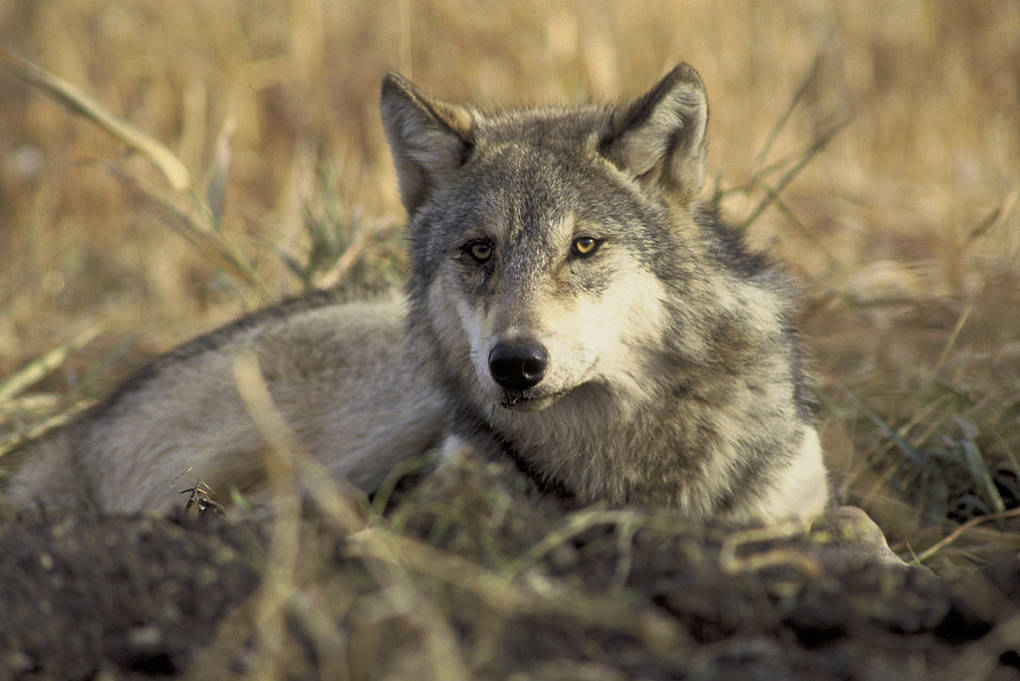
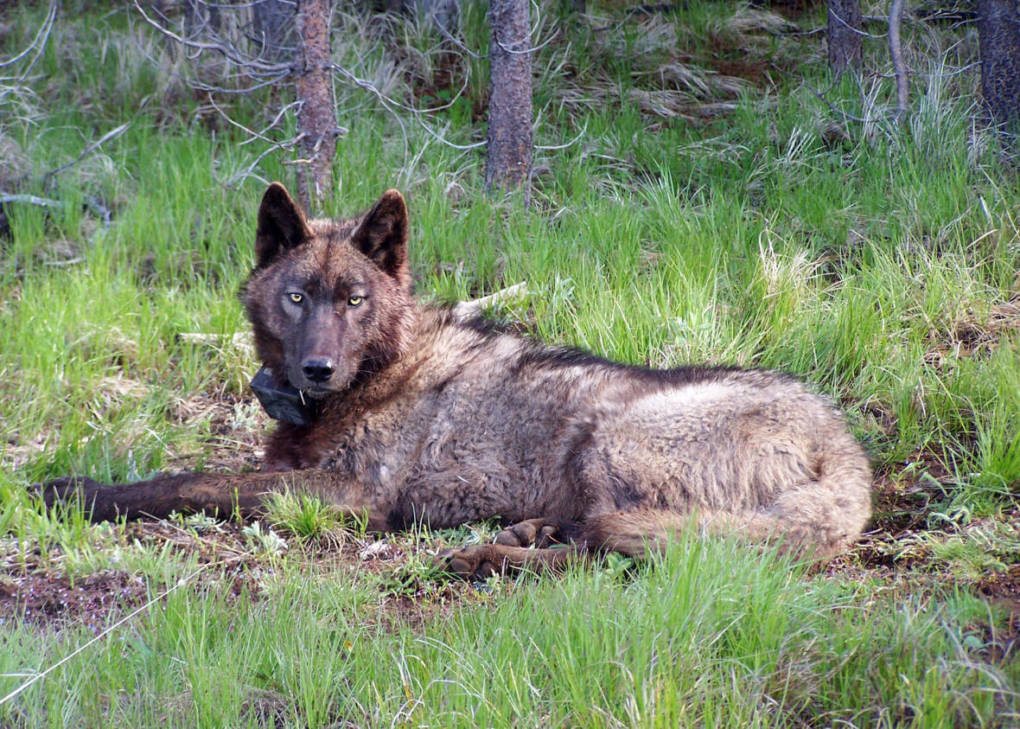
"caption": "In March, the U.S. Fish and Wildlife Service announced it would seek to delist grey wolves as an endangered species in most of the lower 48 states.",
"description": null,
"title": "RS8120_wolf",
"credit": "John & Karen Hollingsworth/USFWS",
"status": "inherit",
"isLoading": false,
"fetchFailed": false
},
"science_1994160": {
"type": "attachments",
"id": "science_1994160",
"meta": {
"index": "attachments_1716263798",
"site": "science",
"id": "1994160",
"found": true
},
"title": "DEEP_614_TN_Peregrine-Falcons-are-Feathered-Fighter-Jets-BasicallyV2-KQED",
"publishDate": 1725556803,
"status": "inherit",
"parent": 1944037,
"modified": 1725556803,
"caption": null,
"credit": null,
"altTag": null,
"description": null,
"imgSizes": {
"medium": {
"file": "https://cdn.kqed.org/wp-content/uploads/sites/35/2019/08/DEEP_614_TN_Peregrine-Falcons-are-Feathered-Fighter-Jets-BasicallyV2-KQED-800x450.jpg",
"width": 800,
"height": 450,
"mimeType": "image/jpeg"
},
"large": {
"file": "https://cdn.kqed.org/wp-content/uploads/sites/35/2019/08/DEEP_614_TN_Peregrine-Falcons-are-Feathered-Fighter-Jets-BasicallyV2-KQED-1020x574.jpg",
"width": 1020,
"height": 574,
"mimeType": "image/jpeg"
},
"thumbnail": {
"file": "https://cdn.kqed.org/wp-content/uploads/sites/35/2019/08/DEEP_614_TN_Peregrine-Falcons-are-Feathered-Fighter-Jets-BasicallyV2-KQED-160x90.jpg",
"width": 160,
"height": 90,
"mimeType": "image/jpeg"
},
"medium_large": {
"file": "https://cdn.kqed.org/wp-content/uploads/sites/35/2019/08/DEEP_614_TN_Peregrine-Falcons-are-Feathered-Fighter-Jets-BasicallyV2-KQED-768x432.jpg",
"width": 768,
"height": 432,
"mimeType": "image/jpeg"
},
"1536x1536": {
"file": "https://cdn.kqed.org/wp-content/uploads/sites/35/2019/08/DEEP_614_TN_Peregrine-Falcons-are-Feathered-Fighter-Jets-BasicallyV2-KQED-1536x864.jpg",
"width": 1536,
"height": 864,
"mimeType": "image/jpeg"
},
"post-thumbnail": {
"file": "https://cdn.kqed.org/wp-content/uploads/sites/35/2019/08/DEEP_614_TN_Peregrine-Falcons-are-Feathered-Fighter-Jets-BasicallyV2-KQED-672x372.jpg",
"width": 672,
"height": 372,
"mimeType": "image/jpeg"
},
"twentyfourteen-full-width": {
"file": "https://cdn.kqed.org/wp-content/uploads/sites/35/2019/08/DEEP_614_TN_Peregrine-Falcons-are-Feathered-Fighter-Jets-BasicallyV2-KQED-1038x576.jpg",
"width": 1038,
"height": 576,
"mimeType": "image/jpeg"
},
"kqedFullSize": {
"file": "https://cdn.kqed.org/wp-content/uploads/sites/35/2019/08/DEEP_614_TN_Peregrine-Falcons-are-Feathered-Fighter-Jets-BasicallyV2-KQED.jpg",
"width": 1920,
"height": 1080
}
},
"isLoading": false,
"fetchFailed": false
},
"science_1946564": {
"type": "attachments",
"id": "science_1946564",
"meta": {
"index": "attachments_1716263798",
"site": "science",
"id": "1946564",
"found": true
},
"parent": 1946560,
"imgSizes": {
"twentyfourteen-full-width": {
"file": "https://ww2.kqed.org/app/uploads/sites/35/2019/08/GettyImages-859523222-1038x576.jpg",
"width": 1038,
"mimeType": "image/jpeg",
"height": 576
},
"thumbnail": {
"file": "https://ww2.kqed.org/app/uploads/sites/35/2019/08/GettyImages-859523222-160x107.jpg",
"width": 160,
"mimeType": "image/jpeg",
"height": 107
},
"post-thumbnail": {
"file": "https://ww2.kqed.org/app/uploads/sites/35/2019/08/GettyImages-859523222-672x372.jpg",
"width": 672,
"mimeType": "image/jpeg",
"height": 372
},
"kqedFullSize": {
"file": "https://ww2.kqed.org/app/uploads/sites/35/2019/08/GettyImages-859523222.jpg",
"width": 2048,
"height": 1374
},
"large": {
"file": "https://ww2.kqed.org/app/uploads/sites/35/2019/08/GettyImages-859523222-1020x684.jpg",
"width": 1020,
"mimeType": "image/jpeg",
"height": 684
},
"complete_open_graph": {
"file": "https://ww2.kqed.org/app/uploads/sites/35/2019/08/GettyImages-859523222-1200x805.jpg",
"width": 1200,
"mimeType": "image/jpeg",
"height": 805
},
"full-width": {
"file": "https://ww2.kqed.org/app/uploads/sites/35/2019/08/GettyImages-859523222-1920x1288.jpg",
"width": 1920,
"mimeType": "image/jpeg",
"height": 1288
},
"medium": {
"file": "https://ww2.kqed.org/app/uploads/sites/35/2019/08/GettyImages-859523222-800x537.jpg",
"width": 800,
"mimeType": "image/jpeg",
"height": 537
},
"medium_large": {
"file": "https://ww2.kqed.org/app/uploads/sites/35/2019/08/GettyImages-859523222-768x515.jpg",
"width": 768,
"mimeType": "image/jpeg",
"height": 515
}
},
"publishDate": 1565995656,
"modified": 1565995703,
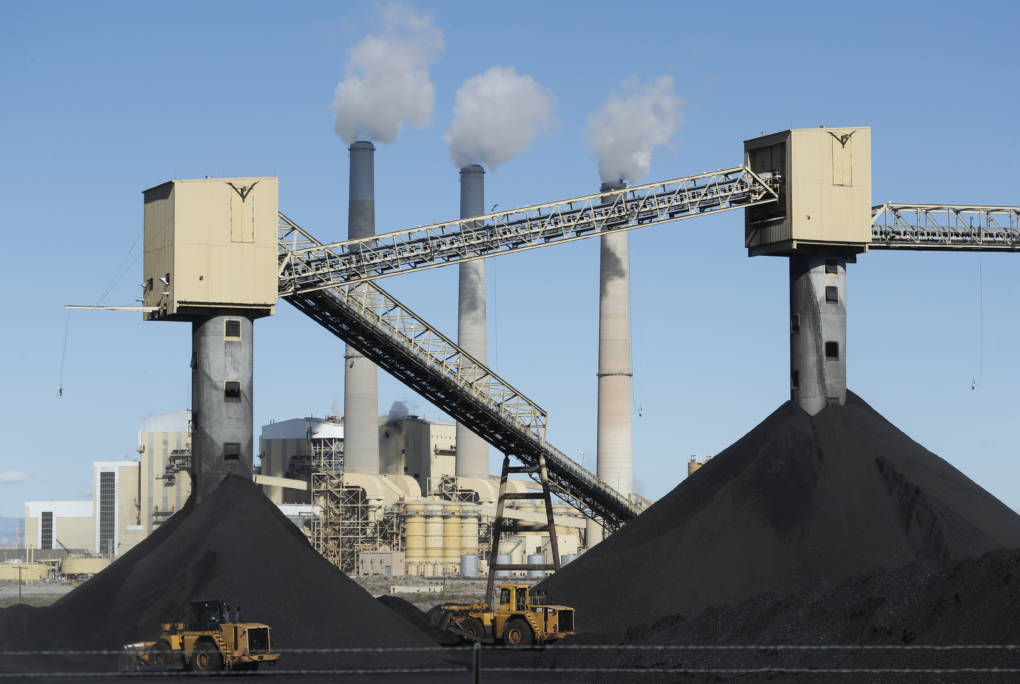
"caption": "Piles of coal sit in front of Pacificorp's 1440 megawatt coal fired power plant on October 9, 2017 in Castle Dale, Utah. ",
"description": null,
"title": "GettyImages-859523222",
"credit": "George Frey/Getty Images",
"status": "inherit",
"isLoading": false,
"fetchFailed": false
},
"science_1946510": {
"type": "attachments",
"id": "science_1946510",
"meta": {
"index": "attachments_1716263798",
"site": "science",
"id": "1946510",
"found": true
},
"parent": 1946501,
"imgSizes": {
"twentyfourteen-full-width": {
"file": "https://ww2.kqed.org/app/uploads/sites/35/2019/08/1_Puma_Kennerknecht1-1038x576.jpg",
"width": 1038,
"mimeType": "image/jpeg",
"height": 576
},
"thumbnail": {
"file": "https://ww2.kqed.org/app/uploads/sites/35/2019/08/1_Puma_Kennerknecht1-160x107.jpg",
"width": 160,
"mimeType": "image/jpeg",
"height": 107
},
"post-thumbnail": {
"file": "https://ww2.kqed.org/app/uploads/sites/35/2019/08/1_Puma_Kennerknecht1-672x372.jpg",
"width": 672,
"mimeType": "image/jpeg",
"height": 372
},
"kqedFullSize": {
"file": "https://ww2.kqed.org/app/uploads/sites/35/2019/08/1_Puma_Kennerknecht1.jpg",
"width": 2048,
"height": 1365
},
"large": {
"file": "https://ww2.kqed.org/app/uploads/sites/35/2019/08/1_Puma_Kennerknecht1-1020x680.jpg",
"width": 1020,
"mimeType": "image/jpeg",
"height": 680
},
"complete_open_graph": {
"file": "https://ww2.kqed.org/app/uploads/sites/35/2019/08/1_Puma_Kennerknecht1-1200x800.jpg",
"width": 1200,
"mimeType": "image/jpeg",
"height": 800
},
"full-width": {
"file": "https://ww2.kqed.org/app/uploads/sites/35/2019/08/1_Puma_Kennerknecht1-1920x1280.jpg",
"width": 1920,
"mimeType": "image/jpeg",
"height": 1280
},
"medium": {
"file": "https://ww2.kqed.org/app/uploads/sites/35/2019/08/1_Puma_Kennerknecht1-800x533.jpg",
"width": 800,
"mimeType": "image/jpeg",
"height": 533
},
"medium_large": {
"file": "https://ww2.kqed.org/app/uploads/sites/35/2019/08/1_Puma_Kennerknecht1-768x512.jpg",
"width": 768,
"mimeType": "image/jpeg",
"height": 512
}
},
"publishDate": 1565820804,
"modified": 1565820866,
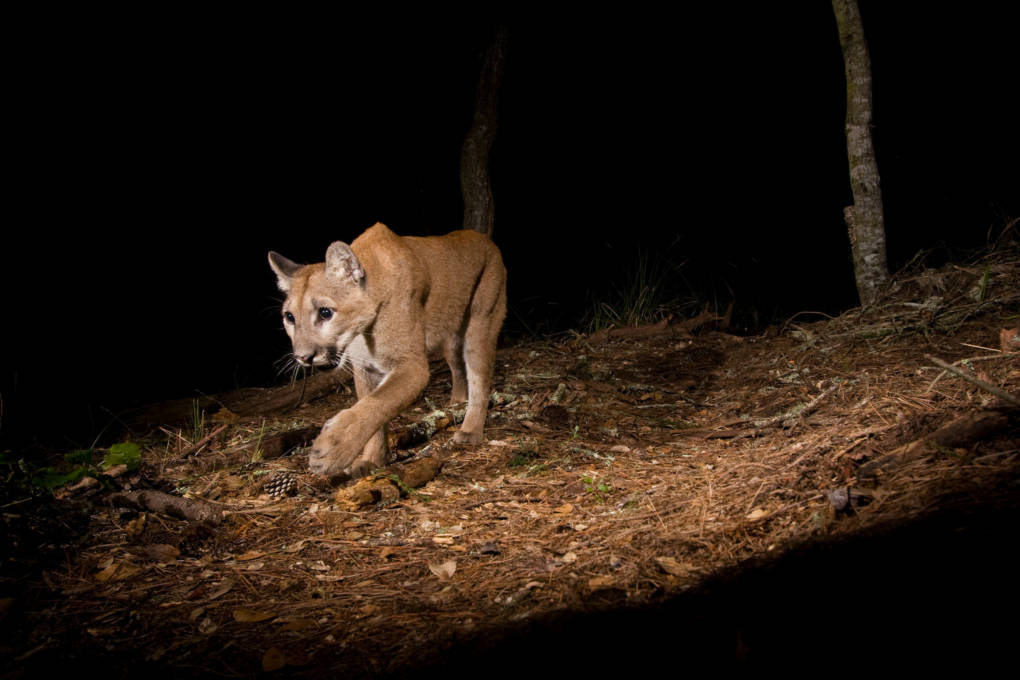
"caption": "A female North American Cougar walking at night in Aptos, Monterey Bay, California.",
"description": null,
"title": "Juvenile Mountain Lion Walking Through the Night, near Aptos, Ca",
"credit": "Sebastian Kennerknecht",
"status": "inherit",
"isLoading": false,
"fetchFailed": false
},
"science_1946494": {
"type": "attachments",
"id": "science_1946494",
"meta": {
"index": "attachments_1716263798",
"site": "science",
"id": "1946494",
"found": true
},
"parent": 1946451,
"imgSizes": {
"twentyfourteen-full-width": {
"file": "https://ww2.kqed.org/app/uploads/sites/35/2019/08/OR_25_odfw_collared-May-20-2014_Imnaha-Pack-1180x843-1038x576.jpeg",
"width": 1038,
"mimeType": "image/jpeg",
"height": 576
},
"thumbnail": {
"file": "https://ww2.kqed.org/app/uploads/sites/35/2019/08/OR_25_odfw_collared-May-20-2014_Imnaha-Pack-1180x843-160x114.jpeg",
"width": 160,
"mimeType": "image/jpeg",
"height": 114
},
"post-thumbnail": {
"file": "https://ww2.kqed.org/app/uploads/sites/35/2019/08/OR_25_odfw_collared-May-20-2014_Imnaha-Pack-1180x843-672x372.jpeg",
"width": 672,
"mimeType": "image/jpeg",
"height": 372
},
"kqedFullSize": {
"file": "https://ww2.kqed.org/app/uploads/sites/35/2019/08/OR_25_odfw_collared-May-20-2014_Imnaha-Pack-1180x843.jpeg",
"width": 1180,
"height": 843
},
"large": {
"file": "https://ww2.kqed.org/app/uploads/sites/35/2019/08/OR_25_odfw_collared-May-20-2014_Imnaha-Pack-1180x843-1020x729.jpeg",
"width": 1020,
"mimeType": "image/jpeg",
"height": 729
},
"medium": {
"file": "https://ww2.kqed.org/app/uploads/sites/35/2019/08/OR_25_odfw_collared-May-20-2014_Imnaha-Pack-1180x843-800x572.jpeg",
"width": 800,
"mimeType": "image/jpeg",
"height": 572
},
"medium_large": {
"file": "https://ww2.kqed.org/app/uploads/sites/35/2019/08/OR_25_odfw_collared-May-20-2014_Imnaha-Pack-1180x843-768x549.jpeg",
"width": 768,
"mimeType": "image/jpeg",
"height": 549
}
},
"publishDate": 1565743434,
"modified": 1565744081,
"caption": "OR-25, a male gray wolf in Oregon, in 2014. OR-25 was killed illegally in 2017. Environmentalists say that removing wolves from the Endangered Species Act could encourage more hunting.",
"description": null,
"title": "OR_25_odfw_collared-May-20-2014_Imnaha-Pack-1180x843",
"credit": "Oregon Department of Fish and Wildlife",
"status": "inherit",
"isLoading": false,
"fetchFailed": false
},
"science_1946396": {
"type": "attachments",
"id": "science_1946396",
"meta": {
"index": "attachments_1716263798",
"site": "science",
"id": "1946396",
"found": true
},
"parent": 1946394,
"imgSizes": {
"twentyfourteen-full-width": {
"file": "https://ww2.kqed.org/app/uploads/sites/35/2019/08/RS26646_GettyImages-73694668-qut-1038x576.jpg",
"width": 1038,
"mimeType": "image/jpeg",
"height": 576
},
"thumbnail": {
"file": "https://ww2.kqed.org/app/uploads/sites/35/2019/08/RS26646_GettyImages-73694668-qut-160x107.jpg",
"width": 160,
"mimeType": "image/jpeg",
"height": 107
},
"post-thumbnail": {
"file": "https://ww2.kqed.org/app/uploads/sites/35/2019/08/RS26646_GettyImages-73694668-qut-672x372.jpg",
"width": 672,
"mimeType": "image/jpeg",
"height": 372
},
"kqedFullSize": {
"file": "https://ww2.kqed.org/app/uploads/sites/35/2019/08/RS26646_GettyImages-73694668-qut.jpg",
"width": 1920,
"height": 1280
},
"large": {
"file": "https://ww2.kqed.org/app/uploads/sites/35/2019/08/RS26646_GettyImages-73694668-qut-1020x680.jpg",
"width": 1020,
"mimeType": "image/jpeg",
"height": 680
},
"complete_open_graph": {
"file": "https://ww2.kqed.org/app/uploads/sites/35/2019/08/RS26646_GettyImages-73694668-qut-1200x800.jpg",
"width": 1200,
"mimeType": "image/jpeg",
"height": 800
},
"full-width": {
"file": "https://ww2.kqed.org/app/uploads/sites/35/2019/08/RS26646_GettyImages-73694668-qut-1920x1280.jpg",
"width": 1920,
"mimeType": "image/jpeg",
"height": 1280
},
"medium": {
"file": "https://ww2.kqed.org/app/uploads/sites/35/2019/08/RS26646_GettyImages-73694668-qut-800x533.jpg",
"width": 800,
"mimeType": "image/jpeg",
"height": 533
},
"medium_large": {
"file": "https://ww2.kqed.org/app/uploads/sites/35/2019/08/RS26646_GettyImages-73694668-qut-768x512.jpg",
"width": 768,
"mimeType": "image/jpeg",
"height": 512
}
},
"publishDate": 1565631527,
"modified": 1565631562,
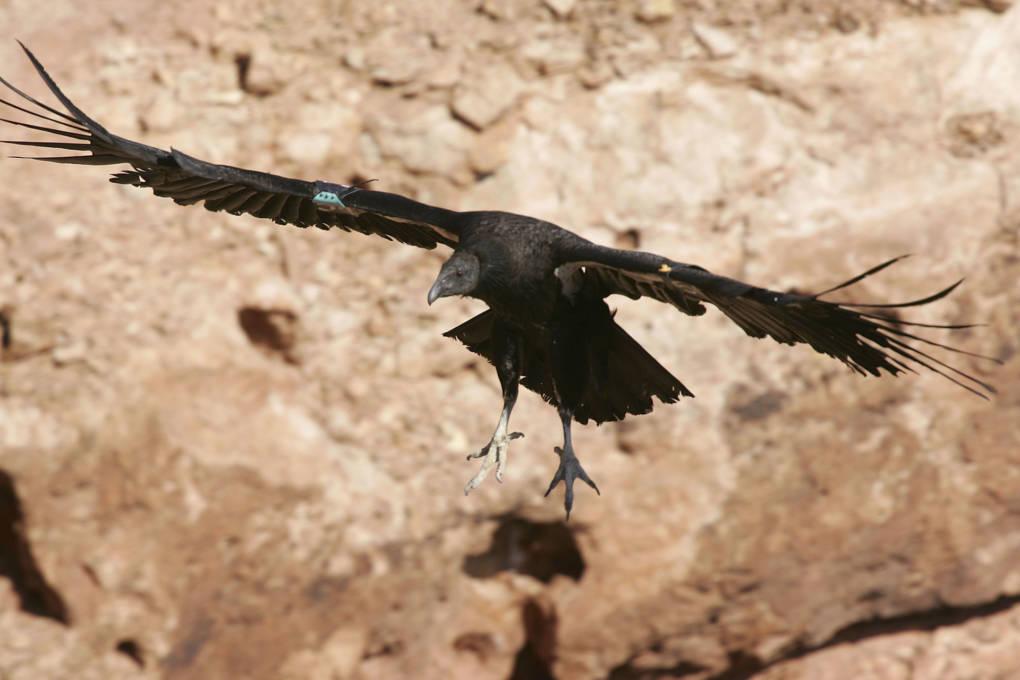
"caption": "A rare and endangered California condor lands on a ledge in Marble Gorge, east of Grand Canyon National Park, on March 24, 2007 west of Page, Arizona. ",
"description": null,
"title": "Endangered Condors Threatened With Lead Poisoning",
"credit": "David McNew/Getty Images",
"status": "inherit",
"isLoading": false,
"fetchFailed": false
},
"science_1946327": {
"type": "attachments",
"id": "science_1946327",
"meta": {
"index": "attachments_1716263798",
"site": "science",
"id": "1946327",
"found": true
},
"parent": 1946325,
"imgSizes": {
"twentyfourteen-full-width": {
"file": "https://ww2.kqed.org/app/uploads/sites/35/2019/08/RS15482_GettyImages-470387040-qut-1038x576.jpg",
"width": 1038,
"mimeType": "image/jpeg",
"height": 576
},
"thumbnail": {
"file": "https://ww2.kqed.org/app/uploads/sites/35/2019/08/RS15482_GettyImages-470387040-qut-160x104.jpg",
"width": 160,
"mimeType": "image/jpeg",
"height": 104
},
"post-thumbnail": {
"file": "https://ww2.kqed.org/app/uploads/sites/35/2019/08/RS15482_GettyImages-470387040-qut-672x372.jpg",
"width": 672,
"mimeType": "image/jpeg",
"height": 372
},
"kqedFullSize": {
"file": "https://ww2.kqed.org/app/uploads/sites/35/2019/08/RS15482_GettyImages-470387040-qut.jpg",
"width": 1920,
"height": 1245
},
"large": {
"file": "https://ww2.kqed.org/app/uploads/sites/35/2019/08/RS15482_GettyImages-470387040-qut-1020x661.jpg",
"width": 1020,
"mimeType": "image/jpeg",
"height": 661
},
"complete_open_graph": {
"file": "https://ww2.kqed.org/app/uploads/sites/35/2019/08/RS15482_GettyImages-470387040-qut-1200x778.jpg",
"width": 1200,
"mimeType": "image/jpeg",
"height": 778
},
"full-width": {
"file": "https://ww2.kqed.org/app/uploads/sites/35/2019/08/RS15482_GettyImages-470387040-qut-1920x1245.jpg",
"width": 1920,
"mimeType": "image/jpeg",
"height": 1245
},
"medium": {
"file": "https://ww2.kqed.org/app/uploads/sites/35/2019/08/RS15482_GettyImages-470387040-qut-800x519.jpg",
"width": 800,
"mimeType": "image/jpeg",
"height": 519
},
"medium_large": {
"file": "https://ww2.kqed.org/app/uploads/sites/35/2019/08/RS15482_GettyImages-470387040-qut-768x498.jpg",
"width": 768,
"mimeType": "image/jpeg",
"height": 498
}
},
"publishDate": 1565372070,
"modified": 1603298576,
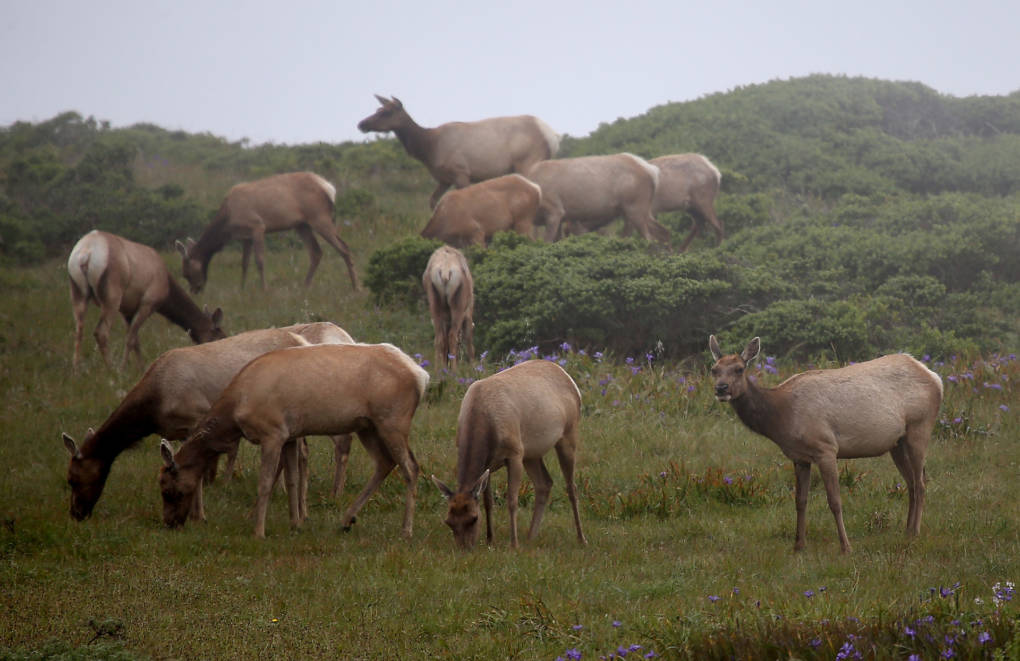
"caption": "Tule elk graze on grass in a field at Point Reyes National Seashore Elk Preserve on April 19, 2015, in Point Reyes Station, California. ",
"description": null,
"title": "RS15482_GettyImages-470387040-qut",
"credit": "Justin Sullivan/Getty Images",
"status": "inherit",
"isLoading": false,
"fetchFailed": false
},
"science_1946314": {
"type": "attachments",
"id": "science_1946314",
"meta": {
"index": "attachments_1716263798",
"site": "science",
"id": "1946314",
"found": true
},
"parent": 1946313,
"imgSizes": {
"twentyfourteen-full-width": {
"file": "https://ww2.kqed.org/app/uploads/sites/35/2019/08/heracles-drawing_custom-4dcd37f2ff1c73685e3f455a27d6e32498ec0c9f-1-1038x576.jpg",
"width": 1038,
"mimeType": "image/jpeg",
"height": 576
},
"thumbnail": {
"file": "https://ww2.kqed.org/app/uploads/sites/35/2019/08/heracles-drawing_custom-4dcd37f2ff1c73685e3f455a27d6e32498ec0c9f-1-160x143.jpg",
"width": 160,
"mimeType": "image/jpeg",
"height": 143
},
"post-thumbnail": {
"file": "https://ww2.kqed.org/app/uploads/sites/35/2019/08/heracles-drawing_custom-4dcd37f2ff1c73685e3f455a27d6e32498ec0c9f-1-672x372.jpg",
"width": 672,
"mimeType": "image/jpeg",
"height": 372
},
"kqedFullSize": {
"file": "https://ww2.kqed.org/app/uploads/sites/35/2019/08/heracles-drawing_custom-4dcd37f2ff1c73685e3f455a27d6e32498ec0c9f-1-e1565295722300.jpg",
"width": 1925,
"height": 1723
},
"large": {
"file": "https://ww2.kqed.org/app/uploads/sites/35/2019/08/heracles-drawing_custom-4dcd37f2ff1c73685e3f455a27d6e32498ec0c9f-1-1020x913.jpg",
"width": 1020,
"mimeType": "image/jpeg",
"height": 913
},
"complete_open_graph": {
"file": "https://ww2.kqed.org/app/uploads/sites/35/2019/08/heracles-drawing_custom-4dcd37f2ff1c73685e3f455a27d6e32498ec0c9f-1-1200x1074.jpg",
"width": 1200,
"mimeType": "image/jpeg",
"height": 1074
},
"full-width": {
"file": "https://ww2.kqed.org/app/uploads/sites/35/2019/08/heracles-drawing_custom-4dcd37f2ff1c73685e3f455a27d6e32498ec0c9f-1-1920x1718.jpg",
"width": 1920,
"mimeType": "image/jpeg",
"height": 1718
},
"medium": {
"file": "https://ww2.kqed.org/app/uploads/sites/35/2019/08/heracles-drawing_custom-4dcd37f2ff1c73685e3f455a27d6e32498ec0c9f-1-800x716.jpg",
"width": 800,
"mimeType": "image/jpeg",
"height": 716
},
"medium_large": {
"file": "https://ww2.kqed.org/app/uploads/sites/35/2019/08/heracles-drawing_custom-4dcd37f2ff1c73685e3f455a27d6e32498ec0c9f-1-768x687.jpg",
"width": 768,
"mimeType": "image/jpeg",
"height": 687
}
},
"publishDate": 1565291375,
"modified": 1565295678,
"caption": null,
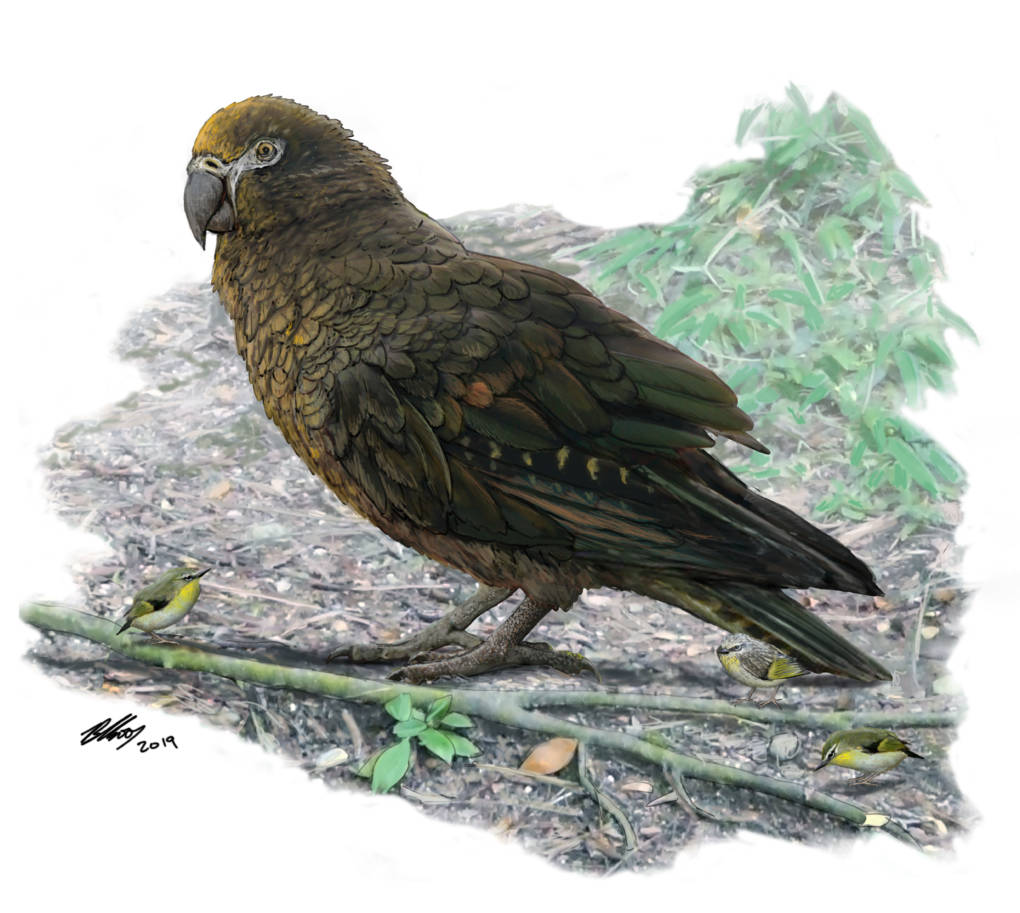
"description": "An artist's illustration of the giant parrot with a New Zealand wren for comparison.\n",
"title": "An artist's illustration of the giant parrot with a New Zealand wren for comparison.",
"credit": "Brian Choo/Flinders University",
"status": "inherit",
"isLoading": false,
"fetchFailed": false
},
"science_1946251": {
"type": "attachments",
"id": "science_1946251",
"meta": {
"index": "attachments_1716263798",
"site": "science",
"id": "1946251",
"found": true
},
"parent": 1946249,
"imgSizes": {
"twentyfourteen-full-width": {
"file": "https://ww2.kqed.org/app/uploads/sites/35/2019/08/Hog-Island-Oyster-Farm.-MARSHALL.-Harvest.-RIna-Jordan-1000-1-1000x576.jpg",
"width": 1000,
"mimeType": "image/jpeg",
"height": 576
},
"thumbnail": {
"file": "https://ww2.kqed.org/app/uploads/sites/35/2019/08/Hog-Island-Oyster-Farm.-MARSHALL.-Harvest.-RIna-Jordan-1000-1-160x107.jpg",
"width": 160,
"mimeType": "image/jpeg",
"height": 107
},
"post-thumbnail": {
"file": "https://ww2.kqed.org/app/uploads/sites/35/2019/08/Hog-Island-Oyster-Farm.-MARSHALL.-Harvest.-RIna-Jordan-1000-1-672x372.jpg",
"width": 672,
"mimeType": "image/jpeg",
"height": 372
},
"kqedFullSize": {
"file": "https://ww2.kqed.org/app/uploads/sites/35/2019/08/Hog-Island-Oyster-Farm.-MARSHALL.-Harvest.-RIna-Jordan-1000-1.jpg",
"width": 1000,
"height": 668
},
"medium": {
"file": "https://ww2.kqed.org/app/uploads/sites/35/2019/08/Hog-Island-Oyster-Farm.-MARSHALL.-Harvest.-RIna-Jordan-1000-1-800x534.jpg",
"width": 800,
"mimeType": "image/jpeg",
"height": 534
},
"medium_large": {
"file": "https://ww2.kqed.org/app/uploads/sites/35/2019/08/Hog-Island-Oyster-Farm.-MARSHALL.-Harvest.-RIna-Jordan-1000-1-768x513.jpg",
"width": 768,
"mimeType": "image/jpeg",
"height": 513
}
},
"publishDate": 1565200649,
"modified": 1565200706,
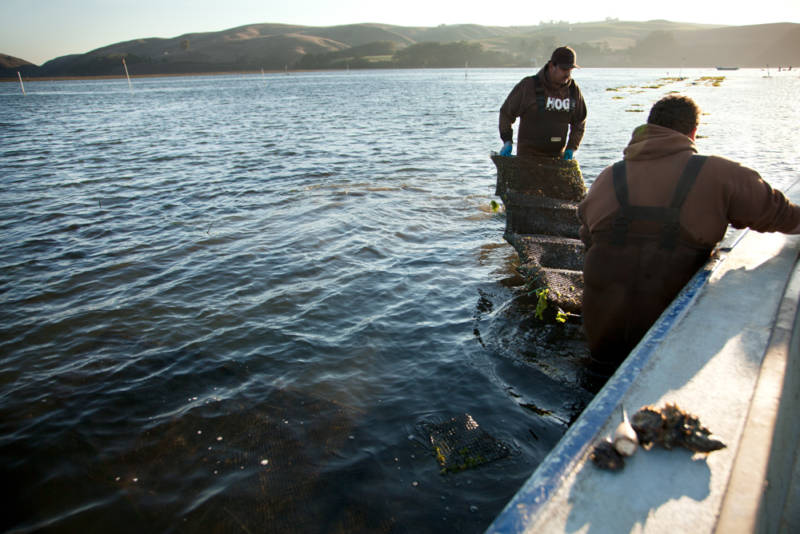
"caption": "Harvesting at an oyster farm in Tomales Bay. ",
"description": null,
"title": "Hog-Island-Oyster-Farm.-MARSHALL.-Harvest.-RIna-Jordan-1000 (1)",
"credit": "Hog Island Oyster Co.",
"status": "inherit",
"isLoading": false,
"fetchFailed": false
},
"science_1946299": {
"type": "attachments",
"id": "science_1946299",
"meta": {
"index": "attachments_1716263798",
"site": "science",
"id": "1946299",
"found": true
},
"parent": 1946295,
"imgSizes": {
"twentyfourteen-full-width": {
"file": "https://ww2.kqed.org/app/uploads/sites/35/2019/08/GettyImages-603968486-1038x576.jpg",
"width": 1038,
"mimeType": "image/jpeg",
"height": 576
},
"thumbnail": {
"file": "https://ww2.kqed.org/app/uploads/sites/35/2019/08/GettyImages-603968486-160x106.jpg",
"width": 160,
"mimeType": "image/jpeg",
"height": 106
},
"post-thumbnail": {
"file": "https://ww2.kqed.org/app/uploads/sites/35/2019/08/GettyImages-603968486-672x372.jpg",
"width": 672,
"mimeType": "image/jpeg",
"height": 372
},
"kqedFullSize": {
"file": "https://ww2.kqed.org/app/uploads/sites/35/2019/08/GettyImages-603968486-e1565282472991.jpg",
"width": 1925,
"height": 1281
},
"large": {
"file": "https://ww2.kqed.org/app/uploads/sites/35/2019/08/GettyImages-603968486-1020x679.jpg",
"width": 1020,
"mimeType": "image/jpeg",
"height": 679
},
"complete_open_graph": {
"file": "https://ww2.kqed.org/app/uploads/sites/35/2019/08/GettyImages-603968486-1200x799.jpg",
"width": 1200,
"mimeType": "image/jpeg",
"height": 799
},
"full-width": {
"file": "https://ww2.kqed.org/app/uploads/sites/35/2019/08/GettyImages-603968486-1920x1278.jpg",
"width": 1920,
"mimeType": "image/jpeg",
"height": 1278
},
"medium": {
"file": "https://ww2.kqed.org/app/uploads/sites/35/2019/08/GettyImages-603968486-800x532.jpg",
"width": 800,
"mimeType": "image/jpeg",
"height": 532
},
"medium_large": {
"file": "https://ww2.kqed.org/app/uploads/sites/35/2019/08/GettyImages-603968486-768x511.jpg",
"width": 768,
"mimeType": "image/jpeg",
"height": 511
}
},
"publishDate": 1565282403,
"modified": 1565282485,
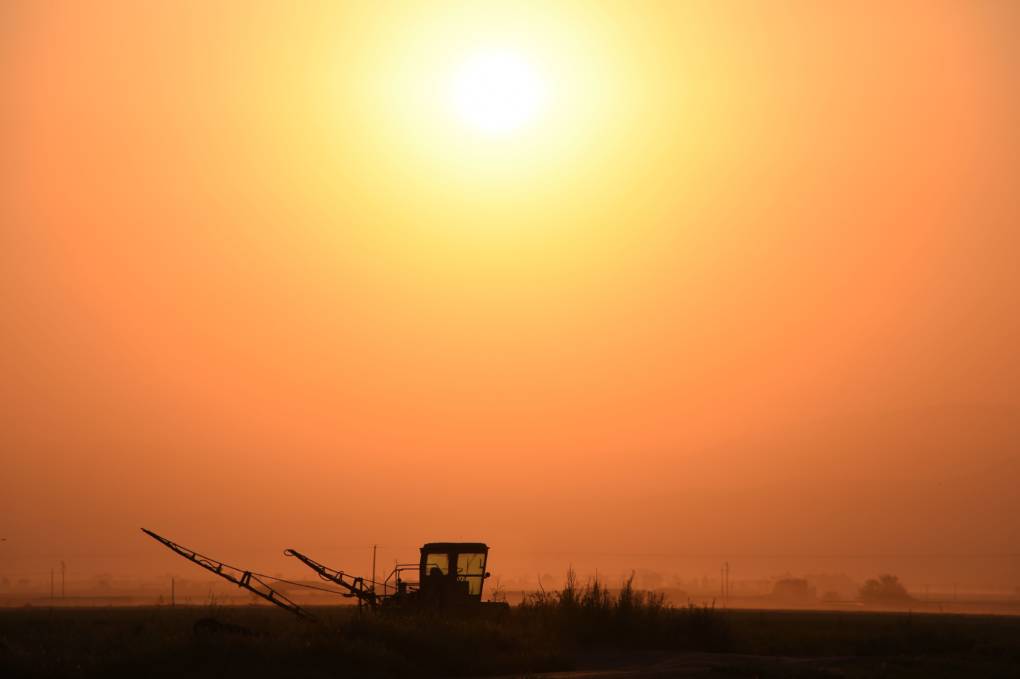
"caption": "Farm equipment is parked in a field near Bakersfield, California, as the sun rises August 24, 2016. \n",
"description": null,
"title": "US-ENVIRONMENT-POLLUTION-WATER-NITRATES",
"credit": "ROBYN BECK/AFP/Getty Images",
"status": "inherit",
"isLoading": false,
"fetchFailed": false
},
"science_1946149": {
"type": "attachments",
"id": "science_1946149",
"meta": {
"index": "attachments_1716263798",
"site": "science",
"id": "1946149",
"found": true
},
"parent": 1946145,
"imgSizes": {
"twentyfourteen-full-width": {
"file": "https://ww2.kqed.org/app/uploads/sites/35/2019/08/2364178067_3a4fd12cce_o-1038x576.jpg",
"width": 1038,
"mimeType": "image/jpeg",
"height": 576
},
"thumbnail": {
"file": "https://ww2.kqed.org/app/uploads/sites/35/2019/08/2364178067_3a4fd12cce_o-160x106.jpg",
"width": 160,
"mimeType": "image/jpeg",
"height": 106
},
"post-thumbnail": {
"file": "https://ww2.kqed.org/app/uploads/sites/35/2019/08/2364178067_3a4fd12cce_o-672x372.jpg",
"width": 672,
"mimeType": "image/jpeg",
"height": 372
},
"kqedFullSize": {
"file": "https://ww2.kqed.org/app/uploads/sites/35/2019/08/2364178067_3a4fd12cce_o.jpg",
"width": 1280,
"height": 851
},
"large": {
"file": "https://ww2.kqed.org/app/uploads/sites/35/2019/08/2364178067_3a4fd12cce_o-1020x678.jpg",
"width": 1020,
"mimeType": "image/jpeg",
"height": 678
},
"complete_open_graph": {
"file": "https://ww2.kqed.org/app/uploads/sites/35/2019/08/2364178067_3a4fd12cce_o-1200x798.jpg",
"width": 1200,
"mimeType": "image/jpeg",
"height": 798
},
"medium": {
"file": "https://ww2.kqed.org/app/uploads/sites/35/2019/08/2364178067_3a4fd12cce_o-800x532.jpg",
"width": 800,
"mimeType": "image/jpeg",
"height": 532
},
"medium_large": {
"file": "https://ww2.kqed.org/app/uploads/sites/35/2019/08/2364178067_3a4fd12cce_o-768x511.jpg",
"width": 768,
"mimeType": "image/jpeg",
"height": 511
}
},
"publishDate": 1565024377,
"modified": 1565214700,
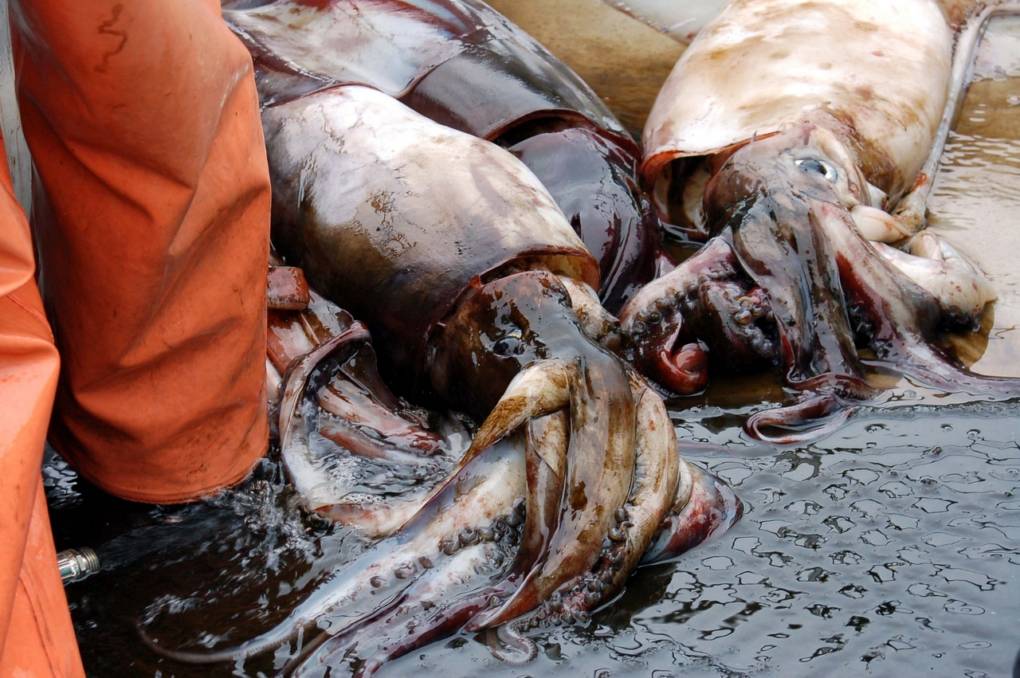
"caption": "Humboldt squid in a sea of ink. The squid, which were prevalent in Monterey Bay in the early 2000s, disappeared in 2010 and have not returned since.",
"description": null,
"title": "2364178067_3a4fd12cce_o",
"credit": "Sheraz Sadiq/KQED",
"status": "inherit",
"isLoading": false,
"fetchFailed": false
}
},
"audioPlayerReducer": {
"postId": "stream_live",
"isPaused": true,
"isPlaying": false,
"pfsActive": false,
"pledgeModalIsOpen": true,
"playerDrawerIsOpen": false,
"liveAudioPlayStartedAt": 0,
"liveAudioPlayContext": ""
},
"authorsReducer": {
"byline_science_1946696": {
"type": "authors",
"id": "byline_science_1946696",
"meta": {
"override": true
},
"slug": "byline_science_1946696",
"name": "Colin Dwyer \u003cbr/> NPR \u003cbr>",
"isLoading": false
},
"byline_science_1946690": {
"type": "authors",
"id": "byline_science_1946690",
"meta": {
"override": true
},
"slug": "byline_science_1946690",
"name": "Samantha Maldonado \u003cbr/> Associated Press \u003cbr>",
"isLoading": false
},
"byline_science_1946313": {
"type": "authors",
"id": "byline_science_1946313",
"meta": {
"override": true
},
"slug": "byline_science_1946313",
"name": "Vanessa Romo \u003cbr/> NPR \u003cbr>",
"isLoading": false
},
"byline_science_1946295": {
"type": "authors",
"id": "byline_science_1946295",
"meta": {
"override": true
},
"slug": "byline_science_1946295",
"name": "Georgina Gustin \u003cbr/>InsideClimate News\u003cbr>",
"isLoading": false
},
"jennyoh": {
"type": "authors",
"id": "2100",
"meta": {
"index": "authors_1716337520",
"id": "2100",
"found": true
},
"name": "Jenny Oh",
"firstName": "Jenny",
"lastName": "Oh",
"slug": "jennyoh",
"email": "joh@kqed.org",
"display_author_email": false,
"staff_mastheads": [],
"title": "Audience Engagement Producer, Deep Look",
"bio": "Jenny is an Emmy Award-winning producer and is currently the Audience Engagement Producer for KQED Science's \u003cem>Deep Look\u003c/em> online video series. She was also a long-time contributor to Bay Area Bites, KQED's popular food blog. Jenny graduated with honors from New York University’s Tisch School of the Arts Film and Television program and has worked for WNET/PBS, The Learning Channel, Sundance Channel, HBO and the University of California.",
"avatar": "https://secure.gravatar.com/avatar/7ddda0ed657e46dbe66083f569967752?s=600&d=mm&r=g",
"twitter": null,
"facebook": null,
"instagram": null,
"linkedin": null,
"sites": [
{
"site": "arts",
"roles": []
},
{
"site": "pop",
"roles": []
},
{
"site": "about",
"roles": []
},
{
"site": "bayareabites",
"roles": []
},
{
"site": "science",
"roles": []
},
{
"site": "education",
"roles": []
},
{
"site": "quest",
"roles": []
},
{
"site": "food",
"roles": []
}
],
"headData": {
"title": "Jenny Oh | KQED",
"description": "Audience Engagement Producer, Deep Look",
"ogImgSrc": "https://secure.gravatar.com/avatar/7ddda0ed657e46dbe66083f569967752?s=600&d=mm&r=g",
"twImgSrc": "https://secure.gravatar.com/avatar/7ddda0ed657e46dbe66083f569967752?s=600&d=mm&r=g"
},
"isLoading": false,
"link": "/author/jennyoh"
},
"kevinstark": {
"type": "authors",
"id": "11608",
"meta": {
"index": "authors_1716337520",
"id": "11608",
"found": true
},
"name": "Kevin Stark",
"firstName": "Kevin",
"lastName": "Stark",
"slug": "kevinstark",
"email": "kstark@kqed.org",
"display_author_email": true,
"staff_mastheads": [
"science"
],
"title": "Senior Editor",
"bio": "Kevin is a senior editor for KQED Science, managing the station's health and climate desks. His journalism career began in the Pacific Northwest, and he later became a lead reporter for the San Francisco Public Press. His work has appeared in Pacific Standard magazine, the Energy News Network, the Center for Investigative Reporting's Reveal and WBEZ in Chicago. Kevin joined KQED in 2019, and has covered issues related to energy, wildfire, climate change and the environment.",
"avatar": "https://secure.gravatar.com/avatar/365aaa4b597d3a8374f67504ff0facd323d7906e8eb4be0a7efd2427408e802c?s=600&d=blank&r=g",
"twitter": "starkkev",
"bluesky": null,
"facebook": null,
"instagram": null,
"linkedin": null,
"sites": [
{
"site": "",
"roles": [
"editor"
]
},
{
"site": "news",
"roles": [
"editor"
]
},
{
"site": "science",
"roles": [
"administrator"
]
}
],
"headData": {
"title": "Kevin Stark | KQED",
"description": "Senior Editor",
"ogImgSrc": "https://secure.gravatar.com/avatar/365aaa4b597d3a8374f67504ff0facd323d7906e8eb4be0a7efd2427408e802c?s=600&d=blank&r=g",
"twImgSrc": "https://secure.gravatar.com/avatar/365aaa4b597d3a8374f67504ff0facd323d7906e8eb4be0a7efd2427408e802c?s=600&d=blank&r=g"
},
"isLoading": false,
"link": "/author/kevinstark"
},
"adicorato": {
"type": "authors",
"id": "11615",
"meta": {
"index": "authors_1716337520",
"id": "11615",
"found": true
},
"name": "Allessandra DiCorato",
"firstName": "Allessandra",
"lastName": "DiCorato",
"slug": "adicorato",
"email": "adicorato@kqed.org",
"display_author_email": false,
"staff_mastheads": [],
"title": "KQED Contributor",
"bio": "Allessandra is the 2019 AAAS Mass Media Fellow at KQED Science. She is currently a PhD candidate at Northwestern University, where she studies how nanomaterials interact with soft biological tissue in contexts ranging from sea urchins to cancer cells. Allessandra graduated from Cornell University in 2015, where she studied chemistry, creative writing, and biomedical engineering.",
"avatar": "https://secure.gravatar.com/avatar/f725f664da1ae7668ca873d0b97d5bbb?s=600&d=blank&r=g",
"twitter": null,
"facebook": null,
"instagram": null,
"linkedin": null,
"sites": [
{
"site": "science",
"roles": []
}
],
"headData": {
"title": "Allessandra DiCorato | KQED",
"description": "KQED Contributor",
"ogImgSrc": "https://secure.gravatar.com/avatar/f725f664da1ae7668ca873d0b97d5bbb?s=600&d=blank&r=g",
"twImgSrc": "https://secure.gravatar.com/avatar/f725f664da1ae7668ca873d0b97d5bbb?s=600&d=blank&r=g"
},
"isLoading": false,
"link": "/author/adicorato"
}
},
"pagesReducer": {
"science_category_animals": {
"type": "terms",
"id": "science_2874",
"meta": {
"index": "terms_1716263798",
"site": "science",
"id": "2874",
"score": 12.286945
},
"featImg": null,
"name": "Animals",
"description": null,
"taxonomy": "category",
"headData": {
"twImgId": null,
"twTitle": null,
"ogTitle": null,
"ogImgId": null,
"twDescription": null,
"description": null,
"title": "Animals Archives | KQED Science",
"ogDescription": null
},
"ttid": 2874,
"slug": "animals",
"isLoading": false,
"title": "Animals",
"pageMeta": {
"site": "science",
"WpPageTemplate": "page-topic-editorial",
"currentPage": 19
},
"blocks": [
{
"blockName": "kqed/post-list",
"attrs": {
"layout": "cardArticle2",
"query": "posts/science?category=animals",
"seeMore": false,
"paginated": true,
"page": 19
}
},
{
"blockName": "kqed/ad"
}
]
}
},
"pfsSessionReducer": {},
"postsReducer": {
"stream_live": {
"type": "live",
"id": "stream_live",
"audioUrl": "https://streams.kqed.org/kqedradio",
"title": "Live Stream",
"excerpt": "Live Stream information currently unavailable.",
"link": "/radio",
"featImg": "",
"label": {
"name": "KQED Live",
"link": "/"
}
},
"stream_kqedNewscast": {
"type": "posts",
"id": "stream_kqedNewscast",
"audioUrl": "https://www.kqed.org/.stream/anon/radio/RDnews/newscast.mp3?_=1",
"title": "KQED Newscast",
"featImg": "",
"label": {
"name": "88.5 FM",
"link": "/"
}
},
"science_1946696": {
"type": "posts",
"id": "science_1946696",
"meta": {
"index": "posts_1716263798",
"site": "science",
"id": "1946696",
"score": null,
"sort": [
1566504315000
]
},
"parent": 0,
"labelTerm": {},
"blocks": [],
"publishDate": 1566504315,
"format": "standard",
"title": "Fires Spread Across Brazilian Amazon After Surge in Deforestation",
"headTitle": "Fires Spread Across Brazilian Amazon After Surge in Deforestation | KQED",
"content": "\u003cp>Fires in Brazil’s Amazon rainforest are proliferating at an alarming rate.\u003c/p>\n\u003cp>That’s the gist of an \u003ca href=\"http://queimadas.dgi.inpe.br/queimadas/portal/situacao-atual\">announcement this week\u003c/a> by the country’s National Institute for Space Research, or INPE. According to the agency, there have been 74,155 fires in Brazil so far this year — most of which erupted in the Amazon. That represents an astonishing leap of more than 80% over last year and by far the most that the agency has recorded since it began compiling this data in 2013.\u003c/p>\n\u003cp>About half those fires, or nearly 36,000 of them, have ignited in just the past month. That’s nearly as many as in all of 2018. Smoke from the fires has darkened the skies over major Brazilian cities, such as São Paulo.\u003c/p>\n\u003cp>https://twitter.com/shannongsims/status/1163632818221719558?s=20\u003c/p>\n\u003cp>Brazilian President Jair Bolsonaro has signaled unconcern about the situation. The far-right leader, who took office in January, has repeatedly lambasted Brazil’s environmental regulations as an impediment to economic development, and under his tenure environmental agencies have seen diminished staff and funding. That includes INPE itself, whose leader, Ricardo Magnus Osório Galvão, was \u003ca href=\"https://twitter.com/mctic/status/1157321742840467466?s=12\">canned this month\u003c/a> because — according to Galvão — he questioned how Bolsonaro was using his agency’s data.\u003c/p>\n\u003cp>[ad fullwidth]\u003c/p>\n\u003cp>Asked about the fires \u003ca href=\"https://g1.globo.com/google/amp/politica/noticia/2019/08/21/bolsonaro-diz-que-ongs-podem-estar-por-tras-de-queimadas-na-amazonia-para-chamar-atencao-contra-o-governo.ghtml?__twitter_impression=true\">by local media\u003c/a>, Bolsonaro baselessly suggested that nongovernmental organizations have been setting the fires themselves as retaliation for the scaling back of Brazil’s usual funding support for them. He posited that these groups are trying to increase international pressure on his government — but when reporters pressed him on the point, he didn’t name any specific NGOs or offer any proof for his assertion.\u003c/p>\n\u003cp>“So, there could be … I’m not affirming it, criminal action by these ‘NGOers’ to call attention against my person, against the government of Brazil. This is the war that we are facing,” he said Wednesday in a Facebook Live video, according to a \u003ca href=\"https://www.bbc.com/news/world-latin-america-49415973\">translation by the BBC\u003c/a>.\u003c/p>\n\u003cp>https://twitter.com/GlobalEcoGuy/status/1164226424405762048?s=20\u003c/p>\n\u003cp>He added that his government is “not insensitive” to the fires and that his government may look into measures to combat them. In a \u003ca href=\"https://twitter.com/rsallesmma/status/1163990341361553415\">tweet Tuesday\u003c/a>, Brazil’s environment minister, Ricardo Salles, attributed the fires to “dry weather, wind and heat” and said federal officials and equipment are available to help and “already in use.”\u003c/p>\n\u003cp>But a lot of deforestation has less to do with natural factors and more to do with human activities. INPE says the amount of land that was deforested last month alone represented a nearly 300% surge over deforestation in June 2018.\u003c/p>\n\u003cp>As NPR \u003ca href=\"http://apps.npr.org/lookatthis/posts/brazil/\">reported in 2015\u003c/a>, deforestation such as this is often tied to subsistence farming and ranching, which uses more than two-thirds of Brazil’s deforested land — and which has tripled the number of cattle in the country in the past three decades.\u003c/p>\n\u003cp>“We estimate that the forest areas in the Brazilian Amazon have decreased something between 20 and 30% compared to the last 12 months,” Carlos Nobre, a researcher at the University of São Paulo, \u003ca href=\"https://www.dw.com/en/brazil-forest-fires-rage-as-farmers-push-into-the-amazon/a-50116455\">told German broadcaster Deutsche Welle\u003c/a>.\u003c/p>\n\u003cp>Fluvio Mascarenhas, who works at a government agency called the Chico Mendes Institute for Biodiversity Conservation, \u003ca href=\"https://www.npr.org/2019/08/19/752529425/brazils-amazon-rainforest-is-disappearing-under-president-jair-bolsonaro\">told NPR’s Philip Reeves\u003c/a> that operations that the agency usually carries out against illegal loggers and ranchers have been drastically scaled back this year. And that, he says, together with Bolsonaro’s comments, only encourages further illegal activity in the rainforest.\u003c/p>\n\u003cp>And that has him afraid.\u003c/p>\n\u003cp>\u003c/p>\n\u003cp>“Every time you look at a satellite image of the forest,” he tells Reeves, “you see another little piece missing.”\u003c/p>\n\u003cdiv class=\"fullattribution\">Copyright 2019 NPR. To see more, visit https://www.npr.org.\u003cimg decoding=\"async\" src=\"https://www.google-analytics.com/__utm.gif?utmac=UA-5828686-4&utmdt=Tens+Of+Thousands+Of+Fires+Ravage+Brazilian+Amazon%2C+Where+Deforestation+Has+Spiked&utme=8(APIKey)9(MDAxOTAwOTE4MDEyMTkxMDAzNjczZDljZA004)\">\u003c/div>\n\n",
"stats": {
"hasVideo": false,
"hasChartOrMap": false,
"hasAudio": false,
"hasPolis": false,
"wordCount": 652,
"hasGoogleForm": false,
"hasGallery": false,
"hasHearkenModule": false,
"iframeSrcs": [],
"paragraphCount": 15
},
"modified": 1704848380,
"excerpt": "Researchers say there's been a huge rise in the number of fires compared with last year. That's likely linked with a similar leap in deforestation since President Jair Bolsonaro took office.",
"headData": {
"twImgId": "",
"twTitle": "",
"ogTitle": "",
"ogImgId": "",
"twDescription": "",
"description": "Researchers say there's been a huge rise in the number of fires compared with last year. That's likely linked with a similar leap in deforestation since President Jair Bolsonaro took office.",
"title": "Fires Spread Across Brazilian Amazon After Surge in Deforestation | KQED",
"ogDescription": "",
"schema": {
"@context": "https://schema.org",
"@type": "Article",
"headline": "Fires Spread Across Brazilian Amazon After Surge in Deforestation",
"datePublished": "2019-08-22T13:05:15-07:00",
"dateModified": "2024-01-09T16:59:40-08:00",
"image": "https://cdn.kqed.org/wp-content/uploads/2020/02/KQED-OG-Image@1x.png"
}
},
"guestAuthors": [],
"slug": "fires-spread-across-brazilian-amazon-after-surge-in-deforestation",
"status": "publish",
"nprApiLink": "http://api.npr.org/query?id=753140642&apiKey=MDAxOTAwOTE4MDEyMTkxMDAzNjczZDljZA004",
"nprByline": "Colin Dwyer \u003cbr/> NPR \u003cbr>",
"nprStoryDate": "Wed, 21 Aug 2019 16:57:00 -0400",
"nprLastModifiedDate": "Wed, 21 Aug 2019 23:32:48 -0400",
"sticky": false,
"nprHtmlLink": "https://www.npr.org/2019/08/21/753140642/tens-of-thousands-of-fires-ravage-brazilian-amazon-where-deforestation-has-spike?ft=nprml&f=753140642",
"nprImageAgency": "NASA via AP",
"source": "NPR",
"nprStoryId": "753140642",
"nprRetrievedStory": "1",
"nprPubDate": "Wed, 21 Aug 2019 23:32:00 -0400",
"path": "/science/1946696/fires-spread-across-brazilian-amazon-after-surge-in-deforestation",
"audioTrackLength": null,
"parsedContent": [
{
"type": "contentString",
"content": "\u003cdiv class=\"post-body\">\u003cp>\u003cp>Fires in Brazil’s Amazon rainforest are proliferating at an alarming rate.\u003c/p>\n\u003cp>That’s the gist of an \u003ca href=\"http://queimadas.dgi.inpe.br/queimadas/portal/situacao-atual\">announcement this week\u003c/a> by the country’s National Institute for Space Research, or INPE. According to the agency, there have been 74,155 fires in Brazil so far this year — most of which erupted in the Amazon. That represents an astonishing leap of more than 80% over last year and by far the most that the agency has recorded since it began compiling this data in 2013.\u003c/p>\n\u003cp>About half those fires, or nearly 36,000 of them, have ignited in just the past month. That’s nearly as many as in all of 2018. Smoke from the fires has darkened the skies over major Brazilian cities, such as São Paulo.\u003c/p>\u003c/p>\u003c/div>",
"attributes": {
"named": {},
"numeric": []
}
},
{
"type": "component",
"content": "",
"name": "singleTwitterStatus",
"attributes": {
"named": {
"id": "1163632818221719558"
},
"numeric": []
}
},
{
"type": "contentString",
"content": "\u003cdiv class=\"post-body\">\u003cp>\n\u003cp>Brazilian President Jair Bolsonaro has signaled unconcern about the situation. The far-right leader, who took office in January, has repeatedly lambasted Brazil’s environmental regulations as an impediment to economic development, and under his tenure environmental agencies have seen diminished staff and funding. That includes INPE itself, whose leader, Ricardo Magnus Osório Galvão, was \u003ca href=\"https://twitter.com/mctic/status/1157321742840467466?s=12\">canned this month\u003c/a> because — according to Galvão — he questioned how Bolsonaro was using his agency’s data.\u003c/p>\n\u003cp>\u003c/p>\u003c/div>",
"attributes": {
"named": {},
"numeric": []
}
},
{
"type": "component",
"content": "",
"name": "ad",
"attributes": {
"named": {
"label": "fullwidth"
},
"numeric": [
"fullwidth"
]
}
},
{
"type": "contentString",
"content": "\u003cdiv class=\"post-body\">\u003cp>\u003c/p>\n\u003cp>Asked about the fires \u003ca href=\"https://g1.globo.com/google/amp/politica/noticia/2019/08/21/bolsonaro-diz-que-ongs-podem-estar-por-tras-de-queimadas-na-amazonia-para-chamar-atencao-contra-o-governo.ghtml?__twitter_impression=true\">by local media\u003c/a>, Bolsonaro baselessly suggested that nongovernmental organizations have been setting the fires themselves as retaliation for the scaling back of Brazil’s usual funding support for them. He posited that these groups are trying to increase international pressure on his government — but when reporters pressed him on the point, he didn’t name any specific NGOs or offer any proof for his assertion.\u003c/p>\n\u003cp>“So, there could be … I’m not affirming it, criminal action by these ‘NGOers’ to call attention against my person, against the government of Brazil. This is the war that we are facing,” he said Wednesday in a Facebook Live video, according to a \u003ca href=\"https://www.bbc.com/news/world-latin-america-49415973\">translation by the BBC\u003c/a>.\u003c/p>\u003c/p>\u003c/div>",
"attributes": {
"named": {},
"numeric": []
}
},
{
"type": "component",
"content": "",
"name": "singleTwitterStatus",
"attributes": {
"named": {
"id": "1164226424405762048"
},
"numeric": []
}
},
{
"type": "contentString",
"content": "\u003cdiv class=\"post-body\">\u003cp>\n\u003cp>He added that his government is “not insensitive” to the fires and that his government may look into measures to combat them. In a \u003ca href=\"https://twitter.com/rsallesmma/status/1163990341361553415\">tweet Tuesday\u003c/a>, Brazil’s environment minister, Ricardo Salles, attributed the fires to “dry weather, wind and heat” and said federal officials and equipment are available to help and “already in use.”\u003c/p>\n\u003cp>But a lot of deforestation has less to do with natural factors and more to do with human activities. INPE says the amount of land that was deforested last month alone represented a nearly 300% surge over deforestation in June 2018.\u003c/p>\n\u003cp>As NPR \u003ca href=\"http://apps.npr.org/lookatthis/posts/brazil/\">reported in 2015\u003c/a>, deforestation such as this is often tied to subsistence farming and ranching, which uses more than two-thirds of Brazil’s deforested land — and which has tripled the number of cattle in the country in the past three decades.\u003c/p>\n\u003cp>“We estimate that the forest areas in the Brazilian Amazon have decreased something between 20 and 30% compared to the last 12 months,” Carlos Nobre, a researcher at the University of São Paulo, \u003ca href=\"https://www.dw.com/en/brazil-forest-fires-rage-as-farmers-push-into-the-amazon/a-50116455\">told German broadcaster Deutsche Welle\u003c/a>.\u003c/p>\n\u003cp>Fluvio Mascarenhas, who works at a government agency called the Chico Mendes Institute for Biodiversity Conservation, \u003ca href=\"https://www.npr.org/2019/08/19/752529425/brazils-amazon-rainforest-is-disappearing-under-president-jair-bolsonaro\">told NPR’s Philip Reeves\u003c/a> that operations that the agency usually carries out against illegal loggers and ranchers have been drastically scaled back this year. And that, he says, together with Bolsonaro’s comments, only encourages further illegal activity in the rainforest.\u003c/p>\n\u003cp>And that has him afraid.\u003c/p>\n\u003cp>\u003c/p>\n\u003cp>“Every time you look at a satellite image of the forest,” he tells Reeves, “you see another little piece missing.”\u003c/p>\n\u003cdiv class=\"fullattribution\">Copyright 2019 NPR. To see more, visit https://www.npr.org.\u003cimg decoding=\"async\" src=\"https://www.google-analytics.com/__utm.gif?utmac=UA-5828686-4&utmdt=Tens+Of+Thousands+Of+Fires+Ravage+Brazilian+Amazon%2C+Where+Deforestation+Has+Spiked&utme=8(APIKey)9(MDAxOTAwOTE4MDEyMTkxMDAzNjczZDljZA004)\">\u003c/div>\n\n\u003c/div>\u003c/p>",
"attributes": {
"named": {},
"numeric": []
}
}
],
"link": "/science/1946696/fires-spread-across-brazilian-amazon-after-surge-in-deforestation",
"authors": [
"byline_science_1946696"
],
"categories": [
"science_2874",
"science_31",
"science_35",
"science_40",
"science_3730"
],
"tags": [
"science_113"
],
"featImg": "science_1946697",
"label": "source_science_1946696"
},
"science_1946690": {
"type": "posts",
"id": "science_1946690",
"meta": {
"index": "posts_1716263798",
"site": "science",
"id": "1946690",
"score": null,
"sort": [
1566493707000
]
},
"parent": 0,
"labelTerm": {},
"blocks": [],
"publishDate": 1566493707,
"format": "standard",
"title": "Environmental Groups File First Suit Over Trump's Endangered Species Act Rollback",
"headTitle": "Environmental Groups File First Suit Over Trump’s Endangered Species Act Rollback | KQED",
"content": "\u003cp>Seven environmental and animal protection groups teamed up to file the first lawsuit challenging the Trump administration’s rollback of the Endangered Species Act.\u003c/p>\n\u003cp>The environmental law nonprofit Earthjustice filed the lawsuit Wednesday on behalf of the Center for Biological Diversity, Defenders of Wildlife, Sierra Club, Natural Resources Defense Council, National Parks Conservation Association, WildEarth Guardians and the Humane Society of the United States. The lawsuit comes after the federal government earlier this month announced a series of \u003ca href=\"https://www.apnews.com/9bf4541d89e6444783814e53302ce479\">changes\u003c/a> to weaken the Endangered Species Act.\u003c/p>\n\u003cp>In a \u003ca href=\"https://www.documentcloud.org/documents/6310713-ESA-Complaint-FINAL.html\">filing\u003c/a> , the groups argue that the Trump administration violated the National Environmental Policy Act by failing to analyze the effects of the new rules. They also charge that the administration unreasonably changed requirements to comply with part of the Endangered Species Act that would have prevented any changes that could threaten the existence or habitat of any listed species.\u003c/p>\n\u003cp>“In the midst of an unprecedented extinction crisis, the Trump administration is eviscerating our most effective wildlife protection law,” Rebecca Riley, legal director of the nature program at the Natural Resources Defense Council, said in a statement. “These regulatory changes will place vulnerable species in immediate danger — all to line the pockets of industry. We are counting on the courts to step in before it’s too late.”\u003c/p>\n\u003cp>Nicholas Goodwin, a spokesman for the U.S. Department of the Interior, criticized the lawsuit.\u003c/p>\n\u003cp>[ad fullwidth]\u003c/p>\n\u003cp>“It is unsurprising that those who repeatedly seek to weaponize the Endangered Species Act — instead of use it as a means to recover imperiled species — would choose to sue,” Goodwin said. “We will see them in court, and we will be steadfast in our implementation of this important act with the unchanging goal of conserving and recovering species.”\u003c/p>\n\u003cp>Christina Meister, a spokeswoman for the U.S. Fish and Wildlife Service, declined to comment. Spokespeople for the National Marine Fisheries Service did not immediately respond to requests for comment.\u003c/p>\n\u003cp>Under the enforcement changes, officials for the first time will be able to publicly attach a cost to saving an animal or plant. Blanket protections for creatures newly listed as threatened will be removed. Among several other changes, the action could allow the government to disregard the possible impact of climate change, which conservation groups call a major and growing threat to wildlife.\u003c/p>\n\u003cp>A United Nations report released in May warned that more than 1 million plants and animals globally face extinction, some within decades, because of human influence, climate change and other threats.\u003c/p>\n\u003cp>The Endangered Species Act is credited with helping save the bald eagle, California condor and scores of other animals and plants from extinction since President Richard Nixon signed it into law in 1973. The act currently protects more than 1,600 species in the United States and its territories.\u003c/p>\n\u003cp>But the act has also led to legal and political fights between animal protectors and industries and opponents. Republicans have long pushed to change the law.\u003c/p>\n\u003cp>\u003c/p>\n\u003cp>The states of California and Massachusetts have also vowed to sue to block changes in the law.\u003c/p>\n\n",
"stats": {
"hasVideo": false,
"hasChartOrMap": false,
"hasAudio": false,
"hasPolis": false,
"wordCount": 522,
"hasGoogleForm": false,
"hasGallery": false,
"hasHearkenModule": false,
"iframeSrcs": [],
"paragraphCount": 14
},
"modified": 1704848381,
"excerpt": "The groups argue that the Trump administration violated the National Environmental Policy Act by failing to analyze the effects of the new rules.",
"headData": {
"twImgId": "",
"twTitle": "",
"ogTitle": "",
"ogImgId": "",
"twDescription": "",
"description": "The groups argue that the Trump administration violated the National Environmental Policy Act by failing to analyze the effects of the new rules.",
"title": "Environmental Groups File First Suit Over Trump's Endangered Species Act Rollback | KQED",
"ogDescription": "",
"schema": {
"@context": "https://schema.org",
"@type": "Article",
"headline": "Environmental Groups File First Suit Over Trump's Endangered Species Act Rollback",
"datePublished": "2019-08-22T10:08:27-07:00",
"dateModified": "2024-01-09T16:59:41-08:00",
"image": "https://cdn.kqed.org/wp-content/uploads/2020/02/KQED-OG-Image@1x.png"
}
},
"guestAuthors": [],
"slug": "environmental-groups-file-first-suit-over-trumps-endangered-species-act-rollback",
"status": "publish",
"audioUrl": "https://www.kqed.org/.stream/anon/radio/RDnews/2019/08/ESAcs.mp3",
"nprByline": "Samantha Maldonado \u003cbr/> Associated Press \u003cbr>",
"sticky": false,
"source": "Associated Press",
"path": "/science/1946690/environmental-groups-file-first-suit-over-trumps-endangered-species-act-rollback",
"audioTrackLength": null,
"parsedContent": [
{
"type": "contentString",
"content": "\u003cdiv class=\"post-body\">\u003cp>\u003cp>Seven environmental and animal protection groups teamed up to file the first lawsuit challenging the Trump administration’s rollback of the Endangered Species Act.\u003c/p>\n\u003cp>The environmental law nonprofit Earthjustice filed the lawsuit Wednesday on behalf of the Center for Biological Diversity, Defenders of Wildlife, Sierra Club, Natural Resources Defense Council, National Parks Conservation Association, WildEarth Guardians and the Humane Society of the United States. The lawsuit comes after the federal government earlier this month announced a series of \u003ca href=\"https://www.apnews.com/9bf4541d89e6444783814e53302ce479\">changes\u003c/a> to weaken the Endangered Species Act.\u003c/p>\n\u003cp>In a \u003ca href=\"https://www.documentcloud.org/documents/6310713-ESA-Complaint-FINAL.html\">filing\u003c/a> , the groups argue that the Trump administration violated the National Environmental Policy Act by failing to analyze the effects of the new rules. They also charge that the administration unreasonably changed requirements to comply with part of the Endangered Species Act that would have prevented any changes that could threaten the existence or habitat of any listed species.\u003c/p>\n\u003cp>“In the midst of an unprecedented extinction crisis, the Trump administration is eviscerating our most effective wildlife protection law,” Rebecca Riley, legal director of the nature program at the Natural Resources Defense Council, said in a statement. “These regulatory changes will place vulnerable species in immediate danger — all to line the pockets of industry. We are counting on the courts to step in before it’s too late.”\u003c/p>\n\u003cp>Nicholas Goodwin, a spokesman for the U.S. Department of the Interior, criticized the lawsuit.\u003c/p>\n\u003cp>\u003c/p>\u003c/div>",
"attributes": {
"named": {},
"numeric": []
}
},
{
"type": "component",
"content": "",
"name": "ad",
"attributes": {
"named": {
"label": "fullwidth"
},
"numeric": [
"fullwidth"
]
}
},
{
"type": "contentString",
"content": "\u003cdiv class=\"post-body\">\u003cp>\u003c/p>\n\u003cp>“It is unsurprising that those who repeatedly seek to weaponize the Endangered Species Act — instead of use it as a means to recover imperiled species — would choose to sue,” Goodwin said. “We will see them in court, and we will be steadfast in our implementation of this important act with the unchanging goal of conserving and recovering species.”\u003c/p>\n\u003cp>Christina Meister, a spokeswoman for the U.S. Fish and Wildlife Service, declined to comment. Spokespeople for the National Marine Fisheries Service did not immediately respond to requests for comment.\u003c/p>\n\u003cp>Under the enforcement changes, officials for the first time will be able to publicly attach a cost to saving an animal or plant. Blanket protections for creatures newly listed as threatened will be removed. Among several other changes, the action could allow the government to disregard the possible impact of climate change, which conservation groups call a major and growing threat to wildlife.\u003c/p>\n\u003cp>A United Nations report released in May warned that more than 1 million plants and animals globally face extinction, some within decades, because of human influence, climate change and other threats.\u003c/p>\n\u003cp>The Endangered Species Act is credited with helping save the bald eagle, California condor and scores of other animals and plants from extinction since President Richard Nixon signed it into law in 1973. The act currently protects more than 1,600 species in the United States and its territories.\u003c/p>\n\u003cp>But the act has also led to legal and political fights between animal protectors and industries and opponents. Republicans have long pushed to change the law.\u003c/p>\n\u003cp>\u003c/p>\n\u003cp>The states of California and Massachusetts have also vowed to sue to block changes in the law.\u003c/p>\n\n\u003c/div>\u003c/p>",
"attributes": {
"named": {},
"numeric": []
}
}
],
"link": "/science/1946690/environmental-groups-file-first-suit-over-trumps-endangered-species-act-rollback",
"authors": [
"byline_science_1946690"
],
"categories": [
"science_2874",
"science_35",
"science_40"
],
"tags": [
"science_1120",
"science_4081",
"science_1119",
"science_3838",
"science_3514"
],
"featImg": "science_1946692",
"label": "source_science_1946690"
},
"science_1944037": {
"type": "posts",
"id": "science_1944037",
"meta": {
"index": "posts_1716263798",
"site": "science",
"id": "1944037",
"score": null,
"sort": [
1566306358000
]
},
"guestAuthors": [],
"slug": "peregrine-falcons-are-feathered-fighter-jets-basically",
"title": "Here's Why Peregrine Falcons Are the Top Guns of the Sky",
"publishDate": 1566306358,
"format": "video",
"headTitle": "Here’s Why Peregrine Falcons Are the Top Guns of the Sky | KQED",
"labelTerm": {
"term": 1935,
"site": "science"
},
"content": "\u003cp>[dl_subscribe]\u003cspan style=\"font-weight: 400\">UC Berkeley is known for a lot of things, from Nobel Prizes to football games at Memorial Stadium and top-flight students.\u003c/span>\u003c/p>\n\u003cp>\u003cspan style=\"font-weight: 400\">But lately, two campus residents have been getting a lot of attention: A pair of peregrine falcons have been wintering on the school’s \u003c/span>\u003ca href=\"https://visit.berkeley.edu/campus-tourscampanile-tour/\">\u003cspan style=\"font-weight: 400\">iconic Campanile clock tower\u003c/span>\u003c/a>\u003cspan style=\"font-weight: 400\">. The two raptors, named Annie and Grinnell — after \u003c/span>\u003ca href=\"http://mvz.berkeley.edu/Annie.html\">\u003cspan style=\"font-weight: 400\">the founder\u003c/span>\u003c/a>\u003cspan style=\"font-weight: 400\"> and \u003c/span>\u003ca href=\"http://mvz.berkeley.edu/Grinnell.html\">\u003cspan style=\"font-weight: 400\">first director\u003c/span>\u003c/a>\u003cspan style=\"font-weight: 400\"> of UC Berkeley’s \u003c/span>\u003ca href=\"http://mvz.berkeley.edu/\">\u003cspan style=\"font-weight: 400\">Museum of Vertebrate Zoology — \u003c/span>\u003c/a>\u003cspan style=\"font-weight: 400\">laid eggs and hatched chicks atop the famous campus landmark for the first time in 2017.\u003c/span>\u003c/p>\n\u003cfigure id=\"attachment_1944039\" class=\"wp-caption alignleft\" style=\"max-width: 800px\">\u003cimg loading=\"lazy\" decoding=\"async\" class=\"size-medium wp-image-1944039\" src=\"https://ww2.kqed.org/science/wp-content/uploads/sites/35/2019/06/Cade_Carson_Peregrine_Falcons-800x452.png\" alt=\"peregrine falcons\" width=\"800\" height=\"452\" srcset=\"https://cdn.kqed.org/wp-content/uploads/sites/35/2019/06/Cade_Carson_Peregrine_Falcons-800x452.png 800w, https://cdn.kqed.org/wp-content/uploads/sites/35/2019/06/Cade_Carson_Peregrine_Falcons-160x90.png 160w, https://cdn.kqed.org/wp-content/uploads/sites/35/2019/06/Cade_Carson_Peregrine_Falcons-768x434.png 768w, https://cdn.kqed.org/wp-content/uploads/sites/35/2019/06/Cade_Carson_Peregrine_Falcons-1020x576.png 1020w, https://cdn.kqed.org/wp-content/uploads/sites/35/2019/06/Cade_Carson_Peregrine_Falcons-1200x678.png 1200w, https://cdn.kqed.org/wp-content/uploads/sites/35/2019/06/Cade_Carson_Peregrine_Falcons.png 1280w\" sizes=\"auto, (max-width: 800px) 100vw, 800px\">\u003cfigcaption class=\"wp-caption-text\">Cade and Carson, two peregrine falcons who recently hatched on UC Berkeley’s famed clock tower. \u003ccite>(Cal Falcons)\u003c/cite>\u003c/figcaption>\u003c/figure>\n\u003cp>\u003cspan style=\"font-weight: 400\">For the third time, they became proud parents this spring. Two male chicks, Carson and Cade, hatched on April 24 and flew for the first time on June 3. They’ve now graduated from the 307-foot-tall landmark into the wider world, experts say.\u003c/span>\u003c/p>\n\u003cp>\u003cspan style=\"font-weight: 400\"> “In early July, they were still in the nest area, flying on and off the Campanile, and fed by their parents as they learned to hunt and fend for themselves,” said Mary Malec, a volunteer with the \u003c/span>\u003ca href=\"https://www.ebparks.org/\">\u003cspan style=\"font-weight: 400\">East Bay Regional Park District\u003c/span>\u003c/a>\u003cspan style=\"font-weight: 400\"> and the \u003c/span>\u003ca href=\"https://www.parksconservancy.org/programs/golden-gate-raptor-observatory\">\u003cspan style=\"font-weight: 400\">Golden Gate Raptor Observatory\u003c/span>\u003c/a>\u003cspan style=\"font-weight: 400\"> in Sausalito. \u003c/span>\u003c/p>\n\u003cp>\u003cspan style=\"font-weight: 400\">They’ve now dispersed and will eventually establish their own nesting territories.\u003c/span>\u003c/p>\n\u003cp>[ad fullwidth]\u003c/p>\n\u003cp>\u003cspan style=\"font-weight: 400\">A team of six people from the park district, raptor observatory, UC’s \u003c/span>\u003ca href=\"http://mvz.berkeley.edu/\">\u003cspan style=\"font-weight: 400\">Museum of Vertebrate Zoology\u003c/span>\u003c/a>\u003cspan style=\"font-weight: 400\"> and the \u003c/span>\u003ca href=\"http://www.iws.org/\">\u003cspan style=\"font-weight: 400\">Institute for Wildlife Studies\u003c/span>\u003c/a>\u003cspan style=\"font-weight: 400\"> has been working closely to monitor the birds over the years.\u003c/span>\u003c/p>\n\u003cp>\u003cspan style=\"font-weight: 400\">They’ve helped to improve the falcons’ nesting site and arranged to band them for tracking. \u003c/span>\u003c/p>\n\u003cp>\u003cspan style=\"font-weight: 400\">Through their ongoing efforts to study the peregrines, researchers now know that one of Annie and Grinnell’s chicks, Lawrencium, has been spotted miles away in the Marin Headlands and on Alcatraz Island. \u003c/span>\u003c/p>\n\u003cp>\u003cspan style=\"font-weight: 400\">This team also organized a fundraising campaign to purchase web cameras, which they later installed and continue to oversee, sharing live videos and photos with the public through several \u003c/span>\u003ca href=\"https://www.instagram.com/cal_falcons/\">\u003cspan style=\"font-weight: 400\">social media channels\u003c/span>\u003c/a>\u003cspan style=\"font-weight: 400\">. And the falcons, nicknamed the “Cal Falcons,” have social media accounts on \u003c/span>\u003ca href=\"https://www.facebook.com/CalFalconCam/\">\u003cspan style=\"font-weight: 400\">Facebook\u003c/span>\u003c/a>\u003cspan style=\"font-weight: 400\">, \u003c/span>\u003ca href=\"https://www.youtube.com/watch?v=EaJuC-rxVAQ\">\u003cspan style=\"font-weight: 400\">YouTube\u003c/span>\u003c/a>\u003cspan style=\"font-weight: 400\"> and \u003c/span>\u003ca href=\"https://www.youtube.com/watch?v=EaJuC-rxVAQ\">\u003cspan style=\"font-weight: 400\">Instagram\u003c/span>\u003c/a>\u003cspan style=\"font-weight: 400\">.\u003c/span>\u003c/p>\n\u003cfigure id=\"attachment_1944040\" class=\"wp-caption alignright\" style=\"max-width: 800px\">\u003cimg loading=\"lazy\" decoding=\"async\" class=\"size-medium wp-image-1944040\" src=\"https://ww2.kqed.org/science/wp-content/uploads/sites/35/2019/06/Sean_Peterson_Lynn_Schofield-800x600.jpeg\" alt=\"sean peterson and lynn schofield\" width=\"800\" height=\"600\" srcset=\"https://cdn.kqed.org/wp-content/uploads/sites/35/2019/06/Sean_Peterson_Lynn_Schofield-800x600.jpeg 800w, https://cdn.kqed.org/wp-content/uploads/sites/35/2019/06/Sean_Peterson_Lynn_Schofield-160x120.jpeg 160w, https://cdn.kqed.org/wp-content/uploads/sites/35/2019/06/Sean_Peterson_Lynn_Schofield-768x576.jpeg 768w, https://cdn.kqed.org/wp-content/uploads/sites/35/2019/06/Sean_Peterson_Lynn_Schofield-1020x765.jpeg 1020w, https://cdn.kqed.org/wp-content/uploads/sites/35/2019/06/Sean_Peterson_Lynn_Schofield-1200x900.jpeg 1200w, https://cdn.kqed.org/wp-content/uploads/sites/35/2019/06/Sean_Peterson_Lynn_Schofield.jpeg 1280w\" sizes=\"auto, (max-width: 800px) 100vw, 800px\">\u003cfigcaption class=\"wp-caption-text\">Sean Peterson and Lynn Schofield with a Cooper’s hawk that they trapped while volunteering with the Golden Gate Raptor Observatory. \u003ccite>(Sean Peterson)\u003c/cite>\u003c/figcaption>\u003c/figure>\n\u003cp>\u003cspan style=\"font-weight: 400\">“The excitement of all the Cal Falcons fans experiencing every moment together was truly rewarding,” said Sean Peterson, a Ph.D. student at UC and volunteer with the raptor observatory. “We had an employee from a vulnerable women’s/children’s shelter telling us that they had the stream playing at the shelter and multiple elementary school classrooms writing in with their name suggestions. It was so much fun to see how engaged the community was.”\u003c/span>\u003c/p>\n\u003cp>\u003cspan style=\"font-weight: 400\">The researchers also are documenting other types of data, such as cataloging prey remains found on the nest ledge and seen via camera, which provides researchers with an idea of their hunting range. And the cameras allow them to observe and record the falcons’ behavior. \u003c/span>\u003c/p>\n\u003cp>\u003cspan style=\"font-weight: 400\">“This entire nesting season has been so much fun,” said Peterson. “There was this constant sense of discovery this year because we’d never been able to see anything at the nest before. Being able to watch the chicks practice flying on the balcony and how attentive the parents were was really amazing. As a biologist, I was riveted all spring.”\u003c/span>\u003c/p>\n\u003cp>\u003cspan style=\"font-weight: 400\">While known for being the world’s fastest bird — peregrines have been clocked at diving more than 200 mph — these majestic birds were at risk for going extinct 50 years ago. \u003c/span>\u003cspan style=\"font-weight: 400\">Widespread use of pesticides such as \u003c/span>\u003ca href=\"https://en.wikipedia.org/wiki/DDT\">\u003cspan style=\"font-weight: 400\">DDT\u003c/span>\u003c/a>\u003cspan style=\"font-weight: 400\"> decimated native populations of peregrine falcons. \u003c/span>\u003c/p>\n\u003cp>\u003cspan style=\"font-weight: 400\">By 1970, \u003c/span>\u003cspan style=\"font-weight: 400\">California’s peregrine population had dwindled to only two known nesting pairs statewide. The federal government banned DDT in 1972. And successful restoration efforts spearheaded by organizations like \u003c/span>\u003ca href=\"https://www.peregrinefund.org/\">\u003cspan style=\"font-weight: 400\">The Peregrine Fund\u003c/span>\u003c/a>\u003cspan style=\"font-weight: 400\"> helped revive their numbers. By 1999, they were removed from the federal \u003c/span>\u003ca href=\"https://www.fws.gov/endangered/\">\u003cspan style=\"font-weight: 400\">Endangered Species List\u003c/span>\u003c/a>\u003cspan style=\"font-weight: 400\">. Recent surveys estimate that there are now 300 to 350 nesting pairs in California and more than 2,400 pairs nationwide.\u003c/span>\u003c/p>\n\u003cfigure id=\"attachment_1944038\" class=\"wp-caption alignleft\" style=\"max-width: 800px\">\u003cimg loading=\"lazy\" decoding=\"async\" class=\"size-medium wp-image-1944038\" src=\"https://ww2.kqed.org/science/wp-content/uploads/sites/35/2019/06/Cade_Carson_Peregrine_Falcons_3-800x450.png\" alt=\"peregrine falcons\" width=\"800\" height=\"450\" srcset=\"https://cdn.kqed.org/wp-content/uploads/sites/35/2019/06/Cade_Carson_Peregrine_Falcons_3-800x450.png 800w, https://cdn.kqed.org/wp-content/uploads/sites/35/2019/06/Cade_Carson_Peregrine_Falcons_3-160x90.png 160w, https://cdn.kqed.org/wp-content/uploads/sites/35/2019/06/Cade_Carson_Peregrine_Falcons_3-768x432.png 768w, https://cdn.kqed.org/wp-content/uploads/sites/35/2019/06/Cade_Carson_Peregrine_Falcons_3-1020x574.png 1020w, https://cdn.kqed.org/wp-content/uploads/sites/35/2019/06/Cade_Carson_Peregrine_Falcons_3-1200x675.png 1200w, https://cdn.kqed.org/wp-content/uploads/sites/35/2019/06/Cade_Carson_Peregrine_Falcons_3.png 1280w\" sizes=\"auto, (max-width: 800px) 100vw, 800px\">\u003cfigcaption class=\"wp-caption-text\">Cade and Carson playfully engaging with each other as siblings do. \u003ccite>(Cal Falcons)\u003c/cite>\u003c/figcaption>\u003c/figure>\n\u003cp>\u003c/p>\n\u003cp>\u003cspan style=\"font-weight: 400\">“I think one of the most important things that Cal Falcons has done is bring a sense of the wild back to everyday life,” said Peterson. “It’s very easy to get lost in our own human world and forget that we’re still a part of a complex web of nature all around us, even in the largest cities. I think these falcons really helped people take notice of the wildlife living in their own backyards. Every single person I’ve talked to about the falcons has been incredibly excited about them. It has been a tremendous gift to play a part in sharing that excitement with everyone.”\u003c/span>\u003c/p>\n\n",
"blocks": [],
"excerpt": "Peregrine falcons catch other birds mid-flight by diving at more than 200 mph. To do it, they need some high-precision gear: special eyesight, talons and aerodynamics that can't be beat.",
"status": "publish",
"parent": 0,
"modified": 1738965557,
"stats": {
"hasAudio": false,
"hasVideo": false,
"hasChartOrMap": false,
"iframeSrcs": [],
"hasGoogleForm": false,
"hasGallery": false,
"hasHearkenModule": false,
"hasPolis": false,
"paragraphCount": 16,
"wordCount": 837
},
"headData": {
"title": "Here's Why Peregrine Falcons Are the Top Guns of the Sky | KQED",
"description": "Peregrine falcons catch other birds mid-flight by diving at more than 200 mph. To do it, they need some high-precision gear: special eyesight, talons and aerodynamics that can't be beat.",
"ogTitle": "",
"ogDescription": "",
"ogImgId": "",
"twTitle": "",
"twDescription": "",
"twImgId": "",
"schema": {
"@context": "https://schema.org",
"@type": "Article",
"headline": "Here's Why Peregrine Falcons Are the Top Guns of the Sky",
"datePublished": "2019-08-20T06:05:58-07:00",
"dateModified": "2025-02-07T13:59:17-08:00",
"image": "https://cdn.kqed.org/wp-content/uploads/2020/02/KQED-OG-Image@1x.png"
}
},
"videoEmbed": "https://youtu.be/lm0CtcEZV4E",
"pbsMediaId": "3051949075",
"sticky": false,
"templateType": "standard",
"featuredImageType": "standard",
"excludeFromSiteSearch": "Include",
"articleAge": "0",
"path": "/science/1944037/peregrine-falcons-are-feathered-fighter-jets-basically",
"audioTrackLength": null,
"parsedContent": [
{
"type": "contentString",
"content": "\u003cdiv class=\"post-body\">\u003cp>\u003cp>\u003c/p>\u003c/div>",
"attributes": {
"named": {},
"numeric": []
}
},
{
"type": "component",
"content": "",
"name": "dl_subscribe",
"attributes": {
"named": {
"label": ""
},
"numeric": []
}
},
{
"type": "contentString",
"content": "\u003cdiv class=\"post-body\">\u003cp>\u003cspan style=\"font-weight: 400\">UC Berkeley is known for a lot of things, from Nobel Prizes to football games at Memorial Stadium and top-flight students.\u003c/span>\u003c/p>\n\u003cp>\u003cspan style=\"font-weight: 400\">But lately, two campus residents have been getting a lot of attention: A pair of peregrine falcons have been wintering on the school’s \u003c/span>\u003ca href=\"https://visit.berkeley.edu/campus-tourscampanile-tour/\">\u003cspan style=\"font-weight: 400\">iconic Campanile clock tower\u003c/span>\u003c/a>\u003cspan style=\"font-weight: 400\">. The two raptors, named Annie and Grinnell — after \u003c/span>\u003ca href=\"http://mvz.berkeley.edu/Annie.html\">\u003cspan style=\"font-weight: 400\">the founder\u003c/span>\u003c/a>\u003cspan style=\"font-weight: 400\"> and \u003c/span>\u003ca href=\"http://mvz.berkeley.edu/Grinnell.html\">\u003cspan style=\"font-weight: 400\">first director\u003c/span>\u003c/a>\u003cspan style=\"font-weight: 400\"> of UC Berkeley’s \u003c/span>\u003ca href=\"http://mvz.berkeley.edu/\">\u003cspan style=\"font-weight: 400\">Museum of Vertebrate Zoology — \u003c/span>\u003c/a>\u003cspan style=\"font-weight: 400\">laid eggs and hatched chicks atop the famous campus landmark for the first time in 2017.\u003c/span>\u003c/p>\n\u003cfigure id=\"attachment_1944039\" class=\"wp-caption alignleft\" style=\"max-width: 800px\">\u003cimg loading=\"lazy\" decoding=\"async\" class=\"size-medium wp-image-1944039\" src=\"https://ww2.kqed.org/science/wp-content/uploads/sites/35/2019/06/Cade_Carson_Peregrine_Falcons-800x452.png\" alt=\"peregrine falcons\" width=\"800\" height=\"452\" srcset=\"https://cdn.kqed.org/wp-content/uploads/sites/35/2019/06/Cade_Carson_Peregrine_Falcons-800x452.png 800w, https://cdn.kqed.org/wp-content/uploads/sites/35/2019/06/Cade_Carson_Peregrine_Falcons-160x90.png 160w, https://cdn.kqed.org/wp-content/uploads/sites/35/2019/06/Cade_Carson_Peregrine_Falcons-768x434.png 768w, https://cdn.kqed.org/wp-content/uploads/sites/35/2019/06/Cade_Carson_Peregrine_Falcons-1020x576.png 1020w, https://cdn.kqed.org/wp-content/uploads/sites/35/2019/06/Cade_Carson_Peregrine_Falcons-1200x678.png 1200w, https://cdn.kqed.org/wp-content/uploads/sites/35/2019/06/Cade_Carson_Peregrine_Falcons.png 1280w\" sizes=\"auto, (max-width: 800px) 100vw, 800px\">\u003cfigcaption class=\"wp-caption-text\">Cade and Carson, two peregrine falcons who recently hatched on UC Berkeley’s famed clock tower. \u003ccite>(Cal Falcons)\u003c/cite>\u003c/figcaption>\u003c/figure>\n\u003cp>\u003cspan style=\"font-weight: 400\">For the third time, they became proud parents this spring. Two male chicks, Carson and Cade, hatched on April 24 and flew for the first time on June 3. They’ve now graduated from the 307-foot-tall landmark into the wider world, experts say.\u003c/span>\u003c/p>\n\u003cp>\u003cspan style=\"font-weight: 400\"> “In early July, they were still in the nest area, flying on and off the Campanile, and fed by their parents as they learned to hunt and fend for themselves,” said Mary Malec, a volunteer with the \u003c/span>\u003ca href=\"https://www.ebparks.org/\">\u003cspan style=\"font-weight: 400\">East Bay Regional Park District\u003c/span>\u003c/a>\u003cspan style=\"font-weight: 400\"> and the \u003c/span>\u003ca href=\"https://www.parksconservancy.org/programs/golden-gate-raptor-observatory\">\u003cspan style=\"font-weight: 400\">Golden Gate Raptor Observatory\u003c/span>\u003c/a>\u003cspan style=\"font-weight: 400\"> in Sausalito. \u003c/span>\u003c/p>\n\u003cp>\u003cspan style=\"font-weight: 400\">They’ve now dispersed and will eventually establish their own nesting territories.\u003c/span>\u003c/p>\n\u003cp>\u003c/p>\u003c/div>",
"attributes": {
"named": {},
"numeric": []
}
},
{
"type": "component",
"content": "",
"name": "ad",
"attributes": {
"named": {
"label": "fullwidth"
},
"numeric": [
"fullwidth"
]
}
},
{
"type": "contentString",
"content": "\u003cdiv class=\"post-body\">\u003cp>\u003c/p>\n\u003cp>\u003cspan style=\"font-weight: 400\">A team of six people from the park district, raptor observatory, UC’s \u003c/span>\u003ca href=\"http://mvz.berkeley.edu/\">\u003cspan style=\"font-weight: 400\">Museum of Vertebrate Zoology\u003c/span>\u003c/a>\u003cspan style=\"font-weight: 400\"> and the \u003c/span>\u003ca href=\"http://www.iws.org/\">\u003cspan style=\"font-weight: 400\">Institute for Wildlife Studies\u003c/span>\u003c/a>\u003cspan style=\"font-weight: 400\"> has been working closely to monitor the birds over the years.\u003c/span>\u003c/p>\n\u003cp>\u003cspan style=\"font-weight: 400\">They’ve helped to improve the falcons’ nesting site and arranged to band them for tracking. \u003c/span>\u003c/p>\n\u003cp>\u003cspan style=\"font-weight: 400\">Through their ongoing efforts to study the peregrines, researchers now know that one of Annie and Grinnell’s chicks, Lawrencium, has been spotted miles away in the Marin Headlands and on Alcatraz Island. \u003c/span>\u003c/p>\n\u003cp>\u003cspan style=\"font-weight: 400\">This team also organized a fundraising campaign to purchase web cameras, which they later installed and continue to oversee, sharing live videos and photos with the public through several \u003c/span>\u003ca href=\"https://www.instagram.com/cal_falcons/\">\u003cspan style=\"font-weight: 400\">social media channels\u003c/span>\u003c/a>\u003cspan style=\"font-weight: 400\">. And the falcons, nicknamed the “Cal Falcons,” have social media accounts on \u003c/span>\u003ca href=\"https://www.facebook.com/CalFalconCam/\">\u003cspan style=\"font-weight: 400\">Facebook\u003c/span>\u003c/a>\u003cspan style=\"font-weight: 400\">, \u003c/span>\u003ca href=\"https://www.youtube.com/watch?v=EaJuC-rxVAQ\">\u003cspan style=\"font-weight: 400\">YouTube\u003c/span>\u003c/a>\u003cspan style=\"font-weight: 400\"> and \u003c/span>\u003ca href=\"https://www.youtube.com/watch?v=EaJuC-rxVAQ\">\u003cspan style=\"font-weight: 400\">Instagram\u003c/span>\u003c/a>\u003cspan style=\"font-weight: 400\">.\u003c/span>\u003c/p>\n\u003cfigure id=\"attachment_1944040\" class=\"wp-caption alignright\" style=\"max-width: 800px\">\u003cimg loading=\"lazy\" decoding=\"async\" class=\"size-medium wp-image-1944040\" src=\"https://ww2.kqed.org/science/wp-content/uploads/sites/35/2019/06/Sean_Peterson_Lynn_Schofield-800x600.jpeg\" alt=\"sean peterson and lynn schofield\" width=\"800\" height=\"600\" srcset=\"https://cdn.kqed.org/wp-content/uploads/sites/35/2019/06/Sean_Peterson_Lynn_Schofield-800x600.jpeg 800w, https://cdn.kqed.org/wp-content/uploads/sites/35/2019/06/Sean_Peterson_Lynn_Schofield-160x120.jpeg 160w, https://cdn.kqed.org/wp-content/uploads/sites/35/2019/06/Sean_Peterson_Lynn_Schofield-768x576.jpeg 768w, https://cdn.kqed.org/wp-content/uploads/sites/35/2019/06/Sean_Peterson_Lynn_Schofield-1020x765.jpeg 1020w, https://cdn.kqed.org/wp-content/uploads/sites/35/2019/06/Sean_Peterson_Lynn_Schofield-1200x900.jpeg 1200w, https://cdn.kqed.org/wp-content/uploads/sites/35/2019/06/Sean_Peterson_Lynn_Schofield.jpeg 1280w\" sizes=\"auto, (max-width: 800px) 100vw, 800px\">\u003cfigcaption class=\"wp-caption-text\">Sean Peterson and Lynn Schofield with a Cooper’s hawk that they trapped while volunteering with the Golden Gate Raptor Observatory. \u003ccite>(Sean Peterson)\u003c/cite>\u003c/figcaption>\u003c/figure>\n\u003cp>\u003cspan style=\"font-weight: 400\">“The excitement of all the Cal Falcons fans experiencing every moment together was truly rewarding,” said Sean Peterson, a Ph.D. student at UC and volunteer with the raptor observatory. “We had an employee from a vulnerable women’s/children’s shelter telling us that they had the stream playing at the shelter and multiple elementary school classrooms writing in with their name suggestions. It was so much fun to see how engaged the community was.”\u003c/span>\u003c/p>\n\u003cp>\u003cspan style=\"font-weight: 400\">The researchers also are documenting other types of data, such as cataloging prey remains found on the nest ledge and seen via camera, which provides researchers with an idea of their hunting range. And the cameras allow them to observe and record the falcons’ behavior. \u003c/span>\u003c/p>\n\u003cp>\u003cspan style=\"font-weight: 400\">“This entire nesting season has been so much fun,” said Peterson. “There was this constant sense of discovery this year because we’d never been able to see anything at the nest before. Being able to watch the chicks practice flying on the balcony and how attentive the parents were was really amazing. As a biologist, I was riveted all spring.”\u003c/span>\u003c/p>\n\u003cp>\u003cspan style=\"font-weight: 400\">While known for being the world’s fastest bird — peregrines have been clocked at diving more than 200 mph — these majestic birds were at risk for going extinct 50 years ago. \u003c/span>\u003cspan style=\"font-weight: 400\">Widespread use of pesticides such as \u003c/span>\u003ca href=\"https://en.wikipedia.org/wiki/DDT\">\u003cspan style=\"font-weight: 400\">DDT\u003c/span>\u003c/a>\u003cspan style=\"font-weight: 400\"> decimated native populations of peregrine falcons. \u003c/span>\u003c/p>\n\u003cp>\u003cspan style=\"font-weight: 400\">By 1970, \u003c/span>\u003cspan style=\"font-weight: 400\">California’s peregrine population had dwindled to only two known nesting pairs statewide. The federal government banned DDT in 1972. And successful restoration efforts spearheaded by organizations like \u003c/span>\u003ca href=\"https://www.peregrinefund.org/\">\u003cspan style=\"font-weight: 400\">The Peregrine Fund\u003c/span>\u003c/a>\u003cspan style=\"font-weight: 400\"> helped revive their numbers. By 1999, they were removed from the federal \u003c/span>\u003ca href=\"https://www.fws.gov/endangered/\">\u003cspan style=\"font-weight: 400\">Endangered Species List\u003c/span>\u003c/a>\u003cspan style=\"font-weight: 400\">. Recent surveys estimate that there are now 300 to 350 nesting pairs in California and more than 2,400 pairs nationwide.\u003c/span>\u003c/p>\n\u003cfigure id=\"attachment_1944038\" class=\"wp-caption alignleft\" style=\"max-width: 800px\">\u003cimg loading=\"lazy\" decoding=\"async\" class=\"size-medium wp-image-1944038\" src=\"https://ww2.kqed.org/science/wp-content/uploads/sites/35/2019/06/Cade_Carson_Peregrine_Falcons_3-800x450.png\" alt=\"peregrine falcons\" width=\"800\" height=\"450\" srcset=\"https://cdn.kqed.org/wp-content/uploads/sites/35/2019/06/Cade_Carson_Peregrine_Falcons_3-800x450.png 800w, https://cdn.kqed.org/wp-content/uploads/sites/35/2019/06/Cade_Carson_Peregrine_Falcons_3-160x90.png 160w, https://cdn.kqed.org/wp-content/uploads/sites/35/2019/06/Cade_Carson_Peregrine_Falcons_3-768x432.png 768w, https://cdn.kqed.org/wp-content/uploads/sites/35/2019/06/Cade_Carson_Peregrine_Falcons_3-1020x574.png 1020w, https://cdn.kqed.org/wp-content/uploads/sites/35/2019/06/Cade_Carson_Peregrine_Falcons_3-1200x675.png 1200w, https://cdn.kqed.org/wp-content/uploads/sites/35/2019/06/Cade_Carson_Peregrine_Falcons_3.png 1280w\" sizes=\"auto, (max-width: 800px) 100vw, 800px\">\u003cfigcaption class=\"wp-caption-text\">Cade and Carson playfully engaging with each other as siblings do. \u003ccite>(Cal Falcons)\u003c/cite>\u003c/figcaption>\u003c/figure>\n\u003cp>\u003c/p>\n\u003cp>\u003cspan style=\"font-weight: 400\">“I think one of the most important things that Cal Falcons has done is bring a sense of the wild back to everyday life,” said Peterson. “It’s very easy to get lost in our own human world and forget that we’re still a part of a complex web of nature all around us, even in the largest cities. I think these falcons really helped people take notice of the wildlife living in their own backyards. Every single person I’ve talked to about the falcons has been incredibly excited about them. It has been a tremendous gift to play a part in sharing that excitement with everyone.”\u003c/span>\u003c/p>\n\n\u003c/div>\u003c/p>",
"attributes": {
"named": {},
"numeric": []
}
}
],
"link": "/science/1944037/peregrine-falcons-are-feathered-fighter-jets-basically",
"authors": [
"2100"
],
"series": [
"science_1935"
],
"categories": [
"science_2874",
"science_30",
"science_86"
],
"tags": [
"science_190"
],
"featImg": "science_1994160",
"label": "science_1935"
},
"science_1946560": {
"type": "posts",
"id": "science_1946560",
"meta": {
"index": "posts_1716263798",
"site": "science",
"id": "1946560",
"score": null,
"sort": [
1566219735000
]
},
"parent": 0,
"labelTerm": {},
"blocks": [],
"publishDate": 1566219735,
"format": "standard",
"title": "Atty. Gen. Becerra: It Does Seem Like You're Fighting Trump's Environmental Policy At Every Turn",
"headTitle": "Atty. Gen. Becerra: It Does Seem Like You’re Fighting Trump’s Environmental Policy At Every Turn | KQED",
"content": "\u003cp>Last week, the Trump Administration \u003ca href=\"https://www.kqed.org/forum/2010101872729/changes-to-endangered-species-act-weaken-wildlife-protections\">weakened\u003c/a> the Endangered Species Act with the broadest changes to the bedrock environmental law in decades.[aside postID=science_1946454,science_1946394]\u003c/p>\n\u003cp>The Trump administration’s new rules make it harder to consider the future impacts of climate change when officials consider whether a species is threatened and should be placed on the endangered species list. It also introduces a factor the existing law never did, intended to calculate the economic impact of protecting a species. Indeed, the Endangered Species Act had expressly forbidden agencies from taking economic considerations into account.\u003c/p>\n\u003cp>During a call with reporters, California Attorney General Xavier Becerra promised he’d take the federal government to court over this. He added that California goes to court against the Trump administration only when state officials deem it “necessary.”\u003c/p>\n\u003cp>While Becerra may not sue over each of Trump’s actions, it certainly \u003cem>seems\u003c/em> that way.\u003c/p>\n\u003cp>Less than 24 hours after he promised legal action over endangered species, Becerra gathered reporters again to announce that California is suing the Trump administration over another environmental law, a rollback of Obama-era rules to reduce pollution from power plants.\u003c/p>\n\u003cp>[ad fullwidth]\u003c/p>\n\u003cp>The latest suit over the Clean Power Plan raises to 27 the number of times that Becerra has sued the Trump administration over an environmental issue. A \u003ca href=\"https://calmatters.org/education/2018/03/becerra-v-trump-california-using-courts-fight-administration/\">tracker\u003c/a> by the nonprofit, nonpartisan news site CalMatters keeps a running tally. That’s almost as many as all other lawsuits he’s filed against the administration, at least 29 in total, on subjects ranging from immigration to health care.\u003c/p>\n\u003cfigure id=\"attachment_1946566\" class=\"wp-caption alignleft\" style=\"max-width: 541px\">\u003cimg loading=\"lazy\" decoding=\"async\" class=\"wp-image-1946566 size-full\" src=\"https://ww2.kqed.org/science/wp-content/uploads/sites/35/2019/08/RS22958_GettyImages-584444536-sfi.jpg\" alt=\"\" width=\"541\" height=\"360\" srcset=\"https://cdn.kqed.org/wp-content/uploads/sites/35/2019/08/RS22958_GettyImages-584444536-sfi.jpg 541w, https://cdn.kqed.org/wp-content/uploads/sites/35/2019/08/RS22958_GettyImages-584444536-sfi-160x106.jpg 160w\" sizes=\"(max-width: 541px) 100vw, 541px\">\u003cfigcaption class=\"wp-caption-text\">California Attorney General Xavier Becerra. \u003ccite>(Alex Wong/Getty Images)\u003c/cite>\u003c/figcaption>\u003c/figure>\n\u003cp>Obama’s policy mandated that states curb pollution from power plants and aimed to reduce U.S. power sector emissions 32 percent below 2005 levels by 2030, but it also allowed states to carve out their own plans.\u003c/p>\n\u003cp>Trump’s EPA Administrator Andrew Wheeler often criticized the Obama policy, saying it would require Americans pay more for energy. Under his plan, the Affordable Clean Energy rule, the agency will still regulate emissions by drastically lowering the bar to about a percent by 2030.\u003c/p>\n\u003cp>Here are top takeaways about how the new federal policies will affect California.\u003c/p>\n\u003cp>\u003cstrong>Scientists Are Concerned About Biodiversity and Climate Change\u003c/strong>\u003c/p>\n\u003cp>The media focus lots of attention on megafauna— the grizzlies, the bald eagles, the California condor. But in this state, more plants are threatened than animals. And many scientists say their main concern is biodiversity; California has more endangered species than any state except Hawaii.\u003c/p>\n\u003cp>In Northern California’s old growth forests, for example, the redwoods and Douglas fir are habitat for a lot of threatened critters. Their threatened status extends protections to the ecosystem.\u003c/p>\n\u003cp>On the Central Coast, specific \u003ca href=\"https://calscape.org/Arctostaphylos-refugioensis-(Refugio-Manzanita)?srchcr=sc5627ff4e616af\">manzanita\u003c/a> face pressures from wildfire. So the use of climate data becomes very important in accurate analyses of the trees’ status and the threats to them.\u003c/p>\n\u003cp>In a complete change from the existing law, the Trump administration proposes that agencies conduct economic analyses and release them to the public. At the same time, the administration’s proposal says agencies won’t use that analysis in determining whether to list a species.\u003c/p>\n\u003cp>\u003cstrong>How Will the New Rules Affect California? \u003c/strong>\u003c/p>\n\u003cp>California maintains strong environmental laws, but animals don’t care about state boundaries.\u003c/p>\n\u003cp>The endangered grey wolf, for example, walked into California from Oregon. Laws in California protect the wolf, but the animal loses those protections if it walks into another state.\u003c/p>\n\u003cp>Similarly, California’s strong emissions laws known as the Clean Power Plan don’t extend into other states. This state is part of a regional grid system, and coal-burning plants operate in neighboring Nevada and Arizona.\u003c/p>\n\u003cp>About half of California’s land is public. Some of it is managed by the Federal Bureau of Land Management or the Forest Service. The military manages others — Camp Pendleton and China Lake Naval Air Station, for example. An endangered species doesn’t know whether it’s on military, state or private land.\u003c/p>\n\u003cp>\u003cstrong>How a New State Law Might Cover the Gap\u003c/strong>\u003c/p>\n\u003cp>Becerra promised that California would push back against federal environmental deregulation through any and all means.\u003c/p>\n\u003cp>The California Legislature is considering a bill, SB 1, under which any federal environmental or worker safety standard in place and effective when President Trump took office would remain enforceable under California law.\u003c/p>\n\u003cp>The bill in the Assembly Appropriations Committee would apply to the Clean Power Plan and the Endangered Species Act. It has passed out of the Senate and must move out of the committee by August 30.\u003c/p>\n\u003cp>\u003cstrong>Why All the Lawsuits Now?\u003c/strong>\u003c/p>\n\u003cp>The upcoming presidential election is the reason for the rapid-fire pace of the lawsuits. The Trump administration wants to see all of these legal questions answered by 2021.\u003c/p>\n\u003cp>If the Democrats beat Trump, the new president may reverse the executive orders. If Trump wins, the administration wants to begin its second term with the legal disputes settled.\u003c/p>\n\u003cp>\u003c/p>\n\u003cp>The lawsuits over the Endangered Species Act and the Clean Power Plan are going to be heard either by the U.S. Supreme Court or by a panel of judges at the D.C. Circuit Court.\u003c/p>\n\n",
"stats": {
"hasVideo": false,
"hasChartOrMap": false,
"hasAudio": false,
"hasPolis": false,
"wordCount": 887,
"hasGoogleForm": false,
"hasGallery": false,
"hasHearkenModule": false,
"iframeSrcs": [],
"paragraphCount": 29
},
"modified": 1704848394,
"excerpt": "The Clean Power Plan suit raises the number of times that Becerra has sued the Trump administration over the environment to, at least, 27.",
"headData": {
"twImgId": "",
"twTitle": "",
"ogTitle": "",
"ogImgId": "",
"twDescription": "",
"description": "The Clean Power Plan suit raises the number of times that Becerra has sued the Trump administration over the environment to, at least, 27.",
"title": "Atty. Gen. Becerra: It Does Seem Like You're Fighting Trump's Environmental Policy At Every Turn | KQED",
"ogDescription": "",
"schema": {
"@context": "https://schema.org",
"@type": "Article",
"headline": "Atty. Gen. Becerra: It Does Seem Like You're Fighting Trump's Environmental Policy At Every Turn",
"datePublished": "2019-08-19T06:02:15-07:00",
"dateModified": "2024-01-09T16:59:54-08:00",
"image": "https://cdn.kqed.org/wp-content/uploads/2020/02/KQED-OG-Image@1x.png"
}
},
"guestAuthors": [],
"slug": "atty-gen-becerra-it-does-seem-like-you-are-fighting-trump-on-the-environment-at-every-turn",
"status": "publish",
"audioUrl": "https://www.kqed.org/.stream/anon/radio/science/2019/08/StarkWatt2wayESAChanges.mp3",
"sticky": false,
"audioTrackLength": 272,
"source": "Environment",
"path": "/science/1946560/atty-gen-becerra-it-does-seem-like-you-are-fighting-trump-on-the-environment-at-every-turn",
"parsedContent": [
{
"type": "contentString",
"content": "\u003cdiv class=\"post-body\">\u003cp>\u003cp>Last week, the Trump Administration \u003ca href=\"https://www.kqed.org/forum/2010101872729/changes-to-endangered-species-act-weaken-wildlife-protections\">weakened\u003c/a> the Endangered Species Act with the broadest changes to the bedrock environmental law in decades.\u003c/p>\u003c/div>",
"attributes": {
"named": {},
"numeric": []
}
},
{
"type": "component",
"content": "",
"name": "aside",
"attributes": {
"named": {
"postid": "science_1946454,science_1946394",
"label": ""
},
"numeric": []
}
},
{
"type": "contentString",
"content": "\u003cdiv class=\"post-body\">\u003cp>\u003c/p>\n\u003cp>The Trump administration’s new rules make it harder to consider the future impacts of climate change when officials consider whether a species is threatened and should be placed on the endangered species list. It also introduces a factor the existing law never did, intended to calculate the economic impact of protecting a species. Indeed, the Endangered Species Act had expressly forbidden agencies from taking economic considerations into account.\u003c/p>\n\u003cp>During a call with reporters, California Attorney General Xavier Becerra promised he’d take the federal government to court over this. He added that California goes to court against the Trump administration only when state officials deem it “necessary.”\u003c/p>\n\u003cp>While Becerra may not sue over each of Trump’s actions, it certainly \u003cem>seems\u003c/em> that way.\u003c/p>\n\u003cp>Less than 24 hours after he promised legal action over endangered species, Becerra gathered reporters again to announce that California is suing the Trump administration over another environmental law, a rollback of Obama-era rules to reduce pollution from power plants.\u003c/p>\n\u003cp>\u003c/p>\u003c/div>",
"attributes": {
"named": {},
"numeric": []
}
},
{
"type": "component",
"content": "",
"name": "ad",
"attributes": {
"named": {
"label": "fullwidth"
},
"numeric": [
"fullwidth"
]
}
},
{
"type": "contentString",
"content": "\u003cdiv class=\"post-body\">\u003cp>\u003c/p>\n\u003cp>The latest suit over the Clean Power Plan raises to 27 the number of times that Becerra has sued the Trump administration over an environmental issue. A \u003ca href=\"https://calmatters.org/education/2018/03/becerra-v-trump-california-using-courts-fight-administration/\">tracker\u003c/a> by the nonprofit, nonpartisan news site CalMatters keeps a running tally. That’s almost as many as all other lawsuits he’s filed against the administration, at least 29 in total, on subjects ranging from immigration to health care.\u003c/p>\n\u003cfigure id=\"attachment_1946566\" class=\"wp-caption alignleft\" style=\"max-width: 541px\">\u003cimg loading=\"lazy\" decoding=\"async\" class=\"wp-image-1946566 size-full\" src=\"https://ww2.kqed.org/science/wp-content/uploads/sites/35/2019/08/RS22958_GettyImages-584444536-sfi.jpg\" alt=\"\" width=\"541\" height=\"360\" srcset=\"https://cdn.kqed.org/wp-content/uploads/sites/35/2019/08/RS22958_GettyImages-584444536-sfi.jpg 541w, https://cdn.kqed.org/wp-content/uploads/sites/35/2019/08/RS22958_GettyImages-584444536-sfi-160x106.jpg 160w\" sizes=\"(max-width: 541px) 100vw, 541px\">\u003cfigcaption class=\"wp-caption-text\">California Attorney General Xavier Becerra. \u003ccite>(Alex Wong/Getty Images)\u003c/cite>\u003c/figcaption>\u003c/figure>\n\u003cp>Obama’s policy mandated that states curb pollution from power plants and aimed to reduce U.S. power sector emissions 32 percent below 2005 levels by 2030, but it also allowed states to carve out their own plans.\u003c/p>\n\u003cp>Trump’s EPA Administrator Andrew Wheeler often criticized the Obama policy, saying it would require Americans pay more for energy. Under his plan, the Affordable Clean Energy rule, the agency will still regulate emissions by drastically lowering the bar to about a percent by 2030.\u003c/p>\n\u003cp>Here are top takeaways about how the new federal policies will affect California.\u003c/p>\n\u003cp>\u003cstrong>Scientists Are Concerned About Biodiversity and Climate Change\u003c/strong>\u003c/p>\n\u003cp>The media focus lots of attention on megafauna— the grizzlies, the bald eagles, the California condor. But in this state, more plants are threatened than animals. And many scientists say their main concern is biodiversity; California has more endangered species than any state except Hawaii.\u003c/p>\n\u003cp>In Northern California’s old growth forests, for example, the redwoods and Douglas fir are habitat for a lot of threatened critters. Their threatened status extends protections to the ecosystem.\u003c/p>\n\u003cp>On the Central Coast, specific \u003ca href=\"https://calscape.org/Arctostaphylos-refugioensis-(Refugio-Manzanita)?srchcr=sc5627ff4e616af\">manzanita\u003c/a> face pressures from wildfire. So the use of climate data becomes very important in accurate analyses of the trees’ status and the threats to them.\u003c/p>\n\u003cp>In a complete change from the existing law, the Trump administration proposes that agencies conduct economic analyses and release them to the public. At the same time, the administration’s proposal says agencies won’t use that analysis in determining whether to list a species.\u003c/p>\n\u003cp>\u003cstrong>How Will the New Rules Affect California? \u003c/strong>\u003c/p>\n\u003cp>California maintains strong environmental laws, but animals don’t care about state boundaries.\u003c/p>\n\u003cp>The endangered grey wolf, for example, walked into California from Oregon. Laws in California protect the wolf, but the animal loses those protections if it walks into another state.\u003c/p>\n\u003cp>Similarly, California’s strong emissions laws known as the Clean Power Plan don’t extend into other states. This state is part of a regional grid system, and coal-burning plants operate in neighboring Nevada and Arizona.\u003c/p>\n\u003cp>About half of California’s land is public. Some of it is managed by the Federal Bureau of Land Management or the Forest Service. The military manages others — Camp Pendleton and China Lake Naval Air Station, for example. An endangered species doesn’t know whether it’s on military, state or private land.\u003c/p>\n\u003cp>\u003cstrong>How a New State Law Might Cover the Gap\u003c/strong>\u003c/p>\n\u003cp>Becerra promised that California would push back against federal environmental deregulation through any and all means.\u003c/p>\n\u003cp>The California Legislature is considering a bill, SB 1, under which any federal environmental or worker safety standard in place and effective when President Trump took office would remain enforceable under California law.\u003c/p>\n\u003cp>The bill in the Assembly Appropriations Committee would apply to the Clean Power Plan and the Endangered Species Act. It has passed out of the Senate and must move out of the committee by August 30.\u003c/p>\n\u003cp>\u003cstrong>Why All the Lawsuits Now?\u003c/strong>\u003c/p>\n\u003cp>The upcoming presidential election is the reason for the rapid-fire pace of the lawsuits. The Trump administration wants to see all of these legal questions answered by 2021.\u003c/p>\n\u003cp>If the Democrats beat Trump, the new president may reverse the executive orders. If Trump wins, the administration wants to begin its second term with the legal disputes settled.\u003c/p>\n\u003cp>\u003c/p>\n\u003cp>The lawsuits over the Endangered Species Act and the Clean Power Plan are going to be heard either by the U.S. Supreme Court or by a panel of judges at the D.C. Circuit Court.\u003c/p>\n\n\u003c/div>\u003c/p>",
"attributes": {
"named": {},
"numeric": []
}
}
],
"link": "/science/1946560/atty-gen-becerra-it-does-seem-like-you-are-fighting-trump-on-the-environment-at-every-turn",
"authors": [
"11608"
],
"categories": [
"science_2874",
"science_31",
"science_33",
"science_35",
"science_39",
"science_40",
"science_98",
"science_3730"
],
"tags": [
"science_3841",
"science_1119",
"science_3370",
"science_3830"
],
"featImg": "science_1946564",
"label": "source_science_1946560"
},
"science_1946501": {
"type": "posts",
"id": "science_1946501",
"meta": {
"index": "posts_1716263798",
"site": "science",
"id": "1946501",
"score": null,
"sort": [
1565874122000
]
},
"parent": 0,
"labelTerm": {
"site": "science"
},
"blocks": [],
"publishDate": 1565874122,
"format": "standard",
"title": "Fear of Human Voices Can Shape an Ecosystem",
"headTitle": "Fear of Human Voices Can Shape an Ecosystem | KQED",
"content": "\u003cp>In the mountains near Santa Cruz, there’s an area where nature’s rules don’t seem to apply. Everything \u003cem>looks\u003c/em> normal — there’s a stream, oak trees, redwoods, bobcats, skunks and the occasional opossum. Pacific tree frogs croak all day and into the night.\u003c/p>\n\u003cp>Only those who listen carefully would notice that something in this remote spot sounds unusual. Human voices have joined the mix — and they’re reading, sometimes a short story written by Paul Bowles, at other times, poetry by Gwendolyn Brooks.\u003c/p>\n\u003cp>These voices, and only these, have dramatically affected the way life moves through the area. Mountain lions avoid their old paths, and bobcats emerge almost exclusively at night. Rodents, meanwhile, have gotten bolder.\u003c/p>\n\u003cp>The creatures are responding to virtual voices — recordings that UC Santa Cruz researchers are playing through loudspeakers they’ve placed in the forest.\u003c/p>\n\u003cp>Scientists have used these sounds to \u003ca href=\"https://news.ucsc.edu/2019/07/landscape-of-fear.html\" target=\"_blank\" rel=\"noopener\">study\u003c/a>, for the first time, how entire ecosystems react to the fear of humans in their midst. These studies begin to quantify a painful truth: that humans alter any landscape in which we live, often in ways we can’t anticipate.\u003c/p>\n\u003cp>\u003cstrong>Phantom Voices\u003c/strong>\u003c/p>\n\u003cp>UC Santa Cruz wildlife ecologist Justin Suraci says it’s hard for humans to fully understand how fear plays out in wild animals. Humans can’t really say that an animal feels fearful emotions, so Suraci and other researchers chose to monitor fear by observing how animal behavior changes when predators may be near.\u003c/p>\n\u003cfigure id=\"attachment_1946516\" class=\"wp-caption alignleft\" style=\"max-width: 800px\">\u003cimg loading=\"lazy\" decoding=\"async\" class=\"size-medium wp-image-1946516\" src=\"https://ww2.kqed.org/science/wp-content/uploads/sites/35/2019/08/5_Bobcat_Rowan-800x640.jpg\" alt=\"\" width=\"800\" height=\"640\" srcset=\"https://cdn.kqed.org/wp-content/uploads/sites/35/2019/08/5_Bobcat_Rowan-800x640.jpg 800w, https://cdn.kqed.org/wp-content/uploads/sites/35/2019/08/5_Bobcat_Rowan-160x128.jpg 160w, https://cdn.kqed.org/wp-content/uploads/sites/35/2019/08/5_Bobcat_Rowan-768x614.jpg 768w, https://cdn.kqed.org/wp-content/uploads/sites/35/2019/08/5_Bobcat_Rowan-1020x816.jpg 1020w, https://cdn.kqed.org/wp-content/uploads/sites/35/2019/08/5_Bobcat_Rowan-1200x960.jpg 1200w, https://cdn.kqed.org/wp-content/uploads/sites/35/2019/08/5_Bobcat_Rowan-1920x1536.jpg 1920w, https://cdn.kqed.org/wp-content/uploads/sites/35/2019/08/5_Bobcat_Rowan.jpg 2048w\" sizes=\"(max-width: 800px) 100vw, 800px\">\u003cfigcaption class=\"wp-caption-text\">In response to human voices, bobcats emerged almost exclusively at night. \u003ccite>(Barry Rowan)\u003c/cite>\u003c/figcaption>\u003c/figure>\n\u003cp>Suraci and his research adviser, Chris Wilmers, wanted to find out whether just the fear of humans — without a road or other physical markers nearby — would be enough to change animals’ behavior. To test their hypothesis, they chose the easiest sense to control: sound.\u003c/p>\n\u003cp>The researchers staked out two separate square kilometers in the Santa Cruz Mountains. For five weeks, the team broadcast recordings of their voices, meant to mimic what animals might hear in a wildlife-urban interface, from 25 speakers in each region. The voices spoke infrequently, but creatures could hear them occasionally from any point in the area.\u003c/p>\n\u003cp>By simultaneously studying the behavior of mountain lions, smaller carnivores such as bobcats, and prey such as deer mice, the team was able to isolate the effects of fear rippling through an ecosystem. Each species responded a little differently. Mountain lions avoided the area and moved more cautiously when they heard the voices, and bobcats started hunting mostly at night. Skunks moved around less than before; opossums took, on average, almost two days longer than usual to find food. Deer mice, by contrast, reveled in the absence of the large carnivores. They became bolder and foraged for food more thoroughly and in larger areas than they’d covered before.\u003c/p>\n\u003cp>Previous experiments have suggested the influence of sound on a single species. Songbirds avoided a “\u003ca href=\"https://www.pnas.org/content/112/39/12105\" target=\"_blank\" rel=\"noopener\">phantom road\u003c/a>” in Idaho, where researchers played the sounds of passing cars. Mule deer in Colorado differentiated between predators based on \u003ca href=\"http://sci-hub.tw/10.1111/eth.12219\" target=\"_blank\" rel=\"noopener\">their calls\u003c/a>.\u003c/p>\n\u003cp>But these experiments become much more complicated when they consider how fear moves through an entire landscape. The reintroduction of wolves to Yellowstone has sparked a debate about whether the \u003ca href=\"https://www.nrcresearchpress.com/doi/10.1139/z01-094#.XVSB-JNKgWp\" target=\"_blank\" rel=\"noopener\">fear of wolves\u003c/a> or their actual \u003ca href=\"https://www.sciencedaily.com/releases/2018/06/180622104544.htm\" target=\"_blank\" rel=\"noopener\">killing behavior\u003c/a> changed elk habits enough to produce a cascade of effects that ultimately changed the shape of \u003ca href=\"https://www.youtube.com/watch?v=8rZzHkpyPkc\" target=\"_blank\" rel=\"noopener\">rivers\u003c/a>.\u003c/p>\n\u003cfigure id=\"attachment_1946514\" class=\"wp-caption alignright\" style=\"max-width: 800px\">\u003cimg loading=\"lazy\" decoding=\"async\" class=\"size-medium wp-image-1946514\" src=\"https://ww2.kqed.org/science/wp-content/uploads/sites/35/2019/08/6_DeerMouse_Crabb-800x533.jpg\" alt=\"\" width=\"800\" height=\"533\" srcset=\"https://cdn.kqed.org/wp-content/uploads/sites/35/2019/08/6_DeerMouse_Crabb-800x533.jpg 800w, https://cdn.kqed.org/wp-content/uploads/sites/35/2019/08/6_DeerMouse_Crabb-160x107.jpg 160w, https://cdn.kqed.org/wp-content/uploads/sites/35/2019/08/6_DeerMouse_Crabb-768x512.jpg 768w, https://cdn.kqed.org/wp-content/uploads/sites/35/2019/08/6_DeerMouse_Crabb-1020x680.jpg 1020w, https://cdn.kqed.org/wp-content/uploads/sites/35/2019/08/6_DeerMouse_Crabb-1200x800.jpg 1200w, https://cdn.kqed.org/wp-content/uploads/sites/35/2019/08/6_DeerMouse_Crabb-1920x1280.jpg 1920w, https://cdn.kqed.org/wp-content/uploads/sites/35/2019/08/6_DeerMouse_Crabb.jpg 2048w\" sizes=\"(max-width: 800px) 100vw, 800px\">\u003cfigcaption class=\"wp-caption-text\">Deer mice took advantage of their predators’ absence to forage for food more intensely and in a wider range. \u003ccite>(Aria Crabb)\u003c/cite>\u003c/figcaption>\u003c/figure>\n\u003cp>Suraci says it’s a challenge to prove just why these changes happen, because it can be nearly impossible to divorce the fear of a predator from the predator’s actions. “So this has ended up being one of the first large landscape-scale experiments,” he says, “demonstrating this ‘landscape of fear’ — that just the fear of a predator can affect species,” even across an entire food web.\u003c/p>\n\u003cp>\u003cstrong>An Ancient Principle\u003c/strong>\u003c/p>\n\u003cp>Bold critters might not seem extraordinary to people who live in cities, or who’ve watched the popular video of “\u003ca href=\"https://www.youtube.com/watch?v=UPXUG8q4jKU\" target=\"_blank\" rel=\"noopener\">Pizza Rat\u003c/a>” brazenly dragging an entire slice of pizza down the stairs of a subway station. But researchers say they’re impressed that Suraci and Wilmers have been able to link rodents’ behavior in a wild habitat to the rest of the ecosystem.\u003c/p>\n\u003cp>Jon Young, author of “\u003ca href=\"https://www.amazon.com/gp/product/054400230X/ref=as_li_qf_sp_asin_tl?ie=UTF8&camp=1789&creative=9325&creativeASIN=054400230X&linkCode=as2&tag=birdlang-20\" target=\"_blank\" rel=\"noopener\">What the Robin Knows\u003c/a>,” leads classes on bird language and animal tracking. He says it hadn’t occurred to him that sound, not a predator’s scent or physical presence, would set off fear in an ecosystem. But, he adds, he’s familiar with the idea that fear trickles down through a food web. Finding a predator by observing the behavior of its prey is an ancient tracking principle.\u003c/p>\n\u003cp>Young recalls how he once tried to photograph a mountain lion, but couldn’t find any footprints. What he did find was that deer clustered near a house with a dog, an animal that usually made them uncomfortable.\u003c/p>\n\u003cp>“The fact that the deer were up close to the house on a consistent basis told us that they were using human presence as a safety barrier,” Young remembers. “So then we said, ‘Well, what are the deer afraid of?’” Sure enough, when he and his colleagues set up cameras near where deer were avoiding their favorite foods, within a few days the team had their mountain lion photos.\u003c/p>\n\u003cp>\u003cstrong>Striking a Balance\u003c/strong>\u003c/p>\n\u003cp>Young pays particular attention to birds. He believes that observing other species returns humans to an ideal, pre-smartphone state of awareness. Studies have shown that birds use different warning calls for different predators, based even on potential attackers’ \u003ca href=\"https://www.washington.edu/news/2005/06/23/chickadees-alarm-calls-carry-information-about-size-threat-of-predator/\" target=\"_blank\" rel=\"noopener\">size and speed.\u003c/a> Once you notice that the birds around your house, for example, are “talking” about all the other animals, Young says, “you start to wonder, ‘what are they saying about me?’” [pullquote size='medium' align='left' citation='Jon Young']‘By going too often into these tender places, we love them to death.’[/pullquote]\u003c/p>\n\u003cp>And once you realize that the chickadees and robins and towhees are gossiping about you, he thinks you might just change how you behave. He asserts that awareness of other species is key to preserving wild spaces like national parks. “Maybe if we’re gentle on the birds, and we learn that in our own backyards,” Young says, that can change the way humans move through the world.\u003c/p>\n\u003cp>With the knowledge that our voices, even separated from our habitat-stomping, foreign-smelling, weapon-toting bodies, send fear ricocheting through an ecosystem, we can begin to consider how best to visit these wild areas. Suraci says we could even think about designing parks and hiking trails in ways that concentrate human visitation in certain areas.\u003c/p>\n\u003cp>“By going too often into these tender places,” Young said, “we love them to death.”\u003c/p>\n\u003cp>People need to figure out how to experience the natural world more gently than we do, agrees Daniel Blumstein, who studies ecotourism at UCLA and led the mule deer experiment. He notes that in 2015, scientists reported that the world’s protected areas receive an estimated \u003ca href=\"https://journals.plos.org/plosbiology/article/file?id=10.1371/journal.pbio.1002074&type=printable\" target=\"_blank\" rel=\"noopener\">8 billion\u003c/a> human visits a year.\u003c/p>\n\u003cp>“We want people going into nature and experiencing nature,” Blumstein says. He maintains that “the more people get outside, the more they protect … and value nature.” And yet studies like Suraci’s and Wilmers’ indicate that our very presence may profoundly affect other species, right down to what they eat.\u003c/p>\n\u003cp>[ad fullwidth]\u003c/p>\n\u003cp>[ad floatright]\u003c/p>\n",
"stats": {
"hasVideo": false,
"hasChartOrMap": false,
"hasAudio": false,
"hasPolis": false,
"wordCount": 1306,
"hasGoogleForm": false,
"hasGallery": false,
"hasHearkenModule": false,
"iframeSrcs": [],
"paragraphCount": 27
},
"modified": 1704848399,
"excerpt": "Scientists consider how best to move through wild spaces when just the sound of a human voice can send fear rippling across distant parts of an ecosystem.",
"headData": {
"twImgId": "",
"twTitle": "",
"ogTitle": "",
"ogImgId": "",
"twDescription": "",
"description": "Scientists consider how best to move through wild spaces when just the sound of a human voice can send fear rippling across distant parts of an ecosystem.",
"title": "Fear of Human Voices Can Shape an Ecosystem | KQED",
"ogDescription": "",
"schema": {
"@context": "https://schema.org",
"@type": "Article",
"headline": "Fear of Human Voices Can Shape an Ecosystem",
"datePublished": "2019-08-15T06:02:02-07:00",
"dateModified": "2024-01-09T16:59:59-08:00",
"image": "https://cdn.kqed.org/wp-content/uploads/2020/02/KQED-OG-Image@1x.png"
}
},
"guestAuthors": [],
"slug": "fear-of-human-voices-can-shape-an-ecosystem",
"status": "publish",
"sticky": false,
"path": "/science/1946501/fear-of-human-voices-can-shape-an-ecosystem",
"audioTrackLength": null,
"parsedContent": [
{
"type": "contentString",
"content": "\u003cdiv class=\"post-body\">\u003cp>\u003cp>In the mountains near Santa Cruz, there’s an area where nature’s rules don’t seem to apply. Everything \u003cem>looks\u003c/em> normal — there’s a stream, oak trees, redwoods, bobcats, skunks and the occasional opossum. Pacific tree frogs croak all day and into the night.\u003c/p>\n\u003cp>Only those who listen carefully would notice that something in this remote spot sounds unusual. Human voices have joined the mix — and they’re reading, sometimes a short story written by Paul Bowles, at other times, poetry by Gwendolyn Brooks.\u003c/p>\n\u003cp>These voices, and only these, have dramatically affected the way life moves through the area. Mountain lions avoid their old paths, and bobcats emerge almost exclusively at night. Rodents, meanwhile, have gotten bolder.\u003c/p>\n\u003cp>The creatures are responding to virtual voices — recordings that UC Santa Cruz researchers are playing through loudspeakers they’ve placed in the forest.\u003c/p>\n\u003cp>Scientists have used these sounds to \u003ca href=\"https://news.ucsc.edu/2019/07/landscape-of-fear.html\" target=\"_blank\" rel=\"noopener\">study\u003c/a>, for the first time, how entire ecosystems react to the fear of humans in their midst. These studies begin to quantify a painful truth: that humans alter any landscape in which we live, often in ways we can’t anticipate.\u003c/p>\n\u003cp>\u003cstrong>Phantom Voices\u003c/strong>\u003c/p>\n\u003cp>UC Santa Cruz wildlife ecologist Justin Suraci says it’s hard for humans to fully understand how fear plays out in wild animals. Humans can’t really say that an animal feels fearful emotions, so Suraci and other researchers chose to monitor fear by observing how animal behavior changes when predators may be near.\u003c/p>\n\u003cfigure id=\"attachment_1946516\" class=\"wp-caption alignleft\" style=\"max-width: 800px\">\u003cimg loading=\"lazy\" decoding=\"async\" class=\"size-medium wp-image-1946516\" src=\"https://ww2.kqed.org/science/wp-content/uploads/sites/35/2019/08/5_Bobcat_Rowan-800x640.jpg\" alt=\"\" width=\"800\" height=\"640\" srcset=\"https://cdn.kqed.org/wp-content/uploads/sites/35/2019/08/5_Bobcat_Rowan-800x640.jpg 800w, https://cdn.kqed.org/wp-content/uploads/sites/35/2019/08/5_Bobcat_Rowan-160x128.jpg 160w, https://cdn.kqed.org/wp-content/uploads/sites/35/2019/08/5_Bobcat_Rowan-768x614.jpg 768w, https://cdn.kqed.org/wp-content/uploads/sites/35/2019/08/5_Bobcat_Rowan-1020x816.jpg 1020w, https://cdn.kqed.org/wp-content/uploads/sites/35/2019/08/5_Bobcat_Rowan-1200x960.jpg 1200w, https://cdn.kqed.org/wp-content/uploads/sites/35/2019/08/5_Bobcat_Rowan-1920x1536.jpg 1920w, https://cdn.kqed.org/wp-content/uploads/sites/35/2019/08/5_Bobcat_Rowan.jpg 2048w\" sizes=\"(max-width: 800px) 100vw, 800px\">\u003cfigcaption class=\"wp-caption-text\">In response to human voices, bobcats emerged almost exclusively at night. \u003ccite>(Barry Rowan)\u003c/cite>\u003c/figcaption>\u003c/figure>\n\u003cp>Suraci and his research adviser, Chris Wilmers, wanted to find out whether just the fear of humans — without a road or other physical markers nearby — would be enough to change animals’ behavior. To test their hypothesis, they chose the easiest sense to control: sound.\u003c/p>\n\u003cp>The researchers staked out two separate square kilometers in the Santa Cruz Mountains. For five weeks, the team broadcast recordings of their voices, meant to mimic what animals might hear in a wildlife-urban interface, from 25 speakers in each region. The voices spoke infrequently, but creatures could hear them occasionally from any point in the area.\u003c/p>\n\u003cp>By simultaneously studying the behavior of mountain lions, smaller carnivores such as bobcats, and prey such as deer mice, the team was able to isolate the effects of fear rippling through an ecosystem. Each species responded a little differently. Mountain lions avoided the area and moved more cautiously when they heard the voices, and bobcats started hunting mostly at night. Skunks moved around less than before; opossums took, on average, almost two days longer than usual to find food. Deer mice, by contrast, reveled in the absence of the large carnivores. They became bolder and foraged for food more thoroughly and in larger areas than they’d covered before.\u003c/p>\n\u003cp>Previous experiments have suggested the influence of sound on a single species. Songbirds avoided a “\u003ca href=\"https://www.pnas.org/content/112/39/12105\" target=\"_blank\" rel=\"noopener\">phantom road\u003c/a>” in Idaho, where researchers played the sounds of passing cars. Mule deer in Colorado differentiated between predators based on \u003ca href=\"http://sci-hub.tw/10.1111/eth.12219\" target=\"_blank\" rel=\"noopener\">their calls\u003c/a>.\u003c/p>\n\u003cp>But these experiments become much more complicated when they consider how fear moves through an entire landscape. The reintroduction of wolves to Yellowstone has sparked a debate about whether the \u003ca href=\"https://www.nrcresearchpress.com/doi/10.1139/z01-094#.XVSB-JNKgWp\" target=\"_blank\" rel=\"noopener\">fear of wolves\u003c/a> or their actual \u003ca href=\"https://www.sciencedaily.com/releases/2018/06/180622104544.htm\" target=\"_blank\" rel=\"noopener\">killing behavior\u003c/a> changed elk habits enough to produce a cascade of effects that ultimately changed the shape of \u003ca href=\"https://www.youtube.com/watch?v=8rZzHkpyPkc\" target=\"_blank\" rel=\"noopener\">rivers\u003c/a>.\u003c/p>\n\u003cfigure id=\"attachment_1946514\" class=\"wp-caption alignright\" style=\"max-width: 800px\">\u003cimg loading=\"lazy\" decoding=\"async\" class=\"size-medium wp-image-1946514\" src=\"https://ww2.kqed.org/science/wp-content/uploads/sites/35/2019/08/6_DeerMouse_Crabb-800x533.jpg\" alt=\"\" width=\"800\" height=\"533\" srcset=\"https://cdn.kqed.org/wp-content/uploads/sites/35/2019/08/6_DeerMouse_Crabb-800x533.jpg 800w, https://cdn.kqed.org/wp-content/uploads/sites/35/2019/08/6_DeerMouse_Crabb-160x107.jpg 160w, https://cdn.kqed.org/wp-content/uploads/sites/35/2019/08/6_DeerMouse_Crabb-768x512.jpg 768w, https://cdn.kqed.org/wp-content/uploads/sites/35/2019/08/6_DeerMouse_Crabb-1020x680.jpg 1020w, https://cdn.kqed.org/wp-content/uploads/sites/35/2019/08/6_DeerMouse_Crabb-1200x800.jpg 1200w, https://cdn.kqed.org/wp-content/uploads/sites/35/2019/08/6_DeerMouse_Crabb-1920x1280.jpg 1920w, https://cdn.kqed.org/wp-content/uploads/sites/35/2019/08/6_DeerMouse_Crabb.jpg 2048w\" sizes=\"(max-width: 800px) 100vw, 800px\">\u003cfigcaption class=\"wp-caption-text\">Deer mice took advantage of their predators’ absence to forage for food more intensely and in a wider range. \u003ccite>(Aria Crabb)\u003c/cite>\u003c/figcaption>\u003c/figure>\n\u003cp>Suraci says it’s a challenge to prove just why these changes happen, because it can be nearly impossible to divorce the fear of a predator from the predator’s actions. “So this has ended up being one of the first large landscape-scale experiments,” he says, “demonstrating this ‘landscape of fear’ — that just the fear of a predator can affect species,” even across an entire food web.\u003c/p>\n\u003cp>\u003cstrong>An Ancient Principle\u003c/strong>\u003c/p>\n\u003cp>Bold critters might not seem extraordinary to people who live in cities, or who’ve watched the popular video of “\u003ca href=\"https://www.youtube.com/watch?v=UPXUG8q4jKU\" target=\"_blank\" rel=\"noopener\">Pizza Rat\u003c/a>” brazenly dragging an entire slice of pizza down the stairs of a subway station. But researchers say they’re impressed that Suraci and Wilmers have been able to link rodents’ behavior in a wild habitat to the rest of the ecosystem.\u003c/p>\n\u003cp>Jon Young, author of “\u003ca href=\"https://www.amazon.com/gp/product/054400230X/ref=as_li_qf_sp_asin_tl?ie=UTF8&camp=1789&creative=9325&creativeASIN=054400230X&linkCode=as2&tag=birdlang-20\" target=\"_blank\" rel=\"noopener\">What the Robin Knows\u003c/a>,” leads classes on bird language and animal tracking. He says it hadn’t occurred to him that sound, not a predator’s scent or physical presence, would set off fear in an ecosystem. But, he adds, he’s familiar with the idea that fear trickles down through a food web. Finding a predator by observing the behavior of its prey is an ancient tracking principle.\u003c/p>\n\u003cp>Young recalls how he once tried to photograph a mountain lion, but couldn’t find any footprints. What he did find was that deer clustered near a house with a dog, an animal that usually made them uncomfortable.\u003c/p>\n\u003cp>“The fact that the deer were up close to the house on a consistent basis told us that they were using human presence as a safety barrier,” Young remembers. “So then we said, ‘Well, what are the deer afraid of?’” Sure enough, when he and his colleagues set up cameras near where deer were avoiding their favorite foods, within a few days the team had their mountain lion photos.\u003c/p>\n\u003cp>\u003cstrong>Striking a Balance\u003c/strong>\u003c/p>\n\u003cp>Young pays particular attention to birds. He believes that observing other species returns humans to an ideal, pre-smartphone state of awareness. Studies have shown that birds use different warning calls for different predators, based even on potential attackers’ \u003ca href=\"https://www.washington.edu/news/2005/06/23/chickadees-alarm-calls-carry-information-about-size-threat-of-predator/\" target=\"_blank\" rel=\"noopener\">size and speed.\u003c/a> Once you notice that the birds around your house, for example, are “talking” about all the other animals, Young says, “you start to wonder, ‘what are they saying about me?’” \u003c/p>\u003c/div>",
"attributes": {
"named": {},
"numeric": []
}
},
{
"type": "component",
"content": "‘By going too often into these tender places, we love them to death.’",
"name": "pullquote",
"attributes": {
"named": {
"size": "medium",
"align": "left",
"citation": "Jon Young",
"label": ""
},
"numeric": []
}
},
{
"type": "contentString",
"content": "\u003cdiv class=\"post-body\">\u003cp>\u003c/p>\n\u003cp>And once you realize that the chickadees and robins and towhees are gossiping about you, he thinks you might just change how you behave. He asserts that awareness of other species is key to preserving wild spaces like national parks. “Maybe if we’re gentle on the birds, and we learn that in our own backyards,” Young says, that can change the way humans move through the world.\u003c/p>\n\u003cp>With the knowledge that our voices, even separated from our habitat-stomping, foreign-smelling, weapon-toting bodies, send fear ricocheting through an ecosystem, we can begin to consider how best to visit these wild areas. Suraci says we could even think about designing parks and hiking trails in ways that concentrate human visitation in certain areas.\u003c/p>\n\u003cp>“By going too often into these tender places,” Young said, “we love them to death.”\u003c/p>\n\u003cp>People need to figure out how to experience the natural world more gently than we do, agrees Daniel Blumstein, who studies ecotourism at UCLA and led the mule deer experiment. He notes that in 2015, scientists reported that the world’s protected areas receive an estimated \u003ca href=\"https://journals.plos.org/plosbiology/article/file?id=10.1371/journal.pbio.1002074&type=printable\" target=\"_blank\" rel=\"noopener\">8 billion\u003c/a> human visits a year.\u003c/p>\n\u003cp>“We want people going into nature and experiencing nature,” Blumstein says. He maintains that “the more people get outside, the more they protect … and value nature.” And yet studies like Suraci’s and Wilmers’ indicate that our very presence may profoundly affect other species, right down to what they eat.\u003c/p>\n\u003cp>\u003c/p>\u003c/div>",
"attributes": {
"named": {},
"numeric": []
}
},
{
"type": "component",
"content": "",
"name": "ad",
"attributes": {
"named": {
"label": "fullwidth"
},
"numeric": [
"fullwidth"
]
}
},
{
"type": "contentString",
"content": "\u003cdiv class=\"post-body\">\u003cp>\u003c/p>\n\u003cp>\u003c/p>\u003c/div>",
"attributes": {
"named": {},
"numeric": []
}
},
{
"type": "component",
"content": "",
"name": "ad",
"attributes": {
"named": {
"label": "floatright"
},
"numeric": [
"floatright"
]
}
},
{
"type": "contentString",
"content": "\u003cdiv class=\"post-body\">\u003cp>\u003c/p>\n\u003c/div>\u003c/p>",
"attributes": {
"named": {},
"numeric": []
}
}
],
"link": "/science/1946501/fear-of-human-voices-can-shape-an-ecosystem",
"authors": [
"11615"
],
"categories": [
"science_2874",
"science_30",
"science_35",
"science_40"
],
"tags": [
"science_3370",
"science_727"
],
"featImg": "science_1946510",
"label": "science"
},
"science_1946451": {
"type": "posts",
"id": "science_1946451",
"meta": {
"index": "posts_1716263798",
"site": "science",
"id": "1946451",
"score": null,
"sort": [
1565787719000
]
},
"parent": 0,
"labelTerm": {
"site": "science"
},
"blocks": [],
"publishDate": 1565787719,
"format": "standard",
"title": "California Defends Wolves, Argues Against Feds Removing Protections",
"headTitle": "California Defends Wolves, Argues Against Feds Removing Protections | KQED",
"content": "\u003cp>California is pushing back on the federal government’s \u003ca href=\"https://www.govinfo.gov/content/pkg/FR-2019-03-15/pdf/2019-04420.pdf\" target=\"_blank\" rel=\"noopener\">proposal\u003c/a> to delist wolves from the Endangered Species Act in the lower 48 states. This step would remove wolves’ federal protections, transferring decisions about wolf management to individual states and tribes.\u003c/p>\n\u003cp>The proposal, announced in March, frames the wolves’ current status as “one of the greatest comebacks in conservation history.” But environmentalists and now the California Fish and Game Commission have argued that, to make a full recovery, wolves still need Endangered Species Act protections.\u003c/p>\n\u003cp>On July 15, the Commission sent a \u003ca href=\"https://ww2.kqed.org/science/wp-content/uploads/sites/35/2019/08/CFGC-Wolf-Delisting-letter.pdf\" target=\"_blank\" rel=\"noopener\">letter\u003c/a> to the U.S. Fish and Wildlife Services, strongly opposing the proposed delisting. The letter, signed by president Eric Sklar, states the ruling would end recovery efforts prematurely.\u003c/p>\n\u003cp>“The limited gray wolf return to some of the states that will be impacted by the proposed rule, including California, has been for only a brief period in the thousands of years history of gray wolf as a species,” states Sklar, “and most of the suitable habitat in these states has not yet been repopulated.”\u003c/p>\n\u003cfigure id=\"attachment_1946475\" class=\"wp-caption alignnone\" style=\"max-width: 800px\">\u003cimg loading=\"lazy\" decoding=\"async\" class=\"size-medium wp-image-1946475\" src=\"https://ww2.kqed.org/science/wp-content/uploads/sites/35/2019/08/KQED_Torn-800x353.jpg\" alt=\"\" width=\"800\" height=\"353\" srcset=\"https://cdn.kqed.org/wp-content/uploads/sites/35/2019/08/KQED_Torn-800x353.jpg 800w, https://cdn.kqed.org/wp-content/uploads/sites/35/2019/08/KQED_Torn-160x71.jpg 160w, https://cdn.kqed.org/wp-content/uploads/sites/35/2019/08/KQED_Torn-768x338.jpg 768w, https://cdn.kqed.org/wp-content/uploads/sites/35/2019/08/KQED_Torn-1020x449.jpg 1020w, https://cdn.kqed.org/wp-content/uploads/sites/35/2019/08/KQED_Torn-1200x529.jpg 1200w, https://cdn.kqed.org/wp-content/uploads/sites/35/2019/08/KQED_Torn.jpg 1920w\" sizes=\"(max-width: 800px) 100vw, 800px\">\u003cfigcaption class=\"wp-caption-text\">An excerpt from a letter addressed to the U.S. Fish and Wildlife Service from the California Fish and Game Commission\u003c/figcaption>\u003c/figure>\n\u003cp>Just this week, California also announced its intent to file a lawsuit against the Trump administration’s \u003ca href=\"https://www.kqed.org/science/1946394/trump-announces-sweeping-changes-to-endangered-species-act\" target=\"_blank\" rel=\"noopener\">overhaul\u003c/a> of the Endangered Species Act. If the changes are implemented, federal agencies would be able to publicly share the economic impact of protecting endangered species. Threatened species, considered by biologists on their way to being critically endangered, would not receive the same protections as endangered species, as they do currently. The review process for actions taken by agencies affecting listed species would simplify. It is unclear how wolves would be affected by these modifications.\u003c/p>\n\u003cp>\u003cstrong>Where Wolves Should Roam\u003c/strong>\u003c/p>\n\u003cp>Though California wolves would retain their listing in the state’s Endangered Species Act no matter the ruling, the Commission’s stance against delisting is not purely symbolic. The ruling would likely affect the state’s wolf population by restricting the numbers of wolves that enter from other states. After the last wolf in California was shot in \u003ca href=\"http://ww2.kqed.org/quest/2012/02/06/california%e2%80%99s-gray-wolves/?utm_source=rss&utm_medium=rss&utm_campaign=california%2525e2%252580%252599s-gray-wolves\" target=\"_blank\" rel=\"noopener\">1924\u003c/a>, wolves only started reappearing in the state in \u003ca href=\"https://ww2.kqed.org/quest/2012/03/02/lone-wolf%E2%80%99s-historic-trek-provokes-questions-and-concerns/\" target=\"_blank\" rel=\"noopener\">2011\u003c/a>, when one wandered over the Oregon border. Biologists say that California’s future wolf population will depend on expanding from other states.\u003c/p>\n\u003cp>“It’s good to see West Coast states that have an interest in wolf recovery speaking out about … the proposal that would undermine wolf recovery in their states,” said Brett Hartl, the government affairs director at the Center for Biological Diversity. “California is a good example of why their proposal doesn’t make sense, because wolves are definitely not recovered in California.” [pullquote size='medium' align='left' citation='Eric Sklar, California Fish and Game Commission']‘Discounting California and other vital, historic habitats ignores science and the law.’[/pullquote]\u003c/p>\n\u003cp>Determining the success of wolf recovery hinges on a discussion of where the predator should roam. Some controversy does exist over wolves’ historical range. In the proposal, the USFWS chooses to define ‘historic range’ as most of the continental United States except western California, southwestern Arizona, and the southeast United States.\u003c/p>\n\u003cp>Although \u003ca href=\"https://www.fws.gov/news/ShowNews.cfm?ref=department-of-the-interior-celebrates-recovery-of-the-gray-wolf-with-&_ID=36378\" target=\"_blank\" rel=\"noopener\">6,000\u003c/a> wolves now live in the continental United States, only \u003ca href=\"https://www.kqed.org/science/1946121/three-new-wolf-pups-sighted-in-northeast-california\" target=\"_blank\" rel=\"noopener\">one pack\u003c/a> frequents California. Most people agree that populations have recovered in the northern Rocky Mountains and western Great Lakes, but the Commission points out that this range is only a tiny fraction of both the wolves’ historic range and the habitat scientists consider suitable. It calls the proposal’s definition of range “nonsensical.”\u003c/p>\n\u003cp>“Discounting California and other vital, historic habitats ignores science and the law,” the letter states.\u003c/p>\n\u003cp>\u003cstrong>Relying on Outdated Science\u003c/strong>\u003c/p>\n\u003cp>In the letter, Sklar says that much of the rule bases its analysis of the extent of recovery on “decades-old science.” The Commission argues that the criteria the USFWS uses to measure recovery are based on outdated science.\u003c/p>\n\u003cp>Peer reviewers of the proposal echoed this sentiment, adding that the cited studies were chosen haphazardly. In many cases, the reviewer wrote, “results in the best journals (ranked independently on a worldwide scale of impact factors) were ignored or overlooked, in favor of non-peer-reviewed interpretations or results from lower ranked journals.” The same reviewer notes that “in a few cases, the stronger evidence was paid for by the USFWS or was co-authored by USFWS staff.”\u003c/p>\n\u003cp>\u003cstrong>What’s Next For Wolves?\u003c/strong>\u003c/p>\n\u003cp>There is, perhaps, no more polarizing endangered species than the gray wolf. Even as environmentalists celebrate the return of wolves, some ranchers view the predators as a threat to their livestock and livelihoods. The federal proposal chooses largely to ignore the threat anti-wolf communities may pose to wolf populations, stating that the motivations behind such attitudes are poorly understood. But the California Fish and Game Commission says that the ability of public opinion to impact wolf populations has been studied and should be considered more substantially in the delisting proposal.\u003c/p>\n\u003cp>“Since targeted extirpation of the species was one of the main factors that led to gray wolf’s near extinction in the U.S.,” the letter argues, “it behooves USFWS to conduct a thorough analysis to demonstrate that such attitudes will not become a detriment to the future of the species.”\u003c/p>\n\u003cp>Hartl says he’s seen this happen before, when wolves were delisted in the Great Lakes in \u003ca href=\"https://science.sciencemag.org/content/344/6183/476/tab-pdf\" target=\"_blank\" rel=\"noopener\">2011\u003c/a> and public tolerance for them declined. When wolves are prematurely delisted, Hartl warns, “it creates the perception, especially in rural areas, that it’s okay to shoot a wolf.”\u003c/p>\n\u003cp>USFWS will now review the public comments on its proposal. Some \u003ca href=\"https://www.regulations.gov/document?D=FWS-HQ-ES-2018-0097-0001\" target=\"_blank\" rel=\"noopener\">750,000\u003c/a> comments are currently listed on the USFWS website. Some environmental groups believe the number may balloon to \u003ca href=\"https://www.vox.com/2019/7/13/20690727/endangered-species-list-2019-gray-wolves\" target=\"_blank\" rel=\"noopener\">nearly 2 million\u003c/a> once the mail-in comments are counted. Hartl expects the USFWS will take at least a year to review all substantive comments, and anticipates a final decision in fall 2020.\u003c/p>\n\u003cp>The Obama administration also proposed delisting the gray wolf in 2013, and faced a similarly extensive comment period. The ruling was largely \u003ca href=\"https://www.fws.gov/home/wolfrecovery/pdf/Gray-Wolf-Proposed-Delisting-FAQs.pdf\" target=\"_blank\" rel=\"noopener\">abandoned\u003c/a>, though people disagree why; USFWS cites logistics, and environmentalists say the proposal languished in the face of inescapable facts and public outrage.\u003c/p>\n\u003cp>[ad fullwidth]\u003c/p>\n\u003cp>[ad floatright]\u003c/p>\n",
"stats": {
"hasVideo": false,
"hasChartOrMap": false,
"hasAudio": false,
"hasPolis": false,
"wordCount": 1079,
"hasGoogleForm": false,
"hasGallery": false,
"hasHearkenModule": false,
"iframeSrcs": [],
"paragraphCount": 22
},
"modified": 1704848401,
"excerpt": "In a letter to the federal government, the California Fish and Game Commission argues that removing wolves from the Endangered Species Act is both premature and based on outdated science.",
"headData": {
"twImgId": "",
"twTitle": "",
"ogTitle": "",
"ogImgId": "",
"twDescription": "",
"description": "In a letter to the federal government, the California Fish and Game Commission argues that removing wolves from the Endangered Species Act is both premature and based on outdated science.",
"title": "California Defends Wolves, Argues Against Feds Removing Protections | KQED",
"ogDescription": "",
"schema": {
"@context": "https://schema.org",
"@type": "Article",
"headline": "California Defends Wolves, Argues Against Feds Removing Protections",
"datePublished": "2019-08-14T06:01:59-07:00",
"dateModified": "2024-01-09T17:00:01-08:00",
"image": "https://cdn.kqed.org/wp-content/uploads/2020/02/KQED-OG-Image@1x.png"
}
},
"guestAuthors": [],
"slug": "california-defends-wolves-argues-against-feds-removing-protections",
"status": "publish",
"sticky": false,
"path": "/science/1946451/california-defends-wolves-argues-against-feds-removing-protections",
"audioTrackLength": null,
"parsedContent": [
{
"type": "contentString",
"content": "\u003cdiv class=\"post-body\">\u003cp>\u003cp>California is pushing back on the federal government’s \u003ca href=\"https://www.govinfo.gov/content/pkg/FR-2019-03-15/pdf/2019-04420.pdf\" target=\"_blank\" rel=\"noopener\">proposal\u003c/a> to delist wolves from the Endangered Species Act in the lower 48 states. This step would remove wolves’ federal protections, transferring decisions about wolf management to individual states and tribes.\u003c/p>\n\u003cp>The proposal, announced in March, frames the wolves’ current status as “one of the greatest comebacks in conservation history.” But environmentalists and now the California Fish and Game Commission have argued that, to make a full recovery, wolves still need Endangered Species Act protections.\u003c/p>\n\u003cp>On July 15, the Commission sent a \u003ca href=\"https://ww2.kqed.org/science/wp-content/uploads/sites/35/2019/08/CFGC-Wolf-Delisting-letter.pdf\" target=\"_blank\" rel=\"noopener\">letter\u003c/a> to the U.S. Fish and Wildlife Services, strongly opposing the proposed delisting. The letter, signed by president Eric Sklar, states the ruling would end recovery efforts prematurely.\u003c/p>\n\u003cp>“The limited gray wolf return to some of the states that will be impacted by the proposed rule, including California, has been for only a brief period in the thousands of years history of gray wolf as a species,” states Sklar, “and most of the suitable habitat in these states has not yet been repopulated.”\u003c/p>\n\u003cfigure id=\"attachment_1946475\" class=\"wp-caption alignnone\" style=\"max-width: 800px\">\u003cimg loading=\"lazy\" decoding=\"async\" class=\"size-medium wp-image-1946475\" src=\"https://ww2.kqed.org/science/wp-content/uploads/sites/35/2019/08/KQED_Torn-800x353.jpg\" alt=\"\" width=\"800\" height=\"353\" srcset=\"https://cdn.kqed.org/wp-content/uploads/sites/35/2019/08/KQED_Torn-800x353.jpg 800w, https://cdn.kqed.org/wp-content/uploads/sites/35/2019/08/KQED_Torn-160x71.jpg 160w, https://cdn.kqed.org/wp-content/uploads/sites/35/2019/08/KQED_Torn-768x338.jpg 768w, https://cdn.kqed.org/wp-content/uploads/sites/35/2019/08/KQED_Torn-1020x449.jpg 1020w, https://cdn.kqed.org/wp-content/uploads/sites/35/2019/08/KQED_Torn-1200x529.jpg 1200w, https://cdn.kqed.org/wp-content/uploads/sites/35/2019/08/KQED_Torn.jpg 1920w\" sizes=\"(max-width: 800px) 100vw, 800px\">\u003cfigcaption class=\"wp-caption-text\">An excerpt from a letter addressed to the U.S. Fish and Wildlife Service from the California Fish and Game Commission\u003c/figcaption>\u003c/figure>\n\u003cp>Just this week, California also announced its intent to file a lawsuit against the Trump administration’s \u003ca href=\"https://www.kqed.org/science/1946394/trump-announces-sweeping-changes-to-endangered-species-act\" target=\"_blank\" rel=\"noopener\">overhaul\u003c/a> of the Endangered Species Act. If the changes are implemented, federal agencies would be able to publicly share the economic impact of protecting endangered species. Threatened species, considered by biologists on their way to being critically endangered, would not receive the same protections as endangered species, as they do currently. The review process for actions taken by agencies affecting listed species would simplify. It is unclear how wolves would be affected by these modifications.\u003c/p>\n\u003cp>\u003cstrong>Where Wolves Should Roam\u003c/strong>\u003c/p>\n\u003cp>Though California wolves would retain their listing in the state’s Endangered Species Act no matter the ruling, the Commission’s stance against delisting is not purely symbolic. The ruling would likely affect the state’s wolf population by restricting the numbers of wolves that enter from other states. After the last wolf in California was shot in \u003ca href=\"http://ww2.kqed.org/quest/2012/02/06/california%e2%80%99s-gray-wolves/?utm_source=rss&utm_medium=rss&utm_campaign=california%2525e2%252580%252599s-gray-wolves\" target=\"_blank\" rel=\"noopener\">1924\u003c/a>, wolves only started reappearing in the state in \u003ca href=\"https://ww2.kqed.org/quest/2012/03/02/lone-wolf%E2%80%99s-historic-trek-provokes-questions-and-concerns/\" target=\"_blank\" rel=\"noopener\">2011\u003c/a>, when one wandered over the Oregon border. Biologists say that California’s future wolf population will depend on expanding from other states.\u003c/p>\n\u003cp>“It’s good to see West Coast states that have an interest in wolf recovery speaking out about … the proposal that would undermine wolf recovery in their states,” said Brett Hartl, the government affairs director at the Center for Biological Diversity. “California is a good example of why their proposal doesn’t make sense, because wolves are definitely not recovered in California.” \u003c/p>\u003c/div>",
"attributes": {
"named": {},
"numeric": []
}
},
{
"type": "component",
"content": "‘Discounting California and other vital, historic habitats ignores science and the law.’",
"name": "pullquote",
"attributes": {
"named": {
"size": "medium",
"align": "left",
"citation": "Eric Sklar, California Fish and Game Commission",
"label": ""
},
"numeric": []
}
},
{
"type": "contentString",
"content": "\u003cdiv class=\"post-body\">\u003cp>\u003c/p>\n\u003cp>Determining the success of wolf recovery hinges on a discussion of where the predator should roam. Some controversy does exist over wolves’ historical range. In the proposal, the USFWS chooses to define ‘historic range’ as most of the continental United States except western California, southwestern Arizona, and the southeast United States.\u003c/p>\n\u003cp>Although \u003ca href=\"https://www.fws.gov/news/ShowNews.cfm?ref=department-of-the-interior-celebrates-recovery-of-the-gray-wolf-with-&_ID=36378\" target=\"_blank\" rel=\"noopener\">6,000\u003c/a> wolves now live in the continental United States, only \u003ca href=\"https://www.kqed.org/science/1946121/three-new-wolf-pups-sighted-in-northeast-california\" target=\"_blank\" rel=\"noopener\">one pack\u003c/a> frequents California. Most people agree that populations have recovered in the northern Rocky Mountains and western Great Lakes, but the Commission points out that this range is only a tiny fraction of both the wolves’ historic range and the habitat scientists consider suitable. It calls the proposal’s definition of range “nonsensical.”\u003c/p>\n\u003cp>“Discounting California and other vital, historic habitats ignores science and the law,” the letter states.\u003c/p>\n\u003cp>\u003cstrong>Relying on Outdated Science\u003c/strong>\u003c/p>\n\u003cp>In the letter, Sklar says that much of the rule bases its analysis of the extent of recovery on “decades-old science.” The Commission argues that the criteria the USFWS uses to measure recovery are based on outdated science.\u003c/p>\n\u003cp>Peer reviewers of the proposal echoed this sentiment, adding that the cited studies were chosen haphazardly. In many cases, the reviewer wrote, “results in the best journals (ranked independently on a worldwide scale of impact factors) were ignored or overlooked, in favor of non-peer-reviewed interpretations or results from lower ranked journals.” The same reviewer notes that “in a few cases, the stronger evidence was paid for by the USFWS or was co-authored by USFWS staff.”\u003c/p>\n\u003cp>\u003cstrong>What’s Next For Wolves?\u003c/strong>\u003c/p>\n\u003cp>There is, perhaps, no more polarizing endangered species than the gray wolf. Even as environmentalists celebrate the return of wolves, some ranchers view the predators as a threat to their livestock and livelihoods. The federal proposal chooses largely to ignore the threat anti-wolf communities may pose to wolf populations, stating that the motivations behind such attitudes are poorly understood. But the California Fish and Game Commission says that the ability of public opinion to impact wolf populations has been studied and should be considered more substantially in the delisting proposal.\u003c/p>\n\u003cp>“Since targeted extirpation of the species was one of the main factors that led to gray wolf’s near extinction in the U.S.,” the letter argues, “it behooves USFWS to conduct a thorough analysis to demonstrate that such attitudes will not become a detriment to the future of the species.”\u003c/p>\n\u003cp>Hartl says he’s seen this happen before, when wolves were delisted in the Great Lakes in \u003ca href=\"https://science.sciencemag.org/content/344/6183/476/tab-pdf\" target=\"_blank\" rel=\"noopener\">2011\u003c/a> and public tolerance for them declined. When wolves are prematurely delisted, Hartl warns, “it creates the perception, especially in rural areas, that it’s okay to shoot a wolf.”\u003c/p>\n\u003cp>USFWS will now review the public comments on its proposal. Some \u003ca href=\"https://www.regulations.gov/document?D=FWS-HQ-ES-2018-0097-0001\" target=\"_blank\" rel=\"noopener\">750,000\u003c/a> comments are currently listed on the USFWS website. Some environmental groups believe the number may balloon to \u003ca href=\"https://www.vox.com/2019/7/13/20690727/endangered-species-list-2019-gray-wolves\" target=\"_blank\" rel=\"noopener\">nearly 2 million\u003c/a> once the mail-in comments are counted. Hartl expects the USFWS will take at least a year to review all substantive comments, and anticipates a final decision in fall 2020.\u003c/p>\n\u003cp>The Obama administration also proposed delisting the gray wolf in 2013, and faced a similarly extensive comment period. The ruling was largely \u003ca href=\"https://www.fws.gov/home/wolfrecovery/pdf/Gray-Wolf-Proposed-Delisting-FAQs.pdf\" target=\"_blank\" rel=\"noopener\">abandoned\u003c/a>, though people disagree why; USFWS cites logistics, and environmentalists say the proposal languished in the face of inescapable facts and public outrage.\u003c/p>\n\u003cp>\u003c/p>\u003c/div>",
"attributes": {
"named": {},
"numeric": []
}
},
{
"type": "component",
"content": "",
"name": "ad",
"attributes": {
"named": {
"label": "fullwidth"
},
"numeric": [
"fullwidth"
]
}
},
{
"type": "contentString",
"content": "\u003cdiv class=\"post-body\">\u003cp>\u003c/p>\n\u003cp>\u003c/p>\u003c/div>",
"attributes": {
"named": {},
"numeric": []
}
},
{
"type": "component",
"content": "",
"name": "ad",
"attributes": {
"named": {
"label": "floatright"
},
"numeric": [
"floatright"
]
}
},
{
"type": "contentString",
"content": "\u003cdiv class=\"post-body\">\u003cp>\u003c/p>\n\u003c/div>\u003c/p>",
"attributes": {
"named": {},
"numeric": []
}
}
],
"link": "/science/1946451/california-defends-wolves-argues-against-feds-removing-protections",
"authors": [
"11615"
],
"categories": [
"science_2874",
"science_40"
],
"tags": [
"science_1119",
"science_3370",
"science_3514",
"science_3649"
],
"featImg": "science_1946494",
"label": "science"
},
"science_1946394": {
"type": "posts",
"id": "science_1946394",
"meta": {
"index": "posts_1716263798",
"site": "science",
"id": "1946394",
"score": null,
"sort": [
1565633440000
]
},
"parent": 0,
"labelTerm": {},
"blocks": [],
"publishDate": 1565633440,
"format": "standard",
"title": "California Attorney General Promises Suit Over Endangered Species Rollback",
"headTitle": "California Attorney General Promises Suit Over Endangered Species Rollback | KQED",
"content": "\u003cp>Within hours of the Trump administration’s announcement that it is rolling back enforcement of the landmark Endangered Species Act, California Attorney General Xavier Becerra vowed to mount a rigorous legal challenge.\u003c/p>\n\u003cp>During a hastily organized call with reporters, Becerra said the rollbacks put California’s threatened species at greater risk of extinction and promised to sue.[aside postID=science_1939114,science_1946357]\u003c/p>\n\u003cp>“We don’t look to pick a fight every time this administration decides to take an action,” he said. “But we challenge these actions by this administration because it is necessary.”\u003c/p>\n\u003cp>He charged that the administration’s decision is meant to “boost the profits of companies that are already putting these species at risk.”\u003c/p>\n\u003cp>The Trump administration on Monday rolled out some of the broadest changes in decades to enforcement of the Endangered Species Act, allowing the government to put an economic cost on saving a species and and make it harder to consider climate change in evaluating the status of a species.\u003c/p>\n\u003cp>[ad fullwidth]\u003c/p>\n\u003cp>Interior Secretary David Bernhardt and other administration officials \u003ca href=\"https://apnews.com/7d4ce27833384f548eaf76d395e6dd53\">contend\u003c/a> the changes improve efficiency of oversight while protecting rare species.\u003c/p>\n\u003cp>“The best way to uphold the Endangered Species Act is to do everything we can to ensure it remains effective in achieving its ultimate goal — recovery of our rarest species,” Bernhardt said in a statement. “An effectively administered Act ensures more resources can go where they will do the most good: on-the-ground conservation.”\u003c/p>\n\u003cp>Last summer, the administration announced its intention to rollback protections provided by the law and published a \u003ca href=\"https://www.fws.gov/endangered/improving_ESA/regulation-revisions.html\">draft\u003c/a> proposal. Today, it announced the final rule change.\u003c/p>\n\u003cp>The administration’s plan will go into effect 30 days after being published in the federal register, barring a legal challenge to prevent it. The New York Times is \u003ca href=\"https://www.nytimes.com/2019/08/12/climate/endangered-species-act-changes.html\">reporting\u003c/a> that the administration could publish the new rules in the federal register as soon as this week.\u003c/p>\n\u003cp>Massachusetts Attorney General Maura Healey and Defenders of Wildlife President Jamie Rappaport Clark joined Becerra in promising a swift lawsuit.\u003c/p>\n\u003cp>During the press call, Healey said relaxing the regulations is illegal because the changes violate the text and purpose of the Endangered Species Act. She said the changes are “arbitrary, capricious, and ignore the science.”\u003c/p>\n\u003cp>Also, the administration failed to conduct a full study of how the changes would impact the environment and didn’t allow for public comment.\u003c/p>\n\u003cp>Becerra said the rollbacks would require that the Fish and Wildlife Service craft individualized rules for each species. A move that, he said, would tangle California’s 35 threatened animals and 98 plant species in unnecessary red tape.\u003c/p>\n\u003cp>“These species are categorized as threatened, and that’s based on science and data,” Becerra said. “But today’s rules throw out science and data. Instead of using science and data they inject economic consideration into what should only be a science-driven decision.”\u003c/p>\n\u003cp>The new rules water down protections for animals that are at risk of becoming endangered, or are designated as threatened, and make it easier to move a species off the endangered species list.\u003c/p>\n\u003cp>One of the species that could be affected is the \u003ca href=\"https://www.kqed.org/news/11762685/once-nearly-dead-as-the-dodo-california-condor-comeback-reaches-1000-chicks\" target=\"_blank\" rel=\"noopener\">California condor\u003c/a>, North America’s largest bird that once flew over most of California’s coastal mountains. After years of being critically endangered, the bird has made a \u003ca href=\"https://www.kqed.org/news/11762685/once-nearly-dead-as-the-dodo-california-condor-comeback-reaches-1000-chicks\">comeback\u003c/a> in recent years.\u003c/p>\n\u003cp>The \u003ca href=\"https://www.montereybayaquarium.org/animal-guide/marine-mammals/southern-sea-otter\" target=\"_blank\" rel=\"noopener\">southern sea otter\u003c/a>, the smallest marine mammal in North America, is listed as threatened. The otters live along the coast from San Mateo County in the north to Santa Barbara in the south.\u003c/p>\n\u003cp>Other California species that could be affected are the threatened \u003ca href=\"https://www.fws.gov/oregonfwo/articles.cfm?id=149489595\">northern\u003c/a> \u003ca href=\"https://www.fws.gov/oregonfwo/articles.cfm?id=149489595\">spotted\u003c/a> \u003ca href=\"https://www.fws.gov/oregonfwo/articles.cfm?id=149489595\">owl\u003c/a> — its habitat has declined as a result of timber harvesting and land development — and the endangered \u003ca href=\"https://www.nationalgeographic.com/animals/reptiles/o/olive-ridley-sea-turtle/\" target=\"_blank\" rel=\"noopener\">Olive Ridley sea turtle\u003c/a>, as well as the threatened \u003ca href=\"http://www.iws.org/species_sage_sparrow.html\">San Clemente bell sparrow\u003c/a>.\u003c/p>\n\u003cp>The Endangered Species Act is credited with helping save scores of animals and plants from extinction since President Richard Nixon signed it into law in 1973, including the bald eagle, California condor and grizzly bear. The Endangered Species Act currently protects more than 1,600 species in the United States and its territories.\u003c/p>\n\u003cp>The administration’s changes include allowing economic cost to be taken into account as the federal government weighs protecting a struggling species, although the law stipulates that economic costs not be a factor in deciding whether to protect an animal. That prohibition was meant to ensure that the logging industry, for example, would not be able to push to block protections for a forest-dwelling animal on economic grounds.\u003c/p>\n\u003cp>Gary Frazer, an assistant director at the U.S. Fish and Wildlife Service, told reporters that the government would adhere to the law by disclosing the costs to the public, but officials wouldn’t factor economic considerations into their own decision making about protections.\u003c/p>\n\u003cp>“Nothing in here in my view is a radical change for how we have been consulting and listing species for the last decade or so,” Frazer said. Instead, he said, it brings “more transparency and certainty to the public about the way we’ll carry out our job.”\u003c/p>\n\u003cp>But Brett Hartl, a government affairs director for the Center for Biological Diversity conservation group, contended any such price tag would be inflated, and “an invitation for political interference” in the federal government’s decision whether to save a species.\u003c/p>\n\u003cp>“You have to be really naive and cynical and disingenuous to pretend” otherwise, Hartl said. “That’s the reason that Congress way back…prohibited the Service from doing that,” Hartl said. “It’s a science question: Is a species going extinct, yes or no?”\u003c/p>\n\u003cp>Other changes include ending blanket protections for species newly listed as threatened and a revision could block officials from considering the impact on wildlife from climate change, a major and growing threat to many species.\u003c/p>\n\u003cp>While the nearly half-century old act has been overwhelmingly successful in saving animals and plants that are listed as endangered, battles over some of the listings have been years-long and legend, pitting northern spotted owls, snail darters and other creatures and their protectors in court and \u003ca href=\"https://apnews.com/12fc9368c0884087a92aafa1dd757042\" target=\"_blank\" rel=\"noopener\">political fights\u003c/a> with industries, local opponents and others. Republican lawmakers have pushed for years to change the Endangered Species Act itself, in Congress.\u003c/p>\n\u003cp>Sen. John Barrasso, a Wyoming Republican who leads the Senate Environment and Public Works Committee, said Monday’s changes in enforcement to the act were “a good start,” but said he would continue working to change the act itself.\u003c/p>\n\u003cp>Democrats blasted the changes, and conservationists promised a court fight.\u003c/p>\n\u003cp>The regulations “take a wrecking ball to one of our oldest and most effective environmental laws, the Endangered Species Act,” said Sen. Tom Udall, a New Mexico Democrat, in a statement. “As we have seen time and time again, no environmental protection — no matter how effective or popular — is safe from this administration.”\u003c/p>\n\u003cp>At least 10 attorneys general joined conservation groups in protesting an early draft of the changes, saying they put more wildlife at greater risk of extinction.\u003c/p>\n\u003cp>“This effort to gut protections for endangered and threatened species has the same two features of most Trump administration actions: it’s a gift to industry, and it’s illegal,” said Drew Caputo, a vice president of litigation for the conservation advocacy group Earthjustice.\u003c/p>\n\u003cp>“We’ll see the Trump administration in court about it.”\u003c/p>\n\u003cp>Rebecca Riley, legal director of the nature program at the Natural Resources Defense Council, says the listing of species as threatened or endangered must be based on sound science and called the administration’s decision “appalling.”\u003c/p>\n\u003cp>“We are in the midst of an extinction crisis,” she said, referring to the impact of climate change. “Rather than take steps to strengthen protections for these species, the Trump Administration is doing the opposite.”\u003c/p>\n\u003cp>A United Nations report warned in May that more than 1 million plants and animals globally face extinction, some within decades, owning to human development, climate change and other threats. The report called the rate of species loss a record.\u003c/p>\n\u003cp>\u003cem>Ellen Knickmeyer, of the Associated Press, contributed to this report. \u003c/em>\u003c/p>\n\u003cp>[ad floatright]\u003c/p>\n\u003cp>\u003cstrong> \u003c/strong>\u003c/p>\n\n",
"stats": {
"hasVideo": false,
"hasChartOrMap": false,
"hasAudio": false,
"hasPolis": false,
"wordCount": 1409,
"hasGoogleForm": false,
"hasGallery": false,
"hasHearkenModule": false,
"iframeSrcs": [],
"paragraphCount": 38
},
"modified": 1704848412,
"excerpt": "The Trump administration on Monday rolled out some of the broadest changes in decades to enforcement of the Endangered Species Act.",
"headData": {
"twImgId": "",
"twTitle": "",
"ogTitle": "",
"ogImgId": "",
"twDescription": "",
"description": "The Trump administration on Monday rolled out some of the broadest changes in decades to enforcement of the Endangered Species Act.",
"title": "California Attorney General Promises Suit Over Endangered Species Rollback | KQED",
"ogDescription": "",
"schema": {
"@context": "https://schema.org",
"@type": "Article",
"headline": "California Attorney General Promises Suit Over Endangered Species Rollback",
"datePublished": "2019-08-12T11:10:40-07:00",
"dateModified": "2024-01-09T17:00:12-08:00",
"image": "https://cdn.kqed.org/wp-content/uploads/2020/02/KQED-OG-Image@1x.png"
}
},
"guestAuthors": [],
"slug": "trump-announces-sweeping-changes-to-endangered-species-act",
"status": "publish",
"audioUrl": "https://www.kqed.org/.stream/anon/radio/tcr/2019/08/282704BecerraEndangeredSpeciesAct.mp3",
"sticky": false,
"audioTrackLength": 62,
"source": "Animals",
"path": "/science/1946394/trump-announces-sweeping-changes-to-endangered-species-act",
"audioDuration": 62000,
"parsedContent": [
{
"type": "contentString",
"content": "\u003cdiv class=\"post-body\">\u003cp>\u003cp>Within hours of the Trump administration’s announcement that it is rolling back enforcement of the landmark Endangered Species Act, California Attorney General Xavier Becerra vowed to mount a rigorous legal challenge.\u003c/p>\n\u003cp>During a hastily organized call with reporters, Becerra said the rollbacks put California’s threatened species at greater risk of extinction and promised to sue.\u003c/p>\u003c/div>",
"attributes": {
"named": {},
"numeric": []
}
},
{
"type": "component",
"content": "",
"name": "aside",
"attributes": {
"named": {
"postid": "science_1939114,science_1946357",
"label": ""
},
"numeric": []
}
},
{
"type": "contentString",
"content": "\u003cdiv class=\"post-body\">\u003cp>\u003c/p>\n\u003cp>“We don’t look to pick a fight every time this administration decides to take an action,” he said. “But we challenge these actions by this administration because it is necessary.”\u003c/p>\n\u003cp>He charged that the administration’s decision is meant to “boost the profits of companies that are already putting these species at risk.”\u003c/p>\n\u003cp>The Trump administration on Monday rolled out some of the broadest changes in decades to enforcement of the Endangered Species Act, allowing the government to put an economic cost on saving a species and and make it harder to consider climate change in evaluating the status of a species.\u003c/p>\n\u003cp>\u003c/p>\u003c/div>",
"attributes": {
"named": {},
"numeric": []
}
},
{
"type": "component",
"content": "",
"name": "ad",
"attributes": {
"named": {
"label": "fullwidth"
},
"numeric": [
"fullwidth"
]
}
},
{
"type": "contentString",
"content": "\u003cdiv class=\"post-body\">\u003cp>\u003c/p>\n\u003cp>Interior Secretary David Bernhardt and other administration officials \u003ca href=\"https://apnews.com/7d4ce27833384f548eaf76d395e6dd53\">contend\u003c/a> the changes improve efficiency of oversight while protecting rare species.\u003c/p>\n\u003cp>“The best way to uphold the Endangered Species Act is to do everything we can to ensure it remains effective in achieving its ultimate goal — recovery of our rarest species,” Bernhardt said in a statement. “An effectively administered Act ensures more resources can go where they will do the most good: on-the-ground conservation.”\u003c/p>\n\u003cp>Last summer, the administration announced its intention to rollback protections provided by the law and published a \u003ca href=\"https://www.fws.gov/endangered/improving_ESA/regulation-revisions.html\">draft\u003c/a> proposal. Today, it announced the final rule change.\u003c/p>\n\u003cp>The administration’s plan will go into effect 30 days after being published in the federal register, barring a legal challenge to prevent it. The New York Times is \u003ca href=\"https://www.nytimes.com/2019/08/12/climate/endangered-species-act-changes.html\">reporting\u003c/a> that the administration could publish the new rules in the federal register as soon as this week.\u003c/p>\n\u003cp>Massachusetts Attorney General Maura Healey and Defenders of Wildlife President Jamie Rappaport Clark joined Becerra in promising a swift lawsuit.\u003c/p>\n\u003cp>During the press call, Healey said relaxing the regulations is illegal because the changes violate the text and purpose of the Endangered Species Act. She said the changes are “arbitrary, capricious, and ignore the science.”\u003c/p>\n\u003cp>Also, the administration failed to conduct a full study of how the changes would impact the environment and didn’t allow for public comment.\u003c/p>\n\u003cp>Becerra said the rollbacks would require that the Fish and Wildlife Service craft individualized rules for each species. A move that, he said, would tangle California’s 35 threatened animals and 98 plant species in unnecessary red tape.\u003c/p>\n\u003cp>“These species are categorized as threatened, and that’s based on science and data,” Becerra said. “But today’s rules throw out science and data. Instead of using science and data they inject economic consideration into what should only be a science-driven decision.”\u003c/p>\n\u003cp>The new rules water down protections for animals that are at risk of becoming endangered, or are designated as threatened, and make it easier to move a species off the endangered species list.\u003c/p>\n\u003cp>One of the species that could be affected is the \u003ca href=\"https://www.kqed.org/news/11762685/once-nearly-dead-as-the-dodo-california-condor-comeback-reaches-1000-chicks\" target=\"_blank\" rel=\"noopener\">California condor\u003c/a>, North America’s largest bird that once flew over most of California’s coastal mountains. After years of being critically endangered, the bird has made a \u003ca href=\"https://www.kqed.org/news/11762685/once-nearly-dead-as-the-dodo-california-condor-comeback-reaches-1000-chicks\">comeback\u003c/a> in recent years.\u003c/p>\n\u003cp>The \u003ca href=\"https://www.montereybayaquarium.org/animal-guide/marine-mammals/southern-sea-otter\" target=\"_blank\" rel=\"noopener\">southern sea otter\u003c/a>, the smallest marine mammal in North America, is listed as threatened. The otters live along the coast from San Mateo County in the north to Santa Barbara in the south.\u003c/p>\n\u003cp>Other California species that could be affected are the threatened \u003ca href=\"https://www.fws.gov/oregonfwo/articles.cfm?id=149489595\">northern\u003c/a> \u003ca href=\"https://www.fws.gov/oregonfwo/articles.cfm?id=149489595\">spotted\u003c/a> \u003ca href=\"https://www.fws.gov/oregonfwo/articles.cfm?id=149489595\">owl\u003c/a> — its habitat has declined as a result of timber harvesting and land development — and the endangered \u003ca href=\"https://www.nationalgeographic.com/animals/reptiles/o/olive-ridley-sea-turtle/\" target=\"_blank\" rel=\"noopener\">Olive Ridley sea turtle\u003c/a>, as well as the threatened \u003ca href=\"http://www.iws.org/species_sage_sparrow.html\">San Clemente bell sparrow\u003c/a>.\u003c/p>\n\u003cp>The Endangered Species Act is credited with helping save scores of animals and plants from extinction since President Richard Nixon signed it into law in 1973, including the bald eagle, California condor and grizzly bear. The Endangered Species Act currently protects more than 1,600 species in the United States and its territories.\u003c/p>\n\u003cp>The administration’s changes include allowing economic cost to be taken into account as the federal government weighs protecting a struggling species, although the law stipulates that economic costs not be a factor in deciding whether to protect an animal. That prohibition was meant to ensure that the logging industry, for example, would not be able to push to block protections for a forest-dwelling animal on economic grounds.\u003c/p>\n\u003cp>Gary Frazer, an assistant director at the U.S. Fish and Wildlife Service, told reporters that the government would adhere to the law by disclosing the costs to the public, but officials wouldn’t factor economic considerations into their own decision making about protections.\u003c/p>\n\u003cp>“Nothing in here in my view is a radical change for how we have been consulting and listing species for the last decade or so,” Frazer said. Instead, he said, it brings “more transparency and certainty to the public about the way we’ll carry out our job.”\u003c/p>\n\u003cp>But Brett Hartl, a government affairs director for the Center for Biological Diversity conservation group, contended any such price tag would be inflated, and “an invitation for political interference” in the federal government’s decision whether to save a species.\u003c/p>\n\u003cp>“You have to be really naive and cynical and disingenuous to pretend” otherwise, Hartl said. “That’s the reason that Congress way back…prohibited the Service from doing that,” Hartl said. “It’s a science question: Is a species going extinct, yes or no?”\u003c/p>\n\u003cp>Other changes include ending blanket protections for species newly listed as threatened and a revision could block officials from considering the impact on wildlife from climate change, a major and growing threat to many species.\u003c/p>\n\u003cp>While the nearly half-century old act has been overwhelmingly successful in saving animals and plants that are listed as endangered, battles over some of the listings have been years-long and legend, pitting northern spotted owls, snail darters and other creatures and their protectors in court and \u003ca href=\"https://apnews.com/12fc9368c0884087a92aafa1dd757042\" target=\"_blank\" rel=\"noopener\">political fights\u003c/a> with industries, local opponents and others. Republican lawmakers have pushed for years to change the Endangered Species Act itself, in Congress.\u003c/p>\n\u003cp>Sen. John Barrasso, a Wyoming Republican who leads the Senate Environment and Public Works Committee, said Monday’s changes in enforcement to the act were “a good start,” but said he would continue working to change the act itself.\u003c/p>\n\u003cp>Democrats blasted the changes, and conservationists promised a court fight.\u003c/p>\n\u003cp>The regulations “take a wrecking ball to one of our oldest and most effective environmental laws, the Endangered Species Act,” said Sen. Tom Udall, a New Mexico Democrat, in a statement. “As we have seen time and time again, no environmental protection — no matter how effective or popular — is safe from this administration.”\u003c/p>\n\u003cp>At least 10 attorneys general joined conservation groups in protesting an early draft of the changes, saying they put more wildlife at greater risk of extinction.\u003c/p>\n\u003cp>“This effort to gut protections for endangered and threatened species has the same two features of most Trump administration actions: it’s a gift to industry, and it’s illegal,” said Drew Caputo, a vice president of litigation for the conservation advocacy group Earthjustice.\u003c/p>\n\u003cp>“We’ll see the Trump administration in court about it.”\u003c/p>\n\u003cp>Rebecca Riley, legal director of the nature program at the Natural Resources Defense Council, says the listing of species as threatened or endangered must be based on sound science and called the administration’s decision “appalling.”\u003c/p>\n\u003cp>“We are in the midst of an extinction crisis,” she said, referring to the impact of climate change. “Rather than take steps to strengthen protections for these species, the Trump Administration is doing the opposite.”\u003c/p>\n\u003cp>A United Nations report warned in May that more than 1 million plants and animals globally face extinction, some within decades, owning to human development, climate change and other threats. The report called the rate of species loss a record.\u003c/p>\n\u003cp>\u003cem>Ellen Knickmeyer, of the Associated Press, contributed to this report. \u003c/em>\u003c/p>\n\u003cp>\u003c/p>\u003c/div>",
"attributes": {
"named": {},
"numeric": []
}
},
{
"type": "component",
"content": "",
"name": "ad",
"attributes": {
"named": {
"label": "floatright"
},
"numeric": [
"floatright"
]
}
},
{
"type": "contentString",
"content": "\u003cdiv class=\"post-body\">\u003cp>\u003c/p>\n\u003cp>\u003cstrong> \u003c/strong>\u003c/p>\n\n\u003c/div>\u003c/p>",
"attributes": {
"named": {},
"numeric": []
}
}
],
"link": "/science/1946394/trump-announces-sweeping-changes-to-endangered-species-act",
"authors": [
"11608"
],
"categories": [
"science_2874",
"science_35",
"science_40"
],
"tags": [
"science_1119",
"science_3322",
"science_3649"
],
"featImg": "science_1946396",
"label": "source_science_1946394"
},
"science_1946325": {
"type": "posts",
"id": "science_1946325",
"meta": {
"index": "posts_1716263798",
"site": "science",
"id": "1946325",
"score": null,
"sort": [
1565375425000
]
},
"parent": 0,
"labelTerm": {},
"blocks": [],
"publishDate": 1565375425,
"format": "standard",
"title": "Park Service Proposes Culling Elk Herd to Protect Ranches in Pt. Reyes",
"headTitle": "Park Service Proposes Culling Elk Herd to Protect Ranches in Pt. Reyes | KQED",
"content": "\u003cp>The National Park Service has proposed to shoot a small number of elk each year as a way to reduce conflict with livestock that graze at \u003ca href=\"https://www.nps.gov/pore/index.htm\" target=\"_blank\" rel=\"noopener\">Point Reyes National Seashore\u003c/a>.\u003c/p>\n\u003cp>The draft proposal for managing the national park would restrict the herd of tule elk to 120 adult animals in an area known as Drakes Beach. \u003cspan style=\"font-weight: 400\">[aside postID=science_1920624,science_1866137]\u003c/span>\u003c/p>\n\u003cp>“We’re proposing management of that herd,” said Melanie Gunn, a park spokesperson, “to cap it at a viable population level and at one that is compatible with the ranching in the area.”\u003c/p>\n\u003cp>The tule elk are North America’s smallest elk species and found only in California. In this bucolic area of western Marin County, \u003cspan style=\"font-weight: 400\">ranchers say the elk consume grass and feed meant for cattle. \u003c/span>\u003c/p>\n\u003cp>The Park Service estimated it could shoot between 10 to 15 elk annually, based on the rapid growth of the herd over the past few years. In 2018, an estimated 124 elk roamed Drakes Beach, up from 76 in 2014. More than 600 elk live on the seashore.\u003c/p>\n\u003cp>[ad fullwidth]\u003c/p>\n\u003cp>About two dozen dairy and ranching families have leases on the national seashore and on the adjacent Golden Gate National Recreation Area. Agriculture takes up about a third of the park’s 44 square miles (114 square kilometers).\u003c/p>\n\u003cp>Some environmental groups want the park to prohibit beef and dairy operations in the park and were quick to criticize the plan.\u003c/p>\n\u003cp>“It’s appalling,” said Jeff Miller, senior conservation advocate at the Center for Biological Diversity.\u003c/p>\n\u003cp>“It’s an anti wildlife plan,” he said. “I’m having a hard time understanding what the Park Service is thinking. This plan calls for shooting and harassing elk in the only national park where they exist, and it does very little to address the significant environmental damage that’s occurring from the ranching.”\u003c/p>\n\u003cp>Park officials also want to allow some existing ranchers to raise pigs, goats, chickens and other livestock in a small area of the park, as well as grow row crops such as artichokes.\u003c/p>\n\u003cp>The Park Service drafted the plan and several alternatives to manage the land as part of a 2017 \u003ca href=\"https://www.apnews.com/aab79f98f1234183912d82ee7742f1f0\">settlement\u003c/a> after conservation groups sued the Park Service in 2016. The lawsuit alleged that the federal agency was violating the law by renewing ranching leases without considering the park’s preservation.\u003c/p>\n\u003cp>Park employees would likely kill a few elk at various times throughout the year, ensuring a proper ratio of male and female elk, Gunn said. The venison would be donated to charity.\u003c/p>\n\u003cp>The Park Service expects to have a final plan by early 2020, after a 45-day public comment period, Gunn said, and are hosting two public \u003ca href=\"https://parkplanning.nps.gov/meetingNotices.cfm?projectID=74313\" target=\"_blank\" rel=\"noopener\">meetings\u003c/a> about the plan.\u003c/p>\n\u003cp>The first meeting will be on August 27 between 5:00 and 7:00 p.m. at the West Marin School Gymnasium in Point Reyes Station. The second will be held the following day at the same time, but will be located at the Bay Model in Sausalito .\u003c/p>\n\u003cp>\u003c/p>\n\u003cp>The Associated Press contributed to this report. Read their story \u003ca href=\"https://www.apnews.com/c48ac87a078242f3a4bc30aea34359ed\" target=\"_blank\" rel=\"noopener\">here\u003c/a>.\u003c/p>\n\n",
"stats": {
"hasVideo": false,
"hasChartOrMap": false,
"hasAudio": false,
"hasPolis": false,
"wordCount": 534,
"hasGoogleForm": false,
"hasGallery": false,
"hasHearkenModule": false,
"iframeSrcs": [],
"paragraphCount": 17
},
"modified": 1704848422,
"excerpt": "The Park Service estimated it could shoot between 10 to 15 elk annually, based on the rapid growth of the herd over the past few years. ",
"headData": {
"twImgId": "",
"twTitle": "",
"ogTitle": "",
"ogImgId": "",
"twDescription": "",
"description": "The Park Service estimated it could shoot between 10 to 15 elk annually, based on the rapid growth of the herd over the past few years. ",
"title": "Park Service Proposes Culling Elk Herd to Protect Ranches in Pt. Reyes | KQED",
"ogDescription": "",
"schema": {
"@context": "https://schema.org",
"@type": "Article",
"headline": "Park Service Proposes Culling Elk Herd to Protect Ranches in Pt. Reyes",
"datePublished": "2019-08-09T11:30:25-07:00",
"dateModified": "2024-01-09T17:00:22-08:00",
"image": "https://cdn.kqed.org/wp-content/uploads/2020/02/KQED-OG-Image@1x.png"
}
},
"guestAuthors": [],
"slug": "park-service-proposes-culling-elk-herd-to-protect-ranches-in-pt-reyes",
"status": "publish",
"audioUrl": "https://www.kqed.org/.stream/anon/radio/RDnews/2019/08/StarkMarinElk.mp3",
"sticky": false,
"audioTrackLength": 64,
"source": "Animals",
"path": "/science/1946325/park-service-proposes-culling-elk-herd-to-protect-ranches-in-pt-reyes",
"parsedContent": [
{
"type": "contentString",
"content": "\u003cdiv class=\"post-body\">\u003cp>\u003cp>The National Park Service has proposed to shoot a small number of elk each year as a way to reduce conflict with livestock that graze at \u003ca href=\"https://www.nps.gov/pore/index.htm\" target=\"_blank\" rel=\"noopener\">Point Reyes National Seashore\u003c/a>.\u003c/p>\n\u003cp>The draft proposal for managing the national park would restrict the herd of tule elk to 120 adult animals in an area known as Drakes Beach. \u003cspan style=\"font-weight: 400\">\u003c/p>\u003c/div>",
"attributes": {
"named": {},
"numeric": []
}
},
{
"type": "component",
"content": "",
"name": "aside",
"attributes": {
"named": {
"postid": "science_1920624,science_1866137",
"label": ""
},
"numeric": []
}
},
{
"type": "contentString",
"content": "\u003cdiv class=\"post-body\">\u003cp>\u003c/span>\u003c/p>\n\u003cp>“We’re proposing management of that herd,” said Melanie Gunn, a park spokesperson, “to cap it at a viable population level and at one that is compatible with the ranching in the area.”\u003c/p>\n\u003cp>The tule elk are North America’s smallest elk species and found only in California. In this bucolic area of western Marin County, \u003cspan style=\"font-weight: 400\">ranchers say the elk consume grass and feed meant for cattle. \u003c/span>\u003c/p>\n\u003cp>The Park Service estimated it could shoot between 10 to 15 elk annually, based on the rapid growth of the herd over the past few years. In 2018, an estimated 124 elk roamed Drakes Beach, up from 76 in 2014. More than 600 elk live on the seashore.\u003c/p>\n\u003cp>\u003c/p>\u003c/div>",
"attributes": {
"named": {},
"numeric": []
}
},
{
"type": "component",
"content": "",
"name": "ad",
"attributes": {
"named": {
"label": "fullwidth"
},
"numeric": [
"fullwidth"
]
}
},
{
"type": "contentString",
"content": "\u003cdiv class=\"post-body\">\u003cp>\u003c/p>\n\u003cp>About two dozen dairy and ranching families have leases on the national seashore and on the adjacent Golden Gate National Recreation Area. Agriculture takes up about a third of the park’s 44 square miles (114 square kilometers).\u003c/p>\n\u003cp>Some environmental groups want the park to prohibit beef and dairy operations in the park and were quick to criticize the plan.\u003c/p>\n\u003cp>“It’s appalling,” said Jeff Miller, senior conservation advocate at the Center for Biological Diversity.\u003c/p>\n\u003cp>“It’s an anti wildlife plan,” he said. “I’m having a hard time understanding what the Park Service is thinking. This plan calls for shooting and harassing elk in the only national park where they exist, and it does very little to address the significant environmental damage that’s occurring from the ranching.”\u003c/p>\n\u003cp>Park officials also want to allow some existing ranchers to raise pigs, goats, chickens and other livestock in a small area of the park, as well as grow row crops such as artichokes.\u003c/p>\n\u003cp>The Park Service drafted the plan and several alternatives to manage the land as part of a 2017 \u003ca href=\"https://www.apnews.com/aab79f98f1234183912d82ee7742f1f0\">settlement\u003c/a> after conservation groups sued the Park Service in 2016. The lawsuit alleged that the federal agency was violating the law by renewing ranching leases without considering the park’s preservation.\u003c/p>\n\u003cp>Park employees would likely kill a few elk at various times throughout the year, ensuring a proper ratio of male and female elk, Gunn said. The venison would be donated to charity.\u003c/p>\n\u003cp>The Park Service expects to have a final plan by early 2020, after a 45-day public comment period, Gunn said, and are hosting two public \u003ca href=\"https://parkplanning.nps.gov/meetingNotices.cfm?projectID=74313\" target=\"_blank\" rel=\"noopener\">meetings\u003c/a> about the plan.\u003c/p>\n\u003cp>The first meeting will be on August 27 between 5:00 and 7:00 p.m. at the West Marin School Gymnasium in Point Reyes Station. The second will be held the following day at the same time, but will be located at the Bay Model in Sausalito .\u003c/p>\n\u003cp>\u003c/p>\n\u003cp>The Associated Press contributed to this report. Read their story \u003ca href=\"https://www.apnews.com/c48ac87a078242f3a4bc30aea34359ed\" target=\"_blank\" rel=\"noopener\">here\u003c/a>.\u003c/p>\n\n\u003c/div>\u003c/p>",
"attributes": {
"named": {},
"numeric": []
}
}
],
"link": "/science/1946325/park-service-proposes-culling-elk-herd-to-protect-ranches-in-pt-reyes",
"authors": [
"11608"
],
"categories": [
"science_2874",
"science_35",
"science_36",
"science_40"
],
"tags": [
"science_4081",
"science_205",
"science_448",
"science_3830",
"science_804"
],
"featImg": "science_1946327",
"label": "source_science_1946325"
},
"science_1946313": {
"type": "posts",
"id": "science_1946313",
"meta": {
"index": "posts_1716263798",
"site": "science",
"id": "1946313",
"score": null,
"sort": [
1565295794000
]
},
"parent": 0,
"labelTerm": {},
"blocks": [],
"publishDate": 1565295794,
"format": "standard",
"title": "Scientists Discover Prehistoric Supersized Parrot",
"headTitle": "Scientists Discover Prehistoric Supersized Parrot | KQED",
"content": "\u003cp>Scientists are adding a new creature to a list of giant, prehistoric animals that were previously unknown: The Heracles inexpectus, a supersize parrot, estimated to have been as tall as a small human child, was discovered by Australian researchers in New Zealand, according to a \u003ca href=\"https://rs.figshare.com/articles/Locality_and_Collection_data_for_Heracles_inexpectatus_from_Evidence_for_a_giant_parrot_from_the_Early_Miocene_of_New_Zealand/8965826\">study \u003c/a>published in \u003cem>Biology Letters\u003c/em>.\u003c/p>\n\u003cp>Bones of the bird, somewhere between 16 and 19 million years old, were discovered in a now extinct lake in St. Bathans in 2008. But the fossilized tibiotarsi, essentially the bird’s drumsticks, sat on a shelf for nearly a decade before a graduate student took a closer look. She realized the bones had been misidentified as an enormous, possibly \u003ca href=\"https://abcnews.go.com/Technology/extinct-zealand-eagle-eaten-humans/story?id=8557686\">human-eating eagle\u003c/a> — which wouldn’t have been groundbreaking in the ornithological world, Trevor Worthy, the study’s lead researcher, told NPR.\u003c/p>\n\u003cp>Instead, Worthy, who is a paleontologist at Flinders University, figured out the leg bones are evidence of the largest parrot known to science — now nicknamed “Squawkzilla.”\u003c/p>\n\u003cp>“The realization that these were parrots was astonishing, because nowhere has such a large parrot been found before,” Worthy said. Prior to his discovery, New Zealand’s \u003ca href=\"https://phys.org/news/2019-08-whopping-squawkzilla-herculesthe-giant-parrot.html\">kakapo \u003c/a>was believed to be the largest.\u003c/p>\n\u003cp>The research team concluded the flightless parrot weighed 15 pounds and stood about 3 feet tall.\u003c/p>\n\u003cp>[ad fullwidth]\u003c/p>\n\u003cp>Michael Archer, a paleontologist at the University of New South Wales who was also involved in the study, \u003ca href=\"https://www.nationalgeographic.com/science/2019/08/fossils-15-pound-parrot-found-new-zealand-kakapo/\">remarked \u003c/a>that the bird’s stature would make it “able to pick the lint out of your bellybutton.”\u003c/p>\n\u003cp>The study notes gigantism is not uncommon on islands and specifically New Zealand, where scientists have been digging up the remains of outsize animals since the early 19th century, including giant \u003ca href=\"https://www.sciencenews.org/blog/wild-things/few-humans-were-needed-wipe-out-new-zealand%E2%80%99s-moa\">moa\u003c/a>, which were wiped out after humans arrived there in the 14th century.\u003c/p>\n\u003cp>Allison Shultz, associate curator of ornithology at the Natural History Museum of Los Angeles County, told NPR the Heracles’ story fits the pattern of what has happened to bird species over the ages: “They get to an island, lose the ability to fly and get really big.”\u003c/p>\n\u003cp>However, Shultz noted the bird fossil record is “fairly poor compared to the mammal fossil record because birds don’t fossilize very well.”\u003c/p>\n\u003cp>One of the reasons she gave is that bird bones are much less dense than mammal bones, making them more fragile and more likely to break down rather than fossilize.\u003c/p>\n\u003cp>“So anytime we can add to the bird story, it’s pretty exciting,” she added.\u003c/p>\n\u003cp>Research suggests the parrot survived mostly on what was then lush, tropical vegetation that covered the region during the Miocene era. But it probably feasted on more substantive meals.\u003c/p>\n\u003cp>“Heracles, as the largest parrot ever, no doubt with a massive parrot beak that could crack wide open anything it fancied, may well have dined on more than conventional parrot foods, perhaps even other parrots,” said the study’s co-author, professor Mike Archer, in a \u003ca href=\"https://phys.org/news/2019-08-whopping-squawkzilla-herculesthe-giant-parrot.html\">statement\u003c/a>.\u003c/p>\n\u003cp>Worthy added it very likely had few, if any, real predators. “It lived with a similar-sized eagle, and the adzebill Aptornis, but at most these would have preyed on its chicks or eggs,” he said.\u003c/p>\n\u003cp>\u003c/p>\n\u003cp>“Likewise there was a crocodile in the fauna, but one expects a parrot to be more clever than those and unlikely to be caught very often,” Worthy added.\u003c/p>\n\u003cdiv class=\"fullattribution\">Copyright 2019 NPR. To see more, visit https://www.npr.org.\u003cimg decoding=\"async\" src=\"https://www.google-analytics.com/__utm.gif?utmac=UA-5828686-4&utmdt=Scientists+Discover+Prehistoric+Giant+%27Squawkzilla%27+Parrot%2C+As+Big+As+Small+Child+&utme=8(APIKey)9(MDAxOTAwOTE4MDEyMTkxMDAzNjczZDljZA004)\">\u003c/div>\n\n",
"stats": {
"hasVideo": false,
"hasChartOrMap": false,
"hasAudio": false,
"hasPolis": false,
"wordCount": 585,
"hasGoogleForm": false,
"hasGallery": false,
"hasHearkenModule": false,
"iframeSrcs": [],
"paragraphCount": 17
},
"modified": 1704848423,
"excerpt": "The flightless bird weighed 15 pounds, was about 3 feet tall and probably feasted on other parrots. ",
"headData": {
"twImgId": "",
"twTitle": "",
"ogTitle": "",
"ogImgId": "",
"twDescription": "",
"description": "The flightless bird weighed 15 pounds, was about 3 feet tall and probably feasted on other parrots. ",
"title": "Scientists Discover Prehistoric Supersized Parrot | KQED",
"ogDescription": "",
"schema": {
"@context": "https://schema.org",
"@type": "Article",
"headline": "Scientists Discover Prehistoric Supersized Parrot",
"datePublished": "2019-08-08T13:23:14-07:00",
"dateModified": "2024-01-09T17:00:23-08:00",
"image": "https://cdn.kqed.org/wp-content/uploads/2020/02/KQED-OG-Image@1x.png"
}
},
"guestAuthors": [],
"slug": "scientists-discover-prehistoric-supersized-parrot",
"status": "publish",
"nprApiLink": "http://api.npr.org/query?id=749224941&apiKey=MDAxOTAwOTE4MDEyMTkxMDAzNjczZDljZA004",
"nprByline": "Vanessa Romo \u003cbr/> NPR \u003cbr>",
"nprStoryDate": "Wed, 07 Aug 2019 19:44:43 -0400",
"nprLastModifiedDate": "Wed, 07 Aug 2019 20:28:34 -0400",
"sticky": false,
"nprHtmlLink": "https://www.npr.org/2019/08/07/749224941/scientists-discover-prehistoric-giant-squawkzilla-parrot-as-big-as-small-child?ft=nprml&f=749224941",
"nprImageAgency": "Flinders University ",
"nprImageCredit": "Brian Choo",
"source": "NPR",
"nprStoryId": "749224941",
"nprRetrievedStory": "1",
"nprPubDate": "Wed, 07 Aug 2019 20:28:00 -0400",
"path": "/science/1946313/scientists-discover-prehistoric-supersized-parrot",
"audioTrackLength": null,
"parsedContent": [
{
"type": "contentString",
"content": "\u003cdiv class=\"post-body\">\u003cp>\u003cp>Scientists are adding a new creature to a list of giant, prehistoric animals that were previously unknown: The Heracles inexpectus, a supersize parrot, estimated to have been as tall as a small human child, was discovered by Australian researchers in New Zealand, according to a \u003ca href=\"https://rs.figshare.com/articles/Locality_and_Collection_data_for_Heracles_inexpectatus_from_Evidence_for_a_giant_parrot_from_the_Early_Miocene_of_New_Zealand/8965826\">study \u003c/a>published in \u003cem>Biology Letters\u003c/em>.\u003c/p>\n\u003cp>Bones of the bird, somewhere between 16 and 19 million years old, were discovered in a now extinct lake in St. Bathans in 2008. But the fossilized tibiotarsi, essentially the bird’s drumsticks, sat on a shelf for nearly a decade before a graduate student took a closer look. She realized the bones had been misidentified as an enormous, possibly \u003ca href=\"https://abcnews.go.com/Technology/extinct-zealand-eagle-eaten-humans/story?id=8557686\">human-eating eagle\u003c/a> — which wouldn’t have been groundbreaking in the ornithological world, Trevor Worthy, the study’s lead researcher, told NPR.\u003c/p>\n\u003cp>Instead, Worthy, who is a paleontologist at Flinders University, figured out the leg bones are evidence of the largest parrot known to science — now nicknamed “Squawkzilla.”\u003c/p>\n\u003cp>“The realization that these were parrots was astonishing, because nowhere has such a large parrot been found before,” Worthy said. Prior to his discovery, New Zealand’s \u003ca href=\"https://phys.org/news/2019-08-whopping-squawkzilla-herculesthe-giant-parrot.html\">kakapo \u003c/a>was believed to be the largest.\u003c/p>\n\u003cp>The research team concluded the flightless parrot weighed 15 pounds and stood about 3 feet tall.\u003c/p>\n\u003cp>\u003c/p>\u003c/div>",
"attributes": {
"named": {},
"numeric": []
}
},
{
"type": "component",
"content": "",
"name": "ad",
"attributes": {
"named": {
"label": "fullwidth"
},
"numeric": [
"fullwidth"
]
}
},
{
"type": "contentString",
"content": "\u003cdiv class=\"post-body\">\u003cp>\u003c/p>\n\u003cp>Michael Archer, a paleontologist at the University of New South Wales who was also involved in the study, \u003ca href=\"https://www.nationalgeographic.com/science/2019/08/fossils-15-pound-parrot-found-new-zealand-kakapo/\">remarked \u003c/a>that the bird’s stature would make it “able to pick the lint out of your bellybutton.”\u003c/p>\n\u003cp>The study notes gigantism is not uncommon on islands and specifically New Zealand, where scientists have been digging up the remains of outsize animals since the early 19th century, including giant \u003ca href=\"https://www.sciencenews.org/blog/wild-things/few-humans-were-needed-wipe-out-new-zealand%E2%80%99s-moa\">moa\u003c/a>, which were wiped out after humans arrived there in the 14th century.\u003c/p>\n\u003cp>Allison Shultz, associate curator of ornithology at the Natural History Museum of Los Angeles County, told NPR the Heracles’ story fits the pattern of what has happened to bird species over the ages: “They get to an island, lose the ability to fly and get really big.”\u003c/p>\n\u003cp>However, Shultz noted the bird fossil record is “fairly poor compared to the mammal fossil record because birds don’t fossilize very well.”\u003c/p>\n\u003cp>One of the reasons she gave is that bird bones are much less dense than mammal bones, making them more fragile and more likely to break down rather than fossilize.\u003c/p>\n\u003cp>“So anytime we can add to the bird story, it’s pretty exciting,” she added.\u003c/p>\n\u003cp>Research suggests the parrot survived mostly on what was then lush, tropical vegetation that covered the region during the Miocene era. But it probably feasted on more substantive meals.\u003c/p>\n\u003cp>“Heracles, as the largest parrot ever, no doubt with a massive parrot beak that could crack wide open anything it fancied, may well have dined on more than conventional parrot foods, perhaps even other parrots,” said the study’s co-author, professor Mike Archer, in a \u003ca href=\"https://phys.org/news/2019-08-whopping-squawkzilla-herculesthe-giant-parrot.html\">statement\u003c/a>.\u003c/p>\n\u003cp>Worthy added it very likely had few, if any, real predators. “It lived with a similar-sized eagle, and the adzebill Aptornis, but at most these would have preyed on its chicks or eggs,” he said.\u003c/p>\n\u003cp>\u003c/p>\n\u003cp>“Likewise there was a crocodile in the fauna, but one expects a parrot to be more clever than those and unlikely to be caught very often,” Worthy added.\u003c/p>\n\u003cdiv class=\"fullattribution\">Copyright 2019 NPR. To see more, visit https://www.npr.org.\u003cimg decoding=\"async\" src=\"https://www.google-analytics.com/__utm.gif?utmac=UA-5828686-4&utmdt=Scientists+Discover+Prehistoric+Giant+%27Squawkzilla%27+Parrot%2C+As+Big+As+Small+Child+&utme=8(APIKey)9(MDAxOTAwOTE4MDEyMTkxMDAzNjczZDljZA004)\">\u003c/div>\n\n\u003c/div>\u003c/p>",
"attributes": {
"named": {},
"numeric": []
}
}
],
"link": "/science/1946313/scientists-discover-prehistoric-supersized-parrot",
"authors": [
"byline_science_1946313"
],
"categories": [
"science_2874",
"science_35",
"science_40"
],
"tags": [
"science_163",
"science_3838",
"science_2936"
],
"featImg": "science_1946314",
"label": "source_science_1946313"
},
"science_1946249": {
"type": "posts",
"id": "science_1946249",
"meta": {
"index": "posts_1716263798",
"site": "science",
"id": "1946249",
"score": null,
"sort": [
1565294615000
]
},
"parent": 0,
"labelTerm": {},
"blocks": [],
"publishDate": 1565294615,
"format": "standard",
"title": "Study Suggests New Climate Threats to California's Oysters",
"headTitle": "Study Suggests New Climate Threats to California’s Oysters | KQED",
"content": "\u003cp>In the winter, rainstorms soak California’s coastline. In the spring and summer, strong winds blow waves into the narrow inlet of the Pacific Ocean.\u003c/p>\n\u003cp>For the briny bivalves that live in the bay, this is part of the natural rhythm of life.\u003c/p>\n\u003cp>But now, because of climate change, the torrents of winter rain run with increasing severity, and for oysters, all that freshwater can be dangerous. Summer’s waves bring increasingly acidic water, making it harder for small oysters to build their calcium-based shells.\u003c/p>\n\u003cp>For years, scientists have warned that \u003ca href=\"https://www.pmel.noaa.gov/co2/story/Ocean+Acidification's+impact+on+oysters+and+other+shellfish\" target=\"_blank\" rel=\"noopener\">ocean acidification\u003c/a> threaten oysters, but new research from UC Davis suggests that climate change ravages\u003cstrong> \u003c/strong>the creatures in a multitude of ways.\u003c/p>\n\u003cp>Ted Grosholz, a marine biologist at the university, studies California’s oyster habitats in this pastoral part of West Marin County. He led a team of researchers who found changes to salinity and dissolved oxygen levels could have an even greater impact on California’s oyster growth than acidic water. The team published their \u003ca href=\"https://www.ucdavis.edu/news/climate-change-could-shrink-oyster-habitat-california/\" target=\"_blank\" rel=\"noopener\">findings\u003c/a> this week in the journal \u003cem>Limnology and Oceanography\u003c/em>.\u003c/p>\n\u003cp>[ad fullwidth]\u003c/p>\n\u003cp>“We hear a lot about ocean acidification,” Grosholz said. “We have to keep our eye on the fact that other variables that are influenced by climate change may be just as important in the future.”\u003c/p>\n\u003cp>\u003cstrong>‘Convergence of Stresses’\u003c/strong>\u003c/p>\n\u003cp>From warming water and air temperatures to ecological disruptions, California’s oyster populations face a “convergence of stresses,” Grosholz said.\u003c/p>\n\u003cp>Warm water holds less dissolved oxygen than cold water. In extreme cases, when the water temperatures rise too high, the oysters can suffocate. That trend is only expected to increase, as California experiences hotter summers with higher air and water temperatures, Grosholz said.\u003c/p>\n\u003cp>When winter storms fill estuaries with fresh water, it temporarily reduces the water’s saltiness. The rainwater upsets the oyster’s osmotic balance, Grosholz said, they need a bit of brine to survive or they stop pumping water and eating.\u003c/p>\n\u003cp>The bivalves can handle the rain water for a few days. “They literally clam up and don’t open at all in low salinity,” he said. “But after a week or so they have to and that’s when they die.”\u003c/p>\n\u003cp>While strong winter rainstorms driven by atmospheric rivers aren’t new, they are exacerbated by climate change.\u003c/p>\n\u003cp>In the spring and summer, wind drives deeper ocean water into estuaries and bays where the oysters live. \u003cspan style=\"font-weight: 400\">This upwelling process, Grosholz said, is like “when you put cream in your coffee and blow across the surface, you can see cream mixing up from the bottom.” \u003c/span>\u003c/p>\n\u003cp>The seawater is increasingly acidic because oceans absorb the carbon dioxide we add to the air through burning fossil fuels.\u003c/p>\n\u003cp>It’s especially hard for oysters to reproduce in acidic water as it can erode calcium carbonate, which they use to build their shells.\u003c/p>\n\u003cp>With all the seasonal issues, says Grosholz, “we’re seeing it squeeze at both ends. Climate change is reducing the critical zone where oysters do well.”\u003c/p>\n\u003cp>Scientists found similar results while \u003ca href=\"https://fortress.wa.gov/ecy/publications/documents/1201015.pdf\" target=\"_blank\" rel=\"noopener\">researching\u003c/a> oysters in the coastal waters of Washington’s Puget Sound, according to Alexandria Boehm, an environmental engineer and professor at Stanford University.\u003c/p>\n\u003cp>In 2016, Boehm co-lead a science panel in California that found that global carbon emissions were a major driver of ocean acidification and \u003ca href=\"http://westcoastoah.org/wp-content/uploads/2016/04/OAH-Panel-Key-Findings-Recommendations-and-Actions-4.4.16-FINAL.pdf\" target=\"_blank\" rel=\"noopener\">recommended\u003c/a> more studies into other threats to the oysters. Subsequently, the Legislature passed a \u003ca href=\"https://leginfo.legislature.ca.gov/faces/billNavClient.xhtml?bill_id=201520160AB2139\" target=\"_blank\" rel=\"noopener\">bill\u003c/a> to support research like the new UC Davis study.\u003c/p>\n\u003cp>The beds of the California native Olympia oyster provide habitat for small fish and invertebrates, which in turn are prey for shorebirds, salmon, and foraging sturgeon. Grosholz’s research focused on the Olympia oyster and the non-native Pacific oyster, known for its crisp texture and mild and sweet flavor. Pacific oysters support a \u003ca href=\"http://www.pacshell.org/pdf/economic_impact_of_shellfish_aquaculture_2013.pdf\">$25 million industry\u003c/a> in California and are a staple in oyster shacks and seafood restaurants.\u003c/p>\n\u003cp>In an interview with KQED’s Michael Krasny on the \u003ca href=\"https://www.kqed.org/forum/2010101872656/climate-change-may-shrink-northern-california-oyster-habitat\" target=\"_blank\" rel=\"noopener\">program\u003c/a> Forum, Oyster farmer Terry Sawyer talked about the study’s implications for his farm in Tomales Bay and operating a business in such a dynamic ecosystem.\u003c/p>\n\u003cp>“The aquaculture industry challenge we are talking about is always change,” said Sawyer, a founder of \u003ca href=\"https://hogislandoysters.com/\" target=\"_blank\" rel=\"noopener\">Hog Island Oyster Co\u003c/a>. “As a business, we have to prepare.”\u003c/p>\n\u003cp>“The Pacific oyster is the most commonly grown species in aquaculture around the world,” he said. “This is going on here in Tomales Bay, but the ramifications are for the entire industry on the West Coast.”\u003c/p>\n\u003cp>\u003cstrong>Solutions and Hope\u003c/strong>\u003c/p>\n\u003cp>While curbing climate change will take a global effort, Grosholz research points to a number of ways that wildlife officials in California can support oyster growth.\u003c/p>\n\u003cp>They can divert the runoff away from oyster habitats, for example, and farmers can breed oysters to be more resilient to temperature changes in the water.\u003c/p>\n\u003cp>Also, there are ongoing efforts to restore native oyster populations.\u003c/p>\n\u003cp>In the San Francisco Bay and elsewhere, scientists and farmers construct reefs out of large mesh bags filled with discarded oyster shells. The restoration effort improves the habitat of bays and estuaries and help form more resilient shorelines.\u003c/p>\n\u003cp>\u003c/p>\n\u003cp>“Oysters offer a real benefit to humans,” Grosholz said. “You see these projects actively being conducted in the San Francisco Bay, for example. That’s a reason to be hopeful about the future to me.”\u003c/p>\n\n",
"stats": {
"hasVideo": false,
"hasChartOrMap": false,
"hasAudio": false,
"hasPolis": false,
"wordCount": 929,
"hasGoogleForm": false,
"hasGallery": false,
"hasHearkenModule": false,
"iframeSrcs": [],
"paragraphCount": 30
},
"modified": 1704848425,
"excerpt": "Beyond acidic ocean water, California oysters are threatened by a constellation of climate change stresses. ",
"headData": {
"twImgId": "",
"twTitle": "",
"ogTitle": "",
"ogImgId": "",
"twDescription": "",
"description": "Beyond acidic ocean water, California oysters are threatened by a constellation of climate change stresses. ",
"title": "Study Suggests New Climate Threats to California's Oysters | KQED",
"ogDescription": "",
"schema": {
"@context": "https://schema.org",
"@type": "Article",
"headline": "Study Suggests New Climate Threats to California's Oysters",
"datePublished": "2019-08-08T13:03:35-07:00",
"dateModified": "2024-01-09T17:00:25-08:00",
"image": "https://cdn.kqed.org/wp-content/uploads/2020/02/KQED-OG-Image@1x.png"
}
},
"guestAuthors": [],
"slug": "study-suggests-new-climate-threats-to-californias-oysters",
"status": "publish",
"sticky": false,
"source": "Climate change",
"path": "/science/1946249/study-suggests-new-climate-threats-to-californias-oysters",
"audioTrackLength": null,
"parsedContent": [
{
"type": "contentString",
"content": "\u003cdiv class=\"post-body\">\u003cp>\u003cp>In the winter, rainstorms soak California’s coastline. In the spring and summer, strong winds blow waves into the narrow inlet of the Pacific Ocean.\u003c/p>\n\u003cp>For the briny bivalves that live in the bay, this is part of the natural rhythm of life.\u003c/p>\n\u003cp>But now, because of climate change, the torrents of winter rain run with increasing severity, and for oysters, all that freshwater can be dangerous. Summer’s waves bring increasingly acidic water, making it harder for small oysters to build their calcium-based shells.\u003c/p>\n\u003cp>For years, scientists have warned that \u003ca href=\"https://www.pmel.noaa.gov/co2/story/Ocean+Acidification's+impact+on+oysters+and+other+shellfish\" target=\"_blank\" rel=\"noopener\">ocean acidification\u003c/a> threaten oysters, but new research from UC Davis suggests that climate change ravages\u003cstrong> \u003c/strong>the creatures in a multitude of ways.\u003c/p>\n\u003cp>Ted Grosholz, a marine biologist at the university, studies California’s oyster habitats in this pastoral part of West Marin County. He led a team of researchers who found changes to salinity and dissolved oxygen levels could have an even greater impact on California’s oyster growth than acidic water. The team published their \u003ca href=\"https://www.ucdavis.edu/news/climate-change-could-shrink-oyster-habitat-california/\" target=\"_blank\" rel=\"noopener\">findings\u003c/a> this week in the journal \u003cem>Limnology and Oceanography\u003c/em>.\u003c/p>\n\u003cp>\u003c/p>\u003c/div>",
"attributes": {
"named": {},
"numeric": []
}
},
{
"type": "component",
"content": "",
"name": "ad",
"attributes": {
"named": {
"label": "fullwidth"
},
"numeric": [
"fullwidth"
]
}
},
{
"type": "contentString",
"content": "\u003cdiv class=\"post-body\">\u003cp>\u003c/p>\n\u003cp>“We hear a lot about ocean acidification,” Grosholz said. “We have to keep our eye on the fact that other variables that are influenced by climate change may be just as important in the future.”\u003c/p>\n\u003cp>\u003cstrong>‘Convergence of Stresses’\u003c/strong>\u003c/p>\n\u003cp>From warming water and air temperatures to ecological disruptions, California’s oyster populations face a “convergence of stresses,” Grosholz said.\u003c/p>\n\u003cp>Warm water holds less dissolved oxygen than cold water. In extreme cases, when the water temperatures rise too high, the oysters can suffocate. That trend is only expected to increase, as California experiences hotter summers with higher air and water temperatures, Grosholz said.\u003c/p>\n\u003cp>When winter storms fill estuaries with fresh water, it temporarily reduces the water’s saltiness. The rainwater upsets the oyster’s osmotic balance, Grosholz said, they need a bit of brine to survive or they stop pumping water and eating.\u003c/p>\n\u003cp>The bivalves can handle the rain water for a few days. “They literally clam up and don’t open at all in low salinity,” he said. “But after a week or so they have to and that’s when they die.”\u003c/p>\n\u003cp>While strong winter rainstorms driven by atmospheric rivers aren’t new, they are exacerbated by climate change.\u003c/p>\n\u003cp>In the spring and summer, wind drives deeper ocean water into estuaries and bays where the oysters live. \u003cspan style=\"font-weight: 400\">This upwelling process, Grosholz said, is like “when you put cream in your coffee and blow across the surface, you can see cream mixing up from the bottom.” \u003c/span>\u003c/p>\n\u003cp>The seawater is increasingly acidic because oceans absorb the carbon dioxide we add to the air through burning fossil fuels.\u003c/p>\n\u003cp>It’s especially hard for oysters to reproduce in acidic water as it can erode calcium carbonate, which they use to build their shells.\u003c/p>\n\u003cp>With all the seasonal issues, says Grosholz, “we’re seeing it squeeze at both ends. Climate change is reducing the critical zone where oysters do well.”\u003c/p>\n\u003cp>Scientists found similar results while \u003ca href=\"https://fortress.wa.gov/ecy/publications/documents/1201015.pdf\" target=\"_blank\" rel=\"noopener\">researching\u003c/a> oysters in the coastal waters of Washington’s Puget Sound, according to Alexandria Boehm, an environmental engineer and professor at Stanford University.\u003c/p>\n\u003cp>In 2016, Boehm co-lead a science panel in California that found that global carbon emissions were a major driver of ocean acidification and \u003ca href=\"http://westcoastoah.org/wp-content/uploads/2016/04/OAH-Panel-Key-Findings-Recommendations-and-Actions-4.4.16-FINAL.pdf\" target=\"_blank\" rel=\"noopener\">recommended\u003c/a> more studies into other threats to the oysters. Subsequently, the Legislature passed a \u003ca href=\"https://leginfo.legislature.ca.gov/faces/billNavClient.xhtml?bill_id=201520160AB2139\" target=\"_blank\" rel=\"noopener\">bill\u003c/a> to support research like the new UC Davis study.\u003c/p>\n\u003cp>The beds of the California native Olympia oyster provide habitat for small fish and invertebrates, which in turn are prey for shorebirds, salmon, and foraging sturgeon. Grosholz’s research focused on the Olympia oyster and the non-native Pacific oyster, known for its crisp texture and mild and sweet flavor. Pacific oysters support a \u003ca href=\"http://www.pacshell.org/pdf/economic_impact_of_shellfish_aquaculture_2013.pdf\">$25 million industry\u003c/a> in California and are a staple in oyster shacks and seafood restaurants.\u003c/p>\n\u003cp>In an interview with KQED’s Michael Krasny on the \u003ca href=\"https://www.kqed.org/forum/2010101872656/climate-change-may-shrink-northern-california-oyster-habitat\" target=\"_blank\" rel=\"noopener\">program\u003c/a> Forum, Oyster farmer Terry Sawyer talked about the study’s implications for his farm in Tomales Bay and operating a business in such a dynamic ecosystem.\u003c/p>\n\u003cp>“The aquaculture industry challenge we are talking about is always change,” said Sawyer, a founder of \u003ca href=\"https://hogislandoysters.com/\" target=\"_blank\" rel=\"noopener\">Hog Island Oyster Co\u003c/a>. “As a business, we have to prepare.”\u003c/p>\n\u003cp>“The Pacific oyster is the most commonly grown species in aquaculture around the world,” he said. “This is going on here in Tomales Bay, but the ramifications are for the entire industry on the West Coast.”\u003c/p>\n\u003cp>\u003cstrong>Solutions and Hope\u003c/strong>\u003c/p>\n\u003cp>While curbing climate change will take a global effort, Grosholz research points to a number of ways that wildlife officials in California can support oyster growth.\u003c/p>\n\u003cp>They can divert the runoff away from oyster habitats, for example, and farmers can breed oysters to be more resilient to temperature changes in the water.\u003c/p>\n\u003cp>Also, there are ongoing efforts to restore native oyster populations.\u003c/p>\n\u003cp>In the San Francisco Bay and elsewhere, scientists and farmers construct reefs out of large mesh bags filled with discarded oyster shells. The restoration effort improves the habitat of bays and estuaries and help form more resilient shorelines.\u003c/p>\n\u003cp>\u003c/p>\n\u003cp>“Oysters offer a real benefit to humans,” Grosholz said. “You see these projects actively being conducted in the San Francisco Bay, for example. That’s a reason to be hopeful about the future to me.”\u003c/p>\n\n\u003c/div>\u003c/p>",
"attributes": {
"named": {},
"numeric": []
}
}
],
"link": "/science/1946249/study-suggests-new-climate-threats-to-californias-oysters",
"authors": [
"11608"
],
"categories": [
"science_2874",
"science_31",
"science_35",
"science_36",
"science_40"
],
"tags": [
"science_194",
"science_3370",
"science_3830"
],
"featImg": "science_1946251",
"label": "source_science_1946249"
},
"science_1946295": {
"type": "posts",
"id": "science_1946295",
"meta": {
"index": "posts_1716263798",
"site": "science",
"id": "1946295",
"score": null,
"sort": [
1565284750000
]
},
"parent": 0,
"labelTerm": {},
"blocks": [],
"publishDate": 1565284750,
"format": "standard",
"title": "UN Report Warns Global Heating Threatens Farming As We Know It",
"headTitle": "UN Report Warns Global Heating Threatens Farming As We Know It | KQED",
"content": "\u003cp>\u003cem>\u003ca href=\"https://protect-us.mimecast.com/s/Neq_CwpkPvsGmMG7hVOy7A?domain=insideclimatenews.org\" target=\"_blank\" rel=\"noopener\">InsideClimate News\u003c/a> is a nonprofit, independent news organization that covers climate, energy and the environment. Sign up for the ICN newsletter \u003c/em>\u003cem>\u003ca href=\"https://protect-us.mimecast.com/s/pD-rCxklQwf1V61yTviMEq?domain=insideclimatenews.org\" target=\"_blank\" rel=\"noopener\">here\u003c/a>.\u003cspan style=\"font-weight: 400\"> [aside postID=science_1943671,science_1941092]\u003c/span>\u003c/em>\u003c/p>\n\u003cp>Negotiators for the world’s governments signed off on a report Wednesday that describes in alarming detail how agriculture, deforestation and other human impacts on lands are transforming the climate.\u003c/p>\n\u003cp>The \u003ca href=\"https://www.ipcc.ch/report/srccl/\" target=\"_blank\" rel=\"noopener\">report\u003c/a>, from the United Nations’ Intergovernmental Panel on Climate Change (IPCC), shows the urgent need to overhaul the global food system to help control climate-warming emissions.\u003c/p>\n\u003cp>Written by more than 100 scientists from around the globe, it takes an unprecedented look at the impacts of \u003ca href=\"https://insideclimatenews.org/topic/climate-change\" target=\"_blank\" rel=\"noopener\">climate change\u003c/a> on lands and the effects of land use on the climate.\u003c/p>\n\u003cp>The authors say that the entire food production system, with transportation and packaging included, accounts for as much as 37 percent of total greenhouse gas emissions, and that better land use, less-meat-intensive diets and eliminating food waste should be global priorities, crucial to the immediate, all-out effort needed to forestall a climate catastrophe.\u003c/p>\n\u003cp>[ad fullwidth]\u003c/p>\n\u003cp>“There’s no doubt the window is closing rapidly,” said Pamela McElwee, one of the report’s authors and a professor of human ecology at Rutgers University. “That’s a key message of this report.”\u003c/p>\n\u003cp>Negotiations over the final wording of the report, which was written after assessing thousands of studies, began in Geneva last week. Attendees said the talks were bogged down at times by negotiators from countries, including the United States, with powerful biofuels and livestock industries. Still, the report that emerged was clear that diets high in meat have a bigger carbon footprint and that biofuels can compete with food production.\u003c/p>\n\u003cp>The authors had the daunting task of assessing the impact of agriculture and deforestation on the climate, and the equally challenging job of outlining ways that better land management can provide solutions to the climate crisis.\u003c/p>\n\u003cp>The report, released to the public on Aug. 8, shows that stopping deforestation, limiting greenhouse-gas-emitting fertilizers and raising crops in ways that \u003ca href=\"https://insideclimatenews.org/news/14112018/climate-change-solutions-forests-farms-carbon-storage-cancel-out-emissions-study\" target=\"_blank\" rel=\"noopener\">add carbon to the soil\u003c/a> are essential for achieving global goals for controlling rising temperatures.\u003cimg loading=\"lazy\" decoding=\"async\" class=\"size-full wp-image-1946297 alignright\" src=\"https://ww2.kqed.org/science/wp-content/uploads/sites/35/2019/08/IPCC-greenhouse-gases-land-use.png\" alt=\"\" width=\"529\" height=\"529\" srcset=\"https://cdn.kqed.org/wp-content/uploads/sites/35/2019/08/IPCC-greenhouse-gases-land-use.png 529w, https://cdn.kqed.org/wp-content/uploads/sites/35/2019/08/IPCC-greenhouse-gases-land-use-160x160.png 160w\" sizes=\"(max-width: 529px) 100vw, 529px\">\u003c/p>\n\u003cp>Currently, global lands absorb more carbon than they emit. But that will change if land degradation and deforestation continue, the report warns.\u003c/p>\n\u003cp>“The amount of greenhouse gases emitted in the future really depends on the choices we make today,” said Louis Verchot, one of the report’s lead authors and a researcher with the International Center for Tropical Agriculture. He noted that greenhouse gases from lands are increasing, especially with a recent uptick in deforestation in Brazil and other South American countries. “Could land shift from a sink to a source? We know that’s very much a possibility.”\u003c/p>\n\u003cp>\u003cstrong>More Intensive Farming\u003c/strong>\u003c/p>\n\u003cp>Most of the carbon stored in the planet’s land is in natural landscapes, not those managed as farmland or forests.\u003c/p>\n\u003cp>“If we continue to degrade ecosystems, if we continue to convert natural ecosystems, we continue to deforest and we continued to destroy our soils, we’re going to lose this natural subsidy that we’re getting that’s protecting us in part from ourselves and from the damage that we’re creating as we pump these greenhouse gases in the atmosphere,” Verchot explained.\u003c/p>\n\u003cp>Since the early 1960s, global population growth and more intensive farming have led to “unprecedented rates of land and freshwater use,” the report said. Human activities, including farming and other land uses, impact nearly three-quarters of the global land surface. Meat production has more than doubled, and the supply of calories per person has increased by one-third.\u003c/p>\n\u003cp>But the agricultural developments that helped propel the world’s population are now some of the same ones that need to be retooled.\u003c/p>\n\u003cp>As the population has grown, emissions related to agriculture have also grown, largely because of increases in livestock, deforestation to clear land for crops, and fertilizer use.\u003c/p>\n\u003cp>Agriculture and deforestation account for 23 percent of global greenhouse gas emissions. But the report says that if the entire spectrum of food production were factored in—from growing crops to transportation and packaging—that percentage could be as high as 37 percent.\u003c/p>\n\u003cp>Climate change is already having severe effects on agriculture, with more drought and extreme downpours. That has threatened food security, in part because it drives down crop yields.\u003c/p>\n\u003cp>That will likely get worse, especially in tropical and subtropical parts of the world, the report says. In some regions, extreme weather fueled by global warming could lead to “increased displacement, disrupted food chains, threatened livelihoods … and contribute to exacerbated stresses for conflict.”\u003c/p>\n\u003cp>The potential risk for “multi-bread-basket failure,” with climate disasters \u003ca href=\"http://insideclimatenews.org/news/11062018/climate-change-research-food-security-agriculture-impacts-corn-vegetables-crop-prices\" target=\"_blank\" rel=\"noopener\">hitting more than one\u003c/a> major agriculture region at the same time, is increasing, said Cynthia Rosenzweig, one of the report’s lead authors and a senior research scientist at the NASA Goddard Institute for Space Studies.\u003cimg loading=\"lazy\" decoding=\"async\" class=\"size-full wp-image-1946298 alignright\" src=\"https://ww2.kqed.org/science/wp-content/uploads/sites/35/2019/08/IPCC-land-ocean-temperature-increase.png\" alt=\"\" width=\"529\" height=\"519\" srcset=\"https://cdn.kqed.org/wp-content/uploads/sites/35/2019/08/IPCC-land-ocean-temperature-increase.png 529w, https://cdn.kqed.org/wp-content/uploads/sites/35/2019/08/IPCC-land-ocean-temperature-increase-160x157.png 160w\" sizes=\"(max-width: 529px) 100vw, 529px\">\u003c/p>\n\u003cp>The authors point to a suite of solutions for reducing agriculture’s impact on climate change, including farming more sustainably—using less fertilizer, lowering tillage and employing practices that increase the soil’s ability to hold carbon—as well as reducing higher-impact diets.\u003c/p>\n\u003cp>“Diets present major opportunities for reducing greenhouse gases as well, because diets that are rich in plant-based foods emit lower greenhouse gases than diets that are very heavy in red meat consumption,” Rosenzweig said. The report’s authors conclude that, by 2050, dietary changes could free up hundreds of millions of acres of land, which could help avoid deforestation and reduce emissions.\u003c/p>\n\u003cp>The report is the latest in a series of \u003ca href=\"https://insideclimatenews.org/news/16012019/global-food-agriculture-revolution-eat-lancet-commission-climate-change-health-nutrition-report-less-meat\">high-profile publications\u003c/a> pointing to meat consumption, particularly of beef, as a significant contributor of greenhouse gases. Not only do cattle emit methane, but beef production also leads to \u003ca href=\"https://insideclimatenews.org/news/25042019/deforestation-annual-global-tree-loss-tropics-climate-solution-carbon-storage-wri\">deforestation for grazing lands\u003c/a> and cropland to grow feed for livestock.\u003c/p>\n\u003cp>The authors say reducing food waste is another key strategy for cutting emissions from the food system. Nearly a third of the food produced in the world is lost or wasted.\u003c/p>\n\u003cp>\u003cstrong>Crops At Risk\u003c/strong>\u003c/p>\n\u003cp>The report underscores the urgency for using land-based solutions to tackle climate change, which can have a big impact but have to be accomplished in a relatively short time frame. As the climate heats up, crop yields will continue to drop while farm fields lose their ability to store carbon.\u003c/p>\n\u003cp>Some of the solutions, including large-scale tree-planting on previously unforested land and using land to grow biofuels, present trade-offs because they threaten to compete with land for growing food crops.\u003c/p>\n\u003cp>The authors outline various scenarios in which global population and resource consumption rises or falls. The most optimistic scenario, in which fewer resources are consumed and more people adopt “low greenhouse gas” diets, would translate to lower emissions and help keep global temperatures from rising more than 1.5 degrees Celsius above pre-industrial levels—the aim of the \u003ca href=\"https://insideclimatenews.org/tags/paris-climate-agreement\">Paris climate agreement\u003c/a>.\u003c/p>\n\u003cp>“It’s a critical report right now,” said Doreen Stabinsky, a professor of global environmental politics with the College of the Atlantic, who was in Geneva to observe the final negotiations over the report. “There’s been increasing recognition about the climate change impacts on land and food, and there’s a recognition that it’s all-hands-on-deck.”\u003c/p>\n\u003cp>[ad floatright]\u003c/p>\n\u003cp>The IPCC plans to release another report, this one exploring the relationships among climate change, oceans and frozen landscapes, or the “cryosphere,” this fall.\u003c/p>\n\u003ch3>\u003c/h3>\n\u003cdiv class=\"media media-element-container media-image_centered_medium\">\u003c/div>\n\n",
"stats": {
"hasVideo": false,
"hasChartOrMap": false,
"hasAudio": false,
"hasPolis": false,
"wordCount": 1301,
"hasGoogleForm": false,
"hasGallery": false,
"hasHearkenModule": false,
"iframeSrcs": [],
"paragraphCount": 33
},
"modified": 1704848426,
"excerpt": "Better land use, less-meat-intensive diets and eliminating food waste should be priorities to help forestall a climate catastrophe, the authors say.",
"headData": {
"twImgId": "",
"twTitle": "",
"ogTitle": "",
"ogImgId": "",
"twDescription": "",
"description": "Better land use, less-meat-intensive diets and eliminating food waste should be priorities to help forestall a climate catastrophe, the authors say.",
"title": "UN Report Warns Global Heating Threatens Farming As We Know It | KQED",
"ogDescription": "",
"schema": {
"@context": "https://schema.org",
"@type": "Article",
"headline": "UN Report Warns Global Heating Threatens Farming As We Know It",
"datePublished": "2019-08-08T10:19:10-07:00",
"dateModified": "2024-01-09T17:00:26-08:00",
"image": "https://cdn.kqed.org/wp-content/uploads/2020/02/KQED-OG-Image@1x.png"
}
},
"guestAuthors": [],
"slug": "un-report-warns-that-farming-as-we-know-it-threatened-by-warming",
"status": "publish",
"nprByline": "Georgina Gustin \u003cbr/>InsideClimate News\u003cbr>",
"sticky": false,
"source": "InsideClimate News",
"path": "/science/1946295/un-report-warns-that-farming-as-we-know-it-threatened-by-warming",
"audioTrackLength": null,
"parsedContent": [
{
"type": "contentString",
"content": "\u003cdiv class=\"post-body\">\u003cp>\u003cp>\u003cem>\u003ca href=\"https://protect-us.mimecast.com/s/Neq_CwpkPvsGmMG7hVOy7A?domain=insideclimatenews.org\" target=\"_blank\" rel=\"noopener\">InsideClimate News\u003c/a> is a nonprofit, independent news organization that covers climate, energy and the environment. Sign up for the ICN newsletter \u003c/em>\u003cem>\u003ca href=\"https://protect-us.mimecast.com/s/pD-rCxklQwf1V61yTviMEq?domain=insideclimatenews.org\" target=\"_blank\" rel=\"noopener\">here\u003c/a>.\u003cspan style=\"font-weight: 400\"> \u003c/p>\u003c/div>",
"attributes": {
"named": {},
"numeric": []
}
},
{
"type": "component",
"content": "",
"name": "aside",
"attributes": {
"named": {
"postid": "science_1943671,science_1941092",
"label": ""
},
"numeric": []
}
},
{
"type": "contentString",
"content": "\u003cdiv class=\"post-body\">\u003cp>\u003c/span>\u003c/em>\u003c/p>\n\u003cp>Negotiators for the world’s governments signed off on a report Wednesday that describes in alarming detail how agriculture, deforestation and other human impacts on lands are transforming the climate.\u003c/p>\n\u003cp>The \u003ca href=\"https://www.ipcc.ch/report/srccl/\" target=\"_blank\" rel=\"noopener\">report\u003c/a>, from the United Nations’ Intergovernmental Panel on Climate Change (IPCC), shows the urgent need to overhaul the global food system to help control climate-warming emissions.\u003c/p>\n\u003cp>Written by more than 100 scientists from around the globe, it takes an unprecedented look at the impacts of \u003ca href=\"https://insideclimatenews.org/topic/climate-change\" target=\"_blank\" rel=\"noopener\">climate change\u003c/a> on lands and the effects of land use on the climate.\u003c/p>\n\u003cp>The authors say that the entire food production system, with transportation and packaging included, accounts for as much as 37 percent of total greenhouse gas emissions, and that better land use, less-meat-intensive diets and eliminating food waste should be global priorities, crucial to the immediate, all-out effort needed to forestall a climate catastrophe.\u003c/p>\n\u003cp>\u003c/p>\u003c/div>",
"attributes": {
"named": {},
"numeric": []
}
},
{
"type": "component",
"content": "",
"name": "ad",
"attributes": {
"named": {
"label": "fullwidth"
},
"numeric": [
"fullwidth"
]
}
},
{
"type": "contentString",
"content": "\u003cdiv class=\"post-body\">\u003cp>\u003c/p>\n\u003cp>“There’s no doubt the window is closing rapidly,” said Pamela McElwee, one of the report’s authors and a professor of human ecology at Rutgers University. “That’s a key message of this report.”\u003c/p>\n\u003cp>Negotiations over the final wording of the report, which was written after assessing thousands of studies, began in Geneva last week. Attendees said the talks were bogged down at times by negotiators from countries, including the United States, with powerful biofuels and livestock industries. Still, the report that emerged was clear that diets high in meat have a bigger carbon footprint and that biofuels can compete with food production.\u003c/p>\n\u003cp>The authors had the daunting task of assessing the impact of agriculture and deforestation on the climate, and the equally challenging job of outlining ways that better land management can provide solutions to the climate crisis.\u003c/p>\n\u003cp>The report, released to the public on Aug. 8, shows that stopping deforestation, limiting greenhouse-gas-emitting fertilizers and raising crops in ways that \u003ca href=\"https://insideclimatenews.org/news/14112018/climate-change-solutions-forests-farms-carbon-storage-cancel-out-emissions-study\" target=\"_blank\" rel=\"noopener\">add carbon to the soil\u003c/a> are essential for achieving global goals for controlling rising temperatures.\u003cimg loading=\"lazy\" decoding=\"async\" class=\"size-full wp-image-1946297 alignright\" src=\"https://ww2.kqed.org/science/wp-content/uploads/sites/35/2019/08/IPCC-greenhouse-gases-land-use.png\" alt=\"\" width=\"529\" height=\"529\" srcset=\"https://cdn.kqed.org/wp-content/uploads/sites/35/2019/08/IPCC-greenhouse-gases-land-use.png 529w, https://cdn.kqed.org/wp-content/uploads/sites/35/2019/08/IPCC-greenhouse-gases-land-use-160x160.png 160w\" sizes=\"(max-width: 529px) 100vw, 529px\">\u003c/p>\n\u003cp>Currently, global lands absorb more carbon than they emit. But that will change if land degradation and deforestation continue, the report warns.\u003c/p>\n\u003cp>“The amount of greenhouse gases emitted in the future really depends on the choices we make today,” said Louis Verchot, one of the report’s lead authors and a researcher with the International Center for Tropical Agriculture. He noted that greenhouse gases from lands are increasing, especially with a recent uptick in deforestation in Brazil and other South American countries. “Could land shift from a sink to a source? We know that’s very much a possibility.”\u003c/p>\n\u003cp>\u003cstrong>More Intensive Farming\u003c/strong>\u003c/p>\n\u003cp>Most of the carbon stored in the planet’s land is in natural landscapes, not those managed as farmland or forests.\u003c/p>\n\u003cp>“If we continue to degrade ecosystems, if we continue to convert natural ecosystems, we continue to deforest and we continued to destroy our soils, we’re going to lose this natural subsidy that we’re getting that’s protecting us in part from ourselves and from the damage that we’re creating as we pump these greenhouse gases in the atmosphere,” Verchot explained.\u003c/p>\n\u003cp>Since the early 1960s, global population growth and more intensive farming have led to “unprecedented rates of land and freshwater use,” the report said. Human activities, including farming and other land uses, impact nearly three-quarters of the global land surface. Meat production has more than doubled, and the supply of calories per person has increased by one-third.\u003c/p>\n\u003cp>But the agricultural developments that helped propel the world’s population are now some of the same ones that need to be retooled.\u003c/p>\n\u003cp>As the population has grown, emissions related to agriculture have also grown, largely because of increases in livestock, deforestation to clear land for crops, and fertilizer use.\u003c/p>\n\u003cp>Agriculture and deforestation account for 23 percent of global greenhouse gas emissions. But the report says that if the entire spectrum of food production were factored in—from growing crops to transportation and packaging—that percentage could be as high as 37 percent.\u003c/p>\n\u003cp>Climate change is already having severe effects on agriculture, with more drought and extreme downpours. That has threatened food security, in part because it drives down crop yields.\u003c/p>\n\u003cp>That will likely get worse, especially in tropical and subtropical parts of the world, the report says. In some regions, extreme weather fueled by global warming could lead to “increased displacement, disrupted food chains, threatened livelihoods … and contribute to exacerbated stresses for conflict.”\u003c/p>\n\u003cp>The potential risk for “multi-bread-basket failure,” with climate disasters \u003ca href=\"http://insideclimatenews.org/news/11062018/climate-change-research-food-security-agriculture-impacts-corn-vegetables-crop-prices\" target=\"_blank\" rel=\"noopener\">hitting more than one\u003c/a> major agriculture region at the same time, is increasing, said Cynthia Rosenzweig, one of the report’s lead authors and a senior research scientist at the NASA Goddard Institute for Space Studies.\u003cimg loading=\"lazy\" decoding=\"async\" class=\"size-full wp-image-1946298 alignright\" src=\"https://ww2.kqed.org/science/wp-content/uploads/sites/35/2019/08/IPCC-land-ocean-temperature-increase.png\" alt=\"\" width=\"529\" height=\"519\" srcset=\"https://cdn.kqed.org/wp-content/uploads/sites/35/2019/08/IPCC-land-ocean-temperature-increase.png 529w, https://cdn.kqed.org/wp-content/uploads/sites/35/2019/08/IPCC-land-ocean-temperature-increase-160x157.png 160w\" sizes=\"(max-width: 529px) 100vw, 529px\">\u003c/p>\n\u003cp>The authors point to a suite of solutions for reducing agriculture’s impact on climate change, including farming more sustainably—using less fertilizer, lowering tillage and employing practices that increase the soil’s ability to hold carbon—as well as reducing higher-impact diets.\u003c/p>\n\u003cp>“Diets present major opportunities for reducing greenhouse gases as well, because diets that are rich in plant-based foods emit lower greenhouse gases than diets that are very heavy in red meat consumption,” Rosenzweig said. The report’s authors conclude that, by 2050, dietary changes could free up hundreds of millions of acres of land, which could help avoid deforestation and reduce emissions.\u003c/p>\n\u003cp>The report is the latest in a series of \u003ca href=\"https://insideclimatenews.org/news/16012019/global-food-agriculture-revolution-eat-lancet-commission-climate-change-health-nutrition-report-less-meat\">high-profile publications\u003c/a> pointing to meat consumption, particularly of beef, as a significant contributor of greenhouse gases. Not only do cattle emit methane, but beef production also leads to \u003ca href=\"https://insideclimatenews.org/news/25042019/deforestation-annual-global-tree-loss-tropics-climate-solution-carbon-storage-wri\">deforestation for grazing lands\u003c/a> and cropland to grow feed for livestock.\u003c/p>\n\u003cp>The authors say reducing food waste is another key strategy for cutting emissions from the food system. Nearly a third of the food produced in the world is lost or wasted.\u003c/p>\n\u003cp>\u003cstrong>Crops At Risk\u003c/strong>\u003c/p>\n\u003cp>The report underscores the urgency for using land-based solutions to tackle climate change, which can have a big impact but have to be accomplished in a relatively short time frame. As the climate heats up, crop yields will continue to drop while farm fields lose their ability to store carbon.\u003c/p>\n\u003cp>Some of the solutions, including large-scale tree-planting on previously unforested land and using land to grow biofuels, present trade-offs because they threaten to compete with land for growing food crops.\u003c/p>\n\u003cp>The authors outline various scenarios in which global population and resource consumption rises or falls. The most optimistic scenario, in which fewer resources are consumed and more people adopt “low greenhouse gas” diets, would translate to lower emissions and help keep global temperatures from rising more than 1.5 degrees Celsius above pre-industrial levels—the aim of the \u003ca href=\"https://insideclimatenews.org/tags/paris-climate-agreement\">Paris climate agreement\u003c/a>.\u003c/p>\n\u003cp>“It’s a critical report right now,” said Doreen Stabinsky, a professor of global environmental politics with the College of the Atlantic, who was in Geneva to observe the final negotiations over the report. “There’s been increasing recognition about the climate change impacts on land and food, and there’s a recognition that it’s all-hands-on-deck.”\u003c/p>\n\u003cp>\u003c/p>\u003c/div>",
"attributes": {
"named": {},
"numeric": []
}
},
{
"type": "component",
"content": "",
"name": "ad",
"attributes": {
"named": {
"label": "floatright"
},
"numeric": [
"floatright"
]
}
},
{
"type": "contentString",
"content": "\u003cdiv class=\"post-body\">\u003cp>\u003c/p>\n\u003cp>The IPCC plans to release another report, this one exploring the relationships among climate change, oceans and frozen landscapes, or the “cryosphere,” this fall.\u003c/p>\n\u003ch3>\u003c/h3>\n\u003cdiv class=\"media media-element-container media-image_centered_medium\">\u003c/div>\n\n\u003c/div>\u003c/p>",
"attributes": {
"named": {},
"numeric": []
}
}
],
"link": "/science/1946295/un-report-warns-that-farming-as-we-know-it-threatened-by-warming",
"authors": [
"byline_science_1946295"
],
"categories": [
"science_2874",
"science_31",
"science_35",
"science_36",
"science_39",
"science_40"
],
"tags": [
"science_392",
"science_194",
"science_3838",
"science_4122",
"science_1460",
"science_3794"
],
"featImg": "science_1946299",
"label": "source_science_1946295"
},
"science_1946145": {
"type": "posts",
"id": "science_1946145",
"meta": {
"index": "posts_1716263798",
"site": "science",
"id": "1946145",
"score": null,
"sort": [
1565269284000
]
},
"parent": 0,
"labelTerm": {
"site": "science"
},
"blocks": [],
"publishDate": 1565269284,
"format": "standard",
"title": "Jumbo Squid Are Missing From Monterey Bay. Will They Ever Return?",
"headTitle": "Jumbo Squid Are Missing From Monterey Bay. Will They Ever Return? | KQED",
"content": "\u003cp>Jumbo squid live up to their name. They can grow up to six feet long and can weigh 100 pounds. They’re deep red, muscular, and just plain mean. Mexican fisherman call them \u003cem>diablo rojo\u003c/em> — red devil — because they eat each other and anything they can. When the squid invaded Monterey Bay in 2002, they devoured over 50 kinds of fish.\u003c/p>\n\u003cp>After eight years of feasting, the jumbo squid suddenly \u003ca href=\"http://ww2.kqed.org/quest/2010/08/09/what-happened-to-the-humboldt-squid-2/\">disappeared\u003c/a>; they haven’t come back to Monterey. With the proper bait and skill, jumbo squid are usually so voraciously hungry that, although they live deep in the ocean, they’re not hard for humans to catch. But when researchers asked fishermen along the coast, from Southern California to Washington State, no one had seen the squid. Now, scientists might finally have an explanation for their mysterious disappearance — and it could affect your local seafood.\u003c/p>\n\u003cp>\u003cstrong>The Squid Detective\u003c/strong>\u003c/p>\n\u003cp>If the life of the jumbo squid is a mystery, then the lead detective on its trail is \u003ca href=\"https://baynature.org/article/jumbo-squid-have-left/\">Bill Gilly\u003c/a>. He’s spent 20 years studying the jumbo squid with funding, and another decade before that learning about them while fishing, all while teaching biology at Stanford. “They’re just an amazing species,” he says. “They never cease to amaze me at how adaptable they are, and how resilient they are.”\u003c/p>\n\u003cfigure id=\"attachment_1946173\" class=\"wp-caption alignleft\" style=\"max-width: 400px\">\u003cimg loading=\"lazy\" decoding=\"async\" class=\"wp-image-1946173\" src=\"https://ww2.kqed.org/science/wp-content/uploads/sites/35/2019/08/P1150385_dave-800x600.jpg\" alt=\"\" width=\"400\" height=\"300\" srcset=\"https://cdn.kqed.org/wp-content/uploads/sites/35/2019/08/P1150385_dave-800x600.jpg 800w, https://cdn.kqed.org/wp-content/uploads/sites/35/2019/08/P1150385_dave-160x120.jpg 160w, https://cdn.kqed.org/wp-content/uploads/sites/35/2019/08/P1150385_dave-768x576.jpg 768w, https://cdn.kqed.org/wp-content/uploads/sites/35/2019/08/P1150385_dave-1020x765.jpg 1020w, https://cdn.kqed.org/wp-content/uploads/sites/35/2019/08/P1150385_dave-1200x900.jpg 1200w, https://cdn.kqed.org/wp-content/uploads/sites/35/2019/08/P1150385_dave.jpg 1600w\" sizes=\"(max-width: 400px) 100vw, 400px\">\u003cfigcaption class=\"wp-caption-text\">Bill Gilly wrestles with a large Humboldt squid. \u003ccite>(Bill Gilly/Hopkins Marine Station)\u003c/cite>\u003c/figcaption>\u003c/figure>\n\u003cp>From his laboratory at the Hopkins Marine Station to his \u003ca href=\"https://gillylab.stanford.edu/squids-4-kids\">Squids4Kids\u003c/a> program that supplies frozen squid and dissection tools to schools, Gilly dedicates most of his waking hours to the animal. He once gave a \u003ca href=\"https://www.youtube.com/watch?v=oPmxYOL78KE\">TEDx Talk\u003c/a> on the jumbo squid to a packed audience. This dedication has earned him the respect of ecologists like Bruce Robison, who also studies deep-sea animals at the Monterey Bay Aquarium Research Institute.\u003c/p>\n\u003cp>“He uses his considerable intellect,” Robison says, to “interpret behavior of animals that most of us would throw up our hands at.”\u003c/p>\n\u003cp>Many people throw up their hands over the jumbo squid. From up and down the coast, people send Gilly photos of squid they think might qualify as jumbo. Each year, he says, about eight documentary film crews phone him, hoping to find shoals of the jumbo squid.\u003c/p>\n\u003cp>\u003cstrong>The Squid Wreak Havoc\u003c/strong>\u003c/p>\n\u003cp>Historically, jumbo squid, also known as \u003ca href=\"https://www.youtube.com/watch?v=AQKs1-fwTgU\">Humboldt squid\u003c/a>, lived off coastal Chile, Peru and Mexico. Sporadically they migrated farther north. Since the 1930s, people have reported sightings off the coast of California, but no one in Monterey Bay really paid them much attention until 2002, when so many showed up, Gilly says, people freaked out.\u003c/p>\n\u003cp>Seven hundred miles south, where the squid normally lived in the Gulf of California, they ate three species of fish. Amid the bounty of Monterey Bay, they began eating 50. Salmon fishermen complained that the squid ate all their catch, along with sardines, flatfish, rockfish, and market squid. For the next eight years, the squid migrated to Monterey Bay in the fall and winter, sampled its all-you-can-eat buffet, and returned south in the spring. Starting in 2010, they never came back.\u003c/p>\n\u003cfigure id=\"attachment_1946167\" class=\"wp-caption alignright\" style=\"max-width: 640px\">\u003cimg loading=\"lazy\" decoding=\"async\" class=\"wp-image-1946167 size-full\" src=\"https://ww2.kqed.org/science/wp-content/uploads/sites/35/2019/08/2364967798_43962e7c89_z.jpg\" alt=\"\" width=\"640\" height=\"426\" srcset=\"https://cdn.kqed.org/wp-content/uploads/sites/35/2019/08/2364967798_43962e7c89_z.jpg 640w, https://cdn.kqed.org/wp-content/uploads/sites/35/2019/08/2364967798_43962e7c89_z-160x107.jpg 160w\" sizes=\"(max-width: 640px) 100vw, 640px\">\u003cfigcaption class=\"wp-caption-text\">Bill Gilly attaches a GPS satellite tag to a Humboldt squid. \u003ccite>(Sheraz Sadiq/KQED)\u003c/cite>\u003c/figcaption>\u003c/figure>\n\u003cp>The year the squid vanished from Monterey Bay, Gilly and his biology students were looking for them in the Gulf of California, where the squid had been part of a robust export trade with Asia. When he’d visited less than a year before, the squid were the same massive predators he’d always seen. But when he returned with his students, all the squid he could find were just ten inches long.\u003c/p>\n\u003cp>“The students actually, as part of their projects for that course, realized it was an El Niño year,” he remembers. “That’s where we originally discovered that these squid change their size at maturity in response to El Niño.”\u003c/p>\n\u003cp>Only after Timothy Frawley, one of Gilly’s graduate students, visited the Gulf of California and saw the full extent of the fishery there did the team have enough information to begin solving the mystery of what set off that change.\u003c/p>\n\u003cp>\u003cstrong>A Fishery Collapses\u003c/strong>\u003c/p>\n\u003cp>Frawley first visited Santa Rosalía, a fishing town off the Gulf of California, in 2014. He immediately noticed the sheer scale of the squid fishery there. The bay was jammed with pangas, small fiberglass boats fishermen used to catch jumbo squid.\u003c/p>\n\u003cfigure id=\"attachment_1946170\" class=\"wp-caption alignleft\" style=\"max-width: 422px\">\u003cimg loading=\"lazy\" decoding=\"async\" class=\"wp-image-1946170 size-full\" src=\"https://ww2.kqed.org/science/wp-content/uploads/sites/35/2019/08/pastedImage-2.png\" alt=\"\" width=\"422\" height=\"316\" srcset=\"https://cdn.kqed.org/wp-content/uploads/sites/35/2019/08/pastedImage-2.png 422w, https://cdn.kqed.org/wp-content/uploads/sites/35/2019/08/pastedImage-2-160x120.png 160w\" sizes=\"(max-width: 422px) 100vw, 422px\">\u003cfigcaption class=\"wp-caption-text\">Santa Rosalía fishery in 2016, after its collapse. \u003ccite>(Tim Frawley/Stanford)\u003c/cite>\u003c/figcaption>\u003c/figure>\n\u003cp>Frawley recalls that the bay looked so full of pangas, you could almost walk across boats from one end of the bay to the other without touching the water. As the sun set, the pangas would leave the bay for deeper waters and jumbo squid, about three feet long and deep red, would rise from the ocean depths toward the surface of the water. After dusk, fishermen would suspend lightbulbs from their boats to attract the squid, illuminating the area with bobbing lights as their catch thrashed below.\u003c/p>\n\u003cp>Later, Frawley found out that the mass of pangas jamming the bay in 2014 was down to 250 from nearly 1500 in 2008. Today, there are only 30. The jumbo squid have vanished, he says, and the fishery has not recovered.\u003c/p>\n\u003cp>\u003cstrong>Tiny Jumbo Squid\u003c/strong>\u003c/p>\n\u003cp>The success of the fishery had long been tied to \u003ca href=\"https://www.climate.gov/news-features/understanding-climate/el-ni%C3%B1o-and-la-ni%C3%B1a-frequently-asked-questions\">El Niño\u003c/a>, the warming of the equatorial Pacific Ocean that occurs every three to seven years. Usually, cooler conditions known as La Niña follow. After the 1997-1998 El Niño, for instance, the squid \u003ca href=\"https://www.nature.com/news/2007/070723/full/070723-2.html\">disappeared\u003c/a> from the Gulf of California but turned up off the central California, where waters were cooler. They’ve even been sighted among icebergs in Alaska. In the years immediately after that, the squid reappeared in the Gulf of California and disappeared farther north, as Monterey Bay fishermen noticed in the early 2000s. The 2009-2010 El Niño seems to have sent them away from the Gulf for good.\u003c/p>\n\u003cp>Frawley and Gilly began collecting oceanographic data and reports from fisheries, as well as squid length measurements from studies published between 1996 and 2007. Through 2017, the two researchers began catching squid and taking measurements from over 1000 squid.\u003c/p>\n\u003cp>They \u003ca href=\"https://www.sciencedaily.com/releases/2019/07/190718085314.htm\">recorded\u003c/a> some striking trends. As Gilly’s students had suspected in 2010, Frawley’s data showed that the squid changed their life cycles based on the cyclical water temperatures El Niño had triggered. The squid were getting much smaller. The average squid’s mantle — everything behind its head — now measures about eight inches compared with 31 inches decades ago. Squid weight scales exponentially with length, so fishermen would have to catch 100 tiny jumbo squid to yield the same mass as one full-sized jumbo squid.\u003c/p>\n\u003cfigure id=\"attachment_1946267\" class=\"wp-caption alignnone\" style=\"max-width: 800px\">\u003cimg loading=\"lazy\" decoding=\"async\" class=\"wp-image-1946267 size-medium\" src=\"https://ww2.kqed.org/science/wp-content/uploads/sites/35/2019/08/Squid-800x557.jpg\" alt=\"\" width=\"800\" height=\"557\" srcset=\"https://cdn.kqed.org/wp-content/uploads/sites/35/2019/08/Squid-800x557.jpg 800w, https://cdn.kqed.org/wp-content/uploads/sites/35/2019/08/Squid-160x111.jpg 160w, https://cdn.kqed.org/wp-content/uploads/sites/35/2019/08/Squid-768x535.jpg 768w, https://cdn.kqed.org/wp-content/uploads/sites/35/2019/08/Squid-1020x710.jpg 1020w, https://cdn.kqed.org/wp-content/uploads/sites/35/2019/08/Squid-1200x836.jpg 1200w, https://cdn.kqed.org/wp-content/uploads/sites/35/2019/08/Squid.jpg 1920w\" sizes=\"(max-width: 800px) 100vw, 800px\">\u003cfigcaption class=\"wp-caption-text\">Bill Gilly holds a large and small Humboldt squid. \u003ccite>(Bill Gilly/Hopkins Marine Station)\u003c/cite>\u003c/figcaption>\u003c/figure>\n\u003cp>These incredible shrinking squid live further offshore. That makes fishing them less practical than when the full size squid inhabited the coastal environment near fishing boats. Catching one tiny squid can take twice as long as it would to catch a large one.\u003c/p>\n\u003cp>Because of all that, Frawley says, the Santa Rosalía fishery didn’t stand a chance. He realizes now that what he saw on the bustling bay five years ago had been “the last gasp, the last hurrah.”\u003c/p>\n\u003cp>In hindsight, he adds, “that wasn’t really evident to me until I looked at all the data and was able to put my personal observation into this bigger context.”\u003c/p>\n\u003cp>\u003cstrong>Sentinels of Change\u003c/strong>\u003c/p>\n\u003cp>Squid adapt quickly to climate conditions. They also have relatively short life cycles — just one or two years — so changes in the ocean affect squid sooner than, for example, tuna that live 10 years or more. Frawley says these factors make the jumbo squid a species to watch.\u003c/p>\n\u003cfigure id=\"attachment_1946150\" class=\"wp-caption alignleft\" style=\"max-width: 266px\">\u003cimg loading=\"lazy\" decoding=\"async\" class=\"wp-image-1946150\" src=\"https://ww2.kqed.org/science/wp-content/uploads/sites/35/2019/08/2364118429_b0ae864c97_o-e1565024787529-800x1203.jpg\" alt=\"\" width=\"266\" height=\"400\" srcset=\"https://cdn.kqed.org/wp-content/uploads/sites/35/2019/08/2364118429_b0ae864c97_o-e1565024787529-800x1203.jpg 800w, https://cdn.kqed.org/wp-content/uploads/sites/35/2019/08/2364118429_b0ae864c97_o-e1565024787529-160x241.jpg 160w, https://cdn.kqed.org/wp-content/uploads/sites/35/2019/08/2364118429_b0ae864c97_o-e1565024787529-768x1155.jpg 768w, https://cdn.kqed.org/wp-content/uploads/sites/35/2019/08/2364118429_b0ae864c97_o-e1565024787529-798x1200.jpg 798w, https://cdn.kqed.org/wp-content/uploads/sites/35/2019/08/2364118429_b0ae864c97_o-e1565024787529.jpg 851w\" sizes=\"(max-width: 266px) 100vw, 266px\">\u003cfigcaption class=\"wp-caption-text\">The tentacles of the Humboldt squid. \u003ccite>(Sheraz Sadiq/KQED)\u003c/cite>\u003c/figcaption>\u003c/figure>\n\u003cp>He and other scientists hesitate to link the disappearance of the jumbo squid directly to climate change. Frawley says the dramatic shift in average size may also have to do with a natural multi-decade warming cycle. No matter the cause, the mystery of the shrinking, disappearing and relocating squid suggests an unpredictable future. Bruce Robison, who also studies squid, says the study means humans should prepare for profound, unexpected changes in other species.\u003c/p>\n\u003cp>“What we’re finding is that communities of organisms… that have lived together and interacted for thousands of years, are being fragmented,” Robison says. As some species leave their traditional ecological niches, he adds, others may take their place, with consequences that we simply can’t predict.\u003c/p>\n\u003cp>He and Gilly say it’s possible that jumbo squid may return to Monterey Bay. If the conditions in the Gulf of California improve, and the jumbo squid return to fisheries there, Gilly suggests the squid may migrate to Monterey Bay, where food is plentiful, and return to the Gulf to spawn. Or, he says, the squid might stay small until the ocean’s temperature heats up a few degrees. That would make Southern California an ideal spawning destination, Gilly says. From there, they could easily swim the 300 miles north to Monterey Bay.\u003c/p>\n\u003cp>“It would be astounding to me if they didn’t rediscover that,” Gilly says. “And I would guess that if they were really spawning in Southern California, they would even be more abundant and more problematic” — because they eat so much — “than they were before 2010.”\u003c/p>\n\u003cp>In the meantime, he eagerly awaits your squid photos.\u003c/p>\n\u003cp>[ad fullwidth]\u003c/p>\n\u003cp>[ad floatright]\u003c/p>\n",
"stats": {
"hasVideo": false,
"hasChartOrMap": false,
"hasAudio": false,
"hasPolis": false,
"wordCount": 1639,
"hasGoogleForm": false,
"hasGallery": false,
"hasHearkenModule": false,
"iframeSrcs": [],
"paragraphCount": 33
},
"modified": 1704848428,
"excerpt": "Scientists went looking for the vanished jumbo squid and found them — but they were much smaller than expected.",
"headData": {
"twImgId": "",
"twTitle": "",
"ogTitle": "",
"ogImgId": "",
"twDescription": "",
"description": "Scientists went looking for the vanished jumbo squid and found them — but they were much smaller than expected.",
"title": "Jumbo Squid Are Missing From Monterey Bay. Will They Ever Return? | KQED",
"ogDescription": "",
"schema": {
"@context": "https://schema.org",
"@type": "Article",
"headline": "Jumbo Squid Are Missing From Monterey Bay. Will They Ever Return?",
"datePublished": "2019-08-08T06:01:24-07:00",
"dateModified": "2024-01-09T17:00:28-08:00",
"image": "https://cdn.kqed.org/wp-content/uploads/2020/02/KQED-OG-Image@1x.png"
}
},
"guestAuthors": [],
"slug": "jumbo-squid-are-missing-from-monterey-bay-will-they-ever-return",
"status": "publish",
"sticky": false,
"path": "/science/1946145/jumbo-squid-are-missing-from-monterey-bay-will-they-ever-return",
"audioTrackLength": null,
"parsedContent": [
{
"type": "contentString",
"content": "\u003cdiv class=\"post-body\">\u003cp>\u003cp>Jumbo squid live up to their name. They can grow up to six feet long and can weigh 100 pounds. They’re deep red, muscular, and just plain mean. Mexican fisherman call them \u003cem>diablo rojo\u003c/em> — red devil — because they eat each other and anything they can. When the squid invaded Monterey Bay in 2002, they devoured over 50 kinds of fish.\u003c/p>\n\u003cp>After eight years of feasting, the jumbo squid suddenly \u003ca href=\"http://ww2.kqed.org/quest/2010/08/09/what-happened-to-the-humboldt-squid-2/\">disappeared\u003c/a>; they haven’t come back to Monterey. With the proper bait and skill, jumbo squid are usually so voraciously hungry that, although they live deep in the ocean, they’re not hard for humans to catch. But when researchers asked fishermen along the coast, from Southern California to Washington State, no one had seen the squid. Now, scientists might finally have an explanation for their mysterious disappearance — and it could affect your local seafood.\u003c/p>\n\u003cp>\u003cstrong>The Squid Detective\u003c/strong>\u003c/p>\n\u003cp>If the life of the jumbo squid is a mystery, then the lead detective on its trail is \u003ca href=\"https://baynature.org/article/jumbo-squid-have-left/\">Bill Gilly\u003c/a>. He’s spent 20 years studying the jumbo squid with funding, and another decade before that learning about them while fishing, all while teaching biology at Stanford. “They’re just an amazing species,” he says. “They never cease to amaze me at how adaptable they are, and how resilient they are.”\u003c/p>\n\u003cfigure id=\"attachment_1946173\" class=\"wp-caption alignleft\" style=\"max-width: 400px\">\u003cimg loading=\"lazy\" decoding=\"async\" class=\"wp-image-1946173\" src=\"https://ww2.kqed.org/science/wp-content/uploads/sites/35/2019/08/P1150385_dave-800x600.jpg\" alt=\"\" width=\"400\" height=\"300\" srcset=\"https://cdn.kqed.org/wp-content/uploads/sites/35/2019/08/P1150385_dave-800x600.jpg 800w, https://cdn.kqed.org/wp-content/uploads/sites/35/2019/08/P1150385_dave-160x120.jpg 160w, https://cdn.kqed.org/wp-content/uploads/sites/35/2019/08/P1150385_dave-768x576.jpg 768w, https://cdn.kqed.org/wp-content/uploads/sites/35/2019/08/P1150385_dave-1020x765.jpg 1020w, https://cdn.kqed.org/wp-content/uploads/sites/35/2019/08/P1150385_dave-1200x900.jpg 1200w, https://cdn.kqed.org/wp-content/uploads/sites/35/2019/08/P1150385_dave.jpg 1600w\" sizes=\"(max-width: 400px) 100vw, 400px\">\u003cfigcaption class=\"wp-caption-text\">Bill Gilly wrestles with a large Humboldt squid. \u003ccite>(Bill Gilly/Hopkins Marine Station)\u003c/cite>\u003c/figcaption>\u003c/figure>\n\u003cp>From his laboratory at the Hopkins Marine Station to his \u003ca href=\"https://gillylab.stanford.edu/squids-4-kids\">Squids4Kids\u003c/a> program that supplies frozen squid and dissection tools to schools, Gilly dedicates most of his waking hours to the animal. He once gave a \u003ca href=\"https://www.youtube.com/watch?v=oPmxYOL78KE\">TEDx Talk\u003c/a> on the jumbo squid to a packed audience. This dedication has earned him the respect of ecologists like Bruce Robison, who also studies deep-sea animals at the Monterey Bay Aquarium Research Institute.\u003c/p>\n\u003cp>“He uses his considerable intellect,” Robison says, to “interpret behavior of animals that most of us would throw up our hands at.”\u003c/p>\n\u003cp>Many people throw up their hands over the jumbo squid. From up and down the coast, people send Gilly photos of squid they think might qualify as jumbo. Each year, he says, about eight documentary film crews phone him, hoping to find shoals of the jumbo squid.\u003c/p>\n\u003cp>\u003cstrong>The Squid Wreak Havoc\u003c/strong>\u003c/p>\n\u003cp>Historically, jumbo squid, also known as \u003ca href=\"https://www.youtube.com/watch?v=AQKs1-fwTgU\">Humboldt squid\u003c/a>, lived off coastal Chile, Peru and Mexico. Sporadically they migrated farther north. Since the 1930s, people have reported sightings off the coast of California, but no one in Monterey Bay really paid them much attention until 2002, when so many showed up, Gilly says, people freaked out.\u003c/p>\n\u003cp>Seven hundred miles south, where the squid normally lived in the Gulf of California, they ate three species of fish. Amid the bounty of Monterey Bay, they began eating 50. Salmon fishermen complained that the squid ate all their catch, along with sardines, flatfish, rockfish, and market squid. For the next eight years, the squid migrated to Monterey Bay in the fall and winter, sampled its all-you-can-eat buffet, and returned south in the spring. Starting in 2010, they never came back.\u003c/p>\n\u003cfigure id=\"attachment_1946167\" class=\"wp-caption alignright\" style=\"max-width: 640px\">\u003cimg loading=\"lazy\" decoding=\"async\" class=\"wp-image-1946167 size-full\" src=\"https://ww2.kqed.org/science/wp-content/uploads/sites/35/2019/08/2364967798_43962e7c89_z.jpg\" alt=\"\" width=\"640\" height=\"426\" srcset=\"https://cdn.kqed.org/wp-content/uploads/sites/35/2019/08/2364967798_43962e7c89_z.jpg 640w, https://cdn.kqed.org/wp-content/uploads/sites/35/2019/08/2364967798_43962e7c89_z-160x107.jpg 160w\" sizes=\"(max-width: 640px) 100vw, 640px\">\u003cfigcaption class=\"wp-caption-text\">Bill Gilly attaches a GPS satellite tag to a Humboldt squid. \u003ccite>(Sheraz Sadiq/KQED)\u003c/cite>\u003c/figcaption>\u003c/figure>\n\u003cp>The year the squid vanished from Monterey Bay, Gilly and his biology students were looking for them in the Gulf of California, where the squid had been part of a robust export trade with Asia. When he’d visited less than a year before, the squid were the same massive predators he’d always seen. But when he returned with his students, all the squid he could find were just ten inches long.\u003c/p>\n\u003cp>“The students actually, as part of their projects for that course, realized it was an El Niño year,” he remembers. “That’s where we originally discovered that these squid change their size at maturity in response to El Niño.”\u003c/p>\n\u003cp>Only after Timothy Frawley, one of Gilly’s graduate students, visited the Gulf of California and saw the full extent of the fishery there did the team have enough information to begin solving the mystery of what set off that change.\u003c/p>\n\u003cp>\u003cstrong>A Fishery Collapses\u003c/strong>\u003c/p>\n\u003cp>Frawley first visited Santa Rosalía, a fishing town off the Gulf of California, in 2014. He immediately noticed the sheer scale of the squid fishery there. The bay was jammed with pangas, small fiberglass boats fishermen used to catch jumbo squid.\u003c/p>\n\u003cfigure id=\"attachment_1946170\" class=\"wp-caption alignleft\" style=\"max-width: 422px\">\u003cimg loading=\"lazy\" decoding=\"async\" class=\"wp-image-1946170 size-full\" src=\"https://ww2.kqed.org/science/wp-content/uploads/sites/35/2019/08/pastedImage-2.png\" alt=\"\" width=\"422\" height=\"316\" srcset=\"https://cdn.kqed.org/wp-content/uploads/sites/35/2019/08/pastedImage-2.png 422w, https://cdn.kqed.org/wp-content/uploads/sites/35/2019/08/pastedImage-2-160x120.png 160w\" sizes=\"(max-width: 422px) 100vw, 422px\">\u003cfigcaption class=\"wp-caption-text\">Santa Rosalía fishery in 2016, after its collapse. \u003ccite>(Tim Frawley/Stanford)\u003c/cite>\u003c/figcaption>\u003c/figure>\n\u003cp>Frawley recalls that the bay looked so full of pangas, you could almost walk across boats from one end of the bay to the other without touching the water. As the sun set, the pangas would leave the bay for deeper waters and jumbo squid, about three feet long and deep red, would rise from the ocean depths toward the surface of the water. After dusk, fishermen would suspend lightbulbs from their boats to attract the squid, illuminating the area with bobbing lights as their catch thrashed below.\u003c/p>\n\u003cp>Later, Frawley found out that the mass of pangas jamming the bay in 2014 was down to 250 from nearly 1500 in 2008. Today, there are only 30. The jumbo squid have vanished, he says, and the fishery has not recovered.\u003c/p>\n\u003cp>\u003cstrong>Tiny Jumbo Squid\u003c/strong>\u003c/p>\n\u003cp>The success of the fishery had long been tied to \u003ca href=\"https://www.climate.gov/news-features/understanding-climate/el-ni%C3%B1o-and-la-ni%C3%B1a-frequently-asked-questions\">El Niño\u003c/a>, the warming of the equatorial Pacific Ocean that occurs every three to seven years. Usually, cooler conditions known as La Niña follow. After the 1997-1998 El Niño, for instance, the squid \u003ca href=\"https://www.nature.com/news/2007/070723/full/070723-2.html\">disappeared\u003c/a> from the Gulf of California but turned up off the central California, where waters were cooler. They’ve even been sighted among icebergs in Alaska. In the years immediately after that, the squid reappeared in the Gulf of California and disappeared farther north, as Monterey Bay fishermen noticed in the early 2000s. The 2009-2010 El Niño seems to have sent them away from the Gulf for good.\u003c/p>\n\u003cp>Frawley and Gilly began collecting oceanographic data and reports from fisheries, as well as squid length measurements from studies published between 1996 and 2007. Through 2017, the two researchers began catching squid and taking measurements from over 1000 squid.\u003c/p>\n\u003cp>They \u003ca href=\"https://www.sciencedaily.com/releases/2019/07/190718085314.htm\">recorded\u003c/a> some striking trends. As Gilly’s students had suspected in 2010, Frawley’s data showed that the squid changed their life cycles based on the cyclical water temperatures El Niño had triggered. The squid were getting much smaller. The average squid’s mantle — everything behind its head — now measures about eight inches compared with 31 inches decades ago. Squid weight scales exponentially with length, so fishermen would have to catch 100 tiny jumbo squid to yield the same mass as one full-sized jumbo squid.\u003c/p>\n\u003cfigure id=\"attachment_1946267\" class=\"wp-caption alignnone\" style=\"max-width: 800px\">\u003cimg loading=\"lazy\" decoding=\"async\" class=\"wp-image-1946267 size-medium\" src=\"https://ww2.kqed.org/science/wp-content/uploads/sites/35/2019/08/Squid-800x557.jpg\" alt=\"\" width=\"800\" height=\"557\" srcset=\"https://cdn.kqed.org/wp-content/uploads/sites/35/2019/08/Squid-800x557.jpg 800w, https://cdn.kqed.org/wp-content/uploads/sites/35/2019/08/Squid-160x111.jpg 160w, https://cdn.kqed.org/wp-content/uploads/sites/35/2019/08/Squid-768x535.jpg 768w, https://cdn.kqed.org/wp-content/uploads/sites/35/2019/08/Squid-1020x710.jpg 1020w, https://cdn.kqed.org/wp-content/uploads/sites/35/2019/08/Squid-1200x836.jpg 1200w, https://cdn.kqed.org/wp-content/uploads/sites/35/2019/08/Squid.jpg 1920w\" sizes=\"(max-width: 800px) 100vw, 800px\">\u003cfigcaption class=\"wp-caption-text\">Bill Gilly holds a large and small Humboldt squid. \u003ccite>(Bill Gilly/Hopkins Marine Station)\u003c/cite>\u003c/figcaption>\u003c/figure>\n\u003cp>These incredible shrinking squid live further offshore. That makes fishing them less practical than when the full size squid inhabited the coastal environment near fishing boats. Catching one tiny squid can take twice as long as it would to catch a large one.\u003c/p>\n\u003cp>Because of all that, Frawley says, the Santa Rosalía fishery didn’t stand a chance. He realizes now that what he saw on the bustling bay five years ago had been “the last gasp, the last hurrah.”\u003c/p>\n\u003cp>In hindsight, he adds, “that wasn’t really evident to me until I looked at all the data and was able to put my personal observation into this bigger context.”\u003c/p>\n\u003cp>\u003cstrong>Sentinels of Change\u003c/strong>\u003c/p>\n\u003cp>Squid adapt quickly to climate conditions. They also have relatively short life cycles — just one or two years — so changes in the ocean affect squid sooner than, for example, tuna that live 10 years or more. Frawley says these factors make the jumbo squid a species to watch.\u003c/p>\n\u003cfigure id=\"attachment_1946150\" class=\"wp-caption alignleft\" style=\"max-width: 266px\">\u003cimg loading=\"lazy\" decoding=\"async\" class=\"wp-image-1946150\" src=\"https://ww2.kqed.org/science/wp-content/uploads/sites/35/2019/08/2364118429_b0ae864c97_o-e1565024787529-800x1203.jpg\" alt=\"\" width=\"266\" height=\"400\" srcset=\"https://cdn.kqed.org/wp-content/uploads/sites/35/2019/08/2364118429_b0ae864c97_o-e1565024787529-800x1203.jpg 800w, https://cdn.kqed.org/wp-content/uploads/sites/35/2019/08/2364118429_b0ae864c97_o-e1565024787529-160x241.jpg 160w, https://cdn.kqed.org/wp-content/uploads/sites/35/2019/08/2364118429_b0ae864c97_o-e1565024787529-768x1155.jpg 768w, https://cdn.kqed.org/wp-content/uploads/sites/35/2019/08/2364118429_b0ae864c97_o-e1565024787529-798x1200.jpg 798w, https://cdn.kqed.org/wp-content/uploads/sites/35/2019/08/2364118429_b0ae864c97_o-e1565024787529.jpg 851w\" sizes=\"(max-width: 266px) 100vw, 266px\">\u003cfigcaption class=\"wp-caption-text\">The tentacles of the Humboldt squid. \u003ccite>(Sheraz Sadiq/KQED)\u003c/cite>\u003c/figcaption>\u003c/figure>\n\u003cp>He and other scientists hesitate to link the disappearance of the jumbo squid directly to climate change. Frawley says the dramatic shift in average size may also have to do with a natural multi-decade warming cycle. No matter the cause, the mystery of the shrinking, disappearing and relocating squid suggests an unpredictable future. Bruce Robison, who also studies squid, says the study means humans should prepare for profound, unexpected changes in other species.\u003c/p>\n\u003cp>“What we’re finding is that communities of organisms… that have lived together and interacted for thousands of years, are being fragmented,” Robison says. As some species leave their traditional ecological niches, he adds, others may take their place, with consequences that we simply can’t predict.\u003c/p>\n\u003cp>He and Gilly say it’s possible that jumbo squid may return to Monterey Bay. If the conditions in the Gulf of California improve, and the jumbo squid return to fisheries there, Gilly suggests the squid may migrate to Monterey Bay, where food is plentiful, and return to the Gulf to spawn. Or, he says, the squid might stay small until the ocean’s temperature heats up a few degrees. That would make Southern California an ideal spawning destination, Gilly says. From there, they could easily swim the 300 miles north to Monterey Bay.\u003c/p>\n\u003cp>“It would be astounding to me if they didn’t rediscover that,” Gilly says. “And I would guess that if they were really spawning in Southern California, they would even be more abundant and more problematic” — because they eat so much — “than they were before 2010.”\u003c/p>\n\u003cp>In the meantime, he eagerly awaits your squid photos.\u003c/p>\n\u003cp>\u003c/p>\u003c/div>",
"attributes": {
"named": {},
"numeric": []
}
},
{
"type": "component",
"content": "",
"name": "ad",
"attributes": {
"named": {
"label": "fullwidth"
},
"numeric": [
"fullwidth"
]
}
},
{
"type": "contentString",
"content": "\u003cdiv class=\"post-body\">\u003cp>\u003c/p>\n\u003cp>\u003c/p>\u003c/div>",
"attributes": {
"named": {},
"numeric": []
}
},
{
"type": "component",
"content": "",
"name": "ad",
"attributes": {
"named": {
"label": "floatright"
},
"numeric": [
"floatright"
]
}
},
{
"type": "contentString",
"content": "\u003cdiv class=\"post-body\">\u003cp>\u003c/p>\n\u003c/div>\u003c/p>",
"attributes": {
"named": {},
"numeric": []
}
}
],
"link": "/science/1946145/jumbo-squid-are-missing-from-monterey-bay-will-they-ever-return",
"authors": [
"11615"
],
"categories": [
"science_2874",
"science_30",
"science_31",
"science_35",
"science_2873"
],
"tags": [
"science_3370",
"science_268",
"science_813",
"science_5187"
],
"featImg": "science_1946149",
"label": "science"
}
},
"podcastsReducer": {
"isFetching": false,
"fetchFailed": false,
"hasFetched": false,
"podcasts": {}
},
"radioProgramsReducer": {
"isFetching": false,
"fetchFailed": false,
"hasFetched": false,
"radioPrograms": {}
},
"radioSearchSegmentsReducer": {},
"programsReducer": {
"all-things-considered": {
"id": "all-things-considered",
"title": "All Things Considered",
"info": "Every weekday, \u003cem>All Things Considered\u003c/em> hosts Robert Siegel, Audie Cornish, Ari Shapiro, and Kelly McEvers present the program's trademark mix of news, interviews, commentaries, reviews, and offbeat features. Michel Martin hosts on the weekends.",
"airtime": "MON-FRI 1pm-2pm, 4:30pm-6:30pm\u003cbr />SAT-SUN 5pm-6pm",
"imageSrc": "https://cdn.kqed.org/wp-content/uploads/2024/04/All-Things-Considered-Podcast-Tile-360x360-1.jpg",
"officialWebsiteLink": "https://www.npr.org/programs/all-things-considered/",
"meta": {
"site": "news",
"source": "npr"
},
"link": "/radio/program/all-things-considered"
},
"american-suburb-podcast": {
"id": "american-suburb-podcast",
"title": "American Suburb: The Podcast",
"tagline": "The flip side of gentrification, told through one town",
"info": "Gentrification is changing cities across America, forcing people from neighborhoods they have long called home. Call them the displaced. Now those priced out of the Bay Area are looking for a better life in an unlikely place. American Suburb follows this migration to one California town along the Delta, 45 miles from San Francisco. But is this once sleepy suburb ready for them?",
"imageSrc": "https://cdn.kqed.org/wp-content/uploads/2024/04/American-Suburb-Podcast-Tile-703x703-1.jpg",
"officialWebsiteLink": "/news/series/american-suburb-podcast",
"meta": {
"site": "news",
"source": "kqed",
"order": 19
},
"link": "/news/series/american-suburb-podcast/",
"subscribe": {
"npr": "https://rpb3r.app.goo.gl/RBrW",
"apple": "https://itunes.apple.com/WebObjects/MZStore.woa/wa/viewPodcast?mt=2&id=1287748328",
"tuneIn": "https://tunein.com/radio/American-Suburb-p1086805/",
"rss": "https://ww2.kqed.org/news/series/american-suburb-podcast/feed/podcast",
"google": "https://podcasts.google.com/feed/aHR0cHM6Ly9mZWVkcy5tZWdhcGhvbmUuZm0vS1FJTkMzMDExODgxNjA5"
}
},
"baycurious": {
"id": "baycurious",
"title": "Bay Curious",
"tagline": "Exploring the Bay Area, one question at a time",
"info": "KQED’s new podcast, Bay Curious, gets to the bottom of the mysteries — both profound and peculiar — that give the Bay Area its unique identity. And we’ll do it with your help! You ask the questions. You decide what Bay Curious investigates. And you join us on the journey to find the answers.",
"imageSrc": "https://cdn.kqed.org/wp-content/uploads/2024/04/Bay-Curious-Podcast-Tile-703x703-1.jpg",
"imageAlt": "KQED Bay Curious",
"officialWebsiteLink": "/news/series/baycurious",
"meta": {
"site": "news",
"source": "kqed",
"order": 3
},
"link": "/podcasts/baycurious",
"subscribe": {
"apple": "https://podcasts.apple.com/us/podcast/bay-curious/id1172473406",
"npr": "https://www.npr.org/podcasts/500557090/bay-curious",
"rss": "https://ww2.kqed.org/news/category/bay-curious-podcast/feed/podcast",
"amazon": "https://music.amazon.com/podcasts/9a90d476-aa04-455d-9a4c-0871ed6216d4/bay-curious",
"stitcher": "https://www.stitcher.com/podcast/kqed/bay-curious",
"spotify": "https://open.spotify.com/show/6O76IdmhixfijmhTZLIJ8k"
}
},
"bbc-world-service": {
"id": "bbc-world-service",
"title": "BBC World Service",
"info": "The day's top stories from BBC News compiled twice daily in the week, once at weekends.",
"airtime": "MON-FRI 9pm-10pm, TUE-FRI 1am-2am",
"imageSrc": "https://cdn.kqed.org/wp-content/uploads/2024/04/BBC-World-Service-Podcast-Tile-360x360-1.jpg",
"officialWebsiteLink": "https://www.bbc.co.uk/sounds/play/live:bbc_world_service",
"meta": {
"site": "news",
"source": "BBC World Service"
},
"link": "/radio/program/bbc-world-service",
"subscribe": {
"apple": "https://itunes.apple.com/us/podcast/global-news-podcast/id135067274?mt=2",
"tuneIn": "https://tunein.com/radio/BBC-World-Service-p455581/",
"rss": "https://podcasts.files.bbci.co.uk/p02nq0gn.rss"
}
},
"californiareport": {
"id": "californiareport",
"title": "The California Report",
"tagline": "California, day by day",
"info": "KQED’s statewide radio news program providing daily coverage of issues, trends and public policy decisions.",
"imageSrc": "https://cdn.kqed.org/wp-content/uploads/2024/04/The-California-Report-Podcast-Tile-703x703-1.jpg",
"imageAlt": "KQED The California Report",
"officialWebsiteLink": "/californiareport",
"meta": {
"site": "news",
"source": "kqed",
"order": 8
},
"link": "/californiareport",
"subscribe": {
"apple": "https://podcasts.apple.com/us/podcast/kqeds-the-california-report/id79681292",
"amazon": "https://music.amazon.com/podcasts/26099305-72af-4542-9dde-ac1807fe36d5/kqed-s-the-california-report",
"npr": "https://www.npr.org/podcasts/432285393/the-california-report",
"stitcher": "https://www.stitcher.com/podcast/kqedfm-kqeds-the-california-report-podcast-8838",
"rss": "https://ww2.kqed.org/news/tag/tcram/feed/podcast"
}
},
"californiareportmagazine": {
"id": "californiareportmagazine",
"title": "The California Report Magazine",
"tagline": "Your state, your stories",
"info": "Every week, The California Report Magazine takes you on a road trip for the ears: to visit the places and meet the people who make California unique. The in-depth storytelling podcast from the California Report.",
"airtime": "FRI 4:30pm-5pm, 6:30pm-7pm, 11pm-11:30pm",
"imageSrc": "https://cdn.kqed.org/wp-content/uploads/2024/04/The-California-Report-Magazine-Podcast-Tile-703x703-1.jpg",
"imageAlt": "KQED The California Report Magazine",
"officialWebsiteLink": "/californiareportmagazine",
"meta": {
"site": "news",
"source": "kqed",
"order": 10
},
"link": "/californiareportmagazine",
"subscribe": {
"apple": "https://podcasts.apple.com/us/podcast/the-california-report-magazine/id1314750545",
"google": "https://podcasts.google.com/feed/aHR0cHM6Ly9mZWVkcy5tZWdhcGhvbmUuZm0vS1FJTkM3NjkwNjk1OTAz",
"npr": "https://www.npr.org/podcasts/564733126/the-california-report-magazine",
"stitcher": "https://www.stitcher.com/podcast/kqed/the-california-report-magazine",
"rss": "https://ww2.kqed.org/news/tag/tcrmag/feed/podcast"
}
},
"city-arts": {
"id": "city-arts",
"title": "City Arts & Lectures",
"info": "A one-hour radio program to hear celebrated writers, artists and thinkers address contemporary ideas and values, often discussing the creative process. Please note: tapes or transcripts are not available",
"imageSrc": "https://ww2.kqed.org/radio/wp-content/uploads/sites/50/2018/05/cityartsandlecture-300x300.jpg",
"officialWebsiteLink": "https://www.cityarts.net/",
"airtime": "SUN 1pm-2pm, TUE 10pm, WED 1am",
"meta": {
"site": "news",
"source": "City Arts & Lectures"
},
"link": "https://www.cityarts.net",
"subscribe": {
"tuneIn": "https://tunein.com/radio/City-Arts-and-Lectures-p692/",
"rss": "https://www.cityarts.net/feed/"
}
},
"closealltabs": {
"id": "closealltabs",
"title": "Close All Tabs",
"tagline": "Your irreverent guide to the trends redefining our world",
"info": "Close All Tabs breaks down how digital culture shapes our world through thoughtful insights and irreverent humor.",
"imageSrc": "https://cdn.kqed.org/wp-content/uploads/2025/02/CAT_2_Tile-scaled.jpg",
"imageAlt": "KQED Close All Tabs",
"officialWebsiteLink": "/podcasts/closealltabs",
"meta": {
"site": "news",
"source": "kqed",
"order": 1
},
"link": "/podcasts/closealltabs",
"subscribe": {
"apple": "https://podcasts.apple.com/us/podcast/close-all-tabs/id214663465",
"rss": "https://feeds.megaphone.fm/KQINC6993880386",
"amazon": "https://music.amazon.com/podcasts/92d9d4ac-67a3-4eed-b10a-fb45d45b1ef2/close-all-tabs",
"spotify": "https://open.spotify.com/show/6LAJFHnGK1pYXYzv6SIol6?si=deb0cae19813417c"
}
},
"code-switch-life-kit": {
"id": "code-switch-life-kit",
"title": "Code Switch / Life Kit",
"info": "\u003cem>Code Switch\u003c/em>, which listeners will hear in the first part of the hour, has fearless and much-needed conversations about race. Hosted by journalists of color, the show tackles the subject of race head-on, exploring how it impacts every part of society — from politics and pop culture to history, sports and more.\u003cbr />\u003cbr />\u003cem>Life Kit\u003c/em>, which will be in the second part of the hour, guides you through spaces and feelings no one prepares you for — from finances to mental health, from workplace microaggressions to imposter syndrome, from relationships to parenting. The show features experts with real world experience and shares their knowledge. Because everyone needs a little help being human.\u003cbr />\u003cbr />\u003ca href=\"https://www.npr.org/podcasts/510312/codeswitch\">\u003cem>Code Switch\u003c/em> offical site and podcast\u003c/a>\u003cbr />\u003ca href=\"https://www.npr.org/lifekit\">\u003cem>Life Kit\u003c/em> offical site and podcast\u003c/a>\u003cbr />",
"airtime": "SUN 9pm-10pm",
"imageSrc": "https://cdn.kqed.org/wp-content/uploads/2024/04/Code-Switch-Life-Kit-Podcast-Tile-360x360-1.jpg",
"meta": {
"site": "radio",
"source": "npr"
},
"link": "/radio/program/code-switch-life-kit",
"subscribe": {
"apple": "https://podcasts.apple.com/podcast/1112190608?mt=2&at=11l79Y&ct=nprdirectory",
"google": "https://podcasts.google.com/feed/aHR0cHM6Ly93d3cubnByLm9yZy9yc3MvcG9kY2FzdC5waHA_aWQ9NTEwMzEy",
"spotify": "https://open.spotify.com/show/3bExJ9JQpkwNhoHvaIIuyV",
"rss": "https://feeds.npr.org/510312/podcast.xml"
}
},
"commonwealth-club": {
"id": "commonwealth-club",
"title": "Commonwealth Club of California Podcast",
"info": "The Commonwealth Club of California is the nation's oldest and largest public affairs forum. As a non-partisan forum, The Club brings to the public airwaves diverse viewpoints on important topics. The Club's weekly radio broadcast - the oldest in the U.S., dating back to 1924 - is carried across the nation on public radio stations and is now podcasting. Our website archive features audio of our recent programs, as well as selected speeches from our long and distinguished history. This podcast feed is usually updated twice a week and is always un-edited.",
"airtime": "THU 10pm, FRI 1am",
"imageSrc": "https://cdn.kqed.org/wp-content/uploads/2024/04/Commonwealth-Club-Podcast-Tile-360x360-1.jpg",
"officialWebsiteLink": "https://www.commonwealthclub.org/podcasts",
"meta": {
"site": "news",
"source": "Commonwealth Club of California"
},
"link": "/radio/program/commonwealth-club",
"subscribe": {
"apple": "https://itunes.apple.com/us/podcast/commonwealth-club-of-california-podcast/id976334034?mt=2",
"google": "https://podcasts.google.com/feed/aHR0cDovL3d3dy5jb21tb253ZWFsdGhjbHViLm9yZy9hdWRpby9wb2RjYXN0L3dlZWtseS54bWw",
"tuneIn": "https://tunein.com/radio/Commonwealth-Club-of-California-p1060/"
}
},
"forum": {
"id": "forum",
"title": "Forum",
"tagline": "The conversation starts here",
"info": "KQED’s live call-in program discussing local, state, national and international issues, as well as in-depth interviews.",
"airtime": "MON-FRI 9am-11am, 10pm-11pm",
"imageSrc": "https://cdn.kqed.org/wp-content/uploads/2024/04/Forum-Podcast-Tile-703x703-1.jpg",
"imageAlt": "KQED Forum with Mina Kim and Alexis Madrigal",
"officialWebsiteLink": "/forum",
"meta": {
"site": "news",
"source": "kqed",
"order": 9
},
"link": "/forum",
"subscribe": {
"apple": "https://podcasts.apple.com/us/podcast/kqeds-forum/id73329719",
"google": "https://podcasts.google.com/feed/aHR0cHM6Ly9mZWVkcy5tZWdhcGhvbmUuZm0vS1FJTkM5NTU3MzgxNjMz",
"npr": "https://www.npr.org/podcasts/432307980/forum",
"stitcher": "https://www.stitcher.com/podcast/kqedfm-kqeds-forum-podcast",
"rss": "https://feeds.megaphone.fm/KQINC9557381633"
}
},
"freakonomics-radio": {
"id": "freakonomics-radio",
"title": "Freakonomics Radio",
"info": "Freakonomics Radio is a one-hour award-winning podcast and public-radio project hosted by Stephen Dubner, with co-author Steve Levitt as a regular guest. It is produced in partnership with WNYC.",
"imageSrc": "https://ww2.kqed.org/news/wp-content/uploads/sites/10/2018/05/freakonomicsRadio.png",
"officialWebsiteLink": "http://freakonomics.com/",
"airtime": "SUN 1am-2am, SAT 3pm-4pm",
"meta": {
"site": "radio",
"source": "WNYC"
},
"link": "/radio/program/freakonomics-radio",
"subscribe": {
"npr": "https://rpb3r.app.goo.gl/4s8b",
"apple": "https://itunes.apple.com/us/podcast/freakonomics-radio/id354668519",
"tuneIn": "https://tunein.com/podcasts/WNYC-Podcasts/Freakonomics-Radio-p272293/",
"rss": "https://feeds.feedburner.com/freakonomicsradio"
}
},
"fresh-air": {
"id": "fresh-air",
"title": "Fresh Air",
"info": "Hosted by Terry Gross, \u003cem>Fresh Air from WHYY\u003c/em> is the Peabody Award-winning weekday magazine of contemporary arts and issues. One of public radio's most popular programs, Fresh Air features intimate conversations with today's biggest luminaries.",
"airtime": "MON-FRI 7pm-8pm",
"imageSrc": "https://cdn.kqed.org/wp-content/uploads/2024/04/Fresh-Air-Podcast-Tile-360x360-1.jpg",
"officialWebsiteLink": "https://www.npr.org/programs/fresh-air/",
"meta": {
"site": "radio",
"source": "npr"
},
"link": "/radio/program/fresh-air",
"subscribe": {
"npr": "https://rpb3r.app.goo.gl/4s8b",
"apple": "https://itunes.apple.com/WebObjects/MZStore.woa/wa/viewPodcast?s=143441&mt=2&id=214089682&at=11l79Y&ct=nprdirectory",
"tuneIn": "https://tunein.com/radio/Fresh-Air-p17/",
"rss": "https://feeds.npr.org/381444908/podcast.xml"
}
},
"here-and-now": {
"id": "here-and-now",
"title": "Here & Now",
"info": "A live production of NPR and WBUR Boston, in collaboration with stations across the country, Here & Now reflects the fluid world of news as it's happening in the middle of the day, with timely, in-depth news, interviews and conversation. Hosted by Robin Young, Jeremy Hobson and Tonya Mosley.",
"airtime": "MON-THU 11am-12pm",
"imageSrc": "https://cdn.kqed.org/wp-content/uploads/2024/04/Here-And-Now-Podcast-Tile-360x360-1.jpg",
"officialWebsiteLink": "http://www.wbur.org/hereandnow",
"meta": {
"site": "news",
"source": "npr"
},
"link": "/radio/program/here-and-now",
"subsdcribe": {
"apple": "https://itunes.apple.com/WebObjects/MZStore.woa/wa/viewPodcast?mt=2&id=426698661",
"tuneIn": "https://tunein.com/radio/Here--Now-p211/",
"rss": "https://feeds.npr.org/510051/podcast.xml"
}
},
"hidden-brain": {
"id": "hidden-brain",
"title": "Hidden Brain",
"info": "Shankar Vedantam uses science and storytelling to reveal the unconscious patterns that drive human behavior, shape our choices and direct our relationships.",
"imageSrc": "https://ww2.kqed.org/radio/wp-content/uploads/sites/50/2018/05/hiddenbrain.jpg",
"officialWebsiteLink": "https://www.npr.org/series/423302056/hidden-brain",
"airtime": "SUN 7pm-8pm",
"meta": {
"site": "news",
"source": "NPR"
},
"link": "/radio/program/hidden-brain",
"subscribe": {
"apple": "https://itunes.apple.com/us/podcast/hidden-brain/id1028908750?mt=2",
"tuneIn": "https://tunein.com/podcasts/Science-Podcasts/Hidden-Brain-p787503/",
"rss": "https://feeds.npr.org/510308/podcast.xml"
}
},
"how-i-built-this": {
"id": "how-i-built-this",
"title": "How I Built This with Guy Raz",
"info": "Guy Raz dives into the stories behind some of the world's best known companies. How I Built This weaves a narrative journey about innovators, entrepreneurs and idealists—and the movements they built.",
"imageSrc": "https://ww2.kqed.org/news/wp-content/uploads/sites/10/2018/05/howIBuiltThis.png",
"officialWebsiteLink": "https://www.npr.org/podcasts/510313/how-i-built-this",
"airtime": "SUN 7:30pm-8pm",
"meta": {
"site": "news",
"source": "npr"
},
"link": "/radio/program/how-i-built-this",
"subscribe": {
"npr": "https://rpb3r.app.goo.gl/3zxy",
"apple": "https://itunes.apple.com/us/podcast/how-i-built-this-with-guy-raz/id1150510297?mt=2",
"tuneIn": "https://tunein.com/podcasts/Arts--Culture-Podcasts/How-I-Built-This-p910896/",
"rss": "https://feeds.npr.org/510313/podcast.xml"
}
},
"hyphenacion": {
"id": "hyphenacion",
"title": "Hyphenación",
"tagline": "Where conversation and cultura meet",
"info": "What kind of no sabo word is Hyphenación? For us, it’s about living within a hyphenation. Like being a third-gen Mexican-American from the Texas border now living that Bay Area Chicano life. Like Xorje! Each week we bring together a couple of hyphenated Latinos to talk all about personal life choices: family, careers, relationships, belonging … everything is on the table. ",
"imageSrc": "https://cdn.kqed.org/wp-content/uploads/2025/03/Hyphenacion_FinalAssets_PodcastTile.png",
"imageAlt": "KQED Hyphenación",
"officialWebsiteLink": "/podcasts/hyphenacion",
"meta": {
"site": "news",
"source": "kqed",
"order": 15
},
"link": "/podcasts/hyphenacion",
"subscribe": {
"apple": "https://podcasts.apple.com/us/podcast/hyphenaci%C3%B3n/id1191591838",
"spotify": "https://open.spotify.com/show/2p3Fifq96nw9BPcmFdIq0o?si=39209f7b25774f38",
"youtube": "https://www.youtube.com/c/kqedarts",
"amazon": "https://music.amazon.com/podcasts/6c3dd23c-93fb-4aab-97ba-1725fa6315f1/hyphenaci%C3%B3n",
"rss": "https://feeds.megaphone.fm/KQINC2275451163"
}
},
"jerrybrown": {
"id": "jerrybrown",
"title": "The Political Mind of Jerry Brown",
"tagline": "Lessons from a lifetime in politics",
"info": "The Political Mind of Jerry Brown brings listeners the wisdom of the former Governor, Mayor, and presidential candidate. Scott Shafer interviewed Brown for more than 40 hours, covering the former governor's life and half-century in the political game – and Brown has some lessons he'd like to share. ",
"imageSrc": "https://cdn.kqed.org/wp-content/uploads/2024/04/The-Political-Mind-of-Jerry-Brown-Podcast-Tile-703x703-1.jpg",
"imageAlt": "KQED The Political Mind of Jerry Brown",
"officialWebsiteLink": "/podcasts/jerrybrown",
"meta": {
"site": "news",
"source": "kqed",
"order": 18
},
"link": "/podcasts/jerrybrown",
"subscribe": {
"npr": "https://www.npr.org/podcasts/790253322/the-political-mind-of-jerry-brown",
"apple": "https://itunes.apple.com/us/podcast/id1492194549",
"rss": "https://ww2.kqed.org/news/series/jerrybrown/feed/podcast/",
"tuneIn": "http://tun.in/pjGcK",
"stitcher": "https://www.stitcher.com/podcast/kqed/the-political-mind-of-jerry-brown",
"spotify": "https://open.spotify.com/show/54C1dmuyFyKMFttY6X2j6r?si=K8SgRCoISNK6ZbjpXrX5-w",
"amazon": "https://music.amazon.com/podcasts/44420f75-3b0e-4301-ab3b-16da6b09e543/the-political-mind-of-jerry-brown"
}
},
"latino-usa": {
"id": "latino-usa",
"title": "Latino USA",
"airtime": "MON 1am-2am, SUN 6pm-7pm",
"info": "Latino USA, the radio journal of news and culture, is the only national, English-language radio program produced from a Latino perspective.",
"imageSrc": "https://ww2.kqed.org/radio/wp-content/uploads/sites/50/2018/04/latinoUsa.jpg",
"officialWebsiteLink": "http://latinousa.org/",
"meta": {
"site": "news",
"source": "npr"
},
"link": "/radio/program/latino-usa",
"subscribe": {
"npr": "https://rpb3r.app.goo.gl/xtTd",
"apple": "https://itunes.apple.com/WebObjects/MZStore.woa/wa/viewPodcast?s=143441&mt=2&id=79681317&at=11l79Y&ct=nprdirectory",
"tuneIn": "https://tunein.com/radio/Latino-USA-p621/",
"rss": "https://feeds.npr.org/510016/podcast.xml"
}
},
"marketplace": {
"id": "marketplace",
"title": "Marketplace",
"info": "Our flagship program, helmed by Kai Ryssdal, examines what the day in money delivered, through stories, conversations, newsworthy numbers and more. Updated Monday through Friday at about 3:30 p.m. PT.",
"airtime": "MON-FRI 4pm-4:30pm, MON-WED 6:30pm-7pm",
"imageSrc": "https://cdn.kqed.org/wp-content/uploads/2024/04/Marketplace-Podcast-Tile-360x360-1.jpg",
"officialWebsiteLink": "https://www.marketplace.org/",
"meta": {
"site": "news",
"source": "American Public Media"
},
"link": "/radio/program/marketplace",
"subscribe": {
"apple": "https://itunes.apple.com/WebObjects/MZStore.woa/wa/viewPodcast?s=143441&mt=2&id=201853034&at=11l79Y&ct=nprdirectory",
"tuneIn": "https://tunein.com/radio/APM-Marketplace-p88/",
"rss": "https://feeds.publicradio.org/public_feeds/marketplace-pm/rss/rss"
}
},
"masters-of-scale": {
"id": "masters-of-scale",
"title": "Masters of Scale",
"info": "Masters of Scale is an original podcast in which LinkedIn co-founder and Greylock Partner Reid Hoffman sets out to describe and prove theories that explain how great entrepreneurs take their companies from zero to a gazillion in ingenious fashion.",
"airtime": "Every other Wednesday June 12 through October 16 at 8pm (repeats Thursdays at 2am)",
"imageSrc": "https://cdn.kqed.org/wp-content/uploads/2024/04/Masters-of-Scale-Podcast-Tile-360x360-1.jpg",
"officialWebsiteLink": "https://mastersofscale.com/",
"meta": {
"site": "radio",
"source": "WaitWhat"
},
"link": "/radio/program/masters-of-scale",
"subscribe": {
"apple": "http://mastersofscale.app.link/",
"rss": "https://rss.art19.com/masters-of-scale"
}
},
"mindshift": {
"id": "mindshift",
"title": "MindShift",
"tagline": "A podcast about the future of learning and how we raise our kids",
"info": "The MindShift podcast explores the innovations in education that are shaping how kids learn. Hosts Ki Sung and Katrina Schwartz introduce listeners to educators, researchers, parents and students who are developing effective ways to improve how kids learn. We cover topics like how fed-up administrators are developing surprising tactics to deal with classroom disruptions; how listening to podcasts are helping kids develop reading skills; the consequences of overparenting; and why interdisciplinary learning can engage students on all ends of the traditional achievement spectrum. This podcast is part of the MindShift education site, a division of KQED News. KQED is an NPR/PBS member station based in San Francisco. You can also visit the MindShift website for episodes and supplemental blog posts or tweet us \u003ca href=\"https://twitter.com/MindShiftKQED\">@MindShiftKQED\u003c/a> or visit us at \u003ca href=\"/mindshift\">MindShift.KQED.org\u003c/a>",
"imageSrc": "https://cdn.kqed.org/wp-content/uploads/2024/04/Mindshift-Podcast-Tile-703x703-1.jpg",
"imageAlt": "KQED MindShift: How We Will Learn",
"officialWebsiteLink": "/mindshift/",
"meta": {
"site": "news",
"source": "kqed",
"order": 12
},
"link": "/podcasts/mindshift",
"subscribe": {
"apple": "https://podcasts.apple.com/us/podcast/mindshift-podcast/id1078765985",
"google": "https://podcasts.google.com/feed/aHR0cHM6Ly9mZWVkcy5tZWdhcGhvbmUuZm0vS1FJTkM1NzY0NjAwNDI5",
"npr": "https://www.npr.org/podcasts/464615685/mind-shift-podcast",
"stitcher": "https://www.stitcher.com/podcast/kqed/stories-teachers-share",
"spotify": "https://open.spotify.com/show/0MxSpNYZKNprFLCl7eEtyx"
}
},
"morning-edition": {
"id": "morning-edition",
"title": "Morning Edition",
"info": "\u003cem>Morning Edition\u003c/em> takes listeners around the country and the world with multi-faceted stories and commentaries every weekday. Hosts Steve Inskeep, David Greene and Rachel Martin bring you the latest breaking news and features to prepare you for the day.",
"airtime": "MON-FRI 3am-9am",
"imageSrc": "https://cdn.kqed.org/wp-content/uploads/2024/04/Morning-Edition-Podcast-Tile-360x360-1.jpg",
"officialWebsiteLink": "https://www.npr.org/programs/morning-edition/",
"meta": {
"site": "news",
"source": "npr"
},
"link": "/radio/program/morning-edition"
},
"onourwatch": {
"id": "onourwatch",
"title": "On Our Watch",
"tagline": "Deeply-reported investigative journalism",
"info": "For decades, the process for how police police themselves has been inconsistent – if not opaque. In some states, like California, these proceedings were completely hidden. After a new police transparency law unsealed scores of internal affairs files, our reporters set out to examine these cases and the shadow world of police discipline. On Our Watch brings listeners into the rooms where officers are questioned and witnesses are interrogated to find out who this system is really protecting. Is it the officers, or the public they've sworn to serve?",
"imageSrc": "https://cdn.kqed.org/wp-content/uploads/2024/04/On-Our-Watch-Podcast-Tile-703x703-1.jpg",
"imageAlt": "On Our Watch from NPR and KQED",
"officialWebsiteLink": "/podcasts/onourwatch",
"meta": {
"site": "news",
"source": "kqed",
"order": 11
},
"link": "/podcasts/onourwatch",
"subscribe": {
"apple": "https://podcasts.apple.com/podcast/id1567098962",
"google": "https://podcasts.google.com/feed/aHR0cHM6Ly9mZWVkcy5ucHIub3JnLzUxMDM2MC9wb2RjYXN0LnhtbD9zYz1nb29nbGVwb2RjYXN0cw",
"npr": "https://rpb3r.app.goo.gl/onourwatch",
"spotify": "https://open.spotify.com/show/0OLWoyizopu6tY1XiuX70x",
"tuneIn": "https://tunein.com/radio/On-Our-Watch-p1436229/",
"stitcher": "https://www.stitcher.com/show/on-our-watch",
"rss": "https://feeds.npr.org/510360/podcast.xml"
}
},
"on-the-media": {
"id": "on-the-media",
"title": "On The Media",
"info": "Our weekly podcast explores how the media 'sausage' is made, casts an incisive eye on fluctuations in the marketplace of ideas, and examines threats to the freedom of information and expression in America and abroad. For one hour a week, the show tries to lift the veil from the process of \"making media,\" especially news media, because it's through that lens that we see the world and the world sees us",
"airtime": "SUN 2pm-3pm, MON 12am-1am",
"imageSrc": "https://ww2.kqed.org/radio/wp-content/uploads/sites/50/2018/04/onTheMedia.png",
"officialWebsiteLink": "https://www.wnycstudios.org/shows/otm",
"meta": {
"site": "news",
"source": "wnyc"
},
"link": "/radio/program/on-the-media",
"subscribe": {
"apple": "https://itunes.apple.com/us/podcast/on-the-media/id73330715?mt=2",
"tuneIn": "https://tunein.com/radio/On-the-Media-p69/",
"rss": "http://feeds.wnyc.org/onthemedia"
}
},
"pbs-newshour": {
"id": "pbs-newshour",
"title": "PBS NewsHour",
"info": "Analysis, background reports and updates from the PBS NewsHour putting today's news in context.",
"airtime": "MON-FRI 3pm-4pm",
"imageSrc": "https://cdn.kqed.org/wp-content/uploads/2024/04/PBS-News-Hour-Podcast-Tile-360x360-1.jpg",
"officialWebsiteLink": "https://www.pbs.org/newshour/",
"meta": {
"site": "news",
"source": "pbs"
},
"link": "/radio/program/pbs-newshour",
"subscribe": {
"apple": "https://itunes.apple.com/us/podcast/pbs-newshour-full-show/id394432287?mt=2",
"tuneIn": "https://tunein.com/radio/PBS-NewsHour---Full-Show-p425698/",
"rss": "https://www.pbs.org/newshour/feeds/rss/podcasts/show"
}
},
"perspectives": {
"id": "perspectives",
"title": "Perspectives",
"tagline": "KQED's series of daily listener commentaries since 1991",
"info": "KQED's series of daily listener commentaries since 1991.",
"imageSrc": "https://cdn.kqed.org/wp-content/uploads/2025/01/Perspectives_Tile_Final.jpg",
"imageAlt": "KQED Perspectives",
"officialWebsiteLink": "/perspectives/",
"meta": {
"site": "radio",
"source": "kqed",
"order": 14
},
"link": "/perspectives",
"subscribe": {
"apple": "https://podcasts.apple.com/us/podcast/id73801135",
"npr": "https://www.npr.org/podcasts/432309616/perspectives",
"rss": "https://ww2.kqed.org/perspectives/category/perspectives/feed/",
"google": "https://podcasts.google.com/feed/aHR0cHM6Ly93dzIua3FlZC5vcmcvcGVyc3BlY3RpdmVzL2NhdGVnb3J5L3BlcnNwZWN0aXZlcy9mZWVkLw"
}
},
"planet-money": {
"id": "planet-money",
"title": "Planet Money",
"info": "The economy explained. Imagine you could call up a friend and say, Meet me at the bar and tell me what's going on with the economy. Now imagine that's actually a fun evening.",
"airtime": "SUN 3pm-4pm",
"imageSrc": "https://ww2.kqed.org/radio/wp-content/uploads/sites/50/2018/04/planetmoney.jpg",
"officialWebsiteLink": "https://www.npr.org/sections/money/",
"meta": {
"site": "news",
"source": "npr"
},
"link": "/radio/program/planet-money",
"subscribe": {
"npr": "https://rpb3r.app.goo.gl/M4f5",
"apple": "https://itunes.apple.com/us/podcast/planet-money/id290783428?mt=2",
"tuneIn": "https://tunein.com/podcasts/Business--Economics-Podcasts/Planet-Money-p164680/",
"rss": "https://feeds.npr.org/510289/podcast.xml"
}
},
"politicalbreakdown": {
"id": "politicalbreakdown",
"title": "Political Breakdown",
"tagline": "Politics from a personal perspective",
"info": "Political Breakdown is a new series that explores the political intersection of California and the nation. Each week hosts Scott Shafer and Marisa Lagos are joined with a new special guest to unpack politics -- with personality — and offer an insider’s glimpse at how politics happens.",
"airtime": "THU 6:30pm-7pm",
"imageSrc": "https://cdn.kqed.org/wp-content/uploads/2024/04/Political-Breakdown-2024-Podcast-Tile-703x703-1.jpg",
"imageAlt": "KQED Political Breakdown",
"officialWebsiteLink": "/podcasts/politicalbreakdown",
"meta": {
"site": "radio",
"source": "kqed",
"order": 5
},
"link": "/podcasts/politicalbreakdown",
"subscribe": {
"apple": "https://podcasts.apple.com/us/podcast/political-breakdown/id1327641087",
"amazon": "https://music.amazon.com/podcasts/e0c2d153-ad36-4c8d-901d-f1da6a724824/political-breakdown",
"npr": "https://www.npr.org/podcasts/572155894/political-breakdown",
"stitcher": "https://www.stitcher.com/podcast/kqed/political-breakdown",
"spotify": "https://open.spotify.com/show/07RVyIjIdk2WDuVehvBMoN",
"rss": "https://ww2.kqed.org/news/tag/political-breakdown/feed/podcast"
}
},
"possible": {
"id": "possible",
"title": "Possible",
"info": "Possible is hosted by entrepreneur Reid Hoffman and writer Aria Finger. Together in Possible, Hoffman and Finger lead enlightening discussions about building a brighter collective future. The show features interviews with visionary guests like Trevor Noah, Sam Altman and Janette Sadik-Khan. Possible paints an optimistic portrait of the world we can create through science, policy, business, art and our shared humanity. It asks: What if everything goes right for once? How can we get there? Each episode also includes a short fiction story generated by advanced AI GPT-4, serving as a thought-provoking springboard to speculate how humanity could leverage technology for good.",
"airtime": "SUN 2pm",
"imageSrc": "https://cdn.kqed.org/wp-content/uploads/2024/04/Possible-Podcast-Tile-360x360-1.jpg",
"officialWebsiteLink": "https://www.possible.fm/",
"meta": {
"site": "news",
"source": "Possible"
},
"link": "/radio/program/possible",
"subscribe": {
"apple": "https://podcasts.apple.com/us/podcast/possible/id1677184070",
"spotify": "https://open.spotify.com/show/730YpdUSNlMyPQwNnyjp4k"
}
},
"pri-the-world": {
"id": "pri-the-world",
"title": "PRI's The World: Latest Edition",
"info": "Each weekday, host Marco Werman and his team of producers bring you the world's most interesting stories in an hour of radio that reminds us just how small our planet really is.",
"airtime": "MON-FRI 2pm-3pm",
"imageSrc": "https://cdn.kqed.org/wp-content/uploads/2024/04/The-World-Podcast-Tile-360x360-1.jpg",
"officialWebsiteLink": "https://www.pri.org/programs/the-world",
"meta": {
"site": "news",
"source": "PRI"
},
"link": "/radio/program/pri-the-world",
"subscribe": {
"apple": "https://itunes.apple.com/us/podcast/pris-the-world-latest-edition/id278196007?mt=2",
"tuneIn": "https://tunein.com/podcasts/News--Politics-Podcasts/PRIs-The-World-p24/",
"rss": "http://feeds.feedburner.com/pri/theworld"
}
},
"radiolab": {
"id": "radiolab",
"title": "Radiolab",
"info": "A two-time Peabody Award-winner, Radiolab is an investigation told through sounds and stories, and centered around one big idea. In the Radiolab world, information sounds like music and science and culture collide. Hosted by Jad Abumrad and Robert Krulwich, the show is designed for listeners who demand skepticism, but appreciate wonder. WNYC Studios is the producer of other leading podcasts including Freakonomics Radio, Death, Sex & Money, On the Media and many more.",
"airtime": "SUN 12am-1am, SAT 2pm-3pm",
"imageSrc": "https://ww2.kqed.org/radio/wp-content/uploads/sites/50/2018/04/radiolab1400.png",
"officialWebsiteLink": "https://www.wnycstudios.org/shows/radiolab/",
"meta": {
"site": "science",
"source": "WNYC"
},
"link": "/radio/program/radiolab",
"subscribe": {
"apple": "https://itunes.apple.com/us/podcast/radiolab/id152249110?mt=2",
"tuneIn": "https://tunein.com/radio/RadioLab-p68032/",
"rss": "https://feeds.wnyc.org/radiolab"
}
},
"reveal": {
"id": "reveal",
"title": "Reveal",
"info": "Created by The Center for Investigative Reporting and PRX, Reveal is public radios first one-hour weekly radio show and podcast dedicated to investigative reporting. Credible, fact based and without a partisan agenda, Reveal combines the power and artistry of driveway moment storytelling with data-rich reporting on critically important issues. The result is stories that inform and inspire, arming our listeners with information to right injustices, hold the powerful accountable and improve lives.Reveal is hosted by Al Letson and showcases the award-winning work of CIR and newsrooms large and small across the nation. In a radio and podcast market crowded with choices, Reveal focuses on important and often surprising stories that illuminate the world for our listeners.",
"airtime": "SAT 4pm-5pm",
"imageSrc": "https://ww2.kqed.org/radio/wp-content/uploads/sites/50/2018/04/reveal300px.png",
"officialWebsiteLink": "https://www.revealnews.org/episodes/",
"meta": {
"site": "news",
"source": "npr"
},
"link": "/radio/program/reveal",
"subscribe": {
"apple": "https://itunes.apple.com/us/podcast/reveal/id886009669",
"tuneIn": "https://tunein.com/radio/Reveal-p679597/",
"rss": "http://feeds.revealradio.org/revealpodcast"
}
},
"rightnowish": {
"id": "rightnowish",
"title": "Rightnowish",
"tagline": "Art is where you find it",
"info": "Rightnowish digs into life in the Bay Area right now… ish. Journalist Pendarvis Harshaw takes us to galleries painted on the sides of liquor stores in West Oakland. We'll dance in warehouses in the Bayview, make smoothies with kids in South Berkeley, and listen to classical music in a 1984 Cutlass Supreme in Richmond. Every week, Pen talks to movers and shakers about how the Bay Area shapes what they create, and how they shape the place we call home.",
"imageSrc": "https://cdn.kqed.org/wp-content/uploads/2024/04/Rightnowish-Podcast-Tile-500x500-1.jpg",
"imageAlt": "KQED Rightnowish with Pendarvis Harshaw",
"officialWebsiteLink": "/podcasts/rightnowish",
"meta": {
"site": "arts",
"source": "kqed",
"order": 16
},
"link": "/podcasts/rightnowish",
"subscribe": {
"npr": "https://www.npr.org/podcasts/721590300/rightnowish",
"rss": "https://ww2.kqed.org/arts/programs/rightnowish/feed/podcast",
"apple": "https://podcasts.apple.com/us/podcast/rightnowish/id1482187648",
"stitcher": "https://www.stitcher.com/podcast/kqed/rightnowish",
"google": "https://podcasts.google.com/feed/aHR0cHM6Ly9mZWVkcy5tZWdhcGhvbmUuZm0vS1FJTkMxMjU5MTY3NDc4",
"spotify": "https://open.spotify.com/show/7kEJuafTzTVan7B78ttz1I"
}
},
"science-friday": {
"id": "science-friday",
"title": "Science Friday",
"info": "Science Friday is a weekly science talk show, broadcast live over public radio stations nationwide. Each week, the show focuses on science topics that are in the news and tries to bring an educated, balanced discussion to bear on the scientific issues at hand. Panels of expert guests join host Ira Flatow, a veteran science journalist, to discuss science and to take questions from listeners during the call-in portion of the program.",
"airtime": "FRI 11am-1pm",
"imageSrc": "https://cdn.kqed.org/wp-content/uploads/2024/04/Science-Friday-Podcast-Tile-360x360-1.jpg",
"officialWebsiteLink": "https://www.wnycstudios.org/shows/science-friday",
"meta": {
"site": "news",
"source": "npr"
},
"link": "/radio/program/science-friday",
"subscribe": {
"apple": "https://itunes.apple.com/WebObjects/MZStore.woa/wa/viewPodcast?s=143441&mt=2&id=73329284&at=11l79Y&ct=nprdirectory",
"tuneIn": "https://tunein.com/radio/Science-Friday-p394/",
"rss": "http://feeds.wnyc.org/science-friday"
}
},
"snap-judgment": {
"id": "snap-judgment",
"title": "Snap Judgment",
"tagline": "Real stories with killer beats",
"info": "The Snap Judgment radio show and podcast mixes real stories with killer beats to produce cinematic, dramatic radio. Snap's musical brand of storytelling dares listeners to see the world through the eyes of another. This is storytelling... with a BEAT!! Snap first aired on public radio stations nationwide in July 2010. Today, Snap Judgment airs on over 450 public radio stations and is brought to the airwaves by KQED & PRX.",
"airtime": "SAT 1pm-2pm, 9pm-10pm",
"imageSrc": "https://cdn.kqed.org/wp-content/uploads/2024/05/Snap-Judgment-Podcast-Tile-703x703-1.jpg",
"imageAlt": "KQED Snap Judgment",
"officialWebsiteLink": "https://snapjudgment.org",
"meta": {
"site": "arts",
"source": "kqed",
"order": 4
},
"link": "https://snapjudgment.org",
"subscribe": {
"apple": "https://podcasts.apple.com/us/podcast/snap-judgment/id283657561",
"npr": "https://www.npr.org/podcasts/449018144/snap-judgment",
"stitcher": "https://www.pandora.com/podcast/snap-judgment/PC:241?source=stitcher-sunset",
"spotify": "https://open.spotify.com/show/3Cct7ZWmxHNAtLgBTqjC5v",
"rss": "https://snap.feed.snapjudgment.org/"
}
},
"soldout": {
"id": "soldout",
"title": "SOLD OUT: Rethinking Housing in America",
"tagline": "A new future for housing",
"info": "Sold Out: Rethinking Housing in America",
"imageSrc": "https://cdn.kqed.org/wp-content/uploads/2024/04/Sold-Out-Podcast-Tile-703x703-1.jpg",
"imageAlt": "KQED Sold Out: Rethinking Housing in America",
"officialWebsiteLink": "/podcasts/soldout",
"meta": {
"site": "news",
"source": "kqed",
"order": 13
},
"link": "/podcasts/soldout",
"subscribe": {
"npr": "https://www.npr.org/podcasts/911586047/s-o-l-d-o-u-t-a-new-future-for-housing",
"apple": "https://podcasts.apple.com/us/podcast/introducing-sold-out-rethinking-housing-in-america/id1531354937",
"rss": "https://feeds.megaphone.fm/soldout",
"spotify": "https://open.spotify.com/show/38dTBSk2ISFoPiyYNoKn1X",
"stitcher": "https://www.stitcher.com/podcast/kqed/sold-out-rethinking-housing-in-america",
"tunein": "https://tunein.com/radio/SOLD-OUT-Rethinking-Housing-in-America-p1365871/"
}
},
"spooked": {
"id": "spooked",
"title": "Spooked",
"tagline": "True-life supernatural stories",
"info": "",
"imageSrc": "https://cdn.kqed.org/wp-content/uploads/2024/10/Spooked-Podcast-Tile-703x703-1.jpg",
"imageAlt": "KQED Spooked",
"officialWebsiteLink": "https://spookedpodcast.org/",
"meta": {
"site": "news",
"source": "kqed",
"order": 7
},
"link": "https://spookedpodcast.org/",
"subscribe": {
"apple": "https://podcasts.apple.com/us/podcast/spooked/id1279361017",
"npr": "https://www.npr.org/podcasts/549547848/snap-judgment-presents-spooked",
"spotify": "https://open.spotify.com/show/76571Rfl3m7PLJQZKQIGCT",
"rss": "https://feeds.simplecast.com/TBotaapn"
}
},
"tech-nation": {
"id": "tech-nation",
"title": "Tech Nation Radio Podcast",
"info": "Tech Nation is a weekly public radio program, hosted by Dr. Moira Gunn. Founded in 1993, it has grown from a simple interview show to a multi-faceted production, featuring conversations with noted technology and science leaders, and a weekly science and technology-related commentary.",
"airtime": "FRI 10pm",
"imageSrc": "https://cdn.kqed.org/wp-content/uploads/2024/04/Tech-Nation-Radio-Podcast-Tile-360x360-1.jpg",
"officialWebsiteLink": "http://technation.podomatic.com/",
"meta": {
"site": "science",
"source": "Tech Nation Media"
},
"link": "/radio/program/tech-nation",
"subscribe": {
"rss": "https://technation.podomatic.com/rss2.xml"
}
},
"ted-radio-hour": {
"id": "ted-radio-hour",
"title": "TED Radio Hour",
"info": "The TED Radio Hour is a journey through fascinating ideas, astonishing inventions, fresh approaches to old problems, and new ways to think and create.",
"airtime": "SUN 3pm-4pm, SAT 10pm-11pm",
"imageSrc": "https://ww2.kqed.org/radio/wp-content/uploads/sites/50/2018/04/tedRadioHour.jpg",
"officialWebsiteLink": "https://www.npr.org/programs/ted-radio-hour/?showDate=2018-06-22",
"meta": {
"site": "news",
"source": "npr"
},
"link": "/radio/program/ted-radio-hour",
"subscribe": {
"npr": "https://rpb3r.app.goo.gl/8vsS",
"apple": "https://itunes.apple.com/WebObjects/MZStore.woa/wa/viewPodcast?s=143441&mt=2&id=523121474&at=11l79Y&ct=nprdirectory",
"tuneIn": "https://tunein.com/radio/TED-Radio-Hour-p418021/",
"rss": "https://feeds.npr.org/510298/podcast.xml"
}
},
"thebay": {
"id": "thebay",
"title": "The Bay",
"tagline": "Local news to keep you rooted",
"info": "Host Devin Katayama walks you through the biggest story of the day with reporters and newsmakers.",
"imageSrc": "https://cdn.kqed.org/wp-content/uploads/2024/04/The-Bay-Podcast-Tile-703x703-1.jpg",
"imageAlt": "KQED The Bay",
"officialWebsiteLink": "/podcasts/thebay",
"meta": {
"site": "radio",
"source": "kqed",
"order": 2
},
"link": "/podcasts/thebay",
"subscribe": {
"apple": "https://podcasts.apple.com/us/podcast/the-bay/id1350043452",
"amazon": "https://music.amazon.com/podcasts/d800ea4c-7a2c-42f2-b861-edaf78a5db0b/the-bay",
"npr": "https://www.npr.org/podcasts/586725995/the-bay",
"stitcher": "https://www.stitcher.com/podcast/kqed/the-bay",
"spotify": "https://open.spotify.com/show/4BIKBKIujizLHlIlBNaAqQ",
"rss": "https://feeds.megaphone.fm/KQINC8259786327"
}
},
"thelatest": {
"id": "thelatest",
"title": "The Latest",
"tagline": "Trusted local news in real time",
"info": "",
"imageSrc": "https://cdn.kqed.org/wp-content/uploads/2025/05/The-Latest-2025-Podcast-Tile-703x703-1.jpg",
"imageAlt": "KQED The Latest",
"officialWebsiteLink": "/thelatest",
"meta": {
"site": "news",
"source": "kqed",
"order": 6
},
"link": "/thelatest",
"subscribe": {
"apple": "https://podcasts.apple.com/us/podcast/the-latest-from-kqed/id1197721799",
"npr": "https://www.npr.org/podcasts/1257949365/the-latest-from-k-q-e-d",
"spotify": "https://open.spotify.com/show/5KIIXMgM9GTi5AepwOYvIZ?si=bd3053fec7244dba",
"rss": "https://feeds.megaphone.fm/KQINC9137121918"
}
},
"theleap": {
"id": "theleap",
"title": "The Leap",
"tagline": "What if you closed your eyes, and jumped?",
"info": "Stories about people making dramatic, risky changes, told by award-winning public radio reporter Judy Campbell.",
"imageSrc": "https://cdn.kqed.org/wp-content/uploads/2024/04/The-Leap-Podcast-Tile-703x703-1.jpg",
"imageAlt": "KQED The Leap",
"officialWebsiteLink": "/podcasts/theleap",
"meta": {
"site": "news",
"source": "kqed",
"order": 17
},
"link": "/podcasts/theleap",
"subscribe": {
"apple": "https://podcasts.apple.com/us/podcast/the-leap/id1046668171",
"npr": "https://www.npr.org/podcasts/447248267/the-leap",
"stitcher": "https://www.stitcher.com/podcast/kqed/the-leap",
"spotify": "https://open.spotify.com/show/3sSlVHHzU0ytLwuGs1SD1U",
"rss": "https://ww2.kqed.org/news/programs/the-leap/feed/podcast"
}
},
"the-moth-radio-hour": {
"id": "the-moth-radio-hour",
"title": "The Moth Radio Hour",
"info": "Since its launch in 1997, The Moth has presented thousands of true stories, told live and without notes, to standing-room-only crowds worldwide. Moth storytellers stand alone, under a spotlight, with only a microphone and a roomful of strangers. The storyteller and the audience embark on a high-wire act of shared experience which is both terrifying and exhilarating. Since 2008, The Moth podcast has featured many of our favorite stories told live on Moth stages around the country. For information on all of our programs and live events, visit themoth.org.",
"airtime": "SAT 8pm-9pm and SUN 11am-12pm",
"imageSrc": "https://ww2.kqed.org/radio/wp-content/uploads/sites/50/2018/04/theMoth.jpg",
"officialWebsiteLink": "https://themoth.org/",
"meta": {
"site": "arts",
"source": "prx"
},
"link": "/radio/program/the-moth-radio-hour",
"subscribe": {
"apple": "https://itunes.apple.com/us/podcast/the-moth-podcast/id275699983?mt=2",
"tuneIn": "https://tunein.com/radio/The-Moth-p273888/",
"rss": "http://feeds.themoth.org/themothpodcast"
}
},
"the-new-yorker-radio-hour": {
"id": "the-new-yorker-radio-hour",
"title": "The New Yorker Radio Hour",
"info": "The New Yorker Radio Hour is a weekly program presented by the magazine's editor, David Remnick, and produced by WNYC Studios and The New Yorker. Each episode features a diverse mix of interviews, profiles, storytelling, and an occasional burst of humor inspired by the magazine, and shaped by its writers, artists, and editors. This isn't a radio version of a magazine, but something all its own, reflecting the rich possibilities of audio storytelling and conversation. Theme music for the show was composed and performed by Merrill Garbus of tUnE-YArDs.",
"airtime": "SAT 10am-11am",
"imageSrc": "https://cdn.kqed.org/wp-content/uploads/2024/04/The-New-Yorker-Podcast-Tile-360x360-1.jpg",
"officialWebsiteLink": "https://www.wnycstudios.org/shows/tnyradiohour",
"meta": {
"site": "arts",
"source": "WNYC"
},
"link": "/radio/program/the-new-yorker-radio-hour",
"subscribe": {
"apple": "https://itunes.apple.com/us/podcast/id1050430296",
"tuneIn": "https://tunein.com/podcasts/WNYC-Podcasts/New-Yorker-Radio-Hour-p803804/",
"rss": "https://feeds.feedburner.com/newyorkerradiohour"
}
},
"the-sam-sanders-show": {
"id": "the-sam-sanders-show",
"title": "The Sam Sanders Show",
"info": "One of public radio's most dynamic voices, Sam Sanders helped launch The NPR Politics Podcast and hosted NPR's hit show It's Been A Minute. Now, the award-winning host returns with something brand new, The Sam Sanders Show. Every week, Sam Sanders and friends dig into the culture that shapes our lives: what's driving the biggest trends, how artists really think, and even the memes you can't stop scrolling past. Sam is beloved for his way of unpacking the world and bringing you up close to fresh currents and engaging conversations. The Sam Sanders Show is smart, funny and always a good time.",
"airtime": "FRI 12-1pm AND SAT 11am-12pm",
"imageSrc": "https://cdn.kqed.org/wp-content/uploads/2025/11/The-Sam-Sanders-Show-Podcast-Tile-400x400-1.jpg",
"officialWebsiteLink": "https://www.kcrw.com/shows/the-sam-sanders-show/latest",
"meta": {
"site": "arts",
"source": "KCRW"
},
"link": "https://www.kcrw.com/shows/the-sam-sanders-show/latest",
"subscribe": {
"rss": "https://feed.cdnstream1.com/zjb/feed/download/ac/28/59/ac28594c-e1d0-4231-8728-61865cdc80e8.xml"
}
},
"the-splendid-table": {
"id": "the-splendid-table",
"title": "The Splendid Table",
"info": "\u003cem>The Splendid Table\u003c/em> hosts our nation's conversations about cooking, sustainability and food culture.",
"imageSrc": "https://cdn.kqed.org/wp-content/uploads/2024/04/The-Splendid-Table-Podcast-Tile-360x360-1.jpg",
"officialWebsiteLink": "https://www.splendidtable.org/",
"airtime": "SUN 10-11 pm",
"meta": {
"site": "radio",
"source": "npr"
},
"link": "/radio/program/the-splendid-table"
},
"this-american-life": {
"id": "this-american-life",
"title": "This American Life",
"info": "This American Life is a weekly public radio show, heard by 2.2 million people on more than 500 stations. Another 2.5 million people download the weekly podcast. It is hosted by Ira Glass, produced in collaboration with Chicago Public Media, delivered to stations by PRX The Public Radio Exchange, and has won all of the major broadcasting awards.",
"airtime": "SAT 12pm-1pm, 7pm-8pm",
"imageSrc": "https://ww2.kqed.org/radio/wp-content/uploads/sites/50/2018/04/thisAmericanLife.png",
"officialWebsiteLink": "https://www.thisamericanlife.org/",
"meta": {
"site": "news",
"source": "wbez"
},
"link": "/radio/program/this-american-life",
"subscribe": {
"apple": "https://itunes.apple.com/WebObjects/MZStore.woa/wa/viewPodcast?s=143441&mt=2&id=201671138&at=11l79Y&ct=nprdirectory",
"rss": "https://www.thisamericanlife.org/podcast/rss.xml"
}
},
"tinydeskradio": {
"id": "tinydeskradio",
"title": "Tiny Desk Radio",
"info": "We're bringing the best of Tiny Desk to the airwaves, only on public radio.",
"airtime": "SUN 8pm and SAT 9pm",
"imageSrc": "https://cdn.kqed.org/wp-content/uploads/2025/04/300x300-For-Member-Station-Logo-Tiny-Desk-Radio-@2x.png",
"officialWebsiteLink": "https://www.npr.org/series/g-s1-52030/tiny-desk-radio",
"meta": {
"site": "news",
"source": "npr"
},
"link": "/radio/program/tinydeskradio",
"subscribe": {
"rss": "https://feeds.npr.org/g-s1-52030/rss.xml"
}
},
"wait-wait-dont-tell-me": {
"id": "wait-wait-dont-tell-me",
"title": "Wait Wait... Don't Tell Me!",
"info": "Peter Sagal and Bill Kurtis host the weekly NPR News quiz show alongside some of the best and brightest news and entertainment personalities.",
"airtime": "SUN 10am-11am, SAT 11am-12pm, SAT 6pm-7pm",
"imageSrc": "https://cdn.kqed.org/wp-content/uploads/2024/04/Wait-Wait-Podcast-Tile-300x300-1.jpg",
"officialWebsiteLink": "https://www.npr.org/programs/wait-wait-dont-tell-me/",
"meta": {
"site": "news",
"source": "npr"
},
"link": "/radio/program/wait-wait-dont-tell-me",
"subscribe": {
"npr": "https://rpb3r.app.goo.gl/Xogv",
"apple": "https://itunes.apple.com/WebObjects/MZStore.woa/wa/viewPodcast?s=143441&mt=2&id=121493804&at=11l79Y&ct=nprdirectory",
"tuneIn": "https://tunein.com/radio/Wait-Wait-Dont-Tell-Me-p46/",
"rss": "https://feeds.npr.org/344098539/podcast.xml"
}
},
"weekend-edition-saturday": {
"id": "weekend-edition-saturday",
"title": "Weekend Edition Saturday",
"info": "Weekend Edition Saturday wraps up the week's news and offers a mix of analysis and features on a wide range of topics, including arts, sports, entertainment, and human interest stories. The two-hour program is hosted by NPR's Peabody Award-winning Scott Simon.",
"airtime": "SAT 5am-10am",
"imageSrc": "https://cdn.kqed.org/wp-content/uploads/2024/04/Weekend-Edition-Podcast-Tile-360x360-1.jpg",
"officialWebsiteLink": "https://www.npr.org/programs/weekend-edition-saturday/",
"meta": {
"site": "news",
"source": "npr"
},
"link": "/radio/program/weekend-edition-saturday"
},
"weekend-edition-sunday": {
"id": "weekend-edition-sunday",
"title": "Weekend Edition Sunday",
"info": "Weekend Edition Sunday features interviews with newsmakers, artists, scientists, politicians, musicians, writers, theologians and historians. The program has covered news events from Nelson Mandela's 1990 release from a South African prison to the capture of Saddam Hussein.",
"airtime": "SUN 5am-10am",
"imageSrc": "https://cdn.kqed.org/wp-content/uploads/2024/04/Weekend-Edition-Podcast-Tile-360x360-1.jpg",
"officialWebsiteLink": "https://www.npr.org/programs/weekend-edition-sunday/",
"meta": {
"site": "news",
"source": "npr"
},
"link": "/radio/program/weekend-edition-sunday"
}
},
"racesReducer": {},
"racesGenElectionReducer": {},
"racesGenElection2026Reducer": {},
"racesGenElection2026PresidentialReducer": {},
"radioSchedulesReducer": {},
"listsReducer": {
"posts/science?category=animals": {
"isFetching": false,
"latestQuery": {
"from": 216,
"size": 12
},
"vitalsOnly": false,
"totalRequested": 12,
"isLoading": false,
"isLoadingMore": true,
"total": {
"value": 476,
"relation": "eq"
},
"items": [
"science_1946696",
"science_1946690",
"science_1944037",
"science_1946560",
"science_1946501",
"science_1946451",
"science_1946394",
"science_1946325",
"science_1946313",
"science_1946249",
"science_1946295",
"science_1946145"
],
"complete": true
}
},
"recallGuideReducer": {
"intros": {},
"policy": {},
"candidates": {}
},
"savedArticleReducer": {
"articles": [],
"status": {}
},
"newslettersReducer": {
"isFetching": false,
"fetchFailed": false,
"hasFetched": false,
"newsletters": {},
"isSubscribing": false,
"isUnsubscribing": false,
"subscribedNewsletters": {}
},
"termsReducer": {
"about": {
"name": "About",
"type": "terms",
"id": "about",
"slug": "about",
"link": "/about",
"taxonomy": "site"
},
"arts": {
"name": "Arts & Culture",
"grouping": [
"arts",
"pop",
"trulyca"
],
"description": "KQED Arts provides daily in-depth coverage of the Bay Area's music, art, film, performing arts, literature and arts news, as well as cultural commentary and criticism.",
"type": "terms",
"id": "arts",
"slug": "arts",
"link": "/arts",
"taxonomy": "site"
},
"artschool": {
"name": "Art School",
"parent": "arts",
"type": "terms",
"id": "artschool",
"slug": "artschool",
"link": "/artschool",
"taxonomy": "site"
},
"bayareabites": {
"name": "KQED food",
"grouping": [
"food",
"bayareabites",
"checkplease"
],
"parent": "food",
"type": "terms",
"id": "bayareabites",
"slug": "bayareabites",
"link": "/food",
"taxonomy": "site"
},
"bayareahiphop": {
"name": "Bay Area Hiphop",
"type": "terms",
"id": "bayareahiphop",
"slug": "bayareahiphop",
"link": "/bayareahiphop",
"taxonomy": "site"
},
"campaign21": {
"name": "Campaign 21",
"type": "terms",
"id": "campaign21",
"slug": "campaign21",
"link": "/campaign21",
"taxonomy": "site"
},
"careers": {
"name": "Careers",
"type": "terms",
"id": "careers",
"slug": "careers",
"link": "/careers",
"taxonomy": "site"
},
"checkplease": {
"name": "KQED food",
"grouping": [
"food",
"bayareabites",
"checkplease"
],
"parent": "food",
"type": "terms",
"id": "checkplease",
"slug": "checkplease",
"link": "/food",
"taxonomy": "site"
},
"education": {
"name": "Education",
"grouping": [
"education"
],
"type": "terms",
"id": "education",
"slug": "education",
"link": "/education",
"taxonomy": "site"
},
"elections": {
"name": "Elections",
"type": "terms",
"id": "elections",
"slug": "elections",
"link": "/elections",
"taxonomy": "site"
},
"events": {
"name": "Events",
"type": "terms",
"id": "events",
"slug": "events",
"link": "/events",
"taxonomy": "site"
},
"event": {
"name": "Event",
"alias": "events",
"type": "terms",
"id": "event",
"slug": "event",
"link": "/event",
"taxonomy": "site"
},
"filmschoolshorts": {
"name": "Film School Shorts",
"type": "terms",
"id": "filmschoolshorts",
"slug": "filmschoolshorts",
"link": "/filmschoolshorts",
"taxonomy": "site"
},
"food": {
"name": "KQED food",
"grouping": [
"food",
"bayareabites",
"checkplease"
],
"type": "terms",
"id": "food",
"slug": "food",
"link": "/food",
"taxonomy": "site"
},
"forum": {
"name": "Forum",
"relatedContentQuery": "posts/forum?",
"parent": "news",
"type": "terms",
"id": "forum",
"slug": "forum",
"link": "/forum",
"taxonomy": "site"
},
"futureofyou": {
"name": "Future of You",
"grouping": [
"science",
"futureofyou"
],
"parent": "science",
"type": "terms",
"id": "futureofyou",
"slug": "futureofyou",
"link": "/futureofyou",
"taxonomy": "site"
},
"jpepinheart": {
"name": "KQED food",
"relatedContentQuery": "posts/food,bayareabites,checkplease",
"parent": "food",
"type": "terms",
"id": "jpepinheart",
"slug": "jpepinheart",
"link": "/food",
"taxonomy": "site"
},
"liveblog": {
"name": "Live Blog",
"type": "terms",
"id": "liveblog",
"slug": "liveblog",
"link": "/liveblog",
"taxonomy": "site"
},
"livetv": {
"name": "Live TV",
"parent": "tv",
"type": "terms",
"id": "livetv",
"slug": "livetv",
"link": "/livetv",
"taxonomy": "site"
},
"lowdown": {
"name": "The Lowdown",
"relatedContentQuery": "posts/lowdown?",
"parent": "news",
"type": "terms",
"id": "lowdown",
"slug": "lowdown",
"link": "/lowdown",
"taxonomy": "site"
},
"mindshift": {
"name": "Mindshift",
"parent": "news",
"description": "MindShift explores the future of education by highlighting the innovative – and sometimes counterintuitive – ways educators and parents are helping all children succeed.",
"type": "terms",
"id": "mindshift",
"slug": "mindshift",
"link": "/mindshift",
"taxonomy": "site"
},
"news": {
"name": "News",
"grouping": [
"news",
"forum"
],
"type": "terms",
"id": "news",
"slug": "news",
"link": "/news",
"taxonomy": "site"
},
"newsletters": {
"name": "newsletters",
"type": "terms",
"id": "newsletters",
"slug": "newsletters",
"link": "/newsletters",
"taxonomy": "site"
},
"perspectives": {
"name": "Perspectives",
"parent": "radio",
"type": "terms",
"id": "perspectives",
"slug": "perspectives",
"link": "/perspectives",
"taxonomy": "site"
},
"podcasts": {
"name": "Podcasts",
"type": "terms",
"id": "podcasts",
"slug": "podcasts",
"link": "/podcasts",
"taxonomy": "site"
},
"pop": {
"name": "Pop",
"parent": "arts",
"type": "terms",
"id": "pop",
"slug": "pop",
"link": "/pop",
"taxonomy": "site"
},
"pressroom": {
"name": "Pressroom",
"type": "terms",
"id": "pressroom",
"slug": "pressroom",
"link": "/pressroom",
"taxonomy": "site"
},
"quest": {
"name": "Quest",
"parent": "science",
"type": "terms",
"id": "quest",
"slug": "quest",
"link": "/quest",
"taxonomy": "site"
},
"radio": {
"name": "Radio",
"grouping": [
"forum",
"perspectives"
],
"description": "Listen to KQED Public Radio – home of Forum and The California Report – on 88.5 FM in San Francisco, 89.3 FM in Sacramento, 88.3 FM in Santa Rosa and 88.1 FM in Martinez.",
"type": "terms",
"id": "radio",
"slug": "radio",
"link": "/radio",
"taxonomy": "site"
},
"root": {
"name": "KQED",
"image": "https://ww2.kqed.org/app/uploads/2020/02/KQED-OG-Image@1x.png",
"imageWidth": 1200,
"imageHeight": 630,
"headData": {
"title": "KQED | News, Radio, Podcasts, TV | Public Media for Northern California",
"description": "KQED provides public radio, television, and independent reporting on issues that matter to the Bay Area. We’re the NPR and PBS member station for Northern California."
},
"type": "terms",
"id": "root",
"slug": "root",
"link": "/root",
"taxonomy": "site"
},
"science": {
"name": "Science",
"grouping": [
"science",
"futureofyou"
],
"description": "KQED Science brings you award-winning science and environment coverage from the Bay Area and beyond.",
"type": "terms",
"id": "science",
"slug": "science",
"link": "/science",
"taxonomy": "site"
},
"stateofhealth": {
"name": "State of Health",
"parent": "science",
"type": "terms",
"id": "stateofhealth",
"slug": "stateofhealth",
"link": "/stateofhealth",
"taxonomy": "site"
},
"support": {
"name": "Support",
"type": "terms",
"id": "support",
"slug": "support",
"link": "/support",
"taxonomy": "site"
},
"thedolist": {
"name": "The Do List",
"parent": "arts",
"type": "terms",
"id": "thedolist",
"slug": "thedolist",
"link": "/thedolist",
"taxonomy": "site"
},
"trulyca": {
"name": "Truly CA",
"grouping": [
"arts",
"pop",
"trulyca"
],
"parent": "arts",
"type": "terms",
"id": "trulyca",
"slug": "trulyca",
"link": "/trulyca",
"taxonomy": "site"
},
"tv": {
"name": "TV",
"type": "terms",
"id": "tv",
"slug": "tv",
"link": "/tv",
"taxonomy": "site"
},
"voterguide": {
"name": "Voter Guide",
"parent": "elections",
"alias": "elections",
"type": "terms",
"id": "voterguide",
"slug": "voterguide",
"link": "/voterguide",
"taxonomy": "site"
},
"guiaelectoral": {
"name": "Guia Electoral",
"parent": "elections",
"alias": "elections",
"type": "terms",
"id": "guiaelectoral",
"slug": "guiaelectoral",
"link": "/guiaelectoral",
"taxonomy": "site"
},
"science_category_animals": {
"isLoading": true
},
"science_2874": {
"type": "terms",
"id": "science_2874",
"meta": {
"index": "terms_1716263798",
"site": "science",
"id": "2874",
"found": true
},
"relationships": {},
"featImg": null,
"name": "Animals",
"description": null,
"taxonomy": "category",
"headData": {
"twImgId": null,
"twTitle": null,
"ogTitle": null,
"ogImgId": null,
"twDescription": null,
"description": null,
"title": "Animals Archives | KQED Science",
"ogDescription": null
},
"ttid": 2874,
"slug": "animals",
"isLoading": false,
"link": "/science/category/animals"
},
"source_science_1946696": {
"type": "terms",
"id": "source_science_1946696",
"meta": {
"override": true
},
"name": "NPR",
"isLoading": false
},
"source_science_1946690": {
"type": "terms",
"id": "source_science_1946690",
"meta": {
"override": true
},
"name": "Associated Press",
"isLoading": false
},
"source_science_1946560": {
"type": "terms",
"id": "source_science_1946560",
"meta": {
"override": true
},
"name": "Environment",
"isLoading": false
},
"source_science_1946394": {
"type": "terms",
"id": "source_science_1946394",
"meta": {
"override": true
},
"name": "Animals",
"isLoading": false
},
"source_science_1946325": {
"type": "terms",
"id": "source_science_1946325",
"meta": {
"override": true
},
"name": "Animals",
"isLoading": false
},
"source_science_1946313": {
"type": "terms",
"id": "source_science_1946313",
"meta": {
"override": true
},
"name": "NPR",
"isLoading": false
},
"source_science_1946249": {
"type": "terms",
"id": "source_science_1946249",
"meta": {
"override": true
},
"name": "Climate change",
"isLoading": false
},
"source_science_1946295": {
"type": "terms",
"id": "source_science_1946295",
"meta": {
"override": true
},
"name": "InsideClimate News",
"isLoading": false
},
"science_31": {
"type": "terms",
"id": "science_31",
"meta": {
"index": "terms_1716263798",
"site": "science",
"id": "31",
"found": true
},
"relationships": {},
"featImg": null,
"name": "Climate",
"description": null,
"taxonomy": "category",
"headData": {
"twImgId": null,
"twTitle": null,
"ogTitle": null,
"ogImgId": null,
"twDescription": null,
"description": null,
"title": "Climate Archives | KQED Science",
"ogDescription": null
},
"ttid": 33,
"slug": "climate",
"isLoading": false,
"link": "/science/category/climate"
},
"science_35": {
"type": "terms",
"id": "science_35",
"meta": {
"index": "terms_1716263798",
"site": "science",
"id": "35",
"found": true
},
"relationships": {},
"featImg": null,
"name": "Environment",
"description": null,
"taxonomy": "category",
"headData": {
"twImgId": null,
"twTitle": null,
"ogTitle": null,
"ogImgId": null,
"twDescription": null,
"description": null,
"title": "Environment Archives | KQED Science",
"ogDescription": null
},
"ttid": 37,
"slug": "environment",
"isLoading": false,
"link": "/science/category/environment"
},
"science_40": {
"type": "terms",
"id": "science_40",
"meta": {
"index": "terms_1716263798",
"site": "science",
"id": "40",
"found": true
},
"relationships": {},
"featImg": null,
"name": "News",
"description": null,
"taxonomy": "category",
"headData": {
"twImgId": null,
"twTitle": null,
"ogTitle": null,
"ogImgId": null,
"twDescription": null,
"description": null,
"title": "News Archives | KQED Science",
"ogDescription": null
},
"ttid": 42,
"slug": "news",
"isLoading": false,
"link": "/science/category/news"
},
"science_3730": {
"type": "terms",
"id": "science_3730",
"meta": {
"index": "terms_1716263798",
"site": "science",
"id": "3730",
"found": true
},
"relationships": {},
"featImg": null,
"name": "Wildfires",
"description": null,
"taxonomy": "category",
"headData": {
"twImgId": null,
"twTitle": null,
"ogTitle": null,
"ogImgId": null,
"twDescription": null,
"description": null,
"title": "Wildfires Archives | KQED Science",
"ogDescription": null
},
"ttid": 3730,
"slug": "wildfires",
"isLoading": false,
"link": "/science/category/wildfires"
},
"science_113": {
"type": "terms",
"id": "science_113",
"meta": {
"index": "terms_1716263798",
"site": "science",
"id": "113",
"found": true
},
"relationships": {},
"featImg": null,
"name": "wildfire",
"description": null,
"taxonomy": "tag",
"headData": {
"twImgId": null,
"twTitle": null,
"ogTitle": null,
"ogImgId": null,
"twDescription": null,
"description": null,
"title": "wildfire Archives | KQED Science",
"ogDescription": null
},
"ttid": 117,
"slug": "wildfire",
"isLoading": false,
"link": "/science/tag/wildfire"
},
"science_1120": {
"type": "terms",
"id": "science_1120",
"meta": {
"index": "terms_1716263798",
"site": "science",
"id": "1120",
"found": true
},
"relationships": {},
"featImg": null,
"name": "animals",
"description": null,
"taxonomy": "tag",
"headData": {
"twImgId": null,
"twTitle": null,
"ogTitle": null,
"ogImgId": null,
"twDescription": null,
"description": null,
"title": "animals Archives | KQED Science",
"ogDescription": null
},
"ttid": 1128,
"slug": "animals",
"isLoading": false,
"link": "/science/tag/animals"
},
"science_4081": {
"type": "terms",
"id": "science_4081",
"meta": {
"index": "terms_1716263798",
"site": "science",
"id": "4081",
"found": true
},
"relationships": {},
"featImg": null,
"name": "Associated Press",
"description": null,
"taxonomy": "tag",
"headData": {
"twImgId": null,
"twTitle": null,
"ogTitle": null,
"ogImgId": null,
"twDescription": null,
"description": null,
"title": "Associated Press Archives | KQED Science",
"ogDescription": null
},
"ttid": 4081,
"slug": "associated-press",
"isLoading": false,
"link": "/science/tag/associated-press"
},
"science_1119": {
"type": "terms",
"id": "science_1119",
"meta": {
"index": "terms_1716263798",
"site": "science",
"id": "1119",
"found": true
},
"relationships": {},
"featImg": null,
"name": "endangered species act",
"description": null,
"taxonomy": "tag",
"headData": {
"twImgId": null,
"twTitle": null,
"ogTitle": null,
"ogImgId": null,
"twDescription": null,
"description": null,
"title": "endangered species act Archives | KQED Science",
"ogDescription": null
},
"ttid": 1127,
"slug": "endangered-species-act",
"isLoading": false,
"link": "/science/tag/endangered-species-act"
},
"science_3838": {
"type": "terms",
"id": "science_3838",
"meta": {
"index": "terms_1716263798",
"site": "science",
"id": "3838",
"found": true
},
"relationships": {},
"featImg": null,
"name": "ingest",
"description": null,
"taxonomy": "tag",
"headData": {
"twImgId": null,
"twTitle": null,
"ogTitle": null,
"ogImgId": null,
"twDescription": null,
"description": null,
"title": "ingest Archives | KQED Science",
"ogDescription": null
},
"ttid": 3838,
"slug": "ingest",
"isLoading": false,
"link": "/science/tag/ingest"
},
"science_3514": {
"type": "terms",
"id": "science_3514",
"meta": {
"index": "terms_1716263798",
"site": "science",
"id": "3514",
"found": true
},
"relationships": {},
"featImg": null,
"name": "Trump Administration",
"description": null,
"taxonomy": "tag",
"headData": {
"twImgId": null,
"twTitle": null,
"ogTitle": null,
"ogImgId": null,
"twDescription": null,
"description": null,
"title": "Trump Administration Archives | KQED Science",
"ogDescription": null
},
"ttid": 3514,
"slug": "trump-administration",
"isLoading": false,
"link": "/science/tag/trump-administration"
},
"science_1935": {
"type": "terms",
"id": "science_1935",
"meta": {
"index": "terms_1716263798",
"site": "science",
"id": "1935",
"found": true
},
"relationships": {},
"featImg": null,
"name": "Deep Look",
"description": "[youtube https://www.youtube.com/watch?v=mpAc7SyETD4?rel=0&w=640&h=360]\r\n\r\n\u003cbr/>\r\n\r\n\u003ch2>About Deep Look\u003c/h2>\r\n\r\n[dl_subscribe]\r\n\r\n\u003cp>See the unseen at the very edge of our visible world. Get a new perspective on our place in the universe and meet extraordinary new friends. Explore big scientific mysteries by going incredibly small with Deep Look, a new ultra-HD (4K) short video series created by KQED San Francisco and presented by PBS Digital Studios.\u003c/p>\r\n\r\n\u003cp>Don't miss an episode! \u003ca href=\"http://goo.gl/8NwXqt\">SUBSCRIBE to Deep Look on YouTube.\u003c/a>\u003c/p>\r\n",
"taxonomy": "series",
"headData": {
"twImgId": null,
"twTitle": null,
"ogTitle": null,
"ogImgId": null,
"twDescription": null,
"description": "[youtube https://www.youtube.com/watch?v=mpAc7SyETD4?rel=0&w=640&h=360] About Deep Look [dl_subscribe] See the unseen at the very edge of our visible world. Get a new perspective on our place in the universe and meet extraordinary new friends. Explore big scientific mysteries by going incredibly small with Deep Look, a new ultra-HD (4K) short video series created by KQED San Francisco and presented by PBS Digital Studios. Don't miss an episode! SUBSCRIBE to Deep Look on YouTube.",
"title": "Deep Look Archives | KQED Science",
"ogDescription": null
},
"ttid": 1946,
"slug": "deep-look",
"isLoading": false,
"link": "/science/series/deep-look"
},
"science_30": {
"type": "terms",
"id": "science_30",
"meta": {
"index": "terms_1716263798",
"site": "science",
"id": "30",
"found": true
},
"relationships": {},
"featImg": null,
"name": "Biology",
"description": null,
"taxonomy": "category",
"headData": {
"twImgId": null,
"twTitle": null,
"ogTitle": null,
"ogImgId": null,
"twDescription": null,
"description": null,
"title": "Biology Archives | KQED Science",
"ogDescription": null
},
"ttid": 32,
"slug": "biology",
"isLoading": false,
"link": "/science/category/biology"
},
"science_86": {
"type": "terms",
"id": "science_86",
"meta": {
"index": "terms_1716263798",
"site": "science",
"id": "86",
"found": true
},
"relationships": {},
"featImg": null,
"name": "Video",
"description": null,
"taxonomy": "category",
"headData": {
"twImgId": null,
"twTitle": null,
"ogTitle": null,
"ogImgId": null,
"twDescription": null,
"description": null,
"title": "Video Archives | KQED Science",
"ogDescription": null
},
"ttid": 89,
"slug": "video",
"isLoading": false,
"link": "/science/category/video"
},
"science_190": {
"type": "terms",
"id": "science_190",
"meta": {
"index": "terms_1716263798",
"site": "science",
"id": "190",
"found": true
},
"relationships": {},
"featImg": null,
"name": "UC Berkeley",
"description": null,
"taxonomy": "tag",
"headData": {
"twImgId": null,
"twTitle": null,
"ogTitle": null,
"ogImgId": null,
"twDescription": null,
"description": null,
"title": "UC Berkeley Archives | KQED Science",
"ogDescription": null
},
"ttid": 194,
"slug": "uc-berkeley",
"isLoading": false,
"link": "/science/tag/uc-berkeley"
},
"science_33": {
"type": "terms",
"id": "science_33",
"meta": {
"index": "terms_1716263798",
"site": "science",
"id": "33",
"found": true
},
"relationships": {},
"featImg": null,
"name": "Energy",
"description": null,
"taxonomy": "category",
"headData": {
"twImgId": null,
"twTitle": null,
"ogTitle": null,
"ogImgId": null,
"twDescription": null,
"description": null,
"title": "Energy Archives | KQED Science",
"ogDescription": null
},
"ttid": 35,
"slug": "energy",
"isLoading": false,
"link": "/science/category/energy"
},
"science_39": {
"type": "terms",
"id": "science_39",
"meta": {
"index": "terms_1716263798",
"site": "science",
"id": "39",
"found": true
},
"relationships": {},
"featImg": null,
"name": "Health",
"description": null,
"taxonomy": "category",
"headData": {
"twImgId": null,
"twTitle": null,
"ogTitle": null,
"ogImgId": null,
"twDescription": null,
"description": null,
"title": "Health Archives | KQED Science",
"ogDescription": null
},
"ttid": 41,
"slug": "health",
"isLoading": false,
"link": "/science/category/health"
},
"science_98": {
"type": "terms",
"id": "science_98",
"meta": {
"index": "terms_1716263798",
"site": "science",
"id": "98",
"found": true
},
"relationships": {},
"featImg": null,
"name": "Water",
"description": null,
"taxonomy": "category",
"headData": {
"twImgId": null,
"twTitle": null,
"ogTitle": null,
"ogImgId": null,
"twDescription": null,
"description": null,
"title": "Water Archives | KQED Science",
"ogDescription": null
},
"ttid": 102,
"slug": "water",
"isLoading": false,
"link": "/science/category/water"
},
"science_3841": {
"type": "terms",
"id": "science_3841",
"meta": {
"index": "terms_1716263798",
"site": "science",
"id": "3841",
"found": true
},
"relationships": {},
"featImg": null,
"name": "2way",
"description": null,
"taxonomy": "tag",
"headData": {
"twImgId": null,
"twTitle": null,
"ogTitle": null,
"ogImgId": null,
"twDescription": null,
"description": null,
"title": "2way Archives | KQED Science",
"ogDescription": null
},
"ttid": 3841,
"slug": "2way",
"isLoading": false,
"link": "/science/tag/2way"
},
"science_3370": {
"type": "terms",
"id": "science_3370",
"meta": {
"index": "terms_1716263798",
"site": "science",
"id": "3370",
"found": true
},
"relationships": {},
"featImg": null,
"name": "featured",
"description": null,
"taxonomy": "tag",
"headData": {
"twImgId": null,
"twTitle": null,
"ogTitle": null,
"ogImgId": null,
"twDescription": null,
"description": null,
"title": "featured Archives | KQED Science",
"ogDescription": null
},
"ttid": 3370,
"slug": "featured",
"isLoading": false,
"link": "/science/tag/featured"
},
"science_3830": {
"type": "terms",
"id": "science_3830",
"meta": {
"index": "terms_1716263798",
"site": "science",
"id": "3830",
"found": true
},
"relationships": {},
"featImg": null,
"name": "Staff",
"description": null,
"taxonomy": "tag",
"headData": {
"twImgId": null,
"twTitle": null,
"ogTitle": null,
"ogImgId": null,
"twDescription": null,
"description": null,
"title": "Staff Archives | KQED Science",
"ogDescription": null
},
"ttid": 3830,
"slug": "staff",
"isLoading": false,
"link": "/science/tag/staff"
},
"science_727": {
"type": "terms",
"id": "science_727",
"meta": {
"index": "terms_1716263798",
"site": "science",
"id": "727",
"found": true
},
"relationships": {},
"featImg": null,
"name": "UC Santa Cruz",
"description": null,
"taxonomy": "tag",
"headData": {
"twImgId": null,
"twTitle": null,
"ogTitle": null,
"ogImgId": null,
"twDescription": null,
"description": null,
"title": "UC Santa Cruz Archives | KQED Science",
"ogDescription": null
},
"ttid": 734,
"slug": "uc-santa-cruz",
"isLoading": false,
"link": "/science/tag/uc-santa-cruz"
},
"science_3649": {
"type": "terms",
"id": "science_3649",
"meta": {
"index": "terms_1716263798",
"site": "science",
"id": "3649",
"found": true
},
"relationships": {},
"featImg": null,
"name": "wolves",
"description": null,
"taxonomy": "tag",
"headData": {
"twImgId": null,
"twTitle": null,
"ogTitle": null,
"ogImgId": null,
"twDescription": null,
"description": null,
"title": "wolves Archives | KQED Science",
"ogDescription": null
},
"ttid": 3649,
"slug": "wolves",
"isLoading": false,
"link": "/science/tag/wolves"
},
"science_3322": {
"type": "terms",
"id": "science_3322",
"meta": {
"index": "terms_1716263798",
"site": "science",
"id": "3322",
"found": true
},
"relationships": {},
"featImg": null,
"name": "Trump",
"description": null,
"taxonomy": "tag",
"headData": {
"twImgId": null,
"twTitle": null,
"ogTitle": null,
"ogImgId": null,
"twDescription": null,
"description": null,
"title": "Trump Archives | KQED Science",
"ogDescription": null
},
"ttid": 3322,
"slug": "trump",
"isLoading": false,
"link": "/science/tag/trump"
},
"science_36": {
"type": "terms",
"id": "science_36",
"meta": {
"index": "terms_1716263798",
"site": "science",
"id": "36",
"found": true
},
"relationships": {},
"featImg": null,
"name": "Food",
"description": null,
"taxonomy": "category",
"headData": {
"twImgId": null,
"twTitle": null,
"ogTitle": null,
"ogImgId": null,
"twDescription": null,
"description": null,
"title": "Food Archives | KQED Science",
"ogDescription": null
},
"ttid": 38,
"slug": "food",
"isLoading": false,
"link": "/science/category/food"
},
"science_205": {
"type": "terms",
"id": "science_205",
"meta": {
"index": "terms_1716263798",
"site": "science",
"id": "205",
"found": true
},
"relationships": {},
"featImg": null,
"name": "conservation",
"description": null,
"taxonomy": "tag",
"headData": {
"twImgId": null,
"twTitle": null,
"ogTitle": null,
"ogImgId": null,
"twDescription": null,
"description": null,
"title": "conservation Archives | KQED Science",
"ogDescription": null
},
"ttid": 209,
"slug": "conservation",
"isLoading": false,
"link": "/science/tag/conservation"
},
"science_448": {
"type": "terms",
"id": "science_448",
"meta": {
"index": "terms_1716263798",
"site": "science",
"id": "448",
"found": true
},
"relationships": {},
"featImg": null,
"name": "parks",
"description": null,
"taxonomy": "tag",
"headData": {
"twImgId": null,
"twTitle": null,
"ogTitle": null,
"ogImgId": null,
"twDescription": null,
"description": null,
"title": "parks Archives | KQED Science",
"ogDescription": null
},
"ttid": 454,
"slug": "parks",
"isLoading": false,
"link": "/science/tag/parks"
},
"science_804": {
"type": "terms",
"id": "science_804",
"meta": {
"index": "terms_1716263798",
"site": "science",
"id": "804",
"found": true
},
"relationships": {},
"featImg": null,
"name": "wildlife",
"description": null,
"taxonomy": "tag",
"headData": {
"twImgId": null,
"twTitle": null,
"ogTitle": null,
"ogImgId": null,
"twDescription": null,
"description": null,
"title": "wildlife Archives | KQED Science",
"ogDescription": null
},
"ttid": 811,
"slug": "wildlife",
"isLoading": false,
"link": "/science/tag/wildlife"
},
"science_163": {
"type": "terms",
"id": "science_163",
"meta": {
"index": "terms_1716263798",
"site": "science",
"id": "163",
"found": true
},
"relationships": {},
"featImg": null,
"name": "birds",
"description": null,
"taxonomy": "tag",
"headData": {
"twImgId": null,
"twTitle": null,
"ogTitle": null,
"ogImgId": null,
"twDescription": null,
"description": null,
"title": "birds Archives | KQED Science",
"ogDescription": null
},
"ttid": 167,
"slug": "birds",
"isLoading": false,
"link": "/science/tag/birds"
},
"science_2936": {
"type": "terms",
"id": "science_2936",
"meta": {
"index": "terms_1716263798",
"site": "science",
"id": "2936",
"found": true
},
"relationships": {},
"featImg": null,
"name": "NPR",
"description": null,
"taxonomy": "tag",
"headData": {
"twImgId": null,
"twTitle": null,
"ogTitle": null,
"ogImgId": null,
"twDescription": null,
"description": null,
"title": "NPR Archives | KQED Science",
"ogDescription": null
},
"ttid": 2936,
"slug": "npr",
"isLoading": false,
"link": "/science/tag/npr"
},
"science_194": {
"type": "terms",
"id": "science_194",
"meta": {
"index": "terms_1716263798",
"site": "science",
"id": "194",
"found": true
},
"relationships": {},
"featImg": null,
"name": "climate change",
"description": null,
"taxonomy": "tag",
"headData": {
"twImgId": null,
"twTitle": null,
"ogTitle": null,
"ogImgId": null,
"twDescription": null,
"description": null,
"title": "climate change Archives | KQED Science",
"ogDescription": null
},
"ttid": 198,
"slug": "climate-change",
"isLoading": false,
"link": "/science/tag/climate-change"
},
"science_392": {
"type": "terms",
"id": "science_392",
"meta": {
"index": "terms_1716263798",
"site": "science",
"id": "392",
"found": true
},
"relationships": {},
"featImg": null,
"name": "agriculture",
"description": null,
"taxonomy": "tag",
"headData": {
"twImgId": null,
"twTitle": null,
"ogTitle": null,
"ogImgId": null,
"twDescription": null,
"description": null,
"title": "agriculture Archives | KQED Science",
"ogDescription": null
},
"ttid": 398,
"slug": "agriculture",
"isLoading": false,
"link": "/science/tag/agriculture"
},
"science_4122": {
"type": "terms",
"id": "science_4122",
"meta": {
"index": "terms_1716263798",
"site": "science",
"id": "4122",
"found": true
},
"relationships": {},
"featImg": null,
"name": "InsideClimate News",
"description": null,
"taxonomy": "tag",
"headData": {
"twImgId": null,
"twTitle": null,
"ogTitle": null,
"ogImgId": null,
"twDescription": null,
"description": null,
"title": "InsideClimate News Archives | KQED Science",
"ogDescription": null
},
"ttid": 4122,
"slug": "insideclimate-news",
"isLoading": false,
"link": "/science/tag/insideclimate-news"
},
"science_1460": {
"type": "terms",
"id": "science_1460",
"meta": {
"index": "terms_1716263798",
"site": "science",
"id": "1460",
"found": true
},
"relationships": {},
"featImg": null,
"name": "ipcc",
"description": null,
"taxonomy": "tag",
"headData": {
"twImgId": null,
"twTitle": null,
"ogTitle": null,
"ogImgId": null,
"twDescription": null,
"description": null,
"title": "ipcc Archives | KQED Science",
"ogDescription": null
},
"ttid": 1469,
"slug": "ipcc",
"isLoading": false,
"link": "/science/tag/ipcc"
},
"science_3794": {
"type": "terms",
"id": "science_3794",
"meta": {
"index": "terms_1716263798",
"site": "science",
"id": "3794",
"found": true
},
"relationships": {},
"featImg": null,
"name": "United Nations",
"description": null,
"taxonomy": "tag",
"headData": {
"twImgId": null,
"twTitle": null,
"ogTitle": null,
"ogImgId": null,
"twDescription": null,
"description": null,
"title": "United Nations Archives | KQED Science",
"ogDescription": null
},
"ttid": 3794,
"slug": "united-nations",
"isLoading": false,
"link": "/science/tag/united-nations"
},
"science_2873": {
"type": "terms",
"id": "science_2873",
"meta": {
"index": "terms_1716263798",
"site": "science",
"id": "2873",
"found": true
},
"relationships": {},
"featImg": null,
"name": "Oceans",
"description": null,
"taxonomy": "category",
"headData": {
"twImgId": null,
"twTitle": null,
"ogTitle": null,
"ogImgId": null,
"twDescription": null,
"description": null,
"title": "Oceans Archives | KQED Science",
"ogDescription": null
},
"ttid": 2873,
"slug": "oceans",
"isLoading": false,
"link": "/science/category/oceans"
},
"science_268": {
"type": "terms",
"id": "science_268",
"meta": {
"index": "terms_1716263798",
"site": "science",
"id": "268",
"found": true
},
"relationships": {},
"featImg": null,
"name": "Monterey Bay",
"description": null,
"taxonomy": "tag",
"headData": {
"twImgId": null,
"twTitle": null,
"ogTitle": null,
"ogImgId": null,
"twDescription": null,
"description": null,
"title": "Monterey Bay Archives | KQED Science",
"ogDescription": null
},
"ttid": 272,
"slug": "monterey-bay",
"isLoading": false,
"link": "/science/tag/monterey-bay"
},
"science_813": {
"type": "terms",
"id": "science_813",
"meta": {
"index": "terms_1716263798",
"site": "science",
"id": "813",
"found": true
},
"relationships": {},
"featImg": null,
"name": "news",
"description": null,
"taxonomy": "tag",
"headData": {
"twImgId": null,
"twTitle": null,
"ogTitle": null,
"ogImgId": null,
"twDescription": null,
"description": null,
"title": "news Archives | KQED Science",
"ogDescription": null
},
"ttid": 820,
"slug": "news-2",
"isLoading": false,
"link": "/science/tag/news-2"
},
"science_5187": {
"type": "terms",
"id": "science_5187",
"meta": {
"index": "terms_1716263798",
"site": "science",
"id": "5187",
"found": true
},
"relationships": {},
"featImg": null,
"name": "Stanford University",
"description": null,
"taxonomy": "tag",
"headData": {
"twImgId": null,
"twTitle": null,
"ogTitle": null,
"ogImgId": null,
"twDescription": null,
"description": null,
"title": "Stanford University Archives | KQED Science",
"ogDescription": null
},
"ttid": 5187,
"slug": "stanford-university",
"isLoading": false,
"link": "/science/tag/stanford-university"
}
},
"userPermissionsReducer": {
"wpLoggedIn": false
},
"eventsReducer": {},
"fssReducer": {},
"tvDailyScheduleReducer": {},
"tvWeeklyScheduleReducer": {},
"tvPrimetimeScheduleReducer": {},
"tvMonthlyScheduleReducer": {},
"userAccountReducer": {
"user": {
"email": null,
"emailStatus": "EMAIL_UNVALIDATED",
"loggedStatus": "LOGGED_OUT",
"loggingChecked": false,
"articles": [],
"firstName": null,
"lastName": null,
"phoneNumber": null,
"fetchingMembership": false,
"membershipError": false,
"memberships": [
{
"id": null,
"startDate": null,
"firstName": null,
"lastName": null,
"familyNumber": null,
"memberNumber": null,
"memberSince": null,
"expirationDate": null,
"pfsEligible": false,
"isSustaining": false,
"membershipLevel": "Prospect",
"membershipStatus": "Non Member",
"lastGiftDate": null,
"renewalDate": null,
"lastDonationAmount": null
}
]
},
"authModal": {
"isOpen": false,
"view": "LANDING_VIEW"
},
"error": null
},
"youthMediaReducer": {},
"checkPleaseReducer": {
"filterData": {
"region": {
"key": "Restaurant Region",
"filters": [
"Any Region"
]
},
"cuisine": {
"key": "Restaurant Cuisine",
"filters": [
"Any Cuisine"
]
}
},
"restaurantDataById": {},
"restaurantIdsSorted": [],
"error": null
},
"userAgentReducer": {
"userAgent": "Mozilla/5.0 AppleWebKit/537.36 (KHTML, like Gecko; compatible; ClaudeBot/1.0; +claudebot@anthropic.com)",
"isBot": true
},
"requestOutcomesReducer": {
"notFound": []
}
}