One of California’s Most Colorful Snakes Is Getting a New Shot at Survival
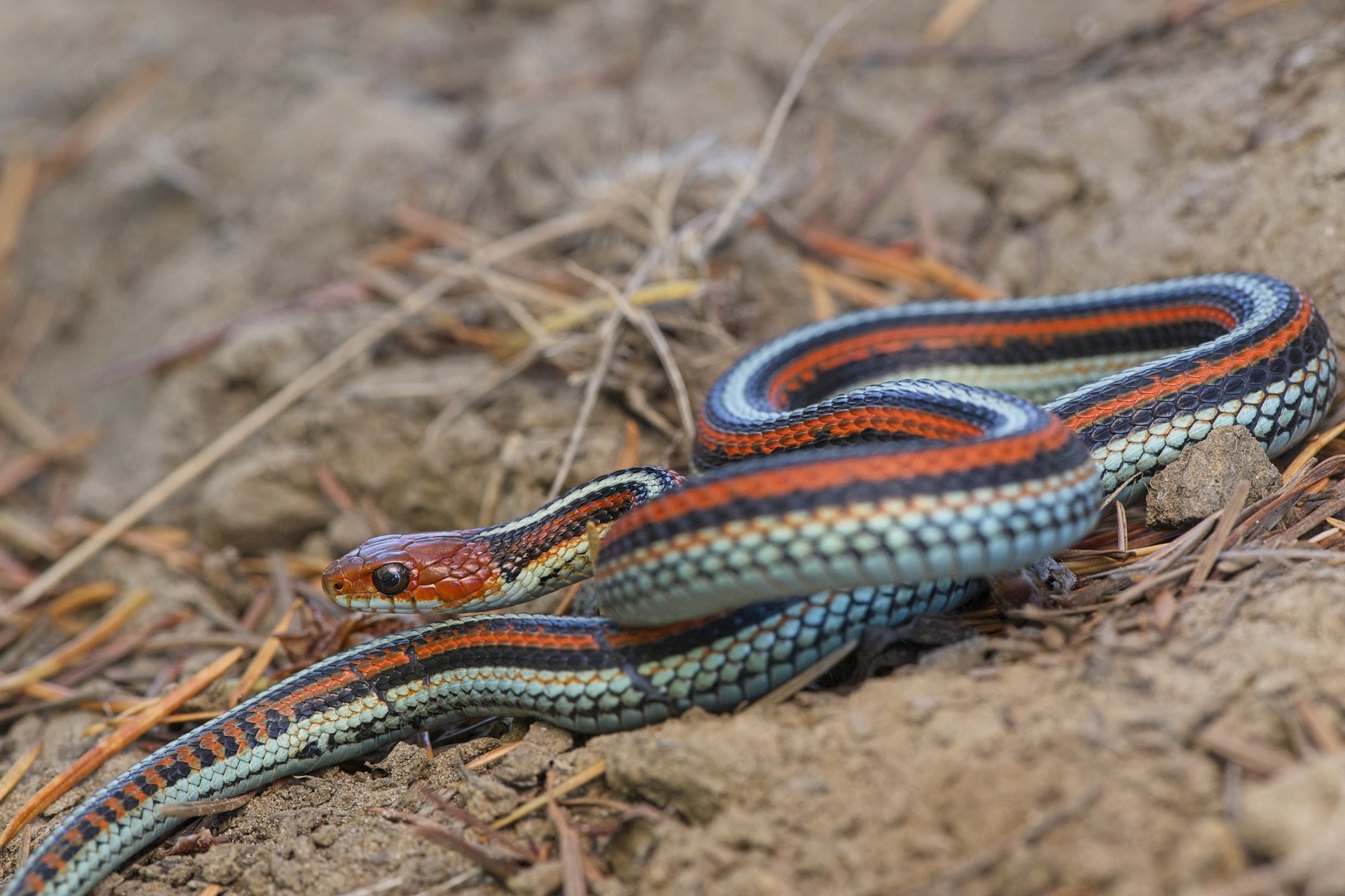
The San Francisco garter snake is hard to miss, with its rust-red head, turquoise and black stripes and brilliant blue belly.
It’s also one of California’s rarest reptiles.
Despite its name, the snake is found only in San Mateo County and a small portion of Santa Cruz County; the striking snake exists nowhere else in the world. Scientists estimate fewer than 2,000 remain in the wild, in isolated populations scattered across the Peninsula.
The species was first listed as endangered in 1967. Now, a collaborative conservation effort is giving a new generation of the snakes a better chance at survival.
This fall, 62 young snakes raised at the San Francisco Zoo were released into the wild at carefully selected San Mateo County sites. It marks the first successful release through a head-starting program designed to help the endangered reptiles recover.
The snakes have a few unusual characteristics beyond their appearance. They’re among the only animals capable of eating the highly toxic California newt, and they also prey on California red-legged frogs, Pacific tree frogs, small fish and worms.
As native predators, they help maintain the balance of local food webs, while also serving as prey for other wildlife. Protecting snakes also means shielding the broader wetland ecosystems they inhabit.

“By protecting and restoring the landscapes that the San Francisco garter snake depends on, we’re also investing in the long-term health and resilience of the region’s environment,” Karine Tokatlian, senior wildlife ecologist at the Midpeninsula Regional Open Space District, said.
But their specialized diet and habitat needs have made them particularly vulnerable.
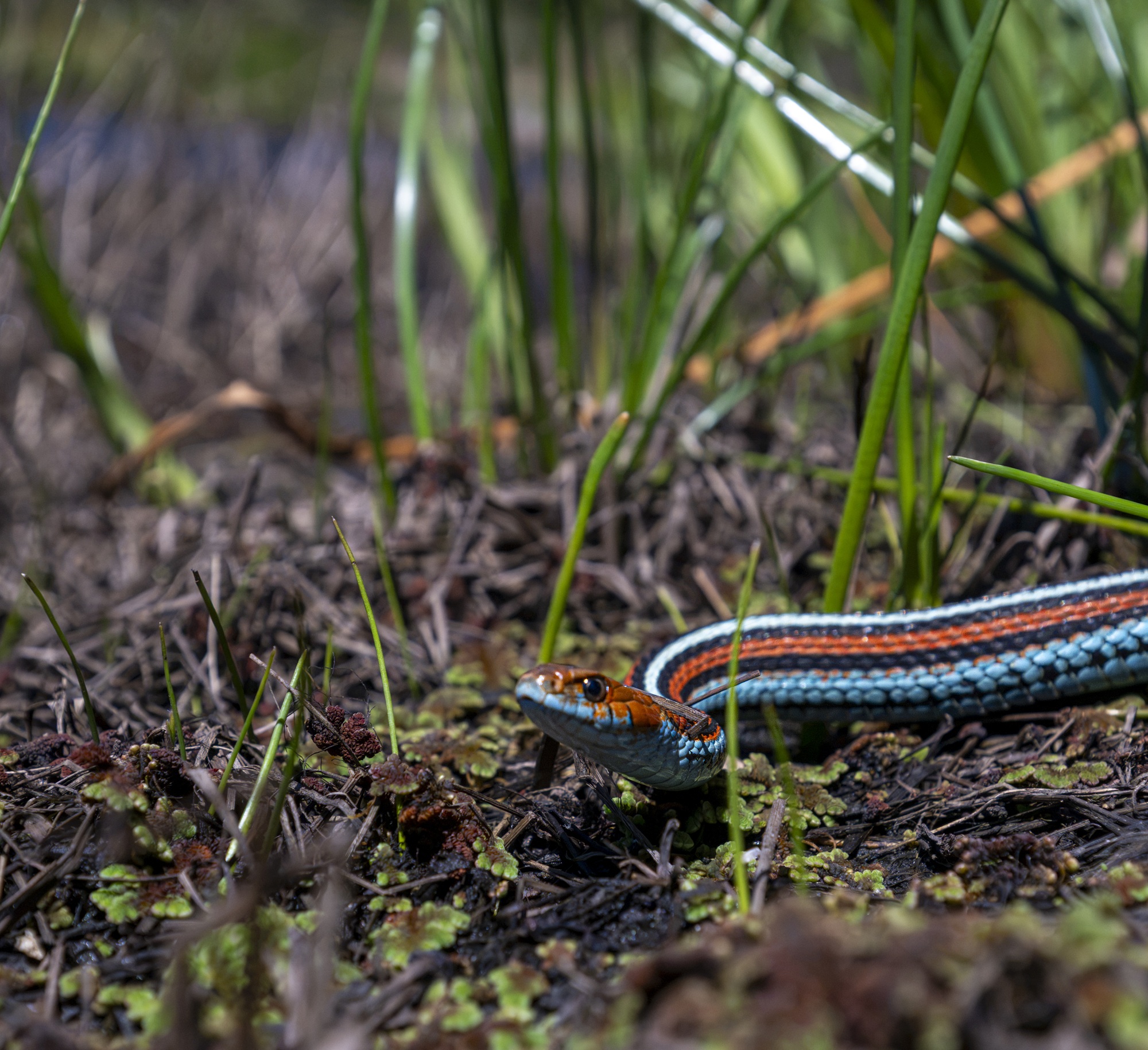
San Francisco garter snakes depend on a combination of coastal grasslands, ponds and wetlands, habitats that have become increasingly fragmented by development and roads. They also face threats from drought, disease, invasive species, declining prey populations, and illegal poaching.
“These factors have led to a decline in genetic diversity,” Tokatlian said. “Lack of genetic diversity can mean that fewer healthy baby snakes are born to each mother snake, and can compromise the long-term viability of these populations.”
That’s where the head-starting program comes in.
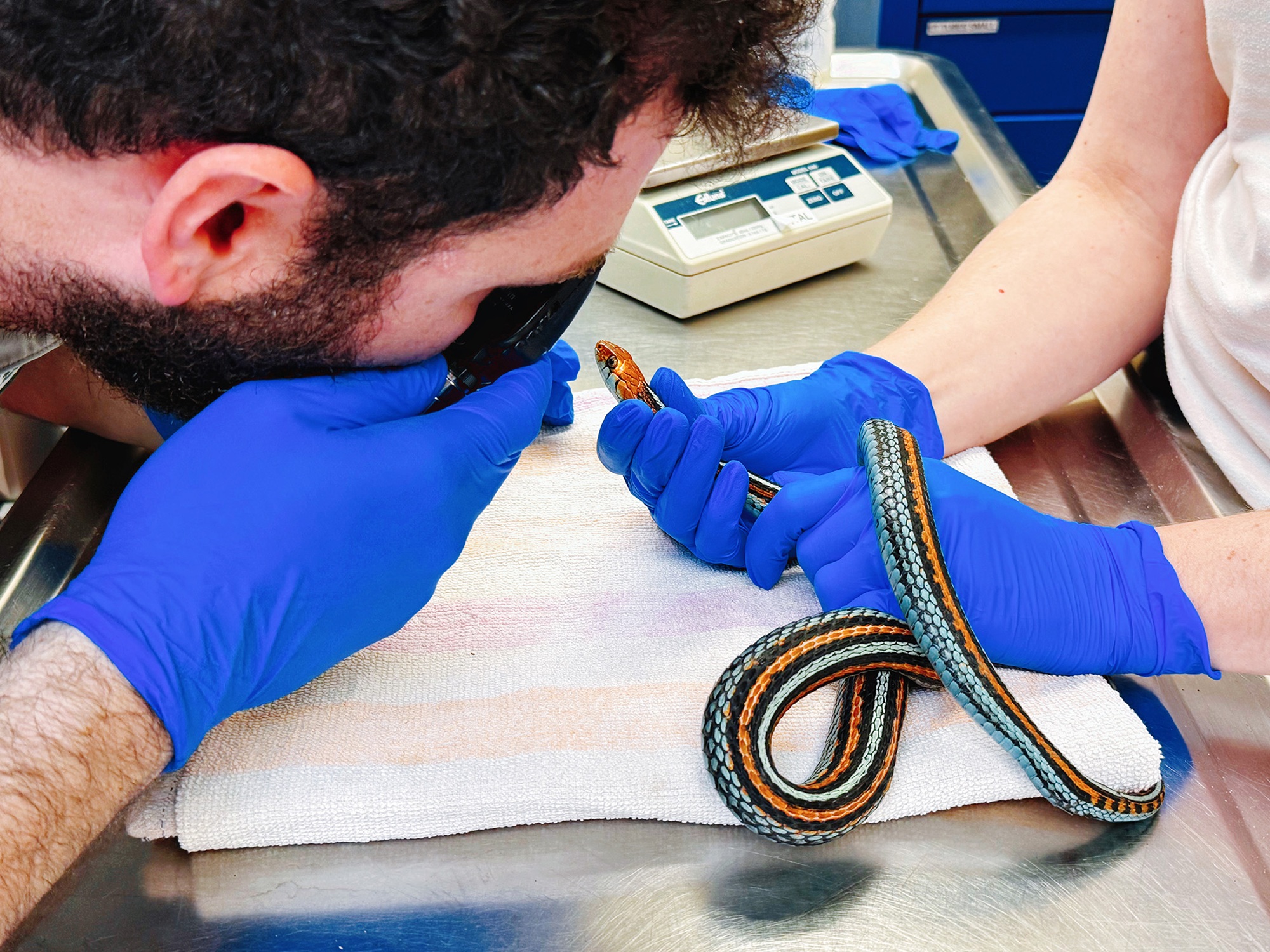
Last year, biologists with the U.S. Geological Survey collected pregnant female snakes from a healthy population in a Midpen preserve and brought them to the San Francisco Zoo. After giving birth, the mothers were returned to the wild, while their offspring remained at the zoo.
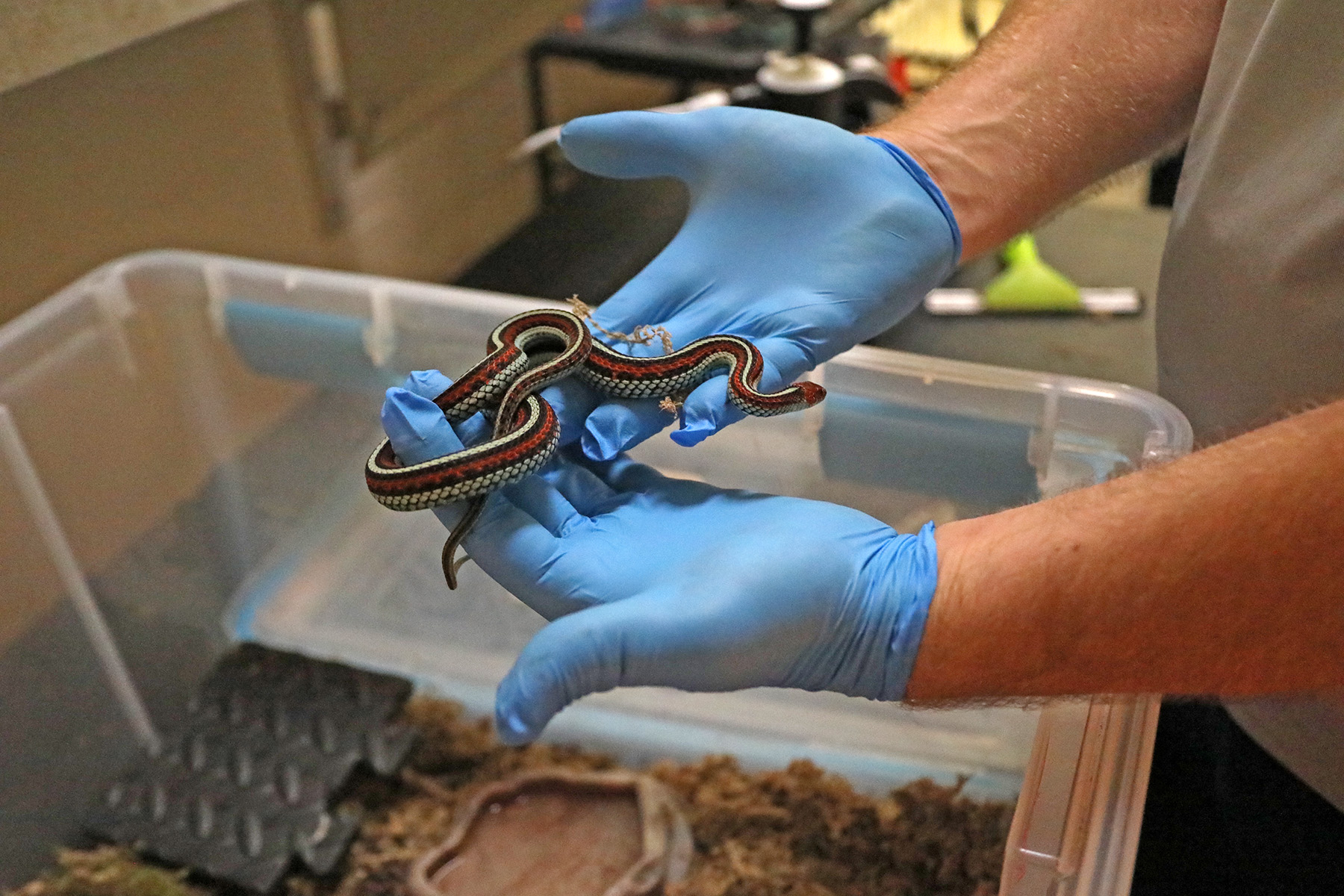
There, the young snakes received specialized care until they grew large enough to better withstand predators and competition for food in the wild.
Before their release, each snake underwent genetic testing. Scientists used the results to determine where to place individual snakes, with the goal of strengthening genetic diversity across several populations. About one-third returned to the area where their mothers were born, while the rest were distributed among other populations that needed additional snakes.
The effort builds on decades of conservation work to protect the species and restore its habitat.
For the zoo’s conservation team, the release was the culmination of years of work raising the snakes.
“By providing these young snakes with a safe environment during their most vulnerable stage of life, we’re giving them a stronger start in the wild,” said Dr. Rochelle Stiles, the zoo’s director of field conservation.
More than 130 additional baby garter snakes were born at the zoo this year and are being raised for another round of releases planned for 2027. Scientists will monitor the released snakes to determine whether the program is helping populations grow and become more genetically diverse.
Ultimately, conservationists hope to establish at least 10 viable, self-sustaining breeding populations, each with a minimum of 200 snakes, a key requirement for removing the species from the endangered list.