window.__IS_SSR__=true
window.__INITIAL_STATE__={
"attachmentsReducer": {
"audio_0": {
"type": "attachments",
"id": "audio_0",
"imgSizes": {
"kqedFullSize": {
"file": "https://ww2.kqed.org/news/wp-content/themes/KQED-unified/img/audio_bgs/background0.jpg"
}
}
},
"audio_1": {
"type": "attachments",
"id": "audio_1",
"imgSizes": {
"kqedFullSize": {
"file": "https://ww2.kqed.org/news/wp-content/themes/KQED-unified/img/audio_bgs/background1.jpg"
}
}
},
"audio_2": {
"type": "attachments",
"id": "audio_2",
"imgSizes": {
"kqedFullSize": {
"file": "https://ww2.kqed.org/news/wp-content/themes/KQED-unified/img/audio_bgs/background2.jpg"
}
}
},
"audio_3": {
"type": "attachments",
"id": "audio_3",
"imgSizes": {
"kqedFullSize": {
"file": "https://ww2.kqed.org/news/wp-content/themes/KQED-unified/img/audio_bgs/background3.jpg"
}
}
},
"audio_4": {
"type": "attachments",
"id": "audio_4",
"imgSizes": {
"kqedFullSize": {
"file": "https://ww2.kqed.org/news/wp-content/themes/KQED-unified/img/audio_bgs/background4.jpg"
}
}
},
"placeholder": {
"type": "attachments",
"id": "placeholder",
"imgSizes": {
"thumbnail": {
"file": "https://cdn.kqed.org/wp-content/uploads/2024/12/KQED-Default-Image-816638274-2000x1333-1-160x107.jpg",
"width": 160,
"height": 107,
"mimeType": "image/jpeg"
},
"medium": {
"file": "https://cdn.kqed.org/wp-content/uploads/2024/12/KQED-Default-Image-816638274-2000x1333-1-800x533.jpg",
"width": 800,
"height": 533,
"mimeType": "image/jpeg"
},
"medium_large": {
"file": "https://cdn.kqed.org/wp-content/uploads/2024/12/KQED-Default-Image-816638274-2000x1333-1-768x512.jpg",
"width": 768,
"height": 512,
"mimeType": "image/jpeg"
},
"large": {
"file": "https://cdn.kqed.org/wp-content/uploads/2024/12/KQED-Default-Image-816638274-2000x1333-1-1020x680.jpg",
"width": 1020,
"height": 680,
"mimeType": "image/jpeg"
},
"1536x1536": {
"file": "https://cdn.kqed.org/wp-content/uploads/2024/12/KQED-Default-Image-816638274-2000x1333-1-1536x1024.jpg",
"width": 1536,
"height": 1024,
"mimeType": "image/jpeg"
},
"fd-lrg": {
"file": "https://cdn.kqed.org/wp-content/uploads/2024/12/KQED-Default-Image-816638274-2000x1333-1-1536x1024.jpg",
"width": 1536,
"height": 1024,
"mimeType": "image/jpeg"
},
"fd-med": {
"file": "https://cdn.kqed.org/wp-content/uploads/2024/12/KQED-Default-Image-816638274-2000x1333-1-1020x680.jpg",
"width": 1020,
"height": 680,
"mimeType": "image/jpeg"
},
"fd-sm": {
"file": "https://cdn.kqed.org/wp-content/uploads/2024/12/KQED-Default-Image-816638274-2000x1333-1-800x533.jpg",
"width": 800,
"height": 533,
"mimeType": "image/jpeg"
},
"post-thumbnail": {
"file": "https://cdn.kqed.org/wp-content/uploads/2024/12/KQED-Default-Image-816638274-2000x1333-1-672x372.jpg",
"width": 672,
"height": 372,
"mimeType": "image/jpeg"
},
"twentyfourteen-full-width": {
"file": "https://cdn.kqed.org/wp-content/uploads/2024/12/KQED-Default-Image-816638274-2000x1333-1-1038x576.jpg",
"width": 1038,
"height": 576,
"mimeType": "image/jpeg"
},
"xxsmall": {
"file": "https://cdn.kqed.org/wp-content/uploads/2024/12/KQED-Default-Image-816638274-2000x1333-1-160x107.jpg",
"width": 160,
"height": 107,
"mimeType": "image/jpeg"
},
"xsmall": {
"file": "https://cdn.kqed.org/wp-content/uploads/2024/12/KQED-Default-Image-816638274-2000x1333-1-672x372.jpg",
"width": 672,
"height": 372,
"mimeType": "image/jpeg"
},
"small": {
"file": "https://cdn.kqed.org/wp-content/uploads/2024/12/KQED-Default-Image-816638274-2000x1333-1-672x372.jpg",
"width": 672,
"height": 372,
"mimeType": "image/jpeg"
},
"xlarge": {
"file": "https://cdn.kqed.org/wp-content/uploads/2024/12/KQED-Default-Image-816638274-2000x1333-1-1020x680.jpg",
"width": 1020,
"height": 680,
"mimeType": "image/jpeg"
},
"full-width": {
"file": "https://cdn.kqed.org/wp-content/uploads/2024/12/KQED-Default-Image-816638274-2000x1333-1-1920x1280.jpg",
"width": 1920,
"height": 1280,
"mimeType": "image/jpeg"
},
"guest-author-32": {
"file": "https://cdn.kqed.org/wp-content/uploads/2025/01/KQED-Default-Image-816638274-1333x1333-1-160x160.jpg",
"width": 32,
"height": 32,
"mimeType": "image/jpeg"
},
"guest-author-50": {
"file": "https://cdn.kqed.org/wp-content/uploads/2025/01/KQED-Default-Image-816638274-1333x1333-1-160x160.jpg",
"width": 50,
"height": 50,
"mimeType": "image/jpeg"
},
"guest-author-64": {
"file": "https://cdn.kqed.org/wp-content/uploads/2025/01/KQED-Default-Image-816638274-1333x1333-1-160x160.jpg",
"width": 64,
"height": 64,
"mimeType": "image/jpeg"
},
"guest-author-96": {
"file": "https://cdn.kqed.org/wp-content/uploads/2025/01/KQED-Default-Image-816638274-1333x1333-1-160x160.jpg",
"width": 96,
"height": 96,
"mimeType": "image/jpeg"
},
"guest-author-128": {
"file": "https://cdn.kqed.org/wp-content/uploads/2025/01/KQED-Default-Image-816638274-1333x1333-1-160x160.jpg",
"width": 128,
"height": 128,
"mimeType": "image/jpeg"
},
"detail": {
"file": "https://cdn.kqed.org/wp-content/uploads/2025/01/KQED-Default-Image-816638274-1333x1333-1-160x160.jpg",
"width": 160,
"height": 160,
"mimeType": "image/jpeg"
},
"kqedFullSize": {
"file": "https://cdn.kqed.org/wp-content/uploads/2024/12/KQED-Default-Image-816638274-2000x1333-1.jpg",
"width": 2000,
"height": 1333
}
}
},
"quest_38160": {
"type": "attachments",
"id": "quest_38160",
"meta": {
"index": "attachments_1716263798",
"site": "quest",
"id": "38160",
"found": true
},
"parent": 38153,
"imgSizes": {
"thumbnail": {
"file": "https://ww2.kqed.org/app/uploads/sites/39/2012/05/P1070034_research_bicycle_02_16x9_resized-400x225.jpg",
"width": 400,
"mimeType": "image/jpeg",
"height": 225
},
"kqedFullSize": {
"file": "https://ww2.kqed.org/app/uploads/sites/39/2012/05/P1070034_research_bicycle_02_16x9_resized.jpg",
"width": 640,
"height": 360
},
"guest-author-96": {
"file": "https://ww2.kqed.org/app/uploads/sites/39/2012/05/P1070034_research_bicycle_02_16x9_resized-96x96.jpg",
"width": 96,
"mimeType": "image/jpeg",
"height": 96
},
"guest-author-64": {
"file": "https://ww2.kqed.org/app/uploads/sites/39/2012/05/P1070034_research_bicycle_02_16x9_resized-64x64.jpg",
"width": 64,
"mimeType": "image/jpeg",
"height": 64
},
"detail": {
"file": "https://ww2.kqed.org/app/uploads/sites/39/2012/05/P1070034_research_bicycle_02_16x9_resized-75x75.jpg",
"width": 75,
"mimeType": "image/jpeg",
"height": 75
},
"guest-author-32": {
"file": "https://ww2.kqed.org/app/uploads/sites/39/2012/05/P1070034_research_bicycle_02_16x9_resized-32x32.jpg",
"width": 32,
"mimeType": "image/jpeg",
"height": 32
},
"guest-author-128": {
"file": "https://ww2.kqed.org/app/uploads/sites/39/2012/05/P1070034_research_bicycle_02_16x9_resized-128x128.jpg",
"width": 128,
"mimeType": "image/jpeg",
"height": 128
}
},
"publishDate": 1337046039,
"modified": 1337046039,
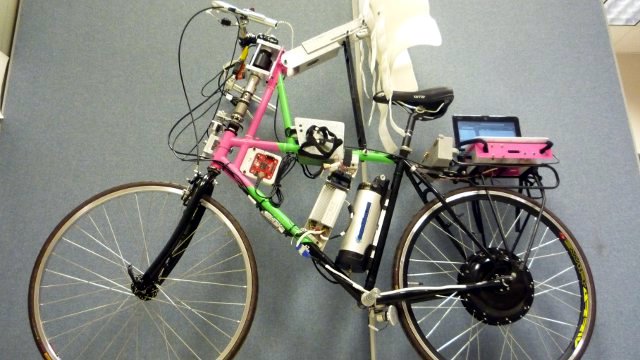
"caption": "University of California, Davis, engineers designed a research bicycle to try to figure out how humans are able to balance on a bike.",
"description": "Research bicycle at the University of California, Davis.",
"title": "P1070034_research_bicycle_02_16x9_resized",
"credit": null,
"status": "inherit",
"isLoading": false,
"fetchFailed": false
},
"quest_37169": {
"type": "attachments",
"id": "quest_37169",
"meta": {
"index": "attachments_1716263798",
"site": "quest",
"id": "37169",
"found": true
},
"parent": 37167,
"imgSizes": {
"thumbnail": {
"file": "https://ww2.kqed.org/app/uploads/sites/39/2012/05/NOAA_MBARI_2006_1313_bubblegum_DSCN7185-400x225.jpg",
"width": 400,
"mimeType": "image/jpeg",
"height": 225
},
"kqedFullSize": {
"file": "https://ww2.kqed.org/app/uploads/sites/39/2012/05/NOAA_MBARI_2006_1313_bubblegum_DSCN7185.jpg",
"width": 640,
"height": 360
},
"guest-author-96": {
"file": "https://ww2.kqed.org/app/uploads/sites/39/2012/05/NOAA_MBARI_2006_1313_bubblegum_DSCN7185-96x96.jpg",
"width": 96,
"mimeType": "image/jpeg",
"height": 96
},
"guest-author-64": {
"file": "https://ww2.kqed.org/app/uploads/sites/39/2012/05/NOAA_MBARI_2006_1313_bubblegum_DSCN7185-64x64.jpg",
"width": 64,
"mimeType": "image/jpeg",
"height": 64
},
"detail": {
"file": "https://ww2.kqed.org/app/uploads/sites/39/2012/05/NOAA_MBARI_2006_1313_bubblegum_DSCN7185-75x75.jpg",
"width": 75,
"mimeType": "image/jpeg",
"height": 75
},
"guest-author-32": {
"file": "https://ww2.kqed.org/app/uploads/sites/39/2012/05/NOAA_MBARI_2006_1313_bubblegum_DSCN7185-32x32.jpg",
"width": 32,
"mimeType": "image/jpeg",
"height": 32
},
"guest-author-128": {
"file": "https://ww2.kqed.org/app/uploads/sites/39/2012/05/NOAA_MBARI_2006_1313_bubblegum_DSCN7185-128x128.jpg",
"width": 128,
"mimeType": "image/jpeg",
"height": 128
}
},
"publishDate": 1336249310,
"modified": 1336249310,
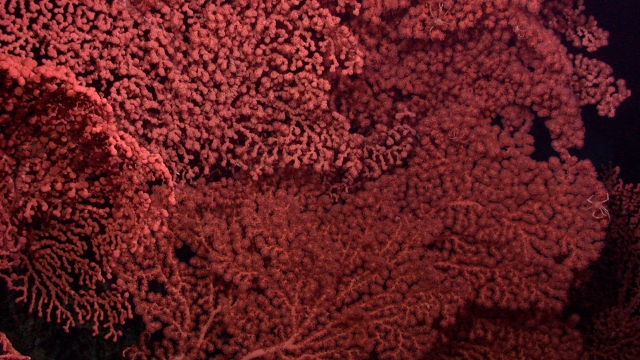
"caption": "An image of a bubble gum coral at a depth of more than 4,300 feet on the Davidson Seamount. Courtesy NOAA/MBARI 2002.",
"description": null,
"title": "NOAA_MBARI_2006_1313_bubblegum_DSCN7185",
"credit": null,
"status": "inherit",
"isLoading": false,
"fetchFailed": false
},
"quest_37032": {
"type": "attachments",
"id": "quest_37032",
"meta": {
"index": "attachments_1716263798",
"site": "quest",
"id": "37032",
"found": true
},
"parent": 36909,
"imgSizes": {
"thumbnail": {
"file": "https://ww2.kqed.org/app/uploads/sites/39/2012/05/603i-Poster-Frame-400x225.jpg",
"width": 400,
"mimeType": "image/jpeg",
"height": 225
},
"kqedFullSize": {
"file": "https://ww2.kqed.org/app/uploads/sites/39/2012/05/603i-Poster-Frame.jpg",
"width": 640,
"height": 360
},
"guest-author-96": {
"file": "https://ww2.kqed.org/app/uploads/sites/39/2012/05/603i-Poster-Frame-96x96.jpg",
"width": 96,
"mimeType": "image/jpeg",
"height": 96
},
"guest-author-64": {
"file": "https://ww2.kqed.org/app/uploads/sites/39/2012/05/603i-Poster-Frame-64x64.jpg",
"width": 64,
"mimeType": "image/jpeg",
"height": 64
},
"detail": {
"file": "https://ww2.kqed.org/app/uploads/sites/39/2012/05/603i-Poster-Frame-75x75.jpg",
"width": 75,
"mimeType": "image/jpeg",
"height": 75
},
"guest-author-32": {
"file": "https://ww2.kqed.org/app/uploads/sites/39/2012/05/603i-Poster-Frame-32x32.jpg",
"width": 32,
"mimeType": "image/jpeg",
"height": 32
},
"guest-author-128": {
"file": "https://ww2.kqed.org/app/uploads/sites/39/2012/05/603i-Poster-Frame-128x128.jpg",
"width": 128,
"mimeType": "image/jpeg",
"height": 128
}
},
"publishDate": 1336164076,
"modified": 1336164076,
"caption": null,
"description": null,
"title": "603i Poster Frame",
"credit": null,
"status": "inherit",
"isLoading": false,
"fetchFailed": false
},
"quest_37119": {
"type": "attachments",
"id": "quest_37119",
"meta": {
"index": "attachments_1716263798",
"site": "quest",
"id": "37119",
"found": true
},
"parent": 37081,
"imgSizes": {
"thumbnail": {
"file": "https://ww2.kqed.org/app/uploads/sites/39/2012/05/delta_explainer_overview640-400x225.jpg",
"width": 400,
"mimeType": "image/jpeg",
"height": 225
},
"kqedFullSize": {
"file": "https://ww2.kqed.org/app/uploads/sites/39/2012/05/delta_explainer_overview640.jpg",
"width": 640,
"height": 360
},
"guest-author-96": {
"file": "https://ww2.kqed.org/app/uploads/sites/39/2012/05/delta_explainer_overview640-96x96.jpg",
"width": 96,
"mimeType": "image/jpeg",
"height": 96
},
"guest-author-64": {
"file": "https://ww2.kqed.org/app/uploads/sites/39/2012/05/delta_explainer_overview640-64x64.jpg",
"width": 64,
"mimeType": "image/jpeg",
"height": 64
},
"detail": {
"file": "https://ww2.kqed.org/app/uploads/sites/39/2012/05/delta_explainer_overview640-75x75.jpg",
"width": 75,
"mimeType": "image/jpeg",
"height": 75
},
"guest-author-32": {
"file": "https://ww2.kqed.org/app/uploads/sites/39/2012/05/delta_explainer_overview640-32x32.jpg",
"width": 32,
"mimeType": "image/jpeg",
"height": 32
},
"guest-author-128": {
"file": "https://ww2.kqed.org/app/uploads/sites/39/2012/05/delta_explainer_overview640-128x128.jpg",
"width": 128,
"mimeType": "image/jpeg",
"height": 128
}
},
"publishDate": 1336170509,
"modified": 1336170509,
"caption": null,
"description": null,
"title": "delta_explainer_overview640",
"credit": null,
"status": "inherit",
"isLoading": false,
"fetchFailed": false
},
"quest_36210": {
"type": "attachments",
"id": "quest_36210",
"meta": {
"index": "attachments_1716263798",
"site": "quest",
"id": "36210",
"found": true
},
"parent": 36077,
"imgSizes": {
"thumbnail": {
"file": "https://ww2.kqed.org/app/uploads/sites/39/2012/04/602A_Mariah_Mitchell_smells_mint_12-7-11_GQ_resized-400x225.jpg",
"width": 400,
"mimeType": "image/jpeg",
"height": 225
},
"kqedFullSize": {
"file": "https://ww2.kqed.org/app/uploads/sites/39/2012/04/602A_Mariah_Mitchell_smells_mint_12-7-11_GQ_resized.jpg",
"width": 640,
"height": 360
},
"guest-author-96": {
"file": "https://ww2.kqed.org/app/uploads/sites/39/2012/04/602A_Mariah_Mitchell_smells_mint_12-7-11_GQ_resized-96x96.jpg",
"width": 96,
"mimeType": "image/jpeg",
"height": 96
},
"guest-author-64": {
"file": "https://ww2.kqed.org/app/uploads/sites/39/2012/04/602A_Mariah_Mitchell_smells_mint_12-7-11_GQ_resized-64x64.jpg",
"width": 64,
"mimeType": "image/jpeg",
"height": 64
},
"detail": {
"file": "https://ww2.kqed.org/app/uploads/sites/39/2012/04/602A_Mariah_Mitchell_smells_mint_12-7-11_GQ_resized-75x75.jpg",
"width": 75,
"mimeType": "image/jpeg",
"height": 75
},
"guest-author-32": {
"file": "https://ww2.kqed.org/app/uploads/sites/39/2012/04/602A_Mariah_Mitchell_smells_mint_12-7-11_GQ_resized-32x32.jpg",
"width": 32,
"mimeType": "image/jpeg",
"height": 32
},
"guest-author-128": {
"file": "https://ww2.kqed.org/app/uploads/sites/39/2012/04/602A_Mariah_Mitchell_smells_mint_12-7-11_GQ_resized-128x128.jpg",
"width": 128,
"mimeType": "image/jpeg",
"height": 128
}
},
"publishDate": 1335482732,
"modified": 1335482732,
"caption": null,
"description": "Mariah Mitchell and Isaac Hanson work in a community garden as part of the weight management program at Children's Hospital Oakland.",
"title": "602A_Mariah_Mitchell_smells_mint_12-7-11_GQ_resized",
"credit": null,
"status": "inherit",
"isLoading": false,
"fetchFailed": false
},
"quest_36325": {
"type": "attachments",
"id": "quest_36325",
"meta": {
"index": "attachments_1716263798",
"site": "quest",
"id": "36325",
"found": true
},
"parent": 36319,
"imgSizes": {
"thumbnail": {
"file": "https://ww2.kqed.org/app/uploads/sites/39/2012/04/602i_Angiogram_16_12-28-11_GQ_NICE_resized-400x225.jpg",
"width": 400,
"mimeType": "image/jpeg",
"height": 225
},
"kqedFullSize": {
"file": "https://ww2.kqed.org/app/uploads/sites/39/2012/04/602i_Angiogram_16_12-28-11_GQ_NICE_resized.jpg",
"width": 640,
"height": 360
},
"guest-author-96": {
"file": "https://ww2.kqed.org/app/uploads/sites/39/2012/04/602i_Angiogram_16_12-28-11_GQ_NICE_resized-96x96.jpg",
"width": 96,
"mimeType": "image/jpeg",
"height": 96
},
"guest-author-64": {
"file": "https://ww2.kqed.org/app/uploads/sites/39/2012/04/602i_Angiogram_16_12-28-11_GQ_NICE_resized-64x64.jpg",
"width": 64,
"mimeType": "image/jpeg",
"height": 64
},
"detail": {
"file": "https://ww2.kqed.org/app/uploads/sites/39/2012/04/602i_Angiogram_16_12-28-11_GQ_NICE_resized-75x75.jpg",
"width": 75,
"mimeType": "image/jpeg",
"height": 75
},
"guest-author-32": {
"file": "https://ww2.kqed.org/app/uploads/sites/39/2012/04/602i_Angiogram_16_12-28-11_GQ_NICE_resized-32x32.jpg",
"width": 32,
"mimeType": "image/jpeg",
"height": 32
},
"guest-author-128": {
"file": "https://ww2.kqed.org/app/uploads/sites/39/2012/04/602i_Angiogram_16_12-28-11_GQ_NICE_resized-128x128.jpg",
"width": 128,
"mimeType": "image/jpeg",
"height": 128
}
},
"publishDate": 1335546253,
"modified": 1335546253,
"caption": null,
"description": "Doctors and nurses care for a heart patient at the catheterization lab at John Muir Medical Center in Concord.",
"title": "602i_Angiogram_16_12-28-11_GQ_NICE_resized",
"credit": null,
"status": "inherit",
"isLoading": false,
"fetchFailed": false
},
"quest_36367": {
"type": "attachments",
"id": "quest_36367",
"meta": {
"index": "attachments_1716263798",
"site": "quest",
"id": "36367",
"found": true
},
"parent": 36263,
"imgSizes": {
"thumbnail": {
"file": "https://ww2.kqed.org/app/uploads/sites/39/2012/04/heartgraphic_resized-400x225.jpg",
"width": 400,
"mimeType": "image/jpeg",
"height": 225
},
"kqedFullSize": {
"file": "https://ww2.kqed.org/app/uploads/sites/39/2012/04/heartgraphic_resized.jpg",
"width": 640,
"height": 360
},
"guest-author-96": {
"file": "https://ww2.kqed.org/app/uploads/sites/39/2012/04/heartgraphic_resized-96x96.jpg",
"width": 96,
"mimeType": "image/jpeg",
"height": 96
},
"guest-author-64": {
"file": "https://ww2.kqed.org/app/uploads/sites/39/2012/04/heartgraphic_resized-64x64.jpg",
"width": 64,
"mimeType": "image/jpeg",
"height": 64
},
"detail": {
"file": "https://ww2.kqed.org/app/uploads/sites/39/2012/04/heartgraphic_resized-75x75.jpg",
"width": 75,
"mimeType": "image/jpeg",
"height": 75
},
"guest-author-32": {
"file": "https://ww2.kqed.org/app/uploads/sites/39/2012/04/heartgraphic_resized-32x32.jpg",
"width": 32,
"mimeType": "image/jpeg",
"height": 32
},
"guest-author-128": {
"file": "https://ww2.kqed.org/app/uploads/sites/39/2012/04/heartgraphic_resized-128x128.jpg",
"width": 128,
"mimeType": "image/jpeg",
"height": 128
}
},
"publishDate": 1335553974,
"modified": 1335553974,
"caption": null,
"description": null,
"title": "heartgraphic_resized",
"credit": null,
"status": "inherit",
"isLoading": false,
"fetchFailed": false
},
"quest_35815": {
"type": "attachments",
"id": "quest_35815",
"meta": {
"index": "attachments_1716263798",
"site": "quest",
"id": "35815",
"found": true
},
"parent": 35669,
"imgSizes": {
"twentyfourteen-full-width": {
"file": "https://ww2.kqed.org/app/uploads/sites/39/2012/04/posterframe601i-1038x576.jpg",
"width": 1038,
"mimeType": "image/jpeg",
"height": 576
},
"thumbnail": {
"file": "https://ww2.kqed.org/app/uploads/sites/39/2012/04/posterframe601i-400x225.jpg",
"width": 400,
"mimeType": "image/jpeg",
"height": 225
},
"fd-sm": {
"file": "https://ww2.kqed.org/app/uploads/sites/39/2012/04/posterframe601i-960x540.jpg",
"width": 960,
"mimeType": "image/jpeg",
"height": 540
},
"post-thumbnail": {
"file": "https://ww2.kqed.org/app/uploads/sites/39/2012/04/posterframe601i-672x372.jpg",
"width": 672,
"mimeType": "image/jpeg",
"height": 372
},
"kqedFullSize": {
"file": "https://ww2.kqed.org/app/uploads/sites/39/2012/04/posterframe601i.jpg",
"width": 1137,
"height": 640
},
"guest-author-96": {
"file": "https://ww2.kqed.org/app/uploads/sites/39/2012/04/posterframe601i-96x96.jpg",
"width": 96,
"mimeType": "image/jpeg",
"height": 96
},
"medium": {
"file": "https://ww2.kqed.org/app/uploads/sites/39/2012/04/posterframe601i-800x450.jpg",
"width": 800,
"mimeType": "image/jpeg",
"height": 450
},
"guest-author-64": {
"file": "https://ww2.kqed.org/app/uploads/sites/39/2012/04/posterframe601i-64x64.jpg",
"width": 64,
"mimeType": "image/jpeg",
"height": 64
},
"detail": {
"file": "https://ww2.kqed.org/app/uploads/sites/39/2012/04/posterframe601i-75x75.jpg",
"width": 75,
"mimeType": "image/jpeg",
"height": 75
},
"guest-author-32": {
"file": "https://ww2.kqed.org/app/uploads/sites/39/2012/04/posterframe601i-32x32.jpg",
"width": 32,
"mimeType": "image/jpeg",
"height": 32
},
"guest-author-128": {
"file": "https://ww2.kqed.org/app/uploads/sites/39/2012/04/posterframe601i-128x128.jpg",
"width": 128,
"mimeType": "image/jpeg",
"height": 128
}
},
"publishDate": 1334951537,
"modified": 1334951537,
"caption": null,
"description": null,
"title": "posterframe601i",
"credit": null,
"status": "inherit",
"isLoading": false,
"fetchFailed": false
},
"quest_29063": {
"type": "attachments",
"id": "quest_29063",
"meta": {
"index": "attachments_1716263798",
"site": "quest",
"id": "29063",
"found": true
},
"parent": 29054,
"imgSizes": {
"thumbnail": {
"file": "https://ww2.kqed.org/app/uploads/sites/39/2012/01/Plate_larvae_waterbug_L1100287-400x225.jpg",
"width": 400,
"mimeType": "image/jpeg",
"height": 225
},
"kqedFullSize": {
"file": "https://ww2.kqed.org/app/uploads/sites/39/2012/01/Plate_larvae_waterbug_L1100287.jpg",
"width": 640,
"height": 360
},
"guest-author-96": {
"file": "https://ww2.kqed.org/app/uploads/sites/39/2012/01/Plate_larvae_waterbug_L1100287-96x96.jpg",
"width": 96,
"mimeType": "image/jpeg",
"height": 96
},
"guest-author-64": {
"file": "https://ww2.kqed.org/app/uploads/sites/39/2012/01/Plate_larvae_waterbug_L1100287-64x64.jpg",
"width": 64,
"mimeType": "image/jpeg",
"height": 64
},
"detail": {
"file": "https://ww2.kqed.org/app/uploads/sites/39/2012/01/Plate_larvae_waterbug_L1100287-75x75.jpg",
"width": 75,
"mimeType": "image/jpeg",
"height": 75
},
"guest-author-32": {
"file": "https://ww2.kqed.org/app/uploads/sites/39/2012/01/Plate_larvae_waterbug_L1100287-32x32.jpg",
"width": 32,
"mimeType": "image/jpeg",
"height": 32
},
"guest-author-128": {
"file": "https://ww2.kqed.org/app/uploads/sites/39/2012/01/Plate_larvae_waterbug_L1100287-128x128.jpg",
"width": 128,
"mimeType": "image/jpeg",
"height": 128
}
},
"publishDate": 1325732907,
"modified": 1325732907,
"caption": "A plate full of edible insects, including bee larvae, grasshoppers and a waterbug native to Thailand.",
"description": null,
"title": "Plate_larvae_waterbug_L1100287",
"credit": null,
"status": "inherit",
"isLoading": false,
"fetchFailed": false
},
"quest_35485": {
"type": "attachments",
"id": "quest_35485",
"meta": {
"index": "attachments_1716263798",
"site": "quest",
"id": "35485",
"found": true
},
"parent": 35176,
"imgSizes": {
"thumbnail": {
"file": "https://ww2.kqed.org/app/uploads/sites/39/2012/04/red-induced-muscle-cells-with-gap-junction-proteins-at-the-cell-boundary_resized-400x225.jpg",
"width": 400,
"mimeType": "image/jpeg",
"height": 225
},
"kqedFullSize": {
"file": "https://ww2.kqed.org/app/uploads/sites/39/2012/04/red-induced-muscle-cells-with-gap-junction-proteins-at-the-cell-boundary_resized.jpg",
"width": 640,
"height": 360
},
"guest-author-96": {
"file": "https://ww2.kqed.org/app/uploads/sites/39/2012/04/red-induced-muscle-cells-with-gap-junction-proteins-at-the-cell-boundary_resized-96x96.jpg",
"width": 96,
"mimeType": "image/jpeg",
"height": 96
},
"guest-author-64": {
"file": "https://ww2.kqed.org/app/uploads/sites/39/2012/04/red-induced-muscle-cells-with-gap-junction-proteins-at-the-cell-boundary_resized-64x64.jpg",
"width": 64,
"mimeType": "image/jpeg",
"height": 64
},
"detail": {
"file": "https://ww2.kqed.org/app/uploads/sites/39/2012/04/red-induced-muscle-cells-with-gap-junction-proteins-at-the-cell-boundary_resized-75x75.jpg",
"width": 75,
"mimeType": "image/jpeg",
"height": 75
},
"guest-author-32": {
"file": "https://ww2.kqed.org/app/uploads/sites/39/2012/04/red-induced-muscle-cells-with-gap-junction-proteins-at-the-cell-boundary_resized-32x32.jpg",
"width": 32,
"mimeType": "image/jpeg",
"height": 32
},
"guest-author-128": {
"file": "https://ww2.kqed.org/app/uploads/sites/39/2012/04/red-induced-muscle-cells-with-gap-junction-proteins-at-the-cell-boundary_resized-128x128.jpg",
"width": 128,
"mimeType": "image/jpeg",
"height": 128
}
},
"publishDate": 1334686863,
"modified": 1334686863,
"caption": null,
"description": null,
"title": "red induced muscle cells with gap junction proteins at the cell boundary_resized",
"credit": null,
"status": "inherit",
"isLoading": false,
"fetchFailed": false
},
"quest_34821": {
"type": "attachments",
"id": "quest_34821",
"meta": {
"index": "attachments_1716263798",
"site": "quest",
"id": "34821",
"found": true
},
"parent": 34386,
"imgSizes": {
"thumbnail": {
"file": "https://ww2.kqed.org/app/uploads/sites/39/2012/04/WS302_monarchs640-400x225.jpg",
"width": 400,
"mimeType": "image/jpeg",
"height": 225
},
"kqedFullSize": {
"file": "https://ww2.kqed.org/app/uploads/sites/39/2012/04/WS302_monarchs640.jpg",
"width": 640,
"height": 360
},
"guest-author-96": {
"file": "https://ww2.kqed.org/app/uploads/sites/39/2012/04/WS302_monarchs640-96x96.jpg",
"width": 96,
"mimeType": "image/jpeg",
"height": 96
},
"guest-author-64": {
"file": "https://ww2.kqed.org/app/uploads/sites/39/2012/04/WS302_monarchs640-64x64.jpg",
"width": 64,
"mimeType": "image/jpeg",
"height": 64
},
"detail": {
"file": "https://ww2.kqed.org/app/uploads/sites/39/2012/04/WS302_monarchs640-75x75.jpg",
"width": 75,
"mimeType": "image/jpeg",
"height": 75
},
"guest-author-32": {
"file": "https://ww2.kqed.org/app/uploads/sites/39/2012/04/WS302_monarchs640-32x32.jpg",
"width": 32,
"mimeType": "image/jpeg",
"height": 32
},
"guest-author-128": {
"file": "https://ww2.kqed.org/app/uploads/sites/39/2012/04/WS302_monarchs640-128x128.jpg",
"width": 128,
"mimeType": "image/jpeg",
"height": 128
}
},
"publishDate": 1333671852,
"modified": 1333671852,
"caption": null,
"description": null,
"title": "WS302_monarchs640",
"credit": null,
"status": "inherit",
"isLoading": false,
"fetchFailed": false
},
"quest_77159": {
"type": "attachments",
"id": "quest_77159",
"meta": {
"index": "attachments_1716263798",
"site": "quest",
"id": "77159",
"found": true
},
"parent": 77152,
"imgSizes": {
"thumbnail": {
"file": "https://ww2.kqed.org/app/uploads/sites/39/2012/02/seismicwavestypes-400x239.jpg",
"width": 400,
"mimeType": "image/jpeg",
"height": 239
},
"post-thumbnail": {
"file": "https://ww2.kqed.org/app/uploads/sites/39/2012/02/seismicwavestypes-672x372.jpg",
"width": 672,
"mimeType": "image/jpeg",
"height": 372
},
"kqedFullSize": {
"file": "https://ww2.kqed.org/app/uploads/sites/39/2012/02/seismicwavestypes.jpg",
"width": 699,
"height": 418
},
"guest-author-96": {
"file": "https://ww2.kqed.org/app/uploads/sites/39/2012/02/seismicwavestypes-96x96.jpg",
"width": 96,
"mimeType": "image/jpeg",
"height": 96
},
"guest-author-64": {
"file": "https://ww2.kqed.org/app/uploads/sites/39/2012/02/seismicwavestypes-64x64.jpg",
"width": 64,
"mimeType": "image/jpeg",
"height": 64
},
"detail": {
"file": "https://ww2.kqed.org/app/uploads/sites/39/2012/02/seismicwavestypes-75x75.jpg",
"width": 75,
"mimeType": "image/jpeg",
"height": 75
},
"guest-author-32": {
"file": "https://ww2.kqed.org/app/uploads/sites/39/2012/02/seismicwavestypes-32x32.jpg",
"width": 32,
"mimeType": "image/jpeg",
"height": 32
},
"guest-author-128": {
"file": "https://ww2.kqed.org/app/uploads/sites/39/2012/02/seismicwavestypes-128x128.jpg",
"width": 128,
"mimeType": "image/jpeg",
"height": 128
}
},
"publishDate": 1443485354,
"modified": 1443485354,
"caption": null,
"description": null,
"title": "seismicwavestypes",
"credit": null,
"status": "inherit",
"isLoading": false,
"fetchFailed": false
}
},
"audioPlayerReducer": {
"postId": "stream_live",
"isPaused": true,
"isPlaying": false,
"pfsActive": false,
"pledgeModalIsOpen": true,
"playerDrawerIsOpen": false,
"liveAudioPlayStartedAt": 0,
"liveAudioPlayContext": ""
},
"authorsReducer": {
"amy-miller": {
"type": "authors",
"id": "209",
"meta": {
"index": "authors_1716337520",
"id": "209",
"found": true
},
"name": "Amy Miller",
"firstName": "Amy",
"lastName": "Miller",
"slug": "amy-miller",
"email": "amiller@kqed.org",
"display_author_email": false,
"staff_mastheads": [],
"title": "KQED Contributor",
"bio": "Amy Miller is a documentary filmmaker and the Supervising Producer and Partner at Spine Films, a boutique production company specializing in science, natural history and art content. Prior to joining the Spine team, she worked at KQED as the Series Producer of “QUEST”, a multimedia science and environment series. She was also a staff producer for two other KQED series, “SPARK” and “Independent View.” For her work in television, she’s earned multiple honors including ten Emmy awards and two AAAS Kavli Science Journalism awards. Feature Producer/ Director credits include “Saving Otter 501” for PBS NATURE and “Let All the Stories Be Told” which aired as part of KQED’s “Truly California” series.",
"avatar": "https://secure.gravatar.com/avatar/963dd539bdd471f0b1d216d37fbb0e99ad5f79840a7b70b5d50e9bddfe6ae154?s=600&d=blank&r=g",
"twitter": null,
"bluesky": null,
"facebook": null,
"instagram": null,
"linkedin": null,
"sites": [
{
"site": "arts",
"roles": [
"subscriber"
]
},
{
"site": "news",
"roles": [
"subscriber"
]
},
{
"site": "science",
"roles": [
"editor"
]
},
{
"site": "quest",
"roles": [
"subscriber"
]
}
],
"headData": {
"title": "Amy Miller | KQED",
"description": "KQED Contributor",
"ogImgSrc": "https://secure.gravatar.com/avatar/963dd539bdd471f0b1d216d37fbb0e99ad5f79840a7b70b5d50e9bddfe6ae154?s=600&d=blank&r=g",
"twImgSrc": "https://secure.gravatar.com/avatar/963dd539bdd471f0b1d216d37fbb0e99ad5f79840a7b70b5d50e9bddfe6ae154?s=600&d=blank&r=g"
},
"isLoading": false,
"link": "/author/amy-miller"
},
"laurensommer": {
"type": "authors",
"id": "239",
"meta": {
"index": "authors_1716337520",
"id": "239",
"found": true
},
"name": "Lauren Sommer",
"firstName": "Lauren",
"lastName": "Sommer",
"slug": "laurensommer",
"email": "lsommer@kqed.org",
"display_author_email": false,
"staff_mastheads": [],
"title": "KQED Contributor",
"bio": "Lauren is a radio reporter formerly covering environment, water, and energy for KQED Science. As part of her day job, she has scaled Sierra Nevada peaks, run from charging elephant seals, and desperately tried to get her sea legs - all in pursuit of good radio. Her work has appeared on Marketplace, Living on Earth, Science Friday and NPR's Morning Edition and All Things Considered. You can find her on Twitter at \u003ca href=\"https://twitter.com/lesommer\">@lesommer\u003c/a>.",
"avatar": "https://secure.gravatar.com/avatar/33aa3772bb86c6ad45b8aca6a238bbdf?s=600&d=blank&r=g",
"twitter": null,
"facebook": null,
"instagram": null,
"linkedin": null,
"sites": [
{
"site": "news",
"roles": [
"author"
]
},
{
"site": "science",
"roles": [
"editor",
"manage_content_types",
"manage_taxonomies"
]
},
{
"site": "quest",
"roles": [
"editor"
]
}
],
"headData": {
"title": "Lauren Sommer | KQED",
"description": "KQED Contributor",
"ogImgSrc": "https://secure.gravatar.com/avatar/33aa3772bb86c6ad45b8aca6a238bbdf?s=600&d=blank&r=g",
"twImgSrc": "https://secure.gravatar.com/avatar/33aa3772bb86c6ad45b8aca6a238bbdf?s=600&d=blank&r=g"
},
"isLoading": false,
"link": "/author/laurensommer"
},
"jennyoh": {
"type": "authors",
"id": "2100",
"meta": {
"index": "authors_1716337520",
"id": "2100",
"found": true
},
"name": "Jenny Oh",
"firstName": "Jenny",
"lastName": "Oh",
"slug": "jennyoh",
"email": "joh@kqed.org",
"display_author_email": false,
"staff_mastheads": [],
"title": "Audience Engagement Producer, Deep Look",
"bio": "Jenny is an Emmy Award-winning producer and is currently the Audience Engagement Producer for KQED Science's \u003cem>Deep Look\u003c/em> online video series. She was also a long-time contributor to Bay Area Bites, KQED's popular food blog. Jenny graduated with honors from New York University’s Tisch School of the Arts Film and Television program and has worked for WNET/PBS, The Learning Channel, Sundance Channel, HBO and the University of California.",
"avatar": "https://secure.gravatar.com/avatar/7ddda0ed657e46dbe66083f569967752?s=600&d=mm&r=g",
"twitter": null,
"facebook": null,
"instagram": null,
"linkedin": null,
"sites": [
{
"site": "arts",
"roles": []
},
{
"site": "pop",
"roles": []
},
{
"site": "about",
"roles": []
},
{
"site": "bayareabites",
"roles": []
},
{
"site": "science",
"roles": []
},
{
"site": "education",
"roles": []
},
{
"site": "quest",
"roles": []
},
{
"site": "food",
"roles": []
}
],
"headData": {
"title": "Jenny Oh | KQED",
"description": "Audience Engagement Producer, Deep Look",
"ogImgSrc": "https://secure.gravatar.com/avatar/7ddda0ed657e46dbe66083f569967752?s=600&d=mm&r=g",
"twImgSrc": "https://secure.gravatar.com/avatar/7ddda0ed657e46dbe66083f569967752?s=600&d=mm&r=g"
},
"isLoading": false,
"link": "/author/jennyoh"
},
"andrea-swensrud": {
"type": "authors",
"id": "6170",
"meta": {
"index": "authors_1716337520",
"id": "6170",
"found": true
},
"name": "Andrea Aust",
"firstName": "Andrea",
"lastName": "Aust",
"slug": "andrea-swensrud",
"email": "aaust@kqed.org",
"display_author_email": false,
"staff_mastheads": [],
"title": "KQED Contributor",
"bio": "Andrea is the Senior Manager of Science Education for KQED, where she has been developing science education resources and providing professional learning for STEM educators for more than 10 years. Andrea graduated from UC Berkeley with a B.A. in Environmental Science and earned her M.A. in Teaching and Multiple Subject Teaching Credential from the University of San Francisco. Prior to KQED, she taught, developed, and managed marine science and environmental education programs in Aspen, Catalina Island and the Bay Area. Follow her on Twitter at \u003ca href=\"https://twitter.com/KQEDaust\">@KQEDaust\u003c/a>.",
"avatar": "https://secure.gravatar.com/avatar/0e24afde91dbbf0fb0652c4ebbebceee?s=600&d=blank&r=g",
"twitter": "KQEDaust",
"facebook": null,
"instagram": null,
"linkedin": null,
"sites": [
{
"site": "science",
"roles": []
},
{
"site": "education",
"roles": []
},
{
"site": "quest",
"roles": [
"unfiltered_upload",
"administrator"
]
}
],
"headData": {
"title": "Andrea Aust | KQED",
"description": "KQED Contributor",
"ogImgSrc": "https://secure.gravatar.com/avatar/0e24afde91dbbf0fb0652c4ebbebceee?s=600&d=blank&r=g",
"twImgSrc": "https://secure.gravatar.com/avatar/0e24afde91dbbf0fb0652c4ebbebceee?s=600&d=blank&r=g"
},
"isLoading": false,
"link": "/author/andrea-swensrud"
},
"sheraz-sadiq": {
"type": "authors",
"id": "6176",
"meta": {
"index": "authors_1716337520",
"id": "6176",
"found": true
},
"name": "Sheraz Sadiq",
"firstName": "Sheraz",
"lastName": "Sadiq",
"slug": "sheraz-sadiq",
"email": "ssadiq@kqed.org",
"display_author_email": false,
"staff_mastheads": [],
"title": "KQED Contributor",
"bio": "Sheraz Sadiq is an Emmy Award-winning producer at San Francisco PBS affiliate KQED. In 2012, he received the AAAS Kavli Science Journalism award for a story he produced about the seismic retrofit of the Hetch Hetchy water delivery system which serves the San Francisco Bay Area. In addition to producing television content for KQED Science, he has also created online features and written news articles on scientific subjects ranging from astronomy to synthetic biology.",
"avatar": "https://secure.gravatar.com/avatar/d88c61c214e477c4c6f0ebaed4f581bf7c9b1dafd94cd4361285d427107adb8d?s=600&d=blank&r=g",
"twitter": null,
"bluesky": null,
"facebook": null,
"instagram": null,
"linkedin": null,
"sites": [
{
"site": "arts",
"roles": [
"subscriber"
]
},
{
"site": "news",
"roles": [
"subscriber"
]
},
{
"site": "futureofyou",
"roles": [
"subscriber"
]
},
{
"site": "science",
"roles": [
"subscriber"
]
},
{
"site": "quest",
"roles": [
"leadcoordinator",
"subscriber"
]
}
],
"headData": {
"title": "Sheraz Sadiq | KQED",
"description": "KQED Contributor",
"ogImgSrc": "https://secure.gravatar.com/avatar/d88c61c214e477c4c6f0ebaed4f581bf7c9b1dafd94cd4361285d427107adb8d?s=600&d=blank&r=g",
"twImgSrc": "https://secure.gravatar.com/avatar/d88c61c214e477c4c6f0ebaed4f581bf7c9b1dafd94cd4361285d427107adb8d?s=600&d=blank&r=g"
},
"isLoading": false,
"link": "/author/sheraz-sadiq"
},
"gabriela-quiros": {
"type": "authors",
"id": "6186",
"meta": {
"index": "authors_1716337520",
"id": "6186",
"found": true
},
"name": "Gabriela Quirós",
"firstName": "Gabriela",
"lastName": "Quirós",
"slug": "gabriela-quiros",
"email": "gquiros@kqed.org",
"display_author_email": false,
"staff_mastheads": [],
"title": "Supervising Producer",
"bio": "Gabriela Quirós is the \u003cstrong>supervising producer for KQED's web science video series \u003ca href=\"https://www.kqed.org/deeplook\">Deep Look\u003c/a>\u003c/strong>. She joined KQED as a TV producer when its science series QUEST started in 2006 and has covered everything from Alzheimer’s to bee die-offs to dark energy.\r\n\r\nShe won a 2022 AAAS Kavli Science Journalism Award with a team of her Deep Look colleagues. She has won six regional Emmys as a video producer and has shared eight more as the coordinating producer of Deep Look. The episode she produced about \u003ca href=\"https://www.kqed.org/science/728086/how-mosquitoes-use-six-needles-to-suck-your-blood\">How Mosquitoes Use Six Needles to Suck Your Blood\u003c/a> won a Webby \"People's Voice\" award. She has also earned awards from the Jackson Hole Wildlife Film Festival, the Society of Professional Journalists and the Society of Environmental Journalists.\r\n\r\nHer videos for KQED have also aired on NOVA scienceNOW and the PBS NewsHour, and appeared on NPR.org.\r\n\r\nAs an independent filmmaker, she produced and directed the hour-long documentary \u003ca href=\"http://lpbp.org/beautiful-sin-qa-with-producer-gabriela-quiros/\">\u003cem>Beautiful Sin\u003c/em>\u003c/a>, about the surprising story of how Costa Rica became the only country in the world to outlaw in vitro fertilization. The film aired in 2015 on public television stations throughout the U.S., and in Costa Rica.\r\n\r\nShe started her journalism career as a newspaper reporter in Costa Rica, where she grew up. She won the National Science Journalism Award there for a series of articles about organic agriculture, and developed a life-long interest in health reporting. She moved to the Bay Area in 1996 to study documentary filmmaking at the University of California, Berkeley, where she received master’s degrees in journalism and Latin American studies.",
"avatar": "https://secure.gravatar.com/avatar/6d82c20152affd1b434c31a904c40809?s=600&d=blank&r=g",
"twitter": "gabrielaquirosr",
"facebook": null,
"instagram": null,
"linkedin": null,
"sites": [
{
"site": "science",
"roles": []
},
{
"site": "quest",
"roles": [
"ef_view_calendar",
"ef_view_story_budget"
]
}
],
"headData": {
"title": "Gabriela Quirós | KQED",
"description": "Supervising Producer",
"ogImgSrc": "https://secure.gravatar.com/avatar/6d82c20152affd1b434c31a904c40809?s=600&d=blank&r=g",
"twImgSrc": "https://secure.gravatar.com/avatar/6d82c20152affd1b434c31a904c40809?s=600&d=blank&r=g"
},
"isLoading": false,
"link": "/author/gabriela-quiros"
},
"joshua-cassidy": {
"type": "authors",
"id": "6219",
"meta": {
"index": "authors_1716337520",
"id": "6219",
"found": true
},
"name": "Josh Cassidy",
"firstName": "Josh",
"lastName": "Cassidy",
"slug": "joshua-cassidy",
"email": "jcassidy@kqed.org",
"display_author_email": false,
"staff_mastheads": [
"science"
],
"title": "Digital Video Producer",
"bio": "Josh is a Senior Video Producer for KQED Science, and the Lead Producer and Cinematographer for Deep Look. After receiving his BS in Wildlife Biology from Ohio University, he went on to participate in marine mammal research for NOAA, USGS and the Intersea Foundation. He also served as the president of The Pacific Cetacean Group, a nonprofit organization dedicated to teaching students K-6 about whales. Josh studied science and natural history filmmaking at San Francisco State University and Montana State University.",
"avatar": "https://secure.gravatar.com/avatar/f2582a0801a35af53b734d56bcac2bbe?s=600&d=blank&r=g",
"twitter": null,
"facebook": null,
"instagram": null,
"linkedin": null,
"sites": [
{
"site": "science",
"roles": [
"editor"
]
},
{
"site": "quest",
"roles": [
"author",
"edit_others_posts"
]
}
],
"headData": {
"title": "Josh Cassidy | KQED",
"description": "Digital Video Producer",
"ogImgSrc": "https://secure.gravatar.com/avatar/f2582a0801a35af53b734d56bcac2bbe?s=600&d=blank&r=g",
"twImgSrc": "https://secure.gravatar.com/avatar/f2582a0801a35af53b734d56bcac2bbe?s=600&d=blank&r=g"
},
"isLoading": false,
"link": "/author/joshua-cassidy"
}
},
"pagesReducer": {
"quest_tag_tag-video": {
"type": "terms",
"id": "quest_3071",
"meta": {
"index": "terms_1716263798",
"site": "quest",
"id": "3071",
"score": 10.406671
},
"featImg": null,
"name": "video",
"description": null,
"taxonomy": "tag",
"headData": {
"twImgId": null,
"twTitle": null,
"ogTitle": null,
"ogImgId": null,
"twDescription": null,
"description": null,
"title": "video Archives | KQED Arts",
"ogDescription": null
},
"ttid": 3088,
"slug": "tag-video",
"isLoading": false,
"title": "video",
"pageMeta": {
"site": "quest",
"WpPageTemplate": "page-topic-editorial",
"currentPage": 11
},
"blocks": [
{
"blockName": "kqed/post-list",
"attrs": {
"layout": "cardArticle2",
"query": "posts/quest?tag=tag-video",
"seeMore": false,
"paginated": true,
"page": 11
}
},
{
"blockName": "kqed/ad"
}
]
}
},
"pfsSessionReducer": {},
"postsReducer": {
"stream_live": {
"type": "live",
"id": "stream_live",
"audioUrl": "https://hls.kqed.org/hls/kqed_app/playlist.m3u8",
"title": "Live Stream",
"excerpt": "Live Stream information currently unavailable.",
"link": "/radio",
"featImg": "",
"label": {
"name": "KQED Live",
"link": "/"
}
},
"stream_kqedNewscast": {
"type": "posts",
"id": "stream_kqedNewscast",
"audioUrl": "https://www.kqed.org/.stream/anon/radio/RDnews/newscast.mp3?_=1",
"title": "KQED Newscast",
"featImg": "",
"label": {
"name": "88.5 FM",
"link": "/"
}
},
"quest_38153": {
"type": "posts",
"id": "quest_38153",
"meta": {
"index": "posts_1716263798",
"site": "quest",
"id": "38153",
"score": null,
"sort": [
1337104816000
]
},
"parent": 0,
"labelTerm": {
"site": "quest"
},
"blocks": [],
"publishDate": 1337104816,
"format": "video",
"disqusTitle": "The Science of Riding a Bicycle",
"title": "The Science of Riding a Bicycle",
"headTitle": "QUEST | KQED Science",
"content": "\u003cp>We don’t often think of it this way, but the everyday work of scientists frequently comes down to sewing, welding or hammering together simple materials like elastic, metal tubes and plastic to create the devices that will allow them to conduct their experiments.\u003c/p>\n\u003cp>Mechanical engineer Jason Moore knows this all too well. To conduct an experiment on the mechanics of bicycle-riding, he even used a sewing machine.\u003c/p>\n\u003cp>Moore’s doctoral dissertation on the complex mechanisms by which a rider balances atop a bike required him to build a research bicycle at the University of California, Davis. We filmed Moore for our story about the science of riding a bicycle. In this slideshow you can explore some of the bike’s components and the work that went into creating them:\u003c/p>\n\u003cp>\u003ciframe src=\"http://kqed03.streamguys.us/anon.kqed/slideshow/bicycle_slideshow/_files/iframe.html?noscale=620x533\" frameborder=\"0\" scrolling=\"no\" width=\"620\" height=\"533\">\u003c/iframe>\u003c/p>\n\u003cp>[ad fullwidth]\u003c/p>\u003cp>\u003c/p>\n",
"disqusIdentifier": "38153 http://science.kqed.org/quest/video/the-science-of-riding-a-bicycle/",
"disqusUrl": "https://ww2.kqed.org/quest/2012/05/15/the-science-of-riding-a-bicycle/",
"stats": {
"hasVideo": false,
"hasChartOrMap": true,
"hasAudio": false,
"hasPolis": false,
"wordCount": 136,
"hasGoogleForm": false,
"hasGallery": false,
"hasHearkenModule": false,
"iframeSrcs": [
"http://kqed03.streamguys.us/anon.kqed/slideshow/bicycle_slideshow/_files/iframe.html"
],
"paragraphCount": 6
},
"modified": 1457565869,
"excerpt": "Their basic design hasn’t changed much, but scientists still don’t fully understand the forces that allow humans to balance atop a bicycle. QUEST visits Davis – a city that loves its bicycles – to take a ride on a research bike and explore a collection of antique bicycles. ",
"headData": {
"twImgId": "",
"twTitle": "",
"ogTitle": "",
"ogImgId": "",
"twDescription": "",
"description": "Their basic design hasn’t changed much, but scientists still don’t fully understand the forces that allow humans to balance atop a bicycle. QUEST visits Davis – a city that loves its bicycles – to take a ride on a research bike and explore a collection of antique bicycles. ",
"title": "The Science of Riding a Bicycle | KQED",
"ogDescription": "",
"schema": {
"@context": "https://schema.org",
"@type": "Article",
"headline": "The Science of Riding a Bicycle",
"datePublished": "2012-05-15T11:00:16-07:00",
"dateModified": "2016-03-09T15:24:29-08:00",
"image": "https://cdn.kqed.org/wp-content/uploads/2020/02/KQED-OG-Image@1x.png"
}
},
"guestAuthors": [],
"slug": "the-science-of-riding-a-bicycle",
"status": "publish",
"videoEmbed": "https://www.youtube.com/watch?v=zShn5xMueso",
"path": "/quest/38153/the-science-of-riding-a-bicycle",
"audioTrackLength": null,
"parsedContent": [
{
"type": "contentString",
"content": "\u003cdiv class=\"post-body\">\u003cp>\u003cp>We don’t often think of it this way, but the everyday work of scientists frequently comes down to sewing, welding or hammering together simple materials like elastic, metal tubes and plastic to create the devices that will allow them to conduct their experiments.\u003c/p>\n\u003cp>Mechanical engineer Jason Moore knows this all too well. To conduct an experiment on the mechanics of bicycle-riding, he even used a sewing machine.\u003c/p>\n\u003cp>Moore’s doctoral dissertation on the complex mechanisms by which a rider balances atop a bike required him to build a research bicycle at the University of California, Davis. We filmed Moore for our story about the science of riding a bicycle. In this slideshow you can explore some of the bike’s components and the work that went into creating them:\u003c/p>\n\u003cp>\u003ciframe src=\"http://kqed03.streamguys.us/anon.kqed/slideshow/bicycle_slideshow/_files/iframe.html?noscale=620x533\" frameborder=\"0\" scrolling=\"no\" width=\"620\" height=\"533\">\u003c/iframe>\u003c/p>\n\u003cp>\u003c/p>\u003c/div>",
"attributes": {
"named": {},
"numeric": []
}
},
{
"type": "component",
"content": "",
"name": "ad",
"attributes": {
"named": {
"label": "fullwidth"
},
"numeric": [
"fullwidth"
]
}
},
{
"type": "contentString",
"content": "\u003cdiv class=\"post-body\">\u003cp>\u003c/p>\u003cp>\u003c/p>\n\u003c/div>\u003c/p>",
"attributes": {
"named": {},
"numeric": []
}
}
],
"link": "/quest/38153/the-science-of-riding-a-bicycle",
"authors": [
"6186"
],
"categories": [
"quest_8",
"quest_16",
"quest_3422",
"quest_3233"
],
"tags": [
"quest_315",
"quest_11108",
"quest_13",
"quest_11106",
"quest_2893",
"quest_11105",
"quest_11107",
"quest_3071"
],
"featImg": "quest_38160",
"label": "quest"
},
"quest_37167": {
"type": "posts",
"id": "quest_37167",
"meta": {
"index": "posts_1716263798",
"site": "quest",
"id": "37167",
"score": null,
"sort": [
1336500611000
]
},
"parent": 0,
"labelTerm": {
"site": "quest"
},
"blocks": [],
"publishDate": 1336500611,
"format": "video",
"disqusTitle": "Exploring Corals of the Deep",
"title": "Exploring Corals of the Deep",
"headTitle": "QUEST | KQED Science",
"content": "\u003cp>It's hard to fathom that off our central California coast, just 80 miles southwest of Monterey, is a massive underwater mountain which blooms with deep sea coral life, including some corals which were new to science before they were discovered by researchers at the \u003ca href=\"http://montereybay.noaa.gov/\">Monterey Bay National Marine Sanctuary\u003c/a> and \u003ca href=\"http://www.mbari.org/\">Monterey Bay Aquarium Research Institute\u003c/a>.\u003c/p>\n\u003cfigure id=\"attachment_37177\" class=\"wp-caption alignleft\" style=\"max-width: 300px\">\u003ca href=\"http://ww2.kqed.org/quest/wp-content/uploads/sites/39/2012/05/NOAA_MBARI_2002_CMonticola_newspecies_2486_DSCN3687.jpg\">\u003cimg class=\"size-thumbnail wp-image-37177\" title=\"NOAA_MBARI_2002_CMonticola_newspecies_2486_DSCN3687\" src=\"http://ww2.kqed.org/quest/wp-content/uploads/sites/39/2012/05/NOAA_MBARI_2002_CMonticola_newspecies_2486_DSCN3687-300x169.jpg\" alt=\"\" width=\"300\" height=\"169\">\u003c/a>\u003cfigcaption class=\"wp-caption-text\">A new species of coral, Chrysogorgia monticola, discovered more than a mile and a half deep at the Davidson Seamount. Courtesy NOAA / MBARI 2002.\u003c/figcaption>\u003c/figure>\n\u003cp>This underwater mountain is the \u003ca href=\"http://montereybay.noaa.gov/research/dsmz/welcome.html\">Davidson Seamount\u003c/a>, an impressive geological structure which like the roughly 30,000 seamounts throughout the world, was generated by underwater volcanic activity. In 1933, it became the first geographic feature called a \"seamount\" and it is named after George Davidson, an astronomer and geographer.\u003c/p>\n\u003cp>So what makes the Davidson Seamount so special?\u003c/p>\n\u003cp>As Andrew DeVogelaere, Research Coordinator for the Monterey Bay National Marine Sanctuary told me during our filming for this QUEST story, \"It’s special because of its shape. Most sea mounts are circular...This one is oblong, because as it developed over millions of years, it was on a spreading center.Think of Hawaii underneath the water...that juts up from the sea floor mud thousands of feet.\"\u003c/p>\n\u003cfigure id=\"attachment_37178\" class=\"wp-caption alignright\" style=\"max-width: 300px\">\u003ca href=\"http://ww2.kqed.org/quest/wp-content/uploads/sites/39/2012/05/603_Corals_resized_DeVogelaere_SS_1-24-12_DSC_0011.jpg\">\u003cimg class=\"size-thumbnail wp-image-37178\" title=\"603_Corals_resized_DeVogelaere_SS_1-24-12_DSC_0011\" src=\"http://ww2.kqed.org/quest/wp-content/uploads/sites/39/2012/05/603_Corals_resized_DeVogelaere_SS_1-24-12_DSC_0011-300x169.jpg\" alt=\"\" width=\"300\" height=\"169\">\u003c/a>\u003cfigcaption class=\"wp-caption-text\">Monterey Bay National Marine Sanctuary Research Coordinator Andrew DeVogelaere during a break from the filming of his interview. Photo by Sheraz Sadiq / QUEST.\u003c/figcaption>\u003c/figure>\n\u003cp>The other reason why this seamount is so special is its reputation as an oasis of deep sea coral life. Approximately 30 species of deep sea corals have been found at the Davidson Seamount. While it may seem odd that any animal could survive let alone thrive in this dark, frigid environment, the deep sea corals opportunistically position themselves on the steep sides of the Davidson Seamount to catch nutrients and plankton rushing up from deep sea currents.\u003c/p>\n\u003cp>[ad fullwidth]\u003c/p>\n\u003cp>But venturing to this seamount is no easy feat; in fact, the top of the Davidson Seamount is still 4,000 feet below the surface of the water! Undeterred and with the high-tech submersible tools at their disposal, DeVogelaere and fellow marine biologist Jim Barry of MBARI launched a research trip in 2006 to the 26 mile-long Davidson Seamount to explore the rich biodiversity teeming in its dark, watery depths.\u003c/p>\n\u003cp>The trip was a follow-up to a 2002 research expedition funded by NOAA, also under the direction of Andrew DeVogelaere at the Monterey Bay National Marine Sanctuary. The impetus of that trip was to catalogue, through the use of a Remotely Operated Vehicle mounted with sophisticated cameras, the abundance and diversity of deep sea corals and other striking animals such as anemones and fish observed along the sides and valleys of this volcanic, rocky formation.\u003c/p>\n\u003cfigure id=\"attachment_37179\" class=\"wp-caption alignleft\" style=\"max-width: 300px\">\u003ca href=\"http://ww2.kqed.org/quest/wp-content/uploads/sites/39/2012/05/NOAA_MBARI_2006_1313_bubblegum_DSCN71851.jpg\">\u003cimg class=\"size-thumbnail wp-image-37179\" title=\"NOAA_MBARI_2006_1313_bubblegum_DSCN7185\" src=\"http://ww2.kqed.org/quest/wp-content/uploads/sites/39/2012/05/NOAA_MBARI_2006_1313_bubblegum_DSCN71851-300x169.jpg\" alt=\"\" width=\"300\" height=\"169\">\u003c/a>\u003cfigcaption class=\"wp-caption-text\">A bubble gum coral spotted more than 4,300 feet deep at the Davidson Seamount. Courtesy NOAA / MBARI 2006.\u003c/figcaption>\u003c/figure>\n\u003cp>In 2006, the team returned to the seamount and once more recorded hours upon hours of breathtaking HD footage. The scientists were also trying to develop a model that would help them predict where other corals might be in the Monterey Bay National Marine Sanctuary, which the Davidson Seamount was incorporated into in 2009. Some deep sea corals were also transplanted from a less acidic region at the top of the seamount to a more acidic region farther below to assess how these transplanted corals would fare in the face of increasing ocean acidification. Not only did the scientists find evidence of ocean acidification at 12,000 feet, they also found evidence of the toxic pesticide DDT and trash, including a Coca-Cola bottle.\u003c/p>\n\u003cp>On a personal level, this was an aspect of the story which indelibly affected me - how is it that creatures like corals, which can live thousands of years, survive in an inhospitable environment thousands of feet beneath the surface of the ocean?\u003c/p>\n\u003cfigure id=\"attachment_37180\" class=\"wp-caption alignright\" style=\"max-width: 300px\">\u003ca href=\"http://ww2.kqed.org/quest/wp-content/uploads/sites/39/2012/05/NOAA_MBARI_2002_blackcoral_2467_DSCN3430.jpg\">\u003cimg class=\"size-thumbnail wp-image-37180\" title=\"NOAA_MBARI_2002_blackcoral_2467_DSCN3430\" src=\"http://ww2.kqed.org/quest/wp-content/uploads/sites/39/2012/05/NOAA_MBARI_2002_blackcoral_2467_DSCN3430-300x169.jpg\" alt=\"\" width=\"300\" height=\"169\">\u003c/a>\u003cfigcaption class=\"wp-caption-text\">A black coral clinging to the side of the Davidson seamount. A species of black coral was discovered off the coast of Hawaii and dated to 4,600 years old! Courtesy NOAA / MBARI 2002.\u003c/figcaption>\u003c/figure>\n\u003cp>Sadly, these seemingly fragile but resilient, ancient organisms are experiencing stresses, such as ocean acidification, to their ancient marine habitats which may far outstrip their ability to adapt.\u003c/p>\n\u003cp>Jim Barry is studying the effects of ocean acidification on deep sea organisms like urchins and, as he told me, he plans to bring into his lab precious corals (so named for their value as jewelry) to see how they contend with increasing levels of acidity. \"The California coast could be considered the front line for ocean acidification damage, within 50 years, and certainly by the end of the century...As ocean acidification due to our C02 emissions intensifies along this coast, those corals are gonna have a hard time,\" Barry said.\u003c/p>\n\u003cfigure id=\"attachment_37181\" class=\"wp-caption alignleft\" style=\"max-width: 300px\">\u003ca href=\"http://ww2.kqed.org/quest/wp-content/uploads/sites/39/2012/05/603_Corals_resized_Barry_SS_1-24-12_DSC_0004.jpg\">\u003cimg class=\"size-thumbnail wp-image-37181\" title=\"603_Corals_resized_Barry_SS_1-24-12_DSC_0004\" src=\"http://ww2.kqed.org/quest/wp-content/uploads/sites/39/2012/05/603_Corals_resized_Barry_SS_1-24-12_DSC_0004-300x169.jpg\" alt=\"\" width=\"300\" height=\"169\">\u003c/a>\u003cfigcaption class=\"wp-caption-text\">MBARI Staff Scientist in his lab at Moss Landing, looking at a tank containing urchins. Photo by Sheraz Sadiq / QUEST.\u003c/figcaption>\u003c/figure>\n\u003cp>Stephen Palumbi, Director of the \u003ca href=\"http://www-marine.stanford.edu/\">Hopkins Marine Station\u003c/a>, is another amazing, eloquent marine biologist whom I interviewed for this story. He specializes in tropical corals which are also vulnerable to the effects of ocean acidification. His research in American Samoa focuses on \"super corals\" - species of corals which thrive in waters that would be too warm for most other corals.\u003c/p>\n\u003cp>Palumbi similarly struck a somber note in regards to ocean acidification, trawling and other pressures facing corals, be they in the cold, deep ocean or in the warm, shallow waters of the tropics.\u003c/p>\n\u003cfigure id=\"attachment_37182\" class=\"wp-caption alignright\" style=\"max-width: 300px\">\u003ca href=\"http://ww2.kqed.org/quest/wp-content/uploads/sites/39/2012/05/603_Corals_resized_Palumbi_SS_1-31-12DSC_0005.jpg\">\u003cimg class=\"size-thumbnail wp-image-37182\" title=\"603_Corals_resized_Palumbi_SS_1-31-12DSC_0005\" src=\"http://ww2.kqed.org/quest/wp-content/uploads/sites/39/2012/05/603_Corals_resized_Palumbi_SS_1-31-12DSC_0005-300x169.jpg\" alt=\"\" width=\"300\" height=\"169\">\u003c/a>\u003cfigcaption class=\"wp-caption-text\">Stephen Palumbi, Director of the Hopkins Marine Station in his lab at Pacific Grove. Photo by Sheraz Sadiq / QUEST.\u003c/figcaption>\u003c/figure>\n\u003cp>\"The biggest worry is that we humans are such game-changers. We change the rules wherever we go,\" he said. \"That record of coral success, which has been a quarter of a billion years that corals have been successful on our planet, ...is about to come to an end because of the way we are so incredibly changing the oceans.\"\u003c/p>\n\u003cp>Indeed, it's a race against time. DeVogelaere told me that we know less about the deep ocean than the surface of the moon. With tens of thousands of seamounts around the world, perhaps now is the time to descend high-tech ROVs thousands of feet into the cold, watery abyss and illuminate the stunning, ancient corals of the deep, documenting their diversity and habitat range around the world before they disappear.\u003c/p>\n\u003cp>[ad floatright]\u003c/p>\n\u003cp>In the course of my production on this story, I was lucky enough to acquire some very compelling footage of bottom trawling activity. In particular, \u003ca href=\"http://www.greenpeace.org/international/en/campaigns/oceans/\">Greenpeace International \u003c/a> allowed me to use the powerful clip of a large bubblegum coral being thrown overboard, part of the senseless bycatch scooped up in the shipping vessel's trawl net. The size of the coral, which took two men two throw overboard, indicates that it must have been growing for at least hundreds of years in the deep sea. Greenpeace also had video shot in the deep Bering Sea, where parts of the seafloor bore scars from trawling activity. \u003ca href=\"http://oceana.org/en/about-us/what-we-do\">Oceana\u003c/a>, another NGO diligently trying to protect the world's oceans, shared black and white video footage originally shot by NOAA of a trawl net scraping the seafloor and scooping up any and all marine organisms in its indiscriminate, destructive path.\u003c/p>\n\n",
"disqusIdentifier": "37167 http://science.kqed.org/quest/?post_type=videos&p=37167",
"disqusUrl": "https://ww2.kqed.org/quest/2012/05/08/exploring-corals-of-the-deep/",
"stats": {
"hasVideo": false,
"hasChartOrMap": false,
"hasAudio": false,
"hasPolis": false,
"wordCount": 1208,
"hasGoogleForm": false,
"hasGallery": false,
"hasHearkenModule": false,
"iframeSrcs": [],
"paragraphCount": 18
},
"modified": 1457565807,
"excerpt": "Off California's coastline, thousands of feet below the deep blue ocean where the sun's rays don't reach, teems a diverse community of deep sea corals. Armed with unmanned submarines equipped with robotic arms, sensors and HD cameras, scientists are exploring this treasure trove of corals and the rich marine life living among them.",
"headData": {
"twImgId": "",
"twTitle": "",
"ogTitle": "",
"ogImgId": "",
"twDescription": "",
"description": "Off California's coastline, thousands of feet below the deep blue ocean where the sun's rays don't reach, teems a diverse community of deep sea corals. Armed with unmanned submarines equipped with robotic arms, sensors and HD cameras, scientists are exploring this treasure trove of corals and the rich marine life living among them.",
"title": "Exploring Corals of the Deep | KQED",
"ogDescription": "",
"schema": {
"@context": "https://schema.org",
"@type": "Article",
"headline": "Exploring Corals of the Deep",
"datePublished": "2012-05-08T11:10:11-07:00",
"dateModified": "2016-03-09T15:23:27-08:00",
"image": "https://cdn.kqed.org/wp-content/uploads/2020/02/KQED-OG-Image@1x.png"
}
},
"guestAuthors": [],
"slug": "exploring-corals-of-the-deep",
"status": "publish",
"videoEmbed": "https://www.youtube.com/watch?v=1-mtHBHyTg4",
"path": "/quest/37167/exploring-corals-of-the-deep",
"audioTrackLength": null,
"parsedContent": [
{
"type": "contentString",
"content": "\u003cdiv class=\"post-body\">\u003cp>\u003cp>It's hard to fathom that off our central California coast, just 80 miles southwest of Monterey, is a massive underwater mountain which blooms with deep sea coral life, including some corals which were new to science before they were discovered by researchers at the \u003ca href=\"http://montereybay.noaa.gov/\">Monterey Bay National Marine Sanctuary\u003c/a> and \u003ca href=\"http://www.mbari.org/\">Monterey Bay Aquarium Research Institute\u003c/a>.\u003c/p>\n\u003cfigure id=\"attachment_37177\" class=\"wp-caption alignleft\" style=\"max-width: 300px\">\u003ca href=\"http://ww2.kqed.org/quest/wp-content/uploads/sites/39/2012/05/NOAA_MBARI_2002_CMonticola_newspecies_2486_DSCN3687.jpg\">\u003cimg class=\"size-thumbnail wp-image-37177\" title=\"NOAA_MBARI_2002_CMonticola_newspecies_2486_DSCN3687\" src=\"http://ww2.kqed.org/quest/wp-content/uploads/sites/39/2012/05/NOAA_MBARI_2002_CMonticola_newspecies_2486_DSCN3687-300x169.jpg\" alt=\"\" width=\"300\" height=\"169\">\u003c/a>\u003cfigcaption class=\"wp-caption-text\">A new species of coral, Chrysogorgia monticola, discovered more than a mile and a half deep at the Davidson Seamount. Courtesy NOAA / MBARI 2002.\u003c/figcaption>\u003c/figure>\n\u003cp>This underwater mountain is the \u003ca href=\"http://montereybay.noaa.gov/research/dsmz/welcome.html\">Davidson Seamount\u003c/a>, an impressive geological structure which like the roughly 30,000 seamounts throughout the world, was generated by underwater volcanic activity. In 1933, it became the first geographic feature called a \"seamount\" and it is named after George Davidson, an astronomer and geographer.\u003c/p>\n\u003cp>So what makes the Davidson Seamount so special?\u003c/p>\n\u003cp>As Andrew DeVogelaere, Research Coordinator for the Monterey Bay National Marine Sanctuary told me during our filming for this QUEST story, \"It’s special because of its shape. Most sea mounts are circular...This one is oblong, because as it developed over millions of years, it was on a spreading center.Think of Hawaii underneath the water...that juts up from the sea floor mud thousands of feet.\"\u003c/p>\n\u003cfigure id=\"attachment_37178\" class=\"wp-caption alignright\" style=\"max-width: 300px\">\u003ca href=\"http://ww2.kqed.org/quest/wp-content/uploads/sites/39/2012/05/603_Corals_resized_DeVogelaere_SS_1-24-12_DSC_0011.jpg\">\u003cimg class=\"size-thumbnail wp-image-37178\" title=\"603_Corals_resized_DeVogelaere_SS_1-24-12_DSC_0011\" src=\"http://ww2.kqed.org/quest/wp-content/uploads/sites/39/2012/05/603_Corals_resized_DeVogelaere_SS_1-24-12_DSC_0011-300x169.jpg\" alt=\"\" width=\"300\" height=\"169\">\u003c/a>\u003cfigcaption class=\"wp-caption-text\">Monterey Bay National Marine Sanctuary Research Coordinator Andrew DeVogelaere during a break from the filming of his interview. Photo by Sheraz Sadiq / QUEST.\u003c/figcaption>\u003c/figure>\n\u003cp>The other reason why this seamount is so special is its reputation as an oasis of deep sea coral life. Approximately 30 species of deep sea corals have been found at the Davidson Seamount. While it may seem odd that any animal could survive let alone thrive in this dark, frigid environment, the deep sea corals opportunistically position themselves on the steep sides of the Davidson Seamount to catch nutrients and plankton rushing up from deep sea currents.\u003c/p>\n\u003cp>\u003c/p>\u003c/div>",
"attributes": {
"named": {},
"numeric": []
}
},
{
"type": "component",
"content": "",
"name": "ad",
"attributes": {
"named": {
"label": "fullwidth"
},
"numeric": [
"fullwidth"
]
}
},
{
"type": "contentString",
"content": "\u003cdiv class=\"post-body\">\u003cp>\u003c/p>\n\u003cp>But venturing to this seamount is no easy feat; in fact, the top of the Davidson Seamount is still 4,000 feet below the surface of the water! Undeterred and with the high-tech submersible tools at their disposal, DeVogelaere and fellow marine biologist Jim Barry of MBARI launched a research trip in 2006 to the 26 mile-long Davidson Seamount to explore the rich biodiversity teeming in its dark, watery depths.\u003c/p>\n\u003cp>The trip was a follow-up to a 2002 research expedition funded by NOAA, also under the direction of Andrew DeVogelaere at the Monterey Bay National Marine Sanctuary. The impetus of that trip was to catalogue, through the use of a Remotely Operated Vehicle mounted with sophisticated cameras, the abundance and diversity of deep sea corals and other striking animals such as anemones and fish observed along the sides and valleys of this volcanic, rocky formation.\u003c/p>\n\u003cfigure id=\"attachment_37179\" class=\"wp-caption alignleft\" style=\"max-width: 300px\">\u003ca href=\"http://ww2.kqed.org/quest/wp-content/uploads/sites/39/2012/05/NOAA_MBARI_2006_1313_bubblegum_DSCN71851.jpg\">\u003cimg class=\"size-thumbnail wp-image-37179\" title=\"NOAA_MBARI_2006_1313_bubblegum_DSCN7185\" src=\"http://ww2.kqed.org/quest/wp-content/uploads/sites/39/2012/05/NOAA_MBARI_2006_1313_bubblegum_DSCN71851-300x169.jpg\" alt=\"\" width=\"300\" height=\"169\">\u003c/a>\u003cfigcaption class=\"wp-caption-text\">A bubble gum coral spotted more than 4,300 feet deep at the Davidson Seamount. Courtesy NOAA / MBARI 2006.\u003c/figcaption>\u003c/figure>\n\u003cp>In 2006, the team returned to the seamount and once more recorded hours upon hours of breathtaking HD footage. The scientists were also trying to develop a model that would help them predict where other corals might be in the Monterey Bay National Marine Sanctuary, which the Davidson Seamount was incorporated into in 2009. Some deep sea corals were also transplanted from a less acidic region at the top of the seamount to a more acidic region farther below to assess how these transplanted corals would fare in the face of increasing ocean acidification. Not only did the scientists find evidence of ocean acidification at 12,000 feet, they also found evidence of the toxic pesticide DDT and trash, including a Coca-Cola bottle.\u003c/p>\n\u003cp>On a personal level, this was an aspect of the story which indelibly affected me - how is it that creatures like corals, which can live thousands of years, survive in an inhospitable environment thousands of feet beneath the surface of the ocean?\u003c/p>\n\u003cfigure id=\"attachment_37180\" class=\"wp-caption alignright\" style=\"max-width: 300px\">\u003ca href=\"http://ww2.kqed.org/quest/wp-content/uploads/sites/39/2012/05/NOAA_MBARI_2002_blackcoral_2467_DSCN3430.jpg\">\u003cimg class=\"size-thumbnail wp-image-37180\" title=\"NOAA_MBARI_2002_blackcoral_2467_DSCN3430\" src=\"http://ww2.kqed.org/quest/wp-content/uploads/sites/39/2012/05/NOAA_MBARI_2002_blackcoral_2467_DSCN3430-300x169.jpg\" alt=\"\" width=\"300\" height=\"169\">\u003c/a>\u003cfigcaption class=\"wp-caption-text\">A black coral clinging to the side of the Davidson seamount. A species of black coral was discovered off the coast of Hawaii and dated to 4,600 years old! Courtesy NOAA / MBARI 2002.\u003c/figcaption>\u003c/figure>\n\u003cp>Sadly, these seemingly fragile but resilient, ancient organisms are experiencing stresses, such as ocean acidification, to their ancient marine habitats which may far outstrip their ability to adapt.\u003c/p>\n\u003cp>Jim Barry is studying the effects of ocean acidification on deep sea organisms like urchins and, as he told me, he plans to bring into his lab precious corals (so named for their value as jewelry) to see how they contend with increasing levels of acidity. \"The California coast could be considered the front line for ocean acidification damage, within 50 years, and certainly by the end of the century...As ocean acidification due to our C02 emissions intensifies along this coast, those corals are gonna have a hard time,\" Barry said.\u003c/p>\n\u003cfigure id=\"attachment_37181\" class=\"wp-caption alignleft\" style=\"max-width: 300px\">\u003ca href=\"http://ww2.kqed.org/quest/wp-content/uploads/sites/39/2012/05/603_Corals_resized_Barry_SS_1-24-12_DSC_0004.jpg\">\u003cimg class=\"size-thumbnail wp-image-37181\" title=\"603_Corals_resized_Barry_SS_1-24-12_DSC_0004\" src=\"http://ww2.kqed.org/quest/wp-content/uploads/sites/39/2012/05/603_Corals_resized_Barry_SS_1-24-12_DSC_0004-300x169.jpg\" alt=\"\" width=\"300\" height=\"169\">\u003c/a>\u003cfigcaption class=\"wp-caption-text\">MBARI Staff Scientist in his lab at Moss Landing, looking at a tank containing urchins. Photo by Sheraz Sadiq / QUEST.\u003c/figcaption>\u003c/figure>\n\u003cp>Stephen Palumbi, Director of the \u003ca href=\"http://www-marine.stanford.edu/\">Hopkins Marine Station\u003c/a>, is another amazing, eloquent marine biologist whom I interviewed for this story. He specializes in tropical corals which are also vulnerable to the effects of ocean acidification. His research in American Samoa focuses on \"super corals\" - species of corals which thrive in waters that would be too warm for most other corals.\u003c/p>\n\u003cp>Palumbi similarly struck a somber note in regards to ocean acidification, trawling and other pressures facing corals, be they in the cold, deep ocean or in the warm, shallow waters of the tropics.\u003c/p>\n\u003cfigure id=\"attachment_37182\" class=\"wp-caption alignright\" style=\"max-width: 300px\">\u003ca href=\"http://ww2.kqed.org/quest/wp-content/uploads/sites/39/2012/05/603_Corals_resized_Palumbi_SS_1-31-12DSC_0005.jpg\">\u003cimg class=\"size-thumbnail wp-image-37182\" title=\"603_Corals_resized_Palumbi_SS_1-31-12DSC_0005\" src=\"http://ww2.kqed.org/quest/wp-content/uploads/sites/39/2012/05/603_Corals_resized_Palumbi_SS_1-31-12DSC_0005-300x169.jpg\" alt=\"\" width=\"300\" height=\"169\">\u003c/a>\u003cfigcaption class=\"wp-caption-text\">Stephen Palumbi, Director of the Hopkins Marine Station in his lab at Pacific Grove. Photo by Sheraz Sadiq / QUEST.\u003c/figcaption>\u003c/figure>\n\u003cp>\"The biggest worry is that we humans are such game-changers. We change the rules wherever we go,\" he said. \"That record of coral success, which has been a quarter of a billion years that corals have been successful on our planet, ...is about to come to an end because of the way we are so incredibly changing the oceans.\"\u003c/p>\n\u003cp>Indeed, it's a race against time. DeVogelaere told me that we know less about the deep ocean than the surface of the moon. With tens of thousands of seamounts around the world, perhaps now is the time to descend high-tech ROVs thousands of feet into the cold, watery abyss and illuminate the stunning, ancient corals of the deep, documenting their diversity and habitat range around the world before they disappear.\u003c/p>\n\u003cp>\u003c/p>\u003c/div>",
"attributes": {
"named": {},
"numeric": []
}
},
{
"type": "component",
"content": "",
"name": "ad",
"attributes": {
"named": {
"label": "floatright"
},
"numeric": [
"floatright"
]
}
},
{
"type": "contentString",
"content": "\u003cdiv class=\"post-body\">\u003cp>\u003c/p>\n\u003cp>In the course of my production on this story, I was lucky enough to acquire some very compelling footage of bottom trawling activity. In particular, \u003ca href=\"http://www.greenpeace.org/international/en/campaigns/oceans/\">Greenpeace International \u003c/a> allowed me to use the powerful clip of a large bubblegum coral being thrown overboard, part of the senseless bycatch scooped up in the shipping vessel's trawl net. The size of the coral, which took two men two throw overboard, indicates that it must have been growing for at least hundreds of years in the deep sea. Greenpeace also had video shot in the deep Bering Sea, where parts of the seafloor bore scars from trawling activity. \u003ca href=\"http://oceana.org/en/about-us/what-we-do\">Oceana\u003c/a>, another NGO diligently trying to protect the world's oceans, shared black and white video footage originally shot by NOAA of a trawl net scraping the seafloor and scooping up any and all marine organisms in its indiscriminate, destructive path.\u003c/p>\n\n\u003c/div>\u003c/p>",
"attributes": {
"named": {},
"numeric": []
}
}
],
"link": "/quest/37167/exploring-corals-of-the-deep",
"authors": [
"6176"
],
"categories": [
"quest_4",
"quest_9",
"quest_3422",
"quest_3233"
],
"tags": [
"quest_13178",
"quest_326",
"quest_11072",
"quest_11071",
"quest_3316",
"quest_13",
"quest_2893",
"quest_3071"
],
"featImg": "quest_37169",
"label": "quest"
},
"quest_36909": {
"type": "posts",
"id": "quest_36909",
"meta": {
"index": "posts_1716263798",
"site": "quest",
"id": "36909",
"score": null,
"sort": [
1336500016000
]
},
"parent": 0,
"labelTerm": {
"site": "quest",
"term": 3301
},
"blocks": [],
"publishDate": 1336500016,
"format": "video",
"disqusTitle": "Field Notes: Oakland Zoo in Uganda",
"title": "Field Notes: Oakland Zoo in Uganda",
"headTitle": "Field Notes | QUEST | KQED Science",
"content": "\u003cp>\u003cstrong>Zoos and Aquariums Embrace Conservation \u003c/strong>\u003cbr>\n\u003cem>Text by \u003ca href=\"http://ww2.kqed.org/quest/author/amy-gotliffe/\">Amy Gotliffe\u003c/a>, Conservation Director at the Oakland Zoo.\u003c/em>\u003c/p>\n\u003cp>There are many admirable conservation organizations around the world, but zoos and aquariums have a unique advantage: they welcome 175 million people through their gates each year. On a nice, affordable day out, these zoo-goers can be exposed to conservation messages at a variety of levels. In fact, zoos were ranked among the top most trusted messengers of wildlife conservation.\u003c/p>\n\u003cp>Zoos and aquariums are now on the forefront of wildlife protection. They raise and donate funds, send medical, educational and operational supplies to projects, raise awareness through lectures, classes and publications, donate expertise by sending vets and other staff to project sites and sell indigenous wares in their gift shops. They band together with other zoos in their ecosystem to work on local conservation issues, breed and release species, and provide medical attention to local wildlife. They are full service.\u003c/p>\n\u003cp>The conservation of wildlife is central to the mission of the \u003ca href=\"http://www.oaklandzoo.org/\">Oakland Zoo\u003c/a> as well, and we fully embrace the projects we are closest to. The \u003ca href=\"http://ww2.kqed.org/quest/2008/07/03/wire-snares-in-africa/\">Budongo Snare Removal Project\u003c/a> in Uganda is a good example.\u003c/p>\n\u003cfigure id=\"attachment_37084\" class=\"wp-caption alignleft\" style=\"max-width: 337px\">\u003cimg class=\"size-medium wp-image-37084\" title=\"603i chimp 2\" src=\"http://ww2.kqed.org/quest/wp-content/uploads/sites/39/2012/05/603i-chimp-21-337x253.jpg\" alt=\"\" width=\"337\" height=\"253\">\u003cfigcaption class=\"wp-caption-text\">A chimp from the Budongo Forest Reserve in Uganda\u003c/figcaption>\u003c/figure>\n\u003cp>This project protects endangered chimpanzees by providing a snare patrol and removal team, an educational outreach program and a means for getting protein for ex-poachers: goats!\u003c/p>\n\u003cp>[ad fullwidth]\u003c/p>\n\u003cp>The \u003ca href=\"http://www.oaklandzoo.org/Conservation.php\">Oakland Zoo Conservation Fund\u003c/a> has been the sole financial supporter of the project since 2001. The funding is raised through an evening event and silent auction, called For the Love of Primates, in February, giving us a chance to raise awareness about the project, as well as funds. Discovering Primates Day also happens in February, where guests participate in fun, hands-on stations and learn about all primates and what each of us can do to help them.\u003c/p>\n\u003cfigure id=\"attachment_37037\" class=\"wp-caption alignright\" style=\"max-width: 337px\">\u003cimg class=\"size-medium wp-image-37037\" title=\"ZC11 budongo shirts\" src=\"http://ww2.kqed.org/quest/wp-content/uploads/sites/39/2012/05/ZC11-budongo-shirts-337x253.jpg\" alt=\"\" width=\"337\" height=\"253\">\u003cfigcaption class=\"wp-caption-text\">Kids participate in The Oakland Zoo's \"ZooCamp\"\u003c/figcaption>\u003c/figure>\n\u003cp>In 2011, the \u003ca href=\"http://www.oaklandzoo.org/ZooCamp.php\">Oakland Zoo’s ZooCamp\u003c/a> selected the Budongo Snare Removal Project as their beneficiary, thereby designating one dollar of every camper registration as a donation to the project.\u003c/p>\n\u003cp>During the week, 1000 plus children donned in yellow t-shirts with the Budongo logo, connected to chimps and the project in a variety of ways. They visited our dynamic group of chimpanzees, created enrichment for them and participated in a theatrical, live presentation called Budongo Hour. Their ZooCamp gift was a \u003ca href=\"http://www.oaklandzoo.org/Zoo_Gift_shop.php\">Kibale Bead\u003c/a> bracelet made by an artisan group in Uganda.\u003c/p>\n\u003cp>Meanwhile, an intrepid group of adults and an enthusiastic group of teens collected cameras, laptops, books, school supplies, medical supplies and notes of appreciation from staff and ZooCampers, and set sail for Uganda to visit the project. After a very warm welcome, each group delivered their goods, walked the forest with the snare patrol team, attended ex-poacher meetings, got schooled in their outreach programs, and experienced first-hand the joys and challenges of maintaining a successful conservation program. I think the highlight for many of us was the day spent working to de-worm the many goats in the program.\u003c/p>\n\u003cfigure id=\"attachment_37064\" class=\"wp-caption alignleft\" style=\"max-width: 360px\">\u003cimg class=\"size-full wp-image-37064\" title=\"Group with Dr Carol 3\" src=\"http://ww2.kqed.org/quest/wp-content/uploads/sites/39/2012/05/Group-with-Dr-Carol-3.jpg\" alt=\"\" width=\"360\" height=\"203\">\u003cfigcaption class=\"wp-caption-text\">The Oakland Zoo team in Uganda\u003c/figcaption>\u003c/figure>\n\u003cp>Back at the zoo, a new concept launched: Quarters for Conservation. This program donates $.25 from each zoo admission to one of three featured conservation programs, and in our inaugural year, the Budongo Snare Removal Project was selected. Visitors receive a token at the gate and vote for their favorite project at the conservation voting station. Signage and often a volunteer, enlighten all Oakland Zoo visitors about the plight of these Ugandan primates.\u003c/p>\n\u003cp>\u003c/p>\n\u003cp>As we have reached a critical time in the history of conserving wildlife, now is the time for all of us to care and take action. It is fortunate that most zoos do just that. We look forward to creating more ways our zoo can fully embrace the Budongo Snare Removal Project and all of our planet’s precious wildlife.\u003c/p>\n\n",
"disqusIdentifier": "36909 http://science.kqed.org/quest/?post_type=videos&p=36909",
"disqusUrl": "https://ww2.kqed.org/quest/2012/05/08/field-notes-oakland-zoo-in-uganda/",
"stats": {
"hasVideo": false,
"hasChartOrMap": false,
"hasAudio": false,
"hasPolis": false,
"wordCount": 651,
"hasGoogleForm": false,
"hasGallery": false,
"hasHearkenModule": false,
"iframeSrcs": [],
"paragraphCount": 13
},
"modified": 1453230354,
"excerpt": "In this \"Field Notes\" segment, Amy Gotliffe, director of conservation at the Oakland Zoo, shares her photographs and stories from Uganda, where the zoo's Bodongo Snare Removal Project works to protect endangered chimpanzees from illegal poaching.",
"headData": {
"twImgId": "",
"twTitle": "",
"ogTitle": "",
"ogImgId": "",
"twDescription": "",
"description": "In this "Field Notes" segment, Amy Gotliffe, director of conservation at the Oakland Zoo, shares her photographs and stories from Uganda, where the zoo's Bodongo Snare Removal Project works to protect endangered chimpanzees from illegal poaching.",
"title": "Field Notes: Oakland Zoo in Uganda | KQED",
"ogDescription": "",
"schema": {
"@context": "https://schema.org",
"@type": "Article",
"headline": "Field Notes: Oakland Zoo in Uganda",
"datePublished": "2012-05-08T11:00:16-07:00",
"dateModified": "2016-01-19T11:05:54-08:00",
"image": "https://cdn.kqed.org/wp-content/uploads/2020/02/KQED-OG-Image@1x.png"
}
},
"guestAuthors": [],
"slug": "field-notes-oakland-zoo-in-uganda",
"status": "publish",
"videoEmbed": "https://youtu.be/-UWf0XNSTkU",
"path": "/quest/36909/field-notes-oakland-zoo-in-uganda",
"audioTrackLength": null,
"parsedContent": [
{
"type": "contentString",
"content": "\u003cdiv class=\"post-body\">\u003cp>\u003cp>\u003cstrong>Zoos and Aquariums Embrace Conservation \u003c/strong>\u003cbr>\n\u003cem>Text by \u003ca href=\"http://ww2.kqed.org/quest/author/amy-gotliffe/\">Amy Gotliffe\u003c/a>, Conservation Director at the Oakland Zoo.\u003c/em>\u003c/p>\n\u003cp>There are many admirable conservation organizations around the world, but zoos and aquariums have a unique advantage: they welcome 175 million people through their gates each year. On a nice, affordable day out, these zoo-goers can be exposed to conservation messages at a variety of levels. In fact, zoos were ranked among the top most trusted messengers of wildlife conservation.\u003c/p>\n\u003cp>Zoos and aquariums are now on the forefront of wildlife protection. They raise and donate funds, send medical, educational and operational supplies to projects, raise awareness through lectures, classes and publications, donate expertise by sending vets and other staff to project sites and sell indigenous wares in their gift shops. They band together with other zoos in their ecosystem to work on local conservation issues, breed and release species, and provide medical attention to local wildlife. They are full service.\u003c/p>\n\u003cp>The conservation of wildlife is central to the mission of the \u003ca href=\"http://www.oaklandzoo.org/\">Oakland Zoo\u003c/a> as well, and we fully embrace the projects we are closest to. The \u003ca href=\"http://ww2.kqed.org/quest/2008/07/03/wire-snares-in-africa/\">Budongo Snare Removal Project\u003c/a> in Uganda is a good example.\u003c/p>\n\u003cfigure id=\"attachment_37084\" class=\"wp-caption alignleft\" style=\"max-width: 337px\">\u003cimg class=\"size-medium wp-image-37084\" title=\"603i chimp 2\" src=\"http://ww2.kqed.org/quest/wp-content/uploads/sites/39/2012/05/603i-chimp-21-337x253.jpg\" alt=\"\" width=\"337\" height=\"253\">\u003cfigcaption class=\"wp-caption-text\">A chimp from the Budongo Forest Reserve in Uganda\u003c/figcaption>\u003c/figure>\n\u003cp>This project protects endangered chimpanzees by providing a snare patrol and removal team, an educational outreach program and a means for getting protein for ex-poachers: goats!\u003c/p>\n\u003cp>\u003c/p>\u003c/div>",
"attributes": {
"named": {},
"numeric": []
}
},
{
"type": "component",
"content": "",
"name": "ad",
"attributes": {
"named": {
"label": "fullwidth"
},
"numeric": [
"fullwidth"
]
}
},
{
"type": "contentString",
"content": "\u003cdiv class=\"post-body\">\u003cp>\u003c/p>\n\u003cp>The \u003ca href=\"http://www.oaklandzoo.org/Conservation.php\">Oakland Zoo Conservation Fund\u003c/a> has been the sole financial supporter of the project since 2001. The funding is raised through an evening event and silent auction, called For the Love of Primates, in February, giving us a chance to raise awareness about the project, as well as funds. Discovering Primates Day also happens in February, where guests participate in fun, hands-on stations and learn about all primates and what each of us can do to help them.\u003c/p>\n\u003cfigure id=\"attachment_37037\" class=\"wp-caption alignright\" style=\"max-width: 337px\">\u003cimg class=\"size-medium wp-image-37037\" title=\"ZC11 budongo shirts\" src=\"http://ww2.kqed.org/quest/wp-content/uploads/sites/39/2012/05/ZC11-budongo-shirts-337x253.jpg\" alt=\"\" width=\"337\" height=\"253\">\u003cfigcaption class=\"wp-caption-text\">Kids participate in The Oakland Zoo's \"ZooCamp\"\u003c/figcaption>\u003c/figure>\n\u003cp>In 2011, the \u003ca href=\"http://www.oaklandzoo.org/ZooCamp.php\">Oakland Zoo’s ZooCamp\u003c/a> selected the Budongo Snare Removal Project as their beneficiary, thereby designating one dollar of every camper registration as a donation to the project.\u003c/p>\n\u003cp>During the week, 1000 plus children donned in yellow t-shirts with the Budongo logo, connected to chimps and the project in a variety of ways. They visited our dynamic group of chimpanzees, created enrichment for them and participated in a theatrical, live presentation called Budongo Hour. Their ZooCamp gift was a \u003ca href=\"http://www.oaklandzoo.org/Zoo_Gift_shop.php\">Kibale Bead\u003c/a> bracelet made by an artisan group in Uganda.\u003c/p>\n\u003cp>Meanwhile, an intrepid group of adults and an enthusiastic group of teens collected cameras, laptops, books, school supplies, medical supplies and notes of appreciation from staff and ZooCampers, and set sail for Uganda to visit the project. After a very warm welcome, each group delivered their goods, walked the forest with the snare patrol team, attended ex-poacher meetings, got schooled in their outreach programs, and experienced first-hand the joys and challenges of maintaining a successful conservation program. I think the highlight for many of us was the day spent working to de-worm the many goats in the program.\u003c/p>\n\u003cfigure id=\"attachment_37064\" class=\"wp-caption alignleft\" style=\"max-width: 360px\">\u003cimg class=\"size-full wp-image-37064\" title=\"Group with Dr Carol 3\" src=\"http://ww2.kqed.org/quest/wp-content/uploads/sites/39/2012/05/Group-with-Dr-Carol-3.jpg\" alt=\"\" width=\"360\" height=\"203\">\u003cfigcaption class=\"wp-caption-text\">The Oakland Zoo team in Uganda\u003c/figcaption>\u003c/figure>\n\u003cp>Back at the zoo, a new concept launched: Quarters for Conservation. This program donates $.25 from each zoo admission to one of three featured conservation programs, and in our inaugural year, the Budongo Snare Removal Project was selected. Visitors receive a token at the gate and vote for their favorite project at the conservation voting station. Signage and often a volunteer, enlighten all Oakland Zoo visitors about the plight of these Ugandan primates.\u003c/p>\n\u003cp>\u003c/p>\n\u003cp>As we have reached a critical time in the history of conserving wildlife, now is the time for all of us to care and take action. It is fortunate that most zoos do just that. We look forward to creating more ways our zoo can fully embrace the Budongo Snare Removal Project and all of our planet’s precious wildlife.\u003c/p>\n\n\u003c/div>\u003c/p>",
"attributes": {
"named": {},
"numeric": []
}
}
],
"link": "/quest/36909/field-notes-oakland-zoo-in-uganda",
"authors": [
"209"
],
"series": [
"quest_3301"
],
"categories": [
"quest_4",
"quest_9"
],
"tags": [
"quest_77",
"quest_326",
"quest_11069",
"quest_684",
"quest_3317",
"quest_2240",
"quest_13",
"quest_2893",
"quest_3028",
"quest_3071",
"quest_3155",
"quest_3220"
],
"featImg": "quest_37032",
"label": "quest_3301"
},
"quest_37081": {
"type": "posts",
"id": "quest_37081",
"meta": {
"index": "posts_1716263798",
"site": "quest",
"id": "37081",
"score": null,
"sort": [
1336176029000
]
},
"parent": 0,
"labelTerm": {
"site": "quest",
"term": 11058
},
"blocks": [],
"publishDate": 1336176029,
"format": "video",
"disqusTitle": "What is California’s Delta?",
"title": "What is California’s Delta?",
"headTitle": "California’s Deadlocked Delta | QUEST | KQED Science",
"content": "\u003cp>\u003cem>QUEST Associate Media Producer \u003ca href=\"http://ww2.kqed.org/quest/author/joshua-cassidy/\">Joshua Cassidy\u003c/a> co-produced this video story.\u003c/em>\u003c/p>\n\u003cp>If you’re like most Californians, you’ve probably never heard of the Delta or why it’s important to the state’s economy and wildlife. In three minutes, we’ll explain how the Delta is a key part of California’s water supply and why it’s been the focus of a decades-long water battle.\u003c/p>\n\u003cp>[ad fullwidth]\u003c/p>\u003cp>\u003c/p>\n",
"disqusIdentifier": "37081 http://science.kqed.org/quest/?post_type=videos&p=37081",
"disqusUrl": "https://ww2.kqed.org/quest/2012/05/04/what-is-california%e2%80%99s-delta/",
"stats": {
"hasVideo": false,
"hasChartOrMap": false,
"hasAudio": false,
"hasPolis": false,
"wordCount": 77,
"hasGoogleForm": false,
"hasGallery": false,
"hasHearkenModule": false,
"iframeSrcs": [],
"paragraphCount": 4
},
"modified": 1609886647,
"excerpt": "If you’re like most Californians, you’ve probably never heard of the Delta or why it’s important to the state’s economy and wildlife. In three minutes, we’ll explain how the Delta is a key part of California’s water supply and why it’s been the focus of a decades-long water battle.",
"headData": {
"twImgId": "",
"twTitle": "",
"ogTitle": "",
"ogImgId": "",
"twDescription": "",
"description": "If you’re like most Californians, you’ve probably never heard of the Delta or why it’s important to the state’s economy and wildlife. In three minutes, we’ll explain how the Delta is a key part of California’s water supply and why it’s been the focus of a decades-long water battle.",
"title": "What is California’s Delta? - QUEST",
"ogDescription": "",
"schema": {
"@context": "https://schema.org",
"@type": "Article",
"headline": "What is California’s Delta?",
"datePublished": "2012-05-04T17:00:29-07:00",
"dateModified": "2021-01-05T14:44:07-08:00",
"image": "https://cdn.kqed.org/wp-content/uploads/2020/02/KQED-OG-Image@1x.png"
}
},
"guestAuthors": [],
"slug": "what-is-california%e2%80%99s-delta",
"status": "publish",
"videoEmbed": "https://youtu.be/1-RkNhNWCAo",
"path": "/quest/37081/what-is-california%e2%80%99s-delta",
"audioTrackLength": null,
"parsedContent": [
{
"type": "contentString",
"content": "\u003cdiv class=\"post-body\">\u003cp>\u003cp>\u003cem>QUEST Associate Media Producer \u003ca href=\"http://ww2.kqed.org/quest/author/joshua-cassidy/\">Joshua Cassidy\u003c/a> co-produced this video story.\u003c/em>\u003c/p>\n\u003cp>If you’re like most Californians, you’ve probably never heard of the Delta or why it’s important to the state’s economy and wildlife. In three minutes, we’ll explain how the Delta is a key part of California’s water supply and why it’s been the focus of a decades-long water battle.\u003c/p>\n\u003cp>\u003c/p>\u003c/div>",
"attributes": {
"named": {},
"numeric": []
}
},
{
"type": "component",
"content": "",
"name": "ad",
"attributes": {
"named": {
"label": "fullwidth"
},
"numeric": [
"fullwidth"
]
}
},
{
"type": "contentString",
"content": "\u003cdiv class=\"post-body\">\u003cp>\u003c/p>\u003cp>\u003c/p>\n\u003c/div>\u003c/p>",
"attributes": {
"named": {},
"numeric": []
}
}
],
"link": "/quest/37081/what-is-california%e2%80%99s-delta",
"authors": [
"239",
"6219"
],
"series": [
"quest_11058"
],
"categories": [
"quest_4",
"quest_8",
"quest_9",
"quest_11766"
],
"tags": [
"quest_11059",
"quest_11063",
"quest_797",
"quest_11062",
"quest_1103",
"quest_1374",
"quest_3351",
"quest_2349",
"quest_13",
"quest_2477",
"quest_11060",
"quest_11061",
"quest_3071",
"quest_3108",
"quest_11064"
],
"featImg": "quest_37119",
"label": "quest_11058"
},
"quest_36077": {
"type": "posts",
"id": "quest_36077",
"meta": {
"index": "posts_1716263798",
"site": "quest",
"id": "36077",
"score": null,
"sort": [
1335897048000
]
},
"parent": 0,
"labelTerm": {
"site": "quest"
},
"blocks": [],
"publishDate": 1335897048,
"format": "video",
"disqusTitle": "Childhood Obesity: Kids Fight Back",
"title": "Childhood Obesity: Kids Fight Back",
"headTitle": "QUEST | KQED Science",
"content": "\u003cfigure id=\"attachment_36220\" class=\"wp-caption alignleft\" style=\"max-width: 300px\">\u003ca href=\"http://ww2.kqed.org/quest/wp-content/uploads/sites/39/2012/04/602A_Lorena_Ramos_talk_on_reading_labels_12-7-11_GQ_resized.jpg\">\u003cimg src=\"http://ww2.kqed.org/quest/wp-content/uploads/sites/39/2012/04/602A_Lorena_Ramos_talk_on_reading_labels_12-7-11_GQ_resized-300x169.jpg\" alt=\"Lorena Ramos gives a talk on how to read nutritional labels at a community garden in North Oakland. Lorena is a patient at the Healthy Hearts clinic at Children's Hospital Oakland.\" title=\"602A_Lorena_Ramos_talk_on_reading_labels_12-7-11_GQ_resized\" width=\"300\" height=\"169\" class=\"size-thumbnail wp-image-36220\">\u003c/a>\u003cfigcaption class=\"wp-caption-text\">Lorena Ramos, 14, is a patient at the Healthy Hearts clinic at Children's Hospital Oakland. Credit: Gabriela Quirós.\u003c/figcaption>\u003c/figure>\n\u003cp>One in six kids in the United States is obese, a condition that doubles their risk of heart disease. Castro Valley teenager Lorena Ramos has been overweight since she was a small child. Now, with the help of her mother and the \u003ca href=\"http://www.childrenshospitaloakland.org/healthcare/depts/weight_management_healthy_hearts.asp\" title=\"Healthy Hearts clinic at Children's Hospital Oakland\" target=\"_blank\">Healthy Hearts clinic at Children’s Hospital Oakland\u003c/a>, she’s fighting to exercise, eat healthily and drop weight. Will she succeed? Watch our story to find out. \u003c/p>\n\u003cp>The staff at the Healthy Hearts clinic had useful advice for parents. Here's a list I came up with.\u003c/p>\n\u003cp>\u003cbr clear=\"all\">\u003c/p>\n\u003ch2>7 Things I Learned About How to Help Your Kid Keep a Healthy Weight:\u003c/h2>\n\u003cp> \u003c/p>\n\u003ch3>1. Serve appropriate portions. \u003c/h3>\n\u003cp>\u003c/p>\n\u003cp>[ad fullwidth]\u003c/p>\n\u003cp>“Half of your plate should be fruits and/or vegetables, a quarter of your plate is your protein, and the remaining quarter is your whole grains – things like rice or pasta,” said Dr. Lydia Tinajero-Deck, co-director of the Healthy Hearts clinic.\u003c/p>\n\u003cp>The portion of whole grains should be about the size of a fist, she said. This can sometimes be surprising for kids and parents used to covering their plate with rice or pasta and placing the protein or veggies on top. A serving of meat should be about the size of the palm of a hand.\u003c/p>\n\u003ch3>2. Try to have some meatless meals.\u003c/h3>\n\u003cp>\u003c/p>\n\u003cp>Marin County cardiologist \u003ca href=\"http://www.pmri.org/dean_ornish.html\" target=\"_blank\">Dean Ornish\u003c/a> found in the mid-80s that a low-fat vegetarian diet, together with stress management and exercise, could reverse heart disease. But during our interview, he repeated over and over again that it’s not all or nothing – you don’t have to go vegan to be healthy. \u003c/p>\n\u003ch3>3. If you and your family go vegetarian, make sure you don’t eat too much cheese.\u003c/h3>\n\u003cp>\u003c/p>\n\u003cp>“A lot of times, especially with our teen girls on a vegetarian diet, there’s a compensation with extra cheese,” said Dr. June Tester, co-director of the Healthy Hearts clinic, “and they end up actually, ironically, introducing a lot more saturated fat.” \u003c/p>\n\u003ch3>4. Lobby for more and better physical education in schools, healthier school lunches and summer programs for kids.\u003c/h3>\n\u003cp>\u003c/p>\n\u003cp>“I wish for kids to play for an hour every day at school. It will help them academically as well as help their little bodies not gain so much weight,” said Dr. Tinajero-Deck. “And we can feed kids a lot better in schools. Oh, my goodness, we can do so much better.”\u003c/p>\n\u003cp>After Dr. Tinajero-Deck suggested to a group of dietitians at the Oakland Unified School District that milk or water were better choices than juice for breakfast, they went ahead and modified their menu.\u003c/p>\n\u003cp>\u003cstrong>More in our Series\u003c/strong>\u003c/p>\n\u003cul>\n\u003cli>\u003ca href=\"http://ww2.kqed.org/quest/video/rushing-to-save-heart-attack-patients/\">Rushing to Save Heart Attack Patients\u003c/a>\u003c/li>\n\u003cli>\u003ca href=\"http://ww2.kqed.org/quest/video/pump-it-up-heart-health-special-report/\">Pump It Up: Heart Health Special Report\u003c/a>\u003c/li>\n\u003cli>\u003ca href=\"http://ww2.kqed.org/quest/video/science-on-the-spot-new-hope-for-heart-repair/\">Breakthrough Offers New Hope for Heart Repair\u003c/a>\u003c/li>\n\u003c/ul>\n\u003ch3>5. Give your kid the gift of movement. \u003c/h3>\n\u003cp>\u003c/p>\n\u003cp>“Jumping rope 5 to 10 minutes, four days a week, is great exercise,” said Tess Barbieri, the exercise physiologist at the Healthy Hearts clinic. “You get a lot of bang for your buck.” She also recommends things as simple as bouncing a ball back and forth, or tossing bean bags and skipping to retrieve them. \u003c/p>\n\u003ch3>6. Help your child find their life-long exercise. \u003c/h3>\n\u003cp>\u003c/p>\n\u003cp>Some kids like to ride a bike or rollerblade; others prefer to go on a walk with their friends. The important thing is to get moving and to make moving a habit. \u003c/p>\n\u003cp>“You really have to teach kids at a young age that movement is just a part of their lives,” said Dr. Tinajero-Deck. \u003c/p>\n\u003ch3>7. Find someone for your kid to exercise with. \u003c/h3>\n\u003cp>\u003c/p>\n\u003cp>Sometimes kids won’t exercise with a parent. Or parents don’t have time (imagine that!). \u003c/p>\n\u003cp>“Try to figure out who’s going to be that motivator for your kid,” said Dr. Tinajero-Deck. “Maybe a best friend.”\u003c/p>\n\u003cp>\u003c/p>\n\u003cp>You can also find out more about obesity prevention in a related post from KQED's \u003ca href=\"http://blogs.kqed.org/stateofhealth\">State of Health\u003c/a> blog, \u003ca href=\"http://blogs.kqed.org/stateofhealth/2012/05/07/lessons-learned-from-the-war-on-smoking-applied-to-obesity/\">Lessons Learned from the War on Smoking, Applied to Obesity\u003c/a>.\u003c/p>\n\n",
"disqusIdentifier": "36077 http://science.kqed.org/quest/?post_type=videos&p=36077",
"disqusUrl": "https://ww2.kqed.org/quest/2012/05/01/childhood-obesity-kids-fight-back/",
"stats": {
"hasVideo": false,
"hasChartOrMap": false,
"hasAudio": false,
"hasPolis": false,
"wordCount": 713,
"hasGoogleForm": false,
"hasGallery": false,
"hasHearkenModule": false,
"iframeSrcs": [],
"paragraphCount": 26
},
"modified": 1457569910,
"excerpt": "One in six kids in the United States is obese, a condition that doubles their risk of heart disease. Lorena Ramos, 14, a patient at the Healthy Hearts clinic at Children's Hospital Oakland struggles to lose weight. Will she succeed?",
"headData": {
"twImgId": "",
"twTitle": "",
"ogTitle": "",
"ogImgId": "",
"twDescription": "",
"description": "One in six kids in the United States is obese, a condition that doubles their risk of heart disease. Lorena Ramos, 14, a patient at the Healthy Hearts clinic at Children's Hospital Oakland struggles to lose weight. Will she succeed?",
"title": "Childhood Obesity: Kids Fight Back | KQED",
"ogDescription": "",
"schema": {
"@context": "https://schema.org",
"@type": "Article",
"headline": "Childhood Obesity: Kids Fight Back",
"datePublished": "2012-05-01T11:30:48-07:00",
"dateModified": "2016-03-09T16:31:50-08:00",
"image": "https://cdn.kqed.org/wp-content/uploads/2020/02/KQED-OG-Image@1x.png"
}
},
"guestAuthors": [],
"slug": "childhood-obesity-kids-fight-back",
"status": "publish",
"videoEmbed": "https://www.youtube.com/watch?v=JytPFOfOtdg",
"path": "/quest/36077/childhood-obesity-kids-fight-back",
"audioTrackLength": null,
"parsedContent": [
{
"type": "contentString",
"content": "\u003cdiv class=\"post-body\">\u003cp>\u003cfigure id=\"attachment_36220\" class=\"wp-caption alignleft\" style=\"max-width: 300px\">\u003ca href=\"http://ww2.kqed.org/quest/wp-content/uploads/sites/39/2012/04/602A_Lorena_Ramos_talk_on_reading_labels_12-7-11_GQ_resized.jpg\">\u003cimg src=\"http://ww2.kqed.org/quest/wp-content/uploads/sites/39/2012/04/602A_Lorena_Ramos_talk_on_reading_labels_12-7-11_GQ_resized-300x169.jpg\" alt=\"Lorena Ramos gives a talk on how to read nutritional labels at a community garden in North Oakland. Lorena is a patient at the Healthy Hearts clinic at Children's Hospital Oakland.\" title=\"602A_Lorena_Ramos_talk_on_reading_labels_12-7-11_GQ_resized\" width=\"300\" height=\"169\" class=\"size-thumbnail wp-image-36220\">\u003c/a>\u003cfigcaption class=\"wp-caption-text\">Lorena Ramos, 14, is a patient at the Healthy Hearts clinic at Children's Hospital Oakland. Credit: Gabriela Quirós.\u003c/figcaption>\u003c/figure>\n\u003cp>One in six kids in the United States is obese, a condition that doubles their risk of heart disease. Castro Valley teenager Lorena Ramos has been overweight since she was a small child. Now, with the help of her mother and the \u003ca href=\"http://www.childrenshospitaloakland.org/healthcare/depts/weight_management_healthy_hearts.asp\" title=\"Healthy Hearts clinic at Children's Hospital Oakland\" target=\"_blank\">Healthy Hearts clinic at Children’s Hospital Oakland\u003c/a>, she’s fighting to exercise, eat healthily and drop weight. Will she succeed? Watch our story to find out. \u003c/p>\n\u003cp>The staff at the Healthy Hearts clinic had useful advice for parents. Here's a list I came up with.\u003c/p>\n\u003cp>\u003cbr clear=\"all\">\u003c/p>\n\u003ch2>7 Things I Learned About How to Help Your Kid Keep a Healthy Weight:\u003c/h2>\n\u003cp> \u003c/p>\n\u003ch3>1. Serve appropriate portions. \u003c/h3>\n\u003cp>\u003c/p>\n\u003cp>\u003c/p>\u003c/div>",
"attributes": {
"named": {},
"numeric": []
}
},
{
"type": "component",
"content": "",
"name": "ad",
"attributes": {
"named": {
"label": "fullwidth"
},
"numeric": [
"fullwidth"
]
}
},
{
"type": "contentString",
"content": "\u003cdiv class=\"post-body\">\u003cp>\u003c/p>\n\u003cp>“Half of your plate should be fruits and/or vegetables, a quarter of your plate is your protein, and the remaining quarter is your whole grains – things like rice or pasta,” said Dr. Lydia Tinajero-Deck, co-director of the Healthy Hearts clinic.\u003c/p>\n\u003cp>The portion of whole grains should be about the size of a fist, she said. This can sometimes be surprising for kids and parents used to covering their plate with rice or pasta and placing the protein or veggies on top. A serving of meat should be about the size of the palm of a hand.\u003c/p>\n\u003ch3>2. Try to have some meatless meals.\u003c/h3>\n\u003cp>\u003c/p>\n\u003cp>Marin County cardiologist \u003ca href=\"http://www.pmri.org/dean_ornish.html\" target=\"_blank\">Dean Ornish\u003c/a> found in the mid-80s that a low-fat vegetarian diet, together with stress management and exercise, could reverse heart disease. But during our interview, he repeated over and over again that it’s not all or nothing – you don’t have to go vegan to be healthy. \u003c/p>\n\u003ch3>3. If you and your family go vegetarian, make sure you don’t eat too much cheese.\u003c/h3>\n\u003cp>\u003c/p>\n\u003cp>“A lot of times, especially with our teen girls on a vegetarian diet, there’s a compensation with extra cheese,” said Dr. June Tester, co-director of the Healthy Hearts clinic, “and they end up actually, ironically, introducing a lot more saturated fat.” \u003c/p>\n\u003ch3>4. Lobby for more and better physical education in schools, healthier school lunches and summer programs for kids.\u003c/h3>\n\u003cp>\u003c/p>\n\u003cp>“I wish for kids to play for an hour every day at school. It will help them academically as well as help their little bodies not gain so much weight,” said Dr. Tinajero-Deck. “And we can feed kids a lot better in schools. Oh, my goodness, we can do so much better.”\u003c/p>\n\u003cp>After Dr. Tinajero-Deck suggested to a group of dietitians at the Oakland Unified School District that milk or water were better choices than juice for breakfast, they went ahead and modified their menu.\u003c/p>\n\u003cp>\u003cstrong>More in our Series\u003c/strong>\u003c/p>\n\u003cul>\n\u003cli>\u003ca href=\"http://ww2.kqed.org/quest/video/rushing-to-save-heart-attack-patients/\">Rushing to Save Heart Attack Patients\u003c/a>\u003c/li>\n\u003cli>\u003ca href=\"http://ww2.kqed.org/quest/video/pump-it-up-heart-health-special-report/\">Pump It Up: Heart Health Special Report\u003c/a>\u003c/li>\n\u003cli>\u003ca href=\"http://ww2.kqed.org/quest/video/science-on-the-spot-new-hope-for-heart-repair/\">Breakthrough Offers New Hope for Heart Repair\u003c/a>\u003c/li>\n\u003c/ul>\n\u003ch3>5. Give your kid the gift of movement. \u003c/h3>\n\u003cp>\u003c/p>\n\u003cp>“Jumping rope 5 to 10 minutes, four days a week, is great exercise,” said Tess Barbieri, the exercise physiologist at the Healthy Hearts clinic. “You get a lot of bang for your buck.” She also recommends things as simple as bouncing a ball back and forth, or tossing bean bags and skipping to retrieve them. \u003c/p>\n\u003ch3>6. Help your child find their life-long exercise. \u003c/h3>\n\u003cp>\u003c/p>\n\u003cp>Some kids like to ride a bike or rollerblade; others prefer to go on a walk with their friends. The important thing is to get moving and to make moving a habit. \u003c/p>\n\u003cp>“You really have to teach kids at a young age that movement is just a part of their lives,” said Dr. Tinajero-Deck. \u003c/p>\n\u003ch3>7. Find someone for your kid to exercise with. \u003c/h3>\n\u003cp>\u003c/p>\n\u003cp>Sometimes kids won’t exercise with a parent. Or parents don’t have time (imagine that!). \u003c/p>\n\u003cp>“Try to figure out who’s going to be that motivator for your kid,” said Dr. Tinajero-Deck. “Maybe a best friend.”\u003c/p>\n\u003cp>\u003c/p>\n\u003cp>You can also find out more about obesity prevention in a related post from KQED's \u003ca href=\"http://blogs.kqed.org/stateofhealth\">State of Health\u003c/a> blog, \u003ca href=\"http://blogs.kqed.org/stateofhealth/2012/05/07/lessons-learned-from-the-war-on-smoking-applied-to-obesity/\">Lessons Learned from the War on Smoking, Applied to Obesity\u003c/a>.\u003c/p>\n\n\u003c/div>\u003c/p>",
"attributes": {
"named": {},
"numeric": []
}
}
],
"link": "/quest/36077/childhood-obesity-kids-fight-back",
"authors": [
"6186"
],
"categories": [
"quest_12",
"quest_3422",
"quest_3233"
],
"tags": [
"quest_11027",
"quest_11029",
"quest_1035",
"quest_11028",
"quest_1332",
"quest_2031",
"quest_2095",
"quest_13",
"quest_2893",
"quest_3071"
],
"featImg": "quest_36210",
"label": "quest"
},
"quest_36319": {
"type": "posts",
"id": "quest_36319",
"meta": {
"index": "posts_1716263798",
"site": "quest",
"id": "36319",
"score": null,
"sort": [
1335897048000
]
},
"parent": 0,
"labelTerm": {
"site": "quest"
},
"blocks": [],
"publishDate": 1335897048,
"format": "video",
"disqusTitle": "Rushing to Save Heart Attack Patients",
"title": "Rushing to Save Heart Attack Patients",
"headTitle": "QUEST | KQED Science",
"content": "\u003cp>In our story “Rushing to Save Heart Attack Patients,” we meet Clayton resident Arlene Skuba, who survived a heart attack at 72, after doctors at the \u003ca href=\"http://www.johnmuirhealth.com/\" title=\"John Muir Medical Center\" target=\"_blank\">John Muir Medical Center in Concord\u003c/a> rapidly unclogged her arteries. \u003c/p>\n\u003cp>Just 30 years ago, doctors could only watch patients as they suffered their heart attacks. As many as 20 percent of them ended up dying. Now, by rushing patients to the operating table and opening their blocked arteries while their heart attacks are underway, they’re able to save all but 5 percent of those who make it to the hospital. \u003c/p>\n\u003cp>This success is the result of a \u003ca href=\"http://www.d2balliance.org/\" title=\"Door-to-Balloon (D2B): An Alliance for Quality national campaign\" target=\"_blank\">national campaign\u003c/a> by the \u003ca href=\"http://www.heart.org/HEARTORG/\" title=\"American Heart Association\" target=\"_blank\">American Heart Association\u003c/a>, the \u003ca href=\"http://www.cardiosource.org/acc\" title=\"American College of Cardiology\" target=\"_blank\">American College of Cardiology\u003c/a> and other groups to reduce the time it takes for the hospital to move a heart attack patient from the hospital door to the operating table. Among healthcare personnel, this is known as \u003ca href=\"http://circ.ahajournals.org/content/early/2011/08/21/CIRCULATIONAHA.111.044107\" title=\"Improvements in door-to-balloon times 2005-2010\" target=\"_blank\">“door-to-balloon” time\u003c/a>. The balloon refers to the stents cardiologists inflate inside heart attack patients’ coronary arteries to remove the clots blocking blood flow to their heart and causing their heart muscle to die.\u003c/p>\n\u003cfigure id=\"attachment_36336\" class=\"wp-caption alignleft\" style=\"max-width: 300px\">\u003ca href=\"http://ww2.kqed.org/quest/wp-content/uploads/sites/39/2012/04/602i_Agustin_Argenal_cardiologist_0312-12-11_GQ_resized.jpg\">\u003cimg src=\"http://ww2.kqed.org/quest/wp-content/uploads/sites/39/2012/04/602i_Agustin_Argenal_cardiologist_0312-12-11_GQ_resized-300x169.jpg\" alt=\"\" title=\"602i_Agustin_Argenal_cardiologist_0312-12-11_GQ_resized\" width=\"300\" height=\"169\" class=\"size-thumbnail wp-image-36336\">\u003c/a>\u003cfigcaption class=\"wp-caption-text\">Cardiologist Agustin Argenal was able to bring down the time it takes heart attack patients at John Muir Medical Center, Concord, to get from the hospital door to the operating table. Credit: Gabriela Quirós.\u003c/figcaption>\u003c/figure>\n\u003cp>“Time is muscle,” said \u003ca href=\"http://fad.johnmuirhealth.com/index.php/physician/agustin-argenal/?name=&radius=&address=&specialty=&gender=N&network=&field=lastname&latitude=&longitude=\" title=\"Dr. Agustin Argenal\" target=\"_blank\">Dr. Agustin Argenal\u003c/a>, former chief of John Muir’s catheterization lab, where heart attack patients are treated. “The longer that an artery is blocked, and thereby heart muscle is deprived of oxygen and blood flow, the more muscle is damaged and actually dies.”\u003c/p>\n\u003cp>At John Muir Medical Center in Concord, door-to-balloon time is usually under an hour, compared to the campaign’s national target of 90 minutes, said nurse Pam Lavering, coordinator for the hospital’s chest pain centers in Concord and Walnut Creek. In 2007, the hospital’s Concord campus averaged 94-minute door-to-balloon times. In the first quarter of 2012, the average was 48 minutes, said Lavering.\u003c/p>\n\u003cp>[ad fullwidth]\u003c/p>\n\u003cp>Dr. Argenal helped reduce John Muir’s door-to-balloon times by having paramedics diagnose heart attacks in the field, instead of waiting until patients arrived in the emergency room.\u003c/p>\n\u003cp>“Historically, the emergency room would evaluate the patient,” said Argenal. “If they were having a heart attack, a cardiologist would be called. A lot of time was wasted.”\u003c/p>\n\u003cp>Today, paramedics call the emergency room to let them know that they’re bringing in a heart attack patient; the emergency room calls the cardiologist and the rest of the team, and the patient is taken directly into the catheterization lab as soon as they arrive at the hospital. That way, a doctor can start removing the blockage in the patient’s arteries as soon as possible, said Dr. Argenal.\u003c/p>\n\u003cp>The last remaining challenge to getting patients onto the operating table as soon as possible is getting them to recognize that they’re having a heart attack and calling 911, he said. He offered some tips to help the public recognize \u003ca href=\"http://www.heart.org/HEARTORG/Conditions/Conditions_UCM_305346_SubHomePage.jsp\" title=\"American Heart Association's page on heart attack symptoms \" target=\"_blank\">heart attack symptoms\u003c/a>.\u003c/p>\n\u003ch2>7 Things You Might Not Know About Heart Attack Symptoms: \u003c/h2>\n\u003cp> \u003c/p>\n\u003ch3>1. The most common symptoms are quite varied. \u003c/h3>\n\u003cp>\u003c/p>\n\u003cp>The most common symptoms of a heart attack are chest tightness associated with breathlessness and perspiration; arm discomfort – classically the left arm, but it can be in both arms, and heaviness, numbness or tightness in the arms. Neck discomfort, jaw discomfort and even upper back discomfort can be symptoms too.\u003c/p>\n\u003ch3>2. People having a heart attack often don’t realize they’re having one. \u003c/h3>\n\u003cp>\u003c/p>\n\u003cp>“That’s a really major issue,” said Dr. Argenal. “So if patients could possibly recognize the symptoms, although they may not seem to be cardiac, and call 911, I think more lives would be saved.” \u003c/p>\n\u003ch3>3. People often confuse their heart attacks with indigestion, muscle skeleton pain and sore muscles.\u003c/h3>\n\u003cp>\u003c/p>\n\u003ch3>4. Even if you're in doubt, the best thing to do is to call 911.\u003c/h3>\n\u003cp>\u003c/p>\n\u003cp>“The key thing is to get to a place where the physicians can get blood tests and do an EKG,” said Dr. Argenal. “Those kinds of things really help us differentiate between something that may be innocent, and something that may be life-threatening.” \u003c/p>\n\u003cp>[box size=small align=right color=white]\u003cstrong>More in our Series\u003c/strong>\u003c/p>\n\u003cul>\n\u003cli>\u003ca href=\"http://ww2.kqed.org/quest/video/childhood-obesity-kids-fight-back/\">Childhood Obesity: Kids Fight Back\u003c/a>\u003c/li>\n\u003cli>\u003ca href=\"http://ww2.kqed.org/quest/video/pump-it-up-heart-health-special-report/\">Pump It Up: Heart Health Special Report\u003c/a>\u003c/li>\n\u003cli>\u003ca href=\"http://ww2.kqed.org/quest/video/science-on-the-spot-new-hope-for-heart-repair/\">Breakthrough Offers New Hope for Heart Repair\u003c/a>\u003c/li>\n\u003c/ul>\n\u003cp>[/box]\u003c/p>\n\u003cp>An EKG or \u003ca href=\"http://www.nhlbi.nih.gov/health/health-topics/topics/ekg/\" title=\"Definition from the National Institutes of Health\" target=\"_blank\">electrocardiogram\u003c/a> is a test by which doctors can determine the electrical output of the heart. Beating heart cells have unique electrical properties that make them similar to brain cells. These properties help them beat in unison to pump blood throughout the body. An EKG can detect areas in the heart that are being injured during a heart attack, which makes it a good diagnostic tool.\u003c/p>\n\u003cp>Ambulances are equipped with devices to perform electrocardiograms, which is why it's key to call 911 if you suspect you're having a heart attack. Driving yourself to the hospital can waste precious time and lead to more heart damage, or death.\u003c/p>\n\u003ch3>5. Doctors sometimes confuse patients’ symptoms with gall bladder disease, stomach upsets or gastritis. \u003c/h3>\n\u003cp>\u003c/p>\n\u003ch3>6. Even cardiologists can get confused by their own heart attack symptoms. \u003c/h3>\n\u003cp>\u003c/p>\n\u003cp>“I started with thumb tingling in both hands, and that led to numbness in my arms, and ultimately, after quite some time, discomfort in the chest,” said Dr. Argenal. “But I’m a cardiologist, and I was faked out. So it \u003cem>is\u003c/em> difficult for patients.” \u003c/p>\n\u003ch3>7. Women's symptoms can look different than men's.\u003c/h3>\n\u003cp>\u003c/p>\n\u003cp>\u003c/p>\n\u003cp>Women are somewhat more likely than men to experience symptoms like shortness of breath, nausea or vomiting, and back or jaw pain, according to the \u003ca href=\"http://www.heart.org/HEARTORG/\" title=\"The American Heart Association\" target=\"_blank\">American Heart Association\u003c/a>.\u003c/p>\n\n",
"disqusIdentifier": "36319 http://science.kqed.org/quest/video/rushing-to-save-heart-attack-patients/",
"disqusUrl": "https://ww2.kqed.org/quest/2012/05/01/rushing-to-save-heart-attack-patients/",
"stats": {
"hasVideo": false,
"hasChartOrMap": false,
"hasAudio": false,
"hasPolis": false,
"wordCount": 994,
"hasGoogleForm": false,
"hasGallery": false,
"hasHearkenModule": false,
"iframeSrcs": [],
"paragraphCount": 28
},
"modified": 1457569788,
"excerpt": "By rushing heart attack victims to the operating table and opening their blocked arteries while their heart attacks are underway, doctors are now able to save 95% of those who make it to the hospital.",
"headData": {
"twImgId": "",
"twTitle": "",
"ogTitle": "",
"ogImgId": "",
"twDescription": "",
"description": "By rushing heart attack victims to the operating table and opening their blocked arteries while their heart attacks are underway, doctors are now able to save 95% of those who make it to the hospital.",
"title": "Rushing to Save Heart Attack Patients | KQED",
"ogDescription": "",
"schema": {
"@context": "https://schema.org",
"@type": "Article",
"headline": "Rushing to Save Heart Attack Patients",
"datePublished": "2012-05-01T11:30:48-07:00",
"dateModified": "2016-03-09T16:29:48-08:00",
"image": "https://cdn.kqed.org/wp-content/uploads/2020/02/KQED-OG-Image@1x.png"
}
},
"guestAuthors": [],
"slug": "rushing-to-save-heart-attack-patients",
"status": "publish",
"videoEmbed": "https://www.youtube.com/watch?v=CsRRbRS_jnA",
"path": "/quest/36319/rushing-to-save-heart-attack-patients",
"audioTrackLength": null,
"parsedContent": [
{
"type": "contentString",
"content": "\u003cdiv class=\"post-body\">\u003cp>\u003cp>In our story “Rushing to Save Heart Attack Patients,” we meet Clayton resident Arlene Skuba, who survived a heart attack at 72, after doctors at the \u003ca href=\"http://www.johnmuirhealth.com/\" title=\"John Muir Medical Center\" target=\"_blank\">John Muir Medical Center in Concord\u003c/a> rapidly unclogged her arteries. \u003c/p>\n\u003cp>Just 30 years ago, doctors could only watch patients as they suffered their heart attacks. As many as 20 percent of them ended up dying. Now, by rushing patients to the operating table and opening their blocked arteries while their heart attacks are underway, they’re able to save all but 5 percent of those who make it to the hospital. \u003c/p>\n\u003cp>This success is the result of a \u003ca href=\"http://www.d2balliance.org/\" title=\"Door-to-Balloon (D2B): An Alliance for Quality national campaign\" target=\"_blank\">national campaign\u003c/a> by the \u003ca href=\"http://www.heart.org/HEARTORG/\" title=\"American Heart Association\" target=\"_blank\">American Heart Association\u003c/a>, the \u003ca href=\"http://www.cardiosource.org/acc\" title=\"American College of Cardiology\" target=\"_blank\">American College of Cardiology\u003c/a> and other groups to reduce the time it takes for the hospital to move a heart attack patient from the hospital door to the operating table. Among healthcare personnel, this is known as \u003ca href=\"http://circ.ahajournals.org/content/early/2011/08/21/CIRCULATIONAHA.111.044107\" title=\"Improvements in door-to-balloon times 2005-2010\" target=\"_blank\">“door-to-balloon” time\u003c/a>. The balloon refers to the stents cardiologists inflate inside heart attack patients’ coronary arteries to remove the clots blocking blood flow to their heart and causing their heart muscle to die.\u003c/p>\n\u003cfigure id=\"attachment_36336\" class=\"wp-caption alignleft\" style=\"max-width: 300px\">\u003ca href=\"http://ww2.kqed.org/quest/wp-content/uploads/sites/39/2012/04/602i_Agustin_Argenal_cardiologist_0312-12-11_GQ_resized.jpg\">\u003cimg src=\"http://ww2.kqed.org/quest/wp-content/uploads/sites/39/2012/04/602i_Agustin_Argenal_cardiologist_0312-12-11_GQ_resized-300x169.jpg\" alt=\"\" title=\"602i_Agustin_Argenal_cardiologist_0312-12-11_GQ_resized\" width=\"300\" height=\"169\" class=\"size-thumbnail wp-image-36336\">\u003c/a>\u003cfigcaption class=\"wp-caption-text\">Cardiologist Agustin Argenal was able to bring down the time it takes heart attack patients at John Muir Medical Center, Concord, to get from the hospital door to the operating table. Credit: Gabriela Quirós.\u003c/figcaption>\u003c/figure>\n\u003cp>“Time is muscle,” said \u003ca href=\"http://fad.johnmuirhealth.com/index.php/physician/agustin-argenal/?name=&radius=&address=&specialty=&gender=N&network=&field=lastname&latitude=&longitude=\" title=\"Dr. Agustin Argenal\" target=\"_blank\">Dr. Agustin Argenal\u003c/a>, former chief of John Muir’s catheterization lab, where heart attack patients are treated. “The longer that an artery is blocked, and thereby heart muscle is deprived of oxygen and blood flow, the more muscle is damaged and actually dies.”\u003c/p>\n\u003cp>At John Muir Medical Center in Concord, door-to-balloon time is usually under an hour, compared to the campaign’s national target of 90 minutes, said nurse Pam Lavering, coordinator for the hospital’s chest pain centers in Concord and Walnut Creek. In 2007, the hospital’s Concord campus averaged 94-minute door-to-balloon times. In the first quarter of 2012, the average was 48 minutes, said Lavering.\u003c/p>\n\u003cp>\u003c/p>\u003c/div>",
"attributes": {
"named": {},
"numeric": []
}
},
{
"type": "component",
"content": "",
"name": "ad",
"attributes": {
"named": {
"label": "fullwidth"
},
"numeric": [
"fullwidth"
]
}
},
{
"type": "contentString",
"content": "\u003cdiv class=\"post-body\">\u003cp>\u003c/p>\n\u003cp>Dr. Argenal helped reduce John Muir’s door-to-balloon times by having paramedics diagnose heart attacks in the field, instead of waiting until patients arrived in the emergency room.\u003c/p>\n\u003cp>“Historically, the emergency room would evaluate the patient,” said Argenal. “If they were having a heart attack, a cardiologist would be called. A lot of time was wasted.”\u003c/p>\n\u003cp>Today, paramedics call the emergency room to let them know that they’re bringing in a heart attack patient; the emergency room calls the cardiologist and the rest of the team, and the patient is taken directly into the catheterization lab as soon as they arrive at the hospital. That way, a doctor can start removing the blockage in the patient’s arteries as soon as possible, said Dr. Argenal.\u003c/p>\n\u003cp>The last remaining challenge to getting patients onto the operating table as soon as possible is getting them to recognize that they’re having a heart attack and calling 911, he said. He offered some tips to help the public recognize \u003ca href=\"http://www.heart.org/HEARTORG/Conditions/Conditions_UCM_305346_SubHomePage.jsp\" title=\"American Heart Association's page on heart attack symptoms \" target=\"_blank\">heart attack symptoms\u003c/a>.\u003c/p>\n\u003ch2>7 Things You Might Not Know About Heart Attack Symptoms: \u003c/h2>\n\u003cp> \u003c/p>\n\u003ch3>1. The most common symptoms are quite varied. \u003c/h3>\n\u003cp>\u003c/p>\n\u003cp>The most common symptoms of a heart attack are chest tightness associated with breathlessness and perspiration; arm discomfort – classically the left arm, but it can be in both arms, and heaviness, numbness or tightness in the arms. Neck discomfort, jaw discomfort and even upper back discomfort can be symptoms too.\u003c/p>\n\u003ch3>2. People having a heart attack often don’t realize they’re having one. \u003c/h3>\n\u003cp>\u003c/p>\n\u003cp>“That’s a really major issue,” said Dr. Argenal. “So if patients could possibly recognize the symptoms, although they may not seem to be cardiac, and call 911, I think more lives would be saved.” \u003c/p>\n\u003ch3>3. People often confuse their heart attacks with indigestion, muscle skeleton pain and sore muscles.\u003c/h3>\n\u003cp>\u003c/p>\n\u003ch3>4. Even if you're in doubt, the best thing to do is to call 911.\u003c/h3>\n\u003cp>\u003c/p>\n\u003cp>“The key thing is to get to a place where the physicians can get blood tests and do an EKG,” said Dr. Argenal. “Those kinds of things really help us differentiate between something that may be innocent, and something that may be life-threatening.” \u003c/p>\n\u003cp>[box size=small align=right color=white]\u003cstrong>More in our Series\u003c/strong>\u003c/p>\n\u003cul>\n\u003cli>\u003ca href=\"http://ww2.kqed.org/quest/video/childhood-obesity-kids-fight-back/\">Childhood Obesity: Kids Fight Back\u003c/a>\u003c/li>\n\u003cli>\u003ca href=\"http://ww2.kqed.org/quest/video/pump-it-up-heart-health-special-report/\">Pump It Up: Heart Health Special Report\u003c/a>\u003c/li>\n\u003cli>\u003ca href=\"http://ww2.kqed.org/quest/video/science-on-the-spot-new-hope-for-heart-repair/\">Breakthrough Offers New Hope for Heart Repair\u003c/a>\u003c/li>\n\u003c/ul>\n\u003cp>[/box]\u003c/p>\n\u003cp>An EKG or \u003ca href=\"http://www.nhlbi.nih.gov/health/health-topics/topics/ekg/\" title=\"Definition from the National Institutes of Health\" target=\"_blank\">electrocardiogram\u003c/a> is a test by which doctors can determine the electrical output of the heart. Beating heart cells have unique electrical properties that make them similar to brain cells. These properties help them beat in unison to pump blood throughout the body. An EKG can detect areas in the heart that are being injured during a heart attack, which makes it a good diagnostic tool.\u003c/p>\n\u003cp>Ambulances are equipped with devices to perform electrocardiograms, which is why it's key to call 911 if you suspect you're having a heart attack. Driving yourself to the hospital can waste precious time and lead to more heart damage, or death.\u003c/p>\n\u003ch3>5. Doctors sometimes confuse patients’ symptoms with gall bladder disease, stomach upsets or gastritis. \u003c/h3>\n\u003cp>\u003c/p>\n\u003ch3>6. Even cardiologists can get confused by their own heart attack symptoms. \u003c/h3>\n\u003cp>\u003c/p>\n\u003cp>“I started with thumb tingling in both hands, and that led to numbness in my arms, and ultimately, after quite some time, discomfort in the chest,” said Dr. Argenal. “But I’m a cardiologist, and I was faked out. So it \u003cem>is\u003c/em> difficult for patients.” \u003c/p>\n\u003ch3>7. Women's symptoms can look different than men's.\u003c/h3>\n\u003cp>\u003c/p>\n\u003cp>\u003c/p>\n\u003cp>Women are somewhat more likely than men to experience symptoms like shortness of breath, nausea or vomiting, and back or jaw pain, according to the \u003ca href=\"http://www.heart.org/HEARTORG/\" title=\"The American Heart Association\" target=\"_blank\">American Heart Association\u003c/a>.\u003c/p>\n\n\u003c/div>\u003c/p>",
"attributes": {
"named": {},
"numeric": []
}
}
],
"link": "/quest/36319/rushing-to-save-heart-attack-patients",
"authors": [
"6186"
],
"categories": [
"quest_12",
"quest_3422",
"quest_3233"
],
"tags": [
"quest_11039",
"quest_11037",
"quest_11035",
"quest_10997",
"quest_11034",
"quest_1332",
"quest_11032",
"quest_11033",
"quest_11040",
"quest_13",
"quest_11036",
"quest_2893",
"quest_3071"
],
"featImg": "quest_36325",
"label": "quest"
},
"quest_36263": {
"type": "posts",
"id": "quest_36263",
"meta": {
"index": "posts_1716263798",
"site": "quest",
"id": "36263",
"score": null,
"sort": [
1335897020000
]
},
"parent": 0,
"labelTerm": {
"site": "quest"
},
"blocks": [],
"publishDate": 1335897020,
"format": "video",
"disqusTitle": "Pump It Up: Heart Health Special Report",
"title": "Pump It Up: Heart Health Special Report",
"headTitle": "QUEST | KQED Science",
"content": "\u003cp>The three stories in the half-hour QUEST TV show \u003cstrong>Pump It Up: Heart Health Special Report\u003c/strong> investigate the number one cause of death in America, heart disease, which kills 600,000 people each year – more than die from cancer, car accidents or AIDS. We look at the disease from the point of view of a teenager trying to lower her risk; a heart attack patient and the team that saved her life, and a researcher working to one day rebuild a damaged heart from the inside out.\u003c/p>\n\u003cfigure id=\"attachment_36372\" class=\"wp-caption alignright\" style=\"max-width: 300px\">\u003ca href=\"http://ww2.kqed.org/quest/wp-content/uploads/sites/39/2012/04/602A_Lorena_Ramos_talk_on_reading_labels_12-7-11_GQ_resized1.jpg\">\u003cimg src=\"http://ww2.kqed.org/quest/wp-content/uploads/sites/39/2012/04/602A_Lorena_Ramos_talk_on_reading_labels_12-7-11_GQ_resized1-300x169.jpg\" alt=\"\" title=\"602A_Lorena_Ramos_talk_on_reading_labels_12-7-11_GQ_resized\" width=\"300\" height=\"169\" class=\"size-thumbnail wp-image-36372\">\u003c/a>\u003cfigcaption class=\"wp-caption-text\">Lorena Ramos, 14, struggles to lose weight.\u003c/figcaption>\u003c/figure>\n\u003cp>The show opens with the 14-minute story \u003cstrong>\u003ca href=\"http://ww2.kqed.org/quest/video/childhood-obesity-kids-fight-back/\">Childhood Obesity: Kids Fight Back\u003c/a>\u003c/strong>. One in six kids in the United States is obese, a condition that doubles their risk of heart disease. Castro Valley teenager Lorena Ramos, 14, has been overweight since she was a small child. Now, with the help of her mother and the \u003ca href=\"http://www.childrenshospitaloakland.org/healthcare/depts/weight_management_healthy_hearts.asp\" title=\"Healthy Hearts clinic at Children's Hospital Oakland\" target=\"_blank\">Healthy Hearts clinic at Children’s Hospital Oakland\u003c/a>, she’s fighting to exercise, eat healthily and drop weight. Will she succeed?\u003c/p>\n\u003cp>\u003c/p>\n\u003cfigure id=\"attachment_36382\" class=\"wp-caption alignleft\" style=\"max-width: 300px\">\u003ca href=\"http://ww2.kqed.org/quest/wp-content/uploads/sites/39/2012/04/602i_Angiogram_16_12-28-11_GQ_NICE_resized1.jpg\">\u003cimg src=\"http://ww2.kqed.org/quest/wp-content/uploads/sites/39/2012/04/602i_Angiogram_16_12-28-11_GQ_NICE_resized1-300x169.jpg\" alt=\"A heart patient is treated at John Muir Medical Center in Concord.\" title=\"602i_Angiogram_16_12-28-11_GQ_NICE_resized\" width=\"300\" height=\"169\" class=\"size-thumbnail wp-image-36382\">\u003c/a>\u003cfigcaption class=\"wp-caption-text\">A heart patient is treated at John Muir Medical Center in Concord.\u003c/figcaption>\u003c/figure>\n\u003cp>\u003cstrong>\u003ca href=\"http://ww2.kqed.org/quest/video/rushing-to-save-heart-attack-patients/\">Rushing to Save Heart Attack Patients\u003c/a>\u003c/strong> tells the story of Arlene Skuba, who survived a heart attack at 72, after doctors at the \u003ca href=\"http://www.johnmuirhealth.com/locations/john-muir-medical-center-concord.html\" title=\"John Muir Medical Center, Concord\" target=\"_blank\">John Muir Medical Center in Concord\u003c/a> rapidly unclogged her arteries. Just 30 years ago, doctors could only watch patients as they suffered their heart attacks. As many as 20 percent of them ended up dying. Now, by opening their blocked arteries while their heart attacks are underway, they save all but 5 percent of those who make it to a hospital.\u003c/p>\n\u003cfigure id=\"attachment_36266\" class=\"wp-caption alignright\" style=\"max-width: 300px\">\u003ca href=\"http://ww2.kqed.org/quest/wp-content/uploads/sites/39/2012/04/602B_Yu_Huang_holds_research_mouse_CU_resized1.jpg\">\u003cimg src=\"http://ww2.kqed.org/quest/wp-content/uploads/sites/39/2012/04/602B_Yu_Huang_holds_research_mouse_CU_resized1-300x169.jpg\" alt=\"Research mouse.\" title=\"602B_Yu_Huang_holds_research_mouse_CU_resized\" width=\"300\" height=\"169\" class=\"size-thumbnail wp-image-36266\">\u003c/a>\u003cfigcaption class=\"wp-caption-text\">After being injected with three genes, the hearts of mice who had suffered a heart attack pumped blood normally. All photos by Gabriela Quirós.\u003c/figcaption>\u003c/figure>\n\u003cp>The special report’s final 4-minute story, \u003cstrong>\u003ca href=\"http://ww2.kqed.org/quest/video/science-on-the-spot-new-hope-for-heart-repair/\" title=\"Breakthrough Offers New Hope for Heart Repair\" target=\"_blank\">New Hope for Heart Repair\u003c/a>\u003c/strong>, takes us into the future, to a time when a single injection of three genes might be able to repair damaged hearts and give heart attack survivors their quality of life back. We visit the \u003ca href=\"http://www.gladstone.ucsf.edu/gladstone/site/gweb1/\" title=\"The Gladstone Institutes\" target=\"_blank\">Gladstone Institutes\u003c/a>, in San Francisco, and watch as researchers repair tiny mice hearts using the next generation of cell reprogramming. \u003c/p>\n\u003cp>[ad fullwidth]\u003c/p>\n\u003cp>\u003cbr clear=\"all\">\u003c/p>\n\u003cp>\u003c/p>\n\u003cp>\u003cstrong>You can watch each of the three stories individually, as well, by following the links below:\u003c/strong> \u003c/p>\n\n",
"disqusIdentifier": "36263 http://science.kqed.org/quest/?post_type=videos&p=36263",
"disqusUrl": "https://ww2.kqed.org/quest/2012/05/01/pump-it-up-heart-health-special-report/",
"stats": {
"hasVideo": false,
"hasChartOrMap": false,
"hasAudio": false,
"hasPolis": false,
"wordCount": 384,
"hasGoogleForm": false,
"hasGallery": false,
"hasHearkenModule": false,
"iframeSrcs": [],
"paragraphCount": 9
},
"modified": 1457569719,
"excerpt": "This half-hour program looks at heart disease – the number one killer in the United States – from the point of view of a teenager trying to lower her risk, a heart attack survivor, and a scientist working to rebuild damaged hearts.",
"headData": {
"twImgId": "",
"twTitle": "",
"ogTitle": "",
"ogImgId": "",
"twDescription": "",
"description": "This half-hour program looks at heart disease – the number one killer in the United States – from the point of view of a teenager trying to lower her risk, a heart attack survivor, and a scientist working to rebuild damaged hearts.",
"title": "Pump It Up: Heart Health Special Report | KQED",
"ogDescription": "",
"schema": {
"@context": "https://schema.org",
"@type": "Article",
"headline": "Pump It Up: Heart Health Special Report",
"datePublished": "2012-05-01T11:30:20-07:00",
"dateModified": "2016-03-09T16:28:39-08:00",
"image": "https://cdn.kqed.org/wp-content/uploads/2020/02/KQED-OG-Image@1x.png"
}
},
"guestAuthors": [],
"slug": "pump-it-up-heart-health-special-report",
"status": "publish",
"videoEmbed": "https://www.youtube.com/watch?v=NbfKYZ9UTwU",
"path": "/quest/36263/pump-it-up-heart-health-special-report",
"audioTrackLength": null,
"parsedContent": [
{
"type": "contentString",
"content": "\u003cdiv class=\"post-body\">\u003cp>\u003cp>The three stories in the half-hour QUEST TV show \u003cstrong>Pump It Up: Heart Health Special Report\u003c/strong> investigate the number one cause of death in America, heart disease, which kills 600,000 people each year – more than die from cancer, car accidents or AIDS. We look at the disease from the point of view of a teenager trying to lower her risk; a heart attack patient and the team that saved her life, and a researcher working to one day rebuild a damaged heart from the inside out.\u003c/p>\n\u003cfigure id=\"attachment_36372\" class=\"wp-caption alignright\" style=\"max-width: 300px\">\u003ca href=\"http://ww2.kqed.org/quest/wp-content/uploads/sites/39/2012/04/602A_Lorena_Ramos_talk_on_reading_labels_12-7-11_GQ_resized1.jpg\">\u003cimg src=\"http://ww2.kqed.org/quest/wp-content/uploads/sites/39/2012/04/602A_Lorena_Ramos_talk_on_reading_labels_12-7-11_GQ_resized1-300x169.jpg\" alt=\"\" title=\"602A_Lorena_Ramos_talk_on_reading_labels_12-7-11_GQ_resized\" width=\"300\" height=\"169\" class=\"size-thumbnail wp-image-36372\">\u003c/a>\u003cfigcaption class=\"wp-caption-text\">Lorena Ramos, 14, struggles to lose weight.\u003c/figcaption>\u003c/figure>\n\u003cp>The show opens with the 14-minute story \u003cstrong>\u003ca href=\"http://ww2.kqed.org/quest/video/childhood-obesity-kids-fight-back/\">Childhood Obesity: Kids Fight Back\u003c/a>\u003c/strong>. One in six kids in the United States is obese, a condition that doubles their risk of heart disease. Castro Valley teenager Lorena Ramos, 14, has been overweight since she was a small child. Now, with the help of her mother and the \u003ca href=\"http://www.childrenshospitaloakland.org/healthcare/depts/weight_management_healthy_hearts.asp\" title=\"Healthy Hearts clinic at Children's Hospital Oakland\" target=\"_blank\">Healthy Hearts clinic at Children’s Hospital Oakland\u003c/a>, she’s fighting to exercise, eat healthily and drop weight. Will she succeed?\u003c/p>\n\u003cp>\u003c/p>\n\u003cfigure id=\"attachment_36382\" class=\"wp-caption alignleft\" style=\"max-width: 300px\">\u003ca href=\"http://ww2.kqed.org/quest/wp-content/uploads/sites/39/2012/04/602i_Angiogram_16_12-28-11_GQ_NICE_resized1.jpg\">\u003cimg src=\"http://ww2.kqed.org/quest/wp-content/uploads/sites/39/2012/04/602i_Angiogram_16_12-28-11_GQ_NICE_resized1-300x169.jpg\" alt=\"A heart patient is treated at John Muir Medical Center in Concord.\" title=\"602i_Angiogram_16_12-28-11_GQ_NICE_resized\" width=\"300\" height=\"169\" class=\"size-thumbnail wp-image-36382\">\u003c/a>\u003cfigcaption class=\"wp-caption-text\">A heart patient is treated at John Muir Medical Center in Concord.\u003c/figcaption>\u003c/figure>\n\u003cp>\u003cstrong>\u003ca href=\"http://ww2.kqed.org/quest/video/rushing-to-save-heart-attack-patients/\">Rushing to Save Heart Attack Patients\u003c/a>\u003c/strong> tells the story of Arlene Skuba, who survived a heart attack at 72, after doctors at the \u003ca href=\"http://www.johnmuirhealth.com/locations/john-muir-medical-center-concord.html\" title=\"John Muir Medical Center, Concord\" target=\"_blank\">John Muir Medical Center in Concord\u003c/a> rapidly unclogged her arteries. Just 30 years ago, doctors could only watch patients as they suffered their heart attacks. As many as 20 percent of them ended up dying. Now, by opening their blocked arteries while their heart attacks are underway, they save all but 5 percent of those who make it to a hospital.\u003c/p>\n\u003cfigure id=\"attachment_36266\" class=\"wp-caption alignright\" style=\"max-width: 300px\">\u003ca href=\"http://ww2.kqed.org/quest/wp-content/uploads/sites/39/2012/04/602B_Yu_Huang_holds_research_mouse_CU_resized1.jpg\">\u003cimg src=\"http://ww2.kqed.org/quest/wp-content/uploads/sites/39/2012/04/602B_Yu_Huang_holds_research_mouse_CU_resized1-300x169.jpg\" alt=\"Research mouse.\" title=\"602B_Yu_Huang_holds_research_mouse_CU_resized\" width=\"300\" height=\"169\" class=\"size-thumbnail wp-image-36266\">\u003c/a>\u003cfigcaption class=\"wp-caption-text\">After being injected with three genes, the hearts of mice who had suffered a heart attack pumped blood normally. All photos by Gabriela Quirós.\u003c/figcaption>\u003c/figure>\n\u003cp>The special report’s final 4-minute story, \u003cstrong>\u003ca href=\"http://ww2.kqed.org/quest/video/science-on-the-spot-new-hope-for-heart-repair/\" title=\"Breakthrough Offers New Hope for Heart Repair\" target=\"_blank\">New Hope for Heart Repair\u003c/a>\u003c/strong>, takes us into the future, to a time when a single injection of three genes might be able to repair damaged hearts and give heart attack survivors their quality of life back. We visit the \u003ca href=\"http://www.gladstone.ucsf.edu/gladstone/site/gweb1/\" title=\"The Gladstone Institutes\" target=\"_blank\">Gladstone Institutes\u003c/a>, in San Francisco, and watch as researchers repair tiny mice hearts using the next generation of cell reprogramming. \u003c/p>\n\u003cp>\u003c/p>\u003c/div>",
"attributes": {
"named": {},
"numeric": []
}
},
{
"type": "component",
"content": "",
"name": "ad",
"attributes": {
"named": {
"label": "fullwidth"
},
"numeric": [
"fullwidth"
]
}
},
{
"type": "contentString",
"content": "\u003cdiv class=\"post-body\">\u003cp>\u003c/p>\n\u003cp>\u003cbr clear=\"all\">\u003c/p>\n\u003cp>\u003c/p>\n\u003cp>\u003cstrong>You can watch each of the three stories individually, as well, by following the links below:\u003c/strong> \u003c/p>\n\n\u003c/div>\u003c/p>",
"attributes": {
"named": {},
"numeric": []
}
}
],
"link": "/quest/36263/pump-it-up-heart-health-special-report",
"authors": [
"6186"
],
"categories": [
"quest_12",
"quest_3422",
"quest_3233"
],
"tags": [
"quest_10999",
"quest_11027",
"quest_11029",
"quest_1189",
"quest_1218",
"quest_1331",
"quest_10997",
"quest_1332",
"quest_11032",
"quest_2031",
"quest_2095",
"quest_13",
"quest_2893",
"quest_3314",
"quest_3071"
],
"featImg": "quest_36367",
"label": "quest"
},
"quest_35669": {
"type": "posts",
"id": "quest_35669",
"meta": {
"index": "posts_1716263798",
"site": "quest",
"id": "35669",
"score": null,
"sort": [
1335292254000
]
},
"parent": 0,
"labelTerm": {
"site": "quest",
"term": 3297
},
"blocks": [],
"publishDate": 1335292254,
"format": "video",
"disqusTitle": "Your Photos on QUEST: Simon Christen",
"title": "Your Photos on QUEST: Simon Christen",
"headTitle": "Your Photos on QUEST | QUEST | KQED Science",
"content": "\u003cfigure id=\"attachment_35812\" class=\"wp-caption alignleft\" style=\"max-width: 300px\">\u003ca href=\"http://ww2.kqed.org/quest/wp-content/uploads/sites/39/2012/04/simon640.jpg\">\u003cimg src=\"http://ww2.kqed.org/quest/wp-content/uploads/sites/39/2012/04/simon640-300x169.jpg\" alt=\"simon christen\" title=\"simon640\" width=\"300\" height=\"169\" class=\"size-thumbnail wp-image-35812\">\u003c/a>\u003cfigcaption class=\"wp-caption-text\">Photo Credit: Amy Miller\u003c/figcaption>\u003c/figure>\n\u003cp>In addition to the QUEST TV segments we call, “Your Photos on QUEST,” we’ve recently launched a new segment called, “Your Videos on QUEST” where we feature the work of Bay Area filmmakers who make videos about Bay Area science and nature. \u003c/p>\n\u003cp>So, when I discovered Swiss-born animator and photographer \u003ca href=\"http://www.simonchristen.com/index.php?x=video\">Simon Christen\u003c/a>’s amazing time-lapse videos of fog creeping over the tops of a forest in the Berkeley Hills, the moon rising over the Marin Headlands and the sun setting over San Francisco Bay, I wasn’t sure if we were doing a YPOQ or YVOQ story with him. \u003c/p>\n\u003cp>When I first spoke with Christen on the phone, he quickly cleared up my confusion. When asked if he considers his lyrical landscapes to be photography or filmmaking, he responds unequivocally that they are photographs. \u003c/p>\n\u003cfigure id=\"attachment_35826\" class=\"wp-caption alignright\" style=\"max-width: 450px\">\u003cimg src=\"http://ww2.kqed.org/quest/wp-content/uploads/sites/39/2012/04/601i_blog-marin-01-450x253.jpg\" alt=\"\" title=\"601i_blog marin 01\" width=\"450\" height=\"253\" class=\"size-medium wp-image-35826\">\u003cfigcaption class=\"wp-caption-text\">Photo credit: Simon Christen\u003c/figcaption>\u003c/figure>\n\u003cp>More specifically, time-lapse photography is when you use a still camera to capture multiple photographs in a row within a time interval and then stitch them together to create the illusion of a moving image. Indeed, this is the “magic” behind all motion pictures or film and really goes back to its invention in the late 1800’s. \u003c/p>\n\u003cp>Christen didn’t set out to be a time-lapse photographer. In fact, his experimentation with photography began with shooting still images of lush landscapes, in part as a contrast to his day-to-day work as an animator at \u003ca href=\"http://www.pixar.com/\">Pixar Animation Studios\u003c/a> in Emeryville, CA. “I think I became interested in photography because it’s in a way the exact opposite to animation,” says Christen. “You’re focusing on split second in, in time, just make sure that that one frame is really interesting to look at and kind of tells a story within one frame. And in animation, you know, we’re telling the story with over many frames.” \u003c/p>\n\u003cp>[ad fullwidth]\u003c/p>\n\u003cp>In light of this approach, I found it interesting that it wasn’t long after Christen began teaching himself the art of still photography that he began to introduce the element of motion to those still images. Now, he feels that time-lapse is the “perfect combination” of the two art forms of animation and still photography. \u003c/p>\n\u003cfigure id=\"attachment_35827\" class=\"wp-caption alignleft\" style=\"max-width: 450px\">\u003cimg src=\"http://ww2.kqed.org/quest/wp-content/uploads/sites/39/2012/04/601i-frame-grab-1-450x253.jpg\" alt=\"\" title=\"601i frame grab 1\" width=\"450\" height=\"253\" class=\"size-medium wp-image-35827\">\u003cfigcaption class=\"wp-caption-text\">From the film, “The Unseen Sea” by Simon Christen\u003c/figcaption>\u003c/figure>\n\u003cp>But for Christen, it seems that one of the main draws to this kind of photography is the fact that it gets him away from his computer and out into nature. Time-lapse photography takes patience. And it takes time--lots of it. Christen regularly hikes to the tops of hills and mountains in the Bay Area to get the best vantage points on the rising moon or the incoming fog. And of course, these events happen in the wee hours of the morning or late evening into night. Once he sets up his camera and \u003ca href=\"http://en.wikipedia.org/wiki/Intervalometer\">intervalometer\u003c/a>, he’ll frequently be at that site for 3 or 4 hours capturing a single image sequence. \u003c/p>\n\u003cp>\u003c/p>\n\u003cp>When asked if time-lapse photography requires a lot of patience he says, “It’s really peaceful and there’s always something going on. It’s like you’re seeing the light change and you’re seeing life in general evolve in front of you,” he explains. “I don’t have a TV at home. It’s kind of shocking to me of how much TV people watch these days. And like how much nonsense is on. And, and I think it’s just so much more interesting going out there and seeing real life in front of you.” \u003c/p>\n\n",
"disqusIdentifier": "35669 http://science.kqed.org/quest/?post_type=videos&p=35669",
"disqusUrl": "https://ww2.kqed.org/quest/2012/04/24/your-photos-on-quest-simon-christen/",
"stats": {
"hasVideo": false,
"hasChartOrMap": false,
"hasAudio": false,
"hasPolis": false,
"wordCount": 632,
"hasGoogleForm": false,
"hasGallery": false,
"hasHearkenModule": false,
"iframeSrcs": [],
"paragraphCount": 10
},
"modified": 1457569645,
"excerpt": "Photographer Simon Christen shares his passion for observing the environment through the process of time-lapse photography. By training his lens on natural events as fog and the orbiting moon, he discovers things about the natures of these seemingly ubiquitous elements of our world that few have seen before.",
"headData": {
"twImgId": "",
"twTitle": "",
"ogTitle": "",
"ogImgId": "",
"twDescription": "",
"description": "Photographer Simon Christen shares his passion for observing the environment through the process of time-lapse photography. By training his lens on natural events as fog and the orbiting moon, he discovers things about the natures of these seemingly ubiquitous elements of our world that few have seen before.",
"title": "Your Photos on QUEST: Simon Christen | KQED",
"ogDescription": "",
"schema": {
"@context": "https://schema.org",
"@type": "Article",
"headline": "Your Photos on QUEST: Simon Christen",
"datePublished": "2012-04-24T11:30:54-07:00",
"dateModified": "2016-03-09T16:27:25-08:00",
"image": "https://cdn.kqed.org/wp-content/uploads/2020/02/KQED-OG-Image@1x.png"
}
},
"guestAuthors": [],
"slug": "your-photos-on-quest-simon-christen",
"status": "publish",
"videoEmbed": "https://www.youtube.com/watch?v=SWe12UQqMLY",
"path": "/quest/35669/your-photos-on-quest-simon-christen",
"audioTrackLength": null,
"parsedContent": [
{
"type": "contentString",
"content": "\u003cdiv class=\"post-body\">\u003cp>\u003cfigure id=\"attachment_35812\" class=\"wp-caption alignleft\" style=\"max-width: 300px\">\u003ca href=\"http://ww2.kqed.org/quest/wp-content/uploads/sites/39/2012/04/simon640.jpg\">\u003cimg src=\"http://ww2.kqed.org/quest/wp-content/uploads/sites/39/2012/04/simon640-300x169.jpg\" alt=\"simon christen\" title=\"simon640\" width=\"300\" height=\"169\" class=\"size-thumbnail wp-image-35812\">\u003c/a>\u003cfigcaption class=\"wp-caption-text\">Photo Credit: Amy Miller\u003c/figcaption>\u003c/figure>\n\u003cp>In addition to the QUEST TV segments we call, “Your Photos on QUEST,” we’ve recently launched a new segment called, “Your Videos on QUEST” where we feature the work of Bay Area filmmakers who make videos about Bay Area science and nature. \u003c/p>\n\u003cp>So, when I discovered Swiss-born animator and photographer \u003ca href=\"http://www.simonchristen.com/index.php?x=video\">Simon Christen\u003c/a>’s amazing time-lapse videos of fog creeping over the tops of a forest in the Berkeley Hills, the moon rising over the Marin Headlands and the sun setting over San Francisco Bay, I wasn’t sure if we were doing a YPOQ or YVOQ story with him. \u003c/p>\n\u003cp>When I first spoke with Christen on the phone, he quickly cleared up my confusion. When asked if he considers his lyrical landscapes to be photography or filmmaking, he responds unequivocally that they are photographs. \u003c/p>\n\u003cfigure id=\"attachment_35826\" class=\"wp-caption alignright\" style=\"max-width: 450px\">\u003cimg src=\"http://ww2.kqed.org/quest/wp-content/uploads/sites/39/2012/04/601i_blog-marin-01-450x253.jpg\" alt=\"\" title=\"601i_blog marin 01\" width=\"450\" height=\"253\" class=\"size-medium wp-image-35826\">\u003cfigcaption class=\"wp-caption-text\">Photo credit: Simon Christen\u003c/figcaption>\u003c/figure>\n\u003cp>More specifically, time-lapse photography is when you use a still camera to capture multiple photographs in a row within a time interval and then stitch them together to create the illusion of a moving image. Indeed, this is the “magic” behind all motion pictures or film and really goes back to its invention in the late 1800’s. \u003c/p>\n\u003cp>Christen didn’t set out to be a time-lapse photographer. In fact, his experimentation with photography began with shooting still images of lush landscapes, in part as a contrast to his day-to-day work as an animator at \u003ca href=\"http://www.pixar.com/\">Pixar Animation Studios\u003c/a> in Emeryville, CA. “I think I became interested in photography because it’s in a way the exact opposite to animation,” says Christen. “You’re focusing on split second in, in time, just make sure that that one frame is really interesting to look at and kind of tells a story within one frame. And in animation, you know, we’re telling the story with over many frames.” \u003c/p>\n\u003cp>\u003c/p>\u003c/div>",
"attributes": {
"named": {},
"numeric": []
}
},
{
"type": "component",
"content": "",
"name": "ad",
"attributes": {
"named": {
"label": "fullwidth"
},
"numeric": [
"fullwidth"
]
}
},
{
"type": "contentString",
"content": "\u003cdiv class=\"post-body\">\u003cp>\u003c/p>\n\u003cp>In light of this approach, I found it interesting that it wasn’t long after Christen began teaching himself the art of still photography that he began to introduce the element of motion to those still images. Now, he feels that time-lapse is the “perfect combination” of the two art forms of animation and still photography. \u003c/p>\n\u003cfigure id=\"attachment_35827\" class=\"wp-caption alignleft\" style=\"max-width: 450px\">\u003cimg src=\"http://ww2.kqed.org/quest/wp-content/uploads/sites/39/2012/04/601i-frame-grab-1-450x253.jpg\" alt=\"\" title=\"601i frame grab 1\" width=\"450\" height=\"253\" class=\"size-medium wp-image-35827\">\u003cfigcaption class=\"wp-caption-text\">From the film, “The Unseen Sea” by Simon Christen\u003c/figcaption>\u003c/figure>\n\u003cp>But for Christen, it seems that one of the main draws to this kind of photography is the fact that it gets him away from his computer and out into nature. Time-lapse photography takes patience. And it takes time--lots of it. Christen regularly hikes to the tops of hills and mountains in the Bay Area to get the best vantage points on the rising moon or the incoming fog. And of course, these events happen in the wee hours of the morning or late evening into night. Once he sets up his camera and \u003ca href=\"http://en.wikipedia.org/wiki/Intervalometer\">intervalometer\u003c/a>, he’ll frequently be at that site for 3 or 4 hours capturing a single image sequence. \u003c/p>\n\u003cp>\u003c/p>\n\u003cp>When asked if time-lapse photography requires a lot of patience he says, “It’s really peaceful and there’s always something going on. It’s like you’re seeing the light change and you’re seeing life in general evolve in front of you,” he explains. “I don’t have a TV at home. It’s kind of shocking to me of how much TV people watch these days. And like how much nonsense is on. And, and I think it’s just so much more interesting going out there and seeing real life in front of you.” \u003c/p>\n\n\u003c/div>\u003c/p>",
"attributes": {
"named": {},
"numeric": []
}
}
],
"link": "/quest/35669/your-photos-on-quest-simon-christen",
"authors": [
"209"
],
"series": [
"quest_3297"
],
"categories": [
"quest_9",
"quest_3422",
"quest_3233"
],
"tags": [
"quest_285",
"quest_3351",
"quest_10352",
"quest_2187",
"quest_2349",
"quest_13",
"quest_11014",
"quest_2893",
"quest_11013",
"quest_3071"
],
"featImg": "quest_35815",
"label": "quest_3297"
},
"quest_29054": {
"type": "posts",
"id": "quest_29054",
"meta": {
"index": "posts_1716263798",
"site": "quest",
"id": "29054",
"score": null,
"sort": [
1335292251000
]
},
"parent": 0,
"labelTerm": {
"site": "quest"
},
"blocks": [],
"publishDate": 1335292251,
"format": "video",
"disqusTitle": "Edible Insects: Finger Lickin' Grub",
"title": "Edible Insects: Finger Lickin' Grub",
"headTitle": "QUEST | KQED Science",
"content": "\u003cp>\"Insects do not taste like chicken,\" said Daniella Martin, a charismatic advocate of eating low, make that \u003cem>really\u003c/em> low, on the food chain. Through public lectures, cooking demonstrations and her \u003ca href=\"http://girlmeetsbug.com\">Girl Meets Bug web site\u003c/a>, Martin preaches the gospel of why, in her opinion, more people should munch on mealworms, crunch a cricket or feast on plump bee larvae.\u003c/p>\n\u003cfigure id=\"attachment_29063\" class=\"wp-caption alignleft\" style=\"max-width: 300px\">\u003ca href=\"http://ww2.kqed.org/quest/wp-content/uploads/sites/39/2012/01/Plate_larvae_waterbug_L1100287.jpg\">\u003cimg class=\"size-thumbnail wp-image-29063\" title=\"Plate_larvae_waterbug_L1100287\" src=\"http://ww2.kqed.org/quest/wp-content/uploads/sites/39/2012/01/Plate_larvae_waterbug_L1100287-300x169.jpg\" alt=\"\" width=\"300\" height=\"169\">\u003c/a>\u003cfigcaption class=\"wp-caption-text\">A plate full of edible insects, including bee larvae, grasshoppers and a waterbug native to Thailand.Image courtesy of Sevda Eris/QUEST.\u003c/figcaption>\u003c/figure>\n\u003cp>Still, it's a hard sell to convince even intrepid foodies to incorporate edible insects into the culinary rotation. While making this story, Daniella shared with me and the camera crew a dish consisting of fileted strips of Thai waterbug atop cucumber slices. She described this exotic insect's flavor as \"this complex kind of a Jolly Rancher soaked in banana peel perfume with a hint of melon and green apple and anchovy.\"\u003c/p>\n\u003cp>I can't concur with this florid description of an insect with a face only a mother could love as I missed the opportunity to sample this particular dish. Still, the description offered an opportunity for Daniella to share with me a few of the interesting flavors and textures which recur among the roughly 1700 insects which are thought to be edible. At the time of our filming in late November, Daniella had eaten between 20 to 25 different kinds of edible insects, making her as good of an authority as any I'd encounter within the flavor \"galaxy\", as she put it, of this unusual cuisine.\u003c/p>\n\u003cp>\"Crickets and things that hop, for instance, grasshoppers – they all have a bit of a nutty flavor,\" she said, adding that \"larvae, for instance, often taste rich and buttery...sort of bacon-y. And then some of the smaller ones taste a little bit like mushrooms.\"\u003c/p>\n\u003cfigure id=\"attachment_29067\" class=\"wp-caption alignright\" style=\"max-width: 300px\">\u003ca href=\"http://ww2.kqed.org/quest/wp-content/uploads/sites/39/2012/01/Interviewing_Daniella_L1100280.jpg\">\u003cimg class=\"size-thumbnail wp-image-29067\" title=\"Interviewing_Daniella_L1100280\" src=\"http://ww2.kqed.org/quest/wp-content/uploads/sites/39/2012/01/Interviewing_Daniella_L1100280-300x169.jpg\" alt=\"\" width=\"300\" height=\"169\">\u003c/a>\u003cfigcaption class=\"wp-caption-text\">QUEST Producer Sheraz Sadiq interviews Daniella Martin about her enthusiasm for entomophagy, the practice of eating insects.Image courtesy of Sevda Eris/QUEST.\u003c/figcaption>\u003c/figure>\n\u003cp>While making this story, I also had the opportunity to meet Norm Gershenz, the gracious and passionate Executive Director of \u003ca href=\"http://savenature.org\">SaveNature\u003c/a>, an NGO dedicated to environmental education and the conservation of diverse habitats around the world, from Namibia to Palau. We filmed with Daniella Martin in his Insect Discovery Lab where the two of them talked about various insects, some of which were edible and some were not, such as the eastern lubber grasshopper. Its bright coloration serves as a warning to would-be predators that it sequesters nasty chemicals, making it an unappetizing meal. Green-colored grasshoppers, on the other hand, are safe to eat, as are mealworms which are the juvenile stage of darkling beetles. The beetles, on the other hand, do not make a tasty morsel.\u003c/p>\n\u003cp>[ad fullwidth]\u003c/p>\n\u003cp>All my interview subjects were quick to point out that our cultural aversion to the consumption of insects is unusual since 80% of the world's population regularly dines on a smorgasbord of edible bugs. In Mexico, for example, not only were insects eaten among Olmec and Maya civilizations well before the arrival of Spanish conquistadors, to this day, many regions abound with their own particular insect specialties.\u003c/p>\n\u003cfigure id=\"attachment_29065\" class=\"wp-caption alignleft\" style=\"max-width: 300px\">\u003ca href=\"http://ww2.kqed.org/quest/wp-content/uploads/sites/39/2012/01/Plate_waterbug_L1100323.jpg\">\u003cimg class=\"size-thumbnail wp-image-29065\" title=\"Plate_waterbug_L1100323\" src=\"http://ww2.kqed.org/quest/wp-content/uploads/sites/39/2012/01/Plate_waterbug_L1100323-300x169.jpg\" alt=\"\" width=\"300\" height=\"169\">\u003c/a>\u003cfigcaption class=\"wp-caption-text\">This waterbug, which is native to Thailnad, was prepared by entomophagy advocate and educator Daniella Martin.Image courtesy of Sevda Eris/QUEST.\u003c/figcaption>\u003c/figure>\n\u003cp>Monica Martinez, an artist and chef who launched in 2011 the nation's first edible insect food cart, \u003ca href=\"http://donbugito.com\">Don Bugito\u003c/a>, hails from Mexico and is familiar with some of these regional offerings. In Oaxaca, for example, \u003cem>chapulines\u003c/em>, which are roasted grasshoppers seasoned with chile and lime, can readily be found in street markets.\u003c/p>\n\u003cfigure id=\"attachment_34994\" class=\"wp-caption alignright\" style=\"max-width: 300px\">\u003ca href=\"http://ww2.kqed.org/quest/wp-content/uploads/sites/39/2012/04/4_Don-Bugito.jpg\">\u003cimg class=\"size-thumbnail wp-image-34994\" title=\"4_Don Bugito\" src=\"http://ww2.kqed.org/quest/wp-content/uploads/sites/39/2012/04/4_Don-Bugito-300x169.jpg\" alt=\"\" width=\"300\" height=\"169\">\u003c/a>\u003cfigcaption class=\"wp-caption-text\">Monica Martinez at the premiere of her edible insect food cart, Don Bugito, at the San Francisco Street Food Festival in August 2011. Image courtesy of Monica Martinez.\u003c/figcaption>\u003c/figure>\n\u003cp>Another delicacy, \u003cem>escamoles\u003c/em>, which hails from the central Mexican state of Hidalgo, are the eggs of an ant from the genus Liometopum that burrows into the roots of agave and maguey plants. Also found in Hidalgo is the white agave worm which Monica said is prepared by toasting and pan frying this \"very juicy\" worm and then serving them in tacos.\u003c/p>\n\u003cfigure id=\"attachment_32330\" class=\"wp-caption alignleft\" style=\"max-width: 300px\">\u003ca href=\"http://ww2.kqed.org/quest/wp-content/uploads/sites/39/2012/03/601B_Insects_EOdabachian_escamoles2.jpg\">\u003cimg class=\"size-thumbnail wp-image-32330\" title=\"601B_Insects_EOdabachian_escamoles2\" src=\"http://ww2.kqed.org/quest/wp-content/uploads/sites/39/2012/03/601B_Insects_EOdabachian_escamoles2-300x169.jpg\" alt=\"\" width=\"300\" height=\"169\">\u003c/a>\u003cfigcaption class=\"wp-caption-text\">Escamoles appetizer served at a restaurant in Mexico City. Image courtesy of Eddie Odabachian.\u003c/figcaption>\u003c/figure>\n\u003cp>Given the taxonomic similarity between gourmet crustaceans such as shrimp and lobsters and their arthropod cousins, the insects, it is interesting that in the West we turn our nose up at and our shoe often stomping down upon insects.\u003c/p>\n\u003cp>Brian Fisher, Curator of Entomology at the \u003ca href=\"http://calacademy.org\">California Academy of Sciences\u003c/a>, regularly visits Madagascar where the population regularly dines on 15 different varieties of insects, including locusts the size of a hot dog. He shared with me an interesting bit of trivia: a former queen of Madagascar had not one but two chefs specializing in insect cuisine.\u003c/p>\n\u003cp>\u003c/p>\n\u003cp>\"Imagine if Michele Obama had two cooks specialize in insects. Would that change the perspective on insects in our society?\", he mused. Maybe, although it would probably take much more than the edible seal of approval from the First Lady to get people to throw a few locusts on the grill at the next fourth of July barbecue.\u003c/p>\n\n",
"disqusIdentifier": "29054 http://science.kqed.org/quest/?post_type=videos&p=29054",
"disqusUrl": "https://ww2.kqed.org/quest/2012/04/24/edible-insects-finger-lickin-grub/",
"stats": {
"hasVideo": false,
"hasChartOrMap": false,
"hasAudio": false,
"hasPolis": false,
"wordCount": 862,
"hasGoogleForm": false,
"hasGallery": false,
"hasHearkenModule": false,
"iframeSrcs": [],
"paragraphCount": 13
},
"modified": 1457569550,
"excerpt": "\"Insects do not taste like chicken,\" said Daniella Martin, a charismatic advocate of eating low - make that really low - on the food chain. Through public lectures, cooking demonstrations and her 'Girl Meets Bug' website, Martin preaches the gospel of why, in her opinion, more people should munch on mealworms, crunch a cricket or feast on plump bee larvae. ",
"headData": {
"twImgId": "",
"twTitle": "",
"ogTitle": "",
"ogImgId": "",
"twDescription": "",
"description": ""Insects do not taste like chicken," said Daniella Martin, a charismatic advocate of eating low - make that really low - on the food chain. Through public lectures, cooking demonstrations and her 'Girl Meets Bug' website, Martin preaches the gospel of why, in her opinion, more people should munch on mealworms, crunch a cricket or feast on plump bee larvae. ",
"title": "Edible Insects: Finger Lickin' Grub | KQED",
"ogDescription": "",
"schema": {
"@context": "https://schema.org",
"@type": "Article",
"headline": "Edible Insects: Finger Lickin' Grub",
"datePublished": "2012-04-24T11:30:51-07:00",
"dateModified": "2016-03-09T16:25:50-08:00",
"image": "https://cdn.kqed.org/wp-content/uploads/2020/02/KQED-OG-Image@1x.png"
}
},
"guestAuthors": [],
"slug": "edible-insects-finger-lickin-grub",
"status": "publish",
"videoEmbed": "https://www.youtube.com/watch?v=hgqZe8Gn9Oc",
"path": "/quest/29054/edible-insects-finger-lickin-grub",
"audioTrackLength": null,
"parsedContent": [
{
"type": "contentString",
"content": "\u003cdiv class=\"post-body\">\u003cp>\u003cp>\"Insects do not taste like chicken,\" said Daniella Martin, a charismatic advocate of eating low, make that \u003cem>really\u003c/em> low, on the food chain. Through public lectures, cooking demonstrations and her \u003ca href=\"http://girlmeetsbug.com\">Girl Meets Bug web site\u003c/a>, Martin preaches the gospel of why, in her opinion, more people should munch on mealworms, crunch a cricket or feast on plump bee larvae.\u003c/p>\n\u003cfigure id=\"attachment_29063\" class=\"wp-caption alignleft\" style=\"max-width: 300px\">\u003ca href=\"http://ww2.kqed.org/quest/wp-content/uploads/sites/39/2012/01/Plate_larvae_waterbug_L1100287.jpg\">\u003cimg class=\"size-thumbnail wp-image-29063\" title=\"Plate_larvae_waterbug_L1100287\" src=\"http://ww2.kqed.org/quest/wp-content/uploads/sites/39/2012/01/Plate_larvae_waterbug_L1100287-300x169.jpg\" alt=\"\" width=\"300\" height=\"169\">\u003c/a>\u003cfigcaption class=\"wp-caption-text\">A plate full of edible insects, including bee larvae, grasshoppers and a waterbug native to Thailand.Image courtesy of Sevda Eris/QUEST.\u003c/figcaption>\u003c/figure>\n\u003cp>Still, it's a hard sell to convince even intrepid foodies to incorporate edible insects into the culinary rotation. While making this story, Daniella shared with me and the camera crew a dish consisting of fileted strips of Thai waterbug atop cucumber slices. She described this exotic insect's flavor as \"this complex kind of a Jolly Rancher soaked in banana peel perfume with a hint of melon and green apple and anchovy.\"\u003c/p>\n\u003cp>I can't concur with this florid description of an insect with a face only a mother could love as I missed the opportunity to sample this particular dish. Still, the description offered an opportunity for Daniella to share with me a few of the interesting flavors and textures which recur among the roughly 1700 insects which are thought to be edible. At the time of our filming in late November, Daniella had eaten between 20 to 25 different kinds of edible insects, making her as good of an authority as any I'd encounter within the flavor \"galaxy\", as she put it, of this unusual cuisine.\u003c/p>\n\u003cp>\"Crickets and things that hop, for instance, grasshoppers – they all have a bit of a nutty flavor,\" she said, adding that \"larvae, for instance, often taste rich and buttery...sort of bacon-y. And then some of the smaller ones taste a little bit like mushrooms.\"\u003c/p>\n\u003cfigure id=\"attachment_29067\" class=\"wp-caption alignright\" style=\"max-width: 300px\">\u003ca href=\"http://ww2.kqed.org/quest/wp-content/uploads/sites/39/2012/01/Interviewing_Daniella_L1100280.jpg\">\u003cimg class=\"size-thumbnail wp-image-29067\" title=\"Interviewing_Daniella_L1100280\" src=\"http://ww2.kqed.org/quest/wp-content/uploads/sites/39/2012/01/Interviewing_Daniella_L1100280-300x169.jpg\" alt=\"\" width=\"300\" height=\"169\">\u003c/a>\u003cfigcaption class=\"wp-caption-text\">QUEST Producer Sheraz Sadiq interviews Daniella Martin about her enthusiasm for entomophagy, the practice of eating insects.Image courtesy of Sevda Eris/QUEST.\u003c/figcaption>\u003c/figure>\n\u003cp>While making this story, I also had the opportunity to meet Norm Gershenz, the gracious and passionate Executive Director of \u003ca href=\"http://savenature.org\">SaveNature\u003c/a>, an NGO dedicated to environmental education and the conservation of diverse habitats around the world, from Namibia to Palau. We filmed with Daniella Martin in his Insect Discovery Lab where the two of them talked about various insects, some of which were edible and some were not, such as the eastern lubber grasshopper. Its bright coloration serves as a warning to would-be predators that it sequesters nasty chemicals, making it an unappetizing meal. Green-colored grasshoppers, on the other hand, are safe to eat, as are mealworms which are the juvenile stage of darkling beetles. The beetles, on the other hand, do not make a tasty morsel.\u003c/p>\n\u003cp>\u003c/p>\u003c/div>",
"attributes": {
"named": {},
"numeric": []
}
},
{
"type": "component",
"content": "",
"name": "ad",
"attributes": {
"named": {
"label": "fullwidth"
},
"numeric": [
"fullwidth"
]
}
},
{
"type": "contentString",
"content": "\u003cdiv class=\"post-body\">\u003cp>\u003c/p>\n\u003cp>All my interview subjects were quick to point out that our cultural aversion to the consumption of insects is unusual since 80% of the world's population regularly dines on a smorgasbord of edible bugs. In Mexico, for example, not only were insects eaten among Olmec and Maya civilizations well before the arrival of Spanish conquistadors, to this day, many regions abound with their own particular insect specialties.\u003c/p>\n\u003cfigure id=\"attachment_29065\" class=\"wp-caption alignleft\" style=\"max-width: 300px\">\u003ca href=\"http://ww2.kqed.org/quest/wp-content/uploads/sites/39/2012/01/Plate_waterbug_L1100323.jpg\">\u003cimg class=\"size-thumbnail wp-image-29065\" title=\"Plate_waterbug_L1100323\" src=\"http://ww2.kqed.org/quest/wp-content/uploads/sites/39/2012/01/Plate_waterbug_L1100323-300x169.jpg\" alt=\"\" width=\"300\" height=\"169\">\u003c/a>\u003cfigcaption class=\"wp-caption-text\">This waterbug, which is native to Thailnad, was prepared by entomophagy advocate and educator Daniella Martin.Image courtesy of Sevda Eris/QUEST.\u003c/figcaption>\u003c/figure>\n\u003cp>Monica Martinez, an artist and chef who launched in 2011 the nation's first edible insect food cart, \u003ca href=\"http://donbugito.com\">Don Bugito\u003c/a>, hails from Mexico and is familiar with some of these regional offerings. In Oaxaca, for example, \u003cem>chapulines\u003c/em>, which are roasted grasshoppers seasoned with chile and lime, can readily be found in street markets.\u003c/p>\n\u003cfigure id=\"attachment_34994\" class=\"wp-caption alignright\" style=\"max-width: 300px\">\u003ca href=\"http://ww2.kqed.org/quest/wp-content/uploads/sites/39/2012/04/4_Don-Bugito.jpg\">\u003cimg class=\"size-thumbnail wp-image-34994\" title=\"4_Don Bugito\" src=\"http://ww2.kqed.org/quest/wp-content/uploads/sites/39/2012/04/4_Don-Bugito-300x169.jpg\" alt=\"\" width=\"300\" height=\"169\">\u003c/a>\u003cfigcaption class=\"wp-caption-text\">Monica Martinez at the premiere of her edible insect food cart, Don Bugito, at the San Francisco Street Food Festival in August 2011. Image courtesy of Monica Martinez.\u003c/figcaption>\u003c/figure>\n\u003cp>Another delicacy, \u003cem>escamoles\u003c/em>, which hails from the central Mexican state of Hidalgo, are the eggs of an ant from the genus Liometopum that burrows into the roots of agave and maguey plants. Also found in Hidalgo is the white agave worm which Monica said is prepared by toasting and pan frying this \"very juicy\" worm and then serving them in tacos.\u003c/p>\n\u003cfigure id=\"attachment_32330\" class=\"wp-caption alignleft\" style=\"max-width: 300px\">\u003ca href=\"http://ww2.kqed.org/quest/wp-content/uploads/sites/39/2012/03/601B_Insects_EOdabachian_escamoles2.jpg\">\u003cimg class=\"size-thumbnail wp-image-32330\" title=\"601B_Insects_EOdabachian_escamoles2\" src=\"http://ww2.kqed.org/quest/wp-content/uploads/sites/39/2012/03/601B_Insects_EOdabachian_escamoles2-300x169.jpg\" alt=\"\" width=\"300\" height=\"169\">\u003c/a>\u003cfigcaption class=\"wp-caption-text\">Escamoles appetizer served at a restaurant in Mexico City. Image courtesy of Eddie Odabachian.\u003c/figcaption>\u003c/figure>\n\u003cp>Given the taxonomic similarity between gourmet crustaceans such as shrimp and lobsters and their arthropod cousins, the insects, it is interesting that in the West we turn our nose up at and our shoe often stomping down upon insects.\u003c/p>\n\u003cp>Brian Fisher, Curator of Entomology at the \u003ca href=\"http://calacademy.org\">California Academy of Sciences\u003c/a>, regularly visits Madagascar where the population regularly dines on 15 different varieties of insects, including locusts the size of a hot dog. He shared with me an interesting bit of trivia: a former queen of Madagascar had not one but two chefs specializing in insect cuisine.\u003c/p>\n\u003cp>\u003c/p>\n\u003cp>\"Imagine if Michele Obama had two cooks specialize in insects. Would that change the perspective on insects in our society?\", he mused. Maybe, although it would probably take much more than the edible seal of approval from the First Lady to get people to throw a few locusts on the grill at the next fourth of July barbecue.\u003c/p>\n\n\u003c/div>\u003c/p>",
"attributes": {
"named": {},
"numeric": []
}
}
],
"link": "/quest/29054/edible-insects-finger-lickin-grub",
"authors": [
"6176"
],
"categories": [
"quest_9",
"quest_3229",
"quest_12",
"quest_3422",
"quest_3233"
],
"tags": [
"quest_387",
"quest_439",
"quest_10606",
"quest_10604",
"quest_10608",
"quest_10603",
"quest_10602",
"quest_10607",
"quest_10605",
"quest_13",
"quest_13364",
"quest_2893",
"quest_3071"
],
"featImg": "quest_29063",
"label": "quest"
},
"quest_35176": {
"type": "posts",
"id": "quest_35176",
"meta": {
"index": "posts_1716263798",
"site": "quest",
"id": "35176",
"score": null,
"sort": [
1334768406000
]
},
"parent": 0,
"labelTerm": {
"site": "quest",
"term": 3296
},
"blocks": [],
"publishDate": 1334768406,
"format": "video",
"disqusTitle": "Science on the SPOT: New Hope for Heart Repair",
"title": "Science on the SPOT: New Hope for Heart Repair",
"headTitle": "Science on the SPOT | QUEST | KQED Science",
"content": "\u003cp>More than 5 million people in the United States live with damaged hearts that make it difficult to walk and carry out other simple daily tasks. Pacemakers and drugs can help, but they don’t repair the heart muscle that has died as a result of a heart attack or clogged arteries.\u003c/p>\n\u003cp>Now, scientists in San Francisco say a more effective treatment might be on the way. \u003c/p>\n\u003cfigure id=\"attachment_35476\" class=\"wp-caption alignleft\" style=\"max-width: 300px\">\u003ca href=\"http://ww2.kqed.org/quest/wp-content/uploads/sites/39/2012/04/602B_Yu_Huang_holds_research_mouse_CU_resized.jpg\">\u003cimg src=\"http://ww2.kqed.org/quest/wp-content/uploads/sites/39/2012/04/602B_Yu_Huang_holds_research_mouse_CU_resized-300x169.jpg\" alt=\"Research mouse\" title=\"602B_Yu_Huang_holds_research_mouse_CU_resized\" width=\"300\" height=\"169\" class=\"size-thumbnail wp-image-35476\">\u003c/a>\u003cfigcaption class=\"wp-caption-text\">Three months after being injected with three genes, the hearts of mice that had suffered a heart attack pumped as much blood as a normal heart. Credit: Gabriela Quirós, QUEST \u003c/figcaption>\u003c/figure>\n\u003cp>The researchers from the \u003ca href=\"http://www.gladstone.ucsf.edu/gladstone/site/gweb1/\" title=\"The Gladstone Institutes\" target=\"_blank\">Gladstone Institutes\u003c/a>, affiliated with the University of California-San Francisco, reported today that using a new genetic technique, they have succeeded for the first time in repairing, from within, the hearts of mice weakened by heart attacks. \u003c/p>\n\u003cp>“There are a variety of approaches we use right now to help people who are left with damaged hearts,” said \u003ca href=\"http://www.gladstone.ucsf.edu/gladstone/site/srivastava/\" title=\"Dr. Deepak Srivastava\" target=\"_blank\">Dr. Deepak Srivastava\u003c/a>, senior author of the paper and director of cardiovascular research at the Gladstone Institutes, “but none of them actually get to the root of the problem, which is replacing that damaged heart muscle. And that’s where our focus has been.”\u003c/p>\n\u003cp>The scientists injected three genes into the hearts of research mice that had been given mild heart attacks. Within three months, the genes transformed non-beating cells in the heart into cells that looked and acted just like beating heart muscle cells. These new beating cells restored the heart’s ability to pump blood to the rest of the body. \u003c/p>\n\u003cp>[ad fullwidth]\u003c/p>\n\u003cp>Human hearts have billions of non-beating cells, which support the beating cells by forming the heart’s structure, Srivastava said. Mice have millions of these support cells too. When a heart attack happens, the support cells rush to the site of the damage and form scar tissue, which preserves the heart’s structure, but doesn’t help it pump blood. \u003c/p>\n\u003cp>“We’ve found a way to take these support cells that should normally never become muscle, and convert them into new muscle cells that actually integrate with the rest of the heart, contribute to the force that it generates, and allow us to regenerate the heart from within the organ itself,” said Srivastava.\u003c/p>\n\u003cfigure id=\"attachment_35482\" class=\"wp-caption alignright\" style=\"max-width: 300px\">\u003ca href=\"http://ww2.kqed.org/quest/wp-content/uploads/sites/39/2012/04/yellow-induced-muscle-cells-with-sarcomere-structure_resized.jpg\">\u003cimg src=\"http://ww2.kqed.org/quest/wp-content/uploads/sites/39/2012/04/yellow-induced-muscle-cells-with-sarcomere-structure_resized-300x169.jpg\" alt=\"Mouse heart muscle cells created by Gladstone Institutes researchers.\" title=\"yellow induced muscle cells with sarcomere structure_resized\" width=\"300\" height=\"169\" class=\"size-thumbnail wp-image-35482\">\u003c/a>\u003cfigcaption class=\"wp-caption-text\">Non-beating heart cells became beating heart cells like these. Credit: Li Qian, Gladstone Institutes \u003c/figcaption>\u003c/figure>\n\u003cp>The new research appears in the April 18 online edition of the journal \u003ca href=\"http://www.nature.com/nature/index.html\" title=\"Journal Nature\" target=\"_blank\">Nature\u003c/a> and was led by \u003ca href=\"http://www.gladstone.ucsf.edu/gladstone/site/publicaffairs/content/1/736\" title=\"Li Qian wins prestigious award\" target=\"_blank\">Li Qian\u003c/a>, also from the Gladstone Institutes.\u003c/p>\n\u003cp>Heart attacks and other heart disease kill 600,000 people each year. Many more survive, yet lead diminished lives. Some 5.7 million people live with damaged hearts that pump less blood, making it difficult for them to climb a flight of stairs or walk across a parking lot. \u003c/p>\n\u003cp>During a heart attack, clots block one or several coronary arteries and cut off blood flow. By rushing patients to the operating table and unclogging their arteries with catheters and stents, doctors are able to save all but 5 percent of victims who make it to the hospital. \u003c/p>\n\u003cp>“While we’ve been doing better at saving lives, each time we save a life the patient still loses some of their muscle,” Srivastava said. “So the number of people who are left with damaged hearts is actually growing, even though the number of people who die from heart attacks is getting smaller.”\u003c/p>\n\u003cp>Treatments for humans could be six to seven years away, he added. The next step will be to test the treatment on pigs. Scientists still need to figure out if cell reprogramming is safe for humans; how to deliver the genes into the heart, and how to produce enough new beating heart cells to repair a human – rather than a mouse – heart.\u003c/p>\n\u003cp>\u003cstrong>More in our Series\u003c/strong>\u003c/p>\n\u003cul>\n\u003cli>\u003ca href=\"http://ww2.kqed.org/quest/video/childhood-obesity-kids-fight-back/\">Childhood Obesity: Kids Fight Back\u003c/a>\u003c/li>\n\u003cli>\u003ca href=\"http://ww2.kqed.org/quest/video/pump-it-up-heart-health-special-report/\">Pump It Up: Heart Health Special Report\u003c/a>\u003c/li>\n\u003cli>\u003ca href=\"http://ww2.kqed.org/quest/video/rushing-to-save-heart-attack-patients/\">Rushing to Save Heart Attack Patients\u003c/a>\u003c/li>\n\u003c/ul>\n\u003cp>Nevertheless, the research is drawing the attention of other heart researchers.\u003c/p>\n\u003cp>“It’s a major discovery and certainly suggests a new approach to treat injury that previously had been thought to be irreversible,” said \u003ca href=\"http://www.cedars-sinai.edu/Bios---Physician/H-O/Eduardo-Marban-MD.aspx\" title=\"Dr. Eduardo Marban\" target=\"_blank\">Dr. Eduardo Marbán\u003c/a>, director of the \u003ca href=\"http://www.cedars-sinai.edu/Patients/Programs-and-Services/Heart-Institute/\" title=\"Cedars-Sinai Heart Institute\" target=\"_blank\">Cedars-Sinai Heart Institute\u003c/a> in Los Angeles.\u003c/p>\n\u003cp>Marbán said it’s been “a long-held dogma” that once scar tissue has formed in the heart, it can’t change into heart muscle. This finding in mice, and recent research by Marbán’s team on a small group of human patients, challenge that belief, he said.\u003c/p>\n\u003cp>Although the cell reprogramming research doesn’t involve stem cells, the Gladstone scientists used techniques that were discovered through stem cell research. \u003c/p>\n\u003cp>The scientists said their work was inspired by the discovery in 2007 that a few genes can transform an adult skin cell into a cell with the properties of a human embryonic stem cell. Researchers have been intensely interested in \u003ca href=\"http://ww2.kqed.org/quest/video/stem-cell-gold-rush/\" title=\"QUEST TV segment about stem cell research in California\" target=\"_blank\">embryonic stem cells\u003c/a> as a possible source of treatments for diseases like Parkinson’s because they can be coaxed to turn into virtually any type of cell in the body. But because embryonic stem cells are plucked from embryos left over from fertility treatments, and require the destruction of these embryos, their study has been controversial.\u003c/p>\n\u003cp>An alternative to embryonic stem cells came with the skin cell breakthrough five years ago. Then, \u003ca href=\"http://www.gladstone.ucsf.edu/gladstone/site/yamanaka/\" title=\"Dr. Shinya Yamanaka\" target=\"_blank\">Dr. Shinya Yamanaka\u003c/a>, of the Gladstone Institutes and Kyoto University in Japan, inserted four genes that are present in embryonic stem cells into adult skin cells. The four genes \u003ca href=\"http://ww2.kqed.org/quest/2007/06/11/turning-skin-cells-into-embryonic-stem-cells/\" title=\"QUEST blog post about induced pluripotent stem cells\" target=\"_blank\">reprogrammed the skin cells to become embryonic-like stem cells\u003c/a>. \u003c/p>\n\u003cp>That led scientists to look for a way to transform one type of adult cell into another type of adult cell without the need to create stem cells at all.\u003c/p>\n\u003cp>“Yamanaka opened up the idea that adult cells weren’t permanently fixed,” said Srivastava. “That led us to ask whether or not we could convert one of these heart support cells into a heart muscle cell.” \u003c/p>\n\u003cp>Bypassing the creation of stem cells has several advantages. Though stem cells are versatile, when they’re introduced into the body they can behave as cancer cells and form tumors. \u003c/p>\n\u003cp>[ad floatright]\u003c/p>\n\u003cp>“It’s a dramatic and heady possibility that vindicates for the first time the idea that we might be able to harness truly regenerative medicine,” Marbán said. \u003c/p>\n\n",
"disqusIdentifier": "35176 http://science.kqed.org/quest/?post_type=videos&p=35176",
"disqusUrl": "https://ww2.kqed.org/quest/2012/04/18/science-on-the-spot-new-hope-for-heart-repair/",
"stats": {
"hasVideo": false,
"hasChartOrMap": false,
"hasAudio": false,
"hasPolis": false,
"wordCount": 1094,
"hasGoogleForm": false,
"hasGallery": false,
"hasHearkenModule": false,
"iframeSrcs": [],
"paragraphCount": 25
},
"modified": 1457569468,
"excerpt": "Scientists in San Francisco have coaxed mouse hearts to repair themselves from within.The breakthrough could lead to treatments for 5 million people in the United States whose hearts were damaged after they survived heart attacks. ",
"headData": {
"twImgId": "",
"twTitle": "",
"ogTitle": "",
"ogImgId": "",
"twDescription": "",
"description": "Scientists in San Francisco have coaxed mouse hearts to repair themselves from within.The breakthrough could lead to treatments for 5 million people in the United States whose hearts were damaged after they survived heart attacks. ",
"title": "Science on the SPOT: New Hope for Heart Repair | KQED",
"ogDescription": "",
"schema": {
"@context": "https://schema.org",
"@type": "Article",
"headline": "Science on the SPOT: New Hope for Heart Repair",
"datePublished": "2012-04-18T10:00:06-07:00",
"dateModified": "2016-03-09T16:24:28-08:00",
"image": "https://cdn.kqed.org/wp-content/uploads/2020/02/KQED-OG-Image@1x.png"
}
},
"guestAuthors": [],
"slug": "science-on-the-spot-new-hope-for-heart-repair",
"status": "publish",
"videoEmbed": "https://youtu.be/9EvI1hVq5Ys",
"path": "/quest/35176/science-on-the-spot-new-hope-for-heart-repair",
"audioTrackLength": null,
"parsedContent": [
{
"type": "contentString",
"content": "\u003cdiv class=\"post-body\">\u003cp>\u003cp>More than 5 million people in the United States live with damaged hearts that make it difficult to walk and carry out other simple daily tasks. Pacemakers and drugs can help, but they don’t repair the heart muscle that has died as a result of a heart attack or clogged arteries.\u003c/p>\n\u003cp>Now, scientists in San Francisco say a more effective treatment might be on the way. \u003c/p>\n\u003cfigure id=\"attachment_35476\" class=\"wp-caption alignleft\" style=\"max-width: 300px\">\u003ca href=\"http://ww2.kqed.org/quest/wp-content/uploads/sites/39/2012/04/602B_Yu_Huang_holds_research_mouse_CU_resized.jpg\">\u003cimg src=\"http://ww2.kqed.org/quest/wp-content/uploads/sites/39/2012/04/602B_Yu_Huang_holds_research_mouse_CU_resized-300x169.jpg\" alt=\"Research mouse\" title=\"602B_Yu_Huang_holds_research_mouse_CU_resized\" width=\"300\" height=\"169\" class=\"size-thumbnail wp-image-35476\">\u003c/a>\u003cfigcaption class=\"wp-caption-text\">Three months after being injected with three genes, the hearts of mice that had suffered a heart attack pumped as much blood as a normal heart. Credit: Gabriela Quirós, QUEST \u003c/figcaption>\u003c/figure>\n\u003cp>The researchers from the \u003ca href=\"http://www.gladstone.ucsf.edu/gladstone/site/gweb1/\" title=\"The Gladstone Institutes\" target=\"_blank\">Gladstone Institutes\u003c/a>, affiliated with the University of California-San Francisco, reported today that using a new genetic technique, they have succeeded for the first time in repairing, from within, the hearts of mice weakened by heart attacks. \u003c/p>\n\u003cp>“There are a variety of approaches we use right now to help people who are left with damaged hearts,” said \u003ca href=\"http://www.gladstone.ucsf.edu/gladstone/site/srivastava/\" title=\"Dr. Deepak Srivastava\" target=\"_blank\">Dr. Deepak Srivastava\u003c/a>, senior author of the paper and director of cardiovascular research at the Gladstone Institutes, “but none of them actually get to the root of the problem, which is replacing that damaged heart muscle. And that’s where our focus has been.”\u003c/p>\n\u003cp>The scientists injected three genes into the hearts of research mice that had been given mild heart attacks. Within three months, the genes transformed non-beating cells in the heart into cells that looked and acted just like beating heart muscle cells. These new beating cells restored the heart’s ability to pump blood to the rest of the body. \u003c/p>\n\u003cp>\u003c/p>\u003c/div>",
"attributes": {
"named": {},
"numeric": []
}
},
{
"type": "component",
"content": "",
"name": "ad",
"attributes": {
"named": {
"label": "fullwidth"
},
"numeric": [
"fullwidth"
]
}
},
{
"type": "contentString",
"content": "\u003cdiv class=\"post-body\">\u003cp>\u003c/p>\n\u003cp>Human hearts have billions of non-beating cells, which support the beating cells by forming the heart’s structure, Srivastava said. Mice have millions of these support cells too. When a heart attack happens, the support cells rush to the site of the damage and form scar tissue, which preserves the heart’s structure, but doesn’t help it pump blood. \u003c/p>\n\u003cp>“We’ve found a way to take these support cells that should normally never become muscle, and convert them into new muscle cells that actually integrate with the rest of the heart, contribute to the force that it generates, and allow us to regenerate the heart from within the organ itself,” said Srivastava.\u003c/p>\n\u003cfigure id=\"attachment_35482\" class=\"wp-caption alignright\" style=\"max-width: 300px\">\u003ca href=\"http://ww2.kqed.org/quest/wp-content/uploads/sites/39/2012/04/yellow-induced-muscle-cells-with-sarcomere-structure_resized.jpg\">\u003cimg src=\"http://ww2.kqed.org/quest/wp-content/uploads/sites/39/2012/04/yellow-induced-muscle-cells-with-sarcomere-structure_resized-300x169.jpg\" alt=\"Mouse heart muscle cells created by Gladstone Institutes researchers.\" title=\"yellow induced muscle cells with sarcomere structure_resized\" width=\"300\" height=\"169\" class=\"size-thumbnail wp-image-35482\">\u003c/a>\u003cfigcaption class=\"wp-caption-text\">Non-beating heart cells became beating heart cells like these. Credit: Li Qian, Gladstone Institutes \u003c/figcaption>\u003c/figure>\n\u003cp>The new research appears in the April 18 online edition of the journal \u003ca href=\"http://www.nature.com/nature/index.html\" title=\"Journal Nature\" target=\"_blank\">Nature\u003c/a> and was led by \u003ca href=\"http://www.gladstone.ucsf.edu/gladstone/site/publicaffairs/content/1/736\" title=\"Li Qian wins prestigious award\" target=\"_blank\">Li Qian\u003c/a>, also from the Gladstone Institutes.\u003c/p>\n\u003cp>Heart attacks and other heart disease kill 600,000 people each year. Many more survive, yet lead diminished lives. Some 5.7 million people live with damaged hearts that pump less blood, making it difficult for them to climb a flight of stairs or walk across a parking lot. \u003c/p>\n\u003cp>During a heart attack, clots block one or several coronary arteries and cut off blood flow. By rushing patients to the operating table and unclogging their arteries with catheters and stents, doctors are able to save all but 5 percent of victims who make it to the hospital. \u003c/p>\n\u003cp>“While we’ve been doing better at saving lives, each time we save a life the patient still loses some of their muscle,” Srivastava said. “So the number of people who are left with damaged hearts is actually growing, even though the number of people who die from heart attacks is getting smaller.”\u003c/p>\n\u003cp>Treatments for humans could be six to seven years away, he added. The next step will be to test the treatment on pigs. Scientists still need to figure out if cell reprogramming is safe for humans; how to deliver the genes into the heart, and how to produce enough new beating heart cells to repair a human – rather than a mouse – heart.\u003c/p>\n\u003cp>\u003cstrong>More in our Series\u003c/strong>\u003c/p>\n\u003cul>\n\u003cli>\u003ca href=\"http://ww2.kqed.org/quest/video/childhood-obesity-kids-fight-back/\">Childhood Obesity: Kids Fight Back\u003c/a>\u003c/li>\n\u003cli>\u003ca href=\"http://ww2.kqed.org/quest/video/pump-it-up-heart-health-special-report/\">Pump It Up: Heart Health Special Report\u003c/a>\u003c/li>\n\u003cli>\u003ca href=\"http://ww2.kqed.org/quest/video/rushing-to-save-heart-attack-patients/\">Rushing to Save Heart Attack Patients\u003c/a>\u003c/li>\n\u003c/ul>\n\u003cp>Nevertheless, the research is drawing the attention of other heart researchers.\u003c/p>\n\u003cp>“It’s a major discovery and certainly suggests a new approach to treat injury that previously had been thought to be irreversible,” said \u003ca href=\"http://www.cedars-sinai.edu/Bios---Physician/H-O/Eduardo-Marban-MD.aspx\" title=\"Dr. Eduardo Marban\" target=\"_blank\">Dr. Eduardo Marbán\u003c/a>, director of the \u003ca href=\"http://www.cedars-sinai.edu/Patients/Programs-and-Services/Heart-Institute/\" title=\"Cedars-Sinai Heart Institute\" target=\"_blank\">Cedars-Sinai Heart Institute\u003c/a> in Los Angeles.\u003c/p>\n\u003cp>Marbán said it’s been “a long-held dogma” that once scar tissue has formed in the heart, it can’t change into heart muscle. This finding in mice, and recent research by Marbán’s team on a small group of human patients, challenge that belief, he said.\u003c/p>\n\u003cp>Although the cell reprogramming research doesn’t involve stem cells, the Gladstone scientists used techniques that were discovered through stem cell research. \u003c/p>\n\u003cp>The scientists said their work was inspired by the discovery in 2007 that a few genes can transform an adult skin cell into a cell with the properties of a human embryonic stem cell. Researchers have been intensely interested in \u003ca href=\"http://ww2.kqed.org/quest/video/stem-cell-gold-rush/\" title=\"QUEST TV segment about stem cell research in California\" target=\"_blank\">embryonic stem cells\u003c/a> as a possible source of treatments for diseases like Parkinson’s because they can be coaxed to turn into virtually any type of cell in the body. But because embryonic stem cells are plucked from embryos left over from fertility treatments, and require the destruction of these embryos, their study has been controversial.\u003c/p>\n\u003cp>An alternative to embryonic stem cells came with the skin cell breakthrough five years ago. Then, \u003ca href=\"http://www.gladstone.ucsf.edu/gladstone/site/yamanaka/\" title=\"Dr. Shinya Yamanaka\" target=\"_blank\">Dr. Shinya Yamanaka\u003c/a>, of the Gladstone Institutes and Kyoto University in Japan, inserted four genes that are present in embryonic stem cells into adult skin cells. The four genes \u003ca href=\"http://ww2.kqed.org/quest/2007/06/11/turning-skin-cells-into-embryonic-stem-cells/\" title=\"QUEST blog post about induced pluripotent stem cells\" target=\"_blank\">reprogrammed the skin cells to become embryonic-like stem cells\u003c/a>. \u003c/p>\n\u003cp>That led scientists to look for a way to transform one type of adult cell into another type of adult cell without the need to create stem cells at all.\u003c/p>\n\u003cp>“Yamanaka opened up the idea that adult cells weren’t permanently fixed,” said Srivastava. “That led us to ask whether or not we could convert one of these heart support cells into a heart muscle cell.” \u003c/p>\n\u003cp>Bypassing the creation of stem cells has several advantages. Though stem cells are versatile, when they’re introduced into the body they can behave as cancer cells and form tumors. \u003c/p>\n\u003cp>\u003c/p>\u003c/div>",
"attributes": {
"named": {},
"numeric": []
}
},
{
"type": "component",
"content": "",
"name": "ad",
"attributes": {
"named": {
"label": "floatright"
},
"numeric": [
"floatright"
]
}
},
{
"type": "contentString",
"content": "\u003cdiv class=\"post-body\">\u003cp>\u003c/p>\n\u003cp>“It’s a dramatic and heady possibility that vindicates for the first time the idea that we might be able to harness truly regenerative medicine,” Marbán said. \u003c/p>\n\n\u003c/div>\u003c/p>",
"attributes": {
"named": {},
"numeric": []
}
}
],
"link": "/quest/35176/science-on-the-spot-new-hope-for-heart-repair",
"authors": [
"6186"
],
"series": [
"quest_3296"
],
"categories": [
"quest_4",
"quest_12",
"quest_3422",
"quest_3233"
],
"tags": [
"quest_10999",
"quest_793",
"quest_1218",
"quest_13201",
"quest_1331",
"quest_10997",
"quest_1332",
"quest_10998",
"quest_3351",
"quest_1783",
"quest_13203",
"quest_2349",
"quest_13",
"quest_2530",
"quest_2789",
"quest_3314",
"quest_3071"
],
"featImg": "quest_35485",
"label": "quest_3296"
},
"quest_34386": {
"type": "posts",
"id": "quest_34386",
"meta": {
"index": "posts_1716263798",
"site": "quest",
"id": "34386",
"score": null,
"sort": [
1333673662000
]
},
"parent": 0,
"labelTerm": {
"site": "quest",
"term": 3296
},
"blocks": [],
"publishDate": 1333673662,
"format": "video",
"disqusTitle": "Science on the SPOT: Monarch Meetup",
"title": "Science on the SPOT: Monarch Meetup",
"headTitle": "Science on the SPOT | QUEST | KQED Science",
"content": "\u003cp>Bugs normally don’t garner much adoration from people, but monarch butterflies (\u003cstrong>Danaus plexippus\u003c/strong>) are an exception. Monarch butterflies are arguably the most beloved and instantly identifiable insect in the United Sates. Perhaps nowhere else does an insect receive higher regard than in Pacific Grove, CA, which has gone so far as to adopt the moniker Butterfly Town, USA. Stu Weiss, Chief Scientist at the \u003ca href=\"http://www.creeksidescience.com/\">Creekside Center for Earth Observation\u003c/a>, has been studying monarch butterflies for over two decades. “They represent the insect world, which is the most diverse order of life on Planet Earth.” said Weiss “And they’re good ambassadors because they’re beautiful.”\u003c/p>\n\u003cfigure id=\"attachment_34638\" class=\"wp-caption alignleft\" style=\"max-width: 300px\">\u003cimg class=\"size-thumbnail wp-image-34638\" title=\"Monarchs pic12\" src=\"http://ww2.kqed.org/quest/wp-content/uploads/sites/39/2012/04/Monarchs-pic123-300x169.jpg\" alt=\"\" width=\"300\" height=\"169\">\u003cfigcaption class=\"wp-caption-text\">Stu Weiss uses hemispherical photography to analyse the forest canopy in the Monarch Grove Sanctuary, Paicific Grove, CA. Image: Joshua Cassidy\u003c/figcaption>\u003c/figure>\n\u003cp>Weiss uses a technique called hemispherical photography to analyze monarch butterfly overwintering habitat. While facing north, he aims his digital camera directly up towards the forest canopy. The camera is affixed with a 180° fish-eye lens that produces an image of the sky partially blocked by the trees. Weiss takes a series of these images at specific locations corresponding to a grid. With the help of some special software, he is able to map out how much sunlight and wind is able to penetrate the forest at specific locations. This information is important because overwintering monarchs prefer microhabitats that provide both plenty of sunlight, but are protected from the wind.\u003c/p>\n\u003cp>With the information gleaned from his hemispherical photography, Weiss is able to characterize the monarch habitat and provide guidance on the long-term management of the major monarch overwintering sites. The City of Pacific Grove placed Weiss in charge of developing the habitat restoration and management plan for the Monarch Grove Sanctuary, and he has overseen the planting of additional Eucalyptus trees to improve wind protection for the monarchs. While small in size, the Sanctuary is a vital destination for monarchs and a major tourist attraction boasting visitors from around the world.\u003c/p>\n\u003cp>In addition to their pleasing appearance, monarch butterflies are famous for their extended migrations. The type of lengthy annual north-south migration undergone by monarchs is more commonly associated with birds. Monarchs spent most of the year in close proximity to their host plant, milkweed. Each fall, as the days grow shorter and the milkweed recedes, monarchs journey to their overwintering grounds.\u003c/p>\n\u003cfigure id=\"attachment_34400\" class=\"wp-caption alignright\" style=\"max-width: 336px\">\u003cimg class=\"size-medium wp-image-34400\" title=\"Monarch Watch_migration-map\" src=\"http://ww2.kqed.org/quest/wp-content/uploads/sites/39/2012/04/Monarch-Watch_migration-map1-336x253.png\" alt=\"\" width=\"336\" height=\"253\">\u003cfigcaption class=\"wp-caption-text\">The Rocky Mountains split monarch Butterflies into Eastern and Western populations. Image: {link url=\"http://www.monarchwatch.org/\"}Monarch Watch{/link}\u003c/figcaption>\u003c/figure>\n\u003cp>The Rocky Mountains split the monarchs into two populations. Those butterflies that spend their summers east of the Rocky Mountains descent upon forests located within the Trans-Mexican Volcanic Belt Pine-Oak Forests not far from Mexico City. The monarchs that spend their summers west of the Rockies wait out the winter months in forests along the California Coast. Overwintering monarch populations return to the same forests year after year, even though none of the individual butterflies have ever been to these locations before.\u003c/p>\n\u003cp>[ad fullwidth]\u003c/p>\n\u003cp>Depending on the climatic conditions, monarch butterflies have three or four generations per year. How the butterfly’s great-grandchildren are able to find the same specific forests year after year remains a mystery. New \u003ca href=\"http://scientopia.org/blogs/thisscientificlife/2010/01/26/migratory-monarch-butterflies-see-earths-geomagnetic-field/\">research \u003c/a> indicates that monarch butterflies possess photosensitive proteins called Cryptochromes that allow them to set an internal circadian clock. When exposed to UV light, Cryptochromes are also sensitive to magnetism. This allows the monarchs to follow patterns in the Earth’s magnetic field which guide them in their far-reaching travels. Monarch butterflies may also return to specific groves because the overwintering conditions at those particular spots are similarly attractive year after year. As Weiss explained, “The presence of other monarchs is a really good indicator it’s a good place to be a monarch, kind of crowd sourcing. So if a butterfly’s flying around looking for a place to land, if there are other monarchs there, it’s a good indicator that hey, that’s a good place to land.”\u003c/p>\n\u003cfigure id=\"attachment_34501\" class=\"wp-caption alignleft\" style=\"max-width: 300px\">\u003cimg class=\"size-thumbnail wp-image-34501\" title=\"Monarchs pic6\" src=\"http://ww2.kqed.org/quest/wp-content/uploads/sites/39/2012/04/Monarchs-pic6-300x169.jpg\" alt=\"\" width=\"300\" height=\"169\">\u003cfigcaption class=\"wp-caption-text\">Monarch butterflies form a cluster on a Monterey Pine branch. Image: Joshua Cssidy\u003c/figcaption>\u003c/figure>\n\u003cp>In the spring, the monarchs go into a mating frenzy, and then they depart from there overwintering spots to find the emerging milkweed throughout their range. Female monarchs lay hundreds of eggs on milkweed plants. The eggs hatch and the caterpillars gorge on the host plant. As the caterpillars grow, they sequester compounds called cardiac glycosides which make them distasteful – even toxic - to predators. During the pupae life stage the caterpillars transform into butterflies within the solitude of their chrysalises. As flying adults they feed on sugary nectar from milkweeds and other plants with their long tube-like proboscises. This cycle of reproduction repeats throughout the spring and summer as the monarchs disperse, filling out their geographic range.\u003c/p>\n\u003cp>Because monarch butterflies are intimately tied to milkweed, they are especially vulnerable to habitat loss from development and agriculture. Monarchs also need to find dependable overwintering sites, and both the eastern and western overwintering populations experience threats to these locations.\u003c/p>\n\u003cfigure id=\"attachment_34514\" class=\"wp-caption alignright\" style=\"max-width: 300px\">\u003cimg class=\"size-thumbnail wp-image-34514\" title=\"CF106_00_0087_2012-01-10_154650\" src=\"http://ww2.kqed.org/quest/wp-content/uploads/sites/39/2012/04/CF106_00_0087_2012-01-10_154650-300x169.jpg\" alt=\"\" width=\"300\" height=\"169\">\u003cfigcaption class=\"wp-caption-text\">Erica Krygsman counts monarch butterflies at the Monarch Sanctuary Grove in Pacific Grove, CA. Image: Joshua Cassidy\u003c/figcaption>\u003c/figure>\n\u003cp>Monarchs do have one advantage, which is that humans find them beautiful. Enticed by the monarch butterfly’s beauty, people have gone to great lengths to study them and provide for their needs. Erica Krygsman, \u003ca href=\"http://monarchalert.calpoly.edu/\">Monarch Alert\u003c/a> Monterey Co. Field Coordinator is one of those people. She has the colossal task of counting the overwintering monarchs. So how does someone count thousands of fidgeting butterflies as they hang from a tree?\u003c/p>\n\u003cp>“Well you don’t count them individually”, Krygsman said. “Basically you count the butterflies when they are in clusters in the trees, and you go by each group and you count…you count a small group and extrapolate to the rest of the cluster.” For the Monarch Grove Sanctuary location, Krygsman’s counts for the winter 2011-2012 hover around 10,000 butterflies. The detailed counts made by Monarch Alert help the scientific community trace the fluctuations in the western monarch butterfly population size and demographics.\u003c/p>\n\u003cfigure id=\"attachment_34704\" class=\"wp-caption alignleft\" style=\"max-width: 168px\">\u003cimg class=\"size-medium wp-image-34704\" title=\"IMG_7731\" src=\"http://ww2.kqed.org/quest/wp-content/uploads/sites/39/2012/04/IMG_77313-e1333660119663-168x253.jpg\" alt=\"\" width=\"168\" height=\"253\">\u003cfigcaption class=\"wp-caption-text\">Visitors to the Monarch Grove Sanctuary. Image: Joshua Cassidy\u003c/figcaption>\u003c/figure>\n\u003cp>According to Weiss, “monarch butterflies are listed as an endangered phenomenon, because of the mass of the migration, the length of the migration, and the concentration of butterflies in relatively few overwintering sites. They’re actually vulnerable. You could cut down 20 groves of trees in coastal California and pretty much kill off the overwintering monarchs in California, they’re that concentrated. In Mexico, they occupy maybe a few dozen hectares of high elevation fir forests that are under extreme pressure.”\u003c/p>\n\u003cp>You can visit the overwintering monarchs during the winter months at the Pacific Grove Monarch Grove Sanctuary, and take a tour of the Monarch Sanctuary offered by the \u003ca href=\"http://www.pgmuseum.org/category/topics-interest/butterflies\">Pacific Grove Museum of Natural History\u003c/a>. Other good places to find overwintering monarchs are \u003ca href=\"http://www.parks.ca.gov/?page_id=541\">Natural Bridges State Beach\u003c/a> and \u003ca href=\"http://www.parks.ca.gov/?page_id=571\">Pt. Lobos Nature Preserve\u003c/a>.\u003c/p>\n\u003cp>[ad floatright]\u003c/p>\n\u003cp> \u003c/p>\n\n",
"disqusIdentifier": "34386 http://science.kqed.org/quest/?post_type=videos&p=34386",
"disqusUrl": "https://ww2.kqed.org/quest/2012/04/05/science-on-the-spot-monarch-meetup/",
"stats": {
"hasVideo": false,
"hasChartOrMap": false,
"hasAudio": false,
"hasPolis": false,
"wordCount": 1184,
"hasGoogleForm": false,
"hasGallery": false,
"hasHearkenModule": false,
"iframeSrcs": [],
"paragraphCount": 14
},
"modified": 1453253173,
"excerpt": "Monarch butterflies migrate from all over the western United States to overwinter along the California coast. Conservation Biologist Stu Weiss uses specialized photographic equipment to study what makes good monarch overwintering habitat.",
"headData": {
"twImgId": "",
"twTitle": "",
"ogTitle": "",
"ogImgId": "",
"twDescription": "",
"description": "Monarch butterflies migrate from all over the western United States to overwinter along the California coast. Conservation Biologist Stu Weiss uses specialized photographic equipment to study what makes good monarch overwintering habitat.",
"title": "Science on the SPOT: Monarch Meetup | KQED",
"ogDescription": "",
"schema": {
"@context": "https://schema.org",
"@type": "Article",
"headline": "Science on the SPOT: Monarch Meetup",
"datePublished": "2012-04-05T17:54:22-07:00",
"dateModified": "2016-01-19T17:26:13-08:00",
"image": "https://cdn.kqed.org/wp-content/uploads/2020/02/KQED-OG-Image@1x.png"
}
},
"guestAuthors": [],
"slug": "science-on-the-spot-monarch-meetup",
"status": "publish",
"videoEmbed": "https://youtu.be/mVyUMGfwOYs",
"path": "/quest/34386/science-on-the-spot-monarch-meetup",
"audioTrackLength": null,
"parsedContent": [
{
"type": "contentString",
"content": "\u003cdiv class=\"post-body\">\u003cp>\u003cp>Bugs normally don’t garner much adoration from people, but monarch butterflies (\u003cstrong>Danaus plexippus\u003c/strong>) are an exception. Monarch butterflies are arguably the most beloved and instantly identifiable insect in the United Sates. Perhaps nowhere else does an insect receive higher regard than in Pacific Grove, CA, which has gone so far as to adopt the moniker Butterfly Town, USA. Stu Weiss, Chief Scientist at the \u003ca href=\"http://www.creeksidescience.com/\">Creekside Center for Earth Observation\u003c/a>, has been studying monarch butterflies for over two decades. “They represent the insect world, which is the most diverse order of life on Planet Earth.” said Weiss “And they’re good ambassadors because they’re beautiful.”\u003c/p>\n\u003cfigure id=\"attachment_34638\" class=\"wp-caption alignleft\" style=\"max-width: 300px\">\u003cimg class=\"size-thumbnail wp-image-34638\" title=\"Monarchs pic12\" src=\"http://ww2.kqed.org/quest/wp-content/uploads/sites/39/2012/04/Monarchs-pic123-300x169.jpg\" alt=\"\" width=\"300\" height=\"169\">\u003cfigcaption class=\"wp-caption-text\">Stu Weiss uses hemispherical photography to analyse the forest canopy in the Monarch Grove Sanctuary, Paicific Grove, CA. Image: Joshua Cassidy\u003c/figcaption>\u003c/figure>\n\u003cp>Weiss uses a technique called hemispherical photography to analyze monarch butterfly overwintering habitat. While facing north, he aims his digital camera directly up towards the forest canopy. The camera is affixed with a 180° fish-eye lens that produces an image of the sky partially blocked by the trees. Weiss takes a series of these images at specific locations corresponding to a grid. With the help of some special software, he is able to map out how much sunlight and wind is able to penetrate the forest at specific locations. This information is important because overwintering monarchs prefer microhabitats that provide both plenty of sunlight, but are protected from the wind.\u003c/p>\n\u003cp>With the information gleaned from his hemispherical photography, Weiss is able to characterize the monarch habitat and provide guidance on the long-term management of the major monarch overwintering sites. The City of Pacific Grove placed Weiss in charge of developing the habitat restoration and management plan for the Monarch Grove Sanctuary, and he has overseen the planting of additional Eucalyptus trees to improve wind protection for the monarchs. While small in size, the Sanctuary is a vital destination for monarchs and a major tourist attraction boasting visitors from around the world.\u003c/p>\n\u003cp>In addition to their pleasing appearance, monarch butterflies are famous for their extended migrations. The type of lengthy annual north-south migration undergone by monarchs is more commonly associated with birds. Monarchs spent most of the year in close proximity to their host plant, milkweed. Each fall, as the days grow shorter and the milkweed recedes, monarchs journey to their overwintering grounds.\u003c/p>\n\u003cfigure id=\"attachment_34400\" class=\"wp-caption alignright\" style=\"max-width: 336px\">\u003cimg class=\"size-medium wp-image-34400\" title=\"Monarch Watch_migration-map\" src=\"http://ww2.kqed.org/quest/wp-content/uploads/sites/39/2012/04/Monarch-Watch_migration-map1-336x253.png\" alt=\"\" width=\"336\" height=\"253\">\u003cfigcaption class=\"wp-caption-text\">The Rocky Mountains split monarch Butterflies into Eastern and Western populations. Image: {link url=\"http://www.monarchwatch.org/\"}Monarch Watch{/link}\u003c/figcaption>\u003c/figure>\n\u003cp>The Rocky Mountains split the monarchs into two populations. Those butterflies that spend their summers east of the Rocky Mountains descent upon forests located within the Trans-Mexican Volcanic Belt Pine-Oak Forests not far from Mexico City. The monarchs that spend their summers west of the Rockies wait out the winter months in forests along the California Coast. Overwintering monarch populations return to the same forests year after year, even though none of the individual butterflies have ever been to these locations before.\u003c/p>\n\u003cp>\u003c/p>\u003c/div>",
"attributes": {
"named": {},
"numeric": []
}
},
{
"type": "component",
"content": "",
"name": "ad",
"attributes": {
"named": {
"label": "fullwidth"
},
"numeric": [
"fullwidth"
]
}
},
{
"type": "contentString",
"content": "\u003cdiv class=\"post-body\">\u003cp>\u003c/p>\n\u003cp>Depending on the climatic conditions, monarch butterflies have three or four generations per year. How the butterfly’s great-grandchildren are able to find the same specific forests year after year remains a mystery. New \u003ca href=\"http://scientopia.org/blogs/thisscientificlife/2010/01/26/migratory-monarch-butterflies-see-earths-geomagnetic-field/\">research \u003c/a> indicates that monarch butterflies possess photosensitive proteins called Cryptochromes that allow them to set an internal circadian clock. When exposed to UV light, Cryptochromes are also sensitive to magnetism. This allows the monarchs to follow patterns in the Earth’s magnetic field which guide them in their far-reaching travels. Monarch butterflies may also return to specific groves because the overwintering conditions at those particular spots are similarly attractive year after year. As Weiss explained, “The presence of other monarchs is a really good indicator it’s a good place to be a monarch, kind of crowd sourcing. So if a butterfly’s flying around looking for a place to land, if there are other monarchs there, it’s a good indicator that hey, that’s a good place to land.”\u003c/p>\n\u003cfigure id=\"attachment_34501\" class=\"wp-caption alignleft\" style=\"max-width: 300px\">\u003cimg class=\"size-thumbnail wp-image-34501\" title=\"Monarchs pic6\" src=\"http://ww2.kqed.org/quest/wp-content/uploads/sites/39/2012/04/Monarchs-pic6-300x169.jpg\" alt=\"\" width=\"300\" height=\"169\">\u003cfigcaption class=\"wp-caption-text\">Monarch butterflies form a cluster on a Monterey Pine branch. Image: Joshua Cssidy\u003c/figcaption>\u003c/figure>\n\u003cp>In the spring, the monarchs go into a mating frenzy, and then they depart from there overwintering spots to find the emerging milkweed throughout their range. Female monarchs lay hundreds of eggs on milkweed plants. The eggs hatch and the caterpillars gorge on the host plant. As the caterpillars grow, they sequester compounds called cardiac glycosides which make them distasteful – even toxic - to predators. During the pupae life stage the caterpillars transform into butterflies within the solitude of their chrysalises. As flying adults they feed on sugary nectar from milkweeds and other plants with their long tube-like proboscises. This cycle of reproduction repeats throughout the spring and summer as the monarchs disperse, filling out their geographic range.\u003c/p>\n\u003cp>Because monarch butterflies are intimately tied to milkweed, they are especially vulnerable to habitat loss from development and agriculture. Monarchs also need to find dependable overwintering sites, and both the eastern and western overwintering populations experience threats to these locations.\u003c/p>\n\u003cfigure id=\"attachment_34514\" class=\"wp-caption alignright\" style=\"max-width: 300px\">\u003cimg class=\"size-thumbnail wp-image-34514\" title=\"CF106_00_0087_2012-01-10_154650\" src=\"http://ww2.kqed.org/quest/wp-content/uploads/sites/39/2012/04/CF106_00_0087_2012-01-10_154650-300x169.jpg\" alt=\"\" width=\"300\" height=\"169\">\u003cfigcaption class=\"wp-caption-text\">Erica Krygsman counts monarch butterflies at the Monarch Sanctuary Grove in Pacific Grove, CA. Image: Joshua Cassidy\u003c/figcaption>\u003c/figure>\n\u003cp>Monarchs do have one advantage, which is that humans find them beautiful. Enticed by the monarch butterfly’s beauty, people have gone to great lengths to study them and provide for their needs. Erica Krygsman, \u003ca href=\"http://monarchalert.calpoly.edu/\">Monarch Alert\u003c/a> Monterey Co. Field Coordinator is one of those people. She has the colossal task of counting the overwintering monarchs. So how does someone count thousands of fidgeting butterflies as they hang from a tree?\u003c/p>\n\u003cp>“Well you don’t count them individually”, Krygsman said. “Basically you count the butterflies when they are in clusters in the trees, and you go by each group and you count…you count a small group and extrapolate to the rest of the cluster.” For the Monarch Grove Sanctuary location, Krygsman’s counts for the winter 2011-2012 hover around 10,000 butterflies. The detailed counts made by Monarch Alert help the scientific community trace the fluctuations in the western monarch butterfly population size and demographics.\u003c/p>\n\u003cfigure id=\"attachment_34704\" class=\"wp-caption alignleft\" style=\"max-width: 168px\">\u003cimg class=\"size-medium wp-image-34704\" title=\"IMG_7731\" src=\"http://ww2.kqed.org/quest/wp-content/uploads/sites/39/2012/04/IMG_77313-e1333660119663-168x253.jpg\" alt=\"\" width=\"168\" height=\"253\">\u003cfigcaption class=\"wp-caption-text\">Visitors to the Monarch Grove Sanctuary. Image: Joshua Cassidy\u003c/figcaption>\u003c/figure>\n\u003cp>According to Weiss, “monarch butterflies are listed as an endangered phenomenon, because of the mass of the migration, the length of the migration, and the concentration of butterflies in relatively few overwintering sites. They’re actually vulnerable. You could cut down 20 groves of trees in coastal California and pretty much kill off the overwintering monarchs in California, they’re that concentrated. In Mexico, they occupy maybe a few dozen hectares of high elevation fir forests that are under extreme pressure.”\u003c/p>\n\u003cp>You can visit the overwintering monarchs during the winter months at the Pacific Grove Monarch Grove Sanctuary, and take a tour of the Monarch Sanctuary offered by the \u003ca href=\"http://www.pgmuseum.org/category/topics-interest/butterflies\">Pacific Grove Museum of Natural History\u003c/a>. Other good places to find overwintering monarchs are \u003ca href=\"http://www.parks.ca.gov/?page_id=541\">Natural Bridges State Beach\u003c/a> and \u003ca href=\"http://www.parks.ca.gov/?page_id=571\">Pt. Lobos Nature Preserve\u003c/a>.\u003c/p>\n\u003cp>\u003c/p>\u003c/div>",
"attributes": {
"named": {},
"numeric": []
}
},
{
"type": "component",
"content": "",
"name": "ad",
"attributes": {
"named": {
"label": "floatright"
},
"numeric": [
"floatright"
]
}
},
{
"type": "contentString",
"content": "\u003cdiv class=\"post-body\">\u003cp>\u003c/p>\n\u003cp> \u003c/p>\n\n\u003c/div>\u003c/p>",
"attributes": {
"named": {},
"numeric": []
}
}
],
"link": "/quest/34386/science-on-the-spot-monarch-meetup",
"authors": [
"6219"
],
"series": [
"quest_3296"
],
"categories": [
"quest_4",
"quest_9"
],
"tags": [
"quest_326",
"quest_417",
"quest_20",
"quest_1025",
"quest_1291",
"quest_10944",
"quest_3351",
"quest_10945",
"quest_10939",
"quest_10940",
"quest_2141",
"quest_2187",
"quest_10941",
"quest_2349",
"quest_13",
"quest_10942",
"quest_3071",
"quest_10943"
],
"featImg": "quest_34821",
"label": "quest_3296"
},
"quest_77152": {
"type": "posts",
"id": "quest_77152",
"meta": {
"index": "posts_1716263798",
"site": "quest",
"id": "77152",
"score": null,
"sort": [
1328662084000
]
},
"parent": 0,
"labelTerm": {
"site": "quest",
"term": 10627
},
"blocks": [],
"publishDate": 1328662084,
"format": "video",
"disqusTitle": "What Are Seismic Waves?",
"title": "What Are Seismic Waves?",
"headTitle": "QUEST | KQED Science",
"content": "\u003cp>\u003cspan style=\"font-weight: 400\">Earthquakes release waves of energy called seismic waves. They travel through the interior and near the surface of the Earth.\u003c/span>\u003c/p>\n\u003cp>\u003cb>P-waves, or primary waves, \u003c/b>\u003cspan style=\"font-weight: 400\">are the fastest moving type of wave and the first detected by seismographs. They are also called compressional or longitudinal waves, and push and pull the ground in the direction the wave is traveling. They usually cause very little damage.\u003c/span>\u003c/p>\n\u003cp>\u003cb>S-waves, or secondary waves \u003c/b>\u003cspan style=\"font-weight: 400\">travel more slowly than P waves. These waves travel in the same direction, but they shake the ground back and forth perpendicular to the direction the wave is traveling. S-waves are more dangerous than P-waves because they have greater amplitude and produce vertical and horizontal motion of the ground surface.\u003c/span>\u003c/p>\n\u003cp>\u003cspan style=\"font-weight: 400\">The slowest waves, \u003c/span>\u003cb>surface waves\u003c/b>\u003cspan style=\"font-weight: 400\">, arrive last. They travel only along the surface of the Earth. There are two types of surface waves: Love and Rayleigh waves. \u003c/span>\u003cb>Love waves\u003c/b>\u003cspan style=\"font-weight: 400\"> move back and forth horizontally. \u003c/span>\u003cb>Rayleigh waves\u003c/b>\u003cspan style=\"font-weight: 400\"> cause both vertical and horizontal ground motion. These can be the most destructive waves as they roll along, causing the ground to rise and fall as they pass.\u003c/span>\u003c/p>\n\u003cp>\u003cimg class=\"aligncenter wp-image-141921 size-full\" src=\"http://ww2.kqed.org/quest/wp-content/uploads/sites/39/2012/02/seismicwaves-web_copyright-2012.jpg\" alt=\"seismicwaves-web_copyright 2012\" width=\"901\" height=\"900\" srcset=\"https://ww2.kqed.org/app/uploads/sites/39/2012/02/seismicwaves-web_copyright-2012.jpg 901w, https://ww2.kqed.org/app/uploads/sites/39/2012/02/seismicwaves-web_copyright-2012-400x400.jpg 400w, https://ww2.kqed.org/app/uploads/sites/39/2012/02/seismicwaves-web_copyright-2012-800x799.jpg 800w, https://ww2.kqed.org/app/uploads/sites/39/2012/02/seismicwaves-web_copyright-2012-768x767.jpg 768w, https://ww2.kqed.org/app/uploads/sites/39/2012/02/seismicwaves-web_copyright-2012-32x32.jpg 32w, https://ww2.kqed.org/app/uploads/sites/39/2012/02/seismicwaves-web_copyright-2012-64x64.jpg 64w, https://ww2.kqed.org/app/uploads/sites/39/2012/02/seismicwaves-web_copyright-2012-96x96.jpg 96w, https://ww2.kqed.org/app/uploads/sites/39/2012/02/seismicwaves-web_copyright-2012-128x128.jpg 128w, https://ww2.kqed.org/app/uploads/sites/39/2012/02/seismicwaves-web_copyright-2012-75x75.jpg 75w\" sizes=\"(max-width: 901px) 100vw, 901px\">\u003c/p>\n\u003chr>\n\u003cp>This post is part of \u003ca href=\"https://www.calacademy.org/earthquakes\">Exploring Earthquakes\u003c/a>, a rich collection of resources co-presented by the California Academy of Sciences and KQED. This material is also available as a free \u003ca href=\"https://itunes.apple.com/book/earthquake/id552255768?mt=11\">iBooks textbook\u003c/a> and \u003ca href=\"https://itunes.apple.com/us/course/earthquake/id552092722\">iTunes U course\u003c/a>.\u003c/p>\n\u003cp>[ad fullwidth]\u003c/p>\n\u003cp>\u003c/p>\n\u003cp>Don’t miss \u003ca href=\"https://www.calacademy.org/exhibits/earthquake-life-on-a-dynamic-planet\">Earthquake\u003c/a>, an interactive exhibit at the Academy exploring the seismic forces that impact us today and featuring the Shake House, an earthquake simulator.\u003c/p>\n\n",
"disqusIdentifier": "77152 http://ww2.kqed.org/quest/?p=77152",
"disqusUrl": "https://ww2.kqed.org/quest/2012/02/07/the-four-types-of-seismic-waves/",
"stats": {
"hasVideo": false,
"hasChartOrMap": false,
"hasAudio": false,
"hasPolis": false,
"wordCount": 251,
"hasGoogleForm": false,
"hasGallery": false,
"hasHearkenModule": false,
"iframeSrcs": [],
"paragraphCount": 9
},
"modified": 1460679846,
"excerpt": null,
"headData": {
"twImgId": "",
"twTitle": "",
"ogTitle": "",
"ogImgId": "",
"twDescription": "",
"description": "Earthquakes release waves of energy called seismic waves. They travel through the interior and near the surface of the Earth. P-waves, or primary waves, are the fastest moving type of wave and the first detected by seismographs. They are also called compressional or longitudinal waves, and push and pull the ground in the direction the",
"title": "What Are Seismic Waves? | KQED",
"ogDescription": "",
"schema": {
"@context": "https://schema.org",
"@type": "Article",
"headline": "What Are Seismic Waves?",
"datePublished": "2012-02-07T16:48:04-08:00",
"dateModified": "2016-04-14T17:24:06-07:00",
"image": "https://cdn.kqed.org/wp-content/uploads/2020/02/KQED-OG-Image@1x.png"
}
},
"guestAuthors": [],
"slug": "the-four-types-of-seismic-waves",
"status": "publish",
"videoEmbed": "http://www.youtube.com/watch?v=wDfIgoXaXis",
"path": "/quest/77152/the-four-types-of-seismic-waves",
"audioTrackLength": null,
"parsedContent": [
{
"type": "contentString",
"content": "\u003cdiv class=\"post-body\">\u003cp>\u003cp>\u003cspan style=\"font-weight: 400\">Earthquakes release waves of energy called seismic waves. They travel through the interior and near the surface of the Earth.\u003c/span>\u003c/p>\n\u003cp>\u003cb>P-waves, or primary waves, \u003c/b>\u003cspan style=\"font-weight: 400\">are the fastest moving type of wave and the first detected by seismographs. They are also called compressional or longitudinal waves, and push and pull the ground in the direction the wave is traveling. They usually cause very little damage.\u003c/span>\u003c/p>\n\u003cp>\u003cb>S-waves, or secondary waves \u003c/b>\u003cspan style=\"font-weight: 400\">travel more slowly than P waves. These waves travel in the same direction, but they shake the ground back and forth perpendicular to the direction the wave is traveling. S-waves are more dangerous than P-waves because they have greater amplitude and produce vertical and horizontal motion of the ground surface.\u003c/span>\u003c/p>\n\u003cp>\u003cspan style=\"font-weight: 400\">The slowest waves, \u003c/span>\u003cb>surface waves\u003c/b>\u003cspan style=\"font-weight: 400\">, arrive last. They travel only along the surface of the Earth. There are two types of surface waves: Love and Rayleigh waves. \u003c/span>\u003cb>Love waves\u003c/b>\u003cspan style=\"font-weight: 400\"> move back and forth horizontally. \u003c/span>\u003cb>Rayleigh waves\u003c/b>\u003cspan style=\"font-weight: 400\"> cause both vertical and horizontal ground motion. These can be the most destructive waves as they roll along, causing the ground to rise and fall as they pass.\u003c/span>\u003c/p>\n\u003cp>\u003cimg class=\"aligncenter wp-image-141921 size-full\" src=\"http://ww2.kqed.org/quest/wp-content/uploads/sites/39/2012/02/seismicwaves-web_copyright-2012.jpg\" alt=\"seismicwaves-web_copyright 2012\" width=\"901\" height=\"900\" srcset=\"https://ww2.kqed.org/app/uploads/sites/39/2012/02/seismicwaves-web_copyright-2012.jpg 901w, https://ww2.kqed.org/app/uploads/sites/39/2012/02/seismicwaves-web_copyright-2012-400x400.jpg 400w, https://ww2.kqed.org/app/uploads/sites/39/2012/02/seismicwaves-web_copyright-2012-800x799.jpg 800w, https://ww2.kqed.org/app/uploads/sites/39/2012/02/seismicwaves-web_copyright-2012-768x767.jpg 768w, https://ww2.kqed.org/app/uploads/sites/39/2012/02/seismicwaves-web_copyright-2012-32x32.jpg 32w, https://ww2.kqed.org/app/uploads/sites/39/2012/02/seismicwaves-web_copyright-2012-64x64.jpg 64w, https://ww2.kqed.org/app/uploads/sites/39/2012/02/seismicwaves-web_copyright-2012-96x96.jpg 96w, https://ww2.kqed.org/app/uploads/sites/39/2012/02/seismicwaves-web_copyright-2012-128x128.jpg 128w, https://ww2.kqed.org/app/uploads/sites/39/2012/02/seismicwaves-web_copyright-2012-75x75.jpg 75w\" sizes=\"(max-width: 901px) 100vw, 901px\">\u003c/p>\n\u003chr>\n\u003cp>This post is part of \u003ca href=\"https://www.calacademy.org/earthquakes\">Exploring Earthquakes\u003c/a>, a rich collection of resources co-presented by the California Academy of Sciences and KQED. This material is also available as a free \u003ca href=\"https://itunes.apple.com/book/earthquake/id552255768?mt=11\">iBooks textbook\u003c/a> and \u003ca href=\"https://itunes.apple.com/us/course/earthquake/id552092722\">iTunes U course\u003c/a>.\u003c/p>\n\u003cp>\u003c/p>\u003c/div>",
"attributes": {
"named": {},
"numeric": []
}
},
{
"type": "component",
"content": "",
"name": "ad",
"attributes": {
"named": {
"label": "fullwidth"
},
"numeric": [
"fullwidth"
]
}
},
{
"type": "contentString",
"content": "\u003cdiv class=\"post-body\">\u003cp>\u003c/p>\n\u003cp>\u003c/p>\n\u003cp>Don’t miss \u003ca href=\"https://www.calacademy.org/exhibits/earthquake-life-on-a-dynamic-planet\">Earthquake\u003c/a>, an interactive exhibit at the Academy exploring the seismic forces that impact us today and featuring the Shake House, an earthquake simulator.\u003c/p>\n\n\u003c/div>\u003c/p>",
"attributes": {
"named": {},
"numeric": []
}
}
],
"link": "/quest/77152/the-four-types-of-seismic-waves",
"authors": [
"6170",
"2100"
],
"categories": [
"quest_11"
],
"tags": [
"quest_909",
"quest_13461",
"quest_2581",
"quest_3071"
],
"collections": [
"quest_10627"
],
"featImg": "quest_77159",
"label": "quest_10627"
}
},
"podcastsReducer": {
"isFetching": false,
"fetchFailed": false,
"hasFetched": false,
"podcasts": {}
},
"radioProgramsReducer": {
"isFetching": false,
"fetchFailed": false,
"hasFetched": false,
"radioPrograms": {}
},
"radioSearchSegmentsReducer": {},
"programsReducer": {
"all-things-considered": {
"id": "all-things-considered",
"title": "All Things Considered",
"info": "Every weekday, \u003cem>All Things Considered\u003c/em> hosts Robert Siegel, Audie Cornish, Ari Shapiro, and Kelly McEvers present the program's trademark mix of news, interviews, commentaries, reviews, and offbeat features. Michel Martin hosts on the weekends.",
"airtime": "MON-FRI 1pm-2pm, 4:30pm-6:30pm\u003cbr />SAT-SUN 5pm-6pm",
"imageSrc": "https://cdn.kqed.org/wp-content/uploads/2024/04/All-Things-Considered-Podcast-Tile-360x360-1.jpg",
"officialWebsiteLink": "https://www.npr.org/programs/all-things-considered/",
"meta": {
"site": "news",
"source": "npr"
},
"link": "/radio/program/all-things-considered"
},
"american-suburb-podcast": {
"id": "american-suburb-podcast",
"title": "American Suburb: The Podcast",
"tagline": "The flip side of gentrification, told through one town",
"info": "Gentrification is changing cities across America, forcing people from neighborhoods they have long called home. Call them the displaced. Now those priced out of the Bay Area are looking for a better life in an unlikely place. American Suburb follows this migration to one California town along the Delta, 45 miles from San Francisco. But is this once sleepy suburb ready for them?",
"imageSrc": "https://cdn.kqed.org/wp-content/uploads/2024/04/American-Suburb-Podcast-Tile-703x703-1.jpg",
"officialWebsiteLink": "/news/series/american-suburb-podcast",
"meta": {
"site": "news",
"source": "kqed",
"order": 19
},
"link": "/news/series/american-suburb-podcast/",
"subscribe": {
"npr": "https://rpb3r.app.goo.gl/RBrW",
"apple": "https://itunes.apple.com/WebObjects/MZStore.woa/wa/viewPodcast?mt=2&id=1287748328",
"tuneIn": "https://tunein.com/radio/American-Suburb-p1086805/",
"rss": "https://ww2.kqed.org/news/series/american-suburb-podcast/feed/podcast",
"google": "https://podcasts.google.com/feed/aHR0cHM6Ly9mZWVkcy5tZWdhcGhvbmUuZm0vS1FJTkMzMDExODgxNjA5"
}
},
"baycurious": {
"id": "baycurious",
"title": "Bay Curious",
"tagline": "Exploring the Bay Area, one question at a time",
"info": "KQED’s new podcast, Bay Curious, gets to the bottom of the mysteries — both profound and peculiar — that give the Bay Area its unique identity. And we’ll do it with your help! You ask the questions. You decide what Bay Curious investigates. And you join us on the journey to find the answers.",
"imageSrc": "https://cdn.kqed.org/wp-content/uploads/2024/04/Bay-Curious-Podcast-Tile-703x703-1.jpg",
"imageAlt": "KQED Bay Curious",
"officialWebsiteLink": "/news/series/baycurious",
"meta": {
"site": "news",
"source": "kqed",
"order": 3
},
"link": "/podcasts/baycurious",
"subscribe": {
"apple": "https://podcasts.apple.com/us/podcast/bay-curious/id1172473406",
"npr": "https://www.npr.org/podcasts/500557090/bay-curious",
"rss": "https://ww2.kqed.org/news/category/bay-curious-podcast/feed/podcast",
"amazon": "https://music.amazon.com/podcasts/9a90d476-aa04-455d-9a4c-0871ed6216d4/bay-curious",
"stitcher": "https://www.stitcher.com/podcast/kqed/bay-curious",
"spotify": "https://open.spotify.com/show/6O76IdmhixfijmhTZLIJ8k"
}
},
"bbc-world-service": {
"id": "bbc-world-service",
"title": "BBC World Service",
"info": "The day's top stories from BBC News compiled twice daily in the week, once at weekends.",
"airtime": "MON-FRI 9pm-10pm, TUE-FRI 1am-2am",
"imageSrc": "https://cdn.kqed.org/wp-content/uploads/2024/04/BBC-World-Service-Podcast-Tile-360x360-1.jpg",
"officialWebsiteLink": "https://www.bbc.co.uk/sounds/play/live:bbc_world_service",
"meta": {
"site": "news",
"source": "BBC World Service"
},
"link": "/radio/program/bbc-world-service",
"subscribe": {
"apple": "https://itunes.apple.com/us/podcast/global-news-podcast/id135067274?mt=2",
"tuneIn": "https://tunein.com/radio/BBC-World-Service-p455581/",
"rss": "https://podcasts.files.bbci.co.uk/p02nq0gn.rss"
}
},
"californiareport": {
"id": "californiareport",
"title": "The California Report",
"tagline": "California, day by day",
"info": "KQED’s statewide radio news program providing daily coverage of issues, trends and public policy decisions.",
"imageSrc": "https://cdn.kqed.org/wp-content/uploads/2024/04/The-California-Report-Podcast-Tile-703x703-1.jpg",
"imageAlt": "KQED The California Report",
"officialWebsiteLink": "/californiareport",
"meta": {
"site": "news",
"source": "kqed",
"order": 8
},
"link": "/californiareport",
"subscribe": {
"apple": "https://podcasts.apple.com/us/podcast/kqeds-the-california-report/id79681292",
"amazon": "https://music.amazon.com/podcasts/26099305-72af-4542-9dde-ac1807fe36d5/kqed-s-the-california-report",
"npr": "https://www.npr.org/podcasts/432285393/the-california-report",
"stitcher": "https://www.stitcher.com/podcast/kqedfm-kqeds-the-california-report-podcast-8838",
"rss": "https://ww2.kqed.org/news/tag/tcram/feed/podcast"
}
},
"californiareportmagazine": {
"id": "californiareportmagazine",
"title": "The California Report Magazine",
"tagline": "Your state, your stories",
"info": "Every week, The California Report Magazine takes you on a road trip for the ears: to visit the places and meet the people who make California unique. The in-depth storytelling podcast from the California Report.",
"airtime": "FRI 4:30pm-5pm, 6:30pm-7pm, 11pm-11:30pm",
"imageSrc": "https://cdn.kqed.org/wp-content/uploads/2024/04/The-California-Report-Magazine-Podcast-Tile-703x703-1.jpg",
"imageAlt": "KQED The California Report Magazine",
"officialWebsiteLink": "/californiareportmagazine",
"meta": {
"site": "news",
"source": "kqed",
"order": 10
},
"link": "/californiareportmagazine",
"subscribe": {
"apple": "https://podcasts.apple.com/us/podcast/the-california-report-magazine/id1314750545",
"google": "https://podcasts.google.com/feed/aHR0cHM6Ly9mZWVkcy5tZWdhcGhvbmUuZm0vS1FJTkM3NjkwNjk1OTAz",
"npr": "https://www.npr.org/podcasts/564733126/the-california-report-magazine",
"stitcher": "https://www.stitcher.com/podcast/kqed/the-california-report-magazine",
"rss": "https://ww2.kqed.org/news/tag/tcrmag/feed/podcast"
}
},
"city-arts": {
"id": "city-arts",
"title": "City Arts & Lectures",
"info": "A one-hour radio program to hear celebrated writers, artists and thinkers address contemporary ideas and values, often discussing the creative process. Please note: tapes or transcripts are not available",
"imageSrc": "https://ww2.kqed.org/radio/wp-content/uploads/sites/50/2018/05/cityartsandlecture-300x300.jpg",
"officialWebsiteLink": "https://www.cityarts.net/",
"airtime": "SUN 1pm-2pm, TUE 10pm, WED 1am",
"meta": {
"site": "news",
"source": "City Arts & Lectures"
},
"link": "https://www.cityarts.net",
"subscribe": {
"tuneIn": "https://tunein.com/radio/City-Arts-and-Lectures-p692/",
"rss": "https://www.cityarts.net/feed/"
}
},
"closealltabs": {
"id": "closealltabs",
"title": "Close All Tabs",
"tagline": "Your irreverent guide to the trends redefining our world",
"info": "Close All Tabs breaks down how digital culture shapes our world through thoughtful insights and irreverent humor.",
"imageSrc": "https://cdn.kqed.org/wp-content/uploads/2025/02/CAT_2_Tile-scaled.jpg",
"imageAlt": "KQED Close All Tabs",
"officialWebsiteLink": "/podcasts/closealltabs",
"meta": {
"site": "news",
"source": "kqed",
"order": 1
},
"link": "/podcasts/closealltabs",
"subscribe": {
"apple": "https://podcasts.apple.com/us/podcast/close-all-tabs/id214663465",
"rss": "https://feeds.megaphone.fm/KQINC6993880386",
"amazon": "https://music.amazon.com/podcasts/92d9d4ac-67a3-4eed-b10a-fb45d45b1ef2/close-all-tabs",
"spotify": "https://open.spotify.com/show/6LAJFHnGK1pYXYzv6SIol6?si=deb0cae19813417c"
}
},
"code-switch-life-kit": {
"id": "code-switch-life-kit",
"title": "Code Switch / Life Kit",
"info": "\u003cem>Code Switch\u003c/em>, which listeners will hear in the first part of the hour, has fearless and much-needed conversations about race. Hosted by journalists of color, the show tackles the subject of race head-on, exploring how it impacts every part of society — from politics and pop culture to history, sports and more.\u003cbr />\u003cbr />\u003cem>Life Kit\u003c/em>, which will be in the second part of the hour, guides you through spaces and feelings no one prepares you for — from finances to mental health, from workplace microaggressions to imposter syndrome, from relationships to parenting. The show features experts with real world experience and shares their knowledge. Because everyone needs a little help being human.\u003cbr />\u003cbr />\u003ca href=\"https://www.npr.org/podcasts/510312/codeswitch\">\u003cem>Code Switch\u003c/em> offical site and podcast\u003c/a>\u003cbr />\u003ca href=\"https://www.npr.org/lifekit\">\u003cem>Life Kit\u003c/em> offical site and podcast\u003c/a>\u003cbr />",
"airtime": "SUN 9pm-10pm",
"imageSrc": "https://cdn.kqed.org/wp-content/uploads/2024/04/Code-Switch-Life-Kit-Podcast-Tile-360x360-1.jpg",
"meta": {
"site": "radio",
"source": "npr"
},
"link": "/radio/program/code-switch-life-kit",
"subscribe": {
"apple": "https://podcasts.apple.com/podcast/1112190608?mt=2&at=11l79Y&ct=nprdirectory",
"google": "https://podcasts.google.com/feed/aHR0cHM6Ly93d3cubnByLm9yZy9yc3MvcG9kY2FzdC5waHA_aWQ9NTEwMzEy",
"spotify": "https://open.spotify.com/show/3bExJ9JQpkwNhoHvaIIuyV",
"rss": "https://feeds.npr.org/510312/podcast.xml"
}
},
"commonwealth-club": {
"id": "commonwealth-club",
"title": "Commonwealth Club of California Podcast",
"info": "The Commonwealth Club of California is the nation's oldest and largest public affairs forum. As a non-partisan forum, The Club brings to the public airwaves diverse viewpoints on important topics. The Club's weekly radio broadcast - the oldest in the U.S., dating back to 1924 - is carried across the nation on public radio stations and is now podcasting. Our website archive features audio of our recent programs, as well as selected speeches from our long and distinguished history. This podcast feed is usually updated twice a week and is always un-edited.",
"airtime": "THU 10pm, FRI 1am",
"imageSrc": "https://cdn.kqed.org/wp-content/uploads/2024/04/Commonwealth-Club-Podcast-Tile-360x360-1.jpg",
"officialWebsiteLink": "https://www.commonwealthclub.org/podcasts",
"meta": {
"site": "news",
"source": "Commonwealth Club of California"
},
"link": "/radio/program/commonwealth-club",
"subscribe": {
"apple": "https://itunes.apple.com/us/podcast/commonwealth-club-of-california-podcast/id976334034?mt=2",
"google": "https://podcasts.google.com/feed/aHR0cDovL3d3dy5jb21tb253ZWFsdGhjbHViLm9yZy9hdWRpby9wb2RjYXN0L3dlZWtseS54bWw",
"tuneIn": "https://tunein.com/radio/Commonwealth-Club-of-California-p1060/"
}
},
"forum": {
"id": "forum",
"title": "Forum",
"tagline": "The conversation starts here",
"info": "KQED’s live call-in program discussing local, state, national and international issues, as well as in-depth interviews.",
"airtime": "MON-FRI 9am-11am, 10pm-11pm",
"imageSrc": "https://cdn.kqed.org/wp-content/uploads/2024/04/Forum-Podcast-Tile-703x703-1.jpg",
"imageAlt": "KQED Forum with Mina Kim and Alexis Madrigal",
"officialWebsiteLink": "/forum",
"meta": {
"site": "news",
"source": "kqed",
"order": 9
},
"link": "/forum",
"subscribe": {
"apple": "https://podcasts.apple.com/us/podcast/kqeds-forum/id73329719",
"google": "https://podcasts.google.com/feed/aHR0cHM6Ly9mZWVkcy5tZWdhcGhvbmUuZm0vS1FJTkM5NTU3MzgxNjMz",
"npr": "https://www.npr.org/podcasts/432307980/forum",
"stitcher": "https://www.stitcher.com/podcast/kqedfm-kqeds-forum-podcast",
"rss": "https://feeds.megaphone.fm/KQINC9557381633"
}
},
"freakonomics-radio": {
"id": "freakonomics-radio",
"title": "Freakonomics Radio",
"info": "Freakonomics Radio is a one-hour award-winning podcast and public-radio project hosted by Stephen Dubner, with co-author Steve Levitt as a regular guest. It is produced in partnership with WNYC.",
"imageSrc": "https://ww2.kqed.org/news/wp-content/uploads/sites/10/2018/05/freakonomicsRadio.png",
"officialWebsiteLink": "http://freakonomics.com/",
"airtime": "SUN 1am-2am, SAT 3pm-4pm",
"meta": {
"site": "radio",
"source": "WNYC"
},
"link": "/radio/program/freakonomics-radio",
"subscribe": {
"npr": "https://rpb3r.app.goo.gl/4s8b",
"apple": "https://itunes.apple.com/us/podcast/freakonomics-radio/id354668519",
"tuneIn": "https://tunein.com/podcasts/WNYC-Podcasts/Freakonomics-Radio-p272293/",
"rss": "https://feeds.feedburner.com/freakonomicsradio"
}
},
"fresh-air": {
"id": "fresh-air",
"title": "Fresh Air",
"info": "Hosted by Terry Gross, \u003cem>Fresh Air from WHYY\u003c/em> is the Peabody Award-winning weekday magazine of contemporary arts and issues. One of public radio's most popular programs, Fresh Air features intimate conversations with today's biggest luminaries.",
"airtime": "MON-FRI 7pm-8pm",
"imageSrc": "https://cdn.kqed.org/wp-content/uploads/2024/04/Fresh-Air-Podcast-Tile-360x360-1.jpg",
"officialWebsiteLink": "https://www.npr.org/programs/fresh-air/",
"meta": {
"site": "radio",
"source": "npr"
},
"link": "/radio/program/fresh-air",
"subscribe": {
"npr": "https://rpb3r.app.goo.gl/4s8b",
"apple": "https://itunes.apple.com/WebObjects/MZStore.woa/wa/viewPodcast?s=143441&mt=2&id=214089682&at=11l79Y&ct=nprdirectory",
"tuneIn": "https://tunein.com/radio/Fresh-Air-p17/",
"rss": "https://feeds.npr.org/381444908/podcast.xml"
}
},
"here-and-now": {
"id": "here-and-now",
"title": "Here & Now",
"info": "A live production of NPR and WBUR Boston, in collaboration with stations across the country, Here & Now reflects the fluid world of news as it's happening in the middle of the day, with timely, in-depth news, interviews and conversation. Hosted by Robin Young, Jeremy Hobson and Tonya Mosley.",
"airtime": "MON-THU 11am-12pm",
"imageSrc": "https://cdn.kqed.org/wp-content/uploads/2024/04/Here-And-Now-Podcast-Tile-360x360-1.jpg",
"officialWebsiteLink": "http://www.wbur.org/hereandnow",
"meta": {
"site": "news",
"source": "npr"
},
"link": "/radio/program/here-and-now",
"subsdcribe": {
"apple": "https://itunes.apple.com/WebObjects/MZStore.woa/wa/viewPodcast?mt=2&id=426698661",
"tuneIn": "https://tunein.com/radio/Here--Now-p211/",
"rss": "https://feeds.npr.org/510051/podcast.xml"
}
},
"hidden-brain": {
"id": "hidden-brain",
"title": "Hidden Brain",
"info": "Shankar Vedantam uses science and storytelling to reveal the unconscious patterns that drive human behavior, shape our choices and direct our relationships.",
"imageSrc": "https://ww2.kqed.org/radio/wp-content/uploads/sites/50/2018/05/hiddenbrain.jpg",
"officialWebsiteLink": "https://www.npr.org/series/423302056/hidden-brain",
"airtime": "SUN 7pm-8pm",
"meta": {
"site": "news",
"source": "NPR"
},
"link": "/radio/program/hidden-brain",
"subscribe": {
"apple": "https://itunes.apple.com/us/podcast/hidden-brain/id1028908750?mt=2",
"tuneIn": "https://tunein.com/podcasts/Science-Podcasts/Hidden-Brain-p787503/",
"rss": "https://feeds.npr.org/510308/podcast.xml"
}
},
"how-i-built-this": {
"id": "how-i-built-this",
"title": "How I Built This with Guy Raz",
"info": "Guy Raz dives into the stories behind some of the world's best known companies. How I Built This weaves a narrative journey about innovators, entrepreneurs and idealists—and the movements they built.",
"imageSrc": "https://ww2.kqed.org/news/wp-content/uploads/sites/10/2018/05/howIBuiltThis.png",
"officialWebsiteLink": "https://www.npr.org/podcasts/510313/how-i-built-this",
"airtime": "SUN 7:30pm-8pm",
"meta": {
"site": "news",
"source": "npr"
},
"link": "/radio/program/how-i-built-this",
"subscribe": {
"npr": "https://rpb3r.app.goo.gl/3zxy",
"apple": "https://itunes.apple.com/us/podcast/how-i-built-this-with-guy-raz/id1150510297?mt=2",
"tuneIn": "https://tunein.com/podcasts/Arts--Culture-Podcasts/How-I-Built-This-p910896/",
"rss": "https://feeds.npr.org/510313/podcast.xml"
}
},
"hyphenacion": {
"id": "hyphenacion",
"title": "Hyphenación",
"tagline": "Where conversation and cultura meet",
"info": "What kind of no sabo word is Hyphenación? For us, it’s about living within a hyphenation. Like being a third-gen Mexican-American from the Texas border now living that Bay Area Chicano life. Like Xorje! Each week we bring together a couple of hyphenated Latinos to talk all about personal life choices: family, careers, relationships, belonging … everything is on the table. ",
"imageSrc": "https://cdn.kqed.org/wp-content/uploads/2025/03/Hyphenacion_FinalAssets_PodcastTile.png",
"imageAlt": "KQED Hyphenación",
"officialWebsiteLink": "/podcasts/hyphenacion",
"meta": {
"site": "news",
"source": "kqed",
"order": 15
},
"link": "/podcasts/hyphenacion",
"subscribe": {
"apple": "https://podcasts.apple.com/us/podcast/hyphenaci%C3%B3n/id1191591838",
"spotify": "https://open.spotify.com/show/2p3Fifq96nw9BPcmFdIq0o?si=39209f7b25774f38",
"youtube": "https://www.youtube.com/c/kqedarts",
"amazon": "https://music.amazon.com/podcasts/6c3dd23c-93fb-4aab-97ba-1725fa6315f1/hyphenaci%C3%B3n",
"rss": "https://feeds.megaphone.fm/KQINC2275451163"
}
},
"jerrybrown": {
"id": "jerrybrown",
"title": "The Political Mind of Jerry Brown",
"tagline": "Lessons from a lifetime in politics",
"info": "The Political Mind of Jerry Brown brings listeners the wisdom of the former Governor, Mayor, and presidential candidate. Scott Shafer interviewed Brown for more than 40 hours, covering the former governor's life and half-century in the political game – and Brown has some lessons he'd like to share. ",
"imageSrc": "https://cdn.kqed.org/wp-content/uploads/2024/04/The-Political-Mind-of-Jerry-Brown-Podcast-Tile-703x703-1.jpg",
"imageAlt": "KQED The Political Mind of Jerry Brown",
"officialWebsiteLink": "/podcasts/jerrybrown",
"meta": {
"site": "news",
"source": "kqed",
"order": 18
},
"link": "/podcasts/jerrybrown",
"subscribe": {
"npr": "https://www.npr.org/podcasts/790253322/the-political-mind-of-jerry-brown",
"apple": "https://itunes.apple.com/us/podcast/id1492194549",
"rss": "https://ww2.kqed.org/news/series/jerrybrown/feed/podcast/",
"tuneIn": "http://tun.in/pjGcK",
"stitcher": "https://www.stitcher.com/podcast/kqed/the-political-mind-of-jerry-brown",
"spotify": "https://open.spotify.com/show/54C1dmuyFyKMFttY6X2j6r?si=K8SgRCoISNK6ZbjpXrX5-w",
"amazon": "https://music.amazon.com/podcasts/44420f75-3b0e-4301-ab3b-16da6b09e543/the-political-mind-of-jerry-brown"
}
},
"latino-usa": {
"id": "latino-usa",
"title": "Latino USA",
"airtime": "MON 1am-2am, SUN 6pm-7pm",
"info": "Latino USA, the radio journal of news and culture, is the only national, English-language radio program produced from a Latino perspective.",
"imageSrc": "https://ww2.kqed.org/radio/wp-content/uploads/sites/50/2018/04/latinoUsa.jpg",
"officialWebsiteLink": "http://latinousa.org/",
"meta": {
"site": "news",
"source": "npr"
},
"link": "/radio/program/latino-usa",
"subscribe": {
"npr": "https://rpb3r.app.goo.gl/xtTd",
"apple": "https://itunes.apple.com/WebObjects/MZStore.woa/wa/viewPodcast?s=143441&mt=2&id=79681317&at=11l79Y&ct=nprdirectory",
"tuneIn": "https://tunein.com/radio/Latino-USA-p621/",
"rss": "https://feeds.npr.org/510016/podcast.xml"
}
},
"marketplace": {
"id": "marketplace",
"title": "Marketplace",
"info": "Our flagship program, helmed by Kai Ryssdal, examines what the day in money delivered, through stories, conversations, newsworthy numbers and more. Updated Monday through Friday at about 3:30 p.m. PT.",
"airtime": "MON-FRI 4pm-4:30pm, MON-WED 6:30pm-7pm",
"imageSrc": "https://cdn.kqed.org/wp-content/uploads/2024/04/Marketplace-Podcast-Tile-360x360-1.jpg",
"officialWebsiteLink": "https://www.marketplace.org/",
"meta": {
"site": "news",
"source": "American Public Media"
},
"link": "/radio/program/marketplace",
"subscribe": {
"apple": "https://itunes.apple.com/WebObjects/MZStore.woa/wa/viewPodcast?s=143441&mt=2&id=201853034&at=11l79Y&ct=nprdirectory",
"tuneIn": "https://tunein.com/radio/APM-Marketplace-p88/",
"rss": "https://feeds.publicradio.org/public_feeds/marketplace-pm/rss/rss"
}
},
"masters-of-scale": {
"id": "masters-of-scale",
"title": "Masters of Scale",
"info": "Masters of Scale is an original podcast in which LinkedIn co-founder and Greylock Partner Reid Hoffman sets out to describe and prove theories that explain how great entrepreneurs take their companies from zero to a gazillion in ingenious fashion.",
"airtime": "Every other Wednesday June 12 through October 16 at 8pm (repeats Thursdays at 2am)",
"imageSrc": "https://cdn.kqed.org/wp-content/uploads/2024/04/Masters-of-Scale-Podcast-Tile-360x360-1.jpg",
"officialWebsiteLink": "https://mastersofscale.com/",
"meta": {
"site": "radio",
"source": "WaitWhat"
},
"link": "/radio/program/masters-of-scale",
"subscribe": {
"apple": "http://mastersofscale.app.link/",
"rss": "https://rss.art19.com/masters-of-scale"
}
},
"mindshift": {
"id": "mindshift",
"title": "MindShift",
"tagline": "A podcast about the future of learning and how we raise our kids",
"info": "The MindShift podcast explores the innovations in education that are shaping how kids learn. Hosts Ki Sung and Katrina Schwartz introduce listeners to educators, researchers, parents and students who are developing effective ways to improve how kids learn. We cover topics like how fed-up administrators are developing surprising tactics to deal with classroom disruptions; how listening to podcasts are helping kids develop reading skills; the consequences of overparenting; and why interdisciplinary learning can engage students on all ends of the traditional achievement spectrum. This podcast is part of the MindShift education site, a division of KQED News. KQED is an NPR/PBS member station based in San Francisco. You can also visit the MindShift website for episodes and supplemental blog posts or tweet us \u003ca href=\"https://twitter.com/MindShiftKQED\">@MindShiftKQED\u003c/a> or visit us at \u003ca href=\"/mindshift\">MindShift.KQED.org\u003c/a>",
"imageSrc": "https://cdn.kqed.org/wp-content/uploads/2024/04/Mindshift-Podcast-Tile-703x703-1.jpg",
"imageAlt": "KQED MindShift: How We Will Learn",
"officialWebsiteLink": "/mindshift/",
"meta": {
"site": "news",
"source": "kqed",
"order": 12
},
"link": "/podcasts/mindshift",
"subscribe": {
"apple": "https://podcasts.apple.com/us/podcast/mindshift-podcast/id1078765985",
"google": "https://podcasts.google.com/feed/aHR0cHM6Ly9mZWVkcy5tZWdhcGhvbmUuZm0vS1FJTkM1NzY0NjAwNDI5",
"npr": "https://www.npr.org/podcasts/464615685/mind-shift-podcast",
"stitcher": "https://www.stitcher.com/podcast/kqed/stories-teachers-share",
"spotify": "https://open.spotify.com/show/0MxSpNYZKNprFLCl7eEtyx"
}
},
"morning-edition": {
"id": "morning-edition",
"title": "Morning Edition",
"info": "\u003cem>Morning Edition\u003c/em> takes listeners around the country and the world with multi-faceted stories and commentaries every weekday. Hosts Steve Inskeep, David Greene and Rachel Martin bring you the latest breaking news and features to prepare you for the day.",
"airtime": "MON-FRI 3am-9am",
"imageSrc": "https://cdn.kqed.org/wp-content/uploads/2024/04/Morning-Edition-Podcast-Tile-360x360-1.jpg",
"officialWebsiteLink": "https://www.npr.org/programs/morning-edition/",
"meta": {
"site": "news",
"source": "npr"
},
"link": "/radio/program/morning-edition"
},
"onourwatch": {
"id": "onourwatch",
"title": "On Our Watch",
"tagline": "Deeply-reported investigative journalism",
"info": "For decades, the process for how police police themselves has been inconsistent – if not opaque. In some states, like California, these proceedings were completely hidden. After a new police transparency law unsealed scores of internal affairs files, our reporters set out to examine these cases and the shadow world of police discipline. On Our Watch brings listeners into the rooms where officers are questioned and witnesses are interrogated to find out who this system is really protecting. Is it the officers, or the public they've sworn to serve?",
"imageSrc": "https://cdn.kqed.org/wp-content/uploads/2024/04/On-Our-Watch-Podcast-Tile-703x703-1.jpg",
"imageAlt": "On Our Watch from NPR and KQED",
"officialWebsiteLink": "/podcasts/onourwatch",
"meta": {
"site": "news",
"source": "kqed",
"order": 11
},
"link": "/podcasts/onourwatch",
"subscribe": {
"apple": "https://podcasts.apple.com/podcast/id1567098962",
"google": "https://podcasts.google.com/feed/aHR0cHM6Ly9mZWVkcy5ucHIub3JnLzUxMDM2MC9wb2RjYXN0LnhtbD9zYz1nb29nbGVwb2RjYXN0cw",
"npr": "https://rpb3r.app.goo.gl/onourwatch",
"spotify": "https://open.spotify.com/show/0OLWoyizopu6tY1XiuX70x",
"tuneIn": "https://tunein.com/radio/On-Our-Watch-p1436229/",
"stitcher": "https://www.stitcher.com/show/on-our-watch",
"rss": "https://feeds.npr.org/510360/podcast.xml"
}
},
"on-the-media": {
"id": "on-the-media",
"title": "On The Media",
"info": "Our weekly podcast explores how the media 'sausage' is made, casts an incisive eye on fluctuations in the marketplace of ideas, and examines threats to the freedom of information and expression in America and abroad. For one hour a week, the show tries to lift the veil from the process of \"making media,\" especially news media, because it's through that lens that we see the world and the world sees us",
"airtime": "SUN 2pm-3pm, MON 12am-1am",
"imageSrc": "https://ww2.kqed.org/radio/wp-content/uploads/sites/50/2018/04/onTheMedia.png",
"officialWebsiteLink": "https://www.wnycstudios.org/shows/otm",
"meta": {
"site": "news",
"source": "wnyc"
},
"link": "/radio/program/on-the-media",
"subscribe": {
"apple": "https://itunes.apple.com/us/podcast/on-the-media/id73330715?mt=2",
"tuneIn": "https://tunein.com/radio/On-the-Media-p69/",
"rss": "http://feeds.wnyc.org/onthemedia"
}
},
"pbs-newshour": {
"id": "pbs-newshour",
"title": "PBS NewsHour",
"info": "Analysis, background reports and updates from the PBS NewsHour putting today's news in context.",
"airtime": "MON-FRI 3pm-4pm",
"imageSrc": "https://cdn.kqed.org/wp-content/uploads/2024/04/PBS-News-Hour-Podcast-Tile-360x360-1.jpg",
"officialWebsiteLink": "https://www.pbs.org/newshour/",
"meta": {
"site": "news",
"source": "pbs"
},
"link": "/radio/program/pbs-newshour",
"subscribe": {
"apple": "https://itunes.apple.com/us/podcast/pbs-newshour-full-show/id394432287?mt=2",
"tuneIn": "https://tunein.com/radio/PBS-NewsHour---Full-Show-p425698/",
"rss": "https://www.pbs.org/newshour/feeds/rss/podcasts/show"
}
},
"perspectives": {
"id": "perspectives",
"title": "Perspectives",
"tagline": "KQED's series of daily listener commentaries since 1991",
"info": "KQED's series of daily listener commentaries since 1991.",
"imageSrc": "https://cdn.kqed.org/wp-content/uploads/2025/01/Perspectives_Tile_Final.jpg",
"imageAlt": "KQED Perspectives",
"officialWebsiteLink": "/perspectives/",
"meta": {
"site": "radio",
"source": "kqed",
"order": 14
},
"link": "/perspectives",
"subscribe": {
"apple": "https://podcasts.apple.com/us/podcast/id73801135",
"npr": "https://www.npr.org/podcasts/432309616/perspectives",
"rss": "https://ww2.kqed.org/perspectives/category/perspectives/feed/",
"google": "https://podcasts.google.com/feed/aHR0cHM6Ly93dzIua3FlZC5vcmcvcGVyc3BlY3RpdmVzL2NhdGVnb3J5L3BlcnNwZWN0aXZlcy9mZWVkLw"
}
},
"planet-money": {
"id": "planet-money",
"title": "Planet Money",
"info": "The economy explained. Imagine you could call up a friend and say, Meet me at the bar and tell me what's going on with the economy. Now imagine that's actually a fun evening.",
"airtime": "SUN 3pm-4pm",
"imageSrc": "https://ww2.kqed.org/radio/wp-content/uploads/sites/50/2018/04/planetmoney.jpg",
"officialWebsiteLink": "https://www.npr.org/sections/money/",
"meta": {
"site": "news",
"source": "npr"
},
"link": "/radio/program/planet-money",
"subscribe": {
"npr": "https://rpb3r.app.goo.gl/M4f5",
"apple": "https://itunes.apple.com/us/podcast/planet-money/id290783428?mt=2",
"tuneIn": "https://tunein.com/podcasts/Business--Economics-Podcasts/Planet-Money-p164680/",
"rss": "https://feeds.npr.org/510289/podcast.xml"
}
},
"politicalbreakdown": {
"id": "politicalbreakdown",
"title": "Political Breakdown",
"tagline": "Politics from a personal perspective",
"info": "Political Breakdown is a new series that explores the political intersection of California and the nation. Each week hosts Scott Shafer and Marisa Lagos are joined with a new special guest to unpack politics -- with personality — and offer an insider’s glimpse at how politics happens.",
"airtime": "THU 6:30pm-7pm",
"imageSrc": "https://cdn.kqed.org/wp-content/uploads/2024/04/Political-Breakdown-2024-Podcast-Tile-703x703-1.jpg",
"imageAlt": "KQED Political Breakdown",
"officialWebsiteLink": "/podcasts/politicalbreakdown",
"meta": {
"site": "radio",
"source": "kqed",
"order": 5
},
"link": "/podcasts/politicalbreakdown",
"subscribe": {
"apple": "https://podcasts.apple.com/us/podcast/political-breakdown/id1327641087",
"amazon": "https://music.amazon.com/podcasts/e0c2d153-ad36-4c8d-901d-f1da6a724824/political-breakdown",
"npr": "https://www.npr.org/podcasts/572155894/political-breakdown",
"stitcher": "https://www.stitcher.com/podcast/kqed/political-breakdown",
"spotify": "https://open.spotify.com/show/07RVyIjIdk2WDuVehvBMoN",
"rss": "https://ww2.kqed.org/news/tag/political-breakdown/feed/podcast"
}
},
"possible": {
"id": "possible",
"title": "Possible",
"info": "Possible is hosted by entrepreneur Reid Hoffman and writer Aria Finger. Together in Possible, Hoffman and Finger lead enlightening discussions about building a brighter collective future. The show features interviews with visionary guests like Trevor Noah, Sam Altman and Janette Sadik-Khan. Possible paints an optimistic portrait of the world we can create through science, policy, business, art and our shared humanity. It asks: What if everything goes right for once? How can we get there? Each episode also includes a short fiction story generated by advanced AI GPT-4, serving as a thought-provoking springboard to speculate how humanity could leverage technology for good.",
"airtime": "SUN 2pm",
"imageSrc": "https://cdn.kqed.org/wp-content/uploads/2024/04/Possible-Podcast-Tile-360x360-1.jpg",
"officialWebsiteLink": "https://www.possible.fm/",
"meta": {
"site": "news",
"source": "Possible"
},
"link": "/radio/program/possible",
"subscribe": {
"apple": "https://podcasts.apple.com/us/podcast/possible/id1677184070",
"spotify": "https://open.spotify.com/show/730YpdUSNlMyPQwNnyjp4k"
}
},
"pri-the-world": {
"id": "pri-the-world",
"title": "PRI's The World: Latest Edition",
"info": "Each weekday, host Marco Werman and his team of producers bring you the world's most interesting stories in an hour of radio that reminds us just how small our planet really is.",
"airtime": "MON-FRI 2pm-3pm",
"imageSrc": "https://cdn.kqed.org/wp-content/uploads/2024/04/The-World-Podcast-Tile-360x360-1.jpg",
"officialWebsiteLink": "https://www.pri.org/programs/the-world",
"meta": {
"site": "news",
"source": "PRI"
},
"link": "/radio/program/pri-the-world",
"subscribe": {
"apple": "https://itunes.apple.com/us/podcast/pris-the-world-latest-edition/id278196007?mt=2",
"tuneIn": "https://tunein.com/podcasts/News--Politics-Podcasts/PRIs-The-World-p24/",
"rss": "http://feeds.feedburner.com/pri/theworld"
}
},
"radiolab": {
"id": "radiolab",
"title": "Radiolab",
"info": "A two-time Peabody Award-winner, Radiolab is an investigation told through sounds and stories, and centered around one big idea. In the Radiolab world, information sounds like music and science and culture collide. Hosted by Jad Abumrad and Robert Krulwich, the show is designed for listeners who demand skepticism, but appreciate wonder. WNYC Studios is the producer of other leading podcasts including Freakonomics Radio, Death, Sex & Money, On the Media and many more.",
"airtime": "SUN 12am-1am, SAT 2pm-3pm",
"imageSrc": "https://ww2.kqed.org/radio/wp-content/uploads/sites/50/2018/04/radiolab1400.png",
"officialWebsiteLink": "https://www.wnycstudios.org/shows/radiolab/",
"meta": {
"site": "science",
"source": "WNYC"
},
"link": "/radio/program/radiolab",
"subscribe": {
"apple": "https://itunes.apple.com/us/podcast/radiolab/id152249110?mt=2",
"tuneIn": "https://tunein.com/radio/RadioLab-p68032/",
"rss": "https://feeds.wnyc.org/radiolab"
}
},
"reveal": {
"id": "reveal",
"title": "Reveal",
"info": "Created by The Center for Investigative Reporting and PRX, Reveal is public radios first one-hour weekly radio show and podcast dedicated to investigative reporting. Credible, fact based and without a partisan agenda, Reveal combines the power and artistry of driveway moment storytelling with data-rich reporting on critically important issues. The result is stories that inform and inspire, arming our listeners with information to right injustices, hold the powerful accountable and improve lives.Reveal is hosted by Al Letson and showcases the award-winning work of CIR and newsrooms large and small across the nation. In a radio and podcast market crowded with choices, Reveal focuses on important and often surprising stories that illuminate the world for our listeners.",
"airtime": "SAT 4pm-5pm",
"imageSrc": "https://ww2.kqed.org/radio/wp-content/uploads/sites/50/2018/04/reveal300px.png",
"officialWebsiteLink": "https://www.revealnews.org/episodes/",
"meta": {
"site": "news",
"source": "npr"
},
"link": "/radio/program/reveal",
"subscribe": {
"apple": "https://itunes.apple.com/us/podcast/reveal/id886009669",
"tuneIn": "https://tunein.com/radio/Reveal-p679597/",
"rss": "http://feeds.revealradio.org/revealpodcast"
}
},
"rightnowish": {
"id": "rightnowish",
"title": "Rightnowish",
"tagline": "Art is where you find it",
"info": "Rightnowish digs into life in the Bay Area right now… ish. Journalist Pendarvis Harshaw takes us to galleries painted on the sides of liquor stores in West Oakland. We'll dance in warehouses in the Bayview, make smoothies with kids in South Berkeley, and listen to classical music in a 1984 Cutlass Supreme in Richmond. Every week, Pen talks to movers and shakers about how the Bay Area shapes what they create, and how they shape the place we call home.",
"imageSrc": "https://cdn.kqed.org/wp-content/uploads/2024/04/Rightnowish-Podcast-Tile-500x500-1.jpg",
"imageAlt": "KQED Rightnowish with Pendarvis Harshaw",
"officialWebsiteLink": "/podcasts/rightnowish",
"meta": {
"site": "arts",
"source": "kqed",
"order": 16
},
"link": "/podcasts/rightnowish",
"subscribe": {
"npr": "https://www.npr.org/podcasts/721590300/rightnowish",
"rss": "https://ww2.kqed.org/arts/programs/rightnowish/feed/podcast",
"apple": "https://podcasts.apple.com/us/podcast/rightnowish/id1482187648",
"stitcher": "https://www.stitcher.com/podcast/kqed/rightnowish",
"google": "https://podcasts.google.com/feed/aHR0cHM6Ly9mZWVkcy5tZWdhcGhvbmUuZm0vS1FJTkMxMjU5MTY3NDc4",
"spotify": "https://open.spotify.com/show/7kEJuafTzTVan7B78ttz1I"
}
},
"science-friday": {
"id": "science-friday",
"title": "Science Friday",
"info": "Science Friday is a weekly science talk show, broadcast live over public radio stations nationwide. Each week, the show focuses on science topics that are in the news and tries to bring an educated, balanced discussion to bear on the scientific issues at hand. Panels of expert guests join host Ira Flatow, a veteran science journalist, to discuss science and to take questions from listeners during the call-in portion of the program.",
"airtime": "FRI 11am-1pm",
"imageSrc": "https://cdn.kqed.org/wp-content/uploads/2024/04/Science-Friday-Podcast-Tile-360x360-1.jpg",
"officialWebsiteLink": "https://www.wnycstudios.org/shows/science-friday",
"meta": {
"site": "news",
"source": "npr"
},
"link": "/radio/program/science-friday",
"subscribe": {
"apple": "https://itunes.apple.com/WebObjects/MZStore.woa/wa/viewPodcast?s=143441&mt=2&id=73329284&at=11l79Y&ct=nprdirectory",
"tuneIn": "https://tunein.com/radio/Science-Friday-p394/",
"rss": "http://feeds.wnyc.org/science-friday"
}
},
"snap-judgment": {
"id": "snap-judgment",
"title": "Snap Judgment",
"tagline": "Real stories with killer beats",
"info": "The Snap Judgment radio show and podcast mixes real stories with killer beats to produce cinematic, dramatic radio. Snap's musical brand of storytelling dares listeners to see the world through the eyes of another. This is storytelling... with a BEAT!! Snap first aired on public radio stations nationwide in July 2010. Today, Snap Judgment airs on over 450 public radio stations and is brought to the airwaves by KQED & PRX.",
"airtime": "SAT 1pm-2pm, 9pm-10pm",
"imageSrc": "https://cdn.kqed.org/wp-content/uploads/2024/05/Snap-Judgment-Podcast-Tile-703x703-1.jpg",
"imageAlt": "KQED Snap Judgment",
"officialWebsiteLink": "https://snapjudgment.org",
"meta": {
"site": "arts",
"source": "kqed",
"order": 4
},
"link": "https://snapjudgment.org",
"subscribe": {
"apple": "https://podcasts.apple.com/us/podcast/snap-judgment/id283657561",
"npr": "https://www.npr.org/podcasts/449018144/snap-judgment",
"stitcher": "https://www.pandora.com/podcast/snap-judgment/PC:241?source=stitcher-sunset",
"spotify": "https://open.spotify.com/show/3Cct7ZWmxHNAtLgBTqjC5v",
"rss": "https://snap.feed.snapjudgment.org/"
}
},
"soldout": {
"id": "soldout",
"title": "SOLD OUT: Rethinking Housing in America",
"tagline": "A new future for housing",
"info": "Sold Out: Rethinking Housing in America",
"imageSrc": "https://cdn.kqed.org/wp-content/uploads/2024/04/Sold-Out-Podcast-Tile-703x703-1.jpg",
"imageAlt": "KQED Sold Out: Rethinking Housing in America",
"officialWebsiteLink": "/podcasts/soldout",
"meta": {
"site": "news",
"source": "kqed",
"order": 13
},
"link": "/podcasts/soldout",
"subscribe": {
"npr": "https://www.npr.org/podcasts/911586047/s-o-l-d-o-u-t-a-new-future-for-housing",
"apple": "https://podcasts.apple.com/us/podcast/introducing-sold-out-rethinking-housing-in-america/id1531354937",
"rss": "https://feeds.megaphone.fm/soldout",
"spotify": "https://open.spotify.com/show/38dTBSk2ISFoPiyYNoKn1X",
"stitcher": "https://www.stitcher.com/podcast/kqed/sold-out-rethinking-housing-in-america",
"tunein": "https://tunein.com/radio/SOLD-OUT-Rethinking-Housing-in-America-p1365871/"
}
},
"spooked": {
"id": "spooked",
"title": "Spooked",
"tagline": "True-life supernatural stories",
"info": "",
"imageSrc": "https://cdn.kqed.org/wp-content/uploads/2024/10/Spooked-Podcast-Tile-703x703-1.jpg",
"imageAlt": "KQED Spooked",
"officialWebsiteLink": "https://spookedpodcast.org/",
"meta": {
"site": "news",
"source": "kqed",
"order": 7
},
"link": "https://spookedpodcast.org/",
"subscribe": {
"apple": "https://podcasts.apple.com/us/podcast/spooked/id1279361017",
"npr": "https://www.npr.org/podcasts/549547848/snap-judgment-presents-spooked",
"spotify": "https://open.spotify.com/show/76571Rfl3m7PLJQZKQIGCT",
"rss": "https://feeds.simplecast.com/TBotaapn"
}
},
"tech-nation": {
"id": "tech-nation",
"title": "Tech Nation Radio Podcast",
"info": "Tech Nation is a weekly public radio program, hosted by Dr. Moira Gunn. Founded in 1993, it has grown from a simple interview show to a multi-faceted production, featuring conversations with noted technology and science leaders, and a weekly science and technology-related commentary.",
"airtime": "FRI 10pm",
"imageSrc": "https://cdn.kqed.org/wp-content/uploads/2024/04/Tech-Nation-Radio-Podcast-Tile-360x360-1.jpg",
"officialWebsiteLink": "http://technation.podomatic.com/",
"meta": {
"site": "science",
"source": "Tech Nation Media"
},
"link": "/radio/program/tech-nation",
"subscribe": {
"rss": "https://technation.podomatic.com/rss2.xml"
}
},
"ted-radio-hour": {
"id": "ted-radio-hour",
"title": "TED Radio Hour",
"info": "The TED Radio Hour is a journey through fascinating ideas, astonishing inventions, fresh approaches to old problems, and new ways to think and create.",
"airtime": "SUN 3pm-4pm, SAT 10pm-11pm",
"imageSrc": "https://ww2.kqed.org/radio/wp-content/uploads/sites/50/2018/04/tedRadioHour.jpg",
"officialWebsiteLink": "https://www.npr.org/programs/ted-radio-hour/?showDate=2018-06-22",
"meta": {
"site": "news",
"source": "npr"
},
"link": "/radio/program/ted-radio-hour",
"subscribe": {
"npr": "https://rpb3r.app.goo.gl/8vsS",
"apple": "https://itunes.apple.com/WebObjects/MZStore.woa/wa/viewPodcast?s=143441&mt=2&id=523121474&at=11l79Y&ct=nprdirectory",
"tuneIn": "https://tunein.com/radio/TED-Radio-Hour-p418021/",
"rss": "https://feeds.npr.org/510298/podcast.xml"
}
},
"thebay": {
"id": "thebay",
"title": "The Bay",
"tagline": "Local news to keep you rooted",
"info": "Host Devin Katayama walks you through the biggest story of the day with reporters and newsmakers.",
"imageSrc": "https://cdn.kqed.org/wp-content/uploads/2024/04/The-Bay-Podcast-Tile-703x703-1.jpg",
"imageAlt": "KQED The Bay",
"officialWebsiteLink": "/podcasts/thebay",
"meta": {
"site": "radio",
"source": "kqed",
"order": 2
},
"link": "/podcasts/thebay",
"subscribe": {
"apple": "https://podcasts.apple.com/us/podcast/the-bay/id1350043452",
"amazon": "https://music.amazon.com/podcasts/d800ea4c-7a2c-42f2-b861-edaf78a5db0b/the-bay",
"npr": "https://www.npr.org/podcasts/586725995/the-bay",
"stitcher": "https://www.stitcher.com/podcast/kqed/the-bay",
"spotify": "https://open.spotify.com/show/4BIKBKIujizLHlIlBNaAqQ",
"rss": "https://feeds.megaphone.fm/KQINC8259786327"
}
},
"thelatest": {
"id": "thelatest",
"title": "The Latest",
"tagline": "Trusted local news in real time",
"info": "",
"imageSrc": "https://cdn.kqed.org/wp-content/uploads/2025/05/The-Latest-2025-Podcast-Tile-703x703-1.jpg",
"imageAlt": "KQED The Latest",
"officialWebsiteLink": "/thelatest",
"meta": {
"site": "news",
"source": "kqed",
"order": 6
},
"link": "/thelatest",
"subscribe": {
"apple": "https://podcasts.apple.com/us/podcast/the-latest-from-kqed/id1197721799",
"npr": "https://www.npr.org/podcasts/1257949365/the-latest-from-k-q-e-d",
"spotify": "https://open.spotify.com/show/5KIIXMgM9GTi5AepwOYvIZ?si=bd3053fec7244dba",
"rss": "https://feeds.megaphone.fm/KQINC9137121918"
}
},
"theleap": {
"id": "theleap",
"title": "The Leap",
"tagline": "What if you closed your eyes, and jumped?",
"info": "Stories about people making dramatic, risky changes, told by award-winning public radio reporter Judy Campbell.",
"imageSrc": "https://cdn.kqed.org/wp-content/uploads/2024/04/The-Leap-Podcast-Tile-703x703-1.jpg",
"imageAlt": "KQED The Leap",
"officialWebsiteLink": "/podcasts/theleap",
"meta": {
"site": "news",
"source": "kqed",
"order": 17
},
"link": "/podcasts/theleap",
"subscribe": {
"apple": "https://podcasts.apple.com/us/podcast/the-leap/id1046668171",
"npr": "https://www.npr.org/podcasts/447248267/the-leap",
"stitcher": "https://www.stitcher.com/podcast/kqed/the-leap",
"spotify": "https://open.spotify.com/show/3sSlVHHzU0ytLwuGs1SD1U",
"rss": "https://ww2.kqed.org/news/programs/the-leap/feed/podcast"
}
},
"the-moth-radio-hour": {
"id": "the-moth-radio-hour",
"title": "The Moth Radio Hour",
"info": "Since its launch in 1997, The Moth has presented thousands of true stories, told live and without notes, to standing-room-only crowds worldwide. Moth storytellers stand alone, under a spotlight, with only a microphone and a roomful of strangers. The storyteller and the audience embark on a high-wire act of shared experience which is both terrifying and exhilarating. Since 2008, The Moth podcast has featured many of our favorite stories told live on Moth stages around the country. For information on all of our programs and live events, visit themoth.org.",
"airtime": "SAT 8pm-9pm and SUN 11am-12pm",
"imageSrc": "https://ww2.kqed.org/radio/wp-content/uploads/sites/50/2018/04/theMoth.jpg",
"officialWebsiteLink": "https://themoth.org/",
"meta": {
"site": "arts",
"source": "prx"
},
"link": "/radio/program/the-moth-radio-hour",
"subscribe": {
"apple": "https://itunes.apple.com/us/podcast/the-moth-podcast/id275699983?mt=2",
"tuneIn": "https://tunein.com/radio/The-Moth-p273888/",
"rss": "http://feeds.themoth.org/themothpodcast"
}
},
"the-new-yorker-radio-hour": {
"id": "the-new-yorker-radio-hour",
"title": "The New Yorker Radio Hour",
"info": "The New Yorker Radio Hour is a weekly program presented by the magazine's editor, David Remnick, and produced by WNYC Studios and The New Yorker. Each episode features a diverse mix of interviews, profiles, storytelling, and an occasional burst of humor inspired by the magazine, and shaped by its writers, artists, and editors. This isn't a radio version of a magazine, but something all its own, reflecting the rich possibilities of audio storytelling and conversation. Theme music for the show was composed and performed by Merrill Garbus of tUnE-YArDs.",
"airtime": "SAT 10am-11am",
"imageSrc": "https://cdn.kqed.org/wp-content/uploads/2024/04/The-New-Yorker-Podcast-Tile-360x360-1.jpg",
"officialWebsiteLink": "https://www.wnycstudios.org/shows/tnyradiohour",
"meta": {
"site": "arts",
"source": "WNYC"
},
"link": "/radio/program/the-new-yorker-radio-hour",
"subscribe": {
"apple": "https://itunes.apple.com/us/podcast/id1050430296",
"tuneIn": "https://tunein.com/podcasts/WNYC-Podcasts/New-Yorker-Radio-Hour-p803804/",
"rss": "https://feeds.feedburner.com/newyorkerradiohour"
}
},
"the-sam-sanders-show": {
"id": "the-sam-sanders-show",
"title": "The Sam Sanders Show",
"info": "One of public radio's most dynamic voices, Sam Sanders helped launch The NPR Politics Podcast and hosted NPR's hit show It's Been A Minute. Now, the award-winning host returns with something brand new, The Sam Sanders Show. Every week, Sam Sanders and friends dig into the culture that shapes our lives: what's driving the biggest trends, how artists really think, and even the memes you can't stop scrolling past. Sam is beloved for his way of unpacking the world and bringing you up close to fresh currents and engaging conversations. The Sam Sanders Show is smart, funny and always a good time.",
"airtime": "FRI 12-1pm AND SAT 11am-12pm",
"imageSrc": "https://cdn.kqed.org/wp-content/uploads/2025/11/The-Sam-Sanders-Show-Podcast-Tile-400x400-1.jpg",
"officialWebsiteLink": "https://www.kcrw.com/shows/the-sam-sanders-show/latest",
"meta": {
"site": "arts",
"source": "KCRW"
},
"link": "https://www.kcrw.com/shows/the-sam-sanders-show/latest",
"subscribe": {
"rss": "https://feed.cdnstream1.com/zjb/feed/download/ac/28/59/ac28594c-e1d0-4231-8728-61865cdc80e8.xml"
}
},
"the-splendid-table": {
"id": "the-splendid-table",
"title": "The Splendid Table",
"info": "\u003cem>The Splendid Table\u003c/em> hosts our nation's conversations about cooking, sustainability and food culture.",
"imageSrc": "https://cdn.kqed.org/wp-content/uploads/2024/04/The-Splendid-Table-Podcast-Tile-360x360-1.jpg",
"officialWebsiteLink": "https://www.splendidtable.org/",
"airtime": "SUN 10-11 pm",
"meta": {
"site": "radio",
"source": "npr"
},
"link": "/radio/program/the-splendid-table"
},
"this-american-life": {
"id": "this-american-life",
"title": "This American Life",
"info": "This American Life is a weekly public radio show, heard by 2.2 million people on more than 500 stations. Another 2.5 million people download the weekly podcast. It is hosted by Ira Glass, produced in collaboration with Chicago Public Media, delivered to stations by PRX The Public Radio Exchange, and has won all of the major broadcasting awards.",
"airtime": "SAT 12pm-1pm, 7pm-8pm",
"imageSrc": "https://ww2.kqed.org/radio/wp-content/uploads/sites/50/2018/04/thisAmericanLife.png",
"officialWebsiteLink": "https://www.thisamericanlife.org/",
"meta": {
"site": "news",
"source": "wbez"
},
"link": "/radio/program/this-american-life",
"subscribe": {
"apple": "https://itunes.apple.com/WebObjects/MZStore.woa/wa/viewPodcast?s=143441&mt=2&id=201671138&at=11l79Y&ct=nprdirectory",
"rss": "https://www.thisamericanlife.org/podcast/rss.xml"
}
},
"tinydeskradio": {
"id": "tinydeskradio",
"title": "Tiny Desk Radio",
"info": "We're bringing the best of Tiny Desk to the airwaves, only on public radio.",
"airtime": "SUN 8pm and SAT 9pm",
"imageSrc": "https://cdn.kqed.org/wp-content/uploads/2025/04/300x300-For-Member-Station-Logo-Tiny-Desk-Radio-@2x.png",
"officialWebsiteLink": "https://www.npr.org/series/g-s1-52030/tiny-desk-radio",
"meta": {
"site": "news",
"source": "npr"
},
"link": "/radio/program/tinydeskradio",
"subscribe": {
"rss": "https://feeds.npr.org/g-s1-52030/rss.xml"
}
},
"wait-wait-dont-tell-me": {
"id": "wait-wait-dont-tell-me",
"title": "Wait Wait... Don't Tell Me!",
"info": "Peter Sagal and Bill Kurtis host the weekly NPR News quiz show alongside some of the best and brightest news and entertainment personalities.",
"airtime": "SUN 10am-11am, SAT 11am-12pm, SAT 6pm-7pm",
"imageSrc": "https://cdn.kqed.org/wp-content/uploads/2024/04/Wait-Wait-Podcast-Tile-300x300-1.jpg",
"officialWebsiteLink": "https://www.npr.org/programs/wait-wait-dont-tell-me/",
"meta": {
"site": "news",
"source": "npr"
},
"link": "/radio/program/wait-wait-dont-tell-me",
"subscribe": {
"npr": "https://rpb3r.app.goo.gl/Xogv",
"apple": "https://itunes.apple.com/WebObjects/MZStore.woa/wa/viewPodcast?s=143441&mt=2&id=121493804&at=11l79Y&ct=nprdirectory",
"tuneIn": "https://tunein.com/radio/Wait-Wait-Dont-Tell-Me-p46/",
"rss": "https://feeds.npr.org/344098539/podcast.xml"
}
},
"weekend-edition-saturday": {
"id": "weekend-edition-saturday",
"title": "Weekend Edition Saturday",
"info": "Weekend Edition Saturday wraps up the week's news and offers a mix of analysis and features on a wide range of topics, including arts, sports, entertainment, and human interest stories. The two-hour program is hosted by NPR's Peabody Award-winning Scott Simon.",
"airtime": "SAT 5am-10am",
"imageSrc": "https://cdn.kqed.org/wp-content/uploads/2024/04/Weekend-Edition-Podcast-Tile-360x360-1.jpg",
"officialWebsiteLink": "https://www.npr.org/programs/weekend-edition-saturday/",
"meta": {
"site": "news",
"source": "npr"
},
"link": "/radio/program/weekend-edition-saturday"
},
"weekend-edition-sunday": {
"id": "weekend-edition-sunday",
"title": "Weekend Edition Sunday",
"info": "Weekend Edition Sunday features interviews with newsmakers, artists, scientists, politicians, musicians, writers, theologians and historians. The program has covered news events from Nelson Mandela's 1990 release from a South African prison to the capture of Saddam Hussein.",
"airtime": "SUN 5am-10am",
"imageSrc": "https://cdn.kqed.org/wp-content/uploads/2024/04/Weekend-Edition-Podcast-Tile-360x360-1.jpg",
"officialWebsiteLink": "https://www.npr.org/programs/weekend-edition-sunday/",
"meta": {
"site": "news",
"source": "npr"
},
"link": "/radio/program/weekend-edition-sunday"
}
},
"racesReducer": {},
"racesGenElectionReducer": {},
"racesGenElection2026Reducer": {},
"racesGenElection2026PresidentialReducer": {},
"radioSchedulesReducer": {},
"listsReducer": {
"posts/quest?tag=tag-video": {
"isFetching": false,
"latestQuery": {
"from": 120,
"size": 12
},
"vitalsOnly": false,
"totalRequested": 12,
"isLoading": false,
"isLoadingMore": true,
"total": {
"value": 156,
"relation": "eq"
},
"items": [
"quest_38153",
"quest_37167",
"quest_36909",
"quest_37081",
"quest_36077",
"quest_36319",
"quest_36263",
"quest_35669",
"quest_29054",
"quest_35176",
"quest_34386",
"quest_77152"
],
"complete": true
}
},
"recallGuideReducer": {
"intros": {},
"policy": {},
"candidates": {}
},
"savedArticleReducer": {
"articles": [],
"status": {}
},
"newslettersReducer": {
"isFetching": false,
"fetchFailed": false,
"hasFetched": false,
"newsletters": {},
"isSubscribing": false,
"isUnsubscribing": false,
"subscribedNewsletters": {}
},
"termsReducer": {
"about": {
"name": "About",
"type": "terms",
"id": "about",
"slug": "about",
"link": "/about",
"taxonomy": "site"
},
"arts": {
"name": "Arts & Culture",
"grouping": [
"arts",
"pop",
"trulyca"
],
"description": "KQED Arts provides daily in-depth coverage of the Bay Area's music, art, film, performing arts, literature and arts news, as well as cultural commentary and criticism.",
"type": "terms",
"id": "arts",
"slug": "arts",
"link": "/arts",
"taxonomy": "site"
},
"artschool": {
"name": "Art School",
"parent": "arts",
"type": "terms",
"id": "artschool",
"slug": "artschool",
"link": "/artschool",
"taxonomy": "site"
},
"bayareabites": {
"name": "KQED food",
"grouping": [
"food",
"bayareabites",
"checkplease"
],
"parent": "food",
"type": "terms",
"id": "bayareabites",
"slug": "bayareabites",
"link": "/food",
"taxonomy": "site"
},
"bayareahiphop": {
"name": "Bay Area Hiphop",
"type": "terms",
"id": "bayareahiphop",
"slug": "bayareahiphop",
"link": "/bayareahiphop",
"taxonomy": "site"
},
"campaign21": {
"name": "Campaign 21",
"type": "terms",
"id": "campaign21",
"slug": "campaign21",
"link": "/campaign21",
"taxonomy": "site"
},
"careers": {
"name": "Careers",
"type": "terms",
"id": "careers",
"slug": "careers",
"link": "/careers",
"taxonomy": "site"
},
"checkplease": {
"name": "KQED food",
"grouping": [
"food",
"bayareabites",
"checkplease"
],
"parent": "food",
"type": "terms",
"id": "checkplease",
"slug": "checkplease",
"link": "/food",
"taxonomy": "site"
},
"education": {
"name": "Education",
"grouping": [
"education"
],
"type": "terms",
"id": "education",
"slug": "education",
"link": "/education",
"taxonomy": "site"
},
"elections": {
"name": "Elections",
"type": "terms",
"id": "elections",
"slug": "elections",
"link": "/elections",
"taxonomy": "site"
},
"events": {
"name": "Events",
"type": "terms",
"id": "events",
"slug": "events",
"link": "/events",
"taxonomy": "site"
},
"event": {
"name": "Event",
"alias": "events",
"type": "terms",
"id": "event",
"slug": "event",
"link": "/event",
"taxonomy": "site"
},
"filmschoolshorts": {
"name": "Film School Shorts",
"type": "terms",
"id": "filmschoolshorts",
"slug": "filmschoolshorts",
"link": "/filmschoolshorts",
"taxonomy": "site"
},
"food": {
"name": "KQED food",
"grouping": [
"food",
"bayareabites",
"checkplease"
],
"type": "terms",
"id": "food",
"slug": "food",
"link": "/food",
"taxonomy": "site"
},
"forum": {
"name": "Forum",
"relatedContentQuery": "posts/forum?",
"parent": "news",
"type": "terms",
"id": "forum",
"slug": "forum",
"link": "/forum",
"taxonomy": "site"
},
"futureofyou": {
"name": "Future of You",
"grouping": [
"science",
"futureofyou"
],
"parent": "science",
"type": "terms",
"id": "futureofyou",
"slug": "futureofyou",
"link": "/futureofyou",
"taxonomy": "site"
},
"jpepinheart": {
"name": "KQED food",
"relatedContentQuery": "posts/food,bayareabites,checkplease",
"parent": "food",
"type": "terms",
"id": "jpepinheart",
"slug": "jpepinheart",
"link": "/food",
"taxonomy": "site"
},
"liveblog": {
"name": "Live Blog",
"type": "terms",
"id": "liveblog",
"slug": "liveblog",
"link": "/liveblog",
"taxonomy": "site"
},
"livetv": {
"name": "Live TV",
"parent": "tv",
"type": "terms",
"id": "livetv",
"slug": "livetv",
"link": "/livetv",
"taxonomy": "site"
},
"lowdown": {
"name": "The Lowdown",
"relatedContentQuery": "posts/lowdown?",
"parent": "news",
"type": "terms",
"id": "lowdown",
"slug": "lowdown",
"link": "/lowdown",
"taxonomy": "site"
},
"mindshift": {
"name": "Mindshift",
"parent": "news",
"description": "MindShift explores the future of education by highlighting the innovative – and sometimes counterintuitive – ways educators and parents are helping all children succeed.",
"type": "terms",
"id": "mindshift",
"slug": "mindshift",
"link": "/mindshift",
"taxonomy": "site"
},
"news": {
"name": "News",
"grouping": [
"news",
"forum"
],
"type": "terms",
"id": "news",
"slug": "news",
"link": "/news",
"taxonomy": "site"
},
"newsletters": {
"name": "newsletters",
"type": "terms",
"id": "newsletters",
"slug": "newsletters",
"link": "/newsletters",
"taxonomy": "site"
},
"perspectives": {
"name": "Perspectives",
"parent": "radio",
"type": "terms",
"id": "perspectives",
"slug": "perspectives",
"link": "/perspectives",
"taxonomy": "site"
},
"podcasts": {
"name": "Podcasts",
"type": "terms",
"id": "podcasts",
"slug": "podcasts",
"link": "/podcasts",
"taxonomy": "site"
},
"pop": {
"name": "Pop",
"parent": "arts",
"type": "terms",
"id": "pop",
"slug": "pop",
"link": "/pop",
"taxonomy": "site"
},
"pressroom": {
"name": "Pressroom",
"type": "terms",
"id": "pressroom",
"slug": "pressroom",
"link": "/pressroom",
"taxonomy": "site"
},
"quest": {
"name": "Quest",
"parent": "science",
"type": "terms",
"id": "quest",
"slug": "quest",
"link": "/quest",
"taxonomy": "site"
},
"radio": {
"name": "Radio",
"grouping": [
"forum",
"perspectives"
],
"description": "Listen to KQED Public Radio – home of Forum and The California Report – on 88.5 FM in San Francisco, 89.3 FM in Sacramento, 88.3 FM in Santa Rosa and 88.1 FM in Martinez.",
"type": "terms",
"id": "radio",
"slug": "radio",
"link": "/radio",
"taxonomy": "site"
},
"root": {
"name": "KQED",
"image": "https://ww2.kqed.org/app/uploads/2020/02/KQED-OG-Image@1x.png",
"imageWidth": 1200,
"imageHeight": 630,
"headData": {
"title": "KQED | News, Radio, Podcasts, TV | Public Media for Northern California",
"description": "KQED provides public radio, television, and independent reporting on issues that matter to the Bay Area. We’re the NPR and PBS member station for Northern California."
},
"type": "terms",
"id": "root",
"slug": "root",
"link": "/root",
"taxonomy": "site"
},
"science": {
"name": "Science",
"grouping": [
"science",
"futureofyou"
],
"description": "KQED Science brings you award-winning science and environment coverage from the Bay Area and beyond.",
"type": "terms",
"id": "science",
"slug": "science",
"link": "/science",
"taxonomy": "site"
},
"stateofhealth": {
"name": "State of Health",
"parent": "science",
"type": "terms",
"id": "stateofhealth",
"slug": "stateofhealth",
"link": "/stateofhealth",
"taxonomy": "site"
},
"support": {
"name": "Support",
"type": "terms",
"id": "support",
"slug": "support",
"link": "/support",
"taxonomy": "site"
},
"thedolist": {
"name": "The Do List",
"parent": "arts",
"type": "terms",
"id": "thedolist",
"slug": "thedolist",
"link": "/thedolist",
"taxonomy": "site"
},
"trulyca": {
"name": "Truly CA",
"grouping": [
"arts",
"pop",
"trulyca"
],
"parent": "arts",
"type": "terms",
"id": "trulyca",
"slug": "trulyca",
"link": "/trulyca",
"taxonomy": "site"
},
"tv": {
"name": "TV",
"type": "terms",
"id": "tv",
"slug": "tv",
"link": "/tv",
"taxonomy": "site"
},
"voterguide": {
"name": "Voter Guide",
"parent": "elections",
"alias": "elections",
"type": "terms",
"id": "voterguide",
"slug": "voterguide",
"link": "/voterguide",
"taxonomy": "site"
},
"guiaelectoral": {
"name": "Guia Electoral",
"parent": "elections",
"alias": "elections",
"type": "terms",
"id": "guiaelectoral",
"slug": "guiaelectoral",
"link": "/guiaelectoral",
"taxonomy": "site"
},
"quest_tag_tag-video": {
"isLoading": true
},
"quest_3071": {
"type": "terms",
"id": "quest_3071",
"meta": {
"index": "terms_1716263798",
"site": "quest",
"id": "3071",
"found": true
},
"relationships": {},
"featImg": null,
"name": "video",
"description": null,
"taxonomy": "tag",
"headData": {
"twImgId": null,
"twTitle": null,
"ogTitle": null,
"ogImgId": null,
"twDescription": null,
"description": null,
"title": "video Archives | KQED Arts",
"ogDescription": null
},
"ttid": 3088,
"slug": "tag-video",
"isLoading": false,
"link": "/quest/tag/tag-video"
},
"quest_8": {
"type": "terms",
"id": "quest_8",
"meta": {
"index": "terms_1716263798",
"site": "quest",
"id": "8",
"found": true
},
"relationships": {},
"featImg": null,
"name": "Engineering",
"description": null,
"taxonomy": "category",
"headData": {
"twImgId": null,
"twTitle": null,
"ogTitle": null,
"ogImgId": null,
"twDescription": null,
"description": null,
"title": "Engineering Archives | KQED Arts",
"ogDescription": null
},
"ttid": 9,
"slug": "engineering",
"isLoading": false,
"link": "/quest/category/engineering"
},
"quest_16": {
"type": "terms",
"id": "quest_16",
"meta": {
"index": "terms_1716263798",
"site": "quest",
"id": "16",
"found": true
},
"relationships": {},
"featImg": null,
"name": "Physics",
"description": null,
"taxonomy": "category",
"headData": {
"twImgId": null,
"twTitle": null,
"ogTitle": null,
"ogImgId": null,
"twDescription": null,
"description": null,
"title": "Physics Archives | KQED Arts",
"ogDescription": null
},
"ttid": 17,
"slug": "physics",
"isLoading": false,
"link": "/quest/category/physics"
},
"quest_3422": {
"type": "terms",
"id": "quest_3422",
"meta": {
"index": "terms_1716263798",
"site": "quest",
"id": "3422",
"found": true
},
"relationships": {},
"featImg": null,
"name": "Television",
"description": null,
"taxonomy": "category",
"headData": {
"twImgId": null,
"twTitle": null,
"ogTitle": null,
"ogImgId": null,
"twDescription": null,
"description": null,
"title": "Television Archives | KQED Arts",
"ogDescription": null
},
"ttid": 3448,
"slug": "television",
"isLoading": false,
"link": "/quest/category/television"
},
"quest_3233": {
"type": "terms",
"id": "quest_3233",
"meta": {
"index": "terms_1716263798",
"site": "quest",
"id": "3233",
"found": true
},
"relationships": {},
"featImg": null,
"name": "Video",
"description": null,
"taxonomy": "category",
"headData": {
"twImgId": null,
"twTitle": null,
"ogTitle": null,
"ogImgId": null,
"twDescription": null,
"description": null,
"title": "Video Archives | KQED Arts",
"ogDescription": null
},
"ttid": 3252,
"slug": "video",
"isLoading": false,
"link": "/quest/category/video"
},
"quest_315": {
"type": "terms",
"id": "quest_315",
"meta": {
"index": "terms_1716263798",
"site": "quest",
"id": "315",
"found": true
},
"relationships": {},
"featImg": null,
"name": "bicycle",
"description": null,
"taxonomy": "tag",
"headData": {
"twImgId": null,
"twTitle": null,
"ogTitle": null,
"ogImgId": null,
"twDescription": null,
"description": null,
"title": "bicycle Archives | KQED Arts",
"ogDescription": null
},
"ttid": 317,
"slug": "bicycle",
"isLoading": false,
"link": "/quest/tag/bicycle"
},
"quest_11108": {
"type": "terms",
"id": "quest_11108",
"meta": {
"index": "terms_1716263798",
"site": "quest",
"id": "11108",
"found": true
},
"relationships": {},
"featImg": null,
"name": "mechanical engineering",
"description": null,
"taxonomy": "tag",
"headData": {
"twImgId": null,
"twTitle": null,
"ogTitle": null,
"ogImgId": null,
"twDescription": null,
"description": null,
"title": "mechanical engineering Archives | KQED Arts",
"ogDescription": null
},
"ttid": 11141,
"slug": "mechanical-engineering",
"isLoading": false,
"link": "/quest/tag/mechanical-engineering"
},
"quest_13": {
"type": "terms",
"id": "quest_13",
"meta": {
"index": "terms_1716263798",
"site": "quest",
"id": "13",
"found": true
},
"relationships": {},
"featImg": null,
"name": "QUEST Northern California",
"description": null,
"taxonomy": "tag",
"headData": {
"twImgId": null,
"twTitle": null,
"ogTitle": null,
"ogImgId": null,
"twDescription": null,
"description": null,
"title": "QUEST Northern California Archives | KQED Arts",
"ogDescription": null
},
"ttid": 1594,
"slug": "northern-california",
"isLoading": false,
"link": "/quest/tag/northern-california"
},
"quest_11106": {
"type": "terms",
"id": "quest_11106",
"meta": {
"index": "terms_1716263798",
"site": "quest",
"id": "11106",
"found": true
},
"relationships": {},
"featImg": null,
"name": "steering",
"description": null,
"taxonomy": "tag",
"headData": {
"twImgId": null,
"twTitle": null,
"ogTitle": null,
"ogImgId": null,
"twDescription": null,
"description": null,
"title": "steering Archives | KQED Arts",
"ogDescription": null
},
"ttid": 11139,
"slug": "steering",
"isLoading": false,
"link": "/quest/tag/steering"
},
"quest_2893": {
"type": "terms",
"id": "quest_2893",
"meta": {
"index": "terms_1716263798",
"site": "quest",
"id": "2893",
"found": true
},
"relationships": {},
"featImg": null,
"name": "television",
"description": null,
"taxonomy": "tag",
"headData": {
"twImgId": null,
"twTitle": null,
"ogTitle": null,
"ogImgId": null,
"twDescription": null,
"description": null,
"title": "television Archives | KQED Arts",
"ogDescription": null
},
"ttid": 2909,
"slug": "quest-television",
"isLoading": false,
"link": "/quest/tag/quest-television"
},
"quest_11105": {
"type": "terms",
"id": "quest_11105",
"meta": {
"index": "terms_1716263798",
"site": "quest",
"id": "11105",
"found": true
},
"relationships": {},
"featImg": null,
"name": "torque",
"description": null,
"taxonomy": "tag",
"headData": {
"twImgId": null,
"twTitle": null,
"ogTitle": null,
"ogImgId": null,
"twDescription": null,
"description": null,
"title": "torque Archives | KQED Arts",
"ogDescription": null
},
"ttid": 11138,
"slug": "torque",
"isLoading": false,
"link": "/quest/tag/torque"
},
"quest_11107": {
"type": "terms",
"id": "quest_11107",
"meta": {
"index": "terms_1716263798",
"site": "quest",
"id": "11107",
"found": true
},
"relationships": {},
"featImg": null,
"name": "University of California Davis",
"description": null,
"taxonomy": "tag",
"headData": {
"twImgId": null,
"twTitle": null,
"ogTitle": null,
"ogImgId": null,
"twDescription": null,
"description": null,
"title": "University of California Davis Archives | KQED Arts",
"ogDescription": null
},
"ttid": 11140,
"slug": "university-of-california-davis",
"isLoading": false,
"link": "/quest/tag/university-of-california-davis"
},
"quest_4": {
"type": "terms",
"id": "quest_4",
"meta": {
"index": "terms_1716263798",
"site": "quest",
"id": "4",
"found": true
},
"relationships": {},
"featImg": null,
"name": "Biology",
"description": null,
"taxonomy": "category",
"headData": {
"twImgId": null,
"twTitle": null,
"ogTitle": null,
"ogImgId": null,
"twDescription": null,
"description": null,
"title": "Biology Archives | KQED Arts",
"ogDescription": null
},
"ttid": 4,
"slug": "biology",
"isLoading": false,
"link": "/quest/category/biology"
},
"quest_9": {
"type": "terms",
"id": "quest_9",
"meta": {
"index": "terms_1716263798",
"site": "quest",
"id": "9",
"found": true
},
"relationships": {},
"featImg": null,
"name": "Environment",
"description": null,
"taxonomy": "category",
"headData": {
"twImgId": null,
"twTitle": null,
"ogTitle": null,
"ogImgId": null,
"twDescription": null,
"description": null,
"title": "Environment Archives | KQED Arts",
"ogDescription": null
},
"ttid": 10,
"slug": "environment",
"isLoading": false,
"link": "/quest/category/environment"
},
"quest_13178": {
"type": "terms",
"id": "quest_13178",
"meta": {
"index": "terms_1716263798",
"site": "quest",
"id": "13178",
"found": true
},
"relationships": {},
"featImg": null,
"name": "BBL",
"description": null,
"taxonomy": "tag",
"headData": {
"twImgId": null,
"twTitle": null,
"ogTitle": null,
"ogImgId": null,
"twDescription": null,
"description": null,
"title": "BBL Archives | KQED Arts",
"ogDescription": null
},
"ttid": 13351,
"slug": "bbl",
"isLoading": false,
"link": "/quest/tag/bbl"
},
"quest_326": {
"type": "terms",
"id": "quest_326",
"meta": {
"index": "terms_1716263798",
"site": "quest",
"id": "326",
"found": true
},
"relationships": {},
"featImg": null,
"name": "biodiversity",
"description": null,
"taxonomy": "tag",
"headData": {
"twImgId": null,
"twTitle": null,
"ogTitle": null,
"ogImgId": null,
"twDescription": null,
"description": null,
"title": "biodiversity Archives | KQED Arts",
"ogDescription": null
},
"ttid": 328,
"slug": "tag-biodiversity",
"isLoading": false,
"link": "/quest/tag/tag-biodiversity"
},
"quest_11072": {
"type": "terms",
"id": "quest_11072",
"meta": {
"index": "terms_1716263798",
"site": "quest",
"id": "11072",
"found": true
},
"relationships": {},
"featImg": null,
"name": "Davidson Seamount",
"description": null,
"taxonomy": "tag",
"headData": {
"twImgId": null,
"twTitle": null,
"ogTitle": null,
"ogImgId": null,
"twDescription": null,
"description": null,
"title": "Davidson Seamount Archives | KQED Arts",
"ogDescription": null
},
"ttid": 11105,
"slug": "davidson-seamount",
"isLoading": false,
"link": "/quest/tag/davidson-seamount"
},
"quest_11071": {
"type": "terms",
"id": "quest_11071",
"meta": {
"index": "terms_1716263798",
"site": "quest",
"id": "11071",
"found": true
},
"relationships": {},
"featImg": null,
"name": "deep sea corals",
"description": null,
"taxonomy": "tag",
"headData": {
"twImgId": null,
"twTitle": null,
"ogTitle": null,
"ogImgId": null,
"twDescription": null,
"description": null,
"title": "deep sea corals Archives | KQED Arts",
"ogDescription": null
},
"ttid": 11104,
"slug": "deep-sea-corals",
"isLoading": false,
"link": "/quest/tag/deep-sea-corals"
},
"quest_3316": {
"type": "terms",
"id": "quest_3316",
"meta": {
"index": "terms_1716263798",
"site": "quest",
"id": "3316",
"found": true
},
"relationships": {},
"featImg": null,
"name": "Monterey Bay Aquarium Research Institute (MBARI)",
"description": "http://www.mbari.org/",
"taxonomy": "tag",
"headData": {
"twImgId": null,
"twTitle": null,
"ogTitle": null,
"ogImgId": null,
"twDescription": null,
"description": "http://www.mbari.org/",
"title": "Monterey Bay Aquarium Research Institute (MBARI) Archives | KQED Arts",
"ogDescription": null
},
"ttid": 3341,
"slug": "monterey-bay-aquarium-research-institute",
"isLoading": false,
"link": "/quest/tag/monterey-bay-aquarium-research-institute"
},
"quest_3301": {
"type": "terms",
"id": "quest_3301",
"meta": {
"index": "terms_1716263798",
"site": "quest",
"id": "3301",
"found": true
},
"relationships": {},
"featImg": null,
"name": "Field Notes",
"description": "Video vignettes provided by scientists and researchers out in the field.",
"taxonomy": "series",
"headData": {
"twImgId": null,
"twTitle": null,
"ogTitle": null,
"ogImgId": null,
"twDescription": null,
"description": "Video vignettes provided by scientists and researchers out in the field.",
"title": "Field Notes Archives | KQED Arts",
"ogDescription": null
},
"ttid": 3323,
"slug": "field-notes",
"isLoading": false,
"link": "/quest/series/field-notes"
},
"quest_77": {
"type": "terms",
"id": "quest_77",
"meta": {
"index": "terms_1716263798",
"site": "quest",
"id": "77",
"found": true
},
"relationships": {},
"featImg": null,
"name": "africa",
"description": null,
"taxonomy": "tag",
"headData": {
"twImgId": null,
"twTitle": null,
"ogTitle": null,
"ogImgId": null,
"twDescription": null,
"description": null,
"title": "africa Archives | KQED Arts",
"ogDescription": null
},
"ttid": 78,
"slug": "africa",
"isLoading": false,
"link": "/quest/tag/africa"
},
"quest_11069": {
"type": "terms",
"id": "quest_11069",
"meta": {
"index": "terms_1716263798",
"site": "quest",
"id": "11069",
"found": true
},
"relationships": {},
"featImg": null,
"name": "chimpanzees",
"description": null,
"taxonomy": "tag",
"headData": {
"twImgId": null,
"twTitle": null,
"ogTitle": null,
"ogImgId": null,
"twDescription": null,
"description": null,
"title": "chimpanzees Archives | KQED Arts",
"ogDescription": null
},
"ttid": 11102,
"slug": "chimpanzees",
"isLoading": false,
"link": "/quest/tag/chimpanzees"
},
"quest_684": {
"type": "terms",
"id": "quest_684",
"meta": {
"index": "terms_1716263798",
"site": "quest",
"id": "684",
"found": true
},
"relationships": {},
"featImg": null,
"name": "conservation",
"description": null,
"taxonomy": "tag",
"headData": {
"twImgId": null,
"twTitle": null,
"ogTitle": null,
"ogImgId": null,
"twDescription": null,
"description": null,
"title": "conservation Archives | KQED Arts",
"ogDescription": null
},
"ttid": 689,
"slug": "conservation",
"isLoading": false,
"link": "/quest/tag/conservation"
},
"quest_3317": {
"type": "terms",
"id": "quest_3317",
"meta": {
"index": "terms_1716263798",
"site": "quest",
"id": "3317",
"found": true
},
"relationships": {},
"featImg": null,
"name": "Oakland Zoo",
"description": "http://www.oaklandzoo.org/",
"taxonomy": "tag",
"headData": {
"twImgId": null,
"twTitle": null,
"ogTitle": null,
"ogImgId": null,
"twDescription": null,
"description": "http://www.oaklandzoo.org/",
"title": "Oakland Zoo Archives | KQED Arts",
"ogDescription": null
},
"ttid": 3342,
"slug": "oakland-zoo",
"isLoading": false,
"link": "/quest/tag/oakland-zoo"
},
"quest_2240": {
"type": "terms",
"id": "quest_2240",
"meta": {
"index": "terms_1716263798",
"site": "quest",
"id": "2240",
"found": true
},
"relationships": {},
"featImg": null,
"name": "poaching",
"description": null,
"taxonomy": "tag",
"headData": {
"twImgId": null,
"twTitle": null,
"ogTitle": null,
"ogImgId": null,
"twDescription": null,
"description": null,
"title": "poaching Archives | KQED Arts",
"ogDescription": null
},
"ttid": 2255,
"slug": "poaching",
"isLoading": false,
"link": "/quest/tag/poaching"
},
"quest_3028": {
"type": "terms",
"id": "quest_3028",
"meta": {
"index": "terms_1716263798",
"site": "quest",
"id": "3028",
"found": true
},
"relationships": {},
"featImg": null,
"name": "Uganda",
"description": null,
"taxonomy": "tag",
"headData": {
"twImgId": null,
"twTitle": null,
"ogTitle": null,
"ogImgId": null,
"twDescription": null,
"description": null,
"title": "Uganda Archives | KQED Arts",
"ogDescription": null
},
"ttid": 3045,
"slug": "uganda",
"isLoading": false,
"link": "/quest/tag/uganda"
},
"quest_3155": {
"type": "terms",
"id": "quest_3155",
"meta": {
"index": "terms_1716263798",
"site": "quest",
"id": "3155",
"found": true
},
"relationships": {},
"featImg": null,
"name": "wildlife",
"description": null,
"taxonomy": "tag",
"headData": {
"twImgId": null,
"twTitle": null,
"ogTitle": null,
"ogImgId": null,
"twDescription": null,
"description": null,
"title": "wildlife Archives | KQED Arts",
"ogDescription": null
},
"ttid": 3173,
"slug": "wildlife",
"isLoading": false,
"link": "/quest/tag/wildlife"
},
"quest_3220": {
"type": "terms",
"id": "quest_3220",
"meta": {
"index": "terms_1716263798",
"site": "quest",
"id": "3220",
"found": true
},
"relationships": {},
"featImg": null,
"name": "zoo",
"description": null,
"taxonomy": "tag",
"headData": {
"twImgId": null,
"twTitle": null,
"ogTitle": null,
"ogImgId": null,
"twDescription": null,
"description": null,
"title": "zoo Archives | KQED Arts",
"ogDescription": null
},
"ttid": 3238,
"slug": "zoo",
"isLoading": false,
"link": "/quest/tag/zoo"
},
"quest_11058": {
"type": "terms",
"id": "quest_11058",
"meta": {
"index": "terms_1716263798",
"site": "quest",
"id": "11058",
"found": true
},
"relationships": {},
"featImg": null,
"name": "California's Deadlocked Delta",
"description": "The Sacramento-San Joaquin Delta provides water for two-thirds of California’s residents, millions of acres of farmland and cities that power the state’s economy. It has also been ground zero for the state’s most contentious water battles for more than half a century. Now, as the state takes on an ambitious multi-billion dollar planning process to fix the Delta, KQED looks at the obstacles ahead and the innovative ideas that could break the water deadlock. \r\n",
"taxonomy": "series",
"headData": {
"twImgId": null,
"twTitle": null,
"ogTitle": null,
"ogImgId": null,
"twDescription": null,
"description": "The Sacramento-San Joaquin Delta provides water for two-thirds of California’s residents, millions of acres of farmland and cities that power the state’s economy. It has also been ground zero for the state’s most contentious water battles for more than half a century. Now, as the state takes on an ambitious multi-billion dollar planning process to fix the Delta, KQED looks at the obstacles ahead and the innovative ideas that could break the water deadlock.",
"title": "California's Deadlocked Delta Archives | KQED Arts",
"ogDescription": null
},
"ttid": 11091,
"slug": "californias-deadlocked-delta",
"isLoading": false,
"link": "/quest/series/californias-deadlocked-delta"
},
"quest_11766": {
"type": "terms",
"id": "quest_11766",
"meta": {
"index": "terms_1716263798",
"site": "quest",
"id": "11766",
"found": true
},
"relationships": {},
"featImg": null,
"name": "Water",
"description": null,
"taxonomy": "category",
"headData": {
"twImgId": null,
"twTitle": null,
"ogTitle": null,
"ogImgId": null,
"twDescription": null,
"description": null,
"title": "Water Archives | KQED Arts",
"ogDescription": null
},
"ttid": 11800,
"slug": "water",
"isLoading": false,
"link": "/quest/category/water"
},
"quest_11059": {
"type": "terms",
"id": "quest_11059",
"meta": {
"index": "terms_1716263798",
"site": "quest",
"id": "11059",
"found": true
},
"relationships": {},
"featImg": null,
"name": "alternative conveyance",
"description": null,
"taxonomy": "tag",
"headData": {
"twImgId": null,
"twTitle": null,
"ogTitle": null,
"ogImgId": null,
"twDescription": null,
"description": null,
"title": "alternative conveyance Archives | KQED Arts",
"ogDescription": null
},
"ttid": 11092,
"slug": "alternative-conveyance",
"isLoading": false,
"link": "/quest/tag/alternative-conveyance"
},
"quest_11063": {
"type": "terms",
"id": "quest_11063",
"meta": {
"index": "terms_1716263798",
"site": "quest",
"id": "11063",
"found": true
},
"relationships": {},
"featImg": null,
"name": "CCWD",
"description": null,
"taxonomy": "tag",
"headData": {
"twImgId": null,
"twTitle": null,
"ogTitle": null,
"ogImgId": null,
"twDescription": null,
"description": null,
"title": "CCWD Archives | KQED Arts",
"ogDescription": null
},
"ttid": 11096,
"slug": "ccwd",
"isLoading": false,
"link": "/quest/tag/ccwd"
},
"quest_797": {
"type": "terms",
"id": "quest_797",
"meta": {
"index": "terms_1716263798",
"site": "quest",
"id": "797",
"found": true
},
"relationships": {},
"featImg": null,
"name": "delta",
"description": null,
"taxonomy": "tag",
"headData": {
"twImgId": null,
"twTitle": null,
"ogTitle": null,
"ogImgId": null,
"twDescription": null,
"description": null,
"title": "delta Archives | KQED Arts",
"ogDescription": null
},
"ttid": 802,
"slug": "delta",
"isLoading": false,
"link": "/quest/tag/delta"
},
"quest_11062": {
"type": "terms",
"id": "quest_11062",
"meta": {
"index": "terms_1716263798",
"site": "quest",
"id": "11062",
"found": true
},
"relationships": {},
"featImg": null,
"name": "exports",
"description": null,
"taxonomy": "tag",
"headData": {
"twImgId": null,
"twTitle": null,
"ogTitle": null,
"ogImgId": null,
"twDescription": null,
"description": null,
"title": "exports Archives | KQED Arts",
"ogDescription": null
},
"ttid": 11095,
"slug": "exports",
"isLoading": false,
"link": "/quest/tag/exports"
},
"quest_1103": {
"type": "terms",
"id": "quest_1103",
"meta": {
"index": "terms_1716263798",
"site": "quest",
"id": "1103",
"found": true
},
"relationships": {},
"featImg": null,
"name": "fishing",
"description": null,
"taxonomy": "tag",
"headData": {
"twImgId": null,
"twTitle": null,
"ogTitle": null,
"ogImgId": null,
"twDescription": null,
"description": null,
"title": "fishing Archives | KQED Arts",
"ogDescription": null
},
"ttid": 1112,
"slug": "fishing",
"isLoading": false,
"link": "/quest/tag/fishing"
},
"quest_1374": {
"type": "terms",
"id": "quest_1374",
"meta": {
"index": "terms_1716263798",
"site": "quest",
"id": "1374",
"found": true
},
"relationships": {},
"featImg": null,
"name": "history",
"description": null,
"taxonomy": "tag",
"headData": {
"twImgId": null,
"twTitle": null,
"ogTitle": null,
"ogImgId": null,
"twDescription": null,
"description": null,
"title": "history Archives | KQED Arts",
"ogDescription": null
},
"ttid": 1385,
"slug": "history",
"isLoading": false,
"link": "/quest/tag/history"
},
"quest_3351": {
"type": "terms",
"id": "quest_3351",
"meta": {
"index": "terms_1716263798",
"site": "quest",
"id": "3351",
"found": true
},
"relationships": {},
"featImg": null,
"name": "kqed",
"description": null,
"taxonomy": "tag",
"headData": {
"twImgId": null,
"twTitle": null,
"ogTitle": null,
"ogImgId": null,
"twDescription": null,
"description": null,
"title": "kqed Archives | KQED Arts",
"ogDescription": null
},
"ttid": 3376,
"slug": "kqed",
"isLoading": false,
"link": "/quest/tag/kqed"
},
"quest_2349": {
"type": "terms",
"id": "quest_2349",
"meta": {
"index": "terms_1716263798",
"site": "quest",
"id": "2349",
"found": true
},
"relationships": {},
"featImg": null,
"name": "QUEST",
"description": null,
"taxonomy": "tag",
"headData": {
"twImgId": null,
"twTitle": null,
"ogTitle": null,
"ogImgId": null,
"twDescription": null,
"description": null,
"title": "QUEST Archives | KQED Arts",
"ogDescription": null
},
"ttid": 2364,
"slug": "quest",
"isLoading": false,
"link": "/quest/tag/quest"
},
"quest_2477": {
"type": "terms",
"id": "quest_2477",
"meta": {
"index": "terms_1716263798",
"site": "quest",
"id": "2477",
"found": true
},
"relationships": {},
"featImg": null,
"name": "salmon",
"description": null,
"taxonomy": "tag",
"headData": {
"twImgId": null,
"twTitle": null,
"ogTitle": null,
"ogImgId": null,
"twDescription": null,
"description": null,
"title": "salmon Archives | KQED Arts",
"ogDescription": null
},
"ttid": 2493,
"slug": "tag-salmon",
"isLoading": false,
"link": "/quest/tag/tag-salmon"
},
"quest_11060": {
"type": "terms",
"id": "quest_11060",
"meta": {
"index": "terms_1716263798",
"site": "quest",
"id": "11060",
"found": true
},
"relationships": {},
"featImg": null,
"name": "san francisco bay delta",
"description": null,
"taxonomy": "tag",
"headData": {
"twImgId": null,
"twTitle": null,
"ogTitle": null,
"ogImgId": null,
"twDescription": null,
"description": null,
"title": "san francisco bay delta Archives | KQED Arts",
"ogDescription": null
},
"ttid": 11093,
"slug": "san-francisco-bay-delta",
"isLoading": false,
"link": "/quest/tag/san-francisco-bay-delta"
},
"quest_11061": {
"type": "terms",
"id": "quest_11061",
"meta": {
"index": "terms_1716263798",
"site": "quest",
"id": "11061",
"found": true
},
"relationships": {},
"featImg": null,
"name": "smelt",
"description": null,
"taxonomy": "tag",
"headData": {
"twImgId": null,
"twTitle": null,
"ogTitle": null,
"ogImgId": null,
"twDescription": null,
"description": null,
"title": "smelt Archives | KQED Arts",
"ogDescription": null
},
"ttid": 11094,
"slug": "smelt",
"isLoading": false,
"link": "/quest/tag/smelt"
},
"quest_3108": {
"type": "terms",
"id": "quest_3108",
"meta": {
"index": "terms_1716263798",
"site": "quest",
"id": "3108",
"found": true
},
"relationships": {},
"featImg": null,
"name": "water",
"description": null,
"taxonomy": "tag",
"headData": {
"twImgId": null,
"twTitle": null,
"ogTitle": null,
"ogImgId": null,
"twDescription": null,
"description": null,
"title": "water Archives | KQED Arts",
"ogDescription": null
},
"ttid": 3125,
"slug": "tag-water",
"isLoading": false,
"link": "/quest/tag/tag-water"
},
"quest_11064": {
"type": "terms",
"id": "quest_11064",
"meta": {
"index": "terms_1716263798",
"site": "quest",
"id": "11064",
"found": true
},
"relationships": {},
"featImg": null,
"name": "westlands",
"description": null,
"taxonomy": "tag",
"headData": {
"twImgId": null,
"twTitle": null,
"ogTitle": null,
"ogImgId": null,
"twDescription": null,
"description": null,
"title": "westlands Archives | KQED Arts",
"ogDescription": null
},
"ttid": 11097,
"slug": "westlands",
"isLoading": false,
"link": "/quest/tag/westlands"
},
"quest_12": {
"type": "terms",
"id": "quest_12",
"meta": {
"index": "terms_1716263798",
"site": "quest",
"id": "12",
"found": true
},
"relationships": {},
"featImg": null,
"name": "Health",
"description": null,
"taxonomy": "category",
"headData": {
"twImgId": null,
"twTitle": null,
"ogTitle": null,
"ogImgId": null,
"twDescription": null,
"description": null,
"title": "Health Archives | KQED Arts",
"ogDescription": null
},
"ttid": 13,
"slug": "health",
"isLoading": false,
"link": "/quest/category/health"
},
"quest_11027": {
"type": "terms",
"id": "quest_11027",
"meta": {
"index": "terms_1716263798",
"site": "quest",
"id": "11027",
"found": true
},
"relationships": {},
"featImg": null,
"name": "childhood obesity",
"description": null,
"taxonomy": "tag",
"headData": {
"twImgId": null,
"twTitle": null,
"ogTitle": null,
"ogImgId": null,
"twDescription": null,
"description": null,
"title": "childhood obesity Archives | KQED Arts",
"ogDescription": null
},
"ttid": 11060,
"slug": "childhood-obesity",
"isLoading": false,
"link": "/quest/tag/childhood-obesity"
},
"quest_11029": {
"type": "terms",
"id": "quest_11029",
"meta": {
"index": "terms_1716263798",
"site": "quest",
"id": "11029",
"found": true
},
"relationships": {},
"featImg": null,
"name": "Children's Hospital Oakland",
"description": null,
"taxonomy": "tag",
"headData": {
"twImgId": null,
"twTitle": null,
"ogTitle": null,
"ogImgId": null,
"twDescription": null,
"description": null,
"title": "Children's Hospital Oakland Archives | KQED Arts",
"ogDescription": null
},
"ttid": 11062,
"slug": "childrens-hospital-oakland",
"isLoading": false,
"link": "/quest/tag/childrens-hospital-oakland"
},
"quest_1035": {
"type": "terms",
"id": "quest_1035",
"meta": {
"index": "terms_1716263798",
"site": "quest",
"id": "1035",
"found": true
},
"relationships": {},
"featImg": null,
"name": "exercise",
"description": null,
"taxonomy": "tag",
"headData": {
"twImgId": null,
"twTitle": null,
"ogTitle": null,
"ogImgId": null,
"twDescription": null,
"description": null,
"title": "exercise Archives | KQED Arts",
"ogDescription": null
},
"ttid": 1044,
"slug": "exercise",
"isLoading": false,
"link": "/quest/tag/exercise"
},
"quest_11028": {
"type": "terms",
"id": "quest_11028",
"meta": {
"index": "terms_1716263798",
"site": "quest",
"id": "11028",
"found": true
},
"relationships": {},
"featImg": null,
"name": "healthy diet",
"description": null,
"taxonomy": "tag",
"headData": {
"twImgId": null,
"twTitle": null,
"ogTitle": null,
"ogImgId": null,
"twDescription": null,
"description": null,
"title": "healthy diet Archives | KQED Arts",
"ogDescription": null
},
"ttid": 11061,
"slug": "healthy-diet",
"isLoading": false,
"link": "/quest/tag/healthy-diet"
},
"quest_1332": {
"type": "terms",
"id": "quest_1332",
"meta": {
"index": "terms_1716263798",
"site": "quest",
"id": "1332",
"found": true
},
"relationships": {},
"featImg": null,
"name": "heart disease",
"description": null,
"taxonomy": "tag",
"headData": {
"twImgId": null,
"twTitle": null,
"ogTitle": null,
"ogImgId": null,
"twDescription": null,
"description": null,
"title": "heart disease Archives | KQED Arts",
"ogDescription": null
},
"ttid": 1343,
"slug": "heart-disease",
"isLoading": false,
"link": "/quest/tag/heart-disease"
},
"quest_2031": {
"type": "terms",
"id": "quest_2031",
"meta": {
"index": "terms_1716263798",
"site": "quest",
"id": "2031",
"found": true
},
"relationships": {},
"featImg": null,
"name": "obesity",
"description": null,
"taxonomy": "tag",
"headData": {
"twImgId": null,
"twTitle": null,
"ogTitle": null,
"ogImgId": null,
"twDescription": null,
"description": null,
"title": "obesity Archives | KQED Arts",
"ogDescription": null
},
"ttid": 2044,
"slug": "obesity",
"isLoading": false,
"link": "/quest/tag/obesity"
},
"quest_2095": {
"type": "terms",
"id": "quest_2095",
"meta": {
"index": "terms_1716263798",
"site": "quest",
"id": "2095",
"found": true
},
"relationships": {},
"featImg": null,
"name": "overweight",
"description": null,
"taxonomy": "tag",
"headData": {
"twImgId": null,
"twTitle": null,
"ogTitle": null,
"ogImgId": null,
"twDescription": null,
"description": null,
"title": "overweight Archives | KQED Arts",
"ogDescription": null
},
"ttid": 2108,
"slug": "overweight",
"isLoading": false,
"link": "/quest/tag/overweight"
},
"quest_11039": {
"type": "terms",
"id": "quest_11039",
"meta": {
"index": "terms_1716263798",
"site": "quest",
"id": "11039",
"found": true
},
"relationships": {},
"featImg": null,
"name": "artery",
"description": null,
"taxonomy": "tag",
"headData": {
"twImgId": null,
"twTitle": null,
"ogTitle": null,
"ogImgId": null,
"twDescription": null,
"description": null,
"title": "artery Archives | KQED Arts",
"ogDescription": null
},
"ttid": 11072,
"slug": "artery",
"isLoading": false,
"link": "/quest/tag/artery"
},
"quest_11037": {
"type": "terms",
"id": "quest_11037",
"meta": {
"index": "terms_1716263798",
"site": "quest",
"id": "11037",
"found": true
},
"relationships": {},
"featImg": null,
"name": "catheter",
"description": null,
"taxonomy": "tag",
"headData": {
"twImgId": null,
"twTitle": null,
"ogTitle": null,
"ogImgId": null,
"twDescription": null,
"description": null,
"title": "catheter Archives | KQED Arts",
"ogDescription": null
},
"ttid": 11070,
"slug": "catheter",
"isLoading": false,
"link": "/quest/tag/catheter"
},
"quest_11035": {
"type": "terms",
"id": "quest_11035",
"meta": {
"index": "terms_1716263798",
"site": "quest",
"id": "11035",
"found": true
},
"relationships": {},
"featImg": null,
"name": "door-to-balloon",
"description": null,
"taxonomy": "tag",
"headData": {
"twImgId": null,
"twTitle": null,
"ogTitle": null,
"ogImgId": null,
"twDescription": null,
"description": null,
"title": "door-to-balloon Archives | KQED Arts",
"ogDescription": null
},
"ttid": 11068,
"slug": "door-to-balloon",
"isLoading": false,
"link": "/quest/tag/door-to-balloon"
},
"quest_10997": {
"type": "terms",
"id": "quest_10997",
"meta": {
"index": "terms_1716263798",
"site": "quest",
"id": "10997",
"found": true
},
"relationships": {},
"featImg": null,
"name": "heart attack",
"description": null,
"taxonomy": "tag",
"headData": {
"twImgId": null,
"twTitle": null,
"ogTitle": null,
"ogImgId": null,
"twDescription": null,
"description": null,
"title": "heart attack Archives | KQED Arts",
"ogDescription": null
},
"ttid": 11030,
"slug": "heart-attack",
"isLoading": false,
"link": "/quest/tag/heart-attack"
},
"quest_11034": {
"type": "terms",
"id": "quest_11034",
"meta": {
"index": "terms_1716263798",
"site": "quest",
"id": "11034",
"found": true
},
"relationships": {},
"featImg": null,
"name": "heart attack symptoms",
"description": null,
"taxonomy": "tag",
"headData": {
"twImgId": null,
"twTitle": null,
"ogTitle": null,
"ogImgId": null,
"twDescription": null,
"description": null,
"title": "heart attack symptoms Archives | KQED Arts",
"ogDescription": null
},
"ttid": 11067,
"slug": "heart-attack-symptoms",
"isLoading": false,
"link": "/quest/tag/heart-attack-symptoms"
},
"quest_11032": {
"type": "terms",
"id": "quest_11032",
"meta": {
"index": "terms_1716263798",
"site": "quest",
"id": "11032",
"found": true
},
"relationships": {},
"featImg": null,
"name": "John Muir Medical Center Concord",
"description": null,
"taxonomy": "tag",
"headData": {
"twImgId": null,
"twTitle": null,
"ogTitle": null,
"ogImgId": null,
"twDescription": null,
"description": null,
"title": "John Muir Medical Center Concord Archives | KQED Arts",
"ogDescription": null
},
"ttid": 11065,
"slug": "john-muir-medical-center-concord",
"isLoading": false,
"link": "/quest/tag/john-muir-medical-center-concord"
},
"quest_11033": {
"type": "terms",
"id": "quest_11033",
"meta": {
"index": "terms_1716263798",
"site": "quest",
"id": "11033",
"found": true
},
"relationships": {},
"featImg": null,
"name": "myocardial infarction",
"description": null,
"taxonomy": "tag",
"headData": {
"twImgId": null,
"twTitle": null,
"ogTitle": null,
"ogImgId": null,
"twDescription": null,
"description": null,
"title": "myocardial infarction Archives | KQED Arts",
"ogDescription": null
},
"ttid": 11066,
"slug": "myocardial-infarction",
"isLoading": false,
"link": "/quest/tag/myocardial-infarction"
},
"quest_11040": {
"type": "terms",
"id": "quest_11040",
"meta": {
"index": "terms_1716263798",
"site": "quest",
"id": "11040",
"found": true
},
"relationships": {},
"featImg": null,
"name": "percutaneous coronary intervention",
"description": null,
"taxonomy": "tag",
"headData": {
"twImgId": null,
"twTitle": null,
"ogTitle": null,
"ogImgId": null,
"twDescription": null,
"description": null,
"title": "percutaneous coronary intervention Archives | KQED Arts",
"ogDescription": null
},
"ttid": 11073,
"slug": "percutaneous-coronary-intervention",
"isLoading": false,
"link": "/quest/tag/percutaneous-coronary-intervention"
},
"quest_11036": {
"type": "terms",
"id": "quest_11036",
"meta": {
"index": "terms_1716263798",
"site": "quest",
"id": "11036",
"found": true
},
"relationships": {},
"featImg": null,
"name": "stent",
"description": null,
"taxonomy": "tag",
"headData": {
"twImgId": null,
"twTitle": null,
"ogTitle": null,
"ogImgId": null,
"twDescription": null,
"description": null,
"title": "stent Archives | KQED Arts",
"ogDescription": null
},
"ttid": 11069,
"slug": "stent",
"isLoading": false,
"link": "/quest/tag/stent"
},
"quest_10999": {
"type": "terms",
"id": "quest_10999",
"meta": {
"index": "terms_1716263798",
"site": "quest",
"id": "10999",
"found": true
},
"relationships": {},
"featImg": null,
"name": "cell reprogramming",
"description": null,
"taxonomy": "tag",
"headData": {
"twImgId": null,
"twTitle": null,
"ogTitle": null,
"ogImgId": null,
"twDescription": null,
"description": null,
"title": "cell reprogramming Archives | KQED Arts",
"ogDescription": null
},
"ttid": 11032,
"slug": "cell-reprogramming",
"isLoading": false,
"link": "/quest/tag/cell-reprogramming"
},
"quest_1189": {
"type": "terms",
"id": "quest_1189",
"meta": {
"index": "terms_1716263798",
"site": "quest",
"id": "1189",
"found": true
},
"relationships": {},
"featImg": null,
"name": "gene therapy",
"description": null,
"taxonomy": "tag",
"headData": {
"twImgId": null,
"twTitle": null,
"ogTitle": null,
"ogImgId": null,
"twDescription": null,
"description": null,
"title": "gene therapy Archives | KQED Arts",
"ogDescription": null
},
"ttid": 1198,
"slug": "gene-therapy",
"isLoading": false,
"link": "/quest/tag/gene-therapy"
},
"quest_1218": {
"type": "terms",
"id": "quest_1218",
"meta": {
"index": "terms_1716263798",
"site": "quest",
"id": "1218",
"found": true
},
"relationships": {},
"featImg": null,
"name": "gladstone institutes",
"description": null,
"taxonomy": "tag",
"headData": {
"twImgId": null,
"twTitle": null,
"ogTitle": null,
"ogImgId": null,
"twDescription": null,
"description": null,
"title": "gladstone institutes Archives | KQED Arts",
"ogDescription": null
},
"ttid": 1228,
"slug": "gladstone-institutes",
"isLoading": false,
"link": "/quest/tag/gladstone-institutes"
},
"quest_1331": {
"type": "terms",
"id": "quest_1331",
"meta": {
"index": "terms_1716263798",
"site": "quest",
"id": "1331",
"found": true
},
"relationships": {},
"featImg": null,
"name": "heart",
"description": null,
"taxonomy": "tag",
"headData": {
"twImgId": null,
"twTitle": null,
"ogTitle": null,
"ogImgId": null,
"twDescription": null,
"description": null,
"title": "heart Archives | KQED Arts",
"ogDescription": null
},
"ttid": 1342,
"slug": "heart",
"isLoading": false,
"link": "/quest/tag/heart"
},
"quest_3314": {
"type": "terms",
"id": "quest_3314",
"meta": {
"index": "terms_1716263798",
"site": "quest",
"id": "3314",
"found": true
},
"relationships": {},
"featImg": null,
"name": "The J. David Gladstone Institutes",
"description": "http://www.gladstone.ucsf.edu/",
"taxonomy": "tag",
"headData": {
"twImgId": null,
"twTitle": null,
"ogTitle": null,
"ogImgId": null,
"twDescription": null,
"description": "http://www.gladstone.ucsf.edu/",
"title": "The J. David Gladstone Institutes Archives | KQED Arts",
"ogDescription": null
},
"ttid": 3337,
"slug": "the-j-david-gladstone-institutes",
"isLoading": false,
"link": "/quest/tag/the-j-david-gladstone-institutes"
},
"quest_3297": {
"type": "terms",
"id": "quest_3297",
"meta": {
"index": "terms_1716263798",
"site": "quest",
"id": "3297",
"found": true
},
"relationships": {},
"featImg": null,
"name": "Your Photos on QUEST",
"description": "Do you love photographing Science, Environment and Nature in Northern California? Would you like to collaborate on a 2-minute QUEST TV short about your photography for an audience of over 100,000 viewers? We seek to collaborate with a local photographer who is inspired by science, environment and nature in Northern California, and uses innovative approaches to express their unique vision of our region.",
"taxonomy": "series",
"headData": {
"twImgId": null,
"twTitle": null,
"ogTitle": null,
"ogImgId": null,
"twDescription": null,
"description": "Do you love photographing Science, Environment and Nature in Northern California? Would you like to collaborate on a 2-minute QUEST TV short about your photography for an audience of over 100,000 viewers? We seek to collaborate with a local photographer who is inspired by science, environment and nature in Northern California, and uses innovative approaches to express their unique vision of our region.",
"title": "Your Photos on QUEST Archives | KQED Arts",
"ogDescription": null
},
"ttid": 3319,
"slug": "ypoq",
"isLoading": false,
"link": "/quest/series/ypoq"
},
"quest_285": {
"type": "terms",
"id": "quest_285",
"meta": {
"index": "terms_1716263798",
"site": "quest",
"id": "285",
"found": true
},
"relationships": {},
"featImg": null,
"name": "Bay Area",
"description": null,
"taxonomy": "tag",
"headData": {
"twImgId": null,
"twTitle": null,
"ogTitle": null,
"ogImgId": null,
"twDescription": null,
"description": null,
"title": "Bay Area Archives | KQED Arts",
"ogDescription": null
},
"ttid": 287,
"slug": "bay-area",
"isLoading": false,
"link": "/quest/tag/bay-area"
},
"quest_10352": {
"type": "terms",
"id": "quest_10352",
"meta": {
"index": "terms_1716263798",
"site": "quest",
"id": "10352",
"found": true
},
"relationships": {},
"featImg": null,
"name": "landscape",
"description": null,
"taxonomy": "tag",
"headData": {
"twImgId": null,
"twTitle": null,
"ogTitle": null,
"ogImgId": null,
"twDescription": null,
"description": null,
"title": "landscape Archives | KQED Arts",
"ogDescription": null
},
"ttid": 10385,
"slug": "landscape",
"isLoading": false,
"link": "/quest/tag/landscape"
},
"quest_2187": {
"type": "terms",
"id": "quest_2187",
"meta": {
"index": "terms_1716263798",
"site": "quest",
"id": "2187",
"found": true
},
"relationships": {},
"featImg": null,
"name": "photography",
"description": null,
"taxonomy": "tag",
"headData": {
"twImgId": null,
"twTitle": null,
"ogTitle": null,
"ogImgId": null,
"twDescription": null,
"description": null,
"title": "photography Archives | KQED Arts",
"ogDescription": null
},
"ttid": 2201,
"slug": "photography",
"isLoading": false,
"link": "/quest/tag/photography"
},
"quest_11014": {
"type": "terms",
"id": "quest_11014",
"meta": {
"index": "terms_1716263798",
"site": "quest",
"id": "11014",
"found": true
},
"relationships": {},
"featImg": null,
"name": "Simon Christen",
"description": null,
"taxonomy": "tag",
"headData": {
"twImgId": null,
"twTitle": null,
"ogTitle": null,
"ogImgId": null,
"twDescription": null,
"description": null,
"title": "Simon Christen Archives | KQED Arts",
"ogDescription": null
},
"ttid": 11047,
"slug": "simon-christen",
"isLoading": false,
"link": "/quest/tag/simon-christen"
},
"quest_11013": {
"type": "terms",
"id": "quest_11013",
"meta": {
"index": "terms_1716263798",
"site": "quest",
"id": "11013",
"found": true
},
"relationships": {},
"featImg": null,
"name": "time lapse",
"description": null,
"taxonomy": "tag",
"headData": {
"twImgId": null,
"twTitle": null,
"ogTitle": null,
"ogImgId": null,
"twDescription": null,
"description": null,
"title": "time lapse Archives | KQED Arts",
"ogDescription": null
},
"ttid": 11046,
"slug": "time-lapse",
"isLoading": false,
"link": "/quest/tag/time-lapse"
},
"quest_3229": {
"type": "terms",
"id": "quest_3229",
"meta": {
"index": "terms_1716263798",
"site": "quest",
"id": "3229",
"found": true
},
"relationships": {},
"featImg": null,
"name": "Food",
"description": null,
"taxonomy": "category",
"headData": {
"twImgId": null,
"twTitle": null,
"ogTitle": null,
"ogImgId": null,
"twDescription": null,
"description": null,
"title": "Food Archives | KQED Arts",
"ogDescription": null
},
"ttid": 3248,
"slug": "food",
"isLoading": false,
"link": "/quest/category/food"
},
"quest_387": {
"type": "terms",
"id": "quest_387",
"meta": {
"index": "terms_1716263798",
"site": "quest",
"id": "387",
"found": true
},
"relationships": {},
"featImg": null,
"name": "Brian Fisher",
"description": null,
"taxonomy": "tag",
"headData": {
"twImgId": null,
"twTitle": null,
"ogTitle": null,
"ogImgId": null,
"twDescription": null,
"description": null,
"title": "Brian Fisher Archives | KQED Arts",
"ogDescription": null
},
"ttid": 390,
"slug": "brian-fisher",
"isLoading": false,
"link": "/quest/tag/brian-fisher"
},
"quest_439": {
"type": "terms",
"id": "quest_439",
"meta": {
"index": "terms_1716263798",
"site": "quest",
"id": "439",
"found": true
},
"relationships": {},
"featImg": null,
"name": "california academy of sciences",
"description": null,
"taxonomy": "tag",
"headData": {
"twImgId": null,
"twTitle": null,
"ogTitle": null,
"ogImgId": null,
"twDescription": null,
"description": null,
"title": "california academy of sciences Archives | KQED Arts",
"ogDescription": null
},
"ttid": 442,
"slug": "california-academy-of-sciences",
"isLoading": false,
"link": "/quest/tag/california-academy-of-sciences"
},
"quest_10606": {
"type": "terms",
"id": "quest_10606",
"meta": {
"index": "terms_1716263798",
"site": "quest",
"id": "10606",
"found": true
},
"relationships": {},
"featImg": null,
"name": "crickets",
"description": null,
"taxonomy": "tag",
"headData": {
"twImgId": null,
"twTitle": null,
"ogTitle": null,
"ogImgId": null,
"twDescription": null,
"description": null,
"title": "crickets Archives | KQED Arts",
"ogDescription": null
},
"ttid": 10639,
"slug": "crickets",
"isLoading": false,
"link": "/quest/tag/crickets"
},
"quest_10604": {
"type": "terms",
"id": "quest_10604",
"meta": {
"index": "terms_1716263798",
"site": "quest",
"id": "10604",
"found": true
},
"relationships": {},
"featImg": null,
"name": "Daniella Martin",
"description": null,
"taxonomy": "tag",
"headData": {
"twImgId": null,
"twTitle": null,
"ogTitle": null,
"ogImgId": null,
"twDescription": null,
"description": null,
"title": "Daniella Martin Archives | KQED Arts",
"ogDescription": null
},
"ttid": 10637,
"slug": "daniella-martin",
"isLoading": false,
"link": "/quest/tag/daniella-martin"
},
"quest_10608": {
"type": "terms",
"id": "quest_10608",
"meta": {
"index": "terms_1716263798",
"site": "quest",
"id": "10608",
"found": true
},
"relationships": {},
"featImg": null,
"name": "Don Bugito",
"description": null,
"taxonomy": "tag",
"headData": {
"twImgId": null,
"twTitle": null,
"ogTitle": null,
"ogImgId": null,
"twDescription": null,
"description": null,
"title": "Don Bugito Archives | KQED Arts",
"ogDescription": null
},
"ttid": 10641,
"slug": "don-bugito",
"isLoading": false,
"link": "/quest/tag/don-bugito"
},
"quest_10603": {
"type": "terms",
"id": "quest_10603",
"meta": {
"index": "terms_1716263798",
"site": "quest",
"id": "10603",
"found": true
},
"relationships": {},
"featImg": null,
"name": "edible insects",
"description": null,
"taxonomy": "tag",
"headData": {
"twImgId": null,
"twTitle": null,
"ogTitle": null,
"ogImgId": null,
"twDescription": null,
"description": null,
"title": "edible insects Archives | KQED Arts",
"ogDescription": null
},
"ttid": 10636,
"slug": "edible-insects",
"isLoading": false,
"link": "/quest/tag/edible-insects"
},
"quest_10602": {
"type": "terms",
"id": "quest_10602",
"meta": {
"index": "terms_1716263798",
"site": "quest",
"id": "10602",
"found": true
},
"relationships": {},
"featImg": null,
"name": "entomophagy",
"description": null,
"taxonomy": "tag",
"headData": {
"twImgId": null,
"twTitle": null,
"ogTitle": null,
"ogImgId": null,
"twDescription": null,
"description": null,
"title": "entomophagy Archives | KQED Arts",
"ogDescription": null
},
"ttid": 10635,
"slug": "entomophagy",
"isLoading": false,
"link": "/quest/tag/entomophagy"
},
"quest_10607": {
"type": "terms",
"id": "quest_10607",
"meta": {
"index": "terms_1716263798",
"site": "quest",
"id": "10607",
"found": true
},
"relationships": {},
"featImg": null,
"name": "mealworms",
"description": null,
"taxonomy": "tag",
"headData": {
"twImgId": null,
"twTitle": null,
"ogTitle": null,
"ogImgId": null,
"twDescription": null,
"description": null,
"title": "mealworms Archives | KQED Arts",
"ogDescription": null
},
"ttid": 10640,
"slug": "mealworms",
"isLoading": false,
"link": "/quest/tag/mealworms"
},
"quest_10605": {
"type": "terms",
"id": "quest_10605",
"meta": {
"index": "terms_1716263798",
"site": "quest",
"id": "10605",
"found": true
},
"relationships": {},
"featImg": null,
"name": "Monica Martinez",
"description": null,
"taxonomy": "tag",
"headData": {
"twImgId": null,
"twTitle": null,
"ogTitle": null,
"ogImgId": null,
"twDescription": null,
"description": null,
"title": "Monica Martinez Archives | KQED Arts",
"ogDescription": null
},
"ttid": 10638,
"slug": "monica-martinez",
"isLoading": false,
"link": "/quest/tag/monica-martinez"
},
"quest_13364": {
"type": "terms",
"id": "quest_13364",
"meta": {
"index": "terms_1716263798",
"site": "quest",
"id": "13364",
"found": true
},
"relationships": {},
"featImg": null,
"name": "sustainable food",
"description": null,
"taxonomy": "tag",
"headData": {
"twImgId": null,
"twTitle": null,
"ogTitle": null,
"ogImgId": null,
"twDescription": null,
"description": null,
"title": "sustainable food Archives | KQED Arts",
"ogDescription": null
},
"ttid": 13372,
"slug": "sustainable-food",
"isLoading": false,
"link": "/quest/tag/sustainable-food"
},
"quest_3296": {
"type": "terms",
"id": "quest_3296",
"meta": {
"index": "terms_1716263798",
"site": "quest",
"id": "3296",
"found": true
},
"relationships": {},
"featImg": null,
"name": "Science on the SPOT",
"description": "The Science on the SPOT original web video series from KQED's QUEST goes behind the scenes at local Bay Area labs, follows breaking discoveries, and gets you special access to obscure science locations and collections, plus much more.",
"taxonomy": "series",
"headData": {
"twImgId": null,
"twTitle": null,
"ogTitle": null,
"ogImgId": null,
"twDescription": null,
"description": "The Science on the SPOT original web video series from KQED's QUEST goes behind the scenes at local Bay Area labs, follows breaking discoveries, and gets you special access to obscure science locations and collections, plus much more.",
"title": "Science on the SPOT Archives | KQED Arts",
"ogDescription": null
},
"ttid": 3318,
"slug": "sots",
"isLoading": false,
"link": "/quest/series/sots"
},
"quest_793": {
"type": "terms",
"id": "quest_793",
"meta": {
"index": "terms_1716263798",
"site": "quest",
"id": "793",
"found": true
},
"relationships": {},
"featImg": null,
"name": "Deepak Srivastava",
"description": null,
"taxonomy": "tag",
"headData": {
"twImgId": null,
"twTitle": null,
"ogTitle": null,
"ogImgId": null,
"twDescription": null,
"description": null,
"title": "Deepak Srivastava Archives | KQED Arts",
"ogDescription": null
},
"ttid": 798,
"slug": "deepak-srivastava",
"isLoading": false,
"link": "/quest/tag/deepak-srivastava"
},
"quest_13201": {
"type": "terms",
"id": "quest_13201",
"meta": {
"index": "terms_1716263798",
"site": "quest",
"id": "13201",
"found": true
},
"relationships": {},
"featImg": null,
"name": "Health",
"description": null,
"taxonomy": "tag",
"headData": {
"twImgId": null,
"twTitle": null,
"ogTitle": null,
"ogImgId": null,
"twDescription": null,
"description": null,
"title": "Health Archives | KQED Arts",
"ogDescription": null
},
"ttid": 1338,
"slug": "health",
"isLoading": false,
"link": "/quest/tag/health"
},
"quest_10998": {
"type": "terms",
"id": "quest_10998",
"meta": {
"index": "terms_1716263798",
"site": "quest",
"id": "10998",
"found": true
},
"relationships": {},
"featImg": null,
"name": "heart failure",
"description": null,
"taxonomy": "tag",
"headData": {
"twImgId": null,
"twTitle": null,
"ogTitle": null,
"ogImgId": null,
"twDescription": null,
"description": null,
"title": "heart failure Archives | KQED Arts",
"ogDescription": null
},
"ttid": 11031,
"slug": "heart-failure",
"isLoading": false,
"link": "/quest/tag/heart-failure"
},
"quest_1783": {
"type": "terms",
"id": "quest_1783",
"meta": {
"index": "terms_1716263798",
"site": "quest",
"id": "1783",
"found": true
},
"relationships": {},
"featImg": null,
"name": "medicine",
"description": null,
"taxonomy": "tag",
"headData": {
"twImgId": null,
"twTitle": null,
"ogTitle": null,
"ogImgId": null,
"twDescription": null,
"description": null,
"title": "medicine Archives | KQED Arts",
"ogDescription": null
},
"ttid": 1795,
"slug": "medicine",
"isLoading": false,
"link": "/quest/tag/medicine"
},
"quest_13203": {
"type": "terms",
"id": "quest_13203",
"meta": {
"index": "terms_1716263798",
"site": "quest",
"id": "13203",
"found": true
},
"relationships": {},
"featImg": null,
"name": "News",
"description": null,
"taxonomy": "tag",
"headData": {
"twImgId": null,
"twTitle": null,
"ogTitle": null,
"ogImgId": null,
"twDescription": null,
"description": null,
"title": "News Archives | KQED Arts",
"ogDescription": null
},
"ttid": 2001,
"slug": "news",
"isLoading": false,
"link": "/quest/tag/news"
},
"quest_2530": {
"type": "terms",
"id": "quest_2530",
"meta": {
"index": "terms_1716263798",
"site": "quest",
"id": "2530",
"found": true
},
"relationships": {},
"featImg": null,
"name": "Science",
"description": null,
"taxonomy": "tag",
"headData": {
"twImgId": null,
"twTitle": null,
"ogTitle": null,
"ogImgId": null,
"twDescription": null,
"description": null,
"title": "Science Archives | KQED Arts",
"ogDescription": null
},
"ttid": 2546,
"slug": "science",
"isLoading": false,
"link": "/quest/tag/science"
},
"quest_2789": {
"type": "terms",
"id": "quest_2789",
"meta": {
"index": "terms_1716263798",
"site": "quest",
"id": "2789",
"found": true
},
"relationships": {},
"featImg": null,
"name": "stem cell",
"description": null,
"taxonomy": "tag",
"headData": {
"twImgId": null,
"twTitle": null,
"ogTitle": null,
"ogImgId": null,
"twDescription": null,
"description": null,
"title": "stem cell Archives | KQED Arts",
"ogDescription": null
},
"ttid": 2805,
"slug": "stem-cell",
"isLoading": false,
"link": "/quest/tag/stem-cell"
},
"quest_417": {
"type": "terms",
"id": "quest_417",
"meta": {
"index": "terms_1716263798",
"site": "quest",
"id": "417",
"found": true
},
"relationships": {},
"featImg": null,
"name": "butterflies",
"description": null,
"taxonomy": "tag",
"headData": {
"twImgId": null,
"twTitle": null,
"ogTitle": null,
"ogImgId": null,
"twDescription": null,
"description": null,
"title": "butterflies Archives | KQED Arts",
"ogDescription": null
},
"ttid": 420,
"slug": "butterflies",
"isLoading": false,
"link": "/quest/tag/butterflies"
},
"quest_20": {
"type": "terms",
"id": "quest_20",
"meta": {
"index": "terms_1716263798",
"site": "quest",
"id": "20",
"found": true
},
"relationships": {},
"featImg": null,
"name": "chinook salmon",
"description": null,
"taxonomy": "tag",
"headData": {
"twImgId": null,
"twTitle": null,
"ogTitle": null,
"ogImgId": null,
"twDescription": null,
"description": null,
"title": "chinook salmon Archives | KQED Arts",
"ogDescription": null
},
"ttid": 21,
"slug": "chinook-salmon",
"isLoading": false,
"link": "/quest/tag/chinook-salmon"
},
"quest_1025": {
"type": "terms",
"id": "quest_1025",
"meta": {
"index": "terms_1716263798",
"site": "quest",
"id": "1025",
"found": true
},
"relationships": {},
"featImg": null,
"name": "eucalyptus",
"description": null,
"taxonomy": "tag",
"headData": {
"twImgId": null,
"twTitle": null,
"ogTitle": null,
"ogImgId": null,
"twDescription": null,
"description": null,
"title": "eucalyptus Archives | KQED Arts",
"ogDescription": null
},
"ttid": 1033,
"slug": "eucalyptus",
"isLoading": false,
"link": "/quest/tag/eucalyptus"
},
"quest_1291": {
"type": "terms",
"id": "quest_1291",
"meta": {
"index": "terms_1716263798",
"site": "quest",
"id": "1291",
"found": true
},
"relationships": {},
"featImg": null,
"name": "habitat",
"description": null,
"taxonomy": "tag",
"headData": {
"twImgId": null,
"twTitle": null,
"ogTitle": null,
"ogImgId": null,
"twDescription": null,
"description": null,
"title": "habitat Archives | KQED Arts",
"ogDescription": null
},
"ttid": 1301,
"slug": "habitat",
"isLoading": false,
"link": "/quest/tag/habitat"
},
"quest_10944": {
"type": "terms",
"id": "quest_10944",
"meta": {
"index": "terms_1716263798",
"site": "quest",
"id": "10944",
"found": true
},
"relationships": {},
"featImg": null,
"name": "hemispherical",
"description": null,
"taxonomy": "tag",
"headData": {
"twImgId": null,
"twTitle": null,
"ogTitle": null,
"ogImgId": null,
"twDescription": null,
"description": null,
"title": "hemispherical Archives | KQED Arts",
"ogDescription": null
},
"ttid": 10977,
"slug": "hemispherical",
"isLoading": false,
"link": "/quest/tag/hemispherical"
},
"quest_10945": {
"type": "terms",
"id": "quest_10945",
"meta": {
"index": "terms_1716263798",
"site": "quest",
"id": "10945",
"found": true
},
"relationships": {},
"featImg": null,
"name": "management",
"description": null,
"taxonomy": "tag",
"headData": {
"twImgId": null,
"twTitle": null,
"ogTitle": null,
"ogImgId": null,
"twDescription": null,
"description": null,
"title": "management Archives | KQED Arts",
"ogDescription": null
},
"ttid": 10978,
"slug": "management",
"isLoading": false,
"link": "/quest/tag/management"
},
"quest_10939": {
"type": "terms",
"id": "quest_10939",
"meta": {
"index": "terms_1716263798",
"site": "quest",
"id": "10939",
"found": true
},
"relationships": {},
"featImg": null,
"name": "monarch",
"description": null,
"taxonomy": "tag",
"headData": {
"twImgId": null,
"twTitle": null,
"ogTitle": null,
"ogImgId": null,
"twDescription": null,
"description": null,
"title": "monarch Archives | KQED Arts",
"ogDescription": null
},
"ttid": 10972,
"slug": "monarch",
"isLoading": false,
"link": "/quest/tag/monarch"
},
"quest_10940": {
"type": "terms",
"id": "quest_10940",
"meta": {
"index": "terms_1716263798",
"site": "quest",
"id": "10940",
"found": true
},
"relationships": {},
"featImg": null,
"name": "Pacific Grove",
"description": null,
"taxonomy": "tag",
"headData": {
"twImgId": null,
"twTitle": null,
"ogTitle": null,
"ogImgId": null,
"twDescription": null,
"description": null,
"title": "Pacific Grove Archives | KQED Arts",
"ogDescription": null
},
"ttid": 10973,
"slug": "pacific-grove",
"isLoading": false,
"link": "/quest/tag/pacific-grove"
},
"quest_2141": {
"type": "terms",
"id": "quest_2141",
"meta": {
"index": "terms_1716263798",
"site": "quest",
"id": "2141",
"found": true
},
"relationships": {},
"featImg": null,
"name": "pbs",
"description": null,
"taxonomy": "tag",
"headData": {
"twImgId": null,
"twTitle": null,
"ogTitle": null,
"ogImgId": null,
"twDescription": null,
"description": null,
"title": "pbs Archives | KQED Arts",
"ogDescription": null
},
"ttid": 2155,
"slug": "pbs",
"isLoading": false,
"link": "/quest/tag/pbs"
},
"quest_10941": {
"type": "terms",
"id": "quest_10941",
"meta": {
"index": "terms_1716263798",
"site": "quest",
"id": "10941",
"found": true
},
"relationships": {},
"featImg": null,
"name": "Pt. Lobos",
"description": null,
"taxonomy": "tag",
"headData": {
"twImgId": null,
"twTitle": null,
"ogTitle": null,
"ogImgId": null,
"twDescription": null,
"description": null,
"title": "Pt. Lobos Archives | KQED Arts",
"ogDescription": null
},
"ttid": 10974,
"slug": "pt-lobos",
"isLoading": false,
"link": "/quest/tag/pt-lobos"
},
"quest_10942": {
"type": "terms",
"id": "quest_10942",
"meta": {
"index": "terms_1716263798",
"site": "quest",
"id": "10942",
"found": true
},
"relationships": {},
"featImg": null,
"name": "Stu",
"description": null,
"taxonomy": "tag",
"headData": {
"twImgId": null,
"twTitle": null,
"ogTitle": null,
"ogImgId": null,
"twDescription": null,
"description": null,
"title": "Stu Archives | KQED Arts",
"ogDescription": null
},
"ttid": 10975,
"slug": "stu",
"isLoading": false,
"link": "/quest/tag/stu"
},
"quest_10943": {
"type": "terms",
"id": "quest_10943",
"meta": {
"index": "terms_1716263798",
"site": "quest",
"id": "10943",
"found": true
},
"relationships": {},
"featImg": null,
"name": "Weiss",
"description": null,
"taxonomy": "tag",
"headData": {
"twImgId": null,
"twTitle": null,
"ogTitle": null,
"ogImgId": null,
"twDescription": null,
"description": null,
"title": "Weiss Archives | KQED Arts",
"ogDescription": null
},
"ttid": 10976,
"slug": "weiss",
"isLoading": false,
"link": "/quest/tag/weiss"
},
"quest_11": {
"type": "terms",
"id": "quest_11",
"meta": {
"index": "terms_1716263798",
"site": "quest",
"id": "11",
"found": true
},
"relationships": {},
"featImg": null,
"name": "Geology",
"description": null,
"taxonomy": "category",
"headData": {
"twImgId": null,
"twTitle": null,
"ogTitle": null,
"ogImgId": null,
"twDescription": null,
"description": null,
"title": "Geology Archives | KQED Arts",
"ogDescription": null
},
"ttid": 12,
"slug": "geology",
"isLoading": false,
"link": "/quest/category/geology"
},
"quest_909": {
"type": "terms",
"id": "quest_909",
"meta": {
"index": "terms_1716263798",
"site": "quest",
"id": "909",
"found": true
},
"relationships": {},
"featImg": null,
"name": "earthquakes",
"description": null,
"taxonomy": "tag",
"headData": {
"twImgId": null,
"twTitle": null,
"ogTitle": null,
"ogImgId": null,
"twDescription": null,
"description": null,
"title": "earthquakes Archives | KQED Arts",
"ogDescription": null
},
"ttid": 914,
"slug": "earthquakes",
"isLoading": false,
"link": "/quest/tag/earthquakes"
},
"quest_13461": {
"type": "terms",
"id": "quest_13461",
"meta": {
"index": "terms_1716263798",
"site": "quest",
"id": "13461",
"found": true
},
"relationships": {},
"featImg": null,
"name": "exploring earthquakes",
"description": null,
"taxonomy": "tag",
"headData": {
"twImgId": null,
"twTitle": null,
"ogTitle": null,
"ogImgId": null,
"twDescription": null,
"description": null,
"title": "exploring earthquakes Archives | KQED Arts",
"ogDescription": null
},
"ttid": 13469,
"slug": "exploring-earthquakes",
"isLoading": false,
"link": "/quest/tag/exploring-earthquakes"
},
"quest_2581": {
"type": "terms",
"id": "quest_2581",
"meta": {
"index": "terms_1716263798",
"site": "quest",
"id": "2581",
"found": true
},
"relationships": {},
"featImg": null,
"name": "seismic waves",
"description": null,
"taxonomy": "tag",
"headData": {
"twImgId": null,
"twTitle": null,
"ogTitle": null,
"ogImgId": null,
"twDescription": null,
"description": null,
"title": "seismic waves Archives | KQED Arts",
"ogDescription": null
},
"ttid": 2597,
"slug": "seismic-waves",
"isLoading": false,
"link": "/quest/tag/seismic-waves"
},
"quest_10627": {
"type": "terms",
"id": "quest_10627",
"meta": {
"index": "terms_1716263798",
"site": "quest",
"id": "10627",
"found": true
},
"relationships": {},
"featImg": null,
"name": "Earthquakes",
"description": null,
"taxonomy": "collection",
"headData": {
"twImgId": null,
"twTitle": null,
"ogTitle": null,
"ogImgId": null,
"twDescription": null,
"description": "KQED's collection on earthquakes provides in-depth information about the science, history, and impact of these powerful forces of nature.",
"title": "Earthquakes - Everything You Need to Know | KQED",
"ogDescription": null
},
"ttid": 10660,
"slug": "earthquakes",
"isLoading": false,
"link": "/quest/collection/earthquakes"
}
},
"userPermissionsReducer": {
"wpLoggedIn": false
},
"eventsReducer": {},
"fssReducer": {},
"tvDailyScheduleReducer": {},
"tvWeeklyScheduleReducer": {},
"tvPrimetimeScheduleReducer": {},
"tvMonthlyScheduleReducer": {},
"userAccountReducer": {
"user": {
"email": null,
"emailStatus": "EMAIL_UNVALIDATED",
"loggedStatus": "LOGGED_OUT",
"loggingChecked": false,
"articles": [],
"firstName": null,
"lastName": null,
"phoneNumber": null,
"fetchingMembership": false,
"membershipError": false,
"memberships": [
{
"id": null,
"startDate": null,
"firstName": null,
"lastName": null,
"familyNumber": null,
"memberNumber": null,
"memberSince": null,
"expirationDate": null,
"pfsEligible": false,
"isSustaining": false,
"membershipLevel": "Prospect",
"membershipStatus": "Non Member",
"lastGiftDate": null,
"renewalDate": null,
"lastDonationAmount": null
}
]
},
"authModal": {
"isOpen": false,
"view": "LANDING_VIEW"
},
"error": null
},
"youthMediaReducer": {},
"checkPleaseReducer": {
"filterData": {
"region": {
"key": "Restaurant Region",
"filters": [
"Any Region"
]
},
"cuisine": {
"key": "Restaurant Cuisine",
"filters": [
"Any Cuisine"
]
}
},
"restaurantDataById": {},
"restaurantIdsSorted": [],
"error": null
},
"userAgentReducer": {
"userAgent": "Mozilla/5.0 AppleWebKit/537.36 (KHTML, like Gecko; compatible; ClaudeBot/1.0; +claudebot@anthropic.com)",
"isBot": true
},
"requestOutcomesReducer": {
"notFound": []
},
"navPromosReducer": {
"isFetching": false,
"fetchFailed": false,
"hasFetched": true,
"promos": {
"news": {
"name": "2026 Voter Guide",
"link": "/voterguide",
"imageURL": "https://cdn.kqed.org/wp-content/uploads/2026/10/Nav-News-Nov2026ElectionCoverage@2x-7bd4aad4.png",
"description": "Get informed in minutes with our Voter Guide for California’s November 3 election."
},
"podcasts-radio": {},
"video-tv": {},
"events": {},
"support": {}
}
}
}