window.__IS_SSR__=true
window.__INITIAL_STATE__={
"attachmentsReducer": {
"audio_0": {
"type": "attachments",
"id": "audio_0",
"imgSizes": {
"kqedFullSize": {
"file": "https://ww2.kqed.org/news/wp-content/themes/KQED-unified/img/audio_bgs/background0.jpg"
}
}
},
"audio_1": {
"type": "attachments",
"id": "audio_1",
"imgSizes": {
"kqedFullSize": {
"file": "https://ww2.kqed.org/news/wp-content/themes/KQED-unified/img/audio_bgs/background1.jpg"
}
}
},
"audio_2": {
"type": "attachments",
"id": "audio_2",
"imgSizes": {
"kqedFullSize": {
"file": "https://ww2.kqed.org/news/wp-content/themes/KQED-unified/img/audio_bgs/background2.jpg"
}
}
},
"audio_3": {
"type": "attachments",
"id": "audio_3",
"imgSizes": {
"kqedFullSize": {
"file": "https://ww2.kqed.org/news/wp-content/themes/KQED-unified/img/audio_bgs/background3.jpg"
}
}
},
"audio_4": {
"type": "attachments",
"id": "audio_4",
"imgSizes": {
"kqedFullSize": {
"file": "https://ww2.kqed.org/news/wp-content/themes/KQED-unified/img/audio_bgs/background4.jpg"
}
}
},
"placeholder": {
"type": "attachments",
"id": "placeholder",
"imgSizes": {
"thumbnail": {
"file": "https://cdn.kqed.org/wp-content/uploads/2024/12/KQED-Default-Image-816638274-2000x1333-1-160x107.jpg",
"width": 160,
"height": 107,
"mimeType": "image/jpeg"
},
"medium": {
"file": "https://cdn.kqed.org/wp-content/uploads/2024/12/KQED-Default-Image-816638274-2000x1333-1-800x533.jpg",
"width": 800,
"height": 533,
"mimeType": "image/jpeg"
},
"medium_large": {
"file": "https://cdn.kqed.org/wp-content/uploads/2024/12/KQED-Default-Image-816638274-2000x1333-1-768x512.jpg",
"width": 768,
"height": 512,
"mimeType": "image/jpeg"
},
"large": {
"file": "https://cdn.kqed.org/wp-content/uploads/2024/12/KQED-Default-Image-816638274-2000x1333-1-1020x680.jpg",
"width": 1020,
"height": 680,
"mimeType": "image/jpeg"
},
"1536x1536": {
"file": "https://cdn.kqed.org/wp-content/uploads/2024/12/KQED-Default-Image-816638274-2000x1333-1-1536x1024.jpg",
"width": 1536,
"height": 1024,
"mimeType": "image/jpeg"
},
"fd-lrg": {
"file": "https://cdn.kqed.org/wp-content/uploads/2024/12/KQED-Default-Image-816638274-2000x1333-1-1536x1024.jpg",
"width": 1536,
"height": 1024,
"mimeType": "image/jpeg"
},
"fd-med": {
"file": "https://cdn.kqed.org/wp-content/uploads/2024/12/KQED-Default-Image-816638274-2000x1333-1-1020x680.jpg",
"width": 1020,
"height": 680,
"mimeType": "image/jpeg"
},
"fd-sm": {
"file": "https://cdn.kqed.org/wp-content/uploads/2024/12/KQED-Default-Image-816638274-2000x1333-1-800x533.jpg",
"width": 800,
"height": 533,
"mimeType": "image/jpeg"
},
"post-thumbnail": {
"file": "https://cdn.kqed.org/wp-content/uploads/2024/12/KQED-Default-Image-816638274-2000x1333-1-672x372.jpg",
"width": 672,
"height": 372,
"mimeType": "image/jpeg"
},
"twentyfourteen-full-width": {
"file": "https://cdn.kqed.org/wp-content/uploads/2024/12/KQED-Default-Image-816638274-2000x1333-1-1038x576.jpg",
"width": 1038,
"height": 576,
"mimeType": "image/jpeg"
},
"xxsmall": {
"file": "https://cdn.kqed.org/wp-content/uploads/2024/12/KQED-Default-Image-816638274-2000x1333-1-160x107.jpg",
"width": 160,
"height": 107,
"mimeType": "image/jpeg"
},
"xsmall": {
"file": "https://cdn.kqed.org/wp-content/uploads/2024/12/KQED-Default-Image-816638274-2000x1333-1-672x372.jpg",
"width": 672,
"height": 372,
"mimeType": "image/jpeg"
},
"small": {
"file": "https://cdn.kqed.org/wp-content/uploads/2024/12/KQED-Default-Image-816638274-2000x1333-1-672x372.jpg",
"width": 672,
"height": 372,
"mimeType": "image/jpeg"
},
"xlarge": {
"file": "https://cdn.kqed.org/wp-content/uploads/2024/12/KQED-Default-Image-816638274-2000x1333-1-1020x680.jpg",
"width": 1020,
"height": 680,
"mimeType": "image/jpeg"
},
"full-width": {
"file": "https://cdn.kqed.org/wp-content/uploads/2024/12/KQED-Default-Image-816638274-2000x1333-1-1920x1280.jpg",
"width": 1920,
"height": 1280,
"mimeType": "image/jpeg"
},
"guest-author-32": {
"file": "https://cdn.kqed.org/wp-content/uploads/2025/01/KQED-Default-Image-816638274-1333x1333-1-160x160.jpg",
"width": 32,
"height": 32,
"mimeType": "image/jpeg"
},
"guest-author-50": {
"file": "https://cdn.kqed.org/wp-content/uploads/2025/01/KQED-Default-Image-816638274-1333x1333-1-160x160.jpg",
"width": 50,
"height": 50,
"mimeType": "image/jpeg"
},
"guest-author-64": {
"file": "https://cdn.kqed.org/wp-content/uploads/2025/01/KQED-Default-Image-816638274-1333x1333-1-160x160.jpg",
"width": 64,
"height": 64,
"mimeType": "image/jpeg"
},
"guest-author-96": {
"file": "https://cdn.kqed.org/wp-content/uploads/2025/01/KQED-Default-Image-816638274-1333x1333-1-160x160.jpg",
"width": 96,
"height": 96,
"mimeType": "image/jpeg"
},
"guest-author-128": {
"file": "https://cdn.kqed.org/wp-content/uploads/2025/01/KQED-Default-Image-816638274-1333x1333-1-160x160.jpg",
"width": 128,
"height": 128,
"mimeType": "image/jpeg"
},
"detail": {
"file": "https://cdn.kqed.org/wp-content/uploads/2025/01/KQED-Default-Image-816638274-1333x1333-1-160x160.jpg",
"width": 160,
"height": 160,
"mimeType": "image/jpeg"
},
"kqedFullSize": {
"file": "https://cdn.kqed.org/wp-content/uploads/2024/12/KQED-Default-Image-816638274-2000x1333-1.jpg",
"width": 2000,
"height": 1333
}
}
},
"quest_44792": {
"type": "attachments",
"id": "quest_44792",
"meta": {
"index": "attachments_1716263798",
"site": "quest",
"id": "44792",
"found": true
},
"parent": 44615,
"imgSizes": {
"thumbnail": {
"file": "https://ww2.kqed.org/app/uploads/sites/39/2012/09/Gary_McDonald_potato_psyllid_1917_resized-400x225.jpg",
"width": 400,
"mimeType": "image/jpeg",
"height": 225
},
"kqedFullSize": {
"file": "https://ww2.kqed.org/app/uploads/sites/39/2012/09/Gary_McDonald_potato_psyllid_1917_resized.jpg",
"width": 640,
"height": 360
},
"guest-author-96": {
"file": "https://ww2.kqed.org/app/uploads/sites/39/2012/09/Gary_McDonald_potato_psyllid_1917_resized-96x96.jpg",
"width": 96,
"mimeType": "image/jpeg",
"height": 96
},
"guest-author-64": {
"file": "https://ww2.kqed.org/app/uploads/sites/39/2012/09/Gary_McDonald_potato_psyllid_1917_resized-64x64.jpg",
"width": 64,
"mimeType": "image/jpeg",
"height": 64
},
"detail": {
"file": "https://ww2.kqed.org/app/uploads/sites/39/2012/09/Gary_McDonald_potato_psyllid_1917_resized-75x75.jpg",
"width": 75,
"mimeType": "image/jpeg",
"height": 75
},
"guest-author-32": {
"file": "https://ww2.kqed.org/app/uploads/sites/39/2012/09/Gary_McDonald_potato_psyllid_1917_resized-32x32.jpg",
"width": 32,
"mimeType": "image/jpeg",
"height": 32
},
"guest-author-128": {
"file": "https://ww2.kqed.org/app/uploads/sites/39/2012/09/Gary_McDonald_potato_psyllid_1917_resized-128x128.jpg",
"width": 128,
"mimeType": "image/jpeg",
"height": 128
}
},
"publishDate": 1348265500,
"modified": 1348265500,
"caption": "Potato-tomato psyllid. Photo: Gary McDonald.",
"description": null,
"title": "Potato-tomato psyllid",
"credit": null,
"status": "inherit",
"isLoading": false,
"fetchFailed": false
},
"quest_45175": {
"type": "attachments",
"id": "quest_45175",
"meta": {
"index": "attachments_1716263798",
"site": "quest",
"id": "45175",
"found": true
},
"parent": 45172,
"imgSizes": {
"thumbnail": {
"file": "https://ww2.kqed.org/app/uploads/sites/39/2012/09/ch03_wash_resized-400x225.jpg",
"width": 400,
"mimeType": "image/jpeg",
"height": 225
},
"kqedFullSize": {
"file": "https://ww2.kqed.org/app/uploads/sites/39/2012/09/ch03_wash_resized.jpg",
"width": 640,
"height": 360
},
"guest-author-96": {
"file": "https://ww2.kqed.org/app/uploads/sites/39/2012/09/ch03_wash_resized-96x96.jpg",
"width": 96,
"mimeType": "image/jpeg",
"height": 96
},
"guest-author-64": {
"file": "https://ww2.kqed.org/app/uploads/sites/39/2012/09/ch03_wash_resized-64x64.jpg",
"width": 64,
"mimeType": "image/jpeg",
"height": 64
},
"detail": {
"file": "https://ww2.kqed.org/app/uploads/sites/39/2012/09/ch03_wash_resized-75x75.jpg",
"width": 75,
"mimeType": "image/jpeg",
"height": 75
},
"guest-author-32": {
"file": "https://ww2.kqed.org/app/uploads/sites/39/2012/09/ch03_wash_resized-32x32.jpg",
"width": 32,
"mimeType": "image/jpeg",
"height": 32
},
"guest-author-128": {
"file": "https://ww2.kqed.org/app/uploads/sites/39/2012/09/ch03_wash_resized-128x128.jpg",
"width": 128,
"mimeType": "image/jpeg",
"height": 128
}
},
"publishDate": 1348770226,
"modified": 1348770226,
"caption": "A worker washes cherries at Delta Packing, in Modesto, California. Photo: Center for Investigative Reporting.",
"description": null,
"title": "A worker washes cherries",
"credit": null,
"status": "inherit",
"isLoading": false,
"fetchFailed": false
},
"quest_45066": {
"type": "attachments",
"id": "quest_45066",
"meta": {
"index": "attachments_1716263798",
"site": "quest",
"id": "45066",
"found": true
},
"parent": 45029,
"imgSizes": {
"thumbnail": {
"file": "https://ww2.kqed.org/app/uploads/sites/39/2012/09/sa04_clone_resized-400x225.jpg",
"width": 400,
"mimeType": "image/jpeg",
"height": 225
},
"kqedFullSize": {
"file": "https://ww2.kqed.org/app/uploads/sites/39/2012/09/sa04_clone_resized.jpg",
"width": 640,
"height": 360
},
"guest-author-96": {
"file": "https://ww2.kqed.org/app/uploads/sites/39/2012/09/sa04_clone_resized-96x96.jpg",
"width": 96,
"mimeType": "image/jpeg",
"height": 96
},
"guest-author-64": {
"file": "https://ww2.kqed.org/app/uploads/sites/39/2012/09/sa04_clone_resized-64x64.jpg",
"width": 64,
"mimeType": "image/jpeg",
"height": 64
},
"detail": {
"file": "https://ww2.kqed.org/app/uploads/sites/39/2012/09/sa04_clone_resized-75x75.jpg",
"width": 75,
"mimeType": "image/jpeg",
"height": 75
},
"guest-author-32": {
"file": "https://ww2.kqed.org/app/uploads/sites/39/2012/09/sa04_clone_resized-32x32.jpg",
"width": 32,
"mimeType": "image/jpeg",
"height": 32
},
"guest-author-128": {
"file": "https://ww2.kqed.org/app/uploads/sites/39/2012/09/sa04_clone_resized-128x128.jpg",
"width": 128,
"mimeType": "image/jpeg",
"height": 128
}
},
"publishDate": 1348611502,
"modified": 1348611502,
"caption": "John Duarte, of Duarte Nursery, holds a plant that he's breeding to be more tolerant to heat and salt. Photo: Center for Investigative Reporting.",
"description": null,
"title": "Plant clone",
"credit": null,
"status": "inherit",
"isLoading": false,
"fetchFailed": false
},
"quest_43154": {
"type": "attachments",
"id": "quest_43154",
"meta": {
"index": "attachments_1716263798",
"site": "quest",
"id": "43154",
"found": true
},
"parent": 43132,
"imgSizes": {
"thumbnail": {
"file": "https://ww2.kqed.org/app/uploads/sites/39/2012/08/607A_BlackHoles_generic2-400x225.jpg",
"width": 400,
"mimeType": "image/jpeg",
"height": 225
},
"kqedFullSize": {
"file": "https://ww2.kqed.org/app/uploads/sites/39/2012/08/607A_BlackHoles_generic2.jpg",
"width": 640,
"height": 360
},
"guest-author-96": {
"file": "https://ww2.kqed.org/app/uploads/sites/39/2012/08/607A_BlackHoles_generic2-96x96.jpg",
"width": 96,
"mimeType": "image/jpeg",
"height": 96
},
"guest-author-64": {
"file": "https://ww2.kqed.org/app/uploads/sites/39/2012/08/607A_BlackHoles_generic2-64x64.jpg",
"width": 64,
"mimeType": "image/jpeg",
"height": 64
},
"detail": {
"file": "https://ww2.kqed.org/app/uploads/sites/39/2012/08/607A_BlackHoles_generic2-75x75.jpg",
"width": 75,
"mimeType": "image/jpeg",
"height": 75
},
"guest-author-32": {
"file": "https://ww2.kqed.org/app/uploads/sites/39/2012/08/607A_BlackHoles_generic2-32x32.jpg",
"width": 32,
"mimeType": "image/jpeg",
"height": 32
},
"guest-author-128": {
"file": "https://ww2.kqed.org/app/uploads/sites/39/2012/08/607A_BlackHoles_generic2-128x128.jpg",
"width": 128,
"mimeType": "image/jpeg",
"height": 128
}
},
"publishDate": 1346192266,
"modified": 1346192266,
"caption": null,
"description": null,
"title": "607A_BlackHoles_generic2",
"credit": null,
"status": "inherit",
"isLoading": false,
"fetchFailed": false
},
"quest_44833": {
"type": "attachments",
"id": "quest_44833",
"meta": {
"index": "attachments_1716263798",
"site": "quest",
"id": "44833",
"found": true
},
"parent": 44624,
"imgSizes": {
"thumbnail": {
"file": "https://ww2.kqed.org/app/uploads/sites/39/2012/09/Mountain-Lion_scaled-400x222.jpg",
"width": 400,
"mimeType": "image/jpeg",
"height": 222
},
"kqedFullSize": {
"file": "https://ww2.kqed.org/app/uploads/sites/39/2012/09/Mountain-Lion_scaled.jpg",
"width": 640,
"height": 355
},
"guest-author-96": {
"file": "https://ww2.kqed.org/app/uploads/sites/39/2012/09/Mountain-Lion_scaled-96x96.jpg",
"width": 96,
"mimeType": "image/jpeg",
"height": 96
},
"guest-author-64": {
"file": "https://ww2.kqed.org/app/uploads/sites/39/2012/09/Mountain-Lion_scaled-64x64.jpg",
"width": 64,
"mimeType": "image/jpeg",
"height": 64
},
"detail": {
"file": "https://ww2.kqed.org/app/uploads/sites/39/2012/09/Mountain-Lion_scaled-75x75.jpg",
"width": 75,
"mimeType": "image/jpeg",
"height": 75
},
"guest-author-32": {
"file": "https://ww2.kqed.org/app/uploads/sites/39/2012/09/Mountain-Lion_scaled-32x32.jpg",
"width": 32,
"mimeType": "image/jpeg",
"height": 32
},
"guest-author-128": {
"file": "https://ww2.kqed.org/app/uploads/sites/39/2012/09/Mountain-Lion_scaled-128x128.jpg",
"width": 128,
"mimeType": "image/jpeg",
"height": 128
}
},
"publishDate": 1348273194,
"modified": 1348273194,
"caption": null,
"description": null,
"title": "Mountain Lion_scaled",
"credit": null,
"status": "inherit",
"isLoading": false,
"fetchFailed": false
},
"quest_44355": {
"type": "attachments",
"id": "quest_44355",
"meta": {
"index": "attachments_1716263798",
"site": "quest",
"id": "44355",
"found": true
},
"parent": 44349,
"imgSizes": {
"thumbnail": {
"file": "https://ww2.kqed.org/app/uploads/sites/39/2012/09/Diablo_Canyon_nuclear_power_plant_resized-400x225.jpg",
"width": 400,
"mimeType": "image/jpeg",
"height": 225
},
"kqedFullSize": {
"file": "https://ww2.kqed.org/app/uploads/sites/39/2012/09/Diablo_Canyon_nuclear_power_plant_resized.jpg",
"width": 640,
"height": 360
},
"guest-author-96": {
"file": "https://ww2.kqed.org/app/uploads/sites/39/2012/09/Diablo_Canyon_nuclear_power_plant_resized-96x96.jpg",
"width": 96,
"mimeType": "image/jpeg",
"height": 96
},
"guest-author-64": {
"file": "https://ww2.kqed.org/app/uploads/sites/39/2012/09/Diablo_Canyon_nuclear_power_plant_resized-64x64.jpg",
"width": 64,
"mimeType": "image/jpeg",
"height": 64
},
"detail": {
"file": "https://ww2.kqed.org/app/uploads/sites/39/2012/09/Diablo_Canyon_nuclear_power_plant_resized-75x75.jpg",
"width": 75,
"mimeType": "image/jpeg",
"height": 75
},
"guest-author-32": {
"file": "https://ww2.kqed.org/app/uploads/sites/39/2012/09/Diablo_Canyon_nuclear_power_plant_resized-32x32.jpg",
"width": 32,
"mimeType": "image/jpeg",
"height": 32
},
"guest-author-128": {
"file": "https://ww2.kqed.org/app/uploads/sites/39/2012/09/Diablo_Canyon_nuclear_power_plant_resized-128x128.jpg",
"width": 128,
"mimeType": "image/jpeg",
"height": 128
}
},
"publishDate": 1347927557,
"modified": 1347927557,
"caption": null,
"description": null,
"title": "Diablo_Canyon_nuclear_power_plant_resized",
"credit": null,
"status": "inherit",
"isLoading": false,
"fetchFailed": false
},
"quest_42580": {
"type": "attachments",
"id": "quest_42580",
"meta": {
"index": "attachments_1716263798",
"site": "quest",
"id": "42580",
"found": true
},
"parent": 42473,
"imgSizes": {
"thumbnail": {
"file": "https://ww2.kqed.org/app/uploads/sites/39/2012/08/606i_JHiatt_seal_poking_out_ice-hole-400x225.jpg",
"width": 400,
"mimeType": "image/jpeg",
"height": 225
},
"kqedFullSize": {
"file": "https://ww2.kqed.org/app/uploads/sites/39/2012/08/606i_JHiatt_seal_poking_out_ice-hole.jpg",
"width": 640,
"height": 360
},
"guest-author-96": {
"file": "https://ww2.kqed.org/app/uploads/sites/39/2012/08/606i_JHiatt_seal_poking_out_ice-hole-96x96.jpg",
"width": 96,
"mimeType": "image/jpeg",
"height": 96
},
"guest-author-64": {
"file": "https://ww2.kqed.org/app/uploads/sites/39/2012/08/606i_JHiatt_seal_poking_out_ice-hole-64x64.jpg",
"width": 64,
"mimeType": "image/jpeg",
"height": 64
},
"detail": {
"file": "https://ww2.kqed.org/app/uploads/sites/39/2012/08/606i_JHiatt_seal_poking_out_ice-hole-75x75.jpg",
"width": 75,
"mimeType": "image/jpeg",
"height": 75
},
"guest-author-32": {
"file": "https://ww2.kqed.org/app/uploads/sites/39/2012/08/606i_JHiatt_seal_poking_out_ice-hole-32x32.jpg",
"width": 32,
"mimeType": "image/jpeg",
"height": 32
},
"guest-author-128": {
"file": "https://ww2.kqed.org/app/uploads/sites/39/2012/08/606i_JHiatt_seal_poking_out_ice-hole-128x128.jpg",
"width": 128,
"mimeType": "image/jpeg",
"height": 128
}
},
"publishDate": 1344629268,
"modified": 1344629268,
"caption": "A Weddell seal pokes its head out of an ice hole in Antarctica. Image courtesy of Jesse Hiatt. ",
"description": null,
"title": "606i_JHiatt_seal_poking_out_ice-hole",
"credit": null,
"status": "inherit",
"isLoading": false,
"fetchFailed": false
},
"quest_43925": {
"type": "attachments",
"id": "quest_43925",
"meta": {
"index": "attachments_1716263798",
"site": "quest",
"id": "43925",
"found": true
},
"parent": 43924,
"imgSizes": {
"thumbnail": {
"file": "https://ww2.kqed.org/app/uploads/sites/39/2012/09/fig1_lg-400x433.jpg",
"width": 400,
"mimeType": "image/jpeg",
"height": 433
},
"post-thumbnail": {
"file": "https://ww2.kqed.org/app/uploads/sites/39/2012/09/fig1_lg-413x372.jpg",
"width": 413,
"mimeType": "image/jpeg",
"height": 372
},
"kqedFullSize": {
"file": "https://ww2.kqed.org/app/uploads/sites/39/2012/09/fig1_lg.jpg",
"width": 413,
"height": 447
},
"guest-author-96": {
"file": "https://ww2.kqed.org/app/uploads/sites/39/2012/09/fig1_lg-96x96.jpg",
"width": 96,
"mimeType": "image/jpeg",
"height": 96
},
"guest-author-64": {
"file": "https://ww2.kqed.org/app/uploads/sites/39/2012/09/fig1_lg-64x64.jpg",
"width": 64,
"mimeType": "image/jpeg",
"height": 64
},
"detail": {
"file": "https://ww2.kqed.org/app/uploads/sites/39/2012/09/fig1_lg-75x75.jpg",
"width": 75,
"mimeType": "image/jpeg",
"height": 75
},
"guest-author-32": {
"file": "https://ww2.kqed.org/app/uploads/sites/39/2012/09/fig1_lg-32x32.jpg",
"width": 32,
"mimeType": "image/jpeg",
"height": 32
},
"guest-author-128": {
"file": "https://ww2.kqed.org/app/uploads/sites/39/2012/09/fig1_lg-128x128.jpg",
"width": 128,
"mimeType": "image/jpeg",
"height": 128
}
},
"publishDate": 1347470486,
"modified": 1347470486,
"caption": null,
"description": null,
"title": "monterey bay national marine sanctuary",
"credit": null,
"status": "inherit",
"isLoading": false,
"fetchFailed": false
},
"quest_40303": {
"type": "attachments",
"id": "quest_40303",
"meta": {
"index": "attachments_1716263798",
"site": "quest",
"id": "40303",
"found": true
},
"parent": 40277,
"imgSizes": {
"thumbnail": {
"file": "https://ww2.kqed.org/app/uploads/sites/39/2012/06/605B_CLarabell_mouse_olfactory_neuron-400x225.jpg",
"width": 400,
"mimeType": "image/jpeg",
"height": 225
},
"kqedFullSize": {
"file": "https://ww2.kqed.org/app/uploads/sites/39/2012/06/605B_CLarabell_mouse_olfactory_neuron.jpg",
"width": 640,
"height": 360
},
"guest-author-96": {
"file": "https://ww2.kqed.org/app/uploads/sites/39/2012/06/605B_CLarabell_mouse_olfactory_neuron-96x96.jpg",
"width": 96,
"mimeType": "image/jpeg",
"height": 96
},
"guest-author-64": {
"file": "https://ww2.kqed.org/app/uploads/sites/39/2012/06/605B_CLarabell_mouse_olfactory_neuron-64x64.jpg",
"width": 64,
"mimeType": "image/jpeg",
"height": 64
},
"detail": {
"file": "https://ww2.kqed.org/app/uploads/sites/39/2012/06/605B_CLarabell_mouse_olfactory_neuron-75x75.jpg",
"width": 75,
"mimeType": "image/jpeg",
"height": 75
},
"guest-author-32": {
"file": "https://ww2.kqed.org/app/uploads/sites/39/2012/06/605B_CLarabell_mouse_olfactory_neuron-32x32.jpg",
"width": 32,
"mimeType": "image/jpeg",
"height": 32
},
"guest-author-128": {
"file": "https://ww2.kqed.org/app/uploads/sites/39/2012/06/605B_CLarabell_mouse_olfactory_neuron-128x128.jpg",
"width": 128,
"mimeType": "image/jpeg",
"height": 128
}
},
"publishDate": 1340921084,
"modified": 1340921084,
"caption": "An image of a mouse olfactory neuron generated by the x-ray tomography microscope. The nucleus of the cell is illustrated in blue. Image courtesy of Carolyn Larabell, PhD, LBNL.",
"description": null,
"title": "605B_CLarabell_mouse_olfactory_neuron",
"credit": null,
"status": "inherit",
"isLoading": false,
"fetchFailed": false
},
"quest_43650": {
"type": "attachments",
"id": "quest_43650",
"meta": {
"index": "attachments_1716263798",
"site": "quest",
"id": "43650",
"found": true
},
"parent": 43614,
"imgSizes": {
"thumbnail": {
"file": "https://ww2.kqed.org/app/uploads/sites/39/2012/09/RBA_Orion_H2T_scaled-400x217.jpg",
"width": 400,
"mimeType": "image/jpeg",
"height": 217
},
"kqedFullSize": {
"file": "https://ww2.kqed.org/app/uploads/sites/39/2012/09/RBA_Orion_H2T_scaled.jpg",
"width": 640,
"height": 347
},
"guest-author-96": {
"file": "https://ww2.kqed.org/app/uploads/sites/39/2012/09/RBA_Orion_H2T_scaled-96x96.jpg",
"width": 96,
"mimeType": "image/jpeg",
"height": 96
},
"guest-author-64": {
"file": "https://ww2.kqed.org/app/uploads/sites/39/2012/09/RBA_Orion_H2T_scaled-64x64.jpg",
"width": 64,
"mimeType": "image/jpeg",
"height": 64
},
"detail": {
"file": "https://ww2.kqed.org/app/uploads/sites/39/2012/09/RBA_Orion_H2T_scaled-75x75.jpg",
"width": 75,
"mimeType": "image/jpeg",
"height": 75
},
"guest-author-32": {
"file": "https://ww2.kqed.org/app/uploads/sites/39/2012/09/RBA_Orion_H2T_scaled-32x32.jpg",
"width": 32,
"mimeType": "image/jpeg",
"height": 32
},
"guest-author-128": {
"file": "https://ww2.kqed.org/app/uploads/sites/39/2012/09/RBA_Orion_H2T_scaled-128x128.jpg",
"width": 128,
"mimeType": "image/jpeg",
"height": 128
}
},
"publishDate": 1346990329,
"modified": 1346990329,
"caption": null,
"description": null,
"title": "RBA_Orion_H2T_scaled",
"credit": null,
"status": "inherit",
"isLoading": false,
"fetchFailed": false
},
"quest_40024": {
"type": "attachments",
"id": "quest_40024",
"meta": {
"index": "attachments_1716263798",
"site": "quest",
"id": "40024",
"found": true
},
"parent": 40021,
"imgSizes": {
"thumbnail": {
"file": "https://ww2.kqed.org/app/uploads/sites/39/2012/06/WS301_SOFIA_640-400x225.jpg",
"width": 400,
"mimeType": "image/jpeg",
"height": 225
},
"kqedFullSize": {
"file": "https://ww2.kqed.org/app/uploads/sites/39/2012/06/WS301_SOFIA_640.jpg",
"width": 640,
"height": 360
},
"guest-author-96": {
"file": "https://ww2.kqed.org/app/uploads/sites/39/2012/06/WS301_SOFIA_640-96x96.jpg",
"width": 96,
"mimeType": "image/jpeg",
"height": 96
},
"guest-author-64": {
"file": "https://ww2.kqed.org/app/uploads/sites/39/2012/06/WS301_SOFIA_640-64x64.jpg",
"width": 64,
"mimeType": "image/jpeg",
"height": 64
},
"detail": {
"file": "https://ww2.kqed.org/app/uploads/sites/39/2012/06/WS301_SOFIA_640-75x75.jpg",
"width": 75,
"mimeType": "image/jpeg",
"height": 75
},
"guest-author-32": {
"file": "https://ww2.kqed.org/app/uploads/sites/39/2012/06/WS301_SOFIA_640-32x32.jpg",
"width": 32,
"mimeType": "image/jpeg",
"height": 32
},
"guest-author-128": {
"file": "https://ww2.kqed.org/app/uploads/sites/39/2012/06/WS301_SOFIA_640-128x128.jpg",
"width": 128,
"mimeType": "image/jpeg",
"height": 128
}
},
"publishDate": 1340396578,
"modified": 1340396578,
"caption": null,
"description": null,
"title": "WS301_SOFIA_640",
"credit": null,
"status": "inherit",
"isLoading": false,
"fetchFailed": false
},
"quest_37832": {
"type": "attachments",
"id": "quest_37832",
"meta": {
"index": "attachments_1716263798",
"site": "quest",
"id": "37832",
"found": true
},
"parent": 37671,
"imgSizes": {
"thumbnail": {
"file": "https://ww2.kqed.org/app/uploads/sites/39/2012/05/KipEvansDSSideview_MG_1380_1-400x225.jpg",
"width": 400,
"mimeType": "image/jpeg",
"height": 225
},
"kqedFullSize": {
"file": "https://ww2.kqed.org/app/uploads/sites/39/2012/05/KipEvansDSSideview_MG_1380_1.jpg",
"width": 640,
"height": 360
},
"guest-author-96": {
"file": "https://ww2.kqed.org/app/uploads/sites/39/2012/05/KipEvansDSSideview_MG_1380_1-96x96.jpg",
"width": 96,
"mimeType": "image/jpeg",
"height": 96
},
"guest-author-64": {
"file": "https://ww2.kqed.org/app/uploads/sites/39/2012/05/KipEvansDSSideview_MG_1380_1-64x64.jpg",
"width": 64,
"mimeType": "image/jpeg",
"height": 64
},
"detail": {
"file": "https://ww2.kqed.org/app/uploads/sites/39/2012/05/KipEvansDSSideview_MG_1380_1-75x75.jpg",
"width": 75,
"mimeType": "image/jpeg",
"height": 75
},
"guest-author-32": {
"file": "https://ww2.kqed.org/app/uploads/sites/39/2012/05/KipEvansDSSideview_MG_1380_1-32x32.jpg",
"width": 32,
"mimeType": "image/jpeg",
"height": 32
},
"guest-author-128": {
"file": "https://ww2.kqed.org/app/uploads/sites/39/2012/05/KipEvansDSSideview_MG_1380_1-128x128.jpg",
"width": 128,
"mimeType": "image/jpeg",
"height": 128
}
},
"publishDate": 1336777837,
"modified": 1336777837,
"caption": null,
"description": null,
"title": "A whale shark feeds on plankton 35 miles off the coast of Holbox Mexico.",
"credit": null,
"status": "inherit",
"isLoading": false,
"fetchFailed": false
}
},
"audioPlayerReducer": {
"postId": "stream_live",
"isPaused": true,
"isPlaying": false,
"pfsActive": false,
"pledgeModalIsOpen": true,
"playerDrawerIsOpen": false,
"liveAudioPlayStartedAt": 0,
"liveAudioPlayContext": ""
},
"authorsReducer": {
"amy-miller": {
"type": "authors",
"id": "209",
"meta": {
"index": "authors_1716337520",
"id": "209",
"found": true
},
"name": "Amy Miller",
"firstName": "Amy",
"lastName": "Miller",
"slug": "amy-miller",
"email": "amiller@kqed.org",
"display_author_email": false,
"staff_mastheads": [],
"title": "KQED Contributor",
"bio": "Amy Miller is a documentary filmmaker and the Supervising Producer and Partner at Spine Films, a boutique production company specializing in science, natural history and art content. Prior to joining the Spine team, she worked at KQED as the Series Producer of “QUEST”, a multimedia science and environment series. She was also a staff producer for two other KQED series, “SPARK” and “Independent View.” For her work in television, she’s earned multiple honors including ten Emmy awards and two AAAS Kavli Science Journalism awards. Feature Producer/ Director credits include “Saving Otter 501” for PBS NATURE and “Let All the Stories Be Told” which aired as part of KQED’s “Truly California” series.",
"avatar": "https://secure.gravatar.com/avatar/963dd539bdd471f0b1d216d37fbb0e99ad5f79840a7b70b5d50e9bddfe6ae154?s=600&d=blank&r=g",
"twitter": null,
"bluesky": null,
"facebook": null,
"instagram": null,
"linkedin": null,
"sites": [
{
"site": "arts",
"roles": [
"subscriber"
]
},
{
"site": "news",
"roles": [
"subscriber"
]
},
{
"site": "science",
"roles": [
"editor"
]
},
{
"site": "quest",
"roles": [
"subscriber"
]
}
],
"headData": {
"title": "Amy Miller | KQED",
"description": "KQED Contributor",
"ogImgSrc": "https://secure.gravatar.com/avatar/963dd539bdd471f0b1d216d37fbb0e99ad5f79840a7b70b5d50e9bddfe6ae154?s=600&d=blank&r=g",
"twImgSrc": "https://secure.gravatar.com/avatar/963dd539bdd471f0b1d216d37fbb0e99ad5f79840a7b70b5d50e9bddfe6ae154?s=600&d=blank&r=g"
},
"isLoading": false,
"link": "/author/amy-miller"
},
"jennyoh": {
"type": "authors",
"id": "2100",
"meta": {
"index": "authors_1716337520",
"id": "2100",
"found": true
},
"name": "Jenny Oh",
"firstName": "Jenny",
"lastName": "Oh",
"slug": "jennyoh",
"email": "joh@kqed.org",
"display_author_email": false,
"staff_mastheads": [],
"title": "Audience Engagement Producer, Deep Look",
"bio": "Jenny is an Emmy Award-winning producer and is currently the Audience Engagement Producer for KQED Science's \u003cem>Deep Look\u003c/em> online video series. She was also a long-time contributor to Bay Area Bites, KQED's popular food blog. Jenny graduated with honors from New York University’s Tisch School of the Arts Film and Television program and has worked for WNET/PBS, The Learning Channel, Sundance Channel, HBO and the University of California.",
"avatar": "https://secure.gravatar.com/avatar/7ddda0ed657e46dbe66083f569967752?s=600&d=mm&r=g",
"twitter": null,
"facebook": null,
"instagram": null,
"linkedin": null,
"sites": [
{
"site": "arts",
"roles": []
},
{
"site": "pop",
"roles": []
},
{
"site": "about",
"roles": []
},
{
"site": "bayareabites",
"roles": []
},
{
"site": "science",
"roles": []
},
{
"site": "education",
"roles": []
},
{
"site": "quest",
"roles": []
},
{
"site": "food",
"roles": []
}
],
"headData": {
"title": "Jenny Oh | KQED",
"description": "Audience Engagement Producer, Deep Look",
"ogImgSrc": "https://secure.gravatar.com/avatar/7ddda0ed657e46dbe66083f569967752?s=600&d=mm&r=g",
"twImgSrc": "https://secure.gravatar.com/avatar/7ddda0ed657e46dbe66083f569967752?s=600&d=mm&r=g"
},
"isLoading": false,
"link": "/author/jennyoh"
},
"craig-rosa": {
"type": "authors",
"id": "6166",
"meta": {
"index": "authors_1716337520",
"id": "6166",
"found": true
},
"name": "Craig Rosa",
"firstName": "Craig",
"lastName": "Rosa",
"slug": "craig-rosa",
"email": "crosa@kqed.org",
"display_author_email": false,
"staff_mastheads": [],
"title": "Senior Digital Editor",
"bio": "Craig Rosa is KQED's \u003cstrong>Senior Digital Editor for Science\u003c/strong>. Additionally he serves as the Series Producer for the Webby award-winning science & wildlife video series, Deep Look, presented by PBS Digital Studios. Prior to joining KQED in October of 2006, he spent 11 years with \u003ca href=\"http://www.thetech.org/\">The Tech Museum of Innovation\u003c/a> in San Jose, where he worked to create innovative educational visitor experiences online and within the museum space. He was also responsible for the museum's Information Services operations. He began his informal science interpretation career at the \u003ca href=\"http://www.brooklynkids.org/\">Brooklyn Children's Museum\u003c/a> as an Assistant Exhibit Developer and Greenhouse Program Coordinator. Craig has a B.A. in World Arts and Cultures from UCLA, and an M.A. in Performance Studies from New York University.",
"avatar": "https://secure.gravatar.com/avatar/63a0ca473162a5bba6aec0097cde139b?s=600&d=blank&r=g",
"twitter": null,
"facebook": null,
"instagram": null,
"linkedin": null,
"sites": [
{
"site": "science",
"roles": []
},
{
"site": "quest",
"roles": [
"edit_theme_options",
"edit_users",
"level_10",
"level_8",
"level_9",
"unfiltered_html",
"unfiltered_upload"
]
}
],
"headData": {
"title": "Craig Rosa | KQED",
"description": "Senior Digital Editor",
"ogImgSrc": "https://secure.gravatar.com/avatar/63a0ca473162a5bba6aec0097cde139b?s=600&d=blank&r=g",
"twImgSrc": "https://secure.gravatar.com/avatar/63a0ca473162a5bba6aec0097cde139b?s=600&d=blank&r=g"
},
"isLoading": false,
"link": "/author/craig-rosa"
},
"sheraz-sadiq": {
"type": "authors",
"id": "6176",
"meta": {
"index": "authors_1716337520",
"id": "6176",
"found": true
},
"name": "Sheraz Sadiq",
"firstName": "Sheraz",
"lastName": "Sadiq",
"slug": "sheraz-sadiq",
"email": "ssadiq@kqed.org",
"display_author_email": false,
"staff_mastheads": [],
"title": "KQED Contributor",
"bio": "Sheraz Sadiq is an Emmy Award-winning producer at San Francisco PBS affiliate KQED. In 2012, he received the AAAS Kavli Science Journalism award for a story he produced about the seismic retrofit of the Hetch Hetchy water delivery system which serves the San Francisco Bay Area. In addition to producing television content for KQED Science, he has also created online features and written news articles on scientific subjects ranging from astronomy to synthetic biology.",
"avatar": "https://secure.gravatar.com/avatar/d88c61c214e477c4c6f0ebaed4f581bf7c9b1dafd94cd4361285d427107adb8d?s=600&d=blank&r=g",
"twitter": null,
"bluesky": null,
"facebook": null,
"instagram": null,
"linkedin": null,
"sites": [
{
"site": "arts",
"roles": [
"subscriber"
]
},
{
"site": "news",
"roles": [
"subscriber"
]
},
{
"site": "futureofyou",
"roles": [
"subscriber"
]
},
{
"site": "science",
"roles": [
"subscriber"
]
},
{
"site": "quest",
"roles": [
"leadcoordinator",
"subscriber"
]
}
],
"headData": {
"title": "Sheraz Sadiq | KQED",
"description": "KQED Contributor",
"ogImgSrc": "https://secure.gravatar.com/avatar/d88c61c214e477c4c6f0ebaed4f581bf7c9b1dafd94cd4361285d427107adb8d?s=600&d=blank&r=g",
"twImgSrc": "https://secure.gravatar.com/avatar/d88c61c214e477c4c6f0ebaed4f581bf7c9b1dafd94cd4361285d427107adb8d?s=600&d=blank&r=g"
},
"isLoading": false,
"link": "/author/sheraz-sadiq"
},
"gabriela-quiros": {
"type": "authors",
"id": "6186",
"meta": {
"index": "authors_1716337520",
"id": "6186",
"found": true
},
"name": "Gabriela Quirós",
"firstName": "Gabriela",
"lastName": "Quirós",
"slug": "gabriela-quiros",
"email": "gquiros@kqed.org",
"display_author_email": false,
"staff_mastheads": [],
"title": "Supervising Producer",
"bio": "Gabriela Quirós is the \u003cstrong>supervising producer for KQED's web science video series \u003ca href=\"https://www.kqed.org/deeplook\">Deep Look\u003c/a>\u003c/strong>. She joined KQED as a TV producer when its science series QUEST started in 2006 and has covered everything from Alzheimer’s to bee die-offs to dark energy.\r\n\r\nShe won a 2022 AAAS Kavli Science Journalism Award with a team of her Deep Look colleagues. She has won six regional Emmys as a video producer and has shared eight more as the coordinating producer of Deep Look. The episode she produced about \u003ca href=\"https://www.kqed.org/science/728086/how-mosquitoes-use-six-needles-to-suck-your-blood\">How Mosquitoes Use Six Needles to Suck Your Blood\u003c/a> won a Webby \"People's Voice\" award. She has also earned awards from the Jackson Hole Wildlife Film Festival, the Society of Professional Journalists and the Society of Environmental Journalists.\r\n\r\nHer videos for KQED have also aired on NOVA scienceNOW and the PBS NewsHour, and appeared on NPR.org.\r\n\r\nAs an independent filmmaker, she produced and directed the hour-long documentary \u003ca href=\"http://lpbp.org/beautiful-sin-qa-with-producer-gabriela-quiros/\">\u003cem>Beautiful Sin\u003c/em>\u003c/a>, about the surprising story of how Costa Rica became the only country in the world to outlaw in vitro fertilization. The film aired in 2015 on public television stations throughout the U.S., and in Costa Rica.\r\n\r\nShe started her journalism career as a newspaper reporter in Costa Rica, where she grew up. She won the National Science Journalism Award there for a series of articles about organic agriculture, and developed a life-long interest in health reporting. She moved to the Bay Area in 1996 to study documentary filmmaking at the University of California, Berkeley, where she received master’s degrees in journalism and Latin American studies.",
"avatar": "https://secure.gravatar.com/avatar/6d82c20152affd1b434c31a904c40809?s=600&d=blank&r=g",
"twitter": "gabrielaquirosr",
"facebook": null,
"instagram": null,
"linkedin": null,
"sites": [
{
"site": "science",
"roles": []
},
{
"site": "quest",
"roles": [
"ef_view_calendar",
"ef_view_story_budget"
]
}
],
"headData": {
"title": "Gabriela Quirós | KQED",
"description": "Supervising Producer",
"ogImgSrc": "https://secure.gravatar.com/avatar/6d82c20152affd1b434c31a904c40809?s=600&d=blank&r=g",
"twImgSrc": "https://secure.gravatar.com/avatar/6d82c20152affd1b434c31a904c40809?s=600&d=blank&r=g"
},
"isLoading": false,
"link": "/author/gabriela-quiros"
},
"joshua-cassidy": {
"type": "authors",
"id": "6219",
"meta": {
"index": "authors_1716337520",
"id": "6219",
"found": true
},
"name": "Josh Cassidy",
"firstName": "Josh",
"lastName": "Cassidy",
"slug": "joshua-cassidy",
"email": "jcassidy@kqed.org",
"display_author_email": false,
"staff_mastheads": [
"science"
],
"title": "Digital Video Producer",
"bio": "Josh is a Senior Video Producer for KQED Science, and the Lead Producer and Cinematographer for Deep Look. After receiving his BS in Wildlife Biology from Ohio University, he went on to participate in marine mammal research for NOAA, USGS and the Intersea Foundation. He also served as the president of The Pacific Cetacean Group, a nonprofit organization dedicated to teaching students K-6 about whales. Josh studied science and natural history filmmaking at San Francisco State University and Montana State University.",
"avatar": "https://secure.gravatar.com/avatar/f2582a0801a35af53b734d56bcac2bbe?s=600&d=blank&r=g",
"twitter": null,
"facebook": null,
"instagram": null,
"linkedin": null,
"sites": [
{
"site": "science",
"roles": [
"editor"
]
},
{
"site": "quest",
"roles": [
"author",
"edit_others_posts"
]
}
],
"headData": {
"title": "Josh Cassidy | KQED",
"description": "Digital Video Producer",
"ogImgSrc": "https://secure.gravatar.com/avatar/f2582a0801a35af53b734d56bcac2bbe?s=600&d=blank&r=g",
"twImgSrc": "https://secure.gravatar.com/avatar/f2582a0801a35af53b734d56bcac2bbe?s=600&d=blank&r=g"
},
"isLoading": false,
"link": "/author/joshua-cassidy"
},
"michaelschapiro": {
"type": "authors",
"id": "10385",
"meta": {
"index": "authors_1716337520",
"id": "10385",
"found": true
},
"name": "Mark Schapiro",
"firstName": "Mark",
"lastName": "Schapiro",
"slug": "michaelschapiro",
"email": "mschapiro@cironline.org",
"display_author_email": false,
"staff_mastheads": [],
"title": null,
"bio": "Mark Schapiro, a correspondent with the Center for Investigative Reporting in Berkeley, California specializes in international and environmental stories. His award-winning work appears in all media: in publications such as Harpers, Mother Jones, The Atlantic, Yale 360 and The Nation; on television, including PBS FRONTLINE/World; on public radio including KQED and Marketplace; and on the web. He is currently writing a book for Wiley & Co. investigating the back-story to our carbon footprints. His previous book, \u003cstrong>EXPOSED: The Toxic Chemistry of Everyday Products and What’s at Stake for American Power\u003c/strong>, reveals the health and economic implications for American citizens and U.S. companies of the tightening of environmental standards by the European Union.",
"avatar": "https://secure.gravatar.com/avatar/b4582fc56a27db923f25c0a1f514e9e1?s=600&d=blank&r=g",
"twitter": null,
"facebook": null,
"instagram": null,
"linkedin": null,
"sites": [
{
"site": "quest",
"roles": [
"subscriber"
]
}
],
"headData": {
"title": "Mark Schapiro | KQED",
"description": null,
"ogImgSrc": "https://secure.gravatar.com/avatar/b4582fc56a27db923f25c0a1f514e9e1?s=600&d=blank&r=g",
"twImgSrc": "https://secure.gravatar.com/avatar/b4582fc56a27db923f25c0a1f514e9e1?s=600&d=blank&r=g"
},
"isLoading": false,
"link": "/author/michaelschapiro"
}
},
"pagesReducer": {
"quest_tag_tag-video": {
"type": "terms",
"id": "quest_3071",
"meta": {
"index": "terms_1716263798",
"site": "quest",
"id": "3071",
"score": 10.406671
},
"featImg": null,
"name": "video",
"description": null,
"taxonomy": "tag",
"headData": {
"twImgId": null,
"twTitle": null,
"ogTitle": null,
"ogImgId": null,
"twDescription": null,
"description": null,
"title": "video Archives | KQED Arts",
"ogDescription": null
},
"ttid": 3088,
"slug": "tag-video",
"isLoading": false,
"title": "video",
"pageMeta": {
"site": "quest",
"WpPageTemplate": "page-topic-editorial",
"currentPage": 10
},
"blocks": [
{
"blockName": "kqed/post-list",
"attrs": {
"layout": "cardArticle2",
"query": "posts/quest?tag=tag-video",
"seeMore": false,
"paginated": true,
"page": 10
}
},
{
"blockName": "kqed/ad"
}
]
}
},
"pfsSessionReducer": {},
"postsReducer": {
"stream_live": {
"type": "live",
"id": "stream_live",
"audioUrl": "https://hls.kqed.org/hls/kqed_app/playlist.m3u8",
"title": "Live Stream",
"excerpt": "Live Stream information currently unavailable.",
"link": "/radio",
"featImg": "",
"label": {
"name": "KQED Live",
"link": "/"
}
},
"stream_kqedNewscast": {
"type": "posts",
"id": "stream_kqedNewscast",
"audioUrl": "https://www.kqed.org/.stream/anon/radio/RDnews/newscast.mp3?_=1",
"title": "KQED Newscast",
"featImg": "",
"label": {
"name": "88.5 FM",
"link": "/"
}
},
"quest_44615": {
"type": "posts",
"id": "quest_44615",
"meta": {
"index": "posts_1716263798",
"site": "quest",
"id": "44615",
"score": null,
"sort": [
1348848019000
]
},
"parent": 0,
"labelTerm": {
"site": "quest",
"term": 13295
},
"blocks": [],
"publishDate": 1348848019,
"format": "video",
"disqusTitle": "Some Bugs Like it Hot: Climate Change and Agricultural Pests",
"title": "Some Bugs Like it Hot: Climate Change and Agricultural Pests",
"headTitle": "Heat and Harvest | QUEST | KQED Science",
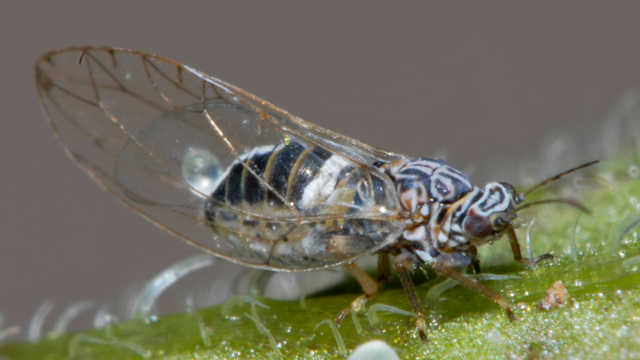
"content": "\u003cp>Potato grower \u003ca title=\"Brian Kirschenmann bio\" href=\"http://www.uspotatoes.com/pressRoom/pr.php?id=82\" target=\"_blank\">Brian Kirschenmann\u003c/a> bent over the deep green plants in his field in New Cuyama, nestled in a verdant valley an hour southwest of Bakersfield, and looked at the bottom of each leaf.\u003c/p>\n\u003cp>Next to him, his crop advisor Gary Toschi examined a leaf under a magnifying glass.\u003c/p>\n\u003cp>“That one is active,” said Toschi.\u003c/p>\n\u003cfigure id=\"attachment_44631\" class=\"wp-caption alignleft\" style=\"max-width: 300px\">\u003ca href=\"http://ww2.kqed.org/quest/wp-content/uploads/sites/39/2012/09/Jeff_Bradshaw_adultnympsandeggs_resized.jpg\">\u003cimg class=\"size-thumbnail wp-image-44631\" title=\"Potato-tomato psyllids\" src=\"http://ww2.kqed.org/quest/wp-content/uploads/sites/39/2012/09/Jeff_Bradshaw_adultnympsandeggs_resized-300x169.jpg\" alt=\"\" width=\"300\" height=\"169\">\u003c/a>\u003cfigcaption class=\"wp-caption-text\">An adult potato-tomato psyllid surrounded by young nymphs. Photo: Jeffrey Bradshaw, Univ. of Nebraska, Lincoln.\u003c/figcaption>\u003c/figure>\n\u003cp>He and Kirschenmann had found a round, bright green insect, about the size of the comma on a computer keyboard. The tiny pest is called a \u003ca title=\"University of Nebraska sheet about potato-tomato psyllids.\" href=\"http://www.ianrpubs.unl.edu/epublic/pages/publicationD.jsp?publicationId=1449\" target=\"_blank\">potato-tomato psyllid\u003c/a>, and both the young nymphs like the one they found, and the adults, which are shaped like a cicada, wreak havoc on potatoes, as well as tomatoes, peppers and about 40 other crops.\u003c/p>\n\u003cp>In potatoes, they suck the plant dry. And what’s worse, the pest also can transmit a disease that ruins potato chips – a $6 billion business in the United States, despite the bad rap chips get from nutritionists. The disease transmitted by potato-tomato psyllids gives chips a burnt flavor and causes them to develop brown streaks, which is why the disease is known as “\u003ca title=\"Information about zebra chip disease\" href=\"http://zebrachipscri.tamu.edu/about-the-project/\" target=\"_blank\">zebra chip\u003c/a>.”\u003c/p>\n\u003cfigure id=\"attachment_44657\" class=\"wp-caption alignleft\" style=\"max-width: 300px\">\u003ca href=\"http://ww2.kqed.org/quest/wp-content/uploads/sites/39/2012/09/John_Trumble_Zebra_Chip_Comparison_resized.jpg\">\u003cimg class=\"size-thumbnail wp-image-44657\" title=\"Potatoes with zebra chip disease.\" src=\"http://ww2.kqed.org/quest/wp-content/uploads/sites/39/2012/09/John_Trumble_Zebra_Chip_Comparison_resized-300x169.jpg\" alt=\"\" width=\"300\" height=\"169\">\u003c/a>\u003cfigcaption class=\"wp-caption-text\">Potatoes infected with zebra chip disease streak when they're fried. Photo: John Trumble.\u003c/figcaption>\u003c/figure>\n\u003cp>In 2008, Kirschenmann lost $250,000, when one of his potato fields in Kern County was infected with zebra chip and Frito Lay wouldn’t buy his chipper potatoes. Though potatoes aren’t one of California’s main crops, in Kern County they’re among the top 10 in value, to the tune of $130 million.\u003c/p>\n\u003cp>[ad fullwidth]\u003c/p>\n\u003cp>Zebra chip disease hasn’t caused widespread losses in California, but the state’s potato growers are worried, especially after South Korea banned potato imports from Washington, Oregon and Idaho in August, out of concern over the disease. The ban is costing producers in those states some $8 million.\u003c/p>\n\u003cp>“That’s my biggest fear,” said Kirschenmann, who grows 5,700 acres of potatoes in Kern County and New Cuyama and is a member of the United States Potato Board. Though California doesn’t export potatoes to South Korea, Kirschenmann does sell part of his crop to Guatemala and the Dominican Republic.\u003c/p>\n\u003cfigure id=\"attachment_44626\" class=\"wp-caption alignleft\" style=\"max-width: 300px\">\u003ca href=\"http://ww2.kqed.org/quest/wp-content/uploads/sites/39/2012/09/Brian_Kirschenmann_potato_grower_resize.jpg\">\u003cimg class=\"size-thumbnail wp-image-44626\" title=\"Brian Kirschenmann, potato grower\" src=\"http://ww2.kqed.org/quest/wp-content/uploads/sites/39/2012/09/Brian_Kirschenmann_potato_grower_resize-300x169.jpg\" alt=\"\" width=\"300\" height=\"169\">\u003c/a>\u003cfigcaption class=\"wp-caption-text\">Potato grower Brian Kirschenmann.\u003c/figcaption>\u003c/figure>\n\u003cp>California has had potato-tomato psyllids for more than 100 years. What makes them a new problem for growers is that now they don’t just live in the state during the warmer months; they also spend the winter.\u003c/p>\n\u003cp>“Our temperatures have increased by 2 to 3 degrees Fahrenheit, and that seems to be enough to keep them from being frozen out during the winter,” said entomologist \u003ca title=\"John Trumble bio\" href=\"http://www.facultydirectory.ucr.edu/cgi-bin/pub/public_individual.pl?faculty=159\" target=\"_blank\">John Trumble\u003c/a>, of the University of California, Riverside. “I suspect that global warming is at least playing a role in this particular insect’s spread into California.”\u003c/p>\n\u003cp>Insects can’t produce their own heat, the way mammals do, so most of them do better in warmer temperatures. Around the world, scientists have started to document changes in insect behavior, as a result of climate change.\u003c/p>\n\u003cfigure id=\"attachment_44627\" class=\"wp-caption alignright\" style=\"max-width: 300px\">\u003ca href=\"http://ww2.kqed.org/quest/wp-content/uploads/sites/39/2012/09/John-Trumble_resized.jpg\">\u003cimg class=\"size-thumbnail wp-image-44627\" title=\"John Trumble, UC Riverside\" src=\"http://ww2.kqed.org/quest/wp-content/uploads/sites/39/2012/09/John-Trumble_resized-300x169.jpg\" alt=\"\" width=\"300\" height=\"169\">\u003c/a>\u003cfigcaption class=\"wp-caption-text\">Entomologist John Trumble, from UC Riverside, says warmer temperatures are making a pest of potatoes and tomatoes more abundant in California.\u003c/figcaption>\u003c/figure>\n\u003cp>In Spain, the European grapevine moth is flying out earlier in the summer and reproducing more abundantly than it did 20 years ago. On Tanzania’s Mt. Kilimanjaro, malaria mosquitoes are moving farther up the mountain. And in Japan, a pest called the green stink bug, that damages rice and soybeans, is expanding its range northward.\u003c/p>\n\u003cp>“This is not speculative, this is not something that we would predict,” said Trumble. “This is what’s happening now.”\u003c/p>\n\u003cp>When Trumble discovered, in the year 2000, that potato-tomato psyllids had spent the winter near one of his research tomato fields in Irvine, he knew this change in the insect’s behavior was bad news: it meant the pest could begin attacking crops early in the growing season.\u003c/p>\n\u003cp>“It’s much more dangerous for the grower,” said Trumble, “because early infestation in a crop oftentimes leads to much more damage than if the pest occurs late in the crop.”\u003c/p>\n\u003cp>When spring temperatures get warm, this sends a cue to insects to begin their development, said entomologist Peter Oboyski, manager of collections at the University of California, Berkeley’s Essig Museum of Entomology.\u003c/p>\n\u003cp>“If the season gets warmer earlier, that gives insects that much more time to develop, that much more time to eat a plant, that much more time to produce another generation,” said Oboyski.\u003c/p>\n\u003cfigure id=\"attachment_44634\" class=\"wp-caption alignright\" style=\"max-width: 300px\">\u003ca href=\"http://ww2.kqed.org/quest/wp-content/uploads/sites/39/2012/09/Jack_Kelly_Clark_I-HO-PCOC-AD.003_resized.jpg\">\u003cimg class=\"size-thumbnail wp-image-44634\" title=\"Potato-tomato psyllid\" src=\"http://ww2.kqed.org/quest/wp-content/uploads/sites/39/2012/09/Jack_Kelly_Clark_I-HO-PCOC-AD.003_resized-300x169.jpg\" alt=\"\" width=\"300\" height=\"169\">\u003c/a>\u003cfigcaption class=\"wp-caption-text\">Potato-tomato psyllid. Photo: Jack Kelly Clark, courtesy University of California Statewide IPM Program.\u003c/figcaption>\u003c/figure>\n\u003cp>But how did UC Riverside’s John Trumble know that he was seeing a new behavior in the psyllid?\u003c/p>\n\u003cp>To figure out if spending the winter in California was a new behavior, Trumble turned to the historical record. He was fortunate that scientists in California have been collecting psyllids and making detailed notes about their habits since the 1880s. Through this information, he concluded that he was seeing something new.\u003c/p>\n\u003cp>“Every 30 years, since about 1900, it’s moved into California,” said Trumble, “and we would find it, it would be here for six months to a year, and then it would disappear, presumably because it got too cold.”\u003c/p>\n\u003cp>That pattern changed radically in 2000, with the psyllid spending the winter in Trumble’s field in Irvine. And the pest has since overwintered in locations further and further north.\u003c/p>\n\u003cp>In 2004, tomato growers discovered psyllids had overwintered in Hollister. In 2012, scientists found they had spent the winter in the Washington-Oregon-Idaho area, where half of the country’s potatoes are grown. And this year, the pest also appeared in Manitoba, Canada, early in the growing season, a sign that it might have spent the winter there.\u003c/p>\n\u003cp>“As temperatures warm up in California and across the United States,” said Trumble, “these insects will be able to overwinter further and further north.”\u003c/p>\n\u003cp>Meanwhile, down south, farmers have already been hit hard by the pest. In Mexico’s Baja California, the psyllids destroyed 85 percent of the tomato crop in 2001, said Trumble. Partly in response to the new pest, California farmers who grow tomatoes in Baja California have moved much of their production inside screened enclosures.\u003c/p>\n\u003cp>Spraying for psyllids is costing California potato growers about $75 per acre, said Kirschenmann.\u003c/p>\n\u003cfigure id=\"attachment_44628\" class=\"wp-caption alignright\" style=\"max-width: 300px\">\u003ca href=\"http://ww2.kqed.org/quest/wp-content/uploads/sites/39/2012/09/Tractor_in_New_Cuyama_WWS_resize.jpg\">\u003cimg class=\"size-thumbnail wp-image-44628\" title=\"Potato field in New Cuyama, California\" src=\"http://ww2.kqed.org/quest/wp-content/uploads/sites/39/2012/09/Tractor_in_New_Cuyama_WWS_resize-300x169.jpg\" alt=\"\" width=\"300\" height=\"169\">\u003c/a>\u003cfigcaption class=\"wp-caption-text\">Potato field in New Cuyama Valley, an hour southwest of Bakersfield. Potato-tomato psyllids have been found nearby. Photos: Gabriela Quirós.\u003c/figcaption>\u003c/figure>\n\u003cp>This need for additional spraying has Trumble concerned. Since the 1970s, he and other scientists around the state have worked with growers to reduce pesticide use in conventionally-grown crops. The results have been dramatic, he said. Tomato growers, for example, cut spraying by half in the 1990s.\u003c/p>\n\u003cp>“Less pesticide use means less concern by the consumers for pesticide residue. We use less fossil fuel; we have fewer volatile organic compounds that appear in the atmosphere; it reduces smog. It’s a real win-win for everybody in California,” said Trumble.\u003c/p>\n\u003cp>But warmer temperatures, and the pests that thrive in them, now threaten to undermine these gains.\u003c/p>\n\u003cp>“So if you have an insect with multiple generations, you get more generations. If you’ve got an insect that occurs early in a crop, it will occur earlier in the crop, and faster,” said Trumble. “So all of these things are desperately in need of additional research.”\u003c/p>\n\u003cp>[ad floatright]\u003c/p>\n\u003cp>\u003cstrong>A shorter version of this video story is part of the 30-minute documentary \u003ca title=\"Heat and Harvest - the documentary\" href=\"http://ww2.kqed.org/quest/video/heat-and-harvest/\" target=\"_blank\">Heat and Harvest\u003c/a>, a co-production of KQED and the Center for Investigative Reporting, that airs on KQED and PBS stations around California on Friday September 28 at 7:30 pm. Check your local listings.\u003c/strong>\u003c/p>\n\n",
"disqusIdentifier": "44615 http://science.kqed.org/quest/?post_type=videos&p=44615",
"disqusUrl": "https://ww2.kqed.org/quest/2012/09/28/some-bugs-like-it-hot-climate-change-and-agricultural-pests/",
"stats": {
"hasVideo": false,
"hasChartOrMap": false,
"hasAudio": false,
"hasPolis": false,
"wordCount": 1344,
"hasGoogleForm": false,
"hasGallery": false,
"hasHearkenModule": false,
"iframeSrcs": [],
"paragraphCount": 32
},
"modified": 1457567183,
"excerpt": "Scientists and farmers are starting to notice that, as California's winters warm up, the state is becoming more hospitable to destructive agricultural pests.",
"headData": {
"twImgId": "",
"twTitle": "",
"ogTitle": "",
"ogImgId": "",
"twDescription": "",
"description": "Scientists and farmers are starting to notice that, as California's winters warm up, the state is becoming more hospitable to destructive agricultural pests.",
"title": "Some Bugs Like it Hot: Climate Change and Agricultural Pests | KQED",
"ogDescription": "",
"schema": {
"@context": "https://schema.org",
"@type": "Article",
"headline": "Some Bugs Like it Hot: Climate Change and Agricultural Pests",
"datePublished": "2012-09-28T09:00:19-07:00",
"dateModified": "2016-03-09T15:46:23-08:00",
"image": "https://cdn.kqed.org/wp-content/uploads/2020/02/KQED-OG-Image@1x.png"
}
},
"guestAuthors": [],
"slug": "some-bugs-like-it-hot-climate-change-and-agricultural-pests",
"status": "publish",
"videoEmbed": "https://www.youtube.com/watch?v=1qaRQ0MoEmY",
"path": "/quest/44615/some-bugs-like-it-hot-climate-change-and-agricultural-pests",
"audioTrackLength": null,
"parsedContent": [
{
"type": "contentString",
"content": "\u003cdiv class=\"post-body\">\u003cp>\u003cp>Potato grower \u003ca title=\"Brian Kirschenmann bio\" href=\"http://www.uspotatoes.com/pressRoom/pr.php?id=82\" target=\"_blank\">Brian Kirschenmann\u003c/a> bent over the deep green plants in his field in New Cuyama, nestled in a verdant valley an hour southwest of Bakersfield, and looked at the bottom of each leaf.\u003c/p>\n\u003cp>Next to him, his crop advisor Gary Toschi examined a leaf under a magnifying glass.\u003c/p>\n\u003cp>“That one is active,” said Toschi.\u003c/p>\n\u003cfigure id=\"attachment_44631\" class=\"wp-caption alignleft\" style=\"max-width: 300px\">\u003ca href=\"http://ww2.kqed.org/quest/wp-content/uploads/sites/39/2012/09/Jeff_Bradshaw_adultnympsandeggs_resized.jpg\">\u003cimg class=\"size-thumbnail wp-image-44631\" title=\"Potato-tomato psyllids\" src=\"http://ww2.kqed.org/quest/wp-content/uploads/sites/39/2012/09/Jeff_Bradshaw_adultnympsandeggs_resized-300x169.jpg\" alt=\"\" width=\"300\" height=\"169\">\u003c/a>\u003cfigcaption class=\"wp-caption-text\">An adult potato-tomato psyllid surrounded by young nymphs. Photo: Jeffrey Bradshaw, Univ. of Nebraska, Lincoln.\u003c/figcaption>\u003c/figure>\n\u003cp>He and Kirschenmann had found a round, bright green insect, about the size of the comma on a computer keyboard. The tiny pest is called a \u003ca title=\"University of Nebraska sheet about potato-tomato psyllids.\" href=\"http://www.ianrpubs.unl.edu/epublic/pages/publicationD.jsp?publicationId=1449\" target=\"_blank\">potato-tomato psyllid\u003c/a>, and both the young nymphs like the one they found, and the adults, which are shaped like a cicada, wreak havoc on potatoes, as well as tomatoes, peppers and about 40 other crops.\u003c/p>\n\u003cp>In potatoes, they suck the plant dry. And what’s worse, the pest also can transmit a disease that ruins potato chips – a $6 billion business in the United States, despite the bad rap chips get from nutritionists. The disease transmitted by potato-tomato psyllids gives chips a burnt flavor and causes them to develop brown streaks, which is why the disease is known as “\u003ca title=\"Information about zebra chip disease\" href=\"http://zebrachipscri.tamu.edu/about-the-project/\" target=\"_blank\">zebra chip\u003c/a>.”\u003c/p>\n\u003cfigure id=\"attachment_44657\" class=\"wp-caption alignleft\" style=\"max-width: 300px\">\u003ca href=\"http://ww2.kqed.org/quest/wp-content/uploads/sites/39/2012/09/John_Trumble_Zebra_Chip_Comparison_resized.jpg\">\u003cimg class=\"size-thumbnail wp-image-44657\" title=\"Potatoes with zebra chip disease.\" src=\"http://ww2.kqed.org/quest/wp-content/uploads/sites/39/2012/09/John_Trumble_Zebra_Chip_Comparison_resized-300x169.jpg\" alt=\"\" width=\"300\" height=\"169\">\u003c/a>\u003cfigcaption class=\"wp-caption-text\">Potatoes infected with zebra chip disease streak when they're fried. Photo: John Trumble.\u003c/figcaption>\u003c/figure>\n\u003cp>In 2008, Kirschenmann lost $250,000, when one of his potato fields in Kern County was infected with zebra chip and Frito Lay wouldn’t buy his chipper potatoes. Though potatoes aren’t one of California’s main crops, in Kern County they’re among the top 10 in value, to the tune of $130 million.\u003c/p>\n\u003cp>\u003c/p>\u003c/div>",
"attributes": {
"named": {},
"numeric": []
}
},
{
"type": "component",
"content": "",
"name": "ad",
"attributes": {
"named": {
"label": "fullwidth"
},
"numeric": [
"fullwidth"
]
}
},
{
"type": "contentString",
"content": "\u003cdiv class=\"post-body\">\u003cp>\u003c/p>\n\u003cp>Zebra chip disease hasn’t caused widespread losses in California, but the state’s potato growers are worried, especially after South Korea banned potato imports from Washington, Oregon and Idaho in August, out of concern over the disease. The ban is costing producers in those states some $8 million.\u003c/p>\n\u003cp>“That’s my biggest fear,” said Kirschenmann, who grows 5,700 acres of potatoes in Kern County and New Cuyama and is a member of the United States Potato Board. Though California doesn’t export potatoes to South Korea, Kirschenmann does sell part of his crop to Guatemala and the Dominican Republic.\u003c/p>\n\u003cfigure id=\"attachment_44626\" class=\"wp-caption alignleft\" style=\"max-width: 300px\">\u003ca href=\"http://ww2.kqed.org/quest/wp-content/uploads/sites/39/2012/09/Brian_Kirschenmann_potato_grower_resize.jpg\">\u003cimg class=\"size-thumbnail wp-image-44626\" title=\"Brian Kirschenmann, potato grower\" src=\"http://ww2.kqed.org/quest/wp-content/uploads/sites/39/2012/09/Brian_Kirschenmann_potato_grower_resize-300x169.jpg\" alt=\"\" width=\"300\" height=\"169\">\u003c/a>\u003cfigcaption class=\"wp-caption-text\">Potato grower Brian Kirschenmann.\u003c/figcaption>\u003c/figure>\n\u003cp>California has had potato-tomato psyllids for more than 100 years. What makes them a new problem for growers is that now they don’t just live in the state during the warmer months; they also spend the winter.\u003c/p>\n\u003cp>“Our temperatures have increased by 2 to 3 degrees Fahrenheit, and that seems to be enough to keep them from being frozen out during the winter,” said entomologist \u003ca title=\"John Trumble bio\" href=\"http://www.facultydirectory.ucr.edu/cgi-bin/pub/public_individual.pl?faculty=159\" target=\"_blank\">John Trumble\u003c/a>, of the University of California, Riverside. “I suspect that global warming is at least playing a role in this particular insect’s spread into California.”\u003c/p>\n\u003cp>Insects can’t produce their own heat, the way mammals do, so most of them do better in warmer temperatures. Around the world, scientists have started to document changes in insect behavior, as a result of climate change.\u003c/p>\n\u003cfigure id=\"attachment_44627\" class=\"wp-caption alignright\" style=\"max-width: 300px\">\u003ca href=\"http://ww2.kqed.org/quest/wp-content/uploads/sites/39/2012/09/John-Trumble_resized.jpg\">\u003cimg class=\"size-thumbnail wp-image-44627\" title=\"John Trumble, UC Riverside\" src=\"http://ww2.kqed.org/quest/wp-content/uploads/sites/39/2012/09/John-Trumble_resized-300x169.jpg\" alt=\"\" width=\"300\" height=\"169\">\u003c/a>\u003cfigcaption class=\"wp-caption-text\">Entomologist John Trumble, from UC Riverside, says warmer temperatures are making a pest of potatoes and tomatoes more abundant in California.\u003c/figcaption>\u003c/figure>\n\u003cp>In Spain, the European grapevine moth is flying out earlier in the summer and reproducing more abundantly than it did 20 years ago. On Tanzania’s Mt. Kilimanjaro, malaria mosquitoes are moving farther up the mountain. And in Japan, a pest called the green stink bug, that damages rice and soybeans, is expanding its range northward.\u003c/p>\n\u003cp>“This is not speculative, this is not something that we would predict,” said Trumble. “This is what’s happening now.”\u003c/p>\n\u003cp>When Trumble discovered, in the year 2000, that potato-tomato psyllids had spent the winter near one of his research tomato fields in Irvine, he knew this change in the insect’s behavior was bad news: it meant the pest could begin attacking crops early in the growing season.\u003c/p>\n\u003cp>“It’s much more dangerous for the grower,” said Trumble, “because early infestation in a crop oftentimes leads to much more damage than if the pest occurs late in the crop.”\u003c/p>\n\u003cp>When spring temperatures get warm, this sends a cue to insects to begin their development, said entomologist Peter Oboyski, manager of collections at the University of California, Berkeley’s Essig Museum of Entomology.\u003c/p>\n\u003cp>“If the season gets warmer earlier, that gives insects that much more time to develop, that much more time to eat a plant, that much more time to produce another generation,” said Oboyski.\u003c/p>\n\u003cfigure id=\"attachment_44634\" class=\"wp-caption alignright\" style=\"max-width: 300px\">\u003ca href=\"http://ww2.kqed.org/quest/wp-content/uploads/sites/39/2012/09/Jack_Kelly_Clark_I-HO-PCOC-AD.003_resized.jpg\">\u003cimg class=\"size-thumbnail wp-image-44634\" title=\"Potato-tomato psyllid\" src=\"http://ww2.kqed.org/quest/wp-content/uploads/sites/39/2012/09/Jack_Kelly_Clark_I-HO-PCOC-AD.003_resized-300x169.jpg\" alt=\"\" width=\"300\" height=\"169\">\u003c/a>\u003cfigcaption class=\"wp-caption-text\">Potato-tomato psyllid. Photo: Jack Kelly Clark, courtesy University of California Statewide IPM Program.\u003c/figcaption>\u003c/figure>\n\u003cp>But how did UC Riverside’s John Trumble know that he was seeing a new behavior in the psyllid?\u003c/p>\n\u003cp>To figure out if spending the winter in California was a new behavior, Trumble turned to the historical record. He was fortunate that scientists in California have been collecting psyllids and making detailed notes about their habits since the 1880s. Through this information, he concluded that he was seeing something new.\u003c/p>\n\u003cp>“Every 30 years, since about 1900, it’s moved into California,” said Trumble, “and we would find it, it would be here for six months to a year, and then it would disappear, presumably because it got too cold.”\u003c/p>\n\u003cp>That pattern changed radically in 2000, with the psyllid spending the winter in Trumble’s field in Irvine. And the pest has since overwintered in locations further and further north.\u003c/p>\n\u003cp>In 2004, tomato growers discovered psyllids had overwintered in Hollister. In 2012, scientists found they had spent the winter in the Washington-Oregon-Idaho area, where half of the country’s potatoes are grown. And this year, the pest also appeared in Manitoba, Canada, early in the growing season, a sign that it might have spent the winter there.\u003c/p>\n\u003cp>“As temperatures warm up in California and across the United States,” said Trumble, “these insects will be able to overwinter further and further north.”\u003c/p>\n\u003cp>Meanwhile, down south, farmers have already been hit hard by the pest. In Mexico’s Baja California, the psyllids destroyed 85 percent of the tomato crop in 2001, said Trumble. Partly in response to the new pest, California farmers who grow tomatoes in Baja California have moved much of their production inside screened enclosures.\u003c/p>\n\u003cp>Spraying for psyllids is costing California potato growers about $75 per acre, said Kirschenmann.\u003c/p>\n\u003cfigure id=\"attachment_44628\" class=\"wp-caption alignright\" style=\"max-width: 300px\">\u003ca href=\"http://ww2.kqed.org/quest/wp-content/uploads/sites/39/2012/09/Tractor_in_New_Cuyama_WWS_resize.jpg\">\u003cimg class=\"size-thumbnail wp-image-44628\" title=\"Potato field in New Cuyama, California\" src=\"http://ww2.kqed.org/quest/wp-content/uploads/sites/39/2012/09/Tractor_in_New_Cuyama_WWS_resize-300x169.jpg\" alt=\"\" width=\"300\" height=\"169\">\u003c/a>\u003cfigcaption class=\"wp-caption-text\">Potato field in New Cuyama Valley, an hour southwest of Bakersfield. Potato-tomato psyllids have been found nearby. Photos: Gabriela Quirós.\u003c/figcaption>\u003c/figure>\n\u003cp>This need for additional spraying has Trumble concerned. Since the 1970s, he and other scientists around the state have worked with growers to reduce pesticide use in conventionally-grown crops. The results have been dramatic, he said. Tomato growers, for example, cut spraying by half in the 1990s.\u003c/p>\n\u003cp>“Less pesticide use means less concern by the consumers for pesticide residue. We use less fossil fuel; we have fewer volatile organic compounds that appear in the atmosphere; it reduces smog. It’s a real win-win for everybody in California,” said Trumble.\u003c/p>\n\u003cp>But warmer temperatures, and the pests that thrive in them, now threaten to undermine these gains.\u003c/p>\n\u003cp>“So if you have an insect with multiple generations, you get more generations. If you’ve got an insect that occurs early in a crop, it will occur earlier in the crop, and faster,” said Trumble. “So all of these things are desperately in need of additional research.”\u003c/p>\n\u003cp>\u003c/p>\u003c/div>",
"attributes": {
"named": {},
"numeric": []
}
},
{
"type": "component",
"content": "",
"name": "ad",
"attributes": {
"named": {
"label": "floatright"
},
"numeric": [
"floatright"
]
}
},
{
"type": "contentString",
"content": "\u003cdiv class=\"post-body\">\u003cp>\u003c/p>\n\u003cp>\u003cstrong>A shorter version of this video story is part of the 30-minute documentary \u003ca title=\"Heat and Harvest - the documentary\" href=\"http://ww2.kqed.org/quest/video/heat-and-harvest/\" target=\"_blank\">Heat and Harvest\u003c/a>, a co-production of KQED and the Center for Investigative Reporting, that airs on KQED and PBS stations around California on Friday September 28 at 7:30 pm. Check your local listings.\u003c/strong>\u003c/p>\n\n\u003c/div>\u003c/p>",
"attributes": {
"named": {},
"numeric": []
}
}
],
"link": "/quest/44615/some-bugs-like-it-hot-climate-change-and-agricultural-pests",
"authors": [
"6186"
],
"series": [
"quest_13295"
],
"categories": [
"quest_6",
"quest_9",
"quest_3229",
"quest_3422",
"quest_3233"
],
"tags": [
"quest_11480",
"quest_621",
"quest_11463",
"quest_11476",
"quest_2167",
"quest_11474",
"quest_11475",
"quest_13",
"quest_11479",
"quest_13364",
"quest_2893",
"quest_11374",
"quest_11478",
"quest_3071",
"quest_11477"
],
"featImg": "quest_44792",
"label": "quest_13295"
},
"quest_45172": {
"type": "posts",
"id": "quest_45172",
"meta": {
"index": "posts_1716263798",
"site": "quest",
"id": "45172",
"score": null,
"sort": [
1348819240000
]
},
"parent": 0,
"labelTerm": {
"site": "quest",
"term": 13295
},
"blocks": [],
"publishDate": 1348819240,
"format": "video",
"disqusTitle": "Uncool Cherries",
"title": "Uncool Cherries",
"headTitle": "Heat and Harvest | QUEST | KQED Science",
"content": "\u003cp>\u003cstrong>Uncool Cherries\u003c/strong> looks at the challenges facing cherry growers near Stockton. Life is hardly a bowl of cherries if you're trying to grow them in California lately. Cherries and other major fruit crops need a certain number of \"chilling hours\" in order to produce healthy blossoms and fruit. But in recent years, the spring nights have brought warmer temperatures and less of the legendary Valley fog that helps keep the chill on. (Reporter: Mark Schapiro / Producer: Serene Fang)\u003cbr>\n\u003c/p>\n\u003cp>\u003cstrong>Uncool Cherries\u003c/strong>is one of the three stories in \u003cstrong>\u003ca href=\"http://ww2.kqed.org/quest/video/heat-and-harvest/\" title=\"Heat and Harvest\" target=\"_blank\">Heat and Harvest\u003c/a>\u003c/strong>, a half-hour documentary on how climate change is challenging California’s $30 billion agricultural industry. \u003cstrong>Heat and Harvest \u003c/strong>is a co-production of KQED and the \u003ca title=\"Center for Investigative Reporting\" href=\"http://cironline.org/\" target=\"_blank\">Center for Investigative Reporting\u003c/a> and airs on KQED channel 9 on Friday Sept. 28 and Monday Oct. 1 at 7:30 pm. The film also airs on PBS stations around California in September and October. Check local listings.\u003c/p>\n\u003ch3>Higher temperatures bring new struggles to California grape and cherry growers\u003c/h3>\n\u003cp>By Mark Schapiro\u003cbr>\nCenter for Investigative Reporting\u003c/p>\n\u003cp>\u003cem>This article is part 2 of a two-part series published in newspapers across California on Fri. Sept. 28.\u003c/em>\u003c/p>\n\u003cp>Farmers have always been gamblers, long accustomed to betting on the probabilities of the weather. But for the Napa Valley, where the temperatures have been ideal for the wine industry, the changes could be significant.\u003c/p>\n\u003cp>[ad fullwidth]\u003c/p>\n\u003cp>“They’re used to rolling the dice every year,” said \u003ca href=\"http://creeksidescience.com/people/\" title=\"Stuart Weiss bio\" target=\"_blank\">Stuart Weiss\u003c/a>, a conservation biologist and chief scientist at the \u003ca href=\"http://creeksidescience.com/\" title=\"Creekside Center for Earth Observation\" target=\"_blank\">Creekside Center for Earth Observation\u003c/a>, which assists growers and municipalities dealing with the disruptions caused by the changing climate. “Now, though, climate change is stacking the dice.”\u003c/p>\n\u003cp>Over the next 30 years, Weiss estimates, the temperature in the Napa Valley will rise by 1.8 degrees – an 80 percent jump over previous rates, which were about 1 degree every three decades since temperatures were first recorded in 1896. \u003c/p>\n\u003cp>He has turned worries about climate change into a business opportunity: His other company, \u003ca href=\"http://www.viticision.com/\" title=\"Viticision\" target=\"_blank\">Viticision\u003c/a>, consults with growers facing the shifting conditions on their land. \u003c/p>\n\u003caside class=\"pullquote alignleft\">California produces 95 percent of the country’s apricots, almonds, artichokes, figs, kiwis, raisin grapes, olives, cling peaches, dried plums, persimmons, pistachios and walnuts. \u003c/aside>\n\u003cp>Weiss, who has been studying butterflies since his days at Stanford University, realized eight years ago that what he was learning about the Lepidoptera family could be applied to wine grapes. \u003c/p>\n\u003cp>He noticed that the processes that a caterpillar larva uses to metabolize energy drawn from the sun and water prior to its emergence as a butterfly were similar to how a grapevine metabolizes the same elements before producing a fully formed wine grape.\u003c/p>\n\u003cp>Now, he consults with wineries dealing with the alterations in sun and water triggered by climate change. \u003c/p>\n\u003cp>“The verbs are the same,” Weiss said. “It’s just the nouns that have shifted.”\u003c/p>\n\u003cp>Alterations in the California climate have prompted the insurance industry to start assessing the potential damage and its financial exposure.\u003c/p>\n\u003cp>The nation’s crop insurance system, a hybrid of private insurers backed by the \u003ca href=\"http://www.rma.usda.gov/\" title=\"Risk Management Agency\" target=\"_blank\">U.S. Department of Agriculture’s Risk Management Agency\u003c/a>, has been paying out steadily increasing amounts for weather-related damages across the country, according to the Congressional Research Service – from $2.1 billion in 2000 to a record-breaking $12.1 billion last year. This summer’s drought in the Midwest is expected to further catapult insurance payments. \u003c/p>\n\u003cp>Although it’s difficult to distinguish how many extreme events would have occurred without the atmospheric concentration of CO2, the Risk Management Agency now has identified climate change as one of the major risk factors for U.S. agriculture. \u003c/p>\n\u003caside class=\"pullquote alignleft\">The Risk Management Agency now has identified climate change as one of the major risk factors for U.S. agriculture. \u003c/aside>\n\u003cp>In a 2010 report, it paid particular attention to the vulnerabilities of California, which produces 95 percent of the country’s apricots, almonds, artichokes, figs, kiwis, raisin grapes, olives, cling peaches, dried plums, persimmons, pistachios and walnuts. \u003c/p>\n\u003cp>“Since the production of these commodities is so concentrated into one geographical area the climatic impacts in these agricultural markets could be profound,” the report concluded.\u003c/p>\n\u003cp>The agency even suggested an adaptation strategy that sounds very much like the breeding efforts already under way at nurseries across the Central Valley: more research into “drought-tolerant, heat-tolerant, and other crop varieties better suited to the changing conditions.”\u003cbr>\nThe California office of the Risk Management Agency is considering whether year-round farming is a reasonable risk for the agency to assume in the Central and Imperial valleys, where water stresses are intensifying. \u003c/p>\n\u003cp>In the Central Valley, the agency is considering requiring farmers relying on nonirrigated water to fallow some of their land during the summer months to hedge against potential losses when water supplies fall short. \u003c/p>\n\u003cp>And last year, the agency withdrew its insurance rating for parts of Imperial County, which it determined was uninsurable for proposed wheat farming due to concerns about the reliability of the water supply.\u003c/p>\n\u003cp>The high volatility associated with climate change prompted a team of Silicon Valley entrepreneurs to found the first insurance company, \u003ca href=\"http://www.climate.com/\" title=\"The Climate Corporation\" target=\"_blank\">The Climate Corporation\u003c/a>, to focus exclusively on insuring against swings in the weather. \u003c/p>\n\u003caside class=\"pullquote alignleft\">The high volatility associated with climate change prompted a team of Silicon Valley entrepreneurs to found the first insurance company to focus exclusively on insuring against swings in the weather.\u003c/aside>\n\u003cp>\u003ca href=\"http://www.climate.com/company/leadership/\" title=\"David Friedberg bio\" target=\"_blank\">David Friedberg\u003c/a> was a corporate development executive at Google before founding the company in San Francisco in 2006, as farmers found themselves at the front lines of climate change. \u003c/p>\n\u003cp>“Things are getting far more erratic and difficult to predict,” said Friedberg, whose background is in physics and mathematics.\u003c/p>\n\u003cp>One likely result of the atmospheric tumult, he added, is rising food prices. \u003c/p>\n\u003cp>“Farmers are having to hedge and pay for insurance claims,” he said. “That increases the price of food, and when they experience losses, we and others pay them for those losses, but that also means their food is not being produced.”\u003c/p>\n\u003cp>For example, the effects of the Midwest drought this summer, which has devastated food crops for cattle and chicken – mostly corn and soybeans – will be rippling back to California in the form of prices that are 10 to 15 percent higher for beef, milk and poultry, according to the USDA and other analysts. \u003c/p>\n\u003cp>\u003cstrong>Wine country climate shake-up\u003c/strong>\u003c/p>\n\u003cp>Napa vintners already are feeling the effects of the changing odds. In 2010, the wine industry had one of its worst years on record when days of record-breaking heat in August were followed by a few freakish days of frost. \u003c/p>\n\u003cfigure id=\"attachment_45202\" class=\"wp-caption aligncenter\" style=\"max-width: 640px\">\u003ca href=\"http://ww2.kqed.org/quest/wp-content/uploads/sites/39/2012/09/030-Grapes-6-29-07_resized.jpg\">\u003cimg src=\"http://ww2.kqed.org/quest/wp-content/uploads/sites/39/2012/09/030-Grapes-6-29-07_resized.jpg\" alt=\"\" title=\"Wine grapes in Napa Valley\" width=\"640\" height=\"360\" class=\"size-full wp-image-45202\" srcset=\"https://ww2.kqed.org/app/uploads/sites/39/2012/09/030-Grapes-6-29-07_resized.jpg 640w, https://ww2.kqed.org/app/uploads/sites/39/2012/09/030-Grapes-6-29-07_resized-400x225.jpg 400w\" sizes=\"(max-width: 640px) 100vw, 640px\">\u003c/a>\u003cfigcaption class=\"wp-caption-text\">Wine grapes in Napa Valley are ripening earlier in the season. This shrinks the timespan for their full development. Photo: Joan Johnson, KQED.\u003c/figcaption>\u003c/figure>\n\u003cp>Weiss, the conservation biologist, cites a map that offers a sobering perspective on future Napa varietals, demonstrating how the increasing heat is triggering the ripening process earlier in the season – from the first week of October, for example, into the third or fourth week of September, which shrinks the timespan for full development of wine grapes. \u003c/p>\n\u003cp>“You’re ripening earlier in a warmer time of the year under a warmer climate, so you’re getting a double whammy,” he said. Even just a week’s difference, he said, can have an impact on the quality of a cabernet sauvignon. \u003c/p>\n\u003caside class=\"pullquote alignleft\">“There are a lot of similarities between Australia and California, and if we don’t look to places that have undergone this sort of ‘first shot across the bow’ of the effect of climate change, I think we’d be doing ourselves a disservice.” Stuart Weiss, conservation biologist\u003c/aside>\n\u003cp>Jeff Yasui, director of the California office of the Risk Management Agency, said one sign of the growing stress in wine country is that over the past four years, the number of wine grape growers who increased their insurance coverage from the base-level policy – which covers half of all losses – to more substantial, and more expensive, protection increased from 28 percent of all policies to 40 percent this year. \u003c/p>\n\u003cp>One of Weiss’ clients is \u003ca href=\"http://www.treasurywineestates.com/\" title=\"Treasury Wine Estates\" target=\"_blank\">Treasury Wine Estates\u003c/a>, one of the largest wine companies in Australia, which also owns some 6,000 acres and eight labels – including Beringer Vineyards, Stags’ Leap Winery and Souverain – in Napa and Sonoma counties. \u003c/p>\n\u003cp>Australia experienced an early taste of climate change in 2009 and 2010, Weiss said, when heat waves and drought led to dramatic drops in yield from shriveled grapevines, leading to significant financial losses for the country’s wine industry. \u003c/p>\n\u003cp>The \u003ca href=\"http://www.csiro.au/\" title=\"CSIRO\" target=\"_blank\">national science agency of Australia\u003c/a> warns that as the weather gets hotter, the growing season for Australian wines is steadily shrinking – at a rate that’s been accelerating over the past 40 years, a phenomenon similar to that which Weiss has identified in Napa County. \u003c/p>\n\u003cp>“There are a lot of similarities between Australia and California,” Weiss said, “and if we don’t look to places that have undergone this sort of ‘first shot across the bow’ of the effect of climate change, I think we’d be doing ourselves a disservice.” \u003c/p>\n\u003cp>From his home office on a rustic road in Menlo Park, shaded by a huge oak tree, Weiss uses sophisticated monitors in the fields to track the increasing amount of sun hitting each grape and attempt to predict how moving a row by a few feet, or adjusting a trellis, might offer protection against the sun’s intensifying rays. \u003c/p>\n\u003cp>“That’s how climate change is happening,” Weiss said. “Slow but steady increases in heat are already causing disarray in wine country.” \u003c/p>\n\u003caside class=\"pullquote alignleft\">“Slow but steady increases in heat are already causing disarray in wine country.” Stuart Weiss\u003c/aside>\n\u003cp>With that information, he’s able to suggest how wineries could move forward. Vineyards generally are productive over 25-year spans; it takes about five years for new vines to start producing grapes, and the vines generally are replaced every 25 to 30 years. Current vines were planted at a time of weather patterns that are now changing. \u003c/p>\n\u003cp>Many fields are at the end of their 25-year cycle and are about to be replanted. Weiss also offers advice on the varietals most suited to the next quarter-century of changing climate – whether to plant, for example, another crop of cabernet sauvignon, which thrives in cooler climates, or a more heat-tolerant variety like pinot noir, zinfandel or chardonnay. \u003c/p>\n\u003cp>“With the new cycle, we don’t want to lock in mistakes,” Weiss said.\u003c/p>\n\u003cp>\u003cstrong>Cherry crops feel the heat \u003c/strong>\u003c/p>\n\u003cp>For a look into the future, consider what’s already happening to the state’s cherry crop.\u003c/p>\n\u003cp>Last April, the cherries were blooming in the Colombini family orchard in the San Joaquin Valley, their pink and white blossoms a signal that the harvest would be coming in six weeks’ time.\u003c/p>\n\u003cfigure id=\"attachment_45180\" class=\"wp-caption aligncenter\" style=\"max-width: 640px\">\u003ca href=\"http://ww2.kqed.org/quest/wp-content/uploads/sites/39/2012/09/ch09_packflr_resized1.jpg\">\u003cimg src=\"http://ww2.kqed.org/quest/wp-content/uploads/sites/39/2012/09/ch09_packflr_resized1.jpg\" alt=\"\" title=\"Workers pack cherries at Delta Packing, Modesto, California\" width=\"640\" height=\"360\" class=\"size-full wp-image-45180\" srcset=\"https://ww2.kqed.org/app/uploads/sites/39/2012/09/ch09_packflr_resized1.jpg 640w, https://ww2.kqed.org/app/uploads/sites/39/2012/09/ch09_packflr_resized1-400x225.jpg 400w\" sizes=\"(max-width: 640px) 100vw, 640px\">\u003c/a>\u003cfigcaption class=\"wp-caption-text\">Workers pack cherries at Delta Packing, in Modesto. This year, the company saw another 50 percent drop in cherries from previous years. Photo: Center for Investigative Reporting. \u003c/figcaption>\u003c/figure>\n\u003cp>But there was trouble lurking under those delicate blossoms. Jeff Colombini, director of the family company, Lodi Farming, pointed to the erratic blooms on his trees – a blossom here, a blossom there, but many stunted, half-grown blossoms. That is a sign, he said, of the “stresses that come with not enough chill hours.”\u003c/p>\n\u003cp>Most of the highest-quality cherry varieties in the state are tuned for a November or December chill, which functions to slow down the metabolism of the nascent fruits and thus elongates the ripening process that comes with the onset of warmer weather. \u003c/p>\n\u003caside class=\"pullquote alignleft\">Too much time in the sun during the budding process leads to what shoppers regularly encounter: “doubling,” in which two cherries are fused like conjoined twins, and “spurring,” a little raisinlike growth stuck to the side of the fruit.\u003c/aside>\n\u003cp>For a perfect California cherry, the trees need 1,200 to 1,400 hours of “chill time.” But Joseph Grant, a UC Cooperative Extension farm adviser based in Stockton, said that lately, cherry growers have been seeing more like 1,000 to 1,100 hours per season. \u003c/p>\n\u003cp>Another factor may be the fog: Early results from a study at UC Berkeley’s College of Natural Resources suggest that a lack of the usual fog hours also might be contributing to overheating of cherry buds at a time when they need to be shaded from the sun.\u003c/p>\n\u003cp>“We’re seeing those low-chill effects every year now, as opposed to how we used to see them once every 10 years or so,” Grant said. \u003c/p>\n\u003cp>While the overall cherry crop recovered late in the season, the overall effect of the shortened chill, according to Grant, is declining quality of California cherries. They’re shrinking in size, and the extended ripening time means the cherries are not as firm. When rains came unexpectedly during harvest time last year, yields dropped in parts of the county by more than half. This year, the Delta Packing Co., based in Lodi, saw another 50 percent drop in cherries from previous years, according to Matt Nowak, a sales representative for the company. \u003c/p>\n\u003cp>“The lack of chilly nights in the winter makes cherries one of the most vulnerable to climate change,” said \u003ca href=\"http://foodsecurity.stanford.edu/people/david_lobell\" title=\"David Lobell bio\" target=\"_blank\">David Lobell\u003c/a>, a fellow at Stanford’s Center on Food Security and the Environment. Lobell co-wrote a report published last November predicting dramatic declines in cherry yields under a 2-degree warming scenario. \u003c/p>\n\u003cp>\u003cstrong>Crop insurance in the red\u003c/strong>\u003c/p>\n\u003cp>Until 2000, there was no government-subsidized insurance program for cherry farmers. But that year, according to Yasui, of the Risk Management Agency, farmers began responding to the turbulent weather by requesting that the USDA extend them coverage. Since then, there’s been a steady rise in cherry farmers obtaining climate-related insurance.\u003c/p>\n\u003caside class=\"pullquote alignleft\">“The climate here around Stockton is looking more and more like the climate down in Bakersfield.” Joseph Grant, farm adviser \u003c/aside>\n\u003cp>Last year, California cherry growers received a record $22.5 million in crop insurance payouts – sending crop insurers into the red. For every $1 paid into the system for cherry policies that year, $1.60 was paid to farmers. The USDA paid out almost $8 million to subsidize the losses. \u003c/p>\n\u003cp>“What’s happening,” Grant said, “is that the climate here around Stockton is looking more and more like the climate down in Bakersfield.” \u003c/p>\n\u003cp>Two parallel changes are unfolding at either end of the San Joaquin Valley. The northern cherries, planted decades ago during cooler climactic conditions, now are growing in conditions more like those farther south in Bakersfield. \u003c/p>\n\u003cp>And specially tailored varieties in the south are being grown in conditions far hotter than the temperatures for which they were bred. A lack of chill in the northern San Joaquin is damaging cherries, while higher temperatures are harming cherries in the southern San Joaquin. \u003c/p>\n\u003cp>Another consequence of the longer and hotter ripening season, Grant said, is “deformities in the cherry flowers and abnormalities in the fruit.” \u003c/p>\n\u003cfigure id=\"attachment_45176\" class=\"wp-caption alignleft\" style=\"max-width: 300px\">\u003ca href=\"http://ww2.kqed.org/quest/wp-content/uploads/sites/39/2012/09/ch01_blossom_resized1.jpg\">\u003cimg src=\"http://ww2.kqed.org/quest/wp-content/uploads/sites/39/2012/09/ch01_blossom_resized1-300x169.jpg\" alt=\"\" title=\"Cherry blossom\" width=\"300\" height=\"169\" class=\"size-thumbnail wp-image-45176\">\u003c/a>\u003cfigcaption class=\"wp-caption-text\">Cherries need a certain number of \"chilling hours\" to form perfect fruit. Warmer temperatures and less fog are impacting the California cherry harvest. Photo: Center for Investigative Reporting.\u003c/figcaption>\u003c/figure>\n\u003cp>Too much time in the sun during the budding process leads to what shoppers regularly encounter: “doubling,” in which two cherries are fused like conjoined twins, and “spurring,” a little raisinlike growth stuck to the side of the fruit.\u003c/p>\n\u003cp>Those deformities generally weaken the position of California cherries in the marketplace, threatening California’s competitive advantage in producing cherries earlier in the season than in Oregon and Washington – where the climate for the fruit remains ideal.\u003c/p>\n\u003cp>Cherries’ protracted ripening, according to Colombini, also means that the farm workers whom he and other growers usually hire for a week or so during harvest season must be hired for an extra two or three weeks – which means more payroll and more expensive cherries.\u003c/p>\n\u003cp>“The problem down the line here in California is that we could see the displacement of an entire industry,” Grant said. “You may have better conditions up north, but Joe Farmer has land here, not in Oregon.”\u003c/p>\n\u003cp>Ultimately, said Paul Wenger, president of the \u003ca href=\"http://www.cfbf.com/\" title=\"California Farm Bureau Federation\" target=\"_blank\">California Farm Bureau Federation\u003c/a>, farmers are “dealing with the changing climate every day.” Wenger raises almonds in the Central Valley.\u003c/p>\n\u003cp>“Farmers are adaptable,” he said. “If crops aren’t working in one place, they’ll switch crops. Or they’ll move their crops.” \u003c/p>\n\u003cp>\u003cem>This story was edited by Robert Salladay and copy edited by Nikki Frick and Christine Lee. \u003c/em>\u003c/p>\n\u003cp>[ad floatright]\u003c/p>\n\u003cp>This story was produced by the nonprofit \u003ca href=\"http://cironline.org/\" title=\"Center for Investigative Reporting\" target=\"_blank\">Center for Investigative Reporting\u003c/a>, the country’s largest investigative reporting team, in collaboration with KQED. Mark Schapiro can be reached at \u003ca href=\"mailto:mschapiro@cironline.org\">mschapiro@cironline.org\u003c/a>.\u003c/p>\n\n",
"disqusIdentifier": "45172 http://science.kqed.org/quest/?post_type=videos&p=45172",
"disqusUrl": "https://ww2.kqed.org/quest/2012/09/28/uncool-cherries/",
"stats": {
"hasVideo": false,
"hasChartOrMap": false,
"hasAudio": false,
"hasPolis": false,
"wordCount": 2881,
"hasGoogleForm": false,
"hasGallery": false,
"hasHearkenModule": false,
"iframeSrcs": [],
"paragraphCount": 67
},
"modified": 1457567118,
"excerpt": "Climate change is contributing to reduced cherry yields in California. This video is part of the Heat and Harvest series, co-produced by KQED and the Center for Investigative Reporting.",
"headData": {
"twImgId": "",
"twTitle": "",
"ogTitle": "",
"ogImgId": "",
"twDescription": "",
"description": "Climate change is contributing to reduced cherry yields in California. This video is part of the Heat and Harvest series, co-produced by KQED and the Center for Investigative Reporting.",
"title": "Uncool Cherries | KQED",
"ogDescription": "",
"schema": {
"@context": "https://schema.org",
"@type": "Article",
"headline": "Uncool Cherries",
"datePublished": "2012-09-28T01:00:40-07:00",
"dateModified": "2016-03-09T15:45:18-08:00",
"image": "https://cdn.kqed.org/wp-content/uploads/2020/02/KQED-OG-Image@1x.png"
}
},
"guestAuthors": [],
"slug": "uncool-cherries",
"status": "publish",
"videoEmbed": "https://www.youtube.com/watch?v=aU6pWKkfYd0",
"path": "/quest/45172/uncool-cherries",
"audioTrackLength": null,
"parsedContent": [
{
"type": "contentString",
"content": "\u003cdiv class=\"post-body\">\u003cp>\u003cp>\u003cstrong>Uncool Cherries\u003c/strong> looks at the challenges facing cherry growers near Stockton. Life is hardly a bowl of cherries if you're trying to grow them in California lately. Cherries and other major fruit crops need a certain number of \"chilling hours\" in order to produce healthy blossoms and fruit. But in recent years, the spring nights have brought warmer temperatures and less of the legendary Valley fog that helps keep the chill on. (Reporter: Mark Schapiro / Producer: Serene Fang)\u003cbr>\n\u003c/p>\n\u003cp>\u003cstrong>Uncool Cherries\u003c/strong>is one of the three stories in \u003cstrong>\u003ca href=\"http://ww2.kqed.org/quest/video/heat-and-harvest/\" title=\"Heat and Harvest\" target=\"_blank\">Heat and Harvest\u003c/a>\u003c/strong>, a half-hour documentary on how climate change is challenging California’s $30 billion agricultural industry. \u003cstrong>Heat and Harvest \u003c/strong>is a co-production of KQED and the \u003ca title=\"Center for Investigative Reporting\" href=\"http://cironline.org/\" target=\"_blank\">Center for Investigative Reporting\u003c/a> and airs on KQED channel 9 on Friday Sept. 28 and Monday Oct. 1 at 7:30 pm. The film also airs on PBS stations around California in September and October. Check local listings.\u003c/p>\n\u003ch3>Higher temperatures bring new struggles to California grape and cherry growers\u003c/h3>\n\u003cp>By Mark Schapiro\u003cbr>\nCenter for Investigative Reporting\u003c/p>\n\u003cp>\u003cem>This article is part 2 of a two-part series published in newspapers across California on Fri. Sept. 28.\u003c/em>\u003c/p>\n\u003cp>Farmers have always been gamblers, long accustomed to betting on the probabilities of the weather. But for the Napa Valley, where the temperatures have been ideal for the wine industry, the changes could be significant.\u003c/p>\n\u003cp>\u003c/p>\u003c/div>",
"attributes": {
"named": {},
"numeric": []
}
},
{
"type": "component",
"content": "",
"name": "ad",
"attributes": {
"named": {
"label": "fullwidth"
},
"numeric": [
"fullwidth"
]
}
},
{
"type": "contentString",
"content": "\u003cdiv class=\"post-body\">\u003cp>\u003c/p>\n\u003cp>“They’re used to rolling the dice every year,” said \u003ca href=\"http://creeksidescience.com/people/\" title=\"Stuart Weiss bio\" target=\"_blank\">Stuart Weiss\u003c/a>, a conservation biologist and chief scientist at the \u003ca href=\"http://creeksidescience.com/\" title=\"Creekside Center for Earth Observation\" target=\"_blank\">Creekside Center for Earth Observation\u003c/a>, which assists growers and municipalities dealing with the disruptions caused by the changing climate. “Now, though, climate change is stacking the dice.”\u003c/p>\n\u003cp>Over the next 30 years, Weiss estimates, the temperature in the Napa Valley will rise by 1.8 degrees – an 80 percent jump over previous rates, which were about 1 degree every three decades since temperatures were first recorded in 1896. \u003c/p>\n\u003cp>He has turned worries about climate change into a business opportunity: His other company, \u003ca href=\"http://www.viticision.com/\" title=\"Viticision\" target=\"_blank\">Viticision\u003c/a>, consults with growers facing the shifting conditions on their land. \u003c/p>\n\u003caside class=\"pullquote alignleft\">California produces 95 percent of the country’s apricots, almonds, artichokes, figs, kiwis, raisin grapes, olives, cling peaches, dried plums, persimmons, pistachios and walnuts. \u003c/aside>\n\u003cp>Weiss, who has been studying butterflies since his days at Stanford University, realized eight years ago that what he was learning about the Lepidoptera family could be applied to wine grapes. \u003c/p>\n\u003cp>He noticed that the processes that a caterpillar larva uses to metabolize energy drawn from the sun and water prior to its emergence as a butterfly were similar to how a grapevine metabolizes the same elements before producing a fully formed wine grape.\u003c/p>\n\u003cp>Now, he consults with wineries dealing with the alterations in sun and water triggered by climate change. \u003c/p>\n\u003cp>“The verbs are the same,” Weiss said. “It’s just the nouns that have shifted.”\u003c/p>\n\u003cp>Alterations in the California climate have prompted the insurance industry to start assessing the potential damage and its financial exposure.\u003c/p>\n\u003cp>The nation’s crop insurance system, a hybrid of private insurers backed by the \u003ca href=\"http://www.rma.usda.gov/\" title=\"Risk Management Agency\" target=\"_blank\">U.S. Department of Agriculture’s Risk Management Agency\u003c/a>, has been paying out steadily increasing amounts for weather-related damages across the country, according to the Congressional Research Service – from $2.1 billion in 2000 to a record-breaking $12.1 billion last year. This summer’s drought in the Midwest is expected to further catapult insurance payments. \u003c/p>\n\u003cp>Although it’s difficult to distinguish how many extreme events would have occurred without the atmospheric concentration of CO2, the Risk Management Agency now has identified climate change as one of the major risk factors for U.S. agriculture. \u003c/p>\n\u003caside class=\"pullquote alignleft\">The Risk Management Agency now has identified climate change as one of the major risk factors for U.S. agriculture. \u003c/aside>\n\u003cp>In a 2010 report, it paid particular attention to the vulnerabilities of California, which produces 95 percent of the country’s apricots, almonds, artichokes, figs, kiwis, raisin grapes, olives, cling peaches, dried plums, persimmons, pistachios and walnuts. \u003c/p>\n\u003cp>“Since the production of these commodities is so concentrated into one geographical area the climatic impacts in these agricultural markets could be profound,” the report concluded.\u003c/p>\n\u003cp>The agency even suggested an adaptation strategy that sounds very much like the breeding efforts already under way at nurseries across the Central Valley: more research into “drought-tolerant, heat-tolerant, and other crop varieties better suited to the changing conditions.”\u003cbr>\nThe California office of the Risk Management Agency is considering whether year-round farming is a reasonable risk for the agency to assume in the Central and Imperial valleys, where water stresses are intensifying. \u003c/p>\n\u003cp>In the Central Valley, the agency is considering requiring farmers relying on nonirrigated water to fallow some of their land during the summer months to hedge against potential losses when water supplies fall short. \u003c/p>\n\u003cp>And last year, the agency withdrew its insurance rating for parts of Imperial County, which it determined was uninsurable for proposed wheat farming due to concerns about the reliability of the water supply.\u003c/p>\n\u003cp>The high volatility associated with climate change prompted a team of Silicon Valley entrepreneurs to found the first insurance company, \u003ca href=\"http://www.climate.com/\" title=\"The Climate Corporation\" target=\"_blank\">The Climate Corporation\u003c/a>, to focus exclusively on insuring against swings in the weather. \u003c/p>\n\u003caside class=\"pullquote alignleft\">The high volatility associated with climate change prompted a team of Silicon Valley entrepreneurs to found the first insurance company to focus exclusively on insuring against swings in the weather.\u003c/aside>\n\u003cp>\u003ca href=\"http://www.climate.com/company/leadership/\" title=\"David Friedberg bio\" target=\"_blank\">David Friedberg\u003c/a> was a corporate development executive at Google before founding the company in San Francisco in 2006, as farmers found themselves at the front lines of climate change. \u003c/p>\n\u003cp>“Things are getting far more erratic and difficult to predict,” said Friedberg, whose background is in physics and mathematics.\u003c/p>\n\u003cp>One likely result of the atmospheric tumult, he added, is rising food prices. \u003c/p>\n\u003cp>“Farmers are having to hedge and pay for insurance claims,” he said. “That increases the price of food, and when they experience losses, we and others pay them for those losses, but that also means their food is not being produced.”\u003c/p>\n\u003cp>For example, the effects of the Midwest drought this summer, which has devastated food crops for cattle and chicken – mostly corn and soybeans – will be rippling back to California in the form of prices that are 10 to 15 percent higher for beef, milk and poultry, according to the USDA and other analysts. \u003c/p>\n\u003cp>\u003cstrong>Wine country climate shake-up\u003c/strong>\u003c/p>\n\u003cp>Napa vintners already are feeling the effects of the changing odds. In 2010, the wine industry had one of its worst years on record when days of record-breaking heat in August were followed by a few freakish days of frost. \u003c/p>\n\u003cfigure id=\"attachment_45202\" class=\"wp-caption aligncenter\" style=\"max-width: 640px\">\u003ca href=\"http://ww2.kqed.org/quest/wp-content/uploads/sites/39/2012/09/030-Grapes-6-29-07_resized.jpg\">\u003cimg src=\"http://ww2.kqed.org/quest/wp-content/uploads/sites/39/2012/09/030-Grapes-6-29-07_resized.jpg\" alt=\"\" title=\"Wine grapes in Napa Valley\" width=\"640\" height=\"360\" class=\"size-full wp-image-45202\" srcset=\"https://ww2.kqed.org/app/uploads/sites/39/2012/09/030-Grapes-6-29-07_resized.jpg 640w, https://ww2.kqed.org/app/uploads/sites/39/2012/09/030-Grapes-6-29-07_resized-400x225.jpg 400w\" sizes=\"(max-width: 640px) 100vw, 640px\">\u003c/a>\u003cfigcaption class=\"wp-caption-text\">Wine grapes in Napa Valley are ripening earlier in the season. This shrinks the timespan for their full development. Photo: Joan Johnson, KQED.\u003c/figcaption>\u003c/figure>\n\u003cp>Weiss, the conservation biologist, cites a map that offers a sobering perspective on future Napa varietals, demonstrating how the increasing heat is triggering the ripening process earlier in the season – from the first week of October, for example, into the third or fourth week of September, which shrinks the timespan for full development of wine grapes. \u003c/p>\n\u003cp>“You’re ripening earlier in a warmer time of the year under a warmer climate, so you’re getting a double whammy,” he said. Even just a week’s difference, he said, can have an impact on the quality of a cabernet sauvignon. \u003c/p>\n\u003caside class=\"pullquote alignleft\">“There are a lot of similarities between Australia and California, and if we don’t look to places that have undergone this sort of ‘first shot across the bow’ of the effect of climate change, I think we’d be doing ourselves a disservice.” Stuart Weiss, conservation biologist\u003c/aside>\n\u003cp>Jeff Yasui, director of the California office of the Risk Management Agency, said one sign of the growing stress in wine country is that over the past four years, the number of wine grape growers who increased their insurance coverage from the base-level policy – which covers half of all losses – to more substantial, and more expensive, protection increased from 28 percent of all policies to 40 percent this year. \u003c/p>\n\u003cp>One of Weiss’ clients is \u003ca href=\"http://www.treasurywineestates.com/\" title=\"Treasury Wine Estates\" target=\"_blank\">Treasury Wine Estates\u003c/a>, one of the largest wine companies in Australia, which also owns some 6,000 acres and eight labels – including Beringer Vineyards, Stags’ Leap Winery and Souverain – in Napa and Sonoma counties. \u003c/p>\n\u003cp>Australia experienced an early taste of climate change in 2009 and 2010, Weiss said, when heat waves and drought led to dramatic drops in yield from shriveled grapevines, leading to significant financial losses for the country’s wine industry. \u003c/p>\n\u003cp>The \u003ca href=\"http://www.csiro.au/\" title=\"CSIRO\" target=\"_blank\">national science agency of Australia\u003c/a> warns that as the weather gets hotter, the growing season for Australian wines is steadily shrinking – at a rate that’s been accelerating over the past 40 years, a phenomenon similar to that which Weiss has identified in Napa County. \u003c/p>\n\u003cp>“There are a lot of similarities between Australia and California,” Weiss said, “and if we don’t look to places that have undergone this sort of ‘first shot across the bow’ of the effect of climate change, I think we’d be doing ourselves a disservice.” \u003c/p>\n\u003cp>From his home office on a rustic road in Menlo Park, shaded by a huge oak tree, Weiss uses sophisticated monitors in the fields to track the increasing amount of sun hitting each grape and attempt to predict how moving a row by a few feet, or adjusting a trellis, might offer protection against the sun’s intensifying rays. \u003c/p>\n\u003cp>“That’s how climate change is happening,” Weiss said. “Slow but steady increases in heat are already causing disarray in wine country.” \u003c/p>\n\u003caside class=\"pullquote alignleft\">“Slow but steady increases in heat are already causing disarray in wine country.” Stuart Weiss\u003c/aside>\n\u003cp>With that information, he’s able to suggest how wineries could move forward. Vineyards generally are productive over 25-year spans; it takes about five years for new vines to start producing grapes, and the vines generally are replaced every 25 to 30 years. Current vines were planted at a time of weather patterns that are now changing. \u003c/p>\n\u003cp>Many fields are at the end of their 25-year cycle and are about to be replanted. Weiss also offers advice on the varietals most suited to the next quarter-century of changing climate – whether to plant, for example, another crop of cabernet sauvignon, which thrives in cooler climates, or a more heat-tolerant variety like pinot noir, zinfandel or chardonnay. \u003c/p>\n\u003cp>“With the new cycle, we don’t want to lock in mistakes,” Weiss said.\u003c/p>\n\u003cp>\u003cstrong>Cherry crops feel the heat \u003c/strong>\u003c/p>\n\u003cp>For a look into the future, consider what’s already happening to the state’s cherry crop.\u003c/p>\n\u003cp>Last April, the cherries were blooming in the Colombini family orchard in the San Joaquin Valley, their pink and white blossoms a signal that the harvest would be coming in six weeks’ time.\u003c/p>\n\u003cfigure id=\"attachment_45180\" class=\"wp-caption aligncenter\" style=\"max-width: 640px\">\u003ca href=\"http://ww2.kqed.org/quest/wp-content/uploads/sites/39/2012/09/ch09_packflr_resized1.jpg\">\u003cimg src=\"http://ww2.kqed.org/quest/wp-content/uploads/sites/39/2012/09/ch09_packflr_resized1.jpg\" alt=\"\" title=\"Workers pack cherries at Delta Packing, Modesto, California\" width=\"640\" height=\"360\" class=\"size-full wp-image-45180\" srcset=\"https://ww2.kqed.org/app/uploads/sites/39/2012/09/ch09_packflr_resized1.jpg 640w, https://ww2.kqed.org/app/uploads/sites/39/2012/09/ch09_packflr_resized1-400x225.jpg 400w\" sizes=\"(max-width: 640px) 100vw, 640px\">\u003c/a>\u003cfigcaption class=\"wp-caption-text\">Workers pack cherries at Delta Packing, in Modesto. This year, the company saw another 50 percent drop in cherries from previous years. Photo: Center for Investigative Reporting. \u003c/figcaption>\u003c/figure>\n\u003cp>But there was trouble lurking under those delicate blossoms. Jeff Colombini, director of the family company, Lodi Farming, pointed to the erratic blooms on his trees – a blossom here, a blossom there, but many stunted, half-grown blossoms. That is a sign, he said, of the “stresses that come with not enough chill hours.”\u003c/p>\n\u003cp>Most of the highest-quality cherry varieties in the state are tuned for a November or December chill, which functions to slow down the metabolism of the nascent fruits and thus elongates the ripening process that comes with the onset of warmer weather. \u003c/p>\n\u003caside class=\"pullquote alignleft\">Too much time in the sun during the budding process leads to what shoppers regularly encounter: “doubling,” in which two cherries are fused like conjoined twins, and “spurring,” a little raisinlike growth stuck to the side of the fruit.\u003c/aside>\n\u003cp>For a perfect California cherry, the trees need 1,200 to 1,400 hours of “chill time.” But Joseph Grant, a UC Cooperative Extension farm adviser based in Stockton, said that lately, cherry growers have been seeing more like 1,000 to 1,100 hours per season. \u003c/p>\n\u003cp>Another factor may be the fog: Early results from a study at UC Berkeley’s College of Natural Resources suggest that a lack of the usual fog hours also might be contributing to overheating of cherry buds at a time when they need to be shaded from the sun.\u003c/p>\n\u003cp>“We’re seeing those low-chill effects every year now, as opposed to how we used to see them once every 10 years or so,” Grant said. \u003c/p>\n\u003cp>While the overall cherry crop recovered late in the season, the overall effect of the shortened chill, according to Grant, is declining quality of California cherries. They’re shrinking in size, and the extended ripening time means the cherries are not as firm. When rains came unexpectedly during harvest time last year, yields dropped in parts of the county by more than half. This year, the Delta Packing Co., based in Lodi, saw another 50 percent drop in cherries from previous years, according to Matt Nowak, a sales representative for the company. \u003c/p>\n\u003cp>“The lack of chilly nights in the winter makes cherries one of the most vulnerable to climate change,” said \u003ca href=\"http://foodsecurity.stanford.edu/people/david_lobell\" title=\"David Lobell bio\" target=\"_blank\">David Lobell\u003c/a>, a fellow at Stanford’s Center on Food Security and the Environment. Lobell co-wrote a report published last November predicting dramatic declines in cherry yields under a 2-degree warming scenario. \u003c/p>\n\u003cp>\u003cstrong>Crop insurance in the red\u003c/strong>\u003c/p>\n\u003cp>Until 2000, there was no government-subsidized insurance program for cherry farmers. But that year, according to Yasui, of the Risk Management Agency, farmers began responding to the turbulent weather by requesting that the USDA extend them coverage. Since then, there’s been a steady rise in cherry farmers obtaining climate-related insurance.\u003c/p>\n\u003caside class=\"pullquote alignleft\">“The climate here around Stockton is looking more and more like the climate down in Bakersfield.” Joseph Grant, farm adviser \u003c/aside>\n\u003cp>Last year, California cherry growers received a record $22.5 million in crop insurance payouts – sending crop insurers into the red. For every $1 paid into the system for cherry policies that year, $1.60 was paid to farmers. The USDA paid out almost $8 million to subsidize the losses. \u003c/p>\n\u003cp>“What’s happening,” Grant said, “is that the climate here around Stockton is looking more and more like the climate down in Bakersfield.” \u003c/p>\n\u003cp>Two parallel changes are unfolding at either end of the San Joaquin Valley. The northern cherries, planted decades ago during cooler climactic conditions, now are growing in conditions more like those farther south in Bakersfield. \u003c/p>\n\u003cp>And specially tailored varieties in the south are being grown in conditions far hotter than the temperatures for which they were bred. A lack of chill in the northern San Joaquin is damaging cherries, while higher temperatures are harming cherries in the southern San Joaquin. \u003c/p>\n\u003cp>Another consequence of the longer and hotter ripening season, Grant said, is “deformities in the cherry flowers and abnormalities in the fruit.” \u003c/p>\n\u003cfigure id=\"attachment_45176\" class=\"wp-caption alignleft\" style=\"max-width: 300px\">\u003ca href=\"http://ww2.kqed.org/quest/wp-content/uploads/sites/39/2012/09/ch01_blossom_resized1.jpg\">\u003cimg src=\"http://ww2.kqed.org/quest/wp-content/uploads/sites/39/2012/09/ch01_blossom_resized1-300x169.jpg\" alt=\"\" title=\"Cherry blossom\" width=\"300\" height=\"169\" class=\"size-thumbnail wp-image-45176\">\u003c/a>\u003cfigcaption class=\"wp-caption-text\">Cherries need a certain number of \"chilling hours\" to form perfect fruit. Warmer temperatures and less fog are impacting the California cherry harvest. Photo: Center for Investigative Reporting.\u003c/figcaption>\u003c/figure>\n\u003cp>Too much time in the sun during the budding process leads to what shoppers regularly encounter: “doubling,” in which two cherries are fused like conjoined twins, and “spurring,” a little raisinlike growth stuck to the side of the fruit.\u003c/p>\n\u003cp>Those deformities generally weaken the position of California cherries in the marketplace, threatening California’s competitive advantage in producing cherries earlier in the season than in Oregon and Washington – where the climate for the fruit remains ideal.\u003c/p>\n\u003cp>Cherries’ protracted ripening, according to Colombini, also means that the farm workers whom he and other growers usually hire for a week or so during harvest season must be hired for an extra two or three weeks – which means more payroll and more expensive cherries.\u003c/p>\n\u003cp>“The problem down the line here in California is that we could see the displacement of an entire industry,” Grant said. “You may have better conditions up north, but Joe Farmer has land here, not in Oregon.”\u003c/p>\n\u003cp>Ultimately, said Paul Wenger, president of the \u003ca href=\"http://www.cfbf.com/\" title=\"California Farm Bureau Federation\" target=\"_blank\">California Farm Bureau Federation\u003c/a>, farmers are “dealing with the changing climate every day.” Wenger raises almonds in the Central Valley.\u003c/p>\n\u003cp>“Farmers are adaptable,” he said. “If crops aren’t working in one place, they’ll switch crops. Or they’ll move their crops.” \u003c/p>\n\u003cp>\u003cem>This story was edited by Robert Salladay and copy edited by Nikki Frick and Christine Lee. \u003c/em>\u003c/p>\n\u003cp>\u003c/p>\u003c/div>",
"attributes": {
"named": {},
"numeric": []
}
},
{
"type": "component",
"content": "",
"name": "ad",
"attributes": {
"named": {
"label": "floatright"
},
"numeric": [
"floatright"
]
}
},
{
"type": "contentString",
"content": "\u003cdiv class=\"post-body\">\u003cp>\u003c/p>\n\u003cp>This story was produced by the nonprofit \u003ca href=\"http://cironline.org/\" title=\"Center for Investigative Reporting\" target=\"_blank\">Center for Investigative Reporting\u003c/a>, the country’s largest investigative reporting team, in collaboration with KQED. Mark Schapiro can be reached at \u003ca href=\"mailto:mschapiro@cironline.org\">mschapiro@cironline.org\u003c/a>.\u003c/p>\n\n\u003c/div>\u003c/p>",
"attributes": {
"named": {},
"numeric": []
}
}
],
"link": "/quest/45172/uncool-cherries",
"authors": [
"10385"
],
"series": [
"quest_13295"
],
"categories": [
"quest_6",
"quest_9",
"quest_3229",
"quest_3422",
"quest_3233"
],
"tags": [
"quest_11484",
"quest_2893",
"quest_3071"
],
"collections": [
"quest_3354"
],
"featImg": "quest_45175",
"label": "quest_13295"
},
"quest_45029": {
"type": "posts",
"id": "quest_45029",
"meta": {
"index": "posts_1716263798",
"site": "quest",
"id": "45029",
"score": null,
"sort": [
1348732818000
]
},
"parent": 0,
"labelTerm": {
"site": "quest",
"term": 13295
},
"blocks": [],
"publishDate": 1348732818,
"format": "video",
"disqusTitle": "Dry and Salted",
"title": "Dry and Salted",
"headTitle": "Heat and Harvest | QUEST | KQED Science",
"content": "\u003cp>\u003cstrong>Dry and Salted\u003c/strong> examines the major wildcards in California's farming future: water and salt. Growers are having to learn to get along with less of the first and more of the second. That can mean leaving once-productive fields fallow or having to find less water-intensive crops and irrigation methods. But water quality is also presenting a challenge as growers find themselves having to cope with salt in their groundwater and the threat of encroaching saltwater from rising seas. (Reporter: Mark Schapiro / Producer: Serene Fang)\u003c/p>\n\u003cp>\u003cstrong>Dry and Salted \u003c/strong>is one of the three stories in \u003cstrong>\u003ca title=\"Heat and Harvest\" href=\"http://ww2.kqed.org/quest/video/heat-and-harvest/\" target=\"_blank\">Heat and Harvest\u003c/a>\u003c/strong>, a half-hour documentary on how climate change is challenging California’s $30 billion agricultural industry. \u003cstrong>Heat and Harvest \u003c/strong>is a co-production of KQED and the \u003ca title=\"Center for Investigative Reporting\" href=\"http://cironline.org/\" target=\"_blank\">Center for Investigative Reporting\u003c/a> and airs on KQED channel 9 on Friday Sept. 28 and Monday Oct. 1 at 7:30 pm. The film also airs on PBS stations around California in September and October. Check local listings.\u003c/p>\n\u003cp>\u003cstrong>\u003cbr>\n\u003c/strong>\u003c/p>\n\u003ch1>Volatile weather creates dramatic changes for California farmers\u003c/h1>\n\u003cp> \u003c/p>\n\u003cp>\u003cstrong>\u003c/strong>\u003cbr>\nBy Mark Schapiro\u003cbr>\nCenter for Investigative Reporting\u003c/p>\n\u003cp>[ad fullwidth]\u003c/p>\n\u003cp>\u003cem>This article is part 1 of a two-part series published in newspapers across California on Thurs. Sept. 27.\u003c/em>\u003c/p>\n\u003cp>Ten miles outside of Modesto, in the farming town of Hughson just off Highway 99, the \u003ca title=\"Duarte Nursery\" href=\"http://duartenursery.com/\" target=\"_blank\">Duarte Nursery\u003c/a> is at the front line of dramatic changes now under way in California’s immense agriculture industry.\u003c/p>\n\u003cfigure id=\"attachment_45068\" class=\"wp-caption alignright\" style=\"max-width: 300px\">\u003ca href=\"http://ww2.kqed.org/quest/wp-content/uploads/sites/39/2012/09/sa08_Jduarte_resized.jpg\">\u003cimg class=\"size-thumbnail wp-image-45068\" title=\"John Duarte, of Duarte Nursery\" src=\"http://ww2.kqed.org/quest/wp-content/uploads/sites/39/2012/09/sa08_Jduarte_resized-300x169.jpg\" alt=\"\" width=\"300\" height=\"169\">\u003c/a>\u003cfigcaption class=\"wp-caption-text\">John Duarte, of Duarte Nursery. Photo: Center for Investigative Reporting.\u003c/figcaption>\u003c/figure>\n\u003cp>The family-run nursery, founded in 1976, is one of the largest in the United States, and there’s a good chance the berries, nuts and citrus fruits eaten across the West began their journey to market as seedlings in Duarte’s 30 acres of greenhouses, labs and breeding stations.\u003c/p>\n\u003cp>The nursery’s owners have built a thriving business using state-of-the-art techniques to develop varieties adapted to the particular conditions and pests California farmers face.\u003c/p>\n\u003cp>These days, according to John Duarte, president of the nursery, that means breeding for elevated levels of heat and salt, which researchers say are symptoms of climate change – even if Duarte doesn’t necessarily see it that way.\u003c/p>\n\u003cp>“Whether it’s carbon built up in the atmosphere or just friggin’ bad luck,” he said, “the conditions are straining us.”\u003c/p>\n\u003cp>The cause of Duarte’s woes might be in dispute among farmers in California’s $31 billion agriculture industry. But the symptoms are clear. From the vast fields of fruits and nuts in the Central Valley to the wineries of Napa and Sonoma, the increasingly volatile weather is altering the fundamental conditions for growing food, California’s largest industry.\u003c/p>\n\u003caside class=\"pullquote alignleft\">Climate change already has cost farmers money. In the Central Valley, some growers are paying more for seeds designed to withstand the new extremes.\u003c/aside>\n\u003cp>Farmers are in many ways at the front line of climate change. They conjure food from soil, sunlight and water – all of which are profoundly affected, scientists say, by climate change. Stresses have emerged across the state as water supplies tighten. Rain is coming at unexpected times. Winters aren’t getting cold enough. And salt from the rising ocean is making its way into Central Valley water.\u003c/p>\n\u003cp>Climate change already has cost farmers money. In the Central Valley, some growers are paying more for seeds designed to withstand the new extremes.\u003c/p>\n\u003cp>At the nurseries and colleges in what Duarte calls “the Silicon Valley of agricultural innovation,” these changing conditions have forced botanists to look for varieties of almond, pepper, citrus, cherry and other crops resistant to drought and salt.\u003c/p>\n\u003cp>Other interests also are bracing for dramatic change. The crop insurance industry is calculating potential billion-dollar losses from extreme weather conditions, as well as the floods and fires that occur in their wake. Climate change could join the ranks of earthquake and hurricane insurance as a special – and hugely expensive – problem for insurers.\u003c/p>\n\u003cfigure id=\"attachment_45066\" class=\"wp-caption alignleft\" style=\"max-width: 300px\">\u003ca href=\"http://ww2.kqed.org/quest/wp-content/uploads/sites/39/2012/09/sa04_clone_resized.jpg\">\u003cimg class=\"size-thumbnail wp-image-45066\" title=\"Plant clone\" src=\"http://ww2.kqed.org/quest/wp-content/uploads/sites/39/2012/09/sa04_clone_resized-300x169.jpg\" alt=\"\" width=\"300\" height=\"169\">\u003c/a>\u003cfigcaption class=\"wp-caption-text\">John Duarte, of Duarte Nursery, holds a plant that he's breeding to be more tolerant to heat and salt. Photo: Center for Investigative Reporting.\u003c/figcaption>\u003c/figure>\n\u003cp>Over the past 20 years, there has been more than $500 million in crop losses from heat waves, floods and ill-timed rainstorms in the heavily agricultural counties of San Joaquin, Merced, Kings, Kern, Napa and Sonoma, according to a study last year by a team of Stanford University researchers.\u003c/p>\n\u003cp>“Compared to 20 or 30 years ago, farmers are recognizing a lot more risk factors in climate events,” said Jeff Yasui, director of the \u003ca title=\"USDA Risk Management Agency\" href=\"http://www.rma.usda.gov/\" target=\"_blank\">U.S. Department of Agriculture’s Risk Management Agency office\u003c/a> in California, which handles crop insurance in the state.\u003c/p>\n\u003cp>Climate and agriculture scientists predicted much of this. \u003ca title=\"Charles Kolstad bio\" href=\"http://www2.bren.ucsb.edu/~kolstad/HmPg/\" target=\"_blank\">Charles Kolstad\u003c/a>, an environmental economist at UC Santa Barbara, said California agriculture is being hit with a trifecta of converging forces prompted by climate change: longer seasons of extreme heat, shorter cold seasons and dwindling water supplies.\u003c/p>\n\u003caside class=\"pullquote alignleft\">Rain is coming at unexpected times. Winters aren’t getting cold enough. And salt from the rising ocean is making its way into Central Valley water.\u003c/aside>\n\u003cp>Yields of key crops are expected to drop significantly over the coming decades as climate change alters these growing conditions, according to a report Kolstad co-wrote for the state Environmental Protection Agency and Energy Commission and published last fall in the peer-reviewed journal Climatic Change.\u003c/p>\n\u003cp>Climate scientists believe the Earth’s average temperature will rise at least 2 degrees in the next four decades – their most conservative estimate. Along the way, the yields of citrus crops in the San Joaquin Valley are expected to drop about 18 percent, grapes about 6 percent, and cherries and other orchard crops about 9 percent.\u003c/p>\n\u003cp>Those crops – accustomed to the cooler edges of California’s climate – are showing declining yields already, according to the \u003ca title=\"National Agricultural Statistics Service\" href=\"http://www.nass.usda.gov/\" target=\"_blank\">USDA’s National Agricultural Statistics Service\u003c/a>. That could mean higher prices for consumers as the supply shrinks. This summer’s record droughts in the Midwest also prompted the USDA to predict a similar rise in prices driven by devastated yields for corn and soybeans, the primary food for chicken and cattle nationwide.\u003c/p>\n\u003cp>Kolstad and other scientists have focused on tree-based perennial crops because they are fixed in 25- to 30-year cycles and cannot easily be adapted to changing conditions. Switching a tree orchard from cherries, for example, to more heat-tolerant pistachios, avocados or tangerines can cost millions of dollars before the trees start bearing marketable fruit.\u003c/p>\n\u003cp>If California’s water crisis persists, seasonal vegetables and fruits also will be dramatically affected. Some already are.\u003c/p>\n\u003caside class=\"pullquote alignleft\">This year, Sacramento Delta water supplies are not expected to come anywhere close to filling the irrigation needs of Central Valley farmers.\u003c/aside>\n\u003cp>Much of the southern Central Valley, spreading along either side of Interstate 5, is now a patchwork of fallow fields, according to Gayle Holman with the \u003ca title=\"Westlands Water District\" href=\"http://www.westlandswater.org/wwd/default2.asp?cwide=1280\" target=\"_blank\">Westlands Water District\u003c/a> in Fresno. Thousands of acres that once grew onions, tomatoes, melons and other crops have been set aside by farmers because they can no longer obtain, or afford, water – a scarcity, scientists say, that is significantly due to the dramatic shifts in the timing of rainfalls in the state.\u003c/p>\n\u003cp>Those grower cutbacks are felt most acutely in Central Valley towns like Mendota, where farm workers can no longer find the seasonal fieldwork upon which they once relied. Official unemployment in the area ranges between 15 and 20 percent. Studies by the state’s Employment Development Department show an inverse correlation between water allocations and unemployment in the valley: The water supply goes down, and the unemployment rate goes up.\u003c/p>\n\u003cp>\u003cstrong>One problem, then another\u003c/strong>\u003c/p>\n\u003cp>Like just about everything having to do with climate change, the consequences unfold like a sequence of trapdoors. First, there’s the temperature, a jagged progression over the past decade of unusual highs and lows occurring at times of the year that can debilitate growing crops.\u003c/p>\n\u003cfigure id=\"attachment_45073\" class=\"wp-caption alignleft\" style=\"max-width: 300px\">\u003ca href=\"http://ww2.kqed.org/quest/wp-content/uploads/sites/39/2012/09/California_Aqueduct_and_fields_resized1.jpg\">\u003cimg class=\"size-thumbnail wp-image-45073\" title=\"California Aqueduct\" src=\"http://ww2.kqed.org/quest/wp-content/uploads/sites/39/2012/09/California_Aqueduct_and_fields_resized1-300x169.jpg\" alt=\"\" width=\"300\" height=\"169\">\u003c/a>\u003cfigcaption class=\"wp-caption-text\">Scientists warn that less water is coming into the system. Photo: Gabriela Quirós.\u003c/figcaption>\u003c/figure>\n\u003cp>Then there’s the water. California’s water sources are caught in a pincer: More water is needed at a time when less water is being delivered into the network of canals carrying it from the north to the agricultural regions in the south.\u003c/p>\n\u003cp>A precipitous drop in snowfall has led to declining water runoff in the San Joaquin and Sacramento rivers in the spring and summer months, when it’s central to irrigation in the valley. Over the past century, the state \u003ca title=\"Department of Water Resources\" href=\"http://www.water.ca.gov/\" target=\"_blank\">Department of Water Resources\u003c/a> has measured a steady 10 percent decline in runoff from April to July. In recent years, however, the rate has accelerated to as much as 20 percent during those critical months.\u003c/p>\n\u003cp>For the three years between 2006 and 2009, the runoff amounted to the equivalent of two “normal” years, according to John Leahigh, chief of operations planning for the \u003ca title=\"California State Water Project\" href=\"http://www.water.ca.gov/swp/\" target=\"_blank\">California State Water Project\u003c/a>.\u003c/p>\n\u003cp>In fact, such calculations appear to be the new normal. This year, Sacramento Delta water supplies are not expected to come anywhere close to filling the irrigation needs of Central Valley farmers.\u003c/p>\n\u003cp>In February, the Department of Water Resources cut the delivery of water to valley farmers from 60 to 50 percent of their allotment – a practically unprecedented reduction that late in the growing season, according to Leahigh.\u003c/p>\n\u003cp>Parts of the valley supplied by the federal water project have been cut even more severely, to 30 percent of their normal allotment.\u003c/p>\n\u003cp>Farmers in the valley generally blame the drop-off in water on the 2007 state Supreme Court decision affirming the need for water to preserve Pacific smelt and other endangered species.\u003c/p>\n\u003cp>A study by the \u003ca title=\"Public Policy Institute of California\" href=\"http://www.ppic.org/main/home.asp\" target=\"_blank\">Public Policy Institute of California\u003c/a>, however, concludes that the roughly 300,000 acre-feet of water diverted to comply with the Endangered Species Act constitutes no more than 15 to 20 percent of the reduced water flow to the valley.\u003c/p>\n\u003cp>Rather, the overall pool of water is shrinking.\u003c/p>\n\u003cp>“There’s less water coming into the system,” said \u003ca title=\"Francis Chung bio\" href=\"http://baydeltaoffice.water.ca.gov/modeling/keypersonnel.cfm\" target=\"_blank\">Francis Chung\u003c/a>, chief of the Modeling Support Branch for the Department of Water Resources. “The water that used to exist is now coming earlier in the year. So there’s less water to distribute (to the valley) during the summer.”\u003c/p>\n\u003cp>\u003cstrong>Rising sea levels threaten water supply\u003c/strong>\u003c/p>\n\u003cp>Another growing problem has been rising sea levels associated with climate change. The San Francisco Bay, according to a recent assessment by the \u003ca title=\"National Research Council\" href=\"http://nationalacademies.org/nrc/\" target=\"_blank\">National Research Council\u003c/a>, is projected to rise by as much as 18 inches, and potentially triple that by the end of the century. Those inches translate into waves of new salt sources lapping into the delta.\u003c/p>\n\u003cp>Less water channeled into the delta from the Sierra means less available freshwater to dilute the onrush of salt, which has been pushing steadily eastward.\u003c/p>\n\u003cp>For each foot in sea level, 200,000 acre-feet of freshwater, known as “carriage water,” is needed to hold the line on the saltwater. That amounts to one-fifth the volume of Folsom Lake each year, according to Chung, and the diversions will only increase as the sea level rises.\u003c/p>\n\u003cp>A study by UC Davis estimates that if salinity continues to rise at the current rate, by 2030, the financial costs to the Central Valley could be huge: as much as $1 billion to $1.5 billion a year in decreased agricultural activity, amounting to some 27,000 to 53,000 jobs lost.\u003c/p>\n\u003cfigure id=\"attachment_45064\" class=\"wp-caption alignleft\" style=\"max-width: 300px\">\u003ca href=\"http://ww2.kqed.org/quest/wp-content/uploads/sites/39/2012/09/sa01_leaves_resized1.jpg\">\u003cimg class=\"size-thumbnail wp-image-45064\" title=\"Almond leaves burned by salt\" src=\"http://ww2.kqed.org/quest/wp-content/uploads/sites/39/2012/09/sa01_leaves_resized1-300x169.jpg\" alt=\"\" width=\"300\" height=\"169\">\u003c/a>\u003cfigcaption class=\"wp-caption-text\">Salt in the groundwater burns almond leaves and reduces a tree's yield. Photo: Center for Investigative Reporting.\u003c/figcaption>\u003c/figure>\n\u003cp>Over the next 40 years, salinity is expected to increase by 4 to 26 percent, depending on the time of year, at the two water-pumping stations outside of Tracy. From there, most of the water destined for the valley is sent southward, according to a study by the Public Policy Institute of California and the \u003ca title=\"Center for Watershed Sciences\" href=\"http://watershed.ucdavis.edu/front?destination=node/116\" target=\"_blank\">Center for Watershed Sciences at UC Davis\u003c/a>.\u003c/p>\n\u003cp>\u003ca title=\"Ellen Hanak bio\" href=\"http://www.ppic.org/main/bio.asp?i=72\" target=\"_blank\">Ellen Hanak\u003c/a>, senior policy fellow at the institute, explained that inside the delta, the network of waterways helps to dilute the salt content. But in the Central Valley, she said, there’s not enough freshwater to reduce the salt’s impact. That’s partly the result of farmers using more targeted irrigation to reduce waste; they no longer have the excess spillover to mix with the salt.\u003c/p>\n\u003cp>“There’s no drainage,” she said. “They can’t get rid of it.”\u003c/p>\n\u003cp>As freshwater supplies decrease, the decisions over how to use it are likely to become even more difficult.\u003c/p>\n\u003cp>“Water used to push the ocean back is water not used for agriculture,” said Tara Smith, an analyst and water modeling expert for the Department of Water Resources.\u003c/p>\n\u003cp>In other words, the liquid barricade needed to hold back the ocean is drawn from a dwindling amount of freshwater. The reduction in allocations issued by the water board in February means that more water is necessary to hold back the advancing Pacific Ocean and push the saltwater intrusion westward.\u003c/p>\n\u003cp>“We’re going to have to keep reducing the volume of exports from the delta because of the increased volume needed of carriage water,” said Chung at the Department of Water Resources.\u003c/p>\n\u003caside class=\"pullquote alignleft\">“The higher the value of the crop, the more sensitive it is to salt.”\u003cbr>\nDaniel Cozad, executive director, Central Valley Salinity Coalition \u003c/aside>\n\u003cp>Nevertheless, 40 railroad cars’ worth of salt – about 500,000 tons a year – flow daily out of the delta into the fields of the Central Valley. That adds extra salt to valley soils already made salty by the intensive pumping of groundwater from what millions of years ago was the ocean floor.\u003c/p>\n\u003cp>Daniel Cozad, executive director of the \u003ca title=\"Central Valley Salinity Coalition\" href=\"http://cvsalinity.org/\" target=\"_blank\">Central Valley Salinity Coalition\u003c/a>, a group of local farmers, businessmen and government officials, said some farmers in the western valley are being forced to adapt by switching from salt-sensitive crops like strawberries and avocados to less sensitive – and less profitable – crops like alfalfa and wheat.\u003c/p>\n\u003cp>“Unfortunately,” Cozad said, “the higher the value of the crop, the more sensitive it is to salt.”\u003c/p>\n\u003cp>\u003cem>This story was edited by Robert Salladay and copy edited by Nikki Frick and Christine Lee. \u003c/em>\u003c/p>\n\u003cp>[ad floatright]\u003c/p>\n\u003cp>This story was produced by the nonprofit \u003ca title=\"Center for Investigative Reporting\" href=\"http://cironline.org/\" target=\"_blank\">Center for Investigative Reporting\u003c/a>, the country’s largest investigative reporting team, in collaboration with KQED. Mark Schapiro can be reached at \u003ca href=\"mailto:mschapiro@cironline.org\">mschapiro@cironline.org\u003c/a>.\u003c/p>\n\n",
"disqusIdentifier": "45029 http://science.kqed.org/quest/?post_type=videos&p=45029",
"disqusUrl": "https://ww2.kqed.org/quest/2012/09/27/dry-and-salted/",
"stats": {
"hasVideo": false,
"hasChartOrMap": false,
"hasAudio": false,
"hasPolis": false,
"wordCount": 2448,
"hasGoogleForm": false,
"hasGallery": false,
"hasHearkenModule": false,
"iframeSrcs": [],
"paragraphCount": 56
},
"modified": 1457566998,
"excerpt": "Salty groundwater is ruining almond crops in the Central Valley, and scientists expect sea level rise to worsen the problem. This video is part of the Heat and Harvest series, co-produced by KQED and the Center for Investigative Reporting.",
"headData": {
"twImgId": "",
"twTitle": "",
"ogTitle": "",
"ogImgId": "",
"twDescription": "",
"description": "Salty groundwater is ruining almond crops in the Central Valley, and scientists expect sea level rise to worsen the problem. This video is part of the Heat and Harvest series, co-produced by KQED and the Center for Investigative Reporting.",
"title": "Dry and Salted | KQED",
"ogDescription": "",
"schema": {
"@context": "https://schema.org",
"@type": "Article",
"headline": "Dry and Salted",
"datePublished": "2012-09-27T01:00:18-07:00",
"dateModified": "2016-03-09T15:43:18-08:00",
"image": "https://cdn.kqed.org/wp-content/uploads/2020/02/KQED-OG-Image@1x.png"
}
},
"guestAuthors": [],
"slug": "dry-and-salted",
"status": "publish",
"videoEmbed": "https://www.youtube.com/watch?v=z5qlmcD7ceY",
"path": "/quest/45029/dry-and-salted",
"audioTrackLength": null,
"parsedContent": [
{
"type": "contentString",
"content": "\u003cdiv class=\"post-body\">\u003cp>\u003cp>\u003cstrong>Dry and Salted\u003c/strong> examines the major wildcards in California's farming future: water and salt. Growers are having to learn to get along with less of the first and more of the second. That can mean leaving once-productive fields fallow or having to find less water-intensive crops and irrigation methods. But water quality is also presenting a challenge as growers find themselves having to cope with salt in their groundwater and the threat of encroaching saltwater from rising seas. (Reporter: Mark Schapiro / Producer: Serene Fang)\u003c/p>\n\u003cp>\u003cstrong>Dry and Salted \u003c/strong>is one of the three stories in \u003cstrong>\u003ca title=\"Heat and Harvest\" href=\"http://ww2.kqed.org/quest/video/heat-and-harvest/\" target=\"_blank\">Heat and Harvest\u003c/a>\u003c/strong>, a half-hour documentary on how climate change is challenging California’s $30 billion agricultural industry. \u003cstrong>Heat and Harvest \u003c/strong>is a co-production of KQED and the \u003ca title=\"Center for Investigative Reporting\" href=\"http://cironline.org/\" target=\"_blank\">Center for Investigative Reporting\u003c/a> and airs on KQED channel 9 on Friday Sept. 28 and Monday Oct. 1 at 7:30 pm. The film also airs on PBS stations around California in September and October. Check local listings.\u003c/p>\n\u003cp>\u003cstrong>\u003cbr>\n\u003c/strong>\u003c/p>\n\u003ch1>Volatile weather creates dramatic changes for California farmers\u003c/h1>\n\u003cp> \u003c/p>\n\u003cp>\u003cstrong>\u003c/strong>\u003cbr>\nBy Mark Schapiro\u003cbr>\nCenter for Investigative Reporting\u003c/p>\n\u003cp>\u003c/p>\u003c/div>",
"attributes": {
"named": {},
"numeric": []
}
},
{
"type": "component",
"content": "",
"name": "ad",
"attributes": {
"named": {
"label": "fullwidth"
},
"numeric": [
"fullwidth"
]
}
},
{
"type": "contentString",
"content": "\u003cdiv class=\"post-body\">\u003cp>\u003c/p>\n\u003cp>\u003cem>This article is part 1 of a two-part series published in newspapers across California on Thurs. Sept. 27.\u003c/em>\u003c/p>\n\u003cp>Ten miles outside of Modesto, in the farming town of Hughson just off Highway 99, the \u003ca title=\"Duarte Nursery\" href=\"http://duartenursery.com/\" target=\"_blank\">Duarte Nursery\u003c/a> is at the front line of dramatic changes now under way in California’s immense agriculture industry.\u003c/p>\n\u003cfigure id=\"attachment_45068\" class=\"wp-caption alignright\" style=\"max-width: 300px\">\u003ca href=\"http://ww2.kqed.org/quest/wp-content/uploads/sites/39/2012/09/sa08_Jduarte_resized.jpg\">\u003cimg class=\"size-thumbnail wp-image-45068\" title=\"John Duarte, of Duarte Nursery\" src=\"http://ww2.kqed.org/quest/wp-content/uploads/sites/39/2012/09/sa08_Jduarte_resized-300x169.jpg\" alt=\"\" width=\"300\" height=\"169\">\u003c/a>\u003cfigcaption class=\"wp-caption-text\">John Duarte, of Duarte Nursery. Photo: Center for Investigative Reporting.\u003c/figcaption>\u003c/figure>\n\u003cp>The family-run nursery, founded in 1976, is one of the largest in the United States, and there’s a good chance the berries, nuts and citrus fruits eaten across the West began their journey to market as seedlings in Duarte’s 30 acres of greenhouses, labs and breeding stations.\u003c/p>\n\u003cp>The nursery’s owners have built a thriving business using state-of-the-art techniques to develop varieties adapted to the particular conditions and pests California farmers face.\u003c/p>\n\u003cp>These days, according to John Duarte, president of the nursery, that means breeding for elevated levels of heat and salt, which researchers say are symptoms of climate change – even if Duarte doesn’t necessarily see it that way.\u003c/p>\n\u003cp>“Whether it’s carbon built up in the atmosphere or just friggin’ bad luck,” he said, “the conditions are straining us.”\u003c/p>\n\u003cp>The cause of Duarte’s woes might be in dispute among farmers in California’s $31 billion agriculture industry. But the symptoms are clear. From the vast fields of fruits and nuts in the Central Valley to the wineries of Napa and Sonoma, the increasingly volatile weather is altering the fundamental conditions for growing food, California’s largest industry.\u003c/p>\n\u003caside class=\"pullquote alignleft\">Climate change already has cost farmers money. In the Central Valley, some growers are paying more for seeds designed to withstand the new extremes.\u003c/aside>\n\u003cp>Farmers are in many ways at the front line of climate change. They conjure food from soil, sunlight and water – all of which are profoundly affected, scientists say, by climate change. Stresses have emerged across the state as water supplies tighten. Rain is coming at unexpected times. Winters aren’t getting cold enough. And salt from the rising ocean is making its way into Central Valley water.\u003c/p>\n\u003cp>Climate change already has cost farmers money. In the Central Valley, some growers are paying more for seeds designed to withstand the new extremes.\u003c/p>\n\u003cp>At the nurseries and colleges in what Duarte calls “the Silicon Valley of agricultural innovation,” these changing conditions have forced botanists to look for varieties of almond, pepper, citrus, cherry and other crops resistant to drought and salt.\u003c/p>\n\u003cp>Other interests also are bracing for dramatic change. The crop insurance industry is calculating potential billion-dollar losses from extreme weather conditions, as well as the floods and fires that occur in their wake. Climate change could join the ranks of earthquake and hurricane insurance as a special – and hugely expensive – problem for insurers.\u003c/p>\n\u003cfigure id=\"attachment_45066\" class=\"wp-caption alignleft\" style=\"max-width: 300px\">\u003ca href=\"http://ww2.kqed.org/quest/wp-content/uploads/sites/39/2012/09/sa04_clone_resized.jpg\">\u003cimg class=\"size-thumbnail wp-image-45066\" title=\"Plant clone\" src=\"http://ww2.kqed.org/quest/wp-content/uploads/sites/39/2012/09/sa04_clone_resized-300x169.jpg\" alt=\"\" width=\"300\" height=\"169\">\u003c/a>\u003cfigcaption class=\"wp-caption-text\">John Duarte, of Duarte Nursery, holds a plant that he's breeding to be more tolerant to heat and salt. Photo: Center for Investigative Reporting.\u003c/figcaption>\u003c/figure>\n\u003cp>Over the past 20 years, there has been more than $500 million in crop losses from heat waves, floods and ill-timed rainstorms in the heavily agricultural counties of San Joaquin, Merced, Kings, Kern, Napa and Sonoma, according to a study last year by a team of Stanford University researchers.\u003c/p>\n\u003cp>“Compared to 20 or 30 years ago, farmers are recognizing a lot more risk factors in climate events,” said Jeff Yasui, director of the \u003ca title=\"USDA Risk Management Agency\" href=\"http://www.rma.usda.gov/\" target=\"_blank\">U.S. Department of Agriculture’s Risk Management Agency office\u003c/a> in California, which handles crop insurance in the state.\u003c/p>\n\u003cp>Climate and agriculture scientists predicted much of this. \u003ca title=\"Charles Kolstad bio\" href=\"http://www2.bren.ucsb.edu/~kolstad/HmPg/\" target=\"_blank\">Charles Kolstad\u003c/a>, an environmental economist at UC Santa Barbara, said California agriculture is being hit with a trifecta of converging forces prompted by climate change: longer seasons of extreme heat, shorter cold seasons and dwindling water supplies.\u003c/p>\n\u003caside class=\"pullquote alignleft\">Rain is coming at unexpected times. Winters aren’t getting cold enough. And salt from the rising ocean is making its way into Central Valley water.\u003c/aside>\n\u003cp>Yields of key crops are expected to drop significantly over the coming decades as climate change alters these growing conditions, according to a report Kolstad co-wrote for the state Environmental Protection Agency and Energy Commission and published last fall in the peer-reviewed journal Climatic Change.\u003c/p>\n\u003cp>Climate scientists believe the Earth’s average temperature will rise at least 2 degrees in the next four decades – their most conservative estimate. Along the way, the yields of citrus crops in the San Joaquin Valley are expected to drop about 18 percent, grapes about 6 percent, and cherries and other orchard crops about 9 percent.\u003c/p>\n\u003cp>Those crops – accustomed to the cooler edges of California’s climate – are showing declining yields already, according to the \u003ca title=\"National Agricultural Statistics Service\" href=\"http://www.nass.usda.gov/\" target=\"_blank\">USDA’s National Agricultural Statistics Service\u003c/a>. That could mean higher prices for consumers as the supply shrinks. This summer’s record droughts in the Midwest also prompted the USDA to predict a similar rise in prices driven by devastated yields for corn and soybeans, the primary food for chicken and cattle nationwide.\u003c/p>\n\u003cp>Kolstad and other scientists have focused on tree-based perennial crops because they are fixed in 25- to 30-year cycles and cannot easily be adapted to changing conditions. Switching a tree orchard from cherries, for example, to more heat-tolerant pistachios, avocados or tangerines can cost millions of dollars before the trees start bearing marketable fruit.\u003c/p>\n\u003cp>If California’s water crisis persists, seasonal vegetables and fruits also will be dramatically affected. Some already are.\u003c/p>\n\u003caside class=\"pullquote alignleft\">This year, Sacramento Delta water supplies are not expected to come anywhere close to filling the irrigation needs of Central Valley farmers.\u003c/aside>\n\u003cp>Much of the southern Central Valley, spreading along either side of Interstate 5, is now a patchwork of fallow fields, according to Gayle Holman with the \u003ca title=\"Westlands Water District\" href=\"http://www.westlandswater.org/wwd/default2.asp?cwide=1280\" target=\"_blank\">Westlands Water District\u003c/a> in Fresno. Thousands of acres that once grew onions, tomatoes, melons and other crops have been set aside by farmers because they can no longer obtain, or afford, water – a scarcity, scientists say, that is significantly due to the dramatic shifts in the timing of rainfalls in the state.\u003c/p>\n\u003cp>Those grower cutbacks are felt most acutely in Central Valley towns like Mendota, where farm workers can no longer find the seasonal fieldwork upon which they once relied. Official unemployment in the area ranges between 15 and 20 percent. Studies by the state’s Employment Development Department show an inverse correlation between water allocations and unemployment in the valley: The water supply goes down, and the unemployment rate goes up.\u003c/p>\n\u003cp>\u003cstrong>One problem, then another\u003c/strong>\u003c/p>\n\u003cp>Like just about everything having to do with climate change, the consequences unfold like a sequence of trapdoors. First, there’s the temperature, a jagged progression over the past decade of unusual highs and lows occurring at times of the year that can debilitate growing crops.\u003c/p>\n\u003cfigure id=\"attachment_45073\" class=\"wp-caption alignleft\" style=\"max-width: 300px\">\u003ca href=\"http://ww2.kqed.org/quest/wp-content/uploads/sites/39/2012/09/California_Aqueduct_and_fields_resized1.jpg\">\u003cimg class=\"size-thumbnail wp-image-45073\" title=\"California Aqueduct\" src=\"http://ww2.kqed.org/quest/wp-content/uploads/sites/39/2012/09/California_Aqueduct_and_fields_resized1-300x169.jpg\" alt=\"\" width=\"300\" height=\"169\">\u003c/a>\u003cfigcaption class=\"wp-caption-text\">Scientists warn that less water is coming into the system. Photo: Gabriela Quirós.\u003c/figcaption>\u003c/figure>\n\u003cp>Then there’s the water. California’s water sources are caught in a pincer: More water is needed at a time when less water is being delivered into the network of canals carrying it from the north to the agricultural regions in the south.\u003c/p>\n\u003cp>A precipitous drop in snowfall has led to declining water runoff in the San Joaquin and Sacramento rivers in the spring and summer months, when it’s central to irrigation in the valley. Over the past century, the state \u003ca title=\"Department of Water Resources\" href=\"http://www.water.ca.gov/\" target=\"_blank\">Department of Water Resources\u003c/a> has measured a steady 10 percent decline in runoff from April to July. In recent years, however, the rate has accelerated to as much as 20 percent during those critical months.\u003c/p>\n\u003cp>For the three years between 2006 and 2009, the runoff amounted to the equivalent of two “normal” years, according to John Leahigh, chief of operations planning for the \u003ca title=\"California State Water Project\" href=\"http://www.water.ca.gov/swp/\" target=\"_blank\">California State Water Project\u003c/a>.\u003c/p>\n\u003cp>In fact, such calculations appear to be the new normal. This year, Sacramento Delta water supplies are not expected to come anywhere close to filling the irrigation needs of Central Valley farmers.\u003c/p>\n\u003cp>In February, the Department of Water Resources cut the delivery of water to valley farmers from 60 to 50 percent of their allotment – a practically unprecedented reduction that late in the growing season, according to Leahigh.\u003c/p>\n\u003cp>Parts of the valley supplied by the federal water project have been cut even more severely, to 30 percent of their normal allotment.\u003c/p>\n\u003cp>Farmers in the valley generally blame the drop-off in water on the 2007 state Supreme Court decision affirming the need for water to preserve Pacific smelt and other endangered species.\u003c/p>\n\u003cp>A study by the \u003ca title=\"Public Policy Institute of California\" href=\"http://www.ppic.org/main/home.asp\" target=\"_blank\">Public Policy Institute of California\u003c/a>, however, concludes that the roughly 300,000 acre-feet of water diverted to comply with the Endangered Species Act constitutes no more than 15 to 20 percent of the reduced water flow to the valley.\u003c/p>\n\u003cp>Rather, the overall pool of water is shrinking.\u003c/p>\n\u003cp>“There’s less water coming into the system,” said \u003ca title=\"Francis Chung bio\" href=\"http://baydeltaoffice.water.ca.gov/modeling/keypersonnel.cfm\" target=\"_blank\">Francis Chung\u003c/a>, chief of the Modeling Support Branch for the Department of Water Resources. “The water that used to exist is now coming earlier in the year. So there’s less water to distribute (to the valley) during the summer.”\u003c/p>\n\u003cp>\u003cstrong>Rising sea levels threaten water supply\u003c/strong>\u003c/p>\n\u003cp>Another growing problem has been rising sea levels associated with climate change. The San Francisco Bay, according to a recent assessment by the \u003ca title=\"National Research Council\" href=\"http://nationalacademies.org/nrc/\" target=\"_blank\">National Research Council\u003c/a>, is projected to rise by as much as 18 inches, and potentially triple that by the end of the century. Those inches translate into waves of new salt sources lapping into the delta.\u003c/p>\n\u003cp>Less water channeled into the delta from the Sierra means less available freshwater to dilute the onrush of salt, which has been pushing steadily eastward.\u003c/p>\n\u003cp>For each foot in sea level, 200,000 acre-feet of freshwater, known as “carriage water,” is needed to hold the line on the saltwater. That amounts to one-fifth the volume of Folsom Lake each year, according to Chung, and the diversions will only increase as the sea level rises.\u003c/p>\n\u003cp>A study by UC Davis estimates that if salinity continues to rise at the current rate, by 2030, the financial costs to the Central Valley could be huge: as much as $1 billion to $1.5 billion a year in decreased agricultural activity, amounting to some 27,000 to 53,000 jobs lost.\u003c/p>\n\u003cfigure id=\"attachment_45064\" class=\"wp-caption alignleft\" style=\"max-width: 300px\">\u003ca href=\"http://ww2.kqed.org/quest/wp-content/uploads/sites/39/2012/09/sa01_leaves_resized1.jpg\">\u003cimg class=\"size-thumbnail wp-image-45064\" title=\"Almond leaves burned by salt\" src=\"http://ww2.kqed.org/quest/wp-content/uploads/sites/39/2012/09/sa01_leaves_resized1-300x169.jpg\" alt=\"\" width=\"300\" height=\"169\">\u003c/a>\u003cfigcaption class=\"wp-caption-text\">Salt in the groundwater burns almond leaves and reduces a tree's yield. Photo: Center for Investigative Reporting.\u003c/figcaption>\u003c/figure>\n\u003cp>Over the next 40 years, salinity is expected to increase by 4 to 26 percent, depending on the time of year, at the two water-pumping stations outside of Tracy. From there, most of the water destined for the valley is sent southward, according to a study by the Public Policy Institute of California and the \u003ca title=\"Center for Watershed Sciences\" href=\"http://watershed.ucdavis.edu/front?destination=node/116\" target=\"_blank\">Center for Watershed Sciences at UC Davis\u003c/a>.\u003c/p>\n\u003cp>\u003ca title=\"Ellen Hanak bio\" href=\"http://www.ppic.org/main/bio.asp?i=72\" target=\"_blank\">Ellen Hanak\u003c/a>, senior policy fellow at the institute, explained that inside the delta, the network of waterways helps to dilute the salt content. But in the Central Valley, she said, there’s not enough freshwater to reduce the salt’s impact. That’s partly the result of farmers using more targeted irrigation to reduce waste; they no longer have the excess spillover to mix with the salt.\u003c/p>\n\u003cp>“There’s no drainage,” she said. “They can’t get rid of it.”\u003c/p>\n\u003cp>As freshwater supplies decrease, the decisions over how to use it are likely to become even more difficult.\u003c/p>\n\u003cp>“Water used to push the ocean back is water not used for agriculture,” said Tara Smith, an analyst and water modeling expert for the Department of Water Resources.\u003c/p>\n\u003cp>In other words, the liquid barricade needed to hold back the ocean is drawn from a dwindling amount of freshwater. The reduction in allocations issued by the water board in February means that more water is necessary to hold back the advancing Pacific Ocean and push the saltwater intrusion westward.\u003c/p>\n\u003cp>“We’re going to have to keep reducing the volume of exports from the delta because of the increased volume needed of carriage water,” said Chung at the Department of Water Resources.\u003c/p>\n\u003caside class=\"pullquote alignleft\">“The higher the value of the crop, the more sensitive it is to salt.”\u003cbr>\nDaniel Cozad, executive director, Central Valley Salinity Coalition \u003c/aside>\n\u003cp>Nevertheless, 40 railroad cars’ worth of salt – about 500,000 tons a year – flow daily out of the delta into the fields of the Central Valley. That adds extra salt to valley soils already made salty by the intensive pumping of groundwater from what millions of years ago was the ocean floor.\u003c/p>\n\u003cp>Daniel Cozad, executive director of the \u003ca title=\"Central Valley Salinity Coalition\" href=\"http://cvsalinity.org/\" target=\"_blank\">Central Valley Salinity Coalition\u003c/a>, a group of local farmers, businessmen and government officials, said some farmers in the western valley are being forced to adapt by switching from salt-sensitive crops like strawberries and avocados to less sensitive – and less profitable – crops like alfalfa and wheat.\u003c/p>\n\u003cp>“Unfortunately,” Cozad said, “the higher the value of the crop, the more sensitive it is to salt.”\u003c/p>\n\u003cp>\u003cem>This story was edited by Robert Salladay and copy edited by Nikki Frick and Christine Lee. \u003c/em>\u003c/p>\n\u003cp>\u003c/p>\u003c/div>",
"attributes": {
"named": {},
"numeric": []
}
},
{
"type": "component",
"content": "",
"name": "ad",
"attributes": {
"named": {
"label": "floatright"
},
"numeric": [
"floatright"
]
}
},
{
"type": "contentString",
"content": "\u003cdiv class=\"post-body\">\u003cp>\u003c/p>\n\u003cp>This story was produced by the nonprofit \u003ca title=\"Center for Investigative Reporting\" href=\"http://cironline.org/\" target=\"_blank\">Center for Investigative Reporting\u003c/a>, the country’s largest investigative reporting team, in collaboration with KQED. Mark Schapiro can be reached at \u003ca href=\"mailto:mschapiro@cironline.org\">mschapiro@cironline.org\u003c/a>.\u003c/p>\n\n\u003c/div>\u003c/p>",
"attributes": {
"named": {},
"numeric": []
}
}
],
"link": "/quest/45029/dry-and-salted",
"authors": [
"10385"
],
"series": [
"quest_13295"
],
"categories": [
"quest_6",
"quest_9",
"quest_3229",
"quest_3422",
"quest_3233",
"quest_11766"
],
"tags": [
"quest_85",
"quest_11496",
"quest_11484",
"quest_533",
"quest_11498",
"quest_621",
"quest_11500",
"quest_11463",
"quest_11499",
"quest_11497",
"quest_11495",
"quest_2559",
"quest_2893",
"quest_3071",
"quest_3108"
],
"collections": [
"quest_3354"
],
"featImg": "quest_45066",
"label": "quest_13295"
},
"quest_43132": {
"type": "posts",
"id": "quest_43132",
"meta": {
"index": "posts_1716263798",
"site": "quest",
"id": "43132",
"score": null,
"sort": [
1348597251000
]
},
"parent": 0,
"labelTerm": {
"site": "quest"
},
"blocks": [],
"publishDate": 1348597251,
"format": "video",
"disqusTitle": "Black Holes: Objects of Attraction",
"title": "Black Holes: Objects of Attraction",
"headTitle": "QUEST | KQED Science",
"content": "\u003cp>Ever since Princeton physicist John Wheeler coined the term nearly 50 years ago, black holes have evoked a sense of mystery and wonder for astronomers and space enthusiasts. But unlike comets, stars and other beautiful objects in the night sky, black holes can't actually be seen - they trap light, after all. From this infinitely dark void, myths and misconceptions have taken flight, spurred by the sci-fi depictions of black holes as cold cosmic villains with a bottomless appetite for nearby planets, stars and mighty spacecrafts whizzing through the galaxy at warp speed. \u003c/p>\n\u003cfigure id=\"attachment_43212\" class=\"wp-caption alignleft\" style=\"max-width: 300px\">\u003ca href=\"http://ww2.kqed.org/quest/wp-content/uploads/sites/39/2012/08/607A_BlackHoles_6-14-12_AFilippenko1.jpg\">\u003cimg src=\"http://ww2.kqed.org/quest/wp-content/uploads/sites/39/2012/08/607A_BlackHoles_6-14-12_AFilippenko1-300x169.jpg\" alt=\"\" title=\"607A_BlackHoles_6-14-12_AFilippenko\" width=\"300\" height=\"169\" class=\"size-thumbnail wp-image-43212\">\u003c/a>\u003cfigcaption class=\"wp-caption-text\">Alex Filippenko, a professor of astronomy at UC Berkeley, during his interview at Chabot Space & Science Ctr. Image courtesy of C.K. Hickey / QUEST.\u003c/figcaption>\u003c/figure>\n\u003cp>\"Watching sci-fi movies is fun in part because as a scientist, I like to try to find out what’s wrong with it. On the other hand, you know, some of what we used to think was sci-fi became reality,\" said Alex Filippenko, a UC Berkeley professor of astronomy who has been studying and hunting black holes for 30 years. He also teaches one of the most popular classes at UC Berkeley, an introduction to astronomy course which attracts thousands of students a year, many of whom are non-science majors. \u003c/p>\n\u003cp>Professor Filippenko helped debunk for me some of the fanciful myths about black holes, including the ability to travel through time by surfing a 'wormhole', a theoretical portal which connects two black holes and leads to another universe. He told me, \"People sometimes think that by jumping into a black hole you can travel backward in time. But that’s not really possible because after you jump into the black hole, you’ll get crushed or vaporized.\" \u003c/p>\n\u003cfigure id=\"attachment_43189\" class=\"wp-caption alignright\" style=\"max-width: 300px\">\u003ca href=\"http://ww2.kqed.org/quest/wp-content/uploads/sites/39/2012/08/607A_BlackHoles_generic1.jpg\">\u003cimg src=\"http://ww2.kqed.org/quest/wp-content/uploads/sites/39/2012/08/607A_BlackHoles_generic1-300x169.jpg\" alt=\"\" title=\"607A_BlackHoles_generic1\" width=\"300\" height=\"169\" class=\"size-thumbnail wp-image-43189\">\u003c/a>\u003cfigcaption class=\"wp-caption-text\">An artist's illustration of a black hole. Image courtesy of European Space Agency, NASA and F. Mirabel.\u003c/figcaption>\u003c/figure>\n\u003cp>Even though black holes don't behave like the celestial monsters with insatiable appetites they're sometimes caricatured to be, there is still plenty of wonder and unanswered questions about them to satisfy astronomers for years to come. For example, scientists have distinguished between two major classes of black holes - stellar black holes (also known as stellar-mass black holes) and supermassive black holes. The former are roughly six to 30 times the mass of the sun and the latter are a whopping million to billions of times the mass of the sun. So are there \u003ca href=\"http://en.wikipedia.org/wiki/Intermediate-mass_black_hole\" title=\"Wikipedia entry on Intermediate-mass black holes\">intermediate-mass black holes\u003c/a>, on the order of hundreds to thousands of times the mass of the sun? \u003c/p>\n\u003cp>Quite possibly, yes. In August, a team from Keio University in Japan announced their discovery of a region of space 30,000 light years away which they suspect might contain young, intermediate-mass black holes. One of these black hole candidates is nearby Sagittarius A*, a supermassive black hole which lurks at the center of our Milky Way galaxy. \u003c/p>\n\u003cp>[ad fullwidth]\u003c/p>\n\u003cp>But as I mentioned in my story on black holes, simply accumulating the observational evidence to infer the existence of a black hole is a daunting and time-consuming process. It took two separate teams of astronomers years to estimate the mass of Sagittarius A* (four million times the mass of the sun) from meticulous calculations of its gravitational effects on orbiting stars. \u003c/p>\n\u003cfigure id=\"attachment_43216\" class=\"wp-caption alignleft\" style=\"max-width: 300px\">\u003ca href=\"http://ww2.kqed.org/quest/wp-content/uploads/sites/39/2012/08/607A_BlackHoles_FHarrison.jpg\">\u003cimg src=\"http://ww2.kqed.org/quest/wp-content/uploads/sites/39/2012/08/607A_BlackHoles_FHarrison-300x169.jpg\" alt=\"\" title=\"607A_BlackHoles_FHarrison\" width=\"300\" height=\"169\" class=\"size-thumbnail wp-image-43216\">\u003c/a>\u003cfigcaption class=\"wp-caption-text\">Fiona Harrison, the Principal Investigator on the NuSTAR project, inside mission control at the UC Berkeley Space Sciences Laboratory. Image courtesy of Sheraz Sadiq / QUEST.\u003c/figcaption>\u003c/figure>\n\u003cp>\u003ca href=\"http://www.nustar.caltech.edu/\">NuSTAR\u003c/a>, a NASA telescope about the size of a large fridge which launched in June, can much more nimbly and swiftly detect the presence of black holes by viewing, with its sophisticated optics, the glow of high-energy x-rays emitted from the vicinity of black holes currently hidden behind thickets of cosmic dust and gas. Caltech's Fiona Harrison, the Principal Investigator, explained how the NuSTAR telescope will beam its observational results to the the team of astronomers, physicists and engineers who've toiled diligently to ensure the success of this low-cost, high-impact mission. \u003c/p>\n\u003cp>\"Four times a day, NuSTAR will send its data down to a ground station, in Malindi, Kenya...and the data from these surveys comes down to scientists around the world. We take this data and we turn it into images; we look in these images for pinpoints of X-ray light. Each one will be a hallmark of a black hole. NuSTAR will see hundreds and hundreds of black holes,\" she said.\u003c/p>\n\u003cp>Harrison and her colleague, William Craig, spent ten years working on NuSTAR, in part because the technology didn't exist at the time to focus high-energy x-rays - the kind used in dental and medical offices - emitted from cosmic sources billions of light years away. \u003c/p>\n\u003cp>To do this, Craig and his team took 4,000 pieces of glass twice the thickness of a human hair and stacked them in a nested array which greatly increased the surface area for reflecting the high-energy x-rays onto NuSTAR's digital detector 33 feet away from its lens. But to even get the pieces of glass to reflect the x-rays was a feat of ingenuity, requiring 17 months of research and the use of nanotechnology to coat the surface of the glass with hundreds of layers of nanoparticles. \u003c/p>\n\u003cp>\"Looking for black holes has always been kind of like looking for a needle in a haystack,\" Craig said. \"But looking with these X-rays just like a medical X-ray can look through your skin and see the bone, it’s like looking through the haystack to see the needle. It’s like the haystack’s not there,\" he added. \u003c/p>\n\u003cfigure id=\"attachment_43298\" class=\"wp-caption alignright\" style=\"max-width: 300px\">\u003ca href=\"http://ww2.kqed.org/quest/wp-content/uploads/sites/39/2012/08/607A_BlackHoles_WCraig.jpg\">\u003cimg src=\"http://ww2.kqed.org/quest/wp-content/uploads/sites/39/2012/08/607A_BlackHoles_WCraig-300x169.jpg\" alt=\"\" title=\"607A_BlackHoles_WCraig\" width=\"300\" height=\"169\" class=\"size-thumbnail wp-image-43298\">\u003c/a>\u003cfigcaption class=\"wp-caption-text\">NuSTAR Instrument Manager William Craig. Image courtesy of Sheraz Sadiq / QUEST.\u003c/figcaption>\u003c/figure>\n\u003cp>In late July, the NuSTAR team announced that the telescope had successfully taken its first images of the black hole Cygnus X-1 and had participated in joint observations with the Keck and the Chandra telescopes of Sagittarius A*. In addition, NuSTAR has also made observations of the \"optically brightest quasar in the sky\", located more than two billion light years away. \u003c/p>\n\u003cp>More observations and excitement are sure to follow on the heels of NuSTAR's observations, from quasars to stars orbiting powerful black holes and the cosmic ashes of supernova explosions which can seed the universe with these space oddities that have perplexed and intrigued the sharpest minds in astronomy.\u003c/p>\n\u003cp>\"NuStar is gonna find all kinds of black holes in the centers of galaxies that might be otherwise hidden from our perspective by a bunch of other gas...This is gonna revolutionize the study of black holes in our universe,\" said Alex Filippenko. \u003c/p>\n\u003cp>\u003cem>If you'd like to learn more about black holes and test your knowledge about these space oddities, be sure to check out this neat interactive feature produced by former QUEST content intern C.K. Hickey. \u003c/em>\u003c/p>\n\u003cp>[ad floatright]\u003c/p>\n\u003cp>[youtube=http://kqed03.streamguys.us/anon.kqed/slideshow/20120816_nustar_ch/20120802_nustar_ch.html] \u003c/p>\n\n",
"disqusIdentifier": "43132 http://science.kqed.org/quest/?post_type=videos&p=43132",
"disqusUrl": "https://ww2.kqed.org/quest/2012/09/25/black-holes-objects-of-attraction/",
"stats": {
"hasVideo": true,
"hasChartOrMap": false,
"hasAudio": false,
"hasPolis": false,
"wordCount": 1158,
"hasGoogleForm": false,
"hasGallery": false,
"hasHearkenModule": false,
"iframeSrcs": [],
"paragraphCount": 18
},
"modified": 1457566919,
"excerpt": "Black holes have been the stuff of science fiction since their discovery in the late sixties. But now a new, nimble NASA telescope is using its powerful x-ray vision to hunt for these abundant yet invisible, massive space oddities. ",
"headData": {
"twImgId": "",
"twTitle": "",
"ogTitle": "",
"ogImgId": "",
"twDescription": "",
"description": "Black holes have been the stuff of science fiction since their discovery in the late sixties. But now a new, nimble NASA telescope is using its powerful x-ray vision to hunt for these abundant yet invisible, massive space oddities. ",
"title": "Black Holes: Objects of Attraction | KQED",
"ogDescription": "",
"schema": {
"@context": "https://schema.org",
"@type": "Article",
"headline": "Black Holes: Objects of Attraction",
"datePublished": "2012-09-25T11:20:51-07:00",
"dateModified": "2016-03-09T15:41:59-08:00",
"image": "https://cdn.kqed.org/wp-content/uploads/2020/02/KQED-OG-Image@1x.png"
}
},
"guestAuthors": [],
"slug": "black-holes-objects-of-attraction",
"status": "publish",
"videoEmbed": "https://www.youtube.com/watch?v=Mq1hpELP2lk",
"path": "/quest/43132/black-holes-objects-of-attraction",
"audioTrackLength": null,
"parsedContent": [
{
"type": "contentString",
"content": "\u003cdiv class=\"post-body\">\u003cp>\u003cp>Ever since Princeton physicist John Wheeler coined the term nearly 50 years ago, black holes have evoked a sense of mystery and wonder for astronomers and space enthusiasts. But unlike comets, stars and other beautiful objects in the night sky, black holes can't actually be seen - they trap light, after all. From this infinitely dark void, myths and misconceptions have taken flight, spurred by the sci-fi depictions of black holes as cold cosmic villains with a bottomless appetite for nearby planets, stars and mighty spacecrafts whizzing through the galaxy at warp speed. \u003c/p>\n\u003cfigure id=\"attachment_43212\" class=\"wp-caption alignleft\" style=\"max-width: 300px\">\u003ca href=\"http://ww2.kqed.org/quest/wp-content/uploads/sites/39/2012/08/607A_BlackHoles_6-14-12_AFilippenko1.jpg\">\u003cimg src=\"http://ww2.kqed.org/quest/wp-content/uploads/sites/39/2012/08/607A_BlackHoles_6-14-12_AFilippenko1-300x169.jpg\" alt=\"\" title=\"607A_BlackHoles_6-14-12_AFilippenko\" width=\"300\" height=\"169\" class=\"size-thumbnail wp-image-43212\">\u003c/a>\u003cfigcaption class=\"wp-caption-text\">Alex Filippenko, a professor of astronomy at UC Berkeley, during his interview at Chabot Space & Science Ctr. Image courtesy of C.K. Hickey / QUEST.\u003c/figcaption>\u003c/figure>\n\u003cp>\"Watching sci-fi movies is fun in part because as a scientist, I like to try to find out what’s wrong with it. On the other hand, you know, some of what we used to think was sci-fi became reality,\" said Alex Filippenko, a UC Berkeley professor of astronomy who has been studying and hunting black holes for 30 years. He also teaches one of the most popular classes at UC Berkeley, an introduction to astronomy course which attracts thousands of students a year, many of whom are non-science majors. \u003c/p>\n\u003cp>Professor Filippenko helped debunk for me some of the fanciful myths about black holes, including the ability to travel through time by surfing a 'wormhole', a theoretical portal which connects two black holes and leads to another universe. He told me, \"People sometimes think that by jumping into a black hole you can travel backward in time. But that’s not really possible because after you jump into the black hole, you’ll get crushed or vaporized.\" \u003c/p>\n\u003cfigure id=\"attachment_43189\" class=\"wp-caption alignright\" style=\"max-width: 300px\">\u003ca href=\"http://ww2.kqed.org/quest/wp-content/uploads/sites/39/2012/08/607A_BlackHoles_generic1.jpg\">\u003cimg src=\"http://ww2.kqed.org/quest/wp-content/uploads/sites/39/2012/08/607A_BlackHoles_generic1-300x169.jpg\" alt=\"\" title=\"607A_BlackHoles_generic1\" width=\"300\" height=\"169\" class=\"size-thumbnail wp-image-43189\">\u003c/a>\u003cfigcaption class=\"wp-caption-text\">An artist's illustration of a black hole. Image courtesy of European Space Agency, NASA and F. Mirabel.\u003c/figcaption>\u003c/figure>\n\u003cp>Even though black holes don't behave like the celestial monsters with insatiable appetites they're sometimes caricatured to be, there is still plenty of wonder and unanswered questions about them to satisfy astronomers for years to come. For example, scientists have distinguished between two major classes of black holes - stellar black holes (also known as stellar-mass black holes) and supermassive black holes. The former are roughly six to 30 times the mass of the sun and the latter are a whopping million to billions of times the mass of the sun. So are there \u003ca href=\"http://en.wikipedia.org/wiki/Intermediate-mass_black_hole\" title=\"Wikipedia entry on Intermediate-mass black holes\">intermediate-mass black holes\u003c/a>, on the order of hundreds to thousands of times the mass of the sun? \u003c/p>\n\u003cp>Quite possibly, yes. In August, a team from Keio University in Japan announced their discovery of a region of space 30,000 light years away which they suspect might contain young, intermediate-mass black holes. One of these black hole candidates is nearby Sagittarius A*, a supermassive black hole which lurks at the center of our Milky Way galaxy. \u003c/p>\n\u003cp>\u003c/p>\u003c/div>",
"attributes": {
"named": {},
"numeric": []
}
},
{
"type": "component",
"content": "",
"name": "ad",
"attributes": {
"named": {
"label": "fullwidth"
},
"numeric": [
"fullwidth"
]
}
},
{
"type": "contentString",
"content": "\u003cdiv class=\"post-body\">\u003cp>\u003c/p>\n\u003cp>But as I mentioned in my story on black holes, simply accumulating the observational evidence to infer the existence of a black hole is a daunting and time-consuming process. It took two separate teams of astronomers years to estimate the mass of Sagittarius A* (four million times the mass of the sun) from meticulous calculations of its gravitational effects on orbiting stars. \u003c/p>\n\u003cfigure id=\"attachment_43216\" class=\"wp-caption alignleft\" style=\"max-width: 300px\">\u003ca href=\"http://ww2.kqed.org/quest/wp-content/uploads/sites/39/2012/08/607A_BlackHoles_FHarrison.jpg\">\u003cimg src=\"http://ww2.kqed.org/quest/wp-content/uploads/sites/39/2012/08/607A_BlackHoles_FHarrison-300x169.jpg\" alt=\"\" title=\"607A_BlackHoles_FHarrison\" width=\"300\" height=\"169\" class=\"size-thumbnail wp-image-43216\">\u003c/a>\u003cfigcaption class=\"wp-caption-text\">Fiona Harrison, the Principal Investigator on the NuSTAR project, inside mission control at the UC Berkeley Space Sciences Laboratory. Image courtesy of Sheraz Sadiq / QUEST.\u003c/figcaption>\u003c/figure>\n\u003cp>\u003ca href=\"http://www.nustar.caltech.edu/\">NuSTAR\u003c/a>, a NASA telescope about the size of a large fridge which launched in June, can much more nimbly and swiftly detect the presence of black holes by viewing, with its sophisticated optics, the glow of high-energy x-rays emitted from the vicinity of black holes currently hidden behind thickets of cosmic dust and gas. Caltech's Fiona Harrison, the Principal Investigator, explained how the NuSTAR telescope will beam its observational results to the the team of astronomers, physicists and engineers who've toiled diligently to ensure the success of this low-cost, high-impact mission. \u003c/p>\n\u003cp>\"Four times a day, NuSTAR will send its data down to a ground station, in Malindi, Kenya...and the data from these surveys comes down to scientists around the world. We take this data and we turn it into images; we look in these images for pinpoints of X-ray light. Each one will be a hallmark of a black hole. NuSTAR will see hundreds and hundreds of black holes,\" she said.\u003c/p>\n\u003cp>Harrison and her colleague, William Craig, spent ten years working on NuSTAR, in part because the technology didn't exist at the time to focus high-energy x-rays - the kind used in dental and medical offices - emitted from cosmic sources billions of light years away. \u003c/p>\n\u003cp>To do this, Craig and his team took 4,000 pieces of glass twice the thickness of a human hair and stacked them in a nested array which greatly increased the surface area for reflecting the high-energy x-rays onto NuSTAR's digital detector 33 feet away from its lens. But to even get the pieces of glass to reflect the x-rays was a feat of ingenuity, requiring 17 months of research and the use of nanotechnology to coat the surface of the glass with hundreds of layers of nanoparticles. \u003c/p>\n\u003cp>\"Looking for black holes has always been kind of like looking for a needle in a haystack,\" Craig said. \"But looking with these X-rays just like a medical X-ray can look through your skin and see the bone, it’s like looking through the haystack to see the needle. It’s like the haystack’s not there,\" he added. \u003c/p>\n\u003cfigure id=\"attachment_43298\" class=\"wp-caption alignright\" style=\"max-width: 300px\">\u003ca href=\"http://ww2.kqed.org/quest/wp-content/uploads/sites/39/2012/08/607A_BlackHoles_WCraig.jpg\">\u003cimg src=\"http://ww2.kqed.org/quest/wp-content/uploads/sites/39/2012/08/607A_BlackHoles_WCraig-300x169.jpg\" alt=\"\" title=\"607A_BlackHoles_WCraig\" width=\"300\" height=\"169\" class=\"size-thumbnail wp-image-43298\">\u003c/a>\u003cfigcaption class=\"wp-caption-text\">NuSTAR Instrument Manager William Craig. Image courtesy of Sheraz Sadiq / QUEST.\u003c/figcaption>\u003c/figure>\n\u003cp>In late July, the NuSTAR team announced that the telescope had successfully taken its first images of the black hole Cygnus X-1 and had participated in joint observations with the Keck and the Chandra telescopes of Sagittarius A*. In addition, NuSTAR has also made observations of the \"optically brightest quasar in the sky\", located more than two billion light years away. \u003c/p>\n\u003cp>More observations and excitement are sure to follow on the heels of NuSTAR's observations, from quasars to stars orbiting powerful black holes and the cosmic ashes of supernova explosions which can seed the universe with these space oddities that have perplexed and intrigued the sharpest minds in astronomy.\u003c/p>\n\u003cp>\"NuStar is gonna find all kinds of black holes in the centers of galaxies that might be otherwise hidden from our perspective by a bunch of other gas...This is gonna revolutionize the study of black holes in our universe,\" said Alex Filippenko. \u003c/p>\n\u003cp>\u003cem>If you'd like to learn more about black holes and test your knowledge about these space oddities, be sure to check out this neat interactive feature produced by former QUEST content intern C.K. Hickey. \u003c/em>\u003c/p>\n\u003cp>\u003c/p>\u003c/div>",
"attributes": {
"named": {},
"numeric": []
}
},
{
"type": "component",
"content": "",
"name": "ad",
"attributes": {
"named": {
"label": "floatright"
},
"numeric": [
"floatright"
]
}
},
{
"type": "contentString",
"content": "\u003cdiv class=\"post-body\">\u003cp>\u003c/p>\n\u003cp>\u003c/p>\u003cp>null\u003c/p>\u003cp> \u003c/p>\n\n\u003c/div>\u003c/p>",
"attributes": {
"named": {},
"numeric": []
}
}
],
"link": "/quest/43132/black-holes-objects-of-attraction",
"authors": [
"6176"
],
"categories": [
"quest_3",
"quest_3422",
"quest_3233"
],
"tags": [
"quest_11404",
"quest_11400",
"quest_13192",
"quest_11398",
"quest_11401",
"quest_11399",
"quest_13",
"quest_11403",
"quest_2893",
"quest_3071",
"quest_11402"
],
"featImg": "quest_43154",
"label": "quest"
},
"quest_44624": {
"type": "posts",
"id": "quest_44624",
"meta": {
"index": "posts_1716263798",
"site": "quest",
"id": "44624",
"score": null,
"sort": [
1348597171000
]
},
"parent": 0,
"labelTerm": {
"site": "quest",
"term": 3300
},
"blocks": [],
"publishDate": 1348597171,
"format": "video",
"disqusTitle": "Your Videos on QUEST: Steve Fyffe",
"title": "Your Videos on QUEST: Steve Fyffe",
"headTitle": "Your Videos on QUEST | QUEST | KQED Science",
"content": "\u003cp>As a science journalist, I receive multiple press releases every day. Their topics can range from food recalls from the U.S. Food and Drug Administration to the launch of a new camera that detects dark energy to new genetic research about how a rare cheetah got its stripes. Some catch my attention and others are easily deleted. Some, I'm afraid, get missed completely. \u003c/p>\n\u003cp>Luckily, this was not the case with an innocent-looking press release sent from the Stanford News Service to our KQED Science News inbox back in early June, 2012. The header was, \u003ca href=\"http://news.stanford.edu/news/2012/june/jasper-ridge-cameras-060112.html\">\"Caught on tape: The nightlife of animals at Stanford's Jasper Ridge preserve\"\u003c/a>. I was intrigued. Ever since I had the chance to track mountain lions in the Santa Cruz mountains with researcher \u003ca href=\"http://people.ucsc.edu/~cwilmers/projects.html\">Chris Wilmers\u003c/a> who employs motion-activated cameras to \"trap\" his elusive prey, I've been interested in this technology. \u003c/p>\n\u003cfigure id=\"attachment_44697\" class=\"wp-caption alignleft\" style=\"max-width: 640px\">\u003cimg src=\"http://ww2.kqed.org/quest/wp-content/uploads/sites/39/2012/09/coyote-x2.jpg\" alt=\"\" title=\"coyote x2\" width=\"640\" height=\"380\" class=\"size-full wp-image-44697\" srcset=\"https://ww2.kqed.org/app/uploads/sites/39/2012/09/coyote-x2.jpg 640w, https://ww2.kqed.org/app/uploads/sites/39/2012/09/coyote-x2-400x238.jpg 400w\" sizes=\"(max-width: 640px) 100vw, 640px\">\u003cfigcaption class=\"wp-caption-text\">A pair of coyotes walk by one of the camera traps at Jasper Ridge. Video still courtesy of Stanford News Service\u003c/figcaption>\u003c/figure>\n\u003cp>The solar-powered cameras at Stanford's Jasper Ridge Biological Preserve – a 1,200 acre research site located in the Santa Cruz Mountains, 3 miles west of the Stanford campus- automatically record video or photographs when a creature is in the vicinity; night vision means the scientists never miss a moment. The researchers have an opportunity to observe animals going about their usual business, away from the world of human disturbance.The animals seem so comfortable walking around in the shroud of darkness and with the possible exception of the curious deer, so completely unaware that they are being watched by a bunch of scientists. \u003c/p>\n\u003cfigure id=\"attachment_44752\" class=\"wp-caption alignleft\" style=\"max-width: 640px\">\u003cimg src=\"http://ww2.kqed.org/quest/wp-content/uploads/sites/39/2012/09/Deer-eye.jpg\" alt=\"\" title=\"Deer eye\" width=\"640\" height=\"375\" class=\"size-full wp-image-44752\" srcset=\"https://ww2.kqed.org/app/uploads/sites/39/2012/09/Deer-eye.jpg 640w, https://ww2.kqed.org/app/uploads/sites/39/2012/09/Deer-eye-400x234.jpg 400w\" sizes=\"(max-width: 640px) 100vw, 640px\">\u003cfigcaption class=\"wp-caption-text\">A curious deer inspects the motion-activated camera at Jasper Ridge. Video still courtesy of Stanford News Service. \u003c/figcaption>\u003c/figure>\n\u003cp>The video press release, produced by Steve Fyffe of the Stanford News Service, gives us a sense of the great diversity of wildlife at Jasper Ridge through secret footage of bobcats, deer, mountain lions, hummingbirds, skunks, coyotes, opossum, jackrabbits and several others. It's fun to think about all these wild animals roaming around a few miles away from the Stanford campus. \u003c/p>\n\u003cp>Fyffe has also interviewed the researchers who are using the camera traps to learn more about the behavior of the creatures of interest to them. Assistant Professor Tadashi Fukami studies hummingbirds. The cameras have allowed his team to make subtle observations they had missed before. \"By using the cameras we realized that hummingbirds like to go to the unopened flowers,\" Fukami said. \"We used to assume that they waited for the flowers to bloom, but they like to poke into unopened flowers to get fresh nectar.\"\u003c/p>\n\u003cfigure id=\"attachment_44731\" class=\"wp-caption alignleft\" style=\"max-width: 640px\">\u003cimg src=\"http://ww2.kqed.org/quest/wp-content/uploads/sites/39/2012/09/Hummingbird_2-turn_scale.jpg\" alt=\"\" title=\"Hummingbird_2 turn_scale\" width=\"640\" height=\"360\" class=\"size-full wp-image-44731\" srcset=\"https://ww2.kqed.org/app/uploads/sites/39/2012/09/Hummingbird_2-turn_scale.jpg 640w, https://ww2.kqed.org/app/uploads/sites/39/2012/09/Hummingbird_2-turn_scale-400x225.jpg 400w\" sizes=\"(max-width: 640px) 100vw, 640px\">\u003cfigcaption class=\"wp-caption-text\">A hummingbird feeds on nectar at Jasper Ridge. Video still courtesy of Stanford News Service.\u003c/figcaption>\u003c/figure>\n\u003cp>Videos and photos are instantaneously uploaded, thanks to a new wireless network infrastructure that covers almost the entire preserve.\u003c/p>\n\u003cp>[ad fullwidth]\u003c/p>\n\u003cp>\u003c/p>\n\u003cp>Jasper Ridge Data Manager, Trevor Hebert says the cameras and wireless infrastructure have been invaluable to researchers. \"The video cameras are actually giving us a kind of view of a world that is close by, but that we just don’t see.\" \u003c/p>\n\u003cfigure id=\"attachment_44809\" class=\"wp-caption alignleft\" style=\"max-width: 640px\">\u003cimg src=\"http://ww2.kqed.org/quest/wp-content/uploads/sites/39/2012/09/Bobcat.jpg\" alt=\"\" title=\"Bobcat\" width=\"640\" height=\"360\" class=\"size-full wp-image-44809\" srcset=\"https://ww2.kqed.org/app/uploads/sites/39/2012/09/Bobcat.jpg 640w, https://ww2.kqed.org/app/uploads/sites/39/2012/09/Bobcat-400x225.jpg 400w\" sizes=\"(max-width: 640px) 100vw, 640px\">\u003cfigcaption class=\"wp-caption-text\">A bobcat triggers a motion-activated camera at Jasper Ridge. Video still courtesy of Stanford News Service. \u003c/figcaption>\u003c/figure>\n\n",
"disqusIdentifier": "44624 http://science.kqed.org/quest/?post_type=videos&p=44624",
"disqusUrl": "https://ww2.kqed.org/quest/2012/09/25/your-videos-on-quest-steve-fyffe/",
"stats": {
"hasVideo": false,
"hasChartOrMap": false,
"hasAudio": false,
"hasPolis": false,
"wordCount": 538,
"hasGoogleForm": false,
"hasGallery": false,
"hasHearkenModule": false,
"iframeSrcs": [],
"paragraphCount": 9
},
"modified": 1457566833,
"excerpt": "Motion-activated cameras at Stanford University's Jasper Ridge Biological Preserve provide scientists a window into the secret lives of the animals there. This short video by the Stanford News Service reveals how these \"camera traps\" work and shows some of the amazing animals that roam around Jasper Ridge at night. ",
"headData": {
"twImgId": "",
"twTitle": "",
"ogTitle": "",
"ogImgId": "",
"twDescription": "",
"description": "Motion-activated cameras at Stanford University's Jasper Ridge Biological Preserve provide scientists a window into the secret lives of the animals there. This short video by the Stanford News Service reveals how these "camera traps" work and shows some of the amazing animals that roam around Jasper Ridge at night. ",
"title": "Your Videos on QUEST: Steve Fyffe | KQED",
"ogDescription": "",
"schema": {
"@context": "https://schema.org",
"@type": "Article",
"headline": "Your Videos on QUEST: Steve Fyffe",
"datePublished": "2012-09-25T11:19:31-07:00",
"dateModified": "2016-03-09T15:40:33-08:00",
"image": "https://cdn.kqed.org/wp-content/uploads/2020/02/KQED-OG-Image@1x.png"
}
},
"guestAuthors": [],
"slug": "your-videos-on-quest-steve-fyffe",
"status": "publish",
"videoEmbed": "https://www.youtube.com/watch?v=9VfgQQD8aqs",
"path": "/quest/44624/your-videos-on-quest-steve-fyffe",
"audioTrackLength": null,
"parsedContent": [
{
"type": "contentString",
"content": "\u003cdiv class=\"post-body\">\u003cp>\u003cp>As a science journalist, I receive multiple press releases every day. Their topics can range from food recalls from the U.S. Food and Drug Administration to the launch of a new camera that detects dark energy to new genetic research about how a rare cheetah got its stripes. Some catch my attention and others are easily deleted. Some, I'm afraid, get missed completely. \u003c/p>\n\u003cp>Luckily, this was not the case with an innocent-looking press release sent from the Stanford News Service to our KQED Science News inbox back in early June, 2012. The header was, \u003ca href=\"http://news.stanford.edu/news/2012/june/jasper-ridge-cameras-060112.html\">\"Caught on tape: The nightlife of animals at Stanford's Jasper Ridge preserve\"\u003c/a>. I was intrigued. Ever since I had the chance to track mountain lions in the Santa Cruz mountains with researcher \u003ca href=\"http://people.ucsc.edu/~cwilmers/projects.html\">Chris Wilmers\u003c/a> who employs motion-activated cameras to \"trap\" his elusive prey, I've been interested in this technology. \u003c/p>\n\u003cfigure id=\"attachment_44697\" class=\"wp-caption alignleft\" style=\"max-width: 640px\">\u003cimg src=\"http://ww2.kqed.org/quest/wp-content/uploads/sites/39/2012/09/coyote-x2.jpg\" alt=\"\" title=\"coyote x2\" width=\"640\" height=\"380\" class=\"size-full wp-image-44697\" srcset=\"https://ww2.kqed.org/app/uploads/sites/39/2012/09/coyote-x2.jpg 640w, https://ww2.kqed.org/app/uploads/sites/39/2012/09/coyote-x2-400x238.jpg 400w\" sizes=\"(max-width: 640px) 100vw, 640px\">\u003cfigcaption class=\"wp-caption-text\">A pair of coyotes walk by one of the camera traps at Jasper Ridge. Video still courtesy of Stanford News Service\u003c/figcaption>\u003c/figure>\n\u003cp>The solar-powered cameras at Stanford's Jasper Ridge Biological Preserve – a 1,200 acre research site located in the Santa Cruz Mountains, 3 miles west of the Stanford campus- automatically record video or photographs when a creature is in the vicinity; night vision means the scientists never miss a moment. The researchers have an opportunity to observe animals going about their usual business, away from the world of human disturbance.The animals seem so comfortable walking around in the shroud of darkness and with the possible exception of the curious deer, so completely unaware that they are being watched by a bunch of scientists. \u003c/p>\n\u003cfigure id=\"attachment_44752\" class=\"wp-caption alignleft\" style=\"max-width: 640px\">\u003cimg src=\"http://ww2.kqed.org/quest/wp-content/uploads/sites/39/2012/09/Deer-eye.jpg\" alt=\"\" title=\"Deer eye\" width=\"640\" height=\"375\" class=\"size-full wp-image-44752\" srcset=\"https://ww2.kqed.org/app/uploads/sites/39/2012/09/Deer-eye.jpg 640w, https://ww2.kqed.org/app/uploads/sites/39/2012/09/Deer-eye-400x234.jpg 400w\" sizes=\"(max-width: 640px) 100vw, 640px\">\u003cfigcaption class=\"wp-caption-text\">A curious deer inspects the motion-activated camera at Jasper Ridge. Video still courtesy of Stanford News Service. \u003c/figcaption>\u003c/figure>\n\u003cp>The video press release, produced by Steve Fyffe of the Stanford News Service, gives us a sense of the great diversity of wildlife at Jasper Ridge through secret footage of bobcats, deer, mountain lions, hummingbirds, skunks, coyotes, opossum, jackrabbits and several others. It's fun to think about all these wild animals roaming around a few miles away from the Stanford campus. \u003c/p>\n\u003cp>Fyffe has also interviewed the researchers who are using the camera traps to learn more about the behavior of the creatures of interest to them. Assistant Professor Tadashi Fukami studies hummingbirds. The cameras have allowed his team to make subtle observations they had missed before. \"By using the cameras we realized that hummingbirds like to go to the unopened flowers,\" Fukami said. \"We used to assume that they waited for the flowers to bloom, but they like to poke into unopened flowers to get fresh nectar.\"\u003c/p>\n\u003cfigure id=\"attachment_44731\" class=\"wp-caption alignleft\" style=\"max-width: 640px\">\u003cimg src=\"http://ww2.kqed.org/quest/wp-content/uploads/sites/39/2012/09/Hummingbird_2-turn_scale.jpg\" alt=\"\" title=\"Hummingbird_2 turn_scale\" width=\"640\" height=\"360\" class=\"size-full wp-image-44731\" srcset=\"https://ww2.kqed.org/app/uploads/sites/39/2012/09/Hummingbird_2-turn_scale.jpg 640w, https://ww2.kqed.org/app/uploads/sites/39/2012/09/Hummingbird_2-turn_scale-400x225.jpg 400w\" sizes=\"(max-width: 640px) 100vw, 640px\">\u003cfigcaption class=\"wp-caption-text\">A hummingbird feeds on nectar at Jasper Ridge. Video still courtesy of Stanford News Service.\u003c/figcaption>\u003c/figure>\n\u003cp>Videos and photos are instantaneously uploaded, thanks to a new wireless network infrastructure that covers almost the entire preserve.\u003c/p>\n\u003cp>\u003c/p>\u003c/div>",
"attributes": {
"named": {},
"numeric": []
}
},
{
"type": "component",
"content": "",
"name": "ad",
"attributes": {
"named": {
"label": "fullwidth"
},
"numeric": [
"fullwidth"
]
}
},
{
"type": "contentString",
"content": "\u003cdiv class=\"post-body\">\u003cp>\u003c/p>\n\u003cp>\u003c/p>\n\u003cp>Jasper Ridge Data Manager, Trevor Hebert says the cameras and wireless infrastructure have been invaluable to researchers. \"The video cameras are actually giving us a kind of view of a world that is close by, but that we just don’t see.\" \u003c/p>\n\u003cfigure id=\"attachment_44809\" class=\"wp-caption alignleft\" style=\"max-width: 640px\">\u003cimg src=\"http://ww2.kqed.org/quest/wp-content/uploads/sites/39/2012/09/Bobcat.jpg\" alt=\"\" title=\"Bobcat\" width=\"640\" height=\"360\" class=\"size-full wp-image-44809\" srcset=\"https://ww2.kqed.org/app/uploads/sites/39/2012/09/Bobcat.jpg 640w, https://ww2.kqed.org/app/uploads/sites/39/2012/09/Bobcat-400x225.jpg 400w\" sizes=\"(max-width: 640px) 100vw, 640px\">\u003cfigcaption class=\"wp-caption-text\">A bobcat triggers a motion-activated camera at Jasper Ridge. Video still courtesy of Stanford News Service. \u003c/figcaption>\u003c/figure>\n\n\u003c/div>\u003c/p>",
"attributes": {
"named": {},
"numeric": []
}
}
],
"link": "/quest/44624/your-videos-on-quest-steve-fyffe",
"authors": [
"209"
],
"series": [
"quest_3300"
],
"categories": [
"quest_4",
"quest_9",
"quest_3422",
"quest_3233"
],
"tags": [
"quest_467",
"quest_11483",
"quest_1519",
"quest_1880",
"quest_13",
"quest_2771",
"quest_2893",
"quest_3071",
"quest_3155"
],
"featImg": "quest_44833",
"label": "quest_3300"
},
"quest_44349": {
"type": "posts",
"id": "quest_44349",
"meta": {
"index": "posts_1716263798",
"site": "quest",
"id": "44349",
"score": null,
"sort": [
1347993050000
]
},
"parent": 0,
"labelTerm": {
"site": "quest",
"term": 3357
},
"blocks": [],
"publishDate": 1347993050,
"format": "video",
"disqusTitle": "What's Next for Nuclear?",
"title": "What's Next for Nuclear?",
"headTitle": "QUEST | KQED Science",
"content": "\u003cp>Despite the accident last year at a nuclear plant in Fukushima, Japan, here in the United States, some policymakers – including President Obama – are pushing to expand nuclear energy as a source of abundant carbon-free electricity.\u003c/p>\n\u003cp>“To meet our growing energy needs and prevent the worst consequences of climate change, we’ll need to increase our supply of nuclear power. It’s that simple,” said Obama in Feb. 2010, during a \u003ca title=\"Video of Obama press conference\" href=\"http://www.youtube.com/watch?v=y4eyH2haWWU\" target=\"_blank\">press conference at a Maryland nuclear plant\u003c/a>.\u003c/p>\n\u003cp>Work has started on four new multi-billion dollar reactors in \u003ca title=\"Southern Company\" href=\"http://www.southerncompany.com/nuclearenergy/construction.aspx\" target=\"_blank\">Georgia \u003c/a>and South Carolina, the first to begin construction in the United States in more than 30 years. But observers disagree over exactly what this means.\u003c/p>\n\u003cp>“Today, we don’t know if there is a nuclear renaissance,” said Per Peterson, chair of the \u003ca title=\"UC Berkeley Department of Nuclear Engineering\" href=\"http://www.nuc.berkeley.edu/\" target=\"_blank\">University of California, Berkeley’s Department of Nuclear Engineering\u003c/a>. “That will depend on whether these new plants that are under construction now can be built on schedule, on budget, at a reasonable cost.”\u003c/p>\n\u003cp>Overall, nuclear energy provides \u003ca title=\"U.S. Energy Information Administration\" href=\"http://www.eia.gov/energy_in_brief/nuclear_industry.cfm\" target=\"_blank\">20 percent of U.S. electricity\u003c/a> – far more than all solar, wind and other renewable sources combined. And a recent EPA study shows that in order for the country to reduce its carbon emissions enough to slow down climate change, it will need to boost its nuclear energy production.\u003c/p>\n\u003cp>[ad fullwidth]\u003c/p>\n\u003cp>But skeptics argue that the country doesn’t need nuclear energy to meet its goals.\u003c/p>\n\u003cp>“The notion that nuclear is the only option we have to reduce our greenhouse gas emissions is preposterous,” said \u003ca title=\"Ralph Cavanagh bio\" href=\"http://www.nrdc.org/about/staff/ralph-cavanagh\" target=\"_blank\">Ralph Cavanagh\u003c/a>, co-director of the energy program at the Natural Resources Defense Council, in San Francisco.\u003c/p>\n\u003cp>Cavanagh said that cost and risk have pushed utilities around the country away from nuclear energy and towards other renewable energy sources, energy efficiency and natural gas.\u003c/p>\n\u003cp>California has two nuclear plants, the \u003ca title=\"Diablo Canyon Power Plant\" href=\"http://www.pge.com/myhome/edusafety/systemworks/dcpp/\" target=\"_blank\">Diablo Canyon Power Plant\u003c/a>, near San Luis Obispo, and the \u003ca title=\"San Onofre Nuclear Generating Station\" href=\"http://www.sce.com/PowerandEnvironment/PowerGeneration/SanOnofreNuclearGeneratingStation/default.htm?goto=songs\" target=\"_blank\">San Onofre plant\u003c/a>, near San Diego, which has been closed \u003ca href=\"http://latimesblogs.latimes.com/lanow/2012/08/san-onofre-cuts-raise-questions-about-nuclear-plants-future.html\" target=\"_blank\">since Jan. 2012\u003c/a>, after problems were found with some of the tubes that carry steam.\u003c/p>\n\u003cfigure id=\"attachment_44378\" class=\"wp-caption alignleft\" style=\"max-width: 300px\">\u003ca href=\"http://ww2.kqed.org/quest/wp-content/uploads/sites/39/2012/09/Per_Peterson_at_Diablo_Canyon_resized.jpg\">\u003cimg class=\"size-thumbnail wp-image-44378\" title=\"Per_Peterson_at_Diablo_Canyon_resized\" src=\"http://ww2.kqed.org/quest/wp-content/uploads/sites/39/2012/09/Per_Peterson_at_Diablo_Canyon_resized-300x169.jpg\" alt=\"\" width=\"300\" height=\"169\">\u003c/a>\u003cfigcaption class=\"wp-caption-text\">Per Peterson, member of the Diablo Canyon Power Plant's Independent Safety Committee, in the plant's turbine room. Photo: Gabriela Quirós.\u003c/figcaption>\u003c/figure>\n\u003cp>Prospects for the development of new nuclear plants in the state stalled long ago. The Rancho Seco nuclear plant, in Sacramento, was closed in 1989 after a public vote. And California still has in place a 1976 moratorium on building any new nuclear plants until the federal government creates a permanent site to dispose of nuclear waste.\u003c/p>\n\u003cp>In California and the rest of the country, nuclear accidents from the past continue to cast a shadow on the technology. The worst one to date happened with a devastating explosion and fire at the Chernobyl plant in Ukraine in 1986, which released radiation across Europe.\u003c/p>\n\u003cp>Twenty-eight rescue workers died from radiation exposure. Other health effects started to show up a few years later.\u003c/p>\n\u003cp>“The primary finding so far is an increased risk of thyroid cancer and other thyroid diseases in those who were children and adolescents at the time of the accident,” said \u003ca title=\"Dr. Lydia Zablotska\" href=\"http://www.epibiostat.ucsf.edu/epidem/personnel/lzablotska.html\" target=\"_blank\">Dr. Lydia Zablotska\u003c/a>, an epidemiologist at the University of California, San Francisco.\u003c/p>\n\u003cp>[youtube=http://www.youtube.com/watch?v=bMM-3VZV6Rs]\u003c/p>\n\u003cp>\u003ca href=\"http://ww2.kqed.org/quest/wp-content/uploads/sites/39/2012/09/Lydia-Zablotska-interview.pdf\">Interview Transcript\u003c/a>\u003c/p>\n\u003cp>The radiation increased the risk of leukemia among the 600,000 workers who cleaned up after the accident.\u003c/p>\n\u003cp>Researchers predict that the Chernobyl accident will cause 4,000 to 6,000 cases of thyroid cancer and 3,000 to 4,000 cases of leukemia. Fourteen deaths from thyroid cancer have been documented so far. And scientists are still following the population for other health effects that might appear later.\u003c/p>\n\u003cp>Proponents of nuclear energy say that the risks of an accident should be weighed against the health effects from burning fossil fuels. The American Lung Association estimates 13,000 people die in the United States each year from breathing soot particles from coal-fired power plants.\u003c/p>\n\u003cp>“The public health and environmental consequences of using fossil fuels are so enormous that they dwarf even the consequences of nuclear accidents,” said Per Peterson. “That said, we need to be moving towards new nuclear energy technologies that do not have the potential to release radioactive materials into the environment.”\u003c/p>\n\u003cp>Per Peterson and his students at UC Berkeley's Department of Nuclear Engineering are working on a new type of nuclear reactor they say would be safer and cheaper than those operating today.\u003c/p>\n\u003cp>Today’s nuclear reactors are cooled by water, which can cause problems if a plant loses power. The explosions at the nuclear plant in Fukushima, Japan, following an earthquake and tsunami on March 11, 2011, were brought on by a chemical reaction between water and the metal that protects the uranium fuel.\u003c/p>\n\u003cfigure id=\"attachment_44381\" class=\"wp-caption alignleft\" style=\"max-width: 300px\">\u003ca href=\"http://ww2.kqed.org/quest/wp-content/uploads/sites/39/2012/09/110321_1f_kokuen1_resized.jpg\">\u003cimg class=\"size-thumbnail wp-image-44381\" title=\"110321_1f_kokuen1_resized\" src=\"http://ww2.kqed.org/quest/wp-content/uploads/sites/39/2012/09/110321_1f_kokuen1_resized-300x169.jpg\" alt=\"\" width=\"300\" height=\"169\">\u003c/a>\u003cfigcaption class=\"wp-caption-text\">Steam rises from a reactor at Japan's Fukushima Daiichi nuclear plant, in March 2011. Photo: TEPCO.\u003c/figcaption>\u003c/figure>\n\u003cp>“At Fukushima, water reacted with the metal cladding of the fuel to release hydrogen, which ultimately caused explosions,” said Peterson.\u003c/p>\n\u003cp>And the water inside a nuclear plant can be problematic in other ways too.\u003c/p>\n\u003cp>“The water pressure built up inside the containment to very high pressures, causing leakage and requiring venting, which released radioactive materials,” said Peterson.\u003c/p>\n\u003cp>Whether it’s fueled by coal, natural gas or nuclear reaction, the goal at any power plant is to produce heat and turn water into steam. During a May visit to Pacific Gas and Electric’s Diablo Canyon Power Plant, Peterson stood on a hill above the plant’s two dome-shaped structures.\u003c/p>\n\u003cp>“Below us are the two reactor containment buildings that contain the nuclear reactors that are producing heat and boiling water,” he said. “The steam is going into that large turbine building behind and turning the turbines that turn generators and make the electricity that is going out over our heads into the center of California.”\u003c/p>\n\u003cfigure id=\"attachment_44400\" class=\"wp-caption alignleft\" style=\"max-width: 300px\">\u003ca href=\"http://ww2.kqed.org/quest/wp-content/uploads/sites/39/2012/09/Diablo-Canyon-Power-Plant_resized.jpg\">\u003cimg class=\"size-thumbnail wp-image-44400\" title=\"Diablo Canyon Power Plant_resized\" src=\"http://ww2.kqed.org/quest/wp-content/uploads/sites/39/2012/09/Diablo-Canyon-Power-Plant_resized-300x169.jpg\" alt=\"\" width=\"300\" height=\"169\">\u003c/a>\u003cfigcaption class=\"wp-caption-text\">The Diablo Canyon Power Plant's two nuclear reactors are inside the containment domes. The brown building behind the domes is the turbine room. Photo: Gabriela Quirós.\u003c/figcaption>\u003c/figure>\n\u003cp>In the mid-1980s, Diablo Canyon’s two reactors were the last to go into operation in California. Today, they produce 16 percent of Northern California’s electricity, enough to power about 2 million homes.\u003c/p>\n\u003cp>Nuclear reactions are an efficient way to produce heat. In a nuclear reaction, a particle called a neutron hits the nucleus of a uranium atom. The reaction – known as fission -- breaks the nucleus in two and releases heat, as well as more neutrons that go on to create a chain reaction of nucleus-splitting.\u003c/p>\n\u003cp>Peterson aims to make nuclear plants safer by cooling the reactor’s core – where the nuclear reaction takes place – with a liquid other than water.\u003c/p>\n\u003cp>“The fluoride salts that we’re developing as coolants boil at extremely high temperatures – above 1,400 degrees centigrade – which means that under the conditions we operate at, they’re always at low pressure,” he said.\u003c/p>\n\u003cp>To further reduce risk, Peterson proposes storing the fuel inside graphite pebbles, which wouldn’t melt down in an accident.\u003c/p>\n\u003cfigure id=\"attachment_44371\" class=\"wp-caption alignright\" style=\"max-width: 300px\">\u003ca href=\"http://ww2.kqed.org/quest/wp-content/uploads/sites/39/2012/09/Per_Peterson_and_his_reactor_model_resized.jpg\">\u003cimg class=\"size-thumbnail wp-image-44371\" title=\"Per_Peterson_and_his_reactor_model_resized\" src=\"http://ww2.kqed.org/quest/wp-content/uploads/sites/39/2012/09/Per_Peterson_and_his_reactor_model_resized-300x169.jpg\" alt=\"\" width=\"300\" height=\"169\">\u003c/a>\u003cfigcaption class=\"wp-caption-text\">Per Peterson, chair of the University of California, Berkeley's Dept. of Nuclear Engineering, examines his model of a pebble-bed reactor. Photo: Gabriela Quirós.\u003c/figcaption>\u003c/figure>\n\u003cp>The pebbles would also offer another advantage over today’s reactors, said Peterson. In a room at the nuclear engineering department, his students have built a model of the pebble-bed reactor they’re testing. They use colored plastic balls slightly smaller than golf balls in place of the graphite fuel pebbles. And for research purposes, they’ve replaced the fluoride salts with water, which is easier to work with.\u003c/p>\n\u003cp>The yellow, green and gray plastic balls move through a narrow plastic tank, mimicking the way in which graphite pebbles full of fuel might one day float through liquid fluoride salts in a real pebble-bed reactor. The moving pebbles would be an improvement over current reactors, which have to be closed down every 18 months to bring in fresh uranium rods, said Peterson.\u003c/p>\n\u003cp>“It takes about 30 days for a pebble to go through the core, before it’s removed, inspected, and possibly reinserted,” he said. “That means you’re continuously replacing the fuel and you don’t need to shut down for refueling outages.”\u003c/p>\n\u003cp>[ad floatright]\u003c/p>\n\u003cp>Peterson’s pebble-bed reactor could be in operation in 20 years, he said.\u003c/p>\n\n",
"disqusIdentifier": "44349 http://science.kqed.org/quest/?post_type=videos&p=44349",
"disqusUrl": "https://ww2.kqed.org/quest/2012/09/18/whats-next-for-nuclear/",
"stats": {
"hasVideo": true,
"hasChartOrMap": false,
"hasAudio": false,
"hasPolis": false,
"wordCount": 1446,
"hasGoogleForm": false,
"hasGallery": false,
"hasHearkenModule": false,
"iframeSrcs": [],
"paragraphCount": 37
},
"modified": 1457566750,
"excerpt": "Can nuclear power be produced safely and affordably? A scientist at the University of California, Berkeley, is working to do just that.",
"headData": {
"twImgId": "",
"twTitle": "",
"ogTitle": "",
"ogImgId": "",
"twDescription": "",
"description": "Can nuclear power be produced safely and affordably? A scientist at the University of California, Berkeley, is working to do just that.",
"title": "What's Next for Nuclear? | KQED",
"ogDescription": "",
"schema": {
"@context": "https://schema.org",
"@type": "Article",
"headline": "What's Next for Nuclear?",
"datePublished": "2012-09-18T11:30:50-07:00",
"dateModified": "2016-03-09T15:39:10-08:00",
"image": "https://cdn.kqed.org/wp-content/uploads/2020/02/KQED-OG-Image@1x.png"
}
},
"guestAuthors": [],
"slug": "whats-next-for-nuclear",
"status": "publish",
"videoEmbed": "https://www.youtube.com/watch?v=CvvhVh8nC2k",
"path": "/quest/44349/whats-next-for-nuclear",
"audioTrackLength": null,
"parsedContent": [
{
"type": "contentString",
"content": "\u003cdiv class=\"post-body\">\u003cp>\u003cp>Despite the accident last year at a nuclear plant in Fukushima, Japan, here in the United States, some policymakers – including President Obama – are pushing to expand nuclear energy as a source of abundant carbon-free electricity.\u003c/p>\n\u003cp>“To meet our growing energy needs and prevent the worst consequences of climate change, we’ll need to increase our supply of nuclear power. It’s that simple,” said Obama in Feb. 2010, during a \u003ca title=\"Video of Obama press conference\" href=\"http://www.youtube.com/watch?v=y4eyH2haWWU\" target=\"_blank\">press conference at a Maryland nuclear plant\u003c/a>.\u003c/p>\n\u003cp>Work has started on four new multi-billion dollar reactors in \u003ca title=\"Southern Company\" href=\"http://www.southerncompany.com/nuclearenergy/construction.aspx\" target=\"_blank\">Georgia \u003c/a>and South Carolina, the first to begin construction in the United States in more than 30 years. But observers disagree over exactly what this means.\u003c/p>\n\u003cp>“Today, we don’t know if there is a nuclear renaissance,” said Per Peterson, chair of the \u003ca title=\"UC Berkeley Department of Nuclear Engineering\" href=\"http://www.nuc.berkeley.edu/\" target=\"_blank\">University of California, Berkeley’s Department of Nuclear Engineering\u003c/a>. “That will depend on whether these new plants that are under construction now can be built on schedule, on budget, at a reasonable cost.”\u003c/p>\n\u003cp>Overall, nuclear energy provides \u003ca title=\"U.S. Energy Information Administration\" href=\"http://www.eia.gov/energy_in_brief/nuclear_industry.cfm\" target=\"_blank\">20 percent of U.S. electricity\u003c/a> – far more than all solar, wind and other renewable sources combined. And a recent EPA study shows that in order for the country to reduce its carbon emissions enough to slow down climate change, it will need to boost its nuclear energy production.\u003c/p>\n\u003cp>\u003c/p>\u003c/div>",
"attributes": {
"named": {},
"numeric": []
}
},
{
"type": "component",
"content": "",
"name": "ad",
"attributes": {
"named": {
"label": "fullwidth"
},
"numeric": [
"fullwidth"
]
}
},
{
"type": "contentString",
"content": "\u003cdiv class=\"post-body\">\u003cp>\u003c/p>\n\u003cp>But skeptics argue that the country doesn’t need nuclear energy to meet its goals.\u003c/p>\n\u003cp>“The notion that nuclear is the only option we have to reduce our greenhouse gas emissions is preposterous,” said \u003ca title=\"Ralph Cavanagh bio\" href=\"http://www.nrdc.org/about/staff/ralph-cavanagh\" target=\"_blank\">Ralph Cavanagh\u003c/a>, co-director of the energy program at the Natural Resources Defense Council, in San Francisco.\u003c/p>\n\u003cp>Cavanagh said that cost and risk have pushed utilities around the country away from nuclear energy and towards other renewable energy sources, energy efficiency and natural gas.\u003c/p>\n\u003cp>California has two nuclear plants, the \u003ca title=\"Diablo Canyon Power Plant\" href=\"http://www.pge.com/myhome/edusafety/systemworks/dcpp/\" target=\"_blank\">Diablo Canyon Power Plant\u003c/a>, near San Luis Obispo, and the \u003ca title=\"San Onofre Nuclear Generating Station\" href=\"http://www.sce.com/PowerandEnvironment/PowerGeneration/SanOnofreNuclearGeneratingStation/default.htm?goto=songs\" target=\"_blank\">San Onofre plant\u003c/a>, near San Diego, which has been closed \u003ca href=\"http://latimesblogs.latimes.com/lanow/2012/08/san-onofre-cuts-raise-questions-about-nuclear-plants-future.html\" target=\"_blank\">since Jan. 2012\u003c/a>, after problems were found with some of the tubes that carry steam.\u003c/p>\n\u003cfigure id=\"attachment_44378\" class=\"wp-caption alignleft\" style=\"max-width: 300px\">\u003ca href=\"http://ww2.kqed.org/quest/wp-content/uploads/sites/39/2012/09/Per_Peterson_at_Diablo_Canyon_resized.jpg\">\u003cimg class=\"size-thumbnail wp-image-44378\" title=\"Per_Peterson_at_Diablo_Canyon_resized\" src=\"http://ww2.kqed.org/quest/wp-content/uploads/sites/39/2012/09/Per_Peterson_at_Diablo_Canyon_resized-300x169.jpg\" alt=\"\" width=\"300\" height=\"169\">\u003c/a>\u003cfigcaption class=\"wp-caption-text\">Per Peterson, member of the Diablo Canyon Power Plant's Independent Safety Committee, in the plant's turbine room. Photo: Gabriela Quirós.\u003c/figcaption>\u003c/figure>\n\u003cp>Prospects for the development of new nuclear plants in the state stalled long ago. The Rancho Seco nuclear plant, in Sacramento, was closed in 1989 after a public vote. And California still has in place a 1976 moratorium on building any new nuclear plants until the federal government creates a permanent site to dispose of nuclear waste.\u003c/p>\n\u003cp>In California and the rest of the country, nuclear accidents from the past continue to cast a shadow on the technology. The worst one to date happened with a devastating explosion and fire at the Chernobyl plant in Ukraine in 1986, which released radiation across Europe.\u003c/p>\n\u003cp>Twenty-eight rescue workers died from radiation exposure. Other health effects started to show up a few years later.\u003c/p>\n\u003cp>“The primary finding so far is an increased risk of thyroid cancer and other thyroid diseases in those who were children and adolescents at the time of the accident,” said \u003ca title=\"Dr. Lydia Zablotska\" href=\"http://www.epibiostat.ucsf.edu/epidem/personnel/lzablotska.html\" target=\"_blank\">Dr. Lydia Zablotska\u003c/a>, an epidemiologist at the University of California, San Francisco.\u003c/p>\n\u003cp>\u003c/p>\u003cp>\u003cspan class='utils-parseShortcode-shortcodes-__youtubeShortcode__embedYoutube'>\n \u003cspan class='utils-parseShortcode-shortcodes-__youtubeShortcode__embedYoutubeInside'>\n \u003ciframe\n loading='lazy'\n class='utils-parseShortcode-shortcodes-__youtubeShortcode__youtubePlayer'\n type='text/html'\n src='//www.youtube.com/embed/bMM-3VZV6Rs'\n title='//www.youtube.com/embed/bMM-3VZV6Rs'\n allowfullscreen='true'\n style='border:0;'>\u003c/iframe>\n \u003c/span>\n \u003c/span>\u003c/p>\u003cp>\u003c/p>\n\u003cp>\u003ca href=\"http://ww2.kqed.org/quest/wp-content/uploads/sites/39/2012/09/Lydia-Zablotska-interview.pdf\">Interview Transcript\u003c/a>\u003c/p>\n\u003cp>The radiation increased the risk of leukemia among the 600,000 workers who cleaned up after the accident.\u003c/p>\n\u003cp>Researchers predict that the Chernobyl accident will cause 4,000 to 6,000 cases of thyroid cancer and 3,000 to 4,000 cases of leukemia. Fourteen deaths from thyroid cancer have been documented so far. And scientists are still following the population for other health effects that might appear later.\u003c/p>\n\u003cp>Proponents of nuclear energy say that the risks of an accident should be weighed against the health effects from burning fossil fuels. The American Lung Association estimates 13,000 people die in the United States each year from breathing soot particles from coal-fired power plants.\u003c/p>\n\u003cp>“The public health and environmental consequences of using fossil fuels are so enormous that they dwarf even the consequences of nuclear accidents,” said Per Peterson. “That said, we need to be moving towards new nuclear energy technologies that do not have the potential to release radioactive materials into the environment.”\u003c/p>\n\u003cp>Per Peterson and his students at UC Berkeley's Department of Nuclear Engineering are working on a new type of nuclear reactor they say would be safer and cheaper than those operating today.\u003c/p>\n\u003cp>Today’s nuclear reactors are cooled by water, which can cause problems if a plant loses power. The explosions at the nuclear plant in Fukushima, Japan, following an earthquake and tsunami on March 11, 2011, were brought on by a chemical reaction between water and the metal that protects the uranium fuel.\u003c/p>\n\u003cfigure id=\"attachment_44381\" class=\"wp-caption alignleft\" style=\"max-width: 300px\">\u003ca href=\"http://ww2.kqed.org/quest/wp-content/uploads/sites/39/2012/09/110321_1f_kokuen1_resized.jpg\">\u003cimg class=\"size-thumbnail wp-image-44381\" title=\"110321_1f_kokuen1_resized\" src=\"http://ww2.kqed.org/quest/wp-content/uploads/sites/39/2012/09/110321_1f_kokuen1_resized-300x169.jpg\" alt=\"\" width=\"300\" height=\"169\">\u003c/a>\u003cfigcaption class=\"wp-caption-text\">Steam rises from a reactor at Japan's Fukushima Daiichi nuclear plant, in March 2011. Photo: TEPCO.\u003c/figcaption>\u003c/figure>\n\u003cp>“At Fukushima, water reacted with the metal cladding of the fuel to release hydrogen, which ultimately caused explosions,” said Peterson.\u003c/p>\n\u003cp>And the water inside a nuclear plant can be problematic in other ways too.\u003c/p>\n\u003cp>“The water pressure built up inside the containment to very high pressures, causing leakage and requiring venting, which released radioactive materials,” said Peterson.\u003c/p>\n\u003cp>Whether it’s fueled by coal, natural gas or nuclear reaction, the goal at any power plant is to produce heat and turn water into steam. During a May visit to Pacific Gas and Electric’s Diablo Canyon Power Plant, Peterson stood on a hill above the plant’s two dome-shaped structures.\u003c/p>\n\u003cp>“Below us are the two reactor containment buildings that contain the nuclear reactors that are producing heat and boiling water,” he said. “The steam is going into that large turbine building behind and turning the turbines that turn generators and make the electricity that is going out over our heads into the center of California.”\u003c/p>\n\u003cfigure id=\"attachment_44400\" class=\"wp-caption alignleft\" style=\"max-width: 300px\">\u003ca href=\"http://ww2.kqed.org/quest/wp-content/uploads/sites/39/2012/09/Diablo-Canyon-Power-Plant_resized.jpg\">\u003cimg class=\"size-thumbnail wp-image-44400\" title=\"Diablo Canyon Power Plant_resized\" src=\"http://ww2.kqed.org/quest/wp-content/uploads/sites/39/2012/09/Diablo-Canyon-Power-Plant_resized-300x169.jpg\" alt=\"\" width=\"300\" height=\"169\">\u003c/a>\u003cfigcaption class=\"wp-caption-text\">The Diablo Canyon Power Plant's two nuclear reactors are inside the containment domes. The brown building behind the domes is the turbine room. Photo: Gabriela Quirós.\u003c/figcaption>\u003c/figure>\n\u003cp>In the mid-1980s, Diablo Canyon’s two reactors were the last to go into operation in California. Today, they produce 16 percent of Northern California’s electricity, enough to power about 2 million homes.\u003c/p>\n\u003cp>Nuclear reactions are an efficient way to produce heat. In a nuclear reaction, a particle called a neutron hits the nucleus of a uranium atom. The reaction – known as fission -- breaks the nucleus in two and releases heat, as well as more neutrons that go on to create a chain reaction of nucleus-splitting.\u003c/p>\n\u003cp>Peterson aims to make nuclear plants safer by cooling the reactor’s core – where the nuclear reaction takes place – with a liquid other than water.\u003c/p>\n\u003cp>“The fluoride salts that we’re developing as coolants boil at extremely high temperatures – above 1,400 degrees centigrade – which means that under the conditions we operate at, they’re always at low pressure,” he said.\u003c/p>\n\u003cp>To further reduce risk, Peterson proposes storing the fuel inside graphite pebbles, which wouldn’t melt down in an accident.\u003c/p>\n\u003cfigure id=\"attachment_44371\" class=\"wp-caption alignright\" style=\"max-width: 300px\">\u003ca href=\"http://ww2.kqed.org/quest/wp-content/uploads/sites/39/2012/09/Per_Peterson_and_his_reactor_model_resized.jpg\">\u003cimg class=\"size-thumbnail wp-image-44371\" title=\"Per_Peterson_and_his_reactor_model_resized\" src=\"http://ww2.kqed.org/quest/wp-content/uploads/sites/39/2012/09/Per_Peterson_and_his_reactor_model_resized-300x169.jpg\" alt=\"\" width=\"300\" height=\"169\">\u003c/a>\u003cfigcaption class=\"wp-caption-text\">Per Peterson, chair of the University of California, Berkeley's Dept. of Nuclear Engineering, examines his model of a pebble-bed reactor. Photo: Gabriela Quirós.\u003c/figcaption>\u003c/figure>\n\u003cp>The pebbles would also offer another advantage over today’s reactors, said Peterson. In a room at the nuclear engineering department, his students have built a model of the pebble-bed reactor they’re testing. They use colored plastic balls slightly smaller than golf balls in place of the graphite fuel pebbles. And for research purposes, they’ve replaced the fluoride salts with water, which is easier to work with.\u003c/p>\n\u003cp>The yellow, green and gray plastic balls move through a narrow plastic tank, mimicking the way in which graphite pebbles full of fuel might one day float through liquid fluoride salts in a real pebble-bed reactor. The moving pebbles would be an improvement over current reactors, which have to be closed down every 18 months to bring in fresh uranium rods, said Peterson.\u003c/p>\n\u003cp>“It takes about 30 days for a pebble to go through the core, before it’s removed, inspected, and possibly reinserted,” he said. “That means you’re continuously replacing the fuel and you don’t need to shut down for refueling outages.”\u003c/p>\n\u003cp>\u003c/p>\u003c/div>",
"attributes": {
"named": {},
"numeric": []
}
},
{
"type": "component",
"content": "",
"name": "ad",
"attributes": {
"named": {
"label": "floatright"
},
"numeric": [
"floatright"
]
}
},
{
"type": "contentString",
"content": "\u003cdiv class=\"post-body\">\u003cp>\u003c/p>\n\u003cp>Peterson’s pebble-bed reactor could be in operation in 20 years, he said.\u003c/p>\n\n\u003c/div>\u003c/p>",
"attributes": {
"named": {},
"numeric": []
}
}
],
"link": "/quest/44349/whats-next-for-nuclear",
"authors": [
"6186"
],
"categories": [
"quest_11765",
"quest_8",
"quest_16",
"quest_3422",
"quest_3233"
],
"tags": [
"quest_10610",
"quest_11464",
"quest_11467",
"quest_11466",
"quest_11468",
"quest_13",
"quest_2361",
"quest_2893",
"quest_11465",
"quest_3071"
],
"collections": [
"quest_3357"
],
"featImg": "quest_44355",
"label": "quest_3357"
},
"quest_42473": {
"type": "posts",
"id": "quest_42473",
"meta": {
"index": "posts_1716263798",
"site": "quest",
"id": "42473",
"score": null,
"sort": [
1347993019000
]
},
"parent": 0,
"labelTerm": {
"site": "quest"
},
"blocks": [],
"publishDate": 1347993019,
"format": "video",
"disqusTitle": "Field Notes: Dan Costa in Antarctica",
"title": "Field Notes: Dan Costa in Antarctica",
"headTitle": "QUEST | KQED Science",
"content": "\u003cp>\u003cem>Bay Area filmmaker and musician \u003ca title=\"Jesse Hiatt web site\" href=\"http://www.jessehiatt.com/\">Jesse Hiatt\u003c/a> traveled with UC Santa Cruz marine biologist \u003ca title=\"lab of UC Santa Cruz marine biologist Dan Costa\" href=\"http://bio.research.ucsc.edu/people/costa/\">Dan Costa\u003c/a> to Antarctica in October 2011 and February 2012. Professor Costa had been awarded a National Science Foundation grant to study the winter foraging ecology of Weddell seals in Antarctica through the use of sophisticated satellite tags and physical examinations conducted by his research team. Hiatt first met Professor Costa while studying marine biology at UC Santa Cruz, where he developed 3D visualization software for diving mammals.\u003c/em>\u003c/p>\n\u003cp>\u003cem>During the research trip, Hiatt spent long days filming Costa and other UC Santa Cruz researchers as they deployed and retrieved satellite tags from the seals and examined the large marine mammals. His breathtaking footage was edited into the two-minute QUEST segment, \"Field Notes: Dan Costa in Antarctica.\" In June 2012, QUEST Producer Sheraz Sadiq conducted an interview via email with Jesse Hiatt about his unforgettable experience working in Antarctica and getting up close to the hardy seals during their breeding season. The following is an excerpt of the interview which has been edited for length and clarity. \u003c/em>\u003c/p>\n\u003cfigure id=\"attachment_42577\" class=\"wp-caption alignleft\" style=\"max-width: 300px\">\u003ca href=\"http://ww2.kqed.org/quest/wp-content/uploads/sites/39/2012/08/606i_JHiatt_Jesse_with_gear_JH-Seal-PBDolly2.jpg\">\u003cimg class=\"size-thumbnail wp-image-42577\" title=\"606i_JHiatt_Jesse_with_gear_JH-Seal-PBDolly2\" src=\"http://ww2.kqed.org/quest/wp-content/uploads/sites/39/2012/08/606i_JHiatt_Jesse_with_gear_JH-Seal-PBDolly2-300x169.jpg\" alt=\"\" width=\"300\" height=\"169\">\u003c/a>\u003cfigcaption class=\"wp-caption-text\">Filmmaker and musician Jesse Hiatt in Antarctica poses for a photo while a Weddell seal sticks its head out of the water. Image courtesy of Jesse Hiatt.\u003c/figcaption>\u003c/figure>\n\u003cp>\u003cem>Can you describe the gear that you used while filming in the harsh, extreme climate of Antarctica? \u003c/em>\u003c/p>\n\u003cp>I decided to use a Canon 7D for this project, because it is a fairly rugged weatherized camera. More importantly, I realized that despite the challenges of using a DSLR camera for video, it allowed me to stay within my budget and it could deliver the most high-quality cinematic footage. It would also take good stills. To make the camera more suitable for shooting video, I had a Zacuto EVF external viewfinder, a matte box with a variable ND filter and a Zacuto follow focus unit.\u003c/p>\n\u003cp>Traveling in Antarctica can be a real challenge. We traveled by foot, snowmobile (referred to in Antarctica as snow-machines) and helicopter. Space was always limited and in every case I could not take nearly as much equipment as I would have liked. There was no one system that worked for all occasions. I had a bewildering array of different cases, backpacks and bags and would have to decide each day what I would bring and how to pack it. And every time, as Murphy's Law would suggest, there would be a great opportunities to use whatever I left behind.\u003c/p>\n\u003cfigure id=\"attachment_42578\" class=\"wp-caption alignright\" style=\"max-width: 300px\">\u003ca href=\"http://ww2.kqed.org/quest/wp-content/uploads/sites/39/2012/08/606i_JHiatt_seal_with_tag_Gypsy.jpg\">\u003cimg class=\"size-thumbnail wp-image-42578\" title=\"606i_JHiatt_seal_with_tag_Gypsy\" src=\"http://ww2.kqed.org/quest/wp-content/uploads/sites/39/2012/08/606i_JHiatt_seal_with_tag_Gypsy-300x169.jpg\" alt=\"\" width=\"300\" height=\"169\">\u003c/a>\u003cfigcaption class=\"wp-caption-text\">A Weddell seal with a satellite tag on its head. The tag allows Professor Dan Costa and his research team to track the animal's movement from their lab back in Santa Cruz. Image courtesy of Jesse Hiatt.\u003c/figcaption>\u003c/figure>\n\u003cp>We had a small box on the back of the snow-machine for gear and that would get seriously battered and beaten. I had several pieces of gear broken this way, and found the only safe place for cameras and lenses was in my backpack. When traveling by helicopter, space was even more limited, and I resorted to wrapping my Sachtler tripod in bubble wrap (no room for the case) and holding my camera in my lap.\u003c/p>\n\u003cp>[ad fullwidth]\u003c/p>\n\u003cp>\u003cem>One of my favorite scenes in the “Field Notes” story shows a Weddell seal swimming underneath the ice. How did you capture this footage? \u003c/em>\u003c/p>\n\u003cp>I took a GoPro camera, and attached it to a bamboo pole. I used the pole to put the camera underwater in an area where the seals were swimming under the ice. I couldn't see what I was shooting so it was a lot like fishing. I was hoping to catch a shot of one of the tagged seals as she was swimming, and I got very close, but unfortunately she was just out of frame.\u003c/p>\n\u003cp>The day started with lovely spring-skiing weather. Antarctica will lull you in a false sense of complacency and then all of a sudden slap you in the face and remind you who's boss. So without warning, it got bitterly cold and windy, and to add some excitement, huge sheets of the ice below our feet began shifting around us. Because I was dipping the bamboo pole below the water, my gloves would get wet, and so I was developing painful, frozen popsicle fingers.\u003c/p>\n\u003cp>There is no glove that can really stand up to the cold. And there always arises some occasion that requires you to take your gloves off for a minute. Once your fingers get cold, it is very hard to warm them up again, even if you put them in some fresh gloves, you are basically insulating cold fingers, and the gloves become a refrigerator. The only solution is to stick your bare hands deep in a pocket with some chemical heat pads.\u003c/p>\n\u003cfigure id=\"attachment_42579\" class=\"wp-caption alignleft\" style=\"max-width: 300px\">\u003ca href=\"http://ww2.kqed.org/quest/wp-content/uploads/sites/39/2012/08/606i_JHiatt_Jesse_recording_audio_JH-Hydrophone.jpg\">\u003cimg class=\"size-thumbnail wp-image-42579\" title=\"606i_JHiatt_Jesse_recording_audio_JH-Hydrophone\" src=\"http://ww2.kqed.org/quest/wp-content/uploads/sites/39/2012/08/606i_JHiatt_Jesse_recording_audio_JH-Hydrophone-300x169.jpg\" alt=\"\" width=\"300\" height=\"169\">\u003c/a>\u003cfigcaption class=\"wp-caption-text\">Jesse Hiatt records audio during his two month stint filming in Antarctica. Image courtesy of Jesse Hiatt.\u003c/figcaption>\u003c/figure>\n\u003cp>So bracing from the cold and nursing my increasingly useless, frost-nipped claw hands, I finally I got a bit of luck. From where I was standing, I could see a seal below my feet, swim right up to the camera and put her nose right on the lens. Then she took a few breaths from the hole in the ice, and I knew she was in the shot. I couldn't wait to get home and see how it came out.\u003c/p>\n\u003cp>\u003cem>Having spent so many hours observing and filming them, what did you find particularly fascinating about the behavior of Weddell seals?\u003c/em>\u003c/p>\n\u003cp>When seals are on the surface, they look like big fat slugs and it is relatively difficult for them to move around. Underwater, they are the masters. They are in complete command and swim quite gracefully. I dream of being able to go back to Antarctica and capture some more underwater footage. But it is a very rare privilege to be able to go there, even for researchers who have studied these animals for years.\u003c/p>\n\u003cfigure id=\"attachment_42580\" class=\"wp-caption alignright\" style=\"max-width: 300px\">\u003ca href=\"http://ww2.kqed.org/quest/wp-content/uploads/sites/39/2012/08/606i_JHiatt_seal_poking_out_ice-hole.jpg\">\u003cimg class=\"size-thumbnail wp-image-42580\" title=\"606i_JHiatt_seal_poking_out_ice-hole\" src=\"http://ww2.kqed.org/quest/wp-content/uploads/sites/39/2012/08/606i_JHiatt_seal_poking_out_ice-hole-300x169.jpg\" alt=\"\" width=\"300\" height=\"169\">\u003c/a>\u003cfigcaption class=\"wp-caption-text\">A Weddell seal pokes its head out of an ice hole in Antarctica. Image courtesy of Jesse Hiatt.\u003c/figcaption>\u003c/figure>\n\u003cp>The Weddell seals are fascinating creatures that live in one of the Earth's most extreme environments. They are in fact the southern-most mammal. During the winter they never see the sun. They can dive to depths of 500 meters. And they have no land-predators, so they have no real fear of humans which makes them great research subjects. It was a great privilege to visit their home and spend time with them.\u003c/p>\n\u003cp>\u003cem>What’s next for you? Do you have any plans to travel to other exotic locales for wildlife documentaries?\u003c/em>\u003c/p>\n\u003cp>[ad floatright]\u003c/p>\n\u003cp>In all, I captured about 18 hours of footage in Antarctica, which I hope to edit into a half-hour documentary. I have moved from New Orleans back to Oakland, and I am building a small music studio where I will soon start work on my next record. I have upgraded my camera to the Canon 5D Mark III and I can't wait for the next opportunity for adventure and filmmaking.\u003c/p>\n\n",
"disqusIdentifier": "42473 http://science.kqed.org/quest/?post_type=videos&p=42473",
"disqusUrl": "https://ww2.kqed.org/quest/2012/09/18/field-notes-dan-costa-in-antarctica/",
"stats": {
"hasVideo": false,
"hasChartOrMap": false,
"hasAudio": false,
"hasPolis": false,
"wordCount": 1182,
"hasGoogleForm": false,
"hasGallery": false,
"hasHearkenModule": false,
"iframeSrcs": [],
"paragraphCount": 18
},
"modified": 1457566679,
"excerpt": "QUEST Producer Sheraz Sadiq interviews Bay Area filmmaker and musician Jesse Hiatt about the experience of filming in one of the world's most extreme environments. His breathtaking footage was edited into the QUEST segment, \"Field Notes: Dan Costa in Antarctica.\"",
"headData": {
"twImgId": "",
"twTitle": "",
"ogTitle": "",
"ogImgId": "",
"twDescription": "",
"description": "QUEST Producer Sheraz Sadiq interviews Bay Area filmmaker and musician Jesse Hiatt about the experience of filming in one of the world's most extreme environments. His breathtaking footage was edited into the QUEST segment, "Field Notes: Dan Costa in Antarctica."",
"title": "Field Notes: Dan Costa in Antarctica | KQED",
"ogDescription": "",
"schema": {
"@context": "https://schema.org",
"@type": "Article",
"headline": "Field Notes: Dan Costa in Antarctica",
"datePublished": "2012-09-18T11:30:19-07:00",
"dateModified": "2016-03-09T15:37:59-08:00",
"image": "https://cdn.kqed.org/wp-content/uploads/2020/02/KQED-OG-Image@1x.png"
}
},
"guestAuthors": [],
"slug": "field-notes-dan-costa-in-antarctica",
"status": "publish",
"videoEmbed": "https://www.youtube.com/watch?v=gJhFaNH_EaY",
"path": "/quest/42473/field-notes-dan-costa-in-antarctica",
"audioTrackLength": null,
"parsedContent": [
{
"type": "contentString",
"content": "\u003cdiv class=\"post-body\">\u003cp>\u003cp>\u003cem>Bay Area filmmaker and musician \u003ca title=\"Jesse Hiatt web site\" href=\"http://www.jessehiatt.com/\">Jesse Hiatt\u003c/a> traveled with UC Santa Cruz marine biologist \u003ca title=\"lab of UC Santa Cruz marine biologist Dan Costa\" href=\"http://bio.research.ucsc.edu/people/costa/\">Dan Costa\u003c/a> to Antarctica in October 2011 and February 2012. Professor Costa had been awarded a National Science Foundation grant to study the winter foraging ecology of Weddell seals in Antarctica through the use of sophisticated satellite tags and physical examinations conducted by his research team. Hiatt first met Professor Costa while studying marine biology at UC Santa Cruz, where he developed 3D visualization software for diving mammals.\u003c/em>\u003c/p>\n\u003cp>\u003cem>During the research trip, Hiatt spent long days filming Costa and other UC Santa Cruz researchers as they deployed and retrieved satellite tags from the seals and examined the large marine mammals. His breathtaking footage was edited into the two-minute QUEST segment, \"Field Notes: Dan Costa in Antarctica.\" In June 2012, QUEST Producer Sheraz Sadiq conducted an interview via email with Jesse Hiatt about his unforgettable experience working in Antarctica and getting up close to the hardy seals during their breeding season. The following is an excerpt of the interview which has been edited for length and clarity. \u003c/em>\u003c/p>\n\u003cfigure id=\"attachment_42577\" class=\"wp-caption alignleft\" style=\"max-width: 300px\">\u003ca href=\"http://ww2.kqed.org/quest/wp-content/uploads/sites/39/2012/08/606i_JHiatt_Jesse_with_gear_JH-Seal-PBDolly2.jpg\">\u003cimg class=\"size-thumbnail wp-image-42577\" title=\"606i_JHiatt_Jesse_with_gear_JH-Seal-PBDolly2\" src=\"http://ww2.kqed.org/quest/wp-content/uploads/sites/39/2012/08/606i_JHiatt_Jesse_with_gear_JH-Seal-PBDolly2-300x169.jpg\" alt=\"\" width=\"300\" height=\"169\">\u003c/a>\u003cfigcaption class=\"wp-caption-text\">Filmmaker and musician Jesse Hiatt in Antarctica poses for a photo while a Weddell seal sticks its head out of the water. Image courtesy of Jesse Hiatt.\u003c/figcaption>\u003c/figure>\n\u003cp>\u003cem>Can you describe the gear that you used while filming in the harsh, extreme climate of Antarctica? \u003c/em>\u003c/p>\n\u003cp>I decided to use a Canon 7D for this project, because it is a fairly rugged weatherized camera. More importantly, I realized that despite the challenges of using a DSLR camera for video, it allowed me to stay within my budget and it could deliver the most high-quality cinematic footage. It would also take good stills. To make the camera more suitable for shooting video, I had a Zacuto EVF external viewfinder, a matte box with a variable ND filter and a Zacuto follow focus unit.\u003c/p>\n\u003cp>Traveling in Antarctica can be a real challenge. We traveled by foot, snowmobile (referred to in Antarctica as snow-machines) and helicopter. Space was always limited and in every case I could not take nearly as much equipment as I would have liked. There was no one system that worked for all occasions. I had a bewildering array of different cases, backpacks and bags and would have to decide each day what I would bring and how to pack it. And every time, as Murphy's Law would suggest, there would be a great opportunities to use whatever I left behind.\u003c/p>\n\u003cfigure id=\"attachment_42578\" class=\"wp-caption alignright\" style=\"max-width: 300px\">\u003ca href=\"http://ww2.kqed.org/quest/wp-content/uploads/sites/39/2012/08/606i_JHiatt_seal_with_tag_Gypsy.jpg\">\u003cimg class=\"size-thumbnail wp-image-42578\" title=\"606i_JHiatt_seal_with_tag_Gypsy\" src=\"http://ww2.kqed.org/quest/wp-content/uploads/sites/39/2012/08/606i_JHiatt_seal_with_tag_Gypsy-300x169.jpg\" alt=\"\" width=\"300\" height=\"169\">\u003c/a>\u003cfigcaption class=\"wp-caption-text\">A Weddell seal with a satellite tag on its head. The tag allows Professor Dan Costa and his research team to track the animal's movement from their lab back in Santa Cruz. Image courtesy of Jesse Hiatt.\u003c/figcaption>\u003c/figure>\n\u003cp>We had a small box on the back of the snow-machine for gear and that would get seriously battered and beaten. I had several pieces of gear broken this way, and found the only safe place for cameras and lenses was in my backpack. When traveling by helicopter, space was even more limited, and I resorted to wrapping my Sachtler tripod in bubble wrap (no room for the case) and holding my camera in my lap.\u003c/p>\n\u003cp>\u003c/p>\u003c/div>",
"attributes": {
"named": {},
"numeric": []
}
},
{
"type": "component",
"content": "",
"name": "ad",
"attributes": {
"named": {
"label": "fullwidth"
},
"numeric": [
"fullwidth"
]
}
},
{
"type": "contentString",
"content": "\u003cdiv class=\"post-body\">\u003cp>\u003c/p>\n\u003cp>\u003cem>One of my favorite scenes in the “Field Notes” story shows a Weddell seal swimming underneath the ice. How did you capture this footage? \u003c/em>\u003c/p>\n\u003cp>I took a GoPro camera, and attached it to a bamboo pole. I used the pole to put the camera underwater in an area where the seals were swimming under the ice. I couldn't see what I was shooting so it was a lot like fishing. I was hoping to catch a shot of one of the tagged seals as she was swimming, and I got very close, but unfortunately she was just out of frame.\u003c/p>\n\u003cp>The day started with lovely spring-skiing weather. Antarctica will lull you in a false sense of complacency and then all of a sudden slap you in the face and remind you who's boss. So without warning, it got bitterly cold and windy, and to add some excitement, huge sheets of the ice below our feet began shifting around us. Because I was dipping the bamboo pole below the water, my gloves would get wet, and so I was developing painful, frozen popsicle fingers.\u003c/p>\n\u003cp>There is no glove that can really stand up to the cold. And there always arises some occasion that requires you to take your gloves off for a minute. Once your fingers get cold, it is very hard to warm them up again, even if you put them in some fresh gloves, you are basically insulating cold fingers, and the gloves become a refrigerator. The only solution is to stick your bare hands deep in a pocket with some chemical heat pads.\u003c/p>\n\u003cfigure id=\"attachment_42579\" class=\"wp-caption alignleft\" style=\"max-width: 300px\">\u003ca href=\"http://ww2.kqed.org/quest/wp-content/uploads/sites/39/2012/08/606i_JHiatt_Jesse_recording_audio_JH-Hydrophone.jpg\">\u003cimg class=\"size-thumbnail wp-image-42579\" title=\"606i_JHiatt_Jesse_recording_audio_JH-Hydrophone\" src=\"http://ww2.kqed.org/quest/wp-content/uploads/sites/39/2012/08/606i_JHiatt_Jesse_recording_audio_JH-Hydrophone-300x169.jpg\" alt=\"\" width=\"300\" height=\"169\">\u003c/a>\u003cfigcaption class=\"wp-caption-text\">Jesse Hiatt records audio during his two month stint filming in Antarctica. Image courtesy of Jesse Hiatt.\u003c/figcaption>\u003c/figure>\n\u003cp>So bracing from the cold and nursing my increasingly useless, frost-nipped claw hands, I finally I got a bit of luck. From where I was standing, I could see a seal below my feet, swim right up to the camera and put her nose right on the lens. Then she took a few breaths from the hole in the ice, and I knew she was in the shot. I couldn't wait to get home and see how it came out.\u003c/p>\n\u003cp>\u003cem>Having spent so many hours observing and filming them, what did you find particularly fascinating about the behavior of Weddell seals?\u003c/em>\u003c/p>\n\u003cp>When seals are on the surface, they look like big fat slugs and it is relatively difficult for them to move around. Underwater, they are the masters. They are in complete command and swim quite gracefully. I dream of being able to go back to Antarctica and capture some more underwater footage. But it is a very rare privilege to be able to go there, even for researchers who have studied these animals for years.\u003c/p>\n\u003cfigure id=\"attachment_42580\" class=\"wp-caption alignright\" style=\"max-width: 300px\">\u003ca href=\"http://ww2.kqed.org/quest/wp-content/uploads/sites/39/2012/08/606i_JHiatt_seal_poking_out_ice-hole.jpg\">\u003cimg class=\"size-thumbnail wp-image-42580\" title=\"606i_JHiatt_seal_poking_out_ice-hole\" src=\"http://ww2.kqed.org/quest/wp-content/uploads/sites/39/2012/08/606i_JHiatt_seal_poking_out_ice-hole-300x169.jpg\" alt=\"\" width=\"300\" height=\"169\">\u003c/a>\u003cfigcaption class=\"wp-caption-text\">A Weddell seal pokes its head out of an ice hole in Antarctica. Image courtesy of Jesse Hiatt.\u003c/figcaption>\u003c/figure>\n\u003cp>The Weddell seals are fascinating creatures that live in one of the Earth's most extreme environments. They are in fact the southern-most mammal. During the winter they never see the sun. They can dive to depths of 500 meters. And they have no land-predators, so they have no real fear of humans which makes them great research subjects. It was a great privilege to visit their home and spend time with them.\u003c/p>\n\u003cp>\u003cem>What’s next for you? Do you have any plans to travel to other exotic locales for wildlife documentaries?\u003c/em>\u003c/p>\n\u003cp>\u003c/p>\u003c/div>",
"attributes": {
"named": {},
"numeric": []
}
},
{
"type": "component",
"content": "",
"name": "ad",
"attributes": {
"named": {
"label": "floatright"
},
"numeric": [
"floatright"
]
}
},
{
"type": "contentString",
"content": "\u003cdiv class=\"post-body\">\u003cp>\u003c/p>\n\u003cp>In all, I captured about 18 hours of footage in Antarctica, which I hope to edit into a half-hour documentary. I have moved from New Orleans back to Oakland, and I am building a small music studio where I will soon start work on my next record. I have upgraded my camera to the Canon 5D Mark III and I can't wait for the next opportunity for adventure and filmmaking.\u003c/p>\n\n\u003c/div>\u003c/p>",
"attributes": {
"named": {},
"numeric": []
}
}
],
"link": "/quest/42473/field-notes-dan-costa-in-antarctica",
"authors": [
"6176"
],
"categories": [
"quest_4",
"quest_3422",
"quest_3233"
],
"tags": [
"quest_176",
"quest_758",
"quest_13",
"quest_11353",
"quest_2893",
"quest_3071",
"quest_11352"
],
"featImg": "quest_42580",
"label": "quest"
},
"quest_43924": {
"type": "posts",
"id": "quest_43924",
"meta": {
"index": "posts_1716263798",
"site": "quest",
"id": "43924",
"score": null,
"sort": [
1347476902000
]
},
"parent": 0,
"labelTerm": {
"site": "quest"
},
"blocks": [],
"publishDate": 1347476902,
"format": "video",
"disqusTitle": "Expanding Monterey Bay National Marine Sanctuary – Round Table Discussion on Google+",
"title": "Expanding Monterey Bay National Marine Sanctuary – Round Table Discussion on Google+",
"headTitle": "QUEST | KQED Science",
"content": "\u003cp>\u003ca href=\"https://plus.google.com/100526514195087244555\">KQED SCIENCE\u003c/a> is hosting its very first Google+ Hangout On Air round table discussion about the proposed expansion of the Monterey Bay National Marine Sanctuary from 1-2PM PDT.\u003c/p>\n\u003cp>While the area will increase by just 1%, the sanctuary isn't just any small patch of ocean water. It's the busiest, most high-profile section of Northern California's coast, a highway for oil tankers and fishing boats, a recreational haven and a backdrop for millions of photographs -- the waters directly west of the Golden Gate Bridge.\u003c/p>\n\u003cp>\"People assume that the water around the Golden Gate is protected. It's not,\" said Maria Brown, superintendent of the adjacent Gulf of the Farallones National Marine Sanctuary. \"That area is of unparalleled beauty. It is an iconic area.\" But expanding the sanctuary could affect everything from firework shows to whether people can ride Jetskis off the Marin Headlands.\u003c/p>\n\u003cp>We'll touch on all of these issues in our discussion. Join QUEST's managing editor Paul Rogers for our round table discussion. If you're a part of the Google+ network, sign in and visit our \u003ca href=\"https://plus.google.com/u/0/events/cjbcp94qvgmp66k2brfsp9u7oak\">event page here\u003c/a>. You can contribute questions and we'll try to answer them during the live chat.\u003c/p>\n\u003cp>[ad fullwidth]\u003c/p>\u003cp>\u003c/p>\n",
"disqusIdentifier": "43924 http://science.kqed.org/quest/?p=43924",
"disqusUrl": "https://ww2.kqed.org/quest/2012/09/12/expanding-monterey-bay-national-marine-sanctuary-%e2%80%93-round-table-discussion-on-google/",
"stats": {
"hasVideo": false,
"hasChartOrMap": false,
"hasAudio": false,
"hasPolis": false,
"wordCount": 205,
"hasGoogleForm": false,
"hasGallery": false,
"hasHearkenModule": false,
"iframeSrcs": [],
"paragraphCount": 6
},
"modified": 1457566613,
"excerpt": "KQED SCIENCE is hosting its first Google+ Hangout On Air round table discussion about the proposed expansion of the Monterey Bay National Marine Sanctuary from 1-2PM PDT. ",
"headData": {
"twImgId": "",
"twTitle": "",
"ogTitle": "",
"ogImgId": "",
"twDescription": "",
"description": "KQED SCIENCE is hosting its first Google+ Hangout On Air round table discussion about the proposed expansion of the Monterey Bay National Marine Sanctuary from 1-2PM PDT. ",
"title": "Expanding Monterey Bay National Marine Sanctuary – Round Table Discussion on Google+ | KQED",
"ogDescription": "",
"schema": {
"@context": "https://schema.org",
"@type": "Article",
"headline": "Expanding Monterey Bay National Marine Sanctuary – Round Table Discussion on Google+",
"datePublished": "2012-09-12T12:08:22-07:00",
"dateModified": "2016-03-09T15:36:53-08:00",
"image": "https://cdn.kqed.org/wp-content/uploads/2020/02/KQED-OG-Image@1x.png"
}
},
"guestAuthors": [],
"slug": "expanding-monterey-bay-national-marine-sanctuary-%e2%80%93-round-table-discussion-on-google",
"status": "publish",
"videoEmbed": "https://www.youtube.com/watch?v=Ye-69fktrlE",
"path": "/quest/43924/expanding-monterey-bay-national-marine-sanctuary-%e2%80%93-round-table-discussion-on-google",
"audioTrackLength": null,
"parsedContent": [
{
"type": "contentString",
"content": "\u003cdiv class=\"post-body\">\u003cp>\u003cp>\u003ca href=\"https://plus.google.com/100526514195087244555\">KQED SCIENCE\u003c/a> is hosting its very first Google+ Hangout On Air round table discussion about the proposed expansion of the Monterey Bay National Marine Sanctuary from 1-2PM PDT.\u003c/p>\n\u003cp>While the area will increase by just 1%, the sanctuary isn't just any small patch of ocean water. It's the busiest, most high-profile section of Northern California's coast, a highway for oil tankers and fishing boats, a recreational haven and a backdrop for millions of photographs -- the waters directly west of the Golden Gate Bridge.\u003c/p>\n\u003cp>\"People assume that the water around the Golden Gate is protected. It's not,\" said Maria Brown, superintendent of the adjacent Gulf of the Farallones National Marine Sanctuary. \"That area is of unparalleled beauty. It is an iconic area.\" But expanding the sanctuary could affect everything from firework shows to whether people can ride Jetskis off the Marin Headlands.\u003c/p>\n\u003cp>We'll touch on all of these issues in our discussion. Join QUEST's managing editor Paul Rogers for our round table discussion. If you're a part of the Google+ network, sign in and visit our \u003ca href=\"https://plus.google.com/u/0/events/cjbcp94qvgmp66k2brfsp9u7oak\">event page here\u003c/a>. You can contribute questions and we'll try to answer them during the live chat.\u003c/p>\n\u003cp>\u003c/p>\u003c/div>",
"attributes": {
"named": {},
"numeric": []
}
},
{
"type": "component",
"content": "",
"name": "ad",
"attributes": {
"named": {
"label": "fullwidth"
},
"numeric": [
"fullwidth"
]
}
},
{
"type": "contentString",
"content": "\u003cdiv class=\"post-body\">\u003cp>\u003c/p>\u003cp>\u003c/p>\n\u003c/div>\u003c/p>",
"attributes": {
"named": {},
"numeric": []
}
}
],
"link": "/quest/43924/expanding-monterey-bay-national-marine-sanctuary-%e2%80%93-round-table-discussion-on-google",
"authors": [
"2100"
],
"categories": [
"quest_9"
],
"tags": [
"quest_13198",
"quest_13199",
"quest_11441",
"quest_11194",
"quest_1867",
"quest_1944",
"quest_2034",
"quest_13",
"quest_3071"
],
"featImg": "quest_43925",
"label": "quest"
},
"quest_40277": {
"type": "posts",
"id": "quest_40277",
"meta": {
"index": "posts_1716263798",
"site": "quest",
"id": "40277",
"score": null,
"sort": [
1347388245000
]
},
"parent": 0,
"labelTerm": {},
"blocks": [],
"publishDate": 1347388245,
"format": "video",
"disqusTitle": "X-ray Microscope: Seeing Cells in 3-D",
"title": "X-ray Microscope: Seeing Cells in 3-D",
"headTitle": "QUEST | KQED Science",
"content": "\u003cfigure id=\"attachment_40297\" class=\"wp-caption alignleft\" style=\"max-width: 300px\">\u003ca href=\"http://ww2.kqed.org/quest/wp-content/uploads/sites/39/2012/06/XrayMicroscope_Day2_Scope_LeGros1.jpg\">\u003cimg src=\"http://ww2.kqed.org/quest/wp-content/uploads/sites/39/2012/06/XrayMicroscope_Day2_Scope_LeGros1.jpg\" alt=\"\" title=\"XrayMicroscope_Day2_Scope_LeGros\" width=\"300\" height=\"169\" class=\"size-full wp-image-40297\" srcset=\"https://ww2.kqed.org/app/uploads/sites/39/2012/06/XrayMicroscope_Day2_Scope_LeGros1.jpg 640w, https://ww2.kqed.org/app/uploads/sites/39/2012/06/XrayMicroscope_Day2_Scope_LeGros1-400x225.jpg 400w\" sizes=\"(max-width: 300px) 100vw, 300px\">\u003c/a>\u003cfigcaption class=\"wp-caption-text\">Physicist Mark LeGros spent three years building this microscope which uses x-rays to take 3-D images of biological cells. \u003c/figcaption>\u003c/figure>\n\u003cp>Mark LeGros, who spent three years building the world's first x-ray microscope dedicated to cell biology, greeted me at the \u003ca href=\"http://www.lbl.gov/\">Lawrence Berkeley National Laboratory \u003c/a>(LBNL) with a hearty handshake, effusive smile and an accent reminiscent of his New Zealand roots. \u003c/p>\n\u003cp>I spent an hour in April talking with him about the challenges and rewards of creating a powerful, state-of-the art microscope which can capture a truer, more accurate picture of a whole cell and its nucleus, mitochondria and other tiny, essential cellular structures. \u003c/p>\n\u003cp>I asked him to take me back to that moment in 2009 when he and the diverse team of researchers, including biologists, physicists, chemists and computer scientists, who comprise the \u003ca href=\"http://ncxt.lbl.gov\">National Center of X-ray Tomography\u003c/a> at LBNL, powered up the microscope and waited anxiously for the first x-ray images of a yeast cell, the biological specimen they chose to test the capabilities of their new imaging tool. \u003c/p>\n\u003cfigure id=\"attachment_40309\" class=\"wp-caption alignright\" style=\"max-width: 300px\">\u003ca href=\"http://ww2.kqed.org/quest/wp-content/uploads/sites/39/2012/06/XrayMicroscope_Day2_MarkLeGros1.jpg\">\u003cimg src=\"http://ww2.kqed.org/quest/wp-content/uploads/sites/39/2012/06/XrayMicroscope_Day2_MarkLeGros1-300x169.jpg\" alt=\"\" title=\"XrayMicroscope_Day2_MarkLeGros\" width=\"300\" height=\"169\" class=\"size-thumbnail wp-image-40309\">\u003c/a>\u003cfigcaption class=\"wp-caption-text\">Physicist Mark LeGros smiles for the camera while Bertrand Cinquin, a postdoctoral researcher, waits outside the lab containing the x-ray microscope. Photo by Sheraz Sadiq / QUEST.\u003c/figcaption>\u003c/figure>\n\u003cp>\"I wasn’t sure exactly just how well this was gonna work out. But it turned out that it was beautiful...and everybody associated with the project was stunned with the degree of detail that it revealed about the internal structure of a cell and the chromatin, which is the genetic material of the cell,\" he said. \u003c/p>\n\u003cp>It's important to note that this powerful device does not render obsolete other imaging techniques, including \u003ca href=\"http://en.wikipedia.org/wiki/Optical_microscope\">light microscopy\u003c/a> and \u003ca href=\"http://en.wikipedia.org/wiki/Electron_microscope\">electron microscopy\u003c/a>. For one thing, the cell sample is frozen to hold the structures in place and protect them from the x-rays which have much greater penetrating power than visible light because x-rays have shorter wavelengths than light rays. So it can't capture dynamic activity of cells moving in real-time, unlike an optical or light microscope. Also, while the resolution possible with the x-ray microscope is five times greater than a light microscope, an electron microscope, which uses electrons to penetrate ultra-thin sections of cells, provides better resolution than the x-ray microscope. \u003c/p>\n\u003cfigure id=\"attachment_40298\" class=\"wp-caption alignright\" style=\"max-width: 300px\">\u003ca href=\"http://ww2.kqed.org/quest/wp-content/uploads/sites/39/2012/06/XrayMicroscope_Day2_Larabell_Scope1.jpg\">\u003cimg src=\"http://ww2.kqed.org/quest/wp-content/uploads/sites/39/2012/06/XrayMicroscope_Day2_Larabell_Scope1-300x169.jpg\" alt=\"\" title=\"XrayMicroscope_Day2_Larabell_Scope\" width=\"300\" height=\"169\" class=\"size-thumbnail wp-image-40298\">\u003c/a>\u003cfigcaption class=\"wp-caption-text\">Carolyn Larabell looks at images taken with the x-ray microscope while Bertrand Cinquin loads a sample of cells into the microscope. Photo by Sheraz Sadiq / QUEST.\u003c/figcaption>\u003c/figure>\n\u003cp>Nonetheless, unlike an electron microscope, the x-ray microscope allows scientists to image a whole cell in its native state, with the only preparation being the freezing of the cell sample. Also, many of the classic textbook images of cells that were taken with electron microscopes which required the cells to be dehydrated and stained with heavy metals to bind the electrons to the cell and generate a rather grainy image. Since a cell is 70% water, dehydration and staining can degrade delicate cellular structures and thus make it hard to accurately visualize them. \u003c/p>\n\u003cp>[ad fullwidth]\u003c/p>\n\u003cp>In addition, the x-ray microscope uses the technique of tomography to faithfully reconstruct the volume of a cell in three dimensions, instead of a flat, 2-D image of it. \u003c/p>\n\u003cp>Here, a sample of cells is placed in the microscope and rotated 360 degrees. While it rotates, x-rays illuminate the carbon and nitrogen present in all biological cells and black and white images then display the absorption of the x-rays by the organic material in every part of the cell. All of this happens in about 30 seconds. Computer software then allows the team to process, in a mere five to ten minutes, the individual x-ray images and reconstruct a 3-D portrait of the cell which is possible since the cell has been imaged from every conceivable angle, allowing not only the shapes of its structures to be seen but also the amount of biological material such as the DNA packed into the cell's nucleus.\u003c/p>\n\u003cfigure id=\"attachment_40394\" class=\"wp-caption alignleft\" style=\"max-width: 300px\">\u003ca href=\"http://ww2.kqed.org/quest/wp-content/uploads/sites/39/2012/07/CLarabell_olfactory-neuron.jpg\">\u003cimg src=\"http://ww2.kqed.org/quest/wp-content/uploads/sites/39/2012/07/CLarabell_olfactory-neuron-300x169.jpg\" alt=\"\" title=\"CLarabell_olfactory neuron\" width=\"300\" height=\"169\" class=\"size-thumbnail wp-image-40394\">\u003c/a>\u003cfigcaption class=\"wp-caption-text\">A cross-section of stacked x-ray images taken of a mouse olfactory neuron, with the dark regions indicating the inactive genetic material and the light regions indicating the active genetic material within the nucleus. Image courtesy of Carolyn Larabell, PhD.\u003c/figcaption>\u003c/figure>\n\u003cp>This novel form of 3-D imaging is revealing new insight into the organization of the active genes - the euchromatin - and the silenced genes - the heterochromatin - in the nucleus. \u003c/p>\n\u003cp>\"So we can see now for the first time that the heterochromatin, or those silenced genes, are more crowded than the euchromatin regions. And we can actually quantify that and say that it’s 28% more crowded,\" said \u003ca href=\"http://www.lbl.gov/wonder/larabell.html\">Carolyn Larabell\u003c/a>, a microbiologist and the Director of the National Center for X-ray Tomography. \u003c/p>\n\u003cfigure id=\"attachment_40303\" class=\"wp-caption alignright\" style=\"max-width: 300px\">\u003ca href=\"http://ww2.kqed.org/quest/wp-content/uploads/sites/39/2012/06/605B_CLarabell_mouse_olfactory_neuron.jpg\">\u003cimg src=\"http://ww2.kqed.org/quest/wp-content/uploads/sites/39/2012/06/605B_CLarabell_mouse_olfactory_neuron-300x169.jpg\" alt=\"\" title=\"605B_CLarabell_mouse_olfactory_neuron\" width=\"300\" height=\"169\" class=\"size-thumbnail wp-image-40303\">\u003c/a>\u003cfigcaption class=\"wp-caption-text\">The stack of x-ray images taken of the mouse olfactory neuron is then processed by computer software and turned into this striking 3-D illustration of the cell, with the nucleus shown in blue. Image courtesy of Carolyn Larabell, PhD.\u003c/figcaption>\u003c/figure>\n\u003cp>So why is it important to quantify the amount of active genes versus silenced genes in a cell's nucleus? For one thing, in certain diseases like cancer, previously silenced genes become active and the nucleus grows larger. So perhaps this new level of insight can shed light on the progression of cancer and perhaps even offer an early tool for its onset, well before symptoms appear. A three-dimensional window into cells may also lead to the development of better designed and consequently, more effective drug treatments. \u003c/p>\n\u003cfigure id=\"attachment_40325\" class=\"wp-caption alignleft\" style=\"max-width: 300px\">\u003ca href=\"http://ww2.kqed.org/quest/wp-content/uploads/sites/39/2012/06/XrayMicroscope_Day1_Larabell1.jpg\">\u003cimg src=\"http://ww2.kqed.org/quest/wp-content/uploads/sites/39/2012/06/XrayMicroscope_Day1_Larabell1-300x169.jpg\" alt=\"\" title=\"XrayMicroscope_Day1_Larabell\" width=\"300\" height=\"169\" class=\"size-thumbnail wp-image-40325\">\u003c/a>\u003cfigcaption class=\"wp-caption-text\">Carolyn Larabell is a microbiologist and the Director of the National Center of X-ray Tomography at LBNL. Photo by Sheraz Sadiq / QUEST. \u003c/figcaption>\u003c/figure>\n\u003cp>\"It’s important to see these structures in 3-D (because) you want to test drugs on cells to see if they’re having the effect that you think they are,\" said Larabell. \"If you get a single section, you have just a very thin window on what might be happening to that cell. (So) you want to see what’s happening throughout the entire cell,\" she added. \u003c/p>\n\u003cp>Whether it's the life cycle of the deadly malaria parasite or the breakdown of sugars from plants in the production of biofuels, this exciting new imaging tool is providing a richer understanding of important biological processes. \u003c/p>\n\u003cp>[ad floatright]\u003c/p>\n\u003cp>But as ingenious as this microscope is, it can't compare to the ingenuity and complexity of the microscopic world of cells which we've strained to bring into lucid focus for hundreds of years, ever since Robert Hooke's 17th-century descriptions of the tiny structures in a section of cork, which he likened to the modest chambers, or cells, of pious monks. \u003c/p>\n\n",
"disqusIdentifier": "40277 http://science.kqed.org/quest/?post_type=videos&p=40277",
"disqusUrl": "https://ww2.kqed.org/quest/2012/09/11/x-ray-microscope-seeing-cells-in-3-d/",
"stats": {
"hasVideo": false,
"hasChartOrMap": false,
"hasAudio": false,
"hasPolis": false,
"wordCount": 1115,
"hasGoogleForm": false,
"hasGallery": false,
"hasHearkenModule": false,
"iframeSrcs": [],
"paragraphCount": 16
},
"modified": 1457566458,
"excerpt": "At the Lawrence Berkeley National Laboratory, scientists are using a cutting-edge microscope, the first of its kind in the world, to image whole cells in 3-D with the penetrating power of x-rays. The new images generated by the microscope are offering a deeper, more precise understanding of cellular structures and how they change with diseases. ",
"headData": {
"twImgId": "",
"twTitle": "",
"ogTitle": "",
"ogImgId": "",
"twDescription": "",
"description": "At the Lawrence Berkeley National Laboratory, scientists are using a cutting-edge microscope, the first of its kind in the world, to image whole cells in 3-D with the penetrating power of x-rays. The new images generated by the microscope are offering a deeper, more precise understanding of cellular structures and how they change with diseases. ",
"title": "X-ray Microscope: Seeing Cells in 3-D | KQED",
"ogDescription": "",
"schema": {
"@context": "https://schema.org",
"@type": "Article",
"headline": "X-ray Microscope: Seeing Cells in 3-D",
"datePublished": "2012-09-11T11:30:45-07:00",
"dateModified": "2016-03-09T15:34:18-08:00",
"image": "https://cdn.kqed.org/wp-content/uploads/2020/02/KQED-OG-Image@1x.png"
}
},
"guestAuthors": [],
"slug": "x-ray-microscope-seeing-cells-in-3-d",
"status": "publish",
"sourceUrl": "https://ww2.kqed.org/quest/category/biology/",
"videoEmbed": "https://www.youtube.com/watch?v=WcO7l2DdgEA",
"source": "Biology",
"path": "/quest/40277/x-ray-microscope-seeing-cells-in-3-d",
"audioTrackLength": null,
"parsedContent": [
{
"type": "contentString",
"content": "\u003cdiv class=\"post-body\">\u003cp>\u003cfigure id=\"attachment_40297\" class=\"wp-caption alignleft\" style=\"max-width: 300px\">\u003ca href=\"http://ww2.kqed.org/quest/wp-content/uploads/sites/39/2012/06/XrayMicroscope_Day2_Scope_LeGros1.jpg\">\u003cimg src=\"http://ww2.kqed.org/quest/wp-content/uploads/sites/39/2012/06/XrayMicroscope_Day2_Scope_LeGros1.jpg\" alt=\"\" title=\"XrayMicroscope_Day2_Scope_LeGros\" width=\"300\" height=\"169\" class=\"size-full wp-image-40297\" srcset=\"https://ww2.kqed.org/app/uploads/sites/39/2012/06/XrayMicroscope_Day2_Scope_LeGros1.jpg 640w, https://ww2.kqed.org/app/uploads/sites/39/2012/06/XrayMicroscope_Day2_Scope_LeGros1-400x225.jpg 400w\" sizes=\"(max-width: 300px) 100vw, 300px\">\u003c/a>\u003cfigcaption class=\"wp-caption-text\">Physicist Mark LeGros spent three years building this microscope which uses x-rays to take 3-D images of biological cells. \u003c/figcaption>\u003c/figure>\n\u003cp>Mark LeGros, who spent three years building the world's first x-ray microscope dedicated to cell biology, greeted me at the \u003ca href=\"http://www.lbl.gov/\">Lawrence Berkeley National Laboratory \u003c/a>(LBNL) with a hearty handshake, effusive smile and an accent reminiscent of his New Zealand roots. \u003c/p>\n\u003cp>I spent an hour in April talking with him about the challenges and rewards of creating a powerful, state-of-the art microscope which can capture a truer, more accurate picture of a whole cell and its nucleus, mitochondria and other tiny, essential cellular structures. \u003c/p>\n\u003cp>I asked him to take me back to that moment in 2009 when he and the diverse team of researchers, including biologists, physicists, chemists and computer scientists, who comprise the \u003ca href=\"http://ncxt.lbl.gov\">National Center of X-ray Tomography\u003c/a> at LBNL, powered up the microscope and waited anxiously for the first x-ray images of a yeast cell, the biological specimen they chose to test the capabilities of their new imaging tool. \u003c/p>\n\u003cfigure id=\"attachment_40309\" class=\"wp-caption alignright\" style=\"max-width: 300px\">\u003ca href=\"http://ww2.kqed.org/quest/wp-content/uploads/sites/39/2012/06/XrayMicroscope_Day2_MarkLeGros1.jpg\">\u003cimg src=\"http://ww2.kqed.org/quest/wp-content/uploads/sites/39/2012/06/XrayMicroscope_Day2_MarkLeGros1-300x169.jpg\" alt=\"\" title=\"XrayMicroscope_Day2_MarkLeGros\" width=\"300\" height=\"169\" class=\"size-thumbnail wp-image-40309\">\u003c/a>\u003cfigcaption class=\"wp-caption-text\">Physicist Mark LeGros smiles for the camera while Bertrand Cinquin, a postdoctoral researcher, waits outside the lab containing the x-ray microscope. Photo by Sheraz Sadiq / QUEST.\u003c/figcaption>\u003c/figure>\n\u003cp>\"I wasn’t sure exactly just how well this was gonna work out. But it turned out that it was beautiful...and everybody associated with the project was stunned with the degree of detail that it revealed about the internal structure of a cell and the chromatin, which is the genetic material of the cell,\" he said. \u003c/p>\n\u003cp>It's important to note that this powerful device does not render obsolete other imaging techniques, including \u003ca href=\"http://en.wikipedia.org/wiki/Optical_microscope\">light microscopy\u003c/a> and \u003ca href=\"http://en.wikipedia.org/wiki/Electron_microscope\">electron microscopy\u003c/a>. For one thing, the cell sample is frozen to hold the structures in place and protect them from the x-rays which have much greater penetrating power than visible light because x-rays have shorter wavelengths than light rays. So it can't capture dynamic activity of cells moving in real-time, unlike an optical or light microscope. Also, while the resolution possible with the x-ray microscope is five times greater than a light microscope, an electron microscope, which uses electrons to penetrate ultra-thin sections of cells, provides better resolution than the x-ray microscope. \u003c/p>\n\u003cfigure id=\"attachment_40298\" class=\"wp-caption alignright\" style=\"max-width: 300px\">\u003ca href=\"http://ww2.kqed.org/quest/wp-content/uploads/sites/39/2012/06/XrayMicroscope_Day2_Larabell_Scope1.jpg\">\u003cimg src=\"http://ww2.kqed.org/quest/wp-content/uploads/sites/39/2012/06/XrayMicroscope_Day2_Larabell_Scope1-300x169.jpg\" alt=\"\" title=\"XrayMicroscope_Day2_Larabell_Scope\" width=\"300\" height=\"169\" class=\"size-thumbnail wp-image-40298\">\u003c/a>\u003cfigcaption class=\"wp-caption-text\">Carolyn Larabell looks at images taken with the x-ray microscope while Bertrand Cinquin loads a sample of cells into the microscope. Photo by Sheraz Sadiq / QUEST.\u003c/figcaption>\u003c/figure>\n\u003cp>Nonetheless, unlike an electron microscope, the x-ray microscope allows scientists to image a whole cell in its native state, with the only preparation being the freezing of the cell sample. Also, many of the classic textbook images of cells that were taken with electron microscopes which required the cells to be dehydrated and stained with heavy metals to bind the electrons to the cell and generate a rather grainy image. Since a cell is 70% water, dehydration and staining can degrade delicate cellular structures and thus make it hard to accurately visualize them. \u003c/p>\n\u003cp>\u003c/p>\u003c/div>",
"attributes": {
"named": {},
"numeric": []
}
},
{
"type": "component",
"content": "",
"name": "ad",
"attributes": {
"named": {
"label": "fullwidth"
},
"numeric": [
"fullwidth"
]
}
},
{
"type": "contentString",
"content": "\u003cdiv class=\"post-body\">\u003cp>\u003c/p>\n\u003cp>In addition, the x-ray microscope uses the technique of tomography to faithfully reconstruct the volume of a cell in three dimensions, instead of a flat, 2-D image of it. \u003c/p>\n\u003cp>Here, a sample of cells is placed in the microscope and rotated 360 degrees. While it rotates, x-rays illuminate the carbon and nitrogen present in all biological cells and black and white images then display the absorption of the x-rays by the organic material in every part of the cell. All of this happens in about 30 seconds. Computer software then allows the team to process, in a mere five to ten minutes, the individual x-ray images and reconstruct a 3-D portrait of the cell which is possible since the cell has been imaged from every conceivable angle, allowing not only the shapes of its structures to be seen but also the amount of biological material such as the DNA packed into the cell's nucleus.\u003c/p>\n\u003cfigure id=\"attachment_40394\" class=\"wp-caption alignleft\" style=\"max-width: 300px\">\u003ca href=\"http://ww2.kqed.org/quest/wp-content/uploads/sites/39/2012/07/CLarabell_olfactory-neuron.jpg\">\u003cimg src=\"http://ww2.kqed.org/quest/wp-content/uploads/sites/39/2012/07/CLarabell_olfactory-neuron-300x169.jpg\" alt=\"\" title=\"CLarabell_olfactory neuron\" width=\"300\" height=\"169\" class=\"size-thumbnail wp-image-40394\">\u003c/a>\u003cfigcaption class=\"wp-caption-text\">A cross-section of stacked x-ray images taken of a mouse olfactory neuron, with the dark regions indicating the inactive genetic material and the light regions indicating the active genetic material within the nucleus. Image courtesy of Carolyn Larabell, PhD.\u003c/figcaption>\u003c/figure>\n\u003cp>This novel form of 3-D imaging is revealing new insight into the organization of the active genes - the euchromatin - and the silenced genes - the heterochromatin - in the nucleus. \u003c/p>\n\u003cp>\"So we can see now for the first time that the heterochromatin, or those silenced genes, are more crowded than the euchromatin regions. And we can actually quantify that and say that it’s 28% more crowded,\" said \u003ca href=\"http://www.lbl.gov/wonder/larabell.html\">Carolyn Larabell\u003c/a>, a microbiologist and the Director of the National Center for X-ray Tomography. \u003c/p>\n\u003cfigure id=\"attachment_40303\" class=\"wp-caption alignright\" style=\"max-width: 300px\">\u003ca href=\"http://ww2.kqed.org/quest/wp-content/uploads/sites/39/2012/06/605B_CLarabell_mouse_olfactory_neuron.jpg\">\u003cimg src=\"http://ww2.kqed.org/quest/wp-content/uploads/sites/39/2012/06/605B_CLarabell_mouse_olfactory_neuron-300x169.jpg\" alt=\"\" title=\"605B_CLarabell_mouse_olfactory_neuron\" width=\"300\" height=\"169\" class=\"size-thumbnail wp-image-40303\">\u003c/a>\u003cfigcaption class=\"wp-caption-text\">The stack of x-ray images taken of the mouse olfactory neuron is then processed by computer software and turned into this striking 3-D illustration of the cell, with the nucleus shown in blue. Image courtesy of Carolyn Larabell, PhD.\u003c/figcaption>\u003c/figure>\n\u003cp>So why is it important to quantify the amount of active genes versus silenced genes in a cell's nucleus? For one thing, in certain diseases like cancer, previously silenced genes become active and the nucleus grows larger. So perhaps this new level of insight can shed light on the progression of cancer and perhaps even offer an early tool for its onset, well before symptoms appear. A three-dimensional window into cells may also lead to the development of better designed and consequently, more effective drug treatments. \u003c/p>\n\u003cfigure id=\"attachment_40325\" class=\"wp-caption alignleft\" style=\"max-width: 300px\">\u003ca href=\"http://ww2.kqed.org/quest/wp-content/uploads/sites/39/2012/06/XrayMicroscope_Day1_Larabell1.jpg\">\u003cimg src=\"http://ww2.kqed.org/quest/wp-content/uploads/sites/39/2012/06/XrayMicroscope_Day1_Larabell1-300x169.jpg\" alt=\"\" title=\"XrayMicroscope_Day1_Larabell\" width=\"300\" height=\"169\" class=\"size-thumbnail wp-image-40325\">\u003c/a>\u003cfigcaption class=\"wp-caption-text\">Carolyn Larabell is a microbiologist and the Director of the National Center of X-ray Tomography at LBNL. Photo by Sheraz Sadiq / QUEST. \u003c/figcaption>\u003c/figure>\n\u003cp>\"It’s important to see these structures in 3-D (because) you want to test drugs on cells to see if they’re having the effect that you think they are,\" said Larabell. \"If you get a single section, you have just a very thin window on what might be happening to that cell. (So) you want to see what’s happening throughout the entire cell,\" she added. \u003c/p>\n\u003cp>Whether it's the life cycle of the deadly malaria parasite or the breakdown of sugars from plants in the production of biofuels, this exciting new imaging tool is providing a richer understanding of important biological processes. \u003c/p>\n\u003cp>\u003c/p>\u003c/div>",
"attributes": {
"named": {},
"numeric": []
}
},
{
"type": "component",
"content": "",
"name": "ad",
"attributes": {
"named": {
"label": "floatright"
},
"numeric": [
"floatright"
]
}
},
{
"type": "contentString",
"content": "\u003cdiv class=\"post-body\">\u003cp>\u003c/p>\n\u003cp>But as ingenious as this microscope is, it can't compare to the ingenuity and complexity of the microscopic world of cells which we've strained to bring into lucid focus for hundreds of years, ever since Robert Hooke's 17th-century descriptions of the tiny structures in a section of cork, which he likened to the modest chambers, or cells, of pious monks. \u003c/p>\n\n\u003c/div>\u003c/p>",
"attributes": {
"named": {},
"numeric": []
}
}
],
"link": "/quest/40277/x-ray-microscope-seeing-cells-in-3-d",
"authors": [
"6176"
],
"categories": [
"quest_4",
"quest_12",
"quest_3422",
"quest_3233"
],
"tags": [
"quest_475",
"quest_1626",
"quest_11250",
"quest_1815",
"quest_13",
"quest_11251",
"quest_2893",
"quest_11248",
"quest_3071"
],
"featImg": "quest_40303",
"label": "source_quest_40277"
},
"quest_43614": {
"type": "posts",
"id": "quest_43614",
"meta": {
"index": "posts_1716263798",
"site": "quest",
"id": "43614",
"score": null,
"sort": [
1347388165000
]
},
"parent": 0,
"labelTerm": {
"site": "quest",
"term": 3297
},
"blocks": [],
"publishDate": 1347388165,
"format": "video",
"disqusTitle": "Your Photos on QUEST: Rogelio Bernal Andreo",
"title": "Your Photos on QUEST: Rogelio Bernal Andreo",
"headTitle": "Your Photos on QUEST | QUEST | KQED Science",
"content": "\u003cp>When most people look up at the night sky, they might notice the moon or the way a constellation appears on a particular evening. When astrophotographer \u003ca href=\"http://blog.deepskycolors.com/\">Rogelio Bernal Andreo\u003c/a> turns his gaze to the heavens, he holds up a virtual frame, imagining how the different objects present in the sky would combine to form a composition- planets, stars, galaxies and nebulae in relation to one another, rather than as the focal point of a photographic image, displayed front and center in all its wonder and glory. \u003c/p>\n\u003cfigure id=\"attachment_43622\" class=\"wp-caption alignleft\" style=\"max-width: 640px\">\u003cimg src=\"http://ww2.kqed.org/quest/wp-content/uploads/sites/39/2012/09/RBA_IC4592v_scaled.jpg\" alt=\"\" title=\"RBA_IC4592v_scaled\" width=\"640\" height=\"420\" class=\"size-full wp-image-43622\" srcset=\"https://ww2.kqed.org/app/uploads/sites/39/2012/09/RBA_IC4592v_scaled.jpg 640w, https://ww2.kqed.org/app/uploads/sites/39/2012/09/RBA_IC4592v_scaled-400x263.jpg 400w\" sizes=\"(max-width: 640px) 100vw, 640px\">\u003cfigcaption class=\"wp-caption-text\">Reflection nebula IC 4592 in the Scorpius constellation. Photo by Rogelio Bernal Andreo\u003c/figcaption>\u003c/figure>\n\u003cp>\u003ca href=\"http://en.wikipedia.org/wiki/Astrophotography\">Astrophotographers\u003c/a> are a special breed of artist, possessing a unique type of dedication and technical skill. Unlike traditional photography, capturing a great image of the night sky likely entails hundreds of miles of driving and hiking, thousands of dollars of complicated equipment, many hours of sitting (or sleeping) next to a camera in the middle of the night and even more time manipulating the image on a computer once they’re back at home just to create a single, usable image. \u003c/p>\n\u003cp>Within the astrophotographer species are a whole array of subspecies. There are some who photograph \u003ca href=\"http://ww2.kqed.org/quest/video/your-photos-on-quest-steven-christenson/\">star circles\u003c/a> and the movement of our planet in relation to the objects in space. There are others who only photograph the planets in our solar system and still others who are obsessed with comets streaking across the sky or colorful nebulae or galaxies. \u003c/p>\n\u003cp>Rogelio Bernal Andreo, based in Sunnyvale, CA, does ‘wide field photography’ of objects in deep space. He describes what he does as taking a picture of the whole forest rather than of a single tree. When he composes an image, he’s often interested in how the different star clusters, planets or nebulae would compliment one another within the frame of a photograph, taking into consideration the interplay of their different sizes, shapes, positions, luminosities and colors. His results are often profoundly successful, eliciting astonished gasps of excitement from viewers as the details in Andreo’s photographs reveal to them the incredible diversity of deep space. \u003c/p>\n\u003cfigure id=\"attachment_43627\" class=\"wp-caption alignleft\" style=\"max-width: 640px\">\u003cimg src=\"http://ww2.kqed.org/quest/wp-content/uploads/sites/39/2012/09/2012-04-M81_scaled.jpg\" alt=\"\" title=\"2012-04-M81_scaled\" width=\"640\" height=\"430\" class=\"size-full wp-image-43627\" srcset=\"https://ww2.kqed.org/app/uploads/sites/39/2012/09/2012-04-M81_scaled.jpg 640w, https://ww2.kqed.org/app/uploads/sites/39/2012/09/2012-04-M81_scaled-400x269.jpg 400w\" sizes=\"(max-width: 640px) 100vw, 640px\">\u003cfigcaption class=\"wp-caption-text\">Messier 81, a spiral galaxy in the constellation Ursa Major. Photo by Rogelio Bernal Andreo\u003c/figcaption>\u003c/figure>\n\u003cp>One of the most common questions the photographer gets from viewers of his images is if the color in his photographs is real. “Absolutely. Absolutely,” he responds emphatically. “There’s that much color out there. We can’t see it because the light is so faint when it reaches us, that we can’t see it. This light has traveled from so far away that when it comes to us, you can’t see the color. But a camera can capture the color. Most of the images that I do are what’s called visible spectrum photography. RGB, red, green and blue photography. I enhance the colors but I don’t change the colors. So in my pictures you can definitely say that those are the colors of these objects.” \u003c/p>\n\u003cp>[ad fullwidth]\u003c/p>\n\u003cp>Nothing captures the range and depth of color in the visible universe quite as much as nebulae. This may be why there’s such a disproportionate number of nebula images on Andreo’s website, aptly called, “\u003ca href=\"http://blog.deepskycolors.com/\">Deep Sky Colors\u003c/a>”. \u003c/p>\n\u003cp>“My interest for nebulas it’s mainly aesthetic, just because well, they’re, they’re beautiful and they’re really colorful,” he explains. “There are two types of nebulas, mainly, the emission nebula and reflection nebula. Emission nebulas are formed of gas and reflection nebulas are formed from the dust and they reflect the light from nearby stars. And this combination of colors and shapes and the fact that you can really capture them in a wide field image is what attracts me the most.” \u003c/p>\n\u003cfigure id=\"attachment_43632\" class=\"wp-caption alignleft\" style=\"max-width: 640px\">\u003cimg src=\"http://ww2.kqed.org/quest/wp-content/uploads/sites/39/2012/09/mb_2011-11_Simeis147_scaled.jpg\" alt=\"\" title=\"mb_2011-11_Simeis147_scaled\" width=\"640\" height=\"344\" class=\"size-full wp-image-43632\" srcset=\"https://ww2.kqed.org/app/uploads/sites/39/2012/09/mb_2011-11_Simeis147_scaled.jpg 640w, https://ww2.kqed.org/app/uploads/sites/39/2012/09/mb_2011-11_Simeis147_scaled-400x215.jpg 400w\" sizes=\"(max-width: 640px) 100vw, 640px\">\u003cfigcaption class=\"wp-caption-text\">Simeis 147, a supernova remnant in the constellations of Taurus and Auriga. Photo by Rogelio Bernal Andreo\u003c/figcaption>\u003c/figure>\n\u003cp>After looking at dozens of Rogelio Bernal Andreo’s images, many of them \u003ca href=\"http://blog.deepskycolors.com/archive/2010/09/20/milestones-and-Accolades.html\">award-winners in reputable astrophotography contests\u003c/a>, I was shocked to learn that he’s only been doing this for five years. To do this kind of photography, one must be persistent and willing to fail. A lot. Most importantly, an astrophotographer must be patient and curious about the universe. Andreo takes his passion a step further because he’s driven also by the desire to share his discoveries in order to inspire others, especially kids. \u003c/p>\n\u003cp>\u003c/p>\n\u003cp>“By getting into astrophotography, of course, I get also into astronomy, into learning a little bit more of the universe,” he says. “And I like to entertain. My pictures are for people to enjoy and look at them. I think it also helps the younger audience to be interested in astronomy. And if a 13-year old kid in his room surfing the web sees one of my pictures and that kind sparks their interest, who knows? I mean, maybe he ends up being an astronomer because of those pictures that he saw one day. And if only that happens once or twice, that makes it really worthwhile.”\u003c/p>\n\n",
"disqusIdentifier": "43614 http://science.kqed.org/quest/?post_type=videos&p=43614",
"disqusUrl": "https://ww2.kqed.org/quest/2012/09/11/your-photos-on-quest-rogelio-bernal-andreo/",
"stats": {
"hasVideo": false,
"hasChartOrMap": false,
"hasAudio": false,
"hasPolis": false,
"wordCount": 863,
"hasGoogleForm": false,
"hasGallery": false,
"hasHearkenModule": false,
"iframeSrcs": [],
"paragraphCount": 11
},
"modified": 1457566375,
"excerpt": "Astrophotographer Rogelio Bernal Andreo's colorful wide field images of deep sky objects like galaxies, nebulae, star clusters has garnered him dozens of photography awards including the Royal Observatory of Greenwich's 2010 Best Astrophotographer of the Year. ",
"headData": {
"twImgId": "",
"twTitle": "",
"ogTitle": "",
"ogImgId": "",
"twDescription": "",
"description": "Astrophotographer Rogelio Bernal Andreo's colorful wide field images of deep sky objects like galaxies, nebulae, star clusters has garnered him dozens of photography awards including the Royal Observatory of Greenwich's 2010 Best Astrophotographer of the Year. ",
"title": "Your Photos on QUEST: Rogelio Bernal Andreo | KQED",
"ogDescription": "",
"schema": {
"@context": "https://schema.org",
"@type": "Article",
"headline": "Your Photos on QUEST: Rogelio Bernal Andreo",
"datePublished": "2012-09-11T11:29:25-07:00",
"dateModified": "2016-03-09T15:32:55-08:00",
"image": "https://cdn.kqed.org/wp-content/uploads/2020/02/KQED-OG-Image@1x.png"
}
},
"guestAuthors": [],
"slug": "your-photos-on-quest-rogelio-bernal-andreo",
"status": "publish",
"videoEmbed": "https://www.youtube.com/watch?v=1nsyj67Vcck",
"path": "/quest/43614/your-photos-on-quest-rogelio-bernal-andreo",
"audioTrackLength": null,
"parsedContent": [
{
"type": "contentString",
"content": "\u003cdiv class=\"post-body\">\u003cp>\u003cp>When most people look up at the night sky, they might notice the moon or the way a constellation appears on a particular evening. When astrophotographer \u003ca href=\"http://blog.deepskycolors.com/\">Rogelio Bernal Andreo\u003c/a> turns his gaze to the heavens, he holds up a virtual frame, imagining how the different objects present in the sky would combine to form a composition- planets, stars, galaxies and nebulae in relation to one another, rather than as the focal point of a photographic image, displayed front and center in all its wonder and glory. \u003c/p>\n\u003cfigure id=\"attachment_43622\" class=\"wp-caption alignleft\" style=\"max-width: 640px\">\u003cimg src=\"http://ww2.kqed.org/quest/wp-content/uploads/sites/39/2012/09/RBA_IC4592v_scaled.jpg\" alt=\"\" title=\"RBA_IC4592v_scaled\" width=\"640\" height=\"420\" class=\"size-full wp-image-43622\" srcset=\"https://ww2.kqed.org/app/uploads/sites/39/2012/09/RBA_IC4592v_scaled.jpg 640w, https://ww2.kqed.org/app/uploads/sites/39/2012/09/RBA_IC4592v_scaled-400x263.jpg 400w\" sizes=\"(max-width: 640px) 100vw, 640px\">\u003cfigcaption class=\"wp-caption-text\">Reflection nebula IC 4592 in the Scorpius constellation. Photo by Rogelio Bernal Andreo\u003c/figcaption>\u003c/figure>\n\u003cp>\u003ca href=\"http://en.wikipedia.org/wiki/Astrophotography\">Astrophotographers\u003c/a> are a special breed of artist, possessing a unique type of dedication and technical skill. Unlike traditional photography, capturing a great image of the night sky likely entails hundreds of miles of driving and hiking, thousands of dollars of complicated equipment, many hours of sitting (or sleeping) next to a camera in the middle of the night and even more time manipulating the image on a computer once they’re back at home just to create a single, usable image. \u003c/p>\n\u003cp>Within the astrophotographer species are a whole array of subspecies. There are some who photograph \u003ca href=\"http://ww2.kqed.org/quest/video/your-photos-on-quest-steven-christenson/\">star circles\u003c/a> and the movement of our planet in relation to the objects in space. There are others who only photograph the planets in our solar system and still others who are obsessed with comets streaking across the sky or colorful nebulae or galaxies. \u003c/p>\n\u003cp>Rogelio Bernal Andreo, based in Sunnyvale, CA, does ‘wide field photography’ of objects in deep space. He describes what he does as taking a picture of the whole forest rather than of a single tree. When he composes an image, he’s often interested in how the different star clusters, planets or nebulae would compliment one another within the frame of a photograph, taking into consideration the interplay of their different sizes, shapes, positions, luminosities and colors. His results are often profoundly successful, eliciting astonished gasps of excitement from viewers as the details in Andreo’s photographs reveal to them the incredible diversity of deep space. \u003c/p>\n\u003cfigure id=\"attachment_43627\" class=\"wp-caption alignleft\" style=\"max-width: 640px\">\u003cimg src=\"http://ww2.kqed.org/quest/wp-content/uploads/sites/39/2012/09/2012-04-M81_scaled.jpg\" alt=\"\" title=\"2012-04-M81_scaled\" width=\"640\" height=\"430\" class=\"size-full wp-image-43627\" srcset=\"https://ww2.kqed.org/app/uploads/sites/39/2012/09/2012-04-M81_scaled.jpg 640w, https://ww2.kqed.org/app/uploads/sites/39/2012/09/2012-04-M81_scaled-400x269.jpg 400w\" sizes=\"(max-width: 640px) 100vw, 640px\">\u003cfigcaption class=\"wp-caption-text\">Messier 81, a spiral galaxy in the constellation Ursa Major. Photo by Rogelio Bernal Andreo\u003c/figcaption>\u003c/figure>\n\u003cp>One of the most common questions the photographer gets from viewers of his images is if the color in his photographs is real. “Absolutely. Absolutely,” he responds emphatically. “There’s that much color out there. We can’t see it because the light is so faint when it reaches us, that we can’t see it. This light has traveled from so far away that when it comes to us, you can’t see the color. But a camera can capture the color. Most of the images that I do are what’s called visible spectrum photography. RGB, red, green and blue photography. I enhance the colors but I don’t change the colors. So in my pictures you can definitely say that those are the colors of these objects.” \u003c/p>\n\u003cp>\u003c/p>\u003c/div>",
"attributes": {
"named": {},
"numeric": []
}
},
{
"type": "component",
"content": "",
"name": "ad",
"attributes": {
"named": {
"label": "fullwidth"
},
"numeric": [
"fullwidth"
]
}
},
{
"type": "contentString",
"content": "\u003cdiv class=\"post-body\">\u003cp>\u003c/p>\n\u003cp>Nothing captures the range and depth of color in the visible universe quite as much as nebulae. This may be why there’s such a disproportionate number of nebula images on Andreo’s website, aptly called, “\u003ca href=\"http://blog.deepskycolors.com/\">Deep Sky Colors\u003c/a>”. \u003c/p>\n\u003cp>“My interest for nebulas it’s mainly aesthetic, just because well, they’re, they’re beautiful and they’re really colorful,” he explains. “There are two types of nebulas, mainly, the emission nebula and reflection nebula. Emission nebulas are formed of gas and reflection nebulas are formed from the dust and they reflect the light from nearby stars. And this combination of colors and shapes and the fact that you can really capture them in a wide field image is what attracts me the most.” \u003c/p>\n\u003cfigure id=\"attachment_43632\" class=\"wp-caption alignleft\" style=\"max-width: 640px\">\u003cimg src=\"http://ww2.kqed.org/quest/wp-content/uploads/sites/39/2012/09/mb_2011-11_Simeis147_scaled.jpg\" alt=\"\" title=\"mb_2011-11_Simeis147_scaled\" width=\"640\" height=\"344\" class=\"size-full wp-image-43632\" srcset=\"https://ww2.kqed.org/app/uploads/sites/39/2012/09/mb_2011-11_Simeis147_scaled.jpg 640w, https://ww2.kqed.org/app/uploads/sites/39/2012/09/mb_2011-11_Simeis147_scaled-400x215.jpg 400w\" sizes=\"(max-width: 640px) 100vw, 640px\">\u003cfigcaption class=\"wp-caption-text\">Simeis 147, a supernova remnant in the constellations of Taurus and Auriga. Photo by Rogelio Bernal Andreo\u003c/figcaption>\u003c/figure>\n\u003cp>After looking at dozens of Rogelio Bernal Andreo’s images, many of them \u003ca href=\"http://blog.deepskycolors.com/archive/2010/09/20/milestones-and-Accolades.html\">award-winners in reputable astrophotography contests\u003c/a>, I was shocked to learn that he’s only been doing this for five years. To do this kind of photography, one must be persistent and willing to fail. A lot. Most importantly, an astrophotographer must be patient and curious about the universe. Andreo takes his passion a step further because he’s driven also by the desire to share his discoveries in order to inspire others, especially kids. \u003c/p>\n\u003cp>\u003c/p>\n\u003cp>“By getting into astrophotography, of course, I get also into astronomy, into learning a little bit more of the universe,” he says. “And I like to entertain. My pictures are for people to enjoy and look at them. I think it also helps the younger audience to be interested in astronomy. And if a 13-year old kid in his room surfing the web sees one of my pictures and that kind sparks their interest, who knows? I mean, maybe he ends up being an astronomer because of those pictures that he saw one day. And if only that happens once or twice, that makes it really worthwhile.”\u003c/p>\n\n\u003c/div>\u003c/p>",
"attributes": {
"named": {},
"numeric": []
}
}
],
"link": "/quest/43614/your-photos-on-quest-rogelio-bernal-andreo",
"authors": [
"209"
],
"series": [
"quest_3297"
],
"categories": [
"quest_3",
"quest_3422",
"quest_3233"
],
"tags": [
"quest_11431",
"quest_13192",
"quest_11427",
"quest_467",
"quest_11430",
"quest_1162",
"quest_11428",
"quest_3684",
"quest_13",
"quest_2739",
"quest_11429",
"quest_2893",
"quest_3071"
],
"featImg": "quest_43650",
"label": "quest_3297"
},
"quest_40021": {
"type": "posts",
"id": "quest_40021",
"meta": {
"index": "posts_1716263798",
"site": "quest",
"id": "40021",
"score": null,
"sort": [
1340825456000
]
},
"parent": 0,
"labelTerm": {
"site": "quest",
"term": 3296
},
"blocks": [],
"publishDate": 1340825456,
"format": "video",
"disqusTitle": "Science on the SPOT: Up all Night with SOFIA, NASA's Flying Observatory",
"title": "Science on the SPOT: Up all Night with SOFIA, NASA's Flying Observatory",
"headTitle": "Science on the SPOT | QUEST | KQED Science",
"content": "\u003cp>Seen from the exterior with its rear canopy closed, the \u003ca href=\"http://www.nasa.gov/mission_pages/SOFIA/\">Stratospheric Observatory for Infrared Astronomy (SOFIA)\u003c/a> aircraft looks much like a typical jumbo jet you might see at any airport-- perhaps even reminiscent of another well-known, heavily modified Boeing 747, Air Force One. \u003c/p>\n\u003cp>\"SOFIA has a lot of characteristics that are very similar to a normal passenger airplane,\" explains Erick Young, Director of the \u003ca href=\"http://www.sofia.usra.edu/index.html\">SOFIA Science Center\u003c/a> at NASA/Ames Research Center in Mountain View, CA. \"Except for the fact that we’ve completely gutted the insides, and there’s a hole in the side of the airplane the size of a garage door, and there’s a 17-ton telescope mounted in the back. But other than that it’s pretty much like a regular airplane.\"\u003c/p>\n\u003cp>It may appear modest from the outside, but SOFIA is more than a telescope tucked into a re-purposed commercial airliner. Obscured from view is a complete flying astronomical observation platform centered around a 2.7 meter-wide \u003ca href=\"http://science.howstuffworks.com/telescope3.htm\">reflecting telescope\u003c/a>, which carries a dozen or more astronomers, observers and crew \u003ca href=\"http://airs.jpl.nasa.gov/maps/satellite_feed/atmosphere_layers/\">above the clouds\u003c/a> to observe objects and phenomena too cold to be seen in visible light. \u003c/p>\n\u003cfigure id=\"attachment_40032\" class=\"wp-caption alignleft\" style=\"max-width: 315px\">\u003ca href=\"http://ww2.kqed.org/quest/wp-content/uploads/sites/39/2012/06/WS301_SOFIA_young.jpg\">\u003cimg src=\"http://ww2.kqed.org/quest/wp-content/uploads/sites/39/2012/06/WS301_SOFIA_young.jpg\" alt=\"\" title=\"WS301_SOFIA_young\" width=\"315\" height=\"177\" class=\"size-full wp-image-40032\">\u003c/a>\u003cfigcaption class=\"wp-caption-text\">Erick Young is the Director of the SOFIA Science Center, and is responsible for the airplane crew and science operations of the observatory. Credit: NASA / Tom Tschida.\u003c/figcaption>\u003c/figure>\n\u003cp>\"The appearance of things that we can see in visible light is primarily because things are hot enough to give off light at visible light wavelengths,\" says Young. \" If you get things too cold, then things look redder and redder and eventually they’re so red that the human eye can’t see them anymore. And then what we are actually sensing is a different kind of light and it’s called infrared. And that’s basically the heat radiation that’s coming from objects. And so what we can look at are not things that are thousands of degrees hot, but things that are hundreds or tens of degrees above absolute zero. And it turns out that there’s a lot of material in the universe- the dust, planets like the Earth, clouds in space. They’re all too cold to normally emit in visible light, but by looking in the infrared, we’re able to sense them, detect them, and measure their properties.\"\u003c/p>\n\u003cp>Our most familiar instrument for observing and measuring the electromagnetic radiation emitted by objects, the human eye, senses a narrow range of energy wavelengths. These are waves with wavelengths of 380 nanometers (violet) to about 740 nanometers (red). Although astronomy has its origin in observing the universe in this part of the spectrum, there are also telescopes and instruments that measure incredibly short, energetic wavelengths such as Gamma rays and X-rays, as well as extremely long wavelengths such as radio waves. Infrared or \"IR\" astronomers study that expansive swath of wavelengths just below the visible range, but still above the radio end of the spectrum. \u003c/p>\n\u003cp>[ad fullwidth]\u003c/p>\n\u003cp>\u003ca href=\"http://science.hq.nasa.gov/kids/imagers/ems/index.html\">\u003cimg alt=\"\" src=\"http://science.hq.nasa.gov/kids/imagers/ems/ems_length_final.gif\" class=\"aligncenter\" width=\"619\" height=\"147\">\u003c/a>\u003c/p>\n\u003cp>\u003csmall>Source: \u003ca href=\"http://science.hq.nasa.gov/kids/imagers/ems/index.html\">NASA\u003c/a>\u003c/small>\u003c/p>\n\u003cp>But why go through the trouble of \u003ca href=\"http://ericfdiaz.wordpress.com/why-does-infrared-astronomy-matters/\">observing objects in the IR spectrum\u003c/a> from the stratosphere, 12+ kilometers above the surface of the earth? There are several major infrared telescopes operating both on the ground and in space: at the \u003ca href=\"http://www.ifa.hawaii.edu/mko/\">Mauna Kea Observatories\u003c/a> in Hawaii, or \u003ca href=\"http://www.noao.edu/kpno/\">Kitt Peak National Observatory\u003c/a> in Arizona, for example.\u003c/p>\n\u003cp>\"We put a telescope on the airplane because there are parts of the spectrum which are completely blocked and completely opaque in the Earth’s atmosphere. This was primarily in the infrared part of the spectrum,\" explains Young. \"The main thing that blocks the infrared light from reaching the ground is water vapor in the Earth’s atmosphere. And if we want to observe many of these wavelengths, we have to get to some place where there’s no water vapor and SOFIA will fly above more than 99% of the water vapor in the atmosphere.\" \u003c/p>\n\u003cp>Flying telescopes may not be commonplace, but are hardly a new idea. SOFIA is merely the latest and largest in a \u003ca href=\"http://www.sofia.usra.edu/Edu/docs/97-Whiting_AeroHistory.pdf\">line of airborne observatories\u003c/a> going back to the 1920's, when eclipse chasers first carried a modest instrument aboard a 2-seater biplane. SOFIA's most recent ancestor is the the \u003ca href=\"http://science.nasa.gov/missions/kao/\">Kuiper Airborne observatory (KAO)\u003c/a>, a converted C-141 aircraft with a 36-inch mirror that flew missions from 1974 to 1995, and can be seen peacefully enjoying its retirement on a nearby patch of Moffett Field tarmac. The idea within NASA to use a 747-SP as a telescope platform goes back at least to \u003ca href=\"http://www.sofia.usra.edu/Sofia/history/sofia_history.html\">the late 1970's\u003c/a>. Technical challenges, years of delays and cost overruns nearly ended the project more than once. But SOFIA' construction eventually prevailed, test flights began in 2010, and it made its first scientific observations this past year.\u003c/p>\n\u003cp>Although all science operations are managed here in the Bay Area within Moffett Field's \u003ca href=\"http://www.nasa.gov/centers/ames/home/index.html\">NASA Ames Research Center\u003c/a>, SOFIA's primary home is near Palmdale, California, at \u003ca href=\"http://www.nasa.gov/centers/dryden/home/index.html\">Dryden Flight Research Center\u003c/a>. SOFIA is a collaboration between NASA and the \u003ca href=\"http://www.dlr.de/dlr/en/desktopdefault.aspx/tabid-10002/\">German Aerospace Center, DLR\u003c/a> (Deutches Zentrum fur Luft-und Raumfahrt). The Germans provided the telescope; NASA provided the airplane and crew responsible for the science operations.\u003c/p>\n\u003cp>Another operational advantage of flying the instruments on a plane is flexibility. Unlike IR telescopes that we have launched into space, such as the \u003ca href=\"http://www.spitzer.caltech.edu/\">Spitzer Space Telescope\u003c/a>, SOFIA comes home every night. It can swap out, repair, or update existing instruments as needed. To take advantage of this flexibility, SOFIA has available a collection of 9 specially-designed primary instruments to attach to the telescope, that each cover a specific range of wavelengths across and around the IR spectrum. Lastly, these instruments need not hew to the stringent weight requirements of their space-based counterparts, which saves money and allows use of instrumentation normally too big to launch on a rocket.\u003c/p>\n\u003cfigure class=\"wp-caption alignleft\" style=\"max-width: 450px\">\u003ca href=\"http://www.sofia.usra.edu/Science/telescope/sci_tele_spectral.html\">\u003cimg alt=\"\" src=\"http://www.sofia.usra.edu/Science/telescope/images/spectral_sofia.gif\" width=\"450\" height=\"330\">\u003c/a>\u003cfigcaption class=\"wp-caption-text\">The nine \"first-light\" SOFIA instruments plotted on the axes of spectral resolution and observing wavelength. Source: NASA.\u003c/figcaption>\u003c/figure>\n\u003cp>After a successful run of several science test flights in 2011, SOFIA is currently in the shop for a major upgrade to its avionics systems. Upon returning later in 2012, the observatory plans to ramp up to 3 missions week by 2014, a schedule it hopes to keep for the next 20 years.\u003c/p>\n\u003cp>[ad floatright]\u003c/p>\n\u003cp>Erick Young expects that the future of IR astronomy with SOFIA is very bright - or warm, as the case may be. In fact, as the 1st generation of instruments are just being put through their paces, the \u003ca href=\"http://soma.larc.nasa.gov/SOFIA/\">call for the second generation has already begun\u003c/a>. \"The instrumentation that’s available on the infrared is still rapidly evolving, particularly at the very long wavelengths that SOFIA operates at. The technology is still relatively in the infancy. And so one can expect that as the years go by, we’ll have huge increases in our capabilities as the technology improves. And SOFIA will definitely be able to take advantage of that.\"\u003c/p>\n\n",
"disqusIdentifier": "40021 http://science.kqed.org/quest/?post_type=videos&p=40021",
"disqusUrl": "https://ww2.kqed.org/quest/2012/06/27/science-on-the-spot-sofia-observatory/",
"stats": {
"hasVideo": false,
"hasChartOrMap": false,
"hasAudio": false,
"hasPolis": false,
"wordCount": 1168,
"hasGoogleForm": false,
"hasGallery": false,
"hasHearkenModule": false,
"iframeSrcs": [],
"paragraphCount": 16
},
"modified": 1457566257,
"excerpt": "SOFIA is more than a telescope tucked into a re-purposed commercial airliner. It's a complete flying astronomical observation platform which carries a dozen or more astronomers, observers and crew far above the clouds to observe objects and phenomena too cold to be seen in visible light. ",
"headData": {
"twImgId": "",
"twTitle": "",
"ogTitle": "",
"ogImgId": "",
"twDescription": "",
"description": "SOFIA is more than a telescope tucked into a re-purposed commercial airliner. It's a complete flying astronomical observation platform which carries a dozen or more astronomers, observers and crew far above the clouds to observe objects and phenomena too cold to be seen in visible light. ",
"title": "Science on the SPOT: Up all Night with SOFIA, NASA's Flying Observatory | KQED",
"ogDescription": "",
"schema": {
"@context": "https://schema.org",
"@type": "Article",
"headline": "Science on the SPOT: Up all Night with SOFIA, NASA's Flying Observatory",
"datePublished": "2012-06-27T12:30:56-07:00",
"dateModified": "2016-03-09T15:30:57-08:00",
"image": "https://cdn.kqed.org/wp-content/uploads/2020/02/KQED-OG-Image@1x.png"
}
},
"guestAuthors": [],
"slug": "science-on-the-spot-sofia-observatory",
"status": "publish",
"videoEmbed": "https://www.youtube.com/watch?v=sw2uVNbqjDo",
"path": "/quest/40021/science-on-the-spot-sofia-observatory",
"audioTrackLength": null,
"parsedContent": [
{
"type": "contentString",
"content": "\u003cdiv class=\"post-body\">\u003cp>\u003cp>Seen from the exterior with its rear canopy closed, the \u003ca href=\"http://www.nasa.gov/mission_pages/SOFIA/\">Stratospheric Observatory for Infrared Astronomy (SOFIA)\u003c/a> aircraft looks much like a typical jumbo jet you might see at any airport-- perhaps even reminiscent of another well-known, heavily modified Boeing 747, Air Force One. \u003c/p>\n\u003cp>\"SOFIA has a lot of characteristics that are very similar to a normal passenger airplane,\" explains Erick Young, Director of the \u003ca href=\"http://www.sofia.usra.edu/index.html\">SOFIA Science Center\u003c/a> at NASA/Ames Research Center in Mountain View, CA. \"Except for the fact that we’ve completely gutted the insides, and there’s a hole in the side of the airplane the size of a garage door, and there’s a 17-ton telescope mounted in the back. But other than that it’s pretty much like a regular airplane.\"\u003c/p>\n\u003cp>It may appear modest from the outside, but SOFIA is more than a telescope tucked into a re-purposed commercial airliner. Obscured from view is a complete flying astronomical observation platform centered around a 2.7 meter-wide \u003ca href=\"http://science.howstuffworks.com/telescope3.htm\">reflecting telescope\u003c/a>, which carries a dozen or more astronomers, observers and crew \u003ca href=\"http://airs.jpl.nasa.gov/maps/satellite_feed/atmosphere_layers/\">above the clouds\u003c/a> to observe objects and phenomena too cold to be seen in visible light. \u003c/p>\n\u003cfigure id=\"attachment_40032\" class=\"wp-caption alignleft\" style=\"max-width: 315px\">\u003ca href=\"http://ww2.kqed.org/quest/wp-content/uploads/sites/39/2012/06/WS301_SOFIA_young.jpg\">\u003cimg src=\"http://ww2.kqed.org/quest/wp-content/uploads/sites/39/2012/06/WS301_SOFIA_young.jpg\" alt=\"\" title=\"WS301_SOFIA_young\" width=\"315\" height=\"177\" class=\"size-full wp-image-40032\">\u003c/a>\u003cfigcaption class=\"wp-caption-text\">Erick Young is the Director of the SOFIA Science Center, and is responsible for the airplane crew and science operations of the observatory. Credit: NASA / Tom Tschida.\u003c/figcaption>\u003c/figure>\n\u003cp>\"The appearance of things that we can see in visible light is primarily because things are hot enough to give off light at visible light wavelengths,\" says Young. \" If you get things too cold, then things look redder and redder and eventually they’re so red that the human eye can’t see them anymore. And then what we are actually sensing is a different kind of light and it’s called infrared. And that’s basically the heat radiation that’s coming from objects. And so what we can look at are not things that are thousands of degrees hot, but things that are hundreds or tens of degrees above absolute zero. And it turns out that there’s a lot of material in the universe- the dust, planets like the Earth, clouds in space. They’re all too cold to normally emit in visible light, but by looking in the infrared, we’re able to sense them, detect them, and measure their properties.\"\u003c/p>\n\u003cp>Our most familiar instrument for observing and measuring the electromagnetic radiation emitted by objects, the human eye, senses a narrow range of energy wavelengths. These are waves with wavelengths of 380 nanometers (violet) to about 740 nanometers (red). Although astronomy has its origin in observing the universe in this part of the spectrum, there are also telescopes and instruments that measure incredibly short, energetic wavelengths such as Gamma rays and X-rays, as well as extremely long wavelengths such as radio waves. Infrared or \"IR\" astronomers study that expansive swath of wavelengths just below the visible range, but still above the radio end of the spectrum. \u003c/p>\n\u003cp>\u003c/p>\u003c/div>",
"attributes": {
"named": {},
"numeric": []
}
},
{
"type": "component",
"content": "",
"name": "ad",
"attributes": {
"named": {
"label": "fullwidth"
},
"numeric": [
"fullwidth"
]
}
},
{
"type": "contentString",
"content": "\u003cdiv class=\"post-body\">\u003cp>\u003c/p>\n\u003cp>\u003ca href=\"http://science.hq.nasa.gov/kids/imagers/ems/index.html\">\u003cimg alt=\"\" src=\"http://science.hq.nasa.gov/kids/imagers/ems/ems_length_final.gif\" class=\"aligncenter\" width=\"619\" height=\"147\">\u003c/a>\u003c/p>\n\u003cp>\u003csmall>Source: \u003ca href=\"http://science.hq.nasa.gov/kids/imagers/ems/index.html\">NASA\u003c/a>\u003c/small>\u003c/p>\n\u003cp>But why go through the trouble of \u003ca href=\"http://ericfdiaz.wordpress.com/why-does-infrared-astronomy-matters/\">observing objects in the IR spectrum\u003c/a> from the stratosphere, 12+ kilometers above the surface of the earth? There are several major infrared telescopes operating both on the ground and in space: at the \u003ca href=\"http://www.ifa.hawaii.edu/mko/\">Mauna Kea Observatories\u003c/a> in Hawaii, or \u003ca href=\"http://www.noao.edu/kpno/\">Kitt Peak National Observatory\u003c/a> in Arizona, for example.\u003c/p>\n\u003cp>\"We put a telescope on the airplane because there are parts of the spectrum which are completely blocked and completely opaque in the Earth’s atmosphere. This was primarily in the infrared part of the spectrum,\" explains Young. \"The main thing that blocks the infrared light from reaching the ground is water vapor in the Earth’s atmosphere. And if we want to observe many of these wavelengths, we have to get to some place where there’s no water vapor and SOFIA will fly above more than 99% of the water vapor in the atmosphere.\" \u003c/p>\n\u003cp>Flying telescopes may not be commonplace, but are hardly a new idea. SOFIA is merely the latest and largest in a \u003ca href=\"http://www.sofia.usra.edu/Edu/docs/97-Whiting_AeroHistory.pdf\">line of airborne observatories\u003c/a> going back to the 1920's, when eclipse chasers first carried a modest instrument aboard a 2-seater biplane. SOFIA's most recent ancestor is the the \u003ca href=\"http://science.nasa.gov/missions/kao/\">Kuiper Airborne observatory (KAO)\u003c/a>, a converted C-141 aircraft with a 36-inch mirror that flew missions from 1974 to 1995, and can be seen peacefully enjoying its retirement on a nearby patch of Moffett Field tarmac. The idea within NASA to use a 747-SP as a telescope platform goes back at least to \u003ca href=\"http://www.sofia.usra.edu/Sofia/history/sofia_history.html\">the late 1970's\u003c/a>. Technical challenges, years of delays and cost overruns nearly ended the project more than once. But SOFIA' construction eventually prevailed, test flights began in 2010, and it made its first scientific observations this past year.\u003c/p>\n\u003cp>Although all science operations are managed here in the Bay Area within Moffett Field's \u003ca href=\"http://www.nasa.gov/centers/ames/home/index.html\">NASA Ames Research Center\u003c/a>, SOFIA's primary home is near Palmdale, California, at \u003ca href=\"http://www.nasa.gov/centers/dryden/home/index.html\">Dryden Flight Research Center\u003c/a>. SOFIA is a collaboration between NASA and the \u003ca href=\"http://www.dlr.de/dlr/en/desktopdefault.aspx/tabid-10002/\">German Aerospace Center, DLR\u003c/a> (Deutches Zentrum fur Luft-und Raumfahrt). The Germans provided the telescope; NASA provided the airplane and crew responsible for the science operations.\u003c/p>\n\u003cp>Another operational advantage of flying the instruments on a plane is flexibility. Unlike IR telescopes that we have launched into space, such as the \u003ca href=\"http://www.spitzer.caltech.edu/\">Spitzer Space Telescope\u003c/a>, SOFIA comes home every night. It can swap out, repair, or update existing instruments as needed. To take advantage of this flexibility, SOFIA has available a collection of 9 specially-designed primary instruments to attach to the telescope, that each cover a specific range of wavelengths across and around the IR spectrum. Lastly, these instruments need not hew to the stringent weight requirements of their space-based counterparts, which saves money and allows use of instrumentation normally too big to launch on a rocket.\u003c/p>\n\u003cfigure class=\"wp-caption alignleft\" style=\"max-width: 450px\">\u003ca href=\"http://www.sofia.usra.edu/Science/telescope/sci_tele_spectral.html\">\u003cimg alt=\"\" src=\"http://www.sofia.usra.edu/Science/telescope/images/spectral_sofia.gif\" width=\"450\" height=\"330\">\u003c/a>\u003cfigcaption class=\"wp-caption-text\">The nine \"first-light\" SOFIA instruments plotted on the axes of spectral resolution and observing wavelength. Source: NASA.\u003c/figcaption>\u003c/figure>\n\u003cp>After a successful run of several science test flights in 2011, SOFIA is currently in the shop for a major upgrade to its avionics systems. Upon returning later in 2012, the observatory plans to ramp up to 3 missions week by 2014, a schedule it hopes to keep for the next 20 years.\u003c/p>\n\u003cp>\u003c/p>\u003c/div>",
"attributes": {
"named": {},
"numeric": []
}
},
{
"type": "component",
"content": "",
"name": "ad",
"attributes": {
"named": {
"label": "floatright"
},
"numeric": [
"floatright"
]
}
},
{
"type": "contentString",
"content": "\u003cdiv class=\"post-body\">\u003cp>\u003c/p>\n\u003cp>Erick Young expects that the future of IR astronomy with SOFIA is very bright - or warm, as the case may be. In fact, as the 1st generation of instruments are just being put through their paces, the \u003ca href=\"http://soma.larc.nasa.gov/SOFIA/\">call for the second generation has already begun\u003c/a>. \"The instrumentation that’s available on the infrared is still rapidly evolving, particularly at the very long wavelengths that SOFIA operates at. The technology is still relatively in the infancy. And so one can expect that as the years go by, we’ll have huge increases in our capabilities as the technology improves. And SOFIA will definitely be able to take advantage of that.\"\u003c/p>\n\n\u003c/div>\u003c/p>",
"attributes": {
"named": {},
"numeric": []
}
}
],
"link": "/quest/40021/science-on-the-spot-sofia-observatory",
"authors": [
"6166",
"6219"
],
"series": [
"quest_3296"
],
"categories": [
"quest_3",
"quest_16",
"quest_3422",
"quest_3233"
],
"tags": [
"quest_11234",
"quest_13192",
"quest_246",
"quest_3577",
"quest_1469",
"quest_3351",
"quest_1657",
"quest_30",
"quest_1918",
"quest_2033",
"quest_2141",
"quest_2349",
"quest_13",
"quest_2739",
"quest_2780",
"quest_2808",
"quest_2891",
"quest_3034",
"quest_3071"
],
"featImg": "quest_40024",
"label": "quest_3296"
},
"quest_37671": {
"type": "posts",
"id": "quest_37671",
"meta": {
"index": "posts_1716263798",
"site": "quest",
"id": "37671",
"score": null,
"sort": [
1337106604000
]
},
"parent": 0,
"labelTerm": {
"site": "quest",
"term": 3300
},
"blocks": [],
"publishDate": 1337106604,
"format": "video",
"disqusTitle": "Your Videos on QUEST: Kip Evans",
"title": "Your Videos on QUEST: Kip Evans",
"headTitle": "Your Videos on QUEST | QUEST | KQED Science",
"content": "\u003cp>I’d like to switch places with \u003ca href=\"http://kipevansphotography.com/\">Kip Evans\u003c/a> for a few months. He’s a professional photographer, underwater explorer, and award-winning cinematographer from Pacific Grove, California and we are delighted to be featuring on QUEST an excerpt of his short film, “\u003ca href=\"https://youtu.be/MhiVfF-vM-g\" target=\"_blank\">Isla Holbox: Whale Shark Island\u003c/a>.” \u003c/p>\n\u003cp>The film is about an unusually large population of whale sharks that gathers off the coast of Mexico’s \u003ca href=\"http://en.wikipedia.org/wiki/Isla_Holbox\">Holbox Island\u003c/a> during the summer months to feed and mate. Narrated by marine biologist, Sylvia Earle, the film explores how the recent discovery of this population of whale sharks – the largest fish in the world- is shifting the economic focus of the surrounding area from fishing to eco-tourism. The film highlights the successes as well as the ecological concerns that have arisen from this transition. \u003c/p>\n\u003cfigure id=\"attachment_37868\" class=\"wp-caption alignleft\" style=\"max-width: 263px\">\u003cimg src=\"http://ww2.kqed.org/quest/wp-content/uploads/sites/39/2012/05/Whale-Shark-Verticle-Feeding-Kip-Evans_MG_1393_21-263x360.jpg\" alt=\"\" title=\"Whale Shark Verticle Feeding Kip Evans_MG_1393_2\" width=\"263\" height=\"360\" class=\"size-large wp-image-37868\">\u003cfigcaption class=\"wp-caption-text\">Diver and whale shark vertical feeding. Photo by Kip Evans\u003c/figcaption>\u003c/figure>\n\u003cp>If I was actually able to switch places with Kip Evans, I’m not sure how he would feel about working at KQED and running the QUEST TV series. I’ll admit, my job is pretty much as cool as it gets for a Bay Area science geek and TV producer like me, but Evans's resume makes the day-to-day aspects of my job look downright mundane. \u003c/p>\n\u003cp>He’s an internationally known photographer who’s been widely published in books and magazines including National Geographic, Outside, Sea and Patagonia. He’s an underwater cinematographer and documentary producer who’s worked on shows for BBC, CNN, Discovery Channel and National Geographic. He’s also the Director of Photography and Expeditions for the \u003ca href=\"http://www.sylviaearlealliance.org/\">Sylvia Earle Alliance\u003c/a> and has served for many years as the great marine biologist’s chief photographer and videographer. \u003c/p>\n\u003cp>I first became aware of Kip Evans's work in 2008 when I produced a QUEST TV story about \u003ca href=\"http://ww2.kqed.org/quest/video/profile-sylvia-earle/\">Sylvia Earle\u003c/a>. We only had about two hours to shoot an interview with Earle and that was all the time she could give us for the whole story. We normally shoot with the main subjects of our stories for two or three days in order to get enough footage to make a 10-minute story. So, because I had only a sit-down interview with Earle, I had to acquire all of the footage and photographs of her throughout her career. We were happy to locate Kip Evans and licensed some spectacular underwater footage and photographs from him. \u003c/p>\n\u003cfigure id=\"attachment_37799\" class=\"wp-caption alignright\" style=\"max-width: 377px\">\u003cimg src=\"http://ww2.kqed.org/quest/wp-content/uploads/sites/39/2012/05/Sylvia-Earle-in-a-Deep-Rover_horiz-377x253.jpg\" alt=\"\" title=\"Dr. Sylvia Earle in the Deep Rover submarine. \" width=\"377\" height=\"253\" class=\"size-medium wp-image-37799\">\u003cfigcaption class=\"wp-caption-text\">Dr. Sylvia Earle in the Deep Rover submarine. Photo by Kip Evans\u003c/figcaption>\u003c/figure>\n\u003cp>So, when I was thinking about who we could feature in our new segment, “Your Videos on QUEST,” where we feature the work Bay Area filmmakers who tell science, environment and nature stories, I immediately thought of Evans. I feel lucky that he answered the phone when I first called because it seems that he’s often traveling around the world to shoot photographs and video about what he and Sylvia Earle call “Hope Spots”- places that are critically in need of protection and conservation because they are vital to saving what’s left of the planet’s oceans. \u003c/p>\n\u003cp>[ad fullwidth]\u003c/p>\n\u003cp>\u003c/p>\n\u003cp>When I was in college studying biology and cinema production, my dream was to one day, travel the world as a cinematographer shooting films and TV shows about science and nature. I’m not at all disappointed with where I ended up but I realize that one of the most special things about my job is that I get to meet people like Kip Evans and Sylvia Earle and showcase the important work they are doing to protect the environment. I suppose it’s the next best thing to being them. \u003c/p>\n\n",
"disqusIdentifier": "37671 http://science.kqed.org/quest/?post_type=videos&p=37671",
"disqusUrl": "https://ww2.kqed.org/quest/2012/05/15/your-videos-on-quest-kip-evans/",
"stats": {
"hasVideo": false,
"hasChartOrMap": false,
"hasAudio": false,
"hasPolis": false,
"wordCount": 629,
"hasGoogleForm": false,
"hasGallery": false,
"hasHearkenModule": false,
"iframeSrcs": [],
"paragraphCount": 9
},
"modified": 1457566188,
"excerpt": "Kip Evans is a natural history documentary filmmaker and photographer from Pacific Grove, California. This is an excerpt of his short film, “Isla Holbox: Whale Shark Island.\"\r\n",
"headData": {
"twImgId": "",
"twTitle": "",
"ogTitle": "",
"ogImgId": "",
"twDescription": "",
"description": "Kip Evans is a natural history documentary filmmaker and photographer from Pacific Grove, California. This is an excerpt of his short film, “Isla Holbox: Whale Shark Island."\r\n",
"title": "Your Videos on QUEST: Kip Evans | KQED",
"ogDescription": "",
"schema": {
"@context": "https://schema.org",
"@type": "Article",
"headline": "Your Videos on QUEST: Kip Evans",
"datePublished": "2012-05-15T11:30:04-07:00",
"dateModified": "2016-03-09T15:29:48-08:00",
"image": "https://cdn.kqed.org/wp-content/uploads/2020/02/KQED-OG-Image@1x.png"
}
},
"guestAuthors": [],
"slug": "your-videos-on-quest-kip-evans",
"status": "publish",
"videoEmbed": "https://www.youtube.com/watch?v=xVmalPhev90",
"path": "/quest/37671/your-videos-on-quest-kip-evans",
"audioTrackLength": null,
"parsedContent": [
{
"type": "contentString",
"content": "\u003cdiv class=\"post-body\">\u003cp>\u003cp>I’d like to switch places with \u003ca href=\"http://kipevansphotography.com/\">Kip Evans\u003c/a> for a few months. He’s a professional photographer, underwater explorer, and award-winning cinematographer from Pacific Grove, California and we are delighted to be featuring on QUEST an excerpt of his short film, “\u003ca href=\"https://youtu.be/MhiVfF-vM-g\" target=\"_blank\">Isla Holbox: Whale Shark Island\u003c/a>.” \u003c/p>\n\u003cp>The film is about an unusually large population of whale sharks that gathers off the coast of Mexico’s \u003ca href=\"http://en.wikipedia.org/wiki/Isla_Holbox\">Holbox Island\u003c/a> during the summer months to feed and mate. Narrated by marine biologist, Sylvia Earle, the film explores how the recent discovery of this population of whale sharks – the largest fish in the world- is shifting the economic focus of the surrounding area from fishing to eco-tourism. The film highlights the successes as well as the ecological concerns that have arisen from this transition. \u003c/p>\n\u003cfigure id=\"attachment_37868\" class=\"wp-caption alignleft\" style=\"max-width: 263px\">\u003cimg src=\"http://ww2.kqed.org/quest/wp-content/uploads/sites/39/2012/05/Whale-Shark-Verticle-Feeding-Kip-Evans_MG_1393_21-263x360.jpg\" alt=\"\" title=\"Whale Shark Verticle Feeding Kip Evans_MG_1393_2\" width=\"263\" height=\"360\" class=\"size-large wp-image-37868\">\u003cfigcaption class=\"wp-caption-text\">Diver and whale shark vertical feeding. Photo by Kip Evans\u003c/figcaption>\u003c/figure>\n\u003cp>If I was actually able to switch places with Kip Evans, I’m not sure how he would feel about working at KQED and running the QUEST TV series. I’ll admit, my job is pretty much as cool as it gets for a Bay Area science geek and TV producer like me, but Evans's resume makes the day-to-day aspects of my job look downright mundane. \u003c/p>\n\u003cp>He’s an internationally known photographer who’s been widely published in books and magazines including National Geographic, Outside, Sea and Patagonia. He’s an underwater cinematographer and documentary producer who’s worked on shows for BBC, CNN, Discovery Channel and National Geographic. He’s also the Director of Photography and Expeditions for the \u003ca href=\"http://www.sylviaearlealliance.org/\">Sylvia Earle Alliance\u003c/a> and has served for many years as the great marine biologist’s chief photographer and videographer. \u003c/p>\n\u003cp>I first became aware of Kip Evans's work in 2008 when I produced a QUEST TV story about \u003ca href=\"http://ww2.kqed.org/quest/video/profile-sylvia-earle/\">Sylvia Earle\u003c/a>. We only had about two hours to shoot an interview with Earle and that was all the time she could give us for the whole story. We normally shoot with the main subjects of our stories for two or three days in order to get enough footage to make a 10-minute story. So, because I had only a sit-down interview with Earle, I had to acquire all of the footage and photographs of her throughout her career. We were happy to locate Kip Evans and licensed some spectacular underwater footage and photographs from him. \u003c/p>\n\u003cfigure id=\"attachment_37799\" class=\"wp-caption alignright\" style=\"max-width: 377px\">\u003cimg src=\"http://ww2.kqed.org/quest/wp-content/uploads/sites/39/2012/05/Sylvia-Earle-in-a-Deep-Rover_horiz-377x253.jpg\" alt=\"\" title=\"Dr. Sylvia Earle in the Deep Rover submarine. \" width=\"377\" height=\"253\" class=\"size-medium wp-image-37799\">\u003cfigcaption class=\"wp-caption-text\">Dr. Sylvia Earle in the Deep Rover submarine. Photo by Kip Evans\u003c/figcaption>\u003c/figure>\n\u003cp>So, when I was thinking about who we could feature in our new segment, “Your Videos on QUEST,” where we feature the work Bay Area filmmakers who tell science, environment and nature stories, I immediately thought of Evans. I feel lucky that he answered the phone when I first called because it seems that he’s often traveling around the world to shoot photographs and video about what he and Sylvia Earle call “Hope Spots”- places that are critically in need of protection and conservation because they are vital to saving what’s left of the planet’s oceans. \u003c/p>\n\u003cp>\u003c/p>\u003c/div>",
"attributes": {
"named": {},
"numeric": []
}
},
{
"type": "component",
"content": "",
"name": "ad",
"attributes": {
"named": {
"label": "fullwidth"
},
"numeric": [
"fullwidth"
]
}
},
{
"type": "contentString",
"content": "\u003cdiv class=\"post-body\">\u003cp>\u003c/p>\n\u003cp>\u003c/p>\n\u003cp>When I was in college studying biology and cinema production, my dream was to one day, travel the world as a cinematographer shooting films and TV shows about science and nature. I’m not at all disappointed with where I ended up but I realize that one of the most special things about my job is that I get to meet people like Kip Evans and Sylvia Earle and showcase the important work they are doing to protect the environment. I suppose it’s the next best thing to being them. \u003c/p>\n\n\u003c/div>\u003c/p>",
"attributes": {
"named": {},
"numeric": []
}
}
],
"link": "/quest/37671/your-videos-on-quest-kip-evans",
"authors": [
"209"
],
"series": [
"quest_3300"
],
"categories": [
"quest_4",
"quest_9",
"quest_3422",
"quest_3233"
],
"tags": [
"quest_684",
"quest_11094",
"quest_11093",
"quest_11095",
"quest_11092",
"quest_2034",
"quest_13",
"quest_2612",
"quest_2893",
"quest_3071",
"quest_11091",
"quest_3143"
],
"featImg": "quest_37832",
"label": "quest_3300"
}
},
"podcastsReducer": {
"isFetching": false,
"fetchFailed": false,
"hasFetched": false,
"podcasts": {}
},
"radioProgramsReducer": {
"isFetching": false,
"fetchFailed": false,
"hasFetched": false,
"radioPrograms": {}
},
"radioSearchSegmentsReducer": {},
"programsReducer": {
"all-things-considered": {
"id": "all-things-considered",
"title": "All Things Considered",
"info": "Every weekday, \u003cem>All Things Considered\u003c/em> hosts Robert Siegel, Audie Cornish, Ari Shapiro, and Kelly McEvers present the program's trademark mix of news, interviews, commentaries, reviews, and offbeat features. Michel Martin hosts on the weekends.",
"airtime": "MON-FRI 1pm-2pm, 4:30pm-6:30pm\u003cbr />SAT-SUN 5pm-6pm",
"imageSrc": "https://cdn.kqed.org/wp-content/uploads/2024/04/All-Things-Considered-Podcast-Tile-360x360-1.jpg",
"officialWebsiteLink": "https://www.npr.org/programs/all-things-considered/",
"meta": {
"site": "news",
"source": "npr"
},
"link": "/radio/program/all-things-considered"
},
"american-suburb-podcast": {
"id": "american-suburb-podcast",
"title": "American Suburb: The Podcast",
"tagline": "The flip side of gentrification, told through one town",
"info": "Gentrification is changing cities across America, forcing people from neighborhoods they have long called home. Call them the displaced. Now those priced out of the Bay Area are looking for a better life in an unlikely place. American Suburb follows this migration to one California town along the Delta, 45 miles from San Francisco. But is this once sleepy suburb ready for them?",
"imageSrc": "https://cdn.kqed.org/wp-content/uploads/2024/04/American-Suburb-Podcast-Tile-703x703-1.jpg",
"officialWebsiteLink": "/news/series/american-suburb-podcast",
"meta": {
"site": "news",
"source": "kqed",
"order": 19
},
"link": "/news/series/american-suburb-podcast/",
"subscribe": {
"npr": "https://rpb3r.app.goo.gl/RBrW",
"apple": "https://itunes.apple.com/WebObjects/MZStore.woa/wa/viewPodcast?mt=2&id=1287748328",
"tuneIn": "https://tunein.com/radio/American-Suburb-p1086805/",
"rss": "https://ww2.kqed.org/news/series/american-suburb-podcast/feed/podcast",
"google": "https://podcasts.google.com/feed/aHR0cHM6Ly9mZWVkcy5tZWdhcGhvbmUuZm0vS1FJTkMzMDExODgxNjA5"
}
},
"baycurious": {
"id": "baycurious",
"title": "Bay Curious",
"tagline": "Exploring the Bay Area, one question at a time",
"info": "KQED’s new podcast, Bay Curious, gets to the bottom of the mysteries — both profound and peculiar — that give the Bay Area its unique identity. And we’ll do it with your help! You ask the questions. You decide what Bay Curious investigates. And you join us on the journey to find the answers.",
"imageSrc": "https://cdn.kqed.org/wp-content/uploads/2024/04/Bay-Curious-Podcast-Tile-703x703-1.jpg",
"imageAlt": "KQED Bay Curious",
"officialWebsiteLink": "/news/series/baycurious",
"meta": {
"site": "news",
"source": "kqed",
"order": 3
},
"link": "/podcasts/baycurious",
"subscribe": {
"apple": "https://podcasts.apple.com/us/podcast/bay-curious/id1172473406",
"npr": "https://www.npr.org/podcasts/500557090/bay-curious",
"rss": "https://ww2.kqed.org/news/category/bay-curious-podcast/feed/podcast",
"amazon": "https://music.amazon.com/podcasts/9a90d476-aa04-455d-9a4c-0871ed6216d4/bay-curious",
"stitcher": "https://www.stitcher.com/podcast/kqed/bay-curious",
"spotify": "https://open.spotify.com/show/6O76IdmhixfijmhTZLIJ8k"
}
},
"bbc-world-service": {
"id": "bbc-world-service",
"title": "BBC World Service",
"info": "The day's top stories from BBC News compiled twice daily in the week, once at weekends.",
"airtime": "MON-FRI 9pm-10pm, TUE-FRI 1am-2am",
"imageSrc": "https://cdn.kqed.org/wp-content/uploads/2024/04/BBC-World-Service-Podcast-Tile-360x360-1.jpg",
"officialWebsiteLink": "https://www.bbc.co.uk/sounds/play/live:bbc_world_service",
"meta": {
"site": "news",
"source": "BBC World Service"
},
"link": "/radio/program/bbc-world-service",
"subscribe": {
"apple": "https://itunes.apple.com/us/podcast/global-news-podcast/id135067274?mt=2",
"tuneIn": "https://tunein.com/radio/BBC-World-Service-p455581/",
"rss": "https://podcasts.files.bbci.co.uk/p02nq0gn.rss"
}
},
"californiareport": {
"id": "californiareport",
"title": "The California Report",
"tagline": "California, day by day",
"info": "KQED’s statewide radio news program providing daily coverage of issues, trends and public policy decisions.",
"imageSrc": "https://cdn.kqed.org/wp-content/uploads/2024/04/The-California-Report-Podcast-Tile-703x703-1.jpg",
"imageAlt": "KQED The California Report",
"officialWebsiteLink": "/californiareport",
"meta": {
"site": "news",
"source": "kqed",
"order": 8
},
"link": "/californiareport",
"subscribe": {
"apple": "https://podcasts.apple.com/us/podcast/kqeds-the-california-report/id79681292",
"amazon": "https://music.amazon.com/podcasts/26099305-72af-4542-9dde-ac1807fe36d5/kqed-s-the-california-report",
"npr": "https://www.npr.org/podcasts/432285393/the-california-report",
"stitcher": "https://www.stitcher.com/podcast/kqedfm-kqeds-the-california-report-podcast-8838",
"rss": "https://ww2.kqed.org/news/tag/tcram/feed/podcast"
}
},
"californiareportmagazine": {
"id": "californiareportmagazine",
"title": "The California Report Magazine",
"tagline": "Your state, your stories",
"info": "Every week, The California Report Magazine takes you on a road trip for the ears: to visit the places and meet the people who make California unique. The in-depth storytelling podcast from the California Report.",
"airtime": "FRI 4:30pm-5pm, 6:30pm-7pm, 11pm-11:30pm",
"imageSrc": "https://cdn.kqed.org/wp-content/uploads/2024/04/The-California-Report-Magazine-Podcast-Tile-703x703-1.jpg",
"imageAlt": "KQED The California Report Magazine",
"officialWebsiteLink": "/californiareportmagazine",
"meta": {
"site": "news",
"source": "kqed",
"order": 10
},
"link": "/californiareportmagazine",
"subscribe": {
"apple": "https://podcasts.apple.com/us/podcast/the-california-report-magazine/id1314750545",
"google": "https://podcasts.google.com/feed/aHR0cHM6Ly9mZWVkcy5tZWdhcGhvbmUuZm0vS1FJTkM3NjkwNjk1OTAz",
"npr": "https://www.npr.org/podcasts/564733126/the-california-report-magazine",
"stitcher": "https://www.stitcher.com/podcast/kqed/the-california-report-magazine",
"rss": "https://ww2.kqed.org/news/tag/tcrmag/feed/podcast"
}
},
"city-arts": {
"id": "city-arts",
"title": "City Arts & Lectures",
"info": "A one-hour radio program to hear celebrated writers, artists and thinkers address contemporary ideas and values, often discussing the creative process. Please note: tapes or transcripts are not available",
"imageSrc": "https://ww2.kqed.org/radio/wp-content/uploads/sites/50/2018/05/cityartsandlecture-300x300.jpg",
"officialWebsiteLink": "https://www.cityarts.net/",
"airtime": "SUN 1pm-2pm, TUE 10pm, WED 1am",
"meta": {
"site": "news",
"source": "City Arts & Lectures"
},
"link": "https://www.cityarts.net",
"subscribe": {
"tuneIn": "https://tunein.com/radio/City-Arts-and-Lectures-p692/",
"rss": "https://www.cityarts.net/feed/"
}
},
"closealltabs": {
"id": "closealltabs",
"title": "Close All Tabs",
"tagline": "Your irreverent guide to the trends redefining our world",
"info": "Close All Tabs breaks down how digital culture shapes our world through thoughtful insights and irreverent humor.",
"imageSrc": "https://cdn.kqed.org/wp-content/uploads/2025/02/CAT_2_Tile-scaled.jpg",
"imageAlt": "KQED Close All Tabs",
"officialWebsiteLink": "/podcasts/closealltabs",
"meta": {
"site": "news",
"source": "kqed",
"order": 1
},
"link": "/podcasts/closealltabs",
"subscribe": {
"apple": "https://podcasts.apple.com/us/podcast/close-all-tabs/id214663465",
"rss": "https://feeds.megaphone.fm/KQINC6993880386",
"amazon": "https://music.amazon.com/podcasts/92d9d4ac-67a3-4eed-b10a-fb45d45b1ef2/close-all-tabs",
"spotify": "https://open.spotify.com/show/6LAJFHnGK1pYXYzv6SIol6?si=deb0cae19813417c"
}
},
"code-switch-life-kit": {
"id": "code-switch-life-kit",
"title": "Code Switch / Life Kit",
"info": "\u003cem>Code Switch\u003c/em>, which listeners will hear in the first part of the hour, has fearless and much-needed conversations about race. Hosted by journalists of color, the show tackles the subject of race head-on, exploring how it impacts every part of society — from politics and pop culture to history, sports and more.\u003cbr />\u003cbr />\u003cem>Life Kit\u003c/em>, which will be in the second part of the hour, guides you through spaces and feelings no one prepares you for — from finances to mental health, from workplace microaggressions to imposter syndrome, from relationships to parenting. The show features experts with real world experience and shares their knowledge. Because everyone needs a little help being human.\u003cbr />\u003cbr />\u003ca href=\"https://www.npr.org/podcasts/510312/codeswitch\">\u003cem>Code Switch\u003c/em> offical site and podcast\u003c/a>\u003cbr />\u003ca href=\"https://www.npr.org/lifekit\">\u003cem>Life Kit\u003c/em> offical site and podcast\u003c/a>\u003cbr />",
"airtime": "SUN 9pm-10pm",
"imageSrc": "https://cdn.kqed.org/wp-content/uploads/2024/04/Code-Switch-Life-Kit-Podcast-Tile-360x360-1.jpg",
"meta": {
"site": "radio",
"source": "npr"
},
"link": "/radio/program/code-switch-life-kit",
"subscribe": {
"apple": "https://podcasts.apple.com/podcast/1112190608?mt=2&at=11l79Y&ct=nprdirectory",
"google": "https://podcasts.google.com/feed/aHR0cHM6Ly93d3cubnByLm9yZy9yc3MvcG9kY2FzdC5waHA_aWQ9NTEwMzEy",
"spotify": "https://open.spotify.com/show/3bExJ9JQpkwNhoHvaIIuyV",
"rss": "https://feeds.npr.org/510312/podcast.xml"
}
},
"commonwealth-club": {
"id": "commonwealth-club",
"title": "Commonwealth Club of California Podcast",
"info": "The Commonwealth Club of California is the nation's oldest and largest public affairs forum. As a non-partisan forum, The Club brings to the public airwaves diverse viewpoints on important topics. The Club's weekly radio broadcast - the oldest in the U.S., dating back to 1924 - is carried across the nation on public radio stations and is now podcasting. Our website archive features audio of our recent programs, as well as selected speeches from our long and distinguished history. This podcast feed is usually updated twice a week and is always un-edited.",
"airtime": "THU 10pm, FRI 1am",
"imageSrc": "https://cdn.kqed.org/wp-content/uploads/2024/04/Commonwealth-Club-Podcast-Tile-360x360-1.jpg",
"officialWebsiteLink": "https://www.commonwealthclub.org/podcasts",
"meta": {
"site": "news",
"source": "Commonwealth Club of California"
},
"link": "/radio/program/commonwealth-club",
"subscribe": {
"apple": "https://itunes.apple.com/us/podcast/commonwealth-club-of-california-podcast/id976334034?mt=2",
"google": "https://podcasts.google.com/feed/aHR0cDovL3d3dy5jb21tb253ZWFsdGhjbHViLm9yZy9hdWRpby9wb2RjYXN0L3dlZWtseS54bWw",
"tuneIn": "https://tunein.com/radio/Commonwealth-Club-of-California-p1060/"
}
},
"forum": {
"id": "forum",
"title": "Forum",
"tagline": "The conversation starts here",
"info": "KQED’s live call-in program discussing local, state, national and international issues, as well as in-depth interviews.",
"airtime": "MON-FRI 9am-11am, 10pm-11pm",
"imageSrc": "https://cdn.kqed.org/wp-content/uploads/2024/04/Forum-Podcast-Tile-703x703-1.jpg",
"imageAlt": "KQED Forum with Mina Kim and Alexis Madrigal",
"officialWebsiteLink": "/forum",
"meta": {
"site": "news",
"source": "kqed",
"order": 9
},
"link": "/forum",
"subscribe": {
"apple": "https://podcasts.apple.com/us/podcast/kqeds-forum/id73329719",
"google": "https://podcasts.google.com/feed/aHR0cHM6Ly9mZWVkcy5tZWdhcGhvbmUuZm0vS1FJTkM5NTU3MzgxNjMz",
"npr": "https://www.npr.org/podcasts/432307980/forum",
"stitcher": "https://www.stitcher.com/podcast/kqedfm-kqeds-forum-podcast",
"rss": "https://feeds.megaphone.fm/KQINC9557381633"
}
},
"freakonomics-radio": {
"id": "freakonomics-radio",
"title": "Freakonomics Radio",
"info": "Freakonomics Radio is a one-hour award-winning podcast and public-radio project hosted by Stephen Dubner, with co-author Steve Levitt as a regular guest. It is produced in partnership with WNYC.",
"imageSrc": "https://ww2.kqed.org/news/wp-content/uploads/sites/10/2018/05/freakonomicsRadio.png",
"officialWebsiteLink": "http://freakonomics.com/",
"airtime": "SUN 1am-2am, SAT 3pm-4pm",
"meta": {
"site": "radio",
"source": "WNYC"
},
"link": "/radio/program/freakonomics-radio",
"subscribe": {
"npr": "https://rpb3r.app.goo.gl/4s8b",
"apple": "https://itunes.apple.com/us/podcast/freakonomics-radio/id354668519",
"tuneIn": "https://tunein.com/podcasts/WNYC-Podcasts/Freakonomics-Radio-p272293/",
"rss": "https://feeds.feedburner.com/freakonomicsradio"
}
},
"fresh-air": {
"id": "fresh-air",
"title": "Fresh Air",
"info": "Hosted by Terry Gross, \u003cem>Fresh Air from WHYY\u003c/em> is the Peabody Award-winning weekday magazine of contemporary arts and issues. One of public radio's most popular programs, Fresh Air features intimate conversations with today's biggest luminaries.",
"airtime": "MON-FRI 7pm-8pm",
"imageSrc": "https://cdn.kqed.org/wp-content/uploads/2024/04/Fresh-Air-Podcast-Tile-360x360-1.jpg",
"officialWebsiteLink": "https://www.npr.org/programs/fresh-air/",
"meta": {
"site": "radio",
"source": "npr"
},
"link": "/radio/program/fresh-air",
"subscribe": {
"npr": "https://rpb3r.app.goo.gl/4s8b",
"apple": "https://itunes.apple.com/WebObjects/MZStore.woa/wa/viewPodcast?s=143441&mt=2&id=214089682&at=11l79Y&ct=nprdirectory",
"tuneIn": "https://tunein.com/radio/Fresh-Air-p17/",
"rss": "https://feeds.npr.org/381444908/podcast.xml"
}
},
"here-and-now": {
"id": "here-and-now",
"title": "Here & Now",
"info": "A live production of NPR and WBUR Boston, in collaboration with stations across the country, Here & Now reflects the fluid world of news as it's happening in the middle of the day, with timely, in-depth news, interviews and conversation. Hosted by Robin Young, Jeremy Hobson and Tonya Mosley.",
"airtime": "MON-THU 11am-12pm",
"imageSrc": "https://cdn.kqed.org/wp-content/uploads/2024/04/Here-And-Now-Podcast-Tile-360x360-1.jpg",
"officialWebsiteLink": "http://www.wbur.org/hereandnow",
"meta": {
"site": "news",
"source": "npr"
},
"link": "/radio/program/here-and-now",
"subsdcribe": {
"apple": "https://itunes.apple.com/WebObjects/MZStore.woa/wa/viewPodcast?mt=2&id=426698661",
"tuneIn": "https://tunein.com/radio/Here--Now-p211/",
"rss": "https://feeds.npr.org/510051/podcast.xml"
}
},
"hidden-brain": {
"id": "hidden-brain",
"title": "Hidden Brain",
"info": "Shankar Vedantam uses science and storytelling to reveal the unconscious patterns that drive human behavior, shape our choices and direct our relationships.",
"imageSrc": "https://ww2.kqed.org/radio/wp-content/uploads/sites/50/2018/05/hiddenbrain.jpg",
"officialWebsiteLink": "https://www.npr.org/series/423302056/hidden-brain",
"airtime": "SUN 7pm-8pm",
"meta": {
"site": "news",
"source": "NPR"
},
"link": "/radio/program/hidden-brain",
"subscribe": {
"apple": "https://itunes.apple.com/us/podcast/hidden-brain/id1028908750?mt=2",
"tuneIn": "https://tunein.com/podcasts/Science-Podcasts/Hidden-Brain-p787503/",
"rss": "https://feeds.npr.org/510308/podcast.xml"
}
},
"how-i-built-this": {
"id": "how-i-built-this",
"title": "How I Built This with Guy Raz",
"info": "Guy Raz dives into the stories behind some of the world's best known companies. How I Built This weaves a narrative journey about innovators, entrepreneurs and idealists—and the movements they built.",
"imageSrc": "https://ww2.kqed.org/news/wp-content/uploads/sites/10/2018/05/howIBuiltThis.png",
"officialWebsiteLink": "https://www.npr.org/podcasts/510313/how-i-built-this",
"airtime": "SUN 7:30pm-8pm",
"meta": {
"site": "news",
"source": "npr"
},
"link": "/radio/program/how-i-built-this",
"subscribe": {
"npr": "https://rpb3r.app.goo.gl/3zxy",
"apple": "https://itunes.apple.com/us/podcast/how-i-built-this-with-guy-raz/id1150510297?mt=2",
"tuneIn": "https://tunein.com/podcasts/Arts--Culture-Podcasts/How-I-Built-This-p910896/",
"rss": "https://feeds.npr.org/510313/podcast.xml"
}
},
"hyphenacion": {
"id": "hyphenacion",
"title": "Hyphenación",
"tagline": "Where conversation and cultura meet",
"info": "What kind of no sabo word is Hyphenación? For us, it’s about living within a hyphenation. Like being a third-gen Mexican-American from the Texas border now living that Bay Area Chicano life. Like Xorje! Each week we bring together a couple of hyphenated Latinos to talk all about personal life choices: family, careers, relationships, belonging … everything is on the table. ",
"imageSrc": "https://cdn.kqed.org/wp-content/uploads/2025/03/Hyphenacion_FinalAssets_PodcastTile.png",
"imageAlt": "KQED Hyphenación",
"officialWebsiteLink": "/podcasts/hyphenacion",
"meta": {
"site": "news",
"source": "kqed",
"order": 15
},
"link": "/podcasts/hyphenacion",
"subscribe": {
"apple": "https://podcasts.apple.com/us/podcast/hyphenaci%C3%B3n/id1191591838",
"spotify": "https://open.spotify.com/show/2p3Fifq96nw9BPcmFdIq0o?si=39209f7b25774f38",
"youtube": "https://www.youtube.com/c/kqedarts",
"amazon": "https://music.amazon.com/podcasts/6c3dd23c-93fb-4aab-97ba-1725fa6315f1/hyphenaci%C3%B3n",
"rss": "https://feeds.megaphone.fm/KQINC2275451163"
}
},
"jerrybrown": {
"id": "jerrybrown",
"title": "The Political Mind of Jerry Brown",
"tagline": "Lessons from a lifetime in politics",
"info": "The Political Mind of Jerry Brown brings listeners the wisdom of the former Governor, Mayor, and presidential candidate. Scott Shafer interviewed Brown for more than 40 hours, covering the former governor's life and half-century in the political game – and Brown has some lessons he'd like to share. ",
"imageSrc": "https://cdn.kqed.org/wp-content/uploads/2024/04/The-Political-Mind-of-Jerry-Brown-Podcast-Tile-703x703-1.jpg",
"imageAlt": "KQED The Political Mind of Jerry Brown",
"officialWebsiteLink": "/podcasts/jerrybrown",
"meta": {
"site": "news",
"source": "kqed",
"order": 18
},
"link": "/podcasts/jerrybrown",
"subscribe": {
"npr": "https://www.npr.org/podcasts/790253322/the-political-mind-of-jerry-brown",
"apple": "https://itunes.apple.com/us/podcast/id1492194549",
"rss": "https://ww2.kqed.org/news/series/jerrybrown/feed/podcast/",
"tuneIn": "http://tun.in/pjGcK",
"stitcher": "https://www.stitcher.com/podcast/kqed/the-political-mind-of-jerry-brown",
"spotify": "https://open.spotify.com/show/54C1dmuyFyKMFttY6X2j6r?si=K8SgRCoISNK6ZbjpXrX5-w",
"amazon": "https://music.amazon.com/podcasts/44420f75-3b0e-4301-ab3b-16da6b09e543/the-political-mind-of-jerry-brown"
}
},
"latino-usa": {
"id": "latino-usa",
"title": "Latino USA",
"airtime": "MON 1am-2am, SUN 6pm-7pm",
"info": "Latino USA, the radio journal of news and culture, is the only national, English-language radio program produced from a Latino perspective.",
"imageSrc": "https://ww2.kqed.org/radio/wp-content/uploads/sites/50/2018/04/latinoUsa.jpg",
"officialWebsiteLink": "http://latinousa.org/",
"meta": {
"site": "news",
"source": "npr"
},
"link": "/radio/program/latino-usa",
"subscribe": {
"npr": "https://rpb3r.app.goo.gl/xtTd",
"apple": "https://itunes.apple.com/WebObjects/MZStore.woa/wa/viewPodcast?s=143441&mt=2&id=79681317&at=11l79Y&ct=nprdirectory",
"tuneIn": "https://tunein.com/radio/Latino-USA-p621/",
"rss": "https://feeds.npr.org/510016/podcast.xml"
}
},
"marketplace": {
"id": "marketplace",
"title": "Marketplace",
"info": "Our flagship program, helmed by Kai Ryssdal, examines what the day in money delivered, through stories, conversations, newsworthy numbers and more. Updated Monday through Friday at about 3:30 p.m. PT.",
"airtime": "MON-FRI 4pm-4:30pm, MON-WED 6:30pm-7pm",
"imageSrc": "https://cdn.kqed.org/wp-content/uploads/2024/04/Marketplace-Podcast-Tile-360x360-1.jpg",
"officialWebsiteLink": "https://www.marketplace.org/",
"meta": {
"site": "news",
"source": "American Public Media"
},
"link": "/radio/program/marketplace",
"subscribe": {
"apple": "https://itunes.apple.com/WebObjects/MZStore.woa/wa/viewPodcast?s=143441&mt=2&id=201853034&at=11l79Y&ct=nprdirectory",
"tuneIn": "https://tunein.com/radio/APM-Marketplace-p88/",
"rss": "https://feeds.publicradio.org/public_feeds/marketplace-pm/rss/rss"
}
},
"masters-of-scale": {
"id": "masters-of-scale",
"title": "Masters of Scale",
"info": "Masters of Scale is an original podcast in which LinkedIn co-founder and Greylock Partner Reid Hoffman sets out to describe and prove theories that explain how great entrepreneurs take their companies from zero to a gazillion in ingenious fashion.",
"airtime": "Every other Wednesday June 12 through October 16 at 8pm (repeats Thursdays at 2am)",
"imageSrc": "https://cdn.kqed.org/wp-content/uploads/2024/04/Masters-of-Scale-Podcast-Tile-360x360-1.jpg",
"officialWebsiteLink": "https://mastersofscale.com/",
"meta": {
"site": "radio",
"source": "WaitWhat"
},
"link": "/radio/program/masters-of-scale",
"subscribe": {
"apple": "http://mastersofscale.app.link/",
"rss": "https://rss.art19.com/masters-of-scale"
}
},
"mindshift": {
"id": "mindshift",
"title": "MindShift",
"tagline": "A podcast about the future of learning and how we raise our kids",
"info": "The MindShift podcast explores the innovations in education that are shaping how kids learn. Hosts Ki Sung and Katrina Schwartz introduce listeners to educators, researchers, parents and students who are developing effective ways to improve how kids learn. We cover topics like how fed-up administrators are developing surprising tactics to deal with classroom disruptions; how listening to podcasts are helping kids develop reading skills; the consequences of overparenting; and why interdisciplinary learning can engage students on all ends of the traditional achievement spectrum. This podcast is part of the MindShift education site, a division of KQED News. KQED is an NPR/PBS member station based in San Francisco. You can also visit the MindShift website for episodes and supplemental blog posts or tweet us \u003ca href=\"https://twitter.com/MindShiftKQED\">@MindShiftKQED\u003c/a> or visit us at \u003ca href=\"/mindshift\">MindShift.KQED.org\u003c/a>",
"imageSrc": "https://cdn.kqed.org/wp-content/uploads/2024/04/Mindshift-Podcast-Tile-703x703-1.jpg",
"imageAlt": "KQED MindShift: How We Will Learn",
"officialWebsiteLink": "/mindshift/",
"meta": {
"site": "news",
"source": "kqed",
"order": 12
},
"link": "/podcasts/mindshift",
"subscribe": {
"apple": "https://podcasts.apple.com/us/podcast/mindshift-podcast/id1078765985",
"google": "https://podcasts.google.com/feed/aHR0cHM6Ly9mZWVkcy5tZWdhcGhvbmUuZm0vS1FJTkM1NzY0NjAwNDI5",
"npr": "https://www.npr.org/podcasts/464615685/mind-shift-podcast",
"stitcher": "https://www.stitcher.com/podcast/kqed/stories-teachers-share",
"spotify": "https://open.spotify.com/show/0MxSpNYZKNprFLCl7eEtyx"
}
},
"morning-edition": {
"id": "morning-edition",
"title": "Morning Edition",
"info": "\u003cem>Morning Edition\u003c/em> takes listeners around the country and the world with multi-faceted stories and commentaries every weekday. Hosts Steve Inskeep, David Greene and Rachel Martin bring you the latest breaking news and features to prepare you for the day.",
"airtime": "MON-FRI 3am-9am",
"imageSrc": "https://cdn.kqed.org/wp-content/uploads/2024/04/Morning-Edition-Podcast-Tile-360x360-1.jpg",
"officialWebsiteLink": "https://www.npr.org/programs/morning-edition/",
"meta": {
"site": "news",
"source": "npr"
},
"link": "/radio/program/morning-edition"
},
"onourwatch": {
"id": "onourwatch",
"title": "On Our Watch",
"tagline": "Deeply-reported investigative journalism",
"info": "For decades, the process for how police police themselves has been inconsistent – if not opaque. In some states, like California, these proceedings were completely hidden. After a new police transparency law unsealed scores of internal affairs files, our reporters set out to examine these cases and the shadow world of police discipline. On Our Watch brings listeners into the rooms where officers are questioned and witnesses are interrogated to find out who this system is really protecting. Is it the officers, or the public they've sworn to serve?",
"imageSrc": "https://cdn.kqed.org/wp-content/uploads/2024/04/On-Our-Watch-Podcast-Tile-703x703-1.jpg",
"imageAlt": "On Our Watch from NPR and KQED",
"officialWebsiteLink": "/podcasts/onourwatch",
"meta": {
"site": "news",
"source": "kqed",
"order": 11
},
"link": "/podcasts/onourwatch",
"subscribe": {
"apple": "https://podcasts.apple.com/podcast/id1567098962",
"google": "https://podcasts.google.com/feed/aHR0cHM6Ly9mZWVkcy5ucHIub3JnLzUxMDM2MC9wb2RjYXN0LnhtbD9zYz1nb29nbGVwb2RjYXN0cw",
"npr": "https://rpb3r.app.goo.gl/onourwatch",
"spotify": "https://open.spotify.com/show/0OLWoyizopu6tY1XiuX70x",
"tuneIn": "https://tunein.com/radio/On-Our-Watch-p1436229/",
"stitcher": "https://www.stitcher.com/show/on-our-watch",
"rss": "https://feeds.npr.org/510360/podcast.xml"
}
},
"on-the-media": {
"id": "on-the-media",
"title": "On The Media",
"info": "Our weekly podcast explores how the media 'sausage' is made, casts an incisive eye on fluctuations in the marketplace of ideas, and examines threats to the freedom of information and expression in America and abroad. For one hour a week, the show tries to lift the veil from the process of \"making media,\" especially news media, because it's through that lens that we see the world and the world sees us",
"airtime": "SUN 2pm-3pm, MON 12am-1am",
"imageSrc": "https://ww2.kqed.org/radio/wp-content/uploads/sites/50/2018/04/onTheMedia.png",
"officialWebsiteLink": "https://www.wnycstudios.org/shows/otm",
"meta": {
"site": "news",
"source": "wnyc"
},
"link": "/radio/program/on-the-media",
"subscribe": {
"apple": "https://itunes.apple.com/us/podcast/on-the-media/id73330715?mt=2",
"tuneIn": "https://tunein.com/radio/On-the-Media-p69/",
"rss": "http://feeds.wnyc.org/onthemedia"
}
},
"pbs-newshour": {
"id": "pbs-newshour",
"title": "PBS NewsHour",
"info": "Analysis, background reports and updates from the PBS NewsHour putting today's news in context.",
"airtime": "MON-FRI 3pm-4pm",
"imageSrc": "https://cdn.kqed.org/wp-content/uploads/2024/04/PBS-News-Hour-Podcast-Tile-360x360-1.jpg",
"officialWebsiteLink": "https://www.pbs.org/newshour/",
"meta": {
"site": "news",
"source": "pbs"
},
"link": "/radio/program/pbs-newshour",
"subscribe": {
"apple": "https://itunes.apple.com/us/podcast/pbs-newshour-full-show/id394432287?mt=2",
"tuneIn": "https://tunein.com/radio/PBS-NewsHour---Full-Show-p425698/",
"rss": "https://www.pbs.org/newshour/feeds/rss/podcasts/show"
}
},
"perspectives": {
"id": "perspectives",
"title": "Perspectives",
"tagline": "KQED's series of daily listener commentaries since 1991",
"info": "KQED's series of daily listener commentaries since 1991.",
"imageSrc": "https://cdn.kqed.org/wp-content/uploads/2025/01/Perspectives_Tile_Final.jpg",
"imageAlt": "KQED Perspectives",
"officialWebsiteLink": "/perspectives/",
"meta": {
"site": "radio",
"source": "kqed",
"order": 14
},
"link": "/perspectives",
"subscribe": {
"apple": "https://podcasts.apple.com/us/podcast/id73801135",
"npr": "https://www.npr.org/podcasts/432309616/perspectives",
"rss": "https://ww2.kqed.org/perspectives/category/perspectives/feed/",
"google": "https://podcasts.google.com/feed/aHR0cHM6Ly93dzIua3FlZC5vcmcvcGVyc3BlY3RpdmVzL2NhdGVnb3J5L3BlcnNwZWN0aXZlcy9mZWVkLw"
}
},
"planet-money": {
"id": "planet-money",
"title": "Planet Money",
"info": "The economy explained. Imagine you could call up a friend and say, Meet me at the bar and tell me what's going on with the economy. Now imagine that's actually a fun evening.",
"airtime": "SUN 3pm-4pm",
"imageSrc": "https://ww2.kqed.org/radio/wp-content/uploads/sites/50/2018/04/planetmoney.jpg",
"officialWebsiteLink": "https://www.npr.org/sections/money/",
"meta": {
"site": "news",
"source": "npr"
},
"link": "/radio/program/planet-money",
"subscribe": {
"npr": "https://rpb3r.app.goo.gl/M4f5",
"apple": "https://itunes.apple.com/us/podcast/planet-money/id290783428?mt=2",
"tuneIn": "https://tunein.com/podcasts/Business--Economics-Podcasts/Planet-Money-p164680/",
"rss": "https://feeds.npr.org/510289/podcast.xml"
}
},
"politicalbreakdown": {
"id": "politicalbreakdown",
"title": "Political Breakdown",
"tagline": "Politics from a personal perspective",
"info": "Political Breakdown is a new series that explores the political intersection of California and the nation. Each week hosts Scott Shafer and Marisa Lagos are joined with a new special guest to unpack politics -- with personality — and offer an insider’s glimpse at how politics happens.",
"airtime": "THU 6:30pm-7pm",
"imageSrc": "https://cdn.kqed.org/wp-content/uploads/2024/04/Political-Breakdown-2024-Podcast-Tile-703x703-1.jpg",
"imageAlt": "KQED Political Breakdown",
"officialWebsiteLink": "/podcasts/politicalbreakdown",
"meta": {
"site": "radio",
"source": "kqed",
"order": 5
},
"link": "/podcasts/politicalbreakdown",
"subscribe": {
"apple": "https://podcasts.apple.com/us/podcast/political-breakdown/id1327641087",
"amazon": "https://music.amazon.com/podcasts/e0c2d153-ad36-4c8d-901d-f1da6a724824/political-breakdown",
"npr": "https://www.npr.org/podcasts/572155894/political-breakdown",
"stitcher": "https://www.stitcher.com/podcast/kqed/political-breakdown",
"spotify": "https://open.spotify.com/show/07RVyIjIdk2WDuVehvBMoN",
"rss": "https://ww2.kqed.org/news/tag/political-breakdown/feed/podcast"
}
},
"possible": {
"id": "possible",
"title": "Possible",
"info": "Possible is hosted by entrepreneur Reid Hoffman and writer Aria Finger. Together in Possible, Hoffman and Finger lead enlightening discussions about building a brighter collective future. The show features interviews with visionary guests like Trevor Noah, Sam Altman and Janette Sadik-Khan. Possible paints an optimistic portrait of the world we can create through science, policy, business, art and our shared humanity. It asks: What if everything goes right for once? How can we get there? Each episode also includes a short fiction story generated by advanced AI GPT-4, serving as a thought-provoking springboard to speculate how humanity could leverage technology for good.",
"airtime": "SUN 2pm",
"imageSrc": "https://cdn.kqed.org/wp-content/uploads/2024/04/Possible-Podcast-Tile-360x360-1.jpg",
"officialWebsiteLink": "https://www.possible.fm/",
"meta": {
"site": "news",
"source": "Possible"
},
"link": "/radio/program/possible",
"subscribe": {
"apple": "https://podcasts.apple.com/us/podcast/possible/id1677184070",
"spotify": "https://open.spotify.com/show/730YpdUSNlMyPQwNnyjp4k"
}
},
"pri-the-world": {
"id": "pri-the-world",
"title": "PRI's The World: Latest Edition",
"info": "Each weekday, host Marco Werman and his team of producers bring you the world's most interesting stories in an hour of radio that reminds us just how small our planet really is.",
"airtime": "MON-FRI 2pm-3pm",
"imageSrc": "https://cdn.kqed.org/wp-content/uploads/2024/04/The-World-Podcast-Tile-360x360-1.jpg",
"officialWebsiteLink": "https://www.pri.org/programs/the-world",
"meta": {
"site": "news",
"source": "PRI"
},
"link": "/radio/program/pri-the-world",
"subscribe": {
"apple": "https://itunes.apple.com/us/podcast/pris-the-world-latest-edition/id278196007?mt=2",
"tuneIn": "https://tunein.com/podcasts/News--Politics-Podcasts/PRIs-The-World-p24/",
"rss": "http://feeds.feedburner.com/pri/theworld"
}
},
"radiolab": {
"id": "radiolab",
"title": "Radiolab",
"info": "A two-time Peabody Award-winner, Radiolab is an investigation told through sounds and stories, and centered around one big idea. In the Radiolab world, information sounds like music and science and culture collide. Hosted by Jad Abumrad and Robert Krulwich, the show is designed for listeners who demand skepticism, but appreciate wonder. WNYC Studios is the producer of other leading podcasts including Freakonomics Radio, Death, Sex & Money, On the Media and many more.",
"airtime": "SUN 12am-1am, SAT 2pm-3pm",
"imageSrc": "https://ww2.kqed.org/radio/wp-content/uploads/sites/50/2018/04/radiolab1400.png",
"officialWebsiteLink": "https://www.wnycstudios.org/shows/radiolab/",
"meta": {
"site": "science",
"source": "WNYC"
},
"link": "/radio/program/radiolab",
"subscribe": {
"apple": "https://itunes.apple.com/us/podcast/radiolab/id152249110?mt=2",
"tuneIn": "https://tunein.com/radio/RadioLab-p68032/",
"rss": "https://feeds.wnyc.org/radiolab"
}
},
"reveal": {
"id": "reveal",
"title": "Reveal",
"info": "Created by The Center for Investigative Reporting and PRX, Reveal is public radios first one-hour weekly radio show and podcast dedicated to investigative reporting. Credible, fact based and without a partisan agenda, Reveal combines the power and artistry of driveway moment storytelling with data-rich reporting on critically important issues. The result is stories that inform and inspire, arming our listeners with information to right injustices, hold the powerful accountable and improve lives.Reveal is hosted by Al Letson and showcases the award-winning work of CIR and newsrooms large and small across the nation. In a radio and podcast market crowded with choices, Reveal focuses on important and often surprising stories that illuminate the world for our listeners.",
"airtime": "SAT 4pm-5pm",
"imageSrc": "https://ww2.kqed.org/radio/wp-content/uploads/sites/50/2018/04/reveal300px.png",
"officialWebsiteLink": "https://www.revealnews.org/episodes/",
"meta": {
"site": "news",
"source": "npr"
},
"link": "/radio/program/reveal",
"subscribe": {
"apple": "https://itunes.apple.com/us/podcast/reveal/id886009669",
"tuneIn": "https://tunein.com/radio/Reveal-p679597/",
"rss": "http://feeds.revealradio.org/revealpodcast"
}
},
"rightnowish": {
"id": "rightnowish",
"title": "Rightnowish",
"tagline": "Art is where you find it",
"info": "Rightnowish digs into life in the Bay Area right now… ish. Journalist Pendarvis Harshaw takes us to galleries painted on the sides of liquor stores in West Oakland. We'll dance in warehouses in the Bayview, make smoothies with kids in South Berkeley, and listen to classical music in a 1984 Cutlass Supreme in Richmond. Every week, Pen talks to movers and shakers about how the Bay Area shapes what they create, and how they shape the place we call home.",
"imageSrc": "https://cdn.kqed.org/wp-content/uploads/2024/04/Rightnowish-Podcast-Tile-500x500-1.jpg",
"imageAlt": "KQED Rightnowish with Pendarvis Harshaw",
"officialWebsiteLink": "/podcasts/rightnowish",
"meta": {
"site": "arts",
"source": "kqed",
"order": 16
},
"link": "/podcasts/rightnowish",
"subscribe": {
"npr": "https://www.npr.org/podcasts/721590300/rightnowish",
"rss": "https://ww2.kqed.org/arts/programs/rightnowish/feed/podcast",
"apple": "https://podcasts.apple.com/us/podcast/rightnowish/id1482187648",
"stitcher": "https://www.stitcher.com/podcast/kqed/rightnowish",
"google": "https://podcasts.google.com/feed/aHR0cHM6Ly9mZWVkcy5tZWdhcGhvbmUuZm0vS1FJTkMxMjU5MTY3NDc4",
"spotify": "https://open.spotify.com/show/7kEJuafTzTVan7B78ttz1I"
}
},
"science-friday": {
"id": "science-friday",
"title": "Science Friday",
"info": "Science Friday is a weekly science talk show, broadcast live over public radio stations nationwide. Each week, the show focuses on science topics that are in the news and tries to bring an educated, balanced discussion to bear on the scientific issues at hand. Panels of expert guests join host Ira Flatow, a veteran science journalist, to discuss science and to take questions from listeners during the call-in portion of the program.",
"airtime": "FRI 11am-1pm",
"imageSrc": "https://cdn.kqed.org/wp-content/uploads/2024/04/Science-Friday-Podcast-Tile-360x360-1.jpg",
"officialWebsiteLink": "https://www.wnycstudios.org/shows/science-friday",
"meta": {
"site": "news",
"source": "npr"
},
"link": "/radio/program/science-friday",
"subscribe": {
"apple": "https://itunes.apple.com/WebObjects/MZStore.woa/wa/viewPodcast?s=143441&mt=2&id=73329284&at=11l79Y&ct=nprdirectory",
"tuneIn": "https://tunein.com/radio/Science-Friday-p394/",
"rss": "http://feeds.wnyc.org/science-friday"
}
},
"snap-judgment": {
"id": "snap-judgment",
"title": "Snap Judgment",
"tagline": "Real stories with killer beats",
"info": "The Snap Judgment radio show and podcast mixes real stories with killer beats to produce cinematic, dramatic radio. Snap's musical brand of storytelling dares listeners to see the world through the eyes of another. This is storytelling... with a BEAT!! Snap first aired on public radio stations nationwide in July 2010. Today, Snap Judgment airs on over 450 public radio stations and is brought to the airwaves by KQED & PRX.",
"airtime": "SAT 1pm-2pm, 9pm-10pm",
"imageSrc": "https://cdn.kqed.org/wp-content/uploads/2024/05/Snap-Judgment-Podcast-Tile-703x703-1.jpg",
"imageAlt": "KQED Snap Judgment",
"officialWebsiteLink": "https://snapjudgment.org",
"meta": {
"site": "arts",
"source": "kqed",
"order": 4
},
"link": "https://snapjudgment.org",
"subscribe": {
"apple": "https://podcasts.apple.com/us/podcast/snap-judgment/id283657561",
"npr": "https://www.npr.org/podcasts/449018144/snap-judgment",
"stitcher": "https://www.pandora.com/podcast/snap-judgment/PC:241?source=stitcher-sunset",
"spotify": "https://open.spotify.com/show/3Cct7ZWmxHNAtLgBTqjC5v",
"rss": "https://snap.feed.snapjudgment.org/"
}
},
"soldout": {
"id": "soldout",
"title": "SOLD OUT: Rethinking Housing in America",
"tagline": "A new future for housing",
"info": "Sold Out: Rethinking Housing in America",
"imageSrc": "https://cdn.kqed.org/wp-content/uploads/2024/04/Sold-Out-Podcast-Tile-703x703-1.jpg",
"imageAlt": "KQED Sold Out: Rethinking Housing in America",
"officialWebsiteLink": "/podcasts/soldout",
"meta": {
"site": "news",
"source": "kqed",
"order": 13
},
"link": "/podcasts/soldout",
"subscribe": {
"npr": "https://www.npr.org/podcasts/911586047/s-o-l-d-o-u-t-a-new-future-for-housing",
"apple": "https://podcasts.apple.com/us/podcast/introducing-sold-out-rethinking-housing-in-america/id1531354937",
"rss": "https://feeds.megaphone.fm/soldout",
"spotify": "https://open.spotify.com/show/38dTBSk2ISFoPiyYNoKn1X",
"stitcher": "https://www.stitcher.com/podcast/kqed/sold-out-rethinking-housing-in-america",
"tunein": "https://tunein.com/radio/SOLD-OUT-Rethinking-Housing-in-America-p1365871/"
}
},
"spooked": {
"id": "spooked",
"title": "Spooked",
"tagline": "True-life supernatural stories",
"info": "",
"imageSrc": "https://cdn.kqed.org/wp-content/uploads/2024/10/Spooked-Podcast-Tile-703x703-1.jpg",
"imageAlt": "KQED Spooked",
"officialWebsiteLink": "https://spookedpodcast.org/",
"meta": {
"site": "news",
"source": "kqed",
"order": 7
},
"link": "https://spookedpodcast.org/",
"subscribe": {
"apple": "https://podcasts.apple.com/us/podcast/spooked/id1279361017",
"npr": "https://www.npr.org/podcasts/549547848/snap-judgment-presents-spooked",
"spotify": "https://open.spotify.com/show/76571Rfl3m7PLJQZKQIGCT",
"rss": "https://feeds.simplecast.com/TBotaapn"
}
},
"tech-nation": {
"id": "tech-nation",
"title": "Tech Nation Radio Podcast",
"info": "Tech Nation is a weekly public radio program, hosted by Dr. Moira Gunn. Founded in 1993, it has grown from a simple interview show to a multi-faceted production, featuring conversations with noted technology and science leaders, and a weekly science and technology-related commentary.",
"airtime": "FRI 10pm",
"imageSrc": "https://cdn.kqed.org/wp-content/uploads/2024/04/Tech-Nation-Radio-Podcast-Tile-360x360-1.jpg",
"officialWebsiteLink": "http://technation.podomatic.com/",
"meta": {
"site": "science",
"source": "Tech Nation Media"
},
"link": "/radio/program/tech-nation",
"subscribe": {
"rss": "https://technation.podomatic.com/rss2.xml"
}
},
"ted-radio-hour": {
"id": "ted-radio-hour",
"title": "TED Radio Hour",
"info": "The TED Radio Hour is a journey through fascinating ideas, astonishing inventions, fresh approaches to old problems, and new ways to think and create.",
"airtime": "SUN 3pm-4pm, SAT 10pm-11pm",
"imageSrc": "https://ww2.kqed.org/radio/wp-content/uploads/sites/50/2018/04/tedRadioHour.jpg",
"officialWebsiteLink": "https://www.npr.org/programs/ted-radio-hour/?showDate=2018-06-22",
"meta": {
"site": "news",
"source": "npr"
},
"link": "/radio/program/ted-radio-hour",
"subscribe": {
"npr": "https://rpb3r.app.goo.gl/8vsS",
"apple": "https://itunes.apple.com/WebObjects/MZStore.woa/wa/viewPodcast?s=143441&mt=2&id=523121474&at=11l79Y&ct=nprdirectory",
"tuneIn": "https://tunein.com/radio/TED-Radio-Hour-p418021/",
"rss": "https://feeds.npr.org/510298/podcast.xml"
}
},
"thebay": {
"id": "thebay",
"title": "The Bay",
"tagline": "Local news to keep you rooted",
"info": "Host Devin Katayama walks you through the biggest story of the day with reporters and newsmakers.",
"imageSrc": "https://cdn.kqed.org/wp-content/uploads/2024/04/The-Bay-Podcast-Tile-703x703-1.jpg",
"imageAlt": "KQED The Bay",
"officialWebsiteLink": "/podcasts/thebay",
"meta": {
"site": "radio",
"source": "kqed",
"order": 2
},
"link": "/podcasts/thebay",
"subscribe": {
"apple": "https://podcasts.apple.com/us/podcast/the-bay/id1350043452",
"amazon": "https://music.amazon.com/podcasts/d800ea4c-7a2c-42f2-b861-edaf78a5db0b/the-bay",
"npr": "https://www.npr.org/podcasts/586725995/the-bay",
"stitcher": "https://www.stitcher.com/podcast/kqed/the-bay",
"spotify": "https://open.spotify.com/show/4BIKBKIujizLHlIlBNaAqQ",
"rss": "https://feeds.megaphone.fm/KQINC8259786327"
}
},
"thelatest": {
"id": "thelatest",
"title": "The Latest",
"tagline": "Trusted local news in real time",
"info": "",
"imageSrc": "https://cdn.kqed.org/wp-content/uploads/2025/05/The-Latest-2025-Podcast-Tile-703x703-1.jpg",
"imageAlt": "KQED The Latest",
"officialWebsiteLink": "/thelatest",
"meta": {
"site": "news",
"source": "kqed",
"order": 6
},
"link": "/thelatest",
"subscribe": {
"apple": "https://podcasts.apple.com/us/podcast/the-latest-from-kqed/id1197721799",
"npr": "https://www.npr.org/podcasts/1257949365/the-latest-from-k-q-e-d",
"spotify": "https://open.spotify.com/show/5KIIXMgM9GTi5AepwOYvIZ?si=bd3053fec7244dba",
"rss": "https://feeds.megaphone.fm/KQINC9137121918"
}
},
"theleap": {
"id": "theleap",
"title": "The Leap",
"tagline": "What if you closed your eyes, and jumped?",
"info": "Stories about people making dramatic, risky changes, told by award-winning public radio reporter Judy Campbell.",
"imageSrc": "https://cdn.kqed.org/wp-content/uploads/2024/04/The-Leap-Podcast-Tile-703x703-1.jpg",
"imageAlt": "KQED The Leap",
"officialWebsiteLink": "/podcasts/theleap",
"meta": {
"site": "news",
"source": "kqed",
"order": 17
},
"link": "/podcasts/theleap",
"subscribe": {
"apple": "https://podcasts.apple.com/us/podcast/the-leap/id1046668171",
"npr": "https://www.npr.org/podcasts/447248267/the-leap",
"stitcher": "https://www.stitcher.com/podcast/kqed/the-leap",
"spotify": "https://open.spotify.com/show/3sSlVHHzU0ytLwuGs1SD1U",
"rss": "https://ww2.kqed.org/news/programs/the-leap/feed/podcast"
}
},
"the-moth-radio-hour": {
"id": "the-moth-radio-hour",
"title": "The Moth Radio Hour",
"info": "Since its launch in 1997, The Moth has presented thousands of true stories, told live and without notes, to standing-room-only crowds worldwide. Moth storytellers stand alone, under a spotlight, with only a microphone and a roomful of strangers. The storyteller and the audience embark on a high-wire act of shared experience which is both terrifying and exhilarating. Since 2008, The Moth podcast has featured many of our favorite stories told live on Moth stages around the country. For information on all of our programs and live events, visit themoth.org.",
"airtime": "SAT 8pm-9pm and SUN 11am-12pm",
"imageSrc": "https://ww2.kqed.org/radio/wp-content/uploads/sites/50/2018/04/theMoth.jpg",
"officialWebsiteLink": "https://themoth.org/",
"meta": {
"site": "arts",
"source": "prx"
},
"link": "/radio/program/the-moth-radio-hour",
"subscribe": {
"apple": "https://itunes.apple.com/us/podcast/the-moth-podcast/id275699983?mt=2",
"tuneIn": "https://tunein.com/radio/The-Moth-p273888/",
"rss": "http://feeds.themoth.org/themothpodcast"
}
},
"the-new-yorker-radio-hour": {
"id": "the-new-yorker-radio-hour",
"title": "The New Yorker Radio Hour",
"info": "The New Yorker Radio Hour is a weekly program presented by the magazine's editor, David Remnick, and produced by WNYC Studios and The New Yorker. Each episode features a diverse mix of interviews, profiles, storytelling, and an occasional burst of humor inspired by the magazine, and shaped by its writers, artists, and editors. This isn't a radio version of a magazine, but something all its own, reflecting the rich possibilities of audio storytelling and conversation. Theme music for the show was composed and performed by Merrill Garbus of tUnE-YArDs.",
"airtime": "SAT 10am-11am",
"imageSrc": "https://cdn.kqed.org/wp-content/uploads/2024/04/The-New-Yorker-Podcast-Tile-360x360-1.jpg",
"officialWebsiteLink": "https://www.wnycstudios.org/shows/tnyradiohour",
"meta": {
"site": "arts",
"source": "WNYC"
},
"link": "/radio/program/the-new-yorker-radio-hour",
"subscribe": {
"apple": "https://itunes.apple.com/us/podcast/id1050430296",
"tuneIn": "https://tunein.com/podcasts/WNYC-Podcasts/New-Yorker-Radio-Hour-p803804/",
"rss": "https://feeds.feedburner.com/newyorkerradiohour"
}
},
"the-sam-sanders-show": {
"id": "the-sam-sanders-show",
"title": "The Sam Sanders Show",
"info": "One of public radio's most dynamic voices, Sam Sanders helped launch The NPR Politics Podcast and hosted NPR's hit show It's Been A Minute. Now, the award-winning host returns with something brand new, The Sam Sanders Show. Every week, Sam Sanders and friends dig into the culture that shapes our lives: what's driving the biggest trends, how artists really think, and even the memes you can't stop scrolling past. Sam is beloved for his way of unpacking the world and bringing you up close to fresh currents and engaging conversations. The Sam Sanders Show is smart, funny and always a good time.",
"airtime": "FRI 12-1pm AND SAT 11am-12pm",
"imageSrc": "https://cdn.kqed.org/wp-content/uploads/2025/11/The-Sam-Sanders-Show-Podcast-Tile-400x400-1.jpg",
"officialWebsiteLink": "https://www.kcrw.com/shows/the-sam-sanders-show/latest",
"meta": {
"site": "arts",
"source": "KCRW"
},
"link": "https://www.kcrw.com/shows/the-sam-sanders-show/latest",
"subscribe": {
"rss": "https://feed.cdnstream1.com/zjb/feed/download/ac/28/59/ac28594c-e1d0-4231-8728-61865cdc80e8.xml"
}
},
"the-splendid-table": {
"id": "the-splendid-table",
"title": "The Splendid Table",
"info": "\u003cem>The Splendid Table\u003c/em> hosts our nation's conversations about cooking, sustainability and food culture.",
"imageSrc": "https://cdn.kqed.org/wp-content/uploads/2024/04/The-Splendid-Table-Podcast-Tile-360x360-1.jpg",
"officialWebsiteLink": "https://www.splendidtable.org/",
"airtime": "SUN 10-11 pm",
"meta": {
"site": "radio",
"source": "npr"
},
"link": "/radio/program/the-splendid-table"
},
"this-american-life": {
"id": "this-american-life",
"title": "This American Life",
"info": "This American Life is a weekly public radio show, heard by 2.2 million people on more than 500 stations. Another 2.5 million people download the weekly podcast. It is hosted by Ira Glass, produced in collaboration with Chicago Public Media, delivered to stations by PRX The Public Radio Exchange, and has won all of the major broadcasting awards.",
"airtime": "SAT 12pm-1pm, 7pm-8pm",
"imageSrc": "https://ww2.kqed.org/radio/wp-content/uploads/sites/50/2018/04/thisAmericanLife.png",
"officialWebsiteLink": "https://www.thisamericanlife.org/",
"meta": {
"site": "news",
"source": "wbez"
},
"link": "/radio/program/this-american-life",
"subscribe": {
"apple": "https://itunes.apple.com/WebObjects/MZStore.woa/wa/viewPodcast?s=143441&mt=2&id=201671138&at=11l79Y&ct=nprdirectory",
"rss": "https://www.thisamericanlife.org/podcast/rss.xml"
}
},
"tinydeskradio": {
"id": "tinydeskradio",
"title": "Tiny Desk Radio",
"info": "We're bringing the best of Tiny Desk to the airwaves, only on public radio.",
"airtime": "SUN 8pm and SAT 9pm",
"imageSrc": "https://cdn.kqed.org/wp-content/uploads/2025/04/300x300-For-Member-Station-Logo-Tiny-Desk-Radio-@2x.png",
"officialWebsiteLink": "https://www.npr.org/series/g-s1-52030/tiny-desk-radio",
"meta": {
"site": "news",
"source": "npr"
},
"link": "/radio/program/tinydeskradio",
"subscribe": {
"rss": "https://feeds.npr.org/g-s1-52030/rss.xml"
}
},
"wait-wait-dont-tell-me": {
"id": "wait-wait-dont-tell-me",
"title": "Wait Wait... Don't Tell Me!",
"info": "Peter Sagal and Bill Kurtis host the weekly NPR News quiz show alongside some of the best and brightest news and entertainment personalities.",
"airtime": "SUN 10am-11am, SAT 11am-12pm, SAT 6pm-7pm",
"imageSrc": "https://cdn.kqed.org/wp-content/uploads/2024/04/Wait-Wait-Podcast-Tile-300x300-1.jpg",
"officialWebsiteLink": "https://www.npr.org/programs/wait-wait-dont-tell-me/",
"meta": {
"site": "news",
"source": "npr"
},
"link": "/radio/program/wait-wait-dont-tell-me",
"subscribe": {
"npr": "https://rpb3r.app.goo.gl/Xogv",
"apple": "https://itunes.apple.com/WebObjects/MZStore.woa/wa/viewPodcast?s=143441&mt=2&id=121493804&at=11l79Y&ct=nprdirectory",
"tuneIn": "https://tunein.com/radio/Wait-Wait-Dont-Tell-Me-p46/",
"rss": "https://feeds.npr.org/344098539/podcast.xml"
}
},
"weekend-edition-saturday": {
"id": "weekend-edition-saturday",
"title": "Weekend Edition Saturday",
"info": "Weekend Edition Saturday wraps up the week's news and offers a mix of analysis and features on a wide range of topics, including arts, sports, entertainment, and human interest stories. The two-hour program is hosted by NPR's Peabody Award-winning Scott Simon.",
"airtime": "SAT 5am-10am",
"imageSrc": "https://cdn.kqed.org/wp-content/uploads/2024/04/Weekend-Edition-Podcast-Tile-360x360-1.jpg",
"officialWebsiteLink": "https://www.npr.org/programs/weekend-edition-saturday/",
"meta": {
"site": "news",
"source": "npr"
},
"link": "/radio/program/weekend-edition-saturday"
},
"weekend-edition-sunday": {
"id": "weekend-edition-sunday",
"title": "Weekend Edition Sunday",
"info": "Weekend Edition Sunday features interviews with newsmakers, artists, scientists, politicians, musicians, writers, theologians and historians. The program has covered news events from Nelson Mandela's 1990 release from a South African prison to the capture of Saddam Hussein.",
"airtime": "SUN 5am-10am",
"imageSrc": "https://cdn.kqed.org/wp-content/uploads/2024/04/Weekend-Edition-Podcast-Tile-360x360-1.jpg",
"officialWebsiteLink": "https://www.npr.org/programs/weekend-edition-sunday/",
"meta": {
"site": "news",
"source": "npr"
},
"link": "/radio/program/weekend-edition-sunday"
}
},
"racesReducer": {},
"racesGenElectionReducer": {},
"racesGenElection2026Reducer": {},
"racesGenElection2026PresidentialReducer": {},
"radioSchedulesReducer": {},
"listsReducer": {
"posts/quest?tag=tag-video": {
"isFetching": false,
"latestQuery": {
"from": 108,
"size": 12
},
"vitalsOnly": false,
"totalRequested": 12,
"isLoading": false,
"isLoadingMore": true,
"total": {
"value": 156,
"relation": "eq"
},
"items": [
"quest_44615",
"quest_45172",
"quest_45029",
"quest_43132",
"quest_44624",
"quest_44349",
"quest_42473",
"quest_43924",
"quest_40277",
"quest_43614",
"quest_40021",
"quest_37671"
],
"complete": true
}
},
"recallGuideReducer": {
"intros": {},
"policy": {},
"candidates": {}
},
"savedArticleReducer": {
"articles": [],
"status": {}
},
"newslettersReducer": {
"isFetching": false,
"fetchFailed": false,
"hasFetched": false,
"newsletters": {},
"isSubscribing": false,
"isUnsubscribing": false,
"subscribedNewsletters": {}
},
"termsReducer": {
"about": {
"name": "About",
"type": "terms",
"id": "about",
"slug": "about",
"link": "/about",
"taxonomy": "site"
},
"arts": {
"name": "Arts & Culture",
"grouping": [
"arts",
"pop",
"trulyca"
],
"description": "KQED Arts provides daily in-depth coverage of the Bay Area's music, art, film, performing arts, literature and arts news, as well as cultural commentary and criticism.",
"type": "terms",
"id": "arts",
"slug": "arts",
"link": "/arts",
"taxonomy": "site"
},
"artschool": {
"name": "Art School",
"parent": "arts",
"type": "terms",
"id": "artschool",
"slug": "artschool",
"link": "/artschool",
"taxonomy": "site"
},
"bayareabites": {
"name": "KQED food",
"grouping": [
"food",
"bayareabites",
"checkplease"
],
"parent": "food",
"type": "terms",
"id": "bayareabites",
"slug": "bayareabites",
"link": "/food",
"taxonomy": "site"
},
"bayareahiphop": {
"name": "Bay Area Hiphop",
"type": "terms",
"id": "bayareahiphop",
"slug": "bayareahiphop",
"link": "/bayareahiphop",
"taxonomy": "site"
},
"campaign21": {
"name": "Campaign 21",
"type": "terms",
"id": "campaign21",
"slug": "campaign21",
"link": "/campaign21",
"taxonomy": "site"
},
"careers": {
"name": "Careers",
"type": "terms",
"id": "careers",
"slug": "careers",
"link": "/careers",
"taxonomy": "site"
},
"checkplease": {
"name": "KQED food",
"grouping": [
"food",
"bayareabites",
"checkplease"
],
"parent": "food",
"type": "terms",
"id": "checkplease",
"slug": "checkplease",
"link": "/food",
"taxonomy": "site"
},
"education": {
"name": "Education",
"grouping": [
"education"
],
"type": "terms",
"id": "education",
"slug": "education",
"link": "/education",
"taxonomy": "site"
},
"elections": {
"name": "Elections",
"type": "terms",
"id": "elections",
"slug": "elections",
"link": "/elections",
"taxonomy": "site"
},
"events": {
"name": "Events",
"type": "terms",
"id": "events",
"slug": "events",
"link": "/events",
"taxonomy": "site"
},
"event": {
"name": "Event",
"alias": "events",
"type": "terms",
"id": "event",
"slug": "event",
"link": "/event",
"taxonomy": "site"
},
"filmschoolshorts": {
"name": "Film School Shorts",
"type": "terms",
"id": "filmschoolshorts",
"slug": "filmschoolshorts",
"link": "/filmschoolshorts",
"taxonomy": "site"
},
"food": {
"name": "KQED food",
"grouping": [
"food",
"bayareabites",
"checkplease"
],
"type": "terms",
"id": "food",
"slug": "food",
"link": "/food",
"taxonomy": "site"
},
"forum": {
"name": "Forum",
"relatedContentQuery": "posts/forum?",
"parent": "news",
"type": "terms",
"id": "forum",
"slug": "forum",
"link": "/forum",
"taxonomy": "site"
},
"futureofyou": {
"name": "Future of You",
"grouping": [
"science",
"futureofyou"
],
"parent": "science",
"type": "terms",
"id": "futureofyou",
"slug": "futureofyou",
"link": "/futureofyou",
"taxonomy": "site"
},
"jpepinheart": {
"name": "KQED food",
"relatedContentQuery": "posts/food,bayareabites,checkplease",
"parent": "food",
"type": "terms",
"id": "jpepinheart",
"slug": "jpepinheart",
"link": "/food",
"taxonomy": "site"
},
"liveblog": {
"name": "Live Blog",
"type": "terms",
"id": "liveblog",
"slug": "liveblog",
"link": "/liveblog",
"taxonomy": "site"
},
"livetv": {
"name": "Live TV",
"parent": "tv",
"type": "terms",
"id": "livetv",
"slug": "livetv",
"link": "/livetv",
"taxonomy": "site"
},
"lowdown": {
"name": "The Lowdown",
"relatedContentQuery": "posts/lowdown?",
"parent": "news",
"type": "terms",
"id": "lowdown",
"slug": "lowdown",
"link": "/lowdown",
"taxonomy": "site"
},
"mindshift": {
"name": "Mindshift",
"parent": "news",
"description": "MindShift explores the future of education by highlighting the innovative – and sometimes counterintuitive – ways educators and parents are helping all children succeed.",
"type": "terms",
"id": "mindshift",
"slug": "mindshift",
"link": "/mindshift",
"taxonomy": "site"
},
"news": {
"name": "News",
"grouping": [
"news",
"forum"
],
"type": "terms",
"id": "news",
"slug": "news",
"link": "/news",
"taxonomy": "site"
},
"newsletters": {
"name": "newsletters",
"type": "terms",
"id": "newsletters",
"slug": "newsletters",
"link": "/newsletters",
"taxonomy": "site"
},
"perspectives": {
"name": "Perspectives",
"parent": "radio",
"type": "terms",
"id": "perspectives",
"slug": "perspectives",
"link": "/perspectives",
"taxonomy": "site"
},
"podcasts": {
"name": "Podcasts",
"type": "terms",
"id": "podcasts",
"slug": "podcasts",
"link": "/podcasts",
"taxonomy": "site"
},
"pop": {
"name": "Pop",
"parent": "arts",
"type": "terms",
"id": "pop",
"slug": "pop",
"link": "/pop",
"taxonomy": "site"
},
"pressroom": {
"name": "Pressroom",
"type": "terms",
"id": "pressroom",
"slug": "pressroom",
"link": "/pressroom",
"taxonomy": "site"
},
"quest": {
"name": "Quest",
"parent": "science",
"type": "terms",
"id": "quest",
"slug": "quest",
"link": "/quest",
"taxonomy": "site"
},
"radio": {
"name": "Radio",
"grouping": [
"forum",
"perspectives"
],
"description": "Listen to KQED Public Radio – home of Forum and The California Report – on 88.5 FM in San Francisco, 89.3 FM in Sacramento, 88.3 FM in Santa Rosa and 88.1 FM in Martinez.",
"type": "terms",
"id": "radio",
"slug": "radio",
"link": "/radio",
"taxonomy": "site"
},
"root": {
"name": "KQED",
"image": "https://ww2.kqed.org/app/uploads/2020/02/KQED-OG-Image@1x.png",
"imageWidth": 1200,
"imageHeight": 630,
"headData": {
"title": "KQED | News, Radio, Podcasts, TV | Public Media for Northern California",
"description": "KQED provides public radio, television, and independent reporting on issues that matter to the Bay Area. We’re the NPR and PBS member station for Northern California."
},
"type": "terms",
"id": "root",
"slug": "root",
"link": "/root",
"taxonomy": "site"
},
"science": {
"name": "Science",
"grouping": [
"science",
"futureofyou"
],
"description": "KQED Science brings you award-winning science and environment coverage from the Bay Area and beyond.",
"type": "terms",
"id": "science",
"slug": "science",
"link": "/science",
"taxonomy": "site"
},
"stateofhealth": {
"name": "State of Health",
"parent": "science",
"type": "terms",
"id": "stateofhealth",
"slug": "stateofhealth",
"link": "/stateofhealth",
"taxonomy": "site"
},
"support": {
"name": "Support",
"type": "terms",
"id": "support",
"slug": "support",
"link": "/support",
"taxonomy": "site"
},
"thedolist": {
"name": "The Do List",
"parent": "arts",
"type": "terms",
"id": "thedolist",
"slug": "thedolist",
"link": "/thedolist",
"taxonomy": "site"
},
"trulyca": {
"name": "Truly CA",
"grouping": [
"arts",
"pop",
"trulyca"
],
"parent": "arts",
"type": "terms",
"id": "trulyca",
"slug": "trulyca",
"link": "/trulyca",
"taxonomy": "site"
},
"tv": {
"name": "TV",
"type": "terms",
"id": "tv",
"slug": "tv",
"link": "/tv",
"taxonomy": "site"
},
"voterguide": {
"name": "Voter Guide",
"parent": "elections",
"alias": "elections",
"type": "terms",
"id": "voterguide",
"slug": "voterguide",
"link": "/voterguide",
"taxonomy": "site"
},
"guiaelectoral": {
"name": "Guia Electoral",
"parent": "elections",
"alias": "elections",
"type": "terms",
"id": "guiaelectoral",
"slug": "guiaelectoral",
"link": "/guiaelectoral",
"taxonomy": "site"
},
"quest_tag_tag-video": {
"isLoading": true
},
"quest_3071": {
"type": "terms",
"id": "quest_3071",
"meta": {
"index": "terms_1716263798",
"site": "quest",
"id": "3071",
"found": true
},
"relationships": {},
"featImg": null,
"name": "video",
"description": null,
"taxonomy": "tag",
"headData": {
"twImgId": null,
"twTitle": null,
"ogTitle": null,
"ogImgId": null,
"twDescription": null,
"description": null,
"title": "video Archives | KQED Arts",
"ogDescription": null
},
"ttid": 3088,
"slug": "tag-video",
"isLoading": false,
"link": "/quest/tag/tag-video"
},
"source_quest_40277": {
"type": "terms",
"id": "source_quest_40277",
"meta": {
"override": true
},
"name": "Biology",
"link": "https://ww2.kqed.org/quest/category/biology/",
"isLoading": false
},
"quest_13295": {
"type": "terms",
"id": "quest_13295",
"meta": {
"index": "terms_1716263798",
"site": "quest",
"id": "13295",
"found": true
},
"relationships": {},
"featImg": null,
"name": "Heat and Harvest",
"description": "\u003ca href=\"http://www.cironline.org\">\u003c/a>California's farmers may be on a collision course with our changing climate. Find out what's at stake for this $30 billion-dollar industry -- and your grocery bill. This multimedia series is a co-production of KQED and the \u003ca href=\"http://www.cironline.org\">Center for Investigative Reporting\u003c/a>. ",
"taxonomy": "series",
"headData": {
"twImgId": null,
"twTitle": null,
"ogTitle": null,
"ogImgId": null,
"twDescription": null,
"description": "California's farmers may be on a collision course with our changing climate. Find out what's at stake for this $30 billion-dollar industry -- and your grocery bill. This multimedia series is a co-production of KQED and the Center for Investigative Reporting.",
"title": "Heat and Harvest Archives | KQED Arts",
"ogDescription": null
},
"ttid": 11496,
"slug": "heat-and-harvest",
"isLoading": false,
"link": "/quest/series/heat-and-harvest"
},
"quest_6": {
"type": "terms",
"id": "quest_6",
"meta": {
"index": "terms_1716263798",
"site": "quest",
"id": "6",
"found": true
},
"relationships": {},
"featImg": null,
"name": "Climate",
"description": null,
"taxonomy": "category",
"headData": {
"twImgId": null,
"twTitle": null,
"ogTitle": null,
"ogImgId": null,
"twDescription": null,
"description": null,
"title": "Climate Archives | KQED Arts",
"ogDescription": null
},
"ttid": 7,
"slug": "climate",
"isLoading": false,
"link": "/quest/category/climate"
},
"quest_9": {
"type": "terms",
"id": "quest_9",
"meta": {
"index": "terms_1716263798",
"site": "quest",
"id": "9",
"found": true
},
"relationships": {},
"featImg": null,
"name": "Environment",
"description": null,
"taxonomy": "category",
"headData": {
"twImgId": null,
"twTitle": null,
"ogTitle": null,
"ogImgId": null,
"twDescription": null,
"description": null,
"title": "Environment Archives | KQED Arts",
"ogDescription": null
},
"ttid": 10,
"slug": "environment",
"isLoading": false,
"link": "/quest/category/environment"
},
"quest_3229": {
"type": "terms",
"id": "quest_3229",
"meta": {
"index": "terms_1716263798",
"site": "quest",
"id": "3229",
"found": true
},
"relationships": {},
"featImg": null,
"name": "Food",
"description": null,
"taxonomy": "category",
"headData": {
"twImgId": null,
"twTitle": null,
"ogTitle": null,
"ogImgId": null,
"twDescription": null,
"description": null,
"title": "Food Archives | KQED Arts",
"ogDescription": null
},
"ttid": 3248,
"slug": "food",
"isLoading": false,
"link": "/quest/category/food"
},
"quest_3422": {
"type": "terms",
"id": "quest_3422",
"meta": {
"index": "terms_1716263798",
"site": "quest",
"id": "3422",
"found": true
},
"relationships": {},
"featImg": null,
"name": "Television",
"description": null,
"taxonomy": "category",
"headData": {
"twImgId": null,
"twTitle": null,
"ogTitle": null,
"ogImgId": null,
"twDescription": null,
"description": null,
"title": "Television Archives | KQED Arts",
"ogDescription": null
},
"ttid": 3448,
"slug": "television",
"isLoading": false,
"link": "/quest/category/television"
},
"quest_3233": {
"type": "terms",
"id": "quest_3233",
"meta": {
"index": "terms_1716263798",
"site": "quest",
"id": "3233",
"found": true
},
"relationships": {},
"featImg": null,
"name": "Video",
"description": null,
"taxonomy": "category",
"headData": {
"twImgId": null,
"twTitle": null,
"ogTitle": null,
"ogImgId": null,
"twDescription": null,
"description": null,
"title": "Video Archives | KQED Arts",
"ogDescription": null
},
"ttid": 3252,
"slug": "video",
"isLoading": false,
"link": "/quest/category/video"
},
"quest_11480": {
"type": "terms",
"id": "quest_11480",
"meta": {
"index": "terms_1716263798",
"site": "quest",
"id": "11480",
"found": true
},
"relationships": {},
"featImg": null,
"name": "agricultural pest",
"description": null,
"taxonomy": "tag",
"headData": {
"twImgId": null,
"twTitle": null,
"ogTitle": null,
"ogImgId": null,
"twDescription": null,
"description": null,
"title": "agricultural pest Archives | KQED Arts",
"ogDescription": null
},
"ttid": 11514,
"slug": "agricultural-pest",
"isLoading": false,
"link": "/quest/tag/agricultural-pest"
},
"quest_621": {
"type": "terms",
"id": "quest_621",
"meta": {
"index": "terms_1716263798",
"site": "quest",
"id": "621",
"found": true
},
"relationships": {},
"featImg": null,
"name": "climate change",
"description": null,
"taxonomy": "tag",
"headData": {
"twImgId": null,
"twTitle": null,
"ogTitle": null,
"ogImgId": null,
"twDescription": null,
"description": null,
"title": "climate change Archives | KQED Arts",
"ogDescription": null
},
"ttid": 626,
"slug": "climate-change",
"isLoading": false,
"link": "/quest/tag/climate-change"
},
"quest_11463": {
"type": "terms",
"id": "quest_11463",
"meta": {
"index": "terms_1716263798",
"site": "quest",
"id": "11463",
"found": true
},
"relationships": {},
"featImg": null,
"name": "Heat and Harvest",
"description": null,
"taxonomy": "tag",
"headData": {
"twImgId": null,
"twTitle": null,
"ogTitle": null,
"ogImgId": null,
"twDescription": null,
"description": null,
"title": "Heat and Harvest Archives | KQED Arts",
"ogDescription": null
},
"ttid": 11507,
"slug": "heat-and-harvest",
"isLoading": false,
"link": "/quest/tag/heat-and-harvest"
},
"quest_11476": {
"type": "terms",
"id": "quest_11476",
"meta": {
"index": "terms_1716263798",
"site": "quest",
"id": "11476",
"found": true
},
"relationships": {},
"featImg": null,
"name": "John Trumble",
"description": null,
"taxonomy": "tag",
"headData": {
"twImgId": null,
"twTitle": null,
"ogTitle": null,
"ogImgId": null,
"twDescription": null,
"description": null,
"title": "John Trumble Archives | KQED Arts",
"ogDescription": null
},
"ttid": 11510,
"slug": "john-trumble",
"isLoading": false,
"link": "/quest/tag/john-trumble"
},
"quest_2167": {
"type": "terms",
"id": "quest_2167",
"meta": {
"index": "terms_1716263798",
"site": "quest",
"id": "2167",
"found": true
},
"relationships": {},
"featImg": null,
"name": "pesticides",
"description": null,
"taxonomy": "tag",
"headData": {
"twImgId": null,
"twTitle": null,
"ogTitle": null,
"ogImgId": null,
"twDescription": null,
"description": null,
"title": "pesticides Archives | KQED Arts",
"ogDescription": null
},
"ttid": 2181,
"slug": "pesticides",
"isLoading": false,
"link": "/quest/tag/pesticides"
},
"quest_11474": {
"type": "terms",
"id": "quest_11474",
"meta": {
"index": "terms_1716263798",
"site": "quest",
"id": "11474",
"found": true
},
"relationships": {},
"featImg": null,
"name": "potato",
"description": null,
"taxonomy": "tag",
"headData": {
"twImgId": null,
"twTitle": null,
"ogTitle": null,
"ogImgId": null,
"twDescription": null,
"description": null,
"title": "potato Archives | KQED Arts",
"ogDescription": null
},
"ttid": 11508,
"slug": "potato",
"isLoading": false,
"link": "/quest/tag/potato"
},
"quest_11475": {
"type": "terms",
"id": "quest_11475",
"meta": {
"index": "terms_1716263798",
"site": "quest",
"id": "11475",
"found": true
},
"relationships": {},
"featImg": null,
"name": "potato-tomato psyllid",
"description": null,
"taxonomy": "tag",
"headData": {
"twImgId": null,
"twTitle": null,
"ogTitle": null,
"ogImgId": null,
"twDescription": null,
"description": null,
"title": "potato-tomato psyllid Archives | KQED Arts",
"ogDescription": null
},
"ttid": 11509,
"slug": "potato-tomato-psyllid",
"isLoading": false,
"link": "/quest/tag/potato-tomato-psyllid"
},
"quest_13": {
"type": "terms",
"id": "quest_13",
"meta": {
"index": "terms_1716263798",
"site": "quest",
"id": "13",
"found": true
},
"relationships": {},
"featImg": null,
"name": "QUEST Northern California",
"description": null,
"taxonomy": "tag",
"headData": {
"twImgId": null,
"twTitle": null,
"ogTitle": null,
"ogImgId": null,
"twDescription": null,
"description": null,
"title": "QUEST Northern California Archives | KQED Arts",
"ogDescription": null
},
"ttid": 1594,
"slug": "northern-california",
"isLoading": false,
"link": "/quest/tag/northern-california"
},
"quest_11479": {
"type": "terms",
"id": "quest_11479",
"meta": {
"index": "terms_1716263798",
"site": "quest",
"id": "11479",
"found": true
},
"relationships": {},
"featImg": null,
"name": "Riverside",
"description": null,
"taxonomy": "tag",
"headData": {
"twImgId": null,
"twTitle": null,
"ogTitle": null,
"ogImgId": null,
"twDescription": null,
"description": null,
"title": "Riverside Archives | KQED Arts",
"ogDescription": null
},
"ttid": 11513,
"slug": "riverside",
"isLoading": false,
"link": "/quest/tag/riverside"
},
"quest_13364": {
"type": "terms",
"id": "quest_13364",
"meta": {
"index": "terms_1716263798",
"site": "quest",
"id": "13364",
"found": true
},
"relationships": {},
"featImg": null,
"name": "sustainable food",
"description": null,
"taxonomy": "tag",
"headData": {
"twImgId": null,
"twTitle": null,
"ogTitle": null,
"ogImgId": null,
"twDescription": null,
"description": null,
"title": "sustainable food Archives | KQED Arts",
"ogDescription": null
},
"ttid": 13372,
"slug": "sustainable-food",
"isLoading": false,
"link": "/quest/tag/sustainable-food"
},
"quest_2893": {
"type": "terms",
"id": "quest_2893",
"meta": {
"index": "terms_1716263798",
"site": "quest",
"id": "2893",
"found": true
},
"relationships": {},
"featImg": null,
"name": "television",
"description": null,
"taxonomy": "tag",
"headData": {
"twImgId": null,
"twTitle": null,
"ogTitle": null,
"ogImgId": null,
"twDescription": null,
"description": null,
"title": "television Archives | KQED Arts",
"ogDescription": null
},
"ttid": 2909,
"slug": "quest-television",
"isLoading": false,
"link": "/quest/tag/quest-television"
},
"quest_11374": {
"type": "terms",
"id": "quest_11374",
"meta": {
"index": "terms_1716263798",
"site": "quest",
"id": "11374",
"found": true
},
"relationships": {},
"featImg": null,
"name": "tomato",
"description": null,
"taxonomy": "tag",
"headData": {
"twImgId": null,
"twTitle": null,
"ogTitle": null,
"ogImgId": null,
"twDescription": null,
"description": null,
"title": "tomato Archives | KQED Arts",
"ogDescription": null
},
"ttid": 11407,
"slug": "tomato",
"isLoading": false,
"link": "/quest/tag/tomato"
},
"quest_11478": {
"type": "terms",
"id": "quest_11478",
"meta": {
"index": "terms_1716263798",
"site": "quest",
"id": "11478",
"found": true
},
"relationships": {},
"featImg": null,
"name": "University of California",
"description": null,
"taxonomy": "tag",
"headData": {
"twImgId": null,
"twTitle": null,
"ogTitle": null,
"ogImgId": null,
"twDescription": null,
"description": null,
"title": "University of California Archives | KQED Arts",
"ogDescription": null
},
"ttid": 11512,
"slug": "university-of-california",
"isLoading": false,
"link": "/quest/tag/university-of-california"
},
"quest_11477": {
"type": "terms",
"id": "quest_11477",
"meta": {
"index": "terms_1716263798",
"site": "quest",
"id": "11477",
"found": true
},
"relationships": {},
"featImg": null,
"name": "zebra chip disease",
"description": null,
"taxonomy": "tag",
"headData": {
"twImgId": null,
"twTitle": null,
"ogTitle": null,
"ogImgId": null,
"twDescription": null,
"description": null,
"title": "zebra chip disease Archives | KQED Arts",
"ogDescription": null
},
"ttid": 11511,
"slug": "zebra-chip-disease",
"isLoading": false,
"link": "/quest/tag/zebra-chip-disease"
},
"quest_11484": {
"type": "terms",
"id": "quest_11484",
"meta": {
"index": "terms_1716263798",
"site": "quest",
"id": "11484",
"found": true
},
"relationships": {},
"featImg": null,
"name": "Center for Investigative Reporting",
"description": null,
"taxonomy": "tag",
"headData": {
"twImgId": null,
"twTitle": null,
"ogTitle": null,
"ogImgId": null,
"twDescription": null,
"description": null,
"title": "Center for Investigative Reporting Archives | KQED Arts",
"ogDescription": null
},
"ttid": 11518,
"slug": "center-for-investigative-reporting",
"isLoading": false,
"link": "/quest/tag/center-for-investigative-reporting"
},
"quest_3354": {
"type": "terms",
"id": "quest_3354",
"meta": {
"index": "terms_1716263798",
"site": "quest",
"id": "3354",
"found": true
},
"relationships": {},
"featImg": null,
"name": "Food and Wine",
"description": "\u003cstrong>Sample our tasty coverage of local food and wine stories.\u003c/strong>",
"taxonomy": "collection",
"headData": {
"twImgId": null,
"twTitle": null,
"ogTitle": null,
"ogImgId": null,
"twDescription": null,
"description": "Sample our tasty coverage of local food and wine stories.",
"title": "Food and Wine Archives | KQED Arts",
"ogDescription": null
},
"ttid": 3379,
"slug": "food-and-wine",
"isLoading": false,
"link": "/quest/collection/food-and-wine"
},
"quest_11766": {
"type": "terms",
"id": "quest_11766",
"meta": {
"index": "terms_1716263798",
"site": "quest",
"id": "11766",
"found": true
},
"relationships": {},
"featImg": null,
"name": "Water",
"description": null,
"taxonomy": "category",
"headData": {
"twImgId": null,
"twTitle": null,
"ogTitle": null,
"ogImgId": null,
"twDescription": null,
"description": null,
"title": "Water Archives | KQED Arts",
"ogDescription": null
},
"ttid": 11800,
"slug": "water",
"isLoading": false,
"link": "/quest/category/water"
},
"quest_85": {
"type": "terms",
"id": "quest_85",
"meta": {
"index": "terms_1716263798",
"site": "quest",
"id": "85",
"found": true
},
"relationships": {},
"featImg": null,
"name": "agriculture",
"description": null,
"taxonomy": "tag",
"headData": {
"twImgId": null,
"twTitle": null,
"ogTitle": null,
"ogImgId": null,
"twDescription": null,
"description": null,
"title": "agriculture Archives | KQED Arts",
"ogDescription": null
},
"ttid": 86,
"slug": "agriculture",
"isLoading": false,
"link": "/quest/tag/agriculture"
},
"quest_11496": {
"type": "terms",
"id": "quest_11496",
"meta": {
"index": "terms_1716263798",
"site": "quest",
"id": "11496",
"found": true
},
"relationships": {},
"featImg": null,
"name": "almond",
"description": null,
"taxonomy": "tag",
"headData": {
"twImgId": null,
"twTitle": null,
"ogTitle": null,
"ogImgId": null,
"twDescription": null,
"description": null,
"title": "almond Archives | KQED Arts",
"ogDescription": null
},
"ttid": 11530,
"slug": "almond",
"isLoading": false,
"link": "/quest/tag/almond"
},
"quest_533": {
"type": "terms",
"id": "quest_533",
"meta": {
"index": "terms_1716263798",
"site": "quest",
"id": "533",
"found": true
},
"relationships": {},
"featImg": null,
"name": "Central Valley",
"description": null,
"taxonomy": "tag",
"headData": {
"twImgId": null,
"twTitle": null,
"ogTitle": null,
"ogImgId": null,
"twDescription": null,
"description": null,
"title": "Central Valley Archives | KQED Arts",
"ogDescription": null
},
"ttid": 536,
"slug": "central-valley",
"isLoading": false,
"link": "/quest/tag/central-valley"
},
"quest_11498": {
"type": "terms",
"id": "quest_11498",
"meta": {
"index": "terms_1716263798",
"site": "quest",
"id": "11498",
"found": true
},
"relationships": {},
"featImg": null,
"name": "Central Valley Salinity Coalition",
"description": null,
"taxonomy": "tag",
"headData": {
"twImgId": null,
"twTitle": null,
"ogTitle": null,
"ogImgId": null,
"twDescription": null,
"description": null,
"title": "Central Valley Salinity Coalition Archives | KQED Arts",
"ogDescription": null
},
"ttid": 11532,
"slug": "central-valley-salinity-coalition",
"isLoading": false,
"link": "/quest/tag/central-valley-salinity-coalition"
},
"quest_11500": {
"type": "terms",
"id": "quest_11500",
"meta": {
"index": "terms_1716263798",
"site": "quest",
"id": "11500",
"found": true
},
"relationships": {},
"featImg": null,
"name": "Duarte Nursery",
"description": null,
"taxonomy": "tag",
"headData": {
"twImgId": null,
"twTitle": null,
"ogTitle": null,
"ogImgId": null,
"twDescription": null,
"description": null,
"title": "Duarte Nursery Archives | KQED Arts",
"ogDescription": null
},
"ttid": 11534,
"slug": "duarte-nursery",
"isLoading": false,
"link": "/quest/tag/duarte-nursery"
},
"quest_11499": {
"type": "terms",
"id": "quest_11499",
"meta": {
"index": "terms_1716263798",
"site": "quest",
"id": "11499",
"found": true
},
"relationships": {},
"featImg": null,
"name": "John Duarte",
"description": null,
"taxonomy": "tag",
"headData": {
"twImgId": null,
"twTitle": null,
"ogTitle": null,
"ogImgId": null,
"twDescription": null,
"description": null,
"title": "John Duarte Archives | KQED Arts",
"ogDescription": null
},
"ttid": 11533,
"slug": "john-duarte",
"isLoading": false,
"link": "/quest/tag/john-duarte"
},
"quest_11497": {
"type": "terms",
"id": "quest_11497",
"meta": {
"index": "terms_1716263798",
"site": "quest",
"id": "11497",
"found": true
},
"relationships": {},
"featImg": null,
"name": "melon",
"description": null,
"taxonomy": "tag",
"headData": {
"twImgId": null,
"twTitle": null,
"ogTitle": null,
"ogImgId": null,
"twDescription": null,
"description": null,
"title": "melon Archives | KQED Arts",
"ogDescription": null
},
"ttid": 11531,
"slug": "melon",
"isLoading": false,
"link": "/quest/tag/melon"
},
"quest_11495": {
"type": "terms",
"id": "quest_11495",
"meta": {
"index": "terms_1716263798",
"site": "quest",
"id": "11495",
"found": true
},
"relationships": {},
"featImg": null,
"name": "salinity",
"description": null,
"taxonomy": "tag",
"headData": {
"twImgId": null,
"twTitle": null,
"ogTitle": null,
"ogImgId": null,
"twDescription": null,
"description": null,
"title": "salinity Archives | KQED Arts",
"ogDescription": null
},
"ttid": 11529,
"slug": "salinity",
"isLoading": false,
"link": "/quest/tag/salinity"
},
"quest_2559": {
"type": "terms",
"id": "quest_2559",
"meta": {
"index": "terms_1716263798",
"site": "quest",
"id": "2559",
"found": true
},
"relationships": {},
"featImg": null,
"name": "sea level rise",
"description": null,
"taxonomy": "tag",
"headData": {
"twImgId": null,
"twTitle": null,
"ogTitle": null,
"ogImgId": null,
"twDescription": null,
"description": null,
"title": "sea level rise Archives | KQED Arts",
"ogDescription": null
},
"ttid": 2575,
"slug": "sea-level-rise",
"isLoading": false,
"link": "/quest/tag/sea-level-rise"
},
"quest_3108": {
"type": "terms",
"id": "quest_3108",
"meta": {
"index": "terms_1716263798",
"site": "quest",
"id": "3108",
"found": true
},
"relationships": {},
"featImg": null,
"name": "water",
"description": null,
"taxonomy": "tag",
"headData": {
"twImgId": null,
"twTitle": null,
"ogTitle": null,
"ogImgId": null,
"twDescription": null,
"description": null,
"title": "water Archives | KQED Arts",
"ogDescription": null
},
"ttid": 3125,
"slug": "tag-water",
"isLoading": false,
"link": "/quest/tag/tag-water"
},
"quest_3": {
"type": "terms",
"id": "quest_3",
"meta": {
"index": "terms_1716263798",
"site": "quest",
"id": "3",
"found": true
},
"relationships": {},
"featImg": null,
"name": "Astronomy",
"description": null,
"taxonomy": "category",
"headData": {
"twImgId": null,
"twTitle": null,
"ogTitle": null,
"ogImgId": null,
"twDescription": null,
"description": null,
"title": "Astronomy Archives | KQED Arts",
"ogDescription": null
},
"ttid": 3,
"slug": "astronomy",
"isLoading": false,
"link": "/quest/category/astronomy"
},
"quest_11404": {
"type": "terms",
"id": "quest_11404",
"meta": {
"index": "terms_1716263798",
"site": "quest",
"id": "11404",
"found": true
},
"relationships": {},
"featImg": null,
"name": "accretion disk",
"description": null,
"taxonomy": "tag",
"headData": {
"twImgId": null,
"twTitle": null,
"ogTitle": null,
"ogImgId": null,
"twDescription": null,
"description": null,
"title": "accretion disk Archives | KQED Arts",
"ogDescription": null
},
"ttid": 11437,
"slug": "accretion-disk",
"isLoading": false,
"link": "/quest/tag/accretion-disk"
},
"quest_11400": {
"type": "terms",
"id": "quest_11400",
"meta": {
"index": "terms_1716263798",
"site": "quest",
"id": "11400",
"found": true
},
"relationships": {},
"featImg": null,
"name": "Alex Filippenko",
"description": null,
"taxonomy": "tag",
"headData": {
"twImgId": null,
"twTitle": null,
"ogTitle": null,
"ogImgId": null,
"twDescription": null,
"description": null,
"title": "Alex Filippenko Archives | KQED Arts",
"ogDescription": null
},
"ttid": 11433,
"slug": "alex-filippenko",
"isLoading": false,
"link": "/quest/tag/alex-filippenko"
},
"quest_13192": {
"type": "terms",
"id": "quest_13192",
"meta": {
"index": "terms_1716263798",
"site": "quest",
"id": "13192",
"found": true
},
"relationships": {},
"featImg": null,
"name": "Astronomy",
"description": null,
"taxonomy": "tag",
"headData": {
"twImgId": null,
"twTitle": null,
"ogTitle": null,
"ogImgId": null,
"twDescription": null,
"description": null,
"title": "Astronomy Archives | KQED Arts",
"ogDescription": null
},
"ttid": 245,
"slug": "astronomy",
"isLoading": false,
"link": "/quest/tag/astronomy"
},
"quest_11398": {
"type": "terms",
"id": "quest_11398",
"meta": {
"index": "terms_1716263798",
"site": "quest",
"id": "11398",
"found": true
},
"relationships": {},
"featImg": null,
"name": "black holes",
"description": null,
"taxonomy": "tag",
"headData": {
"twImgId": null,
"twTitle": null,
"ogTitle": null,
"ogImgId": null,
"twDescription": null,
"description": null,
"title": "black holes Archives | KQED Arts",
"ogDescription": null
},
"ttid": 11431,
"slug": "black-holes",
"isLoading": false,
"link": "/quest/tag/black-holes"
},
"quest_11401": {
"type": "terms",
"id": "quest_11401",
"meta": {
"index": "terms_1716263798",
"site": "quest",
"id": "11401",
"found": true
},
"relationships": {},
"featImg": null,
"name": "Fiona Harrison",
"description": null,
"taxonomy": "tag",
"headData": {
"twImgId": null,
"twTitle": null,
"ogTitle": null,
"ogImgId": null,
"twDescription": null,
"description": null,
"title": "Fiona Harrison Archives | KQED Arts",
"ogDescription": null
},
"ttid": 11434,
"slug": "fiona-harrison",
"isLoading": false,
"link": "/quest/tag/fiona-harrison"
},
"quest_11399": {
"type": "terms",
"id": "quest_11399",
"meta": {
"index": "terms_1716263798",
"site": "quest",
"id": "11399",
"found": true
},
"relationships": {},
"featImg": null,
"name": "NuSTAR",
"description": null,
"taxonomy": "tag",
"headData": {
"twImgId": null,
"twTitle": null,
"ogTitle": null,
"ogImgId": null,
"twDescription": null,
"description": null,
"title": "NuSTAR Archives | KQED Arts",
"ogDescription": null
},
"ttid": 11432,
"slug": "nustar",
"isLoading": false,
"link": "/quest/tag/nustar"
},
"quest_11403": {
"type": "terms",
"id": "quest_11403",
"meta": {
"index": "terms_1716263798",
"site": "quest",
"id": "11403",
"found": true
},
"relationships": {},
"featImg": null,
"name": "Space Sciences Laboratory",
"description": null,
"taxonomy": "tag",
"headData": {
"twImgId": null,
"twTitle": null,
"ogTitle": null,
"ogImgId": null,
"twDescription": null,
"description": null,
"title": "Space Sciences Laboratory Archives | KQED Arts",
"ogDescription": null
},
"ttid": 11436,
"slug": "space-sciences-laboratory",
"isLoading": false,
"link": "/quest/tag/space-sciences-laboratory"
},
"quest_11402": {
"type": "terms",
"id": "quest_11402",
"meta": {
"index": "terms_1716263798",
"site": "quest",
"id": "11402",
"found": true
},
"relationships": {},
"featImg": null,
"name": "William Craig",
"description": null,
"taxonomy": "tag",
"headData": {
"twImgId": null,
"twTitle": null,
"ogTitle": null,
"ogImgId": null,
"twDescription": null,
"description": null,
"title": "William Craig Archives | KQED Arts",
"ogDescription": null
},
"ttid": 11435,
"slug": "william-craig",
"isLoading": false,
"link": "/quest/tag/william-craig"
},
"quest_3300": {
"type": "terms",
"id": "quest_3300",
"meta": {
"index": "terms_1716263798",
"site": "quest",
"id": "3300",
"found": true
},
"relationships": {},
"featImg": null,
"name": "Your Videos on QUEST",
"description": "Selected science, environment and nature videos from local filmmakers.",
"taxonomy": "series",
"headData": {
"twImgId": null,
"twTitle": null,
"ogTitle": null,
"ogImgId": null,
"twDescription": null,
"description": "Selected science, environment and nature videos from local filmmakers.",
"title": "Your Videos on QUEST Archives | KQED Arts",
"ogDescription": null
},
"ttid": 3322,
"slug": "yvoq",
"isLoading": false,
"link": "/quest/series/yvoq"
},
"quest_4": {
"type": "terms",
"id": "quest_4",
"meta": {
"index": "terms_1716263798",
"site": "quest",
"id": "4",
"found": true
},
"relationships": {},
"featImg": null,
"name": "Biology",
"description": null,
"taxonomy": "category",
"headData": {
"twImgId": null,
"twTitle": null,
"ogTitle": null,
"ogImgId": null,
"twDescription": null,
"description": null,
"title": "Biology Archives | KQED Arts",
"ogDescription": null
},
"ttid": 4,
"slug": "biology",
"isLoading": false,
"link": "/quest/category/biology"
},
"quest_467": {
"type": "terms",
"id": "quest_467",
"meta": {
"index": "terms_1716263798",
"site": "quest",
"id": "467",
"found": true
},
"relationships": {},
"featImg": null,
"name": "camera",
"description": null,
"taxonomy": "tag",
"headData": {
"twImgId": null,
"twTitle": null,
"ogTitle": null,
"ogImgId": null,
"twDescription": null,
"description": null,
"title": "camera Archives | KQED Arts",
"ogDescription": null
},
"ttid": 470,
"slug": "camera",
"isLoading": false,
"link": "/quest/tag/camera"
},
"quest_11483": {
"type": "terms",
"id": "quest_11483",
"meta": {
"index": "terms_1716263798",
"site": "quest",
"id": "11483",
"found": true
},
"relationships": {},
"featImg": null,
"name": "coyotes",
"description": null,
"taxonomy": "tag",
"headData": {
"twImgId": null,
"twTitle": null,
"ogTitle": null,
"ogImgId": null,
"twDescription": null,
"description": null,
"title": "coyotes Archives | KQED Arts",
"ogDescription": null
},
"ttid": 11517,
"slug": "coyotes",
"isLoading": false,
"link": "/quest/tag/coyotes"
},
"quest_1519": {
"type": "terms",
"id": "quest_1519",
"meta": {
"index": "terms_1716263798",
"site": "quest",
"id": "1519",
"found": true
},
"relationships": {},
"featImg": null,
"name": "Jasper ridge biological preserve",
"description": null,
"taxonomy": "tag",
"headData": {
"twImgId": null,
"twTitle": null,
"ogTitle": null,
"ogImgId": null,
"twDescription": null,
"description": null,
"title": "Jasper ridge biological preserve Archives | KQED Arts",
"ogDescription": null
},
"ttid": 1530,
"slug": "jasper-ridge-biological-preserve",
"isLoading": false,
"link": "/quest/tag/jasper-ridge-biological-preserve"
},
"quest_1880": {
"type": "terms",
"id": "quest_1880",
"meta": {
"index": "terms_1716263798",
"site": "quest",
"id": "1880",
"found": true
},
"relationships": {},
"featImg": null,
"name": "mountain lions",
"description": null,
"taxonomy": "tag",
"headData": {
"twImgId": null,
"twTitle": null,
"ogTitle": null,
"ogImgId": null,
"twDescription": null,
"description": null,
"title": "mountain lions Archives | KQED Arts",
"ogDescription": null
},
"ttid": 1892,
"slug": "mountain-lions",
"isLoading": false,
"link": "/quest/tag/mountain-lions"
},
"quest_2771": {
"type": "terms",
"id": "quest_2771",
"meta": {
"index": "terms_1716263798",
"site": "quest",
"id": "2771",
"found": true
},
"relationships": {},
"featImg": null,
"name": "Stanford",
"description": null,
"taxonomy": "tag",
"headData": {
"twImgId": null,
"twTitle": null,
"ogTitle": null,
"ogImgId": null,
"twDescription": null,
"description": null,
"title": "Stanford Archives | KQED Arts",
"ogDescription": null
},
"ttid": 2787,
"slug": "stanford",
"isLoading": false,
"link": "/quest/tag/stanford"
},
"quest_3155": {
"type": "terms",
"id": "quest_3155",
"meta": {
"index": "terms_1716263798",
"site": "quest",
"id": "3155",
"found": true
},
"relationships": {},
"featImg": null,
"name": "wildlife",
"description": null,
"taxonomy": "tag",
"headData": {
"twImgId": null,
"twTitle": null,
"ogTitle": null,
"ogImgId": null,
"twDescription": null,
"description": null,
"title": "wildlife Archives | KQED Arts",
"ogDescription": null
},
"ttid": 3173,
"slug": "wildlife",
"isLoading": false,
"link": "/quest/tag/wildlife"
},
"quest_11765": {
"type": "terms",
"id": "quest_11765",
"meta": {
"index": "terms_1716263798",
"site": "quest",
"id": "11765",
"found": true
},
"relationships": {},
"featImg": null,
"name": "Energy",
"description": null,
"taxonomy": "category",
"headData": {
"twImgId": null,
"twTitle": null,
"ogTitle": null,
"ogImgId": null,
"twDescription": null,
"description": null,
"title": "Energy Archives | KQED Arts",
"ogDescription": null
},
"ttid": 11799,
"slug": "energy",
"isLoading": false,
"link": "/quest/category/energy"
},
"quest_8": {
"type": "terms",
"id": "quest_8",
"meta": {
"index": "terms_1716263798",
"site": "quest",
"id": "8",
"found": true
},
"relationships": {},
"featImg": null,
"name": "Engineering",
"description": null,
"taxonomy": "category",
"headData": {
"twImgId": null,
"twTitle": null,
"ogTitle": null,
"ogImgId": null,
"twDescription": null,
"description": null,
"title": "Engineering Archives | KQED Arts",
"ogDescription": null
},
"ttid": 9,
"slug": "engineering",
"isLoading": false,
"link": "/quest/category/engineering"
},
"quest_16": {
"type": "terms",
"id": "quest_16",
"meta": {
"index": "terms_1716263798",
"site": "quest",
"id": "16",
"found": true
},
"relationships": {},
"featImg": null,
"name": "Physics",
"description": null,
"taxonomy": "category",
"headData": {
"twImgId": null,
"twTitle": null,
"ogTitle": null,
"ogImgId": null,
"twDescription": null,
"description": null,
"title": "Physics Archives | KQED Arts",
"ogDescription": null
},
"ttid": 17,
"slug": "physics",
"isLoading": false,
"link": "/quest/category/physics"
},
"quest_10610": {
"type": "terms",
"id": "quest_10610",
"meta": {
"index": "terms_1716263798",
"site": "quest",
"id": "10610",
"found": true
},
"relationships": {},
"featImg": null,
"name": "Chernobyl",
"description": null,
"taxonomy": "tag",
"headData": {
"twImgId": null,
"twTitle": null,
"ogTitle": null,
"ogImgId": null,
"twDescription": null,
"description": null,
"title": "Chernobyl Archives | KQED Arts",
"ogDescription": null
},
"ttid": 10643,
"slug": "chernobyl",
"isLoading": false,
"link": "/quest/tag/chernobyl"
},
"quest_11464": {
"type": "terms",
"id": "quest_11464",
"meta": {
"index": "terms_1716263798",
"site": "quest",
"id": "11464",
"found": true
},
"relationships": {},
"featImg": null,
"name": "Diablo Canyon Power Plant",
"description": null,
"taxonomy": "tag",
"headData": {
"twImgId": null,
"twTitle": null,
"ogTitle": null,
"ogImgId": null,
"twDescription": null,
"description": null,
"title": "Diablo Canyon Power Plant Archives | KQED Arts",
"ogDescription": null
},
"ttid": 11497,
"slug": "diablo-canyon-power-plant",
"isLoading": false,
"link": "/quest/tag/diablo-canyon-power-plant"
},
"quest_11467": {
"type": "terms",
"id": "quest_11467",
"meta": {
"index": "terms_1716263798",
"site": "quest",
"id": "11467",
"found": true
},
"relationships": {},
"featImg": null,
"name": "Lydia Zablotska",
"description": null,
"taxonomy": "tag",
"headData": {
"twImgId": null,
"twTitle": null,
"ogTitle": null,
"ogImgId": null,
"twDescription": null,
"description": null,
"title": "Lydia Zablotska Archives | KQED Arts",
"ogDescription": null
},
"ttid": 11500,
"slug": "lydia-zablotska",
"isLoading": false,
"link": "/quest/tag/lydia-zablotska"
},
"quest_11466": {
"type": "terms",
"id": "quest_11466",
"meta": {
"index": "terms_1716263798",
"site": "quest",
"id": "11466",
"found": true
},
"relationships": {},
"featImg": null,
"name": "nuclear energy",
"description": null,
"taxonomy": "tag",
"headData": {
"twImgId": null,
"twTitle": null,
"ogTitle": null,
"ogImgId": null,
"twDescription": null,
"description": null,
"title": "nuclear energy Archives | KQED Arts",
"ogDescription": null
},
"ttid": 11499,
"slug": "nuclear-energy",
"isLoading": false,
"link": "/quest/tag/nuclear-energy"
},
"quest_11468": {
"type": "terms",
"id": "quest_11468",
"meta": {
"index": "terms_1716263798",
"site": "quest",
"id": "11468",
"found": true
},
"relationships": {},
"featImg": null,
"name": "Per Peterson",
"description": null,
"taxonomy": "tag",
"headData": {
"twImgId": null,
"twTitle": null,
"ogTitle": null,
"ogImgId": null,
"twDescription": null,
"description": null,
"title": "Per Peterson Archives | KQED Arts",
"ogDescription": null
},
"ttid": 11501,
"slug": "per-peterson",
"isLoading": false,
"link": "/quest/tag/per-peterson"
},
"quest_2361": {
"type": "terms",
"id": "quest_2361",
"meta": {
"index": "terms_1716263798",
"site": "quest",
"id": "2361",
"found": true
},
"relationships": {},
"featImg": null,
"name": "radiation",
"description": null,
"taxonomy": "tag",
"headData": {
"twImgId": null,
"twTitle": null,
"ogTitle": null,
"ogImgId": null,
"twDescription": null,
"description": null,
"title": "radiation Archives | KQED Arts",
"ogDescription": null
},
"ttid": 2376,
"slug": "radiation",
"isLoading": false,
"link": "/quest/tag/radiation"
},
"quest_11465": {
"type": "terms",
"id": "quest_11465",
"meta": {
"index": "terms_1716263798",
"site": "quest",
"id": "11465",
"found": true
},
"relationships": {},
"featImg": null,
"name": "thyroid cancer",
"description": null,
"taxonomy": "tag",
"headData": {
"twImgId": null,
"twTitle": null,
"ogTitle": null,
"ogImgId": null,
"twDescription": null,
"description": null,
"title": "thyroid cancer Archives | KQED Arts",
"ogDescription": null
},
"ttid": 11498,
"slug": "thyroid-cancer",
"isLoading": false,
"link": "/quest/tag/thyroid-cancer"
},
"quest_3357": {
"type": "terms",
"id": "quest_3357",
"meta": {
"index": "terms_1716263798",
"site": "quest",
"id": "3357",
"found": true
},
"relationships": {},
"featImg": null,
"name": "Clean Energy",
"description": "\u003cstrong>A special collection of our in-depth clean energy coverage.\u003c/strong>",
"taxonomy": "collection",
"headData": {
"twImgId": null,
"twTitle": null,
"ogTitle": null,
"ogImgId": null,
"twDescription": null,
"description": "A special collection of our in-depth clean energy coverage.",
"title": "Clean Energy Archives | KQED Arts",
"ogDescription": null
},
"ttid": 3382,
"slug": "clean-energy",
"isLoading": false,
"link": "/quest/collection/clean-energy"
},
"quest_176": {
"type": "terms",
"id": "quest_176",
"meta": {
"index": "terms_1716263798",
"site": "quest",
"id": "176",
"found": true
},
"relationships": {},
"featImg": null,
"name": "antarctica",
"description": null,
"taxonomy": "tag",
"headData": {
"twImgId": null,
"twTitle": null,
"ogTitle": null,
"ogImgId": null,
"twDescription": null,
"description": null,
"title": "antarctica Archives | KQED Arts",
"ogDescription": null
},
"ttid": 177,
"slug": "antarctica",
"isLoading": false,
"link": "/quest/tag/antarctica"
},
"quest_758": {
"type": "terms",
"id": "quest_758",
"meta": {
"index": "terms_1716263798",
"site": "quest",
"id": "758",
"found": true
},
"relationships": {},
"featImg": null,
"name": "Dan Costa",
"description": null,
"taxonomy": "tag",
"headData": {
"twImgId": null,
"twTitle": null,
"ogTitle": null,
"ogImgId": null,
"twDescription": null,
"description": null,
"title": "Dan Costa Archives | KQED Arts",
"ogDescription": null
},
"ttid": 763,
"slug": "dan-costa",
"isLoading": false,
"link": "/quest/tag/dan-costa"
},
"quest_11353": {
"type": "terms",
"id": "quest_11353",
"meta": {
"index": "terms_1716263798",
"site": "quest",
"id": "11353",
"found": true
},
"relationships": {},
"featImg": null,
"name": "satellite tags",
"description": null,
"taxonomy": "tag",
"headData": {
"twImgId": null,
"twTitle": null,
"ogTitle": null,
"ogImgId": null,
"twDescription": null,
"description": null,
"title": "satellite tags Archives | KQED Arts",
"ogDescription": null
},
"ttid": 11386,
"slug": "satellite-tags",
"isLoading": false,
"link": "/quest/tag/satellite-tags"
},
"quest_11352": {
"type": "terms",
"id": "quest_11352",
"meta": {
"index": "terms_1716263798",
"site": "quest",
"id": "11352",
"found": true
},
"relationships": {},
"featImg": null,
"name": "Weddell seals",
"description": null,
"taxonomy": "tag",
"headData": {
"twImgId": null,
"twTitle": null,
"ogTitle": null,
"ogImgId": null,
"twDescription": null,
"description": null,
"title": "Weddell seals Archives | KQED Arts",
"ogDescription": null
},
"ttid": 11385,
"slug": "weddell-seals",
"isLoading": false,
"link": "/quest/tag/weddell-seals"
},
"quest_13198": {
"type": "terms",
"id": "quest_13198",
"meta": {
"index": "terms_1716263798",
"site": "quest",
"id": "13198",
"found": true
},
"relationships": {},
"featImg": null,
"name": "Environment",
"description": null,
"taxonomy": "tag",
"headData": {
"twImgId": null,
"twTitle": null,
"ogTitle": null,
"ogImgId": null,
"twDescription": null,
"description": null,
"title": "Environment Archives | KQED Arts",
"ogDescription": null
},
"ttid": 1014,
"slug": "environment",
"isLoading": false,
"link": "/quest/tag/environment"
},
"quest_13199": {
"type": "terms",
"id": "quest_13199",
"meta": {
"index": "terms_1716263798",
"site": "quest",
"id": "13199",
"found": true
},
"relationships": {},
"featImg": null,
"name": "Events",
"description": null,
"taxonomy": "tag",
"headData": {
"twImgId": null,
"twTitle": null,
"ogTitle": null,
"ogImgId": null,
"twDescription": null,
"description": null,
"title": "Events Archives | KQED Arts",
"ogDescription": null
},
"ttid": 1038,
"slug": "events",
"isLoading": false,
"link": "/quest/tag/events"
},
"quest_11441": {
"type": "terms",
"id": "quest_11441",
"meta": {
"index": "terms_1716263798",
"site": "quest",
"id": "11441",
"found": true
},
"relationships": {},
"featImg": null,
"name": "google plus",
"description": null,
"taxonomy": "tag",
"headData": {
"twImgId": null,
"twTitle": null,
"ogTitle": null,
"ogImgId": null,
"twDescription": null,
"description": null,
"title": "google plus Archives | KQED Arts",
"ogDescription": null
},
"ttid": 11474,
"slug": "google-plus",
"isLoading": false,
"link": "/quest/tag/google-plus"
},
"quest_11194": {
"type": "terms",
"id": "quest_11194",
"meta": {
"index": "terms_1716263798",
"site": "quest",
"id": "11194",
"found": true
},
"relationships": {},
"featImg": null,
"name": "kqed science",
"description": null,
"taxonomy": "tag",
"headData": {
"twImgId": null,
"twTitle": null,
"ogTitle": null,
"ogImgId": null,
"twDescription": null,
"description": null,
"title": "kqed science Archives | KQED Arts",
"ogDescription": null
},
"ttid": 11227,
"slug": "kqed-science",
"isLoading": false,
"link": "/quest/tag/kqed-science"
},
"quest_1867": {
"type": "terms",
"id": "quest_1867",
"meta": {
"index": "terms_1716263798",
"site": "quest",
"id": "1867",
"found": true
},
"relationships": {},
"featImg": null,
"name": "Monterey Bay National Marine Sanctuary",
"description": null,
"taxonomy": "tag",
"headData": {
"twImgId": null,
"twTitle": null,
"ogTitle": null,
"ogImgId": null,
"twDescription": null,
"description": null,
"title": "Monterey Bay National Marine Sanctuary Archives | KQED Arts",
"ogDescription": null
},
"ttid": 1879,
"slug": "monterey-bay-national-marine-sanctuary",
"isLoading": false,
"link": "/quest/tag/monterey-bay-national-marine-sanctuary"
},
"quest_1944": {
"type": "terms",
"id": "quest_1944",
"meta": {
"index": "terms_1716263798",
"site": "quest",
"id": "1944",
"found": true
},
"relationships": {},
"featImg": null,
"name": "nature",
"description": null,
"taxonomy": "tag",
"headData": {
"twImgId": null,
"twTitle": null,
"ogTitle": null,
"ogImgId": null,
"twDescription": null,
"description": null,
"title": "nature Archives | KQED Arts",
"ogDescription": null
},
"ttid": 1956,
"slug": "nature",
"isLoading": false,
"link": "/quest/tag/nature"
},
"quest_2034": {
"type": "terms",
"id": "quest_2034",
"meta": {
"index": "terms_1716263798",
"site": "quest",
"id": "2034",
"found": true
},
"relationships": {},
"featImg": null,
"name": "ocean",
"description": null,
"taxonomy": "tag",
"headData": {
"twImgId": null,
"twTitle": null,
"ogTitle": null,
"ogImgId": null,
"twDescription": null,
"description": null,
"title": "ocean Archives | KQED Arts",
"ogDescription": null
},
"ttid": 2047,
"slug": "ocean",
"isLoading": false,
"link": "/quest/tag/ocean"
},
"quest_12": {
"type": "terms",
"id": "quest_12",
"meta": {
"index": "terms_1716263798",
"site": "quest",
"id": "12",
"found": true
},
"relationships": {},
"featImg": null,
"name": "Health",
"description": null,
"taxonomy": "category",
"headData": {
"twImgId": null,
"twTitle": null,
"ogTitle": null,
"ogImgId": null,
"twDescription": null,
"description": null,
"title": "Health Archives | KQED Arts",
"ogDescription": null
},
"ttid": 13,
"slug": "health",
"isLoading": false,
"link": "/quest/category/health"
},
"quest_475": {
"type": "terms",
"id": "quest_475",
"meta": {
"index": "terms_1716263798",
"site": "quest",
"id": "475",
"found": true
},
"relationships": {},
"featImg": null,
"name": "cancer",
"description": null,
"taxonomy": "tag",
"headData": {
"twImgId": null,
"twTitle": null,
"ogTitle": null,
"ogImgId": null,
"twDescription": null,
"description": null,
"title": "cancer Archives | KQED Arts",
"ogDescription": null
},
"ttid": 478,
"slug": "cancer",
"isLoading": false,
"link": "/quest/tag/cancer"
},
"quest_1626": {
"type": "terms",
"id": "quest_1626",
"meta": {
"index": "terms_1716263798",
"site": "quest",
"id": "1626",
"found": true
},
"relationships": {},
"featImg": null,
"name": "Lawrence Berkeley National Laboratory",
"description": "http://www.lbl.gov/",
"taxonomy": "tag",
"headData": {
"twImgId": null,
"twTitle": null,
"ogTitle": null,
"ogImgId": null,
"twDescription": null,
"description": "http://www.lbl.gov/",
"title": "Lawrence Berkeley National Laboratory Archives | KQED Arts",
"ogDescription": null
},
"ttid": 3338,
"slug": "lawrence-berkeley-national-laboratory",
"isLoading": false,
"link": "/quest/tag/lawrence-berkeley-national-laboratory"
},
"quest_11250": {
"type": "terms",
"id": "quest_11250",
"meta": {
"index": "terms_1716263798",
"site": "quest",
"id": "11250",
"found": true
},
"relationships": {},
"featImg": null,
"name": "malaria",
"description": null,
"taxonomy": "tag",
"headData": {
"twImgId": null,
"twTitle": null,
"ogTitle": null,
"ogImgId": null,
"twDescription": null,
"description": null,
"title": "malaria Archives | KQED Arts",
"ogDescription": null
},
"ttid": 11283,
"slug": "malaria",
"isLoading": false,
"link": "/quest/tag/malaria"
},
"quest_1815": {
"type": "terms",
"id": "quest_1815",
"meta": {
"index": "terms_1716263798",
"site": "quest",
"id": "1815",
"found": true
},
"relationships": {},
"featImg": null,
"name": "microscope",
"description": null,
"taxonomy": "tag",
"headData": {
"twImgId": null,
"twTitle": null,
"ogTitle": null,
"ogImgId": null,
"twDescription": null,
"description": null,
"title": "microscope Archives | KQED Arts",
"ogDescription": null
},
"ttid": 1827,
"slug": "microscope",
"isLoading": false,
"link": "/quest/tag/microscope"
},
"quest_11251": {
"type": "terms",
"id": "quest_11251",
"meta": {
"index": "terms_1716263798",
"site": "quest",
"id": "11251",
"found": true
},
"relationships": {},
"featImg": null,
"name": "synchrotron",
"description": null,
"taxonomy": "tag",
"headData": {
"twImgId": null,
"twTitle": null,
"ogTitle": null,
"ogImgId": null,
"twDescription": null,
"description": null,
"title": "synchrotron Archives | KQED Arts",
"ogDescription": null
},
"ttid": 11284,
"slug": "synchrotron",
"isLoading": false,
"link": "/quest/tag/synchrotron"
},
"quest_11248": {
"type": "terms",
"id": "quest_11248",
"meta": {
"index": "terms_1716263798",
"site": "quest",
"id": "11248",
"found": true
},
"relationships": {},
"featImg": null,
"name": "The National Center for X-ray Tomography",
"description": null,
"taxonomy": "tag",
"headData": {
"twImgId": null,
"twTitle": null,
"ogTitle": null,
"ogImgId": null,
"twDescription": null,
"description": null,
"title": "The National Center for X-ray Tomography Archives | KQED Arts",
"ogDescription": null
},
"ttid": 11281,
"slug": "the-national-center-for-x-ray-tomography",
"isLoading": false,
"link": "/quest/tag/the-national-center-for-x-ray-tomography"
},
"quest_3297": {
"type": "terms",
"id": "quest_3297",
"meta": {
"index": "terms_1716263798",
"site": "quest",
"id": "3297",
"found": true
},
"relationships": {},
"featImg": null,
"name": "Your Photos on QUEST",
"description": "Do you love photographing Science, Environment and Nature in Northern California? Would you like to collaborate on a 2-minute QUEST TV short about your photography for an audience of over 100,000 viewers? We seek to collaborate with a local photographer who is inspired by science, environment and nature in Northern California, and uses innovative approaches to express their unique vision of our region.",
"taxonomy": "series",
"headData": {
"twImgId": null,
"twTitle": null,
"ogTitle": null,
"ogImgId": null,
"twDescription": null,
"description": "Do you love photographing Science, Environment and Nature in Northern California? Would you like to collaborate on a 2-minute QUEST TV short about your photography for an audience of over 100,000 viewers? We seek to collaborate with a local photographer who is inspired by science, environment and nature in Northern California, and uses innovative approaches to express their unique vision of our region.",
"title": "Your Photos on QUEST Archives | KQED Arts",
"ogDescription": null
},
"ttid": 3319,
"slug": "ypoq",
"isLoading": false,
"link": "/quest/series/ypoq"
},
"quest_11431": {
"type": "terms",
"id": "quest_11431",
"meta": {
"index": "terms_1716263798",
"site": "quest",
"id": "11431",
"found": true
},
"relationships": {},
"featImg": null,
"name": "amateur astronomy",
"description": null,
"taxonomy": "tag",
"headData": {
"twImgId": null,
"twTitle": null,
"ogTitle": null,
"ogImgId": null,
"twDescription": null,
"description": null,
"title": "amateur astronomy Archives | KQED Arts",
"ogDescription": null
},
"ttid": 11464,
"slug": "amateur-astronomy",
"isLoading": false,
"link": "/quest/tag/amateur-astronomy"
},
"quest_11427": {
"type": "terms",
"id": "quest_11427",
"meta": {
"index": "terms_1716263798",
"site": "quest",
"id": "11427",
"found": true
},
"relationships": {},
"featImg": null,
"name": "astrophotography",
"description": null,
"taxonomy": "tag",
"headData": {
"twImgId": null,
"twTitle": null,
"ogTitle": null,
"ogImgId": null,
"twDescription": null,
"description": null,
"title": "astrophotography Archives | KQED Arts",
"ogDescription": null
},
"ttid": 11460,
"slug": "astrophotography",
"isLoading": false,
"link": "/quest/tag/astrophotography"
},
"quest_11430": {
"type": "terms",
"id": "quest_11430",
"meta": {
"index": "terms_1716263798",
"site": "quest",
"id": "11430",
"found": true
},
"relationships": {},
"featImg": null,
"name": "constellations",
"description": null,
"taxonomy": "tag",
"headData": {
"twImgId": null,
"twTitle": null,
"ogTitle": null,
"ogImgId": null,
"twDescription": null,
"description": null,
"title": "constellations Archives | KQED Arts",
"ogDescription": null
},
"ttid": 11463,
"slug": "constellations",
"isLoading": false,
"link": "/quest/tag/constellations"
},
"quest_1162": {
"type": "terms",
"id": "quest_1162",
"meta": {
"index": "terms_1716263798",
"site": "quest",
"id": "1162",
"found": true
},
"relationships": {},
"featImg": null,
"name": "galaxies",
"description": null,
"taxonomy": "tag",
"headData": {
"twImgId": null,
"twTitle": null,
"ogTitle": null,
"ogImgId": null,
"twDescription": null,
"description": null,
"title": "galaxies Archives | KQED Arts",
"ogDescription": null
},
"ttid": 1171,
"slug": "galaxies",
"isLoading": false,
"link": "/quest/tag/galaxies"
},
"quest_11428": {
"type": "terms",
"id": "quest_11428",
"meta": {
"index": "terms_1716263798",
"site": "quest",
"id": "11428",
"found": true
},
"relationships": {},
"featImg": null,
"name": "nebulae",
"description": null,
"taxonomy": "tag",
"headData": {
"twImgId": null,
"twTitle": null,
"ogTitle": null,
"ogImgId": null,
"twDescription": null,
"description": null,
"title": "nebulae Archives | KQED Arts",
"ogDescription": null
},
"ttid": 11461,
"slug": "nebulae",
"isLoading": false,
"link": "/quest/tag/nebulae"
},
"quest_3684": {
"type": "terms",
"id": "quest_3684",
"meta": {
"index": "terms_1716263798",
"site": "quest",
"id": "3684",
"found": true
},
"relationships": {},
"featImg": null,
"name": "night sky",
"description": null,
"taxonomy": "tag",
"headData": {
"twImgId": null,
"twTitle": null,
"ogTitle": null,
"ogImgId": null,
"twDescription": null,
"description": null,
"title": "night sky Archives | KQED Arts",
"ogDescription": null
},
"ttid": 3712,
"slug": "night-sky",
"isLoading": false,
"link": "/quest/tag/night-sky"
},
"quest_2739": {
"type": "terms",
"id": "quest_2739",
"meta": {
"index": "terms_1716263798",
"site": "quest",
"id": "2739",
"found": true
},
"relationships": {},
"featImg": null,
"name": "space",
"description": null,
"taxonomy": "tag",
"headData": {
"twImgId": null,
"twTitle": null,
"ogTitle": null,
"ogImgId": null,
"twDescription": null,
"description": null,
"title": "space Archives | KQED Arts",
"ogDescription": null
},
"ttid": 2755,
"slug": "space",
"isLoading": false,
"link": "/quest/tag/space"
},
"quest_11429": {
"type": "terms",
"id": "quest_11429",
"meta": {
"index": "terms_1716263798",
"site": "quest",
"id": "11429",
"found": true
},
"relationships": {},
"featImg": null,
"name": "star clusters",
"description": null,
"taxonomy": "tag",
"headData": {
"twImgId": null,
"twTitle": null,
"ogTitle": null,
"ogImgId": null,
"twDescription": null,
"description": null,
"title": "star clusters Archives | KQED Arts",
"ogDescription": null
},
"ttid": 11462,
"slug": "star-clusters",
"isLoading": false,
"link": "/quest/tag/star-clusters"
},
"quest_3296": {
"type": "terms",
"id": "quest_3296",
"meta": {
"index": "terms_1716263798",
"site": "quest",
"id": "3296",
"found": true
},
"relationships": {},
"featImg": null,
"name": "Science on the SPOT",
"description": "The Science on the SPOT original web video series from KQED's QUEST goes behind the scenes at local Bay Area labs, follows breaking discoveries, and gets you special access to obscure science locations and collections, plus much more.",
"taxonomy": "series",
"headData": {
"twImgId": null,
"twTitle": null,
"ogTitle": null,
"ogImgId": null,
"twDescription": null,
"description": "The Science on the SPOT original web video series from KQED's QUEST goes behind the scenes at local Bay Area labs, follows breaking discoveries, and gets you special access to obscure science locations and collections, plus much more.",
"title": "Science on the SPOT Archives | KQED Arts",
"ogDescription": null
},
"ttid": 3318,
"slug": "sots",
"isLoading": false,
"link": "/quest/series/sots"
},
"quest_11234": {
"type": "terms",
"id": "quest_11234",
"meta": {
"index": "terms_1716263798",
"site": "quest",
"id": "11234",
"found": true
},
"relationships": {},
"featImg": null,
"name": "747-SP",
"description": null,
"taxonomy": "tag",
"headData": {
"twImgId": null,
"twTitle": null,
"ogTitle": null,
"ogImgId": null,
"twDescription": null,
"description": null,
"title": "747-SP Archives | KQED Arts",
"ogDescription": null
},
"ttid": 11267,
"slug": "747-sp",
"isLoading": false,
"link": "/quest/tag/747-sp"
},
"quest_246": {
"type": "terms",
"id": "quest_246",
"meta": {
"index": "terms_1716263798",
"site": "quest",
"id": "246",
"found": true
},
"relationships": {},
"featImg": null,
"name": "atmosphere",
"description": null,
"taxonomy": "tag",
"headData": {
"twImgId": null,
"twTitle": null,
"ogTitle": null,
"ogImgId": null,
"twDescription": null,
"description": null,
"title": "atmosphere Archives | KQED Arts",
"ogDescription": null
},
"ttid": 248,
"slug": "atmosphere",
"isLoading": false,
"link": "/quest/tag/atmosphere"
},
"quest_3577": {
"type": "terms",
"id": "quest_3577",
"meta": {
"index": "terms_1716263798",
"site": "quest",
"id": "3577",
"found": true
},
"relationships": {},
"featImg": null,
"name": "flight",
"description": null,
"taxonomy": "tag",
"headData": {
"twImgId": null,
"twTitle": null,
"ogTitle": null,
"ogImgId": null,
"twDescription": null,
"description": null,
"title": "flight Archives | KQED Arts",
"ogDescription": null
},
"ttid": 3604,
"slug": "flight",
"isLoading": false,
"link": "/quest/tag/flight"
},
"quest_1469": {
"type": "terms",
"id": "quest_1469",
"meta": {
"index": "terms_1716263798",
"site": "quest",
"id": "1469",
"found": true
},
"relationships": {},
"featImg": null,
"name": "infrared light",
"description": null,
"taxonomy": "tag",
"headData": {
"twImgId": null,
"twTitle": null,
"ogTitle": null,
"ogImgId": null,
"twDescription": null,
"description": null,
"title": "infrared light Archives | KQED Arts",
"ogDescription": null
},
"ttid": 1480,
"slug": "infrared-light",
"isLoading": false,
"link": "/quest/tag/infrared-light"
},
"quest_3351": {
"type": "terms",
"id": "quest_3351",
"meta": {
"index": "terms_1716263798",
"site": "quest",
"id": "3351",
"found": true
},
"relationships": {},
"featImg": null,
"name": "kqed",
"description": null,
"taxonomy": "tag",
"headData": {
"twImgId": null,
"twTitle": null,
"ogTitle": null,
"ogImgId": null,
"twDescription": null,
"description": null,
"title": "kqed Archives | KQED Arts",
"ogDescription": null
},
"ttid": 3376,
"slug": "kqed",
"isLoading": false,
"link": "/quest/tag/kqed"
},
"quest_1657": {
"type": "terms",
"id": "quest_1657",
"meta": {
"index": "terms_1716263798",
"site": "quest",
"id": "1657",
"found": true
},
"relationships": {},
"featImg": null,
"name": "light",
"description": null,
"taxonomy": "tag",
"headData": {
"twImgId": null,
"twTitle": null,
"ogTitle": null,
"ogImgId": null,
"twDescription": null,
"description": null,
"title": "light Archives | KQED Arts",
"ogDescription": null
},
"ttid": 1669,
"slug": "light",
"isLoading": false,
"link": "/quest/tag/light"
},
"quest_30": {
"type": "terms",
"id": "quest_30",
"meta": {
"index": "terms_1716263798",
"site": "quest",
"id": "30",
"found": true
},
"relationships": {},
"featImg": null,
"name": "Moffett Field",
"description": null,
"taxonomy": "tag",
"headData": {
"twImgId": null,
"twTitle": null,
"ogTitle": null,
"ogImgId": null,
"twDescription": null,
"description": null,
"title": "Moffett Field Archives | KQED Arts",
"ogDescription": null
},
"ttid": 31,
"slug": "moffett-field",
"isLoading": false,
"link": "/quest/tag/moffett-field"
},
"quest_1918": {
"type": "terms",
"id": "quest_1918",
"meta": {
"index": "terms_1716263798",
"site": "quest",
"id": "1918",
"found": true
},
"relationships": {},
"featImg": null,
"name": "nasa",
"description": null,
"taxonomy": "tag",
"headData": {
"twImgId": null,
"twTitle": null,
"ogTitle": null,
"ogImgId": null,
"twDescription": null,
"description": null,
"title": "nasa Archives | KQED Arts",
"ogDescription": null
},
"ttid": 1930,
"slug": "nasa",
"isLoading": false,
"link": "/quest/tag/nasa"
},
"quest_2033": {
"type": "terms",
"id": "quest_2033",
"meta": {
"index": "terms_1716263798",
"site": "quest",
"id": "2033",
"found": true
},
"relationships": {},
"featImg": null,
"name": "observatory",
"description": null,
"taxonomy": "tag",
"headData": {
"twImgId": null,
"twTitle": null,
"ogTitle": null,
"ogImgId": null,
"twDescription": null,
"description": null,
"title": "observatory Archives | KQED Arts",
"ogDescription": null
},
"ttid": 2046,
"slug": "observatory",
"isLoading": false,
"link": "/quest/tag/observatory"
},
"quest_2141": {
"type": "terms",
"id": "quest_2141",
"meta": {
"index": "terms_1716263798",
"site": "quest",
"id": "2141",
"found": true
},
"relationships": {},
"featImg": null,
"name": "pbs",
"description": null,
"taxonomy": "tag",
"headData": {
"twImgId": null,
"twTitle": null,
"ogTitle": null,
"ogImgId": null,
"twDescription": null,
"description": null,
"title": "pbs Archives | KQED Arts",
"ogDescription": null
},
"ttid": 2155,
"slug": "pbs",
"isLoading": false,
"link": "/quest/tag/pbs"
},
"quest_2349": {
"type": "terms",
"id": "quest_2349",
"meta": {
"index": "terms_1716263798",
"site": "quest",
"id": "2349",
"found": true
},
"relationships": {},
"featImg": null,
"name": "QUEST",
"description": null,
"taxonomy": "tag",
"headData": {
"twImgId": null,
"twTitle": null,
"ogTitle": null,
"ogImgId": null,
"twDescription": null,
"description": null,
"title": "QUEST Archives | KQED Arts",
"ogDescription": null
},
"ttid": 2364,
"slug": "quest",
"isLoading": false,
"link": "/quest/tag/quest"
},
"quest_2780": {
"type": "terms",
"id": "quest_2780",
"meta": {
"index": "terms_1716263798",
"site": "quest",
"id": "2780",
"found": true
},
"relationships": {},
"featImg": null,
"name": "stars",
"description": null,
"taxonomy": "tag",
"headData": {
"twImgId": null,
"twTitle": null,
"ogTitle": null,
"ogImgId": null,
"twDescription": null,
"description": null,
"title": "stars Archives | KQED Arts",
"ogDescription": null
},
"ttid": 2796,
"slug": "stars",
"isLoading": false,
"link": "/quest/tag/stars"
},
"quest_2808": {
"type": "terms",
"id": "quest_2808",
"meta": {
"index": "terms_1716263798",
"site": "quest",
"id": "2808",
"found": true
},
"relationships": {},
"featImg": null,
"name": "Stratospheric Observatory For Infrared Astronomy",
"description": null,
"taxonomy": "tag",
"headData": {
"twImgId": null,
"twTitle": null,
"ogTitle": null,
"ogImgId": null,
"twDescription": null,
"description": null,
"title": "Stratospheric Observatory For Infrared Astronomy Archives | KQED Arts",
"ogDescription": null
},
"ttid": 2824,
"slug": "stratospheric-observatory-for-infrared-astronomy",
"isLoading": false,
"link": "/quest/tag/stratospheric-observatory-for-infrared-astronomy"
},
"quest_2891": {
"type": "terms",
"id": "quest_2891",
"meta": {
"index": "terms_1716263798",
"site": "quest",
"id": "2891",
"found": true
},
"relationships": {},
"featImg": null,
"name": "telescope",
"description": null,
"taxonomy": "tag",
"headData": {
"twImgId": null,
"twTitle": null,
"ogTitle": null,
"ogImgId": null,
"twDescription": null,
"description": null,
"title": "telescope Archives | KQED Arts",
"ogDescription": null
},
"ttid": 2907,
"slug": "telescope",
"isLoading": false,
"link": "/quest/tag/telescope"
},
"quest_3034": {
"type": "terms",
"id": "quest_3034",
"meta": {
"index": "terms_1716263798",
"site": "quest",
"id": "3034",
"found": true
},
"relationships": {},
"featImg": null,
"name": "universe",
"description": null,
"taxonomy": "tag",
"headData": {
"twImgId": null,
"twTitle": null,
"ogTitle": null,
"ogImgId": null,
"twDescription": null,
"description": null,
"title": "universe Archives | KQED Arts",
"ogDescription": null
},
"ttid": 3051,
"slug": "universe",
"isLoading": false,
"link": "/quest/tag/universe"
},
"quest_684": {
"type": "terms",
"id": "quest_684",
"meta": {
"index": "terms_1716263798",
"site": "quest",
"id": "684",
"found": true
},
"relationships": {},
"featImg": null,
"name": "conservation",
"description": null,
"taxonomy": "tag",
"headData": {
"twImgId": null,
"twTitle": null,
"ogTitle": null,
"ogImgId": null,
"twDescription": null,
"description": null,
"title": "conservation Archives | KQED Arts",
"ogDescription": null
},
"ttid": 689,
"slug": "conservation",
"isLoading": false,
"link": "/quest/tag/conservation"
},
"quest_11094": {
"type": "terms",
"id": "quest_11094",
"meta": {
"index": "terms_1716263798",
"site": "quest",
"id": "11094",
"found": true
},
"relationships": {},
"featImg": null,
"name": "eco-tourism",
"description": null,
"taxonomy": "tag",
"headData": {
"twImgId": null,
"twTitle": null,
"ogTitle": null,
"ogImgId": null,
"twDescription": null,
"description": null,
"title": "eco-tourism Archives | KQED Arts",
"ogDescription": null
},
"ttid": 11127,
"slug": "eco-tourism",
"isLoading": false,
"link": "/quest/tag/eco-tourism"
},
"quest_11093": {
"type": "terms",
"id": "quest_11093",
"meta": {
"index": "terms_1716263798",
"site": "quest",
"id": "11093",
"found": true
},
"relationships": {},
"featImg": null,
"name": "Holbox Island",
"description": null,
"taxonomy": "tag",
"headData": {
"twImgId": null,
"twTitle": null,
"ogTitle": null,
"ogImgId": null,
"twDescription": null,
"description": null,
"title": "Holbox Island Archives | KQED Arts",
"ogDescription": null
},
"ttid": 11126,
"slug": "holbox-island",
"isLoading": false,
"link": "/quest/tag/holbox-island"
},
"quest_11095": {
"type": "terms",
"id": "quest_11095",
"meta": {
"index": "terms_1716263798",
"site": "quest",
"id": "11095",
"found": true
},
"relationships": {},
"featImg": null,
"name": "Kip Evans",
"description": null,
"taxonomy": "tag",
"headData": {
"twImgId": null,
"twTitle": null,
"ogTitle": null,
"ogImgId": null,
"twDescription": null,
"description": null,
"title": "Kip Evans Archives | KQED Arts",
"ogDescription": null
},
"ttid": 11128,
"slug": "kip-evans",
"isLoading": false,
"link": "/quest/tag/kip-evans"
},
"quest_11092": {
"type": "terms",
"id": "quest_11092",
"meta": {
"index": "terms_1716263798",
"site": "quest",
"id": "11092",
"found": true
},
"relationships": {},
"featImg": null,
"name": "Mexico",
"description": null,
"taxonomy": "tag",
"headData": {
"twImgId": null,
"twTitle": null,
"ogTitle": null,
"ogImgId": null,
"twDescription": null,
"description": null,
"title": "Mexico Archives | KQED Arts",
"ogDescription": null
},
"ttid": 11125,
"slug": "mexico",
"isLoading": false,
"link": "/quest/tag/mexico"
},
"quest_2612": {
"type": "terms",
"id": "quest_2612",
"meta": {
"index": "terms_1716263798",
"site": "quest",
"id": "2612",
"found": true
},
"relationships": {},
"featImg": null,
"name": "sharks",
"description": null,
"taxonomy": "tag",
"headData": {
"twImgId": null,
"twTitle": null,
"ogTitle": null,
"ogImgId": null,
"twDescription": null,
"description": null,
"title": "sharks Archives | KQED Arts",
"ogDescription": null
},
"ttid": 2628,
"slug": "sharks",
"isLoading": false,
"link": "/quest/tag/sharks"
},
"quest_11091": {
"type": "terms",
"id": "quest_11091",
"meta": {
"index": "terms_1716263798",
"site": "quest",
"id": "11091",
"found": true
},
"relationships": {},
"featImg": null,
"name": "whale sharks",
"description": null,
"taxonomy": "tag",
"headData": {
"twImgId": null,
"twTitle": null,
"ogTitle": null,
"ogImgId": null,
"twDescription": null,
"description": null,
"title": "whale sharks Archives | KQED Arts",
"ogDescription": null
},
"ttid": 11124,
"slug": "whale-sharks",
"isLoading": false,
"link": "/quest/tag/whale-sharks"
},
"quest_3143": {
"type": "terms",
"id": "quest_3143",
"meta": {
"index": "terms_1716263798",
"site": "quest",
"id": "3143",
"found": true
},
"relationships": {},
"featImg": null,
"name": "whales",
"description": null,
"taxonomy": "tag",
"headData": {
"twImgId": null,
"twTitle": null,
"ogTitle": null,
"ogImgId": null,
"twDescription": null,
"description": null,
"title": "whales Archives | KQED Arts",
"ogDescription": null
},
"ttid": 3161,
"slug": "whales",
"isLoading": false,
"link": "/quest/tag/whales"
}
},
"userPermissionsReducer": {
"wpLoggedIn": false
},
"eventsReducer": {},
"fssReducer": {},
"tvDailyScheduleReducer": {},
"tvWeeklyScheduleReducer": {},
"tvPrimetimeScheduleReducer": {},
"tvMonthlyScheduleReducer": {},
"userAccountReducer": {
"user": {
"email": null,
"emailStatus": "EMAIL_UNVALIDATED",
"loggedStatus": "LOGGED_OUT",
"loggingChecked": false,
"articles": [],
"firstName": null,
"lastName": null,
"phoneNumber": null,
"fetchingMembership": false,
"membershipError": false,
"memberships": [
{
"id": null,
"startDate": null,
"firstName": null,
"lastName": null,
"familyNumber": null,
"memberNumber": null,
"memberSince": null,
"expirationDate": null,
"pfsEligible": false,
"isSustaining": false,
"membershipLevel": "Prospect",
"membershipStatus": "Non Member",
"lastGiftDate": null,
"renewalDate": null,
"lastDonationAmount": null
}
]
},
"authModal": {
"isOpen": false,
"view": "LANDING_VIEW"
},
"error": null
},
"youthMediaReducer": {},
"checkPleaseReducer": {
"filterData": {
"region": {
"key": "Restaurant Region",
"filters": [
"Any Region"
]
},
"cuisine": {
"key": "Restaurant Cuisine",
"filters": [
"Any Cuisine"
]
}
},
"restaurantDataById": {},
"restaurantIdsSorted": [],
"error": null
},
"userAgentReducer": {
"userAgent": "Mozilla/5.0 AppleWebKit/537.36 (KHTML, like Gecko; compatible; ClaudeBot/1.0; +claudebot@anthropic.com)",
"isBot": true
},
"requestOutcomesReducer": {
"notFound": []
},
"navPromosReducer": {
"isFetching": false,
"fetchFailed": false,
"hasFetched": true,
"promos": {
"news": {
"name": "2026 Voter Guide",
"link": "/voterguide",
"imageURL": "https://cdn.kqed.org/wp-content/uploads/2026/10/Nav-News-Nov2026ElectionCoverage@2x-7bd4aad4.png",
"description": "Get informed in minutes with our Voter Guide for California’s November 3 election."
},
"podcasts-radio": {},
"video-tv": {},
"events": {},
"support": {}
}
}
}