window.__IS_SSR__=true
window.__INITIAL_STATE__={
"attachmentsReducer": {
"audio_0": {
"type": "attachments",
"id": "audio_0",
"imgSizes": {
"kqedFullSize": {
"file": "https://ww2.kqed.org/news/wp-content/themes/KQED-unified/img/audio_bgs/background0.jpg"
}
}
},
"audio_1": {
"type": "attachments",
"id": "audio_1",
"imgSizes": {
"kqedFullSize": {
"file": "https://ww2.kqed.org/news/wp-content/themes/KQED-unified/img/audio_bgs/background1.jpg"
}
}
},
"audio_2": {
"type": "attachments",
"id": "audio_2",
"imgSizes": {
"kqedFullSize": {
"file": "https://ww2.kqed.org/news/wp-content/themes/KQED-unified/img/audio_bgs/background2.jpg"
}
}
},
"audio_3": {
"type": "attachments",
"id": "audio_3",
"imgSizes": {
"kqedFullSize": {
"file": "https://ww2.kqed.org/news/wp-content/themes/KQED-unified/img/audio_bgs/background3.jpg"
}
}
},
"audio_4": {
"type": "attachments",
"id": "audio_4",
"imgSizes": {
"kqedFullSize": {
"file": "https://ww2.kqed.org/news/wp-content/themes/KQED-unified/img/audio_bgs/background4.jpg"
}
}
},
"placeholder": {
"type": "attachments",
"id": "placeholder",
"imgSizes": {
"thumbnail": {
"file": "https://cdn.kqed.org/wp-content/uploads/2024/12/KQED-Default-Image-816638274-2000x1333-1-160x107.jpg",
"width": 160,
"height": 107,
"mimeType": "image/jpeg"
},
"medium": {
"file": "https://cdn.kqed.org/wp-content/uploads/2024/12/KQED-Default-Image-816638274-2000x1333-1-800x533.jpg",
"width": 800,
"height": 533,
"mimeType": "image/jpeg"
},
"medium_large": {
"file": "https://cdn.kqed.org/wp-content/uploads/2024/12/KQED-Default-Image-816638274-2000x1333-1-768x512.jpg",
"width": 768,
"height": 512,
"mimeType": "image/jpeg"
},
"large": {
"file": "https://cdn.kqed.org/wp-content/uploads/2024/12/KQED-Default-Image-816638274-2000x1333-1-1020x680.jpg",
"width": 1020,
"height": 680,
"mimeType": "image/jpeg"
},
"1536x1536": {
"file": "https://cdn.kqed.org/wp-content/uploads/2024/12/KQED-Default-Image-816638274-2000x1333-1-1536x1024.jpg",
"width": 1536,
"height": 1024,
"mimeType": "image/jpeg"
},
"fd-lrg": {
"file": "https://cdn.kqed.org/wp-content/uploads/2024/12/KQED-Default-Image-816638274-2000x1333-1-1536x1024.jpg",
"width": 1536,
"height": 1024,
"mimeType": "image/jpeg"
},
"fd-med": {
"file": "https://cdn.kqed.org/wp-content/uploads/2024/12/KQED-Default-Image-816638274-2000x1333-1-1020x680.jpg",
"width": 1020,
"height": 680,
"mimeType": "image/jpeg"
},
"fd-sm": {
"file": "https://cdn.kqed.org/wp-content/uploads/2024/12/KQED-Default-Image-816638274-2000x1333-1-800x533.jpg",
"width": 800,
"height": 533,
"mimeType": "image/jpeg"
},
"post-thumbnail": {
"file": "https://cdn.kqed.org/wp-content/uploads/2024/12/KQED-Default-Image-816638274-2000x1333-1-672x372.jpg",
"width": 672,
"height": 372,
"mimeType": "image/jpeg"
},
"twentyfourteen-full-width": {
"file": "https://cdn.kqed.org/wp-content/uploads/2024/12/KQED-Default-Image-816638274-2000x1333-1-1038x576.jpg",
"width": 1038,
"height": 576,
"mimeType": "image/jpeg"
},
"xxsmall": {
"file": "https://cdn.kqed.org/wp-content/uploads/2024/12/KQED-Default-Image-816638274-2000x1333-1-160x107.jpg",
"width": 160,
"height": 107,
"mimeType": "image/jpeg"
},
"xsmall": {
"file": "https://cdn.kqed.org/wp-content/uploads/2024/12/KQED-Default-Image-816638274-2000x1333-1-672x372.jpg",
"width": 672,
"height": 372,
"mimeType": "image/jpeg"
},
"small": {
"file": "https://cdn.kqed.org/wp-content/uploads/2024/12/KQED-Default-Image-816638274-2000x1333-1-672x372.jpg",
"width": 672,
"height": 372,
"mimeType": "image/jpeg"
},
"xlarge": {
"file": "https://cdn.kqed.org/wp-content/uploads/2024/12/KQED-Default-Image-816638274-2000x1333-1-1020x680.jpg",
"width": 1020,
"height": 680,
"mimeType": "image/jpeg"
},
"full-width": {
"file": "https://cdn.kqed.org/wp-content/uploads/2024/12/KQED-Default-Image-816638274-2000x1333-1-1920x1280.jpg",
"width": 1920,
"height": 1280,
"mimeType": "image/jpeg"
},
"guest-author-32": {
"file": "https://cdn.kqed.org/wp-content/uploads/2025/01/KQED-Default-Image-816638274-1333x1333-1-160x160.jpg",
"width": 32,
"height": 32,
"mimeType": "image/jpeg"
},
"guest-author-50": {
"file": "https://cdn.kqed.org/wp-content/uploads/2025/01/KQED-Default-Image-816638274-1333x1333-1-160x160.jpg",
"width": 50,
"height": 50,
"mimeType": "image/jpeg"
},
"guest-author-64": {
"file": "https://cdn.kqed.org/wp-content/uploads/2025/01/KQED-Default-Image-816638274-1333x1333-1-160x160.jpg",
"width": 64,
"height": 64,
"mimeType": "image/jpeg"
},
"guest-author-96": {
"file": "https://cdn.kqed.org/wp-content/uploads/2025/01/KQED-Default-Image-816638274-1333x1333-1-160x160.jpg",
"width": 96,
"height": 96,
"mimeType": "image/jpeg"
},
"guest-author-128": {
"file": "https://cdn.kqed.org/wp-content/uploads/2025/01/KQED-Default-Image-816638274-1333x1333-1-160x160.jpg",
"width": 128,
"height": 128,
"mimeType": "image/jpeg"
},
"detail": {
"file": "https://cdn.kqed.org/wp-content/uploads/2025/01/KQED-Default-Image-816638274-1333x1333-1-160x160.jpg",
"width": 160,
"height": 160,
"mimeType": "image/jpeg"
},
"kqedFullSize": {
"file": "https://cdn.kqed.org/wp-content/uploads/2024/12/KQED-Default-Image-816638274-2000x1333-1.jpg",
"width": 2000,
"height": 1333
}
}
},
"quest_42313": {
"type": "attachments",
"id": "quest_42313",
"meta": {
"index": "attachments_1716263798",
"site": "quest",
"id": "42313",
"found": true
},
"parent": 42312,
"imgSizes": {
"thumbnail": {
"file": "https://ww2.kqed.org/app/uploads/sites/39/2012/08/669170main_20100619-map2-670-400x225.jpg",
"width": 400,
"mimeType": "image/jpeg",
"height": 225
},
"kqedFullSize": {
"file": "https://ww2.kqed.org/app/uploads/sites/39/2012/08/669170main_20100619-map2-670.jpg",
"width": 640,
"height": 360
},
"guest-author-96": {
"file": "https://ww2.kqed.org/app/uploads/sites/39/2012/08/669170main_20100619-map2-670-96x96.jpg",
"width": 96,
"mimeType": "image/jpeg",
"height": 96
},
"guest-author-64": {
"file": "https://ww2.kqed.org/app/uploads/sites/39/2012/08/669170main_20100619-map2-670-64x64.jpg",
"width": 64,
"mimeType": "image/jpeg",
"height": 64
},
"detail": {
"file": "https://ww2.kqed.org/app/uploads/sites/39/2012/08/669170main_20100619-map2-670-75x75.jpg",
"width": 75,
"mimeType": "image/jpeg",
"height": 75
},
"guest-author-32": {
"file": "https://ww2.kqed.org/app/uploads/sites/39/2012/08/669170main_20100619-map2-670-32x32.jpg",
"width": 32,
"mimeType": "image/jpeg",
"height": 32
},
"guest-author-128": {
"file": "https://ww2.kqed.org/app/uploads/sites/39/2012/08/669170main_20100619-map2-670-128x128.jpg",
"width": 128,
"mimeType": "image/jpeg",
"height": 128
}
},
"publishDate": 1344363664,
"modified": 1344363664,
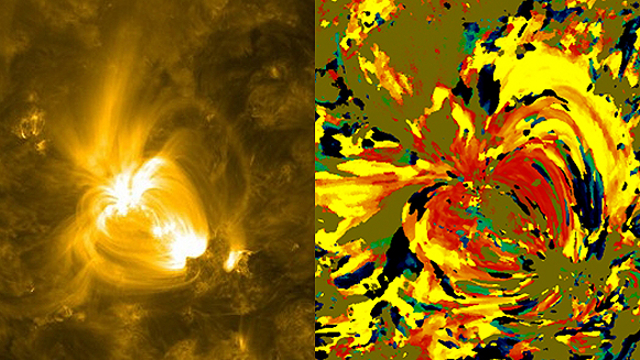
"caption": "Left: Colorized image captured by NASA's Solar Dynamics Observatory (SDO). Credit: NASA/SDO. Right: Visualization, based on the image on the left, using specific colors to describe which areas on the sun cooled or heated over a 12-hour period. Credit: NASA/Viall.",
"description": null,
"title": "669170main_20100619-map2-670",
"credit": null,
"status": "inherit",
"isLoading": false,
"fetchFailed": false
},
"quest_41804": {
"type": "attachments",
"id": "quest_41804",
"meta": {
"index": "attachments_1716263798",
"site": "quest",
"id": "41804",
"found": true
},
"parent": 41786,
"imgSizes": {
"thumbnail": {
"file": "https://ww2.kqed.org/app/uploads/sites/39/2012/08/PIA15791_modest-400x225.jpg",
"width": 400,
"mimeType": "image/jpeg",
"height": 225
},
"kqedFullSize": {
"file": "https://ww2.kqed.org/app/uploads/sites/39/2012/08/PIA15791_modest.jpg",
"width": 640,
"height": 360
},
"guest-author-96": {
"file": "https://ww2.kqed.org/app/uploads/sites/39/2012/08/PIA15791_modest-96x96.jpg",
"width": 96,
"mimeType": "image/jpeg",
"height": 96
},
"guest-author-64": {
"file": "https://ww2.kqed.org/app/uploads/sites/39/2012/08/PIA15791_modest-64x64.jpg",
"width": 64,
"mimeType": "image/jpeg",
"height": 64
},
"detail": {
"file": "https://ww2.kqed.org/app/uploads/sites/39/2012/08/PIA15791_modest-75x75.jpg",
"width": 75,
"mimeType": "image/jpeg",
"height": 75
},
"guest-author-32": {
"file": "https://ww2.kqed.org/app/uploads/sites/39/2012/08/PIA15791_modest-32x32.jpg",
"width": 32,
"mimeType": "image/jpeg",
"height": 32
},
"guest-author-128": {
"file": "https://ww2.kqed.org/app/uploads/sites/39/2012/08/PIA15791_modest-128x128.jpg",
"width": 128,
"mimeType": "image/jpeg",
"height": 128
}
},
"publishDate": 1343946288,
"modified": 1343946288,
"caption": null,
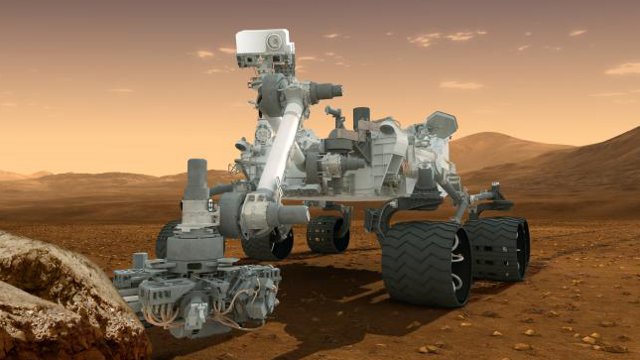
"description": "The rover's 7-foot arm can collect sample material from inside of rocks and a scoop can pick up samples of soil. The arm can sieve the samples and deliver fine powder to instruments inside the rover for thorough analysis. ",
"title": "Mars Science Laboratory Curiosity rover (photo courtesy NASA)",
"credit": null,
"status": "inherit",
"isLoading": false,
"fetchFailed": false
},
"quest_40852": {
"type": "attachments",
"id": "quest_40852",
"meta": {
"index": "attachments_1716263798",
"site": "quest",
"id": "40852",
"found": true
},
"parent": 40851,
"imgSizes": {
"thumbnail": {
"file": "https://ww2.kqed.org/app/uploads/sites/39/2012/07/titansocean-400x225.jpg",
"width": 400,
"mimeType": "image/jpeg",
"height": 225
},
"kqedFullSize": {
"file": "https://ww2.kqed.org/app/uploads/sites/39/2012/07/titansocean.jpg",
"width": 640,
"height": 360
},
"guest-author-96": {
"file": "https://ww2.kqed.org/app/uploads/sites/39/2012/07/titansocean-96x96.jpg",
"width": 96,
"mimeType": "image/jpeg",
"height": 96
},
"guest-author-64": {
"file": "https://ww2.kqed.org/app/uploads/sites/39/2012/07/titansocean-64x64.jpg",
"width": 64,
"mimeType": "image/jpeg",
"height": 64
},
"detail": {
"file": "https://ww2.kqed.org/app/uploads/sites/39/2012/07/titansocean-75x75.jpg",
"width": 75,
"mimeType": "image/jpeg",
"height": 75
},
"guest-author-32": {
"file": "https://ww2.kqed.org/app/uploads/sites/39/2012/07/titansocean-32x32.jpg",
"width": 32,
"mimeType": "image/jpeg",
"height": 32
},
"guest-author-128": {
"file": "https://ww2.kqed.org/app/uploads/sites/39/2012/07/titansocean-128x128.jpg",
"width": 128,
"mimeType": "image/jpeg",
"height": 128
}
},
"publishDate": 1342042466,
"modified": 1342042466,
"caption": "Crossection of Titan's subsurface ocean",
"description": "Crossection of Titan's subsurface ocean",
"title": "Crossection of Titan's subsurface ocean",
"credit": null,
"status": "inherit",
"isLoading": false,
"fetchFailed": false
},
"quest_40317": {
"type": "attachments",
"id": "quest_40317",
"meta": {
"index": "attachments_1716263798",
"site": "quest",
"id": "40317",
"found": true
},
"parent": 40314,
"imgSizes": {
"thumbnail": {
"file": "https://ww2.kqed.org/app/uploads/sites/39/2012/06/NuStar-400x226.jpg",
"width": 400,
"mimeType": "image/jpeg",
"height": 226
},
"kqedFullSize": {
"file": "https://ww2.kqed.org/app/uploads/sites/39/2012/06/NuStar.jpg",
"width": 640,
"height": 361
},
"guest-author-96": {
"file": "https://ww2.kqed.org/app/uploads/sites/39/2012/06/NuStar-96x96.jpg",
"width": 96,
"mimeType": "image/jpeg",
"height": 96
},
"guest-author-64": {
"file": "https://ww2.kqed.org/app/uploads/sites/39/2012/06/NuStar-64x64.jpg",
"width": 64,
"mimeType": "image/jpeg",
"height": 64
},
"detail": {
"file": "https://ww2.kqed.org/app/uploads/sites/39/2012/06/NuStar-75x75.jpg",
"width": 75,
"mimeType": "image/jpeg",
"height": 75
},
"guest-author-32": {
"file": "https://ww2.kqed.org/app/uploads/sites/39/2012/06/NuStar-32x32.jpg",
"width": 32,
"mimeType": "image/jpeg",
"height": 32
},
"guest-author-128": {
"file": "https://ww2.kqed.org/app/uploads/sites/39/2012/06/NuStar-128x128.jpg",
"width": 128,
"mimeType": "image/jpeg",
"height": 128
}
},
"publishDate": 1340929784,
"modified": 1340929784,
"caption": "An artist's rendering of the NuStar telescope in space. (Image: NASA)",
"description": null,
"title": "NuStar",
"credit": null,
"status": "inherit",
"isLoading": false,
"fetchFailed": false
},
"quest_40163": {
"type": "attachments",
"id": "quest_40163",
"meta": {
"index": "attachments_1716263798",
"site": "quest",
"id": "40163",
"found": true
},
"parent": 40161,
"imgSizes": {
"thumbnail": {
"file": "https://ww2.kqed.org/app/uploads/sites/39/2012/06/voyagersandheliopause-400x225.jpg",
"width": 400,
"mimeType": "image/jpeg",
"height": 225
},
"kqedFullSize": {
"file": "https://ww2.kqed.org/app/uploads/sites/39/2012/06/voyagersandheliopause.jpg",
"width": 640,
"height": 360
},
"guest-author-96": {
"file": "https://ww2.kqed.org/app/uploads/sites/39/2012/06/voyagersandheliopause-96x96.jpg",
"width": 96,
"mimeType": "image/jpeg",
"height": 96
},
"guest-author-64": {
"file": "https://ww2.kqed.org/app/uploads/sites/39/2012/06/voyagersandheliopause-64x64.jpg",
"width": 64,
"mimeType": "image/jpeg",
"height": 64
},
"detail": {
"file": "https://ww2.kqed.org/app/uploads/sites/39/2012/06/voyagersandheliopause-75x75.jpg",
"width": 75,
"mimeType": "image/jpeg",
"height": 75
},
"guest-author-32": {
"file": "https://ww2.kqed.org/app/uploads/sites/39/2012/06/voyagersandheliopause-32x32.jpg",
"width": 32,
"mimeType": "image/jpeg",
"height": 32
},
"guest-author-128": {
"file": "https://ww2.kqed.org/app/uploads/sites/39/2012/06/voyagersandheliopause-128x128.jpg",
"width": 128,
"mimeType": "image/jpeg",
"height": 128
}
},
"publishDate": 1340652005,
"modified": 1340652005,
"caption": "The Voyager spacecraft and the Heliopause",
"description": "The Voyager spacecraft and the Heliopause",
"title": "The Voyager spacecraft and the Heliopause",
"credit": null,
"status": "inherit",
"isLoading": false,
"fetchFailed": false
},
"quest_40024": {
"type": "attachments",
"id": "quest_40024",
"meta": {
"index": "attachments_1716263798",
"site": "quest",
"id": "40024",
"found": true
},
"parent": 40021,
"imgSizes": {
"thumbnail": {
"file": "https://ww2.kqed.org/app/uploads/sites/39/2012/06/WS301_SOFIA_640-400x225.jpg",
"width": 400,
"mimeType": "image/jpeg",
"height": 225
},
"kqedFullSize": {
"file": "https://ww2.kqed.org/app/uploads/sites/39/2012/06/WS301_SOFIA_640.jpg",
"width": 640,
"height": 360
},
"guest-author-96": {
"file": "https://ww2.kqed.org/app/uploads/sites/39/2012/06/WS301_SOFIA_640-96x96.jpg",
"width": 96,
"mimeType": "image/jpeg",
"height": 96
},
"guest-author-64": {
"file": "https://ww2.kqed.org/app/uploads/sites/39/2012/06/WS301_SOFIA_640-64x64.jpg",
"width": 64,
"mimeType": "image/jpeg",
"height": 64
},
"detail": {
"file": "https://ww2.kqed.org/app/uploads/sites/39/2012/06/WS301_SOFIA_640-75x75.jpg",
"width": 75,
"mimeType": "image/jpeg",
"height": 75
},
"guest-author-32": {
"file": "https://ww2.kqed.org/app/uploads/sites/39/2012/06/WS301_SOFIA_640-32x32.jpg",
"width": 32,
"mimeType": "image/jpeg",
"height": 32
},
"guest-author-128": {
"file": "https://ww2.kqed.org/app/uploads/sites/39/2012/06/WS301_SOFIA_640-128x128.jpg",
"width": 128,
"mimeType": "image/jpeg",
"height": 128
}
},
"publishDate": 1340396578,
"modified": 1340396578,
"caption": null,
"description": null,
"title": "WS301_SOFIA_640",
"credit": null,
"status": "inherit",
"isLoading": false,
"fetchFailed": false
},
"quest_39546": {
"type": "attachments",
"id": "quest_39546",
"meta": {
"index": "attachments_1716263798",
"site": "quest",
"id": "39546",
"found": true
},
"parent": 39545,
"imgSizes": {
"thumbnail": {
"file": "https://ww2.kqed.org/app/uploads/sites/39/2012/06/googlebay-400x225.jpg",
"width": 400,
"mimeType": "image/jpeg",
"height": 225
},
"kqedFullSize": {
"file": "https://ww2.kqed.org/app/uploads/sites/39/2012/06/googlebay.jpg",
"width": 640,
"height": 360
},
"guest-author-96": {
"file": "https://ww2.kqed.org/app/uploads/sites/39/2012/06/googlebay-96x96.jpg",
"width": 96,
"mimeType": "image/jpeg",
"height": 96
},
"guest-author-64": {
"file": "https://ww2.kqed.org/app/uploads/sites/39/2012/06/googlebay-64x64.jpg",
"width": 64,
"mimeType": "image/jpeg",
"height": 64
},
"detail": {
"file": "https://ww2.kqed.org/app/uploads/sites/39/2012/06/googlebay-75x75.jpg",
"width": 75,
"mimeType": "image/jpeg",
"height": 75
},
"guest-author-32": {
"file": "https://ww2.kqed.org/app/uploads/sites/39/2012/06/googlebay-32x32.jpg",
"width": 32,
"mimeType": "image/jpeg",
"height": 32
},
"guest-author-128": {
"file": "https://ww2.kqed.org/app/uploads/sites/39/2012/06/googlebay-128x128.jpg",
"width": 128,
"mimeType": "image/jpeg",
"height": 128
}
},
"publishDate": 1339620912,
"modified": 1339620912,
"caption": "San Francisco Bay perspective. Created with Google Earth.",
"description": "San Francisco Bay perspective. Created with Google Earth.",
"title": "San Francisco Bay perspective. Created with Google Earth.",
"credit": null,
"status": "inherit",
"isLoading": false,
"fetchFailed": false
},
"quest_39447": {
"type": "attachments",
"id": "quest_39447",
"meta": {
"index": "attachments_1716263798",
"site": "quest",
"id": "39447",
"found": true
},
"parent": 39430,
"imgSizes": {
"thumbnail": {
"file": "https://ww2.kqed.org/app/uploads/sites/39/2012/06/Picture-3-400x225.png",
"width": 400,
"mimeType": "image/png",
"height": 225
},
"kqedFullSize": {
"file": "https://ww2.kqed.org/app/uploads/sites/39/2012/06/Picture-3.png",
"width": 640,
"height": 360
},
"guest-author-96": {
"file": "https://ww2.kqed.org/app/uploads/sites/39/2012/06/Picture-3-96x96.png",
"width": 96,
"mimeType": "image/png",
"height": 96
},
"guest-author-64": {
"file": "https://ww2.kqed.org/app/uploads/sites/39/2012/06/Picture-3-64x64.png",
"width": 64,
"mimeType": "image/png",
"height": 64
},
"detail": {
"file": "https://ww2.kqed.org/app/uploads/sites/39/2012/06/Picture-3-75x75.png",
"width": 75,
"mimeType": "image/png",
"height": 75
},
"guest-author-32": {
"file": "https://ww2.kqed.org/app/uploads/sites/39/2012/06/Picture-3-32x32.png",
"width": 32,
"mimeType": "image/png",
"height": 32
},
"guest-author-128": {
"file": "https://ww2.kqed.org/app/uploads/sites/39/2012/06/Picture-3-128x128.png",
"width": 128,
"mimeType": "image/png",
"height": 128
}
},
"publishDate": 1339562222,
"modified": 1339562222,
"caption": null,
"description": null,
"title": "Image from Marc Labriet",
"credit": null,
"status": "inherit",
"isLoading": false,
"fetchFailed": false
},
"quest_39179": {
"type": "attachments",
"id": "quest_39179",
"meta": {
"index": "attachments_1716263798",
"site": "quest",
"id": "39179",
"found": true
},
"parent": 39067,
"imgSizes": {
"thumbnail": {
"file": "https://ww2.kqed.org/app/uploads/sites/39/2012/06/KQED-Science-Icon-640-x-360-400x225.png",
"width": 400,
"mimeType": "image/png",
"height": 225
},
"kqedFullSize": {
"file": "https://ww2.kqed.org/app/uploads/sites/39/2012/06/KQED-Science-Icon-640-x-360.png",
"width": 640,
"height": 360
},
"guest-author-96": {
"file": "https://ww2.kqed.org/app/uploads/sites/39/2012/06/KQED-Science-Icon-640-x-360-96x96.png",
"width": 96,
"mimeType": "image/png",
"height": 96
},
"guest-author-64": {
"file": "https://ww2.kqed.org/app/uploads/sites/39/2012/06/KQED-Science-Icon-640-x-360-64x64.png",
"width": 64,
"mimeType": "image/png",
"height": 64
},
"detail": {
"file": "https://ww2.kqed.org/app/uploads/sites/39/2012/06/KQED-Science-Icon-640-x-360-75x75.png",
"width": 75,
"mimeType": "image/png",
"height": 75
},
"guest-author-32": {
"file": "https://ww2.kqed.org/app/uploads/sites/39/2012/06/KQED-Science-Icon-640-x-360-32x32.png",
"width": 32,
"mimeType": "image/png",
"height": 32
},
"guest-author-128": {
"file": "https://ww2.kqed.org/app/uploads/sites/39/2012/06/KQED-Science-Icon-640-x-360-128x128.png",
"width": 128,
"mimeType": "image/png",
"height": 128
}
},
"publishDate": 1339004552,
"modified": 1339004552,
"caption": null,
"description": null,
"title": "KQED Science Icon 640 x 360",
"credit": null,
"status": "inherit",
"isLoading": false,
"fetchFailed": false
},
"quest_38949": {
"type": "attachments",
"id": "quest_38949",
"meta": {
"index": "attachments_1716263798",
"site": "quest",
"id": "38949",
"found": true
},
"parent": 38948,
"imgSizes": {
"thumbnail": {
"file": "https://ww2.kqed.org/app/uploads/sites/39/2012/05/venustransit-400x225.jpg",
"width": 400,
"mimeType": "image/jpeg",
"height": 225
},
"kqedFullSize": {
"file": "https://ww2.kqed.org/app/uploads/sites/39/2012/05/venustransit.jpg",
"width": 640,
"height": 360
},
"guest-author-96": {
"file": "https://ww2.kqed.org/app/uploads/sites/39/2012/05/venustransit-96x96.jpg",
"width": 96,
"mimeType": "image/jpeg",
"height": 96
},
"guest-author-64": {
"file": "https://ww2.kqed.org/app/uploads/sites/39/2012/05/venustransit-64x64.jpg",
"width": 64,
"mimeType": "image/jpeg",
"height": 64
},
"detail": {
"file": "https://ww2.kqed.org/app/uploads/sites/39/2012/05/venustransit-75x75.jpg",
"width": 75,
"mimeType": "image/jpeg",
"height": 75
},
"guest-author-32": {
"file": "https://ww2.kqed.org/app/uploads/sites/39/2012/05/venustransit-32x32.jpg",
"width": 32,
"mimeType": "image/jpeg",
"height": 32
},
"guest-author-128": {
"file": "https://ww2.kqed.org/app/uploads/sites/39/2012/05/venustransit-128x128.jpg",
"width": 128,
"mimeType": "image/jpeg",
"height": 128
}
},
"publishDate": 1338495505,
"modified": 1338495505,
"caption": "The Transit of Venus. Diagram from Starry Night Pro. Image from NASA's TRACE spacecraft. ",
"description": "The Transit of Venus. Diagram from Starry Night Pro. Image from NASA's TRACE spacecraft. ",
"title": "The Transit of Venus. Diagram from Starry Night Pro. Image from NASA's TRACE spacecraft. ",
"credit": null,
"status": "inherit",
"isLoading": false,
"fetchFailed": false
},
"quest_38595": {
"type": "attachments",
"id": "quest_38595",
"meta": {
"index": "attachments_1716263798",
"site": "quest",
"id": "38595",
"found": true
},
"parent": 38558,
"imgSizes": {
"thumbnail": {
"file": "https://ww2.kqed.org/app/uploads/sites/39/2012/05/sunset_eclipse-400x225.jpg",
"width": 400,
"mimeType": "image/jpeg",
"height": 225
},
"kqedFullSize": {
"file": "https://ww2.kqed.org/app/uploads/sites/39/2012/05/sunset_eclipse.jpg",
"width": 640,
"height": 360
},
"guest-author-96": {
"file": "https://ww2.kqed.org/app/uploads/sites/39/2012/05/sunset_eclipse-96x96.jpg",
"width": 96,
"mimeType": "image/jpeg",
"height": 96
},
"guest-author-64": {
"file": "https://ww2.kqed.org/app/uploads/sites/39/2012/05/sunset_eclipse-64x64.jpg",
"width": 64,
"mimeType": "image/jpeg",
"height": 64
},
"detail": {
"file": "https://ww2.kqed.org/app/uploads/sites/39/2012/05/sunset_eclipse-75x75.jpg",
"width": 75,
"mimeType": "image/jpeg",
"height": 75
},
"guest-author-32": {
"file": "https://ww2.kqed.org/app/uploads/sites/39/2012/05/sunset_eclipse-32x32.jpg",
"width": 32,
"mimeType": "image/jpeg",
"height": 32
},
"guest-author-128": {
"file": "https://ww2.kqed.org/app/uploads/sites/39/2012/05/sunset_eclipse-128x128.jpg",
"width": 128,
"mimeType": "image/jpeg",
"height": 128
}
},
"publishDate": 1337720212,
"modified": 1337720212,
"caption": "photo by jimnista",
"description": null,
"title": "sunset_eclipse",
"credit": null,
"status": "inherit",
"isLoading": false,
"fetchFailed": false
}
},
"audioPlayerReducer": {
"postId": "stream_live",
"isPaused": true,
"isPlaying": false,
"pfsActive": false,
"pledgeModalIsOpen": true,
"playerDrawerIsOpen": false,
"liveAudioPlayStartedAt": 0,
"liveAudioPlayContext": ""
},
"authorsReducer": {
"amystanden": {
"type": "authors",
"id": "210",
"meta": {
"index": "authors_1716337520",
"id": "210",
"found": true
},
"name": "Amy Standen",
"firstName": "Amy",
"lastName": "Standen",
"slug": "amystanden",
"email": "astanden@kqed.org",
"display_author_email": false,
"staff_mastheads": [],
"title": "KQED Contributor",
"bio": "Amy Standen (@amystanden) is co-host of #\u003ca href=\"https://ww2.kqed.org/news/programs/the-leap\">TheLeapPodcast\u003c/a> (subscribe on iTunes or Stitcher!) and host of KQED and PBSDigital Studios' science video series, \u003ca href=\"https://www.youtube.com/user/KQEDDeepLook\">Deep Look\u003c/a>. Her science radio stories appear on KQED and NPR.\r\n\r\nEmail her at astanden@kqed.org",
"avatar": "https://secure.gravatar.com/avatar/3d021b72de685a788b0487b059d0a6a1?s=600&d=blank&r=g",
"twitter": null,
"facebook": null,
"instagram": null,
"linkedin": null,
"sites": [
{
"site": "news",
"roles": [
"subscriber"
]
},
{
"site": "futureofyou",
"roles": [
"subscriber"
]
},
{
"site": "stateofhealth",
"roles": [
"subscriber"
]
},
{
"site": "science",
"roles": []
},
{
"site": "quest",
"roles": [
"subscriber"
]
}
],
"headData": {
"title": "Amy Standen | KQED",
"description": "KQED Contributor",
"ogImgSrc": "https://secure.gravatar.com/avatar/3d021b72de685a788b0487b059d0a6a1?s=600&d=blank&r=g",
"twImgSrc": "https://secure.gravatar.com/avatar/3d021b72de685a788b0487b059d0a6a1?s=600&d=blank&r=g"
},
"isLoading": false,
"link": "/author/amystanden"
},
"laurensommer": {
"type": "authors",
"id": "239",
"meta": {
"index": "authors_1716337520",
"id": "239",
"found": true
},
"name": "Lauren Sommer",
"firstName": "Lauren",
"lastName": "Sommer",
"slug": "laurensommer",
"email": "lsommer@kqed.org",
"display_author_email": false,
"staff_mastheads": [],
"title": "KQED Contributor",
"bio": "Lauren is a radio reporter formerly covering environment, water, and energy for KQED Science. As part of her day job, she has scaled Sierra Nevada peaks, run from charging elephant seals, and desperately tried to get her sea legs - all in pursuit of good radio. Her work has appeared on Marketplace, Living on Earth, Science Friday and NPR's Morning Edition and All Things Considered. You can find her on Twitter at \u003ca href=\"https://twitter.com/lesommer\">@lesommer\u003c/a>.",
"avatar": "https://secure.gravatar.com/avatar/33aa3772bb86c6ad45b8aca6a238bbdf?s=600&d=blank&r=g",
"twitter": null,
"facebook": null,
"instagram": null,
"linkedin": null,
"sites": [
{
"site": "news",
"roles": [
"author"
]
},
{
"site": "science",
"roles": [
"editor",
"manage_content_types",
"manage_taxonomies"
]
},
{
"site": "quest",
"roles": [
"editor"
]
}
],
"headData": {
"title": "Lauren Sommer | KQED",
"description": "KQED Contributor",
"ogImgSrc": "https://secure.gravatar.com/avatar/33aa3772bb86c6ad45b8aca6a238bbdf?s=600&d=blank&r=g",
"twImgSrc": "https://secure.gravatar.com/avatar/33aa3772bb86c6ad45b8aca6a238bbdf?s=600&d=blank&r=g"
},
"isLoading": false,
"link": "/author/laurensommer"
},
"jennyoh": {
"type": "authors",
"id": "2100",
"meta": {
"index": "authors_1716337520",
"id": "2100",
"found": true
},
"name": "Jenny Oh",
"firstName": "Jenny",
"lastName": "Oh",
"slug": "jennyoh",
"email": "joh@kqed.org",
"display_author_email": false,
"staff_mastheads": [],
"title": "Audience Engagement Producer, Deep Look",
"bio": "Jenny is an Emmy Award-winning producer and is currently the Audience Engagement Producer for KQED Science's \u003cem>Deep Look\u003c/em> online video series. She was also a long-time contributor to Bay Area Bites, KQED's popular food blog. Jenny graduated with honors from New York University’s Tisch School of the Arts Film and Television program and has worked for WNET/PBS, The Learning Channel, Sundance Channel, HBO and the University of California.",
"avatar": "https://secure.gravatar.com/avatar/7ddda0ed657e46dbe66083f569967752?s=600&d=mm&r=g",
"twitter": null,
"facebook": null,
"instagram": null,
"linkedin": null,
"sites": [
{
"site": "arts",
"roles": []
},
{
"site": "pop",
"roles": []
},
{
"site": "about",
"roles": []
},
{
"site": "bayareabites",
"roles": []
},
{
"site": "science",
"roles": []
},
{
"site": "education",
"roles": []
},
{
"site": "quest",
"roles": []
},
{
"site": "food",
"roles": []
}
],
"headData": {
"title": "Jenny Oh | KQED",
"description": "Audience Engagement Producer, Deep Look",
"ogImgSrc": "https://secure.gravatar.com/avatar/7ddda0ed657e46dbe66083f569967752?s=600&d=mm&r=g",
"twImgSrc": "https://secure.gravatar.com/avatar/7ddda0ed657e46dbe66083f569967752?s=600&d=mm&r=g"
},
"isLoading": false,
"link": "/author/jennyoh"
},
"craig-rosa": {
"type": "authors",
"id": "6166",
"meta": {
"index": "authors_1716337520",
"id": "6166",
"found": true
},
"name": "Craig Rosa",
"firstName": "Craig",
"lastName": "Rosa",
"slug": "craig-rosa",
"email": "crosa@kqed.org",
"display_author_email": false,
"staff_mastheads": [],
"title": "Senior Digital Editor",
"bio": "Craig Rosa is KQED's \u003cstrong>Senior Digital Editor for Science\u003c/strong>. Additionally he serves as the Series Producer for the Webby award-winning science & wildlife video series, Deep Look, presented by PBS Digital Studios. Prior to joining KQED in October of 2006, he spent 11 years with \u003ca href=\"http://www.thetech.org/\">The Tech Museum of Innovation\u003c/a> in San Jose, where he worked to create innovative educational visitor experiences online and within the museum space. He was also responsible for the museum's Information Services operations. He began his informal science interpretation career at the \u003ca href=\"http://www.brooklynkids.org/\">Brooklyn Children's Museum\u003c/a> as an Assistant Exhibit Developer and Greenhouse Program Coordinator. Craig has a B.A. in World Arts and Cultures from UCLA, and an M.A. in Performance Studies from New York University.",
"avatar": "https://secure.gravatar.com/avatar/63a0ca473162a5bba6aec0097cde139b?s=600&d=blank&r=g",
"twitter": null,
"facebook": null,
"instagram": null,
"linkedin": null,
"sites": [
{
"site": "science",
"roles": []
},
{
"site": "quest",
"roles": [
"edit_theme_options",
"edit_users",
"level_10",
"level_8",
"level_9",
"unfiltered_html",
"unfiltered_upload"
]
}
],
"headData": {
"title": "Craig Rosa | KQED",
"description": "Senior Digital Editor",
"ogImgSrc": "https://secure.gravatar.com/avatar/63a0ca473162a5bba6aec0097cde139b?s=600&d=blank&r=g",
"twImgSrc": "https://secure.gravatar.com/avatar/63a0ca473162a5bba6aec0097cde139b?s=600&d=blank&r=g"
},
"isLoading": false,
"link": "/author/craig-rosa"
},
"ben-burress": {
"type": "authors",
"id": "6180",
"meta": {
"index": "authors_1716337520",
"id": "6180",
"found": true
},
"name": "Ben Burress",
"firstName": "Ben",
"lastName": "Burress",
"slug": "ben-burress",
"email": "bburress@chabotspace.org",
"display_author_email": false,
"staff_mastheads": [],
"title": null,
"bio": "\u003cstrong>Benjamin Burress\u003c/strong> has been a staff astronomer at Chabot Space & Science Center since July 1999. He graduated from Sonoma State University in 1985 with a bachelor’s degree in physics (and minor in astronomy), after which he signed on for a two-year stint in the Peace Corps, where he taught physics and mathematics in the African nation of Cameroon. From 1989-96 he served on the crew of NASA’s Kuiper Airborne Observatory at Ames Research Center in Mountain View, CA. From 1996-99, he was Head Observer at the Naval Prototype Optical Interferometer program at Lowell Observatory in Flagstaff, AZ.\r\n\r\nRead his \u003ca href=\"http://science.kqed.org/quest/author/ben-burress/\">previous contributions\u003c/a> to \u003ca href=\"http://science.kqed.org/quest/\">QUEST\u003c/a>, a project dedicated to exploring the Science of Sustainability.",
"avatar": "https://secure.gravatar.com/avatar/8263bffa345b7e4923a0b8b9f0f6a161?s=600&d=blank&r=g",
"twitter": null,
"facebook": null,
"instagram": null,
"linkedin": null,
"sites": [
{
"site": "science",
"roles": [
"editor"
]
},
{
"site": "quest",
"roles": [
"subscriber"
]
}
],
"headData": {
"title": "Ben Burress | KQED",
"description": null,
"ogImgSrc": "https://secure.gravatar.com/avatar/8263bffa345b7e4923a0b8b9f0f6a161?s=600&d=blank&r=g",
"twImgSrc": "https://secure.gravatar.com/avatar/8263bffa345b7e4923a0b8b9f0f6a161?s=600&d=blank&r=g"
},
"isLoading": false,
"link": "/author/ben-burress"
},
"joshua-cassidy": {
"type": "authors",
"id": "6219",
"meta": {
"index": "authors_1716337520",
"id": "6219",
"found": true
},
"name": "Josh Cassidy",
"firstName": "Josh",
"lastName": "Cassidy",
"slug": "joshua-cassidy",
"email": "jcassidy@kqed.org",
"display_author_email": false,
"staff_mastheads": [
"science"
],
"title": "Digital Video Producer",
"bio": "Josh is a Senior Video Producer for KQED Science, and the Lead Producer and Cinematographer for Deep Look. After receiving his BS in Wildlife Biology from Ohio University, he went on to participate in marine mammal research for NOAA, USGS and the Intersea Foundation. He also served as the president of The Pacific Cetacean Group, a nonprofit organization dedicated to teaching students K-6 about whales. Josh studied science and natural history filmmaking at San Francisco State University and Montana State University.",
"avatar": "https://secure.gravatar.com/avatar/f2582a0801a35af53b734d56bcac2bbe?s=600&d=blank&r=g",
"twitter": null,
"facebook": null,
"instagram": null,
"linkedin": null,
"sites": [
{
"site": "science",
"roles": [
"editor"
]
},
{
"site": "quest",
"roles": [
"author",
"edit_others_posts"
]
}
],
"headData": {
"title": "Josh Cassidy | KQED",
"description": "Digital Video Producer",
"ogImgSrc": "https://secure.gravatar.com/avatar/f2582a0801a35af53b734d56bcac2bbe?s=600&d=blank&r=g",
"twImgSrc": "https://secure.gravatar.com/avatar/f2582a0801a35af53b734d56bcac2bbe?s=600&d=blank&r=g"
},
"isLoading": false,
"link": "/author/joshua-cassidy"
},
"dannastaaf": {
"type": "authors",
"id": "6324",
"meta": {
"index": "authors_1716337520",
"id": "6324",
"found": true
},
"name": "Danna Staaf",
"firstName": "Danna",
"lastName": "Staaf",
"slug": "dannastaaf",
"email": "dannajoy@gmail.com",
"display_author_email": false,
"staff_mastheads": [],
"title": null,
"bio": "Danna Staaf is a marine biologist, science writer, novelist, artist, and educator. She holds a PhD in Squid Babies from Stanford and a BA in Biology from the College of Creative Studies at the University of California, Santa Barbara. She helped found the outreach program \u003ca href=\"http://gilly.stanford.edu/outreach.html\">Squids4Kids\u003c/a>, illustrated \u003ca href=\"https://www.thegamecrafter.com/games/the-game-of-science\">The Game of Science\u003c/a>, and blogs at \u003ca href=\"http://www.science20.com/squid_day\">Science 2.0\u003c/a>. She lives in San Jose with her husband, daughter, and cats.",
"avatar": "https://secure.gravatar.com/avatar/62085c2562a0b91949bfd6ff7548082e?s=600&d=blank&r=g",
"twitter": null,
"facebook": null,
"instagram": null,
"linkedin": null,
"sites": [
{
"site": "science",
"roles": [
"author"
]
},
{
"site": "quest",
"roles": [
"subscriber"
]
}
],
"headData": {
"title": "Danna Staaf | KQED",
"description": null,
"ogImgSrc": "https://secure.gravatar.com/avatar/62085c2562a0b91949bfd6ff7548082e?s=600&d=blank&r=g",
"twImgSrc": "https://secure.gravatar.com/avatar/62085c2562a0b91949bfd6ff7548082e?s=600&d=blank&r=g"
},
"isLoading": false,
"link": "/author/dannastaaf"
},
"cat": {
"type": "authors",
"id": "10173",
"meta": {
"index": "authors_1716337520",
"id": "10173",
"found": true
},
"name": "Cat",
"firstName": "Cat",
"lastName": "Aboudara",
"slug": "cat",
"email": "caboudara@calacademy.org",
"display_author_email": false,
"staff_mastheads": [],
"title": null,
"bio": "Cathleen (Cat) is the former \u003cstrong>Special Projects Manager at California Academy of Sciences\u003c/strong> and worked in the public programs division.\r\nBefore working at the Academy, Cat got her start as an intern at \u003ca href=\"http://www.wildlife-museum.org/\">Lindsay Wildlife Museum\u003c/a> for four years and worked with animals ranging from snakes and hawks to foxes and bobcats. She has a deep curiosity about the natural world and native California wildlife.",
"avatar": "https://secure.gravatar.com/avatar/1db01bf4502e099faeb0628c5015e81f?s=600&d=blank&r=g",
"twitter": null,
"facebook": null,
"instagram": null,
"linkedin": null,
"sites": [
{
"site": "quest",
"roles": [
"subscriber"
]
}
],
"headData": {
"title": "Cat | KQED",
"description": null,
"ogImgSrc": "https://secure.gravatar.com/avatar/1db01bf4502e099faeb0628c5015e81f?s=600&d=blank&r=g",
"twImgSrc": "https://secure.gravatar.com/avatar/1db01bf4502e099faeb0628c5015e81f?s=600&d=blank&r=g"
},
"isLoading": false,
"link": "/author/cat"
}
},
"pagesReducer": {
"quest_category_astronomy": {
"type": "terms",
"id": "quest_3",
"meta": {
"index": "terms_1716263798",
"site": "quest",
"id": "3",
"score": 12.939345
},
"featImg": null,
"name": "Astronomy",
"description": null,
"taxonomy": "category",
"headData": {
"twImgId": null,
"twTitle": null,
"ogTitle": null,
"ogImgId": null,
"twDescription": null,
"description": null,
"title": "Astronomy Archives | KQED Arts",
"ogDescription": null
},
"ttid": 3,
"slug": "astronomy",
"isLoading": false,
"title": "Astronomy",
"pageMeta": {
"site": "quest",
"WpPageTemplate": "page-topic-editorial",
"currentPage": 4
},
"blocks": [
{
"blockName": "kqed/post-list",
"attrs": {
"layout": "cardArticle2",
"query": "posts/quest?category=astronomy",
"seeMore": false,
"paginated": true,
"page": 4
}
},
{
"blockName": "kqed/ad"
}
]
}
},
"pfsSessionReducer": {},
"postsReducer": {
"stream_live": {
"type": "live",
"id": "stream_live",
"audioUrl": "https://hls.kqed.org/hls/kqed_app/playlist.m3u8",
"title": "Live Stream",
"excerpt": "Live Stream information currently unavailable.",
"link": "/radio",
"featImg": "",
"label": {
"name": "KQED Live",
"link": "/"
}
},
"stream_kqedNewscast": {
"type": "posts",
"id": "stream_kqedNewscast",
"audioUrl": "https://www.kqed.org/.stream/anon/radio/RDnews/newscast.mp3?_=1",
"title": "KQED Newscast",
"featImg": "",
"label": {
"name": "88.5 FM",
"link": "/"
}
},
"quest_42312": {
"type": "posts",
"id": "quest_42312",
"meta": {
"index": "posts_1716263798",
"site": "quest",
"id": "42312",
"score": null,
"sort": [
1344370609000
]
},
"parent": 0,
"labelTerm": {
"site": "quest"
},
"blocks": [],
"publishDate": 1344370609,
"format": "standard",
"disqusTitle": "Stunning Solar Visualizations: The Sun's Van Gogh-like Artistry",
"title": "Stunning Solar Visualizations: The Sun's Van Gogh-like Artistry",
"headTitle": "QUEST | KQED Science",
"content": "\u003cfigure id=\"attachment_42313\" class=\"wp-caption alignnone\" style=\"max-width: 640px\">\u003ca href=\"http://ww2.kqed.org/quest/2012/08/07/stunning-solar-visualizations-the-suns-van-gogh-like-artistry/669170main_20100619-map2-670/\" rel=\"attachment wp-att-42313\">\u003cimg src=\"http://ww2.kqed.org/quest/wp-content/uploads/sites/39/2012/08/669170main_20100619-map2-670.jpg\" alt=\"Image of the sun and visualization of temperature changes in the same area\" title=\"669170main_20100619-map2-670\" width=\"640\" height=\"360\" class=\"size-full wp-image-42313\" srcset=\"https://ww2.kqed.org/app/uploads/sites/39/2012/08/669170main_20100619-map2-670.jpg 640w, https://ww2.kqed.org/app/uploads/sites/39/2012/08/669170main_20100619-map2-670-400x225.jpg 400w\" sizes=\"(max-width: 640px) 100vw, 640px\">\u003c/a>\u003cfigcaption class=\"wp-caption-text\">Left: Colorized image captured by NASA's Solar Dynamics Observatory (SDO). Credit: NASA/SDO. Right: Visualization, based on the image on the left, using specific colors to describe which areas on the sun cooled or heated over a 12-hour period. Credit: NASA/Viall.\u003c/figcaption>\u003c/figure>\n\u003cp>While nearly all eyes are focused on \u003ca href=\"http://ww2.kqed.org/quest/audio/nasas-mars-lander-the-exploration-begins/\" title=\"KQED QUEST - Mars Lander\">Mars\u003c/a>, two astophysicists at NASA's \u003ca href=\"http://www.nasa.gov/centers/goddard/home/index.html\" title=\"Goddard Space Flight Center\">Goddard Space Flight Center\u003c/a> have been quietly staring at the sun instead.\u003c/p>\n\u003cp>Back in 2010, NASA debuted the Living With a Star program with the \u003ca href=\"http://sdo.gsfc.nasa.gov/mission/about.php\" title=\"Solar Dynamics Observatory\">Solar Dynamics Observatory\u003c/a>, or SDO, a \"sun-pointing semi-autonomous spacecraft.\" SDO sends data back to earth at a continuous 130 megabits per second, seven days a week, twenty-four hours a day. Scientists Nicholeen Viall and James Klimchuk have used some of this mass of information to create solar images worthy of an art gallery.\u003c/p>\n\u003cfigure id=\"attachment_42314\" class=\"wp-caption alignright\" style=\"max-width: 293px\">\u003ca href=\"http://ww2.kqed.org/quest/2012/08/07/stunning-solar-visualizations-the-suns-van-gogh-like-artistry/time_lag_maps/\" rel=\"attachment wp-att-42314\">\u003cimg src=\"http://ww2.kqed.org/quest/wp-content/uploads/sites/39/2012/08/time_lag_maps-293x360.png\" alt=\"Solar visualizations, Figure 5A from Viall and Klimchuk 2012\" title=\"time_lag_maps\" width=\"293\" height=\"360\" class=\"size-large wp-image-42314\">\u003c/a>\u003cfigcaption class=\"wp-caption-text\">Solar visualizations; Figure 5a from {link url=http://arxiv.org/pdf/1202.4001.pdf}Viall and Klimchuck 2012{/link}\u003c/figcaption>\u003c/figure>\n\u003cp>These beautiful pictures, which NASA writer \u003ca href=\"http://www.nasa.gov/mission_pages/sunearth/news/colorful-science.html\" title=\"NASA - Colorful Science\">Karen C. Fox\u003c/a> calls \"reminiscent of van Gogh,\" are not only fit to hang on your living room wall, but represent a critical step toward solving a major puzzle of \u003cem>heliophysics\u003c/em> (that's my new favorite word, by the way): \u003cstrong>Why is the sun's corona so hot?\u003c/strong>\u003c/p>\n\u003cp>As you may remember from childhood sing-a-longs, \u003cem>The sun is a mass of incandescent gas / a gigantic nuclear furnace / where hydrogen is built into helium / at temperatures of millions of degrees\u003c/em>. (Fun fact: though most of my contemporaries know that song from the They Might Be Giants cover, I know it from the original 1959 album \u003ca href=\"http://en.wikipedia.org/wiki/Space_Songs\" title=\"Wikipedia - Space Songs\">\"Space Songs\"\u003c/a>.)\u003c/p>\n\u003cp>But the surface of the sun is actually only 6000 degrees Kelvin, while the corona (the sun's outer atmosphere) climbs well above a million. What's the deal?\u003c/p>\n\u003cp>[ad fullwidth]\u003c/p>\n\u003cp>Scientists have begun to approach this question with painstaking studies of very small bits of the corona called \u003ca href=\"http://en.wikipedia.org/wiki/Coronal_loop\" title=\"Wikipedia - Coronal loops\">coronal loops\u003c/a>. They've found that these loops carry plasma that has been heated very quickly by nanoflare storms. The loops then cool gradually over time.\u003c/p>\n\u003cfigure id=\"attachment_42335\" class=\"wp-caption alignleft\" style=\"max-width: 240px\">\u003ca href=\"http://ww2.kqed.org/quest/2012/08/07/stunning-solar-visualizations-the-suns-van-gogh-like-artistry/240px-traceimage/\" rel=\"attachment wp-att-42335\">\u003cimg src=\"http://ww2.kqed.org/quest/wp-content/uploads/sites/39/2012/08/240px-Traceimage.jpg\" alt=\"coronal loops\" title=\"240px-Traceimage\" width=\"240\" height=\"240\" class=\"size-full wp-image-42335\" srcset=\"https://ww2.kqed.org/app/uploads/sites/39/2012/08/240px-Traceimage.jpg 240w, https://ww2.kqed.org/app/uploads/sites/39/2012/08/240px-Traceimage-32x32.jpg 32w, https://ww2.kqed.org/app/uploads/sites/39/2012/08/240px-Traceimage-64x64.jpg 64w, https://ww2.kqed.org/app/uploads/sites/39/2012/08/240px-Traceimage-96x96.jpg 96w, https://ww2.kqed.org/app/uploads/sites/39/2012/08/240px-Traceimage-128x128.jpg 128w, https://ww2.kqed.org/app/uploads/sites/39/2012/08/240px-Traceimage-75x75.jpg 75w\" sizes=\"(max-width: 240px) 100vw, 240px\">\u003c/a>\u003cfigcaption class=\"wp-caption-text\">Coronal loops. Credit: NASA\u003c/figcaption>\u003c/figure>\n\u003cp>But is this method of quick heating and slow cooling unique to loops, or does it apply to the corona as a whole? It has been difficult for scientists to study larger areas of the corona in this context, because of the sheer volume of data that must be parsed.\u003c/p>\n\u003cp>Viall's technique has the brilliance of all good science visualization: condensing a large amount of information into a straightforward image without having to discard anything. A computer program simply follows one pixel at a time through a series of SDO images, calculating the change in temperature over time and then assigning the pixel a representative color. Reds and yellows mean that an area cooled down, while blues and greens indicate that it heated up. (See \u003ca href=\"http://www.nasa.gov/multimedia/videogallery/index.html?media_id=148694021\" title=\"NASA - Van Gogh Sun\">NASA's video\u003c/a> for a visualization of the visualization.)\u003c/p>\n\u003cp>Viall and Klimchuk found that most of the large area they studied started out super-hot--up to 7 million K, half the temperature of the center of sun--and cooled over the course of a day to under 1 million K. This is what you'd expect from heating via the nanoflare storms characteristic of coronal loops, so it appears that nanoflares \u003cem>may\u003c/em> be able to answer the whole question of coronal heating. \u003c/p>\n\u003cp>Their paper is available for free on the \u003ca href=\"http://arxiv.org/pdf/1202.4001.pdf\" title=\"arXiv - Viall and Klimchuk\">arXiv\u003c/a> and for money in \u003ca href=\"http://iopscience.iop.org/0004-637X/753/1/35\" title=\"Viall and Klimchuk - Astrophysical Journal\">The Astrophysical Journal\u003c/a>.\u003c/p>\n\u003cp>My next question is, where can I order one of these heliophysical van Goghs?\u003c/p>\n\u003cp>\u003c/p>\n\u003cp>\u003cem>h/t to \u003ca href=\"http://www.science20.com/news_articles/visualizing_science_and_what_it_can_show_us_about_solar_heating-92267\" title=\"Science 2.0 - Solar Heating\">Science2.0\u003c/a>\u003c/em>\u003c/p>\n\n",
"disqusIdentifier": "42312 http://science.kqed.org/quest/?p=42312",
"disqusUrl": "https://ww2.kqed.org/quest/2012/08/07/stunning-solar-visualizations-the-suns-van-gogh-like-artistry/",
"stats": {
"hasVideo": false,
"hasChartOrMap": false,
"hasAudio": false,
"hasPolis": false,
"wordCount": 593,
"hasGoogleForm": false,
"hasGallery": false,
"hasHearkenModule": false,
"iframeSrcs": [],
"paragraphCount": 14
},
"modified": 1346782136,
"excerpt": "While nearly all eyes are focused on Mars, two astophysicists at NASA's Goddard Space Flight Center have been quietly staring at the sun instead.",
"headData": {
"twImgId": "",
"twTitle": "",
"ogTitle": "",
"ogImgId": "",
"twDescription": "",
"description": "While nearly all eyes are focused on Mars, two astophysicists at NASA's Goddard Space Flight Center have been quietly staring at the sun instead.",
"title": "Stunning Solar Visualizations: The Sun's Van Gogh-like Artistry | KQED",
"ogDescription": "",
"schema": {
"@context": "https://schema.org",
"@type": "Article",
"headline": "Stunning Solar Visualizations: The Sun's Van Gogh-like Artistry",
"datePublished": "2012-08-07T13:16:49-07:00",
"dateModified": "2012-09-04T11:08:56-07:00",
"image": "https://cdn.kqed.org/wp-content/uploads/2020/02/KQED-OG-Image@1x.png"
}
},
"guestAuthors": [],
"slug": "stunning-solar-visualizations-the-suns-van-gogh-like-artistry",
"status": "publish",
"path": "/quest/42312/stunning-solar-visualizations-the-suns-van-gogh-like-artistry",
"audioTrackLength": null,
"parsedContent": [
{
"type": "contentString",
"content": "\u003cdiv class=\"post-body\">\u003cp>\u003cfigure id=\"attachment_42313\" class=\"wp-caption alignnone\" style=\"max-width: 640px\">\u003ca href=\"http://ww2.kqed.org/quest/2012/08/07/stunning-solar-visualizations-the-suns-van-gogh-like-artistry/669170main_20100619-map2-670/\" rel=\"attachment wp-att-42313\">\u003cimg src=\"http://ww2.kqed.org/quest/wp-content/uploads/sites/39/2012/08/669170main_20100619-map2-670.jpg\" alt=\"Image of the sun and visualization of temperature changes in the same area\" title=\"669170main_20100619-map2-670\" width=\"640\" height=\"360\" class=\"size-full wp-image-42313\" srcset=\"https://ww2.kqed.org/app/uploads/sites/39/2012/08/669170main_20100619-map2-670.jpg 640w, https://ww2.kqed.org/app/uploads/sites/39/2012/08/669170main_20100619-map2-670-400x225.jpg 400w\" sizes=\"(max-width: 640px) 100vw, 640px\">\u003c/a>\u003cfigcaption class=\"wp-caption-text\">Left: Colorized image captured by NASA's Solar Dynamics Observatory (SDO). Credit: NASA/SDO. Right: Visualization, based on the image on the left, using specific colors to describe which areas on the sun cooled or heated over a 12-hour period. Credit: NASA/Viall.\u003c/figcaption>\u003c/figure>\n\u003cp>While nearly all eyes are focused on \u003ca href=\"http://ww2.kqed.org/quest/audio/nasas-mars-lander-the-exploration-begins/\" title=\"KQED QUEST - Mars Lander\">Mars\u003c/a>, two astophysicists at NASA's \u003ca href=\"http://www.nasa.gov/centers/goddard/home/index.html\" title=\"Goddard Space Flight Center\">Goddard Space Flight Center\u003c/a> have been quietly staring at the sun instead.\u003c/p>\n\u003cp>Back in 2010, NASA debuted the Living With a Star program with the \u003ca href=\"http://sdo.gsfc.nasa.gov/mission/about.php\" title=\"Solar Dynamics Observatory\">Solar Dynamics Observatory\u003c/a>, or SDO, a \"sun-pointing semi-autonomous spacecraft.\" SDO sends data back to earth at a continuous 130 megabits per second, seven days a week, twenty-four hours a day. Scientists Nicholeen Viall and James Klimchuk have used some of this mass of information to create solar images worthy of an art gallery.\u003c/p>\n\u003cfigure id=\"attachment_42314\" class=\"wp-caption alignright\" style=\"max-width: 293px\">\u003ca href=\"http://ww2.kqed.org/quest/2012/08/07/stunning-solar-visualizations-the-suns-van-gogh-like-artistry/time_lag_maps/\" rel=\"attachment wp-att-42314\">\u003cimg src=\"http://ww2.kqed.org/quest/wp-content/uploads/sites/39/2012/08/time_lag_maps-293x360.png\" alt=\"Solar visualizations, Figure 5A from Viall and Klimchuk 2012\" title=\"time_lag_maps\" width=\"293\" height=\"360\" class=\"size-large wp-image-42314\">\u003c/a>\u003cfigcaption class=\"wp-caption-text\">Solar visualizations; Figure 5a from {link url=http://arxiv.org/pdf/1202.4001.pdf}Viall and Klimchuck 2012{/link}\u003c/figcaption>\u003c/figure>\n\u003cp>These beautiful pictures, which NASA writer \u003ca href=\"http://www.nasa.gov/mission_pages/sunearth/news/colorful-science.html\" title=\"NASA - Colorful Science\">Karen C. Fox\u003c/a> calls \"reminiscent of van Gogh,\" are not only fit to hang on your living room wall, but represent a critical step toward solving a major puzzle of \u003cem>heliophysics\u003c/em> (that's my new favorite word, by the way): \u003cstrong>Why is the sun's corona so hot?\u003c/strong>\u003c/p>\n\u003cp>As you may remember from childhood sing-a-longs, \u003cem>The sun is a mass of incandescent gas / a gigantic nuclear furnace / where hydrogen is built into helium / at temperatures of millions of degrees\u003c/em>. (Fun fact: though most of my contemporaries know that song from the They Might Be Giants cover, I know it from the original 1959 album \u003ca href=\"http://en.wikipedia.org/wiki/Space_Songs\" title=\"Wikipedia - Space Songs\">\"Space Songs\"\u003c/a>.)\u003c/p>\n\u003cp>But the surface of the sun is actually only 6000 degrees Kelvin, while the corona (the sun's outer atmosphere) climbs well above a million. What's the deal?\u003c/p>\n\u003cp>\u003c/p>\u003c/div>",
"attributes": {
"named": {},
"numeric": []
}
},
{
"type": "component",
"content": "",
"name": "ad",
"attributes": {
"named": {
"label": "fullwidth"
},
"numeric": [
"fullwidth"
]
}
},
{
"type": "contentString",
"content": "\u003cdiv class=\"post-body\">\u003cp>\u003c/p>\n\u003cp>Scientists have begun to approach this question with painstaking studies of very small bits of the corona called \u003ca href=\"http://en.wikipedia.org/wiki/Coronal_loop\" title=\"Wikipedia - Coronal loops\">coronal loops\u003c/a>. They've found that these loops carry plasma that has been heated very quickly by nanoflare storms. The loops then cool gradually over time.\u003c/p>\n\u003cfigure id=\"attachment_42335\" class=\"wp-caption alignleft\" style=\"max-width: 240px\">\u003ca href=\"http://ww2.kqed.org/quest/2012/08/07/stunning-solar-visualizations-the-suns-van-gogh-like-artistry/240px-traceimage/\" rel=\"attachment wp-att-42335\">\u003cimg src=\"http://ww2.kqed.org/quest/wp-content/uploads/sites/39/2012/08/240px-Traceimage.jpg\" alt=\"coronal loops\" title=\"240px-Traceimage\" width=\"240\" height=\"240\" class=\"size-full wp-image-42335\" srcset=\"https://ww2.kqed.org/app/uploads/sites/39/2012/08/240px-Traceimage.jpg 240w, https://ww2.kqed.org/app/uploads/sites/39/2012/08/240px-Traceimage-32x32.jpg 32w, https://ww2.kqed.org/app/uploads/sites/39/2012/08/240px-Traceimage-64x64.jpg 64w, https://ww2.kqed.org/app/uploads/sites/39/2012/08/240px-Traceimage-96x96.jpg 96w, https://ww2.kqed.org/app/uploads/sites/39/2012/08/240px-Traceimage-128x128.jpg 128w, https://ww2.kqed.org/app/uploads/sites/39/2012/08/240px-Traceimage-75x75.jpg 75w\" sizes=\"(max-width: 240px) 100vw, 240px\">\u003c/a>\u003cfigcaption class=\"wp-caption-text\">Coronal loops. Credit: NASA\u003c/figcaption>\u003c/figure>\n\u003cp>But is this method of quick heating and slow cooling unique to loops, or does it apply to the corona as a whole? It has been difficult for scientists to study larger areas of the corona in this context, because of the sheer volume of data that must be parsed.\u003c/p>\n\u003cp>Viall's technique has the brilliance of all good science visualization: condensing a large amount of information into a straightforward image without having to discard anything. A computer program simply follows one pixel at a time through a series of SDO images, calculating the change in temperature over time and then assigning the pixel a representative color. Reds and yellows mean that an area cooled down, while blues and greens indicate that it heated up. (See \u003ca href=\"http://www.nasa.gov/multimedia/videogallery/index.html?media_id=148694021\" title=\"NASA - Van Gogh Sun\">NASA's video\u003c/a> for a visualization of the visualization.)\u003c/p>\n\u003cp>Viall and Klimchuk found that most of the large area they studied started out super-hot--up to 7 million K, half the temperature of the center of sun--and cooled over the course of a day to under 1 million K. This is what you'd expect from heating via the nanoflare storms characteristic of coronal loops, so it appears that nanoflares \u003cem>may\u003c/em> be able to answer the whole question of coronal heating. \u003c/p>\n\u003cp>Their paper is available for free on the \u003ca href=\"http://arxiv.org/pdf/1202.4001.pdf\" title=\"arXiv - Viall and Klimchuk\">arXiv\u003c/a> and for money in \u003ca href=\"http://iopscience.iop.org/0004-637X/753/1/35\" title=\"Viall and Klimchuk - Astrophysical Journal\">The Astrophysical Journal\u003c/a>.\u003c/p>\n\u003cp>My next question is, where can I order one of these heliophysical van Goghs?\u003c/p>\n\u003cp>\u003c/p>\n\u003cp>\u003cem>h/t to \u003ca href=\"http://www.science20.com/news_articles/visualizing_science_and_what_it_can_show_us_about_solar_heating-92267\" title=\"Science 2.0 - Solar Heating\">Science2.0\u003c/a>\u003c/em>\u003c/p>\n\n\u003c/div>\u003c/p>",
"attributes": {
"named": {},
"numeric": []
}
}
],
"link": "/quest/42312/stunning-solar-visualizations-the-suns-van-gogh-like-artistry",
"authors": [
"6324"
],
"categories": [
"quest_3"
],
"tags": [
"quest_216",
"quest_703",
"quest_11338",
"quest_11340",
"quest_11339",
"quest_11336",
"quest_3351",
"quest_1918",
"quest_2349",
"quest_13202",
"quest_11337",
"quest_2827"
],
"featImg": "quest_42313",
"label": "quest"
},
"quest_41786": {
"type": "posts",
"id": "quest_41786",
"meta": {
"index": "posts_1716263798",
"site": "quest",
"id": "41786",
"score": null,
"sort": [
1344277810000
]
},
"parent": 0,
"labelTerm": {
"site": "quest"
},
"blocks": [],
"publishDate": 1344277810,
"format": "audio",
"title": "NASA's Mars Lander: The Exploration Begins",
"headTitle": "NASA’s Mars Lander: The Exploration Begins | KQED",
"content": "\u003cp>http://www.kqed.org/.stream/anon/radio/quest/2012/08/2012-08-06-quest.mp3\u003c/p>\n\u003cp>\u003ca href=\"http://ww2.kqed.org/quest/wp-content/uploads/sites/39/2012/08/PIA15791_modest.jpg\">\u003cimg decoding=\"async\" loading=\"lazy\" src=\"http://ww2.kqed.org/quest/wp-content/uploads/sites/39/2012/08/PIA15791_modest-300x169.jpg\" alt=\"\" title=\"Mars Science Laboratory Curiosity rover (photo courtesy NASA)\" width=\"300\" height=\"169\" class=\"alignleft size-thumbnail wp-image-41804\">\u003c/a>\u003c/p>\n\u003cp>Late Sunday night, scientists at NASA’s Jet Propulsion Laboratory in Pasadena cheered as the Curiosity lander ended its 352 million-mile journey, arriving – intact – onto the surface of Mars. The nail-biting landing procedure had been called the “\u003ca href=\"http://www.jpl.nasa.gov/video/index.cfm?id=1090\">Seven Minutes of Terror\u003c/a>,” based on how long it took the lander to cut its speed from 13 thousand miles an hour… to zero.\u003c/p>\n\u003cp>For scientists at NASA Ames in Moffet Field, the work is just beginning. NASA Ames senior scientist David Blake designed CheMin, one of the scientific instruments that hitched a ride to Mars aboard Curiosity. \u003ca href=\"http://mars.jpl.nasa.gov/msl/mission/instruments/spectrometers/chemin/\">CheMin\u003c/a>, short for Chemistry & Mineralogy, uses x-ray diffraction to analyze soil and rock samples that the nuclear-powered rover will collect as it explores the Martian surface. \u003c/p>\n\u003cp>That data, which will be transmitted back to Earth, may help scientists solve one of the Red Planet’s most compelling mysteries: whether water once flowed over its now-parched surface. \u003c/p>\n\u003cp>[ad fullwidth]\u003c/p>\n\u003cp>The mission is expected to last two years, but could go on much longer, depending on Curiosity’s life span. The lander can meander up to 12 miles over the Martian surface, with a speed limit of about 300 feet per hour. All the while, Curiosity’s 17 cameras are designed to stream images back to Earth of what it finds.\u003cbr>\n\u003cstrong>\u003cbr>\nKQED News anchor Joshua Johnson spoke with NASA’s David Blake just hours after the landing.\u003cbr>\n\u003c/strong>\u003cem>\u003cbr>\n\u003cstrong>Johnson:\u003c/strong> Good morning!\u003c/em>\u003c/p>\n\u003cp>\u003cstrong>Blake: \u003c/strong>Good morning.\u003c/p>\n\u003cp>\u003cstrong>Johnson:\u003c/strong> Congratulations, first of all. I’m sure you were up all night watching the landing. \u003c/p>\n\u003cp>\u003cstrong>Blake:\u003c/strong> Well, yeah, to say it was exciting is an understatement. You know once the vehicle hit the atmosphere of Mars, and things went so fast, it was almost like your brain couldn’t follow, and when those first thumbnails came down, it was just pandemonium. Everybody just erupted and started screaming and hugging each other. \u003c/p>\n\u003cp>\u003cstrong>Johnson:\u003c/strong> I imagine that seven minutes started to feel like seven seconds as the time slowed down. \u003c/p>\n\u003cp>\u003cstrong>Blake:\u003c/strong> It was amazing, and the control room was live saying ‘OK the heat shield has been released. OK the parachute has been deployed. The sky crane is operating.’ It was just unbelievable. \u003c/p>\n\u003cp>\u003cstrong>Johnson:\u003c/strong> So tell me a little bit about where Curiosity landed? Why did you choose this particular spot? And did the lander hit its mark?\u003c/p>\n\u003cp>\u003cstrong>Blake:\u003c/strong> Well, we think it did. We don’t know exactly where it landed but its certain it landed within the ellipse. Gale Crater is one of the oldest and deepest craters on Mars and we know that very early on Mars’ time it filled to the brim with sediment and that sediment solidified to make a rock and then later on a lot of that sediment was eroded out by wind and we are left with this big mountain in the middle called, we call it Mount Sharp. And Mount Sharp is 5,000 meters of stratify sediment and the geologist can basically read this like a book, so we are going to start from the bottom and work our way up and this will tell us a lot about the conditions of very early Mars.\u003c/p>\n\u003cp>\u003cstrong>Johnson:\u003c/strong> It sounds like, to put this in some perspective, it’s almost like landing this device at the bottom of the Grand Canyon. Is what it sounds like. \u003c/p>\n\u003cp>\u003cstrong>Blake:\u003c/strong> Yeah, it is very similar, similar distance down, actually greater distance of strata. And so the rover planners have actually figured out, they figured this out from pictures long ago, long ago being months, where we are going to go if we land where we say we did and going up in a canyon and to the left and to the right So they have the plans of where to go already done.\u003c/p>\n\u003cp>\u003cstrong>Johnson:\u003c/strong> Here in the Bay Area it sounds like scientists worked on one aspect of the lander, in particular called CheMin. Describe what CheMin is and how it works?\u003c/p>\n\u003cp>\u003cstrong>Blake:\u003c/strong> Well CheMin is one of two laboratory quality instruments that’s inside the body of the rover, and what CheMin does is it determines the mineralogy of all the sediments, or the drilled rock, that is delivered to it by the arm of the rover. And the interesting thing about minerals is that, if you know the minerals that are present in a rock, you can say what the environment was in which the rock formed. And so, what CheMin will do is it will tell you the conditions of formation of these rocks that are 3.5 – 4 billion years old in Gale Crater on Mount Sharp.\u003c/p>\n\u003cp>\u003cstrong>Johnson:\u003c/strong> And that would also include if there was once water there, right?\u003c/p>\n\u003cp>\u003cstrong>Blake:\u003c/strong> Well, that’s exactly right. We know from orbital assets that like the CRISM instrument on Mars’ reconnaissance orbiter that there are hydrated minerals, such as clays and hydrated sulfates, that are present where we are. And these hydrated minerals, we will be able to tell them with CheMin very easily. And these hydrated minerals tell us that there very likely was a habitable environment – that is, an environment where life could have begun or could have persisted over time very early in Mars history. \u003c/p>\n\u003cp>\u003cstrong>Johnson:\u003c/strong> Let’s finish with the two big questions, how soon do we see results and how soon do we send people to Mars?\u003c/p>\n\u003cp>\u003cstrong>Blake:\u003c/strong> We are going to get pictures back really continuously starting last night and certainly today. My instrument would not really deliver a result for probably three weeks to a month, and the reason being is that engineers are testing everything out, and we are kind of in the last of a first time use series. So by the time everything is checked out and the arm and the drill, then they will deliver a sample to us. \u003c/p>\n\u003cp>\u003cstrong>Johnson:\u003c/strong> And in terms of sending people to Mars? That’s a long ways off I imagine. \u003c/p>\n\u003cp>\u003cstrong>Blake:\u003c/strong> That’s kind of at the end of the chart. We are a step along the way. That’s just a huge challenge even compared to this, which was, to me, other worldly. \u003c/p>\n\u003cp>\u003cstrong>Johnson:\u003c/strong> Well it’s incredible that you got this far. Congratulations, David Blake is senior scientist at NASA AMES, in Moffett Field. Thank you for talking with us, and again, congratulations.\u003c/p>\n\u003cp>\u003cstrong>Blake:\u003c/strong> Well thank you. It was very enjoyable. \u003c/p>\n\u003ch3>More Pictures of Curiosity Lander and Landing Site\u003c/h3>\n\u003cp> \u003c/p>\n\u003cfigure id=\"attachment_41810\" class=\"wp-caption alignleft\" style=\"max-width: 640px\">\u003cimg decoding=\"async\" loading=\"lazy\" src=\"http://ww2.kqed.org/quest/wp-content/uploads/sites/39/2012/08/MtSharp_insideGayleCrater.jpg\" alt=\"\" title=\"Destination: Gale Crater (photo: NASA)\" width=\"640\" height=\"360\" class=\"size-thumbnail wp-image-41810\" srcset=\"https://ww2.kqed.org/app/uploads/sites/39/2012/08/MtSharp_insideGayleCrater.jpg 640w, https://ww2.kqed.org/app/uploads/sites/39/2012/08/MtSharp_insideGayleCrater-400x225.jpg 400w\" sizes=\"(max-width: 640px) 100vw, 640px\">\u003cfigcaption class=\"wp-caption-text\">Curiosity will land near the foot of Mt. Sharp, inside Gale Crater. Over its two-year mission, Curiosity will explore the crater and mountain to investigate whether this area of Mars has ever offered conditions favorable for life.\u003c/figcaption>\u003c/figure>\n\u003cp>\u003c/p>\n\u003cfigure id=\"attachment_41811\" class=\"wp-caption alignleft\" style=\"max-width: 640px\">\u003cimg decoding=\"async\" loading=\"lazy\" src=\"http://ww2.kqed.org/quest/wp-content/uploads/sites/39/2012/08/Rover-in-profile.jpg\" alt=\"\" title=\"The Curiosity rover in profile (Photo: NASA)\" width=\"640\" height=\"360\" class=\"size-thumbnail wp-image-41811\" srcset=\"https://ww2.kqed.org/app/uploads/sites/39/2012/08/Rover-in-profile.jpg 640w, https://ww2.kqed.org/app/uploads/sites/39/2012/08/Rover-in-profile-400x225.jpg 400w\" sizes=\"(max-width: 640px) 100vw, 640px\">\u003cfigcaption class=\"wp-caption-text\">About the size of a small SUV, NASA's Curiosity rover has six-wheel drive and the ability to turn in place a full 360 degrees, as well as the agility to climb steep hills. \u003c/figcaption>\u003c/figure>\n\u003cp>\u003c/p>\n\u003cfigure id=\"attachment_41812\" class=\"wp-caption alignright\" style=\"max-width: 640px\">\u003cimg decoding=\"async\" loading=\"lazy\" src=\"http://ww2.kqed.org/quest/wp-content/uploads/sites/39/2012/08/Rover-cameras.jpg\" alt=\"\" title=\"Rover cameras ( photo: NASA/JPL-Caltech)\" width=\"640\" height=\"360\" class=\"size-thumbnail wp-image-41812\" srcset=\"https://ww2.kqed.org/app/uploads/sites/39/2012/08/Rover-cameras.jpg 640w, https://ww2.kqed.org/app/uploads/sites/39/2012/08/Rover-cameras-400x225.jpg 400w\" sizes=\"(max-width: 640px) 100vw, 640px\">\u003cfigcaption class=\"wp-caption-text\">Curiosity is equipped with 17 cameras, and the capability to send high-definition images of the Martian surface back to Earth. \u003c/figcaption>\u003c/figure>\n\u003cp>[ad floatright]\u003c/p>\n\u003cp>\n\u003cbr clear=\"all\">\u003c/p>\n\n",
"stats": {
"hasVideo": false,
"hasChartOrMap": false,
"hasAudio": true,
"hasPolis": false,
"wordCount": 1205,
"hasGoogleForm": false,
"hasGallery": false,
"hasHearkenModule": false,
"iframeSrcs": [],
"paragraphCount": 29
},
"modified": 1684973758,
"excerpt": "NASA's Curiosity lander has ended its 352 million-mile journey, landing safely on the surface of Mars. For scientists at NASA Ames in Moffet Field, the work is just beginning. ",
"headData": {
"twImgId": "",
"twTitle": "",
"ogTitle": "",
"ogImgId": "",
"twDescription": "",
"description": "NASA's Curiosity lander has ended its 352 million-mile journey, landing safely on the surface of Mars. For scientists at NASA Ames in Moffet Field, the work is just beginning. ",
"title": "NASA's Mars Lander: The Exploration Begins | KQED",
"ogDescription": "",
"schema": {
"@context": "https://schema.org",
"@type": "Article",
"headline": "NASA's Mars Lander: The Exploration Begins",
"datePublished": "2012-08-06T11:30:10-07:00",
"dateModified": "2023-05-24T17:15:58-07:00",
"image": "https://cdn.kqed.org/wp-content/uploads/2020/02/KQED-OG-Image@1x.png"
}
},
"guestAuthors": [],
"slug": "nasas-mars-lander-the-exploration-begins",
"status": "publish",
"templateType": "standard",
"excludeFromSiteSearch": "Include",
"featuredImageType": "standard",
"articleAge": "0",
"path": "/quest/41786/nasas-mars-lander-the-exploration-begins",
"audioUrl": "http://www.kqed.org/.stream/anon/radio/quest/2012/08/2012-08-06-quest.mp3",
"audioDuration": null,
"audioTrackLength": null,
"parsedContent": [
{
"type": "contentString",
"content": "\u003cdiv class=\"post-body\">\u003cp>\u003cp>http://www.kqed.org/.stream/anon/radio/quest/2012/08/2012-08-06-quest.mp3\u003c/p>\n\u003cp>\u003ca href=\"http://ww2.kqed.org/quest/wp-content/uploads/sites/39/2012/08/PIA15791_modest.jpg\">\u003cimg decoding=\"async\" loading=\"lazy\" src=\"http://ww2.kqed.org/quest/wp-content/uploads/sites/39/2012/08/PIA15791_modest-300x169.jpg\" alt=\"\" title=\"Mars Science Laboratory Curiosity rover (photo courtesy NASA)\" width=\"300\" height=\"169\" class=\"alignleft size-thumbnail wp-image-41804\">\u003c/a>\u003c/p>\n\u003cp>Late Sunday night, scientists at NASA’s Jet Propulsion Laboratory in Pasadena cheered as the Curiosity lander ended its 352 million-mile journey, arriving – intact – onto the surface of Mars. The nail-biting landing procedure had been called the “\u003ca href=\"http://www.jpl.nasa.gov/video/index.cfm?id=1090\">Seven Minutes of Terror\u003c/a>,” based on how long it took the lander to cut its speed from 13 thousand miles an hour… to zero.\u003c/p>\n\u003cp>For scientists at NASA Ames in Moffet Field, the work is just beginning. NASA Ames senior scientist David Blake designed CheMin, one of the scientific instruments that hitched a ride to Mars aboard Curiosity. \u003ca href=\"http://mars.jpl.nasa.gov/msl/mission/instruments/spectrometers/chemin/\">CheMin\u003c/a>, short for Chemistry & Mineralogy, uses x-ray diffraction to analyze soil and rock samples that the nuclear-powered rover will collect as it explores the Martian surface. \u003c/p>\n\u003cp>That data, which will be transmitted back to Earth, may help scientists solve one of the Red Planet’s most compelling mysteries: whether water once flowed over its now-parched surface. \u003c/p>\n\u003cp>\u003c/p>\u003c/div>",
"attributes": {
"named": {},
"numeric": []
}
},
{
"type": "component",
"content": "",
"name": "ad",
"attributes": {
"named": {
"label": "fullwidth"
},
"numeric": [
"fullwidth"
]
}
},
{
"type": "contentString",
"content": "\u003cdiv class=\"post-body\">\u003cp>\u003c/p>\n\u003cp>The mission is expected to last two years, but could go on much longer, depending on Curiosity’s life span. The lander can meander up to 12 miles over the Martian surface, with a speed limit of about 300 feet per hour. All the while, Curiosity’s 17 cameras are designed to stream images back to Earth of what it finds.\u003cbr>\n\u003cstrong>\u003cbr>\nKQED News anchor Joshua Johnson spoke with NASA’s David Blake just hours after the landing.\u003cbr>\n\u003c/strong>\u003cem>\u003cbr>\n\u003cstrong>Johnson:\u003c/strong> Good morning!\u003c/em>\u003c/p>\n\u003cp>\u003cstrong>Blake: \u003c/strong>Good morning.\u003c/p>\n\u003cp>\u003cstrong>Johnson:\u003c/strong> Congratulations, first of all. I’m sure you were up all night watching the landing. \u003c/p>\n\u003cp>\u003cstrong>Blake:\u003c/strong> Well, yeah, to say it was exciting is an understatement. You know once the vehicle hit the atmosphere of Mars, and things went so fast, it was almost like your brain couldn’t follow, and when those first thumbnails came down, it was just pandemonium. Everybody just erupted and started screaming and hugging each other. \u003c/p>\n\u003cp>\u003cstrong>Johnson:\u003c/strong> I imagine that seven minutes started to feel like seven seconds as the time slowed down. \u003c/p>\n\u003cp>\u003cstrong>Blake:\u003c/strong> It was amazing, and the control room was live saying ‘OK the heat shield has been released. OK the parachute has been deployed. The sky crane is operating.’ It was just unbelievable. \u003c/p>\n\u003cp>\u003cstrong>Johnson:\u003c/strong> So tell me a little bit about where Curiosity landed? Why did you choose this particular spot? And did the lander hit its mark?\u003c/p>\n\u003cp>\u003cstrong>Blake:\u003c/strong> Well, we think it did. We don’t know exactly where it landed but its certain it landed within the ellipse. Gale Crater is one of the oldest and deepest craters on Mars and we know that very early on Mars’ time it filled to the brim with sediment and that sediment solidified to make a rock and then later on a lot of that sediment was eroded out by wind and we are left with this big mountain in the middle called, we call it Mount Sharp. And Mount Sharp is 5,000 meters of stratify sediment and the geologist can basically read this like a book, so we are going to start from the bottom and work our way up and this will tell us a lot about the conditions of very early Mars.\u003c/p>\n\u003cp>\u003cstrong>Johnson:\u003c/strong> It sounds like, to put this in some perspective, it’s almost like landing this device at the bottom of the Grand Canyon. Is what it sounds like. \u003c/p>\n\u003cp>\u003cstrong>Blake:\u003c/strong> Yeah, it is very similar, similar distance down, actually greater distance of strata. And so the rover planners have actually figured out, they figured this out from pictures long ago, long ago being months, where we are going to go if we land where we say we did and going up in a canyon and to the left and to the right So they have the plans of where to go already done.\u003c/p>\n\u003cp>\u003cstrong>Johnson:\u003c/strong> Here in the Bay Area it sounds like scientists worked on one aspect of the lander, in particular called CheMin. Describe what CheMin is and how it works?\u003c/p>\n\u003cp>\u003cstrong>Blake:\u003c/strong> Well CheMin is one of two laboratory quality instruments that’s inside the body of the rover, and what CheMin does is it determines the mineralogy of all the sediments, or the drilled rock, that is delivered to it by the arm of the rover. And the interesting thing about minerals is that, if you know the minerals that are present in a rock, you can say what the environment was in which the rock formed. And so, what CheMin will do is it will tell you the conditions of formation of these rocks that are 3.5 – 4 billion years old in Gale Crater on Mount Sharp.\u003c/p>\n\u003cp>\u003cstrong>Johnson:\u003c/strong> And that would also include if there was once water there, right?\u003c/p>\n\u003cp>\u003cstrong>Blake:\u003c/strong> Well, that’s exactly right. We know from orbital assets that like the CRISM instrument on Mars’ reconnaissance orbiter that there are hydrated minerals, such as clays and hydrated sulfates, that are present where we are. And these hydrated minerals, we will be able to tell them with CheMin very easily. And these hydrated minerals tell us that there very likely was a habitable environment – that is, an environment where life could have begun or could have persisted over time very early in Mars history. \u003c/p>\n\u003cp>\u003cstrong>Johnson:\u003c/strong> Let’s finish with the two big questions, how soon do we see results and how soon do we send people to Mars?\u003c/p>\n\u003cp>\u003cstrong>Blake:\u003c/strong> We are going to get pictures back really continuously starting last night and certainly today. My instrument would not really deliver a result for probably three weeks to a month, and the reason being is that engineers are testing everything out, and we are kind of in the last of a first time use series. So by the time everything is checked out and the arm and the drill, then they will deliver a sample to us. \u003c/p>\n\u003cp>\u003cstrong>Johnson:\u003c/strong> And in terms of sending people to Mars? That’s a long ways off I imagine. \u003c/p>\n\u003cp>\u003cstrong>Blake:\u003c/strong> That’s kind of at the end of the chart. We are a step along the way. That’s just a huge challenge even compared to this, which was, to me, other worldly. \u003c/p>\n\u003cp>\u003cstrong>Johnson:\u003c/strong> Well it’s incredible that you got this far. Congratulations, David Blake is senior scientist at NASA AMES, in Moffett Field. Thank you for talking with us, and again, congratulations.\u003c/p>\n\u003cp>\u003cstrong>Blake:\u003c/strong> Well thank you. It was very enjoyable. \u003c/p>\n\u003ch3>More Pictures of Curiosity Lander and Landing Site\u003c/h3>\n\u003cp> \u003c/p>\n\u003cfigure id=\"attachment_41810\" class=\"wp-caption alignleft\" style=\"max-width: 640px\">\u003cimg decoding=\"async\" loading=\"lazy\" src=\"http://ww2.kqed.org/quest/wp-content/uploads/sites/39/2012/08/MtSharp_insideGayleCrater.jpg\" alt=\"\" title=\"Destination: Gale Crater (photo: NASA)\" width=\"640\" height=\"360\" class=\"size-thumbnail wp-image-41810\" srcset=\"https://ww2.kqed.org/app/uploads/sites/39/2012/08/MtSharp_insideGayleCrater.jpg 640w, https://ww2.kqed.org/app/uploads/sites/39/2012/08/MtSharp_insideGayleCrater-400x225.jpg 400w\" sizes=\"(max-width: 640px) 100vw, 640px\">\u003cfigcaption class=\"wp-caption-text\">Curiosity will land near the foot of Mt. Sharp, inside Gale Crater. Over its two-year mission, Curiosity will explore the crater and mountain to investigate whether this area of Mars has ever offered conditions favorable for life.\u003c/figcaption>\u003c/figure>\n\u003cp>\u003c/p>\n\u003cfigure id=\"attachment_41811\" class=\"wp-caption alignleft\" style=\"max-width: 640px\">\u003cimg decoding=\"async\" loading=\"lazy\" src=\"http://ww2.kqed.org/quest/wp-content/uploads/sites/39/2012/08/Rover-in-profile.jpg\" alt=\"\" title=\"The Curiosity rover in profile (Photo: NASA)\" width=\"640\" height=\"360\" class=\"size-thumbnail wp-image-41811\" srcset=\"https://ww2.kqed.org/app/uploads/sites/39/2012/08/Rover-in-profile.jpg 640w, https://ww2.kqed.org/app/uploads/sites/39/2012/08/Rover-in-profile-400x225.jpg 400w\" sizes=\"(max-width: 640px) 100vw, 640px\">\u003cfigcaption class=\"wp-caption-text\">About the size of a small SUV, NASA's Curiosity rover has six-wheel drive and the ability to turn in place a full 360 degrees, as well as the agility to climb steep hills. \u003c/figcaption>\u003c/figure>\n\u003cp>\u003c/p>\n\u003cfigure id=\"attachment_41812\" class=\"wp-caption alignright\" style=\"max-width: 640px\">\u003cimg decoding=\"async\" loading=\"lazy\" src=\"http://ww2.kqed.org/quest/wp-content/uploads/sites/39/2012/08/Rover-cameras.jpg\" alt=\"\" title=\"Rover cameras ( photo: NASA/JPL-Caltech)\" width=\"640\" height=\"360\" class=\"size-thumbnail wp-image-41812\" srcset=\"https://ww2.kqed.org/app/uploads/sites/39/2012/08/Rover-cameras.jpg 640w, https://ww2.kqed.org/app/uploads/sites/39/2012/08/Rover-cameras-400x225.jpg 400w\" sizes=\"(max-width: 640px) 100vw, 640px\">\u003cfigcaption class=\"wp-caption-text\">Curiosity is equipped with 17 cameras, and the capability to send high-definition images of the Martian surface back to Earth. \u003c/figcaption>\u003c/figure>\n\u003cp>\u003c/p>\u003c/div>",
"attributes": {
"named": {},
"numeric": []
}
},
{
"type": "component",
"content": "",
"name": "ad",
"attributes": {
"named": {
"label": "floatright"
},
"numeric": [
"floatright"
]
}
},
{
"type": "contentString",
"content": "\u003cdiv class=\"post-body\">\u003cp>\u003c/p>\n\u003cp>\n\u003cbr clear=\"all\">\u003c/p>\n\n\u003c/div>\u003c/p>",
"attributes": {
"named": {},
"numeric": []
}
}
],
"link": "/quest/41786/nasas-mars-lander-the-exploration-begins",
"authors": [
"210"
],
"categories": [
"quest_3",
"quest_8"
],
"tags": [
"quest_237",
"quest_252",
"quest_11326",
"quest_742",
"quest_3539",
"quest_1606",
"quest_1751",
"quest_1918",
"quest_13203",
"quest_13"
],
"featImg": "quest_41804",
"label": "quest"
},
"quest_41313": {
"type": "posts",
"id": "quest_41313",
"meta": {
"index": "posts_1716263798",
"site": "quest",
"id": "41313",
"score": null,
"sort": [
1343401254000
]
},
"parent": 0,
"labelTerm": {
"site": "quest"
},
"blocks": [],
"publishDate": 1343401254,
"format": "standard",
"disqusTitle": "Do Constellations Change Over Time?",
"title": "Do Constellations Change Over Time?",
"headTitle": "QUEST | KQED Science",
"content": "\u003cfigure id=\"attachment_41314\" class=\"wp-caption alignleft\" style=\"max-width: 640px\">\u003ca href=\"http://ww2.kqed.org/quest/2012/07/27/do-constellations-change-over-time/duckfoot-astrobob/\" rel=\"attachment wp-att-41314\">\u003cimg class=\"size-full wp-image-41314\" title=\""The Duck's Foot" - Credit: Astro Bob, created with Stellarium\" src=\"http://ww2.kqed.org/quest/wp-content/uploads/sites/39/2012/07/duckfoot-astrobob.jpg\" alt=\""The Duck's Foot" - Credit: Astro Bob, created with Stellarium\" width=\"640\" height=\"360\" srcset=\"https://ww2.kqed.org/app/uploads/sites/39/2012/07/duckfoot-astrobob.jpg 640w, https://ww2.kqed.org/app/uploads/sites/39/2012/07/duckfoot-astrobob-400x225.jpg 400w\" sizes=\"(max-width: 640px) 100vw, 640px\">\u003c/a>\u003cfigcaption class=\"wp-caption-text\">\"The Duck's Foot\" - Credit: Astro Bob, created with Stellarium\u003c/figcaption>\u003c/figure>\n\u003cp>I thought it was time to take a step back from talking about current events in space exploration and dig up one of those astronomical questions I asked in my childhood—back in a time when answers to any question that popped into one's head couldn't be instantly sought via the Internet; one had to find a book, magazine or an astronomy geek who knew more than you did.\u003c/p>\n\u003cp>The question: do the constellations—the patterns made by the stars in the night sky—change over time, and if so, how long have they resembled what we see today? The quick answer (which you already might have found on your Internet mobile device) is yes, they do change over time. Far from being the fixed points of light as believed by the ancients, the stars we see, along with the Sun, are in constant motion, each along its own orbital trajectory around the center of mass of our Milky Way Galaxy. They all pretty much circle in the same direction as they revolve in their wide, lengthy galactic orbits, but each star's path is its own, like the orbits of the planets around the Sun. Each star's orbit may be inclined (tilted) with respect to others, and their velocities depend in large part on their distance from the Milky Way center. It's not unlike the cars going in one direction on a freeway: they all speed along in the same direction, but with slight differences in speed and occasional lane changes that result in gradual changes in position (and sometimes not so gradual; I'm talking to you, driver of the red sports car!) relative to any given car. \u003c/p>\n\u003cp>Those slow relative changes in position give each star in our sky a particular \"\u003ca title=\"Proper stellar motion diagram\" href=\"http://upload.wikimedia.org/wikipedia/commons/f/f2/Proper_motion.JPG\" target=\"_blank\">proper motion\u003c/a>\"—a change in angular position. The proper motion of most stars is extremely small, measured in milli-arcseconds per year, where an arcsecond is 1/3600 of a degree, and of course milli means a thousandth of that. Hold up your pinky finger at arm's length: the width of your pinky, expressed as an angle, is about one degree, give or take. One degree is 3,600 arcseconds, or 3,600,000 milli-arcseconds. \u003c/p>\n\u003cp>Now for the big reveal: the star with the fastest proper motion in our skies (at this time): \u003ca title=\"Barnard's Star timelapse\" href=\"http://www.backyardastronomer.com/ccd/Barnard_Mortfield_Cancelli_labels.gif\" target=\"_blank\">Barnard's Star\u003c/a>, a small, low-mass red dwarf about 6 light years away in the constellation Ophiuchus, the Snake-holder, just above Scorpio (kind of a creepy section of the sky). It's sometimes called \"Barnard's Runaway Star\" because of its high velocity, a tiny stellar bullet whizzing through our neighborhood on its way to whatever destiny. To give a sense of its physical speed, its radial velocity is about 110 kilometers per second away from us. And the proper motion of Barnard's Star is (drumroll please): 10.3 arcseconds per year. That's 10,300 milli-arcseconds per year—darned fast considering all but the closest stars move at most by a few up to a few hundred milli-arcseconds per year. \u003c/p>\n\u003cp>In terms of the pinky-measure, it would take Barnards' Star about 350 years to move one pinky-width across the sky, relative to the astronomers' fixed coordinate system (there may be no stars with fixed positions, but we can certainly create an imaginary fixed system of coordinate lines!). \u003c/p>\n\u003cp>[ad fullwidth]\u003c/p>\n\u003cp>\u003c/p>\n\u003cp>So the other part of the answer—how long does it take for stellar proper motion to change the patterns we see in the constellations—is: pretty long, especially considering that Barnard's Star is the poster-child of stellar zippity-do-da. (Add to this the fact that Barnard's Star is too faint for the human eye to perceive, anyway!) With even the brightest stars showing less proper motion than Barnard's Star, it's easy to imagine why those ancients saw pretty much the same constellations we see today. Imagine also that a thousand years from now, our distant descendants will regard the same patterns. Whether or not they'll call them the Scorpion, the Snake-holder, the Bull, and the Bear, only time will tell.\u003c/p>\n\n",
"disqusIdentifier": "41313 http://science.kqed.org/quest/?p=41313",
"disqusUrl": "https://ww2.kqed.org/quest/2012/07/27/do-constellations-change-over-time/",
"stats": {
"hasVideo": false,
"hasChartOrMap": false,
"hasAudio": false,
"hasPolis": false,
"wordCount": 716,
"hasGoogleForm": false,
"hasGallery": false,
"hasHearkenModule": false,
"iframeSrcs": [],
"paragraphCount": 8
},
"modified": 1442784347,
"excerpt": "Do the constellations—the patterns made by the stars in the night sky—change over time, and if so, how long have they resembled what we see today?",
"headData": {
"twImgId": "",
"twTitle": "",
"ogTitle": "",
"ogImgId": "",
"twDescription": "",
"description": "Do the constellations—the patterns made by the stars in the night sky—change over time, and if so, how long have they resembled what we see today?",
"title": "Do Constellations Change Over Time? | KQED",
"ogDescription": "",
"schema": {
"@context": "https://schema.org",
"@type": "Article",
"headline": "Do Constellations Change Over Time?",
"datePublished": "2012-07-27T08:00:54-07:00",
"dateModified": "2015-09-20T14:25:47-07:00",
"image": "https://cdn.kqed.org/wp-content/uploads/2020/02/KQED-OG-Image@1x.png"
}
},
"guestAuthors": [],
"slug": "do-constellations-change-over-time",
"status": "publish",
"WpOldSlug": "star-traffic-and-rule-of-pinky",
"path": "/quest/41313/do-constellations-change-over-time",
"audioTrackLength": null,
"parsedContent": [
{
"type": "contentString",
"content": "\u003cdiv class=\"post-body\">\u003cp>\u003cfigure id=\"attachment_41314\" class=\"wp-caption alignleft\" style=\"max-width: 640px\">\u003ca href=\"http://ww2.kqed.org/quest/2012/07/27/do-constellations-change-over-time/duckfoot-astrobob/\" rel=\"attachment wp-att-41314\">\u003cimg class=\"size-full wp-image-41314\" title=\""The Duck's Foot" - Credit: Astro Bob, created with Stellarium\" src=\"http://ww2.kqed.org/quest/wp-content/uploads/sites/39/2012/07/duckfoot-astrobob.jpg\" alt=\""The Duck's Foot" - Credit: Astro Bob, created with Stellarium\" width=\"640\" height=\"360\" srcset=\"https://ww2.kqed.org/app/uploads/sites/39/2012/07/duckfoot-astrobob.jpg 640w, https://ww2.kqed.org/app/uploads/sites/39/2012/07/duckfoot-astrobob-400x225.jpg 400w\" sizes=\"(max-width: 640px) 100vw, 640px\">\u003c/a>\u003cfigcaption class=\"wp-caption-text\">\"The Duck's Foot\" - Credit: Astro Bob, created with Stellarium\u003c/figcaption>\u003c/figure>\n\u003cp>I thought it was time to take a step back from talking about current events in space exploration and dig up one of those astronomical questions I asked in my childhood—back in a time when answers to any question that popped into one's head couldn't be instantly sought via the Internet; one had to find a book, magazine or an astronomy geek who knew more than you did.\u003c/p>\n\u003cp>The question: do the constellations—the patterns made by the stars in the night sky—change over time, and if so, how long have they resembled what we see today? The quick answer (which you already might have found on your Internet mobile device) is yes, they do change over time. Far from being the fixed points of light as believed by the ancients, the stars we see, along with the Sun, are in constant motion, each along its own orbital trajectory around the center of mass of our Milky Way Galaxy. They all pretty much circle in the same direction as they revolve in their wide, lengthy galactic orbits, but each star's path is its own, like the orbits of the planets around the Sun. Each star's orbit may be inclined (tilted) with respect to others, and their velocities depend in large part on their distance from the Milky Way center. It's not unlike the cars going in one direction on a freeway: they all speed along in the same direction, but with slight differences in speed and occasional lane changes that result in gradual changes in position (and sometimes not so gradual; I'm talking to you, driver of the red sports car!) relative to any given car. \u003c/p>\n\u003cp>Those slow relative changes in position give each star in our sky a particular \"\u003ca title=\"Proper stellar motion diagram\" href=\"http://upload.wikimedia.org/wikipedia/commons/f/f2/Proper_motion.JPG\" target=\"_blank\">proper motion\u003c/a>\"—a change in angular position. The proper motion of most stars is extremely small, measured in milli-arcseconds per year, where an arcsecond is 1/3600 of a degree, and of course milli means a thousandth of that. Hold up your pinky finger at arm's length: the width of your pinky, expressed as an angle, is about one degree, give or take. One degree is 3,600 arcseconds, or 3,600,000 milli-arcseconds. \u003c/p>\n\u003cp>Now for the big reveal: the star with the fastest proper motion in our skies (at this time): \u003ca title=\"Barnard's Star timelapse\" href=\"http://www.backyardastronomer.com/ccd/Barnard_Mortfield_Cancelli_labels.gif\" target=\"_blank\">Barnard's Star\u003c/a>, a small, low-mass red dwarf about 6 light years away in the constellation Ophiuchus, the Snake-holder, just above Scorpio (kind of a creepy section of the sky). It's sometimes called \"Barnard's Runaway Star\" because of its high velocity, a tiny stellar bullet whizzing through our neighborhood on its way to whatever destiny. To give a sense of its physical speed, its radial velocity is about 110 kilometers per second away from us. And the proper motion of Barnard's Star is (drumroll please): 10.3 arcseconds per year. That's 10,300 milli-arcseconds per year—darned fast considering all but the closest stars move at most by a few up to a few hundred milli-arcseconds per year. \u003c/p>\n\u003cp>In terms of the pinky-measure, it would take Barnards' Star about 350 years to move one pinky-width across the sky, relative to the astronomers' fixed coordinate system (there may be no stars with fixed positions, but we can certainly create an imaginary fixed system of coordinate lines!). \u003c/p>\n\u003cp>\u003c/p>\u003c/div>",
"attributes": {
"named": {},
"numeric": []
}
},
{
"type": "component",
"content": "",
"name": "ad",
"attributes": {
"named": {
"label": "fullwidth"
},
"numeric": [
"fullwidth"
]
}
},
{
"type": "contentString",
"content": "\u003cdiv class=\"post-body\">\u003cp>\u003c/p>\n\u003cp>\u003c/p>\n\u003cp>So the other part of the answer—how long does it take for stellar proper motion to change the patterns we see in the constellations—is: pretty long, especially considering that Barnard's Star is the poster-child of stellar zippity-do-da. (Add to this the fact that Barnard's Star is too faint for the human eye to perceive, anyway!) With even the brightest stars showing less proper motion than Barnard's Star, it's easy to imagine why those ancients saw pretty much the same constellations we see today. Imagine also that a thousand years from now, our distant descendants will regard the same patterns. Whether or not they'll call them the Scorpion, the Snake-holder, the Bull, and the Bear, only time will tell.\u003c/p>\n\n\u003c/div>\u003c/p>",
"attributes": {
"named": {},
"numeric": []
}
}
],
"link": "/quest/41313/do-constellations-change-over-time",
"authors": [
"6180"
],
"categories": [
"quest_3"
],
"tags": [
"quest_13192",
"quest_11320",
"quest_11319",
"quest_13",
"quest_2775"
],
"label": "quest"
},
"quest_40851": {
"type": "posts",
"id": "quest_40851",
"meta": {
"index": "posts_1716263798",
"site": "quest",
"id": "40851",
"score": null,
"sort": [
1342191640000
]
},
"parent": 0,
"labelTerm": {
"site": "quest"
},
"blocks": [],
"publishDate": 1342191640,
"format": "standard",
"disqusTitle": "Deep, Dark Waters of Titan",
"title": "Deep, Dark Waters of Titan",
"headTitle": "QUEST | KQED Science",
"content": "\u003cfigure id=\"attachment_40852\" class=\"wp-caption alignleft\" style=\"max-width: 640px\">\u003ca href=\"http://ww2.kqed.org/quest/2012/07/13/deep-dark-waters-of-titan/titansocean/\" rel=\"attachment wp-att-40852\">\u003cimg class=\"size-full wp-image-40852\" title=\"Crossection of Titan and its subsurface ocean\" src=\"http://ww2.kqed.org/quest/wp-content/uploads/sites/39/2012/07/titansocean.jpg\" alt=\"Crossection of Titan and its subsurface ocean\" width=\"640\" height=\"360\" srcset=\"https://ww2.kqed.org/app/uploads/sites/39/2012/07/titansocean.jpg 640w, https://ww2.kqed.org/app/uploads/sites/39/2012/07/titansocean-400x225.jpg 400w\" sizes=\"(max-width: 640px) 100vw, 640px\">\u003c/a>\u003cfigcaption class=\"wp-caption-text\">Crossection of Titan and its subsurface ocean\u003c/figcaption>\u003c/figure>\n\u003cp>Just when you thought it was safe to go back in the water, NASA finds \u003cem>another \u003c/em>ocean for us to worry about, this time on Saturn's moon, Titan.\u003c/p>\n\u003cp>Funny thing about oceans in the solar system, other than Earth's deep waters, they seem to be popping up where we least expect them: in the outer solar system. Should we change our preconceptions and start expecting them there?\u003c/p>\n\u003cp>Rewind to my childhood, when my fascination with space, and in particular the planets and moons of the solar system, was only tantalized by the distant, fuzzy images collected by Earth-based telescopes.\u003c/p>\n\u003cp>Looking through my small telescope, Jupiter's four Galilean moons were sparks of light, or at best, fuzzy disks showing blotches of light and dark and perhaps a little color taken \"close up\" by the Pioneer spacecraft. This left a lot to the imagination--which was actually part of the fascination. Who might have suspected, looking at the \u003ca title=\"Europa imaged by Pioneer 10\" href=\"http://upload.wikimedia.org/wikipedia/commons/thumb/6/6e/Pioneer_10_-_p102b.jpg/200px-Pioneer_10_-_p102b.jpg\" target=\"_blank\">blurry whitish fuzz-patch of Europa\u003c/a>, as seen by Pioneer, that there was an ocean hidden under the icy crust tens of miles deep and containing more liquid water than all of Earth's?\u003c/p>\n\u003cp>When the Galileo spacecraft eventually obtained images that alluded to the existence of \u003ca title=\"Europa's Ocean\" href=\"http://www.dailygalaxy.com/my_weblog/2011/12/europas-ocean-a-future-nasa-2020-mission-in-search-for-life.html\" target=\"_blank\">Europa's oceans\u003c/a>, scientists explained how heat generated through tidal flexing by Jupiter was the mechanism that kept the waters fluid. Voyager had already revealed that the \u003ca title=\"Io's volcanic activity\" href=\"http://www.solarviews.com/eng/iovolcano.htm\" target=\"_blank\">moon Io\u003c/a> experienced heating that powered its many active volcanoes.\u003c/p>\n\u003cp>[ad fullwidth]\u003c/p>\n\u003cp>And now there is evidence for another big ocean out there, on Saturn's moon Titan. Titan? Did you hear me right? That outer solar system moon whose atmosphere is so cold that ice is as strong as steel and methane—the stuff that spews out of your gas stove—is in a liquid state? That Titan?\u003c/p>\n\u003cp>From what the \u003ca title=\"Titan's Ocean\" href=\"http://saturn.jpl.nasa.gov/news/newsreleases/newsrelease20120628/\" target=\"_blank\">Cassini spacecraft has reported to us\u003c/a>, the answer is very likely yes, buried deep under Titan's surface. You may ask, how has Cassini detected this hidden ocean's presence? Europa's ocean was inferred by the patterns of cracking in its icy crust, similar to cracks seen on Earth in floating sheets of sea ice. But Titan sports no cracks that we can see.\u003c/p>\n\u003cp>You probably know something about the tides in Earth's oceans caused by the gravitational pull of the moon. (Oh, does it seem like I just completely changed the subject? Read on, I'm getting there.)\u003c/p>\n\u003cp>The effect of the moon \"stretching\" the ocean's waters raises two liquid bulges and as Earth's surface rotates into and out of these bulges, we experience the rising and falling of the tides.\u003c/p>\n\u003cp>The moon actually raises Earth's waters by as much as two feet and in fact Earth's crust itself rises by nearly 20 inches! Earth is stretched oh-so-slightly into the shape of a football.\u003c/p>\n\u003cp>The Cassini spacecraft has measured similar tidal deformation in Titan's shape caused by the pull of Saturn's gravity. The extremely sensitive measurements were made during several close fly-bys of Titan over a five-year period. Based on the strength of Saturn's gravity, were Titan a more-or-less solid object, its tidal bulges shouldn't be a departure of more than about three feet. However, Cassini's measurements show a stretching on the order of 30 feet!\u003c/p>\n\u003cp>The inference is that there is a liquid layer beneath Titan's crust--and since the composition of outer solar system objects is heavy on water ice, probably liquid water.\u003c/p>\n\u003cp>\u003c/p>\n\u003cp>Exactly how far below the surface and how deep this ocean is we don't know yet, and while the crust above it is likely quite icy, what surface is to be found at the ocean's floor—icy or rocky--also is unknown. We're a bit fuzzy on those details right now, but it leaves a lot to the imagination.\u003c/p>\n\n",
"disqusIdentifier": "40851 http://science.kqed.org/quest/?p=40851",
"disqusUrl": "https://ww2.kqed.org/quest/2012/07/13/deep-dark-waters-of-titan/",
"stats": {
"hasVideo": false,
"hasChartOrMap": false,
"hasAudio": false,
"hasPolis": false,
"wordCount": 662,
"hasGoogleForm": false,
"hasGallery": false,
"hasHearkenModule": false,
"iframeSrcs": [],
"paragraphCount": 15
},
"modified": 1370998565,
"excerpt": "Just when you thought it was safe to go back in the water, NASA finds another ocean for us to worry about -- this time on Saturn's moon, Titan. \r\n",
"headData": {
"twImgId": "",
"twTitle": "",
"ogTitle": "",
"ogImgId": "",
"twDescription": "",
"description": "Just when you thought it was safe to go back in the water, NASA finds another ocean for us to worry about -- this time on Saturn's moon, Titan. \r\n",
"title": "Deep, Dark Waters of Titan | KQED",
"ogDescription": "",
"schema": {
"@context": "https://schema.org",
"@type": "Article",
"headline": "Deep, Dark Waters of Titan",
"datePublished": "2012-07-13T08:00:40-07:00",
"dateModified": "2013-06-11T17:56:05-07:00",
"image": "https://cdn.kqed.org/wp-content/uploads/2020/02/KQED-OG-Image@1x.png"
}
},
"guestAuthors": [],
"slug": "deep-dark-waters-of-titan",
"status": "publish",
"path": "/quest/40851/deep-dark-waters-of-titan",
"audioTrackLength": null,
"parsedContent": [
{
"type": "contentString",
"content": "\u003cdiv class=\"post-body\">\u003cp>\u003cfigure id=\"attachment_40852\" class=\"wp-caption alignleft\" style=\"max-width: 640px\">\u003ca href=\"http://ww2.kqed.org/quest/2012/07/13/deep-dark-waters-of-titan/titansocean/\" rel=\"attachment wp-att-40852\">\u003cimg class=\"size-full wp-image-40852\" title=\"Crossection of Titan and its subsurface ocean\" src=\"http://ww2.kqed.org/quest/wp-content/uploads/sites/39/2012/07/titansocean.jpg\" alt=\"Crossection of Titan and its subsurface ocean\" width=\"640\" height=\"360\" srcset=\"https://ww2.kqed.org/app/uploads/sites/39/2012/07/titansocean.jpg 640w, https://ww2.kqed.org/app/uploads/sites/39/2012/07/titansocean-400x225.jpg 400w\" sizes=\"(max-width: 640px) 100vw, 640px\">\u003c/a>\u003cfigcaption class=\"wp-caption-text\">Crossection of Titan and its subsurface ocean\u003c/figcaption>\u003c/figure>\n\u003cp>Just when you thought it was safe to go back in the water, NASA finds \u003cem>another \u003c/em>ocean for us to worry about, this time on Saturn's moon, Titan.\u003c/p>\n\u003cp>Funny thing about oceans in the solar system, other than Earth's deep waters, they seem to be popping up where we least expect them: in the outer solar system. Should we change our preconceptions and start expecting them there?\u003c/p>\n\u003cp>Rewind to my childhood, when my fascination with space, and in particular the planets and moons of the solar system, was only tantalized by the distant, fuzzy images collected by Earth-based telescopes.\u003c/p>\n\u003cp>Looking through my small telescope, Jupiter's four Galilean moons were sparks of light, or at best, fuzzy disks showing blotches of light and dark and perhaps a little color taken \"close up\" by the Pioneer spacecraft. This left a lot to the imagination--which was actually part of the fascination. Who might have suspected, looking at the \u003ca title=\"Europa imaged by Pioneer 10\" href=\"http://upload.wikimedia.org/wikipedia/commons/thumb/6/6e/Pioneer_10_-_p102b.jpg/200px-Pioneer_10_-_p102b.jpg\" target=\"_blank\">blurry whitish fuzz-patch of Europa\u003c/a>, as seen by Pioneer, that there was an ocean hidden under the icy crust tens of miles deep and containing more liquid water than all of Earth's?\u003c/p>\n\u003cp>When the Galileo spacecraft eventually obtained images that alluded to the existence of \u003ca title=\"Europa's Ocean\" href=\"http://www.dailygalaxy.com/my_weblog/2011/12/europas-ocean-a-future-nasa-2020-mission-in-search-for-life.html\" target=\"_blank\">Europa's oceans\u003c/a>, scientists explained how heat generated through tidal flexing by Jupiter was the mechanism that kept the waters fluid. Voyager had already revealed that the \u003ca title=\"Io's volcanic activity\" href=\"http://www.solarviews.com/eng/iovolcano.htm\" target=\"_blank\">moon Io\u003c/a> experienced heating that powered its many active volcanoes.\u003c/p>\n\u003cp>\u003c/p>\u003c/div>",
"attributes": {
"named": {},
"numeric": []
}
},
{
"type": "component",
"content": "",
"name": "ad",
"attributes": {
"named": {
"label": "fullwidth"
},
"numeric": [
"fullwidth"
]
}
},
{
"type": "contentString",
"content": "\u003cdiv class=\"post-body\">\u003cp>\u003c/p>\n\u003cp>And now there is evidence for another big ocean out there, on Saturn's moon Titan. Titan? Did you hear me right? That outer solar system moon whose atmosphere is so cold that ice is as strong as steel and methane—the stuff that spews out of your gas stove—is in a liquid state? That Titan?\u003c/p>\n\u003cp>From what the \u003ca title=\"Titan's Ocean\" href=\"http://saturn.jpl.nasa.gov/news/newsreleases/newsrelease20120628/\" target=\"_blank\">Cassini spacecraft has reported to us\u003c/a>, the answer is very likely yes, buried deep under Titan's surface. You may ask, how has Cassini detected this hidden ocean's presence? Europa's ocean was inferred by the patterns of cracking in its icy crust, similar to cracks seen on Earth in floating sheets of sea ice. But Titan sports no cracks that we can see.\u003c/p>\n\u003cp>You probably know something about the tides in Earth's oceans caused by the gravitational pull of the moon. (Oh, does it seem like I just completely changed the subject? Read on, I'm getting there.)\u003c/p>\n\u003cp>The effect of the moon \"stretching\" the ocean's waters raises two liquid bulges and as Earth's surface rotates into and out of these bulges, we experience the rising and falling of the tides.\u003c/p>\n\u003cp>The moon actually raises Earth's waters by as much as two feet and in fact Earth's crust itself rises by nearly 20 inches! Earth is stretched oh-so-slightly into the shape of a football.\u003c/p>\n\u003cp>The Cassini spacecraft has measured similar tidal deformation in Titan's shape caused by the pull of Saturn's gravity. The extremely sensitive measurements were made during several close fly-bys of Titan over a five-year period. Based on the strength of Saturn's gravity, were Titan a more-or-less solid object, its tidal bulges shouldn't be a departure of more than about three feet. However, Cassini's measurements show a stretching on the order of 30 feet!\u003c/p>\n\u003cp>The inference is that there is a liquid layer beneath Titan's crust--and since the composition of outer solar system objects is heavy on water ice, probably liquid water.\u003c/p>\n\u003cp>\u003c/p>\n\u003cp>Exactly how far below the surface and how deep this ocean is we don't know yet, and while the crust above it is likely quite icy, what surface is to be found at the ocean's floor—icy or rocky--also is unknown. We're a bit fuzzy on those details right now, but it leaves a lot to the imagination.\u003c/p>\n\n\u003c/div>\u003c/p>",
"attributes": {
"named": {},
"numeric": []
}
}
],
"link": "/quest/40851/deep-dark-waters-of-titan",
"authors": [
"6180"
],
"categories": [
"quest_3"
],
"tags": [
"quest_13192",
"quest_505",
"quest_544",
"quest_1027",
"quest_1164",
"quest_1492",
"quest_1918",
"quest_2034",
"quest_13202",
"quest_2513",
"quest_2936",
"quest_2937",
"quest_2947",
"quest_11240"
],
"featImg": "quest_40852",
"label": "quest"
},
"quest_40314": {
"type": "posts",
"id": "quest_40314",
"meta": {
"index": "posts_1716263798",
"site": "quest",
"id": "40314",
"score": null,
"sort": [
1341006334000
]
},
"parent": 0,
"labelTerm": {
"site": "quest"
},
"blocks": [],
"publishDate": 1341006334,
"format": "audio",
"disqusTitle": "Space Telescope to Begin Search for Black Holes",
"title": "Space Telescope to Begin Search for Black Holes",
"headTitle": "QUEST | KQED Science",
"content": "\u003cp>http://www.kqed.org/.stream/anon/radio/quest/2012/07/2012-07-02-quest.mp3\u003c/p>\n\u003cfigure id=\"attachment_40317\" class=\"wp-caption alignleft\" style=\"max-width: 300px\">\u003ca href=\"http://ww2.kqed.org/quest/wp-content/uploads/sites/39/2012/06/NuStar.jpg\">\u003cimg class=\"size-thumbnail wp-image-40317\" title=\"NuStar\" src=\"http://ww2.kqed.org/quest/wp-content/uploads/sites/39/2012/06/NuStar-300x169.jpg\" alt=\"\" width=\"300\" height=\"169\">\u003c/a>\u003cfigcaption class=\"wp-caption-text\">An artist's rendering of the NuStar telescope in space. (Image: NASA)\u003c/figcaption>\u003c/figure>\n\u003cp>About two weeks ago, NASA launched the NuStar telescope into space. Scientists on the ground at UC Berkeley are communicating with it, getting it ready for its mission to search the universe for black holes.\u003c/p>\n\u003cp>Mission control is a small room on the UC Berkeley campus, where about a dozen people with headsets are glued to their laptops. Every 90 minutes or so, they communicate with NuStar from a ground station as it passes over, flying about 350 miles above the Earth.\u003c/p>\n\u003cp>“So on the monitor over there shows the track of NuStar in its orbit,” says Fiona Harrison, principal scientist for the mission. If there’s one word that describes her last few weeks, it’s: “nail-biting.”\u003c/p>\n\u003cp>The beginning of a space telescope’s life is particularly stressful. The team has to turn on the school-bus-size telescope remotely, step by step, checking the electronics as they go. If all goes well, in a little over a week, the $170 million dollar telescope will begin its hunt for black holes.\u003c/p>\n\u003cp>[ad fullwidth]\u003c/p>\n\u003cp>“Well, we’re not actually seeing the black hole. That’s a common misconception. What you’re actually seeing is the stuff that’s attracted to it,” says Harrison.\u003c/p>\n\u003cp>\u003cstrong>What is a Black Hole?\u003c/strong>\u003c/p>\n\u003cp>“Theoretically, black holes are really quite simple,” says Alex Filippenko, an astronomy professor at UC Berkeley.\u003c/p>\n\u003cp>To explain them, he uses a not-so-scientific source: the 1979 Disney movie “The Black Hole.” “It’s a sci-fi movie that has these crewmembers go into a black hole while they’re in a spaceship.”\u003c/p>\n\u003cp>In one clip, the crew’s spaceship gets closer to the center of the black hole and they’re inescapably pulled in. Filippenko says that part is true. They’re being drawn in by gravity. “Gravity is enormously important. You can say it’s the sculptor of the universe.”\u003c/p>\n\u003cp>[youtube=http://www.youtube.com/watch?v=0WjAWDVaYcA]\u003c/p>\n\u003cp>Throw a tennis ball here on Earth and it falls back to the ground. But shoot a rocket into space and it escapes the planet’s gravity, no problem. That’s because, in the grand scheme of things, the Earth isn’t very big or dense.\u003c/p>\n\u003cp>Black holes, on the other hand, form from much bigger objects. When a massive star explodes, the core collapses down into a tiny point.\u003c/p>\n\u003cp>“Matter has been compressed so much, that the gravity around it has become really, really strong,” says Filippenko. “Not even light can escape.”\u003c/p>\n\u003cp>From here on out, though, the movie gets a few things wrong. The crew flies through the black hole, emerging unscathed into another universe.\u003c/p>\n\u003cp>“No, I don’t think so. There are all kinds of ways in which you would die a horrible death,” says Filippenko. For one, gravity would rip you apart. “We say that you would be ‘spaghetti-fied.”\u003c/p>\n\u003cp>But there’s another problem. Black holes pull in tons of gas and dust, just like water going down a drain. It swirls faster and faster and gets hotter and hotter. “You would be zapped. You would be vaporized by all the radiation coming from this hot disc of material swirling in,” says Filippenko.\u003c/p>\n\u003cp>The NuStar telescope will be looking for this swirling material. It emits x-ray light, like the kind you find in a doctor’s office. The x-ray images from NuStar will be 10 times crisper than captured ever before.\u003c/p>\n\u003cp>\u003cstrong>Black Hole Mysteries\u003c/strong>\u003c/p>\n\u003cp>Scientists are hoping this will give them more clues about the mysteries surrounding black holes – like how they grow.\u003c/p>\n\u003cp>“They eat dramatically but rarely,” says Eliot Quataert, astronomy professor at UC Berkeley. He says black holes grow just like we do – by eating. There are millions of black holes around our galaxy, but at the very center, there’s a supermassive black hole that’s eaten quite a bit.\u003c/p>\n\u003cp>“The misconception that’s out there a little is that black holes are a vacuum cleaner that will inevitably suck in everything around them,” says Quataert. For the most part, black holes are on a forced diet. They’ve already eaten everything close by.\u003c/p>\n\u003cp>“But then every once in a while, there will be a lot of gas that gets funneled to the center of a galaxy and the black hole will grow in a big spurt.”\u003c/p>\n\u003cp>Quataert says seeing this black hole mealtime with the NuStar telescope could reveal more about the extreme physics behind it. That, in turn, can answer questions about how galaxies and solar systems form -- essentially, why our little planet is here at all.\u003c/p>\n\u003cp>“These are conditions that you can’t reproduce anywhere on Earth, so they provide a window into physics that you can’t study in any other way,” says Quataert.\u003c/p>\n\u003cp>\u003cstrong>Black Hole Belches\u003c/strong>\u003c/p>\n\u003cp>The NuStar telescope will also be looking for a strange phenomenon – something made famous by Homer Simpson: burps.\u003c/p>\n\u003cp>“You can think about this black hole burping as if you’re on a feeding frenzy and you can’t fit that many hot dogs in your mouth,” says Joshua Bloom, an associate professor at UC Berkeley.\u003c/p>\n\u003cp>Early last year, astronomers noticed a star that had wandered too close to a black hole. “You would see the star getting pulled apart almost like taffy,” he says.\u003c/p>\n\u003cp>As it devoured the star, the black hole spit out a huge jet of material – a burp. That might sound weird. Nothing can escape a black hole, right?\u003c/p>\n\u003cp>“You’re right. These are sort of the Las Vegas of the universe – what happens in a black hole stays inside of a black hole. But on the outskirts of them, that is where there’s tremendous action,” says Bloom.\u003c/p>\n\u003cp>So far, astronomers haven’t observed many of these burps and they aren’t exactly sure why they happen. Bloom has his fingers crossed that the NuStar telescope will see more of them. “We are really on the receiving end of this grand experiment in the universe. The real hope is that we find something that hasn't been envisioned yet.”\u003c/p>\n\u003cp>[ad floatright]\u003c/p>\n\u003cp>The NuStar mission is expected to last at least two years.\u003c/p>\n\n",
"disqusIdentifier": "40314 http://science.kqed.org/quest/?post_type=audio_reports&p=40314",
"disqusUrl": "https://ww2.kqed.org/quest/2012/06/29/space-telescope-to-begin-search-for-black-holes/",
"stats": {
"hasVideo": true,
"hasChartOrMap": false,
"hasAudio": true,
"hasPolis": false,
"wordCount": 1121,
"hasGoogleForm": false,
"hasGallery": false,
"hasHearkenModule": false,
"iframeSrcs": [],
"paragraphCount": 34
},
"modified": 1341603456,
"excerpt": "NASA's newest space telescope, NuStar, will soon begin its hunt for black holes. Scientists are hoping to learn more about how they grow and why they're such messy eaters.",
"headData": {
"twImgId": "",
"twTitle": "",
"ogTitle": "",
"ogImgId": "",
"twDescription": "",
"description": "NASA's newest space telescope, NuStar, will soon begin its hunt for black holes. Scientists are hoping to learn more about how they grow and why they're such messy eaters.",
"title": "Space Telescope to Begin Search for Black Holes | KQED",
"ogDescription": "",
"schema": {
"@context": "https://schema.org",
"@type": "Article",
"headline": "Space Telescope to Begin Search for Black Holes",
"datePublished": "2012-06-29T14:45:34-07:00",
"dateModified": "2012-07-06T12:37:36-07:00",
"image": "https://cdn.kqed.org/wp-content/uploads/2020/02/KQED-OG-Image@1x.png"
}
},
"guestAuthors": [],
"slug": "space-telescope-to-begin-search-for-black-holes",
"status": "publish",
"path": "/quest/40314/space-telescope-to-begin-search-for-black-holes",
"audioUrl": "http://www.kqed.org/.stream/anon/radio/quest/2012/07/2012-07-02-quest.mp3",
"audioDuration": null,
"audioTrackLength": null,
"parsedContent": [
{
"type": "contentString",
"content": "\u003cdiv class=\"post-body\">\u003cp>\u003cp>http://www.kqed.org/.stream/anon/radio/quest/2012/07/2012-07-02-quest.mp3\u003c/p>\n\u003cfigure id=\"attachment_40317\" class=\"wp-caption alignleft\" style=\"max-width: 300px\">\u003ca href=\"http://ww2.kqed.org/quest/wp-content/uploads/sites/39/2012/06/NuStar.jpg\">\u003cimg class=\"size-thumbnail wp-image-40317\" title=\"NuStar\" src=\"http://ww2.kqed.org/quest/wp-content/uploads/sites/39/2012/06/NuStar-300x169.jpg\" alt=\"\" width=\"300\" height=\"169\">\u003c/a>\u003cfigcaption class=\"wp-caption-text\">An artist's rendering of the NuStar telescope in space. (Image: NASA)\u003c/figcaption>\u003c/figure>\n\u003cp>About two weeks ago, NASA launched the NuStar telescope into space. Scientists on the ground at UC Berkeley are communicating with it, getting it ready for its mission to search the universe for black holes.\u003c/p>\n\u003cp>Mission control is a small room on the UC Berkeley campus, where about a dozen people with headsets are glued to their laptops. Every 90 minutes or so, they communicate with NuStar from a ground station as it passes over, flying about 350 miles above the Earth.\u003c/p>\n\u003cp>“So on the monitor over there shows the track of NuStar in its orbit,” says Fiona Harrison, principal scientist for the mission. If there’s one word that describes her last few weeks, it’s: “nail-biting.”\u003c/p>\n\u003cp>The beginning of a space telescope’s life is particularly stressful. The team has to turn on the school-bus-size telescope remotely, step by step, checking the electronics as they go. If all goes well, in a little over a week, the $170 million dollar telescope will begin its hunt for black holes.\u003c/p>\n\u003cp>\u003c/p>\u003c/div>",
"attributes": {
"named": {},
"numeric": []
}
},
{
"type": "component",
"content": "",
"name": "ad",
"attributes": {
"named": {
"label": "fullwidth"
},
"numeric": [
"fullwidth"
]
}
},
{
"type": "contentString",
"content": "\u003cdiv class=\"post-body\">\u003cp>\u003c/p>\n\u003cp>“Well, we’re not actually seeing the black hole. That’s a common misconception. What you’re actually seeing is the stuff that’s attracted to it,” says Harrison.\u003c/p>\n\u003cp>\u003cstrong>What is a Black Hole?\u003c/strong>\u003c/p>\n\u003cp>“Theoretically, black holes are really quite simple,” says Alex Filippenko, an astronomy professor at UC Berkeley.\u003c/p>\n\u003cp>To explain them, he uses a not-so-scientific source: the 1979 Disney movie “The Black Hole.” “It’s a sci-fi movie that has these crewmembers go into a black hole while they’re in a spaceship.”\u003c/p>\n\u003cp>In one clip, the crew’s spaceship gets closer to the center of the black hole and they’re inescapably pulled in. Filippenko says that part is true. They’re being drawn in by gravity. “Gravity is enormously important. You can say it’s the sculptor of the universe.”\u003c/p>\n\u003cp>\u003c/p>\u003cp>\u003cspan class='utils-parseShortcode-shortcodes-__youtubeShortcode__embedYoutube'>\n \u003cspan class='utils-parseShortcode-shortcodes-__youtubeShortcode__embedYoutubeInside'>\n \u003ciframe\n loading='lazy'\n class='utils-parseShortcode-shortcodes-__youtubeShortcode__youtubePlayer'\n type='text/html'\n src='//www.youtube.com/embed/0WjAWDVaYcA'\n title='//www.youtube.com/embed/0WjAWDVaYcA'\n allowfullscreen='true'\n style='border:0;'>\u003c/iframe>\n \u003c/span>\n \u003c/span>\u003c/p>\u003cp>\u003c/p>\n\u003cp>Throw a tennis ball here on Earth and it falls back to the ground. But shoot a rocket into space and it escapes the planet’s gravity, no problem. That’s because, in the grand scheme of things, the Earth isn’t very big or dense.\u003c/p>\n\u003cp>Black holes, on the other hand, form from much bigger objects. When a massive star explodes, the core collapses down into a tiny point.\u003c/p>\n\u003cp>“Matter has been compressed so much, that the gravity around it has become really, really strong,” says Filippenko. “Not even light can escape.”\u003c/p>\n\u003cp>From here on out, though, the movie gets a few things wrong. The crew flies through the black hole, emerging unscathed into another universe.\u003c/p>\n\u003cp>“No, I don’t think so. There are all kinds of ways in which you would die a horrible death,” says Filippenko. For one, gravity would rip you apart. “We say that you would be ‘spaghetti-fied.”\u003c/p>\n\u003cp>But there’s another problem. Black holes pull in tons of gas and dust, just like water going down a drain. It swirls faster and faster and gets hotter and hotter. “You would be zapped. You would be vaporized by all the radiation coming from this hot disc of material swirling in,” says Filippenko.\u003c/p>\n\u003cp>The NuStar telescope will be looking for this swirling material. It emits x-ray light, like the kind you find in a doctor’s office. The x-ray images from NuStar will be 10 times crisper than captured ever before.\u003c/p>\n\u003cp>\u003cstrong>Black Hole Mysteries\u003c/strong>\u003c/p>\n\u003cp>Scientists are hoping this will give them more clues about the mysteries surrounding black holes – like how they grow.\u003c/p>\n\u003cp>“They eat dramatically but rarely,” says Eliot Quataert, astronomy professor at UC Berkeley. He says black holes grow just like we do – by eating. There are millions of black holes around our galaxy, but at the very center, there’s a supermassive black hole that’s eaten quite a bit.\u003c/p>\n\u003cp>“The misconception that’s out there a little is that black holes are a vacuum cleaner that will inevitably suck in everything around them,” says Quataert. For the most part, black holes are on a forced diet. They’ve already eaten everything close by.\u003c/p>\n\u003cp>“But then every once in a while, there will be a lot of gas that gets funneled to the center of a galaxy and the black hole will grow in a big spurt.”\u003c/p>\n\u003cp>Quataert says seeing this black hole mealtime with the NuStar telescope could reveal more about the extreme physics behind it. That, in turn, can answer questions about how galaxies and solar systems form -- essentially, why our little planet is here at all.\u003c/p>\n\u003cp>“These are conditions that you can’t reproduce anywhere on Earth, so they provide a window into physics that you can’t study in any other way,” says Quataert.\u003c/p>\n\u003cp>\u003cstrong>Black Hole Belches\u003c/strong>\u003c/p>\n\u003cp>The NuStar telescope will also be looking for a strange phenomenon – something made famous by Homer Simpson: burps.\u003c/p>\n\u003cp>“You can think about this black hole burping as if you’re on a feeding frenzy and you can’t fit that many hot dogs in your mouth,” says Joshua Bloom, an associate professor at UC Berkeley.\u003c/p>\n\u003cp>Early last year, astronomers noticed a star that had wandered too close to a black hole. “You would see the star getting pulled apart almost like taffy,” he says.\u003c/p>\n\u003cp>As it devoured the star, the black hole spit out a huge jet of material – a burp. That might sound weird. Nothing can escape a black hole, right?\u003c/p>\n\u003cp>“You’re right. These are sort of the Las Vegas of the universe – what happens in a black hole stays inside of a black hole. But on the outskirts of them, that is where there’s tremendous action,” says Bloom.\u003c/p>\n\u003cp>So far, astronomers haven’t observed many of these burps and they aren’t exactly sure why they happen. Bloom has his fingers crossed that the NuStar telescope will see more of them. “We are really on the receiving end of this grand experiment in the universe. The real hope is that we find something that hasn't been envisioned yet.”\u003c/p>\n\u003cp>\u003c/p>\u003c/div>",
"attributes": {
"named": {},
"numeric": []
}
},
{
"type": "component",
"content": "",
"name": "ad",
"attributes": {
"named": {
"label": "floatright"
},
"numeric": [
"floatright"
]
}
},
{
"type": "contentString",
"content": "\u003cdiv class=\"post-body\">\u003cp>\u003c/p>\n\u003cp>The NuStar mission is expected to last at least two years.\u003c/p>\n\n\u003c/div>\u003c/p>",
"attributes": {
"named": {},
"numeric": []
}
}
],
"link": "/quest/40314/space-telescope-to-begin-search-for-black-holes",
"authors": [
"239"
],
"categories": [
"quest_3",
"quest_16"
],
"tags": [
"quest_13192",
"quest_252",
"quest_11252",
"quest_10280",
"quest_1918",
"quest_13203",
"quest_13205",
"quest_13202",
"quest_10282",
"quest_2739",
"quest_2891",
"quest_3021"
],
"featImg": "quest_40317",
"label": "quest"
},
"quest_40161": {
"type": "posts",
"id": "quest_40161",
"meta": {
"index": "posts_1716263798",
"site": "quest",
"id": "40161",
"score": null,
"sort": [
1340982010000
]
},
"parent": 0,
"labelTerm": {
"site": "quest"
},
"blocks": [],
"publishDate": 1340982010,
"format": "standard",
"disqusTitle": "Voyager: Old Spacecraft, New Frontier?",
"title": "Voyager: Old Spacecraft, New Frontier?",
"headTitle": "QUEST | KQED Science",
"content": "\u003cfigure id=\"attachment_40163\" class=\"wp-caption alignleft\" style=\"max-width: 640px\">\u003ca href=\"http://ww2.kqed.org/quest/2012/06/29/voyager-old-spacecraft-new-frontier/voyagersandheliopause/\" rel=\"attachment wp-att-40163\">\u003cimg src=\"http://ww2.kqed.org/quest/wp-content/uploads/sites/39/2012/06/voyagersandheliopause.jpg\" alt=\"The Voyager spacecraft and the Heliopause\" title=\"The Voyager spacecraft and the Heliopause\" width=\"640\" height=\"360\" class=\"size-full wp-image-40163\" srcset=\"https://ww2.kqed.org/app/uploads/sites/39/2012/06/voyagersandheliopause.jpg 640w, https://ww2.kqed.org/app/uploads/sites/39/2012/06/voyagersandheliopause-400x225.jpg 400w\" sizes=\"(max-width: 640px) 100vw, 640px\">\u003c/a>\u003cfigcaption class=\"wp-caption-text\">The Voyager spacecraft and the Heliopause\u003c/figcaption>\u003c/figure>\n\u003cp>In 1977, a mere 20 years after the launch of Sputnik marked the beginning of the Space Age, the twin Voyager 1 and 2 spacecraft were launched, bound for tours of the gas giant planets of the outer Solar System. And though it's been over two decades since either Voyager made its final planetary fly-by, to this day both vehicles are in good health, still sending their pioneering data back to us via the worldwide \u003ca href=\"http://deepspace.jpl.nasa.gov/dsn/\">Deep Space Network\u003c/a> of radio dishes and still making important scientific discoveries and history. \u003c/p>\n\u003cp>Though launched 4-5 years after the first spacecraft to cross the Asteroid Belt, encounter gas giants and achieve escape velocity from our Solar System (Pioneers 10 and 11), the Voyagers have since outdistanced the Pioneers to become the most distant human-made craft in space. We also lost contact with the Pioneers, in 1995 and 2003—but the \u003ca href=\"http://voyager.jpl.nasa.gov/\" title=\"Voyager 1 and 2\" target=\"_blank\">Voyagers are still on line!\u003c/a> \u003c/p>\n\u003cp>At nearly three times the mass and power generation of the Pioneers, the Voyagers continue to blaze trails. As of right now, Voyager 2 is nearly 15 billion kilometers from the Sun and Voyager 1 leads the race at over 18 billion kilometers: quadruple the distance to Neptune! Every second carries Voyager 1, the speedier of the pair, 17 kilometers farther into space. \u003c/p>\n\u003cp>And though it will be at least 40,000 years before Voyager 1 gets anywhere near another star, recent data from the probe indicates that it may have reached a milestone in its journey anyway. \u003c/p>\n\u003cp>When the Voyagers were launched, even though their primary missions were to observe the gas giants of the outer Solar System, NASA hoped that the spacecraft would stay active and healthy long enough to make measurements until their inevitable passage through the edge of the Solar System: the boundary layer between the influences of our Sun and the environment of interstellar space beyond.\u003c/p>\n\u003cp>[ad fullwidth]\u003c/p>\n\u003cp>The Sun not only radiates light and other forms of electromagnetic radiation, but also plasma (electrically charged gas, mostly hydrogen) and accompanying magnetic fields: \u003ca href=\"http://solarscience.msfc.nasa.gov/SolarWind.shtml\" title=\"The Solar Wind\" target=\"_blank\">the solar wind\u003c/a>. The material expands outward into space and eventually encounters the influences of the interstellar environment. The collision of the two realms forms a \"bubble\". The material inside the bubble--the heliosphere, essentially the Sun's extended atmosphere--encompasses a volume of space extending far beyond the planets. The tenuous boundary between the heliosphere and the interstellar medium is called the heliopause. \u003c/p>\n\u003cp>It's a bit like the difference in water current and wave action between the waters of a protected cove and the open ocean. I remember a trip to Angel Island with my friend Bob back in the 1970's. We rowed a small inflatable raft out into the harbor, sculling around the calm, nearly still waters within the projected arc of the cove. Then we rowed out beyond the confines of the cove, suddenly finding ourselves in an environment of high, choppy waves and a powerful current that threatened to carry us away from the island and out toward the Golden Gate Bridge. Ten minutes of furious rowing were required to get us back inside the peaceful bubble of the cove, and safety—and I'll never forget it! \u003c/p>\n\u003cp>In the past two years, Voyager scientists have noticed an increase in the amount of electrically charged particles detected by Voyager 1 -- particles not of the solar wind, but high velocity interstellar ions probably formed in supernova explosions in our neighborhood in the past: \"galactic cosmic rays.\" The cosmic ray count rose 25% in the past three years and since May of this year, there has been an additional 9% increase. If this is an indication that Voyager 1 is encountering the heliopause, maybe it's analogous to Bob and I suddenly encountering larger and more waves in our inflatable raft at the boundary of the cove. \u003c/p>\n\u003cp>Another indicator that Voyager 1 may be breaking on through to the other side will be a change in the direction of the magnetic fields around it, as the magnetic field put out by our Sun bends to the will of the Milky Way Galaxy at large. NASA is currently analyzing Voyager's data to determine if this shift is taking place. I guess it could be likened to the sudden change of current that almost swept Bob and I off to the Golden Gate Bridge. \u003c/p>\n\u003cp>\u003c/p>\n\u003cp>What will become of these veteran robots that are destined to become humanity's first interstellar envoys, carrying with them their various audio recordings and images of our species? Will they drift off into obscurity, becoming lost in space? Will they become objects for target practice by some trigger happy extraterrestrial spacefarer? Will they one day arrive at an alien world with our messages, prompting a response? Only time--probably lots of it--will tell....\u003c/p>\n\n",
"disqusIdentifier": "40161 http://science.kqed.org/quest/?p=40161",
"disqusUrl": "https://ww2.kqed.org/quest/2012/06/29/voyager-old-spacecraft-new-frontier/",
"stats": {
"hasVideo": false,
"hasChartOrMap": false,
"hasAudio": false,
"hasPolis": false,
"wordCount": 812,
"hasGoogleForm": false,
"hasGallery": false,
"hasHearkenModule": false,
"iframeSrcs": [],
"paragraphCount": 12
},
"modified": 1370998609,
"excerpt": "Thirty-five years after beginning a remarkable journey that started with encounters of Jupiter and Saturn, Voyager 1 may once again be making a historic scientific encounter: the boundary between our Solar System and interstellar space!",
"headData": {
"twImgId": "",
"twTitle": "",
"ogTitle": "",
"ogImgId": "",
"twDescription": "",
"description": "Thirty-five years after beginning a remarkable journey that started with encounters of Jupiter and Saturn, Voyager 1 may once again be making a historic scientific encounter: the boundary between our Solar System and interstellar space!",
"title": "Voyager: Old Spacecraft, New Frontier? | KQED",
"ogDescription": "",
"schema": {
"@context": "https://schema.org",
"@type": "Article",
"headline": "Voyager: Old Spacecraft, New Frontier?",
"datePublished": "2012-06-29T08:00:10-07:00",
"dateModified": "2013-06-11T17:56:49-07:00",
"image": "https://cdn.kqed.org/wp-content/uploads/2020/02/KQED-OG-Image@1x.png"
}
},
"guestAuthors": [],
"slug": "voyager-old-spacecraft-new-frontier",
"status": "publish",
"path": "/quest/40161/voyager-old-spacecraft-new-frontier",
"audioTrackLength": null,
"parsedContent": [
{
"type": "contentString",
"content": "\u003cdiv class=\"post-body\">\u003cp>\u003cfigure id=\"attachment_40163\" class=\"wp-caption alignleft\" style=\"max-width: 640px\">\u003ca href=\"http://ww2.kqed.org/quest/2012/06/29/voyager-old-spacecraft-new-frontier/voyagersandheliopause/\" rel=\"attachment wp-att-40163\">\u003cimg src=\"http://ww2.kqed.org/quest/wp-content/uploads/sites/39/2012/06/voyagersandheliopause.jpg\" alt=\"The Voyager spacecraft and the Heliopause\" title=\"The Voyager spacecraft and the Heliopause\" width=\"640\" height=\"360\" class=\"size-full wp-image-40163\" srcset=\"https://ww2.kqed.org/app/uploads/sites/39/2012/06/voyagersandheliopause.jpg 640w, https://ww2.kqed.org/app/uploads/sites/39/2012/06/voyagersandheliopause-400x225.jpg 400w\" sizes=\"(max-width: 640px) 100vw, 640px\">\u003c/a>\u003cfigcaption class=\"wp-caption-text\">The Voyager spacecraft and the Heliopause\u003c/figcaption>\u003c/figure>\n\u003cp>In 1977, a mere 20 years after the launch of Sputnik marked the beginning of the Space Age, the twin Voyager 1 and 2 spacecraft were launched, bound for tours of the gas giant planets of the outer Solar System. And though it's been over two decades since either Voyager made its final planetary fly-by, to this day both vehicles are in good health, still sending their pioneering data back to us via the worldwide \u003ca href=\"http://deepspace.jpl.nasa.gov/dsn/\">Deep Space Network\u003c/a> of radio dishes and still making important scientific discoveries and history. \u003c/p>\n\u003cp>Though launched 4-5 years after the first spacecraft to cross the Asteroid Belt, encounter gas giants and achieve escape velocity from our Solar System (Pioneers 10 and 11), the Voyagers have since outdistanced the Pioneers to become the most distant human-made craft in space. We also lost contact with the Pioneers, in 1995 and 2003—but the \u003ca href=\"http://voyager.jpl.nasa.gov/\" title=\"Voyager 1 and 2\" target=\"_blank\">Voyagers are still on line!\u003c/a> \u003c/p>\n\u003cp>At nearly three times the mass and power generation of the Pioneers, the Voyagers continue to blaze trails. As of right now, Voyager 2 is nearly 15 billion kilometers from the Sun and Voyager 1 leads the race at over 18 billion kilometers: quadruple the distance to Neptune! Every second carries Voyager 1, the speedier of the pair, 17 kilometers farther into space. \u003c/p>\n\u003cp>And though it will be at least 40,000 years before Voyager 1 gets anywhere near another star, recent data from the probe indicates that it may have reached a milestone in its journey anyway. \u003c/p>\n\u003cp>When the Voyagers were launched, even though their primary missions were to observe the gas giants of the outer Solar System, NASA hoped that the spacecraft would stay active and healthy long enough to make measurements until their inevitable passage through the edge of the Solar System: the boundary layer between the influences of our Sun and the environment of interstellar space beyond.\u003c/p>\n\u003cp>\u003c/p>\u003c/div>",
"attributes": {
"named": {},
"numeric": []
}
},
{
"type": "component",
"content": "",
"name": "ad",
"attributes": {
"named": {
"label": "fullwidth"
},
"numeric": [
"fullwidth"
]
}
},
{
"type": "contentString",
"content": "\u003cdiv class=\"post-body\">\u003cp>\u003c/p>\n\u003cp>The Sun not only radiates light and other forms of electromagnetic radiation, but also plasma (electrically charged gas, mostly hydrogen) and accompanying magnetic fields: \u003ca href=\"http://solarscience.msfc.nasa.gov/SolarWind.shtml\" title=\"The Solar Wind\" target=\"_blank\">the solar wind\u003c/a>. The material expands outward into space and eventually encounters the influences of the interstellar environment. The collision of the two realms forms a \"bubble\". The material inside the bubble--the heliosphere, essentially the Sun's extended atmosphere--encompasses a volume of space extending far beyond the planets. The tenuous boundary between the heliosphere and the interstellar medium is called the heliopause. \u003c/p>\n\u003cp>It's a bit like the difference in water current and wave action between the waters of a protected cove and the open ocean. I remember a trip to Angel Island with my friend Bob back in the 1970's. We rowed a small inflatable raft out into the harbor, sculling around the calm, nearly still waters within the projected arc of the cove. Then we rowed out beyond the confines of the cove, suddenly finding ourselves in an environment of high, choppy waves and a powerful current that threatened to carry us away from the island and out toward the Golden Gate Bridge. Ten minutes of furious rowing were required to get us back inside the peaceful bubble of the cove, and safety—and I'll never forget it! \u003c/p>\n\u003cp>In the past two years, Voyager scientists have noticed an increase in the amount of electrically charged particles detected by Voyager 1 -- particles not of the solar wind, but high velocity interstellar ions probably formed in supernova explosions in our neighborhood in the past: \"galactic cosmic rays.\" The cosmic ray count rose 25% in the past three years and since May of this year, there has been an additional 9% increase. If this is an indication that Voyager 1 is encountering the heliopause, maybe it's analogous to Bob and I suddenly encountering larger and more waves in our inflatable raft at the boundary of the cove. \u003c/p>\n\u003cp>Another indicator that Voyager 1 may be breaking on through to the other side will be a change in the direction of the magnetic fields around it, as the magnetic field put out by our Sun bends to the will of the Milky Way Galaxy at large. NASA is currently analyzing Voyager's data to determine if this shift is taking place. I guess it could be likened to the sudden change of current that almost swept Bob and I off to the Golden Gate Bridge. \u003c/p>\n\u003cp>\u003c/p>\n\u003cp>What will become of these veteran robots that are destined to become humanity's first interstellar envoys, carrying with them their various audio recordings and images of our species? Will they drift off into obscurity, becoming lost in space? Will they become objects for target practice by some trigger happy extraterrestrial spacefarer? Will they one day arrive at an alien world with our messages, prompting a response? Only time--probably lots of it--will tell....\u003c/p>\n\n\u003c/div>\u003c/p>",
"attributes": {
"named": {},
"numeric": []
}
}
],
"link": "/quest/40161/voyager-old-spacecraft-new-frontier",
"authors": [
"6180"
],
"categories": [
"quest_3"
],
"tags": [
"quest_13192",
"quest_544",
"quest_836",
"quest_1040",
"quest_1918",
"quest_2216",
"quest_13202",
"quest_2739",
"quest_2742",
"quest_11240"
],
"featImg": "quest_40163",
"label": "quest"
},
"quest_40021": {
"type": "posts",
"id": "quest_40021",
"meta": {
"index": "posts_1716263798",
"site": "quest",
"id": "40021",
"score": null,
"sort": [
1340825456000
]
},
"parent": 0,
"labelTerm": {
"site": "quest",
"term": 3296
},
"blocks": [],
"publishDate": 1340825456,
"format": "video",
"disqusTitle": "Science on the SPOT: Up all Night with SOFIA, NASA's Flying Observatory",
"title": "Science on the SPOT: Up all Night with SOFIA, NASA's Flying Observatory",
"headTitle": "Science on the SPOT | QUEST | KQED Science",
"content": "\u003cp>Seen from the exterior with its rear canopy closed, the \u003ca href=\"http://www.nasa.gov/mission_pages/SOFIA/\">Stratospheric Observatory for Infrared Astronomy (SOFIA)\u003c/a> aircraft looks much like a typical jumbo jet you might see at any airport-- perhaps even reminiscent of another well-known, heavily modified Boeing 747, Air Force One. \u003c/p>\n\u003cp>\"SOFIA has a lot of characteristics that are very similar to a normal passenger airplane,\" explains Erick Young, Director of the \u003ca href=\"http://www.sofia.usra.edu/index.html\">SOFIA Science Center\u003c/a> at NASA/Ames Research Center in Mountain View, CA. \"Except for the fact that we’ve completely gutted the insides, and there’s a hole in the side of the airplane the size of a garage door, and there’s a 17-ton telescope mounted in the back. But other than that it’s pretty much like a regular airplane.\"\u003c/p>\n\u003cp>It may appear modest from the outside, but SOFIA is more than a telescope tucked into a re-purposed commercial airliner. Obscured from view is a complete flying astronomical observation platform centered around a 2.7 meter-wide \u003ca href=\"http://science.howstuffworks.com/telescope3.htm\">reflecting telescope\u003c/a>, which carries a dozen or more astronomers, observers and crew \u003ca href=\"http://airs.jpl.nasa.gov/maps/satellite_feed/atmosphere_layers/\">above the clouds\u003c/a> to observe objects and phenomena too cold to be seen in visible light. \u003c/p>\n\u003cfigure id=\"attachment_40032\" class=\"wp-caption alignleft\" style=\"max-width: 315px\">\u003ca href=\"http://ww2.kqed.org/quest/wp-content/uploads/sites/39/2012/06/WS301_SOFIA_young.jpg\">\u003cimg src=\"http://ww2.kqed.org/quest/wp-content/uploads/sites/39/2012/06/WS301_SOFIA_young.jpg\" alt=\"\" title=\"WS301_SOFIA_young\" width=\"315\" height=\"177\" class=\"size-full wp-image-40032\">\u003c/a>\u003cfigcaption class=\"wp-caption-text\">Erick Young is the Director of the SOFIA Science Center, and is responsible for the airplane crew and science operations of the observatory. Credit: NASA / Tom Tschida.\u003c/figcaption>\u003c/figure>\n\u003cp>\"The appearance of things that we can see in visible light is primarily because things are hot enough to give off light at visible light wavelengths,\" says Young. \" If you get things too cold, then things look redder and redder and eventually they’re so red that the human eye can’t see them anymore. And then what we are actually sensing is a different kind of light and it’s called infrared. And that’s basically the heat radiation that’s coming from objects. And so what we can look at are not things that are thousands of degrees hot, but things that are hundreds or tens of degrees above absolute zero. And it turns out that there’s a lot of material in the universe- the dust, planets like the Earth, clouds in space. They’re all too cold to normally emit in visible light, but by looking in the infrared, we’re able to sense them, detect them, and measure their properties.\"\u003c/p>\n\u003cp>Our most familiar instrument for observing and measuring the electromagnetic radiation emitted by objects, the human eye, senses a narrow range of energy wavelengths. These are waves with wavelengths of 380 nanometers (violet) to about 740 nanometers (red). Although astronomy has its origin in observing the universe in this part of the spectrum, there are also telescopes and instruments that measure incredibly short, energetic wavelengths such as Gamma rays and X-rays, as well as extremely long wavelengths such as radio waves. Infrared or \"IR\" astronomers study that expansive swath of wavelengths just below the visible range, but still above the radio end of the spectrum. \u003c/p>\n\u003cp>[ad fullwidth]\u003c/p>\n\u003cp>\u003ca href=\"http://science.hq.nasa.gov/kids/imagers/ems/index.html\">\u003cimg alt=\"\" src=\"http://science.hq.nasa.gov/kids/imagers/ems/ems_length_final.gif\" class=\"aligncenter\" width=\"619\" height=\"147\">\u003c/a>\u003c/p>\n\u003cp>\u003csmall>Source: \u003ca href=\"http://science.hq.nasa.gov/kids/imagers/ems/index.html\">NASA\u003c/a>\u003c/small>\u003c/p>\n\u003cp>But why go through the trouble of \u003ca href=\"http://ericfdiaz.wordpress.com/why-does-infrared-astronomy-matters/\">observing objects in the IR spectrum\u003c/a> from the stratosphere, 12+ kilometers above the surface of the earth? There are several major infrared telescopes operating both on the ground and in space: at the \u003ca href=\"http://www.ifa.hawaii.edu/mko/\">Mauna Kea Observatories\u003c/a> in Hawaii, or \u003ca href=\"http://www.noao.edu/kpno/\">Kitt Peak National Observatory\u003c/a> in Arizona, for example.\u003c/p>\n\u003cp>\"We put a telescope on the airplane because there are parts of the spectrum which are completely blocked and completely opaque in the Earth’s atmosphere. This was primarily in the infrared part of the spectrum,\" explains Young. \"The main thing that blocks the infrared light from reaching the ground is water vapor in the Earth’s atmosphere. And if we want to observe many of these wavelengths, we have to get to some place where there’s no water vapor and SOFIA will fly above more than 99% of the water vapor in the atmosphere.\" \u003c/p>\n\u003cp>Flying telescopes may not be commonplace, but are hardly a new idea. SOFIA is merely the latest and largest in a \u003ca href=\"http://www.sofia.usra.edu/Edu/docs/97-Whiting_AeroHistory.pdf\">line of airborne observatories\u003c/a> going back to the 1920's, when eclipse chasers first carried a modest instrument aboard a 2-seater biplane. SOFIA's most recent ancestor is the the \u003ca href=\"http://science.nasa.gov/missions/kao/\">Kuiper Airborne observatory (KAO)\u003c/a>, a converted C-141 aircraft with a 36-inch mirror that flew missions from 1974 to 1995, and can be seen peacefully enjoying its retirement on a nearby patch of Moffett Field tarmac. The idea within NASA to use a 747-SP as a telescope platform goes back at least to \u003ca href=\"http://www.sofia.usra.edu/Sofia/history/sofia_history.html\">the late 1970's\u003c/a>. Technical challenges, years of delays and cost overruns nearly ended the project more than once. But SOFIA' construction eventually prevailed, test flights began in 2010, and it made its first scientific observations this past year.\u003c/p>\n\u003cp>Although all science operations are managed here in the Bay Area within Moffett Field's \u003ca href=\"http://www.nasa.gov/centers/ames/home/index.html\">NASA Ames Research Center\u003c/a>, SOFIA's primary home is near Palmdale, California, at \u003ca href=\"http://www.nasa.gov/centers/dryden/home/index.html\">Dryden Flight Research Center\u003c/a>. SOFIA is a collaboration between NASA and the \u003ca href=\"http://www.dlr.de/dlr/en/desktopdefault.aspx/tabid-10002/\">German Aerospace Center, DLR\u003c/a> (Deutches Zentrum fur Luft-und Raumfahrt). The Germans provided the telescope; NASA provided the airplane and crew responsible for the science operations.\u003c/p>\n\u003cp>Another operational advantage of flying the instruments on a plane is flexibility. Unlike IR telescopes that we have launched into space, such as the \u003ca href=\"http://www.spitzer.caltech.edu/\">Spitzer Space Telescope\u003c/a>, SOFIA comes home every night. It can swap out, repair, or update existing instruments as needed. To take advantage of this flexibility, SOFIA has available a collection of 9 specially-designed primary instruments to attach to the telescope, that each cover a specific range of wavelengths across and around the IR spectrum. Lastly, these instruments need not hew to the stringent weight requirements of their space-based counterparts, which saves money and allows use of instrumentation normally too big to launch on a rocket.\u003c/p>\n\u003cfigure class=\"wp-caption alignleft\" style=\"max-width: 450px\">\u003ca href=\"http://www.sofia.usra.edu/Science/telescope/sci_tele_spectral.html\">\u003cimg alt=\"\" src=\"http://www.sofia.usra.edu/Science/telescope/images/spectral_sofia.gif\" width=\"450\" height=\"330\">\u003c/a>\u003cfigcaption class=\"wp-caption-text\">The nine \"first-light\" SOFIA instruments plotted on the axes of spectral resolution and observing wavelength. Source: NASA.\u003c/figcaption>\u003c/figure>\n\u003cp>After a successful run of several science test flights in 2011, SOFIA is currently in the shop for a major upgrade to its avionics systems. Upon returning later in 2012, the observatory plans to ramp up to 3 missions week by 2014, a schedule it hopes to keep for the next 20 years.\u003c/p>\n\u003cp>[ad floatright]\u003c/p>\n\u003cp>Erick Young expects that the future of IR astronomy with SOFIA is very bright - or warm, as the case may be. In fact, as the 1st generation of instruments are just being put through their paces, the \u003ca href=\"http://soma.larc.nasa.gov/SOFIA/\">call for the second generation has already begun\u003c/a>. \"The instrumentation that’s available on the infrared is still rapidly evolving, particularly at the very long wavelengths that SOFIA operates at. The technology is still relatively in the infancy. And so one can expect that as the years go by, we’ll have huge increases in our capabilities as the technology improves. And SOFIA will definitely be able to take advantage of that.\"\u003c/p>\n\n",
"disqusIdentifier": "40021 http://science.kqed.org/quest/?post_type=videos&p=40021",
"disqusUrl": "https://ww2.kqed.org/quest/2012/06/27/science-on-the-spot-sofia-observatory/",
"stats": {
"hasVideo": false,
"hasChartOrMap": false,
"hasAudio": false,
"hasPolis": false,
"wordCount": 1168,
"hasGoogleForm": false,
"hasGallery": false,
"hasHearkenModule": false,
"iframeSrcs": [],
"paragraphCount": 16
},
"modified": 1457566257,
"excerpt": "SOFIA is more than a telescope tucked into a re-purposed commercial airliner. It's a complete flying astronomical observation platform which carries a dozen or more astronomers, observers and crew far above the clouds to observe objects and phenomena too cold to be seen in visible light. ",
"headData": {
"twImgId": "",
"twTitle": "",
"ogTitle": "",
"ogImgId": "",
"twDescription": "",
"description": "SOFIA is more than a telescope tucked into a re-purposed commercial airliner. It's a complete flying astronomical observation platform which carries a dozen or more astronomers, observers and crew far above the clouds to observe objects and phenomena too cold to be seen in visible light. ",
"title": "Science on the SPOT: Up all Night with SOFIA, NASA's Flying Observatory | KQED",
"ogDescription": "",
"schema": {
"@context": "https://schema.org",
"@type": "Article",
"headline": "Science on the SPOT: Up all Night with SOFIA, NASA's Flying Observatory",
"datePublished": "2012-06-27T12:30:56-07:00",
"dateModified": "2016-03-09T15:30:57-08:00",
"image": "https://cdn.kqed.org/wp-content/uploads/2020/02/KQED-OG-Image@1x.png"
}
},
"guestAuthors": [],
"slug": "science-on-the-spot-sofia-observatory",
"status": "publish",
"videoEmbed": "https://www.youtube.com/watch?v=sw2uVNbqjDo",
"path": "/quest/40021/science-on-the-spot-sofia-observatory",
"audioTrackLength": null,
"parsedContent": [
{
"type": "contentString",
"content": "\u003cdiv class=\"post-body\">\u003cp>\u003cp>Seen from the exterior with its rear canopy closed, the \u003ca href=\"http://www.nasa.gov/mission_pages/SOFIA/\">Stratospheric Observatory for Infrared Astronomy (SOFIA)\u003c/a> aircraft looks much like a typical jumbo jet you might see at any airport-- perhaps even reminiscent of another well-known, heavily modified Boeing 747, Air Force One. \u003c/p>\n\u003cp>\"SOFIA has a lot of characteristics that are very similar to a normal passenger airplane,\" explains Erick Young, Director of the \u003ca href=\"http://www.sofia.usra.edu/index.html\">SOFIA Science Center\u003c/a> at NASA/Ames Research Center in Mountain View, CA. \"Except for the fact that we’ve completely gutted the insides, and there’s a hole in the side of the airplane the size of a garage door, and there’s a 17-ton telescope mounted in the back. But other than that it’s pretty much like a regular airplane.\"\u003c/p>\n\u003cp>It may appear modest from the outside, but SOFIA is more than a telescope tucked into a re-purposed commercial airliner. Obscured from view is a complete flying astronomical observation platform centered around a 2.7 meter-wide \u003ca href=\"http://science.howstuffworks.com/telescope3.htm\">reflecting telescope\u003c/a>, which carries a dozen or more astronomers, observers and crew \u003ca href=\"http://airs.jpl.nasa.gov/maps/satellite_feed/atmosphere_layers/\">above the clouds\u003c/a> to observe objects and phenomena too cold to be seen in visible light. \u003c/p>\n\u003cfigure id=\"attachment_40032\" class=\"wp-caption alignleft\" style=\"max-width: 315px\">\u003ca href=\"http://ww2.kqed.org/quest/wp-content/uploads/sites/39/2012/06/WS301_SOFIA_young.jpg\">\u003cimg src=\"http://ww2.kqed.org/quest/wp-content/uploads/sites/39/2012/06/WS301_SOFIA_young.jpg\" alt=\"\" title=\"WS301_SOFIA_young\" width=\"315\" height=\"177\" class=\"size-full wp-image-40032\">\u003c/a>\u003cfigcaption class=\"wp-caption-text\">Erick Young is the Director of the SOFIA Science Center, and is responsible for the airplane crew and science operations of the observatory. Credit: NASA / Tom Tschida.\u003c/figcaption>\u003c/figure>\n\u003cp>\"The appearance of things that we can see in visible light is primarily because things are hot enough to give off light at visible light wavelengths,\" says Young. \" If you get things too cold, then things look redder and redder and eventually they’re so red that the human eye can’t see them anymore. And then what we are actually sensing is a different kind of light and it’s called infrared. And that’s basically the heat radiation that’s coming from objects. And so what we can look at are not things that are thousands of degrees hot, but things that are hundreds or tens of degrees above absolute zero. And it turns out that there’s a lot of material in the universe- the dust, planets like the Earth, clouds in space. They’re all too cold to normally emit in visible light, but by looking in the infrared, we’re able to sense them, detect them, and measure their properties.\"\u003c/p>\n\u003cp>Our most familiar instrument for observing and measuring the electromagnetic radiation emitted by objects, the human eye, senses a narrow range of energy wavelengths. These are waves with wavelengths of 380 nanometers (violet) to about 740 nanometers (red). Although astronomy has its origin in observing the universe in this part of the spectrum, there are also telescopes and instruments that measure incredibly short, energetic wavelengths such as Gamma rays and X-rays, as well as extremely long wavelengths such as radio waves. Infrared or \"IR\" astronomers study that expansive swath of wavelengths just below the visible range, but still above the radio end of the spectrum. \u003c/p>\n\u003cp>\u003c/p>\u003c/div>",
"attributes": {
"named": {},
"numeric": []
}
},
{
"type": "component",
"content": "",
"name": "ad",
"attributes": {
"named": {
"label": "fullwidth"
},
"numeric": [
"fullwidth"
]
}
},
{
"type": "contentString",
"content": "\u003cdiv class=\"post-body\">\u003cp>\u003c/p>\n\u003cp>\u003ca href=\"http://science.hq.nasa.gov/kids/imagers/ems/index.html\">\u003cimg alt=\"\" src=\"http://science.hq.nasa.gov/kids/imagers/ems/ems_length_final.gif\" class=\"aligncenter\" width=\"619\" height=\"147\">\u003c/a>\u003c/p>\n\u003cp>\u003csmall>Source: \u003ca href=\"http://science.hq.nasa.gov/kids/imagers/ems/index.html\">NASA\u003c/a>\u003c/small>\u003c/p>\n\u003cp>But why go through the trouble of \u003ca href=\"http://ericfdiaz.wordpress.com/why-does-infrared-astronomy-matters/\">observing objects in the IR spectrum\u003c/a> from the stratosphere, 12+ kilometers above the surface of the earth? There are several major infrared telescopes operating both on the ground and in space: at the \u003ca href=\"http://www.ifa.hawaii.edu/mko/\">Mauna Kea Observatories\u003c/a> in Hawaii, or \u003ca href=\"http://www.noao.edu/kpno/\">Kitt Peak National Observatory\u003c/a> in Arizona, for example.\u003c/p>\n\u003cp>\"We put a telescope on the airplane because there are parts of the spectrum which are completely blocked and completely opaque in the Earth’s atmosphere. This was primarily in the infrared part of the spectrum,\" explains Young. \"The main thing that blocks the infrared light from reaching the ground is water vapor in the Earth’s atmosphere. And if we want to observe many of these wavelengths, we have to get to some place where there’s no water vapor and SOFIA will fly above more than 99% of the water vapor in the atmosphere.\" \u003c/p>\n\u003cp>Flying telescopes may not be commonplace, but are hardly a new idea. SOFIA is merely the latest and largest in a \u003ca href=\"http://www.sofia.usra.edu/Edu/docs/97-Whiting_AeroHistory.pdf\">line of airborne observatories\u003c/a> going back to the 1920's, when eclipse chasers first carried a modest instrument aboard a 2-seater biplane. SOFIA's most recent ancestor is the the \u003ca href=\"http://science.nasa.gov/missions/kao/\">Kuiper Airborne observatory (KAO)\u003c/a>, a converted C-141 aircraft with a 36-inch mirror that flew missions from 1974 to 1995, and can be seen peacefully enjoying its retirement on a nearby patch of Moffett Field tarmac. The idea within NASA to use a 747-SP as a telescope platform goes back at least to \u003ca href=\"http://www.sofia.usra.edu/Sofia/history/sofia_history.html\">the late 1970's\u003c/a>. Technical challenges, years of delays and cost overruns nearly ended the project more than once. But SOFIA' construction eventually prevailed, test flights began in 2010, and it made its first scientific observations this past year.\u003c/p>\n\u003cp>Although all science operations are managed here in the Bay Area within Moffett Field's \u003ca href=\"http://www.nasa.gov/centers/ames/home/index.html\">NASA Ames Research Center\u003c/a>, SOFIA's primary home is near Palmdale, California, at \u003ca href=\"http://www.nasa.gov/centers/dryden/home/index.html\">Dryden Flight Research Center\u003c/a>. SOFIA is a collaboration between NASA and the \u003ca href=\"http://www.dlr.de/dlr/en/desktopdefault.aspx/tabid-10002/\">German Aerospace Center, DLR\u003c/a> (Deutches Zentrum fur Luft-und Raumfahrt). The Germans provided the telescope; NASA provided the airplane and crew responsible for the science operations.\u003c/p>\n\u003cp>Another operational advantage of flying the instruments on a plane is flexibility. Unlike IR telescopes that we have launched into space, such as the \u003ca href=\"http://www.spitzer.caltech.edu/\">Spitzer Space Telescope\u003c/a>, SOFIA comes home every night. It can swap out, repair, or update existing instruments as needed. To take advantage of this flexibility, SOFIA has available a collection of 9 specially-designed primary instruments to attach to the telescope, that each cover a specific range of wavelengths across and around the IR spectrum. Lastly, these instruments need not hew to the stringent weight requirements of their space-based counterparts, which saves money and allows use of instrumentation normally too big to launch on a rocket.\u003c/p>\n\u003cfigure class=\"wp-caption alignleft\" style=\"max-width: 450px\">\u003ca href=\"http://www.sofia.usra.edu/Science/telescope/sci_tele_spectral.html\">\u003cimg alt=\"\" src=\"http://www.sofia.usra.edu/Science/telescope/images/spectral_sofia.gif\" width=\"450\" height=\"330\">\u003c/a>\u003cfigcaption class=\"wp-caption-text\">The nine \"first-light\" SOFIA instruments plotted on the axes of spectral resolution and observing wavelength. Source: NASA.\u003c/figcaption>\u003c/figure>\n\u003cp>After a successful run of several science test flights in 2011, SOFIA is currently in the shop for a major upgrade to its avionics systems. Upon returning later in 2012, the observatory plans to ramp up to 3 missions week by 2014, a schedule it hopes to keep for the next 20 years.\u003c/p>\n\u003cp>\u003c/p>\u003c/div>",
"attributes": {
"named": {},
"numeric": []
}
},
{
"type": "component",
"content": "",
"name": "ad",
"attributes": {
"named": {
"label": "floatright"
},
"numeric": [
"floatright"
]
}
},
{
"type": "contentString",
"content": "\u003cdiv class=\"post-body\">\u003cp>\u003c/p>\n\u003cp>Erick Young expects that the future of IR astronomy with SOFIA is very bright - or warm, as the case may be. In fact, as the 1st generation of instruments are just being put through their paces, the \u003ca href=\"http://soma.larc.nasa.gov/SOFIA/\">call for the second generation has already begun\u003c/a>. \"The instrumentation that’s available on the infrared is still rapidly evolving, particularly at the very long wavelengths that SOFIA operates at. The technology is still relatively in the infancy. And so one can expect that as the years go by, we’ll have huge increases in our capabilities as the technology improves. And SOFIA will definitely be able to take advantage of that.\"\u003c/p>\n\n\u003c/div>\u003c/p>",
"attributes": {
"named": {},
"numeric": []
}
}
],
"link": "/quest/40021/science-on-the-spot-sofia-observatory",
"authors": [
"6166",
"6219"
],
"series": [
"quest_3296"
],
"categories": [
"quest_3",
"quest_16",
"quest_3422",
"quest_3233"
],
"tags": [
"quest_11234",
"quest_13192",
"quest_246",
"quest_3577",
"quest_1469",
"quest_3351",
"quest_1657",
"quest_30",
"quest_1918",
"quest_2033",
"quest_2141",
"quest_2349",
"quest_13",
"quest_2739",
"quest_2780",
"quest_2808",
"quest_2891",
"quest_3034",
"quest_3071"
],
"featImg": "quest_40024",
"label": "quest_3296"
},
"quest_39545": {
"type": "posts",
"id": "quest_39545",
"meta": {
"index": "posts_1716263798",
"site": "quest",
"id": "39545",
"score": null,
"sort": [
1339772442000
]
},
"parent": 0,
"labelTerm": {
"site": "quest"
},
"blocks": [],
"publishDate": 1339772442,
"format": "standard",
"disqusTitle": "Sizing Up the Earth",
"title": "Sizing Up the Earth",
"headTitle": "QUEST | KQED Science",
"content": "\u003cfigure id=\"attachment_39546\" class=\"wp-caption alignnone\" style=\"max-width: 640px\">\u003ca href=\"http://ww2.kqed.org/quest/2012/06/15/sizing-up-the-earth/googlebay/\" rel=\"attachment wp-att-39546\">\u003cimg src=\"http://ww2.kqed.org/quest/wp-content/uploads/sites/39/2012/06/googlebay.jpg\" alt=\"San Francisco Bay perspective. Created with Google Earth.\" title=\"San Francisco Bay perspective. Created with Google Earth.\" width=\"640\" height=\"360\" class=\"size-full wp-image-39546\" srcset=\"https://ww2.kqed.org/app/uploads/sites/39/2012/06/googlebay.jpg 640w, https://ww2.kqed.org/app/uploads/sites/39/2012/06/googlebay-400x225.jpg 400w\" sizes=\"(max-width: 640px) 100vw, 640px\">\u003c/a>\u003cfigcaption class=\"wp-caption-text\">San Francisco Bay perspective. Created with Google Earth.\u003c/figcaption>\u003c/figure>\n\u003cp>What has a mass of about 6 yottakilograms, occupies a volume of space of about 1 million million cubic-kilometers, is about 40 kilometers fatter than it is tall, and you could walk around it in about one year? Guesses, anyone? Did I mention it's open for business day and night. Still wondering?\u003c/p>\n\u003cp>If you guessed the planet Venus, close! Very close. It's actually good ol' Earth I've been thinking about lately, as a planet and home. These days, it's quite easy to think of our home world as shrinking, made smaller and smaller every day by modern transportation, telecommunications technology and our unprecedented propensity to make use of them. \u003c/p>\n\u003cp>My own daughter, long ago when she was an 8-year-old, made an observation on the size and scale of the Earth as we stood atop the Oakland Hills looking down upon most of the San Francisco Bay. \"I can see the Bay,\" she said, pointing downward, \"and an astronaut in space can see it, too.\" The scale of our small planet struck me at that moment in a different way than usual, for she was right. Here was a geographic feature that I could not only see in one sweeping gaze, but I could hop in my car and go visit any point on that feature in under an hour (traffic willing). And, yes, someone way out in space, seeing the Earth in its demi-entirety (‘cause you can only see half a planet at a time) could see it, too, as a major feature on the globe.\u003c/p>\n\u003cp>From this modern tiny-planet perspective, it's amazing to think of times when much of the planet was unknown to any one group of humans. What is a 5-hour plane ride today, between Europe and the East Coast of the U.S., was a big dark unknown only a few hundred years ago. \u003c/p>\n\u003cp>But, it doesn't take much to get back a perspective of Earth as a very, very large place. All you have to do is scratch below the surface we dwell on. \u003c/p>\n\u003cp>[ad fullwidth]\u003c/p>\n\u003cp>And while a journey to the center of the Earth places a linear perspective on it size (Jules Verne's very athletic explorers would have had to climb downward nearly 4000 miles!), it's the volume of our orb that packs a wallop of magnitude. \u003c/p>\n\u003cp>The entire world that we have direct experience with is the thinnest of onion layers, right here at the surface. All of those mountains, plains, vast desert expanses and forested wilds; all of that watery ocean surface and its great dark depths; all of that air-filled sky that comes right down to the ground and seems to stretch upward forever—all of that is thinner than a layer of tissue paper wrapped around a beachball. Think about the unexplored subterranean territory, even just the part close to the surface in Earth's crust! Think of all the gold down there, maybe forever beyond our reach. (You have to imagine there's far more gold inside the Earth than the dusting we've scraped off the surface, after all.)\u003c/p>\n\u003cp>In terms of volume, if you measure the space of the universe that we humans (and all life on Earth) live in as extending from the Earth's surface to the top of the troposphere (about 10 kilometers up), the interior of the Earth encompasses over 400 times as much space—and, to our knowledge, all of that is filled with rock and metal, mostly iron, oxygen, silicon, and magnesium. \u003c/p>\n\u003cp>Why, there's enough iron in our planet (about 2 yottakilograms of it) to build -- oh, about 2 million billion Golden Gate Bridges. \u003c/p>\n\u003cp>\u003c/p>\n\u003cp>Earth may seem kind of small and cramped at times, but take heart in the fact that, in our Solar System, it's the largest \"there\" there is, after the Sun and gas giants. \u003c/p>\n\n",
"disqusIdentifier": "39545 http://science.kqed.org/quest/?p=39545",
"disqusUrl": "https://ww2.kqed.org/quest/2012/06/15/sizing-up-the-earth/",
"stats": {
"hasVideo": false,
"hasChartOrMap": false,
"hasAudio": false,
"hasPolis": false,
"wordCount": 665,
"hasGoogleForm": false,
"hasGallery": false,
"hasHearkenModule": false,
"iframeSrcs": [],
"paragraphCount": 12
},
"modified": 1370998658,
"excerpt": "What has a mass of about 6 yottakilograms, occupies a volume of space of about 1 million million cubic-kilometers, and is about 40 kilometers fatter than it is tall. Guesses, anyone? ",
"headData": {
"twImgId": "",
"twTitle": "",
"ogTitle": "",
"ogImgId": "",
"twDescription": "",
"description": "What has a mass of about 6 yottakilograms, occupies a volume of space of about 1 million million cubic-kilometers, and is about 40 kilometers fatter than it is tall. Guesses, anyone? ",
"title": "Sizing Up the Earth | KQED",
"ogDescription": "",
"schema": {
"@context": "https://schema.org",
"@type": "Article",
"headline": "Sizing Up the Earth",
"datePublished": "2012-06-15T08:00:42-07:00",
"dateModified": "2013-06-11T17:57:38-07:00",
"image": "https://cdn.kqed.org/wp-content/uploads/2020/02/KQED-OG-Image@1x.png"
}
},
"guestAuthors": [],
"slug": "sizing-up-the-earth",
"status": "publish",
"path": "/quest/39545/sizing-up-the-earth",
"audioTrackLength": null,
"parsedContent": [
{
"type": "contentString",
"content": "\u003cdiv class=\"post-body\">\u003cp>\u003cfigure id=\"attachment_39546\" class=\"wp-caption alignnone\" style=\"max-width: 640px\">\u003ca href=\"http://ww2.kqed.org/quest/2012/06/15/sizing-up-the-earth/googlebay/\" rel=\"attachment wp-att-39546\">\u003cimg src=\"http://ww2.kqed.org/quest/wp-content/uploads/sites/39/2012/06/googlebay.jpg\" alt=\"San Francisco Bay perspective. Created with Google Earth.\" title=\"San Francisco Bay perspective. Created with Google Earth.\" width=\"640\" height=\"360\" class=\"size-full wp-image-39546\" srcset=\"https://ww2.kqed.org/app/uploads/sites/39/2012/06/googlebay.jpg 640w, https://ww2.kqed.org/app/uploads/sites/39/2012/06/googlebay-400x225.jpg 400w\" sizes=\"(max-width: 640px) 100vw, 640px\">\u003c/a>\u003cfigcaption class=\"wp-caption-text\">San Francisco Bay perspective. Created with Google Earth.\u003c/figcaption>\u003c/figure>\n\u003cp>What has a mass of about 6 yottakilograms, occupies a volume of space of about 1 million million cubic-kilometers, is about 40 kilometers fatter than it is tall, and you could walk around it in about one year? Guesses, anyone? Did I mention it's open for business day and night. Still wondering?\u003c/p>\n\u003cp>If you guessed the planet Venus, close! Very close. It's actually good ol' Earth I've been thinking about lately, as a planet and home. These days, it's quite easy to think of our home world as shrinking, made smaller and smaller every day by modern transportation, telecommunications technology and our unprecedented propensity to make use of them. \u003c/p>\n\u003cp>My own daughter, long ago when she was an 8-year-old, made an observation on the size and scale of the Earth as we stood atop the Oakland Hills looking down upon most of the San Francisco Bay. \"I can see the Bay,\" she said, pointing downward, \"and an astronaut in space can see it, too.\" The scale of our small planet struck me at that moment in a different way than usual, for she was right. Here was a geographic feature that I could not only see in one sweeping gaze, but I could hop in my car and go visit any point on that feature in under an hour (traffic willing). And, yes, someone way out in space, seeing the Earth in its demi-entirety (‘cause you can only see half a planet at a time) could see it, too, as a major feature on the globe.\u003c/p>\n\u003cp>From this modern tiny-planet perspective, it's amazing to think of times when much of the planet was unknown to any one group of humans. What is a 5-hour plane ride today, between Europe and the East Coast of the U.S., was a big dark unknown only a few hundred years ago. \u003c/p>\n\u003cp>But, it doesn't take much to get back a perspective of Earth as a very, very large place. All you have to do is scratch below the surface we dwell on. \u003c/p>\n\u003cp>\u003c/p>\u003c/div>",
"attributes": {
"named": {},
"numeric": []
}
},
{
"type": "component",
"content": "",
"name": "ad",
"attributes": {
"named": {
"label": "fullwidth"
},
"numeric": [
"fullwidth"
]
}
},
{
"type": "contentString",
"content": "\u003cdiv class=\"post-body\">\u003cp>\u003c/p>\n\u003cp>And while a journey to the center of the Earth places a linear perspective on it size (Jules Verne's very athletic explorers would have had to climb downward nearly 4000 miles!), it's the volume of our orb that packs a wallop of magnitude. \u003c/p>\n\u003cp>The entire world that we have direct experience with is the thinnest of onion layers, right here at the surface. All of those mountains, plains, vast desert expanses and forested wilds; all of that watery ocean surface and its great dark depths; all of that air-filled sky that comes right down to the ground and seems to stretch upward forever—all of that is thinner than a layer of tissue paper wrapped around a beachball. Think about the unexplored subterranean territory, even just the part close to the surface in Earth's crust! Think of all the gold down there, maybe forever beyond our reach. (You have to imagine there's far more gold inside the Earth than the dusting we've scraped off the surface, after all.)\u003c/p>\n\u003cp>In terms of volume, if you measure the space of the universe that we humans (and all life on Earth) live in as extending from the Earth's surface to the top of the troposphere (about 10 kilometers up), the interior of the Earth encompasses over 400 times as much space—and, to our knowledge, all of that is filled with rock and metal, mostly iron, oxygen, silicon, and magnesium. \u003c/p>\n\u003cp>Why, there's enough iron in our planet (about 2 yottakilograms of it) to build -- oh, about 2 million billion Golden Gate Bridges. \u003c/p>\n\u003cp>\u003c/p>\n\u003cp>Earth may seem kind of small and cramped at times, but take heart in the fact that, in our Solar System, it's the largest \"there\" there is, after the Sun and gas giants. \u003c/p>\n\n\u003c/div>\u003c/p>",
"attributes": {
"named": {},
"numeric": []
}
}
],
"link": "/quest/39545/sizing-up-the-earth",
"authors": [
"6180"
],
"categories": [
"quest_3"
],
"tags": [
"quest_13192",
"quest_13210",
"quest_544",
"quest_902",
"quest_13202",
"quest_3064"
],
"featImg": "quest_39546",
"label": "quest"
},
"quest_39430": {
"type": "posts",
"id": "quest_39430",
"meta": {
"index": "posts_1716263798",
"site": "quest",
"id": "39430",
"score": null,
"sort": [
1339686036000
]
},
"parent": 0,
"labelTerm": {
"site": "quest"
},
"blocks": [],
"publishDate": 1339686036,
"format": "standard",
"disqusTitle": "Soaring in Space: Citizen Science at 103,000 Feet",
"title": "Soaring in Space: Citizen Science at 103,000 Feet",
"headTitle": "QUEST | KQED Science",
"content": "\u003cp>\u003ca href=\"http://ww2.kqed.org/quest/wp-content/uploads/sites/39/2012/06/Picture-3.png\">\u003cimg src=\"http://ww2.kqed.org/quest/wp-content/uploads/sites/39/2012/06/Picture-3.png\" alt=\"\" title=\"Image from Marc Labriet\" width=\"640\" height=\"360\" class=\"alignright size-full wp-image-39447\" srcset=\"https://ww2.kqed.org/app/uploads/sites/39/2012/06/Picture-3.png 640w, https://ww2.kqed.org/app/uploads/sites/39/2012/06/Picture-3-400x225.png 400w\" sizes=\"(max-width: 640px) 100vw, 640px\">\u003c/a>\u003c/p>\n\u003cp>Last month, citizen scientist Marc Labriet and students from Valley Christian High School in Dublin, CA collaborated on a special high altitude weather balloon project to retrieve images from near space as well as test theories on gamma rays and radiation repercussion yields. The above photo was taken by a camera attached to one his balloons, which was cleared for launch by the FAA. Experiments built by two teams of students from the high school were also launched with the balloon’s payload.\u003c/p>\n\u003cp>The first balloon launched by Marc, named \u003cem>Furiousity\u003c/em>, was unable to be located for retrieval. The second balloon, aptly named \u003cem>Revenge\u003c/em>, soared to 103,000 feet and delivered some spectacular images of near space. The video journal of the process can be viewed \u003ca href=\"http://www.youtube.com/watch?v=fTf6LjwEJm4&feature=youtu.behttp://\">here\u003c/a>. More details about the \u003cem>Revenge\u003c/em> launch as well as the summaries of launches leading up to its success are given in more detail on the website \u003ca href=\"http://www.beyond62.com/\">Beyond 62\u003c/a>.\u003c/p>\n\u003cp>Marc has been working on projects like this since late 2010, gaining valuable expertise in the process. Marc noted, “Experience is simply the name we give to our mistakes.” Reading through the launch summaries on Beyond 62 - it’s clear that those mistakes led to the success of \u003cem>Revenge\u003c/em>. The first launch demanded a steep learning curve with weeks of preparation and 26 days to recover it. \u003cem>Revenge\u003c/em> was built, launched and retrieved within 24 hours. Marc spoke more with QUEST about what he has learned along the way with these launches.\u003c/p>\n\u003cp>\u003cstrong>What got you interested in building payloads for balloons destined for near space?\u003c/strong>\u003c/p>\n\u003cp>[ad fullwidth]\u003c/p>\n\u003cp>Building and launching \"Near Space balloons\" started in the late '60s but it has become increasingly popular in the last 10 years.\u003c/p>\n\u003cp>Initially I did it for the same reason I think more and more amateurs are doing it. It's the easiest and cheapest way to do something space-related that will produce jaw-dropping results. Most people stop after one launch. I wanted to make the system more reliable, more sophisticated and I wanted to get other people as excited about it as I was, so I continued launching high altitude capsules.\u003cbr>\n\u003cstrong>\u003cbr>\nWhat was an unexpected reward or insight?\u003c/strong>\u003c/p>\n\u003cp>A failure often teaches you more than a success. It's very frustrating because you feel like you have wasted all this time and money, but it's actually this experience that will make the next one a great success.\u003cbr>\n\u003cstrong>\u003cbr>\nHow many projects have you launched to date? What did you learn from each?\u003c/strong>\u003c/p>\n\u003cp>I have launched 4 capsules so far. I have learned a lot from each one of them. One taught me to not rush the launch even if I am late, another one taught me the systems engineering part of a \"Near Space\" flight, what works, what doesn't work. Finally, I learnt that the descent dictates everything (layout and technology).\u003cbr>\n\u003cstrong>\u003cbr>\nHow did the citizen science component of the project come about?\u003c/strong>\u003c/p>\n\u003cp>I wanted to focus on the system module of the capsule and not the payload. It gave the opportunity to get other people involved in my projects. So I contacted a few high schools and asked if some students would be interested in building high altitude experiments that I would fly for free. Melissa Greer from Christian Valley High School in Dublin, CA was immediately interested and we started brainstorming ideas with the students. It's a first step. I'd love to help them launch their own capsule next year.\u003cbr>\n\u003cstrong>\u003cbr>\nWhat advice would you give to someone taking this on as a citizen science project?\u003c/strong>\u003c/p>\n\u003cp>Don't wait until you know everything to start building one. It's not as hard as some describe it. Do it with a friend or a relative and you will have an awesome experience.\u003c/p>\n\u003cp>\u003c/p>\n\u003cp>After this experience, Marc has embarked on a new direction in his career. He is currently attending the International Space University's Space Studies Program at Kennedy Space Center in Florida.\u003c/p>\n\n",
"disqusIdentifier": "39430 http://science.kqed.org/quest/?p=39430",
"disqusUrl": "https://ww2.kqed.org/quest/2012/06/14/soaring-in-space-citizen-science-at-103000-feet/",
"stats": {
"hasVideo": false,
"hasChartOrMap": false,
"hasAudio": false,
"hasPolis": false,
"wordCount": 664,
"hasGoogleForm": false,
"hasGallery": false,
"hasHearkenModule": false,
"iframeSrcs": [],
"paragraphCount": 14
},
"modified": 1340306686,
"excerpt": "Citizen scientist Marc Labriet and students from Valley Christian High School in Dublin, CA collaborated on a special balloon project to retrieve images from near space as well as test theories on gamma rays and radiation repercussion yields.",
"headData": {
"twImgId": "",
"twTitle": "",
"ogTitle": "",
"ogImgId": "",
"twDescription": "",
"description": "Citizen scientist Marc Labriet and students from Valley Christian High School in Dublin, CA collaborated on a special balloon project to retrieve images from near space as well as test theories on gamma rays and radiation repercussion yields.",
"title": "Soaring in Space: Citizen Science at 103,000 Feet | KQED",
"ogDescription": "",
"schema": {
"@context": "https://schema.org",
"@type": "Article",
"headline": "Soaring in Space: Citizen Science at 103,000 Feet",
"datePublished": "2012-06-14T08:00:36-07:00",
"dateModified": "2012-06-21T12:24:46-07:00",
"image": "https://cdn.kqed.org/wp-content/uploads/2020/02/KQED-OG-Image@1x.png"
}
},
"guestAuthors": [],
"slug": "soaring-in-space-citizen-science-at-103000-feet",
"status": "publish",
"path": "/quest/39430/soaring-in-space-citizen-science-at-103000-feet",
"audioTrackLength": null,
"parsedContent": [
{
"type": "contentString",
"content": "\u003cdiv class=\"post-body\">\u003cp>\u003cp>\u003ca href=\"http://ww2.kqed.org/quest/wp-content/uploads/sites/39/2012/06/Picture-3.png\">\u003cimg src=\"http://ww2.kqed.org/quest/wp-content/uploads/sites/39/2012/06/Picture-3.png\" alt=\"\" title=\"Image from Marc Labriet\" width=\"640\" height=\"360\" class=\"alignright size-full wp-image-39447\" srcset=\"https://ww2.kqed.org/app/uploads/sites/39/2012/06/Picture-3.png 640w, https://ww2.kqed.org/app/uploads/sites/39/2012/06/Picture-3-400x225.png 400w\" sizes=\"(max-width: 640px) 100vw, 640px\">\u003c/a>\u003c/p>\n\u003cp>Last month, citizen scientist Marc Labriet and students from Valley Christian High School in Dublin, CA collaborated on a special high altitude weather balloon project to retrieve images from near space as well as test theories on gamma rays and radiation repercussion yields. The above photo was taken by a camera attached to one his balloons, which was cleared for launch by the FAA. Experiments built by two teams of students from the high school were also launched with the balloon’s payload.\u003c/p>\n\u003cp>The first balloon launched by Marc, named \u003cem>Furiousity\u003c/em>, was unable to be located for retrieval. The second balloon, aptly named \u003cem>Revenge\u003c/em>, soared to 103,000 feet and delivered some spectacular images of near space. The video journal of the process can be viewed \u003ca href=\"http://www.youtube.com/watch?v=fTf6LjwEJm4&feature=youtu.behttp://\">here\u003c/a>. More details about the \u003cem>Revenge\u003c/em> launch as well as the summaries of launches leading up to its success are given in more detail on the website \u003ca href=\"http://www.beyond62.com/\">Beyond 62\u003c/a>.\u003c/p>\n\u003cp>Marc has been working on projects like this since late 2010, gaining valuable expertise in the process. Marc noted, “Experience is simply the name we give to our mistakes.” Reading through the launch summaries on Beyond 62 - it’s clear that those mistakes led to the success of \u003cem>Revenge\u003c/em>. The first launch demanded a steep learning curve with weeks of preparation and 26 days to recover it. \u003cem>Revenge\u003c/em> was built, launched and retrieved within 24 hours. Marc spoke more with QUEST about what he has learned along the way with these launches.\u003c/p>\n\u003cp>\u003cstrong>What got you interested in building payloads for balloons destined for near space?\u003c/strong>\u003c/p>\n\u003cp>\u003c/p>\u003c/div>",
"attributes": {
"named": {},
"numeric": []
}
},
{
"type": "component",
"content": "",
"name": "ad",
"attributes": {
"named": {
"label": "fullwidth"
},
"numeric": [
"fullwidth"
]
}
},
{
"type": "contentString",
"content": "\u003cdiv class=\"post-body\">\u003cp>\u003c/p>\n\u003cp>Building and launching \"Near Space balloons\" started in the late '60s but it has become increasingly popular in the last 10 years.\u003c/p>\n\u003cp>Initially I did it for the same reason I think more and more amateurs are doing it. It's the easiest and cheapest way to do something space-related that will produce jaw-dropping results. Most people stop after one launch. I wanted to make the system more reliable, more sophisticated and I wanted to get other people as excited about it as I was, so I continued launching high altitude capsules.\u003cbr>\n\u003cstrong>\u003cbr>\nWhat was an unexpected reward or insight?\u003c/strong>\u003c/p>\n\u003cp>A failure often teaches you more than a success. It's very frustrating because you feel like you have wasted all this time and money, but it's actually this experience that will make the next one a great success.\u003cbr>\n\u003cstrong>\u003cbr>\nHow many projects have you launched to date? What did you learn from each?\u003c/strong>\u003c/p>\n\u003cp>I have launched 4 capsules so far. I have learned a lot from each one of them. One taught me to not rush the launch even if I am late, another one taught me the systems engineering part of a \"Near Space\" flight, what works, what doesn't work. Finally, I learnt that the descent dictates everything (layout and technology).\u003cbr>\n\u003cstrong>\u003cbr>\nHow did the citizen science component of the project come about?\u003c/strong>\u003c/p>\n\u003cp>I wanted to focus on the system module of the capsule and not the payload. It gave the opportunity to get other people involved in my projects. So I contacted a few high schools and asked if some students would be interested in building high altitude experiments that I would fly for free. Melissa Greer from Christian Valley High School in Dublin, CA was immediately interested and we started brainstorming ideas with the students. It's a first step. I'd love to help them launch their own capsule next year.\u003cbr>\n\u003cstrong>\u003cbr>\nWhat advice would you give to someone taking this on as a citizen science project?\u003c/strong>\u003c/p>\n\u003cp>Don't wait until you know everything to start building one. It's not as hard as some describe it. Do it with a friend or a relative and you will have an awesome experience.\u003c/p>\n\u003cp>\u003c/p>\n\u003cp>After this experience, Marc has embarked on a new direction in his career. He is currently attending the International Space University's Space Studies Program at Kennedy Space Center in Florida.\u003c/p>\n\n\u003c/div>\u003c/p>",
"attributes": {
"named": {},
"numeric": []
}
}
],
"link": "/quest/39430/soaring-in-space-citizen-science-at-103000-feet",
"authors": [
"10173"
],
"categories": [
"quest_3",
"quest_8",
"quest_16"
],
"tags": [
"quest_11205",
"quest_609",
"quest_1040",
"quest_11206",
"quest_13202",
"quest_2739"
],
"featImg": "quest_39447",
"label": "quest"
},
"quest_39322": {
"type": "posts",
"id": "quest_39322",
"meta": {
"index": "posts_1716263798",
"site": "quest",
"id": "39322",
"score": null,
"sort": [
1339614058000
]
},
"parent": 0,
"labelTerm": {
"site": "quest"
},
"blocks": [],
"publishDate": 1339614058,
"format": "standard",
"disqusTitle": "KQED Science Fan Spotlight ",
"title": "KQED Science Fan Spotlight ",
"headTitle": "QUEST | KQED Science",
"content": "\u003cp>\u003ca href=\"http://ww2.kqed.org/quest/wp-content/uploads/sites/39/2012/06/KQED-Science-Icon-640-x-360.png\">\u003cimg class=\"alignright size-full wp-image-39179\" title=\"KQED Science Icon 640 x 360\" src=\"http://ww2.kqed.org/quest/wp-content/uploads/sites/39/2012/06/KQED-Science-Icon-640-x-360.png\" alt=\"\" width=\"640\" height=\"360\" srcset=\"https://ww2.kqed.org/app/uploads/sites/39/2012/06/KQED-Science-Icon-640-x-360.png 640w, https://ww2.kqed.org/app/uploads/sites/39/2012/06/KQED-Science-Icon-640-x-360-400x225.png 400w\" sizes=\"(max-width: 640px) 100vw, 640px\">\u003c/a>\u003c/p>\n\u003cp>Whether we're delving into the mysterious lives of \u003ca href=\"http://ww2.kqed.org/quest/video/science-on-the-spot-banana-slugs-unpeeled/\">banana slugs\u003c/a> or explaining the complexity of \u003ca href=\"http://www.kqed.org/news/science/climatewatch/waterandpower/index.jsp\">water and power issues\u003c/a> in California, we hope that \u003ca href=\"http://www.kqed.org/science/\">KQED Science\u003c/a> -- through \u003ca href=\"http://ww2.kqed.org/quest\">QUEST\u003c/a> and \u003ca href=\"http://blogs.kqed.org/climatewatch/\">Climate Watch\u003c/a> -- has become your trusted source of engaging science, nature and environment stories. While we bring you comprehensive news coverage every week, we'd also like to put the spotlight onto our KQED Science fans.\u003c/p>\n\u003cp>We invite you to share how you're passionate about science by answering the following questions. Please email your answers to \u003ca href=\"mailto:questeditor@kqed.org\">questeditor@kqed.org\u003c/a> and include a high-resolution photo of yourself that shows you participating in your favorite science or nature-related activity. If we select your questionnaire, we'll feature your responses in a blog post and share them on our \u003ca href=\"http://www.kqed.org/community/socialmedia.jsp\">social media networks\u003c/a>. We look forward to hearing from you!\u003c/p>\n\u003cp>\u003cspan style=\"text-decoration: underline;\">\u003cstrong>KQED Science Fan Spotlight Questionnaire\u003c/strong>\u003c/span>\u003c/p>\n\u003cp>\u003cstrong>1) Name\u003c/strong>\u003c/p>\n\u003cp>[ad fullwidth]\u003c/p>\n\u003cp>\u003cstrong>2) Occupation\u003c/strong>\u003c/p>\n\u003cp>\u003cstrong>3) Where do you live? (City & State or Country)\u003cbr>\n\u003c/strong>\u003cbr>\n\u003cstrong>4) What aspects of science and/or environment are you passionate about?\u003cbr>\n\u003c/strong>\u003cbr>\n\u003cstrong>5) Who is one of your science heroes?\u003cbr>\n\u003c/strong>\u003cbr>\n\u003cstrong>6) Share a recommendation: it could be a book, film, article, blog, magazine, program, institution or individual that sparks your interest in science.\u003c/strong>\u003c/p>\n\u003cp>\u003cstrong>7) What’s your hope for the future of science?\u003c/strong>\u003c/p>\n\u003cp>\u003c/p>\n\u003cp>\u003cem>\u003cstrong>*****Note: You must be 18 years or older to participate. \u003c/strong>\u003c/em>\u003c/p>\n\n",
"disqusIdentifier": "39322 http://science.kqed.org/quest/2012/06/13/kqed-science-fan-spotlight/",
"disqusUrl": "https://ww2.kqed.org/quest/2012/06/13/kqed-science-fan-spotlight/",
"stats": {
"hasVideo": false,
"hasChartOrMap": false,
"hasAudio": false,
"hasPolis": false,
"wordCount": 224,
"hasGoogleForm": false,
"hasGallery": false,
"hasHearkenModule": false,
"iframeSrcs": [],
"paragraphCount": 11
},
"modified": 1340306678,
"excerpt": "We'd like to share your stories about why you're passionate about science. ",
"headData": {
"twImgId": "",
"twTitle": "",
"ogTitle": "",
"ogImgId": "",
"twDescription": "",
"description": "We'd like to share your stories about why you're passionate about science. ",
"title": "KQED Science Fan Spotlight | KQED",
"ogDescription": "",
"schema": {
"@context": "https://schema.org",
"@type": "Article",
"headline": "KQED Science Fan Spotlight ",
"datePublished": "2012-06-13T12:00:58-07:00",
"dateModified": "2012-06-21T12:24:38-07:00",
"image": "https://cdn.kqed.org/wp-content/uploads/2020/02/KQED-OG-Image@1x.png"
}
},
"guestAuthors": [],
"slug": "kqed-science-fan-spotlight",
"status": "publish",
"path": "/quest/39322/kqed-science-fan-spotlight",
"audioTrackLength": null,
"parsedContent": [
{
"type": "contentString",
"content": "\u003cdiv class=\"post-body\">\u003cp>\u003cp>\u003ca href=\"http://ww2.kqed.org/quest/wp-content/uploads/sites/39/2012/06/KQED-Science-Icon-640-x-360.png\">\u003cimg class=\"alignright size-full wp-image-39179\" title=\"KQED Science Icon 640 x 360\" src=\"http://ww2.kqed.org/quest/wp-content/uploads/sites/39/2012/06/KQED-Science-Icon-640-x-360.png\" alt=\"\" width=\"640\" height=\"360\" srcset=\"https://ww2.kqed.org/app/uploads/sites/39/2012/06/KQED-Science-Icon-640-x-360.png 640w, https://ww2.kqed.org/app/uploads/sites/39/2012/06/KQED-Science-Icon-640-x-360-400x225.png 400w\" sizes=\"(max-width: 640px) 100vw, 640px\">\u003c/a>\u003c/p>\n\u003cp>Whether we're delving into the mysterious lives of \u003ca href=\"http://ww2.kqed.org/quest/video/science-on-the-spot-banana-slugs-unpeeled/\">banana slugs\u003c/a> or explaining the complexity of \u003ca href=\"http://www.kqed.org/news/science/climatewatch/waterandpower/index.jsp\">water and power issues\u003c/a> in California, we hope that \u003ca href=\"http://www.kqed.org/science/\">KQED Science\u003c/a> -- through \u003ca href=\"http://ww2.kqed.org/quest\">QUEST\u003c/a> and \u003ca href=\"http://blogs.kqed.org/climatewatch/\">Climate Watch\u003c/a> -- has become your trusted source of engaging science, nature and environment stories. While we bring you comprehensive news coverage every week, we'd also like to put the spotlight onto our KQED Science fans.\u003c/p>\n\u003cp>We invite you to share how you're passionate about science by answering the following questions. Please email your answers to \u003ca href=\"mailto:questeditor@kqed.org\">questeditor@kqed.org\u003c/a> and include a high-resolution photo of yourself that shows you participating in your favorite science or nature-related activity. If we select your questionnaire, we'll feature your responses in a blog post and share them on our \u003ca href=\"http://www.kqed.org/community/socialmedia.jsp\">social media networks\u003c/a>. We look forward to hearing from you!\u003c/p>\n\u003cp>\u003cspan style=\"text-decoration: underline;\">\u003cstrong>KQED Science Fan Spotlight Questionnaire\u003c/strong>\u003c/span>\u003c/p>\n\u003cp>\u003cstrong>1) Name\u003c/strong>\u003c/p>\n\u003cp>\u003c/p>\u003c/div>",
"attributes": {
"named": {},
"numeric": []
}
},
{
"type": "component",
"content": "",
"name": "ad",
"attributes": {
"named": {
"label": "fullwidth"
},
"numeric": [
"fullwidth"
]
}
},
{
"type": "contentString",
"content": "\u003cdiv class=\"post-body\">\u003cp>\u003c/p>\n\u003cp>\u003cstrong>2) Occupation\u003c/strong>\u003c/p>\n\u003cp>\u003cstrong>3) Where do you live? (City & State or Country)\u003cbr>\n\u003c/strong>\u003cbr>\n\u003cstrong>4) What aspects of science and/or environment are you passionate about?\u003cbr>\n\u003c/strong>\u003cbr>\n\u003cstrong>5) Who is one of your science heroes?\u003cbr>\n\u003c/strong>\u003cbr>\n\u003cstrong>6) Share a recommendation: it could be a book, film, article, blog, magazine, program, institution or individual that sparks your interest in science.\u003c/strong>\u003c/p>\n\u003cp>\u003cstrong>7) What’s your hope for the future of science?\u003c/strong>\u003c/p>\n\u003cp>\u003c/p>\n\u003cp>\u003cem>\u003cstrong>*****Note: You must be 18 years or older to participate. \u003c/strong>\u003c/em>\u003c/p>\n\n\u003c/div>\u003c/p>",
"attributes": {
"named": {},
"numeric": []
}
}
],
"link": "/quest/39322/kqed-science-fan-spotlight",
"authors": [
"2100"
],
"categories": [
"quest_3",
"quest_4",
"quest_5",
"quest_6",
"quest_8",
"quest_9",
"quest_3229",
"quest_11",
"quest_12",
"quest_16"
],
"tags": [
"quest_13195",
"quest_623",
"quest_13198",
"quest_11195",
"quest_3351",
"quest_11194",
"quest_1944",
"quest_2349",
"quest_13202"
],
"featImg": "quest_39179",
"label": "quest"
},
"quest_38948": {
"type": "posts",
"id": "quest_38948",
"meta": {
"index": "posts_1716263798",
"site": "quest",
"id": "38948",
"score": null,
"sort": [
1338562857000
]
},
"parent": 0,
"labelTerm": {
"site": "quest"
},
"blocks": [],
"publishDate": 1338562857,
"format": "standard",
"disqusTitle": "Don't Miss Your Last Chance to See a Transit of Venus on Tuesday",
"title": "Don't Miss Your Last Chance to See a Transit of Venus on Tuesday",
"headTitle": "QUEST | KQED Science",
"content": "\u003cfigure id=\"attachment_38949\" class=\"wp-caption alignnone\" style=\"max-width: 640px\">\u003ca href=\"http://ww2.kqed.org/quest/2012/06/01/last-chance-to-see-a-transit-of-venus%e2%80%94im-serious/venustransit/\" rel=\"attachment wp-att-38949\">\u003cimg src=\"http://ww2.kqed.org/quest/wp-content/uploads/sites/39/2012/05/venustransit.jpg\" alt=\"The Transit of Venus. Diagram from Starry Night Pro. Image from NASA's TRACE spacecraft, 2004. \" title=\"The Transit of Venus. Diagram from Starry Night Pro. Image from NASA's TRACE spacecraft, 2004. \" width=\"640\" height=\"360\" class=\"size-full wp-image-38949\" srcset=\"https://ww2.kqed.org/app/uploads/sites/39/2012/05/venustransit.jpg 640w, https://ww2.kqed.org/app/uploads/sites/39/2012/05/venustransit-400x225.jpg 400w\" sizes=\"(max-width: 640px) 100vw, 640px\">\u003c/a>\u003cfigcaption class=\"wp-caption-text\">The Transit of Venus. Diagram from Starry Night Pro. Image from NASA's TRACE spacecraft, 2004. \u003c/figcaption>\u003c/figure>\n\u003cp>Over the past few months, we've been showing people the brilliant white flare in our evening skies that is the planet Venus, Earth's closest sibling in both size and distance. On Tuesday, June 5th, that same bright planet will accomplish a rare feat, appearing for a few hours not as a bright spot on the nighttime sky, but as a dark spot in the daytime, silhouetted against the brilliant disk of the Sun. \u003c/p>\n\u003cp>The event is called the \"transit of Venus\" and not only is it a rare and beautiful wonder and been a pivotal historical event of great scientific significance, but Tuesday's is the last one any of us will ever see--except for, perhaps, some toddlers who are destined to live to ripe old ages. \u003c/p>\n\u003cp>So don't miss the chance to experience history on Tuesday, June 5, 3:04 PM to 9:46 PM PDT. Did I mention it's a rare event of historical scientific significance? And that it's your last chance to see it! Get it? If you own a toddler, make sure they see it. \u003c/p>\n\u003cp>You'll be glad you made the effort, as you'll then be members of a very exclusive club, one without membership dues. Since the invention of the telescope in 1608 there have been only seven transits of Venus, and Tuesday's will make eight. The transit of 1631 went unobserved and the 1639 event, the first ever observed, may have been seen by only two people. Talk about an exclusive club; more people have walked on the Moon.\u003c/p>\n\u003cp>For the 18th and 19th century transits of Venus, expeditions were sent out across the globe to observe Venus' path across the Sun -- including one led by Captain James Cook, in 1769. The observations were compared and used to triangulate the actual distance from the Earth to the Sun and by extension of scale to all the other planets in the solar system. \u003c/p>\n\u003cp>[ad fullwidth]\u003c/p>\n\u003cp>Not only is this phenomenon of historical scientific importance, it's even an opportunity for scientific investigation today. Tuesday's transit will be observed by researchers to refine techniques for detecting the presence of extrasolar planets (\u003ca href=\"http://ww2.kqed.org/quest/audio/exoplanets/\">exoplanets\u003c/a>): planets orbiting stars other than our Sun. Heck, there may even be an alien civilization who has detected the presence of Venus -- or the Earth for that matter -- by observing a transit.\u003c/p>\n\u003cp>So, now that I've convinced you not to miss Tuesday's transit of Venus, I suppose I should suggest some ways to actually see it. Fortunately, you have some options, even if you don't have a telescope or know how to use one to safely observe the Sun. \u003c/p>\n\u003cp>One way is through live public webcasts going on throughout the event. To name a couple, \u003ca href=\"http://sunearthday.nasa.gov/webcasts/nasaedge/\" title=\"NASA Edge\" target=\"_blank\">NASA Edge\u003c/a> will be webcasting from Hawaii's Mauna Kea and from only a lava-bomb's-throw away, the \u003ca href=\"http://www.exploratorium.edu/venus/\" title=\"Exploratorium Venus transit webcast\" target=\"_blank\">Exploratorium\u003c/a> will be feeding us a stream from Mauna Loa. From those volcanoes, chances of bad weather obstructing the view is minimal and from Hawaii the entire transit can be observed start to finish. (Whereas, here in Oakland, the Sun will set over an hour before Venus departs the sun's disk). \u003c/p>\n\u003cp>If you're looking for a public viewing party or event near you (that is, if you're not close enough to Chabot Space & Science Center to get here), check out \u003ca href=\"http://sunearthday.nasa.gov/2012/transit/index.php\" title=\"NASA Venus Transit 2012 - Sun Earth Day\" target=\"_blank\">NASA's Venus transit 2012\u003c/a> page and click on the \"Event Locations\" map. \u003c/p>\n\u003cp>\u003ca href=\"http://www.chabotspace.org/triple-play.htm\" title=\"Chabot Space and Science Center Shadow Triple Play\" target=\"_blank\">At Chabot\u003c/a>, we'll be doing it all. We'll have an array of safe-sun-viewing telescopes and their attendant experts on our Observatory Deck (weather permitting). We'll be viewing the live webcasts on the domes of our planetarium and theater. We'll have roving scientists on hand to answer your questions, enthusiastic volunteers and staff eager to maximize your historic experience and fun activities going on for the whole family. We expect crowds, so I recommend \u003ca href=\"http://www.chabotspace.org/calendar.htm?date=6-5-2012&p=1439355\" title=\"Chabot Venus Transit Event June 5 2012\" target=\"_blank\">purchasing tickets\u003c/a> in advance.\u003c/p>\n\u003cp>\u003c/p>\n\u003cp>As for viewing the transit of Venus yourself, the most important advice I can give you is not to look at the Sun directly, with your eyes or with a telescope. This could result in permanent eye damage. There are safe methods for using a telescope to view the sun. One is by projecting the image of the sun onto a piece of paper. The other is by using a proper solar filter. If you are not thus equipped, find someone who is.\u003c/p>\n\n",
"disqusIdentifier": "38948 http://science.kqed.org/quest/?p=38948",
"disqusUrl": "https://ww2.kqed.org/quest/2012/06/01/last-chance-to-see-a-transit-of-venus%e2%80%94im-serious/",
"stats": {
"hasVideo": false,
"hasChartOrMap": false,
"hasAudio": false,
"hasPolis": false,
"wordCount": 763,
"hasGoogleForm": false,
"hasGallery": false,
"hasHearkenModule": false,
"iframeSrcs": [],
"paragraphCount": 13
},
"modified": 1370998704,
"excerpt": "Don't miss the chance to experience history! Tuesday, June 5, 3:04 PM to 9:46 PM PDT, the Transit of Venus. Rare event. Historical scientific significance. Last chance to see it!",
"headData": {
"twImgId": "",
"twTitle": "",
"ogTitle": "",
"ogImgId": "",
"twDescription": "",
"description": "Don't miss the chance to experience history! Tuesday, June 5, 3:04 PM to 9:46 PM PDT, the Transit of Venus. Rare event. Historical scientific significance. Last chance to see it!",
"title": "Don't Miss Your Last Chance to See a Transit of Venus on Tuesday | KQED",
"ogDescription": "",
"schema": {
"@context": "https://schema.org",
"@type": "Article",
"headline": "Don't Miss Your Last Chance to See a Transit of Venus on Tuesday",
"datePublished": "2012-06-01T08:00:57-07:00",
"dateModified": "2013-06-11T17:58:24-07:00",
"image": "https://cdn.kqed.org/wp-content/uploads/2020/02/KQED-OG-Image@1x.png"
}
},
"guestAuthors": [],
"slug": "last-chance-to-see-a-transit-of-venus%e2%80%94im-serious",
"status": "publish",
"path": "/quest/38948/last-chance-to-see-a-transit-of-venus%e2%80%94im-serious",
"audioTrackLength": null,
"parsedContent": [
{
"type": "contentString",
"content": "\u003cdiv class=\"post-body\">\u003cp>\u003cfigure id=\"attachment_38949\" class=\"wp-caption alignnone\" style=\"max-width: 640px\">\u003ca href=\"http://ww2.kqed.org/quest/2012/06/01/last-chance-to-see-a-transit-of-venus%e2%80%94im-serious/venustransit/\" rel=\"attachment wp-att-38949\">\u003cimg src=\"http://ww2.kqed.org/quest/wp-content/uploads/sites/39/2012/05/venustransit.jpg\" alt=\"The Transit of Venus. Diagram from Starry Night Pro. Image from NASA's TRACE spacecraft, 2004. \" title=\"The Transit of Venus. Diagram from Starry Night Pro. Image from NASA's TRACE spacecraft, 2004. \" width=\"640\" height=\"360\" class=\"size-full wp-image-38949\" srcset=\"https://ww2.kqed.org/app/uploads/sites/39/2012/05/venustransit.jpg 640w, https://ww2.kqed.org/app/uploads/sites/39/2012/05/venustransit-400x225.jpg 400w\" sizes=\"(max-width: 640px) 100vw, 640px\">\u003c/a>\u003cfigcaption class=\"wp-caption-text\">The Transit of Venus. Diagram from Starry Night Pro. Image from NASA's TRACE spacecraft, 2004. \u003c/figcaption>\u003c/figure>\n\u003cp>Over the past few months, we've been showing people the brilliant white flare in our evening skies that is the planet Venus, Earth's closest sibling in both size and distance. On Tuesday, June 5th, that same bright planet will accomplish a rare feat, appearing for a few hours not as a bright spot on the nighttime sky, but as a dark spot in the daytime, silhouetted against the brilliant disk of the Sun. \u003c/p>\n\u003cp>The event is called the \"transit of Venus\" and not only is it a rare and beautiful wonder and been a pivotal historical event of great scientific significance, but Tuesday's is the last one any of us will ever see--except for, perhaps, some toddlers who are destined to live to ripe old ages. \u003c/p>\n\u003cp>So don't miss the chance to experience history on Tuesday, June 5, 3:04 PM to 9:46 PM PDT. Did I mention it's a rare event of historical scientific significance? And that it's your last chance to see it! Get it? If you own a toddler, make sure they see it. \u003c/p>\n\u003cp>You'll be glad you made the effort, as you'll then be members of a very exclusive club, one without membership dues. Since the invention of the telescope in 1608 there have been only seven transits of Venus, and Tuesday's will make eight. The transit of 1631 went unobserved and the 1639 event, the first ever observed, may have been seen by only two people. Talk about an exclusive club; more people have walked on the Moon.\u003c/p>\n\u003cp>For the 18th and 19th century transits of Venus, expeditions were sent out across the globe to observe Venus' path across the Sun -- including one led by Captain James Cook, in 1769. The observations were compared and used to triangulate the actual distance from the Earth to the Sun and by extension of scale to all the other planets in the solar system. \u003c/p>\n\u003cp>\u003c/p>\u003c/div>",
"attributes": {
"named": {},
"numeric": []
}
},
{
"type": "component",
"content": "",
"name": "ad",
"attributes": {
"named": {
"label": "fullwidth"
},
"numeric": [
"fullwidth"
]
}
},
{
"type": "contentString",
"content": "\u003cdiv class=\"post-body\">\u003cp>\u003c/p>\n\u003cp>Not only is this phenomenon of historical scientific importance, it's even an opportunity for scientific investigation today. Tuesday's transit will be observed by researchers to refine techniques for detecting the presence of extrasolar planets (\u003ca href=\"http://ww2.kqed.org/quest/audio/exoplanets/\">exoplanets\u003c/a>): planets orbiting stars other than our Sun. Heck, there may even be an alien civilization who has detected the presence of Venus -- or the Earth for that matter -- by observing a transit.\u003c/p>\n\u003cp>So, now that I've convinced you not to miss Tuesday's transit of Venus, I suppose I should suggest some ways to actually see it. Fortunately, you have some options, even if you don't have a telescope or know how to use one to safely observe the Sun. \u003c/p>\n\u003cp>One way is through live public webcasts going on throughout the event. To name a couple, \u003ca href=\"http://sunearthday.nasa.gov/webcasts/nasaedge/\" title=\"NASA Edge\" target=\"_blank\">NASA Edge\u003c/a> will be webcasting from Hawaii's Mauna Kea and from only a lava-bomb's-throw away, the \u003ca href=\"http://www.exploratorium.edu/venus/\" title=\"Exploratorium Venus transit webcast\" target=\"_blank\">Exploratorium\u003c/a> will be feeding us a stream from Mauna Loa. From those volcanoes, chances of bad weather obstructing the view is minimal and from Hawaii the entire transit can be observed start to finish. (Whereas, here in Oakland, the Sun will set over an hour before Venus departs the sun's disk). \u003c/p>\n\u003cp>If you're looking for a public viewing party or event near you (that is, if you're not close enough to Chabot Space & Science Center to get here), check out \u003ca href=\"http://sunearthday.nasa.gov/2012/transit/index.php\" title=\"NASA Venus Transit 2012 - Sun Earth Day\" target=\"_blank\">NASA's Venus transit 2012\u003c/a> page and click on the \"Event Locations\" map. \u003c/p>\n\u003cp>\u003ca href=\"http://www.chabotspace.org/triple-play.htm\" title=\"Chabot Space and Science Center Shadow Triple Play\" target=\"_blank\">At Chabot\u003c/a>, we'll be doing it all. We'll have an array of safe-sun-viewing telescopes and their attendant experts on our Observatory Deck (weather permitting). We'll be viewing the live webcasts on the domes of our planetarium and theater. We'll have roving scientists on hand to answer your questions, enthusiastic volunteers and staff eager to maximize your historic experience and fun activities going on for the whole family. We expect crowds, so I recommend \u003ca href=\"http://www.chabotspace.org/calendar.htm?date=6-5-2012&p=1439355\" title=\"Chabot Venus Transit Event June 5 2012\" target=\"_blank\">purchasing tickets\u003c/a> in advance.\u003c/p>\n\u003cp>\u003c/p>\n\u003cp>As for viewing the transit of Venus yourself, the most important advice I can give you is not to look at the Sun directly, with your eyes or with a telescope. This could result in permanent eye damage. There are safe methods for using a telescope to view the sun. One is by projecting the image of the sun onto a piece of paper. The other is by using a proper solar filter. If you are not thus equipped, find someone who is.\u003c/p>\n\n\u003c/div>\u003c/p>",
"attributes": {
"named": {},
"numeric": []
}
}
],
"link": "/quest/38948/last-chance-to-see-a-transit-of-venus%e2%80%94im-serious",
"authors": [
"6180"
],
"categories": [
"quest_3"
],
"tags": [
"quest_13192",
"quest_544",
"quest_545",
"quest_13202",
"quest_10949"
],
"featImg": "quest_38949",
"label": "quest"
},
"quest_38558": {
"type": "posts",
"id": "quest_38558",
"meta": {
"index": "posts_1716263798",
"site": "quest",
"id": "38558",
"score": null,
"sort": [
1337723571000
]
},
"parent": 0,
"labelTerm": {
"site": "quest"
},
"blocks": [],
"publishDate": 1337723571,
"format": "standard",
"disqusTitle": "Photographing the Sun: Let Me Count The Ways",
"title": "Photographing the Sun: Let Me Count The Ways",
"headTitle": "QUEST | KQED Science",
"content": "\u003cp>Know how you can start a fire with just a magnifying glass and the sun? And if you stare at the sun, the lens of your eye is the magnifying glass, and the burning happens on your retina? Well, cameras have the same problem. So how do you take a picture of the sun--which you might want to do during, say, a solar eclipse?\u003c/p>\n\u003cp>Turns out there are as many ways to photograph an eclipse as there are to watch it. With a bit of preparation and the generosity of strangers, I got to experience five of them during \u003ca href=\"http://ww2.kqed.org/news/2012/05/17/when-where-and-how-to-watch-sundays-solar-eclipse-bay-area-northern-californi/\" title=\"KQED annular eclipse\">Sunday's annular eclipse\u003c/a>.\u003c/p>\n\u003cp>My husband and I drove from the Bay Area up to \u003ca href=\"http://www.fs.usda.gov/recarea/stnf/recarea/?recid=6453\" title=\"Hirz Mountain Lookout\">Mt. Hirz\u003c/a> near Lake Shasta which was smack in the middle of the optimal eclipse viewing path. About a mile from the top, we ran into an amateur astronomer named Ben who'd scoped the whole mountain the previous day and decided this was the best spot. He had a telescope, so we stayed with him.\u003c/p>\n\u003cp>A bit of cloud cover when the eclipse started had us all chewing our fingernails, but then it cleared up--and what a view!\u003c/p>\n\u003cp>Although I am an admirer of photography, I am not the most skilled practitioner. Flickr, however, is a treasure trove of beautiful images. All the pictures in this post are from photographers kind enough to \u003ca href=\"http://creativecommons.org/\" title=\"Creative Commons\">share their work\u003c/a> openly, for the enjoyment of the masses.\u003c/p>\n\u003cp>[ad fullwidth]\u003c/p>\n\u003cp>To make a hokey pinhole camera like I did, cut a square out of a piece of cardbord, tape aluminum foil over the empty square, and poke a hole in the foil with a pin. Stand with your back to the sun and hold the cardboard so the sun shines directly through the pinhole onto a piece of white paper. (This photographer made three holes, one of which was obviously best.)\u003c/p>\n\u003cp>\u003ca href=\"http://ww2.kqed.org/quest/2012/05/22/photographing-the-sun-let-me-count-the-ways/pinhole-2/\" rel=\"attachment wp-att-38575\">\u003cimg src=\"http://ww2.kqed.org/quest/wp-content/uploads/sites/39/2012/05/pinhole1-337x253.jpg\" alt=\"eclipse through pinhole\" title=\"pinhole\" width=\"337\" height=\"253\" class=\"size-medium wp-image-38575\">\u003c/a>\u003c/p>\n\u003cp>A better technique is to replace the pinhole with a pair of binoculars like my husband did. You keep your back to the sun and hold the binoculars in the same position as the pinhole camera and you get a larger, clearer view of the sun on the paper.\u003c/p>\n\u003cp>\u003ca href=\"http://ww2.kqed.org/quest/2012/05/22/photographing-the-sun-let-me-count-the-ways/binoculars/\" rel=\"attachment wp-att-38566\">\u003cimg src=\"http://ww2.kqed.org/quest/wp-content/uploads/sites/39/2012/05/binoculars-336x253.jpg\" alt=\"eclipse through binoculars\" title=\"binoculars\" width=\"336\" height=\"253\" class=\"size-medium wp-image-38566\">\u003c/a>\u003c/p>\n\u003cp>Astronomer Ben's wife had a pair of eclipse viewing glasses that were the best way to see color--the \"ring of fire\" when the moon is totally inside the sun. You can put these glasses--or a really thick filter, which is the same thing (but see comments)--in front of a camera as well as in front of your eyes. But the sun looks really small.\u003c/p>\n\u003cp>\u003ca href=\"http://ww2.kqed.org/quest/2012/05/22/photographing-the-sun-let-me-count-the-ways/filter/\" rel=\"attachment wp-att-38580\">\u003cimg src=\"http://ww2.kqed.org/quest/wp-content/uploads/sites/39/2012/05/filter-358x253.jpg\" alt=\"eclipse through filter\" title=\"filter\" width=\"358\" height=\"253\" class=\"size-medium wp-image-38580\">\u003c/a>\u003c/p>\n\u003cp>Best of all is an actual telescope. Then you can see sunspots!\u003c/p>\n\u003cp>\u003ca href=\"http://ww2.kqed.org/quest/2012/05/22/photographing-the-sun-let-me-count-the-ways/telescope/\" rel=\"attachment wp-att-38585\">\u003cimg src=\"http://ww2.kqed.org/quest/wp-content/uploads/sites/39/2012/05/telescope-168x253.jpg\" alt=\"eclipse through telescope\" title=\"telescope\" width=\"168\" height=\"253\" class=\"size-medium wp-image-38585\">\u003c/a>\u003c/p>\n\u003cp>The fifth, final, and possibly my favorite way to see/photograph the eclipse requires no equipment at all--just some trees. When the sun is a crescent, it shines through the leaves to create hundreds of little crescents on the ground or wall.\u003c/p>\n\u003cp>\u003ca href=\"http://ww2.kqed.org/quest/2012/05/22/photographing-the-sun-let-me-count-the-ways/leaves/\" rel=\"attachment wp-att-38590\">\u003cimg src=\"http://ww2.kqed.org/quest/wp-content/uploads/sites/39/2012/05/leaves-381x253.jpg\" alt=\"eclipse through leaves\" title=\"leaves\" width=\"381\" height=\"253\" class=\"size-medium wp-image-38590\">\u003c/a>\u003c/p>\n\u003cp>Photographing the sun is one thing. But the full mood of an eclipse, with its cool air and dusky light, is difficult to capture. Here's one picture (not from the path of full annularity) that really pulled it off:\u003c/p>\n\u003cp>\u003c/p>\n\u003cp>\u003ca href=\"http://ww2.kqed.org/quest/2012/05/22/photographing-the-sun-let-me-count-the-ways/sunset_eclipse/\" rel=\"attachment wp-att-38595\">\u003cimg src=\"http://ww2.kqed.org/quest/wp-content/uploads/sites/39/2012/05/sunset_eclipse.jpg\" alt=\"sunset eclipse\" title=\"sunset_eclipse\" width=\"640\" height=\"360\" class=\"size-full wp-image-38595\" srcset=\"https://ww2.kqed.org/app/uploads/sites/39/2012/05/sunset_eclipse.jpg 640w, https://ww2.kqed.org/app/uploads/sites/39/2012/05/sunset_eclipse-400x225.jpg 400w\" sizes=\"(max-width: 640px) 100vw, 640px\">\u003c/a>\u003c/p>\n\n",
"disqusIdentifier": "38558 http://science.kqed.org/quest/?p=38558",
"disqusUrl": "https://ww2.kqed.org/quest/2012/05/22/photographing-the-sun-let-me-count-the-ways/",
"stats": {
"hasVideo": false,
"hasChartOrMap": false,
"hasAudio": false,
"hasPolis": false,
"wordCount": 525,
"hasGoogleForm": false,
"hasGallery": false,
"hasHearkenModule": false,
"iframeSrcs": [],
"paragraphCount": 19
},
"modified": 1340306902,
"excerpt": "Turns out there are as many as ways to photograph as eclipse as there are to watch it. With a bit of preparation and the generosity of strangers, I got to experience five of them during Sunday's annular eclipse.",
"headData": {
"twImgId": "",
"twTitle": "",
"ogTitle": "",
"ogImgId": "",
"twDescription": "",
"description": "Turns out there are as many as ways to photograph as eclipse as there are to watch it. With a bit of preparation and the generosity of strangers, I got to experience five of them during Sunday's annular eclipse.",
"title": "Photographing the Sun: Let Me Count The Ways | KQED",
"ogDescription": "",
"schema": {
"@context": "https://schema.org",
"@type": "Article",
"headline": "Photographing the Sun: Let Me Count The Ways",
"datePublished": "2012-05-22T14:52:51-07:00",
"dateModified": "2012-06-21T12:28:22-07:00",
"image": "https://cdn.kqed.org/wp-content/uploads/2020/02/KQED-OG-Image@1x.png"
}
},
"guestAuthors": [],
"slug": "photographing-the-sun-let-me-count-the-ways",
"status": "publish",
"path": "/quest/38558/photographing-the-sun-let-me-count-the-ways",
"audioTrackLength": null,
"parsedContent": [
{
"type": "contentString",
"content": "\u003cdiv class=\"post-body\">\u003cp>\u003cp>Know how you can start a fire with just a magnifying glass and the sun? And if you stare at the sun, the lens of your eye is the magnifying glass, and the burning happens on your retina? Well, cameras have the same problem. So how do you take a picture of the sun--which you might want to do during, say, a solar eclipse?\u003c/p>\n\u003cp>Turns out there are as many ways to photograph an eclipse as there are to watch it. With a bit of preparation and the generosity of strangers, I got to experience five of them during \u003ca href=\"http://ww2.kqed.org/news/2012/05/17/when-where-and-how-to-watch-sundays-solar-eclipse-bay-area-northern-californi/\" title=\"KQED annular eclipse\">Sunday's annular eclipse\u003c/a>.\u003c/p>\n\u003cp>My husband and I drove from the Bay Area up to \u003ca href=\"http://www.fs.usda.gov/recarea/stnf/recarea/?recid=6453\" title=\"Hirz Mountain Lookout\">Mt. Hirz\u003c/a> near Lake Shasta which was smack in the middle of the optimal eclipse viewing path. About a mile from the top, we ran into an amateur astronomer named Ben who'd scoped the whole mountain the previous day and decided this was the best spot. He had a telescope, so we stayed with him.\u003c/p>\n\u003cp>A bit of cloud cover when the eclipse started had us all chewing our fingernails, but then it cleared up--and what a view!\u003c/p>\n\u003cp>Although I am an admirer of photography, I am not the most skilled practitioner. Flickr, however, is a treasure trove of beautiful images. All the pictures in this post are from photographers kind enough to \u003ca href=\"http://creativecommons.org/\" title=\"Creative Commons\">share their work\u003c/a> openly, for the enjoyment of the masses.\u003c/p>\n\u003cp>\u003c/p>\u003c/div>",
"attributes": {
"named": {},
"numeric": []
}
},
{
"type": "component",
"content": "",
"name": "ad",
"attributes": {
"named": {
"label": "fullwidth"
},
"numeric": [
"fullwidth"
]
}
},
{
"type": "contentString",
"content": "\u003cdiv class=\"post-body\">\u003cp>\u003c/p>\n\u003cp>To make a hokey pinhole camera like I did, cut a square out of a piece of cardbord, tape aluminum foil over the empty square, and poke a hole in the foil with a pin. Stand with your back to the sun and hold the cardboard so the sun shines directly through the pinhole onto a piece of white paper. (This photographer made three holes, one of which was obviously best.)\u003c/p>\n\u003cp>\u003ca href=\"http://ww2.kqed.org/quest/2012/05/22/photographing-the-sun-let-me-count-the-ways/pinhole-2/\" rel=\"attachment wp-att-38575\">\u003cimg src=\"http://ww2.kqed.org/quest/wp-content/uploads/sites/39/2012/05/pinhole1-337x253.jpg\" alt=\"eclipse through pinhole\" title=\"pinhole\" width=\"337\" height=\"253\" class=\"size-medium wp-image-38575\">\u003c/a>\u003c/p>\n\u003cp>A better technique is to replace the pinhole with a pair of binoculars like my husband did. You keep your back to the sun and hold the binoculars in the same position as the pinhole camera and you get a larger, clearer view of the sun on the paper.\u003c/p>\n\u003cp>\u003ca href=\"http://ww2.kqed.org/quest/2012/05/22/photographing-the-sun-let-me-count-the-ways/binoculars/\" rel=\"attachment wp-att-38566\">\u003cimg src=\"http://ww2.kqed.org/quest/wp-content/uploads/sites/39/2012/05/binoculars-336x253.jpg\" alt=\"eclipse through binoculars\" title=\"binoculars\" width=\"336\" height=\"253\" class=\"size-medium wp-image-38566\">\u003c/a>\u003c/p>\n\u003cp>Astronomer Ben's wife had a pair of eclipse viewing glasses that were the best way to see color--the \"ring of fire\" when the moon is totally inside the sun. You can put these glasses--or a really thick filter, which is the same thing (but see comments)--in front of a camera as well as in front of your eyes. But the sun looks really small.\u003c/p>\n\u003cp>\u003ca href=\"http://ww2.kqed.org/quest/2012/05/22/photographing-the-sun-let-me-count-the-ways/filter/\" rel=\"attachment wp-att-38580\">\u003cimg src=\"http://ww2.kqed.org/quest/wp-content/uploads/sites/39/2012/05/filter-358x253.jpg\" alt=\"eclipse through filter\" title=\"filter\" width=\"358\" height=\"253\" class=\"size-medium wp-image-38580\">\u003c/a>\u003c/p>\n\u003cp>Best of all is an actual telescope. Then you can see sunspots!\u003c/p>\n\u003cp>\u003ca href=\"http://ww2.kqed.org/quest/2012/05/22/photographing-the-sun-let-me-count-the-ways/telescope/\" rel=\"attachment wp-att-38585\">\u003cimg src=\"http://ww2.kqed.org/quest/wp-content/uploads/sites/39/2012/05/telescope-168x253.jpg\" alt=\"eclipse through telescope\" title=\"telescope\" width=\"168\" height=\"253\" class=\"size-medium wp-image-38585\">\u003c/a>\u003c/p>\n\u003cp>The fifth, final, and possibly my favorite way to see/photograph the eclipse requires no equipment at all--just some trees. When the sun is a crescent, it shines through the leaves to create hundreds of little crescents on the ground or wall.\u003c/p>\n\u003cp>\u003ca href=\"http://ww2.kqed.org/quest/2012/05/22/photographing-the-sun-let-me-count-the-ways/leaves/\" rel=\"attachment wp-att-38590\">\u003cimg src=\"http://ww2.kqed.org/quest/wp-content/uploads/sites/39/2012/05/leaves-381x253.jpg\" alt=\"eclipse through leaves\" title=\"leaves\" width=\"381\" height=\"253\" class=\"size-medium wp-image-38590\">\u003c/a>\u003c/p>\n\u003cp>Photographing the sun is one thing. But the full mood of an eclipse, with its cool air and dusky light, is difficult to capture. Here's one picture (not from the path of full annularity) that really pulled it off:\u003c/p>\n\u003cp>\u003c/p>\n\u003cp>\u003ca href=\"http://ww2.kqed.org/quest/2012/05/22/photographing-the-sun-let-me-count-the-ways/sunset_eclipse/\" rel=\"attachment wp-att-38595\">\u003cimg src=\"http://ww2.kqed.org/quest/wp-content/uploads/sites/39/2012/05/sunset_eclipse.jpg\" alt=\"sunset eclipse\" title=\"sunset_eclipse\" width=\"640\" height=\"360\" class=\"size-full wp-image-38595\" srcset=\"https://ww2.kqed.org/app/uploads/sites/39/2012/05/sunset_eclipse.jpg 640w, https://ww2.kqed.org/app/uploads/sites/39/2012/05/sunset_eclipse-400x225.jpg 400w\" sizes=\"(max-width: 640px) 100vw, 640px\">\u003c/a>\u003c/p>\n\n\u003c/div>\u003c/p>",
"attributes": {
"named": {},
"numeric": []
}
}
],
"link": "/quest/38558/photographing-the-sun-let-me-count-the-ways",
"authors": [
"6324"
],
"categories": [
"quest_3"
],
"tags": [
"quest_10948",
"quest_11135",
"quest_3351",
"quest_1870",
"quest_2187",
"quest_2349",
"quest_13202",
"quest_2699",
"quest_2827"
],
"featImg": "quest_38595",
"label": "quest"
}
},
"podcastsReducer": {
"isFetching": false,
"fetchFailed": false,
"hasFetched": false,
"podcasts": {}
},
"radioProgramsReducer": {
"isFetching": false,
"fetchFailed": false,
"hasFetched": false,
"radioPrograms": {}
},
"radioSearchSegmentsReducer": {},
"programsReducer": {
"all-things-considered": {
"id": "all-things-considered",
"title": "All Things Considered",
"info": "Every weekday, \u003cem>All Things Considered\u003c/em> hosts Robert Siegel, Audie Cornish, Ari Shapiro, and Kelly McEvers present the program's trademark mix of news, interviews, commentaries, reviews, and offbeat features. Michel Martin hosts on the weekends.",
"airtime": "MON-FRI 1pm-2pm, 4:30pm-6:30pm\u003cbr />SAT-SUN 5pm-6pm",
"imageSrc": "https://cdn.kqed.org/wp-content/uploads/2024/04/All-Things-Considered-Podcast-Tile-360x360-1.jpg",
"officialWebsiteLink": "https://www.npr.org/programs/all-things-considered/",
"meta": {
"site": "news",
"source": "npr"
},
"link": "/radio/program/all-things-considered"
},
"american-suburb-podcast": {
"id": "american-suburb-podcast",
"title": "American Suburb: The Podcast",
"tagline": "The flip side of gentrification, told through one town",
"info": "Gentrification is changing cities across America, forcing people from neighborhoods they have long called home. Call them the displaced. Now those priced out of the Bay Area are looking for a better life in an unlikely place. American Suburb follows this migration to one California town along the Delta, 45 miles from San Francisco. But is this once sleepy suburb ready for them?",
"imageSrc": "https://cdn.kqed.org/wp-content/uploads/2024/04/American-Suburb-Podcast-Tile-703x703-1.jpg",
"officialWebsiteLink": "/news/series/american-suburb-podcast",
"meta": {
"site": "news",
"source": "kqed",
"order": 19
},
"link": "/news/series/american-suburb-podcast/",
"subscribe": {
"npr": "https://rpb3r.app.goo.gl/RBrW",
"apple": "https://itunes.apple.com/WebObjects/MZStore.woa/wa/viewPodcast?mt=2&id=1287748328",
"tuneIn": "https://tunein.com/radio/American-Suburb-p1086805/",
"rss": "https://ww2.kqed.org/news/series/american-suburb-podcast/feed/podcast",
"google": "https://podcasts.google.com/feed/aHR0cHM6Ly9mZWVkcy5tZWdhcGhvbmUuZm0vS1FJTkMzMDExODgxNjA5"
}
},
"baycurious": {
"id": "baycurious",
"title": "Bay Curious",
"tagline": "Exploring the Bay Area, one question at a time",
"info": "KQED’s new podcast, Bay Curious, gets to the bottom of the mysteries — both profound and peculiar — that give the Bay Area its unique identity. And we’ll do it with your help! You ask the questions. You decide what Bay Curious investigates. And you join us on the journey to find the answers.",
"imageSrc": "https://cdn.kqed.org/wp-content/uploads/2024/04/Bay-Curious-Podcast-Tile-703x703-1.jpg",
"imageAlt": "KQED Bay Curious",
"officialWebsiteLink": "/news/series/baycurious",
"meta": {
"site": "news",
"source": "kqed",
"order": 3
},
"link": "/podcasts/baycurious",
"subscribe": {
"apple": "https://podcasts.apple.com/us/podcast/bay-curious/id1172473406",
"npr": "https://www.npr.org/podcasts/500557090/bay-curious",
"rss": "https://ww2.kqed.org/news/category/bay-curious-podcast/feed/podcast",
"amazon": "https://music.amazon.com/podcasts/9a90d476-aa04-455d-9a4c-0871ed6216d4/bay-curious",
"stitcher": "https://www.stitcher.com/podcast/kqed/bay-curious",
"spotify": "https://open.spotify.com/show/6O76IdmhixfijmhTZLIJ8k"
}
},
"bbc-world-service": {
"id": "bbc-world-service",
"title": "BBC World Service",
"info": "The day's top stories from BBC News compiled twice daily in the week, once at weekends.",
"airtime": "MON-FRI 9pm-10pm, TUE-FRI 1am-2am",
"imageSrc": "https://cdn.kqed.org/wp-content/uploads/2024/04/BBC-World-Service-Podcast-Tile-360x360-1.jpg",
"officialWebsiteLink": "https://www.bbc.co.uk/sounds/play/live:bbc_world_service",
"meta": {
"site": "news",
"source": "BBC World Service"
},
"link": "/radio/program/bbc-world-service",
"subscribe": {
"apple": "https://itunes.apple.com/us/podcast/global-news-podcast/id135067274?mt=2",
"tuneIn": "https://tunein.com/radio/BBC-World-Service-p455581/",
"rss": "https://podcasts.files.bbci.co.uk/p02nq0gn.rss"
}
},
"californiareport": {
"id": "californiareport",
"title": "The California Report",
"tagline": "California, day by day",
"info": "KQED’s statewide radio news program providing daily coverage of issues, trends and public policy decisions.",
"imageSrc": "https://cdn.kqed.org/wp-content/uploads/2024/04/The-California-Report-Podcast-Tile-703x703-1.jpg",
"imageAlt": "KQED The California Report",
"officialWebsiteLink": "/californiareport",
"meta": {
"site": "news",
"source": "kqed",
"order": 8
},
"link": "/californiareport",
"subscribe": {
"apple": "https://podcasts.apple.com/us/podcast/kqeds-the-california-report/id79681292",
"amazon": "https://music.amazon.com/podcasts/26099305-72af-4542-9dde-ac1807fe36d5/kqed-s-the-california-report",
"npr": "https://www.npr.org/podcasts/432285393/the-california-report",
"stitcher": "https://www.stitcher.com/podcast/kqedfm-kqeds-the-california-report-podcast-8838",
"rss": "https://ww2.kqed.org/news/tag/tcram/feed/podcast"
}
},
"californiareportmagazine": {
"id": "californiareportmagazine",
"title": "The California Report Magazine",
"tagline": "Your state, your stories",
"info": "Every week, The California Report Magazine takes you on a road trip for the ears: to visit the places and meet the people who make California unique. The in-depth storytelling podcast from the California Report.",
"airtime": "FRI 4:30pm-5pm, 6:30pm-7pm, 11pm-11:30pm",
"imageSrc": "https://cdn.kqed.org/wp-content/uploads/2024/04/The-California-Report-Magazine-Podcast-Tile-703x703-1.jpg",
"imageAlt": "KQED The California Report Magazine",
"officialWebsiteLink": "/californiareportmagazine",
"meta": {
"site": "news",
"source": "kqed",
"order": 10
},
"link": "/californiareportmagazine",
"subscribe": {
"apple": "https://podcasts.apple.com/us/podcast/the-california-report-magazine/id1314750545",
"google": "https://podcasts.google.com/feed/aHR0cHM6Ly9mZWVkcy5tZWdhcGhvbmUuZm0vS1FJTkM3NjkwNjk1OTAz",
"npr": "https://www.npr.org/podcasts/564733126/the-california-report-magazine",
"stitcher": "https://www.stitcher.com/podcast/kqed/the-california-report-magazine",
"rss": "https://ww2.kqed.org/news/tag/tcrmag/feed/podcast"
}
},
"city-arts": {
"id": "city-arts",
"title": "City Arts & Lectures",
"info": "A one-hour radio program to hear celebrated writers, artists and thinkers address contemporary ideas and values, often discussing the creative process. Please note: tapes or transcripts are not available",
"imageSrc": "https://ww2.kqed.org/radio/wp-content/uploads/sites/50/2018/05/cityartsandlecture-300x300.jpg",
"officialWebsiteLink": "https://www.cityarts.net/",
"airtime": "SUN 1pm-2pm, TUE 10pm, WED 1am",
"meta": {
"site": "news",
"source": "City Arts & Lectures"
},
"link": "https://www.cityarts.net",
"subscribe": {
"tuneIn": "https://tunein.com/radio/City-Arts-and-Lectures-p692/",
"rss": "https://www.cityarts.net/feed/"
}
},
"closealltabs": {
"id": "closealltabs",
"title": "Close All Tabs",
"tagline": "Your irreverent guide to the trends redefining our world",
"info": "Close All Tabs breaks down how digital culture shapes our world through thoughtful insights and irreverent humor.",
"imageSrc": "https://cdn.kqed.org/wp-content/uploads/2025/02/CAT_2_Tile-scaled.jpg",
"imageAlt": "KQED Close All Tabs",
"officialWebsiteLink": "/podcasts/closealltabs",
"meta": {
"site": "news",
"source": "kqed",
"order": 1
},
"link": "/podcasts/closealltabs",
"subscribe": {
"apple": "https://podcasts.apple.com/us/podcast/close-all-tabs/id214663465",
"rss": "https://feeds.megaphone.fm/KQINC6993880386",
"amazon": "https://music.amazon.com/podcasts/92d9d4ac-67a3-4eed-b10a-fb45d45b1ef2/close-all-tabs",
"spotify": "https://open.spotify.com/show/6LAJFHnGK1pYXYzv6SIol6?si=deb0cae19813417c"
}
},
"code-switch-life-kit": {
"id": "code-switch-life-kit",
"title": "Code Switch / Life Kit",
"info": "\u003cem>Code Switch\u003c/em>, which listeners will hear in the first part of the hour, has fearless and much-needed conversations about race. Hosted by journalists of color, the show tackles the subject of race head-on, exploring how it impacts every part of society — from politics and pop culture to history, sports and more.\u003cbr />\u003cbr />\u003cem>Life Kit\u003c/em>, which will be in the second part of the hour, guides you through spaces and feelings no one prepares you for — from finances to mental health, from workplace microaggressions to imposter syndrome, from relationships to parenting. The show features experts with real world experience and shares their knowledge. Because everyone needs a little help being human.\u003cbr />\u003cbr />\u003ca href=\"https://www.npr.org/podcasts/510312/codeswitch\">\u003cem>Code Switch\u003c/em> offical site and podcast\u003c/a>\u003cbr />\u003ca href=\"https://www.npr.org/lifekit\">\u003cem>Life Kit\u003c/em> offical site and podcast\u003c/a>\u003cbr />",
"airtime": "SUN 9pm-10pm",
"imageSrc": "https://cdn.kqed.org/wp-content/uploads/2024/04/Code-Switch-Life-Kit-Podcast-Tile-360x360-1.jpg",
"meta": {
"site": "radio",
"source": "npr"
},
"link": "/radio/program/code-switch-life-kit",
"subscribe": {
"apple": "https://podcasts.apple.com/podcast/1112190608?mt=2&at=11l79Y&ct=nprdirectory",
"google": "https://podcasts.google.com/feed/aHR0cHM6Ly93d3cubnByLm9yZy9yc3MvcG9kY2FzdC5waHA_aWQ9NTEwMzEy",
"spotify": "https://open.spotify.com/show/3bExJ9JQpkwNhoHvaIIuyV",
"rss": "https://feeds.npr.org/510312/podcast.xml"
}
},
"commonwealth-club": {
"id": "commonwealth-club",
"title": "Commonwealth Club of California Podcast",
"info": "The Commonwealth Club of California is the nation's oldest and largest public affairs forum. As a non-partisan forum, The Club brings to the public airwaves diverse viewpoints on important topics. The Club's weekly radio broadcast - the oldest in the U.S., dating back to 1924 - is carried across the nation on public radio stations and is now podcasting. Our website archive features audio of our recent programs, as well as selected speeches from our long and distinguished history. This podcast feed is usually updated twice a week and is always un-edited.",
"airtime": "THU 10pm, FRI 1am",
"imageSrc": "https://cdn.kqed.org/wp-content/uploads/2024/04/Commonwealth-Club-Podcast-Tile-360x360-1.jpg",
"officialWebsiteLink": "https://www.commonwealthclub.org/podcasts",
"meta": {
"site": "news",
"source": "Commonwealth Club of California"
},
"link": "/radio/program/commonwealth-club",
"subscribe": {
"apple": "https://itunes.apple.com/us/podcast/commonwealth-club-of-california-podcast/id976334034?mt=2",
"google": "https://podcasts.google.com/feed/aHR0cDovL3d3dy5jb21tb253ZWFsdGhjbHViLm9yZy9hdWRpby9wb2RjYXN0L3dlZWtseS54bWw",
"tuneIn": "https://tunein.com/radio/Commonwealth-Club-of-California-p1060/"
}
},
"forum": {
"id": "forum",
"title": "Forum",
"tagline": "The conversation starts here",
"info": "KQED’s live call-in program discussing local, state, national and international issues, as well as in-depth interviews.",
"airtime": "MON-FRI 9am-11am, 10pm-11pm",
"imageSrc": "https://cdn.kqed.org/wp-content/uploads/2024/04/Forum-Podcast-Tile-703x703-1.jpg",
"imageAlt": "KQED Forum with Mina Kim and Alexis Madrigal",
"officialWebsiteLink": "/forum",
"meta": {
"site": "news",
"source": "kqed",
"order": 9
},
"link": "/forum",
"subscribe": {
"apple": "https://podcasts.apple.com/us/podcast/kqeds-forum/id73329719",
"google": "https://podcasts.google.com/feed/aHR0cHM6Ly9mZWVkcy5tZWdhcGhvbmUuZm0vS1FJTkM5NTU3MzgxNjMz",
"npr": "https://www.npr.org/podcasts/432307980/forum",
"stitcher": "https://www.stitcher.com/podcast/kqedfm-kqeds-forum-podcast",
"rss": "https://feeds.megaphone.fm/KQINC9557381633"
}
},
"freakonomics-radio": {
"id": "freakonomics-radio",
"title": "Freakonomics Radio",
"info": "Freakonomics Radio is a one-hour award-winning podcast and public-radio project hosted by Stephen Dubner, with co-author Steve Levitt as a regular guest. It is produced in partnership with WNYC.",
"imageSrc": "https://ww2.kqed.org/news/wp-content/uploads/sites/10/2018/05/freakonomicsRadio.png",
"officialWebsiteLink": "http://freakonomics.com/",
"airtime": "SUN 1am-2am, SAT 3pm-4pm",
"meta": {
"site": "radio",
"source": "WNYC"
},
"link": "/radio/program/freakonomics-radio",
"subscribe": {
"npr": "https://rpb3r.app.goo.gl/4s8b",
"apple": "https://itunes.apple.com/us/podcast/freakonomics-radio/id354668519",
"tuneIn": "https://tunein.com/podcasts/WNYC-Podcasts/Freakonomics-Radio-p272293/",
"rss": "https://feeds.feedburner.com/freakonomicsradio"
}
},
"fresh-air": {
"id": "fresh-air",
"title": "Fresh Air",
"info": "Hosted by Terry Gross, \u003cem>Fresh Air from WHYY\u003c/em> is the Peabody Award-winning weekday magazine of contemporary arts and issues. One of public radio's most popular programs, Fresh Air features intimate conversations with today's biggest luminaries.",
"airtime": "MON-FRI 7pm-8pm",
"imageSrc": "https://cdn.kqed.org/wp-content/uploads/2024/04/Fresh-Air-Podcast-Tile-360x360-1.jpg",
"officialWebsiteLink": "https://www.npr.org/programs/fresh-air/",
"meta": {
"site": "radio",
"source": "npr"
},
"link": "/radio/program/fresh-air",
"subscribe": {
"npr": "https://rpb3r.app.goo.gl/4s8b",
"apple": "https://itunes.apple.com/WebObjects/MZStore.woa/wa/viewPodcast?s=143441&mt=2&id=214089682&at=11l79Y&ct=nprdirectory",
"tuneIn": "https://tunein.com/radio/Fresh-Air-p17/",
"rss": "https://feeds.npr.org/381444908/podcast.xml"
}
},
"here-and-now": {
"id": "here-and-now",
"title": "Here & Now",
"info": "A live production of NPR and WBUR Boston, in collaboration with stations across the country, Here & Now reflects the fluid world of news as it's happening in the middle of the day, with timely, in-depth news, interviews and conversation. Hosted by Robin Young, Jeremy Hobson and Tonya Mosley.",
"airtime": "MON-THU 11am-12pm",
"imageSrc": "https://cdn.kqed.org/wp-content/uploads/2024/04/Here-And-Now-Podcast-Tile-360x360-1.jpg",
"officialWebsiteLink": "http://www.wbur.org/hereandnow",
"meta": {
"site": "news",
"source": "npr"
},
"link": "/radio/program/here-and-now",
"subsdcribe": {
"apple": "https://itunes.apple.com/WebObjects/MZStore.woa/wa/viewPodcast?mt=2&id=426698661",
"tuneIn": "https://tunein.com/radio/Here--Now-p211/",
"rss": "https://feeds.npr.org/510051/podcast.xml"
}
},
"hidden-brain": {
"id": "hidden-brain",
"title": "Hidden Brain",
"info": "Shankar Vedantam uses science and storytelling to reveal the unconscious patterns that drive human behavior, shape our choices and direct our relationships.",
"imageSrc": "https://ww2.kqed.org/radio/wp-content/uploads/sites/50/2018/05/hiddenbrain.jpg",
"officialWebsiteLink": "https://www.npr.org/series/423302056/hidden-brain",
"airtime": "SUN 7pm-8pm",
"meta": {
"site": "news",
"source": "NPR"
},
"link": "/radio/program/hidden-brain",
"subscribe": {
"apple": "https://itunes.apple.com/us/podcast/hidden-brain/id1028908750?mt=2",
"tuneIn": "https://tunein.com/podcasts/Science-Podcasts/Hidden-Brain-p787503/",
"rss": "https://feeds.npr.org/510308/podcast.xml"
}
},
"how-i-built-this": {
"id": "how-i-built-this",
"title": "How I Built This with Guy Raz",
"info": "Guy Raz dives into the stories behind some of the world's best known companies. How I Built This weaves a narrative journey about innovators, entrepreneurs and idealists—and the movements they built.",
"imageSrc": "https://ww2.kqed.org/news/wp-content/uploads/sites/10/2018/05/howIBuiltThis.png",
"officialWebsiteLink": "https://www.npr.org/podcasts/510313/how-i-built-this",
"airtime": "SUN 7:30pm-8pm",
"meta": {
"site": "news",
"source": "npr"
},
"link": "/radio/program/how-i-built-this",
"subscribe": {
"npr": "https://rpb3r.app.goo.gl/3zxy",
"apple": "https://itunes.apple.com/us/podcast/how-i-built-this-with-guy-raz/id1150510297?mt=2",
"tuneIn": "https://tunein.com/podcasts/Arts--Culture-Podcasts/How-I-Built-This-p910896/",
"rss": "https://feeds.npr.org/510313/podcast.xml"
}
},
"hyphenacion": {
"id": "hyphenacion",
"title": "Hyphenación",
"tagline": "Where conversation and cultura meet",
"info": "What kind of no sabo word is Hyphenación? For us, it’s about living within a hyphenation. Like being a third-gen Mexican-American from the Texas border now living that Bay Area Chicano life. Like Xorje! Each week we bring together a couple of hyphenated Latinos to talk all about personal life choices: family, careers, relationships, belonging … everything is on the table. ",
"imageSrc": "https://cdn.kqed.org/wp-content/uploads/2025/03/Hyphenacion_FinalAssets_PodcastTile.png",
"imageAlt": "KQED Hyphenación",
"officialWebsiteLink": "/podcasts/hyphenacion",
"meta": {
"site": "news",
"source": "kqed",
"order": 15
},
"link": "/podcasts/hyphenacion",
"subscribe": {
"apple": "https://podcasts.apple.com/us/podcast/hyphenaci%C3%B3n/id1191591838",
"spotify": "https://open.spotify.com/show/2p3Fifq96nw9BPcmFdIq0o?si=39209f7b25774f38",
"youtube": "https://www.youtube.com/c/kqedarts",
"amazon": "https://music.amazon.com/podcasts/6c3dd23c-93fb-4aab-97ba-1725fa6315f1/hyphenaci%C3%B3n",
"rss": "https://feeds.megaphone.fm/KQINC2275451163"
}
},
"jerrybrown": {
"id": "jerrybrown",
"title": "The Political Mind of Jerry Brown",
"tagline": "Lessons from a lifetime in politics",
"info": "The Political Mind of Jerry Brown brings listeners the wisdom of the former Governor, Mayor, and presidential candidate. Scott Shafer interviewed Brown for more than 40 hours, covering the former governor's life and half-century in the political game – and Brown has some lessons he'd like to share. ",
"imageSrc": "https://cdn.kqed.org/wp-content/uploads/2024/04/The-Political-Mind-of-Jerry-Brown-Podcast-Tile-703x703-1.jpg",
"imageAlt": "KQED The Political Mind of Jerry Brown",
"officialWebsiteLink": "/podcasts/jerrybrown",
"meta": {
"site": "news",
"source": "kqed",
"order": 18
},
"link": "/podcasts/jerrybrown",
"subscribe": {
"npr": "https://www.npr.org/podcasts/790253322/the-political-mind-of-jerry-brown",
"apple": "https://itunes.apple.com/us/podcast/id1492194549",
"rss": "https://ww2.kqed.org/news/series/jerrybrown/feed/podcast/",
"tuneIn": "http://tun.in/pjGcK",
"stitcher": "https://www.stitcher.com/podcast/kqed/the-political-mind-of-jerry-brown",
"spotify": "https://open.spotify.com/show/54C1dmuyFyKMFttY6X2j6r?si=K8SgRCoISNK6ZbjpXrX5-w",
"amazon": "https://music.amazon.com/podcasts/44420f75-3b0e-4301-ab3b-16da6b09e543/the-political-mind-of-jerry-brown"
}
},
"latino-usa": {
"id": "latino-usa",
"title": "Latino USA",
"airtime": "MON 1am-2am, SUN 6pm-7pm",
"info": "Latino USA, the radio journal of news and culture, is the only national, English-language radio program produced from a Latino perspective.",
"imageSrc": "https://ww2.kqed.org/radio/wp-content/uploads/sites/50/2018/04/latinoUsa.jpg",
"officialWebsiteLink": "http://latinousa.org/",
"meta": {
"site": "news",
"source": "npr"
},
"link": "/radio/program/latino-usa",
"subscribe": {
"npr": "https://rpb3r.app.goo.gl/xtTd",
"apple": "https://itunes.apple.com/WebObjects/MZStore.woa/wa/viewPodcast?s=143441&mt=2&id=79681317&at=11l79Y&ct=nprdirectory",
"tuneIn": "https://tunein.com/radio/Latino-USA-p621/",
"rss": "https://feeds.npr.org/510016/podcast.xml"
}
},
"marketplace": {
"id": "marketplace",
"title": "Marketplace",
"info": "Our flagship program, helmed by Kai Ryssdal, examines what the day in money delivered, through stories, conversations, newsworthy numbers and more. Updated Monday through Friday at about 3:30 p.m. PT.",
"airtime": "MON-FRI 4pm-4:30pm, MON-WED 6:30pm-7pm",
"imageSrc": "https://cdn.kqed.org/wp-content/uploads/2024/04/Marketplace-Podcast-Tile-360x360-1.jpg",
"officialWebsiteLink": "https://www.marketplace.org/",
"meta": {
"site": "news",
"source": "American Public Media"
},
"link": "/radio/program/marketplace",
"subscribe": {
"apple": "https://itunes.apple.com/WebObjects/MZStore.woa/wa/viewPodcast?s=143441&mt=2&id=201853034&at=11l79Y&ct=nprdirectory",
"tuneIn": "https://tunein.com/radio/APM-Marketplace-p88/",
"rss": "https://feeds.publicradio.org/public_feeds/marketplace-pm/rss/rss"
}
},
"masters-of-scale": {
"id": "masters-of-scale",
"title": "Masters of Scale",
"info": "Masters of Scale is an original podcast in which LinkedIn co-founder and Greylock Partner Reid Hoffman sets out to describe and prove theories that explain how great entrepreneurs take their companies from zero to a gazillion in ingenious fashion.",
"airtime": "Every other Wednesday June 12 through October 16 at 8pm (repeats Thursdays at 2am)",
"imageSrc": "https://cdn.kqed.org/wp-content/uploads/2024/04/Masters-of-Scale-Podcast-Tile-360x360-1.jpg",
"officialWebsiteLink": "https://mastersofscale.com/",
"meta": {
"site": "radio",
"source": "WaitWhat"
},
"link": "/radio/program/masters-of-scale",
"subscribe": {
"apple": "http://mastersofscale.app.link/",
"rss": "https://rss.art19.com/masters-of-scale"
}
},
"mindshift": {
"id": "mindshift",
"title": "MindShift",
"tagline": "A podcast about the future of learning and how we raise our kids",
"info": "The MindShift podcast explores the innovations in education that are shaping how kids learn. Hosts Ki Sung and Katrina Schwartz introduce listeners to educators, researchers, parents and students who are developing effective ways to improve how kids learn. We cover topics like how fed-up administrators are developing surprising tactics to deal with classroom disruptions; how listening to podcasts are helping kids develop reading skills; the consequences of overparenting; and why interdisciplinary learning can engage students on all ends of the traditional achievement spectrum. This podcast is part of the MindShift education site, a division of KQED News. KQED is an NPR/PBS member station based in San Francisco. You can also visit the MindShift website for episodes and supplemental blog posts or tweet us \u003ca href=\"https://twitter.com/MindShiftKQED\">@MindShiftKQED\u003c/a> or visit us at \u003ca href=\"/mindshift\">MindShift.KQED.org\u003c/a>",
"imageSrc": "https://cdn.kqed.org/wp-content/uploads/2024/04/Mindshift-Podcast-Tile-703x703-1.jpg",
"imageAlt": "KQED MindShift: How We Will Learn",
"officialWebsiteLink": "/mindshift/",
"meta": {
"site": "news",
"source": "kqed",
"order": 12
},
"link": "/podcasts/mindshift",
"subscribe": {
"apple": "https://podcasts.apple.com/us/podcast/mindshift-podcast/id1078765985",
"google": "https://podcasts.google.com/feed/aHR0cHM6Ly9mZWVkcy5tZWdhcGhvbmUuZm0vS1FJTkM1NzY0NjAwNDI5",
"npr": "https://www.npr.org/podcasts/464615685/mind-shift-podcast",
"stitcher": "https://www.stitcher.com/podcast/kqed/stories-teachers-share",
"spotify": "https://open.spotify.com/show/0MxSpNYZKNprFLCl7eEtyx"
}
},
"morning-edition": {
"id": "morning-edition",
"title": "Morning Edition",
"info": "\u003cem>Morning Edition\u003c/em> takes listeners around the country and the world with multi-faceted stories and commentaries every weekday. Hosts Steve Inskeep, David Greene and Rachel Martin bring you the latest breaking news and features to prepare you for the day.",
"airtime": "MON-FRI 3am-9am",
"imageSrc": "https://cdn.kqed.org/wp-content/uploads/2024/04/Morning-Edition-Podcast-Tile-360x360-1.jpg",
"officialWebsiteLink": "https://www.npr.org/programs/morning-edition/",
"meta": {
"site": "news",
"source": "npr"
},
"link": "/radio/program/morning-edition"
},
"onourwatch": {
"id": "onourwatch",
"title": "On Our Watch",
"tagline": "Deeply-reported investigative journalism",
"info": "For decades, the process for how police police themselves has been inconsistent – if not opaque. In some states, like California, these proceedings were completely hidden. After a new police transparency law unsealed scores of internal affairs files, our reporters set out to examine these cases and the shadow world of police discipline. On Our Watch brings listeners into the rooms where officers are questioned and witnesses are interrogated to find out who this system is really protecting. Is it the officers, or the public they've sworn to serve?",
"imageSrc": "https://cdn.kqed.org/wp-content/uploads/2024/04/On-Our-Watch-Podcast-Tile-703x703-1.jpg",
"imageAlt": "On Our Watch from NPR and KQED",
"officialWebsiteLink": "/podcasts/onourwatch",
"meta": {
"site": "news",
"source": "kqed",
"order": 11
},
"link": "/podcasts/onourwatch",
"subscribe": {
"apple": "https://podcasts.apple.com/podcast/id1567098962",
"google": "https://podcasts.google.com/feed/aHR0cHM6Ly9mZWVkcy5ucHIub3JnLzUxMDM2MC9wb2RjYXN0LnhtbD9zYz1nb29nbGVwb2RjYXN0cw",
"npr": "https://rpb3r.app.goo.gl/onourwatch",
"spotify": "https://open.spotify.com/show/0OLWoyizopu6tY1XiuX70x",
"tuneIn": "https://tunein.com/radio/On-Our-Watch-p1436229/",
"stitcher": "https://www.stitcher.com/show/on-our-watch",
"rss": "https://feeds.npr.org/510360/podcast.xml"
}
},
"on-the-media": {
"id": "on-the-media",
"title": "On The Media",
"info": "Our weekly podcast explores how the media 'sausage' is made, casts an incisive eye on fluctuations in the marketplace of ideas, and examines threats to the freedom of information and expression in America and abroad. For one hour a week, the show tries to lift the veil from the process of \"making media,\" especially news media, because it's through that lens that we see the world and the world sees us",
"airtime": "SUN 2pm-3pm, MON 12am-1am",
"imageSrc": "https://ww2.kqed.org/radio/wp-content/uploads/sites/50/2018/04/onTheMedia.png",
"officialWebsiteLink": "https://www.wnycstudios.org/shows/otm",
"meta": {
"site": "news",
"source": "wnyc"
},
"link": "/radio/program/on-the-media",
"subscribe": {
"apple": "https://itunes.apple.com/us/podcast/on-the-media/id73330715?mt=2",
"tuneIn": "https://tunein.com/radio/On-the-Media-p69/",
"rss": "http://feeds.wnyc.org/onthemedia"
}
},
"pbs-newshour": {
"id": "pbs-newshour",
"title": "PBS NewsHour",
"info": "Analysis, background reports and updates from the PBS NewsHour putting today's news in context.",
"airtime": "MON-FRI 3pm-4pm",
"imageSrc": "https://cdn.kqed.org/wp-content/uploads/2024/04/PBS-News-Hour-Podcast-Tile-360x360-1.jpg",
"officialWebsiteLink": "https://www.pbs.org/newshour/",
"meta": {
"site": "news",
"source": "pbs"
},
"link": "/radio/program/pbs-newshour",
"subscribe": {
"apple": "https://itunes.apple.com/us/podcast/pbs-newshour-full-show/id394432287?mt=2",
"tuneIn": "https://tunein.com/radio/PBS-NewsHour---Full-Show-p425698/",
"rss": "https://www.pbs.org/newshour/feeds/rss/podcasts/show"
}
},
"perspectives": {
"id": "perspectives",
"title": "Perspectives",
"tagline": "KQED's series of daily listener commentaries since 1991",
"info": "KQED's series of daily listener commentaries since 1991.",
"imageSrc": "https://cdn.kqed.org/wp-content/uploads/2025/01/Perspectives_Tile_Final.jpg",
"imageAlt": "KQED Perspectives",
"officialWebsiteLink": "/perspectives/",
"meta": {
"site": "radio",
"source": "kqed",
"order": 14
},
"link": "/perspectives",
"subscribe": {
"apple": "https://podcasts.apple.com/us/podcast/id73801135",
"npr": "https://www.npr.org/podcasts/432309616/perspectives",
"rss": "https://ww2.kqed.org/perspectives/category/perspectives/feed/",
"google": "https://podcasts.google.com/feed/aHR0cHM6Ly93dzIua3FlZC5vcmcvcGVyc3BlY3RpdmVzL2NhdGVnb3J5L3BlcnNwZWN0aXZlcy9mZWVkLw"
}
},
"planet-money": {
"id": "planet-money",
"title": "Planet Money",
"info": "The economy explained. Imagine you could call up a friend and say, Meet me at the bar and tell me what's going on with the economy. Now imagine that's actually a fun evening.",
"airtime": "SUN 3pm-4pm",
"imageSrc": "https://ww2.kqed.org/radio/wp-content/uploads/sites/50/2018/04/planetmoney.jpg",
"officialWebsiteLink": "https://www.npr.org/sections/money/",
"meta": {
"site": "news",
"source": "npr"
},
"link": "/radio/program/planet-money",
"subscribe": {
"npr": "https://rpb3r.app.goo.gl/M4f5",
"apple": "https://itunes.apple.com/us/podcast/planet-money/id290783428?mt=2",
"tuneIn": "https://tunein.com/podcasts/Business--Economics-Podcasts/Planet-Money-p164680/",
"rss": "https://feeds.npr.org/510289/podcast.xml"
}
},
"politicalbreakdown": {
"id": "politicalbreakdown",
"title": "Political Breakdown",
"tagline": "Politics from a personal perspective",
"info": "Political Breakdown is a new series that explores the political intersection of California and the nation. Each week hosts Scott Shafer and Marisa Lagos are joined with a new special guest to unpack politics -- with personality — and offer an insider’s glimpse at how politics happens.",
"airtime": "THU 6:30pm-7pm",
"imageSrc": "https://cdn.kqed.org/wp-content/uploads/2024/04/Political-Breakdown-2024-Podcast-Tile-703x703-1.jpg",
"imageAlt": "KQED Political Breakdown",
"officialWebsiteLink": "/podcasts/politicalbreakdown",
"meta": {
"site": "radio",
"source": "kqed",
"order": 5
},
"link": "/podcasts/politicalbreakdown",
"subscribe": {
"apple": "https://podcasts.apple.com/us/podcast/political-breakdown/id1327641087",
"amazon": "https://music.amazon.com/podcasts/e0c2d153-ad36-4c8d-901d-f1da6a724824/political-breakdown",
"npr": "https://www.npr.org/podcasts/572155894/political-breakdown",
"stitcher": "https://www.stitcher.com/podcast/kqed/political-breakdown",
"spotify": "https://open.spotify.com/show/07RVyIjIdk2WDuVehvBMoN",
"rss": "https://ww2.kqed.org/news/tag/political-breakdown/feed/podcast"
}
},
"possible": {
"id": "possible",
"title": "Possible",
"info": "Possible is hosted by entrepreneur Reid Hoffman and writer Aria Finger. Together in Possible, Hoffman and Finger lead enlightening discussions about building a brighter collective future. The show features interviews with visionary guests like Trevor Noah, Sam Altman and Janette Sadik-Khan. Possible paints an optimistic portrait of the world we can create through science, policy, business, art and our shared humanity. It asks: What if everything goes right for once? How can we get there? Each episode also includes a short fiction story generated by advanced AI GPT-4, serving as a thought-provoking springboard to speculate how humanity could leverage technology for good.",
"airtime": "SUN 2pm",
"imageSrc": "https://cdn.kqed.org/wp-content/uploads/2024/04/Possible-Podcast-Tile-360x360-1.jpg",
"officialWebsiteLink": "https://www.possible.fm/",
"meta": {
"site": "news",
"source": "Possible"
},
"link": "/radio/program/possible",
"subscribe": {
"apple": "https://podcasts.apple.com/us/podcast/possible/id1677184070",
"spotify": "https://open.spotify.com/show/730YpdUSNlMyPQwNnyjp4k"
}
},
"pri-the-world": {
"id": "pri-the-world",
"title": "PRI's The World: Latest Edition",
"info": "Each weekday, host Marco Werman and his team of producers bring you the world's most interesting stories in an hour of radio that reminds us just how small our planet really is.",
"airtime": "MON-FRI 2pm-3pm",
"imageSrc": "https://cdn.kqed.org/wp-content/uploads/2024/04/The-World-Podcast-Tile-360x360-1.jpg",
"officialWebsiteLink": "https://www.pri.org/programs/the-world",
"meta": {
"site": "news",
"source": "PRI"
},
"link": "/radio/program/pri-the-world",
"subscribe": {
"apple": "https://itunes.apple.com/us/podcast/pris-the-world-latest-edition/id278196007?mt=2",
"tuneIn": "https://tunein.com/podcasts/News--Politics-Podcasts/PRIs-The-World-p24/",
"rss": "http://feeds.feedburner.com/pri/theworld"
}
},
"radiolab": {
"id": "radiolab",
"title": "Radiolab",
"info": "A two-time Peabody Award-winner, Radiolab is an investigation told through sounds and stories, and centered around one big idea. In the Radiolab world, information sounds like music and science and culture collide. Hosted by Jad Abumrad and Robert Krulwich, the show is designed for listeners who demand skepticism, but appreciate wonder. WNYC Studios is the producer of other leading podcasts including Freakonomics Radio, Death, Sex & Money, On the Media and many more.",
"airtime": "SUN 12am-1am, SAT 2pm-3pm",
"imageSrc": "https://ww2.kqed.org/radio/wp-content/uploads/sites/50/2018/04/radiolab1400.png",
"officialWebsiteLink": "https://www.wnycstudios.org/shows/radiolab/",
"meta": {
"site": "science",
"source": "WNYC"
},
"link": "/radio/program/radiolab",
"subscribe": {
"apple": "https://itunes.apple.com/us/podcast/radiolab/id152249110?mt=2",
"tuneIn": "https://tunein.com/radio/RadioLab-p68032/",
"rss": "https://feeds.wnyc.org/radiolab"
}
},
"reveal": {
"id": "reveal",
"title": "Reveal",
"info": "Created by The Center for Investigative Reporting and PRX, Reveal is public radios first one-hour weekly radio show and podcast dedicated to investigative reporting. Credible, fact based and without a partisan agenda, Reveal combines the power and artistry of driveway moment storytelling with data-rich reporting on critically important issues. The result is stories that inform and inspire, arming our listeners with information to right injustices, hold the powerful accountable and improve lives.Reveal is hosted by Al Letson and showcases the award-winning work of CIR and newsrooms large and small across the nation. In a radio and podcast market crowded with choices, Reveal focuses on important and often surprising stories that illuminate the world for our listeners.",
"airtime": "SAT 4pm-5pm",
"imageSrc": "https://ww2.kqed.org/radio/wp-content/uploads/sites/50/2018/04/reveal300px.png",
"officialWebsiteLink": "https://www.revealnews.org/episodes/",
"meta": {
"site": "news",
"source": "npr"
},
"link": "/radio/program/reveal",
"subscribe": {
"apple": "https://itunes.apple.com/us/podcast/reveal/id886009669",
"tuneIn": "https://tunein.com/radio/Reveal-p679597/",
"rss": "http://feeds.revealradio.org/revealpodcast"
}
},
"rightnowish": {
"id": "rightnowish",
"title": "Rightnowish",
"tagline": "Art is where you find it",
"info": "Rightnowish digs into life in the Bay Area right now… ish. Journalist Pendarvis Harshaw takes us to galleries painted on the sides of liquor stores in West Oakland. We'll dance in warehouses in the Bayview, make smoothies with kids in South Berkeley, and listen to classical music in a 1984 Cutlass Supreme in Richmond. Every week, Pen talks to movers and shakers about how the Bay Area shapes what they create, and how they shape the place we call home.",
"imageSrc": "https://cdn.kqed.org/wp-content/uploads/2024/04/Rightnowish-Podcast-Tile-500x500-1.jpg",
"imageAlt": "KQED Rightnowish with Pendarvis Harshaw",
"officialWebsiteLink": "/podcasts/rightnowish",
"meta": {
"site": "arts",
"source": "kqed",
"order": 16
},
"link": "/podcasts/rightnowish",
"subscribe": {
"npr": "https://www.npr.org/podcasts/721590300/rightnowish",
"rss": "https://ww2.kqed.org/arts/programs/rightnowish/feed/podcast",
"apple": "https://podcasts.apple.com/us/podcast/rightnowish/id1482187648",
"stitcher": "https://www.stitcher.com/podcast/kqed/rightnowish",
"google": "https://podcasts.google.com/feed/aHR0cHM6Ly9mZWVkcy5tZWdhcGhvbmUuZm0vS1FJTkMxMjU5MTY3NDc4",
"spotify": "https://open.spotify.com/show/7kEJuafTzTVan7B78ttz1I"
}
},
"science-friday": {
"id": "science-friday",
"title": "Science Friday",
"info": "Science Friday is a weekly science talk show, broadcast live over public radio stations nationwide. Each week, the show focuses on science topics that are in the news and tries to bring an educated, balanced discussion to bear on the scientific issues at hand. Panels of expert guests join host Ira Flatow, a veteran science journalist, to discuss science and to take questions from listeners during the call-in portion of the program.",
"airtime": "FRI 11am-1pm",
"imageSrc": "https://cdn.kqed.org/wp-content/uploads/2024/04/Science-Friday-Podcast-Tile-360x360-1.jpg",
"officialWebsiteLink": "https://www.wnycstudios.org/shows/science-friday",
"meta": {
"site": "news",
"source": "npr"
},
"link": "/radio/program/science-friday",
"subscribe": {
"apple": "https://itunes.apple.com/WebObjects/MZStore.woa/wa/viewPodcast?s=143441&mt=2&id=73329284&at=11l79Y&ct=nprdirectory",
"tuneIn": "https://tunein.com/radio/Science-Friday-p394/",
"rss": "http://feeds.wnyc.org/science-friday"
}
},
"snap-judgment": {
"id": "snap-judgment",
"title": "Snap Judgment",
"tagline": "Real stories with killer beats",
"info": "The Snap Judgment radio show and podcast mixes real stories with killer beats to produce cinematic, dramatic radio. Snap's musical brand of storytelling dares listeners to see the world through the eyes of another. This is storytelling... with a BEAT!! Snap first aired on public radio stations nationwide in July 2010. Today, Snap Judgment airs on over 450 public radio stations and is brought to the airwaves by KQED & PRX.",
"airtime": "SAT 1pm-2pm, 9pm-10pm",
"imageSrc": "https://cdn.kqed.org/wp-content/uploads/2024/05/Snap-Judgment-Podcast-Tile-703x703-1.jpg",
"imageAlt": "KQED Snap Judgment",
"officialWebsiteLink": "https://snapjudgment.org",
"meta": {
"site": "arts",
"source": "kqed",
"order": 4
},
"link": "https://snapjudgment.org",
"subscribe": {
"apple": "https://podcasts.apple.com/us/podcast/snap-judgment/id283657561",
"npr": "https://www.npr.org/podcasts/449018144/snap-judgment",
"stitcher": "https://www.pandora.com/podcast/snap-judgment/PC:241?source=stitcher-sunset",
"spotify": "https://open.spotify.com/show/3Cct7ZWmxHNAtLgBTqjC5v",
"rss": "https://snap.feed.snapjudgment.org/"
}
},
"soldout": {
"id": "soldout",
"title": "SOLD OUT: Rethinking Housing in America",
"tagline": "A new future for housing",
"info": "Sold Out: Rethinking Housing in America",
"imageSrc": "https://cdn.kqed.org/wp-content/uploads/2024/04/Sold-Out-Podcast-Tile-703x703-1.jpg",
"imageAlt": "KQED Sold Out: Rethinking Housing in America",
"officialWebsiteLink": "/podcasts/soldout",
"meta": {
"site": "news",
"source": "kqed",
"order": 13
},
"link": "/podcasts/soldout",
"subscribe": {
"npr": "https://www.npr.org/podcasts/911586047/s-o-l-d-o-u-t-a-new-future-for-housing",
"apple": "https://podcasts.apple.com/us/podcast/introducing-sold-out-rethinking-housing-in-america/id1531354937",
"rss": "https://feeds.megaphone.fm/soldout",
"spotify": "https://open.spotify.com/show/38dTBSk2ISFoPiyYNoKn1X",
"stitcher": "https://www.stitcher.com/podcast/kqed/sold-out-rethinking-housing-in-america",
"tunein": "https://tunein.com/radio/SOLD-OUT-Rethinking-Housing-in-America-p1365871/"
}
},
"spooked": {
"id": "spooked",
"title": "Spooked",
"tagline": "True-life supernatural stories",
"info": "",
"imageSrc": "https://cdn.kqed.org/wp-content/uploads/2024/10/Spooked-Podcast-Tile-703x703-1.jpg",
"imageAlt": "KQED Spooked",
"officialWebsiteLink": "https://spookedpodcast.org/",
"meta": {
"site": "news",
"source": "kqed",
"order": 7
},
"link": "https://spookedpodcast.org/",
"subscribe": {
"apple": "https://podcasts.apple.com/us/podcast/spooked/id1279361017",
"npr": "https://www.npr.org/podcasts/549547848/snap-judgment-presents-spooked",
"spotify": "https://open.spotify.com/show/76571Rfl3m7PLJQZKQIGCT",
"rss": "https://feeds.simplecast.com/TBotaapn"
}
},
"tech-nation": {
"id": "tech-nation",
"title": "Tech Nation Radio Podcast",
"info": "Tech Nation is a weekly public radio program, hosted by Dr. Moira Gunn. Founded in 1993, it has grown from a simple interview show to a multi-faceted production, featuring conversations with noted technology and science leaders, and a weekly science and technology-related commentary.",
"airtime": "FRI 10pm",
"imageSrc": "https://cdn.kqed.org/wp-content/uploads/2024/04/Tech-Nation-Radio-Podcast-Tile-360x360-1.jpg",
"officialWebsiteLink": "http://technation.podomatic.com/",
"meta": {
"site": "science",
"source": "Tech Nation Media"
},
"link": "/radio/program/tech-nation",
"subscribe": {
"rss": "https://technation.podomatic.com/rss2.xml"
}
},
"ted-radio-hour": {
"id": "ted-radio-hour",
"title": "TED Radio Hour",
"info": "The TED Radio Hour is a journey through fascinating ideas, astonishing inventions, fresh approaches to old problems, and new ways to think and create.",
"airtime": "SUN 3pm-4pm, SAT 10pm-11pm",
"imageSrc": "https://ww2.kqed.org/radio/wp-content/uploads/sites/50/2018/04/tedRadioHour.jpg",
"officialWebsiteLink": "https://www.npr.org/programs/ted-radio-hour/?showDate=2018-06-22",
"meta": {
"site": "news",
"source": "npr"
},
"link": "/radio/program/ted-radio-hour",
"subscribe": {
"npr": "https://rpb3r.app.goo.gl/8vsS",
"apple": "https://itunes.apple.com/WebObjects/MZStore.woa/wa/viewPodcast?s=143441&mt=2&id=523121474&at=11l79Y&ct=nprdirectory",
"tuneIn": "https://tunein.com/radio/TED-Radio-Hour-p418021/",
"rss": "https://feeds.npr.org/510298/podcast.xml"
}
},
"thebay": {
"id": "thebay",
"title": "The Bay",
"tagline": "Local news to keep you rooted",
"info": "Host Devin Katayama walks you through the biggest story of the day with reporters and newsmakers.",
"imageSrc": "https://cdn.kqed.org/wp-content/uploads/2024/04/The-Bay-Podcast-Tile-703x703-1.jpg",
"imageAlt": "KQED The Bay",
"officialWebsiteLink": "/podcasts/thebay",
"meta": {
"site": "radio",
"source": "kqed",
"order": 2
},
"link": "/podcasts/thebay",
"subscribe": {
"apple": "https://podcasts.apple.com/us/podcast/the-bay/id1350043452",
"amazon": "https://music.amazon.com/podcasts/d800ea4c-7a2c-42f2-b861-edaf78a5db0b/the-bay",
"npr": "https://www.npr.org/podcasts/586725995/the-bay",
"stitcher": "https://www.stitcher.com/podcast/kqed/the-bay",
"spotify": "https://open.spotify.com/show/4BIKBKIujizLHlIlBNaAqQ",
"rss": "https://feeds.megaphone.fm/KQINC8259786327"
}
},
"thelatest": {
"id": "thelatest",
"title": "The Latest",
"tagline": "Trusted local news in real time",
"info": "",
"imageSrc": "https://cdn.kqed.org/wp-content/uploads/2025/05/The-Latest-2025-Podcast-Tile-703x703-1.jpg",
"imageAlt": "KQED The Latest",
"officialWebsiteLink": "/thelatest",
"meta": {
"site": "news",
"source": "kqed",
"order": 6
},
"link": "/thelatest",
"subscribe": {
"apple": "https://podcasts.apple.com/us/podcast/the-latest-from-kqed/id1197721799",
"npr": "https://www.npr.org/podcasts/1257949365/the-latest-from-k-q-e-d",
"spotify": "https://open.spotify.com/show/5KIIXMgM9GTi5AepwOYvIZ?si=bd3053fec7244dba",
"rss": "https://feeds.megaphone.fm/KQINC9137121918"
}
},
"theleap": {
"id": "theleap",
"title": "The Leap",
"tagline": "What if you closed your eyes, and jumped?",
"info": "Stories about people making dramatic, risky changes, told by award-winning public radio reporter Judy Campbell.",
"imageSrc": "https://cdn.kqed.org/wp-content/uploads/2024/04/The-Leap-Podcast-Tile-703x703-1.jpg",
"imageAlt": "KQED The Leap",
"officialWebsiteLink": "/podcasts/theleap",
"meta": {
"site": "news",
"source": "kqed",
"order": 17
},
"link": "/podcasts/theleap",
"subscribe": {
"apple": "https://podcasts.apple.com/us/podcast/the-leap/id1046668171",
"npr": "https://www.npr.org/podcasts/447248267/the-leap",
"stitcher": "https://www.stitcher.com/podcast/kqed/the-leap",
"spotify": "https://open.spotify.com/show/3sSlVHHzU0ytLwuGs1SD1U",
"rss": "https://ww2.kqed.org/news/programs/the-leap/feed/podcast"
}
},
"the-moth-radio-hour": {
"id": "the-moth-radio-hour",
"title": "The Moth Radio Hour",
"info": "Since its launch in 1997, The Moth has presented thousands of true stories, told live and without notes, to standing-room-only crowds worldwide. Moth storytellers stand alone, under a spotlight, with only a microphone and a roomful of strangers. The storyteller and the audience embark on a high-wire act of shared experience which is both terrifying and exhilarating. Since 2008, The Moth podcast has featured many of our favorite stories told live on Moth stages around the country. For information on all of our programs and live events, visit themoth.org.",
"airtime": "SAT 8pm-9pm and SUN 11am-12pm",
"imageSrc": "https://ww2.kqed.org/radio/wp-content/uploads/sites/50/2018/04/theMoth.jpg",
"officialWebsiteLink": "https://themoth.org/",
"meta": {
"site": "arts",
"source": "prx"
},
"link": "/radio/program/the-moth-radio-hour",
"subscribe": {
"apple": "https://itunes.apple.com/us/podcast/the-moth-podcast/id275699983?mt=2",
"tuneIn": "https://tunein.com/radio/The-Moth-p273888/",
"rss": "http://feeds.themoth.org/themothpodcast"
}
},
"the-new-yorker-radio-hour": {
"id": "the-new-yorker-radio-hour",
"title": "The New Yorker Radio Hour",
"info": "The New Yorker Radio Hour is a weekly program presented by the magazine's editor, David Remnick, and produced by WNYC Studios and The New Yorker. Each episode features a diverse mix of interviews, profiles, storytelling, and an occasional burst of humor inspired by the magazine, and shaped by its writers, artists, and editors. This isn't a radio version of a magazine, but something all its own, reflecting the rich possibilities of audio storytelling and conversation. Theme music for the show was composed and performed by Merrill Garbus of tUnE-YArDs.",
"airtime": "SAT 10am-11am",
"imageSrc": "https://cdn.kqed.org/wp-content/uploads/2024/04/The-New-Yorker-Podcast-Tile-360x360-1.jpg",
"officialWebsiteLink": "https://www.wnycstudios.org/shows/tnyradiohour",
"meta": {
"site": "arts",
"source": "WNYC"
},
"link": "/radio/program/the-new-yorker-radio-hour",
"subscribe": {
"apple": "https://itunes.apple.com/us/podcast/id1050430296",
"tuneIn": "https://tunein.com/podcasts/WNYC-Podcasts/New-Yorker-Radio-Hour-p803804/",
"rss": "https://feeds.feedburner.com/newyorkerradiohour"
}
},
"the-sam-sanders-show": {
"id": "the-sam-sanders-show",
"title": "The Sam Sanders Show",
"info": "One of public radio's most dynamic voices, Sam Sanders helped launch The NPR Politics Podcast and hosted NPR's hit show It's Been A Minute. Now, the award-winning host returns with something brand new, The Sam Sanders Show. Every week, Sam Sanders and friends dig into the culture that shapes our lives: what's driving the biggest trends, how artists really think, and even the memes you can't stop scrolling past. Sam is beloved for his way of unpacking the world and bringing you up close to fresh currents and engaging conversations. The Sam Sanders Show is smart, funny and always a good time.",
"airtime": "FRI 12-1pm AND SAT 11am-12pm",
"imageSrc": "https://cdn.kqed.org/wp-content/uploads/2025/11/The-Sam-Sanders-Show-Podcast-Tile-400x400-1.jpg",
"officialWebsiteLink": "https://www.kcrw.com/shows/the-sam-sanders-show/latest",
"meta": {
"site": "arts",
"source": "KCRW"
},
"link": "https://www.kcrw.com/shows/the-sam-sanders-show/latest",
"subscribe": {
"rss": "https://feed.cdnstream1.com/zjb/feed/download/ac/28/59/ac28594c-e1d0-4231-8728-61865cdc80e8.xml"
}
},
"the-splendid-table": {
"id": "the-splendid-table",
"title": "The Splendid Table",
"info": "\u003cem>The Splendid Table\u003c/em> hosts our nation's conversations about cooking, sustainability and food culture.",
"imageSrc": "https://cdn.kqed.org/wp-content/uploads/2024/04/The-Splendid-Table-Podcast-Tile-360x360-1.jpg",
"officialWebsiteLink": "https://www.splendidtable.org/",
"airtime": "SUN 10-11 pm",
"meta": {
"site": "radio",
"source": "npr"
},
"link": "/radio/program/the-splendid-table"
},
"this-american-life": {
"id": "this-american-life",
"title": "This American Life",
"info": "This American Life is a weekly public radio show, heard by 2.2 million people on more than 500 stations. Another 2.5 million people download the weekly podcast. It is hosted by Ira Glass, produced in collaboration with Chicago Public Media, delivered to stations by PRX The Public Radio Exchange, and has won all of the major broadcasting awards.",
"airtime": "SAT 12pm-1pm, 7pm-8pm",
"imageSrc": "https://ww2.kqed.org/radio/wp-content/uploads/sites/50/2018/04/thisAmericanLife.png",
"officialWebsiteLink": "https://www.thisamericanlife.org/",
"meta": {
"site": "news",
"source": "wbez"
},
"link": "/radio/program/this-american-life",
"subscribe": {
"apple": "https://itunes.apple.com/WebObjects/MZStore.woa/wa/viewPodcast?s=143441&mt=2&id=201671138&at=11l79Y&ct=nprdirectory",
"rss": "https://www.thisamericanlife.org/podcast/rss.xml"
}
},
"tinydeskradio": {
"id": "tinydeskradio",
"title": "Tiny Desk Radio",
"info": "We're bringing the best of Tiny Desk to the airwaves, only on public radio.",
"airtime": "SUN 8pm and SAT 9pm",
"imageSrc": "https://cdn.kqed.org/wp-content/uploads/2025/04/300x300-For-Member-Station-Logo-Tiny-Desk-Radio-@2x.png",
"officialWebsiteLink": "https://www.npr.org/series/g-s1-52030/tiny-desk-radio",
"meta": {
"site": "news",
"source": "npr"
},
"link": "/radio/program/tinydeskradio",
"subscribe": {
"rss": "https://feeds.npr.org/g-s1-52030/rss.xml"
}
},
"wait-wait-dont-tell-me": {
"id": "wait-wait-dont-tell-me",
"title": "Wait Wait... Don't Tell Me!",
"info": "Peter Sagal and Bill Kurtis host the weekly NPR News quiz show alongside some of the best and brightest news and entertainment personalities.",
"airtime": "SUN 10am-11am, SAT 11am-12pm, SAT 6pm-7pm",
"imageSrc": "https://cdn.kqed.org/wp-content/uploads/2024/04/Wait-Wait-Podcast-Tile-300x300-1.jpg",
"officialWebsiteLink": "https://www.npr.org/programs/wait-wait-dont-tell-me/",
"meta": {
"site": "news",
"source": "npr"
},
"link": "/radio/program/wait-wait-dont-tell-me",
"subscribe": {
"npr": "https://rpb3r.app.goo.gl/Xogv",
"apple": "https://itunes.apple.com/WebObjects/MZStore.woa/wa/viewPodcast?s=143441&mt=2&id=121493804&at=11l79Y&ct=nprdirectory",
"tuneIn": "https://tunein.com/radio/Wait-Wait-Dont-Tell-Me-p46/",
"rss": "https://feeds.npr.org/344098539/podcast.xml"
}
},
"weekend-edition-saturday": {
"id": "weekend-edition-saturday",
"title": "Weekend Edition Saturday",
"info": "Weekend Edition Saturday wraps up the week's news and offers a mix of analysis and features on a wide range of topics, including arts, sports, entertainment, and human interest stories. The two-hour program is hosted by NPR's Peabody Award-winning Scott Simon.",
"airtime": "SAT 5am-10am",
"imageSrc": "https://cdn.kqed.org/wp-content/uploads/2024/04/Weekend-Edition-Podcast-Tile-360x360-1.jpg",
"officialWebsiteLink": "https://www.npr.org/programs/weekend-edition-saturday/",
"meta": {
"site": "news",
"source": "npr"
},
"link": "/radio/program/weekend-edition-saturday"
},
"weekend-edition-sunday": {
"id": "weekend-edition-sunday",
"title": "Weekend Edition Sunday",
"info": "Weekend Edition Sunday features interviews with newsmakers, artists, scientists, politicians, musicians, writers, theologians and historians. The program has covered news events from Nelson Mandela's 1990 release from a South African prison to the capture of Saddam Hussein.",
"airtime": "SUN 5am-10am",
"imageSrc": "https://cdn.kqed.org/wp-content/uploads/2024/04/Weekend-Edition-Podcast-Tile-360x360-1.jpg",
"officialWebsiteLink": "https://www.npr.org/programs/weekend-edition-sunday/",
"meta": {
"site": "news",
"source": "npr"
},
"link": "/radio/program/weekend-edition-sunday"
}
},
"racesReducer": {},
"racesGenElectionReducer": {},
"racesGenElection2026Reducer": {},
"racesGeneralEl2026Reducer": {},
"radioSchedulesReducer": {},
"listsReducer": {
"posts/quest?category=astronomy": {
"isFetching": false,
"latestQuery": {
"from": 36,
"size": 12
},
"vitalsOnly": false,
"totalRequested": 12,
"isLoading": false,
"isLoadingMore": true,
"total": {
"value": 319,
"relation": "eq"
},
"items": [
"quest_42312",
"quest_41786",
"quest_41313",
"quest_40851",
"quest_40314",
"quest_40161",
"quest_40021",
"quest_39545",
"quest_39430",
"quest_39322",
"quest_38948",
"quest_38558"
],
"complete": true
}
},
"recallGuideReducer": {
"intros": {},
"policy": {},
"candidates": {}
},
"savedArticleReducer": {
"articles": [],
"status": {}
},
"newslettersReducer": {
"isFetching": false,
"fetchFailed": false,
"hasFetched": false,
"newsletters": {},
"isSubscribing": false,
"isUnsubscribing": false,
"subscribedNewsletters": {}
},
"termsReducer": {
"about": {
"name": "About",
"type": "terms",
"id": "about",
"slug": "about",
"link": "/about",
"taxonomy": "site"
},
"arts": {
"name": "Arts & Culture",
"grouping": [
"arts",
"pop",
"trulyca"
],
"description": "KQED Arts provides daily in-depth coverage of the Bay Area's music, art, film, performing arts, literature and arts news, as well as cultural commentary and criticism.",
"type": "terms",
"id": "arts",
"slug": "arts",
"link": "/arts",
"taxonomy": "site"
},
"artschool": {
"name": "Art School",
"parent": "arts",
"type": "terms",
"id": "artschool",
"slug": "artschool",
"link": "/artschool",
"taxonomy": "site"
},
"bayareabites": {
"name": "KQED food",
"grouping": [
"food",
"bayareabites",
"checkplease"
],
"parent": "food",
"type": "terms",
"id": "bayareabites",
"slug": "bayareabites",
"link": "/food",
"taxonomy": "site"
},
"bayareahiphop": {
"name": "Bay Area Hiphop",
"type": "terms",
"id": "bayareahiphop",
"slug": "bayareahiphop",
"link": "/bayareahiphop",
"taxonomy": "site"
},
"campaign21": {
"name": "Campaign 21",
"type": "terms",
"id": "campaign21",
"slug": "campaign21",
"link": "/campaign21",
"taxonomy": "site"
},
"careers": {
"name": "Careers",
"type": "terms",
"id": "careers",
"slug": "careers",
"link": "/careers",
"taxonomy": "site"
},
"checkplease": {
"name": "KQED food",
"grouping": [
"food",
"bayareabites",
"checkplease"
],
"parent": "food",
"type": "terms",
"id": "checkplease",
"slug": "checkplease",
"link": "/food",
"taxonomy": "site"
},
"education": {
"name": "Education",
"grouping": [
"education"
],
"type": "terms",
"id": "education",
"slug": "education",
"link": "/education",
"taxonomy": "site"
},
"elections": {
"name": "Elections",
"type": "terms",
"id": "elections",
"slug": "elections",
"link": "/elections",
"taxonomy": "site"
},
"events": {
"name": "Events",
"type": "terms",
"id": "events",
"slug": "events",
"link": "/events",
"taxonomy": "site"
},
"event": {
"name": "Event",
"alias": "events",
"type": "terms",
"id": "event",
"slug": "event",
"link": "/event",
"taxonomy": "site"
},
"filmschoolshorts": {
"name": "Film School Shorts",
"type": "terms",
"id": "filmschoolshorts",
"slug": "filmschoolshorts",
"link": "/filmschoolshorts",
"taxonomy": "site"
},
"food": {
"name": "KQED food",
"grouping": [
"food",
"bayareabites",
"checkplease"
],
"type": "terms",
"id": "food",
"slug": "food",
"link": "/food",
"taxonomy": "site"
},
"forum": {
"name": "Forum",
"relatedContentQuery": "posts/forum?",
"parent": "news",
"type": "terms",
"id": "forum",
"slug": "forum",
"link": "/forum",
"taxonomy": "site"
},
"futureofyou": {
"name": "Future of You",
"grouping": [
"science",
"futureofyou"
],
"parent": "science",
"type": "terms",
"id": "futureofyou",
"slug": "futureofyou",
"link": "/futureofyou",
"taxonomy": "site"
},
"jpepinheart": {
"name": "KQED food",
"relatedContentQuery": "posts/food,bayareabites,checkplease",
"parent": "food",
"type": "terms",
"id": "jpepinheart",
"slug": "jpepinheart",
"link": "/food",
"taxonomy": "site"
},
"liveblog": {
"name": "Live Blog",
"type": "terms",
"id": "liveblog",
"slug": "liveblog",
"link": "/liveblog",
"taxonomy": "site"
},
"livetv": {
"name": "Live TV",
"parent": "tv",
"type": "terms",
"id": "livetv",
"slug": "livetv",
"link": "/livetv",
"taxonomy": "site"
},
"lowdown": {
"name": "The Lowdown",
"relatedContentQuery": "posts/lowdown?",
"parent": "news",
"type": "terms",
"id": "lowdown",
"slug": "lowdown",
"link": "/lowdown",
"taxonomy": "site"
},
"mindshift": {
"name": "Mindshift",
"parent": "news",
"description": "MindShift explores the future of education by highlighting the innovative – and sometimes counterintuitive – ways educators and parents are helping all children succeed.",
"type": "terms",
"id": "mindshift",
"slug": "mindshift",
"link": "/mindshift",
"taxonomy": "site"
},
"news": {
"name": "News",
"grouping": [
"news",
"forum"
],
"type": "terms",
"id": "news",
"slug": "news",
"link": "/news",
"taxonomy": "site"
},
"newsletters": {
"name": "newsletters",
"type": "terms",
"id": "newsletters",
"slug": "newsletters",
"link": "/newsletters",
"taxonomy": "site"
},
"perspectives": {
"name": "Perspectives",
"parent": "radio",
"type": "terms",
"id": "perspectives",
"slug": "perspectives",
"link": "/perspectives",
"taxonomy": "site"
},
"podcasts": {
"name": "Podcasts",
"type": "terms",
"id": "podcasts",
"slug": "podcasts",
"link": "/podcasts",
"taxonomy": "site"
},
"pop": {
"name": "Pop",
"parent": "arts",
"type": "terms",
"id": "pop",
"slug": "pop",
"link": "/pop",
"taxonomy": "site"
},
"pressroom": {
"name": "Pressroom",
"type": "terms",
"id": "pressroom",
"slug": "pressroom",
"link": "/pressroom",
"taxonomy": "site"
},
"quest": {
"name": "Quest",
"parent": "science",
"type": "terms",
"id": "quest",
"slug": "quest",
"link": "/quest",
"taxonomy": "site"
},
"radio": {
"name": "Radio",
"grouping": [
"forum",
"perspectives"
],
"description": "Listen to KQED Public Radio – home of Forum and The California Report – on 88.5 FM in San Francisco, 89.3 FM in Sacramento, 88.3 FM in Santa Rosa and 88.1 FM in Martinez.",
"type": "terms",
"id": "radio",
"slug": "radio",
"link": "/radio",
"taxonomy": "site"
},
"root": {
"name": "KQED",
"image": "https://ww2.kqed.org/app/uploads/2020/02/KQED-OG-Image@1x.png",
"imageWidth": 1200,
"imageHeight": 630,
"headData": {
"title": "KQED | News, Radio, Podcasts, TV | Public Media for Northern California",
"description": "KQED provides public radio, television, and independent reporting on issues that matter to the Bay Area. We’re the NPR and PBS member station for Northern California."
},
"type": "terms",
"id": "root",
"slug": "root",
"link": "/root",
"taxonomy": "site"
},
"science": {
"name": "Science",
"grouping": [
"science",
"futureofyou"
],
"description": "KQED Science brings you award-winning science and environment coverage from the Bay Area and beyond.",
"type": "terms",
"id": "science",
"slug": "science",
"link": "/science",
"taxonomy": "site"
},
"stateofhealth": {
"name": "State of Health",
"parent": "science",
"type": "terms",
"id": "stateofhealth",
"slug": "stateofhealth",
"link": "/stateofhealth",
"taxonomy": "site"
},
"support": {
"name": "Support",
"type": "terms",
"id": "support",
"slug": "support",
"link": "/support",
"taxonomy": "site"
},
"thedolist": {
"name": "The Do List",
"parent": "arts",
"type": "terms",
"id": "thedolist",
"slug": "thedolist",
"link": "/thedolist",
"taxonomy": "site"
},
"trulyca": {
"name": "Truly CA",
"grouping": [
"arts",
"pop",
"trulyca"
],
"parent": "arts",
"type": "terms",
"id": "trulyca",
"slug": "trulyca",
"link": "/trulyca",
"taxonomy": "site"
},
"tv": {
"name": "TV",
"type": "terms",
"id": "tv",
"slug": "tv",
"link": "/tv",
"taxonomy": "site"
},
"voterguide": {
"name": "Voter Guide",
"parent": "elections",
"alias": "elections",
"type": "terms",
"id": "voterguide",
"slug": "voterguide",
"link": "/voterguide",
"taxonomy": "site"
},
"guiaelectoral": {
"name": "Guia Electoral",
"parent": "elections",
"alias": "elections",
"type": "terms",
"id": "guiaelectoral",
"slug": "guiaelectoral",
"link": "/guiaelectoral",
"taxonomy": "site"
},
"quest_category_astronomy": {
"isLoading": true
},
"quest_3": {
"type": "terms",
"id": "quest_3",
"meta": {
"index": "terms_1716263798",
"site": "quest",
"id": "3",
"found": true
},
"relationships": {},
"featImg": null,
"name": "Astronomy",
"description": null,
"taxonomy": "category",
"headData": {
"twImgId": null,
"twTitle": null,
"ogTitle": null,
"ogImgId": null,
"twDescription": null,
"description": null,
"title": "Astronomy Archives | KQED Arts",
"ogDescription": null
},
"ttid": 3,
"slug": "astronomy",
"isLoading": false,
"link": "/quest/category/astronomy"
},
"quest_216": {
"type": "terms",
"id": "quest_216",
"meta": {
"index": "terms_1716263798",
"site": "quest",
"id": "216",
"found": true
},
"relationships": {},
"featImg": null,
"name": "art",
"description": null,
"taxonomy": "tag",
"headData": {
"twImgId": null,
"twTitle": null,
"ogTitle": null,
"ogImgId": null,
"twDescription": null,
"description": null,
"title": "art Archives | KQED Arts",
"ogDescription": null
},
"ttid": 217,
"slug": "art",
"isLoading": false,
"link": "/quest/tag/art"
},
"quest_703": {
"type": "terms",
"id": "quest_703",
"meta": {
"index": "terms_1716263798",
"site": "quest",
"id": "703",
"found": true
},
"relationships": {},
"featImg": null,
"name": "corona",
"description": null,
"taxonomy": "tag",
"headData": {
"twImgId": null,
"twTitle": null,
"ogTitle": null,
"ogImgId": null,
"twDescription": null,
"description": null,
"title": "corona Archives | KQED Arts",
"ogDescription": null
},
"ttid": 708,
"slug": "corona",
"isLoading": false,
"link": "/quest/tag/corona"
},
"quest_11338": {
"type": "terms",
"id": "quest_11338",
"meta": {
"index": "terms_1716263798",
"site": "quest",
"id": "11338",
"found": true
},
"relationships": {},
"featImg": null,
"name": "coronal loops",
"description": null,
"taxonomy": "tag",
"headData": {
"twImgId": null,
"twTitle": null,
"ogTitle": null,
"ogImgId": null,
"twDescription": null,
"description": null,
"title": "coronal loops Archives | KQED Arts",
"ogDescription": null
},
"ttid": 11371,
"slug": "coronal-loops",
"isLoading": false,
"link": "/quest/tag/coronal-loops"
},
"quest_11340": {
"type": "terms",
"id": "quest_11340",
"meta": {
"index": "terms_1716263798",
"site": "quest",
"id": "11340",
"found": true
},
"relationships": {},
"featImg": null,
"name": "data visualization",
"description": null,
"taxonomy": "tag",
"headData": {
"twImgId": null,
"twTitle": null,
"ogTitle": null,
"ogImgId": null,
"twDescription": null,
"description": null,
"title": "data visualization Archives | KQED Arts",
"ogDescription": null
},
"ttid": 11373,
"slug": "data-visualization",
"isLoading": false,
"link": "/quest/tag/data-visualization"
},
"quest_11339": {
"type": "terms",
"id": "quest_11339",
"meta": {
"index": "terms_1716263798",
"site": "quest",
"id": "11339",
"found": true
},
"relationships": {},
"featImg": null,
"name": "heliophysics",
"description": null,
"taxonomy": "tag",
"headData": {
"twImgId": null,
"twTitle": null,
"ogTitle": null,
"ogImgId": null,
"twDescription": null,
"description": null,
"title": "heliophysics Archives | KQED Arts",
"ogDescription": null
},
"ttid": 11372,
"slug": "heliophysics",
"isLoading": false,
"link": "/quest/tag/heliophysics"
},
"quest_11336": {
"type": "terms",
"id": "quest_11336",
"meta": {
"index": "terms_1716263798",
"site": "quest",
"id": "11336",
"found": true
},
"relationships": {},
"featImg": null,
"name": "impressionism",
"description": null,
"taxonomy": "tag",
"headData": {
"twImgId": null,
"twTitle": null,
"ogTitle": null,
"ogImgId": null,
"twDescription": null,
"description": null,
"title": "impressionism Archives | KQED Arts",
"ogDescription": null
},
"ttid": 11369,
"slug": "impressionism",
"isLoading": false,
"link": "/quest/tag/impressionism"
},
"quest_3351": {
"type": "terms",
"id": "quest_3351",
"meta": {
"index": "terms_1716263798",
"site": "quest",
"id": "3351",
"found": true
},
"relationships": {},
"featImg": null,
"name": "kqed",
"description": null,
"taxonomy": "tag",
"headData": {
"twImgId": null,
"twTitle": null,
"ogTitle": null,
"ogImgId": null,
"twDescription": null,
"description": null,
"title": "kqed Archives | KQED Arts",
"ogDescription": null
},
"ttid": 3376,
"slug": "kqed",
"isLoading": false,
"link": "/quest/tag/kqed"
},
"quest_1918": {
"type": "terms",
"id": "quest_1918",
"meta": {
"index": "terms_1716263798",
"site": "quest",
"id": "1918",
"found": true
},
"relationships": {},
"featImg": null,
"name": "nasa",
"description": null,
"taxonomy": "tag",
"headData": {
"twImgId": null,
"twTitle": null,
"ogTitle": null,
"ogImgId": null,
"twDescription": null,
"description": null,
"title": "nasa Archives | KQED Arts",
"ogDescription": null
},
"ttid": 1930,
"slug": "nasa",
"isLoading": false,
"link": "/quest/tag/nasa"
},
"quest_2349": {
"type": "terms",
"id": "quest_2349",
"meta": {
"index": "terms_1716263798",
"site": "quest",
"id": "2349",
"found": true
},
"relationships": {},
"featImg": null,
"name": "QUEST",
"description": null,
"taxonomy": "tag",
"headData": {
"twImgId": null,
"twTitle": null,
"ogTitle": null,
"ogImgId": null,
"twDescription": null,
"description": null,
"title": "QUEST Archives | KQED Arts",
"ogDescription": null
},
"ttid": 2364,
"slug": "quest",
"isLoading": false,
"link": "/quest/tag/quest"
},
"quest_13202": {
"type": "terms",
"id": "quest_13202",
"meta": {
"index": "terms_1716263798",
"site": "quest",
"id": "13202",
"found": true
},
"relationships": {},
"featImg": null,
"name": "QUEST Northern California",
"description": "KQED serves the people of Northern California with a public-supported alternative to commercial media. Home to the most listened-to public radio station in the nation, one of the highest-rated public television services and an award-winning education program, and as a leader and innovator in interactive technology, KQED takes people of all ages on journeys of exploration — exposing them to new people, places and ideas.",
"taxonomy": "tag",
"headData": {
"twImgId": null,
"twTitle": null,
"ogTitle": null,
"ogImgId": null,
"twDescription": null,
"description": "KQED serves the people of Northern California with a public-supported alternative to commercial media. Home to the most listened-to public radio station in the nation, one of the highest-rated public television services and an award-winning education program, and as a leader and innovator in interactive technology, KQED takes people of all ages on journeys of exploration — exposing them to new people, places and ideas.",
"title": "QUEST Northern California Archives | KQED Arts",
"ogDescription": null
},
"ttid": 3254,
"slug": "northern-california",
"isLoading": false,
"link": "/quest/tag/northern-california"
},
"quest_11337": {
"type": "terms",
"id": "quest_11337",
"meta": {
"index": "terms_1716263798",
"site": "quest",
"id": "11337",
"found": true
},
"relationships": {},
"featImg": null,
"name": "solar heating",
"description": null,
"taxonomy": "tag",
"headData": {
"twImgId": null,
"twTitle": null,
"ogTitle": null,
"ogImgId": null,
"twDescription": null,
"description": null,
"title": "solar heating Archives | KQED Arts",
"ogDescription": null
},
"ttid": 11370,
"slug": "solar-heating",
"isLoading": false,
"link": "/quest/tag/solar-heating"
},
"quest_2827": {
"type": "terms",
"id": "quest_2827",
"meta": {
"index": "terms_1716263798",
"site": "quest",
"id": "2827",
"found": true
},
"relationships": {},
"featImg": null,
"name": "sun",
"description": null,
"taxonomy": "tag",
"headData": {
"twImgId": null,
"twTitle": null,
"ogTitle": null,
"ogImgId": null,
"twDescription": null,
"description": null,
"title": "sun Archives | KQED Arts",
"ogDescription": null
},
"ttid": 2843,
"slug": "sun",
"isLoading": false,
"link": "/quest/tag/sun"
},
"quest_8": {
"type": "terms",
"id": "quest_8",
"meta": {
"index": "terms_1716263798",
"site": "quest",
"id": "8",
"found": true
},
"relationships": {},
"featImg": null,
"name": "Engineering",
"description": null,
"taxonomy": "category",
"headData": {
"twImgId": null,
"twTitle": null,
"ogTitle": null,
"ogImgId": null,
"twDescription": null,
"description": null,
"title": "Engineering Archives | KQED Arts",
"ogDescription": null
},
"ttid": 9,
"slug": "engineering",
"isLoading": false,
"link": "/quest/category/engineering"
},
"quest_237": {
"type": "terms",
"id": "quest_237",
"meta": {
"index": "terms_1716263798",
"site": "quest",
"id": "237",
"found": true
},
"relationships": {},
"featImg": null,
"name": "astrobiology",
"description": null,
"taxonomy": "tag",
"headData": {
"twImgId": null,
"twTitle": null,
"ogTitle": null,
"ogImgId": null,
"twDescription": null,
"description": null,
"title": "astrobiology Archives | KQED Arts",
"ogDescription": null
},
"ttid": 238,
"slug": "astrobiology",
"isLoading": false,
"link": "/quest/tag/astrobiology"
},
"quest_252": {
"type": "terms",
"id": "quest_252",
"meta": {
"index": "terms_1716263798",
"site": "quest",
"id": "252",
"found": true
},
"relationships": {},
"featImg": null,
"name": "audio",
"description": null,
"taxonomy": "tag",
"headData": {
"twImgId": null,
"twTitle": null,
"ogTitle": null,
"ogImgId": null,
"twDescription": null,
"description": null,
"title": "audio Archives | KQED Arts",
"ogDescription": null
},
"ttid": 254,
"slug": "audio",
"isLoading": false,
"link": "/quest/tag/audio"
},
"quest_11326": {
"type": "terms",
"id": "quest_11326",
"meta": {
"index": "terms_1716263798",
"site": "quest",
"id": "11326",
"found": true
},
"relationships": {},
"featImg": null,
"name": "CheMin",
"description": null,
"taxonomy": "tag",
"headData": {
"twImgId": null,
"twTitle": null,
"ogTitle": null,
"ogImgId": null,
"twDescription": null,
"description": null,
"title": "CheMin Archives | KQED Arts",
"ogDescription": null
},
"ttid": 11359,
"slug": "chemin",
"isLoading": false,
"link": "/quest/tag/chemin"
},
"quest_742": {
"type": "terms",
"id": "quest_742",
"meta": {
"index": "terms_1716263798",
"site": "quest",
"id": "742",
"found": true
},
"relationships": {},
"featImg": null,
"name": "curiosity",
"description": null,
"taxonomy": "tag",
"headData": {
"twImgId": null,
"twTitle": null,
"ogTitle": null,
"ogImgId": null,
"twDescription": null,
"description": null,
"title": "curiosity Archives | KQED Arts",
"ogDescription": null
},
"ttid": 747,
"slug": "curiosity",
"isLoading": false,
"link": "/quest/tag/curiosity"
},
"quest_3539": {
"type": "terms",
"id": "quest_3539",
"meta": {
"index": "terms_1716263798",
"site": "quest",
"id": "3539",
"found": true
},
"relationships": {},
"featImg": null,
"name": "David Blake",
"description": null,
"taxonomy": "tag",
"headData": {
"twImgId": null,
"twTitle": null,
"ogTitle": null,
"ogImgId": null,
"twDescription": null,
"description": null,
"title": "David Blake Archives | KQED Arts",
"ogDescription": null
},
"ttid": 3566,
"slug": "david-blake",
"isLoading": false,
"link": "/quest/tag/david-blake"
},
"quest_1606": {
"type": "terms",
"id": "quest_1606",
"meta": {
"index": "terms_1716263798",
"site": "quest",
"id": "1606",
"found": true
},
"relationships": {},
"featImg": null,
"name": "lander",
"description": null,
"taxonomy": "tag",
"headData": {
"twImgId": null,
"twTitle": null,
"ogTitle": null,
"ogImgId": null,
"twDescription": null,
"description": null,
"title": "lander Archives | KQED Arts",
"ogDescription": null
},
"ttid": 1618,
"slug": "lander",
"isLoading": false,
"link": "/quest/tag/lander"
},
"quest_1751": {
"type": "terms",
"id": "quest_1751",
"meta": {
"index": "terms_1716263798",
"site": "quest",
"id": "1751",
"found": true
},
"relationships": {},
"featImg": null,
"name": "mars",
"description": null,
"taxonomy": "tag",
"headData": {
"twImgId": null,
"twTitle": null,
"ogTitle": null,
"ogImgId": null,
"twDescription": null,
"description": null,
"title": "mars Archives | KQED Arts",
"ogDescription": null
},
"ttid": 1763,
"slug": "mars",
"isLoading": false,
"link": "/quest/tag/mars"
},
"quest_13203": {
"type": "terms",
"id": "quest_13203",
"meta": {
"index": "terms_1716263798",
"site": "quest",
"id": "13203",
"found": true
},
"relationships": {},
"featImg": null,
"name": "News",
"description": null,
"taxonomy": "tag",
"headData": {
"twImgId": null,
"twTitle": null,
"ogTitle": null,
"ogImgId": null,
"twDescription": null,
"description": null,
"title": "News Archives | KQED Arts",
"ogDescription": null
},
"ttid": 2001,
"slug": "news",
"isLoading": false,
"link": "/quest/tag/news"
},
"quest_13": {
"type": "terms",
"id": "quest_13",
"meta": {
"index": "terms_1716263798",
"site": "quest",
"id": "13",
"found": true
},
"relationships": {},
"featImg": null,
"name": "QUEST Northern California",
"description": null,
"taxonomy": "tag",
"headData": {
"twImgId": null,
"twTitle": null,
"ogTitle": null,
"ogImgId": null,
"twDescription": null,
"description": null,
"title": "QUEST Northern California Archives | KQED Arts",
"ogDescription": null
},
"ttid": 1594,
"slug": "northern-california",
"isLoading": false,
"link": "/quest/tag/northern-california"
},
"quest_13192": {
"type": "terms",
"id": "quest_13192",
"meta": {
"index": "terms_1716263798",
"site": "quest",
"id": "13192",
"found": true
},
"relationships": {},
"featImg": null,
"name": "Astronomy",
"description": null,
"taxonomy": "tag",
"headData": {
"twImgId": null,
"twTitle": null,
"ogTitle": null,
"ogImgId": null,
"twDescription": null,
"description": null,
"title": "Astronomy Archives | KQED Arts",
"ogDescription": null
},
"ttid": 245,
"slug": "astronomy",
"isLoading": false,
"link": "/quest/tag/astronomy"
},
"quest_11320": {
"type": "terms",
"id": "quest_11320",
"meta": {
"index": "terms_1716263798",
"site": "quest",
"id": "11320",
"found": true
},
"relationships": {},
"featImg": null,
"name": "Barnard's Star",
"description": null,
"taxonomy": "tag",
"headData": {
"twImgId": null,
"twTitle": null,
"ogTitle": null,
"ogImgId": null,
"twDescription": null,
"description": null,
"title": "Barnard's Star Archives | KQED Arts",
"ogDescription": null
},
"ttid": 11353,
"slug": "barnards-star",
"isLoading": false,
"link": "/quest/tag/barnards-star"
},
"quest_11319": {
"type": "terms",
"id": "quest_11319",
"meta": {
"index": "terms_1716263798",
"site": "quest",
"id": "11319",
"found": true
},
"relationships": {},
"featImg": null,
"name": "constellation",
"description": null,
"taxonomy": "tag",
"headData": {
"twImgId": null,
"twTitle": null,
"ogTitle": null,
"ogImgId": null,
"twDescription": null,
"description": null,
"title": "constellation Archives | KQED Arts",
"ogDescription": null
},
"ttid": 11352,
"slug": "constellation",
"isLoading": false,
"link": "/quest/tag/constellation"
},
"quest_2775": {
"type": "terms",
"id": "quest_2775",
"meta": {
"index": "terms_1716263798",
"site": "quest",
"id": "2775",
"found": true
},
"relationships": {},
"featImg": null,
"name": "star",
"description": null,
"taxonomy": "tag",
"headData": {
"twImgId": null,
"twTitle": null,
"ogTitle": null,
"ogImgId": null,
"twDescription": null,
"description": null,
"title": "star Archives | KQED Arts",
"ogDescription": null
},
"ttid": 2791,
"slug": "star",
"isLoading": false,
"link": "/quest/tag/star"
},
"quest_505": {
"type": "terms",
"id": "quest_505",
"meta": {
"index": "terms_1716263798",
"site": "quest",
"id": "505",
"found": true
},
"relationships": {},
"featImg": null,
"name": "Cassini",
"description": null,
"taxonomy": "tag",
"headData": {
"twImgId": null,
"twTitle": null,
"ogTitle": null,
"ogImgId": null,
"twDescription": null,
"description": null,
"title": "Cassini Archives | KQED Arts",
"ogDescription": null
},
"ttid": 508,
"slug": "cassini",
"isLoading": false,
"link": "/quest/tag/cassini"
},
"quest_544": {
"type": "terms",
"id": "quest_544",
"meta": {
"index": "terms_1716263798",
"site": "quest",
"id": "544",
"found": true
},
"relationships": {},
"featImg": null,
"name": "Chabot Space & Science Center",
"description": "http://www.chabotspace.org/",
"taxonomy": "tag",
"headData": {
"twImgId": null,
"twTitle": null,
"ogTitle": null,
"ogImgId": null,
"twDescription": null,
"description": "http://www.chabotspace.org/",
"title": "Chabot Space & Science Center Archives | KQED Arts",
"ogDescription": null
},
"ttid": 3332,
"slug": "chabot-space-science-center",
"isLoading": false,
"link": "/quest/tag/chabot-space-science-center"
},
"quest_1027": {
"type": "terms",
"id": "quest_1027",
"meta": {
"index": "terms_1716263798",
"site": "quest",
"id": "1027",
"found": true
},
"relationships": {},
"featImg": null,
"name": "europa",
"description": null,
"taxonomy": "tag",
"headData": {
"twImgId": null,
"twTitle": null,
"ogTitle": null,
"ogImgId": null,
"twDescription": null,
"description": null,
"title": "europa Archives | KQED Arts",
"ogDescription": null
},
"ttid": 1035,
"slug": "europa",
"isLoading": false,
"link": "/quest/tag/europa"
},
"quest_1164": {
"type": "terms",
"id": "quest_1164",
"meta": {
"index": "terms_1716263798",
"site": "quest",
"id": "1164",
"found": true
},
"relationships": {},
"featImg": null,
"name": "galileo",
"description": null,
"taxonomy": "tag",
"headData": {
"twImgId": null,
"twTitle": null,
"ogTitle": null,
"ogImgId": null,
"twDescription": null,
"description": null,
"title": "galileo Archives | KQED Arts",
"ogDescription": null
},
"ttid": 1173,
"slug": "galileo",
"isLoading": false,
"link": "/quest/tag/galileo"
},
"quest_1492": {
"type": "terms",
"id": "quest_1492",
"meta": {
"index": "terms_1716263798",
"site": "quest",
"id": "1492",
"found": true
},
"relationships": {},
"featImg": null,
"name": "io",
"description": null,
"taxonomy": "tag",
"headData": {
"twImgId": null,
"twTitle": null,
"ogTitle": null,
"ogImgId": null,
"twDescription": null,
"description": null,
"title": "io Archives | KQED Arts",
"ogDescription": null
},
"ttid": 1503,
"slug": "io",
"isLoading": false,
"link": "/quest/tag/io"
},
"quest_2034": {
"type": "terms",
"id": "quest_2034",
"meta": {
"index": "terms_1716263798",
"site": "quest",
"id": "2034",
"found": true
},
"relationships": {},
"featImg": null,
"name": "ocean",
"description": null,
"taxonomy": "tag",
"headData": {
"twImgId": null,
"twTitle": null,
"ogTitle": null,
"ogImgId": null,
"twDescription": null,
"description": null,
"title": "ocean Archives | KQED Arts",
"ogDescription": null
},
"ttid": 2047,
"slug": "ocean",
"isLoading": false,
"link": "/quest/tag/ocean"
},
"quest_2513": {
"type": "terms",
"id": "quest_2513",
"meta": {
"index": "terms_1716263798",
"site": "quest",
"id": "2513",
"found": true
},
"relationships": {},
"featImg": null,
"name": "Saturn",
"description": null,
"taxonomy": "tag",
"headData": {
"twImgId": null,
"twTitle": null,
"ogTitle": null,
"ogImgId": null,
"twDescription": null,
"description": null,
"title": "Saturn Archives | KQED Arts",
"ogDescription": null
},
"ttid": 2529,
"slug": "saturn",
"isLoading": false,
"link": "/quest/tag/saturn"
},
"quest_2936": {
"type": "terms",
"id": "quest_2936",
"meta": {
"index": "terms_1716263798",
"site": "quest",
"id": "2936",
"found": true
},
"relationships": {},
"featImg": null,
"name": "Tidal",
"description": null,
"taxonomy": "tag",
"headData": {
"twImgId": null,
"twTitle": null,
"ogTitle": null,
"ogImgId": null,
"twDescription": null,
"description": null,
"title": "Tidal Archives | KQED Arts",
"ogDescription": null
},
"ttid": 2952,
"slug": "tidal",
"isLoading": false,
"link": "/quest/tag/tidal"
},
"quest_2937": {
"type": "terms",
"id": "quest_2937",
"meta": {
"index": "terms_1716263798",
"site": "quest",
"id": "2937",
"found": true
},
"relationships": {},
"featImg": null,
"name": "tide",
"description": null,
"taxonomy": "tag",
"headData": {
"twImgId": null,
"twTitle": null,
"ogTitle": null,
"ogImgId": null,
"twDescription": null,
"description": null,
"title": "tide Archives | KQED Arts",
"ogDescription": null
},
"ttid": 2953,
"slug": "tide",
"isLoading": false,
"link": "/quest/tag/tide"
},
"quest_2947": {
"type": "terms",
"id": "quest_2947",
"meta": {
"index": "terms_1716263798",
"site": "quest",
"id": "2947",
"found": true
},
"relationships": {},
"featImg": null,
"name": "Titan",
"description": null,
"taxonomy": "tag",
"headData": {
"twImgId": null,
"twTitle": null,
"ogTitle": null,
"ogImgId": null,
"twDescription": null,
"description": null,
"title": "Titan Archives | KQED Arts",
"ogDescription": null
},
"ttid": 2963,
"slug": "titan",
"isLoading": false,
"link": "/quest/tag/titan"
},
"quest_11240": {
"type": "terms",
"id": "quest_11240",
"meta": {
"index": "terms_1716263798",
"site": "quest",
"id": "11240",
"found": true
},
"relationships": {},
"featImg": null,
"name": "Voyager",
"description": null,
"taxonomy": "tag",
"headData": {
"twImgId": null,
"twTitle": null,
"ogTitle": null,
"ogImgId": null,
"twDescription": null,
"description": null,
"title": "Voyager Archives | KQED Arts",
"ogDescription": null
},
"ttid": 11273,
"slug": "voyager",
"isLoading": false,
"link": "/quest/tag/voyager"
},
"quest_16": {
"type": "terms",
"id": "quest_16",
"meta": {
"index": "terms_1716263798",
"site": "quest",
"id": "16",
"found": true
},
"relationships": {},
"featImg": null,
"name": "Physics",
"description": null,
"taxonomy": "category",
"headData": {
"twImgId": null,
"twTitle": null,
"ogTitle": null,
"ogImgId": null,
"twDescription": null,
"description": null,
"title": "Physics Archives | KQED Arts",
"ogDescription": null
},
"ttid": 17,
"slug": "physics",
"isLoading": false,
"link": "/quest/category/physics"
},
"quest_11252": {
"type": "terms",
"id": "quest_11252",
"meta": {
"index": "terms_1716263798",
"site": "quest",
"id": "11252",
"found": true
},
"relationships": {},
"featImg": null,
"name": "black hole",
"description": null,
"taxonomy": "tag",
"headData": {
"twImgId": null,
"twTitle": null,
"ogTitle": null,
"ogImgId": null,
"twDescription": null,
"description": null,
"title": "black hole Archives | KQED Arts",
"ogDescription": null
},
"ttid": 11285,
"slug": "black-hole",
"isLoading": false,
"link": "/quest/tag/black-hole"
},
"quest_10280": {
"type": "terms",
"id": "quest_10280",
"meta": {
"index": "terms_1716263798",
"site": "quest",
"id": "10280",
"found": true
},
"relationships": {},
"featImg": null,
"name": "einstein",
"description": null,
"taxonomy": "tag",
"headData": {
"twImgId": null,
"twTitle": null,
"ogTitle": null,
"ogImgId": null,
"twDescription": null,
"description": null,
"title": "einstein Archives | KQED Arts",
"ogDescription": null
},
"ttid": 10313,
"slug": "einstein",
"isLoading": false,
"link": "/quest/tag/einstein"
},
"quest_13205": {
"type": "terms",
"id": "quest_13205",
"meta": {
"index": "terms_1716263798",
"site": "quest",
"id": "13205",
"found": true
},
"relationships": {},
"featImg": null,
"name": "Physics",
"description": null,
"taxonomy": "tag",
"headData": {
"twImgId": null,
"twTitle": null,
"ogTitle": null,
"ogImgId": null,
"twDescription": null,
"description": null,
"title": "Physics Archives | KQED Arts",
"ogDescription": null
},
"ttid": 2211,
"slug": "physics",
"isLoading": false,
"link": "/quest/tag/physics"
},
"quest_10282": {
"type": "terms",
"id": "quest_10282",
"meta": {
"index": "terms_1716263798",
"site": "quest",
"id": "10282",
"found": true
},
"relationships": {},
"featImg": null,
"name": "relativity",
"description": null,
"taxonomy": "tag",
"headData": {
"twImgId": null,
"twTitle": null,
"ogTitle": null,
"ogImgId": null,
"twDescription": null,
"description": null,
"title": "relativity Archives | KQED Arts",
"ogDescription": null
},
"ttid": 10315,
"slug": "relativity",
"isLoading": false,
"link": "/quest/tag/relativity"
},
"quest_2739": {
"type": "terms",
"id": "quest_2739",
"meta": {
"index": "terms_1716263798",
"site": "quest",
"id": "2739",
"found": true
},
"relationships": {},
"featImg": null,
"name": "space",
"description": null,
"taxonomy": "tag",
"headData": {
"twImgId": null,
"twTitle": null,
"ogTitle": null,
"ogImgId": null,
"twDescription": null,
"description": null,
"title": "space Archives | KQED Arts",
"ogDescription": null
},
"ttid": 2755,
"slug": "space",
"isLoading": false,
"link": "/quest/tag/space"
},
"quest_2891": {
"type": "terms",
"id": "quest_2891",
"meta": {
"index": "terms_1716263798",
"site": "quest",
"id": "2891",
"found": true
},
"relationships": {},
"featImg": null,
"name": "telescope",
"description": null,
"taxonomy": "tag",
"headData": {
"twImgId": null,
"twTitle": null,
"ogTitle": null,
"ogImgId": null,
"twDescription": null,
"description": null,
"title": "telescope Archives | KQED Arts",
"ogDescription": null
},
"ttid": 2907,
"slug": "telescope",
"isLoading": false,
"link": "/quest/tag/telescope"
},
"quest_3021": {
"type": "terms",
"id": "quest_3021",
"meta": {
"index": "terms_1716263798",
"site": "quest",
"id": "3021",
"found": true
},
"relationships": {},
"featImg": null,
"name": "UC Berkeley",
"description": null,
"taxonomy": "tag",
"headData": {
"twImgId": null,
"twTitle": null,
"ogTitle": null,
"ogImgId": null,
"twDescription": null,
"description": null,
"title": "UC Berkeley Archives | KQED Arts",
"ogDescription": null
},
"ttid": 3038,
"slug": "uc-berkeley",
"isLoading": false,
"link": "/quest/tag/uc-berkeley"
},
"quest_836": {
"type": "terms",
"id": "quest_836",
"meta": {
"index": "terms_1716263798",
"site": "quest",
"id": "836",
"found": true
},
"relationships": {},
"featImg": null,
"name": "discovery",
"description": null,
"taxonomy": "tag",
"headData": {
"twImgId": null,
"twTitle": null,
"ogTitle": null,
"ogImgId": null,
"twDescription": null,
"description": null,
"title": "discovery Archives | KQED Arts",
"ogDescription": null
},
"ttid": 841,
"slug": "discovery",
"isLoading": false,
"link": "/quest/tag/discovery"
},
"quest_1040": {
"type": "terms",
"id": "quest_1040",
"meta": {
"index": "terms_1716263798",
"site": "quest",
"id": "1040",
"found": true
},
"relationships": {},
"featImg": null,
"name": "exploration",
"description": null,
"taxonomy": "tag",
"headData": {
"twImgId": null,
"twTitle": null,
"ogTitle": null,
"ogImgId": null,
"twDescription": null,
"description": null,
"title": "exploration Archives | KQED Arts",
"ogDescription": null
},
"ttid": 1049,
"slug": "exploration",
"isLoading": false,
"link": "/quest/tag/exploration"
},
"quest_2216": {
"type": "terms",
"id": "quest_2216",
"meta": {
"index": "terms_1716263798",
"site": "quest",
"id": "2216",
"found": true
},
"relationships": {},
"featImg": null,
"name": "planet",
"description": null,
"taxonomy": "tag",
"headData": {
"twImgId": null,
"twTitle": null,
"ogTitle": null,
"ogImgId": null,
"twDescription": null,
"description": null,
"title": "planet Archives | KQED Arts",
"ogDescription": null
},
"ttid": 2231,
"slug": "planet",
"isLoading": false,
"link": "/quest/tag/planet"
},
"quest_2742": {
"type": "terms",
"id": "quest_2742",
"meta": {
"index": "terms_1716263798",
"site": "quest",
"id": "2742",
"found": true
},
"relationships": {},
"featImg": null,
"name": "spacecraft",
"description": null,
"taxonomy": "tag",
"headData": {
"twImgId": null,
"twTitle": null,
"ogTitle": null,
"ogImgId": null,
"twDescription": null,
"description": null,
"title": "spacecraft Archives | KQED Arts",
"ogDescription": null
},
"ttid": 2758,
"slug": "spacecraft",
"isLoading": false,
"link": "/quest/tag/spacecraft"
},
"quest_3296": {
"type": "terms",
"id": "quest_3296",
"meta": {
"index": "terms_1716263798",
"site": "quest",
"id": "3296",
"found": true
},
"relationships": {},
"featImg": null,
"name": "Science on the SPOT",
"description": "The Science on the SPOT original web video series from KQED's QUEST goes behind the scenes at local Bay Area labs, follows breaking discoveries, and gets you special access to obscure science locations and collections, plus much more.",
"taxonomy": "series",
"headData": {
"twImgId": null,
"twTitle": null,
"ogTitle": null,
"ogImgId": null,
"twDescription": null,
"description": "The Science on the SPOT original web video series from KQED's QUEST goes behind the scenes at local Bay Area labs, follows breaking discoveries, and gets you special access to obscure science locations and collections, plus much more.",
"title": "Science on the SPOT Archives | KQED Arts",
"ogDescription": null
},
"ttid": 3318,
"slug": "sots",
"isLoading": false,
"link": "/quest/series/sots"
},
"quest_3422": {
"type": "terms",
"id": "quest_3422",
"meta": {
"index": "terms_1716263798",
"site": "quest",
"id": "3422",
"found": true
},
"relationships": {},
"featImg": null,
"name": "Television",
"description": null,
"taxonomy": "category",
"headData": {
"twImgId": null,
"twTitle": null,
"ogTitle": null,
"ogImgId": null,
"twDescription": null,
"description": null,
"title": "Television Archives | KQED Arts",
"ogDescription": null
},
"ttid": 3448,
"slug": "television",
"isLoading": false,
"link": "/quest/category/television"
},
"quest_3233": {
"type": "terms",
"id": "quest_3233",
"meta": {
"index": "terms_1716263798",
"site": "quest",
"id": "3233",
"found": true
},
"relationships": {},
"featImg": null,
"name": "Video",
"description": null,
"taxonomy": "category",
"headData": {
"twImgId": null,
"twTitle": null,
"ogTitle": null,
"ogImgId": null,
"twDescription": null,
"description": null,
"title": "Video Archives | KQED Arts",
"ogDescription": null
},
"ttid": 3252,
"slug": "video",
"isLoading": false,
"link": "/quest/category/video"
},
"quest_11234": {
"type": "terms",
"id": "quest_11234",
"meta": {
"index": "terms_1716263798",
"site": "quest",
"id": "11234",
"found": true
},
"relationships": {},
"featImg": null,
"name": "747-SP",
"description": null,
"taxonomy": "tag",
"headData": {
"twImgId": null,
"twTitle": null,
"ogTitle": null,
"ogImgId": null,
"twDescription": null,
"description": null,
"title": "747-SP Archives | KQED Arts",
"ogDescription": null
},
"ttid": 11267,
"slug": "747-sp",
"isLoading": false,
"link": "/quest/tag/747-sp"
},
"quest_246": {
"type": "terms",
"id": "quest_246",
"meta": {
"index": "terms_1716263798",
"site": "quest",
"id": "246",
"found": true
},
"relationships": {},
"featImg": null,
"name": "atmosphere",
"description": null,
"taxonomy": "tag",
"headData": {
"twImgId": null,
"twTitle": null,
"ogTitle": null,
"ogImgId": null,
"twDescription": null,
"description": null,
"title": "atmosphere Archives | KQED Arts",
"ogDescription": null
},
"ttid": 248,
"slug": "atmosphere",
"isLoading": false,
"link": "/quest/tag/atmosphere"
},
"quest_3577": {
"type": "terms",
"id": "quest_3577",
"meta": {
"index": "terms_1716263798",
"site": "quest",
"id": "3577",
"found": true
},
"relationships": {},
"featImg": null,
"name": "flight",
"description": null,
"taxonomy": "tag",
"headData": {
"twImgId": null,
"twTitle": null,
"ogTitle": null,
"ogImgId": null,
"twDescription": null,
"description": null,
"title": "flight Archives | KQED Arts",
"ogDescription": null
},
"ttid": 3604,
"slug": "flight",
"isLoading": false,
"link": "/quest/tag/flight"
},
"quest_1469": {
"type": "terms",
"id": "quest_1469",
"meta": {
"index": "terms_1716263798",
"site": "quest",
"id": "1469",
"found": true
},
"relationships": {},
"featImg": null,
"name": "infrared light",
"description": null,
"taxonomy": "tag",
"headData": {
"twImgId": null,
"twTitle": null,
"ogTitle": null,
"ogImgId": null,
"twDescription": null,
"description": null,
"title": "infrared light Archives | KQED Arts",
"ogDescription": null
},
"ttid": 1480,
"slug": "infrared-light",
"isLoading": false,
"link": "/quest/tag/infrared-light"
},
"quest_1657": {
"type": "terms",
"id": "quest_1657",
"meta": {
"index": "terms_1716263798",
"site": "quest",
"id": "1657",
"found": true
},
"relationships": {},
"featImg": null,
"name": "light",
"description": null,
"taxonomy": "tag",
"headData": {
"twImgId": null,
"twTitle": null,
"ogTitle": null,
"ogImgId": null,
"twDescription": null,
"description": null,
"title": "light Archives | KQED Arts",
"ogDescription": null
},
"ttid": 1669,
"slug": "light",
"isLoading": false,
"link": "/quest/tag/light"
},
"quest_30": {
"type": "terms",
"id": "quest_30",
"meta": {
"index": "terms_1716263798",
"site": "quest",
"id": "30",
"found": true
},
"relationships": {},
"featImg": null,
"name": "Moffett Field",
"description": null,
"taxonomy": "tag",
"headData": {
"twImgId": null,
"twTitle": null,
"ogTitle": null,
"ogImgId": null,
"twDescription": null,
"description": null,
"title": "Moffett Field Archives | KQED Arts",
"ogDescription": null
},
"ttid": 31,
"slug": "moffett-field",
"isLoading": false,
"link": "/quest/tag/moffett-field"
},
"quest_2033": {
"type": "terms",
"id": "quest_2033",
"meta": {
"index": "terms_1716263798",
"site": "quest",
"id": "2033",
"found": true
},
"relationships": {},
"featImg": null,
"name": "observatory",
"description": null,
"taxonomy": "tag",
"headData": {
"twImgId": null,
"twTitle": null,
"ogTitle": null,
"ogImgId": null,
"twDescription": null,
"description": null,
"title": "observatory Archives | KQED Arts",
"ogDescription": null
},
"ttid": 2046,
"slug": "observatory",
"isLoading": false,
"link": "/quest/tag/observatory"
},
"quest_2141": {
"type": "terms",
"id": "quest_2141",
"meta": {
"index": "terms_1716263798",
"site": "quest",
"id": "2141",
"found": true
},
"relationships": {},
"featImg": null,
"name": "pbs",
"description": null,
"taxonomy": "tag",
"headData": {
"twImgId": null,
"twTitle": null,
"ogTitle": null,
"ogImgId": null,
"twDescription": null,
"description": null,
"title": "pbs Archives | KQED Arts",
"ogDescription": null
},
"ttid": 2155,
"slug": "pbs",
"isLoading": false,
"link": "/quest/tag/pbs"
},
"quest_2780": {
"type": "terms",
"id": "quest_2780",
"meta": {
"index": "terms_1716263798",
"site": "quest",
"id": "2780",
"found": true
},
"relationships": {},
"featImg": null,
"name": "stars",
"description": null,
"taxonomy": "tag",
"headData": {
"twImgId": null,
"twTitle": null,
"ogTitle": null,
"ogImgId": null,
"twDescription": null,
"description": null,
"title": "stars Archives | KQED Arts",
"ogDescription": null
},
"ttid": 2796,
"slug": "stars",
"isLoading": false,
"link": "/quest/tag/stars"
},
"quest_2808": {
"type": "terms",
"id": "quest_2808",
"meta": {
"index": "terms_1716263798",
"site": "quest",
"id": "2808",
"found": true
},
"relationships": {},
"featImg": null,
"name": "Stratospheric Observatory For Infrared Astronomy",
"description": null,
"taxonomy": "tag",
"headData": {
"twImgId": null,
"twTitle": null,
"ogTitle": null,
"ogImgId": null,
"twDescription": null,
"description": null,
"title": "Stratospheric Observatory For Infrared Astronomy Archives | KQED Arts",
"ogDescription": null
},
"ttid": 2824,
"slug": "stratospheric-observatory-for-infrared-astronomy",
"isLoading": false,
"link": "/quest/tag/stratospheric-observatory-for-infrared-astronomy"
},
"quest_3034": {
"type": "terms",
"id": "quest_3034",
"meta": {
"index": "terms_1716263798",
"site": "quest",
"id": "3034",
"found": true
},
"relationships": {},
"featImg": null,
"name": "universe",
"description": null,
"taxonomy": "tag",
"headData": {
"twImgId": null,
"twTitle": null,
"ogTitle": null,
"ogImgId": null,
"twDescription": null,
"description": null,
"title": "universe Archives | KQED Arts",
"ogDescription": null
},
"ttid": 3051,
"slug": "universe",
"isLoading": false,
"link": "/quest/tag/universe"
},
"quest_3071": {
"type": "terms",
"id": "quest_3071",
"meta": {
"index": "terms_1716263798",
"site": "quest",
"id": "3071",
"found": true
},
"relationships": {},
"featImg": null,
"name": "video",
"description": null,
"taxonomy": "tag",
"headData": {
"twImgId": null,
"twTitle": null,
"ogTitle": null,
"ogImgId": null,
"twDescription": null,
"description": null,
"title": "video Archives | KQED Arts",
"ogDescription": null
},
"ttid": 3088,
"slug": "tag-video",
"isLoading": false,
"link": "/quest/tag/tag-video"
},
"quest_13210": {
"type": "terms",
"id": "quest_13210",
"meta": {
"index": "terms_1716263798",
"site": "quest",
"id": "13210",
"found": true
},
"relationships": {},
"featImg": null,
"name": "Chabot Space & Science Center",
"description": null,
"taxonomy": "tag",
"headData": {
"twImgId": null,
"twTitle": null,
"ogTitle": null,
"ogImgId": null,
"twDescription": null,
"description": null,
"title": "Chabot Space & Science Center Archives | KQED Arts",
"ogDescription": null
},
"ttid": 547,
"slug": "chabot-space-science-center",
"isLoading": false,
"link": "/quest/tag/chabot-space-science-center"
},
"quest_902": {
"type": "terms",
"id": "quest_902",
"meta": {
"index": "terms_1716263798",
"site": "quest",
"id": "902",
"found": true
},
"relationships": {},
"featImg": null,
"name": "earth",
"description": null,
"taxonomy": "tag",
"headData": {
"twImgId": null,
"twTitle": null,
"ogTitle": null,
"ogImgId": null,
"twDescription": null,
"description": null,
"title": "earth Archives | KQED Arts",
"ogDescription": null
},
"ttid": 907,
"slug": "earth",
"isLoading": false,
"link": "/quest/tag/earth"
},
"quest_3064": {
"type": "terms",
"id": "quest_3064",
"meta": {
"index": "terms_1716263798",
"site": "quest",
"id": "3064",
"found": true
},
"relationships": {},
"featImg": null,
"name": "venus",
"description": null,
"taxonomy": "tag",
"headData": {
"twImgId": null,
"twTitle": null,
"ogTitle": null,
"ogImgId": null,
"twDescription": null,
"description": null,
"title": "venus Archives | KQED Arts",
"ogDescription": null
},
"ttid": 3081,
"slug": "venus",
"isLoading": false,
"link": "/quest/tag/venus"
},
"quest_11205": {
"type": "terms",
"id": "quest_11205",
"meta": {
"index": "terms_1716263798",
"site": "quest",
"id": "11205",
"found": true
},
"relationships": {},
"featImg": null,
"name": "balloon",
"description": null,
"taxonomy": "tag",
"headData": {
"twImgId": null,
"twTitle": null,
"ogTitle": null,
"ogImgId": null,
"twDescription": null,
"description": null,
"title": "balloon Archives | KQED Arts",
"ogDescription": null
},
"ttid": 11238,
"slug": "balloon",
"isLoading": false,
"link": "/quest/tag/balloon"
},
"quest_609": {
"type": "terms",
"id": "quest_609",
"meta": {
"index": "terms_1716263798",
"site": "quest",
"id": "609",
"found": true
},
"relationships": {},
"featImg": null,
"name": "citizen science",
"description": null,
"taxonomy": "tag",
"headData": {
"twImgId": null,
"twTitle": null,
"ogTitle": null,
"ogImgId": null,
"twDescription": null,
"description": null,
"title": "citizen science Archives | KQED Arts",
"ogDescription": null
},
"ttid": 613,
"slug": "citizen-science",
"isLoading": false,
"link": "/quest/tag/citizen-science"
},
"quest_11206": {
"type": "terms",
"id": "quest_11206",
"meta": {
"index": "terms_1716263798",
"site": "quest",
"id": "11206",
"found": true
},
"relationships": {},
"featImg": null,
"name": "marc labriet",
"description": null,
"taxonomy": "tag",
"headData": {
"twImgId": null,
"twTitle": null,
"ogTitle": null,
"ogImgId": null,
"twDescription": null,
"description": null,
"title": "marc labriet Archives | KQED Arts",
"ogDescription": null
},
"ttid": 11239,
"slug": "marc-labriet",
"isLoading": false,
"link": "/quest/tag/marc-labriet"
},
"quest_4": {
"type": "terms",
"id": "quest_4",
"meta": {
"index": "terms_1716263798",
"site": "quest",
"id": "4",
"found": true
},
"relationships": {},
"featImg": null,
"name": "Biology",
"description": null,
"taxonomy": "category",
"headData": {
"twImgId": null,
"twTitle": null,
"ogTitle": null,
"ogImgId": null,
"twDescription": null,
"description": null,
"title": "Biology Archives | KQED Arts",
"ogDescription": null
},
"ttid": 4,
"slug": "biology",
"isLoading": false,
"link": "/quest/category/biology"
},
"quest_5": {
"type": "terms",
"id": "quest_5",
"meta": {
"index": "terms_1716263798",
"site": "quest",
"id": "5",
"found": true
},
"relationships": {},
"featImg": null,
"name": "Chemistry",
"description": null,
"taxonomy": "category",
"headData": {
"twImgId": null,
"twTitle": null,
"ogTitle": null,
"ogImgId": null,
"twDescription": null,
"description": null,
"title": "Chemistry Archives | KQED Arts",
"ogDescription": null
},
"ttid": 6,
"slug": "chemistry",
"isLoading": false,
"link": "/quest/category/chemistry"
},
"quest_6": {
"type": "terms",
"id": "quest_6",
"meta": {
"index": "terms_1716263798",
"site": "quest",
"id": "6",
"found": true
},
"relationships": {},
"featImg": null,
"name": "Climate",
"description": null,
"taxonomy": "category",
"headData": {
"twImgId": null,
"twTitle": null,
"ogTitle": null,
"ogImgId": null,
"twDescription": null,
"description": null,
"title": "Climate Archives | KQED Arts",
"ogDescription": null
},
"ttid": 7,
"slug": "climate",
"isLoading": false,
"link": "/quest/category/climate"
},
"quest_9": {
"type": "terms",
"id": "quest_9",
"meta": {
"index": "terms_1716263798",
"site": "quest",
"id": "9",
"found": true
},
"relationships": {},
"featImg": null,
"name": "Environment",
"description": null,
"taxonomy": "category",
"headData": {
"twImgId": null,
"twTitle": null,
"ogTitle": null,
"ogImgId": null,
"twDescription": null,
"description": null,
"title": "Environment Archives | KQED Arts",
"ogDescription": null
},
"ttid": 10,
"slug": "environment",
"isLoading": false,
"link": "/quest/category/environment"
},
"quest_3229": {
"type": "terms",
"id": "quest_3229",
"meta": {
"index": "terms_1716263798",
"site": "quest",
"id": "3229",
"found": true
},
"relationships": {},
"featImg": null,
"name": "Food",
"description": null,
"taxonomy": "category",
"headData": {
"twImgId": null,
"twTitle": null,
"ogTitle": null,
"ogImgId": null,
"twDescription": null,
"description": null,
"title": "Food Archives | KQED Arts",
"ogDescription": null
},
"ttid": 3248,
"slug": "food",
"isLoading": false,
"link": "/quest/category/food"
},
"quest_11": {
"type": "terms",
"id": "quest_11",
"meta": {
"index": "terms_1716263798",
"site": "quest",
"id": "11",
"found": true
},
"relationships": {},
"featImg": null,
"name": "Geology",
"description": null,
"taxonomy": "category",
"headData": {
"twImgId": null,
"twTitle": null,
"ogTitle": null,
"ogImgId": null,
"twDescription": null,
"description": null,
"title": "Geology Archives | KQED Arts",
"ogDescription": null
},
"ttid": 12,
"slug": "geology",
"isLoading": false,
"link": "/quest/category/geology"
},
"quest_12": {
"type": "terms",
"id": "quest_12",
"meta": {
"index": "terms_1716263798",
"site": "quest",
"id": "12",
"found": true
},
"relationships": {},
"featImg": null,
"name": "Health",
"description": null,
"taxonomy": "category",
"headData": {
"twImgId": null,
"twTitle": null,
"ogTitle": null,
"ogImgId": null,
"twDescription": null,
"description": null,
"title": "Health Archives | KQED Arts",
"ogDescription": null
},
"ttid": 13,
"slug": "health",
"isLoading": false,
"link": "/quest/category/health"
},
"quest_13195": {
"type": "terms",
"id": "quest_13195",
"meta": {
"index": "terms_1716263798",
"site": "quest",
"id": "13195",
"found": true
},
"relationships": {},
"featImg": null,
"name": "Climate",
"description": null,
"taxonomy": "tag",
"headData": {
"twImgId": null,
"twTitle": null,
"ogTitle": null,
"ogImgId": null,
"twDescription": null,
"description": null,
"title": "Climate Archives | KQED Arts",
"ogDescription": null
},
"ttid": 625,
"slug": "climate",
"isLoading": false,
"link": "/quest/tag/climate"
},
"quest_623": {
"type": "terms",
"id": "quest_623",
"meta": {
"index": "terms_1716263798",
"site": "quest",
"id": "623",
"found": true
},
"relationships": {},
"featImg": null,
"name": "climate watch",
"description": null,
"taxonomy": "tag",
"headData": {
"twImgId": null,
"twTitle": null,
"ogTitle": null,
"ogImgId": null,
"twDescription": null,
"description": null,
"title": "climate watch Archives | KQED Arts",
"ogDescription": null
},
"ttid": 628,
"slug": "climate-watch",
"isLoading": false,
"link": "/quest/tag/climate-watch"
},
"quest_13198": {
"type": "terms",
"id": "quest_13198",
"meta": {
"index": "terms_1716263798",
"site": "quest",
"id": "13198",
"found": true
},
"relationships": {},
"featImg": null,
"name": "Environment",
"description": null,
"taxonomy": "tag",
"headData": {
"twImgId": null,
"twTitle": null,
"ogTitle": null,
"ogImgId": null,
"twDescription": null,
"description": null,
"title": "Environment Archives | KQED Arts",
"ogDescription": null
},
"ttid": 1014,
"slug": "environment",
"isLoading": false,
"link": "/quest/tag/environment"
},
"quest_11195": {
"type": "terms",
"id": "quest_11195",
"meta": {
"index": "terms_1716263798",
"site": "quest",
"id": "11195",
"found": true
},
"relationships": {},
"featImg": null,
"name": "fan",
"description": null,
"taxonomy": "tag",
"headData": {
"twImgId": null,
"twTitle": null,
"ogTitle": null,
"ogImgId": null,
"twDescription": null,
"description": null,
"title": "fan Archives | KQED Arts",
"ogDescription": null
},
"ttid": 11228,
"slug": "fan",
"isLoading": false,
"link": "/quest/tag/fan"
},
"quest_11194": {
"type": "terms",
"id": "quest_11194",
"meta": {
"index": "terms_1716263798",
"site": "quest",
"id": "11194",
"found": true
},
"relationships": {},
"featImg": null,
"name": "kqed science",
"description": null,
"taxonomy": "tag",
"headData": {
"twImgId": null,
"twTitle": null,
"ogTitle": null,
"ogImgId": null,
"twDescription": null,
"description": null,
"title": "kqed science Archives | KQED Arts",
"ogDescription": null
},
"ttid": 11227,
"slug": "kqed-science",
"isLoading": false,
"link": "/quest/tag/kqed-science"
},
"quest_1944": {
"type": "terms",
"id": "quest_1944",
"meta": {
"index": "terms_1716263798",
"site": "quest",
"id": "1944",
"found": true
},
"relationships": {},
"featImg": null,
"name": "nature",
"description": null,
"taxonomy": "tag",
"headData": {
"twImgId": null,
"twTitle": null,
"ogTitle": null,
"ogImgId": null,
"twDescription": null,
"description": null,
"title": "nature Archives | KQED Arts",
"ogDescription": null
},
"ttid": 1956,
"slug": "nature",
"isLoading": false,
"link": "/quest/tag/nature"
},
"quest_545": {
"type": "terms",
"id": "quest_545",
"meta": {
"index": "terms_1716263798",
"site": "quest",
"id": "545",
"found": true
},
"relationships": {},
"featImg": null,
"name": "chabot space and science center",
"description": null,
"taxonomy": "tag",
"headData": {
"twImgId": null,
"twTitle": null,
"ogTitle": null,
"ogImgId": null,
"twDescription": null,
"description": null,
"title": "chabot space and science center Archives | KQED Arts",
"ogDescription": null
},
"ttid": 548,
"slug": "chabot-space-and-science-center",
"isLoading": false,
"link": "/quest/tag/chabot-space-and-science-center"
},
"quest_10949": {
"type": "terms",
"id": "quest_10949",
"meta": {
"index": "terms_1716263798",
"site": "quest",
"id": "10949",
"found": true
},
"relationships": {},
"featImg": null,
"name": "venus transit",
"description": null,
"taxonomy": "tag",
"headData": {
"twImgId": null,
"twTitle": null,
"ogTitle": null,
"ogImgId": null,
"twDescription": null,
"description": null,
"title": "venus transit Archives | KQED Arts",
"ogDescription": null
},
"ttid": 10982,
"slug": "venus-transit",
"isLoading": false,
"link": "/quest/tag/venus-transit"
},
"quest_10948": {
"type": "terms",
"id": "quest_10948",
"meta": {
"index": "terms_1716263798",
"site": "quest",
"id": "10948",
"found": true
},
"relationships": {},
"featImg": null,
"name": "annular",
"description": null,
"taxonomy": "tag",
"headData": {
"twImgId": null,
"twTitle": null,
"ogTitle": null,
"ogImgId": null,
"twDescription": null,
"description": null,
"title": "annular Archives | KQED Arts",
"ogDescription": null
},
"ttid": 10981,
"slug": "annular",
"isLoading": false,
"link": "/quest/tag/annular"
},
"quest_11135": {
"type": "terms",
"id": "quest_11135",
"meta": {
"index": "terms_1716263798",
"site": "quest",
"id": "11135",
"found": true
},
"relationships": {},
"featImg": null,
"name": "art photography",
"description": null,
"taxonomy": "tag",
"headData": {
"twImgId": null,
"twTitle": null,
"ogTitle": null,
"ogImgId": null,
"twDescription": null,
"description": null,
"title": "art photography Archives | KQED Arts",
"ogDescription": null
},
"ttid": 11168,
"slug": "art-photography",
"isLoading": false,
"link": "/quest/tag/art-photography"
},
"quest_1870": {
"type": "terms",
"id": "quest_1870",
"meta": {
"index": "terms_1716263798",
"site": "quest",
"id": "1870",
"found": true
},
"relationships": {},
"featImg": null,
"name": "moon",
"description": null,
"taxonomy": "tag",
"headData": {
"twImgId": null,
"twTitle": null,
"ogTitle": null,
"ogImgId": null,
"twDescription": null,
"description": null,
"title": "moon Archives | KQED Arts",
"ogDescription": null
},
"ttid": 1882,
"slug": "moon",
"isLoading": false,
"link": "/quest/tag/moon"
},
"quest_2187": {
"type": "terms",
"id": "quest_2187",
"meta": {
"index": "terms_1716263798",
"site": "quest",
"id": "2187",
"found": true
},
"relationships": {},
"featImg": null,
"name": "photography",
"description": null,
"taxonomy": "tag",
"headData": {
"twImgId": null,
"twTitle": null,
"ogTitle": null,
"ogImgId": null,
"twDescription": null,
"description": null,
"title": "photography Archives | KQED Arts",
"ogDescription": null
},
"ttid": 2201,
"slug": "photography",
"isLoading": false,
"link": "/quest/tag/photography"
},
"quest_2699": {
"type": "terms",
"id": "quest_2699",
"meta": {
"index": "terms_1716263798",
"site": "quest",
"id": "2699",
"found": true
},
"relationships": {},
"featImg": null,
"name": "solar eclipse",
"description": null,
"taxonomy": "tag",
"headData": {
"twImgId": null,
"twTitle": null,
"ogTitle": null,
"ogImgId": null,
"twDescription": null,
"description": null,
"title": "solar eclipse Archives | KQED Arts",
"ogDescription": null
},
"ttid": 2715,
"slug": "solar-eclipse",
"isLoading": false,
"link": "/quest/tag/solar-eclipse"
}
},
"userPermissionsReducer": {
"wpLoggedIn": false
},
"eventsReducer": {},
"fssReducer": {},
"tvDailyScheduleReducer": {},
"tvWeeklyScheduleReducer": {},
"tvPrimetimeScheduleReducer": {},
"tvMonthlyScheduleReducer": {},
"userAccountReducer": {
"user": {
"email": null,
"emailStatus": "EMAIL_UNVALIDATED",
"loggedStatus": "LOGGED_OUT",
"loggingChecked": false,
"articles": [],
"firstName": null,
"lastName": null,
"phoneNumber": null,
"fetchingMembership": false,
"membershipError": false,
"memberships": [
{
"id": null,
"startDate": null,
"firstName": null,
"lastName": null,
"familyNumber": null,
"memberNumber": null,
"memberSince": null,
"expirationDate": null,
"pfsEligible": false,
"isSustaining": false,
"membershipLevel": "Prospect",
"membershipStatus": "Non Member",
"lastGiftDate": null,
"renewalDate": null,
"lastDonationAmount": null
}
]
},
"authModal": {
"isOpen": false,
"view": "LANDING_VIEW"
},
"error": null
},
"youthMediaReducer": {},
"checkPleaseReducer": {
"filterData": {
"region": {
"key": "Restaurant Region",
"filters": [
"Any Region"
]
},
"cuisine": {
"key": "Restaurant Cuisine",
"filters": [
"Any Cuisine"
]
}
},
"restaurantDataById": {},
"restaurantIdsSorted": [],
"error": null
},
"userAgentReducer": {
"userAgent": "Mozilla/5.0 AppleWebKit/537.36 (KHTML, like Gecko; compatible; ClaudeBot/1.0; +claudebot@anthropic.com)",
"isBot": true
},
"requestOutcomesReducer": {
"notFound": []
},
"navPromosReducer": {
"isFetching": false,
"fetchFailed": false,
"hasFetched": true,
"promos": {
"news": {
"name": "2026 Voter Guide",
"link": "/voterguide",
"imageURL": "https://cdn.kqed.org/wp-content/uploads/2026/10/Nav-News-Nov2026ElectionCoverage@2x-7bd4aad4.png",
"description": "Get informed in minutes with our Voter Guide for California’s November 3 election."
},
"podcasts-radio": {},
"video-tv": {},
"events": {},
"support": {}
}
}
}