window.__IS_SSR__=true
window.__INITIAL_STATE__={
"attachmentsReducer": {
"audio_0": {
"type": "attachments",
"id": "audio_0",
"imgSizes": {
"kqedFullSize": {
"file": "https://ww2.kqed.org/news/wp-content/themes/KQED-unified/img/audio_bgs/background0.jpg"
}
}
},
"audio_1": {
"type": "attachments",
"id": "audio_1",
"imgSizes": {
"kqedFullSize": {
"file": "https://ww2.kqed.org/news/wp-content/themes/KQED-unified/img/audio_bgs/background1.jpg"
}
}
},
"audio_2": {
"type": "attachments",
"id": "audio_2",
"imgSizes": {
"kqedFullSize": {
"file": "https://ww2.kqed.org/news/wp-content/themes/KQED-unified/img/audio_bgs/background2.jpg"
}
}
},
"audio_3": {
"type": "attachments",
"id": "audio_3",
"imgSizes": {
"kqedFullSize": {
"file": "https://ww2.kqed.org/news/wp-content/themes/KQED-unified/img/audio_bgs/background3.jpg"
}
}
},
"audio_4": {
"type": "attachments",
"id": "audio_4",
"imgSizes": {
"kqedFullSize": {
"file": "https://ww2.kqed.org/news/wp-content/themes/KQED-unified/img/audio_bgs/background4.jpg"
}
}
},
"placeholder": {
"type": "attachments",
"id": "placeholder",
"imgSizes": {
"thumbnail": {
"file": "https://cdn.kqed.org/wp-content/uploads/2024/12/KQED-Default-Image-816638274-2000x1333-1-160x107.jpg",
"width": 160,
"height": 107,
"mimeType": "image/jpeg"
},
"medium": {
"file": "https://cdn.kqed.org/wp-content/uploads/2024/12/KQED-Default-Image-816638274-2000x1333-1-800x533.jpg",
"width": 800,
"height": 533,
"mimeType": "image/jpeg"
},
"medium_large": {
"file": "https://cdn.kqed.org/wp-content/uploads/2024/12/KQED-Default-Image-816638274-2000x1333-1-768x512.jpg",
"width": 768,
"height": 512,
"mimeType": "image/jpeg"
},
"large": {
"file": "https://cdn.kqed.org/wp-content/uploads/2024/12/KQED-Default-Image-816638274-2000x1333-1-1020x680.jpg",
"width": 1020,
"height": 680,
"mimeType": "image/jpeg"
},
"1536x1536": {
"file": "https://cdn.kqed.org/wp-content/uploads/2024/12/KQED-Default-Image-816638274-2000x1333-1-1536x1024.jpg",
"width": 1536,
"height": 1024,
"mimeType": "image/jpeg"
},
"fd-lrg": {
"file": "https://cdn.kqed.org/wp-content/uploads/2024/12/KQED-Default-Image-816638274-2000x1333-1-1536x1024.jpg",
"width": 1536,
"height": 1024,
"mimeType": "image/jpeg"
},
"fd-med": {
"file": "https://cdn.kqed.org/wp-content/uploads/2024/12/KQED-Default-Image-816638274-2000x1333-1-1020x680.jpg",
"width": 1020,
"height": 680,
"mimeType": "image/jpeg"
},
"fd-sm": {
"file": "https://cdn.kqed.org/wp-content/uploads/2024/12/KQED-Default-Image-816638274-2000x1333-1-800x533.jpg",
"width": 800,
"height": 533,
"mimeType": "image/jpeg"
},
"post-thumbnail": {
"file": "https://cdn.kqed.org/wp-content/uploads/2024/12/KQED-Default-Image-816638274-2000x1333-1-672x372.jpg",
"width": 672,
"height": 372,
"mimeType": "image/jpeg"
},
"twentyfourteen-full-width": {
"file": "https://cdn.kqed.org/wp-content/uploads/2024/12/KQED-Default-Image-816638274-2000x1333-1-1038x576.jpg",
"width": 1038,
"height": 576,
"mimeType": "image/jpeg"
},
"xxsmall": {
"file": "https://cdn.kqed.org/wp-content/uploads/2024/12/KQED-Default-Image-816638274-2000x1333-1-160x107.jpg",
"width": 160,
"height": 107,
"mimeType": "image/jpeg"
},
"xsmall": {
"file": "https://cdn.kqed.org/wp-content/uploads/2024/12/KQED-Default-Image-816638274-2000x1333-1-672x372.jpg",
"width": 672,
"height": 372,
"mimeType": "image/jpeg"
},
"small": {
"file": "https://cdn.kqed.org/wp-content/uploads/2024/12/KQED-Default-Image-816638274-2000x1333-1-672x372.jpg",
"width": 672,
"height": 372,
"mimeType": "image/jpeg"
},
"xlarge": {
"file": "https://cdn.kqed.org/wp-content/uploads/2024/12/KQED-Default-Image-816638274-2000x1333-1-1020x680.jpg",
"width": 1020,
"height": 680,
"mimeType": "image/jpeg"
},
"full-width": {
"file": "https://cdn.kqed.org/wp-content/uploads/2024/12/KQED-Default-Image-816638274-2000x1333-1-1920x1280.jpg",
"width": 1920,
"height": 1280,
"mimeType": "image/jpeg"
},
"guest-author-32": {
"file": "https://cdn.kqed.org/wp-content/uploads/2025/01/KQED-Default-Image-816638274-1333x1333-1-160x160.jpg",
"width": 32,
"height": 32,
"mimeType": "image/jpeg"
},
"guest-author-50": {
"file": "https://cdn.kqed.org/wp-content/uploads/2025/01/KQED-Default-Image-816638274-1333x1333-1-160x160.jpg",
"width": 50,
"height": 50,
"mimeType": "image/jpeg"
},
"guest-author-64": {
"file": "https://cdn.kqed.org/wp-content/uploads/2025/01/KQED-Default-Image-816638274-1333x1333-1-160x160.jpg",
"width": 64,
"height": 64,
"mimeType": "image/jpeg"
},
"guest-author-96": {
"file": "https://cdn.kqed.org/wp-content/uploads/2025/01/KQED-Default-Image-816638274-1333x1333-1-160x160.jpg",
"width": 96,
"height": 96,
"mimeType": "image/jpeg"
},
"guest-author-128": {
"file": "https://cdn.kqed.org/wp-content/uploads/2025/01/KQED-Default-Image-816638274-1333x1333-1-160x160.jpg",
"width": 128,
"height": 128,
"mimeType": "image/jpeg"
},
"detail": {
"file": "https://cdn.kqed.org/wp-content/uploads/2025/01/KQED-Default-Image-816638274-1333x1333-1-160x160.jpg",
"width": 160,
"height": 160,
"mimeType": "image/jpeg"
},
"kqedFullSize": {
"file": "https://cdn.kqed.org/wp-content/uploads/2024/12/KQED-Default-Image-816638274-2000x1333-1.jpg",
"width": 2000,
"height": 1333
}
}
},
"news_10549965": {
"type": "attachments",
"id": "news_10549965",
"meta": {
"index": "attachments_1716263798",
"site": "news",
"id": "10549965",
"found": true
},
"parent": 10549905,
"imgSizes": {
"twentyfourteen-full-width": {
"file": "https://ww2.kqed.org/app/uploads/sites/10/2015/06/RS15333_474909076-qut-1038x576.jpg",
"width": 1038,
"mimeType": "image/jpeg",
"height": 576
},
"thumbnail": {
"file": "https://ww2.kqed.org/app/uploads/sites/10/2015/06/RS15333_474909076-qut-400x267.jpg",
"width": 400,
"mimeType": "image/jpeg",
"height": 267
},
"fd-sm": {
"file": "https://ww2.kqed.org/app/uploads/sites/10/2015/06/RS15333_474909076-qut-960x640.jpg",
"width": 960,
"mimeType": "image/jpeg",
"height": 640
},
"post-thumbnail": {
"file": "https://ww2.kqed.org/app/uploads/sites/10/2015/06/RS15333_474909076-qut-672x372.jpg",
"width": 672,
"mimeType": "image/jpeg",
"height": 372
},
"kqedFullSize": {
"file": "https://ww2.kqed.org/app/uploads/sites/10/2015/06/RS15333_474909076-qut.jpg",
"width": 1920,
"height": 1280
},
"large": {
"file": "https://ww2.kqed.org/app/uploads/sites/10/2015/06/RS15333_474909076-qut-1440x960.jpg",
"width": 1440,
"mimeType": "image/jpeg",
"height": 960
},
"guest-author-96": {
"file": "https://ww2.kqed.org/app/uploads/sites/10/2015/06/RS15333_474909076-qut-96x96.jpg",
"width": 96,
"mimeType": "image/jpeg",
"height": 96
},
"medium": {
"file": "https://ww2.kqed.org/app/uploads/sites/10/2015/06/RS15333_474909076-qut-800x533.jpg",
"width": 800,
"mimeType": "image/jpeg",
"height": 533
},
"guest-author-64": {
"file": "https://ww2.kqed.org/app/uploads/sites/10/2015/06/RS15333_474909076-qut-64x64.jpg",
"width": 64,
"mimeType": "image/jpeg",
"height": 64
},
"guest-author-32": {
"file": "https://ww2.kqed.org/app/uploads/sites/10/2015/06/RS15333_474909076-qut-32x32.jpg",
"width": 32,
"mimeType": "image/jpeg",
"height": 32
},
"fd-med": {
"file": "https://ww2.kqed.org/app/uploads/sites/10/2015/06/RS15333_474909076-qut-1180x787.jpg",
"width": 1180,
"mimeType": "image/jpeg",
"height": 787
},
"detail": {
"file": "https://ww2.kqed.org/app/uploads/sites/10/2015/06/RS15333_474909076-qut-75x75.jpg",
"width": 75,
"mimeType": "image/jpeg",
"height": 75
},
"guest-author-128": {
"file": "https://ww2.kqed.org/app/uploads/sites/10/2015/06/RS15333_474909076-qut-128x128.jpg",
"width": 128,
"mimeType": "image/jpeg",
"height": 128
}
},
"publishDate": 1433376624,
"modified": 1433376810,
"caption": "Stephen Curry and the Golden State Warriors celebrate the Warriors 104-90 victory against the Houston Rockets during game five of the Western Conference Finals of the 2015 NBA Playoffs. (Ezra Shaw/Getty Images)",
"description": null,
"title": "RS15333_474909076-qut",
"credit": null,
"status": "inherit",
"isLoading": false,
"fetchFailed": false
},
"news_10506820": {
"type": "attachments",
"id": "news_10506820",
"meta": {
"index": "attachments_1716263798",
"site": "news",
"id": "10506820",
"found": true
},
"parent": 10491237,
"imgSizes": {
"twentyfourteen-full-width": {
"file": "https://ww2.kqed.org/app/uploads/sites/10/2015/04/lanyards-1038x576.jpg",
"width": 1038,
"mimeType": "image/jpeg",
"height": 576
},
"thumbnail": {
"file": "https://ww2.kqed.org/app/uploads/sites/10/2015/04/lanyards-400x225.jpg",
"width": 400,
"mimeType": "image/jpeg",
"height": 225
},
"fd-sm": {
"file": "https://ww2.kqed.org/app/uploads/sites/10/2015/04/lanyards-960x540.jpg",
"width": 960,
"mimeType": "image/jpeg",
"height": 540
},
"post-thumbnail": {
"file": "https://ww2.kqed.org/app/uploads/sites/10/2015/04/lanyards-672x372.jpg",
"width": 672,
"mimeType": "image/jpeg",
"height": 372
},
"kqedFullSize": {
"file": "https://ww2.kqed.org/app/uploads/sites/10/2015/04/lanyards.jpg",
"width": 2200,
"height": 1237
},
"large": {
"file": "https://ww2.kqed.org/app/uploads/sites/10/2015/04/lanyards-1440x810.jpg",
"width": 1440,
"mimeType": "image/jpeg",
"height": 810
},
"guest-author-96": {
"file": "https://ww2.kqed.org/app/uploads/sites/10/2015/04/lanyards-96x96.jpg",
"width": 96,
"mimeType": "image/jpeg",
"height": 96
},
"medium": {
"file": "https://ww2.kqed.org/app/uploads/sites/10/2015/04/lanyards-800x450.jpg",
"width": 800,
"mimeType": "image/jpeg",
"height": 450
},
"guest-author-64": {
"file": "https://ww2.kqed.org/app/uploads/sites/10/2015/04/lanyards-64x64.jpg",
"width": 64,
"mimeType": "image/jpeg",
"height": 64
},
"guest-author-32": {
"file": "https://ww2.kqed.org/app/uploads/sites/10/2015/04/lanyards-32x32.jpg",
"width": 32,
"mimeType": "image/jpeg",
"height": 32
},
"fd-med": {
"file": "https://ww2.kqed.org/app/uploads/sites/10/2015/04/lanyards-1180x663.jpg",
"width": 1180,
"mimeType": "image/jpeg",
"height": 663
},
"detail": {
"file": "https://ww2.kqed.org/app/uploads/sites/10/2015/04/lanyards-75x75.jpg",
"width": 75,
"mimeType": "image/jpeg",
"height": 75
},
"guest-author-128": {
"file": "https://ww2.kqed.org/app/uploads/sites/10/2015/04/lanyards-128x128.jpg",
"width": 128,
"mimeType": "image/jpeg",
"height": 128
}
},
"publishDate": 1430328864,
"modified": 1430329142,
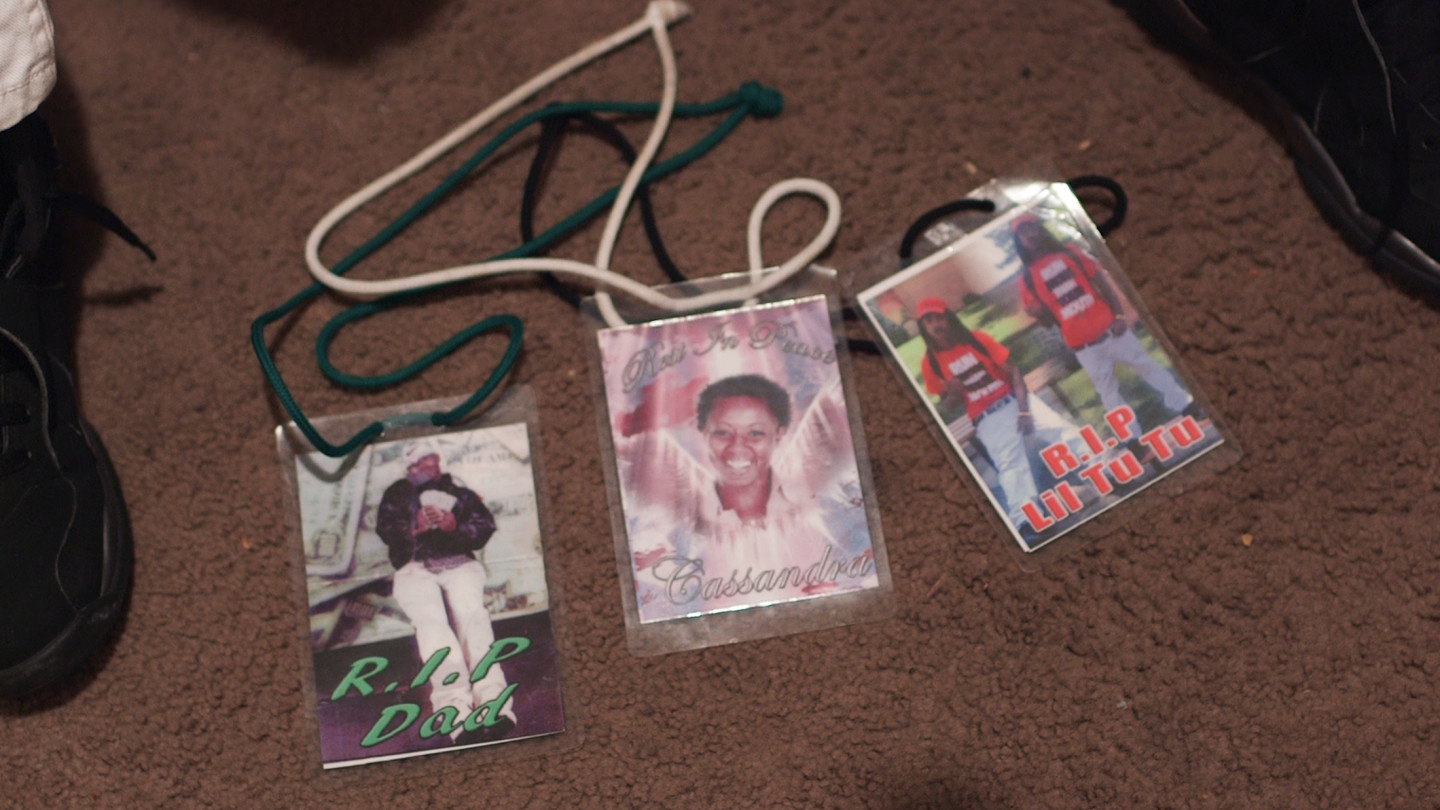
"caption": "Asim Smith, Jr. keeps a collection of placards to remember those in his life who have passed away. (Adam Grossberg/KQED)",
"description": null,
"title": "lanyards",
"credit": null,
"status": "inherit",
"isLoading": false,
"fetchFailed": false
},
"news_10544089": {
"type": "attachments",
"id": "news_10544089",
"meta": {
"index": "attachments_1716263798",
"site": "news",
"id": "10544089",
"found": true
},
"parent": 10544063,
"imgSizes": {
"thumbnail": {
"file": "https://ww2.kqed.org/app/uploads/sites/10/2015/05/wynn6401-e1432947781286-400x219.jpg",
"width": 400,
"mimeType": "image/jpeg",
"height": 219
},
"kqedFullSize": {
"file": "https://ww2.kqed.org/app/uploads/sites/10/2015/05/wynn6401-e1432947781286.jpg",
"width": 601,
"height": 329
},
"guest-author-96": {
"file": "https://ww2.kqed.org/app/uploads/sites/10/2015/05/wynn6401-e1432947781286-96x96.jpg",
"width": 96,
"mimeType": "image/jpeg",
"height": 96
},
"guest-author-64": {
"file": "https://ww2.kqed.org/app/uploads/sites/10/2015/05/wynn6401-e1432947781286-64x64.jpg",
"width": 64,
"mimeType": "image/jpeg",
"height": 64
},
"detail": {
"file": "https://ww2.kqed.org/app/uploads/sites/10/2015/05/wynn6401-e1432947781286-75x75.jpg",
"width": 75,
"mimeType": "image/jpeg",
"height": 75
},
"guest-author-32": {
"file": "https://ww2.kqed.org/app/uploads/sites/10/2015/05/wynn6401-e1432947781286-32x32.jpg",
"width": 32,
"mimeType": "image/jpeg",
"height": 32
},
"guest-author-128": {
"file": "https://ww2.kqed.org/app/uploads/sites/10/2015/05/wynn6401-e1432947781286-128x128.jpg",
"width": 128,
"mimeType": "image/jpeg",
"height": 128
}
},
"publishDate": 1432947711,
"modified": 1432947711,
"caption": null,
"description": null,
"title": "wynn640",
"credit": null,
"status": "inherit",
"isLoading": false,
"fetchFailed": false
},
"news_10505724": {
"type": "attachments",
"id": "news_10505724",
"meta": {
"index": "attachments_1716263798",
"site": "news",
"id": "10505724",
"found": true
},
"parent": 10491230,
"imgSizes": {
"twentyfourteen-full-width": {
"file": "https://ww2.kqed.org/app/uploads/sites/10/2015/04/diamond-lee-photos-cu-1038x576.jpg",
"width": 1038,
"mimeType": "image/jpeg",
"height": 576
},
"thumbnail": {
"file": "https://ww2.kqed.org/app/uploads/sites/10/2015/04/diamond-lee-photos-cu-400x208.jpg",
"width": 400,
"mimeType": "image/jpeg",
"height": 208
},
"fd-sm": {
"file": "https://ww2.kqed.org/app/uploads/sites/10/2015/04/diamond-lee-photos-cu-960x500.jpg",
"width": 960,
"mimeType": "image/jpeg",
"height": 500
},
"post-thumbnail": {
"file": "https://ww2.kqed.org/app/uploads/sites/10/2015/04/diamond-lee-photos-cu-672x372.jpg",
"width": 672,
"mimeType": "image/jpeg",
"height": 372
},
"kqedFullSize": {
"file": "https://ww2.kqed.org/app/uploads/sites/10/2015/04/diamond-lee-photos-cu.jpg",
"width": 3500,
"height": 1824
},
"large": {
"file": "https://ww2.kqed.org/app/uploads/sites/10/2015/04/diamond-lee-photos-cu-1440x750.jpg",
"width": 1440,
"mimeType": "image/jpeg",
"height": 750
},
"guest-author-96": {
"file": "https://ww2.kqed.org/app/uploads/sites/10/2015/04/diamond-lee-photos-cu-96x96.jpg",
"width": 96,
"mimeType": "image/jpeg",
"height": 96
},
"medium": {
"file": "https://ww2.kqed.org/app/uploads/sites/10/2015/04/diamond-lee-photos-cu-800x417.jpg",
"width": 800,
"mimeType": "image/jpeg",
"height": 417
},
"guest-author-64": {
"file": "https://ww2.kqed.org/app/uploads/sites/10/2015/04/diamond-lee-photos-cu-64x64.jpg",
"width": 64,
"mimeType": "image/jpeg",
"height": 64
},
"guest-author-32": {
"file": "https://ww2.kqed.org/app/uploads/sites/10/2015/04/diamond-lee-photos-cu-32x32.jpg",
"width": 32,
"mimeType": "image/jpeg",
"height": 32
},
"fd-med": {
"file": "https://ww2.kqed.org/app/uploads/sites/10/2015/04/diamond-lee-photos-cu-1180x615.jpg",
"width": 1180,
"mimeType": "image/jpeg",
"height": 615
},
"detail": {
"file": "https://ww2.kqed.org/app/uploads/sites/10/2015/04/diamond-lee-photos-cu-75x75.jpg",
"width": 75,
"mimeType": "image/jpeg",
"height": 75
},
"guest-author-128": {
"file": "https://ww2.kqed.org/app/uploads/sites/10/2015/04/diamond-lee-photos-cu-128x128.jpg",
"width": 128,
"mimeType": "image/jpeg",
"height": 128
}
},
"publishDate": 1430243748,
"modified": 1430243758,
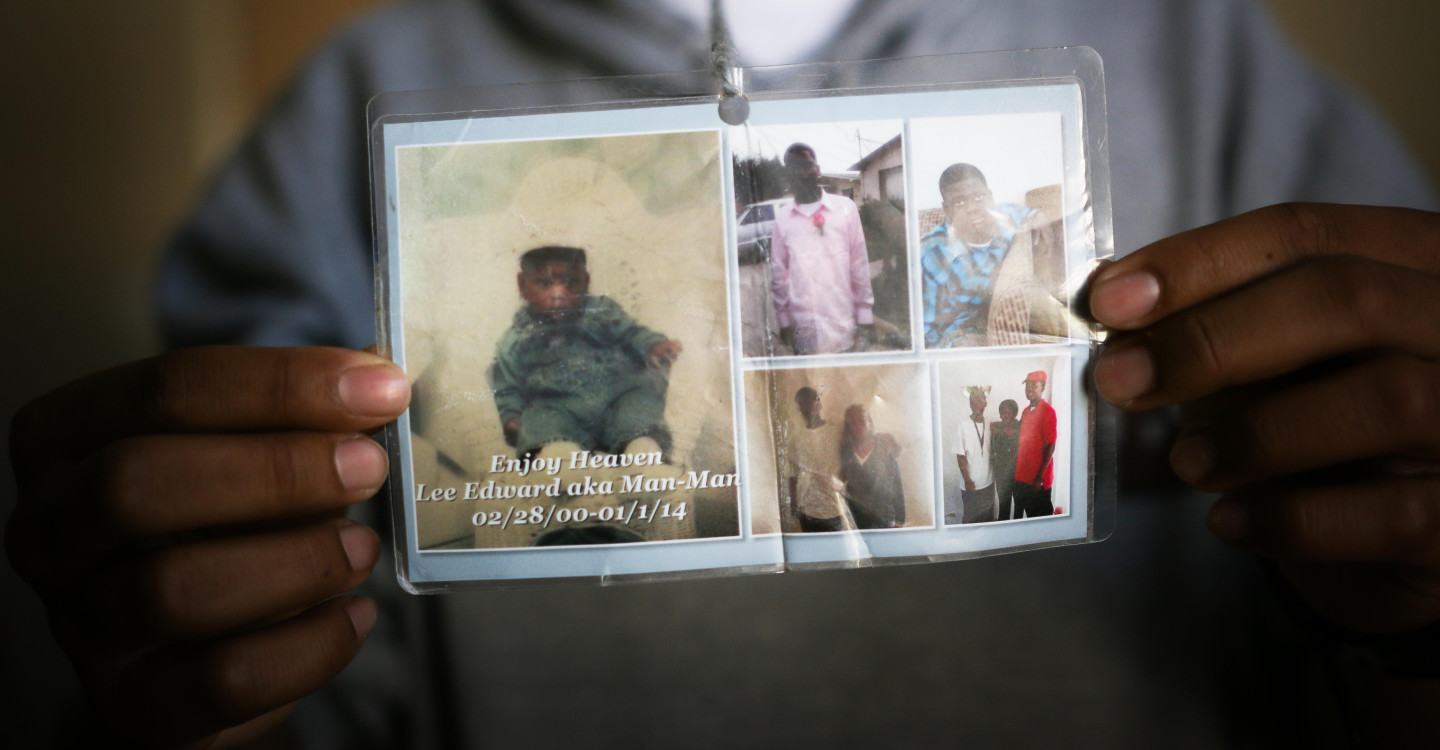
"caption": "Diamond Allen shows off pictures of his friend Lee Weathersby III, who was shot and killed in Oakland. (Jeremy Raff/KQED)",
"description": null,
"title": "diamond-lee-photos-cu",
"credit": null,
"status": "inherit",
"isLoading": false,
"fetchFailed": false
},
"news_10504569": {
"type": "attachments",
"id": "news_10504569",
"meta": {
"index": "attachments_1716263798",
"site": "news",
"id": "10504569",
"found": true
},
"parent": 10491173,
"imgSizes": {
"twentyfourteen-full-width": {
"file": "https://ww2.kqed.org/app/uploads/sites/10/2015/04/jacqueline-on-porch-1038x576.jpg",
"width": 1038,
"mimeType": "image/jpeg",
"height": 576
},
"thumbnail": {
"file": "https://ww2.kqed.org/app/uploads/sites/10/2015/04/jacqueline-on-porch-400x247.jpg",
"width": 400,
"mimeType": "image/jpeg",
"height": 247
},
"fd-sm": {
"file": "https://ww2.kqed.org/app/uploads/sites/10/2015/04/jacqueline-on-porch-960x592.jpg",
"width": 960,
"mimeType": "image/jpeg",
"height": 592
},
"post-thumbnail": {
"file": "https://ww2.kqed.org/app/uploads/sites/10/2015/04/jacqueline-on-porch-672x372.jpg",
"width": 672,
"mimeType": "image/jpeg",
"height": 372
},
"kqedFullSize": {
"file": "https://ww2.kqed.org/app/uploads/sites/10/2015/04/jacqueline-on-porch.jpg",
"width": 1966,
"height": 1212
},
"large": {
"file": "https://ww2.kqed.org/app/uploads/sites/10/2015/04/jacqueline-on-porch-1440x888.jpg",
"width": 1440,
"mimeType": "image/jpeg",
"height": 888
},
"guest-author-96": {
"file": "https://ww2.kqed.org/app/uploads/sites/10/2015/04/jacqueline-on-porch-96x96.jpg",
"width": 96,
"mimeType": "image/jpeg",
"height": 96
},
"medium": {
"file": "https://ww2.kqed.org/app/uploads/sites/10/2015/04/jacqueline-on-porch-800x493.jpg",
"width": 800,
"mimeType": "image/jpeg",
"height": 493
},
"guest-author-64": {
"file": "https://ww2.kqed.org/app/uploads/sites/10/2015/04/jacqueline-on-porch-64x64.jpg",
"width": 64,
"mimeType": "image/jpeg",
"height": 64
},
"guest-author-32": {
"file": "https://ww2.kqed.org/app/uploads/sites/10/2015/04/jacqueline-on-porch-32x32.jpg",
"width": 32,
"mimeType": "image/jpeg",
"height": 32
},
"fd-med": {
"file": "https://ww2.kqed.org/app/uploads/sites/10/2015/04/jacqueline-on-porch-1180x727.jpg",
"width": 1180,
"mimeType": "image/jpeg",
"height": 727
},
"detail": {
"file": "https://ww2.kqed.org/app/uploads/sites/10/2015/04/jacqueline-on-porch-75x75.jpg",
"width": 75,
"mimeType": "image/jpeg",
"height": 75
},
"guest-author-128": {
"file": "https://ww2.kqed.org/app/uploads/sites/10/2015/04/jacqueline-on-porch-128x128.jpg",
"width": 128,
"mimeType": "image/jpeg",
"height": 128
}
},
"publishDate": 1430159717,
"modified": 1430322979,
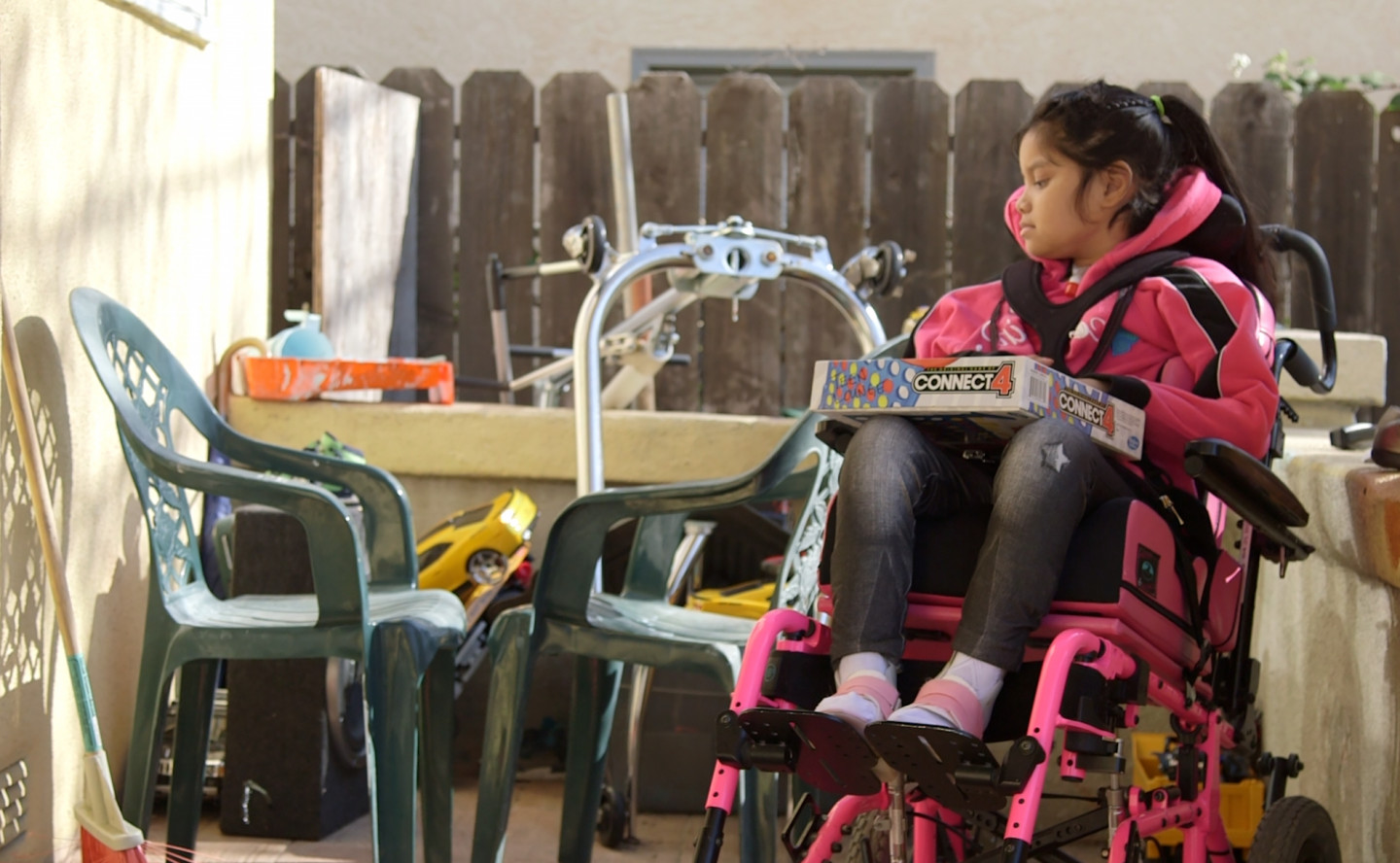
"caption": "9-year-old Jacqueline Funes was paralyzed from the neck down after being shot in the neck while playing in front of her house. (Adam Grossberg/KQED)",
"description": null,
"title": "jacqueline-on-porch",
"credit": null,
"status": "inherit",
"isLoading": false,
"fetchFailed": false
},
"news_10467140": {
"type": "attachments",
"id": "news_10467140",
"meta": {
"index": "attachments_1716263798",
"site": "news",
"id": "10467140",
"found": true
},
"parent": 10467124,
"imgSizes": {
"twentyfourteen-full-width": {
"file": "https://ww2.kqed.org/app/uploads/sites/10/2015/03/bay-area-60s-1038x576.jpg",
"width": 1038,
"mimeType": "image/jpeg",
"height": 576
},
"thumbnail": {
"file": "https://ww2.kqed.org/app/uploads/sites/10/2015/03/bay-area-60s-400x225.jpg",
"width": 400,
"mimeType": "image/jpeg",
"height": 225
},
"fd-sm": {
"file": "https://ww2.kqed.org/app/uploads/sites/10/2015/03/bay-area-60s-320x180.jpg",
"width": 320,
"mimeType": "image/jpeg",
"height": 180
},
"post-thumbnail": {
"file": "https://ww2.kqed.org/app/uploads/sites/10/2015/03/bay-area-60s-672x372.jpg",
"width": 672,
"mimeType": "image/jpeg",
"height": 372
},
"kqedFullSize": {
"file": "https://ww2.kqed.org/app/uploads/sites/10/2015/03/bay-area-60s.jpg",
"width": 2560,
"height": 1440
},
"large": {
"file": "https://ww2.kqed.org/app/uploads/sites/10/2015/03/bay-area-60s-1440x810.jpg",
"width": 1440,
"mimeType": "image/jpeg",
"height": 810
},
"guest-author-96": {
"file": "https://ww2.kqed.org/app/uploads/sites/10/2015/03/bay-area-60s-96x96.jpg",
"width": 96,
"mimeType": "image/jpeg",
"height": 96
},
"medium": {
"file": "https://ww2.kqed.org/app/uploads/sites/10/2015/03/bay-area-60s-800x450.jpg",
"width": 800,
"mimeType": "image/jpeg",
"height": 450
},
"guest-author-64": {
"file": "https://ww2.kqed.org/app/uploads/sites/10/2015/03/bay-area-60s-64x64.jpg",
"width": 64,
"mimeType": "image/jpeg",
"height": 64
},
"guest-author-32": {
"file": "https://ww2.kqed.org/app/uploads/sites/10/2015/03/bay-area-60s-32x32.jpg",
"width": 32,
"mimeType": "image/jpeg",
"height": 32
},
"fd-lrg": {
"file": "https://ww2.kqed.org/app/uploads/sites/10/2015/03/bay-area-60s-1180x664.jpg",
"width": 1180,
"mimeType": "image/jpeg",
"height": 664
},
"fd-med": {
"file": "https://ww2.kqed.org/app/uploads/sites/10/2015/03/bay-area-60s-768x432.jpg",
"width": 768,
"mimeType": "image/jpeg",
"height": 432
},
"detail": {
"file": "https://ww2.kqed.org/app/uploads/sites/10/2015/03/bay-area-60s-75x75.jpg",
"width": 75,
"mimeType": "image/jpeg",
"height": 75
},
"guest-author-128": {
"file": "https://ww2.kqed.org/app/uploads/sites/10/2015/03/bay-area-60s-128x128.jpg",
"width": 128,
"mimeType": "image/jpeg",
"height": 128
}
},
"publishDate": 1427410526,
"modified": 1427410566,
"caption": "The San Francisco Bay Area is now home to more than 7 and a half million people. (Adam Grossberg/KQED)",
"description": null,
"title": "bay-area-60s",
"credit": null,
"status": "inherit",
"isLoading": false,
"fetchFailed": false
},
"news_10447923": {
"type": "attachments",
"id": "news_10447923",
"meta": {
"index": "attachments_1716263798",
"site": "news",
"id": "10447923",
"found": true
},
"parent": 0,
"imgSizes": {
"twentyfourteen-full-width": {
"file": "https://ww2.kqed.org/app/uploads/sites/10/2015/03/ferlinghetti-reading-1038x576.jpg",
"width": 1038,
"mimeType": "image/jpeg",
"height": 576
},
"thumbnail": {
"file": "https://ww2.kqed.org/app/uploads/sites/10/2015/03/ferlinghetti-reading-400x225.jpg",
"width": 400,
"mimeType": "image/jpeg",
"height": 225
},
"fd-sm": {
"file": "https://ww2.kqed.org/app/uploads/sites/10/2015/03/ferlinghetti-reading-320x180.jpg",
"width": 320,
"mimeType": "image/jpeg",
"height": 180
},
"post-thumbnail": {
"file": "https://ww2.kqed.org/app/uploads/sites/10/2015/03/ferlinghetti-reading-672x372.jpg",
"width": 672,
"mimeType": "image/jpeg",
"height": 372
},
"kqedFullSize": {
"file": "https://ww2.kqed.org/app/uploads/sites/10/2015/03/ferlinghetti-reading.jpg",
"width": 1920,
"height": 1080
},
"large": {
"file": "https://ww2.kqed.org/app/uploads/sites/10/2015/03/ferlinghetti-reading-1440x810.jpg",
"width": 1440,
"mimeType": "image/jpeg",
"height": 810
},
"guest-author-96": {
"file": "https://ww2.kqed.org/app/uploads/sites/10/2015/03/ferlinghetti-reading-96x96.jpg",
"width": 96,
"mimeType": "image/jpeg",
"height": 96
},
"medium": {
"file": "https://ww2.kqed.org/app/uploads/sites/10/2015/03/ferlinghetti-reading-800x450.jpg",
"width": 800,
"mimeType": "image/jpeg",
"height": 450
},
"guest-author-64": {
"file": "https://ww2.kqed.org/app/uploads/sites/10/2015/03/ferlinghetti-reading-64x64.jpg",
"width": 64,
"mimeType": "image/jpeg",
"height": 64
},
"guest-author-32": {
"file": "https://ww2.kqed.org/app/uploads/sites/10/2015/03/ferlinghetti-reading-32x32.jpg",
"width": 32,
"mimeType": "image/jpeg",
"height": 32
},
"fd-lrg": {
"file": "https://ww2.kqed.org/app/uploads/sites/10/2015/03/ferlinghetti-reading-1180x664.jpg",
"width": 1180,
"mimeType": "image/jpeg",
"height": 664
},
"fd-med": {
"file": "https://ww2.kqed.org/app/uploads/sites/10/2015/03/ferlinghetti-reading-768x432.jpg",
"width": 768,
"mimeType": "image/jpeg",
"height": 432
},
"detail": {
"file": "https://ww2.kqed.org/app/uploads/sites/10/2015/03/ferlinghetti-reading-75x75.jpg",
"width": 75,
"mimeType": "image/jpeg",
"height": 75
},
"guest-author-128": {
"file": "https://ww2.kqed.org/app/uploads/sites/10/2015/03/ferlinghetti-reading-128x128.jpg",
"width": 128,
"mimeType": "image/jpeg",
"height": 128
}
},
"publishDate": 1425414453,
"modified": 1425415010,
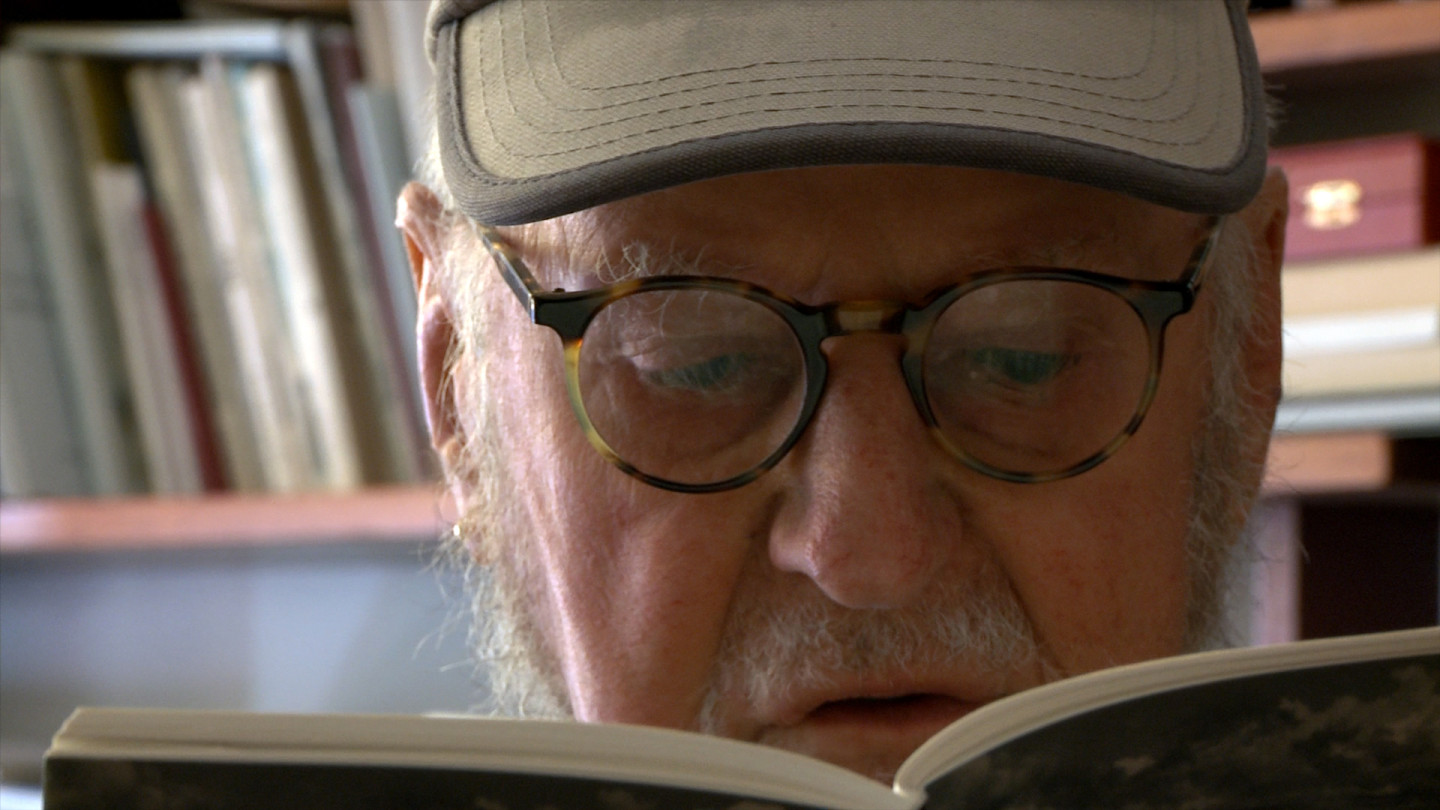
"caption": "Beat poet and painter Lawrence Ferlinghetti will turn 96 in March. (Jason Lelchuk/KQED)",
"description": null,
"title": "ferlinghetti-reading",
"credit": null,
"status": "inherit",
"isLoading": false,
"fetchFailed": false
},
"news_10436823": {
"type": "attachments",
"id": "news_10436823",
"meta": {
"index": "attachments_1716263798",
"site": "news",
"id": "10436823",
"found": true
},
"parent": 10436736,
"imgSizes": {
"twentyfourteen-full-width": {
"file": "https://ww2.kqed.org/app/uploads/sites/10/2015/02/ygb-pictures-1038x576.jpg",
"width": 1038,
"mimeType": "image/jpeg",
"height": 576
},
"thumbnail": {
"file": "https://ww2.kqed.org/app/uploads/sites/10/2015/02/ygb-pictures-400x243.jpg",
"width": 400,
"mimeType": "image/jpeg",
"height": 243
},
"post-thumbnail": {
"file": "https://ww2.kqed.org/app/uploads/sites/10/2015/02/ygb-pictures-672x372.jpg",
"width": 672,
"mimeType": "image/jpeg",
"height": 372
},
"kqedFullSize": {
"file": "https://ww2.kqed.org/app/uploads/sites/10/2015/02/ygb-pictures.jpg",
"width": 2032,
"height": 1236
},
"large": {
"file": "https://ww2.kqed.org/app/uploads/sites/10/2015/02/ygb-pictures-1440x876.jpg",
"width": 1440,
"mimeType": "image/jpeg",
"height": 876
},
"guest-author-96": {
"file": "https://ww2.kqed.org/app/uploads/sites/10/2015/02/ygb-pictures-96x96.jpg",
"width": 96,
"mimeType": "image/jpeg",
"height": 96
},
"medium": {
"file": "https://ww2.kqed.org/app/uploads/sites/10/2015/02/ygb-pictures-800x487.jpg",
"width": 800,
"mimeType": "image/jpeg",
"height": 487
},
"guest-author-64": {
"file": "https://ww2.kqed.org/app/uploads/sites/10/2015/02/ygb-pictures-64x64.jpg",
"width": 64,
"mimeType": "image/jpeg",
"height": 64
},
"detail": {
"file": "https://ww2.kqed.org/app/uploads/sites/10/2015/02/ygb-pictures-75x75.jpg",
"width": 75,
"mimeType": "image/jpeg",
"height": 75
},
"guest-author-32": {
"file": "https://ww2.kqed.org/app/uploads/sites/10/2015/02/ygb-pictures-32x32.jpg",
"width": 32,
"mimeType": "image/jpeg",
"height": 32
},
"guest-author-128": {
"file": "https://ww2.kqed.org/app/uploads/sites/10/2015/02/ygb-pictures-128x128.jpg",
"width": 128,
"mimeType": "image/jpeg",
"height": 128
}
},
"publishDate": 1424303242,
"modified": 1424305945,
"caption": "Young Gifted and Black performers rehearse after school at Oakland School for the Arts.",
"description": "Young Gifted and Black performers rehearse after school at Oakland School for the Arts.",
"title": "ygb pictures",
"credit": "Anya Schultz/KQED",
"status": "inherit",
"isLoading": false,
"fetchFailed": false
},
"news_10432275": {
"type": "attachments",
"id": "news_10432275",
"meta": {
"index": "attachments_1716263798",
"site": "news",
"id": "10432275",
"found": true
},
"parent": 10431582,
"imgSizes": {
"twentyfourteen-full-width": {
"file": "https://ww2.kqed.org/app/uploads/sites/10/2015/02/angelou_host-1038x576.jpg",
"width": 1038,
"mimeType": "image/jpeg",
"height": 576
},
"thumbnail": {
"file": "https://ww2.kqed.org/app/uploads/sites/10/2015/02/angelou_host-400x301.jpg",
"width": 400,
"mimeType": "image/jpeg",
"height": 301
},
"post-thumbnail": {
"file": "https://ww2.kqed.org/app/uploads/sites/10/2015/02/angelou_host-672x372.jpg",
"width": 672,
"mimeType": "image/jpeg",
"height": 372
},
"kqedFullSize": {
"file": "https://ww2.kqed.org/app/uploads/sites/10/2015/02/angelou_host.jpg",
"width": 1440,
"height": 1084
},
"large": {
"file": "https://ww2.kqed.org/app/uploads/sites/10/2015/02/angelou_host-1440x1084.jpg",
"width": 1440,
"mimeType": "image/jpeg",
"height": 1084
},
"guest-author-96": {
"file": "https://ww2.kqed.org/app/uploads/sites/10/2015/02/angelou_host-96x96.jpg",
"width": 96,
"mimeType": "image/jpeg",
"height": 96
},
"medium": {
"file": "https://ww2.kqed.org/app/uploads/sites/10/2015/02/angelou_host-800x602.jpg",
"width": 800,
"mimeType": "image/jpeg",
"height": 602
},
"guest-author-64": {
"file": "https://ww2.kqed.org/app/uploads/sites/10/2015/02/angelou_host-64x64.jpg",
"width": 64,
"mimeType": "image/jpeg",
"height": 64
},
"detail": {
"file": "https://ww2.kqed.org/app/uploads/sites/10/2015/02/angelou_host-75x75.jpg",
"width": 75,
"mimeType": "image/jpeg",
"height": 75
},
"guest-author-32": {
"file": "https://ww2.kqed.org/app/uploads/sites/10/2015/02/angelou_host-32x32.jpg",
"width": 32,
"mimeType": "image/jpeg",
"height": 32
},
"guest-author-128": {
"file": "https://ww2.kqed.org/app/uploads/sites/10/2015/02/angelou_host-128x128.jpg",
"width": 128,
"mimeType": "image/jpeg",
"height": 128
}
},
"publishDate": 1423851620,
"modified": 1423851620,
"caption": null,
"description": null,
"title": "angelou_host",
"credit": null,
"status": "inherit",
"isLoading": false,
"fetchFailed": false
},
"news_10396016": {
"type": "attachments",
"id": "news_10396016",
"meta": {
"index": "attachments_1716263798",
"site": "news",
"id": "10396016",
"found": true
},
"parent": 10395927,
"imgSizes": {
"twentyfourteen-full-width": {
"file": "https://ww2.kqed.org/app/uploads/sites/10/2015/01/bartdance1-1038x576.jpg",
"width": 1038,
"mimeType": "image/jpeg",
"height": 576
},
"thumbnail": {
"file": "https://ww2.kqed.org/app/uploads/sites/10/2015/01/bartdance1-400x224.jpg",
"width": 400,
"mimeType": "image/jpeg",
"height": 224
},
"post-thumbnail": {
"file": "https://ww2.kqed.org/app/uploads/sites/10/2015/01/bartdance1-672x372.jpg",
"width": 672,
"mimeType": "image/jpeg",
"height": 372
},
"kqedFullSize": {
"file": "https://ww2.kqed.org/app/uploads/sites/10/2015/01/bartdance1.jpg",
"width": 1279,
"height": 717
},
"guest-author-96": {
"file": "https://ww2.kqed.org/app/uploads/sites/10/2015/01/bartdance1-96x96.jpg",
"width": 96,
"mimeType": "image/jpeg",
"height": 96
},
"medium": {
"file": "https://ww2.kqed.org/app/uploads/sites/10/2015/01/bartdance1-800x448.jpg",
"width": 800,
"mimeType": "image/jpeg",
"height": 448
},
"guest-author-64": {
"file": "https://ww2.kqed.org/app/uploads/sites/10/2015/01/bartdance1-64x64.jpg",
"width": 64,
"mimeType": "image/jpeg",
"height": 64
},
"detail": {
"file": "https://ww2.kqed.org/app/uploads/sites/10/2015/01/bartdance1-75x75.jpg",
"width": 75,
"mimeType": "image/jpeg",
"height": 75
},
"guest-author-32": {
"file": "https://ww2.kqed.org/app/uploads/sites/10/2015/01/bartdance1-32x32.jpg",
"width": 32,
"mimeType": "image/jpeg",
"height": 32
},
"guest-author-128": {
"file": "https://ww2.kqed.org/app/uploads/sites/10/2015/01/bartdance1-128x128.jpg",
"width": 128,
"mimeType": "image/jpeg",
"height": 128
}
},
"publishDate": 1420234198,
"modified": 1420234260,
"caption": "Byron Sanders, aka T7, a member of the Turf Feinz, performs on a BART train. (Adam Grossberg/KQED)",
"description": null,
"title": "bartdance1",
"credit": null,
"status": "inherit",
"isLoading": false,
"fetchFailed": false
},
"news_10392349": {
"type": "attachments",
"id": "news_10392349",
"meta": {
"index": "attachments_1716263798",
"site": "news",
"id": "10392349",
"found": true
},
"parent": 10392092,
"imgSizes": {
"twentyfourteen-full-width": {
"file": "https://ww2.kqed.org/app/uploads/sites/10/2014/12/video-of-the-year-1038x576.jpg",
"width": 1038,
"mimeType": "image/jpeg",
"height": 576
},
"thumbnail": {
"file": "https://ww2.kqed.org/app/uploads/sites/10/2014/12/video-of-the-year-400x244.jpg",
"width": 400,
"mimeType": "image/jpeg",
"height": 244
},
"post-thumbnail": {
"file": "https://ww2.kqed.org/app/uploads/sites/10/2014/12/video-of-the-year-672x372.jpg",
"width": 672,
"mimeType": "image/jpeg",
"height": 372
},
"kqedFullSize": {
"file": "https://ww2.kqed.org/app/uploads/sites/10/2014/12/video-of-the-year.jpg",
"width": 1440,
"height": 880
},
"guest-author-96": {
"file": "https://ww2.kqed.org/app/uploads/sites/10/2014/12/video-of-the-year-96x96.jpg",
"width": 96,
"mimeType": "image/jpeg",
"height": 96
},
"medium": {
"file": "https://ww2.kqed.org/app/uploads/sites/10/2014/12/video-of-the-year-800x488.jpg",
"width": 800,
"mimeType": "image/jpeg",
"height": 488
},
"guest-author-64": {
"file": "https://ww2.kqed.org/app/uploads/sites/10/2014/12/video-of-the-year-64x64.jpg",
"width": 64,
"mimeType": "image/jpeg",
"height": 64
},
"detail": {
"file": "https://ww2.kqed.org/app/uploads/sites/10/2014/12/video-of-the-year-75x75.jpg",
"width": 75,
"mimeType": "image/jpeg",
"height": 75
},
"guest-author-32": {
"file": "https://ww2.kqed.org/app/uploads/sites/10/2014/12/video-of-the-year-32x32.jpg",
"width": 32,
"mimeType": "image/jpeg",
"height": 32
},
"guest-author-128": {
"file": "https://ww2.kqed.org/app/uploads/sites/10/2014/12/video-of-the-year-128x128.jpg",
"width": 128,
"mimeType": "image/jpeg",
"height": 128
}
},
"publishDate": 1419892952,
"modified": 1419892952,
"caption": null,
"description": null,
"title": "video-of-the-year",
"credit": null,
"status": "inherit",
"isLoading": false,
"fetchFailed": false
},
"news_10345919": {
"type": "attachments",
"id": "news_10345919",
"meta": {
"index": "attachments_1716263798",
"site": "news",
"id": "10345919",
"found": true
},
"parent": 10345896,
"imgSizes": {
"twentyfourteen-full-width": {
"file": "https://ww2.kqed.org/app/uploads/sites/10/2014/10/RS12726_photo-1_web-1038x576.jpg",
"width": 1038,
"mimeType": "image/jpeg",
"height": 576
},
"thumbnail": {
"file": "https://ww2.kqed.org/app/uploads/sites/10/2014/10/RS12726_photo-1_web-400x270.jpg",
"width": 400,
"mimeType": "image/jpeg",
"height": 270
},
"post-thumbnail": {
"file": "https://ww2.kqed.org/app/uploads/sites/10/2014/10/RS12726_photo-1_web-672x372.jpg",
"width": 672,
"mimeType": "image/jpeg",
"height": 372
},
"kqedFullSize": {
"file": "https://ww2.kqed.org/app/uploads/sites/10/2014/10/RS12726_photo-1_web.jpg",
"width": 1440,
"height": 974
},
"guest-author-96": {
"file": "https://ww2.kqed.org/app/uploads/sites/10/2014/10/RS12726_photo-1_web-96x96.jpg",
"width": 96,
"mimeType": "image/jpeg",
"height": 96
},
"medium": {
"file": "https://ww2.kqed.org/app/uploads/sites/10/2014/10/RS12726_photo-1_web-800x541.jpg",
"width": 800,
"mimeType": "image/jpeg",
"height": 541
},
"guest-author-64": {
"file": "https://ww2.kqed.org/app/uploads/sites/10/2014/10/RS12726_photo-1_web-64x64.jpg",
"width": 64,
"mimeType": "image/jpeg",
"height": 64
},
"detail": {
"file": "https://ww2.kqed.org/app/uploads/sites/10/2014/10/RS12726_photo-1_web-75x75.jpg",
"width": 75,
"mimeType": "image/jpeg",
"height": 75
},
"guest-author-32": {
"file": "https://ww2.kqed.org/app/uploads/sites/10/2014/10/RS12726_photo-1_web-32x32.jpg",
"width": 32,
"mimeType": "image/jpeg",
"height": 32
},
"guest-author-128": {
"file": "https://ww2.kqed.org/app/uploads/sites/10/2014/10/RS12726_photo-1_web-128x128.jpg",
"width": 128,
"mimeType": "image/jpeg",
"height": 128
}
},
"publishDate": 1414625032,
"modified": 1414625174,
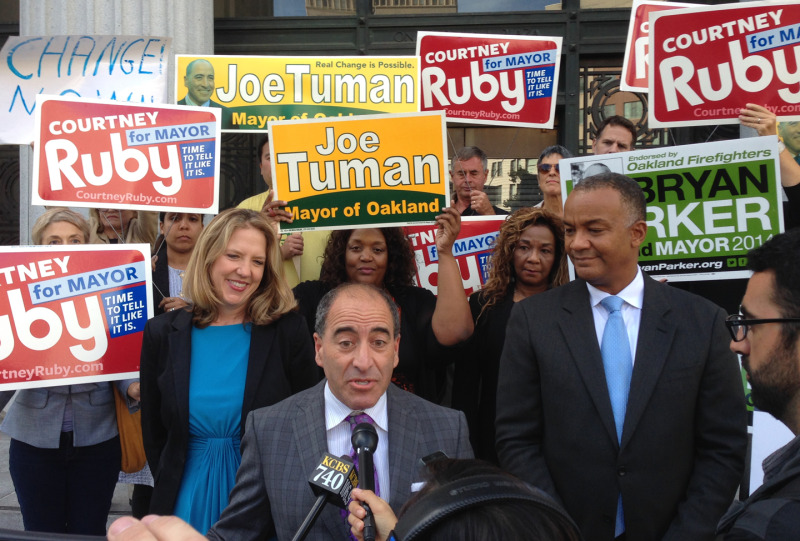
"caption": "Courtney Ruby (left), Joe Tuman (center) and Bryan Parker (right) hold a press conference in front of Oakland City Hall, announcing an alliance in the ranked-choice voting process. (Cyrus Musiker/KQED) ",
"description": null,
"title": "RS12726_photo-1_web",
"credit": null,
"status": "inherit",
"isLoading": false,
"fetchFailed": false
}
},
"audioPlayerReducer": {
"postId": "stream_live",
"isPaused": true,
"isPlaying": false,
"pfsActive": false,
"pledgeModalIsOpen": true,
"playerDrawerIsOpen": false,
"liveAudioPlayStartedAt": 0,
"liveAudioPlayContext": ""
},
"authorsReducer": {
"byline_news_10544063": {
"type": "authors",
"id": "byline_news_10544063",
"meta": {
"override": true
},
"slug": "byline_news_10544063",
"name": "Daniel Steiner",
"isLoading": false
},
"byline_news_10447892": {
"type": "authors",
"id": "byline_news_10447892",
"meta": {
"override": true
},
"slug": "byline_news_10447892",
"name": "Joanne Elgart Jennings, Video by Adam Grossberg",
"isLoading": false
},
"agrossberg": {
"type": "authors",
"id": "188",
"meta": {
"index": "authors_1716337520",
"id": "188",
"found": true
},
"name": "Adam Grossberg",
"firstName": "Adam",
"lastName": "Grossberg",
"slug": "agrossberg",
"email": "agrossberg@KQED.org",
"display_author_email": false,
"staff_mastheads": [],
"title": "KQED Contributor",
"bio": "Adam Grossberg is a former video producer at KQED News. Prior to coming to KQED, he produced videos for PBS, The New York Times, Current TV and The Center for Investigative Reporting. His work has received an Excellence in Journalism award from the Society of Professional Journalists, a regional Murrow award and two Northern California Emmy awards. He is a graduate of the UC Berkeley Graduate School of Journalism.",
"avatar": "https://secure.gravatar.com/avatar/8e96dbdaaf98f5959a2c778289e0f9b5?s=600&d=blank&r=g",
"twitter": null,
"facebook": null,
"instagram": null,
"linkedin": null,
"sites": [
{
"site": "arts",
"roles": [
"contributor"
]
},
{
"site": "news",
"roles": [
"subscriber"
]
},
{
"site": "stateofhealth",
"roles": [
"editor"
]
},
{
"site": "science",
"roles": [
"editor"
]
}
],
"headData": {
"title": "Adam Grossberg | KQED",
"description": "KQED Contributor",
"ogImgSrc": "https://secure.gravatar.com/avatar/8e96dbdaaf98f5959a2c778289e0f9b5?s=600&d=blank&r=g",
"twImgSrc": "https://secure.gravatar.com/avatar/8e96dbdaaf98f5959a2c778289e0f9b5?s=600&d=blank&r=g"
},
"isLoading": false,
"link": "/author/agrossberg"
},
"danbrekke": {
"type": "authors",
"id": "222",
"meta": {
"index": "authors_1716337520",
"id": "222",
"found": true
},
"name": "Dan Brekke",
"firstName": "Dan",
"lastName": "Brekke",
"slug": "danbrekke",
"email": "dbrekke@kqed.org",
"display_author_email": true,
"staff_mastheads": [
"news",
"science"
],
"title": "KQED Editor and Reporter",
"bio": "Dan Brekke is a reporter and editor for KQED News, responsible for coverage of topics ranging from California water issues to the Bay Area's transportation challenges. In a newsroom career that began in Chicago in 1972, Dan has worked for \u003cem>The San Francisco Examiner,\u003c/em> Wired and TechTV and has been published in The New York Times, The New York Times Magazine, Business 2.0, Salon and elsewhere.\r\n\r\nSince joining KQED in 2007, Dan has reported, edited and produced both radio and online features and breaking news pieces. He has shared as both editor and reporter in four Society of Professional Journalists Norcal Excellence in Journalism awards and one Edward R. Murrow regional award. He was chosen for a spring 2017 residency at the Mesa Refuge to advance his research on California salmon.\r\n\r\nEmail Dan at: \u003ca href=\"mailto:dbrekke@kqed.org\">dbrekke@kqed.org\u003c/a>\r\n\r\n\u003cstrong>Twitter:\u003c/strong> \u003ca href=\"https://twitter.com/danbrekke\" rel=\"noopener noreferrer\">twitter.com/danbrekke\u003c/a>\r\n\u003cstrong>Facebook:\u003c/strong> \u003ca href=\"https://www.facebook.com/danbrekke\" rel=\"noopener noreferrer\">www.facebook.com/danbrekke\u003c/a>\r\n\u003cstrong>LinkedIn:\u003c/strong> \u003ca href=\"https://www.linkedin.com/in/danbrekke\" rel=\"noopener noreferrer\">www.linkedin.com/in/danbrekke\u003c/a>",
"avatar": "https://secure.gravatar.com/avatar/8f1f0d2a978fb3b23426c922c7e2af558fa36905b49c4ce76a97dc3c72d27226?s=600&d=mm&r=g",
"twitter": "danbrekke",
"bluesky": null,
"facebook": null,
"instagram": "https://www.instagram.com/dan.brekke/",
"linkedin": "https://www.linkedin.com/in/danbrekke/",
"sites": [
{
"site": "news",
"roles": [
"administrator",
"create_posts"
]
},
{
"site": "stateofhealth",
"roles": [
"editor"
]
},
{
"site": "science",
"roles": [
"editor"
]
},
{
"site": "quest",
"roles": [
"contributor"
]
},
{
"site": "food",
"roles": [
"contributor"
]
},
{
"site": "forum",
"roles": [
"contributor"
]
},
{
"site": "elections",
"roles": [
"editor"
]
},
{
"site": "liveblog",
"roles": [
"editor"
]
}
],
"headData": {
"title": "Dan Brekke | KQED",
"description": "KQED Editor and Reporter",
"ogImgSrc": "https://secure.gravatar.com/avatar/8f1f0d2a978fb3b23426c922c7e2af558fa36905b49c4ce76a97dc3c72d27226?s=600&d=mm&r=g",
"twImgSrc": "https://secure.gravatar.com/avatar/8f1f0d2a978fb3b23426c922c7e2af558fa36905b49c4ce76a97dc3c72d27226?s=600&d=mm&r=g"
},
"isLoading": false,
"link": "/author/danbrekke"
},
"zstavely": {
"type": "authors",
"id": "3225",
"meta": {
"index": "authors_1716337520",
"id": "3225",
"found": true
},
"name": "Zaidee Stavely",
"firstName": "Zaidee",
"lastName": "Stavely",
"slug": "zstavely",
"email": "zstavely@gmail.com",
"display_author_email": false,
"staff_mastheads": [],
"title": "KQED Contributor",
"bio": "Zaidee Stavely is an award-winning reporter who writes about race, equity, immigration, and education.",
"avatar": "https://secure.gravatar.com/avatar/5154b3ee56a721c916ca429372ae629c?s=600&d=blank&r=g",
"twitter": null,
"facebook": null,
"instagram": null,
"linkedin": null,
"sites": [
{
"site": "news",
"roles": [
"subscriber"
]
},
{
"site": "mindshift",
"roles": [
"contributor"
]
}
],
"headData": {
"title": "Zaidee Stavely | KQED",
"description": "KQED Contributor",
"ogImgSrc": "https://secure.gravatar.com/avatar/5154b3ee56a721c916ca429372ae629c?s=600&d=blank&r=g",
"twImgSrc": "https://secure.gravatar.com/avatar/5154b3ee56a721c916ca429372ae629c?s=600&d=blank&r=g"
},
"isLoading": false,
"link": "/author/zstavely"
},
"aschultz": {
"type": "authors",
"id": "3232",
"meta": {
"index": "authors_1716337520",
"id": "3232",
"found": true
},
"name": "Anya Schultz",
"firstName": "Anya",
"lastName": "Schultz",
"slug": "aschultz",
"email": "aschultz@kqed.org",
"display_author_email": false,
"staff_mastheads": [],
"title": null,
"bio": "Anya Schultz is a visual intern for KQED. She was previously the magazine editor and multimedia editor at The Daily Californian, UC Berkeley's newspaper. You can follow her on Twitter @anyaviolet.",
"avatar": "https://secure.gravatar.com/avatar/94a1e3d7afbf420889c3403463186d98?s=600&d=blank&r=g",
"twitter": null,
"facebook": null,
"instagram": null,
"linkedin": null,
"sites": [
{
"site": "news",
"roles": [
"contributor"
]
}
],
"headData": {
"title": "Anya Schultz | KQED",
"description": null,
"ogImgSrc": "https://secure.gravatar.com/avatar/94a1e3d7afbf420889c3403463186d98?s=600&d=blank&r=g",
"twImgSrc": "https://secure.gravatar.com/avatar/94a1e3d7afbf420889c3403463186d98?s=600&d=blank&r=g"
},
"isLoading": false,
"link": "/author/aschultz"
}
},
"pagesReducer": {
"news_tag_video": {
"type": "terms",
"id": "news_150",
"meta": {
"index": "terms_1716263798",
"site": "news",
"id": "150",
"score": 8.135822
},
"featImg": null,
"name": "video",
"description": null,
"taxonomy": "tag",
"headData": {
"twImgId": null,
"twTitle": null,
"ogTitle": null,
"ogImgId": null,
"twDescription": null,
"description": null,
"title": "video Archives | KQED News",
"ogDescription": null
},
"ttid": 157,
"slug": "video",
"isLoading": false,
"title": "video",
"pageMeta": {
"site": "news",
"WpPageTemplate": "page-topic-editorial",
"currentPage": 7
},
"blocks": [
{
"blockName": "kqed/post-list",
"attrs": {
"layout": "cardArticle2",
"query": "posts/news?tag=video",
"seeMore": false,
"paginated": true,
"page": 7
}
},
{
"blockName": "kqed/ad"
}
]
}
},
"pfsSessionReducer": {},
"postsReducer": {
"stream_live": {
"type": "live",
"id": "stream_live",
"audioUrl": "https://streams.kqed.org/kqedradio",
"title": "Live Stream",
"excerpt": "Live Stream information currently unavailable.",
"link": "/radio",
"featImg": "",
"label": {
"name": "KQED Live",
"link": "/"
}
},
"stream_kqedNewscast": {
"type": "posts",
"id": "stream_kqedNewscast",
"audioUrl": "https://www.kqed.org/.stream/anon/radio/RDnews/newscast.mp3?_=1",
"title": "KQED Newscast",
"featImg": "",
"label": {
"name": "88.5 FM",
"link": "/"
}
},
"news_10549905": {
"type": "posts",
"id": "news_10549905",
"meta": {
"index": "posts_1716263798",
"site": "news",
"id": "10549905",
"score": null,
"sort": [
1433430036000
]
},
"parent": 0,
"labelTerm": {
"site": "news",
"term": 6944
},
"blocks": [],
"publishDate": 1433430036,
"format": "video",
"disqusTitle": "Warriors Fans Dream of Oakland's First Championship in 26 Years",
"title": "Warriors Fans Dream of Oakland's First Championship in 26 Years",
"headTitle": "News Fix | KQED News",
"content": "\u003cp>Forty years, 26 losing seasons, 3,232 regular-season games. Most of those -- 1,793 -- losses.\u003c/p>\n\u003cp>That’s how long it’s been since the Golden State Warriors won an NBA Championship. But now they're just four wins away from being crowned NBA champions and ending a decades-long title drought for the city of Oakland.\u003c/p>\n\u003cp>Along with the A’s and Raiders, it has been a rough stretch for Oakland sports. The city has not seen a championship victory since the A’s bashed their way to a World Series win (over the Giants) in 1989 -- 26 years ago.\u003c/p>\n\u003cp>The Raiders were the last Oakland team to play in a championship game, in 2003, when they were drubbed 48-21 by the Tampa Bay Buccaneers in Super Bowl XXXVII, a loss that kicked off a dismal stretch of 12 seasons without a winning record.\u003c/p>\n\u003cfigure id=\"attachment_10549965\" class=\"wp-caption alignright\" style=\"max-width: 467px\">\u003ca href=\"http://ww2.kqed.org/news/wp-content/uploads/sites/10/2015/06/RS15333_474909076-qut.jpg\">\u003cimg class=\"wp-image-10549965\" src=\"http://ww2.kqed.org/news/wp-content/uploads/sites/10/2015/06/RS15333_474909076-qut-400x267.jpg\" alt=\"Stephen Curry and the Golden State Warriors celebrate the Warriors 104-90 victory against the Houston Rockets during game five of the Western Conference Finals of the 2015 NBA Playoffs. (Ezra Shaw/Getty Images)\" width=\"467\" height=\"312\" srcset=\"https://ww2.kqed.org/app/uploads/sites/10/2015/06/RS15333_474909076-qut-400x267.jpg 400w, https://ww2.kqed.org/app/uploads/sites/10/2015/06/RS15333_474909076-qut-800x533.jpg 800w, https://ww2.kqed.org/app/uploads/sites/10/2015/06/RS15333_474909076-qut-1440x960.jpg 1440w, https://ww2.kqed.org/app/uploads/sites/10/2015/06/RS15333_474909076-qut-1180x787.jpg 1180w, https://ww2.kqed.org/app/uploads/sites/10/2015/06/RS15333_474909076-qut-960x640.jpg 960w, https://ww2.kqed.org/app/uploads/sites/10/2015/06/RS15333_474909076-qut.jpg 1920w\" sizes=\"(max-width: 467px) 100vw, 467px\">\u003c/a>\u003cfigcaption class=\"wp-caption-text\">Stephen Curry and the Golden State Warriors celebrate the Warriors 104-90 victory against the Houston Rockets during Game 5 of the Western Conference Finals of the 2015 NBA Playoffs. (Ezra Shaw/Getty Images)\u003c/figcaption>\u003c/figure>\n\u003cp>The A’s and Warriors have both had moments of respectability over the last few years, but this Warriors team is different. They’ve been the absolute class of the NBA all year, seen a breakout MVP season from superstar Stephen Curry and are the odds-on favorite to beat the Cleveland Cavaliers in the Finals.\u003c/p>\n\u003cp>[ad fullwidth]\u003c/p>\n\u003cp>For all the losing that Oakland sports fans have endured, they will find no sympathy from their counterparts in Cleveland. The Cavs have never won a championship and the once-proud sports town hasn’t seen a professional sports title since 1964, when the Browns won the (pre-Super Bowl) NFL Championship. It has been a \u003ca href=\"http://www.nytimes.com/2014/07/12/sports/basketball/the-blooper-reel-cleveland-fans-arent-used-to-such-good-news.html?_r=0\" target=\"_blank\">brutal 51-year stretch for Cleveland sports fans\u003c/a>.\u003c/p>\n\u003cp>But if Steph Curry and company have anything to say about it, Cleveland's wait will continue and LeBron James’ savior act will be postponed for another year.\u003c/p>\n\u003cp>In the Oracle Arena parking lot before Game 5 of the Western Conference Finals last week, Warriors fan Robert Palimore said an NBA title would mean a lot to Oakland.\u003c/p>\n\u003caside class=\"alignright\">\n\u003ch4>NBA Finals Schedule\u003c/h4>\n\u003cul>\n\u003cli>Game 1: Thursday, June 4, 6 p.m.\u003c/li>\n\u003cli>Game 2: Sunday, June 7, 5 p.m.\u003c/li>\n\u003cli>Game 3: Tuesday, June 9, 6 p.m.\u003c/li>\n\u003cli>Game 4: Thursday, June 11, 6 p.m.\u003c/li>\n\u003cli>*Game 5: Sunday, June 14, 5 p.m.\u003c/li>\n\u003cli>*Game 6: Tuesday, June 16, 6 p.m.\u003c/li>\n\u003cli>*Game 7: Friday, June 19, 6 p.m.\u003c/li>\n\u003c/ul>\n\u003cp>All games will be televised on ABC. *If necessary.\u003c/p>\n\u003c/aside>\n\u003cp>“We haven’t had a team take it this far in a while. The Raiders haven’t been there in a minute. The A’s haven’t been there in a minute. So the Warriors are lifting the city up right now. ‘We Believe,' right?”\u003c/p>\n\u003cp>More precisely, Palimore believes the Warriors “are going to make it look interesting” until they ultimately sweep the Cavs in four games. “Championship, easy. Steph Curry with the shot.”\u003c/p>\n\u003cp>Should that come to pass, lifetime Warriors fan Steve Pastryk said, “It would be great. It’d be something for everyone to celebrate. [Fans are] always looking for something to celebrate, instead of marching across the freeways and all of that. It’d be awesome, everyone would be pumped up.”\u003c/p>\n\u003cp>If nothing else, this Warriors run is a distraction from the prevailing narratives about Oakland revolving around late-night protests and those \u003ca href=\"http://www.nytimes.com/2014/05/04/fashion/oakland-california-brooklyn-by-the-bay.html\" target=\"_blank\">Brooklyn comparisons\u003c/a>.\u003cbr>\n\u003c!-- iframe plugin v.4.3 wordpress.org/plugins/iframe/ -->\u003cbr>\n\u003ciframe width=\"100%\" height=\"166\" scrolling=\"no\" frameborder=\"no\" src=\"https://w.soundcloud.com/player/?url=https%3A//api.soundcloud.com/tracks/208796822&color=ff5500&auto_play=false&hide_related=false&show_comments=true&show_user=true&show_reposts=false\" class=\"iframe-class\">\u003c/iframe>\u003c/p>\n\u003cp>But, for all the Warriors-yellow car flags fluttering throughout the Bay Area, the banners hanging from Oakland streetlights and buses flashing \"Go Warriors,\" the team’s eventual departure from the city (lowercase \"c\") still looms in the not-so-distant future.\u003c/p>\n\u003cp>A “North Bay guy” from Rohnert Park, Pastryk isn’t a fan of a potential move mainly because of logistics. “I like the Warriors being over here in Oakland. ... This is pretty easy for me to get to, easy on and off the freeway over here.”\u003c/p>\n\u003cfigure id=\"attachment_10549968\" class=\"wp-caption alignright\" style=\"max-width: 400px\">\u003ca href=\"http://ww2.kqed.org/news/wp-content/uploads/sites/10/2015/06/RS15040_460280642-qut.jpg\">\u003cimg class=\"size-thumbnail wp-image-10549968\" src=\"http://ww2.kqed.org/news/wp-content/uploads/sites/10/2015/06/RS15040_460280642-qut-400x278.jpg\" alt=\"Stephen Curry tries to get the crowd louder during the fourth quarter of their game against the Houston Rockets at ORACLE Arena on December 10, 2014. (Ezra Shaw/Getty Images)\" width=\"400\" height=\"278\" srcset=\"https://ww2.kqed.org/app/uploads/sites/10/2015/06/RS15040_460280642-qut-400x278.jpg 400w, https://ww2.kqed.org/app/uploads/sites/10/2015/06/RS15040_460280642-qut-800x555.jpg 800w, https://ww2.kqed.org/app/uploads/sites/10/2015/06/RS15040_460280642-qut-1440x999.jpg 1440w, https://ww2.kqed.org/app/uploads/sites/10/2015/06/RS15040_460280642-qut-1180x819.jpg 1180w, https://ww2.kqed.org/app/uploads/sites/10/2015/06/RS15040_460280642-qut-960x666.jpg 960w, https://ww2.kqed.org/app/uploads/sites/10/2015/06/RS15040_460280642-qut.jpg 1920w\" sizes=\"(max-width: 400px) 100vw, 400px\">\u003c/a>\u003cfigcaption class=\"wp-caption-text\">Stephen Curry tries to get the crowd louder during the fourth quarter of their game against the Houston Rockets at ORACLE Arena on Dec. 10, 2014. (Ezra Shaw/Getty Images)\u003c/figcaption>\u003c/figure>\n\u003cp>Pastryk wore a San Francisco Giants hat to Game 5 at Oracle Arena last week, and described a potential Warriors title as “icing on the cake” to go along with three Giants’ World Series wins. In the same parking lot not far away, Warriors fans in Oakland A’s gear drank beers and tossed a football – hints that the Warriors are a unifying force in Bay Area sports (sorry, Sharks fans).\u003c/p>\n\u003cp>SB Nation’s Grant Brisbee describes this Golden State Warriors team and their unlikely, remarkable season, as the \u003ca href=\"http://www.sbnation.com/2015/5/19/8601183/golden-state-warriors-oakland-san-francisco-move\" target=\"_blank\">perfect embodiment of the changing Bay Area\u003c/a>:\u003c/p>\n\u003cblockquote>\u003cp>“This is the yin-and-yang of Bay Area sports, in which one side openly despises the other, and that other side pretends not to care or notice (even if they most certainly do). It's fun, it's annoying, it's sports, it's life. It's also the pool from which all Warriors fans are drawn. That weird team is the nexus of the two, the annoyed and the entitled ...\u003c/p>\n\u003cp>This is a franchise at the end of a transition from spunky underdog to shiny favorite, and they're moving to the land of shiny favorites.\"\u003c/p>\u003c/blockquote>\n\u003cp>The fact that this team’s success is happening now and not at a time “when Antawn Jamison was the marquee player, or when it was a moral victory if the team finished over .500,” fits perfectly into the San Francisco-Oakland dynamic:\u003c/p>\n\u003cblockquote>\u003cp>\"It's happening now, when the Warriors are the It Team. Of course they're getting swallowed up by the place that fancies itself the It City.\"\u003c/p>\u003c/blockquote>\n\u003cp>Oddly enough, before they have actually won anything and before they have actually moved anywhere, this Warriors run prompted some to ask: \u003ca href=\"http://blog.sfgate.com/warriors/2015/05/05/so-if-the-warriors-win-it-all-which-city-hosts-a-parade/\" target=\"_blank\">\u003cem>So if the Warriors win it all, which city hosts the parade?\u003c/em>\u003c/a>\u003c/p>\n\u003cp>Oakland Mayor Libby Schaaf quickly \u003ca href=\"http://sanfrancisco.cbslocal.com/2015/05/29/mayor-schaaf-says-if-warriors-become-champs-parade-will-be-in-oakland/\" target=\"_blank\">offered up her answer\u003c/a>: \"Mayor Ed Lee agrees that the parade should be in Oakland. This is the home court for this incredible team.\"*\u003c/p>\n\u003cp>\u003c/p>\n\u003cp>*For now.\u003c/p>\n\n",
"disqusIdentifier": "10549905 http://ww2.kqed.org/news/?p=10549905",
"disqusUrl": "https://ww2.kqed.org/news/2015/06/04/warriors-fans-dream-of-oaklands-first-championship-in-26-years/",
"stats": {
"hasVideo": false,
"hasChartOrMap": false,
"hasAudio": true,
"hasPolis": false,
"wordCount": 1065,
"hasGoogleForm": false,
"hasGallery": false,
"hasHearkenModule": false,
"iframeSrcs": [],
"paragraphCount": 26
},
"modified": 1433438488,
"excerpt": "The city has not seen a championship since the A’s won the World Series, over the Giants, in 1989.",
"headData": {
"twImgId": "",
"twTitle": "",
"ogTitle": "",
"ogImgId": "",
"twDescription": "",
"description": "The city has not seen a championship since the A’s won the World Series, over the Giants, in 1989.",
"title": "Warriors Fans Dream of Oakland's First Championship in 26 Years | KQED",
"ogDescription": "",
"schema": {
"@context": "https://schema.org",
"@type": "NewsArticle",
"headline": "Warriors Fans Dream of Oakland's First Championship in 26 Years",
"datePublished": "2015-06-04T08:00:36-07:00",
"dateModified": "2015-06-04T10:21:28-07:00",
"image": "https://cdn.kqed.org/wp-content/uploads/2020/02/KQED-OG-Image@1x.png",
"isAccessibleForFree": "True",
"publisher": {
"@type": "NewsMediaOrganization",
"@id": "https://www.kqed.org/#organization",
"name": "KQED",
"logo": "https://cdn.kqed.org/wp-content/uploads/2020/02/KQED-OG-Image@1x.png",
"url": "https://www.kqed.org",
"sameAs": [
"https://www.facebook.com/KQED",
"https://twitter.com/KQED",
"https://www.instagram.com/kqed/",
"https://www.tiktok.com/@kqedofficial",
"https://www.linkedin.com/company/kqed",
"https://www.youtube.com/channel/UCeC0IOo7i1P_61zVUWbJ4nw"
]
}
}
},
"guestAuthors": [],
"slug": "warriors-fans-dream-of-oaklands-first-championship-in-26-years",
"status": "publish",
"videoEmbed": "http://vimeo.com/129723961",
"path": "/news/10549905/warriors-fans-dream-of-oaklands-first-championship-in-26-years",
"audioTrackLength": null,
"parsedContent": [
{
"type": "contentString",
"content": "\u003cdiv class=\"post-body\">\u003cp>\u003cp>Forty years, 26 losing seasons, 3,232 regular-season games. Most of those -- 1,793 -- losses.\u003c/p>\n\u003cp>That’s how long it’s been since the Golden State Warriors won an NBA Championship. But now they're just four wins away from being crowned NBA champions and ending a decades-long title drought for the city of Oakland.\u003c/p>\n\u003cp>Along with the A’s and Raiders, it has been a rough stretch for Oakland sports. The city has not seen a championship victory since the A’s bashed their way to a World Series win (over the Giants) in 1989 -- 26 years ago.\u003c/p>\n\u003cp>The Raiders were the last Oakland team to play in a championship game, in 2003, when they were drubbed 48-21 by the Tampa Bay Buccaneers in Super Bowl XXXVII, a loss that kicked off a dismal stretch of 12 seasons without a winning record.\u003c/p>\n\u003cfigure id=\"attachment_10549965\" class=\"wp-caption alignright\" style=\"max-width: 467px\">\u003ca href=\"http://ww2.kqed.org/news/wp-content/uploads/sites/10/2015/06/RS15333_474909076-qut.jpg\">\u003cimg class=\"wp-image-10549965\" src=\"http://ww2.kqed.org/news/wp-content/uploads/sites/10/2015/06/RS15333_474909076-qut-400x267.jpg\" alt=\"Stephen Curry and the Golden State Warriors celebrate the Warriors 104-90 victory against the Houston Rockets during game five of the Western Conference Finals of the 2015 NBA Playoffs. (Ezra Shaw/Getty Images)\" width=\"467\" height=\"312\" srcset=\"https://ww2.kqed.org/app/uploads/sites/10/2015/06/RS15333_474909076-qut-400x267.jpg 400w, https://ww2.kqed.org/app/uploads/sites/10/2015/06/RS15333_474909076-qut-800x533.jpg 800w, https://ww2.kqed.org/app/uploads/sites/10/2015/06/RS15333_474909076-qut-1440x960.jpg 1440w, https://ww2.kqed.org/app/uploads/sites/10/2015/06/RS15333_474909076-qut-1180x787.jpg 1180w, https://ww2.kqed.org/app/uploads/sites/10/2015/06/RS15333_474909076-qut-960x640.jpg 960w, https://ww2.kqed.org/app/uploads/sites/10/2015/06/RS15333_474909076-qut.jpg 1920w\" sizes=\"(max-width: 467px) 100vw, 467px\">\u003c/a>\u003cfigcaption class=\"wp-caption-text\">Stephen Curry and the Golden State Warriors celebrate the Warriors 104-90 victory against the Houston Rockets during Game 5 of the Western Conference Finals of the 2015 NBA Playoffs. (Ezra Shaw/Getty Images)\u003c/figcaption>\u003c/figure>\n\u003cp>The A’s and Warriors have both had moments of respectability over the last few years, but this Warriors team is different. They’ve been the absolute class of the NBA all year, seen a breakout MVP season from superstar Stephen Curry and are the odds-on favorite to beat the Cleveland Cavaliers in the Finals.\u003c/p>\n\u003cp>\u003c/p>\u003c/div>",
"attributes": {
"named": {},
"numeric": []
}
},
{
"type": "component",
"content": "",
"name": "ad",
"attributes": {
"named": {
"label": "fullwidth"
},
"numeric": [
"fullwidth"
]
}
},
{
"type": "contentString",
"content": "\u003cdiv class=\"post-body\">\u003cp>\u003c/p>\n\u003cp>For all the losing that Oakland sports fans have endured, they will find no sympathy from their counterparts in Cleveland. The Cavs have never won a championship and the once-proud sports town hasn’t seen a professional sports title since 1964, when the Browns won the (pre-Super Bowl) NFL Championship. It has been a \u003ca href=\"http://www.nytimes.com/2014/07/12/sports/basketball/the-blooper-reel-cleveland-fans-arent-used-to-such-good-news.html?_r=0\" target=\"_blank\">brutal 51-year stretch for Cleveland sports fans\u003c/a>.\u003c/p>\n\u003cp>But if Steph Curry and company have anything to say about it, Cleveland's wait will continue and LeBron James’ savior act will be postponed for another year.\u003c/p>\n\u003cp>In the Oracle Arena parking lot before Game 5 of the Western Conference Finals last week, Warriors fan Robert Palimore said an NBA title would mean a lot to Oakland.\u003c/p>\n\u003caside class=\"alignright\">\n\u003ch4>NBA Finals Schedule\u003c/h4>\n\u003cul>\n\u003cli>Game 1: Thursday, June 4, 6 p.m.\u003c/li>\n\u003cli>Game 2: Sunday, June 7, 5 p.m.\u003c/li>\n\u003cli>Game 3: Tuesday, June 9, 6 p.m.\u003c/li>\n\u003cli>Game 4: Thursday, June 11, 6 p.m.\u003c/li>\n\u003cli>*Game 5: Sunday, June 14, 5 p.m.\u003c/li>\n\u003cli>*Game 6: Tuesday, June 16, 6 p.m.\u003c/li>\n\u003cli>*Game 7: Friday, June 19, 6 p.m.\u003c/li>\n\u003c/ul>\n\u003cp>All games will be televised on ABC. *If necessary.\u003c/p>\n\u003c/aside>\n\u003cp>“We haven’t had a team take it this far in a while. The Raiders haven’t been there in a minute. The A’s haven’t been there in a minute. So the Warriors are lifting the city up right now. ‘We Believe,' right?”\u003c/p>\n\u003cp>More precisely, Palimore believes the Warriors “are going to make it look interesting” until they ultimately sweep the Cavs in four games. “Championship, easy. Steph Curry with the shot.”\u003c/p>\n\u003cp>Should that come to pass, lifetime Warriors fan Steve Pastryk said, “It would be great. It’d be something for everyone to celebrate. [Fans are] always looking for something to celebrate, instead of marching across the freeways and all of that. It’d be awesome, everyone would be pumped up.”\u003c/p>\n\u003cp>If nothing else, this Warriors run is a distraction from the prevailing narratives about Oakland revolving around late-night protests and those \u003ca href=\"http://www.nytimes.com/2014/05/04/fashion/oakland-california-brooklyn-by-the-bay.html\" target=\"_blank\">Brooklyn comparisons\u003c/a>.\u003cbr>\n\u003c!-- iframe plugin v.4.3 wordpress.org/plugins/iframe/ -->\u003cbr>\n\u003ciframe width=\"100%\" height=\"166\" scrolling=\"no\" frameborder=\"no\" src=\"https://w.soundcloud.com/player/?url=https%3A//api.soundcloud.com/tracks/208796822&color=ff5500&auto_play=false&hide_related=false&show_comments=true&show_user=true&show_reposts=false\" class=\"iframe-class\">\u003c/iframe>\u003c/p>\n\u003cp>But, for all the Warriors-yellow car flags fluttering throughout the Bay Area, the banners hanging from Oakland streetlights and buses flashing \"Go Warriors,\" the team’s eventual departure from the city (lowercase \"c\") still looms in the not-so-distant future.\u003c/p>\n\u003cp>A “North Bay guy” from Rohnert Park, Pastryk isn’t a fan of a potential move mainly because of logistics. “I like the Warriors being over here in Oakland. ... This is pretty easy for me to get to, easy on and off the freeway over here.”\u003c/p>\n\u003cfigure id=\"attachment_10549968\" class=\"wp-caption alignright\" style=\"max-width: 400px\">\u003ca href=\"http://ww2.kqed.org/news/wp-content/uploads/sites/10/2015/06/RS15040_460280642-qut.jpg\">\u003cimg class=\"size-thumbnail wp-image-10549968\" src=\"http://ww2.kqed.org/news/wp-content/uploads/sites/10/2015/06/RS15040_460280642-qut-400x278.jpg\" alt=\"Stephen Curry tries to get the crowd louder during the fourth quarter of their game against the Houston Rockets at ORACLE Arena on December 10, 2014. (Ezra Shaw/Getty Images)\" width=\"400\" height=\"278\" srcset=\"https://ww2.kqed.org/app/uploads/sites/10/2015/06/RS15040_460280642-qut-400x278.jpg 400w, https://ww2.kqed.org/app/uploads/sites/10/2015/06/RS15040_460280642-qut-800x555.jpg 800w, https://ww2.kqed.org/app/uploads/sites/10/2015/06/RS15040_460280642-qut-1440x999.jpg 1440w, https://ww2.kqed.org/app/uploads/sites/10/2015/06/RS15040_460280642-qut-1180x819.jpg 1180w, https://ww2.kqed.org/app/uploads/sites/10/2015/06/RS15040_460280642-qut-960x666.jpg 960w, https://ww2.kqed.org/app/uploads/sites/10/2015/06/RS15040_460280642-qut.jpg 1920w\" sizes=\"(max-width: 400px) 100vw, 400px\">\u003c/a>\u003cfigcaption class=\"wp-caption-text\">Stephen Curry tries to get the crowd louder during the fourth quarter of their game against the Houston Rockets at ORACLE Arena on Dec. 10, 2014. (Ezra Shaw/Getty Images)\u003c/figcaption>\u003c/figure>\n\u003cp>Pastryk wore a San Francisco Giants hat to Game 5 at Oracle Arena last week, and described a potential Warriors title as “icing on the cake” to go along with three Giants’ World Series wins. In the same parking lot not far away, Warriors fans in Oakland A’s gear drank beers and tossed a football – hints that the Warriors are a unifying force in Bay Area sports (sorry, Sharks fans).\u003c/p>\n\u003cp>SB Nation’s Grant Brisbee describes this Golden State Warriors team and their unlikely, remarkable season, as the \u003ca href=\"http://www.sbnation.com/2015/5/19/8601183/golden-state-warriors-oakland-san-francisco-move\" target=\"_blank\">perfect embodiment of the changing Bay Area\u003c/a>:\u003c/p>\n\u003cblockquote>\u003cp>“This is the yin-and-yang of Bay Area sports, in which one side openly despises the other, and that other side pretends not to care or notice (even if they most certainly do). It's fun, it's annoying, it's sports, it's life. It's also the pool from which all Warriors fans are drawn. That weird team is the nexus of the two, the annoyed and the entitled ...\u003c/p>\n\u003cp>This is a franchise at the end of a transition from spunky underdog to shiny favorite, and they're moving to the land of shiny favorites.\"\u003c/p>\u003c/blockquote>\n\u003cp>The fact that this team’s success is happening now and not at a time “when Antawn Jamison was the marquee player, or when it was a moral victory if the team finished over .500,” fits perfectly into the San Francisco-Oakland dynamic:\u003c/p>\n\u003cblockquote>\u003cp>\"It's happening now, when the Warriors are the It Team. Of course they're getting swallowed up by the place that fancies itself the It City.\"\u003c/p>\u003c/blockquote>\n\u003cp>Oddly enough, before they have actually won anything and before they have actually moved anywhere, this Warriors run prompted some to ask: \u003ca href=\"http://blog.sfgate.com/warriors/2015/05/05/so-if-the-warriors-win-it-all-which-city-hosts-a-parade/\" target=\"_blank\">\u003cem>So if the Warriors win it all, which city hosts the parade?\u003c/em>\u003c/a>\u003c/p>\n\u003cp>Oakland Mayor Libby Schaaf quickly \u003ca href=\"http://sanfrancisco.cbslocal.com/2015/05/29/mayor-schaaf-says-if-warriors-become-champs-parade-will-be-in-oakland/\" target=\"_blank\">offered up her answer\u003c/a>: \"Mayor Ed Lee agrees that the parade should be in Oakland. This is the home court for this incredible team.\"*\u003c/p>\n\u003cp>\u003c/p>\n\u003cp>*For now.\u003c/p>\n\n\u003c/div>\u003c/p>",
"attributes": {
"named": {},
"numeric": []
}
}
],
"link": "/news/10549905/warriors-fans-dream-of-oaklands-first-championship-in-26-years",
"authors": [
"188"
],
"programs": [
"news_6944"
],
"categories": [
"news_8",
"news_10"
],
"tags": [
"news_935",
"news_150"
],
"featImg": "news_10549965",
"label": "news_6944"
},
"news_10491237": {
"type": "posts",
"id": "news_10491237",
"meta": {
"index": "posts_1716263798",
"site": "news",
"id": "10491237",
"score": null,
"sort": [
1432954818000
]
},
"guestAuthors": [],
"slug": "mom-seeks-to-make-schools-better-for-kids-traumatized-by-violence",
"title": "Oakland Mom Seeks to Make Schools Better for Kids Traumatized by Violence",
"publishDate": 1432954818,
"format": "video",
"headTitle": "Oakland Mom Seeks to Make Schools Better for Kids Traumatized by Violence | KQED",
"labelTerm": {
"term": 72,
"site": "news"
},
"content": "\u003cp>\u003cspan style=\"font-size: 4.6875em;float: left;line-height: 0.733em;padding: 0.05em 0.1em 0 0;font-family: times, serif, georgia\">N\u003c/span>icole Wiggins knows violence firsthand. When she was pregnant with her son, someone opened fire on a car she was riding in with her baby’s father. He was shot and killed.\u003c/p>\n\u003cp>“I got shot as well, twice,” Wiggins says. “So I feel like I’m here for a reason. That’s why I think this journey I’m taking is something I’m supposed to be doing.”\u003c/p>\n\u003cfigure id=\"attachment_10506823\" class=\"wp-caption alignright\" style=\"max-width: 450px\">\u003ca href=\"http://ww2.kqed.org/news/wp-content/uploads/sites/10/2015/04/kids-on-couch.jpg\">\u003cimg loading=\"lazy\" decoding=\"async\" class=\"wp-image-10506823 \" src=\"http://ww2.kqed.org/news/wp-content/uploads/sites/10/2015/04/kids-on-couch-1440x837.jpg\" alt=\"Nicole Wiggins' children, Margaret Cooksey (left) and Asim Smith, Jr. (right) at home on the couch. (Adam Grossberg/KQED)\" width=\"450\" height=\"262\" srcset=\"https://cdn.kqed.org/wp-content/uploads/sites/10/2015/04/kids-on-couch-1440x837.jpg 1440w, https://cdn.kqed.org/wp-content/uploads/sites/10/2015/04/kids-on-couch-400x233.jpg 400w, https://cdn.kqed.org/wp-content/uploads/sites/10/2015/04/kids-on-couch-800x465.jpg 800w, https://cdn.kqed.org/wp-content/uploads/sites/10/2015/04/kids-on-couch-1180x686.jpg 1180w, https://cdn.kqed.org/wp-content/uploads/sites/10/2015/04/kids-on-couch-960x558.jpg 960w\" sizes=\"(max-width: 450px) 100vw, 450px\">\u003c/a>\u003cfigcaption class=\"wp-caption-text\">Nicole Wiggins’ children, Margaret Cooksey (left) and Asim Smith Jr. (right), at home on the couch. (Adam Grossberg/KQED)\u003c/figcaption>\u003c/figure>\n\u003cp>Wiggins is now an active parent leader in Oakland schools, trying hard to make sure both her kids go to college. In their East Oakland apartment, Wiggins sits in the living room with her teenagers, Asim Smith Jr. and Margaret Cooksey.\u003c/p>\n\u003cp>Asim, 16, is an avid turf dancer. “I’m looking forward to being either a construction worker or a fashion designer,” he says.\u003c/p>\n\u003cp>“What I want to be when I grow up is I want to be an OB-GYN,” says Margaret, 15. “I love babies, for one. Second of all, I would like to bring a new living being into the world.”\u003c/p>\n\u003caside class=\"pullquote alignleft\">‘I feel like I’m here for a reason … this journey I’m taking is something I’m supposed to be doing.’\u003ccite>Nicole Wiggins\u003c/cite>\u003c/aside>\n\u003cp>Wiggins knows achieving those dreams might be hard for her kids. Ever since they were very small, she says, Asim and Margaret have faced a very different reality than kids from wealthy areas of Oakland.\u003c/p>\n\u003cp>[ad fullwidth]\u003c/p>\n\u003cp>“My kids have actually seen a dead body,” says Wiggins. “One day we were coming home from school, and our street was blocked off. The kids were like, ‘Oh my God, look!’ Can you imagine being 8 years old and seeing a dead body on the street?”\u003c/p>\n\u003cp>As they’ve gotten older, Wiggins has worried her kids are becoming numb to death. Both teenagers have had friends or schoolmates who have suffered violent deaths.\u003c/p>\n\u003caside class=\"alignright\">\n\u003ch2>\u003ca href=\"http://www.kqed.org/booksandbullets\" target=\"_blank\" rel=\"noopener\">Books and Bullets\u003c/a>\u003c/h2>\n\u003cp>This story is Part 3 in a three-part series.\u003c/p>\n\u003cul>\n\u003cli>\u003ca href=\"http://ww2.kqed.org/news/2015/04/28/an-oakland-9-year-old-shot-and-paralyzed-struggles-to-return-to-school\">An Oakland 9-Year-Old, Shot and Paralyzed, Struggles to Return to School\u003c/a>\u003c/li>\n\u003cli>\u003ca href=\"http://ww2.kqed.org/news/2015/04/29/violence-causes-ripple-effects-for-thousands-of-oakland-students\" target=\"_blank\" rel=\"noopener\">Violence Causes Ripple Effect for Thousands of Oakland Students\u003c/a>\u003c/li>\n\u003cli>\u003ca href=\"http://ww2.kqed.org/news/2015/04/30/mom-seeks-to-make-schools-better-for-kids-traumatized-by-violence\" target=\"_blank\" rel=\"noopener\">Mom Seeks to Make Schools Better for Kids Traumatized by Violence\u003c/a>\u003c/li>\n\u003c/ul>\n\u003c/aside>\n\u003cp>Asim heads into his bedroom and returns with a handful of laminated photos, each dangling from a lanyard. It’s his collection: All people he has known who are now dead, most of them shot.\u003c/p>\n\u003cp>“One of my best friends got killed,” he says. “His name was Olajuwon. When I heard he got killed, it made me sad, and it made me think about it like, ‘That would have been me.’ ”\u003c/p>\n\u003cp>The year Asim’s friend was shot and killed, their high school, Castlemont, was in the news because of all the shootings nearby. Bullets reportedly flew into the school at one point. Wiggins decided to move her son to Oakland High School.\u003c/p>\n\u003cfigure id=\"attachment_10506820\" class=\"wp-caption alignleft\" style=\"max-width: 470px\">\u003ca href=\"http://ww2.kqed.org/news/wp-content/uploads/sites/10/2015/04/lanyards.jpg\">\u003cimg loading=\"lazy\" decoding=\"async\" class=\"wp-image-10506820\" src=\"http://ww2.kqed.org/news/wp-content/uploads/sites/10/2015/04/lanyards-1440x810.jpg\" alt=\"Asim Smith Jr. keeps a collection of placards to remember those in his life who have passed away. (Adam Grossberg/KQED)\" width=\"470\" height=\"265\" srcset=\"https://cdn.kqed.org/wp-content/uploads/sites/10/2015/04/lanyards-1440x810.jpg 1440w, https://cdn.kqed.org/wp-content/uploads/sites/10/2015/04/lanyards-400x225.jpg 400w, https://cdn.kqed.org/wp-content/uploads/sites/10/2015/04/lanyards-800x450.jpg 800w, https://cdn.kqed.org/wp-content/uploads/sites/10/2015/04/lanyards-1180x663.jpg 1180w, https://cdn.kqed.org/wp-content/uploads/sites/10/2015/04/lanyards-960x540.jpg 960w\" sizes=\"(max-width: 470px) 100vw, 470px\">\u003c/a>\u003cfigcaption class=\"wp-caption-text\">Asim Smith Jr. keeps a collection of placards to remember those in his life who have passed away. (Adam Grossberg/KQED)\u003c/figcaption>\u003c/figure>\n\u003cp>“My concern was safety, just for things that I experienced or seen when I came on campus,” says Wiggins. “When I gotta leave work early just to pick my son up, and don’t even trust for him to walk literally a block away to get on the bus, that’s an issue.”\u003c/p>\n\u003cp>Wiggins picked Oakland High partly because she had heard the district’s \u003ca href=\"http://www.ousd.k12.ca.us/aama\">African-American Male Achievement Program\u003c/a> was strong there. Now she volunteers with the program, giving workshops to other parents on advocating for their kids, and helping them get better grades, graduate and go to college.\u003c/p>\n\u003cp>Wiggins believes tackling the problem of violence in the city and its impact in the schools is going to take parents like her working together. But she also wants the district to invest in more school counselors instead of more security officers.\u003c/p>\n\u003caside class=\"alignright\">\u003cstrong>Resources: Responding to Community Violence\u003c/strong>\u003cbr>\n\u003cem>Some organizations working to prevent violence and help children and youth exposed to chronic violence succeed in school: \u003c/em>\n\u003cp>\u003ca href=\"http://www.nctsn.org/resources/audiences/school-personnel\">National Child Traumatic Stress Network Resources for School Personnel:\u003c/a> Includes a Child Trauma Toolkit for Educators\u003c/p>\n\u003cp>\u003ca href=\"http://traumaawareschools.org/\">Treatment and Services Adaptation Center:\u003c/a> Promoting trauma-informed school systems that provide prevention and early intervention strategies to create supportive and nurturing school environments\u003c/p>\n\u003cp>\u003ca href=\"http://traumasensitiveschools.org/\">Trauma and Learning Policy Initiative\u003c/a>: Helping traumatized children learn\u003c/p>\n\u003cp>\u003ca href=\"http://www.centerforyouthwellness.org/\">Center for Youth Wellness: \u003c/a>Preventing, screening and healing toxic stress\u003c/p>\n\u003cp>\u003ca href=\"http://acestoohigh.com/\">ACES Too High\u003c/a>: Research about adverse childhood experiences\u003c/p>\n\u003cp>\u003ca href=\"http://www.youthalive.org/\">Youth ALIVE!:\u003c/a> Preventing violence and developing youth leaders\u003c/p>\n\u003cp>\u003ca href=\"http://www.preventioninstitute.org/\">Urban Networks to Increase Thriving Youth (UNITY)\u003c/a>: Preventing violence using a public health approach\u003c/p>\n\u003c/aside>\n\u003cp>California overall has the \u003ca href=\"www.schoolcounselor.org/asca/media/asca/home/Ratios10-11.pdf\">worst K-12 student-to-counselor ratio\u003c/a> in the country. The most recent data from 2010-11 shows that ratio to be 1,016-to-1. Oakland has 24 school counselors, placed in about half of its middle and high schools. The district calculates a 679-to-1 student-to-counselor ratio based only on middle-and-high school enrollment. It recently agreed during labor negotiations to bring that ratio down to 600-to-1. The American School Counselor Association recommends a ratio of 250-to-1.\u003c/p>\n\u003cp>In addition, Oakland has partnered with Alameda County and social service agencies to add dozens of mental health professionals on-site in the schools. But Wiggins says there still aren’t enough.\u003c/p>\n\u003cp>“Schools need counselors, they need more case management, things of that sort, to deal with kids that are going through trauma,” says Wiggins. “You gotta realize that there are a lot of kids that go to school, that either they know a friend or family member that has been killed or shot or murdered.”\u003c/p>\n\u003cp>Oakland Unified has actually \u003ca href=\"http://ousd.maps.arcgis.com/home/webmap/viewer.html?webmap=03b0cdee25104d329e8170a42596ddb2\">mapped out\u003c/a> which schools have more violence and other stress factors in the neighborhood. You can see it: Red dots are the schools in areas with more violence or unemployment, or where it’s tough to find a supermarket selling fresh fruits and vegetables. The green and blue dots are schools with the least stress.\u003cbr>\n\u003c!-- iframe plugin v.4.3 wordpress.org/plugins/iframe/ -->\u003cbr>\n\u003ciframe loading=\"lazy\" width=\"700\" height=\"400\" frameborder=\"0\" scrolling=\"no\" marginheight=\"0\" marginwidth=\"0\" src=\"http://ousd.maps.arcgis.com/apps/Embed/index.html?webmap=03b0cdee25104d329e8170a42596ddb2&extent=-122.3192,37.7234,-122.1315,37.8569&zoom=true&scale=true&legend=true&theme=light\" class=\"iframe-class\">\u003c/iframe>\u003c/p>\n\u003cp>Not all children in Oakland go to their neighborhood schools. \u003ca href=\"http://www.ousd.k12.ca.us/Page/11486\">But living in the neighborhood gives a child priority.\u003c/a> If you look at the maps that show \u003ca href=\"http://www.gistools.org/oakland2014\">where students at each school live\u003c/a>, you can see there is not a lot of mobility between poor and rich neighborhoods. On the stress map, the blue schools are in the hills, and they have much higher proportions of white students than the red and orange schools.\u003c/p>\n\u003cp>“We have [close to] 100 percent students of color and 99 percent free or reduced lunch — that’s ridiculous,” says Marisa Morales, a third-grade teacher at Community United Elementary School. That statistic on the percentage of students getting subsidized meals is a measure that’s widely used to gauge the number of students living in poverty.\u003c/p>\n\u003cp>[soundcloud url=”https://api.soundcloud.com/tracks/203299859″ params=”color=ff5500&auto_play=false&hide_related=false&show_comments=true&show_user=true&show_reposts=false” width=”100%” height=”166″ iframe=”true” /]\u003c/p>\n\u003cp>“You can’t tell me it’s not segregated,” Morales continues. “You go up to a hills school and you have demographics that don’t come close to what our school looks like.”\u003c/p>\n\u003cp>The district is using its stress map to give the most afflicted schools more money from the state’s new \u003ca href=\"http://edsource.org/publications/local-control-funding-formula-guide\">Local Control Funding Formula\u003c/a>. Red schools on the stress map got an additional $95,000 last year. Orange schools like \u003ca href=\"http://www.ousd.k12.ca.us/communityunited\">Community United Elementary\u003c/a> got an extra $50,000.\u003c/p>\n\u003cp>Community United is hiring two additional interns to provide mental health services next year. Morales says there’s a huge need. Like a lot of schools in Oakland, Community United has gotten by until now with one mental health counselor, paid for by Medi-Cal funds coming through the county.\u003c/p>\n\u003cp>\u003cspan style=\"font-size: 4.6875em;float: left;line-height: 0.733em;padding: 0.05em 0.1em 0 0;font-family: times, serif, georgia\">N\u003c/span>ine-year-old Jacqueline Funes was in Morales’ class last year, before being shot in her front yard and left paralyzed. Jacqueline’s shooting brought a lot of other trauma to the surface.\u003c/p>\n\u003caside class=\"alignright\">\n\u003ch3>More videos from the \u003ca href=\"http://www.kqed.org/booksandbullets\">Series\u003c/a>\u003c/h3>\n\u003cp>\u003c!-- iframe plugin v.4.3 wordpress.org/plugins/iframe/ -->\u003cbr>\n\u003ciframe loading=\"lazy\" src=\"https://player.vimeo.com/video/126156795\" width=\"369\" height=\"211\" frameborder=\"0\" scrolling=\"yes\" class=\"iframe-class\">\u003c/iframe>\u003c/p>\n\u003ch4>Jacqueline Funes’ story\u003c/h4>\n\u003cp>\u003c!-- iframe plugin v.4.3 wordpress.org/plugins/iframe/ -->\u003cbr>\n\u003ciframe loading=\"lazy\" src=\"https://player.vimeo.com/video/126209798\" width=\"369\" height=\"211\" frameborder=\"0\" scrolling=\"yes\" class=\"iframe-class\">\u003c/iframe>\u003c/p>\n\u003ch4>Marisa Morales and Community United Elementary\u003c/h4>\n\u003c/aside>\n\u003cp>“During our community meetings, it would come up. One of my students said, ‘I’ve had three family members pass this year, I’ve gone to three funerals this year.’ Another would say, ‘I had this family member shot and died,’ ” says Morales.\u003c/p>\n\u003cp>The district sent crisis counselors after Jacqueline was shot, and Morales made sure each of her students was able to talk about what happened, either one-on-one or in a group. But after that week, the school was back to one counselor.\u003c/p>\n\u003cp>“That counselor only sees students that are on Medi-Cal already,” says Morales. “She was not able to open any new cases. Which means, after Jacqueline was shot, none of my students received any further counseling beyond that week.”\u003c/p>\n\u003cp>Morales knows that even with more counselors, there still won’t be enough therapy for all the kids who need it. Researchers and advocates point to creating \u003ca href=\"https://traumaawareschools.org/\">“trauma-sensitive schools,”\u003c/a> where all the teachers and staff understand the effects of trauma and how to teach children who live with it. Morales says more training for teachers would be ideal.\u003c/p>\n\u003cp>“When one of my students comes to school crying, because his mom was arrested over the weekend, and he’s afraid he won’t have anybody to go home to, I have nobody else to send that child to,” says Morales. “That therapist? With the current structure? She can’t just pop in, and grab him and support him. She can’t give him emergency services. She would have to completely open a new case, which would involve contacting his parent or guardian, who is imprisoned, so it’s sort of a Catch-22.”\u003c/p>\n\u003cp>Alex Briscoe, Alameda County’s health services director, says the county is working to put more counselors in the schools and train teachers and other providers but, he says, even if the district provided top-quality therapy for every Oakland student who needed it, schools alone can’t deal with the roots of trauma.\u003c/p>\n\u003cp>“You don’t treat away the things that are causing trauma in poor communities. Access to a therapist doesn’t in and of itself reduce homicide rates,” Briscoe says. “It doesn’t shorten or mitigate the fact that communities of color are living in multigenerational poverty in ways that are new in our culture.”\u003c/p>\n\u003cfigure id=\"attachment_10506821\" class=\"wp-caption alignleft\" style=\"max-width: 640px\">\u003ca href=\"http://ww2.kqed.org/news/wp-content/uploads/sites/10/2015/04/nicole-wiggins.jpg\">\u003cimg loading=\"lazy\" decoding=\"async\" class=\"wp-image-10506821 size-large\" src=\"http://ww2.kqed.org/news/wp-content/uploads/sites/10/2015/04/nicole-wiggins-1440x810.jpg\" alt=\"Nicole Wiggins at an OUSD planning meeting. (Adam Grossberg/KQED)\" width=\"640\" height=\"360\" srcset=\"https://cdn.kqed.org/wp-content/uploads/sites/10/2015/04/nicole-wiggins-1440x810.jpg 1440w, https://cdn.kqed.org/wp-content/uploads/sites/10/2015/04/nicole-wiggins-400x225.jpg 400w, https://cdn.kqed.org/wp-content/uploads/sites/10/2015/04/nicole-wiggins-800x450.jpg 800w, https://cdn.kqed.org/wp-content/uploads/sites/10/2015/04/nicole-wiggins-1180x663.jpg 1180w, https://cdn.kqed.org/wp-content/uploads/sites/10/2015/04/nicole-wiggins-960x540.jpg 960w\" sizes=\"(max-width: 640px) 100vw, 640px\">\u003c/a>\u003cfigcaption class=\"wp-caption-text\">Nicole Wiggins at an OUSD planning meeting. (Adam Grossberg/KQED)\u003c/figcaption>\u003c/figure>\n\u003cp>How do you change the equation of violence in neighborhoods with high unemployment and low graduation rates?\u003c/p>\n\u003cp>A lot of parents and teachers talk about “\u003ca href=\"http://www.abcdinstitute.org/docs/kelloggabcd.pdf\">asset-based community development\u003c/a>” — investing in a neighborhood’s assets. The idea is to focus on things that tie a community together: for example, family businesses, community gardens and youth organizers.\u003c/p>\n\u003cp>Briscoe believes change can come in unexpected ways. He points to a \u003ca href=\"http://www.acphd.org/ems-corps.aspx\">county program that’s training youth\u003c/a> from foster care and juvenile detention to become emergency medical technicians.\u003c/p>\n\u003cp>\u003cspan style=\"font-size: 4.6875em;float: left;line-height: 0.733em;padding: 0.05em 0.1em 0 0;font-family: times, serif, georgia\">N\u003c/span>icole Wiggins agrees that people who live in the community should be agents for change. She says she moved to Oakland when she was young because the African-American community here has strong roots and a history of organizing.\u003c/p>\n\u003cp>“Like I tell my son, when you graduate and you out there, you doing better, you come back to your community and you help. ’Cause that’s how we help other kids get out of what they call the ‘hood, the ghetto, whatever you want to call it,” she says. “That’s how we get them kids up out of here.”\u003c/p>\n\u003cp>Wiggins knows the best way to do this is to lead by example. It’s why she says she will continue organizing other parents to raise their voices and come up with solutions to make their children’s schools places where all kids can heal and learn.\u003c/p>\n\u003cp>“There might be a child out there like I was when I was young,” says Wiggins. The kind of child, she says, who needs a caring adult to stand up for them.\u003c/p>\n\u003cp>\u003cem>This is the last in our three-part \u003ca href=\"http://ww2.kqed.org/news/tag/booksandbullets\" target=\"_blank\" rel=\"noopener\">“Books and Bullets”\u003c/a> series about how chronic violence in some neighborhoods puts kids at a disadvantage in school, even before they walk in the door.\u003c/em>\u003c/p>\n\u003cp>[ad floatright]\u003c/p>\n\u003cp>\u003cem>This report was produced in collaboration with Renaissance Journalism’s \u003ca href=\"http://renjournalism.org/educational-opportunity-reporting-project/\">Equity Reporting Project: Restoring the Promise of Education\u003c/a>, with funding from the Ford Foundation. With additional help from the \u003ca href=\"http://www.mesarefuge.org/\">Mesa Refuge\u003c/a>.\u003c/em>\u003c/p>\n\n",
"blocks": [],
"excerpt": "\"My kids have actually seen a dead body... Can you imagine being 8 years old and seeing a dead body?\"",
"status": "publish",
"parent": 0,
"modified": 1721150532,
"stats": {
"hasAudio": false,
"hasVideo": true,
"hasChartOrMap": true,
"iframeSrcs": [
"http://ousd.maps.arcgis.com/apps/Embed/index.html"
],
"hasGoogleForm": false,
"hasGallery": false,
"hasHearkenModule": false,
"hasPolis": false,
"paragraphCount": 53,
"wordCount": 2222
},
"headData": {
"title": "Oakland Mom Seeks to Make Schools Better for Kids Traumatized by Violence | KQED",
"description": ""My kids have actually seen a dead body... Can you imagine being 8 years old and seeing a dead body?"",
"ogTitle": "",
"ogDescription": "",
"ogImgId": "",
"twTitle": "",
"twDescription": "",
"twImgId": "",
"schema": {
"@context": "https://schema.org",
"@type": "NewsArticle",
"headline": "Oakland Mom Seeks to Make Schools Better for Kids Traumatized by Violence",
"datePublished": "2015-05-29T20:00:18-07:00",
"dateModified": "2024-07-16T10:22:12-07:00",
"image": "https://cdn.kqed.org/wp-content/uploads/2020/02/KQED-OG-Image@1x.png",
"isAccessibleForFree": "True",
"publisher": {
"@type": "NewsMediaOrganization",
"@id": "https://www.kqed.org/#organization",
"name": "KQED",
"logo": "https://cdn.kqed.org/wp-content/uploads/2020/02/KQED-OG-Image@1x.png",
"url": "https://www.kqed.org",
"sameAs": [
"https://www.facebook.com/KQED",
"https://twitter.com/KQED",
"https://www.instagram.com/kqed/",
"https://www.tiktok.com/@kqedofficial",
"https://www.linkedin.com/company/kqed",
"https://www.youtube.com/channel/UCeC0IOo7i1P_61zVUWbJ4nw"
]
}
}
},
"videoEmbed": "http://vimeo.com/126327233",
"sticky": false,
"customPermalink": "2015/04/30/mom-seeks-to-make-schools-better-for-kids-traumatized-by-violence/",
"path": "/news/10491237/mom-seeks-to-make-schools-better-for-kids-traumatized-by-violence",
"audioTrackLength": null,
"parsedContent": [
{
"type": "contentString",
"content": "\u003cdiv class=\"post-body\">\u003cp>\u003cp>\u003cspan style=\"font-size: 4.6875em;float: left;line-height: 0.733em;padding: 0.05em 0.1em 0 0;font-family: times, serif, georgia\">N\u003c/span>icole Wiggins knows violence firsthand. When she was pregnant with her son, someone opened fire on a car she was riding in with her baby’s father. He was shot and killed.\u003c/p>\n\u003cp>“I got shot as well, twice,” Wiggins says. “So I feel like I’m here for a reason. That’s why I think this journey I’m taking is something I’m supposed to be doing.”\u003c/p>\n\u003cfigure id=\"attachment_10506823\" class=\"wp-caption alignright\" style=\"max-width: 450px\">\u003ca href=\"http://ww2.kqed.org/news/wp-content/uploads/sites/10/2015/04/kids-on-couch.jpg\">\u003cimg loading=\"lazy\" decoding=\"async\" class=\"wp-image-10506823 \" src=\"http://ww2.kqed.org/news/wp-content/uploads/sites/10/2015/04/kids-on-couch-1440x837.jpg\" alt=\"Nicole Wiggins' children, Margaret Cooksey (left) and Asim Smith, Jr. (right) at home on the couch. (Adam Grossberg/KQED)\" width=\"450\" height=\"262\" srcset=\"https://cdn.kqed.org/wp-content/uploads/sites/10/2015/04/kids-on-couch-1440x837.jpg 1440w, https://cdn.kqed.org/wp-content/uploads/sites/10/2015/04/kids-on-couch-400x233.jpg 400w, https://cdn.kqed.org/wp-content/uploads/sites/10/2015/04/kids-on-couch-800x465.jpg 800w, https://cdn.kqed.org/wp-content/uploads/sites/10/2015/04/kids-on-couch-1180x686.jpg 1180w, https://cdn.kqed.org/wp-content/uploads/sites/10/2015/04/kids-on-couch-960x558.jpg 960w\" sizes=\"(max-width: 450px) 100vw, 450px\">\u003c/a>\u003cfigcaption class=\"wp-caption-text\">Nicole Wiggins’ children, Margaret Cooksey (left) and Asim Smith Jr. (right), at home on the couch. (Adam Grossberg/KQED)\u003c/figcaption>\u003c/figure>\n\u003cp>Wiggins is now an active parent leader in Oakland schools, trying hard to make sure both her kids go to college. In their East Oakland apartment, Wiggins sits in the living room with her teenagers, Asim Smith Jr. and Margaret Cooksey.\u003c/p>\n\u003cp>Asim, 16, is an avid turf dancer. “I’m looking forward to being either a construction worker or a fashion designer,” he says.\u003c/p>\n\u003cp>“What I want to be when I grow up is I want to be an OB-GYN,” says Margaret, 15. “I love babies, for one. Second of all, I would like to bring a new living being into the world.”\u003c/p>\n\u003caside class=\"pullquote alignleft\">‘I feel like I’m here for a reason … this journey I’m taking is something I’m supposed to be doing.’\u003ccite>Nicole Wiggins\u003c/cite>\u003c/aside>\n\u003cp>Wiggins knows achieving those dreams might be hard for her kids. Ever since they were very small, she says, Asim and Margaret have faced a very different reality than kids from wealthy areas of Oakland.\u003c/p>\n\u003cp>\u003c/p>\u003c/div>",
"attributes": {
"named": {},
"numeric": []
}
},
{
"type": "component",
"content": "",
"name": "ad",
"attributes": {
"named": {
"label": "fullwidth"
},
"numeric": [
"fullwidth"
]
}
},
{
"type": "contentString",
"content": "\u003cdiv class=\"post-body\">\u003cp>\u003c/p>\n\u003cp>“My kids have actually seen a dead body,” says Wiggins. “One day we were coming home from school, and our street was blocked off. The kids were like, ‘Oh my God, look!’ Can you imagine being 8 years old and seeing a dead body on the street?”\u003c/p>\n\u003cp>As they’ve gotten older, Wiggins has worried her kids are becoming numb to death. Both teenagers have had friends or schoolmates who have suffered violent deaths.\u003c/p>\n\u003caside class=\"alignright\">\n\u003ch2>\u003ca href=\"http://www.kqed.org/booksandbullets\" target=\"_blank\" rel=\"noopener\">Books and Bullets\u003c/a>\u003c/h2>\n\u003cp>This story is Part 3 in a three-part series.\u003c/p>\n\u003cul>\n\u003cli>\u003ca href=\"http://ww2.kqed.org/news/2015/04/28/an-oakland-9-year-old-shot-and-paralyzed-struggles-to-return-to-school\">An Oakland 9-Year-Old, Shot and Paralyzed, Struggles to Return to School\u003c/a>\u003c/li>\n\u003cli>\u003ca href=\"http://ww2.kqed.org/news/2015/04/29/violence-causes-ripple-effects-for-thousands-of-oakland-students\" target=\"_blank\" rel=\"noopener\">Violence Causes Ripple Effect for Thousands of Oakland Students\u003c/a>\u003c/li>\n\u003cli>\u003ca href=\"http://ww2.kqed.org/news/2015/04/30/mom-seeks-to-make-schools-better-for-kids-traumatized-by-violence\" target=\"_blank\" rel=\"noopener\">Mom Seeks to Make Schools Better for Kids Traumatized by Violence\u003c/a>\u003c/li>\n\u003c/ul>\n\u003c/aside>\n\u003cp>Asim heads into his bedroom and returns with a handful of laminated photos, each dangling from a lanyard. It’s his collection: All people he has known who are now dead, most of them shot.\u003c/p>\n\u003cp>“One of my best friends got killed,” he says. “His name was Olajuwon. When I heard he got killed, it made me sad, and it made me think about it like, ‘That would have been me.’ ”\u003c/p>\n\u003cp>The year Asim’s friend was shot and killed, their high school, Castlemont, was in the news because of all the shootings nearby. Bullets reportedly flew into the school at one point. Wiggins decided to move her son to Oakland High School.\u003c/p>\n\u003cfigure id=\"attachment_10506820\" class=\"wp-caption alignleft\" style=\"max-width: 470px\">\u003ca href=\"http://ww2.kqed.org/news/wp-content/uploads/sites/10/2015/04/lanyards.jpg\">\u003cimg loading=\"lazy\" decoding=\"async\" class=\"wp-image-10506820\" src=\"http://ww2.kqed.org/news/wp-content/uploads/sites/10/2015/04/lanyards-1440x810.jpg\" alt=\"Asim Smith Jr. keeps a collection of placards to remember those in his life who have passed away. (Adam Grossberg/KQED)\" width=\"470\" height=\"265\" srcset=\"https://cdn.kqed.org/wp-content/uploads/sites/10/2015/04/lanyards-1440x810.jpg 1440w, https://cdn.kqed.org/wp-content/uploads/sites/10/2015/04/lanyards-400x225.jpg 400w, https://cdn.kqed.org/wp-content/uploads/sites/10/2015/04/lanyards-800x450.jpg 800w, https://cdn.kqed.org/wp-content/uploads/sites/10/2015/04/lanyards-1180x663.jpg 1180w, https://cdn.kqed.org/wp-content/uploads/sites/10/2015/04/lanyards-960x540.jpg 960w\" sizes=\"(max-width: 470px) 100vw, 470px\">\u003c/a>\u003cfigcaption class=\"wp-caption-text\">Asim Smith Jr. keeps a collection of placards to remember those in his life who have passed away. (Adam Grossberg/KQED)\u003c/figcaption>\u003c/figure>\n\u003cp>“My concern was safety, just for things that I experienced or seen when I came on campus,” says Wiggins. “When I gotta leave work early just to pick my son up, and don’t even trust for him to walk literally a block away to get on the bus, that’s an issue.”\u003c/p>\n\u003cp>Wiggins picked Oakland High partly because she had heard the district’s \u003ca href=\"http://www.ousd.k12.ca.us/aama\">African-American Male Achievement Program\u003c/a> was strong there. Now she volunteers with the program, giving workshops to other parents on advocating for their kids, and helping them get better grades, graduate and go to college.\u003c/p>\n\u003cp>Wiggins believes tackling the problem of violence in the city and its impact in the schools is going to take parents like her working together. But she also wants the district to invest in more school counselors instead of more security officers.\u003c/p>\n\u003caside class=\"alignright\">\u003cstrong>Resources: Responding to Community Violence\u003c/strong>\u003cbr>\n\u003cem>Some organizations working to prevent violence and help children and youth exposed to chronic violence succeed in school: \u003c/em>\n\u003cp>\u003ca href=\"http://www.nctsn.org/resources/audiences/school-personnel\">National Child Traumatic Stress Network Resources for School Personnel:\u003c/a> Includes a Child Trauma Toolkit for Educators\u003c/p>\n\u003cp>\u003ca href=\"http://traumaawareschools.org/\">Treatment and Services Adaptation Center:\u003c/a> Promoting trauma-informed school systems that provide prevention and early intervention strategies to create supportive and nurturing school environments\u003c/p>\n\u003cp>\u003ca href=\"http://traumasensitiveschools.org/\">Trauma and Learning Policy Initiative\u003c/a>: Helping traumatized children learn\u003c/p>\n\u003cp>\u003ca href=\"http://www.centerforyouthwellness.org/\">Center for Youth Wellness: \u003c/a>Preventing, screening and healing toxic stress\u003c/p>\n\u003cp>\u003ca href=\"http://acestoohigh.com/\">ACES Too High\u003c/a>: Research about adverse childhood experiences\u003c/p>\n\u003cp>\u003ca href=\"http://www.youthalive.org/\">Youth ALIVE!:\u003c/a> Preventing violence and developing youth leaders\u003c/p>\n\u003cp>\u003ca href=\"http://www.preventioninstitute.org/\">Urban Networks to Increase Thriving Youth (UNITY)\u003c/a>: Preventing violence using a public health approach\u003c/p>\n\u003c/aside>\n\u003cp>California overall has the \u003ca href=\"www.schoolcounselor.org/asca/media/asca/home/Ratios10-11.pdf\">worst K-12 student-to-counselor ratio\u003c/a> in the country. The most recent data from 2010-11 shows that ratio to be 1,016-to-1. Oakland has 24 school counselors, placed in about half of its middle and high schools. The district calculates a 679-to-1 student-to-counselor ratio based only on middle-and-high school enrollment. It recently agreed during labor negotiations to bring that ratio down to 600-to-1. The American School Counselor Association recommends a ratio of 250-to-1.\u003c/p>\n\u003cp>In addition, Oakland has partnered with Alameda County and social service agencies to add dozens of mental health professionals on-site in the schools. But Wiggins says there still aren’t enough.\u003c/p>\n\u003cp>“Schools need counselors, they need more case management, things of that sort, to deal with kids that are going through trauma,” says Wiggins. “You gotta realize that there are a lot of kids that go to school, that either they know a friend or family member that has been killed or shot or murdered.”\u003c/p>\n\u003cp>Oakland Unified has actually \u003ca href=\"http://ousd.maps.arcgis.com/home/webmap/viewer.html?webmap=03b0cdee25104d329e8170a42596ddb2\">mapped out\u003c/a> which schools have more violence and other stress factors in the neighborhood. You can see it: Red dots are the schools in areas with more violence or unemployment, or where it’s tough to find a supermarket selling fresh fruits and vegetables. The green and blue dots are schools with the least stress.\u003cbr>\n\u003c!-- iframe plugin v.4.3 wordpress.org/plugins/iframe/ -->\u003cbr>\n\u003ciframe loading=\"lazy\" width=\"700\" height=\"400\" frameborder=\"0\" scrolling=\"no\" marginheight=\"0\" marginwidth=\"0\" src=\"http://ousd.maps.arcgis.com/apps/Embed/index.html?webmap=03b0cdee25104d329e8170a42596ddb2&extent=-122.3192,37.7234,-122.1315,37.8569&zoom=true&scale=true&legend=true&theme=light\" class=\"iframe-class\">\u003c/iframe>\u003c/p>\n\u003cp>Not all children in Oakland go to their neighborhood schools. \u003ca href=\"http://www.ousd.k12.ca.us/Page/11486\">But living in the neighborhood gives a child priority.\u003c/a> If you look at the maps that show \u003ca href=\"http://www.gistools.org/oakland2014\">where students at each school live\u003c/a>, you can see there is not a lot of mobility between poor and rich neighborhoods. On the stress map, the blue schools are in the hills, and they have much higher proportions of white students than the red and orange schools.\u003c/p>\n\u003cp>“We have [close to] 100 percent students of color and 99 percent free or reduced lunch — that’s ridiculous,” says Marisa Morales, a third-grade teacher at Community United Elementary School. That statistic on the percentage of students getting subsidized meals is a measure that’s widely used to gauge the number of students living in poverty.\u003c/p>\n\u003cp>\u003c/p>\u003cp>\u003cdiv class='utils-parseShortcode-shortcodes-__shortcodes__shortcodeWrapper'>\n \u003ciframe width='”100%”' height='”166″'\n scrolling='no' frameborder='no'\n src='https://w.soundcloud.com/player/?url=”https://api.soundcloud.com/tracks/203299859″&visual=true&”color=ff5500&auto_play=false&hide_related=false&show_comments=true&show_user=true&show_reposts=false”'\n title='”https://api.soundcloud.com/tracks/203299859″'>\n \u003c/iframe>\n \u003c/div>\u003c/p>\u003cp>\u003c/p>\n\u003cp>“You can’t tell me it’s not segregated,” Morales continues. “You go up to a hills school and you have demographics that don’t come close to what our school looks like.”\u003c/p>\n\u003cp>The district is using its stress map to give the most afflicted schools more money from the state’s new \u003ca href=\"http://edsource.org/publications/local-control-funding-formula-guide\">Local Control Funding Formula\u003c/a>. Red schools on the stress map got an additional $95,000 last year. Orange schools like \u003ca href=\"http://www.ousd.k12.ca.us/communityunited\">Community United Elementary\u003c/a> got an extra $50,000.\u003c/p>\n\u003cp>Community United is hiring two additional interns to provide mental health services next year. Morales says there’s a huge need. Like a lot of schools in Oakland, Community United has gotten by until now with one mental health counselor, paid for by Medi-Cal funds coming through the county.\u003c/p>\n\u003cp>\u003cspan style=\"font-size: 4.6875em;float: left;line-height: 0.733em;padding: 0.05em 0.1em 0 0;font-family: times, serif, georgia\">N\u003c/span>ine-year-old Jacqueline Funes was in Morales’ class last year, before being shot in her front yard and left paralyzed. Jacqueline’s shooting brought a lot of other trauma to the surface.\u003c/p>\n\u003caside class=\"alignright\">\n\u003ch3>More videos from the \u003ca href=\"http://www.kqed.org/booksandbullets\">Series\u003c/a>\u003c/h3>\n\u003cp>\u003c!-- iframe plugin v.4.3 wordpress.org/plugins/iframe/ -->\u003cbr>\n\u003ciframe loading=\"lazy\" src=\"https://player.vimeo.com/video/126156795\" width=\"369\" height=\"211\" frameborder=\"0\" scrolling=\"yes\" class=\"iframe-class\">\u003c/iframe>\u003c/p>\n\u003ch4>Jacqueline Funes’ story\u003c/h4>\n\u003cp>\u003c!-- iframe plugin v.4.3 wordpress.org/plugins/iframe/ -->\u003cbr>\n\u003ciframe loading=\"lazy\" src=\"https://player.vimeo.com/video/126209798\" width=\"369\" height=\"211\" frameborder=\"0\" scrolling=\"yes\" class=\"iframe-class\">\u003c/iframe>\u003c/p>\n\u003ch4>Marisa Morales and Community United Elementary\u003c/h4>\n\u003c/aside>\n\u003cp>“During our community meetings, it would come up. One of my students said, ‘I’ve had three family members pass this year, I’ve gone to three funerals this year.’ Another would say, ‘I had this family member shot and died,’ ” says Morales.\u003c/p>\n\u003cp>The district sent crisis counselors after Jacqueline was shot, and Morales made sure each of her students was able to talk about what happened, either one-on-one or in a group. But after that week, the school was back to one counselor.\u003c/p>\n\u003cp>“That counselor only sees students that are on Medi-Cal already,” says Morales. “She was not able to open any new cases. Which means, after Jacqueline was shot, none of my students received any further counseling beyond that week.”\u003c/p>\n\u003cp>Morales knows that even with more counselors, there still won’t be enough therapy for all the kids who need it. Researchers and advocates point to creating \u003ca href=\"https://traumaawareschools.org/\">“trauma-sensitive schools,”\u003c/a> where all the teachers and staff understand the effects of trauma and how to teach children who live with it. Morales says more training for teachers would be ideal.\u003c/p>\n\u003cp>“When one of my students comes to school crying, because his mom was arrested over the weekend, and he’s afraid he won’t have anybody to go home to, I have nobody else to send that child to,” says Morales. “That therapist? With the current structure? She can’t just pop in, and grab him and support him. She can’t give him emergency services. She would have to completely open a new case, which would involve contacting his parent or guardian, who is imprisoned, so it’s sort of a Catch-22.”\u003c/p>\n\u003cp>Alex Briscoe, Alameda County’s health services director, says the county is working to put more counselors in the schools and train teachers and other providers but, he says, even if the district provided top-quality therapy for every Oakland student who needed it, schools alone can’t deal with the roots of trauma.\u003c/p>\n\u003cp>“You don’t treat away the things that are causing trauma in poor communities. Access to a therapist doesn’t in and of itself reduce homicide rates,” Briscoe says. “It doesn’t shorten or mitigate the fact that communities of color are living in multigenerational poverty in ways that are new in our culture.”\u003c/p>\n\u003cfigure id=\"attachment_10506821\" class=\"wp-caption alignleft\" style=\"max-width: 640px\">\u003ca href=\"http://ww2.kqed.org/news/wp-content/uploads/sites/10/2015/04/nicole-wiggins.jpg\">\u003cimg loading=\"lazy\" decoding=\"async\" class=\"wp-image-10506821 size-large\" src=\"http://ww2.kqed.org/news/wp-content/uploads/sites/10/2015/04/nicole-wiggins-1440x810.jpg\" alt=\"Nicole Wiggins at an OUSD planning meeting. (Adam Grossberg/KQED)\" width=\"640\" height=\"360\" srcset=\"https://cdn.kqed.org/wp-content/uploads/sites/10/2015/04/nicole-wiggins-1440x810.jpg 1440w, https://cdn.kqed.org/wp-content/uploads/sites/10/2015/04/nicole-wiggins-400x225.jpg 400w, https://cdn.kqed.org/wp-content/uploads/sites/10/2015/04/nicole-wiggins-800x450.jpg 800w, https://cdn.kqed.org/wp-content/uploads/sites/10/2015/04/nicole-wiggins-1180x663.jpg 1180w, https://cdn.kqed.org/wp-content/uploads/sites/10/2015/04/nicole-wiggins-960x540.jpg 960w\" sizes=\"(max-width: 640px) 100vw, 640px\">\u003c/a>\u003cfigcaption class=\"wp-caption-text\">Nicole Wiggins at an OUSD planning meeting. (Adam Grossberg/KQED)\u003c/figcaption>\u003c/figure>\n\u003cp>How do you change the equation of violence in neighborhoods with high unemployment and low graduation rates?\u003c/p>\n\u003cp>A lot of parents and teachers talk about “\u003ca href=\"http://www.abcdinstitute.org/docs/kelloggabcd.pdf\">asset-based community development\u003c/a>” — investing in a neighborhood’s assets. The idea is to focus on things that tie a community together: for example, family businesses, community gardens and youth organizers.\u003c/p>\n\u003cp>Briscoe believes change can come in unexpected ways. He points to a \u003ca href=\"http://www.acphd.org/ems-corps.aspx\">county program that’s training youth\u003c/a> from foster care and juvenile detention to become emergency medical technicians.\u003c/p>\n\u003cp>\u003cspan style=\"font-size: 4.6875em;float: left;line-height: 0.733em;padding: 0.05em 0.1em 0 0;font-family: times, serif, georgia\">N\u003c/span>icole Wiggins agrees that people who live in the community should be agents for change. She says she moved to Oakland when she was young because the African-American community here has strong roots and a history of organizing.\u003c/p>\n\u003cp>“Like I tell my son, when you graduate and you out there, you doing better, you come back to your community and you help. ’Cause that’s how we help other kids get out of what they call the ‘hood, the ghetto, whatever you want to call it,” she says. “That’s how we get them kids up out of here.”\u003c/p>\n\u003cp>Wiggins knows the best way to do this is to lead by example. It’s why she says she will continue organizing other parents to raise their voices and come up with solutions to make their children’s schools places where all kids can heal and learn.\u003c/p>\n\u003cp>“There might be a child out there like I was when I was young,” says Wiggins. The kind of child, she says, who needs a caring adult to stand up for them.\u003c/p>\n\u003cp>\u003cem>This is the last in our three-part \u003ca href=\"http://ww2.kqed.org/news/tag/booksandbullets\" target=\"_blank\" rel=\"noopener\">“Books and Bullets”\u003c/a> series about how chronic violence in some neighborhoods puts kids at a disadvantage in school, even before they walk in the door.\u003c/em>\u003c/p>\n\u003cp>\u003c/p>\u003c/div>",
"attributes": {
"named": {},
"numeric": []
}
},
{
"type": "component",
"content": "",
"name": "ad",
"attributes": {
"named": {
"label": "floatright"
},
"numeric": [
"floatright"
]
}
},
{
"type": "contentString",
"content": "\u003cdiv class=\"post-body\">\u003cp>\u003c/p>\n\u003cp>\u003cem>This report was produced in collaboration with Renaissance Journalism’s \u003ca href=\"http://renjournalism.org/educational-opportunity-reporting-project/\">Equity Reporting Project: Restoring the Promise of Education\u003c/a>, with funding from the Ford Foundation. With additional help from the \u003ca href=\"http://www.mesarefuge.org/\">Mesa Refuge\u003c/a>.\u003c/em>\u003c/p>\n\n\u003c/div>\u003c/p>",
"attributes": {
"named": {},
"numeric": []
}
}
],
"link": "/news/10491237/mom-seeks-to-make-schools-better-for-kids-traumatized-by-violence",
"authors": [
"3225"
],
"programs": [
"news_6944",
"news_72"
],
"categories": [
"news_18540",
"news_8"
],
"tags": [
"news_20013",
"news_2998",
"news_17286",
"news_150",
"news_18029"
],
"featImg": "news_10506820",
"label": "news_72"
},
"news_10544063": {
"type": "posts",
"id": "news_10544063",
"meta": {
"index": "posts_1716263798",
"site": "news",
"id": "10544063",
"score": null,
"sort": [
1432947521000
]
},
"parent": 0,
"labelTerm": {
"site": "news",
"term": 7052
},
"blocks": [],
"publishDate": 1432947521,
"format": "video",
"disqusTitle": "Looking Out for Water Waste",
"title": "Looking Out for Water Waste",
"headTitle": "KQED Newsroom | KQED News",
"content": "\u003cp>Maurice Wynn is on the lookout for excessive water use. He’s a water waste inspector for the Santa Clara Valley Water District.\u003c/p>\n\u003cp>But don’t call him a “water cop.”\u003c/p>\n\u003cp>I spent a day with Wynn as he responded to complaints about leaks, overwatering and broken sprinklers. Watch the video to see what happens when Wynn finds evidence of water waste.\u003c/p>\n\u003cp>\u003cem>\u003ca href=\"http://www.kqed.org/tv/programs/newsroom/\" target=\"_blank\">KQED NEWSROOM\u003c/a> is a weekly news magazine program that airs on television, radio and online. Watch Fridays at 8 p.m. on KQED Public Television 9, listen on Sundays at 6 p.m. on KQED Public Radio 88.5 FM, or watch online \u003ca href=\"http://www.kqed.org/tv/programs/newsroom/\" target=\"_blank\">here\u003c/a>.\u003c/em>\u003c/p>\n\u003cp>[ad fullwidth]\u003c/p>\u003cp>\u003c/p>\n",
"disqusIdentifier": "10544063 http://ww2.kqed.org/news/?p=10544063",
"disqusUrl": "https://ww2.kqed.org/news/2015/05/29/looking-out-for-water-waste/",
"stats": {
"hasVideo": false,
"hasChartOrMap": false,
"hasAudio": false,
"hasPolis": false,
"wordCount": 112,
"hasGoogleForm": false,
"hasGallery": false,
"hasHearkenModule": false,
"iframeSrcs": [],
"paragraphCount": 6
},
"modified": 1433196207,
"excerpt": "Maurice Wynn is a water waste inspector. But don't call him a water cop.",
"headData": {
"twImgId": "",
"twTitle": "",
"ogTitle": "",
"ogImgId": "",
"twDescription": "",
"description": "Maurice Wynn is a water waste inspector. But don't call him a water cop.",
"title": "Looking Out for Water Waste | KQED",
"ogDescription": "",
"schema": {
"@context": "https://schema.org",
"@type": "NewsArticle",
"headline": "Looking Out for Water Waste",
"datePublished": "2015-05-29T17:58:41-07:00",
"dateModified": "2015-06-01T15:03:27-07:00",
"image": "https://cdn.kqed.org/wp-content/uploads/2020/02/KQED-OG-Image@1x.png",
"isAccessibleForFree": "True",
"publisher": {
"@type": "NewsMediaOrganization",
"@id": "https://www.kqed.org/#organization",
"name": "KQED",
"logo": "https://cdn.kqed.org/wp-content/uploads/2020/02/KQED-OG-Image@1x.png",
"url": "https://www.kqed.org",
"sameAs": [
"https://www.facebook.com/KQED",
"https://twitter.com/KQED",
"https://www.instagram.com/kqed/",
"https://www.tiktok.com/@kqedofficial",
"https://www.linkedin.com/company/kqed",
"https://www.youtube.com/channel/UCeC0IOo7i1P_61zVUWbJ4nw"
]
}
}
},
"guestAuthors": [],
"slug": "looking-out-for-water-waste",
"status": "publish",
"videoEmbed": "https://youtu.be/2loqnMwTlmw",
"nprByline": "Daniel Steiner",
"path": "/news/10544063/looking-out-for-water-waste",
"audioTrackLength": null,
"parsedContent": [
{
"type": "contentString",
"content": "\u003cdiv class=\"post-body\">\u003cp>\u003cp>Maurice Wynn is on the lookout for excessive water use. He’s a water waste inspector for the Santa Clara Valley Water District.\u003c/p>\n\u003cp>But don’t call him a “water cop.”\u003c/p>\n\u003cp>I spent a day with Wynn as he responded to complaints about leaks, overwatering and broken sprinklers. Watch the video to see what happens when Wynn finds evidence of water waste.\u003c/p>\n\u003cp>\u003cem>\u003ca href=\"http://www.kqed.org/tv/programs/newsroom/\" target=\"_blank\">KQED NEWSROOM\u003c/a> is a weekly news magazine program that airs on television, radio and online. Watch Fridays at 8 p.m. on KQED Public Television 9, listen on Sundays at 6 p.m. on KQED Public Radio 88.5 FM, or watch online \u003ca href=\"http://www.kqed.org/tv/programs/newsroom/\" target=\"_blank\">here\u003c/a>.\u003c/em>\u003c/p>\n\u003cp>\u003c/p>\u003c/div>",
"attributes": {
"named": {},
"numeric": []
}
},
{
"type": "component",
"content": "",
"name": "ad",
"attributes": {
"named": {
"label": "fullwidth"
},
"numeric": [
"fullwidth"
]
}
},
{
"type": "contentString",
"content": "\u003cdiv class=\"post-body\">\u003cp>\u003c/p>\u003cp>\u003c/p>\n\u003c/div>\u003c/p>",
"attributes": {
"named": {},
"numeric": []
}
}
],
"link": "/news/10544063/looking-out-for-water-waste",
"authors": [
"byline_news_10544063"
],
"programs": [
"news_7052"
],
"categories": [
"news_8",
"news_356"
],
"tags": [
"news_18538",
"news_17601",
"news_150"
],
"featImg": "news_10544089",
"label": "news_7052"
},
"news_10491230": {
"type": "posts",
"id": "news_10491230",
"meta": {
"index": "posts_1716263798",
"site": "news",
"id": "10491230",
"score": null,
"sort": [
1432386014000
]
},
"guestAuthors": [],
"slug": "violence-causes-ripple-effects-for-thousands-of-oakland-students",
"title": "Violence Causes Ripple Effects for Thousands of Oakland Students",
"publishDate": 1432386014,
"format": "image",
"headTitle": "Violence Causes Ripple Effects for Thousands of Oakland Students | KQED",
"labelTerm": {
"term": 6944,
"site": "news"
},
"content": "\u003cp>\u003cspan style=\"font-size: 4.6875em;float: left;line-height: 0.733em;padding: 0.05em 0.1em 0 0;font-family: times, serif, georgia\">O\u003c/span>akland’s first homicide victim of 2014 was a boy named Lee Weathersby III. He was shot on New Year’s Eve and died early the next morning. Police say it appears he was not the intended target of the shooting.\u003c/p>\n\u003cp>Lee would have turned 14 that year. His death hit his middle school, \u003ca href=\"http://www.ousd.k12.ca.us/alliance\">Alliance Academy\u003c/a>, hard.\u003c/p>\n\u003cp>Two months later, on his birthday, 400 fellow students gathered in a circle on the school blacktop with his family and sang “Happy Birthday,” Stevie Wonder-style, to remember him.\u003c/p>\n\u003cp>Then the middle-schoolers marched around the school and lined up on 98th Avenue. They held up their index fingers and thumbs to make an L, for “Lee” and “love.” They shouted “L’s up!” Then they pointed their fingers down, shouting, “Guns down!”\u003c/p>\n\u003cfigure id=\"attachment_10505717\" class=\"wp-caption alignleft\" style=\"max-width: 640px\">\u003ca href=\"http://ww2.kqed.org/news/wp-content/uploads/sites/10/2015/04/peaceday.jpg\">\u003cimg loading=\"lazy\" decoding=\"async\" class=\"wp-image-10505717 size-large\" src=\"http://ww2.kqed.org/news/wp-content/uploads/sites/10/2015/04/peaceday-1440x934.jpg\" alt=\"February 2014-- Students of Alliance Academy, including Diamond Allen (far left), marched to remember classmate Lee Weathersby III, who was shot and killed in Oakland. (Zaidee Stavely/KQED)\" width=\"640\" height=\"415\" srcset=\"https://cdn.kqed.org/wp-content/uploads/sites/10/2015/04/peaceday-1440x934.jpg 1440w, https://cdn.kqed.org/wp-content/uploads/sites/10/2015/04/peaceday-400x259.jpg 400w, https://cdn.kqed.org/wp-content/uploads/sites/10/2015/04/peaceday-800x519.jpg 800w, https://cdn.kqed.org/wp-content/uploads/sites/10/2015/04/peaceday-1180x765.jpg 1180w, https://cdn.kqed.org/wp-content/uploads/sites/10/2015/04/peaceday-960x623.jpg 960w\" sizes=\"(max-width: 640px) 100vw, 640px\">\u003c/a>\u003cfigcaption class=\"wp-caption-text\">February 2014– Students of Alliance Academy, including Diamond Allen (far left), marched to remember classmate Lee Weathersby III, who was shot and killed in Oakland. (Zaidee Stavely/KQED)\u003c/figcaption>\u003c/figure>\n\u003cp>Diamond Allen, an eighth-grader at the time, helped organize the event. He and Lee had been friends since the first day of sixth grade.\u003c/p>\n\u003cp>[ad fullwidth]\u003c/p>\n\u003cp>“It used to be Lee, myself, Demond, Romelo and Keishun, always hanging out with each other after school, going to each other’s houses, going to play basketball, going to Sunnyside Park, just to hang out and have laughs, going to his house to play video games,” Diamond says. “We were like brothers.”\u003c/p>\n\u003cp>When there is a crisis like this one — when a student is killed or wounded, or a shooting happens near a campus, or children sidestep dead bodies on the way to school — often a school district grief counseling team arrives. The week after Lee’s death, almost 200 kids had to get therapy. Diamond was one of them.\u003c/p>\n\u003cp>“It was hard focusing in class, just knowing that Lee was not sitting by me, Lee was not there, it was an empty seat,” says Diamond. “I was hurt inside, I was angry, I was sad. So many mixed emotions going on. Just, like, confused, like, why it happened?”\u003c/p>\n\u003cfigure id=\"attachment_10505715\" class=\"wp-caption alignright\" style=\"max-width: 640px\">\u003ca href=\"http://ww2.kqed.org/news/wp-content/uploads/sites/10/2015/04/IMG_6388.jpg\">\u003cimg loading=\"lazy\" decoding=\"async\" class=\"wp-image-10505715 size-large\" src=\"http://ww2.kqed.org/news/wp-content/uploads/sites/10/2015/04/IMG_6388-1440x960.jpg\" alt=\"Diamond Allen shows off pictures of his friend, Lee Weathersby III, who was shot and killed in Oakland. (Jeremy Raff/KQED)\" width=\"640\" height=\"427\" srcset=\"https://cdn.kqed.org/wp-content/uploads/sites/10/2015/04/IMG_6388-1440x960.jpg 1440w, https://cdn.kqed.org/wp-content/uploads/sites/10/2015/04/IMG_6388-400x267.jpg 400w, https://cdn.kqed.org/wp-content/uploads/sites/10/2015/04/IMG_6388-800x533.jpg 800w, https://cdn.kqed.org/wp-content/uploads/sites/10/2015/04/IMG_6388-1180x787.jpg 1180w, https://cdn.kqed.org/wp-content/uploads/sites/10/2015/04/IMG_6388-960x640.jpg 960w\" sizes=\"(max-width: 640px) 100vw, 640px\">\u003c/a>\u003cfigcaption class=\"wp-caption-text\">Diamond Allen shows off pictures of his friend, Lee Weathersby III, who was shot and killed in Oakland. (Jeremy Raff/KQED)\u003c/figcaption>\u003c/figure>\n\u003cp>It’s \u003ca href=\"http://www.ncbi.nlm.nih.gov/pubmed/11732955\">well documented\u003c/a> that experiencing ongoing violence can make it harder for kids to succeed in school. One study on \u003ca href=\"http://www.cdc.gov/violenceprevention/acestudy/\">adverse childhood experiences\u003c/a> showed that traumatic incidents in childhood can have long-lasting effects on health and development.\u003c/p>\n\u003cp>The coordinator of \u003ca href=\"http://ousd.k12.ca.us/domain/85\">behavioral health\u003c/a> at the Oakland Unified School District is Barbara McClung. She says the effects of violence on kids like Diamond spill into the classroom and make it hard for kids to learn.”Difficulty concentrating, hypervigilance, feeling hopeless or helpless, being fearful or afraid. … All those things require a lot of skill at self-regulation in order to sort of suppress that and focus on academic content. And for so many of our students, that is really impossible,” says McClung.\u003c/p>\n\u003cp>Diamond got his first “C” grade after Lee died.\u003c/p>\n\u003cp>\u003cspan style=\"font-size: 4.6875em;float: left;line-height: 0.733em;padding: 0.05em 0.1em 0 0;font-family: times, serif, georgia\">F\u003c/span>rom 2002 to 2014 — the time it has taken for a kid in Oakland to go from kindergarten to senior year in high school — 111 children under 18 have been shot and killed in the city, according to the city’s Police Department. The department also reports that 1,280 children were wounded by gunfire from 2004 through 2014.\u003c/p>\n\u003caside class=\"alignright\">\n\u003ch2>\u003c/h2>\n\u003ch2>\u003ca href=\"http://www.kqed.org/booksandbullets\" target=\"_blank\" rel=\"noopener\">Books and Bullets\u003c/a>\u003c/h2>\n\u003cp>This story is Part 2 in a three-part series.\u003c/p>\n\u003cul>\n\u003cli>\u003ca href=\"http://ww2.kqed.org/news/2015/04/28/an-oakland-9-year-old-shot-and-paralyzed-struggles-to-return-to-school\">An Oakland 9-Year-Old, Shot and Paralyzed, Struggles to Return to School\u003c/a>\u003c/li>\n\u003cli>\u003ca href=\"http://ww2.kqed.org/news/2015/04/29/violence-causes-ripple-effects-for-thousands-of-oakland-students\" target=\"_blank\" rel=\"noopener\">Violence Causes Ripple Effect for Thousands of Oakland Students\u003c/a>\u003c/li>\n\u003cli>\u003ca href=\"http://ww2.kqed.org/news/2015/04/30/mom-seeks-to-make-schools-better-for-kids-traumatized-by-violence\" target=\"_blank\" rel=\"noopener\">Mom Seeks to Make Schools Better for Kids Traumatized by Violence\u003c/a>\u003c/li>\n\u003c/ul>\n\u003c/aside>\n\u003cp>Those statistics don’t capture the number of students who have seen others in their lives — siblings, parents, grandparents, aunts and uncles, cousins — shot, stabbed or beaten. McClung estimates that half the district’s 37,000 or so students will need some form of mental health services. That’s more than double the estimated \u003ca href=\"http://www.nasponline.org/resources/handouts/revisedPDFs/childrenmh.pdf\">national rate\u003c/a>.\u003c/p>\n\u003cp>Because violence is concentrated in certain Oakland neighborhoods, certain schools have more kids traumatized by violence.\u003c/p>\n\u003cp>“When we convene kids at school sites and we sit in circle together and we ask, ‘Besides this event, have you ever lost anyone due to violence?’ three-quarters of the kids, no matter what grade they’re in — you know, elementary school kids, middle, high school — raise their hand. And then they share out how they’ve lost their father, they’ve lost their uncle, they’ve lost their brother, they’ve lost their cousin, they’ve lost their sister,” says McClung.\u003c/p>\n\u003cfigure id=\"attachment_10505718\" class=\"wp-caption alignleft\" style=\"max-width: 491px\">\u003ca href=\"http://ww2.kqed.org/news/wp-content/uploads/sites/10/2015/04/mental-health-graphic_web.jpg\">\u003cimg loading=\"lazy\" decoding=\"async\" class=\"wp-image-10505718\" src=\"http://ww2.kqed.org/news/wp-content/uploads/sites/10/2015/04/mental-health-graphic_web-400x225.jpg\" alt=\"OUSD estimates that half of all Oakland students will need mental health treatment at some point during their school years. (KQED News)\" width=\"491\" height=\"276\" srcset=\"https://cdn.kqed.org/wp-content/uploads/sites/10/2015/04/mental-health-graphic_web-400x225.jpg 400w, https://cdn.kqed.org/wp-content/uploads/sites/10/2015/04/mental-health-graphic_web-800x450.jpg 800w, https://cdn.kqed.org/wp-content/uploads/sites/10/2015/04/mental-health-graphic_web-1440x810.jpg 1440w, https://cdn.kqed.org/wp-content/uploads/sites/10/2015/04/mental-health-graphic_web-1180x664.jpg 1180w, https://cdn.kqed.org/wp-content/uploads/sites/10/2015/04/mental-health-graphic_web-960x540.jpg 960w\" sizes=\"(max-width: 491px) 100vw, 491px\">\u003c/a>\u003cfigcaption class=\"wp-caption-text\">OUSD estimates that half of all Oakland students will need mental health treatment at some point during their school years. (KQED News)\u003c/figcaption>\u003c/figure>\n\u003cp>“The sad truth is that the violence of having someone murdered wasn’t a new experience,” says Ashlee George, restorative justice coordinator at Alliance Academy. “A lot of students, and adults, we’ve all gone through it. So when it happens, you almost get numb.”\u003c/p>\n\u003cp>Teachers and counselors have the heartbreaking job of trying to heal the unseen wounds of children who are affected by violence against loved ones and to teach them, despite it all.\u003c/p>\n\u003cp>\u003cspan style=\"font-size: 4.6875em;float: left;line-height: 0.733em;padding: 0.05em 0.1em 0 0;font-family: times, serif, georgia\">M\u003c/span>arisa Morales teaches third grade at Community United Elementary School, in one of the neighborhoods with \u003ca href=\"http://www2.oaklandnet.com/oakca1/groups/police/documents/webcontent/oak050934.pdf\">the highest incidence of gunfire in the city\u003c/a>. She says you can see the effects in her 8-year-old students.\u003c/p>\n\u003cp>“Sometimes the tears want to come out, and they feel like … they don’t even know why,” Morales says. “So that will lead to one of my students, just completely unprovoked, just punching another girl in the face. It leads to students trying to read, but not being able to focus on the words, so they just sit there and they stare at a book, and they’re trying so hard, but they can’t.”\u003cbr>\n\u003c!-- iframe plugin v.4.3 wordpress.org/plugins/iframe/ -->\u003cbr>\n\u003ciframe loading=\"lazy\" src=\"https://player.vimeo.com/video/126209798\" width=\"768\" height=\"432\" frameborder=\"0\" scrolling=\"yes\" class=\"iframe-class\">\u003c/iframe>\u003c/p>\n\u003cp>Oakland has tried to put more mental health professionals in schools that need them the most. These are not the school counselors, nor are they the school psychologists, who tend to focus more on special-ed assessments. These therapists are there specifically for kids’ mental health issues. Jasmine Gonzalez leads the team at Diamond’s middle school.\u003c/p>\n\u003cp>“They’re already coping — they’re so resilient — they’re able to come here to school, though they might not always be able to get through class,” says Gonzalez. “I really try to focus on their strengths and then find other ways that they can cope: journaling, taking deep breaths, different coping skills, that they might already be using, but highlighting those things and giving them new skills.”\u003c/p>\n\u003caside class=\"pullquote align left\">‘Sometimes the tears want to come out …\u003cbr>\nthey don’t even know why.’\u003cbr>\n\u003ccite>Marisa Morales, Third-grade teacher\u003c/cite>\u003c/aside>\n\u003cp>There is some progress in terms of responding to students’ problems. McClung says that in 2000, only a handful of schools in Oakland had a mental health professional on-site. Beginning last year, she says all schools have at least one, though not all are full time. The improvement is due to the district’s partnership with \u003ca href=\"http://www.acgov.org/health/\">Alameda County’s Health Services Agency\u003c/a>, under Alex Briscoe.\u003c/p>\n\u003cp>“We took a lemon, the increasing concentration of poverty in public education, which is the harsh truth, and we turned it into lemonade,” says Briscoe.\u003c/p>\n\u003cp>Alameda County took Medi-Cal money and redirected it to put therapists on-site in the public schools. That’s pretty unusual. Other counties have visited Briscoe to figure out the formula for their own students. Briscoe says in six years, the county doubled the number of children from low-income families it’s helping with mental health care.\u003c/p>\n\u003cfigure id=\"attachment_10505714\" class=\"wp-caption alignright\" style=\"max-width: 509px\">\u003ca href=\"http://ww2.kqed.org/news/wp-content/uploads/sites/10/2015/04/IMG_6357.jpg\">\u003cimg loading=\"lazy\" decoding=\"async\" class=\" wp-image-10505714\" src=\"http://ww2.kqed.org/news/wp-content/uploads/sites/10/2015/04/IMG_6357-400x267.jpg\" alt=\"Diamond Allen (right) eats lunch in the cafeteria of his new school, Eastside College Preparatory School in East Palo Alto. (Jeremy Raff/KQED)\" width=\"509\" height=\"339\" srcset=\"https://cdn.kqed.org/wp-content/uploads/sites/10/2015/04/IMG_6357-400x267.jpg 400w, https://cdn.kqed.org/wp-content/uploads/sites/10/2015/04/IMG_6357-800x533.jpg 800w, https://cdn.kqed.org/wp-content/uploads/sites/10/2015/04/IMG_6357-1440x960.jpg 1440w, https://cdn.kqed.org/wp-content/uploads/sites/10/2015/04/IMG_6357-1180x787.jpg 1180w, https://cdn.kqed.org/wp-content/uploads/sites/10/2015/04/IMG_6357-960x640.jpg 960w\" sizes=\"(max-width: 509px) 100vw, 509px\">\u003c/a>\u003cfigcaption class=\"wp-caption-text\">Diamond Allen (right) eats lunch in the cafeteria of his new school, Eastside College Preparatory School in East Palo Alto. (Jeremy Raff/KQED)\u003c/figcaption>\u003c/figure>\n\u003cp>“They stay in school longer, they do better in school, they go to emergency room less. They self-report better self-regulation and capacity,” says Briscoe. “[It’s] healthy development of children. We know what healthy development is, we know how to support it. It happens in rich communities every day.”\u003c/p>\n\u003cp>The problem is there are long waitlists for therapists in Oakland public schools.\u003c/p>\n\u003cp>Lee Weathersby’s school, Alliance Academy, shares a campus with another middle school. In the 2013-14 school year, there were three therapists there, for about 700 students. Clinical case manager Jasmine Gonzalez says each of them saw about 10 to 15 students on a weekly basis, in addition to family outreach and crisis calls. After the first week of grief counseling after Lee died, his friend Diamond Allen never started regular therapy at school. He relied on talks with the school’s restorative justice coordinator and his parents.\u003c/p>\n\u003cp>[soundcloud url=”https://api.soundcloud.com/tracks/203149186″ params=”color=ff5500&auto_play=false&hide_related=false&show_comments=true&show_user=true&show_reposts=false” width=”100%” height=”166″ iframe=”true” /]\u003c/p>\n\u003cp>Diamond’s father and mother, Jesus and Nicole Rodriguez, have known their own share of violence and trauma. They’re doing their best to make life better for their own kids and other kids in Oakland. Not long before Lee’s death, Diamond’s parents had already decided to move to a different neighborhood. They found one with fewer homicides, one they hope will be safer for his little brothers and sisters. They sent Diamond away to a boarding school for high school, \u003ca href=\"http://www.eastside.org/\">Eastside College Preparatory Academy\u003c/a> in East Palo Alto. The school is focused on getting first-generation students into college.\u003c/p>\n\u003cp>But Diamond’s old friends still live over near 98th Avenue. One of them was recently robbed at gunpoint. Diamond’s parents still feel connected to those kids. So does Diamond. The family is trying hard to stay in touch with them all.\u003c/p>\n\u003cfigure id=\"attachment_10505792\" class=\"wp-caption alignright\" style=\"max-width: 477px\">\u003ca href=\"http://ww2.kqed.org/news/wp-content/uploads/sites/10/2015/04/IMG_6412.jpg\">\u003cimg loading=\"lazy\" decoding=\"async\" class=\"wp-image-10505792\" src=\"http://ww2.kqed.org/news/wp-content/uploads/sites/10/2015/04/IMG_6412-400x267.jpg\" alt=\"Diamond Allen, pictured in his dorm room at his new school, Eastside College Preparatory College. (Jeremy Raff/KQED)\" width=\"477\" height=\"319\" srcset=\"https://cdn.kqed.org/wp-content/uploads/sites/10/2015/04/IMG_6412-400x267.jpg 400w, https://cdn.kqed.org/wp-content/uploads/sites/10/2015/04/IMG_6412-800x533.jpg 800w, https://cdn.kqed.org/wp-content/uploads/sites/10/2015/04/IMG_6412-1440x960.jpg 1440w, https://cdn.kqed.org/wp-content/uploads/sites/10/2015/04/IMG_6412-1180x787.jpg 1180w, https://cdn.kqed.org/wp-content/uploads/sites/10/2015/04/IMG_6412-960x640.jpg 960w\" sizes=\"(max-width: 477px) 100vw, 477px\">\u003c/a>\u003cfigcaption class=\"wp-caption-text\">Diamond Allen, pictured in his dorm room at his new school, Eastside College Preparatory Academy. (Jeremy Raff/KQED)\u003c/figcaption>\u003c/figure>\n\u003cp>After Lee’s death, Diamond’s parents raised money to buy a van to be able to pick all of Diamond’s friends up and take them to church or to come spend weekends at their house. They have dreams to one day open a restaurant that can double as a community center where young people can feel safe and build relationships with mentors.\u003c/p>\n\u003cp>“I want them to live,” says Diamond’s dad, Jesus Rodriguez. “I want them to be successful. I want them to reach 18, and further on. I don’t want them to slip through the cracks in society. There’s so many cracks to slip in, it’s almost like they’re walking around on eggshells, just waiting to crack something, you know? I just want them to make it.”\u003c/p>\n\u003cp>In their kitchen, Diamond’s mom, Nicole Rodriguez, pulls up a video on the family’s computer. It shows Lee and Diamond and a bunch of their friends, girls and boys, playing leapfrog in a park.\u003c/p>\n\u003cp>“They don’t even look like this anymore,” says Rodriguez. “That’s Lee with the red shirt.”\u003c/p>\n\u003cp>In the video, the kids are laughing and clapping. Diamond turns away from the screen. He puts his head down on the kitchen table.\u003c/p>\n\u003cp>Later, in his bedroom, he reaches into the closet and pulls out a white T-shirt, covered with scribbles, the kind middle-schoolers give to their friends to write on at the end of the year.\u003c/p>\n\u003cp>“He wrote, ‘Lee Weathersby. Diamond, I will miss you, brother,'” he reads.\u003c/p>\n\u003cp>The pain is still there. Diamond’s just learning to live with it.\u003c/p>\n\u003cp>\u003cem>This is the second story in our \u003ca href=\"http://ww2.kqed.org/news/tag/booksandbullets\" target=\"_blank\" rel=\"noopener\">“Books and Bullets” \u003c/a>series about how chronic violence in some neighborhoods puts some kids at a disadvantage in school, even before they walk in the door.\u003c/em>\u003c/p>\n\u003cp>[ad floatright]\u003c/p>\n\u003cp>\u003cem>This report was produced in collaboration with \u003ca href=\"http://renjournalism.org/educational-opportunity-reporting-project/\">Renaissance Journalism’s Equity Reporting Project: Restoring the Promise of Education\u003c/a>, with funding from the Ford Foundation. With additional help from the \u003ca href=\"http://www.mesarefuge.org/\">Mesa Refuge\u003c/a>.\u003c/em>\u003c/p>\n\n",
"blocks": [],
"excerpt": "'Difficulty concentrating, hypervigilance, feeling hopeless or helpless, being fearful or afraid.'",
"status": "publish",
"parent": 0,
"modified": 1721150537,
"stats": {
"hasAudio": false,
"hasVideo": true,
"hasChartOrMap": false,
"iframeSrcs": [],
"hasGoogleForm": false,
"hasGallery": false,
"hasHearkenModule": false,
"hasPolis": false,
"paragraphCount": 43,
"wordCount": 2141
},
"headData": {
"title": "Violence Causes Ripple Effects for Thousands of Oakland Students | KQED",
"description": "'Difficulty concentrating, hypervigilance, feeling hopeless or helpless, being fearful or afraid.'",
"ogTitle": "",
"ogDescription": "",
"ogImgId": "",
"twTitle": "",
"twDescription": "",
"twImgId": "",
"schema": {
"@context": "https://schema.org",
"@type": "NewsArticle",
"headline": "Violence Causes Ripple Effects for Thousands of Oakland Students",
"datePublished": "2015-05-23T06:00:14-07:00",
"dateModified": "2024-07-16T10:22:17-07:00",
"image": "https://cdn.kqed.org/wp-content/uploads/2020/02/KQED-OG-Image@1x.png",
"isAccessibleForFree": "True",
"publisher": {
"@type": "NewsMediaOrganization",
"@id": "https://www.kqed.org/#organization",
"name": "KQED",
"logo": "https://cdn.kqed.org/wp-content/uploads/2020/02/KQED-OG-Image@1x.png",
"url": "https://www.kqed.org",
"sameAs": [
"https://www.facebook.com/KQED",
"https://twitter.com/KQED",
"https://www.instagram.com/kqed/",
"https://www.tiktok.com/@kqedofficial",
"https://www.linkedin.com/company/kqed",
"https://www.youtube.com/channel/UCeC0IOo7i1P_61zVUWbJ4nw"
]
}
}
},
"sticky": false,
"customPermalink": "2015/04/29/violence-causes-ripple-effects-for-thousands-of-oakland-students/",
"path": "/news/10491230/violence-causes-ripple-effects-for-thousands-of-oakland-students",
"audioTrackLength": null,
"parsedContent": [
{
"type": "contentString",
"content": "\u003cdiv class=\"post-body\">\u003cp>\u003cp>\u003cspan style=\"font-size: 4.6875em;float: left;line-height: 0.733em;padding: 0.05em 0.1em 0 0;font-family: times, serif, georgia\">O\u003c/span>akland’s first homicide victim of 2014 was a boy named Lee Weathersby III. He was shot on New Year’s Eve and died early the next morning. Police say it appears he was not the intended target of the shooting.\u003c/p>\n\u003cp>Lee would have turned 14 that year. His death hit his middle school, \u003ca href=\"http://www.ousd.k12.ca.us/alliance\">Alliance Academy\u003c/a>, hard.\u003c/p>\n\u003cp>Two months later, on his birthday, 400 fellow students gathered in a circle on the school blacktop with his family and sang “Happy Birthday,” Stevie Wonder-style, to remember him.\u003c/p>\n\u003cp>Then the middle-schoolers marched around the school and lined up on 98th Avenue. They held up their index fingers and thumbs to make an L, for “Lee” and “love.” They shouted “L’s up!” Then they pointed their fingers down, shouting, “Guns down!”\u003c/p>\n\u003cfigure id=\"attachment_10505717\" class=\"wp-caption alignleft\" style=\"max-width: 640px\">\u003ca href=\"http://ww2.kqed.org/news/wp-content/uploads/sites/10/2015/04/peaceday.jpg\">\u003cimg loading=\"lazy\" decoding=\"async\" class=\"wp-image-10505717 size-large\" src=\"http://ww2.kqed.org/news/wp-content/uploads/sites/10/2015/04/peaceday-1440x934.jpg\" alt=\"February 2014-- Students of Alliance Academy, including Diamond Allen (far left), marched to remember classmate Lee Weathersby III, who was shot and killed in Oakland. (Zaidee Stavely/KQED)\" width=\"640\" height=\"415\" srcset=\"https://cdn.kqed.org/wp-content/uploads/sites/10/2015/04/peaceday-1440x934.jpg 1440w, https://cdn.kqed.org/wp-content/uploads/sites/10/2015/04/peaceday-400x259.jpg 400w, https://cdn.kqed.org/wp-content/uploads/sites/10/2015/04/peaceday-800x519.jpg 800w, https://cdn.kqed.org/wp-content/uploads/sites/10/2015/04/peaceday-1180x765.jpg 1180w, https://cdn.kqed.org/wp-content/uploads/sites/10/2015/04/peaceday-960x623.jpg 960w\" sizes=\"(max-width: 640px) 100vw, 640px\">\u003c/a>\u003cfigcaption class=\"wp-caption-text\">February 2014– Students of Alliance Academy, including Diamond Allen (far left), marched to remember classmate Lee Weathersby III, who was shot and killed in Oakland. (Zaidee Stavely/KQED)\u003c/figcaption>\u003c/figure>\n\u003cp>Diamond Allen, an eighth-grader at the time, helped organize the event. He and Lee had been friends since the first day of sixth grade.\u003c/p>\n\u003cp>\u003c/p>\u003c/div>",
"attributes": {
"named": {},
"numeric": []
}
},
{
"type": "component",
"content": "",
"name": "ad",
"attributes": {
"named": {
"label": "fullwidth"
},
"numeric": [
"fullwidth"
]
}
},
{
"type": "contentString",
"content": "\u003cdiv class=\"post-body\">\u003cp>\u003c/p>\n\u003cp>“It used to be Lee, myself, Demond, Romelo and Keishun, always hanging out with each other after school, going to each other’s houses, going to play basketball, going to Sunnyside Park, just to hang out and have laughs, going to his house to play video games,” Diamond says. “We were like brothers.”\u003c/p>\n\u003cp>When there is a crisis like this one — when a student is killed or wounded, or a shooting happens near a campus, or children sidestep dead bodies on the way to school — often a school district grief counseling team arrives. The week after Lee’s death, almost 200 kids had to get therapy. Diamond was one of them.\u003c/p>\n\u003cp>“It was hard focusing in class, just knowing that Lee was not sitting by me, Lee was not there, it was an empty seat,” says Diamond. “I was hurt inside, I was angry, I was sad. So many mixed emotions going on. Just, like, confused, like, why it happened?”\u003c/p>\n\u003cfigure id=\"attachment_10505715\" class=\"wp-caption alignright\" style=\"max-width: 640px\">\u003ca href=\"http://ww2.kqed.org/news/wp-content/uploads/sites/10/2015/04/IMG_6388.jpg\">\u003cimg loading=\"lazy\" decoding=\"async\" class=\"wp-image-10505715 size-large\" src=\"http://ww2.kqed.org/news/wp-content/uploads/sites/10/2015/04/IMG_6388-1440x960.jpg\" alt=\"Diamond Allen shows off pictures of his friend, Lee Weathersby III, who was shot and killed in Oakland. (Jeremy Raff/KQED)\" width=\"640\" height=\"427\" srcset=\"https://cdn.kqed.org/wp-content/uploads/sites/10/2015/04/IMG_6388-1440x960.jpg 1440w, https://cdn.kqed.org/wp-content/uploads/sites/10/2015/04/IMG_6388-400x267.jpg 400w, https://cdn.kqed.org/wp-content/uploads/sites/10/2015/04/IMG_6388-800x533.jpg 800w, https://cdn.kqed.org/wp-content/uploads/sites/10/2015/04/IMG_6388-1180x787.jpg 1180w, https://cdn.kqed.org/wp-content/uploads/sites/10/2015/04/IMG_6388-960x640.jpg 960w\" sizes=\"(max-width: 640px) 100vw, 640px\">\u003c/a>\u003cfigcaption class=\"wp-caption-text\">Diamond Allen shows off pictures of his friend, Lee Weathersby III, who was shot and killed in Oakland. (Jeremy Raff/KQED)\u003c/figcaption>\u003c/figure>\n\u003cp>It’s \u003ca href=\"http://www.ncbi.nlm.nih.gov/pubmed/11732955\">well documented\u003c/a> that experiencing ongoing violence can make it harder for kids to succeed in school. One study on \u003ca href=\"http://www.cdc.gov/violenceprevention/acestudy/\">adverse childhood experiences\u003c/a> showed that traumatic incidents in childhood can have long-lasting effects on health and development.\u003c/p>\n\u003cp>The coordinator of \u003ca href=\"http://ousd.k12.ca.us/domain/85\">behavioral health\u003c/a> at the Oakland Unified School District is Barbara McClung. She says the effects of violence on kids like Diamond spill into the classroom and make it hard for kids to learn.”Difficulty concentrating, hypervigilance, feeling hopeless or helpless, being fearful or afraid. … All those things require a lot of skill at self-regulation in order to sort of suppress that and focus on academic content. And for so many of our students, that is really impossible,” says McClung.\u003c/p>\n\u003cp>Diamond got his first “C” grade after Lee died.\u003c/p>\n\u003cp>\u003cspan style=\"font-size: 4.6875em;float: left;line-height: 0.733em;padding: 0.05em 0.1em 0 0;font-family: times, serif, georgia\">F\u003c/span>rom 2002 to 2014 — the time it has taken for a kid in Oakland to go from kindergarten to senior year in high school — 111 children under 18 have been shot and killed in the city, according to the city’s Police Department. The department also reports that 1,280 children were wounded by gunfire from 2004 through 2014.\u003c/p>\n\u003caside class=\"alignright\">\n\u003ch2>\u003c/h2>\n\u003ch2>\u003ca href=\"http://www.kqed.org/booksandbullets\" target=\"_blank\" rel=\"noopener\">Books and Bullets\u003c/a>\u003c/h2>\n\u003cp>This story is Part 2 in a three-part series.\u003c/p>\n\u003cul>\n\u003cli>\u003ca href=\"http://ww2.kqed.org/news/2015/04/28/an-oakland-9-year-old-shot-and-paralyzed-struggles-to-return-to-school\">An Oakland 9-Year-Old, Shot and Paralyzed, Struggles to Return to School\u003c/a>\u003c/li>\n\u003cli>\u003ca href=\"http://ww2.kqed.org/news/2015/04/29/violence-causes-ripple-effects-for-thousands-of-oakland-students\" target=\"_blank\" rel=\"noopener\">Violence Causes Ripple Effect for Thousands of Oakland Students\u003c/a>\u003c/li>\n\u003cli>\u003ca href=\"http://ww2.kqed.org/news/2015/04/30/mom-seeks-to-make-schools-better-for-kids-traumatized-by-violence\" target=\"_blank\" rel=\"noopener\">Mom Seeks to Make Schools Better for Kids Traumatized by Violence\u003c/a>\u003c/li>\n\u003c/ul>\n\u003c/aside>\n\u003cp>Those statistics don’t capture the number of students who have seen others in their lives — siblings, parents, grandparents, aunts and uncles, cousins — shot, stabbed or beaten. McClung estimates that half the district’s 37,000 or so students will need some form of mental health services. That’s more than double the estimated \u003ca href=\"http://www.nasponline.org/resources/handouts/revisedPDFs/childrenmh.pdf\">national rate\u003c/a>.\u003c/p>\n\u003cp>Because violence is concentrated in certain Oakland neighborhoods, certain schools have more kids traumatized by violence.\u003c/p>\n\u003cp>“When we convene kids at school sites and we sit in circle together and we ask, ‘Besides this event, have you ever lost anyone due to violence?’ three-quarters of the kids, no matter what grade they’re in — you know, elementary school kids, middle, high school — raise their hand. And then they share out how they’ve lost their father, they’ve lost their uncle, they’ve lost their brother, they’ve lost their cousin, they’ve lost their sister,” says McClung.\u003c/p>\n\u003cfigure id=\"attachment_10505718\" class=\"wp-caption alignleft\" style=\"max-width: 491px\">\u003ca href=\"http://ww2.kqed.org/news/wp-content/uploads/sites/10/2015/04/mental-health-graphic_web.jpg\">\u003cimg loading=\"lazy\" decoding=\"async\" class=\"wp-image-10505718\" src=\"http://ww2.kqed.org/news/wp-content/uploads/sites/10/2015/04/mental-health-graphic_web-400x225.jpg\" alt=\"OUSD estimates that half of all Oakland students will need mental health treatment at some point during their school years. (KQED News)\" width=\"491\" height=\"276\" srcset=\"https://cdn.kqed.org/wp-content/uploads/sites/10/2015/04/mental-health-graphic_web-400x225.jpg 400w, https://cdn.kqed.org/wp-content/uploads/sites/10/2015/04/mental-health-graphic_web-800x450.jpg 800w, https://cdn.kqed.org/wp-content/uploads/sites/10/2015/04/mental-health-graphic_web-1440x810.jpg 1440w, https://cdn.kqed.org/wp-content/uploads/sites/10/2015/04/mental-health-graphic_web-1180x664.jpg 1180w, https://cdn.kqed.org/wp-content/uploads/sites/10/2015/04/mental-health-graphic_web-960x540.jpg 960w\" sizes=\"(max-width: 491px) 100vw, 491px\">\u003c/a>\u003cfigcaption class=\"wp-caption-text\">OUSD estimates that half of all Oakland students will need mental health treatment at some point during their school years. (KQED News)\u003c/figcaption>\u003c/figure>\n\u003cp>“The sad truth is that the violence of having someone murdered wasn’t a new experience,” says Ashlee George, restorative justice coordinator at Alliance Academy. “A lot of students, and adults, we’ve all gone through it. So when it happens, you almost get numb.”\u003c/p>\n\u003cp>Teachers and counselors have the heartbreaking job of trying to heal the unseen wounds of children who are affected by violence against loved ones and to teach them, despite it all.\u003c/p>\n\u003cp>\u003cspan style=\"font-size: 4.6875em;float: left;line-height: 0.733em;padding: 0.05em 0.1em 0 0;font-family: times, serif, georgia\">M\u003c/span>arisa Morales teaches third grade at Community United Elementary School, in one of the neighborhoods with \u003ca href=\"http://www2.oaklandnet.com/oakca1/groups/police/documents/webcontent/oak050934.pdf\">the highest incidence of gunfire in the city\u003c/a>. She says you can see the effects in her 8-year-old students.\u003c/p>\n\u003cp>“Sometimes the tears want to come out, and they feel like … they don’t even know why,” Morales says. “So that will lead to one of my students, just completely unprovoked, just punching another girl in the face. It leads to students trying to read, but not being able to focus on the words, so they just sit there and they stare at a book, and they’re trying so hard, but they can’t.”\u003cbr>\n\u003c!-- iframe plugin v.4.3 wordpress.org/plugins/iframe/ -->\u003cbr>\n\u003ciframe loading=\"lazy\" src=\"https://player.vimeo.com/video/126209798\" width=\"768\" height=\"432\" frameborder=\"0\" scrolling=\"yes\" class=\"iframe-class\">\u003c/iframe>\u003c/p>\n\u003cp>Oakland has tried to put more mental health professionals in schools that need them the most. These are not the school counselors, nor are they the school psychologists, who tend to focus more on special-ed assessments. These therapists are there specifically for kids’ mental health issues. Jasmine Gonzalez leads the team at Diamond’s middle school.\u003c/p>\n\u003cp>“They’re already coping — they’re so resilient — they’re able to come here to school, though they might not always be able to get through class,” says Gonzalez. “I really try to focus on their strengths and then find other ways that they can cope: journaling, taking deep breaths, different coping skills, that they might already be using, but highlighting those things and giving them new skills.”\u003c/p>\n\u003caside class=\"pullquote align left\">‘Sometimes the tears want to come out …\u003cbr>\nthey don’t even know why.’\u003cbr>\n\u003ccite>Marisa Morales, Third-grade teacher\u003c/cite>\u003c/aside>\n\u003cp>There is some progress in terms of responding to students’ problems. McClung says that in 2000, only a handful of schools in Oakland had a mental health professional on-site. Beginning last year, she says all schools have at least one, though not all are full time. The improvement is due to the district’s partnership with \u003ca href=\"http://www.acgov.org/health/\">Alameda County’s Health Services Agency\u003c/a>, under Alex Briscoe.\u003c/p>\n\u003cp>“We took a lemon, the increasing concentration of poverty in public education, which is the harsh truth, and we turned it into lemonade,” says Briscoe.\u003c/p>\n\u003cp>Alameda County took Medi-Cal money and redirected it to put therapists on-site in the public schools. That’s pretty unusual. Other counties have visited Briscoe to figure out the formula for their own students. Briscoe says in six years, the county doubled the number of children from low-income families it’s helping with mental health care.\u003c/p>\n\u003cfigure id=\"attachment_10505714\" class=\"wp-caption alignright\" style=\"max-width: 509px\">\u003ca href=\"http://ww2.kqed.org/news/wp-content/uploads/sites/10/2015/04/IMG_6357.jpg\">\u003cimg loading=\"lazy\" decoding=\"async\" class=\" wp-image-10505714\" src=\"http://ww2.kqed.org/news/wp-content/uploads/sites/10/2015/04/IMG_6357-400x267.jpg\" alt=\"Diamond Allen (right) eats lunch in the cafeteria of his new school, Eastside College Preparatory School in East Palo Alto. (Jeremy Raff/KQED)\" width=\"509\" height=\"339\" srcset=\"https://cdn.kqed.org/wp-content/uploads/sites/10/2015/04/IMG_6357-400x267.jpg 400w, https://cdn.kqed.org/wp-content/uploads/sites/10/2015/04/IMG_6357-800x533.jpg 800w, https://cdn.kqed.org/wp-content/uploads/sites/10/2015/04/IMG_6357-1440x960.jpg 1440w, https://cdn.kqed.org/wp-content/uploads/sites/10/2015/04/IMG_6357-1180x787.jpg 1180w, https://cdn.kqed.org/wp-content/uploads/sites/10/2015/04/IMG_6357-960x640.jpg 960w\" sizes=\"(max-width: 509px) 100vw, 509px\">\u003c/a>\u003cfigcaption class=\"wp-caption-text\">Diamond Allen (right) eats lunch in the cafeteria of his new school, Eastside College Preparatory School in East Palo Alto. (Jeremy Raff/KQED)\u003c/figcaption>\u003c/figure>\n\u003cp>“They stay in school longer, they do better in school, they go to emergency room less. They self-report better self-regulation and capacity,” says Briscoe. “[It’s] healthy development of children. We know what healthy development is, we know how to support it. It happens in rich communities every day.”\u003c/p>\n\u003cp>The problem is there are long waitlists for therapists in Oakland public schools.\u003c/p>\n\u003cp>Lee Weathersby’s school, Alliance Academy, shares a campus with another middle school. In the 2013-14 school year, there were three therapists there, for about 700 students. Clinical case manager Jasmine Gonzalez says each of them saw about 10 to 15 students on a weekly basis, in addition to family outreach and crisis calls. After the first week of grief counseling after Lee died, his friend Diamond Allen never started regular therapy at school. He relied on talks with the school’s restorative justice coordinator and his parents.\u003c/p>\n\u003cp>\u003c/p>\u003cp>\u003cdiv class='utils-parseShortcode-shortcodes-__shortcodes__shortcodeWrapper'>\n \u003ciframe width='”100%”' height='”166″'\n scrolling='no' frameborder='no'\n src='https://w.soundcloud.com/player/?url=”https://api.soundcloud.com/tracks/203149186″&visual=true&”color=ff5500&auto_play=false&hide_related=false&show_comments=true&show_user=true&show_reposts=false”'\n title='”https://api.soundcloud.com/tracks/203149186″'>\n \u003c/iframe>\n \u003c/div>\u003c/p>\u003cp>\u003c/p>\n\u003cp>Diamond’s father and mother, Jesus and Nicole Rodriguez, have known their own share of violence and trauma. They’re doing their best to make life better for their own kids and other kids in Oakland. Not long before Lee’s death, Diamond’s parents had already decided to move to a different neighborhood. They found one with fewer homicides, one they hope will be safer for his little brothers and sisters. They sent Diamond away to a boarding school for high school, \u003ca href=\"http://www.eastside.org/\">Eastside College Preparatory Academy\u003c/a> in East Palo Alto. The school is focused on getting first-generation students into college.\u003c/p>\n\u003cp>But Diamond’s old friends still live over near 98th Avenue. One of them was recently robbed at gunpoint. Diamond’s parents still feel connected to those kids. So does Diamond. The family is trying hard to stay in touch with them all.\u003c/p>\n\u003cfigure id=\"attachment_10505792\" class=\"wp-caption alignright\" style=\"max-width: 477px\">\u003ca href=\"http://ww2.kqed.org/news/wp-content/uploads/sites/10/2015/04/IMG_6412.jpg\">\u003cimg loading=\"lazy\" decoding=\"async\" class=\"wp-image-10505792\" src=\"http://ww2.kqed.org/news/wp-content/uploads/sites/10/2015/04/IMG_6412-400x267.jpg\" alt=\"Diamond Allen, pictured in his dorm room at his new school, Eastside College Preparatory College. (Jeremy Raff/KQED)\" width=\"477\" height=\"319\" srcset=\"https://cdn.kqed.org/wp-content/uploads/sites/10/2015/04/IMG_6412-400x267.jpg 400w, https://cdn.kqed.org/wp-content/uploads/sites/10/2015/04/IMG_6412-800x533.jpg 800w, https://cdn.kqed.org/wp-content/uploads/sites/10/2015/04/IMG_6412-1440x960.jpg 1440w, https://cdn.kqed.org/wp-content/uploads/sites/10/2015/04/IMG_6412-1180x787.jpg 1180w, https://cdn.kqed.org/wp-content/uploads/sites/10/2015/04/IMG_6412-960x640.jpg 960w\" sizes=\"(max-width: 477px) 100vw, 477px\">\u003c/a>\u003cfigcaption class=\"wp-caption-text\">Diamond Allen, pictured in his dorm room at his new school, Eastside College Preparatory Academy. (Jeremy Raff/KQED)\u003c/figcaption>\u003c/figure>\n\u003cp>After Lee’s death, Diamond’s parents raised money to buy a van to be able to pick all of Diamond’s friends up and take them to church or to come spend weekends at their house. They have dreams to one day open a restaurant that can double as a community center where young people can feel safe and build relationships with mentors.\u003c/p>\n\u003cp>“I want them to live,” says Diamond’s dad, Jesus Rodriguez. “I want them to be successful. I want them to reach 18, and further on. I don’t want them to slip through the cracks in society. There’s so many cracks to slip in, it’s almost like they’re walking around on eggshells, just waiting to crack something, you know? I just want them to make it.”\u003c/p>\n\u003cp>In their kitchen, Diamond’s mom, Nicole Rodriguez, pulls up a video on the family’s computer. It shows Lee and Diamond and a bunch of their friends, girls and boys, playing leapfrog in a park.\u003c/p>\n\u003cp>“They don’t even look like this anymore,” says Rodriguez. “That’s Lee with the red shirt.”\u003c/p>\n\u003cp>In the video, the kids are laughing and clapping. Diamond turns away from the screen. He puts his head down on the kitchen table.\u003c/p>\n\u003cp>Later, in his bedroom, he reaches into the closet and pulls out a white T-shirt, covered with scribbles, the kind middle-schoolers give to their friends to write on at the end of the year.\u003c/p>\n\u003cp>“He wrote, ‘Lee Weathersby. Diamond, I will miss you, brother,'” he reads.\u003c/p>\n\u003cp>The pain is still there. Diamond’s just learning to live with it.\u003c/p>\n\u003cp>\u003cem>This is the second story in our \u003ca href=\"http://ww2.kqed.org/news/tag/booksandbullets\" target=\"_blank\" rel=\"noopener\">“Books and Bullets” \u003c/a>series about how chronic violence in some neighborhoods puts some kids at a disadvantage in school, even before they walk in the door.\u003c/em>\u003c/p>\n\u003cp>\u003c/p>\u003c/div>",
"attributes": {
"named": {},
"numeric": []
}
},
{
"type": "component",
"content": "",
"name": "ad",
"attributes": {
"named": {
"label": "floatright"
},
"numeric": [
"floatright"
]
}
},
{
"type": "contentString",
"content": "\u003cdiv class=\"post-body\">\u003cp>\u003c/p>\n\u003cp>\u003cem>This report was produced in collaboration with \u003ca href=\"http://renjournalism.org/educational-opportunity-reporting-project/\">Renaissance Journalism’s Equity Reporting Project: Restoring the Promise of Education\u003c/a>, with funding from the Ford Foundation. With additional help from the \u003ca href=\"http://www.mesarefuge.org/\">Mesa Refuge\u003c/a>.\u003c/em>\u003c/p>\n\n\u003c/div>\u003c/p>",
"attributes": {
"named": {},
"numeric": []
}
}
],
"link": "/news/10491230/violence-causes-ripple-effects-for-thousands-of-oakland-students",
"authors": [
"3225"
],
"programs": [
"news_72",
"news_6944"
],
"categories": [
"news_18540",
"news_8"
],
"tags": [
"news_20013",
"news_17286",
"news_17041",
"news_150",
"news_18029"
],
"featImg": "news_10505724",
"label": "news_6944"
},
"news_10491173": {
"type": "posts",
"id": "news_10491173",
"meta": {
"index": "posts_1716263798",
"site": "news",
"id": "10491173",
"score": null,
"sort": [
1431129611000
]
},
"guestAuthors": [],
"slug": "an-oakland-9-year-old-shot-and-paralyzed-struggles-to-return-to-school",
"title": "An Oakland 9-Year-Old, Shot and Paralyzed, Struggles to Return to School",
"publishDate": 1431129611,
"format": "image",
"headTitle": "An Oakland 9-Year-Old, Shot and Paralyzed, Struggles to Return to School | KQED",
"labelTerm": {
"term": 72,
"site": "news"
},
"content": "\u003cp>\u003cspan style=\"font-size: 4.6875em;float: left;line-height: 0.733em;padding: 0.05em 0.1em 0 0;font-family: times, serif, georgia\">T\u003c/span>wo days before her ninth birthday last May, Jacqueline Funes was in her front yard, on 66th Avenue in East Oakland, playing with her little brother, Jonathan. A van stopped just down the street.\u003c/p>\n\u003cp>Inside their home, Jacqueline’s mom, Silvia Funes, heard gunfire. Jonathan went racing inside to his mom.\u003c/p>\n\u003cp>“Where’s Jackie?” she asked.\u003c/p>\n\u003cp>Outside, Jacqueline lay on the ground. She had been shot in the neck as two assailants from the van opened fire on a man walking nearby.\u003c/p>\n\u003cp>The shooting not only transformed the lives of Jacqueline and her family, but also those of her friends, her classmates and her teachers.\u003c/p>\n\u003cp>[ad fullwidth]\u003c/p>\n\u003cp>“She’ll probably never walk again,” says Liz Torres, who was Jacqueline’s second-grade teacher two years ago at Cox Academy, a charter school in East Oakland. “She’ll probably never use her hands, be able to take care of herself, hold a book again.”\u003c/p>\n\u003cp>Torres gets teary when she says this. There’s something about this shooting she can’t get over. For months after the Jacqueline was wounded, Torres found herself stopping by to visit, first in an Oakland hospital and later at her home.\u003cbr>\n\u003c!-- iframe plugin v.4.3 wordpress.org/plugins/iframe/ -->\u003cbr>\n\u003ciframe loading=\"lazy\" src=\"https://player.vimeo.com/video/126156795\" width=\"768\" height=\"432\" frameborder=\"0\" scrolling=\"yes\" class=\"iframe-class\">\u003c/iframe>\u003c/p>\n\u003cp>\u003cspan style=\"font-size: 4.6875em;float: left;line-height: 0.733em;padding: 0.05em 0.1em 0 0;font-family: times, serif, georgia\">O\u003c/span>ne afternoon in December, Jacqueline is lying in bed at home, a colorful blanket pulled up to her chest, when Torres arrives.\u003c/p>\n\u003cp>So far, almost two months after getting out of the hospital, no one from the Oakland Unified School District has come to Jacqueline’s house to help her with her schooling. Torres has been stopping by to bring her books.\u003c/p>\n\u003cp>“Have you been reading?” Torres asks her. She wants to make sure that Jacqueline, who’s a bookworm, keeps up that habit.\u003c/p>\n\u003cp>Timidly, Jacqueline answers, “Yes.”\u003c/p>\n\u003cp>“What?” Torres teases. “What have you been reading?”\u003c/p>\n\u003caside class=\"alignleft\">\n\u003ch2>\u003ca href=\"http://www.kqed.org/booksandbullets\" target=\"_blank\" rel=\"noopener\">Books and Bullets\u003c/a>\u003c/h2>\n\u003cp>This story is Part 1 in a three-part series.\u003c/p>\n\u003cul>\n\u003cli>\u003ca href=\"http://ww2.kqed.org/news/2015/04/28/an-oakland-9-year-old-shot-and-paralyzed-struggles-to-return-to-school\">An Oakland 9-Year-Old, Shot and Paralyzed, Struggles to Return to School\u003c/a>\u003c/li>\n\u003cli>\u003ca href=\"http://ww2.kqed.org/news/2015/04/29/violence-causes-ripple-effects-for-thousands-of-oakland-students\" target=\"_blank\" rel=\"noopener\">Violence Causes Ripple Effect for Thousands of Oakland Students\u003c/a>\u003c/li>\n\u003cli>\u003ca href=\"http://ww2.kqed.org/news/2015/04/30/mom-seeks-to-make-schools-better-for-kids-traumatized-by-violence\" target=\"_blank\" rel=\"noopener\">Mom Seeks to Make Schools Better for Kids Traumatized by Violence\u003c/a>\u003c/li>\n\u003c/ul>\n\u003c/aside>\n\u003cp>Jacqueline smiles and banters right back. “How old are you, Ms. Torres?”\u003c/p>\n\u003cp>Then, Jacqueline speaks softly to Torres.\u003c/p>\n\u003cp>“I dreamed something sad,” Jacqueline says. “That I can’t stand up, and then when I wake up, I start crying.”\u003c/p>\n\u003cp>Torres leans in closer to hear her.\u003c/p>\n\u003cp>“Why did they have to stop at my house?” Jacqueline asks. “Who were those guys, anyway?”\u003c/p>\n\u003cp>“I don’t know,” Torres answers. “It wasn’t fair, Jackie.”\u003c/p>\n\u003cp>Since the shooting, Jacqueline has been able to move only her head and one arm, but not her fingers. Now, she looks toward the windowsill, where six Disney princess figurines are lined up next to a music box. She asks her teacher to wind it up and open it. They sit still together for a few minutes, listening to a passage from “The Nutcracker.”\u003c/p>\n\u003cp>“Good I’m alive,” says Jacqueline.\u003c/p>\n\u003cp>“Yes, it’s really good you’re alive,” Torres answers.\u003c/p>\n\u003cp>Jacqueline has lost months of schooling. After she was shot, she went through five and a half months of rehabilitation at UCSF Benioff Children’s Hospital in Oakland.\u003c/p>\n\u003cfigure id=\"attachment_10504566\" class=\"wp-caption alignleft\" style=\"max-width: 400px\">\u003ca href=\"http://ww2.kqed.org/news/wp-content/uploads/sites/10/2015/04/silvia_-jackies-mom.jpg\">\u003cimg loading=\"lazy\" decoding=\"async\" class=\"size-thumbnail wp-image-10504566\" src=\"http://ww2.kqed.org/news/wp-content/uploads/sites/10/2015/04/silvia_-jackies-mom-400x241.jpg\" alt=\"Sylvia Funes was frustrated by how long it took the school district to send a teacher for in-home instruction. \" width=\"400\" height=\"241\" srcset=\"https://cdn.kqed.org/wp-content/uploads/sites/10/2015/04/silvia_-jackies-mom-400x241.jpg 400w, https://cdn.kqed.org/wp-content/uploads/sites/10/2015/04/silvia_-jackies-mom-800x482.jpg 800w, https://cdn.kqed.org/wp-content/uploads/sites/10/2015/04/silvia_-jackies-mom-1440x868.jpg 1440w, https://cdn.kqed.org/wp-content/uploads/sites/10/2015/04/silvia_-jackies-mom-1180x711.jpg 1180w, https://cdn.kqed.org/wp-content/uploads/sites/10/2015/04/silvia_-jackies-mom-960x579.jpg 960w\" sizes=\"(max-width: 400px) 100vw, 400px\">\u003c/a>\u003cfigcaption class=\"wp-caption-text\">Silvia Funes was frustrated by how long it took the school district to send a teacher for in-home instruction. \u003ccite>(Adam Grossberg/KQED)\u003c/cite>\u003c/figcaption>\u003c/figure>\n\u003cp>When she was released in October, the hospital sent an assessment to the school district. \u003ca href=\"http://www.cde.ca.gov/sp/eo/hh/hhprogramsummary.asp\">By law, the district had 10 working days to send a teacher\u003c/a> to her home, and \u003ca href=\"http://www.cde.ca.gov/sp/se/lr/\">15 days to begin assessments\u003c/a> to figure out what she would need to go back to school.\u003c/p>\n\u003cp>The family waited for two months. During that time, her mom, Silvia Funes, kept asking for help.\u003c/p>\n\u003cp>“The district hadn’t moved at all,” says Silvia Funes, in her native language, Spanish. “I think maybe they thought that she was just in recuperation, because they didn’t tell me anything. I went to the school, and they asked if a teacher had come. I said no, no one has come.”\u003c/p>\n\u003cp>Oakland district spokesman Troy Flint admits the district took too long and cites several reasons for the delay. He says the hospital did not give the district much advance notice that Jacqueline would be released. Then, he says there was some confusion within the district over whether to send a special education teacher. And on top of that, the district teachers assigned to deliver instruction to students at home had full caseloads in the fall.\u003c/p>\n\u003cp>Silvia Funes was frustrated because, without a teacher, Jacqueline was desperately bored at a time when schoolwork could have boosted her spirits.\u003c/p>\n\u003cp>“She can’t move her body,” Funes says. “But her mind is fine. She can read, she can yell, she can speak.”\u003c/p>\n\u003cfigure id=\"attachment_10504565\" class=\"wp-caption alignright\" style=\"max-width: 400px\">\u003ca href=\"http://ww2.kqed.org/news/wp-content/uploads/sites/10/2015/04/jackie-and-bullet.jpg\">\u003cimg loading=\"lazy\" decoding=\"async\" class=\"size-thumbnail wp-image-10504565\" src=\"http://ww2.kqed.org/news/wp-content/uploads/sites/10/2015/04/jackie-and-bullet-400x241.jpg\" alt=\"Jacquelyn Funes, 9, on her front porch. A bullet hole can be seen in the wall behind her. \" width=\"400\" height=\"241\" srcset=\"https://cdn.kqed.org/wp-content/uploads/sites/10/2015/04/jackie-and-bullet-400x241.jpg 400w, https://cdn.kqed.org/wp-content/uploads/sites/10/2015/04/jackie-and-bullet-800x481.jpg 800w, https://cdn.kqed.org/wp-content/uploads/sites/10/2015/04/jackie-and-bullet-1440x866.jpg 1440w, https://cdn.kqed.org/wp-content/uploads/sites/10/2015/04/jackie-and-bullet-1180x709.jpg 1180w, https://cdn.kqed.org/wp-content/uploads/sites/10/2015/04/jackie-and-bullet-960x577.jpg 960w\" sizes=\"(max-width: 400px) 100vw, 400px\">\u003c/a>\u003cfigcaption class=\"wp-caption-text\">Jacqueline Funes, 9, on her front porch. A bullet hole can be seen in the wall behind her. \u003ccite>(Adam Grossberg/KQED)\u003c/cite>\u003c/figcaption>\u003c/figure>\n\u003cp>\u003cspan style=\"font-size: 4.6875em;float: left;line-height: 0.733em;padding: 0.05em 0.1em 0 0;font-family: times, serif, georgia\">J\u003c/span>acqueline Funes is just one of hundreds of Oakland children whose lives have been drastically altered by violence.\u003c/p>\n\u003cp>Last year, 7 children under 18 were killed, and 88 children were wounded in shootings in the city, the Police Department says. In the previous nine years, 980 kids in Oakland visited emergency rooms for gunshot wounds, according to data from the California Office of Statewide Health Planning and Development.\u003c/p>\n\u003cp>Of course, this kind of trauma inflicts a wide range of psychic wounds on family and friends of those who have been shot. But it also exacts a heavy price on the educational lives of the victims and their schoolmates.\u003c/p>\n\u003cp>We know how many months Jacqueline is behind. But what about the impact on her little brother in second grade? On her neighbors and classmates? How does the fallout from this cumulative violence manifest itself in schools?\u003c/p>\n\u003cp>Jacqueline’s former teacher, Liz Torres, says she’s haunted by the hidden costs.\u003c/p>\n\u003cp>“How do you provide mental health services to hundreds and hundreds of kids? It’s the undetected ones that I’m worried about,” Torres says. “It’s the cousins of Jacqueline, it’s the best friend of Jacqueline, who is now just totally traumatized. It’s the kids that just heard about it, and now are susceptible, because they have all this anger.”\u003c/p>\n\u003cp>Most shootings in Oakland occur in the flatlands of East and West Oakland.\u003c/p>\n\u003cp>Jacqueline attended third grade at \u003ca href=\"http://www.ousd.k12.ca.us/communityunited\">Community United Elementary\u003c/a>. The school is in a neighborhood where shootings are so commonplace that it was locked down several times last year. One of the lockdowns this year was particularly bad, says Marisa Morales, Jacqueline’s third-grade teacher.\u003c/p>\n\u003cp>“There was a drive-by. It was a semiautomatic or something. There were multiple shots,” Morales says. “At 3 o’clock, we had just dismissed our students. We had students everywhere, and families, and kids, little kids. And everybody was just running, trying to get inside the building, trying to shut all the doors. That was a bad one. Most of the time, the lockdowns are so routine, the kids don’t even blink.”\u003c/p>\n\u003cp>\u003c!-- iframe plugin v.4.3 wordpress.org/plugins/iframe/ -->\u003cbr>\n\u003ciframe loading=\"lazy\" width=\"100%\" height=\"166\" scrolling=\"no\" frameborder=\"no\" src=\"https://w.soundcloud.com/player/?url=https%3A//api.soundcloud.com/tracks/202953712&color=ff5500&auto_play=false&hide_related=false&show_comments=true&show_user=true&show_reposts=false\" class=\"iframe-class\">\u003c/iframe>\u003c/p>\n\u003cp>Morales says there was a lot of fear and confusion in her classroom after Jacqueline was shot.\u003c/p>\n\u003cp>“Students were not really sure what had happened,” Morales says. “There were a lot of questions. They thought she might be dead. They didn’t really understand what it would mean that she was paralyzed. That was probably the hardest, explaining to them what that meant, that she was alive, but she couldn’t move.”\u003c/p>\n\u003cp>Students in safer neighorhoods just don’t have this burden.\u003c/p>\n\u003caside class=\"pullquote alignright\">‘Most of the time, the lockdowns are so routine, the kids don’t even blink.’\u003ccite>Marisa Morales, third-grade teacher in Oakland\u003c/cite>\u003c/aside>\n\u003cp>Nobody knows this better than Jacqueline’s second-grade teacher, Liz Torres. She now teaches at \u003ca href=\"http://www.montclairschool.com/\">Montclair Elementary\u003c/a>. It’s a school in the more affluent Oakland hills. The neighborhood doesn’t even register on the Police Department’s \u003ca href=\"http://ec2-54-235-79-104.compute-1.amazonaws.com/oak/groups/police/documents/webcontent/oak050934.pdf\">map of shootings\u003c/a> in the city.\u003c/p>\n\u003cp>Torres says students like Jacqueline and her classmates are at a major disadvantage.\u003c/p>\n\u003cp>“They’ve got so much more work to do than most of my students that walk through my door today at Montclair Elementary, ready to learn, full belly,” Torres says. “They didn’t just walk through a place where their mom was scared they might get shot. They didn’t have that experience.”\u003c/p>\n\u003cp>Torres is acutely aware her students at Montclair are getting an entirely different education from those on 66th Avenue.\u003c/p>\n\u003cp>“We’re in the same city. It’s the same tax dollars. It’s so inequitable,” Torres says. “It’s just, the distribution of support and resources is set up for this to happen.”\u003c/p>\n\u003cp>\u003cspan style=\"font-size: 4.6875em;float: left;line-height: 0.733em;padding: 0.05em 0.1em 0 0;font-family: times, serif, georgia\">B\u003c/span>y this spring, Torres had stopped visiting Jacqueline as often as she had last year. It was an emotional strain for her. And she knew that in January, the school district had finally sent a teacher to Jacqueline’s home to teach her two hours a day.\u003c/p>\n\u003cp>Jacqueline’s mom, Silvia Funes, wanted a full day of instruction.\u003c/p>\n\u003cfigure id=\"attachment_10504571\" class=\"wp-caption alignleft\" style=\"max-width: 400px\">\u003ca href=\"http://ww2.kqed.org/news/wp-content/uploads/sites/10/2015/04/jacqueline-school-bubbles.jpg\">\u003cimg loading=\"lazy\" decoding=\"async\" class=\"size-thumbnail wp-image-10504571\" src=\"http://ww2.kqed.org/news/wp-content/uploads/sites/10/2015/04/jacqueline-school-bubbles-400x305.jpg\" alt=\"Jacquelyn Funes was eager to return to her old school, even if it meant she was the only student in a wheelchair.\" width=\"400\" height=\"305\" srcset=\"https://cdn.kqed.org/wp-content/uploads/sites/10/2015/04/jacqueline-school-bubbles-400x305.jpg 400w, https://cdn.kqed.org/wp-content/uploads/sites/10/2015/04/jacqueline-school-bubbles-800x609.jpg 800w, https://cdn.kqed.org/wp-content/uploads/sites/10/2015/04/jacqueline-school-bubbles-1440x1097.jpg 1440w, https://cdn.kqed.org/wp-content/uploads/sites/10/2015/04/jacqueline-school-bubbles-1180x899.jpg 1180w, https://cdn.kqed.org/wp-content/uploads/sites/10/2015/04/jacqueline-school-bubbles-960x731.jpg 960w, https://cdn.kqed.org/wp-content/uploads/sites/10/2015/04/jacqueline-school-bubbles.jpg 1791w\" sizes=\"(max-width: 400px) 100vw, 400px\">\u003c/a>\u003cfigcaption class=\"wp-caption-text\">Jacqueline Funes was eager to return to her old school, even if it meant she was the only student in a wheelchair. \u003ccite>(Zaidee Stavely/KQED)\u003c/cite>\u003c/figcaption>\u003c/figure>\n\u003cp>“She doesn’t have schoolwork to do here,” says Funes. “That’s what I don’t understand. Why do they give her two hours of class, and count it for a whole day? I know that’s not enough, and it’s not right.”\u003c/p>\n\u003cp>Oakland schools spokesman Troy Flint said the two hours of instruction each day allowed the district to compensate for its earlier delays providing a teacher.\u003c/p>\n\u003cp>“Normally one hour a day of home instruction is the standard,” Flint says. “… In total now, she’s actually received more instruction in terms of total number of hours than if she’d just been receiving the normal complement all along. We have made up the missed time in terms of instruction.”\u003c/p>\n\u003cp>Those two hours a day motivated Jacqueline to get out of bed. She also had nurses coming every day of the week. She was learning how to operate a wheelchair with her head and play games on an iPad with a pointer she held in her mouth.\u003c/p>\n\u003cp>Silvia Funes says that, more than anything, Jacqueline wanted to return to school.\u003c/p>\n\u003cp>“She says she wants to go to the same school, because that’s where all her classmates are, and she loves her teacher, and her teacher loves her,” says Funes.\u003c/p>\n\u003cp>The district initially recommended Jacqueline go to a special school with other kids in wheelchairs and staff to help her. Jacqueline didn’t care for that idea.\u003c/p>\n\u003cp>“She said, ‘If I am in a wheelchair and there are no other kids in wheelchairs at my school, I don’t care,’ ” says Silvia Funes. “She doesn’t let anything stop her.”\u003c/p>\n\u003cp>Funes asked for another meeting to negotiate. And this time, the district agreed to have her return to Community United.\u003c/p>\n\u003cp>\u003cspan style=\"font-size: 4.6875em;float: left;line-height: 0.733em;padding: 0.05em 0.1em 0 0;font-family: times, serif, georgia\">E\u003c/span>arlier this month, almost a full year after she was shot, Jacqueline was back at school, in the fourth grade. She started by going a few hours a day.\u003c/p>\n\u003cfigure id=\"attachment_10504572\" class=\"wp-caption aligncenter\" style=\"max-width: 800px\">\u003ca href=\"http://ww2.kqed.org/news/wp-content/uploads/sites/10/2015/04/jacqueline-school.jpg\">\u003cimg loading=\"lazy\" decoding=\"async\" class=\"size-medium wp-image-10504572\" src=\"http://ww2.kqed.org/news/wp-content/uploads/sites/10/2015/04/jacqueline-school-800x549.jpg\" alt=\"Chris Beatty, assistive technology professional for Oakland's schools, shows Jacquelyn Funes how to operate a laptop with a sensor mounted on her forehead.\" width=\"800\" height=\"549\" srcset=\"https://cdn.kqed.org/wp-content/uploads/sites/10/2015/04/jacqueline-school-800x549.jpg 800w, https://cdn.kqed.org/wp-content/uploads/sites/10/2015/04/jacqueline-school-400x274.jpg 400w, https://cdn.kqed.org/wp-content/uploads/sites/10/2015/04/jacqueline-school-1440x988.jpg 1440w, https://cdn.kqed.org/wp-content/uploads/sites/10/2015/04/jacqueline-school-1180x810.jpg 1180w, https://cdn.kqed.org/wp-content/uploads/sites/10/2015/04/jacqueline-school-960x659.jpg 960w\" sizes=\"(max-width: 800px) 100vw, 800px\">\u003c/a>\u003cfigcaption class=\"wp-caption-text\">Chris Beatty, assistive technology professional for Oakland’s schools, shows Jacqueline Funes how to operate a laptop with a sensor mounted on her forehead. \u003ccite>(Zaidee Stavely/KQED)\u003c/cite>\u003c/figcaption>\u003c/figure>\n\u003cp>The other kids and teacher are glad to see her, greeting her joyfully on the playground.\u003c/p>\n\u003cp>It won’t be easy for Jacqueline. She has months of schooling to make up. In class, she sits at a table in the back, her nurse by her side at all times. To do math, the nurse straps a pencil onto the one hand Jacqueline can move, and guides it over the paper to finish equations.\u003c/p>\n\u003cp>Later, in the library, a technology professional sticks a tiny silver circle to her forehead that allows her to turn pages with a cursor on the computer.\u003c/p>\n\u003cp>One thing is certain: Jacqueline is determined to learn.\u003c/p>\n\u003cp>She tells her mom, “Once I can move my fingers, I’m going to do whatever it takes to grab a pencil.”\u003c/p>\n\u003caside class=\"aligncenter\">\n\u003cp>If you would like to give to the Funes family, you can send a check to:\u003cbr>\n Silvia Funes, c/o Veronica Carrillo, Community United Elementary School, 6701 International Blvd, Oakland, CA 94621.\u003c/p>\n\u003cp>If you would like to donate to an Oakland school like the one Jacqueline Funes attends, you can do so through the fiscal sponsor \u003ca href=\"https://osf.secure.nonprofitsoapbox.com/school-donation\" target=\"_blank\" rel=\"noopener\">Oakland Public Education Fund\u003c/a>.\u003c/p>\n\u003cp>You can find \u003ca href=\"http://www.donorschoose.org/donors/search.html?state=CA&community=1751:3\" target=\"_blank\" rel=\"noopener\">Donors Choose\u003c/a> projects started by teachers at Oakland schools for supplies they need for their classrooms here.\u003c/p>\n\u003cp>You can also give to \u003ca href=\"http://www.childrenshospitaloakland.org/main/giving.aspx\" target=\"_blank\" rel=\"noopener\">Children’s Hospital\u003c/a>.\u003c/p>\u003c/aside>\n\u003cp>\u003cem>This is the first part in our series about how chronic violence in some neighborhoods puts some kids at a disadvantage in school, even before they walk in the door.\u003c/em>\u003cbr>\n\u003cem>\u003cbr>\nThis report was produced in collaboration with \u003ca href=\"http://renjournalism.org/educational-opportunity-reporting-project/\">Renaissance Journalism’s Equity Reporting Project: Restoring the Promise of Education\u003c/a>, with funding from the Ford Foundation. Additional help from the \u003ca href=\"http://www.mesarefuge.org/\">Mesa Refuge\u003c/a>.\u003c/em>\u003c/p>\n\u003cp>[ad floatright]\u003c/p>\n\u003cp>\u003cem>Zaidee Stavely produjo un reportaje en español sobre Jacqueline Funes para Radio Bilingüe. Lo puedes leer y escuchar \u003ca href=\"http://radiobilingue.org/ultimas-noticias/nina-de-nueve-anos-paralizada-por-una-bala-perdida-lucha-para-seguir-estudiando/\" target=\"_blank\" rel=\"noopener\">aquí\u003c/a>.\u003c/em>\u003c/p>\n\n",
"blocks": [],
"excerpt": "Beyond medical challenges, Oakland girl has faced obstacles, including a slow response from the school district. ",
"status": "publish",
"parent": 0,
"modified": 1721150542,
"stats": {
"hasAudio": true,
"hasVideo": true,
"hasChartOrMap": false,
"iframeSrcs": [],
"hasGoogleForm": false,
"hasGallery": false,
"hasHearkenModule": false,
"hasPolis": false,
"paragraphCount": 72,
"wordCount": 2335
},
"headData": {
"title": "An Oakland 9-Year-Old, Shot and Paralyzed, Struggles to Return to School | KQED",
"description": "Beyond medical challenges, Oakland girl has faced obstacles, including a slow response from the school district. ",
"ogTitle": "",
"ogDescription": "",
"ogImgId": "",
"twTitle": "",
"twDescription": "",
"twImgId": "",
"schema": {
"@context": "https://schema.org",
"@type": "NewsArticle",
"headline": "An Oakland 9-Year-Old, Shot and Paralyzed, Struggles to Return to School",
"datePublished": "2015-05-08T17:00:11-07:00",
"dateModified": "2024-07-16T10:22:22-07:00",
"image": "https://cdn.kqed.org/wp-content/uploads/2020/02/KQED-OG-Image@1x.png",
"isAccessibleForFree": "True",
"publisher": {
"@type": "NewsMediaOrganization",
"@id": "https://www.kqed.org/#organization",
"name": "KQED",
"logo": "https://cdn.kqed.org/wp-content/uploads/2020/02/KQED-OG-Image@1x.png",
"url": "https://www.kqed.org",
"sameAs": [
"https://www.facebook.com/KQED",
"https://twitter.com/KQED",
"https://www.instagram.com/kqed/",
"https://www.tiktok.com/@kqedofficial",
"https://www.linkedin.com/company/kqed",
"https://www.youtube.com/channel/UCeC0IOo7i1P_61zVUWbJ4nw"
]
}
}
},
"sticky": false,
"customPermalink": "2015/04/28/an-oakland-9-year-old-shot-and-paralyzed-struggles-to-return-to-school/",
"path": "/news/10491173/an-oakland-9-year-old-shot-and-paralyzed-struggles-to-return-to-school",
"audioTrackLength": null,
"parsedContent": [
{
"type": "contentString",
"content": "\u003cdiv class=\"post-body\">\u003cp>\u003cp>\u003cspan style=\"font-size: 4.6875em;float: left;line-height: 0.733em;padding: 0.05em 0.1em 0 0;font-family: times, serif, georgia\">T\u003c/span>wo days before her ninth birthday last May, Jacqueline Funes was in her front yard, on 66th Avenue in East Oakland, playing with her little brother, Jonathan. A van stopped just down the street.\u003c/p>\n\u003cp>Inside their home, Jacqueline’s mom, Silvia Funes, heard gunfire. Jonathan went racing inside to his mom.\u003c/p>\n\u003cp>“Where’s Jackie?” she asked.\u003c/p>\n\u003cp>Outside, Jacqueline lay on the ground. She had been shot in the neck as two assailants from the van opened fire on a man walking nearby.\u003c/p>\n\u003cp>The shooting not only transformed the lives of Jacqueline and her family, but also those of her friends, her classmates and her teachers.\u003c/p>\n\u003cp>\u003c/p>\u003c/div>",
"attributes": {
"named": {},
"numeric": []
}
},
{
"type": "component",
"content": "",
"name": "ad",
"attributes": {
"named": {
"label": "fullwidth"
},
"numeric": [
"fullwidth"
]
}
},
{
"type": "contentString",
"content": "\u003cdiv class=\"post-body\">\u003cp>\u003c/p>\n\u003cp>“She’ll probably never walk again,” says Liz Torres, who was Jacqueline’s second-grade teacher two years ago at Cox Academy, a charter school in East Oakland. “She’ll probably never use her hands, be able to take care of herself, hold a book again.”\u003c/p>\n\u003cp>Torres gets teary when she says this. There’s something about this shooting she can’t get over. For months after the Jacqueline was wounded, Torres found herself stopping by to visit, first in an Oakland hospital and later at her home.\u003cbr>\n\u003c!-- iframe plugin v.4.3 wordpress.org/plugins/iframe/ -->\u003cbr>\n\u003ciframe loading=\"lazy\" src=\"https://player.vimeo.com/video/126156795\" width=\"768\" height=\"432\" frameborder=\"0\" scrolling=\"yes\" class=\"iframe-class\">\u003c/iframe>\u003c/p>\n\u003cp>\u003cspan style=\"font-size: 4.6875em;float: left;line-height: 0.733em;padding: 0.05em 0.1em 0 0;font-family: times, serif, georgia\">O\u003c/span>ne afternoon in December, Jacqueline is lying in bed at home, a colorful blanket pulled up to her chest, when Torres arrives.\u003c/p>\n\u003cp>So far, almost two months after getting out of the hospital, no one from the Oakland Unified School District has come to Jacqueline’s house to help her with her schooling. Torres has been stopping by to bring her books.\u003c/p>\n\u003cp>“Have you been reading?” Torres asks her. She wants to make sure that Jacqueline, who’s a bookworm, keeps up that habit.\u003c/p>\n\u003cp>Timidly, Jacqueline answers, “Yes.”\u003c/p>\n\u003cp>“What?” Torres teases. “What have you been reading?”\u003c/p>\n\u003caside class=\"alignleft\">\n\u003ch2>\u003ca href=\"http://www.kqed.org/booksandbullets\" target=\"_blank\" rel=\"noopener\">Books and Bullets\u003c/a>\u003c/h2>\n\u003cp>This story is Part 1 in a three-part series.\u003c/p>\n\u003cul>\n\u003cli>\u003ca href=\"http://ww2.kqed.org/news/2015/04/28/an-oakland-9-year-old-shot-and-paralyzed-struggles-to-return-to-school\">An Oakland 9-Year-Old, Shot and Paralyzed, Struggles to Return to School\u003c/a>\u003c/li>\n\u003cli>\u003ca href=\"http://ww2.kqed.org/news/2015/04/29/violence-causes-ripple-effects-for-thousands-of-oakland-students\" target=\"_blank\" rel=\"noopener\">Violence Causes Ripple Effect for Thousands of Oakland Students\u003c/a>\u003c/li>\n\u003cli>\u003ca href=\"http://ww2.kqed.org/news/2015/04/30/mom-seeks-to-make-schools-better-for-kids-traumatized-by-violence\" target=\"_blank\" rel=\"noopener\">Mom Seeks to Make Schools Better for Kids Traumatized by Violence\u003c/a>\u003c/li>\n\u003c/ul>\n\u003c/aside>\n\u003cp>Jacqueline smiles and banters right back. “How old are you, Ms. Torres?”\u003c/p>\n\u003cp>Then, Jacqueline speaks softly to Torres.\u003c/p>\n\u003cp>“I dreamed something sad,” Jacqueline says. “That I can’t stand up, and then when I wake up, I start crying.”\u003c/p>\n\u003cp>Torres leans in closer to hear her.\u003c/p>\n\u003cp>“Why did they have to stop at my house?” Jacqueline asks. “Who were those guys, anyway?”\u003c/p>\n\u003cp>“I don’t know,” Torres answers. “It wasn’t fair, Jackie.”\u003c/p>\n\u003cp>Since the shooting, Jacqueline has been able to move only her head and one arm, but not her fingers. Now, she looks toward the windowsill, where six Disney princess figurines are lined up next to a music box. She asks her teacher to wind it up and open it. They sit still together for a few minutes, listening to a passage from “The Nutcracker.”\u003c/p>\n\u003cp>“Good I’m alive,” says Jacqueline.\u003c/p>\n\u003cp>“Yes, it’s really good you’re alive,” Torres answers.\u003c/p>\n\u003cp>Jacqueline has lost months of schooling. After she was shot, she went through five and a half months of rehabilitation at UCSF Benioff Children’s Hospital in Oakland.\u003c/p>\n\u003cfigure id=\"attachment_10504566\" class=\"wp-caption alignleft\" style=\"max-width: 400px\">\u003ca href=\"http://ww2.kqed.org/news/wp-content/uploads/sites/10/2015/04/silvia_-jackies-mom.jpg\">\u003cimg loading=\"lazy\" decoding=\"async\" class=\"size-thumbnail wp-image-10504566\" src=\"http://ww2.kqed.org/news/wp-content/uploads/sites/10/2015/04/silvia_-jackies-mom-400x241.jpg\" alt=\"Sylvia Funes was frustrated by how long it took the school district to send a teacher for in-home instruction. \" width=\"400\" height=\"241\" srcset=\"https://cdn.kqed.org/wp-content/uploads/sites/10/2015/04/silvia_-jackies-mom-400x241.jpg 400w, https://cdn.kqed.org/wp-content/uploads/sites/10/2015/04/silvia_-jackies-mom-800x482.jpg 800w, https://cdn.kqed.org/wp-content/uploads/sites/10/2015/04/silvia_-jackies-mom-1440x868.jpg 1440w, https://cdn.kqed.org/wp-content/uploads/sites/10/2015/04/silvia_-jackies-mom-1180x711.jpg 1180w, https://cdn.kqed.org/wp-content/uploads/sites/10/2015/04/silvia_-jackies-mom-960x579.jpg 960w\" sizes=\"(max-width: 400px) 100vw, 400px\">\u003c/a>\u003cfigcaption class=\"wp-caption-text\">Silvia Funes was frustrated by how long it took the school district to send a teacher for in-home instruction. \u003ccite>(Adam Grossberg/KQED)\u003c/cite>\u003c/figcaption>\u003c/figure>\n\u003cp>When she was released in October, the hospital sent an assessment to the school district. \u003ca href=\"http://www.cde.ca.gov/sp/eo/hh/hhprogramsummary.asp\">By law, the district had 10 working days to send a teacher\u003c/a> to her home, and \u003ca href=\"http://www.cde.ca.gov/sp/se/lr/\">15 days to begin assessments\u003c/a> to figure out what she would need to go back to school.\u003c/p>\n\u003cp>The family waited for two months. During that time, her mom, Silvia Funes, kept asking for help.\u003c/p>\n\u003cp>“The district hadn’t moved at all,” says Silvia Funes, in her native language, Spanish. “I think maybe they thought that she was just in recuperation, because they didn’t tell me anything. I went to the school, and they asked if a teacher had come. I said no, no one has come.”\u003c/p>\n\u003cp>Oakland district spokesman Troy Flint admits the district took too long and cites several reasons for the delay. He says the hospital did not give the district much advance notice that Jacqueline would be released. Then, he says there was some confusion within the district over whether to send a special education teacher. And on top of that, the district teachers assigned to deliver instruction to students at home had full caseloads in the fall.\u003c/p>\n\u003cp>Silvia Funes was frustrated because, without a teacher, Jacqueline was desperately bored at a time when schoolwork could have boosted her spirits.\u003c/p>\n\u003cp>“She can’t move her body,” Funes says. “But her mind is fine. She can read, she can yell, she can speak.”\u003c/p>\n\u003cfigure id=\"attachment_10504565\" class=\"wp-caption alignright\" style=\"max-width: 400px\">\u003ca href=\"http://ww2.kqed.org/news/wp-content/uploads/sites/10/2015/04/jackie-and-bullet.jpg\">\u003cimg loading=\"lazy\" decoding=\"async\" class=\"size-thumbnail wp-image-10504565\" src=\"http://ww2.kqed.org/news/wp-content/uploads/sites/10/2015/04/jackie-and-bullet-400x241.jpg\" alt=\"Jacquelyn Funes, 9, on her front porch. A bullet hole can be seen in the wall behind her. \" width=\"400\" height=\"241\" srcset=\"https://cdn.kqed.org/wp-content/uploads/sites/10/2015/04/jackie-and-bullet-400x241.jpg 400w, https://cdn.kqed.org/wp-content/uploads/sites/10/2015/04/jackie-and-bullet-800x481.jpg 800w, https://cdn.kqed.org/wp-content/uploads/sites/10/2015/04/jackie-and-bullet-1440x866.jpg 1440w, https://cdn.kqed.org/wp-content/uploads/sites/10/2015/04/jackie-and-bullet-1180x709.jpg 1180w, https://cdn.kqed.org/wp-content/uploads/sites/10/2015/04/jackie-and-bullet-960x577.jpg 960w\" sizes=\"(max-width: 400px) 100vw, 400px\">\u003c/a>\u003cfigcaption class=\"wp-caption-text\">Jacqueline Funes, 9, on her front porch. A bullet hole can be seen in the wall behind her. \u003ccite>(Adam Grossberg/KQED)\u003c/cite>\u003c/figcaption>\u003c/figure>\n\u003cp>\u003cspan style=\"font-size: 4.6875em;float: left;line-height: 0.733em;padding: 0.05em 0.1em 0 0;font-family: times, serif, georgia\">J\u003c/span>acqueline Funes is just one of hundreds of Oakland children whose lives have been drastically altered by violence.\u003c/p>\n\u003cp>Last year, 7 children under 18 were killed, and 88 children were wounded in shootings in the city, the Police Department says. In the previous nine years, 980 kids in Oakland visited emergency rooms for gunshot wounds, according to data from the California Office of Statewide Health Planning and Development.\u003c/p>\n\u003cp>Of course, this kind of trauma inflicts a wide range of psychic wounds on family and friends of those who have been shot. But it also exacts a heavy price on the educational lives of the victims and their schoolmates.\u003c/p>\n\u003cp>We know how many months Jacqueline is behind. But what about the impact on her little brother in second grade? On her neighbors and classmates? How does the fallout from this cumulative violence manifest itself in schools?\u003c/p>\n\u003cp>Jacqueline’s former teacher, Liz Torres, says she’s haunted by the hidden costs.\u003c/p>\n\u003cp>“How do you provide mental health services to hundreds and hundreds of kids? It’s the undetected ones that I’m worried about,” Torres says. “It’s the cousins of Jacqueline, it’s the best friend of Jacqueline, who is now just totally traumatized. It’s the kids that just heard about it, and now are susceptible, because they have all this anger.”\u003c/p>\n\u003cp>Most shootings in Oakland occur in the flatlands of East and West Oakland.\u003c/p>\n\u003cp>Jacqueline attended third grade at \u003ca href=\"http://www.ousd.k12.ca.us/communityunited\">Community United Elementary\u003c/a>. The school is in a neighborhood where shootings are so commonplace that it was locked down several times last year. One of the lockdowns this year was particularly bad, says Marisa Morales, Jacqueline’s third-grade teacher.\u003c/p>\n\u003cp>“There was a drive-by. It was a semiautomatic or something. There were multiple shots,” Morales says. “At 3 o’clock, we had just dismissed our students. We had students everywhere, and families, and kids, little kids. And everybody was just running, trying to get inside the building, trying to shut all the doors. That was a bad one. Most of the time, the lockdowns are so routine, the kids don’t even blink.”\u003c/p>\n\u003cp>\u003c!-- iframe plugin v.4.3 wordpress.org/plugins/iframe/ -->\u003cbr>\n\u003ciframe loading=\"lazy\" width=\"100%\" height=\"166\" scrolling=\"no\" frameborder=\"no\" src=\"https://w.soundcloud.com/player/?url=https%3A//api.soundcloud.com/tracks/202953712&color=ff5500&auto_play=false&hide_related=false&show_comments=true&show_user=true&show_reposts=false\" class=\"iframe-class\">\u003c/iframe>\u003c/p>\n\u003cp>Morales says there was a lot of fear and confusion in her classroom after Jacqueline was shot.\u003c/p>\n\u003cp>“Students were not really sure what had happened,” Morales says. “There were a lot of questions. They thought she might be dead. They didn’t really understand what it would mean that she was paralyzed. That was probably the hardest, explaining to them what that meant, that she was alive, but she couldn’t move.”\u003c/p>\n\u003cp>Students in safer neighorhoods just don’t have this burden.\u003c/p>\n\u003caside class=\"pullquote alignright\">‘Most of the time, the lockdowns are so routine, the kids don’t even blink.’\u003ccite>Marisa Morales, third-grade teacher in Oakland\u003c/cite>\u003c/aside>\n\u003cp>Nobody knows this better than Jacqueline’s second-grade teacher, Liz Torres. She now teaches at \u003ca href=\"http://www.montclairschool.com/\">Montclair Elementary\u003c/a>. It’s a school in the more affluent Oakland hills. The neighborhood doesn’t even register on the Police Department’s \u003ca href=\"http://ec2-54-235-79-104.compute-1.amazonaws.com/oak/groups/police/documents/webcontent/oak050934.pdf\">map of shootings\u003c/a> in the city.\u003c/p>\n\u003cp>Torres says students like Jacqueline and her classmates are at a major disadvantage.\u003c/p>\n\u003cp>“They’ve got so much more work to do than most of my students that walk through my door today at Montclair Elementary, ready to learn, full belly,” Torres says. “They didn’t just walk through a place where their mom was scared they might get shot. They didn’t have that experience.”\u003c/p>\n\u003cp>Torres is acutely aware her students at Montclair are getting an entirely different education from those on 66th Avenue.\u003c/p>\n\u003cp>“We’re in the same city. It’s the same tax dollars. It’s so inequitable,” Torres says. “It’s just, the distribution of support and resources is set up for this to happen.”\u003c/p>\n\u003cp>\u003cspan style=\"font-size: 4.6875em;float: left;line-height: 0.733em;padding: 0.05em 0.1em 0 0;font-family: times, serif, georgia\">B\u003c/span>y this spring, Torres had stopped visiting Jacqueline as often as she had last year. It was an emotional strain for her. And she knew that in January, the school district had finally sent a teacher to Jacqueline’s home to teach her two hours a day.\u003c/p>\n\u003cp>Jacqueline’s mom, Silvia Funes, wanted a full day of instruction.\u003c/p>\n\u003cfigure id=\"attachment_10504571\" class=\"wp-caption alignleft\" style=\"max-width: 400px\">\u003ca href=\"http://ww2.kqed.org/news/wp-content/uploads/sites/10/2015/04/jacqueline-school-bubbles.jpg\">\u003cimg loading=\"lazy\" decoding=\"async\" class=\"size-thumbnail wp-image-10504571\" src=\"http://ww2.kqed.org/news/wp-content/uploads/sites/10/2015/04/jacqueline-school-bubbles-400x305.jpg\" alt=\"Jacquelyn Funes was eager to return to her old school, even if it meant she was the only student in a wheelchair.\" width=\"400\" height=\"305\" srcset=\"https://cdn.kqed.org/wp-content/uploads/sites/10/2015/04/jacqueline-school-bubbles-400x305.jpg 400w, https://cdn.kqed.org/wp-content/uploads/sites/10/2015/04/jacqueline-school-bubbles-800x609.jpg 800w, https://cdn.kqed.org/wp-content/uploads/sites/10/2015/04/jacqueline-school-bubbles-1440x1097.jpg 1440w, https://cdn.kqed.org/wp-content/uploads/sites/10/2015/04/jacqueline-school-bubbles-1180x899.jpg 1180w, https://cdn.kqed.org/wp-content/uploads/sites/10/2015/04/jacqueline-school-bubbles-960x731.jpg 960w, https://cdn.kqed.org/wp-content/uploads/sites/10/2015/04/jacqueline-school-bubbles.jpg 1791w\" sizes=\"(max-width: 400px) 100vw, 400px\">\u003c/a>\u003cfigcaption class=\"wp-caption-text\">Jacqueline Funes was eager to return to her old school, even if it meant she was the only student in a wheelchair. \u003ccite>(Zaidee Stavely/KQED)\u003c/cite>\u003c/figcaption>\u003c/figure>\n\u003cp>“She doesn’t have schoolwork to do here,” says Funes. “That’s what I don’t understand. Why do they give her two hours of class, and count it for a whole day? I know that’s not enough, and it’s not right.”\u003c/p>\n\u003cp>Oakland schools spokesman Troy Flint said the two hours of instruction each day allowed the district to compensate for its earlier delays providing a teacher.\u003c/p>\n\u003cp>“Normally one hour a day of home instruction is the standard,” Flint says. “… In total now, she’s actually received more instruction in terms of total number of hours than if she’d just been receiving the normal complement all along. We have made up the missed time in terms of instruction.”\u003c/p>\n\u003cp>Those two hours a day motivated Jacqueline to get out of bed. She also had nurses coming every day of the week. She was learning how to operate a wheelchair with her head and play games on an iPad with a pointer she held in her mouth.\u003c/p>\n\u003cp>Silvia Funes says that, more than anything, Jacqueline wanted to return to school.\u003c/p>\n\u003cp>“She says she wants to go to the same school, because that’s where all her classmates are, and she loves her teacher, and her teacher loves her,” says Funes.\u003c/p>\n\u003cp>The district initially recommended Jacqueline go to a special school with other kids in wheelchairs and staff to help her. Jacqueline didn’t care for that idea.\u003c/p>\n\u003cp>“She said, ‘If I am in a wheelchair and there are no other kids in wheelchairs at my school, I don’t care,’ ” says Silvia Funes. “She doesn’t let anything stop her.”\u003c/p>\n\u003cp>Funes asked for another meeting to negotiate. And this time, the district agreed to have her return to Community United.\u003c/p>\n\u003cp>\u003cspan style=\"font-size: 4.6875em;float: left;line-height: 0.733em;padding: 0.05em 0.1em 0 0;font-family: times, serif, georgia\">E\u003c/span>arlier this month, almost a full year after she was shot, Jacqueline was back at school, in the fourth grade. She started by going a few hours a day.\u003c/p>\n\u003cfigure id=\"attachment_10504572\" class=\"wp-caption aligncenter\" style=\"max-width: 800px\">\u003ca href=\"http://ww2.kqed.org/news/wp-content/uploads/sites/10/2015/04/jacqueline-school.jpg\">\u003cimg loading=\"lazy\" decoding=\"async\" class=\"size-medium wp-image-10504572\" src=\"http://ww2.kqed.org/news/wp-content/uploads/sites/10/2015/04/jacqueline-school-800x549.jpg\" alt=\"Chris Beatty, assistive technology professional for Oakland's schools, shows Jacquelyn Funes how to operate a laptop with a sensor mounted on her forehead.\" width=\"800\" height=\"549\" srcset=\"https://cdn.kqed.org/wp-content/uploads/sites/10/2015/04/jacqueline-school-800x549.jpg 800w, https://cdn.kqed.org/wp-content/uploads/sites/10/2015/04/jacqueline-school-400x274.jpg 400w, https://cdn.kqed.org/wp-content/uploads/sites/10/2015/04/jacqueline-school-1440x988.jpg 1440w, https://cdn.kqed.org/wp-content/uploads/sites/10/2015/04/jacqueline-school-1180x810.jpg 1180w, https://cdn.kqed.org/wp-content/uploads/sites/10/2015/04/jacqueline-school-960x659.jpg 960w\" sizes=\"(max-width: 800px) 100vw, 800px\">\u003c/a>\u003cfigcaption class=\"wp-caption-text\">Chris Beatty, assistive technology professional for Oakland’s schools, shows Jacqueline Funes how to operate a laptop with a sensor mounted on her forehead. \u003ccite>(Zaidee Stavely/KQED)\u003c/cite>\u003c/figcaption>\u003c/figure>\n\u003cp>The other kids and teacher are glad to see her, greeting her joyfully on the playground.\u003c/p>\n\u003cp>It won’t be easy for Jacqueline. She has months of schooling to make up. In class, she sits at a table in the back, her nurse by her side at all times. To do math, the nurse straps a pencil onto the one hand Jacqueline can move, and guides it over the paper to finish equations.\u003c/p>\n\u003cp>Later, in the library, a technology professional sticks a tiny silver circle to her forehead that allows her to turn pages with a cursor on the computer.\u003c/p>\n\u003cp>One thing is certain: Jacqueline is determined to learn.\u003c/p>\n\u003cp>She tells her mom, “Once I can move my fingers, I’m going to do whatever it takes to grab a pencil.”\u003c/p>\n\u003caside class=\"aligncenter\">\n\u003cp>If you would like to give to the Funes family, you can send a check to:\u003cbr>\n Silvia Funes, c/o Veronica Carrillo, Community United Elementary School, 6701 International Blvd, Oakland, CA 94621.\u003c/p>\n\u003cp>If you would like to donate to an Oakland school like the one Jacqueline Funes attends, you can do so through the fiscal sponsor \u003ca href=\"https://osf.secure.nonprofitsoapbox.com/school-donation\" target=\"_blank\" rel=\"noopener\">Oakland Public Education Fund\u003c/a>.\u003c/p>\n\u003cp>You can find \u003ca href=\"http://www.donorschoose.org/donors/search.html?state=CA&community=1751:3\" target=\"_blank\" rel=\"noopener\">Donors Choose\u003c/a> projects started by teachers at Oakland schools for supplies they need for their classrooms here.\u003c/p>\n\u003cp>You can also give to \u003ca href=\"http://www.childrenshospitaloakland.org/main/giving.aspx\" target=\"_blank\" rel=\"noopener\">Children’s Hospital\u003c/a>.\u003c/p>\u003c/aside>\n\u003cp>\u003cem>This is the first part in our series about how chronic violence in some neighborhoods puts some kids at a disadvantage in school, even before they walk in the door.\u003c/em>\u003cbr>\n\u003cem>\u003cbr>\nThis report was produced in collaboration with \u003ca href=\"http://renjournalism.org/educational-opportunity-reporting-project/\">Renaissance Journalism’s Equity Reporting Project: Restoring the Promise of Education\u003c/a>, with funding from the Ford Foundation. Additional help from the \u003ca href=\"http://www.mesarefuge.org/\">Mesa Refuge\u003c/a>.\u003c/em>\u003c/p>\n\u003cp>\u003c/p>\u003c/div>",
"attributes": {
"named": {},
"numeric": []
}
},
{
"type": "component",
"content": "",
"name": "ad",
"attributes": {
"named": {
"label": "floatright"
},
"numeric": [
"floatright"
]
}
},
{
"type": "contentString",
"content": "\u003cdiv class=\"post-body\">\u003cp>\u003c/p>\n\u003cp>\u003cem>Zaidee Stavely produjo un reportaje en español sobre Jacqueline Funes para Radio Bilingüe. Lo puedes leer y escuchar \u003ca href=\"http://radiobilingue.org/ultimas-noticias/nina-de-nueve-anos-paralizada-por-una-bala-perdida-lucha-para-seguir-estudiando/\" target=\"_blank\" rel=\"noopener\">aquí\u003c/a>.\u003c/em>\u003c/p>\n\n\u003c/div>\u003c/p>",
"attributes": {
"named": {},
"numeric": []
}
}
],
"link": "/news/10491173/an-oakland-9-year-old-shot-and-paralyzed-struggles-to-return-to-school",
"authors": [
"3225"
],
"programs": [
"news_6944",
"news_72"
],
"categories": [
"news_18540",
"news_8"
],
"tags": [
"news_20013",
"news_1826",
"news_150",
"news_18029"
],
"featImg": "news_10504569",
"label": "news_72"
},
"news_10467124": {
"type": "posts",
"id": "news_10467124",
"meta": {
"index": "posts_1716263798",
"site": "news",
"id": "10467124",
"score": null,
"sort": [
1427464811000
]
},
"parent": 0,
"labelTerm": {
"site": "news",
"term": 6944
},
"blocks": [],
"publishDate": 1427464811,
"format": "video",
"disqusTitle": "Boomtown Video: From the Gold Rush to Today in Just 217 Seconds",
"title": "Boomtown Video: From the Gold Rush to Today in Just 217 Seconds",
"headTitle": "Boomtown | News Fix | KQED News",
"content": "\u003cp>Perhaps the single most daunting thing about trying to distill the history of the Bay Area into a few blog posts is the sheer volume of stuff out there -- first-person accounts, histories, documentaries, websites -- detailing the region's past.\u003c/p>\n\u003cp>And when we say \"stuff,\" that's not meant in a pejorative way. For the most part, the material we've been wandering through the past few months -- and will continue perusing for future posts -- seethes with life and color. The challenge is to try to assimilate a meaningful portion of it and do it justice in the retelling.\u003c/p>\n\u003cp>And, with some master storytellers working the same local history ground -- one thinks of Gary Kamiya, David Talbot, Rebecca Solnit and Chris Carlsson, for instance, and web projects like \u003ca href=\"http://burritojustice.com/\" target=\"_blank\">Burrito Justice\u003c/a> and the Virtual Museum of the City of San Francisco -- we're a little self-conscious about getting the story right.\u003c/p>\n\u003cp>A big part of that story, of course, is how quickly a landscape we can scarcely imagine today was remade into the metropolis. And In the video here -- Adam Grossberg's work -- we attempt to give a glimpse of that process, from the earliest days of the Gold Rush to this morning's stop-and-go traffic on the 101.\u003c/p>\n\u003cp>[ad fullwidth]\u003c/p>\u003cp>\u003c/p>\n",
"disqusIdentifier": "10467124 http://ww2.kqed.org/news/?p=10467124",
"disqusUrl": "https://ww2.kqed.org/news/2015/03/27/boomtown-video-from-the-gold-rush-to-today-in-217-seconds/",
"stats": {
"hasVideo": false,
"hasChartOrMap": false,
"hasAudio": false,
"hasPolis": false,
"wordCount": 213,
"hasGoogleForm": false,
"hasGallery": false,
"hasHearkenModule": false,
"iframeSrcs": [],
"paragraphCount": 6
},
"modified": 1427500889,
"excerpt": "A quick trip from the lonely harbor of the 1840s to this morning's endless traffic tie-up. ",
"headData": {
"twImgId": "",
"twTitle": "",
"ogTitle": "",
"ogImgId": "",
"twDescription": "",
"description": "A quick trip from the lonely harbor of the 1840s to this morning's endless traffic tie-up. ",
"title": "Boomtown Video: From the Gold Rush to Today in Just 217 Seconds | KQED",
"ogDescription": "",
"schema": {
"@context": "https://schema.org",
"@type": "NewsArticle",
"headline": "Boomtown Video: From the Gold Rush to Today in Just 217 Seconds",
"datePublished": "2015-03-27T07:00:11-07:00",
"dateModified": "2015-03-27T17:01:29-07:00",
"image": "https://cdn.kqed.org/wp-content/uploads/2020/02/KQED-OG-Image@1x.png",
"isAccessibleForFree": "True",
"publisher": {
"@type": "NewsMediaOrganization",
"@id": "https://www.kqed.org/#organization",
"name": "KQED",
"logo": "https://cdn.kqed.org/wp-content/uploads/2020/02/KQED-OG-Image@1x.png",
"url": "https://www.kqed.org",
"sameAs": [
"https://www.facebook.com/KQED",
"https://twitter.com/KQED",
"https://www.instagram.com/kqed/",
"https://www.tiktok.com/@kqedofficial",
"https://www.linkedin.com/company/kqed",
"https://www.youtube.com/channel/UCeC0IOo7i1P_61zVUWbJ4nw"
]
}
}
},
"guestAuthors": [],
"slug": "boomtown-video-from-the-gold-rush-to-today-in-217-seconds",
"status": "publish",
"videoEmbed": "https://vimeo.com/123151988",
"path": "/news/10467124/boomtown-video-from-the-gold-rush-to-today-in-217-seconds",
"audioTrackLength": null,
"parsedContent": [
{
"type": "contentString",
"content": "\u003cdiv class=\"post-body\">\u003cp>\u003cp>Perhaps the single most daunting thing about trying to distill the history of the Bay Area into a few blog posts is the sheer volume of stuff out there -- first-person accounts, histories, documentaries, websites -- detailing the region's past.\u003c/p>\n\u003cp>And when we say \"stuff,\" that's not meant in a pejorative way. For the most part, the material we've been wandering through the past few months -- and will continue perusing for future posts -- seethes with life and color. The challenge is to try to assimilate a meaningful portion of it and do it justice in the retelling.\u003c/p>\n\u003cp>And, with some master storytellers working the same local history ground -- one thinks of Gary Kamiya, David Talbot, Rebecca Solnit and Chris Carlsson, for instance, and web projects like \u003ca href=\"http://burritojustice.com/\" target=\"_blank\">Burrito Justice\u003c/a> and the Virtual Museum of the City of San Francisco -- we're a little self-conscious about getting the story right.\u003c/p>\n\u003cp>A big part of that story, of course, is how quickly a landscape we can scarcely imagine today was remade into the metropolis. And In the video here -- Adam Grossberg's work -- we attempt to give a glimpse of that process, from the earliest days of the Gold Rush to this morning's stop-and-go traffic on the 101.\u003c/p>\n\u003cp>\u003c/p>\u003c/div>",
"attributes": {
"named": {},
"numeric": []
}
},
{
"type": "component",
"content": "",
"name": "ad",
"attributes": {
"named": {
"label": "fullwidth"
},
"numeric": [
"fullwidth"
]
}
},
{
"type": "contentString",
"content": "\u003cdiv class=\"post-body\">\u003cp>\u003c/p>\u003cp>\u003c/p>\n\u003c/div>\u003c/p>",
"attributes": {
"named": {},
"numeric": []
}
}
],
"link": "/news/10467124/boomtown-video-from-the-gold-rush-to-today-in-217-seconds",
"authors": [
"188",
"222"
],
"programs": [
"news_6944"
],
"series": [
"news_17411"
],
"categories": [
"news_19906",
"news_248"
],
"tags": [
"news_38",
"news_150"
],
"featImg": "news_10467140",
"label": "news_6944"
},
"news_10447892": {
"type": "posts",
"id": "news_10447892",
"meta": {
"index": "posts_1716263798",
"site": "news",
"id": "10447892",
"score": null,
"sort": [
1425427583000
]
},
"guestAuthors": [],
"slug": "at-95-lawrence-ferlinghetti-recounts-more-than-six-decades-of-life-in-san-francisco",
"title": "At 95, Lawrence Ferlinghetti Recounts More Than Six Decades of Life in San Francisco",
"publishDate": 1425427583,
"format": "video",
"headTitle": "At 95, Lawrence Ferlinghetti Recounts More Than Six Decades of Life in San Francisco | KQED",
"labelTerm": {
"term": 6944,
"site": "news"
},
"content": "\u003cp>The first time I met Lawrence Ferlinghetti was unforgettable: It was early on the morning of Sept. 11, 2001, and Elizabeth Farnsworth and I were working on a story\u003ca href=\"http://www.pbs.org/newshour/bb/entertainment-july-dec02-ferlinghetti_12-27/\"> about him for the PBS NewsHour.\u003c/a>\u003c/p>\n\u003cp>As surreal news trickled in of planes crashing in New York, Virginia and Pennsylvania, the crew and I continued to set up the lights and cameras while Ferlinghetti floated in and out of the room, offering stoic yet witty commentary.\u003c/p>\n\u003cp>Shortly after that morning, he composed \u003ca href=\"http://www.lyrikline.org/en/poems/history-airplane-2733#.VPX3Y0I-D-Y\">“History of the Airplane,”\u003c/a> a prose piece inspired by the attacks. Here’s an excerpt:\u003c/p>\n\u003cblockquote>\u003cp>\u003cem>And they kept flying and flying until they flew right into the 21st\u003c/em>\u003c/p>\n\u003cp>\u003cem>century and then one fine day a Third World struck back and\u003c/em>\u003c/p>\n\u003cp>\u003cem>stormed the great planes and flew them straight into the beating\u003c/em>\u003c/p>\n\u003cp>\u003cem>heart of Skyscraper America where there were no aviaries and no\u003c/em>\u003c/p>\n\u003cp>\u003cem>parliaments of doves and in a blinding flash America became a part\u003c/em>\u003c/p>\n\u003cp>\u003cem>of the scorched earth of the world\u003c/em>\u003c/p>\u003c/blockquote>\n\u003cp>So, when KQED conceived of its \u003ca href=\"http://www.kqed.org/boomtown\">Boomtown series, \u003c/a> which seeks to put the Bay Area’s current boom-and-bust cycle in context, I thought who better to turn to than Lawrence Ferlinghetti, to reflect on the changes that gentrification and technology have made in his beloved city.\u003c/p>\n\u003cfigure id=\"attachment_10447964\" class=\"wp-caption alignleft\" style=\"max-width: 441px\">\u003ca href=\"http://ww2.kqed.org/news/wp-content/uploads/sites/10/2015/03/lawrence1959.jpg\">\u003cimg loading=\"lazy\" decoding=\"async\" class=\" wp-image-10447964\" src=\"http://ww2.kqed.org/news/wp-content/uploads/sites/10/2015/03/lawrence1959-800x990.jpg\" alt=\"Lawrence Ferlinghetti, pictured in 1959, at the age of 40. (Courtesy of City Lights Bookstore)\" width=\"441\" height=\"546\" srcset=\"https://cdn.kqed.org/wp-content/uploads/sites/10/2015/03/lawrence1959-800x990.jpg 800w, https://cdn.kqed.org/wp-content/uploads/sites/10/2015/03/lawrence1959-400x495.jpg 400w, https://cdn.kqed.org/wp-content/uploads/sites/10/2015/03/lawrence1959-1180x1460.jpg 1180w, https://cdn.kqed.org/wp-content/uploads/sites/10/2015/03/lawrence1959-768x950.jpg 768w, https://cdn.kqed.org/wp-content/uploads/sites/10/2015/03/lawrence1959-320x396.jpg 320w, https://cdn.kqed.org/wp-content/uploads/sites/10/2015/03/lawrence1959.jpg 1407w\" sizes=\"auto, (max-width: 441px) 100vw, 441px\">\u003c/a>\u003cfigcaption class=\"wp-caption-text\">Lawrence Ferlinghetti, pictured in 1959, at the age of 40. (Courtesy of City Lights Bookstore)\u003c/figcaption>\u003c/figure>\n\u003cp>Ever since the iconic poet, painter and publisher helped spark a literary renaissance in the 1950s with the “Beat” movement, \u003ca href=\"http://www.kqed.org/arts/programs/spark/profile.jsp?essid=14613\" target=\"_blank\" rel=\"noopener\">Ferlinghetti\u003c/a> has served as a conscience for San Franciscans, especially when times are tough.\u003c/p>\n\u003cp>[ad fullwidth]\u003c/p>\n\u003cp>When Ferlinghetti arrived in the city in 1951 from New York, he settled into a $65/month apartment in the Italian working-class neighborhood of North Beach. That was the beginning of his journey to put San Francisco on the world’s countercultural map by publishing the work of beat poets such as Allen Ginsberg and Jack Kerouac.\u003c/p>\n\u003cp>With $29/month rent for a massive art studio, “it seemed as ideal as any city could be for an artist or writer … a city small enough for human conviviality and large enough for intense creative ferment, with a metropolitan sensibility,” he wrote in a 2001 prose piece titled “The Poetic City That Was.”\u003c/p>\n\u003cp>But 64 years after arriving in San Francisco, despite his status as a literary legend, the 95-year-old co-owner of the renowned City Lights bookshop and publishing house says he doesn’t feel so at home in the city by the bay anymore. He complains of a “soulless group of people” too busy with their phones to “be here” in the moment.\u003c/p>\n\u003cp>“A new brand of dot.com millionaires and generally Silicon Valley money moved into San Francisco with bags full of cash and no manners and very little education in the great culture of Western civilization,” he told us when we went to visit him at his North Beach apartment last month.\u003c/p>\n\u003cfigure id=\"attachment_10447924\" class=\"wp-caption alignright\" style=\"max-width: 640px\">\u003ca href=\"http://ww2.kqed.org/news/wp-content/uploads/sites/10/2015/03/ferlinghetti-reading_2.jpg\">\u003cimg loading=\"lazy\" decoding=\"async\" class=\"size-large wp-image-10447924\" src=\"http://ww2.kqed.org/news/wp-content/uploads/sites/10/2015/03/ferlinghetti-reading_2-1440x874.jpg\" alt=\"Beat poet and painter Lawrence Ferlinghetti will turn 96 in March. (Adam Grossberg/KQED)\" width=\"640\" height=\"388\" srcset=\"https://cdn.kqed.org/wp-content/uploads/sites/10/2015/03/ferlinghetti-reading_2-1440x874.jpg 1440w, https://cdn.kqed.org/wp-content/uploads/sites/10/2015/03/ferlinghetti-reading_2-400x243.jpg 400w, https://cdn.kqed.org/wp-content/uploads/sites/10/2015/03/ferlinghetti-reading_2-800x485.jpg 800w, https://cdn.kqed.org/wp-content/uploads/sites/10/2015/03/ferlinghetti-reading_2-1180x716.jpg 1180w, https://cdn.kqed.org/wp-content/uploads/sites/10/2015/03/ferlinghetti-reading_2-768x466.jpg 768w, https://cdn.kqed.org/wp-content/uploads/sites/10/2015/03/ferlinghetti-reading_2-320x194.jpg 320w, https://cdn.kqed.org/wp-content/uploads/sites/10/2015/03/ferlinghetti-reading_2.jpg 1920w\" sizes=\"auto, (max-width: 640px) 100vw, 640px\">\u003c/a>\u003cfigcaption class=\"wp-caption-text\">Beat poet and painter Lawrence Ferlinghetti will turn 96 in March. (Adam Grossberg/KQED)\u003c/figcaption>\u003c/figure>\n\u003cp>“In 1951 I had the feeling walking up Market Street … that the general attitude was that San Francisco really wasn’t part of the United States. They were sort of an offshore republic. … But that’s not the case anymore,” he told us.\u003c/p>\n\u003cp>“Now it’s like the rest of the country. Our city is like all the other cities. We’ve lost that feeling of being a unique place. I think the electronic revolution has caused that. So with the Internet it becomes flat earth. We’re living in the flat earth now.”\u003c/p>\n\u003cp>The \u003ca href=\"http://georgekrevskygallery.com\">George Krevsky Gallery\u003c/a> in downtown San Francisco, which had shown Ferlinghetti’s work for two decades, was forced out of its building to make way for a cloud computing startup called MuleSoft.\u003c/p>\n\u003cp>Krevsky now sells most of his artwork online — out of his home in the Oakland Hills. Some of Ferlinghetti’s works can be seen at \u003ca href=\"http://www.sflivewormsgallery.com\">Live Worms\u003c/a>, a gallery on upper Grant Avenue, one of the few parts of North Beach that still feels bohemian.\u003c/p>\n\u003cp>As part of its “Legends of the Bay Area” series, the \u003ca href=\"http://www.marinmoca.org/See/CurrentExhibitions.aspx\">Marin Museum of Contemporary Art\u003c/a> in Novato is hosting a retrospective exhibition of Ferlinghetti’s art work through April 5.\u003c/p>\n\u003cp>Last Saturday, at an opening night reception, Ferlinghetti thanked the museum director for the exhibit and noted that it was “nicely hung.” \u003c/p>\n\u003cp>“I know that has a connotation,” he told the crowd, “and I’ll leave it at that.”\u003c/p>\n\u003cp>A day after our interview, Ferlinghetti left me a voicemail expressing concern that he struck too negative a tone and invited us back to his apartment for a second take. He wanted me and our audience to know that he still has hope.\u003c/p>\n\u003cp>“There’s always hope in love. Love and hate are viruses. Love can make a civilization bloom and hate can kill a civilization,” he told us when we returned. Then he read this poem:\u003c/p>\n\u003cblockquote>\u003cp>\u003cem>“Recipe For Happiness Khaborovsk Or Anyplace\u003c/em>”\u003c/p>\n\u003cp>\u003cem>One grand boulevard with trees\u003c/em>\u003c/p>\n\u003cp>\u003cem>with one grand cafe in sun\u003c/em>\u003c/p>\n\u003cp>\u003cem>with strong black coffee in very small cups.\u003c/em>\u003c/p>\n\u003cp>\u003cem>One not necessarily very beautiful\u003c/em>\u003c/p>\n\u003cp>\u003cem>man or woman who loves you.\u003c/em>\u003c/p>\n\u003cp>\u003cem>One fine day.\u003c/em>\u003c/p>\u003c/blockquote>\n\u003cp>\u003c/p>\n\u003cp>\u003cem>Curious about the boom/bust cycle that is reshaping the Bay Area? Check out our \u003ca href=\"http://ww2.kqed.org/news/series/boomtown\" target=\"_blank\" rel=\"noopener\">Boomtown series.\u003c/a>\u003c/em>\u003c/p>\n\n",
"blocks": [],
"excerpt": "The poet, painter and founder of City Lights bookstore criticizes tech's influence on the Bay Area.",
"status": "publish",
"parent": 0,
"modified": 1740179194,
"stats": {
"hasAudio": false,
"hasVideo": false,
"hasChartOrMap": false,
"iframeSrcs": [],
"hasGoogleForm": false,
"hasGallery": false,
"hasHearkenModule": false,
"hasPolis": false,
"paragraphCount": 34,
"wordCount": 930
},
"headData": {
"title": "At 95, Lawrence Ferlinghetti Recounts More Than Six Decades of Life in San Francisco | KQED",
"description": "The poet, painter and founder of City Lights bookstore criticizes tech's influence on the Bay Area.",
"ogTitle": "",
"ogDescription": "",
"ogImgId": "",
"twTitle": "",
"twDescription": "",
"twImgId": "",
"schema": {
"@context": "https://schema.org",
"@type": "NewsArticle",
"headline": "At 95, Lawrence Ferlinghetti Recounts More Than Six Decades of Life in San Francisco",
"datePublished": "2015-03-03T16:06:23-08:00",
"dateModified": "2025-02-21T15:06:34-08:00",
"image": "https://cdn.kqed.org/wp-content/uploads/2020/02/KQED-OG-Image@1x.png",
"isAccessibleForFree": "True",
"publisher": {
"@type": "NewsMediaOrganization",
"@id": "https://www.kqed.org/#organization",
"name": "KQED",
"logo": "https://cdn.kqed.org/wp-content/uploads/2020/02/KQED-OG-Image@1x.png",
"url": "https://www.kqed.org",
"sameAs": [
"https://www.facebook.com/KQED",
"https://twitter.com/KQED",
"https://www.instagram.com/kqed/",
"https://www.tiktok.com/@kqedofficial",
"https://www.linkedin.com/company/kqed",
"https://www.youtube.com/channel/UCeC0IOo7i1P_61zVUWbJ4nw"
]
}
}
},
"videoEmbed": "https://vimeo.com/121094225",
"sticky": false,
"customPermalink": "2015/03/03/at-95-ferlinghetti-recounts-more-than-six-decades-of-life-in-sf/",
"nprByline": "Joanne Elgart Jennings, Video by Adam Grossberg",
"path": "/news/10447892/at-95-lawrence-ferlinghetti-recounts-more-than-six-decades-of-life-in-san-francisco",
"audioTrackLength": null,
"parsedContent": [
{
"type": "contentString",
"content": "\u003cdiv class=\"post-body\">\u003cp>\u003cp>The first time I met Lawrence Ferlinghetti was unforgettable: It was early on the morning of Sept. 11, 2001, and Elizabeth Farnsworth and I were working on a story\u003ca href=\"http://www.pbs.org/newshour/bb/entertainment-july-dec02-ferlinghetti_12-27/\"> about him for the PBS NewsHour.\u003c/a>\u003c/p>\n\u003cp>As surreal news trickled in of planes crashing in New York, Virginia and Pennsylvania, the crew and I continued to set up the lights and cameras while Ferlinghetti floated in and out of the room, offering stoic yet witty commentary.\u003c/p>\n\u003cp>Shortly after that morning, he composed \u003ca href=\"http://www.lyrikline.org/en/poems/history-airplane-2733#.VPX3Y0I-D-Y\">“History of the Airplane,”\u003c/a> a prose piece inspired by the attacks. Here’s an excerpt:\u003c/p>\n\u003cblockquote>\u003cp>\u003cem>And they kept flying and flying until they flew right into the 21st\u003c/em>\u003c/p>\n\u003cp>\u003cem>century and then one fine day a Third World struck back and\u003c/em>\u003c/p>\n\u003cp>\u003cem>stormed the great planes and flew them straight into the beating\u003c/em>\u003c/p>\n\u003cp>\u003cem>heart of Skyscraper America where there were no aviaries and no\u003c/em>\u003c/p>\n\u003cp>\u003cem>parliaments of doves and in a blinding flash America became a part\u003c/em>\u003c/p>\n\u003cp>\u003cem>of the scorched earth of the world\u003c/em>\u003c/p>\u003c/blockquote>\n\u003cp>So, when KQED conceived of its \u003ca href=\"http://www.kqed.org/boomtown\">Boomtown series, \u003c/a> which seeks to put the Bay Area’s current boom-and-bust cycle in context, I thought who better to turn to than Lawrence Ferlinghetti, to reflect on the changes that gentrification and technology have made in his beloved city.\u003c/p>\n\u003cfigure id=\"attachment_10447964\" class=\"wp-caption alignleft\" style=\"max-width: 441px\">\u003ca href=\"http://ww2.kqed.org/news/wp-content/uploads/sites/10/2015/03/lawrence1959.jpg\">\u003cimg loading=\"lazy\" decoding=\"async\" class=\" wp-image-10447964\" src=\"http://ww2.kqed.org/news/wp-content/uploads/sites/10/2015/03/lawrence1959-800x990.jpg\" alt=\"Lawrence Ferlinghetti, pictured in 1959, at the age of 40. (Courtesy of City Lights Bookstore)\" width=\"441\" height=\"546\" srcset=\"https://cdn.kqed.org/wp-content/uploads/sites/10/2015/03/lawrence1959-800x990.jpg 800w, https://cdn.kqed.org/wp-content/uploads/sites/10/2015/03/lawrence1959-400x495.jpg 400w, https://cdn.kqed.org/wp-content/uploads/sites/10/2015/03/lawrence1959-1180x1460.jpg 1180w, https://cdn.kqed.org/wp-content/uploads/sites/10/2015/03/lawrence1959-768x950.jpg 768w, https://cdn.kqed.org/wp-content/uploads/sites/10/2015/03/lawrence1959-320x396.jpg 320w, https://cdn.kqed.org/wp-content/uploads/sites/10/2015/03/lawrence1959.jpg 1407w\" sizes=\"auto, (max-width: 441px) 100vw, 441px\">\u003c/a>\u003cfigcaption class=\"wp-caption-text\">Lawrence Ferlinghetti, pictured in 1959, at the age of 40. (Courtesy of City Lights Bookstore)\u003c/figcaption>\u003c/figure>\n\u003cp>Ever since the iconic poet, painter and publisher helped spark a literary renaissance in the 1950s with the “Beat” movement, \u003ca href=\"http://www.kqed.org/arts/programs/spark/profile.jsp?essid=14613\" target=\"_blank\" rel=\"noopener\">Ferlinghetti\u003c/a> has served as a conscience for San Franciscans, especially when times are tough.\u003c/p>\n\u003cp>\u003c/p>\u003c/div>",
"attributes": {
"named": {},
"numeric": []
}
},
{
"type": "component",
"content": "",
"name": "ad",
"attributes": {
"named": {
"label": "fullwidth"
},
"numeric": [
"fullwidth"
]
}
},
{
"type": "contentString",
"content": "\u003cdiv class=\"post-body\">\u003cp>\u003c/p>\n\u003cp>When Ferlinghetti arrived in the city in 1951 from New York, he settled into a $65/month apartment in the Italian working-class neighborhood of North Beach. That was the beginning of his journey to put San Francisco on the world’s countercultural map by publishing the work of beat poets such as Allen Ginsberg and Jack Kerouac.\u003c/p>\n\u003cp>With $29/month rent for a massive art studio, “it seemed as ideal as any city could be for an artist or writer … a city small enough for human conviviality and large enough for intense creative ferment, with a metropolitan sensibility,” he wrote in a 2001 prose piece titled “The Poetic City That Was.”\u003c/p>\n\u003cp>But 64 years after arriving in San Francisco, despite his status as a literary legend, the 95-year-old co-owner of the renowned City Lights bookshop and publishing house says he doesn’t feel so at home in the city by the bay anymore. He complains of a “soulless group of people” too busy with their phones to “be here” in the moment.\u003c/p>\n\u003cp>“A new brand of dot.com millionaires and generally Silicon Valley money moved into San Francisco with bags full of cash and no manners and very little education in the great culture of Western civilization,” he told us when we went to visit him at his North Beach apartment last month.\u003c/p>\n\u003cfigure id=\"attachment_10447924\" class=\"wp-caption alignright\" style=\"max-width: 640px\">\u003ca href=\"http://ww2.kqed.org/news/wp-content/uploads/sites/10/2015/03/ferlinghetti-reading_2.jpg\">\u003cimg loading=\"lazy\" decoding=\"async\" class=\"size-large wp-image-10447924\" src=\"http://ww2.kqed.org/news/wp-content/uploads/sites/10/2015/03/ferlinghetti-reading_2-1440x874.jpg\" alt=\"Beat poet and painter Lawrence Ferlinghetti will turn 96 in March. (Adam Grossberg/KQED)\" width=\"640\" height=\"388\" srcset=\"https://cdn.kqed.org/wp-content/uploads/sites/10/2015/03/ferlinghetti-reading_2-1440x874.jpg 1440w, https://cdn.kqed.org/wp-content/uploads/sites/10/2015/03/ferlinghetti-reading_2-400x243.jpg 400w, https://cdn.kqed.org/wp-content/uploads/sites/10/2015/03/ferlinghetti-reading_2-800x485.jpg 800w, https://cdn.kqed.org/wp-content/uploads/sites/10/2015/03/ferlinghetti-reading_2-1180x716.jpg 1180w, https://cdn.kqed.org/wp-content/uploads/sites/10/2015/03/ferlinghetti-reading_2-768x466.jpg 768w, https://cdn.kqed.org/wp-content/uploads/sites/10/2015/03/ferlinghetti-reading_2-320x194.jpg 320w, https://cdn.kqed.org/wp-content/uploads/sites/10/2015/03/ferlinghetti-reading_2.jpg 1920w\" sizes=\"auto, (max-width: 640px) 100vw, 640px\">\u003c/a>\u003cfigcaption class=\"wp-caption-text\">Beat poet and painter Lawrence Ferlinghetti will turn 96 in March. (Adam Grossberg/KQED)\u003c/figcaption>\u003c/figure>\n\u003cp>“In 1951 I had the feeling walking up Market Street … that the general attitude was that San Francisco really wasn’t part of the United States. They were sort of an offshore republic. … But that’s not the case anymore,” he told us.\u003c/p>\n\u003cp>“Now it’s like the rest of the country. Our city is like all the other cities. We’ve lost that feeling of being a unique place. I think the electronic revolution has caused that. So with the Internet it becomes flat earth. We’re living in the flat earth now.”\u003c/p>\n\u003cp>The \u003ca href=\"http://georgekrevskygallery.com\">George Krevsky Gallery\u003c/a> in downtown San Francisco, which had shown Ferlinghetti’s work for two decades, was forced out of its building to make way for a cloud computing startup called MuleSoft.\u003c/p>\n\u003cp>Krevsky now sells most of his artwork online — out of his home in the Oakland Hills. Some of Ferlinghetti’s works can be seen at \u003ca href=\"http://www.sflivewormsgallery.com\">Live Worms\u003c/a>, a gallery on upper Grant Avenue, one of the few parts of North Beach that still feels bohemian.\u003c/p>\n\u003cp>As part of its “Legends of the Bay Area” series, the \u003ca href=\"http://www.marinmoca.org/See/CurrentExhibitions.aspx\">Marin Museum of Contemporary Art\u003c/a> in Novato is hosting a retrospective exhibition of Ferlinghetti’s art work through April 5.\u003c/p>\n\u003cp>Last Saturday, at an opening night reception, Ferlinghetti thanked the museum director for the exhibit and noted that it was “nicely hung.” \u003c/p>\n\u003cp>“I know that has a connotation,” he told the crowd, “and I’ll leave it at that.”\u003c/p>\n\u003cp>A day after our interview, Ferlinghetti left me a voicemail expressing concern that he struck too negative a tone and invited us back to his apartment for a second take. He wanted me and our audience to know that he still has hope.\u003c/p>\n\u003cp>“There’s always hope in love. Love and hate are viruses. Love can make a civilization bloom and hate can kill a civilization,” he told us when we returned. Then he read this poem:\u003c/p>\n\u003cblockquote>\u003cp>\u003cem>“Recipe For Happiness Khaborovsk Or Anyplace\u003c/em>”\u003c/p>\n\u003cp>\u003cem>One grand boulevard with trees\u003c/em>\u003c/p>\n\u003cp>\u003cem>with one grand cafe in sun\u003c/em>\u003c/p>\n\u003cp>\u003cem>with strong black coffee in very small cups.\u003c/em>\u003c/p>\n\u003cp>\u003cem>One not necessarily very beautiful\u003c/em>\u003c/p>\n\u003cp>\u003cem>man or woman who loves you.\u003c/em>\u003c/p>\n\u003cp>\u003cem>One fine day.\u003c/em>\u003c/p>\u003c/blockquote>\n\u003cp>\u003c/p>\n\u003cp>\u003cem>Curious about the boom/bust cycle that is reshaping the Bay Area? Check out our \u003ca href=\"http://ww2.kqed.org/news/series/boomtown\" target=\"_blank\" rel=\"noopener\">Boomtown series.\u003c/a>\u003c/em>\u003c/p>\n\n\u003c/div>\u003c/p>",
"attributes": {
"named": {},
"numeric": []
}
}
],
"link": "/news/10447892/at-95-lawrence-ferlinghetti-recounts-more-than-six-decades-of-life-in-san-francisco",
"authors": [
"byline_news_10447892"
],
"programs": [
"news_6944"
],
"series": [
"news_17411"
],
"categories": [
"news_223",
"news_8"
],
"tags": [
"news_6627",
"news_1631",
"news_150"
],
"featImg": "news_10447923",
"label": "news_6944"
},
"news_10436736": {
"type": "posts",
"id": "news_10436736",
"meta": {
"index": "posts_1716263798",
"site": "news",
"id": "10436736",
"score": null,
"sort": [
1424365237000
]
},
"parent": 0,
"labelTerm": {
"site": "news",
"term": 6944
},
"blocks": [],
"publishDate": 1424365237,
"format": "video",
"disqusTitle": "Young Gifted and Black Teaches Oakland Students History With Music",
"title": "Young Gifted and Black Teaches Oakland Students History With Music",
"headTitle": "News Fix | KQED News",
"content": "\u003cp>Young Gifted and Black, or YGB, is a youth performance ensemble based in Oakland. More than 50 performers — ranging in age from 6 to 18 — learn and memorize compilations of historical black poems and contemporary raps, which they perform around the Bay Area.\u003c/p>\n\u003cp>“We try to cover anywhere from 50 to 100 years of history in our presentation,” said Hodari Davis, director of YGB. The program aims to teach black students aspects of their history not taught in school, and to allow the students to relay their knowledge to the community through performance.\u003c/p>\n\u003cfigure id=\"attachment_10436823\" class=\"wp-caption alignright\" style=\"max-width: 800px\">\u003ca href=\"http://ww2.kqed.org/news/wp-content/uploads/sites/10/2015/02/ygb-pictures.jpg\">\u003cimg class=\"size-medium wp-image-10436823\" src=\"http://ww2.kqed.org/news/wp-content/uploads/sites/10/2015/02/ygb-pictures-800x487.jpg\" alt=\"Young Gifted and Black performers rehearse after school at Oakland School for the Arts.\" width=\"800\" height=\"487\" srcset=\"https://ww2.kqed.org/app/uploads/sites/10/2015/02/ygb-pictures-800x487.jpg 800w, https://ww2.kqed.org/app/uploads/sites/10/2015/02/ygb-pictures-400x243.jpg 400w, https://ww2.kqed.org/app/uploads/sites/10/2015/02/ygb-pictures-1440x876.jpg 1440w, https://ww2.kqed.org/app/uploads/sites/10/2015/02/ygb-pictures.jpg 2032w\" sizes=\"(max-width: 800px) 100vw, 800px\">\u003c/a>\u003cfigcaption class=\"wp-caption-text\">Young Gifted and Black performers rehearse after school at Oakland School for the Arts. \u003ccite>(Anya Schultz/KQED)\u003c/cite>\u003c/figcaption>\u003c/figure>\n\u003cp>“Through their own development of confidence and consciousness, they develop the consciousness of others,” said Davis.\u003c/p>\n\u003cp>\u003ca href=\"http://younggiftedandblack.org/index.html\" target=\"_blank\">YGB\u003c/a> has emerged in Oakland from a strong family legacy. Hodari’s mother, Laroilyn Davis, was the original founder of YGB in Ithaca, New York. She started YGB in 1981 when Hodari was in third grade, as she recognized the lack of black history in her son’s curriculum.\u003c/p>\n\u003cp>The Davis family decided to revitalize YGB in Oakland six years ago when Hodari’s daughter, Ikera Davis, was in middle school. Ikera now performs in the high school group and teaches the younger students.\u003c/p>\n\u003cp>[ad fullwidth]\u003c/p>\n\u003cp>Hodari writes original raps for the students to learn, combining them with historical songs and poems he grew up performing. The high school group incorporates more contemporary messages in their sets, with pieces about today’s police brutality and discrimination. The younger students learn and perform mantras from prominent black leaders such as Huey Newton and W.E.B. Du Bois.\u003c/p>\n\u003cp>\u003c/p>\n\u003cp>“They don’t perform like cute little kids,” said Hodari’s wife, Candice Davis, who also teaches for YGB. “They perform like they mean it.”\u003c/p>\n\n",
"disqusIdentifier": "10436736 http://ww2.kqed.org/news/?p=10436736",
"disqusUrl": "https://ww2.kqed.org/news/2015/02/19/young-gifted-and-black-teaches-oakland-students-history-with-music/",
"stats": {
"hasVideo": false,
"hasChartOrMap": false,
"hasAudio": false,
"hasPolis": false,
"wordCount": 314,
"hasGoogleForm": false,
"hasGallery": false,
"hasHearkenModule": false,
"iframeSrcs": [],
"paragraphCount": 9
},
"modified": 1424369930,
"excerpt": "Performance ensemble covers from 50 to 100 years, using original raps and historical songs and poems.",
"headData": {
"twImgId": "",
"twTitle": "",
"ogTitle": "",
"ogImgId": "",
"twDescription": "",
"description": "Performance ensemble covers from 50 to 100 years, using original raps and historical songs and poems.",
"title": "Young Gifted and Black Teaches Oakland Students History With Music | KQED",
"ogDescription": "",
"schema": {
"@context": "https://schema.org",
"@type": "NewsArticle",
"headline": "Young Gifted and Black Teaches Oakland Students History With Music",
"datePublished": "2015-02-19T09:00:37-08:00",
"dateModified": "2015-02-19T10:18:50-08:00",
"image": "https://cdn.kqed.org/wp-content/uploads/2020/02/KQED-OG-Image@1x.png",
"isAccessibleForFree": "True",
"publisher": {
"@type": "NewsMediaOrganization",
"@id": "https://www.kqed.org/#organization",
"name": "KQED",
"logo": "https://cdn.kqed.org/wp-content/uploads/2020/02/KQED-OG-Image@1x.png",
"url": "https://www.kqed.org",
"sameAs": [
"https://www.facebook.com/KQED",
"https://twitter.com/KQED",
"https://www.instagram.com/kqed/",
"https://www.tiktok.com/@kqedofficial",
"https://www.linkedin.com/company/kqed",
"https://www.youtube.com/channel/UCeC0IOo7i1P_61zVUWbJ4nw"
]
}
}
},
"guestAuthors": [],
"slug": "young-gifted-and-black-teaches-oakland-students-history-with-music",
"status": "publish",
"customPermalink": "2015/02/19/young-gifted-and-black-teaches-oakland-students-history-with-music/",
"videoEmbed": "https://vimeo.com/120003069",
"path": "/news/10436736/young-gifted-and-black-teaches-oakland-students-history-with-music",
"audioTrackLength": null,
"parsedContent": [
{
"type": "contentString",
"content": "\u003cdiv class=\"post-body\">\u003cp>\u003cp>Young Gifted and Black, or YGB, is a youth performance ensemble based in Oakland. More than 50 performers — ranging in age from 6 to 18 — learn and memorize compilations of historical black poems and contemporary raps, which they perform around the Bay Area.\u003c/p>\n\u003cp>“We try to cover anywhere from 50 to 100 years of history in our presentation,” said Hodari Davis, director of YGB. The program aims to teach black students aspects of their history not taught in school, and to allow the students to relay their knowledge to the community through performance.\u003c/p>\n\u003cfigure id=\"attachment_10436823\" class=\"wp-caption alignright\" style=\"max-width: 800px\">\u003ca href=\"http://ww2.kqed.org/news/wp-content/uploads/sites/10/2015/02/ygb-pictures.jpg\">\u003cimg class=\"size-medium wp-image-10436823\" src=\"http://ww2.kqed.org/news/wp-content/uploads/sites/10/2015/02/ygb-pictures-800x487.jpg\" alt=\"Young Gifted and Black performers rehearse after school at Oakland School for the Arts.\" width=\"800\" height=\"487\" srcset=\"https://ww2.kqed.org/app/uploads/sites/10/2015/02/ygb-pictures-800x487.jpg 800w, https://ww2.kqed.org/app/uploads/sites/10/2015/02/ygb-pictures-400x243.jpg 400w, https://ww2.kqed.org/app/uploads/sites/10/2015/02/ygb-pictures-1440x876.jpg 1440w, https://ww2.kqed.org/app/uploads/sites/10/2015/02/ygb-pictures.jpg 2032w\" sizes=\"(max-width: 800px) 100vw, 800px\">\u003c/a>\u003cfigcaption class=\"wp-caption-text\">Young Gifted and Black performers rehearse after school at Oakland School for the Arts. \u003ccite>(Anya Schultz/KQED)\u003c/cite>\u003c/figcaption>\u003c/figure>\n\u003cp>“Through their own development of confidence and consciousness, they develop the consciousness of others,” said Davis.\u003c/p>\n\u003cp>\u003ca href=\"http://younggiftedandblack.org/index.html\" target=\"_blank\">YGB\u003c/a> has emerged in Oakland from a strong family legacy. Hodari’s mother, Laroilyn Davis, was the original founder of YGB in Ithaca, New York. She started YGB in 1981 when Hodari was in third grade, as she recognized the lack of black history in her son’s curriculum.\u003c/p>\n\u003cp>The Davis family decided to revitalize YGB in Oakland six years ago when Hodari’s daughter, Ikera Davis, was in middle school. Ikera now performs in the high school group and teaches the younger students.\u003c/p>\n\u003cp>\u003c/p>\u003c/div>",
"attributes": {
"named": {},
"numeric": []
}
},
{
"type": "component",
"content": "",
"name": "ad",
"attributes": {
"named": {
"label": "fullwidth"
},
"numeric": [
"fullwidth"
]
}
},
{
"type": "contentString",
"content": "\u003cdiv class=\"post-body\">\u003cp>\u003c/p>\n\u003cp>Hodari writes original raps for the students to learn, combining them with historical songs and poems he grew up performing. The high school group incorporates more contemporary messages in their sets, with pieces about today’s police brutality and discrimination. The younger students learn and perform mantras from prominent black leaders such as Huey Newton and W.E.B. Du Bois.\u003c/p>\n\u003cp>\u003c/p>\n\u003cp>“They don’t perform like cute little kids,” said Hodari’s wife, Candice Davis, who also teaches for YGB. “They perform like they mean it.”\u003c/p>\n\n\u003c/div>\u003c/p>",
"attributes": {
"named": {},
"numeric": []
}
}
],
"link": "/news/10436736/young-gifted-and-black-teaches-oakland-students-history-with-music",
"authors": [
"3232"
],
"programs": [
"news_6944"
],
"categories": [
"news_223",
"news_18540",
"news_8"
],
"tags": [
"news_150"
],
"featImg": "news_10436823",
"label": "news_6944"
},
"news_10431582": {
"type": "posts",
"id": "news_10431582",
"meta": {
"index": "posts_1716263798",
"site": "news",
"id": "10431582",
"score": null,
"sort": [
1423854228000
]
},
"parent": 0,
"labelTerm": {
"site": "news",
"term": 6944
},
"blocks": [],
"publishDate": 1423854228,
"format": "video",
"disqusTitle": "From the Archive: Maya Angelou Hosts 1968 Series 'Blacks, Blues, Black!'",
"title": "From the Archive: Maya Angelou Hosts 1968 Series 'Blacks, Blues, Black!'",
"headTitle": "News Fix | KQED News",
"content": "\u003cp>\u003cem>To celebrate Black History Month, we will be highlighting clips from the KQED video archive throughout February. All clips have been made available by the \u003ca href=\"https://diva.sfsu.edu/collections/sfbatv\" target=\"_blank\">Bay Area TV Archive at San Francisco State University\u003c/a>.\u003c/em>\u003c/p>\n\u003cp>The \u003ca href=\"https://www.youtube.com/watch?v=0pbL5sR9oiM\" target=\"_blank\">above clip\u003c/a> features three excerpts from the series \"Blacks, Blues, Black!\" The material includes Maya Angelou reciting the poem \"A Letter to an Aspiring Junkie,\" a performance and interview she did with legendary blues guitarist B.B. King, and a visit to Martin Luther King School in San Francisco.\u003c/p>\n\u003caside class=\"alignright\">\n\u003ch3>\u003ca href=\"https://diva.sfsu.edu/collections/sfbatv/10287\" target=\"_blank\">Watch \"Blacks, Blues, Black!\"\u003c/a>\u003c/h3>\n\u003cfigure>\u003ca href=\"https://diva.sfsu.edu/collections/sfbatv/10287/\" target=\"_blank\">\u003cimg src=\"http://ww2.kqed.org/news/wp-content/uploads/sites/10/2015/02/bbb-title.jpg\" alt=\"\">\u003c/a>\u003c/figure>\n\u003cp>All ten episodes available online at the \u003ca href=\"https://diva.sfsu.edu/collections/sfbatv\" target=\"_blank\">S.F. Bay Area Television Archive\u003c/a>.\u003c/p>\n\u003cul>\n\u003cli>\u003ca href=\"https://diva.sfsu.edu/collections/sfbatv/bundles/223548\" target=\"_blank\">Episode one: \"Positive Africanisms\"\u003c/a>\u003c/li>\n\u003cli>\u003ca href=\"https://diva.sfsu.edu/collections/sfbatv/bundles/223549\" target=\"_blank\">Episode two: \"Negative Africanisms\"\u003c/a>\u003c/li>\n\u003cli>\u003ca href=\"https://diva.sfsu.edu/collections/sfbatv/bundles/223550\" target=\"_blank\">Episode three: African history\u003c/a>\u003c/li>\n\u003cli>\u003ca href=\"https://diva.sfsu.edu/collections/sfbatv/bundles/223551\" target=\"_blank\">Episode four: Music\u003c/a>\u003c/li>\n\u003cli>\u003ca href=\"https://diva.sfsu.edu/collections/sfbatv/10287\" target=\"_blank\">more\u003c/a>\u003c/li>\n\u003c/ul>\n\u003c/aside>\n\u003cp>In 1968, Maya Angelou wrote and produced a 10-part series for KQED called \"Blacks, Blues, Black!\" The series explored the influence of African-American culture on American society, and featured episodes on African history, art, Africanisms and \"violence in the black American world.\"\u003c/p>\n\u003cp>After airing in the summer of 1968, \"Blacks, Blues, Black!\" was lost and unavailable for decades. Angelou herself had reportedly been searching for the series for years. Her representatives reached out to the Bay Area TV archive as early as 2005 looking for it, but there was no trace of the series there or in any other local archive, including KQED's.\u003c/p>\n\u003cp>In 2009, San Francisco State film archivist Alex Cherian was working on a project for the Corporation for Public Broadcasting, sifting through thousands of cans of film, when he came across one canister with a single handwritten word scribbled on the outside: \"Angelou.\"\u003c/p>\n\u003cp>[ad fullwidth]\u003c/p>\n\u003cp>Intrigued, Cherian queued up the film to find the poet touring a neighborhood in Watts, just a few years after the 1965 riots had ripped through that community. In the segment, which Cherian would later learn was part of the ninth episode, Angelou says the conflicts in Watts \"represented a people, a race fighting for survival.\"\u003c/p>\n\u003cp>\"The material was so compelling, I wanted to find the whole series,\" Cherian says. \"I assumed it would be relatively simple. It was not.\"\u003c/p>\n\u003cfigure id=\"attachment_10432277\" class=\"wp-caption alignleft\" style=\"max-width: 445px\">\u003ca href=\"http://ww2.kqed.org/news/wp-content/uploads/sites/10/2015/02/cherian_sf-state.jpg\">\u003cimg class=\" wp-image-10432277\" src=\"http://ww2.kqed.org/news/wp-content/uploads/sites/10/2015/02/cherian_sf-state-1440x800.jpg\" alt=\"SF State film archivist Alex Cherian pictured in a 2011 short film produced by KPIX. (SF Bay Area TV Archive)\" width=\"445\" height=\"247\" srcset=\"https://ww2.kqed.org/app/uploads/sites/10/2015/02/cherian_sf-state.jpg 1440w, https://ww2.kqed.org/app/uploads/sites/10/2015/02/cherian_sf-state-400x222.jpg 400w, https://ww2.kqed.org/app/uploads/sites/10/2015/02/cherian_sf-state-800x444.jpg 800w, https://ww2.kqed.org/app/uploads/sites/10/2015/02/cherian_sf-state-672x372.jpg 672w, https://ww2.kqed.org/app/uploads/sites/10/2015/02/cherian_sf-state-1038x576.jpg 1038w\" sizes=\"(max-width: 445px) 100vw, 445px\">\u003c/a>\u003cfigcaption class=\"wp-caption-text\">SF State film archivist Alex Cherian pictured in a 2011 short film produced by KPIX. (SF Bay Area TV Archive)\u003c/figcaption>\u003c/figure>\n\u003cp>He spent the next four years looking for any information about the series but found virtually nothing. In early 2013, on a whim, he called the \u003ca href=\"https://diva.sfsu.edu/collections/sfbatv\" target=\"_blank\">Library of Congress\u003c/a> and learned that they had the entire 10-hour series preserved on \u003ca href=\"http://upload.wikimedia.org/wikipedia/commons/b/b9/2-inch_Quad_Tape_Reel_with_miniDV_cassette.jpg\" target=\"_blank\">two-inch videotape\u003c/a>.\u003c/p>\n\u003cp>So why did the Library have it? To make a long story short, KQED co-produced many films with \u003ca href=\"http://en.wikipedia.org/wiki/National_Educational_Television\" target=\"_blank\">National Educational Television\u003c/a>, a public broadcasting predecessor to PBS in the sixties. When NET dissolved in 1970, a part of their archive including KQED's \"Blacks, Blues, Black!\" was transferred to WNET, New York City's public media affiliate. At some point after that, WNET deposited a small sampling of this inherited archive at the Library of Congress, where it sat untouched for decades.\u003c/p>\n\u003cp>Until Cherian called in 2013.\u003c/p>\n\u003cfigure id=\"attachment_10432274\" class=\"wp-caption alignright\" style=\"max-width: 640px\">\u003ca href=\"http://ww2.kqed.org/news/wp-content/uploads/sites/10/2015/02/angelou-and-king.jpg\">\u003cimg class=\"wp-image-10432274 size-large\" src=\"http://ww2.kqed.org/news/wp-content/uploads/sites/10/2015/02/angelou-and-king-1440x1076.jpg\" alt='Maya Angelou interviewing B.B. King in an episode about music from \"Blacks, Blues, Black!\"' width=\"640\" height=\"478\" srcset=\"https://ww2.kqed.org/app/uploads/sites/10/2015/02/angelou-and-king.jpg 1440w, https://ww2.kqed.org/app/uploads/sites/10/2015/02/angelou-and-king-400x299.jpg 400w, https://ww2.kqed.org/app/uploads/sites/10/2015/02/angelou-and-king-800x598.jpg 800w\" sizes=\"(max-width: 640px) 100vw, 640px\">\u003c/a>\u003cfigcaption class=\"wp-caption-text\">Maya Angelou interviewing B.B. King in an episode about music from \"Blacks, Blues, Black!\" (KQED)\u003c/figcaption>\u003c/figure>\n\u003cp>After determining that KQED was the copyright holder and securing permission, the Library of Congress agreed to digitize the series, at a cost of close to $5,000. Over the next year, the J. Paul Leonard Library at San Francisco State, where the Bay Area TV Archive is housed, was able to raise the necessary funds, mainly through commercial licensing for Bay Area television stations.\u003c/p>\n\u003cp>At that point, confident that \"Blacks, Blues, Black!\" would finally be made widely available again, Cherian reached out to Maya Angelou's representatives to share the good news. In an email dated May 14, 2014, Angelou's office manager relayed that the poet was \"over the moon\" that the series had been found.\u003c/p>\n\u003cp>Two weeks later, on May 28, Angelou passed away.\u003c/p>\n\u003cp>By that time the hot summer months had set in, and with them another delay. \"It turns out the Library of Congress doesn’t work with old video in the humid season,\" Cherian said. So the restoration process was put on hold until November.\u003c/p>\n\u003cp>Finally, last month, Cherian received the full 10 hours of uncompressed digital masters of \"Blacks, Blues, Black!\" All ten episodes are now freely available \u003ca href=\"https://diva.sfsu.edu/collections/sfbatv/10287\" target=\"_blank\">online\u003c/a>.\u003c/p>\n\u003cp>According to Cherian, an American Masters documentary film about Dr. Angelou's life, set to be released in 2016 and endorsed by her family, may use some of the unique footage rediscovered in this series.\u003c/p>\n\u003cp>\u003c/p>\n\u003cp>\u003cem>If you have any information regarding \u003cem>\"Blacks, Blues, Black!\"\u003c/em> contact Alex Cherian at acherian@sfsu.edu. All information will be added to the series record within the \u003ca href=\"https://diva.sfsu.edu/collections/sfbatv\" target=\"_blank\">Bay Area TV Archive\u003c/a>.\u003c/em>\u003c/p>\n\n",
"disqusIdentifier": "10431582 http://ww2.kqed.org/news/?p=10431582",
"disqusUrl": "https://ww2.kqed.org/news/2015/02/13/from-the-archive-maya-angelou-hosts-1968-series-blacks-blues-black/",
"stats": {
"hasVideo": false,
"hasChartOrMap": false,
"hasAudio": false,
"hasPolis": false,
"wordCount": 786,
"hasGoogleForm": false,
"hasGallery": false,
"hasHearkenModule": false,
"iframeSrcs": [],
"paragraphCount": 20
},
"modified": 1423871013,
"excerpt": "The rediscovered series explores the influence of African American culture on American society.",
"headData": {
"twImgId": "",
"twTitle": "",
"ogTitle": "",
"ogImgId": "",
"twDescription": "",
"description": "The rediscovered series explores the influence of African American culture on American society.",
"title": "From the Archive: Maya Angelou Hosts 1968 Series 'Blacks, Blues, Black!' | KQED",
"ogDescription": "",
"schema": {
"@context": "https://schema.org",
"@type": "NewsArticle",
"headline": "From the Archive: Maya Angelou Hosts 1968 Series 'Blacks, Blues, Black!'",
"datePublished": "2015-02-13T11:03:48-08:00",
"dateModified": "2015-02-13T15:43:33-08:00",
"image": "https://cdn.kqed.org/wp-content/uploads/2020/02/KQED-OG-Image@1x.png",
"isAccessibleForFree": "True",
"publisher": {
"@type": "NewsMediaOrganization",
"@id": "https://www.kqed.org/#organization",
"name": "KQED",
"logo": "https://cdn.kqed.org/wp-content/uploads/2020/02/KQED-OG-Image@1x.png",
"url": "https://www.kqed.org",
"sameAs": [
"https://www.facebook.com/KQED",
"https://twitter.com/KQED",
"https://www.instagram.com/kqed/",
"https://www.tiktok.com/@kqedofficial",
"https://www.linkedin.com/company/kqed",
"https://www.youtube.com/channel/UCeC0IOo7i1P_61zVUWbJ4nw"
]
}
}
},
"guestAuthors": [],
"slug": "from-the-archive-maya-angelou-hosts-1968-series-blacks-blues-black",
"status": "publish",
"videoEmbed": "http://youtu.be/0pbL5sR9oiM",
"path": "/news/10431582/from-the-archive-maya-angelou-hosts-1968-series-blacks-blues-black",
"audioTrackLength": null,
"parsedContent": [
{
"type": "contentString",
"content": "\u003cdiv class=\"post-body\">\u003cp>\u003cp>\u003cem>To celebrate Black History Month, we will be highlighting clips from the KQED video archive throughout February. All clips have been made available by the \u003ca href=\"https://diva.sfsu.edu/collections/sfbatv\" target=\"_blank\">Bay Area TV Archive at San Francisco State University\u003c/a>.\u003c/em>\u003c/p>\n\u003cp>The \u003ca href=\"https://www.youtube.com/watch?v=0pbL5sR9oiM\" target=\"_blank\">above clip\u003c/a> features three excerpts from the series \"Blacks, Blues, Black!\" The material includes Maya Angelou reciting the poem \"A Letter to an Aspiring Junkie,\" a performance and interview she did with legendary blues guitarist B.B. King, and a visit to Martin Luther King School in San Francisco.\u003c/p>\n\u003caside class=\"alignright\">\n\u003ch3>\u003ca href=\"https://diva.sfsu.edu/collections/sfbatv/10287\" target=\"_blank\">Watch \"Blacks, Blues, Black!\"\u003c/a>\u003c/h3>\n\u003cfigure>\u003ca href=\"https://diva.sfsu.edu/collections/sfbatv/10287/\" target=\"_blank\">\u003cimg src=\"http://ww2.kqed.org/news/wp-content/uploads/sites/10/2015/02/bbb-title.jpg\" alt=\"\">\u003c/a>\u003c/figure>\n\u003cp>All ten episodes available online at the \u003ca href=\"https://diva.sfsu.edu/collections/sfbatv\" target=\"_blank\">S.F. Bay Area Television Archive\u003c/a>.\u003c/p>\n\u003cul>\n\u003cli>\u003ca href=\"https://diva.sfsu.edu/collections/sfbatv/bundles/223548\" target=\"_blank\">Episode one: \"Positive Africanisms\"\u003c/a>\u003c/li>\n\u003cli>\u003ca href=\"https://diva.sfsu.edu/collections/sfbatv/bundles/223549\" target=\"_blank\">Episode two: \"Negative Africanisms\"\u003c/a>\u003c/li>\n\u003cli>\u003ca href=\"https://diva.sfsu.edu/collections/sfbatv/bundles/223550\" target=\"_blank\">Episode three: African history\u003c/a>\u003c/li>\n\u003cli>\u003ca href=\"https://diva.sfsu.edu/collections/sfbatv/bundles/223551\" target=\"_blank\">Episode four: Music\u003c/a>\u003c/li>\n\u003cli>\u003ca href=\"https://diva.sfsu.edu/collections/sfbatv/10287\" target=\"_blank\">more\u003c/a>\u003c/li>\n\u003c/ul>\n\u003c/aside>\n\u003cp>In 1968, Maya Angelou wrote and produced a 10-part series for KQED called \"Blacks, Blues, Black!\" The series explored the influence of African-American culture on American society, and featured episodes on African history, art, Africanisms and \"violence in the black American world.\"\u003c/p>\n\u003cp>After airing in the summer of 1968, \"Blacks, Blues, Black!\" was lost and unavailable for decades. Angelou herself had reportedly been searching for the series for years. Her representatives reached out to the Bay Area TV archive as early as 2005 looking for it, but there was no trace of the series there or in any other local archive, including KQED's.\u003c/p>\n\u003cp>In 2009, San Francisco State film archivist Alex Cherian was working on a project for the Corporation for Public Broadcasting, sifting through thousands of cans of film, when he came across one canister with a single handwritten word scribbled on the outside: \"Angelou.\"\u003c/p>\n\u003cp>\u003c/p>\u003c/div>",
"attributes": {
"named": {},
"numeric": []
}
},
{
"type": "component",
"content": "",
"name": "ad",
"attributes": {
"named": {
"label": "fullwidth"
},
"numeric": [
"fullwidth"
]
}
},
{
"type": "contentString",
"content": "\u003cdiv class=\"post-body\">\u003cp>\u003c/p>\n\u003cp>Intrigued, Cherian queued up the film to find the poet touring a neighborhood in Watts, just a few years after the 1965 riots had ripped through that community. In the segment, which Cherian would later learn was part of the ninth episode, Angelou says the conflicts in Watts \"represented a people, a race fighting for survival.\"\u003c/p>\n\u003cp>\"The material was so compelling, I wanted to find the whole series,\" Cherian says. \"I assumed it would be relatively simple. It was not.\"\u003c/p>\n\u003cfigure id=\"attachment_10432277\" class=\"wp-caption alignleft\" style=\"max-width: 445px\">\u003ca href=\"http://ww2.kqed.org/news/wp-content/uploads/sites/10/2015/02/cherian_sf-state.jpg\">\u003cimg class=\" wp-image-10432277\" src=\"http://ww2.kqed.org/news/wp-content/uploads/sites/10/2015/02/cherian_sf-state-1440x800.jpg\" alt=\"SF State film archivist Alex Cherian pictured in a 2011 short film produced by KPIX. (SF Bay Area TV Archive)\" width=\"445\" height=\"247\" srcset=\"https://ww2.kqed.org/app/uploads/sites/10/2015/02/cherian_sf-state.jpg 1440w, https://ww2.kqed.org/app/uploads/sites/10/2015/02/cherian_sf-state-400x222.jpg 400w, https://ww2.kqed.org/app/uploads/sites/10/2015/02/cherian_sf-state-800x444.jpg 800w, https://ww2.kqed.org/app/uploads/sites/10/2015/02/cherian_sf-state-672x372.jpg 672w, https://ww2.kqed.org/app/uploads/sites/10/2015/02/cherian_sf-state-1038x576.jpg 1038w\" sizes=\"(max-width: 445px) 100vw, 445px\">\u003c/a>\u003cfigcaption class=\"wp-caption-text\">SF State film archivist Alex Cherian pictured in a 2011 short film produced by KPIX. (SF Bay Area TV Archive)\u003c/figcaption>\u003c/figure>\n\u003cp>He spent the next four years looking for any information about the series but found virtually nothing. In early 2013, on a whim, he called the \u003ca href=\"https://diva.sfsu.edu/collections/sfbatv\" target=\"_blank\">Library of Congress\u003c/a> and learned that they had the entire 10-hour series preserved on \u003ca href=\"http://upload.wikimedia.org/wikipedia/commons/b/b9/2-inch_Quad_Tape_Reel_with_miniDV_cassette.jpg\" target=\"_blank\">two-inch videotape\u003c/a>.\u003c/p>\n\u003cp>So why did the Library have it? To make a long story short, KQED co-produced many films with \u003ca href=\"http://en.wikipedia.org/wiki/National_Educational_Television\" target=\"_blank\">National Educational Television\u003c/a>, a public broadcasting predecessor to PBS in the sixties. When NET dissolved in 1970, a part of their archive including KQED's \"Blacks, Blues, Black!\" was transferred to WNET, New York City's public media affiliate. At some point after that, WNET deposited a small sampling of this inherited archive at the Library of Congress, where it sat untouched for decades.\u003c/p>\n\u003cp>Until Cherian called in 2013.\u003c/p>\n\u003cfigure id=\"attachment_10432274\" class=\"wp-caption alignright\" style=\"max-width: 640px\">\u003ca href=\"http://ww2.kqed.org/news/wp-content/uploads/sites/10/2015/02/angelou-and-king.jpg\">\u003cimg class=\"wp-image-10432274 size-large\" src=\"http://ww2.kqed.org/news/wp-content/uploads/sites/10/2015/02/angelou-and-king-1440x1076.jpg\" alt='Maya Angelou interviewing B.B. King in an episode about music from \"Blacks, Blues, Black!\"' width=\"640\" height=\"478\" srcset=\"https://ww2.kqed.org/app/uploads/sites/10/2015/02/angelou-and-king.jpg 1440w, https://ww2.kqed.org/app/uploads/sites/10/2015/02/angelou-and-king-400x299.jpg 400w, https://ww2.kqed.org/app/uploads/sites/10/2015/02/angelou-and-king-800x598.jpg 800w\" sizes=\"(max-width: 640px) 100vw, 640px\">\u003c/a>\u003cfigcaption class=\"wp-caption-text\">Maya Angelou interviewing B.B. King in an episode about music from \"Blacks, Blues, Black!\" (KQED)\u003c/figcaption>\u003c/figure>\n\u003cp>After determining that KQED was the copyright holder and securing permission, the Library of Congress agreed to digitize the series, at a cost of close to $5,000. Over the next year, the J. Paul Leonard Library at San Francisco State, where the Bay Area TV Archive is housed, was able to raise the necessary funds, mainly through commercial licensing for Bay Area television stations.\u003c/p>\n\u003cp>At that point, confident that \"Blacks, Blues, Black!\" would finally be made widely available again, Cherian reached out to Maya Angelou's representatives to share the good news. In an email dated May 14, 2014, Angelou's office manager relayed that the poet was \"over the moon\" that the series had been found.\u003c/p>\n\u003cp>Two weeks later, on May 28, Angelou passed away.\u003c/p>\n\u003cp>By that time the hot summer months had set in, and with them another delay. \"It turns out the Library of Congress doesn’t work with old video in the humid season,\" Cherian said. So the restoration process was put on hold until November.\u003c/p>\n\u003cp>Finally, last month, Cherian received the full 10 hours of uncompressed digital masters of \"Blacks, Blues, Black!\" All ten episodes are now freely available \u003ca href=\"https://diva.sfsu.edu/collections/sfbatv/10287\" target=\"_blank\">online\u003c/a>.\u003c/p>\n\u003cp>According to Cherian, an American Masters documentary film about Dr. Angelou's life, set to be released in 2016 and endorsed by her family, may use some of the unique footage rediscovered in this series.\u003c/p>\n\u003cp>\u003c/p>\n\u003cp>\u003cem>If you have any information regarding \u003cem>\"Blacks, Blues, Black!\"\u003c/em> contact Alex Cherian at acherian@sfsu.edu. All information will be added to the series record within the \u003ca href=\"https://diva.sfsu.edu/collections/sfbatv\" target=\"_blank\">Bay Area TV Archive\u003c/a>.\u003c/em>\u003c/p>\n\n\u003c/div>\u003c/p>",
"attributes": {
"named": {},
"numeric": []
}
}
],
"link": "/news/10431582/from-the-archive-maya-angelou-hosts-1968-series-blacks-blues-black",
"authors": [
"188"
],
"programs": [
"news_6944"
],
"categories": [
"news_223",
"news_6188",
"news_8"
],
"tags": [
"news_17651",
"news_6384",
"news_150"
],
"featImg": "news_10432275",
"label": "news_6944"
},
"news_10395927": {
"type": "posts",
"id": "news_10395927",
"meta": {
"index": "posts_1716263798",
"site": "news",
"id": "10395927",
"score": null,
"sort": [
1420473619000
]
},
"parent": 0,
"labelTerm": {
"site": "news",
"term": 6944
},
"blocks": [],
"publishDate": 1420473619,
"format": "video",
"disqusTitle": "East Bay Dance Crew Makes BART Its TURF (Video)",
"title": "East Bay Dance Crew Makes BART Its TURF (Video)",
"headTitle": "News Fix | KQED News",
"content": "\u003cp>The evening commute on BART is Eric Bassett's time to shine.\u003c/p>\n\u003cp>Bossett, 20, who performs as Kid Strobe, leads his seven-man crew onto a train at Powell Street Station in San Francisco and carves out a small dance floor by the doors. Weary riders make way -- faces flecked with a blend of curiosity and annoyance.\u003c/p>\n\u003cp>Then the beat starts thumping and feet begin flying.\u003c/p>\n\u003cp>As the train roars through the tunnel, Bossett and his Oakland-based troupe take turns performing solo dance routines for the captive audience, stopping abruptly to collect donations in a shoebox before the doors open at the next stop -- \"They say the best nation is a donation.\"\u003c/p>\n\u003caside class=\"alignright\">\n\u003ch3>\u003ca href=\"https://youthradio.org/news/article/turf-dancing-from-street-to-subway/\">Youth Radio: Turf Dancing From Street to Subway\u003c/a>\u003c/h3>\n\u003cfigure>\u003ca href=\"https://youthradio.org/news/article/turf-dancing-from-street-to-subway/\">\u003cimg alt=\"\" src=\"https://s3.amazonaws.com/media.youthradio.org/wp-content/uploads/2014/12/BabyTurfer-300x168.png\">\u003c/a>\u003c/figure>\n\u003cp>Want to watch more Turf dancing on Bart? Check out this video from our partners at \u003ca href=\"https://youthradio.org/news/article/turf-dancing-from-street-to-subway/\" target=\"_blank\">Youth Radio\u003c/a>.\u003c/p>\n\u003c/aside>\n\u003cp>The Turf Feinz, as they're called, are among a growing number of groups of mostly young men on BART who perform a kind of street dance called \u003ca href=\"http://ww2.kqed.org/news/2014/08/30/strutting-whacking-flexing-their-way-into-a-male-dominated-scene\" target=\"_blank\">turfing, a distinctive Oakland-bred style \u003c/a>-- some say the progeny of breakdancing -- that came to prominence in the early 2000s (TURF is an acronym for Taking Up Room on the Floor).\u003c/p>\n\u003cp>[ad fullwidth]\u003c/p>\n\u003cp>\u003c/p>\n\u003cp>KQED News met up with Bossett and his crew on a recent weekday evening and tagged along for the ride.\u003c/p>\n\n",
"disqusIdentifier": "10395927 http://ww2.kqed.org/news/?p=10395927",
"disqusUrl": "https://ww2.kqed.org/news/2015/01/05/east-bay-dance-crew-makes-bart-their-t-u-r-f/",
"stats": {
"hasVideo": false,
"hasChartOrMap": false,
"hasAudio": false,
"hasPolis": false,
"wordCount": 220,
"hasGoogleForm": false,
"hasGallery": false,
"hasHearkenModule": false,
"iframeSrcs": [],
"paragraphCount": 9
},
"modified": 1420571785,
"excerpt": "Watch as the 'Turf Feinz' bring all their dance moves to the evening BART commute. ",
"headData": {
"twImgId": "",
"twTitle": "",
"ogTitle": "",
"ogImgId": "",
"twDescription": "",
"description": "Watch as the 'Turf Feinz' bring all their dance moves to the evening BART commute. ",
"title": "East Bay Dance Crew Makes BART Its TURF (Video) | KQED",
"ogDescription": "",
"schema": {
"@context": "https://schema.org",
"@type": "NewsArticle",
"headline": "East Bay Dance Crew Makes BART Its TURF (Video)",
"datePublished": "2015-01-05T08:00:19-08:00",
"dateModified": "2015-01-06T11:16:25-08:00",
"image": "https://cdn.kqed.org/wp-content/uploads/2020/02/KQED-OG-Image@1x.png",
"isAccessibleForFree": "True",
"publisher": {
"@type": "NewsMediaOrganization",
"@id": "https://www.kqed.org/#organization",
"name": "KQED",
"logo": "https://cdn.kqed.org/wp-content/uploads/2020/02/KQED-OG-Image@1x.png",
"url": "https://www.kqed.org",
"sameAs": [
"https://www.facebook.com/KQED",
"https://twitter.com/KQED",
"https://www.instagram.com/kqed/",
"https://www.tiktok.com/@kqedofficial",
"https://www.linkedin.com/company/kqed",
"https://www.youtube.com/channel/UCeC0IOo7i1P_61zVUWbJ4nw"
]
}
}
},
"guestAuthors": [],
"slug": "east-bay-dance-crew-makes-bart-their-t-u-r-f",
"status": "publish",
"customPermalink": "2015/01/05/east-bay-dance-crew-makes-bart-its-turf/",
"videoEmbed": "https://vimeo.com/115824970",
"path": "/news/10395927/east-bay-dance-crew-makes-bart-their-t-u-r-f",
"audioTrackLength": null,
"parsedContent": [
{
"type": "contentString",
"content": "\u003cdiv class=\"post-body\">\u003cp>\u003cp>The evening commute on BART is Eric Bassett's time to shine.\u003c/p>\n\u003cp>Bossett, 20, who performs as Kid Strobe, leads his seven-man crew onto a train at Powell Street Station in San Francisco and carves out a small dance floor by the doors. Weary riders make way -- faces flecked with a blend of curiosity and annoyance.\u003c/p>\n\u003cp>Then the beat starts thumping and feet begin flying.\u003c/p>\n\u003cp>As the train roars through the tunnel, Bossett and his Oakland-based troupe take turns performing solo dance routines for the captive audience, stopping abruptly to collect donations in a shoebox before the doors open at the next stop -- \"They say the best nation is a donation.\"\u003c/p>\n\u003caside class=\"alignright\">\n\u003ch3>\u003ca href=\"https://youthradio.org/news/article/turf-dancing-from-street-to-subway/\">Youth Radio: Turf Dancing From Street to Subway\u003c/a>\u003c/h3>\n\u003cfigure>\u003ca href=\"https://youthradio.org/news/article/turf-dancing-from-street-to-subway/\">\u003cimg alt=\"\" src=\"https://s3.amazonaws.com/media.youthradio.org/wp-content/uploads/2014/12/BabyTurfer-300x168.png\">\u003c/a>\u003c/figure>\n\u003cp>Want to watch more Turf dancing on Bart? Check out this video from our partners at \u003ca href=\"https://youthradio.org/news/article/turf-dancing-from-street-to-subway/\" target=\"_blank\">Youth Radio\u003c/a>.\u003c/p>\n\u003c/aside>\n\u003cp>The Turf Feinz, as they're called, are among a growing number of groups of mostly young men on BART who perform a kind of street dance called \u003ca href=\"http://ww2.kqed.org/news/2014/08/30/strutting-whacking-flexing-their-way-into-a-male-dominated-scene\" target=\"_blank\">turfing, a distinctive Oakland-bred style \u003c/a>-- some say the progeny of breakdancing -- that came to prominence in the early 2000s (TURF is an acronym for Taking Up Room on the Floor).\u003c/p>\n\u003cp>\u003c/p>\u003c/div>",
"attributes": {
"named": {},
"numeric": []
}
},
{
"type": "component",
"content": "",
"name": "ad",
"attributes": {
"named": {
"label": "fullwidth"
},
"numeric": [
"fullwidth"
]
}
},
{
"type": "contentString",
"content": "\u003cdiv class=\"post-body\">\u003cp>\u003c/p>\n\u003cp>\u003c/p>\n\u003cp>KQED News met up with Bossett and his crew on a recent weekday evening and tagged along for the ride.\u003c/p>\n\n\u003c/div>\u003c/p>",
"attributes": {
"named": {},
"numeric": []
}
}
],
"link": "/news/10395927/east-bay-dance-crew-makes-bart-their-t-u-r-f",
"authors": [
"188"
],
"programs": [
"news_6944"
],
"categories": [
"news_223",
"news_8",
"news_1397"
],
"tags": [
"news_269",
"news_18",
"news_150"
],
"featImg": "news_10396016",
"label": "news_6944"
},
"news_10392092": {
"type": "posts",
"id": "news_10392092",
"meta": {
"index": "posts_1716263798",
"site": "news",
"id": "10392092",
"score": null,
"sort": [
1419958853000
]
},
"parent": 0,
"labelTerm": {
"site": "news",
"term": 6944
},
"blocks": [],
"publishDate": 1419958853,
"format": "standard",
"disqusTitle": "Drought, Fire, Demolition: The Year in KQED News Videos",
"title": "Drought, Fire, Demolition: The Year in KQED News Videos",
"headTitle": "News Fix | KQED News",
"content": "\u003cp>A historic drought, skydiving firefighters, Hanukkah at San Quentin, the demolition of the Bay Bridge, TURF dancers and much, much more.\u003c/p>\n\u003cp>This year KQED News began producing original, in-depth video features. Check out the complete year in videos on our \u003ca href=\"https://vimeo.com/kqednews/videos\" target=\"_blank\">Vimeo page\u003c/a>.\u003c/p>\n\u003cp>Here's a selection of our best work of 2014.\u003c/p>\n\u003cp>\u003cstrong>In Tulare County, Wells Run Dry as Farmers Dig Deep\u003c/strong>\u003c/p>\n\u003cp>https://vimeo.com/104048048\u003c/p>\n\u003caside class=\"alignright\">\u003cstrong>\u003cem>Other videos from the Central Valley:\u003c/em>\u003c/strong>\n\u003cul>\n\u003cli>\u003ca href=\"http://ww2.kqed.org/news/2014/08/22/california-central-valley-drought-water-wells/\" target=\"_blank\">Communal Project in Fresno Has Found a Different Way to Treat the Homeless\u003c/a>\u003c/li>\n\u003cli>\u003ca href=\"http://ww2.kqed.org/news/2014/08/21/at-89-worlds-oldest-square-dance-caller-keeps-the-central-valley-dancing/\" target=\"_blank\">At 89, World’s Oldest Square Dance Caller Keeps The Central Valley Dancing\u003c/a>\u003c/li>\n\u003c/ul>\n\u003c/aside>\n\u003cp>Amid the worst drought in California history, farmers continue to plant more water-intensive, high-value crops. To keep those crops growing, farmers are drilling new wells, which is causing some \u003ca href=\"http://ww2.kqed.org/news/2014/08/22/california-central-valley-drought-water-wells/\" target=\"_blank\">residential wells to run dry\u003c/a>.\u003c/p>\n\u003cp>[ad fullwidth]\u003c/p>\n\u003cp>\u003cstrong>California’s Smokejumpers Fight the Hardest-to-Reach Wildfires\u003c/strong>\u003c/p>\n\u003cp>https://vimeo.com/102178241\u003c/p>\n\u003cp>Fires started by lightning often erupt in very remote, mountainous parts of the state, far from any roads. Sometimes the only way to get fire crews to them is to have them \u003ca href=\"http://blogs.kqed.org/science/2014/08/01/californias-smokejumpers-fight-the-hardest-to-reach-wildfires/\" target=\"_blank\">jump out of planes\u003c/a>.\u003c/p>\n\u003cp>\u003cem>Also watch:\u003c/em> \u003ca href=\"http://blogs.kqed.org/science/2014/07/25/california-leans-heavily-on-thousands-of-inmate-firefighters/\" target=\"_blank\">Inmate Firefighters Help Battle the Bully Fire\u003c/a>\u003c/p>\n\u003cp>\u003cstrong>Female Dancers In Oakland Strut, Waack And Flex Their Way Into A Male-Dominated Scene\u003c/strong>\u003c/p>\n\u003cp>https://vimeo.com/104668194\u003c/p>\n\u003cp>Taking.Up.Room.on.the.Floor. As Turf dancing, one of the newer styles of hip-hop dance that was created on the streets of Oakland, gains popularity, \u003ca href=\"http://ww2.kqed.org/news/2014/08/30/strutting-whacking-flexing-their-way-into-a-male-dominated-scene\" target=\"_blank\">women are fighting to find their place in the turfin' world\u003c/a>.\u003c/p>\n\u003cp>\u003cstrong>Crowded Field of Oakland Mayoral Candidates Fights for Attention\u003c/strong>\u003c/p>\n\u003cp>https://vimeo.com/110418650\u003c/p>\n\u003cp>After pounding the pavement for months, going to countless mayoral debates, forums, house parties and meet-and-greets, Libby Schaaf emerged from a \u003ca href=\"http://ww2.kqed.org/news/2014/10/30/crowded-field-of-oakland-mayoral-candidates-fights-for-attention-video\" target=\"_blank\">very crowded field of candidates \u003c/a>to become Oakland's next mayor.\u003c/p>\n\u003cp>\u003cstrong>During Demolition, One Last View from the Old Bay Bridge\u003c/strong>\u003c/p>\n\u003cp>https://vimeo.com/98598350\u003c/p>\n\u003cp>In the shadow of the glistening, problem-wracked new Bay Bridge, the \u003ca href=\"http://ww2.kqed.org/news/2014/06/19/video-during-demolition-one-last-view-from-the-old-bay-bridge\" target=\"_blank\">original eastern span is coming down piece by piece\u003c/a>.\u003c/p>\n\u003cp>Best of the rest:\u003c/p>\n\u003cul>\n\u003cli>\u003ca href=\"http://ww2.kqed.org/news/2014/04/25/why-california-chrome-should-not-win-the-derby\" target=\"_blank\">California's Favorite Underdog, California Chrome Hopes to Win the Kentucky Derby\u003c/a>\u003c/li>\n\u003cli>\u003ca href=\"http://ww2.kqed.org/news/video-lifer-free-richmond\" target=\"_blank\">After 17 Years in Prison, A Second Chance\u003c/a>\u003c/li>\n\u003cli>\u003ca href=\"http://ww2.kqed.org/news/2014/11/03/feather-river-fish-hatchery-chinook-salmon-spawning\" target=\"_blank\">The Chinook Salmon’s Journey: Spawning at Feather River Hatchery \u003c/a>\u003c/li>\n\u003cli>\u003ca href=\"http://ww2.kqed.org/news/2014/08/05/video-last-day-at-drakes-bay-oyster-companys-retail-business\" target=\"_blank\">Last Day at Drakes Bay Oyster Company\u003c/a>\u003c/li>\n\u003cli>\u003ca href=\"http://ww2.kqed.org/news/2014/12/22/celebrating-hanukkah-at-san-quentin-prison\" target=\"_blank\">Celebrating Hanukkah at San Quentin Prison\u003c/a>\u003c/li>\n\u003c/ul>\n\u003cp>\u003c/p>\n\u003cp>What should we cover in 2015? If you have any video ideas, get in touch with us \u003ca href=\"mailto:agrossberg@kqed.org\">here\u003c/a>.\u003c/p>\n\n",
"disqusIdentifier": "10392092 http://ww2.kqed.org/news/?p=10392092",
"disqusUrl": "https://ww2.kqed.org/news/2014/12/30/drought-fire-demolition-the-year-in-kqed-news-videos/",
"stats": {
"hasVideo": false,
"hasChartOrMap": false,
"hasAudio": false,
"hasPolis": false,
"wordCount": 403,
"hasGoogleForm": false,
"hasGallery": false,
"hasHearkenModule": false,
"iframeSrcs": [],
"paragraphCount": 18
},
"modified": 1419898002,
"excerpt": "A rundown of our top videos of 2014.",
"headData": {
"twImgId": "",
"twTitle": "",
"ogTitle": "",
"ogImgId": "",
"twDescription": "",
"description": "A rundown of our top videos of 2014.",
"title": "Drought, Fire, Demolition: The Year in KQED News Videos | KQED",
"ogDescription": "",
"schema": {
"@context": "https://schema.org",
"@type": "NewsArticle",
"headline": "Drought, Fire, Demolition: The Year in KQED News Videos",
"datePublished": "2014-12-30T09:00:53-08:00",
"dateModified": "2014-12-29T16:06:42-08:00",
"image": "https://cdn.kqed.org/wp-content/uploads/2020/02/KQED-OG-Image@1x.png",
"isAccessibleForFree": "True",
"publisher": {
"@type": "NewsMediaOrganization",
"@id": "https://www.kqed.org/#organization",
"name": "KQED",
"logo": "https://cdn.kqed.org/wp-content/uploads/2020/02/KQED-OG-Image@1x.png",
"url": "https://www.kqed.org",
"sameAs": [
"https://www.facebook.com/KQED",
"https://twitter.com/KQED",
"https://www.instagram.com/kqed/",
"https://www.tiktok.com/@kqedofficial",
"https://www.linkedin.com/company/kqed",
"https://www.youtube.com/channel/UCeC0IOo7i1P_61zVUWbJ4nw"
]
}
}
},
"guestAuthors": [],
"slug": "drought-fire-demolition-the-year-in-kqed-news-videos",
"status": "publish",
"customPermalink": "2014/12/30/drought-fire-demolition-the-year-in-kqed-news-videos/",
"path": "/news/10392092/drought-fire-demolition-the-year-in-kqed-news-videos",
"audioTrackLength": null,
"parsedContent": [
{
"type": "contentString",
"content": "\u003cdiv class=\"post-body\">\u003cp>\u003cp>A historic drought, skydiving firefighters, Hanukkah at San Quentin, the demolition of the Bay Bridge, TURF dancers and much, much more.\u003c/p>\n\u003cp>This year KQED News began producing original, in-depth video features. Check out the complete year in videos on our \u003ca href=\"https://vimeo.com/kqednews/videos\" target=\"_blank\">Vimeo page\u003c/a>.\u003c/p>\n\u003cp>Here's a selection of our best work of 2014.\u003c/p>\n\u003cp>\u003cstrong>In Tulare County, Wells Run Dry as Farmers Dig Deep\u003c/strong>\u003c/p>\u003c/p>\u003c/div>",
"attributes": {
"named": {},
"numeric": []
}
},
{
"type": "component",
"content": "",
"name": "vimeoLink",
"attributes": {
"named": {
"vimeoId": "104048048"
},
"numeric": []
}
},
{
"type": "contentString",
"content": "\u003cdiv class=\"post-body\">\u003cp>\u003caside class=\"alignright\">\u003cstrong>\u003cem>Other videos from the Central Valley:\u003c/em>\u003c/strong>\n\u003cul>\n\u003cli>\u003ca href=\"http://ww2.kqed.org/news/2014/08/22/california-central-valley-drought-water-wells/\" target=\"_blank\">Communal Project in Fresno Has Found a Different Way to Treat the Homeless\u003c/a>\u003c/li>\n\u003cli>\u003ca href=\"http://ww2.kqed.org/news/2014/08/21/at-89-worlds-oldest-square-dance-caller-keeps-the-central-valley-dancing/\" target=\"_blank\">At 89, World’s Oldest Square Dance Caller Keeps The Central Valley Dancing\u003c/a>\u003c/li>\n\u003c/ul>\n\u003c/aside>\n\u003cp>Amid the worst drought in California history, farmers continue to plant more water-intensive, high-value crops. To keep those crops growing, farmers are drilling new wells, which is causing some \u003ca href=\"http://ww2.kqed.org/news/2014/08/22/california-central-valley-drought-water-wells/\" target=\"_blank\">residential wells to run dry\u003c/a>.\u003c/p>\n\u003cp>\u003c/p>\u003c/div>",
"attributes": {
"named": {},
"numeric": []
}
},
{
"type": "component",
"content": "",
"name": "ad",
"attributes": {
"named": {
"label": "fullwidth"
},
"numeric": [
"fullwidth"
]
}
},
{
"type": "contentString",
"content": "\u003cdiv class=\"post-body\">\u003cp>\u003c/p>\n\u003cp>\u003cstrong>California’s Smokejumpers Fight the Hardest-to-Reach Wildfires\u003c/strong>\u003c/p>\u003c/p>\u003c/div>",
"attributes": {
"named": {},
"numeric": []
}
},
{
"type": "component",
"content": "",
"name": "vimeoLink",
"attributes": {
"named": {
"vimeoId": "102178241"
},
"numeric": []
}
},
{
"type": "contentString",
"content": "\u003cdiv class=\"post-body\">\u003cp>\u003cp>Fires started by lightning often erupt in very remote, mountainous parts of the state, far from any roads. Sometimes the only way to get fire crews to them is to have them \u003ca href=\"http://blogs.kqed.org/science/2014/08/01/californias-smokejumpers-fight-the-hardest-to-reach-wildfires/\" target=\"_blank\">jump out of planes\u003c/a>.\u003c/p>\n\u003cp>\u003cem>Also watch:\u003c/em> \u003ca href=\"http://blogs.kqed.org/science/2014/07/25/california-leans-heavily-on-thousands-of-inmate-firefighters/\" target=\"_blank\">Inmate Firefighters Help Battle the Bully Fire\u003c/a>\u003c/p>\n\u003cp>\u003cstrong>Female Dancers In Oakland Strut, Waack And Flex Their Way Into A Male-Dominated Scene\u003c/strong>\u003c/p>\u003c/p>\u003c/div>",
"attributes": {
"named": {},
"numeric": []
}
},
{
"type": "component",
"content": "",
"name": "vimeoLink",
"attributes": {
"named": {
"vimeoId": "104668194"
},
"numeric": []
}
},
{
"type": "contentString",
"content": "\u003cdiv class=\"post-body\">\u003cp>\u003cp>Taking.Up.Room.on.the.Floor. As Turf dancing, one of the newer styles of hip-hop dance that was created on the streets of Oakland, gains popularity, \u003ca href=\"http://ww2.kqed.org/news/2014/08/30/strutting-whacking-flexing-their-way-into-a-male-dominated-scene\" target=\"_blank\">women are fighting to find their place in the turfin' world\u003c/a>.\u003c/p>\n\u003cp>\u003cstrong>Crowded Field of Oakland Mayoral Candidates Fights for Attention\u003c/strong>\u003c/p>\u003c/p>\u003c/div>",
"attributes": {
"named": {},
"numeric": []
}
},
{
"type": "component",
"content": "",
"name": "vimeoLink",
"attributes": {
"named": {
"vimeoId": "110418650"
},
"numeric": []
}
},
{
"type": "contentString",
"content": "\u003cdiv class=\"post-body\">\u003cp>\u003cp>After pounding the pavement for months, going to countless mayoral debates, forums, house parties and meet-and-greets, Libby Schaaf emerged from a \u003ca href=\"http://ww2.kqed.org/news/2014/10/30/crowded-field-of-oakland-mayoral-candidates-fights-for-attention-video\" target=\"_blank\">very crowded field of candidates \u003c/a>to become Oakland's next mayor.\u003c/p>\n\u003cp>\u003cstrong>During Demolition, One Last View from the Old Bay Bridge\u003c/strong>\u003c/p>\u003c/p>\u003c/div>",
"attributes": {
"named": {},
"numeric": []
}
},
{
"type": "component",
"content": "",
"name": "vimeoLink",
"attributes": {
"named": {
"vimeoId": "98598350"
},
"numeric": []
}
},
{
"type": "contentString",
"content": "\u003cdiv class=\"post-body\">\u003cp>\u003cp>In the shadow of the glistening, problem-wracked new Bay Bridge, the \u003ca href=\"http://ww2.kqed.org/news/2014/06/19/video-during-demolition-one-last-view-from-the-old-bay-bridge\" target=\"_blank\">original eastern span is coming down piece by piece\u003c/a>.\u003c/p>\n\u003cp>Best of the rest:\u003c/p>\n\u003cul>\n\u003cli>\u003ca href=\"http://ww2.kqed.org/news/2014/04/25/why-california-chrome-should-not-win-the-derby\" target=\"_blank\">California's Favorite Underdog, California Chrome Hopes to Win the Kentucky Derby\u003c/a>\u003c/li>\n\u003cli>\u003ca href=\"http://ww2.kqed.org/news/video-lifer-free-richmond\" target=\"_blank\">After 17 Years in Prison, A Second Chance\u003c/a>\u003c/li>\n\u003cli>\u003ca href=\"http://ww2.kqed.org/news/2014/11/03/feather-river-fish-hatchery-chinook-salmon-spawning\" target=\"_blank\">The Chinook Salmon’s Journey: Spawning at Feather River Hatchery \u003c/a>\u003c/li>\n\u003cli>\u003ca href=\"http://ww2.kqed.org/news/2014/08/05/video-last-day-at-drakes-bay-oyster-companys-retail-business\" target=\"_blank\">Last Day at Drakes Bay Oyster Company\u003c/a>\u003c/li>\n\u003cli>\u003ca href=\"http://ww2.kqed.org/news/2014/12/22/celebrating-hanukkah-at-san-quentin-prison\" target=\"_blank\">Celebrating Hanukkah at San Quentin Prison\u003c/a>\u003c/li>\n\u003c/ul>\n\u003cp>\u003c/p>\n\u003cp>What should we cover in 2015? If you have any video ideas, get in touch with us \u003ca href=\"mailto:agrossberg@kqed.org\">here\u003c/a>.\u003c/p>\n\n\u003c/div>\u003c/p>",
"attributes": {
"named": {},
"numeric": []
}
}
],
"link": "/news/10392092/drought-fire-demolition-the-year-in-kqed-news-videos",
"authors": [
"188"
],
"programs": [
"news_6944"
],
"categories": [
"news_8"
],
"tags": [
"news_150"
],
"featImg": "news_10392349",
"label": "news_6944"
},
"news_10345896": {
"type": "posts",
"id": "news_10345896",
"meta": {
"index": "posts_1716263798",
"site": "news",
"id": "10345896",
"score": null,
"sort": [
1414681240000
]
},
"parent": 0,
"labelTerm": {
"site": "news",
"term": 6944
},
"blocks": [],
"publishDate": 1414681240,
"format": "video",
"disqusTitle": "Crowded Field of Oakland Mayoral Candidates Fights for Attention [Video]",
"title": "Crowded Field of Oakland Mayoral Candidates Fights for Attention [Video]",
"headTitle": "California Election Watch 2014 | News Fix | KQED News",
"content": "\u003cp>With just days left in the seemingly endless 2014 campaign season, we’ve finally, mercifully, hit the homestretch.\u003c/p>\n\u003cp>In Oakland, that means the mayoral candidates — all 15 of them, not including Einstein the dog — are pounding the pavement for one last push to win votes. You’ve heard \u003ca href=\"http://ww2.kqed.org/news/2014/10/28/peter-liu-oakland-mayor-jimmy-kimmel\" target=\"_blank\">the late-night jokes\u003c/a>, wondered \u003ca href=\"http://www.acgov.org/rov/rcv/faq.htm\" target=\"_blank\">how ranked-choice voting works\u003c/a> and seen the signs littering Oakland streets. But who are these 15 candidates?\u003c/p>\n\u003cp>Do you know which three of them (yes, three) you’re going to vote for? And in what order?\u003c/p>\n\u003cp>We’ve been out on the campaign trail for the past few weeks, going to \u003ca href=\"http://ww2.kqed.org/news/2014/09/05/oakland-mayoral-candidates-forum/\" target=\"_blank\">countless mayoral debates\u003c/a>, forums, house parties, meet-and-greets, campaign offices, going door to door, you name it.\u003c/p>\n\u003cp>Here’s a glimpse into how the many campaigns are being run in the crowded Oakland mayoral race.\u003c/p>\n\u003cp>[ad fullwidth]\u003c/p>\n\u003cp>\u003c/p>\n\u003cp>The field:\u003c/p>\n\u003cul>\n\u003cli>\u003ca href=\"http://townmayor.nationbuilder.com/\" target=\"_blank\">Jason \"Shake\" Anderson\u003c/a>\u003c/li>\n\u003cli>\u003ca href=\"http://kenhouston4mayor.org/\" target=\"_blank\">Ken Houston\u003c/a>\u003c/li>\n\u003cli>\u003ca href=\"http://kaplanforoakland.org\" target=\"_blank\">Rebecca Kaplan\u003c/a>\u003c/li>\n\u003cli>\u003ca href=\"http://oaklandmayormovement.org/\" target=\"_blank\">Saied Karamooz\u003c/a>\u003c/li>\n\u003cli>\u003ca href=\"http://oaklandwiki.org/Peter_Y._Liu/Positions\" target=\"_blank\">Peter Liu\u003c/a>\u003c/li>\n\u003cli>\u003ca href=\"http://oaklandwiki.org/Patrick_McCullough/Positions\" target=\"_blank\">Pat McCullough\u003c/a>\u003c/li>\n\u003cli>\u003ca href=\"http://bryanparker.org\" target=\"_blank\">Bryan Parker\u003c/a>\u003c/li>\n\u003cli>\u003ca href=\"http://www.jeanquanforoakland.org\" target=\"_blank\">Jean Quan\u003c/a>\u003c/li>\n\u003cli>\u003ca href=\"http://www.courtneyruby.com\" target=\"_blank\">Courtney Ruby\u003c/a>\u003c/li>\n\u003cli>\u003ca href=\"http://libbyformayor.com\" target=\"_blank\">Libby Schaaf\u003c/a>\u003c/li>\n\u003cli>\u003ca href=\"http://oaklandwiki.org/Nancy_Sidebotham/Positions\" target=\"_blank\">Nancy Sidebotham\u003c/a>\u003c/li>\n\u003cli>\u003ca href=\"http://siegelforoakland.org\" target=\"_blank\">Dan Siegel\u003c/a>\u003c/li>\n\u003cli>\u003ca href=\"https://joetuman.nationbuilder.com/forms/user_sessions/new\" target=\"_blank\">Joe Tuman\u003c/a>\u003c/li>\n\u003cli>\u003ca href=\"http://www.samforoaklandmayor.org/\" target=\"_blank\">Sam Washington\u003c/a>\u003c/li>\n\u003cli>\u003ca href=\"http://oaklandwiki.org/Charles_Ray_Williams\" target=\"_blank\">Charles Williams\u003c/a>\u003c/li>\n\u003cli>(\u003ca href=\"http://einsteinforoakland.org\" target=\"_blank\">Einstein, the dog\u003c/a>)\u003c/li>\n\u003c/ul>\n\n",
"disqusIdentifier": "10345896 http://ww2.kqed.org/news/?p=10345896",
"disqusUrl": "https://ww2.kqed.org/news/2014/10/30/crowded-field-of-oakland-mayoral-candidates-fights-for-attention-video/",
"stats": {
"hasVideo": false,
"hasChartOrMap": false,
"hasAudio": false,
"hasPolis": false,
"wordCount": 186,
"hasGoogleForm": false,
"hasGallery": false,
"hasHearkenModule": false,
"iframeSrcs": [],
"paragraphCount": 8
},
"modified": 1415055504,
"excerpt": "A glimpse into the many mayoral campaigns being run in a crowded Oakland mayoral race. ",
"headData": {
"twImgId": "",
"twTitle": "",
"ogTitle": "",
"ogImgId": "",
"twDescription": "",
"description": "A glimpse into the many mayoral campaigns being run in a crowded Oakland mayoral race. ",
"title": "Crowded Field of Oakland Mayoral Candidates Fights for Attention [Video] | KQED",
"ogDescription": "",
"schema": {
"@context": "https://schema.org",
"@type": "NewsArticle",
"headline": "Crowded Field of Oakland Mayoral Candidates Fights for Attention [Video]",
"datePublished": "2014-10-30T08:00:40-07:00",
"dateModified": "2014-11-03T14:58:24-08:00",
"image": "https://cdn.kqed.org/wp-content/uploads/2020/02/KQED-OG-Image@1x.png",
"isAccessibleForFree": "True",
"publisher": {
"@type": "NewsMediaOrganization",
"@id": "https://www.kqed.org/#organization",
"name": "KQED",
"logo": "https://cdn.kqed.org/wp-content/uploads/2020/02/KQED-OG-Image@1x.png",
"url": "https://www.kqed.org",
"sameAs": [
"https://www.facebook.com/KQED",
"https://twitter.com/KQED",
"https://www.instagram.com/kqed/",
"https://www.tiktok.com/@kqedofficial",
"https://www.linkedin.com/company/kqed",
"https://www.youtube.com/channel/UCeC0IOo7i1P_61zVUWbJ4nw"
]
}
}
},
"guestAuthors": [],
"slug": "crowded-field-of-oakland-mayoral-candidates-fights-for-attention-video",
"status": "publish",
"videoEmbed": "http://vimeo.com/110418650",
"path": "/news/10345896/crowded-field-of-oakland-mayoral-candidates-fights-for-attention-video",
"audioTrackLength": null,
"parsedContent": [
{
"type": "contentString",
"content": "\u003cdiv class=\"post-body\">\u003cp>\u003cp>With just days left in the seemingly endless 2014 campaign season, we’ve finally, mercifully, hit the homestretch.\u003c/p>\n\u003cp>In Oakland, that means the mayoral candidates — all 15 of them, not including Einstein the dog — are pounding the pavement for one last push to win votes. You’ve heard \u003ca href=\"http://ww2.kqed.org/news/2014/10/28/peter-liu-oakland-mayor-jimmy-kimmel\" target=\"_blank\">the late-night jokes\u003c/a>, wondered \u003ca href=\"http://www.acgov.org/rov/rcv/faq.htm\" target=\"_blank\">how ranked-choice voting works\u003c/a> and seen the signs littering Oakland streets. But who are these 15 candidates?\u003c/p>\n\u003cp>Do you know which three of them (yes, three) you’re going to vote for? And in what order?\u003c/p>\n\u003cp>We’ve been out on the campaign trail for the past few weeks, going to \u003ca href=\"http://ww2.kqed.org/news/2014/09/05/oakland-mayoral-candidates-forum/\" target=\"_blank\">countless mayoral debates\u003c/a>, forums, house parties, meet-and-greets, campaign offices, going door to door, you name it.\u003c/p>\n\u003cp>Here’s a glimpse into how the many campaigns are being run in the crowded Oakland mayoral race.\u003c/p>\n\u003cp>\u003c/p>\u003c/div>",
"attributes": {
"named": {},
"numeric": []
}
},
{
"type": "component",
"content": "",
"name": "ad",
"attributes": {
"named": {
"label": "fullwidth"
},
"numeric": [
"fullwidth"
]
}
},
{
"type": "contentString",
"content": "\u003cdiv class=\"post-body\">\u003cp>\u003c/p>\n\u003cp>\u003c/p>\n\u003cp>The field:\u003c/p>\n\u003cul>\n\u003cli>\u003ca href=\"http://townmayor.nationbuilder.com/\" target=\"_blank\">Jason \"Shake\" Anderson\u003c/a>\u003c/li>\n\u003cli>\u003ca href=\"http://kenhouston4mayor.org/\" target=\"_blank\">Ken Houston\u003c/a>\u003c/li>\n\u003cli>\u003ca href=\"http://kaplanforoakland.org\" target=\"_blank\">Rebecca Kaplan\u003c/a>\u003c/li>\n\u003cli>\u003ca href=\"http://oaklandmayormovement.org/\" target=\"_blank\">Saied Karamooz\u003c/a>\u003c/li>\n\u003cli>\u003ca href=\"http://oaklandwiki.org/Peter_Y._Liu/Positions\" target=\"_blank\">Peter Liu\u003c/a>\u003c/li>\n\u003cli>\u003ca href=\"http://oaklandwiki.org/Patrick_McCullough/Positions\" target=\"_blank\">Pat McCullough\u003c/a>\u003c/li>\n\u003cli>\u003ca href=\"http://bryanparker.org\" target=\"_blank\">Bryan Parker\u003c/a>\u003c/li>\n\u003cli>\u003ca href=\"http://www.jeanquanforoakland.org\" target=\"_blank\">Jean Quan\u003c/a>\u003c/li>\n\u003cli>\u003ca href=\"http://www.courtneyruby.com\" target=\"_blank\">Courtney Ruby\u003c/a>\u003c/li>\n\u003cli>\u003ca href=\"http://libbyformayor.com\" target=\"_blank\">Libby Schaaf\u003c/a>\u003c/li>\n\u003cli>\u003ca href=\"http://oaklandwiki.org/Nancy_Sidebotham/Positions\" target=\"_blank\">Nancy Sidebotham\u003c/a>\u003c/li>\n\u003cli>\u003ca href=\"http://siegelforoakland.org\" target=\"_blank\">Dan Siegel\u003c/a>\u003c/li>\n\u003cli>\u003ca href=\"https://joetuman.nationbuilder.com/forms/user_sessions/new\" target=\"_blank\">Joe Tuman\u003c/a>\u003c/li>\n\u003cli>\u003ca href=\"http://www.samforoaklandmayor.org/\" target=\"_blank\">Sam Washington\u003c/a>\u003c/li>\n\u003cli>\u003ca href=\"http://oaklandwiki.org/Charles_Ray_Williams\" target=\"_blank\">Charles Williams\u003c/a>\u003c/li>\n\u003cli>(\u003ca href=\"http://einsteinforoakland.org\" target=\"_blank\">Einstein, the dog\u003c/a>)\u003c/li>\n\u003c/ul>\n\n\u003c/div>\u003c/p>",
"attributes": {
"named": {},
"numeric": []
}
}
],
"link": "/news/10345896/crowded-field-of-oakland-mayoral-candidates-fights-for-attention-video",
"authors": [
"188"
],
"programs": [
"news_6944"
],
"series": [
"news_6304"
],
"categories": [
"news_13"
],
"tags": [
"news_6310",
"news_210",
"news_150"
],
"featImg": "news_10345919",
"label": "news_6944"
}
},
"podcastsReducer": {
"isFetching": false,
"fetchFailed": false,
"hasFetched": false,
"podcasts": {}
},
"radioProgramsReducer": {
"isFetching": false,
"fetchFailed": false,
"hasFetched": false,
"radioPrograms": {}
},
"radioSearchSegmentsReducer": {},
"programsReducer": {
"all-things-considered": {
"id": "all-things-considered",
"title": "All Things Considered",
"info": "Every weekday, \u003cem>All Things Considered\u003c/em> hosts Robert Siegel, Audie Cornish, Ari Shapiro, and Kelly McEvers present the program's trademark mix of news, interviews, commentaries, reviews, and offbeat features. Michel Martin hosts on the weekends.",
"airtime": "MON-FRI 1pm-2pm, 4:30pm-6:30pm\u003cbr />SAT-SUN 5pm-6pm",
"imageSrc": "https://cdn.kqed.org/wp-content/uploads/2024/04/All-Things-Considered-Podcast-Tile-360x360-1.jpg",
"officialWebsiteLink": "https://www.npr.org/programs/all-things-considered/",
"meta": {
"site": "news",
"source": "npr"
},
"link": "/radio/program/all-things-considered"
},
"american-suburb-podcast": {
"id": "american-suburb-podcast",
"title": "American Suburb: The Podcast",
"tagline": "The flip side of gentrification, told through one town",
"info": "Gentrification is changing cities across America, forcing people from neighborhoods they have long called home. Call them the displaced. Now those priced out of the Bay Area are looking for a better life in an unlikely place. American Suburb follows this migration to one California town along the Delta, 45 miles from San Francisco. But is this once sleepy suburb ready for them?",
"imageSrc": "https://cdn.kqed.org/wp-content/uploads/2024/04/American-Suburb-Podcast-Tile-703x703-1.jpg",
"officialWebsiteLink": "/news/series/american-suburb-podcast",
"meta": {
"site": "news",
"source": "kqed",
"order": 19
},
"link": "/news/series/american-suburb-podcast/",
"subscribe": {
"npr": "https://rpb3r.app.goo.gl/RBrW",
"apple": "https://itunes.apple.com/WebObjects/MZStore.woa/wa/viewPodcast?mt=2&id=1287748328",
"tuneIn": "https://tunein.com/radio/American-Suburb-p1086805/",
"rss": "https://ww2.kqed.org/news/series/american-suburb-podcast/feed/podcast",
"google": "https://podcasts.google.com/feed/aHR0cHM6Ly9mZWVkcy5tZWdhcGhvbmUuZm0vS1FJTkMzMDExODgxNjA5"
}
},
"baycurious": {
"id": "baycurious",
"title": "Bay Curious",
"tagline": "Exploring the Bay Area, one question at a time",
"info": "KQED’s new podcast, Bay Curious, gets to the bottom of the mysteries — both profound and peculiar — that give the Bay Area its unique identity. And we’ll do it with your help! You ask the questions. You decide what Bay Curious investigates. And you join us on the journey to find the answers.",
"imageSrc": "https://cdn.kqed.org/wp-content/uploads/2024/04/Bay-Curious-Podcast-Tile-703x703-1.jpg",
"imageAlt": "KQED Bay Curious",
"officialWebsiteLink": "/news/series/baycurious",
"meta": {
"site": "news",
"source": "kqed",
"order": 3
},
"link": "/podcasts/baycurious",
"subscribe": {
"apple": "https://podcasts.apple.com/us/podcast/bay-curious/id1172473406",
"npr": "https://www.npr.org/podcasts/500557090/bay-curious",
"rss": "https://ww2.kqed.org/news/category/bay-curious-podcast/feed/podcast",
"amazon": "https://music.amazon.com/podcasts/9a90d476-aa04-455d-9a4c-0871ed6216d4/bay-curious",
"stitcher": "https://www.stitcher.com/podcast/kqed/bay-curious",
"spotify": "https://open.spotify.com/show/6O76IdmhixfijmhTZLIJ8k"
}
},
"bbc-world-service": {
"id": "bbc-world-service",
"title": "BBC World Service",
"info": "The day's top stories from BBC News compiled twice daily in the week, once at weekends.",
"airtime": "MON-FRI 9pm-10pm, TUE-FRI 1am-2am",
"imageSrc": "https://cdn.kqed.org/wp-content/uploads/2024/04/BBC-World-Service-Podcast-Tile-360x360-1.jpg",
"officialWebsiteLink": "https://www.bbc.co.uk/sounds/play/live:bbc_world_service",
"meta": {
"site": "news",
"source": "BBC World Service"
},
"link": "/radio/program/bbc-world-service",
"subscribe": {
"apple": "https://itunes.apple.com/us/podcast/global-news-podcast/id135067274?mt=2",
"tuneIn": "https://tunein.com/radio/BBC-World-Service-p455581/",
"rss": "https://podcasts.files.bbci.co.uk/p02nq0gn.rss"
}
},
"californiareport": {
"id": "californiareport",
"title": "The California Report",
"tagline": "California, day by day",
"info": "KQED’s statewide radio news program providing daily coverage of issues, trends and public policy decisions.",
"imageSrc": "https://cdn.kqed.org/wp-content/uploads/2024/04/The-California-Report-Podcast-Tile-703x703-1.jpg",
"imageAlt": "KQED The California Report",
"officialWebsiteLink": "/californiareport",
"meta": {
"site": "news",
"source": "kqed",
"order": 8
},
"link": "/californiareport",
"subscribe": {
"apple": "https://podcasts.apple.com/us/podcast/kqeds-the-california-report/id79681292",
"amazon": "https://music.amazon.com/podcasts/26099305-72af-4542-9dde-ac1807fe36d5/kqed-s-the-california-report",
"npr": "https://www.npr.org/podcasts/432285393/the-california-report",
"stitcher": "https://www.stitcher.com/podcast/kqedfm-kqeds-the-california-report-podcast-8838",
"rss": "https://ww2.kqed.org/news/tag/tcram/feed/podcast"
}
},
"californiareportmagazine": {
"id": "californiareportmagazine",
"title": "The California Report Magazine",
"tagline": "Your state, your stories",
"info": "Every week, The California Report Magazine takes you on a road trip for the ears: to visit the places and meet the people who make California unique. The in-depth storytelling podcast from the California Report.",
"airtime": "FRI 4:30pm-5pm, 6:30pm-7pm, 11pm-11:30pm",
"imageSrc": "https://cdn.kqed.org/wp-content/uploads/2024/04/The-California-Report-Magazine-Podcast-Tile-703x703-1.jpg",
"imageAlt": "KQED The California Report Magazine",
"officialWebsiteLink": "/californiareportmagazine",
"meta": {
"site": "news",
"source": "kqed",
"order": 10
},
"link": "/californiareportmagazine",
"subscribe": {
"apple": "https://podcasts.apple.com/us/podcast/the-california-report-magazine/id1314750545",
"google": "https://podcasts.google.com/feed/aHR0cHM6Ly9mZWVkcy5tZWdhcGhvbmUuZm0vS1FJTkM3NjkwNjk1OTAz",
"npr": "https://www.npr.org/podcasts/564733126/the-california-report-magazine",
"stitcher": "https://www.stitcher.com/podcast/kqed/the-california-report-magazine",
"rss": "https://ww2.kqed.org/news/tag/tcrmag/feed/podcast"
}
},
"city-arts": {
"id": "city-arts",
"title": "City Arts & Lectures",
"info": "A one-hour radio program to hear celebrated writers, artists and thinkers address contemporary ideas and values, often discussing the creative process. Please note: tapes or transcripts are not available",
"imageSrc": "https://ww2.kqed.org/radio/wp-content/uploads/sites/50/2018/05/cityartsandlecture-300x300.jpg",
"officialWebsiteLink": "https://www.cityarts.net/",
"airtime": "SUN 1pm-2pm, TUE 10pm, WED 1am",
"meta": {
"site": "news",
"source": "City Arts & Lectures"
},
"link": "https://www.cityarts.net",
"subscribe": {
"tuneIn": "https://tunein.com/radio/City-Arts-and-Lectures-p692/",
"rss": "https://www.cityarts.net/feed/"
}
},
"closealltabs": {
"id": "closealltabs",
"title": "Close All Tabs",
"tagline": "Your irreverent guide to the trends redefining our world",
"info": "Close All Tabs breaks down how digital culture shapes our world through thoughtful insights and irreverent humor.",
"imageSrc": "https://cdn.kqed.org/wp-content/uploads/2025/02/CAT_2_Tile-scaled.jpg",
"imageAlt": "KQED Close All Tabs",
"officialWebsiteLink": "/podcasts/closealltabs",
"meta": {
"site": "news",
"source": "kqed",
"order": 1
},
"link": "/podcasts/closealltabs",
"subscribe": {
"apple": "https://podcasts.apple.com/us/podcast/close-all-tabs/id214663465",
"rss": "https://feeds.megaphone.fm/KQINC6993880386",
"amazon": "https://music.amazon.com/podcasts/92d9d4ac-67a3-4eed-b10a-fb45d45b1ef2/close-all-tabs",
"spotify": "https://open.spotify.com/show/6LAJFHnGK1pYXYzv6SIol6?si=deb0cae19813417c"
}
},
"code-switch-life-kit": {
"id": "code-switch-life-kit",
"title": "Code Switch / Life Kit",
"info": "\u003cem>Code Switch\u003c/em>, which listeners will hear in the first part of the hour, has fearless and much-needed conversations about race. Hosted by journalists of color, the show tackles the subject of race head-on, exploring how it impacts every part of society — from politics and pop culture to history, sports and more.\u003cbr />\u003cbr />\u003cem>Life Kit\u003c/em>, which will be in the second part of the hour, guides you through spaces and feelings no one prepares you for — from finances to mental health, from workplace microaggressions to imposter syndrome, from relationships to parenting. The show features experts with real world experience and shares their knowledge. Because everyone needs a little help being human.\u003cbr />\u003cbr />\u003ca href=\"https://www.npr.org/podcasts/510312/codeswitch\">\u003cem>Code Switch\u003c/em> offical site and podcast\u003c/a>\u003cbr />\u003ca href=\"https://www.npr.org/lifekit\">\u003cem>Life Kit\u003c/em> offical site and podcast\u003c/a>\u003cbr />",
"airtime": "SUN 9pm-10pm",
"imageSrc": "https://cdn.kqed.org/wp-content/uploads/2024/04/Code-Switch-Life-Kit-Podcast-Tile-360x360-1.jpg",
"meta": {
"site": "radio",
"source": "npr"
},
"link": "/radio/program/code-switch-life-kit",
"subscribe": {
"apple": "https://podcasts.apple.com/podcast/1112190608?mt=2&at=11l79Y&ct=nprdirectory",
"google": "https://podcasts.google.com/feed/aHR0cHM6Ly93d3cubnByLm9yZy9yc3MvcG9kY2FzdC5waHA_aWQ9NTEwMzEy",
"spotify": "https://open.spotify.com/show/3bExJ9JQpkwNhoHvaIIuyV",
"rss": "https://feeds.npr.org/510312/podcast.xml"
}
},
"commonwealth-club": {
"id": "commonwealth-club",
"title": "Commonwealth Club of California Podcast",
"info": "The Commonwealth Club of California is the nation's oldest and largest public affairs forum. As a non-partisan forum, The Club brings to the public airwaves diverse viewpoints on important topics. The Club's weekly radio broadcast - the oldest in the U.S., dating back to 1924 - is carried across the nation on public radio stations and is now podcasting. Our website archive features audio of our recent programs, as well as selected speeches from our long and distinguished history. This podcast feed is usually updated twice a week and is always un-edited.",
"airtime": "THU 10pm, FRI 1am",
"imageSrc": "https://cdn.kqed.org/wp-content/uploads/2024/04/Commonwealth-Club-Podcast-Tile-360x360-1.jpg",
"officialWebsiteLink": "https://www.commonwealthclub.org/podcasts",
"meta": {
"site": "news",
"source": "Commonwealth Club of California"
},
"link": "/radio/program/commonwealth-club",
"subscribe": {
"apple": "https://itunes.apple.com/us/podcast/commonwealth-club-of-california-podcast/id976334034?mt=2",
"google": "https://podcasts.google.com/feed/aHR0cDovL3d3dy5jb21tb253ZWFsdGhjbHViLm9yZy9hdWRpby9wb2RjYXN0L3dlZWtseS54bWw",
"tuneIn": "https://tunein.com/radio/Commonwealth-Club-of-California-p1060/"
}
},
"forum": {
"id": "forum",
"title": "Forum",
"tagline": "The conversation starts here",
"info": "KQED’s live call-in program discussing local, state, national and international issues, as well as in-depth interviews.",
"airtime": "MON-FRI 9am-11am, 10pm-11pm",
"imageSrc": "https://cdn.kqed.org/wp-content/uploads/2024/04/Forum-Podcast-Tile-703x703-1.jpg",
"imageAlt": "KQED Forum with Mina Kim and Alexis Madrigal",
"officialWebsiteLink": "/forum",
"meta": {
"site": "news",
"source": "kqed",
"order": 9
},
"link": "/forum",
"subscribe": {
"apple": "https://podcasts.apple.com/us/podcast/kqeds-forum/id73329719",
"google": "https://podcasts.google.com/feed/aHR0cHM6Ly9mZWVkcy5tZWdhcGhvbmUuZm0vS1FJTkM5NTU3MzgxNjMz",
"npr": "https://www.npr.org/podcasts/432307980/forum",
"stitcher": "https://www.stitcher.com/podcast/kqedfm-kqeds-forum-podcast",
"rss": "https://feeds.megaphone.fm/KQINC9557381633"
}
},
"freakonomics-radio": {
"id": "freakonomics-radio",
"title": "Freakonomics Radio",
"info": "Freakonomics Radio is a one-hour award-winning podcast and public-radio project hosted by Stephen Dubner, with co-author Steve Levitt as a regular guest. It is produced in partnership with WNYC.",
"imageSrc": "https://ww2.kqed.org/news/wp-content/uploads/sites/10/2018/05/freakonomicsRadio.png",
"officialWebsiteLink": "http://freakonomics.com/",
"airtime": "SUN 1am-2am, SAT 3pm-4pm",
"meta": {
"site": "radio",
"source": "WNYC"
},
"link": "/radio/program/freakonomics-radio",
"subscribe": {
"npr": "https://rpb3r.app.goo.gl/4s8b",
"apple": "https://itunes.apple.com/us/podcast/freakonomics-radio/id354668519",
"tuneIn": "https://tunein.com/podcasts/WNYC-Podcasts/Freakonomics-Radio-p272293/",
"rss": "https://feeds.feedburner.com/freakonomicsradio"
}
},
"fresh-air": {
"id": "fresh-air",
"title": "Fresh Air",
"info": "Hosted by Terry Gross, \u003cem>Fresh Air from WHYY\u003c/em> is the Peabody Award-winning weekday magazine of contemporary arts and issues. One of public radio's most popular programs, Fresh Air features intimate conversations with today's biggest luminaries.",
"airtime": "MON-FRI 7pm-8pm",
"imageSrc": "https://cdn.kqed.org/wp-content/uploads/2024/04/Fresh-Air-Podcast-Tile-360x360-1.jpg",
"officialWebsiteLink": "https://www.npr.org/programs/fresh-air/",
"meta": {
"site": "radio",
"source": "npr"
},
"link": "/radio/program/fresh-air",
"subscribe": {
"npr": "https://rpb3r.app.goo.gl/4s8b",
"apple": "https://itunes.apple.com/WebObjects/MZStore.woa/wa/viewPodcast?s=143441&mt=2&id=214089682&at=11l79Y&ct=nprdirectory",
"tuneIn": "https://tunein.com/radio/Fresh-Air-p17/",
"rss": "https://feeds.npr.org/381444908/podcast.xml"
}
},
"here-and-now": {
"id": "here-and-now",
"title": "Here & Now",
"info": "A live production of NPR and WBUR Boston, in collaboration with stations across the country, Here & Now reflects the fluid world of news as it's happening in the middle of the day, with timely, in-depth news, interviews and conversation. Hosted by Robin Young, Jeremy Hobson and Tonya Mosley.",
"airtime": "MON-THU 11am-12pm",
"imageSrc": "https://cdn.kqed.org/wp-content/uploads/2024/04/Here-And-Now-Podcast-Tile-360x360-1.jpg",
"officialWebsiteLink": "http://www.wbur.org/hereandnow",
"meta": {
"site": "news",
"source": "npr"
},
"link": "/radio/program/here-and-now",
"subsdcribe": {
"apple": "https://itunes.apple.com/WebObjects/MZStore.woa/wa/viewPodcast?mt=2&id=426698661",
"tuneIn": "https://tunein.com/radio/Here--Now-p211/",
"rss": "https://feeds.npr.org/510051/podcast.xml"
}
},
"hidden-brain": {
"id": "hidden-brain",
"title": "Hidden Brain",
"info": "Shankar Vedantam uses science and storytelling to reveal the unconscious patterns that drive human behavior, shape our choices and direct our relationships.",
"imageSrc": "https://ww2.kqed.org/radio/wp-content/uploads/sites/50/2018/05/hiddenbrain.jpg",
"officialWebsiteLink": "https://www.npr.org/series/423302056/hidden-brain",
"airtime": "SUN 7pm-8pm",
"meta": {
"site": "news",
"source": "NPR"
},
"link": "/radio/program/hidden-brain",
"subscribe": {
"apple": "https://itunes.apple.com/us/podcast/hidden-brain/id1028908750?mt=2",
"tuneIn": "https://tunein.com/podcasts/Science-Podcasts/Hidden-Brain-p787503/",
"rss": "https://feeds.npr.org/510308/podcast.xml"
}
},
"how-i-built-this": {
"id": "how-i-built-this",
"title": "How I Built This with Guy Raz",
"info": "Guy Raz dives into the stories behind some of the world's best known companies. How I Built This weaves a narrative journey about innovators, entrepreneurs and idealists—and the movements they built.",
"imageSrc": "https://ww2.kqed.org/news/wp-content/uploads/sites/10/2018/05/howIBuiltThis.png",
"officialWebsiteLink": "https://www.npr.org/podcasts/510313/how-i-built-this",
"airtime": "SUN 7:30pm-8pm",
"meta": {
"site": "news",
"source": "npr"
},
"link": "/radio/program/how-i-built-this",
"subscribe": {
"npr": "https://rpb3r.app.goo.gl/3zxy",
"apple": "https://itunes.apple.com/us/podcast/how-i-built-this-with-guy-raz/id1150510297?mt=2",
"tuneIn": "https://tunein.com/podcasts/Arts--Culture-Podcasts/How-I-Built-This-p910896/",
"rss": "https://feeds.npr.org/510313/podcast.xml"
}
},
"hyphenacion": {
"id": "hyphenacion",
"title": "Hyphenación",
"tagline": "Where conversation and cultura meet",
"info": "What kind of no sabo word is Hyphenación? For us, it’s about living within a hyphenation. Like being a third-gen Mexican-American from the Texas border now living that Bay Area Chicano life. Like Xorje! Each week we bring together a couple of hyphenated Latinos to talk all about personal life choices: family, careers, relationships, belonging … everything is on the table. ",
"imageSrc": "https://cdn.kqed.org/wp-content/uploads/2025/03/Hyphenacion_FinalAssets_PodcastTile.png",
"imageAlt": "KQED Hyphenación",
"officialWebsiteLink": "/podcasts/hyphenacion",
"meta": {
"site": "news",
"source": "kqed",
"order": 15
},
"link": "/podcasts/hyphenacion",
"subscribe": {
"apple": "https://podcasts.apple.com/us/podcast/hyphenaci%C3%B3n/id1191591838",
"spotify": "https://open.spotify.com/show/2p3Fifq96nw9BPcmFdIq0o?si=39209f7b25774f38",
"youtube": "https://www.youtube.com/c/kqedarts",
"amazon": "https://music.amazon.com/podcasts/6c3dd23c-93fb-4aab-97ba-1725fa6315f1/hyphenaci%C3%B3n",
"rss": "https://feeds.megaphone.fm/KQINC2275451163"
}
},
"jerrybrown": {
"id": "jerrybrown",
"title": "The Political Mind of Jerry Brown",
"tagline": "Lessons from a lifetime in politics",
"info": "The Political Mind of Jerry Brown brings listeners the wisdom of the former Governor, Mayor, and presidential candidate. Scott Shafer interviewed Brown for more than 40 hours, covering the former governor's life and half-century in the political game – and Brown has some lessons he'd like to share. ",
"imageSrc": "https://cdn.kqed.org/wp-content/uploads/2024/04/The-Political-Mind-of-Jerry-Brown-Podcast-Tile-703x703-1.jpg",
"imageAlt": "KQED The Political Mind of Jerry Brown",
"officialWebsiteLink": "/podcasts/jerrybrown",
"meta": {
"site": "news",
"source": "kqed",
"order": 18
},
"link": "/podcasts/jerrybrown",
"subscribe": {
"npr": "https://www.npr.org/podcasts/790253322/the-political-mind-of-jerry-brown",
"apple": "https://itunes.apple.com/us/podcast/id1492194549",
"rss": "https://ww2.kqed.org/news/series/jerrybrown/feed/podcast/",
"tuneIn": "http://tun.in/pjGcK",
"stitcher": "https://www.stitcher.com/podcast/kqed/the-political-mind-of-jerry-brown",
"spotify": "https://open.spotify.com/show/54C1dmuyFyKMFttY6X2j6r?si=K8SgRCoISNK6ZbjpXrX5-w",
"amazon": "https://music.amazon.com/podcasts/44420f75-3b0e-4301-ab3b-16da6b09e543/the-political-mind-of-jerry-brown"
}
},
"latino-usa": {
"id": "latino-usa",
"title": "Latino USA",
"airtime": "MON 1am-2am, SUN 6pm-7pm",
"info": "Latino USA, the radio journal of news and culture, is the only national, English-language radio program produced from a Latino perspective.",
"imageSrc": "https://ww2.kqed.org/radio/wp-content/uploads/sites/50/2018/04/latinoUsa.jpg",
"officialWebsiteLink": "http://latinousa.org/",
"meta": {
"site": "news",
"source": "npr"
},
"link": "/radio/program/latino-usa",
"subscribe": {
"npr": "https://rpb3r.app.goo.gl/xtTd",
"apple": "https://itunes.apple.com/WebObjects/MZStore.woa/wa/viewPodcast?s=143441&mt=2&id=79681317&at=11l79Y&ct=nprdirectory",
"tuneIn": "https://tunein.com/radio/Latino-USA-p621/",
"rss": "https://feeds.npr.org/510016/podcast.xml"
}
},
"marketplace": {
"id": "marketplace",
"title": "Marketplace",
"info": "Our flagship program, helmed by Kai Ryssdal, examines what the day in money delivered, through stories, conversations, newsworthy numbers and more. Updated Monday through Friday at about 3:30 p.m. PT.",
"airtime": "MON-FRI 4pm-4:30pm, MON-WED 6:30pm-7pm",
"imageSrc": "https://cdn.kqed.org/wp-content/uploads/2024/04/Marketplace-Podcast-Tile-360x360-1.jpg",
"officialWebsiteLink": "https://www.marketplace.org/",
"meta": {
"site": "news",
"source": "American Public Media"
},
"link": "/radio/program/marketplace",
"subscribe": {
"apple": "https://itunes.apple.com/WebObjects/MZStore.woa/wa/viewPodcast?s=143441&mt=2&id=201853034&at=11l79Y&ct=nprdirectory",
"tuneIn": "https://tunein.com/radio/APM-Marketplace-p88/",
"rss": "https://feeds.publicradio.org/public_feeds/marketplace-pm/rss/rss"
}
},
"masters-of-scale": {
"id": "masters-of-scale",
"title": "Masters of Scale",
"info": "Masters of Scale is an original podcast in which LinkedIn co-founder and Greylock Partner Reid Hoffman sets out to describe and prove theories that explain how great entrepreneurs take their companies from zero to a gazillion in ingenious fashion.",
"airtime": "Every other Wednesday June 12 through October 16 at 8pm (repeats Thursdays at 2am)",
"imageSrc": "https://cdn.kqed.org/wp-content/uploads/2024/04/Masters-of-Scale-Podcast-Tile-360x360-1.jpg",
"officialWebsiteLink": "https://mastersofscale.com/",
"meta": {
"site": "radio",
"source": "WaitWhat"
},
"link": "/radio/program/masters-of-scale",
"subscribe": {
"apple": "http://mastersofscale.app.link/",
"rss": "https://rss.art19.com/masters-of-scale"
}
},
"mindshift": {
"id": "mindshift",
"title": "MindShift",
"tagline": "A podcast about the future of learning and how we raise our kids",
"info": "The MindShift podcast explores the innovations in education that are shaping how kids learn. Hosts Ki Sung and Katrina Schwartz introduce listeners to educators, researchers, parents and students who are developing effective ways to improve how kids learn. We cover topics like how fed-up administrators are developing surprising tactics to deal with classroom disruptions; how listening to podcasts are helping kids develop reading skills; the consequences of overparenting; and why interdisciplinary learning can engage students on all ends of the traditional achievement spectrum. This podcast is part of the MindShift education site, a division of KQED News. KQED is an NPR/PBS member station based in San Francisco. You can also visit the MindShift website for episodes and supplemental blog posts or tweet us \u003ca href=\"https://twitter.com/MindShiftKQED\">@MindShiftKQED\u003c/a> or visit us at \u003ca href=\"/mindshift\">MindShift.KQED.org\u003c/a>",
"imageSrc": "https://cdn.kqed.org/wp-content/uploads/2024/04/Mindshift-Podcast-Tile-703x703-1.jpg",
"imageAlt": "KQED MindShift: How We Will Learn",
"officialWebsiteLink": "/mindshift/",
"meta": {
"site": "news",
"source": "kqed",
"order": 12
},
"link": "/podcasts/mindshift",
"subscribe": {
"apple": "https://podcasts.apple.com/us/podcast/mindshift-podcast/id1078765985",
"google": "https://podcasts.google.com/feed/aHR0cHM6Ly9mZWVkcy5tZWdhcGhvbmUuZm0vS1FJTkM1NzY0NjAwNDI5",
"npr": "https://www.npr.org/podcasts/464615685/mind-shift-podcast",
"stitcher": "https://www.stitcher.com/podcast/kqed/stories-teachers-share",
"spotify": "https://open.spotify.com/show/0MxSpNYZKNprFLCl7eEtyx"
}
},
"morning-edition": {
"id": "morning-edition",
"title": "Morning Edition",
"info": "\u003cem>Morning Edition\u003c/em> takes listeners around the country and the world with multi-faceted stories and commentaries every weekday. Hosts Steve Inskeep, David Greene and Rachel Martin bring you the latest breaking news and features to prepare you for the day.",
"airtime": "MON-FRI 3am-9am",
"imageSrc": "https://cdn.kqed.org/wp-content/uploads/2024/04/Morning-Edition-Podcast-Tile-360x360-1.jpg",
"officialWebsiteLink": "https://www.npr.org/programs/morning-edition/",
"meta": {
"site": "news",
"source": "npr"
},
"link": "/radio/program/morning-edition"
},
"onourwatch": {
"id": "onourwatch",
"title": "On Our Watch",
"tagline": "Deeply-reported investigative journalism",
"info": "For decades, the process for how police police themselves has been inconsistent – if not opaque. In some states, like California, these proceedings were completely hidden. After a new police transparency law unsealed scores of internal affairs files, our reporters set out to examine these cases and the shadow world of police discipline. On Our Watch brings listeners into the rooms where officers are questioned and witnesses are interrogated to find out who this system is really protecting. Is it the officers, or the public they've sworn to serve?",
"imageSrc": "https://cdn.kqed.org/wp-content/uploads/2024/04/On-Our-Watch-Podcast-Tile-703x703-1.jpg",
"imageAlt": "On Our Watch from NPR and KQED",
"officialWebsiteLink": "/podcasts/onourwatch",
"meta": {
"site": "news",
"source": "kqed",
"order": 11
},
"link": "/podcasts/onourwatch",
"subscribe": {
"apple": "https://podcasts.apple.com/podcast/id1567098962",
"google": "https://podcasts.google.com/feed/aHR0cHM6Ly9mZWVkcy5ucHIub3JnLzUxMDM2MC9wb2RjYXN0LnhtbD9zYz1nb29nbGVwb2RjYXN0cw",
"npr": "https://rpb3r.app.goo.gl/onourwatch",
"spotify": "https://open.spotify.com/show/0OLWoyizopu6tY1XiuX70x",
"tuneIn": "https://tunein.com/radio/On-Our-Watch-p1436229/",
"stitcher": "https://www.stitcher.com/show/on-our-watch",
"rss": "https://feeds.npr.org/510360/podcast.xml"
}
},
"on-the-media": {
"id": "on-the-media",
"title": "On The Media",
"info": "Our weekly podcast explores how the media 'sausage' is made, casts an incisive eye on fluctuations in the marketplace of ideas, and examines threats to the freedom of information and expression in America and abroad. For one hour a week, the show tries to lift the veil from the process of \"making media,\" especially news media, because it's through that lens that we see the world and the world sees us",
"airtime": "SUN 2pm-3pm, MON 12am-1am",
"imageSrc": "https://ww2.kqed.org/radio/wp-content/uploads/sites/50/2018/04/onTheMedia.png",
"officialWebsiteLink": "https://www.wnycstudios.org/shows/otm",
"meta": {
"site": "news",
"source": "wnyc"
},
"link": "/radio/program/on-the-media",
"subscribe": {
"apple": "https://itunes.apple.com/us/podcast/on-the-media/id73330715?mt=2",
"tuneIn": "https://tunein.com/radio/On-the-Media-p69/",
"rss": "http://feeds.wnyc.org/onthemedia"
}
},
"pbs-newshour": {
"id": "pbs-newshour",
"title": "PBS NewsHour",
"info": "Analysis, background reports and updates from the PBS NewsHour putting today's news in context.",
"airtime": "MON-FRI 3pm-4pm",
"imageSrc": "https://cdn.kqed.org/wp-content/uploads/2024/04/PBS-News-Hour-Podcast-Tile-360x360-1.jpg",
"officialWebsiteLink": "https://www.pbs.org/newshour/",
"meta": {
"site": "news",
"source": "pbs"
},
"link": "/radio/program/pbs-newshour",
"subscribe": {
"apple": "https://itunes.apple.com/us/podcast/pbs-newshour-full-show/id394432287?mt=2",
"tuneIn": "https://tunein.com/radio/PBS-NewsHour---Full-Show-p425698/",
"rss": "https://www.pbs.org/newshour/feeds/rss/podcasts/show"
}
},
"perspectives": {
"id": "perspectives",
"title": "Perspectives",
"tagline": "KQED's series of daily listener commentaries since 1991",
"info": "KQED's series of daily listener commentaries since 1991.",
"imageSrc": "https://cdn.kqed.org/wp-content/uploads/2025/01/Perspectives_Tile_Final.jpg",
"imageAlt": "KQED Perspectives",
"officialWebsiteLink": "/perspectives/",
"meta": {
"site": "radio",
"source": "kqed",
"order": 14
},
"link": "/perspectives",
"subscribe": {
"apple": "https://podcasts.apple.com/us/podcast/id73801135",
"npr": "https://www.npr.org/podcasts/432309616/perspectives",
"rss": "https://ww2.kqed.org/perspectives/category/perspectives/feed/",
"google": "https://podcasts.google.com/feed/aHR0cHM6Ly93dzIua3FlZC5vcmcvcGVyc3BlY3RpdmVzL2NhdGVnb3J5L3BlcnNwZWN0aXZlcy9mZWVkLw"
}
},
"planet-money": {
"id": "planet-money",
"title": "Planet Money",
"info": "The economy explained. Imagine you could call up a friend and say, Meet me at the bar and tell me what's going on with the economy. Now imagine that's actually a fun evening.",
"airtime": "SUN 3pm-4pm",
"imageSrc": "https://ww2.kqed.org/radio/wp-content/uploads/sites/50/2018/04/planetmoney.jpg",
"officialWebsiteLink": "https://www.npr.org/sections/money/",
"meta": {
"site": "news",
"source": "npr"
},
"link": "/radio/program/planet-money",
"subscribe": {
"npr": "https://rpb3r.app.goo.gl/M4f5",
"apple": "https://itunes.apple.com/us/podcast/planet-money/id290783428?mt=2",
"tuneIn": "https://tunein.com/podcasts/Business--Economics-Podcasts/Planet-Money-p164680/",
"rss": "https://feeds.npr.org/510289/podcast.xml"
}
},
"politicalbreakdown": {
"id": "politicalbreakdown",
"title": "Political Breakdown",
"tagline": "Politics from a personal perspective",
"info": "Political Breakdown is a new series that explores the political intersection of California and the nation. Each week hosts Scott Shafer and Marisa Lagos are joined with a new special guest to unpack politics -- with personality — and offer an insider’s glimpse at how politics happens.",
"airtime": "THU 6:30pm-7pm",
"imageSrc": "https://cdn.kqed.org/wp-content/uploads/2024/04/Political-Breakdown-2024-Podcast-Tile-703x703-1.jpg",
"imageAlt": "KQED Political Breakdown",
"officialWebsiteLink": "/podcasts/politicalbreakdown",
"meta": {
"site": "radio",
"source": "kqed",
"order": 5
},
"link": "/podcasts/politicalbreakdown",
"subscribe": {
"apple": "https://podcasts.apple.com/us/podcast/political-breakdown/id1327641087",
"amazon": "https://music.amazon.com/podcasts/e0c2d153-ad36-4c8d-901d-f1da6a724824/political-breakdown",
"npr": "https://www.npr.org/podcasts/572155894/political-breakdown",
"stitcher": "https://www.stitcher.com/podcast/kqed/political-breakdown",
"spotify": "https://open.spotify.com/show/07RVyIjIdk2WDuVehvBMoN",
"rss": "https://ww2.kqed.org/news/tag/political-breakdown/feed/podcast"
}
},
"possible": {
"id": "possible",
"title": "Possible",
"info": "Possible is hosted by entrepreneur Reid Hoffman and writer Aria Finger. Together in Possible, Hoffman and Finger lead enlightening discussions about building a brighter collective future. The show features interviews with visionary guests like Trevor Noah, Sam Altman and Janette Sadik-Khan. Possible paints an optimistic portrait of the world we can create through science, policy, business, art and our shared humanity. It asks: What if everything goes right for once? How can we get there? Each episode also includes a short fiction story generated by advanced AI GPT-4, serving as a thought-provoking springboard to speculate how humanity could leverage technology for good.",
"airtime": "SUN 2pm",
"imageSrc": "https://cdn.kqed.org/wp-content/uploads/2024/04/Possible-Podcast-Tile-360x360-1.jpg",
"officialWebsiteLink": "https://www.possible.fm/",
"meta": {
"site": "news",
"source": "Possible"
},
"link": "/radio/program/possible",
"subscribe": {
"apple": "https://podcasts.apple.com/us/podcast/possible/id1677184070",
"spotify": "https://open.spotify.com/show/730YpdUSNlMyPQwNnyjp4k"
}
},
"pri-the-world": {
"id": "pri-the-world",
"title": "PRI's The World: Latest Edition",
"info": "Each weekday, host Marco Werman and his team of producers bring you the world's most interesting stories in an hour of radio that reminds us just how small our planet really is.",
"airtime": "MON-FRI 2pm-3pm",
"imageSrc": "https://cdn.kqed.org/wp-content/uploads/2024/04/The-World-Podcast-Tile-360x360-1.jpg",
"officialWebsiteLink": "https://www.pri.org/programs/the-world",
"meta": {
"site": "news",
"source": "PRI"
},
"link": "/radio/program/pri-the-world",
"subscribe": {
"apple": "https://itunes.apple.com/us/podcast/pris-the-world-latest-edition/id278196007?mt=2",
"tuneIn": "https://tunein.com/podcasts/News--Politics-Podcasts/PRIs-The-World-p24/",
"rss": "http://feeds.feedburner.com/pri/theworld"
}
},
"radiolab": {
"id": "radiolab",
"title": "Radiolab",
"info": "A two-time Peabody Award-winner, Radiolab is an investigation told through sounds and stories, and centered around one big idea. In the Radiolab world, information sounds like music and science and culture collide. Hosted by Jad Abumrad and Robert Krulwich, the show is designed for listeners who demand skepticism, but appreciate wonder. WNYC Studios is the producer of other leading podcasts including Freakonomics Radio, Death, Sex & Money, On the Media and many more.",
"airtime": "SUN 12am-1am, SAT 2pm-3pm",
"imageSrc": "https://ww2.kqed.org/radio/wp-content/uploads/sites/50/2018/04/radiolab1400.png",
"officialWebsiteLink": "https://www.wnycstudios.org/shows/radiolab/",
"meta": {
"site": "science",
"source": "WNYC"
},
"link": "/radio/program/radiolab",
"subscribe": {
"apple": "https://itunes.apple.com/us/podcast/radiolab/id152249110?mt=2",
"tuneIn": "https://tunein.com/radio/RadioLab-p68032/",
"rss": "https://feeds.wnyc.org/radiolab"
}
},
"reveal": {
"id": "reveal",
"title": "Reveal",
"info": "Created by The Center for Investigative Reporting and PRX, Reveal is public radios first one-hour weekly radio show and podcast dedicated to investigative reporting. Credible, fact based and without a partisan agenda, Reveal combines the power and artistry of driveway moment storytelling with data-rich reporting on critically important issues. The result is stories that inform and inspire, arming our listeners with information to right injustices, hold the powerful accountable and improve lives.Reveal is hosted by Al Letson and showcases the award-winning work of CIR and newsrooms large and small across the nation. In a radio and podcast market crowded with choices, Reveal focuses on important and often surprising stories that illuminate the world for our listeners.",
"airtime": "SAT 4pm-5pm",
"imageSrc": "https://ww2.kqed.org/radio/wp-content/uploads/sites/50/2018/04/reveal300px.png",
"officialWebsiteLink": "https://www.revealnews.org/episodes/",
"meta": {
"site": "news",
"source": "npr"
},
"link": "/radio/program/reveal",
"subscribe": {
"apple": "https://itunes.apple.com/us/podcast/reveal/id886009669",
"tuneIn": "https://tunein.com/radio/Reveal-p679597/",
"rss": "http://feeds.revealradio.org/revealpodcast"
}
},
"rightnowish": {
"id": "rightnowish",
"title": "Rightnowish",
"tagline": "Art is where you find it",
"info": "Rightnowish digs into life in the Bay Area right now… ish. Journalist Pendarvis Harshaw takes us to galleries painted on the sides of liquor stores in West Oakland. We'll dance in warehouses in the Bayview, make smoothies with kids in South Berkeley, and listen to classical music in a 1984 Cutlass Supreme in Richmond. Every week, Pen talks to movers and shakers about how the Bay Area shapes what they create, and how they shape the place we call home.",
"imageSrc": "https://cdn.kqed.org/wp-content/uploads/2024/04/Rightnowish-Podcast-Tile-500x500-1.jpg",
"imageAlt": "KQED Rightnowish with Pendarvis Harshaw",
"officialWebsiteLink": "/podcasts/rightnowish",
"meta": {
"site": "arts",
"source": "kqed",
"order": 16
},
"link": "/podcasts/rightnowish",
"subscribe": {
"npr": "https://www.npr.org/podcasts/721590300/rightnowish",
"rss": "https://ww2.kqed.org/arts/programs/rightnowish/feed/podcast",
"apple": "https://podcasts.apple.com/us/podcast/rightnowish/id1482187648",
"stitcher": "https://www.stitcher.com/podcast/kqed/rightnowish",
"google": "https://podcasts.google.com/feed/aHR0cHM6Ly9mZWVkcy5tZWdhcGhvbmUuZm0vS1FJTkMxMjU5MTY3NDc4",
"spotify": "https://open.spotify.com/show/7kEJuafTzTVan7B78ttz1I"
}
},
"science-friday": {
"id": "science-friday",
"title": "Science Friday",
"info": "Science Friday is a weekly science talk show, broadcast live over public radio stations nationwide. Each week, the show focuses on science topics that are in the news and tries to bring an educated, balanced discussion to bear on the scientific issues at hand. Panels of expert guests join host Ira Flatow, a veteran science journalist, to discuss science and to take questions from listeners during the call-in portion of the program.",
"airtime": "FRI 11am-1pm",
"imageSrc": "https://cdn.kqed.org/wp-content/uploads/2024/04/Science-Friday-Podcast-Tile-360x360-1.jpg",
"officialWebsiteLink": "https://www.wnycstudios.org/shows/science-friday",
"meta": {
"site": "news",
"source": "npr"
},
"link": "/radio/program/science-friday",
"subscribe": {
"apple": "https://itunes.apple.com/WebObjects/MZStore.woa/wa/viewPodcast?s=143441&mt=2&id=73329284&at=11l79Y&ct=nprdirectory",
"tuneIn": "https://tunein.com/radio/Science-Friday-p394/",
"rss": "http://feeds.wnyc.org/science-friday"
}
},
"snap-judgment": {
"id": "snap-judgment",
"title": "Snap Judgment",
"tagline": "Real stories with killer beats",
"info": "The Snap Judgment radio show and podcast mixes real stories with killer beats to produce cinematic, dramatic radio. Snap's musical brand of storytelling dares listeners to see the world through the eyes of another. This is storytelling... with a BEAT!! Snap first aired on public radio stations nationwide in July 2010. Today, Snap Judgment airs on over 450 public radio stations and is brought to the airwaves by KQED & PRX.",
"airtime": "SAT 1pm-2pm, 9pm-10pm",
"imageSrc": "https://cdn.kqed.org/wp-content/uploads/2024/05/Snap-Judgment-Podcast-Tile-703x703-1.jpg",
"imageAlt": "KQED Snap Judgment",
"officialWebsiteLink": "https://snapjudgment.org",
"meta": {
"site": "arts",
"source": "kqed",
"order": 4
},
"link": "https://snapjudgment.org",
"subscribe": {
"apple": "https://podcasts.apple.com/us/podcast/snap-judgment/id283657561",
"npr": "https://www.npr.org/podcasts/449018144/snap-judgment",
"stitcher": "https://www.pandora.com/podcast/snap-judgment/PC:241?source=stitcher-sunset",
"spotify": "https://open.spotify.com/show/3Cct7ZWmxHNAtLgBTqjC5v",
"rss": "https://snap.feed.snapjudgment.org/"
}
},
"soldout": {
"id": "soldout",
"title": "SOLD OUT: Rethinking Housing in America",
"tagline": "A new future for housing",
"info": "Sold Out: Rethinking Housing in America",
"imageSrc": "https://cdn.kqed.org/wp-content/uploads/2024/04/Sold-Out-Podcast-Tile-703x703-1.jpg",
"imageAlt": "KQED Sold Out: Rethinking Housing in America",
"officialWebsiteLink": "/podcasts/soldout",
"meta": {
"site": "news",
"source": "kqed",
"order": 13
},
"link": "/podcasts/soldout",
"subscribe": {
"npr": "https://www.npr.org/podcasts/911586047/s-o-l-d-o-u-t-a-new-future-for-housing",
"apple": "https://podcasts.apple.com/us/podcast/introducing-sold-out-rethinking-housing-in-america/id1531354937",
"rss": "https://feeds.megaphone.fm/soldout",
"spotify": "https://open.spotify.com/show/38dTBSk2ISFoPiyYNoKn1X",
"stitcher": "https://www.stitcher.com/podcast/kqed/sold-out-rethinking-housing-in-america",
"tunein": "https://tunein.com/radio/SOLD-OUT-Rethinking-Housing-in-America-p1365871/"
}
},
"spooked": {
"id": "spooked",
"title": "Spooked",
"tagline": "True-life supernatural stories",
"info": "",
"imageSrc": "https://cdn.kqed.org/wp-content/uploads/2024/10/Spooked-Podcast-Tile-703x703-1.jpg",
"imageAlt": "KQED Spooked",
"officialWebsiteLink": "https://spookedpodcast.org/",
"meta": {
"site": "news",
"source": "kqed",
"order": 7
},
"link": "https://spookedpodcast.org/",
"subscribe": {
"apple": "https://podcasts.apple.com/us/podcast/spooked/id1279361017",
"npr": "https://www.npr.org/podcasts/549547848/snap-judgment-presents-spooked",
"spotify": "https://open.spotify.com/show/76571Rfl3m7PLJQZKQIGCT",
"rss": "https://feeds.simplecast.com/TBotaapn"
}
},
"tech-nation": {
"id": "tech-nation",
"title": "Tech Nation Radio Podcast",
"info": "Tech Nation is a weekly public radio program, hosted by Dr. Moira Gunn. Founded in 1993, it has grown from a simple interview show to a multi-faceted production, featuring conversations with noted technology and science leaders, and a weekly science and technology-related commentary.",
"airtime": "FRI 10pm",
"imageSrc": "https://cdn.kqed.org/wp-content/uploads/2024/04/Tech-Nation-Radio-Podcast-Tile-360x360-1.jpg",
"officialWebsiteLink": "http://technation.podomatic.com/",
"meta": {
"site": "science",
"source": "Tech Nation Media"
},
"link": "/radio/program/tech-nation",
"subscribe": {
"rss": "https://technation.podomatic.com/rss2.xml"
}
},
"ted-radio-hour": {
"id": "ted-radio-hour",
"title": "TED Radio Hour",
"info": "The TED Radio Hour is a journey through fascinating ideas, astonishing inventions, fresh approaches to old problems, and new ways to think and create.",
"airtime": "SUN 3pm-4pm, SAT 10pm-11pm",
"imageSrc": "https://ww2.kqed.org/radio/wp-content/uploads/sites/50/2018/04/tedRadioHour.jpg",
"officialWebsiteLink": "https://www.npr.org/programs/ted-radio-hour/?showDate=2018-06-22",
"meta": {
"site": "news",
"source": "npr"
},
"link": "/radio/program/ted-radio-hour",
"subscribe": {
"npr": "https://rpb3r.app.goo.gl/8vsS",
"apple": "https://itunes.apple.com/WebObjects/MZStore.woa/wa/viewPodcast?s=143441&mt=2&id=523121474&at=11l79Y&ct=nprdirectory",
"tuneIn": "https://tunein.com/radio/TED-Radio-Hour-p418021/",
"rss": "https://feeds.npr.org/510298/podcast.xml"
}
},
"thebay": {
"id": "thebay",
"title": "The Bay",
"tagline": "Local news to keep you rooted",
"info": "Host Devin Katayama walks you through the biggest story of the day with reporters and newsmakers.",
"imageSrc": "https://cdn.kqed.org/wp-content/uploads/2024/04/The-Bay-Podcast-Tile-703x703-1.jpg",
"imageAlt": "KQED The Bay",
"officialWebsiteLink": "/podcasts/thebay",
"meta": {
"site": "radio",
"source": "kqed",
"order": 2
},
"link": "/podcasts/thebay",
"subscribe": {
"apple": "https://podcasts.apple.com/us/podcast/the-bay/id1350043452",
"amazon": "https://music.amazon.com/podcasts/d800ea4c-7a2c-42f2-b861-edaf78a5db0b/the-bay",
"npr": "https://www.npr.org/podcasts/586725995/the-bay",
"stitcher": "https://www.stitcher.com/podcast/kqed/the-bay",
"spotify": "https://open.spotify.com/show/4BIKBKIujizLHlIlBNaAqQ",
"rss": "https://feeds.megaphone.fm/KQINC8259786327"
}
},
"thelatest": {
"id": "thelatest",
"title": "The Latest",
"tagline": "Trusted local news in real time",
"info": "",
"imageSrc": "https://cdn.kqed.org/wp-content/uploads/2025/05/The-Latest-2025-Podcast-Tile-703x703-1.jpg",
"imageAlt": "KQED The Latest",
"officialWebsiteLink": "/thelatest",
"meta": {
"site": "news",
"source": "kqed",
"order": 6
},
"link": "/thelatest",
"subscribe": {
"apple": "https://podcasts.apple.com/us/podcast/the-latest-from-kqed/id1197721799",
"npr": "https://www.npr.org/podcasts/1257949365/the-latest-from-k-q-e-d",
"spotify": "https://open.spotify.com/show/5KIIXMgM9GTi5AepwOYvIZ?si=bd3053fec7244dba",
"rss": "https://feeds.megaphone.fm/KQINC9137121918"
}
},
"theleap": {
"id": "theleap",
"title": "The Leap",
"tagline": "What if you closed your eyes, and jumped?",
"info": "Stories about people making dramatic, risky changes, told by award-winning public radio reporter Judy Campbell.",
"imageSrc": "https://cdn.kqed.org/wp-content/uploads/2024/04/The-Leap-Podcast-Tile-703x703-1.jpg",
"imageAlt": "KQED The Leap",
"officialWebsiteLink": "/podcasts/theleap",
"meta": {
"site": "news",
"source": "kqed",
"order": 17
},
"link": "/podcasts/theleap",
"subscribe": {
"apple": "https://podcasts.apple.com/us/podcast/the-leap/id1046668171",
"npr": "https://www.npr.org/podcasts/447248267/the-leap",
"stitcher": "https://www.stitcher.com/podcast/kqed/the-leap",
"spotify": "https://open.spotify.com/show/3sSlVHHzU0ytLwuGs1SD1U",
"rss": "https://ww2.kqed.org/news/programs/the-leap/feed/podcast"
}
},
"the-moth-radio-hour": {
"id": "the-moth-radio-hour",
"title": "The Moth Radio Hour",
"info": "Since its launch in 1997, The Moth has presented thousands of true stories, told live and without notes, to standing-room-only crowds worldwide. Moth storytellers stand alone, under a spotlight, with only a microphone and a roomful of strangers. The storyteller and the audience embark on a high-wire act of shared experience which is both terrifying and exhilarating. Since 2008, The Moth podcast has featured many of our favorite stories told live on Moth stages around the country. For information on all of our programs and live events, visit themoth.org.",
"airtime": "SAT 8pm-9pm and SUN 11am-12pm",
"imageSrc": "https://ww2.kqed.org/radio/wp-content/uploads/sites/50/2018/04/theMoth.jpg",
"officialWebsiteLink": "https://themoth.org/",
"meta": {
"site": "arts",
"source": "prx"
},
"link": "/radio/program/the-moth-radio-hour",
"subscribe": {
"apple": "https://itunes.apple.com/us/podcast/the-moth-podcast/id275699983?mt=2",
"tuneIn": "https://tunein.com/radio/The-Moth-p273888/",
"rss": "http://feeds.themoth.org/themothpodcast"
}
},
"the-new-yorker-radio-hour": {
"id": "the-new-yorker-radio-hour",
"title": "The New Yorker Radio Hour",
"info": "The New Yorker Radio Hour is a weekly program presented by the magazine's editor, David Remnick, and produced by WNYC Studios and The New Yorker. Each episode features a diverse mix of interviews, profiles, storytelling, and an occasional burst of humor inspired by the magazine, and shaped by its writers, artists, and editors. This isn't a radio version of a magazine, but something all its own, reflecting the rich possibilities of audio storytelling and conversation. Theme music for the show was composed and performed by Merrill Garbus of tUnE-YArDs.",
"airtime": "SAT 10am-11am",
"imageSrc": "https://cdn.kqed.org/wp-content/uploads/2024/04/The-New-Yorker-Podcast-Tile-360x360-1.jpg",
"officialWebsiteLink": "https://www.wnycstudios.org/shows/tnyradiohour",
"meta": {
"site": "arts",
"source": "WNYC"
},
"link": "/radio/program/the-new-yorker-radio-hour",
"subscribe": {
"apple": "https://itunes.apple.com/us/podcast/id1050430296",
"tuneIn": "https://tunein.com/podcasts/WNYC-Podcasts/New-Yorker-Radio-Hour-p803804/",
"rss": "https://feeds.feedburner.com/newyorkerradiohour"
}
},
"the-sam-sanders-show": {
"id": "the-sam-sanders-show",
"title": "The Sam Sanders Show",
"info": "One of public radio's most dynamic voices, Sam Sanders helped launch The NPR Politics Podcast and hosted NPR's hit show It's Been A Minute. Now, the award-winning host returns with something brand new, The Sam Sanders Show. Every week, Sam Sanders and friends dig into the culture that shapes our lives: what's driving the biggest trends, how artists really think, and even the memes you can't stop scrolling past. Sam is beloved for his way of unpacking the world and bringing you up close to fresh currents and engaging conversations. The Sam Sanders Show is smart, funny and always a good time.",
"airtime": "FRI 12-1pm AND SAT 11am-12pm",
"imageSrc": "https://cdn.kqed.org/wp-content/uploads/2025/11/The-Sam-Sanders-Show-Podcast-Tile-400x400-1.jpg",
"officialWebsiteLink": "https://www.kcrw.com/shows/the-sam-sanders-show/latest",
"meta": {
"site": "arts",
"source": "KCRW"
},
"link": "https://www.kcrw.com/shows/the-sam-sanders-show/latest",
"subscribe": {
"rss": "https://feed.cdnstream1.com/zjb/feed/download/ac/28/59/ac28594c-e1d0-4231-8728-61865cdc80e8.xml"
}
},
"the-splendid-table": {
"id": "the-splendid-table",
"title": "The Splendid Table",
"info": "\u003cem>The Splendid Table\u003c/em> hosts our nation's conversations about cooking, sustainability and food culture.",
"imageSrc": "https://cdn.kqed.org/wp-content/uploads/2024/04/The-Splendid-Table-Podcast-Tile-360x360-1.jpg",
"officialWebsiteLink": "https://www.splendidtable.org/",
"airtime": "SUN 10-11 pm",
"meta": {
"site": "radio",
"source": "npr"
},
"link": "/radio/program/the-splendid-table"
},
"this-american-life": {
"id": "this-american-life",
"title": "This American Life",
"info": "This American Life is a weekly public radio show, heard by 2.2 million people on more than 500 stations. Another 2.5 million people download the weekly podcast. It is hosted by Ira Glass, produced in collaboration with Chicago Public Media, delivered to stations by PRX The Public Radio Exchange, and has won all of the major broadcasting awards.",
"airtime": "SAT 12pm-1pm, 7pm-8pm",
"imageSrc": "https://ww2.kqed.org/radio/wp-content/uploads/sites/50/2018/04/thisAmericanLife.png",
"officialWebsiteLink": "https://www.thisamericanlife.org/",
"meta": {
"site": "news",
"source": "wbez"
},
"link": "/radio/program/this-american-life",
"subscribe": {
"apple": "https://itunes.apple.com/WebObjects/MZStore.woa/wa/viewPodcast?s=143441&mt=2&id=201671138&at=11l79Y&ct=nprdirectory",
"rss": "https://www.thisamericanlife.org/podcast/rss.xml"
}
},
"tinydeskradio": {
"id": "tinydeskradio",
"title": "Tiny Desk Radio",
"info": "We're bringing the best of Tiny Desk to the airwaves, only on public radio.",
"airtime": "SUN 8pm and SAT 9pm",
"imageSrc": "https://cdn.kqed.org/wp-content/uploads/2025/04/300x300-For-Member-Station-Logo-Tiny-Desk-Radio-@2x.png",
"officialWebsiteLink": "https://www.npr.org/series/g-s1-52030/tiny-desk-radio",
"meta": {
"site": "news",
"source": "npr"
},
"link": "/radio/program/tinydeskradio",
"subscribe": {
"rss": "https://feeds.npr.org/g-s1-52030/rss.xml"
}
},
"wait-wait-dont-tell-me": {
"id": "wait-wait-dont-tell-me",
"title": "Wait Wait... Don't Tell Me!",
"info": "Peter Sagal and Bill Kurtis host the weekly NPR News quiz show alongside some of the best and brightest news and entertainment personalities.",
"airtime": "SUN 10am-11am, SAT 11am-12pm, SAT 6pm-7pm",
"imageSrc": "https://cdn.kqed.org/wp-content/uploads/2024/04/Wait-Wait-Podcast-Tile-300x300-1.jpg",
"officialWebsiteLink": "https://www.npr.org/programs/wait-wait-dont-tell-me/",
"meta": {
"site": "news",
"source": "npr"
},
"link": "/radio/program/wait-wait-dont-tell-me",
"subscribe": {
"npr": "https://rpb3r.app.goo.gl/Xogv",
"apple": "https://itunes.apple.com/WebObjects/MZStore.woa/wa/viewPodcast?s=143441&mt=2&id=121493804&at=11l79Y&ct=nprdirectory",
"tuneIn": "https://tunein.com/radio/Wait-Wait-Dont-Tell-Me-p46/",
"rss": "https://feeds.npr.org/344098539/podcast.xml"
}
},
"weekend-edition-saturday": {
"id": "weekend-edition-saturday",
"title": "Weekend Edition Saturday",
"info": "Weekend Edition Saturday wraps up the week's news and offers a mix of analysis and features on a wide range of topics, including arts, sports, entertainment, and human interest stories. The two-hour program is hosted by NPR's Peabody Award-winning Scott Simon.",
"airtime": "SAT 5am-10am",
"imageSrc": "https://cdn.kqed.org/wp-content/uploads/2024/04/Weekend-Edition-Podcast-Tile-360x360-1.jpg",
"officialWebsiteLink": "https://www.npr.org/programs/weekend-edition-saturday/",
"meta": {
"site": "news",
"source": "npr"
},
"link": "/radio/program/weekend-edition-saturday"
},
"weekend-edition-sunday": {
"id": "weekend-edition-sunday",
"title": "Weekend Edition Sunday",
"info": "Weekend Edition Sunday features interviews with newsmakers, artists, scientists, politicians, musicians, writers, theologians and historians. The program has covered news events from Nelson Mandela's 1990 release from a South African prison to the capture of Saddam Hussein.",
"airtime": "SUN 5am-10am",
"imageSrc": "https://cdn.kqed.org/wp-content/uploads/2024/04/Weekend-Edition-Podcast-Tile-360x360-1.jpg",
"officialWebsiteLink": "https://www.npr.org/programs/weekend-edition-sunday/",
"meta": {
"site": "news",
"source": "npr"
},
"link": "/radio/program/weekend-edition-sunday"
}
},
"racesReducer": {},
"racesGenElectionReducer": {},
"racesGenElection2026Reducer": {},
"racesGenElection2026PresidentialReducer": {},
"radioSchedulesReducer": {},
"listsReducer": {
"posts/news?tag=video": {
"isFetching": false,
"latestQuery": {
"from": 72,
"size": 12
},
"vitalsOnly": false,
"totalRequested": 12,
"isLoading": false,
"isLoadingMore": true,
"total": {
"value": 112,
"relation": "eq"
},
"items": [
"news_10549905",
"news_10491237",
"news_10544063",
"news_10491230",
"news_10491173",
"news_10467124",
"news_10447892",
"news_10436736",
"news_10431582",
"news_10395927",
"news_10392092",
"news_10345896"
],
"complete": true
}
},
"recallGuideReducer": {
"intros": {},
"policy": {},
"candidates": {}
},
"savedArticleReducer": {
"articles": [],
"status": {}
},
"newslettersReducer": {
"isFetching": false,
"fetchFailed": false,
"hasFetched": false,
"newsletters": {},
"isSubscribing": false,
"isUnsubscribing": false,
"subscribedNewsletters": {}
},
"termsReducer": {
"about": {
"name": "About",
"type": "terms",
"id": "about",
"slug": "about",
"link": "/about",
"taxonomy": "site"
},
"arts": {
"name": "Arts & Culture",
"grouping": [
"arts",
"pop",
"trulyca"
],
"description": "KQED Arts provides daily in-depth coverage of the Bay Area's music, art, film, performing arts, literature and arts news, as well as cultural commentary and criticism.",
"type": "terms",
"id": "arts",
"slug": "arts",
"link": "/arts",
"taxonomy": "site"
},
"artschool": {
"name": "Art School",
"parent": "arts",
"type": "terms",
"id": "artschool",
"slug": "artschool",
"link": "/artschool",
"taxonomy": "site"
},
"bayareabites": {
"name": "KQED food",
"grouping": [
"food",
"bayareabites",
"checkplease"
],
"parent": "food",
"type": "terms",
"id": "bayareabites",
"slug": "bayareabites",
"link": "/food",
"taxonomy": "site"
},
"bayareahiphop": {
"name": "Bay Area Hiphop",
"type": "terms",
"id": "bayareahiphop",
"slug": "bayareahiphop",
"link": "/bayareahiphop",
"taxonomy": "site"
},
"campaign21": {
"name": "Campaign 21",
"type": "terms",
"id": "campaign21",
"slug": "campaign21",
"link": "/campaign21",
"taxonomy": "site"
},
"careers": {
"name": "Careers",
"type": "terms",
"id": "careers",
"slug": "careers",
"link": "/careers",
"taxonomy": "site"
},
"checkplease": {
"name": "KQED food",
"grouping": [
"food",
"bayareabites",
"checkplease"
],
"parent": "food",
"type": "terms",
"id": "checkplease",
"slug": "checkplease",
"link": "/food",
"taxonomy": "site"
},
"education": {
"name": "Education",
"grouping": [
"education"
],
"type": "terms",
"id": "education",
"slug": "education",
"link": "/education",
"taxonomy": "site"
},
"elections": {
"name": "Elections",
"type": "terms",
"id": "elections",
"slug": "elections",
"link": "/elections",
"taxonomy": "site"
},
"events": {
"name": "Events",
"type": "terms",
"id": "events",
"slug": "events",
"link": "/events",
"taxonomy": "site"
},
"event": {
"name": "Event",
"alias": "events",
"type": "terms",
"id": "event",
"slug": "event",
"link": "/event",
"taxonomy": "site"
},
"filmschoolshorts": {
"name": "Film School Shorts",
"type": "terms",
"id": "filmschoolshorts",
"slug": "filmschoolshorts",
"link": "/filmschoolshorts",
"taxonomy": "site"
},
"food": {
"name": "KQED food",
"grouping": [
"food",
"bayareabites",
"checkplease"
],
"type": "terms",
"id": "food",
"slug": "food",
"link": "/food",
"taxonomy": "site"
},
"forum": {
"name": "Forum",
"relatedContentQuery": "posts/forum?",
"parent": "news",
"type": "terms",
"id": "forum",
"slug": "forum",
"link": "/forum",
"taxonomy": "site"
},
"futureofyou": {
"name": "Future of You",
"grouping": [
"science",
"futureofyou"
],
"parent": "science",
"type": "terms",
"id": "futureofyou",
"slug": "futureofyou",
"link": "/futureofyou",
"taxonomy": "site"
},
"jpepinheart": {
"name": "KQED food",
"relatedContentQuery": "posts/food,bayareabites,checkplease",
"parent": "food",
"type": "terms",
"id": "jpepinheart",
"slug": "jpepinheart",
"link": "/food",
"taxonomy": "site"
},
"liveblog": {
"name": "Live Blog",
"type": "terms",
"id": "liveblog",
"slug": "liveblog",
"link": "/liveblog",
"taxonomy": "site"
},
"livetv": {
"name": "Live TV",
"parent": "tv",
"type": "terms",
"id": "livetv",
"slug": "livetv",
"link": "/livetv",
"taxonomy": "site"
},
"lowdown": {
"name": "The Lowdown",
"relatedContentQuery": "posts/lowdown?",
"parent": "news",
"type": "terms",
"id": "lowdown",
"slug": "lowdown",
"link": "/lowdown",
"taxonomy": "site"
},
"mindshift": {
"name": "Mindshift",
"parent": "news",
"description": "MindShift explores the future of education by highlighting the innovative – and sometimes counterintuitive – ways educators and parents are helping all children succeed.",
"type": "terms",
"id": "mindshift",
"slug": "mindshift",
"link": "/mindshift",
"taxonomy": "site"
},
"news": {
"name": "News",
"grouping": [
"news",
"forum"
],
"type": "terms",
"id": "news",
"slug": "news",
"link": "/news",
"taxonomy": "site"
},
"newsletters": {
"name": "newsletters",
"type": "terms",
"id": "newsletters",
"slug": "newsletters",
"link": "/newsletters",
"taxonomy": "site"
},
"perspectives": {
"name": "Perspectives",
"parent": "radio",
"type": "terms",
"id": "perspectives",
"slug": "perspectives",
"link": "/perspectives",
"taxonomy": "site"
},
"podcasts": {
"name": "Podcasts",
"type": "terms",
"id": "podcasts",
"slug": "podcasts",
"link": "/podcasts",
"taxonomy": "site"
},
"pop": {
"name": "Pop",
"parent": "arts",
"type": "terms",
"id": "pop",
"slug": "pop",
"link": "/pop",
"taxonomy": "site"
},
"pressroom": {
"name": "Pressroom",
"type": "terms",
"id": "pressroom",
"slug": "pressroom",
"link": "/pressroom",
"taxonomy": "site"
},
"quest": {
"name": "Quest",
"parent": "science",
"type": "terms",
"id": "quest",
"slug": "quest",
"link": "/quest",
"taxonomy": "site"
},
"radio": {
"name": "Radio",
"grouping": [
"forum",
"perspectives"
],
"description": "Listen to KQED Public Radio – home of Forum and The California Report – on 88.5 FM in San Francisco, 89.3 FM in Sacramento, 88.3 FM in Santa Rosa and 88.1 FM in Martinez.",
"type": "terms",
"id": "radio",
"slug": "radio",
"link": "/radio",
"taxonomy": "site"
},
"root": {
"name": "KQED",
"image": "https://ww2.kqed.org/app/uploads/2020/02/KQED-OG-Image@1x.png",
"imageWidth": 1200,
"imageHeight": 630,
"headData": {
"title": "KQED | News, Radio, Podcasts, TV | Public Media for Northern California",
"description": "KQED provides public radio, television, and independent reporting on issues that matter to the Bay Area. We’re the NPR and PBS member station for Northern California."
},
"type": "terms",
"id": "root",
"slug": "root",
"link": "/root",
"taxonomy": "site"
},
"science": {
"name": "Science",
"grouping": [
"science",
"futureofyou"
],
"description": "KQED Science brings you award-winning science and environment coverage from the Bay Area and beyond.",
"type": "terms",
"id": "science",
"slug": "science",
"link": "/science",
"taxonomy": "site"
},
"stateofhealth": {
"name": "State of Health",
"parent": "science",
"type": "terms",
"id": "stateofhealth",
"slug": "stateofhealth",
"link": "/stateofhealth",
"taxonomy": "site"
},
"support": {
"name": "Support",
"type": "terms",
"id": "support",
"slug": "support",
"link": "/support",
"taxonomy": "site"
},
"thedolist": {
"name": "The Do List",
"parent": "arts",
"type": "terms",
"id": "thedolist",
"slug": "thedolist",
"link": "/thedolist",
"taxonomy": "site"
},
"trulyca": {
"name": "Truly CA",
"grouping": [
"arts",
"pop",
"trulyca"
],
"parent": "arts",
"type": "terms",
"id": "trulyca",
"slug": "trulyca",
"link": "/trulyca",
"taxonomy": "site"
},
"tv": {
"name": "TV",
"type": "terms",
"id": "tv",
"slug": "tv",
"link": "/tv",
"taxonomy": "site"
},
"voterguide": {
"name": "Voter Guide",
"parent": "elections",
"alias": "elections",
"type": "terms",
"id": "voterguide",
"slug": "voterguide",
"link": "/voterguide",
"taxonomy": "site"
},
"guiaelectoral": {
"name": "Guia Electoral",
"parent": "elections",
"alias": "elections",
"type": "terms",
"id": "guiaelectoral",
"slug": "guiaelectoral",
"link": "/guiaelectoral",
"taxonomy": "site"
},
"news_tag_video": {
"isLoading": true
},
"news_150": {
"type": "terms",
"id": "news_150",
"meta": {
"index": "terms_1716263798",
"site": "news",
"id": "150",
"found": true
},
"relationships": {},
"featImg": null,
"name": "video",
"description": null,
"taxonomy": "tag",
"headData": {
"twImgId": null,
"twTitle": null,
"ogTitle": null,
"ogImgId": null,
"twDescription": null,
"description": null,
"title": "video Archives | KQED News",
"ogDescription": null
},
"ttid": 157,
"slug": "video",
"isLoading": false,
"link": "/news/tag/video"
},
"news_6944": {
"type": "terms",
"id": "news_6944",
"meta": {
"index": "terms_1716263798",
"site": "news",
"id": "6944",
"found": true
},
"relationships": {},
"featImg": "https://ww2.kqed.org/app/uploads/sites/10/2014/10/News-Fix-Logo-Web-Banners-04.png",
"name": "News Fix",
"description": null,
"taxonomy": "program",
"headData": {
"twImgId": null,
"twTitle": null,
"ogTitle": null,
"ogImgId": null,
"twDescription": null,
"description": "The News Fix is a daily news podcast from KQED that breaks down the latest headlines and provides in-depth analysis of the stories that matter to the Bay Area.",
"title": "News Fix - Daily Dose of Bay Area News | KQED",
"ogDescription": null
},
"ttid": 6968,
"slug": "news-fix",
"isLoading": false,
"link": "/news/program/news-fix"
},
"news_8": {
"type": "terms",
"id": "news_8",
"meta": {
"index": "terms_1716263798",
"site": "news",
"id": "8",
"found": true
},
"relationships": {},
"featImg": null,
"name": "News",
"description": null,
"taxonomy": "category",
"headData": {
"twImgId": null,
"twTitle": null,
"ogTitle": null,
"ogImgId": null,
"twDescription": null,
"description": null,
"title": "News Archives | KQED News",
"ogDescription": null
},
"ttid": 8,
"slug": "news",
"isLoading": false,
"link": "/news/category/news"
},
"news_10": {
"type": "terms",
"id": "news_10",
"meta": {
"index": "terms_1716263798",
"site": "news",
"id": "10",
"found": true
},
"relationships": {},
"featImg": null,
"name": "Sports",
"description": null,
"taxonomy": "category",
"headData": {
"twImgId": null,
"twTitle": null,
"ogTitle": null,
"ogImgId": null,
"twDescription": null,
"description": null,
"title": "Sports Archives | KQED News",
"ogDescription": null
},
"ttid": 10,
"slug": "sports",
"isLoading": false,
"link": "/news/category/sports"
},
"news_935": {
"type": "terms",
"id": "news_935",
"meta": {
"index": "terms_1716263798",
"site": "news",
"id": "935",
"found": true
},
"relationships": {},
"featImg": null,
"name": "golden state warriors",
"description": null,
"taxonomy": "tag",
"headData": {
"twImgId": null,
"twTitle": null,
"ogTitle": null,
"ogImgId": null,
"twDescription": null,
"description": null,
"title": "golden state warriors Archives | KQED News",
"ogDescription": null
},
"ttid": 945,
"slug": "golden-state-warriors",
"isLoading": false,
"link": "/news/tag/golden-state-warriors"
},
"news_72": {
"type": "terms",
"id": "news_72",
"meta": {
"index": "terms_1716263798",
"site": "news",
"id": "72",
"found": true
},
"relationships": {},
"featImg": "https://ww2.kqed.org/app/uploads/sites/10/2014/10/TCR-2-Logo-Web-Banners-03.png",
"name": "The California Report",
"description": null,
"taxonomy": "program",
"headData": {
"twImgId": null,
"twTitle": null,
"ogTitle": null,
"ogImgId": null,
"twDescription": null,
"description": null,
"title": "The California Report Archives | KQED News",
"ogDescription": null
},
"ttid": 6969,
"slug": "the-california-report",
"isLoading": false,
"link": "/news/program/the-california-report"
},
"news_18540": {
"type": "terms",
"id": "news_18540",
"meta": {
"index": "terms_1716263798",
"site": "news",
"id": "18540",
"found": true
},
"relationships": {},
"featImg": null,
"name": "Education",
"description": null,
"taxonomy": "category",
"headData": {
"twImgId": null,
"twTitle": null,
"ogTitle": null,
"ogImgId": null,
"twDescription": null,
"description": null,
"title": "Education Archives | KQED News",
"ogDescription": null
},
"ttid": 2595,
"slug": "education",
"isLoading": false,
"link": "/news/category/education"
},
"news_20013": {
"type": "terms",
"id": "news_20013",
"meta": {
"index": "terms_1716263798",
"site": "news",
"id": "20013",
"found": true
},
"relationships": {},
"featImg": null,
"name": "education",
"description": null,
"taxonomy": "tag",
"headData": {
"twImgId": null,
"twTitle": null,
"ogTitle": null,
"ogImgId": null,
"twDescription": null,
"description": null,
"title": "education Archives | KQED News",
"ogDescription": null
},
"ttid": 20030,
"slug": "education",
"isLoading": false,
"link": "/news/tag/education"
},
"news_2998": {
"type": "terms",
"id": "news_2998",
"meta": {
"index": "terms_1716263798",
"site": "news",
"id": "2998",
"found": true
},
"relationships": {},
"featImg": null,
"name": "schools",
"description": null,
"taxonomy": "tag",
"headData": {
"twImgId": null,
"twTitle": null,
"ogTitle": null,
"ogImgId": null,
"twDescription": null,
"description": null,
"title": "schools Archives | KQED News",
"ogDescription": null
},
"ttid": 3016,
"slug": "schools",
"isLoading": false,
"link": "/news/tag/schools"
},
"news_17286": {
"type": "terms",
"id": "news_17286",
"meta": {
"index": "terms_1716263798",
"site": "news",
"id": "17286",
"found": true
},
"relationships": {},
"featImg": null,
"name": "tcr",
"description": null,
"taxonomy": "tag",
"headData": {
"twImgId": null,
"twTitle": null,
"ogTitle": null,
"ogImgId": null,
"twDescription": null,
"description": null,
"title": "tcr Archives | KQED News",
"ogDescription": null
},
"ttid": 17318,
"slug": "tcr",
"isLoading": false,
"link": "/news/tag/tcr"
},
"news_18029": {
"type": "terms",
"id": "news_18029",
"meta": {
"index": "terms_1716263798",
"site": "news",
"id": "18029",
"found": true
},
"relationships": {},
"featImg": null,
"name": "violence",
"description": null,
"taxonomy": "tag",
"headData": {
"twImgId": null,
"twTitle": null,
"ogTitle": null,
"ogImgId": null,
"twDescription": null,
"description": null,
"title": "violence Archives | KQED News",
"ogDescription": null
},
"ttid": 18063,
"slug": "violence",
"isLoading": false,
"link": "/news/tag/violence"
},
"news_7052": {
"type": "terms",
"id": "news_7052",
"meta": {
"index": "terms_1716263798",
"site": "news",
"id": "7052",
"found": true
},
"relationships": {
"ogImgId": {
"data": {
"type": "attachments",
"id": "news_117396"
}
}
},
"featImg": "https://ww2.kqed.org/app/uploads/sites/10/2014/10/KQED-Newsroom-Logo-Web-Banners-051.png",
"name": "KQED Newsroom",
"description": null,
"taxonomy": "program",
"headData": {
"twImgId": null,
"twTitle": null,
"ogTitle": "KQED Newsroom",
"ogImgId": "news_117396",
"twDescription": null,
"description": "KQED Newsroom airs every Friday on KQED-9",
"title": "KQED Newsroom | KQED Arts",
"ogDescription": "KQED Newsroom is our weekly show highlighting the issues that matter most to the people of Northern California."
},
"ttid": 7078,
"slug": "kqed-newsroom",
"isLoading": false,
"link": "/news/program/kqed-newsroom"
},
"news_356": {
"type": "terms",
"id": "news_356",
"meta": {
"index": "terms_1716263798",
"site": "news",
"id": "356",
"found": true
},
"relationships": {},
"featImg": null,
"name": "Science",
"description": null,
"taxonomy": "category",
"headData": {
"twImgId": null,
"twTitle": null,
"ogTitle": null,
"ogImgId": null,
"twDescription": null,
"description": null,
"title": "Science Archives | KQED News",
"ogDescription": null
},
"ttid": 364,
"slug": "science",
"isLoading": false,
"link": "/news/category/science"
},
"news_18538": {
"type": "terms",
"id": "news_18538",
"meta": {
"index": "terms_1716263798",
"site": "news",
"id": "18538",
"found": true
},
"relationships": {},
"featImg": null,
"name": "California",
"description": null,
"taxonomy": "tag",
"headData": {
"twImgId": null,
"twTitle": null,
"ogTitle": null,
"ogImgId": null,
"twDescription": null,
"description": null,
"title": "California Archives | KQED News",
"ogDescription": null
},
"ttid": 31,
"slug": "california",
"isLoading": false,
"link": "/news/tag/california"
},
"news_17601": {
"type": "terms",
"id": "news_17601",
"meta": {
"index": "terms_1716263798",
"site": "news",
"id": "17601",
"found": true
},
"relationships": {},
"featImg": null,
"name": "Drought",
"description": null,
"taxonomy": "tag",
"headData": {
"twImgId": null,
"twTitle": null,
"ogTitle": null,
"ogImgId": null,
"twDescription": null,
"description": null,
"title": "Drought Archives | KQED News",
"ogDescription": null
},
"ttid": 17635,
"slug": "drought",
"isLoading": false,
"link": "/news/tag/drought"
},
"news_17041": {
"type": "terms",
"id": "news_17041",
"meta": {
"index": "terms_1716263798",
"site": "news",
"id": "17041",
"found": true
},
"relationships": {},
"featImg": null,
"name": "the-california-report-featured",
"description": null,
"taxonomy": "tag",
"headData": {
"twImgId": null,
"twTitle": null,
"ogTitle": null,
"ogImgId": null,
"twDescription": null,
"description": null,
"title": "the-california-report-featured Archives | KQED News",
"ogDescription": null
},
"ttid": 17067,
"slug": "the-california-report-featured",
"isLoading": false,
"link": "/news/tag/the-california-report-featured"
},
"news_1826": {
"type": "terms",
"id": "news_1826",
"meta": {
"index": "terms_1716263798",
"site": "news",
"id": "1826",
"found": true
},
"relationships": {},
"featImg": null,
"name": "Oakland Unified School District",
"description": null,
"taxonomy": "tag",
"headData": {
"twImgId": null,
"twTitle": null,
"ogTitle": null,
"ogImgId": null,
"twDescription": null,
"description": null,
"title": "Oakland Unified School District Archives | KQED News",
"ogDescription": null
},
"ttid": 1841,
"slug": "oakland-unified-school-district",
"isLoading": false,
"link": "/news/tag/oakland-unified-school-district"
},
"news_17411": {
"type": "terms",
"id": "news_17411",
"meta": {
"index": "terms_1716263798",
"site": "news",
"id": "17411",
"found": true
},
"relationships": {},
"featImg": "https://ww2.kqed.org/app/uploads/sites/10/2014/12/boomtown-logo-series.jpg",
"name": "Boomtown",
"description": "Boom-bust. Starting with the Gold Rush in 1849, the Bay Area has experienced dramatic up-and-down cycles that generate tremendous new wealth for some and trouble for others. Exhibit A is the current tech boom.\r\n\r\nKQED’s “Boomtown” series seeks to identify not only what is happening in real time in this boom but drawing out the causes and possible solutions to the conflicts and pressures between the old and the new.",
"taxonomy": "series",
"headData": {
"twImgId": null,
"twTitle": null,
"ogTitle": null,
"ogImgId": null,
"twDescription": null,
"description": "Boom-bust. Starting with the Gold Rush in 1849, the Bay Area has experienced dramatic up-and-down cycles that generate tremendous new wealth for some and trouble for others. Exhibit A is the current tech boom. KQED’s “Boomtown” series seeks to identify not only what is happening in real time in this boom but drawing out the causes and possible solutions to the conflicts and pressures between the old and the new.",
"title": "Boomtown Archives | KQED News",
"ogDescription": null
},
"ttid": 17444,
"slug": "boomtown",
"isLoading": false,
"link": "/news/series/boomtown"
},
"news_19906": {
"type": "terms",
"id": "news_19906",
"meta": {
"index": "terms_1716263798",
"site": "news",
"id": "19906",
"found": true
},
"relationships": {},
"featImg": null,
"name": "Environment",
"description": null,
"taxonomy": "category",
"headData": {
"twImgId": null,
"twTitle": null,
"ogTitle": null,
"ogImgId": null,
"twDescription": null,
"description": null,
"title": "Environment Archives | KQED News",
"ogDescription": null
},
"ttid": 19923,
"slug": "environment",
"isLoading": false,
"link": "/news/category/environment"
},
"news_248": {
"type": "terms",
"id": "news_248",
"meta": {
"index": "terms_1716263798",
"site": "news",
"id": "248",
"found": true
},
"relationships": {},
"featImg": null,
"name": "Technology",
"description": null,
"taxonomy": "category",
"headData": {
"twImgId": null,
"twTitle": null,
"ogTitle": null,
"ogImgId": null,
"twDescription": null,
"description": null,
"title": "Technology Archives | KQED News",
"ogDescription": null
},
"ttid": 256,
"slug": "technology",
"isLoading": false,
"link": "/news/category/technology"
},
"news_38": {
"type": "terms",
"id": "news_38",
"meta": {
"index": "terms_1716263798",
"site": "news",
"id": "38",
"found": true
},
"relationships": {},
"featImg": null,
"name": "San Francisco",
"description": null,
"taxonomy": "tag",
"headData": {
"twImgId": null,
"twTitle": null,
"ogTitle": null,
"ogImgId": null,
"twDescription": null,
"description": null,
"title": "San Francisco Archives | KQED News",
"ogDescription": null
},
"ttid": 58,
"slug": "san-francisco",
"isLoading": false,
"link": "/news/tag/san-francisco"
},
"news_223": {
"type": "terms",
"id": "news_223",
"meta": {
"index": "terms_1716263798",
"site": "news",
"id": "223",
"found": true
},
"relationships": {},
"featImg": null,
"name": "Arts and Culture",
"description": null,
"taxonomy": "category",
"headData": {
"twImgId": null,
"twTitle": null,
"ogTitle": null,
"ogImgId": null,
"twDescription": null,
"description": null,
"title": "Arts and Culture Archives | KQED News",
"ogDescription": null
},
"ttid": 231,
"slug": "arts-and-culture",
"isLoading": false,
"link": "/news/category/arts-and-culture"
},
"news_6627": {
"type": "terms",
"id": "news_6627",
"meta": {
"index": "terms_1716263798",
"site": "news",
"id": "6627",
"found": true
},
"relationships": {},
"featImg": null,
"name": "San Francisco history",
"description": null,
"taxonomy": "tag",
"headData": {
"twImgId": null,
"twTitle": null,
"ogTitle": null,
"ogImgId": null,
"twDescription": null,
"description": null,
"title": "San Francisco history Archives | KQED News",
"ogDescription": null
},
"ttid": 6651,
"slug": "san-francisco-history",
"isLoading": false,
"link": "/news/tag/san-francisco-history"
},
"news_1631": {
"type": "terms",
"id": "news_1631",
"meta": {
"index": "terms_1716263798",
"site": "news",
"id": "1631",
"found": true
},
"relationships": {},
"name": "Technology",
"slug": "technology",
"taxonomy": "tag",
"description": null,
"featImg": null,
"headData": {
"title": "Technology | KQED News",
"description": null,
"ogTitle": null,
"ogDescription": null,
"ogImgId": null,
"twTitle": null,
"twDescription": null,
"twImgId": null
},
"ttid": 1643,
"isLoading": false,
"link": "/news/tag/technology"
},
"news_6188": {
"type": "terms",
"id": "news_6188",
"meta": {
"index": "terms_1716263798",
"site": "news",
"id": "6188",
"found": true
},
"relationships": {},
"featImg": null,
"name": "Law and Justice",
"description": null,
"taxonomy": "category",
"headData": {
"twImgId": null,
"twTitle": null,
"ogTitle": null,
"ogImgId": null,
"twDescription": null,
"description": null,
"title": "Law and Justice Archives | KQED News",
"ogDescription": null
},
"ttid": 6212,
"slug": "law-and-justice",
"isLoading": false,
"link": "/news/category/law-and-justice"
},
"news_17651": {
"type": "terms",
"id": "news_17651",
"meta": {
"index": "terms_1716263798",
"site": "news",
"id": "17651",
"found": true
},
"relationships": {},
"featImg": null,
"name": "Black History Month",
"description": null,
"taxonomy": "tag",
"headData": {
"twImgId": null,
"twTitle": null,
"ogTitle": null,
"ogImgId": null,
"twDescription": null,
"description": null,
"title": "Black History Month Archives | KQED News",
"ogDescription": null
},
"ttid": 17685,
"slug": "black-history-month",
"isLoading": false,
"link": "/news/tag/black-history-month"
},
"news_6384": {
"type": "terms",
"id": "news_6384",
"meta": {
"index": "terms_1716263798",
"site": "news",
"id": "6384",
"found": true
},
"relationships": {},
"featImg": null,
"name": "Maya Angelou",
"description": null,
"taxonomy": "tag",
"headData": {
"twImgId": null,
"twTitle": null,
"ogTitle": null,
"ogImgId": null,
"twDescription": null,
"description": null,
"title": "Maya Angelou Archives | KQED News",
"ogDescription": null
},
"ttid": 6408,
"slug": "maya-angelou",
"isLoading": false,
"link": "/news/tag/maya-angelou"
},
"news_1397": {
"type": "terms",
"id": "news_1397",
"meta": {
"index": "terms_1716263798",
"site": "news",
"id": "1397",
"found": true
},
"relationships": {},
"featImg": null,
"name": "Transportation",
"description": null,
"taxonomy": "category",
"headData": {
"twImgId": null,
"twTitle": null,
"ogTitle": null,
"ogImgId": null,
"twDescription": null,
"description": null,
"title": "Transportation Archives | KQED News",
"ogDescription": null
},
"ttid": 1409,
"slug": "transportation",
"isLoading": false,
"link": "/news/category/transportation"
},
"news_269": {
"type": "terms",
"id": "news_269",
"meta": {
"index": "terms_1716263798",
"site": "news",
"id": "269",
"found": true
},
"relationships": {},
"featImg": null,
"name": "BART",
"description": null,
"taxonomy": "tag",
"headData": {
"twImgId": null,
"twTitle": null,
"ogTitle": null,
"ogImgId": null,
"twDescription": null,
"description": null,
"title": "BART Archives | KQED News",
"ogDescription": null
},
"ttid": 277,
"slug": "bart",
"isLoading": false,
"link": "/news/tag/bart"
},
"news_6304": {
"type": "terms",
"id": "news_6304",
"meta": {
"index": "terms_1716263798",
"site": "news",
"id": "6304",
"found": true
},
"relationships": {},
"featImg": null,
"name": "California Election Watch 2014",
"description": "\u003cstyle>\r\n.column-left{ float: left; width: 33%; }\r\n.column-right{ float: right; width: 33%; }\r\n.column-center{ display: inline-block; width: 33%; }\r\n.archive-title{display:none;}\r\n@media screen and (max-width: 680px) {\r\n.column-left, .column-right, .column-center { float: none; width: auto; }\r\n}\r\n\u003c/style>\r\n\u003cimg class=\"aligncenter size-medium wp-image-10343791\" src=\"http://u.s.kqed.net/2014/10/14/cewseries.png\" alt=\"\" width=\"500px\" />\r\n\u003cdiv class=\"column-left\">\r\n\u003ch3>Get The Latest\u003c/h3>\r\n\u003cul>\r\n\u003cli>\u003ca href=\"https://twitter.com/kqednews\" target=\"_blank\">Follow @KQEDNews\u003c/a>\u003c/li>\r\n\u003c/ul>\r\n\u003ch3>Propositions\u003c/h3>\r\n\u003cul>\r\n\u003cli>\u003ca href=\"http://ww2.kqed.org/news/tag/proposition-1/\" target=\"_blank\">Prop 1\u003c/a>\u003c/li>\r\n\u003cli>\u003ca href=\"http://ww2.kqed.org/news/tag/proposition-2/\" target=\"_blank\">Prop 2\u003c/a>\u003c/li>\r\n\u003cli>\u003ca href=\"http://ww2.kqed.org/news/tag/proposition-45/\" target=\"_blank\">Prop 45\u003c/a>\u003c/li>\r\n\u003cli>\u003ca href=\"http://ww2.kqed.org/news/tag/proposition-46/\" target=\"_blank\">Prop 46\u003c/a>\u003c/li>\r\n\u003cli>\u003ca href=\"http://ww2.kqed.org/news/tag/proposition-47/\" target=\"_blank\">Prop 47\u003c/a>\u003c/li>\r\n\u003cli>\u003ca href=\"http://ww2.kqed.org/news/tag/proposition-48/\" target=\"_blank\">Prop 48\u003c/a>\u003c/li>\r\n\u003c/ul>\r\n\u003c/div>\r\n\u003cdiv class=\"column-center\">\r\n\u003ch3>Statewide Races\u003c/h3>\r\n\u003cul>\r\n\u003cli>\u003ca href=\"http://ww2.kqed.org/news/tag/governor/\" target=\"_blank\">Governor\u003c/a>\u003c/li>\r\n\u003cli>\u003ca href=\"http://ww2.kqed.org/news/tag/lieutenant-governor/\" target=\"_blank\">Lieutenant Governor\u003c/a>\u003c/li>\r\n\u003cli>\u003ca href=\"http://ww2.kqed.org/news/tag/attorney-general/\" target=\"_blank\">Attorney General\u003c/a>\u003c/li>\r\n\u003cli>\u003ca href=\"http://ww2.kqed.org/news/tag/secretary-of-state\" target=\"_blank\">Secretary of State\u003c/a>\u003c/li>\r\n\u003cli>\u003ca href=\"http://ww2.kqed.org/news/tag/controller\" target=\"_blank\">Controller\u003c/a>\u003c/li>\r\n\u003cli>\u003ca href=\"http://ww2.kqed.org/news/tag/treasurer\" target=\"_blank\">Treasurer\u003c/a>\u003c/li>\r\n\u003cli>\u003ca href=\"http://ww2.kqed.org/news/tag/insurance-commissioner\" target=\"_blank\">Insurance Commissioner\u003c/a>\u003c/li>\r\n\u003cli>\u003ca href=\"http://ww2.kqed.org/news/tag/Superintendent-of-Public-Instruction\" target=\"_blank\">Superintendent of Public Instruction\u003c/a>\u003c/li>\r\n\u003c/ul>\r\n\u003c/div>\r\n\u003cdiv class=\"column-right\">\r\n\u003ch3>Local Measures & Races\u003c/h3>\r\n\u003cul>\r\n\u003cli>\u003ca href=\"http://ww2.kqed.org/news/tag/soda-tax\" target=\"_blank\">Soda Tax\u003c/a>\u003c/li>\r\n\u003cli>\u003ca href=\"http://ww2.kqed.org/news/tag/17th-congressional-district\" target=\"_blank\">Congressional District 17\u003c/a>\u003c/li>\r\n\u003cli>\u003ca href=\"http://ww2.kqed.org/news/tag/district-17\" target=\"_blank\">Assembly District 17\u003c/a>\u003c/li>\r\n\u003cli>\u003ca href=\"http://ww2.kqed.org/news/tag/oakland-mayor\" target=\"_blank\">Oakland Mayoral\u003c/a>\u003c/li>\r\n\u003cli>\u003ca href=\"http://ww2.kqed.org/news/tag/san-jose-mayor\" target=\"_blank\">San Jose Mayoral\u003c/a>\u003c/li>\r\n\u003c/ul>\r\n\u003ch3>Guides\u003c/h3>\r\n\u003cul>\r\n\u003cli>\u003ca href=\"http://ww2.kqed.org/news/2014/10/03/california-watch-2014-election-guide\" target=\"_blank\">KQED Election Guide\u003c/a>\u003c/li>\r\n\u003cbr />\r\n\u003c/ul>\r\n\u003c/div>\r\n\u003ch2>Latest Coverage\u003c/h2>",
"taxonomy": "series",
"headData": {
"twImgId": null,
"twTitle": null,
"ogTitle": null,
"ogImgId": null,
"twDescription": null,
"description": "Get The Latest Follow @KQEDNews Propositions Prop 1 Prop 2 Prop 45 Prop 46 Prop 47 Prop 48 Statewide Races Governor Lieutenant Governor Attorney General Secretary of State Controller Treasurer Insurance Commissioner Superintendent of Public Instruction Local Measures & Races Soda Tax Congressional District 17 Assembly District 17 Oakland Mayoral San Jose Mayoral Guides KQED Election Guide Latest Coverage",
"title": "California Election Watch 2014 Archives | KQED News",
"ogDescription": null
},
"ttid": 6328,
"slug": "election-watch-2014",
"isLoading": false,
"link": "/news/series/election-watch-2014"
},
"news_13": {
"type": "terms",
"id": "news_13",
"meta": {
"index": "terms_1716263798",
"site": "news",
"id": "13",
"found": true
},
"relationships": {},
"name": "Politics",
"slug": "politics",
"taxonomy": "category",
"description": null,
"featImg": null,
"headData": {
"title": "Politics | KQED News",
"description": null,
"ogTitle": null,
"ogDescription": null,
"ogImgId": null,
"twTitle": null,
"twDescription": null,
"twImgId": null
},
"ttid": 13,
"isLoading": false,
"link": "/news/category/politics"
},
"news_6310": {
"type": "terms",
"id": "news_6310",
"meta": {
"index": "terms_1716263798",
"site": "news",
"id": "6310",
"found": true
},
"relationships": {},
"featImg": null,
"name": "Election Watch 2014",
"description": null,
"taxonomy": "tag",
"headData": {
"twImgId": null,
"twTitle": null,
"ogTitle": null,
"ogImgId": null,
"twDescription": null,
"description": null,
"title": "Election Watch 2014 Archives | KQED News",
"ogDescription": null
},
"ttid": 6334,
"slug": "election-watch-2014-2",
"isLoading": false,
"link": "/news/tag/election-watch-2014-2"
},
"news_210": {
"type": "terms",
"id": "news_210",
"meta": {
"index": "terms_1716263798",
"site": "news",
"id": "210",
"found": true
},
"relationships": {},
"name": "Oakland Mayor Election",
"slug": "oakland-mayor-election",
"taxonomy": "tag",
"description": null,
"featImg": null,
"headData": {
"title": "Oakland Mayor Election | KQED News",
"description": null,
"ogTitle": null,
"ogDescription": null,
"ogImgId": null,
"twTitle": null,
"twDescription": null,
"twImgId": null
},
"ttid": 218,
"isLoading": false,
"link": "/news/tag/oakland-mayor-election"
}
},
"userPermissionsReducer": {
"wpLoggedIn": false
},
"eventsReducer": {},
"fssReducer": {},
"tvDailyScheduleReducer": {},
"tvWeeklyScheduleReducer": {},
"tvPrimetimeScheduleReducer": {},
"tvMonthlyScheduleReducer": {},
"userAccountReducer": {
"user": {
"email": null,
"emailStatus": "EMAIL_UNVALIDATED",
"loggedStatus": "LOGGED_OUT",
"loggingChecked": false,
"articles": [],
"firstName": null,
"lastName": null,
"phoneNumber": null,
"fetchingMembership": false,
"membershipError": false,
"memberships": [
{
"id": null,
"startDate": null,
"firstName": null,
"lastName": null,
"familyNumber": null,
"memberNumber": null,
"memberSince": null,
"expirationDate": null,
"pfsEligible": false,
"isSustaining": false,
"membershipLevel": "Prospect",
"membershipStatus": "Non Member",
"lastGiftDate": null,
"renewalDate": null,
"lastDonationAmount": null
}
]
},
"authModal": {
"isOpen": false,
"view": "LANDING_VIEW"
},
"error": null
},
"youthMediaReducer": {},
"checkPleaseReducer": {
"filterData": {
"region": {
"key": "Restaurant Region",
"filters": [
"Any Region"
]
},
"cuisine": {
"key": "Restaurant Cuisine",
"filters": [
"Any Cuisine"
]
}
},
"restaurantDataById": {},
"restaurantIdsSorted": [],
"error": null
},
"userAgentReducer": {
"userAgent": "Mozilla/5.0 AppleWebKit/537.36 (KHTML, like Gecko; compatible; ClaudeBot/1.0; +claudebot@anthropic.com)",
"isBot": true
},
"requestOutcomesReducer": {
"notFound": []
}
}