window.__IS_SSR__=true
window.__INITIAL_STATE__={
"attachmentsReducer": {
"audio_0": {
"type": "attachments",
"id": "audio_0",
"imgSizes": {
"kqedFullSize": {
"file": "https://ww2.kqed.org/news/wp-content/themes/KQED-unified/img/audio_bgs/background0.jpg"
}
}
},
"audio_1": {
"type": "attachments",
"id": "audio_1",
"imgSizes": {
"kqedFullSize": {
"file": "https://ww2.kqed.org/news/wp-content/themes/KQED-unified/img/audio_bgs/background1.jpg"
}
}
},
"audio_2": {
"type": "attachments",
"id": "audio_2",
"imgSizes": {
"kqedFullSize": {
"file": "https://ww2.kqed.org/news/wp-content/themes/KQED-unified/img/audio_bgs/background2.jpg"
}
}
},
"audio_3": {
"type": "attachments",
"id": "audio_3",
"imgSizes": {
"kqedFullSize": {
"file": "https://ww2.kqed.org/news/wp-content/themes/KQED-unified/img/audio_bgs/background3.jpg"
}
}
},
"audio_4": {
"type": "attachments",
"id": "audio_4",
"imgSizes": {
"kqedFullSize": {
"file": "https://ww2.kqed.org/news/wp-content/themes/KQED-unified/img/audio_bgs/background4.jpg"
}
}
},
"placeholder": {
"type": "attachments",
"id": "placeholder",
"imgSizes": {
"thumbnail": {
"file": "https://cdn.kqed.org/wp-content/uploads/2024/12/KQED-Default-Image-816638274-2000x1333-1-160x107.jpg",
"width": 160,
"height": 107,
"mimeType": "image/jpeg"
},
"medium": {
"file": "https://cdn.kqed.org/wp-content/uploads/2024/12/KQED-Default-Image-816638274-2000x1333-1-800x533.jpg",
"width": 800,
"height": 533,
"mimeType": "image/jpeg"
},
"medium_large": {
"file": "https://cdn.kqed.org/wp-content/uploads/2024/12/KQED-Default-Image-816638274-2000x1333-1-768x512.jpg",
"width": 768,
"height": 512,
"mimeType": "image/jpeg"
},
"large": {
"file": "https://cdn.kqed.org/wp-content/uploads/2024/12/KQED-Default-Image-816638274-2000x1333-1-1020x680.jpg",
"width": 1020,
"height": 680,
"mimeType": "image/jpeg"
},
"1536x1536": {
"file": "https://cdn.kqed.org/wp-content/uploads/2024/12/KQED-Default-Image-816638274-2000x1333-1-1536x1024.jpg",
"width": 1536,
"height": 1024,
"mimeType": "image/jpeg"
},
"fd-lrg": {
"file": "https://cdn.kqed.org/wp-content/uploads/2024/12/KQED-Default-Image-816638274-2000x1333-1-1536x1024.jpg",
"width": 1536,
"height": 1024,
"mimeType": "image/jpeg"
},
"fd-med": {
"file": "https://cdn.kqed.org/wp-content/uploads/2024/12/KQED-Default-Image-816638274-2000x1333-1-1020x680.jpg",
"width": 1020,
"height": 680,
"mimeType": "image/jpeg"
},
"fd-sm": {
"file": "https://cdn.kqed.org/wp-content/uploads/2024/12/KQED-Default-Image-816638274-2000x1333-1-800x533.jpg",
"width": 800,
"height": 533,
"mimeType": "image/jpeg"
},
"post-thumbnail": {
"file": "https://cdn.kqed.org/wp-content/uploads/2024/12/KQED-Default-Image-816638274-2000x1333-1-672x372.jpg",
"width": 672,
"height": 372,
"mimeType": "image/jpeg"
},
"twentyfourteen-full-width": {
"file": "https://cdn.kqed.org/wp-content/uploads/2024/12/KQED-Default-Image-816638274-2000x1333-1-1038x576.jpg",
"width": 1038,
"height": 576,
"mimeType": "image/jpeg"
},
"xxsmall": {
"file": "https://cdn.kqed.org/wp-content/uploads/2024/12/KQED-Default-Image-816638274-2000x1333-1-160x107.jpg",
"width": 160,
"height": 107,
"mimeType": "image/jpeg"
},
"xsmall": {
"file": "https://cdn.kqed.org/wp-content/uploads/2024/12/KQED-Default-Image-816638274-2000x1333-1-672x372.jpg",
"width": 672,
"height": 372,
"mimeType": "image/jpeg"
},
"small": {
"file": "https://cdn.kqed.org/wp-content/uploads/2024/12/KQED-Default-Image-816638274-2000x1333-1-672x372.jpg",
"width": 672,
"height": 372,
"mimeType": "image/jpeg"
},
"xlarge": {
"file": "https://cdn.kqed.org/wp-content/uploads/2024/12/KQED-Default-Image-816638274-2000x1333-1-1020x680.jpg",
"width": 1020,
"height": 680,
"mimeType": "image/jpeg"
},
"full-width": {
"file": "https://cdn.kqed.org/wp-content/uploads/2024/12/KQED-Default-Image-816638274-2000x1333-1-1920x1280.jpg",
"width": 1920,
"height": 1280,
"mimeType": "image/jpeg"
},
"guest-author-32": {
"file": "https://cdn.kqed.org/wp-content/uploads/2025/01/KQED-Default-Image-816638274-1333x1333-1-160x160.jpg",
"width": 32,
"height": 32,
"mimeType": "image/jpeg"
},
"guest-author-50": {
"file": "https://cdn.kqed.org/wp-content/uploads/2025/01/KQED-Default-Image-816638274-1333x1333-1-160x160.jpg",
"width": 50,
"height": 50,
"mimeType": "image/jpeg"
},
"guest-author-64": {
"file": "https://cdn.kqed.org/wp-content/uploads/2025/01/KQED-Default-Image-816638274-1333x1333-1-160x160.jpg",
"width": 64,
"height": 64,
"mimeType": "image/jpeg"
},
"guest-author-96": {
"file": "https://cdn.kqed.org/wp-content/uploads/2025/01/KQED-Default-Image-816638274-1333x1333-1-160x160.jpg",
"width": 96,
"height": 96,
"mimeType": "image/jpeg"
},
"guest-author-128": {
"file": "https://cdn.kqed.org/wp-content/uploads/2025/01/KQED-Default-Image-816638274-1333x1333-1-160x160.jpg",
"width": 128,
"height": 128,
"mimeType": "image/jpeg"
},
"detail": {
"file": "https://cdn.kqed.org/wp-content/uploads/2025/01/KQED-Default-Image-816638274-1333x1333-1-160x160.jpg",
"width": 160,
"height": 160,
"mimeType": "image/jpeg"
},
"kqedFullSize": {
"file": "https://cdn.kqed.org/wp-content/uploads/2024/12/KQED-Default-Image-816638274-2000x1333-1.jpg",
"width": 2000,
"height": 1333
}
}
},
"news_11682269": {
"type": "attachments",
"id": "news_11682269",
"meta": {
"index": "attachments_1716263798",
"site": "news",
"id": "11682269",
"found": true
},
"parent": 11682247,
"imgSizes": {
"small": {
"file": "https://ww2.kqed.org/app/uploads/sites/10/2018/07/NapolitanoMain-520x347.jpg",
"width": 520,
"mimeType": "image/jpeg",
"height": 347
},
"twentyfourteen-full-width": {
"file": "https://ww2.kqed.org/app/uploads/sites/10/2018/07/NapolitanoMain-1038x576.jpg",
"width": 1038,
"mimeType": "image/jpeg",
"height": 576
},
"thumbnail": {
"file": "https://ww2.kqed.org/app/uploads/sites/10/2018/07/NapolitanoMain-160x107.jpg",
"width": 160,
"mimeType": "image/jpeg",
"height": 107
},
"fd-sm": {
"file": "https://ww2.kqed.org/app/uploads/sites/10/2018/07/NapolitanoMain-960x640.jpg",
"width": 960,
"mimeType": "image/jpeg",
"height": 640
},
"post-thumbnail": {
"file": "https://ww2.kqed.org/app/uploads/sites/10/2018/07/NapolitanoMain-672x372.jpg",
"width": 672,
"mimeType": "image/jpeg",
"height": 372
},
"xsmall": {
"file": "https://ww2.kqed.org/app/uploads/sites/10/2018/07/NapolitanoMain-375x250.jpg",
"width": 375,
"mimeType": "image/jpeg",
"height": 250
},
"kqedFullSize": {
"file": "https://ww2.kqed.org/app/uploads/sites/10/2018/07/NapolitanoMain.jpg",
"width": 1920,
"height": 1280
},
"large": {
"file": "https://ww2.kqed.org/app/uploads/sites/10/2018/07/NapolitanoMain-1020x680.jpg",
"width": 1020,
"mimeType": "image/jpeg",
"height": 680
},
"xlarge": {
"file": "https://ww2.kqed.org/app/uploads/sites/10/2018/07/NapolitanoMain-1180x787.jpg",
"width": 1180,
"mimeType": "image/jpeg",
"height": 787
},
"complete_open_graph": {
"file": "https://ww2.kqed.org/app/uploads/sites/10/2018/07/NapolitanoMain-1200x800.jpg",
"width": 1200,
"mimeType": "image/jpeg",
"height": 800
},
"guest-author-50": {
"file": "https://ww2.kqed.org/app/uploads/sites/10/2018/07/NapolitanoMain-50x50.jpg",
"width": 50,
"mimeType": "image/jpeg",
"height": 50
},
"guest-author-96": {
"file": "https://ww2.kqed.org/app/uploads/sites/10/2018/07/NapolitanoMain-96x96.jpg",
"width": 96,
"mimeType": "image/jpeg",
"height": 96
},
"medium": {
"file": "https://ww2.kqed.org/app/uploads/sites/10/2018/07/NapolitanoMain-800x533.jpg",
"width": 800,
"mimeType": "image/jpeg",
"height": 533
},
"guest-author-64": {
"file": "https://ww2.kqed.org/app/uploads/sites/10/2018/07/NapolitanoMain-64x64.jpg",
"width": 64,
"mimeType": "image/jpeg",
"height": 64
},
"guest-author-32": {
"file": "https://ww2.kqed.org/app/uploads/sites/10/2018/07/NapolitanoMain-32x32.jpg",
"width": 32,
"mimeType": "image/jpeg",
"height": 32
},
"fd-lrg": {
"file": "https://ww2.kqed.org/app/uploads/sites/10/2018/07/NapolitanoMain-1920x1280.jpg",
"width": 1920,
"mimeType": "image/jpeg",
"height": 1280
},
"fd-med": {
"file": "https://ww2.kqed.org/app/uploads/sites/10/2018/07/NapolitanoMain-1180x787.jpg",
"width": 1180,
"mimeType": "image/jpeg",
"height": 787
},
"full-width": {
"file": "https://ww2.kqed.org/app/uploads/sites/10/2018/07/NapolitanoMain-1920x1280.jpg",
"width": 1920,
"mimeType": "image/jpeg",
"height": 1280
},
"detail": {
"file": "https://ww2.kqed.org/app/uploads/sites/10/2018/07/NapolitanoMain-150x150.jpg",
"width": 150,
"mimeType": "image/jpeg",
"height": 150
},
"guest-author-128": {
"file": "https://ww2.kqed.org/app/uploads/sites/10/2018/07/NapolitanoMain-128x128.jpg",
"width": 128,
"mimeType": "image/jpeg",
"height": 128
},
"xxsmall": {
"file": "https://ww2.kqed.org/app/uploads/sites/10/2018/07/NapolitanoMain-240x160.jpg",
"width": 240,
"mimeType": "image/jpeg",
"height": 160
}
},
"publishDate": 1532458617,
"modified": 1589261409,
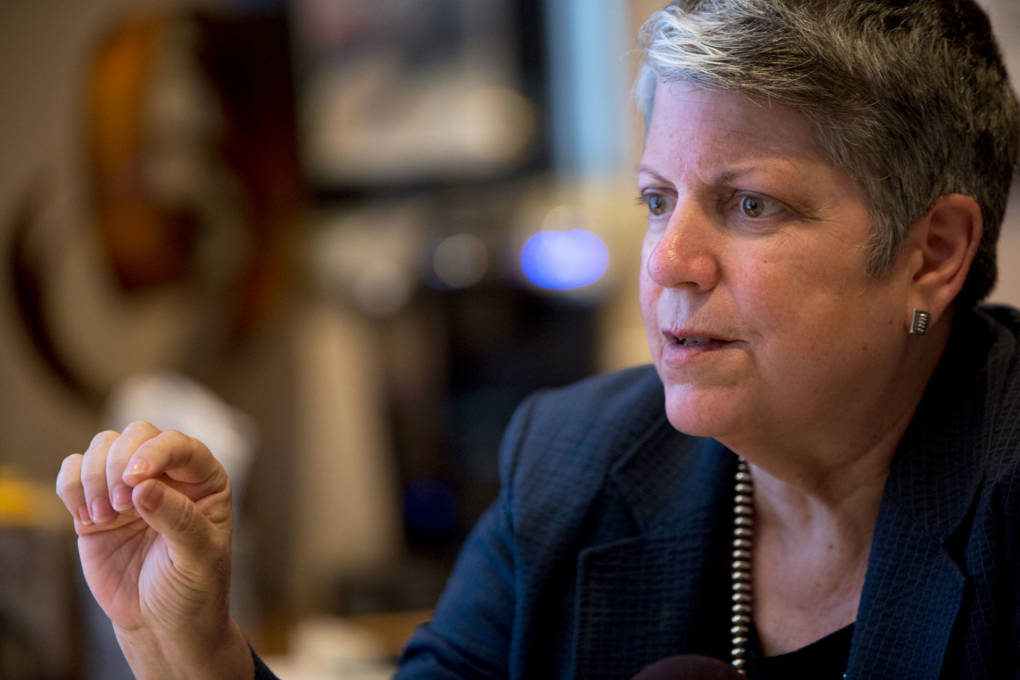
"caption": "UC President Janet Napolitano in her office in Oakland on July 17, 2018.",
"description": "UC President and former Secretary of Homeland Security Janet Napolitano talked with The California Report in her office in Oakland on July 17, 2018.",
"title": "NapolitanoMain",
"credit": "Anne Wernikoff/KQED",
"status": "inherit",
"isLoading": false,
"fetchFailed": false
},
"news_11681514": {
"type": "attachments",
"id": "news_11681514",
"meta": {
"index": "attachments_1716263798",
"site": "news",
"id": "11681514",
"found": true
},
"parent": 11681511,
"imgSizes": {
"small": {
"file": "https://ww2.kqed.org/app/uploads/sites/10/2018/07/20180718_154941-1280x800-520x325.jpg",
"width": 520,
"mimeType": "image/jpeg",
"height": 325
},
"twentyfourteen-full-width": {
"file": "https://ww2.kqed.org/app/uploads/sites/10/2018/07/20180718_154941-1280x800-1038x576.jpg",
"width": 1038,
"mimeType": "image/jpeg",
"height": 576
},
"thumbnail": {
"file": "https://ww2.kqed.org/app/uploads/sites/10/2018/07/20180718_154941-1280x800-160x100.jpg",
"width": 160,
"mimeType": "image/jpeg",
"height": 100
},
"fd-sm": {
"file": "https://ww2.kqed.org/app/uploads/sites/10/2018/07/20180718_154941-1280x800-960x600.jpg",
"width": 960,
"mimeType": "image/jpeg",
"height": 600
},
"post-thumbnail": {
"file": "https://ww2.kqed.org/app/uploads/sites/10/2018/07/20180718_154941-1280x800-672x372.jpg",
"width": 672,
"mimeType": "image/jpeg",
"height": 372
},
"xsmall": {
"file": "https://ww2.kqed.org/app/uploads/sites/10/2018/07/20180718_154941-1280x800-375x234.jpg",
"width": 375,
"mimeType": "image/jpeg",
"height": 234
},
"kqedFullSize": {
"file": "https://ww2.kqed.org/app/uploads/sites/10/2018/07/20180718_154941-1280x800.jpg",
"width": 1280,
"height": 800
},
"large": {
"file": "https://ww2.kqed.org/app/uploads/sites/10/2018/07/20180718_154941-1280x800-1020x638.jpg",
"width": 1020,
"mimeType": "image/jpeg",
"height": 638
},
"xlarge": {
"file": "https://ww2.kqed.org/app/uploads/sites/10/2018/07/20180718_154941-1280x800-1180x738.jpg",
"width": 1180,
"mimeType": "image/jpeg",
"height": 738
},
"complete_open_graph": {
"file": "https://ww2.kqed.org/app/uploads/sites/10/2018/07/20180718_154941-1280x800-1200x750.jpg",
"width": 1200,
"mimeType": "image/jpeg",
"height": 750
},
"guest-author-50": {
"file": "https://ww2.kqed.org/app/uploads/sites/10/2018/07/20180718_154941-1280x800-50x50.jpg",
"width": 50,
"mimeType": "image/jpeg",
"height": 50
},
"guest-author-96": {
"file": "https://ww2.kqed.org/app/uploads/sites/10/2018/07/20180718_154941-1280x800-96x96.jpg",
"width": 96,
"mimeType": "image/jpeg",
"height": 96
},
"medium": {
"file": "https://ww2.kqed.org/app/uploads/sites/10/2018/07/20180718_154941-1280x800-800x500.jpg",
"width": 800,
"mimeType": "image/jpeg",
"height": 500
},
"guest-author-64": {
"file": "https://ww2.kqed.org/app/uploads/sites/10/2018/07/20180718_154941-1280x800-64x64.jpg",
"width": 64,
"mimeType": "image/jpeg",
"height": 64
},
"guest-author-32": {
"file": "https://ww2.kqed.org/app/uploads/sites/10/2018/07/20180718_154941-1280x800-32x32.jpg",
"width": 32,
"mimeType": "image/jpeg",
"height": 32
},
"fd-med": {
"file": "https://ww2.kqed.org/app/uploads/sites/10/2018/07/20180718_154941-1280x800-1180x738.jpg",
"width": 1180,
"mimeType": "image/jpeg",
"height": 738
},
"detail": {
"file": "https://ww2.kqed.org/app/uploads/sites/10/2018/07/20180718_154941-1280x800-150x150.jpg",
"width": 150,
"mimeType": "image/jpeg",
"height": 150
},
"guest-author-128": {
"file": "https://ww2.kqed.org/app/uploads/sites/10/2018/07/20180718_154941-1280x800-128x128.jpg",
"width": 128,
"mimeType": "image/jpeg",
"height": 128
},
"xxsmall": {
"file": "https://ww2.kqed.org/app/uploads/sites/10/2018/07/20180718_154941-1280x800-240x150.jpg",
"width": 240,
"mimeType": "image/jpeg",
"height": 150
}
},
"publishDate": 1532038916,
"modified": 1532038943,
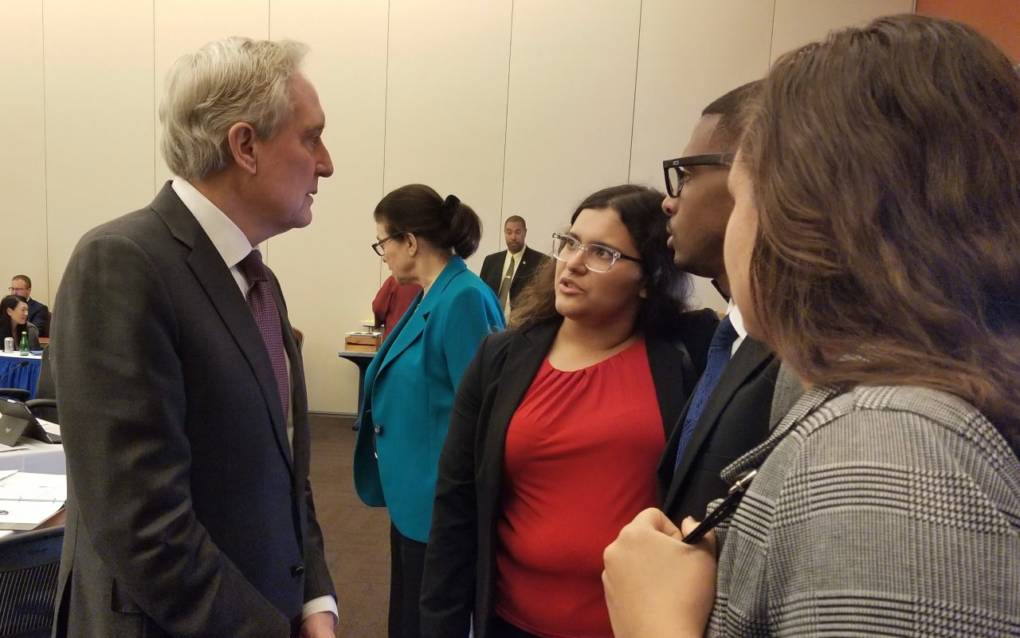
"caption": "UC regent George Kieffer talks with UC San Diego student Caroline Siegel Singh and other student leaders at the July 18 regents' meeting.",
"description": null,
"title": "20180718_154941-1280x800",
"credit": "Felicia Mello/CALmatters",
"status": "inherit",
"isLoading": false,
"fetchFailed": false
},
"news_11680085": {
"type": "attachments",
"id": "news_11680085",
"meta": {
"index": "attachments_1716263798",
"site": "news",
"id": "11680085",
"found": true
},
"parent": 11680078,
"imgSizes": {
"small": {
"file": "https://ww2.kqed.org/app/uploads/sites/10/2018/07/NativeAmericansVUCMain-520x347.jpg",
"width": 520,
"mimeType": "image/jpeg",
"height": 347
},
"twentyfourteen-full-width": {
"file": "https://ww2.kqed.org/app/uploads/sites/10/2018/07/NativeAmericansVUCMain-1038x576.jpg",
"width": 1038,
"mimeType": "image/jpeg",
"height": 576
},
"thumbnail": {
"file": "https://ww2.kqed.org/app/uploads/sites/10/2018/07/NativeAmericansVUCMain-160x107.jpg",
"width": 160,
"mimeType": "image/jpeg",
"height": 107
},
"fd-sm": {
"file": "https://ww2.kqed.org/app/uploads/sites/10/2018/07/NativeAmericansVUCMain-960x640.jpg",
"width": 960,
"mimeType": "image/jpeg",
"height": 640
},
"post-thumbnail": {
"file": "https://ww2.kqed.org/app/uploads/sites/10/2018/07/NativeAmericansVUCMain-672x372.jpg",
"width": 672,
"mimeType": "image/jpeg",
"height": 372
},
"xsmall": {
"file": "https://ww2.kqed.org/app/uploads/sites/10/2018/07/NativeAmericansVUCMain-375x250.jpg",
"width": 375,
"mimeType": "image/jpeg",
"height": 250
},
"kqedFullSize": {
"file": "https://ww2.kqed.org/app/uploads/sites/10/2018/07/NativeAmericansVUCMain.jpg",
"width": 1920,
"height": 1280
},
"large": {
"file": "https://ww2.kqed.org/app/uploads/sites/10/2018/07/NativeAmericansVUCMain-1020x680.jpg",
"width": 1020,
"mimeType": "image/jpeg",
"height": 680
},
"xlarge": {
"file": "https://ww2.kqed.org/app/uploads/sites/10/2018/07/NativeAmericansVUCMain-1180x787.jpg",
"width": 1180,
"mimeType": "image/jpeg",
"height": 787
},
"complete_open_graph": {
"file": "https://ww2.kqed.org/app/uploads/sites/10/2018/07/NativeAmericansVUCMain-1200x800.jpg",
"width": 1200,
"mimeType": "image/jpeg",
"height": 800
},
"guest-author-50": {
"file": "https://ww2.kqed.org/app/uploads/sites/10/2018/07/NativeAmericansVUCMain-50x50.jpg",
"width": 50,
"mimeType": "image/jpeg",
"height": 50
},
"guest-author-96": {
"file": "https://ww2.kqed.org/app/uploads/sites/10/2018/07/NativeAmericansVUCMain-96x96.jpg",
"width": 96,
"mimeType": "image/jpeg",
"height": 96
},
"medium": {
"file": "https://ww2.kqed.org/app/uploads/sites/10/2018/07/NativeAmericansVUCMain-800x533.jpg",
"width": 800,
"mimeType": "image/jpeg",
"height": 533
},
"guest-author-64": {
"file": "https://ww2.kqed.org/app/uploads/sites/10/2018/07/NativeAmericansVUCMain-64x64.jpg",
"width": 64,
"mimeType": "image/jpeg",
"height": 64
},
"guest-author-32": {
"file": "https://ww2.kqed.org/app/uploads/sites/10/2018/07/NativeAmericansVUCMain-32x32.jpg",
"width": 32,
"mimeType": "image/jpeg",
"height": 32
},
"fd-lrg": {
"file": "https://ww2.kqed.org/app/uploads/sites/10/2018/07/NativeAmericansVUCMain-1920x1280.jpg",
"width": 1920,
"mimeType": "image/jpeg",
"height": 1280
},
"fd-med": {
"file": "https://ww2.kqed.org/app/uploads/sites/10/2018/07/NativeAmericansVUCMain-1180x787.jpg",
"width": 1180,
"mimeType": "image/jpeg",
"height": 787
},
"full-width": {
"file": "https://ww2.kqed.org/app/uploads/sites/10/2018/07/NativeAmericansVUCMain-1920x1280.jpg",
"width": 1920,
"mimeType": "image/jpeg",
"height": 1280
},
"detail": {
"file": "https://ww2.kqed.org/app/uploads/sites/10/2018/07/NativeAmericansVUCMain-150x150.jpg",
"width": 150,
"mimeType": "image/jpeg",
"height": 150
},
"guest-author-128": {
"file": "https://ww2.kqed.org/app/uploads/sites/10/2018/07/NativeAmericansVUCMain-128x128.jpg",
"width": 128,
"mimeType": "image/jpeg",
"height": 128
},
"xxsmall": {
"file": "https://ww2.kqed.org/app/uploads/sites/10/2018/07/NativeAmericansVUCMain-240x160.jpg",
"width": 240,
"mimeType": "image/jpeg",
"height": 160
}
},
"publishDate": 1531343922,
"modified": 1531343958,
"caption": "Tribal archaeologist Myra Masiel of the Pechanga Tribe of Luiseño Indians.",
"description": "Tribal archaeologist Myra Masiel of the Pechanga Tribe of Luiseño Indians.",
"title": "NativeAmericansVUCMain",
"credit": "Robbie Short/CALmatters",
"status": "inherit",
"isLoading": false,
"fetchFailed": false
},
"news_11679795": {
"type": "attachments",
"id": "news_11679795",
"meta": {
"index": "attachments_1716263798",
"site": "news",
"id": "11679795",
"found": true
},
"parent": 11679792,
"imgSizes": {
"small": {
"file": "https://ww2.kqed.org/app/uploads/sites/10/2018/07/6291479824_197fdd1283_b-520x347.jpg",
"width": 520,
"mimeType": "image/jpeg",
"height": 347
},
"twentyfourteen-full-width": {
"file": "https://ww2.kqed.org/app/uploads/sites/10/2018/07/6291479824_197fdd1283_b-1024x576.jpg",
"width": 1024,
"mimeType": "image/jpeg",
"height": 576
},
"thumbnail": {
"file": "https://ww2.kqed.org/app/uploads/sites/10/2018/07/6291479824_197fdd1283_b-160x107.jpg",
"width": 160,
"mimeType": "image/jpeg",
"height": 107
},
"fd-sm": {
"file": "https://ww2.kqed.org/app/uploads/sites/10/2018/07/6291479824_197fdd1283_b-960x640.jpg",
"width": 960,
"mimeType": "image/jpeg",
"height": 640
},
"post-thumbnail": {
"file": "https://ww2.kqed.org/app/uploads/sites/10/2018/07/6291479824_197fdd1283_b-672x372.jpg",
"width": 672,
"mimeType": "image/jpeg",
"height": 372
},
"xsmall": {
"file": "https://ww2.kqed.org/app/uploads/sites/10/2018/07/6291479824_197fdd1283_b-375x250.jpg",
"width": 375,
"mimeType": "image/jpeg",
"height": 250
},
"kqedFullSize": {
"file": "https://ww2.kqed.org/app/uploads/sites/10/2018/07/6291479824_197fdd1283_b.jpg",
"width": 1024,
"height": 683
},
"large": {
"file": "https://ww2.kqed.org/app/uploads/sites/10/2018/07/6291479824_197fdd1283_b-1020x680.jpg",
"width": 1020,
"mimeType": "image/jpeg",
"height": 680
},
"guest-author-50": {
"file": "https://ww2.kqed.org/app/uploads/sites/10/2018/07/6291479824_197fdd1283_b-50x50.jpg",
"width": 50,
"mimeType": "image/jpeg",
"height": 50
},
"guest-author-96": {
"file": "https://ww2.kqed.org/app/uploads/sites/10/2018/07/6291479824_197fdd1283_b-96x96.jpg",
"width": 96,
"mimeType": "image/jpeg",
"height": 96
},
"medium": {
"file": "https://ww2.kqed.org/app/uploads/sites/10/2018/07/6291479824_197fdd1283_b-800x534.jpg",
"width": 800,
"mimeType": "image/jpeg",
"height": 534
},
"guest-author-64": {
"file": "https://ww2.kqed.org/app/uploads/sites/10/2018/07/6291479824_197fdd1283_b-64x64.jpg",
"width": 64,
"mimeType": "image/jpeg",
"height": 64
},
"guest-author-32": {
"file": "https://ww2.kqed.org/app/uploads/sites/10/2018/07/6291479824_197fdd1283_b-32x32.jpg",
"width": 32,
"mimeType": "image/jpeg",
"height": 32
},
"detail": {
"file": "https://ww2.kqed.org/app/uploads/sites/10/2018/07/6291479824_197fdd1283_b-150x150.jpg",
"width": 150,
"mimeType": "image/jpeg",
"height": 150
},
"guest-author-128": {
"file": "https://ww2.kqed.org/app/uploads/sites/10/2018/07/6291479824_197fdd1283_b-128x128.jpg",
"width": 128,
"mimeType": "image/jpeg",
"height": 128
},
"xxsmall": {
"file": "https://ww2.kqed.org/app/uploads/sites/10/2018/07/6291479824_197fdd1283_b-240x160.jpg",
"width": 240,
"mimeType": "image/jpeg",
"height": 160
}
},
"publishDate": 1531243922,
"modified": 1531243960,
"caption": " Royce Hall on the UCLA campus. ",
"description": null,
"title": "6291479824_197fdd1283_b",
"credit": "Prayitno Photography/Flickr",
"status": "inherit",
"isLoading": false,
"fetchFailed": false
},
"news_11676402": {
"type": "attachments",
"id": "news_11676402",
"meta": {
"index": "attachments_1716263798",
"site": "news",
"id": "11676402",
"found": true
},
"parent": 11676279,
"imgSizes": {
"small": {
"file": "https://ww2.kqed.org/app/uploads/sites/10/2018/06/RS18894_GettyImages-52237594-qut-520x347.jpg",
"width": 520,
"mimeType": "image/jpeg",
"height": 347
},
"twentyfourteen-full-width": {
"file": "https://ww2.kqed.org/app/uploads/sites/10/2018/06/RS18894_GettyImages-52237594-qut-1038x576.jpg",
"width": 1038,
"mimeType": "image/jpeg",
"height": 576
},
"thumbnail": {
"file": "https://ww2.kqed.org/app/uploads/sites/10/2018/06/RS18894_GettyImages-52237594-qut-160x107.jpg",
"width": 160,
"mimeType": "image/jpeg",
"height": 107
},
"fd-sm": {
"file": "https://ww2.kqed.org/app/uploads/sites/10/2018/06/RS18894_GettyImages-52237594-qut-960x641.jpg",
"width": 960,
"mimeType": "image/jpeg",
"height": 641
},
"post-thumbnail": {
"file": "https://ww2.kqed.org/app/uploads/sites/10/2018/06/RS18894_GettyImages-52237594-qut-672x372.jpg",
"width": 672,
"mimeType": "image/jpeg",
"height": 372
},
"xsmall": {
"file": "https://ww2.kqed.org/app/uploads/sites/10/2018/06/RS18894_GettyImages-52237594-qut-375x250.jpg",
"width": 375,
"mimeType": "image/jpeg",
"height": 250
},
"kqedFullSize": {
"file": "https://ww2.kqed.org/app/uploads/sites/10/2018/06/RS18894_GettyImages-52237594-qut.jpg",
"width": 1920,
"height": 1282
},
"large": {
"file": "https://ww2.kqed.org/app/uploads/sites/10/2018/06/RS18894_GettyImages-52237594-qut-1020x681.jpg",
"width": 1020,
"mimeType": "image/jpeg",
"height": 681
},
"xlarge": {
"file": "https://ww2.kqed.org/app/uploads/sites/10/2018/06/RS18894_GettyImages-52237594-qut-1180x788.jpg",
"width": 1180,
"mimeType": "image/jpeg",
"height": 788
},
"complete_open_graph": {
"file": "https://ww2.kqed.org/app/uploads/sites/10/2018/06/RS18894_GettyImages-52237594-qut-1200x801.jpg",
"width": 1200,
"mimeType": "image/jpeg",
"height": 801
},
"guest-author-50": {
"file": "https://ww2.kqed.org/app/uploads/sites/10/2018/06/RS18894_GettyImages-52237594-qut-50x50.jpg",
"width": 50,
"mimeType": "image/jpeg",
"height": 50
},
"guest-author-96": {
"file": "https://ww2.kqed.org/app/uploads/sites/10/2018/06/RS18894_GettyImages-52237594-qut-96x96.jpg",
"width": 96,
"mimeType": "image/jpeg",
"height": 96
},
"medium": {
"file": "https://ww2.kqed.org/app/uploads/sites/10/2018/06/RS18894_GettyImages-52237594-qut-800x534.jpg",
"width": 800,
"mimeType": "image/jpeg",
"height": 534
},
"guest-author-64": {
"file": "https://ww2.kqed.org/app/uploads/sites/10/2018/06/RS18894_GettyImages-52237594-qut-64x64.jpg",
"width": 64,
"mimeType": "image/jpeg",
"height": 64
},
"guest-author-32": {
"file": "https://ww2.kqed.org/app/uploads/sites/10/2018/06/RS18894_GettyImages-52237594-qut-32x32.jpg",
"width": 32,
"mimeType": "image/jpeg",
"height": 32
},
"fd-lrg": {
"file": "https://ww2.kqed.org/app/uploads/sites/10/2018/06/RS18894_GettyImages-52237594-qut-1920x1282.jpg",
"width": 1920,
"mimeType": "image/jpeg",
"height": 1282
},
"fd-med": {
"file": "https://ww2.kqed.org/app/uploads/sites/10/2018/06/RS18894_GettyImages-52237594-qut-1180x788.jpg",
"width": 1180,
"mimeType": "image/jpeg",
"height": 788
},
"full-width": {
"file": "https://ww2.kqed.org/app/uploads/sites/10/2018/06/RS18894_GettyImages-52237594-qut-1920x1282.jpg",
"width": 1920,
"mimeType": "image/jpeg",
"height": 1282
},
"detail": {
"file": "https://ww2.kqed.org/app/uploads/sites/10/2018/06/RS18894_GettyImages-52237594-qut-150x150.jpg",
"width": 150,
"mimeType": "image/jpeg",
"height": 150
},
"guest-author-128": {
"file": "https://ww2.kqed.org/app/uploads/sites/10/2018/06/RS18894_GettyImages-52237594-qut-128x128.jpg",
"width": 128,
"mimeType": "image/jpeg",
"height": 128
},
"xxsmall": {
"file": "https://ww2.kqed.org/app/uploads/sites/10/2018/06/RS18894_GettyImages-52237594-qut-240x160.jpg",
"width": 240,
"mimeType": "image/jpeg",
"height": 160
}
},
"publishDate": 1529628496,
"modified": 1529628550,
"caption": "A new report focuses on UC's response to sexual harassment complaints made by students that involve faculty and staff.",
"description": null,
"title": "RS18894_GettyImages-52237594-qut",
"credit": "Justin Sullivan/Getty Images",
"status": "inherit",
"isLoading": false,
"fetchFailed": false
},
"news_11674216": {
"type": "attachments",
"id": "news_11674216",
"meta": {
"index": "attachments_1716263798",
"site": "news",
"id": "11674216",
"found": true
},
"parent": 11674209,
"imgSizes": {
"small": {
"file": "https://ww2.kqed.org/app/uploads/sites/10/2018/06/COLLEGE-COSTS-Photo-1-1024x640-520x325.jpg",
"width": 520,
"mimeType": "image/jpeg",
"height": 325
},
"twentyfourteen-full-width": {
"file": "https://ww2.kqed.org/app/uploads/sites/10/2018/06/COLLEGE-COSTS-Photo-1-1024x640-1024x576.jpg",
"width": 1024,
"mimeType": "image/jpeg",
"height": 576
},
"thumbnail": {
"file": "https://ww2.kqed.org/app/uploads/sites/10/2018/06/COLLEGE-COSTS-Photo-1-1024x640-160x100.jpg",
"width": 160,
"mimeType": "image/jpeg",
"height": 100
},
"fd-sm": {
"file": "https://ww2.kqed.org/app/uploads/sites/10/2018/06/COLLEGE-COSTS-Photo-1-1024x640-960x600.jpg",
"width": 960,
"mimeType": "image/jpeg",
"height": 600
},
"post-thumbnail": {
"file": "https://ww2.kqed.org/app/uploads/sites/10/2018/06/COLLEGE-COSTS-Photo-1-1024x640-672x372.jpg",
"width": 672,
"mimeType": "image/jpeg",
"height": 372
},
"xsmall": {
"file": "https://ww2.kqed.org/app/uploads/sites/10/2018/06/COLLEGE-COSTS-Photo-1-1024x640-375x234.jpg",
"width": 375,
"mimeType": "image/jpeg",
"height": 234
},
"kqedFullSize": {
"file": "https://ww2.kqed.org/app/uploads/sites/10/2018/06/COLLEGE-COSTS-Photo-1-1024x640.jpg",
"width": 1024,
"height": 640
},
"large": {
"file": "https://ww2.kqed.org/app/uploads/sites/10/2018/06/COLLEGE-COSTS-Photo-1-1024x640-1020x638.jpg",
"width": 1020,
"mimeType": "image/jpeg",
"height": 638
},
"guest-author-50": {
"file": "https://ww2.kqed.org/app/uploads/sites/10/2018/06/COLLEGE-COSTS-Photo-1-1024x640-50x50.jpg",
"width": 50,
"mimeType": "image/jpeg",
"height": 50
},
"guest-author-96": {
"file": "https://ww2.kqed.org/app/uploads/sites/10/2018/06/COLLEGE-COSTS-Photo-1-1024x640-96x96.jpg",
"width": 96,
"mimeType": "image/jpeg",
"height": 96
},
"medium": {
"file": "https://ww2.kqed.org/app/uploads/sites/10/2018/06/COLLEGE-COSTS-Photo-1-1024x640-800x500.jpg",
"width": 800,
"mimeType": "image/jpeg",
"height": 500
},
"guest-author-64": {
"file": "https://ww2.kqed.org/app/uploads/sites/10/2018/06/COLLEGE-COSTS-Photo-1-1024x640-64x64.jpg",
"width": 64,
"mimeType": "image/jpeg",
"height": 64
},
"guest-author-32": {
"file": "https://ww2.kqed.org/app/uploads/sites/10/2018/06/COLLEGE-COSTS-Photo-1-1024x640-32x32.jpg",
"width": 32,
"mimeType": "image/jpeg",
"height": 32
},
"detail": {
"file": "https://ww2.kqed.org/app/uploads/sites/10/2018/06/COLLEGE-COSTS-Photo-1-1024x640-150x150.jpg",
"width": 150,
"mimeType": "image/jpeg",
"height": 150
},
"guest-author-128": {
"file": "https://ww2.kqed.org/app/uploads/sites/10/2018/06/COLLEGE-COSTS-Photo-1-1024x640-128x128.jpg",
"width": 128,
"mimeType": "image/jpeg",
"height": 128
},
"xxsmall": {
"file": "https://ww2.kqed.org/app/uploads/sites/10/2018/06/COLLEGE-COSTS-Photo-1-1024x640-240x150.jpg",
"width": 240,
"mimeType": "image/jpeg",
"height": 150
}
},
"publishDate": 1528754137,
"modified": 1553211013,
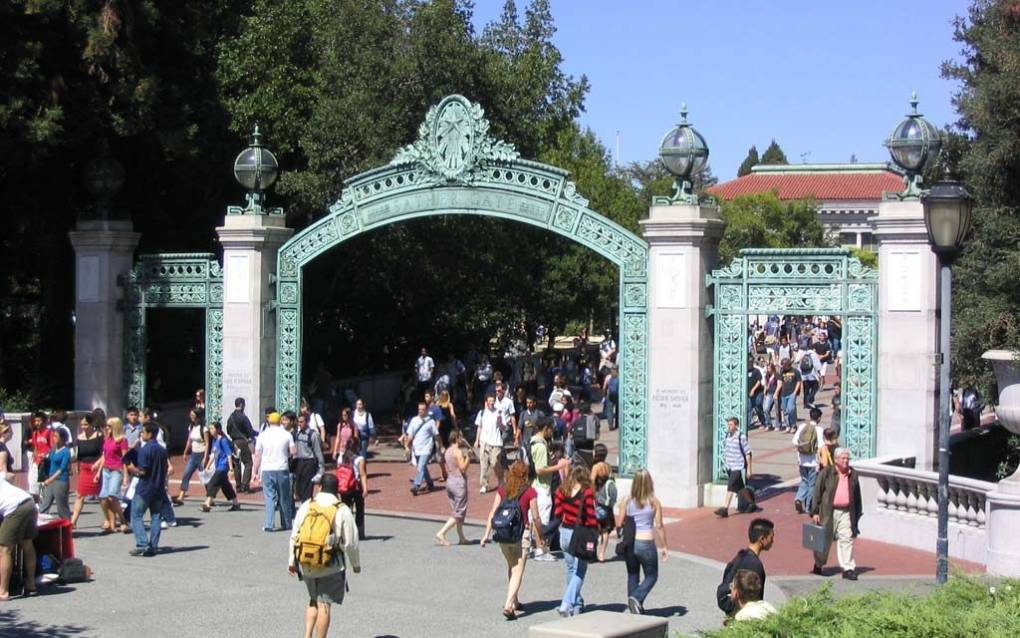
"caption": "Students pass under Sather Gate on the UC Berkeley campus.",
"description": "Students pass under Sather Gate on the UC Berkeley campus.",
"title": "COLLEGE-COSTS-Photo-1-1024x640",
"credit": "Wikimedia Commons",
"status": "inherit",
"isLoading": false,
"fetchFailed": false
},
"news_11673454": {
"type": "attachments",
"id": "news_11673454",
"meta": {
"index": "attachments_1716263798",
"site": "news",
"id": "11673454",
"found": true
},
"parent": 11673311,
"imgSizes": {
"small": {
"file": "https://ww2.kqed.org/app/uploads/sites/10/2018/06/SadiaKahn-520x443.jpg",
"width": 520,
"mimeType": "image/jpeg",
"height": 443
},
"twentyfourteen-full-width": {
"file": "https://ww2.kqed.org/app/uploads/sites/10/2018/06/SadiaKahn-1038x576.jpg",
"width": 1038,
"mimeType": "image/jpeg",
"height": 576
},
"thumbnail": {
"file": "https://ww2.kqed.org/app/uploads/sites/10/2018/06/SadiaKahn-160x136.jpg",
"width": 160,
"mimeType": "image/jpeg",
"height": 136
},
"fd-sm": {
"file": "https://ww2.kqed.org/app/uploads/sites/10/2018/06/SadiaKahn-960x818.jpg",
"width": 960,
"mimeType": "image/jpeg",
"height": 818
},
"post-thumbnail": {
"file": "https://ww2.kqed.org/app/uploads/sites/10/2018/06/SadiaKahn-672x372.jpg",
"width": 672,
"mimeType": "image/jpeg",
"height": 372
},
"xsmall": {
"file": "https://ww2.kqed.org/app/uploads/sites/10/2018/06/SadiaKahn-375x320.jpg",
"width": 375,
"mimeType": "image/jpeg",
"height": 320
},
"kqedFullSize": {
"file": "https://ww2.kqed.org/app/uploads/sites/10/2018/06/SadiaKahn.jpg",
"width": 1702,
"height": 1451
},
"large": {
"file": "https://ww2.kqed.org/app/uploads/sites/10/2018/06/SadiaKahn-1020x870.jpg",
"width": 1020,
"mimeType": "image/jpeg",
"height": 870
},
"xlarge": {
"file": "https://ww2.kqed.org/app/uploads/sites/10/2018/06/SadiaKahn-1180x1006.jpg",
"width": 1180,
"mimeType": "image/jpeg",
"height": 1006
},
"complete_open_graph": {
"file": "https://ww2.kqed.org/app/uploads/sites/10/2018/06/SadiaKahn-1200x1023.jpg",
"width": 1200,
"mimeType": "image/jpeg",
"height": 1023
},
"guest-author-50": {
"file": "https://ww2.kqed.org/app/uploads/sites/10/2018/06/SadiaKahn-50x50.jpg",
"width": 50,
"mimeType": "image/jpeg",
"height": 50
},
"guest-author-96": {
"file": "https://ww2.kqed.org/app/uploads/sites/10/2018/06/SadiaKahn-96x96.jpg",
"width": 96,
"mimeType": "image/jpeg",
"height": 96
},
"medium": {
"file": "https://ww2.kqed.org/app/uploads/sites/10/2018/06/SadiaKahn-800x682.jpg",
"width": 800,
"mimeType": "image/jpeg",
"height": 682
},
"guest-author-64": {
"file": "https://ww2.kqed.org/app/uploads/sites/10/2018/06/SadiaKahn-64x64.jpg",
"width": 64,
"mimeType": "image/jpeg",
"height": 64
},
"guest-author-32": {
"file": "https://ww2.kqed.org/app/uploads/sites/10/2018/06/SadiaKahn-32x32.jpg",
"width": 32,
"mimeType": "image/jpeg",
"height": 32
},
"fd-med": {
"file": "https://ww2.kqed.org/app/uploads/sites/10/2018/06/SadiaKahn-1180x1006.jpg",
"width": 1180,
"mimeType": "image/jpeg",
"height": 1006
},
"detail": {
"file": "https://ww2.kqed.org/app/uploads/sites/10/2018/06/SadiaKahn-150x150.jpg",
"width": 150,
"mimeType": "image/jpeg",
"height": 150
},
"guest-author-128": {
"file": "https://ww2.kqed.org/app/uploads/sites/10/2018/06/SadiaKahn-128x128.jpg",
"width": 128,
"mimeType": "image/jpeg",
"height": 128
},
"xxsmall": {
"file": "https://ww2.kqed.org/app/uploads/sites/10/2018/06/SadiaKahn-240x205.jpg",
"width": 240,
"mimeType": "image/jpeg",
"height": 205
}
},
"publishDate": 1528413532,
"modified": 1528413555,
"caption": "UC Berkeley student Sadia Kahn in the bedroom she shared with two other women near campus. ",
"description": "UC Berkeley student Sadia Kahn in the bedroom she shared with two other women near campus. ",
"title": "SadiaKahn",
"credit": "Vanessa Rancaño/KQED",
"status": "inherit",
"isLoading": false,
"fetchFailed": false
},
"news_11670032": {
"type": "attachments",
"id": "news_11670032",
"meta": {
"index": "attachments_1716263798",
"site": "news",
"id": "11670032",
"found": true
},
"parent": 11670028,
"imgSizes": {
"small": {
"file": "https://ww2.kqed.org/app/uploads/sites/10/2018/05/20180514_123948-1280x800-520x325.jpg",
"width": 520,
"mimeType": "image/jpeg",
"height": 325
},
"twentyfourteen-full-width": {
"file": "https://ww2.kqed.org/app/uploads/sites/10/2018/05/20180514_123948-1280x800-1038x576.jpg",
"width": 1038,
"mimeType": "image/jpeg",
"height": 576
},
"thumbnail": {
"file": "https://ww2.kqed.org/app/uploads/sites/10/2018/05/20180514_123948-1280x800-160x100.jpg",
"width": 160,
"mimeType": "image/jpeg",
"height": 100
},
"fd-sm": {
"file": "https://ww2.kqed.org/app/uploads/sites/10/2018/05/20180514_123948-1280x800-960x600.jpg",
"width": 960,
"mimeType": "image/jpeg",
"height": 600
},
"post-thumbnail": {
"file": "https://ww2.kqed.org/app/uploads/sites/10/2018/05/20180514_123948-1280x800-672x372.jpg",
"width": 672,
"mimeType": "image/jpeg",
"height": 372
},
"xsmall": {
"file": "https://ww2.kqed.org/app/uploads/sites/10/2018/05/20180514_123948-1280x800-375x234.jpg",
"width": 375,
"mimeType": "image/jpeg",
"height": 234
},
"kqedFullSize": {
"file": "https://ww2.kqed.org/app/uploads/sites/10/2018/05/20180514_123948-1280x800.jpg",
"width": 1280,
"height": 800
},
"large": {
"file": "https://ww2.kqed.org/app/uploads/sites/10/2018/05/20180514_123948-1280x800-1020x638.jpg",
"width": 1020,
"mimeType": "image/jpeg",
"height": 638
},
"xlarge": {
"file": "https://ww2.kqed.org/app/uploads/sites/10/2018/05/20180514_123948-1280x800-1180x738.jpg",
"width": 1180,
"mimeType": "image/jpeg",
"height": 738
},
"complete_open_graph": {
"file": "https://ww2.kqed.org/app/uploads/sites/10/2018/05/20180514_123948-1280x800-1200x750.jpg",
"width": 1200,
"mimeType": "image/jpeg",
"height": 750
},
"guest-author-50": {
"file": "https://ww2.kqed.org/app/uploads/sites/10/2018/05/20180514_123948-1280x800-50x50.jpg",
"width": 50,
"mimeType": "image/jpeg",
"height": 50
},
"guest-author-96": {
"file": "https://ww2.kqed.org/app/uploads/sites/10/2018/05/20180514_123948-1280x800-96x96.jpg",
"width": 96,
"mimeType": "image/jpeg",
"height": 96
},
"medium": {
"file": "https://ww2.kqed.org/app/uploads/sites/10/2018/05/20180514_123948-1280x800-800x500.jpg",
"width": 800,
"mimeType": "image/jpeg",
"height": 500
},
"guest-author-64": {
"file": "https://ww2.kqed.org/app/uploads/sites/10/2018/05/20180514_123948-1280x800-64x64.jpg",
"width": 64,
"mimeType": "image/jpeg",
"height": 64
},
"guest-author-32": {
"file": "https://ww2.kqed.org/app/uploads/sites/10/2018/05/20180514_123948-1280x800-32x32.jpg",
"width": 32,
"mimeType": "image/jpeg",
"height": 32
},
"fd-med": {
"file": "https://ww2.kqed.org/app/uploads/sites/10/2018/05/20180514_123948-1280x800-1180x738.jpg",
"width": 1180,
"mimeType": "image/jpeg",
"height": 738
},
"detail": {
"file": "https://ww2.kqed.org/app/uploads/sites/10/2018/05/20180514_123948-1280x800-150x150.jpg",
"width": 150,
"mimeType": "image/jpeg",
"height": 150
},
"guest-author-128": {
"file": "https://ww2.kqed.org/app/uploads/sites/10/2018/05/20180514_123948-1280x800-128x128.jpg",
"width": 128,
"mimeType": "image/jpeg",
"height": 128
},
"xxsmall": {
"file": "https://ww2.kqed.org/app/uploads/sites/10/2018/05/20180514_123948-1280x800-240x150.jpg",
"width": 240,
"mimeType": "image/jpeg",
"height": 150
}
},
"publishDate": 1527029084,
"modified": 1527029116,
"caption": "Students at this UC Davis lecture are forced to take notes on the floor because there aren't enough seats for all of them.",
"description": null,
"title": "20180514_123948-1280x800",
"credit": "Felicia Mello/CALmatters",
"status": "inherit",
"isLoading": false,
"fetchFailed": false
},
"news_11667226": {
"type": "attachments",
"id": "news_11667226",
"meta": {
"index": "attachments_1716263798",
"site": "news",
"id": "11667226",
"found": true
},
"parent": 11667218,
"imgSizes": {
"small": {
"file": "https://ww2.kqed.org/app/uploads/sites/10/2018/05/UCSFstrike180508-e1525827408194-520x389.jpg",
"width": 520,
"mimeType": "image/jpeg",
"height": 389
},
"twentyfourteen-full-width": {
"file": "https://ww2.kqed.org/app/uploads/sites/10/2018/05/UCSFstrike180508-e1525827408194-1038x576.jpg",
"width": 1038,
"mimeType": "image/jpeg",
"height": 576
},
"thumbnail": {
"file": "https://ww2.kqed.org/app/uploads/sites/10/2018/05/UCSFstrike180508-e1525827408194-160x120.jpg",
"width": 160,
"mimeType": "image/jpeg",
"height": 120
},
"fd-sm": {
"file": "https://ww2.kqed.org/app/uploads/sites/10/2018/05/UCSFstrike180508-e1525827408194-960x719.jpg",
"width": 960,
"mimeType": "image/jpeg",
"height": 719
},
"post-thumbnail": {
"file": "https://ww2.kqed.org/app/uploads/sites/10/2018/05/UCSFstrike180508-e1525827408194-672x372.jpg",
"width": 672,
"mimeType": "image/jpeg",
"height": 372
},
"xsmall": {
"file": "https://ww2.kqed.org/app/uploads/sites/10/2018/05/UCSFstrike180508-e1525827408194-375x281.jpg",
"width": 375,
"mimeType": "image/jpeg",
"height": 281
},
"kqedFullSize": {
"file": "https://ww2.kqed.org/app/uploads/sites/10/2018/05/UCSFstrike180508-e1525828664400.jpg",
"width": 1920,
"height": 1437
},
"large": {
"file": "https://ww2.kqed.org/app/uploads/sites/10/2018/05/UCSFstrike180508-e1525827408194-1020x764.jpg",
"width": 1020,
"mimeType": "image/jpeg",
"height": 764
},
"xlarge": {
"file": "https://ww2.kqed.org/app/uploads/sites/10/2018/05/UCSFstrike180508-e1525827408194-1180x883.jpg",
"width": 1180,
"mimeType": "image/jpeg",
"height": 883
},
"complete_open_graph": {
"file": "https://ww2.kqed.org/app/uploads/sites/10/2018/05/UCSFstrike180508-e1525827408194-1200x898.jpg",
"width": 1200,
"mimeType": "image/jpeg",
"height": 898
},
"guest-author-50": {
"file": "https://ww2.kqed.org/app/uploads/sites/10/2018/05/UCSFstrike180508-e1525827408194-50x50.jpg",
"width": 50,
"mimeType": "image/jpeg",
"height": 50
},
"guest-author-96": {
"file": "https://ww2.kqed.org/app/uploads/sites/10/2018/05/UCSFstrike180508-e1525827408194-96x96.jpg",
"width": 96,
"mimeType": "image/jpeg",
"height": 96
},
"medium": {
"file": "https://ww2.kqed.org/app/uploads/sites/10/2018/05/UCSFstrike180508-e1525827408194-800x599.jpg",
"width": 800,
"mimeType": "image/jpeg",
"height": 599
},
"guest-author-64": {
"file": "https://ww2.kqed.org/app/uploads/sites/10/2018/05/UCSFstrike180508-e1525827408194-64x64.jpg",
"width": 64,
"mimeType": "image/jpeg",
"height": 64
},
"guest-author-32": {
"file": "https://ww2.kqed.org/app/uploads/sites/10/2018/05/UCSFstrike180508-e1525827408194-32x32.jpg",
"width": 32,
"mimeType": "image/jpeg",
"height": 32
},
"fd-lrg": {
"file": "https://ww2.kqed.org/app/uploads/sites/10/2018/05/UCSFstrike180508-e1525827408194-1920x1437.jpg",
"width": 1920,
"mimeType": "image/jpeg",
"height": 1437
},
"fd-med": {
"file": "https://ww2.kqed.org/app/uploads/sites/10/2018/05/UCSFstrike180508-e1525827408194-1180x883.jpg",
"width": 1180,
"mimeType": "image/jpeg",
"height": 883
},
"full-width": {
"file": "https://ww2.kqed.org/app/uploads/sites/10/2018/05/UCSFstrike180508-e1525827408194-1920x1437.jpg",
"width": 1920,
"mimeType": "image/jpeg",
"height": 1437
},
"detail": {
"file": "https://ww2.kqed.org/app/uploads/sites/10/2018/05/UCSFstrike180508-e1525827408194-150x150.jpg",
"width": 150,
"mimeType": "image/jpeg",
"height": 150
},
"guest-author-128": {
"file": "https://ww2.kqed.org/app/uploads/sites/10/2018/05/UCSFstrike180508-e1525827408194-128x128.jpg",
"width": 128,
"mimeType": "image/jpeg",
"height": 128
},
"xxsmall": {
"file": "https://ww2.kqed.org/app/uploads/sites/10/2018/05/UCSFstrike180508-e1525827408194-240x180.jpg",
"width": 240,
"mimeType": "image/jpeg",
"height": 180
}
},
"publishDate": 1525827263,
"modified": 1525828657,
"caption": "UCSF nurses Alicia Thomas, Al Davies, and Nalinee Tan carry signs and drum outside UCSF Parnassus Hospital on Tuesday, May 8, 2018.",
"description": "UCSF nurses Alicia Thomas, Al Davies, and Nalinee Tan carry signs and drum outside UCSF Parnassus Hospital on Tuesday, May 8, 2018.",
"title": "UCSFstrike180508",
"credit": "Laura Klivans/KQED",
"status": "inherit",
"isLoading": false,
"fetchFailed": false
},
"news_11666939": {
"type": "attachments",
"id": "news_11666939",
"meta": {
"index": "attachments_1716263798",
"site": "news",
"id": "11666939",
"found": true
},
"parent": 11666929,
"imgSizes": {
"small": {
"file": "https://ww2.kqed.org/app/uploads/sites/10/2018/05/ucstrike_050718_final-520x340.jpg",
"width": 520,
"mimeType": "image/jpeg",
"height": 340
},
"twentyfourteen-full-width": {
"file": "https://ww2.kqed.org/app/uploads/sites/10/2018/05/ucstrike_050718_final-1038x576.jpg",
"width": 1038,
"mimeType": "image/jpeg",
"height": 576
},
"thumbnail": {
"file": "https://ww2.kqed.org/app/uploads/sites/10/2018/05/ucstrike_050718_final-160x105.jpg",
"width": 160,
"mimeType": "image/jpeg",
"height": 105
},
"fd-sm": {
"file": "https://ww2.kqed.org/app/uploads/sites/10/2018/05/ucstrike_050718_final-960x628.jpg",
"width": 960,
"mimeType": "image/jpeg",
"height": 628
},
"post-thumbnail": {
"file": "https://ww2.kqed.org/app/uploads/sites/10/2018/05/ucstrike_050718_final-672x372.jpg",
"width": 672,
"mimeType": "image/jpeg",
"height": 372
},
"xsmall": {
"file": "https://ww2.kqed.org/app/uploads/sites/10/2018/05/ucstrike_050718_final-375x245.jpg",
"width": 375,
"mimeType": "image/jpeg",
"height": 245
},
"kqedFullSize": {
"file": "https://ww2.kqed.org/app/uploads/sites/10/2018/05/ucstrike_050718_final.jpg",
"width": 1920,
"height": 1255
},
"large": {
"file": "https://ww2.kqed.org/app/uploads/sites/10/2018/05/ucstrike_050718_final-1020x667.jpg",
"width": 1020,
"mimeType": "image/jpeg",
"height": 667
},
"xlarge": {
"file": "https://ww2.kqed.org/app/uploads/sites/10/2018/05/ucstrike_050718_final-1180x771.jpg",
"width": 1180,
"mimeType": "image/jpeg",
"height": 771
},
"complete_open_graph": {
"file": "https://ww2.kqed.org/app/uploads/sites/10/2018/05/ucstrike_050718_final-1200x784.jpg",
"width": 1200,
"mimeType": "image/jpeg",
"height": 784
},
"guest-author-50": {
"file": "https://ww2.kqed.org/app/uploads/sites/10/2018/05/ucstrike_050718_final-50x50.jpg",
"width": 50,
"mimeType": "image/jpeg",
"height": 50
},
"guest-author-96": {
"file": "https://ww2.kqed.org/app/uploads/sites/10/2018/05/ucstrike_050718_final-96x96.jpg",
"width": 96,
"mimeType": "image/jpeg",
"height": 96
},
"medium": {
"file": "https://ww2.kqed.org/app/uploads/sites/10/2018/05/ucstrike_050718_final-800x523.jpg",
"width": 800,
"mimeType": "image/jpeg",
"height": 523
},
"guest-author-64": {
"file": "https://ww2.kqed.org/app/uploads/sites/10/2018/05/ucstrike_050718_final-64x64.jpg",
"width": 64,
"mimeType": "image/jpeg",
"height": 64
},
"guest-author-32": {
"file": "https://ww2.kqed.org/app/uploads/sites/10/2018/05/ucstrike_050718_final-32x32.jpg",
"width": 32,
"mimeType": "image/jpeg",
"height": 32
},
"fd-lrg": {
"file": "https://ww2.kqed.org/app/uploads/sites/10/2018/05/ucstrike_050718_final-1920x1255.jpg",
"width": 1920,
"mimeType": "image/jpeg",
"height": 1255
},
"fd-med": {
"file": "https://ww2.kqed.org/app/uploads/sites/10/2018/05/ucstrike_050718_final-1180x771.jpg",
"width": 1180,
"mimeType": "image/jpeg",
"height": 771
},
"full-width": {
"file": "https://ww2.kqed.org/app/uploads/sites/10/2018/05/ucstrike_050718_final-1920x1255.jpg",
"width": 1920,
"mimeType": "image/jpeg",
"height": 1255
},
"detail": {
"file": "https://ww2.kqed.org/app/uploads/sites/10/2018/05/ucstrike_050718_final-150x150.jpg",
"width": 150,
"mimeType": "image/jpeg",
"height": 150
},
"guest-author-128": {
"file": "https://ww2.kqed.org/app/uploads/sites/10/2018/05/ucstrike_050718_final-128x128.jpg",
"width": 128,
"mimeType": "image/jpeg",
"height": 128
},
"xxsmall": {
"file": "https://ww2.kqed.org/app/uploads/sites/10/2018/05/ucstrike_050718_final-240x157.jpg",
"width": 240,
"mimeType": "image/jpeg",
"height": 157
}
},
"publishDate": 1525730410,
"modified": 1525730427,
"caption": null,
"description": null,
"title": "ucstrike_050718_final",
"credit": null,
"status": "inherit",
"isLoading": false,
"fetchFailed": false
},
"news_11666991": {
"type": "attachments",
"id": "news_11666991",
"meta": {
"index": "attachments_1716263798",
"site": "news",
"id": "11666991",
"found": true
},
"parent": 11666919,
"imgSizes": {
"small": {
"file": "https://ww2.kqed.org/app/uploads/sites/10/2018/05/IMG_0203-520x390.jpg",
"width": 520,
"mimeType": "image/jpeg",
"height": 390
},
"twentyfourteen-full-width": {
"file": "https://ww2.kqed.org/app/uploads/sites/10/2018/05/IMG_0203-1038x576.jpg",
"width": 1038,
"mimeType": "image/jpeg",
"height": 576
},
"thumbnail": {
"file": "https://ww2.kqed.org/app/uploads/sites/10/2018/05/IMG_0203-160x120.jpg",
"width": 160,
"mimeType": "image/jpeg",
"height": 120
},
"fd-sm": {
"file": "https://ww2.kqed.org/app/uploads/sites/10/2018/05/IMG_0203-960x720.jpg",
"width": 960,
"mimeType": "image/jpeg",
"height": 720
},
"post-thumbnail": {
"file": "https://ww2.kqed.org/app/uploads/sites/10/2018/05/IMG_0203-672x372.jpg",
"width": 672,
"mimeType": "image/jpeg",
"height": 372
},
"xsmall": {
"file": "https://ww2.kqed.org/app/uploads/sites/10/2018/05/IMG_0203-375x281.jpg",
"width": 375,
"mimeType": "image/jpeg",
"height": 281
},
"kqedFullSize": {
"file": "https://ww2.kqed.org/app/uploads/sites/10/2018/05/IMG_0203-e1525734883309.jpg",
"width": 1920,
"height": 1440
},
"large": {
"file": "https://ww2.kqed.org/app/uploads/sites/10/2018/05/IMG_0203-1020x765.jpg",
"width": 1020,
"mimeType": "image/jpeg",
"height": 765
},
"xlarge": {
"file": "https://ww2.kqed.org/app/uploads/sites/10/2018/05/IMG_0203-1180x885.jpg",
"width": 1180,
"mimeType": "image/jpeg",
"height": 885
},
"complete_open_graph": {
"file": "https://ww2.kqed.org/app/uploads/sites/10/2018/05/IMG_0203-1200x900.jpg",
"width": 1200,
"mimeType": "image/jpeg",
"height": 900
},
"guest-author-50": {
"file": "https://ww2.kqed.org/app/uploads/sites/10/2018/05/IMG_0203-50x50.jpg",
"width": 50,
"mimeType": "image/jpeg",
"height": 50
},
"guest-author-96": {
"file": "https://ww2.kqed.org/app/uploads/sites/10/2018/05/IMG_0203-96x96.jpg",
"width": 96,
"mimeType": "image/jpeg",
"height": 96
},
"medium": {
"file": "https://ww2.kqed.org/app/uploads/sites/10/2018/05/IMG_0203-800x600.jpg",
"width": 800,
"mimeType": "image/jpeg",
"height": 600
},
"guest-author-64": {
"file": "https://ww2.kqed.org/app/uploads/sites/10/2018/05/IMG_0203-64x64.jpg",
"width": 64,
"mimeType": "image/jpeg",
"height": 64
},
"guest-author-32": {
"file": "https://ww2.kqed.org/app/uploads/sites/10/2018/05/IMG_0203-32x32.jpg",
"width": 32,
"mimeType": "image/jpeg",
"height": 32
},
"fd-lrg": {
"file": "https://ww2.kqed.org/app/uploads/sites/10/2018/05/IMG_0203-1920x1440.jpg",
"width": 1920,
"mimeType": "image/jpeg",
"height": 1440
},
"fd-med": {
"file": "https://ww2.kqed.org/app/uploads/sites/10/2018/05/IMG_0203-1180x885.jpg",
"width": 1180,
"mimeType": "image/jpeg",
"height": 885
},
"full-width": {
"file": "https://ww2.kqed.org/app/uploads/sites/10/2018/05/IMG_0203-1920x1440.jpg",
"width": 1920,
"mimeType": "image/jpeg",
"height": 1440
},
"detail": {
"file": "https://ww2.kqed.org/app/uploads/sites/10/2018/05/IMG_0203-150x150.jpg",
"width": 150,
"mimeType": "image/jpeg",
"height": 150
},
"guest-author-128": {
"file": "https://ww2.kqed.org/app/uploads/sites/10/2018/05/IMG_0203-128x128.jpg",
"width": 128,
"mimeType": "image/jpeg",
"height": 128
},
"xxsmall": {
"file": "https://ww2.kqed.org/app/uploads/sites/10/2018/05/IMG_0203-240x180.jpg",
"width": 240,
"mimeType": "image/jpeg",
"height": 180
}
},
"publishDate": 1525734863,
"modified": 1525738061,
"caption": "An individual stands near the entrance to Sproul Plaza on UC Berkeley campus on May 7, 2018. Thousands of custodians, security guards, gardeners and other service workers at University of California campuses started a three-day strike on May 7, 2018 to address pay inequalities and demand higher wages. The strike was called last week by American Federation of State, County and Municipal Employees Local 3299, which represents 25,000 service workers, after the union and the university could not agree on a new contract and mediation efforts failed.",
"description": null,
"title": "IMG_0203",
"credit": "Vanessa Rancaño/KQED",
"status": "inherit",
"isLoading": false,
"fetchFailed": false
},
"news_11665564": {
"type": "attachments",
"id": "news_11665564",
"meta": {
"index": "attachments_1716263798",
"site": "news",
"id": "11665564",
"found": true
},
"parent": 11665546,
"imgSizes": {
"small": {
"file": "https://ww2.kqed.org/app/uploads/sites/10/2018/04/CollegeStudentBooks-520x325.jpg",
"width": 520,
"mimeType": "image/jpeg",
"height": 325
},
"twentyfourteen-full-width": {
"file": "https://ww2.kqed.org/app/uploads/sites/10/2018/04/CollegeStudentBooks-1038x576.jpg",
"width": 1038,
"mimeType": "image/jpeg",
"height": 576
},
"thumbnail": {
"file": "https://ww2.kqed.org/app/uploads/sites/10/2018/04/CollegeStudentBooks-160x100.jpg",
"width": 160,
"mimeType": "image/jpeg",
"height": 100
},
"fd-sm": {
"file": "https://ww2.kqed.org/app/uploads/sites/10/2018/04/CollegeStudentBooks-960x600.jpg",
"width": 960,
"mimeType": "image/jpeg",
"height": 600
},
"post-thumbnail": {
"file": "https://ww2.kqed.org/app/uploads/sites/10/2018/04/CollegeStudentBooks-672x372.jpg",
"width": 672,
"mimeType": "image/jpeg",
"height": 372
},
"xsmall": {
"file": "https://ww2.kqed.org/app/uploads/sites/10/2018/04/CollegeStudentBooks-375x234.jpg",
"width": 375,
"mimeType": "image/jpeg",
"height": 234
},
"kqedFullSize": {
"file": "https://ww2.kqed.org/app/uploads/sites/10/2018/04/CollegeStudentBooks.jpg",
"width": 1280,
"height": 800
},
"large": {
"file": "https://ww2.kqed.org/app/uploads/sites/10/2018/04/CollegeStudentBooks-1020x638.jpg",
"width": 1020,
"mimeType": "image/jpeg",
"height": 638
},
"xlarge": {
"file": "https://ww2.kqed.org/app/uploads/sites/10/2018/04/CollegeStudentBooks-1180x738.jpg",
"width": 1180,
"mimeType": "image/jpeg",
"height": 738
},
"complete_open_graph": {
"file": "https://ww2.kqed.org/app/uploads/sites/10/2018/04/CollegeStudentBooks-1200x750.jpg",
"width": 1200,
"mimeType": "image/jpeg",
"height": 750
},
"guest-author-50": {
"file": "https://ww2.kqed.org/app/uploads/sites/10/2018/04/CollegeStudentBooks-50x50.jpg",
"width": 50,
"mimeType": "image/jpeg",
"height": 50
},
"guest-author-96": {
"file": "https://ww2.kqed.org/app/uploads/sites/10/2018/04/CollegeStudentBooks-96x96.jpg",
"width": 96,
"mimeType": "image/jpeg",
"height": 96
},
"medium": {
"file": "https://ww2.kqed.org/app/uploads/sites/10/2018/04/CollegeStudentBooks-800x500.jpg",
"width": 800,
"mimeType": "image/jpeg",
"height": 500
},
"guest-author-64": {
"file": "https://ww2.kqed.org/app/uploads/sites/10/2018/04/CollegeStudentBooks-64x64.jpg",
"width": 64,
"mimeType": "image/jpeg",
"height": 64
},
"guest-author-32": {
"file": "https://ww2.kqed.org/app/uploads/sites/10/2018/04/CollegeStudentBooks-32x32.jpg",
"width": 32,
"mimeType": "image/jpeg",
"height": 32
},
"fd-med": {
"file": "https://ww2.kqed.org/app/uploads/sites/10/2018/04/CollegeStudentBooks-1180x738.jpg",
"width": 1180,
"mimeType": "image/jpeg",
"height": 738
},
"detail": {
"file": "https://ww2.kqed.org/app/uploads/sites/10/2018/04/CollegeStudentBooks-150x150.jpg",
"width": 150,
"mimeType": "image/jpeg",
"height": 150
},
"guest-author-128": {
"file": "https://ww2.kqed.org/app/uploads/sites/10/2018/04/CollegeStudentBooks-128x128.jpg",
"width": 128,
"mimeType": "image/jpeg",
"height": 128
},
"xxsmall": {
"file": "https://ww2.kqed.org/app/uploads/sites/10/2018/04/CollegeStudentBooks-240x150.jpg",
"width": 240,
"mimeType": "image/jpeg",
"height": 150
}
},
"publishDate": 1525123206,
"modified": 1525123277,
"caption": "California students are increasingly clamoring for more on-campus services that can help them cope with anxiety, depression and the stresses of a contentious political climate and rising living expenses. ",
"description": "California students are increasingly clamoring for more on-campus services that can help them cope with anxiety, depression and the stresses of a contentious political climate and rising living expenses. ",
"title": "CollegeStudentBooks",
"credit": "Getty Images",
"status": "inherit",
"isLoading": false,
"fetchFailed": false
}
},
"audioPlayerReducer": {
"postId": "stream_live",
"isPaused": true,
"isPlaying": false,
"pfsActive": false,
"pledgeModalIsOpen": true,
"playerDrawerIsOpen": false,
"liveAudioPlayStartedAt": 0,
"liveAudioPlayContext": ""
},
"authorsReducer": {
"byline_news_11681511": {
"type": "authors",
"id": "byline_news_11681511",
"meta": {
"override": true
},
"slug": "byline_news_11681511",
"name": "\u003cstrong>\u003ca href=\"https://calmatters.org/articles/author/feliciacalmatters-org/\">Felicia Mello\u003c/a>\u003cbr />\u003ca href=\"https://calmatters.org/\">CALmatters\u003c/a>\u003c/strong>",
"isLoading": false
},
"byline_news_11680078": {
"type": "authors",
"id": "byline_news_11680078",
"meta": {
"override": true
},
"slug": "byline_news_11680078",
"name": "\u003cstrong>\u003ca href=\"https://calmatters.org/articles/author/feliciacalmatters-org/\">Felicia Mello\u003c/a>\u003c/strong>",
"isLoading": false
},
"byline_news_11679792": {
"type": "authors",
"id": "byline_news_11679792",
"meta": {
"override": true
},
"slug": "byline_news_11679792",
"name": "\u003cstrong>\u003ca href=\"https://calmatters.org/articles/author/feliciacalmatters-org/\">Felicia Mello\u003c/a>\u003cbr />\u003ca href=\"https://calmatters.org/\">CALmatters\u003c/a>\u003c/strong>",
"isLoading": false
},
"byline_news_11674209": {
"type": "authors",
"id": "byline_news_11674209",
"meta": {
"override": true
},
"slug": "byline_news_11674209",
"name": "\u003cstrong>\u003ca href=\"https://calmatters.org/articles/author/feliciacalmatters-org/\">Felicia Mello\u003cbr />CALmatters\u003c/a>\u003c/strong>",
"isLoading": false
},
"byline_news_11670028": {
"type": "authors",
"id": "byline_news_11670028",
"meta": {
"override": true
},
"slug": "byline_news_11670028",
"name": "\u003cstrong>\u003ca href=\"https://calmatters.org/articles/author/feliciacalmatters-org/\">Felicia Mello\u003c/a>\u003cbr />\u003ca href=\"https://calmatters.org/\">CALmatters\u003c/a>\u003c/strong>",
"isLoading": false
},
"byline_news_11665546": {
"type": "authors",
"id": "byline_news_11665546",
"meta": {
"override": true
},
"slug": "byline_news_11665546",
"name": "\u003cstrong>\u003ca href=\"https://calmatters.org/articles/author/feliciacalmatters-org/\">Felicia Mello\u003c/a>\u003c/strong>",
"isLoading": false
},
"dmarks": {
"type": "authors",
"id": "182",
"meta": {
"index": "authors_1716337520",
"id": "182",
"found": true
},
"name": "David Marks",
"firstName": "David",
"lastName": "Marks",
"slug": "dmarks",
"email": "dmarks@kqed.org",
"display_author_email": false,
"staff_mastheads": [],
"title": "KQED Editor",
"bio": "David Marks is a senior digital editor for KQED News. \u003c/a>Reach him at dmarks@kqed.org.",
"avatar": "https://secure.gravatar.com/avatar/b88bd6227ce6cb96ae33fefaf42b2a29?s=600&d=mm&r=g",
"twitter": "divadskram",
"facebook": null,
"instagram": null,
"linkedin": null,
"sites": [
{
"site": "news",
"roles": []
},
{
"site": "science",
"roles": []
},
{
"site": "perspectives",
"roles": []
},
{
"site": "liveblog",
"roles": []
}
],
"headData": {
"title": "David Marks | KQED",
"description": "KQED Editor",
"ogImgSrc": "https://secure.gravatar.com/avatar/b88bd6227ce6cb96ae33fefaf42b2a29?s=600&d=mm&r=g",
"twImgSrc": "https://secure.gravatar.com/avatar/b88bd6227ce6cb96ae33fefaf42b2a29?s=600&d=mm&r=g"
},
"isLoading": false,
"link": "/author/dmarks"
},
"kqednewsstaffandwires": {
"type": "authors",
"id": "237",
"meta": {
"index": "authors_1716337520",
"id": "237",
"found": true
},
"name": "KQED News Staff and Wires",
"firstName": "KQED News Staff and Wires",
"lastName": null,
"slug": "kqednewsstaffandwires",
"email": "onlinenewsstaff@kqed.org",
"display_author_email": false,
"staff_mastheads": [],
"title": null,
"bio": null,
"avatar": "https://secure.gravatar.com/avatar/72295af8ebbfbd19a4948f5271285664?s=600&d=blank&r=g",
"twitter": null,
"facebook": null,
"instagram": null,
"linkedin": null,
"sites": [
{
"site": "arts",
"roles": [
"contributor"
]
},
{
"site": "news",
"roles": [
"contributor"
]
},
{
"site": "lowdown",
"roles": [
"author"
]
},
{
"site": "stateofhealth",
"roles": [
"contributor"
]
},
{
"site": "food",
"roles": [
"author"
]
}
],
"headData": {
"title": "KQED News Staff and Wires | KQED",
"description": null,
"ogImgSrc": "https://secure.gravatar.com/avatar/72295af8ebbfbd19a4948f5271285664?s=600&d=blank&r=g",
"twImgSrc": "https://secure.gravatar.com/avatar/72295af8ebbfbd19a4948f5271285664?s=600&d=blank&r=g"
},
"isLoading": false,
"link": "/author/kqednewsstaffandwires"
},
"markfiore": {
"type": "authors",
"id": "3236",
"meta": {
"index": "authors_1716337520",
"id": "3236",
"found": true
},
"name": "Mark Fiore",
"firstName": "Mark",
"lastName": "Fiore",
"slug": "markfiore",
"email": "mark@markfiore.com",
"display_author_email": false,
"staff_mastheads": [
"news"
],
"title": "KQED News Cartoonist",
"bio": "\u003ca href=\"http://www.MarkFiore.com\">MarkFiore.com\u003c/a> | \u003ca href=\"https://twitter.com/markfiore\">Follow on Twitter\u003c/a> | \u003ca href=\"https://www.facebook.com/pages/Mark-Fiore-Animated-Political-Cartoons/94451707396?ref=bookmarks\">Facebook\u003c/a> | \u003ca href=\"mailto:mark@markfiore.com\">email\u003c/a>\r\n\r\nPulitzer Prize-winner, Mark Fiore, who the Wall Street Journal has called “the undisputed guru of the form,” creates animated political cartoons in San Francisco, where his work has been featured regularly on the San Francisco Chronicle’s web site, SFGate.com. His work has appeared on Newsweek.com, Slate.com, CBSNews.com, MotherJones.com, DailyKos.com and NPR’s web site. Fiore’s political animation has appeared on CNN, Frontline, Bill Moyers Journal, Salon.com and cable and broadcast outlets across the globe.\r\n\r\nBeginning his professional life by drawing traditional political cartoons for newspapers, Fiore’s work appeared in publications ranging from the Washington Post to the Los Angeles Times. In the late 1990s, he began to experiment with animating political cartoons and, after a short stint at the San Jose Mercury News as their staff cartoonist, Fiore devoted all his energies to animation.\r\nGrowing up in California, Fiore also spent a good portion of his life in the backwoods of Idaho. It was this combination that shaped him politically. Mark majored in political science at Colorado College, where, in a perfect send-off for a cartoonist, he received his diploma in 1991 as commencement speaker Dick Cheney smiled approvingly.\r\nMark Fiore was awarded the Pulitzer Prize for political cartooning in 2010, a Robert F. Kennedy Journalism Award in 2004 and has twice received an Online Journalism Award for commentary from the Online News Association (2002, 2008). Fiore has received two awards for his work in new media from the National Cartoonists Society (2001, 2002), and in 2006 received The James Madison Freedom of Information Award from The Society of Professional Journalists.",
"avatar": "https://secure.gravatar.com/avatar/fc4e2a612b15b67bad0c6f0e1db4ca9b?s=600&d=blank&r=g",
"twitter": "MarkFiore",
"facebook": null,
"instagram": "https://www.instagram.com/markfiore/?hl=en",
"linkedin": null,
"sites": [
{
"site": "arts",
"roles": [
"contributor"
]
},
{
"site": "news",
"roles": [
"editor"
]
},
{
"site": "futureofyou",
"roles": [
"editor"
]
},
{
"site": "science",
"roles": [
"editor"
]
}
],
"headData": {
"title": "Mark Fiore | KQED",
"description": "KQED News Cartoonist",
"ogImgSrc": "https://secure.gravatar.com/avatar/fc4e2a612b15b67bad0c6f0e1db4ca9b?s=600&d=blank&r=g",
"twImgSrc": "https://secure.gravatar.com/avatar/fc4e2a612b15b67bad0c6f0e1db4ca9b?s=600&d=blank&r=g"
},
"isLoading": false,
"link": "/author/markfiore"
},
"vrancano": {
"type": "authors",
"id": "11276",
"meta": {
"index": "authors_1716337520",
"id": "11276",
"found": true
},
"name": "Vanessa Rancaño",
"firstName": "Vanessa",
"lastName": "Rancaño",
"slug": "vrancano",
"email": "vrancano@kqed.org",
"display_author_email": false,
"staff_mastheads": [
"news"
],
"title": "Reporter",
"bio": "Vanessa Rancaño is a features reporter for KQED. She’s also covered homelessness and education for the station and reported from the Central Valley. Her work has aired across public radio, from flagship national news shows to longform narrative podcasts. Before taking up a mic, she worked as a freelance print journalist. She’s been recognized with a number of national and regional awards. Vanessa grew up in California's Central Valley. She's a former NPR Kroc Fellow, and a graduate of the UC Berkeley Graduate School of Journalism.",
"avatar": "https://secure.gravatar.com/avatar/b3a383dfb0e7ee1c17568f2cf067904ab654d6e3de9743fc661f3c788ade1bed?s=600&d=blank&r=g",
"twitter": "vanessarancano",
"bluesky": null,
"facebook": null,
"instagram": null,
"linkedin": null,
"sites": [
{
"site": "arts",
"roles": [
"editor"
]
},
{
"site": "news",
"roles": [
"editor"
]
},
{
"site": "liveblog",
"roles": [
"contributor"
]
}
],
"headData": {
"title": "Vanessa Rancaño | KQED",
"description": "Reporter",
"ogImgSrc": "https://secure.gravatar.com/avatar/b3a383dfb0e7ee1c17568f2cf067904ab654d6e3de9743fc661f3c788ade1bed?s=600&d=blank&r=g",
"twImgSrc": "https://secure.gravatar.com/avatar/b3a383dfb0e7ee1c17568f2cf067904ab654d6e3de9743fc661f3c788ade1bed?s=600&d=blank&r=g"
},
"isLoading": false,
"link": "/author/vrancano"
},
"jsepulvado": {
"type": "authors",
"id": "11298",
"meta": {
"index": "authors_1716337520",
"id": "11298",
"found": true
},
"name": "John Sepulvado",
"firstName": "John",
"lastName": "Sepulvado",
"slug": "jsepulvado",
"email": "jsepulvado@KQED.org",
"display_author_email": false,
"staff_mastheads": [],
"title": null,
"bio": "John Sepulvado is a former morning host of \u003cem>The California Report\u003c/em>. Prior to joining KQED in September 2016, John was the local host of NPR’s \u003cem>Weekend Edition\u003c/em> at Oregon Public Broadcasting (OPB). He has also served as a producer for America Public Media’s \u003cem>Marketplace Weekend\u003c/em> and worked as a national correspondent for CNN and as news director at WUSF in Tampa, Florida. John has earned prestigious RTDNA Murrow and PRNDI awards for investigative reporting, and helped CNN take home a Peabody Award for coverage of the 2010 Gulf oil spill. John attended Florida A&M in Tallahassee and is also a member of Phi Theta Kappa. He left KQED in 2019.",
"avatar": "https://secure.gravatar.com/avatar/b976d3c4cf11750a793b670e5acb7a1c?s=600&d=blank&r=g",
"twitter": null,
"facebook": null,
"instagram": null,
"linkedin": null,
"sites": [
{
"site": "news",
"roles": [
"author",
"edit_others_posts"
]
}
],
"headData": {
"title": "John Sepulvado | KQED",
"description": null,
"ogImgSrc": "https://secure.gravatar.com/avatar/b976d3c4cf11750a793b670e5acb7a1c?s=600&d=blank&r=g",
"twImgSrc": "https://secure.gravatar.com/avatar/b976d3c4cf11750a793b670e5acb7a1c?s=600&d=blank&r=g"
},
"isLoading": false,
"link": "/author/jsepulvado"
},
"rdillon": {
"type": "authors",
"id": "11495",
"meta": {
"index": "authors_1716337520",
"id": "11495",
"found": true
},
"name": "Raquel Maria Dillon",
"firstName": "Raquel Maria",
"lastName": "Dillon",
"slug": "rdillon",
"email": "rdillon@kqed.org",
"display_author_email": false,
"staff_mastheads": [],
"title": null,
"bio": "Raquel Maria Dillon was a reporter and host for KQED News. Previously, she produced the daily statewide California Report, edited newscasts, and covered health and education stories. Before returning to the Bay Area in 2016, she worked in Los Angeles as a wire reporter and one-woman-band video journalist for the Associated Press, where she shot, edited and reported breaking news and features across the West. Her work has appeared online and in print around the globe, and also on NPR’s Morning Edition, All Things Considered, Here and Now, Marketplace, On The Media, and Studio 360. She previously edited and mentored up-and-coming reporters at KALW, produced social videos for Timeline.com, and was a local TV news videographer for KTVU and digital producer for KNTV. She got her start as a Radio News Trainee at KQED, produced a weekly public affairs roundtable show for OPB, and covered health and politics at New Hampshire Public Radio. She has a BA in political science from Barnard College and a MA in video journalism from UC Berkeley, where she was awarded the Faith Fancher Scholarship and a Student Emmy. She has received numerous local awards from the Associated Press and the Society of Professional Journalists.",
"avatar": "https://secure.gravatar.com/avatar/b8e02ae982913d0950df605910267c1b?s=600&d=blank&r=g",
"twitter": "RaquelMDillon",
"facebook": null,
"instagram": null,
"linkedin": null,
"sites": [
{
"site": "news",
"roles": [
"subscriber"
]
},
{
"site": "stateofhealth",
"roles": [
"editor"
]
},
{
"site": "science",
"roles": [
"editor"
]
},
{
"site": "forum",
"roles": [
"editor"
]
}
],
"headData": {
"title": "Raquel Maria Dillon | KQED",
"description": null,
"ogImgSrc": "https://secure.gravatar.com/avatar/b8e02ae982913d0950df605910267c1b?s=600&d=blank&r=g",
"twImgSrc": "https://secure.gravatar.com/avatar/b8e02ae982913d0950df605910267c1b?s=600&d=blank&r=g"
},
"isLoading": false,
"link": "/author/rdillon"
}
},
"pagesReducer": {
"news_tag_university-of-california": {
"type": "terms",
"id": "news_206",
"meta": {
"index": "terms_1716263798",
"site": "news",
"id": "206",
"score": 8.793955
},
"featImg": null,
"name": "University of California",
"description": null,
"taxonomy": "tag",
"headData": {
"twImgId": null,
"twTitle": null,
"ogTitle": null,
"ogImgId": null,
"twDescription": null,
"description": null,
"title": "University of California Archives | KQED News",
"ogDescription": null
},
"ttid": 214,
"slug": "university-of-california",
"isLoading": false,
"title": "University of California",
"pageMeta": {
"site": "news",
"WpPageTemplate": "page-topic-editorial",
"currentPage": 8
},
"blocks": [
{
"blockName": "kqed/post-list",
"attrs": {
"layout": "cardArticle2",
"query": "posts/news?tag=university-of-california",
"seeMore": false,
"paginated": true,
"page": 8
}
},
{
"blockName": "kqed/ad"
}
]
}
},
"pfsSessionReducer": {},
"postsReducer": {
"stream_live": {
"type": "live",
"id": "stream_live",
"audioUrl": "https://streams.kqed.org/kqedradio",
"title": "Live Stream",
"excerpt": "Live Stream information currently unavailable.",
"link": "/radio",
"featImg": "",
"label": {
"name": "KQED Live",
"link": "/"
}
},
"stream_kqedNewscast": {
"type": "posts",
"id": "stream_kqedNewscast",
"audioUrl": "https://www.kqed.org/.stream/anon/radio/RDnews/newscast.mp3?_=1",
"title": "KQED Newscast",
"featImg": "",
"label": {
"name": "88.5 FM",
"link": "/"
}
},
"news_11682247": {
"type": "posts",
"id": "news_11682247",
"meta": {
"index": "posts_1716263798",
"site": "news",
"id": "11682247",
"score": null,
"sort": [
1532476550000
]
},
"parent": 0,
"labelTerm": {
"site": "news",
"term": 72
},
"blocks": [],
"publishDate": 1532476550,
"format": "audio",
"disqusTitle": "Janet Napolitano on Family Separations, Border Security and DACA",
"title": "Janet Napolitano on Family Separations, Border Security and DACA",
"headTitle": "The California Report | KQED News",
"content": "\u003cp>Janet Napolitano knows a few things about immigration and border security.\u003c/p>\n\u003cp>Before she became president of the University of California in 2013, Napolitano served as secretary of the Department of Homeland Security under President Barack Obama. Before that, she governed Arizona.\u003c/p>\n\u003cp>\u003cem>The California Report\u003c/em> sat down with Napolitano in her Oakland office last week for a wide-ranging conversation, from the Trump administration's zero-tolerance migration policy to border walls and DACA.\u003c/p>\n\u003ch2>Family Separations Indicate 'No Preplanning'\u003c/h2>\n\u003cp>Napolitano confirmed that, like the Trump administration, the Obama administration also had considered separating migrant families to deter parents from crossing into the United States illegally with their children.\u003c/p>\n\u003cp>But, she said, under Obama the idea was a nonstarter.\u003c/p>\n\u003cp>[ad fullwidth]\u003c/p>\n\u003cp>\"It was quickly discarded,\" she said. \"It's just not consistent with what we thought wise immigration actions would be. And also with our values.\"\u003c/p>\n\u003cp>Napolitano admitted to being angered upon witnessing family separations taking place under the Trump administration's zero tolerance policy. But as the former head of a Cabinet department, she also noticed something else: a total lack of planning.\u003c/p>\n\u003cp>\"You could just tell that the three agencies that were involved -- the Department of Justice, the Department of Homeland Security and the Department of Health and Human Services -- had done no preplanning for this,\" Napolitano said.\u003c/p>\n\u003cp>\"[They] had no system in place for how they were going to keep families and children ... parents and children ... in touch with each other, even if they were to be separated, which they shouldn't have been separated to begin with, or how to bring them together,\" she said.\u003c/p>\n\u003cp>\"And so now they're trying frantically because the courts are making them, and the court of public opinion is making them, to knit together a system [that] at the very least should have been thought through ahead of time.\"\u003c/p>\n\u003cp>What tipped Napolitano off to the Trump administration's lack of planning?\u003c/p>\n\u003cp>\"Well, first of all the announcement by the attorney general that we're going to do zero tolerance, and the effect on law enforcement ... [was] that you've got to pull federal prosecutors off of doing serious drug smuggling, human trafficking, gunrunning cases to do what are at most federal misdemeanors.\u003c/p>\n\u003cp>\"The other thing that tipped me off was the fact that once you put the adults into the criminal justice system, the children can't go there. So that must have required separation. And yet there seemed to be no appreciation in Washington about how the one thing -- the zero tolerance policy -- led necessarily to the other.\u003c/p>\n\u003cp>\"And then the third thing was the obvious scramble to find safe, child-amenable housing for the children who were separated. So you had horrible pictures on TV of these places that were never designed to keep large numbers of children for an extended period,\" Napolitano said.\u003c/p>\n\u003cfigure id=\"attachment_11682413\" class=\"wp-caption aligncenter\" style=\"max-width: 800px\">\u003cimg class=\"size-medium wp-image-11682413\" src=\"https://ww2.kqed.org/news/wp-content/uploads/sites/10/2018/07/Napolitano2-800x533.jpg\" alt=\"UC President and former Secretary of Homeland Security Janet Napolitano talked with The California Report in her office in Oakland on July 17, 2018.\" width=\"800\" height=\"533\" srcset=\"https://ww2.kqed.org/app/uploads/sites/10/2018/07/Napolitano2-800x533.jpg 800w, https://ww2.kqed.org/app/uploads/sites/10/2018/07/Napolitano2-160x107.jpg 160w, https://ww2.kqed.org/app/uploads/sites/10/2018/07/Napolitano2-1020x680.jpg 1020w, https://ww2.kqed.org/app/uploads/sites/10/2018/07/Napolitano2-1200x800.jpg 1200w, https://ww2.kqed.org/app/uploads/sites/10/2018/07/Napolitano2.jpg 1920w, https://ww2.kqed.org/app/uploads/sites/10/2018/07/Napolitano2-1180x787.jpg 1180w, https://ww2.kqed.org/app/uploads/sites/10/2018/07/Napolitano2-960x640.jpg 960w, https://ww2.kqed.org/app/uploads/sites/10/2018/07/Napolitano2-240x160.jpg 240w, https://ww2.kqed.org/app/uploads/sites/10/2018/07/Napolitano2-375x250.jpg 375w, https://ww2.kqed.org/app/uploads/sites/10/2018/07/Napolitano2-520x347.jpg 520w\" sizes=\"(max-width: 800px) 100vw, 800px\">\u003cfigcaption class=\"wp-caption-text\">UC President and former Secretary of Homeland Security Janet Napolitano talked with The California Report in her office in Oakland on July 17, 2018. \u003ccite>(Anne Wernikoff/KQED)\u003c/cite>\u003c/figcaption>\u003c/figure>\n\u003cp>One of the goals of the Trump administration's zero tolerance policy is to deter people trying to cross into the U.S. illegally. Napolitano doesn't see that as a reasonable strategy.\u003c/p>\n\u003cp>\"I think a deterrence-based strategy when people are migrating out of desperation doesn't really work,\" Napolitano said. \"It may deter a few people at the margins, but when the factors contributing to the migration are widespread and serious, I don't think justifying a zero tolerance policy as a deterrent actually works.\"\u003c/p>\n\u003ch2>On Building a Border Wall\u003c/h2>\n\u003cp>Meanwhile, the Trump administration \u003ca href=\"https://www.usatoday.com/story/opinion/2017/08/22/homeland-security-secretary-border-walls-work-yuma-sector-proves-it-elaine-duke-column/586853001/\">has pointed to an Arizona policy\u003c/a> implemented while Napolitano was governor as a reason to build a border wall.\u003c/p>\n\u003cp>In 2005, more than 800 people were arrested crossing into Yuma, Arizona, from Mexico. Congress approved a 20-foot-high, reinforced metal fence that stretches the length of Yuma. Crime immediately fell by double-digit rates \u003ca href=\"http://www.city-data.com/crime/crime-Yuma-Arizona.html\">in the area\u003c/a>.\u003c/p>\n\u003cp>Napolitano appeared with then-President George W. Bush and \u003ca href=\"http://www.nbcnews.com/id/12851381/ns/politics/t/bush-visits-ground-zero-immigration-debate/#.W1X6kdVKjIU\">spoke in support of tough security measures\u003c/a>.\u003c/p>\n\u003cp>Since then, Napolitano has said that building a similar structure along the entire border \u003ca href=\"https://www.cnn.com/videos/world/2016/02/22/intv-amanpour-janet-napolitano-trump-wall.cnn\">would not work\u003c/a>, a position she reiterated in her conversation with us.\u003c/p>\n\u003cp>“The Yuma sector is a very small sector along the southwest border,” Napolitano said.\u003c/p>\n\u003cp>“It's much smaller than say, for example, even the Tucson sector in Arizona. And when you think in terms of just actual cost ... as I said and have said for years ... show me a 50-foot wall and I’ll show you a 51-foot ladder.”\u003c/p>\n\u003cp>Napolitano emphasized a more holistic approach to border security as one with the best chance for success.\u003c/p>\n\u003cp>\"We need to stop thinking about [border security] as simply a literal space, but really as a strategy that begins outside the borders of the United States, that includes the right level of manpower, the right kind of technology.\"\u003c/p>\n\u003ch2>On Rescinding DACA\u003c/h2>\n\u003cp>Napolitano -- who helped implement the Deferred Action for Childhood Arrivals (DACA) program as DHS secretary -- \u003ca href=\"https://www.nytimes.com/2017/09/08/us/politics/napolitano-sues-trump-to-save-daca-program-she-helped-create.html\" target=\"_blank\" rel=\"noopener\">sued President Trump\u003c/a> last year to preserve the program.\u003c/p>\n\u003cp>“I began DACA when I was secretary ... I take it personally,” she said.\u003c/p>\n\u003cp>Napolitano said she took issue with Attorney General Jeff Sessions’ announcement rescinding DACA. While Sessions said that the rescission should not be seen as meaning DACA recipients are “bad people,” he also described DACA as a failure to enforce the laws.\u003c/p>\n\u003cp>“Failure to enforce the laws in the past has put our nation at risk of crime, violence and even terrorism,” Sessions said.\u003c/p>\n\u003cp>Yet, studies of DACA and DACA-age recipients show this group commits crime at a lower rate than native-born United States citizens. These findings have held even in surveys conducted by \u003ca href=\"https://www.cato.org/publications/immigration-research-policy-brief/dreamer-incarceration-rate#full\">conservative think tanks\u003c/a>.\u003c/p>\n\u003cp>”I thought the attorney general's announcement of the decision was just over the top also because he made comments about the qualities of DACA recipients, not recognizing that they are students, that they are in the military,” Napolitano said. “They have started and owned small businesses. They can't be a known gang member or a security threat or anything of that sort.”\u003c/p>\n\u003cp>Napolitano also pushed back on Sessions' and Trump’s claim that DACA was an overreach of the Obama administration that violated the lawmaking process.\u003c/p>\n\u003cp>[ad floatright]\u003c/p>\n\u003cp>“To simply say we're going to end it and then in kind of one line say because the program is illegal. ... It's not illegal,” Napolitano said. “It was done and created very carefully with lots of input from lawyers at the Department of Justice and at the White House.”\u003c/p>\n\n",
"disqusIdentifier": "11682247 https://ww2.kqed.org/news/?p=11682247",
"disqusUrl": "https://ww2.kqed.org/news/2018/07/24/janet-napolitano-on-family-separations-border-security-and-daca/",
"stats": {
"hasVideo": false,
"hasChartOrMap": false,
"hasAudio": false,
"hasPolis": false,
"wordCount": 1114,
"hasGoogleForm": false,
"hasGallery": false,
"hasHearkenModule": false,
"iframeSrcs": [],
"paragraphCount": 34
},
"modified": 1532476550,
"excerpt": "The UC president is no stranger to immigration issues, having served as Homeland Security secretary and Arizona governor. She told us why she thinks the Trump administration did no preplanning in regard to migrant family separations.",
"headData": {
"twImgId": "",
"twTitle": "",
"ogTitle": "",
"ogImgId": "",
"twDescription": "",
"description": "The UC president is no stranger to immigration issues, having served as Homeland Security secretary and Arizona governor. She told us why she thinks the Trump administration did no preplanning in regard to migrant family separations.",
"title": "Janet Napolitano on Family Separations, Border Security and DACA | KQED",
"ogDescription": "",
"schema": {
"@context": "https://schema.org",
"@type": "NewsArticle",
"headline": "Janet Napolitano on Family Separations, Border Security and DACA",
"datePublished": "2018-07-24T16:55:50-07:00",
"dateModified": "2018-07-24T16:55:50-07:00",
"image": "https://cdn.kqed.org/wp-content/uploads/2020/02/KQED-OG-Image@1x.png",
"isAccessibleForFree": "True",
"publisher": {
"@type": "NewsMediaOrganization",
"@id": "https://www.kqed.org/#organization",
"name": "KQED",
"logo": "https://cdn.kqed.org/wp-content/uploads/2020/02/KQED-OG-Image@1x.png",
"url": "https://www.kqed.org",
"sameAs": [
"https://www.facebook.com/KQED",
"https://twitter.com/KQED",
"https://www.instagram.com/kqed/",
"https://www.tiktok.com/@kqedofficial",
"https://www.linkedin.com/company/kqed",
"https://www.youtube.com/channel/UCeC0IOo7i1P_61zVUWbJ4nw"
]
}
}
},
"guestAuthors": [],
"slug": "janet-napolitano-on-family-separations-border-security-and-daca",
"status": "publish",
"audioUrl": "https://www.kqed.org/.stream/anon/radio/tcr/2018/07/SepulvadoNapolitano2wayFULL.mp3",
"path": "/news/11682247/janet-napolitano-on-family-separations-border-security-and-daca",
"audioDuration": 579000,
"audioTrackLength": null,
"parsedContent": [
{
"type": "contentString",
"content": "\u003cdiv class=\"post-body\">\u003cp>\u003cp>Janet Napolitano knows a few things about immigration and border security.\u003c/p>\n\u003cp>Before she became president of the University of California in 2013, Napolitano served as secretary of the Department of Homeland Security under President Barack Obama. Before that, she governed Arizona.\u003c/p>\n\u003cp>\u003cem>The California Report\u003c/em> sat down with Napolitano in her Oakland office last week for a wide-ranging conversation, from the Trump administration's zero-tolerance migration policy to border walls and DACA.\u003c/p>\n\u003ch2>Family Separations Indicate 'No Preplanning'\u003c/h2>\n\u003cp>Napolitano confirmed that, like the Trump administration, the Obama administration also had considered separating migrant families to deter parents from crossing into the United States illegally with their children.\u003c/p>\n\u003cp>But, she said, under Obama the idea was a nonstarter.\u003c/p>\n\u003cp>\u003c/p>\u003c/div>",
"attributes": {
"named": {},
"numeric": []
}
},
{
"type": "component",
"content": "",
"name": "ad",
"attributes": {
"named": {
"label": "fullwidth"
},
"numeric": [
"fullwidth"
]
}
},
{
"type": "contentString",
"content": "\u003cdiv class=\"post-body\">\u003cp>\u003c/p>\n\u003cp>\"It was quickly discarded,\" she said. \"It's just not consistent with what we thought wise immigration actions would be. And also with our values.\"\u003c/p>\n\u003cp>Napolitano admitted to being angered upon witnessing family separations taking place under the Trump administration's zero tolerance policy. But as the former head of a Cabinet department, she also noticed something else: a total lack of planning.\u003c/p>\n\u003cp>\"You could just tell that the three agencies that were involved -- the Department of Justice, the Department of Homeland Security and the Department of Health and Human Services -- had done no preplanning for this,\" Napolitano said.\u003c/p>\n\u003cp>\"[They] had no system in place for how they were going to keep families and children ... parents and children ... in touch with each other, even if they were to be separated, which they shouldn't have been separated to begin with, or how to bring them together,\" she said.\u003c/p>\n\u003cp>\"And so now they're trying frantically because the courts are making them, and the court of public opinion is making them, to knit together a system [that] at the very least should have been thought through ahead of time.\"\u003c/p>\n\u003cp>What tipped Napolitano off to the Trump administration's lack of planning?\u003c/p>\n\u003cp>\"Well, first of all the announcement by the attorney general that we're going to do zero tolerance, and the effect on law enforcement ... [was] that you've got to pull federal prosecutors off of doing serious drug smuggling, human trafficking, gunrunning cases to do what are at most federal misdemeanors.\u003c/p>\n\u003cp>\"The other thing that tipped me off was the fact that once you put the adults into the criminal justice system, the children can't go there. So that must have required separation. And yet there seemed to be no appreciation in Washington about how the one thing -- the zero tolerance policy -- led necessarily to the other.\u003c/p>\n\u003cp>\"And then the third thing was the obvious scramble to find safe, child-amenable housing for the children who were separated. So you had horrible pictures on TV of these places that were never designed to keep large numbers of children for an extended period,\" Napolitano said.\u003c/p>\n\u003cfigure id=\"attachment_11682413\" class=\"wp-caption aligncenter\" style=\"max-width: 800px\">\u003cimg class=\"size-medium wp-image-11682413\" src=\"https://ww2.kqed.org/news/wp-content/uploads/sites/10/2018/07/Napolitano2-800x533.jpg\" alt=\"UC President and former Secretary of Homeland Security Janet Napolitano talked with The California Report in her office in Oakland on July 17, 2018.\" width=\"800\" height=\"533\" srcset=\"https://ww2.kqed.org/app/uploads/sites/10/2018/07/Napolitano2-800x533.jpg 800w, https://ww2.kqed.org/app/uploads/sites/10/2018/07/Napolitano2-160x107.jpg 160w, https://ww2.kqed.org/app/uploads/sites/10/2018/07/Napolitano2-1020x680.jpg 1020w, https://ww2.kqed.org/app/uploads/sites/10/2018/07/Napolitano2-1200x800.jpg 1200w, https://ww2.kqed.org/app/uploads/sites/10/2018/07/Napolitano2.jpg 1920w, https://ww2.kqed.org/app/uploads/sites/10/2018/07/Napolitano2-1180x787.jpg 1180w, https://ww2.kqed.org/app/uploads/sites/10/2018/07/Napolitano2-960x640.jpg 960w, https://ww2.kqed.org/app/uploads/sites/10/2018/07/Napolitano2-240x160.jpg 240w, https://ww2.kqed.org/app/uploads/sites/10/2018/07/Napolitano2-375x250.jpg 375w, https://ww2.kqed.org/app/uploads/sites/10/2018/07/Napolitano2-520x347.jpg 520w\" sizes=\"(max-width: 800px) 100vw, 800px\">\u003cfigcaption class=\"wp-caption-text\">UC President and former Secretary of Homeland Security Janet Napolitano talked with The California Report in her office in Oakland on July 17, 2018. \u003ccite>(Anne Wernikoff/KQED)\u003c/cite>\u003c/figcaption>\u003c/figure>\n\u003cp>One of the goals of the Trump administration's zero tolerance policy is to deter people trying to cross into the U.S. illegally. Napolitano doesn't see that as a reasonable strategy.\u003c/p>\n\u003cp>\"I think a deterrence-based strategy when people are migrating out of desperation doesn't really work,\" Napolitano said. \"It may deter a few people at the margins, but when the factors contributing to the migration are widespread and serious, I don't think justifying a zero tolerance policy as a deterrent actually works.\"\u003c/p>\n\u003ch2>On Building a Border Wall\u003c/h2>\n\u003cp>Meanwhile, the Trump administration \u003ca href=\"https://www.usatoday.com/story/opinion/2017/08/22/homeland-security-secretary-border-walls-work-yuma-sector-proves-it-elaine-duke-column/586853001/\">has pointed to an Arizona policy\u003c/a> implemented while Napolitano was governor as a reason to build a border wall.\u003c/p>\n\u003cp>In 2005, more than 800 people were arrested crossing into Yuma, Arizona, from Mexico. Congress approved a 20-foot-high, reinforced metal fence that stretches the length of Yuma. Crime immediately fell by double-digit rates \u003ca href=\"http://www.city-data.com/crime/crime-Yuma-Arizona.html\">in the area\u003c/a>.\u003c/p>\n\u003cp>Napolitano appeared with then-President George W. Bush and \u003ca href=\"http://www.nbcnews.com/id/12851381/ns/politics/t/bush-visits-ground-zero-immigration-debate/#.W1X6kdVKjIU\">spoke in support of tough security measures\u003c/a>.\u003c/p>\n\u003cp>Since then, Napolitano has said that building a similar structure along the entire border \u003ca href=\"https://www.cnn.com/videos/world/2016/02/22/intv-amanpour-janet-napolitano-trump-wall.cnn\">would not work\u003c/a>, a position she reiterated in her conversation with us.\u003c/p>\n\u003cp>“The Yuma sector is a very small sector along the southwest border,” Napolitano said.\u003c/p>\n\u003cp>“It's much smaller than say, for example, even the Tucson sector in Arizona. And when you think in terms of just actual cost ... as I said and have said for years ... show me a 50-foot wall and I’ll show you a 51-foot ladder.”\u003c/p>\n\u003cp>Napolitano emphasized a more holistic approach to border security as one with the best chance for success.\u003c/p>\n\u003cp>\"We need to stop thinking about [border security] as simply a literal space, but really as a strategy that begins outside the borders of the United States, that includes the right level of manpower, the right kind of technology.\"\u003c/p>\n\u003ch2>On Rescinding DACA\u003c/h2>\n\u003cp>Napolitano -- who helped implement the Deferred Action for Childhood Arrivals (DACA) program as DHS secretary -- \u003ca href=\"https://www.nytimes.com/2017/09/08/us/politics/napolitano-sues-trump-to-save-daca-program-she-helped-create.html\" target=\"_blank\" rel=\"noopener\">sued President Trump\u003c/a> last year to preserve the program.\u003c/p>\n\u003cp>“I began DACA when I was secretary ... I take it personally,” she said.\u003c/p>\n\u003cp>Napolitano said she took issue with Attorney General Jeff Sessions’ announcement rescinding DACA. While Sessions said that the rescission should not be seen as meaning DACA recipients are “bad people,” he also described DACA as a failure to enforce the laws.\u003c/p>\n\u003cp>“Failure to enforce the laws in the past has put our nation at risk of crime, violence and even terrorism,” Sessions said.\u003c/p>\n\u003cp>Yet, studies of DACA and DACA-age recipients show this group commits crime at a lower rate than native-born United States citizens. These findings have held even in surveys conducted by \u003ca href=\"https://www.cato.org/publications/immigration-research-policy-brief/dreamer-incarceration-rate#full\">conservative think tanks\u003c/a>.\u003c/p>\n\u003cp>”I thought the attorney general's announcement of the decision was just over the top also because he made comments about the qualities of DACA recipients, not recognizing that they are students, that they are in the military,” Napolitano said. “They have started and owned small businesses. They can't be a known gang member or a security threat or anything of that sort.”\u003c/p>\n\u003cp>Napolitano also pushed back on Sessions' and Trump’s claim that DACA was an overreach of the Obama administration that violated the lawmaking process.\u003c/p>\n\u003cp>\u003c/p>\u003c/div>",
"attributes": {
"named": {},
"numeric": []
}
},
{
"type": "component",
"content": "",
"name": "ad",
"attributes": {
"named": {
"label": "floatright"
},
"numeric": [
"floatright"
]
}
},
{
"type": "contentString",
"content": "\u003cdiv class=\"post-body\">\u003cp>\u003c/p>\n\u003cp>“To simply say we're going to end it and then in kind of one line say because the program is illegal. ... It's not illegal,” Napolitano said. “It was done and created very carefully with lots of input from lawyers at the Department of Justice and at the White House.”\u003c/p>\n\n\u003c/div>\u003c/p>",
"attributes": {
"named": {},
"numeric": []
}
}
],
"link": "/news/11682247/janet-napolitano-on-family-separations-border-security-and-daca",
"authors": [
"11298",
"182"
],
"programs": [
"news_72"
],
"categories": [
"news_1169",
"news_6188",
"news_8",
"news_13"
],
"tags": [
"news_20446",
"news_21200",
"news_20226",
"news_3716",
"news_23456",
"news_1790",
"news_21038",
"news_244",
"news_206"
],
"featImg": "news_11682269",
"label": "news_72"
},
"news_11681511": {
"type": "posts",
"id": "news_11681511",
"meta": {
"index": "posts_1716263798",
"site": "news",
"id": "11681511",
"score": null,
"sort": [
1532042899000
]
},
"parent": 0,
"labelTerm": {},
"blocks": [],
"publishDate": 1532042899,
"format": "standard",
"disqusTitle": "After Years of Tuition Battles, UC and Student Leaders Find Common Ground",
"title": "After Years of Tuition Battles, UC and Student Leaders Find Common Ground",
"headTitle": "The California Report | KQED News",
"content": "\u003cp>The \u003ca href=\"https://www.universityofcalifornia.edu/press-room/uc-board-regents-approve-2018-19-budget-plan-reduced-tuition\" target=\"_blank\" rel=\"noopener\">tuition decrease\u003c/a> that University of California regents approved Thursday amounts to only $60 per year — about the cost of a single used textbook.\u003c/p>\n\u003cp>But what may be more significant about the cost rollback at California’s top public university is the way student leaders found out: on a conference call with university budget staff.\u003c/p>\n\u003cp>“They got on the line and were like, ‘We think we can roll back tuition and here’s why,’ ” said Caroline Siegel Singh, vice president of external affairs for UC San Diego’s student association.\u003c/p>\n\u003cp>The call was part of an increasingly collaborative relationship between UC officials and elected student leadership since the two groups lobbied arm in arm this spring for more funding for cash-strapped campuses.\u003c/p>\n\u003cp>UC signed a \u003ca href=\"https://calmatters.org/wp-content/uploads/UCSA-UCSA-MOU-06-05-2018-FINAL-Signed-by-NB-JG-1.pdf\" target=\"_blank\" rel=\"noopener\">memorandum of understanding\u003c/a> with the University of California Student Association in June that it will consult with them monthly on university budget issues and give the student group at least 30 days’ notice before proposing any tuition increases.\u003c/p>\n\u003cp>[ad fullwidth]\u003c/p>\n\u003cp>At UC regents’ bimonthly meeting today, student association leaders gave a presentation on how they had mobilized dozens of students to testify at state budget hearings, flooded legislators with phone calls and leveraged social media with the hashtag \u003ca href=\"https://twitter.com/search?q=%23FundTheUC&src=tyah\" target=\"_blank\" rel=\"noopener\">#FundTheUC\u003c/a>.\u003c/p>\n\u003cp>The strategy paid off. Gov. Jerry Brown signed a budget for the 2018-2019 year that boosts support for UC by nearly $350 million — though much of that is in one-time funds.\u003c/p>\n\u003cp>“I think your advocacy was extraordinary. I think the way you organize and the message you delivered is the reason why we’re sitting here today so much better than we were a year ago,” regent Sherry Lansing told students.\u003c/p>\n\u003cp>The love fest was a far cry from the often-adversarial relationship between student activists and regents in the past. One reason: UC has needed student voices to make a compelling case to legislators jaded by university \u003ca href=\"https://www.sfchronicle.com/bayarea/article/Auditor-rips-UC-for-keeping-millions-in-secret-11097470.php\" target=\"_blank\" rel=\"noopener\">financial scandals\u003c/a>.\u003c/p>\n\u003cp>The partnership with students came about because of “some of the attitudes in the Legislature about the university and the sense that we needed to address those,” said Board of Regents chair George Kieffer. He said he is making a point to attend student association meetings so the discussion can continue.\u003c/p>\n\u003cp>“UC’s adapting because they’re realizing that what’s been done in the past wasn’t working,” said Siegel Singh.\u003c/p>\n\u003cp>Despite the new collaboration, regents’ meetings can still be a forbidding environment for some students. Police barricades surrounded the conference center on UCSF’s Mission Bay campus, where Wednesday’s meeting took place. Public comment began at the decidedly non-student-friendly hour of 8:30 a.m. and wrapped up in less than two hours.\u003c/p>\n\u003cp>UC Berkeley undergraduate Stephanie Luna, there to ask regents to divest from companies involved in the Trump administration’s immigration crackdown, said the $60 tuition reprieve wouldn’t affect her much.\u003c/p>\n\u003cp>“When the cost of attendance is about $30,000 a year — even more for out-of-state students — $60 is pocket change,” she said.\u003c/p>\n\u003cp>But the slight decrease after years of tuition hikes was a symbolic victory, said Max Lubin, a Berkeley graduate student and former Obama administration staffer who founded the student lobbying group \u003ca href=\"https://carise.org/\" target=\"_blank\" rel=\"noopener\">Rise Inc.\u003c/a> to fight for tuition-free college. The group has brought a sheen of professionalism to students’ grass-roots organizing, incorporating as a 501(c)4 and offering paid fellowships for students to do advocacy work.\u003c/p>\n\u003cp>“If we continue to do what we did this year,” Lubin said, “we can roll tuition back, and we can roll it back to zero.”\u003c/p>\n\u003cp>\u003cem>This story and other higher education coverage are supported by the College Futures Foundation.\u003c/em>\u003c/p>\n\u003cp>\u003c/p>\n\u003cp>\u003cem>\u003ca href=\"https://calmatters.org/\" target=\"_blank\" rel=\"noopener\">CALmatters.org\u003c/a> is a nonprofit, nonpartisan media venture explaining California’s policies and politics.\u003c/em>\u003c/p>\n\n",
"disqusIdentifier": "11681511 https://ww2.kqed.org/news/?p=11681511",
"disqusUrl": "https://ww2.kqed.org/news/2018/07/19/after-years-of-tuition-battles-uc-and-student-leaders-find-common-ground/",
"stats": {
"hasVideo": false,
"hasChartOrMap": false,
"hasAudio": false,
"hasPolis": false,
"wordCount": 660,
"hasGoogleForm": false,
"hasGallery": false,
"hasHearkenModule": false,
"iframeSrcs": [],
"paragraphCount": 20
},
"modified": 1532274339,
"excerpt": "The tuition decrease approved by UC regents amounts to only $60 per year, but reflects an increasingly collaborative relationship between UC officials and elected student leadership.",
"headData": {
"twImgId": "",
"twTitle": "",
"ogTitle": "",
"ogImgId": "",
"twDescription": "",
"description": "The tuition decrease approved by UC regents amounts to only $60 per year, but reflects an increasingly collaborative relationship between UC officials and elected student leadership.",
"title": "After Years of Tuition Battles, UC and Student Leaders Find Common Ground | KQED",
"ogDescription": "",
"schema": {
"@context": "https://schema.org",
"@type": "NewsArticle",
"headline": "After Years of Tuition Battles, UC and Student Leaders Find Common Ground",
"datePublished": "2018-07-19T16:28:19-07:00",
"dateModified": "2018-07-22T08:45:39-07:00",
"image": "https://cdn.kqed.org/wp-content/uploads/2020/02/KQED-OG-Image@1x.png",
"isAccessibleForFree": "True",
"publisher": {
"@type": "NewsMediaOrganization",
"@id": "https://www.kqed.org/#organization",
"name": "KQED",
"logo": "https://cdn.kqed.org/wp-content/uploads/2020/02/KQED-OG-Image@1x.png",
"url": "https://www.kqed.org",
"sameAs": [
"https://www.facebook.com/KQED",
"https://twitter.com/KQED",
"https://www.instagram.com/kqed/",
"https://www.tiktok.com/@kqedofficial",
"https://www.linkedin.com/company/kqed",
"https://www.youtube.com/channel/UCeC0IOo7i1P_61zVUWbJ4nw"
]
}
}
},
"guestAuthors": [],
"slug": "after-years-of-tuition-battles-uc-and-student-leaders-find-common-ground",
"status": "publish",
"sourceUrl": "https://calmatters.org/",
"nprByline": "\u003cstrong>\u003ca href=\"https://calmatters.org/articles/author/feliciacalmatters-org/\">Felicia Mello\u003c/a>\u003cbr />\u003ca href=\"https://calmatters.org/\">CALmatters\u003c/a>\u003c/strong>",
"source": "CALmatters",
"path": "/news/11681511/after-years-of-tuition-battles-uc-and-student-leaders-find-common-ground",
"audioTrackLength": null,
"parsedContent": [
{
"type": "contentString",
"content": "\u003cdiv class=\"post-body\">\u003cp>\u003cp>The \u003ca href=\"https://www.universityofcalifornia.edu/press-room/uc-board-regents-approve-2018-19-budget-plan-reduced-tuition\" target=\"_blank\" rel=\"noopener\">tuition decrease\u003c/a> that University of California regents approved Thursday amounts to only $60 per year — about the cost of a single used textbook.\u003c/p>\n\u003cp>But what may be more significant about the cost rollback at California’s top public university is the way student leaders found out: on a conference call with university budget staff.\u003c/p>\n\u003cp>“They got on the line and were like, ‘We think we can roll back tuition and here’s why,’ ” said Caroline Siegel Singh, vice president of external affairs for UC San Diego’s student association.\u003c/p>\n\u003cp>The call was part of an increasingly collaborative relationship between UC officials and elected student leadership since the two groups lobbied arm in arm this spring for more funding for cash-strapped campuses.\u003c/p>\n\u003cp>UC signed a \u003ca href=\"https://calmatters.org/wp-content/uploads/UCSA-UCSA-MOU-06-05-2018-FINAL-Signed-by-NB-JG-1.pdf\" target=\"_blank\" rel=\"noopener\">memorandum of understanding\u003c/a> with the University of California Student Association in June that it will consult with them monthly on university budget issues and give the student group at least 30 days’ notice before proposing any tuition increases.\u003c/p>\n\u003cp>\u003c/p>\u003c/div>",
"attributes": {
"named": {},
"numeric": []
}
},
{
"type": "component",
"content": "",
"name": "ad",
"attributes": {
"named": {
"label": "fullwidth"
},
"numeric": [
"fullwidth"
]
}
},
{
"type": "contentString",
"content": "\u003cdiv class=\"post-body\">\u003cp>\u003c/p>\n\u003cp>At UC regents’ bimonthly meeting today, student association leaders gave a presentation on how they had mobilized dozens of students to testify at state budget hearings, flooded legislators with phone calls and leveraged social media with the hashtag \u003ca href=\"https://twitter.com/search?q=%23FundTheUC&src=tyah\" target=\"_blank\" rel=\"noopener\">#FundTheUC\u003c/a>.\u003c/p>\n\u003cp>The strategy paid off. Gov. Jerry Brown signed a budget for the 2018-2019 year that boosts support for UC by nearly $350 million — though much of that is in one-time funds.\u003c/p>\n\u003cp>“I think your advocacy was extraordinary. I think the way you organize and the message you delivered is the reason why we’re sitting here today so much better than we were a year ago,” regent Sherry Lansing told students.\u003c/p>\n\u003cp>The love fest was a far cry from the often-adversarial relationship between student activists and regents in the past. One reason: UC has needed student voices to make a compelling case to legislators jaded by university \u003ca href=\"https://www.sfchronicle.com/bayarea/article/Auditor-rips-UC-for-keeping-millions-in-secret-11097470.php\" target=\"_blank\" rel=\"noopener\">financial scandals\u003c/a>.\u003c/p>\n\u003cp>The partnership with students came about because of “some of the attitudes in the Legislature about the university and the sense that we needed to address those,” said Board of Regents chair George Kieffer. He said he is making a point to attend student association meetings so the discussion can continue.\u003c/p>\n\u003cp>“UC’s adapting because they’re realizing that what’s been done in the past wasn’t working,” said Siegel Singh.\u003c/p>\n\u003cp>Despite the new collaboration, regents’ meetings can still be a forbidding environment for some students. Police barricades surrounded the conference center on UCSF’s Mission Bay campus, where Wednesday’s meeting took place. Public comment began at the decidedly non-student-friendly hour of 8:30 a.m. and wrapped up in less than two hours.\u003c/p>\n\u003cp>UC Berkeley undergraduate Stephanie Luna, there to ask regents to divest from companies involved in the Trump administration’s immigration crackdown, said the $60 tuition reprieve wouldn’t affect her much.\u003c/p>\n\u003cp>“When the cost of attendance is about $30,000 a year — even more for out-of-state students — $60 is pocket change,” she said.\u003c/p>\n\u003cp>But the slight decrease after years of tuition hikes was a symbolic victory, said Max Lubin, a Berkeley graduate student and former Obama administration staffer who founded the student lobbying group \u003ca href=\"https://carise.org/\" target=\"_blank\" rel=\"noopener\">Rise Inc.\u003c/a> to fight for tuition-free college. The group has brought a sheen of professionalism to students’ grass-roots organizing, incorporating as a 501(c)4 and offering paid fellowships for students to do advocacy work.\u003c/p>\n\u003cp>“If we continue to do what we did this year,” Lubin said, “we can roll tuition back, and we can roll it back to zero.”\u003c/p>\n\u003cp>\u003cem>This story and other higher education coverage are supported by the College Futures Foundation.\u003c/em>\u003c/p>\n\u003cp>\u003c/p>\n\u003cp>\u003cem>\u003ca href=\"https://calmatters.org/\" target=\"_blank\" rel=\"noopener\">CALmatters.org\u003c/a> is a nonprofit, nonpartisan media venture explaining California’s policies and politics.\u003c/em>\u003c/p>\n\n\u003c/div>\u003c/p>",
"attributes": {
"named": {},
"numeric": []
}
}
],
"link": "/news/11681511/after-years-of-tuition-battles-uc-and-student-leaders-find-common-ground",
"authors": [
"byline_news_11681511"
],
"programs": [
"news_72"
],
"categories": [
"news_18540",
"news_8"
],
"tags": [
"news_797",
"news_206"
],
"affiliates": [
"news_18481"
],
"featImg": "news_11681514",
"label": "source_news_11681511"
},
"news_11680078": {
"type": "posts",
"id": "news_11680078",
"meta": {
"index": "posts_1716263798",
"site": "news",
"id": "11680078",
"score": null,
"sort": [
1531350791000
]
},
"parent": 0,
"labelTerm": {},
"blocks": [],
"publishDate": 1531350791,
"format": "image",
"disqusTitle": "Native American Tribes Clash With UC Over Bones of Their Ancestors",
"title": "Native American Tribes Clash With UC Over Bones of Their Ancestors",
"headTitle": "The California Report | KQED News",
"content": "\u003cp>As tribal archaeologist for the Pechanga Band of Luiseño Indians, Myra Masiel uses her UC Berkeley anthropology training daily. Her mission: track down skeletons of Native Californians extracted from gravesites over the last two centuries and shipped off to museums around the world, and return them to the tribe’s ancestral land near Temecula so they can be reburied with dignity.\u003c/p>\n\u003cp>But lately that quest has put Masiel at odds with her alma mater.\u003c/p>\n\u003cp>The remains of thousands of Native Americans, along with possessions such as beads and fishhooks buried with them, now sit in drawers and boxes at University of California museums. Federal and state laws require their return to tribes able to prove a connection to them. Some tribes accuse university officials of delaying so professors can continue to study the bones, and are pushing state \u003ca href=\"https://leginfo.legislature.ca.gov/faces/billTextClient.xhtml?bill_id=201720180AB2836\">legislation\u003c/a> to force UC to speed its efforts.\u003c/p>\n\u003cp>“As an anthropologist, you don’t own what you’re taking care of. They’re in your care,” said Masiel. “But I think the research community does feel that they own them.”\u003c/p>\n\u003cp>Over decades, archaeologists and common looters excavated Native American cemeteries—some even motivated by the racist eugenics movement, which compared skull shapes to attempt to prove white superiority.\u003c/p>\n\u003cp>[ad fullwidth]\u003c/p>\n\u003cp>In 1990, U.S. \u003ca href=\"https://www.nps.gov/nagpra/mandates/25usc3001etseq.htm\">law\u003c/a> began requiring federally funded museums to list remains in their collections, along with any “associated funerary objects” or other sacred items, and share the list with tribes, who could then make repatriation claims. \u003c/p>\n\u003cp>California \u003ca href=\"https://leginfo.legislature.ca.gov/faces/codes_displayText.xhtml?lawCode=HSC&division=7.&title=&part=2.&chapter=5.&article=1.\">law\u003c/a> extended that approach to state-funded museums. But UC campus responses varied widely. \u003c/p>\n\u003cp>UCLA’s Fowler Museum has transferred nearly all of the 2,300 remains in its collection to tribes, according to its archaeology curator, Wendy Teeter. But at UC Berkeley’s Phoebe Hearst Museum, which holds one of the largest collections of human remains in the country, fewer than 300 bodies have been returned out of more than 9,000.\u003c/p>\n\u003cp>“It’s a huge black eye on the institution,” said Phenocia Bauerle, Berkeley’s director of Native American Student Development. She said the slow pace of repatriation has hurt her ability to build trust with Native American students and tribes.\u003c/p>\n\u003caside class=\"pullquote alignright\">The dispute reflects a longstanding clash of worldviews, with UC academics weighing concerns of descendants against potential research benefits.\u003c/aside>\n\u003cp>Randy Katz, Berkeley’s vice chancellor for research, said the university “works diligently to care for (remains) in a respectful and legal manner.” He noted that he recently appointed more Native Americans to the campus committee reviewing repatriation requests, once dominated by anthropologists and with only one Native American member.\u003c/p>\n\u003cp>Pechanga’s dispute with the Hearst Museum began on San Nicolas Island, a sandy, scrub-covered outpost about 60 miles offshore of Southern California, owned by the Navy. Archaeologists with the Navy and Cal State Los Angeles were digging there, seeking to unravel the mystery of the \u003ca href=\"http://www.latimes.com/local/great-reads/la-me-c1-cave-artifacts-20150305-story.html\">Lone Woman\u003c/a>, a Native American whose story inspired the novel \u003cem>Island of the Blue Dolphins\u003c/em>.\u003c/p>\n\u003cp>That didn’t sit well with the Pechanga tribal council, which said traditional songs and stories prove the tribe’s connection to the island. It filed a petition with the Navy, which agreed the tribe had a cultural affiliation with the area. That meant digging had to stop—and by law, the nearly 500 remains uncovered on the island over the decades could go to the tribe.\u003c/p>\n\u003cp>In what tribal representatives describe as a six-year saga, other museums—including UCLA’s Fowler—have said they will return bodies they have from San Nicolas. The Navy has given permission for island reburial to Pechanga and three other Luiseño and Chumash tribes. But UC Berkeley insists it must conduct its own investigation before returning some of the remains.\u003c/p>\n\u003cp>The dispute reflects a longstanding clash of worldviews, with UC academics weighing concerns of descendants against potential research benefits.\u003c/p>\n\u003cfigure id=\"attachment_11680092\" class=\"wp-caption aligncenter\" style=\"max-width: 800px\">\u003cimg src=\"https://ww2.kqed.org/news/wp-content/uploads/sites/10/2018/07/NativeAmericansMacarro-800x533.jpg\" alt=\"Chairman Mark Macarro of the Pechanga Tribe of Luiseño Indians.\" width=\"800\" height=\"533\" class=\"size-medium wp-image-11680092\" srcset=\"https://ww2.kqed.org/app/uploads/sites/10/2018/07/NativeAmericansMacarro-800x533.jpg 800w, https://ww2.kqed.org/app/uploads/sites/10/2018/07/NativeAmericansMacarro-160x107.jpg 160w, https://ww2.kqed.org/app/uploads/sites/10/2018/07/NativeAmericansMacarro-1020x680.jpg 1020w, https://ww2.kqed.org/app/uploads/sites/10/2018/07/NativeAmericansMacarro-1200x800.jpg 1200w, https://ww2.kqed.org/app/uploads/sites/10/2018/07/NativeAmericansMacarro.jpg 1920w, https://ww2.kqed.org/app/uploads/sites/10/2018/07/NativeAmericansMacarro-1180x787.jpg 1180w, https://ww2.kqed.org/app/uploads/sites/10/2018/07/NativeAmericansMacarro-960x640.jpg 960w, https://ww2.kqed.org/app/uploads/sites/10/2018/07/NativeAmericansMacarro-240x160.jpg 240w, https://ww2.kqed.org/app/uploads/sites/10/2018/07/NativeAmericansMacarro-375x250.jpg 375w, https://ww2.kqed.org/app/uploads/sites/10/2018/07/NativeAmericansMacarro-520x347.jpg 520w\" sizes=\"(max-width: 800px) 100vw, 800px\">\u003cfigcaption class=\"wp-caption-text\">Chairman Mark Macarro of the Pechanga Tribe of Luiseño Indians. \u003ccite>(Robbie Short/CALmatters)\u003c/cite>\u003c/figcaption>\u003c/figure>\n\u003cp>“There’s a wealth of data in the human body,” said Robert Bettinger, professor emeritus of anthropology at UC Davis. “We can trace a whole series of isotopes that will tell us about your diet, about the water you drank and probably the region you came from.”\u003c/p>\n\u003cp>Bettinger worries that if tribes rebury remains without allowing anthropologists to examine them, society will lose the opportunity to gain detailed knowledge about life in western North America before Europeans’ arrival. “Maybe this is patronizing from an archaeologist’s point of view, but I think someday, somebody in the Native American community is going to ask, ‘Why don’t we know this?’ ” he said. “And the answer will be because some of your forebears decided it was more important not to know that.”\u003c/p>\n\u003cp>But for many tribes, the very idea that their ancestors would become research objects is, in Pechanga chairman Mark Macarro’s word, “abhorrent.”\u003c/p>\n\u003cp>“As long as these remains are out there and our people are in pieces in different institutions,” he said, “the tribes have this sense that things are really out of balance.”\u003c/p>\n\u003cp>Macarro subscribes to the Luiseño view that the world was created in the Temecula Valley, and is skeptical of academics who he sees as guessing at history, constantly changing their ideas as new evidence discredits the old ones.\u003c/p>\n\u003cp>“Look, if you want to know the past,” he said, “talk to us.”\u003c/p>\n\u003cp>California’s Assembly has passed legislation by San Diego \u003ca href=\"https://a78.asmdc.org/\">Assemblyman Todd Gloria\u003c/a>, a member of Alaska’s Tlingit Haida tribe, to create a uniform UC repatriation process, overseen by the state’s \u003ca href=\"http://nahc.ca.gov/\">Native American Heritage Commission\u003c/a>. Tribes would have equal representation on campus committees, and the state auditor would review UC’s legal compliance.\u003c/p>\n\u003cp>“If (research) was done in a cooperative fashion with the descendants, maybe something could happen here,” Gloria said. “Sadly, right now the relationship is very adversarial.”\u003c/p>\n\u003cp>Matching centuries-old skeletons with contemporary Native American groups can be challenging. Poor record-keeping abounds. Even when likely descendants are identified, they\u003ca href=\"https://www.gao.gov/assets/310/307856.pdf\"> sometimes lack\u003c/a> the money or land to take on repatriation.\u003c/p>\n\u003cp>UCLA’s Teeter said her team reaches out to tribes to help identify the origin of remains.\u003c/p>\n\u003cp>“We’re not talking about Neanderthals; we’re not talking about Homo erectus. We’re talking about people that are sometimes just a generation or two separated from us,” Teeter said. “There’s more value in making sure our relationships are true and ethical than in trying to hold onto (someone’s) ancestors.”\u003c/p>\n\u003cfigure id=\"attachment_11680095\" class=\"wp-caption alignright\" style=\"max-width: 800px\">\u003cimg src=\"https://ww2.kqed.org/news/wp-content/uploads/sites/10/2018/07/NativeAmericanRemains-800x1067.jpg\" alt=\"Michael Walters, a UC Davis osteologist, shows how he sorts through animal bones from archaeological digs to find any human bones that have been misclassified.\" width=\"800\" height=\"1067\" class=\"size-medium wp-image-11680095\" srcset=\"https://ww2.kqed.org/app/uploads/sites/10/2018/07/NativeAmericanRemains-800x1067.jpg 800w, https://ww2.kqed.org/app/uploads/sites/10/2018/07/NativeAmericanRemains-160x213.jpg 160w, https://ww2.kqed.org/app/uploads/sites/10/2018/07/NativeAmericanRemains-1020x1360.jpg 1020w, https://ww2.kqed.org/app/uploads/sites/10/2018/07/NativeAmericanRemains-900x1200.jpg 900w, https://ww2.kqed.org/app/uploads/sites/10/2018/07/NativeAmericanRemains.jpg 1920w, https://ww2.kqed.org/app/uploads/sites/10/2018/07/NativeAmericanRemains-1180x1573.jpg 1180w, https://ww2.kqed.org/app/uploads/sites/10/2018/07/NativeAmericanRemains-960x1280.jpg 960w, https://ww2.kqed.org/app/uploads/sites/10/2018/07/NativeAmericanRemains-240x320.jpg 240w, https://ww2.kqed.org/app/uploads/sites/10/2018/07/NativeAmericanRemains-375x500.jpg 375w, https://ww2.kqed.org/app/uploads/sites/10/2018/07/NativeAmericanRemains-520x693.jpg 520w\" sizes=\"(max-width: 800px) 100vw, 800px\">\u003cfigcaption class=\"wp-caption-text\">Michael Walters, a UC Davis osteologist, shows how he sorts through animal bones from archaeological digs to find any human bones that have been misclassified. \u003ccite>(Felicia Mello/CALmatters)\u003c/cite>\u003c/figcaption>\u003c/figure>\n\u003cp>Teeter said the collaboration with tribes is one reason for UCLA’s high repatriation rate. At UC Berkeley, by contrast, campus officials have designated more than 80 percent of the remains in its North American collection as “culturally unidentifiable”—a legal limbo that means researchers can study the bones without seeking permission from any tribe. Katz says that’s because they come from a broader range of places and time periods.\u003c/p>\n\u003cp>In a basement room filled with white file boxes, UC Davis osteologist Michael Walters sorts through plastic bags full of bone fragments so small they look like wood chips. He’s searching for human bones that were mislabeled as animal, and sometimes he finds them—a body part from a child, for example, that was so small that an undergraduate in the 1960s decided it must have come from a bird.\u003c/p>\n\u003cp>Walters is part of a three-person team hired by UC Davis to update its inventory of about 300 sets of Native American remains—finding additional bones that researchers in the past missed, and returning those that can be repatriated to tribes.\u003c/p>\n\u003cp>Human bones go to a separate room closed to the public and the press. There, black curtains cover the shelves that house the bodies, the lighting is dim, and there’s an area for tribal representatives to make religious offerings, according to staff.\u003c/p>\n\u003cp>Walters wears gloves, and speaks to the bones while he works. “I do say hello and good morning to them, I apologize for colonialism,” he said. “My goal is to get that person home.”\u003c/p>\n\u003cp>But even this process is controversial. The United Auburn Indian Community says its own claim for repatriation of remains and sacred items from UC Davis has dragged on for years, and objects to scientists handling the bones as disrespectful.\u003c/p>\n\u003cp>The scientists contend they must ensure there’s sufficient evidence to repatriate the bones—or they could be sued by anthropologists who want to study them. In 2012, Bettinger and two other UC scientists seeking DNA to study ancient migrations sued but failed to stop the university from transferring \u003ca href=\"https://www.nytimes.com/2016/02/02/science/tribes-win-in-fight-for-la-jolla-bones-clouds-hopes-for-dna-studies.html\">two 9,000-year-old skeletons\u003c/a> to the Kumeyaay tribes.\u003c/p>\n\u003cp>UC has not taken a position on Gloria’s bill, though Berkeley’s Katz said he’s “concerned that as written it will increase layers of bureaucracy and hobble our ability to act swiftly on the advice of the new (committee) we’ve established that is more representative and inclusive of Native American perspectives.”\u003c/p>\n\u003cp>While the tribes await Senate action, Masiel continues her work. Last month, she flew to Europe to consult with a museum about remains that she says have ties to her people.\u003c/p>\n\u003cp>“The tribe, we’re very patient,” she said. “We don’t forget. I will continue to fight for these people until they get returned back to where they came from.”\u003c/p>\n\u003cp>[ad floatright]\u003c/p>\n\u003cp>\u003ca href=\"http://www.calmatters.org/\">\u003cem>CALmatters.org\u003c/em>\u003c/a>\u003cem> is a nonprofit, nonpartisan media venture explaining California policies and politics. This story and other higher education coverage are supported by the College Futures Foundation.\u003c/em>\u003c/p>\n\n",
"disqusIdentifier": "11680078 https://ww2.kqed.org/news/?p=11680078",
"disqusUrl": "https://ww2.kqed.org/news/2018/07/11/native-american-tribes-clash-with-uc-over-bones-of-their-ancestors/",
"stats": {
"hasVideo": false,
"hasChartOrMap": false,
"hasAudio": false,
"hasPolis": false,
"wordCount": 1719,
"hasGoogleForm": false,
"hasGallery": false,
"hasHearkenModule": false,
"iframeSrcs": [],
"paragraphCount": 38
},
"modified": 1531361441,
"excerpt": "The remains of thousands of Native Americans sit in drawers and boxes at University of California museums. Laws require their return to tribes able to prove a connection to them. But some tribes accuse the university of delaying.",
"headData": {
"twImgId": "",
"twTitle": "",
"ogTitle": "",
"ogImgId": "",
"twDescription": "",
"description": "The remains of thousands of Native Americans sit in drawers and boxes at University of California museums. Laws require their return to tribes able to prove a connection to them. But some tribes accuse the university of delaying.",
"title": "Native American Tribes Clash With UC Over Bones of Their Ancestors | KQED",
"ogDescription": "",
"schema": {
"@context": "https://schema.org",
"@type": "NewsArticle",
"headline": "Native American Tribes Clash With UC Over Bones of Their Ancestors",
"datePublished": "2018-07-11T16:13:11-07:00",
"dateModified": "2018-07-11T19:10:41-07:00",
"image": "https://cdn.kqed.org/wp-content/uploads/2020/02/KQED-OG-Image@1x.png",
"isAccessibleForFree": "True",
"publisher": {
"@type": "NewsMediaOrganization",
"@id": "https://www.kqed.org/#organization",
"name": "KQED",
"logo": "https://cdn.kqed.org/wp-content/uploads/2020/02/KQED-OG-Image@1x.png",
"url": "https://www.kqed.org",
"sameAs": [
"https://www.facebook.com/KQED",
"https://twitter.com/KQED",
"https://www.instagram.com/kqed/",
"https://www.tiktok.com/@kqedofficial",
"https://www.linkedin.com/company/kqed",
"https://www.youtube.com/channel/UCeC0IOo7i1P_61zVUWbJ4nw"
]
}
}
},
"guestAuthors": [],
"slug": "native-american-tribes-clash-with-uc-over-bones-of-their-ancestors",
"status": "publish",
"sourceUrl": "https://calmatters.org/",
"nprByline": "\u003cstrong>\u003ca href=\"https://calmatters.org/articles/author/feliciacalmatters-org/\">Felicia Mello\u003c/a>\u003c/strong>",
"source": "CALmatters",
"path": "/news/11680078/native-american-tribes-clash-with-uc-over-bones-of-their-ancestors",
"audioTrackLength": null,
"parsedContent": [
{
"type": "contentString",
"content": "\u003cdiv class=\"post-body\">\u003cp>\u003cp>As tribal archaeologist for the Pechanga Band of Luiseño Indians, Myra Masiel uses her UC Berkeley anthropology training daily. Her mission: track down skeletons of Native Californians extracted from gravesites over the last two centuries and shipped off to museums around the world, and return them to the tribe’s ancestral land near Temecula so they can be reburied with dignity.\u003c/p>\n\u003cp>But lately that quest has put Masiel at odds with her alma mater.\u003c/p>\n\u003cp>The remains of thousands of Native Americans, along with possessions such as beads and fishhooks buried with them, now sit in drawers and boxes at University of California museums. Federal and state laws require their return to tribes able to prove a connection to them. Some tribes accuse university officials of delaying so professors can continue to study the bones, and are pushing state \u003ca href=\"https://leginfo.legislature.ca.gov/faces/billTextClient.xhtml?bill_id=201720180AB2836\">legislation\u003c/a> to force UC to speed its efforts.\u003c/p>\n\u003cp>“As an anthropologist, you don’t own what you’re taking care of. They’re in your care,” said Masiel. “But I think the research community does feel that they own them.”\u003c/p>\n\u003cp>Over decades, archaeologists and common looters excavated Native American cemeteries—some even motivated by the racist eugenics movement, which compared skull shapes to attempt to prove white superiority.\u003c/p>\n\u003cp>\u003c/p>\u003c/div>",
"attributes": {
"named": {},
"numeric": []
}
},
{
"type": "component",
"content": "",
"name": "ad",
"attributes": {
"named": {
"label": "fullwidth"
},
"numeric": [
"fullwidth"
]
}
},
{
"type": "contentString",
"content": "\u003cdiv class=\"post-body\">\u003cp>\u003c/p>\n\u003cp>In 1990, U.S. \u003ca href=\"https://www.nps.gov/nagpra/mandates/25usc3001etseq.htm\">law\u003c/a> began requiring federally funded museums to list remains in their collections, along with any “associated funerary objects” or other sacred items, and share the list with tribes, who could then make repatriation claims. \u003c/p>\n\u003cp>California \u003ca href=\"https://leginfo.legislature.ca.gov/faces/codes_displayText.xhtml?lawCode=HSC&division=7.&title=&part=2.&chapter=5.&article=1.\">law\u003c/a> extended that approach to state-funded museums. But UC campus responses varied widely. \u003c/p>\n\u003cp>UCLA’s Fowler Museum has transferred nearly all of the 2,300 remains in its collection to tribes, according to its archaeology curator, Wendy Teeter. But at UC Berkeley’s Phoebe Hearst Museum, which holds one of the largest collections of human remains in the country, fewer than 300 bodies have been returned out of more than 9,000.\u003c/p>\n\u003cp>“It’s a huge black eye on the institution,” said Phenocia Bauerle, Berkeley’s director of Native American Student Development. She said the slow pace of repatriation has hurt her ability to build trust with Native American students and tribes.\u003c/p>\n\u003caside class=\"pullquote alignright\">The dispute reflects a longstanding clash of worldviews, with UC academics weighing concerns of descendants against potential research benefits.\u003c/aside>\n\u003cp>Randy Katz, Berkeley’s vice chancellor for research, said the university “works diligently to care for (remains) in a respectful and legal manner.” He noted that he recently appointed more Native Americans to the campus committee reviewing repatriation requests, once dominated by anthropologists and with only one Native American member.\u003c/p>\n\u003cp>Pechanga’s dispute with the Hearst Museum began on San Nicolas Island, a sandy, scrub-covered outpost about 60 miles offshore of Southern California, owned by the Navy. Archaeologists with the Navy and Cal State Los Angeles were digging there, seeking to unravel the mystery of the \u003ca href=\"http://www.latimes.com/local/great-reads/la-me-c1-cave-artifacts-20150305-story.html\">Lone Woman\u003c/a>, a Native American whose story inspired the novel \u003cem>Island of the Blue Dolphins\u003c/em>.\u003c/p>\n\u003cp>That didn’t sit well with the Pechanga tribal council, which said traditional songs and stories prove the tribe’s connection to the island. It filed a petition with the Navy, which agreed the tribe had a cultural affiliation with the area. That meant digging had to stop—and by law, the nearly 500 remains uncovered on the island over the decades could go to the tribe.\u003c/p>\n\u003cp>In what tribal representatives describe as a six-year saga, other museums—including UCLA’s Fowler—have said they will return bodies they have from San Nicolas. The Navy has given permission for island reburial to Pechanga and three other Luiseño and Chumash tribes. But UC Berkeley insists it must conduct its own investigation before returning some of the remains.\u003c/p>\n\u003cp>The dispute reflects a longstanding clash of worldviews, with UC academics weighing concerns of descendants against potential research benefits.\u003c/p>\n\u003cfigure id=\"attachment_11680092\" class=\"wp-caption aligncenter\" style=\"max-width: 800px\">\u003cimg src=\"https://ww2.kqed.org/news/wp-content/uploads/sites/10/2018/07/NativeAmericansMacarro-800x533.jpg\" alt=\"Chairman Mark Macarro of the Pechanga Tribe of Luiseño Indians.\" width=\"800\" height=\"533\" class=\"size-medium wp-image-11680092\" srcset=\"https://ww2.kqed.org/app/uploads/sites/10/2018/07/NativeAmericansMacarro-800x533.jpg 800w, https://ww2.kqed.org/app/uploads/sites/10/2018/07/NativeAmericansMacarro-160x107.jpg 160w, https://ww2.kqed.org/app/uploads/sites/10/2018/07/NativeAmericansMacarro-1020x680.jpg 1020w, https://ww2.kqed.org/app/uploads/sites/10/2018/07/NativeAmericansMacarro-1200x800.jpg 1200w, https://ww2.kqed.org/app/uploads/sites/10/2018/07/NativeAmericansMacarro.jpg 1920w, https://ww2.kqed.org/app/uploads/sites/10/2018/07/NativeAmericansMacarro-1180x787.jpg 1180w, https://ww2.kqed.org/app/uploads/sites/10/2018/07/NativeAmericansMacarro-960x640.jpg 960w, https://ww2.kqed.org/app/uploads/sites/10/2018/07/NativeAmericansMacarro-240x160.jpg 240w, https://ww2.kqed.org/app/uploads/sites/10/2018/07/NativeAmericansMacarro-375x250.jpg 375w, https://ww2.kqed.org/app/uploads/sites/10/2018/07/NativeAmericansMacarro-520x347.jpg 520w\" sizes=\"(max-width: 800px) 100vw, 800px\">\u003cfigcaption class=\"wp-caption-text\">Chairman Mark Macarro of the Pechanga Tribe of Luiseño Indians. \u003ccite>(Robbie Short/CALmatters)\u003c/cite>\u003c/figcaption>\u003c/figure>\n\u003cp>“There’s a wealth of data in the human body,” said Robert Bettinger, professor emeritus of anthropology at UC Davis. “We can trace a whole series of isotopes that will tell us about your diet, about the water you drank and probably the region you came from.”\u003c/p>\n\u003cp>Bettinger worries that if tribes rebury remains without allowing anthropologists to examine them, society will lose the opportunity to gain detailed knowledge about life in western North America before Europeans’ arrival. “Maybe this is patronizing from an archaeologist’s point of view, but I think someday, somebody in the Native American community is going to ask, ‘Why don’t we know this?’ ” he said. “And the answer will be because some of your forebears decided it was more important not to know that.”\u003c/p>\n\u003cp>But for many tribes, the very idea that their ancestors would become research objects is, in Pechanga chairman Mark Macarro’s word, “abhorrent.”\u003c/p>\n\u003cp>“As long as these remains are out there and our people are in pieces in different institutions,” he said, “the tribes have this sense that things are really out of balance.”\u003c/p>\n\u003cp>Macarro subscribes to the Luiseño view that the world was created in the Temecula Valley, and is skeptical of academics who he sees as guessing at history, constantly changing their ideas as new evidence discredits the old ones.\u003c/p>\n\u003cp>“Look, if you want to know the past,” he said, “talk to us.”\u003c/p>\n\u003cp>California’s Assembly has passed legislation by San Diego \u003ca href=\"https://a78.asmdc.org/\">Assemblyman Todd Gloria\u003c/a>, a member of Alaska’s Tlingit Haida tribe, to create a uniform UC repatriation process, overseen by the state’s \u003ca href=\"http://nahc.ca.gov/\">Native American Heritage Commission\u003c/a>. Tribes would have equal representation on campus committees, and the state auditor would review UC’s legal compliance.\u003c/p>\n\u003cp>“If (research) was done in a cooperative fashion with the descendants, maybe something could happen here,” Gloria said. “Sadly, right now the relationship is very adversarial.”\u003c/p>\n\u003cp>Matching centuries-old skeletons with contemporary Native American groups can be challenging. Poor record-keeping abounds. Even when likely descendants are identified, they\u003ca href=\"https://www.gao.gov/assets/310/307856.pdf\"> sometimes lack\u003c/a> the money or land to take on repatriation.\u003c/p>\n\u003cp>UCLA’s Teeter said her team reaches out to tribes to help identify the origin of remains.\u003c/p>\n\u003cp>“We’re not talking about Neanderthals; we’re not talking about Homo erectus. We’re talking about people that are sometimes just a generation or two separated from us,” Teeter said. “There’s more value in making sure our relationships are true and ethical than in trying to hold onto (someone’s) ancestors.”\u003c/p>\n\u003cfigure id=\"attachment_11680095\" class=\"wp-caption alignright\" style=\"max-width: 800px\">\u003cimg src=\"https://ww2.kqed.org/news/wp-content/uploads/sites/10/2018/07/NativeAmericanRemains-800x1067.jpg\" alt=\"Michael Walters, a UC Davis osteologist, shows how he sorts through animal bones from archaeological digs to find any human bones that have been misclassified.\" width=\"800\" height=\"1067\" class=\"size-medium wp-image-11680095\" srcset=\"https://ww2.kqed.org/app/uploads/sites/10/2018/07/NativeAmericanRemains-800x1067.jpg 800w, https://ww2.kqed.org/app/uploads/sites/10/2018/07/NativeAmericanRemains-160x213.jpg 160w, https://ww2.kqed.org/app/uploads/sites/10/2018/07/NativeAmericanRemains-1020x1360.jpg 1020w, https://ww2.kqed.org/app/uploads/sites/10/2018/07/NativeAmericanRemains-900x1200.jpg 900w, https://ww2.kqed.org/app/uploads/sites/10/2018/07/NativeAmericanRemains.jpg 1920w, https://ww2.kqed.org/app/uploads/sites/10/2018/07/NativeAmericanRemains-1180x1573.jpg 1180w, https://ww2.kqed.org/app/uploads/sites/10/2018/07/NativeAmericanRemains-960x1280.jpg 960w, https://ww2.kqed.org/app/uploads/sites/10/2018/07/NativeAmericanRemains-240x320.jpg 240w, https://ww2.kqed.org/app/uploads/sites/10/2018/07/NativeAmericanRemains-375x500.jpg 375w, https://ww2.kqed.org/app/uploads/sites/10/2018/07/NativeAmericanRemains-520x693.jpg 520w\" sizes=\"(max-width: 800px) 100vw, 800px\">\u003cfigcaption class=\"wp-caption-text\">Michael Walters, a UC Davis osteologist, shows how he sorts through animal bones from archaeological digs to find any human bones that have been misclassified. \u003ccite>(Felicia Mello/CALmatters)\u003c/cite>\u003c/figcaption>\u003c/figure>\n\u003cp>Teeter said the collaboration with tribes is one reason for UCLA’s high repatriation rate. At UC Berkeley, by contrast, campus officials have designated more than 80 percent of the remains in its North American collection as “culturally unidentifiable”—a legal limbo that means researchers can study the bones without seeking permission from any tribe. Katz says that’s because they come from a broader range of places and time periods.\u003c/p>\n\u003cp>In a basement room filled with white file boxes, UC Davis osteologist Michael Walters sorts through plastic bags full of bone fragments so small they look like wood chips. He’s searching for human bones that were mislabeled as animal, and sometimes he finds them—a body part from a child, for example, that was so small that an undergraduate in the 1960s decided it must have come from a bird.\u003c/p>\n\u003cp>Walters is part of a three-person team hired by UC Davis to update its inventory of about 300 sets of Native American remains—finding additional bones that researchers in the past missed, and returning those that can be repatriated to tribes.\u003c/p>\n\u003cp>Human bones go to a separate room closed to the public and the press. There, black curtains cover the shelves that house the bodies, the lighting is dim, and there’s an area for tribal representatives to make religious offerings, according to staff.\u003c/p>\n\u003cp>Walters wears gloves, and speaks to the bones while he works. “I do say hello and good morning to them, I apologize for colonialism,” he said. “My goal is to get that person home.”\u003c/p>\n\u003cp>But even this process is controversial. The United Auburn Indian Community says its own claim for repatriation of remains and sacred items from UC Davis has dragged on for years, and objects to scientists handling the bones as disrespectful.\u003c/p>\n\u003cp>The scientists contend they must ensure there’s sufficient evidence to repatriate the bones—or they could be sued by anthropologists who want to study them. In 2012, Bettinger and two other UC scientists seeking DNA to study ancient migrations sued but failed to stop the university from transferring \u003ca href=\"https://www.nytimes.com/2016/02/02/science/tribes-win-in-fight-for-la-jolla-bones-clouds-hopes-for-dna-studies.html\">two 9,000-year-old skeletons\u003c/a> to the Kumeyaay tribes.\u003c/p>\n\u003cp>UC has not taken a position on Gloria’s bill, though Berkeley’s Katz said he’s “concerned that as written it will increase layers of bureaucracy and hobble our ability to act swiftly on the advice of the new (committee) we’ve established that is more representative and inclusive of Native American perspectives.”\u003c/p>\n\u003cp>While the tribes await Senate action, Masiel continues her work. Last month, she flew to Europe to consult with a museum about remains that she says have ties to her people.\u003c/p>\n\u003cp>“The tribe, we’re very patient,” she said. “We don’t forget. I will continue to fight for these people until they get returned back to where they came from.”\u003c/p>\n\u003cp>\u003c/p>\u003c/div>",
"attributes": {
"named": {},
"numeric": []
}
},
{
"type": "component",
"content": "",
"name": "ad",
"attributes": {
"named": {
"label": "floatright"
},
"numeric": [
"floatright"
]
}
},
{
"type": "contentString",
"content": "\u003cdiv class=\"post-body\">\u003cp>\u003c/p>\n\u003cp>\u003ca href=\"http://www.calmatters.org/\">\u003cem>CALmatters.org\u003c/em>\u003c/a>\u003cem> is a nonprofit, nonpartisan media venture explaining California policies and politics. This story and other higher education coverage are supported by the College Futures Foundation.\u003c/em>\u003c/p>\n\n\u003c/div>\u003c/p>",
"attributes": {
"named": {},
"numeric": []
}
}
],
"link": "/news/11680078/native-american-tribes-clash-with-uc-over-bones-of-their-ancestors",
"authors": [
"byline_news_11680078"
],
"programs": [
"news_72"
],
"categories": [
"news_223",
"news_18540",
"news_8"
],
"tags": [
"news_1262",
"news_17041",
"news_206"
],
"affiliates": [
"news_18481"
],
"featImg": "news_11680085",
"label": "source_news_11680078"
},
"news_11679792": {
"type": "posts",
"id": "news_11679792",
"meta": {
"index": "posts_1716263798",
"site": "news",
"id": "11679792",
"score": null,
"sort": [
1531247648000
]
},
"parent": 0,
"labelTerm": {},
"blocks": [],
"publishDate": 1531247648,
"format": "standard",
"disqusTitle": "California’s Gone Without Higher Ed Affirmative Action Since 1996. Black Enrollment at Top UCs Never Recovered",
"title": "California’s Gone Without Higher Ed Affirmative Action Since 1996. Black Enrollment at Top UCs Never Recovered",
"headTitle": "The California Report | KQED News",
"content": "\u003cp>While the Trump administration caused a stir last week when it \u003ca href=\"https://www.reuters.com/article/us-usa-education-race/trump-administration-rolls-back-racial-diversity-guidelines-for-colleges-idUSKBN1JT1HO\" target=\"_blank\" rel=\"noopener\">reversed Obama-era policies encouraging universities to consider racial diversity in admissions\u003c/a>, reaction in California was muted. That’s because California’s public universities have been banned from using race in admissions decisions since voters passed Proposition 209 in 1996.\u003c/p>\n\u003cp>The percentage of African-American, Latino and Native American freshmen enrolling at the University of California plummeted after the proposition went into effect, especially at UC’s most selective campuses, Berkeley and UCLA.\u003c/p>\n\u003cp>Just as striking was the impact on applications — fewer students in those groups were bothering to even apply, a university report \u003ca href=\"https://www.ucop.edu/student-affairs/_files/aa_final2.pdf\" target=\"_blank\" rel=\"noopener\">found\u003c/a>.\u003c/p>\n\u003cp>“I offer California as a cautionary tale to the rest of the nation,” then-UC President Richard Atkinson wrote in a 2003 Washington Post \u003ca href=\"http://www1.ucsc.edu/currents/02-03/04-21/opinion.html\" target=\"_blank\" rel=\"noopener\">op-ed\u003c/a>. “Our experience to date shows that if race cannot be factored into admissions decisions at all, the ethnic diversity of an elite public institution such as the University of California may fall well behind that of the state it serves.”\u003c/p>\n\u003cp>\u003c!-- iframe plugin v.4.3 wordpress.org/plugins/iframe/ -->\u003cbr>\n\u003ciframe src=\"https://e.infogram.com/ed20745b-ddd7-4765-bcf3-e9666fb68976?src=embed\" title=\"UC Freshmen Enrollment Diversity\" height=\"800\" allowfullscreen=\"allowfullscreen\" width=\"100%\" scrolling=\"yes\" class=\"iframe-class\" frameborder=\"0\">\u003c/iframe>\u003c/p>\n\u003cp>[ad fullwidth]\u003c/p>\n\u003cp>Latino enrollment has since rebounded at UC Berkeley and UCLA, due in part to demographic changes in the state. (More than half of California’s public high school graduates are Latino.) But it’s still not proportional to that group’s share of the state population.\u003c/p>\n\u003cp>Meanwhile, black student enrollment at those campuses never recovered. More than 6 percent of incoming UC Berkeley freshmen were African-American in 1995. In 2017, less than 3 percent were.\u003c/p>\n\u003cp>Four years ago, the Legislature considered asking voters to overturn just part of Proposition 209, but \u003ca href=\"https://www.sacbee.com/news/local/education/article2593314.html\" target=\"_blank\" rel=\"noopener\">abandoned\u003c/a> the idea after several Asian-American groups joined Republicans in opposing it, and waged vigorous protests against it. They argued that in California, reinstating affirmative action provisions in state university admissions would disadvantage Asian-Americans, who make up a plurality of the student body at some UC campuses.\u003c/p>\n\u003cp>\u003c/p>\n\u003cp>\u003cem>\u003ca href=\"https://calmatters.org/\" target=\"_blank\" rel=\"noopener\">CALmatters.org\u003c/a> is a nonprofit, nonpartisan media venture explaining California policies and politics. This story and other higher education coverage are supported by the College Futures Foundation.\u003c/em>\u003c/p>\n\n",
"disqusIdentifier": "11679792 https://ww2.kqed.org/news/?p=11679792",
"disqusUrl": "https://ww2.kqed.org/news/2018/07/10/californias-gone-without-higher-ed-affirmative-action-since-1996-black-enrollment-at-top-ucs-never-recovered/",
"stats": {
"hasVideo": false,
"hasChartOrMap": false,
"hasAudio": false,
"hasPolis": false,
"wordCount": 353,
"hasGoogleForm": false,
"hasGallery": false,
"hasHearkenModule": false,
"iframeSrcs": [],
"paragraphCount": 11
},
"modified": 1531266076,
"excerpt": "More than 6 percent of incoming UC Berkeley freshmen were African-American in 1995. In 2017, less than 3 percent were.",
"headData": {
"twImgId": "",
"twTitle": "",
"ogTitle": "",
"ogImgId": "",
"twDescription": "",
"description": "More than 6 percent of incoming UC Berkeley freshmen were African-American in 1995. In 2017, less than 3 percent were.",
"title": "California’s Gone Without Higher Ed Affirmative Action Since 1996. Black Enrollment at Top UCs Never Recovered | KQED",
"ogDescription": "",
"schema": {
"@context": "https://schema.org",
"@type": "NewsArticle",
"headline": "California’s Gone Without Higher Ed Affirmative Action Since 1996. Black Enrollment at Top UCs Never Recovered",
"datePublished": "2018-07-10T11:34:08-07:00",
"dateModified": "2018-07-10T16:41:16-07:00",
"image": "https://cdn.kqed.org/wp-content/uploads/2020/02/KQED-OG-Image@1x.png",
"isAccessibleForFree": "True",
"publisher": {
"@type": "NewsMediaOrganization",
"@id": "https://www.kqed.org/#organization",
"name": "KQED",
"logo": "https://cdn.kqed.org/wp-content/uploads/2020/02/KQED-OG-Image@1x.png",
"url": "https://www.kqed.org",
"sameAs": [
"https://www.facebook.com/KQED",
"https://twitter.com/KQED",
"https://www.instagram.com/kqed/",
"https://www.tiktok.com/@kqedofficial",
"https://www.linkedin.com/company/kqed",
"https://www.youtube.com/channel/UCeC0IOo7i1P_61zVUWbJ4nw"
]
}
}
},
"guestAuthors": [],
"slug": "californias-gone-without-higher-ed-affirmative-action-since-1996-black-enrollment-at-top-ucs-never-recovered",
"status": "publish",
"sourceUrl": "https://calmatters.org/",
"nprByline": "\u003cstrong>\u003ca href=\"https://calmatters.org/articles/author/feliciacalmatters-org/\">Felicia Mello\u003c/a>\u003cbr />\u003ca href=\"https://calmatters.org/\">CALmatters\u003c/a>\u003c/strong>",
"source": "CALmatters",
"path": "/news/11679792/californias-gone-without-higher-ed-affirmative-action-since-1996-black-enrollment-at-top-ucs-never-recovered",
"audioTrackLength": null,
"parsedContent": [
{
"type": "contentString",
"content": "\u003cdiv class=\"post-body\">\u003cp>\u003cp>While the Trump administration caused a stir last week when it \u003ca href=\"https://www.reuters.com/article/us-usa-education-race/trump-administration-rolls-back-racial-diversity-guidelines-for-colleges-idUSKBN1JT1HO\" target=\"_blank\" rel=\"noopener\">reversed Obama-era policies encouraging universities to consider racial diversity in admissions\u003c/a>, reaction in California was muted. That’s because California’s public universities have been banned from using race in admissions decisions since voters passed Proposition 209 in 1996.\u003c/p>\n\u003cp>The percentage of African-American, Latino and Native American freshmen enrolling at the University of California plummeted after the proposition went into effect, especially at UC’s most selective campuses, Berkeley and UCLA.\u003c/p>\n\u003cp>Just as striking was the impact on applications — fewer students in those groups were bothering to even apply, a university report \u003ca href=\"https://www.ucop.edu/student-affairs/_files/aa_final2.pdf\" target=\"_blank\" rel=\"noopener\">found\u003c/a>.\u003c/p>\n\u003cp>“I offer California as a cautionary tale to the rest of the nation,” then-UC President Richard Atkinson wrote in a 2003 Washington Post \u003ca href=\"http://www1.ucsc.edu/currents/02-03/04-21/opinion.html\" target=\"_blank\" rel=\"noopener\">op-ed\u003c/a>. “Our experience to date shows that if race cannot be factored into admissions decisions at all, the ethnic diversity of an elite public institution such as the University of California may fall well behind that of the state it serves.”\u003c/p>\n\u003cp>\u003c!-- iframe plugin v.4.3 wordpress.org/plugins/iframe/ -->\u003cbr>\n\u003ciframe src=\"https://e.infogram.com/ed20745b-ddd7-4765-bcf3-e9666fb68976?src=embed\" title=\"UC Freshmen Enrollment Diversity\" height=\"800\" allowfullscreen=\"allowfullscreen\" width=\"100%\" scrolling=\"yes\" class=\"iframe-class\" frameborder=\"0\">\u003c/iframe>\u003c/p>\n\u003cp>\u003c/p>\u003c/div>",
"attributes": {
"named": {},
"numeric": []
}
},
{
"type": "component",
"content": "",
"name": "ad",
"attributes": {
"named": {
"label": "fullwidth"
},
"numeric": [
"fullwidth"
]
}
},
{
"type": "contentString",
"content": "\u003cdiv class=\"post-body\">\u003cp>\u003c/p>\n\u003cp>Latino enrollment has since rebounded at UC Berkeley and UCLA, due in part to demographic changes in the state. (More than half of California’s public high school graduates are Latino.) But it’s still not proportional to that group’s share of the state population.\u003c/p>\n\u003cp>Meanwhile, black student enrollment at those campuses never recovered. More than 6 percent of incoming UC Berkeley freshmen were African-American in 1995. In 2017, less than 3 percent were.\u003c/p>\n\u003cp>Four years ago, the Legislature considered asking voters to overturn just part of Proposition 209, but \u003ca href=\"https://www.sacbee.com/news/local/education/article2593314.html\" target=\"_blank\" rel=\"noopener\">abandoned\u003c/a> the idea after several Asian-American groups joined Republicans in opposing it, and waged vigorous protests against it. They argued that in California, reinstating affirmative action provisions in state university admissions would disadvantage Asian-Americans, who make up a plurality of the student body at some UC campuses.\u003c/p>\n\u003cp>\u003c/p>\n\u003cp>\u003cem>\u003ca href=\"https://calmatters.org/\" target=\"_blank\" rel=\"noopener\">CALmatters.org\u003c/a> is a nonprofit, nonpartisan media venture explaining California policies and politics. This story and other higher education coverage are supported by the College Futures Foundation.\u003c/em>\u003c/p>\n\n\u003c/div>\u003c/p>",
"attributes": {
"named": {},
"numeric": []
}
}
],
"link": "/news/11679792/californias-gone-without-higher-ed-affirmative-action-since-1996-black-enrollment-at-top-ucs-never-recovered",
"authors": [
"byline_news_11679792"
],
"programs": [
"news_72"
],
"categories": [
"news_18540",
"news_8"
],
"tags": [
"news_206"
],
"affiliates": [
"news_18481"
],
"featImg": "news_11679795",
"label": "source_news_11679792"
},
"news_11676279": {
"type": "posts",
"id": "news_11676279",
"meta": {
"index": "posts_1716263798",
"site": "news",
"id": "11676279",
"score": null,
"sort": [
1529672507000
]
},
"parent": 0,
"labelTerm": {
"site": "news"
},
"blocks": [],
"publishDate": 1529672507,
"format": "standard",
"disqusTitle": "New State Report Finds UC Must do More to Prevent Sexual Harassment",
"title": "New State Report Finds UC Must do More to Prevent Sexual Harassment",
"headTitle": "KQED News",
"content": "\u003cp>Despite years of warnings, and efforts at improvement, the University of California is still failing students who complain of sexual harassment, according to a \u003ca href=\"https://www.auditor.ca.gov/reports/2017-125/index.html\" target=\"_blank\" rel=\"noopener\">new report\u003c/a> from the California State Auditor.\u003c/p>\n\u003cp>The report, released Thursday, focuses on UC's response to sexual harassment complaints made by students that involve faculty and staff.\u003c/p>\n\u003cp>The auditor visited three campuses — Berkeley, Los Angeles and Davis — and found the schools have at times failed to inform students of their rights, taken too long to complete investigations and meted out inconsistent and inadequate discipline, which has sometimes resulted in repeat sexual harassment.\u003c/p>\n\u003cp>Between 2014 and 2016 the number of sexual harassment complaints made by students against faculty and staff has doubled, from 100 to 205, according to the auditor's analysis of UC data. The increase is largely a result of efforts by UC to increase outreach to students and improve reporting processes.\u003c/p>\n\u003cp>Despite these efforts, the new report concludes more must be done.\u003c/p>\n\u003cp>[ad fullwidth]\u003c/p>\n\u003cp>In a letter responding to the report, UC President Janet Napolitano highlighted the university's efforts to improve the handling of these complaints, and pointed out that some changes made by UC were not yet in place during the auditor's review.\u003c/p>\n\u003cfigure id=\"attachment_11676403\" class=\"wp-caption aligncenter\" style=\"max-width: 800px\">\u003cimg class=\"size-medium wp-image-11676403\" src=\"https://ww2.kqed.org/news/wp-content/uploads/sites/10/2018/06/fig3-800x455.png\" alt=\"\" width=\"800\" height=\"455\" srcset=\"https://ww2.kqed.org/app/uploads/sites/10/2018/06/fig3-800x455.png 800w, https://ww2.kqed.org/app/uploads/sites/10/2018/06/fig3-160x91.png 160w, https://ww2.kqed.org/app/uploads/sites/10/2018/06/fig3-1020x581.png 1020w, https://ww2.kqed.org/app/uploads/sites/10/2018/06/fig3-1200x683.png 1200w, https://ww2.kqed.org/app/uploads/sites/10/2018/06/fig3-1180x672.png 1180w, https://ww2.kqed.org/app/uploads/sites/10/2018/06/fig3-960x547.png 960w, https://ww2.kqed.org/app/uploads/sites/10/2018/06/fig3-240x137.png 240w, https://ww2.kqed.org/app/uploads/sites/10/2018/06/fig3-375x213.png 375w, https://ww2.kqed.org/app/uploads/sites/10/2018/06/fig3-520x296.png 520w, https://ww2.kqed.org/app/uploads/sites/10/2018/06/fig3.png 1421w\" sizes=\"(max-width: 800px) 100vw, 800px\">\u003cfigcaption class=\"wp-caption-text\">Sexual Harassment Complaints by University Students Against Faculty and Staff January 2007 Through December 2016: * The increase in recorded complaints appears to be linked to a January 2014 White House Task Force and a July 2014 university task force, both focused on improving responses to sexual harassment. \u003ccite>(California State Auditor’s analysis of data obtained from the 10 campuses for substantiated and unsubstantiated complaints made from January 2007 through December 2016.)\u003c/cite>\u003c/figcaption>\u003c/figure>\n\u003cp>The report finds all three campuses took much longer to discipline members of the Academic Senate, including tenured faculty, than other faculty and staff. On average, it took 43 days for staff to get disciplined, while it took 220 days for tenured faculty, according to the auditor.\u003c/p>\n\u003cfigure id=\"attachment_11676405\" class=\"wp-caption aligncenter\" style=\"max-width: 715px\">\u003cimg class=\"wp-image-11676405 size-full\" src=\"https://ww2.kqed.org/news/wp-content/uploads/sites/10/2018/06/fig5.png\" alt=\"Three Campuses Often Did Not Discipline Senate Faculty Promptly: * This case involved multiple complainants. The time shown reflects the days between completion of the last investigation and the discipline date.\" width=\"715\" height=\"863\" srcset=\"https://ww2.kqed.org/app/uploads/sites/10/2018/06/fig5.png 715w, https://ww2.kqed.org/app/uploads/sites/10/2018/06/fig5-160x193.png 160w, https://ww2.kqed.org/app/uploads/sites/10/2018/06/fig5-240x290.png 240w, https://ww2.kqed.org/app/uploads/sites/10/2018/06/fig5-375x453.png 375w, https://ww2.kqed.org/app/uploads/sites/10/2018/06/fig5-520x628.png 520w\" sizes=\"(max-width: 715px) 100vw, 715px\">\u003cfigcaption class=\"wp-caption-text\">Three Campuses Often Did Not Discipline Senate Faculty Promptly: * This case involved multiple complainants. The time shown reflects the days between completion of the last investigation and the discipline date. \u003ccite>(California State Auditor’s analysis of investigation reports and disciplinary documents for 23 sexual harassment complaints from campus offices located at Berkeley, Davis, and Los Angeles.)\u003c/cite>\u003c/figcaption>\u003c/figure>\n\u003cp>The report also finds the three campuses disciplined faculty accused of repeated misconduct inconsistently. The same offense for instance, might result in a negotiated agreement to follow school policy in one instance and a dismissal in another.\u003c/p>\n\u003cp>Between 2008 and 2017, the report finds UC paid out almost $4.5 million in 20 settlements related to sexual harassment complaints. The auditor found the settlements were reasonable.\u003c/p>\n\u003cp>State Auditor Elaine M. Howle recommended UC give the system-wide Title IX office created last year greater authority to set policies and hold campuses accountable for following them. She recommended setting clear time frames for handling cases involving faculty and set policies for ensuring both students making complaints and those accused know their rights.\u003c/p>\n\u003cp>She also encouraged UC to make discipline more consistent and effective by requiring university officials to have campus Title IX coordinators weigh in on appropriate discipline.\u003c/p>\n\u003cp>In her response to State Auditor Howle, Napolitano accepted those recommendations and said UC is committed to implementing them.\u003c/p>\n\u003cp>\u003c/p>\n\u003cp>This is the latest in a series of reviews of UC's sexual harassment policies conducted since 2014, including multiple internal reviews by UC and a four-year investigation by the US Department of Education's Office for Civil Rights that resulted in a \u003ca href=\"https://compliance.berkeley.edu/news/resolution-agreement-us-department-education-office-civil-rights-ocr\" target=\"_blank\" rel=\"noopener\">resolution agreement\u003c/a> with the university system earlier this year.\u003c/p>\n\u003cfigure id=\"attachment_11676407\" class=\"wp-caption aligncenter\" style=\"max-width: 800px\">\u003cimg class=\"size-medium wp-image-11676407\" src=\"https://ww2.kqed.org/news/wp-content/uploads/sites/10/2018/06/fig4-800x775.png\" alt=\"Reviews of the University’s Responses to Sexual Harassment Complaints\" width=\"800\" height=\"775\" srcset=\"https://ww2.kqed.org/app/uploads/sites/10/2018/06/fig4-800x775.png 800w, https://ww2.kqed.org/app/uploads/sites/10/2018/06/fig4-160x155.png 160w, https://ww2.kqed.org/app/uploads/sites/10/2018/06/fig4-240x232.png 240w, https://ww2.kqed.org/app/uploads/sites/10/2018/06/fig4-375x363.png 375w, https://ww2.kqed.org/app/uploads/sites/10/2018/06/fig4-520x504.png 520w, https://ww2.kqed.org/app/uploads/sites/10/2018/06/fig4-32x32.png 32w, https://ww2.kqed.org/app/uploads/sites/10/2018/06/fig4.png 889w\" sizes=\"(max-width: 800px) 100vw, 800px\">\u003cfigcaption class=\"wp-caption-text\">Reviews of the University’s Responses to Sexual Harassment Complaints \u003ccite>(California State Auditor's review of internal and external reviews of the university's response to sexual harassment complaints.)\u003c/cite>\u003c/figcaption>\u003c/figure>\n\n",
"disqusIdentifier": "11676279 https://ww2.kqed.org/news/?p=11676279",
"disqusUrl": "https://ww2.kqed.org/news/2018/06/22/new-state-report-finds-uc-must-do-more-to-prevent-sexual-harassment/",
"stats": {
"hasVideo": false,
"hasChartOrMap": false,
"hasAudio": false,
"hasPolis": false,
"wordCount": 633,
"hasGoogleForm": false,
"hasGallery": false,
"hasHearkenModule": false,
"iframeSrcs": [],
"paragraphCount": 15
},
"modified": 1529629891,
"excerpt": "A new report focuses on UC's response to sexual harassment complaints made by students that involve faculty and staff.",
"headData": {
"twImgId": "",
"twTitle": "",
"ogTitle": "",
"ogImgId": "",
"twDescription": "",
"description": "A new report focuses on UC's response to sexual harassment complaints made by students that involve faculty and staff.",
"title": "New State Report Finds UC Must do More to Prevent Sexual Harassment | KQED",
"ogDescription": "",
"schema": {
"@context": "https://schema.org",
"@type": "NewsArticle",
"headline": "New State Report Finds UC Must do More to Prevent Sexual Harassment",
"datePublished": "2018-06-22T06:01:47-07:00",
"dateModified": "2018-06-21T18:11:31-07:00",
"image": "https://cdn.kqed.org/wp-content/uploads/2020/02/KQED-OG-Image@1x.png",
"isAccessibleForFree": "True",
"publisher": {
"@type": "NewsMediaOrganization",
"@id": "https://www.kqed.org/#organization",
"name": "KQED",
"logo": "https://cdn.kqed.org/wp-content/uploads/2020/02/KQED-OG-Image@1x.png",
"url": "https://www.kqed.org",
"sameAs": [
"https://www.facebook.com/KQED",
"https://twitter.com/KQED",
"https://www.instagram.com/kqed/",
"https://www.tiktok.com/@kqedofficial",
"https://www.linkedin.com/company/kqed",
"https://www.youtube.com/channel/UCeC0IOo7i1P_61zVUWbJ4nw"
]
}
}
},
"guestAuthors": [],
"slug": "new-state-report-finds-uc-must-do-more-to-prevent-sexual-harassment",
"status": "publish",
"path": "/news/11676279/new-state-report-finds-uc-must-do-more-to-prevent-sexual-harassment",
"audioTrackLength": null,
"parsedContent": [
{
"type": "contentString",
"content": "\u003cdiv class=\"post-body\">\u003cp>\u003cp>Despite years of warnings, and efforts at improvement, the University of California is still failing students who complain of sexual harassment, according to a \u003ca href=\"https://www.auditor.ca.gov/reports/2017-125/index.html\" target=\"_blank\" rel=\"noopener\">new report\u003c/a> from the California State Auditor.\u003c/p>\n\u003cp>The report, released Thursday, focuses on UC's response to sexual harassment complaints made by students that involve faculty and staff.\u003c/p>\n\u003cp>The auditor visited three campuses — Berkeley, Los Angeles and Davis — and found the schools have at times failed to inform students of their rights, taken too long to complete investigations and meted out inconsistent and inadequate discipline, which has sometimes resulted in repeat sexual harassment.\u003c/p>\n\u003cp>Between 2014 and 2016 the number of sexual harassment complaints made by students against faculty and staff has doubled, from 100 to 205, according to the auditor's analysis of UC data. The increase is largely a result of efforts by UC to increase outreach to students and improve reporting processes.\u003c/p>\n\u003cp>Despite these efforts, the new report concludes more must be done.\u003c/p>\n\u003cp>\u003c/p>\u003c/div>",
"attributes": {
"named": {},
"numeric": []
}
},
{
"type": "component",
"content": "",
"name": "ad",
"attributes": {
"named": {
"label": "fullwidth"
},
"numeric": [
"fullwidth"
]
}
},
{
"type": "contentString",
"content": "\u003cdiv class=\"post-body\">\u003cp>\u003c/p>\n\u003cp>In a letter responding to the report, UC President Janet Napolitano highlighted the university's efforts to improve the handling of these complaints, and pointed out that some changes made by UC were not yet in place during the auditor's review.\u003c/p>\n\u003cfigure id=\"attachment_11676403\" class=\"wp-caption aligncenter\" style=\"max-width: 800px\">\u003cimg class=\"size-medium wp-image-11676403\" src=\"https://ww2.kqed.org/news/wp-content/uploads/sites/10/2018/06/fig3-800x455.png\" alt=\"\" width=\"800\" height=\"455\" srcset=\"https://ww2.kqed.org/app/uploads/sites/10/2018/06/fig3-800x455.png 800w, https://ww2.kqed.org/app/uploads/sites/10/2018/06/fig3-160x91.png 160w, https://ww2.kqed.org/app/uploads/sites/10/2018/06/fig3-1020x581.png 1020w, https://ww2.kqed.org/app/uploads/sites/10/2018/06/fig3-1200x683.png 1200w, https://ww2.kqed.org/app/uploads/sites/10/2018/06/fig3-1180x672.png 1180w, https://ww2.kqed.org/app/uploads/sites/10/2018/06/fig3-960x547.png 960w, https://ww2.kqed.org/app/uploads/sites/10/2018/06/fig3-240x137.png 240w, https://ww2.kqed.org/app/uploads/sites/10/2018/06/fig3-375x213.png 375w, https://ww2.kqed.org/app/uploads/sites/10/2018/06/fig3-520x296.png 520w, https://ww2.kqed.org/app/uploads/sites/10/2018/06/fig3.png 1421w\" sizes=\"(max-width: 800px) 100vw, 800px\">\u003cfigcaption class=\"wp-caption-text\">Sexual Harassment Complaints by University Students Against Faculty and Staff January 2007 Through December 2016: * The increase in recorded complaints appears to be linked to a January 2014 White House Task Force and a July 2014 university task force, both focused on improving responses to sexual harassment. \u003ccite>(California State Auditor’s analysis of data obtained from the 10 campuses for substantiated and unsubstantiated complaints made from January 2007 through December 2016.)\u003c/cite>\u003c/figcaption>\u003c/figure>\n\u003cp>The report finds all three campuses took much longer to discipline members of the Academic Senate, including tenured faculty, than other faculty and staff. On average, it took 43 days for staff to get disciplined, while it took 220 days for tenured faculty, according to the auditor.\u003c/p>\n\u003cfigure id=\"attachment_11676405\" class=\"wp-caption aligncenter\" style=\"max-width: 715px\">\u003cimg class=\"wp-image-11676405 size-full\" src=\"https://ww2.kqed.org/news/wp-content/uploads/sites/10/2018/06/fig5.png\" alt=\"Three Campuses Often Did Not Discipline Senate Faculty Promptly: * This case involved multiple complainants. The time shown reflects the days between completion of the last investigation and the discipline date.\" width=\"715\" height=\"863\" srcset=\"https://ww2.kqed.org/app/uploads/sites/10/2018/06/fig5.png 715w, https://ww2.kqed.org/app/uploads/sites/10/2018/06/fig5-160x193.png 160w, https://ww2.kqed.org/app/uploads/sites/10/2018/06/fig5-240x290.png 240w, https://ww2.kqed.org/app/uploads/sites/10/2018/06/fig5-375x453.png 375w, https://ww2.kqed.org/app/uploads/sites/10/2018/06/fig5-520x628.png 520w\" sizes=\"(max-width: 715px) 100vw, 715px\">\u003cfigcaption class=\"wp-caption-text\">Three Campuses Often Did Not Discipline Senate Faculty Promptly: * This case involved multiple complainants. The time shown reflects the days between completion of the last investigation and the discipline date. \u003ccite>(California State Auditor’s analysis of investigation reports and disciplinary documents for 23 sexual harassment complaints from campus offices located at Berkeley, Davis, and Los Angeles.)\u003c/cite>\u003c/figcaption>\u003c/figure>\n\u003cp>The report also finds the three campuses disciplined faculty accused of repeated misconduct inconsistently. The same offense for instance, might result in a negotiated agreement to follow school policy in one instance and a dismissal in another.\u003c/p>\n\u003cp>Between 2008 and 2017, the report finds UC paid out almost $4.5 million in 20 settlements related to sexual harassment complaints. The auditor found the settlements were reasonable.\u003c/p>\n\u003cp>State Auditor Elaine M. Howle recommended UC give the system-wide Title IX office created last year greater authority to set policies and hold campuses accountable for following them. She recommended setting clear time frames for handling cases involving faculty and set policies for ensuring both students making complaints and those accused know their rights.\u003c/p>\n\u003cp>She also encouraged UC to make discipline more consistent and effective by requiring university officials to have campus Title IX coordinators weigh in on appropriate discipline.\u003c/p>\n\u003cp>In her response to State Auditor Howle, Napolitano accepted those recommendations and said UC is committed to implementing them.\u003c/p>\n\u003cp>\u003c/p>\n\u003cp>This is the latest in a series of reviews of UC's sexual harassment policies conducted since 2014, including multiple internal reviews by UC and a four-year investigation by the US Department of Education's Office for Civil Rights that resulted in a \u003ca href=\"https://compliance.berkeley.edu/news/resolution-agreement-us-department-education-office-civil-rights-ocr\" target=\"_blank\" rel=\"noopener\">resolution agreement\u003c/a> with the university system earlier this year.\u003c/p>\n\u003cfigure id=\"attachment_11676407\" class=\"wp-caption aligncenter\" style=\"max-width: 800px\">\u003cimg class=\"size-medium wp-image-11676407\" src=\"https://ww2.kqed.org/news/wp-content/uploads/sites/10/2018/06/fig4-800x775.png\" alt=\"Reviews of the University’s Responses to Sexual Harassment Complaints\" width=\"800\" height=\"775\" srcset=\"https://ww2.kqed.org/app/uploads/sites/10/2018/06/fig4-800x775.png 800w, https://ww2.kqed.org/app/uploads/sites/10/2018/06/fig4-160x155.png 160w, https://ww2.kqed.org/app/uploads/sites/10/2018/06/fig4-240x232.png 240w, https://ww2.kqed.org/app/uploads/sites/10/2018/06/fig4-375x363.png 375w, https://ww2.kqed.org/app/uploads/sites/10/2018/06/fig4-520x504.png 520w, https://ww2.kqed.org/app/uploads/sites/10/2018/06/fig4-32x32.png 32w, https://ww2.kqed.org/app/uploads/sites/10/2018/06/fig4.png 889w\" sizes=\"(max-width: 800px) 100vw, 800px\">\u003cfigcaption class=\"wp-caption-text\">Reviews of the University’s Responses to Sexual Harassment Complaints \u003ccite>(California State Auditor's review of internal and external reviews of the university's response to sexual harassment complaints.)\u003c/cite>\u003c/figcaption>\u003c/figure>\n\n\u003c/div>\u003c/p>",
"attributes": {
"named": {},
"numeric": []
}
}
],
"link": "/news/11676279/new-state-report-finds-uc-must-do-more-to-prevent-sexual-harassment",
"authors": [
"11276"
],
"categories": [
"news_18540",
"news_8"
],
"tags": [
"news_2838",
"news_17597",
"news_697",
"news_2792",
"news_206"
],
"featImg": "news_11676402",
"label": "news"
},
"news_11674209": {
"type": "posts",
"id": "news_11674209",
"meta": {
"index": "posts_1716263798",
"site": "news",
"id": "11674209",
"score": null,
"sort": [
1528755440000
]
},
"parent": 0,
"labelTerm": {},
"blocks": [],
"publishDate": 1528755440,
"format": "standard",
"disqusTitle": "Governor, Legislative Leaders Agree on Funding Boost for Higher Education",
"title": "Governor, Legislative Leaders Agree on Funding Boost for Higher Education",
"headTitle": "The California Report | KQED News",
"content": "\u003cp>California’s public universities will get an infusion of cash to increase enrollment, smooth students’ progress toward graduation and repair aging buildings under a state budget agreement reached Friday by Gov. Jerry Brown and legislative leaders.\u003c/p>\n\u003cp>The agreement, which still must be approved by the full Legislature and signed by the governor to take effect, boosts annual funding for California State University by $197 million and the University of California by $97 million. It comes in the wake of months of fervent lobbying by students, faculty and administrators after Brown proposed a less generous higher education budget in January.\u003c/p>\n\u003cp>UC spokesperson Dianne Klein said the agreement, while still tentative, “will allow UC to put off a tuition increase for California students and provide much needed funds for deferred maintenance.”\u003c/p>\n\u003cp>The two university systems will also each receive more than $160 million in one-time money under the agreement, some of which is targeted for specific programs including fighting student hunger and providing legal services for undocumented students.\u003c/p>\n\u003cp>“This investment will enable the CSU to enroll more students from a wide variety of backgrounds, and prepare them to improve their communities and lead the industries that are driving California,” California State University Chancellor Tim White said in a statement. “This is vital to our state’s future.”\u003c/p>\n\u003cp>[ad fullwidth]\u003c/p>\n\u003cp>White had already taken a tuition increase for CSU off the table in April.\u003c/p>\n\u003cp>The budget projects that CSU will enroll more than 3,600 additional students in the coming year, while UC adds 2,000. It sets aside $75 million to fund an ongoing effort by CSU to boost the percentage of students who graduate in four years to 40 percent by 2025.\u003c/p>\n\u003cp>And it gives each university system $35 million for repairs to campuses, where overcrowded classrooms, outdated equipment and leaky buildings sometimes \u003ca href=\"https://calmatters.org/articles/crowded-crumbling-campuses-will-one-time-cash-infusion-be-enough-to-fix-the-university-of-california/\" rel=\"noopener\" target=\"_blank\">interfere with learning\u003c/a>.\u003c/p>\n\u003cp>The compromise represents a sea change from a few months ago when Brown was insisting he would not agree to more than a 3 percent funding increase for UC and CSU, and both universities were considering tuition hikes to close the gap. Though California posted higher revenues than expected this year, Brown has kept a tight hold on state purse strings, wary of what he views as an inevitable recession.\u003c/p>\n\u003cp>“From a $27 billion deficit in 2011, the state now enjoys a healthy surplus and a solid Rainy Day Fund,” the governor tweeted Friday in announcing the $200 billion budget deal, which would keep the state running through the 2018-19 fiscal year.\u003c/p>\n\u003cp>Max Lubin, a UC Berkeley graduate student who heads up the student advocacy group RISE, credited a united front among students and university administrators with helping to sway lawmakers.\u003c/p>\n\u003cp>“It’s not a perfect solution, but it’s an accomplishment we’re very proud of,” he said. “I hope we can show students not just here but across the county that when we organize and make our voices heard, we can reverse this vicious cycle of tuition hikes and start restoring California and the nation’s investment in students.”\u003c/p>\n\u003cp>California’s community colleges will also see two major changes under the agreement: the establishment of a new, \u003ca href=\"https://calmatters.org/articles/community-college-online-gov-browns-plan-re-imagines-cyber-learning-faces-skeptics/\" rel=\"noopener\" target=\"_blank\">fully online college\u003c/a> and a shift to funding campuses based not just on how many students they enroll. Both are high priorities for the governor and community colleges Chancellor Eloy Ortiz Oakley that sparked fierce opposition among some faculty.\u003c/p>\n\u003cp>Critics argued that the online college, which is aimed at giving adult workers short-term credentials that will help them advance in their careers, duplicated work already being done on brick-and-mortar campuses and might not give students the support they needed to succeed.\u003c/p>\n\u003cp>The deal lawmakers negotiated will give $35 million to improve online courses at existing colleges, on top of the $120 million set aside for the new college. The online school will be required to develop programs that help students continue their education on a physical campus.\u003c/p>\n\u003cp>Oakley called the plan “a good compromise.”\u003c/p>\n\u003cp>“There’s a recognition that the community colleges need to serve more and different kinds of Californians, and that the economy and workforce continue to change,” he said. “We think this will be a great thing for California workers, and we can’t wait to get started.”\u003c/p>\n\u003cp>But Jonathan Lightman, executive director of the Faculty Association of California Community Colleges, said it was “extremely disappointing” that the agreement didn’t include stricter oversight to ensure the online college didn’t compete with existing campuses.\u003c/p>\n\u003cp>The faculty association “continues to believe that the online, hybrid and traditional college courses that are offered by our institutions, whether they be credit or non-credit, have greater merit than a separate fully online college that is not anchored in the community,” he said.\u003c/p>\n\u003cp>Oakley also acknowledged that debate over the controversial new funding formula would continue past the June 15 deadline for the Legislature to pass a budget.\u003c/p>\n\u003cp>In the past, community colleges received funding based solely on how many students they enrolled. The new formula replaces that with a combination of total enrollment, the number of low-income students on campus and how well colleges perform on a range of measures including awarding degrees and preparing students for transfer to four-year universities.\u003c/p>\n\u003cp>\u003cem>\u003ca href=\"https://calmatters.org/\" rel=\"noopener\" target=\"_blank\">CALmatters.org\u003c/a> is a nonprofit, nonpartisan media venture explaining California policies and politics. This story and other higher education coverage are supported by the College Futures Foundation.\u003c/em>\u003c/p>\n\u003cp>\u003c/p>\n\u003cp>This is an abridged version of the full story, which is available at \u003ca href=\"https://calmatters.org/\" rel=\"noopener\" target=\"_blank\">CALmatters.org\u003c/a> — a nonprofit, nonpartisan media venture explaining California policies and politics. This story and other higher education coverage are supported by the College Futures Foundation.\u003c/p>\n\n",
"disqusIdentifier": "11674209 https://ww2.kqed.org/news/?p=11674209",
"disqusUrl": "https://ww2.kqed.org/news/2018/06/11/governor-legislative-leaders-agree-on-funding-boost-for-higher-education/",
"stats": {
"hasVideo": false,
"hasChartOrMap": false,
"hasAudio": false,
"hasPolis": false,
"wordCount": 974,
"hasGoogleForm": false,
"hasGallery": false,
"hasHearkenModule": false,
"iframeSrcs": [],
"paragraphCount": 25
},
"modified": 1528757523,
"excerpt": "The compromise represents a sea change from a few months ago when Gov. Jerry Brown was insisting he would not agree to more than a 3 percent funding increase for UC and CSU, and both university systems were considering tuition hikes to close the gap.",
"headData": {
"twImgId": "",
"twTitle": "",
"ogTitle": "",
"ogImgId": "",
"twDescription": "",
"description": "The compromise represents a sea change from a few months ago when Gov. Jerry Brown was insisting he would not agree to more than a 3 percent funding increase for UC and CSU, and both university systems were considering tuition hikes to close the gap.",
"title": "Governor, Legislative Leaders Agree on Funding Boost for Higher Education | KQED",
"ogDescription": "",
"schema": {
"@context": "https://schema.org",
"@type": "NewsArticle",
"headline": "Governor, Legislative Leaders Agree on Funding Boost for Higher Education",
"datePublished": "2018-06-11T15:17:20-07:00",
"dateModified": "2018-06-11T15:52:03-07:00",
"image": "https://cdn.kqed.org/wp-content/uploads/2020/02/KQED-OG-Image@1x.png",
"isAccessibleForFree": "True",
"publisher": {
"@type": "NewsMediaOrganization",
"@id": "https://www.kqed.org/#organization",
"name": "KQED",
"logo": "https://cdn.kqed.org/wp-content/uploads/2020/02/KQED-OG-Image@1x.png",
"url": "https://www.kqed.org",
"sameAs": [
"https://www.facebook.com/KQED",
"https://twitter.com/KQED",
"https://www.instagram.com/kqed/",
"https://www.tiktok.com/@kqedofficial",
"https://www.linkedin.com/company/kqed",
"https://www.youtube.com/channel/UCeC0IOo7i1P_61zVUWbJ4nw"
]
}
}
},
"guestAuthors": [],
"slug": "governor-legislative-leaders-agree-on-funding-boost-for-higher-education",
"status": "publish",
"sourceUrl": "https://calmatters.org/",
"nprByline": "\u003cstrong>\u003ca href=\"https://calmatters.org/articles/author/feliciacalmatters-org/\">Felicia Mello\u003cbr />CALmatters\u003c/a>\u003c/strong>",
"source": "CALmatters",
"path": "/news/11674209/governor-legislative-leaders-agree-on-funding-boost-for-higher-education",
"audioTrackLength": null,
"parsedContent": [
{
"type": "contentString",
"content": "\u003cdiv class=\"post-body\">\u003cp>\u003cp>California’s public universities will get an infusion of cash to increase enrollment, smooth students’ progress toward graduation and repair aging buildings under a state budget agreement reached Friday by Gov. Jerry Brown and legislative leaders.\u003c/p>\n\u003cp>The agreement, which still must be approved by the full Legislature and signed by the governor to take effect, boosts annual funding for California State University by $197 million and the University of California by $97 million. It comes in the wake of months of fervent lobbying by students, faculty and administrators after Brown proposed a less generous higher education budget in January.\u003c/p>\n\u003cp>UC spokesperson Dianne Klein said the agreement, while still tentative, “will allow UC to put off a tuition increase for California students and provide much needed funds for deferred maintenance.”\u003c/p>\n\u003cp>The two university systems will also each receive more than $160 million in one-time money under the agreement, some of which is targeted for specific programs including fighting student hunger and providing legal services for undocumented students.\u003c/p>\n\u003cp>“This investment will enable the CSU to enroll more students from a wide variety of backgrounds, and prepare them to improve their communities and lead the industries that are driving California,” California State University Chancellor Tim White said in a statement. “This is vital to our state’s future.”\u003c/p>\n\u003cp>\u003c/p>\u003c/div>",
"attributes": {
"named": {},
"numeric": []
}
},
{
"type": "component",
"content": "",
"name": "ad",
"attributes": {
"named": {
"label": "fullwidth"
},
"numeric": [
"fullwidth"
]
}
},
{
"type": "contentString",
"content": "\u003cdiv class=\"post-body\">\u003cp>\u003c/p>\n\u003cp>White had already taken a tuition increase for CSU off the table in April.\u003c/p>\n\u003cp>The budget projects that CSU will enroll more than 3,600 additional students in the coming year, while UC adds 2,000. It sets aside $75 million to fund an ongoing effort by CSU to boost the percentage of students who graduate in four years to 40 percent by 2025.\u003c/p>\n\u003cp>And it gives each university system $35 million for repairs to campuses, where overcrowded classrooms, outdated equipment and leaky buildings sometimes \u003ca href=\"https://calmatters.org/articles/crowded-crumbling-campuses-will-one-time-cash-infusion-be-enough-to-fix-the-university-of-california/\" rel=\"noopener\" target=\"_blank\">interfere with learning\u003c/a>.\u003c/p>\n\u003cp>The compromise represents a sea change from a few months ago when Brown was insisting he would not agree to more than a 3 percent funding increase for UC and CSU, and both universities were considering tuition hikes to close the gap. Though California posted higher revenues than expected this year, Brown has kept a tight hold on state purse strings, wary of what he views as an inevitable recession.\u003c/p>\n\u003cp>“From a $27 billion deficit in 2011, the state now enjoys a healthy surplus and a solid Rainy Day Fund,” the governor tweeted Friday in announcing the $200 billion budget deal, which would keep the state running through the 2018-19 fiscal year.\u003c/p>\n\u003cp>Max Lubin, a UC Berkeley graduate student who heads up the student advocacy group RISE, credited a united front among students and university administrators with helping to sway lawmakers.\u003c/p>\n\u003cp>“It’s not a perfect solution, but it’s an accomplishment we’re very proud of,” he said. “I hope we can show students not just here but across the county that when we organize and make our voices heard, we can reverse this vicious cycle of tuition hikes and start restoring California and the nation’s investment in students.”\u003c/p>\n\u003cp>California’s community colleges will also see two major changes under the agreement: the establishment of a new, \u003ca href=\"https://calmatters.org/articles/community-college-online-gov-browns-plan-re-imagines-cyber-learning-faces-skeptics/\" rel=\"noopener\" target=\"_blank\">fully online college\u003c/a> and a shift to funding campuses based not just on how many students they enroll. Both are high priorities for the governor and community colleges Chancellor Eloy Ortiz Oakley that sparked fierce opposition among some faculty.\u003c/p>\n\u003cp>Critics argued that the online college, which is aimed at giving adult workers short-term credentials that will help them advance in their careers, duplicated work already being done on brick-and-mortar campuses and might not give students the support they needed to succeed.\u003c/p>\n\u003cp>The deal lawmakers negotiated will give $35 million to improve online courses at existing colleges, on top of the $120 million set aside for the new college. The online school will be required to develop programs that help students continue their education on a physical campus.\u003c/p>\n\u003cp>Oakley called the plan “a good compromise.”\u003c/p>\n\u003cp>“There’s a recognition that the community colleges need to serve more and different kinds of Californians, and that the economy and workforce continue to change,” he said. “We think this will be a great thing for California workers, and we can’t wait to get started.”\u003c/p>\n\u003cp>But Jonathan Lightman, executive director of the Faculty Association of California Community Colleges, said it was “extremely disappointing” that the agreement didn’t include stricter oversight to ensure the online college didn’t compete with existing campuses.\u003c/p>\n\u003cp>The faculty association “continues to believe that the online, hybrid and traditional college courses that are offered by our institutions, whether they be credit or non-credit, have greater merit than a separate fully online college that is not anchored in the community,” he said.\u003c/p>\n\u003cp>Oakley also acknowledged that debate over the controversial new funding formula would continue past the June 15 deadline for the Legislature to pass a budget.\u003c/p>\n\u003cp>In the past, community colleges received funding based solely on how many students they enrolled. The new formula replaces that with a combination of total enrollment, the number of low-income students on campus and how well colleges perform on a range of measures including awarding degrees and preparing students for transfer to four-year universities.\u003c/p>\n\u003cp>\u003cem>\u003ca href=\"https://calmatters.org/\" rel=\"noopener\" target=\"_blank\">CALmatters.org\u003c/a> is a nonprofit, nonpartisan media venture explaining California policies and politics. This story and other higher education coverage are supported by the College Futures Foundation.\u003c/em>\u003c/p>\n\u003cp>\u003c/p>\n\u003cp>This is an abridged version of the full story, which is available at \u003ca href=\"https://calmatters.org/\" rel=\"noopener\" target=\"_blank\">CALmatters.org\u003c/a> — a nonprofit, nonpartisan media venture explaining California policies and politics. This story and other higher education coverage are supported by the College Futures Foundation.\u003c/p>\n\n\u003c/div>\u003c/p>",
"attributes": {
"named": {},
"numeric": []
}
}
],
"link": "/news/11674209/governor-legislative-leaders-agree-on-funding-boost-for-higher-education",
"authors": [
"byline_news_11674209"
],
"programs": [
"news_72"
],
"categories": [
"news_18540",
"news_8"
],
"tags": [
"news_20334",
"news_221",
"news_206"
],
"affiliates": [
"news_18481"
],
"featImg": "news_11674216",
"label": "source_news_11674209"
},
"news_11673311": {
"type": "posts",
"id": "news_11673311",
"meta": {
"index": "posts_1716263798",
"site": "news",
"id": "11673311",
"score": null,
"sort": [
1528413154000
]
},
"parent": 0,
"labelTerm": {
"site": "news",
"term": 72
},
"blocks": [],
"publishDate": 1528413154,
"format": "standard",
"disqusTitle": "Housing Costs — More Than Tuition — Are Crushing California's Low-Income College Students",
"title": "Housing Costs — More Than Tuition — Are Crushing California's Low-Income College Students",
"headTitle": "The California Dream | The California Report | KQED News",
"content": "\u003cp>Sadia Khan ended up at UC Berkeley because of a look her dad gave her.\u003c/p>\n\u003cp>When she was in middle school, she told him she wanted to go to Berkeley because she’d noticed adults perked up when they heard the word, but in this case it backfired.\u003c/p>\n\u003cp>“He had the saddest look in his eye,” Khan recalls. “I think he felt guilty. He knew that was something we couldn’t afford.”\u003c/p>\n\u003cp>Attending a university in California can be a financial burden beyond the means of many college hopefuls. Rising tuition is compounded by the lack of affordable housing in the state and the high cost of living.\u003c/p>\n\u003cp>Khan took her father’s concern as a challenge. So a few years after her dad’s death, Khan was accepted to UC Berkeley as a junior transfer student, and it felt like fate.\u003c/p>\n\u003cp>[ad fullwidth]\u003c/p>\n\u003cp>Now she could not avoid the question of cost. Tuition often dominates discussions of affordability because it has more than \u003ca href=\"https://www.kqed.org/news/70585/csu-and-uc-tuition-hikes-over-time\" target=\"_blank\" rel=\"noopener noreferrer\">tripled\u003c/a> since 1992, according to the University of California and California State University budget offices.\u003c/p>\n\u003cp>But California is generous when it comes to covering tuition at its public schools.\u003c/p>\n\u003cp>Like more than half of the University of California students, Khan would not have to pay tuition or student fees.\u003c/p>\n\u003cp>UC \u003ca href=\"http://admission.universityofcalifornia.edu/paying-for-uc/glossary/blue-and-gold/index.html\" target=\"_blank\" rel=\"noopener noreferrer\">guarantees\u003c/a> those costs will be covered for families making less than $80,000 -- and \u003ca href=\"https://www2.calstate.edu/csu-system/news/Pages/five-facts-about-csu-financial-aid.aspx\" target=\"_blank\" rel=\"noopener noreferrer\">three out of four\u003c/a> CSU students who get financial aid don’t pay any tuition, according to CSU.\u003c/p>\n\u003caside class=\"pullquote alignright\">'Students facing housing and food insecurity are far more likely to experience poor academic health and mental health outcomes.'\u003ccite>Amy Rose, California Budget & Policy Center\u003c/cite>\u003c/aside>\n\u003cp>Still, school did not seem affordable for Khan\u003c/p>\n\u003cp>“Oh my God,” she says, “When I started looking into housing it was just kind of like, OK, I'm definitely not going to school at this rate.”\u003c/p>\n\u003cp>“What we don't do a great job of is funding the total cost of attendance, which means the housing, the food, the transportation,” says Lupita Cortez Alcala, director of the California Student Aid Commission, the agency that runs the state’s financial aid programs.\u003c/p>\n\u003cp>In a little over a decade, the median rent in California has gone up 44 percent. Over the same period, the maximum financial aid award the state gives low-income students for non-tuition costs has gone up by only eight percent, according to a \u003ca href=\"http://calbudgetcenter.org/resources/barriers-to-higher-education-attainment-students-unmet-basic-needs/\" target=\"_blank\" rel=\"noopener noreferrer\">recent report\u003c/a> from the California Budget & Policy Center.\u003c/p>\n\u003cp>In terms of federal aid, Pell Grants for low-income students used to cover up to 80 percent of the average cost of going to an in-state public university. Now they cover no more than 30 percent, \u003ca href=\"https://www.cbpp.org/blog/2018-funding-bill-should-boost-pell-grants\" target=\"_blank\" rel=\"noopener noreferrer\">according to\u003c/a> the Center on Budget and Policy Priorities.\u003c/p>\n\u003cp>Khan moved into the cheapest place she could find, a room shared with two other women for $615 a month in a house a few blocks from campus. Giving up privacy was hard -- even after a couple months she still changed in the bathroom.\u003c/p>\n\u003cfigure id=\"attachment_11673316\" class=\"wp-caption aligncenter\" style=\"max-width: 800px\">\u003cimg class=\"size-medium wp-image-11673316\" src=\"https://ww2.kqed.org/news/wp-content/uploads/sites/10/2018/06/Kahn2-800x600.jpg\" alt=\"\" width=\"800\" height=\"600\" srcset=\"https://ww2.kqed.org/app/uploads/sites/10/2018/06/Kahn2-800x600.jpg 800w, https://ww2.kqed.org/app/uploads/sites/10/2018/06/Kahn2-160x120.jpg 160w, https://ww2.kqed.org/app/uploads/sites/10/2018/06/Kahn2-1020x765.jpg 1020w, https://ww2.kqed.org/app/uploads/sites/10/2018/06/Kahn2-1200x900.jpg 1200w, https://ww2.kqed.org/app/uploads/sites/10/2018/06/Kahn2.jpg 1920w, https://ww2.kqed.org/app/uploads/sites/10/2018/06/Kahn2-1180x885.jpg 1180w, https://ww2.kqed.org/app/uploads/sites/10/2018/06/Kahn2-960x720.jpg 960w, https://ww2.kqed.org/app/uploads/sites/10/2018/06/Kahn2-240x180.jpg 240w, https://ww2.kqed.org/app/uploads/sites/10/2018/06/Kahn2-375x281.jpg 375w, https://ww2.kqed.org/app/uploads/sites/10/2018/06/Kahn2-520x390.jpg 520w\" sizes=\"(max-width: 800px) 100vw, 800px\">\u003cfigcaption class=\"wp-caption-text\">Sadia Khan couldn’t afford to visit her son in San Bernardino, so she FaceTimed him everyday. \u003ccite>(Vanessa Rancaño/KQED)\u003c/cite>\u003c/figcaption>\u003c/figure>\n\u003cp>But that was a small sacrifice compared to what else she’d left behind in San Bernardino. Her 3-year-old son Hashim was back home with his grandmother. Khan didn’t have the money to go home to visit regularly so she video chatted him everyday.\u003c/p>\n\u003cp>“Hi baby! What are you doing?” she’d say, trying to pry his attention from his favorite show about a garbage truck and a backhoe. “Hashim, what are you watching?”\u003c/p>\n\u003cp>To make ends meet, Khan took out her first loan a month into her first semester. She was trying to get additional financial aid and got on a waitlist for student parent housing. In the meantime, she took out a second loan. She signed up for food stamps, used the food pantry on campus and sometimes a friend would buy her lunch.\u003c/p>\n\u003caside class=\"alignright\">\n\u003ch3>\u003ca href=\"https://www.kqed.org/news/11657217/thousands-of-college-hopefuls-could-leave-california-and-never-come-back\">Thousands of College Hopefuls Could Leave California, and Never Come Back\u003c/a>\u003c/h3>\n\u003cfigure>\u003ca href=\"https://www.kqed.org/news/11657217/thousands-of-college-hopefuls-could-leave-california-and-never-come-back\">\u003cimg src=\"https://ww2.kqed.org/wp-content/uploads/sites/10/2018/03/RS30018_CADCOLLEGEACCESSPHOTO-qut-1180x767.jpg\" alt=\"\">\u003c/a>\u003c/figure>\n\u003c/aside>\n\u003cp>Surveys by \u003ca href=\"https://www.ucop.edu/global-food-initiative/best-practices/food-access-security/\" target=\"_blank\" rel=\"noopener noreferrer\">UC\u003c/a> and \u003ca href=\"https://www2.calstate.edu/impact-of-the-csu/student-success/basic-needs-initiative\" target=\"_blank\" rel=\"noopener noreferrer\">CSU\u003c/a> have found more than 40 percent of students have trouble getting enough quality food to eat.\u003c/p>\n\u003cp>“Students facing housing and food insecurity are far more likely to experience poor academic health and mental health outcomes,” says Amy Rose, policy analyst at the California Budget & Policy Center. “This really snowballs into them taking part-time classes, dropping courses, skipping semesters which just means that they take longer to graduate.”\u003c/p>\n\u003cp>Khan ended up dropping two classes -- classes she needs for her political science major. “I was like, what the hell am I doing here?” she says. “Why am I going through all of this? I'm just getting into debt away from my family. I can't even focus on school.”\u003c/p>\n\u003cp>Rose’s recent report on non-tuition costs recommends increasing funding for low income students’ food and housing. “What these campuses really need, what the students need, is money.”\u003c/p>\n\u003cp>Still, the goal has never been to cover 100 percent of low-income students’ costs, says Alcala. “The idea really is to provide a true opportunity for low-income students, first generation students and underrepresented students to seek higher education.” she says.\u003c/p>\n\u003cp>But what a true opportunity looks like in California in 2018 isn’t always clear.\u003c/p>\n\u003cp>UC conducts \u003ca href=\"https://www.ucop.edu/institutional-research-academic-planning/services/survey-services/UCOAS.html\" target=\"_blank\" rel=\"noopener noreferrer\">its own survey\u003c/a> of the full cost of attendance at its campuses every three years. It was last done in 2015-2016.\u003c/p>\n\u003cp>Alcala’s agency is in the process of conducting a \u003ca href=\"https://docs.google.com/viewer?url=http%3A%2F%2Fwww.csac.ca.gov%2Fcomm%2Fspp%2F20171130%2Fitem12.pdf\" target=\"_blank\" rel=\"noopener noreferrer\">statewide survey\u003c/a> of non-tuition costs. The commission used to do this survey every three years, but hasn’t done one in a decade because of budget cuts during the recession. CSU relies on the Student Aid Commission’s data, but individual campuses are encouraged to make adjustments based on local markets.\u003c/p>\n\u003caside class=\"alignright\">\n\u003ch3>\u003ca href=\"https://www.kqed.org/news/11625622/californias-higher-education-from-american-dream-to-dilemma\">California's Higher Education: From American Dream to Dilemma\u003c/a>\u003c/h3>\n\u003cfigure>\u003ca href=\"https://www.kqed.org/news/11625622/californias-higher-education-from-american-dream-to-dilemma\">\u003cimg src=\"https://ww2.kqed.org/news/wp-content/uploads/sites/10/2017/10/SatherGate-1038x576.jpg\" alt=\"\">\u003c/a>\u003c/figure>\n\u003c/aside>\n\u003cp>Though the commission has upped its annual cost of attendance estimates with inflation, Alcala says they likely fall short.\u003c/p>\n\u003cp>Alcala is hopeful she’ll have results in time to influence 2019-2020 estimates CSUs provide. She’s also hoping lawmakers pay attention. “The survey will show the results of the need,” Alcala says. “What are we going to do about it?”\u003c/p>\n\u003cp>Part of the problem is that rising tuition means the state spends more and more financial aid money on those costs, says Debbie Cochrane, vice president of the \u003ca href=\"https://ticas.org/\" target=\"_blank\" rel=\"noopener noreferrer\">Institute for College Access and Success\u003c/a>. “The cost pressures that creates makes it much harder for the Legislature to increase and fund a larger award for non-tuition costs.”\u003c/p>\n\u003cp>Cochrane and other higher ed policy experts say building more affordable housing is part of the solution.\u003c/p>\n\u003cp>“One of the things we’re doing is we’re building student housing like crazy,” says UC President Janet Napolitano. “We’re going to be adding 19,000 beds by 2020. Those will all be below market rate beds.” Officials say UC is ahead of schedule when it comes to this \u003ca href=\"https://www.ucop.edu/student-housing-initiative/\" target=\"_blank\" rel=\"noopener noreferrer\">housing initiative\u003c/a>.\u003c/p>\n\u003cp>Last year, the state budget also put \u003ca href=\"http://www.ebudget.ca.gov/budget/publication/#/e/2017-18/Agency/6013\" target=\"_blank\" rel=\"noopener noreferrer\">$7.5 million\u003c/a> toward efforts to end hunger on campus, at the UC, CSU and community college systems. But experts say low-income students will also need access to more state financial aid for non-tuition costs.\u003c/p>\n\u003cfigure id=\"attachment_11673318\" class=\"wp-caption aligncenter\" style=\"max-width: 800px\">\u003cimg class=\"size-medium wp-image-11673318\" src=\"https://ww2.kqed.org/news/wp-content/uploads/sites/10/2018/06/Kahn4-800x600.jpg\" alt=\"\" width=\"800\" height=\"600\" srcset=\"https://ww2.kqed.org/app/uploads/sites/10/2018/06/Kahn4-800x600.jpg 800w, https://ww2.kqed.org/app/uploads/sites/10/2018/06/Kahn4-160x120.jpg 160w, https://ww2.kqed.org/app/uploads/sites/10/2018/06/Kahn4-1020x765.jpg 1020w, https://ww2.kqed.org/app/uploads/sites/10/2018/06/Kahn4-1200x900.jpg 1200w, https://ww2.kqed.org/app/uploads/sites/10/2018/06/Kahn4.jpg 1920w, https://ww2.kqed.org/app/uploads/sites/10/2018/06/Kahn4-1180x885.jpg 1180w, https://ww2.kqed.org/app/uploads/sites/10/2018/06/Kahn4-960x720.jpg 960w, https://ww2.kqed.org/app/uploads/sites/10/2018/06/Kahn4-240x180.jpg 240w, https://ww2.kqed.org/app/uploads/sites/10/2018/06/Kahn4-375x281.jpg 375w, https://ww2.kqed.org/app/uploads/sites/10/2018/06/Kahn4-520x390.jpg 520w\" sizes=\"(max-width: 800px) 100vw, 800px\">\u003cfigcaption class=\"wp-caption-text\">University Village, UC Berkeley’s family student housing complex, gives first priority to single student parents. \u003ccite>(Vanessa Rancaño/KQED)\u003c/cite>\u003c/figcaption>\u003c/figure>\n\u003cp>The Student Aid Commission has put forward \u003ca href=\"https://docs.google.com/viewer?url=http%3A%2F%2Fwww.csac.ca.gov%2Fsites%2Fmain%2Ffiles%2Ffile-attachments%2Fitem1.pdf\" target=\"_blank\" rel=\"noopener noreferrer\">recommendations\u003c/a> for financial aid reforms based on a report from The Century Foundation. Among the top suggestions is a move away from a tuition-centric model of aid to one that takes into account the full cost of college attendance.\u003c/p>\n\u003cp>“These are solvable problems. We know the path forward,” Cochrane says. “It's just a matter of garnering the political will to make it happen.”\u003c/p>\n\u003cp>Four months into her first semester things changed for Khan. An apartment opened up in \u003ca href=\"https://housing.berkeley.edu/universityvillage\" target=\"_blank\" rel=\"noopener noreferrer\">UC Berkeley’s family student housing\u003c/a>, and she is reunited with her son Hashim.\u003c/p>\n\u003cp>And her mom, Koussar, moved up from San Bernardino to help with childcare. She’s adjusting and says Hashim is thriving. “He’s very happy,” Koussar says. “Much better than (San Bernardino) because he missed his mom a lot. A lot.”\u003c/p>\n\u003cfigure id=\"attachment_11673319\" class=\"wp-caption aligncenter\" style=\"max-width: 800px\">\u003cimg class=\"size-medium wp-image-11673319\" src=\"https://ww2.kqed.org/news/wp-content/uploads/sites/10/2018/06/Kahn5-800x600.jpg\" alt=\"\" width=\"800\" height=\"600\" srcset=\"https://ww2.kqed.org/app/uploads/sites/10/2018/06/Kahn5-800x600.jpg 800w, https://ww2.kqed.org/app/uploads/sites/10/2018/06/Kahn5-160x120.jpg 160w, https://ww2.kqed.org/app/uploads/sites/10/2018/06/Kahn5-1020x765.jpg 1020w, https://ww2.kqed.org/app/uploads/sites/10/2018/06/Kahn5-1200x900.jpg 1200w, https://ww2.kqed.org/app/uploads/sites/10/2018/06/Kahn5.jpg 1920w, https://ww2.kqed.org/app/uploads/sites/10/2018/06/Kahn5-1180x885.jpg 1180w, https://ww2.kqed.org/app/uploads/sites/10/2018/06/Kahn5-960x720.jpg 960w, https://ww2.kqed.org/app/uploads/sites/10/2018/06/Kahn5-240x180.jpg 240w, https://ww2.kqed.org/app/uploads/sites/10/2018/06/Kahn5-375x281.jpg 375w, https://ww2.kqed.org/app/uploads/sites/10/2018/06/Kahn5-520x390.jpg 520w\" sizes=\"(max-width: 800px) 100vw, 800px\">\u003cfigcaption class=\"wp-caption-text\">Khan with her son Hashim outside their new apartment in University Village. \u003ccite>(Vanessa Rancaño/KQED)\u003c/cite>\u003c/figcaption>\u003c/figure>\n\u003cp>Khan feels a huge sense of relief. “We’re able to go back to a lot of the things that we used to do,” Khan says. “Like waking up and brushing our teeth together, making breakfast, going out to play.”\u003c/p>\n\u003cp>She has also been able to get extra financial aid from UC Berkeley reserved for student parents. It doesn’t cover all her expenses, so she’s planning to get a part-time job and hoping someday this all pays off.\u003c/p>\n\u003cp>“I'm just trying to survive right now,” she says. “I definitely hope it's worth it.”\u003c/p>\n\u003cp>\u003cem>\u003ca href=\"https://www.kqed.org/news/series/californiadream/\" target=\"_blank\" rel=\"noopener noreferrer\">The California Dream series\u003c/a> is a statewide media collaboration of CALmatters, KPBS, KPCC, KQED and Capital Public Radio with support from the Corporation for Public Broadcasting, the James Irvine Foundation and the College Futures Foundation.\u003c/em>\u003c/p>\n\u003cp>[ad floatright]\u003c/p>\n\u003cp>\u003cimg class=\"aligncenter size-full wp-image-11660142\" src=\"https://ww2.kqed.org/news/wp-content/uploads/sites/10/2018/04/CADreamBanner.jpg\" alt=\"\" width=\"1867\" height=\"512\" srcset=\"https://ww2.kqed.org/app/uploads/sites/10/2018/04/CADreamBanner.jpg 1867w, https://ww2.kqed.org/app/uploads/sites/10/2018/04/CADreamBanner-160x44.jpg 160w, https://ww2.kqed.org/app/uploads/sites/10/2018/04/CADreamBanner-800x219.jpg 800w, https://ww2.kqed.org/app/uploads/sites/10/2018/04/CADreamBanner-1020x280.jpg 1020w, https://ww2.kqed.org/app/uploads/sites/10/2018/04/CADreamBanner-1180x324.jpg 1180w, https://ww2.kqed.org/app/uploads/sites/10/2018/04/CADreamBanner-960x263.jpg 960w, https://ww2.kqed.org/app/uploads/sites/10/2018/04/CADreamBanner-240x66.jpg 240w, https://ww2.kqed.org/app/uploads/sites/10/2018/04/CADreamBanner-375x103.jpg 375w, https://ww2.kqed.org/app/uploads/sites/10/2018/04/CADreamBanner-520x143.jpg 520w\" sizes=\"(max-width: 1867px) 100vw, 1867px\">\u003c/p>\n\n",
"disqusIdentifier": "11673311 https://ww2.kqed.org/news/?p=11673311",
"disqusUrl": "https://ww2.kqed.org/news/2018/06/07/housing-costs-more-than-tuition-are-crushing-californias-low-income-college-students/",
"stats": {
"hasVideo": false,
"hasChartOrMap": false,
"hasAudio": false,
"hasPolis": false,
"wordCount": 1604,
"hasGoogleForm": false,
"hasGallery": false,
"hasHearkenModule": false,
"iframeSrcs": [],
"paragraphCount": 43
},
"modified": 1585330460,
"excerpt": "Although California provides financial aid for expenses outside tuition, the money hasn’t kept up with the rising cost of living here.",
"headData": {
"twImgId": "",
"twTitle": "",
"ogTitle": "",
"ogImgId": "",
"twDescription": "",
"description": "Although California provides financial aid for expenses outside tuition, the money hasn’t kept up with the rising cost of living here.",
"title": "Housing Costs — More Than Tuition — Are Crushing California's Low-Income College Students | KQED",
"ogDescription": "",
"schema": {
"@context": "https://schema.org",
"@type": "NewsArticle",
"headline": "Housing Costs — More Than Tuition — Are Crushing California's Low-Income College Students",
"datePublished": "2018-06-07T16:12:34-07:00",
"dateModified": "2020-03-27T10:34:20-07:00",
"image": "https://cdn.kqed.org/wp-content/uploads/2020/02/KQED-OG-Image@1x.png",
"isAccessibleForFree": "True",
"publisher": {
"@type": "NewsMediaOrganization",
"@id": "https://www.kqed.org/#organization",
"name": "KQED",
"logo": "https://cdn.kqed.org/wp-content/uploads/2020/02/KQED-OG-Image@1x.png",
"url": "https://www.kqed.org",
"sameAs": [
"https://www.facebook.com/KQED",
"https://twitter.com/KQED",
"https://www.instagram.com/kqed/",
"https://www.tiktok.com/@kqedofficial",
"https://www.linkedin.com/company/kqed",
"https://www.youtube.com/channel/UCeC0IOo7i1P_61zVUWbJ4nw"
]
}
}
},
"guestAuthors": [],
"slug": "housing-costs-more-than-tuition-are-crushing-californias-low-income-college-students",
"status": "publish",
"path": "/news/11673311/housing-costs-more-than-tuition-are-crushing-californias-low-income-college-students",
"audioTrackLength": null,
"parsedContent": [
{
"type": "contentString",
"content": "\u003cdiv class=\"post-body\">\u003cp>\u003cp>Sadia Khan ended up at UC Berkeley because of a look her dad gave her.\u003c/p>\n\u003cp>When she was in middle school, she told him she wanted to go to Berkeley because she’d noticed adults perked up when they heard the word, but in this case it backfired.\u003c/p>\n\u003cp>“He had the saddest look in his eye,” Khan recalls. “I think he felt guilty. He knew that was something we couldn’t afford.”\u003c/p>\n\u003cp>Attending a university in California can be a financial burden beyond the means of many college hopefuls. Rising tuition is compounded by the lack of affordable housing in the state and the high cost of living.\u003c/p>\n\u003cp>Khan took her father’s concern as a challenge. So a few years after her dad’s death, Khan was accepted to UC Berkeley as a junior transfer student, and it felt like fate.\u003c/p>\n\u003cp>\u003c/p>\u003c/div>",
"attributes": {
"named": {},
"numeric": []
}
},
{
"type": "component",
"content": "",
"name": "ad",
"attributes": {
"named": {
"label": "fullwidth"
},
"numeric": [
"fullwidth"
]
}
},
{
"type": "contentString",
"content": "\u003cdiv class=\"post-body\">\u003cp>\u003c/p>\n\u003cp>Now she could not avoid the question of cost. Tuition often dominates discussions of affordability because it has more than \u003ca href=\"https://www.kqed.org/news/70585/csu-and-uc-tuition-hikes-over-time\" target=\"_blank\" rel=\"noopener noreferrer\">tripled\u003c/a> since 1992, according to the University of California and California State University budget offices.\u003c/p>\n\u003cp>But California is generous when it comes to covering tuition at its public schools.\u003c/p>\n\u003cp>Like more than half of the University of California students, Khan would not have to pay tuition or student fees.\u003c/p>\n\u003cp>UC \u003ca href=\"http://admission.universityofcalifornia.edu/paying-for-uc/glossary/blue-and-gold/index.html\" target=\"_blank\" rel=\"noopener noreferrer\">guarantees\u003c/a> those costs will be covered for families making less than $80,000 -- and \u003ca href=\"https://www2.calstate.edu/csu-system/news/Pages/five-facts-about-csu-financial-aid.aspx\" target=\"_blank\" rel=\"noopener noreferrer\">three out of four\u003c/a> CSU students who get financial aid don’t pay any tuition, according to CSU.\u003c/p>\n\u003caside class=\"pullquote alignright\">'Students facing housing and food insecurity are far more likely to experience poor academic health and mental health outcomes.'\u003ccite>Amy Rose, California Budget & Policy Center\u003c/cite>\u003c/aside>\n\u003cp>Still, school did not seem affordable for Khan\u003c/p>\n\u003cp>“Oh my God,” she says, “When I started looking into housing it was just kind of like, OK, I'm definitely not going to school at this rate.”\u003c/p>\n\u003cp>“What we don't do a great job of is funding the total cost of attendance, which means the housing, the food, the transportation,” says Lupita Cortez Alcala, director of the California Student Aid Commission, the agency that runs the state’s financial aid programs.\u003c/p>\n\u003cp>In a little over a decade, the median rent in California has gone up 44 percent. Over the same period, the maximum financial aid award the state gives low-income students for non-tuition costs has gone up by only eight percent, according to a \u003ca href=\"http://calbudgetcenter.org/resources/barriers-to-higher-education-attainment-students-unmet-basic-needs/\" target=\"_blank\" rel=\"noopener noreferrer\">recent report\u003c/a> from the California Budget & Policy Center.\u003c/p>\n\u003cp>In terms of federal aid, Pell Grants for low-income students used to cover up to 80 percent of the average cost of going to an in-state public university. Now they cover no more than 30 percent, \u003ca href=\"https://www.cbpp.org/blog/2018-funding-bill-should-boost-pell-grants\" target=\"_blank\" rel=\"noopener noreferrer\">according to\u003c/a> the Center on Budget and Policy Priorities.\u003c/p>\n\u003cp>Khan moved into the cheapest place she could find, a room shared with two other women for $615 a month in a house a few blocks from campus. Giving up privacy was hard -- even after a couple months she still changed in the bathroom.\u003c/p>\n\u003cfigure id=\"attachment_11673316\" class=\"wp-caption aligncenter\" style=\"max-width: 800px\">\u003cimg class=\"size-medium wp-image-11673316\" src=\"https://ww2.kqed.org/news/wp-content/uploads/sites/10/2018/06/Kahn2-800x600.jpg\" alt=\"\" width=\"800\" height=\"600\" srcset=\"https://ww2.kqed.org/app/uploads/sites/10/2018/06/Kahn2-800x600.jpg 800w, https://ww2.kqed.org/app/uploads/sites/10/2018/06/Kahn2-160x120.jpg 160w, https://ww2.kqed.org/app/uploads/sites/10/2018/06/Kahn2-1020x765.jpg 1020w, https://ww2.kqed.org/app/uploads/sites/10/2018/06/Kahn2-1200x900.jpg 1200w, https://ww2.kqed.org/app/uploads/sites/10/2018/06/Kahn2.jpg 1920w, https://ww2.kqed.org/app/uploads/sites/10/2018/06/Kahn2-1180x885.jpg 1180w, https://ww2.kqed.org/app/uploads/sites/10/2018/06/Kahn2-960x720.jpg 960w, https://ww2.kqed.org/app/uploads/sites/10/2018/06/Kahn2-240x180.jpg 240w, https://ww2.kqed.org/app/uploads/sites/10/2018/06/Kahn2-375x281.jpg 375w, https://ww2.kqed.org/app/uploads/sites/10/2018/06/Kahn2-520x390.jpg 520w\" sizes=\"(max-width: 800px) 100vw, 800px\">\u003cfigcaption class=\"wp-caption-text\">Sadia Khan couldn’t afford to visit her son in San Bernardino, so she FaceTimed him everyday. \u003ccite>(Vanessa Rancaño/KQED)\u003c/cite>\u003c/figcaption>\u003c/figure>\n\u003cp>But that was a small sacrifice compared to what else she’d left behind in San Bernardino. Her 3-year-old son Hashim was back home with his grandmother. Khan didn’t have the money to go home to visit regularly so she video chatted him everyday.\u003c/p>\n\u003cp>“Hi baby! What are you doing?” she’d say, trying to pry his attention from his favorite show about a garbage truck and a backhoe. “Hashim, what are you watching?”\u003c/p>\n\u003cp>To make ends meet, Khan took out her first loan a month into her first semester. She was trying to get additional financial aid and got on a waitlist for student parent housing. In the meantime, she took out a second loan. She signed up for food stamps, used the food pantry on campus and sometimes a friend would buy her lunch.\u003c/p>\n\u003caside class=\"alignright\">\n\u003ch3>\u003ca href=\"https://www.kqed.org/news/11657217/thousands-of-college-hopefuls-could-leave-california-and-never-come-back\">Thousands of College Hopefuls Could Leave California, and Never Come Back\u003c/a>\u003c/h3>\n\u003cfigure>\u003ca href=\"https://www.kqed.org/news/11657217/thousands-of-college-hopefuls-could-leave-california-and-never-come-back\">\u003cimg src=\"https://ww2.kqed.org/wp-content/uploads/sites/10/2018/03/RS30018_CADCOLLEGEACCESSPHOTO-qut-1180x767.jpg\" alt=\"\">\u003c/a>\u003c/figure>\n\u003c/aside>\n\u003cp>Surveys by \u003ca href=\"https://www.ucop.edu/global-food-initiative/best-practices/food-access-security/\" target=\"_blank\" rel=\"noopener noreferrer\">UC\u003c/a> and \u003ca href=\"https://www2.calstate.edu/impact-of-the-csu/student-success/basic-needs-initiative\" target=\"_blank\" rel=\"noopener noreferrer\">CSU\u003c/a> have found more than 40 percent of students have trouble getting enough quality food to eat.\u003c/p>\n\u003cp>“Students facing housing and food insecurity are far more likely to experience poor academic health and mental health outcomes,” says Amy Rose, policy analyst at the California Budget & Policy Center. “This really snowballs into them taking part-time classes, dropping courses, skipping semesters which just means that they take longer to graduate.”\u003c/p>\n\u003cp>Khan ended up dropping two classes -- classes she needs for her political science major. “I was like, what the hell am I doing here?” she says. “Why am I going through all of this? I'm just getting into debt away from my family. I can't even focus on school.”\u003c/p>\n\u003cp>Rose’s recent report on non-tuition costs recommends increasing funding for low income students’ food and housing. “What these campuses really need, what the students need, is money.”\u003c/p>\n\u003cp>Still, the goal has never been to cover 100 percent of low-income students’ costs, says Alcala. “The idea really is to provide a true opportunity for low-income students, first generation students and underrepresented students to seek higher education.” she says.\u003c/p>\n\u003cp>But what a true opportunity looks like in California in 2018 isn’t always clear.\u003c/p>\n\u003cp>UC conducts \u003ca href=\"https://www.ucop.edu/institutional-research-academic-planning/services/survey-services/UCOAS.html\" target=\"_blank\" rel=\"noopener noreferrer\">its own survey\u003c/a> of the full cost of attendance at its campuses every three years. It was last done in 2015-2016.\u003c/p>\n\u003cp>Alcala’s agency is in the process of conducting a \u003ca href=\"https://docs.google.com/viewer?url=http%3A%2F%2Fwww.csac.ca.gov%2Fcomm%2Fspp%2F20171130%2Fitem12.pdf\" target=\"_blank\" rel=\"noopener noreferrer\">statewide survey\u003c/a> of non-tuition costs. The commission used to do this survey every three years, but hasn’t done one in a decade because of budget cuts during the recession. CSU relies on the Student Aid Commission’s data, but individual campuses are encouraged to make adjustments based on local markets.\u003c/p>\n\u003caside class=\"alignright\">\n\u003ch3>\u003ca href=\"https://www.kqed.org/news/11625622/californias-higher-education-from-american-dream-to-dilemma\">California's Higher Education: From American Dream to Dilemma\u003c/a>\u003c/h3>\n\u003cfigure>\u003ca href=\"https://www.kqed.org/news/11625622/californias-higher-education-from-american-dream-to-dilemma\">\u003cimg src=\"https://ww2.kqed.org/news/wp-content/uploads/sites/10/2017/10/SatherGate-1038x576.jpg\" alt=\"\">\u003c/a>\u003c/figure>\n\u003c/aside>\n\u003cp>Though the commission has upped its annual cost of attendance estimates with inflation, Alcala says they likely fall short.\u003c/p>\n\u003cp>Alcala is hopeful she’ll have results in time to influence 2019-2020 estimates CSUs provide. She’s also hoping lawmakers pay attention. “The survey will show the results of the need,” Alcala says. “What are we going to do about it?”\u003c/p>\n\u003cp>Part of the problem is that rising tuition means the state spends more and more financial aid money on those costs, says Debbie Cochrane, vice president of the \u003ca href=\"https://ticas.org/\" target=\"_blank\" rel=\"noopener noreferrer\">Institute for College Access and Success\u003c/a>. “The cost pressures that creates makes it much harder for the Legislature to increase and fund a larger award for non-tuition costs.”\u003c/p>\n\u003cp>Cochrane and other higher ed policy experts say building more affordable housing is part of the solution.\u003c/p>\n\u003cp>“One of the things we’re doing is we’re building student housing like crazy,” says UC President Janet Napolitano. “We’re going to be adding 19,000 beds by 2020. Those will all be below market rate beds.” Officials say UC is ahead of schedule when it comes to this \u003ca href=\"https://www.ucop.edu/student-housing-initiative/\" target=\"_blank\" rel=\"noopener noreferrer\">housing initiative\u003c/a>.\u003c/p>\n\u003cp>Last year, the state budget also put \u003ca href=\"http://www.ebudget.ca.gov/budget/publication/#/e/2017-18/Agency/6013\" target=\"_blank\" rel=\"noopener noreferrer\">$7.5 million\u003c/a> toward efforts to end hunger on campus, at the UC, CSU and community college systems. But experts say low-income students will also need access to more state financial aid for non-tuition costs.\u003c/p>\n\u003cfigure id=\"attachment_11673318\" class=\"wp-caption aligncenter\" style=\"max-width: 800px\">\u003cimg class=\"size-medium wp-image-11673318\" src=\"https://ww2.kqed.org/news/wp-content/uploads/sites/10/2018/06/Kahn4-800x600.jpg\" alt=\"\" width=\"800\" height=\"600\" srcset=\"https://ww2.kqed.org/app/uploads/sites/10/2018/06/Kahn4-800x600.jpg 800w, https://ww2.kqed.org/app/uploads/sites/10/2018/06/Kahn4-160x120.jpg 160w, https://ww2.kqed.org/app/uploads/sites/10/2018/06/Kahn4-1020x765.jpg 1020w, https://ww2.kqed.org/app/uploads/sites/10/2018/06/Kahn4-1200x900.jpg 1200w, https://ww2.kqed.org/app/uploads/sites/10/2018/06/Kahn4.jpg 1920w, https://ww2.kqed.org/app/uploads/sites/10/2018/06/Kahn4-1180x885.jpg 1180w, https://ww2.kqed.org/app/uploads/sites/10/2018/06/Kahn4-960x720.jpg 960w, https://ww2.kqed.org/app/uploads/sites/10/2018/06/Kahn4-240x180.jpg 240w, https://ww2.kqed.org/app/uploads/sites/10/2018/06/Kahn4-375x281.jpg 375w, https://ww2.kqed.org/app/uploads/sites/10/2018/06/Kahn4-520x390.jpg 520w\" sizes=\"(max-width: 800px) 100vw, 800px\">\u003cfigcaption class=\"wp-caption-text\">University Village, UC Berkeley’s family student housing complex, gives first priority to single student parents. \u003ccite>(Vanessa Rancaño/KQED)\u003c/cite>\u003c/figcaption>\u003c/figure>\n\u003cp>The Student Aid Commission has put forward \u003ca href=\"https://docs.google.com/viewer?url=http%3A%2F%2Fwww.csac.ca.gov%2Fsites%2Fmain%2Ffiles%2Ffile-attachments%2Fitem1.pdf\" target=\"_blank\" rel=\"noopener noreferrer\">recommendations\u003c/a> for financial aid reforms based on a report from The Century Foundation. Among the top suggestions is a move away from a tuition-centric model of aid to one that takes into account the full cost of college attendance.\u003c/p>\n\u003cp>“These are solvable problems. We know the path forward,” Cochrane says. “It's just a matter of garnering the political will to make it happen.”\u003c/p>\n\u003cp>Four months into her first semester things changed for Khan. An apartment opened up in \u003ca href=\"https://housing.berkeley.edu/universityvillage\" target=\"_blank\" rel=\"noopener noreferrer\">UC Berkeley’s family student housing\u003c/a>, and she is reunited with her son Hashim.\u003c/p>\n\u003cp>And her mom, Koussar, moved up from San Bernardino to help with childcare. She’s adjusting and says Hashim is thriving. “He’s very happy,” Koussar says. “Much better than (San Bernardino) because he missed his mom a lot. A lot.”\u003c/p>\n\u003cfigure id=\"attachment_11673319\" class=\"wp-caption aligncenter\" style=\"max-width: 800px\">\u003cimg class=\"size-medium wp-image-11673319\" src=\"https://ww2.kqed.org/news/wp-content/uploads/sites/10/2018/06/Kahn5-800x600.jpg\" alt=\"\" width=\"800\" height=\"600\" srcset=\"https://ww2.kqed.org/app/uploads/sites/10/2018/06/Kahn5-800x600.jpg 800w, https://ww2.kqed.org/app/uploads/sites/10/2018/06/Kahn5-160x120.jpg 160w, https://ww2.kqed.org/app/uploads/sites/10/2018/06/Kahn5-1020x765.jpg 1020w, https://ww2.kqed.org/app/uploads/sites/10/2018/06/Kahn5-1200x900.jpg 1200w, https://ww2.kqed.org/app/uploads/sites/10/2018/06/Kahn5.jpg 1920w, https://ww2.kqed.org/app/uploads/sites/10/2018/06/Kahn5-1180x885.jpg 1180w, https://ww2.kqed.org/app/uploads/sites/10/2018/06/Kahn5-960x720.jpg 960w, https://ww2.kqed.org/app/uploads/sites/10/2018/06/Kahn5-240x180.jpg 240w, https://ww2.kqed.org/app/uploads/sites/10/2018/06/Kahn5-375x281.jpg 375w, https://ww2.kqed.org/app/uploads/sites/10/2018/06/Kahn5-520x390.jpg 520w\" sizes=\"(max-width: 800px) 100vw, 800px\">\u003cfigcaption class=\"wp-caption-text\">Khan with her son Hashim outside their new apartment in University Village. \u003ccite>(Vanessa Rancaño/KQED)\u003c/cite>\u003c/figcaption>\u003c/figure>\n\u003cp>Khan feels a huge sense of relief. “We’re able to go back to a lot of the things that we used to do,” Khan says. “Like waking up and brushing our teeth together, making breakfast, going out to play.”\u003c/p>\n\u003cp>She has also been able to get extra financial aid from UC Berkeley reserved for student parents. It doesn’t cover all her expenses, so she’s planning to get a part-time job and hoping someday this all pays off.\u003c/p>\n\u003cp>“I'm just trying to survive right now,” she says. “I definitely hope it's worth it.”\u003c/p>\n\u003cp>\u003cem>\u003ca href=\"https://www.kqed.org/news/series/californiadream/\" target=\"_blank\" rel=\"noopener noreferrer\">The California Dream series\u003c/a> is a statewide media collaboration of CALmatters, KPBS, KPCC, KQED and Capital Public Radio with support from the Corporation for Public Broadcasting, the James Irvine Foundation and the College Futures Foundation.\u003c/em>\u003c/p>\n\u003cp>\u003c/p>\u003c/div>",
"attributes": {
"named": {},
"numeric": []
}
},
{
"type": "component",
"content": "",
"name": "ad",
"attributes": {
"named": {
"label": "floatright"
},
"numeric": [
"floatright"
]
}
},
{
"type": "contentString",
"content": "\u003cdiv class=\"post-body\">\u003cp>\u003c/p>\n\u003cp>\u003cimg class=\"aligncenter size-full wp-image-11660142\" src=\"https://ww2.kqed.org/news/wp-content/uploads/sites/10/2018/04/CADreamBanner.jpg\" alt=\"\" width=\"1867\" height=\"512\" srcset=\"https://ww2.kqed.org/app/uploads/sites/10/2018/04/CADreamBanner.jpg 1867w, https://ww2.kqed.org/app/uploads/sites/10/2018/04/CADreamBanner-160x44.jpg 160w, https://ww2.kqed.org/app/uploads/sites/10/2018/04/CADreamBanner-800x219.jpg 800w, https://ww2.kqed.org/app/uploads/sites/10/2018/04/CADreamBanner-1020x280.jpg 1020w, https://ww2.kqed.org/app/uploads/sites/10/2018/04/CADreamBanner-1180x324.jpg 1180w, https://ww2.kqed.org/app/uploads/sites/10/2018/04/CADreamBanner-960x263.jpg 960w, https://ww2.kqed.org/app/uploads/sites/10/2018/04/CADreamBanner-240x66.jpg 240w, https://ww2.kqed.org/app/uploads/sites/10/2018/04/CADreamBanner-375x103.jpg 375w, https://ww2.kqed.org/app/uploads/sites/10/2018/04/CADreamBanner-520x143.jpg 520w\" sizes=\"(max-width: 1867px) 100vw, 1867px\">\u003c/p>\n\n\u003c/div>\u003c/p>",
"attributes": {
"named": {},
"numeric": []
}
}
],
"link": "/news/11673311/housing-costs-more-than-tuition-are-crushing-californias-low-income-college-students",
"authors": [
"11276"
],
"programs": [
"news_72"
],
"series": [
"news_21879"
],
"categories": [
"news_1758",
"news_18540",
"news_6266",
"news_8"
],
"tags": [
"news_3921",
"news_221",
"news_18738",
"news_22697",
"news_17597",
"news_206"
],
"featImg": "news_11673454",
"label": "news_72"
},
"news_11670028": {
"type": "posts",
"id": "news_11670028",
"meta": {
"index": "posts_1716263798",
"site": "news",
"id": "11670028",
"score": null,
"sort": [
1527087905000
]
},
"parent": 0,
"labelTerm": {},
"blocks": [],
"publishDate": 1527087905,
"format": "standard",
"disqusTitle": "Crowded, Crumbling Classrooms — Will a One-Time Cash Infusion Be Enough to Fix the University of California?",
"title": "Crowded, Crumbling Classrooms — Will a One-Time Cash Infusion Be Enough to Fix the University of California?",
"headTitle": "The California Report | KQED News",
"content": "\u003cp>The message popped into UC Berkeley sophomore Varsha Sarveshwar’s inbox a few days before the start of her Introduction to General Astronomy course in the fall of her freshman year. It contained the usual details about class times and textbooks. But then there was something surprising: a plea from the professor to skip the first day of class.\u003c/p>\n\u003cp>“I’d like to encourage at least 200 of you NOT to come to Hertz Hall the first two lectures, and simply watch them on webcast instead,” professor Alex Filippenko wrote.\u003c/p>\n\u003cp>While 850 students were enrolled in the course, the lecture hall could hold only 650, Filippenko explained. The fire marshal might shut down the class if too many people attended.\u003c/p>\n\u003cp>The message from Filippenko — a celebrated astrophysicist whose popular course also satisfies a graduation requirement — illustrates the challenges the University of California faces as it squeezes growing numbers of students onto overcrowded campuses with deteriorating buildings and equipment. Over the past two decades, as state funding for higher education declined, California’s public research university increased class sizes, sometimes failed to maintain basic infrastructure like roofs and cooling systems, and put off construction projects — even as it enrolled an additional 90,000 students.\u003c/p>\n\u003cp>The result is a deferred maintenance backlog that \u003ca href=\"https://www.universityofcalifornia.edu/support-uc/ucan/state-budget\" target=\"_blank\" rel=\"noopener\">UC estimates at $4 billion\u003c/a> and fears among faculty and administrators that the system, once the envy of the rest of the country, is beginning to lose its luster.\u003c/p>\n\u003cp>[ad fullwidth]\u003c/p>\n\u003cp>“It has a growing impact,” UC President Janet Napolitano told CALmatters. “We need the state to reinvest in the university. We need to be able to have new labs. We need to be able to refresh the labs we have.”\u003c/p>\n\u003cp>Gov. Jerry Brown seemed to hear her plea on Friday when he added to his proposed 2018-19 budget a one-time infusion of $100 million each for UC and California State University to make campus repairs. The funds are part of a larger effort to upgrade the state’s ailing infrastructure. But they will cover only a fraction of the backlog and don’t account for the university’s long-term need for new buildings.\u003c/p>\n\u003cp>“He’s proposing a Band-Aid on a massive capital deficit wound,” said state Sen. Steve Glazer, an Orinda Democrat who wants to put a proposition on the November ballot asking voters to support $4 billion in bond funding for the two universities to build classrooms and labs.\u003c/p>\n\u003cp>At UC’s Grad Slam competition May 3, top graduate students from each of the university’s 10 campuses faced off to see who could best explain their research in three minutes or less.\u003c/p>\n\u003cp>Kimberley Kanani Bitterwolf, the UC Santa Cruz finalist, studies the chemistry of rivers and groundwater to understand how the Earth’s climate has changed over time. Her research could prove helpful in predicting the effects of global warming — but she’s had to conduct much of it in Germany, because UC Santa Cruz lacked the pricey equipment she needs.\u003c/p>\n\u003cp>When she’s in Santa Cruz, Bitterwolf said, she makes the hourlong drive to a San Jose nonprofit that collects donated equipment from biotech companies, picking up pipette tips and other supplies that she can’t get on campus.\u003c/p>\n\u003cp>“I call it thrifting for science,” she said.\u003c/p>\n\u003cp>Other students, faculty and administrators from multiple UC campuses described sweltering classrooms and leaky labs.\u003c/p>\n\u003cp>“The building I work in needs a roof and it actually rains inside the building,” said Frances Leslie, dean of the graduate division at UC Irvine and a pharmacologist who studies how tobacco use affects the brain. “That’s not good for research and it’s not good for students.”\u003c/p>\n\u003cfigure id=\"attachment_11670036\" class=\"wp-caption alignleft\" style=\"max-width: 600px\">\u003cimg class=\"size-full wp-image-11670036\" src=\"https://ww2.kqed.org/news/wp-content/uploads/sites/10/2018/05/Calmatters_UC-Riverside-23-600x400.jpg\" alt=\"\" width=\"600\" height=\"400\" srcset=\"https://ww2.kqed.org/app/uploads/sites/10/2018/05/Calmatters_UC-Riverside-23-600x400.jpg 600w, https://ww2.kqed.org/app/uploads/sites/10/2018/05/Calmatters_UC-Riverside-23-600x400-160x107.jpg 160w, https://ww2.kqed.org/app/uploads/sites/10/2018/05/Calmatters_UC-Riverside-23-600x400-240x160.jpg 240w, https://ww2.kqed.org/app/uploads/sites/10/2018/05/Calmatters_UC-Riverside-23-600x400-375x250.jpg 375w, https://ww2.kqed.org/app/uploads/sites/10/2018/05/Calmatters_UC-Riverside-23-600x400-520x347.jpg 520w\" sizes=\"(max-width: 600px) 100vw, 600px\">\u003cfigcaption class=\"wp-caption-text\">Broken, leaking and unusable bathrooms are not an uncommon sight for students at UC Riverside. \u003ccite>(James Bernal for CALmatters)\u003c/cite>\u003c/figcaption>\u003c/figure>\n\u003cp>Just how bad the problem is has been difficult to quantify. UC professors still conduct cutting-edge research in state-of-the-art laboratories, but those exist side by side with outdated and neglected buildings. Resources vary widely among campuses and departments, with some of the most popular and prestigious programs hit hard by overcrowding.\u003c/p>\n\u003cp>The university is spending $15 million to send a team of experts to assess the condition of facilities on each campus, a study that won’t be complete until 2021.\u003c/p>\n\u003cp>Why so lengthy and costly? It’s an “ambitious project that includes not only having someone visually assess every square foot of UC buildings and infrastructure but using that information to make reliable, consistent estimates of both current and future needs,” UC spokeswoman Claire Doan replied in an email. She added that it would produce a deferred maintenance forecast for about 64 million square feet of state-supported space.\u003c/p>\n\u003cp>While the state is flush with cash from higher-than-expected tax revenues, Brown has repeatedly warned of a coming recession. Instead of adding to California’s ongoing expenses, he wants to spend part of the $9 billion surplus on one-time projects and sock the rest away in the state’s rainy day fund.\u003c/p>\n\u003cp>At a press conference announcing the \u003ca href=\"https://calmatters.org/articles/an-ungiddy-governor-proposes-stashing-most-of-states-surplus-and-spending-on-one-time-expenses/\" target=\"_blank\" rel=\"noopener\">governor’s revised budget proposal\u003c/a>, his finance director, Michael Cohen, said the new infrastructure spending was “an acknowledgement that we have not done well as a state in keeping up with our maintenance needs.”\u003c/p>\n\u003cp>“This is what we can afford right now to try to chip away at that,” he said.\u003c/p>\n\u003cp>The Legislature could vote by June on whether to put a higher education bond on the ballot. The last time that happened was 2006. In a poll conducted by the Public Policy Institute of California last year, a majority of likely voters said they’d vote yes on such a measure.\u003c/p>\n\u003cp>Part of the challenge is figuring out just how much enrollment at UC should grow. A \u003ca href=\"https://calmatters.org/articles/california-dream-thousands-college-hopefuls-could-leave-never-return/\" target=\"_blank\" rel=\"noopener\">growing number\u003c/a> of California’s high school graduates meet the eligibility requirements to attend. Add in a new \u003ca href=\"https://www.universityofcalifornia.edu/press-room/uc-and-ccc-sign-agreement-boost-transfers-increase-academic-preparation\" target=\"_blank\" rel=\"noopener\">agreement\u003c/a> designed to boost the number of transfers from community colleges, and the university could face a tidal wave of incoming students that it’s ill-equipped to accommodate.\u003c/p>\n\u003cfigure id=\"attachment_11670039\" class=\"wp-caption alignright\" style=\"max-width: 444px\">\u003cimg class=\"size-full wp-image-11670039\" src=\"https://ww2.kqed.org/news/wp-content/uploads/sites/10/2018/05/Calmatters_UC-Riverside-64-e1526436885143-444x600.jpg\" alt=\"\" width=\"444\" height=\"600\" srcset=\"https://ww2.kqed.org/app/uploads/sites/10/2018/05/Calmatters_UC-Riverside-64-e1526436885143-444x600.jpg 444w, https://ww2.kqed.org/app/uploads/sites/10/2018/05/Calmatters_UC-Riverside-64-e1526436885143-444x600-160x216.jpg 160w, https://ww2.kqed.org/app/uploads/sites/10/2018/05/Calmatters_UC-Riverside-64-e1526436885143-444x600-240x324.jpg 240w, https://ww2.kqed.org/app/uploads/sites/10/2018/05/Calmatters_UC-Riverside-64-e1526436885143-444x600-375x507.jpg 375w\" sizes=\"(max-width: 444px) 100vw, 444px\">\u003cfigcaption class=\"wp-caption-text\">UC Riverside is among University of California campuses in need of repairs and upgrades. \u003ccite>(James Bernal for CALmatters)\u003c/cite>\u003c/figcaption>\u003c/figure>\n\u003cp>UC spends only about half of what comparable public research universities do on maintaining its campuses, a recent \u003ca href=\"http://www.ppic.org/blog/bricks-mortarboards-capital-investment-colleges/\" target=\"_blank\" rel=\"noopener\">PPIC analysis\u003c/a> found. Spending plunged in 2010 and has not bounced back.\u003c/p>\n\u003cp>Private donations can help fund marquee projects like a new performing arts center, or profit-sharing ventures like a parking garage. But the less-glamorous task of building and maintaining classrooms usually requires public dollars, said Patrick Murphy, a senior fellow at PPIC who studies capital spending in higher education.\u003c/p>\n\u003cp>“No one’s lining up to put their plaque on the air conditioning unit,” Murphy said.\u003c/p>\n\u003cp>The effects can be seen on campuses such as UC Davis, where students say they sometimes sweat their way through classes in rooms that lack working air conditioning.\u003c/p>\n\u003cp>“Having to teach in those spaces is hugely uncomfortable,” said graduate student association president Roy Taggueg, adding that temperatures during spring finals week often climb into the 90s.\u003c/p>\n\u003cp>Fourth-year student Alondra Cruz said it was so hot in her Mexican-American history class that the professor converted the midterm and final to take-home exams so students could concentrate. “At times I would be sweating so much that I’d be focused on that and not on the lecture,” she said.\u003c/p>\n\u003cp>As enrollment grew by more than 20 percent over the last decade, the campus has commandeered an exercise room and even a theater to use for classes. “It works pretty well, except depending on what sort of performances are happening, the instructor doesn’t know what’s going to be set up on the stage,” said Kelly Ratliff, the campus’s vice chancellor for operations.\u003c/p>\n\u003cp>Ratliff said UC Davis has found creative ways to finance new classroom space, sandwiching it into projects funded by private donations, such as the new Manetti Shrem Museum of Art. Each winter, as rainwater leaks into the nearly 50-year-old Briggs Hall, campus officials strategize about how to protect the delicate biological experiments taking place there. A reroofing project is in progress, but it’s unclear when the university will be able to complete it.\u003c/p>\n\u003cp>“Plugging a hole isn’t the same thing as solving the problem,” Ratliff said. “But without a full funding model, more often than we’d like, we’re just plugging the hole.”\u003c/p>\n\u003cp>At UC Riverside, second-year student Emelia Martinez said it’s common for classes to have dozens of students standing or huddled on the floor because there are no seats available.\u003c/p>\n\u003cp>“These are students that are paying tuition, and they are sitting on the floor,” Martinez said. “We really can’t continue like this.”\u003c/p>\n\u003cp>Lower-division class sizes have increased slowly but steadily systemwide since 2006, UC officials say. UC Berkeley Chancellor Carol Christ told the university’s board of regents in January that lower-division lectures in the electrical engineering and computer science department had ballooned from an average of 65 students in the 2011-2012 school year to 227 in 2016-17.\u003c/p>\n\u003cp>The state’s legislative analyst \u003ca href=\"http://www.lao.ca.gov/reports/2018/3748/higher-ed-analysis-021518.pdf\" target=\"_blank\" rel=\"noopener\">reported\u003c/a> that some of UC’s existing classrooms are underused, although student leaders insist that’s because rooms on older campuses like Berkeley and UCLA can be too small for today’s class sizes.\u003c/p>\n\u003cp>The university plans to build new classrooms at UC Davis and Riverside beginning this year, plus make seismic safety improvements to buildings at UCSF and UC Berkeley — both of which sit on or near major fault lines. UC can finance construction using its regular budget allocation from the state, which Brown has proposed boosting by 3 percent. University officials say that’s not enough, and are asking for another $105 million to cope with growing enrollment and avoid raising tuition.\u003c/p>\n\u003cp>While dozens of legislators have pledged their support for the request, others are wary after a state audit last year found Napolitano’s office had kept $175 million in reserve funds hidden from the public. The university came under further pressure last week when tens of thousands of campus service workers walked off the job in protest of outsourcing and what they described as racial and gender pay inequities among workers.\u003c/p>\n\u003cp>“As legislators, it’s difficult for us to decide on a budget package for the University of California as UC administrators impose such harsh terms on its lowest-paid frontline workers,” Assembly Appropriations Committee chair Lorena Gonzalez Fletcher wrote in a pointed letter to UC just before the strike.\u003c/p>\n\u003cp>Of course, overcrowding is not just an issue of physical space: Campuses also need enough professors and teaching assistants to cover rising demand, especially in popular departments. But faculty and administrators say the two issues are linked.\u003c/p>\n\u003cp>“We want to recruit the very best minds from California and across the world,” said Carol Genetti, dean of graduate studies at UC Santa Barbara. But top students, she said, are looking for a graduate school that can offer them high-quality facilities and generous stipends. “When they come to visit campus, if we can’t show them that we can do that, we’re at a significant disadvantage.”\u003c/p>\n\u003cp>Filippenko, the UC Berkeley astronomy professor, said he intentionally over-enrolls his classes to help students who are desperate to meet graduation requirements. When the observatory where he and his students perform research was threatened with closure, he organized to save it, helping to win a partial reprieve.\u003c/p>\n\u003cp>A former Guggenheim fellow and member of the National Academy of Sciences, Filippenko said he has received job offers from elite universities where he’d have more telescope time and a smaller teaching load.\u003c/p>\n\u003cp>“I stay in part because I so firmly believe that we need a great public university,” he said. “People need to take the long view and support this amazing system that we have.”\u003c/p>\n\u003cp>\u003cem>CALmatters’ Laurel Rosenhall contributed reporting. This story and other higher education coverage are supported by the College Futures Foundation.\u003c/em>\u003c/p>\n\u003cp>[ad floatright]\u003c/p>\n\u003cp>\u003cem>\u003ca href=\"https://calmatters.org/\" target=\"_blank\" rel=\"noopener\">CALmatters.org\u003c/a> is a nonprofit, nonpartisan media venture explaining California policies and politics.\u003c/em>\u003c/p>\n\n",
"disqusIdentifier": "11670028 https://ww2.kqed.org/news/?p=11670028",
"disqusUrl": "https://ww2.kqed.org/news/2018/05/23/crowded-crumbling-classrooms-will-a-one-time-cash-infusion-be-enough-to-fix-the-university-of-california/",
"stats": {
"hasVideo": false,
"hasChartOrMap": false,
"hasAudio": false,
"hasPolis": false,
"wordCount": 2112,
"hasGoogleForm": false,
"hasGallery": false,
"hasHearkenModule": false,
"iframeSrcs": [],
"paragraphCount": 47
},
"modified": 1527100110,
"excerpt": "Over the past two decades, as state funding for higher education declined, UC increased class sizes, sometimes failed to maintain basic infrastructure like roofs and cooling systems, and put off construction projects — even as it enrolled an additional 90,000 students.",
"headData": {
"twImgId": "",
"twTitle": "",
"ogTitle": "",
"ogImgId": "",
"twDescription": "",
"description": "Over the past two decades, as state funding for higher education declined, UC increased class sizes, sometimes failed to maintain basic infrastructure like roofs and cooling systems, and put off construction projects — even as it enrolled an additional 90,000 students.",
"title": "Crowded, Crumbling Classrooms — Will a One-Time Cash Infusion Be Enough to Fix the University of California? | KQED",
"ogDescription": "",
"schema": {
"@context": "https://schema.org",
"@type": "NewsArticle",
"headline": "Crowded, Crumbling Classrooms — Will a One-Time Cash Infusion Be Enough to Fix the University of California?",
"datePublished": "2018-05-23T08:05:05-07:00",
"dateModified": "2018-05-23T11:28:30-07:00",
"image": "https://cdn.kqed.org/wp-content/uploads/2020/02/KQED-OG-Image@1x.png",
"isAccessibleForFree": "True",
"publisher": {
"@type": "NewsMediaOrganization",
"@id": "https://www.kqed.org/#organization",
"name": "KQED",
"logo": "https://cdn.kqed.org/wp-content/uploads/2020/02/KQED-OG-Image@1x.png",
"url": "https://www.kqed.org",
"sameAs": [
"https://www.facebook.com/KQED",
"https://twitter.com/KQED",
"https://www.instagram.com/kqed/",
"https://www.tiktok.com/@kqedofficial",
"https://www.linkedin.com/company/kqed",
"https://www.youtube.com/channel/UCeC0IOo7i1P_61zVUWbJ4nw"
]
}
}
},
"guestAuthors": [],
"slug": "crowded-crumbling-classrooms-will-a-one-time-cash-infusion-be-enough-to-fix-the-university-of-california",
"status": "publish",
"sourceUrl": "https://calmatters.org/",
"nprByline": "\u003cstrong>\u003ca href=\"https://calmatters.org/articles/author/feliciacalmatters-org/\">Felicia Mello\u003c/a>\u003cbr />\u003ca href=\"https://calmatters.org/\">CALmatters\u003c/a>\u003c/strong>",
"source": "CALmatters",
"path": "/news/11670028/crowded-crumbling-classrooms-will-a-one-time-cash-infusion-be-enough-to-fix-the-university-of-california",
"audioTrackLength": null,
"parsedContent": [
{
"type": "contentString",
"content": "\u003cdiv class=\"post-body\">\u003cp>\u003cp>The message popped into UC Berkeley sophomore Varsha Sarveshwar’s inbox a few days before the start of her Introduction to General Astronomy course in the fall of her freshman year. It contained the usual details about class times and textbooks. But then there was something surprising: a plea from the professor to skip the first day of class.\u003c/p>\n\u003cp>“I’d like to encourage at least 200 of you NOT to come to Hertz Hall the first two lectures, and simply watch them on webcast instead,” professor Alex Filippenko wrote.\u003c/p>\n\u003cp>While 850 students were enrolled in the course, the lecture hall could hold only 650, Filippenko explained. The fire marshal might shut down the class if too many people attended.\u003c/p>\n\u003cp>The message from Filippenko — a celebrated astrophysicist whose popular course also satisfies a graduation requirement — illustrates the challenges the University of California faces as it squeezes growing numbers of students onto overcrowded campuses with deteriorating buildings and equipment. Over the past two decades, as state funding for higher education declined, California’s public research university increased class sizes, sometimes failed to maintain basic infrastructure like roofs and cooling systems, and put off construction projects — even as it enrolled an additional 90,000 students.\u003c/p>\n\u003cp>The result is a deferred maintenance backlog that \u003ca href=\"https://www.universityofcalifornia.edu/support-uc/ucan/state-budget\" target=\"_blank\" rel=\"noopener\">UC estimates at $4 billion\u003c/a> and fears among faculty and administrators that the system, once the envy of the rest of the country, is beginning to lose its luster.\u003c/p>\n\u003cp>\u003c/p>\u003c/div>",
"attributes": {
"named": {},
"numeric": []
}
},
{
"type": "component",
"content": "",
"name": "ad",
"attributes": {
"named": {
"label": "fullwidth"
},
"numeric": [
"fullwidth"
]
}
},
{
"type": "contentString",
"content": "\u003cdiv class=\"post-body\">\u003cp>\u003c/p>\n\u003cp>“It has a growing impact,” UC President Janet Napolitano told CALmatters. “We need the state to reinvest in the university. We need to be able to have new labs. We need to be able to refresh the labs we have.”\u003c/p>\n\u003cp>Gov. Jerry Brown seemed to hear her plea on Friday when he added to his proposed 2018-19 budget a one-time infusion of $100 million each for UC and California State University to make campus repairs. The funds are part of a larger effort to upgrade the state’s ailing infrastructure. But they will cover only a fraction of the backlog and don’t account for the university’s long-term need for new buildings.\u003c/p>\n\u003cp>“He’s proposing a Band-Aid on a massive capital deficit wound,” said state Sen. Steve Glazer, an Orinda Democrat who wants to put a proposition on the November ballot asking voters to support $4 billion in bond funding for the two universities to build classrooms and labs.\u003c/p>\n\u003cp>At UC’s Grad Slam competition May 3, top graduate students from each of the university’s 10 campuses faced off to see who could best explain their research in three minutes or less.\u003c/p>\n\u003cp>Kimberley Kanani Bitterwolf, the UC Santa Cruz finalist, studies the chemistry of rivers and groundwater to understand how the Earth’s climate has changed over time. Her research could prove helpful in predicting the effects of global warming — but she’s had to conduct much of it in Germany, because UC Santa Cruz lacked the pricey equipment she needs.\u003c/p>\n\u003cp>When she’s in Santa Cruz, Bitterwolf said, she makes the hourlong drive to a San Jose nonprofit that collects donated equipment from biotech companies, picking up pipette tips and other supplies that she can’t get on campus.\u003c/p>\n\u003cp>“I call it thrifting for science,” she said.\u003c/p>\n\u003cp>Other students, faculty and administrators from multiple UC campuses described sweltering classrooms and leaky labs.\u003c/p>\n\u003cp>“The building I work in needs a roof and it actually rains inside the building,” said Frances Leslie, dean of the graduate division at UC Irvine and a pharmacologist who studies how tobacco use affects the brain. “That’s not good for research and it’s not good for students.”\u003c/p>\n\u003cfigure id=\"attachment_11670036\" class=\"wp-caption alignleft\" style=\"max-width: 600px\">\u003cimg class=\"size-full wp-image-11670036\" src=\"https://ww2.kqed.org/news/wp-content/uploads/sites/10/2018/05/Calmatters_UC-Riverside-23-600x400.jpg\" alt=\"\" width=\"600\" height=\"400\" srcset=\"https://ww2.kqed.org/app/uploads/sites/10/2018/05/Calmatters_UC-Riverside-23-600x400.jpg 600w, https://ww2.kqed.org/app/uploads/sites/10/2018/05/Calmatters_UC-Riverside-23-600x400-160x107.jpg 160w, https://ww2.kqed.org/app/uploads/sites/10/2018/05/Calmatters_UC-Riverside-23-600x400-240x160.jpg 240w, https://ww2.kqed.org/app/uploads/sites/10/2018/05/Calmatters_UC-Riverside-23-600x400-375x250.jpg 375w, https://ww2.kqed.org/app/uploads/sites/10/2018/05/Calmatters_UC-Riverside-23-600x400-520x347.jpg 520w\" sizes=\"(max-width: 600px) 100vw, 600px\">\u003cfigcaption class=\"wp-caption-text\">Broken, leaking and unusable bathrooms are not an uncommon sight for students at UC Riverside. \u003ccite>(James Bernal for CALmatters)\u003c/cite>\u003c/figcaption>\u003c/figure>\n\u003cp>Just how bad the problem is has been difficult to quantify. UC professors still conduct cutting-edge research in state-of-the-art laboratories, but those exist side by side with outdated and neglected buildings. Resources vary widely among campuses and departments, with some of the most popular and prestigious programs hit hard by overcrowding.\u003c/p>\n\u003cp>The university is spending $15 million to send a team of experts to assess the condition of facilities on each campus, a study that won’t be complete until 2021.\u003c/p>\n\u003cp>Why so lengthy and costly? It’s an “ambitious project that includes not only having someone visually assess every square foot of UC buildings and infrastructure but using that information to make reliable, consistent estimates of both current and future needs,” UC spokeswoman Claire Doan replied in an email. She added that it would produce a deferred maintenance forecast for about 64 million square feet of state-supported space.\u003c/p>\n\u003cp>While the state is flush with cash from higher-than-expected tax revenues, Brown has repeatedly warned of a coming recession. Instead of adding to California’s ongoing expenses, he wants to spend part of the $9 billion surplus on one-time projects and sock the rest away in the state’s rainy day fund.\u003c/p>\n\u003cp>At a press conference announcing the \u003ca href=\"https://calmatters.org/articles/an-ungiddy-governor-proposes-stashing-most-of-states-surplus-and-spending-on-one-time-expenses/\" target=\"_blank\" rel=\"noopener\">governor’s revised budget proposal\u003c/a>, his finance director, Michael Cohen, said the new infrastructure spending was “an acknowledgement that we have not done well as a state in keeping up with our maintenance needs.”\u003c/p>\n\u003cp>“This is what we can afford right now to try to chip away at that,” he said.\u003c/p>\n\u003cp>The Legislature could vote by June on whether to put a higher education bond on the ballot. The last time that happened was 2006. In a poll conducted by the Public Policy Institute of California last year, a majority of likely voters said they’d vote yes on such a measure.\u003c/p>\n\u003cp>Part of the challenge is figuring out just how much enrollment at UC should grow. A \u003ca href=\"https://calmatters.org/articles/california-dream-thousands-college-hopefuls-could-leave-never-return/\" target=\"_blank\" rel=\"noopener\">growing number\u003c/a> of California’s high school graduates meet the eligibility requirements to attend. Add in a new \u003ca href=\"https://www.universityofcalifornia.edu/press-room/uc-and-ccc-sign-agreement-boost-transfers-increase-academic-preparation\" target=\"_blank\" rel=\"noopener\">agreement\u003c/a> designed to boost the number of transfers from community colleges, and the university could face a tidal wave of incoming students that it’s ill-equipped to accommodate.\u003c/p>\n\u003cfigure id=\"attachment_11670039\" class=\"wp-caption alignright\" style=\"max-width: 444px\">\u003cimg class=\"size-full wp-image-11670039\" src=\"https://ww2.kqed.org/news/wp-content/uploads/sites/10/2018/05/Calmatters_UC-Riverside-64-e1526436885143-444x600.jpg\" alt=\"\" width=\"444\" height=\"600\" srcset=\"https://ww2.kqed.org/app/uploads/sites/10/2018/05/Calmatters_UC-Riverside-64-e1526436885143-444x600.jpg 444w, https://ww2.kqed.org/app/uploads/sites/10/2018/05/Calmatters_UC-Riverside-64-e1526436885143-444x600-160x216.jpg 160w, https://ww2.kqed.org/app/uploads/sites/10/2018/05/Calmatters_UC-Riverside-64-e1526436885143-444x600-240x324.jpg 240w, https://ww2.kqed.org/app/uploads/sites/10/2018/05/Calmatters_UC-Riverside-64-e1526436885143-444x600-375x507.jpg 375w\" sizes=\"(max-width: 444px) 100vw, 444px\">\u003cfigcaption class=\"wp-caption-text\">UC Riverside is among University of California campuses in need of repairs and upgrades. \u003ccite>(James Bernal for CALmatters)\u003c/cite>\u003c/figcaption>\u003c/figure>\n\u003cp>UC spends only about half of what comparable public research universities do on maintaining its campuses, a recent \u003ca href=\"http://www.ppic.org/blog/bricks-mortarboards-capital-investment-colleges/\" target=\"_blank\" rel=\"noopener\">PPIC analysis\u003c/a> found. Spending plunged in 2010 and has not bounced back.\u003c/p>\n\u003cp>Private donations can help fund marquee projects like a new performing arts center, or profit-sharing ventures like a parking garage. But the less-glamorous task of building and maintaining classrooms usually requires public dollars, said Patrick Murphy, a senior fellow at PPIC who studies capital spending in higher education.\u003c/p>\n\u003cp>“No one’s lining up to put their plaque on the air conditioning unit,” Murphy said.\u003c/p>\n\u003cp>The effects can be seen on campuses such as UC Davis, where students say they sometimes sweat their way through classes in rooms that lack working air conditioning.\u003c/p>\n\u003cp>“Having to teach in those spaces is hugely uncomfortable,” said graduate student association president Roy Taggueg, adding that temperatures during spring finals week often climb into the 90s.\u003c/p>\n\u003cp>Fourth-year student Alondra Cruz said it was so hot in her Mexican-American history class that the professor converted the midterm and final to take-home exams so students could concentrate. “At times I would be sweating so much that I’d be focused on that and not on the lecture,” she said.\u003c/p>\n\u003cp>As enrollment grew by more than 20 percent over the last decade, the campus has commandeered an exercise room and even a theater to use for classes. “It works pretty well, except depending on what sort of performances are happening, the instructor doesn’t know what’s going to be set up on the stage,” said Kelly Ratliff, the campus’s vice chancellor for operations.\u003c/p>\n\u003cp>Ratliff said UC Davis has found creative ways to finance new classroom space, sandwiching it into projects funded by private donations, such as the new Manetti Shrem Museum of Art. Each winter, as rainwater leaks into the nearly 50-year-old Briggs Hall, campus officials strategize about how to protect the delicate biological experiments taking place there. A reroofing project is in progress, but it’s unclear when the university will be able to complete it.\u003c/p>\n\u003cp>“Plugging a hole isn’t the same thing as solving the problem,” Ratliff said. “But without a full funding model, more often than we’d like, we’re just plugging the hole.”\u003c/p>\n\u003cp>At UC Riverside, second-year student Emelia Martinez said it’s common for classes to have dozens of students standing or huddled on the floor because there are no seats available.\u003c/p>\n\u003cp>“These are students that are paying tuition, and they are sitting on the floor,” Martinez said. “We really can’t continue like this.”\u003c/p>\n\u003cp>Lower-division class sizes have increased slowly but steadily systemwide since 2006, UC officials say. UC Berkeley Chancellor Carol Christ told the university’s board of regents in January that lower-division lectures in the electrical engineering and computer science department had ballooned from an average of 65 students in the 2011-2012 school year to 227 in 2016-17.\u003c/p>\n\u003cp>The state’s legislative analyst \u003ca href=\"http://www.lao.ca.gov/reports/2018/3748/higher-ed-analysis-021518.pdf\" target=\"_blank\" rel=\"noopener\">reported\u003c/a> that some of UC’s existing classrooms are underused, although student leaders insist that’s because rooms on older campuses like Berkeley and UCLA can be too small for today’s class sizes.\u003c/p>\n\u003cp>The university plans to build new classrooms at UC Davis and Riverside beginning this year, plus make seismic safety improvements to buildings at UCSF and UC Berkeley — both of which sit on or near major fault lines. UC can finance construction using its regular budget allocation from the state, which Brown has proposed boosting by 3 percent. University officials say that’s not enough, and are asking for another $105 million to cope with growing enrollment and avoid raising tuition.\u003c/p>\n\u003cp>While dozens of legislators have pledged their support for the request, others are wary after a state audit last year found Napolitano’s office had kept $175 million in reserve funds hidden from the public. The university came under further pressure last week when tens of thousands of campus service workers walked off the job in protest of outsourcing and what they described as racial and gender pay inequities among workers.\u003c/p>\n\u003cp>“As legislators, it’s difficult for us to decide on a budget package for the University of California as UC administrators impose such harsh terms on its lowest-paid frontline workers,” Assembly Appropriations Committee chair Lorena Gonzalez Fletcher wrote in a pointed letter to UC just before the strike.\u003c/p>\n\u003cp>Of course, overcrowding is not just an issue of physical space: Campuses also need enough professors and teaching assistants to cover rising demand, especially in popular departments. But faculty and administrators say the two issues are linked.\u003c/p>\n\u003cp>“We want to recruit the very best minds from California and across the world,” said Carol Genetti, dean of graduate studies at UC Santa Barbara. But top students, she said, are looking for a graduate school that can offer them high-quality facilities and generous stipends. “When they come to visit campus, if we can’t show them that we can do that, we’re at a significant disadvantage.”\u003c/p>\n\u003cp>Filippenko, the UC Berkeley astronomy professor, said he intentionally over-enrolls his classes to help students who are desperate to meet graduation requirements. When the observatory where he and his students perform research was threatened with closure, he organized to save it, helping to win a partial reprieve.\u003c/p>\n\u003cp>A former Guggenheim fellow and member of the National Academy of Sciences, Filippenko said he has received job offers from elite universities where he’d have more telescope time and a smaller teaching load.\u003c/p>\n\u003cp>“I stay in part because I so firmly believe that we need a great public university,” he said. “People need to take the long view and support this amazing system that we have.”\u003c/p>\n\u003cp>\u003cem>CALmatters’ Laurel Rosenhall contributed reporting. This story and other higher education coverage are supported by the College Futures Foundation.\u003c/em>\u003c/p>\n\u003cp>\u003c/p>\u003c/div>",
"attributes": {
"named": {},
"numeric": []
}
},
{
"type": "component",
"content": "",
"name": "ad",
"attributes": {
"named": {
"label": "floatright"
},
"numeric": [
"floatright"
]
}
},
{
"type": "contentString",
"content": "\u003cdiv class=\"post-body\">\u003cp>\u003c/p>\n\u003cp>\u003cem>\u003ca href=\"https://calmatters.org/\" target=\"_blank\" rel=\"noopener\">CALmatters.org\u003c/a> is a nonprofit, nonpartisan media venture explaining California policies and politics.\u003c/em>\u003c/p>\n\n\u003c/div>\u003c/p>",
"attributes": {
"named": {},
"numeric": []
}
}
],
"link": "/news/11670028/crowded-crumbling-classrooms-will-a-one-time-cash-infusion-be-enough-to-fix-the-university-of-california",
"authors": [
"byline_news_11670028"
],
"programs": [
"news_72"
],
"categories": [
"news_18540",
"news_8"
],
"tags": [
"news_17041",
"news_206"
],
"affiliates": [
"news_18481"
],
"featImg": "news_11670032",
"label": "source_news_11670028"
},
"news_11667218": {
"type": "posts",
"id": "news_11667218",
"meta": {
"index": "posts_1716263798",
"site": "news",
"id": "11667218",
"score": null,
"sort": [
1525829141000
]
},
"parent": 0,
"labelTerm": {
"site": "news",
"term": 72
},
"blocks": [],
"publishDate": 1525829141,
"format": "video",
"disqusTitle": "UC Nurses, Hospital Staff Join Service Workers' Strike",
"title": "UC Nurses, Hospital Staff Join Service Workers' Strike",
"headTitle": "The California Report | KQED News",
"content": "\u003cp>Striking University of California service workers got reinforcements Tuesday, as nurses and technical staffers joined them on the picket lines outside medical centers around the state.\u003c/p>\n\u003cp>Outside UCSF’s Parnassus campus in San Francisco, union members beat drums, shouted through megaphones and chanted throughout the day.\u003c/p>\n\u003cp>Negotiations between the university system and American Federation of State, County and Municipal Employees (AFSCME) Local 3299 broke down after more than a year of bargaining.\u003c/p>\n\u003cp>The two parties failed to agree on wage increases, outsourcing jobs to non-union contractors and the minimum retirement age.\u003c/p>\n\u003cp>Maricruz Manzanarez, an AFSCME member who cleans dorms at UC Berkeley, says workers like her struggle to support their families due to the high cost of living in the Bay Area.\u003c/p>\n\u003cp>[ad fullwidth]\u003c/p>\n\u003cp>“For us it’s the fight of our lives. If the university was doing the right thing from the get-go, we don’t have to go through this,” Manzanarez said.\u003c/p>\n\u003cp>About 25,000 AFSCME workers -- mostly custodians, cafeteria workers and gardeners -- \u003ca href=\"https://www.kqed.org/news/11666919/university-of-california-workers-start-3-day-strike-over-pay\" target=\"_blank\" rel=\"noopener\">walked off the job Monday\u003c/a>.\u003c/p>\n\u003cp>The California Nurses’ Association and the University Professional and Technical Employees, which are also in contract negotiations with UC, called a sympathy strike for Tuesday and Wednesday.\u003c/p>\n\u003cp>“Our hearts are torn. We want to be inside taking care of patients but we know that we need to be outside supporting our brothers and sisters from AFSCME,” said UCSF recovery nurse Erin Carrera.\u003c/p>\n\u003cp>UCSF’s Chief Operating Officer Sheila Antrum said the hospital hired about 350 temporary registered nurses to staff its facilities around the San Francisco Bay Area.\u003c/p>\n\u003cp>Antrum said UCSF will deliver essential patient care services, but hundreds of surgeries and thousands of appointments have been rescheduled.\u003c/p>\n\u003cp>The union wants annual pay increases of 6 percent, a freeze on health care premiums and an end to outsourcing jobs to low-paid, non-union contractors. AFSCME rejected the university's latest offer of 3 percent.\u003c/p>\n\u003cp>University officials have said service workers are already earning market-rate wages, and that it cannot afford the raises the unions are demanding.\u003c/p>\n\u003cp>The average striking worker earns $40,000 a year and can't keep up with the high cost of living in the Bay Area, said union spokesman Todd Stenhouse.\u003c/p>\n\u003cp>The labor action comes during finals week at UC Berkeley.\u003c/p>\n\u003cp>Sen. Kamala Harris announced Monday that she would not deliver the keynote speech at Berkeley’s commencement ceremony on Saturday as planned. Instead, UC Berkeley Chancellor Carol Christ will deliver the keynote address.\u003c/p>\n\u003cp>AFSCME has called on speakers to boycott UC campuses.\u003c/p>\n\u003cp>\u003c/p>\n\u003cp>The UC system, which includes five medical centers and three national laboratories, has 190,000 faculty and staff and 238,000 students.\u003c/p>\n\n",
"disqusIdentifier": "11667218 https://ww2.kqed.org/news/?p=11667218",
"disqusUrl": "https://ww2.kqed.org/news/2018/05/08/uc-nurses-hospital-staff-join-service-workers-strike/",
"stats": {
"hasVideo": false,
"hasChartOrMap": false,
"hasAudio": false,
"hasPolis": false,
"wordCount": 453,
"hasGoogleForm": false,
"hasGallery": false,
"hasHearkenModule": false,
"iframeSrcs": [],
"paragraphCount": 20
},
"modified": 1525989778,
"excerpt": "University of California service workers, who began striking on Monday, got reinforcements Tuesday as nurses and other hospital staffers joined them on picket lines.",
"headData": {
"twImgId": "",
"twTitle": "",
"ogTitle": "",
"ogImgId": "",
"twDescription": "",
"description": "University of California service workers, who began striking on Monday, got reinforcements Tuesday as nurses and other hospital staffers joined them on picket lines.",
"title": "UC Nurses, Hospital Staff Join Service Workers' Strike | KQED",
"ogDescription": "",
"schema": {
"@context": "https://schema.org",
"@type": "NewsArticle",
"headline": "UC Nurses, Hospital Staff Join Service Workers' Strike",
"datePublished": "2018-05-08T18:25:41-07:00",
"dateModified": "2018-05-10T15:02:58-07:00",
"image": "https://cdn.kqed.org/wp-content/uploads/2020/02/KQED-OG-Image@1x.png",
"isAccessibleForFree": "True",
"publisher": {
"@type": "NewsMediaOrganization",
"@id": "https://www.kqed.org/#organization",
"name": "KQED",
"logo": "https://cdn.kqed.org/wp-content/uploads/2020/02/KQED-OG-Image@1x.png",
"url": "https://www.kqed.org",
"sameAs": [
"https://www.facebook.com/KQED",
"https://twitter.com/KQED",
"https://www.instagram.com/kqed/",
"https://www.tiktok.com/@kqedofficial",
"https://www.linkedin.com/company/kqed",
"https://www.youtube.com/channel/UCeC0IOo7i1P_61zVUWbJ4nw"
]
}
}
},
"guestAuthors": [],
"slug": "uc-nurses-hospital-staff-join-service-workers-strike",
"status": "publish",
"videoEmbed": "https://youtu.be/QNwGF3AXppM",
"path": "/news/11667218/uc-nurses-hospital-staff-join-service-workers-strike",
"audioUrl": "https://www.kqed.org/.stream/anon/radio/tcr/2018/05/KlivansUCNursesStrike.mp3",
"audioDuration": 107000,
"audioTrackLength": null,
"parsedContent": [
{
"type": "contentString",
"content": "\u003cdiv class=\"post-body\">\u003cp>\u003cp>Striking University of California service workers got reinforcements Tuesday, as nurses and technical staffers joined them on the picket lines outside medical centers around the state.\u003c/p>\n\u003cp>Outside UCSF’s Parnassus campus in San Francisco, union members beat drums, shouted through megaphones and chanted throughout the day.\u003c/p>\n\u003cp>Negotiations between the university system and American Federation of State, County and Municipal Employees (AFSCME) Local 3299 broke down after more than a year of bargaining.\u003c/p>\n\u003cp>The two parties failed to agree on wage increases, outsourcing jobs to non-union contractors and the minimum retirement age.\u003c/p>\n\u003cp>Maricruz Manzanarez, an AFSCME member who cleans dorms at UC Berkeley, says workers like her struggle to support their families due to the high cost of living in the Bay Area.\u003c/p>\n\u003cp>\u003c/p>\u003c/div>",
"attributes": {
"named": {},
"numeric": []
}
},
{
"type": "component",
"content": "",
"name": "ad",
"attributes": {
"named": {
"label": "fullwidth"
},
"numeric": [
"fullwidth"
]
}
},
{
"type": "contentString",
"content": "\u003cdiv class=\"post-body\">\u003cp>\u003c/p>\n\u003cp>“For us it’s the fight of our lives. If the university was doing the right thing from the get-go, we don’t have to go through this,” Manzanarez said.\u003c/p>\n\u003cp>About 25,000 AFSCME workers -- mostly custodians, cafeteria workers and gardeners -- \u003ca href=\"https://www.kqed.org/news/11666919/university-of-california-workers-start-3-day-strike-over-pay\" target=\"_blank\" rel=\"noopener\">walked off the job Monday\u003c/a>.\u003c/p>\n\u003cp>The California Nurses’ Association and the University Professional and Technical Employees, which are also in contract negotiations with UC, called a sympathy strike for Tuesday and Wednesday.\u003c/p>\n\u003cp>“Our hearts are torn. We want to be inside taking care of patients but we know that we need to be outside supporting our brothers and sisters from AFSCME,” said UCSF recovery nurse Erin Carrera.\u003c/p>\n\u003cp>UCSF’s Chief Operating Officer Sheila Antrum said the hospital hired about 350 temporary registered nurses to staff its facilities around the San Francisco Bay Area.\u003c/p>\n\u003cp>Antrum said UCSF will deliver essential patient care services, but hundreds of surgeries and thousands of appointments have been rescheduled.\u003c/p>\n\u003cp>The union wants annual pay increases of 6 percent, a freeze on health care premiums and an end to outsourcing jobs to low-paid, non-union contractors. AFSCME rejected the university's latest offer of 3 percent.\u003c/p>\n\u003cp>University officials have said service workers are already earning market-rate wages, and that it cannot afford the raises the unions are demanding.\u003c/p>\n\u003cp>The average striking worker earns $40,000 a year and can't keep up with the high cost of living in the Bay Area, said union spokesman Todd Stenhouse.\u003c/p>\n\u003cp>The labor action comes during finals week at UC Berkeley.\u003c/p>\n\u003cp>Sen. Kamala Harris announced Monday that she would not deliver the keynote speech at Berkeley’s commencement ceremony on Saturday as planned. Instead, UC Berkeley Chancellor Carol Christ will deliver the keynote address.\u003c/p>\n\u003cp>AFSCME has called on speakers to boycott UC campuses.\u003c/p>\n\u003cp>\u003c/p>\n\u003cp>The UC system, which includes five medical centers and three national laboratories, has 190,000 faculty and staff and 238,000 students.\u003c/p>\n\n\u003c/div>\u003c/p>",
"attributes": {
"named": {},
"numeric": []
}
}
],
"link": "/news/11667218/uc-nurses-hospital-staff-join-service-workers-strike",
"authors": [
"11495"
],
"programs": [
"news_72"
],
"categories": [
"news_457",
"news_8"
],
"tags": [
"news_19904",
"news_17597",
"news_922",
"news_206",
"news_150"
],
"featImg": "news_11667226",
"label": "news_72"
},
"news_11666929": {
"type": "posts",
"id": "news_11666929",
"meta": {
"index": "posts_1716263798",
"site": "news",
"id": "11666929",
"score": null,
"sort": [
1525731742000
]
},
"parent": 0,
"labelTerm": {
"site": "news",
"term": 18515
},
"blocks": [],
"publishDate": 1525731742,
"format": "standard",
"disqusTitle": "Striking Across the State",
"title": "Striking Across the State",
"headTitle": "Mark Fiore: Drawn to the Bay | KQED News",
"content": "\u003cp>Workers at University of California campuses across the state \u003ca href=\"http://bit.ly/fioreucstrike\">began a three-day strike Monday\u003c/a> largely focused on pay inequality between UC executives and lower paid service workers.\u003c/p>\n\u003cp>Custodians, food service workers, gardeners and other UC employees represented by American Federation of State, County and Municipal Employees Local 3299 are demanding more pay, affordable health care and job security.\u003c/p>\n\u003cp>AFSCME is fighting for a 6 percent annual pay raise for workers over a period of four years and are expected to be joined on Tuesday in a sympathy strike by nurses, pharmacists and radiologists.\u003c/p>\n\u003cp>The strike comes just over one year after a state audit found UC President Janet Napolitano's office \u003ca href=\"https://www.kqed.org/news/11437907/uc-president-napolitano-apologizes-for-interfering-with-state-audit\">hid $175 million in a secret fund\u003c/a> that \"provided its employees with generous salaries and atypical benefits.\"\u003c/p>\n\u003cp>[ad fullwidth]\u003c/p>\u003cp>\u003c/p>\n",
"disqusIdentifier": "11666929 https://ww2.kqed.org/news/?p=11666929",
"disqusUrl": "https://ww2.kqed.org/news/2018/05/07/striking-across-the-state/",
"stats": {
"hasVideo": false,
"hasChartOrMap": false,
"hasAudio": false,
"hasPolis": false,
"wordCount": 131,
"hasGoogleForm": false,
"hasGallery": false,
"hasHearkenModule": false,
"iframeSrcs": [],
"paragraphCount": 6
},
"modified": 1525731742,
"excerpt": "Workers at University of California campuses across the state began a three-day strike Monday, largely focused on pay inequality between UC executives and lower paid service workers.",
"headData": {
"twImgId": "",
"twTitle": "",
"ogTitle": "",
"ogImgId": "",
"twDescription": "",
"description": "Workers at University of California campuses across the state began a three-day strike Monday, largely focused on pay inequality between UC executives and lower paid service workers.",
"title": "Striking Across the State | KQED",
"ogDescription": "",
"schema": {
"@context": "https://schema.org",
"@type": "NewsArticle",
"headline": "Striking Across the State",
"datePublished": "2018-05-07T15:22:22-07:00",
"dateModified": "2018-05-07T15:22:22-07:00",
"image": "https://cdn.kqed.org/wp-content/uploads/2020/02/KQED-OG-Image@1x.png",
"isAccessibleForFree": "True",
"publisher": {
"@type": "NewsMediaOrganization",
"@id": "https://www.kqed.org/#organization",
"name": "KQED",
"logo": "https://cdn.kqed.org/wp-content/uploads/2020/02/KQED-OG-Image@1x.png",
"url": "https://www.kqed.org",
"sameAs": [
"https://www.facebook.com/KQED",
"https://twitter.com/KQED",
"https://www.instagram.com/kqed/",
"https://www.tiktok.com/@kqedofficial",
"https://www.linkedin.com/company/kqed",
"https://www.youtube.com/channel/UCeC0IOo7i1P_61zVUWbJ4nw"
]
}
}
},
"guestAuthors": [],
"slug": "striking-across-the-state",
"status": "publish",
"path": "/news/11666929/striking-across-the-state",
"audioTrackLength": null,
"parsedContent": [
{
"type": "contentString",
"content": "\u003cdiv class=\"post-body\">\u003cp>\u003cp>Workers at University of California campuses across the state \u003ca href=\"http://bit.ly/fioreucstrike\">began a three-day strike Monday\u003c/a> largely focused on pay inequality between UC executives and lower paid service workers.\u003c/p>\n\u003cp>Custodians, food service workers, gardeners and other UC employees represented by American Federation of State, County and Municipal Employees Local 3299 are demanding more pay, affordable health care and job security.\u003c/p>\n\u003cp>AFSCME is fighting for a 6 percent annual pay raise for workers over a period of four years and are expected to be joined on Tuesday in a sympathy strike by nurses, pharmacists and radiologists.\u003c/p>\n\u003cp>The strike comes just over one year after a state audit found UC President Janet Napolitano's office \u003ca href=\"https://www.kqed.org/news/11437907/uc-president-napolitano-apologizes-for-interfering-with-state-audit\">hid $175 million in a secret fund\u003c/a> that \"provided its employees with generous salaries and atypical benefits.\"\u003c/p>\n\u003cp>\u003c/p>\u003c/div>",
"attributes": {
"named": {},
"numeric": []
}
},
{
"type": "component",
"content": "",
"name": "ad",
"attributes": {
"named": {
"label": "fullwidth"
},
"numeric": [
"fullwidth"
]
}
},
{
"type": "contentString",
"content": "\u003cdiv class=\"post-body\">\u003cp>\u003c/p>\u003cp>\u003c/p>\n\u003c/div>\u003c/p>",
"attributes": {
"named": {},
"numeric": []
}
}
],
"link": "/news/11666929/striking-across-the-state",
"authors": [
"3236"
],
"series": [
"news_18515"
],
"categories": [
"news_18540",
"news_8",
"news_13"
],
"tags": [
"news_20150",
"news_1790",
"news_20949",
"news_2759",
"news_379",
"news_23180",
"news_206"
],
"featImg": "news_11666939",
"label": "news_18515"
},
"news_11666919": {
"type": "posts",
"id": "news_11666919",
"meta": {
"index": "posts_1716263798",
"site": "news",
"id": "11666919",
"score": null,
"sort": [
1525729681000
]
},
"parent": 0,
"labelTerm": {
"site": "news",
"term": 72
},
"blocks": [],
"publishDate": 1525729681,
"format": "audio",
"disqusTitle": "University of California Workers Start 3-Day Strike Over Pay",
"title": "University of California Workers Start 3-Day Strike Over Pay",
"headTitle": "The California Report | KQED News",
"content": "\u003cp>Thousands of custodians, security guards, gardeners and other service workers at University of California campuses started a three-day strike Monday to address pay inequalities and demand higher wages.\u003c/p>\n\u003cp>Strikers gathered at sunrise on the 10 campuses throughout the state, wearing green T-shirts and carrying signs that call for \"equality, fairness, respect.\"\u003c/p>\n\u003cp>The strike was called last week by American Federation of State, County and Municipal Employees Local 3299, which represents 25,000 service workers, after the union and the university could not agree on a new contract and mediation efforts failed.\u003c/p>\n\u003cp>Another 29,000 nurses, pharmacists, radiologists and other medical workers heeded the service workers' call for a sympathy strike and will join the walkouts Tuesday and Wednesday, which is expected to disrupt thousands of surgeries and other appointments.\u003c/p>\n\u003cp>Medical center officials said they would continue to deliver essential patient care services, but hundreds of surgeries and thousands of appointments were rescheduled last week in anticipation of the strike.\u003c/p>\n\u003cp>[ad fullwidth]\u003c/p>\n\u003cp>AFSCME spokesman John de los Angeles said the union wants the university to stop its outsourcing practices and address what it describes as widening income, racial and gender gaps for service workers.\u003c/p>\n\u003cp>\"They are actively seeking to hire contract workers in favor of directly employed workers simply because they are cheaper and that is driving inequality,\" de los Angeles said.\u003c/p>\n\u003cp>Todd Stenhouse, a spokesman for ASFCME Local 3299, said Sunday that the system's low-wage workers can't keep up with the state's rising cost of living.\u003c/p>\n\u003cp>\"You have these $35,000, $40,000-a-year career custodians do the most physically demanding jobs at UC, [and] UC wants to pay even less,\" Stenhouse said.\u003c/p>\n\u003cp>This is happening, Stenhouse said, while University of California executives continue to make more money. ASFCME \u003ca href=\"https://www.dropbox.com/s/39pjpl3gf26b93t/A3299_PioneeringInequality_WhitePaperNEW_Web_lo-res.pdf?dl=0\" rel=\"noopener\" target=\"_blank\">released a report last month\u003c/a> that found that the pay disparity between the highest-paid UC employees and the median worker grew between 2005 and 2015, and that top administrator salaries went up 64 percent during the same period.\u003c/p>\n\u003cp>https://twitter.com/RadioDevin/status/993558967333732352\u003c/p>\n\u003cp>Stenhouse said that women and people of color are typically the most adversely affected by this type of wage disparity. \"What you have now is a university, a public university, that is literally becoming a monument to inequality in the state of California,\" Stenhouse said.\u003c/p>\n\u003cp>UC spokeswoman Claire Doan said AFSCME service workers are already paid at or above market rates and that the union is demanding a nearly 20 percent pay raise over three years.\u003c/p>\n\u003cp>\"A disruptive demonstration will change neither UC's economic situation nor the university's position on AFSCME's unreasonable demands,\" Doan said about the strike.\u003c/p>\n\u003cp>University officials said they have temporary workers to fill-in during the strike but that students should expect changes on shuttle routes, less food offerings at restaurants and other inconveniences.\u003c/p>\n\u003cp>Doan said the university is working hard to ensure patients and students receive services.\u003c/p>\n\u003cp>https://twitter.com/RadioDevin/status/993559770299744257\u003c/p>\n\u003cp>Brenda Bishop, an administration worker at UC San Francisco's anesthesia department, joined hundreds of striking workers who played drums and chanted \"One, two, three, four, we won't take it anymore!\" outside one of the university's medical centers.\u003c/p>\n\u003cp>\"All the big wigs get big-time bonuses and we're just here to demand what we deserve,\" Bishop said, who has worked at UCSF for 20 years.\u003c/p>\n\u003cp>Outside UCLA Ronald Reagan Medical Center, dozens of workers waved at honking cars as they marched along sidewalks hoisting pickets that said \"safe staffing now.\"\u003c/p>\n\u003cp>The driver of an SUV was arrested after he slowly drove through a crowd of protesters blocking a street outside the medical center, said Los Angeles police officer Lizeth Lomeli. Video from the scene showed a demonstrator in a green shirt hanging onto the vehicle's hood as it moved through the gathering. No injuries were reported.\u003c/p>\n\u003cp>UC Berkeley Sociology Professor Michael Burawoy, who said Sunday he expects to join picket lines this week, said some faculty plan to give student-protestors a chance to make up missed exams.\u003c/p>\n\u003cp>\"We are definitely very sympathetic to the strike,\" Burawoy said, \"and many of these students, of course, come from a similar sort of background as the workers who are going to be striking.\"\u003c/p>\n\u003cp>The UC system, which includes five medical centers and three national laboratories, has 190,000 faculty and staff and 238,000 students.\u003c/p>\n\u003cp>\u003c/p>\n\u003cp>\u003cem>The Associated Press and KQED's Peter Arcuni contributed to this report.\u003c/em>\u003c/p>\n\n",
"disqusIdentifier": "11666919 https://ww2.kqed.org/news/?p=11666919",
"disqusUrl": "https://ww2.kqed.org/news/2018/05/07/university-of-california-workers-start-3-day-strike-over-pay/",
"stats": {
"hasVideo": false,
"hasChartOrMap": false,
"hasAudio": false,
"hasPolis": false,
"wordCount": 741,
"hasGoogleForm": false,
"hasGallery": false,
"hasHearkenModule": false,
"iframeSrcs": [],
"paragraphCount": 25
},
"modified": 1525742091,
"excerpt": "The strike was called last week by American Federation of State, County and Municipal Employees Local 3299, which represents 25,000 service workers, after the union and the university could not agree on a new contract and mediation efforts failed.",
"headData": {
"twImgId": "",
"twTitle": "",
"ogTitle": "",
"ogImgId": "",
"twDescription": "",
"description": "The strike was called last week by American Federation of State, County and Municipal Employees Local 3299, which represents 25,000 service workers, after the union and the university could not agree on a new contract and mediation efforts failed.",
"title": "University of California Workers Start 3-Day Strike Over Pay | KQED",
"ogDescription": "",
"schema": {
"@context": "https://schema.org",
"@type": "NewsArticle",
"headline": "University of California Workers Start 3-Day Strike Over Pay",
"datePublished": "2018-05-07T14:48:01-07:00",
"dateModified": "2018-05-07T18:14:51-07:00",
"image": "https://cdn.kqed.org/wp-content/uploads/2020/02/KQED-OG-Image@1x.png",
"isAccessibleForFree": "True",
"publisher": {
"@type": "NewsMediaOrganization",
"@id": "https://www.kqed.org/#organization",
"name": "KQED",
"logo": "https://cdn.kqed.org/wp-content/uploads/2020/02/KQED-OG-Image@1x.png",
"url": "https://www.kqed.org",
"sameAs": [
"https://www.facebook.com/KQED",
"https://twitter.com/KQED",
"https://www.instagram.com/kqed/",
"https://www.tiktok.com/@kqedofficial",
"https://www.linkedin.com/company/kqed",
"https://www.youtube.com/channel/UCeC0IOo7i1P_61zVUWbJ4nw"
]
}
}
},
"guestAuthors": [],
"slug": "university-of-california-workers-start-3-day-strike-over-pay",
"status": "publish",
"audioUrl": "https://www.kqed.org/.stream/anon/radio/RDnews/2018/05/4302wayUCStrike.mp3",
"path": "/news/11666919/university-of-california-workers-start-3-day-strike-over-pay",
"audioDuration": 222000,
"audioTrackLength": null,
"parsedContent": [
{
"type": "contentString",
"content": "\u003cdiv class=\"post-body\">\u003cp>\u003cp>Thousands of custodians, security guards, gardeners and other service workers at University of California campuses started a three-day strike Monday to address pay inequalities and demand higher wages.\u003c/p>\n\u003cp>Strikers gathered at sunrise on the 10 campuses throughout the state, wearing green T-shirts and carrying signs that call for \"equality, fairness, respect.\"\u003c/p>\n\u003cp>The strike was called last week by American Federation of State, County and Municipal Employees Local 3299, which represents 25,000 service workers, after the union and the university could not agree on a new contract and mediation efforts failed.\u003c/p>\n\u003cp>Another 29,000 nurses, pharmacists, radiologists and other medical workers heeded the service workers' call for a sympathy strike and will join the walkouts Tuesday and Wednesday, which is expected to disrupt thousands of surgeries and other appointments.\u003c/p>\n\u003cp>Medical center officials said they would continue to deliver essential patient care services, but hundreds of surgeries and thousands of appointments were rescheduled last week in anticipation of the strike.\u003c/p>\n\u003cp>\u003c/p>\u003c/div>",
"attributes": {
"named": {},
"numeric": []
}
},
{
"type": "component",
"content": "",
"name": "ad",
"attributes": {
"named": {
"label": "fullwidth"
},
"numeric": [
"fullwidth"
]
}
},
{
"type": "contentString",
"content": "\u003cdiv class=\"post-body\">\u003cp>\u003c/p>\n\u003cp>AFSCME spokesman John de los Angeles said the union wants the university to stop its outsourcing practices and address what it describes as widening income, racial and gender gaps for service workers.\u003c/p>\n\u003cp>\"They are actively seeking to hire contract workers in favor of directly employed workers simply because they are cheaper and that is driving inequality,\" de los Angeles said.\u003c/p>\n\u003cp>Todd Stenhouse, a spokesman for ASFCME Local 3299, said Sunday that the system's low-wage workers can't keep up with the state's rising cost of living.\u003c/p>\n\u003cp>\"You have these $35,000, $40,000-a-year career custodians do the most physically demanding jobs at UC, [and] UC wants to pay even less,\" Stenhouse said.\u003c/p>\n\u003cp>This is happening, Stenhouse said, while University of California executives continue to make more money. ASFCME \u003ca href=\"https://www.dropbox.com/s/39pjpl3gf26b93t/A3299_PioneeringInequality_WhitePaperNEW_Web_lo-res.pdf?dl=0\" rel=\"noopener\" target=\"_blank\">released a report last month\u003c/a> that found that the pay disparity between the highest-paid UC employees and the median worker grew between 2005 and 2015, and that top administrator salaries went up 64 percent during the same period.\u003c/p>\u003c/p>\u003c/div>",
"attributes": {
"named": {},
"numeric": []
}
},
{
"type": "component",
"content": "",
"name": "singleTwitterStatus",
"attributes": {
"named": {
"id": "993558967333732352"
},
"numeric": []
}
},
{
"type": "contentString",
"content": "\u003cdiv class=\"post-body\">\u003cp>\n\u003cp>Stenhouse said that women and people of color are typically the most adversely affected by this type of wage disparity. \"What you have now is a university, a public university, that is literally becoming a monument to inequality in the state of California,\" Stenhouse said.\u003c/p>\n\u003cp>UC spokeswoman Claire Doan said AFSCME service workers are already paid at or above market rates and that the union is demanding a nearly 20 percent pay raise over three years.\u003c/p>\n\u003cp>\"A disruptive demonstration will change neither UC's economic situation nor the university's position on AFSCME's unreasonable demands,\" Doan said about the strike.\u003c/p>\n\u003cp>University officials said they have temporary workers to fill-in during the strike but that students should expect changes on shuttle routes, less food offerings at restaurants and other inconveniences.\u003c/p>\n\u003cp>Doan said the university is working hard to ensure patients and students receive services.\u003c/p>\u003c/p>\u003c/div>",
"attributes": {
"named": {},
"numeric": []
}
},
{
"type": "component",
"content": "",
"name": "singleTwitterStatus",
"attributes": {
"named": {
"id": "993559770299744257"
},
"numeric": []
}
},
{
"type": "contentString",
"content": "\u003cdiv class=\"post-body\">\u003cp>\n\u003cp>Brenda Bishop, an administration worker at UC San Francisco's anesthesia department, joined hundreds of striking workers who played drums and chanted \"One, two, three, four, we won't take it anymore!\" outside one of the university's medical centers.\u003c/p>\n\u003cp>\"All the big wigs get big-time bonuses and we're just here to demand what we deserve,\" Bishop said, who has worked at UCSF for 20 years.\u003c/p>\n\u003cp>Outside UCLA Ronald Reagan Medical Center, dozens of workers waved at honking cars as they marched along sidewalks hoisting pickets that said \"safe staffing now.\"\u003c/p>\n\u003cp>The driver of an SUV was arrested after he slowly drove through a crowd of protesters blocking a street outside the medical center, said Los Angeles police officer Lizeth Lomeli. Video from the scene showed a demonstrator in a green shirt hanging onto the vehicle's hood as it moved through the gathering. No injuries were reported.\u003c/p>\n\u003cp>UC Berkeley Sociology Professor Michael Burawoy, who said Sunday he expects to join picket lines this week, said some faculty plan to give student-protestors a chance to make up missed exams.\u003c/p>\n\u003cp>\"We are definitely very sympathetic to the strike,\" Burawoy said, \"and many of these students, of course, come from a similar sort of background as the workers who are going to be striking.\"\u003c/p>\n\u003cp>The UC system, which includes five medical centers and three national laboratories, has 190,000 faculty and staff and 238,000 students.\u003c/p>\n\u003cp>\u003c/p>\n\u003cp>\u003cem>The Associated Press and KQED's Peter Arcuni contributed to this report.\u003c/em>\u003c/p>\n\n\u003c/div>\u003c/p>",
"attributes": {
"named": {},
"numeric": []
}
}
],
"link": "/news/11666919/university-of-california-workers-start-3-day-strike-over-pay",
"authors": [
"237"
],
"programs": [
"news_72"
],
"categories": [
"news_18540",
"news_8"
],
"tags": [
"news_19542",
"news_19904",
"news_17041",
"news_206"
],
"featImg": "news_11666991",
"label": "news_72"
},
"news_11665546": {
"type": "posts",
"id": "news_11665546",
"meta": {
"index": "posts_1716263798",
"site": "news",
"id": "11665546",
"score": null,
"sort": [
1525124492000
]
},
"parent": 0,
"labelTerm": {},
"blocks": [],
"publishDate": 1525124492,
"format": "standard",
"disqusTitle": "A Push for Mental Health Care at Colleges: Depression and Anxiety 'Really Eat Up Our Kids'",
"title": "A Push for Mental Health Care at Colleges: Depression and Anxiety 'Really Eat Up Our Kids'",
"headTitle": "The California Report | KQED News",
"content": "\u003cp>When student leaders from all 23 California State University campuses came together last fall to set priorities for the academic year, improving campus mental health services received more nominations than any other issue. It beat out even that perennial concern, tuition costs.\u003c/p>\n\u003cp>Cal State Student Association President Maggie White said she’s not surprised.\u003c/p>\n\u003cp>“We’re seeing wait times at counseling centers that are exceeding two or three weeks, people turned away after a few appointments because they’ve exceeded the maximum allotment, and students not feeling comfortable going to counselors because no one looks like them or reflects their experience,” White said.\u003c/p>\n\u003cp>As the stigma attached to mental health care fades, California students are increasingly clamoring for more on-campus services that can help them cope with anxiety, depression and the stresses of a contentious political climate and rising living expenses. Several bills pending in the California Legislature would set aside resources for mental health care at the state’s public colleges and universities.\u003c/p>\n\u003cp>Mental health advocates say on-campus care is especially important because people often first experience psychological problems during their young adult years.\u003c/p>\n\u003cp>[ad fullwidth]\u003c/p>\n\u003cp>“It’s so much the age when serious mental illness manifests itself, and here we have these institutions that could absolutely be identifying this early on,” said Deborah Anderluh, a spokesperson for the Steinberg Institute, which lobbies for more funding for mental health treatment.\u003c/p>\n\u003cp>Only eight of the Cal State system’s 23 campuses meet the standard of one counselor per 1,000 to 1,500 students set by the International Association of Counseling Services — the national accreditor for campus counseling centers — according to a survey by the student association.\u003c/p>\n\u003cp>Many community colleges don’t have a counseling center at all, or rely on graduate student interns to provide care. The University of California system is in the midst of a five-year hiring push to add counselors on its campuses, funded by student fees.\u003c/p>\n\u003cp>The number of college students seeking counseling on campuses nationwide grew five times faster than enrollment between 2009 and 2015, according to the Center for Collegiate Mental Health, a national consortium. Depression and anxiety were the biggest problems.\u003c/p>\n\u003cp>\u003c!-- iframe plugin v.4.3 wordpress.org/plugins/iframe/ -->\u003cbr>\n\u003ciframe src=\"https://e.infogram.com/8e7e2aac-98b6-44c7-b9c6-2c0922e23178?src=embed\" title=\"Demand for college mental health services is growing nationwide\" width=\"800\" height=\"700\" scrolling=\"no\" frameborder=\"0\" style=\"border:none;\" allowfullscreen=\"allowfullscreen\" class=\"iframe-class\">\u003c/iframe>\u003c/p>\n\u003cp>Saba Ansari, a third-year politics major at CSU Fullerton, said panic attacks during her freshman year often kept her from sleeping through the night.\u003c/p>\n\u003cp>“I have very traditional, conservative parents who wanted me to become a scientist,” Ansari said. But she wanted to go into politics. And the polarized atmosphere that accompanied President Trump’s election exacerbated the social pressures she was already experiencing as a Muslim woman, Ansari said. \"I was having this identity crisis and feeling really threatened.\"\u003c/p>\n\u003cp>It wasn’t until starting on-campus therapy, Ansari said, that she realized she wasn’t the only one dealing with those challenges. Her grades improved, and she took on more responsibility in student government.\u003c/p>\n\u003cp>But when she recommended the campus counseling center to a friend who was grieving after a death in the family, said Ansari, the friend couldn’t get an appointment.\u003c/p>\n\u003cp>The center staff said, “‘We’re all filled up; can you call back in two weeks?’” Ansari said.\u003c/p>\n\u003cp>Legislators are considering a \u003ca href=\"https://leginfo.legislature.ca.gov/faces/billTextClient.xhtml?bill_id=201720180SB968\" target=\"_blank\">proposal\u003c/a> to ease that backlog by requiring public campuses to have one full-time counselor for every 1,500 students.\u003c/p>\n\u003cp>“We’ve put a lot of emphasis on how to get students to graduate on time,” state Sen. Richard Pan, a Sacramento Democrat and the bill’s author, told CALmatters. “One of the barriers is mental health issues, and we should be helping [students] overcome them. Otherwise, we’re not maximizing our investment.”\u003c/p>\n\u003caside class=\"pullquote alignright\">'We see PTSD, bipolar, eating disorders and schizophrenia, but depression and anxiety are the two that really eat up our kids.'\u003ccite>Peg Scott, American River College psychology professor\u003c/cite>\u003c/aside>\n\u003cp>CSU and the community colleges would have to hire hundreds of new counselors to meet the ratio Pan is proposing, according to a legislative analysis. The community college system has more than 7,000 students for every counselor systemwide, according to the analysis, while CSU has more than 2,000. Staffing at the University of California is more robust, with about 1,100 students per counselor overall.\u003c/p>\n\u003cp>None of the university systems has taken a position on the bill. But Denise Bevly, CSU’s director of wellness, questioned whether mandating staff levels for counselors was the best way to improve care.\u003c/p>\n\u003cp>“One-on-one counseling may not be it for all students,” she said. Some issues might be better addressed through prevention and early intervention such as “a stress-management workshop, or a peer counseling group, or a yoga class.”\u003c/p>\n\u003cp>“There’s still a gap, if we’re honest,” between the increasing demand for counseling services and the supply, Bevly said.\u003c/p>\n\u003cp>The schools are doing what they can with the resources they have, she added. In June, the university will start training a few faculty and staff from each campus to be “wellness ambassadors.” They’ll be able to direct students who are struggling with mental health or financial pressures to the right campus programs, Bevly said.\u003c/p>\n\u003cp>Pan’s legislation may mean the most change for community colleges. \u003c/p>\n\u003cfigure id=\"attachment_11665552\" class=\"wp-caption aligncenter\" style=\"max-width: 800px\">\u003cimg src=\"https://ww2.kqed.org/news/wp-content/uploads/sites/10/2018/04/MentalHealthConversation-800x588.jpg\" alt=\"American River College students Grace Swint and Shamona Thompson Ross talk about mental health.\" width=\"800\" height=\"588\" class=\"size-medium wp-image-11665552\" srcset=\"https://ww2.kqed.org/app/uploads/sites/10/2018/04/MentalHealthConversation-800x588.jpg 800w, https://ww2.kqed.org/app/uploads/sites/10/2018/04/MentalHealthConversation-160x118.jpg 160w, https://ww2.kqed.org/app/uploads/sites/10/2018/04/MentalHealthConversation-1020x750.jpg 1020w, https://ww2.kqed.org/app/uploads/sites/10/2018/04/MentalHealthConversation-1200x882.jpg 1200w, https://ww2.kqed.org/app/uploads/sites/10/2018/04/MentalHealthConversation.jpg 1920w, https://ww2.kqed.org/app/uploads/sites/10/2018/04/MentalHealthConversation-1180x867.jpg 1180w, https://ww2.kqed.org/app/uploads/sites/10/2018/04/MentalHealthConversation-960x706.jpg 960w, https://ww2.kqed.org/app/uploads/sites/10/2018/04/MentalHealthConversation-240x176.jpg 240w, https://ww2.kqed.org/app/uploads/sites/10/2018/04/MentalHealthConversation-375x276.jpg 375w, https://ww2.kqed.org/app/uploads/sites/10/2018/04/MentalHealthConversation-520x382.jpg 520w\" sizes=\"(max-width: 800px) 100vw, 800px\">\u003cfigcaption class=\"wp-caption-text\">American River College students Grace Swint and Shamona Thompson Ross talk about mental health. \u003ccite>(Felicia Mello/CALmatters)\u003c/cite>\u003c/figcaption>\u003c/figure>\n\u003cp>In a 2016 \u003ca href=\"https://calmatters.org/wp-content/uploads/NCHA-II-SPRING-2016-HSACCC-REFERENCE-GROUP-DATA-REPORT-1.pdf\" target=\"_blank\">survey\u003c/a> of 10 California community colleges, more than half of students said they had felt overwhelming anxiety at some time in the past year, with 39 percent saying they had been so depressed it was hard to function. One in 10 said they had seriously considered suicide.\u003c/p>\n\u003cp>Last year, the Legislature budgeted $4.5 million for new mental health programs at community colleges — but only 15 of the state’s 114 colleges will receive the competitive grants of up to $300,000 each.\u003c/p>\n\u003cp>American River College psychology professor Peg Scott says every week, two to three students approach her with mental health problems.\u003c/p>\n\u003cp>“We see PTSD, bipolar, eating disorders and schizophrenia, but depression and anxiety are the two that really eat up our kids,” Scott said.\u003c/p>\n\u003cp>There’s no counseling center at her Sacramento County community college, which has two nurses for more than 30,000 students. So Scott refers students to a county crisis center several miles away. The center provides transportation, Scott says, but it’s just not practical for her to send them every student who needs help.\u003c/p>\n\u003cp>“Students need somewhere on campus to go when they have a panic attack or are just having a really bad day,” Scott said. “Finals are coming up and they need support.”\u003c/p>\n\u003cp>California has a dedicated funding source for mental health programs: In 2004, voters passed Proposition 63, a 1 percent tax on incomes of more than $1 million a year. Counties can decide how to use most of the money, and a \u003ca href=\"http://www.auditor.ca.gov/pdfs/reports/2017-117.pdf\" target=\"_blank\">recent state audit\u003c/a> found that hundreds of millions have gone unspent.\u003c/p>\n\u003cp>Some lawmakers want the state to set priorities for how counties should spend those funds. Under a bipartisan \u003ca href=\"https://leginfo.legislature.ca.gov/faces/billTextClient.xhtml?bill_id=201720180SB1004\" target=\"_blank\">measure\u003c/a> also pending in the Legislature, counties would have to use some of the money for one of three types of mental health programs, including college counseling, or justify to the state why they did not.\u003c/p>\n\u003cp>Another \u003ca href=\"http://leginfo.legislature.ca.gov/faces/billTextClient.xhtml?bill_id=201720180AB2933\" target=\"_blank\">proposal\u003c/a> would require that every county social-services agency have a liaison to help professors like Scott send students for help.\u003c/p>\n\u003cp>California’s last major effort to upgrade college counseling failed in 2016, when Gov. Jerry Brown vetoed a bill that would have set up a campus mental health trust fund, citing its lack of a specific price tag or funding source. But Proposition 63 has had some effect. UC, CSU and community colleges were all able to use some of its proceeds to launch campaigns to raise awareness of mental health issues and suicide prevention.\u003c/p>\n\u003cp>And students say it’s become easier to talk about mental health.\u003c/p>\n\u003cp>\"I feel like there’s more of an open discussion of it,” said Courtney Cooper, president of the Student Senate for California Community Colleges. “I had a panic attack before class the other day ... and this other girl was like, ‘Oh, I deal with anxiety, too.’ I didn’t feel like I was the only one or that anyone in class was going to judge me.\"\u003c/p>\n\u003cp>Students on a number of campuses have started mental health conferences and formed chapters of \u003ca href=\"http://www.activeminds.org/\" target=\"_blank\">Active Minds\u003c/a>, a student-run advocacy organization.\u003c/p>\n\u003cp>Scott’s students decided not to wait for their college to provide counseling. They’re partnering with the National Alliance on Mental Illness to create peer support groups for struggling students.\u003c/p>\n\u003cp>“The need is there, and our students are so forward-looking that they recognize it,” Scott said.\u003c/p>\n\u003cp>[ad floatright]\u003c/p>\n\u003cp>\u003ca href=\"http://calmatters.org/\" target=\"_blank\">\u003cem>CALmatters.org\u003c/em>\u003c/a>\u003cem> is a nonprofit, nonpartisan media venture explaining California policies and politics.\u003c/em> \u003cem>This story and other higher education coverage are supported by the College Futures Foundation.\u003c/em>\u003c/p>\n\n",
"disqusIdentifier": "11665546 https://ww2.kqed.org/news/?p=11665546",
"disqusUrl": "https://ww2.kqed.org/news/2018/04/30/a-push-for-mental-health-care-at-colleges-depression-and-anxiety-really-eat-up-our-kids/",
"stats": {
"hasVideo": false,
"hasChartOrMap": false,
"hasAudio": false,
"hasPolis": false,
"wordCount": 1536,
"hasGoogleForm": false,
"hasGallery": false,
"hasHearkenModule": false,
"iframeSrcs": [],
"paragraphCount": 41
},
"modified": 1525135557,
"excerpt": "California students are clamoring for more on-campus services to help them cope with anxiety, depression and the stresses of a contentious political climate and rising living expenses.",
"headData": {
"twImgId": "",
"twTitle": "",
"ogTitle": "",
"ogImgId": "",
"twDescription": "",
"description": "California students are clamoring for more on-campus services to help them cope with anxiety, depression and the stresses of a contentious political climate and rising living expenses.",
"title": "A Push for Mental Health Care at Colleges: Depression and Anxiety 'Really Eat Up Our Kids' | KQED",
"ogDescription": "",
"schema": {
"@context": "https://schema.org",
"@type": "NewsArticle",
"headline": "A Push for Mental Health Care at Colleges: Depression and Anxiety 'Really Eat Up Our Kids'",
"datePublished": "2018-04-30T14:41:32-07:00",
"dateModified": "2018-04-30T17:45:57-07:00",
"image": "https://cdn.kqed.org/wp-content/uploads/2020/02/KQED-OG-Image@1x.png",
"isAccessibleForFree": "True",
"publisher": {
"@type": "NewsMediaOrganization",
"@id": "https://www.kqed.org/#organization",
"name": "KQED",
"logo": "https://cdn.kqed.org/wp-content/uploads/2020/02/KQED-OG-Image@1x.png",
"url": "https://www.kqed.org",
"sameAs": [
"https://www.facebook.com/KQED",
"https://twitter.com/KQED",
"https://www.instagram.com/kqed/",
"https://www.tiktok.com/@kqedofficial",
"https://www.linkedin.com/company/kqed",
"https://www.youtube.com/channel/UCeC0IOo7i1P_61zVUWbJ4nw"
]
}
}
},
"guestAuthors": [],
"slug": "a-push-for-mental-health-care-at-colleges-depression-and-anxiety-really-eat-up-our-kids",
"status": "publish",
"sourceUrl": "https://calmatters.org/",
"nprByline": "\u003cstrong>\u003ca href=\"https://calmatters.org/articles/author/feliciacalmatters-org/\">Felicia Mello\u003c/a>\u003c/strong>",
"source": "CALmatters",
"path": "/news/11665546/a-push-for-mental-health-care-at-colleges-depression-and-anxiety-really-eat-up-our-kids",
"audioTrackLength": null,
"parsedContent": [
{
"type": "contentString",
"content": "\u003cdiv class=\"post-body\">\u003cp>\u003cp>When student leaders from all 23 California State University campuses came together last fall to set priorities for the academic year, improving campus mental health services received more nominations than any other issue. It beat out even that perennial concern, tuition costs.\u003c/p>\n\u003cp>Cal State Student Association President Maggie White said she’s not surprised.\u003c/p>\n\u003cp>“We’re seeing wait times at counseling centers that are exceeding two or three weeks, people turned away after a few appointments because they’ve exceeded the maximum allotment, and students not feeling comfortable going to counselors because no one looks like them or reflects their experience,” White said.\u003c/p>\n\u003cp>As the stigma attached to mental health care fades, California students are increasingly clamoring for more on-campus services that can help them cope with anxiety, depression and the stresses of a contentious political climate and rising living expenses. Several bills pending in the California Legislature would set aside resources for mental health care at the state’s public colleges and universities.\u003c/p>\n\u003cp>Mental health advocates say on-campus care is especially important because people often first experience psychological problems during their young adult years.\u003c/p>\n\u003cp>\u003c/p>\u003c/div>",
"attributes": {
"named": {},
"numeric": []
}
},
{
"type": "component",
"content": "",
"name": "ad",
"attributes": {
"named": {
"label": "fullwidth"
},
"numeric": [
"fullwidth"
]
}
},
{
"type": "contentString",
"content": "\u003cdiv class=\"post-body\">\u003cp>\u003c/p>\n\u003cp>“It’s so much the age when serious mental illness manifests itself, and here we have these institutions that could absolutely be identifying this early on,” said Deborah Anderluh, a spokesperson for the Steinberg Institute, which lobbies for more funding for mental health treatment.\u003c/p>\n\u003cp>Only eight of the Cal State system’s 23 campuses meet the standard of one counselor per 1,000 to 1,500 students set by the International Association of Counseling Services — the national accreditor for campus counseling centers — according to a survey by the student association.\u003c/p>\n\u003cp>Many community colleges don’t have a counseling center at all, or rely on graduate student interns to provide care. The University of California system is in the midst of a five-year hiring push to add counselors on its campuses, funded by student fees.\u003c/p>\n\u003cp>The number of college students seeking counseling on campuses nationwide grew five times faster than enrollment between 2009 and 2015, according to the Center for Collegiate Mental Health, a national consortium. Depression and anxiety were the biggest problems.\u003c/p>\n\u003cp>\u003c!-- iframe plugin v.4.3 wordpress.org/plugins/iframe/ -->\u003cbr>\n\u003ciframe src=\"https://e.infogram.com/8e7e2aac-98b6-44c7-b9c6-2c0922e23178?src=embed\" title=\"Demand for college mental health services is growing nationwide\" width=\"800\" height=\"700\" scrolling=\"no\" frameborder=\"0\" style=\"border:none;\" allowfullscreen=\"allowfullscreen\" class=\"iframe-class\">\u003c/iframe>\u003c/p>\n\u003cp>Saba Ansari, a third-year politics major at CSU Fullerton, said panic attacks during her freshman year often kept her from sleeping through the night.\u003c/p>\n\u003cp>“I have very traditional, conservative parents who wanted me to become a scientist,” Ansari said. But she wanted to go into politics. And the polarized atmosphere that accompanied President Trump’s election exacerbated the social pressures she was already experiencing as a Muslim woman, Ansari said. \"I was having this identity crisis and feeling really threatened.\"\u003c/p>\n\u003cp>It wasn’t until starting on-campus therapy, Ansari said, that she realized she wasn’t the only one dealing with those challenges. Her grades improved, and she took on more responsibility in student government.\u003c/p>\n\u003cp>But when she recommended the campus counseling center to a friend who was grieving after a death in the family, said Ansari, the friend couldn’t get an appointment.\u003c/p>\n\u003cp>The center staff said, “‘We’re all filled up; can you call back in two weeks?’” Ansari said.\u003c/p>\n\u003cp>Legislators are considering a \u003ca href=\"https://leginfo.legislature.ca.gov/faces/billTextClient.xhtml?bill_id=201720180SB968\" target=\"_blank\">proposal\u003c/a> to ease that backlog by requiring public campuses to have one full-time counselor for every 1,500 students.\u003c/p>\n\u003cp>“We’ve put a lot of emphasis on how to get students to graduate on time,” state Sen. Richard Pan, a Sacramento Democrat and the bill’s author, told CALmatters. “One of the barriers is mental health issues, and we should be helping [students] overcome them. Otherwise, we’re not maximizing our investment.”\u003c/p>\n\u003caside class=\"pullquote alignright\">'We see PTSD, bipolar, eating disorders and schizophrenia, but depression and anxiety are the two that really eat up our kids.'\u003ccite>Peg Scott, American River College psychology professor\u003c/cite>\u003c/aside>\n\u003cp>CSU and the community colleges would have to hire hundreds of new counselors to meet the ratio Pan is proposing, according to a legislative analysis. The community college system has more than 7,000 students for every counselor systemwide, according to the analysis, while CSU has more than 2,000. Staffing at the University of California is more robust, with about 1,100 students per counselor overall.\u003c/p>\n\u003cp>None of the university systems has taken a position on the bill. But Denise Bevly, CSU’s director of wellness, questioned whether mandating staff levels for counselors was the best way to improve care.\u003c/p>\n\u003cp>“One-on-one counseling may not be it for all students,” she said. Some issues might be better addressed through prevention and early intervention such as “a stress-management workshop, or a peer counseling group, or a yoga class.”\u003c/p>\n\u003cp>“There’s still a gap, if we’re honest,” between the increasing demand for counseling services and the supply, Bevly said.\u003c/p>\n\u003cp>The schools are doing what they can with the resources they have, she added. In June, the university will start training a few faculty and staff from each campus to be “wellness ambassadors.” They’ll be able to direct students who are struggling with mental health or financial pressures to the right campus programs, Bevly said.\u003c/p>\n\u003cp>Pan’s legislation may mean the most change for community colleges. \u003c/p>\n\u003cfigure id=\"attachment_11665552\" class=\"wp-caption aligncenter\" style=\"max-width: 800px\">\u003cimg src=\"https://ww2.kqed.org/news/wp-content/uploads/sites/10/2018/04/MentalHealthConversation-800x588.jpg\" alt=\"American River College students Grace Swint and Shamona Thompson Ross talk about mental health.\" width=\"800\" height=\"588\" class=\"size-medium wp-image-11665552\" srcset=\"https://ww2.kqed.org/app/uploads/sites/10/2018/04/MentalHealthConversation-800x588.jpg 800w, https://ww2.kqed.org/app/uploads/sites/10/2018/04/MentalHealthConversation-160x118.jpg 160w, https://ww2.kqed.org/app/uploads/sites/10/2018/04/MentalHealthConversation-1020x750.jpg 1020w, https://ww2.kqed.org/app/uploads/sites/10/2018/04/MentalHealthConversation-1200x882.jpg 1200w, https://ww2.kqed.org/app/uploads/sites/10/2018/04/MentalHealthConversation.jpg 1920w, https://ww2.kqed.org/app/uploads/sites/10/2018/04/MentalHealthConversation-1180x867.jpg 1180w, https://ww2.kqed.org/app/uploads/sites/10/2018/04/MentalHealthConversation-960x706.jpg 960w, https://ww2.kqed.org/app/uploads/sites/10/2018/04/MentalHealthConversation-240x176.jpg 240w, https://ww2.kqed.org/app/uploads/sites/10/2018/04/MentalHealthConversation-375x276.jpg 375w, https://ww2.kqed.org/app/uploads/sites/10/2018/04/MentalHealthConversation-520x382.jpg 520w\" sizes=\"(max-width: 800px) 100vw, 800px\">\u003cfigcaption class=\"wp-caption-text\">American River College students Grace Swint and Shamona Thompson Ross talk about mental health. \u003ccite>(Felicia Mello/CALmatters)\u003c/cite>\u003c/figcaption>\u003c/figure>\n\u003cp>In a 2016 \u003ca href=\"https://calmatters.org/wp-content/uploads/NCHA-II-SPRING-2016-HSACCC-REFERENCE-GROUP-DATA-REPORT-1.pdf\" target=\"_blank\">survey\u003c/a> of 10 California community colleges, more than half of students said they had felt overwhelming anxiety at some time in the past year, with 39 percent saying they had been so depressed it was hard to function. One in 10 said they had seriously considered suicide.\u003c/p>\n\u003cp>Last year, the Legislature budgeted $4.5 million for new mental health programs at community colleges — but only 15 of the state’s 114 colleges will receive the competitive grants of up to $300,000 each.\u003c/p>\n\u003cp>American River College psychology professor Peg Scott says every week, two to three students approach her with mental health problems.\u003c/p>\n\u003cp>“We see PTSD, bipolar, eating disorders and schizophrenia, but depression and anxiety are the two that really eat up our kids,” Scott said.\u003c/p>\n\u003cp>There’s no counseling center at her Sacramento County community college, which has two nurses for more than 30,000 students. So Scott refers students to a county crisis center several miles away. The center provides transportation, Scott says, but it’s just not practical for her to send them every student who needs help.\u003c/p>\n\u003cp>“Students need somewhere on campus to go when they have a panic attack or are just having a really bad day,” Scott said. “Finals are coming up and they need support.”\u003c/p>\n\u003cp>California has a dedicated funding source for mental health programs: In 2004, voters passed Proposition 63, a 1 percent tax on incomes of more than $1 million a year. Counties can decide how to use most of the money, and a \u003ca href=\"http://www.auditor.ca.gov/pdfs/reports/2017-117.pdf\" target=\"_blank\">recent state audit\u003c/a> found that hundreds of millions have gone unspent.\u003c/p>\n\u003cp>Some lawmakers want the state to set priorities for how counties should spend those funds. Under a bipartisan \u003ca href=\"https://leginfo.legislature.ca.gov/faces/billTextClient.xhtml?bill_id=201720180SB1004\" target=\"_blank\">measure\u003c/a> also pending in the Legislature, counties would have to use some of the money for one of three types of mental health programs, including college counseling, or justify to the state why they did not.\u003c/p>\n\u003cp>Another \u003ca href=\"http://leginfo.legislature.ca.gov/faces/billTextClient.xhtml?bill_id=201720180AB2933\" target=\"_blank\">proposal\u003c/a> would require that every county social-services agency have a liaison to help professors like Scott send students for help.\u003c/p>\n\u003cp>California’s last major effort to upgrade college counseling failed in 2016, when Gov. Jerry Brown vetoed a bill that would have set up a campus mental health trust fund, citing its lack of a specific price tag or funding source. But Proposition 63 has had some effect. UC, CSU and community colleges were all able to use some of its proceeds to launch campaigns to raise awareness of mental health issues and suicide prevention.\u003c/p>\n\u003cp>And students say it’s become easier to talk about mental health.\u003c/p>\n\u003cp>\"I feel like there’s more of an open discussion of it,” said Courtney Cooper, president of the Student Senate for California Community Colleges. “I had a panic attack before class the other day ... and this other girl was like, ‘Oh, I deal with anxiety, too.’ I didn’t feel like I was the only one or that anyone in class was going to judge me.\"\u003c/p>\n\u003cp>Students on a number of campuses have started mental health conferences and formed chapters of \u003ca href=\"http://www.activeminds.org/\" target=\"_blank\">Active Minds\u003c/a>, a student-run advocacy organization.\u003c/p>\n\u003cp>Scott’s students decided not to wait for their college to provide counseling. They’re partnering with the National Alliance on Mental Illness to create peer support groups for struggling students.\u003c/p>\n\u003cp>“The need is there, and our students are so forward-looking that they recognize it,” Scott said.\u003c/p>\n\u003cp>\u003c/p>\u003c/div>",
"attributes": {
"named": {},
"numeric": []
}
},
{
"type": "component",
"content": "",
"name": "ad",
"attributes": {
"named": {
"label": "floatright"
},
"numeric": [
"floatright"
]
}
},
{
"type": "contentString",
"content": "\u003cdiv class=\"post-body\">\u003cp>\u003c/p>\n\u003cp>\u003ca href=\"http://calmatters.org/\" target=\"_blank\">\u003cem>CALmatters.org\u003c/em>\u003c/a>\u003cem> is a nonprofit, nonpartisan media venture explaining California policies and politics.\u003c/em> \u003cem>This story and other higher education coverage are supported by the College Futures Foundation.\u003c/em>\u003c/p>\n\n\u003c/div>\u003c/p>",
"attributes": {
"named": {},
"numeric": []
}
}
],
"link": "/news/11665546/a-push-for-mental-health-care-at-colleges-depression-and-anxiety-really-eat-up-our-kids",
"authors": [
"byline_news_11665546"
],
"programs": [
"news_72"
],
"categories": [
"news_18540",
"news_457",
"news_6266",
"news_8",
"news_13"
],
"tags": [
"news_2704",
"news_221",
"news_18085",
"news_2109",
"news_3457",
"news_206"
],
"affiliates": [
"news_18481"
],
"featImg": "news_11665564",
"label": "source_news_11665546"
}
},
"podcastsReducer": {
"isFetching": false,
"fetchFailed": false,
"hasFetched": false,
"podcasts": {}
},
"radioProgramsReducer": {
"isFetching": false,
"fetchFailed": false,
"hasFetched": false,
"radioPrograms": {}
},
"radioSearchSegmentsReducer": {},
"programsReducer": {
"all-things-considered": {
"id": "all-things-considered",
"title": "All Things Considered",
"info": "Every weekday, \u003cem>All Things Considered\u003c/em> hosts Robert Siegel, Audie Cornish, Ari Shapiro, and Kelly McEvers present the program's trademark mix of news, interviews, commentaries, reviews, and offbeat features. Michel Martin hosts on the weekends.",
"airtime": "MON-FRI 1pm-2pm, 4:30pm-6:30pm\u003cbr />SAT-SUN 5pm-6pm",
"imageSrc": "https://cdn.kqed.org/wp-content/uploads/2024/04/All-Things-Considered-Podcast-Tile-360x360-1.jpg",
"officialWebsiteLink": "https://www.npr.org/programs/all-things-considered/",
"meta": {
"site": "news",
"source": "npr"
},
"link": "/radio/program/all-things-considered"
},
"american-suburb-podcast": {
"id": "american-suburb-podcast",
"title": "American Suburb: The Podcast",
"tagline": "The flip side of gentrification, told through one town",
"info": "Gentrification is changing cities across America, forcing people from neighborhoods they have long called home. Call them the displaced. Now those priced out of the Bay Area are looking for a better life in an unlikely place. American Suburb follows this migration to one California town along the Delta, 45 miles from San Francisco. But is this once sleepy suburb ready for them?",
"imageSrc": "https://cdn.kqed.org/wp-content/uploads/2024/04/American-Suburb-Podcast-Tile-703x703-1.jpg",
"officialWebsiteLink": "/news/series/american-suburb-podcast",
"meta": {
"site": "news",
"source": "kqed",
"order": 19
},
"link": "/news/series/american-suburb-podcast/",
"subscribe": {
"npr": "https://rpb3r.app.goo.gl/RBrW",
"apple": "https://itunes.apple.com/WebObjects/MZStore.woa/wa/viewPodcast?mt=2&id=1287748328",
"tuneIn": "https://tunein.com/radio/American-Suburb-p1086805/",
"rss": "https://ww2.kqed.org/news/series/american-suburb-podcast/feed/podcast",
"google": "https://podcasts.google.com/feed/aHR0cHM6Ly9mZWVkcy5tZWdhcGhvbmUuZm0vS1FJTkMzMDExODgxNjA5"
}
},
"baycurious": {
"id": "baycurious",
"title": "Bay Curious",
"tagline": "Exploring the Bay Area, one question at a time",
"info": "KQED’s new podcast, Bay Curious, gets to the bottom of the mysteries — both profound and peculiar — that give the Bay Area its unique identity. And we’ll do it with your help! You ask the questions. You decide what Bay Curious investigates. And you join us on the journey to find the answers.",
"imageSrc": "https://cdn.kqed.org/wp-content/uploads/2024/04/Bay-Curious-Podcast-Tile-703x703-1.jpg",
"imageAlt": "KQED Bay Curious",
"officialWebsiteLink": "/news/series/baycurious",
"meta": {
"site": "news",
"source": "kqed",
"order": 3
},
"link": "/podcasts/baycurious",
"subscribe": {
"apple": "https://podcasts.apple.com/us/podcast/bay-curious/id1172473406",
"npr": "https://www.npr.org/podcasts/500557090/bay-curious",
"rss": "https://ww2.kqed.org/news/category/bay-curious-podcast/feed/podcast",
"amazon": "https://music.amazon.com/podcasts/9a90d476-aa04-455d-9a4c-0871ed6216d4/bay-curious",
"stitcher": "https://www.stitcher.com/podcast/kqed/bay-curious",
"spotify": "https://open.spotify.com/show/6O76IdmhixfijmhTZLIJ8k"
}
},
"bbc-world-service": {
"id": "bbc-world-service",
"title": "BBC World Service",
"info": "The day's top stories from BBC News compiled twice daily in the week, once at weekends.",
"airtime": "MON-FRI 9pm-10pm, TUE-FRI 1am-2am",
"imageSrc": "https://cdn.kqed.org/wp-content/uploads/2024/04/BBC-World-Service-Podcast-Tile-360x360-1.jpg",
"officialWebsiteLink": "https://www.bbc.co.uk/sounds/play/live:bbc_world_service",
"meta": {
"site": "news",
"source": "BBC World Service"
},
"link": "/radio/program/bbc-world-service",
"subscribe": {
"apple": "https://itunes.apple.com/us/podcast/global-news-podcast/id135067274?mt=2",
"tuneIn": "https://tunein.com/radio/BBC-World-Service-p455581/",
"rss": "https://podcasts.files.bbci.co.uk/p02nq0gn.rss"
}
},
"californiareport": {
"id": "californiareport",
"title": "The California Report",
"tagline": "California, day by day",
"info": "KQED’s statewide radio news program providing daily coverage of issues, trends and public policy decisions.",
"imageSrc": "https://cdn.kqed.org/wp-content/uploads/2024/04/The-California-Report-Podcast-Tile-703x703-1.jpg",
"imageAlt": "KQED The California Report",
"officialWebsiteLink": "/californiareport",
"meta": {
"site": "news",
"source": "kqed",
"order": 8
},
"link": "/californiareport",
"subscribe": {
"apple": "https://podcasts.apple.com/us/podcast/kqeds-the-california-report/id79681292",
"amazon": "https://music.amazon.com/podcasts/26099305-72af-4542-9dde-ac1807fe36d5/kqed-s-the-california-report",
"npr": "https://www.npr.org/podcasts/432285393/the-california-report",
"stitcher": "https://www.stitcher.com/podcast/kqedfm-kqeds-the-california-report-podcast-8838",
"rss": "https://ww2.kqed.org/news/tag/tcram/feed/podcast"
}
},
"californiareportmagazine": {
"id": "californiareportmagazine",
"title": "The California Report Magazine",
"tagline": "Your state, your stories",
"info": "Every week, The California Report Magazine takes you on a road trip for the ears: to visit the places and meet the people who make California unique. The in-depth storytelling podcast from the California Report.",
"airtime": "FRI 4:30pm-5pm, 6:30pm-7pm, 11pm-11:30pm",
"imageSrc": "https://cdn.kqed.org/wp-content/uploads/2024/04/The-California-Report-Magazine-Podcast-Tile-703x703-1.jpg",
"imageAlt": "KQED The California Report Magazine",
"officialWebsiteLink": "/californiareportmagazine",
"meta": {
"site": "news",
"source": "kqed",
"order": 10
},
"link": "/californiareportmagazine",
"subscribe": {
"apple": "https://podcasts.apple.com/us/podcast/the-california-report-magazine/id1314750545",
"google": "https://podcasts.google.com/feed/aHR0cHM6Ly9mZWVkcy5tZWdhcGhvbmUuZm0vS1FJTkM3NjkwNjk1OTAz",
"npr": "https://www.npr.org/podcasts/564733126/the-california-report-magazine",
"stitcher": "https://www.stitcher.com/podcast/kqed/the-california-report-magazine",
"rss": "https://ww2.kqed.org/news/tag/tcrmag/feed/podcast"
}
},
"city-arts": {
"id": "city-arts",
"title": "City Arts & Lectures",
"info": "A one-hour radio program to hear celebrated writers, artists and thinkers address contemporary ideas and values, often discussing the creative process. Please note: tapes or transcripts are not available",
"imageSrc": "https://ww2.kqed.org/radio/wp-content/uploads/sites/50/2018/05/cityartsandlecture-300x300.jpg",
"officialWebsiteLink": "https://www.cityarts.net/",
"airtime": "SUN 1pm-2pm, TUE 10pm, WED 1am",
"meta": {
"site": "news",
"source": "City Arts & Lectures"
},
"link": "https://www.cityarts.net",
"subscribe": {
"tuneIn": "https://tunein.com/radio/City-Arts-and-Lectures-p692/",
"rss": "https://www.cityarts.net/feed/"
}
},
"closealltabs": {
"id": "closealltabs",
"title": "Close All Tabs",
"tagline": "Your irreverent guide to the trends redefining our world",
"info": "Close All Tabs breaks down how digital culture shapes our world through thoughtful insights and irreverent humor.",
"imageSrc": "https://cdn.kqed.org/wp-content/uploads/2025/02/CAT_2_Tile-scaled.jpg",
"imageAlt": "KQED Close All Tabs",
"officialWebsiteLink": "/podcasts/closealltabs",
"meta": {
"site": "news",
"source": "kqed",
"order": 1
},
"link": "/podcasts/closealltabs",
"subscribe": {
"apple": "https://podcasts.apple.com/us/podcast/close-all-tabs/id214663465",
"rss": "https://feeds.megaphone.fm/KQINC6993880386",
"amazon": "https://music.amazon.com/podcasts/92d9d4ac-67a3-4eed-b10a-fb45d45b1ef2/close-all-tabs",
"spotify": "https://open.spotify.com/show/6LAJFHnGK1pYXYzv6SIol6?si=deb0cae19813417c"
}
},
"code-switch-life-kit": {
"id": "code-switch-life-kit",
"title": "Code Switch / Life Kit",
"info": "\u003cem>Code Switch\u003c/em>, which listeners will hear in the first part of the hour, has fearless and much-needed conversations about race. Hosted by journalists of color, the show tackles the subject of race head-on, exploring how it impacts every part of society — from politics and pop culture to history, sports and more.\u003cbr />\u003cbr />\u003cem>Life Kit\u003c/em>, which will be in the second part of the hour, guides you through spaces and feelings no one prepares you for — from finances to mental health, from workplace microaggressions to imposter syndrome, from relationships to parenting. The show features experts with real world experience and shares their knowledge. Because everyone needs a little help being human.\u003cbr />\u003cbr />\u003ca href=\"https://www.npr.org/podcasts/510312/codeswitch\">\u003cem>Code Switch\u003c/em> offical site and podcast\u003c/a>\u003cbr />\u003ca href=\"https://www.npr.org/lifekit\">\u003cem>Life Kit\u003c/em> offical site and podcast\u003c/a>\u003cbr />",
"airtime": "SUN 9pm-10pm",
"imageSrc": "https://cdn.kqed.org/wp-content/uploads/2024/04/Code-Switch-Life-Kit-Podcast-Tile-360x360-1.jpg",
"meta": {
"site": "radio",
"source": "npr"
},
"link": "/radio/program/code-switch-life-kit",
"subscribe": {
"apple": "https://podcasts.apple.com/podcast/1112190608?mt=2&at=11l79Y&ct=nprdirectory",
"google": "https://podcasts.google.com/feed/aHR0cHM6Ly93d3cubnByLm9yZy9yc3MvcG9kY2FzdC5waHA_aWQ9NTEwMzEy",
"spotify": "https://open.spotify.com/show/3bExJ9JQpkwNhoHvaIIuyV",
"rss": "https://feeds.npr.org/510312/podcast.xml"
}
},
"commonwealth-club": {
"id": "commonwealth-club",
"title": "Commonwealth Club of California Podcast",
"info": "The Commonwealth Club of California is the nation's oldest and largest public affairs forum. As a non-partisan forum, The Club brings to the public airwaves diverse viewpoints on important topics. The Club's weekly radio broadcast - the oldest in the U.S., dating back to 1924 - is carried across the nation on public radio stations and is now podcasting. Our website archive features audio of our recent programs, as well as selected speeches from our long and distinguished history. This podcast feed is usually updated twice a week and is always un-edited.",
"airtime": "THU 10pm, FRI 1am",
"imageSrc": "https://cdn.kqed.org/wp-content/uploads/2024/04/Commonwealth-Club-Podcast-Tile-360x360-1.jpg",
"officialWebsiteLink": "https://www.commonwealthclub.org/podcasts",
"meta": {
"site": "news",
"source": "Commonwealth Club of California"
},
"link": "/radio/program/commonwealth-club",
"subscribe": {
"apple": "https://itunes.apple.com/us/podcast/commonwealth-club-of-california-podcast/id976334034?mt=2",
"google": "https://podcasts.google.com/feed/aHR0cDovL3d3dy5jb21tb253ZWFsdGhjbHViLm9yZy9hdWRpby9wb2RjYXN0L3dlZWtseS54bWw",
"tuneIn": "https://tunein.com/radio/Commonwealth-Club-of-California-p1060/"
}
},
"forum": {
"id": "forum",
"title": "Forum",
"tagline": "The conversation starts here",
"info": "KQED’s live call-in program discussing local, state, national and international issues, as well as in-depth interviews.",
"airtime": "MON-FRI 9am-11am, 10pm-11pm",
"imageSrc": "https://cdn.kqed.org/wp-content/uploads/2024/04/Forum-Podcast-Tile-703x703-1.jpg",
"imageAlt": "KQED Forum with Mina Kim and Alexis Madrigal",
"officialWebsiteLink": "/forum",
"meta": {
"site": "news",
"source": "kqed",
"order": 9
},
"link": "/forum",
"subscribe": {
"apple": "https://podcasts.apple.com/us/podcast/kqeds-forum/id73329719",
"google": "https://podcasts.google.com/feed/aHR0cHM6Ly9mZWVkcy5tZWdhcGhvbmUuZm0vS1FJTkM5NTU3MzgxNjMz",
"npr": "https://www.npr.org/podcasts/432307980/forum",
"stitcher": "https://www.stitcher.com/podcast/kqedfm-kqeds-forum-podcast",
"rss": "https://feeds.megaphone.fm/KQINC9557381633"
}
},
"freakonomics-radio": {
"id": "freakonomics-radio",
"title": "Freakonomics Radio",
"info": "Freakonomics Radio is a one-hour award-winning podcast and public-radio project hosted by Stephen Dubner, with co-author Steve Levitt as a regular guest. It is produced in partnership with WNYC.",
"imageSrc": "https://ww2.kqed.org/news/wp-content/uploads/sites/10/2018/05/freakonomicsRadio.png",
"officialWebsiteLink": "http://freakonomics.com/",
"airtime": "SUN 1am-2am, SAT 3pm-4pm",
"meta": {
"site": "radio",
"source": "WNYC"
},
"link": "/radio/program/freakonomics-radio",
"subscribe": {
"npr": "https://rpb3r.app.goo.gl/4s8b",
"apple": "https://itunes.apple.com/us/podcast/freakonomics-radio/id354668519",
"tuneIn": "https://tunein.com/podcasts/WNYC-Podcasts/Freakonomics-Radio-p272293/",
"rss": "https://feeds.feedburner.com/freakonomicsradio"
}
},
"fresh-air": {
"id": "fresh-air",
"title": "Fresh Air",
"info": "Hosted by Terry Gross, \u003cem>Fresh Air from WHYY\u003c/em> is the Peabody Award-winning weekday magazine of contemporary arts and issues. One of public radio's most popular programs, Fresh Air features intimate conversations with today's biggest luminaries.",
"airtime": "MON-FRI 7pm-8pm",
"imageSrc": "https://cdn.kqed.org/wp-content/uploads/2024/04/Fresh-Air-Podcast-Tile-360x360-1.jpg",
"officialWebsiteLink": "https://www.npr.org/programs/fresh-air/",
"meta": {
"site": "radio",
"source": "npr"
},
"link": "/radio/program/fresh-air",
"subscribe": {
"npr": "https://rpb3r.app.goo.gl/4s8b",
"apple": "https://itunes.apple.com/WebObjects/MZStore.woa/wa/viewPodcast?s=143441&mt=2&id=214089682&at=11l79Y&ct=nprdirectory",
"tuneIn": "https://tunein.com/radio/Fresh-Air-p17/",
"rss": "https://feeds.npr.org/381444908/podcast.xml"
}
},
"here-and-now": {
"id": "here-and-now",
"title": "Here & Now",
"info": "A live production of NPR and WBUR Boston, in collaboration with stations across the country, Here & Now reflects the fluid world of news as it's happening in the middle of the day, with timely, in-depth news, interviews and conversation. Hosted by Robin Young, Jeremy Hobson and Tonya Mosley.",
"airtime": "MON-THU 11am-12pm",
"imageSrc": "https://cdn.kqed.org/wp-content/uploads/2024/04/Here-And-Now-Podcast-Tile-360x360-1.jpg",
"officialWebsiteLink": "http://www.wbur.org/hereandnow",
"meta": {
"site": "news",
"source": "npr"
},
"link": "/radio/program/here-and-now",
"subsdcribe": {
"apple": "https://itunes.apple.com/WebObjects/MZStore.woa/wa/viewPodcast?mt=2&id=426698661",
"tuneIn": "https://tunein.com/radio/Here--Now-p211/",
"rss": "https://feeds.npr.org/510051/podcast.xml"
}
},
"hidden-brain": {
"id": "hidden-brain",
"title": "Hidden Brain",
"info": "Shankar Vedantam uses science and storytelling to reveal the unconscious patterns that drive human behavior, shape our choices and direct our relationships.",
"imageSrc": "https://ww2.kqed.org/radio/wp-content/uploads/sites/50/2018/05/hiddenbrain.jpg",
"officialWebsiteLink": "https://www.npr.org/series/423302056/hidden-brain",
"airtime": "SUN 7pm-8pm",
"meta": {
"site": "news",
"source": "NPR"
},
"link": "/radio/program/hidden-brain",
"subscribe": {
"apple": "https://itunes.apple.com/us/podcast/hidden-brain/id1028908750?mt=2",
"tuneIn": "https://tunein.com/podcasts/Science-Podcasts/Hidden-Brain-p787503/",
"rss": "https://feeds.npr.org/510308/podcast.xml"
}
},
"how-i-built-this": {
"id": "how-i-built-this",
"title": "How I Built This with Guy Raz",
"info": "Guy Raz dives into the stories behind some of the world's best known companies. How I Built This weaves a narrative journey about innovators, entrepreneurs and idealists—and the movements they built.",
"imageSrc": "https://ww2.kqed.org/news/wp-content/uploads/sites/10/2018/05/howIBuiltThis.png",
"officialWebsiteLink": "https://www.npr.org/podcasts/510313/how-i-built-this",
"airtime": "SUN 7:30pm-8pm",
"meta": {
"site": "news",
"source": "npr"
},
"link": "/radio/program/how-i-built-this",
"subscribe": {
"npr": "https://rpb3r.app.goo.gl/3zxy",
"apple": "https://itunes.apple.com/us/podcast/how-i-built-this-with-guy-raz/id1150510297?mt=2",
"tuneIn": "https://tunein.com/podcasts/Arts--Culture-Podcasts/How-I-Built-This-p910896/",
"rss": "https://feeds.npr.org/510313/podcast.xml"
}
},
"hyphenacion": {
"id": "hyphenacion",
"title": "Hyphenación",
"tagline": "Where conversation and cultura meet",
"info": "What kind of no sabo word is Hyphenación? For us, it’s about living within a hyphenation. Like being a third-gen Mexican-American from the Texas border now living that Bay Area Chicano life. Like Xorje! Each week we bring together a couple of hyphenated Latinos to talk all about personal life choices: family, careers, relationships, belonging … everything is on the table. ",
"imageSrc": "https://cdn.kqed.org/wp-content/uploads/2025/03/Hyphenacion_FinalAssets_PodcastTile.png",
"imageAlt": "KQED Hyphenación",
"officialWebsiteLink": "/podcasts/hyphenacion",
"meta": {
"site": "news",
"source": "kqed",
"order": 15
},
"link": "/podcasts/hyphenacion",
"subscribe": {
"apple": "https://podcasts.apple.com/us/podcast/hyphenaci%C3%B3n/id1191591838",
"spotify": "https://open.spotify.com/show/2p3Fifq96nw9BPcmFdIq0o?si=39209f7b25774f38",
"youtube": "https://www.youtube.com/c/kqedarts",
"amazon": "https://music.amazon.com/podcasts/6c3dd23c-93fb-4aab-97ba-1725fa6315f1/hyphenaci%C3%B3n",
"rss": "https://feeds.megaphone.fm/KQINC2275451163"
}
},
"jerrybrown": {
"id": "jerrybrown",
"title": "The Political Mind of Jerry Brown",
"tagline": "Lessons from a lifetime in politics",
"info": "The Political Mind of Jerry Brown brings listeners the wisdom of the former Governor, Mayor, and presidential candidate. Scott Shafer interviewed Brown for more than 40 hours, covering the former governor's life and half-century in the political game – and Brown has some lessons he'd like to share. ",
"imageSrc": "https://cdn.kqed.org/wp-content/uploads/2024/04/The-Political-Mind-of-Jerry-Brown-Podcast-Tile-703x703-1.jpg",
"imageAlt": "KQED The Political Mind of Jerry Brown",
"officialWebsiteLink": "/podcasts/jerrybrown",
"meta": {
"site": "news",
"source": "kqed",
"order": 18
},
"link": "/podcasts/jerrybrown",
"subscribe": {
"npr": "https://www.npr.org/podcasts/790253322/the-political-mind-of-jerry-brown",
"apple": "https://itunes.apple.com/us/podcast/id1492194549",
"rss": "https://ww2.kqed.org/news/series/jerrybrown/feed/podcast/",
"tuneIn": "http://tun.in/pjGcK",
"stitcher": "https://www.stitcher.com/podcast/kqed/the-political-mind-of-jerry-brown",
"spotify": "https://open.spotify.com/show/54C1dmuyFyKMFttY6X2j6r?si=K8SgRCoISNK6ZbjpXrX5-w",
"amazon": "https://music.amazon.com/podcasts/44420f75-3b0e-4301-ab3b-16da6b09e543/the-political-mind-of-jerry-brown"
}
},
"latino-usa": {
"id": "latino-usa",
"title": "Latino USA",
"airtime": "MON 1am-2am, SUN 6pm-7pm",
"info": "Latino USA, the radio journal of news and culture, is the only national, English-language radio program produced from a Latino perspective.",
"imageSrc": "https://ww2.kqed.org/radio/wp-content/uploads/sites/50/2018/04/latinoUsa.jpg",
"officialWebsiteLink": "http://latinousa.org/",
"meta": {
"site": "news",
"source": "npr"
},
"link": "/radio/program/latino-usa",
"subscribe": {
"npr": "https://rpb3r.app.goo.gl/xtTd",
"apple": "https://itunes.apple.com/WebObjects/MZStore.woa/wa/viewPodcast?s=143441&mt=2&id=79681317&at=11l79Y&ct=nprdirectory",
"tuneIn": "https://tunein.com/radio/Latino-USA-p621/",
"rss": "https://feeds.npr.org/510016/podcast.xml"
}
},
"marketplace": {
"id": "marketplace",
"title": "Marketplace",
"info": "Our flagship program, helmed by Kai Ryssdal, examines what the day in money delivered, through stories, conversations, newsworthy numbers and more. Updated Monday through Friday at about 3:30 p.m. PT.",
"airtime": "MON-FRI 4pm-4:30pm, MON-WED 6:30pm-7pm",
"imageSrc": "https://cdn.kqed.org/wp-content/uploads/2024/04/Marketplace-Podcast-Tile-360x360-1.jpg",
"officialWebsiteLink": "https://www.marketplace.org/",
"meta": {
"site": "news",
"source": "American Public Media"
},
"link": "/radio/program/marketplace",
"subscribe": {
"apple": "https://itunes.apple.com/WebObjects/MZStore.woa/wa/viewPodcast?s=143441&mt=2&id=201853034&at=11l79Y&ct=nprdirectory",
"tuneIn": "https://tunein.com/radio/APM-Marketplace-p88/",
"rss": "https://feeds.publicradio.org/public_feeds/marketplace-pm/rss/rss"
}
},
"masters-of-scale": {
"id": "masters-of-scale",
"title": "Masters of Scale",
"info": "Masters of Scale is an original podcast in which LinkedIn co-founder and Greylock Partner Reid Hoffman sets out to describe and prove theories that explain how great entrepreneurs take their companies from zero to a gazillion in ingenious fashion.",
"airtime": "Every other Wednesday June 12 through October 16 at 8pm (repeats Thursdays at 2am)",
"imageSrc": "https://cdn.kqed.org/wp-content/uploads/2024/04/Masters-of-Scale-Podcast-Tile-360x360-1.jpg",
"officialWebsiteLink": "https://mastersofscale.com/",
"meta": {
"site": "radio",
"source": "WaitWhat"
},
"link": "/radio/program/masters-of-scale",
"subscribe": {
"apple": "http://mastersofscale.app.link/",
"rss": "https://rss.art19.com/masters-of-scale"
}
},
"mindshift": {
"id": "mindshift",
"title": "MindShift",
"tagline": "A podcast about the future of learning and how we raise our kids",
"info": "The MindShift podcast explores the innovations in education that are shaping how kids learn. Hosts Ki Sung and Katrina Schwartz introduce listeners to educators, researchers, parents and students who are developing effective ways to improve how kids learn. We cover topics like how fed-up administrators are developing surprising tactics to deal with classroom disruptions; how listening to podcasts are helping kids develop reading skills; the consequences of overparenting; and why interdisciplinary learning can engage students on all ends of the traditional achievement spectrum. This podcast is part of the MindShift education site, a division of KQED News. KQED is an NPR/PBS member station based in San Francisco. You can also visit the MindShift website for episodes and supplemental blog posts or tweet us \u003ca href=\"https://twitter.com/MindShiftKQED\">@MindShiftKQED\u003c/a> or visit us at \u003ca href=\"/mindshift\">MindShift.KQED.org\u003c/a>",
"imageSrc": "https://cdn.kqed.org/wp-content/uploads/2024/04/Mindshift-Podcast-Tile-703x703-1.jpg",
"imageAlt": "KQED MindShift: How We Will Learn",
"officialWebsiteLink": "/mindshift/",
"meta": {
"site": "news",
"source": "kqed",
"order": 12
},
"link": "/podcasts/mindshift",
"subscribe": {
"apple": "https://podcasts.apple.com/us/podcast/mindshift-podcast/id1078765985",
"google": "https://podcasts.google.com/feed/aHR0cHM6Ly9mZWVkcy5tZWdhcGhvbmUuZm0vS1FJTkM1NzY0NjAwNDI5",
"npr": "https://www.npr.org/podcasts/464615685/mind-shift-podcast",
"stitcher": "https://www.stitcher.com/podcast/kqed/stories-teachers-share",
"spotify": "https://open.spotify.com/show/0MxSpNYZKNprFLCl7eEtyx"
}
},
"morning-edition": {
"id": "morning-edition",
"title": "Morning Edition",
"info": "\u003cem>Morning Edition\u003c/em> takes listeners around the country and the world with multi-faceted stories and commentaries every weekday. Hosts Steve Inskeep, David Greene and Rachel Martin bring you the latest breaking news and features to prepare you for the day.",
"airtime": "MON-FRI 3am-9am",
"imageSrc": "https://cdn.kqed.org/wp-content/uploads/2024/04/Morning-Edition-Podcast-Tile-360x360-1.jpg",
"officialWebsiteLink": "https://www.npr.org/programs/morning-edition/",
"meta": {
"site": "news",
"source": "npr"
},
"link": "/radio/program/morning-edition"
},
"onourwatch": {
"id": "onourwatch",
"title": "On Our Watch",
"tagline": "Deeply-reported investigative journalism",
"info": "For decades, the process for how police police themselves has been inconsistent – if not opaque. In some states, like California, these proceedings were completely hidden. After a new police transparency law unsealed scores of internal affairs files, our reporters set out to examine these cases and the shadow world of police discipline. On Our Watch brings listeners into the rooms where officers are questioned and witnesses are interrogated to find out who this system is really protecting. Is it the officers, or the public they've sworn to serve?",
"imageSrc": "https://cdn.kqed.org/wp-content/uploads/2024/04/On-Our-Watch-Podcast-Tile-703x703-1.jpg",
"imageAlt": "On Our Watch from NPR and KQED",
"officialWebsiteLink": "/podcasts/onourwatch",
"meta": {
"site": "news",
"source": "kqed",
"order": 11
},
"link": "/podcasts/onourwatch",
"subscribe": {
"apple": "https://podcasts.apple.com/podcast/id1567098962",
"google": "https://podcasts.google.com/feed/aHR0cHM6Ly9mZWVkcy5ucHIub3JnLzUxMDM2MC9wb2RjYXN0LnhtbD9zYz1nb29nbGVwb2RjYXN0cw",
"npr": "https://rpb3r.app.goo.gl/onourwatch",
"spotify": "https://open.spotify.com/show/0OLWoyizopu6tY1XiuX70x",
"tuneIn": "https://tunein.com/radio/On-Our-Watch-p1436229/",
"stitcher": "https://www.stitcher.com/show/on-our-watch",
"rss": "https://feeds.npr.org/510360/podcast.xml"
}
},
"on-the-media": {
"id": "on-the-media",
"title": "On The Media",
"info": "Our weekly podcast explores how the media 'sausage' is made, casts an incisive eye on fluctuations in the marketplace of ideas, and examines threats to the freedom of information and expression in America and abroad. For one hour a week, the show tries to lift the veil from the process of \"making media,\" especially news media, because it's through that lens that we see the world and the world sees us",
"airtime": "SUN 2pm-3pm, MON 12am-1am",
"imageSrc": "https://ww2.kqed.org/radio/wp-content/uploads/sites/50/2018/04/onTheMedia.png",
"officialWebsiteLink": "https://www.wnycstudios.org/shows/otm",
"meta": {
"site": "news",
"source": "wnyc"
},
"link": "/radio/program/on-the-media",
"subscribe": {
"apple": "https://itunes.apple.com/us/podcast/on-the-media/id73330715?mt=2",
"tuneIn": "https://tunein.com/radio/On-the-Media-p69/",
"rss": "http://feeds.wnyc.org/onthemedia"
}
},
"pbs-newshour": {
"id": "pbs-newshour",
"title": "PBS NewsHour",
"info": "Analysis, background reports and updates from the PBS NewsHour putting today's news in context.",
"airtime": "MON-FRI 3pm-4pm",
"imageSrc": "https://cdn.kqed.org/wp-content/uploads/2024/04/PBS-News-Hour-Podcast-Tile-360x360-1.jpg",
"officialWebsiteLink": "https://www.pbs.org/newshour/",
"meta": {
"site": "news",
"source": "pbs"
},
"link": "/radio/program/pbs-newshour",
"subscribe": {
"apple": "https://itunes.apple.com/us/podcast/pbs-newshour-full-show/id394432287?mt=2",
"tuneIn": "https://tunein.com/radio/PBS-NewsHour---Full-Show-p425698/",
"rss": "https://www.pbs.org/newshour/feeds/rss/podcasts/show"
}
},
"perspectives": {
"id": "perspectives",
"title": "Perspectives",
"tagline": "KQED's series of daily listener commentaries since 1991",
"info": "KQED's series of daily listener commentaries since 1991.",
"imageSrc": "https://cdn.kqed.org/wp-content/uploads/2025/01/Perspectives_Tile_Final.jpg",
"imageAlt": "KQED Perspectives",
"officialWebsiteLink": "/perspectives/",
"meta": {
"site": "radio",
"source": "kqed",
"order": 14
},
"link": "/perspectives",
"subscribe": {
"apple": "https://podcasts.apple.com/us/podcast/id73801135",
"npr": "https://www.npr.org/podcasts/432309616/perspectives",
"rss": "https://ww2.kqed.org/perspectives/category/perspectives/feed/",
"google": "https://podcasts.google.com/feed/aHR0cHM6Ly93dzIua3FlZC5vcmcvcGVyc3BlY3RpdmVzL2NhdGVnb3J5L3BlcnNwZWN0aXZlcy9mZWVkLw"
}
},
"planet-money": {
"id": "planet-money",
"title": "Planet Money",
"info": "The economy explained. Imagine you could call up a friend and say, Meet me at the bar and tell me what's going on with the economy. Now imagine that's actually a fun evening.",
"airtime": "SUN 3pm-4pm",
"imageSrc": "https://ww2.kqed.org/radio/wp-content/uploads/sites/50/2018/04/planetmoney.jpg",
"officialWebsiteLink": "https://www.npr.org/sections/money/",
"meta": {
"site": "news",
"source": "npr"
},
"link": "/radio/program/planet-money",
"subscribe": {
"npr": "https://rpb3r.app.goo.gl/M4f5",
"apple": "https://itunes.apple.com/us/podcast/planet-money/id290783428?mt=2",
"tuneIn": "https://tunein.com/podcasts/Business--Economics-Podcasts/Planet-Money-p164680/",
"rss": "https://feeds.npr.org/510289/podcast.xml"
}
},
"politicalbreakdown": {
"id": "politicalbreakdown",
"title": "Political Breakdown",
"tagline": "Politics from a personal perspective",
"info": "Political Breakdown is a new series that explores the political intersection of California and the nation. Each week hosts Scott Shafer and Marisa Lagos are joined with a new special guest to unpack politics -- with personality — and offer an insider’s glimpse at how politics happens.",
"airtime": "THU 6:30pm-7pm",
"imageSrc": "https://cdn.kqed.org/wp-content/uploads/2024/04/Political-Breakdown-2024-Podcast-Tile-703x703-1.jpg",
"imageAlt": "KQED Political Breakdown",
"officialWebsiteLink": "/podcasts/politicalbreakdown",
"meta": {
"site": "radio",
"source": "kqed",
"order": 5
},
"link": "/podcasts/politicalbreakdown",
"subscribe": {
"apple": "https://podcasts.apple.com/us/podcast/political-breakdown/id1327641087",
"amazon": "https://music.amazon.com/podcasts/e0c2d153-ad36-4c8d-901d-f1da6a724824/political-breakdown",
"npr": "https://www.npr.org/podcasts/572155894/political-breakdown",
"stitcher": "https://www.stitcher.com/podcast/kqed/political-breakdown",
"spotify": "https://open.spotify.com/show/07RVyIjIdk2WDuVehvBMoN",
"rss": "https://ww2.kqed.org/news/tag/political-breakdown/feed/podcast"
}
},
"possible": {
"id": "possible",
"title": "Possible",
"info": "Possible is hosted by entrepreneur Reid Hoffman and writer Aria Finger. Together in Possible, Hoffman and Finger lead enlightening discussions about building a brighter collective future. The show features interviews with visionary guests like Trevor Noah, Sam Altman and Janette Sadik-Khan. Possible paints an optimistic portrait of the world we can create through science, policy, business, art and our shared humanity. It asks: What if everything goes right for once? How can we get there? Each episode also includes a short fiction story generated by advanced AI GPT-4, serving as a thought-provoking springboard to speculate how humanity could leverage technology for good.",
"airtime": "SUN 2pm",
"imageSrc": "https://cdn.kqed.org/wp-content/uploads/2024/04/Possible-Podcast-Tile-360x360-1.jpg",
"officialWebsiteLink": "https://www.possible.fm/",
"meta": {
"site": "news",
"source": "Possible"
},
"link": "/radio/program/possible",
"subscribe": {
"apple": "https://podcasts.apple.com/us/podcast/possible/id1677184070",
"spotify": "https://open.spotify.com/show/730YpdUSNlMyPQwNnyjp4k"
}
},
"pri-the-world": {
"id": "pri-the-world",
"title": "PRI's The World: Latest Edition",
"info": "Each weekday, host Marco Werman and his team of producers bring you the world's most interesting stories in an hour of radio that reminds us just how small our planet really is.",
"airtime": "MON-FRI 2pm-3pm",
"imageSrc": "https://cdn.kqed.org/wp-content/uploads/2024/04/The-World-Podcast-Tile-360x360-1.jpg",
"officialWebsiteLink": "https://www.pri.org/programs/the-world",
"meta": {
"site": "news",
"source": "PRI"
},
"link": "/radio/program/pri-the-world",
"subscribe": {
"apple": "https://itunes.apple.com/us/podcast/pris-the-world-latest-edition/id278196007?mt=2",
"tuneIn": "https://tunein.com/podcasts/News--Politics-Podcasts/PRIs-The-World-p24/",
"rss": "http://feeds.feedburner.com/pri/theworld"
}
},
"radiolab": {
"id": "radiolab",
"title": "Radiolab",
"info": "A two-time Peabody Award-winner, Radiolab is an investigation told through sounds and stories, and centered around one big idea. In the Radiolab world, information sounds like music and science and culture collide. Hosted by Jad Abumrad and Robert Krulwich, the show is designed for listeners who demand skepticism, but appreciate wonder. WNYC Studios is the producer of other leading podcasts including Freakonomics Radio, Death, Sex & Money, On the Media and many more.",
"airtime": "SUN 12am-1am, SAT 2pm-3pm",
"imageSrc": "https://ww2.kqed.org/radio/wp-content/uploads/sites/50/2018/04/radiolab1400.png",
"officialWebsiteLink": "https://www.wnycstudios.org/shows/radiolab/",
"meta": {
"site": "science",
"source": "WNYC"
},
"link": "/radio/program/radiolab",
"subscribe": {
"apple": "https://itunes.apple.com/us/podcast/radiolab/id152249110?mt=2",
"tuneIn": "https://tunein.com/radio/RadioLab-p68032/",
"rss": "https://feeds.wnyc.org/radiolab"
}
},
"reveal": {
"id": "reveal",
"title": "Reveal",
"info": "Created by The Center for Investigative Reporting and PRX, Reveal is public radios first one-hour weekly radio show and podcast dedicated to investigative reporting. Credible, fact based and without a partisan agenda, Reveal combines the power and artistry of driveway moment storytelling with data-rich reporting on critically important issues. The result is stories that inform and inspire, arming our listeners with information to right injustices, hold the powerful accountable and improve lives.Reveal is hosted by Al Letson and showcases the award-winning work of CIR and newsrooms large and small across the nation. In a radio and podcast market crowded with choices, Reveal focuses on important and often surprising stories that illuminate the world for our listeners.",
"airtime": "SAT 4pm-5pm",
"imageSrc": "https://ww2.kqed.org/radio/wp-content/uploads/sites/50/2018/04/reveal300px.png",
"officialWebsiteLink": "https://www.revealnews.org/episodes/",
"meta": {
"site": "news",
"source": "npr"
},
"link": "/radio/program/reveal",
"subscribe": {
"apple": "https://itunes.apple.com/us/podcast/reveal/id886009669",
"tuneIn": "https://tunein.com/radio/Reveal-p679597/",
"rss": "http://feeds.revealradio.org/revealpodcast"
}
},
"rightnowish": {
"id": "rightnowish",
"title": "Rightnowish",
"tagline": "Art is where you find it",
"info": "Rightnowish digs into life in the Bay Area right now… ish. Journalist Pendarvis Harshaw takes us to galleries painted on the sides of liquor stores in West Oakland. We'll dance in warehouses in the Bayview, make smoothies with kids in South Berkeley, and listen to classical music in a 1984 Cutlass Supreme in Richmond. Every week, Pen talks to movers and shakers about how the Bay Area shapes what they create, and how they shape the place we call home.",
"imageSrc": "https://cdn.kqed.org/wp-content/uploads/2024/04/Rightnowish-Podcast-Tile-500x500-1.jpg",
"imageAlt": "KQED Rightnowish with Pendarvis Harshaw",
"officialWebsiteLink": "/podcasts/rightnowish",
"meta": {
"site": "arts",
"source": "kqed",
"order": 16
},
"link": "/podcasts/rightnowish",
"subscribe": {
"npr": "https://www.npr.org/podcasts/721590300/rightnowish",
"rss": "https://ww2.kqed.org/arts/programs/rightnowish/feed/podcast",
"apple": "https://podcasts.apple.com/us/podcast/rightnowish/id1482187648",
"stitcher": "https://www.stitcher.com/podcast/kqed/rightnowish",
"google": "https://podcasts.google.com/feed/aHR0cHM6Ly9mZWVkcy5tZWdhcGhvbmUuZm0vS1FJTkMxMjU5MTY3NDc4",
"spotify": "https://open.spotify.com/show/7kEJuafTzTVan7B78ttz1I"
}
},
"science-friday": {
"id": "science-friday",
"title": "Science Friday",
"info": "Science Friday is a weekly science talk show, broadcast live over public radio stations nationwide. Each week, the show focuses on science topics that are in the news and tries to bring an educated, balanced discussion to bear on the scientific issues at hand. Panels of expert guests join host Ira Flatow, a veteran science journalist, to discuss science and to take questions from listeners during the call-in portion of the program.",
"airtime": "FRI 11am-1pm",
"imageSrc": "https://cdn.kqed.org/wp-content/uploads/2024/04/Science-Friday-Podcast-Tile-360x360-1.jpg",
"officialWebsiteLink": "https://www.wnycstudios.org/shows/science-friday",
"meta": {
"site": "news",
"source": "npr"
},
"link": "/radio/program/science-friday",
"subscribe": {
"apple": "https://itunes.apple.com/WebObjects/MZStore.woa/wa/viewPodcast?s=143441&mt=2&id=73329284&at=11l79Y&ct=nprdirectory",
"tuneIn": "https://tunein.com/radio/Science-Friday-p394/",
"rss": "http://feeds.wnyc.org/science-friday"
}
},
"snap-judgment": {
"id": "snap-judgment",
"title": "Snap Judgment",
"tagline": "Real stories with killer beats",
"info": "The Snap Judgment radio show and podcast mixes real stories with killer beats to produce cinematic, dramatic radio. Snap's musical brand of storytelling dares listeners to see the world through the eyes of another. This is storytelling... with a BEAT!! Snap first aired on public radio stations nationwide in July 2010. Today, Snap Judgment airs on over 450 public radio stations and is brought to the airwaves by KQED & PRX.",
"airtime": "SAT 1pm-2pm, 9pm-10pm",
"imageSrc": "https://cdn.kqed.org/wp-content/uploads/2024/05/Snap-Judgment-Podcast-Tile-703x703-1.jpg",
"imageAlt": "KQED Snap Judgment",
"officialWebsiteLink": "https://snapjudgment.org",
"meta": {
"site": "arts",
"source": "kqed",
"order": 4
},
"link": "https://snapjudgment.org",
"subscribe": {
"apple": "https://podcasts.apple.com/us/podcast/snap-judgment/id283657561",
"npr": "https://www.npr.org/podcasts/449018144/snap-judgment",
"stitcher": "https://www.pandora.com/podcast/snap-judgment/PC:241?source=stitcher-sunset",
"spotify": "https://open.spotify.com/show/3Cct7ZWmxHNAtLgBTqjC5v",
"rss": "https://snap.feed.snapjudgment.org/"
}
},
"soldout": {
"id": "soldout",
"title": "SOLD OUT: Rethinking Housing in America",
"tagline": "A new future for housing",
"info": "Sold Out: Rethinking Housing in America",
"imageSrc": "https://cdn.kqed.org/wp-content/uploads/2024/04/Sold-Out-Podcast-Tile-703x703-1.jpg",
"imageAlt": "KQED Sold Out: Rethinking Housing in America",
"officialWebsiteLink": "/podcasts/soldout",
"meta": {
"site": "news",
"source": "kqed",
"order": 13
},
"link": "/podcasts/soldout",
"subscribe": {
"npr": "https://www.npr.org/podcasts/911586047/s-o-l-d-o-u-t-a-new-future-for-housing",
"apple": "https://podcasts.apple.com/us/podcast/introducing-sold-out-rethinking-housing-in-america/id1531354937",
"rss": "https://feeds.megaphone.fm/soldout",
"spotify": "https://open.spotify.com/show/38dTBSk2ISFoPiyYNoKn1X",
"stitcher": "https://www.stitcher.com/podcast/kqed/sold-out-rethinking-housing-in-america",
"tunein": "https://tunein.com/radio/SOLD-OUT-Rethinking-Housing-in-America-p1365871/"
}
},
"spooked": {
"id": "spooked",
"title": "Spooked",
"tagline": "True-life supernatural stories",
"info": "",
"imageSrc": "https://cdn.kqed.org/wp-content/uploads/2024/10/Spooked-Podcast-Tile-703x703-1.jpg",
"imageAlt": "KQED Spooked",
"officialWebsiteLink": "https://spookedpodcast.org/",
"meta": {
"site": "news",
"source": "kqed",
"order": 7
},
"link": "https://spookedpodcast.org/",
"subscribe": {
"apple": "https://podcasts.apple.com/us/podcast/spooked/id1279361017",
"npr": "https://www.npr.org/podcasts/549547848/snap-judgment-presents-spooked",
"spotify": "https://open.spotify.com/show/76571Rfl3m7PLJQZKQIGCT",
"rss": "https://feeds.simplecast.com/TBotaapn"
}
},
"tech-nation": {
"id": "tech-nation",
"title": "Tech Nation Radio Podcast",
"info": "Tech Nation is a weekly public radio program, hosted by Dr. Moira Gunn. Founded in 1993, it has grown from a simple interview show to a multi-faceted production, featuring conversations with noted technology and science leaders, and a weekly science and technology-related commentary.",
"airtime": "FRI 10pm",
"imageSrc": "https://cdn.kqed.org/wp-content/uploads/2024/04/Tech-Nation-Radio-Podcast-Tile-360x360-1.jpg",
"officialWebsiteLink": "http://technation.podomatic.com/",
"meta": {
"site": "science",
"source": "Tech Nation Media"
},
"link": "/radio/program/tech-nation",
"subscribe": {
"rss": "https://technation.podomatic.com/rss2.xml"
}
},
"ted-radio-hour": {
"id": "ted-radio-hour",
"title": "TED Radio Hour",
"info": "The TED Radio Hour is a journey through fascinating ideas, astonishing inventions, fresh approaches to old problems, and new ways to think and create.",
"airtime": "SUN 3pm-4pm, SAT 10pm-11pm",
"imageSrc": "https://ww2.kqed.org/radio/wp-content/uploads/sites/50/2018/04/tedRadioHour.jpg",
"officialWebsiteLink": "https://www.npr.org/programs/ted-radio-hour/?showDate=2018-06-22",
"meta": {
"site": "news",
"source": "npr"
},
"link": "/radio/program/ted-radio-hour",
"subscribe": {
"npr": "https://rpb3r.app.goo.gl/8vsS",
"apple": "https://itunes.apple.com/WebObjects/MZStore.woa/wa/viewPodcast?s=143441&mt=2&id=523121474&at=11l79Y&ct=nprdirectory",
"tuneIn": "https://tunein.com/radio/TED-Radio-Hour-p418021/",
"rss": "https://feeds.npr.org/510298/podcast.xml"
}
},
"thebay": {
"id": "thebay",
"title": "The Bay",
"tagline": "Local news to keep you rooted",
"info": "Host Devin Katayama walks you through the biggest story of the day with reporters and newsmakers.",
"imageSrc": "https://cdn.kqed.org/wp-content/uploads/2024/04/The-Bay-Podcast-Tile-703x703-1.jpg",
"imageAlt": "KQED The Bay",
"officialWebsiteLink": "/podcasts/thebay",
"meta": {
"site": "radio",
"source": "kqed",
"order": 2
},
"link": "/podcasts/thebay",
"subscribe": {
"apple": "https://podcasts.apple.com/us/podcast/the-bay/id1350043452",
"amazon": "https://music.amazon.com/podcasts/d800ea4c-7a2c-42f2-b861-edaf78a5db0b/the-bay",
"npr": "https://www.npr.org/podcasts/586725995/the-bay",
"stitcher": "https://www.stitcher.com/podcast/kqed/the-bay",
"spotify": "https://open.spotify.com/show/4BIKBKIujizLHlIlBNaAqQ",
"rss": "https://feeds.megaphone.fm/KQINC8259786327"
}
},
"thelatest": {
"id": "thelatest",
"title": "The Latest",
"tagline": "Trusted local news in real time",
"info": "",
"imageSrc": "https://cdn.kqed.org/wp-content/uploads/2025/05/The-Latest-2025-Podcast-Tile-703x703-1.jpg",
"imageAlt": "KQED The Latest",
"officialWebsiteLink": "/thelatest",
"meta": {
"site": "news",
"source": "kqed",
"order": 6
},
"link": "/thelatest",
"subscribe": {
"apple": "https://podcasts.apple.com/us/podcast/the-latest-from-kqed/id1197721799",
"npr": "https://www.npr.org/podcasts/1257949365/the-latest-from-k-q-e-d",
"spotify": "https://open.spotify.com/show/5KIIXMgM9GTi5AepwOYvIZ?si=bd3053fec7244dba",
"rss": "https://feeds.megaphone.fm/KQINC9137121918"
}
},
"theleap": {
"id": "theleap",
"title": "The Leap",
"tagline": "What if you closed your eyes, and jumped?",
"info": "Stories about people making dramatic, risky changes, told by award-winning public radio reporter Judy Campbell.",
"imageSrc": "https://cdn.kqed.org/wp-content/uploads/2024/04/The-Leap-Podcast-Tile-703x703-1.jpg",
"imageAlt": "KQED The Leap",
"officialWebsiteLink": "/podcasts/theleap",
"meta": {
"site": "news",
"source": "kqed",
"order": 17
},
"link": "/podcasts/theleap",
"subscribe": {
"apple": "https://podcasts.apple.com/us/podcast/the-leap/id1046668171",
"npr": "https://www.npr.org/podcasts/447248267/the-leap",
"stitcher": "https://www.stitcher.com/podcast/kqed/the-leap",
"spotify": "https://open.spotify.com/show/3sSlVHHzU0ytLwuGs1SD1U",
"rss": "https://ww2.kqed.org/news/programs/the-leap/feed/podcast"
}
},
"the-moth-radio-hour": {
"id": "the-moth-radio-hour",
"title": "The Moth Radio Hour",
"info": "Since its launch in 1997, The Moth has presented thousands of true stories, told live and without notes, to standing-room-only crowds worldwide. Moth storytellers stand alone, under a spotlight, with only a microphone and a roomful of strangers. The storyteller and the audience embark on a high-wire act of shared experience which is both terrifying and exhilarating. Since 2008, The Moth podcast has featured many of our favorite stories told live on Moth stages around the country. For information on all of our programs and live events, visit themoth.org.",
"airtime": "SAT 8pm-9pm and SUN 11am-12pm",
"imageSrc": "https://ww2.kqed.org/radio/wp-content/uploads/sites/50/2018/04/theMoth.jpg",
"officialWebsiteLink": "https://themoth.org/",
"meta": {
"site": "arts",
"source": "prx"
},
"link": "/radio/program/the-moth-radio-hour",
"subscribe": {
"apple": "https://itunes.apple.com/us/podcast/the-moth-podcast/id275699983?mt=2",
"tuneIn": "https://tunein.com/radio/The-Moth-p273888/",
"rss": "http://feeds.themoth.org/themothpodcast"
}
},
"the-new-yorker-radio-hour": {
"id": "the-new-yorker-radio-hour",
"title": "The New Yorker Radio Hour",
"info": "The New Yorker Radio Hour is a weekly program presented by the magazine's editor, David Remnick, and produced by WNYC Studios and The New Yorker. Each episode features a diverse mix of interviews, profiles, storytelling, and an occasional burst of humor inspired by the magazine, and shaped by its writers, artists, and editors. This isn't a radio version of a magazine, but something all its own, reflecting the rich possibilities of audio storytelling and conversation. Theme music for the show was composed and performed by Merrill Garbus of tUnE-YArDs.",
"airtime": "SAT 10am-11am",
"imageSrc": "https://cdn.kqed.org/wp-content/uploads/2024/04/The-New-Yorker-Podcast-Tile-360x360-1.jpg",
"officialWebsiteLink": "https://www.wnycstudios.org/shows/tnyradiohour",
"meta": {
"site": "arts",
"source": "WNYC"
},
"link": "/radio/program/the-new-yorker-radio-hour",
"subscribe": {
"apple": "https://itunes.apple.com/us/podcast/id1050430296",
"tuneIn": "https://tunein.com/podcasts/WNYC-Podcasts/New-Yorker-Radio-Hour-p803804/",
"rss": "https://feeds.feedburner.com/newyorkerradiohour"
}
},
"the-sam-sanders-show": {
"id": "the-sam-sanders-show",
"title": "The Sam Sanders Show",
"info": "One of public radio's most dynamic voices, Sam Sanders helped launch The NPR Politics Podcast and hosted NPR's hit show It's Been A Minute. Now, the award-winning host returns with something brand new, The Sam Sanders Show. Every week, Sam Sanders and friends dig into the culture that shapes our lives: what's driving the biggest trends, how artists really think, and even the memes you can't stop scrolling past. Sam is beloved for his way of unpacking the world and bringing you up close to fresh currents and engaging conversations. The Sam Sanders Show is smart, funny and always a good time.",
"airtime": "FRI 12-1pm AND SAT 11am-12pm",
"imageSrc": "https://cdn.kqed.org/wp-content/uploads/2025/11/The-Sam-Sanders-Show-Podcast-Tile-400x400-1.jpg",
"officialWebsiteLink": "https://www.kcrw.com/shows/the-sam-sanders-show/latest",
"meta": {
"site": "arts",
"source": "KCRW"
},
"link": "https://www.kcrw.com/shows/the-sam-sanders-show/latest",
"subscribe": {
"rss": "https://feed.cdnstream1.com/zjb/feed/download/ac/28/59/ac28594c-e1d0-4231-8728-61865cdc80e8.xml"
}
},
"the-splendid-table": {
"id": "the-splendid-table",
"title": "The Splendid Table",
"info": "\u003cem>The Splendid Table\u003c/em> hosts our nation's conversations about cooking, sustainability and food culture.",
"imageSrc": "https://cdn.kqed.org/wp-content/uploads/2024/04/The-Splendid-Table-Podcast-Tile-360x360-1.jpg",
"officialWebsiteLink": "https://www.splendidtable.org/",
"airtime": "SUN 10-11 pm",
"meta": {
"site": "radio",
"source": "npr"
},
"link": "/radio/program/the-splendid-table"
},
"this-american-life": {
"id": "this-american-life",
"title": "This American Life",
"info": "This American Life is a weekly public radio show, heard by 2.2 million people on more than 500 stations. Another 2.5 million people download the weekly podcast. It is hosted by Ira Glass, produced in collaboration with Chicago Public Media, delivered to stations by PRX The Public Radio Exchange, and has won all of the major broadcasting awards.",
"airtime": "SAT 12pm-1pm, 7pm-8pm",
"imageSrc": "https://ww2.kqed.org/radio/wp-content/uploads/sites/50/2018/04/thisAmericanLife.png",
"officialWebsiteLink": "https://www.thisamericanlife.org/",
"meta": {
"site": "news",
"source": "wbez"
},
"link": "/radio/program/this-american-life",
"subscribe": {
"apple": "https://itunes.apple.com/WebObjects/MZStore.woa/wa/viewPodcast?s=143441&mt=2&id=201671138&at=11l79Y&ct=nprdirectory",
"rss": "https://www.thisamericanlife.org/podcast/rss.xml"
}
},
"tinydeskradio": {
"id": "tinydeskradio",
"title": "Tiny Desk Radio",
"info": "We're bringing the best of Tiny Desk to the airwaves, only on public radio.",
"airtime": "SUN 8pm and SAT 9pm",
"imageSrc": "https://cdn.kqed.org/wp-content/uploads/2025/04/300x300-For-Member-Station-Logo-Tiny-Desk-Radio-@2x.png",
"officialWebsiteLink": "https://www.npr.org/series/g-s1-52030/tiny-desk-radio",
"meta": {
"site": "news",
"source": "npr"
},
"link": "/radio/program/tinydeskradio",
"subscribe": {
"rss": "https://feeds.npr.org/g-s1-52030/rss.xml"
}
},
"wait-wait-dont-tell-me": {
"id": "wait-wait-dont-tell-me",
"title": "Wait Wait... Don't Tell Me!",
"info": "Peter Sagal and Bill Kurtis host the weekly NPR News quiz show alongside some of the best and brightest news and entertainment personalities.",
"airtime": "SUN 10am-11am, SAT 11am-12pm, SAT 6pm-7pm",
"imageSrc": "https://cdn.kqed.org/wp-content/uploads/2024/04/Wait-Wait-Podcast-Tile-300x300-1.jpg",
"officialWebsiteLink": "https://www.npr.org/programs/wait-wait-dont-tell-me/",
"meta": {
"site": "news",
"source": "npr"
},
"link": "/radio/program/wait-wait-dont-tell-me",
"subscribe": {
"npr": "https://rpb3r.app.goo.gl/Xogv",
"apple": "https://itunes.apple.com/WebObjects/MZStore.woa/wa/viewPodcast?s=143441&mt=2&id=121493804&at=11l79Y&ct=nprdirectory",
"tuneIn": "https://tunein.com/radio/Wait-Wait-Dont-Tell-Me-p46/",
"rss": "https://feeds.npr.org/344098539/podcast.xml"
}
},
"weekend-edition-saturday": {
"id": "weekend-edition-saturday",
"title": "Weekend Edition Saturday",
"info": "Weekend Edition Saturday wraps up the week's news and offers a mix of analysis and features on a wide range of topics, including arts, sports, entertainment, and human interest stories. The two-hour program is hosted by NPR's Peabody Award-winning Scott Simon.",
"airtime": "SAT 5am-10am",
"imageSrc": "https://cdn.kqed.org/wp-content/uploads/2024/04/Weekend-Edition-Podcast-Tile-360x360-1.jpg",
"officialWebsiteLink": "https://www.npr.org/programs/weekend-edition-saturday/",
"meta": {
"site": "news",
"source": "npr"
},
"link": "/radio/program/weekend-edition-saturday"
},
"weekend-edition-sunday": {
"id": "weekend-edition-sunday",
"title": "Weekend Edition Sunday",
"info": "Weekend Edition Sunday features interviews with newsmakers, artists, scientists, politicians, musicians, writers, theologians and historians. The program has covered news events from Nelson Mandela's 1990 release from a South African prison to the capture of Saddam Hussein.",
"airtime": "SUN 5am-10am",
"imageSrc": "https://cdn.kqed.org/wp-content/uploads/2024/04/Weekend-Edition-Podcast-Tile-360x360-1.jpg",
"officialWebsiteLink": "https://www.npr.org/programs/weekend-edition-sunday/",
"meta": {
"site": "news",
"source": "npr"
},
"link": "/radio/program/weekend-edition-sunday"
}
},
"racesReducer": {},
"racesGenElectionReducer": {},
"racesGenElection2026Reducer": {},
"radioSchedulesReducer": {},
"listsReducer": {
"posts/news?tag=university-of-california": {
"isFetching": false,
"latestQuery": {
"from": 84,
"size": 12
},
"vitalsOnly": false,
"totalRequested": 12,
"isLoading": false,
"isLoadingMore": true,
"total": {
"value": 185,
"relation": "eq"
},
"items": [
"news_11682247",
"news_11681511",
"news_11680078",
"news_11679792",
"news_11676279",
"news_11674209",
"news_11673311",
"news_11670028",
"news_11667218",
"news_11666929",
"news_11666919",
"news_11665546"
],
"complete": true
}
},
"recallGuideReducer": {
"intros": {},
"policy": {},
"candidates": {}
},
"savedArticleReducer": {
"articles": [],
"status": {}
},
"newslettersReducer": {
"isFetching": false,
"fetchFailed": false,
"hasFetched": false,
"newsletters": {},
"isSubscribing": false,
"isUnsubscribing": false,
"subscribedNewsletters": {}
},
"termsReducer": {
"about": {
"name": "About",
"type": "terms",
"id": "about",
"slug": "about",
"link": "/about",
"taxonomy": "site"
},
"arts": {
"name": "Arts & Culture",
"grouping": [
"arts",
"pop",
"trulyca"
],
"description": "KQED Arts provides daily in-depth coverage of the Bay Area's music, art, film, performing arts, literature and arts news, as well as cultural commentary and criticism.",
"type": "terms",
"id": "arts",
"slug": "arts",
"link": "/arts",
"taxonomy": "site"
},
"artschool": {
"name": "Art School",
"parent": "arts",
"type": "terms",
"id": "artschool",
"slug": "artschool",
"link": "/artschool",
"taxonomy": "site"
},
"bayareabites": {
"name": "KQED food",
"grouping": [
"food",
"bayareabites",
"checkplease"
],
"parent": "food",
"type": "terms",
"id": "bayareabites",
"slug": "bayareabites",
"link": "/food",
"taxonomy": "site"
},
"bayareahiphop": {
"name": "Bay Area Hiphop",
"type": "terms",
"id": "bayareahiphop",
"slug": "bayareahiphop",
"link": "/bayareahiphop",
"taxonomy": "site"
},
"campaign21": {
"name": "Campaign 21",
"type": "terms",
"id": "campaign21",
"slug": "campaign21",
"link": "/campaign21",
"taxonomy": "site"
},
"careers": {
"name": "Careers",
"type": "terms",
"id": "careers",
"slug": "careers",
"link": "/careers",
"taxonomy": "site"
},
"checkplease": {
"name": "KQED food",
"grouping": [
"food",
"bayareabites",
"checkplease"
],
"parent": "food",
"type": "terms",
"id": "checkplease",
"slug": "checkplease",
"link": "/food",
"taxonomy": "site"
},
"education": {
"name": "Education",
"grouping": [
"education"
],
"type": "terms",
"id": "education",
"slug": "education",
"link": "/education",
"taxonomy": "site"
},
"elections": {
"name": "Elections",
"type": "terms",
"id": "elections",
"slug": "elections",
"link": "/elections",
"taxonomy": "site"
},
"events": {
"name": "Events",
"type": "terms",
"id": "events",
"slug": "events",
"link": "/events",
"taxonomy": "site"
},
"event": {
"name": "Event",
"alias": "events",
"type": "terms",
"id": "event",
"slug": "event",
"link": "/event",
"taxonomy": "site"
},
"filmschoolshorts": {
"name": "Film School Shorts",
"type": "terms",
"id": "filmschoolshorts",
"slug": "filmschoolshorts",
"link": "/filmschoolshorts",
"taxonomy": "site"
},
"food": {
"name": "KQED food",
"grouping": [
"food",
"bayareabites",
"checkplease"
],
"type": "terms",
"id": "food",
"slug": "food",
"link": "/food",
"taxonomy": "site"
},
"forum": {
"name": "Forum",
"relatedContentQuery": "posts/forum?",
"parent": "news",
"type": "terms",
"id": "forum",
"slug": "forum",
"link": "/forum",
"taxonomy": "site"
},
"futureofyou": {
"name": "Future of You",
"grouping": [
"science",
"futureofyou"
],
"parent": "science",
"type": "terms",
"id": "futureofyou",
"slug": "futureofyou",
"link": "/futureofyou",
"taxonomy": "site"
},
"jpepinheart": {
"name": "KQED food",
"relatedContentQuery": "posts/food,bayareabites,checkplease",
"parent": "food",
"type": "terms",
"id": "jpepinheart",
"slug": "jpepinheart",
"link": "/food",
"taxonomy": "site"
},
"liveblog": {
"name": "Live Blog",
"type": "terms",
"id": "liveblog",
"slug": "liveblog",
"link": "/liveblog",
"taxonomy": "site"
},
"livetv": {
"name": "Live TV",
"parent": "tv",
"type": "terms",
"id": "livetv",
"slug": "livetv",
"link": "/livetv",
"taxonomy": "site"
},
"lowdown": {
"name": "The Lowdown",
"relatedContentQuery": "posts/lowdown?",
"parent": "news",
"type": "terms",
"id": "lowdown",
"slug": "lowdown",
"link": "/lowdown",
"taxonomy": "site"
},
"mindshift": {
"name": "Mindshift",
"parent": "news",
"description": "MindShift explores the future of education by highlighting the innovative – and sometimes counterintuitive – ways educators and parents are helping all children succeed.",
"type": "terms",
"id": "mindshift",
"slug": "mindshift",
"link": "/mindshift",
"taxonomy": "site"
},
"news": {
"name": "News",
"grouping": [
"news",
"forum"
],
"type": "terms",
"id": "news",
"slug": "news",
"link": "/news",
"taxonomy": "site"
},
"newsletters": {
"name": "newsletters",
"type": "terms",
"id": "newsletters",
"slug": "newsletters",
"link": "/newsletters",
"taxonomy": "site"
},
"perspectives": {
"name": "Perspectives",
"parent": "radio",
"type": "terms",
"id": "perspectives",
"slug": "perspectives",
"link": "/perspectives",
"taxonomy": "site"
},
"podcasts": {
"name": "Podcasts",
"type": "terms",
"id": "podcasts",
"slug": "podcasts",
"link": "/podcasts",
"taxonomy": "site"
},
"pop": {
"name": "Pop",
"parent": "arts",
"type": "terms",
"id": "pop",
"slug": "pop",
"link": "/pop",
"taxonomy": "site"
},
"pressroom": {
"name": "Pressroom",
"type": "terms",
"id": "pressroom",
"slug": "pressroom",
"link": "/pressroom",
"taxonomy": "site"
},
"quest": {
"name": "Quest",
"parent": "science",
"type": "terms",
"id": "quest",
"slug": "quest",
"link": "/quest",
"taxonomy": "site"
},
"radio": {
"name": "Radio",
"grouping": [
"forum",
"perspectives"
],
"description": "Listen to KQED Public Radio – home of Forum and The California Report – on 88.5 FM in San Francisco, 89.3 FM in Sacramento, 88.3 FM in Santa Rosa and 88.1 FM in Martinez.",
"type": "terms",
"id": "radio",
"slug": "radio",
"link": "/radio",
"taxonomy": "site"
},
"root": {
"name": "KQED",
"image": "https://ww2.kqed.org/app/uploads/2020/02/KQED-OG-Image@1x.png",
"imageWidth": 1200,
"imageHeight": 630,
"headData": {
"title": "KQED | News, Radio, Podcasts, TV | Public Media for Northern California",
"description": "KQED provides public radio, television, and independent reporting on issues that matter to the Bay Area. We’re the NPR and PBS member station for Northern California."
},
"type": "terms",
"id": "root",
"slug": "root",
"link": "/root",
"taxonomy": "site"
},
"science": {
"name": "Science",
"grouping": [
"science",
"futureofyou"
],
"description": "KQED Science brings you award-winning science and environment coverage from the Bay Area and beyond.",
"type": "terms",
"id": "science",
"slug": "science",
"link": "/science",
"taxonomy": "site"
},
"stateofhealth": {
"name": "State of Health",
"parent": "science",
"type": "terms",
"id": "stateofhealth",
"slug": "stateofhealth",
"link": "/stateofhealth",
"taxonomy": "site"
},
"support": {
"name": "Support",
"type": "terms",
"id": "support",
"slug": "support",
"link": "/support",
"taxonomy": "site"
},
"thedolist": {
"name": "The Do List",
"parent": "arts",
"type": "terms",
"id": "thedolist",
"slug": "thedolist",
"link": "/thedolist",
"taxonomy": "site"
},
"trulyca": {
"name": "Truly CA",
"grouping": [
"arts",
"pop",
"trulyca"
],
"parent": "arts",
"type": "terms",
"id": "trulyca",
"slug": "trulyca",
"link": "/trulyca",
"taxonomy": "site"
},
"tv": {
"name": "TV",
"type": "terms",
"id": "tv",
"slug": "tv",
"link": "/tv",
"taxonomy": "site"
},
"voterguide": {
"name": "Voter Guide",
"parent": "elections",
"alias": "elections",
"type": "terms",
"id": "voterguide",
"slug": "voterguide",
"link": "/voterguide",
"taxonomy": "site"
},
"guiaelectoral": {
"name": "Guia Electoral",
"parent": "elections",
"alias": "elections",
"type": "terms",
"id": "guiaelectoral",
"slug": "guiaelectoral",
"link": "/guiaelectoral",
"taxonomy": "site"
},
"news_tag_university-of-california": {
"isLoading": true
},
"news_206": {
"type": "terms",
"id": "news_206",
"meta": {
"index": "terms_1716263798",
"site": "news",
"id": "206",
"found": true
},
"relationships": {},
"featImg": null,
"name": "University of California",
"description": null,
"taxonomy": "tag",
"headData": {
"twImgId": null,
"twTitle": null,
"ogTitle": null,
"ogImgId": null,
"twDescription": null,
"description": null,
"title": "University of California Archives | KQED News",
"ogDescription": null
},
"ttid": 214,
"slug": "university-of-california",
"isLoading": false,
"link": "/news/tag/university-of-california"
},
"source_news_11681511": {
"type": "terms",
"id": "source_news_11681511",
"meta": {
"override": true
},
"name": "CALmatters",
"link": "https://calmatters.org/",
"isLoading": false
},
"source_news_11680078": {
"type": "terms",
"id": "source_news_11680078",
"meta": {
"override": true
},
"name": "CALmatters",
"link": "https://calmatters.org/",
"isLoading": false
},
"source_news_11679792": {
"type": "terms",
"id": "source_news_11679792",
"meta": {
"override": true
},
"name": "CALmatters",
"link": "https://calmatters.org/",
"isLoading": false
},
"source_news_11674209": {
"type": "terms",
"id": "source_news_11674209",
"meta": {
"override": true
},
"name": "CALmatters",
"link": "https://calmatters.org/",
"isLoading": false
},
"source_news_11670028": {
"type": "terms",
"id": "source_news_11670028",
"meta": {
"override": true
},
"name": "CALmatters",
"link": "https://calmatters.org/",
"isLoading": false
},
"source_news_11665546": {
"type": "terms",
"id": "source_news_11665546",
"meta": {
"override": true
},
"name": "CALmatters",
"link": "https://calmatters.org/",
"isLoading": false
},
"news_72": {
"type": "terms",
"id": "news_72",
"meta": {
"index": "terms_1716263798",
"site": "news",
"id": "72",
"found": true
},
"relationships": {},
"featImg": "https://ww2.kqed.org/app/uploads/sites/10/2014/10/TCR-2-Logo-Web-Banners-03.png",
"name": "The California Report",
"description": null,
"taxonomy": "program",
"headData": {
"twImgId": null,
"twTitle": null,
"ogTitle": null,
"ogImgId": null,
"twDescription": null,
"description": null,
"title": "The California Report Archives | KQED News",
"ogDescription": null
},
"ttid": 6969,
"slug": "the-california-report",
"isLoading": false,
"link": "/news/program/the-california-report"
},
"news_1169": {
"type": "terms",
"id": "news_1169",
"meta": {
"index": "terms_1716263798",
"site": "news",
"id": "1169",
"found": true
},
"relationships": {},
"featImg": null,
"name": "Immigration",
"description": null,
"taxonomy": "category",
"headData": {
"twImgId": null,
"twTitle": null,
"ogTitle": null,
"ogImgId": null,
"twDescription": null,
"description": null,
"title": "Immigration Archives | KQED News",
"ogDescription": null
},
"ttid": 1180,
"slug": "immigration",
"isLoading": false,
"link": "/news/category/immigration"
},
"news_6188": {
"type": "terms",
"id": "news_6188",
"meta": {
"index": "terms_1716263798",
"site": "news",
"id": "6188",
"found": true
},
"relationships": {},
"featImg": null,
"name": "Law and Justice",
"description": null,
"taxonomy": "category",
"headData": {
"twImgId": null,
"twTitle": null,
"ogTitle": null,
"ogImgId": null,
"twDescription": null,
"description": null,
"title": "Law and Justice Archives | KQED News",
"ogDescription": null
},
"ttid": 6212,
"slug": "law-and-justice",
"isLoading": false,
"link": "/news/category/law-and-justice"
},
"news_8": {
"type": "terms",
"id": "news_8",
"meta": {
"index": "terms_1716263798",
"site": "news",
"id": "8",
"found": true
},
"relationships": {},
"featImg": null,
"name": "News",
"description": null,
"taxonomy": "category",
"headData": {
"twImgId": null,
"twTitle": null,
"ogTitle": null,
"ogImgId": null,
"twDescription": null,
"description": null,
"title": "News Archives | KQED News",
"ogDescription": null
},
"ttid": 8,
"slug": "news",
"isLoading": false,
"link": "/news/category/news"
},
"news_13": {
"type": "terms",
"id": "news_13",
"meta": {
"index": "terms_1716263798",
"site": "news",
"id": "13",
"found": true
},
"relationships": {},
"name": "Politics",
"slug": "politics",
"taxonomy": "category",
"description": null,
"featImg": null,
"headData": {
"title": "Politics | KQED News",
"description": null,
"ogTitle": null,
"ogDescription": null,
"ogImgId": null,
"twTitle": null,
"twDescription": null,
"twImgId": null
},
"ttid": 13,
"isLoading": false,
"link": "/news/category/politics"
},
"news_20446": {
"type": "terms",
"id": "news_20446",
"meta": {
"index": "terms_1716263798",
"site": "news",
"id": "20446",
"found": true
},
"relationships": {},
"featImg": null,
"name": "Border Wall",
"description": null,
"taxonomy": "tag",
"headData": {
"twImgId": null,
"twTitle": null,
"ogTitle": null,
"ogImgId": null,
"twDescription": null,
"description": null,
"title": "Border Wall Archives | KQED News",
"ogDescription": null
},
"ttid": 20463,
"slug": "border-wall",
"isLoading": false,
"link": "/news/tag/border-wall"
},
"news_21200": {
"type": "terms",
"id": "news_21200",
"meta": {
"index": "terms_1716263798",
"site": "news",
"id": "21200",
"found": true
},
"relationships": {},
"featImg": null,
"name": "Customs and Border Protection",
"description": null,
"taxonomy": "tag",
"headData": {
"twImgId": null,
"twTitle": null,
"ogTitle": null,
"ogImgId": null,
"twDescription": null,
"description": null,
"title": "Customs and Border Protection Archives | KQED News",
"ogDescription": null
},
"ttid": 21217,
"slug": "customs-and-border-protection",
"isLoading": false,
"link": "/news/tag/customs-and-border-protection"
},
"news_20226": {
"type": "terms",
"id": "news_20226",
"meta": {
"index": "terms_1716263798",
"site": "news",
"id": "20226",
"found": true
},
"relationships": {},
"featImg": null,
"name": "DACA",
"description": null,
"taxonomy": "tag",
"headData": {
"twImgId": null,
"twTitle": null,
"ogTitle": null,
"ogImgId": null,
"twDescription": null,
"description": null,
"title": "DACA Archives | KQED News",
"ogDescription": null
},
"ttid": 20243,
"slug": "daca",
"isLoading": false,
"link": "/news/tag/daca"
},
"news_3716": {
"type": "terms",
"id": "news_3716",
"meta": {
"index": "terms_1716263798",
"site": "news",
"id": "3716",
"found": true
},
"relationships": {},
"featImg": null,
"name": "Department of Homeland Security",
"description": null,
"taxonomy": "tag",
"headData": {
"twImgId": null,
"twTitle": null,
"ogTitle": null,
"ogImgId": null,
"twDescription": null,
"description": null,
"title": "Department of Homeland Security Archives | KQED News",
"ogDescription": null
},
"ttid": 3734,
"slug": "department-of-homeland-security",
"isLoading": false,
"link": "/news/tag/department-of-homeland-security"
},
"news_23456": {
"type": "terms",
"id": "news_23456",
"meta": {
"index": "terms_1716263798",
"site": "news",
"id": "23456",
"found": true
},
"relationships": {},
"featImg": null,
"name": "family separation",
"description": null,
"taxonomy": "tag",
"headData": {
"twImgId": null,
"twTitle": null,
"ogTitle": null,
"ogImgId": null,
"twDescription": null,
"description": null,
"title": "family separation Archives | KQED News",
"ogDescription": null
},
"ttid": 23473,
"slug": "family-separation",
"isLoading": false,
"link": "/news/tag/family-separation"
},
"news_1790": {
"type": "terms",
"id": "news_1790",
"meta": {
"index": "terms_1716263798",
"site": "news",
"id": "1790",
"found": true
},
"relationships": {},
"featImg": null,
"name": "Janet Napolitano",
"description": null,
"taxonomy": "tag",
"headData": {
"twImgId": null,
"twTitle": null,
"ogTitle": null,
"ogImgId": null,
"twDescription": null,
"description": null,
"title": "Janet Napolitano Archives | KQED News",
"ogDescription": null
},
"ttid": 1805,
"slug": "janet-napolitano",
"isLoading": false,
"link": "/news/tag/janet-napolitano"
},
"news_21038": {
"type": "terms",
"id": "news_21038",
"meta": {
"index": "terms_1716263798",
"site": "news",
"id": "21038",
"found": true
},
"relationships": {},
"featImg": null,
"name": "U.S. Mexico border",
"description": null,
"taxonomy": "tag",
"headData": {
"twImgId": null,
"twTitle": null,
"ogTitle": null,
"ogImgId": null,
"twDescription": null,
"description": null,
"title": "U.S. Mexico border Archives | KQED News",
"ogDescription": null
},
"ttid": 21055,
"slug": "u-s-mexico-border",
"isLoading": false,
"link": "/news/tag/u-s-mexico-border"
},
"news_244": {
"type": "terms",
"id": "news_244",
"meta": {
"index": "terms_1716263798",
"site": "news",
"id": "244",
"found": true
},
"relationships": {},
"featImg": null,
"name": "undocumented immigrants",
"description": null,
"taxonomy": "tag",
"headData": {
"twImgId": null,
"twTitle": null,
"ogTitle": null,
"ogImgId": null,
"twDescription": null,
"description": null,
"title": "undocumented immigrants Archives | KQED News",
"ogDescription": null
},
"ttid": 252,
"slug": "undocumented-immigrants",
"isLoading": false,
"link": "/news/tag/undocumented-immigrants"
},
"news_18540": {
"type": "terms",
"id": "news_18540",
"meta": {
"index": "terms_1716263798",
"site": "news",
"id": "18540",
"found": true
},
"relationships": {},
"featImg": null,
"name": "Education",
"description": null,
"taxonomy": "category",
"headData": {
"twImgId": null,
"twTitle": null,
"ogTitle": null,
"ogImgId": null,
"twDescription": null,
"description": null,
"title": "Education Archives | KQED News",
"ogDescription": null
},
"ttid": 2595,
"slug": "education",
"isLoading": false,
"link": "/news/category/education"
},
"news_797": {
"type": "terms",
"id": "news_797",
"meta": {
"index": "terms_1716263798",
"site": "news",
"id": "797",
"found": true
},
"relationships": {},
"featImg": null,
"name": "tuition",
"description": null,
"taxonomy": "tag",
"headData": {
"twImgId": null,
"twTitle": null,
"ogTitle": null,
"ogImgId": null,
"twDescription": null,
"description": null,
"title": "tuition Archives | KQED News",
"ogDescription": null
},
"ttid": 807,
"slug": "tuition",
"isLoading": false,
"link": "/news/tag/tuition"
},
"news_18481": {
"type": "terms",
"id": "news_18481",
"meta": {
"index": "terms_1716263798",
"site": "news",
"id": "18481",
"found": true
},
"relationships": {},
"featImg": null,
"name": "CALmatters",
"description": null,
"taxonomy": "affiliate",
"headData": {
"twImgId": null,
"twTitle": null,
"ogTitle": null,
"ogImgId": null,
"twDescription": null,
"description": null,
"title": "CALmatters Archives | KQED Arts",
"ogDescription": null
},
"ttid": 18515,
"slug": "calmatters",
"isLoading": false,
"link": "/news/affiliate/calmatters"
},
"news_223": {
"type": "terms",
"id": "news_223",
"meta": {
"index": "terms_1716263798",
"site": "news",
"id": "223",
"found": true
},
"relationships": {},
"featImg": null,
"name": "Arts and Culture",
"description": null,
"taxonomy": "category",
"headData": {
"twImgId": null,
"twTitle": null,
"ogTitle": null,
"ogImgId": null,
"twDescription": null,
"description": null,
"title": "Arts and Culture Archives | KQED News",
"ogDescription": null
},
"ttid": 231,
"slug": "arts-and-culture",
"isLoading": false,
"link": "/news/category/arts-and-culture"
},
"news_1262": {
"type": "terms",
"id": "news_1262",
"meta": {
"index": "terms_1716263798",
"site": "news",
"id": "1262",
"found": true
},
"relationships": {},
"featImg": null,
"name": "native americans",
"description": null,
"taxonomy": "tag",
"headData": {
"twImgId": null,
"twTitle": null,
"ogTitle": null,
"ogImgId": null,
"twDescription": null,
"description": null,
"title": "native americans Archives | KQED News",
"ogDescription": null
},
"ttid": 1274,
"slug": "native-americans",
"isLoading": false,
"link": "/news/tag/native-americans"
},
"news_17041": {
"type": "terms",
"id": "news_17041",
"meta": {
"index": "terms_1716263798",
"site": "news",
"id": "17041",
"found": true
},
"relationships": {},
"featImg": null,
"name": "the-california-report-featured",
"description": null,
"taxonomy": "tag",
"headData": {
"twImgId": null,
"twTitle": null,
"ogTitle": null,
"ogImgId": null,
"twDescription": null,
"description": null,
"title": "the-california-report-featured Archives | KQED News",
"ogDescription": null
},
"ttid": 17067,
"slug": "the-california-report-featured",
"isLoading": false,
"link": "/news/tag/the-california-report-featured"
},
"news_2838": {
"type": "terms",
"id": "news_2838",
"meta": {
"index": "terms_1716263798",
"site": "news",
"id": "2838",
"found": true
},
"relationships": {},
"featImg": null,
"name": "sexual harassment",
"description": null,
"taxonomy": "tag",
"headData": {
"twImgId": null,
"twTitle": null,
"ogTitle": null,
"ogImgId": null,
"twDescription": null,
"description": null,
"title": "sexual harassment Archives | KQED News",
"ogDescription": null
},
"ttid": 2856,
"slug": "sexual-harassment",
"isLoading": false,
"link": "/news/tag/sexual-harassment"
},
"news_17597": {
"type": "terms",
"id": "news_17597",
"meta": {
"index": "terms_1716263798",
"site": "news",
"id": "17597",
"found": true
},
"relationships": {},
"featImg": null,
"name": "UC Berkeley",
"description": null,
"taxonomy": "tag",
"headData": {
"twImgId": null,
"twTitle": null,
"ogTitle": null,
"ogImgId": null,
"twDescription": null,
"description": null,
"title": "UC Berkeley Archives | KQED News",
"ogDescription": null
},
"ttid": 17631,
"slug": "uc-berkeley",
"isLoading": false,
"link": "/news/tag/uc-berkeley"
},
"news_697": {
"type": "terms",
"id": "news_697",
"meta": {
"index": "terms_1716263798",
"site": "news",
"id": "697",
"found": true
},
"relationships": {},
"featImg": null,
"name": "UC Davis",
"description": null,
"taxonomy": "tag",
"headData": {
"twImgId": null,
"twTitle": null,
"ogTitle": null,
"ogImgId": null,
"twDescription": null,
"description": null,
"title": "UC Davis Archives | KQED News",
"ogDescription": null
},
"ttid": 706,
"slug": "uc-davis",
"isLoading": false,
"link": "/news/tag/uc-davis"
},
"news_2792": {
"type": "terms",
"id": "news_2792",
"meta": {
"index": "terms_1716263798",
"site": "news",
"id": "2792",
"found": true
},
"relationships": {},
"featImg": null,
"name": "UCLA",
"description": null,
"taxonomy": "tag",
"headData": {
"twImgId": null,
"twTitle": null,
"ogTitle": null,
"ogImgId": null,
"twDescription": null,
"description": null,
"title": "UCLA Archives | KQED News",
"ogDescription": null
},
"ttid": 2810,
"slug": "ucla",
"isLoading": false,
"link": "/news/tag/ucla"
},
"news_20334": {
"type": "terms",
"id": "news_20334",
"meta": {
"index": "terms_1716263798",
"site": "news",
"id": "20334",
"found": true
},
"relationships": {},
"featImg": null,
"name": "California Community Colleges",
"description": null,
"taxonomy": "tag",
"headData": {
"twImgId": null,
"twTitle": null,
"ogTitle": null,
"ogImgId": null,
"twDescription": null,
"description": null,
"title": "California Community Colleges Archives | KQED News",
"ogDescription": null
},
"ttid": 20351,
"slug": "california-community-colleges",
"isLoading": false,
"link": "/news/tag/california-community-colleges"
},
"news_221": {
"type": "terms",
"id": "news_221",
"meta": {
"index": "terms_1716263798",
"site": "news",
"id": "221",
"found": true
},
"relationships": {},
"featImg": null,
"name": "California State University",
"description": null,
"taxonomy": "tag",
"headData": {
"twImgId": null,
"twTitle": null,
"ogTitle": null,
"ogImgId": null,
"twDescription": null,
"description": null,
"title": "California State University Archives | KQED News",
"ogDescription": null
},
"ttid": 229,
"slug": "california-state-university",
"isLoading": false,
"link": "/news/tag/california-state-university"
},
"news_21879": {
"type": "terms",
"id": "news_21879",
"meta": {
"index": "terms_1716263798",
"site": "news",
"id": "21879",
"found": true
},
"relationships": {},
"featImg": "https://ww2.kqed.org/app/uploads/sites/10/2017/10/interstate-1920x1080-tight-crop.jpg",
"name": "The California Dream",
"description": "\u003ch1>The California Dream\u003c/h1>\r\nYou became a Californian because someone in your family believed in a dream. A strong public education. The promise of a job. The weather. (Ahhh, the weather.) In its long history, the California Dream has meant different things to different people. Today, the state’s identity is in marked contrast to the rest of the country. The dream may still be alive, but it’s challenged at every corner.\r\n\r\nWhat does it mean today?\r\n\r\nKQED and mission-driven media organizations around the state will explore the California Dream starting this year. Reporters and producers will tell the personal stories and discuss the ideas that make up the history, future and current state of the California Dream.\r\n\r\nIs the dream still attainable for most people who live here? \u003ca href=\"https://www.kqed.org/news/11671006/what-was-your-familys-california-dream\">\u003cstrong>Tell us your California Dream story\u003c/strong>\u003c/a>.\r\n\r\n\u003ca href=\"https://www.kqed.org/news/11671006/what-was-your-familys-california-dream\">\u003cimg class=\"aligncenter size-medium wp-image-11660152\" src=\"https://ww2.kqed.org/news/wp-content/uploads/sites/10/2018/04/CADreamBanner-1-800x219.jpg\" alt=\"\" width=\"800\" height=\"219\" />\u003c/a>",
"taxonomy": "series",
"headData": {
"twImgId": null,
"twTitle": null,
"ogTitle": null,
"ogImgId": null,
"twDescription": null,
"description": "The California Dream You became a Californian because someone in your family believed in a dream. A strong public education. The promise of a job. The weather. (Ahhh, the weather.) In its long history, the California Dream has meant different things to different people. Today, the state’s identity is in marked contrast to the rest of the country. The dream may still be alive, but it’s challenged at every corner. What does it mean today? KQED and mission-driven media organizations around the state will explore the California Dream starting this year. Reporters and producers will tell the personal stories and discuss the ideas that make up the history, future and current state of the California Dream. Is the dream still attainable for most people who live here? Tell us your California Dream story.",
"title": "The California Dream Archives | KQED News",
"ogDescription": null
},
"ttid": 21896,
"slug": "californiadream",
"isLoading": false,
"link": "/news/series/californiadream"
},
"news_1758": {
"type": "terms",
"id": "news_1758",
"meta": {
"index": "terms_1716263798",
"site": "news",
"id": "1758",
"found": true
},
"relationships": {},
"featImg": null,
"name": "Economy",
"description": null,
"taxonomy": "category",
"headData": {
"twImgId": null,
"twTitle": null,
"ogTitle": null,
"ogImgId": null,
"twDescription": null,
"description": "Full coverage of the economy",
"title": "Economy Archives | KQED News",
"ogDescription": null
},
"ttid": 2648,
"slug": "economy",
"isLoading": false,
"link": "/news/category/economy"
},
"news_6266": {
"type": "terms",
"id": "news_6266",
"meta": {
"index": "terms_1716263798",
"site": "news",
"id": "6266",
"found": true
},
"relationships": {},
"featImg": null,
"name": "Housing",
"description": null,
"taxonomy": "category",
"headData": {
"twImgId": null,
"twTitle": null,
"ogTitle": null,
"ogImgId": null,
"twDescription": null,
"description": null,
"title": "Housing Archives | KQED News",
"ogDescription": null
},
"ttid": 6290,
"slug": "housing",
"isLoading": false,
"link": "/news/category/housing"
},
"news_3921": {
"type": "terms",
"id": "news_3921",
"meta": {
"index": "terms_1716263798",
"site": "news",
"id": "3921",
"found": true
},
"relationships": {},
"featImg": null,
"name": "affordable housing",
"description": null,
"taxonomy": "tag",
"headData": {
"twImgId": null,
"twTitle": null,
"ogTitle": null,
"ogImgId": null,
"twDescription": null,
"description": null,
"title": "affordable housing Archives | KQED News",
"ogDescription": null
},
"ttid": 3940,
"slug": "affordable-housing",
"isLoading": false,
"link": "/news/tag/affordable-housing"
},
"news_18738": {
"type": "terms",
"id": "news_18738",
"meta": {
"index": "terms_1716263798",
"site": "news",
"id": "18738",
"found": true
},
"relationships": {},
"featImg": null,
"name": "CSU",
"description": null,
"taxonomy": "tag",
"headData": {
"twImgId": null,
"twTitle": null,
"ogTitle": null,
"ogImgId": null,
"twDescription": null,
"description": null,
"title": "CSU Archives | KQED News",
"ogDescription": null
},
"ttid": 18755,
"slug": "csu",
"isLoading": false,
"link": "/news/tag/csu"
},
"news_22697": {
"type": "terms",
"id": "news_22697",
"meta": {
"index": "terms_1716263798",
"site": "news",
"id": "22697",
"found": true
},
"relationships": {},
"featImg": null,
"name": "financial aid",
"description": null,
"taxonomy": "tag",
"headData": {
"twImgId": null,
"twTitle": null,
"ogTitle": null,
"ogImgId": null,
"twDescription": null,
"description": null,
"title": "financial aid Archives | KQED News",
"ogDescription": null
},
"ttid": 22714,
"slug": "financial-aid",
"isLoading": false,
"link": "/news/tag/financial-aid"
},
"news_457": {
"type": "terms",
"id": "news_457",
"meta": {
"index": "terms_1716263798",
"site": "news",
"id": "457",
"found": true
},
"relationships": {},
"featImg": null,
"name": "Health",
"description": null,
"taxonomy": "category",
"headData": {
"twImgId": null,
"twTitle": null,
"ogTitle": null,
"ogImgId": null,
"twDescription": null,
"description": null,
"title": "Health Archives | KQED News",
"ogDescription": null
},
"ttid": 16998,
"slug": "health",
"isLoading": false,
"link": "/news/category/health"
},
"news_19904": {
"type": "terms",
"id": "news_19904",
"meta": {
"index": "terms_1716263798",
"site": "news",
"id": "19904",
"found": true
},
"relationships": {},
"name": "Labor",
"slug": "labor",
"taxonomy": "tag",
"description": null,
"featImg": null,
"headData": {
"title": "Labor | KQED News",
"description": null,
"ogTitle": null,
"ogDescription": null,
"ogImgId": null,
"twTitle": null,
"twDescription": null,
"twImgId": null
},
"ttid": 19921,
"isLoading": false,
"link": "/news/tag/labor"
},
"news_922": {
"type": "terms",
"id": "news_922",
"meta": {
"index": "terms_1716263798",
"site": "news",
"id": "922",
"found": true
},
"relationships": {},
"featImg": null,
"name": "ucsf",
"description": null,
"taxonomy": "tag",
"headData": {
"twImgId": null,
"twTitle": null,
"ogTitle": null,
"ogImgId": null,
"twDescription": null,
"description": null,
"title": "ucsf Archives | KQED News",
"ogDescription": null
},
"ttid": 932,
"slug": "ucsf",
"isLoading": false,
"link": "/news/tag/ucsf"
},
"news_150": {
"type": "terms",
"id": "news_150",
"meta": {
"index": "terms_1716263798",
"site": "news",
"id": "150",
"found": true
},
"relationships": {},
"featImg": null,
"name": "video",
"description": null,
"taxonomy": "tag",
"headData": {
"twImgId": null,
"twTitle": null,
"ogTitle": null,
"ogImgId": null,
"twDescription": null,
"description": null,
"title": "video Archives | KQED News",
"ogDescription": null
},
"ttid": 157,
"slug": "video",
"isLoading": false,
"link": "/news/tag/video"
},
"news_18515": {
"type": "terms",
"id": "news_18515",
"meta": {
"index": "terms_1716263798",
"site": "news",
"id": "18515",
"found": true
},
"relationships": {},
"featImg": "https://ww2.kqed.org/app/uploads/sites/10/2015/09/DrawnBayHeader.jpg",
"name": "Mark Fiore: Drawn to the Bay",
"description": "\"Mark Fiore: Drawn to the Bay\" is a look at the Bay Area through the eyes of a longtime local cartoonist. Sometimes current, sometimes quirky, always interesting and engaging, you can find Drawn to the Bay here and on KQED’s Facebook, Twitter and Instagram feeds Monday through Friday. Mark Fiore is a Pulitzer Prize-winning political animator and cartoonist who hatched in California before the Intertubes were even invented.\r\n",
"taxonomy": "series",
"headData": {
"twImgId": null,
"twTitle": null,
"ogTitle": null,
"ogImgId": null,
"twDescription": null,
"description": "\"Mark Fiore: Drawn to the Bay\" is a look at the Bay Area through the eyes of a longtime local cartoonist. Sometimes current, sometimes quirky, always interesting and engaging, you can find Drawn to the Bay here and on KQED’s Facebook, Twitter and Instagram feeds Monday through Friday. Mark Fiore is a Pulitzer Prize-winning political animator and cartoonist who hatched in California before the Intertubes were even invented.",
"title": "Mark Fiore: Drawn to the Bay Archives | KQED News",
"ogDescription": null
},
"ttid": 18549,
"slug": "mark-fiore-drawn-to-the-bay",
"isLoading": false,
"link": "/news/series/mark-fiore-drawn-to-the-bay"
},
"news_20150": {
"type": "terms",
"id": "news_20150",
"meta": {
"index": "terms_1716263798",
"site": "news",
"id": "20150",
"found": true
},
"relationships": {},
"featImg": null,
"name": "exclude",
"description": null,
"taxonomy": "tag",
"headData": {
"twImgId": null,
"twTitle": null,
"ogTitle": null,
"ogImgId": null,
"twDescription": null,
"description": null,
"title": "exclude Archives | KQED News",
"ogDescription": null
},
"ttid": 20167,
"slug": "exclude",
"isLoading": false,
"link": "/news/tag/exclude"
},
"news_20949": {
"type": "terms",
"id": "news_20949",
"meta": {
"index": "terms_1716263798",
"site": "news",
"id": "20949",
"found": true
},
"relationships": {},
"featImg": null,
"name": "mark-fiore-drawn-to-the-bay-featured",
"description": null,
"taxonomy": "tag",
"headData": {
"twImgId": null,
"twTitle": null,
"ogTitle": null,
"ogImgId": null,
"twDescription": null,
"description": null,
"title": "mark-fiore-drawn-to-the-bay-featured Archives | KQED News",
"ogDescription": null
},
"ttid": 20966,
"slug": "mark-fiore-drawn-to-the-bay-featured",
"isLoading": false,
"link": "/news/tag/mark-fiore-drawn-to-the-bay-featured"
},
"news_2759": {
"type": "terms",
"id": "news_2759",
"meta": {
"index": "terms_1716263798",
"site": "news",
"id": "2759",
"found": true
},
"relationships": {},
"featImg": null,
"name": "Strike",
"description": null,
"taxonomy": "tag",
"headData": {
"twImgId": null,
"twTitle": null,
"ogTitle": null,
"ogImgId": null,
"twDescription": null,
"description": null,
"title": "Strike Archives | KQED News",
"ogDescription": null
},
"ttid": 2777,
"slug": "strike",
"isLoading": false,
"link": "/news/tag/strike"
},
"news_379": {
"type": "terms",
"id": "news_379",
"meta": {
"index": "terms_1716263798",
"site": "news",
"id": "379",
"found": true
},
"relationships": {},
"featImg": null,
"name": "UC",
"description": null,
"taxonomy": "tag",
"headData": {
"twImgId": null,
"twTitle": null,
"ogTitle": null,
"ogImgId": null,
"twDescription": null,
"description": null,
"title": "UC Archives | KQED News",
"ogDescription": null
},
"ttid": 387,
"slug": "uc",
"isLoading": false,
"link": "/news/tag/uc"
},
"news_23180": {
"type": "terms",
"id": "news_23180",
"meta": {
"index": "terms_1716263798",
"site": "news",
"id": "23180",
"found": true
},
"relationships": {},
"featImg": null,
"name": "UC strike",
"description": null,
"taxonomy": "tag",
"headData": {
"twImgId": null,
"twTitle": null,
"ogTitle": null,
"ogImgId": null,
"twDescription": null,
"description": null,
"title": "UC strike Archives | KQED News",
"ogDescription": null
},
"ttid": 23197,
"slug": "uc-strike",
"isLoading": false,
"link": "/news/tag/uc-strike"
},
"news_19542": {
"type": "terms",
"id": "news_19542",
"meta": {
"index": "terms_1716263798",
"site": "news",
"id": "19542",
"found": true
},
"relationships": {},
"featImg": null,
"name": "featured",
"description": null,
"taxonomy": "tag",
"headData": {
"twImgId": null,
"twTitle": null,
"ogTitle": null,
"ogImgId": null,
"twDescription": null,
"description": null,
"title": "featured Archives | KQED News",
"ogDescription": null
},
"ttid": 19559,
"slug": "featured",
"isLoading": false,
"link": "/news/tag/featured"
},
"news_2704": {
"type": "terms",
"id": "news_2704",
"meta": {
"index": "terms_1716263798",
"site": "news",
"id": "2704",
"found": true
},
"relationships": {},
"featImg": null,
"name": "California Legislature",
"description": null,
"taxonomy": "tag",
"headData": {
"twImgId": null,
"twTitle": null,
"ogTitle": null,
"ogImgId": null,
"twDescription": null,
"description": null,
"title": "California Legislature Archives | KQED News",
"ogDescription": null
},
"ttid": 2722,
"slug": "california-legislature",
"isLoading": false,
"link": "/news/tag/california-legislature"
},
"news_18085": {
"type": "terms",
"id": "news_18085",
"meta": {
"index": "terms_1716263798",
"site": "news",
"id": "18085",
"found": true
},
"relationships": {},
"name": "College",
"slug": "college",
"taxonomy": "tag",
"description": null,
"featImg": null,
"headData": {
"title": "College | KQED News",
"description": null,
"ogTitle": null,
"ogDescription": null,
"ogImgId": null,
"twTitle": null,
"twDescription": null,
"twImgId": null
},
"ttid": 18119,
"isLoading": false,
"link": "/news/tag/college"
},
"news_2109": {
"type": "terms",
"id": "news_2109",
"meta": {
"index": "terms_1716263798",
"site": "news",
"id": "2109",
"found": true
},
"relationships": {},
"featImg": null,
"name": "mental health",
"description": null,
"taxonomy": "tag",
"headData": {
"twImgId": null,
"twTitle": null,
"ogTitle": null,
"ogImgId": null,
"twDescription": null,
"description": null,
"title": "mental health Archives | KQED News",
"ogDescription": null
},
"ttid": 2124,
"slug": "mental-health",
"isLoading": false,
"link": "/news/tag/mental-health"
},
"news_3457": {
"type": "terms",
"id": "news_3457",
"meta": {
"index": "terms_1716263798",
"site": "news",
"id": "3457",
"found": true
},
"relationships": {},
"name": "Students",
"slug": "students",
"taxonomy": "tag",
"description": null,
"featImg": null,
"headData": {
"title": "Students | KQED News",
"description": null,
"ogTitle": null,
"ogDescription": null,
"ogImgId": null,
"twTitle": null,
"twDescription": null,
"twImgId": null
},
"ttid": 3475,
"isLoading": false,
"link": "/news/tag/students"
}
},
"userPermissionsReducer": {
"wpLoggedIn": false
},
"eventsReducer": {},
"fssReducer": {},
"tvDailyScheduleReducer": {},
"tvWeeklyScheduleReducer": {},
"tvPrimetimeScheduleReducer": {},
"tvMonthlyScheduleReducer": {},
"userAccountReducer": {
"user": {
"email": null,
"emailStatus": "EMAIL_UNVALIDATED",
"loggedStatus": "LOGGED_OUT",
"loggingChecked": false,
"articles": [],
"firstName": null,
"lastName": null,
"phoneNumber": null,
"fetchingMembership": false,
"membershipError": false,
"memberships": [
{
"id": null,
"startDate": null,
"firstName": null,
"lastName": null,
"familyNumber": null,
"memberNumber": null,
"memberSince": null,
"expirationDate": null,
"pfsEligible": false,
"isSustaining": false,
"membershipLevel": "Prospect",
"membershipStatus": "Non Member",
"lastGiftDate": null,
"renewalDate": null,
"lastDonationAmount": null
}
]
},
"authModal": {
"isOpen": false,
"view": "LANDING_VIEW"
},
"error": null
},
"youthMediaReducer": {},
"checkPleaseReducer": {
"filterData": {
"region": {
"key": "Restaurant Region",
"filters": [
"Any Region"
]
},
"cuisine": {
"key": "Restaurant Cuisine",
"filters": [
"Any Cuisine"
]
}
},
"restaurantDataById": {},
"restaurantIdsSorted": [],
"error": null
},
"userAgentReducer": {
"userAgent": "Mozilla/5.0 AppleWebKit/537.36 (KHTML, like Gecko; compatible; ClaudeBot/1.0; +claudebot@anthropic.com)",
"isBot": true
},
"requestOutcomesReducer": {
"notFound": []
}
}